An amendment numbered 5 printed in House Report 108-206 to make technical and clarifying changes.
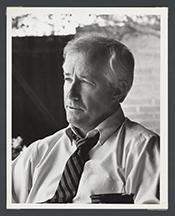 Rep. Jim Kolbe (R-AZ)
Description
Amendment to the Hyde amendment (A002) clarifies the responsibilities of the United States Agency for International Development and the State Department to the Millennium Challenge Corporation.
Text
Offered
This amendment's own text couldn't be picked out of its Congressional Record passage, so the passage is shown in full.
FOREIGN RELATIONS AUTHORIZATION ACT, FISCAL YEARS 2004 AND 2005--
Resumed
The Committee resumed its sitting.
Mr. SHAYS. Mr. Chairman, I rise in strong support of the Hyde/Lantos
amendment and want to thank the gentlemen for their leadership.
The Millennium Challenge Account is an excellent initiative, and I
believe it will make great strides in the way the United States
provides aid to countries most in need.
I rise today, however, to speak about the Peace Corps, which will be
reauthorized and expanded under this amendment.
I spent two of the greatest, most profound, years of my life serving
with my wife Betsi as a Peace Corps volunteer in Fiji. Words cannot
describe how important those years were to me, and how they helped me
to develop as a person and a leader.
Expanding the Peace Corps from 7,000 to 14,000 members is an
excellent idea. We will have an extra 7,000 well-trained and motivated
young people prepared as future leaders of America. More importantly,
this expansion doubles our commitment to the world's poor. 7,000
additional Peace Corps volunteers will help educate children, improve
small businesses, bring cleaner water for communities, and provide hope
for many more communities around the world.
I appreciate the Chairman and Ranking Member's commitment to the
expansion of the Peace Corps, and urge the adoption of the Hyde/Lantos
Amendment.
Ms. McCOLLUM. Mr. Chairman, I rise today in support of the Hyde-
Lantos amendment.
I am greatly encouraged by the bipartisan work of this body in moving
forward with the Millennium Challenge Account (MCA) and reauthorization
of the Peace Corps. Today, we take a significant step forward in
addressing the needs of the developing world and strengthening the
United States commitment to our global neighbors and families.
While I support the unprecedented increase in foreign assistance
provided through the MCA, I am concerned with the lack of environmental
safeguards in the bill. Last night the Rules Committee refused to make
in order my amendment to address this critically important issue. This
amendment would have promoted environmental sustainability and the
protection of our natural resources by requiring the compact made
between the U.S. and an eligible country, under MCA, include an
environmental assessment and regular benchmarks to monitor an evaluate
impacts during the implementation of the project.
Any development initiative that offers lasting relief from poverty
and promotes economic opportunity must take into account the protection
of the natural resources on which all people--all families--depend
upon. The major environmental challenges facing the world today--water
scarcity, poor sanitation, degradation of agricultural lands, and
pandemic diseases, such as malaria--weaken the foundation for a strong
and prosperous economy, a secure nation, and poverty reduction.
In order for developing countries to assure the protection of their
natural resources, achieve sustainable economic growth and promote the
health, education and well-being of their citizens an assessment of the
environmental effects of projects funded through the MCA should be
required to be conducted. This amendment is consistent with
environmental assessments currently required under the Foreign
Assistance Act for USAID and the Overseas Private Investment
Corporation--two of our largest foreign development organizations.
These assessments are required for U.S.-sponsored development projects
around the world and I believe should continue to be used on all future
projects funded through the MCA.
The MCA places a strong emphasis on the ability of developing nations
to invest in their people wisely, rule justly and pursue sound economic
principles that stimulate enterprise and entrepreneurship. Although we
can all agree that each of these principles is critically important, it
is unrealistic to expect any developing nation to achieve these
principles unless a healthy environment exists. Without clean air,
clean water and the protection of our natural resources, sustainable
development, adequate health care and education, a stable open market
and opportunities for economic growth are not possible. Economic growth
at the expense of the environment is completely contradictory to the
development goals of the United States.
If investments in development are to yield sustainable benefits, the
effects on a developing nation's natural resources must be taken into
account. To do this, an assessment of a project's environmental impact
must be part of a country's development plan from the beginning.
I look forward to working with Chairman Hyde, Ranking Member Lantos
and my colleagues in the other body on this important issue in the
weeks and months ahead.
Mr. THORNBERRY. Mr. Chairman, I rise in support of the amendment
offered by Chairman Hyde and Mr. Lantos to implement the Millennium
Challenge Account. MCA can truly provide the revolution in foreign
assistance so desperately desired by the American taxpayers and by the
people in the countries we are trying to help.
I am particularly interested in the language related to property
rights. The amendment includes property rights as one of the primary
objectives and metrics to be used in assessing progress in recipient
countries. The work of Peruvian economist Hernando do Soto provides
real, empirical evidence that property rights is the key to economic
progress. All too often, our attempts to help other peoples has ignored
this fundamental building block.
Economic success of any people or nation requires that individuals
are motivated to work and accumulate wealth. That ``wealth'' might look
like a shack to us, but if one can begin to accumulate something of
value and have that wealth protected by the government, one will be
more likely to work to build more. If that wealth can then be passed
along to one's children, one is motivated to work even harder and has a
stake in the future of that system. Hope for the future is absolutely
critical for future economic success and for success in the war on
terrorism. Respect for the rule of law and a legal system that protects
the fruits of one's labors must be established. No amount of money for
economic development will be successful without them.
This amendment is a hopeful start toward much needed reform. I
support it and hope we can build on it in order to achieve a better
future for all of us.
Mr. PETRI. Mr. Chairman, I rise in support of the Hyde/Lantos
amendment, which would authorize the establishment of the Millennium
Challenge Account and support the doubling of the number of Peace Corps
volunteers to 14,000 by the year 2007.
I served as a Peace Corps volunteer in Somalia for two years, which
was a meaningful experience for me. The Peace Corps has proven to be a
very cost-effective mechanism for disseminating foreign assistance--
from the bottom up. Doubling the number of Peace Corps volunteers will
only make these efforts more effective, and allow more U.S. citizens to
serve our country on the international level.
The Hyde/Lantos amendment also provides for the establishment of a
new and innovative foreign aid initiative, the Millennium Challenge
Account.
This initiative shows great promise as it would fund programs which
already have shown impressive rates of performance. U.S. foreign aid
would then be invested in those programs that actually work, not just
those that promise to work.
Expanding the Peace Corps and establishing the Millennium Challenge
Account will make U.S. foreign aid more accountable and effective. I
encourage my colleagues to support this amendment.
Mr. CROWLEY. Mr. Chairman, as an original cosponsor of the Millennium
Challenge Account, I rise to speak in strong support of the Hyde/Lantos
amendment.
The MCA has the potential to do much good throughout the developing
world and I commend Chairman Hyde and Mr. Lantos for working together
to produce a strong bipartisan bill.
This bill represents the largest spending increase in foreign aid by
the United States in the past half century.
The MCA will provide increased development assistance to the world's
poorest nations.
The MCA will not just give out this aid to the worlds poorest
countries instead they will have to meet a set of indicators to be
eligible for MCA funding.
These indicators include the rule of law and good governance to name
a few.
When countries realize that meeting these standards not only enables
them to receive
[[Page H6785]]
aid through MCA but also puts them on the right path to economic and
political sustainability.
I want to thank the Chair and the Ranking Member for including a
priority of mine, language highlighting the role credit unions and
other micro-enterprise development offers for economic growth.
This bill will also enable a small amount of aid to near miss
countries, these are the countries that demonstrate a commitment to
development but fail to meet a sufficient number of performance
standards.
The MCA will not only help those countries that receive aid but will
encourage countries who do not qualify to make the necessary changes to
meet the required indicators.
I urge all my colleagues to support this amendment.
Mr. LANTOS. Mr. Chairman, I have no further requests for time, and I
yield back the balance of my time.
The CHAIRMAN pro tempore. It is now in order to consider amendment
No. 3 printed in House Report 108-206.
Amendment No. 3 Offered by Mr. Kennedy of Minnesota to Amendment No. 2
Offered by Mr. Hyde
Mr. KENNEDY of Minnesota. Mr. Chairman, I offer an amendment made in
order pursuant to the rule.
The CHAIRMAN pro tempore. The Clerk will designate the amendment to
the amendment.
The text of the amendment to the amendment is as follows:
Amendment No. 3 offered by Mr. Kennedy of Minnesota to
amendment no. 2 offered by Mr. Hyde:
Page 14, line 10, add at the end before the semicolon the
following: ``, including, with respect to investment in the
health of its citizens, a calculation of the amount of both
public and private expenditures on health initiatives as a
percentage of the gross domestic product of the country''.
The CHAIRMAN pro tempore. Pursuant to House Resolution 316, the
gentleman from Minnesota (Mr. Kennedy) and a Member opposed each will
control 5 minutes.
The Chair recognizes the gentleman from Minnesota (Mr. Kennedy).
Mr. KENNEDY of Minnesota. Mr. Chairman, I yield myself such time as I
may consume, and I rise to support the Millennium Challenge Account. My
amendment deals with the manner in which countries are deemed eligible
on the basis of public health expenditures.
The Millennium Challenge Account and the corporation which will be
created to administer it will have three basic criteria for
eligibility: nations will be required to rule justly, invest in their
people, and encourage freedom. Those nations that qualify will be
eligible for grants for projects involving the development of
agriculture, education, health, trade and investment capacity.
Mr. Chairman, I have a concern about how this will actually work. The
administration's plans calls for a country's investment in health to be
measured solely on the amount of public sector expenditure. Mr.
Chairman, I worry that such a requirement may inadvertently provide an
incentive to developing nations to rely exclusively on solutions in the
public sector instead of seeking the energy and innovation of the
private sector. This oversight might end up hurting fledgling market
systems from developing.
We need to make sure that we are encouraging nations to pursue
private sector solutions to their problems whenever possible. Mr.
Chairman, I am prepared to withdraw my amendment if the gentleman from
Illinois, the distinguished chairman of the Committee on International
Relations, will enter into a colloquy with me.
Mr. HYDE. Mr. Chairman, will the gentleman yield?
Mr. KENNEDY of Minnesota. I yield to the gentleman from Illinois, the
distinguished chairman of the Committee on International Relations.
Mr. HYDE. Mr. Chairman, the gentleman from Minnesota makes a very
good point. The Millennium Challenge Account is not about creating big
government or promoting socialized health care. Instead, it is about
promoting responsibility and accountability on the part of governments
of developing countries. I am confident that the President's proposal
is an appropriate way to hold these governments to high standards and
is an appropriate manner in which to determine eligibility.
But the gentleman's point is a good one. We should not be exporting
big government to developing countries, but we should be promoting
government that is responsive and accountable to its citizens.
Mr. KENNEDY of Minnesota. Mr. Chairman, reclaiming my time, I thank
the distinguished chairman for his consideration. I look forward to
working with him on this bill to ensure the final legislative product
resolves this potential defect in what I believe is an important
initiative.
Mr. Chairman, I ask unanimous consent to withdraw my amendment.
The CHAIRMAN pro tempore. Is there objection to the request of the
gentleman from Minnesota?
There was no objection.
The CHAIRMAN pro tempore. The gentleman's amendment is withdrawn.
It is now in order to consider amendment No. 4 printed in House
Report 108-206.
Amendment No. 4 Offered by Mr. Kolbe to Amendment No. 2 Offered by Mr.
Hyde
Mr. KOLBE. Mr. Chairman, I offer an amendment made in order by the
rule.
The CHAIRMAN pro tempore. The Clerk will designate the amendment to
the amendment.
The text of the amendment to the amendment is as follows:
Amendment No. 4 offered by Mr. Kolbe to amendment No. 2
offered by Mr. Hyde:
Page 15, beginning on line 17, strike ``fiscal year 2006''
and insert ``fiscal years 2004 through 2006''.
Page 16, line 6, strike ``fiscal year 2006'' and insert
``each of fiscal years 2004 through 2006''.
Page 16, line 8, strike ``fiscal year 2006'' and insert
``the fiscal year involved''.
The CHAIRMAN pro tempore. Pursuant to House Resolution 316, the
gentleman from Arizona (Mr. Kolbe) and a Member opposed each will
control 10 minutes.
The Chair recognizes the gentleman from Arizona (Mr. Kolbe).
{time} 1445
Amendment No. 4 Offered by Mr. Kolbe, as Modified, to Amendment No. 2
Offered by Mr. Hyde
Mr. KOLBE. Mr. Chairman, I ask unanimous consent that the amendment
to the amendment be modified in the form I have sent to the desk.
The CHAIRMAN pro tempore (Mr. Ose). The Clerk will report the
modification.
The Clerk read as follows:
Amendment No. 4 offered by Mr. Kolbe, as modified, to
amendment No. 2 offered by Mr. Hyde:
Page 15, beginning on line 17, strike ``fiscal year 2006''
and insert ``fiscal years 2005 through 2006''.
Page 16, line 6, strike ``fiscal year 2006'' and insert
``each of fiscal years 2005 through 2006''.
Page 16, line 8, strike ``fiscal year 2006'' and insert
``the fiscal year involved''.
Mr. KOLBE (during the reading). Mr. Chairman, I ask unanimous consent
that the modification be considered as read and printed in the Record.
The CHAIRMAN pro tempore. Is there objection to the request of the
gentleman from Arizona?
There was no objection.
Mr. HYDE. Mr. Chairman, I claim the time in opposition to the
amendment, and I ask unanimous consent to yield half of my time to the
gentleman from California (Mr. Lantos) and that he may control that
time.
The CHAIRMAN pro tempore. Is there objection to the request of the
gentleman from Illinois?
There was no objection.
The CHAIRMAN pro tempore. Is there objection to the modification
offered by the gentleman from Arizona (Mr. Kolbe)?
There was no objection.
Mr. KOLBE. Mr. Chairman, I yield myself 5 minutes.
Mr. Chairman, I thank the gentleman from Illinois (Mr. Hyde) and the
gentleman from California (Mr. Lantos) for the exceptionally good work
that they and their committee have done in bringing this Millennium
Challenge Account legislation to the floor as part of this State
Department authorization. It is one of the more important things that
we have done in the last several years.
The amendment that I have offered at the desk, the revision, would
extend the number of countries eligible to apply for the Millennium
Challenge Funding Account for a single year only of 2004. As drafted in
my original amendment, it would have been for 2004, 2005 and 2006. The
underlying bill is for 2006, so this would extend it for 1 year.
I offer this amendment because I think it is critical for U.S.
foreign policy and because I think this debate is
[[Page H6786]]
more about the signals of good governance that we have in countries
around the world. It is about investing in people and economic freedom.
It is more about that than it is about money; and I am concerned about
the signal that we are sending to a lot of countries around the world,
the so-called lower middle income countries who are not going to be
able to join this process of applying for the MCA in my view until too
late if we do not include them now.
That includes many countries in this hemisphere; and, as we know with
the AIDS Initiative which the President has announced, it is almost
exclusively limited to Africa. With the way this is drafted to now, it
would be limited to mostly countries in Africa until at least the year
2006 and then limited to only 20 percent of the money after that.
I think our hemisphere is being left behind, and I believe, from
traveling down there very recently, I have found that people down there
do feel this way about it. So the debate is not really about money. The
issue of this development in the developing world has never really been
about money. It is about the quality of political, economic and social
governance.
The amendment that I am offering today would make sure that the
signals are sent out to more countries around the world that they, too,
can participate in this. Because it is about whether or not they have
shown the commitment to good governance as to whether or not they can
apply.
As the bill is structured, there are two pools of countries. Those
with per capita incomes below $1,435 a year, that is in Tier 1 or the
first pool; and the second tier are those between $1,435 and $2,995 per
year. As drafted, the second tier would only become eligible to
participate in the year 2006. The Tier 1 countries, those with incomes
below $1,435, are eligible to qualify if they need 16 performance
indicators envisioned by the President. They are ranked, and we will
not go into the details of that.
But how many countries in Tier 1 would qualify? Estimates range on
the number of countries with below $1,435 in per capita incomes, but we
might have as many as 80 or 90 countries being evaluated. How many
countries in Tier 2 might? There are another 30 countries that might
qualify as a result of that.
That is what this is about, those second tier countries, some 30 in
number, that otherwise would have to wait until 2006 before they can
compete for even 20 percent of the resources included in this bill.
What is the impact of this amendment? Immediately, in the first year
only, a few countries in the Western Hemisphere are eligible to
compete. Those are the Tier 1 countries. That would include in this
hemisphere Nicaragua, Haiti, Guyana, Honduras, Bolivia, Ecuador, and
Paraguay. That is only seven out of 80 or 90 countries around the world
that might participate that come in our own hemisphere; and two of
those, Ecuador and Paraguay, are likely to find themselves cut off
because they are right at the edge, and if their income exceeds that,
they would then drop out of being eligible to participate. So we might
find only five countries in the entire Western Hemisphere that are able
to participate.
What kind of Latin American countries are going to be left behind if
we do not have this amendment until at least 2006? Countries such as
Guatemala, Colombia, Peru, El Salvador, Dominican Republic, St. Vincent
and Grenadines, Jamaica, and Belize. Many of these countries have a
tremendously low income level. Many of these countries are ones where a
large percentage of those people in those countries are living below
the $1 a day. Sixteen percent of the people in Guatemala live at less
than $1 a day, and 23 percent in El Salvador live on less than $1 a
day. This is the absolute bare minimum that the United Nations says
represents the poverty level. These are countries that will not be
eligible if they have the good governance, and many of these countries
do, to participate in this program until the year 2006.
I am just suggesting, give them some hope. Move them up 1 year and
give them an opportunity to participate 1 year earlier. At that time,
we will have more money, I am convinced, available to us to fund these
programs than we do in this very first year, which is why I have
limited it to only adding the year 2005.
Mr. Chairman, I reserve the balance of my time.
Mr. LANTOS. Mr. Chairman, I yield myself such time as I may consume.
Mr. Chairman, I rise in opposition to the amendment, but I respect
the dedication with which the gentleman from Arizona has advocated on
behalf of development assistance generally and the Millennium Challenge
Account particularly. His dedication to the less fortunate in the
developing world is to be commended. It is in this spirit of goodwill
and compassion for the people, the lower middle income countries, that
I know the gentleman from Arizona (Mr. Kolbe) offers his amendment.
Unfortunately, I am convinced that the gentleman's amendment will
serve to deplete the very limited funds that are available for
countries with the lowest per capita incomes and, by definition,
countries which have fewer resources and less recourse to alternative
financing. Moreover, the widespread poverty that often exists in the
countries the gentleman from Arizona (Mr. Kolbe) is talking about is
due to the vast income disparities which exist in many of these
countries. The underlying cause of those disparities will not be solved
by the Millennium Challenge Account but rather through a change of
domestic policies in those countries, a reality which the gentleman
from New Jersey (Mr. Payne) addressed through his amendment in
committee. I, therefore, regretfully must urge my colleagues not to
support the Kolbe amendment.
Mr. Chairman, I reserve the balance of my time.
Mr. KOLBE. Mr. Chairman, I yield 2 minutes to the gentleman from New
Jersey (Mr. Menendez).
Mr. MENENDEZ. Mr. Chairman, I thank the gentleman for offering the
amendment and rise in favor of it. It is similar to an amendment that I
offered in the Committee on International Relations.
I believe this amendment helps create economic stability in the
Western Hemisphere which will then create political stability, stem the
flow of undocumented workers, improve health care and biodiversity, and
ultimately create a growing market for American products and services.
Now, 200 million citizens in Latin America and the Caribbean earn
under $2 a day, 100 million live on less than $1 a day, and yet these
poorest of the poor in our hemisphere will not qualify for assistance
under the MCA. Experts tell us that only 15 to 25 million of those 200
million of the poorest of the poor would benefit from the MCA.
Without this amendment, only 3 out of the 34 democracies in the
Western Hemisphere would be included in the first year. That is not in
the national interest of the United States. That ultimately undermines
the problems we are having in the Western Hemisphere where there is a
serious concern by leading analysts and experts on our hemisphere who
say that, in fact, the march for democracy and free markets is being
undermined. Latin Americans believe that march towards democracy and
free markets is not bringing good things to their life.
I applaud what is being done generally with the Millennium Challenge
Account, but we need to bring the countries of Latin America and the
Western Hemisphere into this as well. I applaud the gentleman's
amendment. I believe it is limited in its scope, and I urge support of
it.
Mr. HYDE. Mr. Chairman, I yield myself 2 minutes.
While the Kolbe amendment is based on the idea of promoting more
assistance for people in Latin and South America, the result of this
amendment will be middle income countries like Russia and Turkey
becoming eligible. The administration vigorously opposes the bill if
this amendment were adopted, so I urge its defeat. It is harmful and it
is opposed by the widest possible assemblage of interests, Republicans,
Democrats, NGOs, U.S. Conference on Catholic Bishops and, I am told,
the White House.
It is well-intentioned, but it would disrupt the compromise that the
gentleman from California (Mr. Lantos) and I worked on for many months.
This plan sets aside MCA assistance for the poorest countries in 2004
and 2005 and opens up eligibility for lower middle
[[Page H6787]]
income countries in 2006. The Kolbe amendment would make middle income
countries around the world eligible for MCA in 2005, countries that are
less in need of MCA assistance than the poorer countries.
Low-income countries have much greater needs; and if they meet the
other criteria proposed, we will be helping more people on the road to
human development and economic growth. For instance, the infant
mortality rate in low-income countries is 69 per 1,000 live births, but
in lower middle income countries it is only 27 per 1,000 live births.
Life expectancy in low-income countries is only 56 years, whereas in
lower middle income countries like Turkey, it is 70 years. Lower middle
income countries receive other U.S. assistance. The group of countries
that would become eligible in the third year includes many countries of
strategic importance to the U.S. These countries also receive already
the largest share of U.S. economic and security assistance.
I know this is a well-intentioned amendment, but I urge its defeat.
Mr. Chairman, I reserve the balance of my time.
Mr. KOLBE. Mr. Chairman, I yield 2 minutes to the gentlewoman from
Florida (Ms. Harris).
Ms. HARRIS. Mr. Chairman, I vigorously support the amendment of the
gentleman from Arizona (Mr. Kolbe). We share one central concern, and
that is by limiting the MCA's authority to assist lower middle income
countries to a 20 percent cap in the final year of authorization, we
undermine the very foundation of President Bush's visionary initiative.
Further, basing a country's eligibility for assistance on per capita
national income ignores the key reality that in Latin America large
subregions labor under tremendous disparity in income. The income of
many of these subregions remains far below the income of many of the
nations targeted for assistance under the MCA.
{time} 1500
Chairman Hyde's original draft of this bill included a provision that
permitted MCA to consider subregions in determining eligibility.
Further, by giving per capita national income levels disproportionate
weight, the proponents of this amendment unintentionally penalize the
nations that are pursuing the very reforms MCA seeks to promote. We
will not find more eager, receptive partners for MCA than our friends
and neighbors in the Western Hemisphere. We must stand with them side
by side particularly as they confront the poisonous rhetoric that
entices them to jettison the extraordinary democratic progress that
they have made during this last decade.
Absent this amendment, few nations in the Americas may qualify for
MCA. Congress must not sacrifice the MCA's desperately needed reforms
upon the altar of political expediency. We must find a more balanced
approach.
Mr. LANTOS. Mr. Chairman, I am delighted to yield 2 minutes to the
gentleman from New Jersey (Mr. Payne), the distinguished ranking member
of the Subcommittee on Africa.
(Mr. PAYNE asked and was given permission to revise and extend his
remarks.)
Mr. PAYNE. Mr. Chairman, I rise in strong opposition to the amendment
offered by the gentleman from Arizona. My colleagues in the Committee
on International Relations and I have worked hard to ensure that the
authorization of the Millennium Challenge Account stays true to its
original purpose and objectives. Those were to reduce poverty, to
reward good governance, and to encourage free market activity.
The MCA, as passed through the Committee on International Relations,
would focus in the first year on the low-income countries that are IDA
eligible, meaning those countries which are determined to be the
poorest countries in the world by the World Bank, and expand the pool
to include low-income countries that meet the historic cutoff for IDA
in the second year, and then establish a separate competition for
lower-middle-income countries in the third year. The NGO community and
think tanks such as the Center for Global Development and the Brookings
Institution have advocated focusing funding on just the low-income and
IDA-eligible countries. However, I am not pushing for that, and we said
that we do believe that the third tier should come in.
I could not agree more with the gentleman from New Jersey (Mr.
Menendez). We have overlooked Latin America. However, we should not
take what the concept of the Millennium Challenge Account is to do and,
therefore, say that we should include many of the Latin American
countries that are in the lower-middle-income tier. I think we need to
focus on Latin America. I think that we have a responsibility to do
something there. But I think it should be a separate program that we
should take a look at how we adjust the problems of immigration and so
forth in this hemisphere.
I stand supportive of the opposition to the amendment. There are even
lower-middle-income countries in Africa, such as South Africa and
Namibia, where there is a skewed income level but they are ineligible
also, and they should be because we should deal with the poorest of the
poor, especially those countries that are trying to have good
governance, that are looking to improve.
I urge the defeat of the Kolbe amendment.
Mr. HYDE. Mr. Chairman, I yield the balance of my time to the
gentleman from California (Mr. Royce).
Mr. ROYCE. Mr. Chairman, firstly I would like to recognize the
commendable spirit of the amendment because there are many countries
throughout the world, many, where we have key interests that could use
Millennium Challenge Account aid. But my concern is that this amendment
by opening the door to so many middle-income countries, as the chairman
said earlier, countries like Russia, countries like Turkey could
actually qualify under that amendment, that would stretch the funds at
the expense of the most impoverished, mainly in Africa.
I serve as chairman of the Subcommittee on Africa. While the
Millennium Challenge Account is rightly focused on developing countries
in Latin America and in Asia too, we need to be aware that Africa is a
continent in profound crisis. And while we have seen some positive
developments, there is no getting around the fact that war and poverty
and environmental degradation and so many other ills are devastating
many African countries. Africa is the most impoverished continent in
the world. It is the most economically marginalized continent in the
world. With some 15 percent of the world's population, Africa does 1
percent of the world's trade. Many African countries stand on the
precipice of political, economic, health, and humanitarian disaster. In
traveling through the continent last week, President Bush championed
the Millennium Challenge Account as one means of our engagement with
Africa. My concern is that this amendment would lessen the Millennium
Challenge Account's impact on this continent where we do have so many
key interests. It is for that reason that I oppose this particular
amendment, but I certainly support the underlying Hyde-Lantos amendment
to expand the Peace Corps and to establish the Millennium Challenge
Account.
I have had the chance to meet with Peace Corps volunteers serving in
Africa, extraordinary men and women, many of whom work in challenging
circumstances. President Bush has offered a bold vision to
significantly expand the Peace Corps. This Hyde-Lantos underlying
amendment gives the President what he needs to make this vision a
reality. Under the leadership of Director Gaddi Vasquez, the Peace
Corps is well poised to address the rapidly evolving challenges of the
developing world. Also, the Hyde-Lantos amendment contains a provision
that I offered in committee expressing the sense that the Peace Corps
should return to Sierra Leone as soon as security conditions permit.
Sierra Leone, which was so bleak a few years ago, is now making real
strides in recovering from a horrific war. The mayhem spread by the
Revolutionary United Front with the Liberian warlord Charles Taylor as
the sponsor for that organization thankfully has come to an end.
Mr. Chairman, because of this brutal conflict, the Peace Corps was
forced to terminate its program in Sierra Leone in 1994, after a long
tradition of service focused on education,
[[Page H6788]]
health, and agriculture. If the West African region is to have a chance
at peaceful development, Charles Taylor must be brought to justice by
the Special Court in Sierra Leone, and programs like the Peace Corps
must return.
With the Millennium Challenge Account, we're taking a new and
innovative approach to development aid. Countries making strides to
root-out corruption and institute sound, market-based policies will be
treated as partners. Our experience with the African Growth and
Opportunity Act has shown us that these standards are an effective
approach to engaging with the nations of Africa. The MCA rightly sets
standards, so that all benefit: countries that receive MCA funds
benefit, but so too does the United States--by making what should be
productive investments in the developing world, where our nation has an
increasing number of key interests.
Mr. KOLBE. Mr. Chairman, I yield myself the balance of my time.
The CHAIRMAN pro tempore (Mr. Ose). The gentleman from Arizona (Mr.
Kolbe) is recognized for 1\1/2\ minutes.
Mr. KOLBE. Mr. Chairman, with all due respect, I do not think it
would be accurate to say that the administration does vigorously oppose
this. They have not in any way indicated, certainly to me, that they
would. I think it is important to note that in the legislation that was
sent up by the administration, they did not have any cap, any 20
percent cap or any cap of any sort beginning in the year 2006 on the
amount of funds. So it does not seem very reasonable that with a 20
percent cap they would be opposed to having that made available to
countries in the year 2005 that come in the second tier.
Let me just say in conclusion that I hope my colleagues will support
this. Again, I want to say I have the greatest respect for the chairman
and the ranking member and the others who oppose this, but I just think
this is really about giving hope to other countries. Let us keep our
eye on the ball, what the MCA is and what it is not. It is not a
poverty program. We have USAID programs that are funded through my
subcommittee that are about that. This is about governance. This is
about giving hope to countries that have made a commitment, that have
made a commitment to reducing corruption, that have made a commitment
to transparency, that have made a commitment to the rule of law, that
have made a commitment to titling property, that have made a commitment
to actually having development that will work to sustain economic
growth for their people.
Let us give them some hope. Do not turn our back now on the Western
Hemisphere. So much has been accomplished in the last 10 years. Give
them hope. They are teetering on the edge at this moment. This is not
the time now for us to turn our back on these countries.
I urge my colleagues to support this amendment allowing these
countries in tier 2 to be eligible only 1 year earlier than otherwise
in the Hyde-Lantos amendment.
Mr. LANTOS. Mr. Chairman, I yield the balance of my time to the
distinguished gentleman from California (Mr. Berman).
The CHAIRMAN pro tempore. The gentleman from California (Mr. Berman)
is recognized for 1\1/2\ minutes.
Mr. BERMAN. Mr. Chairman, I thank the gentleman from California (Mr.
Lantos) for yielding me this time. With great reluctance, I disagree on
one of those rare occasions with my friend from Arizona, the author of
the amendment.
The beauty of the Millennium Challenge Account is that it is not
about neighbors and it is not about friends and it is not about how
much you voted with us in the U.N. and it is not what your position was
on Iraq. It is about helping, committing a portion of our foreign
assistance to the poorest of the poor where the people of those
countries have undertaken steps in terms of governance to promote
democracy, human rights in terms of respect, and economic progress and
concern for public health and education; and where they have made those
internal changes and reforms, to try and establish what we think is
fundamental principles that apply to all people all around the world,
where they have made those decisions without regard to political
reasons, interests of neighbors versus others but simply based on their
poverty. We are going to devote a portion of our political resources to
helping the poorest of the poor.
Unfortunately, when you make that decision, if you raise the
eligibility standard earlier than it otherwise would be raised, you
will therefore have less money to help the poorest of the poor. It is
just automatic simple logic and math. In the lower-middle-income
countries, you have countries like Turkey and Russia and Colombia as
the fourth-largest recipient. I would urge we keep consistent with the
intent of the bill and the administration's proposal, help the poorest
of the poor and vote ``no'' on this amendment.
The CHAIRMAN pro tempore. The question is on the amendment offered by
the gentleman from Arizona (Mr. Kolbe), as modified, to the amendment
offered by the gentleman from Illinois (Mr. Hyde).
The question was taken; and the Chairman pro tempore announced that
the noes appeared to have it.
Mr. KOLBE. Mr. Chairman, I demand a recorded vote.
The CHAIRMAN pro tempore. Pursuant to clause 6 of rule XVIII, further
proceedings on the amendment offered by the gentleman from Arizona (Mr.
Kolbe), as modified, to the amendment offered by the gentleman from
Illinois (Mr. Hyde) will be postponed.
It is now in order to consider amendment No. 5 printed in House
Report 108-206.
Amendment No. 5 Offered by Mr. Kolbe to Amendment No. 2 Offered by Mr.
Hyde
Mr. KOLBE. Mr. Chairman, I offer an amendment made in order by the
rule.
The CHAIRMAN pro tempore. The Clerk will designate the amendment to
the amendment.
The text of the amendment to the amendment is as follows:
Amendment No. 5 offered by Mr. Kolbe to amendment No. 2
offered by Mr. Hyde:
Page 56, after line 3, insert the following new section:
SEC. 310. CLARIFICATION OF ROLE OF USAID.
(a) Status of USAID.--The Administrator of the United
States Agency for International Development shall report to
the President through, and operate under the foreign policy
authority and direction of, the Secretary of State. The
United States Agency for International Development shall be
administered under the supervision and operational direction
of the Administrator of the Agency.
(b) Functions of USAID.--The United States Agency for
International Development is authorized--
(1) to receive appropriated funds;
(2) to be the United States Government agency primarily
responsible for administering sections 103 through 108 (other
than section 104A), 214, and 491 of the Foreign Assistance
Act of 1961, the ``Child Survival and Health Programs Fund'',
and other United States economic assistance as directed in
writing by the President or the Secretary of State, or as
otherwise provided by law;
(3) to provide assistance to a country currently ineligible
for assistance provided under title II in order that it may
become eligible for such assistance; and
(4) upon the request of the Chief Executive Officer of the
Corporation and with the concurrence of the Administrator of
the Agency, to assist in the evaluation, execution, and
oversight of Millennium Challenge Compacts described in
section 204.
The CHAIRMAN pro tempore. Pursuant to House Resolution 316, the
gentleman from Arizona (Mr. Kolbe) and a Member opposed each will
control 5 minutes.
The Chair recognizes the gentleman from Arizona (Mr. Kolbe).
Mr. KOLBE. Mr. Chairman, I yield myself such time as I may consume.
As I understand it, this will be acceptable to the committee. Let me
just say, these are clarifying amendments that clarify the authority of
both the Secretary of State and USAID to the Millennium Challenge
Account and I think just helps make it clear the lines of authority.
Mr. HYDE. Mr. Chairman, will the gentleman yield?
Mr. KOLBE. I yield to the gentleman from Illinois.
Mr. HYDE. Mr. Chairman, this is good government practice. It improves
the bill. I do not see any reason why the administration would oppose
it. I think my friend, the gentleman from California (Mr. Lantos),
supports this. And so I urge the adoption of this amendment.
Mr. LANTOS. Mr. Chairman, I will not oppose this amendment at this
time. However, there are a number of concerns with the amendment,
including changing USAID's relationship to the Department of State.
For example, current law provides that USAID is under the ``direct
authority and foreign policy guidance of the Secretary of State.'' The
amendment has a different formula. Not sure how these two different
responsibilities will be reconciled.
[[Page H6789]]
Moreover, the amendment provides that USAID have certain
responsibilities under the Foreign Assistance Act, but leaves out a
number of important programs. These include assistance to promote human
rights and democracy, protection and management of the environment,
preservation of tropical forests, assistance for victims of torture,
and assistance to victims of trafficking in persons.
I think we need to carefully consider what other provisions of law
are properly on this list.
Finally, I am unclear how this provision relates to other parts of
the legislation with respect to USAID's role in providing Millennium
Challenge Assistance. Under the legislation before the House, USAID is
on the Board of the new Corporation, must be consulted regarding
Millennium Challenge Contracts, and plays a variety of other roles.
Nothing is mentioned in this provision in this regard.
I look forward to working with the Chairman of the Committee and the
Gentleman from Arizona in working on this amendment as the legislative
process moves forward.
Mr. KOLBE. Mr. Chairman, I yield back the balance of my time.
The CHAIRMAN pro tempore. The question is on the amendment offered by
the gentleman from Arizona (Mr. Kolbe) to the amendment offered by the
gentleman from Illinois (Mr. Hyde).
The amendment to the amendment was agreed to.
Sequential Votes Postponed in Committee of the Whole
The CHAIRMAN pro tempore. Pursuant to clause 6 of rule XVIII,
proceedings will now resume on those amendments on which further
proceedings were postponed in the following order: amendment No. 1
offered by the gentleman from New Jersey (Mr. Smith), amendment No. 4
offered by the gentleman from Arizona (Mr. Kolbe), and amendment No. 2
offered by the gentleman from Illinois Mr. Hyde).
The first electronic vote will be conducted as a 15-minute vote.
Remaining electronic votes will be conducted as 5-minute votes.
Amendment No. 1 Offered by Mr. Smith of New Jersey
The CHAIRMAN pro tempore. The pending business is the demand for a
recorded vote on the amendment offered by the gentleman from New Jersey
(Mr. Smith) on which further proceedings were postponed and on which
the ayes prevailed by voice vote.
The Clerk will redesignate the amendment.
The Clerk redesignated the amendment.
Recorded Vote
The CHAIRMAN pro tempore. A recorded vote has been demanded.
A recorded vote was ordered.
The vote was taken by electronic device, and there were--ayes 216,
noes 211, not voting 8, as follows:
[Roll No. 362]
AYES--216
Aderholt
Akin
Alexander
Bachus
Baker
Ballenger
Barrett (SC)
Bartlett (MD)
Barton (TX)
Beauprez
Bereuter
Berry
Bilirakis
Bishop (UT)
Blackburn
Blunt
Boehner
Bonilla
Bonner
Bono
Boozman
Brady (TX)
Brown (SC)
Brown-Waite, Ginny
Burgess
Burns
Burr
Burton (IN)
Buyer
Calvert
Camp
Cannon
Cantor
Carter
Chabot
Chocola
Coble
Cole
Collins
Costello
Cox
Crane
Crenshaw
Cubin
Culberson
Cunningham
Davis (TN)
Davis, Jo Ann
Deal (GA)
DeLay
DeMint
Diaz-Balart, L.
Diaz-Balart, M.
Doolittle
Doyle
Dreier
Duncan
Ehlers
Emerson
English
Everett
Feeney
Flake
Fletcher
Forbes
Fossella
Franks (AZ)
Gallegly
Garrett (NJ)
Gibbons
Gillmor
Gingrey
Goode
Goodlatte
Goss
Graves
Green (WI)
Gutknecht
Hall
Harris
Hart
Hastert
Hastings (WA)
Hayes
Hefley
Hensarling
Herger
Hobson
Hoekstra
Holden
Hostettler
Hulshof
Hunter
Hyde
Isakson
Issa
Istook
Jenkins
John
Johnson (IL)
Johnson, Sam
Jones (NC)
Keller
Kennedy (MN)
Kildee
King (IA)
King (NY)
Kingston
Kline
Knollenberg
LaHood
Latham
LaTourette
Lewis (KY)
Linder
Lipinski
LoBiondo
Lucas (KY)
Lucas (OK)
Manzullo
McCotter
McCrery
McHugh
McInnis
McIntyre
McKeon
Mica
Miller (FL)
Miller (MI)
Miller, Gary
Mollohan
Moran (KS)
Murphy
Murtha
Musgrave
Myrick
Nethercutt
Neugebauer
Ney
Northup
Norwood
Nunes
Nussle
Oberstar
Ortiz
Osborne
Otter
Oxley
Paul
Pearce
Pence
Peterson (MN)
Peterson (PA)
Petri
Pickering
Pitts
Pombo
Porter
Portman
Putnam
Quinn
Radanovich
Rahall
Regula
Rehberg
Renzi
Reynolds
Rogers (AL)
Rogers (KY)
Rogers (MI)
Rohrabacher
Ros-Lehtinen
Royce
Ryan (WI)
Ryun (KS)
Saxton
Schrock
Sensenbrenner
Sessions
Shadegg
Sherwood
Shimkus
Shuster
Simpson
Skelton
Smith (MI)
Smith (NJ)
Smith (TX)
Souder
Stearns
Stenholm
Stupak
Sullivan
Tancredo
Tauzin
Taylor (MS)
Taylor (NC)
Terry
Thornberry
Tiahrt
Tiberi
Toomey
Turner (OH)
Upton
Vitter
Walsh
Wamp
Weldon (FL)
Weldon (PA)
Weller
Whitfield
Wicker
Wilson (SC)
Wolf
Young (AK)
Young (FL)
NOES--211
Abercrombie
Ackerman
Allen
Andrews
Baca
Baird
Baldwin
Ballance
Bass
Becerra
Bell
Berman
Biggert
Bishop (GA)
Bishop (NY)
Blumenauer
Boehlert
Boswell
Boucher
Boyd
Bradley (NH)
Brady (PA)
Brown (OH)
Brown, Corrine
Capito
Capps
Capuano
Cardin
Cardoza
Carson (IN)
Carson (OK)
Case
Castle
Clay
Clyburn
Conyers
Cooper
Cramer
Crowley
Cummings
Davis (AL)
Davis (CA)
Davis (FL)
Davis (IL)
Davis, Tom
DeFazio
DeGette
Delahunt
DeLauro
Deutsch
Dicks
Dingell
Doggett
Dooley (CA)
Dunn
Edwards
Emanuel
Engel
Eshoo
Etheridge
Evans
Farr
Fattah
Filner
Foley
Ford
Frank (MA)
Frelinghuysen
Frost
Gerlach
Gilchrest
Gonzalez
Gordon
Granger
Green (TX)
Grijalva
Gutierrez
Harman
Hastings (FL)
Hill
Hinchey
Hinojosa
Hoeffel
Holt
Honda
Hooley (OR)
Houghton
Hoyer
Inslee
Israel
Jackson (IL)
Jackson-Lee (TX)
Johnson (CT)
Johnson, E. B.
Jones (OH)
Kanjorski
Kaptur
Kelly
Kennedy (RI)
Kilpatrick
Kind
Kirk
Kleczka
Kolbe
Kucinich
Lampson
Langevin
Lantos
Larsen (WA)
Larson (CT)
Leach
Lee
Levin
Lewis (CA)
Lewis (GA)
Lofgren
Lowey
Lynch
Majette
Maloney
Markey
Marshall
Matheson
Matsui
McCarthy (MO)
McCarthy (NY)
McCollum
McDermott
McGovern
McNulty
Meehan
Meek (FL)
Meeks (NY)
Menendez
Michaud
Miller (NC)
Miller, George
Moore
Moran (VA)
Nadler
Napolitano
Neal (MA)
Obey
Olver
Ose
Owens
Pallone
Pascrell
Pastor
Payne
Pelosi
Platts
Pomeroy
Price (NC)
Pryce (OH)
Ramstad
Rangel
Reyes
Rodriguez
Ross
Rothman
Roybal-Allard
Ruppersberger
Rush
Ryan (OH)
Sabo
Sanchez, Linda T.
Sanchez, Loretta
Sanders
Sandlin
Schakowsky
Schiff
Scott (GA)
Scott (VA)
Serrano
Shaw
Shays
Sherman
Simmons
Slaughter
Smith (WA)
Snyder
Solis
Spratt
Stark
Strickland
Sweeney
Tanner
Tauscher
Thomas
Thompson (CA)
Thompson (MS)
Tierney
Towns
Turner (TX)
Udall (CO)
Udall (NM)
Van Hollen
Velazquez
Visclosky
Walden (OR)
Waters
Watson
Watt
Waxman
Weiner
Wexler
Wilson (NM)
Woolsey
Wu
Wynn
NOT VOTING--8
Berkley
Ferguson
Gephardt
Greenwood
Hayworth
Janklow
Jefferson
Millender-
McDonald
Announcement by the Chairman Pro Tempore
The CHAIRMAN pro tempore (Mr. Ose) (during the vote). Members are
advised there are 2 minutes remaining on this vote.
{time} 1533
Mr. TURNER of Texas, Ms. McCARTHY of Missouri, Mr. LARSEN of
Washington, Mrs. TAUSCHER, and Ms. LORETTA SANCHEZ of California
changed their vote from ``aye'' to ``no.''
Mr. ORTIZ changed his vote from ``no'' to ``aye.''
So the amendment was agreed to.
The result of the vote was announced as above recorded.
Stated for:
Mr HAYWORTH. Mr. Chairman, as you know, I was absent today for
medical reasons. If I had been in attendance, I would have voted
``yes'' on rollcall vote No. 362.
Stated against:
Mr. GREENWOOD. Mr. Chairman, on rollcall No. 362 I was inadvertently
detained and failed to vote. Had I been present, I would have voted
``no.''
Amendment No. 4 Offered by Mr. Kolbe, as Modified, to Amendment No. 2
Offered by Mr. Hyde, as Amended
The CHAIRMAN pro tempore. The pending business is the demand for a
recorded vote on amendment No. 4 printed in House Report 108-206, as
modified, by the gentleman from Arizona (Mr. Kolbe) to the amendment by
the gentleman from Illinois (Mr. Hyde) on which further proceedings
were postponed and on which the noes prevailed by voice vote.
[[Page H6790]]
The Clerk will redesignate the amendment, as modified, to the
amendment.
The Clerk redesignated the amendment, as modified, to the amendment.
Recorded Vote
The CHAIRMAN pro tempore. A recorded vote has been demanded.
A recorded vote was ordered.
The CHAIRMAN pro tempore. This will be a 5-minute vote.
The vote was taken by electronic device, and there were--ayes 110
noes 313, not voting 11, as follows:
[Roll No. 363]
AYES--110
Abercrombie
Aderholt
Baca
Baird
Ballance
Ballenger
Barton (TX)
Bass
Becerra
Bell
Biggert
Bishop (NY)
Boehlert
Bono
Boucher
Bradley (NH)
Brown (OH)
Cannon
Capuano
Carson (OK)
Castle
Clyburn
Cole
Crenshaw
Crowley
Davis, Tom
DeFazio
DeGette
Delahunt
Diaz-Balart, L.
Diaz-Balart, M.
Ehlers
Evans
Farr
Foley
Ford
Frank (MA)
Frelinghuysen
Frost
Gerlach
Gilchrest
Gonzalez
Graves
Green (TX)
Greenwood
Grijalva
Gutierrez
Gutknecht
Harris
Hill
Hinchey
Hinojosa
Houghton
Johnson (CT)
Kaptur
Kelly
Kilpatrick
Kirk
Kolbe
Maloney
Markey
Marshall
Matheson
McCarthy (MO)
Meehan
Menendez
Miller (NC)
Miller, Gary
Moore
Napolitano
Neal (MA)
Nethercutt
Olver
Ortiz
Ose
Oxley
Pallone
Pastor
Platts
Quinn
Radanovich
Renzi
Reyes
Rodriguez
Rothman
Roybal-Allard
Ryan (OH)
Sandlin
Serrano
Shadegg
Shays
Sherwood
Simmons
Smith (WA)
Snyder
Solis
Stupak
Sullivan
Sweeney
Thomas
Towns
Udall (CO)
Upton
Van Hollen
Velazquez
Visclosky
Weiner
Weldon (FL)
Weldon (PA)
Wicker
NOES--313
Akin
Alexander
Allen
Andrews
Bachus
Baker
Baldwin
Barrett (SC)
Bartlett (MD)
Beauprez
Berman
Berry
Bilirakis
Bishop (GA)
Bishop (UT)
Blackburn
Blumenauer
Blunt
Boehner
Bonilla
Bonner
Boozman
Boswell
Boyd
Brady (PA)
Brady (TX)
Brown (SC)
Brown, Corrine
Brown-Waite, Ginny
Burgess
Burns
Burr
Burton (IN)
Buyer
Calvert
Camp
Cantor
Capito
Capps
Cardin
Cardoza
Carson (IN)
Carter
Case
Chabot
Chocola
Clay
Coble
Collins
Conyers
Cooper
Costello
Cox
Cramer
Crane
Cubin
Culberson
Cummings
Cunningham
Davis (AL)
Davis (CA)
Davis (FL)
Davis (IL)
Davis (TN)
Deal (GA)
DeLauro
DeLay
DeMint
Deutsch
Dicks
Dingell
Doggett
Dooley (CA)
Doolittle
Doyle
Dreier
Duncan
Dunn
Edwards
Emanuel
Emerson
Engel
English
Eshoo
Etheridge
Everett
Fattah
Feeney
Filner
Flake
Fletcher
Forbes
Fossella
Franks (AZ)
Gallegly
Garrett (NJ)
Gibbons
Gillmor
Gingrey
Goode
Goodlatte
Gordon
Goss
Granger
Green (WI)
Hall
Harman
Hart
Hastings (FL)
Hastings (WA)
Hayes
Hefley
Hensarling
Herger
Hobson
Hoeffel
Hoekstra
Holden
Holt
Honda
Hooley (OR)
Hostettler
Hoyer
Hulshof
Hunter
Hyde
Inslee
Isakson
Israel
Issa
Istook
Jackson (IL)
Jackson-Lee (TX)
Jenkins
John
Johnson (IL)
Johnson, E. B.
Johnson, Sam
Jones (NC)
Jones (OH)
Kanjorski
Keller
Kennedy (MN)
Kennedy (RI)
Kildee
Kind
King (IA)
King (NY)
Kingston
Kleczka
Kline
Knollenberg
Kucinich
LaHood
Lampson
Langevin
Lantos
Larsen (WA)
Larson (CT)
Latham
LaTourette
Leach
Lee
Levin
Lewis (CA)
Lewis (GA)
Lewis (KY)
Linder
Lipinski
LoBiondo
Lofgren
Lowey
Lucas (KY)
Lucas (OK)
Lynch
Majette
Manzullo
Matsui
McCarthy (NY)
McCollum
McCotter
McCrery
McDermott
McGovern
McHugh
McInnis
McIntyre
McKeon
McNulty
Meek (FL)
Meeks (NY)
Mica
Michaud
Miller (FL)
Miller (MI)
Miller, George
Mollohan
Moran (KS)
Moran (VA)
Murphy
Murtha
Musgrave
Myrick
Nadler
Neugebauer
Ney
Northup
Norwood
Nunes
Nussle
Oberstar
Obey
Osborne
Otter
Owens
Pascrell
Paul
Payne
Pearce
Pelosi
Pence
Peterson (MN)
Peterson (PA)
Petri
Pickering
Pitts
Pombo
Pomeroy
Porter
Portman
Price (NC)
Pryce (OH)
Putnam
Rahall
Ramstad
Rangel
Regula
Rehberg
Reynolds
Rogers (AL)
Rogers (KY)
Rogers (MI)
Rohrabacher
Ros-Lehtinen
Ross
Royce
Ruppersberger
Rush
Ryan (WI)
Ryun (KS)
Sabo
Sanchez, Linda T.
Sanchez, Loretta
Sanders
Saxton
Schakowsky
Schiff
Schrock
Scott (GA)
Scott (VA)
Sensenbrenner
Sessions
Shaw
Sherman
Shimkus
Shuster
Simpson
Skelton
Slaughter
Smith (MI)
Smith (NJ)
Smith (TX)
Souder
Spratt
Stark
Stearns
Stenholm
Strickland
Tancredo
Tanner
Tauscher
Tauzin
Taylor (MS)
Taylor (NC)
Terry
Thompson (CA)
Thompson (MS)
Thornberry
Tiahrt
Tiberi
Tierney
Toomey
Turner (OH)
Turner (TX)
Udall (NM)
Vitter
Walden (OR)
Walsh
Wamp
Waters
Watson
Watt
Waxman
Weller
Whitfield
Wilson (NM)
Wilson (SC)
Wolf
Woolsey
Wu
Wynn
Young (AK)
Young (FL)
NOT VOTING--11
Ackerman
Bereuter
Berkley
Davis, Jo Ann
Ferguson
Gephardt
Hayworth
Janklow
Jefferson
Millender-McDonald
Wexler
Announcement by the Chairman Pro Tempore
The CHAIRMAN pro tempore (during the vote). Members are reminded
there are 2 minutes remaining in this vote.
{time} 1541
Mr. SANDERS changed his vote from ``aye'' to ``no.''
Mr. PALLONE changed his vote from ``no'' to ``aye.''
So the amendment, as modified, to the amendment was rejected.
The result of the vote was announced as above recorded.
Stated against:
Mr. HAYWORTH. Mr. Speaker, as you know, I was absent today for
medical reasons. If I had been in attendance, I would have voted ``no''
on rollcall vote No. 363.
Mrs. JO ANN DAVIS of Virginia. Mr. Chairman, on rollcall vote No. 363
I was in a meeting with the Commissioner of the EU. Had I been present,
I would have voted ``no.''
Mr. BEREUTER. Mr. Chairman, a few minutes ago, I was chairing a
meeting with the Commissioner of External Affairs, Chris Patton, of the
European Union; and we were not able to conclude it in time. Therefore,
I missed the vote on the Kolbe amendment to the Hyde amendment. Had I
been here, I would have voted ``no'' on the Kolbe amendment.
Amendment No. 2 Offered by Mr. Hyde, as Amended
The CHAIRMAN pro tempore. The question is on the amendment No. 2
offered by the gentleman from Illinois (Mr. Hyde), as amended.
The amendment, as amended, was agreed to.
The CHAIRMAN pro tempore. It is now in order to consider amendment
No. 6 printed in House Report 108-206.
____________________Legislative Activity
Stay on top of the latest movement without scrolling through every action
House amendment offered
July 15, 2003
View full timeline
House amendment offered
July 15, 2003
Amendment agreed to Committee of the Whole
July 15, 2003 • 3:12 PM
House amendment agreed to: On agreeing to the Kolbe amendment (A005) Agreed to by voice vote.
July 15, 2003 • 3:12 PM
House amendment offered/reported by : Amendment (A005) offered by Mr. Kolbe to the Hyde amendment (A002).(consideration: CR H6788-6789; text: CR H6788)
July 15, 2003 • 3:11 PM
Amendment (A005) offered by Mr. Kolbe to the Hyde amendment (A002). (consideration: CR H6788-6789; text: CR H6788)
July 15, 2003 • 3:11 PM
On agreeing to the Kolbe amendment (A005) Agreed to by voice vote.
July 15, 2003 • 3:12 PM