An amendment numbered four printed in House Report 108-616 which includes findings concerning the SEC authority over standard setting, the importance of the Financial Accounting Standards Board (FASB) independence and credible accounting standards to the economy and investors, the recent actions of Congress in Sarbanes-Oxley to strengthen the standard-setting process, the comparative advantage provided to the U.S. by high quality accounting standards, and the damage to the standard-setting process of legislative pre-emption.
What it does: Replaces the bill's text with a full substitute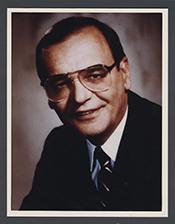 Rep. Paul E. Kanjorski (D-PA)
Description
Amendment in the nature of a substitute sought to replace the language in the bill with the text of the "Accounting Standards Integrity Act".
What it changes
1 change to H.R. 3574
We couldn't match these changes to the text of H.R. 3574, so they're shown as written.
Replaces the bill's text with a full substitute
Replaces the full textEverything after the enacting clauseRemoves all after the enacting clause.
Inserted: SECTION 1. SHORT TITLE.
Inserted: This Act may be cited as the "Accounting Standards Integrity Act".
Inserted: SEC. 2. FINDINGS.
Inserted: Congress finds the following:
Inserted: (1) The Securities and Exchange Commission has broad authority to prescribe accounting standards applicable to issuers of publicly traded securities, and generally has relied on the Financial Accounting Standards Board to establish generally accepted accounting standards for private sector businesses.
Inserted: (2) Objective accounting standards are essential to the efficient functioning of the economy and the capital markets, as investors, creditors, analysts, auditors, and others rely on credible, transparent, and comparable results of operations in making decisions regarding the allocation of capital.
Inserted: (3) Congress recently acknowledged the importance of the accounting standard-setting process to our capital markets and strengthened the the Financial Accounting Standards Board's independence as part of the Sarbanes-Oxley Act of 2002, which passed the House of Representatives and the Senate by votes of 423-3 and 99-0, respectively.
Inserted: (4) Congress, in the Sarbanes-Oxley Act of 2002, also recognized the importance of the convergence of United States and international accounting standards on high quality accounting standards.
Inserted: (5) The United States capital markets enjoy a competitive advantage as a result of the high quality and integrity of our financial reporting system and the accounting standards that underlie it and would lose that advantage over foreign markets if our accounting standards and policies are considered less than objective.
Inserted: (6) Investors benefit from independent and fair accounting standards that are free from undue political interference.
Inserted: (7) The rulemaking authority and credibility of the Financial Accounting Standards Board may be irreparably damaged by legislation that preempts the existing public and fair deliberative process.
Inserted: (8) The Securities and Exchange Commission of the United States has the ultimate authority over the content and process for setting standards for issuers of publicly traded securities.
Show 8 more inserted paragraphsShow less
Inserted: SEC. 3. SENSE OF THE CONGRESS.
Inserted: It is the sense of Congress that--
Inserted: (1) preserving the integrity of the accounting standard-setting process and the independence of the Financial Accounting Standards Board is crucial to the functioning and transparency of the financial reporting systems and capital markets of the United States; and
Inserted: (2) the Securities and Exchange Commission should be permitted to recognize or adopt new accounting standards without Congress or other parties intervening in the process before it is completed to override or delay recognition of those standards.
Inserted: SEC. 4. SECURITIES AND EXCHANGE COMMISSION MANDATE.
Inserted: Consistent with its established procedures, the Securities and Exchange Commission shall--
Inserted: (1) oversee the process of accounting standard-setting to ensure a process that assures that all of the comments, concerns, and recommendations gathered during the comment period on any proposal regarding equity-based compensation are subject to appropriate review; and
Inserted: (2) before a final standard is adopted, ensure that any modifications are made that are appropriate for the purposes of adopting the highest quality accounting standards that will best serve the purposes of our financial reporting system and the United States economy as a whole.
Original wording
Strike all after the enacting clause and insert the following:
Read automatically from the Congressional Record. Check the original before relying on it.
As printed
Strike all after the enacting clause and insert the following:
SECTION 1. SHORT TITLE.
This Act may be cited as the “Accounting Standards Integrity Act”.
SEC. 2. FINDINGS.
Congress finds the following:
(1) The Securities and Exchange Commission has broad authority to prescribe accounting standards applicable to issuers of publicly traded securities, and generally has relied on the Financial Accounting Standards Board to establish generally accepted accounting standards for private sector businesses.
(2) Objective accounting standards are essential to the efficient functioning of the economy and the capital markets, as investors, creditors, analysts, auditors, and others rely on credible, transparent, and comparable results of operations in making decisions regarding the allocation of capital.
(3) Congress recently acknowledged the importance of the accounting standard-setting process to our capital markets and strengthened the the Financial Accounting Standards Board's independence as part of the Sarbanes-Oxley Act of 2002, which passed the House of Representatives and the Senate by votes of 423-3 and 99-0, respectively.
(4) Congress, in the Sarbanes-Oxley Act of 2002, also recognized the importance of the convergence of United States and international accounting standards on high quality accounting standards.
(5) The United States capital markets enjoy a competitive advantage as a result of the high quality and integrity of our financial reporting system and the accounting standards that underlie it and would lose that advantage over foreign markets if our accounting standards and policies are considered less than objective.
(6) Investors benefit from independent and fair accounting standards that are free from undue political interference.
(7) The rulemaking authority and credibility of the Financial Accounting Standards Board may be irreparably damaged by legislation that preempts the existing public and fair deliberative process.
(8) The Securities and Exchange Commission of the United States has the ultimate authority over the content and process for setting standards for issuers of publicly traded securities.
SEC. 3. SENSE OF THE CONGRESS.
It is the sense of Congress that--
(1) preserving the integrity of the accounting standard-setting process and the independence of the Financial Accounting Standards Board is crucial to the functioning and transparency of the financial reporting systems and capital markets of the United States; and
(2) the Securities and Exchange Commission should be permitted to recognize or adopt new accounting standards without Congress or other parties intervening in the process before it is completed to override or delay recognition of those standards.
SEC. 4. SECURITIES AND EXCHANGE COMMISSION MANDATE.
Consistent with its established procedures, the Securities and Exchange Commission shall--
(1) oversee the process of accounting standard-setting to ensure a process that assures that all of the comments, concerns, and recommendations gathered during the comment period on any proposal regarding equity-based compensation are subject to appropriate review; and
(2) before a final standard is adopted, ensure that any modifications are made that are appropriate for the purposes of adopting the highest quality accounting standards that will best serve the purposes of our financial reporting system and the United States economy as a whole.
Legislative Activity
Stay on top of the latest movement without scrolling through every action
House amendment offered
July 20, 2004
View full timeline
House amendment offered
July 20, 2004
Roll call votes on amendments in House
July 20, 2004 • 2:40 PM
House amendment not agreed to: On agreeing to the Kanjorski amendment (A004) Failed by recorded vote: 127 - 293 (Roll no. 396).
July 20, 2004 • 2:40 PM
Amendment failed in Committee of the Whole
July 20, 2004 • 2:40 PM
House amendment offered/reported by : Amendment (A004) in the nature of a substitute offered by Mr. Kanjorski.(consideration: CR H6016-6019, H6020-6021; text: CR H6016)
July 20, 2004 • 1:37 PM
Amendment (A004) in the nature of a substitute offered by Mr. Kanjorski. (consideration: CR H6016-6019, H6020-6021; text: CR H6016)
July 20, 2004 • 1:37 PM
On agreeing to the Kanjorski amendment (A004) Failed by recorded vote: 127 - 293 (Roll no. 396).
July 20, 2004 • 2:40 PM
Votes
1 roll call on this amendment