To permit the establishment of 2 new Medigap plans for Medicare beneficiaries enrolled for prescription drug coverage under part D.
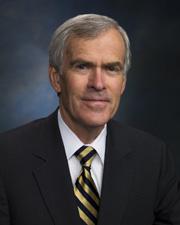 Sen. Jeff Bingaman (D-NM)
Legislative Activity
Stay on top of the latest movement without scrolling through every action
Senate amendment not agreed to: Amendment SA 1066 not agreed to in Senate by Yea-Nay. 43 - 55. Record Vote Number: 258.
June 26, 2003
View full timeline
Senate amendment not agreed to: Amendment SA 1066 not agreed to in Senate by Yea-Nay. 43 - 55. Record Vote Number: 258.
June 26, 2003
Roll call votes on amendments in Senate: Amendment SA 1066 not agreed to in Senate by Yea-Nay. 43 - 55. Record Vote Number: 258.
June 26, 2003
Considered by Senate. (consideration: CR S8606, S8641- S8642, S8648-8651)
June 26, 2003
Amendment SA 1066 not agreed to in Senate by Yea-Nay. 43 - 55. Record Vote Number: 258.
June 26, 2003
Senate amendment submitted
June 25, 2003
Senate amendment proposed (on the floor): Amendment SA 1066 proposed by Senator Bingaman.(consideration: CR S8502-8506; text: CR S8502)
June 25, 2003
Amendment SA 1066 proposed by Senator Bingaman. (consideration: CR S8502-8506; text: CR S8502) To permit the establishment of 2 new Medigap plans for Medicare beneficiaries enrolled for prescription drug coverage under part D.
June 25, 2003
Votes
1 roll call on this amendment
Text
Proposed
PRESCRIPTION DRUG AND MEDICARE IMPROVEMENT ACT OF 2003--CONTINUED

Mr. BAUCUS. I have been explaining various provisions in the bill
that I think largely address concerns that some on the Democrat side
have and I suppose on the Republican side of the aisle, too; namely,
potential premium variation. Premiums that seniors pay might vary. Much
confusion might occur for seniors and anyone else involved in
prescription drug benefits that would be distributed under this
legislation.
As I mentioned, the actuaries say there should not be much change.
Also, the risk pool will include all Medicare beneficiaries, ensuring
an adequate number of low-drug-cost beneficiaries will be able to
subsidize the few beneficiaries with the high drug costs. Already,
there is a huge risk pool. There is kind of a cross subsidization.
Those with very low drug costs will help pay for those much higher
costs of other seniors. The larger risk pool will prevent premium
variation because we use the whole pool.
In addition, the bill will calculate Federal contributions toward
plan premiums based on the national average of all plan bids. This
contribution is then adjusted geographically for differences in prices.
This is a so-called geographic adjustor. We want to make sure one part
of the country is not discriminated against compared to another part of
the country or vice versa, and we included the geographic adjustment on
prices.
We have not included so far, because it is difficult to calculate,
geographic adjustment based on utilization. As we know, in some parts
of the country there is more utilization. That is a fancy term for
saying there is a lot more care given to people than in other parts of
the country. More care, the greater utilization, tends to be in parts
of the country with more hospitals, more specialty health care
providers.

There is an interesting study I urge my colleagues to read by Dr.
Wennberg. I have not found anyone who refutes it. Looking at the
country as a whole, there are parts of the country where utilization is
twice as high and more than twice as high as other parts of the
country. People, because of where they live, get twice as much health
care in some parts of the country than in other parts of the country.
This is adjusted for age, for race, for gender. It is adjusted for all
the factors that can possibly be thought of.
The more interesting part of this study, even though some parts of
the country get twice as much health care as other parts of the
country--and it is because there are twice as many doctors or hospitals
in some parts of the country as in others--the interesting part of the
study is, the actual care given is no better, and in fact in some cases
it is worse. That is, if you get twice as much health care, that is,
twice as many visits to the doctor or the hospital, particularly for
chronic diseases, you will not be twice as healthy; you will not be any
healthier, on average, than you will be in parts of the country where
there is less utilization.
The point is that we are trying to adjust, as I mentioned earlier,
and have a geographic adjustment based on the costs. We have not yet
figured out a way to adjust for different utilization mainly because,
when it comes to prescription drug benefits for seniors, there is
virtually no data because we have not had prescription drug benefits
for seniors yet. Obviously, it is hard to get the data if we have not
had the program.
There are other provisions in the bill that enable us to get more
data, so fairly quickly we can get better utilization data and
therefore have a geographic adjustment based not only on price but also
on utilization. That will go a long way to address some of the concerns
people have about potential premium variation and complexity. When we
get that data, as I said, we will have a lot more information, but
there is enough information already to have the effect of minimizing
concern about premium variations.
There is another provision in the bill to help address this potential
problem. That is, we have included in this bill a provision based on
the Federal Employees Health Benefits Program--otherwise known as
FEHBP--that prohibits plans from changing premiums that are
unreasonably higher than the costs of the benefits provider. In other
words, plans are prohibited from price gouging. That standard currently
is in the law with respect to the FEHBP plan. That is in the law. There
is a provision in current law that prohibits the FEHBP plans from
charging premiums that are unreasonably higher than the cost that has
been provided. I believe that same provision as applied to prescription
drug pricing is an additional guarantee against gouging and certainly
against unconscionable premium variation.
Finally, this bill allows the Secretary to refuse to contract with
the plan. That is in the bill. Maybe a plan leans toward enrolling
healthier beneficiaries. Maybe the Secretary determines that this plan
is not a good actor; this plan is price gouging; this plan is engaging
in cherrypicking; it is engaging in adverse selection at the expense of
an American; or maybe it seems less committed to staying in the
program; maybe there is a shady operation; who knows, maybe it seems
more likely to drop out fairly quickly

[[Page S8500]]

and it is not solvent or financially healthy; maybe the premiums seem
inconsistent with others in the region.
For any of these reasons and reasons not contemplated at this time,
the Secretary can decide, at his discretion, not to contract with a
drug plan that has submitted a bid to participate in Medicare. That
option is still there as a protection for our senior citizens. It is my
hope that this discretion will help assure better plan choices for
seniors and the benefits and premiums will, in fact, be fair and
reasonable.
In short, in developing this compromise bill, Senator Grassley and I
have tried to allow a level of variation in premiums and benefits so as
to foster innovation and to foster efficiency but not so much variation
that seniors will be confused or plans will game the system.
I think we have done a pretty good job of ending confusion and a
pretty good job of preventing plans from gaming the system. I hope my
colleagues will agree this proposal strikes at that.
Madam President, I yield the floor.

Amendment No. 1040

(Purpose: To provide for equitable reimbursement rates in 2004 and 2005
for Medicare+Choice organizations making the transition to
MedicareAdvantage organizations)

The PRESIDING OFFICER. The Senator from Pennsylvania.
Mr. SANTORUM. Madam President, the Senator from New York, Mr.
Schumer, and I are in the Chamber now to offer a amendment.
Unfortunately, I have to withdraw that amendment because of budgetary
constraints with which we are going to be dealing.
This is an amendment that we believe is critically important as a
bridge from where we are right now on the Medicare Program to where
this bill takes us. The bridge is in the area of Medicare+Choice, which
is the Medicare option that is available in certain counties in this
country for a health maintenance organization, the only place in
Medicare that provides prescription drug coverage today.
About 10 to 12 percent of beneficiaries under Medicare participate in
Medicare+Choice or Medicare HMO programs. Their satisfaction rate is as
high or higher than in the traditional Medicare Program. The problem
with Medicare+Choice or the Medicare HMOs is they are funded at a level
which does not increase at the same rate that the Medicare Program
increases. They are held at an artificially low level, which makes it
very difficult for them to survive.
The concern of Senator Schumer, who has been a great leader on this
issue, and my concern is what happens between now and 2006 when the new
MedicareAdvantage Program comes into effect under this bill. That
program will include Medicare+Choice or Medicare HMOs, and a new option
that will be available through this bill of a PPO, which is a
more lightly managed insurance. Medicare HMOs are heavily managed with
gatekeepers and a restricted number of providers, both doctors and
hospitals to which you have access, but you get more benefits. PPOs
have less restrictions, less management, and more choices. The fee-for-
service has no restrictions, maximum choices, but higher costs.

What we wanted to do is put in an amendment that gave us a bridge of
funding so these existing HMO plans can survive until we get to 2006,
because there is a big concern. We have seen HMO plan after HMO plan go
out of business because of inadequate funding. Through the work of
Senator Schumer and several others in this Chamber, we have been
pushing this issue in the Senate. We ran into a roadblock because of
the unavailability of funds in the Senate bill. But there is money in
the House bill, and the amendment Senator Schumer is going to offer
here, as soon as I drop the mike, will mirror what the House bill does.
I will turn it over to my colleague from New York. This is a vitally
important amendment. It is really important for us to come out of the
conference with money for Medicare+Choice or Medicare HMO plans for the
years 2004 and 2005, so when 2006 rolls around we will have a viable
program, a robust program that this new MedicareAdvantage Program can
intersect.
If we, on our side of the aisle, are concerned about competition and
choices and if we want choices, then we have to fund those choices to
get to 2006, when, candidly, there will be a lot more money for these
programs to survive. I would like to see them survive in the interim.
The Senator from New York, as I said before, is leading the charge on
this issue. The House, thankfully, has included it in their underlying
bill. We hope we will be able to keep that in conference.
I yield the floor.
The PRESIDING OFFICER. The Senator from New York.
Mr. SCHUMER. Madam President, I ask unanimous consent to set aside
pending amendments and call up amendment No. 1040.
The PRESIDING OFFICER. Is there objection? Without objection, it is
so ordered.
The clerk will report the amendment.
The assistant legislative clerk read as follows:

The Senator from New York [Mr. Schumer], for himself, Mr.
Santorum, Mr. Corzine, Mrs. Clinton, Mr. Lautenberg, and Mr.
Kerry, proposes an amendment numbered 1040.

Mr. SCHUMER. I ask unanimous consent the reading of the amendment be
dispensed with.
The PRESIDING OFFICER. Without objection, it is so ordered.
The amendment is as follows:

(Purpose: To provide for equitable reimbursement rates in 2004 and 2005
for Medicare+Choice organizations making the transition to
MedicareAdvantage organizations)

On page 294, line 6, strike ``or (C)'' and insert ``(C), or
(D)''.
On page 294, line 21, insert ``(other than in 2004 and
2005)'' after ``multiplied''.
On page 297, strike lines 5 through 9, and insert the
following:
``(iv) For 2002 and 2003, 102 percent of the annual
Medicare+Choice capitation rate under this paragraph for the
area for the previous year.
``(v) For 2004 and 2005, 103 percent of the annual
Medicare+Choice capitation rate under this paragraph for the
area for the previous year.
``(vi) For 2006 and each succeeding year, 102 percent of
the annual Medicare+Choice capitation rate under this
paragraph for the area for the previous year.
``(D) Annual fee-for-service costs in 2004 and 2005.--For
2004 and 2005, the adjusted average per capita cost for the
year, as determined under section 1876(a)(4) for the
Medicare+Choice payment area for items and services covered
under parts A and B for individuals entitled to benefits
under part A and enrolled under part B and not enrolled in a
Medicare+Choice plan under this part for the year, except
that such amount shall be adjusted--
``(i) to exclude costs attributable to payment adjustments
described in subsection (a)(5)(B)(ii), and
``(ii) to include an amount equal to the Secretary's
estimate, on a per capita basis, of the amount of additional
payments that would have been made in the area involved under
this title if individuals entitled to benefits under this
title had not received services from facilities of the
Department of Defense or the Department of Veterans Affairs.
On page 298, line 10, strike ``subparagraph (B)'' and
insert ``subparagraphs (B) and (E)''.
On page 301, between lines 8 and 9, insert the following:
``(E) Inclusion of costs of dod and va military facility
services to medicare-eligible beneficiaries.--In determining
the area-specific Medicare+Choice capitation rate under
subparagraph (A) for 2004 and 2005, the annual per capita
rate of payment for 1997 determined under section
1876(a)(1)(C) shall be adjusted to include in the rate the
Secretary's estimate, on a per capita basis, of the amount of
additional payments that would have been made in the area
involved under this title if individuals entitled to benefits
under this title had not received services from facilities of
the Department of Defense or the Department of Veterans
Affairs.
On page 302, line 23, insert ``(or, in the case of
calculations for payments for months beginning on or after
January 1, 2004, and before December 31, 2005, the average
number of medicare beneficiaries enrolled in a
Medicare+Choice plan that are)'' after ``medicare
beneficiaries''.
On page 303, line 9, insert ``other than 2004 and 2005''
after ``for each year''.
On page 349, between lines 4 and 5, insert the following:
(3) Payment rates based on 100 percent of fee-for-service
costs in 2004 and 2005.--
(A) Change in budget neutrality.--Section 1853(c) (42
U.S.C. 1395w-23(c)) is amended--
(i) in paragraph (1)(A), in the flush matter following
clause (ii), by inserting ``(other than in 2004 and 2005)''
after ``multiplied''; and
(ii) in paragraph (5), by inserting ``other than 2004 and
2005'' after ``for each year''.

[[Page S8501]]

(B) Inclusion of costs of dod and va military facility
services to medicare-eligible beneficiaries.--Section
1853(c)(3) (42 U.S.C. 1395w-23(c)(3)) is amended--
(A) in subparagraph (A), by striking ``subparagraph (B)''
and inserting ``subparagraphs (B) and (E)''; and
(B) by adding at the end the following new subparagraph:
``(E) Inclusion of costs of dod and va military facility
services to medicare-eligible beneficiaries.--In determining
the area-specific Medicare+Choice capitation rate under
subparagraph (A) for 2004 and 2005, the annual per capita
rate of payment for 1997 determined under section
1876(a)(1)(C) shall be adjusted to include in the rate the
Secretary's estimate, on a per capita basis, of the amount of
additional payments that would have been made in the area
involved under this title if individuals entitled to benefits
under this title had not received services from facilities of
the Department of Defense or the Department of Veterans
Affairs.''.
(C) Revision of national average used in calculation of
blend.--Section 1853(c)(4)(B)(i)(II) (42 U.S.C. 1395w-
23(c)(4)(B)(i)(II)) is amended by inserting ``(or, in the
case of calculations for payments for months beginning on or
after January 1, 2004, and before December 31, 2005, the
average number of medicare beneficiaries enrolled in a
Medicare+Choice plan that are)'' after ``medicare
beneficiaries''.
(D) Update in minimum percentage increase.--Section
1853(c)(1)(C) (42 U.S.C. 1395w-23(c)(1)(C)) is amended by
striking clause (iv) and inserting the following new clauses:
``(iv) For 2002 and 2003, 102 percent of the annual
Medicare+Choice capitation rate under this paragraph for the
area for the previous year.
``(v) For 2004 and 2005, 103 percent of the annual
Medicare+Choice capitation rate under this paragraph for the
area for the previous year.
``(vi) For 2006 and each succeeding year, 102 percent of
the annual Medicare+Choice capitation rate under this
paragraph for the area for the previous year.''.

Mr. SCHUMER. Madam President, I offer this amendment on behalf of
myself and my colleague from Pennsylvania, as the lead sponsors of this
amendment. I also ask Senators Corzine, Clinton, Lautenberg, and Kerry
be added as cosponsors who support what we are doing here.
The PRESIDING OFFICER. Without objection, it is so ordered.
Mr. SCHUMER. Madam President, Senator Santorum has summed this up
very well. We have a large number of senior citizens who have opted
into a Medicare+Choice Program. The Medicare+Choice Program has been an
experiment. Basically it said, let's let some providers, in this case
HMOs, provide Medicare for senior citizens so they have an option to go
into it.
What most of these programs have done, frankly, is they made a sort
of deal with senior citizens. They say you have to go to the doctors
and hospitals that are a part of our plan. In that way, we will reduce
costs. Then we can provide prescription drug coverage or other types of
coverage for you. It has been quite popular in a good number of places,
in my State as well as many other States.
This program has had some trouble, there is no question about it. The
reason is the cost of prescription drugs has gone way up. Health care
costs have gone way up. As a result, many have pulled out of
Medicare+Choice. Many seniors--not all but most of the seniors I know--
went into it so they could get some prescription drug coverage.
I agree completely with Senator Santorum. We are, in 2006, going to
provide all kinds of different help to private providers who will
provide either prescription drug coverage or a whole Medicare+Choice-
type situation. But it absolutely makes no sense to let these programs
go under, which they will because there is not enough money for them
now, in 2004, 2005, until 2006 funding kicks in, and then whole new
infrastructures would have to be set up.
In addition, the premiums have gotten so high because the costs have
gotten high and we have been unable to put in the money that many of
those providing Medicare+Choice have either pulled out entirely of
large regions in this country or so many have pulled out there is not
the competition we would like to see.
In Suffolk County, in my area, I think it is 80,000 senior citizens
who were in Medicare+Choice; but where there were once 6 providers,
there are now only 2.
In addition, and really galling to the seniors, with good reason--I
completely agree with them--the premiums, the copayments on these
programs have been large. They once were $10 or $20 or $30. Now,
particularly in suburban areas, they are $140 to $170 a month. In fact,
many of my constituents, with justification, cannot understand why
Medicare+Choice is available in some areas with no copayments and no
premiums, and in others the premium is so high that if you are a
typical senior citizen on a fixed income, you can't afford it.
Our proposal does two things--and, again, Senator Santorum is exactly
correct. No. 1, it provides the money so these programs can stay in
effect until 2006. Once we get to 2006, they are taken care of because
of the structure of this bill. But to have them collapse makes no
sense.
Second, it provides some equity. Because costs are higher, for
instance, in Suffolk and Nassau Counties, they should not be treated
the same and given the same dollars as New York City.
Who is paying the higher costs in the end? The senior citizen who is
having the same kind of expenses as a senior citizen in New York City.
We add just the formula and make it more flexible so high-cost areas
get some reimbursement. This is a problem in the suburbs of New York,
in the suburbs of Philadelphia, in the suburbs of Texas and California.
It tends to be a suburban problem.
But make no mistake about it: Many of the senior citizens who live in
these suburban communities are not wealthy. They are not middle class.
They are struggling. They are on a fixed income. Medicare+Choice
originally was a salvation to them. Now it is becoming a real burden.
I would add, I do not believe this is the fault of the HMOs providing
the service. It is the Federal Government that has not put in enough
money to make these things viable. We have corrected this in this
proposal, but only in 2006, when it takes effect. Again, it makes no
sense, no sense whatsoever, to let these HMOs that do Medicare+Choice
fold and then have to start up again.

So this is an important amendment. Unfortunately, we cannot bring it
to a vote because in the rules of the Senate, we would have to get 60
votes to adopt this, and that is too uphill a burden. But the good news
is, it is in the House bill which has different rules.
I know Senator Santorum, as well as all my cosponsors, joins me in
saying we want this program to be put in the final bill when it comes
out of conference committee. We know there will be the kind of dollars
that might be available, and this is an extremely high priority.
So I am offering this amendment to underscore that importance, to let
our diligent leaders of the Finance Committee--Senator Grassley and
Senator Baucus--know how important it is to a good number of us, and to
make sure it has its place at the table when the conference committee
occurs.
I just want to make a few more points about Medicare+Choice Programs.
These do not benefit well-to-do people. Let me give you some numbers.
Among Medicare beneficiaries who have annual incomes between $10,000
and $20,000 and who do not have Medicaid or group health coverage, 40
percent are in Medicare+Choice. These are the very people who cannot
afford the high cost of prescription medicines.
Medicare+Choice, when it came in, was a godsend to them. And I, for
one, am on this side of the aisle, but I do not let any ideological
blinders get in my way. If Medicare+Choice, a private program, is going
to solve their problem, great, but let's provide it with the funds,
particularly in more suburban, high-cost areas so it can actually work.
Here is another statistic. In addition, 52 percent of Hispanic and 40
percent of African-American Medicare beneficiaries who do not have
Medicaid or group health depend on Medicare+Choice. So this is an area
that affects typical Americans: hard-working retirees, who have not
made a windfall, who made a decent living just by the sweat of their
brow, and now they are retired and are on a fixed income, they need
some kind of help that goes beyond Medicare because they have a large
prescription drug bill or they need something else. Medicare+Choice
becomes a health care safety net.
Again, it would be a shame if we did nothing. If we did not have this
bill,

[[Page S8502]]

most of the Medicare+Choice Programs would have faded away or made the
premiums so high they would be out of the reach of all but very
comfortable people. This amendment provides the bridge between now and
2006 when we know this will work.
I know there are many Senators who are enthusiastically for this
approach. I want to add that Senator Kerry, who could not be here
today, wanted me to let my colleagues know how enthusiastic a supporter
he is.
I hope we will work this out in the conference because it is one of
the most important things that are not in this bill, once you overcome
the basic disagreement we have of Medicare versus private.

Amendment No. 1040 Withdrawn

So I am going to withdraw the amendment because, again, we do not
want to put ourselves, because of the Senate rules, under a burden of
having to get much more than a majority, a 60-percent vote. We have
hope because it is in the House bill. We are going to work hard in
conference to see that it is kept in the conference agreement. But at
this point, Madam President, I ask unanimous consent to withdraw this
amendment on behalf of Senator Santorum, myself, and the other
cosponsors.
The PRESIDING OFFICER (Mrs. Dole). The Senator has the right to
withdraw the amendment, and the amendment is withdrawn.
Mr. SCHUMER. I yield the floor.
The PRESIDING OFFICER. The Senator from Rhode Island.
Mr. REED. Madam President, I ask unanimous consent that I be allowed
to yield to the Senator from New Mexico and then retain the floor after
he offers his two amendments.
The PRESIDING OFFICER. Is there objection?
Without objection, it is so ordered.
The Senator from New Mexico.
Mr. BINGAMAN. Madam President, I thank my colleague from Rhode Island
very much for yielding to me.
Madam President, I ask unanimous consent that the pending amendments
be set aside.
The PRESIDING OFFICER. Without objection, it is so ordered.

Amendment No. 1065

Mr. BINGAMAN. Madam President, I send an amendment to the desk and
ask for its immediate consideration.
The PRESIDING OFFICER. The clerk will report.
The assistant legislative clerk read as follows:

The Senator from New Mexico [Mr. Bingaman], for himself and
Mr. Domenici, proposes an amendment numbered 1065.

Mr. BINGAMAN. Madam President, I ask unanimous consent that reading
of the amendment be dispensed with.
The PRESIDING OFFICER. Without objection, it is so ordered.
The amendment is as follows:

(Purpose: To update, beginning in 2009, the asset or resource test used
for purposes of determining the eligibility of low-income beneficiaries
for premium and cost-sharing subsidies)

On page 120, between lines 16 and 17, insert the following:
``(I) Update of asset or resource test.--With respect to
eligibility determinations for premium and cost-sharing
subsidies under this section that are made on or after
January 1, 2009, such determinations shall be made (to the
extent a State, as of such date, has not already eliminated
the application of an asset or resource test under section
1905(p)(1)(C)) in accordance with the following:
``(i) Self-declaration of value.--

``(I) In general.--A State shall permit an individual
applying for such subsidies to declare and certify by
signature under penalty of perjury on the application form
that the value of the individual's assets or resources (or
the combined value of the individual's assets or resources
and the assets or resources of the individual's spouse), as
determined under section 1613 for purposes of the
supplemental security income program, does not exceed
$10,0000 ($20,000 in the case of the combined value of the
individual's assets or resources and the assets or resources
of the individual's spouse).
``(II) Annual adjustment.--Beginning on January 1, 2010,
and for each subsequent year, the dollar amounts specified in
subclause (I) for the preceding year shall be increased by
the percentage increase in the Consumer Price Index for all
urban consumers (U.S. urban average) for the 12-month period
ending with June of the previous year.

``(ii) Methodology flexibility.--Nothing in clause (i)
shall be construed as prohibiting a State in making
eligibility determinations for premium and cost-sharing
subsidies under this section from using asset or resource
methodologies that are less restrictive than the
methodologies used under 1613 for purposes of the
supplemental security income program.
``(J) Development of model declaration form.--The Secretary
shall--
``(i) develop a model, simplified application form for
individuals to use in making a self-declaration of assets or
resources in accordance with subparagraph (I)(i); and
``(ii) provide such form to States and, for purposes of
outreach under section 1144, the Commissioner of Social
Security.''.

Mr. BINGAMAN. Madam President, just very briefly, let me state that
this is the revised version of the amendment Senator Domenici and I had
2 days ago that would have eliminated the assets test. This keeps the
assets test but reforms it very substantially.
I will explain this further when we get an opportunity to actually
debate the amendment.
Madam President, I ask unanimous consent that the amendment be set
aside.
The PRESIDING OFFICER. Without objection, it is so ordered.

Amendment No. 1066

Mr. BINGAMAN. Madam President, I send an amendment to the desk and
ask for its immediate consideration.
The PRESIDING OFFICER. The clerk will report.
The assistant legislative clerk read as follows:

The Senator from New Mexico [Mr. Bingaman] proposes an
amendment numbered 1066.

The amendment is as follows:

(Purpose: To permit the establishment of 2 new medigap plans for
medicare beneficiaries enrolled for prescription drug coverage under
part D)

On page 137, line 6, strike ``Notwithstanding'' and insert
``Except as provided in paragraph (4) and notwithstanding''.
On page 138, line 2, strike ``or `G' '' and insert `` `G',
or a policy described in paragraph (4)''.
On page 138, line 17, insert ``, who seeks to enroll with
the same issuer who was the issuer of the policy described in
clause (ii) of such subparagraph in which the individual was
enrolled (unless such issuer does not offer at least one of
the policies described in paragraph (4)),'' after ``section
1860D-2(b)(2)''.
On page 140, between lines 13 and 14, insert the following:
``(4) New standards.--In applying subsection (p)(1)(E)
(including permitting the NAIC to revise its model
regulations in response to changes in law) with respect to
the change in benefits resulting from title I of the
Prescription Drug and Medicare Improvement Act of 2003, with
respect to policies issued to individuals who are enrolled in
a Medicare Prescription Drug plan under part D or under a
contract under section 1860D-3(e), the changes in standards
shall only provide for substituting (for the benefit packages
described in paragraph (2)(B)(ii) that included coverage for
prescription drugs) two benefit packages that shall be
consistent with the following:
``(A) First new policy.--The policy described in this
subparagraph has the following benefits, notwithstanding any
other provision of this section relating to a core benefit
package:
``(i) The policy should provide coverage for benefits other
than prescription drugs similar to the coverage for benefits
other than prescription drugs provided under a medicare
supplemental policy which had a benefit package classified as
`H' before the date of enactment of the Prescription Drug and
Medicare Improvement Act of 2003.
``(ii) The policy should provide coverage for prescription
drugs that--

``(I) compliments, but does not duplicate, the benefits
available under part D; and
``(II) does not cover 100 percent of the deductible,
copayments, coinsurance (including any cost-sharing
applicable under the limitation on out-of-pocket
expenditures), or any other cost-sharing applicable under
part D.

``(B) Second new policy.--The policy described in this
subparagraph has the same benefits as the policy described in
subparagraph (A), except that the reference to the benefit
package classified as `H' in clause (i) of such subparagraph
is deemed to be a reference to the benefit package classified
as `J'.
(b) Report.--The Secretary shall enter into an arrangement
with the National Association of Insurance Commissioners (in
this section referred to as the ``NAIC'') under which, not
later than 18 months after the date of enactment of this Act,
the NAIC shall submit to Congress a report on the medicare
supplemental policies described in section 1882(v)(4) of the
Social Security Act, as added by subsection (a), that
assesses the viability of the policies described in such
section and, if viable, the details of those policies.

Mr. BINGAMAN. Madam President, just to indicate what this amendment
does, this is an amendment related to Medigap and directs that a
Medigap plan be developed to wrap around the prescription drug benefit
that is currently in the bill.

[[Page S8503]]

Again, I will further explain this amendment and argue for it when we
get the opportunity to do so.
I did need to have both of these amendments offered so that the
Congressional Budget Office would do a score for them. Again, I thank
my colleague from Rhode Island for yielding to me for that purpose.
Madam President, I yield the floor.
The PRESIDING OFFICER. The Senator from Rhode Island.
Mr. REED. Madam President, I rise today to discuss the historic
legislation that is before this Chamber. A year ago, this body
undertook a similar endeavor to bring a Medicare prescription drug
benefit to the 40 million aged and disabled beneficiaries who are on
the program today, as well as maintain the promise for the tens of
millions of future beneficiaries who will be joining the rolls in the
coming decades.
Despite the fact that a majority of Senators voted in favor of a $594
billion plan for a drug program offered by Senators Graham, Miller, and
Kennedy, procedural barriers prevented us from delivering a benefit to
our elderly and disabled last year.
Since that time, Congress has passed another round of tax cuts at the
President's behest, and the Nation's fiscal condition continues to
deteriorate at an alarming rate. Just last week, the Congressional
Budget Office announced that this administration is now on pace to
shatter previous Federal budget deficit records. CBO's latest fiscal
year 2003 budget deficit forecast now tops $400 billion, an increase of
$100 billion over the CBO's deficit forecast offered just a month ago.
The current record budget deficit was $290 billion set in 1992. In
just the first 8 months of fiscal year 2003, we have already posted a
deficit of $291 billion.
Congress and the administration are now turning their attention to
the long-neglected problem of a prescription drug benefit for Medicare.
This year, we are faced with an arbitrary cap of $400 billion under
which a drug benefit must fit. This cap is the result of the
administration's insistence on dealing with the drug benefit after the
tax cut and not before. Madam President, $400 billion was not
sufficient when we sought to enact a meaningful prescription drug
benefit last year, and I believe it is even less adequate this time.
The issue of Medicare prescription drugs is extremely important to
me, and even more important to the constituents I represent.
In of a State of slightly more than a million people, 14.5 percent of
the population in Rhode Island is over the age of 65 years. This is a
higher proportion of older persons than the national average of 12.4
percent. According to the Census Bureau estimates, the number of
elderly is expected to increase to 18.8 percent of Rhode Island's
population by the year 2025. Rhode Island also has one of the highest
concentrations of persons age 85 and over. Consequently, seniors in my
State tend to utilize higher degrees and greater levels of health care
than their counterparts in other States.
My State is also unique in terms of its health insurance market.
Being a small State, Rhode Island experienced a particularly tumultuous
insurance cycle during the mid-1990s that resulted in basically one
insurer remaining in the market. Being dominated by a single insurance
company has resulted in artificially low reimbursement rates for
providers in my State. In fact, I am told Medicare is often the highest
payer, sometimes 30 to 40 percent higher than some of the private
options.
This has created a tremendous burden on providers in my State who are
struggling to keep up with the increasing cost of doing business while
continuing to provide quality care to their patients.
As Senator Grassley stated at the outset of this debate, his
legislation contains a provision aimed at increasing the reimbursement
rate for rural providers that fall below the national average. This
will make certain rural patients are not denied access to doctors and
quality care. However, I believe the same assurance must be given to
all Medicare beneficiaries, regardless of where they live. I am
constantly hearing from providers in my State who are struggling with
the drastically increasing cost of doing business. I believe we must do
more to recognize regional variations in the cost of providing health
care services in this country to ensure all providers are equitably
compensated for services under the Medicare Program and access to care
for beneficiaries is assured.
I would like to take a few moments to outline the many concerns I
have regarding this legislation. I commend the Senate Finance Committee
and the leadership of Senator Grassley and Senator Baucus for their
efforts to move a package forward. This is a daunting challenge. They
have invested their energy and their vision and their enthusiasm over
many weeks. I commend them for that.
However, I believe the proposal before this body is deficient in many
significant ways. Under the legislation, seniors below 100 percent of
poverty and those between 100 and 135 percent of poverty would have
much of their needs covered at minimal expense. This is one of the
beneficial aspects of the legislation. I must commend the Senators for
insisting upon this protection for low-income seniors. Seniors between
135 and 160 percent of poverty would face a variable deduction and
coinsurance.
These are beneficial aspects. If we could do more along these lines
to provide assurances to low-income seniors that their benefits would
be taken care of, if we could close the gap in coverage and we could do
many things, this legislation would be one that would be universally
supported. But there are significant shortcomings as well as the
beneficial aspects.
Our elderly and disabled beneficiaries need a comprehensive Medicare
prescription drug benefit now, not 3 years from now. According to the
Kaiser Family Foundation, a senior today pays an average of $999 in
out-of-pocket drug costs. Under the Grassley-Baucus proposal, beginning
in 2004, seniors would be entitled to the Bush administration's
privately run discount card program. The Government-endorsed card would
provide seniors with negotiated discounts on certain drugs.

Instead of taking the time and expense to implement and dismantle a
temporary discount card, we should be dedicating ourselves to
implementing today a meaningful comprehensive prescription drug benefit
as expeditiously as possible. I recognize the proposal before us is
highly complicated and relies on a private marketplace that does not
even exist and will take time to put in place. Yet if the original
Medicare program could be up and running within 11 months during an era
when there were no computers to speak of, I see no reason why we can't
phase in the basic elements of a prescription drug program starting
immediately.
I greatly fear the beneficiaries of Medicare will never see this
benefit take effect when 2006 rolls around. There are a number of very
plausible scenarios such as increasing Federal budget deficits,
competition with the never ending drumbeat for tax cuts, and the
expiration of some of the 2001 and 2003 tax cuts, the lack of private
companies willing to offer these new plans, technical problems, or any
number of other potential stumbling blocks that could derail
implementation of this benefit, leaving seniors with nothing more than
the temporary discount card as a benefit. Indeed, the bill before us
continues the temporary card more than 6 months after the benefit is
supposed to start.
Given the fact that Medicare beneficiaries have already waited too
long for Congress to enact a prescription drug benefit, we need to do
all we can to deliver a Medicare prescription drug benefit as soon as
possible. Yet an effort by Senator Lautenberg to move up the
implementation date of the new Medicare Part D program to July 1, 2004
failed. I am extremely disappointed this amendment did not prevail,
leaving seniors to wait even longer for us to deliver on this promise.
The current package relies entirely on the private sector to provide
a Medicare prescription drug benefit to seniors. The new Medicare Part
D program created by this legislation is a significant departure from
the traditional Medicare Program structure. The expectation is that
Medicare HMOs and PPOs will provide the complete range of health care
services, including prescription drugs, under the new MedicareAdvantage
option, while drug-only plans, which currently don't exist in the
health insurance marketplace,

[[Page S8504]]

will provide drug coverage to beneficiaries who remain in the
traditional fee-for-service Medicare Program.
It is important to point out that most seniors have a favorable
opinion of the existing Medicare Program and are satisfied with the
coverage they receive through the traditional program. According to a
recent Kaiser Family Foundation Harvard School of Public Health survey,
80 percent of seniors have a favorable impression of Medicare and 62
percent felt that the program is well run.
Seventy-two percent of people age 65 and over surveyed thought
seniors should be able to continue to get their health insurance
coverage through Medicare over private plans and 63 percent favored
drug coverage through Medicare over private plans.

The only time a beneficiary would have access to the Medicare
prescription drug fallback option under the traditional program is when
no other private plans are available in their service area. However,
once two drug-only plans enter the market in a particular area, this
fallback option automatically disappears and a senior's choice is
eliminated. He or she is forced to move to a different plan. I believe
seniors should have true choice when making a decision about Medicare.
They should be able to choose the Medicare prescription drug plan that
best suits their needs, even if it is the Government-administrated
option, which has a proven record of lower costs to taxpayers.
I support providing a level playing field for all Medicare
prescription plans and was a proud cosponsor of Senator Stabenow's
amendment that would have guaranteed the availability of the Medicare
fallback plan as the standard option for seniors. This was not an
amendment to force some outmoded Government-controlled health care
system. It was an amendment about choice; indeed, a choice seniors
overwhelmingly favor. Apparently we rejected that choice when we
rejected the Stabenow amendment.
The Federal Government already serves as a direct provider of
prescription drug benefits to millions of active-duty military
personnel and veterans, so we do have a compelling Government model
rather than a private sector model on which to base our expansion of
Medicare.
Advocates for private sponsored prescription drug coverage under
Medicare contend the private sector is more efficient and generally
better suited to providing a prescription drug benefit to the elderly
and disabled. I have also heard arguments that private plans are more
cost-effective. However, as history has shown, the Medicare program has
operated with significantly lower administrative costs than their
private sector counterparts--2 to 3 percent versus 8 to 10 percent.
Moreover, the Federal Government already has a long track record of
providing prescription drug benefits to millions of active duty
personnel and their families.
The Government also has a wealth of experience as a bulk purchaser of
medications for our Nation's veterans. The TRICARE program provides
comprehensive health and prescription drug coverage to 8.6 million
military and their dependents. Similarly, almost 5 million of our
veterans have access to prescription drug coverage for free for
service-connected conditions and for a nominal $7 copay for a 30-day
supply of medication for nonservice-connected ailments.
Federal health care programs have a proven track record of offering
comprehensive, stable, and reliable benefits in a cost-effective
manner. The facts certainly do not necessarily reflect the rhetoric
when it comes to private plans.
Indeed the best model for, I think, pharmaceuticals is the Veteran's
Administration and TRICARE programs, all of which are run by the
Federal Government.
Under the Finance bill, premiums will vary based on geographic
location and the level of benefits offered by the plan. The most recent
CBO estimates indicate that the average premium for the standard
prescription drug plan would be $35 in 2006 and will increase to $59 by
2013. However, private plans are free to provide a different package of
benefits so long as the minimum benefit is ``actuarially equivalent''
to the standard benefit package set forth by the Government. Plans
would also be free to charge beneficiaries a different premium to
reflect these benefit packages. For beneficiaries on fixed incomes,
these unpredictable premiums will be a great burden.
Beneficiaries will also face annual unpredictable increases in their
deductible. The bill sets the deductible at $275 for 2006 and will
increase in subsequent years based on the average annual per capita
expenditures on covered drugs. I fear that some of the cost saving
measures in this bill are ``pennywise and pound foolish.'' We should be
very clear that this legislation imposes a significant amount of cost-
sharing on seniors, not only in terms of the $275 deductible, variable
monthly premiums and 50 percent coinsurance under the prescription drug
plan, but in other areas as well. Specifically, the Grassley-Baucus
proposal increases the annual deductible beneficiaries currently pay
under Medicare Part B to $125 in 2006 and it indexes future increases
to inflation.
I am also deeply concerned with other provisions included in this
legislation to offset the cost of the rural provider payments. In
particular, it imposes for the first time a beneficiary coinsurance
requirement of 20 percent for diagnostic lab tests to offset a portion
of these rural provider payments. I have heard from literally hundreds
of providers and beneficiaries from my State in opposition to this new
cost burden. In essence, what this provision translates to is an $18.6
billion shift in cost onto beneficiaries over the next decade. From a
regional standpoint, absolutely none of this funding will benefit
providers in my State, nor will it ensure better access to care or
improve quality of care to beneficiaries in my State. Yet the over
170,000 Medicare beneficiaries in Rhode Island will be forced to pay
millions in additional costs. I believe it is extremely unfair and
inappropriate to boost the payments of a select group of providers at
the expense of beneficiaries. The purpose of the legislation is to
bring new benefits--not impose new burdens--on our elderly and
disabled.
The bill also reduces the reimbursement rate for certain cancer drugs
administered in a physician's office. I fear that the cumulative effect
of these provisions will be increasingly limited access to care for
suburban and urban beneficiaries, either because they cannot afford the
deductibles and coinsurance they are expected to pay, or because they
are unable to find a physician who will take Medicare.
I am also skeptical of the new ``Center for Medicare Choices'' being
created under this bill to administer parts C and D of Medicare. I
don't understand why the new ``Medicare Advantage'' program under Part
C and the prescription drug benefit program under part D are being
separated from Medicare Parts A and B under the Center for Medicare and
Medicaid Services.
Scarce Federal dollars that could be directed towards providing a
more generous benefit to seniors are instead being used to create a new
federal bureaucracy. I am also concerned that the time and effort
needed to create this new agency will slow the implementation of a drug
benefit plan for seniors.
When the Medicare program was originally created in 1965, it was done
in response to the fact that elderly and disabled Americans were simply
unable to get affordable health insurance coverage through the private
market. While many aspects of our health care system have dramatically
changed since then, I believe this same basic principle holds true
today.
Should this legislation pass without significant changes, Medicare
beneficiaries are going to be faced with a barrage of confusing and
complicated options. If we expect seniors and the disabled to be
informed consumers of health care, we need to be absolutely certain
that we provided the resources necessary to educate them on their
options. They are going to need assistance, at least initially, in
sorting through all of the relevant information to determine which
option is best suited for them, based on their overall health care
needs. Indeed, one third of all seniors are probably better off it they
do not participate in Part D, according to CBO.
While the Grassley-Baucus proposal does take some initial steps to
bolster beneficiary education through the Medicare State Health
Insurance Program (SHIPS) volunteers and through

[[Page S8505]]

local Social Security Offices, this new program, with all its options,
and new features, is going to be very confusing to the public. I
believe we need to do more on education and outreach to assist
beneficiaries with this new program if the program is going to be
successful and effective.
For example, even today, only about half the seniors who are eligible
for the various low-income assistance programs (QMB, SLMB, QI-1) enroll
in those programs.
I believe we can and must do more to ensure that beneficiaries,
particularly those in hard-to-reach rural and inner city communities,
have access to information describing these new changes, the importance
of the low-income benefit, and encouraging enrollment. I hope to work
with the chairman and ranking member of the Finance Committee to make
sure that all Medicare beneficiaries are well informed in terms of the
parameters of the temporary discount card as well as the more
comprehensive benefit.
Medicare beneficiaries who are eligible for Medicaid, known as the
dual eligibles, have disproportionately high medical and long-term care
needs. These seniors, including most vulnerable elderly in nursing
homes, are ineligible for the drug benefit in this proposal. This
population represents about 11 percent of older Americans covered by
Medicare. While Medicare covers acute care and major medical expenses
for this group, Medicaid picks up the cost of their prescription drugs.
Since many of the dual eligibles suffer from chronic illnesses and have
multiple health problems, their drug costs are extremely high. With the
Gassley-Baucus proposal, the Federal Government shirks its
responsibility as the primary payer by failing to assist these Medicare
beneficiaries with their prescription drug costs. Indeed, it prohibits
these seniors from receiving the drug benefit. It is also unclear how
States' efforts to help this population will work with this proposal.
Currently, States struggling with tight budgets are cutting back on
care for Medicaid beneficiaries, and they are cutting optional
benefits. Prescription drugs are one of Medicaid's optional benefits
that States could choose to cut. The Grassley-Baucus proposal does
nothing to help lift the States' burden and enable them to provide
needed health care to their populations.
Under the Grassley-Baucus proposal, those low-income seniors who are
not eligible for coverage through Medicaid, would as I mentioned,
receive substantial Federal assistance. Unfortunately, their plan
relies on state asset tests, which as Senator Bingaman has illustrated,
can be extremely confusing and onerous for beneficiaries. Moreover, it
is estimated that roughly half of all beneficiaries who would be
eligible for assistance under the plan would be disqualified because of
the asset test. Consequently, they would be forced to pay significantly
higher deductibles, premiums and coinsurance.
So the laudable attempts to cushion the blow for low-income seniors
could be undercut by maintaining this asset test.
For a vulnerable senior or disabled person struggling to get by on a
fixed income, their options will not be much better than what they face
now. If they are unable to afford prescription medications without
coverage today, they are not going to be any better off under this
plan. Low-income Medicare beneficiaries are still going to be in the
unenviable position to having to choose between their medications and
other basic costs, such as food and transportation.
The bill provides $250 million to reimburse local governments,
hospitals and other providers for emergency health services furnished
to undocumented aliens, but does not offer aid to help cover
uncompensated care provided to the uninsured Americans in health care
facilities around the country.
Over half of the estimated unauthorized immigrants in the United
States live in five states--California, Texas, New York, Illinois and
Florida. However, all States in the Union face substantial costs due to
uncompensated care, regardless of immigration status.

In 2001, people who were uninsured during any part of the year
receive $98.9 billion in care, of which $34.5 billion was uncompensated
care. Last year, my State of Rhode Island provided more than $120
million in uncompensated care, and this is expected to grow higher this
year due to the weak economy.
Local governments, hospitals, and providers throughout the United
States are facing rising care costs, trying to provide services to the
uninsured, which includes undocumented aliens but includes many others.
With the sluggish economy and rising deficits, States cannot alone
continue to shoulder the burden placed on the health care system by the
uninsured. A recent Institute of Medicine report entitled ``A Shared
Destiny'' documents the impact of the uninsured and uncompensated care
on communities.
The consequence of uninsurance for communities can include reduced
health care services, closure of local health care institutions,
increases in local cost of health care and health insurance, and poorer
health for residents in general.
Federal reimbursements for health services provided to the uninsured
are needed by all States. It would be more equitable to States to
distribute funding based on uncompensated care determined by the number
of uninsured individuals in a State as a percentage of the total number
of uninsured U.S. residents rather than simply immigration status.
Under the current provision, over 50 percent of the funding would go to
three States, and seven States, including Montana, might not receive
any funding.
Distributing funding based on the number of uninsured will help all
of us. I hope Senators Grassley and Baucus will work to explore ways in
which we can address this extremely pressing issue for all States.
Another aspect of the legislation is a very serious one and one which
troubles me significantly. It is the projection by CBO that 37 percent
of Medicare eligibles who presently receive prescription drug coverage
through an employer retirement plan will lose that coverage as a direct
result of this legislation. Under this bill, over 4 million people will
lose their existing prescription drug coverage.
This effect is particularly troublesome because many seniors with
retiree coverage currently enjoy more generous benefits than would be
provided to them under this legislation. We are all aware that some
employers are already eliminating coverage or trimming back on the
benefits offered to retirees. However, this legislation will likely
accelerate this disturbing trend because employers see no reason to pay
for a benefit the Government already provides.
I am deeply disappointed that the amendment offered by Senator
Rockefeller, which would have permitted drug spending by employers to
count toward the out-of-pocket spending requirements of the drug
benefit, was not approved. I believe the Senator's amendment would have
gone a long way toward eliminating a problem of employers dropping
retiree health insurance coverage.
I am also particularly concerned that legislation may have negative
implications for State and local government retirees and their
families. States across the Nation are suffering from staggering budget
shortfalls. This legislation might present an enticing opportunity for
States to slash some of their costs by shifting their retiree health
insurance costs on to the Federal Government by substituting what they
currently offer for what is being proposed under the Grassley-Baucus
plan.

I know this would have serious implications for the over 35,000
retirees and their families currently in the Rhode Island State
employees pension system as well as the almost 20,000 employees who
will be expecting these benefits when they retire.
Over the past several days, my colleagues and I have brought forth
amendments that would have addressed the many recognized shortcomings
in the pending legislation. We have repeatedly attempted to modify the
bill in a way that would have provided a stable, universal, and
affordable Medicare prescription drug benefit to the almost 40 million
elderly and disabled beneficiaries in America.
I fear that the product taking shape in this Chamber is only going to
disappoint beneficiaries by delivering a hollow benefit that will not
meet their real health care needs. Even with an additional $12 billion
in resources, this body is choosing to experiment with

[[Page S8506]]

the privatization of Medicare over providing enhanced benefits to
seniors or eliminating the gap in coverage under this plan.
For these reasons, I am unable to support this legislation. I am
deeply disheartened to be reaching this conclusion, but elderly and
disabled Medicare beneficiaries deserve better than the proposal before
this Chamber. I only wish we were seizing this historic opportunity to
provide them with a benefit they need and deserve and can be sure they
will get.
I thank the Chair, and I yield the floor.
The PRESIDING OFFICER. The Senator from New York.

Amendment No. 1040

Mrs. CLINTON. Madam President, I come to the floor in support of the
amendment proposed and then withdrawn by my colleague, Senator Schumer,
that would have helped Medicare+Choice programs continue to provide
insurance for their beneficiaries. This is a serious problem in New
York and, I have reason to believe, in many other parts of the country
because, as costs have continued to rise, many health plans are being
forced to drop people from their rolls. They are actually withdrawing
from large regions of New York and elsewhere in the country, leaving
people to scramble for alternatives. Even those who are continuing to
provide coverage are raising their premiums drastically.
Like the rest of Medicare, Medicare+Choice plans are feeling the
squeeze in a system caught between rapidly exploding costs and rapidly
imploding finances. Here we are on the floor debating the future of
Medicare and the structure of new benefits like prescription drugs, but
while we debate the future of Medicare, we need to recognize that there
are people right now in our States who depend on these plans today, and
the plans, when they withdraw and then reenter from year to year, cause
confusion and excess costs that fall directly on the backs of our
seniors. So these seniors, who are already facing rising premiums,
benefit cuts, and withdrawal of services, should not be forgotten in
the context of the debate we are carrying on today which will actually
try to encourage more seniors to move in to these kinds of private
health insurance choices.
I hope that we do something not only about the future, but we start
doing something about the present and take care of our seniors who were
promised better benefits in these Medicare+Choice plans only to find
the rug pulled out from under them, as the plans either raised
premiums, sometimes 15, 20 percent, and withdrew from their region,
leaving them without the coverage for which they thought they
bargained.
I fear we are setting up many more of our seniors for this kind of
disappointment, confusion, and disruption if we do not heed the lessons
of what has already happened.
I thank the Chair for this attention, and I yield the floor.
The PRESIDING OFFICER. The Senator from Iowa.
Mr. HARKIN. Madam President, I do not think in my 19 years in the
Senate we have faced a more important and decisive issue than what is
before us right now. The action the Senate will take on this bill, I
believe, will set us on one of two courses.
If the Senate passes S. 1, as it is now constituted, and then goes to
conference with the House--and the House bill is even worse than this
one--we will have set this country on a course, inexorably, I believe,
toward the privatization of Medicare and the privatization of Social
Security. That is why I believe this upcoming vote is such a momentous
vote.
There are those who say: We can pass it--maybe it is better than
nothing--and then we can come back sometime in the future and make it
better and fix it. I am not certain that is a gamble I want to take
with the future of Medicare and Social Security.
The proponents of this bill are claiming that it is going to provide
prescription drug coverage for seniors. Obviously, that is something we
all hear about when we go back to our respective States--we know it; we
sense it; we feel it; we see it--that more of our elderly are cutting
their pills in half. They are not taking the prescribed medicine. They
wind up in the emergency room of the hospital.
Under Medicare, if one is in the hospital, they get their drugs paid
for. But if they are outside and they need drugs to keep them healthy,
to keep them out of the hospital, then there is no help. I hear this
from our seniors all the time.
So we know the need is there and that we should address it. We have
been talking about it for a number of years.
Quite frankly, I think the bill before us, S. 1, moves the focus from
the elderly and their situation and their need for an affordable,
reliable prescription drug benefit, to a special interest: What is best
for the drug companies? What can we do to make sure that they can
continue to make the high profits they are making; to continue to be
able to advertise and push these drugs on people who may demand drugs
for which they could use cheaper alternatives?
The focus of this bill is a special interest focus to help the drug
companies.
I have gotten over 700 phone calls in my office. Only four of them
were for this bill. Seven hundred phone calls from the elderly, and
only four in favor of it. I cannot believe I am the only person getting
these kinds of phone calls. Funny, I have not gotten one phone call
from a drug company. They are very happy and very satisfied with this
bill.
So why do we find ourselves in this situation? Well, it is really
only a matter of priorities. This administration and Congress had no
qualms about passing enormous tax cuts amounting to $93,000 a year for
millionaires and above, but now we have problems coming up with
adequate funds for our Nation's seniors. This bill will not provide
significant relief to the millions of seniors who need it.
Let's put it in perspective. During the last 3 years, this Congress
has passed, and the President has signed, $1.6 trillion in tax cuts.
That is assuming we do not continue the cuts that are already scheduled
to sunset. If we do not sunset these tax cuts, it is going to amount to
a lot more than that.
At the same time, we are told by CBO that seniors will have about
$1.8 trillion in drug costs over the next 10 years. So do we have the
picture? We have just passed $1.6 trillion in tax cuts, half of which
benefit the wealthiest 1 percent in our country. Keep that figure in
mind, $1.6 trillion. That is with the sunset provisions. Now, if we do
not sunset them, it is going to be trillions more than that.
CBO says over the next 10 years our seniors are going to need drugs
costing about $1.8 trillion. We do not have the money for that. Why?
Because $1.6 trillion has already gone out for the tax cuts. After
breaking the bank on these tax breaks for the wealthy, we are left with
table scraps for our seniors. It is all due to a bad budget that many
of us did not support. I did not vote for this budget. It was a bad
budget.
We are going to see more about how bad this budget is when our
appropriations bills hit the floor on education, health, and job
training. We are going to see how bad this budget really was then.

Some examples of how bad I believe the provisions of this bill are: A
senior living on $15,000 per year--that is just right over 160 percent
of the Federal poverty level--with $1,000 in annual drug costs will
actually lose money if enrolled in this program. My colleagues heard me
right. If a senior is making $15,000 a year, and they have $1,000 in
annual drug costs, if they join this plan, they pay more in than they
get out. In fact, it is estimated that at least 35 percent, more than a
third of all Medicare beneficiaries, will lose money if they enroll in
this plan.
A married couple with a combined income of $20,000, again just
slightly over the 160 percent of poverty level, if they had individual
drug costs of $1,500 each--that is $3,000 a year in drug costs--they
would save less than $400, barely 12 percent of their total drug costs.
Even seniors with high drug costs will only get modest assistance. In
fact, a senior under Medicare will have to have drug costs approaching
$9,000 per year before this plan will even cover a half of their
expenses.
When we add together what a senior has to pay in premiums,
deductibles, and cost sharing, then they have this coverage gap, the
donut hole, where

[[Page S8507]]

they do not get 50 percent coverage until they hit $9,000 in drug costs
and then they get a 50/50 split--$9,000 in drug costs before they even
get 50 percent.
As I said, the plan has a donut hole, a gap, the coverage of the size
of Texas, maybe Alaska. What this means for seniors is that they will
pay 100 percent of their drug bill even while they are continuing to
pay premiums, but they will not receive any drug coverage.
Now, there is an eruption coming. When this bill passes and it gets
out there and seniors finally get in this in a couple of years, there
is an eruption coming because there are going to be seniors out there
saying: Wait a minute, I am paying into this thing and I do not get
anything back because I fall in this gap? Wait until my colleagues
start hearing from their constituents on that one.
Under this gap, once a senior's total drug costs reach $4,500, they
are on their own until their catastrophic kicks in at $5,800, if I am
not mistaken. But they still have to continue to pay premiums. Even
though they pay for everything, they still pay the premiums. They are
paying something, but they are getting nothing. That leaves a senior
citizen with another $1,300 in out-of-pocket drug spending each year if
they hit that gap.
That is what we call the Swiss cheese model of drug coverage. It is
full of holes, and woe to you if you fall in one of them.
This bill provides too little to middle-class seniors. We tried to
fix the problem. Senator Boxer offered an amendment to fill in this
unfair coverage gap. The Republicans said: No, we cannot afford it.
Oh, we can afford $1.6 trillion to the wealthiest in this country,
but we cannot afford to close the coverage gap. Priorities, my friends,
priorities. That is what this debate is about, priorities.

The second flaw in the bill is it is a bureaucratic maze. Congress is
trying to cram through one of the most significant changes in social
policy in decades in 2 weeks. I am beginning to think it is because the
leaders of this effort do not want seniors and the rest of the people
in this country to see what is in the bill until it is too late. This
is a complex, daunting, bureaucratic nightmare of a bill, and it will
be for seniors.
This weekend the New York Times headlined in red ``Criticism of drug
benefit is simple: It's bewildering. High level of complexity causes
concern.''

With both houses of Congress poised to pass a Medicare drug
bill next week, lawmakers are increasingly anxious about the
complexity of the legislation and its reliance on new and
largely untested arrangements to deliver drug benefits to the
elderly.
This complexity, they say, may be daunting and confusing to
beneficiaries, and even to insurance companies, which are
supposed to manage the new benefits. Many lawmakers say they
have just begun to examine the bill's intricate details and
the web of political compromises behind those provisions.
Senator Larry E. Craig, Republican of Idaho, lamented the
bill's ``high level of complexity and prescriptiveness.''
Senator Hillary Rodham Clinton, Democrat of New York, said it
would create ``a Medicare maze, a whole new bureaucracy.''

Yes, it is bewildering. It is complex. If you think reading the bill
is complex, 654 pages, I bet there are not a handful in this room who
know what is in the bill--maybe a few in the committee, not many more.
If you think that is bewildering, wait until the seniors start getting
hit with this.
There is a reason why over the last several years when we put in
Medicare+Choice for Medicare 89 percent of seniors chose to stay in
traditional Medicare. Why? They want a simple, straightforward,
understandable, reliable, guaranteed benefit, one in which they get
coverage for the drugs they need, one they can sign up for and it does
not put you in and put you out and put you in and put you out, year
after year, but it is there solidly and one that is affordable.
What they are going to get under this plan is a series of befuddling
and bewildering steps just to obtain substandard drug coverage.
Let's take an example. A senior citizen, we will call him Bob, next
year is going to receive a drug card. Well, la-di-da, he will get a
drug card. He might already have three or four drug cards in his
wallet. In fact, I had an individual in Iowa a few weeks ago who took
out his wallet and he already had five prescription drug cards: One
from AARP, one from the State, one from a drug company, and a couple
more I did not recognize. He said: Not a one is worth a hoot.
Millions of drug cards are out there now from CVS, State programs,
other private organizations, AARP. If discount cards provided anything,
if they amounted to anything, they would not need a drug benefit under
Medicare. There are millions of them out there. Seniors will tell you
they are not worth the paper they are printed on.
The reality is for the next 2 years, seniors like Bob will be left
with virtually nothing. He gets a card. If Bob were low income, next
year he will receive a debit card worth $600. Consider this. Bob gets a
debit card worth $600, but what happens when Bob is going to the
drugstore and he is getting his prescription drugs. It is now July and
he goes to the pharmacist for his refill and the pharmacist says,
sorry, you are out of money. The $600 is used up. What does he do then?
He goes back and he sees his friend Fred, and Fred says, Well, I am
still going to the drugstore and I am getting mine free. Bob wonders
why he does not get his. Wait until that hits next year. Wait until
your constituents start calling you up because their debit card has run
out of money and it is July or August or September.

Now he has the card for a couple of years. After 2 years of having
the card, it expires. It is done for. Now Bob is going to be forced to
wade through hundreds of pages of health plan documents to choose which
plan he wants. I decided to look at some of the plans that are out
there and here are three of them. Here is Care First, Blue Cross Inc.
Anyone want to try wading through this? Anyone want to read that and
understand what is in there? I am a lawyer, probably not very good, but
I have trouble reading that.
Here is another one from the Kaiser Foundation Health Plan of the
Mid-Atlantic States. Bob will have to wade through this one, too, to
figure out what he wants.
Here is one from MDIPA. This is a little smaller than the others but
still pretty daunting.
In a couple of years, Bob will get a couple of these and he will be
told to decide which he wants. He has to read through them and figure
it out. What is he going to do, hire an accountant; hire a lawyer to
figure out which plan is best for him? The plans could have different
benefits, different rules, different prices, and different drugs.
Once Bob makes his choice, he could find out some of the drugs he
needs are not actually covered by the plan. So he either has to change
drugs or what, change plans? No, Bob cannot do that. He can do that at
the end of a year. But if he finds out his drugs are not covered, he
cannot switch. He has to wait until the end of the year. If Bob chooses
one of the new PPO plans, the preferred provider plans, he might even
have to change doctors to become part of it because they will list only
certain doctors.
If that is not enough, once Bob chooses a plan and he is in it, his
monthly premiums may skyrocket past $35 a month at any point in time. I
have said to some people, That cannot be right; surely they cannot do
that. But it is in the bill. It is in the 654-page bill. If you belong
to a plan, any time that plan wants to raise the premium, you have to
pay it. You cannot get out of the plan. You have to stay in it. So you
have signed up for a plan. It says it will charge $35 a month. After a
couple of months, the plan figures out it is not making enough money
and now the premiums will be $45 a month. Why, you can write your
Senator and tell your Senator how unfair this is. Guess what. Your
Senator cannot do a darn thing about it. Nowhere in this bill does it
guarantee seniors will not have to pay different monthly premiums.
Senator Daschle offered an amendment to try to fix this significant
problem so seniors would be guaranteed some protection from fluctuating
monthly premiums but, again, the Republicans said no. So we are
supposed to vote for a bill that cannot even tell seniors what they are
getting and how much it is going to cost them. In fact, Senator Lott,
who was quoted in the New York Times this week, said:

You are going to make a huge change in an entitlement
program and you don't even know how it would work, if it
would work.

[[Page S8508]]

At least we have one Republican over there who recognizes this as a
bureaucratic maze. At least the amendment of Senator Daschle would have
given seniors some peace of mind that what they bargained for is what
they were going to get.
So we are back to Bob. Now, Bob is in the plan. His premiums might
skyrocket. He might find that the prescription drug coverage is
unaffordable. Now Bob is down at the coffee shop with his friends. None
of them make very much money, but their income levels vary a little
bit. They are all basically the same. They are retired, they worked
hard all their lives, and they are spending a little time watching
their grandkids grow. None of them are wealthy. They weren't born with
silver spoons in their mouths. They don't have a lot of stock. They are
just getting by.
You know, you see them on Main Street all the time. You see them in
our towns, all over our States--average, middle class elderly
Americans--and they are down at the coffee shop. They start talking.
Bob finds out that all of his friends pay different amounts for their
prescription drugs. Bob's friend George is paying a $50 deductible. Bob
says, ``How can this be?''
Well, George earns just a little less than Bob. He earns $14,000 a
year. So he pays a $50 deductible. He pays a lower premium and 10
percent copay for most of his drugs.
Their other friend Joe makes a bit less money a year. He is getting
around $12,000 or so a year. He pays no deductible, no premium, and a 5
percent copay for his drugs.
Bob is sitting there and he is astounded. He doesn't make much more
than they do. He makes $15,000 a year. He is struggling to make ends
meet at that, and he is still stuck paying 50 percent copays, large
deductibles, and large premiums.
Think about how you are going to hear from your seniors who gather at
the local McDonald's in the morning to have their coffee and they start
talking about this. One gets drugs practically free. Someone making
just a few hundred dollars more pays the full premium, the full
deductible, 50 percent copays. Try explaining that to your elderly
citizens when this hits the streets.
Seniors are going to know immediately that this is not fair. This is
the first time in Medicare's history that we are means-testing the
program, where seniors are treated differently under Medicare. I
believe there are serious consequences to creating this welfare class
in Medicare, and that is what we are doing. We are creating a welfare
class under Medicare.
It will be incredibly confusing for seniors to have four tiers of
differing benefits. Seniors will not know where they fall in these
income classes. Think of it, there are four. You have 75 to 100 percent
of the poverty level; you have another class from 100 to 135 percent of
the Federal poverty level. You have another class from 135 to 160
percent of the Federal poverty level. And now you have another class
above 160 percent of the poverty level. There are four different
classes.
How does Bob know where he fits? He is going to have to go through
some tests. He is going to have to fill out some forms and submit the
forms so people know how much money he makes.
I had some of those forms here. Here they are right here. Here is a
set of forms right now for the Commonwealth of Pennsylvania. It is 16
pages long. It is what a person has to fill out in the Commonwealth of
Pennsylvania to show they are poor, if I can use that word, that they
are low-income, that they need some assistance, some benefits. This is
the kind of paperwork they fill out.
Here is all the information about you: where you live, what you do,
what you have done in your lifetime. Any cash on hand? Any savings
accounts? Any checking accounts? Any certificates of deposit? Any
stocks or bonds? A boat? Do you have a Christmas or vacation club?
Does anyone own or is anyone buying a car, truck, or motorcycle? You
have to fill it in--the year, make, and model.
Do you have a life insurance policy? Do you own a burial space or
burial plot? This is what the elderly are going to have to start
filling out. And guess who gets it. Where do they take this?
Let's say Bob's friend George--how much did I say George is making?
He is making about $14,000 a year. He has to prove that. He has to
prove it by filling this out.
Who does he give it to? The IRS? No. Does he give it to his Senator?
No. How about his Congressman? No, he doesn't give it to the
Congressman either. He gives it to his pharmacist and his doctor.
So, now, our pharmacists all over America are going to have to keep
all this stuff on file. Now they are going to have to look through it
to make sure that George didn't make a mistake somewhere in filling
this out. Think what is going to happen to elderly all over America who
now say: Wait a minute, I don't necessarily want my pharmacist to know
all my business. The pharmacists are going to say: I don't want all
this paperwork. Wait until that hits the streets. More paperwork for
our pharmacists, more paperwork for our elderly. And they aren't going
to know how to fill this out.
Not only that--assets. What if George, let's say, or George and
Betty, husband and wife, fall just slightly below the $19,000 level in
both incomes. So they go to fill out this paperwork to get a cut in
their drug coverage, to get a better benefit. But then they hit that
page on assets. What kind of assets do you have?
I know people are going to laugh about this, but this is true. Betty
is going to have to have her wedding ring appraised by somebody. How
much is it worth? How about family heirlooms? Let's say George and
Betty had some furniture that their grandparents passed down. It is now
an antique, worth some money. How much is it worth?
I said the other day, it seems to me this portion of the bill is
going to be a boon to the pawnshop artists around America. They are all
going to be called out to assess things and determine how much they are
worth. Who is going to pay that bill? That is in the bill. You may
think I am joking. It is in the bill, an asset test, and it includes
things such as jewelry and furniture and, yes, even a burial plot. We
are forcing this humiliating process on seniors, to prove they are
poor, by filling out this complicated paperwork--an assets test.

Finally, after all of this trouble, if Bob and his friends' health
plan does not make enough money off of them, they will just pull out of
the market, leaving them right back where they started. We have seen
this happen time and time again with Medicare HMOs all over the
country. It could happen over and over and over again as the new
private, drug-only HMOs come in and pull out.
The Federal fallback may be available one year but not the next. So
seniors will be bounced from one plan to another plan, maybe back to
Medicare, maybe to another plan. There is nothing to stop it. And if a
plan is in there, and it is not making money, they are out of it.
So I guess I could ask, by now are you confused? Is it a little tough
to follow what all is going to happen? Imagine how our seniors are
going to feel. Senator Clinton prepared this chart. I looked it over,
and it really does kind of give you the complexity of this bill we are
talking about. I will not go through it all except to say that seniors
starting here, in private plan ``one,'' with a $40-a-month premium,
$275 deductible, 47 percent coinsurance, no limitations on doctors--
well, let's say you join this plan and then find out the drugs you need
are not offered there. You file a grievance. It goes to a hearing to
see whether the drug is covered. Then, let's say it is a private plan,
and it doesn't make enough money, and they drop out. Then you fall back
into the Federal fall back and you start all over.
It is a maze. That is what we are asking our seniors to get involved
in. Keep in mind that over one-third of all seniors will have to
navigate this maze--just to lose money. They have to go through this
just to lose money. One-third will go through this maze, and they will
pay more in than they get out.
I suspect very strongly that this whole thing was developed by people
who want the system to fail. They want it to fail. This bill is an
example of ideology over fact, placing all the

[[Page S8509]]

bets on private health plans to provide the drug benefit to seniors. It
is especially bad for seniors in rural States where private plans have
shown no interest in participating in the Medicare Program. This
private-sector worship is derived from the belief that the free market
will take care of everything: The free market is the answer to
everything; if only it is just put on the free market.
Well, private enterprise or the free market does very well, thank
you, when you are doing automobiles or airplanes or wicker baskets or
widgets, clothes, glasses, watches, television sets, computers, and a
host of other things. That is where the free market works. But the free
market, the private sector, by its very nature, leaves those people
behind who are not profitable, people such as those with disabilities,
mental illnesses, and the elderly.
The free market did not break down the barriers to people with
disabilities in our country. It was this Congress and a President and
the Americans with Disabilities Act that said: No more; we are going to
provide opportunities and openness in our country to people with
disabilities. It was not the free market because people with
disabilities simply are not profitable.
Why do you think we have health care coverage now under Medicare and
private health care plans for physical illnesses but not for mental
illnesses, for which we have been trying for a long time to get parity?
People with mental illness are not profitable. And why do we have
Medicare? Because a long time ago the private insurance companies found
out that the elderly were not very profitable either. And I speak about
this from personal knowledge.
When I was a senior in high school, in the small town of Cumming, IA,
population 150, my mother had passed away some years before. We were a
bunch of bachelors living in a house. My father was 74 years old. It
was 1958. He worked most of his life in the coal mines, and he had then
what they call miner's lung, also known as black lung. He had a couple
of injuries. He was not in very good shape. He had no stocks. He had no
bonds. He owned no property. He did not own anything.
His total income--total income--per year was less than $1,500
because, thank God, during World War II, he had worked for a while and
got covered under Social Security. See, before that he had worked all
his life, and there was no Social Security. But, fortunately, during
World War II he worked a little bit, and got covered by Social
Security, so he was getting about $1,200 or $1,300 a year. Actually, he
got a little more than that because he had kids under the age of 18, me
being one, and Social Security gave him a little extra, $35 a month.
So here was my dad. He was 74. He was in bad shape. He had no assets,
no money. There was no Medicare out there, folks. There was nothing.
Could my dad afford to see a doctor? No way. And my father did not see
a doctor. But every year, like clockwork, in the middle of the winter,
my dad would get sick. It happened every year. He would get sick. He
had this bad lung problem. He would catch a cold, and he could not get
over it. He would get pneumonia, and we would get a neighbor, with a
car, and rush him to Des Moines to the hospital. They would put him in
a tent, dry him out, get his lungs down, and cure his pneumonia. They
would send him home after a couple weeks.
How did we afford to do that? We did not have anything. I will tell
you how we afforded it. Thank God for the Sisters of Mercy at a
Catholic hospital in Des Moines, IA, who gave us charity because he did
not have anything. That is the only way that my father got health care.
Now, why didn't some insurance company rush out to cover him at a
price he could afford? Keep in mind, he was making less than $1,500 a
year. He was not profitable. He was 74. He had black lung disease. He
had a couple of other illnesses and injuries. My father was not
profitable to an insurance company.
I can remember like it was yesterday when I came home from leave from
the Navy. This was later on in 1966. I came home on leave from the Navy
to see my father, who was now nearing his 80th year of life. I remember
when he showed me his Medicare card and said: Now I can go see a
doctor. I can go to the hospital if I have to. And I don't have to take
charity anymore.
I often wonder, what would my father's later years have been like,
what would it have been like if he had had Medicare earlier on? How
much better his life would have been, how much healthier he would have
been, how much more he would have enjoyed in his elder years if he had
had decent health care.
So I don't want anyone lecturing to me about how wonderful the
private market is for health care for the elderly. Go tell it to
somebody else, but don't tell it to me because I lived through this.
That is why when someone tells me that the private sector is somehow
going to take care of the elderly, I say: Wait a second, maybe the
elderly who have a lot of money, but how about those at the bottom?
That is why I say what we are doing here is setting up a welfare
class. Once again, people like my father will have to fill out
paperwork and beg, ask to be put in a system they can afford. I guess
we haven't learned anything around here. We haven't learned a thing.
Maybe we have too many people here who didn't go through what I went
through. I don't know. I don't know everybody's situation. I would like
to think if people went through with their fathers what I went through
with mine, they might have a different perspective on Medicare.
There is no reasonable rationale for relying on private health plans
for prescription drugs for the elderly, even in monetary terms and
costs. We know administrative costs are much lower in Medicare. We have
a history. The administrative costs in Medicare are between 2 and 3
percent a year; in private health care plans, 15 percent per year
administrative costs. We also know that over the last 30 years,
Medicare spending has grown at a slower rate than private health care
plan spending: 9.6 percent compared to 11.1 percent.
Here is a story that appeared in the Washington Post recently. It is
entitled ``Bush Pushes for Expanded Private Role in Medicare.'' It
reads:

President Bush yesterday renewed his call for market
competition to play a large role in Medicare's future, as the
Senate wrestled over how far to go in encouraging private
health plans to deliver care and prescription drug coverage
to older Americans.
Bush disparaged a core tradition of Medicare in which the
federal government has determined what medical services are
covered and how much government pays doctors and hospitals to
provide them. He said Medicare would be more effective if
``health plans compete for their business and give them the
coverage they need, not the coverage that a Washington
bureaucrat thinks they need.

Well, with all due respect, President Bush never lived through what I
lived through. His father never had to rely on charity for health care
like my father did. So he can disparage Medicare because no one in his
family ever gave a hoot about Medicare. They didn't need it. He has
turned a cold shoulder of indifference to those who rely on Medicare.
But not only that, the President ignores history. He says the private
sector can do it better. Wait a second. We have a history. We have
facts. We don't have to rely upon rhetoric. We have facts.
Administrative costs in Medicare, 2 to 3 percent; private health care
plans, 15 percent. OK, which is more efficient? In the last 30 years,
Medicare spending has grown at a slower rate than private health care
plan spending has grown. So what is he talking about? What is the
President talking about when he says the private health care plans can
do it better?

We have a history. We have facts. We have data. That private sector,
when it comes to the elderly, does not do it better.
When it comes to this private plan program, it means there is going
to be less money available to actually help seniors get prescription
drugs. Billions will be wasted on advertising, marketing, glossy
brochures, higher payments to private plans, billions of dollars that
should be going directly to seniors. And how about CEO salaries? We
haven't talked about that. All these private health care plans, they
pay a lot of money for their CEOs. That is fine, if they are in the
private sector. But that is money that is going to be siphoned off.
Last year, the drug companies in America spent more money on
advertising than they did on research. Wait until this plan gets out
there.

[[Page S8510]]

I say to every senior citizen listening to me give this talk: Get
prepared. You are going to get a lot of mail in your mailbox. You are
going to get a lot of brochures for this drug and that drug and this
plan and that plan. You are going to get inundated with advertisements,
and you are going to see them on TV. You think you see a lot now. You
wait, you will see more. Why? Because now they have all this money.
I understand we are about to have an amendment that is going to
provide $6 billion to the private companies to entice them into
providing these plans. If they are so doggone good, why do we have to
do this? ``Senate GOP Eyes Billions to Encourage Private Plans,
Employers.'' I am told it is going to be $6 billion. We haven't seen it
yet. Whether it is $6 billion, $5 billion, $4.5 billion, I don't know.
Whatever it is, it is too much.
I mean if President Bush is right and the private sector can do it
better, why do we have to bribe them? Why do we have to bribe them with
taxpayers' money, $6 billion, come on and get it? Talk about hogs
feeding at the trough. This is it, folks. Six billion dollars, I am
told. Well, maybe $5.5 billion. I don't know what it is. But they are
going to give it to entice them into this program. Why are we robbing
seniors to cushion the pockets of private plans with billions of
dollars of a subsidy? ``President Bush Pushes for Expanded Private Role
in Medicare.''
Well, you kind of see it all coming together. The President,
Republicans are pushing for all these tax breaks for their wealthy
friends. And now they reward the drug companies. No cost containment at
all. Let the drug companies keep boosting their prices year after year
after year. And guess what. We will just keep raising the premiums on
seniors. Now we get the private plans in with their expensive CEOs,
their expense accounts, and we are going to bribe them with $6 billion.
What a deal.
Tom Scully, the Bush administration's top Medicare official, called
Medicare ``an unbelievable disaster'' and ``a dumb system'' during a
recent meeting in Pennsylvania.
The third-ranking Republican in the Senate, Senator Santorum from
Pennsylvania, said:

I believe the standard benefit, the traditional Medicare
program has to be phased out.

Senator Robert Bennett of Utah, on March 1:

Medicare is a disaster. Medicare will have to be
overhauled. Let's create a whole new system.

Of course, we all remember the immortal words of our former House
Speaker, Newt Gingrich. He didn't want to kill Medicare, he just wanted
to let it ``wither on the vine.''
So let's get this straight. Seniors are telling us not to privatize
Medicare; 89 percent have already voted to keep traditional Medicare.
They tell us they want a less expensive, more reliable,
straightforward, simple benefit, guaranteed to be there.
The facts tell us that privatizing Medicare doesn't work. We have the
facts. So why did the administration, in this bill and the House bill,
insist on this privatization? Because it is the first step toward total
privatization of Medicare and, I believe, the first step toward
privatizing Social Security.
Senator Stabenow offered an amendment I supported which would have
guaranteed a Government fallback in every area of the country, so that
seniors could choose traditional Medicare regardless of what private
plans are offered. As we said on the Senate floor that day, this bill
offers two private plans. Senator Stabenow wanted to say: OK, we will
give them more choice and offer a Medicare plan. Let them all compete.
The Republicans said no. They want only to have two choices for seniors
between two private plans. But they don't want to let seniors be able
to choose Medicare, which they have already shown.
As the Senator from Michigan stated time and time again on the Senate
floor, 89 percent have already chosen Medicare. Yet somehow we are
turning a deaf ear to them.
It seems to me we have a lot of talk around here about choice, but
they don't want to let Medicare be one of those choices for seniors.
The only choice in the bill is for HMOs and private plans. They will be
the ones choosing your premiums. They will be the ones choosing your
options. They will be the ones choosing your benefits. Well, you tell
that to my seniors back in Iowa who have never had a private option.
The Republicans say they want to provide seniors with choice. They
claim seniors should get the same type of benefits we in Congress get.
Well, all right. Let me tell you what I have for drug coverage. I pay
25 percent for my drugs. That is it. I go to the drugstore and I pay 25
percent. What a nice deal; simple, straightforward. Seniors won't have
coverage anywhere nearly as generous in their plan. Look at it this
way. If this plan provides $400 billion over 10 years, which is what it
does, CBO has estimated that senior drug costs over the same period of
time will be $1.8 trillion.
Figure that out. We are providing $400 billion. The estimated drug
costs are going to be $1.8 trillion, and that is probably on the lower
side. That means we are leaving the seniors to cover 78 percent of the
tab for drugs. I get 25 percent; seniors have to pay 78 percent. You
are going to tell me that is fair? Again, there is a storm coming, when
the seniors in this country find out what is in this bill and how it
affects them.
So why the insistence on privatizing Medicare? Well, I think the
answer is clear. Congress is choosing a special interest over seniors'
interests by following ideology over facts. I said earlier today there
are three reasons we are passing this bill. The first reason is because
the drug companies want it. The second reason is because the drug
companies want it. You guessed it, yes. The third reason is because the
drug companies want it.
You might think, from my comments, that I have it in for the drug
companies. Nothing could be further from the truth. I have fought for
years on the floor of the Senate for more money for research--the kind
of basic research that is done through the NIH, done in coordination
with drug companies, taking some of that basic research and investing
their own money in these drugs and bringing them to the marketplace.
Some of them have been wonderful. We are making new strides in drug
development every day. I have a lot of respect for our drug
manufacturers who have brought a lot of these drugs to market. However,
that does not mean my esteem for the drug companies would compel me to
vote for a bill that will continue to allow them to make the kind of
profits they make on the backs of our senior citizens who are on fixed
incomes.

No, in this one case, in this area--this is where Medicare ought to
provide the drug benefit. It is where Medicare--just like we do in the
Veterans' Administration--ought to be the one bargaining for the prices
for our elderly. Let me and the others who can afford health plans, and
pay generously for them, pay the drug companies, not the elderly.
So, again, drug companies stand to gain billions of dollars from this
drug benefit--trillions.
Mr. DURBIN. Will the Senator yield for a question?
Mr. HARKIN. Without losing my right to the floor, yes.
Mr. DURBIN. I, like you, have been in the House and Senate. Can you
ever recall a bill involving an industry like the pharmaceutical
industry, such a grand bill involving a national program, involving
that industry, where that industry has been so silent during the course
of the entire preparation and deliberation of the bill? I ask the
Senator from Iowa, in his vast experience and with his great insight,
what does he make of the silence of the pharmaceutical industry about
S. 1, the pending bill?
Mr. HARKIN. Well, the Senator asks an insightful question. Earlier, I
had stated--and the Senator may not have been in the Chamber--my office
has received over 700 phone calls. Only four have been in favor of this
bill. I have not received one phone call from a drug company.
Now, the Senator understands when we have legislation that impacts
powerful industries in this country, and if it impacts them negatively,
they are all out here. Our phones are ringing off the hook; lobbyists
are in our offices; the private jets are parked at Dulles. They are all
over the place.
So it says to me that this bill must be a great benefit to the drug
companies because I haven't heard one peep

[[Page S8511]]

from them. I have found in my experience, I tell the Senator, in the
House and in the Senate that when you see a large industry silent on a
bill that impacts them so greatly, you can only come to one assumption:
They must love it.
Mr. DURBIN. Will the Senator yield for a further question?
Mr. HARKIN. I will.
Mr. DURBIN. I ask the Senator, if he has had the time to read the 654
pages of S. 1, has the Senator heard from staff or anyone during the
course of the days and days of debate about this S. 1, the prescription
drug proposal, that it contains anything that is going to reduce the
excessive increase in the cost of prescription drugs for American
families and American seniors?
Mr. HARKIN. I thank the Senator again for a very insightful question.
I asked my staff--and I have good staff, and they do a lot of work on
health care--to look at this 654-page bill.
I said: What in there will help keep the cost of drugs down? Anything
at all?

Nothing. Zero. There is nothing in the bill that is going to help
keep the cost of drugs down. In fact, I say to the Senator, I think
just the opposite is going to be true because this bill will allow
plans to increase premiums any time they want. So you signed up for a
plan, and your premium is $35 a month. The plan is not making much
money. The drug company jacks up the price of the drugs a little bit.
That means the plan is not making much money, but the plan can increase
the premium. The drug companies are always left harmless. They can just
keep jacking up the prices.
Mr. DURBIN. If the Senator, through the Chair, will yield for one
more question.
(Mr. SMITH assumed the Chair.)
Mr. HARKIN. I yield for a question.
Mr. DURBIN. I am aware of Senator Harkin's background as a Vietnam
veteran and a naval aviator. The Senator is undoubtedly aware that the
Veterans' Administration, which is trying its best to provide medical
care for the millions of veterans in our country, has negotiated with
the drug companies to bring down the cost of drugs for veterans as much
as 50 percent.
Mr. HARKIN. That is right.
Mr. DURBIN. Since we have established there is no effort in this bill
to bring down the cost of prescription drugs for Medicare recipients in
our country, we hear from the other side of the aisle that any effort
to bring down the cost of drugs is tampering with the free market.
I ask the Senator from Iowa for his objective appraisal. Does he
think the Veterans' Administration is guilty of socialistic,
communistic, Bolshevik behavior, tampering with the market to bring
down the cost of prescription drugs for the millions of veterans who
desperately need their care? I think I know the answer to the question.
Mr. HARKIN. I think the Senator knows the answer to that question. He
and I have both fought hard in this Chamber for veterans benefits. I
yield to no one in my support of those who have put on the uniform of
this country to defend our flag, to defend our way of life, and I know
the Senator from Illinois will take a back seat to no one also in that
effort. We fought hard to get a veterans drug benefit that had cost
containment. That is what it does.
Today, I am proud to say--I am proud--because of what we fought for
here, the veterans in this country today get the cheapest prices on
drugs of anyone in our country. I am proud of that fact, and they
deserve it. Has it ruined the drug companies? Of course not. They are
selling more drugs. Maybe they take a little bit less profit, but they
are selling more drugs because now people can afford to buy them. That
is what we need today. We need that kind of system Medicare could
provide in dealing with the drug companies for big purchasing, bargain
down the prices so the elderly can get the same price on drugs as our
veterans.
I ask rhetorically a question of the Senator from Illinois.
Mr. BYRD. Will the Senator yield?
Mr. HARKIN. Does the Senator from Illinois think the drug companies
are losing money on every bottle of pills a veteran buys? I can see him
shaking his head. Obviously not. Veterans get their bottle of pills
cheaper than anyone else. I bet my bottom dollar the drug companies are
not losing a penny on any one of them. They are making money. They are
just not making as much money as they are, say, if I went in and bought
them.

I yield for a question without losing my right to the floor.
Mr. BYRD. Mr. President, I do not have a question except as to what
the status of the legislation is at this point.
Mr. REID. Will my friend from Iowa yield so I can respond to the
Senator from West Virginia?
Mr. HARKIN. I yield, without losing my right to the floor, to the
assistant minority leader.
Mr. REID. I say to my friend from West Virginia, the distinguished
Senator, we are trying to get some votes lined up shortly. It is my
understanding Senator Byrd wishes to speak for 10 or 15 minutes on the
Durbin amendment.
Mr. BYRD. I would.
Mr. REID. Senator Dorgan wishes to speak for how long on the Durbin
amendment?
Mr. DORGAN. Five minutes.
Mr. REID. Does Senator Stabenow wish to speak on the Durbin
amendment?
Ms. STABENOW. Five minutes.
Mr. REID. And then Senator Lindsey Graham is here to speak on what?
Mr. GRAHAM of South Carolina. To call up my amendment, 2 minutes.
Mr. REID. Of course, the Senator from Iowa has the floor. How much
longer does the Senator expect to speak?
Mr. HARKIN. I do not think I will be much more than a half an hour.
Mr. REID. That kind of defeats that theory.
Mr. HARKIN. I may not be that long. I think I can wrap up in a half
an hour.
Mr. REID. So much for my ideas.
Mr. HARKIN. Mr. President, as I said earlier in response to the
questions asked by my friend from Illinois, it is clear S. 1, the 654
pages, is a sham, a ruse, a bewildering, complex bill that is going to
cause a lot of consternation for a lot of our elderly.
Again, to the Senator from Illinois, I say, our Government, instead
of using our power and influence to negotiate for better drug prices
and better drug coverage on behalf of American seniors, is choosing to
nurture special interest groups and big campaign donors. Why is it
other industrialized nations are spending between 30 and 50 percent
less on drugs than the United States? To me it is a matter of
priorities.
I end my comments by saying again, before this bill came, the
Republicans took care of their friends, giving the wealthiest in this
country nearly $1 trillion in tax breaks. Not only did we find the
money to give every millionaire $93,000 in tax cuts, we made these tax
cuts retroactive to January 1 of this year.
Less than a month later, here we are, and the Republicans tell us we
do not have enough money to get seniors on a fixed income real help
with their prescription drug costs. Instead, next year they get a card.
If you are low income, you get a $600 debit card. And then 2 years from
now--actually 3 years from now in 2006--we start this class business.
Some are in this class, some in another class, and some in another
class. Try to figure it out.
Our job in Congress should be to use our votes to provide security
for seniors, not hand out profitable favors for special interest
groups.
If we are going to live up to our promise to seniors--our promise to
seniors--I ask, how many Senators in this body in the last couple of
years have signed pledges not to privatize Medicare, not to privatize
Social Security? Our senior citizens, I know in my State and I am sure
around the country, have asked us to sign those pledges. I wonder how
many here have signed them not to privatize Medicare and not to
privatize Social Security.
If we are going to live up to those promises we made and those
documents we signed and put their interests ahead of the special
interests, the only vote on this bill is a resounding no, unless this
Senate, in its wisdom, adopts the amendment offered by the Senator from
Illinois, Mr. Durbin, because the Durbin amendment will work.
The Senator from Illinois has developed a comprehensive and
thoughtful alternative that truly gives what our seniors want and need:
comprehensive coverage with the option of staying in Medicare.

[[Page S8512]]

Let's take a look at the key differences between S. 1 and the Durbin
amendment.
Under S. 1, seniors have to pay a $275 deductible every year. Under
the Durbin amendment, there is no deductible. Under S. 1, the bill
before us, seniors pay a premium not set by law but set by insurance
companies, which can be raised at any time. Under the Durbin amendment,
seniors will know what premium they will pay because it will be set by
law. Under the bill before us, even after the deductible, seniors will
still have to pay 50 percent of their drug costs, the result of which
means more than one-third of seniors will actually lose money if they
participate.

I have a chart that illustrates the so-called savings for seniors
under the proposed drug benefit. Let's say you are a senior citizen and
you are making over $14,369 a year--let's say you make $15,000 a year.
Your total drug costs are $500. Your monthly drug costs about $42. Your
share is $389.50. Your premium is $420. Your total out-of-pocket
expenses for that year are $809.50. That means you lose $310 on your
drugs. You pay in but you lose.
Let's say your total costs are $1,000 a year. Your out-of-pocket
expenses are $1,057.52. You lose $58. It is not until you reach just
about $1,200 a year in drug costs that you break even. If your drug
costs are less than that, you lose. Try telling that to senior citizens
in your State.
Let's face it, if you have an income of $15,000 a year and you live
up in some of our northern States and you have a high heating bill in
the wintertime, maybe you have other extraneous expenses, maybe you
have to rent a place, you are not a homeowner and you have to pay rent,
you have to eat, you have to buy clothes, and you are paying $500 a
year in drug costs, and yet you are going to lose money? Wait until
that hits the streets.
Under the Durbin amendment, seniors will pay only 30 percent of their
drug costs, getting much closer to what I pay now--25 percent to 30
percent. That is it. They will know in advance they are only going to
pay 30 percent.
Under the bill before us, seniors will actually lose coverage for a
period of time, even while they continue to pay their premium. That is
that donut. When the drug costs reach $4,500, seniors stop getting any
benefits until they reach $5,800. That is $1,300 they pay out of
pocket, but they continue to pay their premiums.
Under the Durbin amendment, there is no donut hole, no coverage gap.
Most importantly, the bill before us will create mass confusion for
seniors who stay in traditional Medicare because for the first time
they will have to negotiate private plans and deal with the
possibility, if not the likelihood, that plans will come into and pull
out of States year after year. The result of this volatility will be a
completely unpredictable system, where seniors not only will not know
what plan they will be in from year to year, but they may have to
switch drugs every year as plans with different formularies come in and
out of the system.
Think about the confusion that is going to cause.
The Durbin amendment opens Medicare to private competition, but it
includes a real and dependable prescription drug benefit delivered by
Medicare. Basically, they have stated we will let them compete with
Medicare and we will provide those choices to the elderly, but the
Durbin amendment is real and dependable. The Durbin amendment makes
other improvements on the underlying bill, but the bottom line for
seniors is simple. The Durbin amendment delivers what the bill does
not, a meaningful, dependable, reliable prescription drug benefit to
all seniors in all States at all times.

Now, some might say, yes, but the Durbin amendment sunsets at the end
of 2009. Well, before any of my Republican colleagues start screaming
bloody murder and start casting aspersions about how this may be a
gimmick and a hoax, let's remember this is exactly the same thing they
did, with the support of the President, to shoehorn almost a trillion
dollars in tax cuts for the wealthy into a $350 billion price tag.
I always say if it is good enough for the wealthy, it ought to be
good enough for our seniors, too. Let them have the same deal.
Again this is about priorities. Earlier this year the President and
the Republican Congress made it clear their top priority was tax breaks
to those least deserving and least in need. That is the result of their
first effort. I am sure there will be more before the year is out. I
already hear them over in the House talking about it. It netted each
millionaire in this country a $93,000 tax cut this year.
What the Durbin amendment says to our seniors is they are also our
priority. Instead of bleeding our Treasury dry by giving every tax
receipt back to the richest in the Nation, the Durbin amendment says
before we get too far ahead of ourselves on tax breaks for the wealthy
or anything else, we are going to get seniors the help they need.
Some will come and argue his plan is too expensive, that it is not
sustainable. All I can say is, this plan has roughly the same short-
and long-term costs as the tax breaks we passed.
All I ask is, what are the priorities of my colleagues? As luck would
have it, both the tax breaks for the wealthy and under the Durbin
amendment would sunset at roughly the same time. So in the not too
distant future, the new Congress and new President can again set their
priorities and decide which should be continued. Should we continue the
tax breaks for the wealthy or should we continue a reliable
prescription drug benefit under Medicare for the elderly? That is a
choice a future Congress could make.
We should not foist upon our elderly a misguided, complex,
befuddling, bewildering--and these are not my words; these are words
used by others--system of prescription drug coverage that will not meet
their needs, that will cost them more money, that will actually cost
some of them more than what they get out of it. That is what we are
doing. That is what we are going to foist upon the elderly of this
country, unless we adopt the Durbin amendment. If we do, then this
Senator can wholeheartedly support this bill and vote for it. If not,
then I will not be a part of a sham, of a ruse, to tell our elderly
they are going to get something when they are not, to hold out a false
hope when in fact they are not going to get the benefits they have
asked us to give to them.
This Senator's priority is with the elderly. Let's deal with them
first. Let's meet their needs first. Then if we have something left
over, let's think about tax breaks for the wealthy. Let's not do it the
other way around.
I yield the floor.
The PRESIDING OFFICER. The Senator from New Hampshire.
Mr. SUNUNU. Mr. President, I ask unanimous consent the following
Members be recognized to speak: Senator Graham for 5 minutes, Senator
Byrd for 10 minutes, Senator Stabenow for 5 minutes, Senator Domenici
for 10 minutes, Senator Dorgan for 5 minutes, and Senator Ensign for 5
minutes.
Mr. REID. Mr. President, reserving the right to object, we had some
votes tentatively scheduled after and that appears to have fallen by
the wayside. I therefore ask that Senator Byrd be recognized for up to
15 minutes rather than 10 minutes, and Senator Stabenow for 10 minutes
instead of 5 minutes, and I ask that the Senator from New Hampshire
accept that modification to the unanimous consent request.
Mr. SUNUNU. Mr. President, I am happy to accommodate that request. In
addition, I ask that Senator Domenici be recognized for 15 minutes.
The PRESIDING OFFICER. Without objection, it is so ordered.
The Senator from South Carolina.

Amendment No. 948, as Modified

Mr. GRAHAM of South Carolina. I ask unanimous consent the pending
amendments be set aside so I can offer my amendment. I have a modified
amendment at the desk that I call up, amendment No. 948.
The PRESIDING OFFICER. Without objection, it is so ordered.
The clerk will report the modified amendment.
The assistant legislative clerk read as follows:

The Senator from South Carolina [Mr. Graham] proposes an
amendment numbered 948, as modified.

The amendment is as follows:

(Purpose: To provide for the establishment of a National Bipartisan
Commission on Medicare Reform)

At the appropriate place in title II, insert the following:

[[Page S8513]]

Subtitle __--National Bipartisan Commission on Medicare Reform

SEC. __01. MEDICAREADVANTAGE GOAL; ESTABLISHMENT OF
COMMISSION.

(a) Enrollment Goal.--It is the goal of this title that,
not later than January 1, 2010, at least 15 percent of
individuals entitled to, or enrolled for, benefits under part
A of title XVIII of the Social Security Act and enrolled
under part B of such title should be enrolled in a
MedicareAdvantage plan, as determined by the Center for
Medicare Choices.
(b) Failure to Achieve Goal.--If the goal described in
subsection (a) is not met by January 1, 2012, as determined
by the Center for Medicare Choices, there shall be
established a commission as described in section 2.

SEC. __02. NATIONAL BIPARTISAN COMMISSION ON MEDICARE
REFORM.

(a) Establishment.--Upon a determination under section
__01(b) that the enrollment goal has not been met, there
shall be established a commission to be known as the National
Bipartisan Commission on Medicare Reform (in this section
referred to as the ``Commission'').
(b) Duties of the Commission.--The Commission shall--
(1) review and analyze the long-term financial condition of
the medicare program under title XVIII of the Social Security
Act (42 U.S.C. 1395 et seq.);
(2) identify problems that threaten the financial integrity
of the Federal Hospital Insurance Trust Fund and the Federal
Supplementary Medical Insurance Trust Fund established under
sections 1817 and 1841 of such Act (42 U.S.C. 1395i and
1395t), including--
(A) the financial impact on the medicare program of the
significant increase in the number of medicare eligible
individuals; and
(B) the ability of the Federal Government to sustain the
program into the future;
(3) analyze potential solutions to the problems identified
under paragraph (2) that will ensure both the financial
integrity of the medicare program and the provision of
appropriate benefits under such program, including methods
used by other nations to respond to comparable demographic
patterns in eligibility for health care benefits for elderly
and disabled individuals and trends in employment-related
health care for retirees;
(4) make recommendations to restore the solvency of the
Federal Hospital Insurance Trust Fund and the financial
integrity of the Federal Supplementary Medical Insurance
Trust Fund;
(5) make recommendations for establishing the appropriate
financial structure of the medicare program as a whole;
(6) make recommendations for establishing the appropriate
balance of benefits covered under, and beneficiary
contributions to, the medicare program;
(7) make recommendations for the time periods during which
the recommendations described in paragraphs (4), (5) and (6)
should be implemented;
(8) make recommendations on the impact of chronic disease
and disability trends on future costs and quality of services
under the current benefit, financing, and delivery system
structure of the medicare program;
(9) make recommendations regarding a comprehensive approach
to preserve the medicare program, including ways to increase
the effectiveness of the MedicareAdvantage program and to
increase MedicareAdvantage enrollment rates; and
(11) review and analyze such other matters as the
Commission determines appropriate.
(c) Membership.--
(1) Number and appointment.--The Commission shall be
composed of 17 members, of whom--
(A) four shall be appointed by the President;
(B) six shall be appointed by the Majority Leader of the
Senate, in consultation with the Minority Leader of the
Senate, of whom not more than 4 shall be of the same
political party;
(C) six shall be appointed by the Speaker of the House of
Representatives, in consultation with the Minority Leader of
the House of Representatives, of whom not more than 4 shall
be of the same political party; and
(D) one, who shall serve as Chairperson of the Commission,
shall be appointed jointly by the President, Majority Leader
of the Senate, and the Speaker of the House of
Representatives.
(2) Deadline for appointment.--Members of the Commission
shall be appointed by not later than October 1, 2012.
(3) Terms of appointment.--The term of any member appointed
under paragraph (1) shall be for the life of the Commission.
(4) Meetings.--The Commission shall meet at the call of the
Chairperson or a majority of its members.
(5) Quorum.--A quorum for purposes of conducting the
business of the Commission shall consist of 8 members of the
Commission, except that 4 members may conduct a hearing under
subsection (e).
(6) Vacancies.--A vacancy in the membership of the
Commission shall be filled, not later than 30 days after the
Commission is given notice of the vacancy, in the same manner
in which the original appointment was made. Such a vacancy
shall not affect the power of the remaining members to carry
out the duties of the Commission.
(7) Compensation.--Members of the Commission shall receive
no additional pay, allowances, or benefits by reason of their
service on the Commission.
(8) Expenses.--Each member of the Commission shall receive
travel expenses and per diem in lieu of subsistence in
accordance with sections 5702 and 5703 of title 5, United
States Code.
(d) Staff and Support Services.--
(1) Executive director.--
(A) Appointment.--The Chairperson shall appoint an
executive director of the Commission.
(B) Compensation.--The executive director shall be paid the
rate of basic pay for level V of the Executive Schedule under
title 5, United States Code.
(2) Staff.--With the approval of the Commission, the
executive director may appoint such personnel as the
executive director considers appropriate.
(3) Applicability of civil service laws.--The staff of the
Commission shall be appointed without regard to the
provisions of title 5, United States Code, governing
appointments in the competitive service, and shall be paid
without regard to the provisions of chapter 51 and subchapter
III of chapter 53 of such title (relating to classification
and General Schedule pay rates).
(4) Experts and consultants.--With the approval of the
Commission, the executive director may procure temporary and
intermittent services under section 3109(b) of title 5,
United States Code.
(5) Physical facilities.--The Administrator of the General
Services Administration shall locate suitable office space
for the operation of the Commission. The facilities shall
serve as the headquarters of the Commission and shall include
all necessary equipment and incidentals required for the
proper functioning of the Commission.
(e) Powers of Commission.--
(1) Hearings and other activities.--The Commission may hold
such hearings and undertake such other activities as the
Commission determines to be necessary to carry out its duties
under this section.
(2) Studies by gao.--Upon the request of the Commission,
the Comptroller General shall conduct such studies or
investigations as the Commission determines to be necessary
to carry out its duties under this section.
(3) Cost estimates by congressional budget office and
office of the chief actuary of the centers for medicare &
medicaid.--
(A) In general.--The Director of the Congressional Budget
Office or the Chief Actuary of the Center for Medicare &
Medicaid Services, or both, shall provide to the Commission,
upon the request of the Commission, such cost estimates as
the Commission determines to be necessary to carry out its
duties under this section.
(B) Reimbursements.--The Commission shall reimburse the
Director of the Congressional Budget Office for expenses
relating to the employment in the office of the Director of
such additional staff as may be necessary for the Director to
comply with requests by the Commission under subparagraph
(A).
(4) Detail of federal employees.--Upon the request of the
Commission, the head of any Federal agency is authorized to
detail, without reimbursement, any of the personnel of such
agency to the Commission to assist the Commission in carrying
out its duties under this section. Any such detail shall not
interrupt or otherwise affect the civil service status or
privileges of the Federal employee.
(5) Technical assistance.--Upon the request of the
Commission, the head of a Federal agency shall provide such
technical assistance to the Commission as the Commission
determines to be necessary to carry out its duties under this
section.
(6) Use of mails.--The Commission may use the United States
mails in the same manner and under the same conditions as
Federal agencies and shall, for purposes of the frank, be
considered a commission of Congress as described in section
3215 of title 39, United States Code.
(7) Obtaining information.--The Commission may secure
directly from any Federal agency information necessary to
enable it to carry out its duties under this section, if the
information may be disclosed under section 552 of title 5,
United States Code. Upon request of the Chairperson of the
Commission, the head of each such agency shall furnish such
information to the Commission.
(8) Administrative support services.--Upon the request of
the Commission, the Administrator of General Services shall
provide to the Commission on a reimbursable basis such
administrative support services as the Commission may
request.
(9) Printing.--For purposes of costs relating to printing
and binding, including the cost of personnel detailed from
the Government Printing Office, the Commission shall be
deemed to be a committee of Congress.
(f) Report.--Not later than April 1, 2014, the Commission
shall submit to the President and Congress a report and an
implementation bill that shall contain a detailed statement
of only those recommendations, findings, and conclusions of
the Commission that receive the approval of at least 11
members of the Commission.
(g) Termination.--The Commission shall terminate on the
date that is 30 days after the date on which the report and
implementation bill is submitted under subsection (f).

SEC. __03. CONGRESSIONAL CONSIDERATION OF REFORM PROPOSALS.

(a) Definitions.--In this section:
(1) Implementation bill.--The term ``implementation bill''
means only a bill that is introduced as provided under
subsection (b),

[[Page S8514]]

and contains the proposed legislation included in the report
submitted to Congress under section __02(f), without
modification.
(2) Calendar day.--The term ``calendar day'' means a
calendar day other than 1 on which either House is not in
session because of an adjournment of more than 3 days to a
date certain.
(b) Introduction; Referral; and Report or Discharge.--
(1) Introduction.--On the first calendar day on which both
Houses are in session immediately following the date on which
the report is submitted to Congress under section __02(f), a
single implementation bill shall be introduced (by request)--
(A) in the Senate by the Majority Leader of the Senate, for
himself and the Minority Leader of the Senate, or by Members
of the Senate designated by the Majority Leader and Minority
Leader of the Senate; and
(B) in the House of Representatives by the Speaker of the
House of Representatives, for himself and the Minority Leader
of the House of Representatives, or by Members of the House
of Representatives designated by the Speaker and Minority
Leader of the House of Representatives.
(2) Referral.--The implementation bills introduced under
paragraph (1) shall be referred to any appropriate committee
of jurisdiction in the Senate and any appropriate committee
of jurisdiction in the House of Representatives. A committee
to which an implementation bill is referred under this
paragraph may report such bill to the respective House
without amendment.
(3) Report or discharge.--If a committee to which an
implementation bill is referred has not reported such bill by
the end of the 15th calendar day after the date of the
introduction of such bill, such committee shall be
immediately discharged from further consideration of such
bill, and upon being reported or discharged from the
committee, such bill shall be placed on the appropriate
calendar.
(c) Floor Consideration.--
(1) In general.--When the committee to which an
implementation bill is referred has reported, or has been
discharged under subsection (b)(3), it is at any time
thereafter in order (even though a previous motion to the
same effect has been disagreed to) for any Member of the
respective House to move to proceed to the consideration of
the implementation bill, and all points of order against the
implementation bill (and against consideration of the
implementation bill) are waived. The motion is highly
privileged in the House of Representatives and is privileged
in the Senate. The motion is not subject to amendment, or to
a motion to postpone, or to a motion to proceed to the
consideration of other business. A motion to reconsider the
vote by which the motion is agreed to or disagreed to shall
not be in order. If a motion to proceed to the consideration
of the implementation bill is agreed to, the implementation
bill shall remain the unfinished business of the respective
House until disposed of.
(2) Amendments.--An implementation bill may not be amended
in the Senate or the House of Representatives.
(3) Debate.--Debate on the implementation bill, and on all
debatable motions and appeals in connection therewith, shall
be limited to not more than 20 hours, which shall be divided
equally between those favoring and those opposing the
resolution. A motion further to limit debate is in order and
not debatable. An amendment to, or a motion to postpone, or a
motion to proceed to the consideration of other business, or
a motion to recommit the implementation bill is not in order.
A motion to reconsider the vote by which the implementation
bill is agreed to or disagreed to is not in order.
(4) Vote on final passage.--Immediately following the
conclusion of the debate on an implementation bill, and a
single quorum call at the conclusion of the debate if
requested in accordance with the rules of the appropriate
House, the vote on final passage of the implementation bill
shall occur.
(5) Rulings of the chair on procedure.--Appeals from the
decisions of the Chair relating to the application of the
rules of the Senate or the House of Representatives, as the
case may be, to the procedure relating to an implementation
bill shall be decided without debate.
(d) Coordination With Action by Other House.--If, before
the passage by 1 House of an implementation bill of that
House, that House receives from the other House an
implementation bill, then the following procedures shall
apply:
(1) Nonreferral.--The implementation bill of the other
House shall not be referred to a committee.
(2) Vote on bill of other house.--With respect to an
implementation bill of the House receiving the implementation
bill--
(A) the procedure in that House shall be the same as if no
implementation bill had been received from the other House;
but
(B) the vote on final passage shall be on the
implementation bill of the other House.
(e) Rules of Senate and House of Representatives.--This
section is enacted by Congress--
(1) as an exercise of the rulemaking power of the Senate
and House of Representatives, respectively, and as such it is
deemed a part of the rules of each House, respectively, but
applicable only with respect to the procedure to be followed
in that House in the case of an implementation bill described
in subsection (a), and it supersedes other rules only to the
extent that it is inconsistent with such rules; and
(2) with full recognition of the constitutional right of
either House to change the rules (so far as relating to the
procedure of that House) at any time, in the same manner, and
to the same extent as in the case of any other rule of that
House.

SEC. __04. AUTHORIZATION OF APPROPRIATIONS.

There are authorized to be appropriated such sums as may be
necessary to carry out this subtitle for each of fiscal years
2012 through 2013.

Mr. GRAHAM of South Carolina. Mr. President, I offer this amendment
with the hope we can negotiate a resolution and have it accepted as
part of the package. The chairman of the committee has been very
gracious in trying to bring that result about. Briefly, this amendment
costs no money. The whole idea of reform in the bill is a new
alternative traditional Medicare that will be created, called Medicare
Advantage, to which people will gravitate, that allows preventive
medicine practices that currently do not exist, bringing modernization
to Medicare, making it more user friendly and cost effective. That is
the goal of the bill, by creating a new option.
Estimates range from 2 to 43 percent participation. For those looking
for reform, the only vehicle for reform in this bill I can find is the
idea of Medicare Advantage, and that is somewhat minimal.
This amendment addresses the problem of ``what if.'' What if in 2010,
after 4 years of enactment of this bill, the traditional Medicare is
the primary choice made? What if the Medicare Advantage Program does
not receive 15-percent enrollment? If it has not achieved 15-percent
enrollment, creating efficiency and modernization is going to be lost.
This is the last time maybe in a generation to look at traditional
Medicare and not only improve it for the senior citizen but improve it
for their grandchildren who are going to have to pay for it.
Traditional Medicare, as I understand this bill, is pretty much
unaffected in terms of reforms. Having a prescription drug benefit can
be a good idea because it emphasizes preventive medicine practices.
Having prescription drugs reasonably available can keep people
healthier longer and improve the quality of life and keep them out of
the hospital and do a lot of good things. But Medicare is $13 trillion
short of the money we need. This bill is going to be $4 trillion
additional liability. This is a chance as a body to look at the
structural problems that Medicare faces.
We are increasing the age limit to 67 for Social Security
eligibility. It seems to me that is a good idea given the fact people
are living longer. I would like to do that with Medicare. I don't think
that is oppressive. I think that is fair to grandparents and
grandchildren. I believe we should have a means test. If we have a
prescription drug benefit, I believe you should be asked to participate
based on your ability to participate because $3 out of $4 coming into
Medicare Part B comes from the General Treasury. It is truly a
subsidized entitlement. These are the type of reforms I would like to
see happen. I don't think they are going to happen. And the Medicare
Advantage Program is the only alternative that has a reform element to
it.
My amendment says in 2010, after 4 years, if 15 percent of Medicare
recipients are not enrolled in Medicare Advantage, if you cannot get 15
percent to pick Medicare Advantage--you get 2 years to reach 15
percent, January of 2012. If you have not achieved 15 percent by
January 2012, it is a chance to have a fail-safe mechanism requiring a
commission to be appointed. The President, the House, and the Senate
would appoint nine members to this commission who would study and
report back to Congress in a timely manner what would be needed at that
point in time to save Medicare from bankruptcy to make sure it does not
blow a hole in the budget and make sure it is efficiently run. This
commission has 18 months to create a work product, legislation that
comes back to the House and Senate, and we vote up or down on that
legislation.

This amendment will force in the future reforms that may not be
achieved if we do not have adequate participation in Medicare
Advantage. It takes the issue away from Congress in the sense of the
commission is required to look at it and bring it back to Congress

[[Page S8515]]

for our input and our vote. I believe we need an element like this in
this entitlement bill because if we do not have a way down the road to
take a second look at this program, we are all going to suffer greatly
in this Nation.
It costs no money. Hopefully, it will never have to happen. If we
cannot get 15 percent of Medicare recipients to enroll in Medicare
Advantage, there will be no way to reform this program. I hope we can
find a resolution in a bipartisan fashion and this amendment will be
accepted.
I yield the floor.
The PRESIDING OFFICER. The Senator from West Virginia.
Mr. BYRD. Mr. President, before we pat ourselves on the back, pop the
champagne bottles, and fan out across America to tell seniors that
their prescription drug worries are now an issue of the past, let's
take a closer look at the Medicare proposal before us.
The more I read through this Medicare bill, the more I become
convinced that history is once more repeating itself. I can recall a
painful experience during my majority leadership when an outraged
citizenry, composed mostly of seniors, forced Congress to repeal the
ill-fated Medicare Catastrophic Coverage Act back in 1989. The year
before, Congress was engaged in a Medicare debate eerily similar to the
one we are having at this time. A bipartisan compromise was reached to
make the most sweeping change in Medicare's then 23 years of existence.
Congress agreed to two key changes to the Medicare program--a
prescription drug benefit and a ``stop-loss'' protection from
catastrophic medical bills. Facing deficits as we do today, Congress,
in its infinite wisdom, decided that beneficiaries should pay for the
new benefits themselves, with the wealthiest paying the most. The new
law included a complicated benefit that was too difficult to explain
and a lengthy delay in the benefit's taking effect. In the end, seniors
saw the bill, were confused as to what they are were getting in
exchange, and wanted no part of it. Hence, it was repealed in the next
session. We are poised to make the same mistake again.
I foresee a great deal of confusion and dismay occurring around
kitchen tables and in corporate boardrooms across America when people
actually start to read beyond the newspaper headlines and see the fine
print of this plan 3 years from now. Seniors may not know whether to
laugh or weep. And if no one signs up for this new Medicare plan, it
will fail and fail miserably.
What incentive do seniors have to sign up for a plan that is full of
coverage holes, up-front costs, and confusing paperwork? What incentive
do insurance companies have to enter an untried, untested, drug-only
insurance market? How can an insurance company make a plan work when
almost every single participating insuree makes a claim?
Many of the 335,000 Medicare beneficiaries in West Virginia are
struggling just to make ends meet and pay for the prescription
medicines that sustain them. In West Virginia, the average annual
income of a Medicare beneficiary is a mere $10,800.
I have to wonder, what does this prescription drug proposal mean to a
75-year-old widow from West Virginia who lives off her late husband's
pension of $21,000 a year, but has $5,700 per year out-of-pocket drug
costs to treat her diabetes, high blood pressure, osteoporosis, and
elevated cholesterol levels?

To take advantage of this new, so-called drug benefit, she would have
to spend at least $420 in yearly premiums, a $275 deductible, and then
she and Medicare would each pay 50 percent of her drug costs until the
costs reach $4,500, after which she would pay the remainder of her
$5,700 medical bill--about another $1,000 in other words. And she could
very well have to spend more given that the deductible, premiums, and
copay amount are not defined in this legislation. Does this sound
confusing? I am confused just trying to describe it.
Ultimately, Medicare would pay about a mere $2,000 of this poor West
Virginia widow's $5,700 drug costs, a benefit of only about 35 percent.
What a flimsy benefit. It doesn't even come close to the approximately
70 percent prescription drug subsidy Members of Congress receive under
the Federal Employees Health Benefit Program. We wouldn't dare design
health benefits for ourselves in this way.
Under this legislation, seniors in similar situations in West
Virginia and across the Nation would still be forced to resort to pill
splitting and desperately foregoing the medicines their doctors have
prescribed.
Let's slow down and take a better look at this legislation. President
Bush says he wants the Senate to pass a bill before the July recess,
and so we're now engaged in a headlong rush to do just that. Members
have been sitting around for days just waiting for Congressional Budget
Office staff, who have been working nonstop around the clock to
produce, and in some cases, reproduce cost estimates that fall within
the too small budget parameters that we have required for passage. This
is no way to legislate on a program of such great importance to the
citizens of this country. We need more time to explain this plan to our
elderly citizens. Don't we need their feedback?
I doubt that our Nation's seniors will be excited about accepting a
mere half-loaf benefit. Seniors will probably want no part of it. Just
like they did almost 15 years ago, when I was majority leader they may
revolt, and Members of Congress could be back here scratching their
heads and scrambling to find a solution and save their seats.
Senator Durbin and I and other Senators have offered a substitute
Medicare amendment that actually makes sense, and I am proud to be a
cosponsor of it. The Medicare benefit under the Durbin amendment has no
deductible, a guaranteed $420 yearly premium, no gaps in coverage, and
a catastrophic cap on drug spending at $5,000. The Durbin amendment
would also allow seniors to receive their prescription drug benefit
through the traditional Medicare program or through an available
private plan if they desire. Seniors would receive their prescription
drug benefit as soon as possible, rather than having to wait until
2006, after the next elections. Finally, the Durbin amendment would
allow the Federal Government to use the leveraging power of millions of
seniors to negotiate lower prices for prescription medications.
The same widow in West Virginia with $5,700 in drug costs, would only
have to spend about $2,000 under the Durbin amendment plan versus the
almost $4,000 she would have to pay under the Grassley-Baucus Medicare
bill before us today. I think it is quite obvious which Medicare plan
the elderly citizens from West Virginia would choose.
This legislation, as it stands, also does nothing to address the high
cost of prescription drugs. We should do better for our seniors. And we
can do better. I believe that we can improve this legislation through
the adoption of the Durbin amendment. Let's not shortchange our
seniors. They deserve our very best efforts.
I yield the floor.
The PRESIDING OFFICER. Under the previous order, the Senator from
Michigan is recognized.
Ms. STABENOW. Mr. President, I rise also to support and I am pleased
to cosponsor the Durbin amendment. But first, I ask unanimous consent
to set aside the pending amendment so I may offer three amendments.
The PRESIDING OFFICER. Without objection, it is so ordered.

Amendments Nos. 1075, 1076, 1077

Ms. STABENOW. I send the amendments to the desk and ask the reading
of the amendments be waived.
The PRESIDING OFFICER. Without objection, the clerk will report the
amendments by number.
The assistant legislative clerk read as follows:

The Senator from Michigan [Ms. Stabenow], for herself and
Mr. Levin, proposes en bloc amendments numbered 1075, 1076,
1077.

The amendments are as follows:

amendment no. 1075

(Purpose: To permanently extend a moratorium on the treatment of a
certain facility as an institution for mental diseases, and for other
purposes)

On page 676, after line 22, add the following:

SEC. __. EXTENSION OF MORATORIUM.

(a) In General.--Section 6408(a)(3) of the Omnibus Budget
Reconciliation Act of 1989, as amended by section 13642 of
the Omnibus Budget Reconciliation Act of 1993 and section
4758 of the Balanced Budget Act of 1997, is amended--
(1) by striking ``until December 31, 2002'', and
(2) by striking ``Kent Community Hospital Complex in
Michigan or.''

[[Page S8516]]

(b) Effective Dates.--
(1) Permanent extension.--The amendment made by subsection
(a)(1) shall take effect as if included in the amendment made
by section 4758 of the Balanced Budget Act of 1997.
(2) Modification.--The amendment made by subsection (a)(2)
shall take effect on the date of enactment of this Act.

amendment no. 1076

(Purpose: To provide for the treatment of payments to certain
comprehensive cancer centers)

On page 438, between lines 10 and 11, insert the following:

SEC. __. COMPREHENSIVE CANCER CENTERS.

(a) In General.--Section 1886(d)(1) of the Social Security
Act (42 U.S.C. 1395ww(d)(1)) is amended--
(1) in subparagraph (B)(v)--
(A) by striking ``or'' at the end of subclause (III);
(B) by striking the semicolon at the end of subclause (IV)
and inserting ``, or''; and
(C) by inserting after subclause (IV) the following:

``(IV) a hospital that is a nonprofit corporation, the sole
member of which was recognized as a comprehensive cancer
center by the National Cancer Institute of the National
Institutes of Health as of April 20, 1983, that specifies in
its articles of incorporation that at least 50 percent of its
total discharges must have a principal finding of neoplastic
disease, as defined in subparagraph (E), and that is a
freestanding facility licensed for less than 131 acute care
beds;''; and

(2) in subparagraph (E), by striking ``(II) and (III)'' and
inserting ``(II), (III), and (IV)''.
(b) Effective Date.--The amendments made by this section
shall apply to cost reporting periods beginning after the
date of enactment of this Act.

amendment no. 1077

(Purpose: To provide for the redistribution of unused resident
positions)

On page 438, between lines 10 and 11, insert the following:

SEC. __. REDISTRIBUTION OF UNUSED RESIDENT POSITIONS.

(a) In General.--Section 1886(h)(4) (42 U.S.C.
1395ww(h)(4)) is amended--
(1) in subparagraph (F)(i), by inserting ``subject to
subparagraph (I),'' after ``October 1, 1997,'';
(2) in subparagraph (H)(i), by inserting ``and subject to
subparagraph (I),'' after ``subparagraphs (F) and (G),''; and
(3) by adding at the end the following new subparagraph:
``(I) Redistribution of unused resident positions.--
``(i) Reduction in limit based on unused positions.--

``(I) In general.--If a hospital's resident level (as
defined in clause (iii)(I)) is less than the otherwise
applicable resident limit (as defined in clause (iii)(II))
for each of the reference periods (as defined in subclause
(II)), effective for cost reporting periods beginning on or
after January 1, 2003, the otherwise applicable resident
limit shall be reduced by 75 percent of the difference
between such limit and the reference resident level specified
in subclause (III) (or subclause (IV) if applicable).
``(II) Reference periods defined.--In this clause, the term
`reference periods' means, for a hospital, the 3 most recent
consecutive cost reporting periods of the hospital for which
cost reports have been settled (or, if not, submitted) on or
before September 30, 2001.
``(III) Reference resident level.--Subject to subclause
(IV), the reference resident level specified in this
subclause for a hospital is the highest resident level for
the hospital during any of the reference periods.
``(IV) Adjustment process.--Upon the timely request of a
hospital, the Secretary may adjust the reference resident
level for a hospital to be the resident level for the
hospital for the cost reporting period that includes July 1,
2002.

``(ii) Redistribution.--

``(I) In general.--The Secretary is authorized to increase
the otherwise applicable resident limits for hospitals by an
aggregate number estimated by the Secretary that does not
exceed the aggregate reduction in such limits attributable to
clause (i) (without taking into account any adjustment under
subclause (IV) of such clause).
``(II) Effective date.--No increase under subclause (I)
shall be permitted or taken into account for a hospital for
any portion of a cost reporting period that occurs before
July 1, 2003, or before the date of the hospital's
application for an increase under this clause. No such
increase shall be permitted for a hospital unless the
hospital has applied to the Secretary for such increase by
December 31, 2004.
``(III) Considerations in redistribution.--In determining
for which hospitals the increase in the otherwise applicable
resident limit is provided under subclause (I), the Secretary
shall take into account the need for such an increase by
specialty and location involved, consistent with subclause
(IV).
``(IV) Priority for rural and small urban areas.--In
determining for which hospitals and residency training
programs an increase in the otherwise applicable resident
limit is provided under subclause (I), the Secretary shall
first distribute the increase to programs of hospitals
located in rural areas or in urban areas that are not large
urban areas (as defined for purposes of subsection (d)) on a
first-come-first-served basis (as determined by the
Secretary) based on a demonstration that the hospital will
fill the positions made available under this clause and not
to exceed an increase of 25 full-time equivalent positions
with respect to any hospital.
``(V) Application of locality adjusted national average per
resident amount.--With respect to additional residency
positions in a hospital attributable to the increase provided
under this clause, notwithstanding any other provision of
this subsection, the approved FTE resident amount is deemed
to be equal to the locality adjusted national average per
resident amount computed under subparagraph (E) for that
hospital.
``(VI) Construction.--Nothing in this clause shall be
construed as permitting the redistribution of reductions in
residency positions attributable to voluntary reduction
programs under paragraph (6) or as affecting the ability of a
hospital to establish new medical residency training programs
under subparagraph (H).

``(iii) Resident level and limit defined.--In this
subparagraph:

``(I) Resident level.--The term `resident level' means,
with respect to a hospital, the total number of full-time
equivalent residents, before the application of weighting
factors (as determined under this paragraph), in the fields
of allopathic and osteopathic medicine for the hospital.
``(II) Otherwise applicable resident limit.--The term
`otherwise applicable resident limit' means, with respect to
a hospital, the limit otherwise applicable under
subparagraphs (F)(i) and (H) on the resident level for the
hospital determined without regard to this subparagraph.''.

(b) No Application of Increase to IME.--Section
1886(d)(5)(B)(v) (42 U.S.C. 1395ww(d)(5)(B)(v)) is amended by
adding at the end the following: ``The provisions of
subsection (h)(4)(I) (determined without regard to clause
(ii) thereof) shall apply with respect to the first sentence
of this clause in the same manner as such provisions apply
with respect to subparagraph (F) of such subsection.''.
(c) Report on Extension of Applications Under
Redistribution Program.--Not later than July 1, 2004, the
Secretary of Health and Human Services shall submit to
Congress a report containing recommendations regarding
whether to extend the deadline for applications for an
increase in resident limits under section
1886(h)(4)(I)(i)(II) of the Social Security Act (as added by
subsection (a)).

Amendment No. 994

Ms. STABENOW. Mr. President, I believe this is an incredibly
important vote. This amendment really is about providing seniors with
what they are asking. The seniors of this country, and those who are
disabled, deserve our best effort. As we come together we have been
spending this time putting together prescription drug coverage for
seniors, debating about how to lower prices, and the Durbin amendment--
which I am pleased to cosponsor--does just that. I believe the Durbin
amendment is our best effort. That is what seniors are asking for.
They are not asking for more insurance forms to wade through. Most of
them are not asking for more choice. They are asking for prescription
drug coverage.
I was talking to someone today at lunchtime who is on Medicare. He
said to me, Whatever you do, please do not do anything to Medicare. It
is simple; it is easy; it is dependable; they handle my secondary
insurance.
He said, I actually have a 1-800 number I call and a real person
answers the phone.
He was going on and on talking about how successful and how helpful
Medicare has been for him.
I said, Boy, I would love to have you come to the floor and share
this with my colleagues, because we keep hearing about how awful the
traditional Medicare system is.
The conversation I had with the gentleman at noon reflects what I
commonly hear at home. As I said before, the seniors of this country
consider Medicare--and I wish we would consider Medicare--a great
American success story.
Why is the Durbin amendment the best effort we can provide? Why is it
the best we can give to our seniors?
First of all, working within the dollars that have been put aside in
the budget resolution, this does not require any additional funds. But,
by doing this, by putting the priority on our seniors and those
receiving the health care, by making that the focus, that the priority,
you can create a very different benefit if your priority is to start
with: What do our seniors need? What do those who are disabled need?
Let's start with a system that is designed for them.

[[Page S8517]]

When we do that, we can create a system that does not have any
deductible, no deductible at all. We can create a system that
guarantees what the premium will be. Not a suggested premium like we
have in the underlying bill, but we can say it is $35 a month; it is
guaranteed; it is in the law. Seniors will know what to count on and
what to claim for.
We can do a better job on cost savings. Instead of saying we will
cover 50 percent of the cost, we can cover 70 percent. That is a big
difference--70 percent of the cost.
We can make sure there is no coverage gap. In fact, no one will lose
their benefits, their help with their medical payments, as they move up
with greater and greater bills. The higher the bill, the more they
would continue to get help.

One of the reasons this can be done is because there is a real effort
to get the best possible price for our seniors. The real issue in all
of this debate--and the reason we have all this convoluted, complicated
process that has been going on--is the pharmaceutical industry wants to
make sure all the seniors are not in one plan where they can negotiate
a big group discount as with any other insurance plan. We know the
veterans of this country do not pay retail because the VA gets a group
discount. Well, the Durbin amendment would give our seniors that group
discount. And if you do that, you can lower prices. It is still a fair
return, but you can lower prices, and use those savings to provide a
better benefit, to make sure there is no deductible, to make sure there
is no gap in coverage for our seniors.
We also can deal with a very important issue for many of us; that is
the question of employer benefits. We want to make sure our employers
do not have the incentive to drop benefits. There are many people in my
great State of Michigan who I have worked with in our great auto
industry, and other manufacturing industries, and others that have good
benefits now. We are grateful to the employers in the industries
involved, and they have a history of good benefits, good wages, and
good employees, I might add. We are very proud of the work that goes on
in Michigan.
Now that many of our Michiganites have retired, we want to make sure
we provide incentives for employers to maintain those benefits. Those
lifesaving benefits are absolutely critical. And we know that in the
underlying bill, unfortunately, the projection is there will be an
incentive for many employers to drop or reduce benefits, which is not
acceptable.
What we have in this option, in this best offer that is in front of
us, is the ability to count the employer benefits toward out-of-pocket
spending, which is an encouragement for employers to continue to
provide the benefits they currently provide to their retirees.
Under the Durbin amendment, you would have the option of a private
plan. If you would like to go into an HMO or PPO, if that is a positive
experience for you, you have that choice. But it also makes sure there
is a Medicare choice always, that you have an opportunity to stay
within Medicare.
Then one of the most important parts of this amendment is the fact
that it would take effect as soon as possible. I think one of my
concerns is with all of the talk and all the news reports about a new
prescription drug benefit, it is not clear to our seniors that, in
fact, no help in terms of a benefit is available until 2006. There is a
discount card, yes, but nothing in terms of the bill taking full effect
until 2006. So this amendment would say ``as soon as possible.'' As
soon as possible we want to make sure this takes effect.
The Durbin amendment puts forward our best effort. It is a better
benefit. It is a defined benefit so there is dependability. It reduces
prescription drug costs. It maintains choice for those who wish to have
another choice other than traditional Medicare. It creates a reliable
Medicare benefit fallback if you choose private insurance. If your
private carrier drops you, such as happened to my mother with her
Medicare+Choice plan, you would always be able to have Medicare as a
permanent choice for you if that happens. We incentivize employers to
maintain benefits. And, finally, the Medicare-delivered benefit can be
implemented faster.

There is a lot of good work and good will among all of our colleagues
to try to develop and pass a prescription drug benefit here in the
Senate. I believe our seniors deserve the very best we can offer,
something that is straightforward, is dependable, is reliable--a system
that is based on what is best for them, not what is best for insurance
companies or pharmaceutical companies or any other interest but what is
best for them.
Medicare has been a great American success story. It works. It just
needs to be updated. It just needs to be modernized to cover
prescription drugs. I believe it also should be modernized to cover
more preventive efforts and other kinds of improvements that will
continue to strengthen Medicare and allow it to modernize and improve
with the times.
We can do that. We can do that without going to a complicated,
convoluted system that focuses more and more on efforts that ultimately
could privatize Medicare.
I urge my colleagues to join in support of the Durbin amendment. Give
our seniors what they are asking for.
I will share with my colleagues a chart I have used many times on
this floor. Right now, 89 percent of the seniors of this country are in
Medicare. They are asking--I am very confident they are asking--for the
Durbin amendment. I encourage my colleagues to support it.
The PRESIDING OFFICER. The Senator's time has expired.
The Senator from Nevada.
Mr. REID. Mr. President, I ask unanimous consent that if there is not
a vote called following the statement by the Senator from Nevada, Mr.
Ensign, Senator Durbin be recognized for 15 minutes, Senator Smith of
Oregon for 5 minutes, and Senator Nickles for 20 minutes to speak on
this bill or any pending amendment.
The PRESIDING OFFICER. Without objection, it is so ordered.
The Senator from New Mexico has the floor.
Mr. DOMENICI. Mr. President, I rise today to speak about this
legislation. Perhaps some will not recognize my speech at all because I
know there is $12 billion to be resolved, and I understand it is going
to be resolved. I am speaking as if we have finished our work and we
are going to vote. I am here to tell the Senate and anybody interested
why I am going to vote for this legislation.
First of all, we need prescription drugs for our senior citizens.
Secondly, we have a situation, of which I am absolutely positive.
From what I have heard, if I were attending the meetings in the
Democratic caucus, I would hear the Democratic Senators who are
informed on the subject stand up and talk about how bad this bill is. I
would hear them say that it does not do enough, that it does not take
care of enough poor people, that it does not have enough choice, and
that all the seniors who are currently on Medicare are expected leave
and go somewhere else. That is not any good.
And just as sure as that is going on, and I have inquired before
making this speech if that is the case, I go to our Republican
caucuses, and I hear one Senator after another speak about the
shortcomings of this bill. Some speak about it with a clear-cut: ``I am
not going to vote for it.'' But many speak of it in terms of: ``I just
want to let you know how bad I think it is. I don't want to talk you
out of it, I just want to tell you how bad it is.'' One Senator after
another, then another: ``I just want to tell you how bad it is. It just
won't work.''
Then somebody else on this side begins speaking about it from fiscal
policy, and they say: ``It is going to cost too much. It is going to
break us.'' And there are Senators in the other caucus saying: ``We are
not reforming the Medicare system, and it's going to go broke. We are
just adding more debt to that system.'' Now again, I have not been
there, but I asked.
Then I go to our caucus, and I hear the same thing: ``The Medicare
system is already somewhat bankrupt. It is not going to have sufficient
money in a few years. We are going to have to start finding money for
it somewhere. And this is going to add, some say, $4.5 trillion.'' That
is what we have been hearing in our caucus. Some are saying: ``No, I
don't want you not to vote for it, but I just want to tell you about
all these problems.''

[[Page S8518]]

I want to tell you I am going to vote for it because I am a hope-
filled Senator. I am hope filled about the future of the American
economy and American prosperity. I am hope filled about American
ingenuity, American breakthroughs, American science achievements, and
American wellness achievements. I want to tell you about why I am
hopeful.
First, we have mapped the human genome system during our lifetime.
This means that we currently know where the aberrations in the human
genome system are, and where all of the major diseases lie within the
chromosome system of the human anatomy. That is an unheard of
achievement.
Why do I speak of it while I try to talk about Medicare and
prescription drugs? Because we are not living in a stagnant world. We
are not living in a world that during the next 10 or 15 or 20 or 30
years that we are going to have just what we have today in terms of
wellness, in terms of prescription drugs, in terms of curing illnesses.
We are in the midst of the most gigantic breakthroughs in wellness. We
are in the midst of breakthroughs in terms of finding cures to all
kinds of human ailments and all kinds of drug breakthroughs which are
going to cure people and make them well. There sits that breakthrough
called the mapping of the human genome system.
At the same time we are passing this bill, science is far from
stagnant. There is going on in science today something called
nanoscience. Nanoscience involves the actual manipulation of atoms to
create new systems and new products. While we are wondering if we are
going to be able to afford this drug system we are currently putting in
place, out there in all kinds of centers of higher learning, American
scientists and scientists in the rest of the world are developing
technology involving the manipulation of atoms to create new systems
and new products.
I believe within 15 to 20 years there will be so many new products
and things that will be manufactured and made that will add to the
productivity of America. I mention it because it makes my vote tomorrow
on this bill hope filled. I believe there are going to be productivity
changes, there are going to be drug cures, there are going to be
medicinal cures, there will be wellness cures. All of these things are
going to happen because we are not going to be living in a stagnant
system. We are going to deliver under this prescription drug bill the
drugs our people need; principally with the money going to the poorest,
who need the most help, and then moving it upwards so that those who
are least in need will get the least help.
While we have Senators on each side finding fault with the proposal,
which probably means it is pretty good, we also find them saying: ``We
can't afford it.''
I am here to suggest we can afford it. As a matter of fact, I am here
to say we can't afford not to do it. I am here to say with all the
breakthroughs that are going to occur, we must put in place a system
that is more apt to take advantage of those breakthroughs. I believe
the distinguished leader of the Senate who has spoken on this subject
is correct. If we have these HMOs and PPOs and these delivery systems,
they are more apt to take advantage of the breakthroughs that are going
to occur because of nanoscience, because of the genome, and then
because there is also a huge new system called microtechnologies.
Microtechnologies, believe it or not, are going to create all kinds of
tiny little engines, engines that are going to be able to do all kinds
of things that make products and solve problems and cure health
problems.
The microtechnology system means that little tiny engines will be
produced on a chip just like the chip that we now talk about. There
will be engines on that chip. And, if you look at that chip with a
microscope, you will actually see little engines working. Those engines
may, indeed, be put in the human body to go after certain ailments and
just take them on as little engines. And the illnesses will disappear
or perhaps be ameliorated.
All of these things are going to happen. Nobody at the CBO, nobody at
the other agencies who have evaluated whether we will be able to pay
for this bill and whether we will be able to deliver on this bill, have
figured in those kinds of gigantic breakthroughs that are going to
occur in this American system. In fact, none of them are figuring the
productivity breakthroughs that are going to occur, in this Senator's
opinion, from nanoscience and microtechnology breakthroughs. Nor are
they taking into consideration breakthroughs on the medicinal side that
will result from our continuation of funding the NIH at about 10-
percent growth a year.

I add one caveat. If I were voting on this bill and were asked,
``What should you do in addition to this bill?'' I would adopt a
resolution that would require mandatory funding of the physical
sciences at about 10 percent a year just like we did the NIH for the
next 10 years. Then you would have the great instruments of
breakthrough--the NIH, the National Institutes of Science, plus
American ingenuity and business. You would have the physical sciences
funded at a much higher rate than we are funding them so that
nanoscience and the others I have spoken of can have their breakthrough
day. So that we can, in fact, deliver what we plan to deliver under
this bill.
I close where I started, by saying: For all intents and purposes, the
bill is finished. It is probably not perfect, but no democracy can draw
a perfect bill. It is probably better than those who are saying how bad
it is, and it is probably slightly worse than those who are running
around saying how great it is. But it is pretty good in terms of a
delivery system that can get us started and that we can always change.
I don't fear the fact that we have a large group of Americans coming
along, the generation that we are worried about, the baby boomers. I am
not concerned about how we are going to pay for them and how we are
going to take care of them. I believe the breakthroughs I have just
discussed generally will be specific breakthroughs that will be
occurring rapidly in large numbers, every year for the next 20 to 30
years. I believe that 20 years from now we will not recognize the
prescription drugs being delivered today. We will not recognize what
the drugs are being delivered to cure, and what they are curing because
we will have made so many changes. And, almost all of these changes
will be for the positive. By applying human ingenuity, human knowledge,
human capacity to such basic research as the human genome or the
mapping of the chromosomes and the aberrations on the chromosomes which
create diseases, we are going to find cures so that we won't have to be
paying the drug costs because we will have found the cures for the
sicknesses.
I thought it would be a good 15 minutes, maybe 10, while we had a few
lax moments, to at least let one Senator put some comments in the
record that sort of set the tone for what he will be thinking about
when he votes on this rather celebrated bill. I will be thinking about
all the people we are going to help today, tomorrow, and next year. But
I will also be thinking about all the changes that are going to occur
because of these great sciences that I have just spoken of. We won't
recognize what we are taking care of in 10 years. We won't recognize
what medicines we are delivering. We won't recognize what diseases we
are curing. And, frankly, it is entirely possible that we won't
recognize the hospital system that we have delivering hospital care to
our people if, in fact, the genome system really works as some people
think it will.

Some are saying within 20 to 40 years we won't even have hospitals
like the ones we have. There will be different kinds of institutions
that will be delivering health care because of the capacity of the
genome system to deliver health care in a completely different way. I
hope that these words at least are helpful. They are to this Senator.
They make me feel that I have something to say beyond coming down here
and reading a bunch of numbers, which I used to have to do ad nauseam
when I was chairman of the Budget Committee, and try to make all kinds
of predictions on how you are going to have enough money for this,
that, or the other thing.
To tell you the truth, this program is a close call in terms of
whether we are going to be able to pay for it. It might be a close call
as to whether it is the best program we can put together. But I tell
you, it is the right thing to do. We don't have anything like it today,
and our people, in particular poor people, suffer because of it. We
ought to

[[Page S8519]]

fix this as soon as we can and then go to work keeping an environment
in our economic system that is vibrant and healthy. We must do this so
that our system can do the things that I have been discussing over the
next 15 or 20 years as this prescription drug benefit delivers the
prescription drugs we are talking about.
I understand my time has elapsed, and I yield the floor.
The PRESIDING OFFICER (Ms. Collins). Under the previous order, the
Senator from North Dakota is recognized for 5 minutes.
Mr. DORGAN. Madam President, we are about to vote at some point in
the coming hour or two on a series of amendments, one of which will be
the Durbin amendment, called the MediSAVE amendment. I wanted to make a
couple of comments about that amendment.
I regret there being a substantial difference between what is
promised and what is delivered to senior citizens with respect to a
prescription drug benefit in the Medicare Program. My colleague from
New Mexico indicated this is not a perfect bill. It is not. It is not a
terrible bill; that is certainly the case as well. It addresses an
issue that almost every Senator says needs addressing, and that is
adding a prescription drug benefit to the Medicare Program. But I
confess, the more we have dealt with this, the clearer it is to me that
we are creating the most complicated, byzantine system that we possibly
could have created.
We had opportunities, and will continue to have them, to improve this
bill. We have missed most of them in the last few days.
This is a horribly complicated proposal. The Durbin amendment is an
amendment that provides substantially improved benefits, and I will
describe all of them. These benefits are not in the underlying
legislation. The average cost of prescription drugs for senior citizens
in this country is about $2,300 a year.
I might say that senior citizens are about 12 percent of America's
population and they consume one-third of the prescription drugs,
because we know when people reach retirement age, that status of life,
many of them need prescription drugs in order to deal with their health
issues.

Miracle drugs provide no miracles for those who cannot afford to take
them. So we understand when people reach their declining income years,
we ought to put together a prescription drug plan, attach it to the
Medicare Program, and give them the assurance that we did 40 years ago,
that if they are sick, they can go to a hospital; they would have
Medicare; and if they need prescription drugs now, give them the
assurance that they will have that opportunity.
We all have talked to senior citizens, particularly women, I might
say, who live on fixed incomes, alone, at an advanced age, and have a
very minimal amount of income, and who tell us: I cannot afford to take
the prescription drugs the doctor says I must take.
I have talked about the woman who came to me at a meeting one day and
said, ``I have heart disease and diabetes.'' She must have been in her
eighties. ``The doctor prescribes medicines and I have no opportunity
to buy them because I cannot afford them.''
The fact is, we can do something about that. Now, my colleague,
Senator Durbin from Illinois, offers an amendment that creates a more
meaningful benefit to senior citizens, No. 1. If they spend $2,300 a
year, on average, for prescription drugs, the underlying bill will give
them the benefit of somewhere around $600.
I will say that again. If they spend $2,300, we are going to say you
have prescription drug coverage now. But the fact is, it only covers
$600. My colleague's amendment will double that to $1,200.
Second, it creates a defined benefit. Under the plan before us, the
Grassley-Baucus plan, there is no guaranteed benefit for seniors. The
premiums are left to the insurance companies. Well, figure out what you
can do, describe what the premium is going to be, and tell us later,
would you?
That is no way for the Congress to define a prescription drug
benefit. My colleague offers an amendment that has a defined benefit
and that is exactly what our responsibility is, to define the benefit.
The other issue my colleague addresses is reduced cost. I offered an
amendment that did pass that talks about the reimportation from Canada
of prescription drugs, offering consumers the same drug, made by the
same company, put in the same bottle, at a lower price because we pay
the highest prices for prescription drugs in the world. You can buy
exactly the same drug in Canada for a substantial discount.
My colleague says, with this prescription drug plan attached to the
Medicare Program, what we ought to do is instruct Health and Human
Services to negotiate the same group purchasing arrangements that we
have done in the VA. We know how that works. We know what that saves.
There isn't any reason it should not be in this legislation. My
colleague's amendment maintains a choice. People still have the
opportunity to go into a private plan someplace, but they can come back
to this plan, which will be a Medicare attached plan with better
benefits.
So what my colleague from Illinois is offering is something that is
much better, provides better benefits, provides defined benefits,
provides downward pressure on prices, and it seems to me it represents
what everybody in this Chamber has promised at one time or another but
which none will deliver unless we start passing an amendment of this
type.

We have missed a lot of good opportunities in recent days to pass
amendments that would have improved this bill. I guarantee you, if we
don't make some improvements, by the year 2006, when this becomes
available--it should have been 2004, but the last amendment was turned
down--there will be a lot of disappointed people, because they expect
prescription drug coverage. Instead, they are going to get a fraction
of that. We can remedy that.
The first step, it seems to me, is to vote for the Durbin amendment,
the MediSAVE amendment. There are other amendments we can support as
well which will make this the kind of prescription drug benefit in
Medicare that senior citizens have been promised by virtually all of
us.
Let's not deliver much less than we have promised. We have all
promised to do something about this because we understand the need and
we understand the urgency. When you reach those declining income years
of life and need prescription drugs, the miracle drugs to save your
life and to maintain a decent life, we understand the need to provide
the help to finance those drugs. Many seniors simply cannot do it. They
go to the grocery store that has a pharmacy in the back, and they have
to figure out the cost of their drugs before they decide how much food
they can afford. We have all heard those stories time and again.
The question is, are we going to do this? If the answer is yes, the
question is, are we going to do it right? If the answer is yes, then it
is voting for the Durbin amendment.
I yield the floor.
The PRESIDING OFFICER. The Senator from Illinois is recognized.
Mr. DURBIN. Who is to be recognized next?
The PRESIDING OFFICER. Under the agreement, Senator Ensign of Nevada
is to be recognized next.
The PRESIDING OFFICER. The Senator from Nevada.
Mr. REID. Madam President, I ask that the time of the Senator from
Nevada be reserved, and we now turn to Senator Durbin who is under the
consent agreement.
The PRESIDING OFFICER. Without objection, it is so ordered. The
Senator from Illinois.
Mr. DURBIN. Madam President, I thank my colleague from Nevada. I say
to my colleagues, the more they study S. 1, the more they get to know
it, the more concerned they have to be. I agree with the premise that
we are making a commitment for the first time to provide prescription
drug help to senior citizens. This is historic. We are doing the right
thing.
Then when you look at the way this has been written and try to put it
in the context of your parents or grandparents making these decisions,
you understand the complexity of it, the fact it does not provide the
protection which a lot of people promised. Basically, when it gets down
to it, this is fraught with danger and peril.
The seniors understand that. When you sit down with senior citizens
and

[[Page S8520]]

say let me tell you what we are doing, what we are offering, the first
thing they say to you is: Senator, what are you doing to keep the cost
of drugs from running off the chart? I know you say you are going to
help me by paying a certain percentage. What good is that percentage,
Senator? My Social Security payments are going up, enough to keep up
with the cost of inflation. So if you are not going to contain the cost
of prescription drugs, what good is this?
That is a hard question, isn't it? But it is the right question. When
you take a look at S. 1, the bill before us, the honest answer is
nothing. What this bill says is we will rely on HMOs and private
insurance companies to offer a prescription drug benefit.
My friend from Florida was an insurance commissioner. Senator Nelson
has told us time and again what it means to deal with some of these
insurance companies. As much as his expertise might bring to this
debate, the greatest experts on HMOs are senior citizens. Ask them
about coverage by HMOs. They despise HMOs. They know what these
insurance companies are going to do.
First, they are going to nail them with a premium much more than 35
bucks a month. There is a provision in this bill which makes insurance
sense but does not make common sense. It says if you have a chance to
enroll in this voluntary program at the monthly premium--and let's
assume for discussion it is $35--and you turn it down because it is
voluntary and say you do not want to enroll in it, and then a year
later or 2 years later, you think, maybe you should enroll in it, there
is a provision in this bill that says your monthly premium may not be
$35, it may be $100.
It makes insurance sense because it is called adverse selection. You
do not want sick people to pay premiums just when they get sick. Think
about that senior on a limited income who has to make a calculation as
to how much they are going to pay. Look at that senior, if you are
talking about a $1,000 annual prescription drug bill--I am sitting
there with my mother or my grandmother, and she says to me: Son, should
I pay this $35 a month? I know it is a $275 deductible.
I say: Mom, your payments are less than 100 bucks a month. You are
going to end up paying more. You are not going to get any help from
this plan because the first $1,000 your monthly premium is going to be
added on to the help from the Government. You will be paying more than
$1,000 for $1,000 worth of drugs. It may not make sense to you, mom.
OK, maybe I will not sign up.
Then a year or two later she starts getting sick and
needs prescription drugs desperately, and now that monthly premium is
no longer $35; it is $100. It makes insurance sense, but it does not
make common sense, and that is one of the wrinkles in this bill.

When you ask the seniors about S. 1, this Grassley-Baucus bill, they
are worried about this $35 premium that may be $50 or may be $100, and
these are people, I hate to remind my colleagues, who are living on
$400 or $500 or $600 a month.
To a Member of the Senate, $35 is not something you consider a life-
threatening decision. For a senior citizen on a fixed income, a widow
living alone in a small rural town in downstate Illinois or Florida, it
is a big deal. Seniors have told us: I do not like this idea of $35 a
month if it is not even certain that is what the premium is going to
be.
Then you say to them: Incidentally, you are going to have to deal,
once again, with HMOs and private insurance companies for your
prescription drugs, and they start bailing out saying: What are you
doing to me, Senator? I do not trust these people. That is why almost
90 percent of the people on Medicare do not sign up for the Medicare
HMO. They do not trust these HMOs. They know what they are going to do.
I sat in this Chamber and heard the debates where HMOs and insurance
companies make life decisions for seniors time and again, and they come
down on the side of protecting their bottom line, protecting their
profit, rather than protecting the health of the seniors. The seniors
know this. When the Republicans come forward and say trust the HMOs,
they will take care of you on prescription drugs, they will bring the
prices down, you know they are not going to mistreat you, seniors are
skeptical, and they have a right to be.
Let me tell you, there is an alternative which I offered. Madam
President, I say to my colleagues in the Senate, I hope they will take
a look at it for two reasons: No. 1, if this plan turns out to crater
and bomb and the senior citizens across America say, What have you done
to me; this is not what we were bargaining for, you will at least be
able to say: I voted for an alternative. Sadly, it didn't make it. I
hope it does, but if it does not make it, I voted for the right
alternative that did not have the problems of S. 1. That is what
MediSAVE offers.
For my colleagues in the Senate, unless you are sure you want to go
to the bank on S. 1, that you want to walk into a senior citizens
meeting and try to explain this to your constituents who live in the
State of Maine or the State of Florida or the State of Pennsylvania,
then for goodness' sake, think twice about a simpler, more honest, and
direct approach. Let me tell you what it is.
It has a guaranteed $35-a-month premium. S. 1 guarantees nothing. No
deductible and a payment by the Government of 70 percent of the drug
cost; not 50 percent--70 percent. Does that sound overly generous? My
colleagues in the Senate, guess what. That is what we get. That is our
benefit in the Senate.
Is this lavish, luxurious, too much, over the top? I do not hear a
lot of Senators complaining about it, nor Members of the House of
Representatives. If it is good enough for my colleagues, is it not good
enough for your mother? Is it not good enough for your grandmother?
That is what it boils down to. The Durbin amendment says we are going
to give seniors across this Nation the same percentage break on
prescription drugs that Members of Congress get.

Yesterday, by a vote of 93 to 3, we said that is fine. We all know
what that is all about. There is this little process where the bill
passes the House and passes the Senate, and then there is this mystery
gathering called a conference committee, the waltz kings of the House
and the Senate. They waltz nonchalantly into the committee room and
close the door. And out of that committee room in a day or a week or a
month pops a bill twice this size that no one has read. They say: I am
afraid we do not have time to read it; we have to get moving. We have
to get back home. We will let our staff take a look at it.
Two weeks from now somebody will take a close look at it. They will
vote and leave. How many times have we seen that happen?
After the waltz kings have gone into the conference committee and
done their work, I bet you dollars to donuts Mark Dayton's amendment,
which said Members of Congress are bound by the same prescription drug
benefit as senior citizens in America, will be gone--out. We will be
back at 70-percent reimbursement on our prescription drugs and say to
seniors: You know, 20 percent is really all we can afford, and I hope
you understand.
The alternative is 70/30. If it is good enough for Members of
Congress, it is good enough for your mom and your grandmother.
There is no coverage gap under the MediSAVE amendment, and there is
no coverage gap under congressional health insurance, congressional
prescription drug benefits.
We have an amendment offered by Senator Boxer, and I hope my
colleagues will think twice about this. To think that one could spend
$4,500 in a year and then have their protection cut off for
prescription drugs is something people just rationalize and say: Gosh,
we wish we had more money; we would make it work. Senator Boxer brings
it to the real world. What if someone you love has been diagnosed with
cancer? What if they are facing some of the most expensive drug
therapy--chemotherapy, radiation therapy--imaginable to save their
lives and they are forking out dollar after dollar to get through this
illness that could claim their life and you are praying for them every
day and guess what. Come October, after they have been on this drug
therapy for 9 months, this prescription drug benefit under S. 1
disappears.
What are you supposed to do? Fork it over out of pocket, if you can.
Is that

[[Page S8521]]

an answer? MediSAVE, the alternative, says do not do that to people.
Cover them completely. Make this a real insurance policy, not a game
where if you are too sick we are going to nail you.
It also says let's negotiate the drug prices. That is what this is
all about.
If we do not deal with the expensive drug prices in America, this is
a fraud on the public. Think about it. We estimate over the next 10
years that seniors will spend $1.8 trillion on drugs. How much do we
provide to help them--$400 billion. Do the math. It is less than 25
percent. But if we could bring down that cost from $1.8 trillion to a
more manageable figure, that $400 billion goes further.
The Veterans' Administration has shown they can do it for our
veterans. They brought down the price of prescription drugs in veterans
hospitals by 50 percent. We can do the same thing for Medicare
recipients if we care more about them than the profits of the drug
companies. Trust me, the drug companies can bring those prices down and
still continue to be the most profitable businesses in America.
These companies spend hundreds of millions of dollars a year showing
people skipping through a field of wild flowers, saying, I no longer am
sneezing; therefore, I need to have Claritin and Clarinex; and whatever
the next generation of Claritin is going to be, please go to your
doctor and beg for it.
They spend hundreds of millions of dollars on this marketing and then
they say they cannot cut the cost of their drugs because it will cut
into their research. Baloney. We know better. They spend more money on
advertising than they do on research for new drugs, and that tells the
story. They can bring down the cost of these drugs for seniors and
families across America and have plenty of money left over for profit
and plenty of money for research.
We say under this MediSAVE amendment this competition will reduce
costs and make this drug benefit worth something to families and
seniors across America.
I say to my friends, the last part of this is the most important
part. Medicare will offer a drug benefit option. Those who stand back
and say, Senator Durbin, you have gone too far; Medicare is going to
offer a prescription drug option; I ask them to please look back at 40
years of history and experience in America, where the Medicare Program
has worked with doctors and hospitals in every city and town in America
to provide the very best medical care for seniors. At the beginning of
that debate, many people voted against it saying it was pure socialism,
that was not the market at work, and they were right. It is not the
market at work. It is the Government of this country representing the
families of this country at work for them.
We believe the same should be true when it comes to prescription
drugs. Medicare should offer an option. Let the Medicare
administration, with no profit motive and low administrative overhead
and the ability to bargain for a discounted formulary of drugs, compete
with these private insurance companies, which my friends on the
Republican side of the aisle insist are going to show the way in how to
save money for seniors. If it is true, they will be ready to compete
and the seniors can make the choice, but under this bill they cannot.
There is no choice to be made.
Medicare does not offer a prescription drug option under this bill,
and that tells the whole story.
The final point I will make to my colleagues is this: If they voted
for Senator Dayton's amendment yesterday, 93 to 3, saying Members of
Congress are going to pay the same thing as seniors across America and
my colleagues think we are going to get by with knocking that out in
conference and nonchalantly passing the bill and we get 70 percent
reimbursement while seniors get 20 percent reimbursement, I am sorry,
the cat is out of the bag. The press corps and the American people are
watching every move. Do the right thing. Bring seniors up to the level
of Members of Congress. Do it now. Vote for the MediSAVE amendment and
then my colleagues can go home and I think honestly say to seniors we
have given them a real prescription drug benefit.
The drug companies will not like it, the HMOs will not like it, but I
guarantee that parents, grandparents, and seniors across this country
are going to understand they finally have a benefit that was worth the
wait.
I reserve the remainder of my time.
Mr. NELSON of Florida. Will the Senator yield?
Mr. DURBIN. I yield to the Senator from Florida for a question.
The PRESIDING OFFICER. The Senator from Florida.
Mr. NELSON of Florida. I say to my colleague from Illinois, I think
he has analyzed this about as well as anyone I have heard. We made
promises to the senior citizens of this country that they would have a
defined benefit that would cost a minimal amount with very little
deductible, with no huge gap in the coverage, that would be a part of
Medicare and that whatever it was to cost----
The PRESIDING OFFICER. The Senator's time has expired.
Mr. DURBIN. I ask unanimous consent for an additional 3 minutes.
The PRESIDING OFFICER. Is there objection?
Mr. ENSIGN. Reserving the right to object, we have been waiting about
an hour and a half to speak and all I can say is we have been waiting
quite a long time.
Mr. DURBIN. Two additional minutes, and I will ask unanimous consent
that the Senator be given 2 additional minutes for his patience.
Mr. ENSIGN. I do not need any additional time. I just wanted to speak
if I could.
Mr. DURBIN. Two minutes. Does the Senator object?
Mr. ENSIGN. Okay.
The PRESIDING OFFICER. Without objection, it is so ordered.
Mr. NELSON of Florida. So I compliment the Senator and ask him why,
if that was the promise that was made to American seniors, are we not
considering this as the major bill on the floor, the MediSAVE
amendment, instead of the package we have on the floor?
Mr. DURBIN. I thank the Senator from Florida. The answer is obvious:
Because the drug companies won the debate and the seniors lost it. The
drug companies have no pressure whatsoever to reduce prices. Secondly,
an ideology that said the private side, the insurance companies and the
HMOs, are the only answer to America's future in health care overcame
common sense.
Common sense has shown seniors, and the Senator knows it better than
anybody in this Chamber, when the HMOs get their hands on benefits like
this, seniors are going to lose out. That argument has won the day, and
that is what is in S. 1.
I yield the floor.
The PRESIDING OFFICER. The Senator from Nevada is recognized.
Mr. ENSIGN. Madam President, what is the pending business?
The PRESIDING OFFICER. The pending amendment is No. 1077, authored by
the Senator from Michigan.
Mr. ENSIGN. I ask unanimous consent that the pending amendment be
laid aside.
The PRESIDING OFFICER. Without objection, it is so ordered.

Amendment No. 1024

Mr. ENSIGN. I call up amendment No. 1024.
The PRESIDING OFFICER. The clerk will report.
The legislative clerk read as follows:

The Senator from Nevada [Mr. Ensign], for himself and Mrs.
Lincoln, proposes an amendment numbered 1024.

Mr. ENSIGN. Madam President, I ask unanimous consent that the reading
of the amendment be dispensed with.
The PRESIDING OFFICER. Without objection, it is so ordered.
The amendment is as follows:

(Purpose: To amend title XVIII of the Social Security Act to repeal the
medicare outpatient rehabilitation therapy caps)

At the appropriate place in title IV, insert the following:

SEC. __. OUTPATIENT THERAPY CAP REPEAL.

(a) In General.--Section 1833 of the Social Security Act
(42 U.S.C. 1395l) is amended by striking subsection (g).
(b) Effective Date.--The amendment made by subsection (a)
shall take effect on January 1, 2005.

Mr. ENSIGN. Madam President, there is a cap on the amount of therapy
that can be given to seniors for physical therapy, occupational therapy
and speech therapy, that is set to go into effect in July. There is a
$1,590 cap that is set to go into effect. What we need to do is to
repeal that cap and we need to do it for very good reasons.

[[Page S8522]]

First, the oldest and the sickest seniors will be in a situation
where they have to pay 100 percent of the costs over the cap. MedPAC
and independent analyses have found that one out of seven beneficiaries
needing such therapies will exceed the cap. This arbitrary limitation
would cause the greatest harm to the sickest and the most vulnerable of
our beneficiaries. It would be those seniors who suffer from stroke,
from Parkinson's disease or a similar condition that would likely
exceed the therapy cap.
It would be the older, more vulnerable beneficiaries who will be most
affected by this therapy cap. As beneficiaries continue to age and
encounter multiple health problems, they are more likely to be the ones
to exceed the cap. Unlike other requests for Medicare monies, this
provision is truly a provision for the beneficiaries. It is the
beneficiaries who will either bear the cost of the cap or not get care.
It is a beneficiary cap on services.
In 1999, as part of the Balanced Budget Reconciliation Act, Congress
passed a 2-year moratorium to prevent implementation of the caps. A
year later, Congress passed an extension of that moratorium for 1 more
year through 2002, and CMS has delayed implementation until July 1 of
this year. So we need to act.
From a personal story, several years ago my grandmother had a total
knee replacement. I visited her in the hospital when she was going
through rehabilitation. Anybody who has had a total knee replacement
understands it is one of the most painful surgeries you can have, as
well as rehabilitation is painful. If the cap would have been in place
at the time, she could have ended up being in a situation--at her
income level, if she was a senior who could not afford to pay
additional money--of not getting the care and rehabilitation needed for
independent living. She is about 85 years old and lives on her own
today because of the physical therapy.

There are many other people we will institutionalize if we do not
repeal the cap. It is very important that truly needy seniors who are
very sick get the rehabilitation they need for the occupational
therapy, speech therapy, as well as physical therapy.
I urge our colleagues to look at this. I have talked to the chairman
of the Finance Committee, and he is committed to making sure this cap
does not go into effect this year. It truly would be harmful to many
seniors in our population.
I yield the floor.
The PRESIDING OFFICER. The Senator from Oregon.

Amendment No. 1073

Mr. SMITH. I ask unanimous consent to set aside the pending amendment
and call up amendment No. 1073.
The PRESIDING OFFICER. Without objection, it is so ordered.
The clerk will report.
The bill clerk read as follows:

The Senator from Oregon [Mr. Smith], for himself and Mr.
Feingold, and Ms. Cantwell, proposes an amendment numbered
1073.

Mr. SMITH. Madam President, I ask unanimous consent that the reading
of the amendment be dispensed with.
The PRESIDING OFFICER. Without objection, it is so ordered.
The amendment is as follows:

(Purpose: To allow the Secretary to include in the definition of
special medicare choice plans for special needs beneficiaries plans
that disproportionately serve special needs or frail, elderly
beneficiaries)

On page 379, strike lines 9 through 13, and insert:
``(A) In general.--The term `specialized Medicare+Choice
plans for special needs beneficiaries' means a
Medicare+Choice plan that--
``(i) exclusively serves special needs beneficiaries (as
defined in subparagraph (B)), or
``(ii) to the extent provided in regulations prescribed by
the Secretary, disproportionately serves such special needs
beneficiaries, frail elderly medicare beneficiaries, or both.

Mr. SMITH. I come to the floor on behalf of myself and Senator
Feingold and ask unanimous consent to add Senator Cantwell as a
cosponsor.
The PRESIDING OFFICER. Without objection, it is so ordered.
Mr. SMITH. Senator Feingold and I have designed this amendment to
help frail Medicare beneficiaries with special health care needs. This
is truly one of those times when doing the compassionate thing is in
harmony with what is cost-effective.
It is a fact that chronic illness is the highest cost, the fastest
growing segment of health care. Seniors are disproportionately affected
by multiple chronic conditions that require a wide array of services.
More than half of all seniors have two or more chronic conditions.
Further, one in five Medicare beneficiaries has five or more chronic
health conditions. These seniors account for two thirds of total
Medicare expenditures.
They also see, on average, 14 different physicians annually and fill
an average of 50 prescriptions per year.
These seniors require routine monitoring, treatment and coordination
of care among multiple providers to prevent or delay a decline in their
health.
And yet traditional Medicare does not include a care coordination
benefit. However, a limited group of Medicare+Choice plans do.
``Specialized Medicare + Choice plans'' focus on frail and
chronically ill Medicare beneficiaries with special needs--such as
nursing home residents, nursing home certifiable beneficiaries who live
in the community, and low income seniors who are eligible for both
Medicare and Medicaid.
These plans provide important services absent from original Medicare
such as care coordination, disease management and supportive services.
The Prescription Drug and Medicare Improvement Act of 2003 takes an
important step toward providing a ``home'' for such plans to transition
into mainstream Medicare by creating a designation for ``Specialized
Medicare Advantage Plans for Special Needs Beneficiaries.''
The amendment I am offering today would also allow the Secretary of
HHS to permit plans that disproportionately serve special needs
beneficiaries to offer specialized Medicare Advantage plans.
For example, under my amendment, health plans serving a large number
of seniors whose poor health places them at risk for entering nursing
homes could become a specialized Medicare+Choice provider. These are
known as social HMO's or SHMO's.
The Social HMO demonstration is an example of one such program that
assists frail elderly with special needs but serves a mix of well and
frail seniors.
One of the four Social HMO demonstrations--Kaiser's Senior Advantage
II--is in my home State of Oregon.
This program is extremely popular with the seniors it serves--those
with the most complex medical needs--while saving the state of Oregon
millions of dollars in Medicaid costs that would have been incurred had
these seniors required nursing home care.
I have several letters of support for my amendment, and I ask
unanimous consent that they be printed in the Record.
There being no objection, the material was ordered to be printed in
the Record, as follows:

Kaiser Permanente,

Portland, OR, June 24, 2003.
Hon. Gordon Smith,
U.S. Senate, Russell Senate Office Building, Washington, DC.
Dear Senator Smith: I am writing to thank you for your
support of Kaiser Permanente's Social HMO Demonstration
program through an amendment to the Medicare Prescription
Drug and Reform Act of 2003. The underlying bill would
establish a special designation for newly anointed ``Medicare
Advantage'' plans that exclusively serve beneficiaries with
special needs such as nursing home residents and dually
eligible (Medicare/Medicaid) beneficiaries. Your amendment
would allow the Secretary also to designate as specialized
Medicare Advantage plans those that serve a disproportionate
share of special needs beneficiaries.
Kaiser's ``Social HMO demonstration, Senior Advantage II,
is an example of a specialized M+C plan that
disproportionately serves these types of beneficiaries,
including those that qualify for nursing home care but live
in the community. We currently serve, 4,400 Medicare
beneficiaries. Seniors with multiple chronic conditions, like
many of those served by Senior Advantage II, are at greater
than average risk of unnecessary hospitalizations, adverse
drug interactions related to multiple drug usage, and
contradictory information from different providers. Those
with five or more chronic diagnosed conditions also are more
than four times as likely to have functional limitations than
someone with only one condition. The average Senior Advantage
II members has 13 diagnoses. Like other specialty M+C plans,
Kaiser has developed a wide range of chronic care and
geriatric programs to efficiently respond to the health care
challenges of our special needs beneficiaries. About 30% of
our members are eligible for our Expanded Benefit package
that allows our frailest members, those who

[[Page S8523]]

qualify for nursing home care, to remain independent and in
the community. In fact, over three-quarters of respondents to
a survey of Social HMO members indicated that the Expanded
Care services were ``important or very important'' in helping
them remain living at home.
Senior Advantage II has been making a difference in the
lives of our most vulnerable Oregonians for two decades. The
Kaiser Permanente SHMO also serves as model to integrate home
and community-based care into the rest of the local
organization and Kaiser nationwide. Your amendment would
allow the Secretary to establish a new population-based
designation for M+C plans like ours that recognizes their
commitment to targeting and serving special needs
beneficiaries.
Kaiser Permanente appreciates your continued support of our
efforts to develop more effective programs of geriatric care
and for your leadership on behalf of our nation's most
vulnerable seniors.
Sincerely,

Eugene Scanzera,

Manager, Medicare Product Line,
Kaiser Permanente Northwest Region.
____

Medicare Payment Coalition for

Frail Beneficiaries,

Bloomington, MN, June 24, 2003.
Hon. Gordon Smith,
U.S. Senate, Russell Senate Office Building, Washington, DC.
Dear Senator Smith: On behalf of the Medicare Payment
Coalition for Frail Beneficiaries, we offer our strong
support for your amendment to the Medicare Prescription Drug
and Reform Act of 2003. Your amendment would promote better
care for frail elderly and seniors with complex medical
conditions by establishing a special designation for certain
Medicare Advantage plans serving this high-risk group.
Beneficiaries with multiple chronic conditions represent
the most needy and costly group in Medicare. Those with five
or more conditions see an average of 14 different physicians
annually and have about 37 office visits each year. This
segment of the Medicare population also is the most
expensive, costing Medicare about 14 times as much as for
beneficiaries who have only one chronic condition. To improve
health outcomes for this vulnerable group of seniors and
control Medicare costs over the long run, we need to
establish a special approach for addressing the complex and
ongoing nature of the problems faced by the highest-cost
population.
Currently, there are only a few Medicare+Choice programs
with the skill and expertise for serving special needs
beneficiaries. Most of these programs operate under
demonstration authority like Evercare, the Wisconsin
Partnership Program, the Minnesota Senior Health Options
Program and the Social HMO demonstration, although a few
private plans offer plans targeted toward special needs
beneficiaries. Care coordination, aggressive primary care
interventions and specialized geriatric interventions used by
these plans have led to improved outcomes and reduced use of
expensive services such as inpatient hospital and nursing
home care.
The Medicare Prescription Drug Act, as introduced, creates
a designation for ``specialized Medicare Advantage plans''
for plans for exclusively serve special needs beneficiaries.
Your amendment enhances this important provision by allowing
the Secretary also to designate as specialized Medicare
Advantages plans those that disproportionately serve special
needs beneficiaries. This designation allows these plans to
be recognized for intentionally targeting for service frail,
chronically ill beneficiaries. This designation also could
offer the Secretary greater flexibility in the administration
of these plans. Historically, it has been difficult for
specialized plans to transition from demonstration status to
mainstream provider status because there is no mechanism for
doing so. This legislation provides an important first step
for this by establishing a population-based specialized plan
designation and enabling an approach to managed care that
simply cannot be implemented under traditional M+C
arrangements.
Congress is on the verge of enacting the most profound
changes to Medicare since its inception in 1965. Your
amendment provides a framework for enhancing Medicare's
responsive to our nation's most vulnerable and costly
seniors. I extend our sincere thanks for your leadership in
this important area.
Sincerely,
Richard J. Bringewatt,
Chair.

Mr. SMITH. Keeping seniors out of nursing homes by managing their
health better while saving money is a win-win situation. Despite this,
these specialized programs only exist in several States.
My amendment will further improve Medicare through the development of
specialized programs that manage the care of Medicare's most medically
complex and expensive beneficiaries more effectively, leading to
improved quality of care and ultimately life for seniors with multiple
conditions, while helping control Medicare costs.
It is not often that we see a proposal in the Senate that will
simultaneously improve quality of health care while saving the
government money, and I urge my colleagues to support this amendment.
It is compassionate and it is cost effective.

Amendment No. 994

The PRESIDING OFFICER. The Senator from Pennsylvania.
Mr. SANTORUM. Madam President, I rise in opposition to the Durbin
amendment. I wish to make a couple of points to my colleagues about it.
No. 1, this is not a $400 billion amendment. I have been informed
that the Congressional Budget Office scores this at $570 billion over
10 years. It attempts in the legislation to limit the cost by limiting
the years--according to the Congressional Budget Office, effective in
limiting the cost. So we are talking about $170 billion over budget
allocation. That would obviously add an increasing amount of money to
the unfunded liability and the Medicare Program.
One of the things we want to do, one of the reasons we were able to
bring a bipartisan consensus, is to add a responsible benefit and focus
the money we are going to put forward on Medicare prescription drugs to
those who are the lowest income, the poorest of the poor.
We talked about that the other day; we talked about the assets test.
One of the keys to this legislation is the greatest subsidies go to the
lowest income.
If we take those above the Medicaid eligibility already covered by a
prescription drug plan, under the plan before the Senate now the
subsidy is 97.5 percent. So the Government picks up 97.5 percent of
drug costs and the beneficiary 2.5 percent. That is a fairly generous
subsidy for the poorest of the poor who are not otherwise covered. The
very poor, Medicaid, who are already covered, are people at 75 percent
of poverty up to 100 percent of poverty--obviously poor. Those who are
slightly above the poverty level get a 95 percent subsidy. So for every
$1 they spend 95 cents is picked up by the Federal Government. That is
a very generous subsidy.
Some would argue--and I would be one--that we should have a generous
subsidy. We can argue whether it is 90 or 95 or 85 or 99, but it should
be a very high subsidy because these are very low income individuals
who do not have assets, do not have any other way to pay for their
prescriptions, and they are truly deciding whether to buy food or to
take the medicine prescribed them. We do have a focus benefit on low-
income.
The Senator from Illinois focuses in on those who are higher, above
160 percent of poverty, and says this program is inadequate for them. I
make the argument that there are many who have said that for higher
income individuals, given the fact that the vast majority of higher
income individuals already have prescription drug coverage, well over
75 percent of people at 160 percent of poverty and above have existing
prescription drug coverage, many provided through their employers, all
of which are probably more generous than either this benefit or the one
the Senator from Illinois is offering.
So what we are doing--and this is a big concern on both sides of the
aisle--is our benefit plans are displacing private dollars with public
dollars. The concern, at least on my part, and I think on others, is:
Is that a wise thing to do? Should we be taking private plans and
replacing them with public dollars? In some cases, and I would argue in
most cases, under either formula--certainly under the one that is on
the floor right now--probably the benefits are not as generous.
So there is an issue as to whether we should be doing this at all for
higher incomes or whether we should have some sort of catastrophic
benefit or some other benefit for higher income. That is what Senator
Ensign is going to be putting forward in his plan with Senator Hagel
later on.
But I think the overwhelming sentiment among the American people is,
yes, we should have a prescription drug benefit for those who have
lower incomes, who can't afford it, and those who are high users of
drugs because of chronic illness. But to spend a lot of additional tax
dollars on higher income seniors, I think most Americans are saying
that is probably not a wise expenditure of funds, to go to $570 billion
or more when just a couple of years ago--less than that, I think it was
a year ago--we were looking at $350 billion, or $300 billion. Now we
are at $400

[[Page S8524]]

billion. There is no end as to how much we would like to subsidize, I
am sure, from some people's perspective--everybody over the age of 65
in the Medicare Program. But I think the responsible thing to do is
work within budget constraints and focus the resources on the poorest
of the poor. That is what we have done.
The other criticism I have with this plan is it is a one-size-fits-
all, Government-run plan. History has shown those are not necessarily
the most efficient, the most cost-effective, and best-run kinds of
plans.
The Senator from Illinois says we have this gap. We may have a gap,
we may not, depending on how the insurer who bids on these plans
structures the plan. The only thing fixed in the plan on the floor now
is the deductible is $275 for those people who are at 160 percent of
poverty and above; the deductible is fixed at $275.
Also fixed is the catastrophic insurance. What does that mean? That
means where the Government comes in and pays 90 percent of all the
costs of drug use. It comes in after the person has spent $3,700 out of
pocket. So the plan does not kick in--the design between that is
flexible, but the plan cannot kick in until you have spent $275, and
your catastrophic benefit, that is where the Government comes in and
pays 90 percent of the cost above a level of expenditures, out-of-
pocket expenditures, which kicks in after you have spent $3,700. Beyond
that, the plan can be structured to have all sorts of designs to
provide prescription drug coverage.
The argument I would make is there are some people who would like
some designs, other people would like other designs, and we should let
people decide what plan fits their needs as opposed to a one-size-fits-
all plan.
I see the Senator says there should be no deductible. I think most
people would argue, when you have ``no deductible'' plans, you have
very skewed utilization. In other words, you have people using this
plan a lot more than if there were some constraint before you get your
benefit. When it comes to deductibles and copayments, they are very
effective in getting people to think twice as to whether they want to
consume more because they have at least some stake in the consumption.
There is lots of evidence out there that suggests that people who do
not pay anything for their drugs tend not to--the best way to put it--I
guess--value them as much as people who do pay something. That sort of
makes sense.
Mr. DURBIN. Will the Senator yield for a question?
Mr. SANTORUM. In one second. That makes sense. If you are not paying
anything for something, you value it less than if you had to pay even
$2 or $5 or some sort of copay.
That is important psychologically because you have better
utilization, you have a better track record of people properly taking
something because they have an investment, personal investment in this
particular drug.
I am happy to yield for a question.
Mr. DURBIN. I ask the Senator if he would concede the point that both
the underlying bill, S. 1, as well as the MediSAVE amendment require a
percentage payment of prescription drug bills for every dollar spent:
The underlying bill, 50 percent; the bill I proposed, 30 percent; even
at catastrophic levels, 10 percent.
To say the individual is paying nothing overlooks the fact that there
is a percentage requirement copay on every prescription drug for every
senior under both plans.
Mr. SANTORUM. I see that you have a cost share of up to 70/30. I do
not have that. I was just looking at the summary you provided, so I
don't know whether there is no cost share for lower income or how the
cost share works. All I know is it is up to 70/30. I do not know what
that necessarily means.
I see there is no deductible, so I was commenting on those two.
If there is a cost share throughout, that is a positive thing. Maybe
we would share the agreement there needs to be some sort of cost share,
particularly for those who are not at poverty level. If you are at
poverty level, then the cost share should be minimal because you don't
want to use it as a great disincentive to the drugs prescribed to you.
But if you have some income, you should have some responsibilities for
putting forth some money for these drugs. That is ground we share.
As the Senator from Illinois suggests, there is cost sharing under
our plan. It is a little bit more than the Senator's. But the Senator's
plan is more expensive, a lot more expensive than the plan we have
here.
The other problem I have is that it does not bring in any kind of
private sector incentives, to try to reduce costs. One of the problems
with the Medicare system today is it is a top-down, Government-run,
one-size-fits-all plan, where the private sector, which administers
this plan--Medicare administers it, but they do it through
intermediaries which are really private sector entities.
The private sector, in a sense, administers the Medicare plan. But
they are an intermediary. In other words, they are just folks who
interface with the beneficiary and collect money and pay bills and do
what Medicare just doesn't have the capacity to do. The problem with
that is they do not have any risk in doing their job. In other words,
all they do is a ministerial job. They get paid to provide a service as
opposed to what we do in this plan, which is vitally important. We say
to those who want to provide Medicare benefits, whether it is through
the stand-alone drug benefit we are providing or through the Medicare
Advantage Program, which is a PPO and HMO product which has the
Medicare drug benefit integrated into the entire benefit which is
inpatient and outpatient procedures, we want you to assume some of the
risk.
Why is that important? What do I mean by risk? Insurance risk. The
risk that if they do not manage the program well, they are going to
lose money.
When that is done to insurance companies, they tend to behave
differently, when they have no risk, if the plan is not run well. The
risk is if they really do a bad job, they could lose the contract, and
that happens on occasion. But there is no financial risk to them if
they are not managing this benefit correctly.
Mr. DURBIN. Will the Senator yield for a question?
Mr. SANTORUM. Sure.
Mr. DURBIN. I thank the Senator for yielding. This is getting
perilously close to a debate, which hardly ever happens on the floor of
the Senate. I will gladly ask for time and yield to his questions so we
can have an honest-to-goodness Senate debate. It will be a historic
day.
My question is this: Is it not true that, although the Medicare
agency does not provide the services but works through intermediaries,
the Medicare agency attempts to control the costs by establishing what
providers can be reimbursed, what hospitals and doctors can be
reimbursed, as much as we are suggesting here that the drug companies
would be told that they have to reduce costs for Medicare
beneficiaries? Isn't that an analogy?
Mr. SANTORUM. The Senator from Illinois is correct. The way we
control costs within the Medicare system is through price controls
dictated by the Federal Government. There are a whole host of problems
we run into all the time with the uneconomic decisions, in many cases,
by CMS--which is the agency that runs Medicare--in reimbursing for
services.
We have lots of places in this country where doctors will not provide
services to Medicare recipients because the reimbursement does not
match what their costs are. We talked to lots of hospitals and they
will tell you, depending on the region--because it is different in
different regions--this is a very convoluted price control system. They
will tell you they are not getting the proper reimbursements for their
services and they cannot afford to provide those services, or if it was
not for private payers in certain regions of the country, these
hospitals would be going under because of the reimbursement dictated,
not by the market, not by what beneficiaries value, but by what is
decided in Baltimore, MD, by a bunch of people sitting behind a desk
who have no idea of what it costs in Coudersport, PA, to provide OB/GYN
service, or gynecological services, in this case, because you don't
have a private-sector service for Medicare recipients.

[[Page S8525]]

Nevertheless, the point is, you have an artificially imposed price
control from a very far-removed entity. And I think at least most
Members on this side of the aisle would like to see that change. We
would like to see the system better reflect what the marketplace will
bear as private insurance dictates. It is a much more flexible, much
more dynamic system that takes into account what the beneficiary wants
and what they value.
So I would argue that while I agree with the Senator from Illinois
that this plan mirrors very closely the traditional Medicare plan--I do
not disagree with him at all--I would argue the traditional Medicare
plan is a command-and-control, top-down plan that does not work
particularly well.
One of the reasons we are here today is that it takes an act of
Congress to add a benefit. It should not take an act of Congress to add
a benefit. We should have prescription drug coverage.
Had we had the Medicare Advantage Program in place 20 years ago,
everybody in Medicare Advantage today would have a prescription drug
benefit. Everybody would have it. They would have the ability to offer
that benefit because they would be responding to what the consumer and
the beneficiary wants. Just like today, Medicare+Choice--which is a
Medicare HMO that was established 5, 6 years ago--has prescription drug
benefits if you are in that program. Why? Because there are
beneficiaries who want that.
Madam President, I understand the chairman of the committee would
like the floor, so I will yield.
The PRESIDING OFFICER. The Senator from Iowa.
Mr. GRASSLEY. Let me say to the Senator from Pennsylvania, this is
just for the purpose of a unanimous consent request. Then I will yield
the floor.
Madam President, I ask unanimous consent that at 6:30 the Senate
proceed to a vote in relation to Durbin amendment No. 994, to be
followed by a vote in relation to the Clinton amendment No. 1000, with
no second-degree amendments in order to the amendments prior to the
votes, and with 2 minutes equally divided for debate prior to each vote
after the first; further, that following those votes, the Senator from
Iowa--me--be recognized to offer an amendment.
The PRESIDING OFFICER. Is there objection?
Mr. REID. Reserving the right to object, in relation to the time
between now and 6:30, I ask my friend from Pennsylvania, how long do
you intend to speak?
Mr. SANTORUM. Madam President, I would be happy to divide the time
between now and 6:30 equally between the two sides.
Mr. REID. I think that would be appropriate. I ask that the consent
request of my friend from Iowa be modified to divide the time between
now and 6:30 equally between the majority and minority.
The PRESIDING OFFICER. Will the Senator from Iowa accept the
modification?
Mr. GRASSLEY. Yes.
Mr. REID. With the time controlled by Senator Durbin on our side.
Mr. GRASSLEY. And the Senator from Pennsylvania on our side.
The PRESIDING OFFICER. Is there objection?
Without objection, it is so ordered.
Mr. SANTORUM. Madam President, another concern I have--and it is not
a concern with the bill; it is just the marketing of the bill--is to
suggest that their plan will move forward immediately. One of the
comments made was that the plan before us does not take effect until
2006, and their plan will take place as soon as possible.
Let me just suggest, we went to CMS, which is the organization within
the Government that runs Medicare, and other experts in the field and
asked: When is the soonest possible we can have this drug benefit in
place? And they said: It would not be prudent to do so before 2006, to
promise before 2006, because it is rather complicated to put together.
So the reason we put in 2006 is we want a backstop. The Durbin
amendment has no backstop. It just says: As soon as possible. Who knows
how long that will be? We have a backstop, focusing on getting this
ready for 2006, which I think is actually beneficial, and, at the same
time, it does not rush the process that potentially could do something
that would be imprudent and, potentially, ineffective in moving forward
a plan.
So I think 2006, given all the expertise we have in this town as to
what would be the proper timeframe, is the right answer. It is a good
balance between making sure there is a date certain and that it is
fairly quick and, at the same time, not too quick as to cause problems.
The other thing we do--and this is not mentioned in the marketing of
the MediSAVE amendment--we have a plan that does go into effect
immediately, unlike the Durbin amendment, which will probably be
years--at least a year or 2--before it goes into effect. And there
would be no coverage for anybody under that amendment.
We will have coverage immediately, starting within a few months,
according to CMS, again, the agency that runs Medicare. They
anticipate, with the drug card--which accomplishes much of what the
Senator from Illinois has suggested they want to accomplish, which is
to get a group discount or volume discount through the Federal
Government--we will do that immediately, not in a year or 2 years or 3
years or however long the Durbin amendment would take, but it will do
it immediately.
Within a couple of months, we will have out to every Medicare-
eligible beneficiary a discount card that can replace all the other
discount cards that a lot of seniors already have. It will be a single
discount card that will give a discount nationally where we will be
able to negotiate with a variety of different pharmaceutical companies.
So it is an opportunity for us to use the volume discount to be able to
reduce drug costs for seniors.
In addition to that, if you are lower income, you will receive up to
$600 in money to help defray the cost of your prescriptions--not 2
years from now, not 3 years from now, but immediately--really, a few
months from now, hopefully as soon as the first of the year, or maybe
even sooner than the first of the year. So it really does accomplish a
lot of what the Durbin amendment attempts to do.
By the way, once we move into the full-blown plan in 2006, you are
going to be contracting under the stand-alone benefit which goes with
the traditional fee-for-service Medicare system as well as Medicare
Advantage, which is the PPO and HMO options that will be available to
seniors--none of that will be available, by the way, under the
Durbin amendment--but what we will do is provide the opportunity for
them to negotiate these discounts with pharmaceutical companies because
they will be bidding in large regions, multi-State regions, with lots
of people, lots of scrips that will be filled. So they will be able to
use their purchasing power to get a lot of these volume discounts.

Now, will they be as big as the Federal Government? No. But when you
are looking at these kinds of volumes, there is only so much volume
discount you can get. At some level you don't get any more discount. It
sort of caps out. We think the prescription business will be big enough
that they will get substantial discounts and accomplish exactly what
the Senator from Illinois hopes to accomplish in his legislation.
It looks like the Senator from Illinois is ready to go, so I reserve
the remainder of our time.
The PRESIDING OFFICER (Mr. Alexander). The Senator from Illinois.
Mr. DURBIN. Mr. President, I thank the Senator from Pennsylvania.
I say to the Senator, again, I am prepared, at any point, if the
Senator would like to ask a question and debate, let's try it. Let's
see how the Senate works in real debate. But I really appreciate the
Senator from Pennsylvania coming to the floor.

I say to the Senator, you were the first voice in opposition to this
amendment. I have been coming here day after day after day. I suspected
there was some opposition here--don't get me wrong--but I am glad the
Senator came forward to speak his mind about this amendment.
And I congratulate you on your choice of words. Those who oppose an
amendment involving Medicare use words such as ``top-down,'' ``command-
and-control,'' conjuring images of commissars, Bolshevik 7-year, 10-
year plans--this kind of mighty hand of government pressing down on the
poor, the

[[Page S8526]]

poor peasant, the poor American citizen.
The sad reality is, the seniors of America don't agree with you. They
like Medicare. They even like it in Pennsylvania. Do you know what we
find when we say to seniors: ``We give you a choice. You don't have to
stay in Medicare. You can go to a private HMO''? Eighty-nine percent of
them stay in Medicare--the ``top-down, command-and-control'' system.
Now, why do they stay there?
Mr. SANTORUM. I say to the Senator from Illinois, I believe the
number is 12 percent of Medicare beneficiaries participate in the
Medicare+Choice Program. So it is 88 percent.
Mr. DURBIN. I am sorry I said 89. I stand corrected.
Mr. SANTORUM. If the Senator will yield further, I would also ask the
Senator if he knows that Medicare+Choice is not available in most
communities because they are only available in most urbanized areas.
Mr. DURBIN. I will concede the point because I can remember so well
when these Medicare HMO choice plans came rolling into Illinois and so
many other States and realized they couldn't make the money off seniors
they planned to and pulled the rug out from under them. They called my
office and they said: What happened to this Medicare HMO we were
supposed to turn to? We can't trust them. They are not there. We are
sticking with Medicare.
So my point to the Senator from Pennsylvania is that we are dealing
here with a Medicare option which most seniors don't view as an ugly,
reprehensible, big government option. They view it instead as something
they are comfortable with, that America for 40 years has lived with,
and has been a dramatic success since the days when President Lyndon
Johnson came forward and said: There is no reason, since your mother
and father, once retired, now have a little Social Security check, why
they shouldn't have health care. So we are going to create Medicare. In
the 1960s, we did it. It worked.
What is the proof of its value and effectiveness? The fact that
seniors are living longer. It is an indication to me that this
Government-run Medicare Program has worked. It pains my friends from
the conservative side of the aisle to concede the fact that a
Government program works, but Medicare does work. And because it has
worked, seniors trust it. But my Republican friends didn't like it to
start with--at least their predecessors in the Senate--and they don't
care much for it today. So they are trying to find a way to move us
away from this command-and-control, top-down program, and they have
decided they will use prescription drugs as their stalking horse for
the elimination of Medicare. That is a sad outcome.
Now they are even talking about $6 billion with which they are going
to subsidize private insurance companies, a Federal subsidy to create
an alternative to Medicare as part of this bill.
The goal for some--I won't ascribe this to the Senator from
Pennsylvania because I don't know if this is his own philosophy--is to
get rid of Medicare. They believe it is outmoded and old-fashioned. I
do not. I believe Medicare offers something to seniors which the
private sector cannot offer: A nonprofit, low-administrative-cost
system which treats seniors the same from one edge of America to the
other and basically says: We will try to keep costs under control
because we speak for tens of millions of seniors.
The same approach can work effectively when it comes to prescription
drugs. The MediSAVE plan, which I offer with the support of major
senior citizen organizations and organized labor, says just that. If
you want a private insurance company to compete, God bless you, bring
them in. Give them their best opportunity. If they can beat the socks
off Medicare in a region of the country, that is to the benefit of
seniors. But for goodness' sake, why are those who are in favor of the
private sector so afraid of Medicare as an option, the top-down,
command-and-control, bureaucratic government? That happens to be what
we have lived with successfully for 40 years in America under the
Medicare system.
Despite all the pejorative adjectives applied, seniors don't see it
that way. They trust Medicare. Some Senators may not trust it, but
seniors trust it. We ought to trust them to make a choice. What is
wrong with their making a choice?
Frankly, you have to be honest about this bill. There is no guarantee
in here about a $35 monthly premium. Seniors could face a much larger
premium, and they know it. There is no guarantee that the private HMO
company offering prescription drugs is going to be around in 2 years.
It could be gone. And that infuriates seniors as well. They had the rug
pulled out from under them with the Medicare HMOs. They don't want the
same thing happening with prescription HMOs. That is why most of them
are likely to gravitate toward the Medicare style plan. That is a
dagger to the heart of styptic-hearted conservatives who want to see
Medicare go away. But it is a fact.
Ask your seniors in Pennsylvania, in Illinois, even in Tennessee.
They will tell you they like Medicare: Please, don't give up on it.
That is why I think this alternative is so important.
Frankly, what we are saying to them is, we are going to have an issue
which my friend from Pennsylvania has not addressed. We are going to
have an effort by Medicare and others to bring prescription drug costs
down. It has worked for the Veterans' Administration, and we have 25
times as many seniors under Medicare as we have veterans.
So let us give that bargaining power to Medicare and to the private
insurance companies. And who is going to win? The winners will be
seniors and their families.
Mr. SANTORUM. Will the Senator from Illinois yield for a question?
Mr. DURBIN. I am happy to yield.
Mr. SANTORUM. I want to ask you, first on the Medicare+Choice plan.
You say it has failed. Are you aware that the Senator from New York,
Mr. Schumer, offered an amendment today? I encourage you to read his
statement. He talked about how the Medicare+Choice plan has been
dramatically underfunded. I have a letter here from July 12 of last
year signed by 11 Democrats, including Senators Clinton, Schumer,
Lieberman, Corzine, and Wyden, talking about how the Medicare fee-for-
service plan has grown by at least 10 percent, and yet the
Medicare+Choice plan has been locked in by law and growing at only 2
percent. That is the reason a lot of the Medicare+Choice plans had to
leave. Are you aware of all that information?
Mr. DURBIN. I am not. I thank the Senator for bringing to it my
attention. Let me make it clear: Some Medicare HMO choice plans are
good. Seniors want them, and they should have the option to turn to
them. In my State, though--I don't know if it happened in
Pennsylvania--some of these insurance plans came in and decided they
couldn't make enough money, and they cut and ran.
Mr. SANTORUM. If the Senator will continue to yield, I would suggest
you look at the statement of the Senator from New York today. I ask
unanimous consent that the letter to which I referred be printed in the
Record.
There being no objection, the material was ordered to be printed in
the Record, as follows:

United States Senate,

Washington, DC, July 12, 2002.
Hon. Tom Daschle,
Majority Leader, Hart Senate Office Building, Washington, DC.
Dear Majority Leader Daschle: We are writing to express our
continued support for the Medicare+Choice (M+C) program.
Currently approximately 5 million Medicare beneficiaries are
enrolled in M+C plans across the country and many of them
live in the states we represent. For these seniors, M+C
represents a vital link to high quality, affordable health
coverage.
Unfortunately, a serious funding crisis is threatening the
Medicare+Choice option. Many participants live in areas where
funding for their M+C health benefits has increased by only
two or three percent annually since 1998 while health care
costs have risen by at least ten percent. These increases are
inadequate and they threaten the viability of the program in
most areas. We believe Congress should assign a high priority
to adequately funding the Medicare+Choice program.
We understand the difficult task you face in balancing so
many competing demands in the health care areas. However, we
believe that M+C plays an important role in the overall
soundness of the health care system, and we would like to see
it continue without disruption for the seniors we represent.
We hope you will consider our support for M+C as you work on
Medicare legislation this year.
Sincerely,
Joseph Lieberman, Jon Corzine, Barbara Boxer, Chris Dodd,
Max Cleland,

[[Page S8527]]

Dianne Feinstein, Ron Wydem, Charles Schumer, ------,
Jean Carnahan, Hillary Rodham Clinton.

Mr. SANTORUM. Take a look at this letter. It is very clear that the
reason these plans left was that we set the growth rate for Medicare
HMOs at one-fifth the growth rate of the traditional Medicare Program,
and obviously they couldn't continue because health care costs
continued to go up. Remember, they were the only ones providing
prescription drugs. So while Medicare was going up 10 percent without
prescription drugs, HMOs were going up probably 10 percent or more
because they were offering prescription drugs. So they said: We just
can't continue, under this artificial ceiling, to continue. What we are
trying to do with this plan is to put that choice back to seniors.
Mr. DURBIN. Reclaiming my time, you don't put it back in that
situation. You eliminate Medicare as a competitor to these private
insurance companies. The Medicare agency itself cannot offer this
prescription drug plan other than through a private agency with which
they contract.
What I am saying to the Senator from Pennsylvania is: Take a look at
the Veterans' Administration. The Veterans' Administration is a good
indication of what can happen when a Federal agency such as the
Veterans' Administration wants to bring down costs; it bargains on
behalf of the people it represents and lowers prescription drug costs.
Under this bill, S. 1, as I understand it, you have to have two
private insurance companies offering in a region or there is a Medicare
fallback, which turns out to be a plan that they contract out to some
private provider.
Mr. SANTORUM. If the Senator from Illinois will yield for a question.
Mr. DURBIN. I am happy to yield.
Mr. SANTORUM. Does your plan have the benefit actually administered
by the CMS or do they, like the traditional Medicare plan, contract
through an intermediary to provide the benefit?
Mr. DURBIN. This is a Medicare delivered benefit through the Medicare
agency.
Mr. SANTORUM. So there is no intermediary. The plan is actually run--
unlike the current Medicare plan, it is going to be run by the Federal
Government without an intermediary?
Mr. DURBIN. If the Senator will allow me to consult with the expert.
Mr. SANTORUM. I am happy to.
Mr. DURBIN. I guess the difference is, we don't divide it into 10
regions when it comes to Medicare.
Mr. SANTORUM. It is provided through an intermediary, which is the
exact same delivery mechanism of the fallback plan in this bill.
Mr. DURBIN. The difference is this: The difference is negotiating
lower costs for prescription drugs. And in this situation, it is my
belief that this underlying bill does not. The reason the Stabenow
amendment was defeated the other day, the reason there is opposition
here, is, once you put Medicare in the picture on a national basis,
bargaining for lower prescription drug prices, you are more likely to
succeed and the drug companies are more likely to have to reduce their
costs.
I think that is why the pharmaceutical companies don't particularly
care for my approach and the reason many people have opposed it here.
But from where I am standing, if my interest is in the senior citizens
of America having the lowest prescription drug prices and our giving a
helping hand as much as we can, rather than the bottom line profits of
prescription drug companies, I think this is a much more advisable
approach.
I reserve the remainder of my time.
Ms. MIKULSKI. Mr. President, I rise in strong support of amendment
No. 994 from my colleague from Illinois, Senator Durbin. The MediSAVE
amendment would provide a vastly superior Medicare prescription drug
benefit to our seniors. But I am also disheartened. This is not the
bill we are debating. I wish it were.
The MediSAVE amendment meets all of the principles I laid out for a
Medicare prescription drug plan. In an earlier statement, I outlined
the principles that I would use to grade any Medicare prescription drug
plan. I think the MediSAVE plan gets an A. I commend Senator Durbin for
his hard work on this plan.
I have five principles for a prescription drug benefit.
1. The cornerstone must be Medicare. I am opposed to the
privatization of Medicare. Any prescription drug benefit that relies on
the private sector must be in addition to, not in lieu of, traditional
Medicare. Seniors must not be forced to leave the Medicare system they
trust to get the prescription drugs they need.
2. Voluntary. No one should be coerced or forced into a private
program or forced to give up coverage they currently have.
3. Affordable. The benefit must be affordable. That means a
reasonable premium and copayment.
4. Universal and portable. The benefits must be available to all
seniors, regardless of where they live. And all seniors must have the
same benefit, and be able to take it anywhere they go.
5. Meaningful. The benefit must cover the drugs your doctor says you
need--not what an insurance executive thinks you should get.
How would the MediSAVE plan benefit seniors?
MediSAVE would create a more meaningful benefit. It would have no
deductible for drug coverage. It would have a guaranteed premium of $35
per month. Rather than having to pay 50 percent of their drug costs
covered, under this plan seniors would have to pay 30 percent of those
costs. That adds up to a big savings for seniors, many of whom live on
a fixed income. MediSAVE would also take into account the amounts that
employers contribute toward retirees' drug costs which will help
millions of seniors keep the employer-sponsored health care they
earned. But most importantly, MediSAVE would deliver the prescription
drug benefit through the Medicare that seniors trust.
I believe the Durbin amendment is a great improvement over the bill
we are debating. I urge all my colleagues in supporting this amendment.
Mr. JOHNSON. Mr. President, today I join several of my colleagues to
urge Members of the Senate to vote in strong support of the ``Medicare
Savings Alternative that's Voluntary and Equitable,'' or MediSAVE
amendment. I thank Senator Durbin for working hard to create an
amendment which will make this Medicare prescription drug package a
meaningful benefit for seniors across this country.
I have been troubled over the course of this debate on many fronts.
There are numerous holes in S. 1 that many of my colleagues have tried
to fill. Many of my colleagues have offered targeted amendments to
address this bill's specific flaws. So far, we have tried to put some
reasonable limitations on the premium levels that can be charged to
beneficiaries. We have tried to eliminate the coverage gap that will
hit seniors hard in the fall of 2006. We have tried to extend the
fallback period to two years to provide more stability to seniors
living in areas where managed care is just not likely to work. We have
attempted to ensure that the 37 percent of employers that are estimated
to drop their retiree coverage would not do so. And all of these
attempts have been unfruitful, due to the resistance of Members on the
other side of the aisle.
We have tried to make this a better bill, and while we have had
success on a few cost containment amendments, we have come up short on
many of these other critically important provisions. Seniors in my home
State will be scratching their heads in 2006, wondering where their
affordable, comprehensive Medicare prescription drug benefit is. This
is why I am a cosponsor and supporter of the MediSAVE amendment. This
amendment will provide seniors with a real benefit, one that allows
seniors to get their drug coverage through traditional Medicare, not
forcing them into plans to get it. It has no deductibles, limited cost
sharing and no coverage gap. It addresses a blatant omission in this
bill to deal with the skyrocketing costs of prescription drugs in the
U.S. It allows the Federal Government to utilize its bargaining power
to purchase prescription drugs at reasonable prices, rather than
providing a blank check to drug manufacturers as is planned under the
current bill.
Let's try and make this the best bill possible. This amendment may
require us to allot some additional funds down the road, but aren't our
seniors worth

[[Page S8528]]

it? Isn't the security of average seniors, those who have worked hard
all their lives to make this country what it is today equally, if not
more important than big tax cuts for the elite? I urge my colleagues to
support this important amendment today.
The PRESIDING OFFICER. The Senator from Pennsylvania is recognized.
Mr. SANTORUM. A couple of points, Mr. President. The Senator from
Illinois said people prefer having the Government run this program and
administer this program. I know the Senator doesn't like top-down
command and control, but it is what it is. It is a one-size-fits-all
Government benefit.
A survey was just done a few days ago that said voters trust private
plans over Government to provide health benefits by a margin of 54 to
34, when it comes to providing medical and pharmaceutical benefits. So
the American people are used to dealing with private sector entities
when it comes to health insurance, and they are very comfortable to
have them provide services. And, in fact, arguably even the Medicare
system that the Senator from Illinois has put forward is going to be
run--the drug benefit is going to be administered by a private sector
entity. It will be a company that will be contracting through a
Medicare agency to provide these services. The difference is--this is
the real key difference between what we want to do and what the Senator
from Illinois wants to do, one of them--that we want to have these
private sector entities that we were contracting with to bear some of
the risk of insurance.
Again, I repeat that the importance of having these private sector
entities bear some of the risk of insurance is, if they are bearing the
risk, and if they don't administer this program effectively, it is
going to cost them money. So they are going to probably do a little
better job of administering that program than if they are simply being
paid a fee to write checks or collect fees. So we believe having a
shared risk with the private sector and the public sector getting
together to use the best of the private sector, which is to be able to
have good beneficiary relationships and to go out and try to solicit--
remember, if you are a private sector contractor, you have competition.
You have to treat your beneficiaries well or they can go to the other
player. Your ability to sign up beneficiaries will be diminished if you
are not providing quality services.
Under the Senator's plan, there is one administrator, no incentive to
save money, no incentive to be customer friendly. It doesn't matter
because they have no place else to go. You can take it or leave it. If
you have competition and you allow people to go somewhere else, they
have an obligation not only to be better at providing services but they
have an obligation, if they want to keep these beneficiaries in their
program, to provide good services, quality services, to be responsive--
not be open, as a lot of these organizations are, from 8:30 to 4:30,
and if you have a problem, you have to call on Monday morning.
A lot of these ministerial organizations, again, have no risk
involved. The beneficiary has no place else to go. They have no
incentive to save money. So why not just basically save money on their
side, cut back on what it costs to administer this program, and get
paid the same fee. They can save a little money that way, and they have
no chance of losing anybody.
I think having some incentive to provide quality services and to try
to save money because they have some stake in it is a very important
component of delivering better services for the consumer and a better
product for the taxpayer. We keep coming back to this, and we seem to
overlook it.
Millions of Americans are paying their hard-earned tax dollars for
this benefit. We have an obligation to make sure the money is
effectively spent. I think we have an obligation to put into place
systems that are more efficient than the current system--more efficient
not from the standpoint of how much it costs the Government in
administrative costs. That is one of the things I hear, that this is
much more administratively effective than it is for these other private
plans. Well, if all you do is pay bills, and you don't worry about how
much is being used, you don't worry about the quality or about anything
else, all you are doing is writing checks in Baltimore or writing
checks to companies like Blue Cross plans who are the intermediary,
then it is pretty cheap. But if what you are doing is trying to
coordinate care to try to make sure that quality is imbued through the
system, if you are trying to actually provide a quality service, it is
probably going to cost a little bit more. I think most people believe
that is a good tradeoff, plus you have the competitive angle, which I
argue could actually save money.
So while I respect the Senator from Illinois and the fact that he has
put forth his amendment, it is, in fact, a straight extension virtually
of the traditional Medicare delivery services. It is not $400 billion;
it is $570 billion. It is $170 billion more than what we all have
agreed upon in the budget to provide for a prescription drug benefit.
The American public has been very clear about this. Yes, they want
prescription drug benefits for seniors, but they want those benefits
focused on those who are lower income, who cannot afford it, and those
who are high users of prescription drugs because of disease or chronic
illness. So what we have done in this bill is to do that. They also
want a fiscally responsible alternative. They want a fiscally
responsible plan. In fact, in surveys over the past several years, they
were asked a simple question: Are you for a $400 billion Medicare
prescription drug plan or are you for an $800 billion Medicare
prescription drug plan? Overwhelmingly, believe it or not, they are for
a $400 million plan. The American public realizes there is not just an
endless pot of money that is going to be available to provide benefits
for anybody, and they want something fiscally responsible.
There are many on this side of the aisle who would argue that what we
have even in the underlying bill is not fiscally responsible; it is too
much money, too much of a subsidy to too many people. But we brought
this bill forward to find a bipartisan compromise. Part of that was to
make sure there is--and there is--a $389 billion drug benefit in this
bill. There is a few billion dollars to help these PPOs get set up and
organized--literally, I think, seven. So there is 380-some-billion-
dollars for the drug benefit, which is one objective we want to
accomplish.
The other objective this side of the aisle would particularly like to
see is to have choices for seniors--the private-public partnership
which we believe are so important to improve quality and efficiency for
the taxpayer. We are spending only $7 billion on that. That is a paltry
sum compared to this big expansion of the drug benefit. We think that
is important. The Senator from Illinois would disagree with that. It is
a very different point of view.
I yield the floor.
The PRESIDING OFFICER. The Senator from Illinois is recognized.
Mr. DURBIN. Mr. President, I say to my friend, thank you for
expressing your point of view. You are the first person to speak on it
in opposition. I hope you don't carry the day, but you might.
It is interesting that some are fiscal conservatives and deficit
hawks when it comes to prescription drug benefits, but where were these
voices during the tax cut debate? We were sunsetting tax cuts right and
left, creating the biggest deficit in the history of the United States,
and I didn't hear a word from the deficit hawks.
When it comes to helping senior citizens paying for drugs, we have to
be responsible. This amendment is responsible. It is sunsetted. We have
a report from CBO which says that. The $570 billion does not take into
account the fact that this is sunsetted in 2010. It works within the
$400 billion.
The second issue raised here is that there are people--and I think my
friend from Pennsylvania is perilously close to this coalition--who
don't care much for Medicare. They don't think it is a very good
program. Well, the vote is in on Medicare, and it is 88 to 12. Eighty-
eight percent of the people who had a chance to move out of Medicare
didn't do it. They stayed. I hope you will vote for the MediSAVE
amendment.
The PRESIDING OFFICER. The Senator from Alaska.
Mr. STEVENS. Mr. President, I ask unanimous consent that I be
recognized for 30 seconds.
The PRESIDING OFFICER. Without objection, it is so ordered.

[[Page S8529]]

Measure Held at the Desk

Mr. STEVENS. Mr. President, I have a resolution at the desk. I ask
that it be held at the desk so that I might be able to clear it this
evening. It pertains to my great friend who is now 86. He was the first
person to pick up the news of the World War II attack on Pearl Harbor.
He is now getting along in years. We are going to honor him on Friday
night, and I would like to have this resolution adopted by that time.
I thank the Chair.
Mr. REID. Mr. President, have the yeas and nays been ordered on the
Durbin amendment?
The PRESIDING OFFICER. They have not.
Mr. REID. I ask for the yeas and nays.
The PRESIDING OFFICER. Is there a sufficient second?
Mr. SANTORUM. Mr. President, I suggest the absence of a quorum.
The PRESIDING OFFICER. There is a pending request for the yeas and
nays.
There is not a sufficient second.
Mr. SANTORUM. I suggest the absence of a quorum.
The PRESIDING OFFICER. The clerk will call the roll.
The assistant legislative clerk proceeded to call the roll.
Mr. REID. Mr. President, I ask unanimous consent that the order for
the quorum call be rescinded.
The PRESIDING OFFICER. Without objection, it is so ordered.
Mr. REID. I ask for the yeas and nays.
The PRESIDING OFFICER. Is there a sufficient second?
There is a sufficient second.
The question is on agreeing to amendment No. 994. The clerk will call
the roll.
The assistant legislative clerk called the roll.
Mr. McCONNELL. I announce that the Senator from Colorado (Mr.
Campbell), the Senator from Illinois (Mr. Fitzgerald), and the Senator
from Arizona (Mr. McCain) are necessarily absent.
I further announce that if present and voting the Senator from
Arizona (Mr. McCain) would vote ``yea''.
Mr. REID. I announce that the Senator from Massachusetts (Mr. Kerry),
the Senator from Connecticut (Mr. Lieberman) are necessarily absent.
I further announce that, if present and voting, the Senator from
Massachusetts (Mr. Kerry) would vote ``yea''.
The PRESIDING OFFICER. Are there any other Senators in the Chamber
desiring to vote?
The result was announced--yeas 39, nays 56, as follows:

[Rollcall Vote No. 245 Leg.]

YEAS--39

Akaka
Bayh
Biden
Bingaman
Boxer
Byrd
Cantwell
Clinton
Corzine
Daschle
Dayton
Dodd
Dorgan
Durbin
Edwards
Feingold
Graham (FL)
Harkin
Hollings
Inouye
Johnson
Kennedy
Kohl
Landrieu
Lautenberg
Leahy
Levin
Lincoln
Mikulski
Murray
Nelson (FL)
Pryor
Reed
Reid
Rockefeller
Sarbanes
Schumer
Stabenow
Wyden

NAYS--56

Alexander
Allard
Allen
Baucus
Bennett
Bond
Breaux
Brownback
Bunning
Burns
Carper
Chafee
Chambliss
Cochran
Coleman
Collins
Conrad
Cornyn
Craig
Crapo
DeWine
Dole
Domenici
Ensign
Enzi
Feinstein
Frist
Graham (SC)
Grassley
Gregg
Hagel
Hatch
Hutchison
Inhofe
Jeffords
Kyl
Lott
Lugar
McConnell
Miller
Murkowski
Nelson (NE)
Nickles
Roberts
Santorum
Sessions
Shelby
Smith
Snowe
Specter
Stevens
Sununu
Talent
Thomas
Voinovich
Warner

NOT VOTING--5

Campbell
Fitzgerald
Kerry
Lieberman
McCain
The amendment (No. 994) was rejected.

Amendment No. 1000

The PRESIDING OFFICER. There are 2 minutes evenly divided before the
next vote.
The Senator from New York.
Mrs. CLINTON. This amendment is critical to the functioning of the
plan now under consideration. If we are going to move toward creating a
marketplace for drugs, then we need information about which drugs work
better for the money they cost. Last December, we found out through a
study by the National Heart, Lung and Blood Institute that the newer
drugs such as calcium channel blockers and ACE inhibitors which cost 30
to 40 percent more than diuretics were not as effective for treating
high blood pressure. There is much information about this.
My amendment is very simple. It asks NIH to do studies comparing
drugs to give that information to physicians and to consumers so they
can make good decisions in the marketplace. It also asks that we
synthesize the literature out there, make it available over the
Internet. If we are going to have a marketplace for drugs, the
information about which drugs are more effective should not be the sole
property of the great companies. Physicians, clinicians, consumers, and
patients need that information. This will help us do that.
I hope you will support this amendment. It does not have any cost
attached to it. It is about getting information to the people who will
make the decisions about which drugs should be used when it comes to
making these choices we are trying to provide for people.
Mr. ENZI. Mr. President, I rise in opposition to amendment No. 1000,
offered by Senator Clinton. This amendment would give the Federal
Government new funding to manage comparative effectiveness studies of
pharmaceuticals. While this may sound good on the surface, this
amendment would end up as a tool for health care rationing by
bureaucrats in Washington.
Comparative effectiveness analysis in the private sector can provide
useful information. However, giving the Federal Government the power to
make national determinations based on one or two comparative studies is
dangerous, because these decisions would affect tens of millions of
patients who rely on the Government for their health insurance.
This amendment would get the Federal Government even further into the
business of making medical decisions. It would promote one-size-fits-
all medicine.
Studies conducted under this amendment may be misused by the Centers
for Medicare and Medicaid Services or other bureaucracies by
encouraging broad and simplistic decisions about which patients should
have access to new medicines.
Even worse, these comparative effectiveness studies might become a
rigid benchmark adopted by payers across the health care system.
Private insurers already look to Medicare for decisions on medical
procedures and technologies, and doctors are already concerned about
the way Medicare conducts those determinations.
Private insurers copy many of Medicare's limitations on the
procedures and therapies from which physicians choose in determining
the best course of treatment for their senior patients. If we extend
this level of bureaucratic control to drugs and biotechnology, the
Government's decisions about medical access would end up being imposed
on many more patients than just Medicare beneficiaries.
In considering this amendment, we need to keep in mind that
innovations in health care are usually incremental. This applies to
drug developments, where ``next-generation'' advances yield incremental
benefits compared to existing treatments.
Government studies on comparative effectiveness may fail to recognize
or value fully these advances. If we had a Medicare drug benefit in
place today that only paid for so-called ``breakthroughs'' in
pharmaceuticals, we may not have reaped the benefits of many
antibiotics, antivirial drugs, non-steroidal anti-inflammatory agents,
and ``beta blockers'' for controlling high blood pressure.
Finally, centralized comparative analysis runs the risk of
overlooking the value of specific medicines for individual patients.
Prescription medicines to treat a specific disease or condition are
different from one another. That is why patients and doctors need
choice.
Population-based comparative effectiveness determinations such as
those proposed in this amendment may fail to recognize important
differences in the way individuals and sub-populations respond to
different drugs and drug combinations. As a result, such studies can
discourage access to new

[[Page S8530]]

medicines that can benefit many patients with diseases and conditions
such as hypertension, diabetes, heart disease and mental illness.
Comparative effectiveness studies are not dangerous, and we ought to
encourage more and better studies on the relative merits of various
drugs for various people. What concerns me is how this amendment would
put the Government in control of these studies.
If one branch of the Government is conducting these broad studies,
and another branch of the Government is paying for the drugs that your
loved one needs, it is just a matter of time before the results of the
broad studies are imposed upon the freedom that your family doctor has
to choose the best drug therapy for your loved one.
Coming from Wyoming, I am used to fighting against one-size-fits-all
solutions from the Federal Government. I certainly cannot support an
amendment that would impose such an approach on something as important
as healthcare for seniors who rely on pharmaceuticals to make their
lives better.
I urge my colleagues to vote against this amendment.
The PRESIDING OFFICER. Who yields time?
Mr. GRASSLEY. Mr. President, I appreciate the intent of the
amendment. However, I have significant concerns and must oppose it. The
research provided by this amendment is unnecessary. It duplicates, in
fact, existing authority in the HHS.
More importantly, this amendment contains two damaging provisions. It
directs the Food and Drug Administration to include information coming
from these studies in approved product labeling, effectively taking the
sole authority of the FDA to regulate prescription drug labeling and
giving it to other, nonexpert sources.
This amendment also changes the fundamental research mission of the
National Institutes of Health.
Further, these changes have not been considered by the Health,
Education, Labor, and Pensions Committee, which has jurisdiction over
these programs.
This amendment is unnecessary. I urge my colleagues to defeat it.
Mrs. CLINTON. Mr. President, I ask for the yeas and nays.
The PRESIDING OFFICER. Is there a sufficient second?
There is a sufficient second.
The question is on agreeing to the amendment.
The clerk will call the roll.
The legislative clerk called the roll.
Mr. McCONNELL. I announce that the Senator from Colorado (Mr.
Campbell), the Senator from Illinois (Mr. Fitzgerald), and the Senator
from Arizona (Mr. McCain) are necessarily absent.
I further announce that if present and voting the Senator from
Arizona (Mr. McCain) would vote ``yea''.
Mr. REID. I announce that the Senator from Massachusetts (Mr. Kerry),
and the Senator from Connecticut (Mr. Lieberman) are necessarily
absent.
I further announce that, if present and voting, the Senator from
Massachusetts (Mr. Kerry) would vote ``yea''.
The PRESIDING OFFICER (Mr. Sununu). Are there any other Senators in
the Chamber desiring to vote?
The result was announced--yeas 43, nays 52, as follows:

[Rollcall Vote No. 246 Leg.]

YEAS--43

Akaka
Bayh
Biden
Bingaman
Boxer
Byrd
Cantwell
Carper
Clinton
Conrad
Corzine
Daschle
Dayton
Dodd
Dorgan
Durbin
Edwards
Feingold
Feinstein
Graham (FL)
Harkin
Hollings
Inouye
Johnson
Kennedy
Kohl
Landrieu
Lautenberg
Leahy
Levin
Lincoln
Mikulski
Murray
Nelson (FL)
Nelson (NE)
Pryor
Reed
Reid
Rockefeller
Sarbanes
Schumer
Stabenow
Wyden

NAYS--52

Alexander
Allard
Allen
Baucus
Bennett
Bond
Breaux
Brownback
Bunning
Burns
Chafee
Chambliss
Cochran
Coleman
Collins
Cornyn
Craig
Crapo
DeWine
Dole
Domenici
Ensign
Enzi
Frist
Graham (SC)
Grassley
Gregg
Hagel
Hatch
Hutchison
Inhofe
Jeffords
Kyl
Lott
Lugar
McConnell
Miller
Murkowski
Nickles
Roberts
Santorum
Sessions
Shelby
Smith
Snowe
Specter
Stevens
Sununu
Talent
Thomas
Voinovich
Warner

NOT VOTING--5

Campbell
Fitzgerald
Kerry
Lieberman
McCain
The amendment (No. 1000) was rejected.
The PRESIDING OFFICER. The Senator from Oklahoma.
Mr. NICKLES. Mr. President, I believe there is a unanimous consent
request that the next amendment be the Grassley-Baucus amendment. I
think they are working on that. I ask unanimous consent to make a
statement on the bill for not to exceed 20 minutes.
The PRESIDING OFFICER. Without objection, it is so ordered.
Mr. NICKLES. Mr. President, first I want to make a couple comments on
the bill, then talk about a couple amendments we will be working on. I
wish to compliment first Senator Frist and Senator Grassley, Senator
Baucus for getting us here. I also compliment President Bush because he
has been pushing for us to expand Medicare to include prescription
drugs. I happen to share that goal so I compliment him because here we
are.
I believe in the next 24, maybe 28 hours, we will eventually pass a
Medicare bill that will provide prescription drugs. That is our
objective. That is a good one. I hope we will be successful.
I also hope we will pass a bill that is affordable. I am not sure the
bill before us now meets that definition. I want to talk about what is
in the bill and maybe some of the challenges we have confronting us,
but again I want to compliment the chairman of the Finance Committee.
This year we did have a markup in the committee, and we did report
out a bill. I didn't vote for it. I will explain why I didn't vote for
it. But I hope to vote for a bill either on the floor of the Senate or
as the bill comes out of conference.
At least we had a markup. I am on the Finance Committee. The
Democrats were in control of the Senate last year. We didn't have a
markup in the Finance Committee. We basically had a markup on the floor
of the Senate. We spent some time on it, several weeks, but we didn't
pass a bill. It didn't become law. It was very frustrating. We didn't
do the normal process.
This year I don't quite agree with the final outcome as it came out
of committee, but at least we had a chance. We had a bill. We had a
markup. We considered dozens of amendments. We reported out a bill.
Now, the Senate has been on this bill for 2 weeks. We have considered
a lot of amendments. We will consider more both tonight and tomorrow.
So my compliments to the leader and to the chairman of the committee
for getting the bill to where we are.
Let me talk a little bit about the current status of Medicare.
Medicare has big challenges confronting it today. It is a very popular
program, but it is a program that really can and could and should be
improved. It is a very expensive program. The cost of Medicare has more
than doubled since 1990. In 1990 we were spending $100 billion. Today
we are spending over $200 billion. But that doesn't show the
liabilities that we already have in the system.
Medicare has a shortfall of $13.3 trillion. By ``shortfall'' I mean
benefits that have been promised that are not funded, not paid for.
That is an enormous sum of unfunded liability. The total unfunded
liability of Social Security is $4.6 trillion. The total debt held by
the public is $3.6 trillion. So we are looking at Medicare's shortfall
actually exceeding or tripling the total amount of debt held by the
public.
I heard many colleagues, when we talked about raising the debt limit,
say we should not do this. What we are doing on Medicare and the bills
we are considering right now will increase the unfunded liability in
Medicare probably by $4 or $5 or $6 trillion, greater than the total
Social Security shortfall and far greater than the debt held by the
public. This is an enormous expansion of benefits we are saying we will
pay for. People need to know it.
Is it affordable? Just to pay for the Medicare shortfall today
according to the 2004 budget of the U.S. Government it says to pay the
actuarial deficiency as a percent of discounted payroll tax base--we
would have to increase Medicare taxes 5.3 percent on top of the 2.9 we
are already paying just to pay for

[[Page S8531]]

this $13.3 trillion. We would have to more than double the tax.
Actually, it would be, in effect, almost tripling the Medicare tax
which is presently 2.9 percent on all payroll, not just on the Social
Security base of $80,000-some. This is on all payroll. You would have
to increase it an additional 5.23 percent, according to Government
submissions and budget submissions, to cover the 75-year projections.
Social Security would only have to be raised 1.87 percent. So, again,
it shows that at least actuarially, Medicare is in much worse shape,
about three times worse shape as Social Security. And that is without
us passing additional benefits on top of it. So I want my colleagues to
be aware of that. This is a very unstable house, and we are getting
ready to build another deck on top of it. That is the reason I am
raising some of these concerns.
I want our colleagues to be aware. Maybe we will do it anyway. Maybe
it is the popular thing to do. But at least I don't want it to go
without saying: Wait a minute, did anybody not pay attention to the
fact that these are enormous liabilities. They are going to be very
expensive and somebody is going to have to pay the bill sometime. In
the past, we paid for Medicare with the payroll tax. That has had some
limiting effect. When trust funds were drawn down, people said: We have
to do something. So there would either be a tax increase or there might
be some reforms.
We passed Medicare reforms in 1997. We spent a lot of the last few
years maybe undoing some of those reforms, but it did save money. Now
we are getting ready to expand Medicare at a greater percentage than it
has ever been expanded since its creation in 1965.
Again, I favor making significant improvements in Medicare. I find
the system to be very obsolete in the benefits it provides. It has
serious shortfalls. Medicare doesn't provide prescription drugs. It
should. Medicare doesn't have preventive care, ordinary, routine
checkups in many areas. It should. A good health plan certainly would
do that.
It has a hospital deductible of $840. That is way too high. Then it
has a different deductible for doctors. They should be a combined
deductible, and it should be much lower than $800 and $900 combined.
It is a system that leaves a lot to be desired. It doesn't have
catastrophic coverage. So if a person gets really sick and they are in
the hospital for a long time, after a certain number of days Medicare
doesn't pay it. That doesn't make sense. You really should have
insurance to pay for something you can't afford to pay for, and this
system doesn't do that.
As a matter of fact, a lot of our health care system, in my opinion,
is broken because we end up insuring for relatively almost first-dollar
costs, and we don't insure in some cases for the really expensive
things or at least that is the way Medicare is. That is not a good
example. We should change that. You should insure for those events that
you can't afford. You shouldn't be insuring for ordinary, routine
things that obviously individuals can pay for.
I make the analogy to automobiles. You should insure for the
accidents, the collisions, for something very serious, something very
expensive. You should not insure to fill the car up with gasoline or to
change the oil.
In health care costs, I am afraid we insure for almost everything,
and that greatly increases the cost. My major complaint with the bill
before us is that I want to improve and expand and modernize Medicare.
I want to improve Medicare. My mother is on Medicare. I want her to
have a better health care system. I want her to have a health care
system that is comparable to what we have for Federal employees. I
would like for senior citizens to have a good base plan and then be
able to choose any of a variety of other plans they wish to have--keep
what they want or they can choose something better. They can have an
integrated benefit system.
Unfortunately, I am not sure that is what we are going to pass
probably tomorrow night. The bill we have before us--the reason I voted
against it in Finance Committee, and I may vote against it on the floor
of the Senate, is because I find the bill very expensive and very light
on reforms. It doesn't make as many reforms as I would like and it is
expensive on the subjects. I have mentioned we would have to increase
payroll taxes by 5.23 percent just to make up for the shortfall. That
doesn't include the drug benefit. I have been told by tax estimators
that you would have to add another .7 or .8 percent to pay for the drug
benefit we are adding.
I am concerned that the drug benefit we are adding will be much more
expensive than anybody estimates. The budget resolution says it was
$400 billion. I compliment the chairman and the House, who are staying
with the $400 billion estimate, but I would project that many years
from now, it will not be a $400 billion expansion; it will be much
closer to $800 billion by the end of 10 years.
I am making this prediction and I mean it. This is not just a guess.
Maybe it is a little more than a guess, but I think ultimately you will
see a few things happen, and I will talk about the basic benefit we are
offering and why I think the cost will exceed our estimates.
In the first place, the subsidies are very large indeed. For people
below 160 percent of poverty, the Federal Government is going to pay
almost all the drug expense. For individuals in this income category,
as estimated by CMS--they estimate usage--drug usage is $3,200 for
people below poverty, and then a little less than $3,000 for
incremental levels above that. But the beneficiaries at the lower
income levels pay very little. The Government pays almost all of it. I
have heard some people say, wait a minute, you want to change that. I
am questioning, is this affordable? For income levels in this category,
the lowest income, the poorest of our seniors, an individual would pay
$82 and the Federal Government would pay $3,214. An individual pays 2
percent and the Federal Government pays 97\1/2\ percent. That is a very
high ratio.
The next level is not much different. The individual would pay 5
percent and the Federal Government pays 95 percent. The next level up--
and this is with an income up to about 150 percent of poverty. For a
couple, the income is about $19,576. So the Federal Government would
pay 90 percent and the individual would pay 10 percent. Those are very
generous subsidies.
Looking at the estimate, I would guess that if the Federal Government
is going to pay 97 or 95 or 90 percent, you will have drug utilization
go up maybe well beyond these figures.
These figures come from CMS, and they say those are figures for
people with insurance, but I would guess the people who are on this
level--Medicaid eligibles, and many States have a lot of restrictions
on the number of prescription drugs they can have. In many States you
are limited to three a month. If the Government is paying 97\1/2\
percent, and there is not a limitation of three or so many a month and
it doesn't have the limitations of the States because the States are
requiring cost sharing of 30, 40, or 50 percent, my guess is it will go
up dramatically.
I think in all levels utilization will go up dramatically. Maybe I am
wrong. I am concerned about it at least for these lower income levels,
the income levels below 160 percent of poverty. The bill we have before
us is probably too generous, but maybe not affordable. I hope I am
proven wrong. But I have been in business. I took over management of a
company when the company had a health care plan where the company paid
100 percent of health care premiums and costs. That really wasn't
sustainable. I think a lot of other businesses found out, wait a
minute, that is not affordable. Most businesses started putting in 80/
20 ratios, where the beneficiary paid 20 percent, or 10 percent. I
don't mind lower income people having to pay a smaller copay; I am fine
with that. But I think we are starting out so generous that it will
encourage overutilization, and costs will explode. Once you start out
with a percentage like that, it is hard--I can see starting at 80
percent and maybe going to 90, but I don't see going from 97 percent to
90 percent. A future Congress may be forced to make those decisions. It
may not be affordable or sustainable. The demands may be so great that
it is not sustainable.
Is this a good deal for seniors? Certainly, people on the low end,
below the 100 percent of poverty level, with an income of $9,600 and,
for a couple,

[[Page S8532]]

$13,000, the copay is $82 and they will receive almost $3,300. Under
present law, according to CMS, they pay $734. So the amount they pay
goes down almost 80-some-odd percent. This is a great deal for low-
income if we can afford it. The next level would pay $150. Currently,
they are paying almost $1,200. Again, they are only paying about one-
eighth of what they were paying previously and getting a very nice
return. This is 136 to 150 percent of poverty--that would be for
individuals with incomes, and for a couple it would be up to $19,500.
They would pay only $343. Presently, they are paying $1,300. So it is a
big improvement for them, and they are receiving about $3,000 in
benefits.
So there is a very good and generous benefit--maybe the most generous
benefit anybody could propose is for incomes below 160 percent of
poverty. Above that, it is not such a good benefit. I have heard some
colleagues complain it is not so good for individuals with incomes
above 100 percent of poverty, with incomes of about $15,400 or, for a
couple, of about $21,000. Above that level, the formula changes. Then
they have to pay a premium of $35 a month. Then they have a deductible
of $275 a month. Then they receive a drug benefit after they get
through the deductible of 50 percent up to $4,500. Then above $4,500,
for the next $1,300, they would have to pay 100 percent. Above that
level, they get 90 percent.
Well, that is not a great drug benefit. It is not great. It is OK,
maybe, but it is not as good as a lot of plans. Looking at a lot of
plans people now have, at levels like this, an individual for this plan
today would be paying, under the new bill, $1,600. The individual today
is only paying about $1,162. They would pay about an extra $500 for
maybe a similar benefit, and it is estimated they would receive a total
of about $3,000. Actually, if you look at the upper income--above
$21,000 for a couple--in every category they pay more under the
proposal we have before us than they are under current law. So it is
not a real good deal for them. It is voluntary. Maybe they will drop
out. If they drop out--it depends on the health status, but if they are
healthy, it may make things worse for the taxpayers. They may not help
subsidize others who are less healthy. It is a very generous benefit
for lower income, below 160 percent of poverty, and it is not such a
good deal for upper income.

A lot of people above 160 percent of poverty have drug coverage. A
lot of people below that have health care. Below 160 percent, you
cannot beat this deal. Above it, you can beat it. A lot of people have
better. You say what do you mean? They might have a union plan. We had
amendments to make sure those were made whole. We wanted to subsidize
them to make sure they didn't lose a dollar. The CBO estimated that 37
percent of the people who have private health care coverage are going
to drop them and go into this Government plan. They have health care
through their employer, and their employer is going to say if Uncle Sam
is going to do this, why don't you get your health care and drug
benefits through Uncle Sam instead of through the employer.
A lot of employers are struggling to pay for retirees' health care
benefits, so they would welcome this. So you will see a lot of
companies dumping or dropping their health care coverage, even though
it may well be more generous than what we have proposed before us, the
bill before us in the Senate. Likewise, many States have drug programs,
many of which may be more generous, not necessarily for low-income, but
they have a plan, or some system, or other type of entity that we will
be picking up. States were making a contribution, maybe it is a
combination of State and Federal, to Medicaid. They are dropping it.
Where the States were making a contribution in the past, we will be
assuming that contribution. This is a big federalization, frankly, of
the benefit that is provided in the public sector and private sector.

Seventy-seven percent of seniors today have some type of drug
insurance. This is going to preempt most of that and say the Federal
Government is going to take it over and, in some cases, not do as good
as the private sector has done, maybe not even as good as most of the
public sector.
Is it affordable? The estimates are it is $400 billion. I already
mentioned I am concerned, at least on the levels where the Federal
Government subsidies are 97 percent or 95 percent or 90 percent, that
utilization will exceed expectations. If the Government is going to pay
most of the cost of the drugs, my guess is people are going to say:
Give me more of those drugs.
There is not a restriction that is going to say you can go to one
doctor, go to this specialist for whatever ails you, you can go to
another specialist for whatever ails you, and, frankly, if the
Government is going to be picking up 95 percent of the drug care costs,
people are going to say: Give me some of those. They are going to see
the ads on TV. They may see Celebrex--it has a great rhyme to it--or
see some other ad that looks good, and they say: Doctor, give me some
of that. And if Uncle Sam is going to be paying 97 percent of the cost,
why not? That makes your patient happy. Maybe it will work, maybe it
will not.
My guess is we are going to see, where the third party or Government
is paying 90-some-percent of drug care costs, that utilization will
soar and that will greatly drive up the cost.
I think in the drug benefit formula where we have basically a formula
above 160 percent of poverty where the Government says you pay your $35
a month and you pay your deductible of $275 and then Government will
match you 50 percent up to the first $4,500, a lot of people who might
have a drug annual expense in the neighborhood of $1,200 or $1,300 may
say: I do not get my money back until I use or consume $1,300 worth of
drugs, and I am paying a monthly premium; therefore, I am going to
start taking advantage of it. If Uncle Sam is going to be paying 50
percent, I want more. So their utilization may go up and may go up
dramatically. So that could increase costs.
Then we have this so-called doughnut amounts above $4,500 to where
presently individuals would have to consume or pay for 100 percent up
to $5,813. A lot of people are going to say we need to fill that up.
I ask unanimous consent for an additional 8 minutes.
The PRESIDING OFFICER. Without objection, it is so ordered.
Mr. NICKLES. Mr. President, they are going to say we get 50 percent
up to $4,500, and then it stops and we go to catastrophic, let's fill
that in. The estimates were by some, if you filled that in, it would
cost you another $200 billion. My guess is we are not going to do it
this year, but we will do it sometime probably in the next 3 or 4
years. That will cost a bunch of money.
Then people are going to be complaining: This is really not a good
deal. You get 90-percent subsidy over here but 50-percent subsidy over
here. We need to make that 60, 70 percent. Frankly, that 60 percent is
not high enough. Let's move that category up to 200 percent of poverty.
Let's move it up higher.
When you make those kinds of incremental changes, and I know many of
the advocates want to do that--they stated that. I acknowledge it, and
everybody around here should acknowledge that is their desire--I expect
they will be successful.
There are a lot of people who will say this is not near as good a
deal as I have right now, and they are going to lobby Congress: We need
a greater share; we need a greater match. Why not go 50/50? Can't we go
60/40, 80/20? Can't we fill in the donut and insure that whole amount?
When you make a few of those changes, you have a bill that is not
going to cost $400 billion, it is going to cost $800 billion. In that
last year, the line will be going straight up. I am concerned about
that situation. I am concerned about the expense of it.
People say: What do we do to make it more affordable? Did we make
some of the changes that would help make it more affordable? Did we
make some of the reforms, some of which are not easy?
I have been an advocate for increasing the eligibility age, making
Medicare the same age as recipients of Social Security. Right now with
Social Security, you do not receive Social Security at age 65, you
receive full retirement Social Security at 65 and 10 months. By the
year 2022, you have to be 67 to receive Social Security.

[[Page S8533]]

I happen to think because people are living a lot longer and because
Medicare has such enormous financial problems, we should make the
Medicare-eligibility age concurrent with Social Security. Basically, by
the year 2022, one would have to be 67 before receiving Medicare. I
know that is not an easy vote, but, frankly, this Senate voted for it
just a few years ago. We voted for it, I believe, with 62 votes. We
passed it. We can, could, and should pass it again. It will save our
kids a lot of Medicare taxes. That is one reform. I doubt we are going
to offer that amendment, but it has been proposed and discussed, and I
think it should be seriously considered.
Another amendment will be offered by Senator Feinstein, myself, and
Senator Chafee tomorrow that basically means testing Part B premiums. I
will talk about Part B premiums, and it gets too confusing for a lot of
people. We subsidize Medicare. Most people think we pay for Medicare
just with the payroll tax.
The payroll tax, I already mentioned, is very deficient. As a matter
of fact, it is 2.9 percent of all income, not capped. If somebody has
an income of $1 million a year--Michael Jordan, I think, makes a little
more than that--if they make an income of $1 million, they pay $29,000
a year into Medicare. Yet we are still going broke. The actuaries say
we have to add another 5.2 percent on top. We have to have 8.1 percent
to pay for the liabilities we currently have. That is without a drug
benefit. If we add a drug benefit, we would probably need to add 1
percent on top of that.

Now we are talking about real money; we are talking about 8 or 9
percent of the liabilities in Medicare. We need to make reforms. One
would be to means test Part B premiums. Payroll tax pays a lot of
money, but general revenue pays a lot of money into Medicare.
To give an example, this year general revenue, not the payroll tax,
general revenue coming from all taxpayers in the year 2003 will put in
about $81 billion. In the year 2013, it will be $189 billion. So it
more than doubles in the next 10 years, and it does not keep up.
That general revenue portion is the individual recipient pays one-
fourth of Part B. This is what pays the doctors. The recipient pays
one-fourth of it, and the taxpayer or the general revenue fund pays
three-fourths of it. What that means is we are asking our kids to pay
for three-fourths of our doctors visits.
At least for those with upper incomes we should not be asking our
kids, who are maybe making $20,000 or $15,000 or $30,000, to be paying
part of the doctor bills for at least the wealthier seniors. Not all
seniors are low income. So the amendment we will be considering
probably tomorrow evening says instead of having a 25-percent copay for
beneficiaries on Part B, if your income is very high, it will be 50
percent; if it is much higher, it will be 100 percent.
I believe the levels are if an individual has an income of $75,000
and $100,000 for a couple, their percentage would increase from 25
percent to 50 percent. Likewise, for a couple, if an individual had an
income of $100,000 or the couple had an income of $200,000, they would
have to pay 100 percent of the premium. So we would not be subsidizing
them. That would take a lot of pressure off the system.
The most recent trustee report states that SMI, that is Part B
revenues, in 2002 were equivalent to about 7.8 percent of personal
Federal income tax collected that year. If such taxes remain at their
current level relative to the national economy, then Part B general
revenue financing in the year 2077, 75 years from now, would represent
roughly 32 percent of total income taxes. Now, that is staggering.
About a third of all income taxes would have to be paid just to pay the
Part B subsidies that we now have in the system. That is not
sustainable.
My point is, we have to have a Medicare system that provides better
benefits. Yes, I agree. We also have to have a Medicare system that is
sustainable for future generations, for our kids and grandkids. We want
to have a system they can afford.
I mention these as two reforms, and there is one other one I am going
to mention. The primary reform that is in the underlying bill provides
for a private sector health care plan--most of the time we call it a
PPO, preferred provider organization--similar to many of the health
care plans that are all across America providing an integrated
structural benefit. They do not just provide drugs. They provide all
health care benefits. They provide the hospital and the doctor, access
to specialists and drugs. That is what is in most people's health care
plans today.
That is not Medicare. We would like to update and upgrade Medicare to
bring it into the 21st century so it has comparable benefits, so it can
have an integrated management system, so that individuals who are in
the system say, yes, they control your drugs and they control your
visit to the hospital and the specialist, and you have really good
quality care.
We do not have that in Medicare today. The real reform and what many
of us are hoping we can do is improve Medicare so people can have
preventive health care, so they can have more screenings, catastrophic,
and prescription drugs all as one part of a package like Federal
employees, like other health care, like a lot of the union plans that
are out there today. We do not have that in Medicare today. So we are
trying to make that a viable alternative to the present system.
So if some individual wants to stay in the present system, they can,
but if they would like to choose a better, more modern system, more
integrated system, they can do that.
I very much hope to see that the PPO model will actually become a
reality that is a real viable alternative. CBO estimates that in the
underlying bill only 2 percent would participate in the new PPOs. That
is a failure. CMS, the Center for Medicare and Medicaid, estimates it
might be as high as 42 or 43 percent. I would like for that to be the
case. I think that may be overly optimistic.
I think we need to work to improve this section of the bill. I know
that Senator Grassley and Senator Baucus have an amendment to maybe
make a small step in that direction, and I compliment them for it. For
the life of me, I think if this is the only reform in the bill that we
have, and we do not even have competitive bidding until the year 2009,
that is not real reform.
I hope to be or expect to be a conferee on this bill, and I am going
to work to try and see that we have real competition as a viable
alternative to improve quality Medicare for all seniors. They should at
least have that option. I do not see it in the bill we have right now,
but I want to work to make that happen. That is one key we are hanging
on for reform in the bill that is before us. We do not have Part B
means testing. We do not have eligibility age. We did not make the
tough decisions to help save Medicare and make it more affordable for
future generations. What we are doing is basically spending a lot of
general revenue money to provide benefits that frankly are long
overdue.

I hope we would make some of these improvements in conference or
maybe on the floor. We are going to try and make one or two of these
tomorrow, and I hope that they would pass to make this a better bill.
I want to support this package. I want to pass Medicare. I want to
improve Medicare for all seniors. I am afraid right now the bill is
heavy on subsidies and short on reform, short on improvements, short on
making real structural and substantial savings that will save the
system for future generations. I want to save it for seniors today, and
I want to save it for future generations tomorrow.
I will work with my colleagues both in the House and the Senate and
the conference to try to achieve that objective.
I yield the floor.
The PRESIDING OFFICER. The Senator from Kentucky.
Mr. McCONNELL. Mr. President, I begin by complimenting the
distinguished Senator from Oklahoma for his remarks and his very
important contribution to this debate. He is one of the most
knowledgeable members of our conference on this subject. I thank him
for the fine work he has been doing on this important bill.
Of course, Chairman Grassley and the ranking member, Senator Baucus,
have been doggedly pursuing this important legislation, not to mention
our leader, the majority leader, the only physician in the Senate. He
has had this as a top priority for the last 4 or

[[Page S8534]]

5 years, really for all of his term in the Senate. These individuals,
along with Senator Kyl and Senator Lott, have made an important
contribution in getting this legislation to the stage that we find it
today.
For almost 40 years, since Medicare was created, we have debated how
to help our most frail citizens acquire the miraculous but expensive
prescription drugs that they need. After all the talking for decades,
today we are finally acting to provide to our seniors, the poor and the
fragile of our society, the financial aid and means to acquire these
wonder drugs.
As we move deeper into this debate to provide Medicare assistance to
those citizens most likely to need these miracle drugs but least able
to afford them, some will ask, what took us so long? The question is
really not rhetorical. The reason it has taken so long is the same
reason why I suggest today that this Medicare debate has not been easy,
nor do I believe it is preordained that a quality Medicare prescription
drug and reform bill will pass this body.
The reason we have difficult work to do is because there is a riddle
to Medicare drug benefits. The riddle of Medicare drug benefits is
this: How can Congress take the fastest growing Federal entitlement,
with the largest long-term funding gap, and add an expensive but needed
new benefit without overwhelming the fiscal solvency of the program or
imposing a crushing payroll tax burden? Simply put, how can we add
prescription drugs to Medicare today yet still preserve Medicare
tomorrow?
Yes, it is possible, and the President has solved the riddle of
Medicare. To understand how, we can look to another riddle from ancient
Greek mythology. Legend holds that the ancient city of Thebes suffered
from a creature called a sphinx: part woman, part lion, and part bird.
This creature would devour any who failed to solve the riddle of the
sphinx.
The riddle asked: What animal walks in the morning on four feet, in
the afternoon on two feet, and in the evening on three feet? The answer
is, of course, man, said the legendary Oedipus. In childhood, he creeps
on his hands and knees; in manhood, he walks upright; and in old age,
he walks with the aid of a cane.
Oedipus first considered man in all stages of life, but only by
considering the common cane did Oedipus find the answer. Thus, he
solved the riddle, destroyed the sphinx, and ended his people's
suffering.
I suggest a similar approach to the riddle of Medicare. We must
consider Medicare as it relates to our people in all stages of life--
yes, as seniors, but also as working adults and as children. The key is
to consider the common cane, the ageless symbol of age, the cane. When
the Government buys this quad cane through Medicare, it pays $44 for
this cane. When the Government buys the same cane through the Veterans
Affairs Department, it pays $15. Let's run that by us one more time.
Two different departments of the Government: Medicare buys the cane and
pays $44. Veterans Affairs buys the cane and pays $15. The same cane,
same Government, same patient but different Government program--$44
versus $15.
Solve this and we solve the riddle of Medicare. Solve this and
Medicare prescription drugs will not come at the expense of Medicare
preservation.
The General Accounting Office has documented how Medicare habitually
overpays compared not just to what the private sector pays for medical
goods but what other parts of the Government pay for medical goods.
Medicare pays $12 for a catheter that most Federal Employees Health
Benefits Plans pay only $1. Medicare pays $9 for an infection drainage
bag while Blue Cross/Blue Shield typically pays $2.25. Yet overpaying
is only part of the problem. Fraud and abuse costs Medicare as much as
$12 billion per year. Over 10 years that would equal almost one-third
of the $400 billion we dedicate to Medicare in this bill we are
considering.

Paperwork and redtape also waste Medicare dollars. With 110,000 pages
of regulations, hospitals hire literally armies of clerks to handle
everything but medical care. Some doctors are forced to spend as much
time on Medicare patients' paperwork as they do caring for the Medicare
patient.
Medicare's regulatory burden is so great that the world-renowned Mayo
Clinic requested not to be named Medicare Center for Excellence because
the paperwork and redtape linked to such a distinction exceeded the
benefit of any additional funds, as well as the honor itself.
These are the aspects of Medicare that so many want to change yet so
many seem to ignore.
If we provide these drugs without fixing how we continuously overpay
for this cane, we will fail to fix Medicare. Medicare prescription
drugs for our parents will come as Medicare preservation for our
children. There is an answer to the riddle. In a word, it is reform.
That is what the President's plan is all about and the key to the work
we began earlier this week: Provide prescription drugs for our parents
and ensure preservation for our children.
The President has sent us the right plan at the right price. It will
strengthen and modernize the entire Medicare system.
As we continue to work on this modified version of the President's
plan we must keep in mind that while the President likes what we have
done so far, he wants us to do more. That is a good goal for all. This
is not a political game. This is for real. This is not about the next
election; it is about the next generation. This is not just about
prescription drugs; this is also about preservation.
Yes, this is about our parents and grandparents, but this is also
about our children and grandchildren. If we keep in mind all of our
people and all that is at stake, I am confident we will produce a bill
we can all be proud of and that the President can sign. That challenge
continues today.
I suggest the absence of a quorum.
The PRESIDING OFFICER. The clerk will call the roll.
The assistant legislative clerk proceeded to call the roll.
Mr. HARKIN. Mr. President, I ask unanimous consent that the order for
the quorum call be rescinded.
The PRESIDING OFFICER. Without objection, it is so ordered.

Amendment No. 991

Mr. HARKIN. Mr. President, last week, I believe it was Friday, a
number of amendments were laid down, one of them being an amendment
that I offered. It is cosponsored by Senator Smith of Oregon. It has
been sitting there all week. I have not had much of a chance to say
anything about it.
I thought, since there is a lull on the floor, I might take an
opportunity to talk about that amendment and what it does, just so,
when it comes up for a vote, I will not have to take a lot of time then
to talk about it.
The amendment, I would say at the outset, is exactly the same as
President Bush requested in his 2004 budget but for one small change.
President Bush's budget requested $350 million a year for 5 years,
under Medicaid, to get people with disabilities out of institutions and
nursing homes and into community living.
The problem is that the cost of this to the States is very high for
the first year. You can understand and appreciate, taking people out of
an institution, out of a nursing home, means the State has to find
housing; it has to find, perhaps, qualified personnel to help, maybe
attendant services. So there are a lot of preliminary things a State
has to do in order to provide for this transition from an institution
to community-based living. Many States simply cannot afford it.
The good news is that States want to do this because it has been
shown, in the States that have done this already, they save a lot of
money. It is much cheaper to have a person with a disability in a
community-based or home-based setting than in an institution or a
nursing home--much cheaper. In fact, in a couple or three States that
have already done this, we have had savings of over $40 million or $50
million a year to those States.

Again, the hurdle is that first year, getting people out of these
institutions and into community-based living. What the President had
requested in his budget was $350 million over 5 years as an enticement
to States to do this. What the Federal Government would do is it would
provide 100 percent of the funds per Medicaid beneficiary for that
first year. After the first year, then the State would go back to the
Federal/

[[Page S8535]]

State Medicaid match that the State had before. So, let's say a State
had a 60/40 Federal/State match on Medicaid right now. During the first
year, the State would have to come up with no money; the Federal
Government would take 100 percent, would provide 100 percent. The State
could use that money, then, that extra money, to set up community-based
living systems for people and institutions and nursing homes. After
that first year, then the State would go back to the 60/40 split it had
before.
That is what this amendment is. It is called ``Money Follows The
Person,'' and that is what President Bush called it in his proposed
budget also.
What our amendment would do would be to provide, in the 5-year
program, $300 million in the first year and then $350 million in each
of the following 4 years. Then that would be the end of it. It would be
2004 to 2008.
Again, it has been 13 years since the Americans With Disabilities Act
was passed. We will celebrate that on July 26 this year. In the
Americans With Disabilities Act, we as a Congress, as a country, said
no to segregation of people with disabilities. The Americans With
Disabilities Act said: We are going to integrate people with
disabilities into our society. No longer are we going to exclude and
segregate them. However, our Medicaid Program today, 13 years later,
still says yes to segregation.
Here is what I mean by that. Recent data indicates that 70 percent of
Medicaid funds are spent on institutional care and only 30 percent to
pay for community services. The thrust of our Medicaid spending today
is for institution-based care. Our Medicaid system kind of flies in the
face of the Americans With Disabilities Act in which we as a country
committed ourselves to desegregate people with disabilities, fully
integrating them in our society.
I have been trying for the last 10 years to get this change made. It
is a bipartisan effort. I am not the first to do this. Others have
tried it also. I do commend President Bush for putting it in his budget
proposal for this year. It is the right thing to do, and I commend the
President for doing that.

Now, again, I want to make it clear, this amendment is about choice.
No one will be moved out of an institution who does not choose to be
moved. This is not mandatory. Under this amendment, a State will be
required to ensure that individuals and their representatives have the
necessary information to make an informed choice as to whether they
want to live in community-based situations or whether they would prefer
to remain in an institution.
Now, again, regarding the offset, our amendment is fully offset by a
Medicare secondary payer provision that is supported by the Department
of Justice and was included in the House bill.
Mr. President, I have a letter, dated June 17, from William E.
Moschella, Assistant Attorney General. It is to the chairman of the
House Committee on Energy and Commerce, Congressman Tauzin. The letter
states:

This is to advise you of the Department's support for a
provision in the Medicare Prescription Drug and Modernization
Act--

Which we are about now--

set forth in Title III, Section 301, which would protect the
integrity of the Medicare Trustee Fund by clarifying that
Medicare must be reimbursed whenever another insurer's
responsibility to pay has been established. The Section is
consistent with the litigation positions taken by this
Department and the Department of Health and Human Services in
numerous court cases.

So the Department of Justice, speaking for the administration, is in
favor of this offset.
Mr. President, I ask unanimous consent to have printed in the Record
the letter from William E. Moschella, Assistant Attorney General.
There being no objection, the material was ordered to be printed in
the Record, as follows:

U.S. Department of Justice, Office of Legislative
Affairs, Office of the Assistant Attorney General.
Washington, DC, June 17, 2003.
Hon. W.J. (Billy) Tauzin,
Chairman, Committee on Energy and Commerce, U.S. House of
Representatives, Washington, DC.
Dear Mr. Chairman: This is to advise you of the
Department's support for a provision in the Medicare
Prescription Drug and Modernization Act, set forth in Title
III, Section 301, which would protect the integrity of the
Medicare Trust Fund by clarifying that Medicare must be
reimbursed whenever another insurer's responsibility to pay
has been established. The Section is consistent with the
litigation positions taken by this Department and the
Department of Health and Human Services (``HHS'') in numerous
court cases.
Congress enacted the Medicare Secondary Payer (``MSP'')
statute in 1980 to protect the fiscal integrity of the
Medicare program by making Medicare a secondary, rather than
a primary, payer of health benefits. To ensure that Medicare
would be secondary, Congress precluded it from making payment
when a primary plan has already made payment or can
reasonably be expected to pay promptly. Congress recognized,
however, that in contested cases, payments under such plans
would be delayed. To protect providers, suppliers, and
beneficiaries, Congress authorized Medicare to make a
``conditional'' payment when prompt resolution of a claim
cannot reasonably be expected. The Medicare Trust Fund must
be reimbursed, however, once the primary insurer's obligation
to pay is demonstrated.
Some recent court decisions have held, however, that
Medicare has no right to reimbursement unless the primary
insurer could reasonably have been expected to make prompt
payment at the outset. See, e.g., Thompson v. Goetzmann, 315
F.3d 457 (5th Cir. 2002). These rulings make the statute's
reimbursement mechanism inoperative in some jurisdictions.
Section 301 of this legislation would end this costly
litigation and provide clear legislative guidance regarding
Medicare's status as a secondary payer of health benefits.
The technical changes in Section 301 make clear that Medicare
may make a conditional payment when the primary plan has not
made or is not reasonably expected to make prompt payment.
The technical amendments of Section 301 clarify other
provisions of the MSP statute, as well. They make clear that
a primary plan may not extinguish its obligations under the
MSP statute by paying the wrong party (i.e., by paying the
Medicare beneficiary or the provider instead of reimbursing
the Medicare Trust Fund. The Section clarifies that a primary
plan's responsibility to make payment with respect to the
same item or service paid for by Medicare may be
demonstrated, among other ways, by a judgment, or a payment
conditioned upon the recipient's compromise, waiver or
release of items or services included in the claim against
the primary plan or its insurer; no finding or admission of
liability is required. In addition, Section 301 makes clear
that an entity will be deemed to have a ``self-insured plan''
if it carries its own risk, in whole or in part. Finally, the
Section makes clear that the Medicare program may seek
reimbursement from a primary plan, from any or all of the
entities responsible for or required to make payment under a
primary plan, and additionally from any entity that has
received payment from the proceeds of a primary plan's
payment. These provisions of Section 301 will resolve
contentious litigation and are designed to protect the fiscal
integrity of the Medicare program.
We hope that this information is helpful. The Office of
Management and Budget has advised that there is no objection
to this report from the standpoint of the Administration's
program. Please let us know if we may be of additional
assistance.
Sincerely,
William E. Moschella,
Assistant Attorney General.

Mr. HARKIN. So again, we have an amendment that is exactly what the
President had in his 2004 budget request. We have an offset supported
also by the administration. So this is truly a bipartisan effort.
This amendment Senator Smith and I have offered is widely supported
by older Americans and people with disabilities. AARP, the Consortium
of Citizens with Disabilities, ADAPT, the National Council on
Independent Living, the National Council on the Aging, and the National
Association of Area Agencies on Aging all support this amendment.
Both parts of this amendment--the Money Follows Program and the
offsets--are about fairness and justice. If this amendment is adopted,
private insurers will pay their fair share of Medicare costs and people
with disabilities will have the opportunity to live in their own
communities.
I will just talk about a constituent of mine, Ken Kendall. Ken was
injured in an accident and has a serious spinal cord injury. When he
lost his health insurance, he was forced to go on Medicaid, and his
only choice was a nursing home almost 2 hours from his friends and
family.
Ken recently wrote to me that he went to dinner and a movie for his
30th birthday. No big deal, except he had not been to dinner and a
movie in the 2 years since he went into a nursing home. He said: ``I
was almost in tears. I felt like I had a real life again.''
This amendment would give people like Ken a real life again, and not
just on their birthdays. Individuals with

[[Page S8536]]

disabilities should not have to continue waiting to enjoy the
opportunities all other Americans take for granted.
So again, that is the essence of the amendment.

Amendment No. 991, As Modified

Mr. President, I ask unanimous consent that the amendment be modified
with the modification I send to the desk. This is a modification to
amendment No. 991.
The PRESIDING OFFICER. Is there objection?
Without objection, the amendment is so modified.
The amendment (No. 991), as modified, is as follows:

At the appropriate place, insert the following:

TITLE __--MEDICAID DEMONSTRATION PROJECTS

SEC. __01. SHORT TITLE.

This title may be cited as the ``Money Follows the Person
Act of 2003''.

SEC. __02. FINDINGS.

Congress makes the following findings:
(1) In his budget for fiscal year 2004, President George W.
Bush proposes a ``Money Follows the Person'' rebalancing
initiative under the medicaid program to help States
rebalance their long-term services support systems more
evenly between institutional and community-based services.
(2) The President, by proposing this initiative, and
Congress, recognize that States have not fully developed the
systems needed to create a more equitable balance between
institutional and community-based services spending under the
medicaid program.
(3) While a few States have been successful at achieving
this balance, nationally, approximately 70 percent of the
medicaid funding spent for long-term services is devoted to
nursing facilities and intermediate care facilities for the
mentally retarded. Only 30 percent of such funding is spent
for community-based services.
(4) As a result, there are often long waiting lists for
community-based services and supports.
(5) In the Americans with Disabilities Act of 1990,
Congress found that individuals with disabilities continue to
encounter various forms of discrimination, including
segregation, and that discrimination persists in such
critical areas as institutionalization.
(6) In 1999, the Supreme Court held in Olmstead v. LC (527
U.S. 581 (1999)) that needless institutionalization is
discrimination under the Americans with Disabilities Act of
1990, noting that institutional placement of people who can
be served in the community ``perpetuates unwarranted
assumptions that persons so isolated are unworthy of
participating in community life.'' (Id. at 600). The Court
further found that ``confinement in an institution severely
diminishes the everyday life activities of individuals,
including family relations, social contacts, work options,
economic independence, educational advancement, and cultural
enrichment.'' (Id. at 601).
(7) Additional resources would be helpful for assisting
States in rebalancing their long-term services support system
and complying with the Olmstead decision.

SEC. __03. AUTHORITY TO CONDUCT MEDICAID DEMONSTRATION
PROJECTS.

(a) Definitions.--In this section:
(1) Community-based services and supports.--The term
``community-based services and supports'' means, with respect
to a State, any items or services that are an allowable
expenditure for medical assistance under the State medicaid
program, or under a waiver of such program and that the State
determines would allow an individual to live in the
community.
(2) Individual's representative; representative.--The terms
``individual's representative'' and ``representative'' mean a
parent, family member, guardian, advocate, or authorized
representative of an individual.
(3) Medicaid long-term care facility.--The term ``medicaid
long-term care facility'' means a hospital, nursing facility,
or intermediate care facility for the mentally retarded, as
such terms are defined for purposes of the medicaid program.
(4) Medicaid program.--The term ``medicaid program'' means
the State medical assistance program established under title
XIX of the Social Security Act (42 U.S.C. 1396 et seq.).
(5) Secretary.--The term ``Secretary'' means the Secretary
of Health and Human Services.
(6) State.--The term ``State'' has the meaning given such
term for purposes of the medicaid program.
(b) State Application.--A State may apply to the Secretary
for approval to conduct a demonstration project under which
the State shall provide community-based services and supports
to individuals--
(1) who are eligible for medical assistance under the
medicaid program;
(2) who are residing in a medicaid long-term care facility
and who have resided in such facility for at least 90 days;
and
(3) with respect to whom there has been a determination
that but for the provision of community-based services and
supports, the individuals would continue to require the level
of care provided in a medicaid long-term care facility.
(c) Requirements.--A State is not eligible to conduct a
demonstration project under this section unless the State
certifies the following:
(1) With respect to any individual provided community-based
services and supports under the demonstration project, the
State shall continue to provide community-based services and
supports to the individual under the medicaid program (and at
the State's Federal medical assistance percentage (as defined
in section 1905(b) of the Social Security Act) reimbursement
rate), for as long as the individual remains eligible for
medical assistance under the State medicaid program and
continues to require such services and supports, beginning
with the month that begins after the 12-month period in which
the individual is provided such services and supports under
the demonstration project.
(2) The State shall allow an individual participating in
the demonstration project (or, as appropriate, the
individual's representative) to choose the setting in which
the individual desires to receives the community-based
services and supports provided under the project.
(3) The State shall identify and educate individuals
residing in a medicaid long-term care facility who are
eligible to participate in the demonstration project (and, as
appropriate the individual's representative) about the
opportunity for the individual to receive community-based
services and supports under the demonstration project.
(4) The State shall ensure that each individual identified
in accordance with paragraph (3) (and, as appropriate, the
individual's representative), has the opportunity,
information, and tools to make an informed choice regarding
whether to transition to the community through participation
in the demonstration project or to remain in the medicaid
long-term care facility.
(5) The State shall maintain an adequate quality
improvement system so that individuals participating in the
demonstration project receive adequate services and supports.
(6) The State shall conduct a process for public
participation in the design and development of the
demonstration project and such process shall include the
participation of individuals with disabilities, elderly
individuals, or individuals with chronic conditions who are
part of the target populations to be served by the
demonstration project, and the representatives of such
individuals.
(7) The Federal funds paid to a State pursuant to this
section shall only supplement, and shall not supplant, the
level of State funds expended for providing community-based
services and supports for individuals under the State
medicaid program as of the date the State application to
conduct a demonstration project under this section is
approved.
(d) Approval of Demonstration Projects.--
(1) In general.--Subject to paragraph (2), the Secretary
shall conduct a competitive application process with respect
to applications submitted under subsection (b) (taking into
consideration the preferences provided under paragraph (2))
that meet the requirements of subsection (c). In determining
whether to approve such an application, the Secretary may
waive the requirement of--
(A) section 1902(a)(1) of the Social Security Act (42
U.S.C. 1396a(a)(1)) to allow for sub-State demonstrations;
(B) section 1902(a)(10)(B) of such Act (42 U.S.C.
1396a(a)(10)(B)) with respect to comparability; and
(C) section 1902(a)(10)(C)(i)(III) of such Act (42 U.S.C.
1396a(a)(10)(C)(i)(III)) with respect to income and resource
limitations.
(2) Preference for certain applications.--In approving
applications to conduct demonstration projects under this
section, the Secretary shall give preference to approving
applications that indicate that the State shall do the
following:
(A) Design and implement enduring improvements in
community-based long-term services support systems within the
State to enable individuals with disabilities to live and
participate in community life, particularly with respect to
those practices that will ensure the successful transition of
such individuals from medicaid long-term care facilities into
the community.
(B) Design and implement a long-term services support
system in the State that prevents individuals from entering
medicaid long-term care facilities in order to gain access to
community-based services and supports.
(C) Engage in systemic reform activities within the State
to rebalance expenditures for long-term services under the
State medicaid program through administrative actions that
reduce reliance on institutional forms of service and build
up more community capacity.
(D) Address the needs of populations that have been
underserved with respect to the availability of community
services or involve individuals or entities that have not
previously participated in the efforts of the State to
increase access to community-based services.
(E) Actively engage in collaboration between public housing
agencies, the State medicaid agency, independent living
centers, and other agencies and entities in order to
coordinate strategies for obtaining community integrated
housing and supportive services for an individual who
participates in the demonstration project, both with respect
to

[[Page S8537]]

the period during which such individual participates in the
project and after the individual's participation in the
project concludes, in order to enable the individual to
continue to reside in the community.
(F) Develop and implement policies and procedures that
allow the State medicaid agency to administratively transfer
or integrate funds from the State budget accounts that are
obligated for expenditures for medicaid long-term care
facilities to other accounts for obligation for the provision
of community-based services and supports (including accounts
related to the provision of such services under a waiver
approved under section 1915 of the Social Security Act (42
U.S.C. 1396n)) when an individual transitions from residing
in such a facility to residing in the community.
(e) Payments to States.--
(1) In general.--The Secretary shall pay to each State with
a demonstration project approved under this section an amount
for each quarter occurring during the period described in
paragraph (2) equal to 100 percent of the State's
expenditures in the quarter for providing community-based
services and supports to individuals participating in the
demonstration project.
(2) Period described.--The period described in this
paragraph is the 12-month period that begins on the date on
which an individual first receives community-based services
and supports under the demonstration project in a setting
that is not a medicaid long-term care facility and is
selected by the individual.
(f) Reports.--
(1) In general.--Each State conducting a demonstration
project under this section shall submit a report to the
Secretary that, in addition to such other requirements as the
Secretary may require, includes information regarding--
(A) the types of community-based services and supports
provided under the demonstration project;
(B) the number of individuals served under the project;
(C) the expenditures for, and savings resulting from,
conducting the project; and
(D) to the extent applicable, the changes in State's long-
term services system developed in accordance with the
provisions of subsection (d)(2).
(2) Uniform data format.--In requiring information under
this subsection, the Secretary shall develop a uniform data
format to be used by States in the collection and submission
of data in the State report required under paragraph (1).
(g) Evaluations.--The Secretary shall use an amount, not to
exceed one-half of 1 percent of the amount appropriated under
subsection (h) for each fiscal year, to provide, directly or
through contract--
(1) for the evaluation of the demonstration projects
conducted under this section;
(2) technical assistance to States concerning the
development or implementation of such projects; and
(3) for the collection of the data described in subsection
(f)(1).
(h) Funding.--
(1) In general.--There is appropriated to carry out this
section--
(A) $300,000,000 for fiscal year 2004; and
(B) $350,000,000 for each of fiscal years 2005 through
2008.
(2) Availability.--Funds appropriated under paragraph (1)
for a fiscal year shall remain available until expended, but
not later than September 30, 2008.

SEC. __04. MEDICARE SECONDARY PAYOR (MSP) PROVISIONS.

(a) Technical Amendment Concerning Secretary's Authority to
Make Conditional Payment When Certain Primary Plans Do Not
Pay Promptly.--
(1) In general.--Section 1862(b)(2) (42 U.S.C. 1395y(b)(2))
is amended--
(A) in subparagraph (A)(ii), by striking ``promptly (as
determined in accordance with regulations)'';
(B) in subparagraph (B)--
(i) by redesignating clauses (i) through (iii) as clauses
(ii) through (iv), respectively; and
(ii) by inserting before clause (ii), as so redesignated,
the following new clause:
``(i) Authority to make conditional payment.--The Secretary
may make payment under this title with respect to an item or
service if a primary plan described in subparagraph (A)(ii)
has not made or cannot reasonably be expected to make payment
with respect to such item or service promptly (as determined
in accordance with regulations). Any such payment by the
Secretary shall be conditioned on reimbursement to the
appropriate Trust Fund in accordance with the succeeding
provisions of this subsection.''.
(2) Effective date.--The amendments made by paragraph (1)
shall be effective as if included in the enactment of title
III of the Medicare and Medicaid Budget Reconciliation
Amendments of 1984 (Public Law 98-369).
(b) Clarifying Amendments to Conditional Payment
Provisions.--Section 1862(b)(2) (42 U.S.C. 1395y(b)(2)) is
further amended--
(1) in subparagraph (A), in the matter following clause
(ii), by inserting the following sentence at the end: ``An
entity that engages in a business, trade, or profession shall
be deemed to have a self-insured plan if it carries its own
risk (whether by a failure to obtain insurance, or otherwise)
in whole or in part.'';
(2) in subparagraph (B)(ii), as redesignated by subsection
(a)(2)(B)--
(A) by striking the first sentence and inserting the
following: ``A primary plan, and an entity that receives
payment from a primary plan, shall reimburse the appropriate
Trust Fund for any payment made by the Secretary under this
title with respect to an item or service if it is
demonstrated that such primary plan has or had a
responsibility to make payment with respect to such item or
service. A primary plan's responsibility for such payment may
be demonstrated by a judgment, a payment conditioned upon the
recipient's compromise, waiver, or release (whether or not
there is a determination or admission of liability) of
payment for items or services included in a claim against the
primary plan or the primary plan's insured, or by other
means.''; and
(B) in the final sentence, by striking ``on the date such
notice or other information is received'' and inserting ``on
the date notice of, or information related to, a primary
plan's responsibility for such payment or other information
is received''; and
(3) in subparagraph (B)(iii), as redesignated by subsection
(a)(2)(B), by striking the first sentence and inserting the
following: ``In order to recover payment made under this
title for an item or service, the United States may bring an
action against any or all entities that are or were required
or responsible (directly, as an insurer or self-insurer, as a
third-party administrator, as an employer that sponsors or
contributes to a group health plan, or large group health
plan, or otherwise) to make payment with respect to the same
item or service (or any portion thereof) under a primary
plan. The United States may, in accordance with paragraph
(3)(A) collect double damages against any such entity. In
addition, the United States may recover under this clause
from any entity that has received payment from a primary plan
or from the proceeds of a primary plan's payment to any
entity.''.
(c) Clerical Amendments.--Section 1862(b) (42 U.S.C.
1395y(b)) is amended--
(1) in paragraph (1)(A), by moving the indentation of
clauses (ii) through (v) 2 ems to the left; and
(2) in paragraph (3)(A), by striking ``such'' before
``paragraphs''.

Mr. HARKIN. Mr. President, all this modification does is it changes
the first year, but it leaves everything else the same. This was $350
million each of the 5 years. This is now $300 million in the first
year, and $350 million for each of the 4 years thereafter.
So again, as I said, 13 years ago we passed the Americans with
Disabilities Act. We said no to segregation of people with
disabilities. Ever since that time, Medicaid still continues to
segregate people. When 70 percent of their money goes for institutional
care, and only 30 percent goes for community-based care, it is time to
break that down and give people with disabilities the right to exercise
their own choice about where they want to live. And that, really, is
the essence of the amendment.
I hope Senators will support the amendment overwhelmingly since, as I
said, it was in the President's 2004 budget and the offset we have used
is also fully supported by the administration.
With that, Mr. President, I yield the floor and suggest the absence
of a quorum.
The PRESIDING OFFICER. The clerk will call the roll.
The assistant legislative clerk proceeded to call the roll.
Mr. GRASSLEY. I ask unanimous consent that the order for the quorum
call be rescinded.
The PRESIDING OFFICER. Without objection, it is so ordered.
Mr. GRASSLEY. I ask unanimous consent to set the pending amendment
aside.
The PRESIDING OFFICER. Without objection, it is so ordered.

Amendment No. 1087

(Purpose: To permit the offering to consumer-driven health plans under
MedicareAdvantage)

Mr. GRASSLEY. I rise to offer an amendment for Senator Craig. I send
the amendment to the desk and ask for its immediate consideration.
The PRESIDING OFFICER. The clerk will report.
The legislative clerk read as follows:

The Senator from Iowa [Mr. Grassley], for Mr. Craig,
proposes an amendment numbered 1087.

(The amendment is printed in today's Record under ``Text of
Amendments.'')
Mr. GRASSLEY. I am doing this for Senator Craig. I am going to yield
the floor because Senator Craig is going to discuss his amendment
tomorrow.
I suggest the absence of a quorum.
The PRESIDING OFFICER. The clerk will call the roll.
The assistant legislative clerk proceeded to call the roll.

[[Page S8538]]

Mr. BAUCUS. I ask unanimous consent the order for the quorum call be
rescinded.
The PRESIDING OFFICER. Without objection, it is so ordered.

Amendment No. 992 Withdrawn

Mr. BAUCUS. On behalf of the Senator from Michigan, Ms. Stabenow, I
ask unanimous consent amendment No. 992 be withdrawn.
The PRESIDING OFFICER. Without objection, it is so ordered.
Mr. BAUCUS. I suggest the absence of a quorum.
The PRESIDING OFFICER. The clerk will call the roll.
The legislative clerk proceeded to call the roll.
Mr. GRASSLEY. Mr. President, I ask unanimous consent that the order
for the quorum call be rescinded.
The PRESIDING OFFICER. Without objection, it is so ordered.

Amendments Nos. 941, 961, 983 En Bloc

Mr. GRASSLEY. Mr. President, I call up amendments Nos. 941, 961, and
983 en bloc.
The PRESIDING OFFICER. The clerk will report the amendments.
The legislative clerk read as follows:

The Senator from Iowa [Mr. Grassley], for Mr. Wyden,
proposes an amendment numbered 941.
The Senator from Iowa [Mr. Grassley], for Mrs. Murray,
proposes an amendment numbered 961.
The Senator from Iowa [Mr. Grassley], for Mr. Specter,
proposes an amendment numbered 983.

The amendments are as follows:

Amendment No. 941

(Purpose: To provide for a study by MedPAC on Medicare payments and
efficiencies in the health care system)

At the end of title IV, add the following:

SEC. __. MEDPAC STUDY ON MEDICARE PAYMENTS AND EFFICIENCIES
IN THE HEALTH CARE SYSTEM.

Not later than 18 months after the date of enactment of
this Act, the Medicare Payment Advisory Commission
established under section 1805 of the Social Security Act (42
U.S.C. 1395b-6) shall provide Congress with recommendations
to recognize and reward, within payment methodologies for
physicians and hospitals established under the medicare
program under title XVIII of the Social Security Act,
efficiencies, and the lower utilization of services created
by the practice of medicine in historically efficient and
low-cost areas. Measures of efficiency recognized in
accordance with the preceding sentence shall include--
(1) shorter hospital stays than the national average;
(2) fewer physician visits than the national average;
(3) fewer laboratory tests than the national average;
(4) a greater utilization of hospice services than the
national average; and
(5) the efficacy of disease management and preventive
health services.

amendment no. 961

(Purpose: To fund the blended capitation rate for purposes of
determining benchmarks under the MedicareAdvantage program)

At the end of subtitle A of title II, add the following:

SEC. __. IMPROVEMENTS IN MEDICAREADVANTAGE BENCHMARK
DETERMINATIONS.

(a) Revision of National Average Used in Calculation of
Blend.--Section 1853(c)(4)(B)(i)(II) (42 U.S.C. 1395w-
23(c)(4)(B)(i)(II)), as amended by section 203, is amended by
inserting ``who are enrolled in a MedicareAdvantage plan''
after ``the average number of medicare beneficiaries''.
(b) Change in Budget Neutrality.--Section 1853(c) (42
U.S.C. 1395w-23(c)), as amended by section 203, is amended--
(1) in paragraph (1)(A)--
(A) in clause (ii), by striking the comma at the end and
inserting a period; and
(B) by striking the flush matter following clause (ii); and
(2) by striking paragraph (5).
(c) Inclusion of Costs of DOD and VA Military Facility
Services to Medicare-eligible Beneficiaries in Calculation of
Medicare+Choice Payment Rates.--
(1) For purposes of calculating medicare+choice payment
rates.--Section 1853(c)(3) (42 U.S.C. 1395w-23(c)(3)), as
amended by section 203, is amended--
(A) in subparagraph (A), by striking ``subparagraph (B)''
and inserting ``subparagraphs (B) and (E)''; and
(B) by adding at the end the following new subparagraph:
``(E) Inclusion of costs of dod and va military facility
services to medicare-eligible beneficiaries.--In determining
the area-specific Medicare+Choice capitation rate under
subparagraph (A) for a year (beginning with 2006), the annual
per capita rate of payment for 1997 determined under section
1876(a)(1)(C) shall be adjusted to include in the rate the
Secretary's estimate, on a per capita basis, of the amount of
additional payments that would have been made in the area
involved under this title if individuals entitled to benefits
under this title had not received services from facilities of
the Department of Defense or the Department of Veterans
Affairs.''.
(2) For purposes of calculating local fee-for-service
rates.--Section 1853(d)(5) (42 U.S.C. 1395w-23(d)(5)), as
amended by section 203, is amended--
(A) in subparagraph (A), by striking ``subparagraph (B)''
and inserting ``subparagraphs (B) and (C)''; and
(B) by adding at the end the following new subparagraph:
``(C) Inclusion of costs of dod and va military facility
services to medicare-eligible beneficiaries.--In determining
the local fee-for-service rate under subparagraph (A) for a
year (beginning with 2006), the annual per capita rate of
payment for 1997 determined under section 1876(a)(1)(C) shall
be adjusted to include in the rate the Secretary's estimate,
on a per capita basis, of the amount of additional payments
that would have been made in the area involved under this
title if individuals entitled to benefits under this title
had not received services from facilities of the Department
of Defense or the Department of Veterans Affairs.''.
(d) Effective Date.--The amendments made by this section
shall apply with respect to plan years beginning on and after
January 1, 2006.

amendment no. 983

(Purpose: To provide medicare beneficiaries with information on advance
directives)

On page 676, after line 22, insert the following:

SEC. __. PROVISION OF INFORMATION ON ADVANCE DIRECTIVES.

Section 1804(c) of the Social Security Act (42 U.S.C.
1395b-2(c)) is amended--
(1) by redesignating paragraphs (1) through (4) as
subparagraphs (A) through (D), respectively;
(2) in the matter preceding subparagraph (A), as so
redesignated, by striking ``The notice'' and inserting ``(1)
The notice''; and
(3) by adding at the end the following:
``(2)(A) The Secretary shall annually provide each medicare
beneficiary with information concerning advance directives.
Such information shall be provided by the Secretary as part
of the Medicare and You handbook that is provided to each
such beneficiary. Such handbook shall include a separate
section on advanced directives and specific details on living
wills and the durable power of attorney for health care. The
Secretary shall ensure that the introductory letter that
accompanies such handbook contain a statement concerning the
inclusion of such information.
``(B) In this section:
``(i) The term `advance directive' has the meaning given
such term in section 1866(f)(3).
``(ii) The term `medicare beneficiary' means an individual
who is entitled to, or enrolled for, benefits under part A or
enrolled under part B, of this title.''.

Amendments Nos. 941, 967, As Modified; 961, 974, 983, and 1010, En Bloc

Mr. GRASSLEY. Mr. President, I ask unanimous consent that the
following amendments be agreed to en bloc and the motion to reconsider
be laid upon the table en bloc: Amendments Nos. 941, 967, as modified;
961, 974, 983, and 1010.
The PRESIDING OFFICER. Without objection, it is so ordered.
The amendments (Nos. 941, 961, 974, 983, and 1010) were agreed to.
The amendment (No. 967), as modified, was agreed to as follows:

(Purpose: To provide improved payment for certain mammography services)

At the end of subtitle B of title IV, add the following:

SEC. __. IMPROVED PAYMENT FOR CERTAIN MAMMOGRAPHY SERVICES.

(a) Exclusion From OPD Fee Schedule.--Section
1833(t)(1)(B)(iv) (42 U.S.C. 13951(t)(1)(B)(iv)) is amended
by inserting before the period at the end the following:
``and does not include screening mammography (as defined in
section 1861(jj)) and unilateral and bilateral diagnostic
mammography''.
(b) Effective Date.--The amendment made by subsection (a)
shall apply to mammography performed on or after January 1,
2015.

The PRESIDING OFFICER. The Senator from Montana.

Amendments Nos. 1088, 1089, 1090, and 1091, En Bloc

Mr. BAUCUS. Mr. President, on behalf of Senator Mikulski, I send four
amendments to the desk and ask unanimous consent that the pending
amendments be set aside so that the amendments might be offered. I
don't know whether it is permissible to get consent to offer all four
or we have to do it individually?
I send to the desk the four amendments en bloc and ask that the
pending amendments be set aside. The amendments, for the purposes of
consent, are to provide equal or equitable treatment for children's
hospitals. Another is on the same subject. The third is to permit
direct payment under the Medicare Program for clinical social worker

[[Page S8539]]

services provided to residents of skilled nursing facilities. And the
fourth is to extend certain municipal health service demonstration
projects.
The PRESIDING OFFICER. Without objection, the clerk will report the
amendments by number.
The legislative clerk read as follows:

The Senator from Montana [Mr. Baucus], for Ms. Mikulski,
proposes amendments Nos. 1088 through 1091 en bloc.

The amendments are as follows:

Amendment No. 1088

(Purpose: To provide equitable treatment for children's hospitals)

At the end of subtitle B of title IV, add the following:

SEC. __. EQUITABLE TREATMENT FOR CHILDREN'S HOSPITALS.

(a) In General.--Section 1833(t)(7)(D)(ii) (42 U.S.C.
1395l(t)(7)(D)(ii)) is amended to read as follows:
``(ii) Permanent treatment for cancer hospitals and
children's hospitals.--

``(I) Cancer hospitals.--In the case of a hospital
described in section 1886(d)(1)(B)(v), for covered OPD
services for which the PPS amount is less than the pre-BBA
amount, the amount of payment under this subsection shall be
increased by the amount of such difference.
``(II) Children's hospitals.--In the case of a hospital
described in section 1886(d)(1)(B)(iii), for covered OPD
services furnished before October 1, 2003, and for which the
PPS amount is less than the pre-BBA amount the amount of
payment under this subsection shall be increased by the
amount of such difference. In the case of such a hospital,
for such services furnished on or after October 1, 2003, and
for which the PPS amount is less than the greater of the pre-
BBA amount or the reasonable operating and capital costs
without reductions incurred in furnishing such services, the
amount of payment under this subsection shall be increased by
the amount of such difference.''.

Amendment No. 1089

(Purpose: To provide equitable treatment for certain children's
hospitals)

At the end of subtitle B of title IV, add the following:

SEC. __. EQUITABLE TREATMENT FOR CHILDREN'S HOSPITALS.

(a) In General.--Section 1833(t)(7)(D)(ii) (42 U.S.C.
1395l(t)(7)(D)(ii)) is amended to read as follows:
``(ii) Permanent treatment for cancer hospitals and
children's hospitals.--

``(I) In general.--Subject to subclause (II), in the case
of a hospital described in clause (iii) or (v) of section
1886(d)(1)(B), for covered OPD services for which the PPS
amount is less than the pre-BBA amount, the amount of payment
under this subsection shall be increased by the amount of
such difference.
``(II) Special rule for certain children's hospitals.--In
the case of a hospital described in section
1886(d)(1)(B)(iii) that is located in a State with a
reimbursement system under section 1814(b)(3), but that is
not reimbursed under such system, for covered OPD services
furnished on or after October 1, 2003, and for which the PPS
amount is less than the greater of the pre-BBA amount or the
reasonable operating and capital costs without reductions of
the hospital in providing such services, the amount of
payment under this subsection shall be increased by the
amount of such difference.''.

Amendment No. 1090

(Purpose: To permit direct payment under the medicare program for
clinical social worker services provided to residents of skilled
nursing facilities)

At the end of subtitle A of title IV, add the following:

SEC. __. PERMITTING DIRECT PAYMENT UNDER THE MEDICARE PROGRAM
FOR CLINICAL SOCIAL WORKER SERVICES PROVIDED TO
RESIDENTS OF SKILLED NURSING FACILITIES.

(a) In General.--Section 1888(e)(2)(A)(ii) (42 U.S.C.
1395yy(e)(2)(A)(ii)) is amended by inserting ``clinical
social worker services,'' after ``qualified psychologist
services,''.
(b) Conforming Amendment.--Section 1861(hh)(2) (42 U.S.C.
1395x(hh)(2)) is amended by striking ``and other than
services furnished to an inpatient of a skilled nursing
facility which the facility is required to provide as a
requirement for participation''.
(c) Effective Date.--The amendments made by this section
shall apply to items and services furnished on or after
October 1, 2003.jennifer

Amendment No. 1091

(Purpose: To extend certain municipal health service demonstration
projects)

At the end of title VI, add the following:

SEC. __. EXTENSION OF MUNICIPAL HEALTH SERVICE DEMONSTRATION
PROJECTS.

The last sentence of section 9215(a) of the Consolidated
Omnibus Budget Reconciliation Act of 1985 (42 U.S.C. 1395b-1
note), as previously amended, is amended by striking
``December 31, 2004, but only with respect to'' and all that
follows and inserting ``December 31, 2009, but only with
respect to individuals who reside in the city in which the
project is operated and so long as the total number of
individuals participating in the project does not exceed the
number of such individuals participating as of January 1,
1996.''.

Mr. BAUCUS. I suggest the absence of a quorum.
The PRESIDING OFFICER. The clerk will call the roll.
The legislative clerk proceeded to call the roll.
Mr. GRASSLEY. I ask unanimous consent that the order for the quorum
call be rescinded.
The PRESIDING OFFICER. Without objection, it is so ordered.
Mr. GRASSLEY. Mr. President, I ask unanimous consent that at 9:15
tomorrow morning, the Senate proceed to a vote in relation to Harkin
amendment No. 991, to be followed by a vote in relationship to the
Edwards amendment No. 1052; provided further that there be 2 minutes
equally divided before each vote and that no second-degree amendments
be in order to the amendments prior to the vote.
The PRESIDING OFFICER. Without objection, it is so ordered.
Mr. BAUCUS. I suggest the absence of a quorum.
The PRESIDING OFFICER. The clerk will call the roll.
The legislative clerk proceeded to call the roll.
Mr. GRASSLEY. I ask unanimous consent that the order for the quorum
call be rescinded.
The PRESIDING OFFICER (Mr. Coleman). Without objection, it is so
ordered.

Amendment No. 1092

(Purpose: To evaluate alternative payment and delivery systems)

Mr. GRASSLEY. Mr. President, I send an amendment to the desk for
myself and Senator Baucus and ask for its immediate consideration.
The PRESIDING OFFICER. The clerk will report.
The assistant legislative clerk read as follows:

The Senator from Iowa [Mr. Grassley], for himself and Mr.
Baucus, proposes an amendment numbered 1092.

Mr. GRASSLEY. Mr. President, I ask unanimous consent that further
reading of the amendment be dispensed with.
The PRESIDING OFFICER. Without objection, it is so ordered.
(The amendment is printed in Today's Record under ``Text of
Amendments.'')
Mr. GRASSLEY. This is an amendment I have worked out with Senator
Baucus after considerable consultation with many colleagues on both
sides of the aisle. The amendment has two parts. First, it would permit
the Secretary, starting in 2009, to designate an alternative payment
system for PPOs in a limited number of regions that the Secretary has
determined to be highly competitive. This alternate payment system
would permit the Secretary to set the Federal contribution for
participation plans solely based on the bids they submit to the
Secretary. The Secretary would still be required to choose the three
plans with the lowest credible bids to participate. The Federal
contribution would be set for the three plans participating by the
second lowest bid submitted.
The second thing the amendment would do is authorize the Secretary,
also starting in 2009, to establish a number of projects in the fee-
for-service Medicare Program. These projects would be designed to
provide enhanced services or benefits to improve the quality of care
provided to Medicare beneficiaries, to improve the health care delivery
system under the Medicare Program, and lower expenditures in that
program. The enhanced services or benefits would include preventive
services, chronic care coordination, disease management services, or
other services the Secretary determines will advance the purposes of
these projects.
The total cost of this amendment would be $12 billion starting in the
year 2009 and would be equally divided between the alternative payment
system and the fee-for-service projects.
Mr. President, this amendment represents a very reasonable compromise
on the question of how to introduce into the Medicare Advantage Program
a more competitive payment system.
I thank everyone, and most especially Senator Baucus, for working so
hard and in a cooperative spirit to develop this amendment now before
the Senate.
I yield the floor.
The PRESIDING OFFICER. The Senator from Montana is recognized.

[[Page S8540]]

Mr. BAUCUS. Mr. President, first, I thank my good friend and
colleague, the chairman of the committee, Senator Grassley, for his
Job-like patience, as we have worked extremely hard with various
Senators to try to come up with--and I think we have--a compromise,
balanced solution as to how we spend the newly discovered $12 billion.
I have a couple of points. The intent of this amendment and the
language of this amendment accomplish a couple of purposes: No. 1, to
evenly divide the $12 billion--$6 billion and $6 billion--to be
available to be potentially used by PPOs in areas designated by the
Secretary, and the other $6 billion to be spent in additional Medicare
Programs for disease management, chronic care, and other ways to help
particularly address the lack of coordination services for the
chronically ill and those seniors who particularly need disease
management.
The amendment also has a couple other provisions, and to maintain the
balance, maintain the symmetry is so important. I will remind my
colleagues that in an attempt to get prescription drug benefits to
seniors--something we all want to do--we are faced with two competing
ideas. One is competition and the other is traditional Medicare. So the
underlying bill is an attempt to work those two concepts together. This
amendment follows on that tradition. It follows the same spirit, the
same symmetry.
I mentioned the $6 billion and $6 billion. In addition, the amendment
provides the authority to continue in the applicable number of years--
beginning in 2009 through 2013--and the $12 billion is not available
until then anyway. That is the problem we have. It doesn't start until
2009. But it is $6 billion available for potential PPO use and $6
billion for disease management, starting in 2009, for a 5-year period.
In addition, the authority for both under this amendment continues into
the future beyond the 5-year period.
In addition, the language is written so it is an absolutely clear,
ironclad guarantee that after the 5-year period no further dollars will
be spent on either side, either the $6 billion available for PPOs or
the $6 billion to be available for disease management, et cetera. It is
very important to maintain that symmetry and balance in order to
accomplish the spirit of cooperation so that we get this program
started, get the prescription drug program that we want delivered and
on its way.
This is not perfect, but I can tell you that many hours have been
devoted by many Senators on both sides of the aisle to come up with
this solution, which does achieve that balance.
I urge Senators to support this. This is going to break the logjam.
This is the key amendment which has been topic A. Many Senators are
wondering about this as they are thinking about other amendments they
may or may not offer.
I hope with the passage of this amendment we will be able to take up
other amendments Senators have tomorrow and debate them and finally,
hopefully, by sometime tomorrow and Thursday--perhaps at a late time on
Thursday--pass this legislation and send it to conference.
I yield the floor.
The PRESIDING OFFICER. The majority leader is recognized.
Mr. FRIST. Mr. President, I rise to speak in support of this
amendment, which is a product of about 48 hours of discussion and
negotiation, in terms of packaging. I really speak in support of both
of the parts of this amendment to which the managers have just spoken.
In the next couple days--hopefully maybe tomorrow night or the next
morning--we will indeed have a historic vote to provide America's
seniors with coverage they simply don't have today, don't have access
to today--prescription drugs, preventive care, and chronic disease
management. That is in the underlying bill.
Seniors will have the opportunity, for the first time, to choose the
sort of coverage that best suits their individual needs. At the same
time, they will have access to a benefit they don't have today, and
that is in the underlying bill.
I support the amendment just introduced because it makes the bill
even better for two reasons. No. 1--and this is where about $6 billion
is spent--it strengthens the competitive model.
Ultimately, I believe--and I think the majority of people in this
body believe--the only way we are going to be able to increase quality
over the long term, in 10, 20, or 30 years, at the same time we have
this unprecedented increase in the number of seniors in this country, a
doubling in the number of seniors over the next 30 years, is to take
advantage of the dynamism of the private sector where we can obtain the
efficiencies that a command-and-control type plan, a Government-type
plan simply cannot capture. It is the only way. Half of this amendment
concentrates just on that--about $6 billion--to make those competitive,
private sector dynamic, marketplace principles, yes, regulated by
Government, work.

The other half of the amendment, the other $6 billion, also does
something which we stress in the underlying bill, but through this
amendment we will spend an additional $6 billion in supporting and
investing in what we call preventive medicine, chronic disease
management, coordinated chronic disease management we know how to
address, but we have insufficiently invested in to maximize the care,
the health care security our seniors deserve.
I will refer to a couple charts to explain why I am so excited about
both aspects of this bill. I will first take the half of the bill that
has to do with chronic disease management, and it links with what I
prefaced in my remarks; that is, doubling the number of seniors. The
challenge is going to be to sustain this long term; that is, Medicare
long term.
If we look at overall numbers of beneficiaries in Medicare today, we
know there are about 40 million beneficiaries, and this chart shows the
percentage of beneficiaries. As we look at the total amount of moneys
being spent today by those beneficiaries, those patients, those
seniors, those individuals with disabilities who are a part of
Medicare, we find that 6 percent, or about 1 in 20, account for 50
percent of all the money that is expended in Medicare today.
Since we know that health care is expensive, what we need to do, I
believe, to make sure we get the best value for each health care
dollar, each tax dollar that is paid to Government or that is paid for
by the beneficiary, is to make sure this money is spent effectively and
efficiently.
How do we do that? We ought to spend a lot of time focusing on this
50 percent, which is really 1 out of every 20 people. So in this body
of 100 people, there would be six--just these six desks around me--
accounting for 50 percent of all the expenditures. So why don't we
figure out why these six people are so expensive?
Who are these six people? In this next chart, I will show you who
they are because once we identify them and give them the very best
coordinated care possible, I believe that number will reduce over time.
On this next chart, these ``CCs'' stand for chronic conditions. By
``chronic condition,'' I mean heart failure, diabetes, chronic
obstructive pulmonary disease, or emphysema.
What we find if we look at all Medicare expenditures--say this pie
chart is all the money we spend on Medicare--most of the expenses are
on individuals who have five chronic care conditions, and then those
who have four chronic care conditions is about 13 percent; three
chronic care conditions about 10 percent; two chronic conditions, say
heart failure and diabetes, 7 percent.
By concentrating on people with chronic conditions, and if we give
them coordinated care, seamless care, if we give them prescription
drugs, which this bill does for the first time, if we help them with
maybe a nurse calling once a week to help manage their care, use
resources appropriately, over the long haul, this program will be
sustainable.
I walked through these two charts because all of us know that
Medicare is expensive, and we know that over time we need to fund
whatever program we do, so let's concentrate our policy on where the
expenses are, these six individuals, if we use this body as an example,
and those are the people who have chronic care conditions.
Thus, this amendment, $6 billion of $12 billion, is being spent,
focused like a laser beam on people with chronic care conditions. That
is what the amendment does.

[[Page S8541]]

The underlying bill does that by setting up these PPOs, Medicare
Advantage and Medicare+Choice, which gives seamless coordinated care
built in a competitive marketplace. The underlying bill does that, but
what this amendment does is focus an additional $6 billion on people
with chronic conditions.
Also, part of that money is to improve preventive care, and we all
know it is a lot cheaper to figure out who is going to get sick from
heart disease and treat them accordingly than waiting until they get
sick and are hospitalized and they develop what is called end stage
cardiomyopathy. To me it is exciting.
I mentioned diabetes because diabetes is one of the conditions that I
think best demonstrates how modern medicine today can, if properly
managed, both have better outcome and lower cost. Today there are about
17 million Americans who suffer from diabetes. Another 16 million
adults are at risk for developing the condition, and over the past
decade, the number of diagnosed cases of diabetes has risen sharply.
Just in the last several weeks, the American-Diabetes-Association-
sponsored study indicated that one-third, one out of every three
children born in the United States this year will develop diabetes in
their lifetime--one out of every three. So if you are a parent and
listening to me now, and you have three children, one of those
statistically will develop diabetes over their lifetime. It is huge.
The National Health Interview Survey projects that 45 to 50 million
Americans will have diabetes by 2050.
If we ineffectively manage diabetes, if we do not have access to the
latest drugs, the appropriate management, the cost of managing and
treating diabetes is huge. According to the American Diabetes
Association, $91.9 billion was spent last year just in direct medical
expenses for diabetics. Today, more than $1 in every $7 spent on health
care in the United States is spent on behalf of diabetic patients.
I mention all of this because we know that health care costs for
diabetes, if not managed in a coordinated system, are huge, and based
on the statistics I just said with this dramatic increase in diabetes
will increase over time.
How do we address it? We address it through an integrated health care
model where you look at diet, you look at exercise, you look at drugs,
you look at the appropriate testing to monitor blood sugars, and you
have coordinated care. That is what we do in this Medicare PPO,
Medicare Advantage model, and diabetes would fall into one of these
chronic conditions. And we are going to be investing another $6 billion
through this amendment in the overall management of conditions like
diabetes.
The other--and I will close in a minute or so--the other $6 billion
of this amendment, the other half of this amendment, is invested in
increasing the competitive model.
I commented on this briefly, but what this allows us to do is to take
advantage of what we know is in the marketplace today. We know that
command and control and price controls run out of Washington, DC, do
not work. We have tried it. We have seen it in Medicare in the past,
and it resulted in a system that, yes, has been good for seniors, but
it has not stayed abreast with the great advances we have seen in
health care delivery or the new technology today. So we need a more
responsive system, one that takes advantage of new innovation, new
technology in the marketplace, that captures those dynamics of market-
based competition. It is the private sector working in partnership with
the public sector.

I will close by saying that I feel strongly that this amendment will
incrementally, greatly improve health care for our seniors today. It
will be debated, I am sure, over the course of the evening tonight and
early in the morning. It is a product of a lot of working together,
Democrats and Republicans, over the last 48 hours to put together the
very best ideas for improving competition and market-based fundamentals
and, at the same time, focusing on preventive medicine, prevention of
disease, management of those chronic conditions, where many of the
challenges exist in Medicare today.
We are nearing a historic vote to provide America's current and
future seniors comprehensive health care coverage. Friday, we will pass
legislation to improve and strengthen Medicare. The transformed program
will offer modern and innovative coverage for procedures ranging from
physical exams to hospital visits. And most significantly, the updated
Medicare system will, for the first time, offer seniors prescription
drug coverage. As a doctor who has served thousands of Medicare
patients, I am committed to ensuring health care security for our
seniors. Prescription drugs must be a part of that security.
The bipartisan bill offers seniors more choice and flexibility.
Seniors will be able to stay with traditional Medicare, or they will
have the option of being covered under Medicare Advantage. Medicare
Advantage will offer better benefits and up-to-date medical care,
including: preventive care; disease management; and protection from
catastrophic costs. It will also, of course, offer comprehensive
prescription drug coverage.
Seniors all across the country, including in rural areas, will have a
Medicare plan that offers them similar types of benefits 8 million
current and retired Federal employees now enjoy. Medicare Advantage is
designed to combine the best of the Government and private sector and
provide security, choice, quality, safety, flexibility and innovation.
Chronic health problems especially will be tackled with more resources
and better results.
The amendment will significantly strengthen the bill in this regard.
Most importantly, it allows the Secretary of Health and Human Services
additional flexibility to institute a true competitive bidding model
for PPOs and other Medicare Advantage coordinated health plans. It does
this by allowing payments to plans without regard to a benchmark linked
to current payments under the Medicare+Choice or Medicare FFS system.
The second part of the amendment will devote up to $6 billion
additional funds, beginning in 2009, for the Secretary to conduct broad
demonstration projects that will likely lead to improvements in the
disease management, chronic care management, and preventive care
provided to seniors who choose to remain in the traditional Medicare
program. This is great progress for seniors. We are modernizing
Medicare to keep pace with modern medicine and tackle chronic disease.
Diabetes is a good example of how modern medicine, through
prescription drugs, is offering both therapeutic benefits today as part
of an integrated care regimen and promises effective treatments and new
types of health care delivery in the future.
Approximately 17 million Americans--6% of the population--now suffer
from diabetes. Another 16 million adults are at risk for developing the
condition. Over the past decade, the number of diagnosed cases of
diabetes has risen sharply. A recent American Diabetes Association
sponsored study indicated that one third of children born in the United
States in the year 2000 will develop diabetes in their lifetimes. The
National Health Interview Survey projects that 45 to 50 million
Americans will have diabetic by 2050.
Undiagnosed and improperly treated, diabetes can cause a host of
complications, including: kidney failure; heart disease; and loss of
limb. Medical expenditures for persons with diabetes are four times as
high as their nondiabetic counterparts, in large part, because of these
complications. According to the American Diabetes Association, $91.9
billion dollars was spent last year just in direct medical expenses for
diabetics. Today, more than one in every seven dollars spent on
healthcare in the United States is spent on behalf of diabetic
patients.
Indeed, the healthcare costs for diabetes threaten to add a
significant financial burden to Medicare. But the good news is there is
much we can do to prevent the illness. We know that patient education,
weight control, exercise and treatment can significantly reduce the
incidence of adult onset diabetes.
Meanwhile, since 1995, five new classes of medicine have been
introduced to treat diabetes. These medicines, coupled with health
management and coordinated care programs, are powerful tools to
increase a patient's health status and reduce complications due to the
illness.

[[Page S8542]]

For example, one comprehensive disease management program treated
approximately 7,000 diabetic patients and produced savings of $50 to
$100 per diabetic patient, per month. Pharmaceutical costs increased
under the program, but total health care spending declined.
Why? Because of fewer emergency room visits, substantially fewer
inpatient hospitalizations and reduced lengths of stay. At the same
time, (HEDIS) measures of the quality of care these patients received
significantly improved.
In other words, a modern, coordinated health approach to diabetes
which included prescription drugs, led to reduced costs and improved
outcomes. And diabetes is only one of many chronic conditions for which
prescription drugs help clinicians optimize care and improve the
quality of life for patients. This amendment will go far in advancing
life saving prescription drug approaches.
This is an exciting week for the Senate and for the American people.
We have built on years of research, discussion, and debate. We now have
a bill that reflects broad bipartisan support. Thanks to the leadership
of my colleagues in the Senate, and the commitment of President Bush,
America's seniors will finally receive the health coverage they need
and the security they deserve.
Medicine has come a long way since 1965. Now, so too, will Medicare.
Mr. President, I yield the floor.
The PRESIDING OFFICER. The Senator from Arizona.

Amendment No. 1093 to Amendment No. 1092

(Purpose: To evaluate alternative payment and delivery systems)

Mr. KYL. Mr. President, I have an amendment at the desk.
The PRESIDING OFFICER. The clerk will report.
The legislative clerk read as follows:

The Senator from Arizona [Mr. Kyl] proposes an amendment
numbered 1093 to amendment No. 1092.

Mr. KYL. Mr. President, I ask unanimous consent that the reading of
the amendment be dispensed with.
The PRESIDING OFFICER. Without objection, it is so ordered.
(The amendment is printed in today's Record under ``Text of
Amendments.'')
Mr. KYL. Mr. President, this is a second-degree amendment to the
Baucus-Grassley amendment. I will explain it in just a moment, but
while the majority leader is still in the Chamber, let me compliment
him, not only for the fine presentation he just made based upon his
personal knowledge of how the medical health care system in this
country works but also for his leadership and the enormous amount of
time and effort he has put into crafting this legislation and working
with Members to try to resolve the many disputes that have arisen. I
think without the patience he has shown in dealing with all of the
Members, we would not be to this point that we are today, literally on
the brink of passing, in the Senate, very historic legislation. So I
compliment the majority leader and personally thank him for his
patience in dealing with some of my concerns about the bill and the
good work he has done in working with those problems.
I also want to thank Chairman Grassley, who has shown a lot of
patience and has worked hard in a very bipartisan way to put together a
plan that could pass this body. I know that people on both sides of the
aisle would prefer that it be closer to their particular points of
view, but the chairman was always cognizant of the fact that in order
to get a bill passed, it had to be done in a bipartisan way. So I
compliment the chairman and ranking member for working in that fashion.
I also want to compliment and tell my colleagues a little bit about
the efforts of the Secretary of HHS, Tommy Thompson. He, too, has
become very personally involved in this effort and has worked very hard
to effect the President's goals and plans in ensuring that we can
strengthen, protect, improve and preserve Medicare. I appreciate his
strong role as well.
I say all of that to make it clear that the amendment I offer is in
the spirit of this bipartisan work, hopefully my work will be deemed to
be cooperative with our leadership, although there is one element of
the amendment Chairman Grassley and Senator Baucus have laid down that
I disagree with and this is what I am proposing to amend.
What I would like to do is explain the history of this and then come
to my amendment. The amendment is very simple. It strikes a sunset
provision, but that does not mean anything unless one knows the
context, so let me speak for a moment about that context.
When the President first proposed this year that we legislate to add
a new prescription drug benefit to Medicare, he said we should do it in
the context of a real effort to strengthen Medicare so that we can
preserve and protect it for the future. It has served our seniors well,
but we are now in the 21st century and two things basically have
occurred.
First, we now know that medicines, prescription drugs, are used as
the preferred treatment for many illnesses and diseases, which was not
the case back in 1965 when Medicare was first created. So all of us
have become convinced that we need to add a prescription drug benefit
to Medicare. This was the President's first great goal.
The second thing he said was, there is no way we can sustain the
current promised benefits under Medicare if we do not create some new
opportunities for Medicare beneficiaries, if we do not really
strengthen the Medicare system we have. Among the things we can do to
ensure that it will continue to work is to provide some choices for
seniors, and so what he proposed was those people who would like to
keep the existing Medicare, with a new prescription drug benefit, would
be able to do that. But, especially for those younger seniors, people
who have been in the workplace and are familiar with a PPO, or
preferred provider, insurance plan or perhaps an HMO or Medicare+Choice
kind of plan, we would provide that alternative as well so that the
senior could choose. The idea was that a lot of the people that will be
coming into the senior market, being used to an employer-provided plan,
might like to keep that kind of plan rather than go into traditional
Medicare. So we want to provide a choice, and it will be up to the
senior to decide. So that is the direction that we sat down to work in
as we developed this legislation.
I would have preferred that in creating this private market
alternative, or the preferred provider organization--which we will hear
referred to as PPOs--to the traditional Government Medicare system, we
had made it much more like the FEHBP, the Federal Employees Health
Benefits Program. That is a medical insurance plan that most of the
people who are in this Chamber today have. It serves about 10 million
Federal employees including family members and retirees. This is also
the health plan for Members of Congress.
I would like to tell my seniors, if it is good enough for Members of
Congress, then the seniors ought to take a look at it. It is a pretty
good program. In fact, it is a very good program. I would have liked to
have made this new Medicare Program alternative very much in the mold
of the FEHBP, especially in the way that the preferred provider
organizations work, bid, and are paid. We could have done that.
The way it works in the FEHBP is we do not have any limit on what
kind of a bid the PPOs have to have. If they meet the basic criteria,
providing the care we have mandated by statute, they can bid and
provide the service and they can try to sell it to us. The federal
government's share of the cost is determined by the use of a weighted
average of all the health plans' costs.

If it is a good deal, federal employees and Members of Congress will
sign up. If it is not a good deal, we will not. Generally, we do not
tell the PPOs how much they can bid or how much they can charge. If
they bid too much and charge too much, nobody is going to buy it. So
they all have pretty reasonable bids and pretty reasonable costs, but
theoretically they could bid themselves out of the market. It is up to
them.
These insurance actuaries are pretty smart. They know how they can
meet all of the requirements that they have. They have to be sure they
cover the benefits they have promised. They have to provide those. They
have to make a little profit, of course. They have to make sure the
premiums are low enough so that people will sign up and, of course,
most importantly in the beginning, they have to win the bid. If they do
not win the bid, if they are so

[[Page S8543]]

high that nobody will sign up, well, then, there is no reason for them
to be in the game in the first place.
They look at all of those things, and they figure out how much they
can afford to bid, what the premiums will be, and so on. It is a pretty
good plan, and I wish we could have been able to offer that to our
seniors. But instead, the determination was made by Chairman Grassley
and others that we would take the key component of the President's plan
with respect to the PPOs and write that up into the legislation, draft
it up, and that section of the legislation says we are going to limit
the number of bids because we really want to control the cost, and so
we are going to say only the three lowest bids are going to succeed,
and then the President proposed to pay the PPOs at the middle bid of
the three bids.
So the insurance companies that bid have to figure out, how much is
it going to cost us to provide care to each senior, and that is what
they bid, but they have to be sure the bid is low enough that they win
because only the three lowest ones will be accepted.
That is what President Bush proposed, and it is deemed to be a way of
both providing a lower cost to the Government kind of care but a
quality care because obviously people are not going to sign up and
utilize it if they do not think it provides quality care.
There are a lot of things about the way PPOs operate that ensure good
quality care. This is a good idea. The President proposed it, and that
was the original idea in drafting this.
But then a very arbitrary thing happened. The people in this building
know that everything we do has to be under the rules of the CBO, the
Congressional Budget Office. Everything has to be scored by CBO. That
is to say, we send it to CBO, and they tell us how much it is going to
cost in their mind. When we said we were going to allocate $400 billion
over 10 years to this new prescription drug benefit, we had to make
sure that the CBO score fit within the $400 billion.
Well, CBO came along and they said this competitive bidding system
was going to cost a lot more money--it was over a $100 billion--it was
way more than Chairman Grassley and Senator Baucus wanted to allocate
to the preferred provider organization part of the system.
So they said, we have to do something that does not cost anything or
does not cost very much. So they decided to solve the problem CBO had
created by simply writing in, in effect, a limitation that said this
will not cost anything because we are going to set it at the very same
level as traditional Medicare payments. There is a complicated formula.
I am not going to get into all the details, but essentially it is the
higher of the Medicare+Choice payment rate or the traditional fee-for-
service Medicare reimbursement level.
The bottom line is, they said we are going to cap the amount the PPOs
could be reimbursed. If you want the contract, you can bid anything you
want to bid, but you can't be reimbursed over a certain amount, and
that amount is defined in statute. By definition, therefore, the score
did not cost very much and therefore it could fit within this $400
billion. So they thought that might solve the problem.
But the problem with this is, it will not work. A lot of people
realize it won't work, but we still have to comply with the CBO score,
they say. I will get to a solution in a moment.
How do we know it won't work? CBO, the same organization that did the
score, says all of 2 percent of seniors will sign up for this PPO
alternative. Two percent. Why? Because this arbitrary capped rate is
not going to be enough to provide the coverage for them that we
promise. So why would they want to sign up with a PPO when they can get
the coverage under traditional Medicare?
When I am eligible for Medicare, that is what I would do. I would not
sign up if a plan cannot deliver the goods. CBO says only 2 percent
will sign up. As a result, obviously, we have to find an alternative.
Let's go back to this question that CBO raised by its scoring and
whether or not an arbitrary limit will actually work. CBO says it
won't; only 2 percent are going to sign up.
Why do they say that? First, we have the experience of Medicare
reimbursement over the last many, many years. Sadly, the government has
a cap on what it pays the doctors and hospitals and other health care
providers, too. We do that by statute. We say we are only going to pay
you X amount if you do certain things and you cannot go above that.
What happens? After a while, there is so much upward pressure on that
amount because it does not begin to keep track with inflation,
especially health care inflation. Pretty soon the doctors are saying,
we not only cannot make any money getting reimbursed at this low level,
but we cannot pay our nurses, we cannot keep our doors open, there is
no way we can stay in practice providing services to our senior
citizens if you are going to pay this ridiculously low amount. In fact,
a lot of doctors have retired, gotten out of the business, discouraged
their kids from going into medicine, and we see real shortages,
especially in certain specialties. There are other factors that lead to
that as well, but this is a big one.
So every year or two, Congress, responding to that pressure, says: My
goodness, we have to change that reimbursement level. It is too low. So
then we have these big fits and starts where we hold it down for a
while and then all of a sudden we raise it up to the level necessary to
compensate the hospitals and the doctors and nurses to take care of our
senior citizens. We did this for the physicians just a few months ago
because they were getting cut significantly in the reimbursement rate
and CBO said we paid $54 billion to fix the physician problem for
basically one year. That is one-eighth of the amount of this entire
bill, over a 10-year period, just to make sure that the cut did not go
into effect last year for the doctors so they could stay in business.
We find there is supposed to be another cut in physician
reimbursement levels this year, and again we are most likely going to
have to make an adjustment.
The problem is artificial government controls, price controls, do not
work. They do not work in Medicare any better than in rent control or
the gasoline price controls we had in the 1970's or any other price
controls. Free market countries like the United States have learned
that lesson. Socialist countries have not. I would have thought we
would have learned the lesson. But that is the way the Medicare system
works. It is the perfect exhibit A if you want evidence of the fact
these controls in providing health care services do not work. Just look
at the reimbursement providers in Medicare today.

I mentioned it is a lot like rent control. There is always the
inexorable pressure. Is it any wonder when you finally remove the rent
controls that in some places the rents actually go up? The owners get
enough to refurbish the place to keep it up and people are willing to
rent the places that look a lot nicer and better than back when there
were rent controls. Sometimes the prices do go up. That is the price of
quality health care.
We should never get into the situation in this Congress where we are
going to shortchange our seniors by trying to put artificial caps on
what we pay the people who take care of them. It will not work.
There is no such thing as a free lunch. If you want quality health
care, you are going to have to pay for it one way or another. It may
work to have a price control for a little while, but it does not work
for very long. We found that out, and that is why every couple of years
we have to make the big adjustments.
So why would we think the price controls would work with the new
preferred provider organizations that we are trying to establish as a
credible alternative to traditional Medicare? A lot of people will find
the benefits of those PPOs to their liking. Why do we think the price
controls will allow them to work? CBO says it will not happen; only 2
percent will sign up. Clearly, we had to find a way out of this
dilemma.
The bottom line is, under CBO's rationale, either nobody bids because
they cannot get reimbursed or we have to do the constant adjustment.
There is no adjustment provided for in this legislation. Or there is a
modest adjustment, but not an adjustment that will take care of this
problem.
What do we do to solve the problem? We do not want to create the PPO
option and then destroy its effectiveness

[[Page S8544]]

before it can even work. I am very worried, to digress a moment, we
will create some expectations on the part of our seniors that we cannot
satisfy. That will be fundamentally wrong. It would be very wrong to
suggest that we are going to do something for our seniors that, in
fact, we are not doing. I, for one, am simply not going to be part of
that. We cannot promise seniors an option that, in fact, we know, in
advance will not work.
What is the solution? Obviously, the solution is to go back to the
way we were going to do this in the first place, back to the
President's proposal, and not have the arbitrary cap. Simply allow
competitive bidding. Let the market decide what the right levels are.
These people are smart. They will find the right level. It may be, in
some areas, some time, below the Medicare reimbursement. That is what
the Centers for Medicare and Medicaid Services, the organization that
oversees these programs, believes. It may be the same. It may be more.
It will be different from region to region and year to year. Let the
market decide that.
Now, there was not enough money in the $400 billion to do this. So
what happened was Chairman Grassley and Senator Baucus were able to
conclude that about $12 billion was available in the bill to be
allocated for some purpose.
Very candidly, many Democrats did not want to do what I am
suggesting. So they said you can only have half of the $12 billion to
try to make your plan work. We want to use the other half to do
something we want to do. What they want to do in the bill is perfectly
reasonable, and I don't have any objection to the Grassley-Baucus
amendment in that regard. In fact, I don't have any objection to most
of the Grassley-Baucus amendment. I think it is a good amendment except
for one thing.
What the amendment does for the $6 billion I spoke of, it says,
starting in the year 2009, the Secretary of HHS can use competitive
bidding that does not have this arbitrary payment cap on it, up to
spending $6 billion if you have to spend it. The CBO scoring would
suggest you could probably cover one or two of the 10 regions of the
country if there were going to be 10 regions during one of the bidding
cycles. It does not give us much of a chance to do this, but at least
it establishes the principle.
The Secretary will at least have one chance, in one region, during
one bidding period, to say at least in this situation we are going to
eliminate our caps and see what happens.
Theoretically, if the bids come in below that cap, he still has the
$6 billion to do that in another region. It is like somebody
guaranteeing a loan. If the loans get paid off, then the person who
guaranteed it never has to pay off. This is like $6 billion to
guarantee the loan. This is $6 billion to see that the preferred
provider organizations get paid, if in fact their bids exceed the
Medicare cap level. It may exceed it; it may not.
Chances are, if it does not happen until 2009, which is the way the
amendment is written, it will exceed it because of this pressure that
inevitably builds when you have price controls keeping the prices down.
So for 4 years the prices are going to be tamped down and finally then
in the fifth year we get to go out to bids, and my guess is they
probably will be higher and the proponents of the competitive bidding
will say: See, we told you it would cost a lot of money. Of course. It
might. If you tamp down something that the market would cause to rise a
little bit every year and you tamp it down for 5 years and don't have
some opportunity to adjust it, then naturally if you take the cap off
it is going to rise. So CBO is probably correct, it probably will cost
some money. That is the inevitable result of lifting the price control
after you have kept things tamped down for too long.
The alternative, of course, is that there may not be any PPOs bidding
because they cannot provide the services we have promised to seniors.
But there is a little bit of an opportunity here to provide this
unrestricted opportunity for bidding. That is what the amendment
originally said that was drafted. I was originally going to be a
cosponsor of the Grassley-Baucus amendment because even though it did
not reestablish the competitive bidding process very much, there is a
little sliver in there and at least we could go to conference, to the
conference committee between the House and Senate, and argue that we
had established the principle and we wanted to make sure that principle
could continue on.
But, again, a funny thing happened. There were objections on the
Democratic side to this process extending beyond the 5 years that it
was in effect. What they said was you have to spend the $6 billion in
that 5-year period. There will not be any money after that.
I said that's OK.
But then they said: And the authority to do this has to sunset at
that moment, after 5 years. You cannot have the authority to do this,
regardless of the cost, later on.
Later they said: Well, as long as it is cost neutral, but as I
pointed out that is probably a false promise because of the price
controls keeping the prices tamped down. So my amendment eliminates
that sunset clause. It says: No, if this is a good idea, let it
continue.
Ironically, if the CMS is correct, then it is not going to cost any
more. And if CBO is correct, it is going to cost more and, as a result
of that, we are going to have to have some alternative to the
competitive bidding process with the price caps on it because there are
not going to be any PPOs to offer the health care benefits. If, in
fact, they cannot make it work under the money that is then available,
there has to be an alternative available. That is why this should not
sunset. It is why the authority to do this should continue on.
As to this point I just want to say I cannot imagine, after all the
work that has gone into this--people have looked at how complex this
is--we would think that we are smart enough in the Senate to know
exactly what the price of this insurance contract ought to be for every
Medicare beneficiary 10 years down the road. How do we know that? We
cannot possibly know that. How do we know what a fair price for a
Mercury automobile is going to be in 10 years? A price that is just
exactly fair, that lets, say, Ford Motor Company make some money, just
low enough to entice us to buy the car. We don't know that. That is why
we have a free market. You charge whatever you want to charge and if it
is a good deal, people will buy it; if it is not, they will not.

It is the same thing here. We are not smart enough to fix these
prices and we are playing with the quality of health care of our senior
citizens.
My fear is we are going to keep this ratcheted down so much that we
will have an experience like we had not so long ago with the HMOs of
this country, where they were squeezing the benefits and patients got
pretty angry about it. They said, we don't want to have to go to a
doctor we don't know, we don't want to have them tell us they can't see
us for 6 weeks. We don't want them to say it would be nice to have a
MRI or CAT scan but all we can give you is a X-ray. That is where the
call for the Patients' Bill of Rights came in, and I supported it
because I don't think patients should get squeezed down in their health
care just because we are trying to save money.
Of course we want to save money. We are talking about taxpayer money
here. But the whole concept of the preferred provider option, the
private sector option, was to be able to save money in the long run for
the Medicare system. That is why the President proposed it and why we,
especially on the Republican side, said this is something we need to do
to strengthen Medicare. We need to provide an option that will enable
us to keep the costs of this under control as Medicare goes into the
future. And for the reasons the majority leader articulated so well a
moment ago, we believe these preferred provider organizations will be
able to do that. So they can balance good quality care with
efficiencies and effectiveness at cost control as well. That was the
whole idea for it.
But we cannot get into a situation where we tie both hands behind
their back and then tell them to go out and serve our senior citizens.
We say: You can go do that but you can't get paid any more than X, and
X doesn't go up unless we cause it to go up.
That is the reason for the fix that I proposed. It was in the
amendment originally but then it was determined

[[Page S8545]]

that this had to be sunsetted. My amendment eliminates the sunset,
allows the authorization for the pure competitive bidding to continue
on. That is as simple as it is and is the primary reason why I did it.
Let me note a couple of other items. Some people, especially my
friends on the Democratic side, have said, wait a minute here, this has
to be balanced. And I said I agree. The drug benefit, according to CBO,
right now in the bill, the underlying bill, is $402 billion over 10
years. It slightly exceeds the $400 billion. In the same bill we are
spending $7.8 billion over 10 years on the PPOs and Medicare+Choice,
which are the HMOs.
So it is $402 billion on the drug benefit, $7.8 billion on the PPOs
and HMOs. I think we could afford to put a little bit more money toward
ensuring that the PPOs can be successful here, that they will bid and
provide these services to our senior citizens.
Another point: When we put these price controls on the providers, as
we do today under Medicare, as I said, there is no free lunch. Somebody
has to pay. What happens is that the private sector health insurance in
our society is subsidizing Medicare. The hospitals and the doctors and
all the other providers have to make it up somewhere and that is where
they make it up. This raises the cost of private insurance. A lot of
people find that very hard to pay. In fact, it takes some people out of
the private insurance markets. So, ironically, one of the reasons not
as many Americans are insured as should be is because the premiums are
too high because the private sector has to subsidize the care that we
are providing on the Government side of the equation through Medicare
and Medicaid.
This price cap is going to further that subsidization, ironically at
a time when millions of retirees are going to be leaving the private
market because their employer will no longer want to provide a benefit
that the Government is providing for at a taxpayer subsidy. So there is
going to be a lot smaller private sector market to subsidize a lot
bigger amount, which will cause more people to lose their insurance
because of the higher cost of premiums. It does not make sense to
underfund Medicare.
The final problem: Remember at the very beginning I mentioned the
FEHBP, the Federal Employees Health Benefits Program. It is interesting
that throughout the history of the FEHBP we have not had any of the
problems I have been talking about here. Congress has rarely had to do
anything to modify the FEHBP system. It works very well. Yet every year
or so we have had to modify the reimbursement to Medicare providers in
response to what we did through the Balanced Budget Act of 1997. We
have had to do it ever since because we are not smart enough to know
what every doctor in this country and every hospital ought to get paid
to take care of us. Yet that is what we tried to say in the statute. So
we have to keep changing it. Why would we want to not go with a system
that we know has worked very well? We can do that by allowing this open
bidding and allow the free market to work.
I think for all of these reasons it would be very wise for us to
remove the sunset on the Grassley-Baucus amendment and let this process
work, even a little bit, and show our colleagues in the House of
Representatives and, frankly, all the country that we are committed to
this principle of the free market ensuring the best deal for the
American taxpayers but also the best deal for our senior citizens.
I am just going to close with this thought: Medicare is a mandatory
system in the United States of America. There is essentially no option.
When you are 65 years old, it is Medicare or no care. A doctor cannot
take care of you outside of Medicare after you turn 65. There is only
one exception, and that is if the doctor says: I will not treat any
Medicare patients for a period of 2 years.
Now, we do not want to force our doctors into doing that. We want
them to stay in Medicare, taking care of Medicare patients. But the
only way a doctor can treat people outside of Medicare is to swear--
there is a formal process for doing it--that he will not treat any
Medicare patients for 2 years. We do not want them to do that, but that
is the only way. You would have to find such a doctor. If your
condition is diabetes, and that doctor is an orthopedic surgeon, you
probably will not have too good of luck.
So most seniors do not have the option of searching around trying to
find a doctor who works outside of Medicare because most of them do not
do it. Fortunately, most of them stay in Medicare. But this is the only
circumstance under which you can find a doctor outside of Medicare.
Since we are saying--literally mandating--that our moms and dads--
pretty soon some of us--have to take the Government program for our
health care after we turn 65--and nothing is more important to us than
our health and our family's health--my mom's health--it bothers me a
lot that we are setting up a system to take care of my mother that we
know in advance is bound not to work. It promises a benefit it cannot
deliver. But because of the scoring problem, we have to do it that way.
There is a better alternative: to take the time to do it right, to
make the personal commitment to do it right, to understand there is no
such thing as a free lunch--that I want to deliver the best quality
care for my mother as I can because she does not have an option.
If she had an option to go into some other system, as they do in
Great Britain, then I would not be quite as concerned.
But we are forcing everybody into a system, and then we are saying--
as we tie its hands behind its back--now you make sure you can go out
and serve, when CBO says only 2 percent of the people will sign up for
that. So that means everybody is going to continue on with traditional
Medicare.
Now, maybe that works for them, but we know there are going to be
some huge problems not too far down the road with traditional Medicare.
Are we going to be able to deliver the benefits we promised? If you
look at the numbers, we are going to have big tax increases or we are
going to have to go deeply into debt in order to do that.
There is an alternative, and that is this option I have been talking
about. Because we are playing with real people's lives, and because the
ultimate value here is the quality of medical care we are going to
ensure our senior citizens get--because it is the only way they can get
medical care--we have the highest obligation to give this matter our
most serious attention and not simply rush it through because we want
to finish the bill before the July Fourth recess--although I certainly
understand the Secretary and our leadership's desire to try to do that
to get the bill in conference--but to take enough time and to give it
enough thought to do it right.
This is forever, in a sense. It is for a long, long time. And for
those friends of mine who say, ``Oh, don't worry about it; we are going
to make a lot of changes in this,'' how many changes have we made in
some of the sort of ``sacred cow'' laws in the United States--things
that everybody supports and so nobody wants to even suggest to change:
Social Security, Endangered Species Act, Medicare itself?
It is easy to demagog these issues, and, as a result, Members are not
very keen to make changes with them; you are accused of trying to
destroy the program or whatever it might be. So I think my colleagues
who say, ``Oh, don't worry; we'll fix it later,'' miscalculate the
courage they are going to have later when they realize it has to be
fixed.
The time to do it is now. The time to get it right is now. The
President is right, this was the way to do it. And so, to support the
President's program, I am offering this amendment to get back to what
that program was. I hope my colleagues will support me in this because
nothing less than quality health care for my mother and the rest of the
senior citizens in this country is at stake.
Mr. President, I appreciate your patience, and I yield the floor.
Mr. ALEXANDER. Mr. President, I wish to voice my support for the
inclusion of disease management as a permanent part of the Medicare
fee-for-service program. I consider disease management a way to reform
the fee-for-service program. I am concerned about the long-term fiscal
viability of the Medicare program. As we add a much needed drug benefit
to the Medicare program, we must do so in a way

[[Page S8546]]

that seniors can afford and that our country can afford. Consistent
with a letter I signed to the President, I continue to look for ways
that we can take this opportunity to reform the current program and
ensure we keep the program strong for future beneficiaries.
I understand that the Medicare bill we are debating incorporates
disease management as part of the new Medicare Advantage Program, so
that private plans offer these services to beneficiaries and that there
are several demonstrations to test out a variety of care management
techniques in the traditional, fee-for-service program. That is a
positive step in the right direction. But I think we need to go
further.
I believe strongly that seniors will get better care in a private
plan option under this bill, and I encourage them to do so. But I also
know there will be seniors that choose to stay in traditional, fee-for-
service Medicare. And these will likely be older seniors, the ones that
do suffer from multiple chronic conditions and are in the most need for
efficient management of their health care. I ask you, can we afford to
allow these beneficiaries' health to worsen and to subsequently bear
the enormous costs of their care? We cannot. I believe that adding
disease management to the traditional-fee-for-service program is a way
to reform the system, and to help bring down costs for these seniors.
Disease management can reform the system to improve the long-term
sustainability of Medicare.
Last week the House Ways and Means and Energy and Commerce Committees
both voted in support of legislation that would incorporate disease
management into all of Medicare--both private plans and the
traditional, fee-for-service programs. I ask that as we move into
conference, I hope we can accept the House language that phases in
disease management as a permanent part of the Medicare fee-for-service
program.
Without a doubt, it is critical to the health of seniors and to the
pockets of taxpayers that we implement effective reforms such as
disease management in Medicare now--to more rationally and effectively
manage care for beneficiaries with chronic conditions, and to ensure
the fiscal sustainability of the Medicare Program.
Mr. SMITH. Mr. President, I rise today with my colleague from North
Dakota in support of critical drug coverage for beneficiaries who
contend with the debilitating effects of multiple sclerosis.
This amendment would provide transitional coverage for the four FDA-
approved therapies in the 2-year interim until 2006, when the
prescription drug plan will take effect.
Approximately 400,000 Americans have MS. In my home State of Oregon,
it is estimated that there are 5,800 people living with MS.
Currently, Medicare covers only one of the four FDA-approved MS
therapies and only when administered by a physician. This amendment
would cover all four MS therapies, including when they are administered
by the patients themselves, providing better coverage and better care
for Americans with multiple sclerosis.
While these therapies do not cure MS, they can slow its course, and
have provided great benefit to MS patients. It is critical that MS
patients have access to all approved drugs because some MS patients do
not respond well to, or cannot tolerate, the one MS therapy that is
currently covered.
Currently, many Medicare beneficiaries with MS are forced to take the
less effective therapy, to pay the costs out of pocket or forgo
treatment.
Equally, this amendment is important to rural Medicare beneficiaries
with MS. By administering drugs themselves, rural beneficiaries can
avoid the costs and hassles of traveling long distances to health care
facilities to receive their MS therapy.
In the spirit of providing all Medicare beneficiaries with increased
choice, MS patients need and deserve the full range of treatment
choices currently available and self-administration helps ensure access
to needed medications.
I urge my colleagues on both sides of the aisle to join me in support
of this amendment and to provide adequate and comprehensive drug
coverage for MS patients.

ADEQUACY OF MEDICARE PAYMENTS TO PHYSICIANS

Mr. SPECTER. Mr. President, I have sought recognition today to engage
the distinguished chairman of the Finance Committee in a colloquy
regarding concerns about the adequacy of Medicare payments to
physicians.
Each year, Medicare payments to physicians are adjusted through use
of a ``payment update formula'' that is based on the Medicare Economic
Index, MEI, and the sustainable growth rate, SGR. This formula has a
number of flaws that create inaccurate and inappropriate payment
updates that do not reflect the actual costs of providing medical
services to the growing number of Medicare patients.
As discussed above, the formula has resulted in numerous payment cuts
to Medicare physicians. Earlier this year, Congress passed legislation
as part of the fiscal year 2003 omnibus appropriations bill, H.J. Res.
2, that avoided an impending 4.4-percent cut in the Medicare conversion
factor. This was accomplished by adding 1 million previously missed
Medicare beneficiaries to the mix and recalculating the appropriate
formulas. Although this change resulted in a welcomed 1.6-percent
increase in the Medicare conversion factor for 2003, the Centers for
Medicare and Medicaid Services', CMS, preliminary Medicare conversion
factor figure predicts a 4.2-percent reduction for 2004. The reason for
this latest reduction stems from the fact that the current formula that
originally resulted in the need to fix the 2003 conversion factor cut,
is flawed. The latest scheduled round of payment cuts will make
Pennsylvania's Medicare practice climate untenable.
In its March 2003 report, the Medicare Payment Advisory Commission,
MedPac, stated that if ``Congress does not change current law, then
payments may not be adequate in 2003 and a compensating adjustment in
payments would be necessary in 2004.'' We owe it to America's
physicians to fix the system so that they can continue to provide
Medicare beneficiaries with the vital care they need.
With 17 percent of its population eligible for Medicare, the
Pennsylvania Medical Society has calculated that Pennsylvania's
physicians have already suffered a $128.6 million hit, or $4,074 per
physician, as a result of the 2002 Medicare payment reduction. If not
corrected, the flawed formula will cost Pennsylvania physicians another
$553 million or $17,396 per physician for the period 2003-2005. They
simply cannot afford these payment cuts. I know you have worked very
hard in preparing a bipartisan Medicare bill that represents a good
solid beginning to improving our Nation's health care system. However,
I firmly believe this is an issue that Congress must address.
Mr. GRASSLEY. Mr. President, I thank my colleague from Pennsylvania
for raising this important issue. He is correct that I have been
working with the physician community, as well as the U.S. House of
Representatives, to obtain a fuller understanding regarding the
adequacy of the current physician formula under Medicare. We have
learned that Medicare's current payment formula for physicians is
problematic, and I agree that this issue should be addressed. We will
continue our discussion, and objectively evaluate proposals that will
update the payment formula for physicians.
Mr. SPECTER. I thank the chairman for his willingness to work with me
on this issue as the Prescription Drug and Medicare Improvement Act
moves forward.
The PRESIDING OFFICER. The Senator from Missouri.

____________________