S.Amdt. 1152Senate108th Congress (2003-2005)2nd degree
To authorize a comprehensive program of support for victims of torture, and for other purposes.
Sponsored by 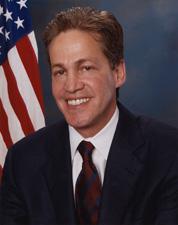 Sen. Norm Coleman (R-MN)
Submitted July 10, 2003
Legislative Activity
Stay on top of the latest movement without scrolling through every action
Floor
Latest Action
Senate amendment submitted
July 10, 2003
View full timeline
Floor
Senate amendment submitted
July 10, 2003
Floor
Senate amendment agreed to: Amendment SA 1152 agreed to in Senate by Voice Vote.
July 10, 2003
Floor
Senate amendment proposed (on the floor): Amendment SA 1152 proposed by Senator Lugar for Senator Coleman to Amendment SA 1136.(consideration: CR S9162-9166; text: CR S9163)
July 10, 2003
Floor
Amendment SA 1152 proposed by Senator Lugar for Senator Coleman to Amendment SA 1136. (consideration: CR S9162-9166; text: CR S9163) To authorize a comprehensive program of support for victims of torture, and for other purposes.
July 10, 2003
Floor
Amendment SA 1152 agreed to in Senate by Voice Vote.
July 10, 2003
Text
Proposed
Amendments Nos. 1150, 1151, 1152, 1153, 1154, 1155, 1156, 1157, 1158,
1159, 1160, 1161, 1162, and 1163, en bloc to amendment No. 1136

The PRESIDENT pro tempore. The Senator from Indiana.
Mr. LUGAR. Mr. President, I send to the desk a packet of agreed-upon
amendments. I will enumerate those amendments and after enumerating
them ask that they be adopted en bloc to Amendment No. 1136.
The PRESIDENT pro tempore. Will the Senator ask to set aside the
pending amendments?
Mr. LUGAR. I so ask that the pending amendments be set aside.
The PRESIDENT pro tempore. Without objection, it is so ordered.
Mr. LUGAR. Mr. President, the package of amendments that I have sent
to the desk has received consideration by the staffs of myself and
Senator Biden throughout last evening. They include an amendment by Mr.
Biden expressing the sense of Congress relating to violence against
women; secondly, an amendment by Mr. Breaux to authorize transportation
for the Chief of Protocol; third, an amendment by Mr. Coleman to
authorize a comprehensive program of support for victims of torture and
for other purposes; fourth, an amendment by Mr. Daschle to require an
annual report on Saudi Arabia's cooperation in the war on terrorism;
fifth, an amendment by Senator Feinstein to require a report on states
that have not cooperated in small arms programs; sixth, an amendment by
Mr. Biden to require the reporting of certain information relating to
proposed exports and transfers of firearms; seventh, an amendment by
Mr. Leahy to provide a report on a strategy to deal with the
international coffee crisis; eighth, a chairman's amendment to strike
section 2512 relating to amendments to the Arms Control and Disarmament
Act; ninth, a chairman's amendment to provide an exception to
requirements with respect to bilateral agreements for exemption from
certain licensing requirements; tenth, a chairman's amendment to
improve provisions on global pathogen surveillance; eleventh, a
chairman's amendment to strike section 205 relating to the State
Department authorization bill; twelfth, a chairman's amendment to
clarify Foreign Service grievance board procedures; thirteenth, a
chairman's amendment to modify reporting requirements on U.S. personnel
involved in the antinarcotics campaign in Colombia; and finally,
fourteenth, a chairman's amendment to strike section 2239 relating to
the sense of Congress relating to

[[Page S9163]]

exports of defense items to the United Kingdom.
The PRESIDENT pro tempore. Is there objection to considering those
amendments en bloc?
Without objection, it is so ordered.
The amendments were agreed to, en bloc, as follows:

Amendment No. 1150

(Purpose: To express the sense of Congress relating to violence against
women)

On page 94, between lines 17 and 18, insert the following
new section:

SEC. 815. SENSE OF CONGRESS RELATING TO VIOLENCE AGAINST
WOMEN.

(a) Findings.--Congress makes the following findings:
(1) Article 4 of the Declaration on the Elimination of
Violence Against Women adopted by the United Nations General
Assembly in Resolution 48/104 on December 20, 1993, proclaims
that ``States should condemn violence against women and
should not invoke any custom, tradition or religious
consideration to avoid their obligations with respect to its
elimination.''.
(2) Paragraph 124 of chapter IV of the Platform for Action,
which was adopted along with the Beijing Declaration by the
Fourth World Conference on Women on September 15, 1995,
states that actions to be taken by governments include
condemning violence against women and refraining from
invoking any custom, tradition, or religious consideration as
a means to avoid the obligations of such governments with
respect to the elimination of violence against women as such
obligations are referred to in the Declaration on the
Elimination of Violence against Women.
(3) The United States has supported the Declaration on the
Elimination of Violence Against Women and the Beijing
Declaration and Platform for Action.
(b) Sense of Congress.--It is the sense of Congress that
the United States should continue to condemn violence against
women and should urge states to refrain from invoking any
custom, tradition, or practices in the name of religion or
culture as a means to avoid obligations regarding the
elimination of violence against women as referred to in
Article 4 of the Declaration on the Elimination of Violence
against Women.

Amendment No. 1151

(Purpose: To authorize the Chief of Protocol to use a passenger carrier
for transportation between the Chief of Protocol's residence and place
of employment)

On page 94, between lines 17 and 18, insert the following
new section:

SEC. 815. AUTHORIZATION FOR PASSENGER CARRIER USE BY THE
CHIEF OF PROTOCOL.

Section 1344(b)(4) of title 31, United States Code, is
amended by inserting ``the Chief of Protocol of the United
States,'' after ``abroad,''.

Amendment No. 1152

(Purpose: To authorize a comprehensive program of support for victims
of torture, and for other purposes)

At the end of subtitle A of title XXI, add the following
new section:

SEC. 2113. REAUTHORIZATION OF RELIEF FOR TORTURE VICTIMS.

(a) Authorization of Appropriations for Foreign Treatment
Centers for Victims of Torture.--
(1) Authorization of appropriations.--Section 4(b)(1) of
the Torture Victims Relief Act of 1998 (22 U.S.C. 2152 note)
is amended to read as follows:
``(1) Authorization of appropriations.--Of the amounts
authorized to be appropriated for fiscal year 2004 pursuant
to chapter 1 of part I of the Foreign Assistance Act of 1961
(22 U.S.C. 2151 et seq.) there is authorized to be
appropriated to the President to carry out section 130 of
such Act $11,000,000 for fiscal year 2004.''.
(2) Effective date.--The amendment made by paragraph (1)
shall take effect October 1, 2003.
(b) Authorization of Appropriations for the United States
Contribution to the United Nations Voluntary Fund for Victims
of Torture.--Of the amounts authorized to be appropriated for
fiscal year 2004 pursuant to chapter 3 of part I of the
Foreign Assistance Act of 1961 (22 U.S.C. 2221 et seq.),
there is authorized to be appropriated to the President for a
voluntary contribution to the United Nations Voluntary Fund
for Victims of Torture $6,000,000 for fiscal year 2004.
(c) Authorization of Appropriations for Domestic Treatment
Centers for Victims of Torture.--
(1) Authorization of appropriations.--Section 5(b)(1) of
the Torture Victims Relief Act of 1998 (22 U.S.C. 2152 note)
is amended to read as follows:
``(1) Authorization of appropriations.--Of the amounts
authorized to be appropriated for the Department of Health
and Human Services for fiscal year 2004, there is authorized
to be appropriated to carry out subsection (a) $20,000,000
for fiscal year 2004.''.
(2) Effective date.--The amendment made by paragraph (1)
shall take effect October 1, 2003.

Amendment No. 1153

(Purpose: To require an annual report on Saudi Arabia's cooperation in
the war on terrorism)

At the end of title VIII, insert the following new section:

SEC. 815. ANNUAL REPORT ON SAUDI ARABIA'S COOPERATION IN THE
WAR ON TERRORISM.

(a) Requirement for Report.--Not later than May 1, 2004,
and annually thereafter, the Secretary shall submit to the
appropriate congressional committees a report on the
cooperation of the Government of Saudi Arabia in the war on
terrorism.
(b) Content.--Each report shall include--
(1) a description of the efforts of the Government of Saudi
Arabia to combat terrorism and to counter efforts to foment
intolerance in Saudi Arabia;
(2) an assessment of the cooperation of the Government of
Saudi Arabia with United States antiterrorism efforts,
including--
(A) efforts of law enforcement in Saudi Arabia to disrupt
suspected terrorist networks and apprehend suspected
terrorists; and
(B) diplomatic and law enforcement efforts of Saudi Arabia
to stop the financing of terrorists and terrorist
organizations; and
(3) an assessment of the efforts of the Government of Saudi
Arabia to investigate terrorist attacks against citizens of
the United States, including--
(A) a description of the status of efforts to investigate
such attacks; and
(B) a list of individuals convicted in Saudi Arabia of
committing such attacks.

Amendment No. 1154

(Purpose: To require a report on states that have not cooperated in
small arms programs)

On page 94, between lines 17 and 18, insert the following
new section:

SEC. 815. ANNUAL REPORT ON SMALL ARMS PROGRAMS.

Not later than 180 days after the date of enactment of this
Act, and annually thereafter, the Secretary shall submit to
the appropriate congressional committees a report--
(1) describing the activities undertaken, and the progress
made, by the Department or other agencies and entities of the
United States Government in prompting other states to
cooperate in programs on the stockpile management, security,
and destruction of small arms and light weapons;
(2) listing each state that refuses to cooperate in
programs on the stockpile management, security, and
destruction of small arms and light weapons, and describing
to what degree the failure to cooperate affects the national
security of such state, its neighbors, and the United States;
and
(3) recommending incentives and penalties that may be used
by the United States Government to prompt states to comply
with programs on the stockpile management, security, and
destruction of small arms and light weapons.

Amendment No. 1155

(Purpose: To require the reporting of certain information relating to
proposed exports and transfers of firearms)

At the end of subtitle B of title XXII, add the following:

SEC. 2241. TRANSFERS OF SMALL ARMS AND LIGHT WEAPONS.

(a) Exports Under the Arms Export Control Act.--
(1) Letters of offer.--Section 36(b)(1) of the Arms Export
Control Act (22 U.S.C. 2776(b)(1)) is amended by inserting
after ``such certification).'' in the fourth sentence the
following: ``Each numbered certification regarding the
proposed export of firearms listed in category I of the
United States Munitions List shall include, with regard to
the proposed export, a summary of the views of the office in
the Department of State that has responsibility for programs
relating to the collection and destruction of excess small
arms and light weapons, together with a summary of any
provision of the letter of offer or any related arrangement
for the recipient State to dispose of firearms that would
become excess as a result of the proposed export.''.
(2) Licenses.--Section 36(c) of the Arms Export Control Act
(22 U.S.C. 2776(c)) is amended by inserting after the second
sentence the following: ``Each numbered certification
regarding the proposed export of firearms listed in category
I of the United States Munitions List shall include, with
regard to the proposed export, a summary of the views of the
office in the Department of State that has responsibility for
programs relating to the collection and destruction of excess
small arms and light weapons, together with a summary of any
provision of the license or any related arrangement for the
recipient State to dispose of firearms that would become
excess as a result of the proposed export.''.
(b) Transfers under the Foreign Assistance Act of 1961.--
Subsection 516(f)(2) of the Foreign Assistance Act of 1961
(22 U.S.C. 2321j(f)(2)) is amended--
(1) by striking ``and'' at the end of subparagraph (C);
(2) by redesignating subparagraph (D) as subparagraph (E);
and
(3) by inserting after subparagraph (C) the following new
subparagraph:
``(D) for any proposed transfer of firearms listed in
category I of the United States Munitions List that would
require a license for international export under section 36
of the Arms Export Control Act (22 U.S.C. 2776)--
``(i) with regard to the proposed transfer, the views of
the office in the Department of State that has responsibility
for programs relating to the collection and destruction of
excess small arms and light weapons; and
``(ii) a summary of any provision under the transfer or any
related arrangement for the

[[Page S9164]]

recipient State to dispose of firearms that would become
excess as a result of the proposed transfer; and''.

Amendment No. 1156

(Purpose: To provide a report on a strategy to deal with the
international coffee crisis)

At the appropriate place insert:

SEC.   . REPORT.

Not later than 120 days after enactment, the Secretary, in
consultation with the Administrator of the United States
Agency for International Development and the Secretary of the
Treasury, shall submit a report to the appropriate
congressional committees describing the progress the United
States is making towards meeting the objectives set forth in
paragraph 1 of S. Res. 368 (107th Congress) and paragraph 1
of H. Res. 604 (107th Congress), including adopting a global
strategy to deal with the international coffee crisis and
measures to support and complement multilateral efforts to
respond to the international coffee crisis.

Amendment No. 1157

(Purpose: To strike section 2512, relating to amendments to the Arms
Control and Disarmament Act)

Strike section 2512.

Amendment No. 1158

(Purpose: To provide an exception to requirements with respect to
bilateral agreements for exemptions from certain licensing
requirements)

On page 182, line 16, insert ``AND THE UNITED KINGDOM''
after ``AUSTRALIA''.
On page 182, beginning on line 22, strike ``The
requirements'' through ``into force.'' on page 183, line 4,
and insert the following:
``(A) Australia.--Subject to the provisions of section
2233(c) of the Foreign Affairs Act, Fiscal Year 2004, the
requirements for a bilateral agreement described in paragraph
(2)(A) of this subsection shall not apply to such a bilateral
agreement between the United States Government and the
Government of Australia with respect to transfers or changes
in end use within Australia of defense items that will remain
subject to the licensing requirements of this Act after the
agreement enters into force.
``(B) United kingdom.--Subject to the provisions of section
2233(c) of the Foreign Affairs Act, Fiscal Year 2004, the
requirements for a bilateral agreement described in
paragraphs (1)(A)(ii), (2)(A)(i) and (2)(A)(ii) of this
subsection shall not apply to the bilateral agreement between
the United States Government and the Government of the United
Kingdom for an exemption from the licensing requirements of
this Act, or any other form of agreement between the United
States Government and the Government of the United Kingdom to
gain an exemption from the licensing requirements of this
Act.''.
On page 183, between lines 9 and 10, insert the following:
(c) Certification on Nonconforming Agreements.--Not later
than 14 days before the activation of an exemption from the
licensing requirements of the Arms Export Control Act
pursuant to any bilateral agreement made with the United
Kingdom or Australia for that purpose that does not conform
to the requirements applicable to such an agreement under
section 38(j) of the Arms Export Control Act (22 U.S.C.
2778)(j), the President shall certify to the appropriate
congressional committees that--
(1) the nonconforming agreement is in the national interest
of the United States;
(2) the nonconforming agreement does not in any way
adversely affect the ability of the licensing regime under
the Arms Export Control Act to provide consistent and
adequate controls for items not exempt under such agreement
from the licensing regime;
(3) the nonconforming agreement will not in any way
adversely affect--
(A) the abilities of the Secretary to ensure, pursuant to
section 2 of the Arms Export Control Act (22 U.S.C. 2752),
effective controls over the sales, finances, leases,
cooperative projects, and exports that are regulated under
such Act; or
(B) any of the duties or requirements of the Secretary
under such Act; and
(4) the nonconforming agreement will serve as an effective
nonproliferation and export control tool.
(d) Report on Issues Raised in Consultations Pursuant to
Bilateral Agreements With Australia and United Kingdom.--Not
later than one year after the date of the enactment of this
Act and annually thereafter, the President shall submit to
the appropriate congressional committees a report on any
issues raised during the previous year in consultations
conducted under the terms of the bilateral agreement with
Australia, or under the terms of the bilateral agreement or
any other form of an agreement with the United Kingdom, for
exemption from the licensing requirements of the Arms Export
Control Act (22 U.S.C. 2751 et seq.). Each report shall
contain detailed information--
(1) on any notifications or consultations between the
United States and the United Kingdom under the terms of the
agreement with the United Kingdom, or between the United
States and Australia under the terms of the agreement with
Australia, concerning the modification, deletion, or addition
of defense items on the United States Munitions List, the
United Kingdom Military List, or the Australian Defense and
Strategic Goods List;
(2) listing all United Kingdom or Australia persons and
entities that have been designated as qualified persons
eligible to receive United States origin defense items exempt
from the licensing requirements of the Arms Export Control
Act under the terms of such agreements, and listing any
modification, deletion, or addition to such lists, pursuant
to the requirements of the agreement with the United Kingdom
or the agreement with Australia;
(3) on any consultations or steps taken pursuant to the
agreement with the United Kingdom or the agreement with
Australia concerning cooperation and consultation with either
government on the effectiveness of the defense trade control
systems of such government;
(4) on all special provisions and procedures undertaken
pursuant to--
(A) the agreement with the United Kingdom with respect to
the handling of United States origin defense items exempt
from the licensing requirements of the Arms Export Control
Act by persons and entities qualified to receive such items
in the United Kingdom; and
(B) the agreement with Australia with respect to the
handling of United States origin defense items exempt from
the licensing requirements of the Arms Export Control Act by
persons and entities qualified to receive such items in
Australia;
(5) on any understandings, including the text of such
understandings, between the United States and the United
Kingdom concerning retransfer of United States origin defense
items made pursuant to the agreement with the United Kingdom
or any other form of agreement with the United Kingdom to
gain exemption from the licensing requirements of the Arms
Export Control Act;
(6) on consultations with the Government of the United
Kingdom or the Government of Australia concerning the legal
enforcement of these agreements;
(7) on any United States origin defense item for which the
United States did not seek re-export or transfer
authorization under the terms of the Memorandum of
Understanding between the United States and the United
Kingdom, and on any United States origin defense item for
which the United States did not require re-export
authorization under the terms of the agreement with
Australia; and
(8) on any disagreement the Government of Australia or the
Government of the United Kingdom may have with the United
States Government concerning any aspect of the bilateral
agreements between such country and the United States, and on
any disagreement with the Government of the United Kingdom
concerning any aspect of any other form of agreement with the
United Kingdom to gain exemption from the licensing
requirements of the Arms Export Control Act.
(e) Special Reports on Unauthorized End-Use or Diversion.--
The Secretary shall notify the appropriate congressional
committees not later than 30 days after receiving any
credible information regarding the unauthorized end-use or
diversion of United States exports made pursuant to any
agreement with a country to gain exemption from the licensing
requirements of the Arms Export Control Act. Such
notification may be made in classified or unclassified form
and shall include--
(1) a description of the good or service;
(2) the United States origin of the good or service;
(3) the authorized recipient of the good or service;
(4) a detailed description of the unauthorized end-use or
diversion of the good or service, including any knowledge by
the United States exporter of such unauthorized end-use or
diversion;
(5) any enforcement action taken by the Government of the
United States; and
(6) any enforcement action taken by the government of the
recipient nation.
(f) Appropriate Congressional Committees.--In this section,
the term ``appropriate congressional committees'' means the
Committee on International Relations of the House of
Representatives and the Committee on Foreign Relations of the
Senate.

Amendment No. 1159

(Purpose: To improve the provisions on global pathogen surveillance)

In section 2403(2)(B), strike ``and'' after the semicolon.
In section 2403(2)(C), strike the period and insert ``;
and''.
In section 2403(2), add at the end the following:
(D) is determined by the United States Government not to
have an offensive biological weapons program.
In section 2403(3), strike ``who is eligible to receive''
and all that follows and insert ``who--
(A) is eligible to receive a visa under the provisions of
the Immigration and Nationality Act (8 U.S.C. 1101 et seq.);
and
(B) is not currently or previously affiliated with or
employed by a laboratory or entity determined by the United
States Government to be involved in offensive biological
weapons activities.
In section 2408(b)(3), strike ``and'' after the semicolon.
In section 2408(b)(4), strike ``(4)'' and insert ``(5)''.
In section 2408(b), insert after paragraph (3) the
following:
(4) necessary to secure and monitor pathogen collections
containing select agents; and
In section 2408(e), insert ``monitor,'' after ``secure,''.
In section 2413(c), strike ``90 days'' and insert ``120
days''.

[[Page S9165]]

Amendment No. 1160

Strike section 205.

Amendment No. 1161

At the end of title III, add the following:

SEC. 313. CLARIFICATION OF FOREIGN SERVICE GRIEVANCE BOARD
PROCEDURES.

Section 1106(8) of the Foreign Service Act of 1980 (22
U.S.C. 4136(8)) is amended in the first sentence--
(1) by inserting ``the involuntary separation of the
grievant (other than an involuntary separation for cause
under section 610(a)),'' after ``considering''; and
(2) by striking ``the grievant or'' and inserting ``the
greivant, or''.

Amendment No. 1162

At the end of title VIII, add the following:

SEC. 815. MODIFICATION OF REPORTING REQUIREMENTS ON UNITED
SATES PERSONNEL INVOLVED IN THE ANTINARCOTICS
CAMPAIGN IN COLOMBIA.

Section 3204(f) of the Emergency Supplemental Act, 2000
(division B of Public Law 106-246; 114 Stat. 577) is
amended--
(1) in the heading, by striking ``Bimonthly'' and inserting
``Quarterly'';
(2) by striking ``60 days'' and inserting ``90 days''; and
(3) by striking ``to Congress'' and inserting ``appropriate
committees of Congress (as that term is defined in section
3207(b)(1) of this Act)''.

Amendment No. 1163

(Purpose: To strike section 2239, relating to the sense of Congress
relating to exports of defense items to the United Kingdom)

Strike section 2239.

amendment no. 1150

Mr. BIDEN. Mr. President, along with Senator Mikulski, I offer the
following sense of the Senate amendment with respect to condemning
violence against women. It states that the United States should
continue to:

condemn violence against women and should urge states to
refrain from invoking any custom, tradition or practice in
the name of religion or culture as a means to avoid
obligations regarding the elimination of violence against
women referred to in Article IV of the Declaration on the
Elimination of Violence against Women.

In this year's session of the U.N. Commission on the Status of Women,
the United States sided with Iran, Pakistan and Sudan in opposing the
above language in the final report of the Commission's session.
We ought to wonder why. The language was important, critical to
support, on its merits and furthermore, it was hardly groundbreaking.
The United States supported it in the 1993 U.N. Declaration on the
Elimination of Violence Against Women and in the 1995 Beijing Platform
of Action.
This year, the U.S. delegate justified the position of not supporting
the language on customs and religious practices by claiming that the
United States was seeking consensus in the commission, because some
other nations perceived the language as casting religion in a negative
light.
This is absurd. Violence against women is an outrage. It happens
every day, in America and around the world. It is never justified, and
the United States should never miss an opportunity, here and abroad, to
condemn it.
Therefore, I have offered this amendment to reiterate the need for
the United States to continue to take a stand in condemning violence
against women in all forms, and under all circumstances.

Amendment No. 1154

Mr. AKAKA. Mr. President, I rise today to support Senator Feinstein's
amendment to the Fiscal Year 2004 State Department Authorization bill
that would require the State Department to submit an annual report on
nations that are not cooperating with programs concerning small arms
and light weapons.
The U.N. estimates that there are more than 500 million small arms
and light weapons in the world and about half of these are illicit. Of
the 49 major conflicts fought during the 1990s, small arms were used in
47 of them, causing four million deaths. Ninety percent of the deaths
were civilians and eighty percent of those were women and children. The
death and destruction caused by small arms and light weapons has led
U.N. Secretary-General Kofi Annan to characterize them as a ``global
scourge.''
In July 2001 a United Nation's conference took place on the illicit
trade in small arms and light weapons. The conference adopted a program
of action to eliminate these weapons. The first review of the program
of action is taking place this week in New York.
U.S. Assistant Secretary of State for Political-Military Affairs
Lincoln Bloomfield echoed Secretary-General Annan's comments in his
address to the conference. Mr. Bloomfield told the delegates that,
``the illicit trade in small arms and light weapons poses a serious
threat to stability and security in this hemisphere as well as parts of
Africa, South Asia, the Middle East, and elsewhere.'' Mr. Bloomfield
called on all nations to ``work even more energetically to curb the
illicit trade in small arms and light weapons.''
The United States has made a substantial contribution to this effort.
Over the past two years, some five million dollars have been spent on
destruction assistance programs. U.S.-supported programs in 10
countries have led to the destruction of over 400,000 excess or illegal
weapons and 44 millions rounds of ammunition.
The size of the problem means there is much work left to be done.
President Bush in a speech last month outlining his agenda for his trip
to Africa said that his ``first great goal in our partnership with
Africa is to help establish peace and security across the continent.''
He underscored, ``Many thousands of African men and women and children
are killed every year in regional wars.'' Africa has suffered terribly
from the scourge of small arms. I urge the President to make the
control of small arms and light weapons an even greater priority, and I
hope the administration will continue to emphasize the importance of
controlling and eliminating small arms and seek additional funding when
it is needed.
Senator Feinstein's amendment will assist the United States in its
efforts to encourage other countries to participate in programs to
control these weapons. An annual report on illicit small arms will
allow the government to better track countries that are not yet
cooperating. It will also allow Congress to be better informed about
the State Department's efforts to gain cooperation of those countries.
I thank the Senator for her efforts. We should do as much as possible
to address the scourge of small arms that is taking the lives of so
many innocent people throughout the world.

amendment no. 1155

Mr. AKAKA. Mr. President, I rise today to support Senator Biden's
amendment to the Fiscal Year 2004 State Department Authorization bill
concerning sharing information about the export of small arms with the
State Department office responsible for the collection and destruction
of small arms.
In July 2001 a United Nation's conference took place on the illicit
trade in small arms and light weapons. The conference adopted a program
of action to eliminate these weapons. After two years, the first
meeting to review progress on this program of action convened this week
in New York. U.N. Secretary-General Kofi Annan in a message sent to the
conference said, ``It is difficult to overstate the importance of
implementation of the program of action.'' He noted, ``After all, small
arms and light weapons cause mass destruction. They kill about 60
people an hour or half a million people a year, 90 percent of them
women and children.''
U.S. Assistant Secretary of State for Political-Military Affairs
Lincoln Bloomfield described to participants the significant
contribution the United States has made in the area of destruction
assistance programs. Commendably, since early 2001, U.S.-supported
programs in 10 countries have led to the destruction of over 400,000
excess or illegal weapons and 44 million rounds of ammunition.
Senator Biden's amendment will add needed rationality to U.S. policy
in this area. If the United States permits the export of small arms or
light weapons, the office within the State Department responsible for
the collection and destruction of these arms should be informed.
Otherwise we may unknowingly pay states to destroy small arms at the
same time that we are giving them more weapons.
I thank the Senator from Delaware for this amendment. It is important
that the right hand of the government knows what the left hand is
doing. The U.N. estimates that there are more than 500 million small
arms and light weapons in the world and around half of these are
illicit. We have far to go in our global effort to control and
eliminate these illicit arms. Every step we can take to achieve this
goal should be pursued.

[[Page S9166]]

Mr. LUGAR. Mr. President, I move to reconsider the vote, and to lay
that motion on the table.
The motion to lay on the table was agreed to.
Mr. LUGAR. Mr. President, I rise to update the Senate on where we
stand on the State Department authorization bill. We were successful in
working through many issues yesterday. In fact, we came to a conclusion
on three of the most difficult issues that we expected in the bill, the
structure of the Millennium Challenge Corporation, support for Iranian
democracy, and the Mexico City policy. This morning, by action of the
Senate, we have cleared and passed 14 amendments. We have passed about
20 amendments in less than 24 hours. In addition, 15 to 20 amendments
that were mentioned as possibilities will either not be offered or will
be worked out. This leaves a declining list of foreign policy
amendments that we believe we can resolve today.
I want to encourage Members to come to the floor to offer their
relevant amendments. We are in range of finishing the bill. I thank
Senator Biden again for all he has done to advance the Senate's foreign
policy agenda. I likewise thank the majority and minority leaders, and
Senator Reid especially for his cooperation.
Yesterday, it was announced that State Department authorization bills
have traditionally taken much longer than 2 days. While that may be
true, it does not have to be the case this time. The two bills that
comprise most of the substitute amendment were passed out of the
Foreign Relations Committee by a vote of 19 to 0. Republicans and
Democrats have worked together closely on these issues. While we have
some differences, the members of our committee are united in our belief
that the substitute before us will enhance U.S. national security and
is vital to our national interests.
The Senate's record this year in moving foreign policy items has been
excellent. We have passed a global AIDS bill, the Moscow Treaty, NATO
expansion, and other items. The Senate has moved decisively on the
Nation's foreign policy business because we recognize as a body that in
these perilous times it was our duty to do so. America's national
security is at risk and its leaders, entrusted with passing legislation
to keep America secure, must continue to do our duty.

Today Senators have an opportunity, as always, to be senatorial. I am
hopeful that all Senators with an amendment will come to the floor and
help us pass this bill quickly and provide our diplomats the tools they
need.
I yield the floor.
The PRESIDENT pro tempore. The deputy leader.
Mr. REID. I ask unanimous consent that the pending amendment be set
aside.
The PRESIDENT pro tempore. Without objection, it is so ordered.

Amendment No. 1164 to Amendment No. 1136

Mr. REID. I send an amendment to the desk on behalf of Senator Reid
of Nevada and Senator Daschle.
The PRESIDING OFFICER. The clerk will report.
The legislative clerk read as follows:

The Senator from Nevada [Mr. Reid], for himself and Mr.
Daschle, proposes an amendment numbered 1164.

Mr. REID. Mr. President, I ask unanimous consent that the reading of
the amendment be dispensed with.
The PRESIDING OFFICER. Without objection, it is so ordered.
The amendment is as follows:

(Purpose: To provide support regarding the rural development crisis in
Mexico)

At the end of subtitle A of title XXI, add the following
new section:

SEC. 2113. SUPPORT REGARDING RURAL DEVELOPMENT CRISIS IN
MEXICO.

(a) Sense of Congress.--It is the sense of Congress that--
(1) the United States should continue working closely with
the Government of Mexico to help minimize the impact of the
current rural development crisis in Mexico; and
(2) that crisis creates a humanitarian, economic, and
security imperative for the United States Government to
support additional programs focused on the underfunded rural
communities of Mexico.
(b) Authorization of Appropriations.--There is authorized
to be appropriated to the President for fiscal year 2004,
$100,000,000 for programs in Mexico that promote the
following:
(1) Micro credit lending.
(2) Small business and entrepreneurial development.
(3) Small farms and farmers that have been impacted by the
collapse of coffee prices.
(4) Strengthening the system of private property ownership
in the rural communities.

Mr. REID. The amendment offered on my behalf and that of the
Democratic leader concerns a country, regrettably, that does not get a
lot of attention in the Senate. In recent months--and rightfully so--we
have focused intently on Iraq, Afghanistan, North Korea, Iran,
Colombia, Pakistan, and many other countries scattered around the
globe. Our close neighbor and critical friend to the south, Mexico, too
often receives little, if any, attention.
In some respects, the lack of attention may be a good thing. Last
Sunday, for example, Mexico held midterm elections that resulted in
President Fox's party losing 40 seats in the Mexican Congress in an
election that was uniformly recognized as free and fair. It was not too
long ago that elections in Mexico would have been front-page news in
the United States, and the news would have not been good. In all
likelihood, the reports would have told of rigged elections and another
power grab by the long-ruling PRI.
So the lack of attention to our friend Mexico is in one sense good
news, but in a much larger sense it is a serious problem. The
legislation we consider today will authorize billions of dollars for
countries, regions, and programs around the world. But we will do very
little for the country with whom we share a 2,000-mile border--Mexico.
That is a disappointment, especially in light of that hopeful South
Lawn ceremony with President Fox less than 2 years ago with our
President. This amendment makes one simple thing very clear: what
happens in Mexico is in the national security interests of our country.
We should be doing more to help Mexicans who are working hard to help
themselves. I believe President Bush summed it up very well last year
when he said: ``The United States has no more important relationship in
the world than the one we have with Mexico. Good neighbors work
together and benefit from each other's successes.'' I agree with our
President. It is a special relationship with great economic importance
to both nations. But I am disappointed that the President has not
backed up his words with action.
Mexico is now the second largest trading partner we have. It is among
the top 10 export markets for 43 of our States. It is the ninth largest
economy in the world. But this special relationship we share with
Mexico is in desperate need of repair. As we have turned our attention
away from Mexico in recent years, economic troubles within the country
have grown increasingly serious.
A few years ago, Mexico seemed on the verge of an economic
breakthrough. Today, however, Mexico's growth rate is half of what it
was in the mid-1990s. This has hurt both their nation and our Nation.
Mexico has a poverty rate of almost 40 percent. There are a little over
100 million people in Mexico. That means almost 40 million Mexicans
live in poverty. Fifty-three percent of all Mexicans--more than 50
million people--have an annual income of less than $1,400. Twenty-three
percent of all Mexicans have an annual income of less than $720. That
is less than $2 a day. Income distribution within the country remains
especially unequal, and unemployment and underemployment continue to
hamper our southern neighbor.
The problems are especially acute in rural areas of Mexico, which
have been chronically underdeveloped and underfunded. Rural poverty
remains one of the most persistent and serious economic problems facing
Mexico. This rural economic crisis threatens the health and well-being
of people in Mexico and puts our own economy and security in jeopardy.

Take, for example, coffee growing. Coffee growers in Mexico thrived
just a short time ago. They became an indispensable component of
Mexico's rural economy. But they have seen the price of their crop drop
by 70 percent in just 5 years. These failing commodity prices have led
many of these farmers to seek another crop to feed their families. What
is that crop? Opium poppies, which are used to make heroin that
ultimately makes its way into our country.
I understand that when people have no money, when their families are
hungry, and when their livelihood is vanishing before their eyes--think
of

[[Page S9167]]

Mexico's coffee growers--they look for other ways to survive. Some grow
poppies, but others take unbelievable risks to come to America.
Now, I am opposed to illegal immigration. I think everyone should
comply with the law. But it has to tear at your heartstrings to see
people who are so desperate that they risk their lives to come across
the Rio Grande River. They freeze to death in the mountain passes; they
die in the deserts of Arizona, New Mexico, and California trying to
come to America. They pay what little money they have to demons who
tell these people, ``We have a way for you to get to America.'' They
cram innocent Mexicans in boxcars and trucks, and subject them to
inhumane conditions. This is an all-to-familiar scene that takes the
lives of too many innocent human beings.
So while I am opposed to illegal immigration, I understand why
desperate people do everything in their power to try to come to
America. They risk their lives to cross our border illegally. This
places additional strains on our border security officers, who are
already overextended. Those who manage to sneak past the Border Patrol
and survive the desert and the mountain passes arrive here with few, if
any, job skills, so they take any job they can find. They compete for
jobs with those who are here legally and tax our social services.
Clearly, this crisis in rural Mexico is not only the business of
Mexico; it is our business, too. Should we be concerned about what has
gone on in Iraq? Of course we should. Should we be concerned about what
is going on in Afghanistan? Of course we should. Should we be concerned
about what is going on in Pakistan today? Bangladesh? India? Of course
we should. Should the President of the United States be in Africa
today? Of course he should.

I traveled to Africa last August. It is an eye opener. As the world's
only superpower, we have tremendous obligations. The President is going
to commit this Congress to new obligations as he makes his trip around
Africa. We have an obligation to do our best to live up to the
commitments our President makes as he travels throughout the world.
I do not in any way denigrate what we have done and what we are doing
around the rest of the world. I am criticizing what we have failed to
do. We have ignored Mexico, and that is wrong. We must remember that
what goes on in Mexico concerns our Nation, because in today's world,
problems like drugs and poverty do not grind to a halt at our borders.
The Rio Grande River is not sufficient to stop the flow of illegal
drugs into our country. The Rio Grande River is not sufficient to stop
the poverty that comes across our borders in the form of illegal
immigration that taxes our social services, our law enforcement
officers and our educational system.
But we also share many positive things with Mexico. We have a shared
history, a shared culture, even a shared language--I have three sons
who speak fluent Spanish. Mexican Americans have helped shape our great
Nation. Twenty million people of Mexican ancestry live in the United
States today, an increase of 53 percent from ten years ago.
Mr. President, if you still doubt that we have a shared culture with
Mexico, look at Nevada. What does the word ``Nevada'' mean? In Spanish
it means ``snowcapped.'' ``Las Vegas,'' what does that mean? In Spanish
it means ``the meadows.''
In the State of Nevada, which is the fastest growing State in our
Nation, Mexican Americans now account for more than 15 percent of the
population. That is a 300 percent increase since the early 1990s.
Overall, we have seen a 53 percent increase in our country's Mexican
American population, but in Nevada it has been 300 percent. That
doesn't take into consideration the approximately 5 percent of the
population in our state who came from Colombia, Guatemala, Honduras,
and other places in Central and South America. So as you can see, Mr.
President, the connections between our two nations are real.
But I want to do more than talk about this relationship. Actions
speak louder than words. It is time this Congress acted. I want to
follow through on President Bush's promise to work, and work together
with Mexico. I want to address the very real crisis affecting Mexico's
rural communities.
Some of my colleagues have said: Your amendment has some merit, but
won't it cost too much money? Well, this legislation we are dealing
with here in the Senate today is worth billions of dollars. I think our
neighbor to the south deserves part of that largesse.
In recent years we have helped many countries around the world in
their hour of need, whether through economic or military assistance.
The American people have responded time and time again to crises in far
corners of the world. Surely we can answer the call to help our largest
trading partner and close ally. I don't think we have a choice. That is
why I am proposing this plan to help Mexico lift herself up.
This amendment will not drop money on Mexico's doorstep and hope it
gets spent wisely. No, we are not doing that. Any expert who is
familiar with what is going on in Mexico will tell you one thing--that
the way to stop illegal immigration from that country is to give
Mexicans an opportunity to succeed in their own economy. That is what
this amendment is all about. And so we are proposing a plan to help
Mexico lift herself up by providing the resources for a program to
spark redevelopment in rural areas. This amendment would authorize $100
million for microcredit lending, small business entrepreneurial
development, aid to small farmers who have been affected by the
collapse of prices, and support for Mexico's private property ownership
system, which is in bad need of repair.

President Fox is confronted with problems all over Mexico, but none
are more difficult than those of rural Mexico. Commodity prices have
fallen through the floor--not only coffee, but others, as well.
Mexico's young people are fleeing its historic farming areas for Mexico
City.
Mexico City is the largest city in the world, with 21 million people
at last count. It is also the most polluted city in the world. I went
there and met with State Department officials. Our State Department
officials receive hazard pay for living in Mexico City, but not because
anybody is shooting at them. They receive it because the city's air is
so detrimental to their health. And each day, more desperate people
come to this overcrowded, polluted city from rural Mexico. The country
is trading its rural future for increased unemployment in Mexico City.
That is a bad switch.
Let me talk briefly about each of the provisions of this amendment.
First, microcredit lending programs have been enormously successful
throughout the world. The goals of these programs are to provide small
loans to nontraditional sectors of the economy that would ordinarily
not be supported by the main financial institutions of the country.
Flexible repayment procedures and low interest rates are hallmarks of
microcredit enterprises.
Our distinguished chairman of this committee has had such a
significant impact on the world as a result of his involvement in this
committee on which he serves, the Foreign Relations Committee. There
are programs that have his name attached to them. The first one that
comes to almost everyone's mind, of course, is Nunn-Lugar, which was a
program that was introduced by two great statesmen--Nunn from Georgia,
Lugar from Indiana--to work on a problem in the former Soviet Union
that seemed to be unsolvable. Nunn-Lugar made tremendous strides in the
direction of solving the problems we had with nuclear programs in the
former Soviet Union.
So I say to my distinguished Chair of this committee, I know the
Senator from Indiana understands and has seen examples of how a few
dollars, with our microlending programs in other countries, have been
magnified and have helped individuals and regions and entire countries.
That is what we are trying to do here.
The evidence of microcredit lending clearly suggests that a small
amount of money can have a huge impact on an economy by helping
significantly in villages and rural communities and with small
businesses. These programs ought to be rolled out to rural parts of
Mexico, as they have been in other parts of the world where the need
for such innovative lending was clear. My amendment would start this
process.
Second, there is a lot of business activity just above the
microenterprise

[[Page S9168]]

level which large banks and financial institutions simply won't support
because of lack of collateral or creditworthiness. These are typically
small businesses and entrepreneurs who are trying to get started and
who many times do not even have money for further training. This
amendment supports efforts to boost programs directed at small
businesses and entrepreneurial development, which is critical for
maintaining a diversified and balanced rural economy. When small
businesses and entrepreneurs leave the rural communities for larger
Mexican cities or even the United States, that spells the beginning of
the end for parts of rural Mexico.
The third part of this amendment would implement programs to help the
Mexican farmers who have been hurt by the falling prices of coffee and
other commodities. On average, Mexican coffee farmers are being paid 70
percent less than they were just 5 years ago. As a result, these once
thriving farmers and farmhands are seeking work in larger cities.
But when they come to these larger cities, they do not check into an
apartment with air-conditioning or inside toilets. They cannot stop at
the 7-Eleven and buy something for dinner. They live in shantytowns--
homes made of cardboard. We all have seen shantytowns. It is
disgraceful that people have to live that way. But many of the 21
million people living in Mexico City live in shantytowns. Agencies
should be helping rural farmers to keep cultivating their usual crops,
so they don't turn to illegal crop production or become desperate and
abandon rural Mexico entirely.
Finally, the fourth component of this amendment--and I believe it is
an important part--is to support private property ownership in rural
communities, and to do it through increased mortgage financing.
If you want to sell your home in this country, it is very simple. If
someone wants to buy it, they go to a title company. They go to
somebody who has abstract deeds, and they run that through the legal
process to find out if you really own that home, and if you do, whether
there are any liens against your property in the way of debt which you
haven't paid. By the time that person sells that home, the person who
buys it knows everything about that real estate he wants to buy from
you. You can't do that in most places in Mexico. They have no legal
system to do that.
If you live in rural Mexico and you own a home, you live in that home
for the rest of your life. You can't borrow money to fix it up. It is
worth nothing because you can't sell it. It is, in effect, debt capital
in more ways than one.
Sound and secure property rights are a fundamental part of any market
economy. But the framework of property rights in Mexico is in a state
of disrepair. The lack of security in property transactions has
resulted in a substantial decrease in the availability of credit.
For example, mortgage financing funds only about 40 percent of new
households in Mexico. Why? No one will lend money to people who do not
own homes or have liens against a home. Families do not have equity in
their homes, and the homes can't easily be sold unless cash is paid
upfront. The impact of all this is particularly severe in rural
communities, where the only alternative to living in the same
dilapidated home for the rest of your life is to flee to a big city.
The United States should act expeditiously in this area to help Mexico
get its property rights back on track. We can do that today by passing
this amendment.

So to summarize, Mr. President, the four components of this amendment
are microcredit lending, small business and entrepreneurial
development, assisting small farms, and supporting an enhanced system
of private property ownership.
As I indicated earlier, some of my colleagues have already said this
will cost too much money. I agree that it will cost a lot of money,
even by Washington standards. But I also recognize that Mexico is in a
dire crisis. Mexico is our friend, and it is in our interest to help
Mexico. By doing this, we will help Americans as well as Mexicans.
I recognize that immigration and drug trafficking from Mexico present
a real problem for the United States. I have talked about that.
Especially for States, such as Nevada, that are on the front line of
this battle, it is a very difficult problem.
I don't think this is a typical aid package. As I mentioned earlier,
it is no handout. It is a commitment to free-market-based programs that
will spur long-term development and growth in rural areas of Mexico. It
is not only the right thing to do, but it also will have a positive
impact on the United States by reducing the strain upon our society
caused by illegal immigration and the deadly flow of drugs.
Furthermore, a stronger and more economically sound Mexico will be a
better trading partner for the United States. The better off Mexico is
economically, the better off we are, because we will have a greater
opportunity to sell them products we develop here.
I have always supported aid to Mexico. Others have objected to it and
said it is not necessary, but I have always supported it. It was
necessary then, and it is necessary now. It is in our humanitarian
interests, our economic interests and our security interests. That is
why I say we have to make these investments in Mexico today. If we can
afford to help so many other countries in the world, we ought to be
able to help our friend with whom we share so much and with whom we
share a 2,000-mile border.
As President George W. Bush said:

We have no more important relationship in the world than
the one we have with Mexico.

This amendment will prove whether the United States will do more than
just talk about our relationship with Mexico. As I said earlier, are we
going to talk, or are we going to act? Actions speak louder than words.
I ask my colleagues to support this amendment. This is so important
for our country and for the country of Mexico.
I yield the floor.
The PRESIDING OFFICER (Mr. Sununu). The Senator from Indiana.
Mr. LUGAR. Mr. President, I commend the distinguished Senator for his
analysis of Mexico. Certainly we ought to underline the importance of
the relationship. I believe it is deeply felt by most Americans who are
interested in our neighbors to the south and to the north.
Under the North American Free Trade Agreement, we have been trading a
great deal more, much to the benefit of both of our countries. There is
increased wealth in Mexico; likewise, its distribution and whether it
is getting to the rural people the Senator from Nevada has discussed.
I would say, first, in perspective, in the fiscal year 2003 budget of
the United States, about $43 million was allocated in foreign
assistance to Mexico. The President has requested that for fiscal year
2004--the one we are now discussing--that be increased now to a total
of $67.5 million. So the United States, in its foreign assistance,
recognizes a number of ways in which our country can work with the
people of Mexico for the betterment of people on both sides.
But let me say generally about all of this that the analysis that the
Senator has given would be important as testimony in our committee
process, as dialog with our Department of State, to try to think
through the priorities of how U.S. assistance to Mexico should best be
spent.
The Senator has offered some excellent items in terms of microloans,
rural development prospects. There are numerous areas in Mexico that
require our retention and our cooperation. I would say, once again very
generally, committing $100 million to any country in addition to that
which we are now expending is a matter of no small moment. It is worthy
of the attention of the committee and the proper procedures of
consultation with our diplomats and with those in the State Department
who have responsibility for that country and that portfolio.
Furthermore, we face an important point as Senators in looking at
this amendment. As I commenced the debate on the State Department
authorization bill and foreign assistance authorization bill, we
pointed out we have been careful to observe the budget agreement, the
budget we all came to in the Senate. Clearly, the $100 million that
would be authorized by this amendment is not a part of that budget. It
was not requested by the President. It clearly would be money that

[[Page S9169]]

would have to be subtracted from other programs for other countries or
from American diplomacy generally. In essence, it is not money that can
be added on at this particular juncture.
There was a point in which we were having the budget debate in which
Senators could have indicated more money for foreign assistance, more
money for the State Department or American diplomacy. As I have
reviewed the bidding from that procedure, I pointed out and commended
all of the Senators who worked with me to restore in the budget $1.15
billion that the President asked for to begin with. So at least we
began the procedure with the moneys the President requested.
The $100 million committed to authorization in this amendment is
clearly not a part of that process. Therefore, I am going to oppose the
amendment on the basis that I think the worthy objectives of the
amendment require discussion through the committee system and in
consultation with the State Department and with the administration.
Secondly, I think there is a budget problem Senators have to look at
squarely. I appreciate in the past it may have been the habit of the
Senate, during these authorization processes, to simply authorize money
with the hopes that somehow or other appropriators, at the next stage,
would either find the money, subtract it from somebody else's program,
or generally ignore the request.
Authorization, as we know, is not appropriations, not expenditures;
therefore, sometimes Senators, from time to time, have offered an
authorization with the hope that somehow in the process the money might
be forthcoming or a portion of it. I understand that.
But I would say, in view of the fact that our country is committing
in this budget process $67.5 million to Mexico, we are already taking
note of obligations and opportunities that we have. The authorization
of an additional $100 million in the Reid amendment, without the
committee process, and in negotiation with the State Department, in my
judgment, is inadvisable. Therefore, I oppose the amendment.
Mr. President, I would like to engage the distinguished Senator from
Nevada in a short colloquy.
May I ask the Senator if he is prepared to proceed to a vote on his
amendment.
Mr. REID. I am. I would like 5 minutes more in which to speak.
Mr. President, I ask unanimous consent that Senator Boxer be added as
a cosponsor of my amendment.
The PRESIDING OFFICER. Is there objection?
Without objection, it is so ordered.
The Senator from Nevada.
Mr. REID. Mr. President, let me just say that I have already stated
in my remarks the great admiration I have for the distinguished chair
of this committee. He is a good man, a good Senator, but I certainly
disagree with the statements he made that this matter was not brought
before the committee in the form of an amendment. I have not been here
as long as the Senator from Indiana but I have been here quite a while,
and I understand that not all Senators have the opportunity, if they do
not serve on a committee, to offer amendments.
I know Senator Biden and Senator Lugar do the best they can to bring
a bill they think is responsible before the Senate. But had I been on
the committee--which I am not--I would have offered an amendment such
as this. I do not think there is a higher priority we have, not only
from our security interests but from the simple merit of any proposal,
than this one right here. I think it is very important that we
recognize Mexico.
I am now one of the senior members of the Appropriations Committee,
and I do not quite understand why we are being so frugal with Mexico.
We are not so frugal with other countries. I think Mexico deserves
this. I ask Members of the Senate to understand there is no budget
point of order against what I am doing. If this were an appropriations
bill or had some budget implications other than that, that might be the
case, but Senators can vote for this amendment. If the appropriators
can't find enough money, then fine, that is the appropriators' problem.
This body has a leading role to play in foreign affairs. We cannot be
dictated to by the administration. President George Bush is President
George Bush; he is not King George Bush. We have three separate but
equal branches of Government: the judicial, the legislative, and the
executive; and we are equal. I have a different philosophy than the
President about what we should do for Mexico. He believes we should
talk about it and not do a great deal about it. I believe actions speak
louder than words. Now, maybe I am wrong but that is how I feel, and I
have a right to feel that way.
I am 1 of 100 Senators. If the Senators want to walk in here and say
thumbs down to Mexico, I think it is too bad for this Senate but they
are going to have an opportunity to vote to help our neighbor.
Congress has a leading role to play in foreign affairs. We cannot
defer to what the State Department wants to do. The State Department,
directed by this administration, has not done a good job in taking care
of Mexico. It has been all talk. There are some who have written, since
the elections in Mexico a few days ago, that the reason President Fox
took a drubbing in the elections is because the United States has not
done anything to help Mexico.
Maybe, when this bill goes to conference, there should be some
rearranging. If this amendment is adopted, maybe the people who serve
on these committees in the House and the Senate will have to do some
rearranging of priorities but that is what we do in conference all the
time.
I think anything we can do to help the Mexican people is a direct
help for us. Anything we can do to stop people from being forced to
leave--Mr. President, people do not suddenly say in Mexico: Well, I
guess I'm going to head for the United States. I haven't anything
better to do. They are driven to the United States out of poverty, out
of desperation. This amendment will allow these people to stay home. It
will help Mexico City. It will help stop the tremendous flow of people
into that city, the largest city in the world.
This is the right thing to do. It is the right thing to do morally.
It is the right thing to do for the security of the Nation--I mean the
security of this Nation. It means more than just less crime, less
burden on our education system, our health services, but it is economic
security in many other ways. This is good for both countries.
I respect my friend from Indiana, the distinguished chairman of the
committee. I can't believe that in his heart he believes there is
anything wrong with this amendment. I ask my friends to support it.
I have nothing more to say.
Mr. LUGAR. Mr. President, I thank the distinguished Senator. I would
like to suggest to him that in view of testimony occurring before the
committees presently, the Senator might consider laying the amendment
aside temporarily and that it might be voted upon perhaps at 11:30 this
morning. Would the Senator be amenable to that idea?
Mr. REID. I would be happy to enter an agreement with the Senator
that at 11:30 today the Reid-Daschle amendment would be voted on. I
would like an up-or-down vote on the amendment, and there would be no
second-degree amendments in order. I so ask unanimous consent.
The PRESIDING OFFICER. Without objection, it is so ordered.
Mr. LUGAR. I agree that it is an up-or-down vote at 11:30.
Mr. REID. I suggest the absence of a quorum.
The PRESIDING OFFICER. The clerk will call the roll.
The assistant legislative clerk proceeded to call the roll.
Mrs. MURRAY. Mr. President, I ask unanimous consent that the order
for the quorum call be rescinded.
The PRESIDING OFFICER. Without objection, it is so ordered.
Mrs. MURRAY. Mr. President, I ask unanimous consent that the pending
amendment be set aside so that I may offer an amendment.
The PRESIDING OFFICER. Is there objection?
Without objection, it is so ordered.

Amendment No. 1170 to Amendment No. 1136

Mrs. MURRAY. Mr. President, I send an amendment to the desk and ask
for its immediate consideration.
The PRESIDING OFFICER. The clerk will report.
The bill clerk read as follows:

The Senator from Washington [Mrs. Murray], for herself, Mr.
Kennedy, Mr. Durbin,

[[Page S9170]]

Mr. Daschle, Mr. Sarbanes, Mrs. Clinton, and Mr. Reed,
proposes an amendment numbered 1170.

Mrs. MURRAY. Mr. President, I ask unanimous consent that further
reading of the amendment be dispensed with.
The PRESIDING OFFICER. Without objection, it is so ordered.
The amendment is as follows:

(Purpose: To provide additional weeks of temporary extended
unemployment compensation for individuals who have exhausted such
compensation and to make extended unemployment benefits under the
Railroad Unemployment Insurance Act temporarily available for employees
with less than 10 years of service)

After title IX, add the following:

TITLE ____--UNEMPLOYMENT COMPENSATION

SEC. ____. ADDITIONAL WEEKS OF TEMPORARY EXTENDED
UNEMPLOYMENT COMPENSATION FOR EXHAUSTEES.

(a) Additional Weeks.--Section 203 of the Temporary
Extended Unemployment Compensation Act of 2002 (Public Law
107-147; 116 Stat. 28) is amended by adding at the end the
following:
``(d) Increased Amounts in Account for Certain
Exhaustees.--
``(1) In general.--In the case of an eligible exhaustee,
this Act shall be applied as follows:
``(A) Subsection (b)(1)(A) shall be applied by substituting
`100 percent' for `50 percent'.
``(B) Subsection (b)(1)(B) shall be applied by substituting
`26 times' for `13 times'.
``(C) Subsection (c)(1) shall be applied by substituting `7
times the individual's average weekly benefit amount for the
benefit year' for `the amount originally established in such
account (as determined under subsection (b)(1))'.
``(D) Section 208(b) shall be applied--
``(i) in paragraph (1), as if ``, including such
compensation payable by reason of amounts deposited in such
account after such date pursuant to the application of
subsection (c) of such section'' were inserted before the
period at the end;
``(ii) as if paragraph (2) had not been enacted; and
``(iii) in paragraph (3), by substituting `the date that is
21 weeks after the date of enactment of Energy Policy Act of
2003' for `March 31, 2004'.
``(2) Eligible exhaustee defined.--For purposes of this
subsection, the term `eligible exhaustee' means an
individual--
``(A) to whom any temporary extended unemployment
compensation was payable for any week beginning before the
date of enactment of this subsection; and
``(B) who exhausted such individual's rights to such
compensation (by reason of the payment of all amounts in such
individual's temporary extended unemployment compensation
account, including amounts deposited in such account by
reason of subsection (c)) before such date of enactment.''.
(b) Effective Date and Application.--
(1) In general.--The amendment made by subsection (a) shall
apply with respect to weeks of unemployment beginning on or
after the date of enactment this Act.
(2) TEUC-X amounts deposited in account prior to date of
enactment deemed to be the additional teuc amounts provided
by this section.--In applying the amendment made by
subsection (a) under the Temporary Extended Unemployment
Compensation Act of 2002 (Public Law 107-147; 116 Stat. 26),
the Secretary of Labor shall deem any amounts deposited into
an eligible exhaustee's (as defined in section 203(d)(2) of
the Temporary Extended Unemployment Compensation Act of 2002,
as added by subsection (a)) temporary extended unemployment
compensation account by reason of section 203(c) of such Act
(commonly known as ``TEUC-X amounts'') prior to the date of
enactment of this Act to be amounts deposited in such account
by reason of section 203(b) of such Act, as amended by
subsection (a) (commonly known as ``TEUC amounts'').
(3) Redetermination of eligibility for augmented amounts
for all eligible exhaustees.--The determination of whether
the eligible exhaustee's (as so defined) State was in an
extended benefit period under section 203(c) of such Act that
was made prior to the date of enactment of this Act shall be
disregarded and the determination under such section, as
amended by subsection (a) with respect to eligible exhaustees
(as so defined), shall be made as follows:
(A) Eligible exhaustees who received and exhausted teuc-x
amounts.--In the case of an eligible exhaustee whose
temporary extended unemployment account was augmented under
such section 203(c) before the date of enactment of this Act,
the determination shall be made as of such date of enactment.
(B) Eligible exhaustees who exhausted teuc amounts but were
not eligible for teuc-x amounts.--In the case of an eligible
exhaustee whose temporary extended unemployment account was
not augmented under such section 203(c) as of the date of
enactment of this Act, the determination shall be made at the
time that the individual's account established under section
203 of the Temporary Extended Unemployment Compensation Act
of 2002 (Public Law 107-147; 116 Stat. 28), as amended by
subsection (a), is exhausted.

SEC. ____. TEMPORARY AVAILABILITY OF EXTENDED UNEMPLOYMENT
BENEFITS UNDER THE RAILROAD UNEMPLOYMENT
INSURANCE ACT FOR EMPLOYEES WITH LESS THAN 10
YEARS OF SERVICE.

Section 2(c)(2) of the Railroad Unemployment Insurance Act
(45 U.S.C. 352(c)(2)) is amended by adding at the end the
following:
``(D) Temporary availability of extended unemployment
benefits for employees with less than 10 years of service.--
``(i) In general.--Subject to clause (ii), in the case of
an employee who has less than 10 years of service (as so
defined), with respect to extended unemployment benefits,
this paragraph shall apply to such an employee in the same
manner as this paragraph applies to an employee who has 10 or
more years of service (as so defined).
``(ii) Application.--Clause (i) shall apply to--

``(I) an employee who received normal benefits for days of
unemployment under this Act during the period beginning on
July 1, 2002, and ending on December 31, 2003; and
``(II) days of unemployment beginning on or after the date
of enactment of the this subparagraph.''.

Mrs. MURRAY. Mr. President, in May, after weeks of Democratic
efforts, Congress extended unemployment benefits for the 2\1/2\ million
Americans who have been laid off due to the economic downturn in this
country. So far, our Republican colleagues have refused to include
assistance for the 1.1 million Americans who have been hit hardest by
this economic crisis--those long-term unemployed who have already run
out of their unemployment benefits.
Mr. President, I come to the floor to offer this amendment before the
Senate. The amendment will provide additional unemployment insurance
compensation to more than 1 million Americans who have exhausted all of
their unemployment insurance benefits.
I ask unanimous consent to add Senators Kennedy, Durbin, Daschle,
Sarbanes, Clinton, and Reed as cosponsors of my amendment.
The PRESIDING OFFICER. Without objection, it is so ordered.
Mrs. MURRAY. The Murray amendment provides an additional 13 weeks of
benefits for unemployed Americans who have exhausted all of their
Federal unemployment benefits. That means we will be giving additional
assistance to American workers who have been out of work for 9 months
or more.
My amendment provides 7 additional weeks of benefits for unemployed
Americans who have already received 26 weeks of benefits because they
live in a State hit hardest by the ongoing recession.
Finally, my amendment provides parity to railroad workers currently
ineligible for extended benefits.
The amendment before us would cost $2.5 billion, but it would help
more than a million American workers and their families.
Mr. President, we are talking about the people in this country who
have been hit hardest by this recession. We are talking about workers
who have run out of options but still have to pay their mortgage; they
still have to pay their medical bills; they still have college tuition
to pay.
One recent study concluded that unemployed workers do not have
significant savings to carry their families through an extended period
of unemployment. Unemployment rates normally replace less than half--50
percent--of lost wages. What this means is unemployed workers are
draining their savings accounts just to survive. The problem is even
more acute for the long-term unemployed. Many of those have drained
their savings entirely. They have nothing left.
Last week's June 2003 unemployment report clearly demonstrates the
need for this amendment at this time: 30,000 jobs were lost in the
month of June; jobs have been lost for the last 5 consecutive months in
this country; more than 394,000 jobs have been lost since January of
this year; 9.4 million Americans are now unemployed; 3.4 million
Americans have lost their jobs just since President Bush took office.
Mr. President, we will soon be in the longest job recession since the
1930s and the Great Depression. My State of Washington has the second
highest unemployment rate in the Nation. The unemployment rate in my
State is 7.3 percent, and that is just the official unemployment rate.
One recent business columnist suggested the actual unemployment rate
for the State of Washington could be as high as 11.8 percent if you
count all of Washington's unemployed workers.

[[Page S9171]]

All across Washington--in every sector and every region--we are
continuing to see job losses. One recent economic report predicted it
would be 2005 before any real job creation occurs in Washington State.
That is a long time for people who have been out of work for 9 months
or more.
My colleague from Oregon, Senator Wyden, is in the Chamber. He and I
share the distinction of being in States with the highest unemployment
for the last number of years.
We know when we go home that we are going to be faced by neighbors,
by friends in every community across our State who will have been on
unemployment, through no fault of their own. They want to be at work.
They want to support their families. They want to send their kids to
college. They want to pay their mortgages. They want to pay for health
care. They do not have jobs. They do not have opportunities. And we
have a responsibility to make sure they do not lose everything because
of a recession that has been no fault of their own.
Despite the rosy projections of economic growth and recovery that we
keep hearing from this administration, we have to tell you there are
many real Americans who are suffering through this economy every day.
In my State, there are about 20,000 workers who would benefit from
the amendment that is now before the Senate. I have met with these
workers who are struggling today. We have lost 35,000 Boeing
manufacturing jobs in the last 2 years alone. On an almost daily basis,
my office gets calls from workers who are desperate, who have lost
their benefits or who will soon lose their unemployment insurance
compensation. In fact, yesterday I received a phone call from a
gentleman named Richard, and I want to read the message he left my
office: He said:

I live on Camino Island. I'm a laid off Boeing worker. I
got laid off a year and a half ago. And I'm in school right
now. My unemployment insurance just ran out. I have 8 months
left of school. . . .I'm really concerned right now. . .
.That money would have been a godsend. I worked for Boeing
for over 12 years.

This could be anyone working hard, raising their family, working for
Boeing for 12 years and, through no fault of their own, through an
economic recession in this country, through September 11, through a
downturn in our airline industry, this gentleman was laid off. He is
now trying to get his life back together. He is going to school. He
does not want to lose everything. He wants to contribute back to this
economy and to this country. He needs us to extend unemployment
insurance to give him that kind of assurance that this country is there
for him in the good times and in the tough times.
There are a lot of workers, such as Richard from Camino Island, in my
State who are losing their benefits. Many of these workers are losing
hope in this current economy. This amendment gives more than 1 million
American workers and their families new hope, new assurance that their
country is there for them.
I urge my colleagues to support this amendment. I urge its adoption
this morning on this bill. I thank the Chair.
The PRESIDING OFFICER. The Senator from Nevada.
Mr. REID. Mr. President, the Senator from Washington has offered this
very timely amendment. We have spoken to the two managers of the bill.
We are awaiting instructions from the leadership as to whether we would
have a vote following the amendment that is pending, the Reid-Daschle
amendment.
In the meantime, Senator Allen and Senator Harkin wish to offer an
amendment, and Senator Clinton and Senator Wyden. Senator Allen wishes
to speak, he said, for 5 minutes; is that correct?
Mr. ALLEN. Mr. President, 10 minutes and 5 minutes for Senator
Harkin.
Mr. REID. And Senator Wyden and Senator Clinton wish to speak for 5
minutes. We could do that and make that just right for about an 11:30
vote.
Mrs. MURRAY. Mr. President, I ask for the yeas and nays on my
amendment.
The PRESIDING OFFICER. Is there a sufficient second?
There is not a sufficient second.
Mr. LUGAR. I object for the moment. I want to respond.
Mr. REID. Let's get this resolved first.
Mr. LUGAR. I object temporarily to the request for the yeas and nays.
I will go along with that shortly. I am just trying to work with the
distinguished leader on procedure.
Senator Nickles requires 10 minutes for debate on the Murray
amendment.
Mr. REID. Mr. President, that would put us to 5 after. Senator Murray
asks for 5 minutes to respond. We have Senator Allen who wishes to
speak for 10 minutes, Senator Harkin for 5 minutes, and then we have
Senator Clinton for 5 minutes and Senator Wyden for 5 minutes, and that
puts us at 25 to the hour. Then I am sure we can have the vote at 11:35
a.m. or 11:40 a.m. and get everyone in to speak.
I ask that the Senator from Washington be given the opportunity to
have her amendment seconded so she can have a vote on it; Otherwise, we
will just go into a quorum call. I have the floor. We ought to vote on
her amendment at some time agreed to by the leadership.
Mr. LUGAR. I agree the distinguished Senator should have a rollcall
vote on the amendment. I will probably make a motion to table at the
appropriate time.
Mr. REID. We understand that. We understand it will be on or in
relation to the Murray amendment.
Mr. LUGAR. We on our side are trying to work out an agreement.
Presently it is being drafted. Both sides are attempting to work out
voting arrangements. It might be available. It might be useful to set
aside the Murray amendment temporarily to listen to Senator Allen.
Mr. REID. I ask unanimous consent that when we go to the Allen-Harkin
amendment, the Murray amendment be set aside temporarily and that he be
allowed to speak for 10 minutes and Senator Harkin for 5 minutes, and
that following his remarks, as in morning business, the Senators from
Oregon and New York be recognized for 5 minutes each; that we then go
to Senator Nickles and Senator Murray and finish debate on her
amendment.
The PRESIDING OFFICER. Without objection, it is so ordered. The
Senator from Virginia.
Mr. ALLEN. Mr. President, I ask unanimous consent to set aside the
pending amendment.
The PRESIDING OFFICER. Without objection, it is so ordered.

Amendment No. 1165 To Amendment No. 1136

Mr. ALLEN. Mr. President, I call up amendment No. 1165.
The PRESIDING OFFICER. The clerk will report.
The bill clerk read as follows:

The Senator from Virginia [Mr. Allen], for himself and Mr.
Harkin, proposes an amendment numbered 1165.

Mr. ALLEN. Mr. President, I ask unanimous consent that the reading of
the amendment be dispensed with.
The PRESIDING OFFICER. Without objection, it is so ordered.
The amendment is as follows:

(Purpose: To clarify the definition of blocked assets for purposes of
the Terrorism Risk Insurance Act of 2002)

At the end of title VIII, add the following:

SEC. 815. CLARIFICATION OF BLOCKED ASSETS FOR PURPOSES OF
TERRORISM RISK INSURANCE ACT OF 2002.

(a) Clarification.--Section 201(d)(2)(A) of the Terrorism
Risk Insurance Act of 2002 (Public Law 107-297; 116 Stat.
2339; 28 U.S.C. 1610 note) is amended by inserting before the
semicolon the following: ``, any asset or property that in
any respect is subject to any prohibition, restriction,
regulation, or license pursuant to chapter V of title 31,
Code of Federal Regulations (including parts 515, 535, 550,
560, 575, 595, 596, and 597 of such title), or any other
asset or property of a terrorist party''.
(b) Effective Date.--The amendment made by subsection (a)
shall take effect on the date of the enactment of the
Terrorism Risk Insurance Act of 2002, to which such amendment
relates.

Mr. ALLEN. Mr. President, I rise with my colleague, Senator Harkin of
Iowa, to present amendment No. 1165 which simply clarifies the
congressional intent of the Terrorism Risk Insurance Act passed last
year by this Chamber. This amendment will finally allow American
victims of terrorism the opportunity for justice and the compensation
they deserve.
Unfortunately, despite repeated action taken by the Senate and by the
Congress, many American victims are still debating with their own
Government to seek compensation from states supporting terrorist
activities.
Last year, the Senate approved an amendment that Senator Harkin and I

[[Page S9172]]

offered to the Terrorism Risk Insurance Act that was intended to permit
victims of state-sponsored terrorism to satisfy their court-ordered
judgments for compensatory damages. That amendment was resoundingly
approved by a vote of 81 to 3.
We sent a clear message that we are committed to stand beside the
U.S. victims of terrorism and make sure they attain justice to which
they are entitled. Indeed, several hundred Americans successfully
satisfied their judgment under last year's law under assets of
terrorist nations that were held by our Government. However, some
executive branch officials have attempted to prevent American victims
of terrorism from using Iranian assets held by the U.S. Government to
satisfy their judgments against Iran for their complicit terrorist
activities.
Some misguided and apparently confused Government officials are under
the impression that Iranian assets fall outside the definition of
``blocked assets'' and, therefore, cannot be used to satisfy judgments
awarded to American victims.
For some reason, there are some in the State Department who have
found that the assets of terrorist states, such as Libya, Sudan, North
Korea, and Cuba, are blocked but assets specific to Iran are merely
regulated, and therefore not eligible for American victims to receive
awards.
This maladroit bureaucratic interference is once again preventing
these funds from being used to compensate American victims who have
brought lawsuits in our Federal courts. The cases have been heard. The
evidence has been presented. They have won their cases and they have
secured court-ordered judgments. They are real human beings, such as
Edwina Hegna of Virginia. In the 1980s, Mrs. Hegna's husband, Charles
Hegna, was an employee of the United States Agency for International
Development. In 1984, he was on a commercial airplane flight from
Kuwait City to Karachi, Pakistan. That plane was hijacked by Hezbollah,
an Iranian-backed organization. The terrorists demanded that all
Americans reveal themselves. Mr. Hegna stepped forward. The terrorist
then beat and tortured him.
Upon landing, they forced him to kneel. In testimony, witnesses
talked about hearing Mr. Hegna praying for his life. He was then shot
in the stomach and thrown 20 feet to the tarmac below. He was still
alive, though, on that tarmac. Although many bones were broken in his
lower body, he did not die. He laid in agony on the tarmac for over an
hour. An ambulance finally arrived. The terrorists, when seeing the
ambulance coming, leaned out of the airplane door and shot him
repeatedly. He died in that ambulance at the age of 50.
He is survived by his wife and their four children. The Hegna family
currently has been awarded a compensatory judgment but is unable to
receive any compensation from Iran's estimated $237.5 million of net
assets reported in this year's Treasury Department report on terrorist
assets.
The Senate and Congress must restate the congressional intent, and we
must restate it a second time so the Hegna family and all victims--
whether they are in Iowa, New York, New Hampshire, all across our
Nation--ought to be compensated from the blocked or regulated assets of
terrorist nations, and their sponsors must be held responsible and
accountable for their vile acts. However, since Congress enacted
legislation covering these assets, mistaken bureaucratic
interpretations maintain those assets are not subject to the provisions
in the Terrorism Risk Insurance Act passed last year.
Let's stop playing games. Let's allow these victims and their
devastated families the right to get after these assets.
Let me be clear with my colleagues about what this amendment does not
do because we possibly will hear some arguments on this. What this
amendment does not do, No. 1, it does not in any way change or expand
the definition of blocked assets as defined in the Terrorism Risk
Insurance Act, which this amendment was passed last year, 81 to 3. The
definition has always intended to include these so-called regulated
assets.
No. 2, it does not expand the scope of entities which could be held
liable. To the contrary, existing law is broad enough and already
ensures that all agencies and instrumentalities of state sponsors of
terrorism are subject to the terms of the Terrorism Risk Insurance Act.
Nothing in this amendment changes that definition.
No. 3, it does not eliminate or make any changes to the executive
branch's flexibility or managing of sanctions. The amendment simply
prevents bureaucrats from undermining the intent of the Terrorism Risk
Insurance Act.
Lastly, this amendment does nothing to change the policy established
by the provisions of the Terrorism Risk Insurance Act and the Harkin-
Allen amendment passed last year by an 81-to-3 vote. We must send a
clear message that, regardless of confused bureaucracy, we are going to
stand strong for justice and hold terrorists responsible for their vile
actions. Therefore, I respectfully ask my colleagues to stand with
these victims of state-sponsored terrorism, stand with their families
and allow them to get some kind of satisfaction, compensation, and
proper recourse to justice. I urge my colleagues to support this
amendment.

After Senator Harkin speaks on this amendment, I will ask for the
yeas and nays.
The PRESIDING OFFICER (Mr. Ensign). The Senator from Oklahoma.
Mr. NICKLES. Mr. President, I compliment my colleague from Virginia
for his statement and his persistence. I remember him pushing this
amendment last year. I was privileged to cosponsor the amendment. I ask
unanimous consent to be added as a cosponsor.
The PRESIDING OFFICER. Without objection, it is so ordered.
Mr. NICKLES. I compliment my colleague from Virginia for his efforts.
Mr. ALLEN. Mr. President, I thank my colleague from Oklahoma. It
means a great deal to our efforts to have his leadership and support
behind this amendment.
Seeing that my colleague from Iowa, the cosponsor of this amendment,
has not yet arrived, and in the effort to have things move along, I
yield the floor but reserve for him 5 minutes. Then, at the conclusion
of his statement, I will ask for the yeas and nays.
The PRESIDING OFFICER. The Senator from Indiana.
Mr. LUGAR. Mr. President, I thank the distinguished Senator from
Virginia for offering his amendment. As the Senator from Oklahoma has
said, his has been persistent on behalf of the victims.
The administration has proposed a comprehensive program for
addressing compensation for all U.S. victims of terrorism. I have
introduced that proposal, by their request, as S. 1275. The Committee
on Foreign Relations will hold hearings on the proposal on July 17. I
hope our committee will have the benefit of considering the proposal,
deliberating on it, and offering its best advice to the Senate.
Senator Biden and I are prepared to accept the amendment. We would
like to do so at this stage as opposed to having a rollcall vote, or a
voice vote for that matter.
Mr. ALLEN. I certainly would not object to a voice vote. I ask my
chairman, Senator Lugar, if we could have a voice vote. I think it is
important we have a voice vote to make sure those in the bureaucracy
best understand the intent.
The PRESIDING OFFICER. The Senator from Nevada.
Mr. REID. I ask sometime that Senator Harkin be recognized for up to
10 minutes to speak on the amendment. He is in the Chamber, and that is
fine. I ask if Senator Harkin would have any objection to our passing
the amendment and then he be recognized to speak on the amendment that
is approved. We have a UC we are trying to get through.
Mr. HARKIN. That is fine.
Mr. LUGAR. If the Chair would proceed to the question.
The PRESIDING OFFICER. The question is on agreeing to amendment No.
1165.
The amendment (No. 1165) was agreed to.
The PRESIDING OFFICER. The Senator from Indiana.
Mr. LUGAR. Mr. President, I ask unanimous consent that the following
Senators be recognized to speak prior to the sequence of votes: Senator
Harkin for 5 minutes, Senator Nickles for 10 minutes, Senator Murray
for 5 minutes, Senator Kennedy for 5 minutes,

[[Page S9173]]

and that following the debate the Senate proceed to the vote on the
Reid amendment to be followed by a vote in relation to the Murray
amendment No. 1170; provided that there be 2 minutes equally divided in
the usual form for debate prior to each of the two votes.
Mr. REID. Reserving the right to object.
The PRESIDING OFFICER. The Senator from Nevada.
Mr. REID. I remind everyone that Senators Clinton and Wyden have
already been recognized in a previous order to speak for up to 10
minutes. They will each take 5 minutes. I also ask that the Senator
from Maryland be recognized for 5 minutes. He has called and wishes to
speak. I also ask that there be no second-degree amendment in order
prior to a vote on or in relation to the amendment offered by the
Senator from Washington. Part of this consent, if everyone uses their
time, would bump up the vote for a few minutes but not much.
Mr. NICKLES. Reserving the right to object, and I shall not object, I
believe the Senator from Iowa, Mr. Grassley, may wish to speak. I am
not positive about that but I reserve 5 minutes for him since this
deals with the committee of which he is chairman.
Mr. REID. We would accept that.
The PRESIDING OFFICER. Is there objection to the unanimous consent
request?
Without objection, it is so ordered.
Mr. HARKIN. Mr. President, I compliment and commend my friend and
colleague from Virginia for his unrelenting efforts to make sure
victims of terrorism and their families are duly compensated for the
acts of terrorism done to them and to their families by various
government entities abroad. Senator Allen has been in the forefront of
this fight. I am proud to join him as a cosponsor of this amendment to
again reinforce our commitment to the American victims of State-
sponsored terrorism.
We are united as Americans to meet the threat of terrorism. Even as
we track down the terrorists and defend America, we must never forget
that terrorists acts are ultimately stories of human tragedy. We must
never forget the victims, victims such as Kathryn Koob from Waverly,
IA, who sought to build cross-cultural ties between the Iranian people
and the American people, only to be taken hostage in the U.S. Embassy
in Tehran and held captive for 444 nightmarish days in Iran.
This amendment by Senator Allen and myself and others will enable
American victims of terrorism to receive compensation from blocked or
frozen assets of foreign governments that sponsored the attacks upon
them.
Despite repeated provisions passed by Congress and enacted by the
President most recently as part of the Terrorism Risk Insurance Act of
2002, again the amendment on which both Senator Allen and I had worked,
American victims of terrorism continue to be denied court-awarded
compensation.
Last year, Congress passed this amendment that Senator Allen and I
cosponsored 81 to 3 as part of the Terrorism Risk Insurance Act. This
law required that compensation to American victims of Iran-sponsored
terrorism be made from all blocked Iranian assets. Unfortunately, the
State Department has decided to play semantics in order to get around
the law, saying Iranian assets held by the United States are
``regulated,'' not ``blocked.''
This amendment offered today by Senator Allen and myself and others
makes explicitly clear the meaning of ``blocked.''

Regulated, frozen, seized, held, licensed, restricted or
anything of similar meaning, no matter by what specific legal
authority Iranian funds are held by the U.S. Government.

So this should clear it up. It is a matter of fairness to the
victims. It is also a matter of fairness for the American taxpayer. The
executive branch of the Government actively opposes the use of blocked
or frozen assets to pay court-ordered compensation but calls, instead,
for compensation to be paid with U.S. tax dollars. I believe this is
backwards. State sponsors of international terrorism, not the American
taxpayer, must be compelled to pay these costs first and foremost.
I don't know how Congress can make itself more clear. But let's try
to make it clear again that we will continue to speak on the Senate
floor about this issue until all American victims of State-sponsored
terrorism receive the compensation they were awarded from those who
perpetrated the attacks upon them.
I am honored to join Senator Allen and others today and to send a
strong message to State sponsors of terrorism that they will pay for
what they have done, and an equally strong message to American victims
of terrorism that their country supports them.
I ask unanimous consent I be added as a cosponsor to the Murray
amendment.

The PRESIDING OFFICER. Without objection, it is so ordered.
Mr. HARKIN. I notify my colleagues I plan to offer another amendment
later today that will be dealing, again, with aspects of reconstruction
in Iraq regarding people with disabilities having access to places
being rebuilt.
Finally, I compliment my friend and colleague from Virginia, again,
for his untiring, unrelenting effort to make sure that victims of
terrorism are awarded compensation. These are not people who just get
the money; they have to go to court. They have to prove their case. If
they are successful, then they will be awarded compensation from the
countries that sponsor this State-sponsored terrorism. I am proud to
join as a cosponsor.
Mr. ALLEN. I say to my colleague from Iowa, I know the Senator's
passionate leadership on this issue has been truly a key in propelling
this forward. It is a pleasure to work together. It is good to see
somebody who cares strongly about justice. And as with so many efforts
in the Senate, we need bipartisan leadership. I very much appreciate
your vigor, your strength, your courage. You keep us going. You are a
good captain of this team. We will keep fighting for those victims and
against those terrorist states.
Mr. HARKIN. I thank the Senator for his kind words.
The PRESIDING OFFICER. The Senator from Oregon.
Mr. WYDEN. Mr. President, under the earlier unanimous consent request
I was given 5 minutes and Senator Clinton was given 5 minutes to
address the matter of competitive bidding for Iraqi reconstruction
contracts. I ask unanimous consent I be allowed that full 10 minutes.
The PRESIDING OFFICER. Without objection, it is so ordered.

Amendments Nos. 1171 and 1172, En Bloc, to Amendment No. 1136

Mr. LUGAR. Mr. President, I send to the desk two amendments, one by
Senator Leahy and one by Senator Biden, that have been agreed to by
both sides, and I ask for their immediate consideration.
The PRESIDING OFFICER. Without objection, the pending amendments are
laid aside.
The clerk will report.
The assistant legislative clerk read as follows:

The Senator from Indiana [Mr. Lugar], for Mr. Leahy,
proposes an amendment numbered 1171.
The Senator from Indiana [Mr. Lugar], for Mr. Santorum, for
himself and Mr. Biden, proposes an amendment numbered 1172.

Mr. LUGAR. Mr. President, I ask unanimous consent that the reading of
the amendments be dispensed with.
The PRESIDING OFFICER. Without objection, it is so ordered.
The amendments are as follows:

amendment no. 1171

Purpose: To ensure that eligibility for assistance under the Millennium
Challenge Account includes a demonstrated commitment to the sustainable
use of natural resources

On page 250, line 4, insert the following before the semi-
colon; and the sustainable use of natural resources

Amendment No. 1172

(Purpose: To make a technical correction to the United States
Leadership Against HIV/AIDS, Tuberculosis, and Malaria Act of 2003)

At the appropriate place, insert the following:

SEC. ____. TECHNICAL CORRECTION RELATING TO THE ENHANCED HIPC
INITIATIVE.

Section 1625(a)(1)(B)(ii) of the International Financial
Institutions Act (as added by section 501 of the United
States Leadership Against HIV/AIDS, Tuberculosis, and Malaria
Act of 2003 (Public Law 108-25)) is amended by striking
``subparagraph (A)'' and inserting ``clause (i)''.

The PRESIDING OFFICER. The question is on agreeing to the
amendements.

[[Page S9174]]

The amendments (No. 1171 and 1172) were agreed to.

amendment No. 1171

Mr. LEAHY. Mr. President, I want to thank the managers of the bill
for accepting this amendment, and I also want to thank the White House
for its support.
This is an amendment of few words--only seven, in fact, but they are
important words. The Millennium Challenge Account, MCA, authorized in
this bill, provides for a determination by the Millennium Challenge
Board of eligibility of candidate countries for assistance. The Board
is to determine whether such a country has demonstrated a commitment to
several things, including ``just and democratic goverance,'' ``economic
freedom,'' and ``investments in the people of such country.'' I support
this. It is long overdue for our foreign assistance to be linked to
concrete benchmarks like these. Too often, we have squandered U.S.
taxpayer dollars on corrupt, autocratic governments that do not share
our values or a commitment to democratic and economic reform.
However, as orignally drafted, the criteria for MCA eligibility do
not include a country's commitment to protect the environment. Many
governments of developing countries have turned a blind eye or even
participated in the wholesale destruction of the timber, mineral and
fossil resources that are among a country's greatest source of wealth.
In Indonesia and parts of South America, the forests and wildlife are
being destroyed at an astounding rate. In Angola, billions of dollars
in oil revenues have been stolen by corrupt officials, and this
continues today. Other countries are rapidly depleting their scarce
water resources, or poisoning their rivers and lakes with toxic
pollutants. Fisheries are being mismanaged, and valuable arable land is
being lost to erosion.
Economic development cannot be sustained without the sustainable
management of a country's natural resources, yet few developing
countries have adopted laws or policies which adequately reflect the
irrevocable link between economic growth and environmental protection.
And some countries that have such laws or policies do not enforce or
implement them. My amendment addresses this issue by ensuring that in
order to qualify for assistance under the MCA, a country must have
demonstrated a commitment to ``the sustainable use of natural
resources.''
The PRESIDING OFFICER. The Senator from Oregon.
Mr. WYDEN. Mr. President, for some time now a bipartisan group of
Senators expressed concern about the letting of billions of dollars in
Iraqi reconstruction contracts without competitive bidding. We have
worked very closely with the chair of the Armed Services Committee,
Chairman Warner, and with Senator Collins, who chairs the Governmental
Affairs Committee. We have been able to attach an amendment to the
Defense authorization bill requiring the disclosure of awards that
involve closed-bid or no-bid accounts.
But the fact is, as the legislative process goes forward, too much
money is now moving out of public coffers into private hands with too
little assurance that those hands have won their contracts fairly.
As a result, today Senator Clinton and I are requesting the immediate
public disclosure of all documents relating to USAID's decision to
exempt Iraqi contracting from full and competitive bidding. In
addition, Senator Clinton and myself are asking Defense Secretary
Rumsfeld for explanations regarding particularly troubling contracts
that have recently come to light and have been awarded by his
Department.
Recently, a number of Senators have returned from Iraq. Every one of
them I have heard discussing their trip, Democrats and Republicans
alike, have concluded that the U.S. military will be spending more time
in that country than originally calculated. The work to rebuild that
ravaged nation will be more difficult rather than less so. Certainly,
the billions of dollars of costs to the American people seem only to be
going up.
This week, Civil Administrator Paul Bremmer said that just over the
next 6 months, Iraqi oil revenues will be $2 billion short of what will
be needed to finance occupation and reconstruction. U.S. taxpayers are
being asked to fund the difference. They are being asked to fund the
difference for the 6 months and presumably for the foreseeable future.
Yet the rationale behind much of this cost remains unknown to the
American people and even to the Congress. Companies have been given
contracts for work in Iraq with little or no competition and no
explanation.
The history of this, documented by the General Accounting Office, is
such that this is a very unwise approach. The General Accounting Office
has repeatedly said sole source or limited source contracts are not the
best buy. They found that military leaders have often simply accepted
the level of services given by a contractor without once asking if it
could be done more efficiently or at a lower cost. Yet these
noncompetitive contracts now seem to be the rule rather than the
exception when it comes to Iraqi reconstruction.
In my view, when Federal agencies employ a process that may expose
taxpayers to additional costs, the need for explanation increases
manifold.
There is a crying need for transparency in how these billions of
dollars are being spent. On April 19 of this year, a $50 million
policing contract was awarded through closed bidding. On the same day
it was reported that an $8 million contract for personnel services had
been awarded nearly a month before the war began.
Think about that--awards actually before the conflict began. By the
time the end of hostilities was officially declared in May, billions of
dollars of contracts had already been awarded.
Fortunately, the news media has helped to get out the word about some
of these issues. Right now the media is the American people's only
source, apparently, for insight into these contracts. The more we learn
about this, the more troubling the pattern is. Just recently the New
York Times ran a feature-length article describing the letting of a
multimillion dollar oil field contract to Kellogg Brown & Root.
I ask unanimous consent that important article be printed in the
Record.
There being no objection, the material was ordered to be printed in
the Record, as follows:

[From the New York Times Magazine, June 22, 2003]

Nation Builders for Hire

(By Dan Baum)

The huge effort to restore Iraq's oil industry begins every
day two hours south of the Iraq-Kuwait border, at the lavish
Crowne Plaza Hotel in Kuwait City. No sooner does the lobby
restaurant open at 5 a.m. than a line of middle-aged men in
jumpsuits, golf shirts and identical tan caps forms at the
breakfast buffet, eschewing the mezzeh and labneh for French
toast, home fries and beef bacon. Outside, a couple of dozen
silver S.U.V.'s are lined up, and after a quick breakfast the
men are off in a swift northbound convoy, each car marked
with the sideways V of duct tape that designates American and
British vehicles. The road knifes across a packed pebble
desert as flat as a griddle, with hardly a plant or a rock
gentling the view to a hazy 360-degree horizon. But nobody's
minding the scenery.
The men in the S.U.V.'s are all talking at once, handing
clipboards and calculators back and forth, trying to make
10,000 impossible things happen in Iraq's oil fields in
exactly the right order. A couple are getting in last-minute
calls to headquarters in Houston before leaving Kuwaiti
cellphone coverage. Though they speak with the drawling soft
consonants of the Texas-Oklahoma oil patch, these are truly
citizens of the world--or at least the petroleum-producing
corners of it.
For they are the legions of Kellogg Brown & Root,
subsidiary of the oil-services giant Halliburton, which in
March won an open-ended Army contract to restore Iraq's oil
fields to working order. Most have spent years toiling in the
raw, scraped and sometimes violent places where oil lurks,
and each hews to the oilie's ethic: no place is a hardship.
How were your 12 years in Algeria? ``Not bad.'' Your six
years at Prudhoe Bay? ``Not bad.'' Your 14 years in Nigeria?
``Not many of whom fought the hard battles for Basra and Umm
Qasr, pile into Land Rovers and fall in behind.
When Dwight Eisenhower warned in 1961 of the ``military-
industrial complex,'' he never imagined the regimental
descendants of Monty's boys at El Alamein tenting in the
desert to baby-sit corporadoes earning $10,000 tax-free a
month. This, however, is modern might. The military has
become the industrial, and vice versa.
Representative Henry Waxman, a Democrat from California, is
in high dudgeon lately, suggesting that Vice President Dick
Cheney's former chairmanship of Halliburton gave KBR the
inside track on the Iraqi oil-fields contract, which could be
worth as much as $7 billion. But the reality is subtler: KBR
didn't need any help. It is by now so enmeshed with the
Pentagon that it was able essentially to assign the contract
to itself.

[[Page S9175]]

KBR was founded in 1919 as Brown & Root, and quickly
acquired a reputation for taking on the kinds of projects
that tend to recall the building of the pyramids. It
constructed the gigantic Mansfield Dam in Texas, New Orlean's
24-mile Lake Pontchartrain Causeway, Colorado's Eisenhower
Tunnel and the Johnson Space Center, among many other mega-
projects. Halliburton acquired it in 1962, and in 1998 merged
it with the petrochemical company M. W. Kellogg to form
Kellogg Brown & Root. KBR now accounts for almost half of
Halliburton's annual $12.5 billion annual revenue.
The Army says KBR got the Iraqi oil-field contract without
having to compete for it because, according to the Army's
classified contingency plan for repairing Iraq's
infrastructure, KBR was the only company with the skills,
resources and security clearances to do the job on short
notice. Who wrote the Army's contingency plan? KBR. It was in
a position to do so because it holds another contract that is
poorly understood yet in many ways more important, and
potentially bigger, than the one to repair the oil fields:
the Logistics Civil Augmentation Program, or Logcap, which
essentially turns KBR into a kind of for-profit Ministry of
Public Works for the Army. Under Logcap, which KBR won in
open bidding in 2001, KBR is on call to the Army for 10 years
to do a lot of the things most people think soldiers do for
themselves--from fixing trucks to warehousing ammunition,
from delivering mail to cleaning up hazardous waste. K.P. is
history; KBR civilians now peel potatoes, and serve them, at
many installations. KBR does the laundry. It fixes the pipes
and clean the sewers, generates the power and repairs the
wiring. It built some of the bases used in the Iraq war.
Writing the oil-field contingency plan was only one of a
thousand things KBR did for the Army last year under Logcap.
(KBR has a similarly broad contract with the Navy, under
which it built, among other things, the cages for suspected
terrorists at Guantanamo Bay.) The technical term for Logcap
is ``cost-reimbursement, indefinite-delivery)/indefinite
quantity,'' or ``cost-plus,'' meaning KBR spends whatever it
believes necessary to get a job done, then adds from 1 to 9
percent as profit. There's practically no limit on how
lucrative Logcap can be, and as the awarding of the Iraqi
oil-field contract--by KBR, to KBR--demonstrates, Logcap can
become a generator of yet more contracts. Nothing like it
exists elsewhere in government. That KBR wrote the oil-field
plan wasn't considered by the Army a disqualifying conflict
of interest--in fact, just the opposite. ``They were the
company best positioned to execute the oil-field work because
of their involvement in the planning,'' said Lt. Col. Gene
Pawlik, an Army spokesman.
The military has relied on civilian contractors ever since
George Washington hired farmers to haul supplies for the
Continental Army, and the use of mercenaries is as old as
time. But the KBR-style blending of corporations into the
fabric of the military is relatively recent. Its genesis is
one of the unsung but seminal ideological documents of the
Reagan era, a revolution-on-paper that goes by the dry title
Circular No. A-76. Issued in 1983 by the budget director,
David Stockman, A-76 mandates that government should ``rely
on commercial sources to supply the products and services the
government needs.''
Circular No. A-76 wasn't written specifically for the
Defense Department, and the military was slow to adopt the
approach. It took the end of the cold war for the Pentagon to
discover the benefits of outsourcing. The times demanded that
the military shrink--remember all the talk about a ``peace
dividend''? Oddly, though, the end of the cold war uncorked a
froth of conflicts from Africa to the Balkans that the
military had to monitor and, in the case of the former
Yugoslavia, fight. By one count, the Army has deployed
soldiers more than three times as often in the 14 years since
the cold war ended than in the cold war's four-decade
history, even though it is today down to only two-thirds the
size of its cold war peak.
Downsizing the military not only meant doing more with
less; it also meant that a lot of former soldiers, sailors,
airmen and officers were suddenly on the street looking for
the kind of work for which their particular skills would be
valuable. The Pentagon still needed those skills. So the
downsized warriors joined a constellation of corporations
that sold those skills--everything from data processing to
interrogation to bomb disposal--back to the military at
private-sector prices.
In 1992 the Defense Department, under Dick Cheney, hired
Brown & Root to write a classified report detailing how
private companies could help the military logistically in the
world's hot spots. Not long after, the Pentagon awarded the
first five-year Logcap--to Brown & Root. Then Bill Clinton
won the election, and Cheney, in 1995, became C.E.O. of
Halliburton, Brown & Root's parent company. A lot of
Halliburton's business depends on foreign customers getting
loans from U.S. banks, which are in turn guaranteed by the
government's trade-promoting Export-Import Bank. In the five
years before Cheney took the helm, the Ex-Im Bank guaranteed
$100 million in loans so foreign customers could buy
Halliburton's services; during Cheney's five years as C.E.O.,
that figure jumped to $1.5 billion.
``Clearly Dick gave Halliburton some advantages,'' a
Hilliburton vice-president, Bob Peebler, told The Chicago
Tribune in 2000. ``Doors would open.''
Doors continue to swing freely between the corporate boards
of companies like KBR, whose livelihood depends on U.S.
energy and military policy, and the upper echelons of
government, where those policies are set. In addition to its
connection to Dick Cheney--who as vice president continues to
be paid ``less than $180,000 a year'' in deferred
compensation by Halliburton, according to a company
spokeswoman--Halliburton has on its board former Secretary of
State Lawrence Eagleburger, who has sits on the board of
Phillips Petroleum alongside a former chairman of the Senate
Select Committee on Intelligence, David Boren. Among the vice
presidents of Booz Allen Hamilton--another does-everything
company that has received millions in military contracts--is
the former Director of Central Intelligence James Woolsey. Of
the 30 members of the Defense Policy Board--the influential
Pentagon advisory panel from which Richard Perle was recently
forced to resign--at least nine are directors or officers of
companies that won $76 billion in defense contracts in 2001
and 2002, according to the Center for Public Integrity.
Lieut. Gen. Jay Garner, who served as chief civilian
administrator of Iraq, ran a subsidiary of L-3 Communications
that makes missile systems used in the Iraq war; and L. Paul
Bremer III, who took over from Garner, was plucked from a new
unit of the insurer Marsh & McLennan that was created a month
after 9/11 to profit from the new concern over catastrophic
risk.
I am unabashedly an admirer of outsourcing,'' Army Gen.
Barry McCaffrey told The Dallas Morning News three years ago.
``There's very few things in life you can't outsource.''
McCaffrey now serves on the boards of the weapons makers
Raytheon Aerospace and Integrated Defense Technologies,
among others.
It's a relatively small club that has both guided U.S.
military, energy and Middle Eastern policies over the past
three decades and then run the corporations that benefit from
those policies. And it's a club that had a long history with
Saddam Hussein. A sheaf of declassified 1980's State
Department cables demonstrate that in 1983 Secretary of State
George Shultz--former president of Bechtel--sent Donald
Rumsfeld to meet personally with Saddam Hussein several
times, in part to promote an oil pipeline to the Red Sea port
of Aquaba. (The accompanying State Department photo of the
two men warmly shaking hands is startling, given the recent
vitriol between them.) In the midst of negotiations with
Rumsfeld, Hussein used poison gas against the Iranian Army.
While cables demonstrate the State Department discouraged
this, a memo to Eagleburger, then the under secretary of
state, noted it may have been American firms that sold
Hussein the gas, and outlined the need ``to avoid
unpleasantly surprising Iraq'' with public statements.
By July 2000, Cheney claimed on ABC's ``This Week'' that
neither Halliburton nor its subsidiaries dealt with Iraq at
all. ``Iraq's different,'' Cheney said at the time. ``I had a
firm policy that wouldn't do anything in Iraq, even
arrangements that were supposedly legal.'' But in fact from
1997 to 2000, when Cheney was running Halliburton, two of its
subsidiaries sold Saddam Hussein's government a total of $73
million in oil-field supplies. The deal didn't violate U.S.
sanctions because the subsidiaries, Dresser-Rand and
Ingersoll Dresser Pump Company, were foreign.
KBR/Halliburton, then, has rounded the bases when it comes
to Iraq. It got rich doing business with Iraq, it got rich
preparing to destroy Iraq and it's now getting rich
rebuilding Iraq.
Proponents of contracting make the point that as the
overall size of the military shrinks, the ``tooth'' needs to
increase relative to the ``tail,'' or, as one analyst put it,
``You want the 82nd Airborne training to kill people and blow
things up, not cleaning latrines or trimming hedges.'' They
also argue it's cheaper to hire contractors to do short-term
work rather than have the military maintain full-time
capabilities it needs only briefly.
A good example is Camp Arifjan, a U.S. Army base about 90
minutes southwest of Kuwait City. Six months ago, this was
nothing but a small collection of buildings that was supposed
to be a training base. On Oct. 11--the day Congress gave
President Bush authority to wage war on Iraq--someone in the
Pentagon picked up a phone and told KBR it had nine weeks to
run Arifjan into a full-blown Army base for 7,000 people. The
job went to Robert (Butch) Gatlin, a wizened 59-year-old
Tennessean who served 32 years in the Army Corps of Engineers
before coming to perform the same work, at much greater pay,
for KBR.
``When we got here, there was no power or water,'' Gatlin
said as we stepped from the air-conditioned trailer that is
KBR's Arifjan headquarters into the blinding desert sun.
Within about 72 hours of the Pentagon's call, Gatlin had a
handful of KBR specialists--electricians, carpenters,
plumbers--on planes headed here. Most of the rest were
hired locally. ``I had a thousand people working here in
24 hours,'' he said. ``The Army can't do that.''
KBR essentially took an entire Army base out of containers
and made it rise in the middle of the Kuwaiti desert two days
ahead of schedule: air-conditioned tents complete with 110-
volt outlets for the soldiers' boom

[[Page S9176]]

boxes, male and female shower blocks, kitchens, a laundry,
Pepsi machines, a Nautilus-equipped health club with an
aerobics room (``Latin Dance Thurs & Sat!''), a rec center
with video games and a stack of Monopoly sets, a Baskin-
Robbins and a Subway sandwich shop. (No beer, though; alcohol
is illegal in Kuwait.) To conjure Camp Arifjan in a twinkling
amid one of the most hostile environments on the planet was
by any measure a stunning logistical achievement. And now, as
at many bases in the U.S., it's KBR civilian employees, not
soldiers, who cook, do the laundry, shuttle supplies and
control the airspace overhead. KBR does everything but fight.
Though it looks like an Army base, Camp Arifjan effectively
is a subsidiary of Kellogg Brown & Root. The Army is merely--
to use Gatlin's term--the ``client.''
The advantage to the Pentagon of using contractors goes
beyond logistics. Had the Army tried to build Camp Arifjan
itself last October, it would have had to mobilize
reservists, said Lt. Col. Karen LeDoux, the Logcap commander
at Arifjan. Activating reservists means disrupting families
and businesses and generating TV coverage of men and women
leaving home in uniform. In October, the war was still being
debated at the United Nations and in the streets. ``It's a
political decision to use contractors,'' LeDoux said. ``The
Army can get a delicate job done quietly.''
Outsourcing military missions also lets the Pentagon do
things Congress might not approve. Congress, for example, has
said the military can have only 400 U.S. soldiers in
Colombia, an oil-rich country destabilized by guerrillas and
the cocaine trade. But for years, civilian pilots employed by
DynCorp, a KBR competitor, have been flying what amount to
combat missions in Colombia under contract to the State
Department, spraying coca crops with defoliant and
occasionally getting shot at. Representative Janice
Schakowsky, Democrat of Chicago, has been trying to put a
stop to this kind of end run around Congressional oversight,
but in the bellicose post 9/11 atmosphere on Capitol Hill,
she can't get traction. Congress would never authorize the
U.S. military to perform such a politically explosive mission
as the Colombian spraying, Schakowsky argues, and if an
American soldier was killed in Colombia it would be Page 1
news.
``Is the U.S. military privatizing its missions to avoid
public controversy or embarrassment--to hide body bags from
the media and shield the military from public opinion?'' she
asks. Iraq, Schakowsky says, is no different. ``We talk a lot
in Congress about how many U.S. troops are there and for how
long, but not at all about the contractors,'' she said.
``They don't have to follow the same chain of command, the
military code of conduct may or may not apply, the
accountability is absent and the transparency is absent--but
the money keeps flowing.''
The General Accounting Office and several watchdog groups
say it's not yet even clear that Pentagon contractors are
cheaper in the long run than a larger military; the
experiment is still too young. And there are other concerns,
first among them the uncomfortable fact that the military can
find itself dependent in wartime on people it doesn't
control. Often, the only people who know how to run the
military's new high-tech gear are the geeks of the company
that makes it, so the soldiers manning, say, an Abrams
tank don't necessarily know how to fix it if it breaks.
After visiting Arifjan I met a reserve Air Force colonel
in the lobby of the Kuwait Hilton who told me the
communications gear on which his job depends is entirely
maintained by civilian employees of the manufacturer (he
wouldn't tell me which). ``We had a problem in the middle
of the night and called down for the contractor; they told
us he doesn't come in until 9 a.m.,'' the officer told me.
``We're fighting a war, and the contractor doesn't come in
until 9 a.m.!'' And really, there's no guarantee the
contractor will be there at all if things get ugly.
Soldiers have to stay put when the shells start falling or
face punishment for desertion; contractors who decide the
high pay isn't worth the risk can simply leave. As the
Defense Department itself put it in a 1991 report,
``D.O.D. Components cannot ensure that emergency-essential
services performed by contractors would continue during
crisis or hostile situations.'' And that was before the
big increase in Pentagon contracting.
From the public's point of view, the increasing use of
contractors makes it harder to know what the military is
really doing. The Pentagon has lots of maddening rules that
citizens have to follow if they want information, but while
the Pentagon has secrets, it also fundamentally recognizes
that it is a public institution. Not so the contractors,
whose first allegiance is to their shareholders and who have
little incentive to share information about how they operate.
Take salaries. An Army sergeant with four years' service
earns $48,292.03 a year, a captain with two years' service
earns $60,500.47 and a lieutenant colonel with six years'
service earns $87,299.81; the salaries are even posted on the
Internet. But when I asked a KBR spokeswoman how much her
people were earning for their hard, beerless months in the
desert, she said, ``We absolutely don't discuss salaries.''
``Why not?'' I asked. ``You're paying them with taxpayer
money.''
``We absolutely don't discuss salaries,'' she repeated.
(Later, a KBR manager told me on the sly that because he and
his colleagues have all their expenses paid by KBR and
Americans abroad pay no income tax on the first $80,000 they
earn annually, they expect to net $120,000.)
At Camp Arifjan, Butch Gatlin spoke of the good old days of
the late 90s, when he had signing authority for any purchase
up to half a million dollars. Then came the U.S. involvement
in Bosnia and Kosovo from 1995 to 2000, when one of every
seven Pentagon dollars passed through KBR and both the
company and the Pentagon got dinged by the General Accounting
Office for overspending. The G.A.O. said it found ``no
evidence that cost was taken into consideration.'' Last year,
KBR paid $2 million to settle federal fraud charges that it
inflated the cost of an Army contract in California and ``in
doing so, it increased its profits at the government's
expense.''
Now when Gatlin wants to buy anything over $2,500--which is
almost everything--he has to get a signature from an Army
officer living at Arifjan. ``He signs a lot,'' Gatlin sighed.
Cost-plus contracting offers the Army maximum flexibility; in
an emergency or a politically sensitive moment, KBR can
quietly throw as much money as necessary at a problem. But
the more KBR spends, the more it earns.
Bechtel, another hydra-headed American giant, won what's
often called the ``mother contract'' from the U.S. Agency for
International Development to revive Iraq's water, power and
electricity and the port of Umm Qasr. Unlike KBR, which fills
the Crowne Plaza with a huge regiment of Texans who actually
turn wrenches, Bechtel keeps fewer than 50 engineers and
managers quartered at the Kuwait Sheraton. Bechtel's client
is USAID, not the military, so none of its work is
classified, and that makes it easier to hire its muscle
locally. So while the lobby of the Crowne Plaza feels like a
particularly high-rent sergeants' club--noisy and smoky, men
clumping in work boots across the faux-Persian carpets--the
cool marble lobby of the Sheraton plays the role of officers'
billet to the reconstruction campaign. On the Sheraton's
black leather sofas, British businessmen perch primly in no-
wrinkle blazers, sample cases ready, watching for the
company golf shirt of a Bechtel executive to emerge from
the elevators.
Robert Sedgbeer, who works for a smallish British company
that makes cellphone towers, was fighting jet lag to stay
awake. ``If I can just get these into the right hands, my
trip will be worth it,'' he said, fingering a stack of
company literature and craning his neck for a Bechtel exec.
Stephen Thomas, whose achingly polite Oxbridge manner belies
his 15 years in Oman (``not bad''), said he hopes to sell
Bechtel his company's food-service and telecommunications
skills. Like Sedgbeer and everybody else in the lobby, he
lowered his voice when saying ``Bechtel,'' lest he risk
offending the keepers of the golden keys. ``We don't often
get the chance, in our lifetimes, to see a country with such
tremendous oil wealth and virtually no civilian commercial
infrastructure get a whole new blueprint,'' Thomas said
eagerly.
The revolving door that spins at the top of the military-
industrial ziggurat spins at the bottom too. On my way out of
Arifjan, I looked more closely at the heavily armed soldiers
guarding the gate and found they weren't soldiers at all, but
rather civilian employees of something called Combat Support
Associates, a joint venture of three obscure American
companies that provide the Army with security, logistics,
``live-fire training'' and maintenance. In southern Iraq I
ran into four big men in full combat gear and Robocop
sunglasses whom I also took to be soldiers until I noticed
the tape over the left shirt breasts; instead of US ARMY, it
said EODT. That stands for ``Explosive Ordnance Disposal
Technology,'' not an Army unit but a company based in
Knoxville, Tenn. The Web site says EOD Technology ``applies
leading-edge geophysical technologies to provide documented
efficient solutions to environmental challenges,'' and what
that translates to is: these guys dig up minefields for a
living. Their challenge the day I saw them was an unexploded
American artillery round that had crashed through an oil
pipeline and was buried who-knew-where underneath. All four
used to be soldiers; now they do the same work at private-
sector wages.
It's an article of faith among KBR's people that they will
be in Iraq only a short while. KBR's top client, Brig. Gen.
Robert Crear of the U.S. Army Corps of Engineers, is the man
in charge of Team RIO (Restore Iraqi Oil) and on a walking
tour of the Basra oil refinery he insisted that the Army's
role--and by extension KBR's--is temporary. ``This is an
Iraqi operation,'' he said several times. ``The oil belongs
to the Iraqi people. We are only support, and only until the
infrastructure is up and running.''
But neither he nor anybody else was able to say what ``up
and running'' means. Depending on how that question is
answered, companies like KBR will be in Iraq for months and
will make millions, or years, and make billions. Decades of
war and sanctions have left the wellheads, drills, pumps, and
pipelines so inefficient and unsafe that, by some estimates,
it will take $50 billion and a decade to fix them.
There is no question that companies like KBR are up to the
job. What isn't clear is whether there will come a day,
anytime soon, when the United States says, ``O.K.; good
enough,'' and goes home--leaving the Iraqi oil fields patched
together and its equipment semi-safe. Or does the effort to
``assist the Iraqi people'' require a

[[Page S9177]]

decadelong, oil-financed bonanza for oil-service companies
like KBR/Halliburton? If anybody has the answer to that
question, he or she is not saying. ``That's way above my pay
grade,'' says General Crear.
What's certain is that as long as the Army is in Iraq, KBR
will be there with it. In Baghdad every morning, a crowd of
desperate job seekers gathers at dawn at the back gate of the
old Republican Palace compound, which is now U.S. Army
headquarters. At about 7, a Humvee full of KBR men roars up,
and like doorkeepers at the old Studio 54 they select a dozen
or so grateful men and women for menial tasks on the base.
Nobody objected to my watching this scene, but later, when a
photographer took out a camera, an Army public-affairs
officer walked up with his hand outstretched. ``The
authorities in charge have decided not to allow access at
this time,'' he said. When asked if those ``authorities''
were the Army or KBR, the officer sighed and said, ``To be
honest, the lines get a little blurred sometimes.''

Mr. WYDEN. Mr. President, the reason that article is so important is
because it indicates Kellogg Brown & Root essentially wrote the specs
for the U.S. Government with respect to an oil field restoration
effort. What that article shows is that the process basically allowed
an incumbent contractor to identify the criteria for a multibillion
dollar contract and virtually ensured that company would be awarded the
contract without competition. If the news reports are correct, the
potential for sole-source, custom-crafted contracts is basically
guaranteed now by the Kellogg-Brown agreement. Senator Clinton and I
have asked the Defense Department to provide within 30 days answers to
some of the serious questions that involve contracting processes that
seem to be used as of today.
The Department of Defense recently announced, for example, that they
had some concerns about the original agreement. That is fine, but we
want to know whether there are other contracts that are being let in
this fashion. We want to know whether the Department of Defense intends
to continue the practice where it has not been discovered by the news
media.
The reason we are so concerned is if individual contractors are
customarily setting the criteria for the work they plan to pursue,
there are conflict-of-interest issues that ought to be resolved by our
Government today. When you consider the Kellogg Brown & Root contracts
are so-called cost-plus contracts, this arrangement becomes even less
acceptable. Cost-plus contracts let the companies spend what they think
is necessary, and then on top of it they tack on a percentage fee to
make a profit. The more taxpayer dollars the company spends, the more
profit they are able to bring home. A number of Iraqi reconstruction
contracts, not just Kellogg-Brown's, have been designed in this way.
My view is, if the Federal Government is going to spend my
constituents' money in this way, my constituents deserve an
explanation.
I was at a town meeting in a small Oregon community on the Oregon
coast this last weekend, where they could not afford money to have
their port dredged. It may take upwards of $100 billion under some of
these plans to rebuild Iraq. When our country can't afford the money to
make sure our small ports get help quickly, there is no place for waste
in these reconstruction matters.
Finally, to just highlight the immediacy of this concern, questions
have been raised as to how MCI, a company that does no wireless service
in the U.S. and never has, could end up winning the contract from the
Defense Department to set up a wireless telecommunications network in
Iraq.
That is the kind of question we want to see answered. That is why we
are sending these letters today, calling for immediate public
disclosure of these contracts so we can see whether the American people
are getting their money's worth. We come to the Senate floor today
because these are new concerns that have come to light. Chairman
Warner, Senator Collins, and others have worked with us in a very
constructive way with bipartisan legislation that I hope will be passed
quickly. But I don't think we ought to allow the outsourcing of
accountability over billions of dollars of contracts for Iraq to
continue one day longer. That is why I come to the floor today to
announce this effort, to try to bring some sunshine to Iraqi
contracting. I have always felt sunshine is the best disinfectant. It
sure looks like we need some of that right now.
I yield the floor.
Mrs. CLINTON. Mr. President, I join Senator Wyden in expressing
concern over the process regarding the awarding of reconstruction
contracts in Iraq. As Senator Wyden has pointed out, this is an issue
that impacts the spending of hundreds of millions of taxpayer dollars.
After the magnificent performance of our U.S. military in Iraq, we are
now faced with the task of rebuilding Iraq's infrastructure. Huge
contracts are being awarded in support of these efforts. However, many
of these contracts are being awarded without fair and open competition
and with no public oversight.
This week, Senator Wyden and I sent a letter to the administrator of
the U.S. Agency for International Development, Andrew Natsios,
requesting that he make public all documents related to USAID's
decision to exempt contracts for reconstruction of Iraq from full and
open competition. As the letter points out, sole-source and limited-
source contracts seem to be the rule, not the exception, for rebuilding
Iraq.
However, as the U.S. General Accounting Office has reported, sole-
source or limited-source contracts usually are not the best value for
the taxpayers. With $100 million in taxpayer funds projected for
rebuilding Iraq, it is critical that we ensure that this money is being
spent wisely.
Certainly, there may be times that contracts need to be awarded
outside the normal contract award process. But in those cases, it is
particularly important that we ensure that those contracts undergo full
disclosure to avoid unnecessary expenses for the taxpayers.
As our letter makes clear, both the GAO and the USAID Inspector
General have raised questions about the processes used to award
reconstruction contracts in Iraq. It is the responsibility of Congress
to ensure that the funds we appropriate for reconstruction in Iraq are
spent in a fair and open manner.
Earlier this year, I joined Senator Wyden, Senator Collins, Senator
Byrd and others in introducing the Sunshine in Iraq Reconstruction
Contracting Act. The bill provides an element of accountability so that
Congress and the American people can have a full understanding of how
these contracts are being awarded. It would require that when contracts
are awarded without a full and open competition, the awarding agency
would have to publicly explain why.
We were able to get similar language inserted into the Department of
Defense Authorization bill which would require that Iraq reconstruction
contracts be subject to these reporting requirements. However, until
that provision becomes law, we are calling upon USAID to voluntarily
make these documents public.
As I have said before, it would be unfortunate if, in our effort to
set an example of open government and democratic principles abroad, we
undermined those principles here at home. I hope that the rest of my
colleagues join me in asking USAID to make these documents public.
The PRESIDING OFFICER. The Senator from Pennsylvania.
Mr. SANTORUM. Mr. President, I ask unanimous consent I be permitted
to speak for 5 minutes following the last speaker in the unanimous
consent request.
The PRESIDING OFFICER. Is there objection?
Mrs. MURRAY. Reserving the right to object, is the Senator speaking
against the Murray amendment?
Mr. SANTORUM. I will offer an amendment on Syria and speak on it and
then I will be withdrawing the amendment.
The PRESIDING OFFICER. Without objection, it is so ordered.
The Senator from Maryland.
Mr. SARBANES. I understood the Senator from Oklahoma was lined up to
go next. If he wishes to defer, I would be happy to go now, if that is
acceptable to him.
Mr. NICKLES. For the information of colleagues, I don't believe the
UC had an order. It lists Senators. I can't do it right now.
The PRESIDING OFFICER. The Senator from Maryland.
Mr. SARBANES. Mr. President, as I understand it, I am recognized for
5 minutes under the unanimous consent?
The PRESIDING OFFICER. The Senator is correct.

[[Page S9178]]

Amendment No. 1170

Mr. SARBANES. Mr. President, I rise in very strong support of the
Murray amendment. I commend the very able Senator from the State of
Washington for coming forward with this initiative. It is a critical
issue for millions of Americans across the country, and I know how
concerned she has been about this issue. I am very happy to join in
supporting it as a co-sponsor.
This, historically, has been a bipartisan issue. Unemployment
insurance benefits were extended four times during the Reagan
administration and three times during the Bush administration. The
recent unemployment figures offer very strong support for acting on the
Murray amendment.
Last week it was reported that the unemployment rate rose to 6.4
percent in June. This is the highest unemployment rate in over 9 years.
We have to go back to April of 1994 for a higher rate. Mr. President,
9.4 million workers are unemployed, the most since December of 1992.
This, of course, doesn't account for those who are so discouraged that
they are not looking for work. Were we to count them, the unemployment
rate would be well above 7 percent.
The economy has lost 394,000 jobs since January. We have lost jobs
each of the past 5 months. Since this administration took office,
private sector employment has fallen by more than 3 million.
Two million workers have been unemployed for more than 26 weeks,
which is the period covered by regular unemployment insurance benefits.
This morning, the Labor Department reported that an additional 439,000
workers filed initial unemployment insurance claims. More than 400,000
workers have been filing initial unemployment insurance claims for 21
consecutive weeks. The last time there was a longer streak of initial
unemployment insurance claims over 400,000 was in September of 1992,
more than 10 years ago.
Furthermore, the number of continuing claims is at its highest level
in 20 years. You have to go back to February of 1983 to find continuing
claims at the level which we are now experiencing.
There are over 1 million Americans who have exhausted all of their
unemployment insurance benefits and are still not able to find a job,
not because they don't want to work but because there are not jobs to
be had.
Under current law, extended unemployed insurance benefits last only
13 weeks for most workers. Those in high unemployment States receive 26
weeks. This amendment would provide an additional 13 weeks to those who
have already exhausted their benefits in most states and a further 7
weeks for those in high unemployment States.
It is not as though this proposal is excessive historically. In
previous recessions, we have passed extensions comparable or, indeed,
beyond what is contained in this amendment. When we had a recession
from July of 1990 to March of 1991, we extended unemployment benefits
until April of 1994. At the program's peak, benefits were available for
26 to 33 extra weeks. That was in the previous Bush administration.
It is bad enough to get this level of unemployment in these
administrations. That is a breakdown in policy. But it is even worse
not to provide these benefits to help people go through the period of
unemployment that they are experiencing, as the Senator from Washington
so aptly stated in detailing the problems.
Let me make one final point. We build up an unemployment insurance
trust fund in good times to fund the benefits when we encounter an
economic downturn. The cost of this amendment, as I understand it, is
$2.5 billion.
I ask the Senator from Washington if that is correct.
Mrs. MURRAY. The Senator is correct.
Mr. SARBANES. There is $19 billion in the trust fund specifically
collected for the purpose of paying unemployment insurance benefits in
an economic downturn. This amendment would take less than 15 percent of
that trust fund balance in order to expend these benefits.
We are facing a very serious situation. We need to recognize it here.
We recognized it when we had a downturn under the Reagan
administration. We recognized it when we had a downturn in the first
Bush administration. We ought to recognize it once again and make
benefits possible for these families who are experiencing tremendous
difficulties and burdens. We ought to help carry them through this
economic downturn until we start getting substantial job restoration.
I commend the Senator from the State of Washington for offering this
amendment. She has followed this issue very closely. I think it is
imperative that the Murray amendment be agreed to.
I yield the floor.
The PRESIDING OFFICER. The Senator from Iowa is recognized.
Mr. HARKIN. Mr. President, I understand there are 5 minutes reserved
for Senator Kennedy.
The PRESIDING OFFICER. That is correct.
Mr. HARKIN. I am told by his staff that Senator Kennedy is unable to
be in the Chamber due to other commitments. He has yielded his time to
me on this amendment. I thank Senator Kennedy for yielding me this
time. I ask to be recognized at this point for those 5 minutes.
The PRESIDING OFFICER. Without objection, it is so ordered.
Mr. HARKIN. Mr. President, Senator Kennedy has been a great leader on
this issue. I know he wanted to speak on Senator Murray's amendment,
but he could not be here at this time.
We have been debating for the last few days the medical malpractice
bill. We moved off it. But I think there is another, more pressing
issue we need to address. It is what I call ``President Bush's economic
malpractice.'' The victims are working Americans.
As has been stated, unemployment has continued to climb; at 6.4
percent, it is the highest level since 1994. That is 9.4 million people
looking for work who can't find any. Under President Bush's misguided
leadership, we have lost 3.1 million private sector jobs. This is the
first time since Herbert Hoover's administration we have had an
administration with a net loss of jobs. What a record.
Again, the numbers don't reflect the millions of workers who were
laid off and had to take jobs that paid far less. In fact, the
unemployment rate, in addition to the unemployed, would include part-
time workers who want to work full time but can't find it and
discouraged workers no longer seeking jobs. This rose to 10.3 percent
in June. We are still losing jobs every month--33,000 last month alone.
The economy is limping along. Our national deficit continues to
balloon and will reach about $400 billion by the end of this year.
Again, that is why I accuse this administration of ``economic
malpractice.''
I don't think any illustration is better than this cartoon in the
Pittsburgh Post Gazette. Here is a man holding a cup of coffee. He
says: ``I tried to get angry with Bush for attempting to take away my
overtime pay, but then I remembered I don't have a job.''
Later on, I am going to have an amendment also dealing with overtime
pay because not only do we have people who are unemployed who need an
extension, as Senator Murray says in her amendment, but now they want
to take away overtime pay for those who are working. It is sort of a
double hit on the workers of America.
In May, after weeks of Democratic efforts, Congress extended the
unemployment benefits for 2.5 million Americans who had been laid off.
But our Republican colleagues refused to include assistance for the 1.1
million Americans hit the hardest by the economic crisis--those long-
term unemployed who have already run out of their unemployment
benefits.
It is unconscionable to provide billions of dollars in tax breaks for
the wealthiest of Americans and refuse to provide an average of $260 a
week for the recession's first and hardest hit victims. That is what
the Murray amendment does. This amendment provides up to a 13-week
additional benefit for these 1.1 million long-suffering Americans.
I might add that I looked at the figures. There are 9,800 in my State
of Iowa alone. This would give them 13 weeks of additional benefits,
and it would provide 7 additional weeks of benefits for those who have
received the 26 weeks of benefits but who are

[[Page S9179]]

out of it and who live in those States hardest hit by the recession.
It occurred to me when I looked at the amendment offered by the
Senator from Washington that it really is unconscionable that this
Congress proposed these tax breaks for the wealthiest but won't come
down and help those who are unemployed.
I ask a rhetorical question: The tax breaks we provided for the
wealthiest in our country, did we limit them to 26 weeks? Did we limit
them to 13 weeks so they can get the tax breaks, but they are only for
26 weeks and once the 26 weeks are over, they snap back again and they
have to pay the tax rate they paid before? No. It is unending. It goes
on and on. From now on, they continue to get those tax breaks. But for
hard-hit Americans out of work, our colleagues on the other side of the
aisle are saying 26 weeks, that is enough; you are out. I don't believe
that is fairness in our society.
I commend and compliment my friend and colleague from Washington
State for addressing this issue and for pointing out that these hardest
hit Americans deserve and need to have this extension.
The PRESIDING OFFICER. The Senator from Oklahoma.
Mr. NICKLES. Mr. President, I rise in opposition to the Murray
amendment. I urge our colleagues to vote no on the amendment.
Just for the information of our colleagues and the sponsor of the
amendment, I will make a budget point of order. Not only does it
violate the budget, but it also violates, I am going to say, the spirit
of the Senate.

We are supposed to be working on a State Department authorization
bill. Every Senator knows this amendment does not belong on this bill.
Yet some people say: Oh, we are going to put it on this bill. It is
ridiculous. It is not like we have not voted on this before. Just last
May we passed an extension of unemployment compensation that takes us
through the end of the year. It costs about $7 billion. We passed it
overwhelmingly. It is a clean extension.
We have passed clean extensions in the past, but it seems like, for
the last year and a half, a lot of colleagues say: Well, we don't want
to pass a clean extension of unemployment benefits. And by that I mean
a Federal unemployment assistance, which is temporary. Most States
provide 26 weeks of benefits. I believe Massachusetts has 30 weeks, but
most States have 26 weeks of unemployment comp. And then there is a
Federal program of 13 weeks that is temporary. The Murray amendment
would make that 26 weeks for certain people. It would double the
Federal temporary assistance. That is very expensive. It costs billions
of dollars. I have opposed that and the Senate has opposed it.
As a matter of fact, we voted on it four times this year. We voted on
it on January 22, March 25, May 15, and then May 23. We have defeated
doubling this program. Yet here we are again trying to double it on a
State Department reauthorization bill. It does not belong on this bill.
It violates the budget. Some States even get more than 52 weeks,
including the State of Washington. Most States get 26 weeks of State
aid, 13 weeks Federal. And high unemployment States--and there are a
few--get another 13 weeks of federal aid. So a few States already get
52 weeks. Some States that really have high unemployment, including the
State of Washington, get another 13 weeks. That is a total of 65 weeks.
That is over a year.
It is almost like no matter what program we have, we have to have
more. This is a lot of money. I believe I heard my colleague say that
benefits average about $260 per week. That is correct. Some States are
up to $500-plus per week. And, yes, in some cases it might be paid for
over a year.
In this amendment, it will all be paid for by the Federal Government.
I think there has to be a limit. That is why we have budgets. This
would break the budget. But more important than that, it does not
belong on this bill. This is the fifth time we are going to vote on
this. Maybe people think they are scoring political points on this
issue. I don't know. It does not belong on this bill.
At the appropriate time, I will make a budget point of order and urge
my colleagues not to agree to this amendment.
Mr. President, I reserve the remainder of my time.
The PRESIDING OFFICER. The Senator from Pennsylvania.
Mr. SANTORUM. Mr. President, I rise to talk about a piece of
legislation that Senator Boxer and I introduced last year and
reintroduced this year which has 63 cosponsors. I understand the
Senator from California may be offering this amendment after these two
votes and speaking on that amendment; and then my understanding is she
intends to withdraw that amendment. But I think it is important that
both of us have an opportunity to talk about the importance of this
issue; and that is the Syrian Accountability Act.
Many in this Chamber--obviously, 63--have very serious concerns about
the role Syria is playing in the Middle East and in the world
community. Syria is, unfortunately, being treated differently than
other countries that have been listed as sponsors of terrorism. There
are a couple handfuls of states that sponsor terrorism. Syria is one of
them. Yet it is treated fundamentally differently than all of the other
state sponsors of terrorism.
Yet arguably--maybe with the exception of Iran--it may be one of the
most egregious violators of international law, one of the worst in
terms of sponsoring terrorism, and one of the most disruptive to peace
in the Middle East and the Palestinian-Israeli peace process.
In addition, even since we introduced this legislation last year, we
have seen Syria's horrendous actions with respect to the support for
Saddam Hussein and his regime during the recent operation in Iraq. So
there are even additional reasons for Syria to be held accountable for
their actions, which are against the security interests of the United
States of America.
We had Under Secretary Bolton just recently over at the Department of
State talking about how Syria has a stockpile of nerve agent, sarin
gas, and is trying to conduct research and development on nerve toxins
like VX. So not only are they a sponsor of terrorism, disruptive to the
Middle East process--and one thing I did not mention, which is as
egregious as any, is their occupation and manipulation of the country
of Lebanon. So they are, in a sense, occupying with a puppet government
where they have terrorist camps which provide great disruption in the
region. They are developers of weapons of mass destruction. They aided
a country that we were at war with, at the time we were at war with
them. They are an underminer of the peace process. The list can go on
and on and on.
There are very few countries that you can say as many negative things
about as far as their impact on the world stage as the country of
Syria. Yet this country treats Syria better than all of the other
terrorist states that we have listed. I find that to be very troubling.
Senator Boxer and I have introduced a piece of legislation which just
wants the United States to treat Syria the way we treat all the other
rogue nations in the world--no worse but certainly no better, given
their record of disruption and instability in that region and their
threat to the national security of this country.
This legislation would require the President to prohibit the export
to Syria of any items on the U.S. munitions list or any item on the
commerce control list. In addition, under the Boxer-Santorum amendment,
the President would be required to impose two or more of a menu of five
other sanctions, including a ban on all exports to Syria, except food
and medicine; a ban on U.S. businesses operating or investing in Syria;
a reduction of diplomatic contacts with Syria; restrictions on travel
by Syrian diplomats in the United States; and the blocking of all
transactions in Syrian property. It does provide, as all these kinds of
legislation provide, the President's ability to waive sanctions if he
determines that waiving is in the national security interests of the
United States.

So I believe this is a vitally important measure for the U.S.
Congress and our country, to go on record and say Syria--maybe one of
the worst offenders and most destabilizing countries not just in the
region but in the world--should be treated no better--not worse than
but no better--than other state sponsors of terrorism.

[[Page S9180]]

Senator Boxer and I talked to the chairman and ranking member about
this legislation. We had a very good discussion yesterday about it. The
chairman, who I see is in the Chamber, assured us this was of great
interest to him, and he understands the concern of Senator Boxer and
myself and the other cosponsors about this issue. If the chairman would
like to make a comment, I think we have come to some sort of agreement
as to how we might handle this situation.
I yield to the chairman.
The PRESIDING OFFICER. The Senator from Indiana.
Mr. LUGAR. Let me respond to the distinguished Senator from
Pennsylvania by saying, we will have a hearing on Syria in the Foreign
Relations Committee. We take the issue seriously, as the Senator does,
and Senator Boxer, who is a member of our committee. We look forward to
that hearing.
Mr. SANTORUM. I thank the chairman for his assurance that the issue
of Syria and the Syrian Accountability Act will be taken seriously by
the committee. We hope, as a result of that, we can move forward with
some productive legislation in the Senate to give our country a
stronger hand in dealing with terrorism in the Middle East.
Mr. President, I yield the floor.
The PRESIDING OFFICER. The Senator from Washington.

Amendment No. 1170

Mrs. MURRAY. Mr. President, how much time remains under the agreement
before the vote?
The PRESIDING OFFICER. The Senator has 3\1/2\ minutes.
Mrs. MURRAY. How much time does the other side have?
The PRESIDING OFFICER. Senator Grassley has 5 minutes, Senator
Nickles has 6\1/2\ minutes.
Mrs. MURRAY. Mr. President, I would ask the Senator from Oklahoma if
he intends to use all his time.
Mr. President, I know many Senators are waiting to vote. I will just
make a few more comments. I know Senator Nickles intends to raise a
budget point of order.
Let me say in response to the comments made in opposition to the
Murray amendment that we will be voting on shortly, that we on this
side, Democrats, have brought this issue up time and again.
That is because our economy is struggling. That is because we have
families at home who have been laid off, who have run out of
unemployment insurance. We would love to have a debate on how to
increase jobs. Democrats believe investing in transportation that
provides infrastructure and new jobs is critical. Democrats believe
investing in education, getting our economy going again is an important
way to provide jobs for people. And there are other investments we
believe would be helpful in providing jobs. We have not had the
debates. We have been thwarted at every turn.
As a result, we have people at home who have been laid off. In the
last 5 consecutive months we have lost jobs. We cannot continue to
ignore those people at home who are out of work, who have run out of
unemployment insurance, who cannot pay their mortgage, put food on the
table, are becoming even more of a drag on our economy because they
can't contribute back. We believe by extending unemployment benefits we
will at least help them in the temporary.
We welcome a debate on getting jobs and the economy going again. We
have been waiting for that discussion. We have had time to have a tax
cut debate. We have seen that has not produced the kinds of jobs we
need. In fact, 3.5 million Americans have lost their jobs since this
President took office. We want to have a jobs program. But at this
point that has not occurred.
What we now have is more than 1 million Americans who have run out of
their unemployment insurance. The time is right. We hear this violates
the Budget Act. I welcome my colleagues to go home and say to a young
family whose father or mother has lost their job, who are struggling
every single day with tears in their eyes, that this violates the
Budget Act or this is not the right time or the right bill. We can do
this, and we can do it now.
I urge my colleagues to support the amendment.
I tell our colleagues on the other side as long as this economy
struggles, as long as people are losing unemployment insurance
benefits, we are going to continue to bring this issue back to the
floor. We would like to have a jobs program. We would like to see jobs
increased. We want to have the debate. Right now we need to deal with
the immediate.
I ask unanimous consent that Senators Cantwell and Dayton be listed
as cosponsors of the Murray amendment.
The PRESIDING OFFICER. Without objection, it is so ordered.
The Senator from Oklahoma.
Mr. NICKLES. Mr. President, I am willing to yield back the remainder
of my time, if all sides are, and proceed to the votes.
The PRESIDING OFFICER. Without objection, all time is yielded back.
Mr. NICKLES. I raise a budget point of order against the amendment
offered by the Senator from Washington, Mrs. Murray. It increases
mandatory spending and, if adopted, would cause an increase in the
deficit in excess of the level permitted in the most recently adopted
budget resolution. Therefore, I raise a point of order against the
amendment pursuant to section 505 of House Concurrent Resolution 95,
the Concurrent Resolution on the Budget for fiscal year 2004.
Mrs. MURRAY. Mr. President, pursuant to section 904 of the
Congressional Budget Act of 1974, I move to waive the applicable
sections of that act for purposes of the pending amendment and ask for
the yeas and nays.

The PRESIDING OFFICER. Is there a sufficient second?
There appears to be a sufficient second.
The yeas and nays were ordered.
The PRESIDING OFFICER. Under the previous order, the Senate will now
proceed to the vote on the Reid amendment No. 1164, followed by a vote
in relation to the Murray amendment No. 1170, with 2 minutes equally
divided in the usual form prior to each of the votes.

Amendment No. 1164

Mr. REID. Mr. President, since 9/11 we have had to refocus on the
issue of national security. The amendment before the Senate deals with
our national security in a very direct way. This amendment deals
directly with our neighbor with whom we share a 2,000-mile border,
Mexico. This amendment would help the poorest of the poor in rural
Mexico. The four components of the amendment are, No. 1, it would
establish a microcredit lending program; No. 2, it would establish
programs to assist rural Mexican small businesses; No. 3, it would
assist small rural farmers; No. 4, it would establish a system of
private property ownership. This is not a typical aid package, not a
handout, but a commitment to a free market society to spur economic
development. This is $1 for every Mexican. It doesn't sound like too
much to me. Mexico is our friend, our neighbor. They deserve our
support. Anyone who votes against this amendment should never ever
again complain about illegal immigration.
The PRESIDING OFFICER. The Senator from Indiana.
Mr. LUGAR. Mr. President, I oppose the Reid amendment. I ask Members
to vote no. I do so mindful of the fact that Mexico is our friend and
that we are going to have $67.5 million of foreign assistance in the
budget as we now have it that may be of assistance to our friends. The
ideas presented by the distinguished Senator from Nevada are good ones,
but they are ones that I believe require further discussion either in
committee or on the floor. Clearly, $100 million, which is the request
for authorization in his amendment, is well outside the budget we have
adopted. That $100 million must be subtracted from some other part of
State Department foreign assistance at some other point. The Senator
has made the point the appropriators might very well do that. Indeed,
they might. But I believe it is irresponsible to push that
responsibility onward knowing the $100 million is not there, is not a
part of the parameters of our foreign assistance. Therefore, I ask
Senators to oppose the Reid amendment.
Mr. REID. Irresponsibility is not helping our neighbor.
Mr. President, I ask for the yeas and nays.
The PRESIDING OFFICER. Is there a sufficient second?
There is a sufficient second.
The question is on agreeing to Amendment No. 1164. The clerk will
call the roll.

[[Page S9181]]

The legislative clerk called the roll.
Mr. REID. I announce that the Senator from Florida (Mr. Graham), the
Senator from Connecticut (Mr. Lieberman), and the Senator from Georgia
(Mr. Miller) are necessarily absent.
The PRESIDING OFFICER (Mr. Graham of South Carolina). Are there any
other Senators in the Chamber desiring to vote?
The result was announced--yeas 54, nays 43, as follows:

[Rollcall Vote No. 268 Leg.]

YEAS--54

Akaka
Baucus
Bayh
Biden
Bingaman
Boxer
Breaux
Brownback
Byrd
Cantwell
Carper
Clinton
Conrad
Corzine
Craig
Daschle
Dayton
DeWine
Dodd
Domenici
Dorgan
Durbin
Edwards
Ensign
Feingold
Feinstein
Harkin
Hollings
Hutchison
Inouye
Jeffords
Johnson
Kennedy
Kerry
Kohl
Landrieu
Lautenberg
Leahy
Levin
Lincoln
McCain
Mikulski
Murray
Nelson (FL)
Nelson (NE)
Pryor
Reed
Reid
Rockefeller
Sarbanes
Schumer
Stabenow
Stevens
Wyden

NAYS--43

Alexander
Allard
Allen
Bennett
Bond
Bunning
Burns
Campbell
Chafee
Chambliss
Cochran
Coleman
Collins
Cornyn
Crapo
Dole
Enzi
Fitzgerald
Frist
Graham (SC)
Grassley
Gregg
Hagel
Hatch
Inhofe
Kyl
Lott
Lugar
McConnell
Murkowski
Nickles
Roberts
Santorum
Sessions
Shelby
Smith
Snowe
Specter
Sununu
Talent
Thomas
Voinovich
Warner

NOT VOTING--3

Graham (FL)
Lieberman
Miller
The amendment (No. 1164) was agreed to.
Mr. REID. I move to reconsider the vote.
Mr. ENSIGN. I move to lay that motion on the table.
The motion to lay on the table was agreed to.

Amendment No. 1170

The PRESIDING OFFICER. The Senator from Indiana.
Mr. LUGAR. Is the order now to have a rollcall vote on the Murray
amendment?
The PRESIDING OFFICER. That is correct, 2 minutes equally divided on
the Murray amendment, followed by a vote.
Mr. LUGAR. I yield to Senator Nickles.
Mr. NICKLES. Mr. President, the bill we are trying to amend is the
State Department authorization bill. The amendment Senator Murray has
offered is an unemployment compensation amendment. One that, I might
add, we have not marked up or had a hearing on in the Finance
Committee. I might also add, one that we have already voted on four
times this year. We have defeated it every time.
In May, we passed an unemployment compensation extension that costs
about $7 billion. We continued the current program. It lasts through
the end of the year. Senator Murray's amendment wants to double the
program from 13 weeks of Federal temporary assistance to 26 weeks. Her
State already gets 65 weeks of combined State and Federal benefits, and
has maximum benefits of about $500 per week.
There is a budget point of order because it breaks the budget and
spends billions of dollars. I made that budget point of order and I
urge my colleagues not to waive the budget point of order.
The PRESIDING OFFICER. The Senator from Washington.
Mrs. MURRAY. Mr. President, 30,000 jobs were lost in the month of
June alone. We have lost jobs in the last 5 consecutive months. A
million people have now lost additional compensation under UI. This
amendment is extremely important.
I yield the remainder of my time to Senator Kennedy.
Mr. KENNEDY. Mr. President, we passed an extended unemployment in May
but that was to only take care of the recently unemployed. The Murray
amendment will take care of 1.1 million Americans who were fully
employed 2 years ago. Every one of them was employed. Every one of them
was working. They want to work. Now they are completely cut off by the
abbreviated amendment we passed last spring.
We ought to provide the $2 billion included in the unemployment
compensation fund. That fund has $20 billion. This will only use $2.5
billion. These workers have paid into it; they are entitled to it; they
need it; and they ought to be provided for. That is what the amendment
does.
The PRESIDING OFFICER. The question is on agreeing to the motion to
waive the Budget Act on the Murray amendment.
The yeas and nays have been ordered.
The clerk will call the roll.
The assistant legislative clerk called the roll.
Mr. REID. I announce that the Senator from Florida (Mr. Graham), the
Senator from Massachusetts (Mr. Kerry), the Senator from Connecticut
(Mr. Lieberman), and the Senator from Georgia (Mr. Miller) are
necessarily absent.
I further announce that, if present and voting, the Senator from
Massachusetts (Mr. Kerry) would vote ``aye''.
The PRESIDING OFFICER. Are there any other Senators in the Chamber
desiring to vote?
The yeas and nays resulted--yeas 48, nays 48, as follows:

[Rollcall Vote No. 269 Leg.]

YEAS--48

Akaka
Baucus
Bayh
Biden
Bingaman
Boxer
Breaux
Byrd
Cantwell
Carper
Clinton
Collins
Conrad
Corzine
Daschle
Dayton
Dodd
Dorgan
Durbin
Edwards
Feingold
Feinstein
Harkin
Hollings
Inouye
Jeffords
Johnson
Kennedy
Kohl
Landrieu
Lautenberg
Leahy
Levin
Lincoln
Mikulski
Murray
Nelson (FL)
Nelson (NE)
Pryor
Reed
Reid
Rockefeller
Sarbanes
Schumer
Snowe
Specter
Stabenow
Wyden

NAYS--48

Alexander
Allard
Allen
Bennett
Bond
Brownback
Bunning
Burns
Campbell
Chafee
Chambliss
Cochran
Coleman
Cornyn
Craig
Crapo
DeWine
Dole
Domenici
Ensign
Enzi
Fitzgerald
Frist
Graham (SC)
Grassley
Gregg
Hagel
Hatch
Hutchison
Inhofe
Kyl
Lott
Lugar
McCain
McConnell
Murkowski
Nickles
Roberts
Santorum
Sessions
Shelby
Smith
Stevens
Sununu
Talent
Thomas
Voinovich
Warner

NOT VOTING--4

Graham (FL)
Kerry
Lieberman
Miller
The PRESIDING OFFICER. The yeas are 48, the nays are 48. Three-fifths
of the Senators duly chosen and sworn not having voted in the
affirmative, the motion is rejected. The point of order is sustained,
and the amendment falls.
Mr. LUGAR. Mr. President, I ask unanimous consent to set the pending
amendment aside.
The PRESIDING OFFICER. Is there objection?
Without objection, it is so ordered.

Amendment No. 1173 to Amendment No. 1136

Mr. LUGAR. Mr. President, I send an amendment to the desk.
The PRESIDING OFFICER. The clerk will report.
The assistant legislative clerk read as follows:

The Senator from Indiana [Mr. Lugar], for Mr. Kyl, proposes
an amendment numbered 1173.

Mr. LUGAR. Mr. President, I ask unanimous consent that reading of the
amendment be dispensed with.
The PRESIDING OFFICER. Without objection, it is so ordered.
The amendment is as follows:

(Purpose: Requirement for report on the role of North Korea in the
trafficking of illegal narcotics)

On page 90, between lines 17 and 18, insert the following
new section:

SEC. 815. REQUIREMENT FOR REPORT ON THE ROLE OF NORTH KOREA
IN THE TRAFFICKING OF ILLEGAL NARCOTICS.

(a) Requirement.--Not later than 90 days after the date of
the enactment of this Act, the President shall submit to the
appropriate congressional committees a report that describes
the role of North Korea, since January 1, 2000, in the
trafficking of illegal narcotics.
(b) Classified Report.--If the President submits the report
in a classified form, the President shall also submit an
unclassified version of the report.
(c) Content.--The report shall--
(1) address each aspect of North Korea's role in the
trafficking of illegal narcotics, including any role in the
cultivation, sale, or transshipment of such narcotics;
(2) identify the origin and destination of all narcotics
that are transshipped through North Korea;

[[Page S9182]]

(3) provide an estimate of the total amount of income
received by the Government of North Korea each year as a
result of such trafficking and the currencies in which such
income is received;
(4) describe the role of North Korean government officials
and military personnel in such trafficking, including any use
of diplomatic channels to facilitate such trafficking; and
(5) include an assessment of whether the leadership of the
Government of North Korea is aware and approves of such
trafficking activities in North Korea.

Mr. LUGAR. Mr. President, the amendment requires a report on the role
of North Korea in trafficking of illegal narcotics. It has the support
of both sides. I ask unanimous consent that the amendment be agreed to.
The PRESIDING OFFICER. Is there objection?
Without objection, it is so ordered.
The amendment (No. 1173) was agreed to.
Mr. LUGAR. Mr. President, I move to reconsider the vote, and I move
to lay that motion on the table.
The motion to lay on the table was agreed to.
Mr. LUGAR. Mr. President, I have a unanimous consent request.
I ask unanimous consent that Senator Bingaman be recognized to offer
an amendment related to AIDS, provided that Senator Bingaman be in
control of 40 minutes and Senator Lugar be in control of 20 minutes
and, following that debate, Senator Reid be recognized to speak for up
to 15 minutes as if in morning business; finally, I ask that following
that, the Senate proceed to a vote in relation to the Bingaman
amendment, with no second degrees in order to the amendment prior to
the vote.
The PRESIDING OFFICER. Is there objection?
Without objection, it is so ordered.
Mr. LUGAR. I thank the Chair.
The PRESIDING OFFICER. The Senator from New Mexico is recognized.

Amendment No. 1174 to Amendment NO. 1136

Mr. BINGAMAN. Mr. President, I send an amendment to the desk.
The PRESIDING OFFICER. The clerk will report.
The assistant legislative clerk read as follows:

The Senator from New Mexico [Mr. Bingaman], for himself,
Mr. Daschle, Mr. Leahy, Mr. Durbin, Mr. Lautenberg, Mrs.
Feinstein, Mr. Harkin, Mrs. Clinton, and Mr. Corzine,
proposes an amendment numbered 1174.

Mr. BINGAMAN. Mr. President, I ask unanimous consent that reading of
the amendment be dispensed with.
The PRESIDING OFFICER. Without objection, it is so ordered.
The amendment is as follows:

(Purpose: To express the sense of Congress on funding for assistance to
combat AIDS globally)

On page 94, between lines 17 and 18, insert the following
new section:

SEC. 815. SENSE OF CONGRESS ON FUNDING FOR COMBATTING AIDS
GLOBALLY.

(a) Findings.--Congress makes the following findings:
(1) With the President's support, Congress overwhelmingly
and expeditiously approved the United States Leadership
Against HIV/AIDS, Tuberculosis, and Malaria Act of 2003
(Public Law 108-25; 22 U.S.C. 7601 et seq.), indicating the
gravity with which Congress considers the pandemic of HIV and
AIDS infection.
(2) The Act, which was supported and signed into law by the
President, authorized the appropriation of a total
$15,000,000,000 for fiscal years 2004 through 2008.
Specifically, the Act authorized $3,000,000,000 to be
appropriated in fiscal year 2004 for HIV/AIDS and related
programs, of which up to $1,000,000,000 was authorized to be
made available for the United States contributions to the
Global Fund.
(3) In contrast to the amounts authorized to be
appropriated in the Act, the President's budget for fiscal
year 2004, includes only $1,900,000,000 for HIV/AIDS and
related programs, of which only $200,000,000 is for the
United States contribution to the Global Fund.
(4) Approximately 5,000 people contract HIV each day.
(5) In Africa, more than 17,000,000 people have died from
AIDS, another 28,000,000 are infected with HIV, including
1,500,000 infected children, and 11,000,000 children have
been orphaned by AIDS.
(6) The United Nations Development Programme Annual Report
for 2003 states, ``HIV/AIDS is a catastrophe for economic
stability [and] may be the world's most serious development
crisis.''.
(b) Sense of Congress.--It is the sense of Congress that
Congress, when considering appropriations Acts for fiscal
year 2004, should fully appropriate all the amounts
authorized for appropriation in the Act, even to the extent
that appropriating such amounts will require Congress to
appropriate amounts over and above the funding levels
contained in the Concurrent Resolution on the Budget for
Fiscal Year 2004 (H. Con. Res. 95, 108th Congress, 1st
session).
(c) Definitions.--In this section:
(1) Act.--The term ``Act'' means the United States
Leadership Against HIV/AIDS, Tuberculosis, and Malaria Act of
2003 (Public Law 108-25; 22 U.S.C. 7601 et seq.).
(2) Global fund.--The term ``Global Fund'' means the
public-private partnership known as the Global Fund to Fight
AIDS, Tuberculosis and Malaria established pursuant to
Article 80 of the Swiss Civil Code.

Mr. BINGAMAN. Mr. President, this is an amendment I am offering on
behalf of myself, Senator Daschle, Senator Leahy, Senator Durbin,
Senator Lautenberg, Senator Feinstein, Senator Harkin, Senator Clinton,
and Senator Corzine.
This year in his State of the Union Address, President Bush announced
a new global AIDS initiative which would provide $15 billion in U.S.
funding over the next 5 years. Unfortunately, when the time came for
the President to submit his budget and to stand behind that commitment
to $15 billion, the budget did not reflect that commitment.
In the fiscal year 2004 budget request, the President asked Congress
to appropriate at least $1 billion less than what he had spoken of in
this new initiative. Rather than requesting that Congress appropriate
$3 billion for these issues, the President effectively said in his
budget that less funding was good enough this year.
This chart points out, in the bottom line, the President's budget
request. As you can see, it is a total of $1.9 billion for the next
fiscal year. The other line on this chart is the level at which we have
authorized funding, which is consistent with what the President asked
for in his State of the Union speech.
Using the most liberal of calculations, the President's budget asks
for $1.9 billion for this AIDS effort. This includes $200 million
pledged to the global fund in fiscal year 2004.
What makes this reduction even more difficult to swallow is that at
the same time we were asking for less than we promised as a nation with
regard to AIDS funding, we also saw in the budget of the administration
requests for reductions in funding for critical global health issues in
other areas as well.
I am very proud to say that this May, the Congress chose to realize
the President's original vision when it authorized, over the next 5
years, the $15 billion the President asked for in his State of the
Union speech. This was legislated as the United States Leadership
Against HIV/AIDS, Tuberculosis, and Malaria Act of 2003.
Within this $3 billion, we provided that $1 billion could be directed
to the global fund. So Congress did authorize what the President talked
about in his State of the Union speech.
The President is now, of course, in the midst of a tour through
Africa. He is meeting with the leaders of those countries. Many of
those countries have suffered from the ravages of these diseases. Of
course, he is discussing, as he should, the fight against HIV/AIDS,
against tuberculosis, against malaria.
The morning news report that I saw in the New York Times I think sums
it up well. It has quotations. The President said yesterday in
Botswana:

The people of this nation have the courage and resolve to
defeat this disease and you will have a partner in the United
States of America.

He went on to say:

This is the deadliest enemy Africa has ever faced, and you
will not face this enemy alone.

There is another article I have from the New York Times that speaks
of the President's trip to South Africa yesterday. It indicates the
following: He talked about his AIDS proposal. He did not mention that a
House subcommittee is likely to cut funds for the first year of the $15
billion 5-year program below the $3 billion sought by legislation that
Mr. Bush signed this spring. The program would provide help to 14
countries. Twelve of those countries are in Africa.
The question for us in the Congress is whether we will vote now to
fully realize the President's stated intentions or will we succumb to
political expediency and essentially go along with taking credit for a
$15 billion commitment while in fact doing substantially less than
that. I believe a promise made should be a promise that is kept.
The amendment I am offering today, along with Senator Leahy and
Senator

[[Page S9183]]

Daschle, simply states that we will appropriate the amounts Congress
and the President have pledged to commit to these programs, and that we
will do so without reducing our funding commitments to other important
global health programs.
The urgency behind our promise is borne out in a report that was
released this week in which the United Nations finds that the greatest
impediment to development in poor countries around the world today is
HIV/AIDS.
In 1990, 10 million people were infected with HIV. Today, in 2003,
there are 42 million people who are infected with HIV. To date, this
disease has killed 25 million people. It has created over 14 million
orphans. In the next 10 years, it is estimated that a full 25 percent
of sub-Saharan Africans could die from HIV/AIDS.
Most of the victims of HIV/AIDS are children and young adults. It is
a disease that cuts lives short before they ever reach their full
potential. Because of this, it creates a generational vacuum in
countries where it is most prevalent. The President today is in
Botswana. That is the country with the highest rate of HIV/AIDS of any
country in the world. So this generational vacuum I referred to means
there will not be leaders for tomorrow. It means the ideas and energy
that youth carries with it will not have an opportunity to express
themselves as cultural, societal, and governmental forces. It means the
development of nations is seriously jeopardized and the doors of
opportunity for fanaticism and terrorism are thrown wide open.

In 1998, Zambia lost 1,300 teachers to HIV/AIDS. In a country that is
able to train only 1,900 teachers in a full year, it is not hard to
imagine the depth of the devastation that is being created.
To date, over 17 million Africans have died from AIDS and another 28
million are infected with HIV. This includes 1.5 million children who
are infected with HIV. Experts estimate that in less than 25 years,
there will be 110 million cases of HIV/AIDS in India, 70 million in
China, 13 million in Russia. The magnitude of the health resources that
will be required in these countries is mind-boggling.
Looking beyond the health service demands of these diseases, it
becomes apparent that domestic productivity, the continued growth and
development of these nations, will be significantly impaired.
I could go on at length about the extent of the problem we face. I
think all of us in the Senate have become aware that this is a serious
issue. By providing the promised $3 billion each year, in an effort to
fight HIV/AIDS and TB and malaria, we would prevent a minimum of 2.3
million additional people from contracting the HIV virus. I say that is
a minimum because by fully funding our promise, we can leverage more
resources from the other countries as well.
The question we are faced with is whether Congress is going to step
up and do what it has promised to do. It is not enough to say some year
in the future we will get around to doing this. We have authorized $3
billion per year. We should appropriate $3 billion per year.
Our amendment answers that question and makes it clear that the
Congress is committed to keeping its promise and this Nation's promise
in this regard. It also makes clear we are committed to doing that not
at the expense of other global health programs. The funding cuts in the
President's budget seem to rest on an underlying assumption that
because we are going to up the ante for funding HIV/AIDS, TB, and
malaria, we do not need to do as much in the areas of poverty and
disease and malnutrition and development of democracy abroad in other
respects. The reality is, the confluence and the interaction of these
factors in Third World nations contradict that assumption.
By choosing to focus intensely on one of these issues, we are not
then free to ignore others. The effective model for helping nations
that are less wealthy than ours requires an appreciation of the
interdependence of the issues of poverty, disease, early mortality,
famine, and poor education.
I do not believe that in order to fund efforts directed against HIV/
AIDS and TB and malaria, other efforts to help these countries should
suffer. Unfortunately, in the President's budget, other essential
international programs are cut anywhere from 5 percent to 63 percent.
Programs that help vulnerable children, children who are blind, who
suffer mental disabilities, who have physical disabilities, those are
cut 63 percent in that budget request. Immunizations, therapeutic and
surveillance programs for infectious diseases are proposed for cuts of
32 percent. Child survival and maternity programs will be cut by 12
percent. So we need to address this issue.
The amendment I have sent to the desk is a sense of the Congress, but
it is one that will make it clear to the rest of the world, as well as
to all who are concerned about this issue, that we will make good on
this promise. The Congress needs to choose between this funding and
other items. The Congress needs to make a decision. The amendment we
are offering today simply states that we are committed to putting the
money behind our promises when it comes to fighting HIV/AIDS. We will
provide the funds we promised. We will do so without cutting funding to
other vitally important health needs.
Let me just read the very short ``resolved'' sentence out of this
amendment I am offering. It says:

It is the sense of Congress that Congress, when considering
appropriations Acts for fiscal year 2004, should fully
appropriate all the amounts authorized for appropriation in
the Act. . . .

That refers, of course, to the United States Leadership Against HIV/
AIDS Act.

[We] should fully appropriate all the amounts authorized
for appropriation in the Act, even to the extent that
appropriating such amounts will require Congress to
appropriate amounts over and above the funding levels
contained in the Concurrent Resolution on the Budget. . . .

In my view, this is a statement that needs to be made, particularly
this week as the President is traveling on the continent of Africa. I
urge my colleagues to join me in helping to ensure that our commitment
to fight HIV/AIDS is made a reality.
I yield up to 10 minutes to my colleague and a person who has been a
very strong leader on this issue, Senator Leahy from Vermont.
Mr. BYRD. Will the Senator yield briefly for an inquiry?
Mr. LEAHY. Yes.
Mr. BYRD. Mr. President, how much time remains?
Mr. LEAHY. The Senator from New Mexico yielded me up to 10 minutes. I
don't think I will take quite that long.
The PRESIDING OFFICER (Mr. Bunning). There are a total of 26\1/2\
minutes.
Mr. BYRD. I ask unanimous consent that upon the conclusion of the
remarks by Mr. Leahy I be recognized out of order, without the time
being charged against either side, on another matter.
The PRESIDING OFFICER. For how much time?
Mr. BYRD. Not to exceed 20 minutes.
The PRESIDING OFFICER. Without objection, it is so ordered.
Mr. BYRD. I thank the Chair and I thank the Senator.
Mr. LEAHY. Mr. President, I thank my good friend from New Mexico. I
commend him for his amendment. What the Senator from New Mexico has
pointed out is the reality behind the rhetoric; perhaps, to some
extent, the honesty behind the headlines.
Like so many others, I have read with interest and a little
frustration the press articles, the letters to the editor, the other
expressions of view by various people about how Congress needs to
``step up to the plate'' and fund the President's global HIV/AIDS
initiative. Of course, we should fund it. This is far more than a
Presidential initiative. It is the culmination of years of work by
Members of Congress, both Democrats and Republicans, and the White
House and many private groups to significantly increase funding to
combat the spread of AIDS.
When I talk about the reality behind the rhetoric and the honesty
behind the headlines, I recall how right up until the end of last year
the White House was actively opposing efforts by Senators, particularly
Senator Durbin, to provide emergency funding for this purpose. In fact,
the White House refused many times to declare AIDS an emergency.
This January in his State of the Union Address the President
announced a 5-year, $15 billion global AIDS initiative. The President
received a lot of praise for that announcement. He should have. In
fact, I

[[Page S9184]]

am one of those who did praise him for it. And he deserves credit for
speaking out more than any previous President about the need to combat
AIDS. I commend him for going to Africa, and for calling for greater
efforts to fight AIDS, which has ravaged those countries.
But whether he intended it or not, the President's State of the Union
announcement created the expectation that the administration would
provide $3 billion toward this initiative in 2004, a reasonable
expectation when you consider that there are 15,000 new HIV infections
every single day. In 40 days, that is an amount equal to the entire
population of my own State of Vermont.
The United States Leadership Against HIV/AIDS, Tuberculosis, and
Malaria Act of 2003, which passed last month--and we all recall, with
very strong support from the President--reinforced this expectation
because it authorized up to $3 billion for these programs in 2004.
I support that funding. In fact, while it represents a significant
increase over the current level of funding, it is way short of what a
country as wealthy as ours, the wealthiest Nation in history, should be
spending to fight the worst public health crisis that history has ever
known. But let's look at what has happened since then.
After the headlines were over, after the meetings at the White House
were over, after all the photo ops were over, the President did not
include $3 billion to fight AIDS in his 2004 budget. He provided $2
billion, not $3 billion.
In fact, depending upon who you ask in the administration, it is not
even $2 billion. It is somewhere between $1.65 and $2 billion.
Let's assume it is the full $2 billion. That is $1 billion less than
what he promised. And then when the Republicans in the House
Appropriations Committee met, they provided in their allocation for
foreign assistance, which includes funding to fight AIDS, an amount
which cut the President's $18.8 billion foreign assistance budget by
$1.8 billion. The Senate cut it by $800 million.
So what happened is, the President underfunded his own AIDS
initiative by one-third when he actually sent his proposal to the
Congress, and then the Republican-controlled Congress cut his budget
even more. So now we are faced with the impossible task of finding $3
billion in a total budget that is considerably less than the
President's budget which was already too little.
I am growing weary of hearing in the press: Now it is up to the
Democrats to find the $3 billion to back up the President's promise.
First off, it was not his initiative. It was a joint initiative of
many. Secondly, he didn't include the money in his budget. And even
with the amount of money that he did include in his budget, the Members
of his own party cut it even deeper. Actually, if the Members of the
President's party agree with the promise he and they made, they ought
to be offering this amendment themselves, at least vote for this
amendment.
The amendment says we want the President's promise to be fulfilled
because if the Members of the President's party don't vote for this,
what they will have done, as so often happens here, is pass a big
authorization bill, pat themselves on the back, have the photo ops,
accept the praise about finally getting serious about fighting AIDS and
then, when the cameras have gone home and it comes time to appropriate
the money, they say no.
Let's find the $3 billion. One easy way would be for the President to
send up a budget amendment that actually asks for the amount of money
that he promised. And then the Congress needs to declare AIDS an
emergency, which we all agree it is, and appropriate the additional $1
billion.
I commend the Senator from New Mexico for his amendment.
And I take the President at his word, that he does feel strongly
about the AIDS crisis and that he intends to do something about it. But
words won't prevent AIDS. Words will not provide treatment to those
suffering from it. Words are not enough to fight the worst epidemic in
recorded history. It is going to require money, too.
The President has said the right things but now it is sort of like
``the check is in the mail.'' He has to write the check and he has to
tell members of his own party who have voted for the President's
budget, which actually cuts his promise substantially: Look guys, I
made this promise; we have to stand up and vote for it. I think he
would be doing a very good thing if he did. We are not going to cure
AIDS overnight. We are not going to stop every new case. But we know
how to slow it considerably.
We are going to see civil strife and conflict especially in Africa,
and calls for the United States to send troops. And when you look to
the root causes, it will be AIDS that is part of the problem.
We have been blessed in this Nation with the most wealth of any
people in history. We should ask ourselves: Don't we have a moral
responsibility to do everything we can to help those who are less
blessed?
Mr. President, I reserve the remainder of Senator Bingaman's time and
I yield the floor.
The PRESIDING OFFICER. Under the previous order, the Senator from
West Virginia is recognized for up to 25 minutes.
Mr. BYRD. Mr. President, on August 22, 1920, an article written by
former LTC Thomas Edward Lawrence appeared in one of the great
newspapers of London, the Sunday Times. This legendary British military
officer--better known as Lawrence of Arabia--began his commentary with
a sharp warning about his country's occupation of ancient lands in the
Middle East:

The people of England have been led in Mesopotamia into a
trap from which it will be hard to escape with dignity and
honor. They have been tricked into it by a steady withholding
of information. The Baghdad communiques are belated,
insincere, incomplete. Things have been far worse than we
have been told, our administration more bloody and
inefficient than the public knows. It is a disgrace to our
imperial record, and may soon be too inflamed for any
ordinary cure. We are today not far from a disaster.

Colonel Lawrence concluded with an equally sharp question:

How long will we permit millions of pounds, thousands of
Imperial troops, and tens of thousands of Arabs to be
sacrificed on behalf of colonial administration which can
benefit nobody but its administrators?

Mr. President, it seems that history does have a way of repeating
itself. These were the observations some 83 years ago of a British
soldier who had studied the history of the Middle East, fought
alongside Arabs in the Great War, and understood the anger of those who
lived under the administration of a distant power. How prescient were
those words--then and now.

His observations, which might have been considered academic in the
months before U.S. and British troops began their recent advance into
Iraq, now appear, as I say, prescient. As violence in the streets of
Baghdad increases, as our troops are being killed and wounded by
guerrilla attacks, as progress toward creating a new Iraqi Government
stagnates, the American public is only just now beginning to come to
grips with the enormity of the task that we have before us in Iraq.
A clear picture had never been painted for the American public by the
``powers that be.'' Oh, we heard rosy scenarios about instant liberty
and flowers to the troops. The Vice President talked about flowers that
would be bestowed upon our troops by those people in Iraq who would be
liberated by us, the liberators. That was the talk of the day.
But now reality has emerged and it is harsh. And seeing the
enormity--the enormity, I say--of the task before us and the increasing
dangers to the loved ones who serve in uniform, the American people out
there who are watching this Senate forum are beginning to ask, How long
must our troops remain in those distant hot sands? How long? They are
asking that in the mail I receive from the people back home. How long
must they patrol the dangerous streets of Najaf and Fallujah? When will
our troops be coming home?
Weeks ago, the President gave vague assurances about the timely
withdrawal of our troops. He said:

We will stay as long as necessary to get the job done, and
then we will leave.

Those were his remarks at Santa Clara, CA, on May 2 of this year. But
I say, Mr. President, such words are without substance; they are
``doublespeak.'' They do nothing but feed the hopes of the American
people, as well as the people of Iraq, that our troops will soon return
from Iraq,

[[Page S9185]]

while avoiding any real indication of when that might happen.
The fact is, the Bush administration has carefully avoided telling
the American people when it expects our occupation of Iraq to conclude.
So far, this administration has yet to even estimate how soon it will
be able to hand over Iraq to the Iraqi people. In short, it appears
that we have no exit strategy, and we have had none from the beginning.
The word ``quagmire'' is starting to be used by the media. Clearly,
many people are very worried about our situation in Iraq. The death
toll keeps mounting.
Last week, the President actually taunted those forces who are
murdering our troops in the streets of Iraq. He dared the violent
militants by saying: ``Bring 'em on.'' One can hardly think of a more
inappropriate comment for a President to make when Americans are under
siege in Iraq and being asked to deal with the treacheries of urban
guerrilla warfare with no end in sight. Chest thumping should have no
place in such a situation.
This was the same President who went to the trouble to put on a
flight suit, land on an aircraft carrier, and with great fanfare tell
the American people that major combat operations in Iraq have ended,
while overhead there was a banner stream which said: ``Mission
accomplished.'' But British and American soldiers are still dying in
Iraq. Now the President is saying: ``Bring 'em on.'' What are we to
believe?
The President has backed away from earlier suggestions of a
foreseeable end to U.S. peacekeeping efforts in Iraq. He warns of the
return of tyranny if our troops begin returning home.
Judging by the President's statements, our armed forces have become
the thumb in the dike--the only obstacle that prevents the return of a
repressive dictatorship in Iraq.
How did it come to this? Members of Congress were told that our
forces would be greeted as liberators. We will be going in not as
occupiers but as liberators. Iraqi citizens were supposed to eagerly
embrace democracy and serve up Saddam Hussein on a silver platter the
moment they sipped from the cup of freedom. We should have known that
the burden of democratizing Iraq would be no easy task. The
Administration should have been more forthcoming about the difficulty
of that task, about the time it would take to execute it, and about the
cost to the taxpayer.
To be sure, the Defense Department is now scrambling to scrape up as
many as 20,000 foreign troops to join our forces in occupying Iraq by
the end of September. I applaud these efforts. But it would be folly to
believe that a deployment of 10,000, 20,000, or even 30,000 foreign
troops would significantly reduce the dangers to the scores of
thousands of Americans who are now in Iraq.
The failure of this Administration to adequately plan for postwar
Iraq has become painfully evident. Before the war, I said: Where is the
plan? What is the plan? At yesterday's Armed Services Committee
hearing, Secretary of Defense Donald Rumsfeld said he did not know if
the United States had made any formal request for assistance from NATO
or the United Nations since the beginning of the war in Iraq. The
deployment of experienced peacekeepers from our friends and allies
would go a long way to relieving the strain on our troops. And, Mr.
President, it is simply shocking that our Secretary of Defense would be
unaware of efforts by the administration, if there are any, to make a
formal request to NATO and the United Nations to provide these troops.
The tragic failure of the Administration's efforts to build
international support before launching its impatient rush towards war
against Iraq is now bearing its bitter, bitter fruit.
The Secretary of Defense tells the Senate Armed Services Committee to
be patient. Well, the administration was not all that patient before
launching its rush toward war against Iraq.
The difficulty in finding just 20,000 peacekeepers to patrol Iraq is
evidence that White House efforts to assemble 49 nations into a
``coalition of the willing'' was merely an exercise in rhetoric, meant
to cover the lack of significant military or financial contributions
from dozens of nations, save for those of Britain, Australia, and
Poland.
Has the lack of a plan for postwar Iraq needlessly cost American
lives? If we had not been so convinced that Iraqis would greet our
armies with flowers and smiles, could we have better anticipated the
chaos and lawlessness that broke out in the days after the war?
If we had not been so cocksure about our ability to neatly decapitate
the leadership of the Iraqi regime, could we have fashioned a better
plan to deal with the collapse of civil order as our tanks rolled into
Baghdad?
Perhaps this White House should have listened to the advice of some
senior military leaders who foresaw the need for several hundred
thousand troops to stabilize postwar Iraq. Perhaps it should have
contemplated the consequences of a Saddam Hussein driven into hiding
but still potent and dangerous. Perhaps, perhaps, perhaps.
The Administration appears quite ready now to dedicate our military
to a long-term occupation of Iraq. War-weary soldiers will continue to
patrol the areas around Baghdad. The citizen-soldiers of the National
Guard and the Reserves will be kept from returning to their homes,
their jobs, and their families.
Senators, read your correspondence from back home. See what those
families of guardsmen are saying. Read your letters. You are receiving
them. My office is not unique in that respect.
The citizen-soldiers of the National Guard and the Reserves will be
kept from returning to their homes, their jobs, and their families.
Thousands of American families will continue to worry about the fate of
their loved ones.
Ah, the sleepless nights that are spent by mothers, by wives, by
husbands of guardsmen who have already been in Iraq for weeks and weeks
and who are not told when they will be coming home but were told we
will be there for a long time. Think of the tears that are spilled by
mothers and wives and children for the husbands, the sons, the fathers
who are away and who are not told when they will be coming home.
And in spite of the heavy commitment that this Administration has
made to the most ambitious policy of nation-building in more than half
a century, it appears to be on the verge of sending unknown numbers of
U.S. troops to yet another peacekeeping mission in Liberia.
In my home state, there is a growing sense of disenchantment with
these foreign adventures. Every day, more letters come to my office
from West Virginians asking when their family members will be coming
home. How long will it be? How long must we wait? When will they be
coming home? My letters contain details about National Guard and Army
Reserve units with unclear missions and open-ended deployments. I have
received word that some units are without mail service--we are not told
that by this administration--others must wait weeks between phone calls
home to their families. One unit had to ration water to just 20 ounces
per day because of supply shortages. I suspect that other Senators are
experiencing a similar phenomenon in the content of their mail from
families of the Guard and Reserve.

These part-time soldiers are proud to serve in our nation's military,
but they know that they are also full-time members of their
communities. Our nation's reservists have important duties in their
civilian lives, serving their cities and towns as police officers,
business men and women, doctors, teachers, and laborers. Members of the
Guard and Reserves proudly joined to serve their country in times of
crisis, and they have demonstrated that pride and done well, but not to
be a permanent constabulary force in the Middle East. Nobody told them
that.
Our brave and professional fighting men and women are awesome on the
battlefield, but they must not be expected to carry out the role of
peacekeepers or nation-builders in an open-ended mission, whether it
take place in Lebanon, Somalia, Bosnia, Afghanistan, Liberia, or Iraq.
Our American soldiers are not Iraqi bureaucrats. Our Armed Forces are
trained to win wars, not run countries. Putting our men and women in
such an untenable situation is a misuse of our military and a
disservice to our military personnel.

[[Page S9186]]

This Administration should think hard about whether we have the
manpower--do we?--to sustain a large commitment of troops in Iraq for
the long term. They better think about it. We currently have overseas
commitments in South Korea, Japan, the Balkans, and Afghanistan. I have
heard we have our military forces spread so thinly around the world, in
136 countries, I recently saw. Keeping tens or hundred of thousands of
troops in Iraq for as many as ten years may demand more troops than our
voluntary armed forces can muster. Think about it.
This Administration should think hard about whether we have the money
to single-handedly pay for the occupation and reconstruction of Iraq.
The Department of Defense has reported that we are spending $3.9
billion each month to occupy Iraq. That is a billion dollars a week.
How much is a billion dollars? A billion dollars is $1 for every minute
that has passed since Jesus Christ turned the water into wine in the
city of Caanan.
So the Department of Defense has reported that we are spending $3.9
billion a week. They had not said that until yesterday. Pulling that
information from the Secretary of Defense was like pulling teeth. It
was hard to do.
How much time do I have remaining, Mr. President?
The PRESIDING OFFICER. One minute and thirty-eight seconds.
That is in addition to the $950 million we are spending each month
for our mission in Afghanistan. At a time when the United States is
running record-breaking deficits of $400 billion each year, the
Administration has not even included these $58 billion in occupation
costs in its budget. In sharp contrast to the 1991 Persian Gulf war,
where our allies contributed $54 billion of the $61 billion cost of
that war, the American taxpayer is virtually alone in bearing the
burden for the staggering cost of this most recent war with Iraq.
Americans have good cause to be proud of the men and women who
unselfishly serve our country in uniform. They have carried out their
duty in Iraq admirably. But what is the next step? The last thing we
want to do is repay the services our troops have given to our country
by committing them indefinitely to a fuzzy reconstruction mission of
uncertain duration.
Iraq is fast becoming an urban guerilla shooting gallery with U.S.
troops as the targets. It is time to go to the United Nations and work
to deploy a trained multinational peacekeeping force to cope with the
perils of the occupation of Iraq. Before there is a disaster to cope
with, before there is a major loss of life, before there is a crisis,
we must read the tea leaves.
This White House cannot further presume on the patience of the
public. The American people must be given an exit strategy for our
troops. We must ask the international community for help in Iraq.
I yield the floor.
Mr. DURBIN. Will the Senator from West Virginia yield for a question?
The PRESIDING OFFICER. Who yields time?
Mr. BYRD. My time has expired.
The PRESIDING OFFICER. The time has expired.
The minority leader.
Mr. DASCHLE. Mr. President, I will use my leader time to yield to the
Senator from Illinois for whatever question he may want to ask of the
Senator from West Virginia.
Mr. DURBIN. I thank the Democratic leader for the time.
I rise for a brief moment in tribute to my colleague from West
Virginia. Over the last 6, 8, or 10 months, the United States has been
making critical and historic foreign policy decisions which have
reversed values and traditions that have guided this country for
decades. One Senator has come to this floor time and time again to turn
that bright, glaring light on America that is our responsibility to do,
and the Senator from West Virginia has done it again today. I thank him
for being that voice time and again in the Senate, and I hope that many
of us will join in this chorus to accept our congressional
responsibility to the people we represent, to stand up and ask the hard
questions that Congress must ask of every President, regardless of
party, particularly at a moment in time when over 100,000 of our best
and brightest in service to this country are risking their lives. My
tribute and thanks to the Senator from West Virginia.
Mr. BYRD. Mr. President, my thanks to the senior Senator from
Illinois who has added his voice and his vote in support of his
conscience on this matter.
Mr. DASCHLE. Mr. President, I will use the remainder of my leader
time to make a couple of remarks with regard to the Bingaman amendment,
but I, too, want to join the Senator from Illinois in expressing our
gratitude to the Senator from West Virginia for his outspokenness, his
candor, the strength and conviction with which he has once again
articulated the views of so many of the people of this country, as well
as the members of our caucus. I thank him once again for his
contribution.
Mr. BYRD. Mr. President, I thank the distinguished leader.

Amendment No. 1174

Mr. DASCHLE. Mr. President, I express my strong support for the
amendment offered by the Senator from New Mexico. It is very
straightforward. It says as clearly and as succinctly as it can that
the United States must keep its promise when we consider the
appropriations bill later this month, that we will fully fund the $3
billion promised in the fight against global AIDS. That is all it says.

The Senator from New Mexico has laid it out very clearly. I applaud
him and thank him for his leadership and the compelling arguments that
once again he has articulated with regard to the urgency as well as the
need to do this as we consider the appropriations bill later on.
The President early this year laid out a very ambitious proposal.
Unfortunately, for whatever reason, the President did not fund that
proposal when he submitted his budget to the Congress. We are now
responsible to fill that hole, to address that vacuum, to make that
commitment. That is, in essence, what the Senator from New Mexico is
saying with this amendment. Let's acknowledge the commitment, let's
acknowledge our determination at the appropriate time, in the
appropriations bill, to send a clear message.
Why is it important now? It is important now because the focus of the
world media is on Africa. The President today is in Botswana. I
happened to be in Botswana last August. It is a beautiful country with
remarkable natural beauty. They have a dedicated democratic government,
one of the most successful in all of Africa. It has the fastest growing
economy in the world over the last three decades.
However, if there is any hope of economic survival, if there is any
chance this economy will continue to flourish, they must grapple
effectively with a very serious matter. Forty percent of all Botswanans
today are infected. Consider that 4 in 10 people in Botswana today have
HIV. We opened an AIDS testing and counseling center when we were in
Botswana. The townspeople turned out for that ceremony with a joy and
excitement that I had not expected in a country where 40 percent may
have that disease. They were joyful for one reason: They knew we could
now begin to address this incredible problem.
If we fully fund our promise, if we fully ensure that centers such as
the one we opened in Botswana last August can test, can treat, can
care, can provide the outreach, then indeed we will have fulfilled our
commitment. We will have recognized the critical nature of this crisis.
The world has never known a pandemic as brutal as this AIDS pandemic.
But the world has never known a country as strong and giving and caring
as America. So this is our moment to prove that the commitments made in
the past are no less and no more than the commitment we make now to
address this pandemic in a meaningful way, to send a clear message to
the Botswana people Botswana who are listening today and who want to
believe what they heard in the commitment given earlier this year is
one that will not erode, that will be there, not only with words but
with deeds, not only with promises but with resources.
That is what the Bingaman amendment does. That is why I rise so
strongly in support of it today.
I yield the floor.
The PRESIDING OFFICER. The Senator from New Mexico has 16 minutes and
20 seconds.
Mr. BINGAMAN. Mr. President, I thank Senator Daschle, the leader, for
his strong support for this effort.

[[Page S9187]]

I had the good fortune to be with him in Botswana last August and
underscore and emphasize the very points he made about the enormous
need that exists in that country and throughout the African continent.
I yield all but 2 minutes of the remaining time to my colleague from
Illinois. I reserve 2 minutes to summarize at the end.
The PRESIDING OFFICER. The Senator from Illinois is recognized for 14
minutes.
Mr. DURBIN. Perhaps I will not use all of the time and will yield
back to the sponsor of this amendment.
Mr. President, I thank the Senator for focusing the attention of the
Senate on an issue of such moral gravity. As the President of the
United States said in Africa yesterday, that continent has never been
challenged as greatly as it is challenged today by the AIDS epidemic. I
might add parenthetically, the world has never been challenged in a way
we are being challenged today by this world AIDS epidemic.
I sit on the Democratic side of the aisle and am proud of my party
loyalty, but when I went to the State of the Union Address with
President Bush just a few months ago and he said the United States of
America was going to lead the world with a $15 billion commitment over
5 years to fight the global AIDS epidemic, this Democrat stood up and
applauded as loudly as he could. And ever since, every opportunity I
have had, I have given this President credit for leading our Nation in
the right direction on the global AIDS epidemic.
I add, as well, I am happy this President has joined two of his
predecessors in visiting sub-Saharan Africa. We have overlooked this
continent far too long. There is great potential in sub-Saharan Africa,
a great potential for economic growth and a great potential for
building democracy, building a market economy.
But as President Bush has learned and everyone who visits Africa
learns, this whole continent is consumed with this epidemic. You can go
to Africa looking for any issue you are interested in; I guarantee what
you will find is the AIDS epidemic. Whether you are interested in food,
AIDS, or economic development, whether microcredit or education, your
first concern will be the AIDS epidemic.

How can you teach children in school when school teachers are dying
at an alarming rate? How do you keep up with the health care needs with
so many AIDS orphans and so many infected people? What is the economic
future of a country where you cannot predict what next month's
workforce will look like? All of these issues, whatever they may be,
all point to the one central concern: Fighting and conquering this
epidemic.
We applauded President Bush on both sides of the aisle for the $15
billion over 5 years. What Senator Bingaman is doing today is saying to
the Senate, don't let the applause die down. Let's give the President a
chorus of support, not just a chorus of applause. Let's make certain
those who did stand up and laud the President for his leadership will
be here doing our part.
It is inexcusable to say we can only spend $2 billion this year to
fight the global AIDS epidemic. The United States can do more and must
do more. If we do not, more people will become infected, more people
will die, more AIDS orphans will populate the poor countries around the
world which means the challenges in the later years will be even more
substantial.
How much money is needed at this point? Here is an estimate that has
been given from the United Nations agency about the need to fight the
global AIDS epidemic. If you look at the next fiscal year, 2004, $8
billion is needed on a global basis. The United States AIDS spending is
substantial but, unfortunately, it makes up only a small part of this
global need. Frankly, when you look at what the President has proposed,
if we could increase our spending to a $3 billion level it could make a
significant difference.
This year about $4.7 billion will be spent worldwide fighting the
global AIDS problem; $1.6 billion of international bilateral assistance
country to country of which the United States puts up about $640
million; $1 billion in multilateral AIDS groups like the Global Fund,
which I support; $1 billion by the governments of infected countries,
and $1.1 billion by the families of those infected countries--about
$4.7 billion. And the need is $8 billion.
What Senator Bingaman brings to the Senate today is an amendment
asking the Senate to put the money where the promise has been made. The
President has toured South Africa, Botswana, countries like Senegal. In
visiting these countries he has said the United States is committed to
$15 billion. With the Bingaman amendment, we will make certain that
commitment is more than just passing rhetoric.

I say to my colleagues in the Senate who have had a chance to travel
overseas and not visited Africa, if you want to be a convert on the
urgency of this issue, visit Africa. Meet the people who are infected
today and are trying, every single day, just to survive.
Go to Soweto Township in South Africa, as I did just a few months ago
with Senator Feingold of Wisconsin, and meet women who are infected
with HIV who have small children and will never be able to have access
to antiretroviral therapy which could keep their lives stronger and
longer than otherwise would be the case. The best they could hope for
is one nutritional meal a day, to give them strength to ward off
infection.
Come to the streets of South Africa. Come see in Cape Town the AIDS
orphans roaming those streets, AIDS orphans--I saw this with my own
eyes--who are sniffing glue, stealing, living on the streets. Their
families are gone. It is repeated over and over, thousands of times,
millions of times, in sub-Saharan Africa.
Come to Uganda and find those battling with the AIDS epidemic with
very little money but great resolve, preaching abstinence and fidelity
and condoms if necessary to protect themselves. These are people
winning this battle every single day, waging the battle every single
day, surviving for another day. But they need our help.
The richest nation on Earth should put $3 billion on the line this
year, this next year, as the President has promised--in 2004. By
keeping that promise, we will say to the world, we are not only trying
to meet our moral obligation, we are urging you to do the same.
This money has a multiplier effect. Mr. President, $3 billion from
the United States will multiply into more and more money being spent on
the global AIDS crisis. But, likewise, our failure to do so, our
failure to keep our word--what the President said in the State of the
Union Address--that is going to be noted as well.
We have a lot more we can do. It is not just a matter of humanity and
compassion; it is a matter of global security. These countries that are
devastated by AIDS are fragile societies which, if they fall, if they
cannot maintain their civil structure, will become vacuums, and in
those vacuums we know we will find havens for terrorism, laboratories
and experiments for the worst possible political outcomes. We don't
want that to happen.
We need to stand together with the President. I don't think we should
be making excuses or coming up with alternatives. Let's put our money
where the President promised it would be. Let this President, traveling
in Africa, receive word within an hour that the Senate is standing
behind him. The promises he is making to the continent of Africa are
promises which both political parties in the Senate are going to stand
behind. That is the best possible message.
Senator Bingaman, Senator Leahy, Senator Daschle, I, and others want
to make certain $3 billion will be available next year to combat this
pandemic across the world.
I stand in strong support of this amendment, and I reserve the
remainder of my time.
Mr. BINGAMAN. Mr. President, how much time remains?
The PRESIDING OFFICER. There remain 7 \1/2\ minutes.
Mr. BINGAMAN. I will yield to the Senator from California who had a
question or two she wanted to ask at this point.
The PRESIDING OFFICER. The Senator from California is recognized.
Mrs. BOXER. Yes, I wish to address a couple of questions to my
friend, Senator Bingaman.
First, I thank you so much for bringing this amendment to the floor.
We have a situation where President Bush

[[Page S9188]]

is in Africa. I want to make sure I am right on how I read your
amendment. He is there saying he has committed, over a 5-year period,
$15 billion. Is that correct?
Mr. BINGAMAN. That is exactly the commitment the President has made.
Mrs. BOXER. As I understand my friend, what has happened is that the
President's own budget, instead of giving $3 billion for this effort,
which would be $3 billion this year and $3 billion each year for 5
years to meet his commitment, has underfunded his own request and has
underfunded where the authorizing bill said this ought to be at $3
billion.
Am I correct in saying when the President says he is waiting for
Congress to act, essentially his own budget has undercut his
commitment?
I just want to make sure I understand that what the Senator is doing
today is sending a signal to the people of the United States of
America, and to the people who are suffering from AIDS worldwide, that
this amendment would bring the amount up to the amount that was
promised in the President's own authorizing legislation but that he has
underfunded in his own budget and that this bill is underfunding.
What you are doing is keeping the promise made by the President
himself, in correcting what was a terrible mistake, it seems to me, in
the fact that this bill, as it currently stands, without my colleague's
amendment, underfunds that account for AIDS.
Mr. BINGAMAN. Mr. President, in response to the question, let me just
say that is the thrust of the amendment. The amendment is a sense of
the Congress. It is the sense of the Congress that when appropriations
bills do come to the floor of the Senate, we will agree to fully
appropriate the money needed to meet this $3 billion per year
commitment. That is not the amount the President has asked for. He has
asked for substantially less. It is not what early indications are the
House Subcommittee on Appropriations is likely to provide.
We are also concerned, of course, about the availability of those
funds in our own Appropriations Committee.
So this would make it clear to the whole world, we are committed to
providing these funds, even if it is outside the bounds of the budget
resolution--which it may well have to be. But we will provide the funds
necessary to meet the commitment the President has made and continues
to make on this trip to Africa.
I would like to reserve the remainder of my time. I know Senator
Lugar wishes to reserve the remainder of his time so we can have short
statements. We will not use the full amount of time reserved.
At this point, Senator Reed is here wishing to speak so I yield the
floor.
The PRESIDING OFFICER (Mr. Alexander). Under the previous order, the
Senator from Rhode Island is recognized for up to 15 minutes.
Mr. REED. Mr. President, over the past few weeks the entire world has
witnessed the images emanating from Liberia of chaos and carnage and a
people who are bedeviled by a civil war that has lasted too long. This
is a country that is in turmoil, a country with which we have a deep
historic relationship. It is a country I do believe we must assist.
The trouble in Liberia is not of the last few days or few months. It
has extended at least for a decade. But at this time we have the
opportunity, and I believe also the responsibility, to assist the
people of Liberia to find a better way, a way without violence, a way
that will guarantee a democracy that works and an economy that provides
for the people of Liberia.
Liberia has a special relationship to the United States. In 1822, a
group of freed slaves from America began to settle the west coast of
Africa. They were provided assistance by private philanthropists but at
the insistence and encouragement of the U.S. Government. This was, at
that time, a response to the prevailing system of slavery in the United
States, a humanitarian approach.
By 1847, these settlers had established the Republic of Liberia, the
first independent country in Africa. It was modeled after the United
States. In fact, even today, 5 percent of the population trace their
heritage directly back to these American slaves who were freed and
repatriated to Liberia.
The Liberians modeled their Constitution on the United States
Constitution. The Liberian flag closely resembles the United States
flag. The capital of Liberia is named Monrovia, after President James
Monroe.
Before 1990, before the beginning of this civil war, Liberia's
leading trading partner was the United States, and the United States
was a major source of assistance to the country of Liberia.
Our histories have been inextricably linked since 1822. Without the
attempt of the United States in a small way to work its way through the
problem of slavery and the creation in this country of private
philanthropy, Liberia would not exist.
I argue that these close historical ties are very important
influences that should govern our decision today as we seek to help the
people of Liberia.
At the core of the problem today in Liberia is the behavior and the
conduct of the President of Liberia, Charles Taylor. Taylor is 55 years
old. He is the son of an American father and a Liberian mother who was
a direct descendent of American slaves.
During the 1970s, he worked in Boston, MA, while earning an economics
degree at a Massachusetts college. He returned to Liberia in 1979,
having spent a significant part of his life here in the United States.
In 1979, the Government of Liberia was at that time taken over by
Samuel Doe. President Taylor worked briefly for Samuel Doe. When he was
accused of embezzling over $1 million from that Government, he left
Liberia. He fled to some place with which he was very familar,
Massachusetts. He was arrested there but he managed to escape from jail
and made his way to Libya where he trained at a camp run by Qadhafi, a
guerrilla training camp.
In 1989, he led a small band of irregular forces that overthrew the
Samuel Doe government, and he effectively became leader. Then, through
an election, he became the President.
But his Presidency has been marred not only by the decline of Liberia
but by the instability throughout west Africa, spawned by his policies
and his practices. Between 150,000 and 200,000 people have been killed
and over 1 million people have been dispossessed in Liberia during the
Taylor reign.
Monrovia, the capital of Liberia, a city of more than 1 million
people, is the only African capital that has no electricity, no running
water, and no telephone service. Tens of thousands of people live in
the ruins of bombed-out buildings. There are only two functioning
hospitals in the entire country. Only a handful of flights each week
leave Monrovia in small planes and go to adjacent west African
countries. There is no direct connection between this country and the
capitals of the world.
In the past decade, in response to this violence, this chaos, and
this collapse, the United Nations has passed seven resolutions seeking
to halt the destabilizing force of the Liberian Government--seeking to
halt it from its policies of encouraging rebel groups in adjacent
countries and trying to induce it to fully abide by numerous Security
Council resolutions to end the internal conflict in Liberia.
The United Nations-backed Special Court in Sierra Leone is
investigating war crimes that have taken place in Sierra Leone. These
crimes include mass rapes, kidnapping, murder, amputation of limbs of
civilians, and recruitment and use of child soldiers.
Last month, the Court unsealed an indictment against Charles Taylor
for ``bearing the greatest responsibility for war crimes, crimes
against humanity and serious violations of international humanitarian
law within the territory of Sierra Leone since November 30, 1996.''
Taylor has deliberately assisted rebel forces in Sierra Leone and has
provided resources for and is a willing party to the atrocities which I
mentioned--the atrocities which have led to his indictment by the Court
in Sierra Leone. He did it for diamonds. He did it for power. But the
results have been devastating to that country.

It is quite clear that Taylor has not only destroyed his own country
but he has also helped to undermine and destabilize adjacent countries,
such as the Ivory Coast and Sierra Leone.
One of the problems with countries such as Liberia and adjacent
countries is when there is a government that

[[Page S9189]]

does not work or simply works for the benefit of the party in power or
the person in power, those countries are likely breeding grounds for
terrorist activity and terrorism that will spread beyond their borders.
In fact, in today's world, it could spread worldwide.
As a CRS report noted, ``For more than a decade, cycles of conflict
in Liberia have generated a range of effects that have undermined the
national security, political stability, and economic prosperity of its
neighbors, and had secondary negative repercussions in the wider sub-
region. Among the most serious of such effects are the spread of small
arms; the diffusion of violence-based social norms, often with
commercial underpinnings; and increasing amounts of mercenary activity
in the region; the deployment of diverse, often state-assisted rebel
groups along regional borders; rampant human rights abuses; and the
creation of aggrieved refugees and internally displaced populations.''
That has been the record of Charles Taylor.
I believe the United States has an obligation to Liberia based on
history, based upon the chaos that is obvious in the country, based
upon the policies and practices of President Taylor that has ruined his
own country and harmed his neighbors. We must act for the security of
west Africa and possibly even for the security of the United States.
I should also point out that our British allies intervened in Sierra
Leone to ensure stability because of their historic ties with Sierra
Leone. The French have intervened in the Ivory Coast. In fact, a month
ago it was the French forces that evacuated Americans who were in
danger in Liberia itself.
I believe we have to take several steps. First, the United States
should organize a robust multinational force endorsed by the United
Nations Security Council to support the cease-fire and to restore order
in Liberia.
We all recognize that this is a decision for the President of the
United States. But the Department of Defense must give the President of
the United States all the options he needs and which he requires for
the movement of troops--troops that could, with the President's order,
intervene in Liberia. Without timely orders and giving troops notice of
movement and beginning the movement process, we could find ourselves
with other ugly episodes of violence in Liberia in the next few days,
or weeks, or months. Finding the President being moved to act, it could
take days to put our forces in place to operate.
With respect to not only organizing our response, we also should
seriously begin marshaling the forces necessary to intervene if and
when the President of the United States gives such an order.
Our involvement should not be contingent on Charles Taylor's decision
to leave.
I have already described the record of Mr. Taylor. It is a record
that lacks credibility. And his decision should not represent a veto of
our policy. The President has said that he would consider the use of
force or international forces if Taylor left. I think we should make it
quite clear that if the situation deteriorates sufficiently and there
is a prospect of using force for positive change for the Liberian
people, then Charles Taylor should not decide by his presence or his
absence whether we commit forces or assist with these international
forces.
The United States should also seek Security Council approval of
chapter VII authority to further support the Sierra Leone Special Court
and its indictment of Taylor for crimes against humanity.
Presently, although the Special Court is backed by the United
Nations, only Sierra Leone is bound by its decision. We should use our
diplomatic influence to ensure that Taylor answers the indictment, in
the event he does leave Liberia, or in the event that he comes into
international custody in Liberia.
Finally, we should support a U.N. mission for Liberia, in
consultation with the Economic Community of West African States, or
ECOWAS, and the International Contact Group for Liberia, to provide for
an interim government and ultimately a democratic transition.
The world, and particularly the people of Liberia, are waiting for
our leadership. We should provide it.
There is another aspect of the issue of Liberia that is important to
consider. It is not with respect to those Liberians who are in that
country but actually with respect to Liberians who are here in the
United States and who have been here in the United States for more than
a decade.
When the Liberian civil war broke out, many Liberians began to flee
to the United States. The chaos began to be obvious to our political
leaders and in March of 1991, the then-Attorney General recognized
their plight, and granted to these people temporary protective status,
or TPS. This was back under the administration of President George
Herbert Walker Bush.
Under TPS, nationals of a country may stay in the United States
without fear of deportation because armed conflict or extraordinary
conditions make it unsafe for these people to return home.
To obtain TPS, persons must register with the Bureau of Citizenship
and Immigration Services--formerly known as INS, before its
reorganization--pay a processing fee, and apply for an authorization to
work. They must have a passport from the country from which they have
fled. And they cannot be granted TPS if they have any criminal
convictions.
Persons with TPS in the United States must pay taxes, but they do not
qualify for benefits such as welfare or food stamps, and not a single
day spent in this country under TPS counts toward the residency
requirement for permanent residency.
As required by statute, the Attorney General reviews the situation in
the country each year and then decides whether to extend TPS.
In the case of Liberia, the civil war has raged on and on for more
than a decade, prompting Attorneys General of the first Bush
administration, the Clinton administration, and the present Bush
administration to annually review the status of Liberians in the United
States.
In 1996, 1998, and again in 2002--this time under the present Bush
administration--the Attorney General found that the situation in
Liberia had deteriorated to such an extent that TPS was not only
granted but there was a ``redesignation.''
What does that mean? It means that people who had fled the country
after 1991, or who had returned to Liberia and then returned to the
United States, were also included in the protected category of TPS. So
we have had a situation going over a decade in which annually Attorneys
General have looked at the issue and have granted protective status to
these people.
There was one brief period, from 1999 to 2001, where the conflict
seemed to be ebbing. In that period, TPS was not granted. However, the
Attorney General and the administration determined that it was still
inappropriate to return these people to Liberia.
The PRESIDING OFFICER. The 15 minutes allocated to the Senator from
Rhode Island have expired.
Mr. REED. Mr. President, I ask unanimous consent for an additional 3
minutes.

The PRESIDING OFFICER. Is there objection?
Without objection, it is so ordered.
Mr. REED. Thank you, Mr. President.
During this period of time, the Attorney General, therefore, granted
a different form of relief known as deferred enforced departure, which
was used to shelter the population of Liberians in the United States
from immediate deportation.
But I think the point is, it is quite clear we have recognized the
legal right of these people to stay in the United States because of the
turmoil in Liberia for more than a decade.
That turmoil today is even worse. It is reaching a crisis proportion,
so much so that the President of the United States is actually
contemplating the use of American forces or certainly American support
for an international peacekeeping mission.
Now, I have given this long and complicated history to suggest that
we have a population that each year waits anxiously for a decision by
the Attorney General whether to be sent back to a very difficult
environment.
We are talking about 15,000 people in the United States. There is a
human

[[Page S9190]]

face to this. They cannot tell an employer they can take a job for 2
years. They do not know if their children can go off to college for 2
or 3 years because you cannot give those assurances. They pay taxes,
but they do not qualify for benefits. And many of these Liberians have
lived in the country longer than the 5 years of residency required for
citizenship.
What I have done for several years is introduce legislation to allow
these individuals to become permanent residents as a step towards
citizenship. I have been supported by my colleagues, Senators Chafee,
Kennedy, Corzine, Durbin, and Hagel because we believe--and
particularly at this moment we believe--it is appropriate to give these
Liberians in America a sense of permanency.
Let me say, this would not be a unique occasion. We have, in many
other instances, extended coverage like this to other nationals. We
have had situations in which we have allowed people staying in our
country to adjust to permanent residency status.
For example, in 1998 Congress passed a law allowing four national
groups, who were in similar situations, staying in the United States at
the discretion of the Attorney General to adjust to permanent residency
status: 4,996 Poles, 387 Ugandans, 565 Afghanis, and 1,180 Ethiopians.
In the 102nd Congress, we passed a law that allowed 52,968 Chinese
nationals with deferred enforced departure to apply for permanent
residency and then citizenship because they were victims of Tiananmen
Square.
In the 105th Congress, we passed the NACARA legislation. Under this
law, 150,000 Nicaraguans, 5,000 Cubans, 200,000 El Salvadorans, and
50,000 Guatemalans were given the chance to reach permanent residency
status.
In 1999, we passed a bill allowing 2,000 Syrian Jews to accede to
permanent residency en route to citizenship.
My legislation would not set a precedent, but it would provide
support and comfort, and I think long overdue justice, to 15,000
Liberians in this country.
Mr. President, I hope we can work together in the near future to make
this legislation law.
I thank my colleagues for listening to this speech about Liberia. We
have two functions: One, to provide assistance internationally to help
the people struggling there; and then to provide a sense of permanency
to those Liberians who are here.
I yield the floor.
The PRESIDING OFFICER. The Senator from Indiana.
Mr. LUGAR. Mr. President, I will give a short speech as part of the
20 minutes allocated to me at this time.
My understanding is, my colleague Senator Bingaman will speak on the
AIDS legislation that he has proposed with many cosponsors, and then we
will proceed to a rollcall vote on the Bingaman amendment.
Let me say at the outset that during our debate today on these
authorization bills, we have heard from Senators on very important
foreign policy issues. The distinguished Senator from Rhode Island, who
just spoke on Liberia, is an excellent example of one who has spent
time and effort in analyzing that issue.
We heard from the distinguished Senator from West Virginia, Mr. Byrd,
earlier on with regard to his apprehensions on Iraq. Other Senators
likewise have taken this forum.
Although that means perhaps our debate has been more extended on the
authorization bills, this is a good time for Senators who are focusing
on foreign affairs to speak and to enlighten their colleagues and the
public in this important body.
On the AIDS question, let me simply say that I indicated early on to
Senator Bingaman and the sponsors that we would be prepared to accept
that amendment. I did so simply because I think it is important, with
the President in Africa, that there be clarification, in a bipartisan
way, that we support the initiative he has given to the world. It is an
extraordinary initiative. It has large impact. Hopefully, it will have
good results on the ground with medical services, pharmaceutical
products, other practices that are initiated by the various states that
may be recipients as well as individual persons.
I come to the floor simply to say I hope Senators will support the
amendment, that we understand the President has made a very large
offer. Now, authorizers and appropriators are going to have to work
their way through that situation, along with the White House, in
responsible ways for the next 5 years or so. That will take some doing,
as most speakers today have pointed out.
There has been, at least with some of those who have spoken on the
issue, some skepticism about whether the President either understood
the enormity of the task, whether he or his staff have in fact asked
for the amounts of money that are required to get the job done, to
follow the plan. And, in fact, some have suggested even a photo op
followed by a lack of activity and followthrough that would be
disastrous both to the credibility of the proposal as well as to the
recipients.
My own view is that our President, George Bush, is very sincere about
this project. I say that from personal conversations with the President
and the opportunity to work with him. The occupant of the Chair, as a
distinguished member of the Foreign Relations Committee, is well aware
that our committee took up the AIDS legislation issue. Senator Biden
and I, in a bipartisan way, formulated, with the aid of many Senators
on both sides of the aisle on our committee, an initiative that we
believed was most appropriate in following through on that.
In due course, colleagues in the House of Representatives, led by
Henry Hyde of Illinois and others, formulated a piece of legislation
that was a strong piece of legislation, in our judgment. It was the
hope of the President and the leadership of the Senate that we could
all turn to, in unity with our colleagues in the House, and pass an
AIDS bill prior to the President going to the G-8 to lay before the
European states and Japan and others the full benefits that would come
to the world if they were willing to sign up likewise and work with us
and follow our leadership.
And in a very late night session, the Chair will recall, we did pass
that legislation. The President promptly signed it in the early days of
the following week, as soon as it reached his desk, and proceeded to
Europe with that initiative. He proceeds to Africa with that initiative
now.
It is very meaningful, as he visits in countries, even as we speak,
that have a very high incidence of AIDS. It is important with the
President in Africa on the ground speaking to this issue that we speak
in one voice likewise. This is why I will propose to Senators that we
in fact support the amendment.
I am advised my colleague from Pennsylvania would like to have a few
minutes. I am prepared to yield to him. I have 20 minutes. How much
time would the Senator desire?
Mr. SANTORUM. Two minutes.
Mr. LUGAR. I yield 3 minutes to my distinguished colleague from
Pennsylvania.
Mr. SANTORUM. Mr. President, I want to echo the chairman's comments
that this body in a very late session, under his leadership and that of
Senator Biden, was able to pass this historic measure providing the
President the fodder he needed to go to Europe and the G-8 and make a
pitch that the United States is behind trying to take on this scourge
that has enveloped a continent, the subcontinent of Africa, and he was
able to do that. As a result, he has been able to get the European
Union to make a substantial commitment to participating in this
project.
I don't know if it has been said yet, but not only did we believe it
was necessary to provide the appropriate leverage for our comrades in
Europe to participate, but it worked. It was successful. They have come
to the table and we are grateful for that. I think Senator Bingaman's
amendment, as the chairman suggested, is just further evidence of our
commitment to funding.
My belief is we should come forward with the necessary funds. I don't
necessarily agree with Senator Bingaman that we need to put $3 billion
in the appropriations process in the pipeline right now. The commitment
was $2 billion plus $1 billion in matching funds. The President said he
would put up $200 million in good faith. So that puts us at $2.2
billion which is what I believe is the number that is necessary to meet
the commitment the authorization requires. I don't think it is
necessary for us to appropriate $1 billion without having the match in
place for that $1 billion. I think we can always come back, as we are
maybe even this week,

[[Page S9191]]

with supplementals throughout the course of the year to fulfill the
commitment.
Our commitment in the Congress was $2 billion plus $1 billion if
other countries match it. So we need to put in $2 billion. We have $1.9
billion, as the Senator from New Mexico said. So we are not that far
off. But the President did say he would put $200 million forward,
whether or not it is matched, as a good faith effort. And so I think to
comport with that, we should do our best, within the appropriations
process, to come up with $2.2 billion. But I think anything beyond
that, candidly, is unnecessary, under the authorization is unnecessary.
And I hope we do what is required and candidly sit back and wait and
see what kind of commitments we will get from the rest of the world
before we start ponying up real dollars in the appropriations process
when those dollars are contingent upon other countries coming through
with their contributions.
While I agree in principle with what the Senator from New Mexico said
and will certainly support his amendment--I encourage Senators to
support this amendment--I do so with the caveat that really full
funding, under the understanding on this floor the night we passed it
as well as the President's initiative, is, in my mind, $2.2 billion.
And then we can go from there subsequently, depending upon the kind of
support we get from other countries around the world.
I yield the floor.
The PRESIDING OFFICER. Who yields time?
Mr. BINGAMAN. Mr. President, how much time remains?
The PRESIDING OFFICER. The Senator from New Mexico has 3 minutes and
46 seconds remaining, and the Senator from Indiana has 10 minutes and
20 seconds.
Mr. BINGAMAN. Mr. President, I ask unanimous consent that Senator
Stabenow be added as a cosponsor of my amendment.
The PRESIDING OFFICER. Without objection, it is so ordered.
Mr. BINGAMAN. Let me begin by thanking the Senator from Indiana for
his willingness to support the amendment and urge others to. That is
very important. It is important we pass this amendment by a large
bipartisan vote. He indicated he believes the President is sincere in
his commitment to provide this $15 billion over 5 years. I certainly
agree. I believe the President is sincere as well. I believed that when
he said it in his State of the Union speech. I still believe it.
Unfortunately, the fact we are faced with is we have authorized the
$15 billion to be spent consistent with what the President asked for.
But as we all know, there is a difference between what is authorized
and what is appropriated. And the early indications are the
appropriation may not be that generous or that robust.
That is the reason for my amendment.
The early indications I am referring to are the President's own
budget request. In his request to the Congress, the President did not
ask for $3 billion this first year. He asked for, perhaps in a most
generous reading of his budget request, $1.9 billion; $200 million of
which would be committed to this global AIDS fund. We had authorized $3
billion, $1 billion for the global AIDS fund, $2 billion on other
bilateral programs and AIDS initiatives. All I am saying is, we need to
step in and, as is appropriate under the Constitution, appropriate the
funds the President is talking about in Africa, that we have authorized
to be spent.
I believe that is the least we can do. This amendment is a sense of
the Congress that we are committed to that when the appropriations
bills come to the floor later this year. We will all have a chance at
that point to look at those bills and see whether or not the funding is
present.
If it is, fine; if it is not, we can add funding at that time before
we complete action on those bills. I do not subscribe to the view that
the President's commitment of $15 billion is contingent upon all sorts
of other things. I think it is a commitment this country has made. I
commend the President for it. I commend him for taking this trip to
Africa. I know those countries have desperate needs for which that
funding could be used. And this pandemic that we are seeing worldwide,
but most particularly on the African Continent, is something that
deserves our top priority. I urge my colleagues to join me in passing
this sense-of-the-Congress amendment and then, of course, I will urge
them to support following through when the appropriations bills
actually come to the floor. That is when the real decision point comes.
This is a great indication that the Senate is standing behind the
President, behind its commitments, and that is exactly what we should
do.
Mr. President, I ask for the yeas and nays on the amendment.
The PRESIDING OFFICER. Is there a sufficient second?
There is a sufficient second.
The yeas and nays were ordered.
Mr. LUGAR. Mr. President, I yield back the remaining time that I
have, and I commend the amendment to Senators. I hope there will be
strong support.
The PRESIDING OFFICER. The question is on agreeing to the amendment.
The yeas and nays have been ordered. The clerk will call the roll.
The bill clerk called the roll.
Mr. REID. I announce that the Senator from Florida (Mr. Graham), the
Senator from Massachusetts (Mr. Kerry), the Senator from Connecticut
(Mr. Lieberman), and the Senator from Georgia (Mr. Miller) are
necessarily absent.
I further announce that, if present and voting, the Senator from
Massachusetts (Mr. Kerry) would vote ``yea''.
The PRESIDING OFFICER (Mr. Crapo). Are there any other Senators in
the Chamber desiring to vote?
The result was announced--yeas 78, nays 18, as follows:

[Rollcall Vote No. 270 Leg.]

YEAS--78

Akaka
Alexander
Baucus
Bayh
Bennett
Biden
Bingaman
Boxer
Breaux
Brownback
Bunning
Burns
Byrd
Campbell
Cantwell
Carper
Chafee
Chambliss
Clinton
Cochran
Coleman
Collins
Conrad
Corzine
Craig
Crapo
Daschle
Dayton
DeWine
Dodd
Dole
Domenici
Dorgan
Durbin
Edwards
Feingold
Feinstein
Frist
Graham (SC)
Hagel
Harkin
Hatch
Hollings
Inhofe
Inouye
Jeffords
Johnson
Kennedy
Kohl
Kyl
Landrieu
Lautenberg
Leahy
Levin
Lincoln
Lugar
McCain
McConnell
Mikulski
Murkowski
Murray
Nelson (FL)
Nelson (NE)
Pryor
Reed
Reid
Roberts
Rockefeller
Santorum
Sarbanes
Schumer
Shelby
Smith
Specter
Stabenow
Voinovich
Warner
Wyden

NAYS--18

Allard
Allen
Bond
Cornyn
Ensign
Enzi
Fitzgerald
Grassley
Gregg
Hutchison
Lott
Nickles
Sessions
Snowe
Stevens
Sununu
Talent
Thomas

NOT VOTING--4

Graham (FL)
Kerry
Lieberman
Miller
The amendment (No. 1174) was agreed to.
Mr. LUGAR. Mr. President, I move to reconsider the vote.
Mr. HARKIN. I move to lay that motion on the table.
The motion to lay on the table was agreed to.

Amendments Nos. 1182, 1183, 1184, 1185, 1186, and 1187, en Bloc, to
Amendment No. 1136

Mr. LUGAR. Mr. President, at this point I wish to send to the desk a
packet of agreed-upon amendments and ask for their consideration.
The PRESIDING OFFICER. Without objection, the pending amendment is
set aside.
Mr. LUGAR. These amendments include a chairman's amendment regarding
Pakistani debt reduction; a chairman's amendment that will provide
technical fixes of the State Department's Fellowship of Hope Program;
an amendment by Senator Frist to authorize the United States-Russian
Interparliamentary Group; an amendment by Senator Frist to authorize
the United States-China Interparliamentary Group; an amendment by
Senator Warner to strike section 206 of the pending State Department
authorization bill relating to security capital cost sharing; an
amendment by Senator Ensign regarding the level of U.S. funding for the
United Nations peacekeeping operations; an amendment by Senator
Voinovich to require the Annual Report on Religious Freedom to include
a section on anti-Semitism; an amendment by Senators

[[Page S9192]]

Inouye and Akaka to authorize additional appropriations for the Center
for Cultural and Technical Interchange Between East and West.
I ask unanimous consent these amendments be agreed to en bloc.
Mr. REID. Reserving the right to object, Senator Biden is not on the
floor. His staff has said Senator Biden has not had a chance to look
all these over.
Mr. LUGAR. Very well, I will withdraw my motion. I will attempt to
consult with the Senator.
The PRESIDING OFFICER. The minority leader.
Mr. DASCHLE. Mr. President, just as soon as the list has been
reviewed more carefully by our distinguished ranking member, I am sure
we will be in a position to work with the chair to accommodate his
unanimous consent request.
We have a number of Senators who have been working with the managers.
I think they may be in a position to offer their amendments with the
understanding they would not require rollcall votes.
I know Senator Dodd and Senator Clinton and Schumer, at least, are in
that position, maybe others.
I have just shared with the majority leader a list of amendments that
may not be finite but is almost officially finite. We are hopeful we
can continue to work with our managers in accommodating those Senators
who wish to offer amendments but with a recognition that in most cases
they will not require a good deal of time. In some cases they will not
be offered at all.
We have only been on the bill for about a day--full--and we were
reminded it has been since 1985, which was the last time we actually
brought up successfully the State Department authorization bill.
We are very desirous of completing the work on all three pieces of
it. We will continue to work with the distinguished majority leader and
chair to figure out a way to accommodate the successful conclusion and
consideration of the legislation. As I say, this list is not
necessarily finite, but I do not expect it to grow. In fact, I think
there are amendments on the list that will probably not be offered. So
we will go from here.
In the meantime, perhaps, if we could dispose of the amendments that
will not require rollcalls, we will expedite this process even more.
Mr. REID. Will the distinguished Senator yield for a question?
Mr. DASCHLE. Yes, I will be happy to.
Mr. REID. The Senator indicated we have spent basically a day, a half
day yesterday and so far today, on the State Department authorization.
All Democrats want to finish this bill. I think the leader would
acknowledge that. We had our policy meeting today and our caucus
luncheon Tuesday. I remind the leader--the majority leader is in the
Chamber also--we spent 2 days this week on a bill that everyone knew,
when it came up, was going nowhere. We all believe this bill is going
somewhere--has the opportunity to go somewhere. I hope the two leaders
would work to move it forward.
I know the Democratic leader feels that way. I think it would be a
shame, for lack of a better description, after all the work we have
done on this--as the Democratic leader has announced, we have a list
that is a good list, nearly complete. We could complete this
legislation. We can't complete it in a matter of hours, but I think we
could complete it in a matter of a day or so.
Mr. DASCHLE. I will comment and then yield the floor. It was reported
to me the last time we took up the bill in 1985 we took a couple of
weeks to pass it. We certainly do not expect to spend a couple of weeks
on the bill in this session of Congress. But I think it does, again,
remind us that there are very important issues involving foreign
policy, the State Department, and other issues--whether or not they are
directly relevant to the State Department--that are meritorious and
deserve consideration. I know of no one, on this side at least, who
would require a good deal of time, an inordinate amount of time, for
their amendment to be considered.
We will work with our Republican colleagues in the hope we can
accommodate this list, expedite the consideration of the bill, and move
to a successful conclusion.
I yield the floor.
The PRESIDING OFFICER. The majority leader.
Mr. FRIST. Mr. President, I am very pleased that the Democratic
leader agrees we can complete this very important piece of legislation.
The fact it has been such a long time since we have carried out our
real responsibility in this authorizing legislation, trying to do what
we are doing in a very systematic, orderly way, rather than throwing it
on appropriations which, in the past, historically, has been done, I
hope reflects my intent and the intent of all of us working together to
go about this in an orderly way, the way that is most appropriate.
We have a lot of work to do. We have made a lot of progress this
week. We knew at the outset of the week we were setting out an
ambitious agenda, in the sense that it is really what I believe our
responsibility is to do. We tried not to rush things too much and
consider amendments, some of which are not germane to the underlying
bill. It is the right of every U.S. Senator to offer those. Those
amendments have come from the other side of the aisle. I know every
effort is being made to focus on the bill itself.
We will be in session today. We will be in session late tonight. We
will be in session tomorrow. We will be in session, voting, tomorrow.
My goal remains to be to finish this bill. We will do legislative
appropriations. We can discuss when to do that that is most appropriate
on both sides of the aisle. We are going to bring that to the floor. We
can do it tonight. We can do it tomorrow. We can do it tomorrow
afternoon.
My goal would be to be able to complete that bill and go to military
construction as well. We can talk among ourselves.
The Democratic leader stressed the importance of getting amendments
forward. We just talked through a list from the other side of the
aisle. I just talked to Chairman Lugar. We have really just two or
three amendments. So for the first time we have sort of a finite list
of amendments with which we can work. I ask that the chairman and
ranking member do their very best to cull through the amendments. As
the Democratic leader said, if they do not need a rollcall vote, let's
try to work through this in an orderly way.
I do want our colleagues to know, for scheduling, just as I said last
Monday, Tuesday, Wednesday, Thursday--today, I am saying it again, we
are going to go through these next three bills. If we can complete this
bill in a few hours, which the Democratic leadership said we cannot
do--and I respect that if we really can't. I hope we could. Talking to
Chairman Lugar, he says he thinks we can. But if you believe it is
absolutely impossible, then it may be that later tonight we will set
this aside and we will begin the other two bills, which we will be
addressing. We will be voting on them with rollcall votes. I will talk
to Chairman Stevens in a few minutes and see what he thinks is best, in
terms of that overall schedule.
If there were any chance we could systematically go through this bill
and complete the work--and again the chairman and ranking member have
done a great job in terms of considering the whole range of amendments
thus far, but if we can complete that bill and get started on
legislative appropriations, and military construction, if we can do
that tonight we wouldn't even have to vote tomorrow at all.
I know we just heard that is not going to be possible in terms of the
range of amendments as we go forward. We are voting today, tonight, we
will stay on this bill a while longer, and we can talk. If you believe
we need to set it aside so we can go to the appropriations, we can come
back to this as soon as we finish this appropriation.
The PRESIDING OFFICER. It is the Chair's understanding the chairman
has sent to the desk a series of amendments which he wishes to be
considered en bloc. Is that correct?
Mr. LUGAR. That is correct. I would like to amend my proposal to
eliminate an amendment by Senator Warner to strike section 206, and an
amendment by Senator Ensign regarding the level of U.S. funding. I had
listed eight of these. These two should be omitted from that list.
The PRESIDING OFFICER. Is there objection?
Mr. BIDEN. Reserving the right to object.

[[Page S9193]]

The PRESIDING OFFICER. The Senator from Delaware.
Mr. BIDEN. No, I do not object.
Mr. REID. Mr. President, we on this side have worked with the ranking
member of the committee, and we have a list of Democratic amendments we
want to go in order.
I would like to announce those for the benefit of the Senate.
Mr. LUGAR. Mr. President, if the Senator would yield for just a
moment, if I could complete the action with regard to the six
amendments.
Mr. REID. I apologize. I thought that had been done.
Mr. LUGAR. Mr. President, I ask unanimous consent that those six
amendments be agreed to en bloc.
The PRESIDING OFFICER. Is there objection?
Without objection, it is so ordered.
The amendments were agreed to as follows:

Amendment No. 1136

(Purpose: To authorize Economic Support Fund assistance for Pakistan)

At the end of section 2123, add the following:
(d) Assistance for Pakistan.--
(1) In general.--Of the funds authorized to be appropriated
to carry out chapter 4 of part II of the Foreign Assistance
Act of 1961 for fiscal year 2004, $200,000,000 may be made
available for assistance for Pakistan, of which up to
$200,000,000 may be made available for the costs, as defined
in section 502 of the Congressional Budget Act of 1974, of
modifying direct loans and guarantees for Pakistan.
(2) Treatment of certain assistance.--The amount made
available under paragraph (1) for the cost of modifying
direct loans and guarantees shall not be considered
assistance for purposes of any provision of law limiting
assistance to a country.
(3) Limitation.--The authority provided by paragraph (1)
shall be subject to the requirements of section 634A of the
Foreign Assistance Act of 1961.

Amendment No. 1183

(Purpose: To grant the consent of Congress to the receipt by employees
of a designated entity or designated country of salary and benefits
from such entity or country while they serve in offices of profit or
trust within the Department of State)

On page 31, between lines 23 and 24, insert the following:
``(c) For the purposes of the program authorized by
subsection (a), Congress consents to employees of a
designated country or designated entity continuing to receive
payment of salary and benefits from such designated country
or designated entity while they serve in offices of profit or
trust within the Department of State.

Amendment No. 1184

(Purpose: To authorize a United States-Russia Interparliamentary Group)

On page 94, between lines 17 and 18, insert the following
new section:

SEC. 815. UNITED STATES-RUSSIA INTERPARLIAMENTARY GROUP.

(a) Authorization.--The United States Senate is authorized
to appoint Senators to meet annually with representatives of
the Federation Council of Russia for discussion of common
problems in the interest of relations between the United
States and Russia. The Senators so appointed shall be
referred to as the ``United States group'' of the United
States-Russia Interparliamentary Group.
(b) Authorization of Appropriations.--
(1) In general.--There is authorized to be appropriated
$75,000 for each fiscal year to assist in meeting the
expenses of the United States group.
(2) Availability of funds.--Amounts appropriated pursuant
to this subsection are authorized to be available until
expended.

Amendment No. 1185

(Purpose: To authorize a United States-China Interparliamentary Group)

On page 94, between lines 17 and 18, insert the following
new section:

SEC. 815. UNITED STATES-CHINA INTERPARLIAMENTARY GROUP.

(a) Authorization.--The United States Senate is authorized
to appoint Senators to meet annually with representatives of
National People's Congress of the People's Republic of China
for discussion of common problems in the interest of
relations between the United States and China. The Senators
so appointed shall be referred to as the ``United States
group'' of the United States-China Interparliamentary Group.
(b) Authorization of Appropriations.--
(1) In general.--There is authorized to be appropriated
$75,000 for each fiscal year to assist in meeting the
expenses of the United States group.
(2) Availability of funds.--Amounts appropriated pursuant
to this subsection are authorized to be available until
expended.

Amendment No. 1186

(Purpose: To require the Annual Report on International Religious
Freedom to include a section on anti-Semitism)

On page 94, between lines 17 and 18, insert the following
new section:

SEC. 815. REQUIREMENT FOR ANNUAL REPORT ON INTERNATIONAL
RELIGIOUS FREEDOM TO INCLUDE INFORMATION ON
ANTI-SEMITISM.

Section 102(b)(1) of the International Religious Freedom
Act of 1998 (22 U.S.C. 6412(b)(1)) is amended by adding at
the end the following new subparagraph:
``(G) Acts of anti-semitism.--A description for each
foreign country of--
``(i) acts of anti-Semitic violence that occurred in that
country;
``(ii) the response of the government of that country to
such acts of violence;
``(iii) actions by the government of that country to enact
and enforce laws relating to the protection of the right to
religious freedom with respect to people of the Jewish faith;
``(iv) societal attitudes in that country toward people of
the Jewish faith; and
``(v) trends relating to such attitudes in that country.''.

AMENDMENT NO. 1187

(Purpose: To authorize certain additional appropriations for the Center
for Cultural and Technical Interchange Between East and West)

At the appropriate place, insert the following:

SEC.   . AUTHORIZATION FOR THE CENTER FOR CULTURAL AND
TECHNICAL INTERCHANGE BETWEEN EAST AND WEST.

Of the amounts authorized in this Act under Section 102 for
United States Educational, Cultural, and Public Diplomacy
Programs up to $4 million is authorized to be appropriated,
in addition to such funds authorized under Section 102(a)(3),
in support of the Center for Cultural and Technical
Interchange Between East and West.

amendment nos. 1184 and 1185

Mr. FRIST. Mr. President, I have two amendments to establish
legislative exchange programs on behalf of the United States Senate.
These two amendments will authorize funds necessary to create
formalized, cooperative relationships between the U.S. Senate and the
Federation Council, the upper house of the Russian Parliament, as well
as between the United States and the National People's Congress of the
People's Republican of China.
The genesis of these initiatives is the hard work and deep interest
that two of our colleagues have shown in pursing a deeper relationship
with our counterparts in those two bodies.
Senator Lott, during a visit to Russian 2 years ago, began a very
fruitful dialogue with members of the Federation Council that has
continued at many levels since. I myself had the opportunity earlier
this year to meet with the Mr. Mikhail Margelov, Chairman of the
Foreign Relations Committee of the Federation Council, Senator Lugar's
counterpart, and I look forward to playing host this fall to my
counterpart, Mr. Sergei Mironov, the Chairman of the Federation
Council. At that time it is our joint intention to sign a memorandum of
agreement that will formalize a regularized relationship between our
two legislative bodies.
U.S.-Russian relations are at a point today that would have been
unimaginable even a decade ago. We are joined in a growing exchange of
trade and investment, the open travel of tourists and the business
community, and cooperation on the central threat facing our two
nations--the scourge of global terrorism. We have our disagreements,
but for the most part these are the normal disagreements that exist
between any friendly nations. It is my firm belief that as part of our
relationship with Russia, we should establish an institutional
relationship with our counterparts in the Federation Council to examine
our mutual interests and craft solutions that reflect our shared
interests.
In the case of the National People's Congress of the People's
Republic of China, I would like to credit Senator Ted Stevens for his
initiative in pursuing a more regularized relationship. It is my
intention to invite my counterpart, Mr. Wu Bangguo, the Chairman of the
National People's Congress, to visit the United States later this year
or early next year.
As an aside, I have the privilege to lead a delegation of eight
Senators to China earlier this year. This delegation was hosted by
Chairman Wu during our 3-day stay. He was a gracious host and provided
us with an outstanding schedule of appointments during our stay. But
beyond this, we also had very candid and complete conversations about
the challenge and opportunities in the U.S.-China relationship. I will
not suggest that there are not problems, but it was remarkable how
openly Chairman Wu was willing to discuss these issues in an attempt to
understand our perspective, if not find common ground.

[[Page S9194]]

I detect on both sides an optimism about U.S.-Chinese relations that
has not existed in well over a decade. By deepening our relationship
with the National People's Congress, I am confident we can fortify that
optimism and create real potential to solve some of the problems that
have plagued our relationship in the past.
I urge immediate adoption of these two amendments.

Amendment No. 1186

Mr. VOINOVICH. I rise today to introduce an amendment that would
require the State Department to include in its annual report on
international religious freedom a section highlighting the issue of
anti-Semitism abroad.
As many of my colleagues are aware, we have seen a disturbing trend
in the increase of anti-Semitic violence abroad, with growing reports
of incidents in countries that have traditionally been among Europe's
strongest democracies, including France and Germany. I remain deeply
concerned with these reports, and I believe it is absolutely essential
that we do all that we can to take action to combat this problem, both
at home and overseas.
Last month, former New York City Mayor Rudy Giuliani led the U.S.
Delegation to the first conference of the Organization for Security and
Cooperation in Europe, OSCE, dedicated solely to the issue of anti-
Semitism. The conference took place in Vienna, Austria, during the
period of June 19-20, 2003, bringing together parliamentarians,
officials, and private citizens from all 55 OSCE participating states.
As a member of the Helsinki Commission, I strongly encouraged the
State Department to make this conference a priority of the U.S.
government. Last October, a number of my colleagues joined me in a
letter to Secretary of State Colin Powell urging him to call on the
OSCE to schedule this meeting. With the support of Secretary Powell,
Undersecretary of State Marc Grossman, and our Ambassador to the OSCE,
Stephan Minikes, I was very pleased that the chair-in-office of the
OSCE did in fact agree to put this meeting on the calendar. It is an
important step in the right direction.
Work to highlight this alarming trend began in earnest last year. In
May 2002, the Helsinki Commission conducted a hearing to examine
reports of increased anti-Semitism. During that hearing, I called on
the Organization for Security and Cooperation in Europe, OSCE, to
conduct a separate session on anti-Semitism during the annual meeting
of the OSCE Parliamentary Assembly in Berlin last July. I was pleased
that this did, in fact, take place. Delegates to the meeting
unanimously passed a resolution calling attention to the danger of
anti-Semitism, which I cosponsored. The conference held last month was
a product of much of the work done during the past year.
As we discuss the need to address this issue, I could not agree more
with a statement made by Mayor Giuliani just before he left for the
Vienna conference, in which he remarked, ``The conference represents a
critical first step for Europeans, who have too frequently dismissed
anti-Semitic violence as routine assaults and vandalism. Anti-Semitism
is anything but routine. When people attack Jews, vandalize their
graves, characterize them in inhumane ways, and make salacious
statements in parliaments or to the press, they are attacking the
defining values of our societies and our international institutions.''
While we are headed down the right path, it is critical that we take
action to follow up on the successful beginning found at the conference
in Vienna. This amendment aims to ensure that the U.S. Government pays
close attention to the issue of anti-Semitism internationally, with the
hope that it will encourage our friends, allies, and partners abroad to
do the same. The amendment requires the inclusion of the following
information on the subject of anti-Semitism for each foreign country:
acts of anti-Semitic violence that occurred in that country; the
response of the government of that country to such acts of violence;
actions by the government of that country to enact and enforce laws
relating to the protection of the right to religious freedom with
respect to people of the Jewish faith; societal attitudes in that
country toward people of the Jewish faith; and trends relating to such
attitudes in that country.
The promotion of human rights worldwide is a central aspect of U.S.
foreign policy, and consistent with this goal, the Senate has acted to
condemn anti-Semitism abroad. I believe this amendment is a necessary
step as we look to combat anti-Semitism at home and abroad.
I urge my colleagues to join me in support of this amendment.
Mr. LUGAR. I thank the Chair. I thank the Senator.
Mr. REID. Mr. President, the amendments offered on this side are
amendments by Senator Biden, Senator Schumer, Senator Kennedy, Senator
Stabenow, Senator Dorgan, Senator Harkin, and Senator Dodd, in that
order. So everyone understands--we have a lot of people shuffling
around--that will be the order of amendments by Democratic Senators.
It is Clinton and Schumer. I apologize for that.
The PRESIDING OFFICER. The Senator from Delaware sought recognition.
Mr. BIDEN. I yield. Apparently the Senator from New York has a
question.
Mr. SCHUMER. Mr. President, the amendment Senator Reid mentioned
after Senator Biden's amendment is a different amendment. Senator
Clinton and I have an amendment. Those two amendments we will do en
bloc. We would not have a vote. The majority and minority have agreed.
It affects matters in New York City. We would like to do those very
quickly before we begin this order, if I may ask that we do that.
Mr. REID. Following the Biden amendment?
Mr. SCHUMER. One minute.
Mr. REID. Right now?
Mr. SCHUMER. Two minutes of debate right now.
The PRESIDING OFFICER. The Senator from Delaware has the floor.
Mr. SCHUMER. Will the Senator yield?
Mr. BIDEN. Yes. I am happy to yield, not that I have the floor.
Mrs. CLINTON. Mr. President, I ask unanimous consent that the pending
amendments be set aside and that I call up amendment No. 1142 and
another amendment at the desk by Senator Schumer.
The PRESIDING OFFICER. Is there objection?
Without objection, it is so ordered.

Amendments Nos. 1142 and 1188 to Amendment No. 1136

The PRESIDING OFFICER. The clerk will report.
The assistant legislative clerk read as follows:

The Senator from New York [Mrs. Clinton], for herself and
Mr. Schumer, proposes an amendment numbered 1142 and an
amendment numbered 1188 to amendment No. 1136.

Mrs. CLINTON. Mr. President, I ask unanimous consent that reading of
the amendments be dispensed with.
The PRESIDING OFFICER. Without objection, it is so ordered.
The amendments are as follows:

Amendment No. 1142

(Purpose: To increase the authorization of appropriations for
protection of foreign missions and officials for fiscal year 2004, and
to make an authorization of appropriations for expenses related to such
protection that were incurred prior to October 1, 2003)

On page 10, strike lines 17 through 19 and insert the
following:
(5) Protection of foreign missions and officials.--For
``Protection of Foreign Missions and Officials'', $21,000,000
for the fiscal year 2004, and $55,900,000 to be available for
expenses related to protection of foreign missions and
officials incurred prior to October 1, 2003.

Amendment No. 1188

(Purpose: To impose an economic sanction on foreign countries that owe
property taxes to Washington, D.C. or New York City)

At the appropriate place, insert the following new section:

SEC. ____. PENALTY FOR UNPAID PROPERTY TAXES.

(a) In General.--Subject to subsection (b), an amount equal
to 110 percent of the total amount of unpaid property taxes
owed by a foreign country to the District of Columbia and New
York, New York as reported by the District of Columbia and
New York, New York, respectively, shall be withheld from
obligation for such country from funds that are--
(1) appropriated pursuant to an authorization of
appropriations in this Act; and
(2) made available for such foreign country under part I of
the Foreign Assistance Act of 1961 (22 U.S.C. 2151 et seq.).
(b) Payment.--Funds withheld from obligation for a country
under subsection (a)(2)

[[Page S9195]]

shall be paid to the District of Columbia or New York, New
York, as appropriate, to satisfy any judgment for unpaid
property taxes against such foreign country.
(c) Certification.--The withholding of funds under
subsection (a) shall apply with respect to a foreign country
until the Secretary of State certifies to the designated
congressional committees that the total unpaid property taxes
owed by such country have been paid in full.
(d) Definitions.--In this section:
(1) Designated congressional committees.--The term
``designated congressional committees'' means the Committees
of Foreign Relations and Appropriations of the Senate and the
Committees on International Relations and Appropriations of
the House of Representatives.
(2) Judgment.--The term ``judgment'' means a judgment,
order, or decree, including a judgment rendered by default or
nonappearance of a party, entered in favor of the District of
Columbia or New York, New York in a court of the United
States or any State or subdivision thereof, arising from a
proceeding regarding unpaid property taxes.
(3) Unpaid property taxes.--The term ``unpaid property
taxes'' means the amount of the unpaid taxes, and interest on
such taxes, that have accrued on real property under
applicable laws.

Mrs. CLINTON. Mr. President, the U.S. State Department is legally
obligated to provide security protection for the United Nations and its
missions. Under a longstanding arrangement, the City of New York has
provided this police security for the United Nations and its missions,
and then it has been reimbursed by the State Department.
Long ago, the State Department decided the best way to do this was to
have the city provide the service and then provide a reimbursement.
Since September 11, the security needs of the United Nations have
increased to about $18.5 million annually in New York alone. Then there
have been additional events, such as the U.N. General Assembly and the
Millennium Summit alone cost almost $20 million. Thus, the
authorization for the program entitled ``Protection of Foreign Missions
and Officials'' must be increased so that the City of New York can
receive adequate reimbursement.
I thank the chairman for his understanding and his cooperation in
making this possible. I thank the ranking member as well.
This program has been authorized at $10 million over the last several
years. It will provide reimbursement not only for New York but also Los
Angeles and Chicago. The annual figure will be increased $21 million to
cover all three cities' expenses; plus an authorization of $55.9
million is included to reimburse the cities for back claims accumulated
over the last several years.
I thank the chairman and the ranking member for accepting this
amendment.
I would like to yield to my colleague, Senator Schumer, on a second
amendment.
The PRESIDING OFFICER. The Senator from New York is recognized.
Mr. SCHUMER. Thank you, Mr. President. I thank the chairman and
ranking member for their courtesy.
We have two amendments. Senator Clinton has explained the first one.
That deals with reimbursement for police expenses. We always had that
in New York City. This simply raises the amount, given the 9/11
situation.
The second amendment is a little different. It very simply says that
diplomatic scofflaws have to pay their property taxes. We have a whole
lot of missions in New York. A handful of them don't pay their property
taxes.
This amendment is very simple. When they don't pay their property
taxes, this gives authorization for them to be taken from their foreign
aid. It is only fair. It is only right.
We did this for parking tickets a few years ago. It was very
successful. We want to do it for property taxes.
It is mind-boggling to know, but there is $214 million in outstanding
property taxes from these missions. This amendment will go a long way
to collecting it.
I ask unanimous consent that both amendments be agreed to by voice
vote.
The PRESIDING OFFICER. The Senator's request is not in order. Does
the Senator request unanimous consent that the amendments be agreed to?
Mr. SCHUMER. I ask unanimous consent that both amendments be agreed
to.
The PRESIDING OFFICER. Is there objection?
Without objection, it is so ordered.
The amendments (Nos. 1142 and 1188) were agreed to.
Mr. BIDEN. Mr. President, I suggest that we move out of order to
Senator Dodd. The chairman and I have accepted a modified Dodd
amendment. Rather than have him wait all this time, I would like to
suggest he be recognized to speak and that we move on his amendment.

Amendment No. 1189 to Amendment No. 1136

Mr. DODD. Mr. President, I send an amendment to the desk.
The PRESIDING OFFICER. The clerk will report.
The assistant legislative clerk read as follows:

The Senator from Connecticut [Mr. Dodd] proposes an
amendment numbered 1189.

Mr. DODD. Mr. President, I ask unanimous consent that reading of the
amendment be dispensed with.
The PRESIDING OFFICER. Without objection, it is so ordered.
The amendment is as follows:

(Purpose: To prohibit MCA monies from being used to fund projects that
could displace US jobs or production, or pose an environmental hazard)

On page 247, strike the period at the end of Section
3102(a) and add the following:
``, except that the Corporation is prohibited from
providing assistance to any entity for any project which is
likely to--
(i) cause the substantial loss of US jobs, or the
displacement of US production, or
(ii) pose an unreasonable or major environmental, health or
safety hazard.''

Mr. DODD. Mr. President, this amendment reflects the language and my
discussion with the chairman of the committee which adds the word
``substantial'' to the first paragraph of the first (i) clause--the
substantial loss of U.S. jobs. And the rest of the amendment will read
as it is presently printed.
Let me, first of all, thank the distinguished chairman and ranking
member for allowing me to offer this amendment and for accepting it.
This language conforms to existing law with the Overseas Private
Investment Corporation, the Export-Import Bank, and other foreign aid
programs and takes into consideration job loss on environmental issues.
I think it fits into the Millennium Account category. I am a strong
supporter of the Millennium Account. I thank the chairman and others
who have been involved. I think it will be a wonderful opportunity for
us to provide education and needed assistance to others around the
world.
This amendment would add a proviso to Division C of the bill--
Millennium Challenge Assistance--to ensure that Millennium Challenge
monies authorized in this legislation do no inadvertently fund projects
that result in the loss of American jobs, or the transfer of U.S.
production facilities abroad, or pose a threat to public health or the
environment.
Why is this amendment necessary? Aren't U.S. foreign assistance laws
already on the books that prevent U.S. foreign aid monies from being
used in ways that can hurt American families or damage the environment?
The answer is yes such laws exist but the bill before us today would
exempt the Millennium Challenge Corporation set up in Division C of
this bill from this and other restrictions currently in law.
The Millennium Challenge Account has been provided with substantial
resources in this bill--more than $8 billion over three years with
virtually no legislative strings attached.
Clearly there was a rationale for giving the corporation flexibility
to try a new approach to helping countries help themselves climb the
development ladder. I am certainly willing to give this ``experiment''
a chance to see if it produces better results than our normal foreign
assistance programs.
Having said that, none of us in this body would support the use of
American taxpayer dollars being used to displace American jobs or U.S.
production or to pose an environmental or health hazard.
There is also ample legislative history to suggest that restrictions
of this kind are not unduly burdensome.
USAID programs are already subject to somewhat similar restrictions
as are U.S. Export/Import Bank and OPIC programs. None of these
organizations have alleged that these restrictions impair their ability
to carry out their activities.

[[Page S9196]]

Opponents of this amendment suggest that this provision is
unnecessarily restrictive and difficult to implement. I find that
rather hard to accept. We clearly know that there are a number of
sectors in this country that are particularly sensitive to foreign
competition--steel, textiles to name a few. Over the last three years
more than 2.3 million American manufacturing jobs have been lost. We
must not unknowingly make matters worse by providing ill conceived
subsidies to foreign competitors.
My colleagues I am sure know that there is a U.S. government entity--
the International Trade Commission--which is charged with monitoring
the impact that foreign production is having on U.S. industries and
jobs in this country.
Clearly there are enormous U.S. resources and information that will
be readily available to the corporation to ensure that U.S. taxpayer
dollars aren't being used to, in effective, subsidize the export of
American jobs and production. So I don't accept the argument that this
amendment is too difficult or draconian for the corporation to
implement.
Is this amendment more difficult to implement than a provision
already in this bill which requires the corporation to make the
judgement that a particular government is ``committed to just and
democratic governance'' in order for it to be eligible for assistance
from the Millennium Challenge Account? I don't believe it is.
There is no reason to believe that the corporation should find this
restriction any more burdensome.
Frankly, I would think that the Administration would welcome this
amendment because it will sensitize officials of the corporation that
they must always be mindful that nothing that the corporation
undertakes or supports should be injurious to American workers--the
folks footing the bill for this experimental approach to helping poor
countries lift themselves out of poverty.
Some may argue that this provision is unnecessary, that the members
of the corporation will be too smart to ever do anything to hurt U.S.
workers or production.
I would say to my colleagues that the conditions that currently exist
in law with respect to this matter came about because U.S. agencies
frankly weren't paying attention to the domestic effects because that
wasn't in their ``job descriptions''.
Moreover, the surest way for support to be eroded for the MCA is for
it to become known that in its zeal to help MCA eligible countries, it
has ignored the negative implications that ill conceived projects could
have on American workers and production facilities. With this statutory
red flag, it is less likely that such mistakes will be made.
I urge my colleagues to support this amendment.
Let me lastly say, aside from this particular amendment, how deeply
proud I am of the chairman and the ranking member. When I was a member
of committee, I think I had a full head of black hair the last time we
had a State Department authorization bill on the floor of the Senate.
This is not an accident. The last time we were on the floor and it
was brought up, the Senator from Indiana was chairing the committee. I
am proud to be a member of this committee and proud to be affiliated
and associated with the two distinguished Senators, the chairman and
the ranking member. They do a fabulous job on this committee.
I hope we get this bill finished. This is important, not only for
what it includes but also the statement it makes about how important we
consider the role of the State Department, the aid programs which we
administer, and the assistance provided to people all over the globe.
My compliments to the chairman and the ranking member for a job
tremendously well done.
Mr. LUGAR. Mr. President, I thank the Senator for his generous
comments. I thank him for his amendment and for his cooperation in
working to strengthen the MCA, and likewise at the same time indicate
our concern about loss of jobs in this country and the environmental
damage by the modifiers of ``substantial loss of U.S. jobs,'' and the
language already, ``unreasonable or major environmental health, or
safety hazard.''
The Senator has made a very good contribution.
Mr. BIDEN. Mr. President, I, too, thank the Senator from Connecticut
for his kind comments. As they say, he uses overly formal language. He
is a valued member of their committee. He is more than that. He is more
than that. He is one of the engines of the committee. I thank him for
his comments. I respect and reflect his comments relative to the
chairman.

This is an important bill. As my grandfather used to say: With the
grace of God, the good will of the neighbors, and the creek not rising,
we may get this finished.
Mr. President, I send an amendment to the desk and ask for its
immediate consideration.
Mr. DODD. Mr. President, I think we have to ask unanimous consent
that the Dodd amendment be accepted.
The PRESIDING OFFICER. Is there further debate on the amendment?
If not, without objection, the amendment is agreed to.
The amendment (No. 1189) was agreed to.
Mr. DODD. I thank the chairman.

Amendment No. 1190 To Amendment No. 1136

Mr. BIDEN. Mr. President, I send an amendment to the desk and ask for
its immediate consideration.
The PRESIDING OFFICER. The clerk will report the amendment.
The assistant legislative clerk read as follows:

The Senator from Delaware [Mr. Biden], for himself, Mr.
Levin, and Mr. Daschle, proposes an amendment numbered 1190.

Mr. BIDEN. Mr. President, I ask unanimous consent that reading of the
amendment be dispensed with.
The PRESIDING OFFICER. Without objection, it is so ordered.
The amendment is as follows:

At the appropriate place insert:
Sec.   . In appreciation of our armed forces and regarding
restoring stability and security in Iraq.
(a) Findings.--The Congress makes the following findings:
(1) The United States Armed Forces, with the support of
forces from Great Britain and other countries, historically
and courageously liberated Iraq in three weeks;
(2) Conditions on the ground in parts of Iraq continue to
pose a grave threat to American troops, thereby complicating
efforts to restore law and order and essential public
services for Iraqis and these efforts are further complicated
by the absence of effective communication with the Iraqi
people;
(3) Ultimately, maintaining law and order in Iraq and
preserving its territorial integrity will require the
creation of a professionally trained Iraqi police force and a
reformed Iraqi military but that will take a significant
amount of time and in the meantime international armed forces
and police must assume these responsibilities;
(4) Approximately 145,000 U.S. troops are currently
deployed in Iraq, meaning that American troops comprise
roughly 90% of Coalition forces, and even if, as the
Department of Defense has stated, an additional 10,000
international troops join the Coalition effort in Iraq by
September, Americans will still comprise roughly 85% of
Coalition forces;
(5) Maintaining the existing force level in Iraq currently
requires $3.9 billion each month;
(6) The Department of Defense has stated that it will
require one year to train a new Iraqi Army of 12,000 soldiers
and three years to train 40,000 soldiers;
(7) The Coalition Provisional Authority has stated that it
will require at least one year to recruit and train a police
force of 40,000 officers capable of assuming minimal police
functions in Iraq, that it will require five years to recruit
and train a full force of 75,000 officers, and that at least
5500 additional international police are needed to train,
assist and jointly patrol with the existing Iraqi police
force;
(8) President Bush has noted that ``The rise of Iraq, as an
example of moderation and democracy and prosperity, is a
massive and long-term undertaking,'' and it is clear that
increasing the number of troops and police from countries
other than the United States will reduce risks to American
soldiers and the financial cost to the United States;
(9) Secretary Rumsfeld testified that ``We certainly want
assistance from NATO and from NATO countries'' and it is
clear that involving the North Atlantic Treaty Organization,
as is being done in Afghanistan and has been done in Kosovo
and Bosnia, allows the Coalition to maintain a robust
military presence while decreasing the exposure and risk to
American troops; and
(10) Rebuilding Iraq's neglected infrastructure and economy
and administering Iraq--including providing basic services
and paying public sector salaries--is likely to require tens
of billions of dollars over several years and projected Iraqi
oil revenues will be insufficient to meet these costs.
(b) Sense of Congress.--It is the sense of Congress that:
(1) It is in the national security interests of the United
States to remain engaged in Iraq in order to ensure a
peaceful, stable, unified Iraq with a representative
government.

[[Page S9197]]

(2) The President should request formally and expeditiously
that NATO raise a force for deployment in post-war Iraq
similar to what it has done in Afghanistan, Bosnia and Kosovo
and the Congress urges NATO allies and other nations to
provide troops and police to Coalition efforts in Iraq.
(3) The President should call on the United Nations to urge
its member states to provide military forces and civilian
police to promote stability and security in Iraq and
resources to help rebuild and administer Iraq.

Mr. BIDEN. Mr. President, I thank my friend from Indiana for his
tolerance. I don't usually send to the desk, in the 30-plus years I
have been here, sense-of-the-Senate resolutions. But this is a sense-
of-the-Congress resolution. I don't send those, either. But I want to
explain, before I explain what this resolution does, why I am doing
this.
I am of the view--and I am not suggesting the chairman shares my
view, or anyone else does--that the President's attitude as to how to
proceed on Iraq from this moment on is in play and being influenced by
two very important elements of his administration. I am of the view,
speaking for myself, that Mr. Cheney and Mr. Rumsfeld, and others in
the administration--who are referred to, not in a negative sense but
straightforwardly, as the so-called neoconservatives of the
administration in foreign policy--are importuning the President on one
course of action.
I am of the view that the Secretary of State--and I do not speak for
the Secretary of State; I do not suggest he has represented to me what
I am about to say--but I believe the Secretary of State and a lot of
the uniformed military are suggesting the President take another course
of action, not drastically different but different relative to the
issue of post-Saddam Iraq: How do we win the peace?
So it is my hope and my view that this is an appropriate place for
the Senate to weigh in on what I believe to be an ongoing debate. I
know it is an ongoing debate within the administration on a matter on
which I do not believe the President has fully made up his mind. That
is not a criticism. That is not meant to be a criticism. It is an
observation because a lot of these issues are in play.
Let me illustrate what I mean by that.
The President bought on to a position proffered by the Secretary of
Defense, prior to us going into Iraq, that in a post-Saddam Iraq we
would have a general, named Garner, who would move in, and along with
General Franks, he, General Garner, would put together the political,
economic, and reconstructive pieces of this; that he would set up an
Iraqi Government very quickly; that there would be in place an
infrastructure of a bureaucracy; a significant element of an army that
had been beheaded of the Baathist Party elements; and that a police
force would be up and standing, once you took out the Baathist
elements; and there would be something to work with.
Well, we held hearings, as did my friend, Senator Kennedy, in the
Armed Services Committee, and that was not what the experts told us
prior to us going into Iraq. But that is what Mr. Rumsfeld, and others,
convinced the President would be the case. So right afterwards, Mr.
Chalabi landed in southern Iraq. General Garner was in there shortly
after that. We started down a course that was based upon that
recommendation. It became obvious, almost instantly, that it was not a
very well-thought-out or likely-to-succeed initiative. So what
happened?
The President, importuned again by others in his administration,
immediately corrected course, I think correctly so, and to his credit.
He very shortly pulled out General Garner. He came along and put in an
ambassador named Bremer, who is a first-class guy, put in a different
team, brought in public information officers from the military, and did
other things which literally changed the course that was planned.
Now look, again, not a criticism. I am complimenting the President
because he realized the first course set out was not likely to succeed
and he changed course. That is what good leaders do when faced with an
object in their way that is not able to be surmounted by the game plan
they have in place.

If anybody thinks I am exaggerating this, remember what Ambassador
Bremer had to say: We are not going to hold elections right away. We
are not going to move forward and set up an Iraqi Government. We are
not going to have Mr. Chalabi running the show, et cetera. I happen to
think these were correct decisions.
My point is, the President saw the unlikely prospects of the first
course of action succeeding and he changed course. That is good.
Now, there are other things that are now in play--in my view, if he
does not change course, we are going to reap the whirlwind in Iraq. We
are starting from an incredibly difficult situation. I said in Iraq,
when we were last there with the chairman, Senator Lugar--and have said
since--that if the Lord Almighty came down and stood in the well of the
Senate and said: ``I have told the President the right answers to the
next 15 decisions he has to make on Iraq''--we would still only have a
65- or 70-percent chance of getting it right in Iraq because there are
another 30 decisions to follow.
This is a complicated problem. This is a country that really isn't a
country. This is not a country in a way most Americans think of it.
This is the idea of the Brits. After 1919, they put together three
desperate elements--two Arab, one Indo-European--into the borders that
now constitute Iraq, in a circumstance that is difficult, at best, to
make work. The only way it has worked, quote, unquote and been held
together since then, is with either an outside power or an
authoritarian ruler.
So what are we doing now? The President is saying he wants to
establish a democracy there. I, quite frankly, think that is a bridge
too far. If we establish a participatory government that is a republic,
that takes into consideration in its constitution each of the major
elements of that country, in a way that gives them representation but
falls short of a liberal democracy, I will be happy. I will be happy. I
will consider that a success.
So the point I am making is, this is very difficult.
What are the immediate obstacles we are facing now? I do not have to
tell anybody in this Chamber. All my colleagues are well-informed women
and men. The first obstacle is, it has proven to be incredibly
difficult to stand up the infrastructure of Iraq.
We were there. We did a press conference. I think it was literally
about 120 degrees. At another press conference there, it was 114
degrees. That I know for certain. My point is, it is hot there. Guess
what. Failure to have refrigeration, failure to have lighting, failure
to have air-conditioning ``ain't'' like failing to have it even on a
steamy day in Washington.
What happens when it gets to be 95 degrees in Washington, DC, or
Wilmington, DE? We send out social service agencies to go out to every
area we know of, or people with meals on wheels, to make sure their
windows are up and their air-conditioning working, because people die.
I want to put this issue in perspective. Not having air-conditioning,
not having lighting, not having electricity in a country where it is
not unusual to have 125 degree temperature for a long stretch of time
is more than an inconvenience.
Now, we are doing everything possible. The Corps of Engineers is in
there. We have private contractors in there. We have let contracts,
even contracts I have criticized. Bechtel gets a contract without even
a bid. But the point is, we are moving as fast as we can.
But we have a second problem. The second problem is: the expectations
of the Iraqi people. They think we are the Second Coming. They cannot
believe that we, the United States of America, within roughly 4 weeks
were able to topple this guy they thought was invincible.
We were able to take this several-hundred-thousand-person army and
decimate it and have it evaporate, to take the thought-to-be-12-foot-
tall Republican Guard, and vanquish it. What do they think? They think
we can do anything. So they don't believe now, many of them, that their
failure to have these amenities is because we can't get it done quickly
enough. They believe we don't want to do it because if we did, we could
snap our fingers. We are the United States.
There is a third piece here. They don't understand because we are not
broadcasting it, in my view, sufficiently well, that when we do stand
up

[[Page S9198]]

a power grid, the Iraqis, whether it is the fedayeen, whether it is the
left over remnants of the Baathist Party, whether it is the Sunni in
the so-called Sunni triangle, whether it is the Shia who are angry--
whoever it is--they don't understand that Iraqis are blowing up the
grids. We get it done; they go blow it up guerrilla warfare style--
blowing up the oil fields, the pipelines. So what do we do about that?
That is our first big problem, a perception and a reality of not
sufficiently quick movement.
There is a second big problem we have, among many others, although I
am sure the chairman would rather I not be bringing up this sense of
the Senate. I will not state where I know he and I agree, and you
should not imply we agree; you should not infer from what I say that we
agree on this. Many people believe, on both sides of the aisle, that we
have to internationalize this effort from the standpoint of the
military.
There are two reasons for that. People like me believe we don't have
enough firepower there because this is a big country. Let me overstate
the point. Let's assume we had 250,000 people there instead of 140,000.
We don't have the ability to do that, practically speaking. We would be
able to guard more pipelines. We would be able to guard more electric
grids. We would be able to have a better chance.
I am not proposing we add American forces. I am proposing we call
upon our NATO allies and the coalition of the willing in earnest to
provide significant increases in the number of forces we have, allowing
us in the near term to draw down some of our forces. We have 10
divisions. Seven of them are tied down in Afghanistan, Iraq, Bosnia and
Kosovo. We only have three divisions left.
It seems to me--speaking for myself, but I am confident I speak for a
significant number of Republicans and Democrats--this is the time to,
as they used to say when my sons were younger, ``get over it.'' Ask
NATO. Ask them: Please, come help. Make this a NATO operation with a
U.S. commander with a U.S. helmet, with us in charge, but get more
firepower in there.
There is a debate about that. Mr. Rumsfeld is saying: We don't need
any more. We were over in Iraq. Without identifying their ranks, a
number of officers with whom I met--and I suspect the chairman and
Senator Hagel and the delegation from the Armed Services Committee that
went over had similar experiences--all thought, we have to change the
board here. And the rumors were rife, including on an Air National
Guard plane that took us into Iraq that happened to be the Delaware Air
National Guard.
Those guys were saying: The rumors are, we are going to get down to
30,000 forces over here by January.
That is foolish. That is absolutely beyond comprehension unless we
are saying we are just pulling out; we are just giving up on what we
say our objectives were.

I found fascinating--it is almost on point--Secretary Rumsfeld's
testimony yesterday about the number of troops needed and whether or
not NATO has been asked to participate. Again, I defer to my friend
from Massachusetts who was at that hearing. I wasn't at the hearing.
But this is actually a news report of it:
When first asked whether the administration had asked France and
Germany, whose leaders vigorously opposed the invasion of Iraq, to
contribute to postwar peacekeeping, Rumsfeld said, ``I'll have to
ask.'' After checking during the break in the hearing, he said that
they been asked at least once, last December, which was before the
French and German opposition to the war became a major disruption in
transatlantic relations. And when asked if a request had been made
since then, he said, ``I have no idea.''
This is the Secretary of Defense.
``I'd be happy to run around and try to find out the answer to
that.''
As they say in my neighborhood: Give me a break. The Secretary of
Defense doesn't know whether or not on his watch, NATO, the French, the
Germans have been asked to contribute.
On the same trip only 10 days ago or thereabouts, we started off at a
conference, appropriately, at the Dead Sea in Jordan. It was sponsored
by the World Economic Forum. I met with a guy we all know well, a guy
who has been my friend and acquaintance for almost 20 years, the head
of NATO, the Secretary General, Lord Robertson. I pulled him aside. I
said: Let me ask you a question: Has NATO been asked to make a
significant contribution, other than providing logistical support for
the Polish forces going in? Would they go in?
He said: Joe, you have to ask.
Here is the Secretary of Defense who says he doesn't know whether we
have asked NATO. And the Secretary General of NATO is saying: You have
to ask.
What happens if I ask, George?
He said: They will go.
So the reason I give you that background is, the President, I am
confident, is being told by some in his administration: Don't ask the
French and don't ask the Germans. They weren't with us in the first
place. Don't ask.
I am confident some are further saying: Don't make this a NATO
operation. With us, remember, we run the show in NATO, in practical
terms and, on the ground, in specific terms.
I am also positive there are other high-ranking administration
officials saying: Ask. Ask. Get NATO involved.
So why am I doing this sense of the Congress? I want Congress to go
on record weighing in on the side of the administration and saying:
Ask.
Is the President still in play? To the best of my knowledge--and I am
not a confidant of the President, although he is kind enough to speak
to me whenever I ask to speak to him, and occasionally he asks to speak
to me when I don't ask--it is my impression that the President is in
play on this. He has not made up his mind, in my view--maybe he has--
which course to take. I think it is a profoundly important decision he
has to make, not only in terms of relieving pressure on American
military fighting women and men and providing additional military
capacity, but for a second reason. I know my friend agrees with this
because he and I started talking about it separately and collectively
back in September of last year: It makes a difference whether we are
viewed as occupiers or liberators, whether we are the only guys in
town. It is kind of hard for extremists to make the case in the Arab
world that we are occupiers if there is truly a genuine multinational
force headed by Americans as opposed to an American force with a few
multinational people helping out.

Remember, we were told that 40 nations were a part of this war
effort. Well, maybe a couple sent observers, but there were really only
four nations involved--England, Australia, the U.S., and Poland. There
were another 36 or so nations that said they supported us, and if they
allowed an overflight of American forces, then they were part of the
war effort.
That is not what I am looking for. I want, when Iraqis go down the
street, to see not just an American soldier at the checkpoint. This is
going to sound tough and maybe even unfair, but I don't want every kid
that is blown up at a checkpoint being an American soldier. This is the
world's problem, not just ours. I want to give the French--as mad as
the administration might be at them--the honor and the opportunity to
do the same thing as our young men do. I said before this war began--
and I supported this war and I voted for it and I helped shape the
resolution that allowed it--if we did not internationalize this
rapidly, somewhere between 2 and 10 body bags a week would come home
for the indefinite future. Unfortunately, it is one of the prophesies I
made on this floor and in other places that I wish had never turned out
to be correct.
The fact is, we will get a lot more support from the Iraqis who will
be a lot less suspect of us if we are not the only game in town. That
is the second reason to internationalize.
There is a third piece of this resolution that says it is in the
national interest of the United States to remain engaged in Iraq in
order to assure a peaceful, stable, and unified Iraq with a
representative government.
Look folks, I believe the President has been missing in action in
explaining to the American people why it is important that we stay in
Iraq. He needs to go on national television just as definitively as he
did in making the case to go into Iraq, and explain why it is
critically important that we stay in Iraq until it is stable, unified,
and has

[[Page S9199]]

a representative government. The President must explain that to the
American people.
The reason he must is the fear that a number of our military had in
Qatar when I visited them with Senator Hagel in November or December
before the war. We had over 100 generals in one room. When I was asked
by General Franks if I would speak to them, I asked why. He said just
answer their questions. They wanted to know whether or not the American
public would be supporting them--not during the war or immediately in
the aftermath, but whether they would stick with them in the long haul.
These are smart men and women. They knew they were going to be locked
down there for a long time.
My answer to them then was very straightforward. I said the one thing
I hope we have all learned from the Vietnam experience--whether you
were for or against the war and you went to Canada--there is only one
thing I know everybody agrees on: a foreign policy, no matter how well
thought out, will not and cannot be sustained without the informed
consent of the American people before it is initiated. There has
been no informed consent. By ``informed,'' I mean the people are not
even, to this moment, being told what the administration knows to be
true: One, we are going to be there for a long time. We are going to be
there with tens of thousands of troops for a long time. Johnny and Jane
are not going to come marching home from Iraq any time soon. That is
not a criticism on my part, that is the reality. We knew that before we
went in. But we did not tell the American people.

The second thing the American people have not been told since the war
ended is why it is important to stay in Iraq. I am assuming the reason
the President won't go on television and say that is because, if he
does, he has to say, prior to that, that we are going to stay in Iraq
and have a lot of people stay in Iraq. The chairman called a hearing
just after the war. We had expert testimony from the White House that
said it costs $2 billion a month to maintain troops there. We had a
second hearing and they said it is going to cost $3 billion a month.
This is a matter of a week.
At the third hearing, yesterday, they said $3.9 billion. I have been
agreeing with the chairman that we should hold more hearings, but I am
not sure we should because it may go up to $5 billion. I am not sure I
want to hear the answer.
But the truth is that the American people still think Iraqi oil
revenues are going to pay for this. Not a shot. Not a shot. When we
were in Iraq, we met with a first-rate oil man who was picked by the
administration to come over and handle the oil interests of Iraq for
the Iraqi people and to get it up and running. He sat with us in the
only air-conditioned room I am aware of in probably all of Baghdad. By
the way, our people don't work in air-conditioning either. He said:
Look, if everything goes well and things don't get sabotaged, Iraq may
generate $5 billion worth of profit--in effect, revenues--in 2003. Next
year, if everything goes swimmingly well, that number will be $14
billion. Hear that? From now through the whole next calendar year, the
next year and a half, there may be, if all goes well, about $19 billion
in revenue to reconstruct Iraq. It is going to cost us almost $4
billion a month just to keep American forces in Iraq at the present
levels.
I have heard administration witnesses before us. The last
administration witness before the Foreign Relations Committee got his
skin ripped off by our good friend Senator Hagel when asked how many
folks are going to be needed. He said, ``I have no idea.'' No idea?
Everybody has an idea. The idea is that General Shinseki was a heck of
a lot smarter than Secretary Rumsfeld and a heck of a lot closer to
what the number is likely to be. So at $4 billion a month, we are going
to be spending about $70 or $80 billion in the next year and a half
just to keep American troops there. Just putting this into perspective,
there will be--maybe--$19 billion worth of Iraqi oil reserves in that
period.
By the way, we are not going to spend a penny of that to maintain
American forces. That is the Iraqi people's money the President said,
and rightly so. The World Bank is coming in, and others, to give an
estimate of the cost of reconstructing Iraq. But I would bet my life it
is going to be more than $19 billion.
Again, why do I mention this? The President has to come forward
because I do not want to be on this floor and be one of only several
people, along with the chairman and others, who continue to vote
whatever is needed to get the job done with my constituents back home
saying: What are you doing that for? Why aren't you putting more money
in education? Why aren't you putting more money in tax cuts? Why aren't
you putting more money in taking care of my roads? Why aren't you
putting more money in--whatever. Because the President does not have
the political vision and the willingness to go before the American
people and say straightforwardly: This is going to cost us tens of
billions of dollars beyond what we are spending now. It is going to
take tens of thousands of forces, which I support. This is not a cry to
pull forces out. It is a cry to say: Please, Mr. President, level with
the American people.
The third part of this resolution--I won't go on much longer and I
note this is the only time I have spoken on this bill--is also a sense
of the Congress:
The President should call on the United Nations to urge its member
states to provide military forces and civilian police to promote
stability and security in Iraq and resources to help rebuild and
administer Iraq.
There are two pieces I have not spoken to yet. I think there is
continuing debate within the administration and I would like the
Congress to weigh in to try to persuade the President the right way and
to reject the suggestions being made by those who have been operating
the policy in post-conflict Iraq so far. I do not mean the people in
Iraq, I mean here in Washington.
We sat out at a police training academy. I think I have made a dozen
visits over 10 years to Bosnia and Kosovo. I believe I have spent more
time in those two countries before, during, and after those wars than
any Member of Congress. I could be wrong, but I think I have. My son,
who is at the Justice Department, got sent over to Bosnia to be the
Justice Department coordinator in a Republican administration, not by
me, and over to Kosovo to help them set up a criminal justice system
and a police force.
We have learned a lot from our experience in setting up and
maintaining public order in Bosnia, and we improved it in Kosovo and in
Afghanistan. The people who are over there now, appointed by President
Bush, are top notch--such as former New York City Police Commissioner
Kerik who is respected by everyone. His top people have extensive
experience in both Bosnia and Kosovo and we should be proud of the team
we have. I just wish the folks in Washington would listen to them.
We spent more than an hour, I believe, at the police academy. And we
were told by these first-rate pros that it is going to take at least 1
year to recruit and train a police force of 40,000 people, which they
argue would provide only minimal police functions, and 5 years to build
a force back up to 75,000 people.
I asked a guy who has extensive experience, in front of my colleagues
and in front of all the military there: Who is in charge of the prison
system? He said: There is no prison now. There is not a prison in all
of Iraq that we would call a prison--maybe the equivalent of a dungeon,
but not a prison.
I turned to him and said: If you had all the resources you needed,
all the help you wanted, and all the personnel you needed, how long
would it take you to set up a prison system in Iraq from this day on?
He said 3 years.

It is going to take 3 years minimum to set up, with all the
resources, a prison system. It is going to take, according to our own
administration experts on the ground, a year to minimally train 40,000
police, and 5 years to build a force up to 75,000.
Then came the kicker. What do you need? They said: We need right
away, in addition to the MPs we have, which are stretched beyond
limit--because most of the MPs are reserve officers and can you ask
Reserves who have been there 6 months to stay another year, year and a
half?--we need 5,500 trained, hardnosed European police officers,
carabinieri, now to take over

[[Page S9200]]

these functions and help us train the Iraqi police force.
I might add parenthetically, our intelligence was abysmal on this
point. The 78,000 police officers and the 10,000 or 20,000 member
quasi-military--they weren't trained by what we call a trained police
officer. An example was given: If there was murder in an apartment
building, the police did not go to the apartment building to
investigate the murder. They sent a notice to the apartment, and
everybody emptied out of the apartment building and went down to the
police station.
There is no police force as we think of it. There were none as we
think of them in Iraq. So the fact that somebody in the intelligence
community did not tell the President that their police force is not our
idea of a police force that could help maintain order is an abysmal
failure. We have to deal with it.
The third part of this resolution, to promote stability and security,
is to have a civilian police force and to ask for the use of diplomacy
with our French friends, our German friends, our Spanish friends, our
Italian friends who are already sending some police there: Help us now.
There is more to say. If we continue to comprise 80 to 90 percent of
our forces on the ground, be sure we will get at least 80 or 90 percent
of the blame for everything that happens in Iraq. If it is an American
police officer, an American MP, an American soldier who is the one
attempting to settle whatever the dispute is, just remember, we are
going to take the blame. I would like to share the responsibility a
little bit beyond what we have now.
All I have suggested is not prescriptive in the literal sense. It
does not require the President to actually find 5,500 police. It does
not require him to do anything. But this is for us to weigh in on the
side of the voices within the administration that say: We have to get
smarter about how we are doing this.
The last point I will make is, we now, in a physical sense, control
Iraqi television. We are told by those with whom we visited--and two
senior staff members, one Republican and one Democrat, who stayed
behind for another week or so in Iraq confirmed this--that what we
basically have 4 hours of television a day with Americans talking on
it. They're trying to explain our position on television and, though
they do not mean it to be, it sounds as if it is propaganda.
With Al-Jazeera in Iraq, with Iranian television flooding in, with
all the slant that these guys have, why we do not have the Board of
International Broadcasting, why we do not have USI, why we do not have
somebody in there setting up that television quickly, finding Iraqi
newspeople, Iraqi personalities, explaining what happened, why the
lights are not on, why the group of Iraqis under Saddam's former sway
have blown up a pipeline or the reason why the grid went out in
southern Baghdad is beyond me.
Granted, it is hard to get all of this going, and I end by saying the
very prescriptions I have offered, the very proposals or the direction
I think we should be going may very well change. It is a fluid
situation. One thing I am confident of right now, we do not have enough
police to stand up a real force to restore order within the time we
need.
We are going to lose the support of the Iraqi people to the extent we
have it but, more importantly, and what worries me more, we are going
to lose the support of the American people. The American people are
going to start to say to us, and maybe even some people who are
watching this right now in person or on television are going to say,
why is Biden saying we should stay there? We had two more kids killed
today, nine kids killed yesterday and four kids the day before--not
kids but soldiers, warriors. I do not want to stay there. Bring them
home.
The President has to go on the air and say if we bring them home, we
will inherent the wind, because if the American people understand why
it is critical to stay there, they will be prepared to come up with the
money, the time, and the risk to stay there.
The President has to ask them. He has to ask the American people. He
has to ask the French, the Germans, NATO. I hope those who are
counseling him not to are not doing it out of false pride.
My dad, who passed away a little while ago, used to say, only a big
man can bend a considerable distance. We are the big man. We should act
like it. Not in terms of taunts, bring them on, but in terms of saying,
come on, help us, it is in your interest as much as it is ours.
The President is very popular. He has done some very good things. In
my humble opinion, he should use some of that stored-up popularity to
make what I acknowledge is an unpopular case: My fellow Americans, we
must stay in Iraq because if we do not the following will happen, and
if we stay in Iraq, it means this is what I am going to be asking of
you, this is the sacrifice I am going to be asking of you, and, by the
way, I am asking the rest of the world in a real sense to help us.
I am waiting for that speech. I am waiting for that to happen. If it
does not happen, I fear we will lose support in Iraq very quickly, we
will lose it at home very shortly, and we will lose it in fact in the
near term. That is not why I voted to go into Iraq. That is not why I
voted to go into Iraq.
By the way, I sent this amendment up on behalf of myself, Senator
Levin, and Senator Daschle. I now ask unanimous consent that Senator
Kennedy be added as a cosponsor.
The PRESIDING OFFICER. Without objection, it is so ordered.
Mr. BIDEN. Mr. President, as I said, this is a sense-of-the-Congress
resolution. It is meant, quite frankly, as the only way I know how to
weigh in on the debate that is going on at the White House; to add
another collective voice from another branch of the Government as to
how we should proceed. It is not meant as a criticism of the President.
It is not meant as a criticism of his policy. It is an observation.
Just as he stated his initial game plan was not workable and he changed
it, I respectfully suggest that unless we change the game plan here, we
are going to be in for some real trouble.
I yield the floor.

Amendment No. 1190, as Modified

The PRESIDING OFFICER. The Senator from Indiana.
Mr. LUGAR. Mr. President, could I inquire of the Senator if he would
be prepared to modify his amendment in two ways? In the-sense-of-
Congress section, the second sentence, ``the President should request
formally and expeditiously,'' would the Senator use the word
``consider,'' ``the President should consider formally and
expeditiously,'' and in the second one, ``the President should consider
calling on the United Nations''? I modify it in that way in that the
Senator has suggested the President is weighing these options. We have
offered at least some ideas as to what he ought to weigh, clearly for
the reasons stated earlier.
My own view is if the Senator would be prepared to modify his
sentences in that way, to use the word ``consider'' rather than
``request,'' I would be prepared to accept the amendment and proceed
with the Senator at least in a bipartisan statement with which I
generally agree.
Mr. BIDEN. Quite frankly, I am much less wedded to the particular
verbiage of this resolution than I am to staying bipartisan, because
that is what the chairman and I have been trying to do throughout. So I
ask unanimous consent that my amendment be modified on page 2,
paragraph 2, to say that ``the President should consider requesting,''
adding the word ``consider,'' and I ask unanimous consent to modify my
amendment to say ``the President should consider calling on the United
Nations.''
The PRESIDING OFFICER. The Senator has that right. The amendment is
so modified.
The amendment (No. 1190), as modified, is as follows:

At the appropriate place insert:
Sec.   . In appreciation of our armed forces and regarding
restoring stability and security in Iraq.
(a) Findings.--The Congress makes the following findings:
(1) The United States, with the support of forces from
Great Britain and other countries, historically and
courageously liberated Iraq in three weeks;
(2) Conditions on the ground in parts of Iraq continue to
pose a grave threat to American troops, thereby complicating
efforts to restore law and order and essentially public
services for Iraqis and these efforts are further complicated
by the absence of effective communications with the Iraqi
people;

[[Page S9201]]

(3) Ultimately, maintaining law and order in Iraq and
preserving its territorial integrity will require the
creation of a professionally trained Iraqi police force and a
reformed Iraqi military but that will take a significant
amount of time and in the meantime international armed forces
and police must assume these responsibilities;
(4) Approximately 145,000 U.S. troops are currently
deployed in Iraq, meaning that American troops comprise
roughly 90% of Coalition forces, and even if, as the
Department of Defense has stated, an additional 10,000
international troops join the Coalition effort in Iraq by
September, Americans will still comprise roughly 85% of
Coalition forces;
(5) Maintaining the existing force level in Iraq currently
requires $3.9 billion each month;
(6) The Department of Defense has stated that it will
require one year to train a new Iraqi Army of 12,000 soldiers
and three years to train 40,000 soldiers;
(7) The Coalition Provisional Authority has stated that it
will require at least one year to recruit and train a police
force of 40,000 officers capable of assuming minimal policy
functions in Iraq, that it will require five years to recruit
and train a full force of 75,000 officers, and that at least
5500 additional international police are needed to train,
assist and jointly patrol with the existing Iraqi police
force;
(8) President Bush has noted that ``The rise of Iraq, as an
example of moderation and democracy and prosperity, is a
massive and long-term undertaking,'' and it is clear that
increasing the number of troops and police from countries
other than the United States will reduce risks to American
soldiers and the financial cost to the United States;
(9) Secretary Rumsfeld testified that ``We certainly want
assistance from NATO and from NATO countries'' and it is
clear that involving the North Atlantic Organization, as is
being done in Afghanistan and has been done in Kosovo and
Bosnia, allows the Coalition to maintain a robust military
presence while decreasing the exposure and risk to American
troops; and
(10) Rebuilding Iraq's neglected infrastructure and economy
and administering Iraq--including providing basic services
and paying public sector salaries--is likely to require tens
of billions of dollars over several years and projected Iraqi
oil revenues will be insufficient to meet these costs.
(b) Sense of Congress.--It is the sense of Congress that
(1) It is in the national security interests of the United
States to remain engaged in Iraq in order to ensure a
peaceful, stable, unified Iraq with a representative
government;
(2) The President should consider requesting formally and
expeditiously that NATO raise a force for deployment in post-
war Iraq similar to what it has done in Afghanistan, Bosnia
and Kosovo and the Congress urges NATO allies and other
nations to provide troops and police to Coalition efforts in
Iraq.
(3) The President should consider calling on the United
Nations to urge its member states to provide military forces
and civilian police to promote stability and security in Iraq
and resources to help rebuild and administer Iraq.

Mr. BIDEN. Mr. President, I ask my friend whether or not he would
object, because a number of people on my side, including the major
sponsor who helped on this, Senator Levin, wanted to have a rollcall
vote. Does he have an objection to a rollcall vote on this?
Mr. LUGAR. In response to the Senator, my preference would be that we
would not have a rollcall vote; that it could proceed by voice vote. I
say this advisedly, but I presume many Members on both sides will
generally agree with this. This is very complex language and analysis.
I think there is general feeling that the chairman and ranking member
have been through this experience, have gone through this together, and
our opinions are fairly well understood. I do not want to see a result
in which there are a fair number of people who feel constrained because
it is requesting the President to consider these things that it might
be considered criticism of him or undermining in any way his
consideration of this amendment.
Mr. LEVINE. Mr. President, I rise this afternoon in support of the
Biden, Levin, Daschle amendment.
The initial military phase of Operation Iraqi Freedom appears to have
been thoroughly planned and brilliantly executed. Unfortunately, the
transition to post-conflict stability operations and the conduct of
those operations appear to be far less so. We must succeed in this
endeavor and we need to understand the strategy for ensuring that
success. Part of that strategy hopefully would be the attempt to
internationalize the security and nation-building efforts. To achieve
that end, it is critically important to seek NATO and United Nations
support and endorsement. This would facilitate the recruitment of their
member nations to our effort--in terms of providing troops, resources,
expertise and international legitimacy.
The whole world has a stake in the stability of Iraq. It is a mystery
to me why the Administration has not reached out to NATO and to the
U.N. as institutions. Their support could bring significant additional
forces, such as German and French forces through NATO, and Indian and
Egyptian forces through a U.N. endorsement.
At a hearing before the Armed Services Committee yesterday and in
response to my question as to whether the administration has formally
requested NATO assistance in Iraq, Secretary of Defense Donald
Rumsfeld, stated:

whether the Department of State has instructed the U.S.
Ambassador to NATO . . . to issue some sort of a formal
request, I don't know.
This is too important an issue for that answer to be
acceptable.

We should also end the feud with Germany and France. Those countries
are major participants with us in Afghanistan and Bosnia and Kosovo.
They should be asked to join with us in Iraq. We are going to be in
Iraq a long time and a large number of troops are going to be needed as
the President finally acknowledged last week.
When I asked Secretary Rumsfeld if Germany and France were on the
list of 70 to 90 countries that he said the Department of State had
issued requests to provide forces for Iraq, he said ``I'll have to ask.
I would suspect they are.'' That is also an unacceptable answer.

There are a number of advantages to having a significant number of
additional forces from other countries join in the stability operations
in Iraq. First, some U.S. forces, including Reserves, have seen
extended combat and other exhausting duty in Iraq and, with U.S. forces
stretched thin around the world, increasing the number of non-U.S.
forces who can substitute for us in Iraq, would reduce the numbers of
and the burden on U.S. forces. As of now, the number of troops of other
countries that will be present on the ground will increase from the
present number of 12,000 to a total of only about 20,000 to 22,000 by
the end of the summer; an increase of a mere 8,000 to 10,000 troops out
of about 165,000.
At the hearing before the Armed Services Committee yesterday and in
response to my question, General Tommy Franks, who was the commander
who led U.S. and coalition forces in Iraq until earlier this week, said
that the current force level or ``footprint'' of 145,000 U.S. troops in
Iraq would likely remain at that level ``for the foreseeable future.''
That troop level will be difficult to sustain.
Second, I would hope that internationalization would serve to reduce
the threat to U.S. forces in more ways than reducing the quantity of
our forces on the ground. Up until now, we have been the main target of
those Baathists who stand to lose most when democracy is established in
Iraq, because the United States is principally the country, along with
Britain, which brought down Saddam's regime which provided privileged
status to the Baathist minority. It would be harder for those Saddam
loyalists to sustain attacks on forces wearing NATO or U.N. patches on
their shoulders, because it would be dramatized to the people of Iraq
that this is not a U.S.-British occupation, but an international effort
to bring stability to the nation and the region.
That is why we are offering this amendment, which expresses the sense
of Congress that the United States should remain in Iraq in order to
ensure a peaceful, stable, unified Iraq with a representative
government; that the President should request formally and
expeditiously that NATO raise a force for deployment in Iraq and the
Congress urges NATO allies and other nations to provide troops and
police to coalition efforts in Iraq; and that the President should call
on the United Nations to urge its member states to provide military
forces and civilian police to promote stability and security in Iraq.
The United States has taken upon itself the daunting task of nation
building in both Iraq and Afghanistan. The administration and Congress
must work together to ensure success in those endeavors. I hope that
all of my colleagues will vote for this amendment and that the
President will follow

[[Page S9202]]

through with NATO and the United Nations. It appears that both of those
institutions would be responsive to a formal request for assistance and
that a number of their member states would provide military forces and
civilian police to help the U.S.-led Coalition bring stability and
security to Iraq so that reconstruction can take place.
Mr. BIDEN. Mr. President, if my colleague will yield, if he would
permit me to go into a quorum call for 3 minutes to confer with the
major sponsor of this amendment, I would like to do that and see if we
can resolve this quickly. Is that appropriate?
Mr. LUGAR. That would be appropriate. I respond further, part of my
thought, likewise, is the hope we might finish the bill.
Mr. BIDEN. I am with you there. I promise this quorum call will not
be as long as the vote.
Mr. LUGAR. But, at the same time, the additional debate and the vote
will be time consuming.
Mr. BIDEN. I agree.
Mr. LUGAR. I am hopeful we will be able to proceed.
Mr. BIDEN. I tell my colleagues I will be back asking for the quorum
call to be lifted within 5 minutes.
Mr. LEVIN. Will the Senator withhold?
Mr. BIDEN. Surely.

Amendment No. 1192 to Amendment No. 1136

Mr. LUGAR. Mr. President, before a quorum call is placed, let me ask
that the amendment be temporarily laid aside in order that I propose an
amendment on behalf of Senator Ensign on which there has been agreement
on both sides.
The PRESIDING OFFICER. Without objection, it is so ordered.
Mr. LUGAR. I send the amendment to the desk.
The PRESIDING OFFICER. The clerk will report.
The legislative clerk read as follows:

The Senator from Indiana [Mr. Lugar], for Mr. Ensign,
proposes an amendment numbered 1192.

Mr. LUGAR. Mr. President, I ask unanimous consent that the reading of
the amendment be dispensed with.
The PRESIDING OFFICER. Without objection, it is so ordered.
The amendment is as follows:

(Purpose: To fulfill the Administration's request to move towards the
goal of achieving a 25 percent UN peacekeeping assessment rate without
incurring arrears)

Strike Section 401 and insert the following:

SEC. 401. LIMITATION ON THE UNITED STATES SHARE OF
ASSESSMENTS FOR UNITED NATIONS PEACEKEEPING.

(a) In General.--Section 404 of the Foreign Relations
Authorization Act, Fiscal Years 1994 and 1995 (Public Law
103-236) is amended by amending subparagraph (B), added by
Section 402 of P.L. 107-228 (FY 2003 Foreign Relations
Authorization Act), to amend subparagraph (iv) as follows and
add subparagraph (v) at the end:
``(iv) For assessments made during calendar year 2004, 27.1
percent.
``(v) For assessments made during calendar year 2005, 27.1
percent.''

Mr. ENSIGN. Mr. President, I rise today in support of an amendment
concerning our U.N. peacekeeping assessment rate. This amendment is
very simple. It supports the President's plan to move toward having the
U.S. share of U.N. peacekeeping costs fall to 25 percent without
incurring arrears.
This history of our financial commitment to U.N. peacekeeping should
be a cautionary tale. For instance, from 1988 to 1994, U.N.
peacekeeping spiraled out of control as the number of operations more
than tripled and costs soared from $268 million to $3.5 billion.
Finally, in 1994 the Democrat-controlled Congress and President
Clinton enacted legislation unilaterally reducing the U.S. share of the
U.N. peacekeeping budget from 31 percent to 25 percent. This produced
arrears, but it also produced badly-needed reforms.
Indeed, combined with the disastrous U.N. peacekeeping operations in
Somalia and Bosnia, this drastic action finally helped get the
attention of other member states. For instance, the U.N. finally set up
a 24-hour-a-day command and control center where military officers
participating in peacekeeping operations could call in to discuss the
situations in the field. Results were positive.
The annual U.S. peacekeeping bill fell from almost $1 billion to
around $300 million in 1997.
With the historic Helms-Biden U.N. agreement we managed to clear up
our fair share of arrears in exchange for much needed reforms. Congress
later agreed to a glide-path in our peacekeeping assessment rate, still
maintaining the 25 percent cap in law but permitting higher authorized
levels as we work to achieve that goal.
This amendment continues the glide-path. It authorizes an assessment
level of 27.1 percent for the next 2 years, which is the exact level
the Bush administration says we need in order to fully fund our
obligations.
To permanently raise the cap to 27.4 percent, as the underlying bill
seeks to do removes all pressure to reduce the U.S. assessment level
and reform U.N. peacekeeping. That is unhealthy for the U.S., which
paid $794 million in U.N. peacekeeping costs last year, and unhealthy
for the U.N. which is overly reliant on one nation--the U.S.--for
financial support.
Let's fully fund the President's request for U.N. peacekeeping and
let him keep the necessary tools he needs to ensure that U.N.
peacekeeping is as effective as it can be.
One of those tools is the 25 percent assessment rate in current law.
The White House Statement of Administration Policy calls section 401
of this bill, which permanently raises the peacekeeping cap to 27.4
percent, a significant provision that restricts the President's ability
to conduct and manage foreign policy. So I hope that my colleagues will
join the White House and State Department in supporting my amendment to
this bill.
Mr. LUGAR. Mr. President, I ask that the amendment be agreed to.
The PRESIDING OFFICER. The question is on agreeing to the amendment?
The amendment (No. 1192) was agreed to.
Mr. LUGAR. I move to reconsider the vote and I move to lay that
motion on the table.
The motion to lay on the table is agreed to.
Mr. LUGAR. I suggest the absence of a quorum.
The PRESIDING OFFICER. The clerk will call the roll.
The legislative clerk proceeded to call the roll.
Mr. KENNEDY. Mr. President, I ask unanimous consent that the order
for the quorum call be rescinded.
The PRESIDING OFFICER. Without objection, it is so ordered.

Amendment No. 1190

Mr. KENNEDY. Mr. President, I strongly support this amendment. I
commend my friend and colleagues, the Senator from Delaware and Senator
Lugar, and Senators Daschle and Levin, for their support on this
amendment.
To minimize the strain on American troops and ensure the
stabilization of Iraq, we need to internationalize the presence in
Iraq. Today, our policy toward Iraq is adrift and American troops and
their families are paying the price. President Bush declared an end to
major hostilities on May 1. Since then, more than 70 American service
men and women have been killed. For them and their families the war is
not over. We have options and we need not go it alone. We have NATO; we
have the United Nations. It is time to mend the fences with our allies
and work together in order to stabilize Iraq, in order to bring the
promise of democracy and to minimize the strain on our own troops. We
should ask NATO as an institution to join this extremely important
effort.
I welcome the opportunity for the Senate to go on record in support
of that request.
I suggest the absence of a quorum.
The PRESIDING OFFICER. The clerk will call the roll.
The legislative clerk proceeded to call the roll.
Mr. LUGAR. I ask unanimous consent that the order for the quorum call
be rescinded.
The PRESIDING OFFICER. Without objection, it is so ordered.
Mr. BIDEN. I say to my friend from Indiana, I don't have anyone else
on this side who wishes to speak to the amendment. I have checked with
my leadership, giving people an opportunity to know we will have a
vote. I ask unanimous consent we move to a vote on this at 20 minutes
of so people have a little bit of notice there will be a vote, and I
ask for the yeas and nays.
The PRESIDING OFFICER. Is there a sufficient second?
There is a sufficient second.

[[Page S9203]]

The yeas and nays were ordered.
Mr. BIDEN. I ask unanimous consent the vote on the Biden-Levin
amendment begin at 20 minutes to 5 p.m. with no second-degree
amendments.
The PRESIDING OFFICER. Without objection, it is so ordered.
Mr. BIDEN. I suggest the absence of a quorum.
The PRESIDING OFFICER. The clerk will call the roll.
The bill clerk proceeded to call the roll.
Mr. LUGAR. Mr. President, I ask unanimous consent the order for the
quorum call be rescinded.
The PRESIDING OFFICER (Mr. Smith). Without objection, it is so
ordered.
Mr. LUGAR. Mr. President, is there an order for a rollcall vote at
this time?
The PRESIDING OFFICER. There is an order for a rollcall vote.
The question is on agreeing to amendment No. 1190, as modified. The
yeas and nays have been ordered.
The clerk will call the roll.
Mr. REID. I announce that the Senator from Florida (Mr. Graham), the
Senator from Connecticut (Mr. Lieberman), and the Senator from Georgia
(Mr. Miller) are necessarily absent.
I further announce that if present and voting, the Senator from
Florida (Mr. Graham) would vote ``yea.''
The PRESIDING OFFICER. (Mr. Cornyn). Are there any other Senators in
the Chamber desiring to vote?
The result was announced--yeas 97, nays 0, as follows:

[Rollcall Vote No. 271 Leg.]

YEAS--97

Akaka
Alexander
Allard
Allen
Baucus
Bayh
Bennett
Biden
Bingaman
Bond
Boxer
Breaux
Brownback
Bunning
Burns
Byrd
Campbell
Cantwell
Carper
Chafee
Chambliss
Clinton
Cochran
Coleman
Collins
Conrad
Cornyn
Corzine
Craig
Crapo
Daschle
Dayton
DeWine
Dodd
Dole
Domenici
Dorgan
Durbin
Edwards
Ensign
Enzi
Feingold
Feinstein
Fitzgerald
Frist
Graham (SC)
Grassley
Gregg
Hagel
Harkin
Hatch
Hollings
Hutchison
Inhofe
Inouye
Jeffords
Johnson
Kennedy
Kerry
Kohl
Kyl
Landrieu
Lautenberg
Leahy
Levin
Lincoln
Lott
Lugar
McCain
McConnell
Mikulski
Murkowski
Murray
Nelson (FL)
Nelson (NE)
Nickles
Pryor
Reed
Reid
Roberts
Rockefeller
Santorum
Sarbanes
Schumer
Sessions
Shelby
Smith
Snowe
Specter
Stabenow
Stevens
Sununu
Talent
Thomas
Voinovich
Warner
Wyden

NOT VOTING--3

Graham (FL)
Lieberman
Miller
The amendment (No. 1190), as modified, was agreed to.
Mr. LUGAR. Mr. President, I move to reconsider the vote and to lay
that motion on the table.
The motion to lay on the table was agreed to.
Mr. BYRD. Mr. President, earlier today I spoke about the serious
threat to U.S. forces that remain engaged in a volatile situation in
Iraq. The same troops that fought and won the war against Iraq are now
performing a peacemaking mission with no end in sight.
The United States entered this war virtually alone. But the United
States, alone, cannot be expected to carry the burden of providing the
vast majority of troops and the nearly endless amounts of funds that
will be required to get Iraq back on its feet. We need the help of the
international community, and we need it now.
The administration has the obligation to look out for the welfare of
our troops by engaging NATO and the United Nations in order to raise a
large peacekeeping force that will share the burdens of occupation with
the other nations of the world. There are many countries that have the
capability to assist in a peacekeeping mission in Iraq, but first the
President must make the unambiguous call to NATO and the U.N. to appeal
for foreign troops and financial contributions.
I compliment Senator Biden for his efforts in introducing the
amendment, but the amendment only calls for the President to
``consider'' the issue of whether to appeal to NATO and the U.N. to
raise an international peacekeeping force.
I have very strong reservations about another provision in this
amendment. The amendment states the sense of Congress that ``it is the
national security interests of the United States to remain engaged in
Iraq in order to ensure a peaceful, stable, unified Iraq with a
representative government.'' Engaged for how long? Surely it is not in
the national security interests of the United States to retain a
permanent presence as a peacekeeping force in Iraq. This particular
statement could well lead us down the path to mission creep.
Moreover, contrary to the assertions by the President of the United
States and others in his administration, I have never believed that it
was in the ``national security interests'' to go to war with Iraq to
begin with. Subsequent events thus far have not shown that Iraq
constituted an imminent threat to the security of our country.
Tragically, the American people were deceived into believing otherwise.
I voted for this sense of Congress amendment because it draws
attention to a critical issue, but the Senate must not wash its hands
of internationalizing the occupation of Iraq by passing a nonbinding
resolution which does not actually call on the President to do
anything.

Amendments Nos. 1193 through 1196, En Bloc, to Amendment No. 1136

Mr. LUGAR. Mr. President, I send to the desk a packet of agreed-on
amendments.
The PRESIDING OFFICER. The clerk will report.
The legislative clerk read as follows:

The Senator from Indiana [Mr. Lugar] proposes amendments
numbered 1193 through 1196, en bloc.
Mr. LUGAR. Mr. President, I ask unanimous consent that
reading of the amendments be dispensed with.

The PRESIDING OFFICER. Without objection, it is so ordered.
Mr. LUGAR. These include an amendment by Senator Warner to strike
section 206 of the pending State Department authorization bill relating
to security capital cost sharing; an amendment by Senator Frist to
commend the people of Colombia on the third anniversary of Plan
Colombia; an amendment by Senator Schumer to express the sense of the
Senate regarding reports to Congress on the National Commission on
Terrorist Attacks upon the United States; and an amendment by Senators
Durbin, Mikulski, and Landrieu regarding the Millennium Challenge Act.
I ask unanimous consent that these amendments be agreed to en bloc.
The PRESIDING OFFICER. Without objection, it is so ordered.
The amendments were agreed to en bloc, as follows:

amendment no. 1193

(Purpose: To strike section 206, relating to security capital cost
sharing)

Strike section 206.

amendment no. 1194

(Purpose: To commend the leadership and people of Colombia on the third
anniversary of Plan Colombia)

On page 242, between lines 12 and 13, insert the following:

SEC. 2522. COMMENDATION OF THE LEADERSHIP AND PEOPLE OF
COLOMBIA ON THE SUCCESSFUL IMPLEMENTATION OF
PLAN COLOMBIA.

(a) Findings.--Congress makes the following findings:
(1) July 13, 2003, marks the third anniversary of the
enactment of legislation providing initial United States
assistance for the Plan Colombia initiative. Since then, the
United States has provided over $3 billion in support of Plan
Columbia.
(2) During this period, the Government of Colombia, with
United States support, has made progress in the eradication
and seizure of illegal drugs.
(3) According to reports--
(A) the total area of coca cultivation in Colombia has
declined 59.9 percent from 163,289 hectares in 2000 to
102,071 at the end of 2002, with a further additional 65,000
hectares to be sprayed with herbicides in 2003;
(B) 3,300 hectares of poppy crop have been sprayed with
herbicides in 2002, and an additional 1,658 hectares to be
sprayed in 2003; and
(C) between January 2002 and May 2003, 100 tons of pure
cocaine and 850 kilos of heroin have been seized, with a
street value of approximately $3,000,000,000.
(4) The armed forces of Colombia have 60 percent more
combat-ready troops than in 1999, including three United
States-trained counterdrug brigades and five riverine
brigades.
(5) The armed forces of Colombia are taking steps against
the drug traffickers and terrorists in Colombia, as
demonstrated by the capture, as of July 2003, of some 3,553

[[Page S9204]]

guerrillas and 1,336 members of paramilitaries and the
surrender of an additional 1,138 members of illegal groups,
the destruction of more than 1,000 coca laboratories, the
confiscation of solid and liquid chemicals used for
manufacturing cocaine, and the seizure of weapons from
guerrillas and drug traffickers.
(6) In the past several years, the Government of Colombia
has extradited 78 persons to the United States to face trial
on narcotics and terrorism charges.
(7) The Government of Colombia is working to establish law
and order in Colombia--
(A) homicides have reportedly declined in Colombia during
the first months of 2003, as compared to the same period in
2002; and
(B) kidnappings have reportedly declined during the first
months of 2003, as compared to the same period in 2002.
(8) The Government of Colombia is training and equipping
during 2003, thousands of new police officers who will be
stationed in hundreds of rural towns where there is little or
no police presence.
(9) The Government of Colombia plans to increase defense
spending from 3.5 percent of its gross domestic product in
2002 to 5.8 percent of its gross domestic product by 2006,
and to enlarge its armed forces by 126,000 troops.
(10) It is in the national interests of the United States
to continue to support the efforts of President Alvaro Uribe
Velez of Colombia, and the Government and people of Colombia,
to stop narcotics trafficking, end terrorism, strengthen
democracy, and protect human rights.
(b) Commendation.--The Senate--
(1) commends President Alvaro Uribe Velez of Colombia and
the Government and the people of Colombia on the third
anniversary of Plan Colombia and for their efforts in
fighting illegal drugs and terrorism; and
(2) supports and encourages the efforts of President Uribe
and the Government and people of Colombia to preserve and
strengthen democracy, protect human rights, and provide
economic opportunity in Colombia.

amendment no. 1195

(Purpose: To express the sense of the Senate that President Bush should
require all executive agencies to provide full and timely cooperation
with the National Commission on Terrorist Attacks Upon the United
States so that the Commission can provide the best possible analysis of
how the Nation can prevent future acts of terrorism)

At the end of title VIII, add the following:

SEC. 815. SENSE OF SENATE ON EXECUTIVE BRANCH COOPERATION
WITH THE NATIONAL COMMISSION ON TERRORIST
ATTACKS UPON THE UNITED STATES.

(a) Findings.--The Senate makes the following findings:
(1) On November 15, 2002, Congress passed legislation by a
wide bipartisan margin to establish the National Commission
on Terrorist Attacks Upon the United States to determine the
facts surrounding the attacks of September 11, 2001, and to
help the Nation prevent any future terrorist attacks. On
November 27, 2002, President Bush signed the legislation into
law as title VI of the Intelligence Authorization Act for
Fiscal Year 2003 (Public Law 107-306; 116 Stat. 2408; 6
U.S.C. 101 note).
(2) There was broad bipartisan consensus that the work of
the Commission was of national importance and of particular
significance to the families of the victims of the attacks of
September 11, 2001.
(3) The work of the Commission is essential to discovering
what weaknesses and vulnerabilities were exploited to
successfully perpetrate the deadly attacks of September 11,
2001.
(4) The Commission is required to ``ascertain, evaluate,
and report on the evidence developed by all relevant
governmental agencies regarding the facts and circumstances
surrounding the attacks'' and to complete its work by May,
2004.
(5) Both the Chairman and Vice Chairman of the Commission
have recently announced that many of the relevant agencies--
most notably the Department of Defense, the Department of
Justice, the Department of Homeland Security, and the Central
Intelligence Agency--have failed to provide the bulk of the
documents the Commission has requested and some of those
agencies have prevented the Commission from conducting
independent interviews with officials who may have important
information about the tragic events of September 11, 2001.
(6) Members of the Commission have also acknowledged that
if this cooperation is not forthcoming in the next several
weeks, the Commission will not be able to meet the May 2004
statutory deadline to conclude its investigation and report
its findings to Congress and the President.
(b) Sense of Senate.--It is the sense of the Senate that--
(1) President Bush should immediately and publicly require
all executive branch agencies, especially the Department of
Defense, the Department of Justice, the Department of
Homeland Security, and the Central Intelligence Agency, to
provide their fullest and most timely cooperation to the
Commission, and permit the Commission unfettered access to
agency officials for interviews, so that the Commission can
complete its mission in the time allotted by law;
(2) the Department of Defense, the Department of Justice,
the Department of Homeland Security, and the Central
Intelligence Agency should submit to Congress, by August 15,
2003, and quarterly thereafter for the life of the
commission, a report on the actions taken by each such
department or agency to comply with the requests of the
Commission; and
(3) the Commission should submit to Congress and the
President, by August 15, 2003, and quarterly thereafter, a
report assessing the compliance of each department and agency
referred to in paragraph (2) with the requests of the
Commission.

amendment no. 1196

(Purpose: To ensure that the benefits under the Millennium Challenge
Assistance program are available for the intended beneficiaries,
including women and girls)

On page 250, line 19, strike ``Such'' and insert ``In
recognition of the essential role of women in developing
countries, the CEO shall ensure that such indicators, where
appropriate, take into account and assess the role of women
and girls. The approved''.

Mr. LUGAR. Mr. President, I ask unanimous consent that Senator
Stevens be added as a cosponsor to amendment No. 1185 which establishes
a parliamentary exchange program with the People's Republic of China.
The PRESIDING OFFICER. Without objection, it is so ordered.

AMENDMENT NO. 1194

Mr. FRIST. Mr. President, I rise to introduce an amendment to the
foreign assistance authorization bill regarding Colombia.
Colombia is one of the oldest democracies in our hemisphere. It is
under threat by narcotics traffickers, leftwing guerrillas and
rightwing paramilitaries. We have been working with the government for
several years to combat the twin threats of narcotics and terrorism and
to strengthen democracy.
President Uribe and the Republic of Colombia have made great strides
in implementing Plan Colombia, eradicating the production of illegal
drugs, providing alternatives to coca and poppy cultivation for
impoverished Colombians, establishing law and order, and taking steps
to protect human rights and to administer justice.
The total area of coca cultivation in Colombia has declined markedly
in the past 3 years, while drug seizures are up. The armed forces of
Colombia are better trained than four years ago. Colombia is also
training and equipping 78,000 new police officers who will be stationed
in hundreds of rural towns where there is currently little or no police
presence.
The Armed Forces are defeating the narcotics traffickers and
terrorists in Colombia by capturing to date a total of 3,553 guerillas
and 1,336 members of paramilitaries; destroying more than 1,000 coca
laboratories; confiscating billions of gallons of solid and liquid
chemicals used for manufacturing cocaine; and seizing more than 4,000
weapons from guerillas and traffickers.
Colombia has extradited 78 individuals to the United States to face
trial for narcotics and terrorist charges.
The government of Colombia has made progress in combating crime;
during the first months of 2003, homicides have declined 20 percent and
kidnappings by 40 percent when compared to the same period in 2002.
The government of Colombia is committed to increased defense spending
from 3.5 percent of GDP in 2002 to 5.8 percent by 2006, thereby
enlarging the armed forces by 126,000 troops.
The government of Colombia is taking steps to protect the human
rights of the people of Colombia by establishing the national early
warning system to prevent forced displacement and human rights
violations; and by providing protection for 2,731 human rights workers,
labor leaders, journalists, and local government officials.
The government is establishing a judge advocate general center and
Military Penal Justice Corps with U.S. assistance. It is also creating
human rights units under the Colombian Attorney General's Office, the
armed forces, and the national police.
The government of Colombia is taking steps to ensure the fair
administration of justice in Colombia by establishing 31 Casas de
Justicia that have handled 1.6 million cases to date; by creating 19
oral trial courtrooms and training 3,400 judges to administer justice;
and by training Colombian law enforcement personnel judges, and
prosecutors in anticorruption, money-laundering, and antikidnapping
measures.
The United States should continue its strong support of the efforts
of President Uribe, the government, and people of Colombia to stop
narcotics trafficking, end terrorism, strengthen democracy, and protect
human rights.

[[Page S9205]]

amendment no. 1196

Mr. DURBIN. Mr. President, I thank the chairman and ranking member
for accepting my amendment, cosponsored by Senators Mikulski, Landrieu,
Snowe, and Hutchison, regarding the Millennium Challenge Account and
considering the role of women and girls in the development process.
The Millennium Challenge Account has great potential to make a
significant difference in some of the poorest countries of the world by
incorporating the best practices that are known to accelerate economic
development. The account will create incentives for countries to engage
in these practices, and builds them into the design of development
projects.
According to the bill before us, the Millennium Challenge Corporation
will use indicators to see which poor countries meet criteria on good
governance, economic freedom, and investing in health care and
education. My amendment adds consideration of the role of women and
girls in those indicators.
Why is this important? Why should women be singled out?
One of the strongest lessons we have learned over the last 30 years
is that when development efforts address the different needs of women
and the specific barriers they face, countries are more likely to
succeed. When the needs of women are not addressed, development
assistance projects are more likely to fail. It is one of the core
lessons of development effectiveness.
Women are the vast majority of the world's poor. We cannot succeed in
reducing poverty unless we ensure that women are fully integrated into
our efforts. Around the world, social, economic, and political barriers
inhibit women's access to opportunities. If we address these barriers,
we can unleash women's potential to contribute to their families, their
communities, and their economies.
Empowering women is a smart investment because it will help us
achieve many of our other goals. Research has shown that: HIV infection
rates are higher when the gap between men and women in literacy is
larger. In agriculture, women have less access to education and to
labor, fertilizer, and other inputs than men do in developing
countries. When women receive equal access to these inputs, their
yields for food such as maize, beans, and cowpeas increases by 22
percent. According to the World Bank, increased progress in closing the
gap between men and women in schooling would accelerate economic
growth. Increases in women's education accounted for 43 percent of the
total reduction in child malnutrition in developing countries. In
Egypt, increasing the education level of mothers from none or less than
primary, to completion of primary school reduces the proportion of the
population below the poverty line by 33.7 percent. The probability that
a child will survive in urban Brazil is almost 20 times greater when
women accumulate income rather then men.
Lack of understanding of women's roles lowers returns on development
investments. Women participate directly or indirectly in virtually
every sector of life in developing countries, from agricultural
production to high-tech manufacturing, but their roles can be
``invisible''. For example, women in rural Africa are responsible for
80 percent of agricultural production. However, research shows that,
even where we can show that women perform the majority of agricultural
labor and are responsible for the most food production, agriculture
extension services seldom reach women. According to a study in Kenya,
yields among women farmers could increase 7 percent if they were given
the same tools, training, and education as male farmers.
One of the greatest successes in recent years is microcredit
programs, which have targeted women. People in the microcredit movement
realized that many poor women have creative ideas and the willingness
to work hard to improve their economic well-being. What they do not
have is access to credit to make those ideas happen. When women cannot
own property, or travel outside of their villages, they cannot access
credit from banks. Microcredit programs bring credit to women, and they
have worked. Most microcredit programs have over 95 percent repayment
rates and have helped many women change their own lives and those of
their families. Unless we ensure that this type of thinking is part of
the MCA, we will not succeed.
Secretary of State Colin Powell has said that countries that treat
women with dignity and afford them a choice in how they live their
lives, give them equal access to essential services and an equal
opportunity to contribute to public life are the countries that are the
most stable and viable.
The amendment that I have proposed is modest, but it addresses an
important gap to ensure that the MCA achieves its overall purpose. We
must address the different needs, roles, barriers, and potential of
women in our development interventions.
My amendment would create incentives to developing countries to do so
by taking into account and assessing the role of women in eligibility
criteria.
We must ensure that we are doing what we know works to create a
better, more stable world. Unless we ensure that women's roles, as well
as men's, are fully integrated into the design of the Millennium
Challenge Account from the outset, we will not succeed.

Amendment No. 1197 to Amendment No. 1136

Mr. LUGAR. Mr. President, I send an amendment authored by Senator
Durbin to the desk and ask for its immediate consideration.
The PRESIDING OFFICER. The clerk will report.
The legislative clerk read as follows:

The Senator from Indiana [Mr. Lugar], for Mr. Durbin, Mr.
Roberts, Mr. Rockefeller, Ms. Mikulski, Mr. Warner, Mr. Lott,
Ms. Snowe, Mr. Chambliss, Mr. Hagel, Mr. DeWine, Mr. Lugar,
Mr. Levin, and Mr. Bond, proposes an amendment No. 1197.

Mr. LUGAR. Mr. President, I ask unanimous consent that reading of the
amendment be dispensed with.
The PRESIDING OFFICER. Without objection, it is so ordered.
The amendment is as follows:

(Purpose: To express the sense of Congress on an investigation into
assertions that Iraq attempted to obtain uranium from Africa)

On page 94, between lines 17 and 18 insert the following
new section:

SEC. 815. SENSE OF CONGRESS ON AN INVESTIGATION INTO
ASSERTIONS THAT IRAQ ATTEMPTED TO OBTAIN
URANIUM FROM AFRICA.

(a) Findings.--Congress makes the following findings:
(1) In the State of the Union address in January 2003, the
President asserted that ``[t]he British government has
learned that Saddam Hussein recently sought significant
quantities of uranium from Africa''.
(2) It has been determined that the claim regarding the
efforts of Iraq to obtain uranium from Africa cannot be
substantiated.
(3) In May 2003, the Chairman and Vice Chairman of the
Select Committee on Intelligence of the Senate requested that
the Inspector General of the Department of State and the
Inspector General of the Central Intelligence Agency work
jointly to investigate the handling and characterization of
the underlying documents behind the assertions regarding the
efforts of Iraq to obtain uranium from Africa.
(b) Sense of Congress.--It is the sense of Congress that--
(1) Congress supports the thorough and expeditious joint
investigation by the Inspector General of the Department of
State and the Inspector General of Central Intelligence
Agency into the documents or other materials that the
President relied on to conclude that Iraq had attempted to
obtain uranium from Africa;
(2) the findings and conclusions of the joint investigation
should be completed not later than September 12, 2003; and
(3) such findings and conclusions should be unclassified to
the maximum extent possible, while fully protecting any
intelligence sources or methods.
(4) the findings and conclusions of the joint investigation
should be sent to the House and Senate Select Committees on
Intelligence and the Senate Foreign Relations Committee and
the House International Relations Committee.

Mr. LUGAR. Mr. President, the amendment has been cleared on both
sides. I ask unanimous consent that it be passed.
The PRESIDING OFFICER. Is there further debate? If not, without
objection, the amendment is agreed to.
The amendment (No. 1197) was agreed to.
Mr. DURBIN. Mr. President, in his State of the Union message in
January of this year, the President discussed the threat posed by
Iraq's nuclear weapons development program. The President went on to
make the following statement: ``The British government has learned that
Saddam Hussein recently sought significant quantities of uranium from
Africa.''
After numerous concerns being raised about the veracity of this last
statement, the administration has recently

[[Page S9206]]

acknowledged that the President should not have made this claim. In a
statement authorized by the White House, a senior Bush administration
official said on Monday, July 7: ``Knowing all that we know now, the
reference to Iraq's attempt to acquire uranium from Africa should not
have been included in the State of the Union speech.''
In May of this year, Chairman Pat Roberts and Vice Chairman Jay
Rockefeller of the Senate Select Committee on Intelligence requested
that the Inspectors General of the Department of State and the Central
Intelligence Agency work jointly to investigate the handling and
characterization of the underlying documents behind the President's
statement.
I would note that earlier this year, the International Atomic Energy
Agency, IAEA, determined that some of the intelligence documents
provided to it by the United States are forgeries. These documents were
provided to the IAEA as evidence of Iraqi efforts to procure uranium
from the Republic of Niger. In March of this year, Senator Rockefeller
requested that the FBI investigate this issue as well.
I want to thank the bill managers for accepting the amendment I
planned to offer today a ``Sense of the Congress'' amendment to the
State Authorization Bill which, 1, expresses support for the thorough
and expeditious joint investigation into this matter by the Inspectors
General of the Department of State and the CIA; 2, that the findings
and conclusions of this joint investigation should be completed by
September 12, 2003; and, 3, that the findings and conclusions of this
joint investigation should be unclassified to the fullest extent
possible, consistent with the protection of intelligence sources and
methods.
I am a member of the Senate Select Committee on Intelligence which is
conducting a review of pre-war intelligence on the existence of, and
the threat posed by, Iraq's weapons of mass destruction, WMD, as well
as other matters related to pre-war intelligence reporting related to
Iraq.
The reported existence of Iraq's WMD and support for international
terrorism, al-Qaida in particular, were the primary justifications put
forward for military action against Iraq by the Bush Administration to
the Congress, the American public and the international community.
There is no more serious undertaking for our government than to take
our Nation to war. Such a momentous decision must be made on the basis
of the best intelligence available--and intelligence analysis must be
objective and not influenced by policymakers or other outside
pressures.
As this issue demonstrates, the administration's intelligence-derived
assertions about Iraq's level of WMD-related activity raises increased
concerns about the integrity of the U.S. intelligence community and the
credibility of the U.S. Government--both here and around the world.
These concerns are all the more troubling because of the
administration's new national strategy of military pre-emption--which
places a premium on timely, accurate and non-political intelligence
assessments of the threats to our country.
Mr. LUGAR. Mr. President, I move to reconsider the vote and move to
lay that motion on the table.
The PRESIDING OFFICER. Without objection, it is so ordered.

Amendment No. 1198 To Amendment No. 1136

Mr. LUGAR. Mr. President, I send an amendment on behalf of Senator
Dorgan to the desk.
The PRESIDING OFFICER. The clerk will report.
The legislative clerk read as follows:

The Senator from Indiana [Mr. Lugar], for Mr. Dorgan,
proposes an amendment numbered 1198.

Mr. LUGAR. I ask unanimous consent that further reading of the
amendment be dispensed with.
The PRESIDING OFFICER. Without objection, it is so ordered.
The amendment is as follows:

At the appropriate place, insert the following:

SEC.   . EMERGENCY FOOD AID FOR HIV/AIDS VICTIMS.

(a) Findings.--The Senate finds the following:
(1) Whereas the Centers for Disease Control and Prevention
found that ``For persons living with HIV/AIDS, practicing
sound nutrition can play key role in preventing malnutrition
and wasting syndrome, which can weaken an already compromised
immune system.''.
(2) Whereas there are immediate needs for additional food
aid in sub-Saharan Africa where the World Food Program has
estimated that more than 40,000,000 people are at risk of
starvation.
(3) Whereas prices of certain staple commodities have
increased by 30 percent over the past year, which was not
anticipated by the President's fiscal year 2004 budget
request.
(4) The Commodity Credit Corporation has the legal
authority to finance up to $30,000,000,000 for ongoing
agriculture programs $250,000,000 represents a use of less
than 1 percent of such authority to combat the worst public
health crisis in 500 years.
(b) Commodity Credit Corportation.--
(1) In general.--The Secretary of Agriculture shall
immediately use the funds, facilities, and authorities of the
Commodity Credit Corporation to provide an additional
$250,000,000 in fiscal year 2003 to carry out programs
authorized under title II of the Agricultural Trade
Development and Assistance Act of 1954 (7 U.S.C. 1691 et
seq.) to assist in mitigating the effects of HIV/AIDS on
affected populations in sub-Saharan Africa and other
developing nations, and by September 30, 2003, the
Administrator of the United States Agency for International
Development shall enter into agreements with private
voluntary organizations, non-governmental organizations, and
other appropriate organizations for the provision of such
agricultural commodities through programs that--
(A) provide nutritional assistance to individuals with HIV/
AIDS and to children, households, and communities affected by
HIV/AIDS; and
(B) generate funds from the sale of such commodities for
activities related to the prevention and treatment of HIV/
AIDS, support services and care for HIV/AIDS infected
individuals and affected households, and the creation of
sustainable livelihoods among individuals in HIV/AIDS
affected communities, including income-generating and
business activities.
(2) Requirement.--The food aid provided under this
subsection shall be in addition to any other food aid
acquired and provided by the Commodity Credit Corporation
prior to the date of enactment of this Act. Agricultural
commodities made available under this subsection may,
notwithstanding any other provision of law, be shipped in
fiscal years 2003 and 2004.
Mr. LUGAR. The amendment has been agreed to on both sides.
The PRESIDING OFFICER. Is there further debate?
Without objection, the amendment is agreed to.
The amendment (No. 1198) was agreed to.
Mr. LUGAR. I move to reconsider the vote.
Mr. BIDEN. I move to lay that motion on the table.
The motion to lay on the table was agreed to.

Amendment No. 1135

Mr. BIDEN. Mr. President, I ask unanimous consent that the pending
amendment, which I believe is the Lautenberg amendment No. 1135, be
agreed to.
The PRESIDING OFFICER. Is there objection?
Without objection, it is so ordered.
The amendment (No. 1135) was agreed to.
Mr. BIDEN. I move to reconsider the vote.
Mr. ENSIGN. I move to lay that motion on the table.
The motion to lay on the table was agreed to.
Mr. LUGAR. Mr. President, I submit to the desk a list of pending
amendments.
The PRESIDING OFFICER. Is the Senator asking that these amendments be
called up?
Mr. LUGAR. I am asking that this be the finite list of amendments. I
understand that clerical work is being done as I speak. For the
moment----
Ms. LANDRIEU. Reserving the right to object.
Mr. HARKIN. Reserving the right to object, what is the list?
Ms. LANDRIEU. Reserving the right to object, I just need to clarify
something.
The PRESIDING OFFICER. No consent has been asked for.
Mr. LUGAR. Mr. President, I suggest the absence of a quorum.
The PRESIDING OFFICER. The clerk will call the roll.
The legislative clerk proceeded to call the roll.
Mr. BIDEN. Mr. President, I ask unanimous consent that the order for
the quorum call be rescinded.
The PRESIDING OFFICER. Without objection, it is so ordered.

Amendment No. 1199 To Amendment No. 1136

Mr. BIDEN. Mr. President, I send an amendment to the desk.

[[Page S9207]]

The PRESIDING OFFICER. The clerk will report.
The legislative clerk read as follows:

The Senator from Delaware [Mr. Biden] proposes an amendment
numbered 1199.

Mr. BIDEN. Mr. President, I ask unanimous consent that further
reading of the amendment be dispensed with.
The PRESIDING OFFICER. Without objection, it is so ordered.
The amendment is as follows:

On page 131, after line 2, insert the following:
``(d) Clinton Scholars.--Of the amounts authorized to be
appropriated under section 532(a) of the Foreign Assistance
Act of 1961 (as amended by this act), $3,000,000 is
authorized to be appropriated for scholarships to
Palestinians who are future private and public sector leaders
and managers for Graduate-level education in the United
States. Such program shall be known as the ``Clinton
Scholarship Program.''

Mr. BIDEN. Mr. President, I will briefly explain the amendment. It
provides for $3 million for a Palestinian scholarship program referred
to as the Clinton Scholarship Program. Inadvertently, it was dropped
from the bill. I believe there is no objection on the part of the
chairman. I urge its immediate adoption.
The PRESIDING OFFICER. Is there further debate?
Without objection, the amendment is agreed to.
The amendment (No. 1199) was agreed to.
Mr. BIDEN. I move to reconsider the vote.
Mr. LUGAR. I move to lay that motion on the table.
The motion to lay on the table was agreed to.
Mr. BIDEN. Mr. President, I suggest the absence of a quorum.
The PRESIDING OFFICER. The clerk will call the roll.
The legislative clerk proceeded to call the roll.
Mr. LUGAR. Mr. President, I ask unanimous consent that the order for
the quorum call be rescinded.
The PRESIDING OFFICER (Mr. Smith). Without objection, it is so
ordered.
Mr. LUGAR. I ask unanimous consent to make a modification to a
previously agreed to amendment that I offered, amendment No. 1158. I
send the modification to the desk.
The PRESIDING OFFICER. Is there objection?
Without objection, it is so ordered. The amendment is so modified.
The amendment (No. 1158), as modified, is as follows:

Amendment No. 1158, as Modified

On page 182, line 16, insert ``AND THE UNITED KINGDOM''
after ``AUSTRALIA''.

On page 182, beginning on line 22, strike ``The
requirements'' through ``into force.'' on page 183, line 4,
and insert the following:
``(A) Australia.--Subject to the provisions of section
2233(c) of the Foreign Affairs Act, Fiscal Year 2004, the
requirements for a bilateral agreement described in paragraph
(2)(A) of this subsection shall not apply to such a bilateral
agreement between the United States Government and the
Government of Australia with respect to transfers or changes
in end use within Australia of defense items that will remain
subject to the licensing requirements of this Act after the
agreement enters into force.
``(B) United kingdom.--Subject to the provisions of section
2233(c) of the Foreign Affairs Act, Fiscal Year 2004, the
requirements for a bilateral agreement described in
paragraphs (1)(A)(ii), (2)(A)(i) and (2)(A)(ii) of this
subsection shall not apply to the bilateral agreement between
the United States Government and the Government of the United
Kingdom for an exemption from the licensing requirements of
this Act, or any other form of agreement between the United
States Government and the Government of the United Kingdom to
gain an exemption from the licensing requirements of this
Act.''.
On page 183, between lines 9 and 10, insert the following:
(c) Additional Certifications for the United Kingdom and
Australia.--Not later than 14 days before authorizing an
exemption from the licensing requirements of the Arms Export
Control Act in accordance with any bilateral agreement
entered into with the United Kingdom or Australia under
section 38(j) of the Arms Export Control Act (22 U.S.C.
2778)(j), the President shall certify to the appropriate
congressional committees that such agreement--
(1) is in the national interest of the United States and
will advance the non-proliferation and export control
interests of the United States;
(2) does not adversely affect the ability of the licensing
regime under the Arms Export Control Act to provide
consistent and adequate controls for items not exempt under
such agreement from the licensing regime; and
(3) will not adversely affect the duties or requirements of
the Secretary under such Act.
(d) Report on Issues Raised in Consultations Pursuant to
Bilateral Agreements With Australia and United Kingdom.--Not
later than one year after the date of the enactment of this
Act and annually thereafter for each of the following 5
years, the President shall submit to the appropriate
congressional committees a report on issues raised during the
previous year in consultations conducted under the terms of
the bilateral agreement with Australia, or under the terms of
the bilateral agreement or any other form of an agreement
with the United Kingdom, for exemption from the licensing
requirements of the Arms Export Control Act (22 U.S.C. 2751
et seq.). Each report shall contain detailed information--
(1) on any notifications or consultations between the
United States and the United Kingdom under the terms of the
agreement with the United Kingdom, or between the United
States and Australia under the terms of the agreement with
Australia, concerning the modification, deletion, or addition
of defense items on the United States Munitions List, the
United Kingdom Military List, or the Australian Defense and
Strategic Goods List;
(2) listing all United Kingdom or Australia persons and
entities that have been designated as qualified persons
eligible to receive United States origin defense items exempt
from the licensing requirements of the Arms Export Control
Act under the terms of such agreements, and listing any
modification, deletion, or addition to such lists, pursuant
to the requirements of the agreement with the United Kingdom
or the agreement with Australia;
(3) on consultations or steps taken pursuant to the
agreement with the United Kingdom or the agreement with
Australia concerning cooperation and consultation with either
government on the effectiveness of the defense trade control
systems of such government;
(4) on provisions and procedures undertaken pursuant to--
(A) the agreement with the United Kingdom with respect to
the handling of United States origin defense items exempt
from the licensing requirements of the Arms Export Control
Act by persons and entities qualified to receive such items
in the United Kingdom; and
(B) the agreement with Australia with respect to the
handling of United States origin defense items exempt from
the licensing requirements of the Arms Export Control Act by
persons and entities qualified to receive such items in
Australia;
(5) on any new understandings, including the text of such
understandings, between the United States and the United
Kingdom concerning retransfer of United States origin defense
items made pursuant to the agreement with the United Kingdom
or any other form of agreement with the United Kingdom to
gain exemption from the licensing requirements of the Arms
Export Control Act;
(6) on consultations with the Government of the United
Kingdom or the Government of Australia concerning the legal
enforcement of these agreements;
(7) on United States origin defense items with respect to
which the United States has provided an exception under the
Memorandum of Understanding between the United States and the
United Kingdom and the agreement between the United States
and Australia from the requirement for United States
Government re-export consent that was not provided for under
United States laws and regulations in effect on June 30,
2003; and
(8) on any significant concerns that have arisen between
the Government of Australia or the Government of the United
Kingdom and the United States Government concerning any
aspect of the bilateral agreements between such country and
the United States or of any other form of agreement between
the United Kingdom and the United States to gain exemption
from the licensing requirements of the Arms Export Control
Act.
(e) Special Reports on Unauthorized End-Use or Diversion.--
The Secretary shall notify the appropriate congressional
committees, in a manner consistent with ongoing efforts to
investigate and bring civil or criminal charges regarding
such matters, not later than 90 days after receiving any
credible information regarding the unauthorized end-use or
diversion of United States exports made pursuant to any
agreement with a country to gain exemption from the licensing
requirements of the Arms Export Control Act. Such
notification may be made in classified or unclassified form
and shall include--
(1) a description of the good or service;
(2) the United States origin of the good or service;
(3) the authorized recipient of the good or service;
(4) a detailed description of the unauthorized end-use or
diversion of the good or service, including any knowledge by
the United States exporter of such unauthorized end-use or
diversion;
(5) any enforcement action taken by the Government of the
United States; and
(6) any enforcement action taken by the government of the
recipient nation.
(f) Appropriate Congressional Committees.--In this section,
the term ``appropriate

[[Page S9208]]

congressional committees'' means the Committee on
International Relations of the House of Representatives and
the Committee on Foreign Relations of the Senate.

Mr. LUGAR. I suggest the absence of a quorum.
The PRESIDING OFFICER. The clerk will call the roll.
The legislative clerk proceeded to call the roll.
Mr. LUGAR. Mr. President, I ask unanimous consent that the order for
the quorum call be rescinded.
The PRESIDING OFFICER. Without objection, it is so ordered.
Mr. LUGAR. Mr. President, I ask unanimous consent that the substitute
amendment, as amended, be agreed to and be considered original text for
the purpose of further amendment.
The PRESIDING OFFICER. Is there objection?
Mr. DASCHLE. Reserving the right to object, I want to clarify that
the amendments that were adopted, including the Reid amendment this
morning, would be included as part of this text. Is that the
understanding?
Mr. LUGAR. Yes.
Mr. DASCHLE. Again, I ask if my understanding is his as well.
Mr. LUGAR. That is my understanding.
Mr. DASCHLE. I have no objection.
The PRESIDING OFFICER. Without objection, it is so ordered.
The amendment (No. 1136), as amended, was agreed to.

islamic youth exchange program

Mr. KENNEDY. Mr. President, one of the important steps we took in the
aftermath of September 11 was to encourage the Muslim and American
worlds to do more to understand each other.
The State Department initiated a new academic year high school
students exchange program between the United States and the Islamic
world to do so, and initial funding was provided in the Fiscal Year
2002 Supplemental Appropriations Act. The program will bring 138 Muslim
students to the United States this fall for an academic year of study,
and 365 more students are expected next fall.
The program is modeled on the highly successful program for students
in the former Soviet Union, and Senator Lugar and I worked together to
create the new program for students from Islamic countries. I
understand that my distinguished colleague has current information on
its progress.
Mr. LUGAR. Mr. President, it is clear, especially in the aftermath of
the war in Iraq, that we have to redouble our efforts to improve
perceptions about America in the Islamic world. Addressing this urgent
priority should be high on the State Department's public diplomacy
agenda.
We have heard reports that the program is off to an excellent start.
Despite the many cultural and political obstacles, recruiting for the
first year has proceeded successfully. Substantial applicant pools
appeared even in countries where difficulty in attracting applicants
was expected. Students are currently being recruited in 12 countries:
Indonesia, Egypt, Turkey, Nigeria, Tunisia, Lebanon, Morocco, Jordan,
Kuwait, Yemen, United Arab Emirates, Syria, and in West Bank/Gaza as
well. Six additional countries--Algeria, Afghanistan, Bangladesh,
Malaysia, Nigeria, and Saudi Arabia--will be added to the program next
year. From an applicant pool of 3,000 in Indonesia, 20 have been
selected. In Turkey, 200 students applied and 20 were chosen. Over 300
applications have been received in Jordan. Gender distribution varies
by country, but we expected that as many as 40 percent of the program
participants will be female.
Mr. KENNEDY. Unfortunately, although the State Department requested
$10 million in its fiscal year 2004 budget to continue the program, I
understand that the Office of Management and Budget did not include
that request in the administration's final budget. Would the chairman
agree that this program should be a high priority for the State
Department?
Mr. LUGAR. Absolutely. It is vital that once this program gets
underway, it proceed with adequate funding to continue its outreach and
education efforts. This funding will allow for program growth by
expanding participation to other priority countries and by increasing
access from the large applicant pools we expect from countries who are
already participating. Most importantly, sustainable funding will allow
the program to set realistic growth benchmarks, conduct meaningful
evaluation of outcomes, and add program improvements.
There are no better representatives of American values than Americans
themselves, and student exchange programs are no effective means of
reaching out of the next generation of leaders. I look forward to
working with the Administration to ensure that this program will
receive strong continued support.
Mr. JEFFORDS. Mr. President, I am pleased to note that the Foreign
Relations Committee has included a very important provision on global
climate change in S. 925, as reported. This provision, section 813,
expresses the sense of Congress that the United States should take
responsible action to ensure significant and meaningful reductions in
emissions of greenhouse gases from all sectors. I strongly support this
provision. Its inclusion in this legislation should be a signal to all
the conferees on this bill and to the world that the Senate strongly
supports such reductions.
The findings preceding the articulation of the sense of Congress in
section 813 are also very important. They clarify that it is Congress'
position that evidence continues to demonstrate that increases in
atmospheric concentrations of man-made greenhouse gases are
contributing to global climate change.
This assertion is supported by reports from the National Academy of
Sciences, the International Panel on Climate Change, and testimony
before various Senate committees, including the Senate Environment and
Public Works Committee of which I am the ranking member. We have heard
repeatedly that increasing greenhouse gas emissions increase the risks
associated with global climate change and warming.
I believe it is prudent and practicable to manage these risks now by
reducing our emissions as swiftly as possible. Based on the work of
many highly respected scientists, I believe we must endeavor to prevent
a doubling of atmospheric concentrations of carbon. That means dramatic
changes in the way we use, produce and consume fossil fuels in the next
10 to 15 years.
Nearly every single climate expert and scientist believes that the
facts require us to take prudent actions now to reduce emissions and
thereby reduce the risks of climate change. In a December 2002
resolution, the American Geophysical Union said the following: ``AGU
recommends the development and evaluation of strategies such as
emissions reduction, carbon sequestration, and adaptation to the
impacts of climate change. AGU believes that the present level of
scientific uncertainty does not justify inaction in the mitigation of
human-induced climate change and/or the adaptation to it.''
As much as some people would like to continue debating whether or not
global warming is occurring and whether or not man-made emissions are
contributing to that warming, there is not a real debate on this matter
in the scientific community. They have moved on, as Congress and the
Administration should, to trying to define the magnitude of the
probable disruption to earth and human systems, and to designing
emissions reductions and adaptation programs to avert the negative
effects of that disruption to our quality of life, the environment, and
the economy.
I ask unanimous consent that four short documents be printed in the
Record following my remarks.
There being no objection, the material was ordered to be printed in
the Record, as follows:

Leading Climate Scientists Reaffirm View That Late 20th Century Warming
Was Unusual and Resulted From Human Activity

Washington.--A group of leading climate scientists has
reaffirmed the ``robust consensus view'' emerging from the
peer reviewed literature that the warmth experienced on at
least a hemispheric scale in the late 20th century was an
anomaly in the previous millennium and that human activity
likely played an important role in causing it. In so doing,
they refuted recent claims that the warmth of recent decades
was not unprecedented in the context of the past thousand
years.
Writing in the 8 July issue of the American Geophysical
Union publication Eos, Michael Mann of the University of
Virginia and 12

[[Page S9209]]

colleagues in the United States and United Kingdom endorse
the position on climate change and greenhouse gases taken by
AGU in 1998. Specifically, they say that ``there is a
compelling basis for concern over future climate changes,
including increases in global-mean surface temperatures, due
to increased concentrations of greenhouse gases, primarily
from fossil-fuel burning.''
The Eos article is a response to two recent and nearly
identical papers by Drs. Willie Soon and Sallie Baliunas of
the Harvard-Smithsonian Center for Astrophysics, published in
Climate Research and Energy & Environment (the latter paper
with additional co-authors). These authors challenge the
generally accepted view that natural factors cannot fully
explain recent warming and must have been supplemented by
significant human activity, and their papers have received
attention in the media and in the U.S. Senate. Requests from
reporters to top scientists in the field, seeking comment on
the Soon and Baliunas position, lead to memoranda that were
later expanded into the current Eos article, which was itself
peer reviewed.
Paleoclimatologists (scientists who study ancient climates)
generally rely on instrumental data for the past 150 years
and ``proxy'' indicators, such as tree rings, ice cores,
corals, and lake sediments to reconstruct the climate of
earlier times. Most of the available data pertain to the
northern hemisphere and show, according to the authors, that
the warmth of the northern hemisphere over the past few
decades is likely unprecedented in the last 1,000 years and
quite possibly in the preceding 1,000 years as well.
Climate model simulations cannot explain the anomalous late
20th century warmth without taking into account the
contributions of human activities, the authors say. They make
three major points regarding Soon and Baliunas's recent
assertions challenging these findings.
First, in using proxy records to draw inferences about past
climate, it is essential to assess their actual sensitivity
to temperature variability. In particular, the authors say,
Soon and Baliunas misuse proxy data reflective of changes in
moisture or drought, rather than temperature, in their
analysis.
Second, it is essential to distinguish between regional
temperature anomalies and hemispheric mean temperature, which
must represent an average of estimates over a sufficiently
large number of distinct regions. For example, Mann and his
co-authors say, the concepts of a ``Little Ice Age'' and
``Medieval Warm Period'' arose from the Eurocentric origins
of historic climatology. The specific periods of coldness and
warmth differed from region to region and as compared with
data for the northern hemisphere as a whole.
Third, according to Mann and his colleagues, it is
essential to define carefully the modern base period with
which past climate is to be compared and to identify and
quantify uncertainties. For example, they say, the most
recent report of the Intergovernmental Panel on Climate
Change (IPCC) carefully compares data for recent decades with
reconstructions of past temperatures, taking into account the
uncertainties in those reconstructions. IPCC concluded that
late 20th century warmth in the northern hemisphere likely
exceeded that of any time in the past millennium. The method
used by Soon and Baliunas, they say, considers mean
conditions for the entire 20th century as the base period and
determines past temperatures from proxy evidence not capable
of resolving trends on a decadal basis. It is therefore, they
say, of limited value in determining whether recent warming
in anomalous in a long term and large scale context.
The Eos article started as a memorandum that Michael
Oppenheimer and Mann drafted to help inform colleagues who
were being contacted by members of the media regarding the
Soon and Baliunas papers and wanted an opinion from climate
scientists and paleoclimatologists who were directly familiar
with the underlying issues.
Mann and Oppenheimer learned that a number of other
colleagues, including Tom Wigley of the University
Corporation for Atmospheric Research (UCAR) in Boulder,
Colorado; Philip Jones of the University of East Anglia's
Climatic Research Unit in Norwich, United Kingdom; and
Raymond Bradley of the University of Massachusetts in Amherst
were receiving similar media requests for their opinions on
the matter. Their original memorandum evolved into a more
general position paper jointly authored by a larger group of
leading scientists in the field.
Mann says he sees the resulting Eos article as representing
an even broader consensus of the viewpoint of the mainstream
climate research community on the question of late 20th
century warming and its causes. The goal of the authors, he
says, is to reaffirm support for the AGU position statement
on climate change and greenhouse gases and clarify what is
currently known from the paleoclimate record of the past one-
to-two thousand years and, in particular, what the bearing of
this evidence is on the issue of the detection of human
influence on recent climate change.
____

Climate Change and Greenhouse Gases--Adopted by American Geophysical
Union Council December, 2002

Atmospheric concentrations of carbon dioxide and other
greenhouse gases have substantially increased as a
consequence of fossil fuel combustion and other human
activities. These elevated concentrations of greenhouse gases
are predicted to persist in the atmosphere for times ranging
to thousands of years. Increasing concentrations of carbon
dioxide and other greenhouse gases affect the Earth-
atmosphere energy balance, enhancing the natural greenhouse
effect and thereby exerting a warming influence at the
Earth's surface.
Although greenhouse gas concentrations and their climatic
influences are projected to increase, the detailed response
of the system is uncertain. Principal sources of this
uncertainty are the climate system's inherent complexity and
natural variability. The increase in global mean surface
temperatures over the past 150 years appears to be unusual in
the context of the last few centuries, but it is not clearly
outside the range of climate variability of the last few
thousand years. The geologic record of the more distant past
provides evidence of larger climate variations associated
with changes in atmospheric carbondioxide. These changes
appear to be consistent with present understanding of the
radiative properties of carbon dioxide and of the influence
of climate on the carbon cycle. There is no known geologic
precedent for the transfer of carbon from the Earth's crust
to atmospheric carbon dioxide, in quantities comparable to
the burning of fossil fuels, without simultaneous changes in
other parts of the carboncycle and climate system. This close
coupling between atmospheric carbon dioxide and climate
suggests that a change in one would in all likelihood be
accompanied by a change in the other.
Present understanding of the Earth climate system provides
a compelling basis for legitimate public concern over future
global-and regional-scale changes resulting from increased
concentrations of greenhouse gases. These changes are
predicted to include increases in global mean surface
temperatures, increases in global mean rates of precipitation
and evaporation, rising sea levels, and changes in the
biosphere. Understanding of the fundamental processes
responsible for global climate change has greatly improved
over the past decade, and predictive capabilities are
advancing. However, there are significant scientific
uncertainties, for example, in predictions of local effects
of climate change, occurrence of extreme weather events,
effects of aerosols, changes in clouds, shifts in the
intensity and distribution of precipitation, and changes in
oceanic circulation. In view of the complexity of the Earth
climate system, uncertainty in its description and in the
prediction of changes will never be completely eliminated.
Because of these uncertainties, there is much public debate
over the extent to which increased concentrations of
greenhouse gases have caused or will cause climate change,
and over potential actions to limit and/or respond to climate
change. It is important that public debate take into account
the extent of scientific knowledge and the uncertainties.
Science cannot be the sole source of guidance on how society
should respond to climate issues. Nonetheless, scientific
understanding based on peer-reviewed research must be central
to informed decision-making. AGU calls for an enhancement of
research to improve the quantification of anthropogenic
influences on climate. To this end, international programs of
research are essential. AGU encourages scientists worldwide
to participate in such programs and in scientific assessments
and policy discussions.
The world may already be committed to some degree of human-
caused climate change, and further buildup of greenhouse gas
concentrations may be expected to cause further change. Some
of these changes may be beneficial and others damaging for
different parts of the world. However, the rapidity and
uneven geographic distribution of these changes could be very
disruptive. AGU recommends the development and evaluation of
strategies such as emissions reduction, carbon sequestration,
and adaptation to the impacts of climate change. AGU believes
that the present level of scientific uncertainty does not
justify inaction in the mitigation of human-induced climate
change and/or the adaptation to it.
____

Hot Words--A Claim of Nonhuman-Induced Global Warming Sparks Debate

(By David Appell)

In a contretemps indicative of the political struggle over
global climate change, a recent study suggested that humans
may not be warming the earth. Greenhouse skeptics, pro-
industry groups and political conservatives have seized on
the results, proclaiming that the science of climate change
is inconclusive and that agreements such as the Kyoto
Protocol, which set limits on the output of industrial heat-
trapping gases, are unnecessary. But mainstream
climatologists, as represented by the Intergovernmental Panel
on Climate Change (IPCC), are perturbed that the report has
received so much attention; they say the study's conclusions
are scientifically dubious and colored by politics.
Sallie Baliunas and Willie Soon of the Harvard-Smithsonian
Center for Astrophysics reviewed more than 200 studies that
examined climate ``proxy'' records--data from such phenomena
as the growth of tree rings or coral, which are sensitive to
climatic conditions. They concluded in the January Climate
Research that ``across the world, many records reveal that
the 20th century is probably not the warmest nor a uniquely
extreme

[[Page S9210]]

climate period of the last millennium.'' They said that two
extreme climate periods--the Medieval Warming Period between
800 and 1300 and the Little Ice Age of 1300 to 1900--occurred
worldwide, at a time before industrial emissions of
greenhouse gases became abundant. (A longer version
subsequently appeared in the May Energy and Environment.)
Scientists skeptical of human-induced warming applaud the
work. ``Soon et al. have done a service to the science
community,'' remarks Gary Sharp of the Center for Climate/
Ocean Resources Study in Monterey Bay, Calif., ``which is in
serious threat of losing all credibility via the IPCC's media
management and oversell of the dangers of global warming.''
In contrast, the consensus view among paleclimatologists is
that the Medieval Warming Period was a regional phenomenon,
that the worldwide nature of the Little Ice Age is open to
question and that the late 20th century saw the most extreme
global average temperatures. Many of these scientists argue
that Soon and Baliunas produced deeply flawed work--and they
have criticized it in unusually strident language. ``The fact
that it has received any attention at all is a result, again
in my view, of its utility to those groups who want the
global warming issue to just go away,'' comments Tim Barnett,
a marine physicist at the Scripps Institution of
Oceanography, whose work Soon and Baliunas refer to. Similar
sentiments came for Malcolm Hughes of the Laboratory of Tree-
Ring Research at the University of Arizona, whose work is
also discussed: ``The Soon et al. paper is so fundamentally
misconceived and contains so many egregious errors that it
would take weeks to list and explain them all.''
Rather than seeing global anomalies, many
paleoclimatologists subscribe to the conclusions of Phil
Jones of the University of East Anglia, Michael Mann of the
University of Virginia and their colleagues, who began in
1998 to quantitatively splice together the proxy records.
They have concluded that the global average temperature over
the past 1,000 years has been relatively stable until the
20th century. ``Nothing in the paper undermines in any way
the conclusion of earlier studies that the average
temperature of the late twentieth century in the Northern
Hemisphere was anomalous against the background of the past
millennium,'' wrote Mann and Princeton University's Michael
Oppenheimer in a privately circulated statement.
The most significant criticism is that Soon and Baliunas do
not present their data quantitatively--instead they merely
categorize the work of other primarily into one of two sets:
either supporting or not supporting their particular
definitions of a Medieval Warming Period or Little Ice Age.
``I was stating outright that I'm not able to give too many
quantitative details, especially in terms of aggregating all
the results,'' Soon says.
Specifically, they define a ``climate anomaly'' as a period
of 50 or more years of wetness or dryness or sustained warmth
(or, for the Little Ice Age, coolness). The problem is that
under this broad definition a wet or dry spell would indicate
a climatic anomaly even if the temperature remained perfectly
constant. Soon and Baliunas are ``mindful'' that the Medieval
Warming Period and the Little Ice Age should be defined by
temperature, but ``we emphasize that great bias would result
if those thermal anomalies were to be dissociated'' from
other climatic conditions. (Asked to define ``wetness'' and
``dryness,'' Soon and Baliunas say only that they ``referred
to the standard usage in English.'')
Moreover, their results were nonsynchronous: ``Their
analysis doesn't consider whether the warm/cold periods
occurred at the same time,'' says Peter Stott, a climate
scientist at the U.K. is Hadley Center for climate Prediction
and Research in Bracknell. For example, if a proxy record
indicated that a drier condition existed in one part of the
world from 800 to 850, it would be counted as equal evidence
for a Medieval Warming period as a different proxy record
that showed wetter conditions in another part of the world
from 1250 to 1300. Regional conditions do not necessarily
mirror the global average, Stott notes: ``Iceland and
Greenland had their warmest periods in the 1930s, whereas the
warmest for the globe was in the 1990s.''
Soon and Baliunas also take issue with the IPCC by
contending that the 20th century saw no unique patterns: they
found few climatic anomalies in the proxy records. But they
looked for 50-year-long anomalies; the last century's
warming, the IPCC concludes, occurred in two periods of about
30 years each (with cooling in between). The warmest period
occurred in the late 20th century--too short to meet Soon and
Baliunasis selected requirement. The two researchers also
discount thermometer readings and ``give great weight to the
paleo data for which the uncertainties are much greater,''
Stott says.
The conclusion of Soon and Baliunas that the warming during
the 20th century is not unusual has engendered sharp debate
and intense reactions on both sides--Soon and Baliunas
responded primarily via e-mail and refused follow-up
questions. The charges illustrate the polarized nature of the
climate change debate in the U.S. ``You'd be challenged, I'd
bet, to find someone who supports the Kyoto Protocol and also
thinks that this paper is good science, or someone who thinks
that the paper is bad science and is opposed to Kyoto,''
predicts Roger Pielke, Jr., of the University of Colorado.
Expect more of such flares as the stakes--and the world's
temperatures--continue to rise.
____

[From the Atlanta Journal-Constitution, June 1, 2003]

Nonprofits Push Controversial Climate Study

(By Jeff Nesmith)

Washington.--Nonprofit organizations with ties to energy
interests are promoting a controversial climate study as
proof that prevailing views of global warming are wrong.
The scientists who authored the new study contend that the
global warming of recent decades is not without precedent
during the past 1,000 years, as other scientists have
claimed. In fact, they say the Earth was even warmer during
what is known as the ``medieval warm period'' between 900 and
1300 A.D.
The paper has touched off a worldwide storm of e-mail among
climate scientists, some of whom have proposed organizing a
research boycott of two journals that published the study.
The links among authors of the new study, the nonprofit
groups and the energy interests illustrate a three-way
intersection of money, science and policy. Energy interests
underwrote the study and help finance the groups that are
promoting it.
The study also illustrates a strategy adopted by some
energy companies in the late 1980s to attack the credibility
of climate science, said John Topping, president of the
Climate Institute.
``They saw early on that what they had to do was keep the
science at issue,'' said Topping, a former Republican
congressional staffer who founded the institute in 1986.
By relying on the news media's inclination to include both
sides of a story, the industries were able to create the
impression that scientists were deeply divided over climate
change, Topping said.
``It was all very shrewdly done,'' he added.
The Climate Institute takes the position that climate
change threatens the global environment and promotes
international cooperation on the issue. Less then 1 percent
of its funding has come from oil industry sources, Topping
said, with the rest coming from foundations.
To measure long-term climate patterns, scientists rely on
``proxy'' indicators, such as the content of air bubbles
trapped centuries ago under the ice packs in Greenland and
Antarctica, the chemical makeup of ancient ocean sediments,
and the relative widths of old tree rings.
These natural records have been used to portray a global
climate that has been largely stable until the late 1980s,
when temperatures started rising sharply.
A millennium of these temperature records presents what has
been called a ``hockey stick'' graph, depicting centuries
with little relative change, then a sharp and sudden rise
during the past two decades.
Most climate scientists think the rise results from the
atmosphere buildup of heat-trapping ``greenhouse gases,''
especially carbon dioxide released by the combustion of
fossil fuels such as coal and petroleum.
Industry-backed groups claim the new study challenges the
validity of this view by presenting evidence of global
warming at a time when fossil fuels were not being burned in
appreciable quantities.
The new study, ``Reconstructing Climatic and Environmental
Changes of the Past 1,000 Years: A Reappraisal,'' was
published several weeks ago in a British scientific journal,
Energy and Environment.
The authors contend in the 65-page paper that their
reanalysis of data from more than 200 previous climate
studies provides evidence of global temperature shifts that
are more dramatic than the current one, including during the
``medievel warm period.''
The research was underwritten by the American Petroleum
Institute, the trade association of the world's biggest oil
companies.
Two of the five authors are scientists who have been linked
to the coal industry and have received support from the
ExxonMobil Foundation.
Two others, who are affiliated with the Harvard-Smithsonian
Center for Astrophysics, also have the title of ``senior
scientists'' with a Washington-based organization supported
by conservative foundations and ExxonMobil Corp.
The organization, the George T. Marshall Institute, is
headed by William O'Keefe, a former executive of the American
Petroleum Institute.
O'Keefe also was at one time the president of the Global
Climate Coalition, a now-defunct organization created by oil
and coal interests to lobby against U.S. participation in
climate treaties, such as the Kyoto Protocol.
``Statements made about the warming trend of the 20th
century and the 1990s do not withstand close scrutiny,''
O'Keefe declared at a recent luncheon held in the Dirksen
Senate Office Building here.
The purpose of the luncheon was for Willie Soon, a
physicist and astronomer with the Harvard-Smithsonian Center,
to present a summary of the new research.
Promotion of the scientists' arguments began with a news
release issued by the public affairs office of the Harvard-
Smithsonian Center shortly after the paper was published.
Headlined ``20th Century Climate Not So Hot,'' the release
declared that the scientists had ``determined'' that the
current warming trend is neither the hottest nor the most
dramatic change in the past 1,000 years.

didn't publish the release

Major news organizations failed to publish the news
release. However, it was picked up

[[Page S9211]]

by the Discovery Channel Online, which declared that the 20th
century may have been ``just another bump in the climate
road.''
The Discovery Channel Online article was immediately copied
and distributed by the staff of the Senate Environment and
Public Works Committee, headed by Sen. James Inhofe (R-
Okla.), an outspoken skeptic about climate change.
The committee also circulated a statement by the Committee
Enterprise Institute declaring that ``the hockey stick theory
has effectively been dismanted'' and ``the margin of error is
so large that nearly any temperature trend could be drawn to
fit within it.''
The principal target of the paper by Soon and his co-
authors was Michael Mann of the University of Virginia, whose
landmark compilation of thousands of ``proxy'' indicators led
to the conclusion that the last two decades have been
unusually warm and to the first depiction of the ``hockey
stick'' graph.
Mann said last week that the Soon study does not even
attempt to reconstruct global average temperatures but simply
highlights anecdotal evidence of isolated warming trends.
In a statement issued jointly with environmental scientists
Michael Oppenheimer of Princeton University, Mann said that
when all of these indicators are compiled and averaged, the
``medical warming period'' fits within the long-range global
trend. He said this was done not only in his study but also
in nearly a dozen that have followed it.
Soon acknowledged during a question period at the Senate
luncheon that his research does not provide such a
comprehensive picture of the Earth's temperature record. He
questioned whether that is even possible, and said he did not
see how Mann and the others could ``calibrate'' the various
proxy records for comparison.
``Then he needs to educate himself on several decades of
very careful, painstaking research,'' Mann snapped.
The energy industry provides significant funding for groups
that employ some of the authors or promote their new study.
Soon's four co-authors were Sallie Baliunas, also from the
Harvard-Smithsonian center; Sherwood Idso and his son, Craig
Idso, both of Tempe, Ariz.; who are the past president and
the current president of an organization called the Center
for the Study of Carbon Dioxide and Global Change; and David
R. Legates, a climate researcher of the University of
Delaware.
The Idsos, who have previously been linked to Western coal
interests, do not reveal the sources of financial support for
their center, which on its Web site presents summaries of
scientific studies purporting to raise questions about
prevailing climate change theories.
The center had a budget of nearly $400,000 in 2001, the
most recent year for which nonprofit statements to the
Internal Revenue Service are available.
It operates from a post office box and offices in the homes
of Craig and Sherwood Idso and a second son of Sherwood Idso,
Keith Idso.
Identities of the four donors who provided the
organization's $397,000 contributions in 2001 are blanked out
of the Internal Revenue Service filing, and Sherwood Idso
declined to name them.
``We generally do not stay anything about our funding,'' he
said. ``The feeling is that what we produce there should be
evaluated on its own merit, not where any funding comes
from.''
Records filed with the IRS by ExxonMobil Foundation show
that it provided a grant of $15,000 to the Arizona center
2000. These records and others show that ExxonMobil
Foundation and ExxonMobil Corp. also have contributed
$160,000 to the George T. Marshall Institute in the past
three years and more than $900,000 to the Competitive
Enterprise Institute.
In a telephone interview, Soon declined to say how much he
is paid to serve as a ``senior scientist'' with the George T.
Marshall Institute. Both he and Baliunas have that title.
The institute was organized in the 1980s and is chaired by
Robert Jastrow, a retired scientist from the National
Aeronautics and Space Administration who was an early and
vocal supporter of former President Reagan's ``Star Wars''
missile defense initiative.

Other board members

Other members of the organization's board include O'Keefe;
Baliunas; techno-suspense novelist Thomas Clancy Jr.;
newspaper columnist Charles Krauthammer; Dr. Bernadine Healy,
former director of the National Institutes of Health; and
Frederick Seitz of Rockefeller University in New York, a
former chairman of the National Academy of Sciences.
O'Keefe declined to identify the Marshall Institute's
funding sources, but acknowledged it received money from
ExxonMobil and the Sarah Scaife Foundation, headed by
conservative Pittsburgh billionaire Richard Mellon Scaife.
He volunteered that it also receives funds from the Bradley
Foundation, a large Milwaukee foundation known for its
support of conservative causes.
Ross Gelbspan, once a Boston Globe reporter and editor
whose 1997 book, ``The Heat Is On,'' details industry efforts
to discredit climate change science, said conclusions that
greenhouse gases are causing the planet to heat up are the
result of ``the largest and most rigorously peer-reviewed
scientific collaboration in history.''
``The contradictory statements of a tiny handful of
discredited scientists, funded by big coal and big oil,
represent a deliberate--and extremely reckless--campaign of
deception and disinformation,'' Gelbspan declared.

Mrs. BOXER. Mr. President, I highlight an important provision in the
State Department Authorization bill that is now before the Senate. It
is a provision that resulted from an amendment I offered in the Senate
Foreign Relations committee to insure the inclusion of women in the
reconstruction of Iraq.
The Boxer amendment states that it is the policy of the United States
to ensure the full and active participation of women in the
reconstruction of Iraq. It specifically states that the U.S. should
work to promote the involvement of women in all levels of the
Government of Iraq and decision-making bodies; the planning and
distribution of assistance, including food aid; and job promotion and
training programs.
Three years ago, the U.N. Security Council passed Resolution 1325
which reaffirmed the important role of women in peace-building and
called attention to the special needs of women during post-conflict
resolution. Iraqi women are among the most highly educated in the
region and should play a significant role in rebuilding Iraq.
The head of the U.N. Development Fund for Women recently wrote that,
``As groups of Iraqi people meet to prepare for the creation of an
interim Iraqi authority, it is essential to know that a way to achieve
consensus and compromise, amid the divisive complexities of Iraqi
society, is to ensure the extensive participation of women. Indeed, the
perspectives of women offer the best promise of meaningful
reconstruction and the development of a working democracy.''
My amendment is designed to ensure that the perspectives of women are
taken seriously as we work to help Iraq rebuild. I appreciate the
support of my colleagues on this issue and hope that this provision is
included in the final version of the bill.
Mr. ENZI. Mr. President, the managers' amendment includes a provision
that will help solidify the strong friendship that exists between the
United States and the United Kingdom. The provision is a result of a
great deal of work between the chairman, the ranking member of the
Foreign Relations Committee, and the Department of State. They are to
be commended for helping to strengthen the partnership between our two
countries, a partnership we have relied on for many years.
The provision will allow the U.S. to finalize a bilateral agreement
with the United Kingdom and provide a licensing exception to the UK for
certain defense-related items. Such an agreement will pave the way for
enhancing both our defense capabilities as it promotes cooperation with
our coalition partners, especially on matters of defense.
Enhancing our defense capabilities and the industrial and economic
cooperation that exists between our two nations is critical if we are
to continue to have the ability to promote peace, freedom and democracy
throughout the world. As we have seen for many years, and through many
international conflicts, the United States and the United Kingdom are
steadfast allies who have come to the aid of each other whenever it was
necessary to preserve the peace. Our troops fought together in the
deserts of Iraq and the United Kingdom has demonstrated time and time
again that we can always count on them in a time of crisis.
Another important objective of this agreement is the improvement of
the industrial cooperation between our countries. Industries of all
types are consolidating in the face of economic downsizing and
globalization so that research and development of new products and new
technologies can be pursued. This consolidation has only further
highlighted the need for effective export control measures.
The United States must now work with our Allies, especially our
friends in the United Kingdom, to improve the flow of information and
increase the level of cooperation in the areas of export control
reform, multilateral control regime participation, and improvements in
licensing procedures.
I thank the distinguished chairman and ranking member for working
with me on this issue during both the committee markup and in recent
days. This provision means a great deal to both our long-term interests
and to our continued friendship with the United Kingdom.

[[Page S9212]]

The United Kingdom has consistently proved their support for our
common cause of peace. Most recently, by their efforts in Iraq. Prime
Minister Tony Blair took a great deal of heat for his position, but he
held fast to it because our cause was just. We will recognize him for
his efforts when he speaks at a Joint session of Congress on July 17. I
believe our action here today is also a strong and very welcome show of
support for his and his country's efforts.
Mr. ALEXANDER. I rise to speak in support of the managers' amendment
and its inclusion of the President's proposal for Millennium Challenge
Accounts, or MCA.
MCA is a new approach for foreign aid. Instead of providing aid based
solely on need, as is largely the approach under our current system,
Millennium Challenge Account assistance will go only to those countries
which meet certain criteria for good governance, free markets, and
educational and health support. MCA will not replace foreign aid to
countries in need; need-based assistance will continue. Nor will MCA be
a subsidy for wealthy democracies--it will only go to poorer nations
that qualify.
MCA, once implemented will be the first time foreign aid is provided
based on a country's efforts to improve itself. This is important for
two reasons. First, by investing in countries that are already showing
a commitment to sound development principles, MCA assistance is far
more likely to make a positive difference in improving conditions in
that county. Second, by clearly delineating the criteria used for
selecting countries to receive MCA funding, the proposal will provide
strong incentive for other countries to make changes so they will also
qualify.
I am particularly excited about another aspect of the MCA proposal:
how the funds will be used. Because a limited number of countries will
qualify for MCA assistance, the aid will go a long way. The Millennium
Challenge Corporation, or MCC, which will manage the accounts, will
work with government and citizens in the recipient country to ensure
funded projects will make a significant contribution toward helping a
country move to a new level in its economic growth.
I hope recipient governments, in working with the MCC, will select
projects that emphasize their strengths. By focusing on their
strengths, recipient countries will not only improve their comparative
advantage economically, but also strengthen and build new institutions,
and cultivate national pride.
When I was Governor of my State, that was the approach we took to
helping cities grow economically. In Chattanooga, for example, the
people and local government chose to focus on one of their strengths:
the riverfront. State government joined in this effort which resulted
in major renovations including a new aquarium that is the envy of the
region. In Memphis, State government joined with citizens and local
government to focus on improving Beale Street--the home of the Blues.
Again, the area became a major attraction and highlight of the city. In
both cases, the projects resulted not only in economic growth but a
renewed sense of pride in their homes for both Memphians and
Chattanoogans.
I also want to take this opportunity to commend Chairman Lugar,
Senator Biden, and Senator Hagel for the compromise language reached in
the managers' amendment for authorizing the Millennium Challenge
Corporation. My distinguished colleagues have worked out an approach
for authorizing a separate agency, as the President proposed, but
having it report to the Secretary of State--much as USAID does--in
order to maintain continuity in our Nation's foreign policy. This is an
excellent compromise, and I am fully supportive of it.
Millennium Challenge Accounts represent the most significant change
in our approach to foreign aid in years, perhaps ever. I urge all my
colleagues to support it and look forward to watching its
implementation, particularly with African countries in my role as
chairman of the Subcommittee on African Affairs.
Mrs. FEINSTEIN. Mr. President, I rise today to address the Millennium
Challenge Account and the importance of providing full funding for
foreign assistance initiatives.
I had intended to offer an amendment to the State Department
authorization bill to authorize an additional $300 million to the
Millennium Challenge Account, MCA, to match the President's request of
$1.3 billion for fiscal year 2004.
I believe it is critical for the United States to provide full
funding for the MCA at its inception to demonstrate our commitment to
those in the developing world who seek a better life and our fellow
citizens at home who deserve a safe and secure future free from terror.
Nevertheless, I understand Senator Lugar has worked closely with
Senator Biden on a bipartisan bill and that an amendment to increase
funding for the MCA is not appropriate at this time. I will not offer
an amendment, but I want to take this time to emphasize the need for
the United States to take a leadership role in combating global poverty
and provide the necessary resources to do so.
Let us not forget that 1.2 billion people live on less than $1 a day
and nearly 3 billion live on less than $2 a day; 1.2 billion people
lack access to safe drinking water, 2.9 billion have inadequate access
to sanitation, and 1 billion people in developing nations are
unemployed or underemployed.
In March, 2002, the President announced an initiative to increase
foreign aid by $5 billion over the next 3 years through the creation of
the Millennium Challenge Account.
These funds would be available on a competitive basis to a few
countries based on their records in three areas; ruling justly,
investing in people, and pursuing sound economic policies.
Over the past few years, I and several of my colleagues have worked
hard to raise awareness about the importance of a robust international
affairs budget as a central component of advancing the U.S. foreign
policy agenda and protecting our national security interests.
We simply can not afford to rely on our military might alone to fight
terror and provide safety and security for our citizens.
The fiscal year 2004 Defense authorization bill passed by the Senate
authorized $400.5 billion for national defense.
Over the past 10 years, the Defense appropriations bill has risen
from $261 billion in fiscal year 1994, to $355 billion in fiscal year
2003, to $400 billion this year.
Given the multitude of threats our country faces and the commitments
of our troops all around the world, I fully support giving the men and
women of our Armed Forces the tools they need to do their job at the
highest level.
On the other hand, in fiscal year 1994, the foreign operations
appropriations bill totaled $17.9 billion falling to $16.3 billion in
fiscal year 2003. This authorization provides for $15.3 billion for
foreign operations for fiscal year 2004 and $1 billion for the MCA. The
United States spends less than 1 percent of our budget on foreign aid
which is barely 0.1 percent of GDP.
Thus, I applauded President Bush's initiative to begin to restore the
foreign aid budget to the high water mark of the cold war years and
increase foreign assistance spending by $5 billion over the next 3
years.
The fiscal year 2004 budget resolution passed out of the Budget
Committee, however, cut $1.1 billion--including $1 billion to the MCA--
from the President's request for the International Function 150
Account. So, Senator Lugar and I introduced, and the Senate passed, an
amendment to restore those funds.
National security is not just about ensuring we have the most
advanced weapons and the best trained personnel. We must make the same
commitment to our international affairs budget and use all the tools at
our disposal to prevent terror and avoid more costly military
interventions in the future.
I, for one, believe that we should provide additional resources
beyond the President's request; $5 billion over 3 years is a good start
but, in my view, not near enough.
But I felt we should at least match what the President himself has
requested for his own initiative in its first year of existence. Now is
not the time to take steps backwards or shy away from larger
commitment.
In addition, we should provide full funding for our existing foreign
aid programs which have been proven to reduce poverty and increase
economic

[[Page S9213]]

development. Many countries will fall outside the bounds of the MCA,
and we can not afford to leave them behind.
I believe the MCA and our overall international affairs budget will
help us attack the conditions that foster terrorism in the developing
world: poverty, hunger, illiteracy, and illness.
Terrorists prey on the hopelessness, anger, fear, and alienation of
the poor and provide an easy way out of the misery of the developing
world. The MCA and the international affairs budget, by providing
education, health care, shelter, and food, will help promote tolerance,
understanding, and political stability.
We send the wrong message when we devote billions of dollars for
national defense but fail to provide the resources for a new,
significant foreign assistance initiative.
We must demonstrate to the world that the United States is serious
about reducing global poverty through a robust and substantive foreign
aid budget. I urge my colleagues to join with me in making full funding
for all of our foreign assistance initiatives a priority.
Mr. NELSON of Florida. Mr. President, the Senate Foreign Relations
Committee included in S. 925 an authorization for $2 million for the
Dante B. Fascell North South Center.
The Dante B. Fascell North South Center at the University of Miami is
a public policy studies center that is dedicated to the analysis of
complex global problems, with special emphasis on the Western
Hemisphere. The center's research encompasses key areas such as trade
and economic policy, migration, democratic governance, security,
corruption, the environment, and information technology. Since its
inception in 1984, the Center has become a valuable national and
hemispheric resource, a focal point for cooperative study and an adept
coordinator of international projects. It will remain so, and I hope it
will continue to be a prominent focal point of Western Hemisphere
studies.
Congressman Fascell dedicated his career to improving relations with
countries in the western hemisphere, lifting the people of these
nations up. He understood how the culture of South America, Central
America and the Caribbean is embedded in Florida culture, and embraced
it. It is in this spirit that we honor his memory by providing
resources to this Center.
Mr. LUGAR. I suggest the absence of a quorum.
The PRESIDING OFFICER. The clerk will call the roll.
The legislative clerk proceeded to call the roll.
Mr. FRIST. Mr. President, I ask unanimous consent that the order for
the quorum call be rescinded.
The PRESIDING OFFICER. Without objection, it is so ordered.
Mr. FRIST. Mr. President, the leadership on both sides of the aisle
have been in conversation. For the benefit of our colleagues, so they
can plan for tonight and I guess begin to plan for tomorrow, I will
state where we are.
It is important that we move to the appropriations bills. The intent
was to do everything possible to finish the bill we have been on for
the last 2 days, but we have not been successful, although very close.
We plan on moving to the legislative branch appropriations bill
shortly. We have been working over the last hour to put together--which
we have done successfully--a finite group of amendments from both sides
of the aisle. We have them written on a piece of paper and have made a
decision to work off that list once we return to the bill we have been
discussing today.
The intent very shortly is to set the current bill aside, go to the
legislative branch appropriations bill--Chairman Stevens will be doing
that shortly--followed by the military construction appropriations
bill. Following that, we will return to the State Department
authorization.
In terms of voting tonight, we likely will be voting later tonight,
although until we get on the legislative branch appropriations bill, I
cannot say for certain that we will. The intent is to be voting tonight
to complete that bill and to go on to military construction tonight as
well. That is the intent.
For planning purposes, over the next 2\1/2\ hours we expect to have
no rollcall votes and ask people to stay in touch with their respective
sides in terms of plans after about 8:30 tonight for rollcall votes.
I do hope we will be able to return to the State Department
authorization bill as soon as we complete the other two. Until we
address the issues and see how many amendments we have on legislative
branch and military construction, I cannot say with certainty whether
or not we will be returning to that tomorrow, but that is the intent.
The intent will be to finish that bill tomorrow.
That is the general understanding as to what the plan will be
tonight.
The PRESIDING OFFICER. The minority leader.
Mr. DASCHLE. First, with regard to the State Department authorization
bill, I think we have made a lot of progress this afternoon. In
defining more explicitly the list of amendments that are likely to be
offered, it is not a lengthy list and I think we can work through them.
I appreciate the cooperation of so many of our Senators.
I will repeat what I have indicated to the majority leader, that many
of our colleagues who have submitted their amendments for this list do
so with an expectation that they will have an opportunity to have a
vote on or in relation to their amendment. Obviously, we are going to
have to attempt to accommodate that expectation as we work through the
list.
I think this is a wise decision and a wise course of action with
regard to setting the bill aside temporarily because I know the time
constraints under which the Appropriations Committee is working.

I will say we have very significant reservations on the part of some
of our colleagues--I know Senator Byrd has expressed more than once on
the Senate floor his frustration with late night sessions and votes,
and I am sure, were he here, he would express that frustration again. I
do believe we have to continue our work, and perhaps we can arrange
ways in which to address that concern.
As I understand it, we have a handful of amendments to be offered to
the legislative appropriations and supplemental bill. I think
definitively there are four amendments at this point. So we ought to be
able to work through those reasonably quickly. I know of no amendments
to the military construction bill at this point.
So we ought to be able to work through these, perhaps even stacking
the votes for tomorrow morning.
In any case, I hope that Senators who have amendments will come to
the floor to accommodate the consideration of these bills in a timely
way. We want to finish our work so that we can move on.
I appreciate the work that has been done and the effort that has been
made to get us to this point. I hope we can have a productive evening.
I yield the floor.
The PRESIDING OFFICER. The majority leader.
Mr. FRIST. Mr. President, to review, the plan will be to shortly go
to legislative branch appropriations. We will not have any rollcall
votes over the next 2\1/2\ hours.
Mr. STEVENS. Will the majority leader yield for a question? Could we
get an agreement now that the amendments that are to be presented to
the legislative branch bill be presented tonight, the debate finish
tonight, and we will vote tomorrow on them--not have any rollcall votes
tonight but have all the amendments be brought before us tonight and
the arguments start and we will schedule the votes for tomorrow
morning?
I know there are several Members who have talked to me and they have
other events. This is sort of surprise. We are trying to get the bill
finished by tomorrow. If the leader would agree, we would get consent
that all amendments must be filed and we will debate them tonight--
however late it takes--and vote on them tomorrow.
Mr. DASCHLE. Mr. President, I am quite sure we would be able to enter
into such an agreement, but I want to check with those Senators who
have amendments to offer. That is a very wise course of action and with
a little checking, I think we can enter into such an agreement, but we
would have to check.
I also note I have been asked the question, Will there be votes
tomorrow morning? I assume there will be votes tomorrow morning, so
Senators should be prepared to come tomorrow. I defer

[[Page S9214]]

to the majority leader for a definitive answer to that question.
Mr. FRIST. Mr. President, as I have said since Monday, our intention
is to vote tomorrow morning. As you can tell from the comments in the
last few minutes, there are a lot of people who do not want to vote
tonight. They do not want to vote tomorrow. We have a lot of work to
do. The appropriations bills are critical to address. The plan will be
to vote tomorrow for sure. I don't know how late in the day it will be.
The intention would be to finish as soon as reasonable tomorrow.
With that, in terms of the request, we will consider as to whether or
not we would be able to lay over the votes tomorrow morning and have
all the debate tonight. We will consider that. I don't want to commit
to that although I will commit to having no votes in the next 2\1/2\
hours. We will work together, and if at all possible be able to stack
those votes in the morning.
Ms. LANDRIEU. Will the leader yield for a question?
Mr. FRIST. I am happy to yield.
Ms. LANDRIEU. There was a very important discussion that took place
earlier today on the emergency appropriations bill. The chairman has
been very cooperative in working through some of the amendments we
might have. I know we are on short time and we want to move the bills.
Is it the leader's understanding we will get an opportunity to debate
and offer amendments on the emergency appropriations bill, perhaps not
voting tonight, but in the morning?
Mr. FRIST. That would be the intention for tonight. We will be able
to continue tonight, and as to whether or not we will be voting in the
morning we will discuss among ourselves.
Ms. LANDRIEU. And perhaps even in the morning because there is an
issue very important to Louisiana that needs to get resolved.
Mr. FRIST. We will work with both sides of the aisle. My objective is
to get to the supplemental as soon as possible so we can address these
issues. Once we get to it, no commitments have been made at this
juncture in terms of the number of amendments and as to whether or not
we will finish all debate tonight, which would be nice, so we can vote
in the morning, or continue debating tomorrow.
Ms. LANDRIEU. I thank the leader.
Mr. SESSIONS. Will the majority leader yield for a question? I don't
know where we are on what is being propounded before I got here, but I
am concerned about the supplemental; some of the items that have been
made part of that I do not think qualify--in my judgment, at least--as
emergency. Will we have opportunities with any proposal being floated
here that would eliminate the opportunity to have votes on that matter?
Mr. FRIST. No, we will not and there is no unanimous consent being
propounded. We have had discussions and we will have.
Right now my only intent is to move off the State Department
authorization and get to the bill the Senator is concerned about. We
can have discussions about that.
Now, so we can move off of the State Department authorization, we
have a statement?
Mr. DASCHLE. I know Senator Dorgan has been waiting patiently to make
some comments with regard to an amendment he had offered. I think that
is the only remaining piece of business we have on the State Department
authorization bill today.
The PRESIDING OFFICER. The Senator from North Dakota.

Amendment No. 1198

Mr. DORGAN. Mr. President, earlier we cleared an amendment on the
State Department authorization bill that I want to talk about briefly.
The reason I want to do it is I especially want to read some passages
from the Wall Street Journal today, an article by a man named Roger
Thurow. We are deeply indebted to the article he has written about
famine in Africa.
The amendment passed today provides the requirement for the Commodity
Credit Corporation to authorize another $250 million, which the Senate
had previously done, incidentally, on the supplemental bill previously.
We authorized $500 million in food aid to Africa to respond to the
desperate famine that is occurring there. That was cut in conference to
the $250 million. This additional $250 million will reach, then, the
same level that we previously agreed to in the Senate.
It will mean additional food, grain will move from America's family
farms to Africa, to those in desperate need of food. I think it is very
important to do this. It does respond to famine, to starvation, to the
needs of people who are in desperate straits, and does so by using what
is an asset in this country, something of significant value, food that
is produced on our family farms.
We are told these days as farmers drive their trucks to the elevator
with a load of wheat, barley, or other grain, that food has no value;
prices are collapsing. In a hungry world, it has substantial value. We
ought to be using the Commodity Credit Corporation to help respond to
the famine and starvation that is occurring in Africa.
I will read just a part of this article. There are some 11 million
people at risk at this point who do not have enough to eat, who go to
bed with an ache in their belly, some of whom are dying every day. Let
me read part of this article because it is such a gripping firsthand
description of what it is we are trying to do. Myself, Senator Daschle,
and Senator Leahy offered the amendment that was accepted just a bit
ago. I say thanks to the chairman and the ranking member for doing so
because I think it addresses this in a very real way.
The article begins:

[From the Wall Street Journal, July 10, 2003]

(By Roger Thurow)

Their father died in 1999, their mother in 2000, both of
them from what social workers and village officials believe
were complications from AIDS. Since then, Makhosazane
Nkhambule, now 16 years old, has been caring for her four
younger brothers and sisters in their one-room mud-brick
shack.
They sweep the floor of the house and the dirt yard with
homemade straw brooms. They try to patch holes in the
thatched roof and plug cracks in the mud walls. They fetch
water from a well nearly a mile away. They scavenge wood for
the fire. They go to an informal school in a neighbor's
house.
Makhosazane says they can do everything they need to do,
except feed themselves. ``I would like to plant corn and
vegetable, but we have no money to buy seeds or tools,'' she
says. Her parents' cattle could have helped with plowing, but
they have also died. The garden beside the hut and the two-
acre field behind it haven't been planted since their mother
died.
For two years, the orphans scrounged what they could,
asking neighbors for scraps of food and waiting for relatives
in distant villages to bring something to eat. Last year, the
United Nations' World Food Program came to Swaziland to
distribute food to those suffering from the drought that has
gripped southern Africa. Although the Nkhambule children had
no crops to be killed by drought, they began receiving the
food aid. So, too, did thousands of other households where
the adults who had been tending the fields have died. Most of
the victims likely died of HIV/AIDS, which, according to
government estimates, infects more than one-third of adults
in this tiny, hilly kingdom.
The Nkhambule siblings, barefoot and wearing dirty, shabby
clothes, embody what is being called an entirely new variety
of famine. It breaks the historical mold of food crises,
according to people who are studying it. It isn't caused by
weather, war, failed government policy or crop disease, all
of which prevent or discourage farmers from bringing in a
harvest. Rather, this is a food shortage caused by a disease
that kills the farmers themselves. Recovery won't come with
weather improvement, new government policies, a peace treaty
or improved hybrid crops. Once the farmers die, there is no
rain that will make their empty fields grow. * * *

Now, I have heard testimony of people who have been to this part of
the region who say they find old ladies, old women, climbing trees to
forage for leaves to eat because it hurts to be hungry. People are
dying every single day. The question is, What can we do about it?
Every day, as more and more die, with 11 million people at risk, 11
million orphans currently living in Africa at risk of severe
malnutrition, even as people die, our farmers are told the food they
produce in such abundance has no value. That is why the Commodity
Credit Corporation has the authority for $30 billion worth of food to
be moved to places in the world where it is needed.
This amendment would simply provide for less than 1 percent of it to
be added to that which is already on the way, to provide some
assistance and relief to those who are suffering.
It is easy, I suppose, for some to ignore this. But when millions of
people face famine and illness, the world--and

[[Page S9215]]

especially our country--cannot turn its head. We know what we produce
in great abundance has value. It has value to help people around the
world who are starving.
Again, thanks to Roger Thurow, a reporter who is in Swaziland, for
telling us specifically about the ravages of this famine, what it is
doing.
We just talked about AIDS in legislation we passed recently.
President Bush is in Africa talking about AIDS. The fact is, this
famine relates directly to AIDS. These children are hungry. These
children are starving--not because it didn't rain but because they have
nothing to eat. Their parents are dead. The cattle are dead.
So if we can do this small amount through this amendment I have
offered for myself, Senator Daschle, and Senator Leahy, if we can add
to this $500 million, half of which was taken out in conference--if we
can add the money to make that whole once again, there will be bags of
food going to these villages to feed hungry people and our country will
do something, again, that not only makes us proud but represents the
best of this great country of ours.
I thank Senator Lugar and Senator Biden and my colleagues, Senators
Daschle and Leahy. We deeply appreciate this amendment being accepted
by the Senate today.
I yield the floor. I suggest the absence of a quorum.
The PRESIDING OFFICER (Mr. Coleman). The clerk will call the roll.
The assistant legislative clerk proceeded to call the roll.
Mr. CAMPBELL. Mr. President, I ask unanimous consent the order for
the quorum call be rescinded.
The PRESIDING OFFICER. Without objection, it is so ordered.

____________________