To provide that the Secretary of Education shall transfer to the Education for the Disadvantaged account an amount not to exceed $4,353,368 from amounts that would otherwise lapse at the end of fiscal year 2003 and that were originally made available under the Department of Education Appropriations Act, 2003 or any Department of Education Appropriations Act for a previous fiscal year.
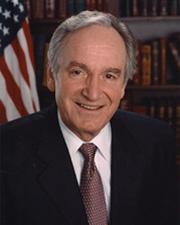 Sen. Tom Harkin (D-IA)
Legislative Activity
Stay on top of the latest movement without scrolling through every action
Senate amendment submitted
July 10, 2003
View full timeline
Senate amendment submitted
July 10, 2003
Senate amendment agreed to: Amendment SA 1200 as modified agreed to in Senate by Voice Vote.(text as modified: CR S9218)
July 10, 2003
Senate amendment proposed (on the floor): Amendment SA 1200 proposed by Senator Harkin.(consideration: CR S9218)
July 10, 2003
Amendment SA 1200 proposed by Senator Harkin. (consideration: CR S9218) To provide that the Secretary of Education shall transfer to the Education for the Disadvantaged account an amount not to exceed $4,353,368 from amounts that would otherwise lapse at the end of fiscal year 2003 and that were originally made available under the Department of Education Appropriations Act, 2003 or any Department of Education Appropriations Act for a previous fiscal year.
July 10, 2003
Amendment SA 1200 as modified agreed to in Senate by Voice Vote. (text as modified: CR S9218)
July 10, 2003
Text
Modified
LEGISLATIVE BRANCH APPROPRIATIONS, FISCAL YEAR 2004

Mr. CAMPBELL. Mr. President, I ask unanimous consent we turn to
consideration of H.R. 2657, the legislative branch appropriations bill;
that the text of the bill relating solely to the House remain; that all
other parts of the text be stricken; and the text of the Senate bill,
S. 1383, be inserted; and that no points of order be waived by this
order.
The PRESIDING OFFICER. Without objection, it is so ordered.
The clerk will report the bill.
The assistant legislative clerk read as follows:

A bill (H.R. 2657) making appropriations for the
Legislative Branch for the fiscal year ending September 30,
2004, and for other purposes.

Mr. CAMPBELL. Mr. President, I am pleased to bring to the full Senate
the legislative branch spending bill for fiscal year 2004. I appreciate
the support of the Full Committee Chairman Senator Stevens and Ranking
Member Senator Byrd, and assistance of my ranking member, Senator
Durbin, in this process.

This is my first year as chairman of this subcommittee, and I believe
Senator Durbin and I have done our best to craft this bill to meet the
highest priorities of the legislative branch with an allocation that is
$190 million below the request level. Chairman Stevens knows I am not
complaining about the allocation--he has been very generous in this
allocation given the very tight constraints the committee faces.
The bill totals the allocation level of $3.6 billion in budget
authority.
Most agencies and programs have been kept to current staffing levels,
with full funding recommended for normal pay and price level increases.
Increases above the current level have been provided in a few key
areas, particularly security.
I would like to review the highlights of the bill for my colleagues.
For the Capitol Police, funding totals $240 million. The amount
recommended would enable them to have on board by the end of the year
1,771 police officers, in keeping with security recommendations made by
law enforcement experts. I believe this is prudent and necessary to
ensure adequate security for the Capitol complex.
Having been in law enforcement myself, I am keenly interested in
making the U.S. Capitol Police the premiere law enforcement agency in
this country, and the funds we have recommended help move them in this
direction with resources directed at not only increasing the force
size, but improving the administrative infrastructure of the agency to
ensure it is managed properly, and adding important new programs such
as a mounted horse unit.
For the Architect of the Capitol, funds total $358 million, which is
$89 million below the request, owing to the deletion of several major
projects which should be deferred until completion of the Capitol
Visitor Center--the highest Architect of the Capitol priority at this
time.
Our recommendation includes $47.8 million for the Capitol Visitor
Center, which represents the General Accounting Office's estimate--in
conjunction with an independent consultant with expertise in
construction cost estimating--of the cost to complete the project.
Some have called for cutting corners on the project rather than
appropriating the funds needed to get the job done right. I don't
agree. I am new to this project but I am a big supporter. It promises
to enhance security for the Capitol complex, while also ensuring a much
better educational experience for visitors who come to the Capitol.
This Visitor Center was planned and preliminary work was done before
9/11. No one could have predicted that changes would have to be made
after 9/11 because of an increase in the security requirements.
While there have been some problems with this project to date, and
some cost overruns due to unforeseen site conditions and unexpected
costs related to utility work, we plan to monitor the project closely
to ensure that costs are kept under control, the schedule is adhered
to, and quality is not jeopardized.
Moving on to the Library to Congress, there is a total of $523
million included in the bill, $19.6 million above the FY03 level but
$17 million below the request. Funds are reduced from several program
areas slated for increases, owing to budget constraints, but the
Veterans History Project is fully funded at the increased level of $1.3
million and no program is cut below current levels.
For the Senate, a total of $718 million is recommended, $27.9 million
below the request. Reductions are primarily from the Sergeant at Arm's
projects which can be deferred until FY05.
To my knowledge, there have been no amendments filed on either side
of the aisle for titles I and II.
Mr. STEVENS. Mr. President, we are awaiting the Senator from Nevada.
Let me state for the Senate that it would be my intention to move to
close debate and consideration of any further amendments to title I and
title II following the statements of the two managers of the bill. We
have no notice of any amendments by any Member wishing to offer to
title I or title II. Title III is the portion of the bill that contains
the supplemental provisions and that will be open to debate.
We will later ask consent that all amendments and all motions to
title III be offered tonight and debated tonight with the votes to
occur on any matters which will be brought to a vote tomorrow morning.
That is not the agreement yet but that is the agreement we will seek.
I yield the floor.
Mr. REID. Mr. President, I would be happy to agree to that at this
time. I agree that titles I and II be closed and I be allowed to give a
statement in support of the bill itself with no amendments in order to
titles I and II.
Mr. STEVENS. Mr. President, if the distinguished Senator from Nevada
would allow us, we just put out the hotline on both sides. I want to
make sure no one has objections until we get final consent.
Mr. REID. Mr. President, one of the most pleasurable times of my
Senate career was the 4 years that I served as chairman of the
Appropriations Subcommittee on Legislative Branch. Working with Senator
Nickles and Senator Slade Gorton of Washington, we were able to
accomplish that which really had a meaningful impact on this body.
When Senator Durbin, who is tied up, as he should be, in the most
important asbestos legislation now before the Judiciary Committee,
asked me if I would cover this bill for him today, I am doing it with
pleasure because it brings back memories of working on this bill.
We did good things for the Library of Congress. I still have a very
close personal relationship with Jim Billington

[[Page S9216]]

as a result of what we were able to accomplish in some very difficult
times for the Library of Congress.
The Library of Congress is the greatest library in the history of the
world. Today, the Library of Congress is the greatest library in the
history of the world. It is as a result of what we as a Congress did.
We provide money for that.
The General Accounting Office, which is funded through this bill, is
the watchdog of Congress for the American people. It has done
remarkable things. It is a nonpartisan organization that does so much
good. Yet we have cut back the money I think they need. I wish we had
more money to give them.

Much of the work is done directly through the committee chairman and
the subcommittee chairman. Previously, it was effectively by all
Members of Congress.
I think the work I was able to do with my counterparts for the
Capitol Police was very important. I don't know, there may be another
Member of Congress who was a Capitol policeman. I don't know of one.
But I was a Capitol policeman. I worked a swing shift. I came at work
at 3 or 4 in the afternoon. I worked 6 days a week. I went home after
midnight every night. That is how I put myself through law school. I
acknowledge that I wasn't as well trained and the times were not as
difficult as they are now. But I was still a Capitol policeman. I am
proud to have in my office up on the third floor in the Capitol my
badge, No. 236. But I am very proud to be an alumni of U.S. Capitol
Police Force.
I am pleased to do this for my friend, the distinguished Senator from
the State of Illinois, who is such a good Senator and who has done a
remarkably good job in his tenure on this committee, this his second
go-around as chairman of this committee.
I echo the thoughts of the chairman of the Subcommittee on
Legislative Branch, my friend from the State of Colorado, Senator
Campbell.
The bill before us today is comprehensive, thorough, and fair,
especially in light of the tight funding constraints we are under this
year. This is one of the 13 subcommittees. I wish we had more money. It
could be used. There are many things that we need to do that we are not
able to do.
As has been pointed out, there are a number of things that this
subcommittee is doing and has done.
I want the Record to reflect and I want the chairman of the
subcommittee to know how much I support the work on the Visitor Center.
The record is quite clear that I started supporting this when I was
chairman of the Legislative Branch Subcommittee. I am sorry to say, I,
alone, was unable to get this done. The real impetus for accomplishing
this was the tragic death of two Capitol Police officers. But for their
deaths, we would not have been able to be in the position we are now in
with this Capitol Visitor Center. But we are here.
We have had complaints from some of my friends, as a matter of fact,
who serve in the Congress of the United States, who complain about the
funding for this not being adequate, the original number. Well, any one
of us who drives through here sees the tremendous engineering feat that
is taking place in the front of this historic building. It is a huge
job. I go out at least once a week and watch them. I suggest every
Member of Congress go out and watch what they are doing out there.
Why are they doing it? To make this Capitol safer than it was before
this facility began to be built. To make it more convenient for people
who want to visit the Capitol. In the summer and winter, when people
want to come to this building, they stand outside. There is no place
for them to go to the bathroom. There is no place for them to get a
drink of water or have a snack.
The Visitor Center is going to provide that. It will also allow
security checks to be made so people don't come into the Capitol
carrying things they shouldn't carry and doing bad things to people
they shouldn't do.
So I want the chairman of this subcommittee to know that I am on
board. I will defend, in any way I can, the work that is being done in
front of this building. It is important for our country.
When I first got this subcommittee, I could not believe the east
front of the Capitol of the United States was a parking lot, a blacktop
parking lot. We were able to do a few things and get the cars moved off
slowly but surely. That was a struggle. But I will do whatever I can to
make sure this Capitol Visitor Center is completed and is as nice as
the Capitol itself. We want the Visitor Center to be as nice as the
Capitol itself.
If the people in charge--namely, the Architect of the Capitol--are
allowed to go forward, it will be as nice as the rest of the Capitol.
It will be something of which we can all be proud. And people coming
here, who will be able to walk into this beautiful Capitol, will be
able to see films of the Capitol itself. They will be able to pick up
tour guides there. There will be a place for them to go to the bathroom
or have a sandwich, if they want one, buy souvenirs. And they will not
be asking: The Capitol of the United States, this ugly blacktop with
cars parked all over it? That is going to change. So I am happy to lend
my voice as a cheerleader for the Capitol improvement we will have out
front.
I am glad to see this bill includes $33 million over last year's
level for the Capitol Police. Again, that probably isn't enough, but by
the end of fiscal year 2004, the Capitol Police will have 500 more
officers than they did on September 11, 2001--not enough but certainly
a step forward.
So, Mr. President, I am talking far longer than I should have. But I
really do have some sentimental attachment to this bill. It is not
often I think of it, but the subway we ride from the Hart Building over
to here is something I was able to work on when I was chairman of this
Legislative Subcommittee. And we did not do it all at once. In fact, we
put a little bit here and a little bit there, and pretty soon we had
enough money to take care of the subway. It was $16 million.

The reason I worked so hard on that: I can remember the old cars you
can still see going to the Russell Building. A man in a wheelchair
tried to get in that old subway car. He couldn't do it. They brought
him up there and put his legs--he was having spasms in his legs. They
couldn't do it. They couldn't put him up there, no matter how hard they
tried. Now someone in a wheelchair just moves into the subway car, no
problem at all.
So, again, Mr. President, I have talked too long on this most
important legislation we have before us. But I am proud of the years I
spent working on the Legislative Branch Subcommittee. And I say to my
friend from Colorado, he has been a member of the Appropriations
Committee for some time, and I know he has been involved in other
subcommittees, and there have been some changes made, and this is the
first year he has been chairman of this subcommittee.
I say to the Senator, I hope you will look back on your service on
this subcommittee with feelings as I have for what I really believe is
the good that comes from this subcommittee. It was--I repeat for
probably the third time--a joy to work on this subcommittee. I look
back with such fond memories at the time I was able to spend on it.
And, frankly, I am kind of glad Senator Durbin was tied up so I could
reflect on my service as a Senator working on this subcommittee.
The PRESIDING OFFICER. The Senator from Colorado.
Mr. CAMPBELL. Let me say, in closing, I certainly appreciate my
friend's support. We have a great deal in common. We both have sports
backgrounds. We are both westerners. We both have law enforcement
backgrounds. So we have worked on a good number of things together. And
his voice in support of this bill is really appreciated.
I guess he recognizes, as I do, that although many people in America
do not know very much about this bill, everyone who comes to the United
States Capitol, sooner or later, is affected by the money that is in
this bill.
I know, as my friend knows, there were many times we came to the
Capitol--before that hole was in the ground out there--in the
wintertime, with drizzling rain, drizzling freezing rain, and there
would be people lined up out on the tarmac, the blacktop, shivering,
freezing, just waiting for a chance to get in to watch these
proceedings. That is not right.
When we get done with this Capitol Visitor Center, as my friend and
colleague from Nevada said, they are

[[Page S9217]]

going to have a place to learn a lot more about their Capitol and the
institution in which we now serve. I think we will all be better served
by finishing this Visitor Center.
I just want to tell the Senator from Nevada how much we appreciate
his support.
I have no further comments, Mr. President, and I yield the floor.
The PRESIDING OFFICER. The Senator from Alaska.
Mr. STEVENS. Mr. President, we have not had any response to the
request concerning title I and title II. So at this time, I ask
unanimous consent that title I and title II be considered closed and
not be available for amendments or motions or points of order or any
action at all as we consider the rest of this bill. That leaves title
III which is the supplemental portion available completely for
consideration of the Senate.
The PRESIDING OFFICER. Is there objection?
Hearing no objection, without objection, it is so ordered.
Mr. STEVENS. Mr. President, I call to the attention of the Members of
the Senate that in this bill we have before us now--the House bill, as
amended by the Senate bill--we have title III which deals with
supplemental emergency appropriations for 2003.
In this bill is $1.550 billion for the Department of Homeland
Security for disaster response. It is estimated that the disaster
relief fund will exhaust its current funding by the end of this month,
July 2003, in part due to the higher than expected costs for disaster
relief, including funding for tornadoes and winter storms. These
additional resources are needed to continue to provide necessary
emergency assistance.
There is also a NASA provision that provides an additional $50
million for the National Aeronautics and Space Administration. These
funds will cover additional and unanticipated costs associated with the
recovery and investigation of the Space Shuttle Columbia accident, such
as collection and reconstruction of the orbiter Columbia, and computer
analyses of potential failure scenarios and impact testing of space
shuttle wing components.
We also have an amount in this bill for firefighting. We ask the
Senate to provide an additional $253 million to the Forest Service for
wildland fire suppression and emergency rehabilitation of burned areas
to ensure sufficient funding for the 2003 fire season.
We also ask for an additional $36 million for the Bureau of Land
Management for wildland fire suppression and emergency rehabilitation
of burned areas to assure that sufficient funding is available for the
2003 fire season.
These funds will bring the total fiscal year 2003 funding available
for wildlife suppression to a level equal to the 10-year average, which
includes the severe 2002 fire season.
I am on notice there are several amendments we will be considering. I
ask my friend and colleague from West Virginia if he has any opening
statement to make concerning the supplemental request in this bill?
Mr. BYRD. I have none.
Mr. STEVENS. I thank the Senator.
I know the Senator from Nevada has an amendment I join in offering. I
remarked today at the hearing that we had in the Appropriations
Committee on the Interior appropriations bill, 2.2 million acres of my
State burned last year. We have a series of very devastating fires
going already. One of the worst problems we have is the infestation of
insects in trees that now have been dead for a couple of years. If a
fire starts in those areas now, we will have a catastrophe of unknown
size. I join the Senator from Nevada in offering an amendment to
provide additional funds to deal with fire prevention as well as the
firefighting amendments we have in the bill already.
I yield to the Senator from Nevada.
The PRESIDING OFFICER. The assistant Democratic leader.

Amendment No. 1201

Mr. REID. Mr. President, the distinguished President pro tempore of
the Senate is very kind. I send an amendment to the desk on behalf of
Senators Stevens and Reid for Senator Feinstein and Senator Daschle.
The PRESIDING OFFICER. The clerk will report.
The assistant legislative clerk read as follows:

The Senator from Nevada [Mr. Reid], for himself, Mrs.
Feinstein, Mr. Daschle, and Mr. Stevens, proposes an
amendment numbered 1201.

The amendment is as follows:

(Purpose: To appropriate an additional $25,000,000 for emergency
actions to reduce the threat to human safety arising from the threat of
catastrophic fire in dead and dying trees)

At the appropriate place, insert the following:
Sec. ____. (a) Additional Amount for Cooperative Forestry
Assistance.--The amount appropriated by title __ of this Act
under the heading ``______________'' is hereby increased by
$25,000,000.
(b) Availability of Amount.--Of the amount appropriated by
title __ of this Act under the heading ``______________'', as
increased by subsection (a), $10,500,000 shall be available
for emergency actions to reduce the threat to human safety in
areas declared under a State of Emergency by the Governor of
any State due to the danger of catastrophic fire from dead
and dying trees including--
(1) clearing of evacuation routes;
(2) clearing around emergency shelter locations;
(3) clearing around emergency communication sites; and
(4) clearing buffer zones around highly populous
communities in order to prevent fire sweeping though such
communities.

Mr. REID. Mr. President, I am confident and hopeful that the
committee can work something out on this matter before final passage.
Senator Feinstein is heavily engaged. She is an important member of the
Judiciary Committee. She has been involved in that every step of the
way. This is legislation that involves so many very important issues.
It really would have been very hurtful to the committee and the
movement of that legislation not to have Senator Feinstein come over
here and offer this amendment. As a result of that, during the last
vote, she spoke to Senator Daschle and me and asked if we would cover
her. This is something I am very happy to do, knowing how strongly she
feels about this and the difficult problems that exist in California
with the beetle problem. Senator Stevens has indicated that exists all
over the country. This amendment will maybe not take care of everything
but will take care of a lot of it. I hope the committee would strongly
consider the amendment prior to final passage of the bill.
The PRESIDING OFFICER. The Senator from Alaska.
Mr. STEVENS. Mr. President, I thank the Senator from Nevada for
sending the amendment of Senator Feinstein at my suggestion. The
amendment will make money available for a fund that is depleted. That
fund is available under this amendment to fulfill the request or
attempt to fulfill the request of the Governor of any State to deal
with the trees that are dead or dying because of infestation of these
beetles. They are not all the same types of beetles but the result is
the same. Dead timber is nothing but fuel for an enormous fire, if one
gets started in the area of that. That happened in what we call the
Millers' Reach fire north of Anchorage. I personally watched it from a
helicopter. The sinuosity of that fire just followed right through the
dead areas. Then it came back to burn the whole area. Once it started,
the fire just kept burning out.
I think the answer is to try to deal with the dead trees as quickly
as possible and protect particularly the developed areas as much as
possible from these areas. This amendment will allow Governors of any
State to request funds to deal with that. Again, this is 2003 money. We
are not talking about an enormous sum. This is money for the balance of
this year. We hope the bills for 2004 that will come before the Senate
later will adequately cover all those items. I join the Senator from
Nevada and hope the Senate will approve this amendment. I ask for its
consideration.
The PRESIDING OFFICER. Is there further debate?
The Senator from Louisiana.
Ms. LANDRIEU. Reserving the right to object, Mr. President, I want to
be very helpful here on Senator Feinstein's amendment because I am sure
it is going to a very worthy cause. But I want to ask the chairman,
since it is attempting to put money into an account that is depleted,
the amendment I am going to be offering will also put money into an
account that is depleted, that is empty, for a different purpose but
for the same effort, because there is a real problem of levee

[[Page S9218]]

rates in Louisiana. I hesitate to object to the amendment or to even
oppose it, because I don't oppose what we are trying to do. But I do
oppose adding money to a depleted account when we don't seem to be able
to add money for an account that is depleted.
Mr. STEVENS. If the Senator would check with her staff, I have
already cleared her amendment with regard to moneys to go into that
account in a similar way we have done for this beetle problem.
Ms. LANDRIEU. I thank the Senator.
Mr. STEVENS. I ask for adoption of the amendment.
Mrs. FEINSTEIN. Mr. President, there are now as many as 415,000 acres
of dead and dying trees on the San Bernardino and Cleveland National
Forests and surrounding private lands as the result of drought, decades
of fire suppression, and a bark beetle infestation.
Jack Blackwell, the Regional Forester for California, has described
this situation as an unprecedented threat to public safety.
There are large mountaintop communities with over 90,000 people
total, communities that are completely surrounded by thousands and
thousands of deed trees. In addition, the only escape routes are narrow
winding mountain roads which are themselves surrounded by dead and
dying trees.
The result is that thousands of lives are at risk.
There is some good news, in that San Bernardino National Forest and
California Department of Forestry staff agree on the four highest
priority tasks to reduce the threat to public safety.
First, they want to clear evacuation routes from the mountain
communities. This involves clearing a corridor on either side of major
escape roads so people can escape from their communities without being
blocked by fallen trees, or the radiant heat of the fire.
Second, they want to clear trees around safety zones like elementary
schools and camps. This gives people a place to go if they can't get
out of the community.
Next they want to clear brush around communication sites in the
forest to communicate with the public and emergency responders.
Finally, they want to clear buffer zones around populous communities,
protecting thousands of lives.
The PRESIDING OFFICER. If there is no further debate, without
objection, the amendment is agreed to.
The amendment (No. 1201) was agreed to.
Mr. STEVENS. Mr. President, I move to reconsider the vote and to lay
that motion on the table.
The motion to lay on the table was agreed to.

Amendment No. 1200, As Modified

Mr. HARKIN. Mr. President, I call up amendment No. 1200 and send a
modification to the desk.
The PRESIDING OFFICER. The clerk will report.
The bill clerk read as follows:

The Senator from Iowa [Mr. Harkin], for himself and Ms.
Mikulski, proposes an amendment numbered 1200, as modified.

Mr. HARKIN. Mr. President, I ask unanimous consent that reading of
the amendment be dispensed with.
The PRESIDING OFFICER. Without objection, it is so ordered.
The amendment is as follows:

(Purpose: To transfer education funds that would otherwise lapse to the
Title I Grants to LEAs program)

At the appropriate place, insert the following:
Notwithstanding any other provision of law, during the
period from September 1 through September 30, 2003, the
Secretary of Education shall transfer to the Education for
the Disadvantaged account an amount not to exceed $4,353,368
from amounts that would otherwise lapse at the end of fiscal
year 2003 and that were originally made available under the
Department of Education Appropriations Act, 2003 or any
Department of Education Appropriations Act for a previous
fiscal year: Provided, That the funds transferred to the
Education for the Disadvantaged account shall be obligated by
September 30, 2003: Provided further, That the Secretary
shall notify the Committees on Appropriations of both Houses
of Congress of any such transfer.
Provided further, Any amounts transferred to the Education
for the Disadvantaged account pursuant to the previous
paragraph shall be for carrying out subpart 2 of part A of
title I of the Elementary and Secondary Education Act of
1965, and shall be allocated, notwithstanding any other
provision of law, only to those States that received funds
under that subpart for fiscal year 2003 that were less than
those States received under that subpart for fiscal year
2002: Provided further, That the Secretary of Education shall
use these additional funds to increase those States'
allocations under that subpart up to the amount they received
under that subpart for fiscal year 2002: Provided further,
That each such State shall use the funds appropriated under
this paragraph to ratably increase the amount of funds for
each eligible local educational agency in the State that
received less under that subpart in fiscal year 2003 than it
received under that subpart in fiscal year 2002: Provided
further, That the Secretary shall not take into account the
funds made available under this paragraph in determining
State allocations under any other program administered by the
Secretary in any fiscal year.

Mr. HARKIN. Mr. President, this is a very simple, fully offset
amendment that will restore a cut in title I funding to three States
without harming or hurting any other State.
The fiscal year 2003 Labor-HHS appropriations bill that Congress
passed in February included a 13 percent increase for title I, the most
important Federal program in the No Child Left Behind Act. At the time
the Congressional Research Service projected every State would receive
a sizable increase over the previous year. But 4 months after the bill
was passed, new data from the 2000 census showed that three States
would actually get less title I money in fiscal year 2003 than they did
in fiscal year 2002. Those three States are Iowa, Maryland, and
Michigan. Their total cut in title I funding is $4.4 million.
The Congress did not intend for any State to get a cut in title I. I
recently had a meeting with Secretary Paige about this matter. We had a
full and frank discussion. He agreed to find an offset from Education
Department funds that would otherwise lapse at the end of the fiscal
year. Again, let me make it clear, none of the title I money in this
amendment will come from any other State. It is fully offset by
Education Department funds that will not otherwise be spent. Secretary
Paige has signed off on the amendment. So has Senator Specter, chairman
of the Labor-HHS Appropriations Subcommittee. I urge my colleagues to
support it.
The PRESIDING OFFICER. The Senator from Alaska.
Mr. STEVENS. Mr. President, I am informed this amendment has been
discussed with the Department of Education and at this time, the best I
can say is I am willing to accept the amendment and take it to
conference. This is the first time we have seen the amendment, and it
is somewhat complicated. But it goes to a point I understand Secretary
Paige has discussed with the Senator from Iowa and it does affect three
States. I cannot commit that it will absolutely come out of conference,
but I will do my best to hold it. Right now, not having any further
information than I have just received, I believe it is worthy of the
Senate adopting the amendment so we can take it to conference. And we
will work with the Senator from Iowa if there are any comments that
come from the administration in the meantime.
The PRESIDING OFFICER. Is there further debate?
Mr. STEVENS. I urge that the amendment be accepted.
The PRESIDING OFFICER. If there is no further debate, without
objection, the amendment is agreed to.
The amendment (No. 1200), as modified, was agreed to.
The PRESIDING OFFICER. The Senator from California.
Mrs. BOXER. Mr. President, I ask unanimous to speak as in morning
business to pay tribute to some Californians who were killed in Iraq.
It will probably take no more than about 7 minutes.
The PRESIDING OFFICER. Without objection, it is so ordered.
(The remarks of Mrs. Boxer are printed in today's Record under
``Morning Business.'')
The PRESIDING OFFICER. The Senator from Louisiana.
Ms. LANDRIEU. Mr. President, I ask the managers if I may speak for a
moment about pending amendment. I don't want to call it up at this
point. I would like to talk about it for a few minutes.
The PRESIDING OFFICER. The Senator has a right to discuss any matter
she wants to.
Ms. LANDRIEU. Mr. President, as we are still working on the
amendment, I hesitate to call it up at this point. I

[[Page S9219]]

want to talk for a moment about why this amendment is so important. I
think what the Senator from Alaska is doing is extremely important, and
I commend the administration for putting forth a bill that really helps
to address some very serious problems in our Nation because the
emergency accounts are depleted.
There are many emergencies occurring in our Nation, from fires to
tornadoes. People's lives and homes are at risk. If the Federal
Government doesn't act and do it quickly and appropriately, tremendous
hardships and difficulties can result. So I am 100 percent supportive,
and so are the people in my State, just as is every State that suffers
from natural disasters.
I am having a difficult time understanding why there is some
hesitation--and the chairman has been very cooperative--to fund or to
ask for money to fund the emergency fund--not a nonemergency fund, but
an emergency fund that is completely empty. There is no money left in
this account. It is a very important account not just for Louisiana,
but for Mississippi, Alabama, Florida, Georgia, California, and for all
the States in the Union. It is the only account in the Federal
Government that allows the Corps of Engineers to fix the levees when
they are damaged in anticipation of a great storm that might come, and
to prevent the loss of property damage. So we can save money in the
bill by providing a little bit of maintenance on these levees. This
account is empty.
I am asking for whatever the chairman and the Members of the Senate
think we can afford--whether it is $20 million, $30 million, $40
million--to get us through the end of the year so we are prepared when
the storms come. And they will come, hurricanes will come.
We just had a pretty tough storm last weekend. There is one out in
the gulf as we speak. If I had time, I could put up a chart that shows
where it is. There will be storms, and it is predicted to be a very
difficult season. We hope and pray and prepare. But the account that
helps us to prepare is empty. There is not a dime in this account. Let
me repeat. The account that helps the Corps of Engineers prepare levee
systems for the whole country--not just Louisiana--is empty.
We are getting ready to pass a bill to protect us from emergencies.
Yet this account is empty. I am asking the Senate to not pass this bill
without putting some money into this account so that we can build up
the levees in anticipation of storms--not after a storm has come
through and wreaked hundreds of millions of dollars of damage, but
before the storm hits, to be able to repair the levees that have been
weakened by rain or by storms that are not hurricanes, tropical storms,
or storms that don't rate to be a hurricane, and to prepare the levees
to prevent the taxpayers from having to pick up a bigger tab.
That is why I want to spend a few minutes talking about this issue
and asking the Senate for its attention. If we can find $25 million to
help fund disasters that occur because of dead trees, I think we can
find at least half of that money somewhere to preserve the levy system
in the country that protects billions and billions of dollars of
infrastructure everywhere, not just in Louisiana.
As the chairman and staff are considering what to do, I hope we can
find a certain amount of money to make sure we get through the end of
the fiscal year or get through a period where on another bill, perhaps
energy and water appropriations, we can add some money.
Whether $10 million or $20 million is enough, I do not know. Perhaps
the Corps of Engineers which is engaged in this debate can give us some
idea, based on weather predictions and patterns, determine what amount
will be enough to help us.
This is a huge issue for Louisiana, and it is a big issue for all the
States. My people are afraid. They are frightened. The phone has been
ringing off the hook because of the storm from last week. When I called
the Corps of Engineers, which I typically do after a storm, and said,
Could you please send some crews to help us with the levees, the people
are very frightened, they said to me: Senator, there is no more money.
We would love to send the crews, but there is no money in the account.
I said: Do not worry about it; there is a bill coming through the
Senate for this exact purpose--only to find out maybe the bill is not
for this purpose. That is why I am going to offer this amendment in a
few minutes, sometime tonight, and hopefully we can get it resolved.
The Senator from Nevada, because he is the ranking member on the
Energy and Water Development Subcommittee which funds the Corps of
Engineers, knows how important this particular fund is for the regular
maintenance of a levee system, not after the Governor calls it a
disaster. This is for maintaining the levees before the storms hit to
prevent damage, to minimize damage, and save people's lives and
property.
There are other accounts that kick in once something is declared an
emergency. That is not what I am talking about. There is no money in
the account right now as we speak to prevent and repair the levee.
The Senator from Alabama on the floor. I know he is going to speak on
another subject. But there is no money to repair levees in Alabama,
which is a coastal State, or any State. The account is zeroed out.
I yield the floor and reserve the right to offer my amendment later
tonight.
The PRESIDING OFFICER. The Senator from Alaska.
Mr. STEVENS. Mr. President, there is still $330,000 left in this
account. It is a strange account. There has been extraordinary activity
in this account because of the tornadoes that hit the Midwest this
year. That is why it is now depleted. There is $60 million in the 2004
bill which will be coming before the Senate next week.
We are dealing with a question of how much money might be needed for
prevention in the period between the time this bill is enacted and
signed, which we hope will be sometime before the end of this month. At
most, we are dealing with 8 weeks of money that might be called upon on
the basis of a Governor's request and a Presidential declaration of
disaster in taking preparatory steps to prevent further damage.
Again, I am on notice that at least two other Senators intend to ask
for similar money. I am told by the people who handle this money that
the most that could be used is $10 million. I am prepared to offer an
amendment--I will do it or ask the Senator from Louisiana to offer it--
that will put $10 million in this fund to remain available for
expenditure. That means, if it is not used in 2003, it will carry over
to 2004.
Right now there are no demands, obviously, because there is still
some money in the account. In order to be safe, we are willing to ask
for an additional amount of $10 million for this fiscal year, 2003.
I inquire, does the Senator want to offer an amendment for $10
million or shall I offer it?
The PRESIDING OFFICER. The Senator from Louisiana.
Ms. LANDRIEU. Mr. President, I am happy to let the Senator offer that
amendment. I will support the amendment, but the last telephone call I
made to the Corps emptied their fund of $600,000, and if there was
$300,000 in that account this morning, it should be empty now because
the money is heading to Louisiana to fix some levies.
I thank the Senator for his help.

Amendment No. 1206

Mr. STEVENS. Mr. President, I send an amendment to the desk.
The PRESIDING OFFICER. The clerk will report.
The legislative clerk read as follows:

The Senator from Alaska [Mr. Stevens] proposes an amendment
numbered 1206.

Mr. STEVENS. Mr. President, I ask unanimous consent that the reading
of the amendment be dispensed with.
The PRESIDING OFFICER. Without objection, it is so ordered.
The amendment is as follows:

(Purpose: Making emergency appropriations to the Corps of Engineers for
emergency assistance)

At the appropriate place, insert the following:
``: Provided further, That for an additional amount for
``Flood Control and Coastal Emergencies,'' for emergency
expenses due to flood control, hurricane, and shore
protection activities, as authorized by section 5 of the
Flood Control Act of August 16, 1941, as amended (33 USC
701n), $10,000,000, to remain available until expended:''

Mr. STEVENS. Mr. President, this is for the Corps of Engineers flood
control

[[Page S9220]]

and coastal emergencies fund. It will be available immediately upon the
signature of the President.
This bill does have a clause that makes funds in this bill, title
III, immediately available to the President for disbursing.
The PRESIDING OFFICER. The Senator from Louisiana.
Ms. LANDRIEU. Mr. President, I ask unanimous consent to be added as a
cosponsor.
The PRESIDING OFFICER. Without objection, it is so ordered.
If there is no further debate on the amendment, without objection,
the amendment is agreed to.
The amendment (No. 1206) was agreed to.
Mr. STEVENS. I move to reconsider the vote, and I move to lay that
motion on the table.
The motion to lay on the table was agreed to.
The PRESIDING OFFICER. The assistant Democratic leader.
Mr. REID. Mr. President, while the Senator from Louisiana is here, I
say to her, I think she did the right thing. I am the ranking member on
the Energy and Water Development Subcommittee. The President requested
$75 million for this account this year. Senator Domenici and I are
going to mark that bill up and pass it out shortly.
As the Senator from Alaska said, if, in fact, there is an emergency,
we have this money in there, of course. Also, if anything goes wrong
within the next 60 days before the 2004 bill passes, money can always
be used from FEMA if there is an emergency. For the people of
Louisiana, I hope there is no natural disaster but if there is, it is
not as if there is no way of helping them.
The PRESIDING OFFICER. The Senator from Alabama.

Amendment No. 1202

Mr. SESSIONS. I thank the Chair. Mr. President, I appreciate the
opportunity to make some remarks. I thank Senator Stevens for his
courtesy in allowing me to have this time.
I ask that the pending business be set aside, and that the amendment
I previously filed, No. 1202, be called up for debate.
The PRESIDING OFFICER. There is no amendment that needs to be set
aside. The clerk will report.
The legislative clerk read as follows:

The Senator from Alabama [Mr. Sessions] proposes an
amendment numbered 1202.

Mr. SESSIONS. Mr. President, I ask unanimous consent that the reading
of the amendment be dispensed with.
The PRESIDING OFFICER. Without objection, it is so ordered.
The amendment is as follows:

(Purpose: To eliminate the additional amount for programs under the
National and Community Service Act of 1990)

In title III, strike the following: ``Provided further,
That for an additional amount for `Corporation for National
and Community Service, National and Community Service
Programs Operating Expenses', for grants under the National
Service Trust program authorized under subtitle C of title I
of the National and Community Service Act of 1990 (the `Act')
(42 U.S.C. 12571 et seq.) (relating to activities including
the AmeriCorps program) and for educational awards authorized
under subtitle D of title I of the Act (42 U.S.C. 12601),
$100,000,000, with funds for grants to remain available until
September 30, 2004, and funds for educational awards to
remain available until expended:''.
Mr. SESSIONS. Mr. President, the amendment I have offered will remove
the $100 million that is contained in the emergency supplemental
section. I think it is wrong to include it in the emergency
supplemental appropriations bill. It apparently is not an emergency,
and I wish to talk about that a little bit. It is certainly not good
public policy for us to do this.
There are people in this Congress who support AmeriCorps and there
are those who oppose it. My concern at this point deals with how this
money has been added and whether or not it should be properly added.
The emergency supplemental that has been made part of the legislation
moving forward tonight involves the expenditure of Federal money
outside the budget we approved. I serve on the Budget Committee. We
worked hard to develop a budget of which we felt proud and on which we
could agree. Frankly, with the deficits we are facing, I thought the
budget was a little higher than I would have liked to see but it had a
modest growth across the board in all areas.
We agreed on it, and it passed in this Senate. We understand that
legitimate emergencies occur during the year. We understand that when
those emergencies occur, it is appropriate for Congress to appropriate
emergency funding for them. This emergency funding agreement has some
valuable items in it. We have a number of emergencies today but there
has been a tendency--and I would say it is not a good tendency--to add
to the emergency supplemental general items of appropriation that
people would like to see be passed and be paid for.
I remember talking with a senior member of the House of
Representatives. We wanted to get a bill passed that would help
Alabama. I talked to him about how we might do this. He said: Jeff, we
need to look for a supplemental.
I said: Well, good.
He said: Do you know why?
I said: No.
He said: The reason you want a supplemental is it does not count
against the deficit.
Well, I thought that was kind of amusing. I said: What do you mean it
does not count against the deficit? It is money we spend.
He said: I do not know. It is just money that does not get counted
against the deficit.
What he really meant was it does not count against the budget. If you
spend something extra, under a normal appropriations bill and you
exceed the budget, or you should stay within your budget, the
appropriators try to do so and if they spend money on one item they
have to save money on something else. They have more requests than they
can fund so they take the money and they reduce it to fund what they
want. Some things do not get funded. One great way to get something
done that one wants done in their district, that they believe in, that
is easy to do, that requires no offsets, no competing against any other
appropriations, is to tack it on to an emergency supplemental. Of
course, it does add to the deficit. It adds to our debt. It increases
our debt. It is real money and it is a real expenditure. It just
circumvents the budget process and the integrity of the budget process.
Frankly, a lot of these supplementals ought to be offset anyway. We
could find $1.9 billion to offset these emergencies we are funding. I
know we did not. We do not have to. This is the kind of emergency bill
that we normally face and we normally pass without offsetting. So that
is the circumstance we are in.
I would like to go into that a little bit further. I want to say this
before we get into the details of this amendment: Tomorrow is cost of
government day. Cost of government day is a day in the calendar year
when Americans have paid their share of Federal, State, local tax, and
regulatory burdens. This year cost of government day is 4\1/2\ days
later than last year. This means that from the beginning of this year,
Americans have been working for the Government and will not stop
working for the Government to pay their taxes until tomorrow. That is a
big deal.
One of the best ways we have to maintain some control over spending
is the budget process. This supplemental is outside the budget process.
So I am concerned about it. So $100 million, that makes us work just a
little bit longer this year than we would have otherwise. By passing
this amendment, we work a little less for the Government this year than
would otherwise be the case.

I will go a little further. The AmeriCorps appropriation does not
belong in title III to an emergency bill. Let me say why. Look at the
bill itself. Here are the legitimate emergency fundings that are in
this bill: $1.55 billion for disaster relief and emergency assistance
for fires and those kinds of events. That is important. That is a
legitimate emergency, I think. At least historically we have considered
it so. There is $50 million to cover expenses for responding to the
Space Shuttle Columbia accident. NASA has incurred some substantial
costs as a result of that. This will not fully reimburse them for that
but it will be a help. There is $289 million for wildlife fire
suppression and emergency rehabilitation activities. So I can
understand those. Those are legitimate designations. While I would like
to see us have offsets for that within the budget, that is not going to
happen.

[[Page S9221]]

However, during the markup of this supplemental, without any real
debate the committee agreed to an amendment to provide $100 million in
emergency supplemental funds for AmeriCorps not requested by the
President. The President requested emergency funding for these other
items. His budget people reviewed them carefully. The funds and numbers
they asked for were subject to some scrutiny there. So in this
emergency category, we have disaster relief, space shuttle accident,
wildfires, and AmeriCorps. I do not think it belongs on this list.
I see the value in AmeriCorps but I have been concerned about it for
some time as not being a well run agency. I have not led a fight
against it on the Senate floor but I have had some serious concerns.
They have been shared by a very knowledgeable person who cares about
AmeriCorps and who cares about helping people in need.
I want to read from a press release from Congressman Jim Walsh, who
is chairman of the House Appropriations Subcommittee on VA/HUD and
Independent Agencies with oversight over AmeriCorps, the national
service program.
This is a committee where this ought to be dealt with. It ought to be
dealt with in our appropriations bill from our committee that deals
with these very agencies. I want my colleagues to listen to the
extraordinary comments that Congressman Walsh makes. Frankly, when I
raised my objection to this addition to the emergency bill, it was
based primarily on the process concerns and my generalized concern
about the efficiency of AmeriCorps. I did not realize AmeriCorps had
misbehaved as badly as it has. This is what Congressman Walsh said:

I have been a strong and consistent supporter of the
AmeriCorps program throughout my tenure in the United States
Congress. Hundreds of volunteers have accomplished some
amazing things in communities across my home State of New
York. As a returned Peace Corps volunteer--

He is talking about himself--

I recognize and appreciate the value of this service
program for local communities, program participants and our
Nation at large. In fact, I was a supporter of its mission
and opportunity the day the program was signed into law by
President Clinton, and remain a steadfast supporter today.

Now I would like to share the concerns of this strong supporter. He
says this:

However, AmeriCorps has been sadly plagued by poor
management and weak financial oversight by program managers
in Washington since its inception. Repeatedly, AmeriCorps
administrators have overestimated capacity and underestimated
available resources. This Congress has repeatedly instructed
AmeriCorps to reform its management and to improve its
accounting procedures, all the while working to live up to
the commitments to its current participants.
Most recently, just two months ago this Congress
appropriated an additional $64 million in supplemental
funding to close another budget gap, this time to cover
agency overspending of funds clearly designated to cover
existing volunteers' educational stipends.

So he says just 2 months ago we appropriated another $64 million to
cover overspending by this program. Why do we need extra money? Because
they overspent. They mismanaged and they came back 2 months ago and got
$64 million. That is not enough. They want another $100 million.
Quoting Congressman Walsh, this supporter of AmeriCorps:

In the fiscal year 2003 bill--

That is the bill we are operating under this year--

Congress provided necessary funding to cover the enrollment
of 50,000 volunteers nationwide. Federal law set that as the
enrollment limit, and AmeriCorps administrators agreed to it.
In response, those same administrators went out and
contracted with grantees and local agencies for 70,000
volunteers without the money or the authorization to do so.

I am just quoting Congressman Walsh.
He goes on to say:

My opposition to the Senate's supplemental AmeriCorps
appropriation proposal comes down to an issue of
accountability. We shouldn't reward an agency that violates
federal law and mismanages taxpayer dollars by providing
additional funding until clear and consistent reforms have
been enacted. Should these requested funds be appropriated, I
have little faith that the existing operation could get the
funding out of Washington to local community grantees
effectively or equitably by the end of this fiscal year on
September 30th.
The positive impact AmeriCorps volunteer programs have
across the country makes this a difficult decisions to make,
but I truly believe that this action is necessary if true
reform is to occur and the agency's long-term stability
secured.
At the same time, I look forward to constructing an FY '04
appropriations bill that adequately meets the growing role
AmeriCorps volunteers have been asked to play by increasing
ranks and expanding opportunities should agency leaders be
able to demonstrate their commitment to improving management
practices, reforming financial operations, and strengthening
grant procedures.

So we are being asked to tack on to an emergency bill an AmeriCorps
supplemental of $100 million in addition to the $64 million in
supplemental funding added to close another budget gap earlier this
year, and we still do not have reform and an understanding that we are
going to fix the out-of-control agency. This is an important matter.
I note that Mr. Thomas Schatz, the president of Citizens Against
Government Waste, has written. He strongly supports this amendment. He
notes that:

. . . striking anomaly about AmeriCorps is that it is not a
volunteer program at all. Rather, it recruits college-age
students for paid positions and then uses taxpayer dollars to
subsidize the organizations that hire these recruits. Those
hired by AmeriCorps participants cost taxpayers a bundle. An
August 1995 GAO audit of 93 AmeriCorps grantees found that
programs operated by nonprofit, state, and local agencies
received about $25,800 in cash and in-kind contributions per
participant.

I don't know whether the program is worth it in the long run or
whether it can be affirmed in the long run, but what I would say is
that it is unlikely the money can be gotten out before the next fiscal
year. Why not have the money go through the normal legislative process
and be in next year's budget? It is really for scholarships for these
people who work; they promise to give them scholarships in the future.
They won't be drawing the scholarships down for 2 years more. I don't
think we have to do it this year.
The situation with their management is worse than I thought. It
should not be on this emergency bill.
If we are going to get serious about spending, this is the kind of
thing on which we all ought to be agreed. This is the kind of thing to
which we have to say no. If we have to give more to AmeriCorps, let's
do it in the appropriations account where we have a budget cap and it
will compete against other items in that cap. If it merits additional
funding, so be it. If it does not merit it, so be it. Let us not tack
it on to the debt. This will be paid for in no other way but by
increased debt. I don't think we ought to do it. I feel strongly about
it.
I thank the Chair and I yield the floor.
Mr. STEVENS. Mr. President, I shall in a moment make a motion to
table the Senator's motion to strike. I want to make sure, before the
Senator leaves, that we have an understanding that after having made
that motion to table, I shall move to set that motion aside until
tomorrow morning, at which time I will ask for 10 minutes equally
divided on my motion to table, to be divided in the usual form, which
would mean that the Senator from Alabama would have half that time.
Mr. SESSIONS. I thank the distinguished chairman for his courtesies,
as always.
Mr. STEVENS. I do not make that motion yet because the Senator from
Maryland wishes to speak.
Ms. MIKULSKI. First to the chairman of the Appropriations Committee,
will I have time tomorrow morning?
Mr. STEVENS. There would be 5 minutes. I am opposed, so I would be in
control of 5 minutes, and I would be sure to allow the Senator from
Maryland to have a portion. I would think Senator Bond might have a
portion. I would have a minute, and you each would have 2 minutes. You
can speak at length tonight.
Does the Senator wish more than that time tomorrow morning?

Ms. MIKULSKI. Of course, I first of all thank our colleague from
Alabama for offering this amendment earlier this evening. I would like
about 3 minutes.
Mr. STEVENS. We will assure the Senator has 3 minutes.
Ms. MIKULSKI. But I want to make sure my reform-minded colleague,
Senator Bond, can speak.
Mr. STEVENS. We will do that.

[[Page S9222]]

Ms. MIKULSKI. I understand my colleague from Alabama, who offered
this amendment, is in an armed services conference. I say to the
Senator I appreciate the demands on his time. I will say some things
and have a more elaborate statement, but I thank the Senator for
leaving the conference and I thank the Senator for offering this
amendment earlier in the evening.
Mr. SESSIONS. I thank the Senator for her comments. I will have to
depart.
Ms. MIKULSKI. I state to the Senator from Alabama some facts. First
of all, the reason this is being declared an emergency is that if this
$100 million is not in this appropriation, 20,000 volunteers will lose
their slots. I want to speak about the debacle and the bureaucratic
boondoggle at the national corporation.
I say to my colleague from Alabama, he is absolutely right, but what
he should know is that the VA-HUD subcommittee chaired by Senator Bond
has been in the forefront of reform. I say to our colleague that our
April 15 hearing was when we found out that AmeriCorps, National
Corporation, had enrolled 70,000 volunteers when we had given them
money for 50,000 volunteers. I want the Senator to know that we went
ballistic. Also, the Senator should know we called the board the Enron
corporation of nonprofits. I later wrote to the President asking for
more money, a better board and the resignation of Mr. Lenkowsky.
The criticisms are there, but when you talk about the need for
accounting reform and transparency and all of the excellent things, the
Senator should know that our colleague, Senator Bond from Missouri,
chairman of the committee, has been a leader in shaking up the agency
and I have been his very able partner. We have insisted on a new CFO.
We have insisted on better procedures. We have been doing this, and I
might add, we were doing it, sir, when the House wasn't paying one bit
of attention.
It was our oversight hearing that found under this rock were a lot of
other rocks, and under those rocks were worms.
We know that. We agree with that. What we do not want to do, though,
is punish these volunteers and the communities they serve because of
the overenrollment. In all honesty, what you should know is that if
this supplemental does not occur, 20,000 volunteers will lose their
slots, like in Teach America. There will be 395 in my State. I am sure
my colleague will see them in his State.
So while we want to really throttle the bureaucracy--throttle the
bureaucracy--we do not want to punish the volunteers and the
communities we serve.
We are at a pivotal point--actually a crisis point. So that is why
this is in the supplemental. The Senator is well within his rights to
raise some of the questions he does. But from the standpoint of the
communities and these 20,000 volunteers, this is a pivotal point.
I could go on and tell you about the merits of AmeriCorps. I will not
keep you. I will have more things printed in the Record. I am very
mindful of your time.
But I wanted to say to my colleague from Alabama, his call for
reform? We issued it even years ago. We have really been pressing.
Actually, I think with this new CFO, you would like him very much.
But I really have to defend Senator Bond's efforts in moving for
administrative reform. I want to say these administrative problems also
predate President Bush's time. I do not know if the Senator would like
to comment on that. My next set of remarks will be about AmeriCorps and
the consequences of this. But I wanted to share those facts with the
Senator.
Mr. SESSIONS. I thank my colleague. The Senator from Maryland is one
of our exemplary Members. She manages details and watches things better
than most. I am glad she made some strong efforts to reform this
program.
I have two concerns about it. My original comments, when I saw the
supplemental on this bill, went to the fact I did not think it should
be on this bill. I did not realize the program had really gotten as far
off course as it has, and been mismanaged as badly as the Senator just
has stated. So it seems to me what we are doing is, by having this on
the emergency supplemental, as the subcommittee in charge of oversight
over the program that admits it has been out of control, that
subcommittee will be able to get extra money to finance that
mismanagement without it coming out of its appropriated, allocated
amount by shifting it purely to debt, which is what the supplemental is
going to be funded by, additional debt. I think it would be better
frugal management if we could put it on next year's bill that you
probably are already beginning to work on. That would be accountable
under the budget.
I am delighted the Senator is working on accountability. I know there
is no Senator here who has a deeper commitment to integrity in the
process than the Senator from Maryland.
Ms. MIKULSKI. Mr. President, I would say on a bipartisan basis we
were working for very strong administrative management and fiscal
reform. We have worked. It was our committee that uncovered this fiasco
in April. We have been, since, working with OMB on management
improvement as well as accounting flexibility to get them over the
hump. Remember, it is volunteers who will be penalized. It will be
volunteers and communities that will be penalized, not the bureaucracy.
The bureaucracy gets to keep their jobs. They get to move papers
around. It is the volunteers who are going to be punished.

So we have a difference of opinion about how you can get reform. But
we did move in accounting flexibility, when this Senate passed it 100
to nothing. We did it in 1 day, the House the next day. The President
was able to sign it. But flexibility without funds was a hollow
victory. So we need the $100 million to cover the rest of the quarter
so these 20,000 volunteers do not lose their slots.
That is why this is in this supplemental. It was our original intent,
Senator Kennedy and I were going to offer this amendment on the floor.
But we understood there was sympathy for our position at the White
House no commitments, no guarantees, but sympathy. I must say, the
President, in his State of the Union, called for a spirit of
voluntarism. The outpouring has been tremendous. What happened was they
ended up overenrolling. But we are now going to snuff out the spirit of
America, snuff out the call to service the President himself requested.
We are going to trample on the very ideals these young people want to
bring to their communities.
We cannot trample on their idealism. We should not snuff out this
opportunity because there is a bureaucratic boondoggle. The ``boon''
ought to go to the ``dogglers,'' not to the volunteers.
So we believe this modest amount of money, in the overall trillion
dollar budget, would be a bridge to get AmeriCorps over troubled waters
and would ensure these volunteers would have their jobs.
In Maryland, 395 volunteers would be cut from civic work which
remodels and rehabilitates homes, tutors kids, works in a variety of
ways in these very poor neighborhoods. I personally know what they have
done to rehabilitate boarded-up houses.
The Baltimore Reads program, the Teach America program--I could list
them. But it is not about programs; it is about people helping.
I am going to tell you the story of a young man named Mark who was an
AmeriCorps volunteer who came to Baltimore and went into one of our
poor schools where kids were performing at the 25th percentile. When he
left after his 3-year stint, they were performing at the 70th
percentile. And, because of the voucher he had earned, he was able to
pay down his student debt and therefore be free to get a master's in
teaching, and he is now a full-time teacher in Baltimore schools
because he so loved what he had come to, the sense of accomplishment
that had come from being a volunteer in Teach America.
We believe this is $100 million in an emergency supplemental that
will help these volunteers do what they want. They will answer the call
for service of our own President. The communities and the volunteers
will not be punished for bureaucratic mismanagement. We have worked on
reform. The reform efforts have been a bipartisan effort. The
leadership for greater accountability has been led by our colleague
from Missouri and we think we have real momentum now. The White House
is

[[Page S9223]]

watching over this program. The board is now engaged. I believe a new
CEO is on the way. We have the right CFO to help us with the financing
accountability. There needs to be this bridge to get these 20,000
volunteers over the troubled waters. This is why I believe it should
stay in the supplemental and I hope the majority of the Senate would
concur with that.
Mr. NICKLES. Will the Senator from Maryland yield for a question?
Ms. MIKULSKI. To the Senator? Of course.
Mr. NICKLES. I thank my friend from Maryland. I am looking at the
language. It says the funds for AmeriCorps, on page 54:

. . . with the funds for grants to remain available until
September 30, 2004, and funds for educational awards to
remain available until expended. . . .

Correct me if I am wrong. Almost none of this money will be spent in
2003, and this basically is an appropriation for 2004. Why don't we do
this in the 2004 bill instead of now? It doesn't seem to me to fit into
the definition of assistance. We only have 2\1/2\ months left in fiscal
year 2003. I don't know why we are doing this amendment on this urgent
supplemental. I don't think it fits that definition.
Could you tell me, is any of this money going to be spent in 2003,
and why isn't this really an appropriation for 2004?
Ms. MIKULSKI. I see what the Senator is saying: ``To remain available
until.'' That means if for some reason they don't use this, it would
expire. That doesn't mean it begins in 2004. It means that it will be
available through 2004.
Mr. NICKLES. Madam President, I want to make a statement, if my
colleague from Maryland is finished. I want to speak on the amendment.
Ms. MIKULSKI. Let me doublecheck this. We have a little disagreement.
I will be right here.
Mr. NICKLES. Madam President, I inform my colleague from Maryland
that CBO estimates that there will be zero money spent in 2003.
The PRESIDING OFFICER (Ms. Murkowski). The Senator from Oklahoma.
Mr. NICKLES. Madam President, I wish to compliment my colleague,
Senator Sessions from Alabama, for raising this amendment. I urge our
colleagues to support it.
I tell my friend and colleague, the chairman of the Appropriations
Committee, that I understand the publicity that AmeriCorps has received
because it has not been managed properly. But this does not belong in
this bill. The urgent supplemental for 2003 is to help pressing needs
which has to be done now and that can't wait until the 2004
appropriations process.
I have great confidence that the Senator from Alaska and our
colleagues in the House are going to finish appropriations bills on
time. They will be done by the end of September.
But this particular provision says there is $100 million and it will
be available to be spent through the end of 2004.
Incidentally, the educational awards granted after people provide
voluntary paid services--kind of a contradiction in terms--but after
they provide their public service, they are entitled to reap
educational awards equaling about $5,000 per year; that is, for
future--that should be dealt with in the 2004 bill. It shouldn't be
dealt with now. It doesn't belong on this bill.
In April, we gave AmeriCorps $64 million. There has been some
mismanagement, obviously. But we knew about that in April. We gave them
$64 million in April. How much is enough?
If this is not going to be spent in 2003 and the Congressional Budget
Office, which is our budget arm, says this money isn't going to be
spent in 2003--they say most of it won't be spent in 2004.
I think what has happened is some people have read some articles and
got excited, saying we will be able to slip this in and we will have an
extra $100 million to spend for next year and we will do it under the
guise of an emergency. That requires 60 votes. We just gave them $64
million additional money in April. If we find out that this money is
available to be spent anytime up through the end of next year, it is
really a 2004 appropriation. It doesn't belong in a 2003 urgent
supplemental bill that we use for fire, for FEMA, and for real
emergencies. It doesn't fit that definition. It wasn't requested by the
administration.
I will make a couple of other comments on the program.
When we talk about wanting to encourage and help volunteers, this
program costs about $18,000 per year per participant. That is a lot of
money. When we talk about volunteers, we are talking about a cost that
is very high. It has payments to the individual, it has payments for
daycare, it has payments for health care, and it has educational
assistance of about $1,000 per year. It ranges from $20,000 to $18,000
per person. That is a lot of money to be paying for ``volunteers'' to
do a lot of services that, frankly, most people do for free or most
people donate for charity. Most people volunteer and are not paid.
I just make these comments. This is a program that has run amuck and
that has not been well managed. Now we are rewarding that poor
management and doing it under the guise of emergency in 2003 when we
only have 2\1/2\ months left in this fiscal year and we are going to
add $100 million. CBO estimates that every single dollar of this will
be spent not in 2003 but in 2004 or 2005 or later.
To try to stick it in under the guise of emergency for 2003 is very
inappropriate. I think it violates the whole spirit of what we call an
``emergency.''
I urge my colleagues to vote for the amendment of Senator Sessions.
I might also mention this jeopardizes some things. I want us to be
very frugal when we use emergency designations because we shouldn't be
doing that.
When we say it is an emergency, we are saying that basically the
budget doesn't fly, we don't need a budget, and we are going to have
emergencies. But we have a higher threshold of 60 votes for emergency
spending. This is thrown in the same category of emergencies, FEMA and
firefighting. I don't think that is correct. I don't think that is
right.
The best way to solve it would be to adopt Senator Sessions'
amendment. I urge our colleagues to do so when we vote on his
amendment.
I yield the floor.
The PRESIDING OFFICER. The Senator from Alaska.
Mr. STEVENS. Madam President, I now move to table the motion to
strike filed by the Senator from Alabama. I ask unanimous consent that
my motion be temporarily set aside and that the Senate resume
consideration of my motion on Friday at a time to be determined by the
majority leader after consultation with the Democratic leader.
I further ask unanimous consent that there then be 15 minutes for
debate equally divided in the usual form with not less than 3 minutes
of that time being available to the Senator from Maryland and that
there be no other amendments in order.
I ask for the yeas and nays on the motion to table.
The PRESIDING OFFICER. Is there a sufficient second?
There is a sufficient second.
The yeas and nays were ordered.
The PRESIDING OFFICER. Is there objection to the unanimous consent
request?
Without objection, it is so ordered.
Mr. STEVENS. Madam President, I know of no future amendments, unless
there is one that has come from the other side. I inquire if there are
any other amendments to be filed this evening.
The inquiry is, Why can't we finish tonight? We can't finish tonight
because we have a large number of Senators involved in the Judiciary
Committee consideration of the asbestos problem. We have been asked not
to have the votes. But we have agreed to have them tomorrow morning as
early as possible. That would be determined by the leader.
Mr. REID. Madam President, I have been dealing with military
construction. Are we about finished with this bill?
Mr. STEVENS. We are at the place where I am inquiring whether there
are any further amendments to be offered.

Amendment No. 1201, As Modified

Mr. REID. Madam President, I ask unanimous consent that amendment No.
1201 offered by Senator Feinstein be modified. When the chairman and I
corrected it, we put the number only in one place and we need to put it
in two places.
Mr. STEVENS. I saw that myself. I was about ready to do that.

[[Page S9224]]

Mr. REID. I ask unanimous consent that it be modified with the
language that is at the desk.
The PRESIDING OFFICER. Without objection, it is so ordered.
The amendment (No. 1201), as modified, is as follows:

At the appropriate place, insert the following:
Sec. ____. (a) Additional Amount for Cooperative Forestry
Assistance.--The amount appropriated by title III of this Act
under the heading ``Department of the Interior, Bureau of
Land Management, Wildland Fire Management'' is hereby
increased by $25,000,000.
(b) Availability of Amount.--Of the amount appropriated by
title III of this Act under the heading ``Department of the
Interior, Bureau of Land Management, Wildland Fire
Management'', as increased by subsection (a), $25,000,000
shall be available for emergency actions to reduce the threat
to human safety in areas declared under a State of Emergency
by the Governor of any State due to the danger of
catastrophic fire from dead and dying trees including--
(1) clearing of evacuation routes;
(2) clearing around emergency shelter locations;
(3) clearing around emergency communication sites; and
(4) clearing buffer zones around highly populous
communities in order to prevent fire sweeping though such
communities.

Mr. REID. Madam President, I have an amendment also for the Senators
from Utah, Idaho, and Nevada dealing with the problem that I talked to
the Senator from Alaska about. Crickets have eaten up parts of their
States.
Mr. STEVENS. Madam President, it is my understanding that the
amendment is offset completely and it would be appropriate to consider
it at the present time.
Mr. REID. That is true.

Amendment No. 1210

Mr. REID. Madam President, I send the amendment to the desk.
The PRESIDING OFFICER. The clerk will report.
The legislative clerk read as follows:

The Senator from Nevada [Mr. Reid] proposes an amendment
numbered 1210.

Mr. REID. Madam President, I ask unanimous consent that reading of
the amendment be dispensed with.
The PRESIDING OFFICER. Without objection, it is so ordered.
The amendment is as follows:

(Purpose: To provide for the use of funds of the Commodity Credit
Corporation for the suppression and control of the Mormon cricket
infestation on public and private land in Nevada, Utah, and Idaho)

At the appropriate place, insert the following:

SEC. ____. MORMON CRICKET CONTROL.

The Secretary of Agriculture shall use $20,000,000 of the
funds of the Commodity Credit Corporation, to remain
available until expended, for the suppression and control of
the Mormon cricket infestation on public and private land in
Nevada, Utah, and Idaho, that amount to be expended in equal
amounts among the 3 States.

The PRESIDING OFFICER. Is there further debate?
Mr. STEVENS. Madam President, it is my understanding that this
amendment is offset by transferring money from the Commodity Credit
Corporation.
Mr. REID. That is true.
Mr. STEVENS. I have no objection.
Mr. REID. Madam President, Mormon crickets eat nearly anything in
their path. They can grow to 3 inches long and travel a mile a day as
they eat sagebrush, lawns and crops.
Over the course of the last several years, Mormon cricket
infestations have doubled each year in Nevada, and have seen similar
rapid growth in Utah and Idaho.
More than 2 million acres of northern Nevada were crawling with these
pests last year, the worst infestation in the State for 40 years.
It was an even larger infestation than the 1990-91 infestation that
briefly shut down I-80 as the crickets made the road greasy and caused
car accidents.
This year, the crickets are hatching three weeks earlier than normal
and could more than double from last year's record-setting infestation
in Nevada.
While some Federal funding to try to control Mormon crickets has been
made available, it falls far short of what is needed.
While State officials understandably spend funds to try to control
existing outbreaks, little funding is available to take preventive
measures necessary to end this plague of the Great Basin.
My amendment would provide $20 million to be equally divided among
Nevada, Utah and Idaho to get this plague under control and eradicated.
The funds would be provided from the Commodity Credit Corporation and
would remain available until spent.
Mr. NICKLES. Madam President, I take this opportunity to inform the
members of this distinguished body about S. 1383, the Legislative
Branch Appropriations bill for fiscal year 2004, as reported by the
Senate Committee on Appropriations.
The pending bill provides $3.7 billion in new budget authority and
$3.1 billion in new outlays for fiscal year 2004 to fund the operations
of the Senate and House of Representatives; the Architect of the
Capitol; the U.S. Capitol Police; and the Library of Congress. With
outlays from prior years and other completed actions, the Senate bill
totals $3.7 billion in budget authority and $3.7 billion in outlays.
For discretionary spending, which represents the bulk of the funding
in this bill, the Senate bill is $37 million below the subcommittee's
302(b) allocation for budget authority, and it is $43 million in
outlays below the 302(b) allocation. The Senate bill is $227 million in
BA and $0.9 billion in outlays below the President's budget request.
In addition to providing appropriations for fiscal year 2004 for the
legislative branch, the committee-reported bill contains various
supplemental appropriations for fiscal year 2003. The fiscal year 2004
concurrent resolution on the budget, H. Con. Res. 95, established
levels for fiscal year 2003 and provided an allocation (pursuant to
section 302(a) of the Congressional Budget Act of 1974) to the
Committee on Appropriations for fiscal year 2003 in the joint
explanatory statement accompanying the resolution, see page 103 of H.
Rpt. 108-71.
The committee has designated all the appropriations for fiscal year
2003 as an emergency requirement pursuant to section 502 of H. Con.
Res. 95. As a result, these emergency appropriations do not count
against the committee's allocation.
As a point of information, I would like to call my colleagues'
attention to section 302(c) of the Congressional Budget Act. Section
302(c) provides that it is not in order to consider a bill making
appropriations for a fiscal year until the Committee on Appropriations
has made the sub allocations required by section 302. It appears that
the Committee on Appropriations has yet to file 302(b) allocations for
2003. This point of order may be waived, or a ruling of the Chair
appealed, with 60 votes.
The fiscal year 2003 supplemental funding in this bill includes
$1.889 billion requested by the President as an emergency requirement,
and an additional $100 million added by the Senate appropriations
committee. I am concerned that very little of the President's request
or the additional $100 million is worthy of the emergency designation
provided for in section 502 of the H. Con. Res. 95, the fiscal year
2004 budget resolution. The criteria for designation as an emergency
are that the funding is 1. necessary, essential, or vital (not merely
useful or beneficial); 2. sudden, quickly coming into being, and not
building up over time; 3. an urgent, pressing, and compelling need
requiring immediate action; 4. unforeseen, unpredictable, and
unanticipated; and 5. not permanent, temporary in nature.
While some of this funding may be necessary, it is not ``sudden'' or
``urgent.'' The President requested and Congress approved a $78.5
billion fiscal year 2003 supplemental just 3 months ago, and there is
no reason why these requests could not have been considered at that
time. Further, the Congressional Budget Office reports that only $37
million of the $2.0 billion in emergency budget authority in this bill
will actually be spent in the 3 months remaining in this fiscal year.
All of this $37 million is attributable to the budget authority
provided for wildfire suppression and the space shuttle. Thus, the
balance of this funding could instead be addressed in the regular
fiscal year 2004 spending bills.
Therefore, I strongly urge the President and the conferees on this
legislation to consider carefully if all of this emergency supplemental
funding should be retained in the final version of this bill.
I ask unanimous consent that two tables displaying the Budget
Committee

[[Page S9225]]

scoring of the bill be printed in the Record at the conclusion of my
remarks.
There being no objection, the material was ordered to be printed in
the Record, as follows:

CURRENT STATUS OF FY 2003 APPROPRIATIONS
[Fiscal year 2003, in millions of dollars]
------------------------------------------------------------------------
General
purpose  Mandatory    Total
------------------------------------------------------------------------
Enacted to date:
Budget authority....................   844,986    391,344  1,236,330
Outlays.............................   846,706    378,717  1,225,423
Emergencies in the Senate-reported
Legislative Branch Bill: \1\
Budget authority....................     1,989  .........      1,989
Outlays.............................        37  .........         37
Total that counts against 302(a)
allocation to Appropriations Committee:
Budget authority....................   844,986    391,344  1,236,330
Outlays.............................   846,706    378,717  1,225,423
302(a) allocation to Appropriations
Committee: \2\
Budget authority....................   844,986    391,344  1,236,330
Outlays.............................   846,706    378,717  1,225,423
Difference between total and 302(a)
allocation:
Budget authority....................  ........  .........  .........
Outlays.............................  ........  .........  .........
------------------------------------------------------------------------
\1\ Section 502(c)(2) of H. Con. Res. 95, the Concurrent Resolution on
the Budget for FY 2004, states that any provision designated as an
emergency requirement shall not count for purposes of section 302 of
the Congressional Budget Act of 1974 and section 504 (relating to
discretionary spending limits in the Senate) of H. Con. Res. 95.
\2\ H. Con. Res. 95, the 2004 Budget Resolution, set out budgetary
aggregates not only for 2004, but for 2003 as well. As a result, the
joint statement of the conference committee on H. Con. Res. 95 (page
130 of H. Rpt. 108-71) included the allocations that are required by
law (section 302 of the Congressional Budget Act) for 2003 to the
Committee on Appropriations.

S. 1383, LEGISLATIVE BRANCH APPROPRIATIONS, 2004--SPENDING COMPARISONS--
SENATE-REPORTED BILL
[Fiscal year 2004, in millions of dollars]
------------------------------------------------------------------------
General
purpose   Mandatory   Total
------------------------------------------------------------------------
Senate-reported bill: \1\
Budget authority.....................     3,575         109   3,684
Outlays..............................     3,637         109   3,746
Senate Committee allocation:
Budget authority.....................     3,612         109   3,721
Outlays..............................     3,680         109   3,789
2003 level:
Budget authority.....................     3,468         104   3,572
Outlays..............................     3,332         103   3,435
President's request:
Budget authority.....................     3,802         109   3,911
Outlays..............................     4,495         109   4,604
House-passed bill:
Budget authority.....................     3,480         109   3,589
Outlays..............................     3,599         109   3,708
SENATE-REPORTED BILL COMPARED TO:
Senate 302(b) allocation:
Budget authority.....................       (37)  .........     (37)
Outlays..............................       (43)  .........     (43)
2003 level:
Budget authority.....................       107           5     112
Outlays..............................       305           6     311
President's request:
Budget authority.....................      (227)  .........    (227)
Outlays..............................      (858)  .........    (858)
House-passed bill:
Budget authority.....................        95   .........      95
Outlays..............................        38   .........      38
------------------------------------------------------------------------
\1\ This total includes an adjustment for House-only items (from the
House-passed bill) that were not considered in the Senate. In
accordance with Section 502(c)(2) of H. Con. Res. 95, the Concurrent
Resolutions on the Budget for FY 2004, this total also excludes $714
million in emergency outlays from the FY 2003 supplemental
appropriations in Title III of the bill.

NOTE: Details may not add to totals due to rounding. Totals adjusted for
consistency with scorekeeping conventions.

____________________