To provide funds to increase maritime security.
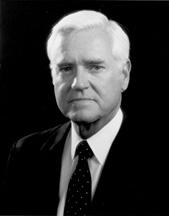 Sen. Ernest F. Hollings (D-SC)
Legislative Activity
Stay on top of the latest movement without scrolling through every action
Senate amendment submitted
July 23, 2003
View full timeline
Senate amendment submitted
July 23, 2003
Senate amendment proposed (on the floor): Amendment SA 1341 proposed by Senator Hollings.(consideration: CR S9758-9763; text: CR S9758)
July 23, 2003
Roll call votes on amendments in Senate: Motion to table amendment SA 1341 agreed to in Senate by Yea-Nay. 50 - 48. Record Vote Number: 294.
July 23, 2003
Amendment SA 1341 proposed by Senator Hollings. (consideration: CR S9758-9763; text: CR S9758) To provide funds to increase maritime security.
July 23, 2003
Motion to table amendment SA 1341 agreed to in Senate by Yea-Nay. 50 - 48. Record Vote Number: 294.
July 23, 2003
Votes
1 roll call on this amendment
Text
Proposed
DEPARTMENT OF HOMELAND SECURITY APPROPRIATIONS ACT, 2004

The PRESIDING OFFICER. Under the previous order, the hour of 10 a.m.
having arrived, the Senate will resume consideration of H.R. 2555,
which the clerk will report.
The assistant legislative clerk read as follows:

A bill (H.R. 2555) making appropriations for the Department
of Homeland Security for the fiscal year ending September 30,
2004, and for other purposes.

Pending:

Reid amendment No. 1318, to appropriate $20,000,000 to the
Office for Domestic Preparedness to be used for grants to
urban areas with large tourist populations.

Mr. REID. I suggest the absence of a quorum.
The PRESIDING OFFICER. The clerk will call the roll.
The assistant legislative clerk proceeded to call the roll.
Mrs. BOXER. Mr. President, I ask unanimous consent that the order for
the quorum call be rescinded.
The PRESIDING OFFICER. Without objection, it is so ordered.
Mrs. BOXER. Mr. President, is it necessary to lay aside an amendment
that is pending so that I can offer an amendment?
The PRESIDING OFFICER. Yes.
Mrs. BOXER. I make that request.
The PRESIDING OFFICER. Without objection, it is so ordered.

[[Page S9749]]

Amendment No. 1328

(Purpose: To require reports on protecting commercial aircraft from the
threat of shoulder-fired missile systems)

Mrs. BOXER. Mr. President, I send an amendment to the desk and ask
for its immediate consideration.
The PRESIDING OFFICER. The clerk will report the amendment.
The assistant legislative clerk read as follows:

The Senator from California [Mrs. Boxer], for herself and
Mr. Schumer, proposes an amendment numbered 1328.
At the appropriate place, add the following:
Sec.   . (a) Report.--Not later than March 1, 2004, the
Secretary of Homeland Security shall submit to Congress a
report that--
(1) details that progress made in developing
countermeasures for commercial aircraft against shoulder-
fired missile systems, including cost and time schedules for
developing and deploying such countermeasures, and
(2) in classified form and in conjunction with airports in
category X and category one, an assessment of the
vulnerability of such airports from the threat of shoulder-
fired missile systems and the interim measures being taken to
address the threat.

Mrs. BOXER. Mr. President, I think this amendment is very important
in making sure we stay ahead of the threat that the FBI has identified
as being very real to our people. I am going to show you what the FBI
said about the threat of shoulder-fired missiles.
The FBI said that:

. . . given al-Qaeda's demonstrated objective to target the
U.S. airline industry, its access to U.S. and Russian-made
MANPAD systems, and recent apparent targeting of U.S.-led
military forces in Saudi Arabia, law enforcement agencies in
the United States should remain alert to potential use of
MANPADS--

Those are shoulder-fired missiles--

against U.S. aircraft.

First, I want to say how grateful I am to the committee, both Senator
Cochran and Senator Byrd, for really taking the first stand in favor of
moving forward on missile defense systems that could be placed on our
commercial aircraft to protect them from these shoulder-fired missiles.
This is a major breakthrough.
When I stood on this Senate floor several months ago, I lost a couple
of very close votes on this issue, and then won a vote, but this is the
first substantial amount of money we are going to have. I think it is
crucial.
Senator Schumer and I have led the fight on this issue in the Senate,
and Congressman Israel and Congressman Mica, in a bipartisan way, over
on the House side. So the first thing I want to say is thank you very
much to the committee for getting us started.
I hope we will see the technology now blossom forth because we
already have this technology on our military aircraft. We have this
technology on Air Force One. And I think the American traveling public
deserves no less protection.
What this amendment does--while applauding the fact that we have the
money--is to make sure we are given a report by March 1, 2004, on the
progress of developing and deploying such countermeasures so we stay on
top of this issue.
We also ask--and this is very important because it is going to take
time for our aircraft to be retrofitted with these systems--for a
report, which would be classified and available to colleagues, on what
our major airports are doing in the interim before we have these
systems placed on aircraft.
I also thank Secretary Ridge because at the point in time when I
talked to him about this matter--again, it was just after we had lost a
very close vote here--I have to say, he recognizes this threat and he
took the position that we should move forward. So I want to make sure
that thank you is in the Record.
I will never forget having a press conference, a bipartisan press
conference, on this issue with Congressman Mica, who said after he had
a classified briefing on this matter, he had a hard time sleeping at
night.
Now, here is the reason: Shoulder-fired missiles--such as the SA-7
and Stinger missile--are available on the black market for as little as
a few thousand dollars.
I want to go to a picture showing, first of all, the way these
shoulder-fired missiles look. You can see from the picture they are
very small. They weigh 30 pounds. It does not take a very strong person
to be able to lift 30 pounds, and to put that 30 pounds on their
shoulder. Most can be used with very little training. And they just
take minutes to fire. They can go up about 12,000 feet into the air.
They basically are heat-seeking missiles and are terribly destructive.
We know that for sure.

We know that more than 20 terrorist groups are in possession of these
weapons, including al-Qaida. And we know that al-Qaida has shown a
willingness to use these weapons as weapons of terror.
Al-Qaida is suspected of targeting U.S. military aircraft in Saudi
Arabia last May with an SA-7 missile. Saudi authorities found an empty
launch tube near an air base used by American aircraft.
We also know there was an apparent attack on one of our military
aircraft over in Iraq. The good news there is that our C-130s are
equipped with defense measures. We also know this was an unsuccessful
attack.
So putting it all together, and putting it together with the fact
that al-Qaida attempted to bring down an Israeli airliner in Kenya--and
we also believe that Israeli airliners are protected with defense
systems--it was not successful--but putting all the pieces together,
the attack on an Israeli commercial aircraft, the successful attacks
which killed about several hundred people--I will go through that.
Since 1978, 35 attempts to shoot down civilian aircraft by shoulder-
fired missiles and a catastrophic loss of 24 planes and 640 deaths.
We are not talking about some remote threat. We are talking about a
real threat, a real threat that has been played out. The FBI is telling
us it is a real threat. Today I am happy to say this committee has
recognized that, and for the first time. That is the good news. But we
want to stay on top of this and make sure these funds are well spent
and well used and that the proper systems are developed.
I want to mention that military transport and refueling aircraft, in
addition to the C-130 I mentioned, the C-17, KC-135, and KC-10 are some
of the models that employ countermeasures that could be used for
commercial aircraft. The military has conducted thousands of hours of
flight testing on countermeasure technology, including live fire
testing. We know the systems work. We need to start putting these
systems on our commercial planes as soon as possible.
We all know we have to stay ahead of this terrorist threat. We all
know there are cells of terrorists in our country. We all know that
homeland security is crucial. Many of us believe it does not have a
high enough priority in this administration, and we will have many
amendments.
This amendment, I am pleased to say, has been signed off on both
sides of the aisle because I think everyone agrees that the $60 million
has to be spent well and we need to move forward.
I would like to read part of a letter from Ed Adams, chairman of
Navigant, one of the leading travel management companies in the United
States. He says:

The travel industry is painfully aware of what a successful
attack of using a shoulder-fired missile on a commercial
airliner could do to the confidence of the traveling public.
It is a situation we would prefer not even to imagine, but we
must understand the reality of such an event if we intend to
prevent it.
The blow to the economy in general, and the travel and
tourism sector, in particular, combined with the loss of
human lives would be staggering. These costs would certainly
outweigh the expense of the precautionary measures you are
recommending today to make sure that our commercial planes
are safe from such a terrorist act.

We clearly see that what we are doing here is not only the right
thing to do to protect the lives of our people but also to protect,
frankly, the life of our economy, which is not in good shape, which is
very rocky, which cannot sustain such an incident.
I, again, thank Senators Cochran and Byrd for including these funds,
and I know that they both signed off on this amendment, which again
will simply say, we want a report that lets us know how we are moving
forward to be able to retrofit these planes with the appropriate kinds
of measures and also a report--and this is very important--on the
interim steps that major airports are taking.

[[Page S9750]]

I went to one airport. I won't name it. I stood on the top of a roof
of a garage there. There was no security anywhere around. I looked up.
The planes were landing. Honest to God, I could have almost touched
those planes. And this is an example of a roof area, A, that should
have been patrolled or, B, should be closed. It only makes sense. How
can we protect every inch of our airports and everybody? It is very
difficult. But we certainly could take steps that make sense,
precautionary steps that are really commonsense steps.
My thanks again. I wonder if I could ask Senator Cochran if he would
be willing to have a voice vote on the amendment.
Mr. COCHRAN. Has the Senator completed her remarks?
Mrs. BOXER. I have completed my remarks. I wonder if we could just
accept the amendment. Then I have one more amendment I would like to
speak about 6 or 7 minutes on, and then we could lay that one aside.
Mr. COCHRAN. I would like to make some remarks in connection with
this amendment.
Mrs. BOXER. Wonderful.
Mr. COCHRAN. The Senator from New Hampshire would also like to make
some remarks.
Mrs. BOXER. Sure, wonderful.
Mr. COCHRAN. But not if the Senator has not completed her statement.
Mrs. BOXER. I have completed my statement. I didn't know if the
Senator wanted to move along. I would be happy to yield the floor at
this time.
The PRESIDING OFFICER. The Senator from Mississippi.
Mr. COCHRAN. Mr. President, on the subject of antimissile devices for
commercial aircraft, the Senate should be advised that the statement of
managers on the supplemental that was passed earlier this year directed
the Under Secretary for Science and Technology of the Department of
Homeland Security to prepare a program plan for the development of an
antimissile device for commercial aircraft. In response to that
directive, the Department of Homeland Security has developed a program
plan.
On May 22, 2003, this plan was submitted by the Under Secretary for
Science and Technology of the Department of Homeland Security to the
Congress.
I ask unanimous consent that a copy of that plan be printed in the
Record.
There being no objection, the material was ordered to be printed in
the Record, as follows:

Program Plan for the Development of an Antimissile Device for
Commercial Aircraft

introduction

The House Report accompanying Public Law 108-11, which was
signed by the President on April 16th, 2003, directed the
Undersecretary for Science and Technology of the Department
of Homeland Security to prepare a program plan for the
development of an antimissile device for commercial aircraft.
The plan should identify the process for delivery and
certification of a prototype and the proposed cost and
schedule for such an activity. The report should be provided
to the Committees on Appropriations within 30 days of
enactment of this Act.
A review of available technologies conducted by the White
House Office of Science and Technology Policy (OSTP), in
coordination with the Homeland Security Council, identified
an on-board jammer (directed infrared countermeasure, or
DIRCM), as the most promising of the technologies they had
reviewed. It is the intention of the Department of Homeland
Security to explore this option while being open to other
potential concepts that may not have surfaced or been fully
explored by the OSTP study.
The DIRCM concept has been under development for some time
by the Department of Defense for protection of military and
other government aircraft. In addition, there is a small
market for business jets. There are currently two known
contractors engaged in DIRCM development: Northrop-Grumman,
and BAE.
There are several issues associated with the DIRCM concept,
as well as with other potential antimissile concepts, that
the Department of Homeland Security proposes to explore in
the program plan described below; these include:
System cost, including component, integration, and
certification;
Airframe & avionics integration and FAA certification
issues;
Performance against the current and emerging threat;
Reliability and failure rate;
Maintenance, including built-in testing, handling, and
special ground support equipment needs;
Operating and support costs;
Concept of operations, including air crew involvement, go/
no-go doctrine, and airport operational procedures.
In addition, a Broad Agency Announcement released May 16 by
the Department of Homeland Security under the auspices of the
Technical Support Working Group (TSWG) explicitly requests
proposals for options for protection of aircraft from the
man-portable missile threat. Given the program plan described
below, it is envisioned that the TSWG solicitation will
likely lead to awards for concept development, thereby
requiring significant research and development.

program plan

Strategy
The strategy for research, development, test and evaluation
of an antimissile device for commercial aircraft is to issue
a solicitation for a Systems Development and Demonstration
program, with potential awards to one or more contractors.
Prior study has indicated that the DIRCM concept is the most
likely path for providing good performance against the
current and emerging threats while potentially satisfying
operational constraints. One or two contracts will be awarded
for system development and demonstration of a DIRCM. However,
the solicitation would also allow responses for concepts
other than DIRCM, with a single award contemplated should an
alternative likely to meet performance, operational, and cost
constraints be offered.
Each contractor would have to design, develop, demonstrate,
and deliver 2 units for demonstrating system performance
(with emphasis on operational suitability and cost). For the
DIRCM concept, system design and fabrication for both the
countermeasure system (common for all aircraft types) and the
canoe (an aerodynamic conformal pod peculiar to the aircraft
type) would have to be completed. Other concepts would be
required to complete similar activities. Integration onto
only one aircraft type would be required in the SD&D phase.
To understand the potential operating and support (O&S)
procedures and costs, a detailed O&S plan would be a major
part of the contract deliverables. Various Test & Evaluation
(T&E) activities will also be required to include as
appropriate wind tunnel, reliability, tracking accuracy,
hardware-in-the-loop and live fire testing and operational
suitability (e.g. environmental testing and maintainability
to include built-in testing, handling, and special ground
support equipment). A parallel FAA certification effort,
coinciding with the SD&D phase would also occur.
The program would be developed and managed in consultation
with the airline industry, pilots, airport operators,
aircraft developers, and relevant Federal agencies.
Program cost/schedule
Fiscal year 2003 plans are to create a special government
staff office to manage the effort, with an initial task of
preparing a solicitation to industry for research,
development, test and evaluation of an antimissile device;
this effort will be managed within the Science and Technology
Directorate (S&T) of the Department.
Fiscal year 2004 activities will be to award contracts to
develop system costs; analyze aircraft integration issues;
and through modeling and simulation assess performance
against the current and emerging MANPAD threat. Contractors
will be asked to develop an operations and support plan that
details the maintenance and logistical support requirements
for the system they are developing, and an analysis of the
recurring operating and support costs. Contractors and the
government will work with the community to develop viable
operational concepts for the use of the system. Finally, if
analyses indicate cost effectiveness and operational
suitability, development of a prototype for each viable
concept may be initiated to prove out the analyses. S&T would
not seek additional or supplemental funding for this effort.
Contingent on the analytic, design and developmental
efforts conducted in fiscal year 2004, fiscal year 2005
activities could include the completion of the test articles
and their integration onto a single airframe type, along with
hardware in the loop and live fire testing to validate
performance assumptions.
Costs quoted below are informed by contractor estimates for
the DIRCM RDT&E phase, along with estimates provided by
Department of Defense representatives to the OSTP study.
Further development of program RDT&E costs will be conducted
by the system program office during FY03.

Mr. COCHRAN. What the Department has agreed to undertake is to bring
together the best information from the private sector, our experience
in the defense area for military defense against anti-aircraft
missiles, and to come up with a rational approach to making such
antimissile devices available to the commercial airline industry.
We have provided in the committee report $72 million for critical
infrastructure protection to utilize information and scientific
advances that have been made to deal with evolving threats to protect
infrastructure security. Of this amount, $60 million is allocated for
systems development of antimissile devices for commercial aircraft.
This is provided and printed on page 62 of our committee report.

[[Page S9751]]

These funds will be available to carry out the work contemplated in
the amendment of the distinguished Senator from California. In her
amendment, she asks for another report to be submitted to the Congress
by the Secretary of Homeland Security not later than March 1, 2004, to
report on the progress made in developing these countermeasures for
commercial aircraft. We have no objection to including this provision
in the bill. We expect that we are going to have reports made
periodically. We have hearings to review the activities of the
Department, and this is certainly going to be a subject that we are
going to follow closely.
It is because the Congress has made a strong point of emphasizing the
importance of deploying these defensive measures as soon as possible
that the Department has now undertaken a specific plan and approach to
doing this in a rational way. The Senate may remember that some wanted
to require the Department to make available immediately missile defense
systems to be put on commercial airlines. We found that was not
workable. The Congress did not insist on that point. In fact,
amendments on that were defeated when they were offered earlier in this
body.
But this is a program now--and the Senator from California has been a
leader in bringing attention, keeping the pressure on--to see that we
do this in a rational and an immediate way, with some sense of urgency.
We have also noticed in the amendment, which we appreciate, that the
Senator calls on a classified report to be made available to the
Congress as well, assessing the vulnerability of certain airports, the
largest airports in our country, from the threat of shoulder-fired
missile systems and the measures being taken to address that threat. We
likewise have no quarrel with that part of the amendment and are
prepared to recommend the Senate accept it.
The PRESIDING OFFICER. The Senator from New Hampshire.
Mr. SUNUNU. Mr. President, I believe one of the most challenging
tasks put before the Department of Homeland Security, and before the
appropriators were allocating funds for the Department of Homeland
Security, is to understand evolving technologies and to take steps to
use those technologies to keep the public safe. I think that is a
difficult task because, whether we are looking at homeland security, or
information technology, or any other area, we are never sure exactly
where technological developments are going to take us. It is always
difficult to understand the best and most cost-effective ways to use
technologies--in this case, to keep the public safe.
I commend the members of the subcommittee and Chairman Cochran for
the work they have done throughout the process on their bill but in
this area in particular--to take the steps necessary to bring
technologies into place in a way that will keep the public safer. The
process that they used, as well, I think is commendable. They worked
with the Department of Homeland Security, with the Under Secretary for
Science and Technology, to develop a program plan for looking at the
current state of technology to deal with the potential threat of
surface-to-air missiles, and then to allocate funds to further study
and evaluate, develop systems and adapt the technology for the
potential use on commercial aircraft. They have appropriated a
significant amount of funding, up to $60 million. Again, for that I
commend the committee.
They have really taken the steps necessary that will allow us to best
understand how this technology might be deployed. It is very difficult
to predict what the nature of all the threats to our commercial
aircraft industry might be. There is no question, perimeter security at
our Nation's airports has improved dramatically since September 11, and
that has helped reduce any potential threat from shoulder-fired
missiles. But we want our Department of Homeland Security to be
responsive, to take the steps necessary to adapt and to use this
technology, if possible, to protect commercial aircraft. I think that
is exactly what they have done.
I appreciate the work by the Senator from California to highlight
this issue in the amendment she has offered, which will be accepted by
the subcommittee to make sure Congress is well informed as to the
progress of this development effort and this research effort.
I look forward to continuing to work with the committee on this
issue. I thank them for their funding, and I am happy to support the
amendment of the Senator from California.
I yield the floor.
The PRESIDING OFFICER. The Senator from Mississippi is recognized.
Mr. COCHRAN. Mr. President, to complete the record on this issue, I
am going to read into the Record the statement of managers from the
conference report, dated April 12, 2003, making emergency supplemental
appropriations for the fiscal year 2003. In that statement of managers,
the conferees said:

The conferees direct the Under Secretary for Science and
Technology to prepare a program plan for the development of
an antimissile device for commercial aircraft. The plan
should identify the process for delivery and certification of
a prototype and the proposed cost and schedule for such an
activity. The report should be provided to the Committees on
Appropriations within 30 days of enactment of this Act.

As I mentioned in my earlier statement, we are pleased that the
report was made available. We have now submitted that for printing in
the Record to complete the statement that should be made in the Record
to accompany this amendment.
I know of no one who objects to this amendment. I think we can adopt
it on a voice vote.
I suggest the absence of a quorum.
The PRESIDING OFFICER. The clerk will call the roll.
The bill clerk proceeded to call the roll.
Mr. COCHRAN. Mr. President, I ask unanimous consent that the order
for the quorum call be rescinded.
The PRESIDING OFFICER. Without objection, it is so ordered.
Mr. COCHRAN. Mr. President, I think we are ready to proceed to a
voice vote on the amendment.
The PRESIDING OFFICER. Is there further debate on the amendment?
If not, the question is on agreeing to the amendment of the Senator
from California.
The amendment (No. 1328) was agreed to.
Mr. COCHRAN. Mr. President, I move to reconsider the vote.
Mr. REID. I move to lay that motion on the table.
The motion to lay on the table was agreed to.
Mrs. BOXER. Mr. President, I thank the committee very much. I cannot
tell you how much I look forward to the day that the Department has
agreed on a particular system, and that we can begin the installation
of the system I think will send a very good message to the flying
public. We will stay on top of this until we see it through.

Amendment No. 1331

(Purpose: To investigate the expenses caused by Secret Service
activities)

Mrs. BOXER. Mr. President, I send a second amendment to the desk.
The PRESIDING OFFICER. The pending amendment is set aside.
The clerk will report.
The assistant legislative clerk read as follows:

The Senator from California [Mrs. Boxer] proposes an
amendment numbered 1331:
At the appropriate place, add the following:

SEC.  .

Not later than March 1, 2004, the Secretary of Homeland
Security shall issue a classified report to Congress on the
security costs incurred by State and local government law
enforcement personnel in each state in complying with
requests and requirements of the United States Secret Service
to provide protective services and transportation for foreign
and domestic officials.

Mrs. BOXER. Mr. President, I know that each of us wants to do
everything we can to help our first responders--the men and women who
are called to duty as a result of a Federal action. Well, one of the
areas where our local people have just been left out to dry all through
of the years--this is not a partisan issue, whether in a Democratic
administration or a Republican one--is that they have to pay the costs
of security details when a leader comes into the State, be it a
domestic leader like the President, a Presidential candidate, the Vice
President, or their families, or a foreign dignitary.
It is really critical, it seems to me, particularly in light of the
rough economic times that our States are seeing,

[[Page S9752]]

that we begin to address this issue. I was a little stunned when I got
into this after a constituent talked to me about this. I was stunned to
learn that there is really no place in the Federal Government where we
have this information.
The Secret Service does its job brilliantly. They don't worry about
the cost to the local people. They call up the local people and say
that a Cabinet Secretary is coming, or a foreign dignitary, or the
President, or a candidate, and this is what they need. They need A to Z
and they lay it out. Guess what. The cost is borne by our local
agencies at home.
So simply, my amendment requests a report from the Department of
Homeland Security on expenses incurred by local police as a result of
Secret Service requirements.
We all know, when there is an orange alert, what happens in our
hometowns, because we also know when there is an orange alert--that
means a heightened state of alert--if there is a problem, people don't
call the President or the Senate or the House; they call 911. We know
that is what happens.
Right now, even in this bill, as far as it goes, I don't think it
goes far enough to help our people. Here is a whole other matter that
we have never really looked at. As we see that our police departments
and fire departments are facing layoffs, it seems to me that we need to
do something to help them. As a first step to do that in an area that
has never been looked at, I think we ought to look at what happens to
the various agencies.
I have a very detailed letter from the California Highway Patrol.
They detailed all the expenses that they had from 2002 to 2003. I am
not going to go into every detail of every hour, and I am not going to
put that in the Record because Senator Cochran informed me, through his
staff, that the Secret Service doesn't want this to be public
information. I find it very odd, frankly. I don't think it should be a
classified issue. But if the Secret Service says they need it
classified, so it shall be. However, I will tell you that the aggregate
cost in that 1 year just for the California Highway Patrol, in 69
different details they were ordered to do, was $700,000. That may not
seem like a lot by the standards we face here, but I can assure my
colleagues, in my State, every dollar now makes a difference. Sometimes
these agencies may get reimbursed, but they usually do not, and the
burdens of these requests are adding up. They add up in additional
overtime and transportation costs that these agencies cannot afford.

We want to know: How big is this number? I think it would be very
important for every one of our States because every one of our States
hosts these dignitaries and we want to do what is right, and we will do
what is right, but let's find out because we do care about these
unfunded mandates, what it is costing our people.
I am not in any way being critical of the Secret Service. They are
doing their job, and they do it extremely well, but they are not acting
alone in these cases. They are calling local police. Simply put, we
want to find out the costs and the burdens on our States. I have no
idea what it would be. I just have this one letter that details one
area of costs, and, I might say, it is an off election year. In this
election year coming up, we are not only going to have the President,
his entourage, his family, and the Vice President, but we are going to
have the Democratic nominee and his or her entourage, I have to say,
and family. These are major costs. It is not fair to our people not to
try to reimburse them for these costs.
Again, this amendment will start the ball rolling. In some ways, I
wanted to write an amendment that just said our local people should be
reimbursed right now for all the expenses they face when Secret Service
says to them: You must provide these many cars and these many police
and this much protection. But I wanted to lay the groundwork for
everyone because, as I say, I think when we get the report back, every
one of us will be impacted because at least most of the States are
receiving these calls from Secret Service all the time. In my case, for
just one agency, it is $700,000 for 1 year, 69 details.
I am very pleased both Senators Cochran and Byrd have agreed to have
this amendment. We made a couple of changes at the request of Senator
Cochran to keep these numbers classified. Again, I have problems with
understanding why the aggregate number has to be kept classified. I do
not see what anyone learns if they find out an aggregate number. We
have an aggregate number for the Secret Service, so I do not know why
we cannot have an aggregate number of what the costs are to our States.
But that is a fight for another day. We do not have to pursue that at
all today. Today, I am very pleased we will take the first steps toward
getting this information.
I ask for the yeas and nays on this amendment and ask that the
amendment be laid aside. At the time Senator Cochran thinks is
appropriate, I will be happy to have a vote on it at that time. Is it
appropriate, Mr. President, that I ask for the yeas and nays?
The PRESIDING OFFICER. Is there a sufficient second?
There appears to be a sufficient second.
The yeas and nays were ordered.
The PRESIDING OFFICER. The Senator from Mississippi.
Mr. COCHRAN. Mr. President, I, frankly, think this amendment is
unnecessary and unnecessarily burdensome on the Secret Service, but I
am not going to vote against it and the Senator insists on a vote on
the amendment. I am going to vote for it and suggest all Senators vote
for it. We have suggested, and the Senator has agreed, to modify her
amendment to require the Secret Service to issue a classified report to
Congress on security costs incurred by State and local government law
enforcement personnel in complying with requests and requirements of
the U.S. Secret Service to provide protective services and
transportation for foreign and domestic officials.
The amendment, first off, is to have a report, a public report in the
aggregate of all of these expenses. There were concerns--and I share
those concerns--about the fact that potential terrorists or those who
might be planning to do harm to the public officials who are protected
by the Secret Service and the families of public officials, such as the
President of the United States and his family, and visiting foreign
government officials who come to our country on official business, are
afforded protection, and those who are accompanying them.
The Secret Service is the primary Federal agency that has this
responsibility. What this amendment first sought to do was to require a
report of the aggregate costs associated with protection of officials,
including State and local law enforcement officials who cooperate with
the Secret Service to help ensure the success of the protection
mission.
I am not sure how the Secret Service is going to compile all of this
information, but they, I am sure, will undertake to do it if we adopt
this amendment and say they ought to do it. All they can do is ask for
State and local governments to submit to them the information that is
requested in this amendment and then compile it, give it in a
classified report to the Congress, and it would be made available in
that form to all Senators.
I am hopeful the Senate can proceed to a vote on the amendment. I
have not checked with the leadership to see whether or not there is any
objection to proceeding to a vote right now. I have no objection to it.
I do not know of any objection, but we will check with the leadership
to be sure we can proceed. If not, we can set, by agreement, a time for
a vote later in the day. Until we get that advice, I suggest the
absence of a quorum.
Mrs. BOXER. Mr. President, will the Senator withhold his request?
Mr. COCHRAN. Mr. President, I withdraw my suggestion for the quorum
call if the Senator wants to be heard.
The PRESIDING OFFICER. The Senator from California.
Mrs. BOXER. I thank the Chair. I wanted to thank Senator Cochran for
his support, although not enormous support, but support for this
amendment. Senator Cochran, I want to address your comments, and I
thank you for your support, although I say not the most enthusiastic,
but nonetheless I am very appreciative.
Mr. COCHRAN. It is not enthusiastic at all. I said I disagree with
the amendment, and I think it is unnecessary. But I am willing to go
ahead and adopt

[[Page S9753]]

it and urge the Secret Service to try to comply with it.
Mrs. BOXER. What I said was your support was not enthusiastic, but I
appreciate it nonetheless. I wanted to answer your point that you were
worried about how to collect this information. I want to tell you that
our States have very clearly documented----
Mr. COCHRAN. Mr. President, I make a point of order. The Senator
should direct her comments to the Chair, not to other Senators. I think
that is the procedure in the Senate.
Mrs. BOXER. I am happy to do that, Mr. President. I wanted to mention
to Senator Cochran, because he made some criticism of how we would get
these numbers, that it was very easy for the highway patrol in my State
to compile the numbers because all of our States are in a budget crunch
and they all have to document the numbers in their States.
So all the Secret Service has to do, or Department of Homeland
Defense, is to simply ask our States for these numbers. I can assure
the Senator from Mississippi that our States are reeling, they are
hurting, and it would be very simple for them to do this.
I have not placed this letter into the Record because of the concerns
of the Senator that these numbers should be classified. I do not agree
with that, but I respect it. So I am not going to place this in the
Record.
The bottom line is it would be very simple for our States to document
these numbers, and I hope I am proven right. I will discuss this with
the Department of Homeland Security because clearly the purpose of my
amendment is not to cause anybody any extra trouble. It is simply to be
fair to our States, our police departments, and our first responders.
Again, I want to thank Senators Byrd and Cochran for agreeing to this
amendment. The reason I want to have a record vote on it is clear. This
is the first time we will ever be asking that this be documented. So I
wanted to have a solid vote on it so it would not get lost in the
shuffle. I have no need to speak any further. I am most appreciative
that both of these amendments appear likely to be agreed to.
I yield the floor, and I suggest the absence of a quorum.
The PRESIDING OFFICER (Mr. Graham of South Carolina). The clerk will
call the roll.
The assistant legislative clerk proceeded to call the roll.
Mr. COCHRAN. Mr. President, I ask unanimous consent that the order
for the quorum call be rescinded.
The PRESIDING OFFICER. Without objection, it is so ordered.
Mr. COCHRAN. Mr. President, I ask unanimous consent that the Boxer
amendment be set aside. We are advised that there is a ceremony that
will be taking place momentarily in the Rotunda. The leadership of the
Senate will be involved in that and maybe other Senators as well. The
Senator from Washington has an amendment she would like to offer, and I
think we could entertain her amendment at this time.
The PRESIDING OFFICER. Is there objection? Without objection, it is
so ordered.
The Senator from Washington.

Amendment No. 1327

Mrs. MURRAY. Mr. President, I send an amendment to the desk and ask
for its immediate consideration.
The PRESIDING OFFICER. The clerk will report.
The legislative clerk read as follows:

The Senator from Washington [Mrs. Murray] proposes an
amendment numbered 1327.

Mrs. MURRAY. Mr. President, I ask unanimous consent that the reading
of the amendment be dispensed with.
The PRESIDING OFFICER. Without objection, it is so ordered.
The amendment is as follows:

(Purpose: To increase funding for emergency management performance
grants)

On page 65, line 9, strike ``$165,000,000'' and insert
``$265,000,000''.

Mrs. MURRAY. Mr. President, first, I commend the managers of the
homeland security appropriations bill for doing an excellent job of
trying to put together a bill under very difficult circumstances where
we have a budget resolution that really does limit our ability, I
believe, to make sure we have in place good security for all of our
constituents, no matter where they live in this country.
Everywhere I travel, people have different concerns, whether it is
their seaports, trains, borders, infrastructure that easily could be a
target of terror. The managers of this budget have worked hard to put
together a package, but today I offer an amendment because I believe
everything we are trying to do in this bill to improve homeland
security will be undermined if our local communities do not have solid
emergency response plans.
Let me say that again because it is so important. Everything we are
trying to do in this bill to improve homeland security will be
undermined if our local communities do not have solid emergency
response plans.
When a disaster strikes in one of our communities, we know the phone
will ring at the desk of some local emergency manager, and when that
phone call comes in, if there is not a plan that is ready to go to deal
with that emergency, we are in trouble. Even if we are able to provide
all of the equipment and training that our first responders need, if
there is not an effective plan at the local level to coordinate a
disaster response, then we have all failed to protect our citizens.
I introduce an amendment to ensure that the emergency planners in
virtually every county and every community in America will have the
tools they need to lead our response to a terrorist attack or other
disaster. My amendment will provide $100 million for emergency
management planning grants, and it has broad support. My amendment has
been endorsed by the Council of State Governments, the National
Association of Counties, the National League of Cities, the National
Emergency Management Association, and the International Association of
Emergency Managers. Those endorsements say a lot. Those endorsements
mean our leaders at the city, county, and State levels all recognize
the need for this amendment.
Those endorsements say the emergency managers who work to protect all
of our communities are asking support for this amendment.
One of the least talked about but most important parts of our
response to a disaster takes place outside of the public view. In every
county and major city in this country, there is an emergency response
coordinator who works behind the scenes preparing for the worst. They
determine what the needs are in our local communities. They develop
plans so if there is a tornado or a natural disaster, there is a game
plan for everyone to follow. Those plans coordinate the work of many
different agencies and organizations and they really are the backbone
of our emergency response.
In one community, the emergency coordinator might be the fire chief.
It might be the sheriff. In another community there might be a
dedicated person who handles emergency planning exclusively. No matter
what their title is, they perform a very critical job. They make sure
we have an effective coordinated plan to prepare for and respond to in
an emergency.
For decades, they worked hard to prepare for natural disasters,
developing plans to respond to tornados, earthquakes, floods, and
winter storms. Today, they have a massive new responsibility to deal
with. Today, they have to develop plans to respond to manmade disasters
and plans to respond to terrorist attacks. They have to come up with
strategies for handling scenarios that we would never have imagined
just a few years ago.

Our local emergency planners have a massive new responsibility, but
they do not have the funding to carry it out. This is not an area where
we can afford to skimp or to cut corners. If, God forbid, there is a
smallpox outbreak somewhere in our country, the phone is going to ring
at the desk of the local emergency coordinator. When he or she picks up
the phone, either they have a plan to respond to smallpox or they do
not. There are no two ways about it.
If, Heaven forbid, a dirty bomb goes off somewhere in our country,
either there is a game plan to follow on the shelf, tested, ready to
go, or there is not. I want to make sure when that phone call comes, we
are prepared, wherever we live in this country. Right now, we have a
very long way to go. Trust me, my colleagues do not want

[[Page S9754]]

their emergency planner in their community to have to choose between
preparing for a natural disaster or preparing and planning for a
terrorist attack. They need to plan for both.
My amendment would give them the resources they need to meet these
new homeland security threats. Simply put, our communities have to
build a brand new capability from scratch and they need Federal help.
Turning to the specifics of my amendment, my amendment would provide
an additional $100 million to the existing emergency management
performance grants. These are the grants that allow our emergency
managers to meet the needs in their local communities. I want to note
that funding for these grants has been stagnant for about a decade. The
underlying bill does provide some funding for these grants, but it is
certainly not enough to allow our communities to create this new
capability from scratch. In fact, in March of 2002, a survey conducted
by the National Emergency Management Association identified a $200
million shortfall for the EMPG Program that has continued to grow.
Emergency planning grants have been around for about 10 years, and
they are now the backbone of our emergency response system. They are
funded on a 50/50 formula. Half the funding comes from our local level
and half the funding comes from us at the Federal level. These grants
fund the local emergency management offices that build our State and
local emergency capability, and they provide the foundation for our
first responders.
In Washington State, without these grants many of our smaller and
rural communities would not have had the resources to develop their
emergency response plans. So these grants have been critical in helping
our communities prepare over the years. Today, these grants are the
best vehicle to meet the new challenges because they are flexible.
Emergency management planning grants are flexible, allowing local
coordinators, those people on the ground, to use them where they will
do the most good for their community.
Emergency managers can use these grants for local planning, first
responder training, emergency preparedness exercises, personnel,
operational activities, equipment, early warning systems, public
information education, mutual aid, and other preparedness response and
recovery activities. All of these options are available to local people
on the ground, local emergency managers under this grant program.
Some people may claim we can combine this grant program with others
and that dedicated funding does not really matter. But that is not
true. If we combine this with other grant programs, we will force
emergency planning and coordination to compete with equipment and other
important priorities. We should be helping communities meet all of
these needs, not pitting one against another so communities come up
short. Our local communities need both equipment and planning, and we
need to fund both. The emergency management planning grant is the right
tool to empower the emergency planners in your community to meet their
local needs.
Since September 11, we have asked the local emergency managers in
every county in America to develop new coordinated plans to respond to
terrorist attacks. We have asked them to take on this critical
responsibility, but we have not provided the funding they need. My
amendment will provide an additional $100 million in flexible grants to
meet the needs from coast to coast.
If our communities do not have solid emergency response plans, then
they are really not prepared for a disaster. That is a price we cannot
afford to pay. Our ability to respond to a terrorist attack or other
disaster is only as good as the emergency response plans in our local
communities. If we buy all the equipment but never develop the plans,
we are not safe. If we send our firefighters to training but we never
coordinate our response to an attack, we are not safe. We do not want
our communities to have to choose between preparing for tornadoes or
preparing for a smallpox attack. We are asking them to prepare for
everything. They need the funding to do that.
This amendment has been endorsed by the Council of State Governments,
the National Association of Counties, the National League of Cities,
the National Emergency Management Association, and the International
Association of Emergency Managers.
If there is a terrorist attack on our country again, the phone is
going to ring at the desk of some local emergency manager. One of two
things will happen: Either they will have a solid emergency plan for
that disaster, know what to do, know what decisions to make; or they
will not and Americans will pay the price.
I urge my colleagues to vote for this amendment so one day when that
desperate phone call comes, the person who answers that phone, wherever
they are, will be ready to lead an effective response. Each of us has
the power to make sure our communities in our States are ready.
I urge all colleagues to support the Murray amendment.
The PRESIDING OFFICER. The Senator from Mississippi.
Mr. COCHRAN. Mr. President, in connection with the Senator's
amendment, the President's budget as submitted to the Congress proposed
eliminating the emergency management performance grants program. This
was a program that had been administered by the Federal Emergency
Management Agency. It is a program that provides funds to States to
help prepare to deal with responses that have to be made at the local
level to disasters that occur.
The reorganization of the Department of Homeland Security folded into
this new Department the agency previously referred to as the Federal
Emergency Management Agency. It is now part of Homeland Security.
This emergency performance grants program was recommended for
cancellation by the administration's budget. They recommended combining
it with a State and local grant program within the Office of Domestic
Preparedness. Our committee looked at that and decided this program was
an important program to the States and it should be continued in
effect. So we have funded it as a program that is administered by the
Emergency Preparedness and Response Directorate.
The amendment the Senator is offering does not complain about what
the committee has done with respect to their recognition of this
program as an important program for assistance. The only thing her
amendment complains about is the level of funding. Since it was
disestablished, in effect, in the budget, there was no funding for that
activity. We put $165 million in it to continue the assistance program
and improve the level of support that the Federal Government gives to
States for this purpose.
Her amendment basically says: That is not enough money; we should
have added $100 million more. Her suggestion is, instead of $165
million, this program ought to be funded at $265 million.
The problem is, there is no offset recommended in the Senator's
amendment. Therefore, the amendment would violate the Budget Act. It
would put us over the allocation that the committee has under the
Budget Act. Therefore, at the appropriate time it will be my intention
to make a point of order against the amendment for that purpose and for
that reason.
The PRESIDING OFFICER. The Senator from West Virginia.
Mr. BYRD. Mr. President, I thank the distinguished Senator from
Washington for offering this amendment.
First, I compliment the able Senator for the great work she does on
the Appropriations Committee. She has been a stalwart in the
Appropriations Committee from the beginning of her career. In so doing,
she follows in the steps of two great Senators from Washington with
whom I served many years ago: Scoop Jackson and Warren Magnuson.
Magnuson served on the Appropriations Committee just as Patty Murray
serves on that committee. Those were very forceful Senators, very
active Senators.
I knew Magnuson well, he being on the Appropriations Committee, as I
say. But I knew Scoop Jackson even better. He was my supporter from the
beginning of my career as a Senator who was involved in the leadership,
first as Secretary of the Democratic Conference and then as Democratic
whip and then as the leader. Scoop Jackson was always there. I should
say in passing that the best whip the Senate ever had was the Senator
who exceeds Robert Byrd, and that Senator

[[Page S9755]]

is Harry Reid. He and I were alike in this respect: He is always on the
floor. So was I, always on the floor.
But Patty Murray is a supporter on the Appropriations Committee. She
works hard. She is a Senator who certainly attends to her
responsibilities with respect to her State, and she is also a Senator
who has a national viewpoint. I think she exceeds all of us on my side
of the aisle with respect to our work on the transportation matters,
and I compliment her for that. She is following in that train of
activity when she supports this amendment which she has brought to the
attention of the Senate. I thank her for offering the amendment.

The administration proposed to consolidate the Emergency Management
Grant Program into a single first responder program. She has spoken to
this already. So has the distinguished chairman of the subcommittee who
manages this bill today from that side of the aisle. He, likewise,
mentioned this in opposing the amendment. So the proposal of the
administration is a result of a fundamental misunderstanding of the
Emergency Management Grant Program.
I am not saying that the distinguished Senator from Mississippi
misunderstands it. He understands it well and he provided for it in the
committee. I compliment him for that. But the Emergency Management
Grant Program is the one Federal program that gives States resources to
plan for what is called ``all hazards'' emergency management planning.
That is exceedingly important. We must plan for responding to a
terrorist attack but that does not mean we should lose the capability
to plan for floods, tornadoes, and other natural disasters.
I am very keenly aware of this, being from the Mountain State of West
Virginia, where those clouds hover over the high mountains and where
the steep hills enable storms to flow rapidly down those sharp
mountainsides into the valleys, often narrow valleys, and create
extremely dangerous hazards for the people who have to live in those
valleys and others who have to travel through those valleys and into
those valleys to work.
I strongly support the amendment by the distinguished Senator from
Washington. This is a proven program and I thank Chairman Cochran for
agreeing to keep this as a separate program in the committee bill. This
amendment would provide $100 million in addition to the funding in the
committee bill.
I, again, compliment the distinguished Senator from Washington for
her excellent work on the committee on behalf of her State and on
behalf of the Nation, and I compliment her on offering this amendment
today. I strongly support it. As I say, it means a great deal to the
people of my State, to their safety and their welfare. I hope all
Senators will support the amendment.
I yield the floor.
The PRESIDING OFFICER. The Senator from Mississippi.
Mr. COCHRAN. Mr. President, we are prepared to suggest to the
distinguished Senator from Nevada, if we could get consent, we would
ask that votes on the Boxer amendment or in relation to the Murray
amendment occur at 12 noon today. We are hoping we can get consent. I
think it would be good for us to do that. We could vote on one
amendment and then I think a motion to waive the point of order that I
made would be the vote that we would have on the Murray amendment.
If the Senator would consider this: I ask unanimous consent that at
12 noon today the Senate proceed to a vote in relation to the Boxer
amendment, No. 1331, to be followed by an immediate vote in relation to
the Murray amendment, No. 1327, provided further that there be 2
minutes equally divided for debate prior to each vote and that no
second degrees be in order to the amendments prior to the vote.
The PRESIDING OFFICER. The Senator from Nevada.
Mr. REID. Mr. President, I have checked this with Senator Byrd. He
has no objection. Therefore we have no objection.
The PRESIDING OFFICER. Without objection, it is so ordered.
Mr. COCHRAN. I thank the Senator and I thank the Senator from West
Virginia as well.
I suggest the absence of a quorum.
The PRESIDING OFFICER. The clerk will call the roll.
The legislative clerk proceeded to call the roll.
Mr. COCHRAN. Madam President, I ask unanimous consent that the order
for the quorum call be rescinded.
The PRESIDING OFFICER (Ms. Murkowski). Without objection, it is so
ordered.

Amendment No. 1331

The PRESIDING OFFICER. Under the previous order, there are 2 minutes
evenly divided prior to a vote on the Boxer amendment.
Who yields time?
The Senator from California is recognized.
Mrs. BOXER. Madam President, I start by thanking the chairman and
ranking member for their support of this amendment.
Basically, we have a wonderful Secret Service unit in our Federal
Government. They are very professional and they do a wonderful job in
protecting our dignitaries, both foreign and domestic--whether it is a
President, Vice President, a Presidential candidate, the Vice
President, their families, or the head of a foreign power. It is
absolutely a fact that they are the best there is.
A lesser known fact is that when those dignitaries visit our States--
Arkansas, California, Missouri--our law enforcement personnel are asked
to help the Secret Service and, of course, they do it. But they don't
get reimbursed for the cost of doing that. This is beginning to sting
our people at home.
My amendment will simply let us know the extent of the problem. I
have a letter from the California Highway Patrol, and they tell me that
last year they spent over $700,000.
I hope we will have a unanimous vote on this. I yield the floor.
The PRESIDING OFFICER. The Senator from Mississippi is recognized.
Mr. COCHRAN. Madam President, as I said when the amendment was
proffered by the Senator from California, we were pleased that she had
agreed to make some changes in the amendment and that we would accept
the amendment if those changes were included. She asked for the yeas
and nays on the amendment.
I have further said that I thought the amendment was unnecessary and
I don't know how the Secret Service is going to comply with the terms
of the directive in the amendment. That is up to them. It seems to me
they can make an effort to obtain the information sought by this
amendment, which is the operating costs of the State and local law
enforcement officials who are asked to cooperate with the Secret
Service when they provide protection for visiting foreign government
officials, or the President and his family, or for others whom they are
obligated under the law to protect.
They were worried that if they made this available in an unclassified
form, it might put in jeopardy some of the very people they were trying
to protect because they would disclose the steps they were taking to
assure their protection. I am sympathetic with that observation. That
is why we urged the Senator to make this a classified report. But it
would be available to Senators.
I have no objection to the amendment.
The PRESIDING OFFICER. All time has expired. The yeas and nays have
been ordered. The question is on agreeing to the amendment. The clerk
will call the roll.
The legislative clerk called the roll.
Mr. REID. I announce that the Senator from Massachusetts (Mr. Kerry)
and the Senator from Connecticut (Mr. Lieberman) are necessarily
absent.
I further announce that, if present and voting, the Senator from
Massachusetts (Mr. Kerry) would vote ``aye.''
The PRESIDING OFFICER. Are there any other Senators in the Chamber
desiring to vote?
The result was announced--yeas 79, nays 19, as follows:

[Rollcall Vote No. 292 Leg.]

YEAS--79

Akaka
Alexander
Allen
Baucus
Bayh
Bennett
Biden
Bingaman
Bond
Boxer
Breaux
Byrd
Campbell
Cantwell
Carper
Chafee
Chambliss
Clinton
Cochran
Coleman
Collins
Conrad
Corzine
Daschle
Dayton
DeWine
Dodd

[[Page S9756]]

Dorgan
Durbin
Edwards
Feingold
Feinstein
Fitzgerald
Graham (FL)
Graham (SC)
Grassley
Gregg
Hagel
Harkin
Hollings
Hutchison
Inhofe
Inouye
Jeffords
Johnson
Kennedy
Kohl
Landrieu
Lautenberg
Leahy
Levin
Lincoln
Lugar
McCain
McConnell
Mikulski
Miller
Murkowski
Murray
Nelson (FL)
Nelson (NE)
Pryor
Reed
Reid
Rockefeller
Santorum
Sarbanes
Schumer
Shelby
Smith
Snowe
Specter
Stabenow
Stevens
Sununu
Talent
Voinovich
Warner
Wyden

NAYS--19

Allard
Brownback
Bunning
Burns
Cornyn
Craig
Crapo
Dole
Domenici
Ensign
Enzi
Frist
Hatch
Kyl
Lott
Nickles
Roberts
Sessions
Thomas

NOT VOTING--2

Kerry
Lieberman

The amendment (No. 1331) was agreed to.
Mrs. BOXER. I move to reconsider the vote.
Mr. COCHRAN. I move to lay that motion on the table.
The motion to lay on the table was agreed to.

Amendment No. 1327

The PRESIDING OFFICER. There are 2 minutes evenly divided prior to
the vote on the Murray amendment.
Mrs. MURRAY. Madam President, the amendment before the Senate simply
adds $100 million for emergency management planning grants. The
President's proposal under homeland security combined these grants with
other programs. The Senator from Mississippi, the chairman of the
committee, rightfully separated this back out to where it was.
Unfortunately, the funding for this has remained static for the last
decade. Since September 11, every county, every city across this
country has had an additional responsibility in planning not just for a
tornado or earthquake or national disaster but to have an emergency
plan in case of a terrorist attack--very different planning, very
different understanding, very different concerns. It is critical we
help our local communities have a plan in place so when a call goes to
a desk after a terrorist attack, people have a plan in front of them
and know what to do and there is not pandemonium.
This amendment simply adds $100 million. By the way, the people
across the country in emergency management say they are $200 million
short in this area. We simply add $100 million for our planners across
this country to be prepared for a terrorist attack.
Mr. COCHRAN. Madam President, I make a point of order under section
302(f) of the Congressional Budget Act that the Murray amendment
provides spending in excess of the subcommittee's 302(b) allocation.
Mrs. MURRAY. Madam President, pursuant to section 904 of the
Congressional Budget Act, I move to waive the pertinent sections of
that Act for the purposes of the pending amendment, and I ask for the
yeas and nays.
The PRESIDING OFFICER. Is there a sufficient second?
There is a sufficient second.
The yeas and nays were ordered.
The PRESIDING OFFICER. The question is on the motion to waive the
Budget Act on the Murray amendment.
The clerk will call the roll.
The assistant legislative clerk called the roll.
Mr. REID. I announce that the Senator from Massachusetts (Mr. Kerry)
and the Senator from Connecticut (Mr. Lieberman) are necessarily
absent.
I further announce that, if present and voting, the Senator from
Massachusetts (Mr. Kerry) would vote ``aye.''
The PRESIDING OFFICER. Are there any other Senators in the Chamber
desiring to vote?
The yeas and nays resulted--yeas 45, nays 53, as follows:

[Rollcall Vote No. 293 Leg.]

YEAS--45

Akaka
Baucus
Bayh
Biden
Bingaman
Boxer
Breaux
Byrd
Cantwell
Carper
Clinton
Corzine
Daschle
Dayton
Dodd
Dorgan
Durbin
Edwards
Feingold
Feinstein
Graham (FL)
Harkin
Hollings
Inouye
Jeffords
Johnson
Kennedy
Kohl
Landrieu
Lautenberg
Leahy
Levin
Lincoln
Mikulski
Murray
Nelson (FL)
Nelson (NE)
Pryor
Reed
Reid
Rockefeller
Sarbanes
Schumer
Stabenow
Wyden

NAYS--53

Alexander
Allard
Allen
Bennett
Bond
Brownback
Bunning
Burns
Campbell
Chafee
Chambliss
Cochran
Coleman
Collins
Conrad
Cornyn
Craig
Crapo
DeWine
Dole
Domenici
Ensign
Enzi
Fitzgerald
Frist
Graham (SC)
Grassley
Gregg
Hagel
Hatch
Hutchison
Inhofe
Kyl
Lott
Lugar
McCain
McConnell
Miller
Murkowski
Nickles
Roberts
Santorum
Sessions
Shelby
Smith
Snowe
Specter
Stevens
Sununu
Talent
Thomas
Voinovich
Warner

NOT VOTING--2

Kerry
Lieberman

The PRESIDING OFFICER. On this vote, the yeas are 45, the nays are
53. Three-fifths of the Senators duly chosen and sworn not having voted
in the affirmative, the motion is rejected. The point of order is
sustained and the amendment falls.
Mr. REID. I move to reconsider the vote and move to lay that motion
on the table.
The motion to lay on the table was agreed to.
The PRESIDING OFFICER. The Senator from Nevada.
Mr. REID. Madam President, the Senator from Maine wishes to speak for
10 minutes on the bill. Following her statement, Senator Dayton will be
ready to offer an amendment.
The PRESIDING OFFICER. The Senator from Maine.
Ms. COLLINS. Madam President, I thank the Democratic assistant leader
for his assistance in this matter.
Madam President, I rise today to express my strong support for the
Homeland Security Appropriations Act, which will help us to better
protect communities across America.
I congratulate Senator Byrd and Senator Cochran for putting together
a bill that fairly balances the many responsibilities of the Department
of Homeland Security. I also thank Senator Stevens for his leadership
in bringing this legislation to the Senate floor.
This legislation, I believe, will give Secretary Ridge, State and
local officials, and first responders the tools they need to build a
more effective homeland security structure.
Protecting this vast and diverse Nation is an enormous task, but our
people--from Washington, DC, to the small border communities in
northern Maine--have the skills, ingenuity, and the spirit to get the
job done.
On March 1 of this year, the foundation for this new structure was
laid as 22 separate Federal agencies and Departments were merged into
the new Department of Homeland Security.
Creating a new Department is, however, just a start. Each State has
its own security challenges, and every community has its own needs. My
home State of Maine must protect a long and remote stretch of our
northern border. Our enormous coastline is lined with small harbors,
three deep-water cargo ports--one of which is the largest tonnage port
in all of New England--and two ports that regularly welcome passengers
from around the world. We have two international airports in Maine, one
of which played a most unwelcome role in the events of September 11.
This legislation will provide more than $29 billion in fiscal year
2004 to fund the Federal Government security efforts and to help each
of our States meet its particular needs. It includes $8.2 billion to
protect our Nation's borders, including funding for an additional 600
border agents and the development of innovative new security
technologies.
I am pleased that under the leadership of Senator Cochran the
Appropriations Committee has provided more than $60 million for the
Container Security Initiative. I know from a hearing held by the
Governmental Affairs Committee, which I chair, that this partnership
between the Department of Homeland Security and our shipping industry
to target high-risk containers will help to better protect our ports
from terrorist attacks.
The legislation also provides more than $5 billion for the
Transportation

[[Page S9757]]

Security Administration, including $1.8 billion for passenger screening
and $150 million for port security grants. These grants provide
important security upgrades to help protect an industry that is
absolutely vital for our economic prosperity.
I am pleased that Chairman Cochran and Ranking Member Byrd have
agreed to many of the suggestions I have forwarded to them for
upgrading our Nation's Coast Guard. This legislation provides $6.8
billion for Coast Guard operations, including $702 million for the
Integrated Deepwater Systems Program, which is vital to helping the
Coast Guard carry out its traditional missions even as it meets its new
and enhanced responsibilities for homeland security.

This legislation also maintains our commitment to America's first
responders--our police officers, our firefighters, our emergency
medical personnel--who are on the front lines of the war against
terrorism.
As chairman of the Governmental Affairs Committee, I have made
helping first responders a top priority. The needs of our first
responders are as varied as the communities they protect. If there is a
local emergency, citizens do not call Washington, they call 911. It is
our first responders who are truly on the front lines in protecting our
communities and in responding to any sort of terrorist attack.
The $3.6 billion for the Office for Domestic Preparedness, including
$1.75 billion for State and local homeland security grants and $750
million for fire grants, is vital to the success of our first
responders. These programs will provide them with better communications
equipment, more firetrucks, and more exercises in training to do what
they do best--prevent and respond to terrorist attacks and other
emergencies.
But appropriating the funds, while essential, does not complete the
job. We must also get these funds where they are needed quickly and
efficiently. I have spoken to officials from communities around the
State of Maine, to the mayor of Baltimore, and to officials throughout
the Nation about the existing grant programs to assist our first
responders. They are grateful for the grants, but frustrated by the
bureaucracy, the time-consuming, complicated, and rigid application
process, and the mountain of paperwork.
After holding several hearings on this topic in the Governmental
Affairs Committee, I introduced, with a number of my colleagues on both
sides of the aisle, the Homeland Security Grant Enhancement Act of
2003. This legislation would provide a steady ongoing stream of funding
to each and every State. It will simplify the grant process. It will
promote flexibility in the use of homeland security funds so they can
be targeted to the greatest need. I urge the Senate to pass this
legislation which has been reported unanimously by the committee. This
will help us streamline and strengthen the way we provide assistance to
those on the front lines.
Finally, I add my strong support for the $3.6 billion included in
this legislation for the Emergency Preparedness and Response
Directorate, including $2 billion for disaster relief and $153 million
for the Emergency Food and Shelter Program.
As with any appropriations bill, one can argue about funding levels
or that a certain program deserves more money than another. That is
also true with this legislation. For example, I would like to have seen
more funding for first responders and port security. But given the
constraints on the Federal budget, I believe the managers of this bill,
the chairman and ranking member, have done an extraordinary job. This
legislation spends homeland security dollars in an effective, efficient
manner. By providing more training and equipment to our first
responders, more equipment and funding to secure our ports, and
additional resources to protect our borders, this legislation gets the
maximum benefit out of the Federal budget, out of the Federal resources
available with the constraints under which we are operating.
Again, I congratulate the chairman, Senator Cochran, and the ranking
member for putting together an excellent piece of legislation that
fairly addresses the diverse needs of our States and communities. I
urge quick passage of the legislation so that the Department of
Homeland Security and those throughout our homeland can continue to
work together more effectively on the crucial tasks that lie ahead as
we seek to better secure our Nation.
I yield the floor.
The PRESIDING OFFICER (Mr. Hagel). The Senator from Mississippi.
Mr. COCHRAN. Mr. President, I compliment the distinguished Senator
from Maine for her leadership as chairman of the Governmental Affairs
Committee in helping shape the legislation that created this new
Department and in monitoring its activities and keeping up with how
they are going about managing their responsibilities.
Legislation has already been reported out of that committee, for
example, that deals with such issues as formulas for dividing money
among agencies and sharing money with State and local governments.
These are very important challenges the committee faces because they
are the committee of jurisdiction of homeland security. We are just
simply providing the funds and trying to allocate it within the terms
of a budget resolution, trying to maintain an awareness of the
importance of holding down the deficit, being responsible, making sure
the funds we invest in these activities are used wisely and efficiently
and effectively. We want them to really count. We want to be sure we
are upgrading the quality of our capability of responding to national
emergencies, manmade and natural disasters as well.
It is a big challenge. There is no end to the list of ways we could
spend more money in trying to do that. We are guided by the legal
authorities laid out by the Committee on Governmental Affairs. We
appreciate so much the guidance and leadership of the distinguished
Senator from Maine in this effort. I commend her very much.
The PRESIDING OFFICER. The Senator from Maine.
Ms. COLLINS. Mr. President, I thank the chairman of the
Appropriations subcommittee for his generous and kind comments. He has
been wonderful to work with on this issue, as every other. We are very
fortunate to have him leading this essential subcommittee.
Mr. COCHRAN. Mr. President, I suggest the absence of a quorum.
The PRESIDING OFFICER. The clerk will call the roll.
The assistant legislative clerk proceeded to call the roll.
Mr. DAYTON. Mr. President, I ask unanimous consent that the order for
the quorum call be rescinded.
The PRESIDING OFFICER. Without objection, it is so ordered.

Amendment No. 1336

Mr. DAYTON. Mr. President, I send to the desk amendment No. 1336.
The PRESIDING OFFICER. The clerk will report.
The assistant legislative clerk read as follows:

The Senator from Minnesota [Mr. Dayton] proposes an
amendment numbered 1336.

Mr. DAYTON. Mr. President, I ask unanimous consent that further
reading of the amendment be dispensed with.
Without objection, it is so ordered.
The amendment is as follows:

(Purpose: To prohibit the use of funds for procurements in
contravention of the Buy American Act)

On page 75, between lines 5 and 6, insert the following:
Sec. 616. None of the funds appropriated or otherwise made
available by this Act may be obligated or expended for the
procurement of any articles, materials, or supplies in
contravention of the Buy American Act (41 U.S.C. 10a et
seq.).

Mr. DAYTON. Mr. President, this amendment reaffirms that all money
appropriated under this bill will be spent in conformity with the Buy
American Act. It is an amendment which passed the House and will be
included in that bill.
As my colleagues know, the Buy American Act was established in 1933
and has been in force since then, with only two substantive amendments
during that entire 70 years. It is an economic stimulus legislation. It
is meant to encourage the purchase of goods made by Americans in
America, using American materials and labor.
I cannot think of a more suitable time for this to be honored than
now, with over 3.1 million jobs lost in the private sector of the U.S.
economy since this administration took office. I will repeat that
staggering number.

[[Page S9758]]

Over 3.1 million Americans have lost their jobs in the private sector
of our economy since January 2001.
So it is entirely appropriate that we use public dollars that are
being appropriated for essential public purposes such as homeland
security but that we also add a perfectly legitimate public purpose,
which is to generate as many jobs as possible through the expenditure
of those funds in the United States of America.
There are exceptions in the existing Buy American Act to permit the
purchase of goods or services if these conditions apply. The head of
the procuring agency, in this case Secretary Ridge, could waive these
requirements if he determines they are inconsistent with the public
interest, which means he has broad latitude and discretion to determine
that, for any legitimate reason, this act should not apply to a
particular purchase.
Second, if it is unreasonable in cost. If the domestic product is of
an unreasonable cost, then a foreign product can be purchased.
Articles that are purchased for use outside of the United States, or
articles that are procured for military bases, leased from foreign
governments, are not covered under the act, or if they are not produced
or manufactured in the United States in sufficient and reasonably
available commercial quantities or of satisfactory quality.
There is latitude to assure that none of the intent of this
appropriation, which the distinguished chairman of the subcommittee,
the Senator from Mississippi, and his colleagues have assured, that
would require any compromise with the intent of providing the maximum
possible protection to our fellow citizens. But it does say that, when
possible, we will be consistent with that intent if we are also trying
to provide American jobs.
Why is this necessary if it is already in law? This administration
has demonstrated that it is not particularly a fan of this particular
act. The Secretary of Defense in the Defense authorization bill--the
Armed Services Committee, of which I am a member--was successful in
getting the application of that act significantly weakened as it
applies to the Department of Defense and the military branches. I do
not want to see that happen with the Department of Homeland Security.
This is an opportunity for Congress to make it very clear that this act
will be enforced; that we expect it to be followed; that we want it to
be utilized wherever possible because we want to put Americans back to
work.
I know in my home State of Minnesota, the greatest imperative for the
well-being of our citizens, as well as the recovery of the Minnesota
economy and the budget crisis our State is going through, comes down to
jobs--jobs, jobs, and jobs; American jobs; good paying, hopefully
benefit-providing, pension-providing American jobs. That is what this
amendment reinforces. I urge my colleagues to support it.
I thank the Chair. I yield the floor.
The PRESIDING OFFICER. The Senator from Mississippi.
Mr. COCHRAN. Mr. President, this provision is carried in the Treasury
appropriations bill in the section on general provisions. Even though
this amendment is not necessary to be on the Department of Homeland
Security appropriations bill, I have no objection to it being carried
on this bill as well. So we are prepared to accept the amendment.
The PRESIDING OFFICER. The Senator from Minnesota.
Mr. DAYTON. Mr. President, I thank the chairman for his acceptance of
the amendment.
The PRESIDING OFFICER. The question is on agreeing to amendment No.
1336.
The amendment (No. 1336) was agreed to.
Mr. COCHRAN. I move to reconsider the vote.
Mr. DAYTON. I move to lay that motion on the table.
The motion to lay on the table was agreed to.
Mr. COCHRAN. I suggest the absence of a quorum.
The PRESIDING OFFICER. The clerk will call the roll.
The legislative clerk proceeded to call the roll.
Mr. HOLLINGS. Mr. President, I ask unanimous consent that the order
for the quorum call be rescinded.
The PRESIDING OFFICER. Without objection, it is so ordered.

Amendment No. 1341

Mr. HOLLINGS. Mr. President, I send an amendment to the desk and ask
for its immediate consideration.
The PRESIDING OFFICER. The clerk will report.
The legislative clerk read as follows:

The Senator from South Carolina [Mr. Hollings] proposes an
amendment numbered 1341.

Mr. HOLLINGS. Mr. President, I ask unanimous consent that the reading
of the amendment be dispensed with.
The PRESIDING OFFICER. Without objection, it is so ordered.
The amendment is as follows:

(Purpose: To provide funds to increase maritime security)

On page 49, line 2, strike ``$150,000,000'' and insert
``$450,000,000''.
On page 66, line 9, strike ``$823,700,000,'' and insert
``$523,700,000,''.

Mr. HOLLINGS. I will be delighted to read the amendment: On page 49,
line 2, strike ``$150 million'' and insert ``$450 million''; and on
page 66, line 9, strike ``$823,700,000'' and insert ``$523,700,000.''
What happens on page 49? We add $300 million to the port security
provision to which everyone has attested that they support. When we
asked Secretary Ridge about more money, in that they had not proposed
anything in this particular Homeland Security bill, he said, well, that
is in the critical infrastructure section. So that is where we take it
from as an offset on page 66, line 9, strike the $823,700,000 and
reduce it by $300 million.
This ought to be an easy amendment for everyone to support in that,
No. 1, we all voted for way more money when we passed the authorization
for port security the year before last. We had 100 votes, all
Republicans and all Democrats. And then we had the urgent
supplemental--incidentally, that authorized $4.2 billion. We are not
talking in those terms at all.
Actually, the Coast Guard surveyed 47-some major ports--there are 362
ports and 5,000 facilities--but there are 47 port areas with which we
really are concerned. In those port areas are some 500 different
facilities. So at that particular time, we said to the Commandant of
the Coast Guard, give us a study and find out exactly what is needed.
He came up with a $7 billion figure at that particular time.
So we are not at the $7 billion that has already been requested and
found needed by the Commandant of the Coast Guard, not the $4.2 billion
authorized at the time we passed port security legislation and we
actually provided $1.2 billion. We had an amendment for $1.2 billion.
It was defeated in the urgent supplemental, but when we looked at the
Homeland Security appropriations bill, the administration did not
request anything under port security. When asked about it, they said
that is in the critical facilities section, and that is why we take
from the $823 million this necessary $300 million.
Why do I say it is necessary? Right to the point, the interim rule
requires the submission of security plans by December of this year. I
will limit my comments to the 47 port areas and not the 5,000. This is
required by all 5,000, but like first responders I think we will all be
around for quite some time before we get the first responders outfitted
as they should be. But here we know of the threat, and of the 47 port
areas, they are without any approved plan within 1 year from July 1.
And they must have the plans submitted in 6 months' time because by
next July 1, if they have not been approved, under the bill the Coast
Guard has the authority to close the port.
What has happened is the ports have all gotten together. The captain
of the port under the Coast Guard is the responsible official. He has
had to get the Immigration Service. He has had to get the Customs
Service. He has had to get the Drug Enforcement Service. He has had to
get local law enforcement. He has had to get the local public
facilities, port facilities. He has had to get the private port
facilities. This young officer out of the Coast Guard has had to
correlate it all, working together to get a master plan for the
security of that port area, and submit it by the end of this year--
within 6 months time.

When he submits it, of course, the Coast Guard itself has to approve
or disapprove the plans coming in from all over, from 362, but
particularly these 47 ports, and they have to begin to implement them.
In terms of a major port in Houston, TX, Long Beach, CA, Seattle, WA,

[[Page S9759]]

Philadelphia, PA, we are talking sense now, we are not talking
politics, if we think we need a little bit more in our area for port
facilities. I am in pretty good shape where I am in Charleston, SC.
Since they closed the Navy yard there, I suspect al-Qaida would be
looking for a more ripe target. They would be looking at Philadelphia,
for instance.
What could happen? We know Osama bin Laden, according to Lloyd's of
London, has control of some 20 vessels. He actually owns some 10
vessels and he has control of an additional 10. So he has control of
some 20 regular vessels, what you might call rust buckets. It was one
of these that went into a port in Kenya 3 years.
What happened was that particular ship docked at the port in Kenya.
The terrorist crews jumped off, went and blew up the American Embassy
in Nairobi, and went over into Tanzania and Dar Es Salaam and blew up
that embassy, got back on the ship and boarded, and we have not been
able to find them since.
That tells me--and I used to represent the ports in South Carolina--
what we have is not just the ship but we have ship crews available to
al-Qaida. Osama bin Laden can easily get three to four. He does not
have to send them to flight school in Arizona or send them down to
Florida. He has them. They are experienced tanker crews. These three or
four experienced tanker crews could work their way into a good Exxon or
Texaco or Unocol or other oil company, a Chevron tanker, come with that
Shell tanker into the port of Philadelphia, up the Delaware River, and
just before they reach port, the three or four could throw the captain
over, take control of the ship, and ram it right into the tank farm,
and blow it up.
Booz Allen Hamilton did a study; and if there was a major terrorist
act at the ports, we would have to close down the eastern seaboard. The
stock market would have to close. We are talking serious business. And
here it is that we, as a public body, have set the responsibility with
the Coast Guard, the Transportation Security Administration, and the
Homeland Security Department. We have said come up with plans and have
them ready and approved by this time next year, but at least submit
them and have them gone over with, starting in December of this year.
That money is needed--not the $4.2 billion authorized. I don't know of
any more critical thing.
I worked on Homeland Security with our distinguished chairman,
Senator Cochran. Actually, I had the U.S. entry and exit program. That
was under my Subcommittee on Commerce, Justice, State. I am totally
familiar with the FBI, the Immigration Service, the Drug Enforcement
Administration, and many of these particular customs. But this
particular port thing is real because it is mammoth and it is a way to
close down the economy for a year to 2 years on the east coast. There
is no question. Go into Houston, TX, and you have ruined the south. We
would have to start rationing. Go into Long Beach, CA, and you have
closed down the west coast area.

I worked with all the committee members as best I could. I said there
is no other place to find funds, other than what Secretary Ridge
himself indicated when we asked why they didn't submit an amount for
port security itself. He said it already is in the critical
infrastructure facilities program. So we take that money out of there,
and we get it an offset. Of course, working on the committee, that
really takes us to some need that is denied in any other area. We can
increase that amount. We will be working with an increased amount,
hopefully, when we get to conference on Homeland Security.
As the distinguished chairman and ranking member know, we must have
more money in Homeland Security. We must have more money in our little
Commerce, Justice, State bill that has been cut $910 million, way below
last year. We could not go into conference with our House friends and
formulate a bill and take care of the FBI and all of the other
agencies. Just yesterday, the FBI was increased in this year, $410
million on the House side. I believe if you proposed that amendment in
the next 10 minutes on the floor of the Senate, it would receive an
almost unanimous vote. We do not want to cut from the FBI that is
enforcing laws against crime.
FBI Director Mueller is doing an excellent job fashioning domestic
intelligence efforts. We never wanted to have that in America,
particularly after the McCarthy days and the House un-American
Activities Committee. We said, learn and study and make absolutely
certain that we are not spying on each other and having a domestic
intelligence service. Now, with the war on terrorism, we need it. That
has to be funded.
This is for just a modest request of the billions and billions
included for fighting the war on terror. The former Commandant of the
Coast Guard and now the head of the Transportation Security
Administration, Admiral Loy, is doing an outstanding job.
We had a debate within the committee to try to get a sufficient
amount just for the transponder tower. An airplane cannot approach the
coastline of the United States of America without us identifying it. We
cannot do that with respect to shipping. We are trying our best to use
some overhead satellites, but we need to put up the towers.
Once the towers are there, then we can require the vessels themselves
to install the transponders.
As of this moment, we have to get these plans and we have to get them
moving. The communities are moving. They are ready, willing, and able.
They are submitting some of these plans already at the Coast Guard
office in the Transportation Security Administration. But we do not
have the money to follow through. This is an unfunded mandate of our
own that we want to at least set aside this particular amount, not to
solve all of the ports problems by any manner or means, not to solve
all the docking facilities' problems. That would be impossible. You
could not spend that amount of money in 1 year's time. But at least we
will need these funds in fiscal year 2004 to follow through to get port
security in America. The fiscal year begins in a couple of months time,
on October 1. It is critical.
I yield the floor and I am glad to respond to any questions or
comments anyone has.
Mr. COCHRAN. Mr. President, the distinguished Senator from South
Carolina has raised an interesting question with the amendment that he
has offered. He proposes to add $300 million for the Port Security
Grant Program administered by the Transportation Security
Administration and to take that money from another part of the bill--
$300 million from the Information Analysis and Infrastructure
Protection Directorate. This is the Directorate that has the
responsibility to conduct assessments of critical infrastructure to
protect cyber-security in that structure, and to provide the ability to
deal with the Threat Alert Advisory System.
The total provided in the bill for Information Analysis and
Infrastructure Protection would be reduced from $823.7 million to
$523.7 million. I am advised that this would deal a severe blow to the
Department of Homeland Security efforts to provide the assets needed to
protect our Nation's critical infrastructure.
Let me also observe that this was an amount that was included in the
amendment we dealt with yesterday offered by the distinguished Senator
from West Virginia, Mr. Byrd, although in the amendment offered by the
Senator from West Virginia, he would have increased port security
grants by $460 million.
The amendment of the Senator from South Carolina proposes to increase
it by only $300 million.
But let me put in context what a substantial increase that is and
what a difficult time the Transportation Security Administration would
have in wisely and thoughtfully disbursing those grants to ports
throughout the United States.
Let me illustrate that by suggesting that we already have $100
million in the bill for next year's spending. But we already
appropriated $365 million in fiscal years 2002 and 2003. Of the $365
million already provided by Congress to the administration for these
purposes, only $260 million has been obligated by the administration.
So we have a proposal to add $300 million on top of an account where
we have $105 million that is unobligated.

[[Page S9760]]

How much we can spend is a question we can ask, but we must also ask
how much we can spend wisely in a coherent and thoughtful way.
If you are a port director out there and the word goes out that the
Transportation Security Administration now has over $400 million to
spend for these grants, you better get a grant application in. If you
get it in quickly, you will probably get it approved whether you need
it or not, or whether it is a good request or a thoughtful request.
I am not suggesting anyone would send in something like that, but the
whole point is if we create an atmosphere where there is a rush to
Washington for the money and there is more money up there than they can
spend and the word goes out across the country to that effect, we are
not contributing to national security or to homeland security; we are
contributing to the disarray that this agency would be in in trying to
deal with the applications in a thoughtful and careful way.
I am hopeful the Senate will look very carefully at this proposal. I
suggest it should be rejected. I don't think we are going to measure
the success of this bill with whether or not we spend as much as we
possibly can but whether we have spent what we need to spend this next
fiscal year. Of course, more money is going to be needed later. You
can't do it all in 1 year. They haven't been able to spend the money we
appropriated last year.

Think about that. Now we are going to add $300 million more to a $150
million account.
I just think this is piling money. It is going to create a big pile
of money and maybe create a false impression of security. Appropriating
the money is not going to improve our security. It is the things we do
with the money and how it is spent according to a national plan.
I am hopeful we can monitor as we go along how the administration is
spending the money. It would be good to know from the Transportation
Security Administration why they haven't been able to get the money out
that we previously appropriated. What is the reason for that? It would
be good for us to be able to describe that now. Maybe somebody from the
Transportation Security Administration can call us and tell us why they
haven't spent it. That may help us put this amendment in context.
But I am hopeful we will help ensure before we appropriate an amount
like this that the Transportation Security Administration is able to
make the assessments and judge the quality of the grant applications
that it receives to be sure the money is being disbursed where it needs
to be disbursed as a matter of national security priority.
I don't think we have the capacity in the Congress to decide the
priorities among the different ports. Obviously, some port directors
have suggested they need more money than they are getting--that the
money that is available is not enough.
I am sure the reason behind this amendment is the impression somebody
created.
But I am not sure we have the information available to us right now
that is convincing enough to take $300 million away from infrastructure
assessment and analysis and shift it from one Directorate to another
Directorate. We may be undermining a very essential part of the effort
of planning and assessing priorities and establishing priorities if we
move $300 million from one account to the one suggested.
I am not sure we can say or we have the evidence that we are now
retargeting the money in a way that is consistent with our overall
national plan. The administration says they don't want this amendment
approved. They do not want the $300 million shifted in the way that the
Senator from South Carolina suggests.
I think we should give them the benefit of the doubt. I am not the
Secretary of Homeland Security. I don't spend all day every day working
to discharge the responsibilities that Secretary Ridge has, that those
who work with him have, and the heads of the Directorates who have been
given the power and the responsibility to manage the authorized
activities that we put into law when we created this new Department. We
have a lot of other things to do.
I am on five subcommittees of the Appropriations Committee. We have
to deal with the Interior Department's funding. We have the Department
of Agriculture.
My friend from South Carolina has served as chairman of the State,
Justice, and Commerce Appropriations Subcommittee. There are a lot of
other areas that you have to become familiar with and concentrate your
attention on to discharge your own responsibilities as a member of this
committee. The Homeland Security Subcommittee is just one of 14
different subcommittees that we have in the Appropriations Committee.
The point I am making is that we have to give credit to the
administration and those people who have been appointed by the
President and selected by Secretary Ridge to help them carry out these
responsibilities in developing a national plan, assigning priorities in
submitting a budget request, and defending it in hearings before our
committee.
I think we have done a reasonably good job of trying to assess how we
divide the money that has been allocated to our subcommittee. Everybody
wants more money. There is no doubt about that. I haven't had a single
request saying don't give us the amount of money we asked for in the
budget resolution. The impression you get from everybody is that they
could use more money. But how much more?

Mr. President, $300 million is a lot more for this one agency, this
one administration entity, the Transportation Security Administration,
over and above what we put in the bill, and more than they have been
able to spend in the last fiscal year. The fiscal year is almost up. We
are well into the year 2003 and they have over $100 million they have
not obligated.
Let's give them $150 million for this next year. We will monitor
carefully the use of those funds. We will monitor the needs that are
submitted in the form of grant applications from around the country. We
will ask them to give us a report as to why they are choosing some
applications for approval and funding over others, what are the
criteria.
But to come in now and say, we know better than what they are doing,
we know better than what they are suggesting, we know better than what
the administration is asking for, to the tune of $300 million for this
one agency, I think is too much, is going to hurt one agency to try to
help another. And we just do not have the facts to support it.
So with great reluctance, I urge the Senate to vote against this
amendment. I have a tremendous amount of respect for the distinguished
Senator from South Carolina. He is one of my best friends. I have
admired him a long time. I know he has approached this in a thoughtful
way, and it hurts me to say I just think he is wrong and I believe we
ought to defeat the amendment.
The PRESIDING OFFICER (Mrs. Dole). The Senator from South Carolina.
Mr. HOLLINGS. Madam President, I appreciate the complimentary remarks
but you can't any better describe the Senator's resistance and
objection to the amendment other than as fanciful. He goes off into all
of the committees. It is very interesting to hear him in opposition to
this amendment say that we have five subcommittees. Each of us have
five subcommittees on the Appropriations Committee. There is nothing
new about that. Yes, that is what it is, the appropriations for the
entire Government.
Here is some $29 to $30 billion we are expending for homeland
security. I am talking about one particular section where they have
facilities-based critical infrastructure. When asked, Secretary Ridge
said: Well, that's the way it is. We are going to take care of it. We
are going to take care of it. But when we received the budget, it was
not taken care of.
I am not guessing with figures. The $300 million is just a minuscule
part of the $1.7 billion request sitting on Admiral Loy's desk. I wish
he would call up and get his staff to work and find out the facts.
We started off with $1.2 billion, and the ports came in reuqesting
$1.7 billion. Well, it takes the Coast Guard and it takes the
Transportation Security Administration some time to look over, in
detail, these particular submissions of $1.7 billion. This amendment is
just to get it started with $300 million.

[[Page S9761]]

To say that we would create an atmosphere of waste, that we would
contribute to disarray, that we may be undermining the process--come
on. What nonsense is that? Here we worked on this thing in a bipartisan
fashion. We had 100 Senators--all Republicans and all Democrats--
approve $1.2 billion. The Coast Guard itself comes in and says, in
order to meet the request, the needs for port security, it is going to
be at least $7 billion.

They have on their desk, as I speak, $1.7 billion in requests. And he
says, we don't have the information and that this might contribute to
disarray. Come on. Disarray? It contributes to security. He said it
would be undermining the process and contribute to insecurity. I never
have heard such an argument in my life, when we have the actual facts
and we minimized the request that we know is absolutely needed.
They can vote it down. We are not the Mother Superior Security around
here. But I do have a conscience about this issue because I worked with
all sides of the aisle. I worked intimately with Admiral Loy. I work
now with Admiral Collins of the Coast Guard. I have been to the ports.
We have had, under the leadership of Senator Breaux of Louisiana, field
hearings to all of these particular ports and everything else.
We don't really begin to get true security but this is just the
minimal requirement to get the process out and working. He says they
are wisely, thoughtfully disbursing. That is exactly what we are doing,
trying to get the disbursement of the funds there. They are hanging
back because they can't get the studies made, and everything else, and
can't go out and examine the ports, and what have you. They don't have
all of the personnel. They don't even have the towers up for the
transponders.
You could talk for the rest of the afternoon about the needs of the
Coast Guard. They are the best agency we have in the Government for the
money we spend. I can tell you that right now. The Coast Guard is
outstanding. They have said: Our appraisal now is for at least $7
billion. And that was last year at this time. They have requests on
their desks for $1.7 billion and all we are asking for is $300 million.
We hear how we all have five subcommittees and every subcommittee
wants more money, and this is just asking for more money because we
have a subcommittee. Come on. That is not responsive at all.
I hope the Members will act in the security of the ports of the
United States and approve this particular amendment.
The PRESIDING OFFICER. The Senator from West Virginia.
Mr. BYRD. Madam President, I rise in support of the amendment offered
by Mr. Hollings.
The Coast Guard estimate on the first year cost of implementing the
port security standards was $1.1 billion. That was the Coast Guard
estimate: $1.1 billion. Let me say again, that was the Coast Guard
estimate.
Let's see how much we provided.
Previously appropriated: $365 million; the committee bill, $150
million; the Hollings amendment, $300 million--making a total of $815
million. So $815 million, even including the amount in the
distinguished Senator's amendment, is still well short of the $1.1
billion that the Coast Guard estimated would be the first year cost.
I note that the Department received over $1 billion of applications.
So the Department can spend this money. It can spend this money well.
The only reason that the Department has not spent all of the money that
was approved by Congress last year is that the administration refused
to spend the money. They did not get their act together and agree to
spend the money until Congress directed them to do so in the April
supplemental.
We are talking about national defense here. We are talking about
defense of the homeland. We are talking about homeland security. That
is the most important part of national defense: defense of the
homeland. Oh, we spend $1 billion a day for national defense, not
including homeland security--$1 billion a day, a total of $368 billion
for this next fiscal year. That is $1 for every minute--I am looking at
my watch--that is $1 for every minute since Jesus Christ was born. I
have already been speaking for a minute. It takes me 5 minutes to say,
``Good morning, how do you do?'' But $1 per minute for every minute
since Jesus Christ was born.

We spend $1 billion a week in Iraq. We invaded a sovereign state
without being provoked to do so. That sovereign state did not attack
us. But under the preemption doctrine of the Bush administration, we
attacked, we invaded a sovereign state that had not provoked us, that
had not attacked us and was not and never has been, never has
constituted an imminent threat to the security of the United States.
I voted against that resolution on October 11 of last year. I am
proud I did so. I don't back up one centimeter in the statements I made
at that time when I said that contrary to what the Bush administration
was saying, contrary to what the President of the United States was
saying, Iraq did not constitute an imminent threat to the security of
the United States. It didn't then. It doesn't now. And it hasn't at any
point in between. I said it then. I say it again. Yet we are spending
$1 billion a week in Iraq. We ought not to have been there. We ought
not to have sent our people over there. But we can save that for
another day.
I am a minuteman when it comes to discussing that subject. If I had
been living in 1775, I would have been one of the members of Captain
Parker's minutemen who assembled on the green of Lexington. No, we had
no business sending half of the combat-ready brigades in our Army, half
of the total number of brigades. We have 33 brigades; half of them, 16,
are in Iraq. And then we talk about spending money here to protect our
ports, and it is too much money to spend? No.
I compliment the Senator from South Carolina on his amendment. We are
getting men killed over there daily, on the average of one a day in
Iraq. How long, how long are we going to continue to spend $1 billion a
week in Iraq? How long are we going to see the body bags of American
men and women coming back from Iraq, a war that we should not have
fought? There was no reason to fight that war.
Now, with respect to the amendment, the Coast Guard has estimated
that it will cost the ports $5.4 billion during the next decade to
implement Maritime Transportation Security Act standards, including
$1.1 billion this year. Yet the President did not request one dime for
port security. This amendment would increase port security grant
funding from the $150 million contained in the bill by $300 million.
This would provide a total of $450 million for this program.
As I noted yesterday on my amendment, the Commandant of the Coast
Guard testified before the House authorizing committee, on June 3,
2003, about the implementation of the Maritime Transportation Security
Act legislation. He said:

The regulatory impact on the Maritime industry will be
significant, and the time line for implementing the new
robust maritime security requirements is exceptionally short.

However, the administration, while aggressively supporting Federal
security funding for the aviation industry, has failed in four straight
spending requests to include a single penny for port security grants,
even though 95 percent of all non-North American U.S. trade enters our
361 ports around the Nation. This year, the Transportation Security
Administration received over $1 billion of applications from the ports
for limited funding that was approved by Congress last year. There
clearly is a demand from the ports for help to harden physical security
to reduce the Nation's well-documented seaport vulnerability.
The Hollings amendment addresses what many experts view as the
greatest vulnerability in the Nation's defenses here at home. During
the Senate Appropriations Committee's Homeland Security hearings last
year, one witness, Stephen Flynn, noted that the Nation's seaports are
the only part of an international boundary in which the Federal
Government invests no money in terms of security.
``Most ports,'' said Stephen Flynn, ``the best you can get is a
chain-link fence with maybe, maybe some barbed wire.'' That was Stephen
Flynn testifying before our Appropriations Committee in April a year
ago.

[[Page S9762]]

Who is Stephen Flynn? Well, let's see. Stephen Flynn was testifying
before the U.S. Senate Committee on Appropriations. Stephen Flynn is a
senior fellow, a Ph.D. senior fellow, national security studies,
Council on Foreign Relations. He said he had just retired from the
Coast Guard after 20 years of service the previous March 15. And he had
assumed the position as the Jeane Kirkpatrick Senior Fellow for
National Security with the Council on Foreign Relations.
He concluded his testimony by saying this, calling attention to the
need for security at our ports:
This is a problem of the very first order. This is not a low politics
issue. This is a problem that should not just be keeping me awake at
night. This should be one that the Secretary of the Treasury, the
Secretary of Commerce, the U.S. Trade Representative, and certainly the
President of the United States should be deeply concerned about because
what we are talking about is the sustainability of global commerce and
those on-ramps and off-ramps at our ports, and they do not have
security right now.
So there you are. It should not only be keeping these eminent
personages awake at night, it should be keeping us Senators awake at
night. And it may do so at some point. I hope not.
Madam President, I laud the distinguished Senator from South Carolina
on his amendment and on his statement in support of the amendment. He
is not a Johnny-come-lately on this matter. He is the ranking Member of
the Senate Committee on Commerce, Science and Transportation, and on
our Appropriations Committee he is a man of great seniority and
experience. He has been chairman and is now ranking member of the
Subcommittee on Commerce, Justice, State. So he lacks nothing when it
comes to experience. He is from a State that has great seaports. He has
been talking about this particular matter for many months. So I salute
him and I again compliment and thank him. I support his amendment.
I yield the floor.
Mr. NELSON of Florida. I want to express my strong support for
Senator Hollings's amendment to strengthen security at the Nation's
seaports.
Improved seaport security is an absolutely essential part of homeland
security. Many of the Nation's ports are woefully insecure and are
located in or near densely populated urban areas. A weapon of mass
destruction could be delivered by a cargo ship and unleashed on tens of
thousands of Americans before authorities could react.
Such an attack would also be trouble for the economy. A major
incident at one of the Nation's largest seaports could have a dramatic
impact on the flow of goods in and out of the country, which could in
turn weaken the already soft economy.
Florida's 14 deepwater seaports handle roughly $47.6 billion of
water-borne commerce each year. That figure represents almost two-
thirds of the State's international trade in 2002. Florida's seaports
handle roughly 115 million tons of international and domestic
commodities as different as cars, apparel, steel, bananas, petroleum,
and computer products.
Most of these goods pass into the country uninspected, because the
Nation's ports lack the manpower and technology needed to inspect every
container. In fact, only 1 to 2 percent of all cargo coming into this
country is inspected. That is unacceptable.
What can we do to solve this problem?
The Coast Guard estimates the total costs of implementing security at
state-owned and private seaport facilities will exceed $7 billion over
the next 10 years. We should acknowledge the Coast Guard's expertise by
allocating a significant portion of the $7 billion they recommend is
necessary to tackle this problem. And we need to commit to providing
the remainder in a timely manner.
In short, we can't address the port security problem soon enough. The
$262 million already allocated by DHS is a modest start, but the
committee's fiscal year 2004 commitment is not sufficient.
Shortchanging our ports this year will only slow the process of
upgrading the Nation's port security enhancements over the long term.
I ask unanimous consent that my statement appear in the Record prior
to the vote on the Hollings port security amendment to H.R. 2555.
The PRESIDING OFFICER. The Senator from South Carolina is recognized.
Mr. HOLLINGS. Madam President, the statement has been made by the
chairman that the administration opposes this. I wonder. I will go
right to the text of the distinguished Senator from West Virginia on
Iraq. A few comments are necessary when you say the administration was
saying various things to get us into the war in Iraq. Now we find out
not just one swallow makes a spring, but one 13-word sentence got us
into the war. We heard that in 45 minutes Iraq could launch a chemical
attack. We heard about the aluminum tubes.
We had the distinguished Secretary of State at the U.N. with photos
pointing out that there they are, can't you see? You knew he was a
judicious and careful witness up there. You had--well, of all things,
not just the yellowcake from Niger in Africa, you had the Vice
President of the United States, Dick Cheney, say just days before the
attack in Iraq that they had indeed reconstituted nuclear. And I worked
with the Presiding Officer in Transportation, which I will get to in a
minute, when she was Secretary of Transportation.
But getting right to this particular point, I didn't have any fear
about any imminent attack on the United States or maybe an imminent
attack in the Mideast, on our friend Israel. Israel doesn't have time
to play games. If you have ever been there--the numerous times I have
been there, with an air alert, within minutes the planes alerted in
Israel are found over Jordan, or over the Mediterranean, or over Syria.
They are gone. They have left the country. The country is in a sense, a
sort of aircraft carrier. So they cannot play around with conferences.
There isn't any question on the credibility of the so-called
statements that the administration said, the administration requested,
the administration demanded, the administration vetoed. I think the
poor President has a hard time getting along with his staff on the
information he gets. First he said the Director of the CIA was
responsible; he had him apologize. Now he says a White House national
security staffer is responsible; he had him apologize. We will pick up
the morning paper and find it was somebody else. But he put the picture
on his own White House Internet site of him going over every line, word
for word, in the State of the Union, with his own hands. I wish I had
that in my pocket. I would submit it for the Record so everyone could
see it.
So don't give me this about the administration. The best of the
administration wants this. The head of the Transportation Security
Administration cleaned that agency up, frankly, after we instituted it.
We had a rather inept administrator there at first, and I speak in
praise of Admiral Loy, because he came over from retirement as
commandant of the Coast Guard. I have been with him on hearings and on
field trips. As the distinguished Senator from West Virginia pointed
out, there is over a billion-some in requests by him. This would only
get us a little of what he needs.
Who speaks for the administration on homeland security? Not those
amateurs in the White House who, in tomorrow's paper, will apologize
for whatever they said, or whatever they forgot, or whatever they
didn't know. We know. We have studied this thing. We tried and we got,
in a bipartisan fashion, 100 senatorial votes, Republican and Democrat,
$4.2 billion. Since that time, Admiral Loy said the need is going to
exceed $7 billion. Since that time, on his desk are requests for $1.7
billion. Obviously, he is not going to respond to every one of the
requests. He requested $1.2 billion. These are facts.
So when the distinguished chairman says you have to wisely,
thoughtfully disburse, that is exactly what we are doing--wisely,
thoughtfully, and in a minimal fashion, as we are not getting what
factually has been requested. So I dissent from the expression that we
don't have the information. I resist the idea that this particular
amendment may undermine the process and contribute to the insecurity,
when we backed up with needs and everything else around here. I have
been working since 9/11 on trying to provide for the

[[Page S9763]]

particular needs of the ports--and these are the major needs of the
major ports.
When you talk about a member of a subcommittee and every member wants
more money for their subcommittee, this is not that at all. This is
something we worked on in the Transportation Committee.
As the distinguished Presiding Officer knows, when she was the
Secretary of Transportation, we worked in a bipartisan fashion on the
Reagan National Airport. We did a lot of good things.
I have worked in a bipartisan fashion. I have not worked around here
on port security because we just think, since I am a member of a
subcommittee, I want to put in an amendment and get a little bit more
money. We are behind the curve on port security in this country, and I
am worried about it, in all candor.
This is a minimal amendment. I know the staff, and everyone else,
including the Department, want more. They have said so and have
requested more. I have requested $300 million to be added to the
amounts.
I hope folks will in a bipartisan fashion support this amendment so
we can get the Transportation Security Administration and Admiral Loy
and the Coast Guard some financial support to get these funds
administered and disbursed and get security in the ports of America. I
yield the floor.
The PRESIDING OFFICER. The Senator from Mississippi.
Mr. COCHRAN. Madam President, there has been much made about the
suggestion from the Coast Guard that we should have over $1 billion
available for port security activity. Let me point out that in fiscal
years 2003 and 2004, several other agencies of the Department of
Homeland Security, other than the Transportation Security
Administration, have been provided funds that are to be used for port
security activities. The Coast Guard itself has been provided up to
$888 million in 2003, and it is provided $1.201 billion in this bill.
The Bureau of Customs and Border Protection has been provided $170
million for increased personnel at maritime points of entry, and $33
million is available in this bill for all ports of entry, including
seaports, for the container security initiative. All have been funded
in a total amount, if we add it up over 2003 and 2004, of $3.29 billion
available for the security of our Nation's ports.
We are doing our best to allocate the funds to those agencies within
the Department that can help us secure our maritime ports. I hope the
Senate will agree with us, but it is now time for the Senate to work
its will.
I move to table the amendment of the Senator from South Carolina, and
I ask for the yeas and nays.
The PRESIDING OFFICER. Is there a sufficient second?
There is a sufficient second.
The question is on agreeing to the motion. The clerk will call the
roll.
The assistant legislative clerk called the roll.
Mr. REID. I announce that the Senator from Massachusetts (Mr. Kerry)
and the Senator from Connecticut (Mr. Lieberman) are necessarily
absent.
I further announce that, if present and voting, the Senator from
Massachusetts (Mr. Kerry) would vote ``nay''.
The PRESIDING OFFICER (Mr. Chambliss). Are there any other Senators
in the Chamber desiring to vote?
The result was announced--yeas 50, nays 48, as follows:

[Rollcall Vote No. 294 Leg.]

YEAS--50

Alexander
Allard
Allen
Bennett
Bingaman
Bond
Brownback
Bunning
Burns
Campbell
Chafee
Chambliss
Cochran
Coleman
Cornyn
Craig
Crapo
DeWine
Dole
Domenici
Ensign
Enzi
Fitzgerald
Frist
Grassley
Gregg
Hagel
Hatch
Hutchison
Inhofe
Kyl
Lott
Lugar
McCain
McConnell
Miller
Murkowski
Nickles
Roberts
Santorum
Sessions
Shelby
Smith
Specter
Stevens
Sununu
Talent
Thomas
Voinovich
Warner

NAYS--48

Akaka
Baucus
Bayh
Biden
Boxer
Breaux
Byrd
Cantwell
Carper
Clinton
Collins
Conrad
Corzine
Daschle
Dayton
Dodd
Dorgan
Durbin
Edwards
Feingold
Feinstein
Graham (FL)
Graham (SC)
Harkin
Hollings
Inouye
Jeffords
Johnson
Kennedy
Kohl
Landrieu
Lautenberg
Leahy
Levin
Lincoln
Mikulski
Murray
Nelson (FL)
Nelson (NE)
Pryor
Reed
Reid
Rockefeller
Sarbanes
Schumer
Snowe
Stabenow
Wyden

NOT VOTING--2

Kerry

Lieberman
The motion was agreed to.
Mr. COCHRAN. I move to reconsider the vote and I move to lay that on
the table.
The motion to lay on the table was agreed to.
The PRESIDING OFFICER (Mr. Chambliss). The Senator from North
Carolina.
Mr. SCHUMER. I am flattered. Although I love New York, I have never
been told I come from anywhere south of Washington, DC.
The PRESIDING OFFICER. I apologize to North Carolina.
Mr. SCHUMER. I was trying to be nice, Mr. President, but I guess that
does not pay around here these days.

Amendment No. 1343

Mr. SCHUMER. I have an amendment at the desk.
The PRESIDING OFFICER. The clerk will report.
The bill clerk read as follows:

The Senator from New York [Mr. Schumer] proposes an
amendment numbered 1343.

Mr. SCHUMER. Mr. President, I ask unanimous consent that the reading
of the amendment be dispensed with.
The PRESIDING OFFICER. Without objection, it is so ordered.
The amendment is as follows:

(Purpose: To increase the funds for research and development related to
transportation security, and for other purposes)

On page 49, beginning on line 14, strike all through line
19 and insert the following:
For necessary expenses for research and development related
to transportation security, $200,000,000, to remain available
until expended: Provided, That of the total amount provided
under this heading, $45,000,000 shall be available for the
research and development of explosive detection devices:
Provided further, That of the total amount provided under
this heading $70,000,000 shall be available for the Secretary
of Homeland Security to award grants under section 70107(i)
of title 46, United States Code, to national laboratories,
private nonprofit organizations, institutions of higher
education, and other entities for the support of research and
development of technologies that can be used to secure the
ports of the United States.
Mr. SCHUMER. Mr. President, I hope my colleagues will listen to this
because maybe we can get this accepted without a vote. As many in the
Chamber know, as does certainly the Senator from Alaska, Mr. Stevens,
to me one of the greatest holes, one of the greatest weaknesses we face
as we try to defend our homeland is we are not doing enough to prevent
the smuggling of a nuclear weapon into this country. Our greatest
nightmare would be that some evil group of people get ahold of a
nuclear weapon and put it in a container in a ship and send it to our
shores. The devastation that would ensue would be enormous.
Unfortunately, there is very little to prevent that from happening now.
We are trying to tighten our general cargo system, but it is not
enough in terms of preventing a nuclear weapon from coming into this
country.
I sought experts shortly after 9/11 and said, How do we prevent this
from happening? They said, There is good news and bad news. The good
news is nuclear devices are detectable because they emit something
called gamma rays, which pass through everything. The bad news is the
only practical detection devices right now are Geiger counters and the
Geiger counter has to be held 2 or 3 feet from the object.
You can't go on every container and put a Geiger counter near each
crate. It will bring commerce to a standstill. But, they said, the
cyclotrons at Brookhaven National Lab and Argonne, our national energy
labs, detect radiation 60, 70, 80 feet away. The trouble is, the
devices are not practical. They are delicate, they cannot be bounced
around, and they are large. But, they said, it should not be too
difficult to practicalize these devices and then place them on every
crane that loads or unloads a container. It would emit a noise if, God
forbid, a nuclear weapon were on board that container, and we could
stop it.
Everyone agrees this is a good thing to do. The problem is finding
the resources to get it done. So last year the Senate voted for $150
million to do this.

[[Page S9764]]

But when we got back from the conference, I think $10 million was left
in, which was not close to enough.
I have proposed in this amendment that we add another $70 million to
general homeland security research, solely for the purpose of
developing these nuclear detection devices. But if my good friend from
Mississippi thinks we do not want to add any money into the bill, I
would be satisfied with earmarking $70 million of the existing research
funds for this very purpose. Although it would take money away from
other research, it would not increase the overall amount.
I cannot imagine research that is more needed. As I mentioned, I
would be happy to substitute the second amendment which does not raise
the overall price and earmarks the money.
All I can say is. God forbid a nuclear device is smuggled into this
country; it would be our worst nightmare. The fact we can do something
about it and the fact we are not doing enough about it to me is a
dereliction of our duty, of our responsibility to make our citizens
safe. I want to be able to say to my constituents--I think every Member
here does--that every container entering this country has no nuclear
weapon in it. By developing technologies like passive detectors, we can
make sure that happens. There is not a question as to whether this is
feasible. It is not just spending the money and putting it down a black
hole. The $10 million that was allocated last year, even though this
House voted for $150 million, is too little. The $70 million--I would
rather have it be higher, but the bottom line is this. Terrorists know
our weaknesses. Right now, let's hope none of them has a nuclear
weapon. But, if, God forbid, they did--if, God forbid, they did, they
could bring it into this country through one of our ports and have a
darn good chance, an all-too-high chance of succeeding.

So I say to my colleagues, there may be no amendment to this bill
more important than this one to the future safety of our citizens, our
beautiful and wonderful 280 million Americans; maybe no amendment that
we vote on this year. This is a quiet issue. It has not garnered that
much attention. But it is a vital issue. This should show whether
Government can work. Because this is what we should be doing.
I hope my friend from Mississippi will accept this amendment. I would
rather not call a vote on it. As I said, I would be willing to
substitute for this the offset. But we cannot delay any further. Every
year we delay makes it more likely that this horrible situation could
occur.
I do not want to be in a ``what if'' mode. What if, God forbid--God
forbid--a nuclear weapon were exploded in this country? And what if the
next morning we said to ourselves: Why didn't we do something about it
when we knew we could?
With that, I will relinquish the floor and hope my colleague from
Mississippi and others could work something out here so we could come
to a compromise and get this amendment accepted in the legislation.
I yield the floor.
The PRESIDING OFFICER. The Senator from Mississippi.
Mr. COCHRAN. Mr. President, I was listening to the Senator from New
York to be sure I understood what he was suggesting. He said if I
didn't agree to one thing he would offer another thing and I am not
sure what he sent to the desk and that is why I decided to go look.
From what I understand, the Senator has offered an amendment that
would--well, the reading of this seems to add $70 million, or earmark
$70 million from the amount made available for research and development
to the Secretary of Homeland Security, to award grants to national
laboratories, private and nonprivate organizations, institutions of
higher education, and other entities for the support of research and
development of technologies that can be used to secure the ports of the
United States.
What he then talked about was a technology he would require to be
developed with funds in this amendment to detect nuclear explosive
devices that were attempted to be brought into ports or brought into
the United States.
The point is, we already have in the bill $55.2 million for a
technology center which conducts the research and engages in the work
that leads to the development of such protective devices.
I am confused by what the Senator said he is trying to do and what he
sent to the desk. I have to be honest.
Mr. SCHUMER. Will the Senator yield?
Mr. COCHRAN. They are not all the same thing. That is my point.
I would be happy to yield.
Mr. SCHUMER. I have taken the first amendment and added $70 million
in general homeland security research. But it requires the research to
go into port security. The language is not specific. I can make it
specific. It was intended to be for the research into these devices. We
can get together and make it specific. I don't know why we didn't. We
probably should have. But it just earmarks it for port security as
opposed to general security.
The second amendment, which I haven't sent to the desk, doesn't
increase the overall amount for research and development. But this one
does. This would increase it by $70 million. It is not taken from the
rest. But the other one earmarks $70 million of the existing $130
million for this very purpose.
If the problem is making the language more specific, I am willing to
do that.
I am not familiar. I ask my colleague a question: Where does the $55
million that he is refers to go? As I understand it, there is $10
million we passed last year. But I would be happy to look at that. I
have no pride of authorship. I just want to get these devices done.
Mr. COCHRAN. Mr. President, if the Senator has completed his
statement, I would be happy to continue. The committee is recommending
in the appropriations bill $130.2 million for research and development.
The way that is broken down even further as explained in our committee
report on page 31, $55.2 million goes to a Technological Center for
Research and Development. That is where the kind of work the Senator is
talking about is done. An additional $45 million goes to the next
generation of explosive device systems. The third category of funding
is $30 million which goes to an air cargo pilot program.
The point is the Senator is coming in and adding $70 million to this
account without an offset. That is going to violate the Budget Act.
Because we have been unable to accept any amendments that are drafted
like that, I would be constrained to make a point of order because the
amendment would violate the Budget Act. That would be my intention if
the Senator insisted on this amendment. If the motion to waive the
Budget Act fails, the Senator can offer his alternative.
I do not know how else to proceed to consider the other amendment
unless we deal with this one first. I just wanted to make that point.
Work is being done now. I am advised that work is being done now on
the kind of research that would lead to, we hope, eventual deployment
of the kind of system about which the Senator is talking. But we are
unable to earmark that kind of money in this bill without eliminating
funding for other research activities which are also underway.
We can't do everything at once. There is just not enough money. That
is the rationale for having to make some choices and to allocate the
funds as the committee has chosen to do in this bill.
If the amendment the Senator is offering does violate the Budget Act,
I am going to have to make a point of order. And the Senator can move
to waive it. The Senator can move to waive it, if he so chooses. He has
that right.

Mr. SCHUMER. Will the Senator yield for a question?
Mr. COCHRAN. I have yielded the floor.
The PRESIDING OFFICER. The Senator from New York.
Mr. SCHUMER. Mr. President, I first make a point. Yes, there is $55
million for this, but none of that has to be used for nuclear security
devices. There is no allocation for any research to be done for this
very important part of research.
I have to say, with all due respect, that there are lots of different
kinds of research which will be done that don't guarantee any. Last
year, we put $10 million in for this, but the Senate voted for $150
million.
But I ask my colleague a question: First, where is this institute? I
am not even familiar with it.

[[Page S9765]]

Mr. COCHRAN. Mr. President, if the Senator will yield, the
technological center is in Atlantic City, NJ.
Mr. SCHUMER. Second, I ask my colleague if we were not to violate the
Budget Act but, say, allocate $70 million or some sum within the $130
million for research that should specifically go for nuclear detection
devices, would my friend from Mississippi be willing to support
something like that?
Mr. COCHRAN. Mr. President, I would not. I am not going to tell an
agency of this Homeland Security Department how to do research or where
to put the priorities for research. Some of the information about
detection of these devices I am sure is classified. I am not going to
get into the business of having a public debate over exactly how much
is being spent on that. We have asked the directorate if funds are
being used to conduct this research, and they say that the research is
being done. But, frankly, I don't have a dollar figure that I can tell
you as to the exact amount which would be spent in this next calendar
year on this subject. But it is less than $5.2 million. We know that.
Mr. SCHUMER. There is $10 million we allocated last year for this.
The Senate voted for $150 million. There was no subcommittee at that
point on homeland security. Senator Stevens supported it. But when it
came back from conference, it only had $10 million in it.
I think my colleague would understand that this kind of research
should not be done in some new institute. There are experts who have
done this already at our national energy research laboratories. They
can detect radiation. It is just that the device has to be practical,
and it is not right now. That is why we need this specific quick
allocation.
But if my colleague from Mississippi doesn't want to allocate any
specific money for this purpose, whether we violate the Budget Act or
not, I guess there is no compromise we can reach.
I would be happy to yield to my colleague.
Mr. LAUTENBERG. First, I commend the Senator for this very thoughtful
and very important amendment. I wondered whether the Senator was aware
that though we have a research facility in Atlantic City in my State,
it is primarily focused on aviation. While they do explosive research,
I believe the Senator would agree that this is more intent on examining
the result of nuclear explosives--the kind of detonation that would
really wipe out a whole port or a major facility.
Is that what the Senator wants to establish--that it is port specific
and maritime specific and that we ought to get on with it to protect
our ports?

Mr. SCHUMER. I thank my colleague for that point.
I say to my friend from Mississippi that it is probably likely that
none of the $55 million of this specific institute, which I am sure is
doing a very good job on air research, will do this. Then I say to my
colleague--I say to everybody here--to not put any money into this when
this is the greatest danger we face is a dereliction of our
responsibility. I am willing to offset. I am willing to work. But the
$55 million that is in this institute is not going to go to the kind of
research we are talking about. Even if they were to give the money to
this institute to do it, it would have to reinvent the wheel when our
existing research laboratories can do this.
Last year, we had sort of a consensus that we had to do something,
but in conference we lost the dollars. We are taking a step backward
here. This is what everyone worried about after 9/11--that we would
become complacent. From all of the moneys in the budget, we can't find
$70 million to do research to deal with perhaps the greatest danger
that faces us. That is wrong. That is something we, hopefully, will
never regret. But we may.
I say to my colleague from Mississippi that this Atlantic City
research center, as my friend Senator Lautenberg from New Jersey said,
is part of the FAA. That has nothing to do with the research we are
talking about. It does a good job.
I ask my colleague, where is this research going to be done?
I say to all of my colleagues, if we don't do this amendment, and we
say it is because of the Budget Act, my goodness, we just passed $350
billion in tax cuts without even talking about the Budget Act. And we
can't spend $70 million to make our homeland secure from the greatest
danger that would face us--greater than biological weapons, greater
than chemical weapons? What is the matter with us?
Mr. LAUTENBERG. Will the Senator yield for another question?
Mr. SCHUMER. I am happy to yield.
Mr. LAUTENBERG. If there was a manifest that said ``nuclear weapon on
its way,'' could you imagine something like that? We have all these
containers. These are hidden boxes. You don't know what kind of cargo
is in them. To me, it is one of the more susceptible areas for a
terrorist attack of major magnitude. Thus, I ask the Senator, do you
know from what part of the budget the $70 million you are proposing be
used, which is out of $29 billion and is a very small fraction when you
consider the risks that might ensue?
Mr. SCHUMER. Right.
Mr. LAUTENBERG. I understand that is where the Senator is going with
this amendment.
Mr. SCHUMER. I thank my colleague for the question. Obviously, this
is a real problem. Obviously, we should be doing something about it.
And somehow, because the committee, in its wisdom, said $55 million for
this and $40 million for this and $10 million for this, and we can't
break the Budget Act, we should ignore this problem. Why the heck do we
have amendments on the floor? No one objects to the substance, it is
just finding room for it.
I would just, once again, say to my colleagues, I plead with you;
this is not a political issue for me at all; this is about the safety
of America. Let us find some way to find some money.
I am not saying the committee should be omniscient and should have
thought of everything. This is one area on which I have spent a lot of
time. I can assure every one of my colleagues that the money could be
well spent. Every expert says it can be done. And every expert who
looks at our budget says it is not being done now or is being done at
such a slow pace that we are almost inviting people to harm us.
So I am disappointed--I have to tell you, I am disappointed, whether
we violate the Budget Act or not, because I am willing to go either
way--that we cannot find one thin dime more for this vital research.
I yield the floor.
The PRESIDING OFFICER. The Senator from Mississippi.
Mr. COCHRAN. Mr. President, in addition to the research account that
the Senator seeks to amend with the amendment he submitted and which is
at the desk, the Department of Homeland Security is engaged in a wide
range of broad-based research activity under the auspices of the
Science and Technology Directorate.
The Transportation Security Administration funding is affected by the
amendment at the desk. There is a lot of other research that is being
done relating to radiological and nuclear countermeasures. I am
convinced that much of what is being done in terms of developing new
ways of dealing with the problem the Senator describes is being done
under the auspices of the Science and Technology Directorate.
Here are some examples of the work that has been funded over the last
3 years and is being funded again this year in this bill: sensor
research and development. This is for radiological and nuclear
countermeasures. In 2003, there was $10 million appropriated and
enacted; $40 million reprogrammed for this account in fiscal year 2003.
Mr. President, $71 million is contained in the Senate bill for sensor
R&D. So over that 3-year period--$10 million, $40 million, $71
million--you have $121 million that has been appropriated for sensor
R&D.
Also, there are other accounts, such as detection systems product
improvement, demonstrations, remediation and consequence management--a
wide range of other activities. The total for radiological and nuclear
countermeasures for this year alone, in the bill we have presented, is
$131 million. In 2003, the total was $75 million. So we have almost
doubled the amount for the science and technology research that is
being done in this particular area. So this isn't the only account that
is available.
Mr. SCHUMER. Will my colleague yield?
Mr. COCHRAN. I am happy to yield.
Mr. SCHUMER. I am not aware, in all the research my friend from
Mississippi read off, that any is being done

[[Page S9766]]

for the specific thing I talked about, which is to develop not just a
nuclear sensor somewhere but nuclear sensors that can go on cranes when
they load and unload containers.
Every expert who looks at how they would do a nuclear device here,
how they would explode one going into this country--it is very hard to
do it on a plane; they are heavy; they can't do it on a truck very
easily--you do it in the big containers that come through the ports.
I don't see anything, from what the Senator has read off, to show
this is being done. I would be happy to delay for a bit. We could do
some research and call Homeland Security and see if they are doing
this. Just to read off a number of accounts and say there is research
being done, and maybe some of it is being done in the area I am talking
about--which I know everyone thinks is important--isn't good enough
because this is so important.
So I ask the Senator, does he know of any specific funds that will
definitely--not maybe but definitely--go to the research we are talking
about; namely, nuclear detection devices to prevent nuclear weapons
from being smuggled in, in a container?
The PRESIDING OFFICER. The Senator from Mississippi.
Mr. COCHRAN. Mr. President, the Bureau of Customs and Border
Protection is another agency that is involved in the research and
development of detection and monitoring equipment and devices,
particularly at ports. Port radiation detection and monitoring is
funded in this bill that is before the Senate in the amount of $90
million. Mr. President, $119 million is provided in the bill for
critical equipment at ports of entry, including seaports.
The point is, I am happy to join the Senator in an inquiry of the
Department of Homeland Security to try to get an answer that is
specific to his question. But I am not prepared to rewrite this bill on
the suspicion the Senator has that not enough research is being done on
this particular issue.
I think we are doing research on this point, and not at just one
center or not at just one research facility. I mentioned the
technological center in Atlantic City, NJ. They are doing work in this
area that is funded in this particular account. That is why I described
it, because it is funded in this $55.2 million account for research and
development. And that is what that is. That is under the auspices of
the Transportation Security Administration.
But these other agencies, these other directorates are also involved
in research over a wide range of activities to more fully and more
capably protect our homeland. That is the purpose of the Department.
That is why we appropriated these large sums of money, and we will
continue to do so.
So I am hopeful the Senate will trust the committee to divide the
funds among the competent directorates and administrators of this new
Department and to maintain oversight, as we customarily have done, and
will do, to be sure they are spending the money wisely.
If the Senator would take my word for it, I would be glad to follow
up and monitor the use of these funds to be sure we are doing research
for the development of the types of protective devices the Senator
described. I think we should be able to do that. I am confident we are
doing research in that area. But all I can do is tell you that. I am
not in charge of it. There are people who are competent and well
qualified who are doing that work. So I am going to resist the
Senator's amendment.
The PRESIDING OFFICER. The Senator from New York.
Mr. SCHUMER. Mr. President, I ask for the yeas and nays on the
amendment.
Mr. COCHRAN. Mr. President, to save the Senator trouble, I make a
point of order that the amendment of the Senator violates the Budget
Act. The amendment of the Senator from New York provides spending in
excess of the subcommittee's 302(b) allocation, and under section
302(f) of the Congressional Budget Act, I make a point of order against
the amendment.
The PRESIDING OFFICER. Is there a sufficient second on the amendment?
At the moment there is not a sufficient second on the amendment.
The Senator from New York.
Mr. SCHUMER. Mr. President, I move that the Budget Act be waived and
ask for the yeas and nays.
The PRESIDING OFFICER. Is there a sufficient second on the motion?
There appears to be a sufficient second.
Is there further debate on the motion to waive?
Mr. COCHRAN. Mr. President, I suggest the absence of a quorum.
The PRESIDING OFFICER. The clerk will call the roll.
The legislative clerk proceeded to call the roll.
Mr. COCHRAN. Mr. President, I ask unanimous consent that the order
for the quorum call be rescinded.
The PRESIDING OFFICER. Without objection, it is so ordered.
Mr. COCHRAN. Mr. President, I ask unanimous consent that the vote on
the motion to waive the Budget Act in connection with the Schumer
amendment occur at a time to be decided in consultation between the two
leaders.
The PRESIDING OFFICER. Without objection, it is so ordered.
The Senator from Nevada.
Mr. REID. Mr. President, I came to Washington in 1982 as a Member of
Congress. That class of Democrats in the House of Representatives was
one of the largest we had in the history of the country, second or
third largest class ever. A number of my colleagues in that class are
now Members of the Senate, including the senior Senator from Illinois,
Mr. Durbin. Senator Durbin and I have been friends now for 21 years. He
was an outstanding Member of the House of Representatives. He did many
things so well.
One of the means set up for Members of the House of Representatives
to express themselves is what they call 1-minute speeches. Every
morning Senators can speak for up to 1 minute on any subject they want.
Senator Durbin gave some really classic 1-minute speeches. One that
people will always remember was one dealing with baseball bats,
Louisville sluggers. It was a dramatic speech and interesting, funny.
People may not always agree with what Senator Durbin says on the
Senate floor but I have always believed and always will believe that he
is a man of the highest caliber as far as integrity goes. I have served
in government for many years. There is no one I would put above Senator
Durbin for basic morality.
Having said that, what I want to do this afternoon for just a short
period of time is defend not only Senator Durbin, the senior Senator
from Illinois, who is, in my opinion, an exemplary Senator, exemplary
in the fact that he is someone who speaks out for issues he believes
in, speaks out against issues he does not believe in, and he does it
very well. He is a hard worker. He covers his State extremely well.
I never believed that someone could replace the great Paul Simon, a
person with whom I served. He was lieutenant governor of Illinois; I
was lieutenant governor of Nevada. We served in the House and Senate
together, a person who we all cared about a great deal, a great deal of
affection for Paul Simon because of his tremendous abilities and his
being a person of great sensitivity.
I have to say that as good as Paul Simon was, Dick Durbin is as good
as Paul Simon. I rise today not only to defend the senior Senator from
Illinois but I think to defend every Member of this body. Yesterday the
Senator from Illinois took the floor of this Chamber to address
allegations that have been made about him by others. Unknown people
have been spreading rumors and innuendos that Senator Durbin, a member
of the very prestigious and important Intelligence Committee, No. 1,
disclosed classified information; that is, the name of an individual in
the NSC or disclosed sites in Iraq. Of course, that is simply not true.
Everyone knows it is not true.
When it was shown that there was absolutely no basis to it factually,
then people started saying: Well, even though the matters discussed in
the very important Intelligence Committee are not secret, when a matter
is discussed in the Intelligence Committee is not secret, you still
can't talk about it outside the Intelligence Committee hearing room. I
think having said that, it pretty well determines that that is an
impossible standard to uphold.
Senator Durbin didn't leak this information. There is no question
about

[[Page S9767]]

that. I, as every Member serving in the Senate, take an oath upon
assuming this office to uphold the Constitution. Every Senator takes
that responsibility very seriously. Senator Durbin takes that
responsibility very seriously. It is part of our job, as we represent
the citizens of 50 different States, 270 million people. We are
Senators from our respective States but we are also United States
Senators. We discuss issues and debate differences of opinion. That is
what makes this country so great. But also what makes this country so
unique is the understanding that the common good of our country is more
important than the political differences, the realization that we all
respect one another enough to tell the truth even when we disagree on
an issue.
No one should ever suggest that Senator Durbin doesn't always tell
the truth. I believe this very sincerely and very certainly. I again
repeat, underscore, and underline the integrity of this friend that I
have had for 21 years who has served this country extremely well as a
Member of Congress for that entire time. So I don't want to speculate
as to why someone would be spreading rumors to the contrary.
Senator Durbin has political opinions, and he is very willing to
discuss them. I hope that someone who disagrees with his political
opinions would not spread rumors that are without any fact. If anyone
has any evidence to the contrary, let them come forward.
But during the time this issue has been fermenting and people have
been leaking information, it simply is without foundation. There has
been no factual evidence coming forward. We cannot have sneak attacks
on the character of a Member of the Senate. They should stop
immediately.
The PRESIDING OFFICER. The Senator from New Jersey is recognized.

Amendment No. 1344

Mr. LAUTENBERG. Mr. President, I send an amendment to the desk.
The PRESIDING OFFICER. The clerk will report.
The legislative clerk read as follows:

The Senator from New Jersey [Mr. Lautenberg] proposes an
amendment numbered 1344.

Mr. LAUTENBERG. Mr. President, I ask unanimous consent that further
reading of the amendment be dispensed with.
The PRESIDING OFFICER. Without objection, it is so ordered.
The amendment is as follows:

(Purpose: To provide for a report to Congress on the Homeland Security
Advisory System, and for other purposes)

On page 75, between lines 5 and 6, insert the following:
Sec. ____. Not later than 90 days after the date of
enactment of this Act, the Secretary of Homeland Security
shall submit a report in unclassified form to Congress on the
Homeland Security Advisory System, which shall include--
(1) an assessment of how the system is fulfilling its
missions to--
(A) provide a national framework for Federal, State, and
local governments, private industry and the public to gauge
threat levels;
(B) establish the integration of factors for assignment of
threat conditions;
(C) unify the system of public announcements, allowing
government officials and citizens to communicate the nature
and degree of terrorist threats; and
(D) provide a tool for combating terrorism by deterring
terrorist activity, notifying law enforcement and State and
local government officials of threats, informing the public
about government preparations, and providing such officials
and the public with information necessary to respond to the
threat;
(2) the average daily cost of elevating the Homeland
Security Advisory System by 1 threat level;
(3) an evaluation by the Inspector General of the
Department of Homeland Security of the responses to each of
the suggested protective measures to be taken at each threat
level; and
(4) a review of efforts taken by the Department of Homeland
Security to refine the Homeland Security Advisory System, and
the progress of tailoring the system so that threat alerts
are issued on a regional basis rather than nationally.

Mr. LAUTENBERG. Mr. President, with this amendment to the Homeland
Security appropriations bill, I want to see if we can improve in some
measure the terrorist threat warning system that we have in place and
make sure that it is working as it is intended.
I believe the current homeland security advisory system--the colorful
tiered alert system--does little to reassure the public they are safer
as a result of these warnings. Based on reports I get from first
responders in my State and experts throughout the country, I believe
this advisory system must be reevaluated and improved.
The amendment simply calls for a report from the Department of
Homeland Security within 90 days of the passage of this bill evaluating
how effective the terror advisory system is in meeting its goals. We
are all familiar with this program. There are five levels, ranging from
low risk to severe risk. You can see on the chart this color-
coordinated presentation. The Department has color coded each risk
level to make it easy to understand.
However, I don't believe this color war against terrorists is
working. On four instances over the past year, Secretary Ridge has
raised the threat level from yellow, elevated risk, to orange, high
risk of terror attacks, based on increased terrorist chatter or other
intelligence information. Aside from these instances in which the
threat level was at orange, the system has been evaluated at the
elevated yellow status since its inception in March 2002.
What I want to do now is discuss a series of concerns I have about
the color-coded system and its repercussions.
First, the system evokes confusion and fear among Americans who want
to respond to the elevated risk levels, but the question they raise is,
Should they be changing their daily patterns without advanced knowledge
about where or when they vacate their homes, offices, schools,
factories, et cetera? Some Americans have stopped going to malls, some
avoid public transportation, and many cancel trips. These arbitrary
behavioral changes can have a serious impact on our already weak
economy.
These are questions we have to ask: Does work stop? Do classrooms
close? Does shopping halt, no matter how essential the goods? Should
Americans take precautions?
The Department of Homeland Security doesn't tell us. I am not
faulting the work they are doing, honestly, at the Department of
Homeland Security. This is all still in its formative stages. We don't
know quite where it is going to come to rest yet or where it is most
effective.
DHS tells us to be vigilant. I don't know what that means. I am sure
most of the American public doesn't know exactly what being vigilant
means. The system presents high costs to local communities. When the
threat level is elevated, local first responders are forced to respond
by deploying already overworked police and firefighting people and by
bolstering other first response systems without added Federal financial
assistance.
When the DHS raises the alert, they provide almost no specific
guidance to State and local governments. It requires State and local
authorities to make many of their own decisions, or perhaps all of
them, on how they should respond. In my State, like the rest of the
country, when the alert is elevated to orange, or high, local officials
tighten security on highways, railroads, bridges, bus
terminals, Federal buildings, and densely populated areas. And this is
an extremely expensive undertaking for State and local governments.
Cost alone, while important, is not the only factor. Disruption of
normal life is a victory for terrorists without any demonstrable
benefit to our society.

The U.S. Conference of Mayors recently released new data compiled
from a survey of nearly 150 cities nationwide. They estimate that
cities throughout the country are spending, on average, nearly $70
million each and every week in additional homeland security costs due
to the heightened threat alert level.
These costs come in addition to the existing homeland security
spending since 9/11, which the mayors estimated to be around $2.6
billion in the first 15 months after the tragedy. However, this only
asks the cities about direct costs. There are also indirect economic
ramifications of code orange alerts that diminish tourism and other
lucrative industries. The mayor of Atlanta, for example, has said the
city's hotel occupancy is down 8 percent and 16,000 hotel jobs have
been lost.
There are also innumerable indirect nonfinancial costs of the current
terror alert system. For example, when a police officer who is normally
assigned to

[[Page S9768]]

antigang work, or some other assignment, is reassigned to guard a
public building, that is a real serious cost to a city. And also it
damages the law and order structure that must be contended with at the
same time.
My third concern is that the system is not tailored to give warnings
on a regional basis. Increased terrorist chatter may suggest that a
major New England city is subject to a possible threat. But small towns
in the Southwest are also now asked to respond.
Other nations that face terrorist threats have a more sophisticated
localized system. Experts continue to recommend that the United States
establish a threat alert system similar to that in Israel, where
intelligence or terrorist chatter is translated into specific warnings
about geographical areas that might be more susceptible to a terrorist
attack. For example, in Israel, threat warnings are easier to
understand. For example, the Israeli Government would issue a terror
alert for an area of the country such as Galilee. If we have reference
to a targeted region in the U.S., we ought to provide specific
information. Is it New Jersey? Is it Los Angeles? Is it Des Moines, IA?
Where is it? Is it the port that we were discussing before? We have so
many port assets in our country that need to be protected against
terrorist attack. So where do you apply the pressure? Where do you
spend the money?
Four, when the threat level is issued, there is no description of the
nature of the threat that can help those expected to respond. We are
not going to be naive about this. We are not saying we have information
that such-and-such shopping mall is going to be attacked and,
therefore, avoid that mall. We cannot be that specific. But we ought to
be able to narrow it down from just a general alert across this great
country of ours to something that gives people a direction for their
actions when they hear the call.
Should the Governors call out their National Guard troops to protect
every chemical plant in the country--and there are hundreds of those--
or transportation centers, or do they bolster rail security in every
place? I do not think so. Again, this is not criticism of a system that
is developing against a very serious threat to our society.

Finally--and I believe this is a key point--the system does not
provide adequate instructions for the American people or local
authorities. When I talk to the police in my area--and before I came to
the Senate, I was a commissioner of the Port Authority of New York and
New Jersey. They may get a call about something they ought to be on the
lookout for, but the New York State capital is in Albany and the New
Jersey State capital is in Trenton.
Do they call out their State troopers to cover all of those areas,
all those police departments? In New Jersey, we have 567,000
municipalities. Some of them only have two or three policemen. What do
they do? We need direction from those who have the knowledge and have
the resources to research this.
The Homeland Security Department requires Federal agencies to respond
to an elevated threat at the Department's own discretion, but does not
issue specific guidance to Americans in State and local governments.
This lack of guidance can cause a lot of confusion and, in some
cases, real panic. I have, through the process of these alerts, had
calls--less now than I had in months past: Should I go to New York? My
children have to travel to school on the turnpike. Should they be on
the turnpike? Should we do this and should we do that? In many cases,
people want to know whether they should stay home and guard their
household and their families.
Lord knows we hope not, and we should take that kind of action. We
cannot let the terrorists win by immobilizing our activities. We need
to do better. The system has problems that at least ought to be
reviewed, and I believe that improvements must be made.
I am not saying we should not spend the necessary money to deploy
more police officers to malls, nuclear plants, chemical manufacturing
or distribution facilities, train stations, or Federal buildings. I am
a firm believer in spending whatever we have to spend to protect our
security at home. But I am not convinced the homeland security advisory
system is the most efficient way of assessing threat and organizing
local response.
On June 6, shortly after the threat level returned to yellow from a
Memorial Day elevation to orange, Secretary Ridge himself acknowledged
the color-coded alert system needed readjustment. He said to the
Washington Post:

We worry about the credibility of the system. We want to
continue to refine it because we understand it has caused a
kind of anxiety.

Anxiety is an understatement. The system causes financial hardships,
fear, panic, confusion among Americans and people who want to be
conscientious about protecting their families, sometimes exaggerating
what they ought to be doing and creating a lot of tension within a
family, within a household.
Experts warn that with the continuing volleying between orange and
yellow alerts there will be a new threat level that we might call
fatigue. Secretary Ridge has not offered a time line for revising the
system. My amendment will make reviewing this system an important
priority for the Department of Homeland Security.
I urge my colleagues to support the amendment. It will send a message
to the Department that the alert system needs to be enhanced to
increase its efficiency, its specificity, its overall usefulness to
first responders, police, fire, and other emergency personnel.

I wish to point out this entails no further expense. A review is
common in a situation such as this where such a big change is taking
place. I hope everybody will take a serious look at this and think
about their constituents back home who have called them, who have
written them letters, who asked for advice. Let them ask the mayors in
their communities or the Governors in their States what they think.
I want to make sure it is understood. I am not leveling broadside
criticism at the Department of Homeland Security or Secretary Ridge. I
think he is a very capable executive. We all want to do our best with
this issue, spend our money most efficiently, but disrupt life as
little as possible.
Mr. President, I ask for the yeas and nays.
The PRESIDING OFFICER. Is there a sufficient second?
At the moment, there is not a sufficient second.
Mr. LAUTENBERG. I yield the floor.
The PRESIDING OFFICER. The Senator from Mississippi.
Mr. COCHRAN. Mr. President, the Senator has made some excellent
points. He has pointed out, for example, the need for a review of the
color-coded warning system.
I am pleased to advise the Senator, it is my understanding that the
Department is undertaking just such a review at this time. He makes
some excellent suggestions about categories of warning or targeted
areas of warning. That should be considered as well.
I am willing to take this amendment to conference and urge, if we can
convince our colleagues in the House, that there should be a provision
in our conference report that encourages this kind of review and
requires a report back to the Congress so we can know the status of it
and what the expectations are of completing a review, giving us some of
the details in a report so we can better understand the progress being
made under such a review. That is why I did not ask for the yeas and
nays because I am prepared to accept the amendment. I thank the Senator
for offering this suggestion.
The PRESIDING OFFICER. The Senator from New Jersey.
Mr. LAUTENBERG. Mr. President, I thank the Senator from Mississippi
for his support on this issue. I am happy to have it accepted. I wish
to point out, in the debate we were having about port security, I have
served with the Senator from Mississippi for now 18\1/2\ years, and I
have never known him not to support our defense or our security needs.
I have admired him for his balance in these issues. I continue to do
so.
That debate was not intended to challenge the Senator from
Mississippi who is managing this bill, but to make sure that the
situation we are talking about with the ports which we feel are
susceptible, especially in the northeast corner of our country where so
much is dependent on port activities, that it is clearly understood. I
appreciate that. I am happy to have this amendment accepted, and I ask
the Senator from Mississippi to make sure it gets discussed at
conference and presented.

[[Page S9769]]

I thank the Chair. I yield the floor.
Mr. COCHRAN. Mr. President, the Senator has that assurance. We will
try to keep that amendment in conference. We will continue to confer
with our friend from New Jersey.
The PRESIDING OFFICER. Is there further debate on the amendment? If
not, without objection, amendment No. 1344 is agreed to.
The amendment (No. 1344) was agreed to.
Mr. COCHRAN. Mr. President, I suggest the absence of a quorum.
The PRESIDING OFFICER. The clerk will call the roll.
The legislative clerk proceeded to call the roll.
Ms. MIKULSKI. Mr. President, I ask unanimous consent that the order
for the quorum call be rescinded.
The PRESIDING OFFICER (Mr. Cornyn). Without objection, it is so
ordered.

Amendment No. 1346

Ms. MIKULSKI. Mr. President, I have an amendment at the desk on
behalf of Senators Dodd, Stabenow, Sarbanes, Clinton, and Durbin.
The PRESIDING OFFICER. The clerk will report.
The assistant legislative clerk read as follows:

The Senator from Maryland [Ms. Mikulski], for herself, Mr.
Dodd, Ms. Stabenow, Mr. Sarbanes, Mrs. Clinton and Mr.
Durbin, proposes an amendment numbered 1346.

Ms. MIKULSKI. Mr. President, I ask unanimous consent that the reading
of the amendment be dispensed with.
The PRESIDING OFFICER. Without objection, it is so ordered.
The amendment is as follows:

(Purpose: To increase the amount of the appropriation for firefighter
assistance grants by $150,000,000)

On page 60, line 1, strike ``$750,000,000'' and insert
``$900,000,000''.

Ms. MIKULSKI. Mr. President, I ask the chair of the Subcommittee on
Homeland Security if he has a copy of the amendment.
Mr. COCHRAN. I do not have one yet.
Ms. MIKULSKI. I would like to give a copy to the chairman, just as a
courtesy.
Mr. President, I rise to offer this amendment that is in support of
our first responders. This amendment would provide an additional $150
million to the fire grant program for firefighter equipment and
firefighting training.
What would the Mikulski-Dodd amendment do? Well, first, it would
provide protective gear for 150,000 firefighters. It would buy 500 new
fire trucks, 300 new rescue vehicles, and 25,000 new breathing masks.
But this is not about protective gear and fire trucks. It is about
saving lives.
When we talk about homeland security and when we talk about
protecting our firefighters so they can protect us, this money is about
protecting them. It is so our firefighters are prepared for any attack.
It offers double value for the taxpayer, whether it is a terrorist
attack or whether we are hit by a tornado.
When these events occur in our community, firefighters are always the
first on the scene. We all remember that horrific and melancholy day of
September 11 with planes crashing into the World Trade Center and a
plane crashing into the Pentagon. It was the Chevy Chase Fire and
Rescue Squad, Rescue One, that rushed to the Pentagon from Maryland as
part of a doctrine of mutual aid. It was the LaPlata Fire Department
that was the first to respond to a deadly tornado last year. It was the
Baltimore Fire Department that rushed into a smoldering tunnel fire
that cut off train traffic on the east coast. When they went down into
that hell hole fuming with toxic chemicals, they did not know if a
terrorist had caused it or it was an accident. All they knew was they
had to respond in the name of duty.
Well, it is our duty to make sure they have the right equipment and
the right gear to protect us. We know they have the right stuff, but
they need the right stuff to protect themselves.
This is not something Barbara Mikulski has just concluded. The
Council on Foreign Relations recently issued a bipartisan, independent
report. It was led by Senator Rudman. Actually, it was not bipartisan.
The Council on Foreign Relations does not have parties.
What were their findings? They were absolutely chilling. The report
found that the United States remains dangerously ill-prepared to handle
a catastrophic attack on American soil. Specifically, it means this,
and this is what they found: Fire departments across the country only
have radios to equip 50 percent of the firefighters on a shift.
Imagine this: People running up to the World Trade Center responding
to a towering inferno. The firefighters will only have 50 percent of
the radios they need.
When they go into these situations where there are toxic chemicals
like in the Baltimore Tunnel, or whether they are running into a
building where they do not even know what is in it--asbestos burning,
PCBs burning, the building burning--there is only breathing apparatus
for one-third, and only 10 percent of the fire departments in America
have the personnel and equipment to respond to a building collapse.
What do terrorists do? They blow up buildings and they blow up
people. We have to make sure that when our first responders are there,
they have what they need.

We did a survey in Maryland, working with our State fire agency. We
need $52 million to provide protective equipment for firefighters in my
State. Yet my State is facing a budget deficit of over $1 billion.
Services are being cut, tuitions are being increased, and we ask our
State and local governments to take on more.
Every time our Nation goes to code orange, our communities go to code
red. Since September 11, my city of Baltimore has spent over $16
million on homeland security, including $1.3 million for extra
personnel and equipment for our fire departments. In Baltimore, the
recent heightened alerts have cost Baltimore City $750,000 in overtime.
Maryland cannot bear this burden alone. Because it is a national
threat, we have to make sure there are national resources to secure the
homeland to provide not only homeland security but hometown security.
There are over 1 million firefighters in the United States of
America; 750,000 are volunteers. They are true heroes. They save lives.
They save homes. They save communities. We need to make sure we save
them. That is what protective gear is all about.
Every day when they are on duty, they do not know what they will
face. They might enter a house to save a child trapped on the second
floor. They might put out the flames of a building consumed by toxic
chemicals. Many of our volunteers work three shifts: Their regular
jobs, their families, and at the fire station.
For the help they need, we cannot do this on tip jars, bingo, or
charity. They need to be able to have their Government on their side.
It costs over $6,000 to staff a firefighter in something they call
bunker gear. Bunker gear means what they need in terms of the
protective suits they wear, the breathing apparatus, the special gloves
that will snatch a person out, the boots they wear that are fire
retardant and fire resistant. That is an awful lot in resources for
local communities to bear, and they have to be ready, particularly in
high-risk areas, to be able to do this.
Last year, there were close to 20,000 applications for fire grants,
and I compliment the Senator from Mississippi, the chairman of the
subcommittee, as well as Senator Byrd, for keeping the fire grant
program as a freestanding program. My $150 million amendment that I am
offering with Senator Dodd really goes to the fire grant program. Last
year, there were close to 20,000 applicants with over $2 billion worth
of requests. The fire grant program, on a merit based, peer review, no
pork, no partisan basis could have spent $2.5 billion. What our money
does is restore to the $900 million authorizing level.

After September 11 we did a lot. We said we will express our
gratitude; a grateful nation will never forget our first responders. In
the first place, we should not forget it is in the Federal checkbook. I
know the chairman and the ranking member did everything they could to
fully fund this program. I compliment them on their efforts. But it
would take another $150 million to reach the authorized level.
The fire grant program needs to be expanded. When we look at what we
could do in our State, we have a fire department in Anne Arundel
County. This county includes the National Security Agency, the capital
of the State

[[Page S9770]]

of Maryland, the U.S. Naval Academy, and the Baltimore-Washington
Airport. Don't they need help for their first responders?
Then there is the Chevy Chase Fire Department. We think of Chevy
Chase as an affluent community but they cannot raise these funds from
property taxes, fish fries, and bingo. We need help. Maryland needs
help because we are in a high-risk area.
I rise not only for my State. I rise for the Nation. We are not
prepared. The facts speak for themselves. Our esteemed colleague,
Senator Rudman, said 50 percent of the fire departments do not have
radios; only one-third have breathing apparatus equipment. They need
their bunker gear. That is what it is called. The cost is $6,000 each.
Imagine what a public investment means. We give them the right gear.
They have the right stuff. They should be able to count on us to do
this. We need this amendment.
I welcome the fact that my colleague, Senator Dodd, is also a
cosponsor. He authorized the fire grant program as the appropriator. We
have worked to keep it going. Now it is in Homeland Security.
This is not about process, about who did what. It is about what our
first responders do. We count on them to save our lives. They should
count on us to make sure they have the right equipment to save their
own while they are saving ours.
I yield the floor for my colleague.
The PRESIDING OFFICER. The Senator from Connecticut.
Mr. DODD. Mr. President, I thank our colleague from Maryland for her
leadership on this issue and the tremendous support she has provided in
the Appropriations Committee for trying to fund this program.
I appreciate very much her typical graciousness in referring to the
fact that Senator Mike DeWine of Ohio and I, back in 1999, authored the
Fire Act. We introduced the legislation almost 4 years ago. We thank,
as well, Senator Warner and Senator Levin. When we had the
authorization bill, we were trying to get an opportunity to bring this
matter to the floor and we were not given any time to bring up the Fire
Act. We were trying to make the case 2 years before September 11, 2001,
of the importance of the volunteer combination paid departments, the
33,000 departments across the United States, the needs they had out
there. It was as a result of the efforts of Senator Warner and Senator
Levin that included the Fire Act in the Department of Defense
authorization bill in the year 2000 which allowed us to get the first
authorizations approved that led to the appropriations that came
thereafter.
To give an idea of the pent-up demand existing across the country
among fire departments, well over $3 billion worth of requests came in
under the grant program. We allocated something like $100 million the
very first year of this program. Some questioned whether there would be
any real interest by these departments across the country in applying
for grants that would allow them great flexibility in improving their
ability to respond to the myriad of problems departments have.
As a result of the success of that first year and the tremendous
demand, the Appropriations Committee, under the leadership of Senator
Byrd and Senator Stevens, Senator Murkowski, obviously, Senator Cochran
and others, over the years has added money to the program.
Although we are offering an amendment to add money, it would be
negligent not to recognize the contribution that has already been made
to increase the funding for this program over the last several years.
The point the Senator from Maryland and I are trying to make today is
that this demand is still growing. We are not suggesting we ought to
have a program in a dollar-for-dollar match as in the so-called COPS
Program that provided assistance by the Federal Government to local
police agencies, local police departments. This is a far more modest
program.
But the same principle behind the COPS Program is behind this idea.
No longer can we just assume local departments can sustain themselves
by raising mill rates or, as the Senator from Maryland properly points
out, particularly in rural America, with volunteer fire departments
relying on bingo sales, cake sales, and potluck dinners to raise the
dollars to provide the equipment and training to deal with the very
sophisticated set of problems they face.
The old idea of the fire department racing out to deal with a
residential home fire still is a job they must perform but today fire
departments are being asked to deal with highly sophisticated materials
on the highways. Usually the fire department is the first responder to
these situations long before anyone else gets there. It is the local
fire department that we herald and celebrate in speeches and rhetoric
around the country during days of community celebration. These
departments no longer can rely strictly on local funding to provide the
sophisticated support they need to respond to the demands they are
being asked to meet.

The Senator from Maryland and I--and we hope others, as well--will
join in what we think is a relatively modest request to get the funding
level up to last year's funding level. Last year it was $900 million.
We realize there are a lot of pressures on the budget and a lot of
other demands. However, if we are going to be serious about providing
the tools necessary for these young men and women who serve in our fire
departments across the country to meet their challenges, we are going
to have to do better than we are doing with this bill.
We would not ask our military people to go into battle less well
equipped, less well provided for under the circumstances they face
today. I don't think we could ask anything less of the men and women in
uniform in our fire departments.
For those reasons, we have proposed this amendment. While this was
not a number we conjured up, according to the needs assessment study
recently released by the U.S. Fire Administration and the National Fire
Protection Association, understaffing contributes to an enormous
problem. For example, the U.S. Fire Administration and the National
Fire Protection Association have found that only 11 percent of our
Nation's fire departments have the personnel and equipment they need to
respond to a building collapse involving 50 or more occupants.
The U.S. Fire Administration and the Fire Protection Association also
found there were routine problems that threatened the health and safety
of our first responders. In small and medium-sized cities, firefighters
are too often compelled to respond to emergencies without sufficient
manpower to protect those on the ground. More often than not,
firefighters in too many of our communities respond to fires with fewer
than four firefighters per truck. That is considered to be a minimum to
ensure the firefighters' safety.
As I said before, we would not send our troops into battle without
the equipment they need. We should not be sending firefighters to do
battle against natural disasters, fires, acts of terrorists, without
the tools they need, as well.
So the Rudman study as well, just released by the Council on Foreign
Relations, makes the case. The Senator from Maryland has pointed this
out very clearly. There are great gaps in terms of these departments'
ability to respond to the sophisticated demands we are asking of them
today.
For all the reasons we have enumerated, we are requesting that this
body respond by supporting this amendment to increase the
appropriations level for these grant programs across the country.
I said yesterday, in supporting the Byrd amendment, the amendment
offered by the distinguished Senator from West Virginia to have a
larger increase overall, which I regret we did not approve--and I say
this with all the knowledge of what the implications may be, but I
think we have to be honest with the American public. I wish I could
stand here and say: Look, we have done everything that needs to be done
and you don't ever have to worry about another 9/11 happening in
America. Regretfully, that is just false. That is a false statement.
Because the fact is, in the world we live in today, we are going to
face these problems again. All of us know that. There is not a single
Member of this body who does not recognize and accept that as a
reality. That is a fact. That is the ugly kind of world we are living
in today, until we ultimately come up with better answers.

[[Page S9771]]

We are spending $1 billion a week, $5 billion a month if you add
Afghanistan and Iraq--$5 billion a month to deal with the problems of
the conflicts in those particular countries. What the Senator from
Maryland and I are asking for is $150 million, which gets spent in a
couple of days--less than that now, I guess--in these two countries, in
Afghanistan and Iraq, in order to make our fire departments better
prepared.
I understand what we need to do in Iraq and Afghanistan. We will save
that debate for another time and discussion. We have already been
through a bit of it already. But we are going to face these problems,
and we ought to be doing everything we can within reason. Obviously--
and I feel strongly about this--we ought to be doing a lot more than
what the Mikulski-Dodd amendment is calling for. This is truly a modest
request. In fact, we may be highly criticized one day for not doing
more when we knew better. It is not as if we are ignorant about the
problem we potentially face. The question is, Knowing that, what did we
do?
We will be judged by history and we will be judged by our
constituents as to whether or not we had the wisdom and willingness to
make the necessary judgment calls on these matters.
We are told over and over again there is not enough money to do this.
I politely suggest to those who make that claim that there are
resources by merely tailoring back on some of the largesse we provided
for some of the most affluent of our fellow citizens who, by the way,
would be the first to say: We don't need it. We would much rather see
the resources spent on something like this rather than be provided an
unneeded tax break for those of us who are well insulated against the
economic hardships that millions of others are facing through
unemployment.
So don't give the argument we can't afford to do it. We can't afford
to do it because we provide too much of a tax break to those who need
it the least. But don't tell that to a firefighter who is a one-man or
two-man operation, where having a couple of more people with them could
make the difference in saving their lives. Don't say that to a family
out there who may be the victim of some attack one day, that we didn't
have the resources to provide the necessary support they needed in
order to respond to these situations.

I regret we even have to offer an amendment. My hope is that those
who supported the authorization of this bill--and we have had
overwhelming support for it in the years past--will come to the floor
at the appropriate time and cast a ballot, not just for this Mikulski-
Dodd amendment, or not for those who support it, but cast a ballot for
those who one day will say thank you for providing resources for our
local departments. That is who you are really casting the vote for, not
for a colleague who offers the amendment but for those who are counting
on us to do a better job in protecting them.
I urge the adoption of the amendment.
I ask unanimous consent that Senator Biden and Senator Lieberman be
added as cosponsors of the amendment.
The PRESIDING OFFICER. Without objection, it is so ordered.
Ms. MIKULSKI. Mr. President, I ask that Mr. Harkin be added as a
cosponsor.
The PRESIDING OFFICER. Without objection, it is so ordered.
Ms. MIKULSKI. I ask unanimous consent to have printed in the Record
two letters of support, one from the International Association of Fire
Fighters strongly supporting this amendment, and then another, a joint
letter offered by the International Association of Arson Investigators,
the International Association of Fire Chiefs, International Association
of Fire Fighters, the International Fire Services Training Association,
the International Society of Fire Service Instructors, the National
Fire Protection Association, the National Volunteer Fire Council, and
the North American Fire Training Directors.
There being no objection, the material was ordered to be printed in
the Record, as follows:

International Association of

Fire Fighters,

Washington, DC, July 23, 2003.
Hon. Barbara A. Mikulski,
U.S. Senate,
Washington, DC.
Dear Senator Mikulski: On behalf of the 260,000
professional fire fighters and emergency medical services
personnel who are members of the International Association of
Fire Fighters (IAFF), I write to express our support for your
amendment to increase the FIRE Act grant funding by $150
million.
As the recently released Council on Foreign Relations
report on first responders documents, the needs of fire
fighters and other first responders are great. Over the last
two years, the FIRE Act grants have steadily improved the
response capabilities of local fire departments. But more is
needed if we are to safely and effectively respond to
everyday emergencies as well as acts of terrorism.
Your amendment to the Homeland Security appropriations bill
will increase the FY 04 FIRE Act appropriations to $900
million, the authorized level.
The IAFF thanks you for your years of service to fire
fighters and enthusiastically supports your amendment. If we
can be of additional service, please contact Barry Kasinitz,
IAFF Governmental Affairs Director, at 202-824-1581.
Sincerely,
Harold A. Schaitberger,
General President.
____

July 23, 2003.
Hon. Barbara Mikulski,
Hart Senate Office Building,
Washington, DC.
Dear Senator Mikulski: We are writing in support of your
amendment to the FY04 Homeland Security Appropriations Act
that will add $150 million to the Assistance to Firefighters
Grant Program (FIRE Act). Your amendment will bring the total
funding for the FIRE Act in FY04 to $900 million, the full
amount authorized by Congress.
The FIRE Act grant program benefits our nation as a whole
by providing local fire departments with much-needed
resources to respond both within and beyond the borders of
their individual jurisdictions to protect interstate
commerce, federal lands, and the critical infrastructure of
the United States. Local fire departments throughout the
nation respond to 17 million calls annually ranging from
structural fire suppression, emergency medical response,
hazardous materials incidents, technical rescues, wildland
fire protection, natural disasters and events of terrorism.
They are also the principle delivery mechanism for fire and
life safety prevention and education programs. Often, local
governments are unable to afford the extensive training and
specialized equipment that these challenges require. The FIRE
Act grant program would assist local fire departments in many
jurisdictions by providing the needed funds to pay for these
items.
As part of the authorizing legislation that created the
FIRE Grant Program, language was inserted to request the
Federal Emergency Management Agency (FEMA) to conduct a needs
assessment of the fire service. FEMA and the National Fire
Protection Association (NFPA) surveyed the nation's fire
departments, and in December 2002, NFPA and FEMA released the
needs assessment, which revealed that: An estimated 73,000
firefighters serve in fire departments that protect
communities of at least 50,000 population and have fewer than
4 career firefighters assigned to first-due engine companies.
(The National Fire Protection Association standard calls for
at least four firefighters per engine.); in communities with
less than 2,500 population, 21% of fire departments, nearly
all of them all- or mostly-volunteer departments, deliver an
average of 4 or fewer volunteer firefighters to a mid-day
house fire; half of all fire engines are at least 15 years
old; overall, fire departments do not have enough portable
radios to equip more than about half of the emergency
responders on a shift; an estimated one-third of firefighters
per shift are not equipped with self-contained breathing
apparatus; an estimated 57,000 firefighters lack personal
protective clothing; an estimated 120.1 million people are
protected by fire departments that do not have a program for
free distribution of home smoke detectors; and we must
continue to emphasize the importance of prevention and public
safety education to the fire and life safety infrastructure
of our Nation.
Nearly 4,000 civilians, including more than 600 children,
die in fires each year. Despite all our breakthrough
technologies in fire prevention and suppression, the United
States has one of the highest rates of fire deaths among
industrialized nations. By passing the FIRE Act, Congress
unequivocally asserted that it is the policy of the United
States to help reduce fire deaths by partnering with local
governments to provide all necessary and appropriate training
and equipment to our firefighters.
In the three years this program has been in existence, it
has become one of the most effective programs conducted by
the federal government. In January of this year, officials
from the U.S. Department of Agriculture selected the Fire
Grant Program for a study they were conducting as part of a
management training course. Summarizing the program, they
said that the grant program has been ``highly effective in
increasing the safety and effectiveness of grant
recipients.'' Their study found: 97 percent of program
participants reported positive impact on their ability to
handle fire and fire-related incidents; of those recipients
receiving firefighting equipment, 99 percent indicated
improvements in the safety of firefighters and 98 percent
indicated improvements in operation capacity; 90 percent of
the participants indicated that their department operated
more efficiently and safely as

[[Page S9772]]

a result of the training provided by the grant program; and
over 88 percent of the participants who were able to measure
change at the time the survey was distributed reported
improvement in the fitness and health of their firefighters
as a result of the program and 86 percent indicated reduced
injuries.
The Assistance to Firefighters Grant Program is critical in
addressing the needs of over 30,000 fire departments and one
million fire and rescue personnel. We thank you for your
commitment to our nation's firefighters and this important
program.
Sincerely,
Congressional Fire Services Institute; International
Association of Arson Investigators; International
Association of Fire Chiefs; Internationaal Association
of Fire Fighters; International Fire Service Training
Association; International Society of Fire Service
Instructors; National Fire Protection Association;
National Volunteer Fire Council; North American Fire
Training Directors.

The PRESIDING OFFICER. The Senator from Nevada.

Unanimous Consent Request--S. 1434

Mr. REID. Mr. President, tomorrow the President will travel to
Philadelphia to hold a press conference to say that the Treasury
Department will start mailing the child tax credit checks tomorrow to
millions of Americans families. We, of course, are glad these checks
are going out.
Everyone on this side of the aisle feels that way because in this
economy working families need all the help they can get. Unemployment
rates are at a staggering number. They have gone up, now, in successive
months. Unemployment rates around the country are the highest they have
been in many years--13 years, I believe, is the number.
Not only are working families in need of help, but there are 12
million children who are still being left behind. Mr. President, 49
days ago this body passed a bill to correct this problem. The bill
passed by an overwhelming 94-to-2 vote. The administration said they
supported the Senate bill and urged the House to pass it quickly. The
House passed its own bill but then turned around and voted to instruct
the House conferees to accept the Senate bill.
It sounds simple: The House, the Senate, White House, have all
signaled support for the Senate bill. This is a conference, then, that
should have taken 5 minutes. Instead, it has been more than 40 days and
the conferees have not even met yet.
The day before yesterday, Senator Lincoln proposed a new bill to
break the logjam. It includes the original Senate bill that passed, 94
Senators for, only 2 against--a bill that helps 12 million children
without adding a dime to the national debt. In addition, in a bow to
the House, Senator Lincoln even included the military tax bill that
passed the Senate previously 98 to nothing. It includes many important
provisions, including a new deduction for expenses paid by members of
the National Guard and the Reserves. Every provision of the Lincoln
bill has passed the Senate with overwhelming bipartisan support.
We need to pass it today, again, to send a strong message to the
House, again, before they leave for their recess in a couple of days
for the entire month of August plus what is left of July.
This legislation will help 12 million children whose parents work
hard and are struggling to provide for their families. It also delivers
tax reductions to our men and women in uniform who are serving and
defending our country. It sounds like a good combination to me.
As a result of that, I ask unanimous consent that the Senate proceed
to the consideration of S. 1434, a bill to accelerate the increase in
refundability of the child tax credit, that the bill be read three
times, passed, and the motion to reconsider be laid upon the table,
with no intervening action or debate.
The PRESIDING OFFICER. Is there objection?
Mr. COCHRAN. Mr. President, I object.
The PRESIDING OFFICER. Objection is heard.
The Senator from Mississippi.

Amendment No. 1346

Mr. COCHRAN. Mr. President, I appreciate very much the comments that
have been made by the distinguished Senators from Maryland and
Connecticut about the Firefighters Assistance Grants Program. It
certainly is a program that is very popular and it is a program that
has been recognized as well run. It is a program that is managed by the
firefighters themselves in determining which grants should be made in
their regions, which items of equipment ought to be included in the
arsenal of protection for communities.
The only problem is, we don't have enough money in the allocation to
this committee to make as much of an appropriation for many of these
programs as we would like. We have to make choices. We had to allocate
the total allocation among a large number of very worthwhile, very
popular programs.
I hate to put the Senate in the position of having to make choices
here on the floor that we labored with for weeks and months, through
hearings with administration witnesses, through discussions among our
staffs and Members of the Senate, to try to identify the priorities and
then come to some final decision about the exact amounts to include in
the bill for all of these programs and activities.
We have just so much money to appropriate. We kept the grant program
for firefighter assistance at the same level as last fiscal year. In
fact, we have included $200 million more than the President had
requested in his budget which was submitted to the Congress. But this
amendment would add funds that would cause the allocation to this
subcommittee to be exceeded in violation of the Budget Act. As I have
done with other amendments that have that same characteristic, I am
constrained to make a point of order that the amendment violates the
Budget Act.
I make a point of order under subsection 302(f) of the Congressional
Budget Act that the amendment provides in excess of the subcommittee's
302(b) allocation.
Ms. MIKULSKI. Mr. President, pursuant to section 904 of the
Congressional Budget Act of 1974, I move to waive the applicable
sections of that act for consideration of the pending amendment, and I
ask for the yeas and nays.
The PRESIDING OFFICER. Is there a sufficient second?
There is a sufficient second.
The yeas and nays were ordered.
Mr. DODD. Mr. President, I ask unanimous consent that Senators Byrd,
Levin, and Clinton be added as cosponsors.
The PRESIDING OFFICER. Without objection, it is so ordered.
Mr. COCHRAN. Mr. President, I ask unanimous consent that the time for
the vote on the motion to waive be decided by the two leaders after
consultation with the two leaders.
The PRESIDING OFFICER. Without objection, it is so ordered.
The Senator from West Virginia.
Mr. BYRD. Mr. President, I rise in support of the motion to waive.
With the realities of today's world, communities--both large and
small--need to be prepared for the possibility of a terrorist attack.
The frontline counterterrorism effort is composed of what we call first
responders. These are the people who are first on the scene--the police
officers, the firefighters, the emergency medical personnel, and so on.
As they have always been, the men and women who serve in these
departments are constantly on the job. They are always ready to fulfill
their duty when their neighbors call for help. But the new threats of
terrorism have forced these departments to refocus their training and
restructure their budgets to respond to these threats.
In many cases, the departments rely on small fundraisers to pay for
equipment and training. However, expanded missions and continuing
threats are pushing the price of security too high for many rural
communities to afford. Grants through the Fire Act provide funds to
help offset those costs for local firefighters. Unfortunately, the
demand for funding has far outpaced the available dollars.
According to the Federal Emergency Management Agency and the Fire
Protection Association, only 13 percent of the fire departments have
the equipment and training to handle an incident involving chemical or
biological agents. Forty percent of fire department personnel involved
in hazardous materials lack formal training in those duties. Only 10
percent of the fire departments in the United States have the personnel
and the equipment to respond to a building collapse.

[[Page S9773]]

The amendment by the distinguished Senator from Maryland, Ms.
Mikulski, and by the distinguished Senator from Connecticut, Mr. Dodd,
would infuse critical dollars into local fire departments to help meet
that demand.
The administration proposed to fold this program into a single first
responder grant account. I commend the chairman of the subcommittee,
Senator Cochran, for deciding to retain this effective program as a
separate account. Unfortunately, because the budget resolution resulted
in inadequate funding for homeland security, the committee bill
provides only $750 million--only $5 million more than the level for the
current fiscal year. The program is authorized at a level of $900
million. The amendment would fund the program at the authorized level
of $900 million.
Terrorist incidents are primarily local events. The immediate
response to the attacks at the World Trade Center came from the police
and firefighters in New York City. The immediate response to the attack
on the Pentagon came from the first responders in the neighboring
communities.
These events bear out the critical need for well-prepared and well-
equipped local emergency response teams. The ramifications of an ill-
prepared local community in today's world are too large.
First responders will likely act alone in the initial critical
moments of any emergency, no matter how large or small the emergency.
In those moments, lives will be saved or lives will be lost. But these
first responders cannot be expected to fund the fight against terrorism
with bake sales, ice cream suppers, and bingo nights. That is why the
support of the Federal Government--both in terms of funding and
training--is so important for local police, firefighters, and emergency
medical personnel.
I commend my colleagues for offering this amendment. It is a
necessary amendment. The cause is great. I urge my colleagues to
support the amendment and infuse critical dollars into our Nation's
fire departments.
Ms. MIKULSKI. Mr. President, I want everyone to understand what this
amendment is. It is $150 million. That is what it is.
We want to acknowledge, first, our appreciation to the chairman of
the Subcommittee on Homeland Security and the ranking member for
keeping the fire grant program separate so that whatever funds come
forth don't get meshed into one group called homeland security.
The second thing we appreciate, given the frugal allocation of the
subcommittee, is they did fund it at $750 million. That was very much
appreciated. At the same time, we note that the authorization is for
$900 million. The Mikulski-Dodd-Byrd amendment says $150 million more
over what the committee has allocated.
What is $150 million worth? What would we have said on September 12?
Would we have hung our heads in shame because we didn't add $150
million?
I think about the Baltimore tunnel fire when we didn't know what
caused it. We knew firefighters had to go down in the dark 6 feet
through a manhole cover, then over a 4-foot platform, then down another
8 or 10 feet in the total darkness with toxicity and fire.
Was that worth $150 million, not for them alone, but that they would
have the breathing apparatus, the telecommunications if they got into
trouble while they were figuring out the situation? We didn't know if
Baltimore was going to explode. We didn't know if a toxic cloud was
going to go over my city. But I know a group of very gallant, very
brave, very selfless people were willing to go down into that dark
inferno. I don't want to ever say to somebody: We couldn't come up with
another $150 million to help you out.
Then let's go to the Rudman report. Now, we remember our dear
colleague from New Hampshire. He is a very frugal guy. I remember
Gramm-Rudman, Mr. Balanced Budget. So if he says we need money, we
really must need it because he is a tight-fisted, somewhat penny-
pinching, very conservative on the fiscal spending kind of person. So
if Warren Rudman says America needs more resources for homeland
security, and he particularly places emphasis on the emergency
responders, then I think we ought to listen. What he is saying is, it
is an emergency to provide emergency help to the emergency responders.
He starts his report by saying: If we knew that there was going to be
another terrorist attack sometime in the next 5 years but didn't know
what type it would be, who would carry it out, or where it would occur,
what actions would we take to prepare, and how would we allocate our
human and financial resources?
This is not philosophy. This is a practical approach for the United
States of America.
So I appreciate everything the chairman has done, and the ranking
member, who himself is now supporting this amendment. We are now
shackled by our own allocation. But we do not have to be shackled. We
have the parliamentary authority to waive that Budget Act that has us
so constrained. And here is Warren Rudman, Mr. Balanced Budget, saying
we need more resources.
So I think the Congress and this Senate can vote to waive the Budget
Act for $150 million to protect the protectors. The emergency
responders are drastically underfunded. They are dangerously unprepared
not because they want to be unprepared but because there needs to be
the resources. I think we need to put the resources in the Federal
checkbook.
Mr. President, I yield the floor.
The PRESIDING OFFICER. The Senator from Mississippi.
Mr. COCHRAN. Mr. President, I suggest the absence of a quorum.
The PRESIDING OFFICER. The clerk will call the roll.
The bill clerk proceeded to call the roll.
Mr. COCHRAN. Mr. President, I ask unanimous consent that the order
for the quorum call be rescinded.
The PRESIDING OFFICER. Without objection, it is so ordered.
Mr. COCHRAN. Mr. President, with respect to the time for the votes on
the two motions that are pending, motions to waive the Budget Act, I
ask unanimous consent that the votes proceed in the order in which the
motions were made and that the votes commence at 5 o'clock. It is my
understanding that both leaders' offices have indicated that is
permissible, and that is authorized and approved by the leadership.
The PRESIDING OFFICER. Without objection, it is so ordered.
Mr. COCHRAN. I suggest the absence of a quorum.
The PRESIDING OFFICER. The clerk will call the roll.
The bill clerk proceeded to call the roll.
Mrs. CLINTON. Mr. President, I ask unanimous consent that the order
for the quorum call be rescinded.
The PRESIDING OFFICER. Without objection, it is so ordered.

Councilman James Davis

Mrs. CLINTON. Mr. President, I come to the floor on behalf of an
amendment with regard to the homeland security funding. But I would
like first to recognize that a tragic shooting has occurred at city
hall in New York City this afternoon. Councilman James Davis from
Brooklyn, a man devoted to public service and an energetic and
outspoken advocate for New York and the community he represented, was
murdered.
Prior to Councilman Davis's service, he served in other capacities:
as a New York City detective, as an instructor at the police academy.
In 1991, he started a nonprofit organization called ``Love Yourself-
Stop the Violence'' in an effort to address growing urban violence. It
is a tragic, terrible irony that a man who first devoted himself to
police work and law enforcement and then to trying his best to stem
urban violence by giving people something to say yes to would himself
fall victim to such violence.
I know the thoughts and prayers of New Yorkers go out to Councilman
Davis's family and friends and colleagues at this difficult time.
Certainly today's tragic event reminds us of the fragility as well as
the preciousness of life. Certainly it gives us pause as we confront
the need for us to do everything within our power on behalf of ensuring
the safety and security of all of our citizens.
I yield the floor and suggest the absence of a quorum.
The PRESIDING OFFICER. The clerk will call the roll.
The bill clerk proceeded to call the roll.
Mrs. CLINTON. Mr. President, I ask unanimous consent that the order
for the quorum call be rescinded.

[[Page S9774]]

The PRESIDING OFFICER. Without objection, it is so ordered.

Amendment No. 1348

Mrs. CLINTON. Mr. President, I send an amendment to the desk
expressing the sense of the Senate that homeland security block grant
funds should be allocated to the States using a threat-based formula
rather than simply a per-capita formula.
The PRESIDING OFFICER. The clerk will report.
The bill clerk read as follows:

The Senator from New York [Mrs. Clinton] proposes an
amendment numbered 1348.

The amendment is as follows:

(Purpose: To express the sense of the Senate that homeland security
grants to States and local governments awarded pursuant to section 1014
of the USA PATRIOT ACT of 2001 (42 U.S.C. 3711) should be allocated to
States through a threat-based formula, with minimum allocations for
small States)

On page 75, between lines 5 and 6, insert the following:
Sec. 616. (a) The Senate finds that--
(1) this Act is intended to provide critical homeland
security resources to State and local communities and first
responders to help them in their efforts to improve our
homeland defense at the National, State, and local levels;
(2) given the nature of the terrorist threats against our
Nation and the grave consequences of a terrorist attack, it
is in the best interest of our homeland defense that such
resources be disbursed and employed as effectively as
possible;
(3) the Secretary of Homeland Security has repeatedly
emphasized the need to use a threat-based formula, instead of
a per capita formula, to best allocate homeland security
block grant funds to States for use by States and local
communities;
(4) in the June 2003 report of the Homeland Security
Independent Task Force of the Council on Foreign Relations,
chaired by Senator Warren B. Rudman, entitled ``Emergency
Responders: Drastically Underfunded, Dangerously
Unprepared'', the Task Force--
(A) declared the ``existing systems for determining the
distribution of appropriated funds to states to be badly in
need of reform'';
(B) advised that ``Congress should establish a system for
allocating scarce [homeland security] resources based . . .
on addressing identified threats and vulnerabilities''; and
(C) stated that, in allocating Federal homeland security
funds, ``the Federal Government should consider such factors
as population density, vulnerability assessment, and presence
of critical infrastructure within each state'';
(5) the vulnerability assessment may cover a range of
considerations, including--
(A) the proximity of a community to nuclear and chemical
facilities, ports, and international borders;
(B) the presence of national icons that may be terrorist
targets;
(C) population (including tourist, military, and commuting
population), population density, the location, risk, or
vulnerability of critical infrastructure or key national
assets; and
(D) any other factor considered appropriate by the
Secretary of Homeland Security;
(6) our Nation's critical infrastructure consists of
systems and assets, whether physical or virtual, that are
vital to the United States, including infrastructure relating
to--
(A) agriculture;
(B) food;
(C) water;
(D) public health;
(E) emergency services;
(F) government;
(G) defense;
(H) energy;
(I) transportation;
(J) banking and finance;
(K) chemicals;
(L) postal service; and
(M) shipping;
(7) the Public Health Security and Bioterrorism
Preparedness and Response Act of 2002 (Public Law 107-188)
requires a threat analysis, an indication that Congress
recognizes the importance of threat-based formulas; and
(8) other national homeland security experts have also
called for the distribution of Federal, State, and local
homeland security grants using a threat-based formula in lieu
of a per capita formula.
(b) It is the sense of the Senate that homeland security
grants to State and local governments awarded pursuant to
section 1014 of the USA PATRIOT ACT of 2001 (42 U.S.C. 3711)
by the Office of Domestic Preparedness of the Department of
Homeland Security should, subject to minimum allocations for
small States, be allocated to States through a threat-based
formula in lieu of a per capita formula.

Mr. REID. Mr. President, I apologize to my friend from New York. I
walked up to her desk to talk to her about what we were doing and I
just failed to do so. It is my fault, not hers. We have a vote in 2
minutes. The manager of the bill is not here.
Mrs. CLINTON. Will my friend from Nevada yield?
Mr. REID. I am happy to yield.
Mrs. CLINTON. I would certainly wait until after this vote or at any
other time that the managers of the bill could schedule discussion of
this amendment.
Mr. REID. I think after this vote would be perfect. We have two
votes.
Mrs. CLINTON. I yield the floor and suggest the absence of a quorum.
The PRESIDING OFFICER. The clerk will call the roll.
The bill clerk proceeded to call the roll.
Mr. COCHRAN. Mr. President, I ask unanimous consent that the order
for the quorum call be rescinded.
The PRESIDING OFFICER. Without objection, it is so ordered.

Vote on Amendment No. 1343

The PRESIDING OFFICER. Under the previous order, the question is on
agreeing to the motion to waive the Budget Act in relation to the
Schumer amendment No. 1343. The yeas and nays have been ordered. The
clerk will call the roll.
The bill clerk called the roll.
Mr. McCONNELL. I announce that the Senator from Idaho (Mr. Crapo) is
necessarily absent.
Mr. REID. I announce that the Senator from North Carolina (Mr.
Edwards), the Senator from Massachusetts (Mr. Kerry), and the Senator
from Connecticut (Mr. Lieberman) are necessarily absent.
I further announce that, if present and voting, the Senator from
Massachusetts (Mr. Kerry) would vote ``yea.''
The PRESIDING OFFICER (Ms. Collins). Are there any other Senators in
the Chamber desiring to vote?
The yeas and nays resulted--yeas 45, nays 51, as follows:

[Rollcall Vote No. 295 Leg.]

YEAS--45

Akaka
Baucus
Bayh
Biden
Bingaman
Boxer
Breaux
Byrd
Cantwell
Carper
Clinton
Conrad
Corzine
Daschle
Dayton
Dodd
Dorgan
Durbin
Feingold
Feinstein
Graham (FL)
Harkin
Hollings
Inouye
Jeffords
Johnson
Kennedy
Kohl
Landrieu
Lautenberg
Leahy
Levin
Lincoln
Mikulski
Murray
Nelson (FL)
Nelson (NE)
Pryor
Reed
Reid
Rockefeller
Sarbanes
Schumer
Stabenow
Wyden

NAYS--51

Alexander
Allard
Allen
Bennett
Bond
Brownback
Bunning
Burns
Campbell
Chafee
Chambliss
Cochran
Coleman
Collins
Cornyn
Craig
DeWine
Dole
Domenici
Ensign
Enzi
Fitzgerald
Frist
Graham (SC)
Grassley
Gregg
Hagel
Hatch
Hutchison
Inhofe
Kyl
Lott
Lugar
McCain
McConnell
Miller
Murkowski
Nickles
Roberts
Santorum
Sessions
Shelby
Smith
Snowe
Specter
Stevens
Sununu
Talent
Thomas
Voinovich
Warner

NOT VOTING--4

Crapo
Edwards
Kerry
Lieberman
The PRESIDING OFFICER. On this question, the yeas are 45, the nays
are 51. Three-fifths of the Senators duly chosen and sworn not having
voted in the affirmative, the motion is rejected. The point of order is
sustained. The amendment falls.
Mr. COCHRAN. I move to reconsider the vote.
Mr. STEVENS. I move to lay that motion on the table.
The motion to lay on the table was agreed to.

Vote on Amendment No. 1346

The PRESIDING OFFICER. The question now is on agreeing to the motion
to waive the Budget Act with respect to amendment No. 1346 offered by
the Senator from Maryland. The yeas and nays have been ordered. The
clerk will call the roll.
The legislative clerk called the roll.
Mr. McCONNELL. I announce that the Senator from Idaho (Mr. Crapo) is
necessarily absent.
Mr. REID. I announce that the Senator from Massachusetts (Mr. Kerry)
and the Senator from Connecticut (Mr. Lieberman) are necessarily
absent.
I further announce that, if present and voting, the Senator from
Massachusetts (Mr. Kerry) would vote ``yea.''
The PRESIDING OFFICER. Are there any other Senators in the Chamber
desiring to vote?
The result was announced--yeas 48, nays 49, as follows:

[[Page S9775]]

[Rollcall Vote No. 296 Leg.]

YEAS--48

Akaka
Baucus
Bayh
Biden
Bingaman
Bond
Boxer
Breaux
Byrd
Cantwell
Carper
Clinton
Conrad
Corzine
Daschle
Dayton
Dodd
Dorgan
Durbin
Edwards
Feingold
Feinstein
Graham (FL)
Harkin
Hollings
Inouye
Jeffords
Johnson
Kennedy
Kohl
Landrieu
Lautenberg
Leahy
Levin
Lincoln
Mikulski
Murray
Nelson (FL)
Nelson (NE)
Pryor
Reed
Reid
Rockefeller
Sarbanes
Schumer
Specter
Stabenow
Wyden

NAYS--49

Alexander
Allard
Allen
Bennett
Brownback
Bunning
Burns
Campbell
Chafee
Chambliss
Cochran
Coleman
Collins
Cornyn
Craig
DeWine
Dole
Domenici
Ensign
Enzi
Fitzgerald
Frist
Graham (SC)
Grassley
Gregg
Hagel
Hatch
Hutchison
Inhofe
Kyl
Lott
Lugar
McCain
McConnell
Miller
Murkowski
Nickles
Roberts
Santorum
Sessions
Shelby
Smith
Snowe
Stevens
Sununu
Talent
Thomas
Voinovich
Warner

NOT VOTING--3

Crapo
Kerry
Lieberman
The PRESIDING OFFICER. The yeas are 48, the nays are 49. Three-fifths
of the Senators duly chosen and sworn not having voted in the
affirmative, the motion is rejected. The point of order is sustained,
and the amendment falls.
Mr. COCHRAN. Madam President, I move to reconsider the vote.
Mr. DASCHLE. I move to lay that motion on the table.
The motion to lay on the table was agreed to.
Mr. DASCHLE. Madam President, I wish to inform Senators about the
schedule. Since they pertain to amendments on our side, I will announce
that the Senator from New York, Mrs. Clinton, has an amendment. She
indicates she will need about 15 minutes. Senator Corzine has an
amendment which will require approximately the same amount of time.
Then Senator Baucus has an amendment as well. We have about 45 minutes
of time on our side. I assume there will be some time required on the
managers' side. We expect that there will be three votes stacked at
approximately 7:15 this evening. That may be the last business of the
evening. But at least between now and then we will have debate on those
three amendments.
I yield the floor.
Mr. COCHRAN. Madam President, I appreciate very much the advice of
the Senator from South Dakota, the distinguished leader. This side is
not going to require as much as 15 minutes per amendment. I can assure
you of that. We probably will not need that much time to discuss our
views on the amendments. We are glad the Senators are here and ready to
offer them. We appreciate their cooperation in getting the bill moving
along.
The PRESIDING OFFICER (Mr. Alexander). The Senator from New York.

Amendment No. 1348

Mrs. CLINTON. Mr. President, I rise in support of the amendment which
is at the desk numbered 1348.
The PRESIDING OFFICER. Does the Senator call up the amendment?
Mrs. CLINTON. Yes.
This is an amendment that expresses the sense of the Senate that the
homeland security block grant fund allocated to the States be done
using primarily a threat-based formula rather than solely a per-capita
formula.
The Homeland Security appropriations bill before us seeks to provide
critical homeland security resources to our first responders--our
States and our local communities--to help them improve our homeland
defense.
I offer this amendment to support the effort to ensure that those
funds are disbursed effectively. After setting forth a number of
findings, this amendment states that it is the sense of the Senate that
homeland security grants to State and local governments that contain
the small State minimums in the PATRIOT Act and that are disbursed by
the Office for Domestic Preparedness should be allocated to the States
through a threat-based formula rather than a per capita formula after--
and I stress this--after the small State minimum provision is applied.
I am offering this amendment because the Senate committee report
accompanying the bill requires Secretary Ridge to distribute the State
and local grants, other than the high-threat formula grants, on a per
capita basis.
This is obviously a bit confusing and arcane because it has to do
with formulas and percentages, but it is a very important issue with
which we have to come to grips.
The last wartime supplemental that we considered, thanks to the
efforts of the senior Senator from Pennsylvania, included language in
the final supplemental conference report that directed Secretary Ridge
to develop a threat-based formula for the distribution of State and
local homeland security funds for fiscal year 2004.
This amendment is wholly consistent with that language which the
entire Congress approved. I have said for months that we need to have a
better formula for the distribution of State and local homeland
security grants based not solely on the population of a State but on a
variety of threat and vulnerability factors. I am sure these factors
are ones on which we can all agree. But we are having some difficulty
putting them into a formula that can then be used to direct the
expenditure of the homeland security funds.
I have written Secretary Ridge. I have met with him. We have talked
about this issue. He agrees that a better formula is needed. He has
said it many times, including in testimony in April before the Senate
Commerce Committee. At that time, Secretary Ridge told the committee he
wants to overhaul the entire grant process to include a threat
assessment. He has asked for guidance from Congress in designing a
formula for distributing homeland security grant money to reflect the
threats and vulnerabilities of different regions within the United
States.
Here is what he specifically has to say:

The Office of Domestic Preparedness . . . had a formula
that we don't believe is the appropriate distribution for
counter terrorism [funding].
The formula as it exists now does not take into
consideration critical infrastructure, whether it's private,
whether they're federal, whether they're national icons.
The Formula doesn't really take in threat or
vulnerabilities.

And finally:

I suspect that reconstituting the Office for Domestic
Preparedness formula or coming up with something new is
something that we hope to achieve some bipartisan support
[on] and get it done and then attached to the 2004
appropriations.

On this issue, I absolutely agree with Secretary Ridge. The last
thing we should do is tie the Secretary's hands by saying he cannot use
any formula other than a per capita formula.
That is not just my view but, more importantly, it is the view of
national experts, such as the Homeland Security Independent Task Force
of the Council on Foreign Relations, chaired by former Senator Warren
Rudman. The task force makes it unequivocally clear that for the sake
of our homeland defense we must employ a better formula.

The report of the task force states that they:

. . . found existing systems for determining the distribution
of appropriated funds [to States] to be badly in need of
reform.
The state and population-driven approach has led to highly
uneven funding outcomes. . . .
While this approach may have political appeal, it
unnecessarily diverts funding from areas of highest priority.
In addition, decisions by state officials regarding the
allocation of funds in their states have not sufficiently
taken into account the multitude of necessary factors.

Now, you see, we have a two-tiered problem. We have a problem here in
Washington distributing the funds based on assessments of threats and
vulnerabilities, and we have a problem in State capitals distributing
the funds that the States get on the same basis.
Based upon their assessment, the task force, under former Senator
Rudman, said:

Congress should establish a system for allocating scarce
resources based less on dividing the spoils and more on
addressing identified threats and vulnerabilities.
To do this, the federal government should consider such
factors as population, population density, vulnerability
assessment, and presence of critical infrastructure within
each state.

My amendment, expressing the sense of the Senate, sets forth those
same factors that I believe Secretary Ridge

[[Page S9776]]

can choose to consider in developing a threat-based formula.
Let me make clear, this is a sense-of-the-Senate amendment; it is not
authorizing language. Let me further underscore that the small State
minimums in the underlying bill are not affected.
But what then do we do with the threat assessment formula? How do we
figure out what factors should be considered?
Here are some I would recommend--obviously, starting with population.
That has to be the No. 1 consideration. But I would go a step further
because it is not just what the census says about the population as to
who lives permanently in a particular city or county or region. There
are parts of our country that have a very high tourism industry, that
might have a military base, that have other factors that should be
taken into account when we look at population.
As Senator Reid said yesterday, in talking about Las Vegas, the
population in Nevada peaks on the weekend when thousands of people from
all over the country and the world come to Las Vegas.
So in addition to population, we should consider population density,
again, taking into account not just who lives there every day but the
ebbs and flows in the density of the population--whether it is Orlando,
FL, or Las Vegas, NV, or Manhattan. We should look at the proximity to
nuclear and chemical facilities, ports, and international borders.
Yesterday, I referred to a GAO report when I was standing here in
support of the very commonsense approach that the Byrd amendment
represented. I referred to a GAO report that shows there are hundreds
of chemical facilities in our country that contain toxic chemicals that
could harm thousands, if not millions, of people within the
near proximity. That is an issue we need to take seriously.

Similarly, nuclear powerplants--particularly the one in the county
where I live, which is in a heavily populated area, in an area with
very narrow, winding roads--they, too, should be taken into account.
We should look at the location of national icons, whether it is the
Gateway Arch in St. Louis or the Golden Gate Bridge in San Francisco or
any other national icon.
We should also begin to assess the presence and vulnerability of
other critical infrastructure. I consider agriculture a critical
industry to our country. Food supplies, water, public health, emergency
services, the kinds of things that, if they were targeted, would
disrupt commerce, would dramatically impede the kind of response needed
because of the potential for destruction.
Finally, we should be taking into account intelligence and threat
information, and any other information or any other factor that the
Secretary deems appropriate.
Now, reasonable people can, of course, disagree as to which factors
should be included and what weight should be provided to each factor.
But there is an absolutely clear consensus among security experts that
a better formula must be devised and used. And I have heard not just
from homeland security experts on this point but from our front line
defenders, our first responders, or, as some of our police officers
like to refer to themselves, our first preventers.
Hopefully we can prevent tragedies, not just respond to them. It is
not only our police and our firefighters but our public health
officials and our EMTs, our mayors, our county executives who are there
on the front lines. I said the other day if we were to determine our
defense posture, our projection of force around the world on some kind
of per capita basis, we would be placing soldiers in Canada and Sweden
because, after all, they are there. Obviously, that is nonsensical. We
don't do that. We look at the threats. We try to design our weaponry
and our other responses to take account of all the threats that
American military forces might encounter. And we should be doing the
same for homeland security.
This is a two-front war. It is not only what we are doing in
Afghanistan and Iraq and other places, it is what we are doing to
defend ourselves here at home that we have to be very concerned about.
At the national level, if we don't take these various factors into
account and establish a formula, we also fail to give guidance to our
States. We also fail to recognize in a thorough, comprehensive way all
of the potential vulnerabilities and targets we have.
For example, if one were discussing the homeland security needs of
Louisiana, you might look at population and density, but you would also
look at the fact that there is a major port. There are offshore
petroleum platforms. We have part of the strategic petroleum reserve.
We have river railroad crossings and facilities that are pumping
natural gas to the rest of the country. That would be part of the kind
of formula I am proposing that would certainly be justifiable and give
the Secretary the discretion he needs.
There are many other places in the country that at first glance you
don't think of as being perhaps vulnerable or strategically located,
but take Lancaster County, PA. It has two nuclear powerplants on its
borders. There are only five counties in the entire country in that
same position. So I would argue that kind of consideration about
critical infrastructure, proximity to nuclear and chemical facilities,
should be considered.
I know many of my colleagues who represent less populated States
worry about a threat-based formula versus a per capita formula. I have
to say I understand that. I have lived in big States and I have lived
in small States. I have been in every State. I believe every State has
vulnerabilities and is potentially subject to threats that need to be
considered. I think it is important we look at this effort as an
ongoing one, but we have to untie the Secretary's hands. Right now he
has no discretion. He has no ability to deal with the grants to State
and local communities other than on a per capita basis.
What that leads to is articles like we have seen recently in national
newspapers where money goes out in a huge amount on a per capita basis
to less populated States, while States and cities such as New York and
LA are trying desperately to figure out how they are going to protect
major airports, all the other ports and facilities that they have, how
they are going to do it with the amount of money they have, given the
budgetary constraints that every State and city is confronting.
I tried in this resolution to recognize the political reality that
exists. It retains the small State minimum. I can count and I know that
we are not yet at a point where we can eliminate the small State
minimum, so it retains that. That is about 40 percent of the money
right off the top to be distributed on a per capita basis. But that
leaves 60 percent to begin to implement a formula that does what the
experts say we must do.

In closing, I believe whether we go through direct funding, which I
still believe is the best way to disburse money--I am hearing from a
lot of my mayors; they still haven't gotten any of the money that has
gone to the State capital. Again, I understand that. I know a little
bit about the pressures on Governors. But the fact is, the money is not
getting down to a lot of the cities and counties that really bear the
brunt of homeland defense. So I still believe we should do it directly.
But if it is passed to the States, then we need a formula, and we
need a formula that gives guidance at the State level so we can get the
money where it is most needed.
I hope we can begin to move down this road and start giving the kind
of discretion to the Secretary of Homeland Security who, after all, is
really on the hot seat. He is the person who gets the threat
information and the intelligence. He knows exactly what is happening
because he has to be briefed on it all the time. To provide him this
discretion would give him the opportunity to begin to implement a
formula which I am sure is going to be revised. The factors will
change. The weight will change. But we must start now; otherwise, we
lose another year. I don't think we can afford to do that.
I hope that my colleagues will support this resolution, give the
authority to the Secretary, preserve the small State minimum, but begin
to give us some factors to gauge the threats and vulnerabilities that
we know the experts know, but mostly our police and firefighters know
they are facing every single day.
The PRESIDING OFFICER. The Senator from Mississippi.

[[Page S9777]]

Mr. COCHRAN. Mr. President, the Senator makes a point that certainly
ought to be considered by the Senate, but it ought to be considered
first by the Governmental Affairs Committee which has jurisdiction over
the law that created the Department and the grant programs under which
the Department administers the programs and distributes funds to the
States.
There was a per State minimum provided in the law that established
the Department of Homeland Security. Just recently, the Committee on
Governmental Affairs undertook a review of that basic law, and they
reported out a bill, S. 1245. It deals with the issue of formulas under
which funds are allocated to the States. As a matter of fact, it
specifically provides for the continuation of the State minimum funding
grant to each State based on population. But it also takes into account
high threat areas, large State and large city problems that exist, and
provides for special grants to be made to those areas of the country.
We already have, for example, the high threat urban area
classification, and funds are allocated to those States and those areas
that are under higher threats or have higher vulnerability in addition
to the funds they get on a per capita basis.
My point in mentioning this and stating these facts is to say that
this is not the time or the place for the Senate to deal with this
issue. The time will be when this bill, S. 1245, is taken up by the
Senate. It was just reported out of the committee on June 12, 2003. The
distinguished Senator from Maine, Ms. Collins, is chairman of that
committee. She has indicated to me, with a note yesterday, that this
bill had been reported out. So if any issue came up about formula
grants and how funds were being distributed, it had already been
considered by her committee and legislation had been reported on that
subject.
What the Senator from New York is asking us to do tonight, even
though this is a sense-of-the-Senate resolution, is to go on record
saying the formulas under which the funds are being appropriated by
this bill are inappropriately distributed. They are being distributed
under the auspices of current law, and so she is asking us to disagree
with the content of current law and suggests that some different
distribution be made by this bill.
We can't do that. We can't accommodate that. The time for changing
the formulas and changing the way the distributions are made will be
when the Senate turns to the consideration of this reported
legislation.
It is for those reasons and not to argue that there are needs in
States that have cities such as New York City and others. New York City
already gets way beyond what any other city gets because it is a high
threat urban area. We have charts. Everybody can have access to see how
much each State gets. The Senator has already pointed out how some
States appear to get more per capita than the big States, and they
do. But what happens is, this is made up for in other programs that
provide funds to those high-threat urban areas, and it is dealt with in
this other legislation.

So it will be my intention to respond to any questions that I can
answer. I wish the distinguished Senator from Maine were here because
she knows more about the details than I do. But I will try to respond
to any questions the Senator from New York has. Then it is my intention
to move to table the amendment and ask for the yeas and nays.
Mrs. CLINTON. Will the Senator yield?
Mr. COCHRAN. I yield the floor.
Mrs. CLINTON. Mr. President, in response to the Senator, the
chairman, I only point out that the Senate committee report
accompanying the bill requires the Secretary to distribute the State
and local grants, other than the high-stress grants, on a per-capita
basis. I applaud the chairman of the Governmental Affairs Committee for
the work she has done because, under her leadership, there has been a
tremendous effort undertaken to begin the process to authorize the
changes in formula.
This authorizing legislation will come before the Congress, I hope,
this year. I hope it is passed this year. But it will not influence the
appropriations we are considering today, and, therefore, the
Secretary--even if he were to pick up the legislation from the
Governmental Affairs Committee, read it, and say he agrees 100
percent--would not be able to do anything about it.
What this sense-of-the-Senate amendment tries to do is to give at
least some encouragement, and hopefully it could become more specific
in the conference report to the Secretary, that based on factors such
as those in the Governmental Affairs legislation and the work of the
committee under Senator Rudman, there would be an opportunity to begin
to actually do this, instead of waiting for another year and a half to
figure out what the appropriations would be.
So I certainly understand the chairman's perspective that this is not
authorizing legislation. That is why what I have is a sense-of-the-
Senate amendment. The work the Senator from Maine has done is extremely
important work, but I worry about the time lag because since the Senate
committee report says that Secretary Ridge cannot distribute on any
basis other than per capita, the good work of the Governmental Affairs
Committee and the recommendations of experts is going to be once again
in suspended animation. The Secretary will find himself once again
having to follow what is, by all accounts, an outdated formula in the
face of the most pressing homeland security challenges that we
confront.
Mr. President, I hope we will at least give a little bit of wiggle
room, some discretion to Secretary Ridge, especially based on the good
work done by the Governmental Affairs Committee.
The PRESIDING OFFICER. The Senator from Maine is recognized.
Ms. COLLINS. Mr. President, I rise to comment on the sense-of-the-
Senate amendment offered by the distinguished Senator from New York
today. The Senator's amendment is on a subject of great importance to
each and every Senator, and that is how best to divide up the homeland
security funds to ensure we get the most from the resources we are
investing. It is a subject that falls within the jurisdiction of the
Senate Governmental Affairs Committee, which I am privileged to chair.
The committee held three hearings on this topic. We have heard from
firefighters, police officers, mayors, Governors, State emergency
management directors, county officials, and from Secretary Ridge. As a
result of these hearings, I developed bipartisan legislation, which the
committee has unanimously approved. That legislation is cosponsored by
Senators Carper, Rockefeller, Voinovich, Feingold, Sununu, Coleman,
Pryor, Allard, Akaka, Hagel, Burns, Chafee, Roberts, Dorgan, Chambliss,
and Ben Nelson. In other words, it has widespread support.
Dealing with formula issues is very difficult. They are not easy.
They affect us all and we want to make sure we get it right.
The legislation we reported last month addresses the very issues the
Senator from New York has brought up and is seeking to address on the
appropriations bill. There is much I agree with in the amendment of the
Senator from New York. I don't agree with her treatment of small
States, because although she keeps the small-State minimum, as I read
the language, she would treat the current .75 allocation as a ceiling.
That is not the way it would be done under the legislation I have
authored, nor is that the way that small States are handled under
current law.
But there is much I agree with in the Senator's approach. We need to
identify high-threat areas and we need to do vulnerability assessments.
That means looking at military installations, ports, and looking at
whether the State is a border State. There are many issues that need to
be considered.
Our legislation carefully crafts a formula and fills out the outlines
of the homeland security grants, which were treated only in a single
paragraph in the original legislation creating the Department of
Homeland Security. We have made sure the money is passed on quickly,
for example, from States to local governments and to the first
responders. We have simplified the application process from 12 steps to
2. We have done away with a mountain of the paperwork and bureaucracy
that has frustrated our State and local governments. And, yes, we call
for an allocation right off the top for high-threat

[[Page S9778]]

areas and for vulnerability assessments.
Any modifications to the formulas for homeland security grants should
be considered in a comprehensive, careful manner, as the committee has
done. If the committee had not acted on this important issue, I would
be more sympathetic to the arguments made by the Senator from New York.
But, in fact, the committee has acted. We have held several hearings.
We have reported legislation, which is pending for consideration by the
full Senate.
If we attempt to change the formula on an ad hoc basis, we may end up
with unintended consequences and a State may end up with insufficient
homeland security resources. We obviously are very stressed because of
budget constraints. We need to make sure the formula is carefully done.
I believe the appropriations bill is not the right vehicle to pass
important authorizing legislation affecting the allocation of funds.
For this reason, I have not sought to attach my own bill to the
appropriations vehicle, nor pieces of it, tempted though I am. Nor do I
think the well-intentioned amendment of the Senator from New York,
which calls for a change in the funding formula, which is directly in
the jurisdiction of my committee, should be adopted on this
appropriations bill.

I want to make an offer to the Senator from New York to work closely
with her. New York obviously has challenges that are enormous when it
comes to homeland security. I am very sympathetic to what a high-risk,
high-vulnerability State the Senator so ably represents. So I want to
work with her further on this as we bring our legislation to the floor.
But I am reluctantly going to oppose the sense-of-the-Senate amendment
of the Senator from New York because, frankly, it doesn't belong on
this bill, particularly when the committee of jurisdiction has acted to
bring forth carefully crafted, bipartisan legislation to deal with this
very issue.
The PRESIDING OFFICER. The Senator from New York is recognized.
Mrs. CLINTON. Mr. President, I thank the Senator from Maine for her
leadership and her very obvious concern about these issues. I
particularly appreciate her concern about New York and what we are
contending with in New York, not just in New York City but throughout
our State.
I would very much appreciate the opportunity to work with the Senator
from Maine on this issue. I worry a little bit, and perhaps there is
some way, working with the able chairman of the appropriations
subcommittee--and I hope her legislation will pass very soon because it
is a long overdue revamping of how to deal with this issue--that we
would be able to give some discretion to the Secretary going forward
and not have to wait until the next appropriations process.
It is, from my perspective, based particularly on the insights and
recommendations of many of the security experts, an issue we are
urgently facing. With the Senator's very able stewardship of this
legislation and getting it through on the authorizing committee, I look
forward to working with her and doing everything I can to help move
that legislation forward. I hope there is some way we can figure out
how to give the Secretary some discretion in the meantime, especially
based on the work the committee has done, the factors the Senator has
taken into account so we do not lose another year. That is my main
concern as I stand here today.
Again, I commend the Senator from Maine for her extraordinary work
and leadership, and I look forward to working with her.
The PRESIDING OFFICER. The Senator from Mississippi.
Mr. COCHRAN. Mr. President, I ask unanimous consent that following
the disposition of the Clinton amendment, the amendments that will next
be offered will be the Corzine amendment on chemical security for 20
minutes for Senator Corzine and 10 minutes for Senator Cochran, then
the Schumer-Baucus northern security amendment with 25 minutes total
for both Senators and Senator Cochran 10 minutes.
I further ask unanimous consent that following the debate in relation
to the amendments, the Senate vote, if necessary, in relation to the
Clinton amendment No. 1348, to be followed by a vote in relation to the
Corzine amendment, to be followed by a vote in relation to the Schumer-
Baucus amendment.
I further ask unanimous consent that there be 2 minutes equally
divided for debate for each amendment in the stacked sequence and,
further, that no second-degree amendments be in order to the amendments
prior to the vote.
The PRESIDING OFFICER. The Democratic whip.
Mr. REID. Reserving the right to object--and Senator Clinton is
standing next to me--based on the colloquy on the amendment that has
taken place in the last 40 minutes, Senator Clinton has indicated she
will withdraw her amendment.

Amendment No. 1348 Withdrawn

Mr. REID. Mr. President, on behalf of Senator Clinton, I ask
unanimous consent to withdraw her amendment.
The PRESIDING OFFICER. Without objection, it is so ordered. The
Clinton amendment is withdrawn.
Mr. REID. Mr. President, I have no objection to the unanimous consent
request propounded by the Senator from Mississippi.
The PRESIDING OFFICER. Without objection, it is so ordered.
Mr. COCHRAN. Mr. President, I thank the distinguished assistant
leader from Nevada, and I thank the distinguished Senator from New York
and the distinguished Senator from Maine, as well, for the discussion
we have had on the issue of formulas. I look forward to joining them in
a careful consideration of the issues that have been discussed.
The PRESIDING OFFICER. The Senator from New Jersey.

Amendment No. 1350

Mr. CORZINE. I thank the Chair. Mr. President, I send an amendment to
the desk on behalf of myself, Senator Edwards, Senator Lautenberg, and
others, and ask for its immediate consideration.
The PRESIDING OFFICER. The clerk will report.
The assistant legislative clerk read as follows:

The Senator from New Jersey [Mr. Corzine], for himself, Mr.
Edwards, and Mr. Lautenberg, proposes an amendment numbered
1350.

Mr. CORZINE. Mr. President, I ask unanimous consent that the reading
of the amendment be dispensed with.
The PRESIDING OFFICER. Without objection, it is so ordered.
The amendment is as follows:

(Purpose: To appropriate $80,000,000 for the Office of the Under
Secretary for Information Analysis and Infrastructure Protection to
conduct chemical facility security assessments)

On page 66, strike lines 9 and 10, and insert the
following:
$903,700,000, to remain available until September 30, 2005;
of which $80,000,000 shall be for chemical facility security
assessments.

Mr. CORZINE. I thank the Chair. Mr. President, this amendment
addresses one of the most serious security threats facing the American
people. As I will indicate later, this is not an assertion I make alone
but an assertion made by a broad range of security experts, including
the Secretary of Homeland Security: the threat of a terrorist attack on
our Nation's chemical facilities.
There are literally thousands of chemical producers, refineries, and
similar facilities throughout the United States where the release of
chemicals can kill or injure literally tens of thousands and, in many
instances, millions of Americans through exposure to highly toxic
gases. That is why these facilities are potentially so attractive to
terrorists. That is why security officials indicate that point.
From a practical viewpoint, often these facilities are located in the
most densely populated communities across our Nation. The legacies of
the great era of American manufacturing were practiced in our urban
communities and continue to be in many instances today. New Jersey
happens to be one of those communities that is densely populated--it is
the most densely populated State in the Nation, and many of these
facilities with exposures to over 1 million people are located in my
State.
Unfortunately, there are currently no Federal security standards for
chemical facilities, none. So the private sector has been left to do as
it sees appropriate on a completely voluntary basis. There are some
very positive actions by some in the industry to make sure that
security and safety at

[[Page S9779]]

the plants is attended to. There are good standards being promoted by
trade associations. But far too many of the facilities across this
country have not stepped up to meet their responsibilities. Far too
many continue to be vulnerable to attack.
Time after time we have seen press reports and other indications that
our chemical facilities are not properly secure, and there has been
very little effort to improve the safety of the processing in many
plants. Put literally, millions of Americans are at risk.
A recent report by the conference board, by the way, that confirms
this shows there has been a very limited increase in expenditures at
publicly held companies in this country. Less than 4 percent at the
median, and very little, according to many of the anecdotal pieces of
information we have been able to find with regard to chemical plants.
According to the EPA, there are 123 facilities in 24 States where a
chemical release could expose more than 1 million people to highly
toxic chemicals. There are about 750 facilities in 39 States where a
chemical release could expose more than 100,000 people to these
chemicals. Thirty-nine States have that kind of exposure.
I have with me a map that shows how many of these facilities are
located in each State. This really is a broad-based national issue.
There are nearly 3,000 facilities spread across 49 States where a
chemical release could expose more than 10,000 people. These are
staggering numbers representing a broad vulnerability across America.
The consequences of an attack on a chemical plant are potentially
horrific, and it is hard for any of us to even imagine. Think back to
1983 in Bhopal, India, where over 3,000 people died and innumerable
injuries and problems in health still linger today. I would argue that
our Nation appears to be in denial about this problem. If anything,
September 11 taught us that we cannot avoid thinking about the
unthinkable. We have to face up to the Nation's most serious
vulnerabilities. We have to focus on them and confront them head on. If
we look at what has been identified by security experts and the people
at the Department of Homeland Security, we will draw that conclusion.
I repeat one of the statistics I mentioned: There are 123 chemical
facilities around our Nation that could threaten more than 1 million
American lives in their immediate vicinity. To bring this home, there
are eight of these facilities in my home State of New Jersey, one that
has the potential to expose over 8 million people in the Greater New
Jersey-New York region with a toxic cloud. Think about that, 8 million
people located smack dab in the middle of one of the most densely
populated areas in our country.
These facilities pose a severe threat to public safety. They have
serious weapons that could be used against the American people and
cause massive injuries and death. Loaded with chemicals such as
chlorine, ammonia, and hydrogen fluoride, chemicals that serve an
important industrial function, they could be instantly transformed into
a weapon of mass destruction at the hands of a terrorist.
I am not arguing that many are not doing what they are supposed to be
doing. I see great activity about security and safety in many of the
pharmaceutical plants in New Jersey.
There are many who are not stepping up to the plate to make sure the
public is protected, and this is not just my opinion. Again, it has
been documented by experts in the administration and the like. On March
18, the General Accounting Office issued a new report on this matter.
GAO found that chemical facilities may be attractive targets for
terrorists because of the extent of harm they could inflict.
If one is trying to find a way to seriously impact broad numbers of
the population, this is how GAO says terrorists might actually
accomplish that. GAO goes on to say: There are no Federal laws
requiring chemical facilities to assess vulnerabilities, to take
action, to safeguard against these attacks. GAO recommended that the
Department of Homeland Security and the EPA jointly develop a strategy,
including legislative proposal, to address the threats of attacks on
chemical facilities.
The GAO report was released on March 18 of this year, but only one
month earlier the Department of Homeland Security itself sounded the
alarm about the threat facing chemical facilities. In the bulletin
issued on February 12 of this year, when we moved to code orange, the
Department stated:

Al-Qaida operatives also may attempt to launch conventional
attacks against U.S. nuclear/chemical-industrial
infrastructure to cause contamination, disruption and terror.

In our releases to our own people across this country, we identify
this as a vulnerability. We ask our local law enforcement to protect
the American people.

Based on information, nuclear power plants and industrial
chemical plants remain viable targets.

Now I go back to October 6 of last year. On that day, Homeland
Security Secretary Ridge and EPA Administrator Whitman had a letter of
theirs published in the Washington Post. In that letter they stated:

The Bush administration is committed to reducing the
vulnerability of America's chemical facilities to terrorist
attack and is working to enact bipartisan legislation that
would require such facilities to address their
vulnerabilities.

That was on October 6 last year. I think this is July 23.
The letter goes on to state:

We applaud the voluntary efforts some in the industry have
undertaken--

By the way, I do as well--

but we believe that every one of the 15,000 chemical
facilities nationwide that contain large quantities of
hazardous chemicals must be required to take the steps the
industry leaders are taking at their facilities: performing
comprehensive vulnerability assessments and then acting to
reduce those vulnerabilities.

Yet in spite of all of these public acknowledgments, comments and
statements, we still have not been able to enact chemical security
legislation. I introduced a bill back in October of 2001, and did a lot
of compromising with a lot of folks on the EPW committee, addressing
industry concerns. We reported out a bill 19 to 0. I reintroduced that
legislation in this Congress. In April, I offered the bill with further
modifications as an amendment to the Defense supplemental
appropriations bill. The amendment was defeated on a point of order. In
that bill, I actually included additional funds to help facilitate
putting in security elements to make sure industry believed we were
working as partners to accomplish it.
I will not be offering that legislation on this appropriations bill.
I know it would be subject to a point of order. But I simply cannot let
this legislation go through without drawing attention to an issue that
just lingers and lingers. For the people of the State of New Jersey,
and I know in all of these other States that I just talked about, this
is a serious risk as we go forward.
In that regard, I want to commend Senator Byrd for recognizing the
importance of this issue and including chemical security as a priority
in his amendment yesterday. More than any other Senator, the senior
Senator from West Virginia has consistently demanded that we do more on
homeland security than talk about it. So I thank him for his leadership
on homeland security in general, and more specifically for his
attention to chemical plant security.
The amendment Senator Edwards and I are offering today is the
chemical security portion of Senator Byrd's amendment. It appropriates
$80 million for the Department to conduct vulnerability assessments at
chemical facilities--simple, with none of the other stuff that is such
an onerous problem for the industry. Just get an assessment of what the
risks are.
We would not tolerate this with our nuclear plants in this country.
We check them out all the time. We have a whole infrastructure to do
it. We have these plants located--again, 123 right in the middle of our
most vulnerable areas, our most densely populated areas. This $80
million is the amount the Congressional Budget Office has estimated it
will cost to conduct vulnerability assessments nationwide.
Some have questioned whether we should legislate this as a priority.
They argue that we have funds in the bill that could be used for this
purpose and that we should let the Department identify infrastructure
priorities as they see fit. That certainly does not jibe with the
language I have heard Secretary Ridge, EPA Director Whitman, the GAO,
and others talk about,

[[Page S9780]]

and I would respond that chemical plants have consistently been
identified by every security expert and leader as a top priority. They
must be addressed.
Last week, Rand Beers, who until recently was a senior director for
combating terrorism on the Bush administration National Security
Council, was asked the following question:

When we think about homeland security, what specifically
concerns you?

To which Mr. Beers replied:

We have looked at the chemical industries around the
country and have a very serious concern. There are a number
of these plants in locations around the country where an
explosion would create a catastrophic result which could
approximate the World Trade Center. These are areas where we
need the Federal Government to give the chemical industry the
guidelines that are necessary in order to protect those
plants, because for the plants to simply do it on their own
is going to create a great disadvantage to those who do and
an advantage to those who don't because it will cost money.
So it ought to be evened out across the industry.

I wish I had been as articulate as Mr. Beers. That is exactly what we
need to be doing. By the way, it is unfair for those who are actually
dealing with the problem relative to those who walk away from their
responsibility in their communities.
Chemical plants were the first thing on Mr. Beers' list, and we have
done nothing to address this threat. I think it is appropriate that we
deal with it and give direction to the Department in this regard. This
amendment, which would fund vulnerability assessments, is a positive
step. It is one that we ought to take today. I also want to make it
clear it is a first step, and we need to do more.

After we appropriate these funds, we will still have the task of
passing authorizing legislation to assure appropriate security
standards and accountability mechanisms are put in place, as Mr. Beers
alluded to in his comments. We just have to get moving on this issue.
Earlier in the year, Senator Inhofe introduced his own bill on
chemical plant security. There is much in that bill that I find
positive. It does not go far enough, in my view, but it is a good first
step. It is a great place to start. We need to get moving on this
issue. We have people exposed to vulnerability that almost everyone
recognizes and identifies. I think we need to get moving in the
Congress, and I think the administration needs to step forward also.
Despite consistent statements in support of the concept of the
legislation, it has not been pushed as a priority on the agenda. So I
am calling on the President and Secretary Ridge to move on this issue.
My goal is to truly develop bipartisan legislation, an effective
approach that deals with the real vulnerability that we have; one that
can move through this body and the House and be signed into law. For
now, as a first step toward securing chemical plants, I urge my
colleagues to support this simple amendment which will provide $80
million to the Department of Homeland Security to conduct vulnerability
assessments at chemical plants. I urge my colleagues to support the
amendment.
I yield the floor.
The PRESIDING OFFICER. The Senator from Mississippi.
Mr. COCHRAN. Mr. President, the Senator's amendment will add $80
million to the appropriations for the Office of Under Secretary for
Information Analysis and Infrastructure Protection, and it is earmarked
specifically to conduct chemical facilities security assessments. Our
bill provides a total of $823,700,000 for the information, analysis,
and infrastructure protection operating expenses.
The Senator adds his $80 million to that account and earmarks it for
chemical facilities. There is no offset for this amendment. Therefore,
it violates the Budget Act inasmuch as it surpasses the allocation
available to the subcommittee to use in writing this bill. At the
appropriate time I will make a point of order that it violates the
Budget Act in that it is spending in excess of the subcommittee's
allocation. I assume the Senator will move to waive the Budget Act and
get the yeas and nays and the vote will occur on the motion to waive
the Budget Act. That is my expectation. I am hopeful the Senate will
refuse to waive the Budget Act.
What we are doing if we start down this path is not only adding money
that is not available to the subcommittee, but we are earmarking
specific, critical infrastructure facilities and telling the Department
how much money they should spend on each one, or selected ones. It
deprives them of the flexibility they need to use the funds they are
given under this legislation to assign priorities as they understand
the threats. Changing threats could mean a change in the areas where
they are concentrating their activities and assessing the security of
specific facilities in addition to chemical facilities.
Chemical facilities, incidentally, are considered critical
infrastructure and they are defined as such in the bill. So there is no
restriction for this agency to use the funds appropriated in this act
for the purposes of assessing the security needs of chemical
facilities.
I don't know how much time remains for the Senator, but I don't
intend to debate this any further. When the time of the Senator is
yielded back or used, I will make the point of order.
I make the point of order under section 302(f) of the Congressional
Budget Act that the amendment provides spending in excess of the
subcommittee 302(b) allocation.
Mr. CORZINE. Pursuant to section 904 of the Congressional Budget Act
74, I move to waive the applicable sections of that act for the
purposes of the pending amendment.
Mr. COCHRAN. I ask for the yeas and nays.
The PRESIDING OFFICER. Is there a sufficient second?
There is a sufficient second.
The yeas and nays were ordered.
The PRESIDING OFFICER. The Senator from New Jersey has 3\1/2\ minutes
remaining.
Mr. CORZINE. Mr. President, every department head, including the
Director of Homeland Security, Secretary Ridge, has identified this as
a priority. They have earmarked it, but we have yet to see the actual
dollars flowing to meet the challenge that occurs in this area. Each
day that goes by is another day of exposure to literally millions of
Americans.
Given it is identified over and over again in the rhetoric and the
memoranda to first responders across the country, in times of high
tension and vulnerability, it seems to me we ought to single this out
in a context that makes this a vulnerability that we will address. That
is what my amendment is trying to do.
We have procrastinated long enough on an issue that is very important
to the entire Nation with regard to these very serious
vulnerabilities--100,000 Americans or more are at risk in 39 States.
There are 123 facilities that expose more than 1 million people. That
is why I make a point of bringing this up.
I appreciate the comments. I hope, with the dialog we are having, we
will encourage the Homeland Security Department to be cognizant of the
need to make these vulnerability assessments.
I yield back the floor.

Amendment No. 1351

The PRESIDING OFFICER. The next amendment is the Schumer-Baucus
amendment. Under the previous order the Senator from Montana or the
Senator from New York is to be recognized.
The Senator from Montana.
Mr. BAUCUS. Mr. President, I am awaiting the arrival of my colleague
from New York to offer the amendment. It is his amendment and I am a
cosponsor. Pending his arrival, I will make a couple of statements. I
do not have the amendment with me.
I am pleased to join with the Senator from New York, essentially
offering an amendment that provides additional funds to increase the
number of border personnel protecting the more than 5,000 miles of
border we share with Canada.
It goes without saying that protecting this great Nation is the most
important responsibility facing the Congress and the administration.
Certainly enhancing border security is critically important in the wake
of September 11, 2001. The need for increased security against threats
from outside and within our country is evident.
Over the years our borders have seen a rise in the number of illegal
aliens trying to gain entry into our country.

[[Page S9781]]

These individuals are using whatever means possible to get into this
country, some to seek a better life, others to traffic in illegal and
harmful activities, and some with even more nefarious goals.
Clearly, we must do more to control and prevent illegal entry into
the United States. How do we do that? What is the best way? One,
clearly, is to invest in advanced surveillance technology and
communication systems that allow enforcement personnel to monitor the
flow of individuals entering this country. All personnel involved with
border security and law enforcement need to be able to communicate with
each other effectively. Currently, it is very difficult for them to do
so.
Illegal entry is usually gained somewhere along the vast 5,000-mile
border between border stations. Sometimes it is at the border stations,
but often it is in between them, in the mountains, in the plains, and
the unobserved areas. In the mountains of northern Montana, for
example, electronic sensors have recently picked up 1,000 crossings
between Canada and the United States. Not one arrest was made from any
of those sensor signals. What were those crossings? Who were they? What
were they? Could it be wild animals, backpackers, illegal aliens? No
one knows. Why? Because of the lack of personnel and proper equipment,
we can only guess. We do not know what type of activity the sensors are
picking up and what is crossing our borders.
The security of our Nation affects everyone. My example points out
that the State of Montana faces unique issues regarding homeland
security. Montana has the longest border with Canada in the lower 48
States. We border three Canadian provinces with a northern border of
roughly 600 miles. Controlling the traffic of people coming in and out
of the country through Montana is difficult, to say the least. People
working at the border stations or near the border stations are
extremely frustrated because of inadequate personnel, because of the
inability of personnel to communicate with each other--regardless of
what agency it might be. It might be DEA; it might be Immigration; it
might be Customs. There are lots of agencies and each has different
communications facilities. They have a hard time talking with each
other.
In addition, there are very few personnel along that entire border.
Along with the sheer length of the border, the topography of the
region makes patrolling it a terrific challenge. A lot of my colleagues
have spoken to me and said how much they like visiting Montana because
of the beauty of the State, particularly Glacier Park. It takes a lot
of work to hike over those mountains and it is very difficult to
protect that border with Canada. Then in eastern Montana, as far as the
eye can see, are vast plains and it is very easy to cross the border
from the United States through Montana.
Glacier National Park is located in the northwestern corner of our
State. It crosses over to the Province of Alberta and the Province of
British Columbia. It has sharp mountains and rugged peaks; it is
wilderness but also an area that requires increased resources to
monitor because it is so difficult to monitor that part of the border.
The U.S. Park Service is responsible for the security of our national
parks. The National Park Rangers patrol the 40 miles of the
international border that lies within Glacier Park with little
increases in funding for park security.
Park services are already strained, our national parks are already
strained for resources, and we need a vast increase in them, in my
judgment. With the additional terrorism threat that faces our country,
we have additional pressure for more resources to protect our borders.
I believe homeland security is of the utmost importance and our
border agencies, law enforcement, and the National Park Service need a
lot of help. If we do not increase the technology, if we do not
increase the personnel needed for border security, we will certainly
continue to see more individuals who will enter our country through the
remote areas of the border, particularly in my State of Montana. We
don't like it. We are very concerned.
There are also drugs coming down because of the inadequate number of
personnel and inadequate equipment the current personnel have. Our
country must do more to increase the number of border personnel to
prevent this unwanted traffic.
Finally, we need to continue working with our neighbor to the north,
continue working with Canada to secure our Nation's northern border,
their southern border. We can do this with coordinated law enforcement
operations, through intelligence sharing and infrastructure
improvements but, again, this cannot be done just on the basis of
words. It can only be done with effective manpower, with proper
technology, and with good communication systems. It is clearly
inadequate today.
I am pleased today to join with Senator Schumer to offer an amendment
that will provide an additional $200 million to increase the number of
border personnel. This will enhance our ability to conduct inspections
of people and goods entering our country. I urge my colleagues to
support the amendment.
This is not an idle statement; this is very important. If the
Presiding Officer, who comes from a State which also borders with
Canada, were joined with me in explaining to our colleagues just how
important it is to protect that border and how easy it is to cross that
border undetected--I am certain in the home State of the Presiding
Officer it is almost as easy as in my State of Montana let alone other
Western States.
I urge my colleagues to support this amendment. I guess it will be
opposed, but, frankly, $200 million for additional border security I
think is an investment very well worth it. It is an investment we must
make.
I yield the remainder of my time.
The PRESIDING OFFICER. The Senator from New York.
Mr. SCHUMER. Mr. President, I know my good friend and colleague,
Senator Baucus, spoke on this amendment but I believe it has not been
sent to the desk yet.
The PRESIDING OFFICER. That is correct.
Mr. SCHUMER. I send an amendment to the desk and ask for its
immediate consideration.
The PRESIDING OFFICER. The clerk will report.
The assistant legislative clerk read as follows:

The Senator from New York [Mr. Schumer], for himself and
Mr. Baucus, Ms. Cantwell, Mr. Leahy, and Ms. Stabenow,
proposes an amendment numbered 1351.

Mr. SCHUMER. I ask unanimous consent that the reading of the
amendment be dispensed with.
The PRESIDING OFFICER. Without objection, it is so ordered.
The amendment is as follows:

(Purpose: To make available an additional $200,000,000 to increase the
number of border personnel at the northern border of the United States
by the end of fiscal year 2004)

In title III under the heading ``salaries and expenses''
under the heading ``Customs and Border Protection'', strike
``$4,366,000,000,'' and insert ``$4,566,000,000, of which not
to exceed $200,000,000 shall be available to assist the
Department of Homeland Security in increasing the number of
border personnel at the northern border of the United States
by the end of fiscal year 2004 as authorized by section 402
of the Uniting and Strengthening America by Providing
Appropriate Tools Required to Intercept and Obstruct
Terrorism (USA PATRIOT Act) of 2001 (115 Stat. 342), and may
be transferred by the Secretary of Homeland Security to the
salaries and expenses account of the Bureau of Immigration
and Customs Enforcement;''.

Mr. SCHUMER. Mr. President, my good colleague from Montana is from a
State that is quite different from mine. He has summed up this bill
well. We are from different States but we face the same problem, and
that is our northern border is not guarded as well as it should be.
Frankly, I think our country has done a very good job on the southern
border. We have had lots of problems there in the past. The various
governmental agencies, prodded in part by this body and the other body,
did a good job tightening things up.
There was really no need to tighten up the northern border until 9/
11. But what we have learned is that the terrorists know what we are
doing. They can log onto the Internet, even if they are in a cave in
Afghanistan, as long as they have a wireless connection, and can learn
what we are doing. So they know what we all know: The southern border
is pretty well guarded but the northern border is not.

[[Page S9782]]

As a result, we have seen that various terrorists and others who seek
to do damage to our country, evil acts in our country, perhaps, have
started crossing at the northern border. It is a massive border. It has
128 ports of entry. It is 5,500 miles long. Large parts of it are
totally unguarded. Some of it is water. The Canadian border that New
York State shares with Canada is bounded by Lake Ontario and by the
Niagara River and by the St. Lawrence River. It is a beautiful border,
it is a peaceful border, but unfortunately it can be used by bad people
for evil purpose.
The challenge we face is we have trade with Canada. Western New York,
the north country in New York State depend on that trade. Yet we need
to be more secure. Can we have security and commerce? Is there a
tradeoff between one and the other? Only if we do not provide the
resources. If we provide the resources for personnel, for equipment,
for technology, we can have the best of both worlds--a northern border
that is secure and a northern border where a free flow of commerce
occurs. It is extremely important. Canada is my State's biggest trading
partner. Last year we exported $9 billion worth of merchandise to the
north.
In order to do what we do, we need a three-pronged approach. We must
first have the technological programs such as FAST, NEXUS, and US
VISIT. We need the VACIS radiological detection program. And, most
important, we need sufficient staffing at the border.
We recognized this in the PATRIOT Act, where we authorized a tripling
of Immigration, Customs, and Border Patrol. I have to be honest; it is
not that this country has done nothing. There are now more people
guarding northern borders than there were in September 2001. There were
2,300 in September 2001; there are now about 5,000. That is a
significant advance and I am not critical of that advance; I think it
is a good one.
But my motto in the post-9/11 world is a simple one: You can't be too
careful. This is a greater expense but we need it. We need it both so
commerce continues--I know your State, Mr. President, depends on that
commerce as well--and we need it so our people can be more secure.
There should be, according to the PATRIOT Act, not just 5,000 men and
women guarding that border, which there will be in September of 2004,
but 6,900. That is a shortfall of 27 percent. We will basically have
only three-quarters of the men and women at the northern border we
publicly promised to station there.
That is less than one person per mile of the border.
The amendment of my good friend from Montana and I--again, from
completely different States but who share the same problem of a border
that is guarded better than before but still not well enough--allocates
$200 million to the Bureau of Customs and Border Protection for the
express purpose of adding new personnel to the northern border. We give
the Department of Homeland Security flexibility to transfer these funds
to the Bureau of Immigration and Customs Enforcement if needed to meet
the PATRIOT Act goals.
I urge that we support it.
Mr. President, pursuant to section 904 of the Congressional Budget
Act of 1974, I move to waive the applicable sections of that act for
the purposes of the pending amendment, and I ask for the yeas and nays.
The PRESIDING OFFICER. The motion is not in order at this time.
The Senator from Mississippi.
Mr. COCHRAN. Mr. President, the amendment offered by Senators Schumer
and Baucus increases the funding available for personnel along the
northern border by $200 million to meet a level of personnel authorized
by the USA PATRIOT Act.
This amendment is identical to the portion of the amendment offered
by the Senator from West Virginia, Mr. Byrd, yesterday on which a point
of order was made and the motion to waive failed. So the amendment was
not agreed to.
I will make the same statements I made yesterday but in a different
way--it won't be exactly the same--to explain why the funding made
available in the bill has gone a long way toward achieving the goal. In
fact, before the end of this fiscal year of 2004, there will be the
number of agents anticipated and contemplated by the USA PATRIOT Act,
and they are funded in the legislation that is before the Senate now.
Since fiscal year 2002, more than 5,000 additional inspectors,
special acts, and Border Patrol agents have been funded by the
Congress. The supplemental included $75 million for additional staffing
for the northern border and maritime ports of entry. It also included
$25 million to transfer 285 Border Patrol agents to the northern
border.
The Bureau of Customs and Border Protection reports that over 4,000
inspectors have been added since September 11, 2001. Over 1,000
inspectors have been added to the northern border since 9/11; 613
Border Patrol agents are assigned to the northern border compared to
368 before September 11, 2001.
Commissioner Bonner plans to have 1,000 agents on the northern border
by October of this year. When the new agents funded in the bill are
counted, there will be over 11,600 Border Patrol agents in fiscal year
2004. This bill includes the maximum number of new border agents that
can be absorbed in 1 year.
But for the purpose of our discussion on this specific amendment, I
am constrained to point out that the amendment provides spending in
excess of our allocation under the Budget Act and, therefore, I am
constrained to make a point of order, and do hereby make a point of
order, under section 302(f) of the Congressional Budget Act that the
amendment provides spending in excess of the subcommittee's 302(b)
allocation.
Mr. SCHUMER. Mr. President, pursuant to section 904 of the
Congressional Budget Act of 1974, I move to waive the applicable
sections of that act for the purpose of the pending amendment, and I
ask for the yeas and nays.
The PRESIDING OFFICER. Is there a sufficient second?
There is a sufficient second.
The yeas and nays were ordered.
Mr. SCHUMER. Mr. President, I ask unanimous consent that Senator
Levin be added as a cosponsor of the amendment.
The PRESIDING OFFICER. Without objection, it is so ordered.
The PRESIDING OFFICER. Does the Senator yield back all time?
Mr. SCHUMER. I yield the remainder of my time.
Mr. COCHRAN. Mr. President, I yield all of the time available to me
under the order.
Mr. SCHUMER. Mr. President, I suggest the absence of a quorum.
The PRESIDING OFFICER. The clerk will call the roll.
The assistant legislative clerk proceeded to call the roll.
Mr. COCHRAN. Mr. President, I ask unanimous consent that the order
for the quorum call be rescinded.
The PRESIDING OFFICER. Without objection, it is so ordered.

Amendment No. 1350

The PRESIDING OFFICER. Under the previous order, there are 2 minutes
equally divided prior to the vote in relation to the Corzine amendment.
Mr. COCHRAN. Mr. President, I am prepared to yield back the 2 minutes
available to me, if the other side will yield back its time. I think
the amendment has been fully debated. It was simply put in order of
reservation to protect the Senators who wanted to speak in addition to
those 20 minutes that were provided to Senator Corzine and 10 minutes
to me under the order. I have no need of expressing myself again on
this subject. I yield back the 2 minutes available to me under the
order.
Mr. CORZINE. Mr. President, I will reiterate the strong feeling that
we need to address chemical plant security in this Nation. There has
not been the attention that is due to the millions and millions of
Americans who are exposed to the potential for toxic fumes from a
potential terrorist attack.
These plants are identified as one of most vulnerable elements by the
Department of Homeland Security. They are cited in each of the notices
to move to code orange as requiring the attention of local law
enforcement and the providers of safety for communities. I think it is
time for Congress to take action to assess these vulnerabilities on a
complete basis. I hope we will come back and have some stricter
requirements that will also deal with it. But that is the first step.
I appreciate the help of my colleagues and urge support of the
amendment.

[[Page S9783]]

The PRESIDING OFFICER. The question is on agreeing to the motion to
waive the Budget Act in relation to the Corzine amendment No. 1350. The
yeas and nays have been ordered. The clerk will call the roll.
The assistant legislative clerk called the roll.
Mr. McCONNELL. I announce that the Senator from Idaho (Mr. Crapo) and
the Senator from New Mexico (Mr. Domenici) are necessarily absent.
Mr. REID. I announce that the Senator from Florida (Mr. Graham), the
Senator from Massachusetts (Mr. Kerry), and the Senator from
Connecticut (Mr. Lieberman) are necessarily absent.
I further announce that, if present and voting, the Senator from
Massachusetts (Mr. Kerry) would vote ``yea.''
The PRESIDING OFFICER. Are there any other Senators in the Chamber
desiring to vote?
The yeas and nays resulted--yeas 43, nays 52, as follows:

[Rollcall Vote No. 297 Leg.]

YEAS--43

Akaka
Baucus
Bayh
Biden
Bingaman
Boxer
Byrd
Cantwell
Carper
Clinton
Conrad
Corzine
Daschle
Dayton
Dodd
Dorgan
Durbin
Edwards
Feingold
Feinstein
Harkin
Hollings
Inouye
Jeffords
Johnson
Kennedy
Kohl
Landrieu
Lautenberg
Leahy
Levin
Lincoln
Mikulski
Murray
Nelson (FL)
Pryor
Reed
Reid
Rockefeller
Sarbanes
Schumer
Stabenow
Wyden

NAYS--52

Alexander
Allard
Allen
Bennett
Bond
Breaux
Brownback
Bunning
Burns
Campbell
Chafee
Chambliss
Cochran
Coleman
Collins
Cornyn
Craig
DeWine
Dole
Ensign
Enzi
Fitzgerald
Frist
Graham (SC)
Grassley
Gregg
Hagel
Hatch
Hutchison
Inhofe
Kyl
Lott
Lugar
McCain
McConnell
Miller
Murkowski
Nelson (NE)
Nickles
Roberts
Santorum
Sessions
Shelby
Smith
Snowe
Specter
Stevens
Sununu
Talent
Thomas
Voinovich
Warner

NOT VOTING--5

Crapo
Domenici
Graham (FL)
Kerry
Lieberman
The PRESIDING OFFICER. On this vote the yeas are 43, the nays are 52.
Three-fifths of the Senators duly chosen and sworn not having voted in
the affirmative, the motion is rejected. The point of order is
sustained and the amendment falls.
Mr. COCHRAN. Mr. President, I move to reconsider the vote.
Mr. BOND. I move to lay that motion on the table.
The motion to lay on the table was agreed to.

Amendment No. 1351

The PRESIDING OFFICER. Under the previous order, there will now be 2
minutes evenly divided prior to the vote in relation to the Schumer
amendment.
Who yields time? The Senator from New York is recognized.
Mr. SCHUMER. Mr. President, I will soon yield a minute to my
colleague from Montana. The amendment is very simple. It brings up what
we promised in the PATRIOT Act--funding for northern border personnel.
Right now, we have increased the personnel on the northern border,
but we have not increased them to a level even close to the level we
mentioned in the PATRIOT Act. The northern border has become the border
of choice for those who want to infiltrate into this country and do
real harm. It makes eminent sense to spend a relatively small amount of
money--$200 million--to fulfill our promise and bring the Border Patrol
and others, including Customs, to that border so we can have both
commerce and security. We can have both if we provide the dollars.
I yield the remaining time to my friend from Montana.
The PRESIDING OFFICER. The Senator has 3 seconds.
Mr. BAUCUS. Mr. President, this is a great amendment.
Mr. COCHRAN. Mr. President, this amendment would exceed by a
substantial amount the 302(b) allocation, if it were agreed to, that
the subcommittee had to appropriate. In addition to that, the northern
border will be fully staffed under the target provided in the USA
PATRIOT Act with the funding that is already in this bill that has been
previously appropriated.
This motion to waive the Budget Act should be rejected.
The PRESIDING OFFICER. The question is on agreeing to the motion.
The yeas and nays are ordered and the clerk will call the roll.
The legislative clerk called the roll.
Mr. McCONNELL. I announce that the Senator from Idaho (Mr. Crapo) and
the Senator from New Mexico (Mr. Domenici) are necessarily absent.
Mr. REID. I announce that the Senator from Massachusetts (Mr. Kerry)
the Senator from Connecticut (Mr. Lieberman) are necessarily absent.
I further announce that, if present and voting, the Senator from
Massachusetts (Mr. Kerry) would vote ``yea''.
The PRESIDING OFFICER. Are there any other Senators in the Chamber
desiring to vote?
The yeas and nays resulted--yeas 45, nays 51, as follows:

[Rollcall Vote No. 298 Leg.]

YEAS--45

Akaka
Baucus
Bayh
Biden
Bingaman
Boxer
Byrd
Cantwell
Carper
Clinton
Conrad
Corzine
Daschle
Dayton
Dodd
Dorgan
Durbin
Edwards
Feingold
Feinstein
Graham (FL)
Harkin
Hollings
Inouye
Jeffords
Johnson
Kennedy
Kohl
Landrieu
Lautenberg
Leahy
Levin
Lincoln
Mikulski
Murray
Nelson (FL)
Nelson (NE)
Pryor
Reed
Reid
Rockefeller
Sarbanes
Schumer
Stabenow
Wyden

NAYS--51

Alexander
Allard
Allen
Bennett
Bond
Breaux
Brownback
Bunning
Burns
Campbell
Chafee
Chambliss
Cochran
Coleman
Collins
Cornyn
Craig
DeWine
Dole
Ensign
Enzi
Fitzgerald
Frist
Graham (SC)
Grassley
Gregg
Hagel
Hatch
Hutchison
Inhofe
Kyl
Lott
Lugar
McCain
McConnell
Miller
Murkowski
Nickles
Roberts
Santorum
Sessions
Shelby
Smith
Snowe
Specter
Stevens
Sununu
Talent
Thomas
Voinovich
Warner

NOT VOTING--4

Crapo
Domenici
Kerry
Lieberman
The PRESIDING OFFICER. On this vote, the yeas are 45 and the nays are
51. Three-fifths of the Senators duly chosen and sworn not having voted
in the affirmative, the motion is rejected. The point of order is
sustained and the amendment falls.
Mr. COCHRAN. Mr. President, I move to reconsider the vote and to lay
that motion on the table.
The motion to lay on the table was agreed to.
The PRESIDING OFFICER. The Senator from West Virginia.

Amendments Nos. 1353 through 1359, En Bloc

Mr. BYRD. Mr. President, I have a list of amendments which have been
cleared by the distinguished Republican manager of the bill, Mr.
Cochran, and have been cleared on both sides. They are on behalf of
Senators Bingaman, Dodd, Byrd, Murray, Reid of Nevada, Conrad and
Dorgan, and Edwards. I ask unanimous consent that they be considered en
bloc, agreed to en bloc, the motions to reconsider be laid upon the
table en bloc, and that the amendments appear in the Record as though
individually considered and adopted.
Mr. COCHRAN. Mr. President, I have no objection to the request of the
Senator.
The PRESIDING OFFICER. Without objection, it is so ordered.
Mr. BYRD. I thank the distinguished Senator from Mississippi.
The PRESIDING OFFICER. The clerk will report the numbers of the
amendments.
The legislative clerk read as follows:

The Senator from West Virginia [Mr. Byrd] proposes
amendments numbered 1353 through 1359, en bloc.

Mr. BYRD. Mr. President, I ask unanimous consent that the reading of
the amendments be dispensed with.
The PRESIDING OFFICER. Without objection, it is so ordered.
The amendments were agreed to, en bloc, as follows:

amendment no. 1353

(Purpose: To provide for a study by GAO of the SEVIS)

On page 46, line 17, insert before the period the
following:
``Provided further, That not later than 180 days after the
date of enactment of this Act,

[[Page S9784]]

the General Accounting Office shall transmit to Congress a
report on the implementation of the Student and Exchange
Visitor Information System (SEVIS), including an assessment
of the technical problems faced by institutions of higher
education using the system, the need for the detailed
information collected, and an analysis of corrective action
being taken by the Department to resolve problems in SEVIS''.

Mr. BYRD. Mr. President, the amendment I have offered on behalf of
the Senator from New Mexico calls upon the General Accounting Office to
submit a report on the implementation of the Student and Exchange
Visitor Information System known as SEVIS.

amendment no. 1354

(Purpose: To ensure that there is a robust program of research and
development for the Coast Guard)

On page 50, line 16, after ``United States:'', insert the
following: ``Provided further, That of the total amount
provided under this heading, funding to operate and maintain
the Coast Guard Research and Development Center shall
continue at the fiscal year 2003 level: Provided further,
That the Commandant of the Coast Guard shall conduct a study,
the cost of which is not to exceed $350,000, to be submitted
to the Committees on Appropriations of the Senate and the
House of Representatives, on the research and development
priorities of the Coast Guard and a design for a new research
and development organizational structure within the Coast
Guard that ensures that the Coast Guard has access to the
most advanced technology necessary to perform its missions
effectively: Provided further, That the Commandant may seek
an independent entity to conduct such a study:''.
On page 67, line 8, before the period at the end, insert
the following: ``: Provided further, That the Under Secretary
for Science and Technology shall work with the Coast Guard
Research and Development Center regarding research priorities
for the Coast Guard: Provided further, That there may be
credited to and used for the purposes of this appropriation
funds received from State and local governments, other public
authorities, private sources, and foreign countries, for
expenses incurred for research, development, testing, and
evaluation''.

Mr. BYRD. Mr. President, the amendment I have offered on behalf of
Senator Dodd does two things:
One, it ensures that funding to operate and maintain the Coast
Guard's research and development, R&D, center in Connecticut is funded
at levels provided in fiscal year 2003, which was $9 million supporting
a staffing level of 107 employees. The Senate bill, as reported by the
committee, denied the President's request for Coast Guard R&D and
instead added $15 million to the Department's science and technology
account to carry out the Coast Guard's R&D priorities. However, the
committee intended for the operational costs of the Coast Guard's R&D
center in fiscal year 2004 to be funded from the Coast Guard's
operations and expenses budget.
Two, the amendment directs the Commandant of the Coast Guard to
conduct a study on the R&D priorities for the Coast Guard and to
examine the existing R&D organizational structure of the Coast Guard.
The amendment allows up to $350,000 to be spent on such a study.

amendment no. 1355

On page 75, line 5 delete all beginning with ``after'' down
through and including ``Act'', and insert: ``the Secretary of
Homeland Security has published in the Federal Register the
Department's privacy notice for CAPPS II or no later than 60
days after enactment of this Act, which is later''

Mr. BYRD. Mr. President, this technical amendment requires the
General Accounting Office to report to the Committees on Appropriations
on the privacy protections in the Transportation Security
Administration's program known as, CAPPS II.
This report will be delivered either 60 days after the Secretary of
Homeland Security has published in the Federal Register the
Department's privacy notice for CAPPS II, or no later than 60 days
after enactment of this act, whichever is later.

amendment no. 1356

(Purpose: To provide funding for oil spill prevention)

On page 51, line 24, after the word ``equipment'', insert:
``including $3,500,000 for defense message system
implementation and $1,000,000 for oil spill prevention
efforts under the Ports and Waterways Safety Systems (PAWSS)
program''.

Mr. BYRD. Mr. President, the Murray amendment included in the
manager's package provides $1 million for the Ports and Waterways
Safety Systems, PAWSS, which is the Coast Guard's program to improve
waterway safety. The $1 million would continue efforts of the Coast
Guard to upgrade technology at their Vessel Traffic Systems, VTS, which
are located at nine U.S. ports.
The amendment includes an offset of $1 million from the Coast Guard's
Defense Messaging System Implementation.

amendment no. 1357

On page 75, between lines 5 and 6, insert the following:
Sec. 616 (a) Congress finds that--
(1) emergency responders are the first line of defense in
protecting our Nation against terrorist attacks;
(2) the Department of Homeland Security uses population as
a factor when allocating grant funding to States and local
governments for emergency responders;
(3) population plays an important role in both formula and
discretionary grants, which are administered by the
Department of Homeland Security;
(4) the number of people in any city or State often differs
from estimates by the Census Bureau;
(5) large groups of tourists regularly visit many American
cities and states, but are not included in the resident
population of these cities and states; and
(6) the monetary needs of emergency responders are directly
related to the amount of people they are responsible to
protect.
(b) It is the sense of the Senate that the Secretary of
Homeland Security should take into account tourist population
as a factor when determining resource needs and potential
vulnerabilities for the purpose of allocating funds for
discretionary and formula grants.

Mr. BYRD. Mr. President, the amendment offered on behalf of Senator
Reid, expresses the sense of the Senate that the Secretary of Homeland
Security should take into account tourist population as a factor when
determining resource needs and potential vulnerabilities for the
purpose of allocating funds for discretionary and formula grants.
It is my understanding that this amendment has been cleared by the
majority and has been adopted.

amendment no. 1358

(Purpose: To require the Under Secretary for Emergency Preparedness and
Response to review any outstanding claims by the University of North
Dakota relating to damages and costs associated with the April 1997
flooding in North Dakota and report to Congress on the efforts to
resolve such claims)

On page 75, between lines 5 and 6, insert the following:
Sec. 616. Not later than 30 days after the date of
enactment of this Act, the Under Secretary for Emergency
Preparedness and Response shall--
(1) review the damage survey reports and project worksheets
relating to the damages and costs incurred by the University
of North Dakota as a result of the April 1997 flooding in
North Dakota, which is classified by Emergency Preparedness
and Response as DR-1174-ND; and
(2) submit a report on the efforts of the Directorate of
Emergency Preparedness and Response to resolve any
outstanding claims by the University of North Dakota relating
to the reports described in paragraph (1) to--the Committees
on Appropriations of the Senate and House of Representatives.

Mr. BYRD. Mr. President, I support the amendment of Senator Conrad
and Senator Dorgan. I understand the amendment also has the support of
the majority.
The amendment would direct the Under Secretary of emergency
Preparedness and Response to review and report back to the Homeland
Security appropriations Subcommittee on efforts to resolve the
outstanding disaster claims from the University of North Dakota.
Only $718,675 is in dispute between the University and the Emergency
Preparedness and Response Directorate related to damages the university
sustained during the 1997 flood.
These claims have been pending for 6 years.
Senator Conrad and Senator Dorgan have been working to resolve them,
but the Department has been less than cooperative.
I support the efforts of my colleagues to bring this matter to
closure.

AMENDMENT NO. 1359

(Purpose: To require a report on the vulnerability of large sports and
entertainment facilities)

On page 66, line 3, after ``Center'', insert:
Provided, That no later than 120 days after enactment the
Under Secretary of Infrastructure Analysis and Infrastructure
Protection shall submit a report to the Committees on
Appropriations of the Senate and House of Representatives on
the vulnerability of the 250 largest sports and entertainment
facilities (based on seating capacity).''

Mr. Byrd. Mr. President, this amendment will require that no later
than 120

[[Page S9785]]

days after enactment of this bill the Under Secretary of Information
Analysis and Infrastructure Protection will report to the House and
Senate Appropriations Committees on the vulnerability of our Nation's
largest sports and entertainment facilities.

high-threat urban areas

Mr. CHAMBLISS. Mr. President, I express my support for the allocation
of funds from the discretionary grants program to high-threat urban
areas, including the city of Atlanta. Atlanta was not recognized by the
Department of Homeland Security as a high-threat urban area in the
department's last round of funding grants based on the department's
grant criteria.
Mr. MILLER. Mr. President, if my colleague from Georgia would yield
for a moment, Atlanta is the largest city in the south, with one of the
busiest airports in the country, as well as being home to the Centers
for Disease Control and Prevention. Therefore, I find it shocking that
Atlanta was not considered a high-threat urban area.
Mr. BAYH. I have been listening with great interest to my friends
from the State of Georgia discuss their concerns with the high-threat
urban grant program. I, too, was surprised to hear that a city as large
as Atlanta did not receive any of these funds. I would ask my
distinguished colleague from the State of Georgia if he was aware that
Indianapolis, or any other city in the State of Indiana for that
matter, did not receive any funds from the high density, high-threat
urban areas grant program.
Mr. MILLER. I was unaware that Indianapolis did not receive funds
under this vitally important program. As both Senators realize, it is
essential that all our large cities obtain adequate funding for
homeland security. It seems remarkable that two cities with such a
large quantity of critical infrastructure did not receive any funds
under the program.
Mr. BAYH. Mr. President, I was disappointed to learn that not one
city in my home state received any of the $700 million allocated in the
fiscal year 2003 Supplemental for high-threat urban areas. After all,
Indianapolis is the 12th largest city in the United States and hosts
two of the three largest sporting events in the world each year. Every
year, over one million race fans visit the great State of Indiana to
attend the Indianapolis 500, the Brickyard 400 and the U.S. Grand Prix.
I believe it is imperative that Indianapolis receive funds through the
high-threat urban areas grant program to ensure a sufficient level of
security is provided to all Hoosiers in central Indiana. I thank my
distinguished colleagues from Georgia for their attention to this
matter.
Mr. CHAMBLISS. I thank my distinguished colleagues from Georgia and
Indiana for their questions and concerns pertaining to this matter. In
response to my colleague from Georgia; not only is it true that Atlanta
is the largest city in the South, with the busiest airport in the
nation as defined by the largest volume of air carriers in the industry
and home of the CDC and the U.S. Army Forces Command headquarters, it
is also true that Georgia is the tenth largest state in the nation
based on population and plays host to numerous high profile events. It
is extremely important to Atlanta and the state of Georgia that Atlanta
receive adequate consideration for funding from the DHS via the high-
threat urban area grant program in the future to better ensure a secure
city of Atlanta and the state of Georgia. I thank my distinguished
colleagues from Georgia and Indiana.

emergency warnings

Mr. EDWARDS. Mr. President, I applaud the Appropriations Committee's
efforts to improve our public warning system in the event of a
terrorist attack. Right now, we depend almost exclusively on television
and radio, which most of us wouldn't hear should a disaster occur in
the middle of the night. I support the Committee's efforts to include
the full range of communications technologies in our alert system.
Public warnings save lives, and we must ensure that warnings reach
every American in times of danger.
While terrorism warnings are vitally important, we must not forget
that more than 95 percent of all public warnings deal with weather
hazards like hurricanes and floods. I am concerned that creating a new
public warning system to alert Americans in the events of a terrorist
attack, rather than building upon an existing warnings network, like
National Oceanic and Atmospheric Administration, NOAA, weather radio,
could further confuse and frustrate the public.
During consideration of the supplemental earlier this year, the
Senate passed an amendment I introduced to incorporate terrorism
warnings and updated technologies within National Oceanic and
Atmospheric Administration, NOAA, weather radio. The House
Appropriations Committee Report also includes language about
incorporating terrorism alerts within NOAA weather radio. I believe
very strongly that the Senate must also be on record supporting an
integrated alert system. Such a system must make use of all existing
communication technologies, including traditional telephones, wireless
technology, including cellular telephones and pagers, and the Internet.
This can only be achieved if the Chairman of the Federal Communications
Commission, the Secretary of Commerce, representatives of State and
local govermments, and representatives of the private sector, media,
and academia are all involved.
Mr. COCHRAN. The Committee supports the creation of a national, all
hazards warning network, and will work in conference to achieve this
goal.
Mr. EDWARDS. I thank my distinguished colleague for the
clarification.

u.s.-mexico border vulnerability

Mr. BINGAMAN. Mr. President, I engage in a colloquy with the chairman
and ranking member of the Homeland Security Appropriations
Subcommittee.
Mr. President, let me begin by thanking Senators Cochran and Byrd for
their leadership on this legislation. They have crafted a very good
bill, which will go a long way toward improving security along our
Nation's borders.
For many years now, I have been concerned about the vulnerability of
the U.S.-Mexico border in my home state of New Mexico. I think a lot of
people would be surprised to learn that there are still miles of border
land where there is nothing separating my state from Mexico. To correct
this problem, I requested and the Appropriations Committee approved
$967,000 in fiscal years 2000 and 2001 for the Border Patrol to
construct vehicle barriers along the U.S.-Mexico border in New Mexico.
The original appropriations are now nearly exhausted and this
important project will have to come to a halt in the near future if
more funding is not allocated to this effort. I have been informed by
the New Mexico Border Authority that an additional 76 miles of vehicle
barriers need to be constructed at an estimated cost of approximately
$2.4 million.
I understand that the bill we are now considering includes $90.3
million for construction for the Bureau of Customs and Border
Protection. Is it the expectation of the chairman and ranking member
that the funds in this account could be used for continuing the
construction of additional barriers?
Mr. COCHRAN. That is my expectation.
Mr. BYRD. I concur that this funding could be used as the Senator
from New Mexico describes.
Mr. BINGAMAN. Let me also ask whether it is the opinion of the
chairman and ranking member that this project is worthwhile and that
the Department of Homeland Security should be encouraged to continue it
in fiscal year 2004?
Mr. COCHRAN. Let me assure the Senator from New Mexico that I
recognize the need for continuation of this project in his State, and
that the funding provided to the Department of Homeland Security by
this bill would be available for this purpose.
Mr. BYRD. I also agree that the Department of Homeland Security
should continue the efforts that have been initiated by the Senator
from New Mexico. There are serious needs that ought to be met along the
border in his State, and it is my belief that the Department should
continue to construct vehicle barriers using the funding we have
provided in this bill.

National infrastructure simulation and analysis center

Mr. DOMENICI. Mr. President, I engage the distinguished Senator from

[[Page S9786]]

Mississippi and chairman of the Homeland Security Appropriations
Subcommittee in a discussion about the National Infrastructure
Simulation and Analysis Center--or NISAC--and its importance to the
overall mission of the Department of Homeland Security.
I understand the desire of the chairman to give the Department of
Homeland Security the maximum flexibility to identify potential
terrorist threats and to appropriately respond to them. However, there
are ongoing programs that I believe deserve the Senate's support and
that need to be put in place to assist with this important
responsibility.
The National Infrastructure Simulation and Analysis Center was
established in fiscal year 2000 by Department of Energy national
laboratories at Sandia and Los Alamos in New Mexico to model critical
infrastructure in the nation to identify vulnerabilities to potential
terrorist attacks, prepare for such attacks, and to mitigate and
respond to such attacks if necessary.
Following the terrible events of September 11, NISAC was specifically
authorized in the Patriot Act and received appropriations of $20
million in fiscal year 2002 to continue to implement the program.
The Patriot Act established NISAC ``to serve as a source of national
competence to address critical infrastructure protection and continuity
through support for activities related to counter terrorism, threat
assessment, and risk mitigation.'' The Act defines the need for this
modeling and simulation to evaluate ``appropriate mechanisms to ensure
the stability of these complex and interdependent systems. . . .''
NISAC is being designed to understand the full consequences of
disruptions of the nation's infrastructure, including direct
consequences, lives lost, property destruction, contamination,
secondary consequences, economic disruptions and national defense
threats, and cascading consequences, infrastructure interdependencies
and regional interdependencies.
For the current year, fiscal year 2003, $27.5 million has been
approved for NISAC--$20 million in program funding and $7.5 million for
a NISAC facility at Kirtland Air Force Base in New Mexico. These funds
were provided in the Consolidated Appropriations Act enacted this past
February.
NISAC has now been transferred to the Department of Homeland
Security. First, I call on the Department of Homeland Security to
release the fiscal year 2003 funding immediately so the NISAC program
is not delayed. The Department is sitting on $15 million in program
funding and $7.5 million for the NISAC facility in New Mexico, and
Sandia and Los Alamos need these funds to continue to develop NISAC.
It is my understanding that the President's fiscal year 2004 budget
request includes $23 million in the Information Analysis and
Infrastructure Protection Directorate for continued development of
NISAC, and that the President's request for NISAC funding is approved
in this bill. May I inquire of the chairman if this is indeed the case?
Mr. COCHRAN. The Senator from New Mexico is correct. Although the
Department of Homeland Security is newly constituted and its budget
submission is not completely detailed, I have confirmed with the
Administration that the National Infrastructure Simulation and Analysis
Center, or NISAC, receives $23 million in the budget request for the
Information Analysis and Infrastructure Protection Directorate. Those
funds are approved in the Committee-reported bill.
Mr. DOMENICI. I thank the Senator for clarification on this point.
Mr. President, NISAC fills a critical need in our work to secure the
United States against terrorist attacks. By utilizing the modeling and
simulation analysis capabilities at the DOE labs, NISAC is providing
the Department of Homeland Security with science-based information and
analysis to understand the full consequences of disruptions to the
Nation's critical infrastructure. NISAC can assess infrastructure
vulnerabilities, interdependencies, and complexities to help the
department, industry and other government agencies protect and secure
critical infrastructure against terrorist attacks.
NISAC is already at work to help protect the critical infrastructure
of our Nation against terrorist attack. NISAC has looked at port
security with specific demonstrations in the Pacific Northwest in
Seattle and Portland. NISAC has supported the TOPOFF II exercise to
help evaluate the impact of decisions made during an exercise
simulating a biological attack. NISAC is being tasked to model critical
industries and critical links in the nation's transportation network.
NISAC has developed an initial suite of modeling, simulation and
analysis capabilities that address urban, regional, and national
interdependent infrastructures that only the Federal Government has the
resources to accomplish. This package can be adapted for new issues,
new regions, and new infrastructures to help secure the Nation against
future terrorist events.
Mr. President, I am excited at the work already performed by NISAC,
and the development that is underway on NISAC to help the Department of
Homeland Security address potential terrorist threats against the
Nation's critical infrastructure. I encourage the Department to embrace
the NISAC program and to fully utilize the talents and expertise of
Sandia and Los Alamos National Laboratories who have developed NISAC.
Would the Chairman join me in that message to the Department of
Homeland Security?
Mr. COCHRAN. I join the senior Senator from New Mexico in urging the
Department of Homeland Security to utilize the National Infrastructure
Simulation and Analysis Center and to support partnerships with the DOE
national laboratories in New Mexico. I concur that the Nation's
critical infrastructure is a potential target for future terrorist
attack and that the Department must move swiftly to assess the nature
of those threats and secure our critical infrastructure against such
attack.
Mr. DOMENICI. I thank the distinguished Chairman of the Homeland
Security Appropriations Subcommittee for his recognition of this
important component of the Federal homeland security effort.

national center for disaster decision making

Mr. WYDEN. Mr. President, as the Senate considers the fiscal year
2004 Homeland Security Appropriations bill, I want to bring to the
Senate's attention a national program operating in my home State of
Oregon that promises to provide important training for our Nation's
State and local civilian officials who oversee first responders.
The National Center for Disaster Decision Making, or NCDDM, is a
strong partnership of public and private entities seeking to provide
leaders with the skills necessary to combat terrorism.
Although Congress and the administration have provided significant
funds for first responder training, we have not emphasized the
importance of preparing our State and local leaders who oversee and
coordinate first responders. When a crisis occurs, the people who
command first responders will be required to make critical decisions
that we hope will mitigate loss of life and property. These leaders
need to have comprehensive training and education that best prepares
them to respond to any crisis or disaster that may occur in their local
communities.
I want to confirm that it is the committee's intent that entities,
such as the NCDDM, are eligible for funding from the Department of
Homeland Security now, and that under the fiscal year 2004 Homeland
Security Appropriations bill, the NCDDM will also be eligible to apply
for competitive grant funding for ``emerging'' training available from
the Office for Domestic Preparedness.
Mr. COCHRAN. The senior Senator from Oregon is correct; that is the
committee's intent.
Mr. SMITH. I join my distinguished colleague from Oregon in
applauding the NCDDM program. This program will prepare civic and
business leaders to face the challenges presented by domestic
emergencies. NCDDM will enhance the decision-making abilities of first
responder management, health managers, and appointed and elected
officials.
As our Nation continues to fight terrorism, programs like NCDDM will
be an important component of our homeland security strategy. I thank my
colleagues--the chairman of the Homeland Security Appropriations
Subcommittee Cochran and Ranking

[[Page S9787]]

Member Byrd for their support of this program and for their
clarification of the committee's intent in assuring that the NCDDM
program is eligible for funding today and may apply for competitive
grant funding under the Office of Domestic Preparedness national
programs in fiscal year 2004.
Mr. BYRD. I agree with my colleagues and I encourage the NCDDM to
apply for the grants under this office. As a training center for those
who oversee our State and local first responders, this program should
be in good standing for Office for Domestic Preparedness grant
programs.
Mr. COCHRAN. I agree with the senior Senator from West Virginia and
the ranking member of the Homeland Security Appropriations
Subcommittee.

the multi-state anti-terrorism information exchange program

Mr. GRAHAM of Florida. I ask Senator Cochran and Senator Byrd are you
aware of the Multi-State Anti-Terrorism Information Exchange Program,
or the MATRIX program, which is a powerful new tool used by our law
enforcement officers to combat terrorism and domestic crime?
Mr. COCHRAN. Yes, I am aware of the MATRIX program and the promise it
has shown in providing State and local first responders with the
information they need in their fight against terrorism.
Mr. BYRD. Yes, I am also aware of this program and understand that,
for the first time, Florida's local and State law enforcement officials
have access to an integrated law enforcement database that can provide
them with the needed law enforcement information.
Mr. NELSON of Florida. We are faced with a changed world following
the terrorist attacks of September 11, 2001. It is imperative that our
Nation's first responders be given the necessary tools they need to
fight this war. From our Nation's busiest ports and key border
crossings, to local law enforcement in rural America charged with
safeguarding critical infrastructure, there is a great and growing need
for timely and accurate information. That capability is now possible
with the MATRIX system.
Mr. GRAHAM of Florida. I can attest to the success the MATRIX program
has had in our home State of Florida. Time is critical in preventing
acts of terrorism. Our law enforcement officials in Florida tell me
that, with the advantages of the MATRIX system, they have seen
significant improvements in cases involving kidnapping, identity theft,
drug trafficking and terrorism, just to name a few. MATRIX has been a
resounding success, with the program set to expand to 12 additional
States in the near future, including Kentucky, Pennsylvania and Texas.
Mr. NELSON of Florida. I would like to remind Senators Cochran and
Byrd that the MATRIX program has received $10 million in grant funding
from the Department of Homeland Security.
Mr. GRAHAM of Florida. Yes, for the first time, States will be able
to share information through this integrated database system, providing
law enforcement officers with the information they need to investigate
threatened acts of terrorism or domestic crimes. The same results would
have required many hours to accomplish. Those hours can now be
compressed, freeing up limited law enforcement resources to focus on
critical priorities, such as responding to terrorist threats.
Mr. NELSON of Florida. Senator Byrd, do you believe that the MATRIX
system would qualify for continued funding from the Department of
Homeland Security?
Mr. BYRD. The committee is aware of the benefits of this program to
States in winning the war against terrorism. I believe it qualifies for
continued funding from the Department.
Mr. GRAHAM of Florida. My colleague from the State of Florida and I
encourage the Department of Homeland Security to identify additional
funds for the MATRIX program, as it is clear the existing information
systems and networks upon which our first responders rely need to be
upgraded to fight the global war on terror. And I thank the chairman
and ranking member for their comments.

fort gordon, georgia

Mr. CHAMBLISS. Mr. President, I rise today to express my support for
a Homeland Security mission at Ford Gordon. Fort Gordon has been
recognized as possessing a number of homeland security resources.
Mr. MILLER. If my colleague from Georgia would yield for a question,
would you expand on any ongoing training missions in disaster
preparedness at Fort Gordon at this time and how these missions
incorporate other agencies?
Mr. CHAMBLISS. I thank my distinguished colleague from Georgia for
his question and concern about this matter. It is true, that training
missions pertaining to disaster preparedness are currently taking place
at Fort Gordon. I would also like to point out to my colleague from
Georgia that numerous other local State and Federal agencies including
partnerships between the Eisenhower Army Medical Center, the Medical
College of Georgia, and the Federal Emergency Management Agency have
all played an active role in this training.
Mr. MILLER. If the Senator from Georgia would yield for another
question, it is my understanding that implementing a training mission
at Fort Gordon would greatly contribute to the national security of
this country. For the benefit of our colleagues, would you expand on
that point?
Mr. CHAMBLISS. I thank the Senior Senator from Georgia for his
question. Implementing a training mission at Fort Gordon would provide
our country with the necessary combination of diverse military and
civilian assets to better prepare us in the future from any threats to
our national security. It is extremely important that we establish a
homeland security mission, and for the record I would like to make it
known that the committee has noted that this bill makes available $60
million for a competitive training grant program and I would encourage
Fort Gordon to put in for an application for these available funds. I
thank my distinguished colleague from Georgia.

corrections to senate report 108-86

Mr. COCHRAN. Mr. President, I would like to note for the record the
following corrections to Senate Report 108-86 accompanying H.R. 2555 as
reported by the Senate, the Department of Homeland Security
Appropriations Act, 2004.

On page 5, line 3, the dollar amount should read
``$40,000,000.''
On page 47, the second paragraph, the description of local
government should reflect that the Subcommittee amended the
report to include ``borough.''

PLAYAS PROJECT

Mr. DOMENICI. Mr. President, I wish to discuss a very important
homeland security project being developed in New Mexico.
Responding to our Nation's need for more sophisticated security, the
New Mexico Institute of Mining and Technology, NM Tech, and New Mexico
State University, NMSU, are collaborating to create and operate the
National Emergency Response Training, Research, and Development Center.
This center would be located in Playas, NM.
Playas is a small town in Hidalgo County, NM, that was built in the
late 1970s by the Phelps Dodge Mining Company to provide housing for
1,000 workers employed at its nearby copper smelting operation. The
town includes 259 modern homes and 25 apartment units, a community
center, restaurant, bank, gas station, post office, fire station,
medical center and airstrip. It also has recreational facilities
including a bowling alley, fitness center, rodeo arena, basketball
courts, tennis courts, and swimming pool. Smelting operations were
suspended in 1999 and currently the town is almost completely
uninhabited.
NM Tech, a member of the Department of Homeland Security's, DHS,
Office for Domestic Preparedness, ODP, National Domestic Preparedness
Consortium, is currently in the process of purchasing Playas. If bought
using ODP funds and properly developed by New Mexico Tech and then
transferred to DHS, Playas could become a critical national facility
for securing our Nation against future terrorist attacks. NM Tech and
NMSU see it playing two critical roles, as an advanced training
facility where our Nation's first responders can practice real world
training scenarios and a place where biological, agricultural and
environmental terrorism can be studied.
First, the center will provide standardized emergency operations
training for our Nation's First Responders. Specifically, it will
provide advanced

[[Page S9788]]

training for emergency operations personnel, emergency medical
personnel, and physicians. This training would focus on teaching
advanced skills that will dramatically increase the technical capacity
of emergency response organizations to manage incidents involving
chemical, biological, radiological, explosive, and environmental
agents. Training participants would also learn how to increase public
confidence and foster organizational cooperation among local, State,
Federal, and private sector emergency responders. Relationships
fostered by this training will help to increase communications among
local, regional and national emergency response organizations regarding
mutual aid, information sharing, emergency credentialing, equipment
interoperability, security clearances, and secure communication
systems.

Second, the center will focus on ensuring the biological security of
our Nation's agricultural assets and natural resources. Playas will
provide a secure environment where university researchers can work
collaboratively with private sector companies to study our homeland
security challenges and develop new tools for fighting terrorist
activities. The center will allow our researchers to network with other
scientists throughout the world to develop and maintain constantly
evolving strategies for dealing with biological security threats or
breaches. Initially, these research efforts will focus on food supply
security including crops and livestock, pipeline security, and
transportation system security.
New Mexico Tech will be the lead organization for this project and
will provide the administrative, maintenance, and operations
infrastructure needed to support this project. New Mexico Tech will
conduct extensive research and training programs at this location. Its
research efforts will be coordinated closely with programs currently
offered on its Socorro campus and will include research initiatives
regarding dirty bomb detection; suicide bomb detection; and oil and gas
infrastructure protection. New Mexico Tech's training efforts will
focus on providing advanced skills training for emergency personnel and
will build on the first responder training currently offered by the
university.
New Mexico State University will focus its efforts on conducting
research and developing complementary programming that will protect our
Nation's natural and agricultural resources from biological security
breaches. Though significant natural biological security breaches have
occurred in the past decade, current security trends indicate that in
the near term even greater risks may be associated with breaches
maliciously perpetrated by terrorist organizations. NMSU's research
efforts would focus on securing our Nation's agricultural and
biological environments that would include developing a state-of-the-
art rural border crossing facility with testing and engineering
facilities. This would include assessing our Nation's agricultural
security infrastructure, preventative activities, training programs,
and response protocols.
The Playas purchase would add significantly to the DHS infrastructure
arsenal by providing a working town for real world training scenarios
like those carried out at Hogan's Alley, a mock town used to train
agents at the FBI's training academy in Quantico, VA. I believe that
this could prove to be a very useful piece of property for the
Department of Homeland Security. There are undoubtedly a number of
possibilities as to potential uses for this land, including an
infrastructure protection and training center. We all recognize that
real world training for first responders and anti-terrorist
organizations within our government will be of vital importance to
accomplishing our mission. Because the entire necessary infrastructure
is in place, this town could be used for training personnel charged
with protecting our homeland. Furthermore, our Nation must be able to
handle agricultural and biological outbreaks that could significantly
harm our citizens and crate chaos in our agricultural sector. Playas is
the perfect location to study and train against these problems.
I suggest that the Department of Homeland Security work with NM Tech
to purchase this town. I am certain it could be a great training and
research asset for the new Department.

first responder training

Mr. DOMENICI. Mr. President, I express my concern about the Committee
recommendation for the National Domestic Preparedness Consortium, which
is provided $140 million in the Senate version of the FY 2004
Department of Homeland Security Appropriations bill.
I understand the desire of the Committee to give the Department of
Homeland Security the maximum flexibility to identify threats and
appropriately respond to them. However, there are ongoing programs that
I believe deserve the Committee's support and that need to be put in
place to assist with this important responsibility.
The National Domestic Preparedness Consortium is one of those
programs. I believe the consortium needs about double the amount in the
current bill to meet the need to train our first responders--our
firefighters, police officers, and emergency medical personnel.
The National Domestic Preparedness consortium was created with the
able guidance and support of Senator Gregg following the 1998 Oklahoma
City bombing tragedy. Senator Gregg has been the leader in the Senate
in recognizing the potential threat of terrorism and providing
direction and funding to prepare the nation to respond to this threat
in his position as Chairman of the Committee, Justice, State, and the
Judiciary Appropriations Subcommittee.
The consortium, which includes the New Mexico Institute of Mining and
Technology as one of its training partners, has the expertise to train
our first responders in conventional explosives.
New Mexico Tech alone has trained more than 6,000 first responders at
its one-week advanced course, and more than 40,000 first responders in
its general course.
The other consortium training partners--Texas A&M University,
Louisiana State University, and the Nevada Test Site--have unique
facilities and expertise to give our first responders the best
training, and coordinated training that is so important during an
emergency situation. The consortium is led by the National Preparedness
Center at Fort McClellan, AL.
I firmly believe we need to support the National Domestic
Preparedness Consortium with the funding needed to fully utilize its
capacity and to train as quickly as possible the additional thousands
of first responders who need training in a comprehensive and
coordinated fashion.
The $20 million provided to each of the four training partners in the
consortium is below the $30 million they each received in FY 2001 and
FY 2002. It is an artificial level developed with the delay in enacting
the FY 2003 appropriations bills that eventually passed as a
consolidated bill this past February, nearly five full months into the
fiscal year.
I hope as this bill moves forward that we will recognize this
extremely valuable homeland security asset and will provide
significantly more funding for the National Domestic Preparedness
Consortium in the final bill so that we can train our first responders
without delay.
Mr. COCHRAN. Mr. President, after discussing the plan for further
consideration of this bill, we understand there are a few more
amendments that are going to be offered. We have the expectation we can
complete action tomorrow on this bill after we consider the amendments
that remain to be offered.
I know of no Senators who plan to offer amendments at this time to
the bill. If there are any Senators who want to offer amendments, I am
prepared to stay as long as Senators want to discuss their amendments.
I await the pleasure of the Senate.
I suggest the absence of a quorum.
The PRESIDING OFFICER. The clerk will call the roll.
The legislative clerk proceeded to call the roll.
Mr. DeWINE. Mr. President, I ask unanimous consent that the order for
the quorum call be rescinded.
The PRESIDING OFFICER. Without objection, it is so ordered.

____________________