To require the Secretary of Homeland Security to submit a report on the air traffic control communications void over the Gulf of Mexico.
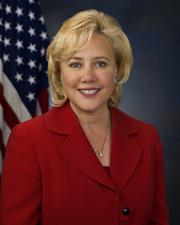 Sen. Mary L. Landrieu (D-LA)
Text
Submitted
This amendment's own text couldn't be picked out of its Congressional Record passage, so the passage is shown in full.
TEXT OF AMENDMENTS
SA 1362. Mr. DORGAN proposed an amendment to the bill H.R. 2555,
making appropriations for the Department of Homeland Security for the
fiscal year ending September 30, 2004, and for other purposes; as
follows:
Insert after section 615 the following:
Sec. . Not later than 60 days after the date of the
enactment of this Act, the Secretary of Homeland Security, in
consultation with the Secretary of State and the Attorney
General, shall report to the Committee on Appropriations of
the Senate and the House of Representatives on the
feasibility of providing access to State and local law
enforcement agencies to the database of the Department of
State on potential terrorists known as the ``Tipoff''
database, including the process by which classified
information shall be secured from unauthorized disclosure.
______
SA 1363. Mr. BOND (for himself, Ms. Stabenow, Mr. Lieberman, and Mr.
Corzine) proposed an amendment to the bill H.R. 2555, making
appropriations for the Department of Homeland Security for the fiscal
year ending September 30, 2004, and for other purposes; as follows:
On page 56, line 2, strike ``$172,736,000'' and insert
``$690,944,000''.
On page 58, line 6, strike ``$2,888,000,000'' and insert
``$11,552,000,000''.
On page 60, line 1, strike ``$750,000,000'' and insert
``$3,000,000,000''.
On page 60, line 15, strike ``$826,801,000'' and insert
``$3,307,204,000''.
On page 65, line 9, strike ``$165,000,000'' and insert
``$660,000,000''.
______
SA 1364. Mrs. HUTCHISON submitted an amendment intended to be
proposed by her to the bill H.R. 2555, making appropriations for the
Department of Homeland Security for the fiscal year ending September
30, 2004, and for other purposes; as follows:
______
SA 1365. Mrs. FEINSTEIN (for herself and Mr. Kyl) proposed an
amendment to the bill H.R. 2555, making appropriations for the
Department of Homeland Security for the fiscal year ending September
30, 2004, and for other purposes; as follows:
At the end of the bill, add the following:
TITLE ____--PORT ANTI-TERRORISM AND SECURITY ACT OF 2003
SEC. 1001. SHORT TITLE.
This title may be cited as the ``Port Anti-Terrorism and
Security Act of 2003''.
Subtitle A--Deterring and Punishing Terrorism and Crime at United
States Ports
SEC. 1101. DESTRUCTION OR INTERFERENCE WITH VESSELS OR
MARITIME FACILITIES.
(a) In General.--Title 18, United States Code, is amended
by inserting after chapter 65 the following:
``CHAPTER 66--MARITIME VESSELS
``Sec.
``1371. Jurisdiction and scope.
``1372. Destruction of vessel or maritime facility.
``1373. Imparting or conveying false information.
``Sec. 1371 Jurisdiction and scope
``(a) In General.--There is jurisdiction under section 3231
over an offense under this chapter if--
``(1) the prohibited activity takes place within the United
States, or in waters or submerged lands thereunder subject to
the jurisdiction of the United States; or
``(2) the prohibited activity takes place outside the
United States, and--
``(A) an offender or a victim of the prohibited activity is
a citizen of the United States;
``(B) a citizen of the United States was on board a vessel
to which this chapter applies; or
``(C) the prohibited activity involves a vessel of the
United States.
``(b) Applicability.--Nothing in this chapter shall apply
to otherwise lawful activities carried out by, or at the
direction of, the United States Government.
``Sec. 1372. Destruction of vessel or maritime facility
``(a) Offenses.--It shall be unlawful for any person--
``(1) to willfully--
``(A) set fire to, damage, destroy, disable, or wreck any
vessel; or
``(B) place or cause to be placed a destructive device or
destructive substance in, upon, or in proximity to, or
otherwise make or cause to be made an unworkable or unusable
or hazardous to work or use, any vessel (as defined in
section 3 of title 1), or any part or other materials used or
intended to be used in connection with the operation of a
vessel; or
``(C) set fire to, damage, destroy, disable, or displace a
destructive device or destructive substance in, upon, or in
proximity to, any maritime facility, including any aid to
navigation, lock, canal, or vessel traffic service facility
or equipment, or interfere by force or violence with the
operation of such maritime facility, if such action is likely
to endanger the safety of any vessel in navigation;
``(D) set fire to, damage, destroy, disable, or place a
destructive device or destructive substance in, upon, or in
proximity to any appliance, structure, property, machine,
apparatus, or any facility or other material used or intended
to be used in connection with the operation, maintenance,
loading, unloading, or storage of any vessel or any passenger
or cargo carried on, or intended to be carried on, any
vessel;
``(E) perform an act of violence against or incapacitate an
individual on a vessel, if such act of violence or
incapacitation is likely to endanger the safety of the vessel
or those on board;
``(F) perform an act of violence against a person that
causes or is likely to cause serious bodily injury in, upon,
or in proximity to any appliance, structure, property,
machine, apparatus, or any facility or other material used or
intended to be used in connection with the operation,
maintenance, loading, unloading, or storage of any vessel or
any passenger or cargo carried or intended to be carried on
any vessel; or
``(G) communicate information, knowing the information to
be false and under circumstances in which such information
may reasonably be believed, thereby endangering the safety of
any vessel in navigation; or
``(2) to attempt or conspire to do anything prohibited
under paragraph (1).
``(b) Penalty.--Any person who--
``(1) violates subparagraph (A) or (B) of subsection (a)(1)
shall be fined in accordance with this title or imprisoned
for a maximum life imprisonment term, or both, and if death
results, shall be subject to the death penalty; and
``(2) violates subsection (a)(2) or subparagraph (C), (D),
(E), (F), or (G) of subsection (a)(1) shall be fined in
accordance with this title or imprisoned not more than 20
years, or both.
``(c) Additional Penalties.--Any person who is fined or
imprisoned in accordance with subsection (b) for an offense
that involved a vessel that, at the time the violation
occurred, carried high-level radioactive waste or spent
nuclear fuel shall be fined in accordance with this title or
imprisoned for not less than 30 years, or for life.
[[Page S9914]]
``(d) Threatened Offense.--Any person who willfully imparts
or conveys any threat to do an act which would violate this
chapter, with an apparent determination and will to carry out
the threat, shall be--
``(1) fined in accordance with this title or imprisoned not
more than 5 years, or both; and
``(2) liable for all costs incurred as a result of such
threat.
``(e) Definitions.--For purposes of this section--
``(1) the term `destructive device' has the meaning as such
term in section 921(a)(4);
``(2) the term `destructive substance' has the meaning as
such term in section 31;
``(3) the term `high-level radioactive waste' has the
meaning as such term in section 2(12) of the Nuclear Waste
Policy Act of 1982 (42 U.S.C. 10101(12));
``(4) the term `serious bodily injury' has the meaning as
such term in section 1365(g); and
``(5) the term `spent nuclear fuel' has the meaning as such
term in section 2(23) of the Nuclear Waste Policy Act of 1982
(42 U.S.C. 10101(23)).
``Sec. 1373. Imparting or conveying false information
``(a) In General.--Any person who imparts or conveys, or
causes to be imparted or conveyed, false information, knowing
the information to be false, concerning an attempt or alleged
attempt being made or to be made, to do any act that is an
offense under this chapter or chapter 2, 97, or 111, shall be
subject to a civil penalty of not more than $5,000, which
shall be recoverable in a civil action brought in the name of
the United States.
``(b) Increased Penalty.--Any person who willfully and
maliciously, or with reckless disregard for the safety of
human life, imparts or conveys, or causes to be imparted or
conveyed, false information, knowing the information to be
false, concerning an attempt or alleged attempt being made by
or to be made, to do any act that is an offense under this
chapter or chapter 2, 97, or 111, shall be fined in
accordance with this title or imprisoned not more than 5
years, or both.''.
(b) Technical and Conforming Amendment.--The table of
chapters at the beginning of title 18, is amended by
inserting after the item relating to chapter 65 the
following:
``66. Maritime Vessels......................................1371''.....
SEC. 1102. CRIMINAL SANCTIONS FOR PLACEMENT OF DESTRUCTIVE
DEVICES OR SUBSTANCES IN UNITED STATES
JURISDICTIONAL WATERS.
(a) In General.--Chapter 111 of title 18, United States
Code, is amended by inserting after section 2280 the
following:
``Sec. 2280A. Devices or substances in waters of the United
States likely to destroy or damage ships
``(a) In General.--Any person who knowingly places or
causes to be placed in waters subject to the jurisdiction of
the United States, by any means, a device or substance that
is likely to destroy or cause damage to a ship or its cargo,
or cause interference with the safe navigation of vessels or
interference with maritime commerce, such as by damaging or
destroying marine terminals, facilities, and any other
maritime structure or entity used in maritime commerce, with
the intent of causing such destruction or damage--
``(1) shall be fined in accordance with this title and
imprisoned for any term of years or for life; and
``(2) if the death of any person results from conduct
prohibited under this section, may be punished by death.
``(b) Applicability.--Nothing in this section shall be
construed to apply to otherwise lawfully authorized and
conducted activities of the United States Government.''.
(b) Technical and Conforming Amendment.--The table of
sections for chapter 111 of title 18, United States Code, is
amended by inserting after the item relating to section 2280
the following:
``2280A. Devices or substances in waters of the United States likely to
destroy or damage ships.''.
SEC. 1103. PIRACY AND PRIVATEERING.
Chapter 81 of title 18, United States Code, is amended to
read as follows:
``CHAPTER 81--PIRACY AND PRIVATEERING
``Sec.
``1651. Piracy.
``1652. Crimes against United States persons or property on board a
ship or maritime structure.
``1653. Crimes against persons on board a ship or maritime structure
within the territorial jurisdiction of the United States.
``1654. Crimes by United States citizens or resident aliens.
``1655. Privateering.
``1656. Theft or conversion of vessel, maritime structure, cargo, or
effects.
``1657. Intentional wrecking or plunder of a vessel, maritime
structure, cargo, or effects.
``1658. Knowing receipt of an illegally acquired vessel, maritime
structure, cargo, or effects.
``1659. Attempts.
``1660. Accessories.
``1661. Inapplicability to United States Government activities.
``Sec. 1651. Piracy
``Any person who commits the crime of piracy and is
afterwards brought into, or found in, the United States shall
be imprisoned for life.
``Sec. 1652. Crimes against United States persons or property
on board a ship or maritime structure
``Any person who commits any illegal act of violence,
detention, or depredation against the United States,
including any vessel of the United States, citizen of the
United States, any commercial structure owned in whole or in
part by a United States citizen or resident alien, or any
United States citizen or resident alien, or the property of
that citizen or resident alien, on board a ship or maritime
structure and is afterwards brought into or found in the
United States, shall be fined in accordance with this title
or imprisoned not more than 20 years, or both.
``Sec. 1653. Crimes against persons on board a ship or
maritime structure within the territorial jurisdiction of
the United States
``Any person who commits any illegal act of violence,
detention, or depredation against an individual on board a
ship or maritime structure, or the property of that
individual, in waters or submerged lands thereunder, subject
to the jurisdiction of the United States, shall be fined in
accordance with this title or imprisoned not more than 20
years, or both.
``Sec. 1654. Crimes by United States citizens or resident
aliens
``Any person, being a United States citizen or resident
alien, or purporting to act under the authority of the United
States, who commits any illegal act of violence, detention,
or depredation against an individual on board a ship or
maritime structure, or the property of that individual, shall
be fined in accordance with this title or imprisoned not more
than 20 years, or both.
``Sec. 1655. Privateering
``(a) Offense.--It shall be unlawful for any person to
furnish, fit out, arm, or serve in a privateer or private
vessel used to commit any illegal act of violence, detention,
or depredation against an individual, or the property of that
individual, or any vessel or maritime structure without the
express authority of the United States Government when--
``(1) the perpetrator of the act is a United States citizen
or resident alien, or purports to act under authority of the
United States;
``(2) the individual against whom the act is committed is a
United States citizen or resident alien or the property,
vessel, or maritime structure involved is owned, in whole or
in part, by a United States citizen or resident alien; or
``(3) some element of the illegal act of violence,
detention, or depredation is committed in waters subject to
the jurisdiction of the United States.
``(b) Penalty.--Any person who violates subsection (a)
shall be fined in accordance with this title or imprisoned
not more than 20 years, or both.
``Sec. 1656. Theft or conversion of vessel, maritime
structure, cargo, or effects
``(a) Offense.--It shall be unlawful for any person who is
a captain, officer, crewman, or passenger of a vessel or
maritime structure to assist in the theft or conversion of
such vessel or maritime structure, or its cargo or effects
when--
``(1) the perpetrator is a United States citizen or
resident alien, or purports to act under the authority of the
United States;
``(2) the vessel, maritime structure, cargo, or effects is
owned in whole or in part by a United States citizen or
resident alien; or
``(3) some element of the theft or conversion is committed
in waters subject to the jurisdiction of the United States.
``(b) Penalty.--Any person who violates subsection (a)
shall be fined in accordance with this title or imprisoned
not more than 20 years, or both.
``Sec. 1657. Intentional wrecking or plunder of a vessel,
maritime structure, cargo, or effects
``(a) Offense.--It shall be unlawful for any person to--
``(1) intentionally cause the wrecking of a vessel or
maritime structure by act or omission, either directly such
as by intentional grounding, or indirectly by modification or
destruction of any navigational marker or safety device;
``(2) intentionally plunder, steal, or destroy a vessel,
maritime structure, cargo, or effects when such vessel or
maritime structure is in distress, wrecked, lost, stranded,
or cast away; or
``(3) intentionally obstruct or interfere with the rescue
of a person on board a vessel or maritime structure in
distress, wrecked, lost, stranded, or cast away, or the legal
salvage of such a vessel, maritime structure, cargo, or
effects, when--
``(A) the perpetrator is a United States citizen or
resident alien, or purports to act under authority of the
United States;
``(B) the vessel, maritime structure, cargo, or effects is
owned in whole or in part by a United States citizen or
resident alien; or
``(C) some element of the theft or conversion is committed
in waters subject to the jurisdiction of the United States.
``(b) Penalty.--Any person who violates subsection (a)
shall be fined in accordance with this title or imprisoned
not more than 20 years, or both.
``Sec. 1658. Knowing receipt of an illegally acquired vessel,
maritime structure, cargo, or effects
``Any person who knowingly receives or acquires a vessel,
maritime structure, cargo, or
[[Page S9915]]
effects converted or obtained by action falling under any
section of this chapter shall be fined in accordance with
this title or imprisoned not more than 20 years, or both.
``Sec. 1659. Attempts
Any person who attempts any act which, if committed, would
constitute an offense under this chapter shall be fined in
accordance with this title or imprisoned not more than 20
years, or both.
``Sec. 1660. Accessories
``(a) Commission of an Offense.--Any person who knowingly
assists any person in the commission of an act that
constitutes an offense under this chapter shall be fined in
accordance with this title or imprisoned not more than 20
years, or both.
``(b) Avoidance of Consequences.--Any person who knowingly
assists any person in avoiding the consequences of an act
that constitutes an offense under this chapter shall be fined
in accordance with this title or imprisoned not more than 20
years, or both.
``Sec. 1661. Inapplicability to United States Government
activities
``Nothing in this chapter shall apply to otherwise lawful
activities--
``(1) carried out by, or at the direction of, the United
States Government; or
``(2) undertaken under a letter or marque and reprisal
issued by the United States Government.''.
SEC. 1104. USE OF A DANGEROUS WEAPON OR EXPLOSIVE ON A
PASSENGER VESSEL.
(a) In General.--Chapter 39 of title 18, United States
Code, is amended by inserting after section 831 the
following:
``Sec. 832. Use of a dangerous weapon or explosive on a
passenger vessel
``(a) Offense.--It shall be unlawful for any person to
willfully--
``(1) commit an act, including the use of a dangerous
weapon, explosive, or incendiary device, with the intent to
cause death or serious bodily injury to a crew member or
passenger of a passenger vessel or any other person while on
board a passenger vessel; or
``(2) attempt, threaten, or conspire to do any act referred
to in paragraph (1).
``(b) Penalty.--An person who violates subsection (a) shall
be fined in accordance with this title or imprisoned not more
than 20 years, or both.
``(c) Aggravated Offense.--Any person who commits an
offense described in subsection (a) in a circumstance in
which--
``(1) the vessel was carrying a passenger at the time of
the offense; or
``(2) the offense has resulted in the death of any person;
shall be guilty of an aggravated offense and shall be fined
in accordance with this title or imprisoned for any term of
years or for life.
``(d) Applicability.--This section shall apply to vessels
that are subject to the jurisdiction of the United States,
and vessels carrying passengers who are United States
citizens or resident aliens, wherever located.
``(e) Definitions.--For purposes of this section--
``(1) the term `dangerous weapon' has the meaning given
such term in section 930(g);
``(2) the term `explosive or incendiary device' has the
meaning given such term in section 232(5);
``(3) the term `passenger' has the same meaning given such
term in section 2101(21) of title 46;
``(4) the term `passenger vessel' has the same meaning
given such term in section 2101(22) of title 46; and
``(5) the term `serious bodily injury' has the meaning
given such term in section 1365(g).''.
(b) Technical and Conforming Amendment.--The table of
sections for chapter 39 of title 18, United States Code, is
amended by inserting after the item relating to section 831
the following:
``832. Use of a dangerous weapon or explosive on a passenger vessel.''.
SEC. 1105. SANCTIONS FOR FAILURE TO HEAVE TO AND FOR
OBSTRUCTION OF BOARDING AND PROVIDING FALSE
INFORMATION.
(a) In General.--Chapter 109 of title 18, United States
Code, is amended by adding at the end the following:
``Sec. 2237. Sanctions for failure to heave to; sanctions for
obstruction of boarding or providing false information
``(a) Failure To Heave To.--It shall be unlawful for the
master, operator, or person in charge of a vessel of the
United States, or a vessel subject to the jurisdiction of the
United States, to knowingly fail to obey an order to heave to
on being ordered to do so by an authorized Federal law
enforcement officer.
``(b) Obstruction of Boarding and Providing False
Information.--It shall be unlawful for any person on board a
vessel of the United States or a vessel subject to the
jurisdiction of the United States to--
``(1) forcibly assault, resist, oppose, prevent, impede,
intimidate, or interfere with a boarding or other law
enforcement action authorized by any Federal law, or to
resist a lawful arrest; or
``(2) provide information to a Federal law enforcement
officer during a boarding of a vessel regarding the vessel's
destination, origin, ownership, registration, nationality,
cargo, or crew that the person knows is false.
``(c) Limitations.--This section shall not limit the
authority of--
``(1) an officer under section 581 of the Tariff Act of
1930 (19 U.S.C. 1581) or any other provision of law enforced
or administered by the Secretary of the Treasury or the Under
Secretary for Border and Transportation Security of the
Department of Homeland Security; or
``(2) a Federal law enforcement officer under any law of
the United States to order a vessel to stop or heave to.
``(d) Consent or Objection to Enforcement.--A foreign
nation may consent or waive objection to the enforcement of
United States law by the United States under this section by
radio, telephone, or similar oral or electronic means, which
consent or waiver may be proven by certification of the
Secretary of State or the Secretary's designee.
``(e) Penalty.--Any person who intentionally violates this
section shall be fined in accordance with this title and
imprisoned not more than 1 year.
``(f) Definitions.--For purposes of this section--
``(1) the terms `vessel of the United States' and `vessel
subject to the jurisdiction of the United States' have the
same meanings as such terms in section 3 of the Maritime Drug
Law Enforcement Act (46 U.S.C. App. 1903);
``(2) the term `heave to' means to cause a vessel to slow,
come to a stop, or adjust its course or speed to account for
the weather conditions and sea state to facilitate a law
enforcement boarding; and
``(3) the term `Federal law enforcement officer' has the
same meaning as such term in section 115.''.
(b) Technical and Conforming Amendment.--The table of
sections for chapter 109 of title 18, United States Code, is
amended by adding at the end the following:
``2237. Sanctions for failure to heave to; sanctions for obstruction of
boarding or providing false information.''.
SEC. 1106. CRIMINAL SANCTIONS FOR VIOLENCE AGAINST MARITIME
NAVIGATION.
Section 2280(a) of title 18, United States Code, is
amended--
(1) in paragraph (1)--
(A) by redesignating subparagraphs (F), (G), and (H) as
(G), (H), and (I), respectively;
(B) by inserting after subparagraph (E) the following:
``(F) destroys, damages, alters, moves, or tampers with any
aid to maritime navigation maintained by the Saint Lawrence
Seaway Development Corporation under the authority of section
4 of the Act of May 13, 1954, (33 U.S.C. 984) or the Coast
Guard pursuant to section 81 of title 14, or lawfully
maintained by the Coast Guard pursuant to section 83 of title
14, if such act endangers or is likely to endanger the safe
navigation of a ship;''; and
(C) in subparagraph (I), as so redesignated, by striking
``through (G)'' and inserting ``through (H)''; and
(2) in paragraph (2), by striking ``(C) or (E)'' and
inserting ``(C), (E), or (F)''.
SEC. 1107. CRIMINAL SANCTIONS FOR MALICIOUS DUMPING.
(a) In General.--Chapter 111 of title 18, United States
Code, is amended by adding at the end the following:
``Sec. 2282. Knowing discharge or release
``(a) Endangerment of Human Life.--Any person who knowingly
discharges or releases oil, a hazardous material, a noxious
liquid substance, or any other substance into the navigable
waters of the United States or the adjoining shoreline with
the intent to endanger human life, health, or welfare--
``(1) shall be fined in accordance with this title and
imprisoned for any term of years or for life; and
``(2) if the death of any person results from conduct
prohibited under this section, may be punished by death.
``(b) Endangerment of Marine Environment.--Any person who
knowingly discharges or releases oil, a hazardous material, a
noxious liquid substance, or any other substance into the
navigable waters of the United States or the adjacent
shoreline with the intent to endanger the marine environment
shall be fined in accordance with this title or imprisoned
not more than 30 years, or both.
``(c) Definitions.--For purposes of this section--
``(1) the term `discharge' means any spilling, leaking,
pumping, pouring, emitting, emptying, or dumping;
``(2) the term `hazardous material' has the same meaning
given such term in section 2101(14) of title 46;
``(3) the term `marine environment' has the same meaning
given such term in section 2101(15) of title 46;
``(4) the term `navigable waters' has the same meaning
given such term in section 502(7) of the Federal Water
Pollution Control Act (33 U.S.C. 1362(7)), and also includes
the territorial sea of the United States as described in
Presidential Proclamation 5928 of December 27, 1988; and
``(5) the term `noxious liquid substance' has the same
meaning given such term in the MARPOL Protocol as defined in
section 2(a)(3) of the Act to Prevent Pollution from Ships
(33 U.S.C. 1901(a)(3)).''.
(b) Technical and Conforming Amendment.--The table of
sections for chapter 111 of title 18, United States Code, is
amended by adding at the end the following:
``2282. Knowing discharge or release.''.
SEC. 1108. ATTORNEY GENERAL TO COORDINATE PORT-RELATED CRIME
DATA COLLECTION.
(a) Regulations.--The Attorney General shall issue
regulations to--
[[Page S9916]]
(1) require the reporting by a carrier that is the victim
of a cargo theft offense to the Attorney General of
information on the cargo theft offense (including offenses
occurring outside ports of entry and ports of shipment
origination) that identifies the port of entry, the port
where the shipment originated, where the theft occurred, and
any other information specified by the Attorney General;
(2) create a database to contain the reports described in
paragraph (1) and integrate those reports, to the extent
feasible, with other noncriminal justice and intelligence
data, such as insurer bill of lading, cargo contents and
value, point of origin, and lien holder filings; and
(3) prescribe procedures for access to the database created
in accordance with paragraph (2) by appropriate Federal,
State, and local governmental agencies and private companies
or organizations, while limiting access to privacy of the
information in accordance with other applicable Federal laws.
(b) Modification of Databases.--
(1) In general.--United States Government agencies with
significant regulatory or law enforcement responsibilities at
United States ports shall, to the extent feasible, modify
their information databases to ensure the collection and
retrievability of data relating to crime, terrorism, and
related activities at, or affecting, United States ports.
(2) Designation of agencies.--The Attorney General, after
consultation with the Secretary of Homeland Security, shall
designate the agencies referred to in paragraph (1).
(c) Outreach Program.--The Attorney General, in
consultation with the Secretary of Homeland Security, the
National Maritime Security Advisory Committee established
under section 70112 of title 46, United States Code, and the
appropriate Federal and State agencies, shall establish an
outreach program--
(1) to work with State and local law enforcement officials
to harmonize the reporting of data on cargo theft among
States and localities with the United States Government's
reports; and
(2) to work with local port security committees to
disseminate cargo theft information to appropriate law
enforcement officials.
(d) Annual Report.--The Attorney General shall report
annually to the Committee on the Judiciary of the Senate and
the House of Representatives on the implementation of this
section.
(e) Interstate or Foreign Shipments by Carrier; State
Prosecutions.--
(1) State prosecutions.--Section 659 of title 18, United
States Code, is amended--
(A) in the first undesignated paragraph--
(i) by striking ``Whoever embezzles'' and inserting the
following:
``(a) Offense; Penalty.--Whoever--
``(1) embezzles'';
(ii) by striking ``from any pipeline system'' and all that
follows through ``with intent to convert to his own use'';
and
(iii) by striking ``or'' at the end;
(B) in the second undesignated paragraph--
(i) by striking ``Whoever buys'' and inserting the
following:
``(2) buys''; and
(ii) by striking ``or'' at the end;
(C) in the third undesignated paragraph--
(i) by striking ``Whoever embezzles'' and inserting the
following''
``(3) embezzles''; and
(ii) by striking ``with intent to convert to his own use'';
(D) in the fourth undesignated paragraph, by striking
``Whoever embezzles'' and inserting the following:
``(4) embezzles'';
(E) in the fifth undesignated paragraph, by striking
``Shall in each case'' and inserting the following:
``shall in each case'';
(F) in the sixth undesignated paragraph, by striking
``The'' and inserting the following:
``(b) Location of Offense.--The'';
(G) in the seventh undesignated paragraph, by striking
``The'' and inserting the following''
``(c) Separate Offense.--The'';
(H) in the eighth undesignated paragraph, by striking
``To'' and inserting the following:
``(d) Prima Facie Evidence.--To'';
(I) in the ninth undesignated paragraph, by striking ``A''
and inserting the following:
``(e) Prosecution.--A''; and
(J) by adding at the end the following:
``(f) Civil Penalty.--
``(1) In general.--Notwithstanding any other provision of
law, and in addition to any penalties that may be available
under any other provision of law, a person who is found by
the Secretary of Homeland Security, after notice and an
opportunity for a hearing, to have violated this section or a
regulation issued under this section shall be liable to the
United States for a civil penalty not to exceed $25,000 for
each violation.
``(2) Separate violations.--Each day of a continuing
violation shall constitute a separate violation.
``(3) Amount of penalty.--
``(A) In general.--The amount of a civil penalty for a
violation of this section or a regulation issued under this
section shall be assessed by the Attorney General, or the
designee of the Attorney General, by written notice.
``(B) Considerations.--In determining the amount of a civil
penalty under this paragraph, the Attorney General shall take
into account--
``(i) the nature, circumstances, extent, and gravity of the
prohibited act committed; and
``(ii) with respect to the violator, the degree of
culpability, any history of prior offenses, ability to pay,
and such other matters as justice may require.
``(4) Modification of penalty.--The Secretary of Homeland
Security may compromise, modify, or remit, with or without
conditions, any civil penalty that is subject to imposition
or which has been imposed under this section.
``(5) Failure to pay.--If a person fails to pay an
assessment of a civil penalty after it has become final, the
Secretary of Homeland Security may refer the matter to the
Attorney General for collection in an appropriate district
court of the United States.
``(g) Definition.--For purposes of this section, the term
`goods or chattels' means to be moving as an interstate or
foreign shipment at all points between the point of origin
and the final destination (as evidenced by the waybill or
other shipping document of the shipment) regardless of any
temporary stop while awaiting transshipment or otherwise.''.
(2) Federal sentencing guidelines.--Pursuant to section 994
of title 28, United States Code, the United States Sentencing
Commission shall review the Federal Sentencing Guidelines to
determine whether sentencing enhancement is appropriate for
any offense under section 659 of title 18, United States
Code, as amended by this subsection.
(3) Annual report.--The Attorney General shall annually
submit to Congress a report that shall include an evaluation
of law enforcement activities relating to the investigation
and prosecution of offenses under section 659 of title 18,
United States Code.
Subtitle B--Protecting United States Ports Against Terrorism and Crime
SEC. 1201. DEFINITIONS.
In this subtitle:
(1) Aircraft.--The term ``aircraft'' has the meaning given
that term in section 40102 of title 49, United States Code.
(2) Captain-of-the-port.--The term ``Captain-of-the-Port'',
with respect to a United States seaport, means the individual
designated by the Commandant of the Coast Guard as the
Captain-of-the-Port at that seaport.
(3) Common carrier.--The term ``common carrier'' means any
person that holds itself out to the general public as a
provider for hire of a transportation by water, land, or air
of merchandise, whether or not the person actually operates
the vessel, vehicle, or aircraft by which the transportation
is provided, between a port or place and a port or place in
the United States.
(4) Container.--The term ``container'' means a container
that is used or designed for use for the international
transportation of merchandise by vessel, vehicle, or
aircraft.
(5) Directorate.--The term ``Directorate'' means the Border
and Transportation Security Directorate of the Department of
Homeland Security.
(6) Manufacturer.--The term ``manufacturer'' means a person
who fabricates or assembles merchandise for sale in commerce.
(7) Merchandise.--The term ``merchandise'' has the meaning
given that term in section 401 of the Tariff Act of 1930 (19
U.S.C. 1401).
(8) Shipment.--The term ``shipment'' means cargo traveling
in international commerce under a bill of lading.
(9) United states seaport.--The term ``United States
seaport'' means a place in the United States on a waterway
with shoreside facilities for the intermodal transfer of
cargo containers that are used in international trade.
(11) Vehicle.--The term ``vehicle'' has the meaning given
that term in section 401 of the Tariff Act of 1930 (19 U.S.C.
1401).
(12) Vessel.--The term ``vessel'' has the meaning given
that term in section 401 of the Tariff Act of 1930 (19 U.S.C.
1401).
SEC. 1202. DESIGNATED SECURITY AUTHORITY.
The Captain-of-the-Port of each United States seaport shall
be the primary authority responsible for security at the
United States seaport and shall--
(1) coordinate security at such seaport; and
(2) be the point of contact on seaport security issues for
civilian and commercial port entities at such seaport.
SEC. 1203. PENALTIES FOR INACCURATE MANIFEST.
(a) Falsity or Lack of Manifest.--Section 584 of the Tariff
Act of 1930 (19 U.S.C. 1584) is amended--
(1) in subsection (a)(1)--
(A) by striking ``$1,000'' each place it appears and
inserting ``$50,000''; and
(B) by striking ``$10,000'' and inserting ``$50,000''; and
(2) by adding at the end the following new subsection:
``(c) Criminal Penalties.--Any person who ships or prepares
for shipment any merchandise bound for the United States who
intentionally provides inaccurate or false information,
whether inside or outside the United States, with respect to
such merchandise for the purpose of introducing such
merchandise into the United States in violation of the laws
of the United States, shall be liable, upon conviction of a
violation of this subsection, for a fine of not more than
$50,000 or imprisonment for 1 year, or both; except that if
the importation of such merchandise into the United States is
prohibited, such person shall be liable for an additional
fine of not more than $50,000 or imprisonment for not more
than 5 years, or both.''.
[[Page S9917]]
(b) Penalties for Violations of the Arrival, Reporting,
Entry, and Clearance Requirements.--Subsections (b) and (c)
of section 436 of Tariff Act of 1930 (19 U.S.C. 1436) are
amended to read as follows:
``(b) Civil Penalty.--Any master, person in charge of a
vessel, vehicle, or aircraft pilot who commits any violation
listed in subsection (a) shall be liable for a civil penalty
of $25,000 for the first violation, and $50,000 for each
subsequent violation, and any conveyance used in connection
with any such violation is subject to seizure and forfeiture.
``(c) Criminal Penalty.--In addition to being liable for a
civil penalty under subsection (b), any master, person in
charge of a vessel, vehicle, or aircraft pilot who
intentionally commits or causes another to commit any
violation listed in subsection (a) shall be liable, upon
conviction, for a fine of not more than $50,000 or
imprisonment for 1 year, or both; except that if the
conveyance has, or is discovered to have had, on board any
merchandise (other than sea stores or the equivalent for
conveyances other than vessels) the importation of which into
the United States is prohibited, such individual shall be
liable for an additional fine of not more than $50,000 or
imprisonment for not more than 5 years, or both.''.
SEC. 1204. INSPECTION OF MERCHANDISE AT FOREIGN FACILITIES.
Not later than 180 days after the date of enactment of this
Act, the Secretary of Homeland Security shall submit to
Congress a plan to--
(1) station inspectors from the Directorate, other Federal
agencies, or the private sector at the foreign facilities of
manufacturers or common carriers to profile and inspect
merchandise and the containers or other means by which such
merchandise is transported as they are prepared for shipment
on a vessel that will arrive at any port or place in the
United States;
(2) develop procedures to ensure the security of
merchandise inspected as described in paragraph (1) until it
reaches the United States; and
(3) permit merchandise inspected as described in paragraph
(1) to receive expedited inspection upon arrival in the
United States.
______
SA 1366. Mr. BAYH (for himself, Mr. Nelson of Nebraska, Mr. Akaka,
Mrs. Feinstein, and Ms. Mikulski) submitted an amendment intended to be
proposed by him to the bill H.R. 2555, making appropriations for the
Department of Homeland Security for the fiscal year ending September
30, 2004, and for other purposes; which was ordered to lie on the
table; as follows:
Insert after section 615 the following:
Sec. 616. (a) Plan for Enhancement of Operations of Office
of Information Analysis and Infrastructure Protection.--Not
later than 120 after the date of the enactment of this Act,
the Secretary of Homeland Security shall submit to Congress a
plan for enhancements of the operations of the Office of
Information Analysis and Infrastructure Protection (IAIP) in
order to--
(1) meet the personnel requirements of the Office;
(2) improve communications between the Office and the
intelligence community; and
(3) improve coordination between the Office and State and
local counterterrorism and law enforcement officials.
(b) Additional Elements.--In addition to the matters
specified in subsection (a) the report shall include the
following:
(1) A description of the current assets and capabilities of
the Office of Information Analysis and Infrastructure
Protection.
(2) A strategy for the Office for the coordination and
dissemination of intelligence and other information.
(3) A schedule for the implementation of the plan required
under subsection (a).
(c) Annual Reports on Certain Efforts.--(1) Not later than
one year after the date of the enactment of this Act, and
annually thereafter, the Secretary shall submit to Congress a
report on the efforts of the Office of Information Analysis
and Infrastructure Protection during the one-year period
ending on the date of such report to coordinate with other
Federal agencies, State and local governments, and the
private sector on the collection, analysis, and dissemination
of information on threats to the United States and its
infrastructure.
(2) Each report shall include, for the period covered by
such report--
(A) a description of the efforts described in paragraph
(1), including any capabilities developed or enhanced as a
result of such efforts; and
(B) an assessment of the success of such efforts.
______
SA 1367. Mr. BYRD proposed an amendment to the bill H.R. 2555, making
appropriations for the Department of Homeland Security for the fiscal
year ending September 30, 2004, and for other purposes; as follows:
On page 75, Line 6, insert the following:
TITLE VII--FULFILLING HOMELAND SECURITY PROMISES
Office of the Under Secretary for Border and Transportation Security
Transportation Security Administration Maritime and Land Security
For an additional amount for ``Maritime and Land
Security'', $100,000,000, to remain available until September
30, 2005, for port security grants, which shall be
distributed under the same terms and conditions as provided
under Public Law 107-117.
United States Coast Guard
operating expenses
For an additional amount for ``Operating Expenses'',
$42,000,000, to remain available until December 31, 2004,
shall be for costs pursuant to Public Law 107-295 for
implementing the Maritime Transportation Security Act
including those costs associated with the review of vessel
and facility security plans and the development of area
security plans.
Office for Domestic Preparedness
For an additional amount for ``Firefighter Assistance
Grants,'' $100,000,000, to remain available through September
30, 2005, for programs authorized by section 33 of the
Federal Fire Prevention and Control Act of 1974 (15 U.S.C.
2201 et seq.).
Office of the Under Secretary for Information Analysis and
Infrastructure Protection
Of the amounts made available for the ``Office of the Under
Secretary for Information Analysis and Infrastructure
Protection'', $50,000,000, to remain available until
September 30, 2005, shall be for chemical facility security
assessments.
Office of the Under Secretary for Information Analysis and
Infrastructure Protection
On page 66, line 9, strike ``$823,700,000,'' and insert
``$581,700,000,''.
______
SA 1368. Mr. SPECTER (for himself, Mr. Schumer, Mr. Warner, Mrs.
Clinton, Ms. Mikulski, Mr. Corzine, Mr. Kennedy, Mrs. Murray, Mr.
Lautenberg, Mr. Durbin, and Mr. Sarbanes) proposed an amendment to the
bill H.R. 2555, making appropriations for the Department of Homeland
Security for the fiscal year ending September 30, 2004, and for other
purposes; as follows:
On page 58, line 6, strike ``$2,888,000,000'' and insert
``$3,138,000,000''.
On page 59, line 1, strike ``$750,000,000'' and insert
``$1,000,000,000''.
______
SA 1369. Mr. GRAHAM of South Carolina submitted an amendment intended
to be proposed by him to the bill H.R. 2754, making appropriations for
energy and water development for the fiscal year ending September 30
2004, and for other purposes; which was ordered to lie on the table, as
follows:
On page 51, line 18, strike ``$285,000,000'' and insert
``$451,000,000''.
______
SA 1370. Mr. SPECTER (for Mr. Schumer (for himself, Mr. Specter, Mr.
Warner, and Mrs. Clinton)) proposed an amendment to the bill H.R. 2555,
making appropriations for the Department of Homeland Security for the
fiscal year ending September 30, 2004, and for other purposes; as
follows:
On page 58, line 6, strike ``$2,888,000,000'' and insert
``$3,138,000,000''.
On page 59, line 1, strike ``$750,000,000'' and insert
``$1,000,000,000''.
On page 66, line 9, strike ``$823,700,000'' and insert
``$636,340,000''.
On page 66, line 23, strike ``$866,000,000'' and insert
``$803,360,000''.
______
SA 1371. Mr. BAYH submitted an amendment intended to be proposed by
him to the bill H.R. 2555, making appropriations for the Department of
Homeland Security for the fiscal year ending September 30, 2004, and
for other purposes; which was ordered to lie on the table; as follows:
Insert after section 615 the following:
Sec. 616. (a) Plan for Enhancement of Operations of Office
of Information Analysis and Infrastructure Protection.--Not
later than 120 days after the date of the enactment of this
Act, the Secretary of Homeland Security shall submit to
Congress a plan for enhancements of the operations of the
Office of Information Analysis and Infrastructure Protection
(IAIP) in order to--
(1) meet the personnel requirements of the Office;
(2) improve communications between the Office and the
intelligence community; and
(3) improve coordination between the Office and State and
local counterterrorism and law enforcement officials.
(b) Additional Elements.--In addition to the matters
specified in subsection (a) the report shall include the
following:
(1) A description of the current assets and capabilities of
the Office of Information Analysis and Infrastructure
Protection.
(2) A strategy for the Office for the coordination and
dissemination of intelligence and other information.
(3) A schedule for the implementation of the plan required
under subsection (a).
______
SA 1372. Mr. REED (for himself, Mr. Sarbanes, Mr. Corzine, and Mrs.
Clinton) proposed and amendment to the bill H.R. 2555, making
appropriations for the Department of Homeland Security for the fiscal
year ending September 30, 2004, and for other purposes;
[[Page S9918]]
which was ordered to lie on the table; as follows:
On page 49, between lines 7 and 8, insert the following:
Transit Security
For necessary expenses of the Transportation Security
Administration related to land transportation security
services pursuant to the Aviation and Transportation Security
Act (49 U.S.C. 40101 note) and for other purposes,
$100,000,000, to remain available until December 31, 2004,
which shall be available for grants to public transit
agencies for enhancing the security of transit facilities
against chemical, biological and other terrorist threats:
Provided, That the Secretary of Homeland Security shall make
such grants pursuant to threat assessments previously
conducted by the Transportation Security Administration and
the Federal Transit Administration: Provided further, That
the Secretary of Homeland Security and the Secretary of
Transportation shall enter into a memorandum of understanding
regarding transit security. Provided further, That not later
than 60 days after the date of enactment of this Act, the
Secretary of Homeland Security shall submit a report to
Congress that includes--
(1) the amount of funds appropriated to the Transportation
Security Administration (TSA) that have been allocated for
activities designed to improve public transportation
security;
(2) the number of full-time TSA personnel engaged in
activities designed to improve public transportation
security;
(3) the strategic plan of the TSA for improving the
security of our Nation's public transportation systems; and
(4) recommendations from the TSA for any policy changes
needed to ensure that the TSA, in coordination with other
agencies within the Department of Homeland Security, will
effectively improve public transportation security for our
Nation's transit riders.
______
SA 1373. Mr. BYRD (for himself, Mr. Lieberman, Mr. Levin, and Mrs.
Clinton) proposed an amendment intended to the bill H.R. 2555, making
appropriations for the Department of Homeland Security for the fiscal
year ending September 30, 2004, and for other purposes; which was
ordered to lie on the table; as follows:
At the appropriate place, insert the following:
Sec. 616. None of the funds appropriated by this Act may be
used to fund the activities of any advisory committee (as
defined in section 3 of the Federal Advisory Committee Act)
that has been exempted from the Federal Advisory Committee
Act (5 U.S.C. App.) pursuant to section 871 of the Homeland
Security Act of 2002 (6 U.S.C. 451).
______
SA 1374. Mr. BYRD (for Mr. Durbin (for himself, Mrs. Clinton, and Mr.
Corzine)) proposed an amendment to the bill H.R. 2555, making
appropriations for the Department of Homeland Security for the fiscal
year ending September 30, 2004, and for other purposes; which was
ordered to lie on the table; as follows:
At the appropriate place, insert the following:
Sec. . Not later than 60 days after the date of enactment
of this Act, the Secretary of Homeland Security, in
collaboration with the Director of the Office of Management
and Budget, shall submit a report to the Committee on
Appropriations of the Senate, the Committee on Appropriations
of the House of Representatives, the Committee on
Governmental Affairs of the Senate, the Committee on
Government Reform of the House of Representatives, and the
Select Committee on Homeland Security of the House of
Representatives on the status of the Department's efforts
to--
(1) complete an inventory of the Department's entire
information technology infrastructure;
(2) devise and deploy a secure comprehensive enterprise
architecture that--
(A) promotes interoperability of homeland security
information systems, including communications systems, for
agencies within and outside the Department;
(B) avoids unnecessary duplication; and
(C) aids rapid and appropriate information exchange,
retrieval, and collaboration at all levels of government;
(3) consolidate multiple overlapping and inconsistent
terrorist watch lists, reconcile different policies and
procedures governing whether and how terrorist watch list
data are shared with other agencies and organizations, and
resolve fundamental differences in the design of the systems
that house the watch lists so as to achieve consistency and
expeditious access to accurate, complete, and current
information;
(4) ensure that the Department's enterprise architecture
and the information systems leveraged, developed, managed,
and acquired under such enterprise architecture are capable
of rapid deployment, limit data access only to authorized
users in a highly secure environment, and are capable of
continuous system upgrades to benefit from advances in
technology while preserving the integrity of stored data; and
(5) align common information technology investments within
the Department and between the Department and other Federal,
State, and local agencies responsible for homeland security
to minimize inconsistent and duplicate acquisitions and
expenditures.
______
SA 1375. Mr. BYRD (for Mr. Feingold) proposed an amendment to the
bill H.R. 2555, making appropriations for the Department of Homeland
Security for the fiscal year ending September 30, 2004, and for other
purposes; as follows:
On page 59, at the end of line 23, after ``heading'' insert
the following:
Provided further, That not later than January 1, 2004, the
Office of Domestic Preparedness shall submit to the
Committees on Appropriations of the Senate and House of
Representatives a report detailing efforts to assess and
disseminate best practices to emergency responders which, at
a minimum, shall discuss (1) efforts to coordinate and share
information with state and local officials and emergency
preparedness organizations; and (2) steps the Department
proposes to improve the coordination and sharing of such
information, if any.
______
SA 1376. Mr. LEVIN (for himself and Mr. Reid) proposed an amendment
to the bill H.R. 2555, making appropriations for the Department of
Homeland Security for the fiscal year ending September 30, 2004, and
for other purposes; as follows:
At the end, add the following:
SEC. ____. PROHIBITION ON APPROPRIATIONS AVAILABILITY TO
CORPORATE EXPATRIATES.
No funds in this Act shall be available for any contract
entered into after the date of enactment of this Act by the
Department of Homeland Security with--
(1) an inverted domestic corporation (as defined in section
835 of the Homeland Security Act of 2002 (Public Law 107-296;
6 U.S.C. 395)),
(2) any corporation which completed a plan (or series of
transactions) described in such section before, on, or after
the date of enactment of the Homeland Security Act of 2002
(Public Law 107-296; 6 U.S.C. 395), or
(3) any subsidiary of a corporation described in paragraph
(1) or (2).
______
SA 1377. Mr. BAYH (for himself, Mr. Akaka, Mr. Nelson of Nebraska,
Mr. McCain, Mrs. Feinstein, Ms. Mikulski, and Mrs. Clinton) submitted
an amendment intended to be proposed by him to the bill H.R. 2555,
making appropriations for the Department of Homeland Security for the
fiscal year ending September 30, 2004, and for other purposes; which
was ordered to lie on the table; as follows:
At the appropriate place, insert the following:
Sec. ____. (a) Not later than 120 days after the date of
the enactment of this Act, the Secretary shall submit to the
Committees on Appropriations of the Senate and the House of
Representatives a plan for enhancements of the operations of
the Information Analysis and Infrastructure Protection
Directorate in order to--
(1) meet the personnel requirements of the Directorate;
(2) improve communications between the Directorate and the
intelligence community; and
(3) improve coordination between the Directorate and State
and local counterterrorism and law enforcement officials.
(b) In addition to the matters specified in subsection (a),
the plan shall include a description of the current assets
and capabilities of the Information Analysis and
Infrastructure Protection Directorate, a strategy for the
Directorate for the coordination and dissemination of
intelligence and other information, and a schedule for the
implementation of the plan required under subsection (a).
______
SA 1378. Mr. COCHRAN (for Ms. Landrieu) proposed an amendment to the
bill H.R. 2555, making appropriations for the Department of Homeland
Security for the fiscal year ending September 30, 2004, and for other
purposes; as follows:
At the appropriate place insert the following:
Sec. ____. It is the sense of the Senate that the
Department of Homeland Security's Undersecretary for Science
and Technology should take all appropriate steps to ensure
the active participation of historically black colleges and
universities, tribal colleges, Hispanic-serving institutions,
and Alaskan Native serving institutions in Department
sponsored university research.
______
SA 1379. Mr. COCHRAN (for Mr. Bayh (for himself, Mr. Akaka, Mr.
Nelson of Nebraska, Mr. McCain, Mrs. Feinstein, Ms. Mikulski, and Mrs.
Clinton) proposed an amendment to the bill H.R. 2555, making
appropriations for the Department of Homeland Security for the fiscal
year ending September 30, 2004, and for other purposes; as follows:
At the appropriate place, insert the following:
Sec. ____. (a) Not later than 120 days after the date of
the enactment of this Act, the
[[Page S9919]]
Secretary shall submit to the Committees on Appropriations of
the Senate and the House of Representatives a plan for
enhancements of the operations of the Information Analysis
and Infrastructure Protection Directorate in order to--
(1) meet the personnel requirements of the Directorate;
(2) improve communications between the Directorate and the
intelligence community; and
(3) improve coordination between the Directorate and State
and local counterterrorism and law enforcement officials.
(b) In addition to the matters specified in subsection (a),
the plan shall include a description of the current assets
and capabilities of the Information Analysis and
Infrastructure Protection Directorate, a strategy for the
Directorate for the coordination and dissemination of
intelligence and other information, and a schedule for the
implementation of the plan required under subsection (a).
______
SA 1380. Mr. BYRD (for Mr. Feingold) proposed an amendment to the
bill H.R. 2555, making appropriations for the Department of Homeland
Security for the fiscal year ending September 30, 2004, and for other
purposes; as follows:
At the appropriate place, insert the following:
Sec. ____. Not later than 90 days after the date of
enactment of this Act, the Comptroller General shall conduct
a review and report to Congress on all of the data-mining
programs relating to law enforcement and terrorism currently
under development and in use in the Department of Homeland
Security.
______
SA 1381. Mr. BYRD (for Mr. Akaka (for himself and Mr. Stevens))
proposed an amendment to the bill H.R. 2555, making appropriations for
the Department of Homeland Security for the fiscal year ending
September 30,2004, and for other purposes; as follows:
At the appropriate place insert the following:
Sec. 6. When establishing priorities for firefighting
vehicles in the Firefighter Assistance Grant program, the
Secretary shall take into consideration the unique
geographical needs of individual fire departments.
______
SA. 1382. Mr. BYRD (for Ms. Landrieu) proposed an amendment to the
bill H.R. 2555, making appropriations for the Department of Homeland
Security for the fiscal year ending September 30, 2004, and for other
purposes; as follows:
On page 75, between lines 5 and 6, insert the following:
Sec. 616. Not later than 90 days after the date of the
enactment of this Act, the Secretary of Homeland Security
shall conduct a study and submit a report with
recommendations to the Committee on Appropriations of the
House of Representatives and the Committee on Appropriations
of the Senate regarding the status of the air traffic control
communications voids and gaps in tethered aerostat coverage
around the United States, such as those existing in the
central Gulf of Mexico.
______
SA 1383. Mr. BYRD proposed an amendment to the bill H.R. 2555, making
appropriations for the Department of Homeland Security for the fiscal
year ending September 30, 2004, and for other purposes; as follows:
At the appropriate place, insert the following:
SEC. ____. RESTRICTION OF FUNDING.
None of the funds made available under this Act or any
other Act may be used to pay the salary of an individual who
is employed by the Department of Homeland Security or the
Office of Homeland Security within the Executive Office of
the President at a rate of pay that is equal to or greater
than 75 percent of level II of the Executive Schedule, unless
that individual signs a contract with the applicable
employing department or office under which--
(1) the individual agrees to the restrictions described
under section 207(c)(1) of title 18, United States Code; and
(2) in the event that the individual violates such
restrictions, the individual agrees to pay a civil penalty
equal to 100 percent of all gross receipts received by the
individual from conduct that violated the restrictions.
______
SA 1384. Mr. DURBIN (for himself, Mr. Nelson of Florida, Mrs. Boxer,
Mr. Reid, Mr. Lautenberg, Ms. Cantwell, Mr. Reed, and Mr. Kennedy)
proposed an amendment to the bill S. 14, to enhance the energy security
of the United States, and for other purposes; as follows:
At the end of subtitle B of title VII, add the following:
SEC. 716. PHASED INCREASES IN FUEL ECONOMY STANDARDS.
(a) Passenger Automobiles.--
(1) Minimum standards.--Subsection (b) of section 32902 of
title 49, United States Code, is amended to read as follows:
``(b) Passenger Automobiles.--Except as otherwise provided
under this section, the average fuel economy standard for
passenger automobiles manufactured by a manufacturer in a
model year--
``(1) after model year 1984 and before model year 2006
shall be 25 miles per gallon;
``(2) after model year 2005 and before model year 2009
shall be 28 miles per gallon;
``(3) after model year 2008 and before model year 2012
shall be 32 miles per gallon;
``(4) after model year 2011 and before model year 2015
shall be 36 miles per gallon; and
``(5) after model year 2014 shall be 40 miles per
gallon.''.
(2) Higher standards set by regulation.--Subsection (c) of
such section is amended--
(A) in the first sentence of paragraph (1)--
(i) by striking ``Subject to paragraph (2) of this
subsection, the'' and inserting ``The''; and
(ii) by striking ``amending the standard'' and inserting
``increasing the standard otherwise applicable'';
(B) by striking paragraph (2); and
(C) by designating the text composed of the second and
third sentences of paragraph (1) as paragraph (2) and
realigning such paragraph, as so designated, flush with the
left margin.
(b) Non-Passenger Automobiles.--Subsection (a) of such
section is amended--
(1) by striking ``At least 18 months before each model
year,'' and inserting the following:
``(1) The average fuel economy standard applicable for
automobiles (except passenger automobiles) manufactured by a
manufacturer in a model year--
``(A) after model year 1984 and before model year 2006
shall be 17 miles per gallon;
``(B) after model year 2005 and before model year 2009
shall be 19 miles per gallon;
``(C) after model year 2008 and before model year 2012
shall be 21.5 miles per gallon;
``(D) after model year 2011 and before model year 2015
shall be 24.5 miles per gallon; and
``(E) after model year 2014 shall be 27.5 miles per gallon,
except as provided under paragraph (2).
``(2) At least 18 months before the beginning of each model
year after model year 2015,''; and
(2) by adding at the end the following new paragraph:
``(3) If the Secretary does not increase the average fuel
economy standard applicable under paragraph (1)(E) or (2), or
applicable to any class under paragraph (2), within 24 months
after the latest increase in the standard applicable under
paragraph (1)(E) or (2), the Secretary shall submit to
Congress a report containing an explanation of the reasons
for not increasing the standard. The report shall be
submitted not later than 90 days after the expiration of the
24-month period.''.
SEC. 717. INCREASED INCLUSIVENESS OF DEFINITIONS OF
AUTOMOBILE AND PASSENGER AUTOMOBILE.
(a) Automobile.--
(1) In general.--Paragraph (3) of section 32901(a) of title
49, United States Code, is amended--
(A) by striking ``6,000 pounds'' each place it appears in
subparagraphs (A) and (B) and inserting ``12,000 pounds'';
and
(B) in subparagraph (B)--
(i) by striking ``10,000 pounds'' and inserting ``14,000
pounds''; and
(ii) in clause (ii), by striking ``an average fuel economy
standard'' and all that follows through ``conservation or''.
(2) Special rule.--Section 32908(a)(1) of such title is
amended by striking ``8,500 pounds'' and inserting ``14,000
pounds''.
(b) Passenger Automobile.--Paragraph (16) of section
32901(a) of such title is amended to read as follows:
``(16) `passenger automobile'--
``(A) means, except as provided in subparagraph (B), an
automobile having a gross vehicle weight of 12,000 pounds or
less that is designed to be used principally for the
transportation of persons; but
``(B) does not include--
``(i) a vehicle that has a primary load carrying device or
container attached;
``(ii) a vehicle that has a seating capacity of more than
12 persons;
``(iii) a vehicle that has a seating capacity of more than
9 persons behind the driver's seat; or
``(iv) a vehicle that is equipped with a cargo area of at
least 6 feet in interior length that does not extend beyond
the frame of the vehicle and is an open area or is designed
for use as an open area but is enclosed by a cap and is not
readily accessible directly from the passenger
compartment.''.
(c) Applicability.--The amendments made by this section
shall apply with respect to automobiles manufactured for
model years after the automobile model year in which this Act
is enacted.
SEC. 718. CIVIL PENALTIES.
(a) Increased Penalty for Violations of Fuel Economy
Standards.--Subsection (b) of section 32912 of title 49,
United States Code, is amended--
(1) by inserting ``(1)'' after ``Standards.--'';
(2) by striking ``$5'' and inserting ``the dollar amount
applicable under paragraph (2)'';
(3) by redesignating paragraphs (1), (2), and (3) as
subparagraphs (A), (B), and (C), respectively; and
[[Page S9920]]
(4) by adding at the end the following new paragraph:
``(2)(A) The dollar amount referred to in paragraph (1) is
$10, as increased from time to time under subparagraph (B).
``(B) Effective on October 1 of each year, the dollar
amount applicable under subparagraph (A) shall be increased
by the percentage (rounded to the nearest one-tenth of one
percent) by which the price index for July of such year
exceeds the price index for July of the preceding year. The
amount calculated under the preceding sentence shall be
rounded to the nearest $0.10.
``(C) In this paragraph, the term `price index' means the
Consumer Price Index for all-urban consumers published
monthly by the Department of Labor.''.
(b) Conforming Amendment.--Subsection (c)(1) of such
section is amended--
(1) by striking subparagraph (B); and
(2) by redesignating subparagraphs (C) and (D) as
subparagraphs (B) and (C), respectively.
(c) Applicability.--The amendments made by subsection (a)
shall apply with respect to automobiles manufactured for
model years after the automobile model year in which this Act
is enacted.
SEC. 719. ACCURATE FUEL ECONOMY TESTING.
(a) Biennial Report on Testing Quality.--
(1) Requirement for report.--
(A) In general.--Chapter 329 of title 49, United States
Code, is amended by adding at the end the following new
section:
``Sec. 32920. Biennial report on testing quality
``(a) Requirement for Report.--Not later than October 1 of
each odd-numbered year, the Secretary of Transportation shall
submit to Congress a report on the quality of the testing for
determining automobile fuel economy under this chapter.
``(b) Content of Report.--The report shall include the
following information:
``(1) An assessment of the accuracy of the fuel economy
determined for automobiles in relation to actual highway and
road vehicle fuel economy.
``(2) A discussion of changes in testing methodology that
are planned to be made, together with an assessment of the
effects that such changes are expected to have on the
accuracy of the measures of automobile fuel economy resulting
from the use of the testing methodology as changed.
``(c) Consultation Requirement.--The Secretary of
Transportation and the Administrator of the Environmental
Protection Agency shall consult on the preparation of the
biennial report under this section.''.
(B) Clerical amendment.--The table of sections at the
beginning of such chapter is amended by adding at the end the
following new item:
``32920. Biennial report on testing quality.''.
(2) First report.--The first report under section 32920 of
title 49, United States Code, as added by paragraph (1),
shall be submitted to Congress in 2005.
(b) Improvement of Process for Measuring Fuel Economy.--
(1) Study.--
(A) Requirement for study.--The Secretary of Transportation
shall provide for the John A. Volpe National Transportation
Systems Center to carry out a study--
(i) to determine what practicable automobile fuel economy
testing process provides the most accurate measures of actual
automobile fuel economy in highway use, in urban use, and in
combined highway and in urban use; and
(ii) to compare the average automobile fuel economy ratings
calculated under the testing process determined under clause
(i) for each category of automobile use described in that
clause with the corresponding automobile fuel economy ratings
calculated under the testing process in use under chapter 329
of title 49, United States Code, on the date of the enactment
of this Act.
(B) Report.--Not later than two years after the date of the
enactment of this Act, the Secretary shall submit to Congress
a report on the results of the study under subparagraph (A).
The report shall include the following:
(i) Determinations.--The determination and comparisons made
under clauses (i) and (ii) of subparagraph (A).
(ii) Estimate of equivalent fuel economy.--An estimate of
the average adjustment to automobile fuel economy ratings
calculated under the testing process used for the purposes of
chapter 329 of title 49, United States Code, as of the date
of enactment of this Act that is needed to conform those
ratings closely to the automobile fuel economy ratings
calculated under the testing process determined most accurate
under subparagraph (A)(i).
(2) Testing procedure revision.--
(A) Requirement for revised procedure.--Not later than 180
days after the report required under paragraph (1)(B) is
submitted to Congress, the Secretary of Transportation shall
prescribe in regulations--
(i) a revised testing procedure for accurately measuring
the actual automobile fuel economy of each model of
automobile; and
(ii) a requirement that the revised testing procedure be
applied for the purposes of chapter 329 of title 49, United
States Code, to determine the average fuel economy of the
automobiles manufactured in model years after model year
2006.
(B) Model for revised procedure.--The testing procedure
prescribed under subparagraph (A) shall be based on the
testing process identified in the report required under
paragraph (1)(B) as providing the most accurate measures of
actual automobile fuel economy.
(3) Comparable adjustment in average fuel economy
standards.--
(A) Requirement for adjustment.--For automobiles
manufactured in model years after model year 2006, the
Secretary of Transportation shall amend each average fuel
economy standard prescribed under section 32902 of title 49,
United States Code, to take into account improved accuracy in
the calculation of automobile fuel economy that results from
use of the revised testing procedure applied as required
under paragraph (2).
(B) Condition.--The Secretary shall ensure that each
average fuel economy standard applied as amended under
subparagraph (A) is at least as stringent as the
corresponding average fuel economy standard that the
Secretary would have applied under section 32902 of title 49,
United States Code, if the fuel economy testing procedure had
not been revised as required under paragraph (2).
SEC. 720. STANDARDS FOR EXECUTIVE AGENCY AUTOMOBILES.
(a) Previous Amendment Not To Take Effect.--Section 713
shall not take effect.
(b) Superseding Amendments.--Section 32917 of title 49,
United States Code, is amended--
(1) in paragraph (1) of subsection (b)--
(A) in the matter preceding subparagraph (A)--
(i) by striking ``passenger''; and
(ii) by striking ``to achieve'' and all that follows and
inserting ``to achieve--''; and
(B) by striking subparagraphs (A) and (B) and inserting the
following:
``(A) in the case of non-passenger automobiles, a fleet
average fuel economy for that year of at least the average
fuel economy standard applicable under subsection (a) of
section 32902 of this title for the model year that includes
January 1 of that fiscal year; and
``(B) in the case of passenger automobiles, a fleet average
fuel economy for that year of at least the average fuel
economy standard applicable under subsection (b) or (c) of
such section for such model year.'';
(2) in paragraph (2) of subsection (b)--
(A) by striking ``Fleet average fuel economy is--'' and
inserting ``For the purposes of paragraph (1), the fleet
average fuel economy of non-passenger or passenger
automobiles in a fiscal year is--'';
(B) in subparagraph (A)--
(i) by striking ``passenger automobiles'' and inserting
``the non-passenger automobiles or passenger automobiles,
respectively, that are''; and
(ii) by striking ``in a fiscal year'' and inserting ``in
such fiscal year''; and
(C) in subparagraph (B), by inserting ``such'' after ``the
number of''; and
(3) by adding at the end the following new subsection:
``(c) Minimum Number of Exceptionally Fuel-Efficient
Vehicles.--The President shall prescribe regulations that
require that--
``(1) at least 20 percent of the passenger automobiles
leased for at least 60 consecutive days or bought by
executive agencies in a fiscal year have a vehicle fuel
economy rating that is at least 5 miles per gallon higher
than the average fuel economy standard applicable to the
automobile under subsection (b) or (c) of section 32902 of
this title for the model year that includes January 1 of that
fiscal year; and
``(2) beginning in fiscal year 2009, at least 10,000
vehicles in the fleet of automobiles used by executive
agencies in a fiscal year have a vehicle fuel economy at
least 5 miles per gallon higher than the average fuel economy
standards applicable to such automobiles under section 32902
of this title for the model year that includes January 1 of
that fiscal year.''.
______
SA 1385. Mr. DURBIN proposed an amendment to the bill S. 14, to
enhance the energy security of the United States, and for other
purposes; as follows:
At the appropriate place insert the following:
SEC. ____. MODIFICATIONS TO GAS GUZZLERS TAX TO ENCOURAGE
GREATER AUTO FUEL EFFICIENCY.
(a) Increase in Tax Rate.--Subsection (a) of section 4064
(relating to gas guzzlers tax) is amended to read as follows:
``(a) Imposition of Tax.--
``(1) In general.--There is hereby imposed on the sale by
the manufacturer of each automobile a tax determined in
accordance with the following table:
If the fuel economy for the model year of the model type in which the
automobile falls is: The tax is:
Less than 5 mpg below the applicable fuel economy standard........$0
At least 5 but less than 6 mpg below such standard.............1,000
At least 6 but less than 7 mpg below such standard.............1,500
At least 7 but less than 8 mpg below such standard.............2,000
At least 8 but less than 9 mpg below such standard.............2,500
At least 9 but less than 10 mpg below such standard............3,100
At least 10 but less than 11 mpg below such standard...........3,800
[[Page S9921]]
At least 11 but less than 12 mpg below such standard...........4,600
At least 12 but less than 13 mpg below such standard...........5,500
At least 13 but less than 14 mpg below such standard...........6,500
At least 14 mpg below such standard............................7,700.
``(2) Inflation Adjustment.--
``(A) In general.--In the case of any taxable year
beginning after 2005, each dollar amount referred to in
paragraph (1) shall be increased by an amount equal to--
``(i) such dollar amount, multiplied by
``(ii) the cost-of-living adjustment determined under
section (1)(f)(3) for the calendar year in which the taxable
year begins, by substituting `2004' for `1992'.
``(B) Rounding.--If any amount as adjusted under
subparagraph (A) is not a multiple of $100, such amount shall
be rounded to the next lowest multiple of $50.''.
(b) Expansion of Definition of Automobile.--
(1) Increase in weight.--Section 4064(b)(1)(A)(ii)
(defining automobile) is amended by striking ``6,000 pounds''
and inserting ``12,000 pounds''.
(2) Exception for certain vehicles.--Subparagraph (B) of
section 4064(b)(1) is amended to read as follows:
``(B) Exception for certain vehicles.--The term
`automobile' does not include--
``(i) a vehicle which has a primary load carrying device or
container attached,
``(ii) a vehicle which has a seating capacity of more than
12 persons,
``(iii) a vehicle which has a seating capacity of more than
9 persons behind the driver's seat, or
``(iv) a vehicle which is equipped with a cargo area of at
least 6 feet in interior length which is an open area or is
designed for use as an open area but is enclosed by a cap and
is not readily accessible directly from the passenger
compartment.''.
(c) Additional Definitions.--Section 4064(b) (relating to
definitions) is amended by adding at the end the following
new paragraphs:
``(8) Applicable fuel economy standard.--The term
`applicable fuel economy standard' means, with respect to any
model year, the average fuel economy standard as defined in
section 32902 of title 49, United States Code, for passenger
automobiles for such model year.
``(9) Mpg.--The term `mpg' means miles per gallon.''.
(d) Effective Date.--The amendments made by this section
shall apply to sales after October 31, 2005.
SEC. ____. HIGHLY FUEL-EFFICIENT AUTOMOBILE CREDIT.
(a) In General.--Subpart C of part IV of subchapter A of
chapter 1 (relating to refundable credits) is amended by
redesignating section 36 as section 37 and by inserting after
section 35 the following new section:
``SEC. 36. HIGHLY FUEL-EFFICIENT AUTOMOBILE CREDIT.
``(a) Allowance of Credit.--There shall be allowed as a
credit against the tax imposed by this subtitle for the
taxable year an amount equal to the new highly fuel-efficient
automobile credit determined under subsection (b).
``(b) New Highly Fuel-Efficient Automobile Credit.--For
purposes of subsection (a), the new highly fuel-efficient
automobile credit with respect to any new automobile placed
in service by the taxpayer during the taxable year is
determined in accordance with the following tables:
If the fuel economy for the model year of the model type in which
thepassenger automobile falls is: The credit is:
Less than 5 mpg above the applicable fuel economy standard........$0
At least 5 but less than 6 mpg above such standard...............770
At least 6 but less than 7 mpg above such standard.............1,540
At least 7 but less than 8 mpg above such standard.............2,310
At least 8 but less than 9 mpg above such standard.............3,080
At least 9 but less than 10 mpg above such standard............3,850
At least 10 but less than 11 mpg above such standard...........4,620
At least 11 but less than 12 mpg above such standard...........5,390
At least 12 but less than 13 mpg above such standard...........6,160
At least 13 but less than 14 mpg above such standard...........6,930
At least 14 mpg above such standard............................7,700.
If the fuel economy for the model year of the model type in which the
non-passenger automobile falls is: The credit is:
Less than 5 mpg above the applicable fuel economy standard........$0
At least 5 but less than 6 mpg above such standard...............770
At least 6 but less than 7 mpg above such standard.............1,540
At least 7 but less than 8 mpg above such standard.............2,310
At least 8 but less than 9 mpg above such standard.............3,080
At least 9 but less than 10 mpg above such standard............3,850
At least 10 but less than 11 mpg above such standard...........4,620
At least 11 but less than 12 mpg above such standard...........5,390
At least 12 but less than 13 mpg above such standard...........6,160
At least 13 but less than 14 mpg above such standard...........6,930
At least 14 mpg above such standard............................7,700.
``(c) New Automobile.--For purposes of this section, the
term `new automobile' means a passenger automobile or non-
passenger automobile--
``(1) the original use of which commences with the
taxpayer,
``(2) which is acquired for use or lease by the taxpayer
and not for resale, and
``(3) which is made by a manufacturer.
``(d) Passenger Automobile; Non-Passenger Automobile.--For
purposes of this section--
``(1) Passenger automobile.--The term `passenger
automobile' has the meaning given the term `automobile' by
section 4064(b)(1).
``(2) Non-passenger automobile.--
``(A) In general.--The term `non-passenger automobile'
means any automobile (as defined in section 4064(b)(1)(A)),
but only if such automobile is described in subparagraph (B).
``(B) Non-passenger automobiles described.--An automobile
is described in this subparagraph if such automobile is--
``(i) a vehicle which has a primary load carrying device or
container attached,
``(ii) a vehicle which has a seating capacity of more than
12 persons,
``(iii) a vehicle which has a seating capacity of more than
9 persons behind the driver's seat, or
``(iv) a vehicle which is equipped with a cargo area of at
least 6 feet in interior length which does not extend beyond
the frame of the vehicle and which is an open area or is
designed for use as an open area but is enclosed by a cap and
is not readily accessible directly from the passenger
compartment.
``(e) Other Definitions.--Except as provided in subsection
(d), for purposes of this section, any term used in this
section and also in section 4064 shall have the meaning given
such term by section 4064.
``(f) Special Rules.--For purposes of this section--
``(1) Reduction in basis.--For purposes of this subtitle,
the basis of any property for which a credit is allowable
under subsection (a) shall be reduced by the amount of such
credit so allowed.
``(2) No double benefit.--The amount of any deduction or
other credit allowable under this chapter with respect to an
automobile described under subsection (b), shall be reduced
by the amount of credit allowed under subsection (a) for such
automobile for the taxable year.
``(3) Property used by tax-exempt entities.--In the case of
a credit amount which is allowable with respect to an
automobile which is acquired by an entity exempt from tax
under this chapter, the person which sells or leases such
automobile to the entity shall be treated as the taxpayer
with respect to the automobile for purposes of this section
and the credit shall be allowed to such person, but only if
the person clearly discloses to the entity at the time of any
sale or lease the specific amount of any credit otherwise
allowable to the entity under this section.
``(4) Recapture.--The Secretary shall, by regulations,
provide for recapturing the benefit of any credit allowable
under subsection (a) with respect to any property which
ceases to be property eligible for such credit (including
recapture in the case of a lease period of less than the
economic life of an automobile).
``(5) Property used outside united states, etc., not
qualified.--No credit shall be allowed under subsection (a)
with respect to any property referred to in section 50(b) or
with respect to the portion of the cost of any property taken
into account under section 179.
``(6) Election to not take credit.--No credit shall be
allowed under subsection (a) for any automobile if the
taxpayer elects to not have this section apply to such
automobile.
``(7) Interaction with air quality and motor vehicle safety
standards.--Unless otherwise provided in this section, an
automobile shall not be considered eligible for a credit
under this section unless such automobile is in compliance
with--
``(A) the applicable provisions of the Clean Air Act for
the applicable make and model year of the automobile (or
applicable air quality provisions of State law in the case of
a State which has adopted such provision under a waiver under
section 209(b) of the Clean Air Act), and
``(B) the motor vehicle safety provisions of sections 30101
through 30169 of title 49, United States Code.
``(g) Regulations.--
``(1) In general.--Except as provided in paragraph (2), the
Secretary shall promulgate such regulations as necessary to
carry out the provisions of this section.
``(2) Coordination in prescription of certain
regulations.--The Secretary of the Treasury, in coordination
with the Secretary of Transportation and the Administrator of
[[Page S9922]]
the Environmental Protection Agency, shall prescribe such
regulations as necessary to determine whether an automobile
meets the requirements to be eligible for a credit under this
section.''.
______
SA 1386. Mr. BOND (for himself, Mr. Levin, Mr. Domenici, and Ms.
Stabenow) proposed an amendment to the bill S. 14, to enhance the
energy security of the United States, and for other purposes; as
follows:
On page 264, after line 21, add the following:
SEC. 716. PROVISION NOT TO TAKE EFFECT.
Section 711 shall not take effect.
SEC. 717. REVISED CONSIDERATIONS FOR DECISIONS ON MAXIMUM
FEASIBLE AVERAGE FUEL ECONOMY.
Section 32902(f) of title 49, United States Code, is
amended to read as follows:
``(f) Considerations for Decisions on Maximum Feasible
Average Fuel Economy.--When deciding maximum feasible average
fuel economy under this section, the Secretary of
Transportation shall consider the following matters:
``(1) Technological feasibility.
``(2) Economic practicability.
``(3) The effect of other motor vehicle standards of the
Government on fuel economy.
``(4) The need of the United States to conserve energy.
``(5) The desirability of reducing United States dependence
on imported oil.
``(6) The effects of the average fuel economy standards on
motor vehicle and passenger safety.
``(7) The effects of increased fuel economy on air quality.
``(8) The adverse effects of average fuel economy standards
on the relative competitiveness of manufacturers.
``(9) The effects of compliance with average fuel economy
standards on levels of employment in the United States.
``(10) The cost and lead time necessary for the
introduction of the necessary new technologies.
``(11) The potential for advanced technology vehicles, such
as hybrid and fuel cell vehicles, to contribute to the
achievement of significant reductions in fuel consumption.
``(12) The extent to which the necessity for vehicle
manufacturers to incur near-term costs to comply with the
average fuel economy standards adversely affects the
availability of resources for the development of advanced
technology for the propulsion of motor vehicles.
``(13) The report of the National Research Council that is
entitled `Effectiveness and Impact of Corporate Average Fuel
Economy Standards', issued in January 2002.''.
SEC. 718. INCREASED FUEL ECONOMY STANDARDS.
(a) New Regulations Required.--
(1) Non-passenger automobiles.--
(A) Requirement for new regulations.--The Secretary of
Transportation shall issue, under section 32902 of title 49,
United States Code, new regulations setting forth increased
average fuel economy standards for non-passenger automobiles.
The regulations shall be determined on the basis of the
maximum feasible average fuel economy levels for the non-
passenger automobiles, taking into consideration the matters
set forth in subsection (f) of such section. The new
regulations under this paragraph shall apply for model years
after the 2007 model year, subject to subsection (b).
(B) Time for issuing regulations.--The Secretary of
Transportation shall issue the final regulations under
subparagraph (A) not later than April 1, 2006.
(2) Passenger automobiles.--
(A) Requirement for new regulations.--The Secretary of
Transportation shall issue, under section 32902 of title 49,
United States Code, new regulations setting forth increased
average fuel economy standards for passenger automobiles,
taking into consideration the matters set forth in subsection
(f) of such section.
(B) Time for issuing regulations.--The Secretary of
Transportation shall issue the final regulations under
subparagraph (A) not later than 2\1/2\ years after the date
of the enactment of this Act.
(b) Phased Increases.--The regulations issued pursuant to
subsection (a) shall specify standards that take effect
successively over several vehicle model years not exceeding
15 vehicle model years.
(c) Clarification of Authority To Amend Passenger
Automobile Standard.--Section 32902(b) of title 49, United
States Code, is amended by inserting before the period at the
end the following: ``or such other number as the Secretary
prescribes under subsection (c)''.
(d) Environmental Assessment.--When issuing final
regulations setting forth increased average fuel economy
standards under section 32902(a) or section 32902(c) of title
49, United States Code, the Secretary of Transportation shall
also issue an environmental assessment of the effects of the
increased standards on the environment under the National
Environmental Policy Act of 1969 (42 U.S.C. 4321 et seq.).
(e) Authorization of Appropriations.--There are authorized
to be appropriated to the Secretary of Transportation
$5,000,000 for each of fiscal years 2004 through 2008 for
carrying out this section and for administering the
regulations issued pursuant to this section.
SEC. 719. EXPEDITED PROCEDURES FOR CONGRESSIONAL INCREASE IN
FUEL ECONOMY STANDARDS.
(a) Condition for Applicability.--If the Secretary of
Transportation fails to issue final regulations with respect
to non-passenger automobiles under section 719, or fails to
issue final regulations with respect to passenger automobiles
under such section, on or before the date by which such final
regulations are required by such section to be issued,
respectively, then this section shall apply with respect to a
bill described in subsection (b).
(b) Bill.--A bill referred to in this subsection is a bill
that satisfies the following requirements:
(1) Introduction.--The bill is introduced by one or more
Members of Congress not later than 60 days after the date
referred to in subsection (a).
(2) Title.--The title of the bill is as follows: ``A bill
to establish new average fuel economy standards for certain
motor vehicles.''.
(3) Text.--The bill provides after the enacting clause only
the text specified in subparagraph (A) or (B) or any
provision described in subparagraph (C), as follows:
(A) Non-passenger automobiles.--In the case of a bill
relating to a failure timely to issue final regulations
relating to non-passenger automobiles, the following text:
``That, section 32902 of title 49, United States Code, is
amended by adding at the end the following new subsection:
`` `(__) Non-passenger automobiles.--The average fuel
economy standard for non-passenger automobiles manufactured
by a manufacturer in a model year after model year ____ shall
be ____ miles per gallon.' '', the first blank space being
filled in with a subsection designation, the second blank
space being filled in with the number of a year, and the
third blank space being filled in with a number.
(B) Passenger automobiles.--In the case of a bill relating
to a failure timely to issue final regulations relating to
passenger automobiles, the following text:
``That, section 32902(b) of title 49, United States Code, is
amended to read as follows:
`` `(b) Passenger Automobiles.--Except as provided in this
section, the average fuel economy standard for passenger
automobiles manufactured by a manufacturer in a model year
after model year ____ shall be ____ miles per gallon.' '',
the first blank space being filled in with the number of a
year and the second blank space being filled in with a
number.
(C) Substitute text.--Any text substituted by an amendment
that is in order under subsection (c)(3).
(c) Expedited Procedures.--A bill described in subsection
(b) shall be considered in a House of Congress in accordance
with the procedures provided for the consideration of joint
resolutions in paragraphs (3) through (8) of section 8066(c)
of the Department of Defense Appropriations Act, 1985 (as
contained in section 101(h) of Public Law 98-473; 98 Stat.
1936), with the following exceptions:
(1) References to resolution.--The references in such
paragraphs to a resolution shall be deemed to refer to the
bill described in subsection (b).
(2) Committees of jurisdiction.--The committees to which
the bill is referred under this subsection shall--
(A) in the Senate, be the Committee on Commerce, Science,
and Transportation; and
(B) in the House of Representatives, be the Committee on
Energy and Commerce.
(3) Amendments.--
(A) Amendments in order.--Only four amendments to the bill
are in order in each House, as follows:
(i) Two amendments proposed by the majority leader of that
House.
(ii) Two amendments proposed by the minority leader of that
House.
(B) Form and content.--To be in order under subparagraph
(A), an amendment shall propose to strike all after the
enacting clause and substitute text that only includes the
same text as is proposed to be stricken except for one or
more different numbers in the text.
(C) Debate, et cetera.--Subparagraph (B) of section
8066(c)(5) of the Department of Defense Appropriations Act,
1985 (98 Stat. 1936) shall apply to the consideration of each
amendment proposed under this paragraph in the same manner as
such subparagraph (B) applies to debatable motions.
Subtitle C--Advanced Clean Vehicles
SEC. 731. HYBRID VEHICLES RESEARCH AND DEVELOPMENT.
(a) Rechargeable Energy Storage Systems and Other
Technologies.--The Secretary of Energy shall accelerate
research and development directed toward the improvement of
batteries and other rechargeable energy storage systems,
power electronics, hybrid systems integration, and other
technologies for use in hybrid vehicles.
(b) Authorization of Appropriations.--Funds are hereby
authorized to be appropriated for each of fiscal years 2004,
2005, and 2006 in the amount $50,000,000 for research and
development activities under this section.
SEC. 732. DIESEL FUELED VEHICLES RESEARCH AND DEVELOPMENT.
(a) Diesel Combustion and After Treatment Technologies.--
The Secretary of Energy shall accelerate research and
development directed toward the improvement of diesel
combustion and after treatment technologies for use in diesel
fueled motor vehicles.
[[Page S9923]]
(b) Goals.--The Secretary shall carry out subsection (a)
with a view to achieving the following goals:
(1) Compliance with certain emission standards by 2010.--
Developing and demonstrating diesel technologies that, not
later than 2010, meet the following standards:
(A) Tier-2 emission standards.--The tier 2 emission
standards.
(B) Heavy-duty emission standards of 2007.--The heavy-duty
emission standards of 2007.
(2) Post-2010 highly efficient technologies.--Developing
the next generation of low emissions, high efficiency diesel
engine technologies, including homogeneous charge compression
ignition technology.
(c) Authorization of Appropriations.--Funds are hereby
authorized to be appropriated for each of fiscal years 2004,
2005, and 2006 in the amount of $75,000,000 for research and
development of advanced combustion engines and advanced
fuels.
SEC. 733. PROCUREMENT OF ALTERNATIVE FUELED PASSENGER
AUTOMOBILES.
(a) Vehicle Fleets Not Covered by Requirement in Energy
Policy Act of 1992.--The head of each agency of the executive
branch shall coordinate with the Administrator of General
Services to ensure that only alternative fueled vehicles are
procured by or for each agency fleet of passenger automobiles
that is not in a fleet of vehicles to which section 303 of
the Energy Policy Act of 1992 (42 U.S.C. 13212) applies.
(b) Waiver Authority.--The head of an agency, in
consultation with the Administrator, may waive the
applicability of the policy regarding the procurement of
alternative fueled vehicles in subsection (a) to--
(1) the procurement for such agency of any vehicles
described in subparagraphs (A) through (F) of section
303(b)(3) of the Energy Policy Act of 1992 (42 U.S.C.
13212(b)(3)); or
(2) a procurement of vehicles for such agency if the
procurement of alternative fueled vehicles cannot meet the
requirements of the agency for vehicles due to insufficient
availability of the alternative fuel used to power such
vehicles.
(c) Applicability to Procurements After Fiscal Year 2004.--
This subsection applies with respect to procurements of
alternative fueled vehicles in fiscal year 2005 and
subsequent fiscal years.
SEC. 734. PROCUREMENT OF HYBRID LIGHT DUTY TRUCKS.
(a) Vehicle Fleets Not Covered by Requirement in Energy
Policy Act of 1992.--
(1) Hybrid vehicles.--The head of each agency of the
executive branch shall coordinate with the Administrator of
General Services to ensure that only hybrid vehicles are
procured by or for each agency fleet of light duty trucks
that is not in a fleet of vehicles to which section 303 of
the Energy Policy Act of 1992 (42 U.S.C. 13212) applies.
(2) Waiver authority.--The head of an agency, in
consultation with the Administrator, may waive the
applicability of the policy regarding the procurement of
hybrid vehicles in paragraph (1) to that agency to the extent
that the head of that agency determines necessary--
(A) to meet specific requirements of the agency for
capabilities of light duty trucks;
(B) to procure vehicles consistent with the standards
applicable to the procurement of fleet vehicles for the
Federal Government;
(C) to adjust to limitations on the commercial availability
of light duty trucks that are hybrid vehicles; or
(D) to avoid the necessity of procuring a hybrid vehicle
for the agency when each of the hybrid vehicles available for
meeting the requirements of the agency has a cost to the
United States that exceeds the costs of comparable nonhybrid
vehicles by a factor that is significantly higher than the
difference between--
(i) the real cost of the hybrid vehicle to retail
purchasers, taking into account the benefit of any tax
incentives available to retail purchasers for the purchase of
the hybrid vehicle; and
(ii) the costs of the comparable nonhybrid vehicles to
retail purchasers.
(3) Applicability to procurements after fiscal year 2004.--
This subsection applies with respect to procurements of light
duty trucks in fiscal year 2005 and subsequent fiscal years.
(b) Inapplicability to Department of Defense.--This section
does not apply to the Department of Defense, which is subject
to comparable requirements under section 318 of the National
Defense Authorization Act for Fiscal Year 2002 (Public Law
107-107; 115 Stat. 1055; 10 U.S.C. 2302 note).
SEC. 735. DEFINITIONS.
In this subtitle:
(1) Alternative fueled vehicle.--The term ``alternative
fueled vehicle'' means--
(A) an alternative fueled vehicle, as defined in section
301(3) of the Energy Policy Act of 1992 (42 U.S.C. 13211(3));
(B) a motor vehicle that operates on a blend of fuel that
is at least 20 percent (by volume) biodiesel, as defined in
section 312(f) of the Energy Policy Act of 1992 (42 U.S.C.
13220(f)); and
(C) a motor vehicle that operates on a blend of fuel that
is at least 20 percent (by volume) bioderived hydrocarbons
(including aliphatic compounds) produced from agricultural
and animal waste.
(2) Heavy-duty emission standards of 2007.--The term
``heavy-duty emission standards of 2007'' means the motor
vehicle emission standards promulgated by the Administrator
of the Environmental Protection Agency on January 18, 2001,
under section 202 of the Clean Air Act to apply to heavy-duty
vehicles of model years beginning with the 2007 vehicle model
year.
(3) Hybrid vehicle.--The term ``hybrid vehicle'' means--
(A) a motor vehicle that draws propulsion energy from on
board sources of stored energy that are both--
(i) an internal combustion or heat engine using combustible
fuel; and
(ii) a rechargeable energy storage system; and
(B) any other vehicle that is defined as a hybrid vehicle
in regulations prescribed by the Secretary of Energy for the
administration of title III of the Energy Policy Act of 1992.
(4) Motor vehicle.--The term ``motor vehicle'' means any
vehicle that is manufactured primarily for use on public
streets, roads, and highways (not including a vehicle
operated exclusively on a rail or rails) and that has at
least four wheels.
(5) Tier 2 emission standards defined.--The term ``tier 2
emission standards'' means the motor vehicle emission
standards promulgated by the Administrator of the
Environmental Protection Agency on February 10, 2000, under
section 202 of the Clean Air Act (42 U.S.C. 7521) to apply to
passenger automobiles, light trucks, and larger passenger
vehicles of model years after the 2003 vehicle model year.
(6) Terms defined in epa regulations.--The terms
``passenger automobile'' and ``light truck'' have the
meanings given such terms in regulations prescribed by the
Administrator of the Environmental Protection Agency for
purposes of the administration of title II of the Clean Air
Act (42 U.S.C. 7521 et seq.).
____________________Legislative Activity
Stay on top of the latest movement without scrolling through every action
Senate amendment submitted
July 24, 2003
View full timeline
Senate amendment submitted
July 24, 2003
Senate amendment proposed (on the floor): Amendment SA 1382 proposed by Senator Byrd for Senator Landrieu.(consideration: CR S9872; text: CR S9872)
July 24, 2003
Senate amendment agreed to: Amendment SA 1382 agreed to in Senate by Voice Vote.
July 24, 2003
Amendment SA 1382 proposed by Senator Byrd for Senator Landrieu. (consideration: CR S9872; text: CR S9872) To require the Secretary of Homeland Security to submit a report on the air traffic control communications void over the Gulf of Mexico.
July 24, 2003
Amendment SA 1382 agreed to in Senate by Voice Vote.
July 24, 2003