To preserve the Federal Regulatory Commission's authority to protect the public interest prior to July 1, 2005.
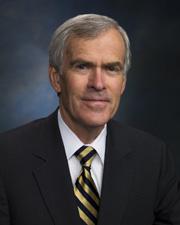 Sen. Jeff Bingaman (D-NM)
Legislative Activity
Stay on top of the latest movement without scrolling through every action
Roll call votes on amendments in Senate: Motion to table amendment SA 1418 agreed to in Senate by Yea-Nay Vote. 54 - 44. Record Vote Number: 314.
July 30, 2003
View full timeline
Roll call votes on amendments in Senate: Motion to table amendment SA 1418 agreed to in Senate by Yea-Nay Vote. 54 - 44. Record Vote Number: 314.
July 30, 2003
Considered by Senate. (consideration: CR S10173, S10214-10215, S10215-10216)
July 30, 2003
Motion to table amendment SA 1418 agreed to in Senate by Yea-Nay Vote. 54 - 44. Record Vote Number: 314.
July 30, 2003
Senate amendment submitted
July 29, 2003
Senate amendment proposed (on the floor): Amendment SA 1418 proposed by Senator Bingaman to Amendment SA 1412.(consideration: CR S10125-10133; text: CR S10125)
July 29, 2003
Amendment SA 1418 proposed by Senator Bingaman to Amendment SA 1412. (consideration: CR S10125-10133; text: CR S10125) To preserve the Federal Regulatory Commission's authority to protect the public interest prior to July 1, 2005.
July 29, 2003
Votes
1 roll call on this amendment
Text
Proposed
ENERGY POLICY ACT OF 2003--Continued

Mr. CRAIG. Mr. President, I suggest the absence of a quorum.
The PRESIDING OFFICER. The clerk will call the roll.
The assistant legislative clerk proceeded to call the roll.
Mr. FEINGOLD. Mr. President, I ask unanimous consent that the order
for the quorum call be rescinded.
The PRESIDING OFFICER. Without objection, it is so ordered.
Mr. FEINGOLD. Mr. President, I ask unanimous consent to speak as if
in morning business.
The PRESIDING OFFICER. Without objection, it is so ordered.
The Senator from Wisconsin is recognized.
Mr. FEINGOLD. I thank the Chair.
(The remarks of Mr. Feingold pertaining to the introduction of S.
1480 are located in today's Record under ``Statements on Introduced
Bills and Joint Resolutions.'')
Mr. FEINGOLD. Mr. President, I suggest the absence of a quorum.
The PRESIDING OFFICER. The clerk will call the roll.
The assistant legislative clerk proceeded to call the roll.
Mr. REID. Mr. President, I ask unanimous consent the order for the
quorum call be rescinded.
The PRESIDING OFFICER. Without objection, it is so ordered.
Mr. REID. Mr. President, there is an order floating around here on
the floor that sets forth about 7 hours of debate on these two trade
agreements, the

[[Page S10101]]

Singapore and Chilean trade agreements. Is that true?
The PRESIDING OFFICER. The order has been obtained.
Mr. REID. It has been obtained?
The PRESIDING OFFICER. That is correct.
Mr. REID. It is my understanding the Senator from California, Senator
Feinstein, has an hour under that agreement. Is that true?
The PRESIDING OFFICER. That is correct.
Mr. REID. I ask unanimous consent that Senator Feinstein be allowed
to use her hour on the trade agreements at this time.
The PRESIDING OFFICER. Without objection, it is so ordered.
The Senator from California.

The Chilean and Singaporean Free Trade Agreements

Mrs. FEINSTEIN. Mr. President, I thank the Senator from Nevada for
the courtesy of allowing me to move ahead with some additional remarks
on the Chilean and Singaporean free-trade agreements and on the
immigration policy that is attached to those agreements. I have
expressed my deep concern about the temporary entry provisions of the
free-trade agreements on which we are about to vote. I was prepared to
support the trade agreements. However, I believe the USTR has made a
terrible mistake in negotiating immigration provisions in these trade
agreements, and, thus, delving into areas of authority that should have
been left to the Congress.
I spoke to this to some extent on Friday, and I would like to speak
again today because I think this is like peeling an onion. The more you
look at it, if you look at immigration law, the more you see the major
loophole this agreement is creating.
This agreement would create new categories for nonimmigrant visas for
free-trade professionals. It would permit the admission, on its face,
of up to 5,400 professionals from Singapore and up to 1,400 from Chile
each year. That is on its face.
It would require the entry for their spouses and children, so they
could join foreign workers in the United States. That, of course, makes
it less of a temporary visa program. Those visas can be extended
indefinitely. They can be renewed year after year after year ad
infinitum. The bill would require without a numerical limit the entry
of business persons under categories that parallel three other current
visa categories: The B-1 visitor visa, the E-1 trader or investor visa,
and the L-1 intercompany transfer visa.

In fiscal year 2002, the State Department issued more than a total of
5,232,492 visas to foreign nationals under the current temporary visa
category that parallels those in the free-trade agreement--5.2 million
individuals from foreign countries who come here each year and replace
American workers in various pursuits.
How many more do we need? This legislation requires the entry of
foreign workers in a new way on L-1 visas regardless of whether they
are nationals of Singapore or Chile.
I don't think most Members realize that. You can get an L-1 visa now
under this trade agreement just if you have been employed by a Chilean
or Singaporian country. You don't have to be a citizen of that country.
This is particularly egregious, and I will explain why a little later.
The bill would permit but not require the United States to deny the
entry of a free-trade professional if his or her entry would adversely
affect the settlement of a labor dispute. It would require the United
States to submit the dispute about whether it should grant certain
individuals entry to an international tribunal. An international
tribunal for the first time that I can recall would determine now under
this treaty a sovereign right which belongs to the United States of
America.
In enacting the Trade Promotion Act, the Congress did not provide the
USTR authority to negotiate new visa categories or immigration programs
or to impose new requirements on the existing temporary entry system.
In fact, the USTR has taken that upon itself.
In negotiating these agreements, the USTR has negotiated a perpetual
visa category that we as Members will not be able to modify no matter
what the circumstances or the economic consequences may be. Employers
can renew these new employee visas each and every year under the
agreement with no limit while also bringing in every year an additional
crop of new entrants to fill up the annual numerical limits for new
visas.
This makes it possible for foreign employees entering the country on
a supposedly temporary basis at the age of 22 to remain until he or she
is ready to retire at the age of 70.
That is not what temporary visas aim to do.
In effect, by voting for these provisions we are adding to the U.S.
labor market a continuous supply of 6,800 guest workers a year in
addition to the more than 40,000 from Chile and the 30,000 from
Singapore who came in last year under the existing temporary work
categories.
In other words, this is in addition to the 50,000 workers who have
already come in from these two countries. I don't believe Members
realize that.
These workers come in without taking into account the potential
impact on U.S. workers.
By voting on this agreement, we as Members of Congress are
effectively ceding our authority to limit the duration of these visas
when it is in the national interest to do so because we can't change a
thing. We can't change a comma. We can't dot an ``i''. We can't cross a
``t''. That is fast track.
Another problematic provision--and we should be very concerned about
this--is that the unlimited L-1 visa category included in the Chile and
Singapore agreement does not require that these workers be citizens of
either Chile or Singapore. They can be from anywhere as long as they
are working for a company right now located either in Chile or
Singapore.
This means under the agreement, a Chinese or Indian or any other
country's multinational corporation with offices in Singapore, for
example, can transfer an unlimited number of Chinese or Indian
employees to the United States.
What happens if the corporation also has offices in countries hostile
to the United States or are state sponsors of terrorism?
Under these agreements, the corporation may send an unlimited number
of such nationals to the United States under the E-1 trader visa and
the L-1 intercompany transferee visa category.
In other words, these trade agreements create a major loophole
through which thousands of foreign workers can come into the country
with little scrutiny.
I don't believe there is anybody virtually in this Senate who
understands that.
This is the problem of having the USTR negotiate an immigration
agreement. They don't understand it either. And I don't think they
really understand what has been accomplished here.
Effectively, these agreements permit unlimited entry through
Singapore and Chile under the L-1 visa category for any worker
anywhere.
In negotiating these agreements, the USTR has eviscerated existing
requirements that U.S. corporations first demonstrate that there is a
shortage of domestic workers in an industry seeking foreign workers.
Every one of us knows that unemployment rates are on the rise. In
professional and technical services, it is over 6 percent. In computer
and mathematical occupations, it is 5 percent. In architecture and
engineering occupations, it is 4 percent. In informational technology,
it is 7 percent. In financial services, it is about 4 percent. In
business and professional services, it is almost 9 percent.
When there are all of these vacancies, why are we allowing new
sources of low-wage labor into this country when we are not facing a
labor shortage in any of these industries today? There is no public
interest in keeping Americans unemployed in order to accommodate new
guest worker programs that would be established by these trade
agreements. Quite the contrary. We face the highest unemployment rate
in almost a decade, and I can tell you it is high among these worker
categories as well.
I think these agreements are going to do no more than foster a race
to the bottom where American workers are forced to compete with
whatever foreign workers will accept in the lowest wage categories.
That is wrong. This trend should be stopped, not exacerbated.
In negotiating these agreements, the USTR has expanded the types of
occupations currently covered under the H-

[[Page S10102]]

1B visa to include management consultants, disaster relief claims
adjusters, physical therapists, and agricultural managers--professions
that do not require a bachelors degree. This a weakening of what are
supposed to be highly qualified and highly skilled workers. Now they
are amending this to permit a whole host of unskilled categories. You
don't even have to have a higher education to qualify to come in as a
skilled worker in a technical field.
These agreements lower the skill level in another way, too. In
negotiating the agreements, the USTR has lowered the standards for
which foreign professionals could enter the United States to work.
Under current law, H-1B professionals must exhibit--and this is a term
of art--highly specialized knowledge in the occupation for which he or
she is seeking a visa. This agreement would require the applicant only
to possess specialized knowledge. In other words, they are weakening
the requirement. You don't need to be highly specialized, just
specialized. And then for some, you don't even need to have a higher
education.
This distinction is critical because the highly specialized knowledge
criteria used under the H-1B program was designed to ensure that
employers don't abuse the program to undercut American workers in
occupations where there is no skill shortage. I assume that this is a
crucial point.
To back that up, neither the trade agreement nor the implementing
language would enable the Department of Labor to have the authority to
investigate or conduct spot checks at worker sites, as they do now with
H-1B visas, to uncover instances of U.S. worker displacement and other
labor violations pertaining to the entry of foreign workers. So what
this agreement is doing is handcuffing the Labor Department and
removing from it specific authority that it has now to go out to
investigate and to see whether the law is being abused and domestic
workers are being replaced purposefully with foreign workers.
You would say: Well, is this really necessary for them to have this
authority? The answer is absolutely. There have been labor violations
involving H-1B visas, and not a few but a lot. These violations have
jumped more than fivefold since 1998, according to the Labor
Department. Back pay awards for such employees who have been replaced
have soared by more than 10 times, jumping from about $365,000 in 1998
to over $4 million in 2002. So we know there is fraud going on. What
this bill does is just simply eliminate the regulations to eliminate
any investigation as to whether the fraud exists or not.
In response to what I have just said about the soaring awards because
of fraudulent uses of visas, Labor Department officials have stepped up
H-1B investigations. They say there really could be thousands of H-1B
workers today who don't file complaints because they fear the loss of
their visa.
In the last 5 years, Labor investigated 656 complaints involving H-1B
visas. What did they find? They found that out of 308 cases that have
become final, the Labor Department found 261 H-1B violations. That is
almost a two-thirds rate of violation. Of that number, 227 employers
owed 1,413 domestic workers who were replaced by foreign workers almost
$8 million in back wages.
This temporary work visa system gives employers tremendous power over
immigrants. More than 1 million people already are employed in the
United States under visas for skilled workers. The growing trend in H-
1B violations is proof that some companies will, in fact, violate and
have violated the worker protection laws to protect their bottom line.
This is happening now, and in a tough economy it is going to happen
more often. Those of us who are elected by workers to protect them, if
we vote for this agreement, fail to do our job because this agreement
weakens protections. The most offensive aspect of these provisions is
that the USTR has bargained away our sovereign right to set the
criteria for admitting foreign visitors and workers to our country.
Under the agreement, if Congress determines that the visa categories in
this agreement should be subject to numerical limits or labor
certification, we could well be subject to defending that decision
before an international tribunal. So an international tribunal would
decide the sovereignty of the United States of America to make these
decisions.

During a time when our country is preoccupied with the threat of
terrorism on our soil, what protection do we have to prevent
individuals from purposely utilizing and abusing this visa process?
In essence, control over employment-based visas will effectively be
taken out of the hands of Congress and placed in the hands of corporate
executives, the USTR, and countries that are parties to these types of
agreements. That is, frankly, unacceptable to me, and such proposals
should be rejected by Congress.
I don't think this Congress should relinquish its plenary authority
over immigration to any administration, whether it be Democratic or
Republican, nor to any country that is party to a trade agreement. It
is hard to imagine that against the backdrop of the highest
unemployment rate in almost a decade, this administration has
negotiated what, in essence, is a permanent guest worker program. That
is the hard fact of what is in this bill.
Today in our Nation, 15 million people are unemployed, underemployed
in part-time jobs out of economic necessity, or have given up looking
for work altogether; 9.4 million are considered officially unemployed.
In California, 1.1 million are out of jobs. The average person has been
out of work for 20 weeks, a phenomenon this country has not seen since
1948, in over 50 years.
Yet while we are faced with unprecedented unemployment, we are
negotiating and accepting a permanent guest worker program.
Beneath the aggregate unemployment numbers is an even more disturbing
trend. Unlike past instances of high unemployment, the ranks of the
jobless are increasingly populated by highly skilled, college-educated
workers. Workers who typically had little difficulty finding a new job
are becoming discouraged by their lengthy stay on the unemployment
roll.
A recent CBS news segment on the Nation's unemployed captured so
poignantly the lives behind the numbers. The Presiding Officer should
know that this CBS clip was actually done in his State. The news
footage shows a line of cars stretching out of sight down a flat two-
lane road in Logan, OH, where the jobless and struggling families were
waiting for the twice-a-month distribution of free food by the local
office of America's Second Harvest. The head of the agency said: We are
now seeing a new phenomenon. Last year's food bank donors are now this
year's food bank clients.
CBS reporter Cynthia Bowers observed:

You could call it a line of the times, because in a growing
number of American communities these days, making ends meet
means waiting for a handout.

There are many reasons for the persistent weakness in the labor
market. But I think we are making the situation worse by agreeing to
the immigration provisions set out in these trade agreements.
Increasingly, American workers have expressed fears of losing their
positions to foreign workers who are paid considerably less and whose
ability to remain in the United States is often contingent upon their
not making trouble from their employer. I must tell you, I didn't
believe this 5 or 6 years ago because I was importuned by one CEO after
another to vote to increase the quota on H-1B visas.
They all supported me, that there was no abuse. It was only when we
began to look deeply into it that we found there was abuse.
Today, more and more out-of-work technology workers are filing
complaints with the Government or going to court to protest perceived
abuses of temporary visa programs. We cannot simply blame the foreign
workers for causing Americans to lose their jobs. It is shortsighted,
behind-the-scenes policies such as these visa provisions, negotiated in
secret, without any meaningful public hearing, included in trade
agreements in small print, that invite a dependence on cheaper, more
pliable foreign labor, and thus threaten American jobs.
The scarcity of jobs has left many skilled immigrants more dependent
on their employer and less willing to quit if trouble starts. The
abuses have been particularly widespread in the high-tech industry,
which used H-1B visas to

[[Page S10103]]

bring in tens of thousands of programmers and other professionals.
Remember, it is not just these workers; there are another 5.2 million
coming in each and every year. They come in and companies seize upon
them.
Let me give you an example of testimony that is going on right now in
the Judiciary Committee in the Immigration Subcommittee. A woman named
Pat Fluno, a computer programmer and former Siemens employee, is
testifying that she and 14 of her colleagues were required to train
their foreign worker replacements before U.S. workers were laid off.
Their replacements were foreign nationals on L-1 visas. That is exactly
the visa program we are establishing in this trade agreement. They were
paid one-third the salary the U.S. workers were making. There is no
requirement that L-1 visa employers pay the prevailing wage. Ms. Fluno
was making $98,000 a year. Her replacement is making $32,000 a year.
This is Siemens, and that is what it did to 15 workers.
Unlike U.S. workers, foreign workers on L-1 visas don't pay income
tax. Ms. Fluno, before the Immigration Subcommittee of Judiciary right
now, estimates that the Federal Government and the State of Florida
would lose over $1.1 million in income taxes as a result of layoffs of
the 15 employees.
The international consulting firm that Siemens used to obtain the
foreign workers knew that the U.S. workers would be laid off, so they
did not use the H-1B visas to bring the workers in; they used the
underregulated L-1 visa to get around the existing employer protection
of the H-1B visa program. That is what we are creating more of in this
bill.
This type of abuse really should stop because if we don't stop it, it
is going to go on. Look, if you pay an American worker $98,000 and you
can bring in a technical worker and pay them $32,000, and it is OK, how
would any of our workers ever be able to own a home and raise their
kids?
Temporary professional workers are often paid less than American
workers despite requirements that they be paid prevailing wage rates.
Employers seeking to hire H-1B workers can base their prevailing wage
rates on third party salary surveys up to 2 years old. An H-1B worker
in a job since the beginning of 2003 might still be getting the 2001
prevailing rate.
I only use this because H-1B is a much more regulated program than
the L-1 visa program that is in this bill. You see how they can kind of
gerrymander this program by using out-of-date prevailing wage rates.
In December of last year, a New Jersey-based company, Pegasus
Consulting Group, was ordered to pay $231,279 in back wages to 19
former employees. Most of them were Indian nationals. The judge also
required the company to pay $40,000 in civil money penalties for
violating the prevailing wage provisions of the H-1B visa rules. The
judge found that some of the employees had gone several months without
being paid. So this is happening today.
Our Nation's growing dependence on foreign workers is not--and I
originally thought it was--spurred by a lack of skills or education in
the United States. In June of this year, an estimated 1.286 million
bachelor's degrees were conferred all across the United States, along
with 436,000 master's degrees, 80,400 professional degrees, and 46,700
doctoral degrees. In addition, an estimated 633,000 associate's degrees
were awarded. We have told, and continue to tell, our young people to
acquire more education, to get a skill, to remain competitive in the
job market, and they are doing so.
If an advanced degree, years of experience, and a good work ethic are
not enough to land a job and to keep a job, what does the future hold
for the American worker? Now, for some, the answer to that question is
really pretty tragic.
Just in April of this year, Kevin Flanagan, a 41-year-old software
programmer, took his life in the parking lot of Bank of America's
Concord Technology Center on the afternoon he was told he lost his job.
His father said it was the ``straw that broke the camel's back.''
Flanagan knew that his employer, Bank of America Corporation, as other
corporations weathering the economic storm, was cutting high-tech jobs
and sending them overseas. He applied for other jobs at the bank but
didn't receive responses. His father said: ``He felt like he was
fighting a large corporation that pretty much didn't care.''
Kevin Flanagan's death, which is a suicide, underscores the anxiety
that has swelled among technology workers throughout this land, at the
Bank of America in particular, and elsewhere, as more businesses shift
high-tech jobs to foreign workers, even as they cut those jobs in the
United States. To add insult to injury, some employers are requiring
U.S. workers to train their replacements before they are laid off, and
then they see where their replacement worker earns one-third the
salary.
So I don't think we should gamble with the lives and livelihoods of
American workers with an agreement the consequences of which are so
problematic. I really find expanding the least regulated of all the
visa categories at a time of economic distress in the United States, at
a time when we have so many of our own highly skilled domestic workers
out of work and looking for a job, somewhat cynical.
To do this in secret, not do it by virtue of lawmakers who are
elected, who know their States, who hold hearings, and then make
adjustments to visas is really stealth and very ill advised.
We should never use immigration law as a bargaining chip to negotiate
bad trade deals. We should never have offered visas to Chile and
Singapore as part of these trade deals, and we should not trade
American jobs as part of a free-trade agreement. That is what we are
doing in this trade agreement.
Bear in mind, we already have tens of thousands of workers, highly
skilled workers, coming in from Chile and Singapore every year under
the H-1B visa. What is cynical here is that the L-1 visa does not have
the protections the H-1B visa has, and the Labor Department cannot go
out and do an investigation and, therefore, cannot certify that no
American worker is being replaced in his or her job. So I have to
accept that the reason they are doing the L-1 visa is because they want
to do just that: replace American workers with foreign workers.
Remember, you can have a Chilean-owned company or Singaporean-owned
company, I believe, not necessarily in Singapore, that can qualify
under this agreement.
The fast-track process should not undermine Congress's authority
under the Constitution, and that is what this agreement does. This is a
bad trade bill, a bad precedent, and if this Congress does not stand up
for its right to protect the American people, who will?
We asked in the Judiciary Committee for more time. We were denied
more time. We asked to send this bill back to the administration and
ask them to sever the immigration provisions from the trade provisions,
and we were refused in our request. I do not think because immigration
law is complicated and every visa program has with it a different set
of rules, regulations, procedures, and protocols and that creating more
of one of the weakest, in terms of protecting American workers at a
time when American workers need the most protection because of rampant
unemployment--the highest unemployment in the 10 years I certainly have
been in the Senate--seems to me it is not timely, it is not
economically productive except for the bottom line of some companies.
I believe in these remarks I have shown where many of these visas are
being misused. I have shown where there is fraud, where there have been
back payments made. And I have shown where already without this
program, year in, year out, 5.2 million technical foreign workers come
into this country without this addition.
I conclude by saying that I think the real angst, if I may use that
word, of this bill is for us to accept the abdication of our
constitutional authority and power over immigration law. I cannot do
that because I represent a very large State that is going to be
affected by this trade agreement, and a State where we have 1,100,000
people out of work, a State where the unemployment insurance trust fund
is going to be in deficit at the end of next year and workers will not
get anything when unemployed.
I think it is not good public policy at a time of economic
deprivation for millions of Americans to be bringing in workers who
will take a third of the

[[Page S10104]]

salary of their American counterpart, displace that counterpart, not
complain and to, by law, say to the Department of Labor of the United
States of America: You cannot investigate any one of these complaints,
and you cannot make a determination whether, in fact, an American
worker has been replaced unfairly by a foreign worker. We should not do
that.
I thank the Chair. I yield the floor.

Amendment No. 1386, As Modified

Mr. ALLEN. Mr. President, I ask unanimous consent to speak for 5
minutes in support of the Bond-Levin amendment.
Mr. REID. Mr. President, under the order now in effect, we have to
take somebody's time.
The PRESIDING OFFICER. The Senator is asking consent.
Mr. REID. To take whose time?
The PRESIDING OFFICER. To have his own time.
Mr. REID. I have no objection.
The PRESIDING OFFICER. Without objection, it is so ordered.
Mr. ALLEN. Mr. President, I thank the Senator from Nevada.
I rise today to join my colleagues in support of the Bond-Levin fuel
economy amendment that reasonably improves safety, fuel economy, and
environmental conservation as mutual goals. I am pleased to join with a
bipartisan list of Senators as a sponsor of this amendment that will
ensure that our public policy in America does not compromise common
sense, the free market, consumer choice, safety, or American workers. I
wish to touch on some of these key issues.
Insofar as safety is concerned, estimates from the Harvard Center for
Risk Analysis, Journal of Law and Economics, and Regulation Magazine
have shown that between 2,000 and 4,500 deaths occur each year as a
result of our current CAFE standards.
The reality is very logical: With smaller, lighter cars there is a
higher risk of injury when an accident occurs. The issue of vehicle
cost also affects consumers. The National Academy of Sciences concluded
that CAFE standards have raised prices by as much as $2,500 for cars
and $2,750 for pickup trucks and SUVs.
Clearly, if the opposition's amendments are adopted rather than the
commonsense, reasonable approach that is proposed by Senator Bond and
Senator Levin, we would have higher prices. With higher prices, what do
we get? Obviously, if fewer people can afford to purchase new vehicles,
sales are reduced, which translates into fewer jobs in the automobile
industry.
The job loss issue is not theoretical. I have met with United Auto
Workers in Virginia and learned that even a 1-mile-per-gallon increase
in CAFE standards would result in the loss of approximately 10 percent
of auto manufacturing jobs. The last thing I want to do is go down to
the Ford F-150 assembly plant in Norfolk, Virginia and have the 2,000-
plus employees line up and say to them: One out of every 10 of you is
going to lose a job because of what some officious people in Congress
want to impose on America's auto industry and consumers.
I do not want to do the same thing with the GM Powertrain facility in
Fredericksburg-Spotsylvania County and tell those employees: One out of
10 of you will lose your job because certain elected officials in
Washington are taking away your ability to put food on the table for
your families.
The employment of over 116,000 Virginians is dependent on the
automobile industry, and congressionally mandated unreasonable
increases in CAFE standards will put these jobs in jeopardy.
The great success of America as a world economic leader is based on
freedom and the ability of the free market and consumer choice to
prevail in the marketplace.
Recently, my friend and fellow colleague from Missouri, Senator Bond,
used a clever reference to a recent movie to describe the other side's
approach to CAFE mandates, calling the approach ``too fast, too
furious.''
I also want to draw on Hollywood and the recent success of Arnold
Schwarzenegger's latest ``Terminator'' movie and point out that the
other side's unreasonable and unscientific approach terminates jobs,
terminates safety, terminates consumer choice and terminates common
sense.
American's already have the choice of what vehicles they wish to
drive. There are already vehicles available that get 40, 45, 50-plus
miles a gallon. If Americans want smaller, lighter vehicles, they are
available. It is important that we use sound science and common sense
and trust free people to make the right choices for themselves, their
families, and the environment.
The Bond-Levin amendment states that auto experts at the National
Highway Transportation Safety Administration and the auto and safety
industry ought to have the ability to determine the best methods of
achieving these goals. The CAFE numbers used by the other side, in our
view, are arbitrary and truly based on political science as opposed to
sound science.
The Bond-Levin amendment increases the use of incentives to industry
and consumers alike rather than punitive market distorting mandates
that would decimate an industry responsible for approximately 3 percent
of our gross domestic product and employs about 2\1/2\ percent of all
Americans.
Also, it is a very forward looking approach in that it provides tax
incentives for research and development of advanced technological
innovation in fuel cells, hybrids, and electric vehicles.
It is my view that Congress should be in the business of providing
incentives to people and manufacturers for innovation that do not
compromise safety, do not cause the loss of American jobs, and do not
preclude individual choice in the marketplace so that people can make
their own decisions for themselves and their families.
I ask my colleagues to support the Bond-Levin amendment. We should
trust free people to make decisions for the health, safety, comfort,
and well-being of their families. Most importantly, we ought to make
sure that America stays strong and competitive.
When we look at our auto industry, our strongest market base is in
SUVs, minivans, and pickup trucks, which would be harmed by the
opposition's amendments. So let us stand strong for American workers,
as well as our families and free market, and support the Bond-Levin
amendment.
I ask unanimous consent that the text of a letter from the American
International Automobile Dealers Association in support of the Bond-
Levin amendment be printed in the Record.
There being no objection, the material was ordered to be printed in
the Record, as follows:

American International

Automobile Dealers Association,

Alexandria, VA, July 25, 2003.
Hon. George Allen,
U.S. Senate, Russell Senate Office Building, Washington, DC.
Dear Senator Allen: On behalf of the American International
Automobile Dealers Association (AIADA), I am writing to urge
your support of the proposed amendment by Senators Bond (R-
MO) and Levin (D-MI) to allow a regulatory approach to the
raising of CAFE standards. AIADA is the national trade
association representing over 10,000 American international
nameplate automobile dealers and the 500,000 American workers
who sell and service some of the finest automobiles and
trucks available in the world.
The National Highway Traffic Administration (NHTSA)
recently issued a final rule on April 1, 2003 aggressively
increasing CAFE standards for light-duty trucks. NHTSA
increased the light-truck CAFE standard from the current
standard of 20.7 mpg to 21.0 mpg in model year (MY) 2005,
21.6 mpg for MY 2006, and 22.2 for MY 2007, the biggest
increase in over twenty years. The standard applies to pickup
trucks, mini-vans, and sport utility vehicles. NHTSA's charge
was to set the light-truck CAFE standard at the ``maximum
technologically feasible level'' while weighing the impact of
increasing CAFE standards against a host of criteria,
including vehicle safety, employment, and consumer choice,
among other factors. NHTSA allows a process to increase CAFE
standards that is based on sound science.
AIADA believes the regulatory process is the best way to
increase standards in light of changing technology and market
conditions. The Bond-Levin amendment establishes new
standards through the regulatory process therefore ensuring
the consideration of key factors when increasing CAFE
standards.
Lastly, consumer choice should not be jeopardized to meet
new federal standards. Consumer demand drives the automobile
retailing market. A dramatic increase in CAFE standards could
eliminate some of the most popular vehicles from the
marketplace.
AIADA believes the Bond-Levin amendment is the best
solution to achieving increased fuel economy without
jeopardizing consumer choice and safety. AIADA opposes any
other CAFE amendments that propose to legislatively increase
current CAFE

[[Page S10105]]

standards. We ask you to support the Bond-Levin amendment as
part of a national comprehensive energy policy.
Sincerely,
Marianne McInerney,
President.

Mr. ALLEN. I yield the floor.
Mr. VOINOVICH. Mr. President, as cochairman of the Senate Auto
Caucus, I am pleased to join with my colleagues, Senator Bond and
Senator Levin, as a cosponsor of this CAFE standards amendment to the
energy bill. This is truly an important issue; one that impacts upon
our Nation's economy, our environment, and the safety of the traveling
public.
There is no doubt that each of us wants the automobile industry to
make cars, trucks, SUVs, and minivans that are as energy efficient as
possible. Not only is it good for the environment, it also means more
money in the pocket of the American consumer because they will spend
less at the gas pump.
However, I am deeply concerned that the extreme Corporate Average
Fuel Economy standard supported by some of my colleagues will have a
devastating effect on public safety, as well as put a severe crimp in
the manufacturing base of my State of Ohio which is already under
duress because of high natural gas costs, litigation, health care
costs, and competition from overseas.
Two years ago, new vehicle sales of trucks, SUVs and minivans
outpaced the sale of automobiles for the first time in American
history. This remarkable result can be attributed to a number of
factors, but one reason that is often cited is the fact that these
vehicles are seen as safer.
Another concern is that an arbitrary standard would have a
devastating effect on jobs. Ohio is the No. two automotive
manufacturing State in America, employing more than 630,000 people
either directly or indirectly. I have heard from a number of these men
and women whose livelihood depends on the auto industry and who are
frankly very worried about their future.
There is genuine concern that a provision mandating an arbitrary
standard could cause a serious disruption and shifting in the auto
industry resulting in the loss of tens of thousands of jobs across the
Nation.
For example, DaimlerChrysler's fleet of light trucks makes up more
than 50 percent of their entire fleet. The company manufactures the
Jeep Liberty and the Jeep Wrangler in Toledo, OH and employs
approximately 5,200 workers at this plant. If an arbitrary CAFE
provision is mandated that requires a shifting of vehicles
manufactured, this plant could close because Chrysler would be forced
to redistribute their manufacturing base to build more small, high-
mileage cars.
The Bond-Levin amendment is a rational proposal that will keep
workers both in Ohio and nationwide working, allowing these men and
women to continue to take care of their families and educate their
children while also encouraging greater fuel efficiency and safer
vehicles.
This amendment calls for the Department of Transportation to increase
fuel economy standards based on several factors including the
following: technological feasibility; economic practicability; the need
to conserve energy; the desirability of reducing U.S. dependence on
foreign oil; the effect on motor vehicle safety; the effects of
increased fuel economy on air quality; and the effect on U.S.
employment.
I believe this is a much more responsible approach that will improve
the fuel efficiency of our Nation's vehicles while also protecting
public safety and our nation's economic security.
This amendment also requires that the Department of Transportation
complete the rulemaking process that would increase fuel efficiency
standards within 2\1/2\ years. If the administration doesn't act within
the required timeframe, Congress will act, under expedited procedures,
to pass legislation mandating an increase in fuel economy standards
consistent with the same criteria that the administration must
consider.
The amendment will also increase the market for alternative powered
and hybrid vehicles by mandating that the Federal Government, where
feasible, purchase alternative powered and hybrid vehicles.
I believe that this guaranteed market will encourage the auto
industry to continue to increase their investment in research and
development with an eye towards making alternative fuel and hybrid
vehicles more affordable, available and commercially appealing to the
average consumer.
As a matter of fact, I have ridden in a hybrid manufactured by
DaimlerChrysler, and I have driven a fuel cell automobile manufactured
by General Motors. I firmly believe that my children and grandchildren
will one day be driving automobiles that run on hydrogen and give off
only water. However, it will take time for the technology that makes
these vehicles possible to be cost-effective and for these vehicles to
be marketable.
Until then, truck, SUV, and minivan demand is not expected to
decrease anytime soon. Automakers that are meeting this demand will
have to manufacture and sell a high-gas mileage vehicle that likely
does not exist now. This will only increase prices for the safe
vehicles America wants.
I urge my colleagues to support the Bond-Levin amendment. It meets
our environmental, safety and economic needs in a balanced and
responsible way, contributing to the continued and needed harmonization
of our energy and environmental policies.
The PRESIDING OFFICER. The Senator from Nevada.
Mr. REID. Mr. President, pending are the Durbin amendment, the Levin
amendment, another Durbin amendment, and the Campbell amendment. I ask
unanimous consent that the Feinstein CAFE amendment be the next
Democratic amendment in order. I recognize that the right of first
recognition comes on the other side. I want there to be an agreement
though that the next amendment we would offer would be that of Senator
Feinstein dealing with CAFE.
The PRESIDING OFFICER. Is there objection?
Mr. LEVIN. Reserving the right to object.
Mr. ALLEN. Objection.
Mr. LEVIN. We object.
The PRESIDING OFFICER. Objection is heard.
The Senator from Michigan.
Mr. LEVIN. Mr. President, I rise in support of the Bond-Levin
amendment. I ask that Senator Mikulski be added as a cosponsor to my
amendment.
The PRESIDING OFFICER. Without objection, it is so ordered.
Mr. LEVIN. Mr. President, I rise in support of the Bond-Levin
amendment and in opposition to the Durbin amendment. I will take about
8 or 9 minutes to lay out some of the differences between the two
amendments. There are some very key differences.
First, our amendment, the Bond-Levin amendment, employs positive
incentives to promote the leap-ahead technologies which are so critical
if we are going to make significant improvements in fuel economy. We do
this in a number of ways right in this amendment, including the
research and development part of this amendment where we authorize a
significant increase in the funds for the Department of Energy to
develop advanced hybrid vehicles, where we provide significant funds
for the Department of Energy to work collaboratively with industry to
research and develop clean diesel technologies, and a number of other
ways.
In a separate amendment, dealing with the tax side, there will be an
effort made to provide some additional incentives in that area as well.
In the body of the Bond-Levin amendment, we will be promoting the
leap-ahead technology development by using the purchasing power of the
Government to buy the hybrids which are going to be made available in
the next few years. Since Government purchases a significant number of
vehicles, it is essential that we use that purchasing power to acquire
those new vehicles which will create a demand for those vehicles and
help to commercialize them as well.
We require the Government purchase of hybrid trucks for our fleet of
light trucks that are not covered by the Energy Policy Act. So there is
no conflict between what we do in this bill and the Energy Policy Act
itself.
There is another major difference between our approach and the
approach in the Durbin amendment. What we do is we direct NHTSA, the
Department of Transportation, to raise the fuel economy standards but
we do not pick an

[[Page S10106]]

arbitrary number to be reached. Instead, we set forth a series of
factors which we want NHTSA, the Department of Transportation, the
agency that has the expertise to do this and has done this and has been
given that responsibility historically to set these standards, we lay
out a number of criteria which we want them to consider, including what
technologies might be available, which are emerging, what will be the
cost of those technologies, what are the safety considerations, what
are the job considerations, what are the air quality considerations,
what will be the savings in terms of fuel, including imported oil. A
whole host of criteria are set out which they should consider but which
are not at all considered by selecting an arbitrary number and simply
plugging that into a law.

To pick one factor which is real, and that is the safety factor, the
National Academy of Sciences, in its report, found that in just the 1-
year study, which was 1993, the effect of CAFE, which was already in
law, was the death of between 1,300 and 2,600 people. They also found
that between 13,000 and 26,000 additional moderate to critical injuries
occurred because the CAFE standard which had been put in law resulted
in down weighting and downsizing of vehicles.
Should we consider safety? Should someone consider safety? I would
hope so. Should that be a factor which should be looked at in the
rulemaking process? I would hope so, among all the other factors.
Saving fuel is important, and our amendment does that. It will lead
to fuel savings but we do it in a very different way. Instead of
selecting an arbitrary number, a very high number in the Durbin
amendment, 40 miles per gallon, we direct NHTSA to use the various
relevant factors to reach a conclusion, not just what is
technologically achievable regardless of cost but what is the cost,
what is the cost benefit, and all the other factors, including safety
and impact on jobs.
There is another major difference between our approach and the Durbin
amendment. It is not just that the Durbin amendment picks a number, a
very high number, for this new CAFE standard, but in doing so, it uses
the current structure. That so-called CAFE structure limits the
production and sale of domestic SUVs of the same efficiency as imported
SUVs, on which it has far less impact.
This is a critical issue. It is an issue which is not adequately
understood by colleagues because it is very complicated. The very
fundamental CAFE structure, because it was designed to look at the
entire fleet instead of dividing the fleet into different
classifications by weight, has an inherently discriminatory impact on
those companies which have traditionally produced the larger vehicle.
It has favored the imports because those companies have tended to
produce the lighter weight vehicles, the vehicles at the lighter end of
the continuum.
I quote the National Academy of Sciences because they have made a
statement which I hope all of our colleagues would pause to consider
before voting for the Durbin amendment. This is what they said in a
January 2002 report:

. . . one concept of equity among manufacturers requires
equal treatment of equivalent vehicles made by different
manufacturers.

Now the key words:

The current CAFE standards fail this test.

This is something which is so fundamental to American jobs that it is
critical all of us take some time to read that portion of the National
Academy of Sciences study and to fully soak in its impact as to what it
is saying. Equal treatment of equivalent vehicles made by different
manufacturers is not achieved by CAFE.
By piling an arbitrary number on that CAFE structure, as the Durbin
amendment does, it worsens the situation. The equivalent vehicles of
equal efficiency are treated differently depending on the manufacturer,
and the difference works against the domestic manufacturer; that is,
jobs which are lost with no benefit to the air at all.
There is no reason I can conceive as to why we would want to say it
is OK to drive a 17-miles-per-gallon imported SUV, but it is not OK to
drive a 17-miles-per-gallon domestic SUV. It does nothing for the air
to reach that result. Yet that is what the current CAFE structure leads
to.
I have one other quote from the National Academy of Sciences report.

A policy decision to simply increase the standard for
light-duty trucks to the same level as for passenger cars
would operate in this inequitable manner. Some manufacturers
have concentrated their production in light-duty trucks while
others have concentrated production in passenger cars. But
since trucks tend to be heavier than cars and are more likely
to have attributes, such as four-wheel drive, that reduce
fuel economy, those manufacturers whose production was
concentrated in light-duty trucks would be financially
penalized relative to those manufacturers whose production
was concentrated in cars. Such a policy decision would impose
unequal costs on otherwise similarly situated manufacturers.

I don't understand why we would even think about treating similar
vehicles of similar fuel efficiency in a different way, particularly
when that works against the domestic manufacturers.
The Durbin amendment compounds this problem by raising the SUV level,
at least in the case of the minivans and SUVs themselves, to the same
requirement as standard vehicles. In doing so, it compounds the
problem, the discriminatory effect, of the CAFE structure. I hope for
that reason and the other reasons I have mentioned that we will defeat
the Durbin amendment and adopt an alternative approach which focuses
more on positive incentives to achieve fuel economy, which is what the
Bond-Levin approach does and which also focuses more on the rulemaking
authority, the efficiency, the experience, and the fairness of the
Department of Transportation that would look at all of the factors
which should go into the rulemaking rather than picking an arbitrary
number.
I yield the floor.
Mr. BOND. Mr. President, I have conferred with the minority whip.
Some of our colleagues are in a meeting of the Energy and Natural
Resources Committee. I urge those who have time who are not on the
Energy and Natural Resources Committee to follow the distinguished
Senators from Michigan and take their time and express their views so
we may get on with this debate. We hope to have votes on these very
important amendments.
Mr. REID. Mr. President, I will yield in a brief minute to the junior
Senator from Michigan. While the acting leader is here, I want the
record to reflect we are doing everything we can to cooperate in the
consideration of this Energy bill. There was an hour we could have done
nothing because there was no one here to do anything because they are
meeting at the White House. In an effort to expedite matters, there was
an order pending on the Singapore and Chile trade agreements. There are
7 hours of debate in an order here before we vote on that; we used an
hour of that time even though that was not anything we had to do.
If we were trying to ``slow walk,'' as was said here today, that
would have been an easy way to slow walk. The Senator from California
came to the floor and used her hour.
The record should reflect this Energy bill is a very complex bill.
People in good faith have different views on the legislation. As I said
this morning, there is not a single Democratic Senator who does not
want an Energy bill.
Mr. BOND. I thank the minority whip for his words. Obviously, there
are times when other discussions have to go forward on the floor, and
it was clear that the Senator from California had time. There will be
many other areas of accommodation, setting aside amendments, to move on
to the electricity amendment, for example.
We appreciate the cooperation of both sides of the aisle. I simply
urge those who are not committed to the energy meeting to bring their
positions to the floor and let us hear them.
The PRESIDING OFFICER (Mr. Chafee). The Senator from Michigan.
Ms. STABENOW. Mr. President, I rise today to support the Bond-Levin
amendment and I am very pleased to be a cosponsor. I commend both my
colleague from Missouri and my senior Senator from Michigan for their
work on this issue, and I certainly commend the Senator from Michigan
for his statement. He presented the argument very well.
I also rise to oppose the Durbin amendment. I begin by saying this
debate is not about whether we should increase vehicle fuel efficiency.
That is

[[Page S10107]]

not what this is about. I agree with Senator Durbin about the
importance of creating more fuel-efficient cars and SUVs, not only
because it decreases our consumption of oil and our dependence on
foreign oil but because of the important benefits it has to our
environment.
This debate is about what is the best way to increase fuel efficiency
without punishing U.S. manufacturers and American jobs. We have made
significant progress since last year's debate. NHTSA is moving forward
with increasing CAFE standards. This past April, it announced its final
rulemaking for light trucks for model years 2005 through 2007. This
will be the largest CAFE increase in 20 years and
NHTSA has already announced plans to continue with rulemaking for the
2008 model year and beyond, later this year.
While this progress is extremely important, there are significant
problems with the current CAFE standards and the way they are
calculated. For example, the regulations continue to ignore such basic
factors as the adverse competitive impacts of CAFE on our U.S.
automakers, impacts on U.S. employment, and technology costs and
necessary lead-time--which is very important.
The Bond-Levin amendment addresses these problems and builds on
Senator Landrieu's amendment to reduce our dependence on foreign oil by
1 million barrels a day, an amendment I supported.
However, the Durbin amendment not only fails to fix the problems with
the current CAFE system, but it makes them significantly worse.
Despite producing vehicles that are as fuel efficient, and often more
fuel efficient than their foreign counterparts, our U.S. automakers
continue to have a lower CAFE average then their foreign competitors.
Why? That doesn't make any sense. Because the CAFE system does not
reflect the real fuel economy of the cars and trucks in an automaker's
fleet; instead it really reflects what vehicles consumers buy.
Therefore, an automaker can increase the fuel efficiency of all of
its vehicles but still have a decline CAFE average depending on what
models sell the most.
For example, over the past 4 years, GM has introduced new car and
light truck models that are more fuel efficient than the models that
they replaced, but GM's light truck CAFE has actually gone down.
In model year 2001, GM's combined car and truck CAFE average was 24.2
miles per gallon. For model year 2002, GM made fuel economy
improvements to 18 different vehicles in its fleet, including SUVs and
pickup trucks.
Some of these vehicles had 18 percent, 17 percent, 10 percent
improvements in fuel economy over the previous year's models. The
Chevrolet Silverado, a full size pickup truck, had over a 7 percent
improvement on fuel economy.
But do you know what GM's combined car and truck CAFE average was for
model year 2002? It was 23.4 miles per gallon, a 0.8 mile per gallon
decrease from 2001. GM improved the fuel economy of 18 vehicles and
their CAFE actually went down.
How does a system that does not reflect actual improvements in
vehicle fuel economy and penalizes automakers for doing the right thing
make sense? That is what this debate is about.
During last year's debate on this issue, we discussed in great depth
the need for building a real federal partnership with our automakers to
develop cleaner, advanced technologies, over arbitrarily picking higher
CAFE numbers. The Senate resoundingly supported the first approach with
a vote of 62-38 for last year's Levin-Bond amendment which I was
pleased to cosponsor.
The Durbin amendment, however, would increase the CAFE standard for
passenger cars from 27.5 miles per gallon to 40 miles per gallon--a 45
percent increase--in only 10 years. Incidentally, excluding hybrid and
diesel vehicles, there are no cars on the market today that would meet
this requirement.
It would also shift SUVs into the passenger car category, requiring
SUVs that currently have a 20.7 mile per gallon CAFE standard, to
double their fuel efficiency and meet a 40 mile per gallon standard.
That would require an almost 100 percent CAFE increase for SUVs in just
10 years.
This amendment will have a disproportionately negative impact on our
Big Three automakers, since they make a higher proportion of SUVs and
pick up trucks than passenger cars. Furthermore, this CAFE proposal
will not guarantee a more fuel efficient SUV, but it will guarantee
that the SUV will not be made by an American auto company. How does
that make sense?
It is also important to remember that the 40 miles per gallon number
in this amendment is not anywhere in the National Academy of Science's
2001 report on CAFE.
Even under the most optimistic scenarios in the NAS report, which
assume that consumers are willing to recover the higher costs of the
technology over a 14 year period instead of a 3 year period and assume
``low'' technology costs, the highest projected level for any car
within the 10-15 year timeframe, is 38.9 miles per gallon and that is
for subcompact passenger cars.
And that is less than 40.
So if you assume that everyone gives up the SUV, gives up the truck,
gives up the midsize car even, and goes to a subcompact passenger car,
even if we all did that, we would not be able to reach the number in
the Durbin amendment.
This amendment sets a CAFE number that according to the experts at
NAS, not even the smallest passenger car could meet today.
The Bond-Levin amendment increases vehicle fuel efficiency without
placing anticompetitive restrictions on our U.S. automakers. The
amendment looks to the future, and provides the market incentives and
investment in developing technologies that will really revolutionize
the automobile industry.
The amendment directs the NHTSA to complete a rulemaking to increase
fuel efficiency for passenger cars within the next 30 months, and
standards for model year 2008 and beyond for light trucks within the
next 32 months, but it also requires NHTSA to consider the flaws in the
current CAFE system for this rulemaking.
We need to let the experts at NHTSA continue to do their job. And
NHTSA has already moved forward by announcing the recent regulations
for light trucks, the largest CAFE increase in 20 years.
Congress also needs to help automakers move in the right direction,
instead of pulling them in the wrong one. Our automakers have already
invested millions of dollars in developing cleaner, better
technologies, and these investments are starting to pay off for the
American consumer.
For example, a hybrid electric version of the GM Sierra full size
pickup truck is going into production next year. Ford is currently
developing a hybrid Ford Escape SUV which will be capable of being
driven more than 500 miles on a single tank of gasoline.
In addition to these great technological developments, automakers
have been working on fuel cell vehicles which could revolutionize the
automobile sector within the next 15 years.
The Durbin amendment will force automakers to divert funding and
research away from these important technological advancements and make
meeting these incremental CAFE increases a funding and research
priority. The Durbin amendment also locks the automakers into a rigid
fuel efficiency plan for the next 10 years, setting back the progress
they should be making on these important technologies.
Instead of placing restrictions on what our automakers produce, we
should be looking for ways to help them introduce these better, cleaner
technologies.
The Bond-Levin amendment includes incentives such as federal fleet
purchase and alternative fuels requirements and a real federal
investment in hybrid and clean diesel research and development.
These incentives will help create and build market demand for the
more fuel efficient hybrid, electric or fuel cell vehicles, instead of
locking automakers into costly incremental CAFE increases.
I urge my colleagues to vote for Bond-Levin-Domenici-Stabenow
amendment and support increased fuel efficiency and a vibrant,
economically healthy U.S. auto industry.
I yield the floor.

[[Page S10108]]

The PRESIDING OFFICER. The Senator from New Jersey.
Mr. LAUTENBERG. Mr. President, I rise to support the Durbin amendment
to raise the fuel economy standard and close the SUV loophole. I
consider this truly bipartisan because I disagree with Democrats as
well as our Republican friends. But I feel compelled to bring a problem
to the public with which we have to deal.
I think it is fair to say that this amendment strikes a reasonable
note in what is too often a contentious debate.
Today, 18 years after the first Corporate Average Fuel Economy
standards were implemented, the standards for cars, trucks, and SUVs
remain unchanged.
We are running in place and a major reason is that when CAFE
standards were first required in 1975, light trucks made up just 20
percent of the market and were used mostly for work, not for
negotiating congested urban streets.
But that was a quarter century ago. Today, light trucks--a category
that includes SUVs and minivans--represent half of all vehicles sold.
SUVs produce 48 percent more smogforming exhaust and 44 percent more
greenhouse gases than cars.
Today's SUVs are not light trucks. They are passenger vehicles and we
should regulate them as such.
The impact of regulating SUVs as passenger vehicles, instead of
trucks, would be impressive: we would save more than 40 billion gallons
of gasoline by 2010--an average of 6 to 7 billion gallons a year.
By updating our regulations to reflect today's driving realities
consumers would also save $7 billion at the pump during that same
period, according to the Union of Concerned Scientists.
Another reason to raise CAFE standards is global warming.
The U.S. transportation sector is responsible for nearly one-third of
all U.S. greenhouse gas emissions.
Since 1975, the miles traveled by vehicles have skyrocketed by 150
percent.
Higher CAFE standards are essential to cleaning up the air of our
Nation's metropolitan areas and in protecting the health of Americans--
especially the health of our young and our elderly who are most
vulnerable.
The Durbin amendment provides until 2015 to set the CAFE standard to
40 miles per gallon.
So this amendment is reasonable, it is doable, and it is the right
step toward reducing our dependence on foreign oil.
But there are a few standard myths invoked by opponents of better
fuel economy standards that could prevent some of our colleagues from
supporting this amendment. I would like to try to straighten that out.
For example, we usually hear that jobs will be lost. Detroit worries
that requiring better mileage standards will hurt car sales and lead to
job losses.
But I submit that by their insistence on maintaining a decades-old
status quo, American car manufacturers are stuck in reverse.
Instead of improving fuel economy, we have just hit a 22-year low.
The Big Three have demonstrated considerable skill in improving
everything about American vehicles--except for their fuel economy.
It is that backward thinking that will actually hurt their businesses
and lead to job losses.
EPA's Green Vehicle Guide for 2003 models revealed that out of the
top 75 most fuel efficient vehicles, there were only four American
models--only four! We can do better than that!
Another claim often heard is that lighter cars will lead to more
highway deaths.
I submit this is a disingenuous and specious scare tactic.
In fact, a University of Michigan study found that based on deaths
per million vehicles sold, SUVs are more dangerous than most types of
cars on the road.
Contrary to conventional wisdom, the study went on to say that many
small cars have lower total mortality rates than SUVs.
In other words, vehicle weight does not necessarily determine a
vehicle's overall safety performance.
The Big Three insist that they are victims of ``consumer choice,''
that they only give American car buyers what they demand.
But while Americans like the convenience of an SUV, they certainly
don't like to spend $45 or $50 filling the tank once or twice a week.
Americans want fuel-efficient automobiles which save them money at
the pump.
The facts are clear. For the health of Americans, for environmental
protection, for our energy security and for our pocketbooks, I urge my
colleagues to close the SUV loophole and raise the bar for CAFE
standards by voting for the Durbin amendment.
I also not once again the fact that there is a sufficient period of
time put out there for these standards to be met.
I yield the floor.
Mr. FEINGOLD. Mr. President, I am voting in favor of the Bond-Levin
Amendment, and I want to explain my views in detail. Fuel efficiency is
a critically important issue for our country, for my home State of
Wisconsin, and for our future. I remain committed to the goal that
significant improvements in automobile and light truck fuel efficiency
can be achieved over an appropriate time frame. Some will argue that my
vote for Levin-Bond is a vote against increasing Corporate Average Fuel
Economy, CAFE, standards; I do not share that view. The Bond-Levin
amendment seeks to renew the Department of Transportation's role in
setting CAFE standards acting through the National Highway Traffic
Safety Administration, NHTSA. It requires NHTSA to set new standards by
a time certain. If Congress does not act today to try to restore
normalcy to the NHTSA process, Congress will always either block or act
to set CAFE standards, every 20 years or so, when the political will is
sufficient to do so. It will never become part of the normal process of
reviewing and incrementally improving fuel efficiency for automobiles,
as Congress originally intended when it passed the CAFE law in the
1970s.
As I did in the debate on last year's energy bill, I am committing
myself to a consistent position on CAFE. Other interests have not done
so. With my vote, I am affirming my past position, and I want to
explain the evolution of that position.
Months prior to the midterm elections in 1994, NHTSA published a
notice of possible adjustment to the fuel economy standards for trucks
before the end of the decade. The following year, however, the House-
passed version of the fiscal year 1996 Department of Transportation
Appropriations bill prohibited the use of authorized funds to
promulgate any CAFE rules. The Senate version did not include the
language, but it was restored in conference. Much the same scenario
occurred in the second session of the 104th and the first session of
the 105th Congresses. In both those sessions, a similar rider was
passed by the House and not by the Senate, but included by the
conferees and enacted. However, the growth in gasoline consumption and
the size of the light-duty truck fleet were concerns cited behind
introduction in the Senate of an amendment to the bill expressing the
Sense of the Senate that the conferees should not agree to the House-
passed rider for fiscal year 2000. The amendment, sponsored by the
former Senator from Washington, Mr. Gorton, and the Senator from
California, Mrs. Feinstein, was defeated in the Senate on September 15,
1999 by a vote of 55-40 and the rider was once again enacted into law.
As I stated on the Senate floor in the debates on the CAFE rider on
June 15, 2000, my vote was about ``Congress getting out of the way and
letting a federal agency meet the requirements of federal law
originally imposed by Congress.'' I supported removing the rider
because I was concerned that Congress had blocked NHTSA from meeting
its legal duty to evaluate whether there is a need to modify fuel
economy standards by legislative rider.
As I made clear then, I have made no determination about what fuel
economy standards should be, though I do think that additional
increases are possible, and that the recent rulemaking affirms that
view. NHTSA has the authority to set new standards for a given model
year taking into account several factors: technological feasibility,
economic practicability, other vehicle standards such as those for
safety and environmental performance, the need

[[Page S10109]]

to conserve energy, and the recommendations of the National Academy of
Sciences. I want NHTSA to fully and fairly evaluate all the criteria,
and then make an objective recommendation on the basis of those facts.
I expect NHTSA to consult with all interested parties--unions,
environmental interests, auto manufacturers, and interested citizens--
in developing this rule. And, I expect NHTSA to act, and if it does
not, this amendment requires Congress to act on a standard.
Voting against the Bond-Levin amendment would mean that I subscribe
to the view that the rulemaking process cannot work. I do not support
that view, just as I could not support retaining the CAFE rider in law.
The NHTSA should be allowed to set this standard. Congress is not the
best forum for understanding whether or not improvements in fuel
economy can and should be made using existing technologies or whether
emerging technologies may have the potential to improve fuel economy.
Changes in fuel economy standards could have a variety of consequences.
I seek to understand those consequences and to balance the concerns of
those interested in seeing improvements to fuel economy as a means of
reducing gasoline consumption, dependence upon foreign oil, and
associated pollution.
In the end, I would like to see that Wisconsin consumers, indeed all
consumers, have a wide range of new automobiles, SUVs, and trucks
available to them that are as fuel efficient as can be achieved while
balancing energy concerns with technological and economic impacts. That
balancing is required by the law. I fully expect NHTSA to proceed
expeditiously with the intent to fully consider all those factors, and
this amendment ensures they do so.
In supporting this amendment, I maintain the position that it is my
job to ensure that the agency responsible for setting fuel economy be
allowed to do its job. I expect them to be fair and neutral in that
process and I will work with interested Wisconsinites to ensure that
their views are represented and the regulatory process proceeds in a
fair and reasonable manner toward whatever conclusions the merits will
support.
Ms. MIKULSKI. Mr. President, I rise as a cosponsor of the Bond-Levin
amendment to provide a reasonable compromise on CAFE standards. Our
amendment provides a strategy for energy conservation while
safeguarding American jobs. I strongly believe in energy conservation,
and I support the effort to build more fuel efficient cars. Yet I also
believe in job conservation. I believe we can improve the fuel
efficiency of our cars without making it even harder for American
workers to compete.
In considering any fuel efficiency standard proposal, I apply four
criteria. Any proposal must achieve real savings in oil consumption.
Secondly, it must preserve U.S. jobs. The goals for increased CAFE
standards must be realizable and achievable by giving companies a
reasonable lead time to adjust their production. And finally, it must
create incentives to enable companies to achieve these goals. The Bond-
Levin amendment meets this criteria.
I strongly agree with the underlying goals of greater fuel efficiency
and energy conservation associated with increases in CAFE standards. We
desperately need to reduce our dependence on foreign oil. We use about
20 million barrels of oil a day. About 40 percent of that goes to fuel
cars and light trucks. Half of our oil is imported, a quarter of which
from the Persian Gulf. It is imported from countries like Saudi Arabia,
which sits on roughly two-thirds of all the oil reserves in the world.
A reduction in our dependency on foreign oil would also greatly
increase our flexibility in the war against terrorism. That's why I
supported the Landrieu amendment. This amendment requires the President
to submit to Congress a yearly report on the progress made toward
reducing our dependency on foreign petroleum imports by 2013. This
amendment also requires the Administration to develop and implement
strategies to reduce our dependency by 1 million barrels of oil per day
by 2015.
I support the key provisions in the energy bill that will help us
conserve fuel. We need to build on these innovative provisions that
encourage better fuel economy. And we must do it in a way that doesn't
cost American jobs. That's why I oppose legislating arbitrary increases
on CAFE.
Arbitrary Increases in CAFE would be counterproductive. Any increase
should be a question of science, not the result of legislative
compromise. The NAS study said the most efficient small car could
achieve 35.1 mpg within 15 years and the most efficient small truck
could achieve 30 mpg within 15 years. One standard for small cars, one
for small trucks. The study said nothing about a combined calculation
for cars and trucks. There was no recommendation for an entire vehicle
fleet.
Other proposals which call for an arbitrary increase in CAFE would
have a devastating effect on our Nation's biggest industry--the
automobile industry. It is unfair to the American auto worker. In my
State of Maryland, 1,500 people work at the GM plant at Broening
Highway in Baltimore building mini-vans. The workforce at the Broening
Highway plant is down from 2,700 workers in the mid 1980's. Arbitrary
increases would give an unfair advantage to foreign car manufactures
and penalize U.S. automakers and auto workers, like the hard-working
men and women at the Broening Highway plant, for selling vehicles that
Americans are actually buying.
Large vehicles represent a small portion of the total fleet of
European and Japanese auto companies. These companies produce so many
smaller cars because that's what their customers buy. Most of their
markets are in Europe and Asia where the landscape is much different.
Consumers pay as much as $4 or $5 per gallon of gas. They have narrower
roads and a limited highway infrastructure. Bringing a small fleet into
the U.S. allows them to easily comply with our fuel economy standards.
Even when you include their SUV's and light trucks, the average fuel
efficiency standard for their fleet is still low.
When a foreign auto maker exceeds our fuel efficiency standards they
also earn CAFE ``credits'' to buffer them in future years. These
credits can be shifted to offset shortfalls for up to three model
years. This means that if companies have a banner year selling smaller,
more efficient vehicles, they can buffer future sales of larger trucks
and SUVs. But this does not mean that foreign manufacturers sell more
fuel efficient trucks and SUVs. In fact, the difference is usually 3-4
mpg. Their dependence on a smaller fleet allows them to enter the truck
and SUV market without worrying about the CAFE standards of the larger
vehicles.

Over the past decade, U.S. manufacturers struggled to meet CAFE
requirements across a full-line of vehicles--both cars and trucks.
Because a higher proportion of the U.S. automakers' fleets are trucks,
raising CAFE standards will have more severe adverse effects on GM,
Ford, and DaimlerChrysler than on other manufacturers.
Proposals to increase CAFE standards are also unattainable. They set
aggressive standards on too short a timeline. This is in direct
contrast to the NAS panel, which states ``Technology changes require
very long times to be introduced into the manufacturers' product
lines.''
Within any argument on CAFE, we must not forget to take into account
the demands of consumers. A drastic increase in fuel efficiency
standards causes a drastic change in the types of cars, which causes a
limited choice of available cars and trucks for consumers. Alternate
proposals set a default level for light trucks that is not achieved by
ANY light truck on the road today. This would effectively cap the sales
of light trucks--it would curb consumer choice.
I believe we can find other ways to achieve fuel conservation that
won't cost American jobs. Our domestic automakers have already been
weakened by the current recession, and we can't rely on foreign
manufacturers to provide American jobs.
The numbers don't lie. The NAS reports that the United Auto Workers
has seen its membership drop from 1.4 million members to 670,000 from
1980 through 2000. This loss was countered by the creation of only
35,000 jobs in assembly plants built in the U.S. by foreign automakers
although imports have risen by 9 percent over the past 8 years. Our
domestic auto share is falling. Only 64 percent of cars bought in

[[Page S10110]]

America today are built in America compared to 73.9 percent in 1994.
1,000 workers were recently laid off at the GM plant in Baltimore, and
the plant went through another shutdown after slow sales. In fact, GM
shut down 14 of its 29 North American assembly plants for at least a
week last year.
Today, all manufacturers have advanced technology programs to improve
vehicle fuel efficiency, lower emissions and increase occupant
protection. A return to a flawed regulatory program of higher CAFE
standards would divert resources from these efforts. Raising CAFE
standards to levels that effectively squash the American auto industry
is not the only solution. Senators Bond and Levin have an alternative
that is reasonable and fair. It brings together two common goals of
Increasing fuel efficiency and protecting jobs and the American
economy.
The Bond-Levin amendment directs the Department of Transportation to
increase CAFE standards for cars and light duty trucks based on several
factors. These include the desirability of reducing our dependence on
foreign oil; the effect on U.S. employment; impacts on motor vehicle
safety; cost and lead time required for introduction of new
technologies; and the effects of increased fuel economy on air quality.
It also directs the Department of Transportation to complete two
rulemakings. First, they must complete a rulemaking within 30 months to
increase standards for passenger cars. Second, they must complete a
rulemaking to increase standards for light trucks no later than April
2006. This will go into effect for model year 2008. Each rulemaking is
to be given on a muliti-year basis, but cannot exceed 15 model years.
This amendment also directs Congress to take action on CAFE should the
DOT not take action in the required timeframe.
This bi-partisan amendment also includes expanded research and
development into the production of hybrid electric vehicles and to
improve diesel combustion. It authorizes $50 million per year over the
next three years to conduct the hybrid electric technology research,
and $75 million per year over the next three years for advanced
combustion engine research and development.
Finally, the Bond-Levin amendment requires the Federal Government to
purchase advanced technology vehicles, beginning in 2005. Hybrid
vehicles must be purchased or leased for light duty truck fleets and
alternative fuel vehicles must be purchased or leased for passenger car
fleets.
We can have both energy conservation and job conservation. But it
cannot be done by changing a number. It will take innovative solutions,
improved technology, and the setting of realistic, achievable goals.
The Bond-Levin amendment accomplishes these goals.
I urge my colleagues to join me in supporting the Bond-Levin
amendment.
Thank you.
Mr. DOMENICI. Mr. President, parliamentary inquiry: I just returned,
and I apologize. Where are we now? As I understand it, some time was
used on a matter other than this bill charged to other matters. How
much time is left now, and who has the time?
The PRESIDING OFFICER. The Senator from New Jersey has 4 minutes
remaining. The Senator from Illinois has 15 minutes. The junior Senator
from New Mexico has 5 minutes. The senior Senator has 5 minutes. The
Senator from Mississippi has 1\1/2\ minutes.
Mr. DOMENICI. I note the distinguished minority whip is here.
The PRESIDING OFFICER. Does the Senator from New Jersey yield his
time?
Mr. REID. No. He is not yielding back his time.
Mr. DOMENICI. He did. Yes.
Mr. LAUTENBERG. I am reserving the rest of my time.
Mr. REID. Mr. President, now that the manager of the bill is here, I
renew a unanimous consent request that I made a short time ago. I ask
unanimous consent that the Feinstein CAFE amendment be the next
Democratic amendment in order. In addition to the unanimous consent
request, I know the Republican manager has first right of recognition,
but there is going to come a time when we offer our next amendment. I
am alerting everyone that it will be the Feinstein CAFE amendment.
Mr. DOMENICI. We object to granting you that privilege at this point.
We understand the time will come, but it isn't certain that she will
have the next amendment. That is the point.
Mr. REID. Mr. President, I have the floor.
The PRESIDING OFFICER. The Senator does not have time under the
agreement.
Mr. REID. I ask unanimous consent to have the Lautenberg time.
The PRESIDING OFFICER. Without objection, it is so ordered.
Mr. REID. Mr. President, all day we have heard that we are slow-
walking this bill. In an effort to help manage what goes on here, we
have asked the Senator from California who has a CAFE amendment to be
the next in order. We have 382 amendments. We have about half of them
over here. Any one of the Senators can call up any one of their
amendments. I think it would be in the best interest of the Senate if
we have an orderly process for offering these amendments. This does not
disadvantage the majority in any way. We have done what we can to help
move this bill forward. Senator Feinstein spoke. She came over to offer
this amendment and couldn't do it.
Mr. DOMENICI. We have no objection. I misunderstood. I apologize. If
you want the Record to reflect that the next Democratic amendment will
be Senator Feinstein's amendment on CAFE, we have no objection.
Mr. REID. Mr. President, so there is no misunderstanding. I ask
unanimous consent--this is for the Democratic Senators--that next
Democratic amendment that we offer, whenever that might be, will be the
Feinstein CAFE amendment.
Mr. DOMENICI. That is correct; whenever you do.
Mr. REID. That is right.
Mr. DOMENICI. So you don't have any misunderstanding either, we will
be finished with the debate and, as we understand it, we will then
vote.
Mr. REID. We will vote. Following that vote we have two amendments to
dispose of--another Durbin amendment which may work out very easily,
and the second is the Campbell amendment. Following that, we have been
advised on several occasions that the majority who has first right of
recognition wants to offer the new electricity section.
Mr. DOMENICI. That is correct.
Mr. REID. That is fine. Whenever we offer our next amendment, Senator
Feinstein will offer her amendment on CAFE.
Mr. DOMENICI. We want to accommodate. If there was any
misunderstanding, it perhaps was on my part. I have no objection.
I yield the floor and suggest the absence of a quorum, and I ask
unanimous consent that the time be charged equally to the remaining
three Senators.
The PRESIDING OFFICER. Without objection, it is so ordered. The clerk
will call the roll.
The bill clerk proceeded to call the roll.
Mr. BINGAMAN. Mr. President, I ask unanimous consent that the order
for the quorum call be rescinded.
The PRESIDING OFFICER. Without objection, it is so ordered.
Mr. BINGAMAN. Mr. President, how much time remains for me to discuss
the Levin-Bond amendment and the Durbin amendment under the unanimous
consent agreement?
The PRESIDING OFFICER. The Senator has 4 minutes remaining.
Mr. BINGAMAN. Mr. President, let me speak for that 4 minutes to
indicate my opposition to the Levin-Bond amendment. As I see that
amendment, by adopting it, we would do two things. First, we would be
erecting new barriers to the development of meaningful fuel economy
standards. Secondly, we would be effectively walking away from an
opportunity to do something right about decreasing our growing oil
consumption. In both cases, we would be making a mistake.
The Bond-Levin amendment establishes additional criteria that would
impose unnecessary hurdles to any significant increase in fuel
efficiency standards. There are multiple new factors such as the effect
of CAFE standards on the relative competitiveness of manufacturers and
levels of U.S. employment. Those kinds of criteria are

[[Page S10111]]

being added to the current rulemaking process. In my view, adding those
kinds of criteria will only cause the courts to revisit the careful
balance that is already struck in the present statute.
NHTSA already considers in-depth evaluations of the impact of a
standard on safety, on the environment, and on American jobs. And the
Levin-Bond amendment complicates the agency's task by providing a
lengthy list of 13 items which, in my view, are unnecessary and
deliberately vague new statutory provisions that have to be considered.
This is not progress. We need to be honest with the American people
and ourselves and recognize that if Alan Greenspan cannot even tell us
the effect of a small drop in interest rates on the economy in the near
future--as it is clear that he cannot and has not been able to, and he
readily admits has not been able to--how can we expect the National
Highway Transportation Safety Administration to possibly determine with
accuracy the effect of any change in CAFE standards on employment
levels or on relative competitiveness?
Passenger vehicles today already use more petroleum than is currently
produced in the United States. The Energy Information Agency projects
consumption to increase an additional 2 million barrels per day before
the end of this decade. Consumer preference has switched to light
trucks and sport utility vehicles in recent years, and this has caused
the average fuel economy in the U.S. passenger fleet to actually drop
rather than improve. We are going backward with regard to fuel
efficiency in vehicles.
Today, we have the lowest fuel efficiency we have had since the early
1980s in our entire fleet of vehicles. A decision not to increase CAFE
standards significantly is a decision to become more and more dependent
on foreign energy sources.
I just returned from a meeting in the White House, where the
President met with many of us, including my colleague from New Mexico,
myself, the majority leader, the Democratic leader, and all of us were
talking about how important it is that we move ahead with progressive
energy legislation, and that we do so in order to reduce our dependence
on foreign oil. The biggest factor causing an increased dependence on
foreign oil is the increase in the use of oil and gasoline in motor
vehicles. Instead of increasing the efficiency with which we reduce the
efficiency of our motor vehicles, we are moving in just the opposite
direction.
Despite what automakers are saying, new engines, transmission, and
hybrid technologies are now available to give automakers the means to
increase gas mileage over the next 10 years without reducing either
vehicle size or weight. Mr. President, we drove to the White House a
few minutes ago in a new Honda Civic that is a hybrid. The average
miles per gallon of that vehicle is between 45 and 50 miles.
It is very unfortunate, in my view, that the only hybrid vehicles
available to a U.S. consumer today are Japanese vehicles. They are the
hybrid that is produced by Honda and the hybrid produced by Toyota.
I see that my time is up. I urge my colleagues to oppose the Levin-
Bond amendment. I do support Senator Durbin's amendment. I hope we can
adopt that amendment and make some significant progress toward
increasing vehicle fuel efficiency.
I yield the floor.
The PRESIDING OFFICER. The Senator from Illinois.
Mr. DURBIN. Mr. President, would you tell me how much time there is
before the votes on the Durbin and Bond-Levin amendments?
The PRESIDING OFFICER. The Senator from Illinois has 12 minutes; the
Senator from New Jersey has 1 minute 40 seconds; the Senator from New
Mexico has 3 minutes 45 seconds; the Senator from Mississippi has 1
minute 8 seconds.
Mr. REID. Will the Senator yield?
Mr. DURBIN. Not on my time.
Mr. REID. This will be off of Senator Lautenberg's time. The Senator
from Missouri, Mr. Bond, has asked that the proponents of these
amendments have some time to speak before the votes take place. Senator
Durbin should be able to speak last, which is normal; it is his
amendment. I want to make sure everybody has ample time to speak. The
Senator from Missouri said he wants 2 or 3 minutes. Is that OK if
Senator Bond has 2 minutes?
Mr. DOMENICI. That is fine. I was going to make sure he got it by
giving him some of mine. I appreciate that very much. It is hard to say
who should speak last because the first amendment to be voted on is
Senator Bond's amendment. Maybe he should be speaking last. If that is
the way we are going to do it----
Mr. BOND. Mr. President, to clarify, is there time after the vote on
the Durbin amendment for debate on the Bond-Levin amendment?
Mr. REID. The Senator said you are going to be first.
Mr. BOND. Is there time for debate after that on the Bond-Levin
amendment?
Mr. REID. Mr. President, I ask unanimous consent that there be 4
minutes equally divided.
Mr. DURBIN. Mr. President, what is the regular order of the votes on
the amendments?
The PRESIDING OFFICER. The vote will occur first on the Durbin
amendment, followed by the Bond amendment.
Mr. DURBIN. If I understand the unanimous consent request by the
Senator from Nevada, there will be 4 minutes before the vote on the
amendment of the Senator from Missouri.
Mr. REID. I modify my request to that effect.
Mr. BOND. There will be time allotted for those of us on the other
side prior to the Durbin amendment--who has the last minutes on that, I
ask the managers?
Mr. DOMENICI. Well, look, Senator Durbin has 15 minutes. We don't
need to give him any more time. He can save 2 of that for just before
the vote. We need to save Senator Bond 2 minutes. We need to give
Senator Bond 2 minutes to speak in opposition. Senator Durbin doesn't
need any additional minutes beyond the 15.
Mr. DURBIN. I probably have all I need.
Mr. DOMENICI. I thought you had been speaking all afternoon--but it
is eloquent.
The PRESIDING OFFICER. Is there objection? Without objection, it is
so ordered.
Mr. DURBIN. Mr. President, please alert me when I have 3 minutes
remaining.
The PRESIDING OFFICER. The Chair will do so.
Mr. DURBIN. Mr. President, before us is the most important single
amendment on the question of energy security of the United States. That
is quite a bold assertion but I stand by that because we understand
how dependent we are on foreign oil. We understand that as long as the
cars and trucks that we use in America are not fuel efficient, we will
continue to have this dependence on foreign oil. So if we want to
secure the Nation from an energy point of view, we have to show
leadership on the floor of the Senate. We did that in 1975; 28 years
ago, we established standards that said to those producing cars for
sale in America: You are not doing a good enough job. Fourteen miles a
gallon is unacceptable. You have to do better and we will give you 10
years to improve that. And they did.

At the end of 10 years, 27 and a half miles per gallon was the
average fleet economy average across America. It was done because this
Congress had the will. This Congress stood up to the special interest
groups and said it is more important for the energy future of America
and for families and businesses for us to have fuel efficiency. Look
what we got for it: safe, fuel-efficient vehicles by 1985--double the
fuel efficiency of just 10 years before.
Now I come to the floor and say, why haven't we done anything since
1985? Eighteen years of inaction. Isn't it time for us to show
leadership again? You would think I was proposing the end of the
automobile industry in America. Listen to the arguments we hear from
the other side. A Senator came on the floor today and said: If Durbin
has his way, we are all going to be driving golf carts.
Get real. The technology is there. Don't take my word for it. I am a
liberal arts lawyer. What do I know about engineering?
In 2001, the National Research Council came out with a report
specifying all the technologies currently available that could increase
fuel efficiency in cars and trucks. Why aren't they being

[[Page S10112]]

put on those vehicles? Because Detroit doesn't have the will to do it.
And because they don't, we continue to be sold heavier, more
cumbersome, and, in many respects, more dangerous vehicles, with even
worse fuel economy; we continue to import oil from overseas and be
dependent on the Middle East; we continue to burn that oil, polluting
the environment, creating greenhouse gases, resulting in public health
problems and a degradation of the environment and, frankly, endangering
species on Earth that could live, because they are God's creation, but
will be destroyed because we are ignoring our responsibility today.
There are those who said: We cannot do this. We must understand that
when it comes to this technology war between the United States and
other countries, those who oppose this amendment say: Don't you
understand, Senator Durbin, we are not up to this fight; we cannot win
this fight; we have to find a way to avoid this battle. And I will say
to them: That is not my point of view. I believe America can compete.
We have proven it in the past. We proved it in 1975.
These people who are so afraid that we will be forced to put a more
fuel efficient car on the road that is also safe have told us it is
impossible, and leading that chorus is none other than the big three in
Detroit, once again falling behind when it comes to a global challenge
to do the right thing. That is sad.
For those of us who want to encourage American automobile
manufacture, for those of us who want to stand behind those workers, I
ask them the simple question: Why are they afraid to lead? Why are they
afraid of a challenge to their creativity, to their innovation, to
their leadership? Why must we always take second place when it comes to
automobile technology? I think America is capable of much more. But
those doubters, those who do not believe America is up to the
challenge, say: Defeat the Durbin amendment. If you establish a
standard of 40 miles a gallon, America is throwing in the towel; we are
giving up; no way we can compete on that kind of a standard.
They also say--and this is the saddest part of their argument--we
also know foreign countries can compete and will compete successfully
against us. What a sad commentary on American industry for the critics
of this amendment to come up with that argument. I do not stand by it.
I think if we show our leadership, they will show theirs. They did it
in 1975; they can do it again today.
There is an old story--and it is probably anecdotal--that after we
passed the CAFE standards in 1975 and said we wanted better fuel
efficiency in our cars, in Japan they got the message of the passage of
this new law and they said: Go out and hire an army of engineers; we
have to be ready to compete. When they got the news of the passage of
this new law in Detroit, they called all their leaders together and
said: Go out and hire an army of lawyers to fight this law. That is
sadly reflective of the mentality that comes to the floor today.
Instead of saying American industry can do better, that American
families can expect more, that the next generation will have more safe
and fuel-efficient cars, the opponents of this amendment say it is
impossible, it cannot be done, and it can only be achieved at the
expense of the American automobile industry.
That is a sad commentary. Frankly, it is one we should reject. I say
to my colleagues in the Senate: If this Energy bill that involves so
much work by so many people, S. 14, is to have any value, aren't we
going to address the most important single use of energy by American
families and businesses today--our transportation sector and its
utilization of the imports of oil? If we do not do that, this bill is
just window dressing. It is nice.
There are some aspects of the bill I actually like, but it does not
get to the heart of the issue. It fears the heart of the issue because
there are people who are afraid of it, and I think they are just plain
wrong.
Let me mention a couple of other arguments brought up by my
opponents. They said the Durbin amendment achieving 40 miles a gallon
by 2015 is too fast and too furious. I remind them, the Durbin
amendment is an increase of less than 1 mile per gallon per year for
the first 6 years. That is hardly fast and furious.

They say my amendment is going to terminate jobs, safety, and
consumer choice. The same weak arguments were made in 1975, and they
should be rejected today as they were in 1975.
They say my CAFE levels are arbitrary. Listen, we use a standard, not
political argument. The National Academy of Sciences already identified
the technologies that can be put in cars and trucks effectively. They
also say the Bond-Levin amendment is a great leap forward, but it is a
great leap forward for litigation.
The Bond-Levin amendment is not an invitation to innovation; it is an
invitation to litigation. Let me tell my colleagues why I say that.
They establish the standards by which we can improve fuel efficiency in
America through the National Highway Traffic Safety Administration. On
one side of this chart are the existing standards. There are a handful
of them. The opponents of my amendment decided to add all of these
items to the standards that have to be followed by NHTSA before they
can improve fuel economy.
What does this mean? It means that if they ever muster the courage to
say we can have more fuel efficient vehicles, they will be challenged
in court on each and every one of these elements. They will be tied up
in court for years. That is exactly what the opponents of the Durbin
amendment want. They do not want to see more fuel efficiency. They want
this delayed indefinitely. And that delay means more dependence on
foreign oil. It means more pollution. It means less energy security for
America.
To come up with all of these new categories that have to be met is
just a guarantee that, in our lifetime, we will never see a change. For
18 years we have not. NHTSA, left on its own for the last 18 years, has
nominally improved MPG, miles per gallon, in America by 1.5 miles per
gallon--in 18 years. How long will it take us to reach 32 miles a
gallon by that standard? We would not see it this century. That is how
slow they are today.
In comes the Bond-Levin amendment and it says: Let's throw some other
categories in here and obstacles to increasing fuel efficiency.
The American people get this. American businesses do, too. They
understand that more fuel efficient vehicles are going to make a more
productive economy, make certain that America is more competitive, make
certain there are more and good paying jobs. We are not going to throw
in the towel. With the Durbin amendment, we accept the challenge that
we can keep our love affair with the automobile alive but do it in a
responsible way. It is the kind of situation our Nation has responded
to time and again, and I think we should today.
The PRESIDING OFFICER. The Senator has 3 minutes remaining.
The Senator from Missouri.
Mr. BOND. Mr. President, obviously, I do not have the time the
Senator from Illinois has, but I do want to point out that the National
Academy of Sciences says:

The committee cannot emphasize strongly enough that cost
efficient fuel economy levels are not recommended CAFE goals.

The National Academy of Sciences also said that when the politically
driven fuel economy numbers were imposed in the seventies and eighties,
somewhere roughly approximating 2,000 deaths a year occurred on the
highways due to smaller cars. Talk about the production of automobiles
in auto-related industries in Missouri and Illinois, even in New
Mexico: 21,000 in New Mexico; 16,000 in Rhode Island; 221,000 in
Missouri; 331,000 jobs in Illinois.
I previously submitted for the Record a letter from the United Auto
Workers saying it would endanger the jobs of their members.
Furthermore, we also know it does not relate to consumer choice.
Thirty cars on the road today get more than 30 miles per gallon, and
they represent only 2 percent of the sales. Consumers do not want them.
Unless we have to tell people what they have to drive, we are not going
to get them to drive around in these cars unless and until we get the
technology to produce more fuel efficient cars.
We have seen NHTSA, the National Highway Traffic Safety
Administration, make the most significant increase in fuel economy with
their light

[[Page S10113]]

truck standards which are going into effect. We mandate in the Bond-
Levin amendment that the maximum feasible technology be utilized to
increase standards in the future.
Let's get real. Let's talk about what is technologically feasible,
what will continue jobs, get better fuel economy, not risk the lives of
the drivers on the road and their families, and also not throw out of
work the very wonderful American men and women who are making these
automobiles in my State and others.
I urge my colleagues to reject the Durbin amendment and support the
Bond-Levin amendment.
The PRESIDING OFFICER. Who yields time?
The Senator from New Mexico.
Mr. DOMENICI. Mr. President, I have how many minutes?
The PRESIDING OFFICER. Two minutes 53 seconds.
Mr. DOMENICI. Mr. President, I will try to do it in that period of
time. I ask unanimous consent for 3 minutes instead of the 2 minutes
and something.
The PRESIDING OFFICER. Is there objection?
Mr. REID. Reserving the right to object, the Senator from New Mexico,
the manager of this bill, can have whatever time he wants.
The PRESIDING OFFICER. Without objection, it is so ordered.
Mr. DOMENICI. Mr. President, I think I am going to do it in 2 minutes
and whatever few seconds.
First, I have been looking forward to this debate all day because it
is a very mature debate. The Senate spent a good deal of time last year
discussing these two amendments, as well as others. The Feinstein
amendment we agreed to and that we will be talking about, I think we
discussed it heretofore also, but in any event, a lot of time has been
spent discussing these amendments.
In addition to these amendments, I remind Senators that we have
already adopted an amendment, that came as quite a surprise, by Senator
Landrieu that would require the President to develop a plan to reduce
domestic petroleum consumption by 1 million barrels a day by 2013.
Since major reductions in oil consumption are most likely going to be
achieved through reductions in the use of transport fuels, the
President, as a result of the Landrieu amendment, will probably have to
focus on measures to increase fuel economy.
I suggest to Senators that the Landrieu amendment may obviate the
need for further debate. Nonetheless, we are debating and we will
continue to debate. It seems to me the Landrieu amendment gives the
President the kind of authority and flexibility needed in this country
if, in fact, this issue is as important as it is being alluded to.
Keeping that in mind, if the Senate must choose among the offered
CAFE amendments, I must lend my support to the amendment offered by
Senator Bond and Senator Levin. Under Bond-Levin, standards will be
based upon sound science and solid technical advice. Their amendment
mandates that NHTSA experts set a new CAFE number considering jobs,
safety, technology, and other key factors.
The Bond-Levin amendment passed overwhelmingly last year. I do not
think much has changed. As a matter of fact, we are a little bit more
secure in terms of energy now. We are still using a lot, maybe more,
but the world is a little more secure in terms of oil dependence. The
amendment they have offered is what I would call a commonsense
amendment. It would not adversely affect employment, safety, or
consumer choice, but it would do the job.
Incidentally, the amendment is supported by the United Auto Workers,
the National Chamber of Commerce, the AFL-CIO, the Association of
Manufacturers, the Farm Bureau of America, and over 30 additional
associations.
When combined with the considerable tax incentives for advanced
vehicle technology in the Finance Committee package, the Bond-Levin
amendment offers a sensible way to achieve fuel efficiency gains and to
reduce our dependence on foreign oil. It does so in a way that would
not hurt the United States economy, increase vehicle cost to consumers,
and cost American jobs or endanger lives.
I understand the distinguished Senator from Illinois has about 3
minutes, after which time we will start a vote.
The PRESIDING OFFICER (Mr. Coleman). The Senator from Illinois.
Mr. DURBIN. Mr. President, I understand I have 3 minutes to close the
debate, is that right?
The PRESIDING OFFICER. Two minutes and 45 seconds.
Mr. DURBIN. I ask unanimous consent that a list of organizations
supporting the Durbin amendment, as well as a letter from Mr. Chuck
Frank of Z. Frank, the world's largest Chevrolet dealer, who supports
my amendment, be printed in the Record.
There being no objection, the material was ordered to be printed in
the Record, as follows:

National Support for the Durbin CAFE Amendment

Cosponsors: Nelson (FL), Jeffords, Reed (RI), Reid (NV),
Kennedy, Boxer, Lautenberg.
Supporting Organizations: Sierra Club, Union of Concerned
Scientists, Natural Resources Defense Council, U.S. PIRG,
National Environmental Trust, Friends of the Earth, Public
Citizen, The Wilderness Society, Citizen Action Illinois.
Coalition on the Environment and Jewish Life, National
Council of Churches, Hadassah, the Women's Zionist
Organization of America, American Jewish Committee, Jewish
Council for Public Affairs, Union of American Hebrew
Congregations, Central Conference of American Rabbis, MoveOn,
Chesapeake Climate Action Network.
____

July 24, 2003.
Hon. Richard Durbin,
U.S. Senate,
Washington, DC.
Dear Senator Durbin: I am writing in support of raising
fuel economy standards. I am the President of ``Z'' Frank
Chevrolet. I've sold well over 1,000,000 vehicles. My family
has been selling and leasing cars and trucks in Chicago since
1936. Before entering the family business in 1976, I
graduated from George Washington University and then the
University of Chicago Graduate School of Business. I have
been a Chevrolet dealer since 1982 and since then have also
held franchises from Oldsmobile, Hyundai, Mazda, Subaru and
Volkswagen.
I know the car business, and I know that car companies can,
and must, do better for the sake of our country.
I call on you to support the three CAFE related amendments
that are expected to be offered--the Durbin amendment, the
Kerry/McCain amendment and the Feinstein/Snowe amendment.
I support these amendments because I know that cars, SUVs
and other light trucks consume 8 million barrels of oil every
day and account for 20 percent of U.S. global warming
emissions. At a time when energy security is a national
priority, raising fuel economy standards will cut the
country's dangerous dependence on oil, curb global warming,
and save consumers money at the gas pump. Raising fuel
economy standards is the best way to manage our energy future
and encourage automakers to implement technologies that
already exist.
How do I know that the auto companies can make vehicles
that go further on a gallon of gas? Because they're already
doing it with a small number of vehicles!
Existing fuel-saving technologies like more efficient
engines, smarter transmissions, and sleeker aerodynamics are
being put in some vehicles, but they could be in all. Already
this year, we have seen a host of announcements showing that
all kinds of vehicles can get better fuel economy using
existing technology. For instance:
General Motors announced that it will be putting
Displacement on Demand technology in 100,000 Chevy
Trailblazers and GMC Envoys, helping improve the fuel economy
of these large SUVs. Continuously Variable Transmissions are
also gaining in popularity.
Hybrid-electric drivetrains are also becoming available in
a range of vehicles. At this year's Detroit Auto Show, Ford,
General Motors, and Toyota all announced that they will have
hybrid gasoline-electric SUVs on the road within two years
that will get close to 40 miles per gallon.
Toyota already has a hybrid gasoline-electric car on the
road, the Prius, and plans on having SUVs and more hybrid
cars as well. The Chevrolet Malibu will have a hybrid version
by 2005.
J.D. Power and Associates has forecasted that sales of
hybrid-electric vehicles will reach 500,000 within five
years.
It is not easy for me to be at odds with the manufacturer I
represent. Selling Chevrolets has been very financially
beneficial for me and my family. But the fact is, they can
and must do better. They can build cars, trucks and SUVs that
are safe, affordable, and exciting to drive, while still
going further on a gallon of gas. It's in the best interest
of our country to raise the fuel economy standards of our
cars and light trucks. Please feel free to share this letter
with others. I hope it helps.
Sincerely,
Charles E. Frank,
President, ``Z'' Frank Chevrolet.

Mr. DURBIN. Mr. President, when one lists all of the groups that
oppose

[[Page S10114]]

this, on business and labor, frankly, we would have found the same
opposition in 1975. Those are the same groups that were arguing it is
physically impossible for us to have more fuel-efficient cars. If they
would have had their way, we would still all be driving cars at 14
miles a gallon or worse.
This Congress rejected those same groups and their positions 28 years
ago, but we have not done a thing since. As a result, the fuel
efficiency of our cars and trucks has gone down. Is that in the best
interest of America? Is that as good as Congress can do, to abdicate
our leadership and responsibility on something this essential?
I look at these automobile manufacturers--many of them are my friends
and I have worked with them. Certainly, United Auto Workers has been
one of my strongest supporting organizations since I have been involved
in politics, but I just disagree with them. I believe America can do
better. I think if we challenge American business and labor to work
together for more fuel-efficient vehicles, they can rise to the
challenge. But if we throw in the towel, as the Bond-Levin amendment
does, then we know what is going to happen. We are going to continue to
see this situation get worse.
The Senator from New Mexico talks about the Landrieu amendment, and I
voted for it because it was a wonderful little message to include in
this bill, but it does not have any teeth. It has no enforcement. What
it basically says to the President is we hope he will see the light, we
hope he will lead the way, and if he does, we would sure like to help
him.
If that is the case, if that is all Congress is about, why do we have
this bill? Why do we not say to the President of the United States, why
doesn't he take care of the energy needs of America, and if he needs
us, call us? Well, we do not say that. We say we accept our part of the
responsibility to pass reasonable laws based on sound science to make
America more energy secure.
I say to my colleagues, if we have an energy bill that does not
address the fuel efficiency of vehicles, we have ignored the most
important energy and environmental issue that should be debated under
this bill. The special interests will have won the day again, as they
failed in 1975, and as a result we will continue to see dependence on
foreign oil, more air pollution, and less energy security for America.
That is not what we should promise to further generations, and I urge
my colleagues to support my amendment.
The PRESIDING OFFICER. All time has expired. The question is on
agreeing to amendment No. 1384.
The Senator from New Mexico.
Mr. DOMENICI. Have the yeas and nays been ordered?
The PRESIDING OFFICER. They have not.
Mr. DOMENICI. I ask for the yeas and nays.
The PRESIDING OFFICER. Is there a sufficient second?
There is a sufficient second.
The Senator from New Mexico.
Mr. DOMENICI. Mr. President, we are going to vote on this amendment,
and then immediately following that, the next amendment will be the
Bond-Levin amendment, which will be preceded by 2 minutes of debate on
the part of Senator Durbin in opposition and Senator Bond in favor. So
Senators should know we have one vote, with 4 minutes of debate
followed by another vote. I ask unanimous consent that the second vote
be a 10-minute vote.
The PRESIDING OFFICER. Without objection, it is so ordered.
The question is on agreeing to amendment No. 1384.
The clerk will call the roll.
The assistant legislative clerk called the roll.
Mr. REID. I announce that the Senator from Florida (Mr. Graham), the
Senator from Massachusetts (Mr. Kerry), and the Senator from
Connecticut (Mr. Lieberman) are necessarily absent.
I further announce that, if present and voting, the Senator from
Massachusetts (Mr. Kerry) would vote ``yea''.
The PRESIDING OFFICER (Mrs. Dole). Are there any other Senators in
the Chamber desiring to vote?
The result was announced--yeas 32, nays 65, as follows:

[Rollcall Vote No. 309 Leg.]

YEAS--32

Akaka
Bingaman
Boxer
Cantwell
Carper
Chafee
Clinton
Collins
Corzine
Daschle
Dayton
Dodd
Durbin
Edwards
Feinstein
Gregg
Harkin
Hollings
Inouye
Jeffords
Kennedy
Lautenberg
Leahy
Murray
Nelson (FL)
Reed
Reid
Rockefeller
Sarbanes
Schumer
Snowe
Wyden

NAYS--65

Alexander
Allard
Allen
Baucus
Bayh
Bennett
Biden
Bond
Breaux
Brownback
Bunning
Burns
Byrd
Campbell
Chambliss
Cochran
Coleman
Conrad
Cornyn
Craig
Crapo
DeWine
Dole
Domenici
Dorgan
Ensign
Enzi
Feingold
Fitzgerald
Frist
Graham (SC)
Grassley
Hagel
Hatch
Hutchison
Inhofe
Johnson
Kohl
Kyl
Landrieu
Levin
Lincoln
Lott
Lugar
McCain
McConnell
Mikulski
Miller
Murkowski
Nelson (NE)
Nickles
Pryor
Roberts
Santorum
Sessions
Shelby
Smith
Specter
Stabenow
Stevens
Sununu
Talent
Thomas
Voinovich
Warner

NOT VOTING--3

Graham (FL)
Kerry
Lieberman
The amendment (No. 1384) was rejected.
Mr. DOMENICI. Madam President, I move to reconsider the vote.
Mr. CRAIG. I move to lay that motion on the table.
The motion to lay on the table was agreed to.

Amendment No. 1386 As Amended and Modified

Mr. DOMENICI. Madam President, fellow Senators, if you will not
leave, we will vote again very shortly. There are 4 minutes with 2
minutes on each side, and then we will vote on the Bond-Levin
amendment. The Senator from Illinois has the first 2 minutes and
Senator Bond wraps it up. Then we will vote.
The PRESIDING OFFICER. Who yields time?
Mr. DURBIN. Madam President, under the unanimous consent agreement, I
have 2 minutes to speak in opposition to this amendment.
I understand some of my colleagues have offered this amendment in
good faith in an effort to address the issue. The amendment which was
just defeated addressed the issue. It would have increased fuel
efficiency of cars. This Bond-Levin amendment establishes additional
criteria for the National Highway Traffic Safety Administration to meet
before they recommend and implement any increase in fuel efficiency.
What does this mean? Here are the existing standards that have to be
met with the passage of this amendment. We add all of these new
standards that have to be met. There are more hurdles to be cleared. It
is an invitation for litigation because as the rules are announced
those who oppose them will be able to step forward and say: you didn't
meet this Bond-Levin criteria or you didn't meet this one. It just
means further delay.
We know what NHTSA has done on its own. It has increased fuel
efficiency by 1.5 miles per gallon in a span of 18 years. This is false
hope. This is a figleaf for those who just voted no and say they want
to vote yes. I encourage my colleagues to oppose this amendment.
Mr. BOND. Madam President, I yield to the Senator from Michigan.
The PRESIDING OFFICER. The Senator from Michigan is recognized.
Mr. LEVIN. Madam President, our amendment will increase full
efficiency but in positive ways by giving incentives to purchase
vehicles, by having the Government buy the vehicles which are leaps
ahead in technology, and by having the Government be more involved in
joint research and development. By the way, we don't add criteria which
must be met. We add criteria which we want the Department of
Transportation to consider.
Is there anyone who doesn't want the Department of Transportation to
consider--consider--technological feasibility or safety or economic
practicability or the effect on jobs?
These are not hurdles which must be jumped. These are simply relevant
facts which we want NHTSA to consider. For the life of me, I cannot
understand why all of us would not want NHTSA to consider those
relevant facts.
Mr. BOND. Madam President, I ask unanimous consent that Senators

[[Page S10115]]

Bunning, Voinovich, and Nickles be added as cosponsors.
I thank my colleagues for a very strong vote. With the Senator from
Michigan and other cosponsors, we ask for your support of this measure.
As I indicated in my earlier remarks, there is strong support by the
United Auto Workers which believes, as I do, and which I hope a vast
majority of this body does, that we can move forward to make progress
that is economically feasible to assure better fuel economy while not
sacrificing safety and not sacrificing jobs but making it clear that we
are going to use the technology to build on the most significant
advance in fuel economy in 20 years that the National Highway Traffic
Safety Administration has just promulgated for light trucks.
Let us continue to move forward with CAFE based on sound science and
not political numbers. I urge my colleagues to support the Bond-Levin
amendment.
The PRESIDING OFFICER. The time of the Senator from Missouri has
expired.
Mr. DOMENICI. I ask for the yeas and nays.
The PRESIDING OFFICER. Is there a sufficient second?
There is a sufficient second.
The question is on agreeing to the amendment. The clerk will call the
roll.
The legislative clerk called the roll.
Mr. REID. I announce that the Senator from North Carolina (Mr.
Edwards), the Senator from Florida (Mr. Graham), the Senator from
Massachusetts (Mr. Kerry), and the Senator from Connecticut (Mr.
Leberman) are necessarily absent.
I further announce that, if present and voting, the Senator from
Massachusetts (Mr. Kerry) would vote ``nay''.
The PRESIDING OFFICER. Are there any other Senators in the Chamber
desiring to vote?
The result was announced--yeas 66, nays 30, as follows:

[Rollcall Vote No. 310 Leg.]

YEAS--66

Alexander
Allard
Allen
Baucus
Bayh
Bennett
Bond
Breaux
Brownback
Bunning
Burns
Byrd
Campbell
Carper
Chambliss
Clinton
Cochran
Coleman
Conrad
Cornyn
Craig
Crapo
Dayton
DeWine
Dodd
Dole
Domenici
Dorgan
Ensign
Enzi
Feingold
Fitzgerald
Frist
Graham (SC)
Grassley
Hagel
Hatch
Hutchison
Inhofe
Johnson
Kohl
Landrieu
Levin
Lincoln
Lott
Lugar
McConnell
Mikulski
Miller
Murkowski
Nelson (NE)
Nickles
Pryor
Roberts
Santorum
Sessions
Shelby
Smith
Specter
Stabenow
Stevens
Sununu
Talent
Thomas
Voinovich
Warner

NAYS--30

Akaka
Biden
Bingaman
Boxer
Cantwell
Chafee
Collins
Corzine
Daschle
Durbin
Feinstein
Gregg
Harkin
Hollings
Inouye
Jeffords
Kennedy
Kyl
Lautenberg
Leahy
McCain
Murray
Nelson (FL)
Reed
Reid
Rockefeller
Sarbanes
Schumer
Snowe
Wyden

NOT VOTING--4

Edwards
Graham (FL)
Kerry
Lieberman
The amendment (No. 1386), as modified and amended, was agreed to.
Mr. DOMENICI. Madam President, I move to reconsider the vote.
Mr. CRAIG. I move to lay that motion on the table.
The motion to lay on the table was agreed to.
The PRESIDING OFFICER. The Senator from New Mexico is recognized.
Mr. DOMENICI. Madam President, if I may have the attention of
Senators, please, there are two amendments. One is a Durbin amendment,
which Senator Durbin indicated when he sent it to the desk was sent up
by mistake. It is a so-called Durbin No. 2 tax amendment. He said,
then, that he would like to withdraw it.
I ask unanimous consent that he be permitted to withdraw that
amendment.
The PRESIDING OFFICER. Is there objection?
Mr. REID. Objection. Madam President, I suggest the absence of a
quorum.
The PRESIDING OFFICER. The Senator from New Mexico retains the floor.
Mr. DOMENICI. Madam President, I move to table the Durbin amendment.
Mr. REID. Madam President, I suggest the absence of a quorum.
The PRESIDING OFFICER. The clerk will call the roll to ascertain the
presence of a quorum.
The legislative clerk proceeded to call the roll.
Mr. DOMENICI. Madam President, I ask unanimous consent that the order
for the quorum call be rescinded.
The PRESIDING OFFICER. Without objection, it is so ordered.
The motion to table has been made.
Mr. DOMENICI. Parliamentary inquiry: Is a motion to set aside the
Durbin tax amendment the pending business?
The PRESIDING OFFICER. The Senator has made a motion to table the
Durbin amendment.
Mr. DOMENICI. A motion to table.
The PRESIDING OFFICER. That motion is not debatable.
Mr. DOMENICI. Let's go.
Mr. DASCHLE. Madam President, I ask unanimous consent that the motion
be withdrawn.
The PRESIDING OFFICER. Is there objection?
Without objection, it is so ordered.
Mr. DOMENICI. That having been done, I move to set the amendment
aside.
The PRESIDING OFFICER. Is there objection?
Mr. DOMENICI. The amendment is withdrawn?
The PRESIDING OFFICER. The motion to table has been withdrawn.
Mr. DOMENICI. The amendment is still pending. I move to set the
amendment of Senator Durbin aside.
The PRESIDING OFFICER. Without objection, it is so ordered.
The PRESIDING OFFICER. The Senator from New Mexico has the floor.
Mr. DOMENICI. I want to set both amendments aside so that I can
proceed with another amendment. I ask unanimous consent that the Durbin
amendment be set aside and that the Campbell amendment be set aside so
that we may proceed with the electricity amendment.
The PRESIDING OFFICER. Is there objection?
Mr. DASCHLE. Reserving the right to object, and I will not object,
but I publicly express my appreciation to the Senator from Washington,
Ms. Cantwell, who has some very strong concerns that she hopes to
express once we get on the electricity title. She has several
amendments. I have asked the distinguished manager if it would be his
intention to allow the Senator from Washington to offer some of these
amendments tonight. It is my understanding--and he can confirm this--
that he is prepared to allow the Senator from Washington to offer these
amendments tonight. I know that the distinguished ranking member, the
Senator from New Mexico, also has an amendment he is prepared to offer.
So it is with that understanding that the ranking member and the
Senator from Washington will have amendments, and that the Senator from
Washington will be recognized to offer those amendments. We do not
object now to moving to the electricity title and setting aside the
amendments that have been pending.
The PRESIDING OFFICER. Is there objection?
Without objection, it is so ordered.
Mr. DOMENICI. I thank Senator Cantwell for her cooperation. First, I
assure her that what we have just done in no way jeopardizes her rights
to offer amendments. She has not only one but maybe a number of
amendments she wants to offer to the so-called electricity provisions.
That will be offered next, and clearly we are going to be on it until
Senators have no more amendments. So we are going to be here long
enough for the amendments of Senator Cantwell to be offered, whatever
they are and however many there are.

Amendment No. 1412

Mr. DOMENICI. I send the electricity amendment to the desk and ask
for its immediate consideration.
The PRESIDING OFFICER. The clerk will report.
The bill clerk read as follows:

The Senator from New Mexico [Mr. Domenici], for himself,
Ms. Landrieu, Mr. Thomas, Ms. Murkowski, Mr. Campbell, Mr.
Smith, Mr. Alexander, Mr. Kyl, Mr. Nelson of Nebraska, Mr.
Hagel, Mr. Talent, Mr. Bunning, and Mr. Coleman, proposes an
amendment numbered 1412.

[[Page S10116]]

Mr. DOMENICI. Madam President, I ask unanimous consent that the
reading of the amendment be dispensed with.
The PRESIDING OFFICER. Without objection, it is so ordered.
(The text of the amendment is printed in today's Record under ``Text
of Amendments.'')
Mr. DOMENICI. The electricity amendment pending at the desk has 13
cosponsors. I thank the cosponsors, Senator Landrieu, Senator Thomas,
Senator Murkowski, Senator Campbell, Senator Smith, Senator Alexander,
Senator Kyl, Senator Nelson of Nebraska, Senator Hagel, Senator Talent,
Senator Bunning, and Senator Coleman.
I have a very brief statement, and I trust Senators will listen. It
is to the point. We will be on this until there are no more amendments
to offer to this title.
Mr. DORGAN. Will the Senator from New Mexico yield for a question?
Mr. DOMENICI. I will be pleased to yield.
Mr. DORGAN. Madam President, I wanted to make the point and ask the
question on the electricity title. The Senator from New Mexico
indicated that all amendments would be available to be offered, and I
appreciate that. This title, of course, is somewhat controversial.
Mr. DOMENICI. Yes.
Mr. DORGAN. The question of protection for consumers is very
important. It is a very complicated title. I hope everyone in the
Senate wants to plug the holes that existed with respect to some of the
previous price manipulations that went on, on the west coast. My hope
is that it is not just a case of allowing people to offer amendments
but to have the staffs on both sides to actively work together so that
we understand these provisions and actually plug the holes that exist
that failed to protect consumers on the west coast in the last couple
of years.
I know that is what the Senator would like to have happen. I know we
have people on this side who want that to happen. I hope we can work
together to make sure we understand it and then fix it.
Mr. DOMENICI. Madam President, I can guarantee Senators that the
Senator from New Mexico has worked for the last 7 months on this bill.
The electricity amendment is a compromise supported by a broad array of
stakeholders, much broader than I ever would have thought when I
assumed the chairmanship of this committee. I believe that, per se,
assumes that this amendment plugs all the so-called loopholes so there
will not be any Enron end runs.
I repledge that I will work with any Senator who has an amendment
that they think improves upon this bill. That does not mean, however,
that every amendment that comes along, that says it makes this bill
better, is going to be one that this Senator accepts. I do not want to
return to the regulation of PUHCA as a way of protecting the consumers.
Quite to the contrary. I believe its day has come. It has served its
purpose.
There are a number of letters of support for this electricity
amendment which I am offering. Let me start with the administration.
They say they support the substitute electricity amendment and believe
it will effectively modernize our Nation's antiquated electricity laws.
The National Rural Electric Cooperative Association:

Supports passage of the carefully crafted Domenici
amendment without modification.

The American Public Power Association:

Strongly supports the compromise in its totality without
modification.

The Large Public Power Council:

Supports the electricity substitute without modification.

Electric utility companies such as Mid-America, Allegheny, and Xcel,
have offered their support for the Domenici electricity amendment, and
I have now told my colleagues that it is supported by 13 Senators.
Because it is bipartisan, we might call it the Domenici-Landrieu
amendment. For those who claim we need a balanced energy policy, here
is a balanced electric title with wide support that needs to be
included in our final bill. Some would add changes to it, and we are
willing to look at them, but those who understand the complexities of
the issues known as the Domenici electricity amendment know it
represents a fair common ground. That is why there is support for this
amendment without modification.

I know there will be a number of second-degree amendments, and I am
willing to look at them. I have already said I am willing to look
specifically at amendments from the distinguished Senator from
Washington, Ms. Cantwell. I will look at them carefully. I understand
the significance of the problem she confronts. I do not support any
amendments yet, and obviously if they disturb the delicate and
sometimes gentle balance in this bill, I will have to oppose them. I
will look with genuine interest, with the best talent I have, at
amendments that Senators have if they think they really address the
issues that have beset this country over the past 25, 26 months in
terms of natural gas, utility prices, and utility companies and their
shenanigans, such as at Enron.
The amendment is now pending. I am very proud of it, and I am pleased
to be at this point. I thank the Chair for recognition, and I thank the
Senate for paying attention. We are going to be open to amendments, and
I understand my friend and colleague from New Mexico, Senator Bingaman,
will probably have an amendment shortly.
I yield the floor.
The PRESIDING OFFICER. The junior Senator from New Mexico.

Amendment No. 1413 to Amendment No. 1412

Mr. BINGAMAN. Madam President, I send the amendment to the desk and
ask for its immediate consideration.
The PRESIDING OFFICER. The clerk will report.
The bill clerk read as follows:

The Senator from New Mexico [Mr. Bingaman] proposes an
amendment numbered 1413.

Mr. BINGAMAN. Madam President, I ask unanimous consent that the
reading of the amendment be dispensed with.
The PRESIDING OFFICER. Without objection, it is so ordered.
The amendment is as follows:

(Purpose: To strengthen the Federal Energy Regulatory Commission's
authority to review public utility mergers)

On page 41, after line 17, strike all that follows through
page 43 line 10, and insert the following:

SEC.   . ELECTRIC UTILITY MERGERS.

Section 203(a) of the Federal Power Act (16 U.S.C. 824b) is
amended to read as follows:
``(a)(1) No public utility shall, without first having
secured an order of the Commission authorizing it to do so--
``(A) sell, lease, or otherwise dispose of the whole of its
facilities subject to the jurisdiction of the Commission, or
any part thereof of a value excess of $10,000,000,
``(B) merge or consolidate, directly or indirectly, such
facilities or any part thereof with the facilities of any
other person, by any means whatsoever,
``(C) purchase, acquire, or take any security of any other
public utility, or
``(D) purchase, lease, or otherwise acquire existing
facilities for the generation of electric energy unless such
facilities will be used exclusively for the sale of electric
energy at retail.
``(2) No holding company in a holding company system that
includes a transmitting utility or an electric utility
company shall purchase, acquire, or take any security of, or,
by any means whatsoever, directly or indirectly, merge or
consolidate with a transmitting utility, an electric utility
company, a gas utility company, or a holding company in a
holding company system that includes a transmitting utility,
an electric utility company, or a gas utility company,
without first having secured an order of the Commission
authorizing it to do so.
``(3) Upon application for such approval the Commission
shall give reasonable notice in writing to the Governor and
State commission of each of the States in which the physical
property affected, or any part thereof, is situated, and to
such other persons as it may deem advisable.
``(4) After notice and opportunity for hearing, the
Commission shall approve the proposed disposition,
consolidation, acquisition, or control, if it finds that the
proposed transaction--
``(A) will be consistent with the public interest;
``(B) will not adversely affect the interests of consumers
of electric energy of any public utility that is a party to
the transaction or is an associate company of any party to
the transaction;
``(C) will not impair the ability of the Commission or any
State commission having jurisdiction over any public utility
that is a party to the transaction or an associate company of
any party to the transaction to protect the interests of
consumers or the public; and
``(D) will not lead to cross-subsidization of associate
companies or encumber any utility assets for the benefit of
an associate company.

[[Page S10117]]

``(5) The Commission shall, by rule, adopt procedures for
the expeditious consideration of applications for the
approval of dispositions, consolidations, or acquisitions
under this section. Such rules shall identify classes of
transactions, or specify criteria for transactions, that
normally meet the standards established in paragraph (4), and
shall require the Commission to grant or deny an application
for approval of a transaction of such type within 90 days
after the conclusion of the hearing or opportunity to comment
under paragraph (4). If the Commission does not act within 90
days, such application shall be deemed granted unless the
Commission finds that the proposed transaction does not meet
the standards of paragraph (4) and issues one or more orders
tolling the time for acting on the application for an
additional 90 days.
``(6) For purposes of this subsection, the terms `associate
company', `electric utility company', `gas utility company',
`holding company', and `holding company system' have the
meaning given those terms in section 1151 of the Energy
Policy Act of 2003.''.

Mr. BINGAMAN. The amendment Senator Domenici has now offered is a
substitute for the entire electricity title of the Energy bill. It
purports to contain consumer protections in order to compensate for the
fact that in this bill we are also proposing to repeal PUHCA. What is
PUHCA? That is the Public Utility Holding Company Act.
I have to agree the substitute amendment Senator Domenici has
provided does contain some increase in the authority the Federal Energy
Regulatory Commission will have to review mergers and dispositions;
that is, some increase in the authority of FERC to review mergers and
acquisitions compared to the previous bill. I also concluded the
substitute does not do enough to solve the problem.
The amendment I am offering contains the language we passed in last
year's Senate Energy bill, language we believe fills this inadequacy,
solves this problem in the underlying provision. Not only did the
amendment pass the Senate last year, there was an amendment that would
have removed this language. That amendment lost in the Senate by a vote
of 67-29. Forty Senators voted for much stronger merger review
authority than the provision contains.
FERC's merger review authority is essential in this industry which
has been based on a system of local and regional monopolies. It is
essential that authority be vested in FERC. The industry we are talking
about historically has been based on local and regional monopolies and
is moving toward depending much more on a competitive wholesale market
for electricity generation. The industry is highly concentrated.
Consolidation of generation and distribution transmission can prevent
the development of a genuinely competitive market.
There are two big problems in the substitute provision Senator
Domenici has provided with relation to merger and acquisition
authority. Let me try to explain those.
First, this proposal does not cover the generation of energy.
Everyone understands there are various parts to the energy industry.
There are generation companies involved in generation, there are those
involved in transmission, those that are involved in distribution, and
some that are involved in all. However, generation is not covered under
this language.
The second big problem is there are no real protections against
cross-subsidies or encumbrance of assets owned by utilities. That
raises a real prospect that people who pay utility bills will wind up
subsidizing nonprofitable, unprofitable ventures that companies get
into, particularly in the case where there are holding companies
involved.
Let me talk about each of these issues. The first key failure I have
talked about in the Domenici substitute is it does not make generation
acquisitions or dispositions jurisdictional under the law. That means
it does not give FERC authority over those. There is no requirement
anyone oversee it at the Federal level and sign off on it.
For generation mergers, while it is true most activities in this area
are divestiture of generation by vertically integrated utilities at
this time, that may not always be the case. Utilities getting rid of
generation do tend toward deconcentration of the market but not if they
sell to large and growing generation companies. Instead of leading to
less concentration, it can lead to more concentration, depending upon
who is buying these generation facilities.
Without the authority provided in my amendment, FERC, which is
charged with making sure the competitive market produces just and
reasonable rates, would have to stand by and watch while the industry
reconcentrates rather than deconcentrates. A single company could
acquire every generator in this country and FERC could do nothing about
it under the Domenici substitute. This is not compatible with the
development of a competitive market. Even when the transaction is only
the sale of generation facilities, there are serious issues at stake.
Many of the utilities in the headlines lately because they are either
facing bankruptcy or have deep financial troubles have come as a result
of the utility spinning off its generation to an affiliate who then
gets into the unregulated electricity market. As a result, there are
companies such as Xcel and Allegany that are experiencing serious
financial distress because of the activities of their generation and
marketing affiliates, but these affiliates are not under the
jurisdiction of the FERC, so there will be no Federal oversight.
The second failure in the Domenici substitute is it does not require
the FERC to create real protection against cross-subsidy or against
encumbrance of assets in the new merged company. My amendment
strengthens the standards under which FERC reviews mergers. Our
provision requires the transactions can be shown to do no harm, either
to competition, to consumers, or to the capacity of regulators to
regulate. Further, it requires that FERC determine there will not be
any cross-subsidy of affiliate companies and there will not be any
encumbrance of assets for the benefits of the affiliate. This is
essential if we are going to protect ratepayers. We did not allow that
cross-subsidy to exist. The underlying Domenici amendment does not
require that of the Federal Regulatory Commission.
Essentially, our provision requires that FERC create some way to
determine the goals of the requirement be met. Perhaps the only way to
accomplish this is to create real corporate insulation between the
utility affiliate of a holding company and its unregulated affiliates.
That could be done by creating firewalls around the utility affiliate,
by enacting rules about transactions between affiliates or in a
combination of the two.
The purposes behind the Public Utility Holding Company Act which we
are ready to repeal as part of this overall Energy bill are to ensure
consumers are not harmed by the complexity of corporate structure, that
regulation not be made too difficult by that complexity, and that
utility affiliates not be allowed to benefit from cross-subsidization
or to cross-subsidize nonutility affiliates so that resources of the
utility wind up being drained away from service to the customers. This
is exactly what the bill requires FERC to do before approving a merger.
That is what our amendment requires FERC to ensure before approving a
merger.
I have three charts that will try to make this clearer. This is
complex. Frankly, one of the difficulties of trying to begin in the
evening at 6 p.m. with this very difficult, complex subject, there is
an awful lot of knowledge Senators need to have in order to vote
intelligently on these issues. Let me try to go through it with the
charts.
The first chart is FERC jurisdiction at the present time. The Federal
Energy Regulatory Commission, FERC, has jurisdiction over mergers of
two different utilities. We are talking about, under the Federal Power
Act, utilities that are vertically integrated. That is the traditional
utility, the utility that provides electricity to my home in New
Mexico, provides electricity to my home in Washington, DC, and to homes
all around this country. Utilities own the generation capacity, own the
transmission, and own the distribution. If two utilities want to merge,
they have to present their proposal to merge to the Federal Energy
Regulatory Commission, and the Federal Energy Regulatory Commission
looks at that and says this is OK or this is not OK because we have
determined it is not going to adversely affect the ratepayers. The
people at home who are being served by one or the other of these
utilities will not have to pay more if we approve this

[[Page S10118]]

merger. That is what FERC has to determine at this point.

In the past, all generation was owned by jurisdictional utility
companies. This is the way the system was operated. If you had a plant
to generate power, almost certainly that plant was owned by a utility
company. There were no independent companies out there saying all we
want to do is generate power and then we will sell it to utilities. It
was all owned by utilities. If a utility merged with another utility,
the merger was jurisdictional at FERC under the Federal Power Act. That
means that FERC had to sign off on the deal, essentially, and that was
the protection that was built into the law for consumers.
Since all generation except for small renewable generators and
cogenerators under the Public Utility Regulatory Policy Act was owned
by utilities that were, in fact, under FERC jurisdiction, all mergers
involving generation came under the jurisdiction of FERC.
That was a good system as far as it went, but that was the system
which made sense when the Federal Power Act was enacted because then we
were dealing with vertically integrated utilities.
The world has changed, so let me go to chart No. 2.
Before I talk about the changed world, let me describe this second
chart. The title of this chart is ``PUHCA Jurisdiction.'' I said
before, PUHCA is the Public Utility Holding Company Act, and the Public
Utility Holding Company Act provides essentially a set of restrictions
on what holding companies are able to do, and particularly what holding
companies are able to do with regard to purchase or acquisition of
utilities. If a holding company acquired a utility company, then the
Securities and Exchange Commission under PUHCA, the Public Utility
Holding Company Act, had jurisdiction and authority to review that
acquisition. The relationships between the utility and all of its new
affiliates were governed by the Public Utility Holding Company Act.
The proposal we have here before us in the Senate is let's repeal
this entire thing. All of the restrictions under which holding
companies operate today would no longer apply. The question is, If we
do that, what are we going to substitute for that jurisdiction or for
that oversight to ensure that consumers are not adversely affected?
This shows the holding company over here on the right, and under it you
see it owns a utility, it owns other affiliates, it owns perhaps
another utility, generation and marketing affiliate--it has a variety
of companies it holds as a holding company. The question is, Who is
going to have the responsibility to be sure there will not be cross-
subsidy so that ratepayers of utilities are not adversely affected if
we eliminate the Public Utility Holding Company Act?
Let me move to the third chart to try to explain this. In the new
world in which we now find ourselves, we no longer have as many
vertically integrated utility companies. More and more we are seeing
generation of electric power done by other companies which are not
vertically integrated utilities. In this new world, generation is
separated from the utility company, and it is either sold to a stand-
alone generation company or spun off as an affiliate of a holding
company that owns a utility. The sales or the spinoff would not be
under FERC jurisdiction under the Federal Power Act, since generation
facilities were not specifically put under FERC's authority. Generation
facilities wound up under FERC's authority because they were part of
integrated utilities. Now we are saying: OK, what do we put in place to
live with this new world?

We are saying we need to specify that generation facilities are under
FERC authority. They clearly would not be covered--there is no
jurisdiction under FERC for the generation affiliate down below, or the
generation affiliate of this utility. If those generation affiliates
decide to merge, there is no prohibition against that. There is no
requirement that any Federal agency review that to see whether it helps
or hurts utility payers, ratepayers.
We get back to the point I was trying to make at the very beginning
of my comments, which is you could see a company come along and buy up
this generation affiliate, that generation affiliate, buy up all the
generation affiliates in a region of the country, and do whatever it
wished with regard to their rates for electricity, and nobody at the
Federal level has oversight to review that.
I do not think that is in the best interests of consumers. I do not
think that is in the best interests of ratepayers. Accordingly, I think
we should fix it.
There are some horror stories that should make the point that what I
am talking about is not just academic. This isn't something we dreamed
up in some ivory tower somewhere. These are horror stories that can be
read about in the mainstream press, in the trade press; in fact, it is
hard to pick up a news publication that does not tell a new story about
how some utility or other is in trouble because of its investments in
and involvement in nonutility businesses. That is a very common problem
that has arisen.
This is a quote from the December Wall Street Journal.

Energy companies burned by disastrous forays into
commodities trading and other unregulated businesses are
increasingly seeking to pass some of the financial burden
onto their utility units. This could lead to higher
electricity rates for consumers in coming years.

That is the Wall Street Journal, which is not a left-wing
publication. According to the Journal:

Utilities are being nudged to buy assets from affiliates,
to make loans to down-at-the-heels siblings, or to pass more
money to their parent companies.

Then the story goes on to say:

In many cases, regulators can do little to prevent energy
holding companies from milking their utility units.

What my amendment is trying to do is put in place some protections
against this milking of utility units. When you talk about milking a
utility unit, that is easily translated into raising electricity rates,
raising the rates of the ratepayers in order to compensate for bad
business judgments, unprofitable investments in other areas.
It is not enough for us to have in place some vague idea that we want
to be helpful to consumers. What we want to say is the Federal Energy
Regulatory Commission needs to make a finding when it approves one of
these acquisitions or mergers. It needs to make a finding that there is
not going to be a cross-subsidy, that we are not going to see the
assets of the utility encumbered in order to help some other part of
this business, some other part of this holding company. That is what we
are saying.
All of these stories result in negative effects on ratepayers and
consumers.
When the utility is downgraded, its consumers pay increased costs of
capital. Where the utility itself is facing bankruptcy, the effects on
consumers can be even worse than that.
Wesstar is one example. Wesstar's regulators have been left with the
unpleasant alternative of saddling the utility's ratepayers with $100
million per year, which is the cost that is required to pay down the
debt the company caused by its investment in unregulated ventures.
It is clear that utility customers need to be protected against these
excesses; that firewalls need to be built between the utility
affiliates of a holding company and its unregulated affiliates.
These are not stories from the distant past. These are stories from
today's headlines. Let me go into a little more detail on a few of
them. Let me mention Wesstar. Wesstar I just mentioned. Let me go into
a little more detail about the problem.
Wesstar is the largest utility in the State of Kansas. It is owned by
a holding company, WRI, that also owns KP&L, the other large utility in
the State. It owns a variety of nonutility companies and holdings. All
of these together used to be the Kansas City Power and Light and Kansas
Gas and Electric.
Wesstar came under scrutiny last year because of its problems caused
by nonutility affiliates. Wesstar had invested in a number of
unregulated ventures, including a home security company. That
investment did not turn out well. The holding company shifted $1.5
billion of debt from the unregulated companies to the utility.
The Kansas Corporation Commission began an investigation. The Justice
Department began an investigation last summer. The Federal
investigation

[[Page S10119]]

resulted in the indictment of the CEO of the company for bank fraud.
The Kansas Corporation Commission investigation resulted in a dramatic
restructuring of the company to separate the utility from the
unregulated companies of the holding company.
The utility customers, in spite of all that has since happened--these
investigations occurred after the fact--are still left with an
obligation to reduce the debt of the utility by $100 million a year
because of the activities of the unregulated affiliates. Ratings
agencies have reduced the debt rating of the company to below
investment grade at this time. That is one example.
Let me mention another. AES is a holding company that owns generation
assets and marketing assets around the world. In 2000, AES acquired
Indiana Power and Light, which is a regulated utility in Indiana.
Because of the difficulties in wholesale electricity markets, the
utility has been propping up the debt of the parent company over the
last 2 years. For the 2 years of 2000 and 2001, the utility's dividend
payments to the parent exceeded its earnings by over $100 million. The
parent company's rating has dropped from AA minus to double B since
2001. The utility's IPL is at the lowest investment grade. The Indiana
Utility Regulatory Commission had no jurisdiction to review the
acquisition of the utility by the holding company.
Let me give one more example. That is Portland General Electric.
Portland General Electric is a regulated utility in Oregon. PG&E in the
late 1990s was acquired by Enron Corporation. The Oregon Public Utility
Commission required a number of conditions before it agreed to approve
that acquisition. As a result of the corporate separation required by
the public utility commission, the effect of Enron's bankruptcy has
been less than other similar acquisitions in other States. But even so,
PG&E is now a parentless company. It is in danger of being taken over
by another company. The fate of the parent company has also had an
effect on the ability of the company to gain access to capital markets.

I think the Senators from Oregon are probably better qualified than I
to talk in detail about the frustration and dissatisfaction that
utility ratepayers in Oregon have felt as a result of their unfortunate
circumstance after being purchased by Enron.
The amendment I have offered is straightforward. In my view, it
closes a very significant loophole that still exists in the electricity
title and substitute electricity title Senator Domenici has presented
to the Senate. It will help us head off the kinds of crises and the
kinds of inflation or dramatic increase in utility rates that
unfortunately have been seen in some parts of the country.
This is one of these issues where I think 2, 3, or 5 years from now
people may look back and say, I wonder why I didn't vote for that
amendment when we had a chance to plug that loophole. Those of us on
the Energy Committee, quite frankly, will be saying, OK, who do we call
before the Senate Energy Committee to hold accountable when these
problems arise? The reality is it is going to be very hard to call
anyone before the Senate Energy Committee unless we strengthen this
legislation and put in there some very clear, bright-line tests that
ensure we don't have crossover, to ensure the Federal Energy Regulatory
Commission is held responsible for overseeing the acquisition, sale, or
purchase of generation facilities. If we make a decision here to not
vest that responsibility somewhere in the Federal Government--and
obviously the place to do it would be the Federal Energy Regulatory
Commission--then I think we will rue the day we stopped short of doing
that.
I hope my colleagues will support this amendment. It goes to the very
heart of the electricity title of this bill. It would correct a very
major deficiency in the electricity title of the bill as it now comes
before the Senate.
I yield the floor. I urge my colleagues to support the amendment.
The PRESIDING OFFICER (Mr. Santorum). The Senator from Wyoming is
recognized.
Mr. THOMAS. Mr. President, let me say, first of all, I am happy we
are moving forward with this amendment. This, of course, is a total
effort to take last year's activities with relation to the electric
title in the Energy bill and to redo it. Actually, we have been through
this same argument before and we came up with a different
recommendation.
What we are seeking to do is cause our electric industry to be in a
more modern status; to make changes in law and policy that reflect
changes that have taken place and are taking place now in the energy
industry.
What we are trying to do here is deal with the Public Utility
Regulatory Policy Act of 1935. We have, of course, a Federal policy
that has been in place for almost 65 years. The Public Utility
Regulatory Policy Act is an outdated statute that imposes barriers to
competition and discourages investment in transmission.
This is key. What we are seeking to do here is to modernize this
system so that because of the changes that have already taken place,
for instance, 30 percent now the power being generated by merchant
generators who do not do their distribution, then there has to be an
opportunity to have transmission lines. The investment in those is very
high, and we have to make some changes in terms of how capital is
created to be able to do that.
PUHCA limits geographic and product diversification and imposes many
burdensome filing requirements. We are seeking, again, to see if we
can't make these rules and these laws more simplified without having
the expense of going through all these things. PUHCA is also a barrier
to the formation of regional energy markets because arguably it could
apply to the RTOs, the regional transmission organizations. This is
again where we are moving. This is where we need to be.
What we are seeking to do with this amendment is have the rules that
applied since 1935 to an electric industry that is here in 2005,
almost. So we are moving backward in a situation which we are seeking
to modernize. That is really what it is all about. Repealing PUHCA
would not preclude State and Federal regulators from protecting
ratepayers. We have an apparatus in place in Government to do that.
Access to books and records as well as rules regarding debt
acquisition and accounting will protect investments on behalf of
ratepayers. Also the Department of Justice and the Federal Trade
Commission will continue to protect against antitrust violations.
The Securities and Exchange Commission, which currently overseas
PUHCA, has recommended on a number of occasions that PUHCA be repealed
with certain consumer protections transferred to FERC and State
regulatory commissions, as noted.
Certainly there will be market transparency. There will be
antimanipulation and enforcement in place. There will be rules issued
to establish a system to do that. It prohibits the filing of false
information regarding the price of wholesale electricity and
availability of transmission capacity. It prohibits round-trip trading
which was mentioned as the reason for making this change. It prohibits
round-trip trading. It expands who can file complaints and who is
subject to FERC investigation. It increases the penalties.
I guess the point is that there is substantial consumer protection in
place. That is basically what we are seeking to do.
I rise in opposition to the pending amendment which proposes to
expand the FERC's merger review authority to include acquisition of
generating facilities. Under the current law, electric utility mergers
are already heavily regulated. In addition, FERC, the Department of
Justice, and the Federal Trade Commission must review proposed mergers
for their impact on competition. State regulators in affected States
also review proposed mergers. Expanding FERC's authority to cover
acquisition of generation facilities is unnecessary. Furthermore, this
amendment preempts the States' ability to protect consumers.
The Bingaman amendment requires FERC to review and approve any
utility acquisition of a generation asset in excess of $10 million.
Every time a utility wants to replace a major boil or steam turbine or
install a new switchyard, they have to get approval. What does that
have to do with protecting competition which is the reason why FERC
needs the authority? Absolutely nothing.
Let me explain why this amendment is unnecessary to protect
consumers.

[[Page S10120]]

Under existing law, FERC has jurisdiction over wholesale power rates
and States have jurisdiction over retail electric rates. That means
that an electric utility cannot pass through to consumers, either in
wholesale electric rates or in retail electric rates, any cost without
first having obtained FERC or other State public utility commission
authorization to do so. So a utility that purchases a new boiler--
whether it is $1 million or $100 million--cannot pass through these
costs without having to prove to the relevant regulator that the
expenditure was prudent.
If the regulator decides the expenditure is not prudent, then the
utility cannot pass through the costs, and they are borne by the
utility's stockholders and not its customers. That is good consumer
protection practice.
Let me explain why the pending amendment would actually interfere
with State protection of consumers. Under existing Supreme Court
doctrine, States may not deny the pass through of federally approved
costs. The Supreme Court recently reiterated this principle just this
summer in a June 2, 2003, decision, Entergy Louisiana versus Louisiana
Public Service Commission. The Supreme Court held that FERC approved
rates could not be second-guessed by State regulators. Accordingly, if,
as the pending amendment proposes, we require FERC to approve and
review utility acquisitions of powerplant utilities used for system
supply to make retail sales, we are preempting the ability of a State
public utility commission to review and approve--or deny--the utility's
incurrence of those costs.
I ask, why should we deny the State public utility commissions the
ability to review utility costs that are being passed through in retail
rates? How does that protect consumers? Will the FERC do a better job
than our State commissions?
This amendment is both unnecessary and unproductive. FERC will
continue to review utility mergers to ensure that it is consistent with
the public interest and will review proposed rates for the merged
companies to ensure they are just and reasonable. That is FERC's
appropriate role and we do not need to change it.
Increasing FERC's merger authority to include generation-only
facilities will only serve to impede efficient transactions without
gaining consumer benefits.
For these reasons, I think we should oppose the amendment, and I urge
that we oppose the amendment.
Again, in general terms, what we have done is packaged in this whole
title, this electric title, the idea of what is happening in the
electric system, where we want to be over time, a policy that will work
in what is currently going on and what we hope to have happen in the
future. To maintain and continue to go backward does not seem what we
are appropriately here to do.
We have gone through this whole thing. We have gone through witnesses
in our committee. It has been approved. Certainly we ought to move
forward with this package as it is conceived and dedicated, and we can
improve the way we provide electric energy to everyone. But we have to
continue to look forward and do things differently than we have done
them in the past.
I yield the floor.
The PRESIDING OFFICER (Mr. Chambliss). The Senator from New Mexico.
Mr. BINGAMAN. Mr. President, let me make a few comments in response
to my colleague, my good friend from Wyoming. I do think that he is in
an awkward position because he was cosponsor with me of this exact
language in the consideration of the Energy bill in the last Congress--
the exact language that I am now proposing by way of amendment. I
thought it was the right policy then. I still think it is the right
policy. I hope very much we can persuade Senators to adopt it as part
of this bill.
His statement was that we are preempting State authority if we adopt
the language that I have offered by way of amendment. The National
Association of Regulatory Utility Commissioners--those are the State
commissioners--characterized the bill we had last year that had this
provision in it, the provision I am now offering, as ``an admirable
compromise between Federal and State jurisdictional issues.''
That does not sound like the words of an entity that believes it has
been preempted to the point that it is unable to do its job. While it
is true that States have some ability to deal with some of these
problems, it is almost always the case that their statutes do not
reflect the degree of protection that is currently in the law in the
Public Utility Holding Company Act. They have not needed to have laws
to provide those protections because PUHCA was in place. It has been
Federal law for many years.
It is also true that many States that have found their customers to
be victims of such abuse have not had the ability to deal with the
problems. I gave you a couple of examples before where the States came
along after the fact and tried to investigate, tried to find some way
to make their consumers or their ratepayers whole, and found that they
are not really able to do that. Some are trying. Some are trying in the
face of tremendous opposition from their utilities to get the necessary
authority from their State legislatures.
Do we have to wait for every State in the country to realize that
their protections are inadequate once we repeal the Public Utility
Holding Company Act or should we not here in the Congress provide at
least some minimum protection at the Federal level to replace the
protections we are eliminating as we repeal the Public Utility Holding
Company Act?
I think we owe it to those who sent us here to provide this minimal
protection. PUHCA broke up the industry into manageable chunks and
focused on its core business--that is, the provision of a monopoly
electric provision service by requiring that utilities either operate
primarily in a single State or be regulated stringently at the Federal
level by the Securities and Exchange Commission.
Utilities were also forbidden to engage in businesses that were not
directly related to their monopoly electric service without explicit
approval from the SEC. Large utilities were forbidden from such
activities completely. A holding could not acquire more than one
utility company in more than one State without coming under these very
severe bans.
So the sprawling empires of interconnected corporations owning
electricity utilities were broken up. Companies were required to choose
between their other businesses--staying in those other businesses or
staying in the electric industry.
If we are going to repeal the Public Utility Holding Company Act, as
we are proposing to do in this bill, then it is essential that we lodge
the consumer protections that are so important to all Americans in a
meaningful place. We have seen, over the last few years, how far astray
from the goals of providing electricity to consumers at affordable
prices our industry can wander. As we move forward, we must be sure
that consumers are protected.
Let me make a comparison between the language that I proposed by way
of amendment and the underlying language. The reason I am offering my
amendment is that the Domenici substitute has in it, in my view, very
inadequate language to ensure that consumers are protected. It says:

After notice and opportunity for a hearing, the Commission
shall approve the proposed disposition, consolidation,
acquisition, or change of control--

That is any merger or acquisition anyone proposes and brings before
the commission--

if it finds that the proposed transaction will be consistent
with the public interest.

Well, that is fine. I certainly want everything to be consistent with
the public interest. But that is somewhat in the eye of the beholder as
to what is meant by that phrase. It goes on to say:

In evaluating whether a transaction will be consistent with
the public interest, the Commission shall consider whether
the proposed transaction will adequately protect consumers,
will be consistent with the competitive wholesale markets,
will not impair the ability of the Commission or State
commission from having jurisdiction following the completion
of their transaction over any public utility, and will not
impair the financial integrity of any public utility that is
a party to the transaction, or an associate company or any
part of the transaction, and satisfies such other criteria as
they think is consistent with the public interest.

Essentially, it is going back and saying the Commission has
tremendous

[[Page S10121]]

authority to decide what is consistent with the public interest and
what is not consistent with public interest. Whatever they decide
pretty much controls.
What I have proposed in the amendment that I have sent to the desk,
and what we had in our bill last year, which my good friend from
Wyoming supported last year, was much more specific. It said:

After notice and opportunity for a hearing, the Commission
shall approve the disposition, or consolidation, or
acquisition of control if it finds that the proposed
transaction, No. 1, will be consistent with the public
interest; second, will not adversely affect interests of
consumers of electric energy; third, will not impair the
ability of the Commission or the State Commission; and,
finally, will not lead to cross subsidization of associate
companies or encumber any utility assets for the benefit of
an associate company.

It seems clear to me that we should want to be sure that cross-
subsidy will not occur. That is a bedrock requirement, as I see it, if
FERC is going to sign off on these acquisitions and mergers. That is
why we proposed this amendment.
The other thing we propose in this amendment, which I think is also
bedrock, is that companies involved with generation--the purchase and
sale of those companies should also be under the jurisdiction of the
Federal Energy Regulatory Commission. The FERC has not had to have that
authority up until now because we have had the Public Utility Holding
Company Act, which ensured there was oversight. There was regulation of
those generation companies. That will no longer be the case once the
Public Utility Holding Company Act is repealed.
The question is, Who is going to oversee the purchase and sale of
generation companies? Who is going to try to ensure that electric
utility rates in a region, in a State, in a particular area do not go
up because of the noncompetitive merger, or acquisition, or purchase of
various generation facilities?
So, clearly, our amendment tries to plug some major loopholes. It is
exactly the language we offered in the debate last year. It was adopted
at that time by a substantial majority of Senators. It was supported by
my good friend from Wyoming last year. It is good policy. It was good
policy then, it is good policy now, and it is the kind of test which,
if we don't adopt it, we will regret that we did not. It is another one
of these circumstances where at some future date we will be giving
speeches on the Senate floor saying let's tighten up the regulation,
strengthen the regulation; we don't want to see somewhere around the
country any more of those problems like we just saw.
I think the opportunity is here today. We know enough about the
problem of cross-subsidization. We know enough about the economic
difficulties, the financial difficulties that lead to cross-
subsidization to anticipate this problem and to get ahead of it and
deal with it. That is what my amendment does. I urge adoption of my
amendment.
I yield the floor.
The PRESIDING OFFICER. The Senator from New Mexico, Mr. Domenici, is
recognized.
Mr. DOMENICI. Mr. President, first, I congratulate my colleague from
New Mexico on his superb argument and presentation. I regret that I
have to disagree. But before I state a few remarks, because I believe
my friend from Wyoming has done a very good job of telling the Senate
why we don't need this amendment, I would like to ask the Senate and
all the Senators and their staffs, who were paying attention on their
behalf, to remember now that we are on that very important part of this
legislation--the electricity section--which we understood many Senators
were worried about, and we understood a number of Senators had
amendments.
I have known from the beginning that my friend, Senator Bingaman, had
one or two amendments. But I heard other people saying: We don't want
to hurry along here because this is a very important piece of
legislation and we want to have a chance to offer amendments.
Well, the time is now. I am very hopeful, and the majority leader has
told me it is up to me. I look at my distinguished friend, who is very
much on top of things in the Senate, the Senator from Nevada, and say
that he told me and our leader to stay here as late as we can tonight
to get all the amendments we possibly can on this subject.
We know a lot of Senators are busy, but we know they were told we
were going to be in session every day this week. We are going to work
day and evening. Every evening we work, it takes away an extra day at
the end of the week that will detract from our recess. So if Senators
have amendments, get them ready. We want them after this amendment.
When I am finished, and after my friend from Wyoming has another
chance to speak, if he wishes, I am going to ask the minority side what
they would like to do next.
Mr. President, I say to Senator Reid, my desire is that we not vote
immediately on the Bingaman amendment, although I am perfectly willing.
It is 20 minutes of 7. There is nobody on our side saying we should
not. Maybe Senator Reid knows some reasons. I much prefer Senators keep
doing what they are doing but that somebody come down and offer another
amendment. Then I prefer not to vote on that amendment. I prefer
another amendment until we have as many amendments as we can get in by
late tonight.
Why do I want to work late tonight? Besides it being Tuesday and we
want to finish this bill by Friday, it is the unspoken word that the
other side of the aisle, more so than we do, wants to offer some clean-
air type amendments that really do not belong on this bill but have
historically or traditionally found their way on it because they do not
have any other place to go. They want to offer some amendments.
There are apparently two amendments on that side, at least, plus a
couple of other amendments in the same vein. They wanted to offer them
tomorrow, which can be nicknamed ``environmental day.'' We want to
cooperate. To the extent we have to use more of the day for electricity
amendments, we use less time for other amendments.
I will in a very few words state my case. In 1935, I was 3 years old.
I am not a student of what happened in the world during the Great
Depression, but PUHCA was passed. It is funny sounding. It is terrible
it had to have such an acronym, PUHCA, Public Utility Holding Company
Act. It is almost one of those acronyms that cries out to never be
called by an acronym, and it is better to be called the Public Utility
Holding Company Act than PUHCA.
Over the years, I have heard that funny word, and I did not even want
to find out what it meant, but Public Utility Holding Company was a
protective mechanism to make sure that during an era of pyramiding,
where big money would buy up utilities, there was somebody watching. As
an example, if one very rich bank out of Chicago, IL, started buying up
companies all over the country and became a holding company--thus the
title.
Nobody is crying for the retention of PUHCA because there are so many
other protections for that which it was invented. It is time for that
funny name to disappear, and then it will not be used so much. We can
then just say ``used to be PUHCA,'' and we will not have to talk about
it.
The truth is, as Senator Thomas said--and I agree--expanding FERC's
authority to cover acquisition of generating facilities, which is part
of Senator Bingaman's amendment, is unnecessary. Furthermore, this
amendment preempts States' abilities to protect consumers. Repealing
PUHCA will not preclude State and Federal regulators from protecting
ratepayers. Access to books and records, as well as rules, regarding
debt acquisition will protect investment made on behalf of ratepayers.
Also, the Department of Justice and the Federal Trade Commission will
continue to protect against antitrust violations, and the Securities
and Exchange Commission, which currently oversees PUHCA, has
recommended on a number of occasions that it be repealed with certain
consumer protections transferred to FERC and State regulatory
commissions, as noted above.

What we are doing is getting rid of PUHCA, the 1935 antiquated law.
In place of it, we clarify the jobs FERC does today and expand it only
in a limited fashion. Our amendment let's PUHCA review utility
transactions. The new authority is granted over gas

[[Page S10122]]

acquisitions of utility companies by an electric utility company. This
protects consumers and promotes investment in that regard.
Clearly, if ever there was a case where we are overprotecting, it is
the utility companies. I mentioned how many protections already exist.
PUHCA started disappearing into the woodwork and became subservient and
almost consumed by the SEC--they run it. SEC said they do not need
PUHCA anymore.
Believe it or not, it is pretty certain, when we finally vote, we are
going to get rid of PUHCA. It is like certain past Presidents
recommended getting rid of PUHCA and 40 years later something happens.
That reminds me of something interesting and funny. About 8 years ago,
I was heralded as one who had passed the largest single sale of public
property, and all I had done was to take the U.S. Government's
ownership of converting highly enriched uranium for use by nuclear
powerplants, which is owned by the public, which had been recommended
30 years before to be privatized, and I privatized it. I was heralded
for having passed the first multibillion-dollar sale of property of the
Federal Government. It is nothing new. It sure did not take any
ingenuity, just like it takes no ingenuity to know that PUHCA ought to
get out of here.
In getting rid of PUHCA, the test that FERC applies is:

Consistent with the public interest, we do not add new
tests.

Senator Bingaman's amendment does. I do not think we need to add new
tests. I believe what is in the bill is adequate for the governance of
FERC in that regard.
When I introduced the bill, I told the Senate all the groups that
liked this bill--the public-private ownership, all of them. And it is
most interesting, they all think we adequately protect against whatever
the evils might have been that PUHCA might have covered:
Municipalities, the APRAs, the large public power companies. They think
there is a pretty good balance just like it is.
At some point in time I hope when we vote on this that Senator
Bingaman will understand there are those of us who think what we put in
the bill is perfectly adequate and well balanced with reference to
protection in this area.
I ask Senator Bingaman and Senator Reid if they are finished? Are we
ready for another amendment?
The PRESIDING OFFICER. The Senator from Nevada.
Mr. REID. If I could ask the Senator from New Mexico a question?
Mr. DOMENICI. Yes.
Mr. REID. As I understand it, the Senator indicated what he would
like to do tonight on the electricity title is have people come and
offer amendments on the electricity title.
Mr. DOMENICI. Yes.
Mr. REID. Senator Bingaman has an amendment. Senator Cantwell perhaps
has an amendment. There are a number of other Senators who wish to
maybe offer amendments. The question I have to ask the Senator from New
Mexico is, there are people who have amendments on other issues,
separate and apart from the electricity title, and at least two
Senators have asked if the Senator from New Mexico would allow the
electricity title to be set aside and go to other areas.
Mr. DOMENICI. I say to the Senator truthfully, it is not understood
how hard I worked and how much I worried and sweated to get to where we
are, which is the pending matter. I want Senators to understand we have
to get rid of it.
Mr. REID. I understand.
Mr. DOMENICI. So I do not want to do that. I want Senators to get
their amendments, even if it takes us a little while longer. The
Senator is implying there may be four, maybe five. I do not know.
Might I ask Senator Bingaman if he has another amendment?
Mr. REID. If I could respond, the manager of the bill on our side
does have another amendment he could offer tonight. I would like to
continue my colloquy with the Senator from New Mexico, through the
Chair. We have people wondering, are we going to vote on the first
Bingaman amendment now, the second Bingaman amendment; are we are going
to have two votes? What is the pleasure of the Senator from New Mexico?
Mr. DOMENICI. My pleasure is that we have votes tonight, unless the
Senate sends word, in its inimicable way, that we are going to get all
the amendments on electricity in due course this evening, in which
event I would say we will not have any votes.
Mr. REID. I respond to my friend from New Mexico, I do not think that
is going to happen. Senator Cantwell, for example, has amendments she
wants to offer. She wants to take a little time on the first amendment.
It is going to be more than a few minutes. She has asked for some time
on that. If we cannot agree on a time, I assume she would talk for a
little while and then offer the amendment.
Mr. DOMENICI. When does the Senator think she might know?
Mr. REID. Well, she is ready to offer her first amendment but that is
going to take some time. I do not know if she is willing to finish the
debate on it tonight. I could call and ask her.
Mr. DOMENICI. Could the Senator inquire? What we could do then, while
the Senator is inquiring, we could go with the second Bingaman
amendment and we will stack them with a clear understanding that when
we are ready, we will proceed in the same order they have been offered
to vote on them.
Mr. REID. I say to my friend from New Mexico, I think realistically
if Senator Cantwell's is going to be the next amendment, it will be
very difficult to finish all of the electricity amendments tonight.
There are other people who want to offer amendments.
Mr. DOMENICI. To the extent the Senator from Nevada desires and can
be helpful--and that is strictly up to him--I would rather we get other
Senators to offer amendments. Senator Bingaman has one. Are there any
others?
We know Senator Cantwell wants a lot of time and we would say to her
she could be last tonight and take as long as she wants. We could then
come in in the morning and take some more. I do not think we ought to
have her come up and then say the only thing we did tonight was the
Bingaman No. 1 and Cantwell all evening. I think we ought to be doing a
little more than that.
Mr. REID. I say to my friend from New Mexico, as I said earlier
today, I know how hard he has worked to get the bill here and how
important this bill is to him personally, and how important he believes
this is for the country, but I say as sincerely as I can we are not
going to be able to offer all the amendments on electricity tonight. I
just do not think it will happen. I will go to the cloakroom and make
some calls while the second Bingaman amendment is offered, but I think
if the Senator's statement is that we are going to have to vote on the
two Bingaman amendments unless we finish offering amendments tonight,
we are going to have to vote on the two Bingaman amendments because I
do not think we can get through all the amendments tonight.
Mr. DOMENICI. Let's try to do this: Let us assume that we had
Bingaman No. 2 and the Senator from Nevada went off and tried to
discern how many other amendments on this subject we have, and that he
return and say what they are. I am perfectly willing then to try to set
in motion an agreement that some of them would be taken up in the
morning.
Mr. REID. I will be happy to respond to the Senator in the next
little bit.
Mr. DOMENICI. If we do not know, we are going to stay here and see
how many we can flush out.
Does Senator Bingaman want to proceed?
Mr. BINGAMAN. Mr. President, I would like to say a few more things
about the pending amendment.
Mr. DOMENICI. Sure.
Mr. BINGAMAN. Then I do have a second amendment which I am glad to
offer this evening as well.
I indicated there are several organizations that have supported the
amendment I have sent to the desk, the American Association for Retired
Persons, AARP, the Air Conditioning Contractors of America, Consumers
for Fair Competition, the Consumers Union, the National Association of
State Utility Consumer Advocates, National Electrical Contractors
Association, Plumbing, Heating and Cooling Contractors, National
Association of Public Citizens, U.S. PIRG. All of those groups support
the amendment I have offered.
In addition to that, we have a statement from the Bush administration

[[Page S10123]]

which was from last year supporting FERC review of transfers of
generation assets, which is part of what the amendment does that I have
sent to the desk. I ask unanimous consent that this letter be printed
in the Record.
There being no objection, the material was ordered to be printed in
the Record, as follows:

Bush Administration Supports FERC Review of Transfers of Generation
Assets

09/14/01 Administration Includes Language in its draft ``Electric
Reliability Transmission Act''

``Clarify the commission's authority over holding company
mergers and mergers and asset sales involving generation
facilities.''

10/16/01 Administration Comments on Draft Senate bill ``Electricity
Restructuring Act'' (Bingaman bill)

Mergers and Asset Dispositions. ``FERC has the authority to
review mergers of `public utilities' under section 203 of the
Federal Power Act, and has asserted jurisdiction over mergers
of public utility parent companies. This assertion has not
been challenged, and holding companies have submitted their
mergers to FERC for its review. This language also clarifies
FERC authority over public utility mergers and asset
dispositions involving generation facilities. Under current
law, FERC has authority over only those generation facilities
associated with a wholesale power contract. If it is going to
prevent accumulation of market power, it should have
jurisdiction over generation facilities owned by public
utilities'' (emphasis added).

10/9/01 ``Major Principles in Administration Position On Electricity
Legislation'' (Department of Energy)

Mergers and Asset Dispositions: ``Clarify FERC authority
over holding company mergers and mergers and asset
dispositions involving generation facilities.''

10/24/01 Letter from FERC Chairman Pat Wood to Rep. John Dingell (D-MI)

Review of Mergers: ``It may be a good idea to clarify the
Commission's authority to review mergers involving only
generation facilities and mergers of holding companies with
electric utility subsidiaries. The increasing amount of
competition in power generation markets makes this more than
an academic question.''

Mr. BINGAMAN. The administration includes language in its draft
Electric Reliability Transmission Act to clarify the commission's
authority over holding company mergers, and mergers and asset sales
involving generation facilities. In another place in the
administration's statement it says they support clarifying FERC
authority over holding company mergers and mergers and asset
dispositions involving generation facilities.
What I am proposing is not a radical policy proposal. It is exactly
what we adopted last Congress. It was adopted by a substantial majority
of the Senate. It was supported by the Bush administration. Now we are
backing away from that.
I am told the Senator from New Mexico, my good friend Mr. Domenici,
says this is agreed to by the Public Power Association and by the Rural
Electric Cooperative Association. That is fine. I can understand that
there are other things in the bill, in the overall electricity title,
which cause them to believe this is something they should be quiet
about or be willing to support--swallow hard and support, I would add--
but the reality is, it is not good policy for us to leave this issue
unaddressed, this issue of adequate authority of the Federal Energy
Regulatory Commission to oversee the acquisition or sale of generation
facilities. That ought to be covered if we are going to pass an
electricity title.
Clearly, there should be authority and an enforceable responsibility
on the part of FERC to ensure cross-subsidy does not occur. Those are
the two primary things my amendment tries to deal with. I think they
are very important.
I have a letter from MBIA, Richard L. Weill, who is the vice chairman
of MBIA Insurance Corporation. I will read portions of that for my
colleagues, because I think it is instructive. He says:

I am writing on behalf of the MBIA Insurance Corporation in
support of your proposed amendment to the Energy Policy Act
of 2003 that would strengthen the regulatory framework of
utility mergers.
MBIA Insurance Corporation is the largest financial
guaranty insurance company in the world. We have guaranteed
the timely payment of principal and interest on more than $14
billion of electric utility debt. Our guarantee is
unconditional and irrevocable, even in the event of fraud. In
that context, we are profoundly concerned about the strength
and integrity of the regulatory scheme of electric utilities.
We are, in a sense, a gatekeeper to the capital markets for
these utilities. We provide investors with our unconditional
and irrevocable guarantee and, as a result, provide the
utilities with the lowest possible cost of access to the
capital markets. Our Triple-A rating by all major rating
agencies enables the utilities to sell debt at the lowest
interest rate. We can continue to serve these investors and
this industry only if we can be assured of the probity,
comprehensiveness and fairness of the regulatory framework.
Your amendment would require that proposed mergers promote
the public interest that is defined as encompassing the
effects on competition, economic efficiency and regulatory
oversight. It would also close loopholes that enable certain
corporate combinations to avoid being characterized as
mergers.
We believe that this amendment will be viewed favorably by
the capital markets.

We are trying to close loopholes that enable certain corporate
combinations to avoid being characterized as mergers. That is exactly
the problem with the substitute proposal Senator Domenici has laid
before the Senate.
By adopting the language in my amendment--that was in the bill last
year--we close those loopholes, we guarantee consumers will be
protected, we guarantee these utilities will get the lowest possible
interest rates and that this insurance arrangement can remain in
effect.
This is a very good amendment. I hope my colleagues will support it.
It will strengthen this bill. This is not an amendment offered with the
intent of undermining the electricity title. This is an amendment
offered with the intent of strengthening the electricity title. It is
very well crafted, in my view, to accomplish that.
I yield the floor, and at the appropriate time I will offer another
amendment on a different aspect of the electricity title.
Mr. REID. Mr. President, I need to confer with the Democratic leader
about the question asked by the Senator from New Mexico. In the
interim, I ask unanimous consent that the Senator from Illinois, Mr.
Durbin, be recognized to speak for up to 5 minutes as in morning
business regarding an unfortunate death of one of his close friends.
Mr. THOMAS. Reserving the right to object, I would like to make some
more comments on this particular amendment following the remarks of
Senator Durbin.
The PRESIDING OFFICER (Mr. Talent). Without objection, it is so
ordered.
(The remarks of Mr. Durbin are printed in today's Record under
``Morning Business.'')
The PRESIDING OFFICER. The Senator from Wyoming.
Mr. THOMAS. Mr. President, I take a moment to comment again on the
pending amendment. It has been mentioned several times this was in our
bill last year; that is true. I supported it; that is true. But we have
to understand how we got in that situation.
First of all, we had come to the floor without having the committee
work on the bill at all last year. This is quite a different situation
where we quietly and completely have gone through the bill.
I also have to say my friend from New Mexico had quite a stronger
statement and I had a less strong statement than what is in here. We
agreed to a compromise. So it is not the way I would have done it had I
had my way, but we wanted to move something. In any event, that is the
way we came to have that language.
We are talking about consumer protection. We get all tied up in some
of these terms, but the fact is we are seeking to put authority there
for someone to oversee. What we want to do, of course, is to have FERC
do it without an expansion of authority.
So we are saying in the language of the bill, no public utility
shall, without first securing the order of the commission authorizing
it to do so, sell, lease, or otherwise dispose of facilities; to merge
or consolidate, directly or indirectly, such facilities or any part
thereof; purchase, acquire, take any security over $10 million.
It is very clear. That is what we do under the bill as it now is
drafted.

Then we go on to say in evaluating the transaction on the
applications and so on, the Commission will adequately protect consumer
interests, will be consistent with competitive wholesale markets

. . . will not impair the ability of the Commission or the
ability of a State commission

[[Page S10124]]

having jurisdiction following the completion of the
transaction over any public utility that is a party to the
transaction or an associate company of any party to the
transaction . . .

That is what we say in the bill.

. . . will not impair the financial integrity of any public
utility that is a party to the transaction or an associate
company of any party to the transaction, and

Finally:

. . . satisfies such other criteria as the Commission
considers consistent with the public interest.

So what we do is give the direction to the Commission to do the very
thing that we are talking about, and that is to ensure that mergers are
fair to consumers. That is what this whole area is about. It has been
drafted carefully to be in that form.
I think it would be a mistake for us to adopt any changes in that
when we have what we need for the protection of consumers, something we
have agreed to, something that is part of a modernization effort. We
should not change that by an amendment.
I yield the floor.
The PRESIDING OFFICER. The Senator from Nevada.
Mr. REID. I indicated to my friend, the distinguished senior Senator
from New Mexico, and Senator Bingaman, the manager on our side, that I
would check to find out what we have in the way of amendments.
This is certainly an incomplete list. We have not hot-lined this, but
we have had people call the cloakroom. We have five Senators who wish
to offer amendments at this stage. We have at least one of those
Senators who is going to offer multiple amendments--multiple means
maybe three, maybe four amendments.
To make a long story short and not take undue time, we would be
agreeable to having the second Bingaman amendment debated tonight. We
would lay down the first Cantwell amendment with the understanding that
she will lay that amendment down tonight and debate it for an hour
tonight. She wants 2 hours on it tomorrow.
If the Senator from New Mexico, the chairman of the committee, does
not want to agree to this, then we should have the two votes on
Bingaman, and likely we will not offer any more amendments tonight.
The PRESIDING OFFICER. The Senator from New Mexico.
Mr. DOMENICI. First, I thank the Senator for the hard work he is
doing, trying to ascertain from Senators at this hour--although we have
all been telling them we are working, and this is the work part of the
day, it is not hard to find out what they want to do. I thank you for
the obviously successful effort you made so far.
Mr. REID. If my friend will yield for one other thing I should have
said before?
Mr. DOMENICI. Yes.
Mr. REID. As the Senator from New Mexico knows, this electricity
title is very important to some Members of the Senate. None of these
amendments, I want the record to reflect, are done in any way to slow
up, slow walk, or stop this bill. These amendments, as has been seen by
the amendments of the Senator from New Mexico, are amendments offered
in good faith to try to improve this bill.

The PRESIDING OFFICER. The Senator from New Mexico.
Mr. DOMENICI. Might I say to the distinguished Senator from Nevada,
all I want to try to do is move this bill along, as you know, and to do
that in a way that is consistent with Senators having ample time to
prepare and to present their amendments properly. You indicated to me,
without certainty but relatively close, that you probably--we are
probably looking at eight amendments, five Senators, with one of them
who has three.
I might ask, Is Senator Bingaman's No. 2 included in that?
Mr. REID. No.
Mr. DOMENICI. No. So it is the possibility of nine amendments. I want
to tell the Senator from the start that, as far as the distinguished
Senator Maria Cantwell, I certainly do not have any objection to 1 hour
tonight and 2 hours tomorrow morning. We can start with that. But what
I do have some concern about is trying to determine when we would be
finished with amendments to the electricity title. I tell you that as
much because I have been hearing from your side of the aisle of the
great desire to take up two amendments that have to do with climate
change. I have been told the only way that can be done, and done right,
is tomorrow because everybody will be here. That is two.
I have been told that--and I know--Senator Bingaman wants to offer
his amendment with reference to a 10 percent mandatory renewable
portfolio, and that belongs in the same package.
I have been told the distinguished Senator has a new source
performance review; is that correct? Is that what it is called?
Mr. REID. That is true. New source review.
Mr. DOMENICI. I remember that when I was on the committee--new source
review. He had that up once. A couple of Senators came back who were
not here then. That may well be why. But that is another one we have to
look at.
I guess what I am wondering is, if it would be asking you too much to
suggest the following; that Senator Bingaman offer his amendment--I am
not suggesting, I am not proposing this officially--he offer his second
amendment here, and that Senator Cantwell offer her amendment tonight
and debate it for an hour; that you try to find one more amendment to
be offered tonight, and then that we reach agreement, come back
tomorrow, reconvene at 9 o'clock in the morning, at which time Senator
Cantwell would have her time, and all the remaining amendments--that is
9, 10, 11--remaining amendments in this area would be finished by 1
o'clock in the afternoon.
Mr. REID. We couldn't agree to that.
Mr. DOMENICI. What time would you think?
Mr. REID. If Senator Cantwell debates for 2 hours, that is 11
o'clock.
Mr. DOMENICI. Yes.
Mr. REID. And we have three votes, that takes us to about 12 or
12:15. That would be almost humanly impossible.
Mr. DOMENICI. What would you like, 2:30; 3?
Mr. REID. I say to my friend, I have no authority. I am dealing with
five Senators who are all Senators in their own right. I am here just
trying to help a little and take phone calls from them, things of that
nature. Some of them, frankly, are out doing other things tonight. We
could not agree to that.

The Democratic leader, with whom I spoke just a few minutes ago,
indicates he thinks, and I would acknowledge he is probably right in
this regard, about as far as we can go tonight is lay Cantwell down,
get a time agreement on hers. Maybe during--not maybe, but during the
morning hours when she is debating hers, we would be able to try to
come up with a list of amendments.
But any one of these Senators can object to a finite list. I just
don't see anything happening in the next few hours.
Mr. DOMENICI. I would like to do this, with your concurrence. Why
don't we proceed with the Bingaman amendment, tell Senator Maria
Cantwell she will be next for an hour tonight. In the meantime, would
you let us work on the unanimous consent request proposal so your staff
and ours----
Mr. REID. I say to my friend, I am very happy to do that. One thing
that people on my side--and, frankly, I have gotten a call from
somebody on your side. Are there going to be any votes tonight?
Mr. DOMENICI. Unless an agreement is worked out, Senator, we are
going to have a vote tonight.
Mr. REID. Then there will be no Cantwell amendment offered tonight.
As soon as Bingaman is offered, we can vote on that, and there will be
no Cantwell amendments tonight.
Mr. DOMENICI. Would the Senator like to work on a unanimous consent
request that includes Senator Maria Cantwell?
Mr. REID. I say, Senator Bingaman is going to take a little bit of
time. He said he wouldn't take very long. But if he takes a half hour
and there is response to that, we are not going to finish what we are
doing now until 8:30, quarter to 9. Senator Cantwell is not going to
offer an amendment at that time.
If you want to finish Bingaman, have Cantwell laid down tonight, and
have Cantwell come in in the morning, that is fine. Have votes whenever
you want them, but if we are going to have votes on Bingaman, we are
not going to offer any more amendments tonight.

[[Page S10125]]

Mr. DOMENICI. Let us make this effort: That Senator Bingaman would
proceed for as long as it takes, Senator Cantwell will offer her
amendment and take an hour tonight, and that we work on a UC request
together while that is occurring. She will get her 2 hours tomorrow,
and we will try to get a consent as to when we might finish. If not, I
will go along and say we won't have any votes tonight.
Mr. REID. I say through the Chair to my dear friend, the senior
Senator from New Mexico, that I don't think it is possible to get an
agreement locking in these amendments. I just do not think it is
possible. I don't want to act in bad faith. I would like to do that. I
believe in an orderly body. But I just don't think I can get that done.
We have people off the Hill and people just automatically object to
things at this time of night. I don't think we can get it done.
Mr. DOMENICI. I want to say now--and I will say it three more times
tonight before we finish--to Senators wherever they are that we are not
quitting tomorrow night at 7:20. If there are Senators who want to be
off the Hill, they can be off. We are going to be here tomorrow night
voting on amendments that your side wants. We are just about out of
amendments on our side of the aisle. I am not sure of any really
important ones left. Your side has been telling me they want these very
important amendments that they claim are related to this bill. A whole
bunch of amendments that are left don't even belong on this Energy bill
and are not even within this committee's jurisdiction. This Senator
stands up and argues against them but, as a matter of fact, they ought
to be argued by another committee chairman. I am not even the one who
takes care of them. But I will have to do that.
As long as everybody understands, Senator Cantwell will be taking 2
hours tomorrow. We are going to start at 9 o'clock. We are still going
to be on these amendments to this bill. We need Senators to get ready
tomorrow morning with additional amendments in this arena. Then we will
proceed quickly to the amendments such as the one Senator Feinstein has
and all the others. But we will be here tomorrow evening. We will be
here plenty late as we take those amendments, as long as we understand
we are ready to do what you recommend.
Mr. REID. If I could through the Chair, is the Senator from New
Mexico saying that tomorrow we are going to move off of the electricity
title into other areas?
Mr. DOMENICI. We will stay right on electricity in the morning and
try to finish it as soon as we can. I am hoping that it doesn't take
all day so we can go to the other issues. But at this point, could we
just, so as to protect you, agree that if you will move as follows
tonight, we will set aside the current Bingaman amendment so that the
second Bingaman amendment can be taken up. Then it will be set aside so
we can take up first the Cantwell. She will use 1 hour tonight. We will
answer, if we see fit. If not, we will debate it tomorrow. Nonetheless,
we will come in tomorrow at 9 o'clock, and when we get on this bill,
Senator Cantwell will be up and she will have an additional 2 hours on
her amendment. I am merely adding as a matter of discussion that
further amendments on this section of the bill will be in order at that
time.
Mr. REID. I understand very clearly the chairman of the committee.
Mr. DOMENICI. Is that fair enough?
Mr. REID. Very fair.
Mr. DOMENICI. Senators understand that means we are not going to vote
tonight. But you certainly can look to a late night tomorrow night with
votes.
I yield the floor and thank the distinguished Senator.
The PRESIDING OFFICER. The Senator from New Mexico.
Mr. BINGAMAN. Mr. President, I ask unanimous consent to set aside the
amendment that I just sent to the desk.
The PRESIDING OFFICER. Without objection, it is so ordered.

Amendment No. 1418 To Amendment No. 1412

(Purpose: To preserve the Federal Energy Regulatory Commission's
authority to protect the public interest prior to July 1, 2005)

Mr. BINGAMAN. Mr. President, I send an amendment to the desk.
The PRESIDING OFFICER. The clerk will report.
The assistant legislative clerk read as follows:

The Senator from New Mexico [Mr. Bingaman] proposes an
amendment numbered 1418 to amendment No. 1412:
On page 9, lines 23 through 24, strike ``including any rule
or order of general applicability within the scope of the
proposed rulemaking,'' and insert: ``nor any final rule or
order of general applicability establishing a standard market
design,''.

Mr. BINGAMAN. Mr. President, my colleague from Wyoming is here. I
mentioned to him that this is an issue which I would like us to try to
find some way to resolve. This is something that we may well be able to
avoid having a vote on tomorrow, if we can find a way to resolve it.
The amendment I have sent to the desk tries to clarify something in
the bill that I think is very important. Senator Domenici's substitute
contains a delay in the issuance of the Federal Energy Regulatory
Commission's standard market design rulemaking until July 2005. I
understand that. That is fine. I am not trying to disturb that. I
believe the rule goes too far and should be dramatically modified or
completely abrogated.
I know there are Members of the Senate who think 2005 is the wrong
date, that we ought to go to 2008 or some other date. Others believe
FERC should be permitted to go ahead, and as quickly as they would
like. I am not taking a position on that issue with my amendment. I,
frankly, can see both sides of the argument.
My amendment leaves the delay of the standard market design rule that
Senator Domenici has included in his substitute in place. However, in
an effort to prevent the Federal Energy Regulatory Commission from
renaming the rule and issuing it under a new title, the bill also goes
on to prohibit ``any rule or order of general applicability on matters
within the scope of the rule.''
That means the Federal Energy Regulatory Commission cannot issue a
rule or order of general applicability on any issue that is dealt with
in the proposed rule during the 2 years of the delay.
What kind of actions would this prevent? That is the obvious
question.
I think it would prevent the Commission from doing its job. The
Federal Energy Regulatory Commission currently has a rule in the
process on interconnections to the transmission grid. No matter what
that rule says, the Federal Energy Regulatory Commission would be
prohibited from issuing it under this language that we have in the
Domenici substitute.
Other matters dealt with in the rule that the Federal Energy
Regulatory Commission would be prevented from dealing with in a generic
manner are such issues as market oversight, market litigation,
transmission pricing, the scope of regional transmission
organizations--RTOs--the adequacy of rules or transactions across RTO
boundaries, and, in short, just about anything that the Commission does
about transmission or markets because the proposed rule touches on all
of those issues.
There are even rules that the Commission is required to issue by
other provisions in this Domenici substitute that they would be
prohibited from issuing because of this provision that I am here trying
to change. There are a number of rules necessary to get the reliability
section to work. The bill requires rules on mergers, on transmission
access by public power entities, on participant funding, and other
matters.
The provision that I am here trying to modify or change would
prohibit the issuance of those rules whereas in another place in the
same title we are saying the Commission is directed to issue.
It would be ironic, indeed, if the rule's opponents who want stronger
participant funding language in the rule were to have prevented the
Federal Energy Regulatory Commission from issuing this rule related to
participant funding that they want to see issued because of their zeal
to prevent the standard market design from being issued.
I also believe that some of the orders that the Federal Energy
Regulatory Commission issued in the Western market crises would be
defined as orders of general applicability and would have been
prohibited.
If we have another crisis which occurs during these upcoming 2 years,

[[Page S10126]]

would we not want the Federal Energy Regulatory Commission to bring
order to those markets the way they finally did in the West 2 years ago
in the summer?
Everybody, both the opponents and the supporters of the standard
market design, should support the amendment I am offering. It is an
amendment to clarify that the Federal Energy Regulatory Commission is
not banned from issuing any orders or rules that deal with any matter
in the proposed rule; that they should only, instead, be prohibited
from issuing a standard market design rule by any other name.
So I believe what I am proposing is something that all colleagues who
have looked at this issue would agree with. We are just trying to
clarify the language so we do not wind up prohibiting the Federal
Energy Regulatory Commission from doing the very things we are going to
be calling upon them to get done, and that is the effect of the
language that is in the Domenici substitute at this time.
So that is the thrust of my amendment. As I say, this is an issue
which, frankly, we should not have to be dealing with by amendment on
the Senate floor. I would hope we could just get this resolved at a
staff level. We have not been able to. I hope that can still happen and
that we can avoid having to go to a vote on this question because I
think in the final analysis, if anybody will spend a little bit of time
trying to understand this issue, they will agree with this change in
language that I am proposing. And they will agree that is, in fact,
what the Senate would like to see done.
So, Mr. President, with that, let me yield the floor. My colleague
may want to speak on this same amendment.
The PRESIDING OFFICER. The Senator from Wyoming is recognized.
Mr. THOMAS. Mr. President, I think the Senator raises an issue that
we should discuss, but I have to tell you, it has been discussed, and
there is a certain amount of balance that goes into this entire
project. In other words, there are other parts of the bill which
indicate that FERC should work with RTOs, for example, or should do
some of the other things.
Market design is a rather broad concept, and I think this amendment
is not necessary. It is illogical to read this SMD delay to tell FERC
it cannot do its duty. So when you broaden the whole thing to say you
can't do anything, as this amendment implies in establishing a general
market design, I suppose you might pick up some things that might be a
market design and say you can't do that, when in the bill that is what
we are seeking to cause them to do.
I do agree perhaps there ought to be an effort made to clarify this
language, as I think the Senator wants to do. And perhaps there is a
way where we could do a colloquy, or do something to make it certain
that it is not there to interfere with the other things we would want
FERC to be doing; for instance, to issue rulemaking on market
transparency or participant funding.
We have a balance. And it is a little difficult to achieve that
balance if we go with this very broad change. So I think, as it stands,
we would have to oppose the amendment. But we encourage the Senator--
perhaps we could get together with our staffs and figure out a colloquy
that would make it clear in some other fashion.
I yield the floor.
The PRESIDING OFFICER. The Senator from New Mexico.
Mr. BINGAMAN. Mr. President, I appreciate the comments of my friend
from Wyoming. Now that we know the procedure--that this will not be
voted on until tomorrow at some point--therefore, there will be an
opportunity, perhaps this evening or early tomorrow, when our staffs
can get together to see if there is any way to accommodate this concern
I am trying to deal with in this amendment. As I say, it is a concern
which I think many Senators will share if they will focus on what we
are trying to deal with.
So the amendment is pending. If we have to, we can have a vote on it,
but I would hope we could find another way to deal with this issue that
will be acceptable to the chairman of the committee and to my colleague
from Wyoming and to all Senators.
Mr. President, that is the only other amendment I intended to offer
this evening.
With that, I yield the floor.
The PRESIDING OFFICER. The Senator from New Mexico.
Mr. DOMENICI. I say to my friend, Senator Bingaman, perhaps, with a
little bit of time, we can work on it and see if there is some way we
can avoid an amendment. If not, clearly, you understand yours, and we
understand our reasoning why we do not need it; that it should not be
an amendment; that it should not be raised to that level; that it is
not needed in terms of the full amendment. But we will work on it.
Now, I understand the time has arrived when I would make a request
because I don't think I did the other in the form of a unanimous
consent request.
I ask unanimous consent that the second Bingaman amendment be set
aside so that the distinguished Senator, Maria Cantwell, can offer her
amendment, and that she would use up to 1 hour tonight and have up to 2
hours tomorrow on that same amendment.
I ask Senator Cantwell, that is correct, is it not, that you would
like up to an hour tonight and up to 2 hours tomorrow on this
amendment?
Ms. CANTWELL. That is correct.
My colleagues from throughout the West are very concerned that they
have ample time to express their opinion about the electricity title
and this particular amendment. So if you want to limit it to an hour
tonight, we will use the 2 hours tomorrow to give my colleagues a
chance to speak.
Mr. DOMENICI. I just wanted to make it clear we are not trying to
deny you anything. We just have to have some idea what comes next so
other people can be ready. And if it looks as if we come in at 9, you
would still have up to 2 hours for further discussion by you and others
regarding that amendment.
The PRESIDING OFFICER. Is there objection to the unanimous consent
request?
Mr. REID. Mr. President, reserving the right to object, it is my
understanding, then, that the request is that Senator Cantwell would be
able to lay down her amendment tonight, that she would have up to 1
hour tonight, 2 hours tomorrow, and there would be no tabling motion
before that 2 hours is up in the morning.
Mr. DOMENICI. The Senator is correct, except, might I say, I think it
is fair, just for the Senate's sake, that we say on both of those up to
2 hours. And I do not intend to amend. But we don't have to wait here
if she is finished.
Mr. REID. No question about that.
Mr. DOMENICI. I yield the floor.
The PRESIDING OFFICER. Is there objection?
Without objection, it is so ordered.
Ms. CANTWELL. If I could clarify, I don't know whether we will
actually physically lay down the amendment tonight or the first thing
at 9 a.m., but we will talk about the amendment, use that 1 hour
tonight, and use the 2 hours according to the agreement.
Mr. REID. Mr. President, if I could respond to the Senator from
Washington, that is your choice. You have 3 hours on this amendment.
You can either offer it tonight or in the morning. But if you offer it
in the morning, the time you are taking tonight would run against your
time. So if you take more than an hour tonight, you will lose it in the
morning.
The PRESIDING OFFICER. The Senator from New Mexico.
Mr. DOMENICI. Mr. President, I don't have any objection, but we have
been talking for about an hour about that amendment and you, I say to
the distinguished minority whip, have been saying the important thing
is that she would have an hour tonight on her amendment. But we are not
going to have her amendment. We thought it was going to be laid down so
we would know what it is about.
Mr. REID. Mr. President, I say to my friend from New Mexico, the
Senator from Washington--as long as she knows she has a total of 3
hours on her amendment--would have no problem sharing that with you
tonight.
Mr. DOMENICI. Can we have the amendment? That is all we want.
Ms. CANTWELL. Absolutely.
Mr. DOMENICI. Thank you.
I yield the floor.
The PRESIDING OFFICER. Who seeks recognition?
The Senator from Washington.
Ms. CANTWELL. Mr. President, I thank my colleagues for their
cooperation. We want all Members to understand the amendment I will be
offering

[[Page S10127]]

tomorrow, and we certainly want the American public to understand it. I
have a few comments on the Domenici underlying amendment and on the
Bingaman amendment as well. They are related to our overall effort.
Let me step back for a moment. The debate we have been having
involves important issues about how America moves forward on an energy
bill, how we diversify our energy away from foreign dependence, and how
we make the right investments. I have a lot of concerns about this
bill, that it is not on target making the right investments. I am sure
I will have a chance to get to that point later as this bill continues
to be debated. But what I feel is most important tonight is that my
colleagues and the American people understand this bill has significant
changes in it as it relates to consumer protections and the failure we
have had as a government in protecting consumers from the energy crisis
that has damaged the west coast economy.
When I think of this debate we have had for the last hour or two--
actually for the last day or so--about how much time we should give to
the Energy bill, I find it amazing. Because the west coast economy got
hit basically to the tune of about $6 billion. That is the cost for
manipulated contracts that we in the west paid for in our economies. So
when you say, let's debate these amendments and let's get them off the
table, let's give 6 hours to debating these amendments, we are
basically saying to the west coast ratepayers: We are giving you 1 hour
for every billion dollars you were gouged by Enron and market
manipulators.
We can do better than that. We ought to be willing to give the
American public at least an hour for every million dollars they paid in
high energy costs that were part of manipulated contracts. I feel very
fortunate that I have an hour tonight and that my colleagues from the
west and I have 2 hours tomorrow to talk about this important issue.
Frankly, the American people need to have their day in this body to
debate fully whether we want to have changes to our consumer protection
laws, whether this body, the Senate, is taking adequate measures to
protect them from having another Enron crisis happen again, and whether
our own regulators, the Federal Energy Regulatory Commission, are doing
their job in protecting consumers.
This debate we just had about the underlying Domenici substitute and
the Bingaman amendment is about that, about whether we should allow for
more of the free market or whether we should have more controls.
My point to the American people is that we have a Federal Energy
Regulatory Commission that has not done its job. The Federal Energy
Regulatory Commission deserves an ``F'' when it comes to protecting
consumers.
Let me show what has happened in my home State of Washington, how
consumers have been gouged by high electricity prices. Yes, we were the
unfortunate State that got caught with the second worst drought on
record which meant our hydro system wasn't producing as much power as
we needed it to produce. Consequently, what happened? Well, we had to
go out on the spot market and buy electricity. When we went out to buy
that electricity, we bought it at a time when California had gone
through their deregulation and there were exorbitant prices, sometimes
300 times the price of electricity. Our utilities were forced to buy
that power. Our consumers were forced to pay that price.

You say: Well, that is an unfortunate circumstance of that time
period and the fact that your State had a drought. I can tell you it
wasn't all related to our State having a drought. What we have found
since this time is these contracts were manipulated. Enron has said
they were manipulated. The Department of Justice has said they have
been manipulated. We have a Federal Energy Regulatory Commission
report--that report is so voluminous, many pages--that basically
documents all the different ways in which these contracts were
manipulated.
What is the result? The result of that has been in my home State of
Washington we have had utilities that have ended up having increases in
their rates. Down in southwest Washington, in the Vancouver area, there
has been an 88 percent rate increase; in parts of King County, a 61
percent rate increase; in Snohomish County, a 54 percent rate increase;
over in eastern Washington, in Okanogan, one of the areas that is most
economically hard pressed in our State, a 71 percent rate increase;
over on the Olympic peninsula, a 43 percent rate increase.
I ask my colleagues: Which States would be willing to put up with
those kinds of rate increases, from an energy crisis where contracts
have been manipulated, and say it is OK?
The kicker in this situation is these aren't just rates for 1999.
Because of this crisis and the manipulated contracts Enron has put
forth, we are stuck with those high energy costs for the length of
those Enron contracts. In fact, even though this report from a Federal
agency says these contracts have been manipulated, and unjustly so,
these utilities, particularly the one here in Snohomish County, have to
pay this 54 percent rate increase for another 5 years. They are stuck
paying these Enron contracts for 5 years.
When the utility said: Why should we be paying this price? Why should
we pay a contract that has been knowingly manipulated? Enron is suing
them. Can you imagine that? Enron, who has admitted guilt in
manipulating contracts, has the audacity to sue utilities in my State,
forcing them to continue to pay these high rates.
This debate is about whether we are going to get some relief. Somehow
people think maybe there is a way this rate increase of 54 percent
doesn't really impact people. If you think somehow this really isn't
causing harm, I want to submit for the Record a New York Times article
from December of 2002, just last December, where it showed we had more
than 14,000 customers from that local utility in Snohomish County
basically disconnected from their energy source because they couldn't
pay.
We saw a 44 percent increase in actual disconnections in Snohomish
County because people could not afford to pay that 54 percent rate
increase.
I ask unanimous consent to print the article I referred to in the
Record.
There being no objection, the material was ordered to be printed in
the Record, as follows:

[From the New York Times, Dec. 22, 2002]

Legacy of Power Cost Manipulation

(By Timothy Egan)

Everett, WA., Dec. 19.--Two years ago this month, a record
was set at the height of the West Coast energy crunch: an
hour of electric power was sold for $3,250--more than a
hundred times what the same small block had cost a year
earlier.
Now, power supplies are abundant and wholesale prices have
plummeted. But the fallout from what state officials say was
the largest manipulation of the energy market in modern times
has continued to hit West Coast communities hard.
Here in Snohomish County, which has the highest energy
rates in the state, more than 14,000 customers have had their
electricity shut off for lack of payment this year--a 44
percent increase over 2001. They have seen electric rate
increases of 50 percent, as the Snohomish County Public
Utility District struggles to pay for long-term power
contracts it signed with companies like Enron at the height
of the price run-up.
Aided by charities, most customers have had their power
returned within a day of being shut off, but others are
forced to make choices about which necessities they can live
without. ``It's a pretty tough thing trying to explain to
your 5-year-old kid why the lights won't come on anymore,''
said Crystal Faye of Everett. ``I didn't pay much attention
to all that stuff about California and Enron, but it's
certainly come home to hurt us now.''
Ms. Faye and her husband, Rick, who are unemployed, have
had their power shut off twice this year. Brianne Dorsey, a
single mother, said she removed the baseboard heater in her
home here and has had to rely on a small wood stove for heat,
because she is $1,000 behind in paying her electric bills.
Faced with such tales tied to rate increases along the West
Coast, states are trying to get back some of what they lost
during 18 months when energy prices seemed to have no
ceiling. The decision this month by a federal regulatory
judge that California utilities had been overcharged by $1.8
billion bolstered the case of Northwest utilities seeking
refunds, officials of those utilities said. It also
angered California officials, who say they will continue
to press for a total of nearly $9 billion in refunds. The
Federal Energy Regulatory Commission is expected to decide
on Northwest refunds in the spring.
No matter what the federal government decides, officials
say their best hope for compensation is from a number of
criminal investigations being pursued by Nevada and the three
West Coast states--Washington, Oregon and California. They
liken their cause to state lawsuits against tobacco
companies, which started as long shots but resulted in
enormous settlements.

[[Page S10128]]

Aided by a guilty plea in October from a former trader for
Enron, and by newly discovered internal documents describing
how companies manipulated the energy market in 2000 and 2001,
the West Coast states are hoping to get settlement money from
more than a dozen energy trading companies. The companies say
they acted legally in taking advantage of a unique market
condition, but state officials say the companies created a
fake energy crisis.
At the height of the rise in energy costs in early 2001,
the Bush administration said the West Coast's troubles were a
precursor of what would happen if the nation did not build
1,900 power plants over the next 20 years. But state
officials in the hardest-hit areas say the crisis was never
about energy shortages so much as it was about an epic
transfer of wealth. They want payback--in some cases for
immediate relief to consumers who cannot pay their bills this
winter.
Last month, the Williams Company, in Tulsa, Okla., agreed
to a $417 million settlement with Washington, Oregon and
California. While admitting no wrongdoing, Williams agreed to
pay refunds and other restitution to the three states; in
return, the states dropped an antitrust investigation. Among
large energy companies, the states are seeking refunds from
the Mirant Corporation, Reliant Resources Inc., Dynegy Inc.,
Duke Energy and Enron.
``All of us on the West Coast have been hard hit by these
rate increases, but the poor in this county have just been
hammered,'' said Bill Beuscher, who runs the energy
assistance program in Snohomish County. Mr. Beuscher said
that in the first two weeks the winter energy assistance
program was open this year, requests for financial aid were
up 55 percent from the same period last year.
The power trading companies named in criminal
investigations and refund cases did not want to comment
publicly while the cases were pending. But several of the
companies that are fighting refunds have said in their public
filings that the utilities, particularly in the Northwest,
are trying to renege on legitimate long-term contracts. They
said they did not act in collusion and explained that the
highest prices were a result of severe market shifts brought
in part by the Northwest drought.
In some cases, the power trading companies said, the
utilities resisted buying shorter contracts, which would have
cost them less. They also said that some Northwest utilities
took advantage of the price spikes and sold power into the
market themselves, only to come up short later. The companies
said they expected to be vindicated when the government
finishes its refund cases next spring.
Mr. Beuscher said he would like to see money from the
Williams settlement be used to help people who cannot afford
the rate increase. Consumers in Oregon and California have
made similar pleas. But officials in all three states say
that until there are larger settlements with the energy
companies, consumers are unlikely to see relief.
``We hope that the Williams case serves as a template,''
said Tom Dresslar, a spokesman for the California attorney
general's office, ``because California was monumentally
ripped off by these energy traders.''
About seven million consumers in California, who were
initially shielded from having to pay for runaway energy
costs during the worst part of the state's deregulation
debacle, are paying rate increases averaging 30 percent more
than the pre-deregulation prices of 1996. The state has the
highest energy rates in the nation, consumer advocates say,
although the structure of the rate increase allows poor
people and low energy users to escape the recent increases.
``I don't hold out a lot of hope that we will ever get
significant refunds,'' said Doug Heller of the Foundation for
Taxpayer and Consumer Rights, a nonprofit group based in Los
Angeles. The group calculates that California power customers
overpaid a total of $70 billion.
At the height of the energy troubles, the trading companies
boasted of record profits in their quarterly reports. But
many of those companies are now near bankruptcy as they cope
with a downturn that has caused the energy trading sector to
lose 80 percent of its value, according to Wall Street
analysts. ``It's like the highwayman robbed us and then spent
all the money on booze,'' Mr. Heller said.
The companies themselves blame the states. In one case that
was heard this month, William A. Wise, chief executive of the
El Paso Corporation, which is based in Houston, denied
manipulating the market and blamed the officials who set up
California's deregulated energy market for causing the price
run-ups with ``one bad policy after another.''
Under a New Deal-era law, power companies can be forced to
pay refunds if they have charged an ``unreasonable and
unjust'' amount for electricity. The Federal Energy
Regulatory Commission, which West Coast governors say did
very little to restrain power traders during the height of
the run-ups, will determine the exact refund amount, if any.
In the meantime, electric rates throughout the Pacific
Northwest, once among the cheapest in the nation, have
climbed as much as 50 percent.
California's problems stem from its chaotic attempt at
energy deregulation, approved in 1996 and put in effect in
1998. The Northwest, with its tradition of publicly owned
utilities, was drawn into the California crisis by a
convergence of dry weather and freewheeling trading of its
own.
Usually, the Northwest avoids price fluctuations by
providing a steady stream of hydroelectric power, aided by
abundant winter rainfall. But in late 2000, a drought in the
Northwest forced utilities to buy power on the open market.
Some utilities had also tried to sell power into the
California market but were pinched by the drought.
At the same time, major energy traders were withholding
blocks of power to create the appearance of further
shortages, according to Enron memorandums discovered this
year.
Refunds were once thought to be unlikely. But then came the
memorandums--many of them detailing schemes to manipulate the
market under names like Death Star--and the agreement in
October by Timothy N. Belden, a former senior trader for
Enron, to plead guilty to conspiring with others to
manipulate the West Coast energy market.
Prosecutors say Mr. Belden is cooperating with
investigations of the power trading companies.
``What really started the ball rolling were the smoking-gun
memos, and then the guilty plea has helped as well,'' said
Kevin Neely, a spokesman for the Oregon Department of
Justice.
There is also continued bitterness among West Coast
officials toward the Bush administration for waiting until
June 2001 before putting price controls on the market, which
immediately ended the large price spikes and rolling
blackouts and brought stability.
Since then, power use has fallen and prices on the short-
term market are about where they were before the energy run-
up of 2000 and 2001.
``It was a fallacy to blame this crisis on a lack of new
power plants,'' said Steven Klein, superintendent of Tacoma,
Wash.'s public utility, Tacoma Power. ``But it's a shame what
came of this. It put a dent in a lot of family budgets, and
forced some businesses to close.''

Ms. CANTWELL. It is impacting people in my State. One of the largest
employers in the State, the Boeing Company, has their major
manufacturing base located in that particular county. In that county,
they have made it clear they planned to build the next generation
plane. They are not sure whether they are going to build that plane
there or even in Washington State. What is on the list of issues about
which they are concerned? The cost of energy, the high cost of energy.
So again, individual ratepayers are suffering. Businesses are
suffering. Businesses may decide the long-term investment in Washington
State isn't worth it just because Enron manipulated contracts at a time
my consumers and my businesses needed affordable electricity.
We are here tonight to talk about this situation and what the Senate
is going to do about it. It is clear we are not doing enough.
I think there are newspapers all over the country who basically have
said we are not doing enough about it. The New York Times said, ``This
energy crisis dims small business hopes.'' This is an administration
that wants to get the economy on the right track. How can you get the
economy on the right track if you won't do anything about manipulated
energy contracts? Basically, they say the ``perfect storm is creating a
return of the energy crisis,'' and ``power cuts in the cold winter
ahead for those struggling to pay for electricity.''
Just like I said, in Snohomish County, with a 44 percent increase in
disconnect notices and an energy crunch, the Northwest might face
another power crisis. ``Costs hit home for the energy crisis'' is in
the San Francisco Chronicle. Believe me, we are going to hear from my
colleagues from California tomorrow about how this crisis has impacted
them.
Again, my colleagues on the other side of the aisle can spend as much
time as they want talking about the need for future energy supply,
which I am all for. About the fact that we should have been building
more supply. That is fine. But you have to address the issue. The issue
is these contracts were manipulated. They were schemed. The American
people will come to know them by name--Get Shorty, Fat Boy, and a
variety of others. That might seem humorous to some people, but it is
not humorous when real people suffer the consequences. We are not doing
enough about it.
So what else have newspapers said? The shocking thing is they
basically are saying what I think some of my colleagues, particularly
on the other side of the aisle, want to deny. I am not sure exactly why
they don't want to address it. But they say, ``Enron met with energy
regulators during the crisis.'' ``Enron monitor failed to do the

[[Page S10129]]

job.'' ``Federal energy regulators inept,'' this says. ``Enron execs
often called the FERC brass during crisis.''
What is going on here is we have had this incredible lobbying effort
by Enron in getting FERC commissioners and doing nothing about this
crisis, and playing an overexcessive role. Now we have the choice as
Members of the Senate as to whether we are going to stand up and do
something about this.
I am outraged and I have been outraged about this issue for some
time, because I go home almost every weekend and I see the real
consequences of this problem. But even that pales in comparison to the
steps I think this body is going to mistakenly take if it passes the
Domenici electricity title as it is.
Mr. President, the Domenici electricity title as it is does nothing
to protect consumers on power generation. The Domenici electricity
title basically takes the only consumer protection law on the books--
the Public Utility Holding Company Act--and repeals it. The good
Senator from New Mexico, Senator Bingaman, tried to say: ``Are you sure
we want to do that because I don't think we should?''
If you are going to change the oversight of these utilities, you
ought to put some protections in place. When they do these mergers,
maybe we ought to figure out a way that we have some oversight of this
and protect it. We will have some other amendments--Senator Dayton's
and some of mine--that say, listen, we cannot go far enough in
protecting consumers. How could you go too far in protecting consumers
when we have had one of the biggest energy schemes in our country's
history just unfold in the last couple of years?
I applaud this body for passing new accounting requirements. I
applaud giving the SEC more to do on accountability, making sure that
books are not cooked, that schemes are not put into place. I applaud
the Attorney General from New York for his aggressive action in making
sure that those who have been participating from the financial side in
helping to portray to the American people that somehow these companies
were healthy, when in fact all they were deploying were buying-and-
selling schemes with inflated pricing. I applaud all of that. But what
this bill fails to do is take a similar step. It fails to take a
similar step because it is repealing the only consumer protection bill
we have for electricity.

So how did we get there? Some of my colleagues mentioned the Federal
Power Act and the Public Utility Holding Company Act of 1935. During
the Roosevelt era, guess what? We saw the same thing. No surprise. A
bunch of energy companies had total control of the market, created a
pyramid scheme, jacked up the price on consumers. Guess what? The
Roosevelt administration said: We cannot tolerate this. Consumers need
to be protected.
So 1935 might seem like a long time ago to some of my colleagues, but
I know one thing--too much concentration of power by a free market does
not deliver affordable energy.
My State is a big believer in cost-based pricing. We have a lot of
public power. That public power provides us with affordable energy. I
am not opposed to market-based rates. I am not opposed to the free
enterprise system. As a former businesswoman, I like the marketplace
where businesses can compete and where competition exists, where
anybody gets nervous when there is too much consolidation and when
there is no oversight.
So, basically, what we have here in the last 2 years is more of a
move toward market-based pricing, without the regulatory oversight. I
would love to hear from my colleagues on the other side of the aisle
who think State utility commissions don't have a responsible role in
making sure that utility rates are not too high and too expensive. I
would love to hear from my colleagues that somehow they don't think the
Federal Government should play a role in wholesale rates and in
assuring consumers that wholesale rates are just and reasonable. But I
can tell you this. There is nothing just and reasonable about
manipulating contracts. Even Patrick Wood, chairman of the Federal
Energy Regulatory Commission, said so before the Energy Committee:

``Yes, that is right, Senator Cantwell, contracts that have
been manipulated cannot be just and reasonable.''

So why don't we do something about taking the Federal Energy
Regulatory Commission and strengthening it? Why don't we smack them on
the hand and say actually you have not done your job, because if you
want to go through the sequencing--the issue is that in this timeframe
of the explosion of the California market and the crisis and the
problem, what happened is prices rose to that exorbitant 300 percent
increase. We all started saying we need to do something about this; we
need to have some sort of price cap or price mitigation.
In fact, my predecessor, Slade Gorton, and several other Senators,
actually wrote letters saying we need to do something about this energy
crisis. The former Energy Secretary, now the Governor of New Mexico,
also said we have to do something to stop this manipulation of pricing.
The prices actually started unfolding in May of 2000 even though a
variety of people said there is important business to do here.
Secretary Richardson, in December of 2000, 4 or 5 months later, said
this is an emergency and we need to do something about it.
The next day FERC basically decides they are going to deny a request
to do anything about capping the prices. They are not going to do
anything! It took the outrage of many Members of Congress, and almost a
year later when a bipartisan group of Senators introduced a bill to put
on price caps that in April of 2001 the Federal Energy Regulatory
Commission finally responded and said: Oh, yes, these prices are
outrageous, and we should do something about them.
Mind you, all of us were saying during that time period that these
contracts have been manipulated. They have been manipulated, and it is
not fair. Our ratepayers should not have to pay these exorbitant
prices. At that time, people were saying: This is just about supply,
and if you guys built more supply, you would not have a problem. We
have come to find out that it is not all about supply. It is about
those manipulated contracts.
What happened is we finally heard from the source itself: Enron
declaring bankruptcy, an investigation of potential energy market
manipulations, and then finally, in March of 2003, FERC issuing this
report saying the prices have been manipulated.
We had to drag that Federal entity kicking and screaming into the
realization that, one, the prices were too high; two, that consumers in
the West absolutely needed relief; and three, that these prices have
been manipulated. Now we are trying to drag them into the realization
that manipulated contracts that cost ratepayers 54-, 77-, 80-percent
increases over the next 5 or 6 years are hardly just and reasonable or
hardly in the public's interest.
The underlying Domenici amendment says: Go ahead and trust these FERC
people; they are doing a good job; and let's take away any of those
basic tools they have to regulate this industry.
I am surprised that some of my colleagues have not said: Let's just
do away with FERC and deal with the Power Act. We would be better going
to court and having the courts decide in our favor than having a
regulatory entity that fails to do its job. But I know this: tonight
and tomorrow we should not be talking about repealing the Public
Utility Holding Company Act. We should not be doing that.
PUHCA really does hold companies accountable for their business
service to retail customers. It gives the SEC the authority to review
these mergers and put a prohibition on acquisitions if they do not
think there is evidence that we are going to have efficient rates. It
makes sure they review the complex corporate structures. It makes sure
that these companies do not exploit the consumer. It really did give
the SEC the ability to regulate pyramid schemes that were based on
fictitious or unsound value assets that had no relationship to fair
sums of what was being invested and how much the company was worth. It
is amazing, that was a 1935 act. I guess history really does repeat
itself because these are the same abuses we have seen in the Enron
situation.
Remember the maze of affiliates and offshore partnerships that were
part of the Enron scheme? Remember Enron's diversification into
businesses as far afield as trading of weather derivatives

[[Page S10130]]

and water supply? Remember how Enron inflated their stock price and
then it collapsed? It created such a gaping hole for individuals that
they ended up losing their entire investment for retirement because of
the collapse.
I can tell you this: We do not want to repeal PUHCA. What we want to
do is have some further securities put in place. Some of those
securities need to respond to these various schemes that have been
perpetrated on the American consumer.
If we could see some of those schemes, I think the American public
would be shocked to know that someone actually spent their time
thinking up schemes in which the market could be manipulated.
I even have an article that Enron's Ken Lay admitted that he had gone
to the then-current FERC Commissioner and said: If you continue to help
us on this scheme, then we will continue to support you for the
renomination of FERC. I guess Mr. Hebert was not quite so supportive
because he was not renominated to that post. I ask unanimous consent
that this article be printed in the Record.
The being no objection, the material was ordered to be printed in the
Record, as follows:

[From the New York Times, May 25, 2001]

Power Trader Tied to Bush Finds Washington All Ears

(By Lowell Bergman and Jeff Gerth)

Curtis Hebert Jr., Washington's top electricity regulator,
said he had barely settled into his new job this year when he
had an unsettling telephone conversion with Kenneth L. Lay,
the head of the nation's largest electricity trader, the
Enron Corporation.
Mr. Hebert, chairman of the Federal Energy Regulatory
Commission, said that Mr. Lay, a close friend of President
Bush's, offered him a deal: If he changed his views on
electricity deregulation, Enron would continue to support him
in his new job.
Mr. Hebert (pronounced A-bear) recalled that Mr. Lay
prodded him to back a national push for retail competition in
the energy business and a faster pace in opening up access to
the electricity transmission grid to companies like Enron.
Mr. Hebert said he refused the offer. ``I was offended,''
he recalled, though he said he knew of Mr. Lay's influence in
Washington and thought the refusal could put his job in
jeopardy.
Asked about the conversation, Mr. Lay praised Mr. Hebert,
but recalled it differently. ``I remember him requesting''
Enron's support at the White House, he said of Mr. Hebert.
Mr. Lay said he had ``very possibly'' discussed issues
relating to the commission's authority over access to the
grid.
As to Mr. Hebert's job, Mr. Lay said he told the chairman
that ``the final decision on this was going to be the
president's, certainly not ours.''
Though the accounts of the discussion differ, that it took
place at all illustrates Enron's considerable influence in
Washington, especially at the commission, the agency
authorized to ensure fair prices in the nation's wholesale
electricity and natural gas markets, Enron's main business.
Mr. Lay has been one of Mr. Bush's largest campaign
contributors, and no other energy company gave more money to
Republican causes last year than Enron.
And it appears that Mr. Hebert may soon be replaced as the
commission's chairman, according to Vice President Dick
Cheney, the Bush administration's point man on energy policy.
Mr. Lay has weighed in on candidates for other commission
posts, supplying President Bush's chief personnel adviser
with a list of preferred candidates. One Florida utility
regulator who hoped for but did not receive an appointment as
a commissioner said he had been ``interviewed'' by Mr.
Lay.
Mr. Lay also had access to the team writing the White
House's energy report, which embraces several initiatives and
issues dear to Enron.
The report's recommendations include finding ways to give
the federal government more power over electricity
transmission networks, a longtime goal of the company that
was spelled out in a memorandum Mr. Lay discussed during a
30-minute meeting earlier this spring with Mr. Cheney.
Mr. Cheney's report includes much of what Mr. Lay advocated
during their meeting, documents show. Both men deny
discussing commission personnel issues during their talk. But
Mr. Lay had an unusual opportunity to make his case about
candidates in writing and in person to Mr. Bush's personnel
adviser, Clay Johnson. And when Mr. Bush picked nominees to
fill two vacant Republican slots on the five-member
commission, they both had the backing of Enron, as well as
other companies.
Mr. Lay is not shy about voicing his opinion or flexing his
political muscle. He has transformed the Houston-based Enron
from a sleepy natural-gas company into a $100 billion energy
giant with global reach, trading electricity in all corners
of the world and owning a multibillion-dollar power project
in India. He has also led the push to deregulate the nation's
electricity markets.
Senior Bush administration officials said they welcomed Mr.
Lay's input but did not always embrace it: President Bush
backed away from curbing carbon-dioxide emissions, an effort
supported by Enron, which had looked to trade emission rights
as part of its energy business.
``We'll make decisions based on what we think makes sound
public policy,'' Mr. Cheney said in an interview, not what
``Enron thinks.''
The Bush-Lay bond traces back to Mr. Bush's father and
involves a personal and philosophical affinity. Moreover,
Enron and its executives gave $2.4 million to federal
candidates in the last election, more than any other energy
company. While some of that went to Democrats, 72 percent
went to Republicans, according to an analysis of election
records by the Center for Responsive Politics, a nonprofit
group.
``He's for a lot of things we're for,'' said Mr. Johnson.
But when it came to deciding on nominees for the
commission, Mr. Johnson said that Mr. Lay's views were not
that crucial. The two most important advisers, he said, were
Andrew Lundquist, the director of Mr. Cheney's energy task
force, and Pat Wood 3rd, the head of the Texas public utility
commission.
As governor, Mr. Bush named Mr. Wood to the utility
commission. This year, when the White House filled the two
Republican slots on the federal agency, Mr. Wood was the
first choice, Mr. Johnson said.
Consumer advocates and business executives praise Mr. Wood.
But Mr. Lay also had a role in promoting him. Shortly after
Mr. Bush was elected governor in 1994, Mr. Lay sent him a
letter endorsing Mr. Wood as the ``best qualified'' person
for the Texas commission.
In all, there are five seats on the commission, two held by
Republicans, two by Democrats and one held by a chairman who
serves at the pleasure of the president. Mr. Hebert, who
became a commissioner in 1997, was named chairman by Mr. Bush
in January.
The Federal Energy Regulatory Commission's mandate to
ensure fair prices in wholesale electricity and natural gas
markets makes it crucial to sellers like Enron as well as
consumers.
The movement toward deregulation sometimes leaves the
commission caught in a tug of war: power marketers like Enron
are trying to break into markets and grids controlled by old-
line utilities, which operate under state regulation. The
commission's chairman has considerable latitude in setting
its agenda.
As part of its oversight of the wholesale electricity
markets, the commission ordered several companies to refund
what it considered excessively high prices this year in
California. One lesser offender named in the commission's
public filings--$3.2 million, of a total of $125 million--was
an Enron subsidiary in Oregon.
Enron owns few generating assets, but buys and sells
electricity in the market. Many of those transactions
resemble the complicated risk-shifting techniques used by
Wall Street for financial instruments.
Mr. Hebert, after he became chairman, initiated an
examination into the effects those techniques have on the
electricity markets. ``One of our problems is that we do not
have the expertise to truly unravel the complex arbitrage
activities of a company like Enron,'' he said, adding,
``we're trying to do it now, and we may have some results
soon.''
William L. Massey, one of the agency's two democratic
commissioners, said he supported the inquiry but had not been
aware of it--an indication of the chairman's ability to set
the commission's agenda.
Finally, the commission is trying to speed the pace of
electricity deregulation by opening up the nation's
transmission grid, much of which is owned by privately owned
utilities that enjoy retail monopolies. Some Enron officials
say the commission has been moving too slowly to open the
grid. They attribute some of the problem to utilities. But
they also fault Mr. Hebert.
``Hebert still has undeserved confidence in some of the
vertically integrated companies coming to the table and
dealing openly'' with transmission access issues, said
Richard S. Shapiro, an Enron senior vice president.
The utilities, however, maintain that they provide cheap
and reliable service for their customers. Washington
lobbyists for one Southern utility said that Enron was really
interested in focusing on the utility's big-business clients,
which under state regulation pay higher rates than
residential customers.
Since 1996, about half the states have moved to open their
retail markets to competition, and the commission has begun
to make it easier for outsiders to use the nation's
transmission grid. But the promise of cheaper rates has been
largely unfulfilled. So the push for more deregulation, in
which Enron has been a leader, has slowed, especially when
California's flawed program led to skyrocketing rates and
chaotic markets.
Mr. Hebert is a free-market conservative who favors
deregulation but also recognizes the importance of state's
rights. A former Mississippi regulator, he is a protege of
Trent Lott, the Senate Republican leader from Mississippi.
Mr. Hebert said Mr. Lott was instrumental in his nomination
to the commission in 1997 by President Clinton.
President Bush elevated Mr. Hebert to chairman on
Inauguration Day, a move Mr. Lay said he told the White House
he supported.
Mr. Johnson, the White House personnel chief, said that Mr.
Lott and Mr. Hebert had both been told that Mr. Hebert could
remain

[[Page S10131]]

chairman at least until the administration's nominees--Mr.
Wood and Nora Brownell, a Pennsylvania utility regulator--are
confirmed by the full Senate. The Senate energy committee
voted earlier this week to approve the two nominees, after a
hearing last week indicated strong support.
It is widely expected that President Bush will name Mr.
Wood to replace Mr. Hebert as chairman after the Senate acts.
In an interview for a forthcoming episode of ``Frontline,''
the PBS series, Mr. Cheney suggested as much. ``Pat Wood's
got to be the new chairman of the F.E.R.C., and he'll have to
address'' various problems in the electricity markets, he
said.
Mr. Hebert said that no one had told him he was being
replaced. If someone else is named chairman, Mr. Hebert can
remain a commissioner until the end of his term, which
expires in 2004.
It was a few weeks after President Bush made him chairman
Mr. Hebert said he spoke by telephone with Mr. Lay.
Mr. Lay told him that ``he and Enron would like to support
me as chairman, but we would have to agree on principles''
involving the commission's role in expanding electricity
competition, Mr. Hebert said of the conversation.
A senior commission official who was in Hebert's office
during the conversation said Mr. Hebert rebuffed Mr. Lay's
offer of a quid pro quo. The official said that he heard Mr.
Hebert's side of the conversation and then, after the call
ended, learned the rest from him.
Mr. Hebert said that he, too, backed competition but did
not think the commission had the legal authority to tell
states what to do in this area. Concerning the issue of
opening transmission access through the creation of regional
networks, Mr. Hebert supports a voluntary process while Enron
seeks a faster and more compulsory system.
Mr. Lay said that while he might have discussed issues
relating to the commission's authority concerning access to
the grid, ``there was never any intent'' to link that or any
other issue to Mr. Hebert's job status.
The commission is a quasijudicial agency, so decision-
makers like Mr. Hebert must avoid private discussions about
specific matters pending before the commission. Mr. Hebert
and Mr. Lay both said that line was not crossed, but Mr.
Hebert said he had never had such a blunt talk with an
energy-industry executive.
Mr. Lay added that his few recent conversations with Mr.
Hebert were nothing special. ``We had a lot of access during
the Clinton administration,'' he said.
And he said that while making political contributions
``probably helps'' to gain access to an official, he made
them ``because I'm supporting candidates I strongly believe
in.''
Last June, Enron executives were asked to make voluntary
donations to the company's political action committee. The
solicitation letter noted that the company faced a range of
governmental issues, including electricity deregulation.
This year, some people who sought but did not get
nominations to the commission said that Mr. Lay and Enron had
had a role in the process.
One was Joe Garcia, a former Florida utilities regulator
and prominent Cuban-American activist. He said he had been
``interviewed'' by a few Enron officials, including Mr. Lay,
who he said had not been as ``forceful or insistent'' as the
other Enron officials.
But in their conversation, Mr. Garcia said, Mr. Lay made
clear that he would be visiting the White House, adding that
``everyone knew of his relationship and his importance.''
Mr. Johnson, the White House personnel chief, could not
cite another company besides Enron that sent him a list of
preferred candidates for the commission, but he remembered
hearing the views of Tom Kuhn, who heads the utility industry
trade group, the Edison Electric Institute. Mr. Kuhn was a
classmate of Mr. Johnson and Mr. Bush at Yale.
As for his conversation with Mr. Garcia, Mr. Lay said he
was comfortable with his candidacy but ``I'm not sure what I
told him about my friends at the White House.''
This article is part of a joint reporting project with the
PBS series ``Frontline,'' which will broadcast a documentary
about California's energy crisis on June 5.

Ms. CANTWELL. Mr. President, what are these schemes that were
perpetrated on ratepayers in the West?
Get Shorty is a scheme that individuals may have read about in the
paper, or maybe some individuals know from being in California or
hearing parts of what happened in Washington State or Oregon. I thought
it was the title of a movie. I did not know it was a clever marketing
tool presented by a bunch of executives at an energy company to
manipulate the prices so my ratepayers might pay more. I could not
believe something like that would happen.
Another scheme that was part of the process is Load Shift, another
way in which the individual consumer did not understand that some
trading was going on with the price, and yet prices could be inflated
and because, again, we had a shortage and had to go out and buy on the
spot market, we were trapped at buying at that high rate.
There is another attempt to defraud consumers known as the Silver
Peak Incident. Silver Peak refers to a major transmission line in
California but is outlined in an internal Enron e-mail that was made
public by the FERC investigation. It is also synonymous with a scheme
that was concocted by the Enron chief trader of the West who has since
pled guilty to charges of conspiracy to commit fraud, Mr. Tim Belden,
and on May 25, 1999, Mr. Belden filed 2,900 megawatts of an offer to
sell within the California PX, the transmission line that could carry
only 17 megawatts of power.
So the California PX and ISO did, in fact, detect that there was an
anomaly. They ended up raising the price 71 percent that day, and
eventually Enron and the PX reached a settlement in which the company
paid a $25,000 fine. It shows the kinds of problems that are in these
various schemes, Fat Boy, also known as Icing Load, basically into
realtime power markets. According to a smoking gun memo that Enron had
issued on December 6 and December 8, Fat Boy was one of the most
fundamental strategies used by traders. According to one trader, it is
one of the oldest tricks in the book. It is now being used by other
market participants.
I want to read to my colleagues how Enron's own attorney described
Fat Boy, but first remember how the market worked. It was the job of
the California system to balance the supply and demand within
California's transmission, and that required market participants to
submit schedules of how much power they planned ahead of time. Given
that there are various fluctuations because of weather and the demand
that consumers have, it was simply a fact of life that marketers and
utilities were not able to forecast to the exact megawatt the precise
amount that would be needed.
Thus, in order to ensure that the lights stayed on, the ISO would
offer payments to utilities that would increase their generation in
realtime in order to make sure that supply and demand matched up. So to
take advantage of the situation, Enron would anticipate when the market
was going to be short on supply. It would then submit a false day-ahead
schedule loading the lines with generation it knew it had no intention
of really using. That way, when it accessed the portion of power it put
on the realtime grid, it would receive extra payments from the ISOs in
keeping the lights on. That is right. By falsifying its day-ahead
schedules, Enron received untold millions for pretending to keep the
lights on in the West. I can assure my colleagues that is a very cruel
joke to play on consumers in the West.
So what we have before us in the Domenici amendment is a failure to
protect consumers in the repeal of PUHCA and in the continuation of not
outlawing these very practices that Enron has deployed. What we want to
do is take all these schemes and include them in an amendment that I
will lay down tomorrow that basically bans market manipulation. Yes, I
would like to see us adopt the Dayton amendment that keeps the 1935 law
on the books. Because, yes, left alone, energy marketers have shown
that even after 70-plus years, they can recreate the same types of
market manipulation. So we need to have protections in place.
Round-trip trading is not the only thing that needs to be addressed
in this bill in addition to PUHCA. What needs to be addressed, besides
protecting the Public Utility Holding Company Act and keeping that on
the books, and besides saying that round-trip trading is a problem, we
also need to make sure these various other schemes, the Wheel Out
scheme--I do not know who the marketing person was who thought of these
themes. I am amazed--the Black Widow scheme, the Cuddly Bear scheme,
the Red Congo scheme--people can see we are having a tough time getting
all of these charts up here because there were so many schemes of
manipulation, basically undertaken by a variety of individuals who
thought this was a great idea to make money--the INC-ing scheme and the
Non-Firm Export scheme.
The amendment I will lay down tomorrow says all of these
manipulations, not just on day-trip trading but all of these practices
are illegal; that the Senate will not put up with market

[[Page S10132]]

manipulation; that the Senate has seen, not just on the Democratic side
of the aisle but the Republican side of the aisle--I want my Republican
colleagues to join with us tomorrow and say that market manipulation is
wrong--that it is wrong and we believe we need stronger consumer
protections; that we think the Federal Energy Regulatory Commission
should be given the powers to make sure we are protected from these
schemes; that we have done our job from the Enron crisis, where we have
learned that we need to do a better job on accounting practices; that
we have learned that we need to do a better job on requirements of the
SEC and, yes, we in the Senate understand that energy prices can be
manipulated and we are going to do a better job of making sure the
tools stay in place to protect consumers. That new enhancements to
those tools prohibit these kinds of schemes from ever happening again.

As painful as this crisis has been for Washington State and for the
West, this particular amendment I am offering is really about our next
steps moving forward. It is about natural gas pricing. It is about the
future manipulation that could happen if we do not put protections in
place. It is about saying that we want to make sure, as we continue
towards a diversified energy plan for our country, getting more natural
gas from Alaska with a new pipeline, looking at renewable energy,
looking at conservation, looking at all sorts of alternative fuels,
planning for the hydrogen fuel economy, that while we are doing all of
those things, we are going to make sure market manipulation does not
take place. That is what is at stake with the amendments we are going
to be voting on tomorrow.
Mine will not be the only amendment. As I have mentioned several
times, Senator Dayton has a great amendment in which he says we should
leave the Public Utility Holding Company Act in place. I am trying to
stop these marketing schemes from being foiled on other States and
other economies. I am trying to say the billion-plus that was lost in
Washington State and the over $3 billion that was lost in California is
economic havoc that should never happen again to another State in this
country.
To do that, we have to pass the Cantwell amendment that says these
market manipulations are outlawed. That is what we are going to try to
do tomorrow. I hope my colleagues will take the time tonight to
understand this.
I point out my colleagues have talked about this Energy bill and the
various aspects of that Energy bill in a way that would leave most
thinking these are simple issues and we should basically dispense with
them quickly. As I said, $6 billion to the west coast economy--and that
is just the costs of additional power that we have had to buy at higher
rates; that is not the ancillary costs of other businesses who have had
to shut down.
We have had a paper company in Everett, WA, threaten if we have one
additional rate increase of even a couple percentages, they will
probably have to shut down that facility. We have had aluminum plants
throughout the State of Washington that had to shut down for periods of
time. If we have another rate increase they could be shut down
permanently. We are talking thousands of jobs. We have had other
industries say they do not think they could survive another rate
increase.
It is hard when we have challenges to not say we should have a rate
increase. My response is, why can't we get out of these long-term
contracts by Enron? Why can't we renegotiate what have been manipulated
costs we in Washington have had to pay for? When I think of what has
happened to Washington State, we are talking about more than $6
billion. We owe it to people to have a debate about these issues.
I plan to offer several other amendments. It is incredible we allow
big companies such as Enron to lobby for and to support the nomination
of these FERC commissioners. Why should a big company like Enron get to
influence the administration on who should chair a regulatory entity
whose job is to regulate that very entity that is pushing their
nomination? I will have an amendment about that.
I think the Federal Energy Regulatory Commission which engages in 15
calls with Wall Street to tell them when and how they are going to make
decisions on these contracts and whether they are just and reasonable.
I don't see why we should have a Federal Energy Regulatory Commission
that spends its time telling Wall Street in advance whether they should
try to settle manipulated contracts out of court with clients. I don't
think that is their job.
We ought to have more protection on cost-based pricing than we have.
We will have other amendments that try to address this issue about what
we do about the fact that this voluminous report by the Federal Energy
Regulatory Commission says all these contracts have been manipulated.
Yet they fail to do nothing about it when the Federal Power Act says it
is the commission's job to do something about unjust and unreasonable
rates. That is what the Federal statute gave the authority to FERC to
do, to make sure on wholesale rates the consumer was not gouged with
unjust and unreasonable rates.
Now we have a Federal entity saying, yes, they certainly are
manipulated contracts. These schemes are unbelievable, but we are not
going to do anything as regulators to help the ratepayers out of this
situation. We will have an amendment addressing the failure of FERC to
do anything about these manipulated contracts.
Some of my other colleagues will have amendments dealing with this
section. I don't know whether Senator Feinstein will offer her
amendment on derivatives but, again, that is another loophole Enron
walked itself through by coming to Congress and lobbying for an
exemption to the Futures Commodities Trading Act. They said online
trades ought to be exempt. That was very smart of them to get that
loophole. Why? Because then all online trading, that some of these
schemes are the names for, was completed online where prices were
manipulated in trades, inflated, and consumers ended up paying the
higher price.

They get the derivatives loophole in the futures commodity. We say in
America you can trade futures on corn and a variety of other
agriculture products but you have to have open books. You have to have
transparency. You have to show what you are actually doing so that if
there is some sort of manipulation of the market you can come in and
see what that manipulation is, a regulator can investigate.
But no, this body, several years ago, probably unknowing as to the
unbelievable impact, said, let's go ahead and give them this exemption.
We found that a loophole big enough to drive a truck through--I
should say big enough to drive billions of dollars through; that gouged
consumers. I hope Senator Feinstein will offer her derivatives
amendment, which I cosponsor, to close that loophole.
Some of my colleagues say, we voted on that already; it failed. I ask
my colleagues, we voted on that amendment before we knew of all these
schemes about manipulation. Now we know these schemes and manipulation
have happened and we are not going to try to do something to close
those loopholes? It is something we need to bring front and center to
the American people, demonstrating we here are doing our job. We are
doing enough to get something done.
I have letters from various constituents through the West who
chronicled events that have happened to them, individuals who have
either sent E-mails, letters or various documentations about the
problems they have seen in the energy market. The various costs they
have endured paying for additional electricity, which then meant they
had to make other choices. I know people that not only were part of
that 44 percent increase in disconnect rates. People who had to make
other choices about education, about vacations, including a sad story
from a woman who could not even send her daughter to the prom because
she could not afford to buy a dress because that money went to their
energy bill instead.
What it comes down to tomorrow is whether we are going to allow this
manipulation of Fat Boy, Get Shorty, Ricochet, Death Star, which the
Domenici amendment is silent on. Whether we are going to take a vote to
say that market manipulation is wrong.
What are we going to say to ratepayers who had to pay 88 percent
increases, 61 percent increases, 54 percent

[[Page S10133]]

increases, 71 percent increases, 43 percent increases? Again, these
aren't increases for 1 year, these are increases that my ratepayers are
stuck with. They are stuck with them because they signed an Enron
contract and because we have a Federal Energy Regulatory Commission
that basically says: Yes, they have been manipulated, but we don't
care, you still have to pay that rate.
I do not want this to happen to other parts of the country. I don't
want to see economies like the Northwest economy, or the west coast
economy, which is a critical part of our Nation's economy, suffer the
consequences of manipulation of energy prices. The American people, to
whom I have to answer when I go home to Washington State, or in other
parts of the country if I travel, say to me: How come I am stuck with
an 88 percent rate increase? How come I am stuck with a 61 percent rate
increase? How come I am losing my job because our company can't afford
the high electricity costs? or, How come my school district is paying
high electricity rates and we have to pay a higher tuition? How come
our school district is asking for a levy because we have higher
electricity rates? People are not even taking action on giving us
relief.
We will come back at this body on what we should do about past bad
actions. But what we need to do tomorrow on the Cantwell market
manipulation amendment is say that market manipulation of energy prices
is wrong and that an energy title that fails to address these issues is
not satisfactory.
I could take the last few minutes I have tonight, of my 1 hour, and
tell you six or seven things that are also wrong with the Domenici
electricity title. There are lots of schemes in there that run towards
a market-based system on regional transmission organization and
standard market design that I know my colleagues from the South and
parts of the West probably are not too anxious to hear about, aren't
too excited that I put in play. The Domenici amendment is a step closer
to that.
Why do they want more of a free market? Because they want to see
having that free market without the regulatory aspects of the Public
Utility Holding Company Act, or having oversight of mergers, or having
these kinds of hammers making sure no manipulation takes place. They
want to see how much further prices can be manipulated. They want to
see how they can have a free rein on what really is a needed utility
for the American people.
I think, regarding those RTO and standard market design schemes that
are also part of the Domenici underlying amendment, it is the
absolutely wrong time to be talking about moving towards more change.
We have just had this crisis. My State is still paying for this crisis.
We are going to still be paying for it for years.
I understand the President is coming to the Northwest in August. I
hope the President has an answer for why his administration, and the
Federal Energy Regulatory Commission, have not dealt with this issue. I
hope he has an answer, to say to ratepayers why we should continue to
be gouged on this issue; why we in the West, even though contracts have
been manipulated, still have to pay those prices.
I would say to him: Mr. President, Washington State has a bright
future. It still has a software economy. It still has an aerospace
industry. Yes, it has been challenged, but it is still strong. We have
a burgeoning biotech industry. We have a huge trade community. We have
a vibrant, diverse agricultural economy throughout our State. But none
of those can continue to exist with exorbitant energy prices that have
been manipulated.

I hope when he comes to Washington State, he has an answer. I can
tell you right now, that answer will not be well received if it is
about just creating more supply. We are all for creating more supply in
Washington State, and we are all for diversifying, but we are not for
market manipulation.
We have to think through these other aspects of the Domenici
amendment on RTOs, regional transmission organizations, standard market
design and the other elements that really do call into question our
ability to regulate the cost of electricity, for which the American
people count on us. I hate to think, after 70 years of having a similar
pyramid scheme push us into having the Public Utility Holding Company
Act, that somehow this body will not get the message. Instead of just
dealing with this crisis that we have dealt with in electricity--maybe
not next year, maybe not in 5 years, but 7 years down the road--we end
up having a similar crisis with natural gas, and, instead of just
affecting the west coast and Washington ratepayers, it impacts the
whole country.
Fair energy prices are part of having a healthy economy. Affordable
energy prices help to continue to stimulate economic growth. But
manipulated energy prices are not just. They are not reasonable. They
are not in the public interest. This body ought to take strong action
against them.
I know my colleagues all care about this issue. We wanted to do the
right thing on securities law. We wanted to do the right thing on
accounting law. It is time, with the Cantwell amendment tomorrow, to do
the right thing on making sure that energy market manipulation is
prevented and does not happen again.
I yield the floor.
Mr. McCONNELL. Mr. President, I suggest the absence of a quorum.
The PRESIDING OFFICER. The clerk will call the roll.
The legislative clerk proceeded to call the roll.
Mr. McCONNELL. Mr. President, I ask unanimous consent that the order
for the quorum call be rescinded.
The PRESIDING OFFICER. Without objection, it is so ordered.

____________________