S.Amdt. 1444
What it does: Adds Subtitle D--Advanced Clean Vehicle Demonstration Program SEC. 741. DEFINITIONS at the end of title VII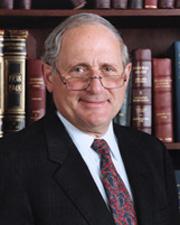 Sen. Carl Levin (D-MI)
What it changes
1 change to S.Amdt. 1432
Adds Subtitle D--Advanced Clean Vehicle Demonstration Program SEC. 741. DEFINITIONS at the end of title VII
Adds a sectionInserted: Subtitle D--Advanced Clean Vehicle Demonstration Program SEC. 741. DEFINITIONS.
Inserted: In this subtitle:
Inserted: (1) Alternative fueled vehicle.--The term "alternative fueled vehicle" means a vehicle propelled solely on an alternative fuel as defined in section 301 of the Energy Policy Act of 1992 (42 U.S.C. 13211), except the term does not include any vehicle that the Secretary determines, by rule, does not yield substantial environmental benefits over a vehicle operating solely on gasoline or diesel derived from fossil fuels.
Inserted: (2) Fuel cell vehicle.--The term "fuel cell vehicle" means a vehicle propelled by an electric motor powered by a fuel cell system that converts chemical energy into electricity by combining oxygen (from air) with hydrogen fuel that is stored on the vehicle or is produced onboard by reformation of a hydrocarbon fuel. Such a fuel cell system may, but is not required to, include the use of auxiliary energy storage systems to enhance vehicle performance.
Inserted: (3) Hybrid vehicle.--The term "hybrid vehicle" means--
Inserted: (A) a motor vehicle that draws propulsion energy from onboard sources of stored energy that are both--
Inserted: (i) an internal combustion or heat engine using combustible fuel; and
Inserted: (ii) a rechargeable energy storage system; and
Inserted: (B) any other vehicle that is defined as a hybrid vehicle in regulations prescribed by the Secretary of Energy for the administration of title III of the Energy Policy Act of 1992.
Inserted: (4) Neighborhood electric vehicle.--The term "neighborhood electric vehicle" means a motor vehicle capable of traveling at speeds of 25 miles per hour that is--
Inserted: (A) a low-speed vehicle, as such term is defined in section 571.3(b) of title 49, Code of Federal Regulations;
Inserted: (B) a zero-emission vehicle, as such term is defined in section 86.1702-99 of title 40, Code of Federal Regulations; and
Show 69 more inserted paragraphsShow less
Inserted: (C) otherwise lawful to use on local streets.
Inserted: (5) Pilot program.--The term "pilot program" means the competitive grant program established under section 742.
Inserted: (6) State.--The term "State" includes the District of Columbia and the Commonwealth of Puerto Rico.
Inserted: (7) Ultra-low sulfur diesel vehicle.--The term "ultra-low sulfur diesel vehicle" means a vehicle manufactured in model year 2002, 2003, 2004, 2005, or 2006 powered by a heavy-duty diesel engine that--
Inserted: (A) is fueled by diesel fuel which contains sulfur at not more than 15 parts per million; and
Inserted: (B) emits not more than the lesser of--
Inserted: (i) for vehicles manufactured in--
Inserted: (I) model years 2002 and 2003, 3.0 grams per brake horsepower-hour of oxides of nitrogen and .01 grams per brake horsepower-hour of particulate matter; and
Inserted: (II) model years 2004 through 2006, 2.5 grams per brake horsepower-hour of nonmethane hydrocarbons and oxides of nitrogen and .01 grams per brake horsepower-hour of particulate matter; or
Inserted: (ii) the emissions of nonmethane hydrocarbons, oxides of nitrogen, and particulate matter of the best performing technology of ultra-low sulfur diesel vehicles of the same class and application that are commercially available.
Inserted: SEC. 742. GRANT PILOT PROGRAM.
Inserted: (a) Requirement for Program.--The Secretary of Energy shall establish a competitive grant pilot program to provide project grants to eligible recipients to carry out a project or projects for the purposes described in subsection (c).
Inserted: (b) Eligible Recipients.--The following entities are eligible to receive a grant under the pilot program:
Inserted: (1) A State government.
Inserted: (2) The government of a political subdivision of a State.
Inserted: (3) Any person other than an individual.
Inserted: (4) Any combination of entities described in paragraphs (1), (2), and (3), acting together to carry out one or more projects for the purposes described in subsection (c).
Inserted: (c) Grant Purposes.--Grants under this section may be used for the following purposes:
Inserted: (1) The acquisition of qualified alternative fueled vehicles or fuel cell vehicles for routine operation in service normal for motor vehicles, including (among other vehicles)--
Inserted: (A) passenger vehicles, including neighborhood electric vehicles; and
Inserted: (B) motorized two-wheel bicycles, scooters, or other vehicles for use by law enforcement personnel or other State or local government or metropolitan transportation authority employees.
Inserted: (2) The acquisition of qualified alternative fueled vehicles, hybrid vehicles, or fuel cell vehicles for regular and routine operation in service normal for motor vehicles, including (among other vehicles)--
Inserted: (A) buses used for public transportation or transportation to and from schools;
Inserted: (B) delivery vehicles for goods or services;
Inserted: (C) ground support vehicles at public airports, including vehicles to carry baggage or push airplanes away from terminal gates; and
Inserted: (D) vehicles used for the collection of recyclable garbage or other garbage.
Inserted: (3) The acquisition of ultra-low sulfur diesel vehicles for regular and routine operation in service normal for motor vehicles.
Inserted: (4) Infrastructure necessary to directly support an alternative fueled vehicle, fuel cell vehicle, or hybrid vehicle project funded by the grant, including fueling and other support equipment.
Inserted: (5) Operation and maintenance of vehicles, infrastructure, and equipment acquired as part of a project funded by the grant.
Inserted: (d) Qualified Vehicles.--An alternative fueled vehicle, hybrid vehicle, or fuel cell vehicle is qualified for the purposes of subsection (c) if--
Inserted: (1) in the case of a vehicle to which an emission standard applies under law, the emissions resulting from the operation of such vehicle are less than the applicable standard; or
Inserted: (2) in the case of any gasoline-consuming motor vehicle, the fuel economy of such vehicle (as defined in section 32901(a) of title 49, United States Code) exceeds by at least 25 percent the average fuel economy standard applicable to the vehicle under chapter 329 of title 49, United States Code.
Inserted: (e) Applications.--
Inserted: (1) Requirements.--The Secretary shall prescribe the requirements for applying for grants under the pilot program. At a minimum, the Secretary shall require that applications include, for each project proposed in the application, the following:
Inserted: (A) A description of the project, including how the project meets the requirements of this subtitle.
Inserted: (B) An estimate of the ridership or degree of use of the project.
Inserted: (C) An estimate of the air pollution emissions reduced and fossil fuel displaced as a result of the project, together with a plan to collect and disseminate environmental data, related to the project over the expected life of the project.
Inserted: (D) A description of how the project is to be sustainable without Federal assistance after the completion of the term of the grant.
Inserted: (E) A complete description of the costs of the project, including acquisition, construction, operation, and maintenance costs over the expected life of the project.
Inserted: (F) A description of which costs of the project are to be supported by Federal assistance under this subtitle.
Inserted: (G) In the case of a project involving diesel-fueled vehicles, documentation to the satisfaction of the Secretary that diesel fuel containing sulfur at not more than 15 parts per million is available for carrying out the project, together with a commitment by the applicant to use such fuel in carrying out the project.
Inserted: (2) Partners.--An applicant under paragraph (1) may carry out any project under the pilot program in partnership with public and private entities.
Inserted: (f) Selection Criteria.--In evaluating applications under the pilot program, the Secretary shall consider each applicant's previous experience with similar projects and shall give priority consideration to applications that--
Inserted: (1) propose one or more projects that are most likely--
Inserted: (A) to cost-effectively reduce vehicle operation emissions; and
Inserted: (B) to cost-effectively reduce use of fossil fuel in the operation of vehicles;
Inserted: (2) propose one or more projects that are--
Inserted: (A) to be carried out or sponsored by a government referred to in paragraph (1) or (2) of subsection (b); or
Inserted: (B) coordinated with such a government or with a metropolitan planning organization of such a government;
Inserted: (3) demonstrate the greatest commitment on the part of the applicant or applicants to ensure funding for the proposed project or projects and the greatest likelihood that each project will be maintained or expanded after Federal assistance under this subtitle is completed; and
Inserted: (4) exceed the minimum requirements of subsection (e)(1).
Inserted: (g) Pilot Project Requirements.--
Inserted: (1) Maximum amount.--The Secretary shall not provide more than $20,000,000 in Federal assistance under the pilot program for any project.
Inserted: (2) Cost sharing.--
Inserted: (A) Federal share.--The Secretary shall not provide more than 50 percent of the cost, incurred during the period of the grant, of any project under the pilot program.
Inserted: (B) Applicant share.--The applicant or applicants for a grant for a project under the pilot program shall provide funding for the project in an amount that equals or exceeds the higher of the following amounts:
Inserted: (i) $1,000,000.
Inserted: (ii) The amount equal to 20 percent of the total cost of the project.
Inserted: (3) Maximum period of grants.--The Secretary shall not fund any applicant under the pilot program for more than 5 years.
Inserted: (4) Deployment and distribution.--The Secretary shall seek to the maximum extent practicable to ensure--
Inserted: (A) a broad geographic distribution of project sites under the pilot program; and
Inserted: (B) the operation of vehicles acquired with the proceeds of pilot program grants under a variety of vehicle operating environments, including exposure to extreme weather conditions and operation of the vehicles in various modes of service under a variety of operational demands.
Inserted: (5) Transfer of information and knowledge.--The Secretary shall establish mechanisms to ensure that the information and knowledge gained by participants in the pilot program are transferred among the pilot program participants and to other interested parties, including other applicants that submitted applications.
Inserted: (h) Schedule.--
Inserted: (1) Publication.--Not later than 90 days after the date of the enactment of this Act, the Secretary shall publish in the Federal Register, Commerce Business Daily, and elsewhere as appropriate, a solicitation of applications for grants for projects under the pilot program. Applications shall be due within 180 days after the publication of the first published notice.
Inserted: (2) Competitive selection.--Not later than 180 days after the date by which applications for grants are due, the Secretary shall select by competitive, peer review all applications for projects to be awarded a grant under the pilot program.
Inserted: (h) Funding for Ultra-Low Sulfur Diesel Vehicles.--Of the total amount available for a fiscal year for grants under the pilot program, not less than 20 percent and not more than 25 percent of the grant funding shall be available only for the acquisition of ultra-low sulfur diesel vehicles.
Inserted: SEC. 743. AUTHORIZATION OF APPROPRIATIONS.
Inserted: There is authorized to be appropriated to the Secretary of Energy for carrying out this subtitle, $40,000,000 for each of fiscal years 2004, 2005, 2006, 2007, and 2008, to remain available until expended.
Original wording
At the end of title VII add the following:
Read automatically from the Congressional Record. Check the original before relying on it.
As printed
SA 1444. Mr. LEVIN submitted an amendment intended to be proposed to amendment SA 1432 proposed by Mr. Frist to the bill S. 14, to enhance the energy security of the United States, and for other purposes; which was ordered to lie on the table; as follows:
At the end of title VII add the following:
Subtitle D--Advanced Clean Vehicle Demonstration Program SEC. 741. DEFINITIONS.
In this subtitle:
(1) Alternative fueled vehicle.--The term “alternative fueled vehicle” means a vehicle propelled solely on an alternative fuel as defined in section 301 of the Energy Policy Act of 1992 (42 U.S.C. 13211), except the term does not include any vehicle that the Secretary determines, by rule, does not yield substantial environmental benefits over a vehicle operating solely on gasoline or diesel derived from fossil fuels.
(2) Fuel cell vehicle.--The term “fuel cell vehicle” means a vehicle propelled by an electric motor powered by a fuel cell system that converts chemical energy into electricity by combining oxygen (from air) with hydrogen fuel that is stored on the vehicle or is produced onboard by reformation of a hydrocarbon fuel. Such a fuel cell system may, but is not required to, include the use of auxiliary energy storage systems to enhance vehicle performance.
(3) Hybrid vehicle.--The term “hybrid vehicle” means--
(A) a motor vehicle that draws propulsion energy from onboard sources of stored energy that are both--
(i) an internal combustion or heat engine using combustible fuel; and
(ii) a rechargeable energy storage system; and
(B) any other vehicle that is defined as a hybrid vehicle in regulations prescribed by the Secretary of Energy for the administration of title III of the Energy Policy Act of 1992.
(4) Neighborhood electric vehicle.--The term “neighborhood electric vehicle” means a motor vehicle capable of traveling at speeds of 25 miles per hour that is--
(A) a low-speed vehicle, as such term is defined in section 571.3(b) of title 49, Code of Federal Regulations;
(B) a zero-emission vehicle, as such term is defined in section 86.1702-99 of title 40, Code of Federal Regulations; and
(C) otherwise lawful to use on local streets.
(5) Pilot program.--The term “pilot program” means the competitive grant program established under section 742.
(6) State.--The term “State” includes the District of Columbia and the Commonwealth of Puerto Rico.
(7) Ultra-low sulfur diesel vehicle.--The term “ultra-low sulfur diesel vehicle” means a vehicle manufactured in model year 2002, 2003, 2004, 2005, or 2006 powered by a heavy-duty diesel engine that--
(A) is fueled by diesel fuel which contains sulfur at not more than 15 parts per million; and
(B) emits not more than the lesser of--
(i) for vehicles manufactured in--
(I) model years 2002 and 2003, 3.0 grams per brake horsepower-hour of oxides of nitrogen and .01 grams per brake horsepower-hour of particulate matter; and
(II) model years 2004 through 2006, 2.5 grams per brake horsepower-hour of nonmethane hydrocarbons and oxides of nitrogen and .01 grams per brake horsepower-hour of particulate matter; or
(ii) the emissions of nonmethane hydrocarbons, oxides of nitrogen, and particulate matter of the best performing technology of ultra-low sulfur diesel vehicles of the same class and application that are commercially available.
SEC. 742. GRANT PILOT PROGRAM.
(a) Requirement for Program.--The Secretary of Energy shall establish a competitive grant pilot program to provide project grants to eligible recipients to carry out a project or projects for the purposes described in subsection (c).
(b) Eligible Recipients.--The following entities are eligible to receive a grant under the pilot program:
(1) A State government.
(2) The government of a political subdivision of a State.
(3) Any person other than an individual.
(4) Any combination of entities described in paragraphs (1), (2), and (3), acting together to carry out one or more projects for the purposes described in subsection (c).
(c) Grant Purposes.--Grants under this section may be used for the following purposes:
(1) The acquisition of qualified alternative fueled vehicles or fuel cell vehicles for routine operation in service normal for motor vehicles, including (among other vehicles)--
(A) passenger vehicles, including neighborhood electric vehicles; and
(B) motorized two-wheel bicycles, scooters, or other vehicles for use by law enforcement personnel or other State or local government or metropolitan transportation authority employees.
(2) The acquisition of qualified alternative fueled vehicles, hybrid vehicles, or fuel cell vehicles for regular and routine operation in service normal for motor vehicles, including (among other vehicles)--
(A) buses used for public transportation or transportation to and from schools;
(B) delivery vehicles for goods or services;
(C) ground support vehicles at public airports, including vehicles to carry baggage or push airplanes away from terminal gates; and
(D) vehicles used for the collection of recyclable garbage or other garbage.
(3) The acquisition of ultra-low sulfur diesel vehicles for regular and routine operation in service normal for motor vehicles.
(4) Infrastructure necessary to directly support an alternative fueled vehicle, fuel cell vehicle, or hybrid vehicle project funded by the grant, including fueling and other support equipment.
(5) Operation and maintenance of vehicles, infrastructure, and equipment acquired as part of a project funded by the grant.
(d) Qualified Vehicles.--An alternative fueled vehicle, hybrid vehicle, or fuel cell vehicle is qualified for the purposes of subsection (c) if--
(1) in the case of a vehicle to which an emission standard applies under law, the emissions resulting from the operation of such vehicle are less than the applicable standard; or
(2) in the case of any gasoline-consuming motor vehicle, the fuel economy of such vehicle (as defined in section 32901(a) of title 49, United States Code) exceeds by at least 25 percent the average fuel economy standard applicable to the vehicle under chapter 329 of title 49, United States Code.
(e) Applications.--
(1) Requirements.--The Secretary shall prescribe the requirements for applying for grants under the pilot program. At a minimum, the Secretary shall require that applications include, for each project proposed in the application, the following:
(A) A description of the project, including how the project meets the requirements of this subtitle.
(B) An estimate of the ridership or degree of use of the project.
(C) An estimate of the air pollution emissions reduced and fossil fuel displaced as a result of the project, together with a plan to collect and disseminate environmental data, related to the project over the expected life of the project.
(D) A description of how the project is to be sustainable without Federal assistance after the completion of the term of the grant.
(E) A complete description of the costs of the project, including acquisition, construction, operation, and maintenance costs over the expected life of the project.
(F) A description of which costs of the project are to be supported by Federal assistance under this subtitle.
(G) In the case of a project involving diesel-fueled vehicles, documentation to the satisfaction of the Secretary that diesel fuel containing sulfur at not more than 15 parts per million is available for carrying out the project, together with a commitment by the applicant to use such fuel in carrying out the project.
(2) Partners.--An applicant under paragraph (1) may carry out any project under the pilot program in partnership with public and private entities.
(f) Selection Criteria.--In evaluating applications under the pilot program, the Secretary shall consider each applicant's previous experience with similar projects and shall give priority consideration to applications that--
(1) propose one or more projects that are most likely--
(A) to cost-effectively reduce vehicle operation emissions; and
(B) to cost-effectively reduce use of fossil fuel in the operation of vehicles;
(2) propose one or more projects that are--
(A) to be carried out or sponsored by a government referred to in paragraph (1) or (2) of subsection (b); or
(B) coordinated with such a government or with a metropolitan planning organization of such a government;
(3) demonstrate the greatest commitment on the part of the applicant or applicants to ensure funding for the proposed project or projects and the greatest likelihood that each project will be maintained or expanded after Federal assistance under this subtitle is completed; and
(4) exceed the minimum requirements of subsection (e)(1).
(g) Pilot Project Requirements.--
(1) Maximum amount.--The Secretary shall not provide more than $20,000,000 in Federal assistance under the pilot program for any project.
(2) Cost sharing.--
(A) Federal share.--The Secretary shall not provide more than 50 percent of the cost, incurred during the period of the grant, of any project under the pilot program.
(B) Applicant share.--The applicant or applicants for a grant for a project under the pilot program shall provide funding for the project in an amount that equals or exceeds the higher of the following amounts:
(i) $1,000,000.
(ii) The amount equal to 20 percent of the total cost of the project.
(3) Maximum period of grants.--The Secretary shall not fund any applicant under the pilot program for more than 5 years.
(4) Deployment and distribution.--The Secretary shall seek to the maximum extent practicable to ensure--
(A) a broad geographic distribution of project sites under the pilot program; and
(B) the operation of vehicles acquired with the proceeds of pilot program grants under a variety of vehicle operating environments, including exposure to extreme weather conditions and operation of the vehicles in various modes of service under a variety of operational demands.
(5) Transfer of information and knowledge.--The Secretary shall establish mechanisms to ensure that the information and knowledge gained by participants in the pilot program are transferred among the pilot program participants and to other interested parties, including other applicants that submitted applications.
(h) Schedule.--
(1) Publication.--Not later than 90 days after the date of the enactment of this Act, the Secretary shall publish in the Federal Register, Commerce Business Daily, and elsewhere as appropriate, a solicitation of applications for grants for projects under the pilot program. Applications shall be due within 180 days after the publication of the first published notice.
(2) Competitive selection.--Not later than 180 days after the date by which applications for grants are due, the Secretary shall select by competitive, peer review all applications for projects to be awarded a grant under the pilot program.
(h) Funding for Ultra-Low Sulfur Diesel Vehicles.--Of the total amount available for a fiscal year for grants under the pilot program, not less than 20 percent and not more than 25 percent of the grant funding shall be available only for the acquisition of ultra-low sulfur diesel vehicles.
SEC. 743. AUTHORIZATION OF APPROPRIATIONS.
There is authorized to be appropriated to the Secretary of Energy for carrying out this subtitle, $40,000,000 for each of fiscal years 2004, 2005, 2006, 2007, and 2008, to remain available until expended.
Legislative Activity
Stay on top of the latest movement without scrolling through every action
Senate amendment submitted
July 31, 2003