S.Amdt. 1514
What it does: Adds SEC. 443. SENSE OF THE SENATE CONCERNING REGULATIONS REGARDING THE EXPORT OF HIGHLY ENRICHED URANIUM on page 150, between lines 14 and 15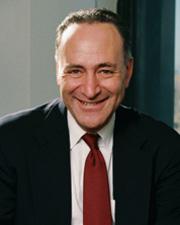 Sen. Charles E. Schumer (D-NY)
What it changes
1 change to S. 14
Adds SEC. 443. SENSE OF THE SENATE CONCERNING REGULATIONS REGARDING THE EXPORT OF HIGHLY ENRICHED URANIUM on page 150, between lines 14 and 15
Adds a sectionPrinted pageInserted: SEC. 443. SENSE OF THE SENATE CONCERNING REGULATIONS REGARDING THE EXPORT OF HIGHLY ENRICHED URANIUM.
Inserted: (a) Findings.--Congress finds that--
Inserted: (1) the prevention of the proliferation of weapons-grade or highly enriched uranium has taken on an enhanced level of importance, given that evidence has been clearly and repeatedly presented that terrorist groups and hostile regimes have sought to acquire highly enriched uranium and associated technologies for the purpose of developing nuclear weapons;
Inserted: (2) terrorist entities do not distinguish between uranium exported for medical use versus other uses when seeking to acquire material for nuclear weapons and radiological dispersal devices;
Inserted: (3) the terrorist attacks of September 11, 2001, clearly demonstrated that terrorist organizations are capable of carrying out attacks against the United States that are more sophisticated, coordinated, and destructive than was previously thought possible or likely;
Inserted: (4) a successful terrorist attack against the United States using a nuclear weapon or radiological dispersal device could result in catastrophic loss of life, environmental damage, and economic consequences;
Inserted: (5) increasing exports, transmissions, and volumes of highly enriched uranium will consequently increase the possibility that such material will be lost, diverted, stolen, or improperly sold;
Inserted: (6) regulations in effect on the date of enactment of this Act are designed to apply explicitly to materials used in isotope production;
Inserted: (7) the regulations were promulgated for the purpose of encouraging research reactors and medical isotope producers to switch from highly enriched uranium to low-enriched uranium fuels and targets, thereby decreasing the risk of weapons grade material being lost, diverted, stolen, or improperly sold;
Inserted: (8) under the regulations, operators of research reactors and medical isotope manufacturers must commit to transitioning from highly enriched uranium to low-enriched uranium in order to continue receiving highly enriched uranium fuel and targets from the United States;
Inserted: (9) a repeal of the regulations would unnecessarily weaken anti-proliferation efforts and reduce safeguards for highly enriched uranium;
Inserted: (10) the regulations place access to a reliable and sufficient supply of medical isotopes in no jeopardy;
Show 9 more inserted paragraphsShow less
Inserted: (11) no foreign isotope producer has been denied a request for exports of highly enriched uranium so long as a producer has agreed to continue cooperating with the requirement to eventually shift to low-enriched uranium;
Inserted: (12) the regulations have been successful in enticing 3 of Europe's 4 main highly enriched uranium fueled reactors to pledge that the reactors will be converted to low-enriched uranium, influencing the construction of a new, large low-enriched uranium reactor in France, and influencing facilities in Australia, Indonesia, and Argentina to convert to low-enriched uranium;
Inserted: (13) without the regulations, foreign isotope producers would likely abandon efforts to convert to low-enriched uranium, thereby increasing the risks associated with proliferation and nuclear terrorism;
Inserted: (14) in Australia, low-enriched uranium is already used in the production of isotopes, clearly demonstrating that there is no technological barrier to effective low-enriched uranium use; and
Inserted: (15) there has been growing concern regarding the ability to safeguard highly enriched uranium supplies at medical isotope production facilities and research reactors in more than 50 countries worldwide.
Inserted: (b) Sense of the Senate.--It is the sense of the Senate that--
Inserted: (1) there is no compelling need to repeal highly enriched uranium export regulations in effect on the date of enactment of this Act;
Inserted: (2) efforts to repeal the regulations needlessly create an additional threat to the national security of the United States; and
Inserted: (3) Congress should take no steps to repeal the regulations.
Original wording
On page 150, between lines 14 and 15, insert the following:
Read automatically from the Congressional Record. Check the original before relying on it.
As printed
SA 1514. Mr. SCHUMER submitted an amendment intended to be proposed by him to the bill S. 14, to enhance the energy security of the United States, and for other purposes; which was ordered to lie on the table; as follows:
On page 150, between lines 14 and 15, insert the following:
SEC. 443. SENSE OF THE SENATE CONCERNING REGULATIONS REGARDING THE EXPORT OF HIGHLY ENRICHED URANIUM.
(a) Findings.--Congress finds that--
(1) the prevention of the proliferation of weapons-grade or highly enriched uranium has taken on an enhanced level of importance, given that evidence has been clearly and repeatedly presented that terrorist groups and hostile regimes have sought to acquire highly enriched uranium and associated technologies for the purpose of developing nuclear weapons;
(2) terrorist entities do not distinguish between uranium exported for medical use versus other uses when seeking to acquire material for nuclear weapons and radiological dispersal devices;
(3) the terrorist attacks of September 11, 2001, clearly demonstrated that terrorist organizations are capable of carrying out attacks against the United States that are more sophisticated, coordinated, and destructive than was previously thought possible or likely;
(4) a successful terrorist attack against the United States using a nuclear weapon or radiological dispersal device could result in catastrophic loss of life, environmental damage, and economic consequences;
(5) increasing exports, transmissions, and volumes of highly enriched uranium will consequently increase the possibility that such material will be lost, diverted, stolen, or improperly sold;
(6) regulations in effect on the date of enactment of this Act are designed to apply explicitly to materials used in isotope production;
(7) the regulations were promulgated for the purpose of encouraging research reactors and medical isotope producers to switch from highly enriched uranium to low-enriched uranium fuels and targets, thereby decreasing the risk of weapons grade material being lost, diverted, stolen, or improperly sold;
(8) under the regulations, operators of research reactors and medical isotope manufacturers must commit to transitioning from highly enriched uranium to low-enriched uranium in order to continue receiving highly enriched uranium fuel and targets from the United States;
(9) a repeal of the regulations would unnecessarily weaken anti-proliferation efforts and reduce safeguards for highly enriched uranium;
(10) the regulations place access to a reliable and sufficient supply of medical isotopes in no jeopardy;
(11) no foreign isotope producer has been denied a request for exports of highly enriched uranium so long as a producer has agreed to continue cooperating with the requirement to eventually shift to low-enriched uranium;
(12) the regulations have been successful in enticing 3 of Europe's 4 main highly enriched uranium fueled reactors to pledge that the reactors will be converted to low-enriched uranium, influencing the construction of a new, large low-enriched uranium reactor in France, and influencing facilities in Australia, Indonesia, and Argentina to convert to low-enriched uranium;
(13) without the regulations, foreign isotope producers would likely abandon efforts to convert to low-enriched uranium, thereby increasing the risks associated with proliferation and nuclear terrorism;
(14) in Australia, low-enriched uranium is already used in the production of isotopes, clearly demonstrating that there is no technological barrier to effective low-enriched uranium use; and
(15) there has been growing concern regarding the ability to safeguard highly enriched uranium supplies at medical isotope production facilities and research reactors in more than 50 countries worldwide.
(b) Sense of the Senate.--It is the sense of the Senate that--
(1) there is no compelling need to repeal highly enriched uranium export regulations in effect on the date of enactment of this Act;
(2) efforts to repeal the regulations needlessly create an additional threat to the national security of the United States; and
(3) Congress should take no steps to repeal the regulations.
Legislative Activity
Stay on top of the latest movement without scrolling through every action
Senate amendment submitted
July 31, 2003