To provide additional funding for education for the disadvantaged.
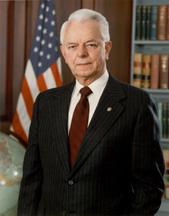 Sen. Robert C. Byrd (D-WV)
Legislative Activity
Stay on top of the latest movement without scrolling through every action
Roll call votes on amendments in Senate: Motion to waive the Budget Act with respect to amendment SA 1543 rejected in Senate by Yea-Nay Vote. 44 - 51. Record Vote Number: 330.
September 9, 2003
View full timeline
Roll call votes on amendments in Senate: Motion to waive the Budget Act with respect to amendment SA 1543 rejected in Senate by Yea-Nay Vote. 44 - 51. Record Vote Number: 330.
September 9, 2003
Considered by Senate. (consideration: CR S11192, S11209-11215, S11223-11225)
September 9, 2003
Point of order under the Budget Act raised in Senate with respect to amendment SA 1543.
September 9, 2003
Motion to waive the Budget Act with respect to amendment SA 1543 rejected in Senate by Yea-Nay Vote. 44 - 51. Record Vote Number: 330.
September 9, 2003
Amendment SA 1543 ruled out of order by the chair.
September 9, 2003
Considered by Senate. (consideration: CR S11174)
September 8, 2003
Considered by Senate. (consideration: CR S11134)
September 5, 2003
Considered by Senate. (consideration: CR S11052, S11053-11056)
September 4, 2003
Considered by Senate. (consideration: CR S10991, S11000-11001, S11018-11020)
September 3, 2003
Senate amendment submitted
September 2, 2003
Senate amendment proposed (on the floor): Amendment SA 1543 proposed by Senator Byrd to Amendment SA 1542.(consideration: CR S10945-10948, S10952-10957; text: CR S10945)
September 2, 2003
Amendment SA 1543 proposed by Senator Byrd to Amendment SA 1542. (consideration: CR S10945-10948, S10952-10957; text: CR S10945) To provide additional funding for education for the disadvantaged.
September 2, 2003
Votes
1 roll call on this amendment
Text
Proposed
DEPARTMENTS OF LABOR, HEALTH AND HUMAN SERVICES, AND EDUCATION, AND
RELATED AGENCIES APPROPRIATIONS ACT, 2004

The PRESIDENT pro tempore. Under the previous order, the Senate will
proceed to consideration of H.R. 2660, which the clerk will report.
The legislative clerk read as follows:

A resolution (H.R. 2660) making appropriations for the
Department of Labor, Health and Human Services, and
Education, and related agencies for fiscal year ending
September 30th, 2004, and for other purposes.

The PRESIDENT pro tempore. The Senator from Pennsylvania.
Mr. SPECTER. Mr. President, on behalf of the majority leader, I have
been asked to make his introductory statement, and as indicated by the
President pro tempore, we are taking up H.R. 2660, which is the
appropriations bill for the Department of Labor, Health and Human
Services, and Education.
As a procedural matter, in accordance with the custom of the Senate,
I ask unanimous consent that all after the enacting clause be stricken
and the text of Calendar No. 175, S. 1356, the Senate committee-
reported bill, be inserted in lieu thereof, and the bill, as amended,
be considered as original text for purpose of further amendment, and
that no points of order be waived by reason of this agreement.
The PRESIDENT pro tempore. Is there an objection?
Mr. REID. On behalf of two Senators, I object.
The PRESIDENT pro tempore. The objection is heard.
Mr. SPECTER. Mr. President, the bill which we are considering today
is the largest of all of the appropriations bills, consisting of some
$472 billion, even larger than the Defense appropriations bill,
although a major portion of that is on mandatory spending--Medicare,
Medicaid, family assistance, and other mandatory provisions--which
leaves $137.6 billion to fund the three departments: the Department of
Labor, the Department of Health and Human Services, and the Department
of Education.
The amount of the discretionary spending is $380 million below the
President's budget request and $435 billion below the amount the House
of Representatives had to spend on Labor, HHS, and Education programs.
It is important to note that the House and Senate bills also have an
additional $2.2 billion in fiscal year 2004 which was achieved by
pushing back advanced appropriations from fiscal year 2004 to fiscal
year 2003.
On August 1, the last day of the session before the August recess,
the majority leader, Senator Frist, and I had a brief colloquy where
the majority leader announced at that time for the information of all
Senators and others that the first order of business of 9:30 on
Tuesday, September 2nd, would be this appropriations bill. The Senate
has an enormous agenda to take up during the month of September. As is
well known, the fiscal year ends on September 30th and if there is to
be any realistic chance of completing all 13 appropriations bills, with
only two having been completed so far--the Department of Defense
appropriation and

[[Page S10942]]

the military construction bill--we are going to have to take up these
bills in an orderly and expeditious way. When I say ``expeditious,'' I
do not mean in a hurried way. It is a matter of taking up the
amendments so we can move through them.
In advance of the August 1st departure date, I conferred with the
distinguished ranking member, Senator Harkin, who agreed with that
approach. I conferred with the ranking member of the full committee,
Senator Byrd, who agreed with that approach. I conferred with the
chairman of the full committee, the distinguished President pro
tempore, about the processing of this bill. I talked to many of the
Senators on both sides of the aisle who would be expected to offer
amendments. It is my hope amendments will be offered, that we can work
through time agreements. The distinguished assistant leader of the
Democrats is here and has been very diligent in moving the legislative
matters through. It would be my hope we would have the amendments come
to the floor, offered, that we could get time agreements, and we could
proceed to vote on whatever amendments may be offered.
I am advised by staff there are 45 amendments pending--amendments
which we know about. That is a large number but it is well known that
amendments tend to be refined as Members consider the matters.
We have a major job ahead of us. But it would not be out of reason to
consider amendments today. We are advised that two Senators on the
other side of the aisle have amendments which they are prepared to
offer. If those come to fruition, we can move right ahead with the
debate at an early point.
In the colloquy on August 1, reflected in the Congressional Record, I
made a point that the grave difficulties which I have seen in my tenure
in the Senate occur when the quorum calls consume a great deal of the
Senate's time, when those two lights are on, signifying that there is
no business pending before the Senate. I expressed the view that if
Senators were not prepared to offer amendments, that the majority
leader ought to consider moving to third reading, that is final
passage, and try to move the bill along.
I fully understand that requires cooperation from the other side of
the aisle. If the other side of the aisle decides we are not to move to
third reading, there are ample procedures available to preclude the
majority from moving to third reading. But, having given that notice
more than a month ago that we would be taking the bill up at this time,
9:30 on September 2, and that the expectation was to move ahead, if we
were to have any chance of completing the appropriations bills by
September 30 that this bill would have to serve as a flagship for the
month of September.
I might add that the Senate has a very crowded agenda. There is
already considerable speculation in the media about what will happen in
the Congress, the House and the Senate, now that we are back from the
August recess and we face many contentious matters.
There is no doubt that an overlay, the international issue of Iraq,
is very much on all of our minds. I was very glad to see the Bush
administration sent a signal 10 days ago that there would be
consideration to United Nations participation in Iraq. The precise
formula was not indicated. I think that can be achieved, maintaining
U.S. military command.
There have been strong requests for a statement from the
administration as to what Iraq is going to cost. All of us would like
to know what those parameters are and what the expenses are going to
be. That is a difficult matter to calculate because of the
uncertainties over Iraq in so many respects.
There are efforts being made to bring other nations into the
operation there, into the policing operation, and a special effort to
bring in Muslim nations, Pakistan and Turkey illustratively, to give
the Arab world more confidence as to what is going on. Certainly, if we
are successful in bringing other nations in, that will have a material
impact on what the cost will be to the United States.
Beyond the issues of Iraq and other matters for the Department of
State on international expenditures, there is the issue of prescription
drugs, where legislation has been passed by both the House and the
Senate which will have to be submitted to conference.
The Energy bills will be a major matter with Congress really on the
spot to respond to the blackouts affecting 50 million people. From the
Judiciary Committee where I serve, there are a number of matters which
will be coming to the floor, litigation matters, most prominent of
which is the legislation pending on asbestos. A bill was reported out
of committee, largely along party lines.
During the month of August, considerable work has been done by many
of us, including an effort to bring in a very distinguished Federal
judge, Edward R. Becker, Chief Judge Emeritus of the Third Circuit, to
analyze the issues in an effort to be helpful. Obviously the matter is
a congressional matter, but Chief Judge Becker has special expertise in
the field by virtue of being the judge who wrote the major opinion on
the issue of class certification. That is mentioned as one of the many
items.
The key to the success of our Senate will turn on getting started
with this bill and moving ahead. I think it is not unreasonable to
think, if we have cooperation on all sides, that this is a matter which
could be completed during the course of this week.
The bill which is now before the Senate contains funding for medical
research in the amount of $27.9 billion for the National Institutes of
Health. This is $1 billion over the fiscal year 2003 appropriation, and
will continue the work of thousands of researchers across the United
States.
The distinguished ranking member of this subcommittee, Senator
Harkin, and I have taken the lead in the course of the past 5 years in
more than doubling the allocations on the National Institutes of
Health, from $12 billion to more than $27 billion. The increase of $1
billion is a sum which I personally would like to see increased. We are
considering an amendment which would have a significant increase in the
National Institutes of Health funding.
When you take a look at the diseases which are affected, they touch
virtually all Americans either directly or through families or close
friends: autism, stroke, Alzheimer's, Parkinson's, spinal muscular
atrophy, scleroderma, multiple sclerosis, muscular dystrophy, diabetes,
amyotrophic lateral sclerosis, heart disease, arthritis, schizophrenia,
Cooley's anemia, kidney disorders, spinal cord injury, cancers of many
varieties, including but not limited to breast, cervical, lymphoma,
prostate, pancreatic, brain, lung, and colon.
The increases in funding here have had a very material effect for
enormous advances in research which moves toward the prevention or cure
of many of these matters.
This bill includes $944 million for obesity prevention and nutrition
initiatives. We see more and more that there is a need for programs
designed to increase physical activity, promote healthy lifestyles and
good nutritional benefits. This is an increase of some $34.2 million
over funds available for fiscal year 2003.
In the course of the preparation of this budget, obviously the
subcommittee and then the full committee have considered a wide range
of priorities. I think it should be noted that when there is the
contention raised about cuts in the funding for this subcommittee, it
is not accurate. For fiscal year 2003, the total discretionary budget
was $134.6 billion. The total budget for fiscal year 2004, which we are
considering today, as I have said, is $137.6 billion. So that is
essentially flat funding but not a decrease.
My preference would have been to have had a significant increase in
the funding for this subcommittee, as I argued in the full committee,
and repeat that argument here on the floor. But we live within the
constraints of the budget resolution which was enacted and with the
allocations which have been made pursuant to the budget resolution. So
on some of these items there are increases, on some of these items
there are decreases, but the overall budget does not have a cut. It is
essentially flat.
The budget also contains $63 billion for the prevention and reversal
of heart disease. Americans of all ages live with the effects of
cardiovascular disease. Heart disease is the Nation's No. 1 killer,
with over 960,000 deaths attributed

[[Page S10943]]

to this disease each year. To address this initiative, the bill
includes $5.7 billion for cardiovascular research, prevention, and
education.
That is obviously an increase which we think is well warranted by the
impact of heart disease on the lives of Americans.
The bill includes $4.6 billion for programs for the Centers for
Disease Control and Prevention. It includes $250 million to continue
planning, design, and construction of new facilities, as well as repair
and renovations of the existing structures.
Several years ago I made a trip to Atlanta to the Centers for Disease
Control because I had heard a great deal about the deplorable
conditions there. I found that was true. Senator Harkin made a similar
visit. Upon returning, we added $170 million to the funding. In the
ensuing years, we added $250 million in each of 2 years. This is the
third year for this increase in funding.
The Centers for Disease Control is at the forefront of so much of
what we are doing trying to combat AIDS worldwide, dealing with the
SARS epidemic, and planning for potential terrorist attacks. The
Centers for Disease Control is one of the areas which urgently requires
adequate funding.
This bill also contains funding for infectious disease initiatives.
More than 35 new emerging infectious diseases were identified between
1973 and the year 2000. Recent experiences with the West Nile virus,
SARS, and monkey pox illustrate the vital need to strengthen this
Nation's capacity to identify and combat emerging infectious diseases.
The bill includes $2.2 billion to improve United States research
capabilities and to detect and control emerging infectious disease
threats in the United States and around the world.
Also included in the bill is funding for the National Cord Blood Stem
Cell Bank Program--some $10 million to create a National Cord Blood
Stem Cell Bank to be used for patients who need transplants but lack
suitable family donors. The stem cells found in cord blood are useful
in treating a variety of blood disorders.
Following a report from the Institute of Medicine, the subcommittee
took the lead in appropriating funds to deal with medical errors
reduction. This bill contains $84 million, an increase of $29 million
over the previous year's amount, to determine ways to reduce medical
errors.
I note the presence on the floor of the distinguished ranking member
of the full committee. I think it might be appropriate to try to move
the sequencing along, so I am going to interrupt my opening statement
so I can confer with the Senator from West Virginia.
Mr. REID. Mr. President, if the Senator will allow me to say a few
remarks prior to that without the Record appearing interrupted.
Mr. SPECTER. Mr. President, I am delighted to yield to the
distinguished assistant leader of the Democrats.
Mr. REID. I thank the Senator very much.
Mr. President, let me say first of all that the Senator from
Pennsylvania and the Senator from Iowa have done remarkably important
work over the last many years on this most important piece of
legislation which we have to move every year. They have done tremendous
work for the National Institutes of Health and for the Centers for
Disease Control. I think we owe them a debt of gratitude for
recognizing the problems which we have and which have been addressed.
Let me say very briefly that if we maintain the schedule we have now
had for this entire year where we have very few votes on Fridays--if we
have votes, they are usually inconsequential--and we have no votes
until late Monday, we can't do all the work that needs to be done.
Everyone might as well acknowledge that. We work here on a 3-day
workweek basically. That is what we have been working on. We can't do
the nine appropriations bills that need to be done and the mass of
other very important legislation. Once we get the bills passed, we have
to do the conferences and bring those back. We have the important bills
that are already in conference that are nonappropriations matters. Of
course, we have the three appropriations bills in conference. But we
have lots of things to do. I just alert everyone that it can't be done
on a 3-day workweek.
I think it is very important to note that today there will be no
votes. Yesterday was an important holiday. There were parades around
the country and other festivities that Members of the Senate and House
were involved in.
This bill is extremely important. It is a difficult bill. We are
going to cooperate in any way we can.
We do have one procedural problem. I don't know how long it will take
to work that out. We have the overtime amendment which the Senator from
Pennsylvania is aware of. It will take some time.
We also have the Leave No Child Behind Program. I spoke to the State
legislature in Nevada in February and said unless something happened we
would be leaving lots of children behind. The State of Nevada and other
States are really in deep trouble in education because the Federal
Government is not doing what it needs to do.
There will be a series of amendments. They are 60-vote amendments. We
have to go through those. At the present time, we have about 40
amendments, most of which are Democrat amendments. We acknowledge that.
We are going to be as positive and as cooperative as we can be on this
legislation, recognizing that it is a difficult bill.
I think realistically, I say to my friend from Pennsylvania, who is
much more experienced than I, having been here as long as he has been,
it is going to be extremely difficult to finish this bill this week.
Today is Tuesday. There are no votes today. We have Wednesday and
Thursday. Unless we suddenly adopt a new procedure where we work more
than 3 days a week--we will not be doing anything on Friday, but we are
willing to work with the Senator from Pennsylvania and the Senator from
Iowa.
Senator Daschle indicated to me this bill is important and that we
have to work in any way we can to move it along, and we will do that.
The PRESIDENT pro tempore. The Senator from Pennsylvania.
Mr. SPECTER. Mr. President, I thank the distinguished assistant
leader for the Democrats for those comments. I know from working with
Senator Reid for many years that he is consistently cooperative. I
agree with his characterization of the importance of this bill and the
complexity of the bill.
When he commented about 40 amendments mostly from that side of the
aisle, that is consistent with the preliminary report which I have
heard. It also accurately states that the amendments are 60-vote
amendments, as required under the budget resolution.
When he comments about my greater experience, I may have been here a
little longer, but I don't have any more experience than Senator Reid
does. Those who have been in the Senate or who have observed the Senate
know we have an amazing capacity for moving promptly when we decide to
do so and when we decide to make relevant comments. If we can stay on
the bill, I think we ought to take whatever time we need on this bill.
I don't disagree with that a bit. But it is possible to work out time
agreements. I do not disagree with the statement of the Senator from
Nevada that it would be difficult--perhaps even unlikely--to finish the
bill this week. But it can be done. The last time I managed this bill
was in June of 2000. We finished the bill on June 28 in advance of the
conventions that year. When this Senate starts to move in a definitive
way, this Senate has the capacity to move expeditiously.
I had been in the middle of my opening statement and had come to a
number of the main categories. But I am going to abbreviate this
opening statement because I have conferred with the distinguished
Senator from West Virginia, the ranking member of the full committee,
who has advised that he is prepared to move immediately with an
amendment.
To repeat, there is nothing like using the time on the Senate floor
for amendments as opposed to statements. As important as opening
statements are to the bill's managers, an opening statement is a
statement. And if we move to amendments, I think that would be the most
effective use of the Senate's time.
We might also be establishing a new record on moving to an amendment
within a half hour of the opening of the Senate, especially on a day
when, as the majority leader announced, there

[[Page S10944]]

will be no rollcall votes. But any amendments which will have votes
ordered on will be taken up according to the majority leader's
schedule, no earlier than tomorrow.
I yield the floor to the distinguished Senator from West Virginia.
The PRESIDENT pro tempore. The Senator from West Virginia.
Mr. BYRD. Mr. President, I am delighted to see my friend. I have
several friends in the Senate, but there is one very special friend of
mine who is presently in the chair. He is the President pro tempore of
the Senate and a man who is well equipped for that position. He has had
a long service in the Senate and, of course, long service on the
Appropriations Committee. He has been chairman. He has been ranking
member. He is the chairman of the Appropriations Committee now. I speak
of course of my dear friend, the distinguished senior Senator from
Alaska, Ted Stevens, who is the Man of the Century for the State of
Alaska, and rightly so.
I also am very proud to say I have another friend in the Chamber at
the moment, among several friends in the Chamber, and this friend of
whom I speak is the chairman of the appropriations subcommittee that
has in its jurisdiction the bill that is before the Senate at this
time, the Labor-HHS appropriations bill.
Senator Specter is a man--I speak of Alexander Pope, who said about
another gentleman: ``Thou art my guide and friend.'' Arlen Specter is a
man after my own kidney, as Shakespeare would say. And he recognizes
the needs of the country, as I think I do. His heart is in the right
place when it comes to the education of our young people, and I am very
proud to call him my friend. I thank him for his courtesies always,
which are characteristic of him. He is one of the special people who
have served in this Senate with me.

Amendment No. 1543

Now to the business at hand. I have an amendment. Before I send it to
the desk, let me make a brief statement.
When Congress passed the No Child Left Behind Act, we made a deal
with the American people. I am speaking of a time which was nearly 2
years ago when we made this deal with the American people. We said that
from now on we will hold schools more accountable--more accountable--
than ever before; we will require them to make sure that all children
succeed academically, not just the wealthy, not just those who live in
the nicer parts of town, but all children--poor students, students from
Appalachia, across the prairies, across the Great Plains, across the
Rockies, to the Pacific coast--yes, all the way to Alaska--children
with disabilities, and students of all races and ethnicities. Schools
must leave no child behind. But, in return, we promised to give schools
the resources they need to make these improvements.
This bill does not fulfill that promise, and there is no better
example of that broken promise than the title I program for
disadvantaged students. Title I helps the students who need help the
most, the millions who are being left behind. It is also the program
that, under the No Child Left Behind Act, will hold schools accountable
for improving student performance. That is why, when Congress wrote the
No Child Left Behind Act, it authorized specific funding levels for
title I for every year through fiscal year 2012.
Now, I went to school--many years ago, of course; I started in 1924--
and it was a little two-room schoolhouse in a coal camp in southern
West Virginia. It was at Algonquin, WV. That is the mining camp in
which I started school. That is the mining camp in which my foster
father worked in the mines.

We did not have the Government support in those days that students
have now. I was one of the students who today would be considered a
disadvantaged child. Of course, about all the children in that coal
camp were disadvantaged. But we had caring teachers. We had good
teachers.
I remember being in the primer, starting out in the primer, and the
leading character in the primer was Baby Rae. I studied about Baby Rae.
But those were disadvantaged children. All of us were disadvantaged. We
all came from poor families, but we studied hard. We had caring
teachers, as I say, and they encouraged us to study. Mine were foster
parents, I having lost my mother when I was 1 year old in the great
influenza epidemic in 1917 and 1918. But those foster parents cared for
me, and they loved me, and they encouraged me to study and to study
hard.
So I am a supporter, a strong supporter, of education. I come here as
one who has supported Federal funds for education practically all the
years I have been in Congress. And this is the 51st year I have been in
Congress. There was a great debate in the early years when I was in the
House about Federal aid to education. Well, it is an accepted factor
now in our thinking. So today I have come to support an amendment which
I will offer shortly.
Let me say again that when Congress wrote the No Child Left Behind
Act, it authorized specific funding levels for title I for every year
through fiscal year 2012. The authorized amount for fiscal year 2004 is
$18.5 billion. That is enough to fully serve 6.2 million needy
children, according to the Congressional Research Service. This bill
before the Senate today provides just $12.4 billion.
That is enough to fully serve only 4.1 million children. The
amendment I am about to offer would increase title I funding by $6.1
billion for a total of $18.5 billion, the fully authorized level for
fiscal year 2004, and it would extend the full educational benefits of
title I to 2.1 million children who otherwise would be left behind.
This would allow us to keep the promise we made in the No Child Left
Behind Act.
This amendment is fully offset, may I say, for fiscal year 2004, and
it achieves this by rescinding fiscal year 2004 advance appropriations
in the fiscal year 2003 Labor-HHS appropriations bill and
reappropriating those monies in fiscal year 2004. This is the exact
same mechanism that Chairman Stevens and Chairman Specter are using to
add $2.2 billion to the base bill. My amendment simply builds upon this
and adds $6.1 billion more for title I.
Students and teachers across the country are desperate for more
funding. In West Virginia, the Department of Education announced this
summer that 326 of the State's 728 schools failed to make adequate
yearly progress. That is 45 percent of all the schools in the State.
May I say to the distinguished Presiding Officer, Mr. Smith, that in
many other States, more than half of all the schools failed to make
adequate progress. Let me repeat: In my own State, 326 of West
Virginia's 728 schools failed to make adequate yearly progress. That is
45 percent of all the schools in the State, almost half. But in many
other States, more than half of all the schools failed to make adequate
progress.
I ask my fellow Senators: Where is the money going to come from to
help these schools improve? The State governments, as we all know, are
facing a fiscal crisis. Yet this appropriations bill underfunds title I
by more than $6 billion. This bill, indeed, is a bit frail on the No
Child Left Behind Act, and it is unfair to all the people in this
country who are working so hard to implement the provisions of that
act.
Parents and teachers want their schools to be held accountable. They
want every child to succeed, and they are holding up their end of the
bargain. Now is the time for the Federal Government to hold up its end
of the bargain.
As students all over the country return to their classrooms this
month, it is important to remember that this amendment is not just
about dollars; it is about hiring good teachers. It is about improving
the curriculum; it is about reducing class sizes; it is about buying
educational materials--all the elements that are key to helping
students reach their academic potential.
I voted for the No Child Left Behind Act. I support the reforms in
that law. But schools need more funding if we are truly going to leave
no child behind.
I urge my fellow Senators to approve this amendment. We gave our word
to the people when we passed the No Child Left Behind Act. We must keep
our word.
Everything I have said is certainly meant to be no criticism of the
chairman of the subcommittee or the ranking member or the members of
the subcommittee. They have all done the best they could do. Mr.
Specter has done the best he could with what he had, and so has the
ranking member. I offer this amendment not in criticism of them or

[[Page S10945]]

the members of the subcommittee. They simply did the best they could
with what they had. I fully support the chairman and ranking member and
the subcommittee. I simply offer this amendment because I think the
Nation's children deserve it. I hope Senators on both sides will
support it to the fullest.

I send the amendment to the desk.
Mr. SPECTER. Mr. President, if the distinguished Senator from West
Virginia will yield for a moment.
Mr. BYRD. Yes.
Mr. SPECTER. As a procedural matter, with an objection having been
lodged, if I may have the attention of the Senator from West Virginia,
the procedure would be appropriate if the Senator from West Virginia
would allow me first to send a substitute amendment to the desk and
then the amendment offered by the Senator from West Virginia would be
in the nature of a second-degree amendment and would obviate the
objection which was made earlier procedurally.
Mr. BYRD. Very well, yes.
Mr. SPECTER. This certainly is not clear, if anybody is watching on
C-SPAN, but that would set the procedural status in the correct shape.
Mr. BYRD. Yes, it would.

Amendment No. 1542

Mr. SPECTER. Mr. President, I send a substitute amendment to the
desk. For the information of all Members, this is the text of the
Senate-reported bill.
The PRESIDING OFFICER (Mr. Smith). The clerk will report.
The assistant legislative clerk read as follows:

The Senator from Pennsylvania [Mr. Specter] proposes an
amendment numbered 1542.

(The amendment is printed in today's Record under ``Text of
Amendments.'')
Mr. SPECTER. Parliamentary inquiry. Would it be in order now for the
amendment to be offered by the Senator from West Virginia?
The PRESIDING OFFICER. Amendments to the Senator's amendment are now
in order.
Mr. SPECTER. I thank the Chair and my colleague from West Virginia.

Amendment No. 1543 to Amendment No. 1542

Mr. BYRD. Mr. President, I thank the distinguished chairman of the
subcommittee for his accommodations that have been extended at this
point. I send the amendment to the substitute to the desk.
The PRESIDING OFFICER. The clerk will report.
The assistant legislative clerk read as follows:

The Senator from West Virginia [Mr. Byrd] proposes an
amendment numbered 1543 to amendment No. 1542.

Mr. BYRD. Mr. President, I ask unanimous consent that reading of the
amendment be dispensed with.
The PRESIDING OFFICER. Without objection, it is so ordered.
The amendment is as follows:

(Purpose: To provide additional funding for education for the
disadvantaged)

On page 36, line 16, strike the period and insert ``:
Provided further, That of the funds appropriated in this Act
for the National Institutes of Health, $1,500,000,000 shall
not be available for obligation until September 30, 2004:
Provided further, That the amount $14,103,356,000 under the
heading `Education for the Disadvantaged' in title III of
this Act shall be deemed to be $20,253,356,000: Provided
further, That the amount $6,582,294,000 under the heading
`Education for the Disadvantaged' in title III of this Act
shall be deemed to be $12,732,294,000: Provided further, That
the amount $1,670,239,000 under the heading `Education for
the Disadvantaged' in title III of this Act shall be deemed
to be $4,745,239,000: Provided further, That the amount
$2,207,448,000 under the heading `Education for the
Disadvantaged' in title III of this Act shall be deemed to be
$5,282,448,000: Provided further, That the amount
$6,895,199,000 in section 305(a)(1) of this Act shall be
deemed to be $13,045,199,000: Provided further, That the
amount $6,783,301,000 in section 305(a)(2) of this Act shall
be deemed to be $633,301,000.''.

Mr. BYRD. Mr. President, I have already spoken on behalf of the
amendment. I do not ask for recognition at this point.
Mr. SPECTER. Mr. President, I note the distinguished Senator from
Iowa advancing toward the podium. I yield to him.
The PRESIDING OFFICER. The Senator from Iowa is recognized.
Mr. HARKIN. Mr. President, first, I am very pleased to join my
colleague and friend, Senator Specter, in bringing to the Senate floor
the fiscal year 2004 Labor, Health and Human Services, and related
agencies appropriations bill.
Let me begin by thanking my good friend and partner in this endeavor,
Senator Specter, and his excellent staff, for always working closely
with me and my staff in putting this bill together on a bipartisan
basis. It is always one of the most difficult bills to put together and
it is also one of the most important. Our Nation's health and the
strength of our tomorrows are shaped by the critical health, education,
and labor investments made by this bill.
I will say at the outset that this bill is not perfect--at least in
my estimation. I will also say that my distinguished chairman did the
best he could with the bad hand he was dealt by a very shortsighted
budget resolution. As we have done in our over 12-year partnership
working on this subcommittee--sometimes I am chair and sometimes he is
chair, and it goes back and forth. But it has been a great partnership
working together on this subcommittee over all these years.
This bill is no different. It is truly the product of bipartisan work
and negotiation. We have worked closely to shape it. We have done our
best to accommodate the literally thousands of requests. I assume
Senator Specter has gotten about the same number as I have--which adds
up to about a thousand, I suppose--to try to accommodate those requests
we have received from colleagues.
Again, at the outset, I don't think our subcommittee allocation was
adequate to meet the demands we face in job training, health care, and,
of course, education. I will be speaking again shortly on the pending
amendment that was just offered by Senator Byrd because we are very
short in the area of education.
I look forward to the Senate debate. There will be a number of
amendments offered. I don't know the exact number that will be offered,
but this bill always attracts a number of amendments, and rightfully
so.
As I said, I think we are short in the bill in meeting the critical
health, education, and labor-related issues that confront the
country. For example, with this allocation, we are only able to
increase education funding by 2.8 percent over fiscal year 2003. The
President promised that the mandates of the No Child Left Behind Act
would be accompanied by the money needed to implement those reforms. In
that act, we put a lot of mandates on local school districts and
authorized monies to back up those mandates. We are $8.4 million short
of meeting those funding goals.

I look forward to the Senate debate as we consider this important
bill and hope to work with my colleagues to increase funding for a
number of important programs funded in this bill before the bill leaves
the Senate floor.

amendment no. 1543

Mr. President, I will speak for a few minutes on the amendment
offered by Senator Byrd. First, I thank him for his leadership in
offering this amendment on title I funding for education. This
amendment, more than any other that will be offered on this bill, will
show the Nation--our parents, teachers, kids, and school boards--how
serious we are about leaving no child behind. Do we give schools the
money they need to improve or do we give them just a bunch of mandates
and leave them out to dry? That is what is at stake with Senator Byrd's
amendment.
Now, to make the record clear, as most Senators, I supported and
voted for the No Child Left Behind Act. Being a member of the
authorizing committee under the able leadership of the Senator from New
Hampshire, Mr. Gregg, and the ranking minority member, Senator Kennedy,
and also being the ranking member on the Appropriations Committee that
funds these programs, I followed the development and was involved in
the discussions with the White House as the bill was developed.
The No Child Left Behind Act, more than any other educational bill in
our history, holds schools accountable for performance. It demands that
we hold every student, including those most disadvantaged, to the same
high standards. That is fine. We all agreed on that. We all want high
standards. We want those standards to be met even among the most
disadvantaged of our kids.
But the bill we passed also says that schools should have the money
to do

[[Page S10946]]

the job, that they should have the resources to hire the teachers,
reduce class sizes, update their curricula, get the new technologies
that are out there, and make all the improvements they need to leave no
child behind.
Now, in particular, the No Child Left Behind Act sets specific
authorization levels for title I. We did that because title I is the
key to the success of the No Child Left Behind Act. This program is
designed to help the children who are most at risk of falling behind.
It is also the program that includes the loss accountability measures.
President Bush and Members of Congress spent a lot of time
negotiating over how much money was needed for title I. This wasn't
something just plucked out of the air. This was during a long period of
negotiation. What did we need to put into title I so that the most
disadvantaged kids could really be held to the same high standards
because they would be given the resources they need to achieve those
standards? Well, we settled on an authorization of $16 billion for
fiscal year 2003, $18.5 billion for fiscal year 2004, and so on, for
every year through fiscal year 2012.
Looking back on it now, as I voted for the bill, perhaps I was a
little bit too overeager to believe that the President would, indeed,
step forward and ensure that we had the resources to do the job. I
believed him when he said he was serious about increasing funding for
education to meet the mandates of No Child Left Behind. Well, now we
have a bill before us that underfunds title I by more than $6 billion.
As I said, the authorization for fiscal year 2004 is $18.5 billion,
which we negotiated and put into the law. This bill provides $12.35
billion, which is exactly the amount requested by President Bush. So,
again, my question is, if the President was serious about both the
mandates and the resources needed to meet those mandates--the President
was very eager to sign the bill and get the mandates but when it came
time to get the money out, he shortchanged it by $6 billion. That is
his request.
Again, I don't blame anybody on our committee. I don't blame our
chairman or anyone else. We worked together closely. I am sure a lot of
us would have liked to have provided more for title I but we simply
didn't have the resources. We were hemmed in by the budget agreement.
So now the bill is exactly where President Bush wanted it for title I.
It is nowhere close enough. It is $6 billion short. That is why we need
Senator Byrd's amendment to fund title I at the level we agreed during
the negotiation process. We need to fulfill the commitment we made to
the students, parents, and educators of this country when we passed No
Child Left Behind.
I can already tell you what some on the other side will say about
this amendment. They are going to say President Bush has already done a
lot to increase funding for title I. They will say title I funding has
increased from $8.8 billion to $11.7 billion during his administration.
I love that phrase, ``during his administration.'' When my friends on
the other side say ``during his administration,'' they want people to
think title I funding went up because of President Bush's
administration. But they cannot truthfully say that, so they use the
phrase ``it went up during his administration.''
It is like the weather: It has rained a lot during President Bush's
administration. Sometimes it has been very hot during President Bush's
administration. It has even snowed during his administration. But his
administration did not have anything to do with any of that. It is the
same with title I. President Bush deserves as much credit for recent
title I increases as he does for the weather outside.
The fact is, President Bush requested only $1.3 billion of the $2.9
billion we increased during his administration. The only reason title I
increased more during his administration was because we Democrats in
the Congress insisted on it over the White House's strong objections.
And now President Bush wants to underfund title I by more than $6
billion.
I guess what Senator Byrd is saying and what I am saying and I know a
lot of others will be saying is we have to help President Bush keep the
promise he made when he signed the No Child Left Behind Act, and we
intend to help him keep his promise.
This is back-to-school time across the Nation. I was driving in this
morning, seeing kids waiting on a corner for a school bus, remembering
when I used to walk my daughters down to the same corner to catch a
school bus. Parents were standing there. The kids were eager and
excited, looking forward to going to school.
I met teachers in Iowa when I was there in August, excited about the
new school year and the prospect of getting these kids interested in
learning, expanding their horizons and their knowledge of the world
around them. But mixed with that excitement was a lot of worry about
this new education bill. I have not met one teacher, I have not met one
principal, I have not met one school board member who is afraid of
reforms, who is afraid of accountability, who is afraid of high
standards. They all want those standards. What they are really afraid
of is the law is going to designate their school as failing, leaving
them out to dry with no additional funding.
Throughout the summer, we have gotten our first look at how big a
challenge we face, as States have been reporting how many of their
schools are making ``adequate yearly progress''--that is the phrase,
``adequate yearly progress''--under the No Child Left Behind Act. It is
not a very pretty picture. In many States, more than half the schools
are falling short of their goals. If they do not turn it around, they
will face sanctions. They get tougher and tougher every year until
ultimately the school can be taken over by the State or everyone who
works in the school can be fired. It is a whirlpool effect, and once
they get in the whirlpool, they cannot get out unless something reaches
in to either stop that whirlpool or yank them out, and that is what
title I does. But we are underfunding title I.
What is going to happen is the schools that are located in high-
income areas, where they have a high property tax base--and we see them
in the suburbs. Both my kids were privileged to go to Fairfax County
public schools, one of the great public school systems in America. A
lot of wealthy people live in Fairfax County. The county has a high tax
base.
How about kids who are not so fortunate, kids just across the river,
maybe in southern Prince George's County or maybe in places in Iowa, my
home State. We have the same problem. In some places there are great
schools located where they have a good property tax base. Others
schools, where they have a low property tax base, cannot make it. That
is where the kids are disadvantaged. The mandates we put on schools
under No Child Left Behind do not distinguish between those schools
that are located in high-income areas and those schools located in low-
income areas. They all have to meet these annual yearly progress
reports.

What is going to happen if we do not pass the Byrd amendment and if
we do not step up and fund title I as we previously agreed we were
going to with the administration? Simply, the schools that are already
in trouble are going to get in worse trouble. They simply have no other
recourse. The schools that are in good shape are going to be fine; they
have a high property tax base. They are in affluent areas. They are
going to be fine. So we are going to have a division in this country.
We are going to have two educational systems: One that will be moving
up, meeting the mandates of No Child Left Behind, and schools that will
be going down because we are not reaching in to help fund the mandate.
Make no mistake about it, No Child Left Behind is the biggest Federal
mandate on public schools ever enacted by the U.S. Congress. It is a
Federal mandate. I hear all this preaching around here all the time
about local control of schools and letting the States run the schools
and local communities run the schools. The great genius, I think, of
our education system in America is it has been widely dispersed because
they have experimentation and new programs happening in different parts
of the country. We do not have top-down bureaucratic control of all
these schools, as they do in some countries. We have had a wide
dispersal of control of education in our country, and that has been the
real genius of our school system.
The failure of our education system is how we pay for it: paying for
it on

[[Page S10947]]

the basis of property taxes. I have asked many times: Would someone
please show me in the Constitution of the United States where it says
that public education is to be funded by property taxes? We will not
find it anywhere. But that is the way the system evolved in our
country. Public education is basically funded on the basis of property
taxes.
Congress came along after a couple hundred years, first in the
Elementary and Secondary Education Act in the 1960s, and later with the
Education of All Handicapped Children Act, IDEA, and title I, and said
we need to help provide additional resources, and that has been good.
Then the Federal Government comes along and lays a heavy mandate on
these schools to meet certain requirements and they refuse to come up
with the money.
The burden lies upon President Bush, but if he will not do it, then
we have to do it. We do not want these schools to be taken over. We do
not want them to fail. We want them to meet these high standards.
Again, we will hear people say: Money is not just the answer. They
will say: Harkin, all you want to do is throw money at this problem.
I do not think money is the only solution for our schools, but I ask
this question: If we want to hire good teachers, can we hire them on
the cheap? We already know how many teachers are leaving education
today, especially in the elementary schools, because today the private
sector can compete for those teachers, and when those teachers find
that their hands are tied, that they have all these mandates, and they
do not have the resources to meet their annual yearly progress, they
become frustrated. They want to teach, but, quite frankly, they can get
paid more and put up with less of those frustrations on the outside. So
today there is a huge exodus of teachers in elementary education in
America. These mandates are one of the causes of it.
If you want to hire teachers, it takes money. If you want to reduce
class sizes, with fewer kids per teacher, guess what. That costs money.
If you want to replace 20-year-old textbooks and get new technologies
in the classrooms, guess what. It takes money. If you want to fix up
some of our crumbling schools that now have inadequate heating and
ventilation systems which have mold--I visited a school in Council
Bluffs, IA, a couple years ago. This is a school that was built in
1939. It is in not a very high income area of Council Bluffs. It is an
elementary school. They had an old heating system in the basement, a
boiler, and there was mold all over everything. Every year, kids would
get sick from all of this mold.

Well, they received a grant through our committee. They replaced the
heating system with a brandnew heating system. They put in new windows.
They fixed up the school. In the first year, the number of kids staying
home from school because of illness fell 90 percent, simply because
they were not getting sick.
Now they are proud of their school. It is well lit. It is a wonderful
thing to see. But that costs money. When one is in a low-income area
and they do not have the property taxes to pay for it, that is when we
have a responsibility to step in.
So again, Senator Byrd's amendment meets the other half of No Child
Left Behind. We have already fulfilled one-half of it, and that is put
in the mandates. That half has been enacted into law and it is
proceeding right now. Schools have to meet those mandates. The other
half, which was President Bush's assurance that we would have the money
to do that, is not there. It is about $6 billion short. That is why
Senator Byrd's amendment helps us help President Bush keep his promise
to the teachers, the kids, and parents of our country.
I urge my colleagues to give us the 60 votes necessary to overcome
the point of order. This is the education amendment. This is the
amendment that will send the signal whether or not we really care about
the future of our kids and care about making sure all of our schools
can meet these annual progress levels, making sure our kids and our
teachers have the wherewithal to meet these mandates.
This is the amendment. Make no mistake about it. I hope we get the
60-plus votes. I hope we get 70 or 80 votes to send a strong signal
that we are not going to leave any kid behind, especially those who are
disadvantaged.
I yield the floor.
The PRESIDING OFFICER. The Senator from Pennsylvania.
Mr. SPECTER. Mr. President, I have listened closely to the comments
by the distinguished Senator from Iowa. At the outset, I will say our
working relationship has been excellent. We have had what both of us
describe as a seamless change of the gavel. Each of us says we liked it
better when we were chairman than ranking member, but we have worked on
a bipartisan basis to see to it that the public interest was taken care
of when we have worked on this subcommittee.
This bill has been produced on a bipartisan basis and our staffs work
very closely together. We have set an example for bipartisanship on
this very important bill.
When the Senator from Iowa and the Senator from West Virginia talk
about increases in funding public education, I agree with them that it
would be highly desirable to appropriate more for education. There are
limits, though, as to what we may do. As the manager of this bill and
chairman of the appropriations subcommittee, it is my duty and
responsibility to work within the allocations which have been given.
The Senate has passed a budget resolution and allocations have been
given to each of the 13 subcommittees. As the manager of the bill, it
is my responsibility and duty to stay within those limits.
When the argument is advanced that the appropriation is not as high
as the authorization, that is correct, but I reply that that is
characteristic. In the Senate, we have authorizing committees and we
have the Appropriations Committee. It is the standard practice that the
authorizers come in at a figure which is characteristically higher than
what the appropriators will put up. That is done to give more latitude
to the appropriators to see how close we can come or think we should
come, as a matter of priority, to what the authorizers have said. It is
the exception to the rule that the appropriators come to the
authorizing level.
When we take a look at the specific figures in this bill, the bill
authorizing No Child Left Behind was passed by the Senate on December
18, 2001, by a vote of 87 to 10 and signed into law on January 8, 2002.
The appropriations bill was passed, the conference report, on December
20, 2001, on a vote of 90 to 7 and signed into law on January 10, 2002.
As we look at these dates of enactment, December 18 for authorization
and December 20 for appropriations, we tend to forget how late we
worked into December in the year 2001. I have a strong belief that if
the 13 appropriations bills are not finished by September 30 of this
year, we are likely to be here on the eve of Christmas in the year
2003. I think it is a fair statement that we forget how late we worked
in the year 2001, how we had targeted October to finish, and then
Thanksgiving to finish, and then we are back, and how impossible it is
to make any plans into November, into December, when we have other
commitments we would like to undertake, State travel for one thing.
I mention those dates really to focus on the authorization of title
I, which was $13,500,000,000. The appropriation was $10,350,000,000. So
the authorization was $2,850,000,000 over the appropriations. That was
a year when Senator Harkin was the chairman of the subcommittee,
Senator Byrd was the chairman of the full committee. I think they did a
great job in coming as close as they did on appropriations, but the
critical factor is the appropriations were not as high as the
authorization.
Then on other facets of Leave No Child Behind, improving teacher
quality authorization was $3,175,000,000. The appropriation was
$2,850,000,000. So the appropriation was $325,000,000 less than the
authorization. Again, that was during the tenure of Senator Harkin as
chairman of the subcommittee and Senator Byrd as chairman of the full
committee. I compliment them for what they did. I think they did a
great job, but they did not have an appropriation quite as high as the
authorization.
The other aspect of No Child Left Behind was the century community
learning centers. Here, the authorization was $1,250,000,000 and the
appropriation was $1 billion. So, again, it

[[Page S10948]]

was slightly under by $250 million. But again, Senator Harkin and
Senator Byrd did a very good job in coming as close as they did.
So the point I am making is it is not unusual for the appropriation
to be less than the authorization.
When Senator Harkin very effectively makes the analogy to the snow,
the rain, and the heat, I want to agree with him about that, but
President Bush was not responsible for the snow, the rain, or the heat,
nor was Senator Harkin, nor Arlen Specter, nor Senator Byrd. But when
we take a look at what has happened during President Bush's tenure,
where Senator Harkin says President Bush was not responsible for the
increase in appropriations, President Bush was responsible for his
budget request.
President Bush's budget request for the year 2002, his first year,
was $44.541 billion, which was $4.5 billion over the previous year.
That is a very substantial increase. If you look at the increase in
what President Bush has requested for 2002, 2003, and 2004, he has made
a request of more than $53 billion, which is $13 billion more than
President Clinton's request in the year 2001, which was an increase of
$13 billion, which was roughly an increase of one-third over the $40
billion which President Clinton requested in 2001. No one would say
President Clinton shortchanged education. I don't think Senator Harkin
or Senator Byrd would suggest that, and Senator Specter is not making
that suggestion.
If you look at where President Bush was in his first 3 years, his
request in the year 1996 was a little over $26 billion, and his request
in 1999 was a little over $32.5 billion. That is a $6.5 billion
increase by President Clinton in 3 years, an increase of about 18 to 19
percent. No one would say that President Clinton shortchanged
education. But in his first 3 years in office, his increase was 18 to
19 percent compared to President Bush's increase of about 33 percent.
If you look at President Clinton's increases in other years,
President Bush compares very favorably and nobody would say President
Clinton underfunded education. A fair interpretation would be that
President Bush has not underfunded education.
Having an increase in his request from $40 billion to more than $53
billion, a 33-percent increase, is a very substantial increase and
better than what President Clinton did in the 3 years from 1996 through
1999.
I notice that the distinguished Senator from Hawaii is in the
Chamber. I wonder if I might inquire, is Senator Akaka prepared to
offer an amendment?
Mr. AKAKA. I have an amendment to offer.
Mr. SPECTER. Mr. President, there is more argument to be made, more
debate to be made on this amendment. But when there is another Senator
ready to offer an amendment, and we have not had a quorum call at all,
which is unusual when a bill starts the first day after a recess, with
no votes scheduled, I will utilize our time and ask unanimous consent
we temporarily set aside the amendment.
Is that satisfactory with Senator Byrd?
Mr. BYRD. Yes.
Mr. SPECTER. And Senator Harkin is nodding in the affirmative.
I yield to Senator Akaka for his amendment.
The PRESIDING OFFICER. Without objection, it is so ordered.
The Senator from Hawaii is recognized.
Mr. AKAKA. I ask unanimous consent the Byrd amendment be set aside so
I can offer an amendment.
The PRESIDING OFFICER. Without objection, it is so ordered.

Amendment No. 1544 to Amendment No. 1542

Mr. AKAKA. Mr. President, I send an amendment to the desk.
The PRESIDING OFFICER. The clerk will report.
The assistant legislative clerk read as follows:

The Senator from Hawaii [Mr. Akaka] for himself, Mr.
Sarbanes, Mr. Allen, Mr. Corzine, Mr. Kennedy, Mr. Dodd, and
Ms. Stabenow proposes an amendment numbered 1544.

Mr. AKAKA. Mr. President, I ask unanimous consent that the reading of
the amendment be dispensed with.
The PRESIDING OFFICER. Without objection, it is so ordered.
The amendment is as follows:

(Purpose: To provide funding for the Excellence in Economic Education
Act of 2001)

At the end of title III, insert the following:
Sec. 306. In addition to any amounts that may be made
available under this Act to carry out the Excellence in
Economic Education Act of 2001 under subpart 13 of part D of
title V of the Elementary and Secondary Education Act of
1965, there are appropriated, out of any money in the
Treasury not otherwise appropriated, $5,000,000 to carry out
the Excellence in Economic Education Act of 2001.

Mr. AKAKA. Mr. President, I yield myself 30 minutes to offer an
amendment to the Labor-HHS appropriations bill to add $5 million in
funding to the bill before the Senate for the Excellence in Economic
Education Act.
I thank amendment cosponsors Senators Allen, Sarbanes, Corzine,
Kennedy, Stabenow, and Dodd for their support. Our leaders on the
Labor-HHS Appropriations Subcommittee, Senators Specter and Harkin,
have been helpful in working with me on this effort. I appreciate the
difficult job they have before them to remain within tight budget
constraints imposed on us by necessary increases for military
operations in Iraq and the newest round of tax cuts. I opposed the
budget resolution and the tax bill because I knew that it could lead to
this appropriations fight, spurred by unrealistic caps on important
education, social welfare, and other domestic programs, pitting
important priorities against each other. Despite these challenges
facing the bill before us, I hope that we can work something out to
have the Excellence in Economic Education Act, or Triple-E, funded.
The Triple-E provides significant resources for economics and
personal finance education, which are not receiving due attention by
Congress. Although the Triple-E was included in the No Child Left
Behind Act, the only comprehensive economic education program being
funded by this bill is one to assist the teaching of economics outside
of this country. I fully support grants to improve the quality of civic
and economic education through exchange programs with emerging
democracies, which represent important efforts to foster democracy in
former Soviet states and other areas of the world. However, the lack of
support for a corresponding authorized domestic program is
unconscionable. This is particularly disturbing as schools must prepare
for the first National Assessment of Educational Progress, NAEP, in
Economics, which according to the National Assessment Governing Board,
is on track for 2006. The Triple-E can fill this gap in domestic
support for economic and financial literacy, but the program must be
funded.
Let me tell you what I am referring to when I mention economics and
personal finance education. These are very practical subjects that
everyone should know--as basic in many cases as are reading, writing,
and arithmetic. Again, referring to the 2006 NAEP in Economics, the
framework for the assessment states that economic literacy includes an
understanding of ``the fundamental constraints imposed by limited
resources, the resulting choices people have to make, and the trade-
offs they face; how economies and markets work and how people function
within them; and the benefits and costs of economic interaction and
interdependence among people and nations.''
The framework continues to note that literacy in this area ``also
includes having the skills that allow people to function effectively in
their roles as consumers, producers, savers, investors, and responsible
citizens. These skills include economic reasoning, problem solving,
decision making, and the ability to analyze real-life situations.''
Personal finance, which is an important component of economics,
speaks cogently to situations that Americans face every day. How are we
making decisions when we pull out our wallets at the grocery store or
in the lunch line? Are we each checking our credit reports regularly
and understanding how they contribute to a bank's or credit union's
decision about whether our loan applications will be approved? How are
families making budgeting choices every week, and are they sticking to
those choices? This is difficult to say, given that personal bankruptcy
filings continue to set record levels. For the first quarter of 2003,
household debt service payments were almost 14

[[Page S10949]]

percent of disposable personal income. During the first 3 months of
2003, the percentage of mortgages in the foreclosure process climbed to
another record high. We may attribute much of this to current economic
conditions. However, I daresay that some of the financial troubles
faced by Americans today could have been mitigated if they received
pragmatic, standards-based education from a young age, when individuals
are forming the habits that they may take with them throughout their
lives.
Indeed, our children are not being fully prepared by our schools to
face the realities of life because they are proving to be illiterate in
economics and personal finance. According to the 2002 National
Jump$tart Survey, economic and financial literacy scores have declined
since the Jump$tart Coalition for Personal Financial Literacy conducted
its first survey of high school seniors in 1997. The significance of
surveying high school students is that high school is the last formal
opportunity many individuals will have to acquire a comprehensive
understanding of economic and personal finance. Therefore, the results
from the 2002 survey indicating failing scores from more than 68
percent of high school seniors taking the survey are troubling. They
failed to demonstrate an understanding of the basic fundamentals of
economics and personal financial management. For instance, the survey
found that the majority of students believed that interest from a
savings account may not be taxed. They also thought that an elderly
retired man and his wife, who is also retired, should have the highest
amount of life insurance, as opposed to a young single mother with
children. While some may not think that this is important, young adults
entering the workforce should understand that interest from
investments, including savings accounts, is a form of income that is
taxable just like one's salary. In addition, life insurance is meant to
provide income for those who are significantly dependent upon the
primary income earner in the family. The survey also found the greatest
declines in scores on questions relating to money management and
savings.
The need to provide funding for the Triple-E Act is now. We need to
send a message to our schools that we will support economic and
personal finance studies. While results from the Jump$tart survey are
illuminating, many public high schools did not participate out of
concern that poor scores would require them to focus valuable and
limited resources on courses other than those such as math, English,
and science. As schools hesitate to understand the real-world
implications of this attitude toward personal finance and economic
education, it is the students who are the real losers.
My attention was drawn to the need in this area faced by the State I
represent. Over the August recess, I cosponsored with the Hawaii
Council on Economic Education Hawaii's first ever Economic and
Financial Literacy Conference, which drew tremendous support from many
different levels and sectors of the community. I was pleased to have
representatives from the Departments of Education and the Treasury, the
Federal Reserve Board, Jump$tart and the National Council on Economic
Education--NCEE, as well as a broad array of representatives from
Hawaii's business and education sectors, State Legislature, and
Governor's office. The more than 200 people at the conference heard the
results of a survey of adults in Hawaii's workforce-- beneficiaries of
Hawaii's education system. Although those taking the survey correctly
answered an average of 13 in 20 questions, many did not have a clear
understanding of basic concepts such as what constitutes a budget
deficit and what is the significance of the stock market. Furthermore,
the University of Hawaii department of economics unveiled a paper
showing a steady increase then sharp decline in economic education in
Hawaii in 1999. Thus, in the State I know best, despite a clear
community interest in economic and personal finance education, we have
a long way to go toward serving our children in these important
subjects.
Furthermore, students are not receiving this education at home, with
only about 1 in 4, or 26 percent, of 13- to 21-year-olds reporting that
their parents actively taught them to manage money. I am not advocating
for government to be assuming this role in lieu of parents doing so.
However, many Americans begin their roles as parents without having
received adequate economics and personal finance education themselves,
and thus lack the tools to provide their children with sound advice or
the ability to steer them to useful resources.
With this point made, let us turn the spotlight on state education
systems. How are they doing in this area? I am sad to say not as well
as they could be doing. According to the third biennial survey of
States by the NCEE, the number of States having economic standards grew
dramatically. In 1998, 38 States included economics in their standards.
In 2000 and 2002, ten more States adopted economic standards. However,
the percentage of States with standards who required them to be
implemented dropped from 75 to 71 percent from 2000 to 2002.
Furthermore, only one in four States tested students' economics
knowledge in 1998. The current economics testing picture is in the
chart behind me, where you can see only a marginal improvement to 27
States testing students, with four others--Indiana, Nebraska, Oregon,
and Utah--in development. Hawaii is included in those States not
testing students. Again, with the upcoming 2006 NAEP, although we are
presently unsure which students will be tested, it would behoove States
to begin assessing where their students are in terms of understanding
economics.

Measuring the presence of personal finance in State standards
produces a picture even more bleak, with ground lost in key measures.
According to NCEE, the number of States including personal finance in
education standards grew from 21 to 40 from 1998 to 2000, but then fell
dramatically to 31 States in 2002. The status of standards
implementation is even worse, but slowly improving, from 14 States in
1998 to 17 in 2002. Regarding testing, although personal finance is
often part of another subject test such as economics, only eight States
conduct personal finance testing, with another two States with tests in
development. As you can see in my next chart, testing is currently
required in Alabama, Illinois, Kentucky, Maine, Michigan, New Mexico,
North Carolina, and Rhode Island, with tests planned or in development
in Oregon and Utah. The bright spot there is that this is a significant
increase from 1998, when only one State tested student achievement in
personal finance.
In a related testing matter, Triple-E funding would be an important
help at the State and local levels as school districts are facing the
challenges of meeting Annual Yearly Progress requirements under the No
Child Left Behind Act. We must provide States the opportunity to
explore the possibility that math and reading scores could be
increased, if economics and personal finance are integrated into these
other basic subjects. We all know children who may not easily be able
to add apples and oranges but can instantly arrive at an answer to a
calculation involving dollars and cents.
In fact, this type of integration in teaching economics and personal
finance was discussed at length at a roundtable sponsored on May 16,
2002, by the U.S. Department of the Treasury, involving the U.S.
Department of Education, education groups such as the Council of Chief
State School Officers and National Association of Elementary School
Principals, and economic and financial literacy organizations such as
the National Council on Economic Education, Junior Achievement, and the
Jump$tart Coalition. The roundtable resulted in a white paper which
says that if we dedicate ourselves to integrating financial concepts
into reading and mathematics curricula, we can teach children the
basics of financial education via several access points. Modes of entry
include developing standards of financial education, creating tests
that correspond to the curricula taught in classrooms, cooperating with
publishers of textbooks and other instructional materials to stress the
incorporation of financial concepts into their products, promoting the
use of ``off-the-shelf financial education curricula'' distributed by
community

[[Page S10950]]

groups dedicated to financial education, and training those most
responsible for conveying these valuable lessons to students--our
educators.

It is also noted in the white paper that States requiring students to
complete financial education courses produce graduates who have higher
savings rates and net worth, as a percentage of earnings, compared with
those who graduate from schools in States with no such requirement.
Society as a whole benefits from higher levels of savings and
investment, which drive economic activity.
All of this provides the broad context of why I am offering my
amendment today. The Triple-E will ensure that vital resources will go
to the national, State, and local levels to provide a needed boost to
economic and financial literacy. The Triple-E Act would work to do this
by awarding a competitive grant to a national nonprofit educational
organization that exists primarily to improve student understanding
about economic and financial literacy through the classroom. The
organization would distribute 75 percent of funds to State and local
partnerships for teacher training, assistance to school districts
desiring to incorporate economics and personal finance into curricula,
evaluations of the impact of economic and financial literacy education
on students, related research, and school-based student activities. The
national organization would use the rest of the grant for the
strengthening of relationships with State and local entities, teacher
training, research on effective teaching practices, assessment
development, and material development and dissemination.
Furthermore, the intent of the approach in the Triple-E, due to a
federal match requirement, is to help existing and new programs to be
self-supporting and involve the entities that should be on the front
lines advocating financial and economic literacy; that is, banks,
credit unions, businesses, and private industry. They are the very
entities that benefit from a well-educated citizenry that knows how to
take advantage of opportunities for savings, borrowing, and investing,
and avoiding financial mistakes such as misusing credit or having to
file for bankruptcy. In general, these entities want the very best
education for the next generation of managers, entrepreneurs, business
leaders, and consumers so that sound financial decisions can be made,
economic growth can continue, and Americans can be good consumers who
pay their bills on time and remain personally financially independent.
As Federal Reserve Chairman Alan Greenspan noted in a recent speech to
the Jump$tart Coalition, ``Building bridges between community
organizations, our educational institutions, and private businesses
will be an essential aspect of our efforts to increase familiarity with
new technological and financial tools that are fundamental to improving
individual economic well-being. And the success of such efforts will
bear significantly on how well prepared our society is to meet the
challenges of an increasingly knowledge-based economy.'' A cooperative
approach is necessary to help current efforts thrive, which is the type
of effort supported by the Triple-E Act.
I would like to note at this time that this body already expressed
support for the type of education advocated by the Triple-E Act when it
passed my resolution designating April 2003 as Financial Literacy for
Youth Month. I am pleased that the other body followed suit by passing
a similar version of my resolution, both of which contributed to the
effort to raise awareness for financial literacy. This effort is also
supported by various organizations, many associated with the Jump$tart
Coalition for Personal Financial Literacy. For example, America's
Community Bankers stated, `` . . . we are strong supporters of
financial literacy initiatives because ACB believes that informed
consumers--including young consumers--are better able to make wise
credit and other financial decisions.''
Another letter from the North American Securities Administrators
Association states:

As a majority of Americans have become investors, there is
an obligation to ensure individuals have a basic
understanding of the principles of savings and investing, as
well as preserving their accumulated wealth. Every day, it
becomes more apparent that there is a population of investors
who are ill equipped to make critical financial decisions for
their lives.

One could only read the names of entities and organizations that are
a part of the Jump$tart Coalition to understand how broad the base of
support is for financial and economic literacy.
Many States are echoing these supportive statements, including my
State of Hawaii. I was delighted that the Hawaii State Legislature
approved a resolution similar to my Senate resolution and Governor
Linda Lingle signed a proclamation for Financial Literacy for Youth
Month. Furthermore, I have been working closely with the Hawaii Council
on Economic Education, which supports funding for the Triple-E. I ask
unanimous consent that a support letter from the Council be printed in
the Record following my statement.
The PRESIDING OFFICER (Mr. Enzi). Without objection, it is so
ordered.
(See exhibit 1.)
Mr. AKAKA. Hawaii Council member John Knox in the letter relays a
personal story about his son, who is now a history major at American
University. When John's son was a senior in high school, his son told
him that he was ``angry that I wasn't offered economics till this year.
I feel cheated, because most of the history courses I've taken didn't
talk much about economics, and now I can tell that I just wasn't
getting the full story.'' We must fund the Triple-E to help to expose
more students to economics and personal finance education early in
their school years, before they feel cheated out of the ``full story.''
Referring again to the Hawaii conference that I cosponsored with HCEE
2 weeks ago, the issues of integrative versus modular teaching in
economic and personal finance education and challenges to fit these
subjects within the demands of the No Child Left Behind Act were of
tremendous interest and debate. One of the main strategies produced by
the education discussion, which featured participants from the Federal
and State Departments of Education and other interested parties in a
separate breakout session, was to provide teachers with more support,
such as meaningful professional development and related incentives, in
order to provide them with the tools that they need to teach economics
and personal finance. The Triple-E Act is a good starting point for
teacher support, and it must be funded so that we can meet real needs
that are faced by teachers and schools on the non-Federal levels.
To conclude my remarks, we all face a professional and personal
calling to support economic and personal financial literacy for all
Americans. Professionally, as policymakers, advocates, and educators,
we want to enable individuals and families. We want to give them access
to the tools and knowledge that they need to make sound financial
decisions. And we want to begin that education at a young age, ideally
when they are first learning the look and feel of money, or learning
how to work with limited resources. Personally, each of us should be
literate in this area, and try to encourage our family and friends to
check their credit reports annually, understand economic trends, or
increase their financial and economic literacy in other ways.
Funding the Triple-E is an important step in fulfilling our
professional obligation to financial and economic literacy, so that we
can help others to meet their personal obligations in this area, for
themselves and their families. I hope that something can be worked out
with the managers of the bill before us, but if we are unable to do so,
I will ask for a recorded vote at that time. Again, I hope that we can
work something out before that occurs. Otherwise, I urge my colleagues
to support my amendment.
Mr. President, I yield my time.

Exhibit 1

Hawaii Council on

Economic Education,

Honolulu, HI, July 14, 2003.
Hon. Daniel K. Akaka,
U.S. Senate,
Washington, DC.
Dear Senator Akaka: On behalf of the students and teachers
in Hawaii served by the Hawaii Council on Economic Education
(the Council), I am writing to express our strong support for
the Excellence in Economic Education Act (EEE Act). Congress
approved the EEE Act as a part of the No Child Left Behind
Act, but has not yet funded this important program. The EEE
Act

[[Page S10951]]

provides resources for teacher training, assistance to school
districts looking to incorporate economics and personal
finance into curricula, evaluations assessing student
understanding, research, and school-based student activities.
The Hawaii Council on Economic Education was organized in
1965 to promote and improve the teaching of economics in
Hawaii's public and private schools and increase the economic
and financial literacy of Hawaii's students and residents.
The Council is an independent, nonpartisan, nonprofit,
501(c)3 educational organization that focuses on the teacher
as the key to Hawaii's economic literacy. Over the span of a
teacher's career, he or she can influence over 3,000
students. This impact is truly significant.
The Council commends you on your tireless effort to educate
the public and your peers on the importance of economic and
financial literacy and we support your amendment to the FY
2004 Labor-HHS, and Education Appropriations bill which would
fund the EEE Act, which will provide vital local, state, and
national resources to boost economic and financial literacy
in America.
Several Council Members have asked me to pass on their
messages of support.

``This is to encourage the Senate to accept the
principles--and to fund the activities--embodied in Senator
Akaka's Excellence in Economic Education Act. For more than
15 years, I have been an active volunteer and donor
supporting economic education, as has my company, Alexander &
Baldwin, Inc. We believe that citizens in a democracy can
participate more thoughtfully in its processes if they have a
basic understanding of economic principles. Regretfully,
tightened local school budgets are reducing, rather than
expanding, the chances for youngsters to have an early
exposure to economics. Among other benefits, federal
recognition and support of economic education would serve to
ratify and strengthen our arguments about its value on the
local level. As a former educator, Senator Akaka has a
special appreciation of this need, and we urge you, his
respected colleagues, to acknowledge and support his
sensitivity to this issue.''
--John B. Kelley, Vice President, Investor Relations,
Alexander & Baldwin, Inc., Board Member, Hawaii Council
on Economic Education.
____

``I support the inclusion of funding for the Excellence in
Economic Education Act in the FY 2004 Labor, Health and Human
Services, and Education Appropriations bill, S. 1356.
``Economic and financial literacy are critical to the
successful operation of our democracy, improving our
citizens' ability to make informed choices about their own
lives, as well as issues of national and international
importance.''
--David McClain, Vice President for Academic Affairs,
University of Hawaii System, Board Member and Former
Board Chair, Hawaii Council on Economic Education.
____

``The Money needed for economic education is critical. We
have young adults graduating from high school as well as
college with little, if any economic or personal finance
education. They are expected to manage household budgets to
include checkbook maintenance, credit management, car
purchasing, house renting/buying, risk management
(insurance), and much more without any formal education in
these matters. The fast paced financial world facing them is
daunting to say the least. Consider the credit card companies
that hound us everyday to mention just one challenge. No
wonder such a large percentage of our young families file for
bankruptcy!
``We need economics education to be required in our high
schools to ensure every student has an opportunity to succeed
as a money manager in their personal lives. Further, we
desperately need the resources (trained teachers) to ensure
these skills are taught to our youth.''
--Colonel Richard Rankin, Iolani School Teacher, Board
Member, Hawaii Council on Economic Education.
____

``I support Senator Akaka in getting more funding to
promote improving the economic/business understanding of our
kids in K-12 in the state of Hawaii to prepare them to enter
society with an understanding of the free enterprise system
as it exists in our country.
``To this end I have been active in HCEE and Junior
Achievement who work toward these goals. HCEE supports the
Economic education of our teachers to enable them to better
teach our kids. Junior Achievement provides curriculum
materials and supplies volunteers to assist the teacher.''
--Will Sanburn, Board Member, Hawaii Council on Economic
Education.
____

``I am a member and past Chair of the Hawaii Council for
Economic Education. However, this letter is actually written
to forward to you the views of my son, Edward ``Mickey''
Knox, who is currently a history major and economics minor
attending American University in Washington D.C.
``When a senior at Hawaii's well-regarded Iolani private
high school, he took his first economics course from retired
Colonel Dick Rankin, recently recognized by the National
Council on Economic Education as one of the country's top
economics teachers. Mickey told me at the time that he felt a
little cheated * * * because Colonel Rankin made him realize
that all his previous American history courses had not really
explained how much economics drives our political system and
the course of history.
``He e-mailed me to ask that this brief testimony be
conveyed to the United States Congress as part of the
submittal being assembled by the Hawaii Council:''

Before the end of high school, every child is expected to
learn English, to know that subjects have predicates * * *
Science, to know that gravity pulls * * * Math, to know that
terms equate * * * and History, to know that it repeats.
But how can a person get a public education, graduate high
school, and be a competent citizen without understanding
economics? History suggests humans may even have developed
math and the drive to understand other languages because
market forces led them to barter with each other. Economics
was the whole point!
When I was in high school, Col. Rankin's course opened my
eyes to a new perspective on the way the world works. But
that perspective should be a common one, not a secret. Please
vote to appropriate funds that would encourage economic
education. It is vitally important.--Edward ``Mickey'' Knox.

--John M. Knox, President, JMK Associates, Board Member,
Hawaii Council on Economic Education.
____

As you are aware, the importance of economic and financial
literacy cannot be understated. The ability to understand and
make sound economic decisions is a basic survival skill that
will enable students--our future employees, business people,
and government leaders--to effectively cope with the economic
uncertainties affecting all our lives.
Without a serious demonstration of support for economics
and personal finance, State and local support for these real-
world subjects could disappear in the face of budget cuts and
new requirements under the No Child Left Behind Act.
Thank you for leading the charge to equip students well
with the tools that they need to become heads of households,
members of the workforce, entrepreneurs, business leaders,
and voting citizens.
Sincerely,

Kristine Castagnaro,

Executive Director,
Hawaii Council on Economic Education.

The PRESIDING OFFICER. The Senator from Pennsylvania.
Mr. SPECTER. Mr. President, at the outset I thank the Senator from
Hawaii for coming forward at an early time to offer an amendment. And
in thanking him for offering the amendment at an early time, I urge my
colleagues who have amendments which they intend to present to come to
the floor and offer the amendments.
There are more than 40 amendments which have been suggested. How many
of them will reach fruition to be offered we are not yet sure. But we
have proceeded for almost 2 hours without having a quorum call. And if
we are to proceed to complete this bill at an early date, hopefully
notwithstanding the difficulty even this week, we are going to have to
proceed with other amendments.
If there is staff available to inform the managers' staff as to what
amendments may be in a position to be offered later this afternoon,
that would be helpful. If we can get an idea as to what Senators may be
arriving in town later today--we understand the absence of a vote will
enable Senators to come to town without the pressure of a vote, but if
staffers could tell us whether Senators will be in town for offering
amendments later today, that would be very helpful so the managers can
plan their activities.
With respect to the amendment offered by the Senator from Hawaii, I
think there is a real merit in what has been proposed to have
information to promote economic and financial literacy among all
students in kindergarten through grade 12. This item, although
authorized, was not subject to funding by the subcommittee. Because of
limitations in overall funding, the decision was made not to fund any
new programs.
I note that the U.S. Departments of Treasury and Education released a
report which identified a number of options for incorporating financial
education into schools, some of which would include financial concepts
to material being asked on tests, urging textbook publishers to include
more financial educational content, incorporating financial educational
materials into classroom lessons, and training teachers on the
importance of financial education.
I think it is very significant to know that there are funds available
for States, some $345 million, for innovative educational State grant
programs which could accomplish precisely what

[[Page S10952]]

the Senator from Hawaii seeks to accomplish. Those $345 million in
innovative educational State grants could well incorporate the ideas
for which the Senator from Hawaii asks. In addition, there is already
an appropriation of $2.850 billion in teacher quality State grant
programs which could be used for this purpose.
So in opposing the amendment by the Senator from Hawaii, it is not
because we do not think it seeks a worthwhile objective, but there are
funds available in other lines which could fund this program. So it is
with reluctance that I am constrained to say that our rule not to fund
new programs because of overall limitations of funding would not have
an exception for this amendment. Once we start to make exceptions on
new programs, we obviously cannot adhere to that exclusionary rule.
To repeat: There are funds available from other programs, funds
available from other appropriations which could accommodate the ideas
of the Senator from Hawaii.
I note no other Senators on the floor seeking to offer amendments. In
fact, I note no Senators even on the floor not seeking to offer
amendments. We have a cozy twosome, Mr. President, the Senator from
Wyoming and this Senator.
Again, I urge my colleagues, among a list of some 40 prospective
amendments, to come to the floor to offer amendments.
In the absence of any Senators who are coming to the floor to offer
amendments, this is an appropriate time to return to the opening
statement which I interrupted to yield to the Senator from West
Virginia who offered an amendment.
In addition to the categories already identified, this bill provides
for biodefense to continue the Nation's efforts to address
bioterrorism, a very important subject, in the amount of $3.6 billion.
On this subject, it is worth noting that during the August recess, I
traveled to many fire departments and locations of first responders in
my State of Pennsylvania to see the level of preparedness of many of
the fire departments. We have allocated in Pennsylvania alone some $68
million for first responders and some $77 million in grants are
available.
In visits to many communities, there was a very refreshing sign of
voluntarism in the volunteer fire departments but really a need for
more volunteers. In Sunbury, PA, the suggestion was made that the
schools might incorporate in the curriculum a program for seniors,
maybe even for juniors, which would provide high school education on
being a first responder and might even inculcate a spirit among high
school students of a desire and an interest in volunteering, going back
to the statement widely quoted of President John F. Kennedy: Ask not
what your country can do for you; ask what you can do for your country,
to try to bring high school students into the first responders line. We
are going to be exploring in this bill the possibility of an earmark
which might be devoted to an educational program in high schools to
encourage students to become volunteers in fire departments or other
first responder units.
Again, I ask my colleagues to come to the floor to offer amendments.
There is no Senator on the floor to offer an amendment. With some
reluctance, having passed 2 hours and 5 minutes without a quorum, I
suggest the absence of a quorum.
The PRESIDING OFFICER. The clerk will call the roll.
The legislative clerk proceeded to call the roll.
Mr. DORGAN. I ask unanimous consent that the order for the quorum
call be rescinded.
The PRESIDING OFFICER (Mr. Sessions). Without objection, it is so
ordered.
Mr. DORGAN. Mr. President, my understanding is that the amendment
pending is the Byrd amendment; is that correct?
The PRESIDING OFFICER. The Akaka amendment is pending.

Amendment No. 1543

Mr. DORGAN. The amendment offered this morning by Senator Byrd is an
amendment dealing with the issue of funding the requirements of the No
Child Left Behind Act. I will talk about the Byrd amendment which
provides additional funding for the Title I program, a major part of No
Child Left Behind.
The No Child Left Behind law passed the Congress with very wide
support. It was proposed by the President. It was embraced by people on
the left and the right in Congress. It had strong bipartisan support.
But there are significant issues and problems attached to it, one of
which is being addressed by this amendment offered this morning by my
colleague. I come to the floor to support that amendment.
I begin by saying that I am a little weary of people trashing public
schools in this country. We have a wonderful educational system. We
have significant challenges. There is no question about that. But we
have a great educational system.
We are one of the few countries in the world that early on started
with a basic notion that every young child ought to be able to go
through a classroom door and learn and become whatever their God given
talents allow them to become. Through it all, we have had wonderful
young men and women move from classrooms to experiments in research, to
business, to academics, and to create in this country quite a
remarkable record of achievement.
I recall a story I have told my colleagues many times but it is worth
telling again whenever I talk about education. The oldest man in
Congress when I arrived was a man named Claude Pepper, the Congressman
from the State of Florida. He was then in his late eighties. When I
went to see him to say hello, because I knew a lot about him, behind
his chair in his office on the wall were two interesting pictures. One
was of Orville and Wilbur Wright making the first airplane flight. It
was autographed to Congressman Pepper, by Orville Wright before he
died, a picture of his first flight: To Congressman Claude Pepper, with
great admiration, Orville Wright.
Beneath it there was a picture of Neil Armstrong standing on the
Moon, autographed to Claude Pepper. I thought about the distance
between those two framed photographs, the first person to fly and the
first person to walk on the Moon. December 17, 1903, for 59 seconds,
Orville Wright left the ground and flew. And then in 1969 Neil
Armstrong walked on the surface of the Moon.
What is the distance between those two photographs framed on one
Congressman's office wall? The distance is education, learning,
knowledge. It did not happen in a European country. It did not happen
in an African or Asian country. It happened in this country.
Our system of public education gives every young child every
opportunity to be whatever their God given talents allow them to be,
which has spawned remarkable opportunities and challenges and
remarkable achievements. Those achievements, the first person to leave
the ground and fly and the first person to fly to the Moon and walk on
the surface of the Moon is an achievement of technology, science, and
knowledge.
There are so many others. We could talk about, for example, Dr. Jonas
Salk and the development of the Salk vaccine that prevents polio. There
are so many other examples that I should not even begin to list them.
The point is that all of this stems from America's public schools.
Yes, we have some great private schools as well, but public education
has been the way we have educated the large majority of American young
people.
I come from one of those schools, a very small rural school in a very
small town with a senior high school class of nine students, a high
school with four grades--freshman, sophomore, junior, and senior--
totaling 40 students. We didn't have foreign languages in that high
school. We had a library the size of a coat closet. Disadvantaged?
Probably. But did I get a great education? You bet your life I did.
Because the school board members in that town cared about that school
and made sure it was a good school.

Let me talk just a bit about where we are today. I talked about where
I went to school. We still have a lot of rural schools. I visited many
communities in August in my home State of North Dakota and talked with
educators, talked with school administrators, talked with parents about
the schools in their hometowns. We have many small community schools
and

[[Page S10953]]

they do a remarkable job of educating their kids.
We passed a piece of Federal legislation that the President described
as No Child Left Behind. I think it makes sense. I agree with President
Bush. It makes sense to have accountability in education.
Accountability is important. We spend a lot of money on schools and on
education. We give report cards to kids for a reason--so that child and
that child's parents understand how the child is doing in school. That
is the report card. There is nothing at all wrong or inappropriate with
us deciding we ought to have report cards on our schools as well,
because some schools do better than others.
The question is why. Why shouldn't a child walking through a
classroom door in one State have the same opportunity at a quality
education as a child walking through a classroom door in another State
or another county or another city?
Accountability is fine. We spend a great deal of money on education
in this country. Public funding for education is important. We commit a
great deal to it, so let's hold schools accountable. That is the
philosophy behind this law, No Child Left Behind. The title itself
simply begs the question: Would you want to leave a child behind? The
answer is no, of course not. Has anyone proposed legislation here in
the Senate that says: Let's leave children behind? Has anybody here
said: My bill says leave children behind? Of course not. No Child Left
Behind is a title. We all agree with that. It is a slogan, and an
important slogan, I might say: No Child Left Behind.
What is important, however, is what we do at the Federal level to
create opportunities to improve our education system and, yes, to
provide more accountability for how the resources are spent and how our
schools are doing. It is very important for us to have passed this
legislation and now to do what is necessary to make it work.
I regret to tell you that at least my observation is that in two
areas we are setting this law up for failure, which then means we are
setting up for failure those children and the teachers and the parents
and the school administrators who are a part of this large, wonderful,
important industry called public education.
The two areas are as follows. No. 1 is funding. There was an implied
promise by everyone when this legislation was passed imposing mandates,
certain requirements on school districts and schools in this country,
that we would provide the funding for those mandates. In fact, when
President Bush signed the law, he said:

And a fourth principle is that we are going to spend more
money, more resources, but they'll be directed at methods
that work. We're going to spend more on our schools, and
we're going to spend it more wisely.
Beyond this quote, the implied promise by the President and by
Members of Congress, the bipartisan consensus, was that we will impose
these mandates and we will provide funding to make them work.
Regrettably, that has not happened. Providing the funding is the goal
of this amendment that has been offered and it is one I support. The
ink of the President's signature on this bill was hardly dry when the
next Presidential budget was sent to the Congress that did not fully
fund the authorized requirements in No Child Left Behind. In fact, the
President's proposal cut some funding initially. The Fiscal Year 2003
Omnibus Appropriations Act fell about $7.2 billion short of the
authorized level for No Child Left Behind programs.
Some will make the case that authorization bills are different from
appropriations bills. It is not unusual that we authorize more than we
actually appropriate, and I agree with that. That certainly is the
case. But it is also the case with No Child Left Behind that we
embarked on a new and aggressive education policy in this country that
said we will seek accountability but we will also provide the resources
to make that happen. Regrettably, the President has not requested those
resources. His requests have fallen far short of that which I believe
was promised. Also, the Congress has not provided the resources above
the President's request. We have provided some additional resources but
not sufficient resources to do what I believe we need to be doing.
The second area I think will set this up for failure unless some
changes are made is the issue of flexibility. This ought not and cannot
and should not be a one-size-fits-all public policy. You simply cannot
put the same template over a school with nine high school senior
students as you do over a school in midtown Manhattan. They are
different schools with different resources, different needs, different
circumstances. So you have to have some flexibility to recognize that.
If this law is administered with flexibility and with the sensitivity
and understanding that you have different parts of the country with
different needs, different school districts, different kinds of
schools, different challenges with different kinds of students--if you
understand that and are sensitive to it in the rules and regulations
administered by both the Department of Education and the State
education agencies, then this can work.
But if this policy says to a small school in a small town: You have a
teacher and that teacher has been teaching geography in your school for
12 years, and he or she is, by all accounts, a wonderful teacher, loved
by the students, teaches a wonderful course in geography, and produces
from that course students who know that subject cold--by all accounts
an all-star teacher, but that teacher is teaching in his or her college
minor, not major if, because of this--legislation and the way it is
interpreted in the rules and regulations at the Federal Department of
Education and the State education authorities, you say to that teacher
and that school: By the way, you are not highly qualified and therefore
you are not eligible to teach that course in geography that you have
taught so well and with such excellence for 12 years, then I say this
legislation is destined to fail.
We must recognize, and the legislation we passed does recognize, that
there are alternatives and opportunities for teachers of the type I
just described. Some, however, who administer this law, at both the
Federal and State levels, say what we demand, then, is that teachers
teach only in their major because that is the only teacher who is
highly qualified. Nonsense. Total rubbish. There are teachers who teach
in their minor who do a wonderful job and have developed the
experience, the skill, and the capability to be wonderful teachers.

If someone is going to say, especially to rural schools in this
country: You must teach only in your major, and if you are teaching in
your minor, you are not highly qualified and therefore you are not
eligible to teach, then the question is, Who is going to come up with
the extra money to fund all that? You are going to have teachers going
through our colleges getting trained as teachers getting double majors?
They have to stay in school longer. It is going to cost more money.
We have States that do not pay teachers very much money. The fact is,
they spend most of their day with our kids. Yet we do not, apparently,
value that profession significantly enough to pay it the kind of money
that is necessary to keep teachers in the profession.
I think two things are at work here. First, if this is not funded, it
is destined to fail. You cannot have an implied promise that we will
impose the mandate and fund the mandate and then not fund it. And,
second, if we do not have flexibility in how this is administered by
both Federal and State education departments, it is destined to fail as
well. I don't want it to fail. I want this law to succeed, and I want
this to recognize with some significant abundance of common sense that
there is a way to hold schools accountable. There is a way for us to
establish national aspirations and goals, to demand accountability,
without being foolish about it and without telling a fair number of
teachers, wonderful teachers, the best and brightest with standards of
excellence by all accounts, that, somehow, you are no longer capable of
teaching. That makes no sense at all. That is absurd.
I want this to succeed, but the two areas I mentioned are two areas I
think will destine this law to fail unless remedies are taken that will
resolve both: No. 1, adequate funding and, No. 2, the implementation of
this legislation in a way that recognizes the need for flexibility; the
implementation ought to

[[Page S10954]]

recognize that ``highly qualified'' is a description that ought to
apply to all teachers who do an excellent job everywhere in this
country. That is who highly qualified ought to apply to.

All of us come from schools that gave us opportunities. I mentioned
that my high school senior class was in a really small community in
southwestern North Dakota with nine students. I had a couple of
teachers, one especially who I think helped me a great deal. Teachers
live with you the rest of their lives. In fact, when I was elected to
the U.S. House of Representatives, my English teacher from high school
would still from time to time send back to me newsletters I would send
out to North Dakota constituents. She would edit them for grammar and
mistakes and send them back. English teachers never leave you, of
course. But there are wonderful teachers. They blessed my life and
blessed the lives of so many American kids who have graduated from our
school system.
I come today to support the specific Byrd amendment that would
provide the funding that is necessary to increase funding for title I
to the $18.6 billion level that was authorized by law. Title I is the
largest program funded by the No Child Left Behind Act, the major
Federal aid program serving disadvantaged students--those students most
in danger of falling behind. This amendment is the same amendment
Senator Byrd offered during the appropriations committee markup, which
was regrettably rejected on a party-line vote.
We hear these days of teachers buying their own supplies for their
classrooms because the school district doesn't supply them. We hear
about states on the west coast where teachers worked the last 10 days
of the year for free, without salary, because the school district
didn't have the money to pay them. We hear all of these stories about
what is happening with respect to the financial crunch both at the
State and local governments. That applies to school districts as well.
The question of whether we are going to allow this to succeed and
make accountability something that really does work is I think a
function of whether we are willing to put our money where our mouth is.
If we are going to impose mandates, how are we going to fund those
mandates? The implied promise was that we were. Regrettably, the
history of this in the last couple of years is that we are not going to
meet that promise. This amendment is one more opportunity to do what we
said we were going to do.
Second, I simply want my comments today to send a statement to those
who are engaged both at the Federal level and at the State level in
developing these definitions that if these definitions and the
implementation of this legislation is done without common sense, once
again this is destined to fail. We must have some common sense in how
this is implemented. It can work. It should work. I hope it will work.
But this law called the No Child Left Behind Act simply will not work
unless these two conditions are met.
I introduced a resolution a couple of months ago that would suspend
the enforcement of the No Child Left Behind Act until full funding is
provided and that called for flexibility in the implementation that
will allow this law an opportunity to work.
I see that the Senator from Pennsylvania, the manager of the bill, is
on the floor. I was intending to say just a few words on a separate
subject on the issue of trade, but I don't want to interrupt the
discussions with respect to education. So let me ask my colleague if he
was intending to speak on the bill at this point. If that were the
case, I would defer.
Mr. SPECTER. Mr. President, I appreciate the invitation of the
Senator from North Dakota, and I would like an opportunity to comment
upon what he has had to say about the amendment by the Senator from
West Virginia and also on the flexibility issue. Then I would defer to
the Senator from North Dakota to speak additionally about trade.
When the Senator from North Dakota calls for adequate funding, I
would suggest to him that the determination of ``adequate'' doesn't
necessarily turn on having an opportunity which meets the full level of
authorization. Some of this I had submitted when Senator Byrd had
offered the amendment, but I think it would bear just a little
repetition. Perhaps the Senator from North Dakota didn't hear it, or
perhaps there might be even somebody listening on C-SPAN who wasn't
listening earlier, or perhaps there might be somebody on C-SPAN
listening. But just because the appropriations bill figure is not up to
the level of authorization does not necessarily mean it is not
adequate.
My preference would have been to have had a larger allocation for
this subcommittee report and have had a larger allocation for
education. But as Senator Byrd said earlier, and Senator Harkin said
earlier, this appropriations bill goes about as far as you can. Senator
Harkin and I had commented earlier this is a bipartisan bill. We have
worked out the appropriations process in a bipartisan way.
I became chairman in 1995, and Senator Harkin has been chairman
intermittently and I ranking, and reverse. As we have frequently said,
it has been a seamless transfer of the gavel. But as Senator Harkin
noted, this appropriation bill did as well as you could, and Senator
Byrd, the ranking member of the full committee, agreed with him. The
question of what is adequate is a fair subject for debate. I repeat
that it has always been desirable to have more funding on education.
But just because the approprations is not up to the authorization
level, it does not mean there has been a dereliction by the Bush
administration.
I refer the Senator from North Dakota and others to the fact that
when the No Child Left Behind bill was enacted in January of 2002--and
the appropriation followed a few days later--the authorization for
title I was $13.5 billion but the appropriation was $10.35 billion, and
that was when the Senate was controlled by the Democrats. So the
appropriation was $2.85 billion under the authorization.
On another aspect of the No Child Left Behind bill, improving teacher
quality, the authorization was $3.175 billion, the appropriation was
$2.85 billion. So the appropriation, under the Democrats' control, was
$325 million under the authorization.
On another aspect of the No Child Left Behind bill, the 21st Century
Community Learning Centers, the authorization was $1.25 billion and the
appropriation was $1 billion. So it was $250 million under the
authorization.
I commended Senator Harkin, who was chairman of this subcommittee at
that time, and Senator Byrd, who was chairman of the full committee.
But the fact is the authorization was higher than the appropriation,
which is customary.
As is reasonably well known, we have two committees, the authorizers
and the appropriators, and the authorizers characteristically put up a
higher figure than the appropriators may be able to manage.
There has also been some question as to whether President Bush has
adequately funded education. As I said earlier--and again I think this
is worth repeating--if you take a look at what President Bush has
requested in the President's budget, which is the determination as to
what the President wants on education funding, in the year 2002, the
first year President Bush submitted a budget, it was for $44.54
billion, which was about a $4.5 billion increase over 2001, and if you
contrast the 3 years of the request on the budget by President Bush,
the figure has gone from $40 billion to $53.3 billion, which is an
increase of about 33 percent.
If you take a look at the request by President Clinton from 1996
through 1999, the figure went from $26 billion to $32 billion, or an
increase of about 23 percent. No one said President Clinton had
shortchanged education. If you take a look at the 3 high years for
President Clinton--1999, 2000, and 2001--the budget increased from
$29.5 billion to a little over $40 billion. That is about a 33 percent
increase, a little over $10 billion. So whereas President Bush, in the
3 years cited, had $13 billion and President Clinton, in the first of
the 3 years cited, had $6 billion, and $10 billion in the second, I
think President Bush's increases compare very favorably.
Again, it would be nice to have more funding, but on the question of
what President Bush has done by way of his request, I think it is a
very strong showing.
When the Senator from North Dakota makes reference to the issue of

[[Page S10955]]

flexibility, I quite agree with him, there is a need for flexibility.
If I might have the Senator's attention. When he talks about a one-
room schoolhouse, that resonates with this Senator. My younger sister
Shirley taught in a one-room schoolhouse located about 6 miles from
Russell, KS, when I was, I think, a senior in high school. And when the
Senator from North Dakota talks about a rural school, where a teacher
has to teach a number of grades, I recollect that very well. I would
not take an oath to this, but I think she had about four different
grades from first to eighth. The intervening grades, I wouldn't be too
sure.

But it was tough teaching in that country day school in a couple of
respects. The first thing was there was no transportation. My father,
who had a junkyard in Russell, KS, had to take time off to drive her to
school and to pick her up from school. But that was what fathers did in
about 1946 when she had this country day school.
Also, the word problems for the eighth grade were very difficult. My
older sister Hilda was living with us at the time. Her husband was
fighting in World War II and was in the South Pacific. Hilda was a
college graduate and I was a senior in high school, both of us
substantially beyond the eighth grade, and we would sit for hours at
the kitchen table working over these word problems.
So when the Senator from North Dakota talks about the need--
occasionally we got the word problems, too. I don't want to leave that
hanging. Occasionally we got them. We did not always get them. You
know, the question: If X starts at point 1, and goes 20 miles an hour,
and travels for 2 hours and 30 minutes, and B starts at point zero, and
goes for 4 hours with deviation, et cetera, et cetera, who arrives at
point Q first? Those are fairly tough questions.
The question I would have for the Senator from North Dakota is
whether these standards, which do not have to be met for a few years
yet, require modification now. Each State has to submit a plan to the
Department of Education for approval. Of course, each State knows what
they are dealing with. The State director of education knows how many
one-room schools he has in North Dakota or how many he has in Kansas.
Maybe there are some even in between in South Dakota and Nebraska.
The question I have for the Senator from North Dakota is: Has there
been insufficient flexibility in the approvals given by the U.S.
Department of Education on these plans submitted by the various States,
if the Senator from North Dakota is familiar with that?
Mr. DORGAN. I say, Mr. President, to the Senator from Pennsylvania
that I am aware that the Secretary of Education at one point talked
about being very ginger with respect to waivers and the kind of
flexibility I think is necessary. I do not have his quotes in front of
me.
But the point I was trying to make is that as States determine what
their specific needs are, of course the State education authority is
going to be in touch with the Department of Education to determine how
the Department of Education is going to send down the rules, how they
are going to enforce this.
My understanding, at least, is that the Department of Education has
indicated it is not going to be very anxious or interested in waiver
policies. So the point I was trying to make--and I don't think I
mentioned one-room schools. I mentioned small schools.
Mr. SPECTER. You can't get any smaller than a one-room school.
Mr. DORGAN. But the point I was trying to make is, if we do not have
flexibility and therefore describe wonderful teachers as not highly
qualified, and you have to hire additional teachers in small schools so
they are all teaching in their major, then the question is: Who is
going to come up with the money for that?
First of all, I do not think it would be smart to do that because you
are telling some wonderful teachers they are not qualified. But second,
if you do embark on that strategy, it is going to cost all of these
school districts more money, and that becomes the mandate. And the
question is: Who is going to fund the mandate?
Those are the questions I raised that are related to both funding and
also flexibility. I hope an abundance of common sense might well be
applied to all aspects of this legislation.
Mr. SPECTER. Mr. President, my response is that I agree with the
Senator from North Dakota, there has to be flexibility. I am not
conversant with what is going on in Kansas rural schools today, but I
can become conversant. And perhaps the Senator from North Dakota is
conversant on what is going on with rural schools in North Dakota.
But if they still have a small school, where a single teacher is all
there is in a one-room school, and they have four students to teach in
four different grades, I don't think it is realistic to bring four
teachers in with specialties. You might have to have more than four
because they teach arithmetic, geography, English, and history, and
many subjects.
What I intend to do is to find out what is going on there.
Mr. DORGAN. Might I ask the Senator from Pennsylvania to yield?
Mr. SPECTER. I am glad to yield.
Mr. DORGAN. The point is not just a one-room school or one teacher
teaching four kids. The point is, for example, a school of the type I
described with four grades and 50 students and four teachers. Those
four teachers are having to teach outside of their major. They are
teaching in their minor and major, several different classes, and in
many cases are wonderful teachers who produce great students. They know
their subjects, and the demonstration of being good teachers is that
they turn kids out of that classroom having completed their course, and
these kids know the subject as well. In those circumstances, a school
like that couldn't possibly hire another four teachers because they
wouldn't have the money.
The question is, are you still going to continue to keep those
schools open and allow those teachers to teach in their major and minor
provided they are good teachers?
Unfortunately, I believe we are headed toward a time when the
definition of who is highly qualified will exclude many of those great
teachers.
Mr. SPECTER. Mr. President, my question to the Senator from North
Dakota, precisely stated: Does he know of any situation where there is
any such school, where the State head of education has submitted that
issue to the U.S. Department of Education for a waiver and had it
turned down?
Mr. DORGAN. Well, as the Senator from Pennsylvania notes, we are not
down the road far enough at this point to understand exactly what the
U.S. Department of Education is going to do in terms of allowing States
to deal with their specific needs. I can tell you, having dealt with
many Federal agencies for a long time--I know the Senator has as well--
having watched some of these statements coming from the Department of
Education, we will at some point be on the floor talking about these
circumstances because we will have Federal Rules imposed by the
Government in a way that simply does not match the needs or interests
of the small local school districts.
I will be happy to work with the Senator as we proceed so that if he
indicates--and he did earlier--he believes flexibility is the hallmark
and a watchword, you have to have flexibility and common sense, then he
and I need to be very vigilant in making sure that both the State plans
but also especially and most importantly the Federal Rules with respect
to how those plans are evaluated give us the opportunity for some
common sense and flexibility.
Mr. SPECTER. Mr. President, if we are not far enough down the road to
know how it is going to work out, I don't think we are far enough down
the road to criticize it. I think we are far enough down the road to
make inquiries. But I think it is premature to criticize this bill for
lack of flexibility, premature to criticize this bill for lack of
funding to accommodate more flexibility until we see that the U.S.
Department of Education has denied an application by North Dakota or
Kansas or some rural State, which has a good educational system and has
it taken care of, that is being turned down on the flexibility request.
The issue has been raised. I think it is an important issue. As the
chairman of the subcommittee, I will make inquiries to see how the
flexibility rule is being carried out to date or how it is proposed to
be carried out, to have

[[Page S10956]]

hearings, if necessary, in the subcommittee. We ought to anticipate the
problem, but it is too soon to criticize.
Mr. DORGAN. Mr. President, if the Senator from Pennsylvania will
yield once again.
Mr. SPECTER. I do.
Mr. DORGAN. First of all, it is not so much a criticism as a
determination of what is necessary to make this legislation or make
this new law work. The State plans that were submitted to the
Department of Education for approval deal almost exclusively with how
states measure yearly progress for the school districts themselves.
These plans that have been approved do not deal with the definition of
``highly qualified'' teachers.
If you take a look at what has been discussed and described,
including the discussions around the provisions in the underlying law
itself, there is enough to cause concern that ought to require us to
talk about it at this point. Because if we don't do that, we will head
towards 2005 and 2006, when the deadline exists with respect to the
issue of highly qualified teachers, and we will find we have put in
place a bureaucratic juggernaut that will cause chaos in school
districts all across the country.
It is very important for us to discuss this now.
Mr. SPECTER. Mr. President, I agree it is important to discuss. The
information handed to me at the staff level represents that since the
act was passed in 2001, funding for high quality professional
development for teachers and school administrators has been increased
by 32 percent during the Clinton administration in the seven years
following the Elementary and Secondary Education Act authorized in
1994, which also called for set standards to develop and implement
assessments. The total increase provided for title I grants to LEAs was
$2.4 billion or 38 percent. In contrast, at the level proposed in this
bill, the total increase since the passage of the No Child Left Behind
Program in 2001, would be $3.6 billion or 41 percent. So I think the
funding in this bill is providing for improvements.
I yield the floor.
The PRESIDING OFFICER. The Senator from North Dakota.
Mr. DORGAN. I don't disagree at all with the data. I did not talk
about Clinton versus Bush and so on. I didn't make that reference. The
circumstances are dramatically different than they were previously. We
embarked on a new, different, aggressive education policy called No
Child Left Behind in which we imposed for the first time significant
enforceable standards in order to measure accountability. That was my
point.
I like the work the Senator from Pennsylvania does. He and I have
worked on a lot of things together. Notably, I was one who, along with
the Senators from Pennsylvania and Iowa and others, worked to try to
double the amount of funding in the National Institutes of Health, and
the dividends that will pay for the American people in the future are
significant. I like the work the leadership of this subcommittee does,
the Senator from Pennsylvania and the Senator from Iowa. I appreciate
working with them. He indicated this is the best we can do on funding.
He would probably wish to do more. I think I heard him suggest that. I
sit back and try to figure out what are our priorities as a country.
What are the priorities? Then I see stories.
For example, in the middle of all of this, I was visiting schools and
talking about funding that might or might not happen under these
mandates. And at that time, we were simultaneously having a situation
with Turkey this year. They would not let us use their bases or allow
our troops to cross their borders into Iraq. So Mr. Wolfowitz was sent
to Turkey and came back with a deal to provide $26 billion to Turkey. I
called around to find out where that money was coming from. I found out
$6 billion was to be in the form of direct grants and $20 billion in
guaranteed loans. I am thinking, maybe I should change my name to
Turkey. The old John Paxon song, I am changing my name to Poland.
I think the issue for all of us is what are the priorities? What
represents the significant priorities including national security,
national defense, homeland security? Those are significant. But when
you talk about education, it is also the case that education is our
future. I want this law to succeed. I want it to work. The only point I
came to talk about is, I don't think it can or will work unless, A,
adequate funding exists to pay for the mandates we impose on local
school districts and, unless, B, there is a reservoir of common sense
used on how these rules apply to schools.
Mr. REID. Mr. President, it is traditional in the State of Nevada
that the congressional delegation speak to the State legislature. In
Nevada, the State legislature only meets every other year. This past
February, I had the honor and pleasure of speaking to our State
legislature. I spoke about a number of things, but one of the things I
spoke about was the Leave No Child Behind Act, where I related to the
recently convened Nevada State Legislature that I was terribly
concerned about what was happening from a fiscal standpoint in the
State of Nevada because I believed the Leave No Child Behind Act was
leaving lots of kids in Nevada behind.
When I gave that statement, there were some who said, I think the
Senator from Nevada is a little bit off, that Leave No Child Behind is
going to work out just fine, that it will not have any impact on the
State.
The State of Nevada, as with many States in the Union, went through a
terrible fiscal crisis this year. The matter in Nevada had to finally
be resolved in the courts. The State legislature was at an impasse. The
Governor called several special sessions. As I indicated, he finally
had to sue the State legislature and go to the Nevada Supreme Court.
Following that, the supreme court ruled that certain parts of the
method of obtaining money were unconstitutional, but the court did rule
that education came first. The No. 1 requirement in the State of Nevada
for the legislature was education.
The Leave No Child Behind Act is legislation that is extremely
important, and the law has all the markings of being good legislation
that we initiated here if, in fact, it is funded properly. But it has
not been. As a result of that, Nevada and other States are in a
tremendous bind.
It was 2 years ago that this Congress and the President made a
promise to the children of America. We promised that every child would
have an opportunity to get a good education and realize his or her
dreams. We promised that teachers and schools would be held accountable
for achieving results, but we promised extra help to those children who
needed it the most so they would not get left behind.
I think we all felt pretty good about that promise. There was a nice
bill signing ceremony at the White House and the new law was hailed as
a great bipartisan achievement. That was 2 years ago.
Today, the children of America are keeping their part of the bargain.
In the State of Nevada, as well as all over the Nation, kids have
returned to school this month with their backpacks full of books, their
hearts full of hope, their minds full of dreams. Our children are eager
to learn and their teachers are eager to teach. Teachers are doing
their part. As part of our promise to America's children, our teachers
are accepting a higher standard of accountability. They understand that
when a promise is made to somebody, they are accountable for keeping
that promise.
I believe we should hold teachers accountable for getting results,
but I think the American people should hold us accountable for keeping
our promise that we made 2 years ago. That is why I have difficulty
imagining that anyone would not support Senator Byrd's amendment. In
effect, it is a commitment to fulfill our promise, the commitment that
we already made to title I, the program that helps those children who
need help the most. This amendment would mean a lot to the children of
Nevada. It would provide more than $31 million for hard-strapped school
systems that serve our neediest students. It would mean smaller
classes, more training for teachers, and more educational materials.
In April of 2002, I held a hearing of the Appropriations Subcommittee
in Las Vegas to find out about the impact of title I programs on the
children of Nevada. We learned a lot. One of our witnesses was a woman
named Tammie

[[Page S10957]]

Carter who had a child enrolled in the title I pre-K program at Kermit
Booker Elementary School. Mrs. Carter told us how important title I
programs are to her family. She told us how much our promise to all of
America's children means to her own child.
We should not break our promise, even to that one child, let alone
millions across America. We should live by the words we uttered 2 years
ago. We must be held accountable. So I hope this amendment, which will
take 60 votes--60 percent of the Senate will vote to allow this
education measure offered by the senior Senator from West Virginia to
go forward.
Mr. DORGAN. Mr. President, I ask unanimous consent to speak on
another subject.
The PRESIDING OFFICER (Mr. Thomas). Without objection, it is so
ordered.

International Trade

Mr. DORGAN. Mr. President, I will be very brief. I know some of my
colleagues want to speak as well.
Yesterday was Labor Day. I noticed this morning that there was a
speech given by the President, which I welcome, in which he talked
about increased attention to international trade issues, particularly
trade deficits and the jobs that are flowing overseas. The story
specifically talks about the difficulties we have in the manufacturing
jobs that have left. I wanted to make a couple of points about that.
I have talked before about the trade deficit. We have the largest
trade deficit in human history. It is now over $470 billion. Let me
just show a chart that shows this trade deficit, although the red marks
on this chart really should read ``jobs.'' When your trade deficit goes
to $470 billion, that means jobs that used to exist here exist
elsewhere--in China, Japan, South Korea, Europe, Mexico, Canada.
I want to make a point about this because I am heartened by the fact
that the President talked about China. The Administration is talking
about currency fluctuations, which is a separate issue. I have spoken
about that many times. Having trade agreements with other countries and
not having a shock absorber to adjust for currency fluctuations makes
no sense at all. It never has. We negotiate with Mexico for a trade
agreement and you ratchet down 10 and 15 percent tariffs to 5 percent
and 2 percent. And then Mexico devalues its currency by 50 percent. You
are 35 percent worse off.
It has never made any sense to deal with trade agreements on tariffs
and not worry about currency fluctuations. That is what we are finding
with China. China is manipulating its currency values in a way that
continues the trade deficit with China which is now $103 billion a
year. They send us all their trinkets and trousers, tennis shoes, you
name it. They produce it and send it here to go on our store shelves in
Laramie, WY, Fargo, ND, Denver, CO for our consumers. Guess what. Try
to send the Chinese some North Dakota wheat and see what you find out.
The trade isn't two way. We don't really have a two-way trade agreement
with China and Japan. We don't have an adequate trade agreement with
Mexico, Canada, Korea, and Europe.

The Senate will soon consider a Commerce-State-Justice bill, which
funds the Department of Commerce. The Department of Commerce is a
crucial agency when it comes to international trade, because it has a
Market Access Compliance program responsible for knocking down foreign
trade barriers.
Do you know how many people the MAC program has to deal with trade
barriers in China? Just 19. And we have a $103 billion deficit with
China.
Now, the Commerce Department is involved in the issue of knocking
down trade barriers in other countries. We have a $70 billion trade
deficit with Japan. Do you know how many people at the MAC program deal
with Japan? Ten people.
We have a $13 billion deficit with Korea and we have two-and three-
quarters people working on market access issues in Korea. I don't know
how three-quarters of a person works on this; there must be a new,
novel way to do that in Commerce.
We have an $82 billion trade deficit with Europe and just 15 people
working to open up those European markets and enforce trade agreements
with Europe.
This makes no sense at all because this relates to jobs. When I asked
on Labor Day what happened to manufacturing jobs, I will tell you what
happened. They have gone. Paul Craig Roberts, an economist in the
Reagan administration, wrote an op-ed piece recently saying that this
is not a jobless economic recovery. Yes, the country is beginning to
show economic growth. No, we don't have additional jobs. We have lost
several million jobs. Jobs are not being created in this country; they
are being created elsewhere. That is the problem. Part of it, in my
judgment, is simply enforcement, demanding that other countries own up
to their responsibilities to us in our trade agreements.
I have used this example often--and I will again briefly--with
respect to Korea because it is such an appropriate example. Do you know
that last year we imported from Korea very close to 680,000 vehicles
into this country; 680,000 Korean cars came into the United States.
Does anyone know how many American automobiles we were able to export
to Korea? Just 2,800. So it was 680,000 to 2,800. Why? Because our
markets are open to their cars. Good for us. Their market is largely
closed to our automobiles. We don't do much about it. We just do not do
much about it. Don't we care? I don't know. Nobody cares much, it seems
to me, to begin to say to the South Koreans, with respect to automobile
trade: If you want to sell cars in the U.S., open your markets wide to
American vehicles. If you don't, then go sell your cars in Zambia, or
in Libya, but not in our marketplace, until your marketplace is open to
us.
While I am on the subject of cars, in the last trade agreement we did
with China--a country with a $103 billion surplus with us--our
negotiators agreed, for reasons I would never understand, that with
respect to future trade between the United States and China in
vehicles, automobiles, we would agree, after a long phase-in, that we
will have a 2.5-percent tariff on any Chinese automobiles that would
eventually be sold in our country, and China would be allowed to have a
25-percent tariff on any U.S. automobile sold in China.
So our negotiators sat down with a country that has a very large
trade surplus with us, and said we will agree, after a phase-in, for
you to have a tariff that is 10 times higher in China on U.S.
automobiles going to China than we would have on Chinese automobiles
coming into the United States. I don't understand how people think when
they do that. They undercut our marketplace and throw away our jobs.

Look, I am for expanding trade. I think expanded trade is good but it
must be fair trade. If it is not fair and in our mutual best interests
in bilateral and multilateral trade agreements, then we need to rethink
it.
We face a circumstance in this country when we talk about the need
for additional jobs. What happened to the 3 million jobs that used to
exist here that no longer exist here? They exist elsewhere, where they
can hire children at age 12 and put them in a manufacturing plant that
doesn't have to be a safe workplace because you don't have OSHA; they
can dump chemicals into the air and water because that country doesn't
have an EPA, and it can pay 12-year-old children 20 cents an hour and
work them 14 hours a day, and it is perfectly legal--by the way, a
manufacturing plant that can prevent them, because their country
prevents them, from organizing as a labor force.
That is where the jobs are going. Too many are going in that
direction, and too many American families who used to have decent jobs
with decent pay and benefits now have to look at those jobs existing in
other countries that didn't fight for the last century for the kinds of
things that we did, such as safe workplaces, child labor laws, fair
compensation, and a requirement that you not pollute streams and the
air.
Our country is losing ground, not gaining ground. If you look at the
ocean of red ink on this chart in international trade, and at the loss
of jobs, and if you look at what this translates into with respect to
the weakening of our basic core manufacturing in this country, you
simply must be concerned.
I don't want to sound like someone who is a ``classic protectionist''
who doesn't believe in trade; I believe in

[[Page S10958]]

trade. I believe in the doctrine of comparative advantage, when a
country can produce something in a manner that is much more efficient
than ours because of the resources they have, because of natural
advantages they have, then it makes more sense for us to buy from them
and sell to them that which is in our best comparative advantage. But
it is not part of the doctrine of comparative advantage to have a
country that says we are going to hire kids and pay them pennies and
dump sewage in the streams and the air. That is not a doctrine of
comparative advantage; that is a political imposition that creates
circumstances by which we lose manufacturing jobs to other areas of the
world and then have them produce the products and ship them back into
our marketplace. We have the products, perhaps at a lower price, and
what we also have is an economy that is losing jobs and steam. That is
why we have to be concerned about this.
I welcome the President's statement yesterday that he is going to
have someone in the Administration dealing with this issue of China and
dealing with the issue of the currency fluctuations. But there are far
greater problems in international trade than just currency
fluctuations. That is one of them but it is by no means the most
significant.
I will not spend more time going on and on about the specifics of
potato flakes to Korea at a 300-percent tariff. I can spend time
talking about these continuing trade barriers, such as beef to Japan,
where 15 years after the beef agreement with Japan every single pound
of American beef is set to have a 50-percent tariff on it. Fifteen
years after our agreement with Japan--a country with a $70 billion
surplus with us--for us to allow that to happen is shameful. I will not
go further, except to say I will speak at greater length on trade and
jobs, which are related in a significant way, because we must--
Republicans, Democrats, the administration, and Congress--tackle this
issue in a significant way if we are going to preserve a strong,
vibrant manufacturing base in this country and begin building jobs--
good jobs that pay well with decent benefits once again.
Mr. REID. Mr. President, will my friend yield?
Mr. DORGAN. I will be happy to yield.
Mr. REID. I can remember when my friend, the Senator from North
Dakota, first started coming to the floor with charts indicating the
trade deficits. I can remember back in 1996 and 1997 when I thought:
The trade deficit is going up, but not very much; it is $170 billion.
It went up $10 billion, and that sounds like a lot of money. Maybe
there is something that can be done about that situation.
Now I think there is no way to rationalize what is happening. It was
$170 billion in 1996, and we are over double that in just a few years.
I say to my friend, I take pride, even though I have received a lot of
criticism, in that I have not voted for a single trade agreement. I
thought they were shortsighted and bad for our country, and I think
time is proving I was right and the twisting of arms to get votes for
these programs saying it would help was simply wrong.
I say to the distinguished Senator from North Dakota, these are more
than just statistics on a map or a chart or a graph. I have one
daughter. My oldest child is a daughter. She is married to a wonderful
man who was raised in Kannapolis, NC. I never heard the word
``Kannapolis'' until they fell in love and were married. I now have
three grandchildren as a result of that union.
I have been to Kannapolis visiting with their family. Kannapolis is
the sight of Cannon Mills where they make towels, sheets--all kinds of
these products. It is a famous place in American manufacturing history
and a very important part of North Carolina industry. Last week, Cannon
Mills announced they were closing. The Cannon Mills plant in Kannapolis
will be gone.
Kannapolis used to be a factory town where everyone who worked in
Kannapolis worked for Cannon Mills. Thousands of people were employed
at that factory. Cannon Mills has sent notice to everyone that the
approximately 5,000 people who are at the Kannapolis plant will no
longer have a job.
That is what Senator Dorgan's graph represents to me: Actual people
such as Melvin Berringer, my daughter's father-in-law, a wonderful man
in his eighties who spent his entire life working for Cannon Mills in
Kannapolis. People who followed in his footsteps no longer work in
Kannapolis. They are all through as a result of the trade policy of
this country.
I have heard my friend from North Dakota in the past try to describe
what the trade policy is. Is it unreasonable? Yes. Is it unrealistic?
Yes. Is it unfair to us? Yes. There isn't a word one can come up with
that adequately describes how the world's only superpower would put
itself in the position where we have a $470 billion trade deficit. And
we had the President yesterday saying: I think what we are going to do
to solve the problem is appoint an assistant secretary of Commerce.
That should handle the problem. Instead of having 19 people working on
the $100 billion trade deficit with China, we can now have somebody
calling once in a while to see what they can do to help the program. We
will have an assistant secretary. That should solve all the problems if
we appoint an assistant secretary of Commerce to solve the $470 billion
trade deficit. That should solve the problem quite well.
I acknowledge, I appreciate, I compliment the Senator from North
Dakota for being one of the few who understands trade policy and
frequently speaks out, bringing it to our attention. It is something
about which more should be speaking.

This is a problem that is only going to get worse unless this country
changes what is happening. I repeat, I do not apologize to anyone for
voting against every one of those trade agreements which I think were
unfair because they dealt with those countries with environmental
standards much different than ours, working conditions much different
than ours, and employment standards much different than ours, making it
unfair to American business.
Mr. DORGAN. Mr. President, I say to the Senator from Nevada that the
most recent free trade agreement we voted on in the Senate was the
Singapore Free Trade Agreement. It is an example of everything that is
wrong with our trade policy.
The Singapore Free Trade Agreement was negotiated in secret, as are
all trade agreements, and then they are unveiled with great fanfare,
and we are told: Here is the agreement. And because the Congress
decided it would vote itself a set of handcuffs so that when a trade
agreement comes to the floor of the Senate we cannot offer any
amendments--that is called fast track--when the Singapore Free Trade
Agreement came to the Senate, it had a provision in it that had nothing
to do with the Singapore Free Trade Agreement--nothing at all. It had
to do with immigration, and it said we will grant special visas to
5,400 people from Singapore to come into this country to take American
jobs. All of the folks on the committee who deal with immigration were
apoplectic. They had apoplectic seizures on the floor of the Senate.
What did we do? We constructed a sense-of-the-Senate resolution that
said to the Administration: Next time, you better watch it. What a
wonderful piece of public policy. Why couldn't anybody offer an
amendment to take out the 5,400 jobs that will be taken in this country
by the special visas given in that bill? Because we cannot offer any
amendments to the trade bill. And so they negotiated this Singapore
Free Trade Agreement. It has other problems with it, I should say, but
they negotiated it with this little provision, and we could not take it
out. That is so symbolic of what is wrong with our trade policies.
The minute you speak of this, as is always the case, the Washington
Post, for example, which simply will not allow an op-ed piece on my
side of the issue--you almost never see an op-ed piece talking about
the requirement for fair trade because the Washington Post and most of
the largest newspapers have the same view and that is: Free trade, free
trade. It is like a mantra. We ought to put them in robes on a street
corner and let them chant for a while, to get it out of their system,
``free trade, free trade.'' The only thing that matters, it seems to
me, is whether trade is fair and whether the engagement we have with
other countries is mutually beneficial.
After the Second World War, our trade policy was exclusively foreign

[[Page S10959]]

policy for 25 years because we wanted to help other countries. So we
did all kinds of concessional trade strategies with other countries
that were fine. It was our foreign policy. It was a way for us to help
them, and it did not matter because we could beat any country under any
set of circumstances in the job market with one hand tied behind our
back. We knew that. We were the biggest, the best, and the strongest.
We had an economy that could compete with anybody with one hand tied
behind our back. So for 25 years, our trade policy was exclusively
foreign policy run out of the State Department.

Twenty-five years after the Second World War, we began to see the
emergence of some pretty tough, strong international competition--
Japan, Europe, others, now China. Our trade policy is still, in most
cases, soft-headed foreign policy. Instead of saying, Let us make sure
that as a strong economic power, the world's preeminent economic
superpower, that we retain a basic core manufacturing base--because we
will not long remain an economic superpower without a manufacturing
base--instead of saying that, what we are saying as a country in our
policies is we do not care what remains. If we have a complete
decimation of the manufacturing base in this country, so be it, that is
the way the world economy was intending it to be. That is so shallow
and so fundamentally devoid of caring about this country's national
security. Yet, I am telling you, there are people out there who believe
that. They just say: Let's have whatever happens happen and no
complaining.
What bothers me the most about this situation, when we talk about
these jobs, is we have set up the American workers to compete in a way
that is fundamentally unfair because our country will not stand with
its workers. We say to our workers: If you do not want to lose your
job, then you better be prepared to compete. What does that mean? If
you do not want to lose your job, you better take a pay cut. If you do
not want to lose your job, you better be prepared not to get any
benefits in the future. If you do not want to lose your job, be
prepared to compete with that 12-year-old kid making 12 cents a day
working 12 hours a day in an unsafe factory.
When did that become the admission price of the American marketplace,
the only marketplace of its type in the world, the most lucrative
marketplace in the world? When did we decide the admission price is do
anything under any circumstances and allow your goods to come onto our
shelves? When did that become something we accepted as a matter of
course?
What about a sense of fairness in which this country says our workers
will compete? The American workers are the finest in the world. We will
compete anytime anywhere with anybody under any circumstances provided
we understand that which we fought for a century in this country
represents a value system by which we measure jobs. One ought to be
able to have the right to organize as workers. One ought to be able to
have the right to work in a safe workplace. One ought not to have to
compete with 8-, 10-, and 12-year-old kids because they ought to have
child labor laws. One ought to have some fair compensation capability.
We fought for those issues for years. In fact, there are people who
died on the streets in this country fighting for the right to organize.
I thought we had gotten through all those issues and said, Here is
what the American marketplace is about, but now there are executives of
companies who say: Let's fly around in our jet and look at various
places in the world where we might produce, where we pole vault over
those questions. We do not have to answer questions about hiring kids.
We do not have to answer questions about paying 12 or 20 cents an hour.
We do not have to answer to an OSHA or EPA. We, in fact, are going to
move our production to Bangladesh or Sri Lanka.
Here is the result: A little story I read recently about producers in
a manufacturing plant far away from here, in a portion of Asia, making
baseball caps. Those baseball caps have 1\1/2\-cent labor in each
baseball cap, and they are sent to the bookstore of an Ivy League
college to be sold for $17. One-and-a-half-cent labor by a young Asian
worker in a plant far away to produce a baseball cap that is then sold
for $17 in the bookstore of an Ivy League college. I suppose that used
to be a job in this country, to make baseball caps. It used to be we
made shoes, shirts, and trousers, too.
One day when I was speaking in the Senate Chamber, Fruit of the Loom
decided it was gone. Fruit of the Loom made a big announcement that
they were moving to Mexico. I said: It is one thing to lose your shirt,
but I mean Fruit of the Loom, once they leave . . . Just think of the
jobs that used to exist here, that supported families, are going
elsewhere.
I could understand that if it represented the doctrine of comparative
advantage where one country had a specific resource or some specific
advantage in which they produce something in a much more attractive and
a much less expensive way than we do, provided that advantage is not
some politically imposed advantage by a government that says you cannot
organize, you do not have to have a safe workplace, you can pay
pennies, and you can hire kids.
That is not part of the comparative advantage. That is a political
will and a political system that says let's take jobs from those
industrialized countries that have already settled those issues.
I hope to speak on trade at greater length later this week. It was my
intention to mention the effort that was discussed yesterday in the
newspapers about China and specifically about trade and jobs. I think
this is a critically important issue. A recovery without jobs is not
the kind of recovery we need in this country. We need a recovery that
produces decent jobs that pay well, that have good benefits. We
specifically need to pay attention to and understand that a world
economic superpower will only remain a world economic superpower if
they have a strong manufacturing base. That is critical to any economy.
I yield the floor.
The PRESIDING OFFICER. The Senator from Nevada.
Mr. REID. The matter before the Senate is the appropriations bill
that is being managed by Senators Specter and Harkin; is that true?
The PRESIDING OFFICER. That is correct.
Mr. REID. I suggest the absence of a quorum.
The PRESIDING OFFICER. The clerk will call the roll.
The legislative clerk proceeded to call the roll.
Mr. SPECTER. Mr. President, I ask unanimous consent that the order
for the quorum call be rescinded.
The PRESIDING OFFICER. Without objection, it is so ordered.
Mr. SPECTER. Mr. President, I have sought recognition to reply
briefly to the comments by the Senator from Nevada. It is very
important to move on education in America; the legislation on Leave No
Child Behind is very critical legislation on that important subject.
But as we have heard the discussion move forward, there is a lot more
commentary on President Bush than on the American schoolchildren. I
suppose that is to be expected in the political context with a
Presidential election coming next year, but the real focus, I suggest,
is on the issue of adequacy of the funding.
The program for funding the No Child Left Behind legislation has been
moving on with substantial increases in funding. Earlier today, the
argument was made that the funding has resulted from the action of a
Congress which was under the control of the Democrats. I suggest that
ignores the recommendations and the budget requests President Bush has
made and the budgets which he has submitted to the Congress of the
United States which have been acted upon with both Democrats and
Republicans.
When we look at the requests of the President to meet the legislation
on No Child Left Behind, on the three budgets which he has submitted
requests for fiscal year 2002, fiscal year 2003, and fiscal year 2004,
there has been an increase in what he has asked for of some $13
billion-plus, moving from $40 billion to more than $53 million. If you
take the 3-year period from 1996 to 1999 with the fiscal years 1997,
1998, and 1999, the funding increased from some $26 billion to about
$32.5 billion, which was an increase of 23 percent. If you take the

[[Page S10960]]

last 3 years prior to the budget submitted by President Bush, you have
the funding from $29.700 billion to $40 billion, an increase of a
little over $10 billion--there again, a 33-percent increase. So even
when the Democrats controlled the Congress, the appropriations made
were under the authorized amount which is a commonplace occurrence.
If we focus on what has been done to increase funding for education
and what has been done to move along the legislation on Leave No Child
Behind, President Bush has made a showing at least comparable and
superior to that which President Clinton undertook, and no one ever
said that President Clinton underfunded education. Perhaps the focus
ought to be on what is the adequacy of the funding as opposed to the
consistent critique of President Bush for political purposes.
I yield the floor.

Health Care

The PRESIDING OFFICER. The minority leader.
Mr. DASCHLE. Mr. President, I come for a couple of minutes this
afternoon to reflect on both the recent holiday yesterday as well as my
experiences in South Dakota over the last 4 weeks.
We celebrated Labor Day yesterday with parades and celebrations
around the country. We have been doing so now for 120 years. Peter
McGuire was a carpenter and a labor organizer who brought 20,000
workers to march in New York for better working conditions some 120
years ago. Still today it is a day to honor our working people and
their contribution and to recommit ourselves to advancing their rights
and protections.
I spent the August recess driving through South Dakota, as I do every
year, without schedule or staff, talking to South Dakotans about the
concerns they have. We have 66 counties in our State. I get into all 66
every year. I went to just under 30 counties during the month of
August. Driving as I did, talking to working men and women, families,
business people, farmers, and ranchers, I heard a great deal about
jobs, about health care, about the state of agriculture.
Joblessness in our country has now reached 9.1 million people; 3.2
million private sector jobs have been lost since January of 2001. That
is a 50-percent increase. Another 5 million, we are told, are
underemployed, forced to take part-time work because they cannot find
good jobs.
As I traveled the State, I talked to people who are unemployed,
people who had good jobs. Surprisingly, large numbers of white-collar
workers, people whose incomes exceeded $20,000 or $30,000, are now out
of work. They expressed to me their concern for the state of the
economy and the great difficulty so many South Dakotans are facing.
That is true in small towns as well as large towns.
There is more bad news for working families as they consider the
implications of higher deficits on the interest rates we are now
experiencing. It is harder to buy a home, to pay for college, invest in
business, in part because, as we have predicted, as the budget deficit
increases, so do long-term interest rates. The CBO has now projected we
will see a $400 billion deficit in 2003, $450 billion if you eliminate
the impact Social Security trust fund surpluses have had on the budget,
and over $650 billion in fiscal year 2004. We expect to add $1.3
trillion of additional debt, not to mention the higher increases in
interest rates that everyone will be forced to pay, offsetting whatever
marginal value to most working families the tax cuts have had now over
the course of the last 2 years.
I spent the bulk of my time talking to South Dakotans about health
insurance. As I do my travels each year, normally it is to listen to
others. It is my home. In so doing, I have the opportunity to listen to
South Dakotans express themselves on whatever issues may be of interest
and concern to them and I can come back with a better understanding as
we consider the issues in the Senate.
This year I asked more questions about health care, talked a good
deal about health insurance to South Dakotans. We have over 100,000 of
over 700,000 South Dakotans who at some point through the year do not
have health insurance.
I was at a barbecue early in August talking to a number of South
Dakotans about the issues and about health care in particular. There
must have been 300 or 400 people there. After I spoke, about half of
them, I suppose, lined up to say hello. It took a couple of hours to
say hello to those who had come. As I said my final farewell to the
last person who had waited in line, I noticed over on a park bench
there was an older man--older; I would say probably in his early
seventies--who had waited all this time just to talk to me. He told me
what had happened in his own circumstances. He said he and his wife had
saved over $350,000 over their entire lives. About 6 months ago, his
wife learned she had terminal cancer. She was too young for Medicare so
they began spending their savings. They spent $200,000 and John's wife
finally told him: ``I would rather die than have you spend the final
$150,000. Let me die.'' She did.

That was my first story that I recall, over a month of stories. I
talked to Florence, who lives in Sioux Falls, SD. She drives all the
way. She is 72 as well--early seventies. I can't recall now if it is 72
or 73. She just got a job about a month ago because she can't afford
the $400 she pays every month for prescription drugs. Every 3 months
she goes to Canada because she can't afford to buy them in the United
States. She saves $300 every 3 months on that trip to Canada. She is a
woman who now has been forced to go back to work at her age, just to
pay for the drugs she needs.
I talked to Alicia at the Brown County Fair. Alicia has diabetes,
juvenile diabetes. She was just kicked off her family's insurance rolls
because she is now over 18. She doesn't have insurance and can't get it
because the insurance companies won't sign her up. She asked them what
to do. They said: Go look for a job where they have group health
insurance. Alicia broke down when she was telling me she hasn't taken
the diabetes medication as regularly as she should because she can't
afford it.
I could take the rest of the afternoon talking about the stories I
heard, about the crisis we face in health care today. I don't know
about you, but when you are out there, outside of this town, and you
are allowed to clear your mind, you wonder, with the positions we hold,
how it is that year after year, session after session, these problems
go by and in most cases continue to worsen. We come back and it just
seems business as usual.
I don't know how we solve the health care problem. But I must say I
think it is the most pressing, most serious, most vexing, most
troubling problem that most South Dakota families face, at least. All I
had to do was ask the first question, and one after another came
forward with their own nightmare about the crisis that they or their
family are facing.
So I learned a lot. I think I am far more aware today of the
extraordinary problems and complications our South Dakota families are
facing, but none like what they are facing with health care. We have to
do something.
Our first opportunity of course is to deal with this Medicare
prescription drug benefit. We are going to redouble our efforts to see
if we can find some solution, but I will say I am very concerned and
troubled by the lack of progress we made at the staff level in the
month of August. There is a lot of work that needs to be done.
I will continue to go home of course and talk to South Dakotans. I
will always remember the conversations and the willingness on the part
of so many to open up, to share their private stories, to share their
nightmares, to plead with me that Congress do something to address
those concerns. Whether it is John, Florence or Alicia, they are
watching, they are waiting, and they are hoping.
I yield the floor.
The PRESIDING OFFICER. The Senator from Tennessee.
Mr. ALEXANDER. Mr. President, I ask unanimous consent to speak for 15
minutes as in morning business.
The PRESIDING OFFICER. Without objection, it is so ordered.

Steel Tariffs

Mr. ALEXANDER. Mr. President, the distinguished majority leader has
talked about jobs. Most of us in August talked to constituents who were
talking about jobs. The President of the United States yesterday, in a
Labor Day speech in Ohio, talked about jobs,

[[Page S10961]]

and specifically manufacturing jobs. As he usually is, he was very
straightforward about what is going on in our country. He said the
economy is getting better, and I will give him some credit for that. He
also said the jobs aren't coming along as fast as he would like. He
pledged to work harder on that. He talked about appointing a sort of
manufacturing job czar in the Commerce Department, which I would
welcome.
Over the past several weeks, the administration has held 19 different
round tables with manufacturers in this country to try to understand
from them what Government policies could be that would make it easier
for us to keep our manufacturing jobs.
I believe the President focused yesterday in his Labor Day speech on
perhaps the greatest economic challenge we have before us in these very
fortunate United States of America, and that is, how do we keep our
manufacturing jobs from going overseas over the next 10 years as we
participate in a global marketplace. We faced that before, with Japan,
20 years ago. I can still remember how everybody thought Japan was
going to drown us, and they didn't. Now we are faced with China as well
as others. China is bigger--not as prosperous as Japan, but bigger. We
have a terrific challenge in how do we keep our manufacturing jobs from
moving overseas.
On September 15, Commerce Secretary Don Evans is expected to announce
more about President Bush's plan to save manufacturing jobs and to keep
them from going overseas. The Secretary is scheduled to speak in
Detroit on September 15. I have a respectful suggestion for what
Secretary Evans might say in his speech in Detroit on September 15
about saving manufacturing jobs.
He will be there at the home of the American automobile industry, and
I believe the most helpful thing he could say for the working men and
women of America, especially in the automobile industry, is that we
will end the steel tariffs now.
I don't want to simplify this. Ending the steel tariffs that were
imposed in March of 2002 will not by itself stem the loss of
manufacturing jobs in the United States of America. Manufacturing jobs
have been going away from our country for a number of years. They were
going away a long time before President Bush became President.
Manufacturing jobs have been leaving for a variety of reasons. The
first is we have become more productive. When the Saturn and Nissan
automobile plant came to Tennessee, they employed 5,000, 6,000, 7,000
people at very good paying jobs. But if those plants were being built
today, instead of employing 5,000 or 6,000 or 7,000 people, they would
have to employ 25,000 or 30,000 people to make the same number of cars.
So we are still doing plenty of manufacturing in America as well as in
Tennessee. We are just not hiring as many people to do it because we
are so much more productive.
Then there are other reasons manufacturing jobs are under pressure.
The Chinese currency is too low. Secretary Snow was in China today,
working on that problem--we hope with some results.
Another reason we have difficulty with our manufacturing jobs is that
our international intellectual rights and copyrights aren't being
respected or protected.
Then the other reason, which every manufacturer in America knows, is
cost. Every American manufacturer lives on the edge. It is always a
battle with costs. If some unexpected cost comes along, the
manufacturer cuts one or two jobs in order to stay in global
competition. If too many costs come along, they go out of business or
move their plants overseas.
What are those costs? The cost of labor, the cost of health care, the
cost of environmental control, the costs of runaway lawsuits. All of
these costs are the costs we hear about as we talk to men and women who
are manufacturing in America.
But the cost I want to talk about today is a new cost that was added
in March 2002 to manufacturers all across America, and that is the cost
of the steel tariff. The President decided in that month, March 2002,
to impose a tariff of up to 30 percent on imported steel, including
hot- and cold-rolled steel, the kind used to make cars and trucks in
our country. The idea was a noble one and a well-intentioned one. It is
hard to argue with it. The idea was to protect steel-producing jobs, of
which there are about 12,000 in Michigan where Secretary Evans will be
making his address on September 15. The trouble is the steel tariff has
been destroying steel-consuming jobs of which there are nearly 800,000
in Michigan, including 300,000 at auto assembly or auto supplier
plants.

Let me do that math again.
In Michigan, there are about 12,000 steel-producing jobs, about
800,000 steel-consuming jobs, and 300,000 of them are in the auto
industry. This is true all across America. There are nearly 13 million
steel-consuming jobs, 2.1 million of which are automobile-related jobs.
But the United States has only a fraction of that number in steel-
producing jobs--about 230,000 steel-producing jobs. Even West Virginia
and Pennsylvania combined have at least 10 times as many steel-
consuming jobs as steel-producing jobs.
On top of all of this, the World Trade Organization has ruled that
the steel tariffs imposed in March of 2002 are in violation of the
global trade rule. As a result, the European Union has announced its
intention to impose $2.2 billion in retaliatory sanctions on American
imports sold in Europe, from footwear to fruits and vegetables. These
sanctions will destroy yet another batch of American jobs.
Here is the sad story of the steel tariff.
In 2002, the automobile industry was purchasing only about 5 percent
of its steel from overseas. But as soon as the steel tariff was placed
on, it imported 5 percent, and 95 percent of steel produced in our
country also raised prices. Suddenly, auto parts suppliers and other
steel-consuming businesses, such as microwave oven makers, as an
example, were paying up to 30 percent more for steel, which is
sometimes their most important raw material.
Because auto suppliers couldn't raise prices to cover costs, they
suffered losses and began to lay off employees. In a few instances,
whole plants closed. Jobs began to move overseas where parts suppliers
pay a global price for steel. These parts can be made in South Korea,
in Germany, in Mexico, in Canada, and all around the world. They don't
have to be made in Michigan and Tennessee.
Let me put this in a little more personal terms. In my first year as
Governor of Tennessee--1979, nearly 25 years ago--our State was the
third poorest in the country at 80 percent of national average family
income. In some counties at that time, about one-third of our
manufacturing jobs were in the textile mills. Tennessee at that time
was making no cars and no trucks, and we had only about 2 dozen auto
suppliers. Then the auto industry began to move south--not just into
our State but all around us. Tennessee became the fourth largest maker
of cars and trucks. Nine hundred auto parts suppliers followed with
better paying auto jobs. These are jobs that are $30,000, $40,000, or
$50,000 a year, replacing low-paying textile jobs. Our families'
incomes grew faster than any family incomes in America. They jumped to
almost 100 percent of the national average family income by 1990.
Today, one-third--or at least 100,000--of all Tennessee's
manufacturing jobs are automotive jobs. These are the good jobs that we
are glad to have.
On January 21, 2003, ArvinMeritor closed its sunroof and seat plant
in Gordonsville eliminating 317 of these good-paying jobs. It reduced
by 100 the jobs at its Pulaski plant. It did this because after the
tariffs its steel prices rose between 13 and 40 percent.
That is not all. The Dana Corporation, which employs 3,000
Tennesseans making axles and brakes, watched its steel prices increase
20 to 50 percent since the tariff.
The Dura Corporation, which employs 176 at five facilities in my
State, was purchasing all of its steel from United States producers
when the tariff was imposed in March of 2002. As a result of the
tariff, Dura lost money in 2002 and is considering moving to overseas
production which is very bad news for 765 Tennessee families in
Gordonsville, Greenbriar, Lawrenceburg, Milan, and Pikeville.
I ran for the Senate last year to support President Bush, and I have
proudly done that. I think he is on the right track with our economy. I
believe our

[[Page S10962]]

economy is beginning to move after a series of blows that no other
economy in the world could have withstood. I support this President.
But I also said in my campaign last year that I believe the steel
tariff was bad for Tennessee and bad for American working families, and
I still believe that.
This fall the President will have an opportunity to review his
decision to impose the steel tariffs. Shortly after Secretary Evans'
speech in Detroit on September 15, the International Trade Commission
will report on what the consequences of the tariffs have been. This is
a welcome opportunity for the President to make a mid-course
correction. I hope that he will decide he has made a good-faith effort
to save steel jobs, but that the effort has lost almost as many steel-
consuming jobs as exist in the steel-producing industry in the United
States. That it is the wrong policy, and that the right thing to do is
to end the steel tariffs. The best thing Secretary Evans could do in
his September 15 Detroit speech is to announce the President has
decided to save thousands of jobs for working men and women in
Michigan, in Tennessee, in America, in the automobile industry and in
other steel-consuming plants by ending the steel tariffs.
I yield the floor.
I suggest the absence of a quorum.
The PRESIDING OFFICER. The clerk will call the roll.
The legislative clerk proceeded to call the roll.
Mr. REID. Mr. President, I ask unanimous consent that the order for
the quorum call be rescinded.
The PRESIDING OFFICER (Mr. Alexander). Without objection, it is so
ordered.
Mr. REID. Mr. President, I think we need to have clear what numbers
we are working with here. My friend--and I consider him a friend--the
distinguished senior Senator from Pennsylvania, the comanager of this
bill, has spoken about the good things that have happened by virtue of
the President of the United States, George Bush, and his requests for
additional moneys for education.
But very seriously, that has to be tongue in cheek because the
President has requested almost nothing as it relates to education. The
Presiding Officer has not only been a distinguished Governor but also
the Secretary of Education. I would ask that he and others look at what
we are dealing with here. For example, in fiscal year 2003, the
President of the United States requested an increase of $.4 billion. In
the previous year, he requested $2.3 billion.
The increases that have come that my friend from Pennsylvania has
spoken about have come as a result of pressure placed on this
President, this administration, this Congress, by Democrats. As a
result of that, we have gotten an extra $8.2 billion. All you have to
do is look at what this President has requested. This isn't some kind
of mathematical genius who comes up with these numbers.
In black and white, you see what the President requested. Those
requests were an increase for fiscal year 2002 of $2.3 billion; for
fiscal year 2003, $400 million. Fact. But as a result of work we have
done here we were able to squeeze out additional moneys, an additional
$8.2 billion. In fact, even for those we had to fight the
administration.
Now, for fiscal year 2004, the President of the United States has
requested $26 million for education. That is .05 percent over fiscal
year 2003. And those fiscal year 2003 moneys were moneys that we forced
upon the President. It is a .05-percent increase when States such as
the State of Nevada are struggling for money, at a time when schools
are struggling to meet the mandates of the No Child Left Behind Act.
But what this President is doing is leaving lots of children behind.
So let's not talk about, on this Senate floor, the increases that
President Bush has obtained on leaving no child behind. We have
obtained $8.2 billion more than he has requested, and we had to
struggle to do that.
I repeat, this year, the President requested $26 million, a .05-
percent increase over fiscal year 2003. For fiscal year 2004, he has
asked for $.4 billion. Now, we were able to do a lot more than what he
requested, and the children of America should thank us every day for
doing that.
The PRESIDING OFFICER. The Senator from Wyoming.
Mr. THOMAS. Mr. President, are we in a quorum call?
The PRESIDING OFFICER. No.
Mr. THOMAS. Mr. President, I would like to comment for a few minutes
on an issue that I think is part of the appropriations bill before us
and certainly one of the real issues that all of us are concerned about
and that is health care and how we begin to deliver health care in a
way that is more workable than what we have had in the past.
The Senator from South Dakota has spoken for a moment or two about
health care in his State. Of course, Wyoming and South Dakota are rural
States, and there are some unique things about the delivery of rural
health care. But I think more than anything, we do have a situation
with health care that has to do with access. It has to do with the
availability of services wherever we are in the country. And it is
becoming more and more evident that access is also a function of being
able to afford those services. We find generally that it is becoming
more and more difficult for most Americans to afford the services that
are there, and therefore they are not as accessible or available as we
would like them to be.
Clearly, it is one of the most difficult issues we have before us. It
is a complex issue. If you can afford a Cadillac, that is fine. I live
with a Ford, and we are happy about that. But we all want ``Cadillac''
health service. I understand that. Most of us live, in many ways, in
the market as to what we can afford, but health care has more demands
because we all have problems with our health and it is very costly to
deal with that.
We talk about the issue a great deal, as we should, but, frankly, I
think it is time for us to talk a little more about solutions than we
do about the problem. And we have tried to do that.
During the last month in Wyoming, I held a seminar on health care,
particularly rural health care, because we are a rural area of the
country. We asked the people on the panels, who were very good, by the
way, to talk about solutions, to talk about the problem, which, of
course, we have talked about a number of times.
Now, what do we do about it? That is a challenge and one with which I
think all of us need to deal. Some of the areas we spoke about, that I
think we need to talk about, are, first of all, the Federal programs. A
good many people in this country, although fewer than you normally
think--I think in Wyoming about 13, less than 14 percent of Wyoming
citizens are enrolled in Medicare. Sometimes it seems as if it would be
higher than that but, nevertheless, it is a sizable amount. In addition
to that, of course, the Federal Government has Medicaid. We have the
kids program and others.
So the Federal program is a substantial part of our health care. Some
of the things we need to do there are to have programs that do pay the
costs. I know we have to have some limits. I know it is easy to have
things happen in the delivery of health care which we have to guard
against so we do not waste money. But the point is, if procedures cost
a certain amount, then the Federal Government programs need to pay
substantially what that amount is. Otherwise those of us who have
private insurance have to pick up the cost, or the lack of it, that is
paid for by Government programs and, of course, the uninsured. So we
have that problem.
We have been working on and I have enjoyed being chairman of the
rural health caucus, and I have been joined by many people. It is
interesting, in the West when we talk about endangered species or
public lands, you have the support of about eight or nine States that
are involved. When you talk about rural health care, every State has
some rural areas with rural health care needs. I think New York has
some of the most rural areas.
So we have made some progress. But what we have found is that
basically rural hospitals, rural health care clinics, and so on, have
not been paid equally with urban facilities. There is no equality
there. Well, we say, my gosh, that is because the costs of living in a
city are more than in a rural area. I think the fact is that to provide
health care in low numbers, low volumes, perhaps is more expensive than

[[Page S10963]]

providing it where there is high volume.
All of us want the best care so we want the expensive equipment, much
of which now has become very much a part of medicine. It costs millions
of dollars. But if there are not very many people using it, then the
cost per user is much higher. So we have made some success in looking
for some equity.
By the way, the large movement in that direction is in the Medicare
bill that is now in the conference committee. We hope it will stay
there and come out of there.
A very large percent, almost half, of Medicare money is spent on a
very small percent of the patients. They are the ones, of course, who
have chronic diseases. They are the ones seriously ill. We have not had
enough emphasis on seeking to treat people before and to avoid some of
the illnesses that are so expensive.
Those are some of the problems we have. We are beginning to have more
and more problems with the service personnel, the number of nurses.
There are shortages almost over the whole country. Part of that, I
suppose, is the difficulty in training, not so much the capacity of the
universities and the schools that do it but apparently a difficult time
in having instructors who are available to do the costs on Medicare. If
that is the case, in a market system where you have a shortage of
something that is resulting in less volume, you do something about it.
You change it so you can create that volume. We need to be doing that.
Another reason, one of the ladies stood up--she was chairman of the
hospital board--and said, it isn't so much the training. The job is not
very attractive because of the hours, because of the time that has to
be spent, because of the atmosphere, and those kinds of things. Lots of
nurses who are trained are not doing nursing care, partly because the
wages are too low. These apparently are some of the problems that exist
there.
The same is becoming more true with physicians. At least in some of
our States, the cost, for instance, for health care liability insurance
has gotten so expensive that we have people, OBs, who are no longer
practicing in the area. Many times they were the only OB/GYN in the
area. But when their costs for liability insurance get up to $55,000,
$65,000, $75,000, as much as $100,000 a year, they say: I am not going
to do that anymore. They either don't practice that particular
procedure or they drop out entirely.
Of course, in our State the average age of physicians is fairly up
there, fifties and so on. These folks are going to be retiring. So that
is one of the problems we have, ways to do that.
Certainly another that is difficult is the uninsured. We have
millions of people in this country who are uninsured. Well, they
probably don't get as much treatment as if they were insured but they
get treated. They go to emergency rooms. They go to public health
facilities and they are treated. They are unable to pay the costs or
are unwilling to pay the costs. So those who have insurance end up
paying the cost. You also have an insufficient amount of health care
for people who are uninsured. I suppose young people, all kinds of
people, simply can't afford it.
We had a rancher testify that for his family it costs $12,000 a year
for health insurance. That is tough. In town meetings we had some time
ago, that is the issue that came up most often--the cost of health
insurance.

Obviously, there is a relationship between the cost of health care
and health insurance. Nevertheless, that is what people see, the health
insurance costs. That is part of the problem we need to resolve.
Pharmaceuticals and drugs, of course, have become a very high
percentage of the increase, and particularly if combined with the new
equipment, and so on. We are dealing with that now for Medicare. I hope
we will come up with something for Medicare.
We also have to deal with the costs for everyone else, whether there
is overutilization, whether we ought to be using more generics, whether
there is too much advertising going on, whatever. There is a problem
there that we need to resolve.
These are some of the areas with which we have to deal. Certainly,
again, the Senator from South Dakota saying that that is what he heard
the most about, I think for most of us, when we go to town meetings,
that is what we hear the most about. All we hear about are the
problems. I think it is up to us to work with the professionals, to
work with others. We have an opportunity to do something about the
liability costs. I don't know whether we can do it. Some will say that
isn't going to solve the problem. Certainly it isn't going to solve all
the problems but it is an opportunity to solve a part of the problem.
There is evidence that it does by those States that have done something
about limiting the noneconomic damages.
There is a great challenge here and a great opportunity to do some
things. Part of it will be right here with this appropriations bill.
I yield the floor and suggest the absence of a quorum.
The PRESIDING OFFICER. The clerk will call the roll.
The assistant legislative clerk proceeded to call the roll.
Mr. DeWINE. Mr. President, I ask unanimous consent that the order for
the quorum call be rescinded.
The PRESIDING OFFICER (Mr. Crapo). Without objection, it is so
ordered.

HIV/AIDS IN AFRICA

Mr. DeWINE. Mr. President, I returned this past Friday from a 10-day
trip to southern Africa with Majority Leader Bill Frist as well as
Senator Warner, Senator Enzi, Senator Coleman, and Senator Alexander.
We traveled to South Africa, Mozambique, Botswana, and Namibia. We
traveled there to assess each of the HIV/AIDS crises in these
countries. We wanted to see where things are now and where we need to
go in the future to help them deal with the terrible crisis they face.
The fact is we are in a critical stage in this attempt to help them
and other countries fight this global AIDS battle. We passed the global
AIDS authorizing legislation a few months ago and shortly we will pass
the appropriations bill to fund these programs. As we start to plan how
to spend this significant amount of money, we are now at a critical
stage. We are at a critical stage because it is so very important that
this be done right, that it be done correctly, and that it be done
quickly, because millions of lives are at stake.
All four countries we visited have, of course, been designated by the
President and now by Congress to be recipients of our global AIDS
assistance. So these Members of the Senate wanted to find out how we
could most effectively and efficiently give this assistance to these
nations, how we could make sure our money would be well spent. In doing
so, we wanted to know specifically what these countries' respective
governments were doing. We wanted to know what the nongovernment
organizations, the NGOs as they are referred to, are currently doing;
what the church groups--we refer to them as faith-based groups--are
doing; and what the businesses, the private sector groups, are doing as
well.
We wanted to know what was the state of the health infrastructure,
the public health sector in each of these countries. We also wanted to
assess where our own Government was. We wanted to talk to our embassy
officials and see how their planning was coming along.
Finally, and certainly most important, we wanted to ask the leaders
of these countries--we wanted to talk to their health professionals and
social workers, actually the people out in the field in these nations--
what their needs were, what they thought they needed. We asked them:
What do you need from us? What can we do to help you do your job to
help save lives? We went to the very people who every single day watch
the AIDS victims die--the people who try desperately to treat, to help,
and to save them, and the people who try to prevent people from coming
down with AIDS.

We have some answers.
The spread of HIV/AIDS in poor countries is, as we know, rampant. It
is a grave human tragedy. When it comes to the HIV/AIDS crisis, the
sheer numbers are staggering. We can't let these numbers numb us. We
have to keep reminding ourselves that these are statistics; that behind
each one of these statistics are human beings; and that these
statistics represent real people, real mothers, real fathers, children
and babies. These are real people and real lives.

[[Page S10964]]

The statistics are unbelievable. In South Africa, 5 million people
are HIV positive. In Mozambique, 13 percent of the people have HIV or
AIDS. The disease has created by some estimates 370,000 to 425,000
orphans, and by the year 2010, it is estimated that in Mozambique the
life expectancy is estimated to plummet to only 39 years. There are
only 524 doctors in the whole country, a country of 18.6 million
people.
In Botswana, a nation of 1.7 million people, there is a 38.8-percent
HIV rate among those between the ages of 15 and 49. It is a staggering
figure. There are 330,000 people, it is estimated, HIV positive, and 18
percent of the deaths in that country are the result of AIDS. Thirty-
five percent of pregnant women are HIV positive. By the year 2010, it
is projected that the life expectancy rate will be 31.6 years, if
nothing is changed, if the situation is not changed, and if there is no
intervention.
The next country we visited was Namibia, a nation of 1.8 million
people. Twenty-two percent of the adult population has AIDS or are HIV
positive. Twenty-three percent of pregnant mothers are HIV positive. By
the year 2010, the life expectancy rate is expected to be 39.6 years of
age.
We know the statistics. We certainly can learn from them. We can see
the victims and we can talk to them and talk to those who care for
them. We can do all of these things and still not comprehend the
gravity of this human tragedy.
One of Africa's great leaders is Graca Machel, a woman we met within
Mozambique. We had a delightful meeting with her for over an hour. She
is one of the most articulate persons I have ever met with in my life.
When we met with her in Mozambique, she was talking about a country
that she loves so well. This is what she said:

I can know the statistics, but I don't really understand
what it means to have 13 percent of my people HIV positive *
* *. [Our countries] are facing extinction * * * and we still
face the worst.

The mind cannot comprehend the gravity of this tragedy. This
certainly was for me, and I am sure for all of my colleagues, a deeply
troubling, gut-wrenching trip. But it was a very productive trip.
We were accompanied on the trip by President Bush's AIDS adviser, Dr.
Joseph O'Neal. His experience and his expertise proved invaluable to us
on our trip. Our ability to talk with him, share ideas, go back and
forth and compare notes of what we had seen was very valuable.
Each one of us on the trip, I am sure, has come back with different
impressions but with a lot of the same impressions. This afternoon I
would like to take a few minutes to share with my colleagues some of my
thoughts. They are, of course, my thoughts and my thoughts alone. I
would guess that there will be a lot of similarities between my
thoughts and other colleagues'. But these are mine. These are my
impressions and my thoughts from this trip to Africa.
First, time is clearly not on our side. It is not on the side of
victims in Africa nor on the side of victims of these four countries.
We don't have time. We don't have much time. We don't have time to
wait. Facing this global AIDS crisis cannot be business as usual. It
cannot be bureaucracy as usual. We cannot treat this crisis the same
way we have done with others. We don't have the luxury of time. For
each moment that we delay, obviously people die. People are dying as we
speak today. They die every moment.
We saw groups in each country, and organizations and individuals,
that are ready now to receive our money and our assistance and our
help and who are ready to go into action to deal with the problem. We
need to get them the money and allow them to get about the business of
saving lives. That is good news. And it was heartwarming to talk to
them, to see them.

These are groups that have a proven track record. These are groups
that are already doing good work. We just need to give them more
resources so they can expand what they are already doing.
Mr. President, Members of the Senate, as we do this, we cannot be
timid. Quite frankly, we need to take chances. We need to be willing to
say that once in a while we will fail with some of these groups, so we
need to say to our own bureaucracy: Do not be afraid of failure. There
will be some failures. There will be some foul-ups. But we need to move
forward. Lives are at stake. And we will hold you--those of us in the
Congress--accountable for being timid. Do not be timid. Move forward.
We need to find these groups that can move forward. We saw many of
them on our trip. We need to find these groups, these individuals. We
need to fund them, and we need to move on.
For example, Dr. Donny McGrath, who is with the Africa Centre, is
ready to go. He has a plan for a 5-year program to establish a model
HIV/AIDS treatment prevention program in a rural part of South Africa.
He has the structural support necessary to pull off this program that
could deliver and will deliver care and treatment to this remote area.
We met with him. I think everyone was impressed. And he has the
structure of the Africa Centre behind him.
Dr. Tammy Meyers, we met with her. She would like to begin providing
treatment for children with AIDS out of South Africa's biggest hospital
in Johannesburg. We were told actually it is the biggest hospital in
the world. The tragedy is, today they are not--with the exception of a
handful of kids--giving kids treatment because they do not have the
resources to do it. We are told that in the area of Johannesburg, South
Africa, there are 6,000 or 7,000 children who right today are dying,
children who should be on treatment for HIV, children who have AIDS,
who could be receiving treatment but yet cannot get these drugs. Dr.
Tammy Meyers would like to move forward. We need to get her that help.
We need to give that hospital that help.
The Salvation Army is also doing great work in many of these
countries. We were so impressed when we went into a Salvation Army
orphanage that was providing drug treatment for children they had under
their charge in that orphanage. As an organization, the Salvation Army
has a proven track record. As I said, they are involved in many of the
countries in the world where HIV is a problem, where AIDS is running
rampant. We need to say to groups such as the Salvation Army, who have
a proven track record: Tell us what you need. What are the resources
you need? Tell us what you can do. Let's work together. Let's save
lives.
So there are many things we can do, and we can do quickly, and we
need to do it. We need to save lives.
Second, in all four nations we visited, when we asked what the No. 1
need was, almost invariably, no matter who we asked, the answer we got
back was: We need training. From the doctors to the nurses, when we
talked to people who were delivering services right down at the
grassroots level, people pled with us: Give us more training. Train our
doctors. Train our nurses. Help us.

The fact is, AIDS treatment and prevention is a specialized field of
medical care. We need to put more and more specialists in place,
doctors who can train other doctors to fight this disease and provide
treatment.
Now, I do not have all the answers as to how to do this, but we need
to think about it. And as we do the things we can do quickly and
relatively easy--as I said before, plug into the existing groups, the
existing organizations that are ready to go right now--at the same
time, we have to look at what we do in the long run over the next year,
2 years, 3 years, 4 years to deal with this crisis, to answer the call
of these countries when people say: We need doctors, specialists. We
need the training.
So we need to develop a cadre of doctors. Do we use our Peace Corps?
Maybe we use our Peace Corps to do this. Maybe we use the U.S. Public
Health Service Corps, revamp it in some way to do this. Maybe what we
do is take residents, when they finish their residency in this country,
and work out some way so that it is advantageous to them to interrupt
their career, in a sense--or really maybe a better way of looking at it
is enhancing their career--and give them the opportunity to go and
spend a few years working in these African countries, specializing in
this area, taking that specialization then and training doctors in
these countries--the multiplier effect--so that these countries will
then have trained specialists of their own who will stay in their
countries and we will help save lives.

[[Page S10965]]

That is the type of multiplication and training of doctors we are
going to have to think through and figure out over the long run as to
how we are going to help them answer that call that we heard time and
time again: How are we going to get the training? That is the long run.
No. 3, clean water. On our trip it became very clear just how
essential clean water is to fighting AIDS, and also it is essential
just to save lives. It is essential to keeping young children alive
worldwide. Some 60 percent of all infant mortality worldwide is linked
to infectious and parasitic diseases, most of them water related.
Furthermore, diseases from dirty water are killing more than 5 million
people each year--that is one figure, and I think other estimates,
frankly, are much higher than that--while an additional several billion
people get sick from unclean water each year.
In just one country, Mozambique, for example, diarrheal diseases are
the third largest cause of death in children under 5 years of age. That
is the equivalent of 55 deaths per day. Potable water is accessible to
only 26 percent of the rural population in Mozambique. Imagine that.
Get outside the city, and only one in four of the population has good
water, and only 40 percent of the urban population in Mozambique.
The reality is that we cannot effectively treat and fight AIDS
without clean water supplies. In impoverished nations, up to 90 percent
of AIDS patients suffer from chronic diarrheal diseases, which
contribute to an increase in these deaths. One of the complications of
AIDS is the development of thrush, which can be alleviated by drinking
sufficient quantities of water. Caregivers need to be able to wash
their hands before and after caring for an infected person. Mothers
infected with HIV/AIDS may choose to use formula to feed their infant
children and would need clean water to mix formula.
Providing access to clean water is about the most cost-effective use
of our AIDS money because it would provide a double benefit. Digging
wells in a village provides the whole village with clean water, not
just those stricken with HIV or AIDS.
Providing clean water is a cheap thing to do, and good groups are
already doing it. We saw some of those groups during our trip. For
example, Lifewater International, a group that we saw, is a partnership
of U.S.-based organizations working globally to improve drinking water
supplies, hygiene, and sanitation in Third World nations. They are
making a difference, and they can do more if we just give them the
resources they need. This is a simple and cost-effective strategy, and
it is the right thing to do. There are groups such as this all over the
world. All we need to do is to take some of these resources, plug into
these groups, let them multiply already what they are doing, and we
will save hundreds of thousands of lives.
No. 4 of the thoughts I have: Care for the dying. As we focus on
saving and prolonging lives, we must not forget the millions who,
despite our best efforts, will surely die. Precious little is being
done to help them die with dignity. We talked with people who deal with
these individuals. We talked with people who see them die. We talked
with people who watch them die every day. Those people whose job it is
to deal with the dying looked us in the eye and pled with us; they
said: Give us the tools, the drugs to allow these people who are dying
not to suffer so much and to die with dignity.
The global AIDS bill we passed this May allows us to do this. There
are groups out there ready to help, groups capable of helping. We
should give them the ability to help the suffering and to help the
dying.
No. 5, let me just talk for a moment about government attitude and
political leadership in regard to the issue of AIDS. We visited four
countries. The governments of Namibia, Mozambique, and Botswana are all
fully engaged in this struggle against AIDS. That political leadership
is essential in the battle against AIDS. We can only hope the recent
public statement by the fourth country, South Africa, in favor of the
use of antiretroviral drugs will be followed by an aggressive
government attack on the problem.
For those who have not followed this, this is a change in policy. The
government in the past had not embraced the use of antiretroviral drugs
to treat the AIDS problem. So this has been a change. We can only hope
this is a profound change. We can only hope the Government of South
Africa will now become much more aggressive in this endeavor.
Some local units of government from South Africa have been
aggressive, but unfortunately the tragedy is the central government has
not been as aggressive. And while we talked to many people in South
Africa who are doing wonderful things, unfortunately there are some
people in the South African Government who still would appear to be in
a form of denial about this problem. It would appear that progress is
being made. We would hope progress will continue to be made.
The sixth point I would like to make is the killing power of stigma.
We cannot underestimate the killing power of stigma, people's feelings
of shame and disgrace with this disease. Stigma kills. Stigma prevents
pregnant women from getting tested for HIV/AIDS. Stigma prevents people
from getting treatment. Stigma prevents us from dealing with this
crisis head on. There is tremendous denial. People hide the fact they
are sick, even if that means risking their lives or even if it means
risking the lives of their unborn children.
On our trip we heard doctors speak of women with AIDS who were told
they could take drugs that might prevent their child who was about to
be born from testing HIV-positive, drugs that could reduce the odds of
the children being born with AIDS by 50 percent. Yet despite hearing
this news, we heard about some women who left the clinic never to
return because of the stigma attached to having AIDS, never to return
because of the ridicule their husbands, their family might inflict upon
them. That is a horrible tragedy--a stigma so powerful, so powerful
these women would risk the lives of their unborn children, something it
is hard for us to understand.

I heard a story that was also hard to understand. I talked to a
doctor in South Africa who was intimately involved in drug treatment,
who had set up a program of drug treatment. He told me a story about a
woman who worked in his house. She had worked there for some time. One
day she left, disappeared. He couldn't figure out where she had gone.
The days went on. Then the weeks went on. After about 7 weeks, he
decided he was going to go look for her. So he got in his car and drove
to her village. It turned out it was a drive of 7 hours. He drove and
drove and got to her village. When he got there and started asking
about her, he found that she had died the day before. This is a woman
who died from AIDS, a woman who died rather than acknowledge she had
AIDS, who worked for a doctor who was treating people with AIDS. As the
doctor said to me: I would have paid for her drugs. I would have taken
care of her. I would have done anything. But she wouldn't tell him.
That is the power of the stigma that is attached to this. It kills
people. She preferred to die alone, hiding her disease.
What is the solution? I don't know that we have a solution, but there
are some things we know. First, in these nations, wherever it occurs,
we need to educate people, whether it is in this country or any other
country. We need to educate people about AIDS. Second, political
leaders need to talk openly about the disease. Leaders in Botswana and
Namibia and Mozambique have been forthright and up front and open to
public discussions about the disease.
Third, we need to have treatment available so people have hope. No
one is going to get tested for HIV/AIDS if there is no treatment and
you are told to just go home and die. As Graca Machel said: There is
``no effective prevention without treatment.''
People must be able to see that they are getting something
themselves. By treating people, it offers hope, and it offers incentive
for more and more people to get tested. That, by itself, will save
lives. That is the reality, Mr. President.
My seventh thought has to do with children. In the four nations we
visited, really we are just barely getting started in providing
treatment for children who are HIV positive or who already have AIDS.
There are--and it is a good news story--some mothers-to-children
transmission preventive programs in

[[Page S10966]]

the early stages. We have heard from people who are very thankful to
the United States, people who are thankful to President Bush, thankful
to us and our country, about these programs. Some of these programs are
programs we put in place.
We heard some very good success stories about many of these programs.
They show very promising results. With these programs and the drugs
they provide, we are seeing HIV/AIDS transmission rates from a mother
who has AIDS to a child about to be born, and then born, drop from 30
percent to 5 to 10 percent. What do we mean by that? Well, the doctors
tell us that if a mother is HIV positive and she is not treated, the
odds are approximately 30 percent that she is going to give birth to a
child who will be HIV positive. In these developing countries, with
treatment--and usually a fairly simple treatment and it costs about
$3--we can reduce those numbers to about 5 to 10 percent. That is a
dramatic drop in the number of children who would be born HIV positive.
If given the proper medication, the odds go dramatically down.
The challenge, of course, is getting these mother-to-child
transmission programs going and then getting the pregnant women into
the program.
We also have to face the challenge of treating children who do
develop AIDS. That is a different ball game, a different problem.
Treatment for these kids is, as I said when I referenced South Africa--
and it is true of all the other three countries--is virtually
nonexistent, just like the treatment for adults.
In Johannesburg, to take one example--and you can replicate these
numbers or use similar numbers across all of Africa, or at least all
the countries where HIV is prevalent--there are 6,000 to 7,000 kids in
need of antiretroviral treatment, yet fewer than 100 kids are getting
any treatment at all. The good news is that there are good people in
the hospitals who are ready now to treat these kids. Dr. Tammy Meyers
is ready now to start a program to provide drug treatment for these
children.
In conclusion, on this trip we saw the human face of Africa. We saw
the human face of AIDS. I have seen this face before in Haiti and
Guyana. That human face will remain with all of us who went on this
trip after all the specific statistics have faded.
I will always remember Graca Machel telling us about her going out in
the rural area visiting a grandfather and his two wives. He is 83 and
his wives are 73 and 76. They lost their eight children. They saw them
die one by one, each one claimed by AIDS. Now these elderly people are
caring for their 30 grandchildren after having lost each 1 of these 8
children. I will remember that.
I will remember watching a young teenager as he described losing his
parents to AIDS and then having to go from home to home to home,
relative to relative, to see others of his relatives die of AIDS, being
handed from one family to another.

I will remember an HIV-positive mother describe giving birth to a
child who developed AIDS, a little baby, who died shortly after birth.
I will remember watching her describe that child as that child died.
I will also remember an HIV-positive mother who described getting the
help she needed, having someone reach out to her, getting the drug
treatment she needed before giving birth to her child, and described
the joy she felt to know her child was not HIV positive, that her child
was a healthy child. We listened to her joyfully describe that child
and the future that child now has. Her baby was born HIV free. Her
story doesn't need to be the exception.
With our HIV/AIDS money, more and more babies can be born free of
AIDS. We need to move quickly. Time is not on our side. We need to move
now. We need to invest in the people who are ready to go and in the
programs that already work. We need to do all we can to address the
human tragedy of global AIDS. We have the ability to ease this
suffering, and it is our moral obligation to lead this fight. We are at
a critical time in world history. I believe history will judge us well
by what we are doing today. It is our obligation at this critical time
to make sure that we not only begin this fight--and we have--but that
we carry it out, that we stay with it, that we do it effectively, that
we do it correctly, and that we stay with it day after day after day.
Mr. President, I yield the floor and suggest the absence of a quorum.
The PRESIDING OFFICER. The clerk will call the roll.
The legislative clerk proceeded to call the roll.
Mr. DeWINE. Mr. President, I ask unanimous consent that the order for
the quorum call be rescinded.
The PRESIDING OFFICER. Without objection, it is so ordered.

____________________