To provide additional funding for grants to States under part B of the Individuals with Disabilities Education Act.
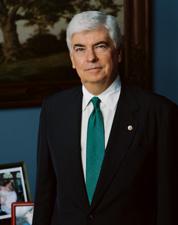 Sen. Christopher J. Dodd (D-CT)
Legislative Activity
Stay on top of the latest movement without scrolling through every action
Senate amendment agreed to: Amendment SA 1572 as modified agreed to in Senate by Voice Vote.(text as modified: CR S11273)
September 10, 2003
View full timeline
Senate amendment agreed to: Amendment SA 1572 as modified agreed to in Senate by Voice Vote.(text as modified: CR S11273)
September 10, 2003
Considered by Senate. (consideration: CR S11263, S11273, S11275-11280)
September 10, 2003
Amendment SA 1572 as modified agreed to in Senate by Voice Vote. (text as modified: CR S11273)
September 10, 2003
Considered by Senate. (consideration: CR S11193, S11228)
September 9, 2003
Considered by Senate. (consideration: CR S11175)
September 8, 2003
Considered by Senate. (consideration: CR S11134)
September 5, 2003
Senate amendment submitted
September 4, 2003
Senate amendment proposed (on the floor): Amendment SA 1572 proposed by Senator Dodd to Amendment SA 1542.(consideration: CR S11081-11086; text: CR S11081)
September 4, 2003
Amendment SA 1572 proposed by Senator Dodd to Amendment SA 1542. (consideration: CR S11081-11086; text: CR S11081) To provide additional funding for grants to States under part B of the Individuals with Disabilities Education Act.
September 4, 2003
Text
Proposed
DEPARTMENTS OF LABOR, HEALTH AND HUMAN SERVICES, AND EDUCATION, AND
RELATED AGENCIES APPROPRIATIONS ACT, 2004--Continued

Mr. KENNEDY. It is a privilege to join Senator Harkin on this
urgently needed proposal to protect the 40-hour workweek and the right
to overtime pay for millions of working men and women. The Bush
administration's new regulations are an unfair scheme to prop up
business profits by allowing firms across America to reduce their costs
by denying overtime protections to more than 8 million hard-working men
and women, including 200,000 in my own State of Massachusetts. Police
officers, nurses, cooks, clerks, physical therapists, reporters, and
many others would be required to work longer hours for less pay.
Our amendment is very clear. It says that no worker now eligible for
overtime protections can be denied overtime pay as a result of the new
regulation.
With a failing economy, with more than 9 million Americans out of
work, with so many other families struggling to make ends meet,
cutbacks in overtime pay are a nightmare that no worker should have to
bear. Overtime pay now makes up a quarter of their total pay, and the
administration's proposal will mean an average pay cut of $161 a week
for them.
Hard-working Americans do not deserve this pay cut, and it is wrong
for the administration to force it on them. Overtime protections of the
Fair Labor Standards Act have been a fundamental right of this Nation's
workers for more than half a century. This basic law was enacted in the
1930s to create a 40-hour workweek. It requires workers to be paid
fairly for any extra hours. Especially in times such as these, it is an
incentive for job creation because it encourages employers to hire more
workers instead of forcing current employees to work longer hours.
The economy has lost more than 3 million private sector jobs since
President Bush took office. The Bush administration is wrong to propose
regulations that will enable businesses to require their employees to
work longer hours and reduce the need to hire additional workers.
According to the congressional General Accounting Office, employees
without overtime protection are more than twice as likely to work
overtime as those covered by that protection. Americans are working
longer hours today than ever before, longer than in any other
industrial nation. At least one in five employees now has a workweek
that exceeds 50 hours, let alone 40 hours a week.
We know that employees across America are already struggling hard to
balance their family needs with their work responsibilities. Requiring
them to work longer hours for less pay will impose an even greater
burden to this daily struggle. Protecting the 40-hour workweek is vital
to protecting the work/family balance for millions of Americans in
communities all across the Nation. The last thing Congress should do is
to allow this antiworker administration to make the balance worse than
it already is.
Sixty-five years ago the Fair Labor Standards Act was signed into law
by President Franklin Roosevelt and established minimum wage and
maximum work hours. It was in the midst of the Great Depression, and as
President Roosevelt told the country:

. . . if the hours of labor for the individual could be
shortened . . . more people could be employed. If minimum
wages could be established, each worker could get a living
wage.

Those words are as true in 2003 as they were in 1938. Our modern
economy has lost more private sector jobs during this economic decline
than in any recession since the Great Depression.
What can the administration be thinking when it comes up with such a
shameful proposal to deny overtime protections on which millions of
workers rely? Congress cannot sit idly by when more and more Americans
lose their jobs, their homes, their livelihoods, and their dignity. We
will continue to battle to restore jobs, provide fair unemployment
benefits, raise the minimum wage, and we will do all we can to preserve
the overtime protections of which so many American families depend.
I urge my colleagues to support this essential proposal to keep faith
with the Nation's working families.

I wish to take a few moments of the time of the Senate to review what
is happening to American workers in relation to other countries around
the world. It is reflected in this chart. The red columns indicate the
number of hours workers are working and comparing it with other
industrialized nations of the world.
As you can see from this chart, American workers are working longer
and harder than those in any other industrial nation of the world. That
has been a phenomenon that has really developed in the recent times.
This chart shows that U.S. work hours have increased while those in
other industrial nations actually decreased. The United States--we see
over here the increases; and the decline in other industrial nations.
So here we have a workforce that is prepared to work and prepared to
work long and hard. Yet we find the administration is attempting to
penalize these workers for being willing to work and for working long
and hard.
This chart here is ``Workers Without Overtime Protections Are More
Than Twice As Likely To Work Longer Hours.''
What does this chart say? That if the workers do not have the
overtime protections, the employers work them more than twice what they
would work if they did have the overtime protection. Why is that
important? Because this particular proposal is taking away this kind of
protection. The result will be that the workforce, which is working
longer and harder than that in any other industrial nation in the
world, is going to find they are going to have to work even longer and
harder to make ends meet. This is true, even if they are working 50
hours a week. Then they are three times as likely to be required to
work longer than if they had the overtime protections.
So we have a situation where we see Americans working longer and
harder. We have a situation that, if they do not have the overtime
protections, they are required by their employers to work twice as hard
as those with the overtime protections. In the instances of those who
work 50 hours a week, they are required to work three times as hard.
These are the facts. Nearly 3 in 10 employees already work more than
40 hours a week and one in five Americans work more than 50 hours a
week. One in five Americans are working more than 50 hours a week.
These working Americans don't have the time they need to meet their
family responsibilities.
Parents today define that biggest daily challenge as balancing work
and family responsibilities and instilling values in their children.
When parents have more time to spend with their children, they achieve
more academically, improve behavior, and demonstrate lower dropout
rates.
This proposal by the administration is an antifamily proposal because
it is going to deny essential resources for families to be able to meet
their particular needs. The result will be all the additional social
problems that impact families that do not have a chance to be together,
to stay together, to work together, to pray together, to enjoy each
other.
The Fair Labor Standards Act overtime protection works. Workers are
compensated time and a half their regular pay for hours worked in
excess of the 40 hours per week. That is what the law is. Employers
have a financial disincentive to work employees excessive hours.
Employers have an incentive to hire more workers instead.
As we see, that is the current law. This is the current employment
situation where we see the loss of jobs for more than 3 million
American workers over this period of time. So we are finding at the
present time our workers are working longer and they are working harder
in order to provide for their families. We have the greatest loss of
jobs that we have had since the time of the Great Depression.

[[Page S11066]]

What this particular proposal is saying is that isn't even enough.
Even though you are working longer and working harder than at any time
before, we are going to take away the protections which are going to
effectively deny the average family who is receiving overtime about
$161 a week.
With all the challenges we are facing in this country, the fact that
workers who are working longer and harder and are making $161 on
average in overtime is not on the front burner. These Americans are
working. They ought to be entitled to that protection.
We have now more than 8 million workers--2.5 million workers are
salaried employees and 5.5 million hourly workers--who will lose their
overtime pay under the Bush proposal. Even some who are salaried
workers are eligible for overtime. This is 8 million who would be
eligible for overtime who will be denied that.
Even the business community admits this will have widespread effects.
According to the Society for Human Resource Management:

This is going to affect every workplace, every employee,
and every professional.

This is widespread in its impact on working families in this country.
This is a chart which should give you some kind of historical
perspective of the number of workers who were protected in terms of
overtime. The percentage of workers who were not protected was 17
percent in 1983. In 1998, it was 20 percent. Now, under the Bush
proposal--here it is--33 percent. Thirty-three percent of the workers,
effectively.
It includes the 8 million who will not be eligible. The impact of
this is very clear. That is sort of a major pay cut for workers.
American workers are working longer and harder than any other
industrial society in the world. Who are they? They are millions of
workers who would lose overtime protections under the Bush proposal.
Let us be clear for any who are watching this debate. Police officers
will be affected. Nurses will be affected. Cooks and chefs and clerical
workers will be affected. Firefighters and physical therapists will be
affected. It is interesting that these are first responders--police
officers, firefighters, and nurses. They are our first responders. We
are talking about trying to give support to our first responders on the
one hand, and on the other hand we are taking away the economic
protections they need to provide for their families.
We continue along with the various groups: Paralegals, reporters,
dental hygienists, graphic artists, bookkeepers, lab technicians, and
social workers.
The interesting irony is that they are our first responders. We not
only fail to give support to the local communities which they need for
the first responders to terrorism, but on the other hand we are sending
a message to the police officers, firefighters, and nurses that we are
going to reduce their pay at the same time. What kind of message is
that at a time when we are talking about homeland security?
Millions of workers depend on their overtime pay to make ends meet.
The most recent statistics show that overtime pay accounted for more
than 25 percent of the income of workers who worked overtime which they
depend on in terms of their income. The workers are stripped of their
overtime protection, and they will be forced to work longer hours for
less pay.
That is what this is about. It is just a major broadside against
workers in America who are working longer and harder, attempting to
maintain their jobs, hopeful that they won't be dismissed or fired as a
result of the economic policies of this administration which has seen
the greatest growth of unemployment since the Great Depression as a
result of economic policy.
The Senator from Iowa will remember when we had different economic
policies. We had them during the period of President Clinton when we
had the longest period of economic growth and price stability in this
country since the early part of the 1960s. That was because of economic
leadership at the national level. In the early 1960s, we had the
longest period of economic growth and price stability than we had for
better part of the century.
National economic leadership is essential in terms of ensuring the
people are going to work. We have a failed economic policy with 3
million people left out of work. And for those who are left in, we are
cutting back on the pay of some of the hardest working individuals in
the world. That is unfair. That is unjust. It is done by the issuance
of a regulation rather than as a result of legislation and hearings. It
will not stand.
I commend the Senator from Iowa for his leadership in this area
because he is involved in some other issues that affect working people
and farmers and others on the forefront. I commend him for all he has
done. I am proud to join with him in resisting this proposal because it
is just wrong. It is wrong for the workers. It is wrong for our
economy. It is wrong for families. This is a family issue. It is a
homeland security issue. It is a children's issue. It is a women's
issue because so many of these workers who work overtime in the economy
are women.

Make no mistake, the women will be hurt by this proposal. They are
working hard and trying to raise their families. Make no mistake about
who is being impacted on this.
It has broad implications in terms of our economy. It is not right,
it is not fair, it is not just, it is bad economics, and it is just
lousy policy.
There are those of us who will be joining together with the Senator
from Iowa to see that we resist this proposal.
Mr. HARKIN. Mr. President, will the Senator yield for a question?
Mr. KENNEDY. Yes.
Mr. HARKIN. I first wish to thank the senior Senator from
Massachusetts for his many years of leadership and support on issues
that really affect working families in America. No one has fought
longer and harder and more successfully in the past to protect the
working families of America than the senior Senator from Massachusetts.
I am very proud to have his support for this amendment and for his
joining us in trying to do what we can to stop this assault on the
American working families, as the Senator so ably pointed out.
I must say to the Senator that people ask me all the time: Why would
they do this? Why would the administration, sort of under the cover of
darkness, want to at this point in time, or any time, take away the
protections of overtime pay for millions of Americans? I must tell the
Senator from Massachusetts that I am hard pressed to answer that
question. Why would they want to do this? I throw up my arms. It makes
no sense economically. It is antifamily, as the Senator from
Massachusetts pointed out. It is bad economic policy. We are not going
to create more jobs. In fact, we will cause the loss of more jobs. I am
hard pressed.
I wonder if the Senator has any ideas to help me answer constituents
and others who ask me why the administration proposes an outlandish
assault on working families. I am at a loss. I don't know if the
Senator can help me. Maybe they have given in to some of the people in
the business community. As I say, it is not all the people. Not all the
people in the business community agree with us. But there are a few who
are pushing.
Maybe the answer is that people in the business community just want
to be able to tell their workers what to do, when to do it, and how to
do it, with no restrictions whatsoever on how they tell their workers
what to do and when they can work. That is the best I can come up with.

Mr. KENNEDY. The only answer I can reach is that it is the result of
pressure being exerted on the administration by these business groups
that do not want to be in a position of having to hire additional
workers, and they don't want to be paying additional overtime pay that
has been a part of the whole social balance in this country and society
and recognized as such by Republicans and Democrats since the 1930s.
Forty hours of work a week is what workers ought have as an
opportunity for employment. Under special circumstances, if they are
going to have to work longer or want to work longer, they get the time
and a half.
Now what we undermining is the age-old concept about the importance
of protecting a 40-hour week. We are effectively eliminating that. Make
no mistake about it. Effectively, the 40-hour workweek will be
eliminated for

[[Page S11067]]

millions of workers with this proposal because now employers will be
able to require hours from the workers without having to give them fair
compensation.
But let me ask the Senator. The Senator from Iowa is a floor manager
with the Senator from Pennsylvania on this legislation which has
important funding for education programs, for health programs, for job
training programs, for the NIH, and all the research we are doing in
terms of cancer research--all kinds of research.
Is it true that this administration has said, if their proposal--
which will deny millions of workers overtime pay--is eliminated, this
administration and this President will veto the underlying bill which
they feel so strongly about in terms of the income of working families
who are working longer and harder providing for their children; that
they are prepared to risk the funding of these vital services which are
absolutely at the heart of the quality of life of the American people?
Am I correct in understanding that this is the administration's
position, that they feel so strongly about taking away the overtime pay
for workers that they are prepared to risk the whole funding stream for
education, for health, for NIH, and for job training, the range of
different services that are so important to the well-being and health
and education of people in this country?
Mr. HARKIN. I just respond to the Senator, he made a great point. I
can only say what Reuters news agency reported 1 day ago, yesterday,
saying:

The White House issued a veto threat . . . against a
Democratic bid to derail its proposed changes in federal work
rules that [would] cost millions of Americans overtime pay. .
. .
If the Senate adopted the amendment, President Bush's
advisers would recommend he veto the spending bill, the White
House budget office said.

I say to the Senator from Massachusetts, this is again mind-boggling,
that if the Senate expresses its will that we do not want these rules
to go into effect, they are going to veto this bill that has money in
it for vital basic medical research for all of NIH, the National
Institutes of Health, all of the funding for higher education and Pell
grants--and, by the way, I know the Senator and others have amendments
to make sure we get those Pell grants up, and I support him in that
effort--all of the funding for elementary and secondary education, Head
Start programs, maternal and child health care programs. They are going
to veto the whole thing because they are so adamant that they want to
take away overtime pay from American workers.
I hope this is a mistake. I hope Reuters was wrong, but I can only
rely upon what they have said. The White House has not communicated
this to me directly, but this has been reported from the White House,
that they are going to veto this bill over this.
I say to the Senator from Massachusetts, I am glad he mentioned that
because, again, it just shows to me the zeal--the zeal--with which this
administration and their advisers want to attack working families in
this country and to take away overtime pay; that they are willing to
put out that threat of a veto and take away Head Start Program funding,
maternal and child health care, elementary and secondary education, all
the other things that are in this bill, simply because they want to
take away overtime pay from millions of American workers. Again, I find
this bordering on the bizarre.
Mr. KENNEDY. I say to the Senator, I certainly agree. I know we are
going to have an opportunity to address this and debate this issue, but
I hope our colleagues, over the period of the next day or so, will
really think long and hard and deeply about this proposal.
We have been attempting in this body to raise the minimum wage for
working families. Effectively, without raising the minimum wage this
year, we will lose all of the gains of the last increase. And we are
denied on the other side of the body. We indicated we would like to
raise the minimum wage.
In fact, there are millions of workers in this country who are
working two or three jobs a day. These are primarily women. About 62 or
63 percent of those workers who earn the minimum wage are women. One-
third of those women have children, so it is a children's issue. It is
a women's issue. It is a civil rights issue because most of the people
working at the minimum wage are men and women of color. And it is a
fairness issue.
The American people support overwhelmingly the fact that people who
want to work hard, 40 hours a week, 52 weeks a year, should not have to
live in poverty for themselves and their children. We cannot get a vote
on it. The other side will not let us have a vote on it.
So they will not let you take care of those who are at the lower end
of the economic ladder. Here they are going on to take the overtime
away. They have assaulted Davis-Bacon, which is ways of giving
protection to workers who are trying to do a decent job in terms of
building and constructing the great parts of American commerce. And
what in the world, we find out that on the issue of worker health and
safety, they are now rescinding the proposed tuberculosis standards
which have been in development for 10 years, when we have a
dramatic increase in the problems of tuberculosis and other airborne
diseases in this country. The list goes on and on.

What is it about this administration? With all the challenges, with
Iraq adrift, our grids and electrical systems crashing, the judicial
nomination process in shambles, and the economy sputtering, they are
spending their time attacking and assaulting working men and women in
this country. Can the Senator possibly help me understand how this is a
priority, given all the other kinds of needs we are facing in this
Nation?
Mr. HARKIN. I respond to the Senator from Massachusetts, from all the
polls we have seen, all the data we have seen, the American people do
not want this. They want more overtime pay protection, not less.
I say to the Senator from Massachusetts, while he was speaking, I was
thinking about something I said a few days ago about the fact that the
administration is turning the clock back prior to 1938 when we passed
the Fair Labor Standards Act. And someone said that was sort of
overblown rhetoric on my part--that of course no one wants to turn the
clock back.
As I started doing more research into what happened with the Fair
Labor Standards Act, I came across an interesting item. The first kind
of strikes that occurred asking for an 8-hour day started in 1886, the
famous Haymarket Square riot in Chicago. That was trying to get an 8-
hour day at that time. This finally built up to the 1930s during the
Great Depression. The 40-hour workweek was a compromise. The Senate, in
1937, passed a measure providing for a 30-hour workweek. Think about
that. If we were to propose a 30-hour workweek around here, I don't
know how many votes you would get. You would not get many.
In 1937, the Senate passed a measure providing for a 30-hour
workweek. It was only because business ganged up and they said they had
to compromise, and they compromised on a 40-hour workweek.
So when I say they are turning the clock back to before 1938, I mean
it. That is exactly what they are trying to do, put us back to a time
when people worked 10, 12 hours a day with no compensation for it and
had little time with their families. That is exactly what this measure
is intended to do.
You couple that with what the Senator from Massachusetts said about
Davis-Bacon, the fact that we can't even get a vote on the minimum
wage. The Senator from Massachusetts for the last couple, 3 years has
been trying to get this vote up. We can't get a vote up. They won't let
us vote on it. I hope we will vote sometime this year on the minimum
wage. But these are all attacks on workers.
Mr. KENNEDY. Pensions.
Mr. HARKIN. All of them.
(Mr. GRAHAM of South Carolina assumed the Chair.)
Mr. DAYTON. Will the Senator yield for a question?
Mr. KENNEDY. I have the floor, and after the Senator has finished, I
will be glad to yield.
Mr. HARKIN. Go ahead.
Mr. DAYTON. Isn't it also true that this administration proposed
eliminating taxation on other income? Doesn't the Senator think it is a
little odd for an administration to be penalizing people who want to
work, people who want to work overtime and, at the same time, providing
tax breaks or tax elimination for people who don't work for their
income?

[[Page S11068]]

Mr. KENNEDY. The Senator is quite correct. There is a panoply of
different issues that affect working families. On each and every one of
them, I think any fair assessment is that the administration comes down
on the wrong side of it. Today it is overtime. And this is a debate at
the core of what policy this administration is focused on.
But I think, as Senator Dayton and others have pointed out, there are
a whole range of issues that shortchange American workers, and we have
every intention of continuing the battle for them.
Mr. President, I would like to speak briefly on another subject. I
know there are others who want to speak. But I will just take a moment
of the Senate's time to address an education issue which, hopefully, we
will have a chance to address and debate further. But I think it is
important that we have it out in the Record so our colleagues are aware
of it.
Mr. President, many of us are deeply concerned about the continuing
failure of our appropriations for education to fulfill to promise that
the Congress and the administration made to pay for the school reforms
of No Child Left Behind signed just a year and a half ago.
Make no mistake, the bill before us continues to have harsh cuts in
education that will hurt families, students, and teachers throughout
the country. These are the children of these workers we were just
talking about.
The President and Congress promised to reform and improve public
education, to leave no child behind over a year ago. We said to the
parents and teachers: Help is on its way. But if we pass the school
budget before us, the message to parents and teachers and schools would
be: You are on your own.
A pattern is emerging. Each year the President picks a large area to
work on in a bipartisan fashion and promises compassion and help. In
the past, that area has been in education. This year, it is the global
AIDS crisis, and we hope that the promised support will happen. But on
education, the promises made consistently have been broken. In fact,
the bill before us contains a litany of broken promises on education,
because the Republican Congress refuses to keep them:
In January 2002, President Bush promised that ``America's schools
will be on a new path of reform . . . our schools will have greater
resources to meet those goals.'' But the bill before us cuts funding
for the No Child Left Behind Act by $200 million. We have raised
standards and raised expectations on school children. We hold schools
accountable for better performance. Yet now, the Republican majority
wants to cut funding for school reform.
President Bush promised that we would ``leave no child behind,'' and
that became the title of the landmark school reform bill he signed into
law over a year and a half ago.
But the bill before us leaves 6 million children behind. It
underfunds the Title I program for needy children by over $6 billion.
Under the Republican education budget, some 6 million needy children
will not get smaller classes, will not get supplemental services, and
will not get the special attention they need to meet high standards.
In March of last year, President Bush promised to support teachers,
making sure they ``get the training they need to raise educational
standards.''
But the bill before us cuts 20,000 teachers from professional
development programs. It completely eliminates training for teachers in
technology. We need to upgrade and expand teacher quality efforts, not
downgrade teacher training. The No Child Left Behind Act requires
schools to give every classroom a high quality teacher. They need more
resources, not fewer resources, to reach that goal.
President Bush promised that his Administration ``will promote
policies that expand educational opportunities for Americans from all
racial, ethnic, and economic backgrounds.''
The bill before us undermines support for non-English speaking
children and undermines support for many of the nation's neediest
children.
The bill before us cuts 32,000 children from English as a Second
Language programs.
It cuts 40 percent of funding for the children of migrant workers
struggling to get their GED and go to college.
It eliminates dropout prevention funding.
It eliminates the Thurgood Marshall Scholarship program.
This legislation basically does nothing to help families afford
college, at a time when the rising cost of college is keeping minority
and low-income students out. Average public college tuition rose almost
ten percent this past year. The average public university's annual
costs now equal more than 62 percent of a working class family income.
Each year, over 400,000 college-ready, low-income students do not
pursue a four-year college degree, because they cannot afford the cost.
Yet this bill has a zero increase in individual student Pell grants,
zero increase in the campus-based financial aid program, and zero
increase in the college work study program.
After all the promises made and all the public visits to schools, how
can we possibly approve a cut to the No Child Left Behind Act?
If we intend to hold schools and students accountable, Congress and
the Administration have to be accountable too. We know what works in
school reform. When we provide the resources, we know that schools can
be turned around. They can upgrade their curricula, provide diagnostic
tests that identify learning needs early, train teachers in the latest
and best instructional techniques, and give students the after-school
academic help and English language instruction they deserve. We have
seen hundreds of high-poverty schools across the country turn
themselves around with exactly these reforms, because they have the
necessary resources to do. We need more, not fewer, resources for
school reform, so that the reforms we say we care so much about can
actually succeed.

Sadly, the Senate is suddenly starting to move even more harshly in
the wrong direction. For the first time in eight years, the Senate
education budget is lower than the House proposed education budget. And
the House Republican bill falls short by over $8 billion, compared to
the amount needed to fully carry out the No Child Left Behind Act. The
Senate bill before us is even worse. This bill actually cuts funds for
the No Child Left Behind Act.
Obviously, money is not the answer to all the problems of our
schools. But the way we allocate resources in the federal budget is a
pretty clear expression of our view of the nation's priorities. And the
priorities on education reflected in the bill before us--the product of
a Republican-only budget process--are profoundly wrong.
I hope a bipartisan group of colleagues will come together as we
consider this legislation, and keep the promises we made to help these
schools. Our nation and our nation's schools and students deserve no
less.
I want to talk about the issue of higher education, specifically. In
the area of education, the amendment I offer with Senator Collins
increases the maximum Pell grant by $500, increases other financial aid
to keep pace with the soaring tuition costs college students and their
families are now facing. A coalition of 56 higher education and student
organizations throughout the country supports it. The $2.2 billion is
offset by the same mechanism the majority uses in the underlying
substitute to offset their funding levels. We rescind $2.2 billion in
fiscal year 2004 advanced appropriations made in fiscal 2003 and
reappropriate those funds in fiscal 2003.
Our Nation faces a growing crisis in higher education because of the
soaring costs of tuition in recent years. The crisis is now far worse
because State and local budgets are in crisis, too. Cash-strapped
States are dealing with $80 billion in deficits by cutting higher
education funds and forcing public colleges to raise tuition. According
to a USA Today report last week, over 40 percent of public colleges in
America, which educate three-quarters of all college students, are
raising tuition by more than 10 percent a year. There has been a $1,750
increase in tuition and fees at the University of Massachusetts.
Northern Virginia Community College, which has the most community
college students in Virginia, has raised tuition by 45 percent. Iowa
has raised tuition by 19 percent at all public colleges. The University
of Arizona has raised tuition by 28 percent; the University of Missouri
by 18 percent.

[[Page S11069]]

Unless this amendment is adopted, over 100,000 current college students
are in danger of dropping out because of higher tuition costs and zero
increased financial aid.
Hard-working students are threatened, students like Tawn Pham at the
University of Massachusetts in Boston. Tawn is 21 years old. He works
at the local courthouse. He is a Pell grant recipient. He borrows
Stafford loans. His family came to America from Vietnam in 1987.
Without financial aid, he would never have gone to college. Without
increased financial aid, his college education is threatened by recent
tuition and fee hikes. The American dream we all pay homage to is
threatened for young students like Tawn Pham because of our threatened
failure to increase financial aid.
The answer is not simply to allow students to borrow more and more.
Vast numbers of college students are already borrowing, for example,
tens of thousands of dollars to pay for their education. Twenty years
ago a typical aid package was 40 percent loans, 60 percent grants.
Today the figures are reversed. The typical package is now 60 percent
loans and 40 percent grants. And students who are pursuing graduate
work confront upwards of $120,000 in student loan debt. Yet the banking
industry proposed that students borrow even more at higher interest
rates to go to college.
Last year the Bush administration proposed to make consolidated
student loans more expensive. No young person should have to mortgage
their future in order to go to college. They should be paying off the
loans they have at lower interest rates, not higher interest rates.

Vast numbers of students are already taking jobs to defray the costs
of their education. Half of all college students who take part-time
jobs are now working 25 hours a week and trying to be full-time
students, too. Their studies are clearly suffering, and so is their
future.
According to GAO, only 41 percent of students who work between 20 and
31 hours a week complete a college degree. For students who work 32
hours a week or more, the figure is even worse.
Sadly, this bill provides virtually no new help for students and
families struggling to pay the increased cost of higher education.
In the bill before us, there is zero increase in the maximum Pell
grant; zero increase in Perkins loans; zero increase in work-study aid;
zero increase in campus-based financial aid; zero increase in support
for leveraged State student aid.
The amendment Senator Collins and I are proposing is a stopgap effort
to provide assistance for hard-pressed college students and their
families. It will help the 4.8 million Pell grant recipients whose
median family income is $15,000 a year. There are 4.8 million students
who are going to institutions of higher learning, and their family
income is $15,000 a year. It will bring new Pell grants to 200,000 new
recipients. It will expand the TRIO and the GEAR-UP Programs to enable
historically underrepresented students to achieve the goal of a college
education. It supports graduate students in the science, humanities,
and public interest.
It will bring us a step closer to guaranteeing all Americans a
promise of education security. Just as we have made Social Security and
Medicare a promise to our senior citizens over 60 years ago, we should
make education security a promise to young men and women. If you work
hard, finish high school, and are accepted for admission to college, we
should guarantee you will have the opportunity to earn a college
degree.
I urge my colleagues to support the pending amendment. Surely we have
reached the stage in America where we can say it and mean it--inability
to pay the cost will never again be a barrier to the dream of a college
education.
I would just point my colleagues' attention to a statement from the
administration, an administration policy. I will include the relevant
parts--executive branch, September 2 statement, Pell grant programs:
``The bill provides $12.2 billion for Pell grants, $538 million less
than the President's request for the high priority program.''
This is the administration saying that the underlying substitute is
$538 million below what the President of the United States even
requested.
Under the Department's most recent estimates of Pell, the Senate
level may be insufficient to cover the cost for student awards in 2004.
That's true.
We believe that this amendment that we're offering ought to be
accepted. It is related obviously not only to those children who are
going on to college, but it also helps and assists GEAR-UP children
coming in--which are basically the children who would fit into this
category, and helps the TRIO Programs. It gives general support for the
education continuum for these children that would otherwise definitely
not have the chance to attend higher education.
I ask unanimous consent to set the pending amendment aside so that I
might offer an amendment.
The PRESIDING OFFICER. Without objection, it is so ordered.

Amendment No. 1566 To Amendment No. 1542

Mr. KENNEDY. Mr. President, I send an amendment to the desk.
The PRESIDING OFFICER. The clerk will report.
The assistant legislative clerk read as follows:

The Senator from Massachusetts [Mr. Kennedy], for himself,
Ms. Collins, Mr. Dodd, Mr. Reed, Mr. Bingaman, Mrs. Murray,
Mr. Kerry, Mr. Lieberman, Mr. Edwards, Mr. Pryor, Mr.
Corzine, Ms. Stabenow, Mr. Akaka, Mr. Lautenberg, and Mr.
Schumer, proposes an amendment numbered 1566 to amendment No.
1542.

Mr. KENNEDY. Mr. President, I ask unanimous consent that reading of
the amendment be dispensed with.
The PRESIDING OFFICER. Without objection, it is so ordered.
The amendment is as follows:

(Purpose: To increase student financial aid by an amount that matches
the increase in low- and middle-income family college costs)

On the appropriate page and line, insert before the period
the following: ``: Provided further, That of the funds
appropriate in this Act for the National Institutes of
Health, $1,470,000,000 shall not be available for obligation
until September 30, 1994''.
On page 76, between lines 4 and 5, insert the following:
Sec. __. (a) Increase in Funding.--In addition to any
amounts otherwise appropriated under this Act for Federal
Pell Grants under subpart 1 of part A of title IV of the
Higher Education Act of 1965, there are appropriated an
additional $1,688,000,000 for such grants. In addition to any
amounts otherwise appropriated under this Act for Federal
Supplemental Education Opportunity Grants under subpart 3 of
part A of title IV of the Higher Education Act of 1965, there
are appropriated an additional $115,000,000 for such grants.
In addition to any amounts otherwise appropriated under this
Act for Federal Work-Study Programs under part C of title IV
of the Higher Education Act of 1965, there are appropriated
an additional $157,000,000 for such programs. In addition to
any amounts otherwise appropriated under this Act for the
Leveraging Educational Assistance Partnership Program under
subpart 4 of part A of title IV of the Higher Education Act
of 1965, there are appropriated an additional $33,445,000 for
such program. In addition to any amounts otherwise
appropriated under this Act for Federal Trio programs under
chapter 1 of subpart 2 of part A of title IV of the Higher
Education Act of 1965, there are appropriated an additional
$160,000,000 for such programs. In addition to any amounts
otherwise appropriated under this Act for Gear Up programs
under chapter 2 of subpart 2 of part A of title IV of the
Higher Education Act of 1965, there are appropriated an
additional $57,000,000 for such programs. In addition to any
amounts otherwise appropriated under this Act for loan
cancellations under the Federal Perkins Loans program under
part E of title IV of the Higher Education Act of 1965, there
are appropriated an additional $33,000,000 for such loan
cancellations. In addition to any amounts otherwise
appropriated under this Act for the Graduate Assistance in
Areas of National Need program under subpart 2 of part A of
title VII of the Higher Education Act of 1965, there are
appropriated an additional $13,200,000 for such program. In
addition to any amounts otherwise appropriated under this Act
for the Thurgood Marshall Legal Educational Opportunity
Program under subpart 3 of part A of title VII of the Higher
Education Act of 1965, there are appropriated an additional
$7,000,000 for such program. The amount $4,050 under the
heading `Student Financial Assistance' in this title shall be
deemed to be $4,500. The amount $9,935,000 under the heading
`Higher Education' in this title shall be deemed to be
$15,000,000.
(b) Budgetary Authority.--The amount $6,895,199,000 in
section 305(a)(1) of this Act shall be deemed to be
$9,151,909,000. The amount $6,783,301,000 in section
305(a)(2) of this Act shall be deemed to be $4,526,591,000.

Mr. KENNEDY. Mr. President, I understand there are a number of
pending amendments, the order of which and

[[Page S11070]]

the time of which will be worked out by the floor managers. We wanted
to make available to the Members today this amendment. We will
obviously work with the leadership and floor managers to have
appropriate time for debate and discussion.
I yield the floor.
Mr. CORZINE. Mr. President, first I wanted to speak on Senator
Harkin's amendment with regard to protecting overtime pay for hard-
working Americans. I also want to second the efforts Senator Kennedy is
making. Both Senators Harkin and Kennedy are giants with regard to
protecting hard-working Americans who are under incredible stress in
our economy today.
I heard Senator Kennedy talk about the people with $15,000 annual
incomes who benefit from Pell grants. Tuitions are going up 15, 20
percent across the board. They are 9 percent in New Jersey, so I guess
we are doing well at Rutgers. We are not increasing our financial aid
at all. The Senator also knows that back in the drawing rooms of the
Education Department they are changing the regulations that are
reducing the amount of grants and availability of funding for both
grants and financial aid for middle-class Americans. It is unbelievable
what we are doing to and the pressure we are putting on the American
people, the hard-working people who drive this economy. I compliment
the Senator on his efforts in raising this issue on higher education.
I think what singles out more than almost anything I have heard
debated is trying to take away overtime pay for the American people. I
am just one individual who believes that the best way to grow our
economy is to have rising tides lift all boats, making sure everybody
participates in the excellence and the wealth of America. But we are
doing everything we can to undermine that for millions of American
workers. So I am proud to join Senator Harkin, Senator Kennedy, and all
those who want to speak up for those who are making America work.
We are talking about the whole of America's economy. We need to put
it in the context of what is happening in the American economy. People
talk about the stock market going up, rising to the point that we have
recouped $2 trillion of $7 trillion lost; but the fact is we have not
recouped job one yet during any kind of economic turnaround. Nine
million Americans are unemployed today. A million have dropped out--
actually 2 million have stopped looking for jobs. The unemployment rate
hovers at 6.2 percent even today. We have heard that unemployment
claims went up to 15,000 today, the highest in the last 12 weeks, above
the threshold that shows there is weakening job growth in the economy.
The average length of unemployment is longer than it has ever been--
19 weeks. It spiked this summer to the highest level in two decades.
Quite honestly, we are seeing the worst employment recession we have
had since the Great Depression. It is a real problem for working
Americans. And now we are trying to make it really hard on the people
who do have jobs. Not only are we not doing addressing unemployment in
this country in a real sense, but we are now placing burdens on those
who actually are delivering and working every day. I think it is just
discouraging to undermine the economic well-being of those who are
working, as well as ignoring those who are left out in this jobless
recovery we have.
Senator Harkin has been so eloquent in talking about this back-to-
history view of where we are taking ourselves. Looking at the 1938 Fair
Labor Standards Act and the 40-hour workweek--one of the highest ones
in economically developed countries--nobody is arguing that we ought to
change that; we are saying you ought to get time and a half when
working overtime, and we should define it in a way that is
really meaningful for people who work on hourly wages.

I just don't understand the timing. I don't understand the
proposition of it. We should be encouraging having resources in the
pockets of people who will go out and spend it and drive the economy.
When we are talking about how we get jobs growing in this country,
people need the ability to create demand. This does the opposite. It
just seems hard to understand why we want to strip workers of their
right to overtime pay, particularly at a time of economic stress in our
economy.
American families are the drivers of our economy. It is the vast
middle class in this country who are in these jobs. They are not in
executive positions. This is not redefining what executive positions
are. This is trying to cut away at the bulk of those people who are
working on an hourly basis, really providing so much of what is good
happening in our economy.
These changes mean real losses--on average, 25 percent of annual
income--for an estimated 8 million Americans. By the way, if that
happens, what does that do to the competitive labor market, or for
changes in what is going on? This is about building up the bottom line
of corporate America at the expense of working Americans. Again, I go
back to rising tides lift all boats and why we want to undermine the
economic well-being of policemen, nurses, firefighters, EMTs, and even
journalists. Some of us sometimes have trouble with them, but
journalists are also folks who would be carved out of this.
I have heard Senator Kennedy say--and I am sure Senator Harkin
mentioned this before--that so much of this is focused on women in the
workplace. It is incredible. We are asking families to have two wage
earners so they can make it in today's society, and we have turned the
situation into where overtime pay will be taken away from the folks
making the sacrifices, trying to get their kids into higher educational
environments where they can have access to the American promise.
I don't get it. I don't think the American people get it. I think we
have to make sure everyone understands this administration, and those
who believe they want to so-call ``clarify'' the rules and change them,
is really undermining the economic health and welfare of our American
middle class--the people who are paying the bills, living their lives
within the rules, and doing the right things for everyone.
Mr. President, this country deserves better, in my view. I stand
fully behind the efforts of Senator Harkin and those who are pushing
very hard to block this work rule change that I think undermines the
health of our economy and the health and welfare of working Americans
in our economy. It is bad and it should not go through. We need to
support this amendment that protects working Americans. By the way,
that will be good for everybody. That will be good for business, good
for creating demand in our society, and I hope we understand we have to
look at this on a holistic basis, not on something that just helps
special interests and a limited number of folks in our economy.
I think we can do a lot to improve our economy. One of the ways to do
it is to stop these kinds of actions from taking place. I am proud to
stand with Senator Harkin in this effort.
The PRESIDING OFFICER. The Senator from Wyoming is recognized.
Mr. ENZI. Mr. President, I am a little confused because for the last
hour I have been listening to debate on an overtime amendment and, as
far as I can tell, an overtime amendment has not been laid down. But it
is my understanding that when it is, what it will do is keep the
Secretary of Labor from spending a single dollar to review the proposed
rule dealing with overtime.
Now, the process we usually have is that agencies propose rules, they
publish them, and then they get comments. As I understand it, there are
80,000 comments on this. Now, the job of the agency following that is
to take those comments into consideration and, if worthy, put them into
the rule. What we are saying is we don't want anybody to look at what
the public is saying; we don't want anybody to say what the 80,000
people who took the time to comment said. We don't want to see if there
can be a change to this rule. We think we can blast it best in its
present form. So don't let the Secretary look at the comments.
It is her job to look at them. It is her job to see if there needs to
be a change to the proposed rule. All this amendment does is keep the
Secretary from taking that action. I suppose it is no coincidence that
we are possibly taking up this amendment right after the Labor Day
weekend. Each year at this time, we honor those who work hard and help
to strengthen the economies of our States and the country. The holiday
cannot help but remind us of

[[Page S11071]]

those workers this amendment purports to protect.
Now we must carefully consider who is really helped and hurt by this
amendment--this amendment that stops the Secretary of Labor from
looking at 80,000 comments on ways to improve her rule.
Most of us were able to spend a considerable amount of the August
work period meeting with our constituents. At each town meeting I held,
there was usually someone in attendance who was quite concerned about
Government regulations. I was often told to rein in big Government,
keep the rules and regulations simple, current, responsive, and make
sure they make sense in today's everchanging workplace.
This amendment that would keep the Secretary of Labor from looking at
the 80,000 comments has the opposite approach. Instead of keeping the
regulations simple and current, it would prohibit the Secretary of
Labor from updating the rules exempting white-collar employees from the
Fair Labor Standards Act overtime requirements. Simply put, it is an
attempt to reject the new, turn back the clock, look to yesterday for
the answer to tomorrow's problems. It is an approach that is doomed to
failure before it is even applied, and I am opposed to it.
There is no question that the workplace has dramatically changed
during the last half century. It changed during the last half decade.
The regulations governing white-collar exemptions, however, remain
substantially the same as they were 50 years ago. The existing rule
takes us back to a time when workers held titles such as ``straw
boss,'' ``keypunch operator,'' ``legman,'' and other occupations that
do not exist today. As our economy has evolved, new occupations have
emerged that were not even contemplated when those regulations were
written 50 years ago.
A 1999 study by the General Accounting Office recommended that the
Department of Labor ``comprehensively review current regulations and
restructure white-collar exemptions to better accommodate today's
workplace and to anticipate future workplace trends.'' That was the
General Accounting Office telling the Department of Labor they needed
to ``comprehensively review current regulations and restructure white-
collar exemptions to better accommodate today's workplace and to
anticipate future workplace trends.'' That is precisely what the
Department of Labor's proposal to update and clarify the white-collar
regulations will do.
While the Department's proposal will update and clarify, this
amendment will do neither. It keeps it from happening, it keeps the
comments from being reviewed, and it will set the clock back to 1954
and try to force the square peg of the jobs of the 21st century into
the round hole of the workplace of 50 years ago.
I am a former shoe salesman, and I know how to tell when something
will not fit. This amendment just will not fit. It is like trying to
force a size 10 foot into a size 6 shoe. It will not fit no matter how
hard you try.
So let's be clear about what this amendment will do. The amendment
that keeps the Secretary from looking at the 80,000 comments will
undermine the Department of Labor's efforts to extend overtime
protection to 1.3 million low-wage workers. Under the current rules,
these 1954 rules, only those rare workers earning less than $8,060 a
year are automatically protected for overtime. You have to make under
$8,060 to automatically be protected.
The administration's proposed rule would raise that threshold to
$22,100. As a result, 20 percent of the lowest paid workers would be
guaranteed overtime pay. The overtime provisions of the Fair Labor
Standards Act were originally intended to protect lower income workers.
The proposed rules would provide lower income workers with the
protection they deserve.

By undermining the administration's efforts to better protect lower
income workers, whom will this amendment protect? The supporters of
this amendment claim that an estimated 8 million workers will become
ineligible for overtime under the proposed rules. However, this
estimate is based on a study by the Economic Policy Institute, and I
have to tell you, Mr. President, it looks as if it is riddled with
errors.
For example, the study includes in its calculations at least 18
percent of the workforce who work 35 hours or less a week. These part-
time workers do not work more than 40 hours a week and, therefore, they
do not receive overtime in the first place.
The study also claims the proposed rule will deny overtime pay to
white-collar employees earning more than $65,000 a year. However, not
all employees earning over $65,000 are exempt under the proposed rule--
only those performing office or nonmanual work or one or more exempt
duties. This means that workers such as police officers, firefighters,
plumbers, teamsters, carpenters, and electricians will not lose their
overtime pay. Of course, under union contracts, that is already
stipulated regardless of what kind of rule there is.
The Department of Labor does acknowledge the possibility that 644,000
highly educated workers making over $65,000 a year might lose their
overtime. It rings in 1.3 million making under $22,100, and then there
is the possibility that 644,000 making over $65,000 a year would lose
their overtime.
Supporters of this amendment claim the proposed rules will strip
overtime pay for first responders and nurses. If we strip the rhetoric
from the reality, we will find there will be virtually no change in
status for the first responders and nurses under the proposal. Under
both the current and the proposed regulations, only registered nurses
are exempt from overtime pay.
Again, what this amendment does is keep the Secretary of Labor from
looking at the 80,000 comments on the proposed rule to see if the rule
ought to be changed. There is not anything in the appropriations bill
that automatically puts into place any rule, but it will keep her from
looking at the comments that have been sent in.
Whom will this amendment protect if not lower income workers, first
responders, nurses, or millions of other working Americans? The
antiquated and confusing white-collar exemptions have created a
windfall for trial lawyers. Ambiguities and outdated terms have
generated significant confusion regarding which employees are exempt
from overtime requirements. The confusion has generated significant
litigation and overtime pay awards for highly paid white-collar
employees. Wage and hour cases now exceed discrimination suits as the
leading type of employment law class action.
The amendment will not preserve overtime for millions of working
Americans. This amendment will not help employers and employees clearly
and fairly determine who is entitled to overtime.
The only clear winners of this amendment will be the people filling
in their time from chasing personal injuries. It is a sideline. So the
trial lawyers will continue to benefit from the current state of this
confusion.
Businesses need to know the rules. The rules need to be interpretable
by the average small businessman. I really object to the inference that
the only reason anybody would pay overtime is that the Federal
Government said you had to. That is not true. That is not the way it
works, and I can tell you that even if the Federal Government says you
have to, there will still be one-tenth of 1 percent of the people who
will not comply. But for the most part, 99.9 percent of the people do
comply and want to comply--not only will comply but will exceed
complying in a number of areas.
We are spending taxpayers' dollars sorting through the court cases
that could be solved with clarity. We are talking about taxpayer money
being spent to review the 80,000 comments. I think that is entirely
necessary. I expect any agency that has a rule to review the comments
of the rule and to make changes based on the comments.
The Department of Labor has received and is currently reviewing those
80,000 comments to the proposed regulation. We should allow that
regulatory process to continue and give the Department a chance to
complete its review of the proposed rules.
Once the review is completed, the Department will align the white
collar regulations with the realities of the 21st century workplace and
what they have learned from the comments, should they get to read them,
and the intent of the Fair Labor Standards Act.
I want to assure my colleagues that if the rule has gone astray, when
it is

[[Page S11072]]

finished we put into place something called the Congressional Review
Act. That is where we get to jerk these agencies back to reality if
they do not follow the proper procedures, if they do not pay attention
to what is being said. We have used that before, and that would be the
appropriate place for us to jerk the Department of Labor back to
reality if they do not pay attention to the comments that are coming
in.
I urge my colleagues to oppose this amendment, allow those comments
to be read, check and see if there are going to be changes to the
overtime rules, and see if it does not clarify it for the workers and
the employers so that there will be less conflict.
Time spent in court does not benefit anybody but the trial lawyer.
There is no point in having that done if we can clarify things so
everybody understands what the rules are, and we raise that terrible
$8,000 up to $22,100 so that we are covering more people for overtime.
I do ask that the amendment be defeated when it is put in, should it
be put in.
I yield the floor.
The PRESIDING OFFICER. The Senator from Pennsylvania.
Mr. SPECTER. Mr. President, an agreement has been cleared on both
sides, and I ask unanimous consent that the vote in relation to the
Murray amendment No. 1559 occur at 1:45 today; provided that no
amendments be in order to the amendment prior to the vote, and that
there be 2 minutes equally divided for debate prior to the vote.
The PRESIDING OFFICER (Mr. Bunning). Without objection, it is so
ordered.
Mr. SPECTER. Mr. President, with respect to the amendment offered by
the Senator from Massachusetts, which would increase Pell grants and
increase other funding in higher education, there is no doubt that it
would be highly desirable to have more funding on more lines. The
Kennedy amendment seeks to raise the Pell grants from $4,050 to $4,500.
Mr. REID. Mr. President, will the Senator yield?
Mr. SPECTER. I do.
Mr. REID. I apologize for interrupting, but I would appreciate that
in the future, before any UCs are offered, that we be on the floor.
Mr. SPECTER. Mr. President, I think that is a fair request. I had
made a similar request to the assistant Democratic leader last year
when we were debating the resolution on the use of force in Iraq when
there was a unanimous consent agreement made when I was off the floor.
I had thought this was cleared. The one last year on Iraq was not
cleared with me, but I think that is a good idea and I will adhere to
it during my managerial time.
Mr. REID. I thank the Senator.
Mr. SPECTER. Going back to the issue on the Pell grants, I do not
think anybody has fought harder to raise the Pell grants than this
Senator. During my tenure as chairman of the Appropriations
Subcommittee on Education, I have battled, along with Senator Harkin,
to raise the Pell grants. If one takes a look at where they were a few
years ago in fiscal year 1997, they were at $2,700. Now they are at
$4,050. It is an increase of about 50 percent in the course of those
few years.

When the fiscal year budget for 2002 was set with the Pell grants at
$4,000, there was a vociferous objection from the Director of the
Office of Management and Budget. I recall the meeting in my Senate
office where there was a very strong objection that we had gone too
far. They wanted a recision on our bill, but we held our ground. We
kept the Pell grants at $4,000.
So it would be a delight to me to be able to raise them to $4,500,
but it simply cannot be done within the confines of the funding we have
available, unless we go to some other lines to balance out by cuts in
programs like community health centers or strengthening historical
black colleges. Now I am not about to suggest cuts there, but if we are
to have an increase of $2.2 billion, as the Senator from Massachusetts
wants, we are either going to be way over our allocation or we are
going to have to make some other cuts.
The Senator from Massachusetts has added funding on a number of
lines. He has added funding on leveraging education assistance
partnership, on the Federal work study, on TRIO, on GEAR UP, on
Perkins, on the Javits Fellow Graduate Assistance, all of which would
be highly desirable in many ways if we had an allocation which would
support it.
One of the most difficult jobs I have every year is managing this
bill. I cast more controversial votes in my capacity in managing this
bill than I do in all the rest of the year combined. As the manager, it
is my obligation to try to bring this bill in in accordance with the
budget resolution and in accordance with the allocation which has been
made to this subcommittee.
In the absence of any other Senator seeking recognition at this
time--pardon me. The Senator from Minnesota is present. I yield to the
Senator from Minnesota.
The PRESIDING OFFICER. The Senator from Minnesota.
Mr. DAYTON. I sympathize with the predicament the distinguished
Senator from Pennsylvania has expressed. He has been a stalwart in
support of increased funding for many of these educational efforts over
the years, and I note that his independence and integrity have resulted
in his being cited by yet another prominent publication today.
If those qualities of an independent mind, intelligence, experience,
and real compassion for people are considered to be detriments, then it
is a sad and unfortunate day for the Senate. I think the Senator's
record shows clearly to the contrary.
Mr. SPECTER. If the Senator would yield for a question.
Mr. DAYTON. I would be happy to yield.
Mr. SPECTER. I ask him what publication he is referring to.
Independence has its price, and I am prepared to pay it.
I thank the Chair.
Mr. DAYTON. The Senator's distinguished record speaks for itself.
I rise on a matter related to what the Senator just described, the
quandary regarding funding for education programs. Yesterday, for the
fourth time, I attempted to obtain 40 percent of Federal funds for
special education to fulfill a promise that was made by the Federal
Government to States and school districts 27 years ago, which today,
and if we pass the appropriation measure that is before us, would be
less than half of that 40 percent share. Every one of my colleagues in
the Republican caucus voted against this amendment, evidencing that
special education funding in the scheme of everything else is simply
not a high enough priority.
At that time, yesterday, the chairman of the Health, Education, Labor
and Pension Committee made some observations that I still find rather
astounding, particularly as it relates to the actual experience of
educators in my State of Minnesota. According to the senior Senator
from New Hampshire, it seems we are putting so much Federal money into
the education programs--in fact, to quote the Senator, so much so fast
under President Bush and the Republican Senate that we now have a
situation where a large percentage of the dollars which we have already
appropriated cannot be spent and have not been spent.
Over $9 billion were cited that are supposedly sitting in some vault
somewhere over at the Department of Education, title I funding, that
was appropriated over the last 2 or 3 years evidently that the States
have not drawn down to spend.
We were told before that funding for other areas of education had
increased so rapidly that those dollars could not be utilized. We were
told by the Senator about 2 months ago that there are so many Head
Start slots available that some of those are unfilled because there is
more availability than parents desiring to put their children into Head
Start.

That comes as quite a surprise to parents and educators and Head
Start service providers in Minnesota where there has been known to be a
serious shortage of funding for those who are eligible and would like
to utilize that program for years. It would come as a surprise to the
school board members in school districts all over Minnesota that there
is unused money in Washington for education. Our State is experiencing
a shortage of some $250 to $300 million in education funding resulting
in school districts across the State having to make drastic cuts in
funding

[[Page S11073]]

for public education, cutting teacher positions, cutting curriculum
offerings, cutting supportive services.
I wrote this morning to the Secretary of Education to ask him exactly
the circumstances resulting in this $9.2 billion of unexpended Federal
funds and to ask for his recommendation on what can be done to make
these funds available to schools and school districts throughout the
country where the funds, I can guarantee, would be well used today,
tomorrow, or the day after so we do not have a situation where we have
supposedly $9 billion of Federal funds lying around waiting for some
school or school board to identify this opportunity to provide the
educational services that schoolchildren in Minnesota are being denied
today because of a critical shortage of funding.
We also offered yesterday amendments to increase funding in this bill
before Senators were lambasted for our fiscal irresponsibility. We were
told again by the chairman of the HELP committee that we have finally
set up in the Senate this year a budget for ourselves and we have
renewed the concept of fiscal discipline through a budget after having
been abandoned for a year under prior leadership of the Senate. Even
though we have a budget, we should, we are being told, ignore it and
fund all these additional programs for education.
Yes, I did seek yesterday to increase funding for special education
by $11 billion next year. That is a lot of money. But it is money
fulfilling broken promises of over a quarter of a century. It was
lambasted for its fiscal excess.
Yesterday the manager of the bill noted there were no Senators
offering amendments. It seems one of the reasons was that quite a
number of Senators were at the White House literally at the same time I
was offering my amendment. About the same time the critics were
accusing my amendment and other amendments being offered for being
fiscally reckless, Members were being notified by the President that he
would seek another $60 billion or $80 billion--according to estimates I
have seen, but it will actually be $100 billion--additional spending
for the war effort in Iraq over the next fiscal year in addition to the
$87 billion we approved earlier this year for additional funding for
that effort, which I supported. And I will support, I expect, the
request by the President for this continuing effort. Once we are in a
war situation, as we are, we cannot conduct a war under budget. We have
to conduct a war to win, to secure that victory, as the administration
is trying now to do.
It struck me as an odd juxtaposition of priorities, particularly
given the Republican assistant leader spoke yesterday and said we were
very clear that what the President wants he is going to get in terms of
additional dollars.
If we want to break the budget for an additional $160 million, as was
one proposal yesterday for education--another proposal was for $68
million for education; in my case, $11 billion for additional funding
for special education--those are figures that somehow break whatever
this budget and this fiscal discipline the majority caucus claims we
have established within this body. As soon as the administration wants
another $80 or $100 billion next fiscal year, no questions asked. What
the President wants, he will get.
I wish the President would add to his list of priorities in addition
to funding the economic reconstruction of Iraq, for $10 billion, we are
told in this proposal, and another $15 billion over the next few years
for AIDS in Africa, a worthwhile cause, but I wish we would give the
same priority to the special needs of the students of America, both
those at the elementary and secondary levels and also, as Senator
Kennedy pointed out, those in postsecondary education who find getting
a Pell grant or getting a college work-study opportunity about as
scarce as finding a weapon of mass destruction in Iraq.
As the American people look at the fiscal crisis afflicting this
Government's budget, from the beginning of this fiscal year of a
projected deficit of $150 billion to now a deficit projected to be in
the neighborhood of $550 billion--that includes, by the way, the use of
the Social Security trust fund surplus of $155 billion for this year so
actually the operating account of the Federal budget is in deficit
close to $700 billion this year. Next year, the budget deficit for
fiscal year 2004 was expected to be $200 billion and now it is already
up to $480 billion. That does not count the $80 billion or $100 billion
for the next fiscal year to be added for the President's request. So we
are looking at the start of the fiscal year of a deficit next year of
some $580 billion, almost three times what was projected a year ago.
That is in contrast, by the way, to a surplus that we enjoyed in each
of the last 4 years under President Clinton.
There is one area, however, where there does not seem to be such a
problem on the spending side. That is when it comes to pharmaceutical
industry prices and profits. There was another interesting article
today in the New York Times looking at the practice of the Veterans
Administration in successfully lowering the price of prescription drugs
for the VA and making it possible for millions of veterans to pay just
$7 for up to a 30-day prescription. It is astonishing to see what the
Senate and House bills now contain for prescription drug coverage
contrasted with the VA copay of $7 per prescription. No wonder
thousands of veterans are signing up for this program every month,
stretching those appropriated dollars.
I ask unanimous consent this New York Times article be printed in the
Record at the conclusion of my remarks.
The PRESIDING OFFICER. Without objection, it is so ordered.
(See exhibit No. 1)
Mr. DAYTON. For all its apparent success, lawmakers have disregarded
the Veterans Administration model and others like it that use the
Government's immense power to negotiate lower prescription drug prices.
In fact, under the Senate and House bills, under existing law, Congress
would exempt the drug industry from the kind of cost controls in place
for virtually every other major provider of Medicare services.
One of the founders of the current health maintenance organization
concept who then recanted his support based on what they became, former
Minnesotan Dr. Paul M. Elwood, said in the article:

The legislation pending in Congress does more to deform
than to reform Medicare.
Drug companies [the article goes on] say they support
prescription drug coverage under Medicare [since the taxpayer
will be paying for more of these medicines]. But in the last
few years, they have invested several hundred million dollars
in campaign contributions, lobbying and advertising to head
off price controls.

They were the largest contributor in the last campaign cycle for
Federal campaigns, and of course those are not philanthropic
contributions; they are political investments on which they expect and
are receiving their desired return.
The article goes on to say:

The legislation ``reflects a political judgment that the
pharmaceutical industry'' would block ``price controls or any
arrangement that used the concentrated purchasing power of
the government to buy prescription drugs,'' said Paul B.
Ginsburg, president of the Center for Studying Health System
Change, a private research institute.

Why would the pharmaceutical industry be able to block the Congress
from enacting legislation that would lower prescription drug prices for
the people of America? It begs the question, Whose interests are being
represented, that an industry, the pharmaceutical industry, can block
legislation right here on the Senate floor, right over there in the
House of Representatives--can block legislation that would result in
lower prescription drug prices for senior citizens and people of all
ages across this country?
It goes on to say that the VA plan, by contrast, uses its buying
power and uses it successfully to lower prices that VA pays for the
medicines and that the veterans in turn pay. According to the National
Academy of Sciences:

. . . the VA's methods had achieved nearly $100 million in
savings over the past 2 years.

But Congress did not consider that approach; in fact, Congress did
the opposite. Congress said you cannot use that approach. Medicare
cannot get involved in price reductions. Medicare cannot use the vast
purchasing power on behalf of all senior citizens and others under
Medicare, which goes far beyond what the Veterans' Administration has
in terms of numbers--cannot use that clout to negotiate or insist on

[[Page S11074]]

lower pharmaceutical prices for seniors, for others on Medicare. Why?
Because that would cut into the profits of this already excessively
profitable industry.

Representative Michael Bilirakis, the Florida Republican
who is chairman of the House Energy and Commerce Subcommittee
on Health, said that if Medicare pooled its purchasing power,
it would amount to ``a form of price controls.''
``That's not America,'' Mr. Bilirakis said. ``Many of my
constituents would feel that price controls are a great
thing. But ultimately some of us have to be responsible.''

Since when is it responsible for Congress to allow drug prices to go
up higher and higher, beyond the reach of our fellow citizens? Since
when is it responsible in America to let an industry, the drug
industry, write a letter that 53 Senators sign, saying they would
oppose any kind of reimportation such as that proposed by my colleague
from the House of Representatives, Gil Gutknecht, Republican House
Member from Minnesota. He was one of those who courageously and
successfully led the drug reimportation victory in the House, one which
I hope this body will enact and follow suit.
But when a pharmaceutical industry lobbyist can write a letter that
53 Senators sign, stating exactly what the pharmaceutical industry
wants said, that this is somehow dangerous to the safety and well-being
and welfare of Americans, says a lot about who controls what happens in
Washington.

In fact, if the record be shown, the imports of foreign-manufactured
drugs exceeded $14 billion last year. These were drugs that were made,
manufactured outside of this country and imported. The only difference
is they were imported by the drug companies at higher prices. If the
consumers want to import those same drugs from Canada or somewhere else
at lower prices, that is what is objectionable. But once again, it is
the pharmaceutical industry and its profits that are given priority
over people.
So we have this very bizarre but, unfortunately for America, all too
real juxtaposition of less spending for education. I see the
distinguished Senator from West Virginia, who has been such a champion
of funding for education and so many other causes benefiting the people
of his State and across America. His amendment is one that we will
consider. I wish and hope it will fare better than my amendment
yesterday for special education. Given the votes on the other side of
the aisle, I don't think that is promising.
But when time after time we try to put more money into education and
are defeated, yet we can, without even a blink of an eye, put $80
billion or $100 billion more into economic reconstruction or other
efforts in Iraq paying, as I was told, in Iraq, paying 1.8 million
Iraqi citizens not to work, not to do anything, just not to foment
revolution, pay 1.8 million Iraqi citizens not to work and we are not
willing to pay Americans who want to work overtime, or extend
unemployment benefits for those who want to work and are seeking work,
when we can run up deficits of humongous proportions, the biggest
deficits in this Nation's history, three times more 12 months later
than they were projected to be, without a blink of the eye on the other
side of the aisle. But there is nothing to be said when drug companies
want to raise prices and take more money out of the pocket of
Americans.
I would say it is time for this body to look very carefully at
itself. It is time for the American people to look carefully at this
body.
I yield the floor.

Exhibit 1

[From the New York Times, Sept. 4, 2003]

Some Successful Models Ignored As Congress Works on Drug Bill

(By Robert Pear and Walt Bogdanich)

By most measures, the Department of Veterans Affairs has
solved the puzzle of making prescription drugs affordable for
at least one big group of Americans without wrecking the
Federal budget.
Wielding its power as one of the largest purchasers of
medications in the United States, the V.A. has made it
possible for millions of veterans to pay just $7 for up to a
30-day prescription. Thousands are signing up for the program
every month.
Yet for all its apparent success, lawmakers have
disregarded the V.A. model--and others like it that use the
Government's immense power to negotiate lower prices--as they
try to give older Americans relief from rising drug costs
while reshaping how the elderly get medical services.
Instead, a Congress deeply divided by ideology has given
birth to legislation that would add prescription drug
coverage to Medicare, but that many experts say would fall
short of meeting the needs of the elderly. The benefits,
costing $400 billion over 10 years, are complex and limited,
and the legislation relies in part on cost control mechanisms
that are untested or unproven.
In fact, Congress would exempt the drug industry from the
kind of cost controls that are in place for virtually every
other major provider of Medicare services.
``The legislation pending in Congress does more to deform
than to reform Medicare,'' said Dr. Paul M. Ellwood, a noted
health policy analyst who was an early proponent of managed
care. ``Instead of creating a system of readily
understandable choices based on cost and quality, Congress is
writing legislation that will increase the complexity of
Medicare, so it will be more difficult for seniors to
navigate.''
The effort to forge a final deal on Capitol Hill, blending
separate House and Senate measures, was high on the agenda as
Congress returned to work this week. Lobbyists and health
policy experts say the likelihood that a comprehensive drug
bill will become law this year seems no better than 50-50.
But Thomas A. Scully, administrator of the federal Centers
for Medicare and Medicaid Services, said yesterday that he
was ``95 percent sure we will get a Medicare bill out of
Congress.''
Politically, the legislation is a marriage of convenience,
combining drug benefits, long sought by Democrats, with a
Republic approach to administering the benefits, through
private health plans and insurance companies. To secure
votes, the Senate bill was festooned with provisions aiding
various interest groups. There is language that would, for
examples, aid chiropractors; marriage and family therapists;
doctors in Alaska; hospitals in Iredell County, NC; operators
of air ambulance services; and many other groups.
The need for bipartisan support ``led to a series of
compromises that resulted in a hodegepodge of a bill,'' said
Senator James M. Inhofe, Republican of Oklahoma, who opposed
the Senate bill.
Michael Valentino, a manager of the V.A.'s drug benefit
program, praised Congress for trying to help Medicare
patients buy prescription drugs. But he added that the
coverage could be expanded if Medicare took full advantage of
its purchasing power.
John C. Rother, policy director for AARP, the lobbying
group for older Americans, said the legislation was a ``real
godsend'' for people with low incomes or high drug expenses.
``But for many others,'' he said, ``the benefits will be
seen as inadequate.''
Premiums and drug benefits could vary from plan to plan,
state to state and year to year. The Senate and House bills
both establish a standard drug benefit, with substantial
coverage upfront and catastrophic coverage for high costs.
But beneficiaries would have to pay all drug costs in the
middle, until their out-of-pocket costs reached a certain
level--$3,700 a year under the Senate bill and $3,500 under
the House bill.
Robert D. Reischauer, former director of the Congressional
Budget Office, said the gap in coverage ``defies rational
policy analysis'' and was not found in commercial insurance.
Congress engineered the gap to keep the drug plan's cost
under the $400 billion limit.

`political judgment'

Drug companies say they support covering prescription drugs
under Medicare. But in the last few years, they have invested
several hundred million dollars in campaign contributions,
lobbying and advertising to head off price controls.
The legislation ``reflects a political judgment that the
pharmaceutical industry'' would block ``price controls or any
arrangement that used the concentrated purchasing power of
the government to buy prescription drugs,'' said Paul B.
Ginsburg, president of the Center for Studying Health System
Change, a private research institute.
The V.A. plan, by contrast, owes its relative success to
its buying power--and a willingness to use it. Its doctors
and pharmacists analyze research to establish a list of
preferred drugs for various conditions. The V.A. obtains
discounts through bulk purchasing arrangements--using generic
drugs where possible--and competitive bidding.
``We are so far ahead of anybody else, it's almost
ridiculous,'' Mr. Valentino said. In 2000, the National
Academy of Sciences found that the V.A.'s methods had
achieved nearly $100 million in savings over the previous two
years.
But Congress decided not to adopt the V.A.'s approach; in
fact, it was not seriously considered. Lawmakers also passed
up other alternatives including vouchers for the purchase of
health insurance and proposals to assist only people with low
incomes.
Representative Michael Bilirakis, the Florida Republican
who is chairman of the House Energy and Commerce Subcommittee
on Health, said that if Medicare pooled its purchasing power,
it would amount to ``a form of price controls.''
``That's not America,'' Mr. Bilirakis said. ``Many of my
constituents would feel that price controls are a great
thing. But ultimately some of us have to be responsible.''
The political imperative that seems to have produced
today's fragile consensus stems from complaints that every
lawmaker has heard from constituents: prescription drugs
costs too much.

[[Page S11075]]

At Medicare's inception in 1965, policy makers chose not to
cover outpatient drugs, because medicines now so
indispensable to treating disease either did not exist or
were relatively inexpensive.
Instead, Medicare focused on big-ticket items like hospital
care and doctors' services. For years, Medicare mostly paid
whatever bills health care providers submitted, but by the
1980's Congress decided it needed to restrain rising costs.
In subsequent years, Medicare prospectively set limits on
what it paid major health care providers, including
hospitals, doctors, skilled nursing homes and home health
agencies.
The controls have never been popular with the health care
industry.
``In Medicare, the tendency is to set prices too low,''
said Dr. Donald J. Palmisano, president of the American
Medical Association. Indeed, Carmela S. Coyle, senior vice
president of the American Hospital Association, said 67
percent of hospitals lose money on Medicare.
By and large, however, the measures have managed to slow
the growth of Medicare costs, say many health policy experts,
including Bruce C. Vladeck and Nancy-Ann DeParle, who ran
Medicare under President Bill Clinton. Drug costs, however,
have skyrocketed, and while most of the elderly get some help
from retiree health benefits, Medicaid or state programs, at
least one-fourth of Medicare beneficiaries have no drug
coverage.
Under the bills passed this year, the government would
subsidize drug coverage provided to Medicare beneficiaries by
private insurers and health plans. They would bargain with
drug companies to secure discounts and rebates, a task likely
to be delegated to pharmaceutical benefit managers, or
P.B.M.'s, the companies that already perform the service for
many employers. Both bills stipulate that Medicare officials
cannot ``interfere in any way'' in those negotiations.
For President Bush and Republicans in Congress, the concept
makes sense: let the marketplace set the prices, rather than
government. For years, lawmakers have found fault with
Medicare's arcane and voluminous regulations. Congress has
frequently intervened to tweak the formulas, taking money
from some providers while giving more to others--often to
those with the most persuasive lobbyists.
That, in turn, contributes to anomalies in medical care,
because doctors have financial incentives to perform certain
services and not others. Mr. Scully, the Medicare
administrator, said such anomalies were inevitable because
Medicare was ``a big dumb price-fixer.''
Still, Medicare has been a boon to the elderly and their
children. Surveys show that beneficiaries are overwhelmingly
satisfied with their care. Before Medicare, only 56 percent
of the elderly had hospital insurance; the program has
contributed to an increase in life expectancy and a sharp
reduction in poverty among the elderly.
Moreover, some studies show Medicare has done better at
controlling medical costs than private health insurance.
Cristina Boccuti, a researcher at the Urban Institute, and
Marilyn Moon, a former public trustee of the Medicare
program, said Medicare spending grew more slowly than private
health insurance costs from 1970 to 2000. Republicans say
such comparisons are misleading and contend that Medicare's
cost controls have slowed access to new treatments and
technology.

Negotiated Discounts

But that does not seem to be a problem for the V.A. The
study by the National Academy of Sciences found that its
approach had ``meaningfully reduced drug expenditures without
demonstrable adverse effects on quality.''
Mr. Valentino said: ``When we make our recommendations,
it's not because Doctor A, in his or her opinion, believes it
is the best drug. It is because the evidence says it's the
best drug.'' Echoing the criticisms of government
investigators, he added that P.B.M.'s, by contrast, sometimes
make deals favoring expensive drugs for their own financial
benefit.
Under the House and Senate bills, Medicare beneficiaries
would have access to drug discounts negotiated on their
behalf by private insurers and P.B.M.'s. Supporters of the
legislation say these discounts could reduce retail drug
prices by 20 percent. But Congress consciously decided to
disperse Medicare's purchasing power. It did not want
Medicare to establish a uniform nationwide list of preferred
drugs or a price list for those drugs--mechanisms that the
drug industry opposes.
``Price controls cause artificially low prices,'' said
Jeffrey L. Trewhitt, a spokesman for the Pharmaceutical
Research and Manufacturers of America. And low prices for a
government program, he added, would reduce the money
available for researching new drugs and could prompt drug
makers to seek higher prices from patients with private
insurance.
Critics of the drug industry dispute such arguments--and
say that they obscure the obvious.
``The obvious is that if you control prices, you pay
less,'' said Mr. Vladeck, the former Medicare administrator.
``There are some problems with it, and not all price controls
work as well as others. But the pharmaceutical industry does
have enough political juice to prevent any reasonable price
controls.''
The idea of giving people a choice between traditional
Medicare and private health plans has deep roots.
``We must promote diversity, choice and healthy competition
in American medicine if we are to escape from the grip of
spiraling costs,'' the Nixon administration said in 1970, in
words similar to those of President Bush in 2003.
In 1978, Alain C. Enthoven, a Stanford University
economist, called for regulated competition among private
health plans. Medicare, he said, would subsidize premiums,
and the most efficient health plans would pass on their
savings to consumers, so patients would have a financial
incentive to enroll.
Prompted by such thinking, the government offered new
private alternatives to the traditional Medicare program in
the 1980's, and Congress encouraged the development of health
maintenance organizations. Enrollment grew, in part because
many H.M.O.'s offered drug benefits not available in
traditional Medicare.
Medicare beneficiaries generally praised the care they
received in H.M.O.'s, but the plans did not control costs as
their proponents had hoped. Many H.M.O.'s began reducing some
benefits, including drug coverage.
They also pressed Congress for more money, saying that
their costs were rising 10 percent a year--five times the
increase in payments from Medicare. Unable to persuade
Congress to close the gap, many abandoned Medicare or
curtailed their participation.
That track record has heightened critics' skepticism about
the current legislation.
``The myth of the market,'' said Lynn M. Etheredge, who
worked at the White House Office of Management and Budget
from 1972 to 1982, ``has a powerful sway over people's minds,
despite evidence that it is not working in the Medicare
program.''
The Congressional Budget Office estimates that under the
legislation, many private plans will cost slightly more than
traditional Medicare. Moreover, there is widespread doubt
that insurers--who do not now sell stand-alone drug
insurance--will begin to do so.
Even Mr. Scully concedes that such drug coverage ``does not
exist in nature'' and would probably not work in practice.
The elderly are heavy users of prescription drugs, so few
insurers are eager to write coverage for their drug costs
alone, separate from their other medical expenses.
``It would be like providing insurance for haircuts,''
Charles N. Kahn III said several years ago, when he was
president of the Health Insurance Association of America.

limits of coverage

Even if President Bush signs a Medicare drug bill in the
coming year, it will not be the last word.
Health policy experts say that costs may well grow faster
than the official projections suggest. That would increase
pressure on Congress to hold down drug costs, just as
lawmakers continually try to slow the growth of Medicare
payments to hospitals.
At the same time, when Medicare beneficiaries realize the
limits of the new drug coverage, they can be expected to
lobby for more generous benefits. In supporting the Senate
bill, Senator Edward M. Kennedy, Democrat of Massachusetts,
made clear that it was only a down payment, a foundation for
more comprehensive drug benefits.
Ms. DeParle predicts that the legislation will produce a
huge demand for drugs, and she is far from certain that
competition will do much to control costs. ``It is pretty
much theory, and that is what worries me about it,'' she
said. The Congressional Budget Office estimates that per
capita drug spending for the Medicare population will
increase about 10 percent a year over the next decade.
Critics of the legislation doubt its cost can be kept to
the $400 billion budgeted by Congress. ``Utilization will go
up dramatically, and costs could explode,'' said Senator Don
Nickles, Republican of Oklahoma.
For now, however, politicians have chosen to favor drug
companies over Medicare beneficiaries, said Prof. Uwe E.
Reinhardt, a health care economist at Princeton University.
``On one hand, there is the taxpayer and, in fact, patients
who would benefit from having costs controlled,'' Dr.
Reinhardt said. ``But on the other hand, those people do not
finance the campaigns of these legislators.''
Ms. Coyle of the hospital association declined to address
the question of why her industry, but not the pharmaceutical
industry, had been subject to price controls. Her group's
biggest concern about the legislation, she said, is that ``we
are not addressing the larger problem: a health care system
that is fundamentally broken.'' The nation, she said, wants
the best care for everyone, but needs to decide if it is
willing to bear the cost.
So who would be the big winners if the legislation is
signed into law?
``The short-run political winner is George Bush, because
this law will not be understood by anyone,'' Dr. Reinhardt
said. ``It is so complex. But he can go in 2004 and say,
`Look, for 30 years you tried to get a drug benefit--I got
you one.' ''
And, he added: ``the elderly will benefit, too, relative to
nothing. Who loses? Obviously the people who pay for it.''

The PRESIDING OFFICER. The Senator from West Virginia.
Mr. BYRD. Mr. President, what is the question before the Senate?

[[Page S11076]]

The PRESIDING OFFICER. The question before the Senate is Senator
Kennedy's amendment, No. 1566.
Mr. BYRD. I thank the Chair. Mr. President, am I at liberty to speak
out of order? I do not intend to speak on that amendment.
The PRESIDING OFFICER. The Senator is at liberty to speak out of
order.
Mr. BYRD. Mr. President, after reading about the Bush
administration's proposed rules with regard to overtime pay, there
should be no question that American workers are under assault by the
Bush administration.
The Denver Post reports that since President Bush's election in 2000,
the Labor Department has repealed 41 worker-safety regulations in
development, including two aimed at addressing hazardous chemical
dangers. Within 2 months of taking office, President Bush sought to
repeal the Labor Department's ergonomic standard to prevent repetitive
stress injuries, and has issued four Executive orders to curb the
rights of labor unions.
It is not enough that the Bush administration has sought to prevent
Federal workers from unionizing or that the White House has blocked an
increase in the minimum wage. It is not enough that over 3 million jobs
have been lost under the Bush administration's watch or that over 9
million workers are unemployed. The administration now wants to take
away the right of millions of workers to receive overtime pay.
America's workers should be very concerned about the overtime changes
being proposed by the Bush administration. These rule changes would
force workers in executive, administrative, and technical fields to
labor for longer hours and could make as many as 8 million salaried and
hourly workers, many of whom have grown to depend upon overtime pay,
ineligible for it.
It is not just hourly workers in factories and restaurants who will
be affected by these rules. We are talking about roughly 14 million
U.S. workers who are considered to be eligible for overtime pay--from
computer engineers, paramedics, and paralegals, to secretaries, grocery
clerks, and delivery route drivers. We are talking about the policemen,
firefighters, health care officials--the heroes of the September 11
attacks who worked around the clock. These are the workers from whom
the administration wants to take overtime pay.
These are not innocuous rule changes. The Labor Department has been
flooded with more than 80,000 letters and e-mails debating the merit of
its proposed overtime changes, the most mail the agency has received on
any wage-and-hour topic in at least a decade. The Washington Post
quoted a number of these letters in a story last July:
``Shame on you, President Bush,'' read one letter.
``Please do not take away our overtime pay,'' wrote a Marylander, who
said that her husband works overtime so that she can afford to stay at
home to take care of their infant daughter.
``Deplorable,'' ``unfair,'' ``absurd;''--these are the words used to
describe this administration's proposal. To these I would add callous,
hard-hearted, and out-of-touch.
Overtime pay is about more than just making ends meet. In many cases,
it is the money used for unexpected health care costs, to pay medical
bills, to care for elderly parents. For many families, it is the money
carefully squirreled away to pay for a college education years in the
future--those things that make life more than simply going to work to
survive. I don't believe that the administration has any real
appreciation for how important these extra wages are to a family in
these tough economic times.
After graduating from high school in the midst of the Great
Depression, I sought employment wherever I could find the opportunity--
pumping gas at a filling station, working as a produce salesman, and
becoming a meat cutter. It was difficult to make ends meet. So I and my
wife, Erma, can well appreciate the willingness to work extra time to
provide for a better life for the family. Such willingness to go the
extra mile should be rewarded.
Earlier this week, Americans celebrated Labor Day to show our
appreciation to this Nation's workers. If we really want to show our
appreciation, the Senate should stand up for America's workers against
the assaults of this administration and support the amendment by
Senators Kennedy and Harkin.
Mr. President, I ask unanimous consent that my name be added as a
cosponsor of that amendment.
The PRESIDING OFFICER. Without objection, it is so ordered.
Mr. BYRD. Mr. President, I yield the floor.
The PRESIDING OFFICER. The Senator from Ohio.
Mr. DeWINE. Mr. President, I come to the floor today to speak about
an amendment I will be offering that will bring up the level of
President Bush's international mother and child prevention of HIV
initiative to the level which the President actually requested. Right
now, the bill before us falls $60 million short of what the President
requested. I believe we need to fix that. We need to get the numbers
back up to what President Bush asked this Senate and asked this
Congress to provide.
The international mother and child prevention of HIV initiative is
truly one of the most cost-effective ways that we can stop the spread
of HIV/AIDS to children. This initiative very simply allows doctors and
nurses to give drugs to pregnant women who are HIV positive, or who
have AIDS, to lessen the chance that this disease is then passed on to
their unborn babies.
For as little as $3, doctors and nurses can give these mothers the
drugs they need to lessen the likelihood that their babies are born HIV
positive. In fact, when treated with drugs, we are seeing HIV/AIDS
transmission rates from the mother who has AIDS to a child about to be
born drop from 30 percent to 5 to 10 percent. It is almost a miracle.
Less than a week ago, I returned from a 10-day trip to southern
Africa, along with Majority Leader Bill Frist and Senators Warner,
Enzi, Coleman, and Alexander. We traveled to South Africa, Mozambique,
Botswana, and Namibia to assess the HIV/AIDS crisis in each one of
these nations. On this trip, we saw firsthand how well these mother-to-
child transmission programs are working in these countries and how
important they are to saving the lives of these unborn babies.
There are already many programs in place in these countries and in
other countries around the world--programs that are working and
programs that are saving lives. We heard so many times people saying,
Thank you--thank you to the United States, thank you to President
Bush--for helping set up these programs and for making these programs
work.
The bill in front of us provides additional resources for the
continuation of these programs and the creation of more programs. The
problem is that it does not go far enough. I simply will be asking in
this amendment to fulfill the commitment and the request that President
Bush made of this Congress to provide a specific amount which he has
asked us to provide.
These programs work. We need to get them fully funded.
On our recent trip, for example, we visited a mother-to-child
prevention program run by Catholic AIDS Action in Namibia, a nation
with a 22.5-percent HIV rate for pregnant women--the fifth highest in
the world. At St. Mary's Hospital in Rehoboth, Namibia, Catholic AIDS
Action is doing a very good job in enrolling pregnant women in the
Women-To-Infant Program. The program has an excellent success rate and
is making a difference. We could see that difference. We heard about
it.
We met with and talked with a HIV-positive mother. She told us about
how this program had reached out to her. She was so very happy and so
very proud that, even though she was HIV positive, she had given birth
to a child who was healthy and was not HIV positive. She was so very
happy. What a miracle it was. What a great thing it was to see.
We saw so many more examples of this throughout our trip. We saw so
many good programs out there. People are already doing so much good
work to stop the spread of this disease from mother to child.
There are many more good programs ready to go. We just need to get
them funded with all the funds they truly need.
One of the most important things I took away from this trip is that
we don't have time to delay in helping

[[Page S11077]]

these people. Each day we delay, people die--real people, not
statistics, real parents and children and babies. And there are things
we can do now to start saving these lives.
Time, as the President of the United States told this Congress, is
simply not on our side. We need to move forward and provide the proper
levels of assistance. So I will be asking my colleagues to support the
amendment I will be offering, an amendment to provide the President of
the United States with the level of funding he requested for the mother
and child initiative. Doing so will help save countless lives and offer
hope to the next generation for a life free from HIV. It is the right
thing to do.
I thank the Chair and yield the floor.
Mr. President, I suggest the absence of a quorum.
The PRESIDING OFFICER. The clerk will call the roll.
The bill clerk proceeded to call the roll.
Mr. SPECTER. Mr. President, I ask unanimous consent that the order
for the quorum call be rescinded.
The PRESIDING OFFICER. Without objection, it is so ordered.

Amendment No. 1559

Mr. SPECTER. Mr. President, the time has arrived for voting on the
Murray amendment. I raise a point of order under section 504 of the
concurrent resolution on the budget for fiscal year 2004 that the
amendment exceeds discretionary spending limits specified in this
section and therefore is not in order.
Mr. REID. Mr. President, on behalf of Senator Murray, I, by virtue of
the relevant statute, move to waive the point of order that has been
raised and ask for the yeas and nays.
The PRESIDING OFFICER. Is there a sufficient second?
There is a sufficient second.
Mr. SPECTER. Mr. President, I notice that the Senator from Washington
is in the Chamber now. If she would like to have her 2 minutes of
argument, I ask unanimous consent that we proceed to 2 minutes of
argument on each side.
The PRESIDING OFFICER. Is there objection?
Without objection, it is so ordered. There are 2 minutes on each
side.
The Senator from Washington.
Mrs. MURRAY. Mr. President, I thank the chairman and appreciate his
accommodating me.
The amendment the Senate is about to vote on is a really important
one. Across this country thousands of people who have lost their jobs
will never get these same jobs back.
Today, in my home State of Washington, there are 10,000 people on a
waiting list in King County alone trying to get into a retraining
program in order to obtain the skills they need to get back into the
workforce and put food on the tables for their families.
Certainly, at this time in our country's history, when our economy is
sluggish, when people are struggling everywhere, the best we can do--
and one of the most important things we can do--is give these workers
the skills they need to get back into the workforce.
This amendment is critically important. Many of these training
programs have not received any increase in funding in a decade. It is
important to us as a country that we have a workforce that has the
skills to be marketable. That is what this very critical amendment
does. I urge my colleagues to support it.
Thank you, Mr. President.
The PRESIDING OFFICER. The Senator from Pennsylvania.
Mr. SPECTER. Mr. President, if we had unlimited funding, I would say
the Murray amendment would be a good one. But the fact is we do not.
This account already has, in the Senate budget bill, in excess of $3.5
billion. The Murray amendment would seek to add another $163 million,
and it simply is not within our allocation.
If we were to try to find some accommodation within the existing
budget limit, we would have to cut other programs. As it is, the Senate
report is $125 million over what the administration had requested. And
when you look at the total sum of money which has in excess of $3.5
billion, that is, obviously, very substantial funding. So I ask my
colleagues to vote no and not to waive the point of order.
The PRESIDING OFFICER. The question is on agreeing to the motion. The
yeas and nays have been ordered. The clerk will call the roll.
The bill clerk called the roll.
Mr. McCONNELL. I announce that the Senator from Missouri (Mr. Talent)
is necessarily absent.
Mr. REID. I announce that the Senator from North Carolina (Mr.
Edwards), the Senator from Florida (Mr. Graham), the Senator from
Massachusetts (Mr. Kerry), and the Senator from Connecticut (Mr.
Lieberman) are necessarily absent.
I further announce that, if present and voting, the Senator from
Massachusetts (Mr. Kerry) would vote ``Yea''.
The PRESIDING OFFICER (Mr. Alexander). Are there any other Senators
in the Chamber desiring to vote?
The yeas ands nays resulted--yeas 46, nays 49, as follows:

[Rollcall Vote No. 325 Leg.]

YEAS--46

Akaka
Baucus
Bayh
Biden
Bingaman
Boxer
Breaux
Byrd
Cantwell
Carper
Clinton
Coleman
Collins
Corzine
Daschle
Dayton
Dodd
Dorgan
Durbin
Feingold
Feinstein
Harkin
Hollings
Inouye
Jeffords
Johnson
Kennedy
Kohl
Landrieu
Lautenberg
Leahy
Levin
Lincoln
Mikulski
Murray
Nelson (FL)
Nelson (NE)
Pryor
Reed
Reid
Rockefeller
Sarbanes
Schumer
Snowe
Stabenow
Wyden

NAYS--49

Alexander
Allard
Allen
Bennett
Bond
Brownback
Bunning
Burns
Campbell
Chafee
Chambliss
Cochran
Conrad
Cornyn
Craig
Crapo
DeWine
Dole
Domenici
Ensign
Enzi
Fitzgerald
Frist
Graham (SC)
Grassley
Gregg
Hagel
Hatch
Hutchison
Inhofe
Kyl
Lott
Lugar
McCain
McConnell
Miller
Murkowski
Nickles
Roberts
Santorum
Sessions
Shelby
Smith
Specter
Stevens
Sununu
Thomas
Voinovich
Warner

NOT VOTING--5

Edwards
Graham (FL)
Kerry
Lieberman
Talent
The PRESIDING OFFICER. On this vote the yeas are 46, the nays are 49.
Three-fifths of the Senate duly chosen and sworn not having voted in
the affirmative, the motion is rejected. The point of order is
sustained and the amendment falls.
The Democratic leader.
Mr. DASCHLE. Mr. President, I want to offer an amendment in a moment,
and I will ask unanimous consent to lay aside the pending amendments,
but I would first like to announce we are prepared to go to conference
on Energy. I am sure later on today we will ensure that the conferees
are announced. I have been working with the distinguished ranking
member on Energy, Senator Bingaman. He and Senator Dorgan, Senator Bob
Graham, Senator Ron Wyden, and Senator Tim Johnson, along with Senator
Baucus from the Finance Committee, will be our conferees on the Energy
Committee.
I thank Senator Akaka for his willingness to allow Senator Baucus to
take his place as a conferee as a result of the decision not to
bifurcate conferences but to keep the conference membership together.
Senator Baucus will be an official part of the entire conference, and
Senator Akaka kindly allowed Senator Baucus the opportunity to
represent the Finance Committee as it relates especially to tax issues.
I know there was some comment that our Republican colleagues were
waiting for us. We were told right before the August recess that they
were not ready to go to conference and so we did not anticipate the
need to appoint conferees until we were told a couple of days ago that
they were now ready. Of course, we are prepared now to do so as well.
So there was not any delay on our part. This is something we wanted to
do for a long time. Given the fact we were told they were not ready, we
did not feel the need to expedite this matter until we returned.
On another matter, I know there was a good deal of discussion this
morning on an amendment that we will take up next week, but I wanted to
speak to the amendment myself and that is the amendment relating to the
overtime regulation.
Our economy has been hemorrhaging jobs over the last 3 years. We have
lost

[[Page S11078]]

more than 3.2 million private sector jobs since January of 2001,
including 2.4 million jobs in the manufacturing sector alone. At the
same time, incomes are flat. The only way many Americans can make ends
meet is to work overtime. I know there are many Americans, and many
South Dakotans, who I talked to over the course of the last couple of
weeks, during the month of August, who told me that were it not for
overtime they would lose up to a fourth of their income.
For millions of working families, overtime pay makes the difference
between their ability to pay bills and their fear of greater
indebtedness. Health bills, education bills, clothing bills, grocery
bills, rent, mortgage, child care, all of that is possible.
The reason they work so hard and so long--and I might say that the
average workweek has now grown to a larger number of hours than it has
been in more than 50 years. This overtime pay reliance is possible
because 65 years ago this country made a promise to the workers who
drive our economy forward. It was called the Fair Labor Standards Act.
It struck a balance between the needs of business and the rights of
workers. It actually required employers to pay employees time and a
half for every hour of overtime worked, and that now has been the law
of the land, as I said, for 65 years.
This simple and fair bargain has improved the lives of hard-working
Americans all over this country, expanded the job market by providing
an incentive to employers to hire more people when business was good.
It has been vital to our economy, and I think it has been the essence
of prosperity for many families.

If the administration now gets its way, all of the practice and
commitment we have made to workers for 65 years will be swept away and
8 million Americans will be forced to take a pay cut. This spring, the
administration revealed its plans to undo protections of the Fair Labor
Standards Act and end overtime for 8 million workers. This is an
outrage.
Overtime is giving families the means to save for a house or a
college education. For hundreds of thousands of families, it lifts them
out of poverty. This is what the White House wants to abolish.
Just yesterday, the White House released its Statement of
Administration Policy. It declares that if the Senate acts to protect
workers' overtime pay in this bill, the President will veto it. The
message comes through loud and clear. For them, abolishing overtime is
more important than every other provision in this bill.
Let's be clear. This is one of the most egregious and brazen attacks
on the American working family in years. The White House proposal would
affect workers all over the country and virtually every sector of the
economy.
As I said, while I was home in South Dakota during the August recess,
I heard from all kinds of people who came up to me on the streets, in
stores, concerned about these changes and they told me how it would
devastate them: nurses and physician assistants caring for our sick,
teachers educating our children, criminal investigators keeping our
neighborhoods safe, and millions of others.
We need these people to do their jobs and to do them well.
Frequently, their jobs ask that they work long hours away from their
families. Their time is valuable. Their work is critical. They deserve
to be paid fairly. We should be taking every possible step to increase
job opportunities for working Americans, but changing the FLSA will not
only undermine efforts to increase employment but lead to even more
lost jobs as employers cut staff and demand increased hours from
remaining employees.
This is a critical moment for our economy. Workers are struggling.
Interest rates are rising. The number of people who are unemployed
increases every single day. The answer to our economic problems is not
to take still more money out of the pockets of working Americans. We
cannot allow workers to be forced to spend more time on the job and
have less pay to show for it.
Next week we will have an opportunity to vote on the Harkin
amendment. I must say for working families all over this country, I do
not think there will be a more important amendment this entire
Congress. I would hope on a bipartisan basis we would say to this
administration that 65 years of progress in treating Americans right
and fair ought not be reversed by some regulation in this
administration or by anybody else. Let us show on a bipartisan basis
that we stand with the workers. We will continue to provide them the
overtime pay they deserve.

Amendment No. 1568 to Amendment No. 1542

Mr. DASCHLE. I have an amendment at the desk. I ask unanimous consent
the pending amendment be set aside and this amendment be considered.
The PRESIDING OFFICER. Without objection, it is so ordered.
The clerk will report.
The assistant legislative clerk read as follows:

The Senator from South Dakota [Mr. Daschle], for himself,
Ms. Collins, Mr. Conrad, Mr. Dorgan, Mr. Dodd, Mr. Baucus,
Mr. Pryor, Mr. Bingaman, Mrs. Lincoln, Mr. Johnson, Mr.
Kerry, and Mr. Nelson of Nebraska, proposes an amendment
numbered 1568 to amendment No. 1542.

Mr. DASCHLE. Mr. President, I ask unanimous consent that the reading
of the amendment be dispensed with.
The PRESIDING OFFICER. Without objection, it is so ordered.
The amendment is as follows:

(Purpose: To provide funding for rural education)

On page 76, between lines 10 and 11, insert the following:
Sec.__. In addition to any amounts otherwise appropriated
under this Act to carry out part B of title VI of the
Elementary and Secondary Education Act of 1965 (20 U.S.C.
7341 et seq.), there are appropriated an additional
$132,347,000 to carry out such part: Provided, That of the
funds appropriated in this Act for the National Institutes of
Health, $25,000,000 shall not be available for obligation
until September 30, 2004: Provided further, That the amount
$6,895,199,000 in section 305(a)(1) of this Act shall be
deemed to be $7,027,546,000: Provided further, That the
amount $6,783,301,000 in section 305(a)(2) of this Act shall
be deemed to be $6,650,954,000.

Mr. DASCHLE. Mr. President, I thank Senator Conrad and Senator
Collins who have been partners in this effort. I thank them for their
cosponsorship and I appreciate very much their help in addressing this
challenge.
America's rural schools today educate nearly 40 percent of the
children in our country. Many face funding challenges because of
limited tax bases, their remote locations, and the large geographical
areas they serve.
The Rural Education Achievement Program is part of the No Child Left
Behind Act. It is designed to help schools in rural communities address
these challenges and make sure rural students have access to a high
quality education. Unfortunately, this program, like so many others in
the new law, is grossly underfunded.
The amendment we offer today provides an additional $132 million to
fully fund the REAP Program at the authorized level--I emphasize the
``authorized'' level--of $300 million. REAP is the first Federal
program dedicated to helping rural schools address the unique
challenges they face. It consists of two sections, the Small and Rural
Schools Achievement Program and the Rural and Low-Income Schools
Program. Small school districts generally receive low levels of funding
under formula programs because of their small student populations,
which are a very characteristic part of who they are. They also receive
fewer competitive grants than their urban and suburban counterparts
because they do not have grant writers. The Small and Rural Schools
Achievement Program provides supplemental grants to rural schools with
600 or fewer students. It also allows these schools to combine their
formula funds into one flexible fund to address their most critical
areas of need. In the first full year of funding, more than 4,000
school districts applied to receive funding under the program. Of that
group, 3,500 had never received competitive funds from the Department
of Education. Over 85 percent of those who applied never received
competitive funds in previous years from the Department of Education.
The average award in this program was $18,000. While the grants are
small, most districts at least doubled the total funding they received
from the Federal Government, and are able to use these resources to
address many of their very critical needs.
The Rural and Low-Income Schools Program is targeted to larger rural
districts that have high levels of poverty.

[[Page S11079]]

These grants flow through State education departments to eligible local
districts. The resources are used to enhance teacher recruitment and
retention, educational technology acquisition, afterschool enrichment
activities, and other areas that pose challenges for low-income rural
districts.
More than 2,000 districts benefitted from this program in 2002, with
an average award in that year of $30,000.
Nearly 40 percent of America's schoolchildren attend public schools
in rural areas in small towns with populations of under 25,000. Almost
50 percent of the Nation's public schools are located in rural areas in
small towns and 41 percent of public school educators teach in rural
community schools.
Rural schools face formidable challenges in meeting the requirements
of No Child Left Behind Act because their budgets are particularly
limited.
I was in Kadoka, South Dakota in early August and a teacher
approached me on the street. All he wanted to talk about was the No
Child Left Behind Act. All he could say is that, for them, compliance
was almost impossible unless they get some help. He pleaded with
Congress to recognize the unique problems the No Child Left Behind Act
presented to rural schools, especially Kadoka.

Per-pupil costs tend to be higher in rural districts. Because classes
are smaller, the cost of providing teachers is higher per student.
Superintendents in South Dakota are also concerned about the impact of
the new teacher qualification requirements. Many teachers in rural
schools teach several subjects but may not have degrees in all of those
subjects. This, too, was an issue the teacher in Kadoka mentioned to me
and expressed grave concern about. He noted it can be very difficult to
find a good biology teacher, but in a small school that person often
teaches general science and chemistry as well as physics because they
have no other choice.
Similarly, transportation costs can be significantly higher in rural
districts since buses must travel longer distances with fewer students.
In spite of these circumstances, rural schools are expected to apply
the same academic standards and obtain the same higher results as urban
and suburban school systems under the new law. Additional funding for
rural school programs is desperately needed to help these schools
address their unique challenges so they, too, can improve student
proficiency.
My State has a particularly large number of rural school districts.
More than two-thirds of our districts have fewer than 600 students.
Administrators tell me they do not have the staff to deal with the
paperwork needed to complete Federal grants. For example, when I
notified our schools that the Early Reading First Program was seeking
proposals, Jack Broome, the superintendent from Burke, SD, responded
that while he thought his students might benefit he was unable to
assign anyone to fill out the preapplication which was more than 100
pages long. He serves fewer than 250 children. Of those, 15 to 20
students need additional help with reading. REAP, however, is much
easier to apply for and those funds are helping to fill that gap.
Although 2002 is the first year schools could participate in this
program, 135 out of 177 school districts in South Dakota are currently
participating just a year later. Nearly 40,000 children benefit in my
State alone. School administrators tell me how much they appreciate and
need this help.
Doug Voss is the superintendent in Centerville, SD, an agricultural
community which educates about 250 students. They receive $17,809 in
REAP funds, an increase of more than 10 percent above the amounts they
received from other Federal programs. They used their funding to hire a
part-time elementary schoolteacher, provide more training for other
teachers, and expand their reading incentive program.
John LaFave, the superintendent of the Hansen school district,
received $16,474. That represented a 10 percent increase in their
Federal support. The Hansen school district serves 326 students. They
used refunds to hire two teaching assistants to work with their growing
population of English language learners.

The President's budget has actually proposed that we eliminate
funding for the REAP program, for 2 years in a row. He did it last
year, but Congress objected. He wanted to do it again this year.
The amendment I have offered would ensure that no student in a rural
community is left behind as schools work to implement education reform
under the No Child Left Behind Act. We simply cannot turn our backs on
the needs of these rural communities. They are doing all they can to
comply. Their intent is good. They are troubled; they are concerned;
they are frustrated by their inability to comply because they don't
have the resources.
Our amendment is very simple. It just says we are going to provide
the funding authorized under the law by title VI of the No Child Left
Behind Act passed in 2001. That is all it does.
These funds will be spent to enhance key areas outlined by the law,
including teacher recruitment and retention, professional development,
education technology, parental involvement, school safety, drug use
prevention--all in an effort to enhance the academic achievement among
rural students as we are demanding they do under the law.
This program is going to help many school districts, not only in my
State but I daresay in every single State in the country. I urge my
colleagues to support this important amendment. I hope we could see
overwhelming bipartisan support as we take it to a vote.
I yield the floor.
The PRESIDING OFFICER. The Senator from Pennsylvania.
Mr. SPECTER. Mr. President, as the Senator from South Dakota has
outlined the need for funding in rural education, I think he raised a
very valid point. I have special reference to that, having grown up in
a small community myself, in a little town called Russell, KS. I think
the Presiding Officer knows one of my fellow townsmen, a fellow named
Dole, Bob Dole. It is a little town on the windswept plains of Kansas,
has 4,989 people. It used to have 5,000 until Dole and I left town.
I am not sure that Russell qualifies under the Rural Education
Achievement Program, but I think it probably does. The rural areas need
help, although Russell perhaps not as much as some. Russell is located
in an area where there was a lot of oil underground. In fact, they
found oil to the south of town and to the northwest of town. Then they
found oil in the town. The requirements were that to drill an oil well
there had to be agreement of quite a number of property owners. They
couldn't get the agreement because nobody wanted the oil well in their
backyard. They all wanted the proceeds but didn't want the oil well. So
I am not sure if Russell was in as great a need as some communities.
But that aside, just as a parenthetical expression, there is no doubt
that helping the rural part of America is very important. I think it is
worth noting that this is a very new program. It came into existence
with the authorization in fiscal year 2002 at $162.5 million, raised $5
million in 2003. This year, the administration zeroed out the program,
saying there would be sufficient funds from other lines.
When our subcommittee took a look at all of the programs, we decided
we ought to keep it, and we funded it at a level rate, as we had to do
with so many programs.

In structuring an appropriations bill for the Department of Labor,
with worker safety; and the Department of Health with the tremendous
needs of NIH and Head Start; and the Education Department, with the
mammoth needs in so many directions, it is a Hobson's choice every time
we turn around.
As the manager of the bill, along with Senator Harkin, we have worked
on a bipartisan basis. We felt constrained to live within our means as
defined by the budget resolution and by the 302(b) allocations.
If we are to measure up to the full authorization and put in $133
million, we would either have to cut into some of the existing funding,
or we would have to go beyond our allocation. I would be at a loss,
frankly, to find where an offset might be found. If the proponent of
this amendment has any ideas on offsets, I would be delighted to
consider them on a comparative basis as to where the priorities ought
to be.
When the Senator from South Dakota talks about all we want to do is

[[Page S11080]]

come to the authorization, that is not quite so simple. It is the
generalization that the authorization is characteristically higher than
the appropriation. This issue came up in our consideration of the Byrd
amendment. As I pointed out earlier, when it came to the issue of Title
I funding for fiscal year 2002, when Senator Byrd was chairman of the
Appropriations Committee and the Senator from South Dakota was the
majority leader, the appropriation was for $10.35 billion or $2.85
billion under the authorization; so that the common practice is to have
the appropriation under, and frequently substantially under, the
authorization.
If you take a look at the Homeland Security bill, the Transportation
Security Agency letter of intent for airport security had an
authorization of $500 million and an appropriation of $309 million.
Fire grants were $900 million authorization, $750 million
appropriation. And so it goes on many lines. On the Violence Against
Women Act, authorization $667 million; appropriation, $407 million.
I could go down on item after item where an appropriation is
characteristically not as high as the authorization.
So in essence, I find the arguments of the Senator from South Dakota
compelling on the desirability of having more funding for rural areas,
having grown up in one myself, and, frankly, having been the
beneficiary of a very good education system. I have gone to some
outstanding educational institutions, but I never had a better
education than at Russell High School or a better teacher than Ada May
Groetzinger, who was the debate coach.
I think the Senator from South Dakota had a pretty good education,
too, the way he handles himself, deports himself, and his achievement
level. I would like to see many young people come out, come to the
floor of the U.S. Senate. Not too many more competitors from
Pennsylvania, I have enough this year. But I think the idea of
improving educational attainment and more funding is an excellent idea.
I just wish I had more money at my disposal for my subcommittee to
grant the request made by the Senator from South Dakota. But I don't.
I yield the floor.
The PRESIDING OFFICER. The Democratic leader.
Mr. DASCHLE. Mr. President, let me say, first, I think the
distinguished chairman, as always, does a fine job in working with the
allocation with which he is presented. That is not only his choice, I
know in many respects he has fought hard for greater allocations so we
can address many of these issues. So my argument is not with him. He is
making the most out of a very difficult situation.
Having said that, let me just say a couple of other things. We have
used the same mechanism in an offset for this amendment that our
colleague, the chairman of the Appropriations Committee, used in
offering his amendment to increase the subcommittee's allocation for
fiscal 2004. So I join with Senator Stevens in using what apparently is
an appropriate and acceptable mechanism for the offset.
So we have the offset. But I would make one other point. Again, I say
this with all deference to the chairman of the committee. I don't
remember how he voted on the budget. I didn't vote for the budget. I
didn't vote for these allocations. I didn't vote for the priorities
that that budget presents--$3 trillion of tax cuts over the course of
the next 10 years.
We are going to be asked--I am told this morning by the White House--
to find another $70 billion for Iraq. I am not sure yet what my vote
will be. I want to hear the justification from the administration. I
would like to ask them what their offset is. I would like to know how
much money we are spending in rural Iraq for education compared to what
we are spending in rural South Dakota. If we can find $70 billion for
Iraq over the course of the next few months, I think we can find a few
million dollars to fund the authorized amount of education funding for
rural America so that we can go back and tell them they have the
resources and now we want them to comply with the No Child Left Behind
Act.
I don't know what answer I give to a school superintendent in South
Dakota when he says, You tell me I don't have the resources, and then
you--Daschle--go and vote for $70 billion for Iraq. Explain that to me.
I don't have an answer.
Again, that is not the chairman's problem. But that is a problem I
have. That is a problem of priorities that I think this administration
is yet to explain.
So I don't buy the administration's argument that we just do not have
the funds for education when we have all these funds and there is
apparently more where that came from when we need it for Iraq.
Again, I compliment the chairman for the work he does in meeting many
of the needs we have. He has a tough job. But on this issue, I think we
can find the funds if we have the desire.
Mr. CONRAD. Mr. President. I am very pleased to join my distinguished
colleague and the minority leader as a cosponsor of an amendment to
increase funding for the Rural Education Achievement Program (REAP). No
Senator has been a stronger advocate on behalf of rural schools and
supporter of REAP. The amendment would increase REAP funding by $132
million, bringing appropriations for the program to the authorized
funding level of $300 million under the No Child Left Behind Act.
As my colleagues are aware, the Senate Appropriations Committee
reported a Labor-HHS bill that funds REAP at a level of $167.6 million
for fiscal year 2004, the same funding level as fiscal year 2003. The
House Labor-HHS appropriations bill, H.R. 2660, includes $170 million
for REAP. I am especially grateful to appropriators in both the House
and Senate for funding rural education, especially since the
Administration failed to recommend any funding for REAP in the fiscal
year 2004 budget.
While I am pleased with action by Senate appropriators to provide
$167.6 million for REAP, the recent enactment of the No Child Left
Behind Act has made clear the critical need for additional grant
assistance for smaller, rural school districts. Historically, rural
school districts receive a smaller percentage of federal education
dollars because of their inability to compete as effectively for
funding as larger urban or suburban districts are able to do.
Additionally, the geographic isolation of many smaller, rural schools,
many of which also have declining enrollments, a very limited tax base
and significant transportation costs, makes it more difficult to find
the resources to provide certain educational opportunities for
students.
As my colleagues may recall, Senator Susan Collins and I introduced
legislation to authorize the Rural Education Achievement Program during
the 106th Congress. At the time, we were very concerned that many
smaller, rural districts did not have the resources or staffing to
compete effectively for many of the Department of Education competitive
education grant programs. Additionally, in cases where rural school
districts received formula allocated funds based on student population
or other criteria, the funding was minimal and there was no flexibility
to enable local school officials to more effectively use the limited
funds to help improve student achievement or professional development.
The REAP program was enacted late in the 106th Congress and initially
funded at a level of $162.5 million in fiscal year 2002. Under the REAP
program, two small, rural schools programs were authorized. The Small
and Rural Schools Achievement Program is a formula grant program that
authorizes grants directly from the DOE to eligible school districts.
The districts eligible under this program must have an average daily
attendance of 600 students or less and be designated by the National
Center for Education Statistics, NCES, with a locale code of 7 or 8.
Under the Small and Rural Schools Achievement Program, school districts
are permitted to consolidate new formula allocated funds under teacher
quality, local technology, safe and drug free schools, and innovative
programs. The consolidated funds may be spent on any of the preceding
programs or Title I, Part A, language improvement and after school
programs.
Under the Rural and Low-Income Schools Program, funding is
competitive and school districts may apply directly to DOE. School
districts must have an NCES local code of 6, 7, or 8

[[Page S11081]]

and have a census poverty rate of 20 percent. Funds may be sued for
teacher recruitment, professional development, parental involvement,
Title I, Part A, bilingual education or Safe and Drug Free Programs.
The REAP program is very important for smaller, rural schools,
especially with the new requirements for testing and professional
standards under the No Child Left Behind Act. Approximately 80 percent
of schools in North Dakota are eligible for REAP funding. I know from a
Budget Committee hearing that I chaired last week on implementation of
the No Child Left Behind Act and conversations with rural school
officials in North Dakota that the $1.2 million in REAP funding that
went to North Dakota last year helped 117 school districts meet some of
the challenges under the new Act. Funds were used for professional
development for teachers, to provide distance learning opportunities to
assist with the purchase of computer equipment for classrooms.
Unfortunately, Mr. President, funding in the fiscal year 04 Labor,
HHS bill for No Child Left Behind including for rural education, is not
adequate. Although S. 1356 provides $23.6 billion for DOE education
programs, the bill provides $8.4 billion less than the authorized level
in fiscal year 04 for No Child Left Behind, including $132 million
below the authorized level for REAP. Without question, we are not
fulfilling our responsibility to provide adequate funding to states and
local school officials to help communities achievement the goals under
NCLB. REAP is an essential program under NCLB, and I hope that my
colleagues will support the Daschle amendment to fully fund rural
education at the $300 million level.
Mr. DASCHLE. Mr. President, I suggest the absence of a quorum.
The PRESIDING OFFICER. The clerk will call the roll.
The assistant legislative clerk proceeded to call the roll.
Mr. DODD. Mr. President, I ask unanimous consent that the order for
the quorum call be rescinded.
The PRESIDING OFFICER (Mr. Crapo). Without objection, it is so
ordered.

Amendment No. 1572 To Amendment No. 1542

Mr. DODD. Mr. President, I send an amendment to the desk and ask for
its immediate consideration.
The PRESIDING OFFICER. Without objection, the pending amendments are
set aside.
The clerk will report.
The assistant legislative clerk read as follows:

The Senator from Connecticut [Mr. Dodd], for himself, Mr.
Hagel, Mr. Jeffords, Ms. Collins, Mrs. Murray, Mr. Dorgan,
Mr. Bingaman, Mr. Kerry, Ms. Mikulski, and Mr. Pryor,
proposes an amendment numbered 1572 to amendment No. 1542.

Mr. DODD. Mr. President, I ask unanimous consent that reading of the
amendment be dispensed with.
The PRESIDING OFFICER. Without objection, it is so ordered.
The amendment is as follows:

(Purpose: To provide additional funding for grants to States under part
B of the Individuals with Disabilities Education Act)

On page 76, between lines 10 and 11, insert the following:
Sec.__. In addition to any amounts otherwise appropriated
under this Act for grants to States under part B of the
Individuals with Disabilities Education Act (20 U.S.C. 1411
et seq.), there are appropriated an additional $1,200,000,000
for such grants: Provided, That of the funds appropriated in
this Act for the National Institutes of Health, $84,000,000
shall not be available for obligation until September 30,
2004: Provided further, That the amount $6,895,199,000 in
section 305(a)(1) of this Act shall be deemed to be
$8,095,199,000: Provided further, That the amount
$6,783,301,000 in section 305(a)(2) of this Act shall be
deemed to be $5,583,301,000.

Mr. DODD. Mr. President, I offer this amendment on behalf of myself
and my colleagues, Senator Hagel of Nebraska, Senator Jeffords of
Vermont, Senator Collins of Maine, Senator Murray, Senator Dorgan,
Senator Bingaman, Senator Kerry, Senator Mikulski, and Senator Pryor.
There may be others who will ask to be added as a cosponsor, but those
are the ones I have at this particular time.
This is an amendment that all of my colleagues are familiar with.
They have voted on this amendment on several occasions over the last
decade. On at least one occasion, we voted unanimously in support of an
effort to increase funding for the Individuals With Disabilities
Education Act, commonly known as IDEA.
This amendment deals with special education funding. There is not a
Member here who has not met a Governor, a mayor, a county supervisor,
or a teacher who has not talked about this issue and the importance of
it and the implications to their communities and their States if the
Federal Government does not live up to its commitment of 40% full
funding. A commitment made almost three decades ago.
I offer today a modified version of full funding. We have already
voted once, in the last, I think, 24 or 48 hours, on a special
education proposal from my colleague from Minnesota, Senator Dayton. He
proposed a far more aggressive program, one that would have added about
$11 billion, if I am not mistaken, to this program. My amendment is
$1.2 billion above the Labor-HHS appropriations for special education
grants to states. The budget within the bill adds $1 billion for Part B
Grants to States. This amendment would add and additional $1.2 billion
to that, for a total $2.2 billion increase.
Let me explain what we are trying to do and why I hope my colleagues
understand how critically important this issue is, regardless of
whatever feelings they have had about other proposals. First,
obviously, this amendment will help provide needed education for
children with special needs. Second, it will provide financial relief
for communities.
Most of the dollars spent on special education come from local
property taxes. Some States are different, but the overwhelming
majority of States in this country support educational efforts through
local property taxes. If we do not continue to provide some additional
support and live up to the commitments we made three decades ago to
fund IDEA at 40%, you are going to see an increase in local property
taxes to meet these obligations. I don't think anyone needs to spell
out the kind of hardship that would pose for a lot of families across
this country. Families that are already facing tremendous economic
pressures, with high unemployment, and with huge deficits at the State
and local levels.
You have heard over and over again of the tremendous pressures
communities are facing today. You have heard about the added burden of
having to watch property taxes go up to meet obligations we promised we
would make at the Federal level in regards to special education. This
amendment would ease that burden by picking up some of the cost.
As I said, almost 30 years ago Congress passed the Individuals With
Disabilities Education Act. This was designed to help States provide
all children in this country with disabilities with a free, appropriate
public education in the least restrictive environment possible.
When we passed this legislation, the Federal Government also made a
commitment to our States and localities. We said we would cover 40
percent of the State cost of servicing these students with special
needs over time.

Thirty years later--three decades later--we have yet to make good on
that commitment. Today, our level of commitment hovers around 18
percent, not 40 percent. This means, of course, that States are bearing
more than their share of responsibility for meeting a federally
mandated requirement regarding disabled student's needs. States that,
mind you, are facing astronomical deficits, as I mentioned a few
moments ago. States that often have no choice but to pass costs on to
municipalities, which then, of course, pass them on to every-day,
average American taxpayers through local property tax increases.
The amendment I am offering with my colleague from Nebraska, Senator
Hagel, Senator Jeffords, Senator Collins, and others, is designed
specifically to provide some relief in this area. This legislation
would add an additional $1.2 billion to the special education fund,
bringing us up to a $2.2 billion in the total increase to grants to
States. This is exactly what we promised to provide in the fiscal year
2004 budget resolution. This is exactly what we voted on. We said this
is what we would provide, an additional $2.2 billion. So not only did
we make a commitment 30 years ago to provide 40 percent of the funding,
as recently as within the last year this body made a

[[Page S11082]]

commitment that we would fund an additional $2.2 billion in grants to
States in the area of special education.
This amendment makes us live up to that commitment. This $1.2 billion
added increase would raise the level of the Federal Government's IDEA
commitment to 21 percent from 18 percent. That is just over half of the
40 percent we set as a goal almost 30 years ago. At this rate, $2.2
billion a year, the Federal Government would meet its goal of 40
percent full funding by the year 2012, some 9 years from now.
I know there are those who would suggest that we ought to fully fund
this immediately. I wish we could do that. I would be supportive of
that kind of an effort, but, obviously, given the tremendous fiscal
problems we face at the national level, it is impossible. So rather
than suggest we fully fund a remaining 21 percent or more, what we are
suggesting here is a $2.2 billion increase for one year. If we
maintained this increase over the next 9 years, up until the year 2012,
we could fully fund the commitment that we made 30 years ago.
Currently the Labor-HHS appropriations bill adds roughly $1 billion
in grants to states. According to the Congressional Research Service,
this boost would fund IDEA at about 18.7 percent. More importantly, if
this $1 billion increase were to become the standard rate of increase
over the coming years, we would never fully fund the special education
program. We would never be able to meet the goal that we promised 30
years ago of 40-percent funding, certainly not by the year 2012.
Again, the cost of special education is extremely high. We all know
that. Talk to any superintendent of schools, any mayor, county
supervisor, Governor, any teacher in any school, and they will tell
you, whether they are Democrats or Republicans, anywhere in the United
States, all 50 States, the cost of this program is extremely high. They
understand the need for it as well. If you talk to them you begin to
understand the tremendous fiscal pressures they feel in their
communities. In fact, I am quite sure every one of us in this body,
including in the other body, have had these types of conversations with
our mayors and other local leaders, telling us how important it is that
we try to meet our special education commitment of 40 percent.
Better yet, talk to any rural mayor or selectman in my State,
Vermont, Nebraska, any one of the communities around this country, and
you will begin to understand how as little as two or three special
education students in a rural community can throw an entire district's
budget off balance. These school districts need our help. They have
been asking for it year in and year out.
To the credit of this institution, in years past we have risen to the
challenge. This body has voted in support of special education funding.
Keep in mind that the amendment I am offering on which Senators Hagel,
Jeffords, and Collins worked closely, provides for an additional $1.2
billion for only 1 additional year. It is not full funding. In the
context of this bill, we have not asked to fully fund IDEA over a set
number of years. We are merely asking that we provide our States with
some fiscal relief now and provide our taxpayers with some fiscal
relief now by providing States and rural counties with the funds they
need to carry out their obligations to children with special needs
today. It is a modest proposal but a much needed one across the
country.
In my State of Connecticut, in spite of spending hundreds of millions
of dollars to fund special education programs in our school districts--
and it is true in almost every other State across the country--schools
are struggling to meet the needs of students with disabilities. The
costs borne by local communities and school districts are rising
dramatically. The local burden is immense. This amendment is an
opportunity not to alleviate it entirely but to alleviate some of that
burden. Providing an additional $1.2 billion for special education not
only demonstrates this body's commitment to universal access to
education for all children, it helps entire communities by easing the
tax burden of everyday taxpayers.

When we do not meet our Federal funding obligations then a mayor or
county executive has to make up the difference. As you can imagine,
there are only two ways to do this: Either you slash social services or
you raise local taxes. I don't know about my colleagues, not all of
them, but I can assure you that now is not the time to raise local
taxes. I also do not want to see our students shortchanged in the
quality and quantity of the programs that are offered from town to town
and city to city all across the country. I don't understand how raising
taxes or cutting services or quality of services are even options that
ought to be considered.
Recently the President signed into law a tax cut of over a hundred
billion dollars for some of the wealthiest of our fellow citizens. I
represent, of course, one of the most affluent States in this country,
Connecticut. Still I can say without equivocation that the vast
majority of people in my State would support increasing expenditures
for something as important as education. In fact, I know and am
confident that even the wealthiest of my citizens, who are the
beneficiaries of some of the tax cuts, would much rather see resources
used to improve the quality of education for children in the 21st
century than to provide a tax cut which most of them would tell you
they don't need at all.
I am asking today that Congress, without equivocation, support the
same thing that the overwhelming majority of our citizens say they
support. I say this with the understanding that the Federal Government
is facing its own budget challenge similar to that of the States. I
understand that our economy is slumping and that the deficits at the
State level are estimated to run at roughly $100 billion. Still, I
cannot accept the argument that because our economy is faltering, we
cannot provide our children and their families with the critical
educational resources they need, and we need, as a nation. I cannot
accept that we cannot increase the Federal commitment to special
education and otherwise ease the burden of the average American
taxpayer.
I do not find it acceptable, further, that we are yet again passing
the overwhelming majority of costs of special education implementation
on to our States. I do not find it acceptable that we are passing on
the overwhelming majority of costs of special education implementation
on to our local taxpayers.
Having said all of this, I stress again, education needs to be viewed
as, and remain, a national priority. Investment in education is no less
important in a weak economy. In fact, I could make a case it is more
important. Education is the gateway to a better life, the key to a
healthy democracy, and absolutely essential to our long-term national
economic growth and security. For these reasons, I ask that my
colleagues help our schools, our families, and our children by
providing them with the resources they need to maximize their
potential.
My colleagues understand that and know well how strongly the
Governors, mayors, and county executives across this Nation feel about
this issue. Inevitably, over the years they list special education as
one of the most, if not the most, important areas in which the Federal
Government can assist them by meeting the obligation that we proposed
30 years ago.
Thirty years ago, when we passed the Individuals with Disabilities
Education Act, we told States we would help them meet their
constitutional obligation to provide children with disabilities a free,
appropriate education by providing States with 40 percent of the cost.
They would have to pick up 60 percent. The States accepted this ratio
of 40 to 60 percent.
Tragically, for three decades the States have picked up 80 percent;
in fact, only recently, 80. Up until a few years ago it was more.
The amendment I am offering only gets us about halfway to 40 percent,
to about 21 percent. At a rate of $2.2 billion it would be another 9
years before we fully meet the 40 percent obligation. But we have to
start. We have passed this legislation in the past, or at least similar
legislation, and regrettably the other body has refused to accept it
and rejected it. But that doesn't mean we ought not to keep on trying.
I hope the President will step up and support this effort. Every
mayor and Governor I have ever talked to, Republican or Democrat, tells
me they need help in this area and they want us to live up to our
obligations.

[[Page S11083]]

I urge my colleagues to support the effort my colleagues from
Nebraska, Maine, Vermont, and I, and others, are offering. This is a
bipartisan amendment being offered by Democrats and Republicans. This
is one area in which we ought to find common cause and common bond and
say to our States and mayors: We hear you. You are under great pressure
today, tremendous pressure and we can help. Here is a modest proposal
to get us to a level of funding that can truly make a difference in our
Nation.

I will remind my colleagues that just 2 years ago a bipartisan group
of 31 Members of this Chamber introduced legislation to direct the
Appropriations Committee funds to fully fund special education by the
year 2007. That bill, S. 466, was the foundation of the Harkin-Hagel
amendment to the No Child Left Behind Act. It was passed by this body
on a unanimous vote. Every single Member of this body voted for it. It
would have increased Federal support for special education by $2.5
billion a year until we reached full funding.
Unfortunately, because of strong opposition from the President of the
United States and the Republican House leadership, this provision,
adopted unanimously by this body, was not included in the final
drafting of the No Child Left Behind Act. The administration seemed to
be saying no child left behind--unless, of course, he or she is a
special needs child.
Today's amendment builds on the step this body took in 2001, 2 years
later, through the Harkin-Hagel amendment, to fully meet our special
education obligation. Today's amendment enables us, once again, as a
bipartisan body, to recommit ourselves to this cause.
I ask my colleagues to support this amendment because it is good for
students, families, for schools, municipalities, States, and for the
average American taxpayer, because so much of education is paid for
through local property taxes. Before 1975, only 20 percent of children
with disabilities received a formal education. Eighty percent of kids
with special needs were being left out of the educational process.
Today, as a result of the Special Education Act, we serve 5.4 million
school age children, as well as 200,000 infants and toddlers, and
600,000 preschoolers. That is something for which all of us can be
deeply proud.
I remember working on this idea when, under President Gerald Ford, I
was a new Member of Congress--30 years ago. I had a head of black hair
in those days. And while it has turned white over 30 years of
experience around here, I remember the great sense of pride in the
country when President Ford initiated the effort to not leave behind 80
percent of special education students that were not getting services.
Let me recite the numbers again because every Member ought to be
proud of the fact that this is a better and stronger country today
because special education children are getting an opportunity to
maximize their potential through our public schools, are getting an
opportunity to be self-sufficient, independent, contributing citizens.
5.4 million school age children, 200,000 infants, and 600,000
preschoolers are all getting assistance as a result of IDEA. This
assistance is being paid primarily with local property tax money.
We need to step up and meet our obligation. As a result of special
education legislation, the number of children with disabilities who
graduate from high school and go on to college has increased
significantly over the last few years. These are things for which
America can be proud.
Yet, while we are proud, we must also be concerned with the
difficulty the cost of this program causes for cash-strapped States and
localities in our Nation. We need to recognize that if we do our part--
if we provide States with additional special education funds--we are
helping to relieve tax burdens.

I am going to be asked, I am sure, how do we pay for this. We do this
by forward funding--an idea used here by others in the Chamber. By
forward funding, we can pick up the cost without creating the kinds of
hardships that are felt by slashing away at other programs that need
continued support.
Let me just mention, if I can, what this amendment may mean to States
in terms of additional assistance. I don't have every State here, but
to give you an idea, this amendment would provide an additional $130
million for California; $14 million for my State of Connecticut; for
Nebraska, $8 million; for New Hampshire, $5 million; for Pennsylvania,
$49 million more for special needs kids; for Tennessee, $26 million
more. Think of what that means to the States. I will provide these
numbers for my colleagues so they know exactly how much more passing
this amendment would mean to their States. What kind of relief it could
provide for them as they struggle to meet fiscal burdens and
challenges.
I see my colleague from Vermont is here, a cosponsor of the
amendment. I don't know how my colleague from Pennsylvania wishes to
proceed. I presume he wants to hear from all of us.
At this point, I yield the floor and I hope others may be heard on
this issue. I think it is extremely important and it is my fervent hope
that this is an amendment that deserves broad-based support.
I ask unanimous consent that the distinguished Senator from
Minnesota, Mr. Coleman, be added as a cosponsor as well.
The PRESIDING OFFICER. Without objection, it is so ordered.
Mr. DODD. We are getting to the point where we have almost as many
Democrats as Republicans cosponsoring this amendment. My hope is that
we can all join together on this. We have been divided on a lot of
issues. Special needs kids deserve us joining forces. We ought to
demonstrate that we can do things together on something such as this.
We did it in 2001. It is 2003 now and the problems are so much more
severe today in terms of the burdens on States and localities.
I hope I can add every Senator to this amendment. What a wonderful
message that would be as we have come back from the August break. The
school year has begun and parents are worried about whether resources
will be there for their kids. Taxpayers wonder whether there will be
additional costs to them. This amendment provides an opportunity for us
to get together and send a resounding message across the country that
we are willing to get this job done. It may take another 9 or 10 years,
but we are on the road to getting it done.
I yield the floor.
The PRESIDING OFFICER. The Senator from Vermont is recognized.
Mr. JEFFORDS. Mr. President, I am pleased to join with my colleagues,
Senators Dodd, Hagel, and others, in offering the amendment today that
will provide an additional $1.2 billion in funding for special
education. This will bring the total to $2.2 billion and put us on the
path to fully fund special education within 8 years.
Unfortunately, I think this has become an annual event. Every year we
try again to make the Federal Government fulfill its promise of nearly
30 years ago. Every year we have tried and every year we have failed.
This battle started in 1975 when Congress passed the special education
bill. As a freshman Congressman, I had the pleasure of working on that
bill with my colleague, then-Congressmen Harkin and Dodd.
We recognized that special education would be costly, and we pledged
to help States by covering 40 percent of these costs. But time and time
again, the Federal Government has failed to keep its word. Instead of
providing 40 percent, as we promised, we are currently providing only
18 percent.

The bill before us proposes to increase spending by about $1 billion,
and many of my colleagues will speak to how significant an increase
this is.
I wish to recognize the chairman and the ranking member for their
efforts on increasing special education funding, but I am afraid it is
just not enough to meet the needs of our schools. We could increase
special education spending by $1 billion each year, but at this rate we
could never reach the level of funding that was promised.
Congress has failed time and again to keep its word on special
education, and I am both embarrassed and troubled by this. I am
embarrassed because we claim to be committed to educating our children,
but we do not provide the support to our local schools to do so.
This pattern of chronic underfunding hurts all the children. When
school boards develop their budgets, they have

[[Page S11084]]

a court-ordered constitutional responsibility to ensure that special
education needs are addressed. Too often, they are forced to raise
local property taxes or to cut services to all children. Failure to
fully fund our share of special education forces our school boards to
make impossible choices and divides our communities.
We cannot continue to pretend we are doing our part here in
Washington. We cannot continue to call for higher standards and greater
achievement while not living up to our end of the bargain. We cannot
continue to pit our students against each other in classrooms and
school board meetings across the country. And we cannot continue to
leave our States, our towns, and our local taxpayers to foot the bill
because the Federal Government has failed to keep its promise.
I am troubled because in my State of Vermont, a promise is not made
casually or taken lightly. In developing this legislation which has
helped so many, I gave my word that this would be a shared
responsibility and that the Federal Government would pay its fair
share. We have not, and this has gone on for too long.
We have heard over and over from State legislatures and school boards
around the country that full funding of special education is a top
priority, a constitutional requirement.
In my small State of Vermont, we are talking about the difference
between $21 million, the amount of the Federal special education funds
my State will receive this year, and $44 million, which is what Vermont
would have received if we had just kept our promise.
Right now, my State is struggling, like so many others, to cut
budgets because of the economic downturn. Education dollars will not be
spared, and that additional $23 million would have gone a long way this
year toward easing the pain of the State's budget crunch.
We are here today to ask the Federal Government to keep its promise.
While we are almost 30 years overdue, there is no better time than now
to do it. I urge my colleagues to support this amendment. The Senate
has repeatedly passed symbolic votes to fully fund IDEA, but these
votes have been nothing more than symbolic. It is time to move beyond
the symbolism. Please join me in passing this bipartisan legislation.
Please allow us to be able to look into the eyes of the children and
the citizens of our States and tell them we have kept our promise.
I thank the Chair. I yield the floor.
The PRESIDING OFFICER. The Senator from Connecticut.
Mr. DODD. Mr. President, I thank my colleague from Vermont for his
leadership on this issue. Along with Senator Harkin, we were both
freshmen Members of Congress in 1975. President Gerald Ford, along with
the Congress, adopted the legislation which created the act to deal
with students with disabilities. Senator Jeffords has been a champion
on this issue for 30 years. I am so pleased to be joining with him in
this effort once again. I regret it has taken us this long. We have had
some great successes in the past.
As I mentioned earlier, less than 2 years ago we voted unanimously to
send a message that we cared about this issue. In fact, we adopted a
larger sum of money than what we are asking for today. The amendment
Senator Jeffords offered, along with Senator Harkin and Senator Hagel,
was for $2.5 billion. We are talking about $2.2 billion, when you add
the $1.2 billion that is in the bill. It is less than what we asked for
2 years ago to get us on a road to meeting the full 40 percent funding
commitment we made 30 years ago.
I thank the Senator from Vermont once again for his tireless efforts
on behalf of America's children, their families, and taxpayers. I know
others want to be heard on this matter.
I ask unanimous consent to print in the Record a listing of all the
increases, to print what this $1.2 billion will mean State by State. I
know the Presiding Officer, my good friend, will be curious to know how
Idaho would do. Idaho will get an additional $6 million under this
program if we get these additional dollars for special education funds.
I am quickly looking down the list because I do not want to leave out
my colleague from Oregon. An additional $14 million will go to his
communities to defray the cost of special needs children. I include
what this amount means to each State so my colleagues can have some
idea as to how they will benefit.
There being no objection, the material was ordered to be printed in
the Record, as follows:

----------------------------------------------------------------------------------------------------------------
FY2004 Senate    FY2004 increase of
State                  FY2003 final       Appropriations     $2.2 billion over   FY2004 estimated
amount         Committee amount      FY2003 amount       full funding
----------------------------------------------------------------------------------------------------------------
Alabama.........................        $143,066,000        $158,700,000        $178,923,000        $303,153,000
Alaska..........................          26,501,000          29,838,000          33,468,000          57,692,000
Arizona.........................         132,563,000         149,252,000         167,414,000         342,540,000
Arkansas........................          85,906,000          95,603,000         107,944,000         208,622,000
California......................         933,124,000       1,046,811,000       1,178,466,000       2,131,907,000
Colorado........................         112,272,000         126,407,000         141,789,000         258,992,000
Connecticut.....................         103,861,000         114,227,000         128,051,000         236,382,000
Delaware........................          24,288,000          27,346,000          30,674,000          56,740,000
District of Columbia............          12,212,000          13,750,000          15,423,000          38,422,000
Florida.........................         479,525,000         530,376,000         596,151,000       1,244,798,000
Georgia.........................         233,043,000         262,383,000         294,312,000         586,415,000
Hawaii..........................          30,632,000          34,489,000          38,686,000          74,866,000
Idaho...........................          41,226,000          46,416,000          52,064,000          92,671,000
Illinois........................         393,134,000         435,094,000         489,367,000         991,792,000
Indiana.........................         200,791,000         221,789,000         248,948,000         533,684,000
Iowa............................          96,042,000         105,628,000         118,411,000         234,267,000
Kansas..........................          84,072,000          93,293,000         105,220,000         203,511,000
Kentucky........................         122,827,000         135,917,000         152,848,000         319,394,000
Louisiana.......................         142,508,000         160,449,000         179,974,000         321,458,000
Maine...........................          43,047,000          47,343,000          53,073,000         118,272,000
Maryland........................         153,622,000         169,751,000         190,613,000         360,265,000
Massachusetts...................         223,317,000         245,605,000         275,328,000         495,396,000
Michigan........................         308,119,000         342,792,000         387,640,000         738,182,000
Minnesota.......................         149,337,000         164,529,000         185,076,000         358,666,000
Mississippi.....................          92,158,000         103,760,000         116,387,000         203,198,000
Missouri........................         178,701,000         196,536,000         220,321,000         459,105,000
Montana.........................          28,125,000          31,490,000          35,519,000          61,335,000
Nebraska........................          58,742,000          64,605,000          72,424,000         139,774,000
Nevada..........................          49,853,000          56,129,000          62,959,000         135,447,000
New Hampshire...................          37,334,000          41,060,000          46,029,000          98,661,000
New Jersey......................         284,356,000         312,736,000         350,583,000         750,016,000
New Mexico......................          71,699,000          79,229,000          88,969,000         165,292,000
New York........................         597,208,000         660,212,000         741,706,000       1,404,109,000
North Carolina..................         235,924,000         260,564,000         293,542,000         607,637,000
North Dakota....................          19,722,000          22,205,000          24,907,000          44,269,000
Ohio............................         344,364,000         386,101,000         434,899,000         790,180,000
Oklahoma........................         116,368,000         129,216,000         145,834,000         290,516,000
Oregon..........................         100,991,000         112,110,000         126,494,000         245,531,000
Pennsylvania....................         336,056,000         374,907,000         424,147,000         835,395,000
Puerto Rico.....................          81,033,000          91,234,000         102,337,000         220,777,000
Rhode Island....................          34,402,000          37,836,000          42,415,000         104,193,000
South Carolina..................         137,797,000         153,708,000         172,926,000         350,504,000
South Dakota....................          23,494,000          26,452,000          29,670,000          55,641,000
Tennessee.......................         181,996,000         201,695,000         227,175,000         399,311,000
Texas...........................         725,934,000         811,593,000         916,785,000       1,580,296,000
Utah............................          81,887,000          92,196,000         103,416,000         178,607,000
Vermont.........................          19,016,000          21,410,000          24,015,000          43,718,000
Virginia........................         214,099,000         236,861,000         266,302,000         543,174,000
Washington......................         170,259,000         190,579,000         215,021,000         390,060,000

[[Page S11085]]

West Virginia...................          59,745,000          65,708,000          73,660,000         160,640,000
Wisconsin.......................         163,780,000         181,384,000         204,153,000         404,601,000
Wyoming.........................          19,949,000          22,461,000          25,194,000          42,329,000
-------------------------------------------------------------------------------
State subtotals...........       8,740,029,000       9,721,766,000      10,937,631,000      21,012,405,000
Estimated amounts for outlying           134,368,536         136,766,744         136,766,744                  NA
areas, BIA, and evaluation.....
-------------------------------------------------------------------------------
Totals....................       8,874,397,536       9,858,532,744      11,074,397,744  ..................
----------------------------------------------------------------------------------------------------------------

Mr. DODD. Mr. President, I yield the floor, and I thank my colleague
from Vermont.
The PRESIDING OFFICER. The Senator from Oregon.
Mr. WYDEN. Mr. President, before they leave, I commend my colleague
from Connecticut, Senator Dodd, and my colleague from Vermont, Senator
Jeffords, for the tremendous work they are doing on behalf of that
critically important population of kids.
As the Senator from Connecticut noted, my home State would receive
substantial sums under their important amendment. I support it and urge
all my colleagues in the Senate to support the amendment.

Iraq Reconstruction

Mr. WYDEN. Mr. President, news reports last week revealed that the
Bechtel Corporation would be receiving an extra $350 million in Iraq
reconstruction work over and above the $680 million contract they were
awarded by the U.S. Agency for International Development earlier this
year.
Meanwhile, it was also reported that the Halliburton company has been
awarded contracts totaling $1.7 billion in connection with the war in
Iraq.
Despite repeated promises by the administration to recompete
Halliburton's contract, most recently in July, this has still not
occurred.
This is especially relevant today because the papers today reveal
that the administration intends to seek more than $60 billion in
additional taxpayer funding to cover the mounting costs in Iraq, and
that is, of course, on top of the $79 billion wartime supplemental
funding the President signed into law last April.
I come to the floor this afternoon because as this new debate begins,
it should be noted that not once have U.S. taxpayers been given a true
accounting of expenditures in Iraq.
This summer, I held, like so many colleagues, town meetings at home.
I had 10 town meetings all across Oregon, and repeatedly at these
sessions citizens would come up and say: Where are these vast sums
going? What is being done to prevent waste in these expenditures? And
isn't something being done to make sure that at a time when we are
having so much difficulty in Oregon funding schools, health care, and
essential services, steps are being taken at the national level to make
sure these huge sums being spent for Iraqi reconstruction are being
spent wisely?
But the fact is that the public and the Congress are in the dark with
respect to a true accounting for these expenditures for Iraq
reconstruction. I think the American people and the Congress deserve
better.
The budget presented earlier this summer by the Administrator for
Iraq, L. Paul Bremer, in effect, used accounting that resembled the
approach about which Enron was talking. It had over $1 billion in
capital expenditures off budget, and if these costs had been included,
the budget simply would not have been in balance.
Certainly, no private company could operate this way. Its accounting
would never pass muster with the Securities and Exchange Commission
under the Corporate Accountability Act.
My concern is the American taxpayers do not want to find themselves,
with respect to these Iraqi reconstruction expenditures, in a situation
like so many Enron employees faced--I had constituents involved in
this--that hits them when the house of cards begins to crumble.
With enormous sums at stake, American taxpayers deserve a full
accounting of what they are getting for their hard-earned tax dollars.
The question now for the Senate is: How much longer is the Congress
going to continue to shovel money out the door for Iraqi reconstruction
without insisting on the truth for those at home whom we represent?
Americans have been kept in the dark about how these handpicked
contractors go about doing their business.
Senator Collins, Senator Clinton, myself, and a group of Senators on
a bipartisan basis, have been concerned about the substantial evidence
that indicates that these contractors were not picked because they were
the most cost competitive. In a rare moment of candor, one of the
officials in the administration actually admitted that they were using
companies to perform work that could be done at a lower cost. Yet there
has been no justification for that, no explanation as to why time and
again Federal agencies have let contracts for Iraqi reconstruction
without asking for competitive bids at all or by confining the bidding
process to a select group of U.S. companies that seem to have very good
connections.
Earlier this year in the Defense appropriations bill, I was able to
write into the legislation a measure that would require the
administration to explain why it chose to let billions of dollars in
private contracts for reconstruction go forward without open and
competitive bidding. That measure is now in conference. I urge my
colleagues to accept that provision, make sure that it gets to the
President's desk, and that there is some accountability with respect to
these dollars.
If billions of dollars are going to go out in private contracts, the
rule ought to be open competitive bidding. Colleagues such as Senator
Collins, who chairs the Committee on Governmental Affairs, have great
expertise in this area. There have been various reports in recent years
that have documented how it is fraught with problems for taxpayers if
we get away from the principle of open and competitive bids. Yet it
seems that the closed-bid process, closed and secret bids, are more the
rule rather than the exception with respect to Iraqi reconstruction
contracts.
I believe if Federal agencies had to justify their spending decisions
in Iraq, there would be egregious cases of waste that would be stopped.
We would not see money funneled to a handpicked group of companies, and
we would see more of the contracts awarded to lower bidders who
actually had to compete, and the public would see the fruits of full
and open competition.
Clearly, as this rebuilding effort goes forward, the American people
are saying, at a time when our schools are closing early, at a time
when we have bridges, roads, and critical infrastructure crumbling from
neglect, they want to know what is being done to ensure that their tax
dollars are spent in a judicious fashion.
This is not the first time this request has been made on the Senate
floor, and I am certainly not the only Senator who has been issuing
this call. As I said, on various legislation, the Defense
authorization, the Defense appropriations bill, a bipartisan group of
us, particularly the chair of the Committee on Governmental Affairs,
Senators Collins, Clinton, Byrd, Lieberman, and myself, all of us have
said it is time for some sunshine. It is time for some sunshine at a
period when vast sums of the people's money are being used for Iraqi
reconstruction, and yet little is known about how this money is being
spent and whether it is being spent in a prudent fashion.

At a time when Oregon families are hurting, when we are having
difficulty getting funds for education at home in Oregon--and I know
this is true elsewhere--I want the full truth about how these tax
dollars are being spent in Iraq and why the administration is refusing
to use the most cost-effective method again and again for doling these
dollars out.
Most of all, it is time for the administration to level with the
public. At this point, virtually the only information Congress and the
citizens of this

[[Page S11086]]

country have with respect to these billions of dollars worth of
contracts are the news reports. Certainly, what I am reading makes the
Iraqi contracting process look more like a cash grab for a few
companies than a fair process to get the taxpayer the best deal.
Instead of awarding the contracts to the lowest bidders, too often the
administration has funneled ever larger sums to a select group of
companies that seem awfully well connected.
Now, more than ever, taxpayers deserve to know the terms of the
contracts that have been awarded and how these contractors were
selected.
My amendment to the Defense appropriations bill would require the
disclosure of that critical information. It would create not just
openness in the contracting process but would help ensure that the
careful spending of tax dollars in Iraq gets the value that America's
working families deserve.
I think virtually every Member of the Senate would agree that the
American people should not be asked to write blank check after blank
check for the cost of rebuilding Iraq. They certainly should not be
asked to do it when they have gotten absolutely no answers with respect
to how their money is being spent and why. The American people have not
received any assurance that their tax dollars are not being wasted in
Iraq while so many of them are hurting at home.
So I intend to keep this fight visible on the Senate floor. I think
all of us ought to be taking every step possible. We have two pieces of
legislation to do it, to ensure that there is accountability for these
expenditures, and to ensure that actual steps are taken to cut the
waste. The families I represent in Oregon deserve careful, not
wasteful, spending of tax dollars that are used to reconstruct Iraq.
Right now, those citizens and the Congress are in the dark and the
American people deserve better.
I yield the floor.
The PRESIDING OFFICER. The Senator from Maine.
Ms. COLLINS. Mr. President, I rise today to comment on two of the
amendments that I am pleased to join my colleagues in cosponsoring.
First, let me acknowledge the hard work of Senator Specter and Senator
Harkin in shaping this bill. There are so many important priorities.
They have done a very good job.
The amendments I have cosponsored have to do with education spending.
First, I think it is important that all of the Members of this body
acknowledge and recognize that under President Bush's leadership we
have invested unprecedented amounts of Federal funding to improve the
education of our children. We should never forget that fact. In fact,
President Bush's budgets are 60 percent higher for education funding
than the budgets presented under President Clinton. Nevertheless, there
are a couple of areas where I think we can do even better and make a
real difference.

Amendment No. 1566

For this reason, I have been very pleased to join my colleague from
Massachusetts in offering an amendment to the bill to provide
additional funding for higher education.
Our system of higher education is in many ways the envy of the world,
but its benefits today have not been distributed equally to all
Americans. As tuition rises, the road to higher education in America
gets steeper and harder to climb for low- and middle-income families.
In 1979, a student in the top quartile of family income was four
times more likely to obtain a baccalaureate degree by age 24 than a
student from the bottom quartile. That discrepancy has grown by an
additional 70 percent by graduation day for the class of 2001.

Tuition fees at 4-year public colleges have increased by 40 percent
over the past decade. Everyone is familiar with the pressures State
budgets are under, and that, too, has caused more pressure on the
tuition at public universities and colleges.
At the same time, the value of Pell grants has declined by nearly
half over the last 20 years. Today, Pell grants cover only 40 percent
of the average fixed costs at 4-year public colleges whereas 20 years
ago the Pell grant covered more than 80 percent of public college
expenses.
From my experience in working at a Maine college before my election
to the Senate, I know how critical Pell grants and other forms of
Federal financial aid are in opening the doors of educational
opportunity to many students. In fact, at Husson College where I
worked, 85 percent of the students were reliant on Pell grants and
student loans to finance their college education. Without that
assistance, they simply would not be able to afford higher education.
I found more and more of our students are graduating with a mound of
debt because of that change in ratio. It used to be that Pell grants
and other forms of assistance covered most of the costs of a college
education. Now, they cover far less and thus our students are forced to
take out more and more and greater and greater amounts of loans to
finance their education.
I am not saying education should be paid for the students, but we
need to strike the right balance or else the doors of higher education
and, thus, economic opportunity will be slammed shut for far too many
low-income families.
Therefore, our amendment provides $2.2 billion to help fund crucial
higher education programs including Pell grants, the SEOG, Work-Study,
Perkins loans, the LEAP program, GEAR UP, and last but not least, the
TRIO programs. The Kennedy-Collins amendment would provide desperately
needed funding to increase the maximum Pell grant award. Our amendment
provides a $450 increase in the maximum Pell grant and increases Pell
grants to approximately 4.8 million students with a median family
income of only $15,200. A Pell grant makes all the difference to these
low-income families. It makes the difference between their children
having economic opportunity, being able to pursue an education that is
so necessary for a brighter future, that is necessary to participate in
the American dream.
We can take this step, we can provide this $450 increase in Pell
grants to these low-income children. In my State of Maine, this
amendment results in an increase of $6.3 million in Pell grant aid.
I also want to talk about the importance of this amendment and the
significant increases for other student-oriented programs. Again, I
commend the committee and subcommittee chairmen for their hard work in
bringing education spending up to unprecedented levels.
There is a program that I believe is so important to expanding
opportunity for so many students. That is the TRIO Program. Our
amendment provides a $160 million increase. The TRIO programs may be
better known to many of my colleagues as Upward Bound, for example.
That is an example of the TRIO programs. They help first-generation
college students and low-income students get on the right track and
begin to think about higher education as something that should be part
of their lives.

I have talked to many students in Maine whose parents did not have
the advantage of higher education. They told me that prior to
participating in the TRIO programs, they just did not realize that
college could be part of their lives. The TRIO programs exposed them to
higher education, encouraged them, counseled them, helped them afford
SATs, for example. It makes a difference. It truly changes the lives of
so many students who come from families with absolutely no experience
in higher education.
We have proposed to increase the funding for TRIO programs as well as
for the GEAR UP and LEAP program which are aimed at younger children.
The sooner we get students interested in higher education, the better.
These programs change lives for the better. I hope we can help keep the
doors of higher education open to all qualified students no matter
their financial needs.

Amendment No. 1568

I am also very pleased to be a cosponsor of an amendment offered by
Senator Daschle and Senator Conrad that would increase the funding for
the Rural Education Achievement Program. This program I authored along
with Senator Conrad as part of the No Child Left Behind Act.
Again, I acknowledge the tremendous efforts of the chairman, Senator
Specter, on behalf of rural schools. The administration's budget, I am
sad to say, eliminated funding altogether for the

[[Page S11087]]

Rural Education Achievement Program. Senator Specter was able to
restore this funding, which I deeply appreciate. It is essentially flat
funded, however, and I would like to see an increase.
Our rural schools--and in Maine, that is 56 percent of the school
districts in the State--need help in meeting the mandates of the No
Child Left Behind Act. Children in small rural school districts deserve
the same educational opportunities as their more urban counterparts.
We enacted the Rural Education Achievement Program to respond to two
problems. First, smaller school districts do not have the grant writers
and the other resources to compete for Federal grants the way the
larger, more urban school districts do. Second, they often receive so
little funding under the formula programs that it is not sufficient to
accomplish the goals of those programs.
So the concept behind the Rural Education Achievement Program was to
give more funding for rural schools, that they would not have to go
through an elaborate grant-writing process, and to give them the
flexibility of combining funding streams so they could have the funds
available that would make a difference.
Let me give a couple of examples. In Jackman, ME, for example, a
small community in western Maine, last year the school district
received $16,000 in REAP funding in the Rural Education Achievement
Program. The superintendent plans to use that money to support
technology in the classroom and teacher training. There are other
examples. In the Bradley School District in Penobscot County, ME, with
104 students, they received $21,000 through the Rural Education
Achievement Program. The total Federal formula funding under ESEA going
to this small school district will be about $25,000 this year. That is
enough to allow Bradley the flexibility to hire a part-time reading
specialist to meet the mandates of No Child Left Behind, to update
computer systems, or provide some extended-day learning opportunities.
With the increased challenges of No Child Left Behind, our Nation's
rural school districts need the additional financial resources and the
flexibility provided by the rural education program now more than ever.
I hope my colleagues will join me in supporting this amendment as
well.
Mr. SPECTER. Mr. President, I suggest the absence of a quorum.
The PRESIDING OFFICER (Mr. Smith). The clerk will call the roll.
The legislative clerk proceeded to call the roll.
Mr. SPECTER. Mr. President, I ask unanimous consent the order for the
quorum call be rescinded.
The PRESIDING OFFICER. Without objection, it is so ordered.
Mr. SPECTER. Mr. President, I think the managers, if I can get
Senator Harkin's attention, are prepared to go to third reading. That
notion is gaining support on the floor.
Mr. HARKIN. What a jester you are. I wouldn't mind it.
Mr. SPECTER. Senator Harkin says he wouldn't mind. It is not a formal
commitment. This may replace late-night television, Mr. President.
Mr. HARKIN. Does that mean you will accept all our amendments and
just go to third reading?
Mr. SPECTER. Does that mean we will accept all your amendments? Let's
hear some amendments so I will know if I can accept them or not. You
cannot accept a pig in a poke, as the expression goes. I think that is
an Iowa expression. It comes from Waterloo, IA.
Senator Harkin and I are prepared to go to third reading if we don't
have amendments down here by 4:15.
Mr. HARKIN. Waterloo, MO.
Mr. SPECTER. In a very serious vein, there is a long list of
amendments and there is talk about Senators wanting to go home on
Friday. That may or may not be possible, depending upon what the status
of this bill is. But in the light of these assertions, I yield to my
distinguished colleague from Iowa to concur.
Mr. HARKIN. I would like to ask my good friend, the chairman of the
committee, does he know from the leadership on his side whether we will
be having votes tomorrow? If we are, that is fine. We will get some
votes packed in tomorrow, on some amendments tomorrow. I don't know. No
one has advised me.
Mr. SPECTER. We cannot have votes tomorrow unless we have amendments.
I think that is definitive. So the alternative to that is go to third
reading and then we do have a vote.
Mr. HARKIN. I understand there are some amendments coming down this
afternoon. There are some amendments pending right now.
Mr. SPECTER. There is no amendment being offered on the floor. There
is no amendment we can put our hands around. The only thing we could
put our hands around would be third reading. We could do that.
Mr. HARKIN. We have a vote at 5 o'clock, I understand. Was that
already ordered? Oh, not yet.
There is the rural education amendment.
Mr. SPECTER. We have that, that we can vote on, and we can vote on
the Dodd amendment? We can't vote on the Dodd amendment either? We
can't vote on the Dodd amendment until the Senate is in session, and
the Senate is not in session until the Democratic Presidents come back.
Mr. HARKIN. I understand we can have votes tomorrow on certain
amendments. The Senator has an amendment which I am supporting on NIH.
Is that going to be offered here this afternoon? We could vote on that.
We have amendments on both sides. I am supporting that amendment, as my
friend knows. Why can't we vote on that?

Mr. SPECTER. Mr. President, again, let me make a plea to our
colleagues to come to the floor and offer the amendments. There are
quite a few on the Republican side who have listed amendments, as well
as Democrats.
Mr. HARKIN. I understand we want some people back for that, too, on
NIH.
Mr. SPECTER. I suggest the absence of a quorum.
The PRESIDING OFFICER. The clerk will call the roll.
The legislative clerk proceeded to call the roll.
Mr. SPECTER. Mr. President, I ask unanimous consent that the order
for the quorum call be rescinded.
The PRESIDING OFFICER (Mr. Smith). Without objection, it is so
ordered.
Mr. SPECTER. Mr. President, this has been cleared on both sides. In
the presence of the ranking member of the subcommittee and the
assistant Democratic leader, I ask unanimous consent that the vote in
relation to the Daschle amendment No. 1568 occur at 5:10 today;
further, that no amendments be in order to the amendment prior to the
vote.
The PRESIDING OFFICER. Is there objection?
Mr. REID. Objection.
The PRESIDING OFFICER. Objection is heard.
The Senator from Nevada.
Mr. REID. Is there a quorum call in effect?
The PRESIDING OFFICER. There is not.
Mr. REID. Mr. President, I would ask the distinguished Senator from
Pennsylvania--and this is certainly not his fault--but we received a
call. We need to change the time of the vote to 5:40, and with 10
minutes of debate prior to a 5:40 vote; 5 minutes for Senator Daschle
and 5 minutes for those opposing the rural education amendment.
Mr. SPECTER. Well, if that is the best we can do, so stated.
The PRESIDING OFFICER. Is there objection to the unanimous consent
request, as modified?
Hearing none, it is so ordered.
Mr. SPECTER. Mr. President, I have been asked, on behalf of the
leader, to have that vote followed by a judge vote. So as in executive
session, I ask unanimous consent that following the scheduled vote at
5:40 under the previous unanimous consent agreement, the Senate proceed
to executive session to the consideration of calendar No. 349; further,
that there be 2 minutes equally divided in the usual form for debate,
and that the Senate then vote on the confirmation of the nomination,
with no intervening action or debate. Finally, I ask consent that
following the vote the President be immediately notified of the
Senate's action, and the Senate then resume legislative session.
The PRESIDING OFFICER. Is there objection?
Mr. REID. Mr. President, I am wondering if the Senator will withhold.
We may be able to have the judge's vote

[[Page S11088]]

first and then go to the Daschle amendment at 5:30. If the Senator
would withhold just for a minute, we could check that out. It might be
more convenient for everybody to have the vote earlier rather than
later.
Mr. SPECTER. Mr. President, that would be agreeable.
Mr. REID. If we could, then, Mr. President, I ask the distinguished
Senator from Pennsylvania--and I do again apologize to him, but I think
it would be better for everyone involved if we had the vote on the
judge at 5 o'clock, followed by a vote on the Daschle amendment at
5:40, and prior to the 5:40 vote there be 10 minutes of debate equally
divided in the usual form.
The PRESIDING OFFICER. Is there objection?
Mr. REID. Mr. President, this is kind of like the kangaroo cops on my
side. We can't have the vote before 5:30--I apologize--the first vote.
I apologize. The unanimous consent request offered by the Senator from
Pennsylvania, as unmodified, we accept. We would have the first vote at
5:40, followed by a vote on the judge.
The PRESIDING OFFICER. Without objection, it is so ordered.
The Senator from Iowa.

Amendment No. 1575 to Amendment No. 1542

Mr. HARKIN. Mr. President, shortly, I am going to offer another
amendment dealing with school renovation and construction on behalf of
myself and Senator Clinton from New York. This is an issue I have been
involved with for over almost 12 years now. I first started talking
about the need for the Federal Government to be involved in school
construction and renovation back in 1991. At that time, when I was
seeking my party's nomination to be the candidate for President, I had
come up with sort of a blueprint for America. But one of the
cornerstones was the need to invest in the infrastructure of our
country. In that infrastructure, aside from water and power generation
and transportation, communications, one of the elements of the proposal
was for the Federal Government to provide for meaningful funds for the
renovation and reconstruction of schools throughout the country. I had
picked up on this after reading ``Savage Inequalities'' by Jonathan
Kozol from which it became clear to me that Mr. Kozol had provided a
great service to our country by pointing out that all over America, the
poorest schools--the worst schools, I should say--the schools that are
the most rundown and in the most need of repair were those located in
very low-income areas.
It became obvious the reason they did is because they were in low-
income areas where they had low property tax values, and they simply
didn't have the wherewithal to fix up the schools. However, the schools
that were in high-income areas basically were in pretty good shape.
Thus he termed it ``Savage Inequalities.''
Based upon that, I said: We ought to embark upon an effort to get the
Federal Government involved in reconstructing schools. One of the
reasons I proposed that and have been proposing it for the last 12
years is that I do firmly believe in local control of schools, local
control in terms of curriculum, teachers, hiring, the general sort of
thrust of the schools, how they are operated. That has been one of the
geniuses of the American educational system. We have had this diverse
approach to education in our country.
The fact is, giving construction money to the schools in no way takes
away from local control. It just provides the funds they need. I also
thought at the time that we would have a matching. We would have the
States then come up with funds. For example, a low-income area that has
low property tax values could take, let's say, a grant, a Federal grant
of money that would lower the total cost of the bond or whatever is
needed to be passed to provide for new construction; thus they might
not only be more willing but at least able to build new schools or to
reconstruct and renovate old schools.
Nothing happened on that in the early 1990s. Obviously, I did not get
my party's nomination. I tried to get the Clinton administration to
provide some of this. In fact, in 1994, we did get money for school
renovation and reconstruction. It was rescinded the next year. I then
embarked upon an effort to test my theories in the State of Iowa.
So beginning about 1997-1998, I got some money to go to the State of
Iowa for school construction and renovation. And the State department
of education handled that money and put out a requirement that there
had to be certain local matches to get this grant money.
Local communities, at least in my State, could match that money one
of three ways: They could either pass a bond, raise money through
further bonding, they could have a local option sales tax, which we
have in Iowa, or they could do it with what we call a plant and
equipment levy. In the State of Iowa local jurisdictions are allowed to
do that.
When we first put out several millions of dollars for this to test
this theory, it turned out that the leveraging was incredible. The
leveraging was over almost 20 times. In other words, for every Federal
dollar we put out, we got about 20 times that in local moneys coming in
to help. That is because they got the grant money, and they could see
they could get maybe $100,000 or $200,000. And if they matched that
with a local option sales tax or something or a bonding, then they get
it. Many of these jurisdictions that had trouble passing bonds in the
past found that with this carrot approach they were able to get the
bond passed because obviously they didn't have to pass as big a bond as
what they had in the past. Therefore, their local property tax levees
would not be that great.
So it worked very well. In fact, there are schools all over the State
of Iowa that have gotten these Federal grants now going back almost 5,
6 years. There are new classrooms; there are new schools; there are
renovated buildings all over the State of Iowa that are testament to
the fact that the theory I had actually does work.
So in 1991, we had $1 billion we had put into this program
nationwide. That $1 billion was cut down to about $800 million in
conference, but we got about $800 million out for school construction
and renovation all over the United States. Every State has participated
in this. Again, not all that money has been spent because it took some
time to get the money out. People had to make contracts for
construction, things such as that. But the reports we are getting back
are that this has been something the States have found they can use
and, as I said, multiply the amount of money. There is a multiplier
effect to every Federal dollar that goes out.

It is estimated 14 million children in this country attend schools
that are deteriorated. Just this morning, the American Society of Civil
Engineers, a decidedly nonpartisan group, issued one of its periodic
report cards which assess the condition of the Nation's physical
infrastructure. In 2001, the ASCE awarded the Nation's schools a grade
of D minus, the lowest grade for any individual category. That is
bridges, water systems, sewage disposal systems, of all the
infrastructure of America, schools got D minus, the lowest grade.
This morning, the American Society of Civil Engineers concluded there
had been no progress in the condition of our schools. The report
states: Due to aging, outdated facilities, severe overcrowding, or new
class sizes, 75 percent of our Nation's school buildings remain
inadequate to meet the needs of schoolchildren.
The ASCE also found that the average cost of capital investments
needed to upgrade and replace our schools is $3,800 per student. That
is more than half the average cost to educate that student for 1 year.
They estimate the total cost to fix our schools at more than $127
billion nationwide.
I have said many times, it is a national disgrace that the nicest
places that our children see are shopping malls, sports arenas, and
movie theaters. The most rundown place they see is their public school.
What kind of signal, what kind of message are we sending to our kids
when the nicest things they see are shopping malls and movie theaters
and sports arenas, and one of the most rundown places is the public
school they attend every day?
What message does that say about the value we place on their
education and their future? It is not just a matter of appearances.
Numerous studies demonstrate the link between safe and healthy school
buildings and student performance. That is basic common

[[Page S11089]]

sense. If buildings are making teachers and students sick, obviously,
they will not learn as well.
The Healthy Schools Network has reported many such problems around
the Nation. For example, several parents have complained that their
children were getting sick at a large city school near Albany, NY. The
county inspected the school and found unsafe levels of lead and mold.
The school has not been able to correct the problem, citing a lack of
funding for repairs, but children are still attending the school.
A child in North Carolina missed several days of school suffering
from headaches and stomachaches. During the summer break, the child's
illnesses abate but come back when school resumes in the fall. The
child attends class in an old trailer that has a musty odor and poor
ventilation and mold.
A Virginia parent said her son felt sick at school and was doing poor
in social studies. An inspector found nonfunctioning ventilators and
several water-stained ceiling tiles.
We talk a lot about leaving no child behind but children such as
these are being left behind all over the country today in bad school
buildings. It doesn't have to be this way.
Last year I visited Longfellow Elementary School in Council Bluffs,
IA. Longfellow school was built in 1939, the year I was born. Now you
know how old I am. That was the year the school was built.
Basically, in the 2001-2002 school year, Longfellow recorded 4,893
student absences. The next year, after all the modifications and
changes and everything, absences dropped by more than a half, to
2,357--cut in half in 1 year. Why? Well, that school received this
Federal grant to make improvements to the school. Before this, they had
an old boiler in the basement, an old water heating system. It was
always leaking and it was many years old. There was mold all over the
basement and mold on the ceilings. Kids were getting sick, plus there
was poor ventilation. When you have these hot radiators in the middle
of the winter, if you have a mild day, they are still hot. They just
had all these problems, so they put in a new geothermal heating and
cooling system. They put in better plumbing. They put in new window
glazing with double-paned windows. They cleaned up everything. The mold
and mildew has disappeared. The indoor air quality has risen
dramatically. The building is not just a nicer place; it is a healthier
place. In 1 year, they cut absences in half just by putting in this new
system.
Another bonus came with the school's utility bill. As I said, they
put in a new geothermal system. I looked at all the wells they drilled
for this new system. Last winter the custodian at the school told me
that when they first fired up this system on one of the coldest days of
the year, the gas company called him to report what they thought was a
broken meter in their school because they weren't using very much gas.
The meter wasn't broken; it was just that the new system was so
efficient. So this school district is now going to save money every
single year because it won't be paying the high utility bills.
Here is a story of another school from a recent report by the Rural
School and Community Trust, titled ``Save a Penny, Lose a School: The
Real Cost of Deferred Maintenance.''
This report cited a 1998 incident in which the failure of a $12
gasket caused the flooding of a 6-year-old gymnasium, as well as the
main building of the school. The problem might have been prevented by
some routine maintenance. Instead, classes were canceled for 2 days and
the gymnasium closed for 5 weeks. The total bill was nearly $200,000--
$26,000 for emergency response and $160,000 for repairs.
Now, compare that with what happened in Waterloo, IA, where the
school district in 1999 received another one of these Federal grants to
upgrade their fire alarm system at West High School. A few months after
they had put this new system in, an incident at the school one evening
caused the water pipes to burst. But the upgraded alarm alerted
authorities of the problem and an immediate response was taken to
contain the damage. Without this early warning, the problem would not
have been discovered until the next morning. Not a single day of
instruction was lost. In addition, the new alarm saved the district
money. The district officials estimated if the water had not been
contained immediately, large areas of the school would have been
flooded and over $400,000 in damages sustained.
I wish more schools could see results such as these. Unfortunately,
the Federal Government is doing virtually nothing to help school
districts address this critical problem.
As I said, in fiscal 2001, we provided $800 million for school
repair. This program was extremely well received all over the country.
Unfortunately, President Bush zeroed out the program in his fiscal
year 2002 budget, and we never have been able to restore it. That is
why Senator Clinton and I are introducing an amendment today to provide
$1 billion, as we did in 2001, for a national school repair program.
Grants would be made to school districts to make urgent repairs to fix
a leaky roof, replace faulty wiring, or make repairs to bring schools
up to local safety and fire codes. Funds could also be used to expand
existing structures to alleviate overcrowding or make the school more
accessible to students with disabilities.
Under this program, my own State would receive about $5.2 million,
enough to create 125 jobs. Now, the amendment was fully offset and
achieves this by rescinding the fiscal year 2004 advance appropriations
and reappropriating those moneys in 2003. This is the exact same
mechanism that the committee used in adding $2.2 billion to the base
bill. The Harkin-Clinton amendment builds upon this and adds a billion
dollars more for school renovation.
Let me also add a couple of other items I wanted to mention. I
mentioned Longfellow school that was built in 1939 and the problems the
kids were having and how sick they were getting with the mold and
mildew and old heating system, and how absences were cut in half after
they got the new system in and how the utility bills are lower. There
is one other thing about that school I found. When I went into the
school, I noted that it had been built in 1939 because it says so on
the cornerstone. The principal of the school showed me the actual bill
for the new school--how much it cost and everything.
The interesting thing was, guess who built the school. It was called
the WPA, the Work Project Administration, instituted under President
Franklin Roosevelt, supported by Congress. So it was a Federal
Government project. They built that school in 1939.
Imagine that. It is still being operated today, with these
modifications made with the new Federal grant. So this idea that
somehow it is unheard of for the Federal Government to provide
construction money or renovation money to local public schools is not
so. It may have been unheard of in the recent past, in the last few
years; but back in the 1930s and 1940s, we put a lot of Federal dollars
into building new schools around the United States. So we have
precedents for this. Many of the schools that are still being operated
today were built by the WPA in the 1930s and early 1940s.
Secondly, this grant money that goes out to the schools, as I said,
is money that would be used to reconstruct, renovate, make sure it is
healthier and safer, and the results we have had back not only from
Iowa but from around the country that this is not only needed but the
amount of multiplier effect we get from this is much more than 10 to 1
nationally. In fact, it is approaching, if I am not mistaken, probably
closer to 15 to 1 nationally for every dollar we put out.
Mr. President, I am proud to support this amendment with my colleague
from New York. I will refrain from offering it until the Senator can be
on the floor. I know Senator Clinton is tied up, and I know she wants
to speak on this amendment.
I will go ahead and send the amendment to the desk on behalf of
myself, Senator Clinton, Senator Corzine, Senator Kerry, Senator
Bingaman, and Senator Murray.
The PRESIDING OFFICER. Is there objection to laying aside the pending
amendments? Without objection, it is so ordered.
The clerk will report.
The assistant legislative clerk read as follows:

The Senator from Iowa [Mr. Harkin], for himself, Mrs.
Clinton, Mr. Corzine, Mr.

[[Page S11090]]

Kerry, Mr. Bingaman, Mrs. Murray, and Ms. Stabenow, proposes
an amendment numbered 1575 to amendment No. 1542.

Mr. HARKIN. Mr. President, I ask unanimous consent that the reading
of the amendment be dispensed with.
The PRESIDING OFFICER. Without objection, it is so ordered.
The amendment is as follows:

(Purpose: To provide additional funding for the Fund for the
Improvement of Education)

On page 76, between lines 10 and 11, insert the following:
Sec.__. (a) Additional Funds.--
(1) In general.--In addition to any amounts otherwise
appropriated under this Act for the Fund for the Improvement
of Education under part D of title V of the Elementary and
Secondary Education Act of 1965 (20 U.S.C. 7241 et seq.),
there are appropriated an additional $1,000,000,000 for such
fund that shall be used by the Secretary of Education to
award formula grants to State educational agencies to enable
such State educational agencies--
(A) to expand existing structures to alleviate overcrowding
in public schools;
(B) to make renovations or modifications to existing
structures necessary to support alignment of curriculum with
State standards in mathematics, reading or language arts, or
science in public schools served by such agencies;
(C) to make emergency repairs or renovations necessary to
ensure the safety of students and staff and to bring public
schools into compliance with fire and safety codes;
(D) to make modifications necessary to render public
schools in compliance with the Americans with Disabilities
Act of 1990 (42 U.S.C. 12101 et seq.) and section 504 of the
Rehabilitation Act of 1973 (29 U.S.C. 794);
(E) to abate or remove asbestos, lead, mold, and other
environmental factors in public schools that are associated
with poor cognitive outcomes in children; and
(F) to renovate, repair, and acquire needs related to
infrastructure of charter schools.
(2) Amount of grants.--The Secretary shall allocate amounts
available for grants under this subsection to States in
proportion to the funds received by the States, respectively,
for the previous fiscal year under part A of title I of the
Elementary and Secondary Education Act of 1965 (20 U.S.C.
6311 et seq).
(b) Offset.--Of the funds appropriated in this Act for the
National Institutes of Health, $352,000,000 shall not be
available for obligation until September 30, 2004: Provided,
That the amount $6,895,199,000 in section 305(a)(1) of this
Act shall be deemed to be $7,895,199,000, and the amount
$6,783,301,000 in section 305(a)(2) of this Act shall be
deemed to be $5,783,301,000.

Mr. HARKIN. Mr. President, I see my colleague from Michigan on the
floor. I yield the floor.
The PRESIDING OFFICER. The Senator from Michigan.
Ms. STABENOW. Mr. President, I ask unanimous consent to add my name
as a cosponsor to the Harkin-Clinton amendment.
The PRESIDING OFFICER. Without objection, it is so ordered.
Ms. STABENOW. Mr. President, I commend my colleague from Iowa for his
stalwart commitment year after year and month after month as it relates
to education. I thank Senator Harkin for his leadership particularly on
this issue, as well as special education, as well as other critical
needs for our children and our communities.
I rise today to lend my support--and it is a pleasure being a
cosponsor--to the Harkin-Clinton amendment and to indicate my support
for and cosponsorship of the Dodd-Jeffords amendment supporting special
education which is long overdue. If we can do one thing to help our
schools increase operating dollars, it would be to keep a commitment
that was made over 25 years ago for 40 percent of the cost of special
education to be borne by the Federal Government. That has never
actually happened. If we were to do that, in 1 year alone, it would be
close to $500 million additional resources coming in for Michigan
children, not only to help special education but to help general
education students as well. This is critical, as is the Harkin
amendment.
I also wish to speak as a cosponsor to an additional amendment, the
Kennedy-Collins amendment, to increase Pell grants.
First, as in anything else we do in this Senate or in the Congress,
this is an issue of priorities. It is an issue always of values. I am a
member of the Budget Committee, and this week we heard a midterm review
of where we are in terms of the budget, with huge looming budget
deficits. In fact, we are paying this year $322 billion in interest.
That does not fix one school. It does not send one more young person to
college. It does not fix a road. It does not help pay for Medicare
prescription drugs. It is $322 billion in interest which, by the way,
is almost as much as the entire--if you take away defense--nondefense
discretionary budget of our country. It is amazing, astounding, that
the interest on the publicly held debt now almost equals the entire
spending on health, education, the environment, law enforcement, and
most of the homeland security efforts.

Why do I mention that in the context of these amendments? Because it
is an issue of values and priorities, and in the Budget Committee--and
we hear over and over from esteemed witnesses, from the Chairman of the
Federal Reserve to the head of the CBO, from whom we heard this week--
we hear over and over talk about what drives the economy. It is
increased productivity, which is education and innovation. It is being
able to have more technology, more people who have the skills, the
brain power, and the training to create that innovation in technology.
It means more opportunity for children to receive a quality education
and for people to be able to afford higher education. That is how we
get to increased productivity which drives the economy.
Instead of the policies that have been used in this administration of
focusing on supply-side economics--in other words, you give to a few at
the top; you give tax breaks to a few at the top; you focus only on the
needs of a few at the top of our income levels in our country, which,
by the way, is a policy that has now created the largest single-year
deficit in the history of the country and an interest payment of $322
billion this year. Instead of that, if we were to focus and invest very
small amounts of money, relatively speaking, in educating our children
in safe, quality schools where they do not have buckets in the corner
to catch the water, that have the latest technology at each and every
desk, if we make sure the funds that have been committed through
special education, through Leave No Child Behind, through the
commitments of the Government that are actually kept, small amounts of
money, comparatively speaking, with huge results in increasing
opportunities for everyone, increasing productivity, increasing jobs,
lowering the Federal deficit--all of these things happen by focusing on
opportunity and education and innovation, and that is what these
important amendments do.
Think of the comparison now: $322 billion paid in interest on the
debt this year versus $1 billion for more school construction so that
children not only hear us say education is important, but they see it
when they walk into a quality school building with technology, with the
infrastructure they need, or special education.
I am pleased to be a cosponsor of the amendment Senators Kennedy and
Collins offered, to give more opportunities for young people to go to
college and to receive something called a Pell grant. Right now there
are 145,151 students in Michigan who have the opportunity to receive
some assistance to get a higher education, to go to college. It is an
investment not only in the students but it is an investment in us, in
our country, in our future.
Under the amendment proposed by Senator Kennedy and Senator Collins,
in Michigan another 5,371 students would be able to afford to go to
college--5,371 new opportunities for people to receive Pell grant
assistance, and we would increase the average amount from $4,050 to
$4,500 just to keep pace with the rising cost of higher education. We
raise the amount a little less than $500 per grant per student, and we
give more people an opportunity to go to college.
What would that do and what would that cost? That would cost $2.2
billion. I would say that is a very small investment for a very huge
impact in terms of opportunity, growth, and productivity in the economy
and strengthening our country.
Let me make one other comparison because right now, again, focusing
on values and priorities, as we look at putting together this budget,
we know that, in fact, $1 billion a week is being spent in Iraq to
rebuild their infrastructure, to help them have health care, to help
rebuild their schools.
While I certainly hope and pray that we will be successful in helping
to rebuild Iraq and creating the climate for a Democratic process and
an economy that can work in Iraq, should we do less at home? If we can
spend a billion

[[Page S11091]]

dollars a week in Iraq, and we are asking for a little over $2 billion
for a year to increase the opportunity for Americans to be able to get
higher skills, to get higher paid jobs, to increase that productivity
we are hearing about from the experts that drives the economy and
hopefully helps to lower this debt, is that not a small investment to
make?
Two weeks in Iraq would address the funding needs in this amendment
for students to be able to have Pell grant opportunities to be able to
go to college.
One week in Iraq would fund the Harkin-Clinton amendment on school
construction that is so critical. We can go right on down the line. We
are talking about small investments, relatively speaking, for major
impacts on real people. In the end it is, in fact, education and
innovation that increases productivity and drives this economy and
creates jobs that all of us want to make sure are there for ourselves
and our families.
So I urge my colleagues to support these amendments, to advocate with
us for a set of priorities to say to the American people we want to put
opportunities for you and your children first; that we understand that
creating opportunities for everyone to be successful through
opportunities to go to college, through quality schools, through full
funding of special education that guarantees the full range of
opportunities to every child in our school, those things are an
important part of making sure that everybody has a chance for the
American dream.
We fight for that abroad. We need to make sure it is available at
home, for every single young person who works hard, goes to school,
plays by the rules, and wants to make it. They deserve a chance. We
need them to succeed in order to be successful as a country.
I urge my colleagues to look at these amendments as important
investments in the future for all of us.
The PRESIDING OFFICER (Mr. Cornyn). The Senator from New York.
Mrs. CLINTON. Mr. President, I want to echo and support the eloquent
comments of my colleague from Michigan about the values and priorities
of our Nation at this point in our history. I particularly wish to
reinforce her strong statement of support for the Kennedy-Collins
amendment concerning higher education and its affordability. This
amendment that will increase access to higher education would invest
$2.2 billion in Pell grants and other critical programs.
I think all of us know that investing in higher education pays off,
but we also know we have put our students into a difficult dilemma.
They understand the importance of going to college. That is why in the
last week they have packed up; they have moved to campuses; they have
enrolled in courses; they are prepared to do their part to acquire the
skills and credentials they need to make a contribution to our country.
Yet at the very time they are doing their part, accepting their
responsibility, the costs of higher education are dramatically
increasing.
States are reducing their support, increasing tuition, and other
related costs. As a result, many qualified students from middle-income
and low-income families, sometimes the first in their families to even
dream of going to college, the first to apply, the first to believe
they could put together the financial resources to attend and graduate
from college, are coming up against the reality of not being able to
fund their education. We know that on average each year a postsecondary
education increases earnings by 6 to 12 percent.
Research also points out what many of us know from personal
experience; that postsecondary education leads low-income citizens to
become more self-sufficient, to lead productive lives. Clearly, this is
a time when we cannot ignore the importance of preparing our workforce,
making it as productive as possible, and providing programs such as
GEAR UP and TRIO which have helped change the expectations and raise
the vision of many children from families for whom college was not a
reality.
I recently heard from Melissa Santos, a tenth grade GEAR UP student
at Hempstead High School in my State of New York. She wrote to tell me
something that sometimes young people do not realize until it is too
late.
She writes: Life can take you many places. It all depends on the
choices you make. I feel that life could be good, but it all depends on
how you live it. For instance, if you decide to go to college and get
your education, you will most likely live a good life. GEAR UP has a
lot of benefits like helping students get into college, which is
essential to making it in today's world. My philosophy is that
education can break many boundaries.
Well, Melissa Santos is a young woman who is wise beyond her years,
but she is taking advantage of a program that is giving her the
structure, the incentive, and the motivation to dream about going to
college. She is preparing herself to take advantage of that.
The Kennedy-Collins amendment will increase access to college for
eligible students in all States, and it will be particularly important
to students in New York where tuition at the State University of New
York at our various campuses jumped by 28 percent. Students attending
the city University of New York are now faced with a 25-percent tuition
increase. Last year, 404,181 students received Pell grants in New York.
This amendment will expand grant aid to additional students, but it
will also make sure the grant amount is sufficient to keep students in
school.

So I am hopeful, along with my friend and colleague from Michigan,
that we will do something to invest in our own students, make it
possible for these bright young men and women from all corners of our
country to have an educational opportunity, not feel that they have to
postpone it or drop out because of financial pressures.

Amendment No. 1575

Similarly, I join with my colleague, Senator Harkin from Iowa, in
working to amend the appropriations to provide critical relief to
schools that are overcrowded and worn down and, as a side benefit,
create much needed jobs in the economy. The Harkin-Clinton amendment
would provide $1 billion to help needy schools make those critical
repairs and renovations and relieve overcrowding.
For New York alone, this amendment would mean more than $100 million
which, believe me, is money that is sorely needed. It is particularly
needed because of the requirements of No Child Left Behind.
We promised that we would put a qualified teacher in every classroom.
We led teachers, parents, and students to believe that a qualified
teacher would be able to teach because the number of students sitting
before him or her would be low enough that you could actually do the
hard work of helping these students meet the new accountability
standards.
Unfortunately, because of the deterioration in our public school
stock, because at least one-third of our schools need extensive repair,
we know that we have all kinds of learning and educational problems
that we could help alleviate.
It is impossible for most of our communities to even think about
raising property taxes to fix these schools.
On the other hand, because of the State, county, city, and school
district budget crunches, we have schools that were contracted for and
built a few years ago and we cannot even fill the classrooms with
teachers because they do not have the money. We are creating a recipe
for failure.
For many who voted for No Child Left Behind, we did so with the
understanding there would be the resources, that the Government would
do its part so our students, teachers, and parents would do their part.
The net result would be better outcomes on learning measurements for
our kids.
This amendment, the Harkin-Clinton amendment, is sponsored by a
number of our colleagues. Senator Bob Graham asked to be added as a
cosponsor. I appreciate the support it has received. Clearly, we have
to do more than just introduce amendments and talk about them. We need
action.
We estimate 14 million American children are attending these
deteriorating schools. Think if it were your child, your grandchild,
your niece, or your nephew. Think what that would mean to you and what
kind of confidence you would be able to instill in the future of that
young boy or girl.
According to the General Accounting Office, one-fifth of all children
attend

[[Page S11092]]

schools with unhealthy air quality. I know a little bit about this now
because of our work in lower Manhattan after 9/11. It is absolutely
clear that air quality is associated with absenteeism. In fact,
American children miss 10 million schooldays a year because of asthma
exacerbated by indoor air quality. Poor indoor air quality has a
disproportionate impact on racial minorities and students from low-
income families. Black and Hispanic students have a much higher
likelihood of living in neighborhoods with toxic waste facilities.
Eighty percent of Hispanic children live in neighborhoods where quality
does not meet EPA standards. According to the GAO, schools with at
least 40 percent of students eligible to receive free or reduced-price
lunch are more likely to have unsatisfactory air quality.
We are putting our children who need help and encouragement the most
into the environments that are least likely to produce the kind of
positive results we all hoped for from the unprecedented Federal
mandate under No Child Left Behind.
These Federal requirements which we have imposed on our school
districts are really a two-edged sword. On the one hand, we hope these
requirements will inspire school districts to do things that maybe they
should have done on their own but have not in the past; on the other
hand, they may set up impossible barriers to any school district being
able to achieve what is expected because we have not funded the
resources that were called for in the authorization of No Child Left
Behind.
I know many of my colleagues argue there is no Federal role for
building and repairing schools. The reality is that we made an explicit
Federal priority to close the achievement gap, to say my daughter and
the sons and daughters and grandchildren of my colleagues would not
have an unfair advantage by dint of birth and genetics and environment;
they would be given all the opportunities we could give as their
parents and grandparents, but we would do more to help those children
who, through no fault of their own, might not have been provided all of
the benefits we take for granted.
When we think about how we are going to achieve the standards put
forth in No Child Left Behind and what our dearest hopes and dreams are
for all children, I don't think we can ignore the compelling body of
evidence that unhealthy school buildings are a detriment to
performance.

If our goal is to leave no child behind, we must first start by
leaving no school behind. The Harkin-Clinton amendment would help
States and schools comply with the requirements of No Child Left
Behind. I hope we will look seriously at this amendment that gives us
the opportunity to put our money where our mouths have been about
higher education standards.
We were ahead of the curve in New York. The New York regents already
established standards for science, but many of our districts did not
have the financial wherewithal to make sure their facilities were
adequate. New York City lacks science labs in its junior high schools
and has insufficient funds to construct then. We are still recovering
from 9/11. We still have higher than 8 percent unemployment. Is it fair
to say to the million children in the New York school district: You are
not meeting the standards because we have not given you the basic
equipment to be able to do that? I don't think so.
The city also lacks the funding to build or modernize science labs
and high schools. Chancellor Joel Klein wrote in a letter to me in
support of this amendment:

[W]ithout the necessary resources to meet our acute needs
in this area, our students are in danger of falling short of
meeting these requirements.

The Harkin-Clinton amendment will also help alleviate overcrowding.
Today, school enrollments are at their highest level in history, even
more than the baby boomers. We filled up the classrooms, but the
children of the baby boomers are even in greater numbers. A record 47.7
million children are enrolled in elementary and secondary schools
today. The number will climb to 53.7 million by 2008. Between 1990 and
2000, school enrollments increased by 14 percent.
Anyone who has driven by a school recently often sees trailers parked
on the grounds because that is the only way the children can be
accommodated. The temporary facilities sometimes last years because
there are not sufficient resources to do what needs to be done in terms
of facilities.
We have a very big overcrowding problem in New York City. We have
30,000 more children than we have seats. We know we have to figure out
what to do for those children, especially with the new standards and
the testing requirements. But it is very hard to figure out how we are
going to build the classrooms we need to seat those 30,000 children
without some help.
Where does the help, such as it is, come from? We know it comes from
local tax bases, local taxpayers, and we know that in the last several
years, according to a survey conducted by the National League of
Cities, virtually every State that provides aid to local communities is
cutting back on that aid because of the current fiscal problems. Local
taxpayers cannot be expected to bear the brunt of every education cut
occurring at the local level. There is no way it can be done.
What administrators do is postpone costs, postpone repairs, postpone
renovations, and even routine maintenance. Deferring the costs does not
make them go away. Oftentimes it just leads to increased costs because
something fails and then there is a bigger problem that is more
expensive. There were $12 gaskets that failed at a school in New York
costing $186,000 and forcing a gym to be closed for 5 weeks. Those are
the things that happen as a matter of course through the country.
There are many educationally compelling reasons to vote for this
Harkin-Clinton amendment. There are many benefits that would flow to
our children, our teachers, to the enterprise we have committed
ourselves to as a nation to improve educational outcomes among all
children, leaving no child behind.
But there is another benefit, an ancillary benefit, and that is this
would create jobs. We are in the worst, heightening slump since the
Great Depression. More than 3.2 million private sector jobs have been
lost since February of 2001; 1.4 million people have fallen back into
poverty in the last 2 years. We have an unemployment problem. It is not
going away. Some people say the economy is recovering, but even the
most optimistic call it a jobless recovery. We know many people have
even given up looking for work.
This is a way to stimulate the economy. I don't think it is the
primary reason. The primary reasons are the reasons to which I have
alluded. It would not hurt to put some people to work. Spending $1
billion on school construction would generate 23,765 jobs. In New York
alone, it is estimated it would put 2,434 people back to work.
So this commonsense amendment, the Harkin-Clinton amendment, is
really central to our achieving the purposes we claim to be supporting.
I hope my colleagues will recognize the merit in this amendment and
support it because I believe it has a tremendous amount of positive
impact across the board. I further believe it would be affordable and,
in comparison to the other challenges we are facing in Iraq and
elsewhere, it would be a demonstration of real commitment to our goals.
I hope on the Kennedy-Collins amendment concerning Pell grants and
other related support for higher education, and on the Harkin-Clinton
amendment with respect to school construction, modernization, repair,
and renovation, that this body will cast a vote that really puts our
children first--not just in rhetoric but in resources.
Mr. DODD. Will the distinguished Senator yield?
Mrs. CLINTON. Certainly.
Mr. DODD. I wish to ask the distinguished Senator from New York; she
has raised a tremendously important amendment here. I don't recall the
numbers exactly. Maybe my colleague from New York does. What I have
been told over the years is, back towards the turn of the 20th century,
we were in this country building a new high school every week in order
to provide for the challenges of the 20th century. We understood that
creating places that were conducive to learning was critically
important to take advantage of the technologies that were emerging at

[[Page S11093]]

that time. Obviously, we are now in a new century, but the technologies
and ability to provide students with access to education are
unprecedented historically.
I wonder, from a historical standpoint, if the Senator might share
her own thoughts on what has been the history of our Nation regarding
the commitment to education, going back to the Northwest Ordinance, the
GI bill even before the end of World War II. At times of great national
crises, Congress and Presidents always found time, in the midst of
other issues, to commit themselves to education. I wonder if she might
share some comments and thoughts on that point.
Mrs. CLINTON. The Senator is absolutely correct. If one looks
throughout our history, one sees the commitment to education is a
constant. In the midst of the Civil War--hardly a moment one would
think where any attention would be focused on any matter other than
winning the war--President Lincoln forged ahead on land grant colleges
because he understood that the war itself was not the only goal he had
to keep in mind. He had to be constantly focused on what kind of
country he was trying to save, what sort of union we would have. He
understood that a citizenry committed to education, just as Thomas
Jefferson understood and his successors after President Lincoln
understood, was the kind of country he wanted to help create and make
sure continued.
If we go into the 20th century, at the turn of the 19th to the 20th
century when we had so many immigrants coming to our shores, looking
for hope and work and opportunity, we invested in schools. In fact, New
York State still has some of those schools. I have been in schools
built in 1894 and 1910. I have been to schools that are so old, they
can't figure out how to get through that thick brick exterior to wire
the schools.
But all the way through the period, whether it was the Progressive
period under President Roosevelt, the World War I era under President
Wilson, and on to President Roosevelt and others, going forward,
investing in schools was always key.
I would make identity with my good friend from Connecticut that
certainly, given our, sort of, age at this time in our lives, we know
the generation of our parents invested in education. The veterans who
went off and saved freedom in World War II came home and made it clear
they wanted to build schools for the children they wanted to see grow
up in peace. I know the father of the Senator from Connecticut was a
great champion of that.

I find it hard to understand how, here we are, a generation later,
turning our back on the kind of facilities that are needed to
demonstrate the public commitment we should be making to our children.
I thank the Senator from Connecticut for a very timely and
historically important inquiry.
Mr. DODD. Mr. President, I thank our colleague for her observations.
She is absolutely correct about Senator Morrill from Vermont, for whom
it was named. The University of Connecticut is a land grant college
established as a result of those efforts. Our colleague from New York
is absolutely correct in pointing out, even prior--she mentioned during
the Civil War--our predecessor body, in the midst of that conflict,
found the resources to commit ourselves to higher education.
At the end of World War II, in the earliest days of 1945, the GI bill
was adopted. There were a few weeks to go, months to go, but
nonetheless that act was debated and discussed. It was debated because
it was a lot of money in its day, to say to GIs coming back, we want to
provide you with an educational opportunity.
You hear it over and over and over again, Mr. President, when you
hear from our veterans, those who never, ever could have dreamed of
getting a higher education but for the GI bill. Yet in the midst of the
greatest conflict of the 20th century, the Congress of the United
States and an American President said: We are going to be prepared for
the tremendous opportunities that will come after this conflict. We
have benefited a thousandfold, a millionfold for every dollar we spent,
I believe. I think my colleagues would admit that for every dollar we
spent, in 1945, investing, in the GI bill, the returns to this country
and the world have been phenomenal.
So I am deeply grateful to my colleague from New York for her
recollection of history and the importance this issue has been given
throughout our Nation's seamless history, more than 200 years, of
providing for the educational needs of our people. I thank her
immensely for this amendment which she has offered to us. I join her in
hoping our colleagues will support it.
The PRESIDING OFFICER. The Senator from Pennsylvania.
Mr. SPECTER. Mr. President, the objective of school construction is a
very laudable one. I have supported Federal intervention and assistance
on school construction. This was a cause championed by former Senator
Carol Moseley-Braun.
The grave difficulty with the amendment is that there is no money in
the budget resolution to pay for it. In the budget resolution which was
voted on in the 105th Congress, there was a resolution relating to
public school construction. It was supported by only three Republicans
at that time--Senator Campbell, Senator D'Amato, and myself.
Regrettably, the resolution did not pass. But at that time I recorded
my support for the principle of construction which would be assisted in
the Federal budget.
A similar matter arose on April 1, 1998, when the issue in the budget
resolution was building schools. On that occasion, Senator D'Amato and
I supported the resolution, which regrettably was tabled on a vote of
54 to 46.
So the issue with which we are confronted now, in a very practical
sense, much as we want to support education--and this bill has $53.5
billion in education funding--it is at an all-time high. On other
amendments, we have analysed the increases which have occurred during
the budget requests by President Bush, who has asked the Congress to
increase the Education budget from $40 billion to $53 billion, on the
three budget requests which he has made, an increase of 33 percent,
which compares very favorably with the budget requests made by
President Bush's predecessor, President Clinton.
On the statistics I had outlined before, in one 3-year period
President Clinton had asked for increases over 26 percent and in
another 3-year period had asked for budget increases of 33 percent,
moving from $30 billion to $40 billion.
The issue is not really with the broad brush the Senator from
Connecticut talks about, the good old days when we supported education,
notwithstanding a war being fought, the Civil War. On the issue of
education, there has been very considerable funding. Not as much,
frankly, as I would like. And I have tried hard to get a larger
allocation for education, a larger allocation for health and human
services, and a larger allocation for workers' safety. Those are the
competing items in the appropriations bill which this subcommittee has
brought forward.

Our colleague, Senator Harkin, has come to the floor. He and I have
worked on a cooperative basis on this and on a bipartisan basis. I
should add that Senator Harkin has been a champion for school
construction. I mentioned Senator Carol Moseley-Braun was a champion as
well as Senator Harkin in reference to a couple of votes in which I
joined.
Mr. President, we need 10 minutes of debate starting at 5:30, I
believe.
The PRESIDING OFFICER. That is correct. Under the previous order, at
5:30 there will 10 minutes of debate on the Daschle amendment.
Mr. SPECTER. Mr. President, in the absence of Senator Daschle, I ask
unanimous consent that we may proceed for up to 4 minutes, or until
Senator Daschle arrives, whichever occurs first.
The PRESIDING OFFICER. Without objection, it is so ordered.
Mrs. CLINTON. Mr. President, will the Senator from Pennsylvania yield
for a question?
Mr. SPECTER. I would.
Mrs. CLINTON. Mr. President, the Senator from Pennsylvania is correct
in his statement of his own record and the record with respect to
increasing the Federal commitment to education. The Senator from
Pennsylvania knows very well because of the complex State he represents
the importance of supporting education and also supporting construction
for the kind of old school

[[Page S11094]]

stock we have in cities in New York and Pennsylvania.
But would the Senator agree that with the No Child Left Behind Act
the consequences for students and school districts under federally
mandated accountability standards are considerably greater than they
have ever been at any point in our history where for the first time the
Federal Government has assumed a leadership role and accountability
role with respect to public education?
Mr. SPECTER. Mr. President, in response to the question from the
Senator from New York, I believe it is true that the Federal Government
has assumed a greater responsibility; that the No Child Left Behind Act
has targeted program standards and very specific efforts to improve the
quality of education in the United States. But I do not believe the
Federal Government has taken over the financing responsibilities. I
took a look at the statistics as to where we stand now. The Federal
Government still only contributes 8.4 percent of the total education
budget. We don't have time to go into all of the statistics on
construction, but construction is still left largely to the States.
Here we have a targeted effort with the President spearheading the way
and identifying a goal and using the power of his bully pulpit to focus
attention. But I do not believe it has a corollary obligation to
provide all the money to do all the things to be sure no child is left
behind, much as I would like that. I didn't like voting against the
Daschle amendment for rural schools. I come from a rural area
originally myself--a small town in Kansas. I didn't like voting against
the Murray amendment on workforce. I am not going to like voting
against other education amendments. This is a very heavy
responsibility. Maybe one day the Senator from New York will be the
chairman of this subcommittee, and when she is chairman of the
subcommittee and she has a budget resolution and a 302(b) allocation,
she is going to have to defend it. She might not like to defend it. I
don't care much for defending it. I have cast more bad votes in 2 days
than I cast in the balance of the year. I should say ``controversial
votes''--not bad votes. There is no such thing as a bad vote, or a bad
child. They are controversial votes on both sides.
But I would like to see a bigger pot. If there were a bigger pot, I
would like to see it.
Senator Harkin and I referenced two budget resolutions in 1997 and
1998 when in one year Senator Campbell and Senator D'Amato and I were
alone among Republicans voting for school construction, and another
year when Senator D'Amato and I were alone. Senator Moseley-Braun and
Senator Harkin fought the good fight. Senator Clinton is now here to
assist in that.
But I am constrained to offer the other considerations as to what the
limitations are because of the budget resolution and because of the
allocation which this subcommittee has. Much as I would like to see my
partner, Senator Harkin, get $1 billion here, I just have to say no.
Mr. HARKIN. Mr. President, will the Senator yield for a question?
Mrs. CLINTON. Certainly.
Mr. HARKIN. I thank the Senator from New York for her remarks. I just
appreciate her eloquence and her strength in supporting this proposal
to rebuild and modernize our schools.
I wonder if the Senator from New York is aware of the number of jobs
being created. I understand there is an estimate that this $1 billion
would create about 24,000 jobs in the entire United States.
There is an article in this morning's paper which said the President
is going to come up with a new budget request for Iraq of between $60
billion and $70 billion--twice what we were told about two months ago.
In July, we had a briefing by Mr. Bremer, who is our counsel over
there. He gets to write all these checks for money in Iraq. He said
something I couldn't believe I heard, so I wrote it down. He said they
were putting a lot of money into rebuilding infrastructure in Baghdad--
the streets, the sewers, and rebuilding schools because they found they
got more bang for the buck when they put it in that.
I can't understand why we can do that in Iraq but we can't do the
same here in the United States.
The leveraging of money has been great in the past with what we have
done for schools.
I might ask again if the Senator will yield for a question. I am sure
the Senator is aware the offset we are using we already used before to
get an additional $2.2 billion for the bill. I am told there is about
$13 million that could be used as an offset. I am wondering why we
can't use this offset to get money to help rebuild and modernize our
schools.
I am sort of at a loss. I wonder if maybe the Senator might know why
we can't use this money. Since we have already used some of it before
in the bill, why we can't use it for this?
Mrs. CLINTON. I share my colleague's bewilderment. It does appear to
me that the offsets are certainly adequate for the money we believe
should go into school construction. The Senator's reference to Iraq
raises an additional question. I, too, am aware of the statement by the
administration, by Mr. Bremer and others that we--the American
taxpayers--were committed to rebuilding schools, hospitals, health
clinics, roads, and powerplants. I don't think one would argue with
that. It is our responsibility. Once we make the decision to pursue
military action and change the regime, we inherit those
responsibilities.
But not only does it seem fair and equitable to do the same for our
own citizenry--particularly our students in rural areas and in
underserved urban areas which both of us represent in our respective
States--I would note a cautionary comment: that if we expect to have
the broad population of this country support the long-term commitment
we have taken upon ourselves, which is costing at least $1 billion a
week--and we know the President is going to come and ask for between
$60 billion and $70 billion more to support both the military mission
and the reconstruction costs of Iraq--I think if we are serious about
sustaining public support for what is a costly endeavor in terms of
life and, much more important than money, the soldiers we are losing,
the casualties, the injuries that are being incurred, it is important
we support things here in our own country.
It will be impossible to go to this Nation and say keep spending
money in Iraq when you do not have jobs, when your schools are
crumbling, when your bridges, your wastewater treatment centers, and
your electricity grid is crumbling. Who are we kidding? How do you
sustain the broad American public support for this kind of endeavor
that costs us blood and fortune without doing things here at home? This
is a tangible way to demonstrate we care about what happens in America
as well.

Amendment No. 1568

The PRESIDING OFFICER. The hour of 5:40 having arrived, the question
is now on Daschle amendment No. 1568.
The Senator from Pennsylvania.
Mr. SPECTER. Mr. President, I raise a point of order under section
504 of the concurrent resolution on the budget for fiscal year 2004
that the amendment exceeds discretionary spending limits specified in
this section and, therefore, is not in order.
The PRESIDING OFFICER. The Senator from Iowa.
Mr. HARKIN. Mr. President, pursuant to section 504(b)(2) of H. Con.
Res. 95, the concurrent resolution on the budget for fiscal year 2004,
I move to waive section 504 of that concurrent resolution for purposes
of the pending amendment, and I ask for the yeas and nays.
The PRESIDING OFFICER. Is there a sufficient second?
There appears to be a sufficient second.
The question is on agreeing to the motion.
The clerk will call the roll.
The legislative clerk called the roll.
Mr. REID. I announce that the Senator from North Carolina (Mr.
Edwards), the Senator from Florida (Mr. Graham), the Senator from
Massachusetts (Mr. Kerry), the Senator from Connecticut (Mr.
Lieberman), and the Senator from Georgia (Mr. Miller) are necessarily
absent.
I further announce that, if present and voting, the Senator from
Massachusetts (Mr. Kerry) would vote yea.
The PRESIDING OFFICER (Mrs. Dole). Are there any other Senators in
the Chamber desiring to vote?
The yeas and nays resulted--yeas 52, nays 43, as follows:

[[Page S11095]]

[Rollcall Vote No. 326 Leg.]

YEAS--52

Akaka
Baucus
Bayh
Biden
Bingaman
Boxer
Breaux
Byrd
Cantwell
Clinton
Coleman
Collins
Conrad
Corzine
Daschle
Dayton
Dodd
Dorgan
Durbin
Feingold
Feinstein
Grassley
Hagel
Harkin
Hollings
Inouye
Jeffords
Johnson
Kennedy
Kohl
Landrieu
Lautenberg
Leahy
Levin
Lincoln
McCain
Mikulski
Murkowski
Murray
Nelson (FL)
Nelson (NE)
Pryor
Reed
Reid
Roberts
Rockefeller
Sarbanes
Schumer
Smith
Snowe
Stabenow
Wyden

NAYS--43

Alexander
Allard
Allen
Bennett
Bond
Brownback
Bunning
Burns
Campbell
Carper
Chafee
Chambliss
Cochran
Cornyn
Craig
Crapo
DeWine
Dole
Domenici
Ensign
Enzi
Fitzgerald
Frist
Graham (SC)
Gregg
Hatch
Hutchison
Inhofe
Kyl
Lott
Lugar
McConnell
Nickles
Santorum
Sessions
Shelby
Specter
Stevens
Sununu
Talent
Thomas
Voinovich
Warner

NOT VOTING--5

Edwards
Graham (FL)
Kerry
Lieberman
Miller
The PRESIDING OFFICER (Mrs. Dole). On this vote, the yeas are 52, the
nays are 43. Three-fifths of the Senators duly chosen and sworn not
having voted in the affirmative, the motion is rejected. The point of
order is sustained, and the amendment falls.
Mr. SPECTER. I move to reconsider the vote, and I move to lay that
motion on the table.
The motion to lay on the table was agreed to.

____________________