To provide funds for use in carrying out Great Lakes remedial action plans and sediment remediation programs under the Water Resources Development Act of 1990.
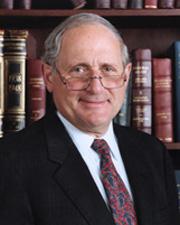 Sen. Carl Levin (D-MI)
Legislative Activity
Stay on top of the latest movement without scrolling through every action
Senate amendment submitted
September 16, 2003
View full timeline
Senate amendment submitted
September 16, 2003
Senate amendment agreed to: Amendment SA 1692 agreed to in Senate by Voice Vote.
September 16, 2003
Senate amendment proposed (on the floor): Amendment SA 1692 proposed by Senator Reid for Senator Levin.(consideration: CR S11539; text: CR S11539)
September 16, 2003
Amendment SA 1692 proposed by Senator Reid for Senator Levin. (consideration: CR S11539; text: CR S11539) To provide funds for use in carrying out Great Lakes remedial action plans and sediment remediation programs under the Water Resources Development Act of 1990.
September 16, 2003
Amendment SA 1692 agreed to in Senate by Voice Vote.
September 16, 2003
Text
Proposed
ENERGY AND WATER DEVELOPMENT APPROPRIATIONS ACT, 2004--Continued

Mr. REID. Mr. President, I expected Senator Domenici to be in the
Chamber. We have a couple of amendments we wanted to clear before the
vote began, but he is not present. So Senator Feinstein should go ahead
and start her debate if she cares to.
The PRESIDING OFFICER. The Senator from California.
Mrs. FEINSTEIN. Mr. President, I ask the minority whip how much time
I have.
Mr. REID. Before I respond, Senator Domenici is present and we will
be happy to extend the time of the Senator if we need to.

Amendments Nos. 1665, 1666, 1667, and 1668 En Bloc

Mr. REID. Senator Domenici and I have been working on a number of
issues. I send a series of four amendments to the desk and ask that
they be considered en bloc.
The PRESIDING OFFICER. Without objection, it is so ordered. The clerk
will report.
The assistant legislative clerk read as follows:

The Senator from Nevada [Mr. Reid] proposes amendments
numbered 1665, 1666, 1667, and 1668 en bloc.

Mr. REID. Mr. President, I ask unanimous consent that the reading of
the amendments be dispensed with.
The PRESIDING OFFICER. Without objection, it is so ordered.
The amendments are as follows:

Amendment No. 1665

At the appropriate place insert the following:

Working Capital Fund

(Rescission)

From unobligated balances under this heading $4,525,000 are
rescinded.

Amendment No. 1666

On page 32, line 10 strike ``853,517,000'' and insert in
lieu thereof ``859,517,000''.

Amendment No. 1667

At the appropriate place insert the following:
Sec.  . That of the funds provided, an additional
$3,000,000 shall be available for the Middle Rio Grande, NM
project and an additional $3,000,000 shall be available for
the Lake Tahoe Regional Wetlands Development project.

Amendment No. 1668

On page 33, at the end of line 12 insert the following:

``Bureau of Reclamation Loan Program Account

For administrative expenses necessary to carry out the
program for direct loans and/or grants, $200,000, to remain
available until expended, of which the amount that can be
financed by the Reclamation Fund shall be derived from that
fund.''

Mr. REID. Mr. President, our staff has worked on these amendments
during the last several days. I ask they be agreed to en bloc.
The PRESIDING OFFICER. Without objection, it is so ordered.
The amendments (Nos. 1665 through 1668) en bloc were agreed to.
Mr. REID. I ask that the Senator from California be given an extra
minute from the time we just took.
The PRESIDING OFFICER. Without objection, it is so ordered.
The Senator from California.

Amendment No. 1655

Mrs. FEINSTEIN. Mr. President, I ask the Chair to let me know when 7
minutes have expired so I can defer to my cosponsor, Senator Kennedy.
The PRESIDING OFFICER. The Chair will inform the Senator.
Mrs. FEINSTEIN. Mr. President, I also ask unanimous consent that the
names of Senators Johnson, Murray, Clinton, and Rockefeller be added to
our amendment as cosponsors.
The PRESIDING OFFICER. Without objection, it is so ordered.
Mrs. FEINSTEIN. Mr. President, yesterday Senator Kennedy and I came
to the floor and we spent some time arguing on behalf of an amendment
to this bill which contained language similar to what was recently past
by a large majority in the House of Representatives. The bill passed by
the House of Representatives struck the language that appropriates
funds to begin a new generation of nuclear weapons.
Now, there are some on the other side who say, and continue to say,
this is just a study; there is no development. I believe that is not
the case. Let me connect the dots for you.
In January of 2002, the administration put forward a Nuclear Posture
Review which advocates the development of new types of nuclear weapons.
Later that year, the President signed National Security Directive 17,
indicating that the United States might use nuclear weapons first to
respond to a chemical or biological attack.
Earlier this year, a decade-old prohibition on the development of
low-yield nuclear weapons was rescinded in the Defense authorization
bill. For 10 years, this kind of thing was prohibited. That
prohibition, known as the Spratt-Furse amendment, was repealed earlier
this year.
This spring a statement of administration policy for the Defense
authorization bill clearly included support for the research and
development of low-yield nuclear weapons.
In this bill the Senate is being asked to provide the dollars to
begin this effort--$15 million for the study of a robust nuclear earth
penetrator. We are talking in excess of 100 kilotons; $6 million for
advanced concepts research, including low-yield weapons; funding for
enhanced test site readiness; and a huge new $4 billion plutonium pit
facility--all of this when we are already spending $2.3 billion for a
Los Alamos facility that can provide replacement for the U.S. nuclear
stockpile.
We are strongly opposed to America beginning a new generation of
nuclear weapons. We are opposed to it for two reasons: No. 1, the low-
yield nuclear weapon--under 5 kilotons--essentially begins to blur the
use between conventional and nuclear weapons, therefore making it
easier to use. And, No. 2, because the world will watch this and the
world will respond. The way in which they will respond is with a new
nuclear arms race.

If the United States begins to develop tactical, battlefield nuclear
weapons, how long will it take for two indigenous nuclear powers,
namely India and Pakistan, arch enemies, to say we should do the same
thing. How long will it take for North Korea or Iran or any other
nation that so seeks to begin such a similar program?
As many internationally have said: America preaches nonproliferation,
and then it goes ahead and develops new nuclear weapons.
I think that is hypocritical. I do not think this country should be
in that position.
So we strike these items; we fence two, we place the rest of the
money in deficit reduction.
I want to say a few words about the nuclear pits because I think
there is some misunderstanding. Although current production capacity
may be limited, it is simply not true, as some have asserted, that the
United States lacks the capacity to manufacture replacement pits.
According to the Department of Energy's own Web site:

The first pit that could be certified for use in the
stockpile was manufactured in April 2003 as a first step to
establish an interim--10 to 20 pits per year--production
capability at Los Alamos in 2007.

And the Los Alamos facility can be modified to produce 150 pits a
year.
Although the exact number is classified, reputable open sources
estimate that there are between 5,000 and 12,000 extra pits in reserve
at Pantex, beyond the 10,600 current intact warheads.
The average age of the plutonium pits in the U.S. stockpile is 19
years, and the Department of Energy estimates a pit minimum life to be
between 45 and 60 years, with no life-limiting factors.
This is the beginning. This money will go to field a new generation
of nuclear weapons. We should not do this. The House had the good sense
to eliminate this language. The Senate should follow.
I yield the floor.
The PRESIDING OFFICER. Who seeks recognition? Who yields time?
Mrs. FEINSTEIN. I yield 4 minutes to the distinguished Senator from
Massachusetts.
Mr. KENNEDY. How much time remains?
The PRESIDING OFFICER. Five minutes ten seconds.

[[Page S11532]]

Mr. KENNEDY. And how much on the other side?
The PRESIDING OFFICER. They have 13 minutes.
Mr. KENNEDY. Four minutes?
The PRESIDING OFFICER. The Senator from Massachusetts is recognized.
Mr. KENNEDY. I am recognized for how long?
The PRESIDING OFFICER. The Senator from California has yielded 4
minutes.
Mrs. FEINSTEIN. Mr. President, I am happy to yield the remainder of
my time to the Senator from Massachusetts.
The PRESIDING OFFICER. The Senator is recognized.
Mr. KENNEDY. Then, would the Chair let me know when I have a minute
and a half left, please?
First of all, I welcome the opportunity to be here with my friend and
colleague from California in what I consider to be one of the most
important votes that we will have this year. It is an issue involving
our security. It is an issue, I believe, also, in the battle on
terrorism.
It was just 40 years September 24, 40 years ago on September 24, that
we had the signing of the first partial test ban treaty.
This chart reflects in a very abbreviated way, but an enormously
important way what has happened over the last 40 years as leaders of
the Democrats and Republicans alike moved us away from the real
possibility of nuclear confrontation, and we have seen enormous
success. We have seen the willingness of countries around the world to
give up their capability of developing nuclear weapons because they
wanted to be a part of the worldwide effort on nuclear proliferation.
They also recognized it would be a more secure world if we didn't have
further nuclear expansion.
We listened to the debate yesterday and the points that were well-
made by my very good friend from New Mexico about how this legislation
is really not about developing a new nuclear weapon. But the Senator
from California pointed out three different references, all which have
been included as a part of the Record. The most obvious is the
administration's own statement of administration policy this past
spring asking for the continued need for ``flexibility in the
cooperative threat reduction program and support for critical research
and the development''--I will say this again--``and the development for
low-yield nuclear weapons.'' That is what this issue is about.
Are we going to reverse the last 40 years? Do we possibly think there
will be a safer America if we begin to move back towards the testing
and the developing of what they call mini-nukes?
I don't believe so, because I believe a nuke is a nuke is a nuke. It
is an entirely different weapons system than those in our conventional
forces. We understand that. We have to take what the administration has
stated: they intend to move ahead in the development of a new nuclear
capability.
Those with responsibility within the administration have made it very
clear. In February of 2003, Fred Celec, Deputy Assistant Secretary of
Defense for Nuclear Affairs, said:

If a nuclear bomb could be developed to penetrate rock and
concrete and still explode, it will ultimately get fielded.

In April of 2003, Linton Brooks, Chief of Nuclear Weapons at the
Department of Energy, stated before the Senate Armed Services
Committee:

I have a bias in favor of the lowest usable yield because .
. . I have a bias in favor of things that might be usable.

We have been warned. We have the capability that exists to make sure
we have the deterrence on into the future. But this is a radical
departure of 40 years of Republicans and Democrats alike moving us away
from the dangers of nuclear confrontations and the dangers of nuclear
proliferation to the development of small nuclear weapons. And we will
find this an invitation for the terrorists around the world to come and
seek out that weapon. If we develop a small nuclear weapon, what are we
going to find? The corresponding action by countries around the world--
the Iranians and the North Koreans continuing their progress in
developing their own nuclear weapons system.
That doesn't make sense in terms of the country that is the number
one military force in the world today. It doesn't make sense, and it
doesn't make sense for our battle against the war on terrorism.
It is very clear why this amendment is needed. The administration
pretends it is not really planning to produce these new kinds of
nuclear weapons--the mini-nukes and the bunker busters. They just want
to find out if they are feasible.
We all know what is at stake. The administration wants us to take the
first steps down a new path. But going down that path could easily make
nuclear war more likely. Just a little step--they say. But it is still
a first step. And a step down that path now could make the next step
easier, and the next and the next. It is a path that makes nuclear war
more likely, and the time to call a halt is now--before we take the
first step.
We ask for and implore the support of our colleagues to move us away
from the real dangers of nuclear proliferation and the development of
these dangerous mini-nukes that can pose a danger to the world
population.
I withhold whatever time is left.
Mrs. FEINSTEIN. Mr. President, before the chairman of the committee
speaks, I ask unanimous consent that Senator Stabenow be listed as a
cosponsor.
The PRESIDING OFFICER. Without objection, it is so ordered.
The Senator from New Mexico.
Mr. DOMENICI. Mr. President, fellow Senators, first of all, it should
be understood by everyone that this language which is being stricken
does not permit the United States of America to build any new nuclear
weapons--large, small, medium-sized, or otherwise. There is no
authority in this bill to build new nuclear weapons.
No. 2, this bill says that in Nevada we used to test nuclear weapons
for decades. Whenever our nuclear laboratory experts used to certify to
our Presidents that the weapons were in good shape, ready, reliable,
available, and safe, they did it principally because we had a testing
ground in Nevada, and we tested bombs to know precisely their efficacy,
reliability, et cetera.
When we decided to no longer test, we essentially closed down or put
that test facility in mothballs. But we knew we must always keep it in
case we needed it. We left it there, saying if we ever need it, we can
use it in 3 years.
All this amendment does--it could be a totally freestanding
amendment, if one wanted, but it is part of the amendment that the
Senator from California strikes--is say let us upgrade that Nevada Test
Site so if we need it, we can use it in 1\1/2\ years. There are few
American nuclear experts who do not think 1\1/2\ years is the correct
amount--not 3 but 1\1/2\. That has nothing to do with us setting about
to build a brand new small nuclear weapon. It has nothing to do with us
building a stockpile of new weapons. It has to do with just what I
explained and nothing else.
Third, regardless of what has gone on in Los Alamos for the last 7
years in an effort to produce for America plutonium pits--the
ingredient for a nuclear weapon that must be there or you don't have a
nuclear weapon--we have no American manufacturing center for the
production of pits. The Los Alamos facility has been a facility that we
just pushed. We pushed it and pushed it, and finally it has almost
produced a pit. But it has not produced a certifiable pit yet in 7
years of effort. It has produced a pit or two, but they are not
certifiable, which means they are not complete.
All this bill says is the time has come to build a plant to
manufacture pits for the next 40 years--not for a new weapons system
but so we can have them in storage for the next 40 years. We are the
only nuclear weapons power without spare pits for nuclear weapons. Yes,
the only one. Why would we say we should not do that? The only reason
we would do it is if we believed what the Senator from California
alleges; that is, we are doing it because we are going to build a new
set of nuclear weapons.
If we were authorizing a series or a set of new nuclear weapons, this
amendment would be the biggest amendment in the country. It would have
been written about, talked about, harked about, and we would have been
all over and upside down and inside out. But there is nothing in the
bill that produces a single new nuclear weapon.

[[Page S11533]]

That comes to the final part. It is very simple, if you will just
listen and know what we are trying to do.
Those who manage our nuclear, those who are our nuclear experts, who
use their minds to dream up ideas about where we are going to be, what
troubles we might have in the future, and what new might occur in the
world that might require changes, are the men and women of great
talent. This bill does what the executive branch and the experts on
nuclear management say: Let those people think, let those people
design, let those people postulate, and don't put blinders on their
brains and say you can't even think about these things because it might
someday yield an idea that might cause us to do something different
with a nuclear weapon.
Frankly, I believe the men and women who already put that fantastic
brainpower to work in this area deserve to have their brains used, not
tied in knots by rules about what you cannot think about and what you
cannot plan for.

The third part, this amendment says you cannot plan, think about,
design for the future, even when you know you cannot build them, which
is what the rule is going to be.
We have argued this about as long as we can. I have argued it about
as hard as I can. I am getting close to being tired of arguing this,
but it is so important we not make a mistake. It would be a tragic
mistake to vote for the Feinstein amendment. There is nothing we are
doing that the Feinstein amendment should stop. If, in fact, we were
going to build nuclear weapons, you ought to be concerned and perhaps
vote with her, if she is saying do not do it. But we do not plan to. It
is not in here. And she cannot stop it because we are not going to do
it. In that regard, the amendment is useless.
But it is not useless when it comes to the three things that it does:
It will stop us from planning the manufacturing plant of the future for
pits. It will do that. And we should not do that. Second, it will stop
the money and the planning and the work to bring the Nevada Test Site
up to par and ready for a new test in 18 months rather than 3 years. It
will do that. And third, it will put blinders on the scientists with
reference to them being able to speak about the future and future
needs, which change.
How much time remains?
The PRESIDING OFFICER. The Senator from New Mexico has 4 minutes
remaining. The Senator from California has 9 seconds.
Mr. DOMENICI. I reserve my time.

Amendments Nos. 1676, 1677, 1678, En Bloc

Mr. REID. Mr. President, I send three amendments of Senator Domenici
to the desk. They have been reviewed. I ask they be considered en bloc.
The PRESIDING OFFICER. The clerk will report the amendments, en bloc.
The assistant legislative clerk read as follows:

The Senator from Nevada [Mr. Reid], for Mr. Domenici,
proposes amendments Nos. 1676, 1677, and 1678, en bloc.

Mr. REID. Mr. President, I ask unanimous consent that the reading of
the amendments be dispensed with.
The PRESIDING OFFICER. Without objection, it is so ordered.
The amendments are as follows:

amendment no. 1676

At the appropriate place, insert the following:

SEC.  . LOWER COLORADO RIVER BASIN DEVELOPMENT.

(a) In General.--Notwithstanding section 403(f) of the
Colorado River Basin Project Act (43 U.S.C. 1543(f)), no
amount from the Lower Colorado River Basin Development Fund
shall be paid to the general fund of the Treasury until each
provision of the revised Stipulation Regarding a Stay and for
Ultimate Judgment Upon the Satisfaction of Conditions, filed
in United States district court on April 24, 2003, in Central
Arizona Water Conservation District v. United States (No. CIV
95-625-TUC-WDB (EHC), No. CIV 95-1720-OHX-EHC (Consolidated
Action)), and any amendment or revision thereof, is met.
(b) Payment to General Fund.--If any of the provisions of
the stipulation referred to in subsection (a) are not met by
the date that is 10 years after the date of enactment of this
Act, payments to the general fund of the Treasury shall
resume in accordance with section 403(f) of the Colorado
River Basin Project Act (43 U.S.C. 1534(f)).
(c) Authorization.--Amounts in the Lower Colorado River
Basin Development Fund that but for this section would be
returned to the general fund of the Treasury may not be
expended until further Act of Congress.

amendment no. 1677

(Purpose: To set aside additional funds for the Mni Wiconi project,
South Dakota)

On page 33, line 12, before the period at the end, insert
the following: ``: Provided further, That of the funds
provided under this heading, an additional $5,000,000 may be
available for the Mni Wiconi project, South Dakota''.

amendment no. 1678

(Purpose: To set aside funds for certain projects and activities at the
Alabama-Coosa River, Alabama)

On page 15, line 16, after the colon, insert the following:
``Provided further, That the Secretary of the Army, acting
through the Chief of Engineers, may use not less than
$5,461,000 of the funds made available under this heading for
the Alabama-Coosa River, Alabama (including for routine
operations and maintenance work at Swift Creek Park), of
which not less than $2,500,000 may be used for annual
maintenance dredging of navigational channels of the Alabama-
Coosa River:''.

Mr. REID. These have been cleared by Senator Domenici, this Senator,
and our respective staffs.
The PRESIDING OFFICER. The question is on agreeing to the amendments
en bloc.
The amendments (Nos. 1676, 1677, and 1678) were agreed to.
Mr. DOMENICI. I move to reconsider the vote.
Mr. REID. I move to lay that motion on the table.
The motion to lay on the table was agreed to.

Vote on Amendment NO. 1655

Mrs. FEINSTEIN. I yield the remaining time.
Mr. DOMENICI. I yield my remaining time. I move to table the
amendment, and I ask for the yeas and nays.
The PRESIDING OFFICER. All time having expired, is there a sufficient
second?
There is a sufficient second.
The question is on agreeing to the motion. The clerk will call the
roll.
The assistant legislative clerk called the roll.
Mr. McCONNELL, I announce that the Senator from Illinois (Mr.
Fitzgerald) is necessarily absent.
I further announce that the Senator from Oregon (Mr. Smith) is absent
because of a death in the family.
Mr. REID of North Carolina. I announce that the Senator from North
Carolina (Mr. Edwards), the Senator from Florida (Mr. Graham), the
Senator from Massachusetts (Mr. Kerry) the Senator from Connecticut
(Mr. Lieberman) are necessarily absent.
I further announce that, if present and voting, the Senator from
Massachusetts (Mr. Kerry) would vote ``nay.''
The PRESIDING OFFICER (Mr. Crapo). Are there any other Senators in
the Chamber desiring to vote?
The result was announced--yeas 53, nays 41, as follows:

[Rollcall Vote No. 349 Leg.]

YEAS--53

Alexander
Allard
Allen
Bayh
Bennett
Bond
Brownback
Bunning
Burns
Campbell
Chambliss
Cochran
Coleman
Collins
Cornyn
Craig
Crapo
DeWine
Dole
Domenici
Ensign
Enzi
Frist
Graham (SC)
Grassley
Gregg
Hagel
Hatch
Hollings
Hutchison
Inhofe
Kyl
Lott
Lugar
McCain
McConnell
Miller
Murkowski
Nelson (FL)
Nelson (NE)
Nickles
Roberts
Santorum
Sessions
Shelby
Snowe
Specter
Stevens
Sununu
Talent
Thomas
Voinovich
Warner

NAYS--41

Akaka
Baucus
Biden
Bingaman
Boxer
Breaux
Byrd
Cantwell
Carper
Chafee
Clinton
Conrad
Corzine
Daschle
Dayton
Dodd
Dorgan
Durbin
Feingold
Feinstein
Harkin
Inouye
Jeffords
Johnson
Kennedy
Kohl
Landrieu
Lautenberg
Leahy
Levin
Lincoln
Mikulski
Murray
Pryor
Reed
Reid
Rockefeller
Sarbanes
Schumer
Stabenow
Wyden

NOT VOTING--6

Edwards
Fitzgerald
Graham (FL)
Kerry
Lieberman
Smith
The motion was agreed to.
Mr. DOMENICI. Mr. President, I move to reconsider the vote.
Mr. LOTT. I move to lay that motion on the table.
The motion to lay on the table was agreed to.
The PRESIDING OFFICER. The Senator from New Mexico.
Mr. DOMENICI. Mr. President, Senator Jack Reed has an amendment that
is acceptable, if he is ready. Is the Senator ready?

[[Page S11534]]

Mr. REED. I have my amendment.
Mr. DOMENICI. I yield the floor.
The PRESIDING OFFICER. The Senator from Rhode Island.
Mr. REED. Mr. President, I send amendment No. 1659 to the desk.
The PRESIDING OFFICER. The clerk will report.
The legislative clerk read as follows:

The Senator from Rhode Island [Mr. Reed], for himself, Mr.
Levin, Mr. Kennedy, Mrs. Feinstein, and Mr. Nelson of
Florida, proposes an amendment numbered 1569.

Mr. REED. Mr. President, I ask unanimous consent that the reading of
the amendment be dispensed with.
The PRESIDING OFFICER. Without objection, it is so ordered.
The amendment is as follows:

(Purpose: To prohibit the use of fund for certain activities relating
to advanced nuclear weapons concepts, including the robust nuclear
earth penetrator)

At the end of title III, add the following:
Sec. 313. No funds appropriated or otherwise made available
to the Department of Energy by this Act may be available for
activities at the engineering development phases, phase 3 or
6.3, or beyond, in support of advanced nuclear weapons
concepts, including the robust nuclear earth penetrator.

Mr. REED. Mr. President, I ask unanimous consent that Senator Nelson
of Florida be added as a cosponsor.
The PRESIDING OFFICER. Without objection, it is so ordered.
Mr. REED. Mr. President, I am disappointed the Feinstein-Kennedy
amendment did not pass because I believe that amendment really
responded to the issues of the moment. We are in a dangerous time
because we see around the globe where there are nations aspiring to
become nuclear powers, where proliferation is one of the most dangerous
threats this Nation faces, particularly proliferation that would
provide fissile material to terrorists, which is the great fear of all
of us.
In order to resist the growth of nuclear powers around the globe, we
have to be faithful to our commitment to arms control and our sense
that further development of nuclear weapons--and, I would argue,
weapons without military requirements--is really not so much an
exercise in protecting the United States but it is an exercise that
will lead us down a path that could see our country exposed to even
more dangers. So I am very much concerned that the Feinstein-Kennedy
amendment failed.
Therefore, I am proposing an amendment that I hope will essentially
put restraints upon the use of these dollars in the development of
nuclear weapons, and I will explain it in more detail later. It would
constrain the expenditure of funds to the the research phase. It would
preclude monies to be used to engineer a weapon, to test a weapon, and
to deploy a weapon. It is language that is consistent with the language
included in the Defense Authorization Act which we passed several
months ago.
We are at a difficult moment in our history, as I mentioned.
Mr. NELSON of Florida. Will the Senator yield for a question?
Mr. REED. I would be happy to yield for a question to my cosponsor,
Senator Nelson.
Mr. NELSON of Florida. I appreciate the Senator offering this
amendment and I just want to underscore with a question that the
Senator's amendment will allow the research to go on as we intended in
the Defense authorization bill but would not allow the development and
the engineering where these weapons would be actually designed until
such time as the executive branch would come back to the Congress to
get approval to do that. Is that correct?
Mr. REED. That is absolutely correct. It reflects the value of the
contribution the Senator from Florida made in the Defense authorization
debate.
Mr. NELSON of Florida. I thank the Senator.
Mr. REED. There are some who have criticized any attempts at arms
control as futile, as failures. That, I think, is a dangerous idea. I
hope arms controls work because history seems to show that, without
controlling arms, eventually they wind up being used, and when it comes
to the issue of nuclear weapons, that is a great nightmare that has
haunted all mankind since 1945.
Since that date, we have been successful in containing the use of
nuclear weapons. It is because we took prudent steps to try to control
the proliferation of nuclear weapons, the development of nuclear
weapons. And at this juncture in history, to stand up and say arms
control does not work not only misreads history but misses the point
entirely. We have to make it work. Indeed, arms control has provided us
at least some respite, some bit of breathing space, from the horrors of
Hiroshima. That in itself is a success.
Today, particularly when we look at North Korea, I think we had all
better hope fervently that arms control can work because without some
type of arms control there, we will be in an extraordinarily precarious
situation.

If we look at the situation in Iran, where the international arms
control agency is trying to work with the Iranians, trying to get them
to cooperate with the world community, that is an example of arms
control in action. I hope--and I am sure I speak for everyone else--
that that effort succeeds.
Time and again, when we have had serious situations, we have been
able to use the norms established by international arms control
agreements as leverage in a particular crisis. Arms control is not
perfect, but without it we would be in a much more dangerous and much
more devastating world environment.
This administration, however, has effectively turned its back on so
many different initiatives: The repeal of the ABM Treaty, the failure
to follow up the Comprehensive Test-Ban Treaty by sending it again to
the Senate for a vote. This and so many other examples suggest that the
administration has not effectively read the lessons of history. I
believe they have the mistaken view that arms control will never work
rather than trying to make it work, understanding it is not perfect but
it is essential to our national security strategy.
My colleague and friend John Spratt stated it very well in an article
in the March 2003 edition of Arms Control Today. In his words:

My greatest concern is that some in the administration and
in the Congress seem to think that the United States can move
the world in one direction while Washington moves in another,
that we can continue to prevail on other countries not to
develop nuclear weapons while we develop new tactical
applications for such weapons and possibly resume nuclear
testing.

Congressman Spratt was very clear. In life, one really cannot have it
both ways. I think this is an example of that. At one time, you cannot
be trying to persuade, convince, and cajole other nations to abandon
the development of nuclear weapons while you are blatantly going ahead
and developing them yourself. The approach of the administration has
been to attempt to get it both ways. It will be doomed to failure.
I would argue that rather than declaring the arms control movement
dead, we have to give it renewed life. Indeed, we can point to
successes in the past that should give us some comfort to know that if
we work hard, if we work in a disciplined and dedicated way, we can use
arms control to enhance our security--not exclusively depend,
certainly, on arms control, but it has to be an important part of our
repertoire.

In the early 1960s, when there were a few nuclear powers--the United
States, Soviet Union, Britain, France, and China--there was a fear that
within a decade or more, as President Kennedy expressed it, there would
be at least 25 countries that developed nuclear weapons. What was
feared did not come to pass because of effective, meaningful arms
control exemplified in many respects by the nonproliferation treaty and
other initiatives.
Deputy Secretary of State Richard Armitage has cited this record,
indicating his support for continued efforts at arms control. In his
words:

[I]nstead of the 25 or so countries that President Kennedy
once predicted, only a handful of nations possess nuclear
weapons. Of course we suspect many more countries have
chemical or biological weapons, but still short of the scores
that had been predicted in the past. We have reached this
state of affairs in no small part through the concerted
effort of many nations. Agreements, such as the nuclear
nonproliferation treaty and the Chemical Weapons Convention,
organizations such as the IAEA and the Nuclear Suppliers
Group--these constitute a global security architecture that
has served us satisfactorily and kept us safe.

But critics of arms control fail to acknowledge that Argentina and
Brazil and South Korea and Taiwan ceased

[[Page S11535]]

their suspected nuclear programs in part because of the international
norms represented by the nonproliferation treaty. Without these norms
and without the United States exemplifying these norms, I don't think
we would have the success we have had in these cases that I have cited.
Similarly, when the Soviet Union dissolved and the Newly Independent
States of Belarus, Kazakhstan, and Ukraine found themselves with
nuclear weapons, they voluntarily turned them in as a result of the
norms established by the international arms control regimes. South
Africa has also given up their nuclear weapons.
This is an example, not of perfect success but of success. If we
begin to abide by our commitment to the nonproliferation treaty, to our
commitments to reducing nuclear weapons rather than building new ones,
we might be able to provide more leverage on countries such as India
and Pakistan so that they would join the nonproliferation treaty and
the Comprehensive Test-Ban Treaty. That is the kind of leadership we
need at the moment. I hope we can get it.
As I mentioned before, we also are facing very serious problems with
North Korea and Iran. I hope they can be resolved peacefully. But that
peaceful resolution implies extending arms control agreements to these
countries. So disparaging arms control is doing a great disservice to
our national security and to our strategy.
The Bush administration has seemed bound since their first days in
office to reverse 50 years of arms control activities, both by
Republican and Democratic administrations. In December 2001, they
published their Nuclear Posture Review.
This review was troubling in many respects. For the first time in
history, this review suggested that we would use weapons, nuclear
weapons, not simply to deter another nuclear power but to engage a
nonnuclear power. The report essentially said that we would consider
for the first time and be prepared to use nuclear weapons against
nonnuclear nations that were nonaligned with a nuclear power--a
tremendous reversal in our strategic outlook, blurring the distinction
between conventional weapons and nuclear weapons, a distinction that
since Hiroshima we on both sides of the aisle have endeavored mightily
to maintain crystal clear. This blurring, this suggestion that we would
use nuclear weapons in a first strike against nonnuclear powers, set
the tone for other administration pronouncements.

Last November, a memo from then-Under Secretary of Defense for
Acquisition, Technology and Logistics, Pete Aldridge, became public.
The memo directed nuclear weapons laboratories to:

. . . assess the technical risks associated with maintaining
the U.S. arsenal without nuclear testing . . . [and suggested
the] U.S. take another look at conducting small nuclear
tests.

Following up to this memo, the President's budget for fiscal year
2004 included $24 million to reduce the time needed to prepare to
conduct a nuclear weapons test from 2-3 years at present to 18 months--
once again, a very sobering and ominous suggestion that we would begin
to test nuclear weapons again; that we would abandon our efforts to
assure the quality of our stockpile through nontesting means and that
we would conduct tests.
If the United States of America begins again to conduct nuclear
tests, I think that would be an open invitation to other countries,
such as India and Pakistan, and perhaps powers undeclared as yet, to
begin a nuclear testing program. It certainly would be good cover
internationally.
The President's budget in 2004 also went on to request $22.8 million
to accelerate the design and select a site for a new modern pit
facility.
Plutonium pits are necessary components of nuclear weapons. We have
not had the ability to build such pits since 1988. We do need a pit
facility. But the proposal of the administration goes far beyond any
conceivable needs, given the current situation. They want to create a
facility that is capable of producing up to 500 pits per year. That
would be 500 nuclear weapons per year. That is a rate that rivals
anything in the cold war, and according to the administration, the cold
war is over--except, I guess, when it comes to nuclear policy or at
least nuclear design and production policy.
Then in addition to this development, the administration has been
vigorously pressing for the design of a robust nuclear earth-penetrator
to be used against hard and deeply buried targets. The RNEP would be a
modification of an existing nuclear device, necessarily a very large
nuclear device. It has been deemed a bunker buster. But, frankly, the
kilotonnage or the tonnage of this RNEP is so large it would be a city
buster, not a bunker buster. The kilotons of the weapons dropped on
Hiroshima and Nagasaki were 14 and 21 kilotons, respectively, and this
RNEP could be 71 times larger than the bomb dropped on Hiroshima. That
is not a bunker buster. That is not a discrete weapon that could take
the place of precision conventional weapons. Yet the administration is
pressing forward.
Then this year the administration requested the repeal of the 1993
statutory ban on the research, development, and production of low-yield
nuclear weapons and $6 million for funding for advanced nuclear weapons
concepts.
Current law prohibits work, design, research with respect to weapons
below 5 kilotons. The administration seeks to repeal this ban--strike
it out--even though there is no military requirement for these small
sized nuclear weapons.
When asked about this proposal, Ambassador Linton Brooks, the Acting
Director of the National Nuclear Security Administration, stated before
the Armed Services Committee:

I have a bias in favor of something that is the minimum
destruction. . . .that means I have a bias in favor of things
that might be usable.

Here we have it. A history of 5 decades of trying to create a nuclear
policy that dissuades the world from using nuclear weapons and we are
trying to develop small nuclear weapons, which the scientists at this
time say--the lab leaders say--are designed to be used. We have crossed
a huge space between our policy of 5 decades and this newly emerging
policy. We have moved from being the leader in arms control to being
someone who treats arms control casually, if not flippantly. The irony,
of course, is we stand to suffer the most. I hope we could reverse this
trend.
I had hoped very much that the Feinstein-Kennedy amendment would be
agreed to because I think that would have sent a strong signal and be a
practical and pragmatic step. But now we have the opportunity to
constrain the funds that are being expended for those preliminary
research aspects of nuclear weapons development. As my colleague,
Senator Nelson, said, it will give Congress a chance to decide, after
more information, more debate, and more justification, whether it is in
our national interest to proceed with the development, engineering, and
deployment of a new class of nuclear weapons.
The amendment I offer today will allow the Department of Energy to
use $22 million in funding that the President requested for advanced
nuclear weapons concepts for research alone. The amendment would not
allow money to be used for developing, testing, or deploying new
nuclear weapons, or RNEP, which is a modification of an existing
weapon.
This amendment would assure that the appropriations bill is
consistent with the language that is included in the fiscal year 2004
Defense authorization bill. During that debate, an amendment that would
require the Department of Energy to seek specific authorization and
appropriations before proceeding with phases beyond research passed
this body by a vote of 96 to 0. The Senate has clearly spoken on this
issue. The amendment I offer today will ensure that the Department of
Energy will comply with the wishes of Congress by returning to the
Congress before beginning development, testing, production, and
deployment of a new nuclear weapon or the RNEP.
I believe we should retain the prohibition on any research or
development of low-yield nuclear weapons. But if that must change--if
we must eliminate the threat-first amendment--I believe the research is
all that is necessary at this time and that there should be a full and
complete debate on any development funding for a system of nuclear
weapons or the RNEP based upon research first.

[[Page S11536]]

The primary reason that the administration says it needs this money
for advanced nuclear concepts is to, in their terms, ``train the next
generation of nuclear weapons scientists and engineers.''
Ambassador Brooks, Director of the National Nuclear Security
Administration, stated that research must be funded to ``remove the
chilling effect on scientific inquiry that could hamper our ability to
maintain and exercise our intellectual capabilities to respond to needs
that one day might be articulated by the President.''
In July, Energy Secretary Abraham said: ``We are not planning any
nuclear weapons at all.'' If research is the reason, if research is the
justification, if we are planning no nuclear weapons, then this
amendment provides the funding and the authority for the research.
This amendment is very clear about what is allowed. There are very
distinct phases in the development of nuclear weapons. Since 1953, the
Department of Defense and the Department of Energy have worked in a
very formalized weapons development process. Indeed, the Atomic Energy
Commission was one of the predecessors of the effort. And the Atomic
Energy Commission was also involved in the formulation of the process.
My amendment would prohibit ``development engineering,'' which is the
third phase. This is for new weapons development.
All of these phases would be authorized, and the funds could be
expended for concept definition, feasibility study, design definition,
and cost study. But you could not go into phase 3, development
definition. It is clear and precise--allowing the research and allowing
all that is necessary, according to both the rationale to train our
scientists and also the affirmation by the Secretary of Energy that we
were not planning to develop new nuclear weapons.
Mr. DOMENICI. Mr. President, I wonder if the Senator will yield.
Mr. REED. I am happy to yield.
Mr. DOMENICI. Did the Senator conclude amendment No. 1659 regarding
the Energy Department's research on nuclear weapons?
Mr. REED. I did not. In the next few minutes I will complete my
comments on the amendment.
Mr. DOMENICI. I wonder if the Senator might offer that amendment so I
could give him my concurrence.
Mr. REED. The amendment has been offered. I think Senator Levin wants
to speak. But the Senator's concurrence will be invited as soon as I
conclude.
Mr. DOMENICI. Mr. President, on this side of the aisle, we accept the
Reed-Levin-Kennedy-Feinstein amendment because it is current policy. It
just repeats current policy unequivocably. This is what the policy of
the country is. We did not change that in our bill. The Senator is most
welcome to try to make it eminently clear what that current policy is.
For that reason, we will accept it whenever it is ready to be accepted
by the Senate.
Mr. REED. Mr. President, reclaiming my time, I thank the chairman for
his kindness in accepting the amendment. The policy is included in the
Defense authorization bill. But there is a debate ongoing about what
the precise policy is. We want to at least set this limit with respect
to the policy.
The chairman suggesting that it will be accepted will prompt me to
quickly conclude my comments.
I note that my colleague from Michigan is here also seeking
recognition.
We brought this measure to the Defense authorization debate. As was
indicated in my discussion with Chairman Domenici, the Senate passed
this provision overwhelmingly. This is now included in this
appropriations bill. It is going to be an interesting conference
because our colleagues in the House have stricken the money; that is
the preference that I would suggest is the best approach. But short of
that, this at least constrains the spending of the funds to the first
three phases of research, which apparently, at least in my view,
directly responds to the professed need for the funds, and it will also
again support the statement of the Secretary of Energy that there is no
plan to develop nuclear weapons.
In a letter to the Armed Services Committee, Admiral Ellis, the
Commander of the Strategic Command, which command is responsible for
all nuclear weapons, stated that:

U.S. Strategic Command is interested in conducting rigorous
studies of all new technologies examining the merits of
precision, increased penetration, and reduced yields for our
nuclear weapons.

Once again, this proposal corresponds to the request from our
military leaders in what they are looking for today.
I hope that not only this amendment will be incorporated into this
pending appropriations bill but that in conference we at least maintain
this.
I again urge my colleagues to think hard again about the Kennedy-
Feinstein proposal and the proposal that is already included in the
House provisions. But today is an opportunity at least to slow down a
rush to develop nuclear weapons which have no, or very limited,
military requirements, and it would give us an opportunity as a
Congress to debate the wisdom of our course of action.
Let me conclude by saying we have changed course dramatically. After
50 years of being the leading nation in the world arguing for arms
control, arguing for sensible constraints in the development of nuclear
weapons and limits on nuclear weapons, we have become a nation that is
casual about our commitment to arms control, that denigrates it too
often, and that course has left us with the only other option which is
I think less appropriate. As I said initially, if there are no arms
control, then there is a higher probability of arms usage. With nuclear
weapons, that is a thought that no one wants to contemplate.
I yield the floor.
The PRESIDING OFFICER. The Senator from Michigan.
Mr. LEVIN. Mr. President, I commend my friend from Rhode Island for
his leadership in this area. It is critically important that we show
some constraint--at least in funding of new nuclear weapons and
modifications of existing nuclear weapons in order to make them more
usable.
Appropriating funds, as this bill does, for research on a new nuclear
weapon and research on a modification of existing weapons in order to
make them more useful moves us in a dangerous new direction which marks
a major shift in American policy. It is inconsistent with our
longstanding commitment under the Nuclear Non-Proliferation Treaty to
end the nuclear arms race. It undermines our argument to other
countries around the world that they should not develop or test nuclear
weapons. Unfortunately, the bill before us supports this dangerous new
direction by putting funds into research of both the new weapon and
modification of existing weapons to make them more usable.
At least the pending amendment of the Senator from Rhode Island puts
an explicit constraint on the expenditure of that money. Why it is so
important this language be included is that it makes explicit, before
we can move to the developmental stage of these new weapons, there must
be an explicit congressional vote. It cannot happen--this next stage,
which we hope will never come--if the Reed language is adopted and
maintained in conference, and if we were able to maintain similar
language in conference in the authorization bill that development of
these new weapons and modified weapons, to make them more usable, could
not happen without an explicit action on the part of Congress.

That is not the current policy that there be an explicit
authorization. It is not inconsistent with current policy that there be
an explicit authorization before we approve development, but it is not
the existing policy.
It is critically important that at least if we cannot stop this
country from moving in a direction which is so totally inconsistent
with what we are urging the rest of the world to do, at a minimum, we
go as far as we can in expressing the determination of at least many of
us that we move not at all, if possible, before we move that there be a
formal vote on the part of Congress.
I do not understand how we can argue to other countries, with our
heads high, that they should not move in a nuclear direction at the
same time we are doing research on new nuclear weapons. We are telling
others, do not go down that road. But instead of being a leader in the
effort to prevent the proliferation of nuclear weapons, we are going to
move recklessly down that

[[Page S11537]]

same road. We are following a policy that we do not tolerate in others.
The adoption of the Reed amendment would at least put some brake on
the speed at which we are going down that road, and hopefully, before
development is reached, before taking the next milestone on that road.
Appropriating funds for research in new nuclear weapons begins to
take the United States in a dangerous new direction that marks a major
shift in American policy, is inconsistent with our longstanding
commitment under the Nuclear Nonproliferation Treaty to end the nuclear
arms race, and undermines our argument to other countries around the
world that they should not develop or test nuclear weapons.
Unfortunately the bill now on the Senate floor would also support this
dangerous new direction. But the pending amendment puts an explicit
constraint on it.
Current U.S. law bans research and development of new nuclear weapons
that could lead to their production. The specific weapons covered by
the ban are so called low-yield nuclear weapons which have a nuclear
explosive yield of 5 kilotons or less. Five kilotons is roughly a third
the size of the nuclear bomb that was used at Hiroshima, which
immediately killed an estimated 140,000 people and left many more
injured.
The Bush administration asked that this ban be repealed. If the ban
is repealed, the purpose is to make nuclear weapons more usable. As
stated by Linton Brooks, the Administrator of the National Nuclear
Security Administration in testimony before the Subcommittee on
Strategic Forces of the Senate Armed Services Committee on April 8,
2003, ``I have a bias in favor of the lowest usable yield because I
have the bias in favor of something that is the minimum destruction . .
. I have a bias in favor of things that might be usable.''
The language approved by a majority of the Armed Services Committee
and included in the Senate passed version of the Defense authorization
bill would repeal this ban. Without this ban there is no impediment in
law to research, development, testing, production, or deployment of
new, low yield nuclear weapons. The bill before us would also support
the repeal of this ban by appropriating $6 million to begin the
research on new low-yield nuclear weapons, or for any other advanced
new nuclear weapons concept.
The Defense authorization bill authorizes the National
Nuclear Security Administration to continue work on a robust nuclear
earth penetrator (RNEP). The Energy and Water bill would appropriate
these funds.

This effort would modify one of two existing high-yield nuclear
weapons to create a nuclear weapon that will penetrate rock. Both
weapons being looked at for possible modification are high yield
nuclear weapons with yields that are approximately 30 and 70 times the
explosive power of the Hiroshima bomb. Without a requirement that the
earth penetrator weapon be authorized by Congress, there is no legal
impediment to its development, testing, production, or deployment.
At a time when the United States is trying to dissuade other
countries from going forward with nuclear weapons development, when we
strongly oppose North Korea's pulling out of the Nuclear
Nonproliferation Treaty, when we are trying to prevent Iran from
establishing a nuclear weapons program and when we are spending over a
billion dollars to prevent the spread of nuclear weapons material and
technology, these actions would send a terrible message. We are telling
others not to go down the road to nuclear weapons. But instead of being
a leader in the effort to prevent the proliferation of nuclear weapons,
we are recklessly driving down that same road. In short, the United
States is following a policy that we do not tolerate in others.
President Bush on June 18 stated that the United States will not
tolerate a nuclear Iran. Similarly in May President Bush, in a joint
statement with the President of South Korea, said he would not tolerate
a North Korean nuclear weapon.
The leaked version of the Nuclear Posture Review identifies both
North Korea and Iran as countries against which the United States
should be prepared to use nuclear weapons. Clearly North Korea is the
focus of the concern about hard and deeply buried targets and the
desire to pursue the development of an RNEP.
At the same time that the United States is actively engaging in talks
with North Korea to persuade them to give up their nuclear weapons
program and urging the IAEA to ensure that Iran does not pursue a
nuclear weapons program, we are beginning the process to develop new
nuclear weapons. The Bush administration is taking action to ensure
that there is a robust complex to build new nuclear weapons and an
accelerated test readiness program to test them.
Where is the consistency in our actions? Having undertaken a
preemptive war against an alleged imminent threat in the name of
counter proliferation, can the United States effectively unite the
world against Iran and North Korea's pursuance of nuclear weapons
programs when the Bush administration appears to be on the verge of
reversing a decades old nuclear policy and pursuing new tactical
nuclear weapons? Weapons that, in the words of Linton Brooks, the
Administrator of the National Security Administration, ``might be
usable.''

The inconsistency of U.S. action was noted in a May 17 editorial in
the Economist Magazine:

. . . America would dangerously blur the line against nuclear
use by anyone. That would make it more likely, not less, that
America's own forces would eventually have nuclear weapons
used against them too. Mr. Bush has said repeatedly, with
reason, that he wants America to rely less on nuclear weapons
for its future security, not more. In their determination to
leave no weapons avenue unexplored, his advisors are
proposing to lead America along a dangerous path. Time the
president called a halt.

On July 17 of this year the New York Times also commented on the
inconsistency between urging others to forego nuclear weapons
development at a time when the United States is beginning to put in
place all the elements of a new nuclear weapons program. Particularly a
program whose goal appears to be to produce nuclear weapons that
``might be usable.''
The July 17 editorial cautioned:

Nuclear bombs should not be casually re-engineered for
ordinary battlefield use at a time when countries like North
Korea, Pakistan and India have added nuclear weapons to their
arsenals and a chief objective of U.S. policy is to make sure
these weapons are never used.

I urge the Bush administration to continue to work to persuade both
North Korea and Iran to disavow nuclear weapons programs. Arms control
still has a vital role to play. As Deputy Secretary of State Armitage
said, in defense of the Nonproliferation Treaty, ``Agreements such as
the Nonproliferation Treaty and the Chemical Weapons Convention,
organizations such as the IAEA and the Nuclear Suppliers Group--these
constitute a global security architecture that has served us
satisfactorily and kept us sage.''
As Rose Gottemoeller, a former Assistant Secretary of Energy said:

Other countries watch us like a hawk. They are very
attentive to what we do in the nuclear arena. This is going
to be considered another step in the tectonic shift. I think
people abroad will interpret this as part of a really
enthusiastic effort by the Bush administration to
renuclearize. And I think definitely there's going to be an
impetus to the development of nuclear weapons around the
world.

Let us slow down and think about the road on which we are about to
travel.
Senator Reed, Senator Kennedy, and I offer an amendment today to once
again preserve Congress's role in any decision to move toward the
design, engineering, testing, or deploying of any new nuclear weapon.
And equally important, this amendment will require us to stop and think
seriously before going down the road toward new nuclear weapons.
The amendment would require the Department of Energy to obtain a
specific authorization from Congress before the Department could move
to phase 3 or beyond in the nuclear weapons development process. Phase
3 is the engineering development phase, the point at which a concept
would begin to be a new weapon.
The amendment would also apply to this same phase, the engineering
development phase, in the process of modifying an existing weapon for a
new military requirement. When the Department modifies an existing
weapon the engineering development phase is the 6.3 phase. This
amendment would apply to the 6.3 phase as well.

[[Page S11538]]

Language similar to this amendment passed the Senate 95-0 during the
consideration of the Defense Authorization Act. There was no
disagreement then, and should not be now, that Congress retain a
central role in any decision to seek new nuclear weapons.
In 1994, Congress determined that the United States did not need to
embark on a new nuclear weapons program, which would require nuclear
weapons testing prior to being deployed, and banned research that could
lead to production of new, low-yield, nuclear weapons. The current law
is found at section 3136 of the Fiscal Year 1994 National Defense
Authorization Act. It is commonly known as the Spratt-Furse provision.
The Senate passed version of the Fiscal Year 2004 National Defense
Authorization Act repeals the current Spratt-Furse law, while the
House-passed version of the Fiscal Year 2004 National Defense
Authorization Act, modifies the current law. The House modification
would allow the Department of Energy to conduct research on low yield
nuclear weapons but not to begin the engineering design phase of the
nuclear weapons process.
The conferees have been working for several months to resolve the
many differences in the two versions of the Defense Authorization Act.
One of the issues that the conferees have yet to resolve is the issue
of the Spratt-Furse provision.
The conferees are discussing whether Spratt-Furse should be modified,
as in the House-passed bill, or repealed, as in the Senate-passed bill,
or whether both provisions could be dropped and the current law
preserved. It is important to note that the Reed amendment is
consistent with any of the possible outcomes in the defense
authorization conference.
Whatever the outcome, the Reed amendment will ensure that Congress
plays a role in future nuclear weapons decisions.
Mr. REED. I suggest the absence of a quorum.
The PRESIDING OFFICER. The clerk will call the roll.
The bill clerk proceeded to call the roll.
Mr. DOMENICI. Mr. President, I ask unanimous consent that the order
for the quorum call be rescinded.
The PRESIDING OFFICER. Without objection, it is so ordered.
Mr. DOMENICI. Mr. President, we have nothing further to say about the
amendment. We are ready to accept it.
The PRESIDING OFFICER. The question is on agreeing to the amendment.
The amendment (No. 1659) was agreed to.
Mr. DOMENICI. I move to reconsider the vote.
Mr. REED. I move to lay that motion on the table.
The motion to lay on the table was agreed to.
Mr. DOMENICI. I suggest the absence of a quorum.
The PRESIDING OFFICER. The clerk will call the roll.
The bill clerk proceeded to call the roll.
Mr. DOMENICI. Mr. President, I ask unanimous consent that the order
for the quorum call be rescinded.
The PRESIDING OFFICER. Without objection, it is so ordered.
Mr. DOMENICI. Mr. President, I address Senators--and I am sure if
Senator Reid were here, he would concur--there is a real chance that we
could finish this bill this evening. We have two windows. We have this
window that lasts until 4:30 and then Senators have to be elsewhere. We
understand that. Then there is a window from 6 to 7 when Senators could
be here.
I am asking Senators, if you have amendments, bring them down and
let's get them considered. We will move ahead as soon as Senator Reid
gets here with amendments that are getting checked and cleared to which
there is no objection. We have quite a few of those. We would be very
pleased if we heard from Senators, if your staff could tell us there
were no more amendments. Then we could say we could finish from 6 to 7
p.m. this evening.
I suggest the absence of a quorum.
The PRESIDING OFFICER. The clerk will call the roll.
The bill clerk proceeded to call the roll.
Mr. REID. Mr. President, I ask unanimous consent that the order for
the quorum call be rescinded.
The PRESIDING OFFICER. Without objection, it is so ordered.
Mr. REID. Mr. President, Senator Domenici and I have worked during
the lunch hour and up to now to clear some amendments.

Amendments Nos. 1646, As Modified; 1656, As Modified; 1681 through
1683, En Bloc

Mr. President, I send five amendments to the desk, two of which--
amendments Nos. 1646 and 1656--will be offered as modified, and I ask
unanimous consent that they be considered en bloc.
The PRESIDING OFFICER. Without objection, the amendments will be
considered en bloc. The clerk will report.
The legislative clerk read as follows:

The Senator from Nevada [Mr. Reid] proposes amendments
numbered 1646, as modified, 1656, as modified, and 1681
through 1683, en bloc.

The amendments are as follows:

amendment no. 1646, as modified

(Purpose: To modify the provision relating to the Waikiki Beach
project, Oahu, Hawaii)

On page 3, beginning on line 2, strike ``the continuation''
and all that follows through line 8 and insert
``preconstruction engineering and design of Waikiki Beach,
Oahu, Hawaii, the project to be designed and evaluated, as
authorized.''

amendment no. 1656, as modified

(Purpose: To authorize a wastewater infrastructure project for
Coronado, California)

On page 31, between lines 7 and 8, insert the following:
Sec. 117. Section 219(f) of the Water Resources Development
Act of 1992 (Public Law 102-580; 106 Stat. 4835), as amended
by section 502(b) of the Water Resources Development Act of
1999 (Public Law 106-53; 113 Stat. 335) and section 108(d) of
title I of division B of the Miscellaneous Appropriations
Act, 2001 (as enacted by Public Law 106-554; 114 Stat. 2763A-
220), is further amended by adding at the end the following:
``(71) Coronado, california.--$10,000,000 may be authorized
for wastewater infrastructure, Coronado, California.''.

amendment no. 1681

On page 67, strike line 7 through line 11 and insert in
lieu thereof:

``SEC. 506. CLARIFICATION OF INDEMNIFICATION TO PROMOTE
ECONOMIC DEVELOPMENT.

``Subsection (b)(2) of section 3158 of the National Defense
Authorization Act for Fiscal Year 1998 (42 U.S.C.
7274q(b)(2)) is amended by adding the following after
subparagraph (C):
``(D) Any successor, assignee, transferee, lender, or
lessee of a person or entity described in subparagraphs (A)
through (C).' ''
(b) The amendment made by section 506, as amended by this
section, is effective as of the date of enactment of the
National Defense Authorization Act for Fiscal Year 1998.

amendment no. 1682

At the appropriate place, insert the following:
Sec.   . Section 560(f) of Public Law 106-53 is amended by
striking ``$5,000,000'' and inserting in lieu thereof
``7,500,000''.

amendment no. 1683

(Purpose: To direct the Secretary of the Interior to conduct a water
supply feasibility study for Tualatin River Basin, Oregon)

On page 42, between lines 5 and 6, insert the following:

SEC. 2____. TUALATIN RIVER BASIN, OREGON.

(a) Authorization To Conduct Feasibility Study.--The
Secretary of the Interior may conduct a Tualatin River Basin
water supply feasibility study--
(1) to identify ways to meet future water supply needs for
agricultural, municipal, and industrial uses;
(2) to identify water conservation and water storage
measures;
(3) to identify measures that would--
(A) improve water quality; and
(B) enable environmental and species protection; and
(4) as appropriate, to evaluate integrated water resource
management and supply needs in the Tualatin River Basin,
Oregon.
(b) Federal Share.--The Federal share of the cost of the
study conducted under subsection (a)--
(1) shall not exceed 50 percent; and
(2) shall be nonreimbursable and nonreturnable.
(c) Activities.--No activity carried out under this section
shall be considered a supplemental or additional benefit
under Federal reclamation law (the Act of June 17, 1902 (32
Stat. 388, chapter 1093), and Acts supplemental to and
amendatory of that Act (43 U.S.C. 371 et seq.)).
(d) Funding.--
(1) Authorization of appropriations.--There is authorized
to be appropriated to carry out this section $2,900,000, to
remain available until expended.

Mr. REID. Mr. President, I ask unanimous consent that the amendments
be agreed to en bloc.
The PRESIDING OFFICER. Without objection, the amendments are adopted
en bloc.
The amendments No. 1646, as modified; No. 1656, as modified; Nos.
1681 through 1683 en bloc were agreed to.

[[Page S11539]]

Mr. REID. Mr. President, I move to reconsider the vote.
Mr. DOMENICI. I move to lay that motion on the table.
The motion to lay on the table was agreed to.
Mr. DOMENICI. Mr. President, I suggest the absence of a quorum.
The PRESIDING OFFICER (Mr. Chafee). The clerk will call the roll.
The bill clerk proceeded to call the roll.
Mr. DOMENICI. Mr. President, I ask unanimous consent that the order
for the quorum call be rescinded.
The PRESIDING OFFICER. Without objection, it is so ordered.

Amendments Nos. 1687, 1688, 1689, 1690, 1691, and 1692 En Bloc

Mr. DOMENICI. Mr. President, we have a package of amendments.
The PRESIDING OFFICER. The clerk will report.
The assistant legislative clerk read as follows:

The Senator from New Mexico [Mr. Domenici], for himself and
Mr. Reid, proposes amendments numbered 1687 through 1692, en
bloc.

Mr. DOMENICI. Mr. President, we have cleared these amendments. We
have worked on them on both sides. They are acceptable. I understand
the distinguished minority leader is willing to accept them; is that
correct?
Mr. REID. Mr. President, that is true.
Mr. DOMENICI. Mr. President, we have nothing further.
The PRESIDING OFFICER. Without objection, the amendments are
considered en bloc and are agreed to en bloc.
The amendments were agreed to en bloc, as follows:

amendment 1687

(Purpose: To authorize the Secretary of the Interior to extend, on an
annual basis, the repayment schedule of certain debt to facilitate
Indian water rights settlements in the State of Arizona, with an
offset)

On page 34, line 6, strike ``$56,525,000'' and insert
``$54,425,000''.
On page 42, between lines 5 and 6, insert the following:

SEC. 2____. FACILITATION OF INDIAN WATER RIGHTS.

The Secretary of the Interior may extend, on an annual
basis, the repayment schedule of debt incurred under section
9(d) of the Act of August 4, 1939 (43 U.S.C. 485h(d)) to
facilitate Indian water rights settlements in the State of
Arizona.

amendment no. 1688

On page 13 of the bill, line 21, before the period, insert
the following:
: Provided further, That within funds provided herein,
$500,000 may be used for completion of design and initiation
of construction of the McCarran Ranch, NV, environmental
restoration project

amendment no. 1689

(Purpose: To set aside funding in connection with the harbor of
Morehead City, North Carolina, for a project to disperse sand along
Bogue Banks)

On page 16, line 12, before the period at the end, insert
the following: ``: Provided further, That the Secretary of
the Army may use $3,000,000 of the funds provided under this
heading to undertake, in connection with the harbor of
Morehead City, North Carolina, a project to disperse sand
along Bogue Banks''.

amendment no. 1690

(Purpose: To provide for a transfer of funds to the Bureau of
Reclamation to conduct a feasibility study for the purposes of
providing water to Park City and the Snyderville Basin, Utah)

On page 2, line 18, after ``expended'' insert the
following: ``, of which $500,000, along with $500,000 of the
unobligated balance of funds made available under this
heading in the Energy and Water Appropriations Act, 2003, may
be transferred to the Bureau of Reclamation to conduct a
feasibility study for the purposes of providing water to Park
City and the Snyderville Basin, Utah''.

amendment no. 1691

(Purpose: To set aside funding for dredging and other operation and
maintenance of the Rogue River, Gold Beach, Oregon)

On page 15, line 8, strike ``facilities:'' and insert
``facilities; and of which $500,000 may be available for
dredging and other operation and maintenance of the Rogue
River, Gold Beach, Oregon:''.

amendment no. 1692

(Purpose: To provide funds for use in carrying out Great Lakes remedial
action plans and sediment remediation programs under the Water
Resources Development Act of 1990)

On page 31, between lines 7 and 8, insert the following:

SEC. 1____. GREAT LAKES REMEDIAL ACTION PLANS AND SEDIMENT
REMEDIATION PROGRAMS.

Of the amounts made available by this title under the
heading ``GENERAL INVESTIGATIONS'', not less than $1,500,000
may be available for Great Lakes remedial action plans and
sediment remediation programs under section 401 of the Water
Resources Development Act of 1990 (33 U.S.C. 1268 note;
Public Law 101-640).

Mr. DOMENICI. Mr. President, I move to reconsider the vote.
Mr. REID. I move to lay that motion on the table.
The motion to lay on the table was agreed to.
Mr. REID. Mr. President, if I could have the attention of the
distinguished chairman of the subcommittee, I think he would agree that
we have spent all day working on this bill. It is an important bill
with $27.3 billion in funding for some of the most important aspects
this Government does.
We are now at a point where we are about to wrap this up. If there
are Members who have amendments to offer, they should get over here
within the next 40 minutes. If they are not here by then, we will
assume there are no other amendments to be offered. We have other work
that we need to do. There are negotiations going on on some amendments.
Other than that, we are arriving at a point where we will move forward.
I have several amendments that I would like to send to the desk en
bloc. I note that there are a number of amendments--in fact, two--in
order, Nos. 1652 and 1660, which will be as modified.
We are so efficient that we are trying to agree to them twice. I
don't think that is necessary. These have already been cleared.
I withdraw my request.
Mr. DOMENICI. Mr. President, I suggest the absence of a quorum.
The PRESIDING OFFICER. The clerk will call the roll.
The assistant legislative clerk proceeded to call the roll.
Mr. LAUTENBERG. Mr. President, I ask unanimous consent that the order
for the quorum call be rescinded.
The PRESIDING OFFICER. Without objection, it is so ordered.
(The remarks of Mr. Lautenberg are printed in today's Record under
``Morning Business.'')
Mr. LAUTENBERG. I yield the floor and suggest the absence of a
quorum.
The PRESIDING OFFICER. The clerk will call the roll.
The legislative clerk proceeded to call the roll.
Mr. REID. Mr. President, I ask unanimous consent that the order for
the quorum call be rescinded.
The PRESIDING OFFICER. Without objection, it is so ordered.

Amendments Nos. 1650, As Modified; 1653, As Modified; 1658, As
Modified; 1669, As Modified; 1675, As Modified; 1679; 1685; and 1696
Through 1721, En Bloc

Mr. REID. Mr. President, I send a series of amendments to the desk
that have been cleared on both sides and ask for their consideration.
The PRESIDING OFFICER. The clerk will report the amendments.
The legislative clerk read as follows:

The Senator from Nevada [Mr. Reid], for himself and Mr.
Domenici, proposes amendments numbered 1650, as modified;
1653, as modified; 1658, as modified; 1669, as modified;
1675, as modified; 1679; 1685; and 1696 through 1721, en
bloc.

Mr. REID. Mr. President, I ask unanimous consent that reading of the
amendments be dispensed with.
The PRESIDING OFFICER. Without objection, it is so ordered.
Mr. REID. Mr. President, I ask unanimous consent that the amendments
be agreed to, en bloc. They have been cleared with my distinguished
chairman.
Mr. DOMENICI. Mr. President, we have reviewed these one by one over
the afternoon and they are all acceptable.
The PRESIDING OFFICER. Is there objection?
Without objection, the amendments are agreed to, en bloc.
The amendments were agreed to, as follows:

amendment no. 1650, as modified

(Purpose: To direct the Secretary of the Army to implement the project
for ecosystem restoration, Gwynns Falls, Maryland)

On page 31, between lines 7 and 8, insert the following:

SEC. 1____. GWYNNS FALLS WATERSHED, BALTIMORE, MARYLAND.

The Secretary of the Army may implement the project for
ecosystem restoration, Gwynns Falls, Maryland, in accordance
with the Baltimore Metropolitan Water Resources-Gwynns Falls
Watershed Feasibility Report prepared by the Corps of
Engineers and the city of Baltimore, Maryland.

[[Page S11540]]

amendment no. 1653, as modified

(Purpose: To set aside funding for dredging and other operation and
maintenance of the Umpqua River, Oregon)

On page 15, line 8, strike ``facilities:'' and insert
``facilities; and of which $500,000 may be available for
dredging and other operation and maintenance of the Umpqua
River, Oregon:''.

amendment no. 1658, as modified

(Purpose: To set aside funds for the Navajo electrification
demonstration program)

On page 42, line 20, strike the period at the end and
insert ``, of which $3,000,000 may be available for the
Navajo electrification demonstration program under section
602 of Public Law 106-511 (114 Stat. 2376).''

amendment no. 1669, as modified

(Purpose: To authorize the Secretary of the Army to carry out a joint
project with Asotin County, Washington to construct a Snake River
Confluence Interpretative Center near Clarkston, Washington)

On page 31, between lines 7 and 8, insert the following:

SEC. 1____. SNAKE RIVER CONFLUENCE INTERPRETATIVE CENTER,
CLARKSTON, WASHINGTON.

(a) In General.--The Secretary of the Army, acting through
the Chief of Engineers (referred to in this section as the
``Secretary'') is authorized and may carry out a project to
plan, design, construct, furnish, and landscape a federally
owned and operated Collocated Civil Works Administrative
Building and Snake River Confluence Interpretative Center, as
described in the Snake River Confluence Center Project
Management Plan.
(b) Location.--The project--
(1) shall be located on Federal property at the confluence
of the Snake River and the Clearwater River, near Clarkston,
Washington; and
(2) shall be considered to be a capital improvement of the
Clarkston office of the Lower Granite Project.
(c) Existing Structures.--In carrying out the project, the
Secretary may demolish or relocate existing structures.
(d) Cost Sharing.--
(1) Total cost.--The total cost of the project shall not
exceed $3,500,000 (excluding interpretative displays).
(2) Federal share.--The Federal share of the cost of the
project shall be $3,000,000.
(3) Non-federal share.--
(A) In general.--The non-Federal share of the cost of the
project--
(i) shall be $500,000; and
(ii) may be provided--

(I) in cash; or
(II) in kind, with credit accorded to the non-Federal
sponsor for provision of all necessary services, replacement
facilities, replacement land (not to exceed 4 acres),
easements, and rights-of-way acceptable to the Secretary and
the non-Federal sponsor.

(B) Interpretive exhibits.--In addition to the non-Federal
share described in subparagraph (A), the non-Federal sponsor
shall fund, operate, and maintain all interpretative exhibits
under the project.

amendment no. 1675, as modified

(Purpose: To authorize the Secretary to remove oil bollards in
Burlington Harbor, VT)

After section 104, insert the following:
``The Secretary is authorized and may design, remove and
dispose of oil bollards and associated debris in Burlington
Harbor, VT, at full Federal expense.''

Amendment No. 1679

(Purpose: To provide for a report on administrative expenditures of the
Secretary of Energy for the Energy Employees Occupational Illness
Compensation Act)

On page 63, between lines 2 and 3 insert the following:

SEC. 3____. REPORT ON EXPENDITURES FOR THE ENERGY EMPLOYEES
OCCUPATIONAL ILLNESS COMPENSATION ACT.

Not later 180 days after the date of enactment of this Act,
the Secretary of Energy shall submit to the Committee on
Energy and Natural Resources of the Senate and the Committee
on Energy and Commerce of the House of Representatives a
report on administrative expenditures of the Secretary for
the Energy Employees Occupational Illness Compensation
Program Act of 2000 (42 U.S.C. 7384 et seq.).

Amendment No. 1685

(Purpose: To direct the Secretary of the Army to complete the general
reevaluation report for the project for flood damage reduction, Mill
Creek, Cincinnati, Ohio)

On page 31, between lines 7 and 8, insert the following:

SEC. 1____. FLOOD DAMAGE REDUCTION, MILL CREEK, CINCINNATI,
OHIO.

Not later than 1 year after the date of enactment of this
Act, the Secretary of the Army, acting through the Chief of
Engineers, shall complete the general reevaluation report for
the project for flood damage reduction, Mill Creek,
Cincinnati, Ohio.

Amendment No. 1696

(Purpose: To increase the authorization of appropriations for the
provision of environmental assistance for the State of Mississippi)

On page 31, between lines 7 and 8, insert the following:

SEC. 1____.

Section 592(g) of the Water Resources Development Act of
1999 (Public Law 106-53; 113 Stat. 380) is amended by
striking ``$25,000,000 for the period beginning with fiscal
year 2000'' and inserting ``$100,000,000''.

Amendment No. 1697

(Purpose: To provide that the funds made available for a transmission
study on the placement of 500 megawatt wind energy in North Dakota and
South Dakota shall be nonreimbursable)

On page 54, line 19, before the period at the end, insert
the following: ``: Provided further, That the $750,000 that
is made available under this heading for a transmission study
on the placement of 500 megawatt wind energy in North Dakota
and South Dakota may be nonreimbursable''.

amendment no. 1698

At the appropriate place, insert the following:
Sec.   . Of the funds made available under Operation and
Maintenance, General, an additional $500,000 may be made
available to the Recreation Management Support Program to
work with the International Mountain Bicycling Association to
design, build, and maintain trails at Corps of Engineers
projects.

Amendment No. 1699

(Purpose: To modify the project for flood control, Park River, Grafton,
North Dakota)

On page 31, between lines 7 and 8, insert the following:

SEC. 1____. PARK RIVER, GRAFTON, NORTH DAKOTA.

Section 364(5) of the Water Resources Development Act of
1999 (113 Stat. 314) is amended--
(1) by striking ``$18,265,000'' and inserting
``$21,075,000''; and
(2) by striking ``$9,835,000'' and inserting
``$7,025,000''.

Amendment No. 1700

(Purpose: To direct the Western Area Power Administration to provide
electrical power supply and delivery assistance to the local
distribution utility as required to maintain proper voltage levels at
the Big Sandy River Diffuse Source Control Unit)

On page 54, line 19, before the period, insert the
following: ``: Provided further, That, in accordance with
section 203 of the Colorado River Basin Salinity Control Act
(43 U.S.C. 1593), electrical power supply and delivery
assistance may be provided to the local distribution utility
as required to maintain proper voltage levels at the Big
Sandy River Diffuse Source Control Unit''.

amendment no. 1701

On page 13 of the bill, line 21, before the period, insert
the following:

: Provided further, That within funds provided therein,
$100,000 may be used for initiation of feasibility studies to
address erosion along Bayou Teche, LA within the Chitimacha
Reservation

amendment no. 1702

(Purpose: To provide a definition of rural Utah for the purposes of the
environmental assistance program)

On page 28, strike lines 13 through 25 and insert the
following:
Sec. 115. Section 595 of the Water Resources Development
Act of 1999 (113 Stat.383; 117 Stat. 142) is amended--
(1) by striking the section heading and inserting the
following:

``SEC. 595. IDAHO, MONTANA, RURAL NEVADA, NEW MEXICO, AND
RURAL UTAH.'';

(2) in subsection (a)--
(A) by redesignating paragraphs (1) through (3) as
subparagraphs (A) through (C), respectively;
(B) by striking (a) and all that follows through ``means--
'' and inserting the following:
``(a) Definitions.--In this section:
``(1) Rural nevada.--The term `rural Nevada' means''; and
(C) by adding at the end the following:
``(2) Rural utah.--The term `rural Utah' means--
``(A) the counties of Box Elder, Cache, Rich, Tooele,
Morgan, Summit, Dagett, Wasatch, Duchesne, Uintah, Juab,
Sanpete, Carbon, Millard, Sevier, Emery, Grand, Beaver,
Piute, Wayne, Iron, Garfield, San Juan, and Kane, Utah; and
``(B) the portions of Washington County, Utah, that are
located outside the city of St. George, Utah.'';
(3) in subsections (b) and (c), by striking ``Nevada,
Montana, and Idaho'' and inserting ``Idaho, Montana, rural
Nevada, New Mexico, and rural Utah''; and
(4) in subsection (h), by striking ``2001--'' and all that
follows and inserting ``2001 $25,000,000 for each of Idaho,
Montana, New Mexico, and rural Utah, to remain available
until expended.''.
At the appropriate place, insert the following:
Sec.  . Of the funds made available under Construction,
General, $1,500,000 may be made available work to be carried
out under Section 560 of the Water Resources Development Act
of 1999 (Public Law 106-53).

amendment no. 1704

(Purpose: To set aside funding for a defense and security research
center)

On page 44, line 14, before the period at the end, insert
``, of which $3,000,000 may be available for a defense and
security research center''.

[[Page S11541]]

amendment no. 1705

(Purpose: To require the Secretary of the Interior and the Secretary of
Energy to report to Congress on acquisitions made by each Department of
articles, materials, or supplies manufactured outside the United
States)

On page 34, line 10, strike the period at the end and
insert ``: Provided further, That of this amount, sufficient
funds may be available for the Secretary of the Interior, not
later than 60 days after the last day of the fiscal year, to
submit to Congress a report on the amount of acquisitions
made by the Department of the Interior during such fiscal
year of articles, materials, or supplies that were
manufactured outside the United States. Such report shall
separately indicate the dollar value of any articles,
materials, or supplies purchased by the Department of the
Interior that were manufactured outside the United States, an
itemized list of all waivers under the Buy American Act (41
U.S.C. 10a et seq.) that were granted with respect to such
articles, materials, or supplies, and a summary of total
procurement funds spent on goods manufactured in the United
States versus funds spent on goods manufactured outside of
the United States. The Secretary of the Interior shall make
the report publicly available by posting the report on an
Internet website.''.
On page 47, line 12, strike the period at the end and
insert ``: Provided further, That of this amount, sufficient
funds shall be available for the Secretary of Energy, not
later than 60 days after the last day of the fiscal year, to
submit to Congress a report on the amount of acquisitions
made by the Department of Energy during such fiscal year of
articles, materials, or supplies that were manufactured
outside the United States. Such report shall separately
indicate the dollar value of any articles, materials, or
supplies purchased by the Department of Energy that were
manufactured outside the United States, an itemized list of
all waivers under the Buy American Act (41 U.S.C. 10a et
seq.) that were granted with respect to such articles,
materials, or supplies, and a summary of total procurement
funds spent on goods manufactured in the United States versus
funds spent on goods manufactured outside of the United
States. The Secretary of Energy shall make the report
publicly available by posting the report on an Internet
website.''.

amendment no. 1706

On page 41, line 5, strike ``655'' and insert in lieu
thereof ``566''.

amendment no. 1707

On page 28, line 1 strike ``105-227'' and insert in lieu
thereof ``105-277''.

amendment no. 1708

(Purpose: To provide funding to preserve Department of Energy
historical sites and other aspects of the history of its programs)

On page 48, line 8, after the word ``expended:'' insert the
following:
``Provided, That the Secretary of Energy may use $1,000,000
of available funds to preserve historical sites associated
with, and other aspects of the history of, the Manhattan
Project''

amendment no. 1709

(Purpose: To set aside funding for the Administration's Clean Energy
Technology Exports Initiative)

On page 42, line 20, before the period at the end, insert
``, of which $400,000 may be made available to the Office of
International Market Development to carry out a program to
implement, and serve as an administrative center in support
of, the multi-agency Clean Energy Technology Exports
Initiative''.

amendment no. 1710

(Purpose: To limit the availability of funds for the Advanced Concepts
Initiative of the National Nuclear Security Administration pending a
report on activities under the initiative)

At the end of title III, add the following:
Sec. 313. No funds appropriated or otherwise made available
under this title under the heading ``ATOMIC ENERGY DEFENSE
ACTIVITIES'' may be obligated or expended for additional and
exploratory studies under the Advanced Concepts Initiative
until 30 days after the date on which the Administrator for
Nuclear Security submits to Congress a detailed report on the
planned activities for additional and exploratory studies
under the initiative for fiscal year 2004. The report shall
be submitted in unclassified form, but may include a
classified annex.

amendment no. 1711

(Purpose: To set aside funding for the Great Lakes fishery and
ecosystem restoration program)

On page 13, line 21, before the period at the end, insert
the following: ``: Provided further, That the Secretary of
the Army may use at least $1,000,000 of the funds provided
under this heading for the Great Lakes fishery and ecosystem
restoration program''.

amendment no. 1712

At the appropriate place on page 42, after section 211,
insert the following:

``SEC. XX. RESTORATION OF FISH AND WILDLIFE HABITAT AND
PROVISION OF BOTTLED WATER FOR FALLON
SCHOOLCHILDREN.

(a) In General.--In carrying out section 2507 of Public Law
101-171, the Secretary of the Interior, acting through the
Commissioner of Reclamation, shall--
(1) notwithstanding sec. 2507(b) of P.L. 101-171, provide
$2.5 million to the State of Nevada to purchase water rights
from willing sellers and make necessary improvements for
Carson Lake and Pasture.
(2) provide $100,000 to Families in Search of Truth,
Fallon, NV for the purchase of bottled water for
schoolchildren in Fallon-area schools.
(b) Limitation.--The funds specified to be provided in
(a)(1) shall only be provided by the Bureau of Reclamation
when the title to Carson Lake and Pasture is conveyed to the
State of Nevada; the waiver of sec. 2507(b) of P.L. 101-171
shall only apply to water purchases for Carson Lake and
Pasture.
(c) Administration.--The Secretary of Interior, acting
through the Commissioner of Reclamation, may provide
financial assistance to State and local public agencies,
Indian tribes, nonprofit organizations, and individuals to
carry out this section and sec. 2507 of P.L. 101-171.

amendment no. 1713

(Purpose: To direct the Secretary of the Army to provide technical,
planning, design, and construction assistance for the Schuylkill River
Park, Philadelphia, Pennsylvania)

At the appropriate place, insert the following:

SEC.   . SCHUYLKILL RIVER PARK, PHILADELPHIA, PENNSYLVANIA.

The Secretary of the Army may provide technical, planning,
design, and construction assistance for Schuylkill River
Park, Philadelphia, Pennsylvania, in accordance with section
564(c) of the Water Resources Development Act of 1996 (Public
Law 104-303; 110 Stat. 3785), as contained in the May 2000
report of the Philadelphia District based on regional
economic development benefits, at a Federal share of 50
percent and a non-Federal share of 50 percent.

amendment no. 1714

(Purpose: To direct the Secretary of the Interior to lease certain
public lands in Wyoming)

On page 63, between lines 2 and 3 insert the following:

SEC. 3  . MARTIN'S COVE LEASE.

(a) Definitions.--In this section:
(1) Bureau of land management.--The term ``Bureau of Land
Management'', hereafter referred to as the ``BLM'', means an
agency of the Department of the Interior.
(2) Corporation.--The term ``Corporation'' means the
Corporation of the Presiding Bishop of The Church of Jesus
Christ of Latter-day Saints, located at 50 East North Temple
Street, Salt Lake City, Utah.
(3) Martin's cove.--The term ``Martin's Cove'' means the
area, consisting of approximately 940 acres of public lands
in Natrona County, Wyoming as depicted on the Martin's Cove
map numbered MC-001.
(4) Secretary.--The term ``Secretary'' means the Secretary
of the Interior.
(b) Lease.--
(1) In general.--Not later than 120 days after the date of
enactment of this Act, the Secretary may enter into an
agreement with the Corporation to lease, for a term of 25
years, approximately 940 acres of Federal land depicted on
the Martin's Cove map MC-001. The Corporation shall retain
the right of ingress and egress in, from and to any part of
the leasehold for its use and management as an important
historical site.
(2) Terms and conditions.--
(A) Survey.--As a condition of the agreement under
paragraph (1), the Corporation shall provide a boundary
survey to the Secretary, acceptable to the Corporation and
the Secretary, of the parcels of land to be leased under
paragraph (1).
(B) Access.--
(i) In general.--The Secretary and the Corporation shall
enter into a lease covenant, binding on any successor or
assignee that ensures that, consistent with the historic
purposes of the site, public access will be provided across
private land owned by the Corporation to Martin's Cove and
Devil's Gate. Access shall--
(I) ensure public visitation for historic, educational and
scenic purposes through private lands owned by the
Corporation to Martin's Cove and Devil's Gate;
(II) provide for public education, ecologic and
preservation at the Martin's Cove site;
(III) be provided to the public without charge; and
(IV) permit the Corporation, in consultation with the BLM,
to regulate entry as may be required to protect the
environment and historic values of the resource at
Martin's Cove or at such times as necessitated by weather
conditions, matters of public safety and nighttime hours.
(C) Improvements.--The Corporation may, upon approval of
the BLM, improve the leasehold as may become necessary from
time to time in order to accommodate visitors to the
leasehold.
(D) Archaeological preservation.--The Corporation shall
have the obligation to protect and maintain any historical or
archaeological artifacts discovered or otherwise identified
at Martin's Cove.
(E) Visitation guidelines.--The Corporation may establish,
in consultation with the BLM, visitation guidelines with
respect to such issues as firearms, alcoholic beverages, and
controlled substances and conduct consistent with the
historic nature of the resource, and to protect public health
and safety.
(F) No abridgement.--The lease shall not be subject to
abridegment, modification, termination, or other taking in
the event any

[[Page S11542]]

surrounding area is subsequently designated as a wilderness
or other protected areas. The lease shall contain a provision
limiting the ability of the Secretary from administratively
placing Martin's Cove in a restricted land management status
such as a Wilderness Study Area.
(G) Right of first refusal.--The Corporation shall be
granted a right of first refusal to lease or otherwise manage
Martin's Cove in the event the Secretary proposes to lease or
transfer control or title of the land to another party.
(H) Fair market value lease payments.--The Corporation
shall make lease payments which reflect the fair market
rental value of the public lands to be leased, provided
however, such lease payments shall be offset by value of the
public easements granted by the Corporation to the Secretary
across private lands owned by the Corporation for access to
Martin's Cove and Devil's Cove.
(I) Renewal.--The Secretary may offer to renew such lease
on terms which are mutually acceptable to the parties.
(c) Mineral Withdrawal.--The Secretary shall retain the
subsurface mineral estate under the leasehold, provided that
the leased lands shall be withdrawn from all forms of entry,
appropriations, or disposal under the public land laws and
disposition under all laws relating to oil and gas leasing.
(d) No Precedent Set.--This Act does not set a precedent
for the terms and conditions of leases between or among
private entities and the United States.
(e) Valid and Existing Rights.--The Lease provided for
under this section shall be subject to valid existing rights
with respect to any lease, right-of-way, permit, or other
valid existing rights to which the property is subject.
(f) Availability of Map.--The Secretary shall keep the map
identified in this section on file and available for public
inspection in the Casper District Office of the BLM in
Wyoming and the State Office of the BLM, Cheyenne, Wyoming.
(g) NEPA Compliance.--The Secretary shall comply with the
provisions of the National Environmental Policy Act of 1969
(42 U.S.C. 4321 et seq.) in carrying out this section.

amendment no. 1715

(Purpose: To appropriate funds to develop an environmental impact
statement for introducing non-native oyster species into the Chesapeake
Bay)

: Provided, That using $200,000 appropriated herein, the
Secretary of the Army, acting through the Chief of Engineers,
may develop an environmental impact statement for introducing
non-native oyster species into the Chesapeake Bay. During
preparation of the environmental impact statement, the
Secretary may establish a scientific advisory body consisting
of the Virginia Institute of Marine Science, the University
of Maryland, and other appropriate research institutions to
review the sufficiency of the environmental impact statement.
In addition, the Secretary shall give consideration to the
findings and recommendations of the National Academy of
Sciences report on the introduction of non-native oyster
species into the Chesapeake Bay in the preparation of the
environmental impact statement. Notwithstanding the cost
sharing provisions of Section 510(d) of the Water Resources
Development Act of 1996, 110 Stat. 3760, the preparation of
the environmental impact statement shall be cost shared 50%
Federal and 50% non-Federal, for an estimated cost of
$2,000,000. The non-Federal sponsors' may meet their 50%
matching cost share through in-kind services, provided that
the Secretary determines that work performed by the non-
Federal sponsors is reasonable, allowable, allocable, and
integral to the development of the environmental impact
statement.

amendment no. 1716

On page 14, line 26, strike ``$1,949,000,000'' and insert
in lieu thereof ``2,014,000,000''.

amendment no. 1717

On page 42, at the end of line 20 insert:
: Provided, That of the funds made available for the Office
of Electricity and Energy Assurance, the Office may provide
grants to states and regional organizations to work with
system operators, including regional transmission
organizations and independent system operators, on
transmission system planning. The Office may require that
grantees consider a full range of technology and policy
options for transmission system planning, including energy
efficiency at customer facilities and in transmission
equipment, customer demand response, distributed generation
and advanced communications and controls. Provided further,
That of the funds made available for the Office of
Electricity and Energy Assurance, the Office may develop
regional training and technical assistance programs for state
regulators and system operators to improve operation of the
electricity grid.

amendment no. 1718

(Purpose: To provide additional funding for the project for Passaic
River Steambank Restoration, Minish Park, New Jersey, with an offset)

On page 10, line 9, strike ``That'' and all that follows
through line 12 and insert the following: ``That the
Secretary of the Army, acting through the Chief of Engineers,
may use $1,000,000 of the funds made available under this
heading to continue construction of the project for Passaic
River Streambank Restoration, Minish Park, New Jersey, and
$6,500,000 of the funds made available under this heading to
carry out the project for the Raritan River Basin, Green
Brook Sub-Basin, New Jersey: Provided further, That the
Secretary of the Army,''

amendment no. 1719

(Purpose: To require the Secretary of Labor to provide technical and
managerial assistance to the Secretary of Energy to carry out claims-
related activities under the Energy Employees Occupational Illness
Compensation Program Act 2000)

At the appropriate place, insert the following:
Sec. ____. (a) Memorandum of Agreement.--Not later than 45
days after the date of enactment of this Act, the Secretary
of Energy and the Secretary of Labor shall enter into a
Memorandum of Agreement (referred to in this section as the
``MOA'') under which the Secretary of Labor shall agree to
provide technical and managerial assistance pursuant to
subtitle D of the Energy Employees Occupational Illness
Compensation Program Act of 2000 (42 U.S.C. 7385o et seq.).
(b) Requirement.--Under the MOA entered into under
subsection (a), the Secretary of Labor shall, not later than
90 days after the date of enactment of this Act, assume
management and operational responsibility for the development
and preparation of claims filed with the Department of Energy
under subtitle D of the Energy Employees Occupational Illness
Compensation Program Act of 2000 (42 U.S.C. 7385o et seq.),
consistent with the regulations under part 852 of title 10,
Code of Federal Regulations, including the development of
information necessary for the informed consideration of such
claims by a physicians panel (which shall include work
histories, medical records, and exposure assessments with
respect to toxic substances).
(c) Procurement of Services.--The Secretary of Labor may
procure temporary services in carrying out the duties of the
Secretary under the MOA.
(d) Duties of Secretary of Energy.--Under the MOA entered
into under subsection (a), the Secretary of Energy shall--
(1) consistent with subtitle D of the Energy Employees
Occupational Illness Compensation Program Act of 2000 (42
U.S.C. 7385o et seq.), manage physician panels and secure
necessary records in response to requests from the Secretary
of Labor; and
(2) subject to the availability of appropriations, transfer
funds pursuant to requests by the Secretary of Labor.
(e) Submission to Congress.--The MOA entered into under
subsection (a) shall be submitted to the appropriate
committees of Congress and made available to the general
public in both printed and electronic forms.

amendment no. 1720

(Purpose: To prohibit the use of funds for the Great Lakes Sediment
Transport Models)

On page 15, line 16, after ``2004'' insert the following:
``: Provided further, That none of the funds appropriated
under this heading may be used for the Great Lakes Sediment
Transport Models''.

amendment no. 1721

(Purpose: To reinstate and transfer a hydroelectric license to permit
redevelopment of a hydroelectric project in the State of New York, and
for other purposes)

On page 63, between lines 2 and 3 insert the following:

SEC. 3____. REINSTATEMENT AND TRANSFER OF THE FEDERAL LICENSE
FOR PROJECT NO. 2696.

(a) Definitions.--
(1) Commission.--The term ``Commission'' means the Federal
Energy Regulatory Commission.
(2) Town.--The term ``town'' means the town of Stuyvesant,
New York, the holder of Federal Energy Regulatory Commission
Preliminary Permit No. 11787.
(b) Reinstatement and Transfer.--Notwithstanding section 8
of the Federal Power Act (16 U.S.C. 801) or any other
provision of that Act, the Commission shall, not later than
30 days after the date of enactment of this Act--
(1) reinstate the license for Project No. 2696; and
(2) transfer the license to the town.
(c) Hydroelectric Incentives.--Project No. 2696 shall be
entitled to the full benefit of any Federal law that--
(1) promotes hydroelectric development; and
(2) that is enacted within 2 years before or after the date
of enactment of this Act.
(d) Co-Licensee.--Notwithstanding the issuance of a
preliminary permit to the town and any consideration of
municipal preference, the town may at any time add as a co-
licensee to the reinstated license a private or public
entity.
(e) Project Financing.--The town may receive loans under
sections 402 and 403 of the Public Utility Regulatory
Policies Act of 1978 (16 U.S.C. 2702, 2703) or similar
programs for the reimbursement of the costs of any
feasibility studies and project costs incurred during the
period beginning on January 1, 2001 and ending on December
31, 2006.
(f) Energy Credits.--Any power produced by the project
shall be deemed to be incremental hydropower for purposes of
qualifying for energy credits or similar benefits.

Mr. REID. I move to reconsider the vote.
Mr. DOMENICI. I move to lay that motion on the table.
The motion to lay on the table was agreed to.

[[Page S11543]]

amendment no. 1650, as modified

Mr. SARBANES. Mr. President, the purpose of this amendment is to
ensure that the Army Corps of Engineers meets its responsibilities to
the restoration of the Baltimore metropolitan area ecosystem
restoration project. The amendment authorizes and directs the Corps to
implement the project in accordance with the Baltimore Metropolitan
Water Resources--Gwynns Falls Feasibility Report, prepared by the Army
Corps of Engineers and the city of Baltimore.
For 10 years, the U.S. Army Corps of Engineers has been studying
water resource problems in the Baltimore metropolitan area. In 1994,
the Baltimore District completed a reconnaissance report which
concluded that there has been extensive degradation to the marine,
aquatic, wetland, riparian and terrestrial habitats in the Baltimore
metropolitan area. Over the years, rapid growth of the area, filling of
wetlands, and previous construction of Federal works to meet flood
control and navigation needs, among other things, have contributed to
the degradation of the streams that drain the Baltimore basin. The
report identified a Federal interest in restoring the ecosystem of six
watersheds, with the Gwynns Falls watershed selected first for further
study.
The city of Baltimore agreed to share with the Corps in the cost of
the next phase of the study process--a $1.6 million feasibility study.
During the course of that more detailed study, the Corps found that
there was a significant loss of stream water and groundwater into
sewers located in the stream channels and, in order to restore the
Gwynns Falls ecosystem and more than 2 million gallons of water per day
to the watershed, the cracks in these sewers must be repaired. In
December 2001, Corps Headquarters agreed that the sewer line
rehabilitation work was integral to--and should be included in--the
ecosystem restoration project and was within the Corps' environmental
restoration authority. In fact, the Corps found that it was far less
expensive to line the sewers and seal the manholes than undertake other
alternatives such as channel lining and artificial watering. The draft
Baltimore Metropolitan Water Resources Gwynns Falls Watershed
Feasibility Report, completed in January 2002, recommended sewer system
rehabilitation as a key part of the environmental restoration projects
for Gwynns Falls. It was anticipated at that time, that the feasibility
report would be completed by May 2002 and the project would be
authorized for construction in the Water Resources Development Act of
2002.
In 2001, the city of Baltimore and EPA began the process of
negotiating a consent decree to address the city's collection system
overflow problem which was polluting area streams and waterways in
violation of the Clean Water Act. Baltimore signed the consent decree
with EPA in April 2002 making the city legally responsible for
approximately $900 million in sewer infrastructure improvements
throughout the city, including fixing the sewer system in the Gwynns
Falls watershed by the year 2007. The city did so with the
understanding that the Corps would share in the approximately $13
million cost of sewer rehabilitation in this area.
Months went by and no action was taken on the feasibility report
until April 2003, when the Office of the Assistant Secretary of the
Army effectively reneged on the agreement to participate in this
project. Although the office, once again, concurred that the sewer work
was integral to the ecosystem restoration project, it claimed that the
sewer rehabilitation portion of the recommended project was now the
legal responsibility of the city--because it signed the consent
decree--and therefore it was inappropriate for the Federal Government
to cost-share in this part of the project. Despite having acted in good
faith to comply with Federal law and participating for years in studies
with the Army Corps of Engineers with the intended purpose of improving
the urban ecosystem in this area, the city of Baltimore is now being
penalized for signing this consent decree. Throughout this process, the
city was never appraised by the Corps that, if it signed the consent
degree, the Corps would not be able to share in the cost of this
project. Now Baltimore is left with the prospect of either attempting
to remove the Gwynns Falls project from the consent decree--an
uncertain prospect at best--or somehow overcoming a Corps planning
guidance document. That is what we are seeking to do with this
amendment.
It is important to point out that there is no other instance that we
have been able to identify in Federal law or regulation, that prohibits
a municipality from using Federal funds or programs to help achieve
compliance with a consent decree. Indeed, a number of cities have used
the Clean Water State Revolving Fund or EPA State and Tribal Assistance
Grants for this purpose. There is no logical reason that the Corps of
Engineers' program should not follow suit.
Why offer the amendment to this measure? First of all, it does not
appear that the Senate will consider a Water Resources Development Act
this year. Second, time is running out for the city of Baltimore. In
order to meet the 2007 consent decree deadline and to avoid future
penalties for sewage discharges, the city must begin design and
construction of the Gwynns Falls project shortly.
This amendment simply directs the Secretary to implement the project
in accordance with the original plans in the Gwynns Falls Feasibility
Study.

amendment no. 1709

Mr. BYRD. Mr. President, I have strongly supported efforts to advance
opportunities to open markets abroad to an array of clean energy
technologies. At my urging, the Bush administration, in October 2002,
released the Clean Energy Technology Exports, CETE, strategy. This
action plan outlined a 5-year, nine-agency initiative that is intended
to ``increase U.S. clean energy technology exports to international
markets through increased coordination among Federal agency programs
and between these programs and the private sector.'' The CETE directive
is geared at helping to address three major challenges in global energy
policy: increased U.S. competition in developing country markets;
environmental sustainability, including climate change; and energy
security.
Even though the participating Federal agency partners released this
strategic plan last year, no funding has been identified by any of the
agencies to implement the CETE strategy. All too often, this is the
case with multi-agency initiatives that do not have the explicit
support of the administration, and I fear that, once again, this is the
case. At this point, little, if anything new, is being done by this
administration to promote clean energy technologies overseas.
My amendment is a small step that is intended to get the ball rolling
by establishing an administrative center. A truly effective program of
this magnitude deserves significantly more attention and funding, and
the U.S. is missing a huge opportunity to capture a greater share of
global clean energy technology markets. However, we must start
somewhere, and my amendment is a practical one. If the CETE strategic
plan is going to be successful, then such an initiative requires a
focal point--a one-stop-shop, so to speak--to allow industries and
organizations with interests to more effectively access the services of
the Federal Government.
Thus, my amendment provides $400,000 in funding for the Office of
International Market Development within the Department of Energy to
help carry out the task. While this center is to be physically housed
at the Department of Energy, DOE, the center's mission is to help carry
out the multi-agency CETE strategy. I also strongly urge all
participating agencies such as the Department of Commerce, U.S. Agency
for International Development, and others to contribute staff and other
appropriate resources to get this center up and running.
This is just a start on a long overdue Federal initiative. But, if we
are serious about addressing the immense global energy and
environmental challenges that we commonly share with other nations,
this initiative must get much greater attention and far more support
from this administration.

Amendment No. 1715

Mr. SARBANES. Mr. President, I am pleased to join with Senator Warner
in offering this amendment directing the Secretary of the Army to
develop an environmental impact statement, EIS,

[[Page S11544]]

to evaluate the risks and benefits of introducing non-native oysters in
Chesapeake Bay.
The Chesapeake Bay was once the largest producer of oysters in the
world, providing some 20 million bushels annually at the turn of the
century. The once abundant oyster populations not only sustained an
important part of our economy, providing jobs for thousands of
oystermen and others in the seafood and maritime industries, but served
as filters, cleaning the entire volume of the Bay's waters every three
to six days and provided habitat and sustenance for many of the Bay's
living resources. Today, the Bay's oyster population is only one
percent of what it was a century ago--the victim of the deadly diseases
MSX and Dermo as well as over-harvesting and the loss of habitat.
Maryland's watermen and the oyster industry are being threatened with
economic extinction and scientists estimate that it now takes the
current population of oysters nearly a year to filter the Bay's waters.
In 1999, scientific experts from Maryland and Virginia reached a
consensus on how to restore oysters which contained two essential
components--the construction of three-dimensional oyster reefs and the
establishment of permanent reef sanctuaries--to create habitat and
provide for the growth and increased fecundity of oyster populations.
This approach was embraced in the Chesapeake 2000 Bay Agreement which
set an ambitious goal of increasing oyster abundance by tenfold by the
year 2010. Over the past three years, our Chesapeake Bay area
Congressional Delegation has worked closely together to secure the
necessary authorizations and appropriations of approximately $5 million
a year through the U.S. Army Corps of Engineers and NOAA to help the
States of Maryland and Virginia implement this strategy. Indeed, we are
delighted that the Senate energy and water appropriations bill, which
we are considering today, provides $4.5 million an increase of $1.5
million over the fiscal 2003 level and President's budget request to
continue this effort. By restoring the physical oyster habitat,
creating new oyster reefs and planting disease-free oysters on these
reefs, it is our hope that this project will increase native oyster
populations and ultimately help to ensure the economic and
environmental revival of the Bay.
In order to expedite the process of repopulating oysters in
Chesapeake Bay, officials in Maryland and Virginia have recently
proposed introducing a non-native Asian oyster, Crassostrea ariakensis,
which is quick growing and more disease resistant into the Bay.
However, because of differing opinions about the risks and benefits
involved, the Chesapeake Bay Commission a tristate legislative
commission--requested that the National Academies of Science National
Research Council, NRC, undertake a study of the pros and cons of
introducing this non-native species. On August 14, 2003, the National
Research Council released this report entitled ``Non-native Oysters in
Chesapeake Bay'' which concluded that introducing a reproductive
population of the Asian oyster, Crassostrea ariakensis, in Chesapeake
Bay should be delayed until more is known about the potential
environmental risks.
The NRC report found that ``[I]t is not possible to predict if a
controlled introduction of reproductive C. ariakensis will improve,
further degrade, or have no impact on either the oyster fishery or the
ecology of the Chesapeake Bay.'' The report recommended contained
aquaculture of sterile C. ariakensis as an `` interim action that
provides an opportunity for researchers to obtain critical biological
and ecological information on the non-native oyster required for risk
assessment.'' It included detailed recommendations for biological,
ecological, and socio-economic research that should be conducted to
better inform public decisionmaking about the Asian oyster.
In a letter dated July 22, 2003, to the U.S. Army Corps of Engineers
the Secretaries of the Virginia and Maryland Departments of Natural
Resources requested that the Corps coordinate development of an
environmental impact statement to evaluate the States' proposal to
introduce reproductively capable Asian oysters in the waters of
Chesapeake Bay. The Corps responded that it cannot initiate an EIS
unless specifically authorized and funded by Congress to do so. This is
what our amendment seeks to accomplish. The amendment provides $200,000
in Federal funds to initiate the study, which must be matched by the
States. It further directs the Secretary to establish a scientific
advisory body consisting of the Virginia Institute of Marine Science,
the University of Maryland, and other appropriate research institutions
to review the sufficiency of the environmental impact statement. In
addition, it directs the Secretary to consider the findings and
recommendations of the National Academy of Sciences in the preparation
of the environmental impact statement.
I urge adoption of the amendment.
Mr. DOMENICI. Mr. President, I suggest the absence of a quorum.
The PRESIDING OFFICER. The clerk will call the roll.
The legislative clerk proceeded to call the roll.
Mr. DOMENICI. Mr. President, I ask unanimous consent that the order
for the quorum call be rescinded.
The PRESIDING OFFICER. Without objection, it is so ordered.
Mr. DOMENICI. Mr. President, I say to our fellow Senators, we are
finished with the exception of a colloquy or two, which are going to be
ready shortly. However, we have been informed that Senator John McCain
of Arizona desires to offer an amendment relative to a provision in the
bill. We are trying to contact him to let him know we are finished but
for his amendment. If we can get him here--and we are going to try our
best--we will ask him to offer his amendment. We will vote on it and
then vote on final passage and we will be finished, which means that,
on the request of our leader that we be finished by 7 o'clock tonight,
we should do that easily, if we can find the Senator and start that
process.
Mr. REID. Mr. President, will the distinguished chairman allow me to
speak?
Mr. DOMENICI. I would be pleased to.
Mr. REID. Mr. President, I ask unanimous consent that there be no
other amendments in order except those cleared by the two managers of
the bill; and the Senator from Arizona is going to offer an amendment.
I ask unanimous consent that those be the only amendments in order.
The PRESIDING OFFICER. Is there objection?
Mr. DOMENICI. Mr. President, reserving the right to object--and I
will not--I just want to say I agree because we have been telling the
Senate that for a number of hours today, and now the time has come. We
want to finish tonight, and there should not be any other amendments.
They should have brought them here, if they have them. So I think the
consent request is well taken. It should be granted.
The PRESIDING OFFICER. Without objection, it is so ordered.
Mr. REID. Mr. President, I suggest the absence of a quorum.
The PRESIDING OFFICER. The clerk will call the roll.
The legislative clerk proceeded to call the roll.
Mr. BURNS. Mr. President, I ask unanimous consent that the order for
the quorum call be rescinded.
The PRESIDING OFFICER. Without objection, it is so ordered.
Mr. BURNS. Mr. President, I ask unanimous consent to speak as in
morning business for the time I shall need. If any other pending
business comes up, I will gladly step aside.
The PRESIDING OFFICER. Without objection, it is so ordered.
(The remarks of Mr. Burns are printed in today's Record under
``Morning Business.'')

los angeles river revitalization

Mrs. BOXER. Mr. President, I would like to engage in a colloquy with
the distinguished Senator from Nevada, Senator Reid, the ranking member
of the Energy and Water Appropriations Subcommittee.
I want to thank Senators Domenici and Reid for their hard work in
developing this legislation. In particular, I appreciate the attention
that they have given to the infrastructure needs of California, as well
as to the overall importance of this bill for those of us representing
western States.
Los Angeles, the largest metropolitan area in the western United
States, faces many challenges. Local community leaders are working hard
to revitalize the areas surrounding the Los

[[Page S11545]]

Angeles River. The river, reinforced with concrete to provide flood
control benefits, runs 51 miles through much of urban Los Angeles.
Both the Senate and House of Representatives include funding in the
Energy and Water Appropriations bills for operation and maintenance of
the Los Angeles County Drainage Area project. However, the House
Appropriations Committee also included language directing $2 million of
additional funding to be used to ``support Corps of Engineers
assistance in local activities to revitalize the project areas for
public safety, environmental restoration, recreation, aesthetics,
community improvement, and related purposes.''
This additional funding would provide essential support for local
leaders and community stakeholders, working in conjunction with the
Army Corps of Engineers, to move forward with this critical project. I
urge the Senate conferees to agree with the House funding level for
this project.
I know how much the Senator from Nevada cares about improving our
communities and protecting our precious natural resources. This project
works toward achieving both of these important goals.
Mr. REID. I agree with the Senator from California that our
communities need the tools and resources to develop infrastructure
projects that revitalize the environment, as well as the economy. I
also agree that the project described by Senator Boxer has the
potential to offer many benefits to the Los Angeles area and I will
work to support this in conference.
Mrs. BOXER. I thank the Senator for his support.

dworshak reservoir

Mr. CRAPO. Mr. President, I want to express my appreciation for your
efforts, and those of the subcommittee ranking member, Senator Reid, in
working with Senator Craig and me to support the important work of the
U.S. Corps of Engineers in the Clearwater River Valley to mitigate
damages caused by fluctuating levels in the Dworshak Reservoir.
As my colleagues know, the challenges of responding to the riverine
needs of endangered salmon have been an enormous strain on the
communities of the Pacific Northwest. We all share the commitment to
restore Pacific Northwest salmon. This is a national interest. However,
the efforts to restore the runs have a disproportionate and direct
impact in communities in Idaho and the Pacific Northwest.
The town of Orofino in the Clearwater River Valley of Idaho is just
such a community. The town sits at the base of the Dworshak Reservoir,
which is capped by a Corps-managed dam. The Corps periodically uses
water from Dworshak Reservoir to help adjust temperatures in the
downstream rivers when salmon are making their runs to and from the
ocean.
When spills are required, the levels of Dworshak Reservoir fall.
Sometimes, this can amount to drops of approximately 90 feet. A 90-foot
drop is catastrophic to recreational opportunities provided by the
reservoir. Boat docks and trailer ramps no longer reach the water,
beaches dangle precariously above the waterline, and muddy banks
exposed for as far as the eye can see.
The Corps has offered its help in mitigating the economic hardships
caused by its actions in periodic reductions in reservoir water levels.
I applaud that offer. I also commend Senator Domenici and Senator Reid
for providing the extra resources in the operations and maintenance
account for the Dworshak Reservoir in this legislation to accommodate
those mitigation efforts. I yield to the distinguished chairman to
elaborate on that point.
Mr. DOMENICI. I want to echo the comments of the Senator about the
importance of these resources. We have provided an additional $1
million above the President's request for the O&M function for this
specific economic mitigation commitment for the community. It is the
committee's intent that the Corps should use these resources to help
address the recreational needs of the Clearwater River Valley community
resulting from the alterations of the water level in the reservoir.
I believe the senior senator from Idaho, and a member of the
subcommittee, also would like to be heard on this point.
Mr. CRAIG. I echo the words of my colleague from Idaho on the
importance of this enhanced funding. Few areas in the Pacific Northwest
suffer more directly or as clearly by the changing needs of migrating
salmon.
I have been to Orofino and surrounding communities several times and
have noted the rise and fall in fortunes of the nearby towns in
accordance with the levels of water in the reservoir. As the Nation
continues to press on this and other Pacific Northwest communities to
take steps to revive protected salmon species, the Nation should also
assist towns disproportionately affected by that national call to
action. I appreciate the committee chairman securing these resources to
recognize that commitment.
It is my understanding that it is the committee's intention that
these resources are provided to the Corps to be spent in the community
in a manner that helps restore the economic base of the surrounding
towns. These activities would include environmental measures and the
establishment of a functional large boat moorage. Is this correct?
Mr. DOMENICI. That is the committee's intention, and I appreciate
your commitment to this important provision. I also appreciate Senator
Crapo's desire in helping to clarify these issues so that the needs of
the Clearwater River Valley communities can be effectively addressed. I
yield back to Senator Crapo.
Mr. CRAPO. I thank the chairman, and I yield back the floor.

section 104

Mr. JEFFORDS. I have some concerns with the language in section 104.
These are, I believe, technical concerns. My understanding is that the
Corps of Engineers, in order to more effectively manage their
resources, is interested in having continuing contract authority for
congressionally authorized water resource studies. I have no problem
with that, but I am not sure that the language is correct in 104.
Mr. REID. That is my understanding as well, and I believe that we
need to work together and with the Corps to draft language that is
exactly correct. I will work with the Senator from Vermont to make the
necessary changes in conference.
Mr. DOMENICI. I will also work with my colleagues to make the
necessary changes, as I do not believe there is a substantive
disagreement.
Mr. JEFFORDS. I thank my colleagues for their cooperation, and I look
forward to working on this language in conference.

high-level waste cleanup

Mr. COCHRAN. Mr. President, Chairman Domenici knows I have been
concerned about DOE's high-level waste cleanup program from its
inception. Shortly after our committee concluded action on the bill,
the GAO issued a report, entitled, ``Challenges to Achieving Potential
Savings in DOE's High-Level Waste Cleanup Program.'' In light of the
language in our committee report on the program, the GAO provides a
valuable and timely perspective on the nuclear waste clean-up program
and confirms many of my concerns, as well as those expressed by our
committee during our hearings.
Mr. President, as stated in our committee's report:

The Committee notes with concern the recent notification by
the Department that the Hanford Waste Treatment Plant,
Richland, Washington, construction project baseline would
increase from $4,350,000,000 to $5,781,000,000, an increase
of over $1,400,000,000. The relative lack of outrage over a
baseline change of that magnitude speaks volumes about what
the Congress and public have come to expect from the
Department's clean-up program. The tank waste treatment
project has a long and sordid history that indicates both the
magnitude of the task before the Department, as well as the
Department's historic combination of overly optimistic cost
estimates coupled with consistent project mismanagement. The
Committee notes its concern in the demonstrated pattern of
Departmental officials announcing reform of some aspect of
the clean-up program, only to depart and be replaced by a new
set of officials coming before the Committee to describe
dramatic cost overruns on the project baselines promised by
their predecessors, and claiming no responsibility for the
assumptions underlying those previous commitments.
The Department is now into the second year of entering into
new acceleration and reform agreements consistent with the
policy conclusions of the Secretary's 2001 top-to-bottom
review of the environmental clean-up program. The efforts is
commendable in its success in focusing the Department and its
stakeholders on the importance

[[Page S11546]]

of completing clean-up activities decades earlier than
planned. The acceleration agreements entered into at the
various clean-up sites have allowed the Department to book
huge paper out-year savings and acceleration of completion
dates. For example, the Department is claiming savings of
$12,000,000,000 and 20 years at the Savannah River Site,
South Carolina; $30,000,000,000 and 35 years at Hanford,
Washington; $2,000,000,000 and 6 years at Oak Ridge,
Tennessee; and $19,000,000,000 and 35 years at Idaho. In many
cases the savings are based on assumed changes in law, yet-
to-be reformed regulatory environments, contractor savings,
and other highly optimistic assumptions. The Department has
had its successes, most notably Rocky Flats, Colorado, and
should be commended. But even with such highlights, the
weight of the historical record leaves the Committee to
question who will be around in the future (other than the
taxpayers) when these estimated cost savings will inevitably
be revised.

Mr. President, I respect Secretary Roberson's efforts to encourage
innovation in the program. Last February, she proposed a new initiative
aimed at accelerating cleanup at DOE's sites and focusing on more rapid
reduction of the considerable environmental risks. She projects this
will cut years off the program and produce $63 billion in savings.
Now that GAO has issued its first report on the acceleration
initiative, I hope the chairman will join me in examining their
findings and recommendations and identifying actions that we may
recommend to the conference.
Mr. DOMENICI. The Senator has my assurance that GAO's report and
recommendations will be carefully analyzed and that I will work with
him to ensure that they are considered as we work toward conference.
Mr. COCHRAN. I thank the chairman and urge that he give special
attention to the following GAO recommendation:

DOE's accelerated cleanup initiative should mark the
beginning, not the end, of DOE's efforts to identify other
opportunities to improve the program by accomplishing the
work more quickly, more effectively, or at less cost. As DOE
continues to pursue other management improvements, it should
reassess certain aspects of its current management approach,
including the quality of the analysis underlying key
decisions, the adequacy of its approach to incorporating new
technologies into projects, and the merits of a fast-track
approach to designing and building complex nuclear
facilities. Although the challenges are great, the
opportunities for program improvements are even greater.
Therefore, DOE must continue its efforts to clean up its
high-level waste while demonstrating tangible, measurable
program improvements.

This recommendation underscores my view that DOE should continue to
develop and test new technologies, which may have the potential to
provide price and schedule savings. Since 1996, our committee has
recommended that DOE investigate alternative melting technologies,
including the advanced vitrification system, to back-up the baseline
system. These recommendations came from the National Academy of
Sciences and from DOE's own sponsored studies.
Pursuing backup systems has always made sense. As GAO points out, the
risks inherent in the chemical composition of the tanks require a
backup approach as insurance. As our committee report explains, ``the
weight of the historical record'' often requires us to ask ``who will
be around in the future (other than the taxpayers) when these estimated
cost savings will inevitably be revised.''
Mr. DOMENICI. I share the Senator's concerns and will inquire about
GAO findings and will join you in urging the Department to give
priority to developing technologies that are different from the
baseline system and could provide an insurance policy.
Mr. COCHRAN. Mr. President, I appreciate the Senator's response and
request his efforts in conference to encourage DOE to evaluate and
demonstrate backup technologies that have shown potential to provide
cost and schedule savings in the program.
Mr. DOMENICI. I appreciate the Senator raising these issues, and I
urge the Department to carefully consider his thoughtful comments and
recommendations.
Mr. COCHRAN. I thank the chairman and appreciate his leadership.

u.s. army corps of engineers' operation and maintenance funding for
noxious weed control at lake sakakawea, garrison dam, nd

Mr. CONRAD. Mr. President, I commend the leadership of the
Appropriation Committee, and particularly subcommittee Chairman
Domenici and Senator Reid for their work on this bill. I bring to the
chairman's attention a troubling problem we have in North Dakota around
Lake Sakakawea, a reservoir controlled by the U.S. Army Corps of
Engineers. As water levels drop, more of the land around the lake owned
by the Corps becomes exposed, which is a perfect habitat for noxious
weeds. In fact, an additional 140,000 acres have become exposed due to
low water levels causing explosive growth.
The spread of noxious weeds is directly impacting farmers, ranchers,
and other landowners in the vicinity of Lake Sakakawea. These
landowners are responsible for controlling noxious weeds on their land;
however, their efforts are futile when their land can be easily
contaminated from weeds on Corps land. Unless the Corps has more
resources to fight the noxious weeds, landowners will continue to face
an uphill battle.
Mr. REID. I, too, am concerned about the situation around Lake
Sakakawea and appreciate my colleague from North Dakota for bringing
this to our attention. I agree that the Corps of Engineers has an
obligation to address it, and I would be happy to work with my
colleagues to identify additional funds to tackle the noxious weeds
around Lake Sakakawea.
Mr. DORGAN. Mr. President, I thank my colleague from Nevada for his
support, and I would like to work with him and the chairman of our
subcommittee to find additional funding to combat this growing problem
in the energy and water conference. Right now, the Corps is stretched
thin financially and, as a result, it cannot keep pace with this
expansive and growing problem. The Corps has a clear responsibility to
address this problem and it cannot be ignored. It is my hope that the
Corps will dedicate funds to controlling this weed problem from the
money that would be provided from the amendment offered by Chairman
Domenici and Senator Reid that would add $65 million to the Corps
operations and maintenance budget. The low lake level is due to the
persistent drought plaguing much of the West, and I believe that the
Corps has a responsibility to address problems on its lands resulting
from weather-related conditions.
Mr. DOMENICI. I recognize the situation faced by those around Lake
Sakakawea, and I will work with you to address this problem as we move
this bill to the Energy and Water Appropriations conference.

section 310

Mr. BINGAMAN. Mr. President, will the chairman yield for a question?
Mr. DOMENICI. I will be happy to yield.
Mr. BINGAMAN. Mr. President, section 310 of the current legislation
directs the Secretary of Energy to file a permit modification to the
Waste Isolation Pilot Plant's, WIPP, Waste Analysis Plan, WAP. Section
310(a) requires that for determining compliance with the Solid Waste
Disposal Act, 42 U.S.C. 6901 et. seq., and any other applicable laws,
all waste received for storage and disposal shall be limited in
confirmation that it contains no ignitable, corrosive or reactive waste
through the use of radiography or visual examination of a statistically
representative population of waste; and to review of the waste stream
profile form to verify that the waste contains no ignitable, corrosive
or reactive waste. Section 310(b) requires that compliance shall be
monitored exclusively in the WIPP underground rooms through airborne
monitoring of volatile inorganic compounds.
Mr. DOMENICI. Mr. President, the Senator is correct.
Mr. BINGAMAN. Mr. President, is the chairman aware of an ongoing
study, due December 2003, by the National Academy's Board on
Radioactive Waste Management regarding waste characterization
requirements for contact handled transuranic waste to be disposed of at
the WIPP facility?
Mr. DOMENICI. Mr. President, yes I am aware that there has been
ongoing scientific studies in this area.
Mr. BINGAMAN. Mr. President, will the chairman agree that as section
310 undergoes conference with the House and the language is considered
that it is consistent with the ongoing study by the National Academy?
Mr. DOMENICI. Yes, I believe the provision has been developed based

[[Page S11547]]

upon sound science and will be glad to compare the National Academy
report with section 310.
Mr. BINGAMAN. Mr. President, I thank the chairman for taking the time
to discuss this matter with me.
Mr. JEFFORDS. Mr. President, I have agreed not to offer my amendment
which would have required the submission to the Committee on
Environment and Public Works of a log of documents relating to New
Source Review at the Department of Energy by a time certain. My
agreement is based on a promise from the Department made to my staff
today. The Department has committed that this log will be delivered to
me and the committee within the next few days. I ask unanimous consent
that a September 25, 2002, letter from the Department to me, as then
chairman of the committee, be printed in the Record following my
remarks. This letter promised delivery of the document log by October
24, 2002, yet the Department failed to provide that log.
There being no objection, the material was ordered to be printed in
the Record, as follows:

Department of Energy,

Washington, DC, September 25, 2002.
Hon. James M. Jeffords,
Chairman, Committee on Environment and Public Works, U.S.
Senate, Washington, DC.
Dear Mr. Chairman: This letter is in further response to
your December 19, 2001, letter to Secretary Abraham
requesting certain documents in the possession of the
Department of Energy (DOE) and related to Environmental
Protection Agency's (EPA) review of its New Source Review
(NSR) program. This supplements our earlier acknowledgment of
your request on March 1, 2002, as well as a letter earlier
today that transmitted certain documents that are arguably
responsive to your request.
Based on conversations with Committee staff following our
letter from earlier this afternoon, we understand that the
Committee staff is interested in what additional responsive
documents DOE has located and what our intentions are with
respect to those documents. Other than Congressional
testimony and the like, which we understand not to be covered
by the Committee's request, the additional arguably
responsive documents DOE has located consist of internal
Administration communications regarding the ongoing
development of proposed and final rules.
We understand that EPA has previously indicated to you its
concerns providing internal executive branch deliberative
communications of this nature but has also indicated that it
wants to continue to work with the Committee on a cooperative
basis. We further understand that you have reached agreement
with EPA regarding how these interests may be accommodated.
We share EPA's wish to work out a reasonable accommodation of
these interests, and stand ready to provide you these
materials on the same basis as that set out in EPA's letter
to you of today.
Specifically, on or before October 24, 2002, we will
provide the Committee the 1996 NSR rulemaking documents
responsive to Items I through V of your December 19, 2002
request. With respect to documents responsive to Items II and
IV of your request, we will continue discussions with the
Committee to reach a mutually acceptable accommodation for
the delivery and protection of information that is attorney
work product or otherwise protected by law. With respect to
documents responsive to your request that related to the
upcoming proposed rule, we agree to continue to discuss our
respective positions on Congressional access to those
documents. In the meantime, and not later than October 24,
2002, we will produce a log of documents responsive to your
request that relate to the upcoming rules on new source
review. Finally, with respect to any responsive documents we
locate that are not addressed above, including responsive
documents related to the NSR ``90 day review,'' we will
provide these to the Committee by October 24, 2002, on the
same basis as EPA.
If you have any questions regarding this matter, please
call me or have a member of your staff call me.
Sincerely,

Dan R. Brouillette,

Assistant Secretary for
Congressional and Intergovernmental Affairs.

Mr. NICKLES. Mr. President, I rise in support of H.R. 2754, the
fiscal year 2004 Energy and Water Appropriations bill, as reported by
the Senate Committee on Appropriations.
I commend the distinguished chairman and the ranking member for
bringing the Senate a carefully crafted spending bill within the
subcommittee's 302(b) allocation and consistent with the discretionary
spending cap for 2004.
The pending bill provides $27.3 billion in discretionary budget
authority and $27.3 billion in discretionary outlays in fiscal year
2004 for the Department of Energy, the Bureau of Reclamation, and the
Corps of Engineers.
The bill is $1 million below the subcommittee's 302(b) allocation for
budget authority and $47 million in outlays below the 302(b)
allocation. The bill provides $511 million more in budget authority and
$483 million more in outlays than the President's budget request, and
$1.2 billion in budget authority and $1.8 billion in outlays more than
the 2003 enacted level.
I am concerned that there may be an amendment to add $125 million in
emergency funding for the Corps of Engineers. This amendment, if
offered, will have a Budget Act violation and I will not be able to
support it.
I ask unanimous consent that a table displaying the Budget Committee
scoring of the bill be printed in the Record at the conclusion of my
remarks. I urge the adoption of the bill as it was reported from
committee.
There being no objection, the material was ordered to be printed in
the Record, as follows:

S. 1424, ENERGY AND WATER APPROPRIATIONS, 2004: SPENDING COMPARISONS--
SENATE-REPORTED BILL
[Fiscal year 2004, in millions of dollars]
------------------------------------------------------------------------
General
purpose   Mandatory    Total
------------------------------------------------------------------------
Senate-reported bill:
Budget authority.....................    27,312   .........    27,312
Outlays..............................    27,312   .........    27,312
Senate Committee allocation:
Budget authority.....................    27,313   .........    27,313
Outlays..............................    27,359   .........    27,359
2003 level:
Budget authority.....................    26,156   .........    26,156
Outlays..............................    25,555   .........    25,555
President's request:
Budget authority.....................    26,801   .........    26,801
Outlays..............................    26,829   .........    26,829
House-passed bill:
Budget authority.....................    27,080   .........    27,080
Outlays..............................    27,173   .........    27,173

SENATE-REPORTED BILL COMPARED TO--

Senate 302(b) allocation:
Budget authority.....................        (1)  .........        (1)
Outlays..............................       (47)  .........       (47)
2003 level:
Budget authority.....................     1,156   .........     1,156
Outlays..............................     1,757   .........     1,757
President's request:
Budget authority.....................       511   .........       511
Outlays..............................       483   .........       483
House-passed bill:
Budget authority.....................       232   .........       232
Outlays..............................       139   .........       139
------------------------------------------------------------------------
Note: Details may not add to totals due to rounding. Totals adjusted for
consistency with scorekeeping conventions.
Prepared by SBC Majority Staff, July 21, 2003.

Mrs. MURRAY. Mr. President, I wish to address two parts of the Senate
energy and water bill that are extremely important to Washington State:
the environmental cleanup program, which impacts the Hanford Nuclear
Reservation, and the Army Corps of Engineers.
First, let me express my deep appreciation to Chairman Domenici and
Senator Reid for their work on this bill. As always, they have taken
limited resources and produced a well-balanced bill. That's a big
challenge given the great needs our country faces in infrastructure,
water, and energy. They have worked hard to understand the needs of my
State and every State, and I thank them. I also thank the subcommittee
staff. Clay, who is now at the White House, Drew, Tammy, Roger and
Nancy do a remarkable job dealing with the thousands of requests from
Members, and I thank them as well.
I want to begin by talking about the environmental cleanup program at
the Department of Energy. That program is charged with cleaning up
nuclear sites across the country, including the Hanford Nuclear
Reservation in Washington State. For many years, I have had to fight
the efforts of this and other administrations to under-fund this
critical responsibility.
This year, I am pleased that we don't have to fight for increased
funding. I think that success is due to several factors. First, we have
a bipartisan group of Senators who are committed to cleaning up sites
in their States, and our group has pushed hard for this increased
funding. In addition, we are fortunate to have the subcommittee
chairman and Senator Reid as allies in this effort. The Department of
Energy also deserves credit for putting forward a good budget request
that puts these funding issues behind us this year.
But despite the agreement on funding levels, there is another problem
that is brewing which I believe threatens the effective cleanup of
these sites.
Like the people of the Tri-Cities, WA, I want to make sure that
dangerous waste is cleaned up. I am concerned that this administration
may try to change the ground rules so it could declare victory and walk
away from the

[[Page S11548]]

site, without doing all the clean up work that's required. That could
happen if the administration changes the definition of high-level
nuclear waste.
To prevent that type of game-playing, the Natural Resources Defense
Council, NRDC, brought a lawsuit against the Department of Energy. That
suit sought to block new DOE rules on the reclassification of nuclear
waste. Before that case went to trial, the NRDC and the States offered
to settle the issues. Unfortunately, the Department of Justice and the
Department of Energy rejected that cooperative approach.
The case went to court, and the Department of Energy lost. One would
expect the DOE to go back to the plaintiff and the states to settle the
issues, but that's not what happened. Instead the DOE came running to
Congress, asking for legislation to do what it could not do in court.
Unfortunately, this tactic of fighting the states and trying to do an
``end run'' around the other partners in the cleanup is not new for
this administration. The truth is that the fastest, most effective way
to clean up these sites is for the DOE to work in partnership with the
States and Federal regulators. Time and time again, however, this
administration has tried to go it alone to the detriment of the
residents who live near these contaminated sites.
To make the best use of the funding provided in this bill, the
Department of Energy needs to get back to working in partnership with
the States and Federal regulators. A unilateral approach will simply
cost more money and will only create further delays. I understand the
Department and contractors want to get on with their work, but they
must recognize that State and Federal regulators also have a job to do.
And most importantly, the people who live near these sites deserve to
know, understand, and have input on the activities taking place near
their homes.
In a letter to Speaker Hastert, the Department claims the loss in
court will greatly impede the cleanup of waste in Idaho, South
Carolina, and Washington State. That simply is not true, according to
the NRDC, the attorneys general of those three States, and the
environmental directors of each State. I strongly urge my colleagues to
reject the Department's request for a change in law.
I also strongly urge the Department of Energy to get back to its job
of cleaning up the waste, rather than wasting valuable time seeking
help from Congress over a court case that it lost.
I would also like to applaud the report language in the Senate bill
that directs the Office of Management and Budget to review the
Department of Energy's cleanup agreements, contracting, and cost
estimates. I believe we should press the Department and contractors to
cleanup these sites faster and more cheaply. Everyone supports this
goal. However, we should not reduce the cleanup standards or threaten
the safety of workers and surrounding communities. We must examine
agreements and contracts to make sure they are realistic and that they
don't rely on regulatory agreements and technologies that do not exist
today. I do not want to stand here in two, three or ten years and have
to explain that the reason some agreement or contract did not meet
success was because it was never achievable in the first place.
Let me close this topic by making clear that we are making progress
on cleanup around the country. This is a very challenging program that
deals with the most dangerous materials in the world. That often
requires new solutions and technologies, but our scientists, engineers,
and workers have risen to the occasion. At Hanford, we are nearly done
removing the spent fuel from the K-basins. This work is likely to be
complete before the required timeline. Early success is also being
achieved on the cocooning of reactors and cleanup of the plutonium
finishing plant.
In short, we are starting to make real and substantive progress in
this effort. In this bill, we are providing the necessary funding. Now,
we need the Department of Energy to take this money and work hand-in-
hand with regulators and communities to make the cleanup a success.
The second issue I would like to address is the budget for the Army
Corps of Engineers.
As Chairman Domenici and Senator Reid often say, we face the
challenge of an inadequate budget for the Corps with every
administration. In that simple sense, this year is nothing new.
However, I think we are facing a compounding crisis this year when you
consider: the scale of this year's cutback of the Corps' budget, the
cumulative effect of years of inadequate funding, and the President's
failure to fund low-use/shallow draft ports.

First, the President's budget for the Corps is $445 million less than
our current fiscal year budget. I commend the chairman and Senator Reid
for restoring $233 million of this funding. In the end, however, it
creates a downward trend at a time when we cannot afford to ignore our
infrastructure. This funding shortfall means we are not keeping up on
our time-lines to construct projects that are already underway. It also
means we are not moving ahead on new projects that are critical for
expanding our infrastructure capability and expanding our ability to
export American products.
Even more troubling is the growing backlog in our operation and
maintenance funding. Our infrastructure is falling apart around us--
threatening our economy, and in some cases the lives of our sailors and
boaters.
In Washington and Oregon, we have many examples of Corps
infrastructure that is falling apart. John Day Lock and Dam has a crack
running the entire length of one monolith. That threatens the entire
operation of the lock. This will require more than $8 million, which is
twice what is included in the President's budget. I thank the
Subcommittee for providing an increase for the John Day Lock in the
Senate bill.
Here's another example. Thousands of feet of the north and south
jetties at the Mouth of the Columbia River have been lost to storms.
The loss of these jetties creates greater dredging issues and threatens
the safety of ships and boats that are navigating one of the most
treacherous bars in the country.
If left unchanged, the amount of funding provided in the budget for
Bonneville Lock and Dam would result in a $4 million penalty against
the United States. Again, thankfully, the Senate subcommittee increased
funding and will avoid that penalty.
These are just a few of the threats facing our existing, major water
infrastructure. Clearly, the budget for the Corps is grossly
inadequate.
We also need to remember that the budget does not provide sufficient
funds for low-use and shallow draft ports. In fact, in some cases there
is no funding to meet these needs. The President's budget seems to take
pride in under-funding or zeroing out funds for these ports and
channels. There is an apparent belief in the administration that
because of the low volume use of these harbors it would constitute an
unwise use of Federal funds to keep them open. This narrow view of the
situation abandons some of our most economically-challenged rural
communities in Washington, in Oregon, and across the country.
Look at the port of Chinook in Washington State where a failure to
perform maintenance dredging on the Chinook channel has nearly closed
the Port. It was only because the subcommittee intervened and the Corps
responded quickly that the port will not be closed this fall and winter
to fishing fleets. I express my sincere appreciation to the work of
this subcommittee for protecting the jobs relying on this port.
When the port of Chinook is properly maintained, the annualized cost
of dredging the channel is about $400,000. That small investment
produces major economic benefits. The commercial and recreational use
of the Port's marina alone bring in more than $3 million. Add to that
number the value of the Buoy Crab Company, which employs 40 year-round
workers and 100 seasonal employees. It's the second largest crab
processor in Washington State. And we cannot forget that the port is
located in a rural county that is facing some of the highest
unemployment rates in the State.
Near Chinook is the port of Ilwaco, which generates almost $9 million
in commercial seafood sales. Charter boat fishing generates an
additional $2.8 million. Again, a consistent dredging program can
maintain an economy

[[Page S11549]]

that brings millions of dollars into a rural economy and keeps our
people employed.
In Oregon, they have 7 or more low-use, shallow draft ports. All of
them are located in rural, coastal communities, and none of them
received funding in the President's budget. The only bright note once
again is that the subcommittee has chosen to fund these ports and to
protect the jobs they support.
It appears that there are more than 25 ports and channels that
receive funding not included in the President's budget. These are ports
and channels that will remain open only because this subcommittee
decided to value jobs and economies in rural America.
We must find a way to get this administration and future
administrations to provide adequate budgets for the Corps. We cannot
continue to underfund our existing infrastructure and fail to invest in
building our economies.
I thank Chairman Domenici and Senator Reid for their support of water
infrastructure and for their efforts on this bill.
Mr. BYRD. Mr. President, I have often spoken of the grandeur of West
Virginia's mountains and the abundance of tranquil mountain streams
that gurgle quietly throughout the State. However, these same majestic
mountains and streams are also conduits for disaster and devastation.
When the heavy rains hit, waters from the mountaintops surge to the
valleys and turn once peaceful meandering mountain streams into angry,
raging, muddy torrents of horror, rising up over their banks and
destroying anything in the way.
In West Virginia, such torrential flooding seems to be an annual
event--since 1993, the State has had eleven federally declared
disasters. In this year alone, the State has had two federally declared
disasters. In the latest round of devastating flooding in the state
earlier this summer, twenty counties were declared Federal disaster
areas. Homes were damaged or destroyed, and the severe impact on the
infrastructure in the southern part of the State--from roads, bridges,
water and sewer, to power sources--brought a normal way of life to a
screeching halt once again.
I know that West Virginia is not alone in attempting to recoup from
such disasters. This year, many States have been impacted by floods,
tornados, ice storms, and other severe conditions of nature that have
crippled individuals and communities alike. That is why I am co-
sponsoring an amendment with Senator Reid in the amount of $65 million
that would provide funding assistance through the Army Corps of
Engineers to aid impacted States in recovering and rebuilding from
recent natural disasters. This funding, coupled with the $983 million
Federal Emergency Management Agency recently received through the FY
2003 Supplemental, should go a long way in helping States get back on
their feet.
This amendment provides $65 million for the Corps under the
operations and maintenance account to help repair damages to public
facilities, such as obstructive deposits in flood control streams, bank
erosion threatening public facilities, damages to other public
infrastructure such as water and sewer facilities. Additionally, funds
provided will allow the Army Corps to repair weather related damages
that have occurred to Federal infrastructure.
Weather-related damages have occurred to public infrastructure across
the country that is beyond the ability of local governments to repair.
As I mentioned, West Virginia has recently suffered devastating floods.
Numerous other States such as Michigan, Louisiana, Missouri and
Illinois are still suffering from damages that occurred in previous
storm events. In May of this year, unusually heavy rainfall occurred in
four counties of the Upper Peninsula of Michigan causing rivers and
streams throughout the area to swell out of their banks, inflicting
severe and widespread damages. The greatest damages occurred in
Marquette County where an earthen dike at Silver Lake Basin failed,
sending an estimated eight billion gallons of water cascading
downstream through the city of Marquette toward Lake Superior. The
floodwaters destroyed or damaged numerous public and private structures
and caused unprecedented environmental and ecological damage within the
Dead River Basin and into Lake Superior in Marquette County. Two power
generation facilities were damaged. One of the power generation
facilities, the Presque Isle plant in the city of Marquette, resulted
in shutdown for more than 30 days. Without power, two iron ore mines,
which produce about 20 percent of our nation's annual iron ore output,
were shut down, idling 1,200 workers. Dozens of other area businesses,
institutions and private homeowners were also seriously impacted. Three
of the four counties affected are impoverished, with a majority of the
population over 65 years of age. Local governments simply do not have
the capital to pay for the public damages. Without an infusion of
Federal aid, Marquette and the other three counties will have a
difficult, if not impossible, task of recovering from this disaster.
This amendment fills a significant funding void to provide States
expedited recovery from natural disasters that have occurred throughout
the United States. These funds are vitally needed, as any flood,
tornado, or storm victim can tell you, and I urge the Senate to approve
their inclusion in this bill.
I thank my colleagues for their consideration of this important
amendment.
Mr. JEFFORDS. Mr. President, I rise to express my concern regarding
section 205 of H.R. 2754, the fiscal year 2004 energy and water
appropriations legislation. The provision affects the protection of the
Rio Grande silvery minnow. As ranking member of the Senate Environment
and Public Works Committee, the committee of jurisdiction over the
Endangered Species Act, I am concerned about the impact this provision
will have on the future survival of this species.
In New Mexico, Federal, State and environmental stakeholders were in
the midst of negotiations that would yield long-term solutions to the
water crisis in the Rio Grande. These negotiations began in response to
a 10th Circuit Court of Appeals ruling that both San Juan-Charm water
and native Rio Grande water could be taken by Federal officials to meet
environmental conditions for the silvery minnow. The discussions were
recently suspended due to the time pressures placed on the parties by
the provision in this bill.
The parties, convened by Governor Richardson, are seeking locally
driven resolutions that would both fulfill the intent behind this
provision and also address the conditions that precipitated the need
for the court's opinion.
These negotiations have moved very close to agreement on the
sustainable and equitable management of water resources in the Middle
Rio Grande. The negotiations were a great step toward collaboration and
made progress under the Governor's leadership. That they have been
called off, due largely to this provision, puts at risk a precedent for
collaboration that could be a model for endangered species and river
management throughout the West.
I am concerned that section 205 would prevent the Bureau of
Reclamation from releasing water from its reservoirs to maintain
silvery minnow habitat and that without access to this water, it will
be more difficult to acquire the water needed to meet the target flows
in the U.S. Fish and Wildlife Service biological opinion endorsed in
this provision. Any action that takes water out of the Bureau's hands
increases the pressure on remaining water supplies and on the silvery
minnow. Negotiated water management reforms, not exemptions to the
Endangered Species Act, will best meet the needs of all who are
dependent on the Rio Grande.
This rider also would seek to sanction a biological opinion from the
Fish and Wildlife Service. The Endangered Species Act is a flexible
tool that allows for biological opinions to adapt to changing
circumstances and increased knowledge. If this biological opinion is
endorsed by this provision, it is likely that it would not be reopened,
even if the Service learns of more effective methods for protecting the
silvery minnow.
The Rio Grande silvery minnow occurs only in the middle Rio Grande.
This species was historically one of the most abundant and widespread
fishes in the Rio Grande basin, occurring

[[Page S11550]]

from New Mexico, to the Gulf of Mexico. It was also found in the Pecos
River, a major tributary of the Rio Grande, from Santa Rosa, NM,
downstream to its confluence with the Rio Grande in south Texas. It is
now completely extinct in the Pecos River and its numbers have severely
declined within the Rio Grande. Currently, the species occupies only
about five percent of its known historic range.
The parties to the mediation, the Governor's office; environmental
groups; the conservancy district; the Bureau of Reclamation; several
Indian Pueblos; the State water engineer; and the city of Albuquerque
should be able to continue their negotiations to find a mutually
agreeable solution to this problem, without jeopardizing the underlying
species protections provided by the Endangered Species Act.
Mr. LEVIN. In May of this year, unusually heavy rainfall occurred in
four counties of the Upper Peninsula of my home State of Michigan--
Baraga, Gogebic, Marquette and Ontonagon Counties--causing rivers and
streams throughout the area to swell out of their banks, inflicting
severe and widespread damages. These four counties are not able to
absorb this disaster as they have overall unemployment and poverty
rates higher than the state average.
The greatest damages occurred in Marquette County where an earthen
dike at Silver Lake Basin failed, sending an estimated 8 billion
gallons of water cascading downstream through central Marquette County
and the city of Marquette toward Lake Superior. Rapidly moving water
and massive amounts of trees, logs and other debris has severely
undercut many sections of the riverbank, making them unstable and
creating serious public safety and environmental concerns.
Damages to one of the power generation facilities, the Presque Isle
plant in the city of Marquette, resulted in shutdown for more than 30
days. Without power, two iron ore mines, which produce about 20 percent
of our Nation's annual iron ore output, were shut down, idling 1,200
workers. These mines contribute nearly $115 million in personal income
annually and are two of the largest employers in Marquette County. Even
this temporary shutdown has had a significant negative impact on the
local, regional, State and national economies. Dozens of other area
businesses, institutions and private homeowners were also seriously
impacted.
Current estimates of economic damages alone to these counties, mostly
to Marquette County, are calculated at over $100 million. There have
been severe impacts to roads, bridges, culverts, water control
structures, utility infrastructure and environmental and ecological
damage to the waterways resulting from this flooding. When the public
damage figures, currently estimated at $18-20 million, are combined
with those high economic impacts caused by the loss of electrical power
generation capabilities and the environmental degradation to the area,
it paints a devastating picture for this area in Michigan. Further,
this area is still recovering from the flooding that occurred last
year. The fact that these counties have suffered two major disasters in
two years is extremely significant.
Without our assistance, Marquette and the other three counties will
have a difficult, if not impossible, task of recovering from this
disaster. And the health, safety, economic vitality, and quality of
life of the communities and their citizens will certainly suffer for
years to come.
I urge my colleagues to support this request for $125 million in
emergency funding for flood damage remediation assistance.
Mr. DOMENICI. Mr. President, I heretofore indicated there would be a
vote on a McCain amendment preceding final passage. The Senator has
sent word that he no longer desires to offer his amendment. He
withdraws it. That means there are no amendments pending. We are ready
to go to final passage.
I ask for the yeas and nays on final passage.
The PRESIDING OFFICER. Is there a sufficient second?
There is a sufficient second.
The yeas and nays were ordered.
Mr. REID. Mr. President, I suggest the absence of a quorum.
The PRESIDING OFFICER. The clerk will call the roll.
The assistant legislative clerk proceeded to call the roll.
Mr. REID. Mr. President, I ask unanimous consent that the order for
the quorum call be rescinded.
The PRESIDING OFFICER. Without objection, it is so ordered.
The question is on the engrossment of the amendments and third
reading of the bill.
The amendments were ordered to be engrossed, and the bill to be read
a third time.
The bill was read the third time.
The PRESIDING OFFICER. The Senator from New Mexico.
Mr. DOMENICI. Mr. President, I ask unanimous consent that following
the passage of the bill, the Senate insist on its amendment, request a
conference with the House on the disagreeing votes, and the Chair be
authorized to appoint conferees on the part of the Senate.
The PRESIDING OFFICER. Without objection, it is so ordered.
The bill having been read the third time, the question is, Shall the
bill, as amended, pass? The yeas and nays have been ordered. The clerk
will call the roll.
The legislative clerk called the roll.
Mr. McCONNELL. I announce that the Senator from Colorado (Mr. Allard)
is necessarily absent.
I further announce that the Senator from Oregon (Mr. Smith) is absent
because of a death in the family.
Mr. REID. I announce that the Senator from Louisiana (Mr. Breaux),
the Senator from North Carolina (Mr. Edwards), the Senator from Florida
(Mr. Graham), the Senator from Massachusetts (Mr. Kerry), the Senator
from Connecticut (Mr. Lieberman) and the Senator from Georgia (Mr.
Miller) are necessarily absent.
I further announce that, if present and voting, the Senator from
Massachusetts (Mr. Kerry) would vote ``yea.''
The PRESIDING OFFICER (Mr. Alexander). Are there any other Senators
in the Chamber desiring to vote?
The result was announced--yeas 92, nays 0, as follows:

[Rollcall Vote No. 350 Leg.]

YEAS--92

Akaka
Alexander
Allen
Baucus
Bayh
Bennett
Biden
Bingaman
Bond
Boxer
Brownback
Bunning
Burns
Byrd
Campbell
Cantwell
Carper
Chafee
Chambliss
Clinton
Cochran
Coleman
Collins
Conrad
Cornyn
Corzine
Craig
Crapo
Daschle
Dayton
DeWine
Dodd
Dole
Domenici
Dorgan
Durbin
Ensign
Enzi
Feingold
Feinstein
Fitzgerald
Frist
Graham (SC)
Grassley
Gregg
Hagel
Harkin
Hatch
Hollings
Hutchison
Inhofe
Inouye
Jeffords
Johnson
Kennedy
Kohl
Kyl
Landrieu
Lautenberg
Leahy
Levin
Lincoln
Lott
Lugar
McCain
McConnell
Mikulski
Murkowski
Murray
Nelson (FL)
Nelson (NE)
Nickles
Pryor
Reed
Reid
Roberts
Rockefeller
Santorum
Sarbanes
Schumer
Sessions
Shelby
Snowe
Specter
Stabenow
Stevens
Sununu
Talent
Thomas
Voinovich
Warner
Wyden

NOT VOTING--8

Allard
Breaux
Edwards
Graham (FL)
Kerry
Lieberman
Miller
Smith
The bill (H.R. 2754), as amended, was passed, as follows:
(The bill will be printed in a future edition of the Record.)
The PRESIDING OFFICER. The Senator from Pennsylvania.

Amendment No. 1722

Mr. SANTORUM. I ask unanimous consent notwithstanding the passage of
H.R. 2754, the energy and water appropriations bill, it be in order to
consider the Bingaman amendment which is at the desk; that the
amendment be considered and agreed to, and the motion to reconsider be
laid upon the table without any intervening action or debate.
The PRESIDING OFFICER. Without objection, it is so ordered.
The amendment (No. 1722) was agreed to, as follows:

(Purpose: To improve administration of the Energy Employees
Occupational Illness Compensation Program Act (EEOICPA))

On page 51, line 13, insert before the period:
``: Provided, That from the funds made available under this
heading for transfer to the National Institute for
Occupational Safety and Health for epidemiological research,

[[Page S11551]]

$7.5 million shall be transferred to include projects to
conduct epidemiological research and carry out other
activities to establish the scientific link between radiation
exposure and the occurrence of chronic lymphocytic
leukemia;''.

The PRESIDING OFFICER. Under the previous order, the Senate insists
on its amendment, requests a conference with the House on the
disagreeing votes of the two Houses and appoints the following as
conferees on the part of the Senate.
The Presiding Officer (Mr. Alexander) appointed Mr. Domenici, Mr.
Cochran, Mr. McConnell, Mr. Bennett, Mr. Burns, Mr. Craig, Mr. Bond,
Mr. Stevens, Mr. Reid, Mr. Byrd, Mr. Hollings, Mrs. Murray, Mr. Dorgan,
Mrs. Feinstein, and Mr. Inouye conferees on the part of the Senate.

____________________