To strike funding for implementation of the Department of the Interior's reorganization plan for the Bureau of Indian Affairs and the Office of Special Trustee and to transfer the savings to the Indian Health Service.
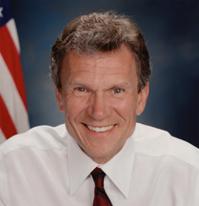 Sen. Thomas A. Daschle (D-SD)
Legislative Activity
Stay on top of the latest movement without scrolling through every action
Roll call votes on amendments in Senate: Amendment SA 1739 not agreed to in Senate by Yea-Nay Vote. 43 - 52. Record Vote Number: 362.
September 23, 2003
View full timeline
Roll call votes on amendments in Senate: Amendment SA 1739 not agreed to in Senate by Yea-Nay Vote. 43 - 52. Record Vote Number: 362.
September 23, 2003
Senate amendment not agreed to: Amendment SA 1739 not agreed to in Senate by Yea-Nay Vote. 43 - 52. Record Vote Number: 362.
September 23, 2003
Considered by Senate. (consideration: CR S11780, S11811-11813)
September 23, 2003
Amendment SA 1739 not agreed to in Senate by Yea-Nay Vote. 43 - 52. Record Vote Number: 362.
September 23, 2003
Considered by Senate. (consideration: CR S11731, S11734; text as modified: CR S11734; text as further modified: CR S11738-11739)
September 22, 2003
Senate amendment submitted
September 18, 2003
Senate amendment proposed (on the floor): Amendment SA 1739 proposed by Senator Daschle.(consideration: CR S11716-11720; text: CR S11716)
September 18, 2003
Amendment SA 1739 proposed by Senator Daschle. (consideration: CR S11716-11720; text: CR S11716) To strike funding for implementation of the Department of the Interior's reorganization plan for the Bureau of Indian Affairs and the Office of Special Trustee and to transfer the savings to the Indian Health Service.
September 18, 2003
Votes
1 roll call on this amendment
Text
Proposed
DEPARTMENT OF THE INTERIOR AND RELATED AGENCIES APPROPRIATIONS ACT,
2004

The PRESIDENT pro tempore. Under the previous order, the Senate will
resume consideration of H.R. 2691, which the clerk will report.
The legislative clerk read as follows:

A bill (H.R. 2691) making appropriations for the Department
of the Interior and related agencies for the fiscal year
ending September 30, 2004, and for other purposes.

Pending:

Reid amendment No. 1731, to prohibit the use of funds for
initiating any new competitive sourcing studies.
Reid amendment No. 1732, to authorize the Secretary of the
Interior to acquire certain lands located in Nye County,
Nevada.
Reid amendment No. 1733, to provide for the conveyance of
land to the city of Las Vegas, Nevada, for the construction
of affordable housing for seniors.
Daschle amendment No. 1734, to provide additional funds for
clinical services of the Indian Health Service, with an
offset.

The PRESIDING OFFICER (Mr. Sununu). The Senator from Montana.
Mr. BURNS. I suggest the absence of a quorum.
The PRESIDING OFFICER. The clerk will call the roll.
The legislative clerk proceeded to call the roll.
Mr. FRIST. Mr. President, I ask unanimous consent that the order for
the quorum call be rescinded.
The PRESIDING OFFICER. Without objection, it is so ordered.

HIV/AIDS In Africa

Mr. FRIST. Mr. President, last month I had the privilege of traveling
to the southern African nations of South Africa, Mozambique, Botswana,
and Namibia, along with five of our colleagues in the Senate. I try to
visit the continent of Africa at least once a year. Part of the trip is
generally spent doing medical mission work and part of it doing more
official business. Over the next several minutes I will reflect a bit
upon what we learned as a group with my colleagues on the official part
of the recent trip.
As in previous trips, I was again struck by the optimism, the
perseverance, the courage of the people I met on the African continent,
impressed by their openness, impressed by their warmth, impressed by
their generosity and by their hospitality.
The purpose of our mission was very focused and straightforward. It
was not just going and looking at the countries and getting a feel for
their governments and overall approach to ruling and to the people
there but to determine how best the United States, with others, can
coordinate efforts to fight the global HIV/AIDS pandemic which, as I
have said many times before, I believe is the greatest humanitarian,
moral, and public health challenge of the last 100 years.
Several of my colleagues have already come to the floor and offered
some of their reflections and impressions on our recent visit to the
continent. I thank Senators Warner, DeWine, Enzi, Alexander, and
Coleman for their comments and for joining our delegation to study HIV/
AIDS in Africa, as well as Dr. Joe O'Neill, who is Director of the
Office of National AIDS Policy, who accompanied us as well.
Dr. O'Neill, who has vast experience as both a physician and someone
who has focused on HIV/AIDS, both in the clinic delivering care and in
terms of education and research, and now public policy, was a
tremendous resource for us. In addition, it allowed us to integrate our
ideas on an ongoing basis on this particular trip.

I thank all of them for their thoughts, their remarks, their
questions, and comments as we traveled through the southern aspect of
Africa, as well as their remarks on the floor since.
In sum, our team had a very productive trip. We met with patients,
doctors, nurses. We met with community leaders, activists. We met with
the presidents of the countries and other government officials who have
been trying to fight and are continuing to fight on the front line this
deadly epidemic--this group of people all working together from
different vantage points to bring hope and relief to millions and
millions of people who are HIV positive, have the manifestations of
that infection, which is AIDS, a disease today for which we have no
cure.
No part of the world has been more affected by HIV/AIDS than southern
Africa, although we all know that the rate of growth was tremendous in
Russia and throughout the Caribbean. There are probably more people in
India than any other country in the world with HIV/AIDS. But in Africa,
where this disease had its impact initially, we see what indeed can
happen and is happening to countries throughout the world.
The story of the impact in Africa needs to be told in a way that
people understand in order to encourage support of the global community
in reversing this epidemic. Graca Machel, who is a truly remarkable
former first lady of Mozambique, told us that because of HIV/AIDS:

We are facing extinction. We still face the worst of the
epidemic.

[[Page S11713]]

Let me repeat:

We are facing extinction.

When you hear those words from leaders, from people who are
intimately involved, and you think of extinction caused by this little
tiny virus of a people, of a population, of a nation, you realize the
significance of this huge challenge before us.
We learned several things. First and foremost, we learned that
leadership and political will are absolutely critical. It must come
from the top, but it must occur at every level--vertically, down to the
most grassroots level. We saw effective, comprehensive responses to
HIV/AIDS in many parts of Africa. In those areas where it has been most
successful, there has been a strong political will and leadership. We
have to start at the very top, with the president or the leader of an
affected country. And you need to extend down to that local tribal
leader, the person in a local community or a local village or at the
tribal level, that person to whom people turn, that person whom people
trust, that person who, if they articulate the realities, can cut
through the stigma, which I will come to here shortly.
In the country of South Africa, we met with community leaders who
were struggling with the political leaders for years over the
development of specific response and treatment plans that would save
thousands of lives with new treatment approaches and mechanisms and
drugs. A lot of this has come to a head over the last year or 2 years.
Indeed, until just several weeks ago, the political leadership there,
I believe, had failed to address much of the reality that this little
virus causes HIV/AIDS, for which we have no cure. In South Africa, the
country itself, more than 5 million people are infected with the
disease, for which there is no cure. In contrast to a political will
that seems slow to come to the surface, you go to Botswana, in
Gaborone, where we met with President Festus Mogae, who, in an effort
to reduce the stigma surrounding the virus in the United States and
around the world, and in Africa as well, publicly had himself tested.
That was part of an effort to show the importance of testing
nationwide, to send a strong signal across the country.
This sort of unambiguous leadership sends a strong message to the
people. It focuses attention, and indeed it works. As a result of that,
Botswana is making notable progress in fighting this pandemic and
bringing understanding, security, and hope to its people. Prevention
and care must be linked to treatment, and treatment must be preceded by
testing because you have to make the diagnosis.
All that sounds straightforward--making the diagnosis so that you can
have care and treatment. But what is interesting is that 90 percent of
the people in the world who have the virus don't know they are HIV
positive, and until you can identify who is positive and who is not, it
is hard to engage in the specific treatment aspect for that virus.
What is not quite so intuitive, but absolutely fact, I believe, is
that testing for the virus can become the cornerstone of prevention of
the virus. Why? Because testing, because of the great technology today,
takes us 15 minutes to do--when I was in Africa before, it took about 3
weeks. In technology there has been great progress. After testing--15
minutes--the counselor or the person doing the test, at that same
setting, can have what is called a teachable moment when one can learn
about HIV and learn how to prevent HIV. If one is HIV positive, they
can learn how to stop and reduce the spread of HIV/AIDS.
It is critical. For example, there are 100 people in this body, and
if they were all HIV positive, only 10 would know. You see, we have a
lot we need to do in order to at least identify it so that we can
educate those people who may have HIV/AIDS.
In Kasane, Botswana, we saw how, using two simple tests, a person can
be tested in 15 minutes while receiving that counseling in an effort
called voluntary counseling and testing, VCT. I mention those three
letters because, as people in this body and our colleagues know more
and more about the virus and what we can do, you will hear about VCT,
voluntary counseling and testing. If the individual tested negative at
that sitting--they don't have HIV--he or she can be counseled as to how
to avoid that infection. Then that person is encouraged to go home and
talk to their family about the particular virus and about prevention,
how to avoid this virus. If the individual tests positive on that
encounter, they can immediately be exposed to the options for care and
treatment, if available, as well as contact with peer support groups.
Botswana is one of the countries we visited where the overall
sophistication is high. There have been a lot of resources devoted,
through partnerships to Botswana, and the impact right now is beginning
to be felt.
There are no easy answers. This will not be addressed in 1, or 5, or
10 years. It is going to take 15, 20 years to fully address HIV/AIDS.

Another important lesson we learned is that we must take steps to
make treatment widely available. This is something that was, for me,
really brought out on this particular trip. Even on the trip I took a
little over a year ago, it wasn't quite as dramatic. But it is critical
that treatment be made available as widely as possible.
President Bush's emergency plan for global AIDS calls for 2 million
people to be on treatment by 2006. That is an ambitious goal. We can
meet that goal if we focus and make sure that taxpayer dollars we spend
are directed to proven, robust prevention care and treatment programs.
There is an unlimited amount of money and resources you can devote.
People talk $5 billion, or $10 billion, or $15 billion. You can spend
$100 billion on trying to fight HIV/AIDS.
I think it is important that we spend our taxpayer dollars wisely, in
such a way that we know they will have an impact--not just over 6
months or a year but 2, 3, 4, 5, 10, 20 years. This is a long-term
commitment and one at which we need to stay in a determined fashion.
Perhaps the single largest challenge to the HIV/AIDS crisis in
Africa, through prevention, care, and treatment, is the need to help
develop the medical infrastructure to deliver health care safely and
effectively. It is not just in South Africa, it is in the United States
and every country. It comes down to the fact that it is not just a
diagnostic kit. You don't just give diagnostic kits to everybody in the
world and expect everything to fall into place. It means you don't just
have the drugs, the little vial of drugs, and send it, just as you
would not send it anywhere in this country or to other countries; you
would not send it to Africa without making sure it could be
appropriately stored and appropriately transported, that it could be
actually delivered to the patient in a secure and safe way. It is
complicated and frustrating, in many ways, in the United States as
well. This takes an overall system that we have to continue to develop
and partner with and contribute to in terms of resources to make sure
it is fully developed.
A message we heard again and again was the request for the United
States to help provide expertise and training. This shortage of trained
medical and health personnel at Chris Hani Baragwanath Hospital, which
is the largest hospital I have ever been in or practiced in, in the
United States or in England--it may be the largest hospital in the
world. It is in Soweto, South Africa. We had the opportunity to visit
the wards there and visit with the staff.
When I close my eyes, I can see the exhausted faces of those nurses,
the nurse practitioners, and the physicians, as we listened to them
describe the desperate need for more trained staff--staff who have an
understanding of HIV-related diseases, the infectious diseases that
appear when one has this virus, which suppresses or holds down one's
immune system and thus makes an individual more likely to get different
infections. They told us about the need for nurses to help do the
testing and administer the tests and the need for social workers
because it is not just giving the medicine, the antiretroviral therapy,
if somebody has HIV/AIDS; it is the care, the nutrition, carrying out
daily activities of living in South Africa, and thus you need a whole
cadre of social workers to address the care, as well as the treatment
aspects of responding to this virus.
They talked about the need for counselors to teach them how to avoid
and cope with HIV infection. They talked

[[Page S11714]]

about the need for administrative staff. They look to the United States
to help partner to provide this trained expertise.
We learned, in addition, that we must build partnerships. It cannot
be done by one country, or one organization, or one company; it is
going to require huge partnerships. That is going to take partnerships
of government and of the NGOs--nongovernment organizations--religious
organizations, social organizations, pharmaceutical companies,
universities, all of which can come together to build these so-called
capacity needs, to build the effective partnerships to address the
challenges we have.
In Botswana, we visited the appropriately named Masa--that means
``new dawn''--Masa Clinic. Masa is funded by the African Comprehensive
HIV/AIDS Program, called ACHAP, which also supports the Coping Centres
for People Living with HIV/AIDS, COCEPWA, and the Botswana Christian
AIDS Intervention Programme. That sort of partnership, that cross-
fertilization is working.
The African Comprehensive HIV/AIDS Program is a unique partnership
that is sponsored in part by the Bill and Melinda Gates Foundation, the
Merck pharmaceutical company, and the Government of Botswana. It is a
remarkable program that was launched 3 years ago in July 2000. It is
providing free antiretroviral treatment, counseling, and care for now
over 6,000 Africans.
Patients in the Masa program--it has been fascinating to me--have a
92- to 100-percent rate of compliance following this prescribed
treatment/drug program, and that is very high. I think compliance with
their population in Botswana is equally high to compliance of a similar
regimen in any western country--in the United States or in Europe.
People are adhering to that regimen that is laid before them day after
day. It is truly remarkable.
The highest compliance rates among western countries is 15 to 20
percent lower than that particular figure. So when people say, in
Africa it is hard to pull off these complicated treatment programs,
that is absolutely wrong. That is just absolutely wrong.
While we were in South Africa, we visited something I have never seen
before. We visited the huge gold mining facilities. The one we visited
was called Anglo Gold, or part of Anglo Gold. They have their own
hospital to treat their miners. There are about 25,000 employees and
maybe--they don't really know yet--as many as a third of all those
employees are HIV/AIDS infected. Again, that is sort of typical. It may
be less than that; it may be a little bit more, but it is a huge
number. Therefore, in terms of not just care and compassion but just
productivity, because you need a healthy workforce, they have a
wonderful program, a comprehensive program that is involved in
prevention, care, and treatment at Anglo Gold. They are bringing
antiretroviral treatment to HIV-infected employees directly.
We had the opportunity to talk to the employees and the impact that
is making on their lives and the lives of their families and the lives
of their extended families in their villages.
We had the real pleasure of visiting St. Mary's Hospital in Rehoboth,
Namibia, which is preventing new infections through President Bush's
Prevention of Mother-to-Child Transmission Program. We have talked on
the floor a lot about the importance of treating the mother with one
dose of a drug called Nevirapine--a very inexpensive drug--and then
treating the baby within the first 24 hours with one dose of
Nevirapine. It cuts that transmission down at least by 50 percent. That
particular program is having great success.
In Windhoek, Namibia, we visited the Bernard Noordkamp Camp Center
run by the Catholic Church which provides care and nutritional support
and counseling to hundreds of orphaned children. All of my colleagues
are familiar with the thousands and thousands of orphans as a result of
HIV/AIDS, children who have lost their parents to HIV/AIDS. That figure
will go to 10 million to 14 million over the next 10 years.

Another point we learned is we must reach people where they live. You
cannot have a program designed for even one country and have it apply
to every village in another country. You really need to be able to
reach people in their own communities.
Most Africans don't live in the big urban areas and, thus, the
importance of mobile clinics, going out to the villages, is absolutely
critical. We saw a lot of creative responses to the problem. It could
be very resource intensive.
In Carletonville, South Africa, we saw the mobile clinics, the mobile
vans with trained personnel and medical gear. These vans drive out into
the bush to bring that voluntary counseling, treatment, and basic care
to people who otherwise simply would not have access to the care. There
is no hospital or the nearest hospital or clinic might be 100 miles
away, and with most of the people walking, it takes days to reach a
clinic. It is impractical. These units would be able to identify people
with serious illness and have them come to the local village clinic or
the closest village clinic.
In Kasane, Botswana, we saw a mobile rapid-testing lab that travels
through that whole Kasane region. By closing the gap between people and
health care providers in these innovative ways, we strengthen the
overall capacity to deliver health care to those people to cope with
HIV/AIDS. That provides a structure which can be replicated throughout
not just South Africa, Botswana, Namibia, or Mozambique but in other
areas throughout the continent and, indeed, throughout the world.
I mentioned this earlier, and this will be one of my final points, we
learned we absolutely have to address the stigma and discrimination
that is associated with HIV/AIDS. We have had to address it in the
United States of America. We continue to address it throughout Africa.
It is very similar.
This stigma is a universal barrier. Every African nation we mentioned
said it is a major challenge. Because of fear and discrimination,
African women told us again and again they are afraid to get tested out
of fear of retribution by their husbands. When we talked with African
men, they said they are afraid to be tested because of their fear of
discrimination in their workforce or being shunned in their local
communities or being shunned by their family.
If you have the stigma, people don't ever make it to the VCT--
voluntary counseling and testing. They want to stay at home even if
they are sick. They say: I don't want to get tested because if someone
finds me HIV positive, then I will be discriminated against. So there
is a huge disincentive to be tested. It makes people reluctant to be
educated about the virus or even talk about the virus.
One of the most powerful ways of cutting through this stigma is to
have the political leaders, the well-recognized leaders of the village
come forward and say: We have to address it. Why? Because the
possibility of extinction is actually there.
To effectively fight AIDS, it is important that people know what
steps to take. Therefore, we have to reach that teachable moment, but
to reach that teachable moment, we have to destigmatize. One of the
real advances that has been made--and most people have been watching
Bono, who has been here this week and talked to a number of people, and
who is a very effective voice. He talks passionately about this
subject. I have had the opportunity to spend a lot of time working with
him on this terribly important issue. He points out the importance of
the moral cause and the moral drive in terms of our responsibility, not
just the United States but as the global community. I think he is right
on target with that particular message as a global community.
In our discussions yesterday, we were commenting on the tremendous
positive change in the believers of the world, in the faith-based
communities, in the churches, in the mosques, in the temples--in the
churches broadly. There has been a huge sea change over the last 2 or 3
years because of the moral necessity, the moral correctness of
addressing this particular issue.
That is very important for lots of different reasons. It is important
for the offering of hope and compassion and caring and treatment and
support, and it is equally important because, to have the church
leaders and faith-based leaders stand up repeatedly and say this is an
important issue, then people

[[Page S11715]]

listen and people understand. If they hear it from their political
leaders and they hear it from the church leaders, all of a sudden you
can start tearing apart this stigma, which is the barrier to reversing
this pandemic that is upon us.
Prevention messages must resonate locally. I mentioned Graca Machel,
the former first lady in Mozambique. She told us of the difficulty of
discussing HIV/AIDS. She told us of how her Foundation for Community
Development works with faith-based organizations to reduce that stigma
of HIV/AIDS. We asked her how specifically they do it, and they do it
by using well-understood Bible verses and Bible messages that connect
with people. All of a sudden, through that connection, they take away
the shame that so often is attached to this stigma and discrimination.
She reminded us also of the importance of creating practical messages
that appeal specifically to men. Right now in the world there are more
women with HIV/AIDS than there are men, which is interesting. Most
people would think initially there are a lot more men. The challenge in
many ways is to reach the men. She is very directly developing specific
messages that help educate them on the dangers of sexual promiscuity as
the vehicle of spreading AIDS.
She also shared her thoughts on the way to use multiple media
sources--telephone lines, billboards, television, radio--to get the
message out. She understands that all the knowledge in the world about
HIV/AIDS is not worth very much unless it reaches the individual
person.
In Mozambique, we met the traditional healers from 10 villages. It
was wonderful for me as a physician to be able to go out in a remote
part of Mozambique and to have the traditional healers, for whom
Western medicine is not something they have been exposed to much, and
who use the traditional healing methods, interested in HIV/AIDS, asking
the right questions, putting them forward, and then educating people.
These traditional healers are the ones who give health care today. They
have relationships like the doctor/patient relationship already with
their villagers. They help destigmatize and encourage education about
HIV/AIDS. They are the community leaders.
We have to prepare for a future without AIDS. The devastation caused
by AIDS is overwhelming. But we must continue to envision a world
without HIV/AIDS, especially in countries that have been overtaken and
are feeling the effects at the individual level, in families, and on
the economies. Even if we get the disease under some sort of control,
we need to think ahead and plan for the future.
In all the countries in Africa that we visited we were met with hope
for the future, hope for new trade agreements, which we need to work
on, I believe, aggressively in this country. We heard about the hope
that trade barriers will fall so economies will improve and jobs will
open up. We listened and heard and were struck by the hope that they
have for a prosperous life for their families.

You have this devastating pandemic, terrible disease affecting the
continent and individual countries. Yet it always comes back at the end
of the conversation with a smile and optimism and hope. I think that is
one of the aspects that attracts me back to that continent again and
again. We should stand by them, partner with them, and maximize their
opportunity for growth.
In closing, I do thank the Ambassadors and staff of each of the
nations that we visited: Ambassador Cameron Hume in South Africa,
Deputy Chief of Mission Dennis Hankins in Mozambique, Ambassador Joe
Huggins in Botswana, Ambassador Kevin McGuire in Namibia, for all of
their outstanding work, their outstanding support. They opened their
world to us in a way that we very much appreciate and that we will act
upon over the coming weeks and months and years. They literally opened
their homes to our delegation and worked overtime to make our trip a
success. For that we are grateful. They are a great credit to the State
Department and to the United States and to the people they represent.
Those people are the people of the United States of America.
I have gone on too long. Again, it was a dramatic, important trip for
Members of the Senate as we look ahead to how best and most wisely
invest our taxpayers' money, to this huge, bold, initiative, the
boldest initiative taken in public health by any leader of any country
ever, the initiative President Bush put forward to fight global HIV/
AIDS with $15 billion over 5 years.
I yield the floor and suggest the absence of a quorum.
The PRESIDING OFFICER. The clerk will call the roll.
The assistant legislative clerk proceeded to call the roll.
Mr. BURNS. Mr. President, I ask unanimous consent that the order for
the quorum call be rescinded.
The PRESIDING OFFICER. Without objection, it is so ordered.
Mr. BURNS. Mr. President, as we move into the debate on the Interior
appropriations bill, there are still some important amendments that
have yet to be offered. I understand the minority leader will be here.
He has a couple amendments. We will lay those down today and talk about
those. If Members are in town and watching, I suggest they bring their
amendments down so we can get the list down to where it is manageable
in the first place so we can complete this appropriations as early on
Tuesday as we possibly can.
In the meantime, we will be talking about a lot of very emotional
issues. When you talk about public lands, everybody becomes a land
manager. As we debate this, it never ceases to amaze me that we forget
that there is a lot of knowledge on how to manage lands and the
resources that we haven't tapped.
This Saturday, September 20, volunteers across the United States will
participate in the 10th annual National Public Lands Day.
This day is coordinated by the congressionally chartered National
Environmental Education and Training Foundation, in conjunction with
the Take Pride in America Program.
By the way, the Take Pride in America Program goes all the way back
to one of the first programs the Interior Department put in when I
first came to the Senate.
These two fine organizations team up in an effort to enhance and
improve our public lands while promoting awareness of citizen
stewardship and increasing volunteer opportunities for the public. This
is an excellent idea. I would like to commend them, as well as the
70,000 folks across the United States who volunteered last year, for
their hard work in participating in this task.
One-third of the total amount of the U.S. land mass is considered
public lands. Recreational activities on these lands are enjoyed by
millions of Americans and their families. Glacier National Park alone
in my State provides recreational opportunity for snowshoeing, boating,
and horseback riding for nearly 580,000 visitors each year.
By the way, we got good news last night. Maybe some of us are
watching Isabel. One fellow walked into the office this morning and
asked, ``Isabel who?'' We will proceed with keeping everything
operating. But, also, good news is that in Glacier National Park we got
4 inches of snow last night, and they closed the Going to the Sun
Highway Road. There are some back here who may not think that is good
news, but it is awfully good news to us because that means the end of
the fires.
Another national park in my neck of the woods is Yellowstone, which
happens to be the oldest national park in the world, and it is
sometimes considered the crown jewel of the park system. It is
implementing a fee-free day in honor of National Public Lands Day.
As chairman of the subcommittee on Interior appropriations, I would
like to extend a premature thank you to at least a dozen members of my
own staff and their friends who are participating in Public Lands Day.
This wasn't something which I asked them to do.
I ask unanimous consent that their names be printed in the Record.
There being no objection, the material was ordered to be printed in
the Record, as follows:

National Public Lands Day

1. Jodie Peters; 2. Melanie Benning; 3. Angela Schulze; 4.
Jennifer O'Shea; 5. Chris Heggem; 6. Ryan Thomas; 7. Bruce
Evans; 8. Ginny James; 9. Leif Fonnesbeck; 10. Kassy Hodges;
11. Stan Ullman; 12. Jarrod Thompson; 13. Christen Petersen.
Mr. BURNS. Mr. President, in the East it is a good idea to work on
public

[[Page S11716]]

lands, particularly if this storm hits us and we sustain a little
damage from it. It may be a good time to not only take care of our own
property but also to volunteer to help clean up those areas of public
lands that we enjoy.
This is something we are asking Americans to do, and 70,000 responded
last year.
We have a fine group in this area that is going to work along the
Potomac River shoreline where they will undertake the task of painting
trash cans, railings, and benches on Hains Point Park early Saturday
morning. Many in my office are going to participate.
As we look forward to Public Lands Day and Saturday, I encourage
citizens of this great country to think about Take Pride in America's
slogan: ``It's your land, lend a hand.''
I think that is an important message.
I notice that my good friend from South Dakota, the minority leader,
is on the Senate floor.
I yield the floor.
The PRESIDING OFFICER. The minority leader.
Mr. DASCHLE. Mr. President, I thank the Senator from Montana who has
done a great job of working with this legislation once again this year.
I commend him for his efforts.

Amendment No. 1739

Mr. DASCHLE. Mr. President, I ask unanimous consent that the pending
amendments be set aside and that amendment No. 1739 be considered.
The PRESIDING OFFICER. Without objection, it is so ordered.
The legislative clerk will report.

The Senator from South Dakota [Mr. Daschle] proposes an
amendment numbered 1739.

Mr. DASCHLE. Mr. President, I ask unanimous consent that reading of
the amendment be dispensed with.
The PRESIDING OFFICER. Without objection, it is so ordered.
The amendment is as follows:

(Purpose: To strike funding for implementation of the Department of the
Interior's reorganization plan for the Bureau of Indian Affairs and the
Office of Special Trustee and to transfer the savings to the Indian
Health Service)

On page 46, line 7, strike ``: Provided, That'' and insert
the following: ``, and of which $79,282,000 (composed of
$20,000,000 from administrative accounts for operation and
support, $6,346,000 from the trust accountability account,
$15,168,000 from the field operations account, and
$37,768,000 from the historical accounting account) shall be
transferred to the Indian Health Service and shall be
available for clinical services: Provided, That none of the
funds made available by this Act may be used for the proposed
trust reform reorganization of the Bureau of Indian Affairs
or the Office of Special Trustee: Provided further, That''.

Mr. DASCHLE. Mr. President, for over 100 years, the Department of
Interior has managed for the benefit of Indian people a trust fund
containing the proceeds from the leasing of oil, gas, land and mineral
rights on Indian land. Today, far from enjoying a sense of security
about the investment of these assets, tribal and individual Indian
account holders cannot even be assured of the accuracy of the balances
that the Department of Interior claims are in their accounts, and the
Interior Department's discharge of its trust responsibility is being
litigated in Federal court.
There is little disagreement that the Department of Interior's
stewardship of Indian trust funds has been a colossal and longstanding
failure. But rather than get directly at the underlying problem, the
department continues to focus on reorganization of the bureaucracy.
Adding insult to injury, department officials refuse to collaborate
with the tribes on a government-to-government basis as the department
promised.
It is my strong belief that Congress should not appropriate any
additional funds for reorganization of the BIA until tribal leaders are
fully consulted on, and can fully participate in, the design of the
reorganization plan.
Many of us received a letter yesterday from the National Congress of
American Indians suggesting that Congress not fund the department's
ill-considered reorganization.
According to NCAI, ``The reorganization, because it is being executed
in advance of the reengineering of the trust accounting systems, is
premature, expensive, and will not improve trust management.'' NCAI
goes on to say that: ``Instead the funding should be directed back to
basic Indian programs from which the money has been reallocated.''
I agree with NCAI and the tribal leaders of my State, who are saying
the same thing. I am, therefore, proposing that we transfer $79 million
from accounts that would fund a reorganization of the Bureau of Indian
Affairs to the Indian Health Service.
We are all painfully aware of the acute human need that exists on the
Nation's Indian reservations. Education, unemployment programs and
infrastructure are all underfunded by the Federal Government. But no
human need cries out more than health care.
The health care statistics on the reservations of South Dakota, and
throughout the country, are closer to the statistics of the developing
third world than they are to the national statistics for the United
States. Infant mortality rates, diabetes rates, fetal alcohol syndrome
rates and SIDS rates on the reservations far exceed that of the rest of
the Nation. Every health barometer calls out for prompt intervention
and assistance.
We must increase Federal funding for health care on the reservations.
It is the key to a better education, which is the key to a more
productive life.
Yesterday on the Senate floor I showed my colleagues a chart that
showed the per capita commitment to health care on the reservations. It
is exactly one-half the per capita commitment to Federal prisoners in
the United States today. One-half, about 1,900 versus 3,800. Restoring
accountability and efficiency to trust management and paying account
holders what they are owed is a matter of fundamental justice and
should be a national priority. Nowhere do the principles of self-
determination and tribal sovereignty come more into play than in the
management and distribution of trust funds and assets clearly owed to
Indian tribes and their people.
However, the successful resolution of this challenge, which has
eluded the reach of administrations of both political parties for
years, depends on meaningful dialogue and true partnership between the
Federal Government and Indian people and their representatives. That
standard is not reflected in the Interior Department's current
reorganization plan.
Therefore, when I contrast the relative merits of more funding for
this reorganization with more funding for health care, it is not a
close call.
I urge my colleagues to adopt this amendment transferring $79 million
from BIA and the Office of the Special Trustee reorganization to Indian
health care.
I ask unanimous consent that letters from the National Congress of
American Indians and the Native American Rights Fund be printed in the
Record along with a resolution regarding this issue passed by the
National Congress of American Indians.
There being no objection, the material was ordered to be printed in
the Record, as follows:

National Congress

of American Indians,

Washington, DC, September 17, 2003.
Re: DOI Interior Appropriations Request for Historical Trust
Accounting and Trust Reorganization.

Hon. Bill Frist,
Majority Leader.
Hon. Conrad Burns,
Chairman, Subcommittee on Interior Appropriations.
Hon. Ben Nighthorse Campbell,
Chairman, Committee on Indian Affairs.
Hon. Tom Daschle,
Minority Leader.
Hon. Byron Dorgan,
Ranking Member, Subcommittee on Interior Appropriations.
Hon. Daniel K. Inouye,
Vice Chairman, Committee on Indian Affairs.
Dear Senators: It has been over a decade since Congress
first ordered the Department of Interior to conduct an
accounting for Indian trust funds. Since that time, the
Department has spent over 600 million dollars on trust
reform, but has yet to produce even one accounting. In the
FY2004 Interior Appropriations bill, the Department has
requested yet another enormous increase in funding to product
a historical accounting and reorganize Bureau of Indian
Affairs functions to the Office of Special Trustee, shifting
significant amounts of funding away from basic Indian
programs.
The recent U.S. Civil Rights Commission Report, ``A Quiet
Crisis: Federal Funding and Unmet Needs in Indian Country''
evaluates the budgets and expenditures of the six major
federal agencies responsible for Native

[[Page S11717]]

American programs. The Commission concludes that significant
disparities exist between federal funding of programs serving
Native Americans and those serving other Americans. The
report finds that when inflation is factored in, funding for
many individual programs has decreased.
In these days of tight federal budgets and dire needs in
American Indian communities, we have to make sure that every
federal dollar spent in Indian country is money well spent.
We do not believe that the increases requested for historical
trust accounting and BIA reorganization meet that criteria.
The bottom line on historical accounting is that the
Department simply has not maintained the records to enable an
accurate accounting to occur--it has been demonstrated time
and again that a more comprehensive forensic accounting
approach is needed. The reorganization, because it is being
executed in advance of the reengineering of the trust
accounting systems, is premature, expensive, and will not
improve trust management. NCAI believes that any trust reform
reorganization at the Department should only occur after
interested parties--including tribal leadership--collaborate
to identify new trust business processes and the
organizational structure that should accompany those new
processes.
FY2004 Interior Appropriations should not fund the ill-
considered historical accounting effort and reorganization.
Instead, the funding should be directed back to basic Indian
programs from which the money has been reallocated. I have
attached NCAI Resolution <sup>#</sup>PHX-03-040, opposing the
Department of Interior's trust reorganization plan and
related FY2004 budget request.
Tribal leaders understand better than anyone that the
Bureau of Indian Affairs needs to change, that it has
significant difficulty in fulfilling its responsibilities in
management of trust funds, and that some of the problems
relate to the way that the Bureau is organized. We want to
see successful change and improvement in the way the BIA does
business. We are not opposed to reorganization per se; we
simply want to see it done right. In our view, effective
organizational change to effectuate trust reform must contain
three essential elements:
(1) Systems, Standards, and Accountability--a clear
definition of core business processes accompanied by
meaningful standards for performance and mechanisms to ensure
accountability;
(2) Locally Responsive Systems--implementation details that
fit specific contexts of service delivery at the regional and
local levels where tribal governments interact with the
Department; and
(3) Continuing Consultation--an effective and efficient
means for on-going tribal involvement in establishing the
direction, substance, and form of organizational structures
and processes involving trust administration.
These elements are lacking in the current DOI
reorganization proposal.
We are extremely concerned that the lack of definition of
the responsibilities and authorities of new OST offices will
cause serious conflicts with the functions performed by the
BIA Agency Superintendent and/or Indian tribes. The OST was
designed by Congress to play an oversight role, but the
reorganization would now give the Office both oversight and
management responsibilities, a clear conflict. Moreover, we
believe that the funding and staff needs to flow directly to
the agency and regional levels--not just to new Trust
Officers--to address long-standing personnel shortages needed
to fully carry out the trust responsibility of the United
States. Before DOI begins the process of establishing an
entire new mini-bureaucracy, the financial and management
impact of such an action must be thoroughly examined by the
Congress and by affected tribal governments.
We fear that the DOI is on the verge of repeating the
classic mistake that has ruined the majority of its efforts
to reform trust administration in the past. The preoccupation
with moving or creating boxes on a chart is the antithesis of
how effective organizational change can and should be brought
about.
The Department is headed in the right direction with its
reengineering efforts, but the new business processes should
be devised through a collaborative process involving both BIA
employees and tribal leadership. We must include the input of
tribes and BIA employees so that the great numbers of people
who must implement changes in trust administration understand
and support necessary reforms. Only then, as a final step,
can we design an organizational chart to carry out the
functions of trust management without creating conflicting
lines of authority throughout Indian country. The history of
trust reform is filled with failed efforts that did not go to
the heart of the problem and do the detailed work necessary
to fix a large and often dysfunctional system.
At this time, Congress should prevent DOI from proceeding
with its proposed reorganization plan and focus instead on
funding core Indian programs where the need is greatest, and
programs such as land consolidation, title and accounting
that will in time reduce the cost of trust administration. We
believe that this could be accomplished with simple
appropriations language such as, ``None of these funds shall
be used for the proposed historical accounting and trust
reform reorganization of the Bureau of Indian affairs and
Office of Special Trustee until the Secretary has completed
the ongoing reengineering processes through consultation with
the tribes.'' Thank you very much for your interest in our
concerns, and for your continued commitment to American
Indian communities.
Sincerely,
Tex G. Hall.
____

Native American Rights Fund,

Washington, DC, September 17, 2003.
Hon. Tom Daschle,
Minority Leader, U.S. Senate,
Washington, DC.
Dear Senator Daschle: As counsel for the class in Cobell v.
Norton, Civ. No. 96-1285 (RCL), a case was filed on June 10,
1996 on behalf of a more than 500,000 individual Indian trust
beneficiaries in the Federal District Court for the District
of Columbia. I write to clarify the position of the Cobell
plaintiffs regarding the use of current appropriations for
the historical accounting and reform of the IIM Trust.
Specifically, under current circumstances, we have no
objection to the use of such appropriations to address the
many other pressing needs of Indian Country--including,
without limitation, Indian education and health services.
We do not believe Interior can render a complete and
accurate accounting. Nor do we believe Interior can reform
the trust without Court intervention. Our view on this matter
is reinforced with the knowledge that Interior has wasted
nearly $1 billion over the last decade on trust reform and
there has been no material improvement of the IIM Trust. In
short, until the Court has approved a methodology for the
historical accounting and plan for meaningful trust reform--
issues which have been tried and for which a decision is
pending--Interior's record conclusively demonstrates that
such funds will be wasted and will certainly not benefit
Indian Country.
Sincerely,
Keith Harper.
____

[From the National Congress of American Indians]

Resolution #PHX-03-040

title: supporting tribal leaders' involvement in a congressional
process to settle trust claims; strongly opposing the department of
interior's Indian trust reform reorganization plan and related fy 2004
budget report; creating a tribal leaders workgroup to address both
issues

Whereas, we, the members of the National Congress of
American Indians of the United States, invoking the divine
blessing of the Creator upon our efforts and purposes, in
order to preserve for ourselves and our descendants the
inherent sovereign rights of our Indian nations, rights
secured under Indian treaties and agreements with the United
States, and all other rights and benefits to which we are
entitled under the laws and Constitution of the United
States, to enlighten the public toward a better understanding
of the Indian people and their way of life, to preserve
Indian cultural values, and otherwise promote the health,
safety and welfare of the Indian people, do hereby establish
and submit the following resolution; and
Whereas, the National Congress of American Indians (NCAI)
was established in 1944 and is the oldest and largest
national organization of American Indian and Alaska Native
Tribal governments; and
Whereas, the federal government has a longstanding
comprehensive trust responsibility to Indian tribes based on
treaties, the United States Constitution, federal statutes,
executive orders, and judicial decisions; and
Whereas, the issue of whether the federal government has
violated its trust responsibility to Individual Indian Money
account holders has been in litigation since 1996, under what
is now named the Cobell v. Norton case; and
Whereas, as one means of dealing with the issues in Cobell
v. Norton, the Department of the Interior (DOI) has developed
and is implementing a reorganization plan which attempts to
diminish and limit the nature of the federal government's
trust responsibility; and
Whereas, the DOI reorganization plan creates a top-heavy
bureaucracy which will divert desperately needed funding and
resources from regional offices and local agencies, strip
important decision-making authority from those offices and
agencies, and negatively impact trust fund and trust resource
management programs at the local level; and
Whereas, the DOI has incorrectly asserted that segments of
its reorganization plan have the approval of Tribal Leaders;
and
Whereas, the DOI plan in fact ignores and rejects Tribal
leaders' core consensus positions, developed at great expense
of Tribal time and resources, that trust reform must not
negatively affect BIA programs, that it must recognize the
comprehensive trust responsibility of the DOI/BIA with
enforceable standards for meeting that responsibility, that
the BIA must not be arbitrarily split between ``trust'' and
so-called ``non-trust'' programs, as every BIA function is
a trust function; and that decision-making must take place
at the ``lowest'' (agency/region) level possible rather
than in Washington, DC; and
Whereas, the DOI reorganization plan lacks substance and
details in the areas of management and delivery of trust
services;

[[Page S11718]]

does not describe the new or improved business processes that
will be implemented, lacks any recognition of enforceable
standards that will guide the implementation of such
processes; does not provide accountability to Congress, the
courts, Indian tribes and their members; does not provide for
a trust oversight mechanism; and fails to provide any details
on how service delivery will be improved at the regional and
local levels; and
Whereas, DOI's FY 2004 budget makes improper requests, and
in likely violation of federal law, consolidates authority
and funding in OST at the expense of Tribal programs: DOI
seeks a $123 million increase for OST, nearly doubling its
funding, while, at the same time, seeking a $63 million cut
to BIA construction, including a $32 million cut for school
construction, as well as an $8 million cut to Indian Water
and Claims Settlement funding. Equally disturbing, DOI is
seeking a less than one percent (0.3%) increase for Tribal
Priority Allocations, funding that flows directly to Tribes
for trust programs; and
Whereas, this attempted reorganization is premature because
the ``To-Be'' reengineering study on how to fix the trust
management apparatus has not been completed; and
Whereas, Tribal leaders strongly oppose the reorganization
for the reasons herein described; and
Whereas, Senators Ben Nighthorse Campbell and Daniel K.
Inouye, Chairman and Vice-Chairman of the Senate Committee on
Indian Affairs, have written to all Tribal leaders asking for
their participation in helping to settle the Cobell v. Norton
case and ``reforming the Federal trust management
apparatus''; and
Whereas, the continued litigation will cost many more
millions of dollars and take many more years to reach
completion, further impeding the ability of the Bureau of
Indian Affairs and the Department of Interior to carry out
their trust responsibilities to Indian tribes; and
Whereas, it is in the best interests of Tribes that Tribal
leaders participate in the resolution of trust related claims
and the development of a workable and effective BIA
reorganization plan which incorporates the core consensus
positions earlier articulated by Tribal leaders; and
Whereas, Tribal leaders are willing to discuss the
Senators' proposal to achieve a settlement of trust claims
and related issues because it focuses on land consolidation,
development of settlement legislation, continuation of the
effort to reengineer trust management processes, and the
reorganization of the BIA in true and meaningful consultation
with Tribal leadership;
Now, therefore, be it Resolved, That the NCAI does hereby
strongly oppose the DOI's Indian Trust Reform Reorganization
Plan and its related FY 2004 Budget Request; and
Be it further Resolved, That the NCAI calls upon Congress
to immediately halt the reorganization of the Bureau of
Indian Affairs until the concerns of Tribal Leaders are fully
addressed by a workable and effective reorganization plan,
and until the ``To Be'' process, developed through true and
meaningful consultation with Indian Tribes, is completed; and
Be it further Resolved, That the NCAI hereby (1) opposes
the FY 2004 proposed $123 million budget increase to OST, (2)
supports the restoration of funding for BIA Construction and
Indian Water and Claims Settlements, and (3) supports a
substantial increase, of at least 4%, for TPA funding; and
Be it further Resolved, That the NCAI requests a series of
hearings before the Senate Committee on Indian Affairs and
the House Resources Committee on the BIA reorganization and
the DOI's FY 2004 budget request, and that the Tribal Leader
witnesses represent direct service, contracting and
compacting tribes, all regions, and Tribes with diverse trust
holdings; and
Be it further Resolved, That the NCAI supports the efforts
of Senators Campbell and Inouye to help reach a settlement of
trust claims and to effectively reform the federal trust
apparatus, and encourages the participation of Tribal
leaders, individually and through a Tribal Leaders Workgroup,
in both these crucial processes; and
Be it further ResoLved, That the President of the NCAI is
hereby authorized to take all actions necessary to fulfill
this Resolution; and
Be it finally Resolved, That this resolution shall be the
policy of NCAI until it is withdrawn or modified by
subsequent resolution.

certification

The foregoing resolution was adopted at the 2003 Mid-Year
Session of the National Congress of American Indians, held at
the Sheraton Wild Horse Pass Gila River Indian Community, in
Phoenix, Arizona on June 18, 2003 with a quorum present.
Tex Hall,
President.

Mr. BURNS. Mr. President, there will be quite a spirited debate on
this issue. There is no question that we have shortcomings in the
Indian Health Service. We could use more dollars there. In fact, we
added dollars this year to that particular item. Was it enough?
Probably not. But who knows how much is enough, whenever we start
allotting dollars and we take a look at the challenge we have,
especially in Indian health care. We know diabetes is one great
challenge we have on our reservations across this country.
We should also talk about the merits of the trust reform, too. Number
one, the administration is talking veto if this amendment is allowed to
be successful. Number two, it is tied up in court. There are actions
and proceedings underway. The Senator from South Dakota is exactly
right. This has spanned the years through all administrations, through
all Secretaries. They have all been sued and held in contempt of court
because they did not live up to their responsibilities of managing this
trust.
We also have to be concerned about those in Indian country, of the
thousands and thousands of Native Americans who are denied payment from
this trust because it is in such a mess. Some reform or some system has
to be set in place before anything can happen. The plaintiffs now in
the court action are saying the total payment in the country could be
as high as $176 billion if we do not fix this system and make it work
for those who have money due them.
I imagine that to take the dollars from reform and normal accounting
procedures and let the new organization proceed with reform so we know
where we are, what kind of ground we are standing on, and how best to
get that money to the people to whom it is owed--I don't think this is
the time to take dollars from that process of reform. We will have a
spirited debate on this subject.
The Senator from South Dakota also points out we have two
shortfalls--that and Indian health. So wherever your priorities are, do
we take care of the trust so we take care of the financial conditions
of those folks who have money coming to them or do we put basically a
pittance of what really the IHS, the Indian Health Service needs. We
have always covered those needs in the past with more dollars. We have
added dollars this year. But we will monitor that very closely. I am
aware of the needs in health care because I have seven reservations in
the State of Montana and it becomes an issue there.
I thank the Senator from South Dakota for offering this amendment
because it points up that we have two places we should be doing better.
I yield the floor.
The PRESIDING OFFICER. The Senator from South Dakota.
Mr. DASCHLE. Mr. President, I don't disagree with most of what my
friend and colleague from Montana has said. He is trying to do the best
he can given the allocation he has. I don't deny his responsibility to
make the decisions as best he can, given the allocation. I didn't vote
for the budget so I don't feel constrained by those budgetary
allocation decisions that have been made within the Appropriations
Committee.
Let me talk briefly about the two issues the Senator addressed.
First, with regard to the trust fund. The $79 million is for
reorganization of the BIA to adapt itself to the policy once the policy
is implemented. The question I have is, how can you reorganize a
bureaucracy before you know what that policy is going to be? How can
you say we are going to put it in this agency or in that department or
in that bureau or that desk without knowing what the policy is going to
be? And the policy is being contested. It seems to me we are putting
the cart before the horse. We need to decide on the policy and then do
the reorganization. That is what I am saying. Yet there is $79 million
for the reorganization before we even have a clue what the policy is
going to be.

With regard to the Indian Health Service, the President requested
about $1.9 billion for IHS. The analysis done by independent sources
has indicated if we are going to do it right, if we are going to
provide coverage anywhere near the coverage provided to others in the
rest of the country, we would have to put another $2.9 billion into the
Indian Health Service budget to reach a per-capita equivalency, that
parity. But we are not going to do that. We obviously cannot do that.
We had that debate on the budget resolution. I don't recall what the
exact number was. We offered an amendment to add about $2.9 billion,
and that was defeated.
What the Senate budget resolution included, and I believe it was the
amendment of the Senator from Montana, but it could have been someone
else's, was another $292 million, not the $2.9 billion. We passed that,
but it was not in the final bill, so that was the

[[Page S11719]]

subject of the amendment I offered last night, an amendment to put that
agreed-upon $292 million in the appropriations bill. We will have that
vote, as well.
We are simply saying we ought to try to begin addressing this
extraordinary deficiency we have. To say to a Native American, on a
per-capita basis you are only going to get one-half of what we give our
Federal prisoners is to defend a disparity that I cannot imagine we can
defend. I hope first we can commit to the $292 million. But since we
are not ready to move forward on this BIA-OST reorganization plan that
really isn't a plan, or to spend the $79 million wisely, I am arguing
that we are certainly ready to spend it through the provision of Indian
Health Service clinical services. That is where it ought to go right
now until we know about trust land policy and how it will be
implemented and how we reorganize to implement that policy once it is
decided.
I thank my colleague. I know there are concerns about the weather. To
accommodate staff and others I will not belabor this. I appreciate the
opportunity to offer the amendment and look forward to the debate on
Monday and the vote on Monday evening.
I yield the floor.
Mr. BURNS. I think the minority leader brings up a good number. How
do you reorganize a bureaucracy? That is always a great challenge in
this town, especially if you work in Washington, what I refer to as 17
square miles of logic-free environment.
There are some folks who want to catch some transportation out of
town. I will remark what the schedule will be. We will be talking quite
a lot about wildfires. We have good news: Four inches of snow this
morning at Glacier National Park and the temperature is dropping down
now to where we can get our arms around these fires. Nonetheless, it
did not take away from the devastation those fires brought to the west
this year and how we manage the dollars it takes to fight those fires.
And it is every State's responsibility in this Union to respond to a
national problem.

If you look just at this year--this did not make great headlines--27
firefighters died this year in wildfires on national lands--27. And
789--at last count--homes and other structures were destroyed, and 2.8
million acres have burned.
During the recent Labor Day weekend, 25,000 firefighters were still
working on fires in the West. Now that is subsiding, that is over. Of
the 2.8 million acres, 600,000 acres are in my home State of Montana.
What does that mean? That means lives are disrupted and resources
lost. Tourism was curtailed almost to nothing this year in those
particular areas that always see high summer tourism activity--Glacier
National Park, Yellowstone National Park.
We are going to hear in this debate: Well, maybe we should study it.
We have enough institutional memory already and data that tell us what
we are doing wrong. The Forest Service and private foresters were not
just hired 10 years ago. They have been around a long time. And our
institutional knowledge of fires goes back to the fires of 1988. That
was the fire, of course, that destroyed the better part of Yellowstone
Park.
So we will have some visuals, and we will try to make the case that
this is a national problem and it must be solved by national leaders
representing every State in the Union. Every State in the Union has a
stake in this because what the Forest Service has done, what the Bureau
of Land Management has done, is they have raided other accounts to pay
for their firefighting activities. Now we must replace those dollars.
If we do not, that affects the Forest Service, BLM, Park Service, and
U.S. Fish and Wildlife Service in every State.
So as we move on this issue, I hope the Nation will draw its
attention to what is the right thing to do because we have an $850
million problem we must take care of.
Mr. President, not seeing anyone else on the floor, I suggest the
absence of a quorum.
The PRESIDING OFFICER. The clerk will call the roll.
The assistant legislative clerk proceeded to call the roll.
Mr. DORGAN. Mr. President, I ask unanimous consent that the order for
the quorum call be rescinded.
The PRESIDING OFFICER. Without objection, it is so ordered.

Amendment No. 1739

Mr. DORGAN. Mr. President, I rise today to support the amendment
offered by my colleague, Senator Daschle, to increase clinical services
in the Indian Health Service. I wish to speak just for a moment about
the issue I raised yesterday, that there is, in my judgment, a full-
blown crisis on Indian reservations in this country dealing with health
care, education, and housing, and we are not addressing that crisis the
way we should.
I have been pleased to work with my colleague from Montana, Senator
Burns, who I think does a remarkable job. We have not gotten the
allocation we really need in order to meet all the obligations we have.
Included in those obligations, in my judgment, is the obligation to
fund the Indian Health Service in order to provide the kind of medical
treatment that is necessary for those who are showing up at the Indian
health treatment centers.
I must say, I just recently toured a clinic on the Fort Berthold
Reservation and talked to doctors, nurses, and health care delivery
personnel. They are wonderful people, but it is dramatically
underfunded. The fact is, if you have a heart attack at that Indian
reservation at 5 o'clock, you are in some trouble because the clinic is
closed. They do not have the resources to keep it open. If you have a
heart attack on a Saturday, you are in trouble because you won't have
access to the health care you need at that point.
So we need to work on these issues. We need to resolve these issues.
Some say: Well, why special issues dealing with American Indians? The
fact is, they were here before we were, first of all. But, second,
Native Americans in this country have served this country in so many
ways, so many wonderful ways.
One Sunday morning, some years ago, I traveled to the veterans
hospital in Fargo, ND, to present medals that were earned by an
American Indian. His name was Edmund Young Eagle. I have told my
colleagues about this, I believe, on one other occasion.
Edmund Young Eagle was an American Indian, living on the Fort Yates
Reservation. He was called to serve his country during the Second World
War. He left and went to serve. He served in Africa and in Europe,
Normandy. He served this country with great distinction in World War
II. Then he came back to live on the Indian reservation.
He never had very much, never married, never earned much income. He
did not, perhaps, have as much joy in his life as he would have liked.
Then he developed lung cancer. In his mid seventies, when I met Edmund
Young Eagle, he was lying in a veterans hospital bed in his pajamas. I
didn't know it that Sunday morning, but he was about a week from dying.
He died a week later.
His sisters had asked me if I could achieve for him the medals he
earned during World War II that he had never received. And I did. I
took them to the VA hospital on that Sunday morning. Edmund Young Eagle
was sick with, as I said, lung cancer. His sisters and the doctors and
nurses came into the room. We cranked his bed up to a seated position,
and I pinned those medals on Young Eagle's pajama top.
He earned those medals fighting for this country in the Second World
War. He had a very distinguished record. This very sick man, an
American Indian, said to me that Sunday morning in the hospital that it
was one of the proudest days of his life, as he sat there in his
hospital bed wearing his military medals that he had earned serving
this country.
If you look at the service given this country by American Indians,
Native Americans, who have been drafted and then enlisted in massive
numbers across this country, they have served in virtually every
conflict, every war with great distinction.
Go to a pow-wow someday and watch those Native Americans wear their
uniforms, being part of the American Legion or part of the group in
that reservation or with that particular tribe that is celebrating
their service to our country, and you can't help but be enormously
proud. But when you take a look at other things that are part of the
culture of their lives, and you see service to their country was one
part that was very important to them--and

[[Page S11720]]

they served in higher numbers as a percentage of their population than
almost anyone in this country--most of them, many of them came back to
their reservations to find there was a crisis in health care, housing,
and education.

My colleague, Senator Daschle, offers an amendment dealing with
health care. This is not just about veterans. It is about children. It
is about retired folks. If you tour these Indian reservations and take
a look at what the Indian Health Service is doing, what the public
health system is doing, we have some wonderful men and women working
very hard, long hours, doing the best they can, but the resources don't
exist to provide the kind of health care for these children and these
citizens as exists in the rest of the country. It is just plain fact.
The Indian Health Service has a budget of about $2.5 billion. The
analysis is they need about $12 billion more. Of course, that is not
going to happen. This is not some academic debate. This is not about
theory. This is about people living and dying. This is about life or
death decisions for a lot of people, especially the more vulnerable in
that population. I am talking about children.
You want to hear stories about children who die because of chicken
pox. We can talk about that on some of these reservations. You don't
hear that much anymore, people dying of chicken pox.
The primary health services that are available to American Indians on
reservations are inadequate. I mentioned yesterday 5,000 people getting
their dental care from one dentist in a small trailer. That is not
health care. It doesn't meet the needs of those people on that
reservation.
My colleague, Senator Daschle, offers an amendment to try to find
some additional resources for clinical services. I support that.
Senator Burns missed what I said about this bill. I said, Senator
Burns has Indian reservations in Montana and cares a lot about these
issues. We have done as well as we could given the allocation in this
bill. I wish we could do more.
I support this amendment because it will do more. I recognize the
offset comes from outside the bill, and there is some difficulty with
that. I think when you are talking about issues of life and death, we
need to make fit the solution that is necessary to provide the health
care needed, particularly by these children but also people who are
more vulnerable.
Go to an Indian reservation, for example, and talk to people about
diabetes. You will discover the rate of diabetes on, for example, the
Fort Berthold Reservation is not double or triple or quadruple the rate
of diabetes in this country. It is 12 times the rate of diabetes, 12
times the rate of the American population.
One day I flew into New Town, ND, with the late Congressman Mickey
Leland and former Congressman Tim Penny. We held a hearing on the Fort
Berthold Reservation. We had a range of people talk to us about the
diabetes epidemic. Go to that reservation today and see the rows of
people doing renal dialysis to stay alive, go to the diabetes clinic--
which I got funding for--and see what they are doing to try to deal
with this scourge called the diabetes epidemic.
There are so many challenges that need to be met and so few
resources. That is why I fully support this amendment.
When I walked in the Chamber, my colleague from Montana was speaking
of forest fires. North Dakota is a State that is ranked 50th among the
50 States in native forest lands. We are a wonderful State. We cherish
the trees we have. But we rank 50th among the 50 States. We are not
affected much by forest fires. We do have some range fires on the
grasslands. The forest fires, of the type my colleague and his
constituents face, or the forest fires we have read about in Colorado
and Arizona and other areas, are devastating events. The fact is, we
know these events occur. This is not some tsunami or typhoon that
occurs once every 5 or 10 years. We know these events occur.

As my colleague said, we ought to provide for the payment for fire
suppression and firefighting in the budgets that we put together. The
President ought to do it. He ought to request it, and we ought to fund
it. It doesn't make sense for us to pretend we are surprised when there
is a forest fire. We must be the only people surprised. Forest fires
happen. There is no reason to continue having budgets come down from
the President that say, let's not adequately fund this so that we can
borrow money from this, that, and the other place. Then we pretend we
are shocked when a fire comes around and we have to pay for it. Then we
try to do some emergency fix someplace. That doesn't make sense to me.
Forest fires are devastating events. We know they are going to
happen. We should provide funding for fire suppression activities.
Hundreds of millions of dollars ought to be in these budgets. My
colleague from Montana and I are determined to try to make sense of
this and work with the White House and others to do the right thing. I
echo his comments about the urgency of doing that.
I yield the floor and suggest the absence of a quorum.
The PRESIDING OFFICER. The clerk will call the roll.
The assistant legislative clerk proceeded to call the roll.
Mr. BURNS. Mr. President, I ask unanimous consent that the order for
the quorum call be rescinded.
The PRESIDING OFFICER. Without objection, it is so ordered.

____________________