To increase assistance to combat HIV/AIDS.
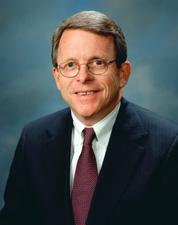 Sen. Mike DeWine (R-OH)
Legislative Activity
Stay on top of the latest movement without scrolling through every action
Roll call votes on amendments in Senate: Amendment SA 1966 agreed to in Senate by Yea-Nay Vote. 89 - 1. Record Vote Number: 429.
October 30, 2003
View full timeline
Roll call votes on amendments in Senate: Amendment SA 1966 agreed to in Senate by Yea-Nay Vote. 89 - 1. Record Vote Number: 429.
October 30, 2003
Senate amendment agreed to: Amendment SA 1966 agreed to in Senate by Yea-Nay Vote. 89 - 1. Record Vote Number: 429.
October 30, 2003
Considered by Senate. (consideration: CR 10/31/2003 S13637-13639)
October 30, 2003
Amendment SA 1966 agreed to in Senate by Yea-Nay Vote. 89 - 1. Record Vote Number: 429.
October 30, 2003
Considered by Senate. (consideration: CR S13431)
October 29, 2003
Considered by Senate. (consideration: CR S13340, S13347-13349, S13368-13372)
October 28, 2003
Considered by Senate. (consideration: CR S13234)
October 27, 2003
Senate amendment submitted
October 24, 2003
Senate amendment proposed (on the floor): Amendment SA 1966 proposed by Senator DeWine.(consideration: CR S13190-13192; text: CR S13190)
October 24, 2003
Amendment SA 1966 proposed by Senator DeWine. (consideration: CR S13190-13192; text: CR S13190) To increase assistance to combat HIV/AIDS.
October 24, 2003
Votes
1 roll call on this amendment
Text
Proposed
FOREIGN OPERATIONS, EXPORT FINANCING, AND RELATED PROGRAMS
APPROPRIATIONS ACT, 2004

The PRESIDING OFFICER. Under the previous order, the Senate will now
proceed to the consideration of H.R. 2800, which the clerk will report.
The legislative clerk read as follows:

A bill (H.R. 2800) making appropriations for foreign
operations, export financing, and related programs for the
fiscal year ending September 30, 2004, and for other
purposes.

Amendment No. 1965

(Purpose: In the nature of a substitute)

Mr. McCONNELL. Mr. President, I have a substitute amendment at the
desk, and I ask for its immediate consideration.
The PRESIDING OFFICER. The clerk will report.
The legislative clerk read as follows:

The Senator from Kentucky [Mr. McConnell], for himself and
Mr. Leahy, proposes an amendment numbered 1965.

Mr. McCONNELL. Mr. President, I ask unanimous consent that the
amendment be agreed to and considered as original text for the purposes
of further amendment; further, that no points of order be waived by
this agreement.
The PRESIDING OFFICER. Without objection, it is so ordered.
The amendment (No. 1965) was agreed to.
(The amendment is printed in today's Record under ``Text of
Amendments.'')
Mr. McCONNELL. Mr. President, my friend from Vermont and I come to
floor today hoping we can dispose of the Foreign Operations bill in
short order. That short order will not be today, but we believe we will
have a limited number of amendments and, hopefully, an opportunity to
wrap this bill up within a day or so--Monday or Tuesday.
Our respective staffs have been burning the midnight oil reviewing
the amendments that we are aware of, and I strongly encourage all
Senators to offer their amendments on Monday so we can wrap this bill
up as quickly as possible.
Let me just say a very few words about the measure before us.
While the Senate's allocation is $796 million below the President's
request, it is also $970 million above the House of Representatives.
Unfortunately, our conference allocation will be closer to the House
level, which will make conferencing the bill that much more of a
challenge.
This measure provides nearly $1.4 billion for the President's new
HIV/AIDS, tuberculosis, and malaria initiative for those programs under
the subcommittee's jurisdiction, which is $10 million above that
request.
Up to $250 million is available for a contribution to the global
fund, and $150 million is provided for the President's International
Mother and Child HIV Prevention Initiative. This amount includes $700
million for the Global AIDS Initiative.
It provides $1 billion for the Millennium Challenge assistance, which
is $300 million below the request, and $100 million for the famine
fund.
The bill fully funds the request for numerous accounts, including
international disaster assistance; transition initiatives;
international narcotics control and law enforcement; migration and
refugee assistance; nonproliferation, anti-terrorism, demining and
related programs; international military education and training; and
international organizations and programs.
The bill provides increased funding for the Child Survival and Health
Programs Fund, development assistance, assistance for Eastern Europe
and the Baltic States, and assistance for the independent states of the
former Soviet Union.
Given the $796 million cut we had to make, this bill is below the
request in the Economic Support Fund, Andean Counterdrug Initiative,
Peace Corps, debt restructuring, foreign military financing,
peacekeeping operations, and international financial institution
accounts--all of those below the request. Most of those accounts are
still funded, however, at or above their respective fiscal year 2003
levels.
Despite the cuts in the ESF and FMF accounts, full funding for
Israel, Egypt, and Jordan is provided.
Let me say a word or two about the ACI and the Peace Corps. While ACI
is funded at $660 million, we provide authority to transfer $37 million
from the international narcotics account, resulting in a funding level
that is equal to last year's. For the Peace Corps, we provide $310
million and authority to transfer $20 million from the Global AIDS
Initiative to the Peace Corps for their HIV/AIDS activities abroad.
This results in a funding level that is $29 million below the request.
Let me close by thanking my good friend from Vermont for his input to
this bill. I know he does not agree with everything in it. Frankly, I
don't either. But we have worked hard to craft a bill born of
compromise. I thank him for the cooperation and courtesy he continues
to extend as the ranking member of this subcommittee.
With that, Mr. President, once again let me say we hope to pass this
bill very shortly after Monday.
The PRESIDING OFFICER. The Senator from Vermont.
Mr. LEAHY. Mr. President, I thank my good friend, the senior Senator
from Kentucky, for his comments. I agree with him; I hope if people
have amendments they will let us know right away. We will, of course,
have the usual managers' package.
Like most appropriations bills, this is a work of compromise. My
friend from Kentucky and I have worked together for many years.
Sometimes he is the chairman, and sometimes I am. We find common ground
and we write bipartisan bills, which is the tradition of the
Appropriations Committee.
I thank Chairman McConnell and his staff for working so cooperatively
with me and my staff on this bill, and I urge all Members to support
it.
I also thank Chairman Stevens and Senator Byrd for the allocation
that was given to us. While it falls short of the President's budget
request, I know they did well by us under the circumstances.
Since the Senator from Kentucky has done a good job in summarizing
the

[[Page S13190]]

bill, I want to mention a few highlights.
First, it adds $23 million for child survival and health programs.
These are the programs that provide lifesaving vaccines for diseases
like polio and measles--diseases that we hardly ever see in this
country but which kill or cripple millions overseas.
These programs help stop the spread of viruses like Ebola and SARS,
reduce needless pregnancy-related deaths, and provide aid to blind
children and orphans.
Second, the bill increases funding for development assistance by $78
million. These funds pay for everything from education, to agriculture
research, to democracy building. This is the core of our foreign aid
budget. The bill adds $20 million for Eastern Europe and the former
Soviet Union. Both Senator McConnell and I feel strongly that the
administration is reducing assistance to these regions too quickly.
The bill includes a very important provision to ensure greater
transparency and accountability at the multilateral development banks.
As in the past, there are provisions which seek to promote human
rights and the rule of law in Serbia, Central Asia, Latin America, and
elsewhere.
I am concerned that much of the good work that Senator McConnell has
done on this bill could be undone by our conference allocation.
Even a split with the House allocation, which is $17.1 billion, would
lead to deep cuts in many programs that are important to the President
and important to Senators.
Earlier this week, the memo from Secretary Rumsfeld reminded us all
of the importance of foreign aid in combating terrorism.
In that memo he wrote:

Are we capturing, killing or deterring and dissuading more
terrorists every day than the madrassas and the radical
clerics are recruiting, training and deploying against us?

I suspect the answer to that question is no, and that should deeply
concern each one of us.
Let me mention one example. In this bill we fund children's basic
education. We use these funds to build schools and train teachers in
countries such as Pakistan and Indonesia, to counter the influence of
the madrassas.
One would think that a wealthy Nation like ours would spend billions
on education, especially in Muslim countries. It is in our self-
interest. But we could only provide $220 million in this bill for
education, which is a mere $2 million above last year's level. It is
also far less than most U.S. States spend, yet it is what we spend for
the whole world.
There are many other examples of how this budget falls far short of
what we should be doing to combat poverty and counter the influence of
anti-American extremism.
Last wee, we passed a supplemental appropriations for Iraq. It
included more than $20 billion for reconstruction in that one country.
That is more than this entire foreign operations bill provides for
the rest of the world.
If we are serious about building better relations with the Muslim
world, and overcoming the hatred that is growing among the masses of
impoverished people in those countries, we need to put our money where
our mouths are.
The President's budget request for foreign operation is $18.8
billion. This bill contains $18.2 billion.
We have heard that our conference allocation may require us to cut
hundreds of millions of dollars out of this bill.
If the President cares about this budget, he need to act now to
protect it in conference. He needs to pick up the phone and call the
Republican leadership in the House and Senate.
Without his help, deep cuts will be made to these programs. These
cuts will not just hurt people overseas. They will hurt the United
States.
I want to briefly mention the issue of AIDS. Chairman McConnell and I
did the best we could to increase funding for HIV/AIDS in this bill,
but we simply did not have enough to get to the level that many
Senators wanted.
We have to do more. This is the worst public health crisis in
history. There will be an amendment on this issue later, and I will
have more to say on it then.
Again, I wish all my jobs and assignments in the Senate were as easy
as working with the distinguished senior Senator from Kentucky who is a
close personal friend. While we come from different political
philosophies, we join together in what we believe is in the best
interests of the United States in this area.
I yield the floor and suggest the absence of a quorum.
The PRESIDING OFFICER. The clerk will call the roll.
The legislative clerk proceeded to call the roll.
Mr. McCONNELL. Mr. President, I ask unanimous consent that the order
for the quorum call be rescinded.
The PRESIDING OFFICER. Without objection, it is so ordered.
Mr. McCONNELL. Mr. President, I checked with the Democratic side.
They have no objection to Senator DeWine being able to send an
amendment to the desk.
I ask unanimous consent that Senator DeWine be permitted to send an
amendment to the desk.
The PRESIDING OFFICER. Without objection, is so ordered.

Amendment No. 1966

Mr. DeWINE. Mr. President, I send an amendment to the desk.
The PRESIDING OFFICER. The clerk will report.
The legislative clerk read as follows:

The Senator from Ohio [Mr. DeWine], for himself, Mr.
Durbin, Mr. Coleman, Mr. Warner, Mr. Daschle, Mr. Leahy, and
Mr. Graham of South Carolina, proposes an amendment numbered
1966.

Mr. DeWINE. Mr. President, I ask unanimous consent that further
reading of the amendment be dispensed with.
The PRESIDING OFFICER. Without objection, it is so ordered.
The amendment is as follows:

(Purpose: To increase asistance to combat HIV/AIDS)

Insert where appropriate:

global aids assistance

Sec.--.For an additional amount for ``Global AIDS
Initiative'', $289,000,000, to remain available until
September 30, 2006, for programs for the prevention,
treatment, and control of, and research on, HIV/AIDS,
tuberculosis, and malaria, which may include additional
contributions to the Global Fund to Fight AIDS, Tuberculosis,
and Malaria.

Mr. DeWINE. Mr. President, I rise this morning, along with my friends
and colleagues, Senators Durbin, Coleman, Warner, Daschle, Leahy, and
Graham of South Carolina, to offer an amendment that would increase
this bill's current funding level for the global AIDS initiative by
$289 million. This additional funding would bring the total fiscal year
2004 allocation to $2.4 billion. This $2.4 billion would allow us to
meet our goal of providing at least $2 billion in bilateral aid, and it
would also allow us to meet our current matching commitment to the
Global Fund. This money in this amendment would be distributed by the
new AIDS coordinator, Randall Tobias, for the prevention, treatment,
control of, and research on HIV/AIDS, tuberculosis, and malaria.
Mr. President, this clearly is the right thing to do. It is the right
thing to do because AIDS is wiping out entire communities and, yes, we
can truly say that AIDS has the potential to wipe out entire countries.
It is the right thing to do because at least 8,000 people every single
day--mothers, fathers, children, babies--are dying. And millions of
others who are not on treatment, drugs, are suffering the painful
effects of this disease.
It is the right thing to do because we, thank heavens, because of
great medical science and research, now have the ability and the
resources to fight HIV/AIDS. We need to do it, we cannot delay, and we
must act.
We should be judged not just by what we do in society; I believe we
should also be judged by what we don't do. We should be judged by what
we are willing to tolerate. I say to my friends and colleagues in the
Senate that we cannot tolerate inaction; we cannot, as a good and moral
society, as a moral people, tolerate inaction. We, who have the ability
to do something about this horrible crisis in the world today, must
act.
With this amendment, we will be able to do so much good. So I say to
my colleagues that we should not and we must not tolerate a world where
so many people are suffering from HIV/AIDS. We must not tolerate a
world where the suffering and dying occurs and we have the ability and
the tools

[[Page S13191]]

to help make a difference and to save lives.
As we have discussed on the Senate floor before--and so many of my
colleagues have talked about it--time is not on our side. People
worldwide are dying this very moment. I have seen firsthand the
devastation of HIV/AIDS. I know my colleague in the chair has, and I
know so many of my other colleagues have as well.
My wife Fran and I have traveled to a number of the 14 countries that
President Bush has named to be the primary recipients of the global
HIV/AIDS fund money. I know many of my colleagues, such as majority
leader Bill Frist, Senators Durbin, Chafee, Coleman, Enzi, Nelson,
Warner, Alexander, and so many others, have also witnessed firsthand
the effects of AIDS in these nations. I have seen it in Haiti many
times. I have also seen it in Guyana, Mozambique, Botswana, South
Africa, Namibia. I have held in my arms babies who were dying of the
disease. I have met mothers who have lost their children through AIDS,
and I have met children who have lost their parents to AIDS. When you
do this, as other Members know, you then can put a face on it. It is no
longer just statistics; it is real people.
When you come back home from those trips, you continue to see in your
mind's eye those faces, and you see those children, and some of those
children, after you get back home, in a few days or weeks are no longer
on this Earth. When you put a face on it and you put names to this
disease, the moral imperative in fighting it becomes very clear.

There are things we can do right now, at this very moment, to fight
HIV/AIDS. Fighting this global AIDS crisis cannot be business as usual,
and it cannot be bureaucracy as usual. We cannot treat this crisis the
same way we have other problems. This is an emergency.
Truly, if there is anything that comes before us today on the Senate
floor, this is an emergency. We don't have the luxury of time, as
President Bush has said so eloquently. For each moment we delay, people
die, and they die every moment.
In our travels, Fran and I have seen groups, organizations, and
individuals who are ready now to receive our money and our assistance,
and that is the good news for us. There are people out there ready to
go to work and who are working now--organizations, doctors, and nurses
who have the ability to take the resources we can give them and get the
job done. They are ready to go into action to deal with the HIV/AIDS
problem. It is heartwarming to see them and talk with them because they
are already doing such good work. They have proven track records. They
are ready to go, and we just need to get them the money and allow them
to get about the business of saving lives.
As we do fight this disease, we cannot be timid. We cannot be afraid
of failure. We need to take some chances. In doing so, the reality is
that there are going to be some mistakes made. This is a very big
undertaking. No one has ever tried to do what we are doing in the
world. The truth is, the world has not faced such a crisis. We probably
have to go back in history to the bubonic plague or something in the
Medieval period to see the world face such a medical crisis. The good
news is, unlike those times, we have the ability to do something about
it.
There will be some failures and there will be some foul-ups, but the
fear of failure must not hold us back. We must move forward because
lives are at stake.
There are several actions we can take now because we know they work.
We talked about this on the Senate floor, but it is such a wonderful
issue to talk about and such a wonderful thing to see in action, as I
know the Chair and other Members have. We have the ability today to
provide an HIV-positive pregnant woman with the care and drugs to
ensure that she will not give birth to a child who is also HIV
positive.
The statistics are very simple, the facts are very simple, and the
remedy is so simple. If a woman today is pregnant and she is HIV
positive, the odds are 30 percent she will give birth to a child who is
HIV positive. In sub-Saharan Africa or in Haiti or in Guyana, there are
programs today that will reduce those odds from 30 percent to 10
percent or as low as 5 percent or 4 percent. They can do that for as
little as $3 or $4. I am not saying $3 or $4 a day, I am talking about
the total cost of $3 or $4. That is phenomenal. For as little as $3 or
$4 and for a little treatment and a little expertise and getting that
mother in for treatment, we can save a child from being born HIV
positive. We can save a child from being condemned to die a very tough
and horrible death. We can do it. It is a miracle. So we must act.
These are some of the simple activities we can do, and do now, so
long as the resources are available. This amendment will mean more
people can be saved. It is as simple as that. More people will be saved
by this amendment. In targeting health investments to fight HIV/AIDS,
we can save lives. It is that simple. This amendment is an appropriate
step, and I ask my colleagues for their support.

We will have the opportunity next week to further debate this
amendment. As I conclude, I wish to thank all the cosponsors of this
amendment. I thank Senator Bill Frist who led our trip to Africa in
August, which I think helped all of us fully understand not only the
gravity of this crisis, but also it helped open our eyes to how many
groups are out there, how many doctors are out there who have the
ability to deliver the services and with whom we can work in the months
ahead.
Yes, it is going to be tough. Yes, it is going to be difficult. We
know the problems. We saw those problems. But it also showed us good
people are out there, organizations are out there, and it showed us
there is a path to get this work done.
I thank Majority Leader Frist for taking a number of Senators with
him to Africa and helping educate all of us. In this work against AIDS,
he is a medical doctor who truly understands this disease.
I also thank Senator Rick Santorum. Senator Santorum has been a true
advocate of trying to increase the dollars we are spending on this AIDS
initiative. It was his idea to come up with these dollar figures, to
increase this bilateral support. He worked these numbers and worked
these numbers. He and I have talked now for the last month, going back
and forth. I thank him for his commitment, for his passion, and his
work in this area. We would not be where we are today without Senator
Rick Santorum.
Finally, I thank my colleague, Senator Dick Durbin, who could not be
on the Senate floor today but who will be back Monday. I talked with
him just a few moments ago by phone. He is someone who cares very
passionately. Senator Durbin and I have offered two other amendments on
the Senate floor in the past, both of which we have been able to adopt,
and we have seen them make a difference.
I traveled with Senator Durbin to Haiti. We worked on these problems
in the past. He also cares passionately about this issue. He is someone
who is very results oriented and someone who has made a difference in
this field. I thank Senator Durbin for his commitment to the children
and his commitment to this issue.
I conclude by thanking my colleagues, Senator McConnell and Senator
Leahy, for bringing a very good bill to the floor. This is a bill that
a lot of people do not pay attention to, but it is a bill that does a
tremendous amount of good around the world. It is an instrument of
foreign policy, which is very important, but it is also a bill that
saves lives every year, and it is a bill that spends U.S. money well to
help our commitment to the children of the world, as well as making
sure the United States is well represented around the world. I thank
Senator McConnell and Senator Leahy for working in a bipartisan way to
bring this bill to the Senate floor.
We will be back in the Chamber next week to talk further about this
amendment. I thank my colleague from Kentucky.
Mr. President, I yield the floor.
The PRESIDING OFFICER. The Senator from Kentucky.
Mr. McCONNELL. Mr. President, before the Senator leaves the floor, I
wish to express my admiration to the Senator from Ohio for his passion
and leadership on this issue, what is clearly the most important public
health issue in the world today.
I listened carefully to his speech. It was quite moving, and I thank
him for

[[Page S13192]]

what he is doing in this area. It is extremely important to the world.
Mr. DeWINE. I thank my colleague.

International Fund for Agricultural Development

Mr. LEAHY. Mr. President, the fiscal year 2004 foreign operations
bill includes $15,004,000 for a U.S. contribution to the International
Fund for Agricultural Development, IFAD. Congress has been a strong
supporter for IFAD since its inception, and these funds will enable
IFAD to continue to expand its programs in the poorest countries.
Unfortunately, the Appropriations Committee report accompanying the
bill neglected to address a concern which I suspect is shared by
Senators on both sides of the aisle who support IFAD. IFAD is the
seventh largest multilateral contributor to the enhanced Heavily
Indebted Poor Countries Debt Initiative, HIPC DI. However, IFAD still
does not have access to the core resources of the companion HIPC DI
Trust Fund. Currently, IFAD has to absorb 87.2 percent of the cost for
participating in HIPC DI, while other multilateral development banks
with full access absorb much smaller percentages. For this reason, I
urge the administration to work with other donors to enable IFAD to
gain access to the core resources of the HIPC Trust Fund.

Rule of Law and Human Rights Programs in Russia

Mr. LEAHY. Mr. President, page 45 of the committee report
accompanying the fiscal year 2004 foreign operations bill, Senate
Report 108-106, discusses rule of law and human rights programs in
Russia. The report mentions the Russian American Judicial Partnership
and the Russian American Rule of Law Consortium. The report failed to
mention another important program, the American Bar Association's
Central and East European Law Initiative, CEELI, which is involved in
training Russian lawyers in the adversary system, law school curriculum
development, and improvement of gender equity in the legal system. Each
of these organizations is doing important work, and we want to be sure
that despite the decline in our assistance program in Russia that
funding for these types of programs are continued. There is no more
effective way for the United States to contribute to the political and
economic development of Russia than by strengthening the rule of law
and respect for human rights.

Collaborative Research Support Programs

Mr. LEAHY. Mr. President, page 16 of the committee report
accompanying the fiscal year 2004 foreign operations bill, Senate
Report 108-106, discusses the Collaborative Research Support Programs.
These programs, which involve 52 U.S. universities, have made
immeasurable contributions in developing countries on a wide range of
agriculture, environment, nutrition and development issues. USAID funds
are leveraged with contributions from the universities and recipient
countries.
For fiscal year 2003, the committee recommended funding for the CRSPs
at a higher level than in fiscal year 2002. However, despite that
recommendation, funding was essentially flat lined. For fiscal year
2004, the committee expresses its strong support for the CRSPs and
recommends continued funding. I want to emphasize the importance of the
CRSPs to the Congress, to the universities that participate, to the
countries that benefit, and to U.S. foreign policy. We want USAID to
expand its collaboration with U.S. universities that have research
expertise on these issues. By that I mean that funding for the CRSPs
should be increasing. An appropriate level for the CRSPs in fiscal year
2004 would be $25 million. I also urge USAID to seriously consider
allocating up to $2 million to fund and establish a CRSP focused on
water security.

American Universities in the Middle East

Mr. LEAHY. Mr. President, I want to clarify a sentence in the
committee report, Report 108-106, accompanying S. 1426, the fiscal year
2004 foreign operations bill.
On page 38 of the report, under the heading ``Middle East Partnership
Initiative,'' the committee expresses support for using a portion of
MEPI funds ``for scholarships for needy Muslim students at the American
University of Beirut.'' We do support that, but we intended to also
mention the American University in Cairo and the Lebanese American
University. Their omission was purely an oversight. I ask my friend
from Kentucky, the subcommittee chairman, Senator McConnell, if he
agrees with me about this.
Mr. McCONNELL. I do. My friend from Vermont is correct that this was
an oversight. We intended to express support for the use of MEPI funds
for scholarships for Muslim students at the other American universities
in the Middle East, as well as at the American University of Beirut.

____________________