To clarify the definition of HIV/AIDS prevention for purposes of providing funds for therapeutic medical care.
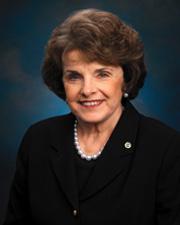 Sen. Dianne Feinstein (D-CA)
Legislative Activity
Stay on top of the latest movement without scrolling through every action
Roll call votes on amendments in Senate: Amendment SA 1977 not agreed to in Senate by Yea-Nay Vote. 45 - 47. Record Vote Number: 430.
October 30, 2003
View full timeline
Roll call votes on amendments in Senate: Amendment SA 1977 not agreed to in Senate by Yea-Nay Vote. 45 - 47. Record Vote Number: 430.
October 30, 2003
Senate amendment not agreed to: Amendment SA 1977 not agreed to in Senate by Yea-Nay Vote. 45 - 47. Record Vote Number: 430.
October 30, 2003
Considered by Senate. (consideration: CR 10/31/2003 S13644, S13646)
October 30, 2003
Amendment SA 1977 not agreed to in Senate by Yea-Nay Vote. 45 - 47. Record Vote Number: 430.
October 30, 2003
Considered by Senate. (consideration: CR S13431)
October 29, 2003
Senate amendment submitted
October 28, 2003
Senate amendment proposed (on the floor): Amendment SA 1977 proposed by Senator Feinstein.(consideration: CR S13341-13344; text: CR S13341)
October 28, 2003
Amendment SA 1977 proposed by Senator Feinstein. (consideration: CR S13341-13344; text: CR S13341) To clarify the definition of HIV/AIDS prevention for purposes of providing funds for therapeutic medical care.
October 28, 2003
Votes
1 roll call on this amendment
Text
Proposed
FOREIGN OPERATIONS, EXPORT FINANCING, AND RELATED PROGRAMS
APPROPRIATIONS ACT, 2004

The PRESIDING OFFICER. Under the previous order, the Senate will
resume consideration of H.R. 2800, which the clerk will report.
The legislative clerk read as follows:

A bill (H.R. 2800) making appropriations for foreign
operations, export financing, and related programs for the
fiscal year ending September 30, 2004, and for other
purposes.

Pending:

DeWine amendment No. 1966, to increase assistance to combat
HIV/AIDS.
Byrd amendment No. 1969, to require that the Administrator
of the Coalition Provisional Authority be an officer who is
appointed by the President, by and with the advice and
consent of the Senate.
McConnell amendment No. 1970, to express the sense of the
Senate on Burma.

The PRESIDING OFFICER. The Senator from Idaho.
Mr. CRAIG. Mr. President, I ask unanimous consent to speak as in
morning business for up to 5 minutes.

[[Page S13341]]

The PRESIDING OFFICER. Without objection, it is so ordered.
(The remarks of Mr. Craig are printed in today's Record under
``Morning Business.'')
The PRESIDING OFFICER. The Senator from California is recognized.
Mrs. FEINSTEIN. Mr. President, I begin by thanking the Senator from
Idaho. It has been a pleasure for me to work with him on this issue. I
think we have been working now for close to 3 years, beginning with the
Quincy Library Group in California to try to forge a different forest
policy, and also to recognize that our forests are overburdened with
undergrowth, with non-indigenous species; and so fires, when they
happen, burn hotter and do much more destruction than they have done
historically.
I thank the Senator for his sympathy for what our State is going
through. I want to tell you that I just spoke with the White House,
with Mr. Rove, because I had heard from Mr. Blackwell, the regional
forester, that the forest fire has taken a turn, because the winds have
changed, and is now heading for half a million acres of bark beetle-
infested forests near Lake Arrowhead and 44,000 homes are now in
jeopardy.
This is just huge. I hope that anyone listening will begin to bring
in some military help, more C-130s. With the winds down, the C-130s can
work. Perhaps this area can be worked from the air. But the fire is
advancing so strongly and also like a spear into San Diego itself, and
over the Santa Monica mountains into Malibu. So we have a real
maelstrom on our hands.
We think we have a good bill. We believe we have the only bill that
can be accepted by this body, and I am hopeful that the leadership will
bring this bill to the floor very shortly. I think we need to put
everything aside and just get a bill passed.
The Senator is right about streamlining the administrative review
process. Our bill does that. It does so in a way that it does not
prevent collaboration, does not prevent public testimony, but it
streamlines the process.
I think we have handled judicial review in a way that we can agree
makes it truncated; temporary injunction, 60 days, and if you want
another, you have to come back and justify it. It is the Federal court
in the area of the project. We have the first old-growth protection
which will be codified in the history of this country.
It is a good bill. I hope that those who might want to place
amendments on this bill will really not do so, so we can pass a bill
and get it moved on so the 20 million acres that are in this bill,
which we know are at the highest risk of catastrophic fire, can be
dealt with quickly.
The Senator and I have talked. The Appropriations Committee has been
helpful in getting additional dollars for bark beetle infestation. But
for 3 years now, we have known this was going to happen. The day is
upon us and we must do right by our forests. So I am very grateful for
the Senator's help and collaboration on this.
Mr. CRAIG. I thank the Senator from California. She has been a full
cooperative partner in working in a bipartisan way. She has outlined
many of the provisions in the bill that have been worked out between
the Agriculture Committee, the chairman, Mike Crapo, Senator Domenici,
Blanche Lincoln, and a good many others. It was a collaborative,
bipartisan effort.
I agree that this is a bill that should be on the floor as we speak.
It should not be amended. There are a lot of other bills that will come
and other issues that can be addressed.
But California is facing its worst nightmare as we speak in the form
of fire. The reality of what the Senator spoke to in the San Bernardino
Forest in the Greater Lake Arrowhead area is truly a firestorm of great
proportions, and we hope the winds will die down and shift and they
will come in off the ocean and bring moisture and lift the dewpoint and
lower the fires. That isn't happening as we speak. Quite the opposite
is happening, as we play out the Santa Ana and get through this season.
But in the meantime, the destruction is now almost immeasurable. You
see it on the faces of the people being interviewed. Maybe America
finally recognized it when San Diego could not play football in their
home stadium. They had to move to Phoenix because they are using the
parking lot as a staging area. Maybe America scratched its head a
little and said: What is wrong with this? Should this be happening? No,
it should not be--at least to the extent that it is.
The Senator from California is right that procedure can help lessen
the impact of the kind of fire scenario we are seeing. She and I have
teamed up with our leadership and said let's debate this bill now on
the Senate floor and throughout the balance of the week, after we
finish foreign operations. We can do that. It should not take but a
full day of debate. A lot of issues ought to be talked about on this
bill, and then we ought to pass it so America can see that the Congress
of the United States is responsive when California is at risk to the
proportion that it is today. I thank the Senator.
Mrs. FEINSTEIN. I thank the Senator from Idaho, also. I was just
talking to Representative Lewis. He indicated that two members of his
family each lost their homes. I understand that Representative Duncan
Hunter also lost his home. So they join literally 1,500 families now
who are bereft, without housing, without their home. Really, everything
they have built is just gone. Now we find that there are another 44,000
homes in jeopardy. So I very much appreciate the comments of the
Senator.

Amendment No. 1977

Mrs. FEINSTEIN. Mr. President, I ask unanimous consent to set aside
the pending amendment and call up amendment No. 1977.
The PRESIDING OFFICER. The clerk will report.
The legislative clerk read as follows:

The Senator from California [Mrs. Feinstein], for herself,
Ms. Snowe, and Mrs. Murray, proposes an amendment numbered
1977.

Mrs. FEINSTEIN. Mr. President, I ask unanimous consent that further
reading of the amendment be dispensed with.
The PRESIDING OFFICER. Without objection, it is so ordered.
The amendment is as follows:

(Purpose: To clarify the definition of HIV/AIDS prevention for purposes
of providing funds for therapeutic medical care)

At the appropriate place, insert the following:
Sec. XX. For purposes of section 403(a) of the United
States Leadership Against HIV/AIDS, Tuberculosis, and Malaria
Act of 2003 (22 U.S.C. 7673(a)) the term ``HIV/AIDS
prevention'' means only those programs and activities that
are directed at preventing the sexual transmission of HIV/
AIDS, and activities that include a priority emphasis on the
public health benefits of refraining from sexual activity
before marriage shall be included in determining compliance
with the last sentence of such section 403(a).

Mrs. FEINSTEIN. Mr. President, I ask unanimous consent to add Senator
Snowe and Senator Murray as cosponsors of this amendment.
The PRESIDING OFFICER. Without objection, it is so ordered.
Mrs. FEINSTEIN. Mr. President, I rise today to offer an amendment to
the fiscal 2004 foreign operations bill to provide the administration
with greater flexibility in how it funds HIV/AIDS prevention programs.
We believe this amendment is critical to our efforts aimed at
stopping the spread of the HIV/AIDS virus and providing a safe and
healthy future for millions of people around the world. Time is not on
our side, and we must act now.

Our amendment does two things. First, it reserves at least one-third
of the funds for prevention of sexual transmission of HIV rather than
one-third of all prevention funds for ``abstinence-until-marriage''
programs. This recognizes that HIV prevention includes many types of
activities, and those that target the sexual transmission of HIV/AIDS
such as abstinence-until-marriage programs are really only a subset.
Second, our amendment defines an abstinence-until-marriage program as
any program that includes, but is not necessarily limited to, providing
information that emphasizes the public health benefits of refraining
from sexual activity outside of marriage.
Earlier this year I was proud to join my colleagues in passing the
United States Leadership Against HIV/AIDS, Tuberculosis and Malaria Act
of 2003. This is a historic piece of legislation that expressed our
resolve to see the United States take a leadership role in the fight
against the HIV/AIDS pandemic. The bill recognized that prevention,
along with care and treatment, is an essential component of that fight.

[[Page S13342]]

The bill, as passed by both Houses and signed by President Bush,
contains language that recommends for fiscal year 2004 and 2005 that at
least one-third of all global HIV/AIDS prevention funds be set aside
for abstinence-before-marriage programs. This sense of the Senate
provision becomes a mandate for fiscal year 2004 through 2008. Our
amendment simply clarifies the congressional intent of this provision
and increases the flexibility of how HIV/AIDS prevention funds are
spent.
In order to fulfill our goal of stopping the spread of HIV/AIDS, we
should not tie the hands of workers on the ground by limiting the use
of HIV/AIDS prevention funds. A brief glance at some of the numbers
related to the HIV pandemic demonstrates the importance of funding a
wide range of prevention activities.
Worldwide, 40 million people--that is huge--are infected with HIV;
29.4 million people are infected in sub-Saharan Africa alone. That is
70 percent of the world's total. As of 2001, 21.5 million Africans had
died of AIDS. That is 21.5 million Africans dead from AIDS. The
national intelligence council projects at least 50 million new cases of
HIV by 2010 in five countries alone: China, Ethiopia, India, Nigeria,
and Russia. Fifty million new cases in five countries. That is a huge
pandemic.
Currently fewer than 1 in 5 persons at risk for HIV/AIDS worldwide
have access to prevention. Yet UNAIDS and the World Health Organization
have conducted research that shows that two-thirds of the estimated 45
million new HIV infections expected to occur between now and 2010 could
in fact be averted with effective prevention. Two-thirds of 45 million
anticipated cases could be prevented. That is a very critical figure
for us to make use of.
Passing the global HIV/AIDS bill was an important first step to
meeting that challenge. Our amendment builds on that endeavor and
increases the effectiveness of the legislation.
Let me be clear. Our amendment does not strike the 33 percent earmark
for abstinence-until-marriage programs. It simply expands the
definition of abstinence-until-marriage and gives the administration
maximum flexibility to fund programs that successfully increase
abstinence among young people. The key word is ``successful.'' All
Senators, including myself, know that abstinence is a key strategy in
preventing the spread of HIV/AIDS, and the importance we place on those
programs is reflected in the legislation. What we are trying to do--and
I am trying to do--is give the administration and the people on the
ground the flexibility needed to design HIV prevention programs that
meet the needs of a given community.
Different programs work better in different communities. There is no
real one-size-fits-all program. A May 2003 report from the Bill and
Melinda Gates Foundation and the Henry J. Kaiser Foundation highlights
that proven AIDS prevention programs involve behavior change programs,
including delay in the initiation of sexual activity, faithfulness,
correct and consistent condom use, testing and treatment for sexually
transmitted disease, promoting voluntary counseling and testing, harm
reduction programs for HIV drug users, preventing the transmission of
HIV/AIDS from mother to child, increasing blood safety, empowering
women and girls, controlling infection in health care settings, and
devising programs geared toward people living with HIV/AIDS.
Let's take a closer look at one of these prevention programs:
preventing the transmission of HIV from mother to child. We have seen
great strides in recent years in this area. Studies have shown that
combining drugs such as Nevirapine with counseling and instruction on
the use of such drugs reduces mother-to-child transmission by 50
percent. And we have tens of millions of AIDS orphans in Africa alone.
So it is a really important program.
Such cost-effective prevention programs are not related to abstinence
and should not be constrained by the 33 percent earmark in funds for
prevention. Our amendment will allow local communities to spend money
on HIV prevention that is most effective in that community. If the most
effective program in a community is the promotion of abstinence until
marriage, my amendment will not preclude funding for such a program.
Ensuring that the earmark applies only to programs related to
preventing the sexual transmission of HIV would free up additional
resources for non-abstinence programs while at the same time
maintaining the importance of abstinence-until-marriage activities. In
fact, my amendment would not prevent the United States from spending
more than one-third of funds for the prevention of the sexual
transmission of HIV on abstinence-until-marriage programs if the
administration decided that was the most effective use of those funds.
We believe the United States should have the flexibility to fund
programs that are successful in leading to increased abstinence.
In response to a letter I wrote to Assistant Secretary of State for
Legislative Affairs, Paul V. Kelly inquiring about the definition of an
``abstinence-until-marriage'' program, Secretary Kelly responded:

Achieving the HIV/AIDS prevention goals of the President's
Emergency Plan will require a comprehensive and sustainable
approach recognized by both the Plan and the law. The ``ABC''
model [Abstain, Be faithful, Use condoms], has been used
successfully to prevent HIV/AIDS transmission in Uganda as
well as Zambia and Ethiopia. These successes show that
promoting behavior change and healthy lifestyles, including
abstinence and delayed sexual initiation, mutual monogamy,
faithfulness and fidelity in marriage and reduction in the
number of partners, consistent and correct use of condoms,
and avoidance of substance abuse, are successful in
preventing the spread of HIV/AIDS.

This tells me that this administration understands that the most
effective way to prevent HIV is a multipronged approach. We should be
able to fund programs that place a priority emphasis on abstinence but
also discuss other methods as outlined under the ABC approach.
For example, the United States Agency for International Development
has sponsored Zambia's HEART, Helping Each Other Act Responsibly
Together, HIV/AIDS prevention program, a mass media campaign that
promotes HIV/AIDS prevention through messages about abstinence,
consistent condom use, and the fact that ``you can't tell by looking''
if another person is HIV-positive.
A 2001 impact survey of youth aged 13 to 19 found that many of the
respondents chose to remain abstinent because of the campaign. In fact,
respondents were more likely to report that they chose to abstain than
to report condom use. This confirms what I have long believed: if young
people are given the necessary information and education, they will
make an informed and health decision regarding their sexual activity.
If programs like the HEART program in Zambia are successful in
increasing abstinence, we should not turn our back on them or limit the
amount of resources available because they discuss multiple prevention
strategies.
Again, this amendment is about giving our Government and other
countries the flexibility to get the job done.
Cultural differences, epidemiology, population age groups, and the
stage of the epidemic in a given community will all play roles in how
an effective HIV/AIDS prevention program is designed.
This amendment is pro-abstinence, it recognizes that there is more to
preventing the spread of HIV/AIDS than preventing the sexual
transmission of HIV, it balances congressional priorities with public
health needs, and it preserves the administration's flexibility in
deciding which programs to fund that would be most likely to increase
abstinence.
It is a commonsense amendment and I urge my colleagues to support it.
I thank Senators Snowe and Murray for cosponsoring this amendment.
I yield the floor.
Ms. SNOWE. Mr. President, I rise today in support of the amendment
offered by Senator Feinstein and myself to clarify the funding under
the United States Leadership Against HIV/AIDS, Tuberculosis and Malaria
Act of 2003.
As my colleagues will remember, we stayed on the floor late into the
night to pass that bill, and we did so in a bipartisan manner, without
amendment, because of the critical importance of providing the
President with a bill before he attended the G-8 Summit in Evian,
France. In doing so, we sent the President to the G-8 with the firm

[[Page S13343]]

commitment and resolve of the United States to tackle the global AIDS
crisis.
This clarification was not made in May, because of the fact that
there was no time to conference any changes from the House-passed bill.
I believe we did the right thing by sending that bill to the President
when we did, but as we address issues today related to funding that
commitment, I believe we have a responsibility to address this
clarification.
This amendment recognizes prevention--along with care and
treatment--as essential to stemming the AIDS epidemic and supports a
multiplicity of HIV prevention strategies. HIV prevention must include
many types of activities, of which prevention activities targeting
sexual transmission are only a subset.
The amendment is consistent with the intent of the bill by reserving
at least one-third of the funds for the prevention of the sexual
transmission of HIV for ``abstinence-until-marriage'' programs--
otherwise known as ``abstinence only.'' Ensuring that one-third of
prevention funds, instead of one-third of all funds, are used for these
``abstinence only'' programs preserves the funding for multilayered
approaches which have been most effective in combating HIV
transmission. It is also important to note that the amendment takes
into account the fact that there are many ways to succeed in changing
the behavior of young people so that they abstain, including programs
that emphasize the health benefits of refraining from sexual activity
before marriage, and ensures that these programs can benefit from this
funding.

This clarification reinforces the notion that encouraging programs
that educate about abstinence and delayed sexual initiation is a key
strategy in preventing the spread of HIV/AIDS. Strategies that include
encouraging the delay in the initiation of sexual activity,
faithfulness as well as consistent and correct condom use have had the
highest rate of prevention of HIV/AIDS on the continent of Africa.
According to the May 2003 report from the Bill and Melinda Gates
Foundation and Henry J. Kaiser Foundation, we need to develop a
multilayered approach that combines those types of programs with
testing and treatment for sexually transmitted diseases, promoting
voluntary counseling and testing, harm-reduction programs for IV drug
users, preventing mother to child transmission, increasing blood
safety, and controlling infection in health care settings.
This amendment supports the intent of the United States Leadership
Against HIV/AIDS, Tuberculosis and Malaria Act of 2003 by ensuring that
funds are targeted to the programs that are the most effective, while
balancing the priorities on spending these resources. The amendment
also preserves the President's flexibility in determining which
programs will be supported.
Mr. President, I believe this amendment provides the right approach
to this critical issue and I urge my colleagues to support this
clarification.
The PRESIDING OFFICER. The Senator from Vermont.
Mr. LEAHY. Mr. President, I thank the distinguished Senator from
California. I am very strongly supportive of the points she has made.
I see the distinguished chairman of the subcommittee, the senior
Senator from Kentucky. I think he and I totally agree that if Members
have amendments, they should get them to the floor and then we can
begin voting on them. Traditionally, we break at 12:30 for the
Republican and Democratic caucuses. I would like to get a vote before
then. I do not know what the situation is on the Feinstein amendment. I
ask my friend from Kentucky whether that is something on which we might
vote. There has not been a chance for someone on the other side to
speak as of yet.
I think what we need to do, if we can, and before I yield the floor,
is make this plea on our side of the aisle--and I suspect the same one
will be made on the other side--that if Members have amendments, bring
them and see either Senator McConnell or myself. If they are going to
require a rollcall, we can enter into some time agreements.
Senator McConnell and I have some housekeeping amendments which we
can dispose of by voice vote, but let's get these others with a time
agreement.
I yield the floor.
The PRESIDING OFFICER. The Senator from Kentucky.
Mr. McCONNELL. Mr. President, I certainly concur with my friend from
Vermont. We hope to finish this bill today. We believe we can. There
are not a large number of amendments on each side.
With regard to Senator Feinstein's amendment, we are taking a look at
that now and hope to be able to react soon about moving that one
forward as well. If everyone would share our view that it might be
desirable to finish this bill today, the way to get that done is to
talk to Senator Leahy and myself about amendments. We are open for
business and would love to sit down with Members and talk about their
amendments.
The PRESIDING OFFICER. The Senator from California.
Mrs. FEINSTEIN. I thank the Senator from Kentucky and the Senator
from Vermont for their comments. I very much appreciate them.
I ask for the yeas and nays on the amendment.
The PRESIDING OFFICER. The yeas and nays have been requested. Is
there a sufficient second?
There appears to be a sufficient second.
The yeas and nays were ordered.
The PRESIDING OFFICER. The Senator from Vermont.
Mr. LEAHY. Mr. President, we are now about a month behind time in
getting a number of the appropriations bills through. Senator McConnell
and I worked very hard on this bill. I think we have crafted good,
bipartisan legislation. Unlike some of the things that happen around
here, this has had strong input from both sides of the aisle. It would
be a shame if there were so many delays it became part of an omnibus--
or, as some more accurately describe, an ``ominous''--appropriations
bill.
This bill, as much as anything, can reflect the real nature of
America. We are the wealthiest, most powerful nation on Earth. There
are so many things we can do and should do even better. It requires
pennies per person, for example, to remove the threat of measles,
diphtheria, and other diseases in Africa and elsewhere, diseases that
kill millions of children.
I do not doubt that if anybody in this body were told, ``Look at
these 20 children; if they will give us $2 or $3, we will save their
lives; if they do not, the children are going to die,'' of course we
would reach in our pocket and say: ``How about some money for others?''
We do have some money for that. It is nowhere near as much as a
wealthy nation such as ours should have, but it is a start. That is
just one of the things that is in the bill on which we should move
forward.
There will be those who will try to bring the amount on AIDS
prevention up to the amount the President of the United States has
promised over and over again in speeches. We will be supportive and try
to bring it up to that amount. I hope the administration will support
us as we try to support what the President has said he wants.
There are so many other areas. There is money in there to help the
victims of landmines. There are still millions of landmines in the
ground all over the world. The Leahy War Victims Fund that is in here
is designed to help them. That is a bipartisan effort.

I say that, not to go down through a litany of everything that is in
this piece of legislation, because I would much prefer people come
forward and raise their amendments and have them voted on. We, as
Senator McConnell said, can finish this bill today. We can finish by
early evening with cooperation. After 29 years here, I know what
happens to a bill such as this. It is almost like pulling teeth to get
people to the floor now. At about 5 or 6 at night, people are here
saying, My gosh, I have to go to this; I have to go to that; can't you
put this over to tomorrow?
I know we have time agreements. Now is the time to do it. The
McConnell-Leahy store is open. Come by and do your shopping. Let us
talk. Let us reason together. Let us seek prayerful guidance under the
benevolent tutelage of the distinguished Presiding Officer, and let us
get this bill off and get it voted through. The final package is going
to pass overwhelmingly. Let's get the amendments done.
Mr. President, I suggest the absence of a quorum.

[[Page S13344]]

The PRESIDING OFFICER. The clerk will call the roll.
The legislative clerk proceeded to call the roll.
Mr. McCONNELL. Mr. President, I ask unanimous consent that the order
for the quorum call be rescinded.
The PRESIDING OFFICER. Without objection, it is so ordered.

Amendments Nos. 1978, 1979, 1980, 1981, 1982, 1983, 1984, 1985, 1986,
1987, and 1988, En Bloc

Mr. McCONNELL. Mr. President, the Senator from Vermont and I have
cleared a series of amendments which I will send to the desk to be
considered en bloc.
The PRESIDING OFFICER. The clerk will report.
The legislative clerk read as follows:

The Senator from Kentucky [Mr. McConnell], for himself and
others, proposes amendments numbered 1978, 1979, 1980, 1981,
1982, 1983, 1984, 1985, 1986, 1987, and 1988, en bloc.

Mr. McCONNELL. Mr. President, I ask unanimous consent that reading of
the amendments be dispensed with.
The PRESIDING OFFICER. Without objection, it is so ordered.
The amendments are as follows:

amendment no. 1978

(Purpose: To provide funding to protect and promote media freedoms in
Russia)

On page 27, line 1 after the colon insert the following:
``Provided further, That $5,000,000 shall be made available
to promote freedom of the media and an independent media in
Russia:''.

amendment no. 1979

(Purpose: To provide authority to use economic assistance
appropriations for ``Transition Initiatives'', and for other purposes)

On page 13, line 22 before the period, insert the
following: ``: Provided further, That if the President
determines that is important to the national interests of the
United States to provide transition assistance in excess of
the amount appropriated under this heading, up to $5,000,000
of the funds appropriated by this Act to carry out the
provisions of part I of the Foreign Assistance Act of 1961
may be used for purposes of this heading and under the
authorities applicable to funds appropriated under this
heading: Provided further, That funds made available pursuant
to the previous proviso shall be made available subject to
prior consultation with the Committees on Appropriations''.

amendment no. 1980

(Purpose: To permit USAID to modify the terms of guaranteed loans, and
for other purposes)

On page 14, line 6 strike ``costs'' and insert the
following: ``costs, including the cost of modifying such
direct and guaranteed loans,''.
On page 14, line 7 before the period insert the following:
``: Provided further, That funds made available by this
paragraph and under this heading in prior Acts making
appropriations for foreign operations, export financing, and
related programs, may be used for the cost of modifying any
such guaranteed loans under this Act of prior Acts''.

amendment no. 1981

(Purpose: To require a report on the admission of refugees)

On page 147, between lines 6 and 7, insert the following:

report on admission of refugees

Sec. 692. (a) Congress makes the following findings:
(1) As of October 2003, there are 13,000,000 refugees
worldwide, many of whom have fled religious, political, and
other forms of persecution.
(2) Refugee resettlement remains a critical tool of
international refugee protection and an essential component
of the humanitarian and foreign policy of the United States.
(3) Prior to the beginning of each fiscal year, the
President designates, in a Presidential Determination, a
target number of refugees to be admitted to the United States
under the United States Refugee Resettlement Program.
(4) Although the President authorized the admission of
70,000 refugees in fiscal year 2003, only 28,419 refugees
were admitted.
(5) From fiscal year 1980 to fiscal year 2000, the average
level of U.S. refugee admissions was slightly below 100,000
per year.
(6) The United States Government policy is to resettle the
designated number of refugees each fiscal year. Congress
expects the Department of State, the Department of Homeland
Security, and the Department of Health and Human Services to
implement the admission of 70,000 refugees as authorized by
the President for fiscal year 2004.
(b)(1) The Secretary of State shall utilize private
voluntary organizations with expertise in the protection
needs of refugees in the processing of refugees overseas for
admission and resettlement to the United States, and shall
utilize such agencies in addition to the United Nations High
Commissioner for Refugees in the identification and referral
of refugees.
(2) The Secretary of State shall establish a system for
accepting referrals of appropriate candidates for
resettlement from local private, voluntary organizations and
work to ensure that particularly vulnerable refugee groups
receive special consideration for admission into the United
States, including--
(A) long-stayers in countries of first asylum;
(B) unaccompanied refugee minors;
(C) refugees outside traditional camp settings; and
(D) refugees in woman-headed households.
(3) The Secretary of State shall give special consideration
to--
(A) refugees of all nationalities who have close family
ties to citizens and residents of the United States; and
(B) other groups of refugees who are of special concern to
the United States.
(4) Not later than 90 days after the date of enactment of
this Act, the Secretary of State shall submit a report to the
appropriate congressional committees describing the steps
that have been taken to implement this subsection.
(c) Not later than September 30, 2004, if the actual
refugee admissions numbers do not conform with the authorized
ceiling on the number of refugees who may be admitted, the
Secretary of State, the Secretary of Homeland Security, and
the Secretary of Health and Human Services shall report to
Congress on the--
(1) execution and implementation of the refugee
resettlement program; and
(2) reasons for the failure to resettle the maximum number
of refugees.

amendment no. 1982

On page 75, line 17, after ``Afghan'' insert the following:
``Independent''.

amendment no. 1983

On page 35, line 10, after the semi-colon, insert ``and''.
Page 35, line 12, strike ``; (3)'' and insert in lieu
thereof the following: ``: Provided further, That such funds
may not be made available unless the Secretary of State
certifies to the Committees on Appropriations that''.
On page 35, line 15, strike ``; and'' and insert in lieu
thereof the following: ``: Provided further, That''.

amendment no. 1984

On page 105, line 25, strike ``180 days'' and insert in
lieu thereof the following: ``one year''.
On page 106, line 3, strike ``nongovernmental'' and
everything that follows through ``plan'' on line 6, and
insert in lieu thereof the following: ``governments and
nongovernmental organizations, shall submit to the Committees
on Appropriations a strategy''.
On page 106, line 10, strike ``$10,000,000'' and insert in
lieu thereof the following: ``$5,000,000''.
On page 106, line 11, strike ``implement the action plan''
and insert in lieu thereof the following: ``develop the
strategy''.

amendment no. 1985

On page 87, line 23, strike ``That in'' and everything
thereafter through ``subsection'' on line 24, and insert in
lieu thereof the following: ``That the application of section
507(4)(D) and (E) of such Act''.
On page 87, line 26, strike ``the'' and everything
thereafter through ``subsection'' on page 88, line 1, and
insert in lieu thereof the following: ``and''.

amendment no. 1986

On page 20, line 9, before the colon, insert the following:
``, of which up to $1,000,000 may be available for
administrative expenses of the United States Agency for
International Development''.

amendment no. 1987

On page 34, line 17, strike ``$2,500,000'' and insert in
lieu thereof: ``$3,500,000''.

amendment no. 1988

(Purpose: To withhold funds for foreign assistance for nations that
refuse to pay diplomatic parking tickets)

Beginning on page 98, strike line 24 and all that follows
through page 99, line 10 and insert the following:
Sec. 644. (a) Subject to subsection (c), of the funds
appropriated by this Act that are made available for
assistance for a foreign country, an amount equal to 110
percent of the total amount of the unpaid fully adjudicated
parking fines and penalties owed by such country shall be
withheld from obligation for such country until the Secretary
of State submits a certification to the appropriate
congressional committees stating that such parking fines and
penalties are fully paid.
(b) Funds withheld from obligation pursuant to subsection
(a) may be made available for other programs or activities
funded by this Act, after consultation with and subject to
the regulation notification procedures of the appropriate
congressional committees, provided that no such funds shall
be made available for assistance to a foreign country that
has not paid the total amount of the fully adjudicated
parking fines and penalties owed by such country.
(c) Subsection (a) shall not include amounts that have been
withheld under any other provision of law.
(d) The Secretary of State may waive the requirements set
forth in subsection (a) with respect to a country if the
Secretary--
(1) determines that the waiver is in the national security
interests of the United States; and
(2) submits to the appropriate congressional committees a
written justification for such determination that includes a
description of the steps being taken to collect the parking
fines and penalties owed by such country.
(e) In this section:

[[Page S13345]]

(1) The term ``appropriate congressional committees'' means
the Committee on Appropriations of the Senate and the
Committee on Appropriations of the House of Representatives.
(2) The term ``fully adjudicated'' includes circumstances
in which the person to whom the vehicle is registered--
(A)(i) has not responded to the parking violation summons;
or
(ii) has not followed the appropriate adjudication
procedure to challenge the summons; and
(B) the period of time for payment or challenge the summons
has lapsed.
(3) The term ``parking fines and penalties'' means parking
fines and penalties--
(A) owed to--
(i) the District of Columbia; or
(ii) New York, New York; and
(B) incurred during the period April 1, 1997 through
September 30, 2003.

Mr. McCONNELL. Mr. President, included in the cleared amendments that
I sent to the desk is an amendment by myself providing funding for
media freedoms to Russia; another McConnell amendment providing
authority to ESP assistance for transition initiatives; another one
relating to development credit authority guaranteed loans; and an
amendment by Senator Brownback related to refugee admissions. Senator
Leahy has four technical amendments and one providing funds for
administrative expenses for USAID in the Democratic Republic of Timor-
Leste; another Leahy amendment increasing funding for Colombian-United
Nations High Commissioner for Human Rights; and a Schumer amendment
withholding funds for nations that refuse to pay diplomatic parking
tickets.
That is the summary of the amendments that are at the desk. As I have
indicated, they have been cleared on both sides.
Mr. LEAHY. Mr. President, I understand I am a cosponsor of Senator
Brownback's refugee amendment. If not, I should be.
The PRESIDING OFFICER. Without objection, it is so ordered.
Mr. LEAHY. Mr. President, I have no objection. These are all cleared
on our side of the aisle.
The PRESIDING OFFICER. Is there further debate? If not, without
objection, the amendments are agreed to en bloc.
The amendments (Nos. 1978 through 1988), were agreed to.
Mr. LEAHY. Mr. President, I move to reconsider the vote.
Mr. McCONNELL. I move to lay that motion on the table.
The motion to lay on the table was agreed to.
Mr. LAUTENBERG. Mr. President, I have offered an amendment to this
foreign operations bill cosponsored by Senators Brownback, Kennedy, and
Leahy that will help persecuted refugees across the world.
I think this amendment will enhance our Nation's commitment to
humanitarian principles.
In 1990, Congress passed what has become known as the ``Lautenberg
amendment,'' a provision that has allowed nearly 700,000 persecuted
religious minorities to come to the United States.
These individuals have qualified for refugee status based on their
membership in an ethnic, religious, or national minority facing a
credible threat of state-enforced persecution.
In 1998, I traveled to the Balkans to visit ethnic Albanians Kosovars
who had fled their homes in the face of the brutal rampage of Slobodan
Milosovic. Many of these refugees eventually came to the United States,
and I was proud to greet them at Fort Dix in New Jersey.
Today, I continue to believe that the United States, as a prosperous
global leader, has a special responsibility to those who have been
displaced because of political conflict or those who are threatened by
ethnic, racial, or religious persecution.
The amendment we included in this bill today reflects our serious
concern about the low number of refugees currently gaining entrance to
the U.S.
Each year, the President designates a maximum number of refugees to
be admitted under the U.S. Refugee Resettlement Program. It is then up
to various Government agencies to find and process those refugees who
are eligible and to help them gain admission to the U.S.
However, in the past few years, the annual number of admitted
refugees has been dramatically lower than ceiling set by the President.
In fiscal year 2003, for example, the U.S. admitted only 28,419
refugees, though the limit had been set at 70,000.
With 13 million refugees worldwide, it is unconscionable that the
U.S. cannot offer admission to the full number of individuals legally
authorized.
There are various reasons for the shortfall in refugees admitted to
the U.S. It is extremely demanding on our foreign service officers
abroad to find and process each refugee applicant. The amendment agreed
to today attempts to improve this process by directing the Department
of State to reach out to international non-profit organizations and
private voluntary organizations to help identify refugee applicants.
Our amendment also urges the Secretary of State to prioritize those
refugees who are most in need, so we can ensure that humanitarian
considerations not political ones determine the order of the waiting
list for entry.
There is a refugee crisis in the world, and this nation must play a
role in trying to solve this crisis. On the African continent alone,
some 45 countries host over 3.3 million refugees. These numbers are
growing as the accelerating violence in West Africa continues to uproot
thousands from their homes.
Current civil conflicts in Liberia, the Congo and elsewhere suggest
that the number of refugees will increase in the coming months.
I thank my colleagues for remaining committed to helping victims of
oppression, war and persecution across the world. As a child of
immigrants, I believe that our country's history and values instruct us
to continue welcoming in the ``tired, the poor, and the huddled
masses.''
I thank my colleagues for supporting this amendment.

Amendment No. 1989

Mr. McCONNELL. Mr. President, there are three additional amendments
that have been cleared which we would like to act on individually.
There is a Craig amendment regarding reforestation in Afghanistan. I
commend Senator Craig for recognizing a problem that we solved while we
were in Afghanistan 2 weeks ago, which is the country has stripped a
huge percentage of its trees. As a result of that, there is enormous
erosion that they would not have otherwise had.
Senator Craig knows a good deal about reforestation. He jumped on
that and has offered this very worthwhile amendment which would
appropriate $5 million for a reforestation program in Afghanistan. I
know Senator Craig is hoping this fund will be something like a
challenge grant in which corporations and individuals in America and
foundations in America that have an interest in reforestation would
contribute knowing that at least up to $5 million of that money will be
matched by the these USAID funds.
It is a very worthwhile project. I commend Senator Craig for
recognizing this and coming up with a way to begin to deal with a huge
problem related to the rebuilding of Afghanistan.
I send the Craig amendment to the desk.
The PRESIDING OFFICER. The clerk will report.
The legislative clerk read as follows:

The Senator from Kentucky [Mr. McConnell], for Mr. Craig,
proposes an amendment numbered 1989.

Mr. McCONNELL. Mr. President, I ask unanimous consent that reading of
the amendment be dispensed with.
The PRESIDING OFFICER. Without objection, it is so ordered.
The amendment is as follows:

(Purpose: To facilitate a reforestation program in Afghanistan)

On page 75, line 15 after the colon insert the following:
Provided further, That of the funds made available pursuant
to this section, not less than $5,000,000 shall be made
available for a reforestation program in Afghanistan which
should utilize, as appropriate, the technical expertise of
American Universities: Provided further, That funds made
available pursuant to the previous proviso should be matched,
to the maximum extent possible, with contributions from
American and Afghan businesses:
Mr. LEAHY. Mr. President, I ask unanimous consent that I might be
listed as a cosponsor.
The PRESIDING OFFICER. Without objection, it is so ordered.
The PRESIDING OFFICER. Is there further debate? If not, without
objection, the amendment is agreed to.

[[Page S13346]]

The amendment (No. 1989) was agreed to.
Mr. McCONNELL. Mr. President, I move to reconsider the vote.
Mr. LEAHY. I move to lay that motion on the table.
The motion to lay on the table was agreed to.

Amendment No. 1990

Mr. McCONNELL. Mr. President, I send to the desk an amendment by
Senator Domenici relating to the International Law Enforcement Academy.
The PRESIDING OFFICER. The clerk will report.
The legislative clerk read as follows:

The Senator from Kentucky [Mr. McConnell], for Mr.
Domenici, proposes an amendment numbered 1990.

Mr. McCONNELL. Mr. President, I ask unanimous consent that reading of
the amendment be dispensed with.
The PRESIDING OFFICER. Without objection, it is so ordered.
The amendment is as follows:

On page 32, line 7, before the colon insert the following:
``, of which $2,105,000 should be made available for
construction and completion of a new facility''.

Mr. McCONNELL. Mr. President, I am unaware of any opposition on this
side. I believe that is the case on the other side.
Mr. LEAHY. Mr. President, we have no objection on this side.
The PRESIDING OFFICER. Is there further debate? Without objection,
the amendment is agreed to.
The amendment (No. 1990) was agreed to.
Mr. McCONNELL. Mr. President, I move to reconsider the vote.
Mr. LEAHY. I move to lay that motion on the table.
The motion to lay on the table was agreed to.

Amendment No. 1991

Mr. McCONNELL. Mr. President, finally I send an amendment by Senator
Leahy and myself to the desk which provides assistance to the Ibn
Khaldun Center for Development in Egypt related to democracy building.
The PRESIDING OFFICER. The clerk will report.
The legislative clerk read as follows:

The Senator from Kentucky [Mr. McConnell], for himself and
Mr. Leahy, proposes an amendment numbered 1991.

Mr. McCONNELL. Mr. President, I ask unanimous consent that reading of
the amendment be dispensed with.
The PRESIDING OFFICER. Without objection, it is so ordered.
The amendment is as follows:

(Purpose: To provide assistance for the Ibn Khaldun Center for
Development in Egypt)

On page 17, line 17, after the colon insert the following:
Provided further, That of the funds made available pursuant
to the previous proviso, $2,000,000 shall be made available
for the Ibn Khaldun Center for Development:

Mr. McCONNELL. Mr. President, I am pleased to offer an amendment--
cosponsored by the ranking member of the subcommittee--that provides $2
million for the Ibn Khaldun Center for Development in Egypt.
The Center is directed by Dr. Saad Eddin Ibrahim, a vocal champion of
human rights and democracy in Egypt. My colleagues may remember that
Dr. Ibrahim was arrested on June 30, 2000, on charges that included
defaming the country's image. Many in Cairo and abroad believe that Dr.
Ibrahim's arrest was a direct response by the Egyptian Government to
his investigations into discrimination against the country's Coptic
Christian minority and parliamentary fraud.
Dr. Ibrahim spent several years in jail and was finally acquitted
this spring after a second retrial. However, imprisonment neither
dulled his desire for democracy, justice or human rights in Egypt nor
his passion for pursuing these fundamental rights in the face of
repression from the authoritarian Egyptian government.
In fact, when my staff visited Dr. Ibrahim in prison almost 2 years
ago he was just as feisty in support of democracy for Egypt as when he
passed through Washington a few short months ago.
Given Dr. Ibrahim's noble cause, the amendment provides funding for
the center for core support and programmatic activities that promote
democracy, the rule of law and human rights in Egypt.
I urge my colleagues to support this amendment, which underscores
that an important front in the war on terrorism includes the pursuit of
freedom, democratic institutions, the rule of law and human rights in
countries throughout the Middle East.
The PRESIDING OFFICER. Is there further debate? If not, without
objection, the amendment is agreed to.
The amendment (No. 1991) was agreed to.
Mr. McCONNELL. Mr. President, I move to reconsider the vote.
Mr. LEAHY. I move to lay that motion on the table.
The motion to lay on the table was agreed to.
Mr. McCONNELL. Mr. President, Senator Sessions is here and I am
prepared to offer an amendment. Therefore, I yield the floor.

Amendment No. 1993

Mr. SESSIONS. Mr. President, I spoke last night about my concern over
our inadequate attention given to the substantial problem of health
care transmission of AIDS in Africa. As part of this bill, we are
moving forward with a $15 billion program to deal with AIDS in Africa.
Some of the agencies involved have been too slow, frankly, to
recognize how significant the transmission of AIDS is in Africa as a
result of medical transmissions. It occurs in two primary ways. One,
throughout Africa they are reusing needles for injections. When people
come in, they are given shots. There is one story of an elementary
classroom where all were injected with an immunization using the same
needle, something we would not tolerate in America.
As a matter of fact, we have taken extraordinary steps to make sure
that no one in America who goes to a physician or doctor or hospital or
clinic comes home infected with AIDS. We did that with the Ryan White
Act. We dealt with hemophiliacs who have blood transfusions. We knew
that was a major cause of the transmission of AIDS. We stopped that. We
test all blood. We know it is clean or we will not allow it to be
injected in someone's body.
That is not true now in Africa. Twenty-five percent of the blood in
Africa is transfused without being tested.
We also know that in some countries in Africa as much as 40 percent
of the adults have the HIV virus. We know that many more transfusions
take place in Africa than in the United States. You would be surprised
to know that; most people would. Diseases such as malaria cause anemia,
and frequently physicians utilize transfusions to deal with that.
They have other problems that lead to the need for transfusions. Many
more transfusions take place in Africa. Many more injections take place
in Africa, surprisingly. We find that when people go to the doctor in
Africa, they can receive a pill, but they tend to get a shot for
whatever their problem is. We believe at least as much as 40 percent of
the injections in Africa are unnecessary. Perhaps even more of the
transfusions are unnecessary. But in addition to being unnecessary,
they are highly risky.
That is the problem. When you reuse a needle, you put patients at
risk. In America, we have gone to extraordinary lengths to make sure
our blood is clean and our needles are clean. In addition, we have gone
to great lengths to make sure that health care workers, through
accidents, won't prick themselves with a needle that might be
contaminated. Remember, we have only about a 1 percent infection rate
in the United States, whereas in Africa it is much larger throughout
the continent.
We have numbers from a study in South Africa that between ages 2 and
15, there are 670,000 children infected with HIV. Studies have shown
that some of their mothers are not infected with HIV. How did they get
it? This is not a sexually caused problem for most of them. This is a
problem caused, I am afraid, from unsafe health care practices.
Senator Leahy knows Holly Burkhalter of Physicians for Human Rights.
They have been dealing with this issue for some time. They have
concluded that it may be the single most significant act we can take to
prevent AIDS in the short term in the world.
We have also discovered that it would take only a relatively small
portion of the $15 billion to fix it, the combination of testing and
certifying that every transfusion is done with blood that is clean and
safe. You take every injection in Africa, even some that are

[[Page S13347]]

unnecessary, but every injection in Africa, if you examined all of
those and gave a free and clean non-reusable needle for every injection
in Africa, we are talking about less than $100 million, really about
$75 million. That is what it would take. We are going to be spending $3
billion a year in Africa on AIDS over the next 5 years.

There has been some dispute over how much of HIV is caused by medical
transmissions. The WHO says the number is 10 percent. They say that
blood transfusions are 5 to 10 percent. They also say that needles
account for 2.5 percent.
I have conducted two hearings before the Health, Education Labor and
Pensions Committee, of which Senator Enzi, the Presiding Officer, is an
able member. We have taken the best witnesses we could get. Dr.
Gisselquist and others who are familiar with the issues have testified.
I have become more convinced than ever that those numbers are
conservative. But at the 10-percent number, the numbers come in at
250,000 to 450,000 infections per year from health care in Africa.
Imagine that: 250,000 to 450,000 human beings, many of them children,
many of them infants, going to the doctor to get health care, to get a
shot, coming home infected with a disease that will lead to their early
death.
Because it is a matter of such colossal error, we need to confront
it, and we can. We can do so much better. I will be offering an
amendment to urge that we earmark at least $75 million to fix the
problem. I believe in very short order we can completely fix it. There
is no excuse for any blood in Africa being used that had not been
tested. Seventy-five percent of it is tested now. Why don't we go the
rest of the way? Do you think that is not a large number, the 25
percent? It is a tremendous number.
Particularly, women who go for transfusions after birth or because of
malaria and anemia, those kinds of conditions, are the ones causing the
transfusions. They are coming home with AIDS, and they are dying.
These numbers don't consider the fact that people who have been
infected by a health care injection or transfusion can go out and
infect others, their spouses, or other people. It creates a cycle of
growth in the spread of AIDS that is unacceptable.
Dr. Gisselquist says the numbers should be declining in Africa today.
They are not. The only explanation for the failure of the numbers of
infections in Africa to decline, in his view, is medical transmissions.
He has studied every study of this issue that has ever been done in
Africa. From that, he considers it as high as 30 percent, three times
the number I mentioned before, three times that number. And on the WHO
numbers, we are talking about 1,000 infections per day, a number that
can be fixed.
It is time for us to ensure, as part of this bill, that the people
who are running our AIDS program for the United States and the world
understand we expect them to confront the medical transmission issue.
The good news is, the great news is that we can bring these
percentages to virtually zero. We can stop 1,000 to 2,000 infections
per day. We can take it to zero and eliminate this problem for less
than $100 million a year.
I say let's do it. We need to have a sense of urgency. Mr. Tobias,
heading this effort, needs to have a sense of absolute urgency. This
has been talked about for years.
Last night I had a chart that depicted a headline article in the San
Francisco Chronicle, dated October 27, 1998--5 years ago yesterday--
detailing needles of death, talking about this very problem. Nothing
has been done about it. It will not undermine the effort to deal with
the sexual transmission of the disease and it will not, in my view,
scare people from going to health care clinics to get treatment--the
only two excuses I have heard to date as to why we should not go
forward.

I thank the Chair and Senator McConnell for his leadership in
managing this bill and his willingness to listen to my concerns.
The PRESIDING OFFICER. The Senator from Kentucky is recognized.
Mr. McCONNELL. Mr. President, this is an excellent amendment that has
been cleared on both sides of the aisle. It is an important
contribution. The Senator from Alabama is making an effort to combat
this plague, which is clearly the No. 1 public health problem in the
world today. I thank him for this important contribution.
Has the Senator sent the amendment to the desk?
Mr. SESSIONS. Mr. President, I send the amendment to the desk.
The PRESIDING OFFICER. Without objection, the pending amendment is
set aside.
The clerk will report.
The legislative clerk read as follows:

The Senator from Alabama [Mr. Sessions] proposes an
amendment numbered 1993.

Mr. SESSIONS. Mr. President, I ask unanimous consent that further
reading of the amendment be dispensed with.
The PRESIDING OFFICER. Without objection, it is so ordered.
The amendment is as follows:

(Purpose: To require that a portion of the funds appropriated for the
Global AIDS Initiative shall be made available for injection safety and
blood safety programs)

On page 23, line 8, strike the period and insert ``:
Provided further, That of the funds appropriated under this
heading, not less than $29,000,000 shall be made available
for injection safety programs, including national planning,
the provision and international transport of nonreusable
autodisposable syringes or other safe injection equipment,
public education, training of health providers, waste
management, and publication of quantitative results: Provided
further, That of the funds appropriated under this heading,
not less than $46,000,000 shall be made available for blood
safety programs, including the establishment and support of
national blood services, the provision of rapid HIV test
kits, staff training, and quality assurance programs.''.
Mr. McCONNELL. Mr. President, I see my friend from Vermont here.
Mr. LEAHY. Mr. President, I think the Senator has done us all a
service with his amendment. I ask unanimous consent that I may be
included as a cosponsor.
The PRESIDING OFFICER. Without objection, it is so ordered.
Mr. SESSIONS. I thank the Senator from Vermont.
The PRESIDING OFFICER. Is there further debate?
Without objection, the amendment is agreed to.
Mr. McCONNELL. Mr. President, I move to reconsider the vote.
Mr. LEAHY. I move to lay that motion on the table.
The motion to lay on the table was agreed to.
The PRESIDING OFFICER. The Senator from Illinois is recognized.

Amendment No. 1966

Mr. DURBIN. Mr. President, I would like to speak for a few moments on
behalf of an amendment that I believe is now pending, offered by
Senator DeWine and myself relative to global AIDS.
I thank Senator Mike DeWine for his amazing leadership on public
health issues, particularly relating to the Third World. Most of my
colleagues are not aware of the commitment Senator DeWine and his wife
Fran have made to the island of Haiti, which they have visited, as I
understand, 15 different times. I was fortunate to join him on one of
those trips a few months back and to meet with some of the poorest
people in the world, who happen to live in our backyard. They are
suffering from the worst conditions you can imagine and, sadly, also
being devastated by their own AIDS epidemic.
Senator DeWine has, through his family and friends, politically
committed himself to the people of Haiti. I believe this amendment he
offers today is consistent with that commitment. That is why I am
honored to be his cosponsor on this amendment relative to global AIDS,
which takes an important step forward in meeting a pledge America has
made.
Senator DeWine said Friday, when he introduced our amendment, this is
clearly the right thing to do. If we want to put this into perspective,
our headlines every day focus on the war on terrorism and the situation
in Iraq, as they should; but Secretary of State Colin Powell very
eloquently told the U.N. a few days ago what his perspective was. I
will quote that:

AIDS is more devastating than any terrorist attack, any
conflict or any weapon of mass destruction.

He went on to say:

It kills indiscriminately, and without mercy. As cruel as
any tyrant, the virus can crush the human spirit. It is an
insidious and relentless foe. AIDS shatters families, tears

[[Page S13348]]

the fabric of societies, and undermines governments. AIDS can
destroy countries and destabilize entire regions.

That is what Secretary of State Colin Powell said to the U.N. I think
it is an appropriate introduction in the consideration of this
important amendment. This is becoming the worst plague the world has
ever seen. Imagine those words for a moment, when we consider the
plagues throughout the history of the world. Already, 25 million people
have been killed by HIV/AIDS. Eight thousand people die from AIDS every
day--that is 8,000 mothers, fathers, and children. Today, another 42
million people around the world face a death sentence from AIDS because
they have no access to treatment. It can cost as little as a dollar a
day.
As parents die, 14 million AIDS orphans have been left without the
care and support they need. Unless we act soon, there will be 25
million AIDS orphans by the end of the decade.
Reflect for a moment on the scenes that we have seen in Liberia and
other parts of Africa, where we find children carrying automatic
weapons, hell-bent on violence and destruction--children who, frankly,
have no parental supervision for a variety of reasons, but increasingly
because their parents have died from the AIDS epidemic. The boys become
predatory with these guns, destabilizing villages, societies, and
governments, threatening violence on people in a wanton fashion. The
girls, these AIDS orphans, sadly without education and support, many
times turn to prostitution, perpetuating the cycle of infection which
will then, of course, not only claim their lives but their children as
well. That is the cycle of AIDS as we know it today. To think of
orphans alone is a sad thought. To think as orphans as predators, or
orphans who are young girls who become submissive in societies and
perpetuate sexual disease is to really take to heart the comments of
Secretary of State Colin Powell.

Each year the world loses a population greater than the population of
the city of Chicago, which I represent. We lose a population greater
than that to AIDS. We know how to stop these deaths. It is not
hopeless. For those who have given up and say this is God's verdict on
people who deserve it one way or another, they are not only wrong
morally, they are wrong medically.
According to the World Health Organization, 5 million to 6 million
HIV-infected people in developing countries immediately need treatment.
Fewer than 1 percent of medically eligible people in Africa now have
access to treatment. Less than 1 percent have access to treatment
today.
The World Health Organization declared AIDS an emergency and promised
to treat 3 million people by 2005. It is not going to happen.
Current global spending on AIDS is now less than half of the bare-
bones budget, $10.5 million, that is needed to reach this goal. We know
what the goal should be. We have set the goal. America has joined in
setting it with the World Health Organization, and we are going to
utterly fail in meeting this goal.
According to Global HIV Prevention Working Group, current prevention
spending falls $3.8 billion short of what is needed by 2005. If we
close this prevention gap, if we meet the goals we have set--those of
us in the West who are blessed with the best hospitals, doctors, and
technology in the world--we can prevent 29 million to 45 million
infections by 2010.
As the CIA director, Mr. Tenet, recently said about AIDS:

Is this a security issue? You bet it is. With more than 40
million people infected right now, a figure that--by 2010--
may reach 100 million, AIDS is building dangerous momentum in
regions beyond Africa.

As the disease spreads, it unravels social structures, decimates
populations, and destabilizes entire nations.
The National Intelligence Council found that in five of the world's
most populous nations, the number of HIV-infected people will grow to
an estimated 50 million to 75 million by 2010. AIDS is particularly
devastating national armies around the world that ensure stability. In
South Africa, according to the RAND Institute, some military units have
infection rates as high as 90 percent.
This amendment will add $289 million in funding to the battle against
AIDS. The President pledged the U.S. would come forward with $15
billion over 5 years. This Congress went on record saying we would
spend $3 billion this year. The DeWine-Durbin amendment moves us to
$2.4 billion. We are still not where we promised we would be. But we
must take this important step forward. I urge my colleagues to join me.
As Majority Leader Frist said so well:

History will judge whether a world led by America stood by
and let transpire one of the greatest destructions of human
life in recorded history--or performed one of its most heroic
rescues.

We can spare babies from AIDS. We can give mothers hope. We can give
families an opportunity to survive. I have been to Africa. I have met
these people. I have sat with them. I have cried with them over their
plight in this world today. I have left feeling helpless and determined
to come to this floor, as often as God gives me the strength to stand
behind this desk, and fight that we will have money in our budget to
meet the promise we have given to these poor people around the world.
No one else, no other nation, is as rich as the United States. No
other nation has stepped forward with this massive commitment. The
DeWine-Durbin amendment today moves us closer. We reached $2.4 billion.
We are still about $600 million short of what we promised. After this
amendment is considered, I will offer an amendment to make up that
difference.
I implore my colleagues on both sides of the aisle, do what is right
today, not only for the stability of the world but to give hope to
people around the world who wonder if anyone notices and anyone is
listening. We notice, we are listening, and the DeWine-Durbin
amendment, with so many cosponsors, will move us toward providing hope
to these families for a future.
I yield the floor.
The PRESIDING OFFICER (Mr. Sessions). The Senator from Ohio.
Mr. DeWINE. Mr. President, I ask unanimous consent that the time for
the noon recess be extended by 10 minutes.
The PRESIDING OFFICER. Without objection, it is so ordered.
The Senator from Ohio.
Mr. DeWINE. Mr. President, I thank my colleague from Illinois for his
very fine statement and for his sponsorship of this amendment. This is
the third time my colleague and I have worked on an amendment on AIDS
help for the people of the world who are literally dying of this dread
disease. I salute him for his very fine work and for his very fine
comments today.
Last Friday, we offered an amendment to the Foreign Operations bill
that would increase the bill's current funding level for the global
AIDS initiative by $289 million, as Senator Durbin has indicated. This
additional funding would bring the total fiscal year 2004 allocation to
$2.4 billion. This $2.4 billion would allow us to meet our goal of
providing at least $2 billion in bilateral assistance, and it would
also allow us to meet our current matching commitment to the global
fund to fight AIDS, tuberculosis, and malaria.
The new AIDS coordinator, Randall Tobias, would be able to distribute
this money for the prevention, treatment, and control of and research
in regard to AIDS/HIV, tuberculosis, as well as malaria.
I am very pleased a number of our colleagues have joined us as
cosponsors of this amendment. In addition to Senator Durbin, Senator
Coleman, Senator Warner, Senator Daschle, Senator Leahy, Senator Graham
of South Carolina, Senator Alexander, Senator Santorum, Senator
Collins, Senator Smith of Oregon, Senator Bingaman, Senator Corzine,
Senator Brownback, Senator Lugar, Senator Roberts, Senator Hagel,
Senator Dole, Senator Specter, Senator Hatch, Senator Clinton, as well
as Senator Kerry have also cosponsored this amendment. I thank them all
for their cosponsorship. I thank each one of them for their support and
for their own efforts to fight the ravages of the global AIDS epidemic.

Fighting AIDS is a monumental task, a huge effort that will demand
the time, resources, support, and certainly the prayers of the American
people and people around the world for years to come.

[[Page S13349]]

It is a global problem with global implications. It is delicate; it
is intricate; it is anything but simple. I think the American people
understand this. They certainly need to know this. They need to know we
will be fighting against AIDS and HIV for a long time.
The disease, death, and destruction it has left in its wake will not
go away overnight, no matter what we do. Our amendment today will not
completely solve this problem. It will not make AIDS go away, but it
will help. It will begin to make a difference. It certainly can make a
difference. The resources this amendment will provide will, in fact,
save lives.
Let there be no mistake about it; passing this amendment will save
thousands of lives. It will save lives because the resources we will
provide by this amendment will go to organizations, groups, doctors,
and nonprofit organizations that are already in the field, already are
in these countries, that have already proven they have the ability to
go out and do the job. So in this regard, it is very simple. There are
things we can do right now to save these lives and to make an immediate
difference. For example, as I said Friday, I have had the opportunity
to travel to Guyana and Haiti in this hemisphere and, as we did this
past summer, along with Senator Frist and other Members of the Senate,
we traveled to the southern part of Africa, where we had the
opportunity to see doctors and organizations in the field doing the
work. They were already saving lives and they looked at us and, in so
many words, said: Give us the resources, give us the help, give us the
assistance we need so we can expand the work we are doing.
We saw them in place. What this bill will do is to give them more
help and assistance so they can expand their work, treat more people
and help save more lives.
I think the most striking example of this is when we see a mother who
is HIV-positive, we know the facts are if she is HIV-positive when she
is pregnant with a child and about to give birth, the odds are 30
percent that child will be HIV-positive and that child will be
condemned to death. We also know, though, that for as little as $3,
that mother can be treated and the odds will be reduced from 30 percent
to 5 percent or 4 percent that she will give birth to a child who will
be HIV-positive. We can give lifesaving drugs and that lifesaving
treatment for a very small amount of money, for the cost of two cups of
coffee in the United States. We can do that, and we need to do it.
In addition to fighting HIV/AIDS, we must remain vigilant in our
efforts to fight other global epidemics. That is another reason this
amendment is so important. The funds it provides, in addition to
fighting HIV/AIDS, can be used to fight the spread of tuberculosis and
malaria. These are two diseases we have the ability to fight, two
diseases we have an obligation to fight.
Like HIV/AIDS, the statistics are staggering. According to the World
Health Organization, tuberculosis kills 2 million people per year. It
is estimated that between 2000 and 2020, nearly 1 billion people will
be newly infected by TB; 200 million people will get sick from it; and
35 million people will die from it if the control of it is not further
strengthened. TB is a leading cause of death among women of
reproductive age worldwide and it is estimated to cause more deaths
among this group than all causes of maternal mortality. With an
estimated 3 million new cases of TB each year, Southeast Asia is the
world's hardest hit region. In Eastern Europe, TB deaths are increasing
after almost 40 years of steady decline. More than 1.5 million TB cases
occur in sub-Saharan Africa each year. This number is rising rapidly,
largely due to the high prevalence of HIV.

The fact is, people who are HIV positive or who already have AIDS are
far more susceptible to acquiring tuberculosis. Their compromised
immune system, quite simply, has a very difficult time fighting off the
TB infection. As a result, TB is the leading killer of people living
with HIV/AIDS. One-third of people infected with HIV would develop TB--
one-third. At the end of the year 2001, 13.1 million people living with
HIV/AIDS were coinfected with tuberculosis.
In Africa alone, more than 50 percent of individuals with active TB
are also HIV positive. And in Asia, TB accounts for 40 percent of AIDS
deaths.
The spread of malaria is equally troubling. According to the World
Health Organization, over 40 percent of the world's children live in
malaria epidemic countries. Each year, approximately 300 to 500 million
malaria infections lead to over 1 million deaths, of which over 75
percent occur in African children. In fact, every 30 seconds an African
child dies of malaria.
As with HIV/AIDS, there are some relatively simple things we can do
to help prevent these needless deaths. For example, insecticide-treated
nets have been shown to reduce mortality among children under 5 years
by approximately 20 percent. This translates to the prevention of
almost half a million deaths each year in sub-saharan Africa alone.
Simple items such as these nets can cost as little as $1.50, while a
year's supply of insecticides to retreat a net costs from 30 cents to
60 cents. Yet a recent ``Child Survival'' series in the British medical
journal The Lancet concluded that:

Fewer than 5 percent of children in regions of Africa with
very high prevalence rates of malaria are using insecticide
treated materials to prevent malaria.

Again, as with HIV/AIDS, we as a nation and as a people have the
resources and the ability to fight these preventable diseases. With
this amendment, we can do so much good. So I say to the Members of the
Senate, I say to my colleagues, we should not and we must not tolerate
a world where so many people are suffering from HIV/AIDS and so many
people are suffering from malaria and tuberculosis. We simply should
not tolerate a world where this suffering and dying occurs. And where
we have the ability and where we have the tools to help make a
difference and to save lives, we must act, and we must act quickly. We
should not delay. We must act now.
Every 10 seconds, someone in the world dies because of AIDS. In just
the short time I have been speaking here on the Senate floor--in just
that time--at least 60 people have died because of AIDS. Those are
lives that we can help save. Those are lives that I believe we must
help save.
I urge my colleagues to join us, to join Senators Durbin, Coleman,
Warner, Daschle, Leahy, Graham of South Carolina, Alexander, Santorum,
Collins, Smith of Oregon, Bingaman, Corzine, Brownback, Lugar, Roberts,
Hagel, Dole, Specter, Hatch, Clinton, and Kerry in supporting this
amendment. This amendment will mean more lives can be saved. It is as
simple as that.
I yield the floor.

____________________