To make an additional $200,000,000 available for the Global AIDS Initiative and reduce the amount available for Millennium Challenge Assistance by $200,000,000.
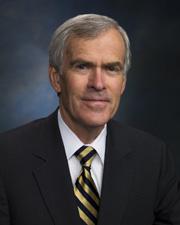 Sen. Jeff Bingaman (D-NM)
Legislative Activity
Stay on top of the latest movement without scrolling through every action
Senate amendment submitted
October 30, 2003
View full timeline
Senate amendment submitted
October 30, 2003
Roll call votes on amendments in Senate: Amendment SA 2048 not agreed to in Senate by Yea-Nay Vote. 41 - 51. Record Vote Number: 432.
October 30, 2003
Senate amendment not agreed to: Amendment SA 2048 not agreed to in Senate by Yea-Nay Vote. 41 - 51. Record Vote Number: 432.
October 30, 2003
Senate amendment proposed (on the floor): Amendment SA 2048 proposed by Senator Bingaman.(consideration: CR 10/31/2003 S13645, S13647-13648; text: CR 10/31/2003 S13645)
October 30, 2003
Amendment SA 2048 proposed by Senator Bingaman. (consideration: CR 10/31/2003 S13645, S13647-13648; text: CR 10/31/2003 S13645) To make an additional $200,000,000 available for the Global AIDS Initiative and reduce the amount available for Millennium Challenge Assistance by $200,000,000.
October 30, 2003
Amendment SA 2048 not agreed to in Senate by Yea-Nay Vote. 41 - 51. Record Vote Number: 432.
October 30, 2003
Votes
1 roll call on this amendment
Text
Proposed
FOREIGN OPERATIONS, EXPORT FINANCING, AND RELATED PROGRAMS
APPROPRIATIONS ACT, 2004--Resumed

The PRESIDING OFFICER. The clerk will report the pending business.
The assistant legislative clerk read as follows:

A bill (H.R. 2800) making appropriations for foreign
operations, export financing, and related programs for the
fiscal year ending September 30, 2004, and for other
purposes.

Pending:

DeWine amendment No. 1966, to increase assistance to combat
HIV/AIDS.
McConnell amendment No. 1970, to express the sense of the
Senate on Burma.
Feinstein amendment No. 1977, to clarify the definition of
HIV/AIDS prevention for purposes of providing funds for
therapeutic medical care.

The PRESIDING OFFICER. The Senator from Kentucky.

[[Page S13638]]

Amendment No. 1966

Mr. McCONNELL. Mr. President, I ask for the regular order with
respect to the DeWine amendment.
The PRESIDING OFFICER. The regular order has been called for, and the
DeWine amendment is once again the pending question.
Is there further debate on the amendment?
The Senator from Ohio.
Mr. DeWINE. Mr. President, Members of the Senate, there are very few
times when we have the opportunity to come to the floor when we know
that the vote we will cast will save hundreds of thousands of lives.
The amendment we have before us will do that. I am very pleased that
we have reached an agreement on the amendment that Senator Durbin and I
have offered to provide an additional $289 million for the fight
against global AIDS, malaria, and tuberculosis.
Mr. President, this money will clearly save lives. Adopting this
amendment is the right thing to do, and I want to thank so many of my
colleagues for their support and their own efforts to fight the global
AIDS epidemic.
First, I thank my colleague from Illinois, and the cosponsor of this
amendment, Senator Durbin. Senator Durbin and I have traveled to Haiti.
I have had the opportunity to watch Senator Durbin hold children who
have HIV who are very sick. I have seen how compassionate he is, how
much he cares.
This is the third time Senator Durbin and I have come to the floor
and offered amendments to add additional funds to this fight against
AIDS. I thank my colleague for his great work.
I thank my colleague, the majority leader, Senator Bill Frist. No one
knows more about this problem. No one has done more about this problem.
Many of us had the opportunity, this past August, to go on a trip with
Senator Frist to Africa. It was an educational trip for all of us.
Bill Frist is a teacher. He is a doctor. He is a leader. He has done
a great deal, and I salute him for his great work.
I also thank Senator Rick Santorum, who is a compassionate individual
and who is passionate about this cause. It was Rick Santorum who first
began working with the leadership and who first suggested, frankly, the
formula that is in front of us today; he came up with these numbers. I
salute him for his work.
I thank Senator Mitch McConnell and Senator Leahy for bringing a very
good bill to the floor. This bill will do a tremendous amount of good
around the world.
It truly is an instrument of our foreign policy and also provides the
resources to help save many, many lives around the world.
Finally, let me thank Senator Ted Stevens for his leadership in this
area. We would not be on the floor tonight with this matter worked out
without Ted Stevens' work. Let me say, for the Members of the Senate
who do not already know this, this is not the first time that Ted
Stevens has come forward and provided the necessary money to deal with
the AIDS problem. This is, to my knowledge at least, the third time
that I am personally aware of that Senator Stevens has done so. Ted
Stevens is someone who is compassionate and who cares. I salute him and
thank him.
I thank my colleagues for bringing us to this point. It is
significant that today in Columbus, OH, the President of the United
States at noon today spoke very eloquently about this problem. He has
taken the lead in our efforts to deal with really one of the greatest
tragedies of our era. He, once again, spoke about the problem of AIDS.
More importantly, he spoke about our obligation and our duty. This is
what he said in Ohio today:

We have duties in this world. When we see disease and
starvation and hopeless poverty, America will not turn away.
This great, mighty nation is leading the world in confronting
a terrible disease on the continent of Africa. This nation is
bringing the healing power of medicine to millions of men and
women and children now suffering with AIDS. This great land
is leading the world in this incredibly important work of
human rescue.

I salute President George Bush for his vision and his leadership in
this area.
I conclude by thanking everyone for their good work. This is the
right thing to do. This will save lives. We will never know the people
whose lives this amendment will save. We will not meet them. We will
not see them. But we can rest assured, there will be many, many lives
saved by what we do tonight.
I ask for the yeas and nays.
The PRESIDING OFFICER. Is there a sufficient second?
There appears to be a sufficient second.
Ms. SNOWE. Mr. President, I rise today to support the pending
amendment by Senator DeWine to add an additional $289 million to our
efforts to combat HIV/AIDS. I am pleased to be able to support this
amendment because of the agreement reached to offset this critical
spending need within the existing budget.
This funding could not come at a more crucial time, as the continent
of Africa faces a most severe crisis. I agree with the President that
``in the face of preventable death and suffering, we have a moral duty
to act.'' The United States is beginning to do its part in the battle
against HIV/AIDS. In this bill alone, we are providing nearly $1.4
billion for the President's new HIV/AIDS, tuberculosis, and malaria
initiative, $250 million of which is available for a contribution to
the global fund. The bill also provides $150 million for the
President's International Mother and Child HIV Prevention Initiative
and $700 million for the Global AIDS Initiative. With this amendment,
we will be committing over $2.2 billion toward the global fight against
AIDS.
Just 2 short years ago, the Global Fund to Fight AIDS, Tuberculosis,
and Malaria was simply an idea that was endorsed by President Bush and
U.N. Secretary General Annan. As we stand here today, it has become a
reality. President Bush pledged the founding $200 million for the
global fund, and our pledge has since risen to $1.6 billion out of the
total of $4.7 billion in pledges made to date worldwide. The United
States has already provided $623 million to the global fund, more than
one-third of total contributions to date. While I am proud of our
commitment, I am also disturbed by the lack of commitment from other
nations. This is not just a U.S. issue, it is a global issue, and it
requires a global response.
U.N. Secretary General Kofi Annan told the Security Council that:

by overwhelming the continent's [Africa's] health and social
services, by creating millions of orphans, and by decimating
health workers and teachers, AIDS is causing social and
economic crises which in turn threaten political stability .
. . in already unstable societies, this cocktail of disasters
is a sure recipe for more conflict. And conflict, in turn,
provides fertile ground for further infections.

The world recognizes that this has become more than a disease facing
the people of Africa, it has become a threat to national security and
regional stability. This is a serious epidemic in Africa, capable of
toppling foreign governments, touching off ethnic wars and undoing
decades of work in developing free-market democracies abroad. In
addition, as the U.S. becomes more and more involved in the fight
against AIDS, it must also recognize that the methods of contraction
need to be addressed on a broader level. Our leadership on AIDS needs
to be matched by our efforts on education, gender discrimination,
economic development, and conflict resolution.
These are all reasons why I have supported providing the countries of
sub-Saharan Africa with the means to provide its people with education,
prevention techniques, and health care. In May, I was proud to support
passage of H.R. 1298, the United States Leadership Against HIV/AIDS,
Tuberculosis, and Malaria Act of 2003.
This comprehensive program has the potential over the next decade to
provide life-extending drugs to at least 2 million infected people,
give human care to 10 million HIV sufferers and AIDS orphans, and
prevent 7 million new HIV infections. The overwhelming bipartisan
support for that legislation demonstrates the priority of this need,
and with this amendment we take an important step toward meeting the
U.S. commitment under that bill. The millions of people in sub-Saharan
Africa and around the globe affected by AIDS deserve no less.
The PRESIDING OFFICER. Is there further debate? If not, the question
is on agreeing to amendment No. 1966.
The clerk will call the roll.
The legislative clerk called the roll.

[[Page S13639]]

Mr. McCONNELL. I announce that the Senator from New Mexico (Mr.
Domenici), the Senator from Mississippi (Mr. Lott), and the Senator
from Alabama (Mr. Shelby) are necessarily absent.
Mr. REID. I announce that the Senator from Delaware (Mr. Carper), the
Senator from North Carolina (Mr. Edwards), the Senator from South
Carolina (Mr. Hollings), the Senator from Vermont (Mr. Jeffords), the
Senator from Massachusetts (Mr. Kerry), and the Senator from
Connecticut (Mr. Lieberman) are necessarily absent.
I also announce that the Senator from Nebraska (Mr. Nelson), is
attending a family funeral.
I further announce that if present and voting, the Senator from
Massachusetts (Mr. Kerry) would vote ``yea.''
The PRESIDING OFFICER (Ms. Murkowski). Are there any other Senators
in the Chamber desiring to vote?
The result was announced--yeas 89, nays 1, as follows:

[Rollcall Vote No. 429 Leg.]

YEAS--89

Akaka
Alexander
Allard
Allen
Baucus
Bayh
Bennett
Biden
Bingaman
Bond
Boxer
Breaux
Brownback
Bunning
Burns
Byrd
Campbell
Cantwell
Chafee
Chambliss
Clinton
Cochran
Coleman
Collins
Conrad
Cornyn
Corzine
Craig
Crapo
Daschle
Dayton
DeWine
Dodd
Dole
Dorgan
Durbin
Ensign
Enzi
Feingold
Feinstein
Fitzgerald
Frist
Graham (FL)
Graham (SC)
Grassley
Gregg
Hagel
Harkin
Hatch
Inhofe
Inouye
Johnson
Kennedy
Kohl
Kyl
Landrieu
Lautenberg
Leahy
Levin
Lincoln
Lugar
McCain
McConnell
Mikulski
Miller
Murkowski
Murray
Nelson (FL)
Nickles
Pryor
Reed
Reid
Roberts
Rockefeller
Santorum
Sarbanes
Schumer
Sessions
Smith
Snowe
Specter
Stabenow
Stevens
Sununu
Talent
Thomas
Voinovich
Warner
Wyden

NAYS--1

Hutchison

NOT VOTING--10

Carper
Domenici
Edwards
Hollings
Jeffords
Kerry
Lieberman
Lott
Nelson (NE)
Shelby
The amendment (No. 1966) was agreed to.
Mr. DURBIN. Madam President, I move to reconsider the vote.
Mr. REID. I move to lay that motion on the table.
The motion to lay on the table was agreed to.

Amendment No. 2047

Mr. DURBIN. Madam President, I send an amendment to the desk and ask
for its immediate consideration.
The PRESIDING OFFICER. The clerk will report.
The legislative clerk read as follows:

The Senator from Illinois [Mr. Durbin], for himself, Mr.
Daschle, Mr. Corzine, Mr. Bingaman, and Ms. Stabenow,
proposes an amendment numbered 2047.

Mr. DURBIN. Madam President, I ask unanimous consent that the reading
of the amendment be dispensed with.
The PRESIDING OFFICER. Without objection, it is so ordered.
The amendment is as follows:

(Purpose: To increase assistance to combat HIV/AIDS)

At the appropriate place, insert the following:
Sec. __. For an additional amount for the Global AIDS
Initiative, $589,700,000, to remain available until September
30, 2006, for programs for the prevention, treatment, and
control of, and research on, HIV/AIDS, tuberculosis, and
malaria, which may include additional contributions to the
Global Fund to Fight AIDS, Tuberculosis, and Malaria.

Mr. DURBIN. Madam President, first, I commend Senator DeWine of Ohio.
He is an extraordinary person and an extraordinary colleague. It has
been my good fortune to work with him on an amendment relative to this
issue of global AIDS. Senator DeWine, by my rough calculation between
us, I think we may have added up to $400 million to the fight on global
AIDS just with the passage of the last amendment and the two previous
efforts, and I commend him. He has worked ceaselessly to get this done,
and he has done so well. I was happy to add my name to his effort. He
did all the work. He deserves all the credit.
I ask my colleagues now to consider this amendment. For every dollar
the last amendment will use to save a life in the war against AIDS,
malaria, and tuberculosis, this amendment will provide $2. For every
life that can be saved with Senator DeWine's amendment, this amendment,
if passed, will add two more lives that will be saved.
I will tell my colleagues what we do. What we take is the President's
promise of $15 billion over 5 years, which comes out obviously to $3
billion per year, and make that our goal in terms of this
appropriations bill.
That means adding, to the amount that we just passed, some $589
million. That will bring us to the $3 billion figure that was promised
by the President, that was endorsed by the Senate, and, frankly, we
will keep our word and our promise to the world. More important, this
money is needed, and it is needed desperately right now.
Some have argued that there are a lot of sick people in this world
but they can't absorb all this money, these hundreds of millions of
dollars that have been sent their way. I urge those who make that
statement to consider the following.
CARE is one of the finest charities in the world. My family supports
it and many of us do as individuals. Peter Bell, who is the head of
CARE, sent a letter to President Bush just a few weeks ago. This is
what he said about the need for full funding to $3 billion:

There are hundreds of organizations, secular and faith-
based, ready to expand their response to the HIV/AIDS
pandemic. CARE, for example, has spent 15 years fighting HIV/
AIDS, working with host governments, international
organizations, and local partners. We currently support HIV/
AIDS projects in 37 countries around the world with a total
annual budget of almost $15 million. If funding were made
available, we would double or triple the size of our HIV/AIDS
programming. I believe the same is true for many other AIDS
organizations.

That is what Peter Bell wrote to President Bush from the CARE
organization just a few weeks ago.
Some of you are familiar with the organization World Vision. You
can't watch one of their programs without having your heart torn to
shreds. These wonderful people involved in World Vision around the
world are working day and night with the most poor people on Earth.
Richard Sterns sent a letter to President Bush just a few weeks ago.
This is what he said:

Let me assure you, Mr. President, we have the capacity to
make a difference now and build for the future. The
absorptive capacity is made up of a number of different
players, national and local governments, community based
organizations, a strong and widespread faith community, and
international NGOs.

He then closed by saying this:

It is my opinion that within these various delivery
systems, $3 billion in aid can be effectively delivered to
those who desperately need it now.

Richard Sterns, president of World Vision.
This Senate has considered this issue. In July, 78 Members of this
body--78 of us--voted in a sense-of-the-Senate resolution for full
funding up to the authorized level of $3 billion for AIDS. We said in
that sense-of-the-Senate resolution we would stand by that number, even
if it meant exceeding the levels authorized in the budget.
I can go through my entire statement, but the hour is late. I will
not do that to you because I think you all understand it. Let me just
say, if there is an argument that the money I am asking for is outside
of the appropriations bill, let me remind you, the amendment we just
passed was outside of the appropriations bill as well.
If there is an argument that we really don't owe $3 billion, let me
tell you, the world thought our pledge was $3 billion. These heads of
charitable organizations around the world are telling us that is what
they understood the American commitment to be, and we are almost $600
million short this year.

Let me also add, if the argument is to be made that this money cannot
be spent, the experts in the field, the men and women who risk their
lives every day in the poorest places on Earth, have told us over and
over again they need the money and they need it now.
I close with a reference to something I have been thinking about for
some time. There was a movie which most of us have seen called
``Schindler's List.'' You will never forget that movie as long as you
live. And you remember that this man in Nazi Germany did everything he
could think of--trickery, smooth talking, and guile--to save the lives
of Jewish people destined for concentration camps. His success was so

[[Page S13640]]

great that at the end of the movie, they showed in that factory the
hundreds, maybe thousands, of people whose lives had been saved.
As he was about to leave them when the war was over, there was that
final scene which none of us can forget. They turned to Schindler to
give him a ring, a gold ring made out of the fillings of their teeth,
in appreciation for what he had done to save so many lives. He broke
down in tears, and he said in that movie:

I should have done more. I should have done more.

That is where we are tonight. The DeWine amendment has moved us
positively toward almost $300 million in this fight against global
AIDS. But we should do more, and we can do more.
My colleagues, please, stand together tonight with our promise from
our President on this global AIDS epidemic, a bipartisan promise that
brings out the best in America. Let us leave with this bill saying: We
kept our word. We stand behind you and we are prepared to lead the
world. Let us provide the money and never have to say at some future
time: We should have done more.
The PRESIDING OFFICER. The Senator from Kentucky.
Mr. McCONNELL. Let me say for the information of all Senators, the
Senator from Nevada and I have been working on how to finish up
tonight. I am not going to ask consent yet, but the plan is as follows:
To stack three votes, first a vote on or in relation to the Durbin
amendment, then on or in relation to the Bingaman amendment, then on or
in relation to the Feinstein amendment. After that, we expect to be
able to handle everything else by voice vote, including final passage.
Mr. REID. I ask unanimous consent that that be the case, there be no
limitations as to time on that but there be no--no limitations as to
time.
I would ask if my friend would modify his request. I have spoken to
Senator Feinstein, Senator Durbin, and Senator Bingaman. If we could
have it in inverse order, Senator Feinstein first, then Senator Durbin,
and then Senator Bingaman?
The PRESIDING OFFICER. The Senator from Vermont?
Mr. REID. Would that be OK with the Senator?
Mr. McCONNELL. I say to my friend that seems fine.
Mr. LEAHY. Reserving the right to object--and I shall not object--
there was a discussion you may recall. I also suggested that when we do
that, the penultimate vote and the final vote be 10 minutes.
Mr. REID. That is very reasonable. I so modify my request. I hope the
manager does on the other side.
The PRESIDING OFFICER. Is there objection?
Without objection, it is so ordered.
The Senator from Pennsylvania.
Mr. SANTORUM. Madam President, I also congratulate the Senator from
Ohio as well as the majority leader for the tremendous work they have
done on this issue in crafting a compromise that will keep within the
budget. This DeWine amendment did keep within the budget and meeting
the need that is out there in Africa and the Caribbean to address the
greatest health crisis that maybe the world has seen.
I respect the Senator from Illinois. I share his passion for trying
to do more. But I think we need to look at what, No. 1, our commitment
was and, No. 2, what is the best and most prudent way of going about
building the capacity, meeting the needs in a responsible way to all
involved.
Let me talk first about what our commitment is. The commitment by the
President, when he announced his plan--this was before the bill passed
the House and Senate and was signed by the President--was to spend $15
billion over the next 5 years and ramp up as capacity would ramp up
within those 12 countries in Africa and the 2 in the Caribbean. As
capacity would ramp up, we would ramp up funding.
That makes sense for those who have traveled to Africa. I had the
opportunity to meet with Ambassador Tobias today, who is in charge of
the AIDS effort in Africa. I also had a chance to meet with Richard
Feachem, who is in charge of the Global Fund, this afternoon.
I can tell you that while, yes, there are lots of organizations out
there, to suggest there is the capacity at this point to take on the
amount of money that is being contemplated here I think overstates the
case, at least according to the experts, the people who are in charge
of distributing this money. In fact, the administration makes a very
strong argument that the money that was added to the DeWine amendment
may not be able to be spent within the fiscal year. But we believe if
there is a potential that that could happen, we would rather put a
little bit more money there, just in case they do find that there can
be some sort of expansion beyond what they, at this point in time,
believe is possible.
We provided that cushion for the administration, and $300 million is
not a small cushion. It is a fairly substantial increase in the amount
of bilateral aid that is going to be provided by the United States--
about a 15-percent increase.
I suggest that we provide that cushion which allows for the
expectations of the administration to be on the low side, and be able
to grow, if necessary. Obviously, we don't want them to spend money if
it is not going to be spent efficiently; it will not really help. We
want them to be good stewards of the funds and be able to spend that
money to provide treatment, provide prevention, and provide it for
taking care of both the old and dying and those who are near death and
those who are young.
I suggest that the DeWine amendment accomplishes everything the
Senator from Illinois wants to accomplish. The reason, by the way, it
accomplishes what the authorization says is because there is now $2
billion for bilateral aid in the appropriations process this year. That
is what the authorization says--$2 billion in bilateral aid, and up to
$1 billion in matching from the Global Fund.
Let us look at the Global Fund. I just met the Director of the Global
Fund. The contribution pledged for next year, as of this moment, is
$100 million which was announced yesterday. So it is up to about $770
million. In the appropriations bill that we are going to pass, it is
$400 million. Actually, it slightly exceeds the pledge that is in the
authorization. For every two dollars of international aid there would
be one dollar of U.S. aid. If you take roughly $800 million, it is
actually less because $400 million meets the pledge that we said we
would provide in the authorization.
To make the suggestion that we haven't in principle met it is just
not right.
That is how we came up with the number that was in Senator DeWine's
amendment that was cosponsored by Senator Durbin. We have met our
obligations to the Global Fund. We have met our obligations in the
authorization to provide $2 billion in bilateral aid even though the
administration doesn't believe we can spend $2 billion efficiently and
effectively.
I think we have pushed the envelope. The administration only pledged
$200 million to the Global Fund. We have $400 million. We doubled the
commitment that the administration said they would provide. We doubled
it because we wanted to meet expectations. We have done so.
I suggest that we have met our obligation for bilateral aid. We have
met our obligation for the Global Fund.
If, in fact, later when we get into 2004 and the Global Fund ends up
raising more money--we have fiscal year 2005, which starts in calendar
year 2004--at the end of 2004, and we did provide some more money to
increase the match at the end of next year, a lot of money comes in
from the other countries on a calendar basis. So we have an opportunity
if we need to come up with more money to meet our match in the 2004
calendar year.
But there is no need to further bust the budget or try to bust the
budget on something where we have made our commitment in the
authorization and exceeded the commitment that the President made when
he announced the $15 billion over 5 years. The President is wise. We
would be wise if we are going to make the $15 billion commitment. I
don't think anyone in this Chamber would argue that $1 spent in 2004
after 4 years of building up capacity, efficiency, and effectiveness is
going to be more efficiently and effectively spent than putting more
money in year 1. I don't think one can make that argument. We may be
able to

[[Page S13641]]

build capacity quickly and less efficiently and costly, but that money
would be used more wisely and efficiently in later years where we can
put more money in the hands of people who get those needed drugs and
needed care in a much more efficient and broadly based way.
I think we have struck the compromise. I hope the Members of this
Chamber will know that in good faith. I appreciate what the Senator
from Illinois is doing. I have great sympathy for his cause, but I
think we have struck the balance here and I hope this Chamber will vote
accordingly.
The PRESIDING OFFICER. The Senator from Michigan.
Ms. STABENOW. Madam President, I rise in strong support of the Durbin
amendment.
First, I thank my colleagues and friend from Illinois for his passion
and his eloquence and his persistence over and over on the floor,
speaking up for those around the world who have no voice in this
Chamber and who desperately need our help.
I also congratulate Senator DeWine for his leadership in getting us
up to this point.
We are talking about 8,500 people being killed by disease every day--
8,500 people today, 8,500 people tomorrow, 8,500 people the next day,
and 6,500 in Africa alone. We are seeing HIV/AIDS produce 14,000 new
infections every day, and 9,500 which occur in Africa.
If that doesn't tell us there is a sense of urgency to do all that we
can do, I don't know what does. When we look at the facts of the more
than 30 million people in Africa alone with HIV, only 50,000 have the
medicine they need--we hear over and over again from the organizations
in Africa that they have the capacity; they just need the resources;
they just need our help.
There is no question when you look at the number. Less than 1 in 20
pregnant women have access to services to prevent mother-to-child
transmission. The numbers are going on and on.
I urge colleagues to step up and support the promise that we made a
few months ago--the promise that we made of $3 billion a year over 5
years, a total of $15 billion, and join together to send a message that
we understand the sense of urgency from the people around the world who
are so desperate for our help.
I remember just a couple of weeks ago on the Senate floor when we
were talking about the Iraqi supplemental and reconstruction, I spoke
about delaying a portion of the reconstruction dollars because it was
clear from all of the evidence and studies that only $6 billion to $8
billion could be spent the first year. We wanted to divert some of
those dollars in another direction for things here at home. We were
told on the Senate floor that we needed to keep our full commitment,
whether or not the capacity was there, and that we needed to
immediately let them know what they had to work with so they could move
as quickly as possible. I suggest this is no less; I believe the
capacity is there now.
The reality is we need to let the people around the world, and the
people of Africa and Americans who are working there desperately trying
to make a difference and save lives, know that we in Congress will keep
our commitment on behalf of the people of our country.
We are talking about a relatively small amount of dollars for saving
literally thousands and thousands of lives.
As the Senator from Illinois said, we have a responsibility to do
what we can do. We don't want to be in a position of looking back when
the picture is clear about what has been going on and say where were we
when we had the chance to save as many lives as possible.
The Durbin amendment needs to be passed, and it needs to be passed
now.
The PRESIDING OFFICER. The Senator from Minnesota.
Mr. COLEMAN. Madam President, I first want to thank my colleague, the
Senator from Ohio, for the incredible work he has done. He has been
tireless and steadfast on this issue. I was proud to be a cosponsor of
his amendment.
I thank my colleague, the Senator from Illinois, for his passion on
this issue. I have the greatest respect for what he is trying to
accomplish.
Today, I had an opportunity to meet with Ambassador Tobias. We talked
about this issue of capacity. He said he was in a warehouse--either in
Botswana or South Africa--but he was in a warehouse. The warehouse was
full of antiretroviral drugs. They were close to their expiration date.
These drugs had been donated by a company. The drugs were there but
they didn't have the capacity to get them all out. Those drugs were in
danger of being wasted.

We were in South Africa this summer. I was with Leader Frist and
others and dealing with the issue of AIDS. There are 5 million people
in South Africa who are HIV positive. There are approximately 20,000
receiving antiretroviral treatment.
We visited Anglo Gold, one of the largest gold mines in the world.
They made a commitment to each and every employee to cover the full
cost of treatment. Money is not the issue. They believe they have
perhaps 30,000 employees HIV positive. They were hoping to get in the
first year 10 percent, 3,000 to come in for treatment. They have a
third of that and less to date. They said to us: The money is not the
issue; we do not have the capacity to do it right. You have to do it
right.
I will fight very hard to keep our commitment of $15 billion over 5
years. As my colleague from Pennsylvania said, we have met our
commitment that is in the authorization of $2 billion by the DeWine
amendment. We have met our commitment to the global fund. We are
meeting our commitment. We are doing it the right way. We are going to
have to ramp up. The needs are great.
In my own experience, having visited Africa, the capacity is not
there. You simply cannot throw money at a problem. We have to do the
right thing. We are doing the right thing by the commitments we have
made by supporting the DeWine amendment. I oppose the Durbin amendment.
I yield the floor.
The PRESIDING OFFICER (Mr. Talent). The Senator from Vermont.
Mr. LEAHY. Mr. President, it is interesting, before I came to the
Senate, I recall seeing headlines saying the Congress passed an
authorization to do this or an authorization to do that; $100 million
to improve the environment somewhere, authorized $1 billion to do this.
It was not until I got here that I realized that does not do anything.
We could authorize $5 trillion for polio vaccine tonight, but if we did
not appropriate some money, it is nothing.
In ``Henry IV,'' Part I--if the Senator from West Virginia were here,
he could set me--Part I, Act 3, Scene 1, we all remember that scene
very well.
Glyndower says to Hotspur: I can call spirits from the vasty deep.
Hotspur answers: Why, so can I, so can any man; But will they come
when you call for them?
We have authorized the money and the President and everybody else had
wonderful speeches. I commended him, praising him. He met with all the
various religious leaders and everyone else and went to Africa and
talked about what we have promised. That was the authorization.
Now it is time to call for the money from the vasty deep. We can find
$87 billion we had to send immediately to Iraq with absolutely no
indication of whether the capacity was there to spend it when questions
were asked. They were never answered. Included were items such as
$6,000 telephones that could be bought for $600 in neighboring
countries, and so on. But we just told them, we will build the
capacity.
What the Durbin amendment, combined with the DeWine amendment--and I
was a cosponsor of the DeWine amendment as I am of the Durbin
amendment--if you put them together, then we do fulfill the commitment
that the President of the United States very rightly said this country
would do.

I have traveled to Africa. I have traveled to Haiti, Vietnam, China,
and elsewhere. I have seen how AIDS is spreading. Other Senators on
both sides of the aisle have seen the same. When you see that these
additional funds can be effectively used, we have to ramp up. In all my
travels, all my conversations with foreign leaders and public health
experts, I have never met anyone who believes the money provided by
this amendment could not be well spent today, not a year from now.
I have seen some of the vaccines that some companies donate, just
about at their expiration date. Then they take a full tax writeoff even
though it will not be used.

[[Page S13642]]

Everyone who is working in the field to stop AIDS believes we need
the additional funds today.
That is why I praised the President when he promised them. That is
why I will support the senior Senator from Illinois tonight to help in
carrying out the promise that President Bush made.
You cannot argue $3 billion is too much to spend effectively in
combating AIDS in 14 countries. That is not what the United States
Leadership Against Aids Act says. Besides, why limit our efforts to 14
countries when five times that many countries are being ravaged by
AIDS? Why ignore the other two dozen countries in Africa? Why ignore
Russia or China or India where AIDS is spreading out of control? India
is going to swamp virtually everywhere else with an AIDS crisis the way
it is spreading. China, Russia, we have strategic interests there.
It is a false argument to say we cannot do this. Frankly, when you
are the wealthiest nation on Earth, the most powerful nation on Earth,
I believe it is an immoral argument. It is not just a fact that we in
the United States are threatened by the spread of AIDS in other
countries. We actually have a chance to do something about it. We have
a chance to do something about it in countries where the yearly income
is less than some of us have spent on an evening out with dinner, a
show with our spouses; actually, where a yearly income is less than we
spend on the time it takes for us to have this debate in most places.
It is in the 14 countries. If we could isolate AIDS to 14 countries,
we should sing ``Glory, Hallelujah.'' We cannot. There are dozens of
countries that need help, that need to have people trained. We should
provide the equipment to support a national prevention and treatment
program. Ask anyone who is working those countries. They will tell you.
To argue that we do not have the capacity is not based on fact. It is
not based on reality. It is not based on public health. I worry that
argument is made because they do not want to spend the money. We are
spending an awful lot more money to fight AIDS today than if we faced
up to this problem two decades ago, but people did not want to. We
wasted two decades. Twenty-five million people died in part because we
and others failed to act. People died during that time. It is a
population equal to 50 times my own State. Actually it is in population
about 50 times the State of the distinguished Presiding Officer.
I commend the Senator from Illinois. I wish the White House would not
oppose this amendment. What the Senator from Illinois is trying to do
is to call them from the deep, call up the money to back up what the
President has promised. The President has been rightly praised by
religious leaders, by heads of state, by well-known entertainers such
as my good friend Bono, from Ireland, for promising this money. So the
White House should not stop us now that they have had the praise, now
that everyone has stood up and said the President was right. Now we
should not have the White House coming in through the backdoor and
saying, don't vote for the money. We want to make the promise. We do
not want to spend the money.
I hope everyone will stop and think. We could spend this money. The
President was right to promise it. We are right to back the President's
promise.
The PRESIDING OFFICER. The Senator from Illinois.
Mr. DURBIN. Mr. President, I do not know if there are any other
Members who wish to seek recognition on this amendment. If they do, I
will wait to speak last.
The PRESIDING OFFICER. The Senator from Pennsylvania.
Mr. SANTORUM. Mr. President, I wish to clarify a point the Senator
from Vermont made about the White House.
I think if the Senator from Vermont will go back and look at the
White House's proposal, and how much money they said they would spend
when they put the proposal forward--which I think the Senator from
Vermont rightly said was praised by the international community--the
Senator from Vermont will discover that the President's proposal had
less than $3 billion in the first year, actually roughly $2 billion in
the first year, and then over the course of the following 4 years it
was ramped up to in excess of around $4 billion.
So I think to suggest that the administration announced a plan with
one hand and then somehow pulled back with the other is not accurately
reflected by the record in this case.
The White House has been clear from the beginning as to what they
have believed was the capacity for spending appropriately within the 14
countries they have outlined in the plan. They have stuck to that plan.
They have insisted the numbers they put forth in the first place are
accurate.
I share the Senator's concern that number may be low, and that is why
I worked with Senator DeWine and Senator Frist to come up with some
additional funds, some $400 million, to see if we could do more
bilateral aid as well as provide more money for the global fund. We
have accomplished that.
But I just want to set the record straight. The administration has
announced their policy, which was warmly received by the international
community, a community that understands that the capacity now is not
what it will be 5 years from now as a result of the efforts of this
administration, and that the money then can and should be ramped over a
period of time based on the efficient capacity to be able to
distribute, for example, the antiretroviral drugs the Senator from
Minnesota talked about today that are sitting in a warehouse with an
expiration that is nearing, with no ability to get those drugs out.
That is the current state in many areas in Africa. And to suggest
that because the administration recognizes there is a failure of
capacity of any areas in Africa is somehow coldhearted or, more
importantly, that it has reneged on its promise does not accurately
reflect what happened. It does not, in any way, in my opinion,
accurately reflect the tremendous compassion and leadership which the
administration and this President have shown on this issue.
The PRESIDING OFFICER. The Senator from Illinois.
Mr. DURBIN. Mr. President, I would like to close. Would the Senator
from Vermont like to be recognized?
Mr. LEAHY. If I could.
The PRESIDING OFFICER. The Senator from Vermont.
Mr. LEAHY. Mr. President, I just took this from the quotes of what
the President said on July 12 in Nigeria:

The people of Africa are fighting HIV/AIDS with courage.
And I'm here to say, you will not be alone in your fight. In
May, I signed a bill that authorizes $15 billion for the
global fight on AIDS. This week, a committee of the House of
Representatives took an important step to fund the first year
of the authorization bill. And the Senate is beginning to
take up debate.

He then stated:

The House of Representatives and the United States Senate
must fully fund this initiative, for the good of the people
on this continent of Africa. . . .

So I went to what it was the President had signed, the authorization
bill of which he spoke. He called upon us to fully fund it, but what it
said in the authorization was $3 billion for the first year.
I spoke with the President about this. I told him I thought we could
use the money. It is what he in his speech in Africa called upon the
Congress to do. He said he would sign this authorization bill, which
authorized $3 billion the first year, and he is calling upon us now to
carry out our part. He has done his part. He wants us to carry out our
part to fund it.
Well, we are trying to carry out our part. I also worked with the
Senator from Ohio and the Senator from Illinois, as did Senator
McConnell, to find the extra money. It is more money. We have just
voted for more money than what the White House said we needed when the
bill first came up.
I am glad they are not resisting that extra money. I commend the
White House for that. I commend Senator McConnell, Senator Durbin, and
Senator DeWine for working so hard to find it. But the fact is--the
fact is--we have to build capacity. Capacity does not happen overnight.
We can use the $3 billion. There is no question, it can be used. Every
health official in the world would tell you that. We can use the money.
We ought to get it into the pipeline. We ought to spend it.
The President was right. I took the floor of the Senate and praised
him

[[Page S13643]]

when he spoke of the need for this. I praised him publicly, and I
praised him privately when I spoke with him about it.
So that is what it is we are trying to do.
The PRESIDING OFFICER. The majority leader is recognized.
Mr. FRIST. Mr. President, very briefly, and because I know we are
about to hear closing comments on this amendment, I have two unanimous
consent requests.

Unanimous Consent Agreement--Conference Report to Accompany H.R. 2691

Mr. President, I ask unanimous consent that on Monday, November 3, at
a time determined by the majority leader, after consultation with the
Democratic leader, the Senate proceed to the consideration of the
conference report to accompany H.R. 2691, the Interior appropriations
bill, provided that there be 60 minutes of debate equally divided
between the chairman and ranking member of the subcommittee, and
following the use or yielding back of the time, the Senate proceed to a
vote on adoption of the conference report on Monday, at a time
determined by the majority leader, after consultation with the
Democratic leader.
The PRESIDING OFFICER. Is there objection?
Without objection, it is so ordered.

Unanimous Consent Agreement--S. 150

Mr. FRIST. Mr. President, I ask unanimous consent that at a time
determined by the majority leader, after consultation with the
Democratic leader, the Senate proceed to the consideration of S. 150,
the Internet Tax Moratorium, but not before November 6.
The PRESIDING OFFICER. Without objection, it is so ordered.
The Senator from Nevada.
Mr. REID. Mr. President, if the majority leader has finished, I ask
unanimous consent that there be 2 minutes equally divided before each
of the subsequent votes following the vote on the Feinstein amendment.
The PRESIDING OFFICER. Is there objection?
Without objection, it is so ordered.
Mr. REID. Mr. President, I would further ask, just as a matter of
inquiry--I know Senator Durbin is about to wrap up the debate on his
amendment. Senator Feinstein told me she would speak no longer than 5
minutes. And people are calling.
Does the Senator from New Mexico have any idea how long he wishes to
speak?
Mr. BINGAMAN. Mr. President, in response, I would be glad to speak
for no more than 5 minutes.
Mr. REID. Mr. President, so everyone should be aware that these votes
should start in the next 10 minutes or so.
The PRESIDING OFFICER. The Senator from Kentucky.
Mr. McCONNELL. Mr. President, has the debate now been completed on
the Durbin amendment?
Mr. REID. No. The Senator from Illinois wants to finish the debate,
but he has just a few more minutes.
The PRESIDING OFFICER. The Senator from Illinois.
Mr. DURBIN. Mr. President, I personally thank my colleagues. It is
late. People would like to go home. I understand the weariness we all
feel because it has been a long and hard week. But I hope you all
understand this is not just another issue. For many of us--I think for
all of us, frankly--this is an issue which is the challenge of our
generation. It is the challenge of our time.
I was one of those Democrats who stood and applauded the President of
the United States at his State of the Union Address. I thought he made
a spectacular, historic commitment that the United States would lead
the world in the fight against the global AIDS epidemic. He included
tuberculosis and malaria.

Having visited some of the Third World countries that are victimized
by these diseases, I stood and applauded in heartfelt support of the
President, proud to be an American and proud of what he said: $15
billion over 5 years. We came back in the Senate and we decided to
authorize--a Republican majority and the Democratic minority--$3
billion this year.
So this figure of $3 billion is not my creation. It is the Senate's
creation. And it is a number which we ratified in July when 78
Republican and Democrat Senators said: Yes, that is what we are going
to spend this year, $3 billion. Regardless of budget consequences, we
will keep that commitment.
So this $3 billion figure is not one I have come up with. It is one
that the President came up with. It is one that the Senate came up
with.
Now, a lot has been said about capacity. Let me explain what I think
is a misunderstanding here. One of the Senators said: I saw a warehouse
full of vaccine that was about to expire. That is proof positive we
don't need to send any more money over there because, frankly, it will
be wasted. I guess that is the conclusion.

Let me read to you what the President of the United States said when
he announced the global AIDS coordinator just a few months ago:

We will set up a broad and efficient network to deliver
drugs to the farthest reaches of Africa, even by motorcycle
or bicycle. We will train doctors and nurses and other health
care professionals so they can treat HIV/AIDS patients. Our
efforts will ensure that clinics and laboratories will be
built, renovated, and equipped. Child care workers will be
hired and trained to care for AIDS orphans. People living
with AIDS will get home-based care to ease their suffering.

This is what the President said. What we are doing with this money is
not just sending medicine to warehouses. We are doing these things. The
President has said we are using this money to build the capacity.
Doesn't it defy logic for us to say if we need more nurses and health
care professionals, it would be better to wait several years before we
train them? We need them now so they can deliver the therapies and
medicines necessary to save lives during the next 4, 5, and 10 years.
Shortchanging that capital investment, shortchanging that capacity
investment on the front end is a guarantee these poor people will
continue to die. Why would we stand by and let that occur?
The saddest thing about this amendment, the saddest thing of all is
it is likely to be a partisan amendment. When you look at the rollcall,
count the no votes. You are likely to see one political party, and the
yes votes another political party. Of every issue in the world today
which we will consider, this is the one that should not be partisan.
This is the one where the President really summoned all of us to stand
together in a bipartisan fashion.
I want to say one word in closing. Senator Frist was here a moment
ago. He has left the floor now. He is very busy; I understand. I have
such personal admiration for Senator Frist, though I disagree with him
on a lot of political issues, but such personal admiration because this
man is not only a political leader in America, he is a moral leader of
the Senate. He takes his skills as a doctor to Africa, to the poorest
places on earth to help the poorest people. Of all the things that
could be said of Bill Frist, no one can ever question his moral
commitment to poor people. That is not only admirable and honorable,
but it speaks so well of him and what we can be when all of us
understand that when it comes to issues of life and death for the
poorest people around the world.
Please, step aside from party label. Step aside from the moment and
say: We are going to do what is necessary to save these lives so some
future day we don't look back and shake our heads and say: We should
have done more.
The PRESIDING OFFICER. The Senator from Kentucky.
Mr. McCONNELL. Mr. President, I ask unanimous consent that the only
remaining time to be used on the Feinstein amendment be 5 minutes to be
used by Senator Brownback.
The PRESIDING OFFICER. Without objection, it is so ordered.
Mr. REID. Mr. President, Senator Feinstein is entitled to 5 minutes.
Mr. McCONNELL. I understand that. I am locking in the time on this
side. I ask unanimous consent that the only time to be used on the
Bingaman amendment be 3 minutes to be used by the senior Senator from
Kentucky.
The PRESIDING OFFICER. The Senator is referring to his side?
Mr. McCONNELL. Right.
The PRESIDING OFFICER. Without objection, it is so ordered.
Mr. McCONNELL. With regard to the pending Durbin amendment number
2047, it increases spending by $589,700,000. This additional spending
would cause the underlying bill to exceed the subcommittee's 302(b)
allocation. Therefore, I raise a point of order against the amendment
pursuant to section 302(f) of the Budget Act.
The PRESIDING OFFICER. The Senator from Illinois.

[[Page S13644]]

Mr. DURBIN. Mr. President, pursuant to section 904 of the
Congressional Budget Act of 1974, I move to waive the applicable
sections of that act for purposes of the pending amendment, and I ask
for the yeas and nays.
The PRESIDING OFFICER. Is there a sufficient second?
There appears to be a sufficient second.
The yeas and nays are ordered.

Amendment No. 1977

The PRESIDING OFFICER. The Senator from California.
Mrs. FEINSTEIN. Mr. President, I believe I have 5 minutes on my
amendment.
The PRESIDING OFFICER. The Senator is correct.
Mrs. FEINSTEIN. Mr. President, I call up amendment No. 1977.
The PRESIDING OFFICER. The amendment is pending.
Mrs. FEINSTEIN. I thank the Chair.
I ask unanimous consent to add as cosponsors, in addition to Senators
Snowe and Murray, Senators Clinton, Jeffords, and Durbin.
The PRESIDING OFFICER. Without objection, it is so ordered.
Mrs. FEINSTEIN. Mr. President, looking at the scope of the HIV/AIDS
tragedy, 40 million people are infected with HIV worldwide and 30
million of these people are from sub-Saharan Africa, approximately 70
percent of the world's total. As of 2001, 21.5 million Africans had
died of AIDS, and at least 50 million new cases are projected by 2010
in five countries alone: China, Ethiopia, India, Nigeria, and Russia.
It is estimated that two-thirds of the 45 million new HIV infections
expected to occur during this period could be averted with effective
prevention. That is where we must go. This amendment does not aim to
change the one-third earmark for abstinence until marriage. This
amendment aims to provide some flexibility so that the people on the
ground have the opportunity of tailoring the most effective prevention
program.
The way in which we do it is, first, we reserve at least one-third of
funds for the prevention of the sexual transmission of HIV, rather than
one-third of all prevention funds, for abstinence-until-marriage
programs.
Secondly, our amendment defines an abstinence-until-marriage program
as any program that places a priority emphasis on the public health
benefits of refraining from sexual activity outside of marriage.
Our amendment gives the administration, local communities, and HIV/
AIDS workers on the ground maximum flexibility to design HIV/AIDS
prevention strategies that are most effective in stopping the spread of
AIDS.
One of the things we know, for example, is that Nevirapine, given to
a pregnant woman, can stop the spread of HIV to her unborn child. In
removing the one-third earmark from that program, you are able to use
prevention dollars in a much wiser way.
Let me be clear: Our amendment does not strike the one-third earmark
for abstinence until marriage programs. Rather, it ensures the United
States can fund programs that are most successful in increasing
abstinence among young people.
We believe this is a pro-abstinence, results-oriented amendment. It
balances congressional priorities with public health needs. I urge my
colleagues to support it.
I reserve the remainder of my time.
The PRESIDING OFFICER. Who seeks recognition?
The Senator from Kansas.
Mr. BROWNBACK. Mr. President, I would like to speak in opposition to
the Feinstein amendment. I have deep respect for Senator Feinstein. I
have worked with her on a number of issues. I respect her thinking
process, her compassion, and her view. However, on this issue, I have
to differ with her, and I wanted to articulate several reasons why.
No. 1, we have voted on this issue already. This issue came up
earlier when we had the debate on the major initiative put forward by
the administration on HIV/AIDS. This was a major issue of debate at
that point in time when we were trying to get the authorizing piece of
this bill through. This is the appropriations piece. But when we were
trying to get the authorizing piece of the bill through, we had a major
debate about this.
We had a number of people here at that time talking with us about the
role of abstinence. The leading country that has been successful in the
major area where we are targeting our efforts in the HIV/AIDS pandemic
has been Uganda. The Ugandan model is ABC, and it leads with
abstinence. The day of the vote on this, we had the First Lady of
Uganda here speaking with a number of us, talking about the central
role of abstinence and the historic drop in the level of HIV/AIDS that
had taken place in their country.
These are very impressive numbers, best of any country around the
world that has had the high infection rates. Their infection rate
dropped from 21 percent to 7 percent in just 9 years. She was saying
specifically it was the abstinence portion. It was the abstinence
focus.
If you want to stop the spread of AIDS, the best way to do it is
abstinence. She was here and speaking to us with great clarity about
that issue.
We had the debate, and we voted at that point in time with a majority
saying we want a certain amount of money to go for the abstinence
program.
I have great respect for the Senator from California. The Feinstein
amendment would take money away from the abstinence focus in this
program. In effect, she would open it up to more areas and dilute the
abstinence base funding so that it will be reduced. In effect, we will
be changing the course we set in the authorizing language: that we want
a certain amount of money, about a third of this pool, to go to
abstinence, and we would be changing course and reducing that level
from the authorizing language.
The administration and the Ambassador for Global AIDS Coordination,
Ambassador Tobias, has written to the Senate Foreign Operations
chairman, Senator McConnell, in strong opposition to this amendment. He
says in his final paragraph:

Finally, the effect of this amendment would be to decrease
the amount that could be spent on abstinence-until-marriage
programs as a prevention model, and I believe that would not
be in the interest of best public health practice.

This is the person implementing this legislation, the amount of
funding we are putting forward. He thinks the money targeted by the
authorizing committee is appropriate and best suited for us to meet the
objectives.
Mr. President, my objective is to reduce AIDS infections around the
world, and the best model is Uganda. It has gone from 21 percent to 7
percent and the lead program they did it with was abstinence. We have a
proven model. We voted on this previously. I urge my colleagues, with
all due respect to the Senator from the State of California, not to
change minds on this issue but, rather, to stay with what we already
discussed and decided on and stay with the funding levels we currently
have.
I reserve the remainder of my time.
The PRESIDING OFFICER. The Senator reserves the remainder of his
time.
Mrs. FEINSTEIN. Mr. President, how much of my time do I have
remaining?
The PRESIDING OFFICER. The Senator has 1 minute 45 seconds remaining.
Mrs. FEINSTEIN. Mr. President, with respect to Uganda, I would like
to read testimony from a Ugandan HIV/AIDS director before the House
regarding the promotion of prevention by the President of Uganda. Let
me quote this:

For some, he promoted a message of delaying sexual debut.
For others, he urged them to be faithful to one partner and
to use a condom. It was his three-part message that was
effective in Uganda. In my personal experience, I believe
this three-part message is critical.

Currently, one-third of all prevention funds must be reserved for
abstinence until marriage programs. This earmark limits the amount of
funds available for other prevention programs, including preventing
mother to child transmission. There are literally 5 million to 10
million orphans already from AIDS in Africa, and it is going to be much
more.
All we are saying, is that the one-third earmark should not apply to
programs that give a pregnant woman a 90 percent chance of preventing
the transmission of AIDS to the unborn child. That is all we are doing
in this amendment, providing some flexibility.
Remember this overwhelming statistic. The estimates are there will be

[[Page S13645]]

in excess of 20 million orphans by 2010 in Africa. There should be
flexibility. Our amendment allows the people on the ground to design a
HIV/AIDS prevention program that is most effective at stopping the
spread of HIV/AIDS.
The PRESIDING OFFICER. The Senator from Kansas.
Mr. BROWNBACK. Mr. President, how much time do I have remaining?
The PRESIDING OFFICER. The Senator has 1 minute remaining.
Mr. BROWNBACK. Mr. President, responding to the good Senator from
California, I note the abstinence funding is only 33 percent of the
bill. The remaining two-thirds of the money can be used in other models
other than the abstinence model. There are other funds in the bill that
can't be used for other types of treatment, but we set aside a certain
portion for the abstinence model because it has proven to be so
effective.
The other point the Senator from California mentions is flexibility.
Ambassador Tobias, who runs the global AIDS program, is opposed to this
amendment because it restricts his flexibility. I quote from the letter
he sent to the appropriations chairman:

Given the various cultures, traditions, and religions that
are reflected in the global HIV/AIDS epidemic, it is
essential that we be enabled to work with multiple prevention
approaches and partners to affect behavior change.
Restricting such flexibility, as this Amendment intends,
would undermine our ability. . . .

I urge a vote against the Feinstein amendment.
The PRESIDING OFFICER. The Senator from Vermont.
Mr. LEAHY. Mr. President, I wish to take just 30 seconds to speak in
support of Senator Feinstein's amendment.
The issue here is not about whether we support abstinence as a method
of preventing the transmission of HIV. Obviously, it is one approach,
and an important one especially in countries where young girls are
extremely vulnerable. Encouraging young people to postpone sexual
activity until they are in a monogamous relationship is a key goal of
any AIDS prevention strategy. So abstinence is one approach that we
need to support along with other prevention strategies.
But the Leadership Against AIDS Act says that 33 percent of all AIDS
prevention funds should be spent on abstinence programs. The question,
which is not answered in that act, is how to define abstinence, because
if it is defined too broadly, it will eat into funds that are crucially
needed for other prevention methods, such as HIV testing, and
educational and information programs about methods to prevent HIV
transmission among people who are sexually active.
This amendment strikes the right balance, and I commend the Senator
from California for taking on this difficult but very important issue.
I ask for the yeas and nays on the Feinstein amendment.
The PRESIDING OFFICER. The yeas and nays have already been ordered on
the amendment.

Amendment No. 2048

The PRESIDING OFFICER. The Senator from New Mexico.
Mr. BINGAMAN. I call up amendment No. 2048.
The PRESIDING OFFICER. Without objection, the pending amendment is
laid aside. The clerk will report.
The assistant legislative clerk read as follows:

The Senator from New Mexico [Mr. Bingaman], for himself and
Mr. Daschle, proposes an amendment numbered 2048.

Mr. BINGAMAN. Mr. President, I ask unanimous consent that the reading
of the amendment be dispensed with.
The PRESIDING OFFICER. Without objection, it is so ordered.
The amendment is as follows:

(Purpose: To make an additional $200,000,000 available for the Global
Aids Initiative and reduce the amount available for Millennium
Challenge Assistance by $200,000,000)

On page 22, line 7, strike ``$700,000,000'' and insert
``$900,000,000''.
On page 45, line 8, strike ``$1,000,000,000'' and insert
``$800,000,000''.

Mr. BINGAMAN. Mr. President, let me start by congratulating Senator
DeWine, Senator Durbin, and all the others who worked so hard on the
earlier amendment we adopted to add some funding. The case was
extremely persuasive. By adding those dollars, we will be saving tens
or perhaps hundreds of thousand of lives. I agreed with that and was
very strongly in support of the amendment.
The purpose of this amendment is to make an additional $200 million
available for the global AIDS initiative and reduce the amount that is
available for the Millennium Challenge Account by $200 million. So this
is a transfer of funds from one part of the appropriations bill to
another.
Let me talk first about the Millennium Challenge Account, with which
we are all familiar, to help developing countries. The administration,
in their budget request, asked for $800 million in new obligated funds
for this Millennium Challenge Account. That was what the Secretary of
State testified to in answer to a question from Senator Biden before
the Senate Foreign Relations Committee.
Senator Biden asked:

What is the estimate of obligations of $800 million in
fiscal year 2004 based on?

Secretary Powell's answer:

This is an estimate of the proportion of the $1.3 billion
budget request which we expect would actually be obligated in
2004 based on the careful selection system we have set up.
Thus, we do not believe it likely that all MCA money
appropriated in 2004 would be obligated in the fiscal year.

Let me put up one other chart. This chart depicts graphically that
the President's budget request was $1.3 billion in budget authority,
but only $800 million in funds to be obligated in 2004.
The House, in their appropriations process, took the President at his
word and said: OK, you want $800 million for the Millennium Challenge
Account; we will give you $800 million.
We have gone an extra $200 million, although the administration
itself says this extra $200 million they want for 2005 and later. They
do not need it for 2004.
My amendment simply would use that money in 2004 for this AIDS
problem about which we are all so concerned. The amendment is inside
the budget. It is inside the appropriations caps that the subcommittee
has been given.
In my view, this is a much better use of the money than just leaving
$200 million in an account somewhere for the next 12 months until we
get to 2005. This would be money that would be made available. I do not
agree with the notion that we can just postpone and do more good with
this money later on. Later on, many of the people we would like to help
will be dead. The reality is we need to get this money and assistance
to them as quickly as possible and follow through on the promise we
have made. So I urge my colleagues to support the amendment.
I yield the floor.
The PRESIDING OFFICER. The Senator reserves the remainder of his
time.
The Senator from Kentucky.
Mr. McCONNELL. Mr. President, we are nearing the end of the debate.
There will be three rollcall votes stacked very shortly. Senator Leahy
and I are unaware of any requests for any more rollcall votes. So I
think it is safe to say that these three rollcall votes will be the
last remaining rollcall votes for the night.
With regard to the Bingaman amendment, this amendment adds $200
million of an existing budget of over $2 billion to fight global AIDS.
Just to put that in perspective, this amendment adds more than the
entire fiscal year 1999 Clinton global AIDS funding level to this
year's level on top of what we have already done. It adds $200 million
for HIV/AIDS with an offset, taking away from the Millennium Challenge
Account, the President's new initiative. We are spending over $2
billion already this year, as has been repeatedly stated tonight, to
combat HIV/AIDS, including nearly $200 million for the Global Fund.
The Millennium Challenge Account is a new initiative that enjoys
broad bipartisan support. The MCA provides foreign assistance to
developing countries that are doing things the right way, from ruling
justly to building free market economies.
The Senate just approved the DeWine amendment 89 to 1. That increases
HIV/AIDS spending by $289 million. It is time to wrap it up on this
bill, to not steal money from the Millennium Challenge Account. I urge
opposition to the Bingaman amendment.
I am prepared to yield back the remainder of the time on this side
and let the Senator from New Mexico wrap it up.

[[Page S13646]]

The PRESIDING OFFICER. The Senator yields the remainder of his time.
The Senator from New Mexico is recognized.
Mr. BINGAMAN. How much time remains, Mr. President?
The PRESIDING OFFICER. The Senator has 1 minute 20 seconds remaining.
Mr. BINGAMAN. Mr. President, just to summarize the point, I am in
favor of the Millennium Challenge Account. I am proposing that we go
ahead and provide the full $800 million that the administration asks to
be obligated in 2004. That is exactly what the House of Representatives
did. That is exactly what we ought to do.
My only point is that we should not be giving them $200 million that
they themselves--that is, the administration itself--say they cannot
spend in 2004. They do not plan to spend it in 2004. That money should
be made available to fight AIDS. We can do that. It does not bust the
budget. It does not bust the limitations that we have on this spending
bill. It is a better use of that money, and I urge my colleagues to
support that amendment.
I yield back the remainder of my time.
The PRESIDING OFFICER. The Senator from New Mexico yields back the
remainder of his time.
The Senator from Vermont.
Mr. LEAHY. I have great respect for the Senator from Kentucky and the
bill that he has put together. Whatever the outcome of the vote, I will
strongly support this bill. It is a good bill. Senator McConnell has
worked in a bipartisan manner to accommodate a number of priorities.
This is one disagreement. We have hundreds of issues that we have to
resolve in this bill. I think our average is pretty good.
As Senator Bingaman pointed out, this is not a vote for or against
the Millennium Challenge Account. The MCA could turn out to be a great
program. This is a vote about priorities. This amendment is fully
offset. The vote is on the following question: Do you want $200 million
sitting in the Treasury for a year? Or, do you want to spend if
fighting HIV/AIDS?
The administration's own budget documents say that they will spend
only $800 million of this money this year. Anything above this level
will not be obligated until Fiscal Year 2005. This is precisely why the
Republican-controlled House provided $800 million for the MCA.
Secretary Powell made this point very clear when he testified before
Senate Foreign Relations Committee. He was asked: ``Why can you spend
only $800 million in Fiscal Year 2004?
He replied--and I am quoting--this figure is ``based on the careful
selection system we will set up.'' Secretary Powell continues: This is
an innovative approach with no precedent to guide us. We anticipate
that it will take some time to develop the first proposals and then
hone them into acceptably detailed and accountable contracts. We thus
did not believe it likely that all MCA money will be obligated in the
fiscal year. We would anticipate that any remaining funding would be
obligated in fiscal year 2005 for programs in countries selected in
fiscal year 2004.
I know that the White House will figure out a way to say they need
this money. But, let me tell my colleagues a couple of other things I
know. I know that this additional money will sit in Treasury--their own
budget documents show this. Secretary Powell testified to this. I know
we do one year appropriations around here. We will revisit this issue
next year. I know there is not enough money in this bill to combat the
worst public health crisis in 500 years.
The Bingaman amendment gets us more money, which is fully offset, to
accomplish this important goal. I urge my colleagues to vote yes.
Also, I thank the staff members who have worked so hard on this bill.
Senator McConnell and I work in a bipartisan manner and so do the
respective staffs. On the Republican side I thank Paul Grove, Brendon
Wheeler, Robert Karem. On the Democratic side, I thank Tim Rieser, Mark
Lippert, and J.P. Dowd.
The PRESIDING OFFICER. All time has expired on the Bingaman
amendment.

Vote on Amendment No. 1977

The PRESIDING OFFICER. The question is now on agreeing to amendment
No. 1977 offered by the Senator from California on which the yeas and
nays have been ordered.
The clerk will call the roll.
The legislative clerk called the roll.
Mr. McCONNELL. I announce that the Senator from New Mexico (Mr.
Domenici) and the Senator from Mississippi (Mr. Lott) are necessarily
absent.
Mr. REID. I announce that the Senator from Delaware (Mr. Carper), the
Senator from North Carolina (Mr. Edwards), the Senator from South
Carolina (Mr. Hollings), the Senator from Massachusetts (Mr. Kerry),
and the Senator from Connecticut (Mr. Lieberman) are necessarily
absent.
I also announce that the Senator from Nebraska (Mr. Nelson) is absent
attending a family funeral.
I further announce that, if present and voting, the Senator from
Massachusetts (Mr. Kerry) would vote ``yea.''
The PRESIDING OFFICER. Are there any other Senators in the Chamber
desiring to vote?
The result was announced--yeas 45, nays 47, as follows:

[Rollcall Vote No. 430 Leg.]

YEAS--45

Akaka
Baucus
Bayh
Biden
Bingaman
Boxer
Breaux
Byrd
Cantwell
Chafee
Clinton
Collins
Conrad
Corzine
Daschle
Dayton
Dodd
Dorgan
Durbin
Feingold
Feinstein
Graham (FL)
Harkin
Inouye
Jeffords
Johnson
Kennedy
Kohl
Landrieu
Lautenberg
Leahy
Levin
Lincoln
Mikulski
Murray
Nelson (FL)
Pryor
Reed
Reid
Rockefeller
Sarbanes
Schumer
Snowe
Stabenow
Wyden

NAYS--47

Alexander
Allard
Allen
Bennett
Bond
Brownback
Bunning
Burns
Campbell
Chambliss
Cochran
Coleman
Cornyn
Craig
Crapo
DeWine
Dole
Ensign
Enzi
Fitzgerald
Frist
Graham (SC)
Grassley
Gregg
Hagel
Hatch
Hutchison
Inhofe
Kyl
Lugar
McCain
McConnell
Miller
Murkowski
Nickles
Roberts
Santorum
Sessions
Shelby
Smith
Specter
Stevens
Sununu
Talent
Thomas
Voinovich
Warner

NOT VOTING--8

Carper
Domenici
Edwards
Hollings
Kerry
Lieberman
Lott
Nelson (NE)
The amendment (No. 1977) was rejected.
Mr. COCHRAN. Mr. President, I move to reconsider the vote.
Mr. BROWNBACK. I move to lay that motion on the table.
The motion to lay on the table was agreed to.

Amendment No. 2047

The PRESIDING OFFICER. There are now 2 minutes of debate equally
divided on the motion to waive the Budget Act with respect to amendment
No. 2047 by the Senator from Illinois.
Mr. McCONNELL. Mr. President, more than enough has already been said
about this budget point of order. We have had this vote at least three
different times this year. I hope the budget point of order will be
sustained.
Mr. DURBIN. With this amendment, we raise the spending to fight the
war on global AIDS, tuberculosis, and malaria to the level that the
Senate promised in its own authorization bill, a level that 78 of us
voted for on a bipartisan basis.
We know this is the greatest moral challenge of our time. This is our
chance to keep our promise to the world to make certain that America's
compassionate leadership is meaningful to people around the world.
I ask my colleagues, please, look beyond the Budget Act. Look to the
fact that we have a challenge here that is worthy of our vote at this
time. I hope you will support this amendment.
I reserve the remainder of my time.
Mr. McCONNELL. I yield the remaining time to the Senator from
Pennsylvania.
Mr. SANTORUM. Mr. President, the DeWine amendment accomplished
everything that is absolutely necessary to fight global AIDS at this
time. It is $2 billion. The authorization stipulated fully funding the
authorization of $2 billion and $400 million to match the $800 million
that had been pledged by the international community. As meeting with
the authorization, $1 of American for $2 of international. The $2.4

[[Page S13647]]

billion, which is in the bill, fully funds our AIDS commitment on the
authorization and overfunds what the President requested by $400
million.
Mr. DURBIN. My friends, the authorized level is $3 billion. It is not
$2 billion. The $2.4 billion we have reached with the Mike DeWine
amendment still leaves us short $589 million. That is the difference
this amendment makes.
The PRESIDING OFFICER. All time has expired. The question is on
agreeing to the motion to waive the Budget Act with respect to
amendment No. 2047 of the Senator from Illinois. The yeas and nays have
been ordered. This is a 10-minute vote.
The clerk will call the roll.
The assistant legislative clerk called the roll.
Mr. McCONNELL. I announce that the Senator from New Mexico (Mr.
Domenici) and the Senator from Mississippi (Mr. Lott) are necessarily
absent.
Mr. REID. I announce that the Senator from Delaware (Mr. Carper), the
Senator from North Carolina (Mr. Edwards), the Senator from
Massachusetts (Mr. Kerry), and the Senator from Connecticut (Mr.
Lieberman) are necessarily absent.
I also announce that the Senator from Nebraska (Mr. Nelson) is absent
attending a family funeral.
I further announce that, if present and voting, the Senator from
Massachusetts (Mr. Kerry) would vote ``yea.''
The PRESIDING OFFICER. Are there any other Senators in the Chamber
desiring to vote?
The yeas and nays resulted--yeas 42, nays 50, as follows:

[Rollcall Vote No. 431 Leg.]

YEAS--42

Akaka
Baucus
Bayh
Biden
Bingaman
Boxer
Breaux
Byrd
Cantwell
Clinton
Collins
Corzine
Daschle
Dayton
Dodd
Dorgan
Durbin
Feingold
Feinstein
Graham (FL)
Harkin
Inouye
Jeffords
Johnson
Kennedy
Kohl
Landrieu
Lautenberg
Leahy
Levin
Lincoln
Mikulski
Murray
Nelson (FL)
Pryor
Reed
Reid
Rockefeller
Sarbanes
Schumer
Stabenow
Wyden

NAYS--50

Alexander
Allard
Allen
Bennett
Bond
Brownback
Bunning
Burns
Campbell
Chafee
Chambliss
Cochran
Coleman
Conrad
Cornyn
Craig
Crapo
DeWine
Dole
Ensign
Enzi
Fitzgerald
Frist
Graham (SC)
Grassley
Gregg
Hagel
Hatch
Hutchison
Inhofe
Kyl
Lugar
McCain
McConnell
Miller
Murkowski
Nickles
Roberts
Santorum
Sessions
Shelby
Smith
Snowe
Specter
Stevens
Sununu
Talent
Thomas
Voinovich
Warner

NOT VOTING--8

Carper
Domenici
Edwards
Hollings
Kerry
Lieberman
Lott
Nelson (NE)
The PRESIDING OFFICER. On this vote, the yeas are 42, the nays are
50. Three-fifths of the Senators duly chosen and sworn not having voted
in the affirmative, the motion is rejected. The point of order is
sustained, and the amendment falls.
Mr. FRIST. I move to reconsider the vote and I move to lay that
motion on the table.
The motion to lay on the table was agreed to.
The PRESIDING OFFICER. The majority leader is recognized.
Mr. FRIST. Mr. President, for the information of all Senators, this
will be the last rollcall vote tonight. Final passage will be on a
voice vote. There will be no votes tomorrow. Earlier tonight, we had
two unanimous consent agreements. We will say more about Monday's
schedule a little bit later, but the plans are to have at least one
rollcall vote Monday. It will be around 5:30 or so. That will be on the
interior conference report.

Amendment No. 2048

The PRESIDING OFFICER. There is now a period for 2 minutes of debate
equally divided on amendment No. 2048 offered by the Senator from New
Mexico.
The Senator from Kentucky is recognized.
Mr. McCONNELL. Very briefly, this amendment would take $200 million
out of the President's Millennium Challenge Account and add it to AIDS
funding. We have already had a significant amount of debate about AIDS
funding. I think we have made a decision on that.
This amendment, I hope, will be opposed.
I yield back the remainder of my time.
The PRESIDING OFFICER. The Senator yields back the remainder of his
time.
The Senator from New Mexico is recognized.
Mr. BINGAMAN. Mr. President, first, I ask for the yeas and nays on
the amendment.
The PRESIDING OFFICER. Is there a sufficient second?
There appears to be a sufficient second.
The yeas and nays were ordered.
The PRESIDING OFFICER. The Senator from New Mexico.
Mr. BINGAMAN. Mr. President, in the bill before us, we have $200
million for the Millennium Challenge Account that the administration
says they cannot spend in 2004. They do not plan to spend it. They did
not request it.
The House gave the administration $800 million for the Millennium
Challenge Account. We are giving them $1 billion.
My amendment would say let's give them the same amount the House is
proposing to give them, the $800 million, and let's take that extra
$200 million and use that in the fight against HIV/AIDS. It is a much
better use of the funds than just putting it in an account for possible
use in 2005.
I urge the adoption of the amendment.
Mr. DASCHLE. Mr. President, I rise in strong support of the Bingaman
amendment, which would transfer $200 million dollars from the
Millennium Challenge Account into programs designed to help us fight
our struggle against the spread of HIV/AIDS.
I commend my friend and colleague from New Mexico for his leadership
on this critical issue. Along with several of our colleagues, the
Senator from New Mexico and I traveled to South Africa, Botswana,
Kenya, and Nigeria to look at this heart-wrenching challenge. And I
believe his amendment is an important step toward relieving the intense
suffering we saw on that trip.
Let me say, too, that I support the Millennium Challenge Account.
With the crushing poverty affecting nearly a third of the world's
citizens, the MCA is clearly an idea whose time has come. I support it,
and that is why I worked hard to ensure that this foreign operations
bill contains the legislation to create that important program.
But the bill also includes $200 million more than the President has
requested and $200 million more than his Secretary of State has said he
can use this year. So rather than have that money sit unused--in the
face of the gravest public health crisis the world has ever known--we
propose to put that money to use immediately to confront HIV/AIDs.
Less than 4 months ago, the President signed into law a bill
authorizing his administration to spend $3 billion a year for the next
5 years on a comprehensive program to combat AIDS.
Congress passed this legislation in response to the President's call
for action in his State of the Union Address. Unfortunately, President
Bush's own budget request has fallen fall short of his promises,
seeking just under $2 billion, more than $1 billion less than what he
is authorized to spend.
Nearly 30 million people in sub-Saharan Africa are currently living
with the AIDS virus, and the President's emergency plan for AIDS will
begin to help those countries that are worst hit.
But the reason we need to invest this additional $200 million--on top
of the $289 million we just agreed to--is because the President's
emergency plan focuses only on Africa and the Caribbean.
Take one country not addressed in the President's emergency plan. At
the end of 2002, over 4.5 million Indians were infected with HIV,
making India the nation with the second-highest population of AIDS
patients in the world behind South Africa. Experts there warn that the
disease has spread from high-risk populations in urban areas into rural
India.
As a result, the infection rate will dramatically increase, in much
the same pattern it followed in sub-Saharan Africa. A recent United
States National Intelligence Council report predicted that India could
have 25 million of its citizens infected with HIV/AIDS by the year
2010--less than 7 years from

[[Page S13648]]

now. Such an incidence of this disease would mean that India will have
nearly as many people living with the AIDS virus as the entire sub-
Saharan African region does today.
But our investments to fight HIV in India at the moment are less than
$40 million per year. By continuing that trend line, we are in effect
requiring even more expensive investments within a decade.
I urge my colleagues to support the Bingaman amendment, which follows
the recommendation of President Bush regarding the amount of money
needed for the Millennium Challenge Account, and devotes the additional
resources to a problem that demands our immediate attention.
Mr. BINGAMAN. I yield back the remainder of my time.
The PRESIDING OFFICER. The Senator yields back the remainder of his
time.
Mr. REID. Mr. President, I ask for the yeas and nays.
The PRESIDING OFFICER. The yeas and nays have already been ordered.
All time has now expired. The question is on agreeing to amendment
No. 2048 offered by the Senator from New Mexico. The clerk will call
the roll.
The legislative clerk called the roll.
Mr. McCONNELL. I announce that the Senator from New Mexico (Mr.
Domenici) and the Senator from Mississippi (Mr. Lott) are necessarily
absent.
Mr. REID. I announce that the Senator from Delaware (Mr. Carper), the
Senator from North Carolina (Mr. Edwards), the Senator from South
Carolina (Mr. Hollings), the Senator from Massachusetts (Mr. Kerry),
and the Senator from Connecticut (Mr. Lieberman) are necessarily
absent.
I also announce that the Senator from Nebraska (Mr. Nelson) is absent
attending a family funeral.
I further announce that, if present and voting, the Senator from
Massachusetts (Mr. Kerry) would vote ``yea.''
The result was announced--yeas 41, nays 51, as follows:

[Rollcall Vote No. 432 Leg.]

YEAS--41

Akaka
Baucus
Bayh
Bingaman
Boxer
Breaux
Byrd
Cantwell
Clinton
Conrad
Corzine
Daschle
Dayton
Dodd
Dorgan
Durbin
Feingold
Feinstein
Graham (FL)
Harkin
Inouye
Jeffords
Johnson
Kennedy
Kohl
Landrieu
Lautenberg
Leahy
Levin
Lincoln
Mikulski
Murray
Nelson (FL)
Pryor
Reed
Reid
Rockefeller
Sarbanes
Schumer
Stabenow
Wyden

NAYS--51

Alexander
Allard
Allen
Bennett
Biden
Bond
Brownback
Bunning
Burns
Campbell
Chafee
Chambliss
Cochran
Coleman
Collins
Cornyn
Craig
Crapo
DeWine
Dole
Ensign
Enzi
Fitzgerald
Frist
Graham (SC)
Grassley
Gregg
Hagel
Hatch
Hutchison
Inhofe
Kyl
Lugar
McCain
McConnell
Miller
Murkowski
Nickles
Roberts
Santorum
Sessions
Shelby
Smith
Snowe
Specter
Stevens
Sununu
Talent
Thomas
Voinovich
Warner

NOT VOTING--8

Carper
Domenici
Edwards
Hollings
Kerry
Lieberman
Lott
Nelson (NE)
The amendment (No. 2048) was rejected.
Mr. McCONNELL. I move to reconsider the vote.
Mr. REID. I move to lay that motion on the table.
The motion to lay on the table was agreed to.
The PRESIDING OFFICER. The Senator from Nevada.
Mr. REID. Mr. President, I ask unanimous consent that Senator Leahy
be listed as a cosponsor of amendment No. 2047.
The PRESIDING OFFICER. Without objection, it is so ordered.
The Senator from Kentucky.

Amendment No. 2049

Mr. McCONNELL. Mr. President, I have a technical amendment, which
includes language by Senators Allard and Feingold to strike amendments
Nos. 1995 and 2004, previously adopted, and another technical amendment
by Senator Santorum. I send the amendment to the desk and ask for its
immediate consideration.
The PRESIDING OFFICER. The clerk will report.
The assistant legislative clerk read as follows:

The Senator from Kentucky [Mr. McConnell] proposes an
amendment numbered 2049.

Mr. McCONNELL. Mr. President, I ask unanimous consent that the
reading of the amendment be dispensed with.
The PRESIDING OFFICER. Without objection, it is so ordered.
The amendment is as follows:

In Senate Amendment 1968, strike the following:
On page 18, line 10, after ``Jordan'' insert the following:
, which sum shall be disbursed within 30 days of enactment
of this Act.
Strike amendments 1995 and 2004 to H.R. 2800, which were
adopted by unanimous consent on October 28, 2003.
At the appropriate place in the bill, insert the following:

International Military Training Assistance for Indonesia

Sec.   . (a) Subject to subsection (b), none of the funds
appropriated under the heading ``INTERNATIONAL MILITARY
EDUCATION AND TRAINING'' shall be made available for
Indonesia, except that such prohibition shall not apply to
expanded military education and training.
(b) The President may waive the application of subsection
(a) if the President determines that important national
security interests of the United States justify such a waiver
and the President submits notice of such a waiver and
justification to the Committees on Appropriations in
accordance with the regular notification procedures of such
Committees.
(c) Respect of the Indonesian military for human rights and
the normalization of the military relationship between the
United States and Indonesia is in the interests of both
countries. The normalization process cannot begin until the
Federal Bureau of Investigation has received full cooperation
from the Government of Indonesia and the Indonesian armed
forces with respect to its investigation into the August 31,
2002, murders of two American citizens and one Indonesian
citizen in Timika, Indonesia, and the individuals responsible
for those murders have been prosecuted and appropriately
punished.

SEC.   . TECHNICAL CORRECTION RELATING TO THE ENHANCED HIPC
INITIATIVE.

Section 1625(a)(1)(B)(ii) of the International Financial
Institutions Act (as added by section 501 of the United
States Leadership Against HIV/AIDS, Tuberculosis, and Malaria
Act of 2003 (Public Law 108-25)) is amended by striking
``subparagraph (A)'' and inserting ``clause (i)''.

The PRESIDING OFFICER. Without objection, the amendment is agreed to.
The amendment (No. 2049) was agreed to.
Mr. McCONNELL. I move to reconsider the vote.
Mr. REID. I move to lay that motion on the table.
The motion to lay on the table was agreed to.

Amendment No. 2023, As Modified

Mr. McCONNELL. Mr. President, I send a modification to amendment No.
2023, offered by Senator Kennedy, to the desk.
I understand the amendment has already been agreed to.
The PRESIDING OFFICER. Without objection, the amendment is so
modified.
The amendment (No. 2023), as modified, is as follows:

At the appropriate place, insert the following:
Sec. __. Beginning not later than 60 days after the date of
enactment of this Act, the Coordinator should make publicly
available (including through posting on Internet web sites
maintained by the Coordinator) prices paid to purchase HIV/
AIDS pharmaceuticals, antiviral therapies, diagnostic and
monitoring tests, and other appropriate medicines, including
medicines to treat opportunistic infections, for the
treatment of people with HIV/AIDS and the prevention of
mother-to-child transmission of HIV/AIDS in developing
counties--
(1) through the use of funds appropriated under this Act;
and
(2) to the extent available, by--
(A) the World Health Organization; and
(B) the Global Fund to Fight AIDS, Tuberculosis, and
Malaria.

Amendment No. 2050

Mr. McCONNELL. Mr. President, I send an amendment to the desk by
Senator Stevens and ask for its immediate consideration.
The PRESIDING OFFICER. The clerk will report.
The assistant legislative clerk read as follows:

The Senator from Kentucky [Mr. McConnell], for Mr. Stevens,
proposes an amendment numbered 2050.

Mr. McCONNELL. Mr. President, I ask unanimous consent that the
reading of the amendment be dispensed with.

[[Page S13649]]

The PRESIDING OFFICER. Without objection, it is so ordered.
The amendment is as follows:

(Purpose: To provide assistance for democracy programs in Russia)

On page 27, line 4 after the colon, insert the following:
Provided further, That of the funds appropriated under this
heading, $500,000 shall be made available to support
democracy building programs in Russia through the Sakharov
Archives:

Mr. McCONNELL. I understand there is no opposition.
The PRESIDING OFFICER. Without objection, the amendment is agreed to.
The amendment (No. 2050) was agreed to.
Mr. McCONNELL. I move to reconsider the vote.
Mr. REID. I move to lay that motion on the table.
The motion to lay on the table was agreed to.

Amendment No. 1970

Mr. McCONNELL. Mr. President, I call up amendment No. 1970 on behalf
of myself, Senator Leahy, and Senator McCain. The amendment is pending.
The PRESIDING OFFICER. That amendment has already been offered.
Mr. McCONNELL. It is pending but not adopted. I urge its adoption.
The PRESIDING OFFICER. Without objection, the amendment is agreed to.
The amendment (No. 1970) was agreed to.
Mr. McCONNELL. I move to reconsider the vote.
Mr. REID. I move to lay that motion on the table.
The motion to lay on the table was agreed to.

the clean energy technology exports initiative

Mr. BYRD. Mr. President, I have long had an interest in helping to
open international energy technology markets and in expanding the
export of a range of U.S. clean energy technologies. In October 2002,
the Bush administration, at my urging, released a nine-agency plan
called the Clean Energy Technology Exports, CETE, Initiative which is
intended to carry out such an effort. The participating agencies whose
budgets are covered in this bill include U.S. Agency for International
Development, USAID, the Export-Import Bank, ExIm, Overseas Private
Investment Corporation, OPIC, and the Trade and Development Agency,
TDA.
To help coordinate and facilitate that work, funds have been included
in the Fiscal Year 2004 Energy and Water bill to establish an
interagency center to be located at the Department of Energy in order
to increase U.S. efforts abroad and encourage greater public/private
partnerships for such projects. It is also important that other
agencies with responsibility for foreign assistance and export
promotion participate in this initiative.
I hope that the managers of this bill will work with me in conference
to include language in the Statement of Managers to strongly urge
USAID, ExIm, OPIC, and TDA to participate actively in the CETE
Initiative. I want to be sure that these agencies contribute to the
center's work, with funds in their existing budgets, to promote U.S.
clean energy technologies in developing countries where the demand for
energy is increasing dramatically.
Mr. McCONNELL. I am aware of the interest of the ranking member of
the Appropriations Committee, the senior Senator from West Virginia, in
promoting the export of clean energy technologies, and appreciate
knowing about his efforts to establish a center at the Department of
Energy for this purpose.
Mr. LEAHY. I also appreciate what my friend Senator Byrd has said,
and I will gladly work with him in conference in support of the
language he seeks in the Statement of Managers.

Global TB Drug Facility

Mrs. BOXER. I would like to thank the Senator from Vermont for his
outstanding leadership on this bill and especially for his leadership
on infectious disease issues. As my colleague well knows, tuberculosis
is the greatest curable infectious killer on the planet. TB is also the
number one killer of people with HIV/AIDS and the biggest killer of
young women.
We must support the highest possible funding level for global TB
programs, especially as we scale up AIDS efforts, and we must ensure
that these monies have maximum impact--curing as many people of TB as
possible. Ensuring access to drugs is a key component in curing TB.
Mr. LEAHY. I agree with my colleague. When countries do not have
access to TB drugs, people die needlessly and when TB treatment is
interrupted, this leads to the development of more deadly multi-drug
resistant TB--which can cost hundreds of thousands of dollars to treat
each infected person in the United States.
Mrs. BOXER. To address this issue, the Global TB Drug Facility, which
is part of the Stop TB Partnership at the World Health Organization, is
a remarkably successful international mechanism that is effectively
providing access to high-quality anti-TB drugs in the world's poor
nations. The Global TB Drug Facility procures drugs at low cost through
a competitive bidding process, distributes drugs to qualified grantees,
and works with Stop TB partners to ensure monitoring and evaluation.
In operation just 2 years, the Global TB Drug Facility has reduced
the price of anti-TB drugs to just $10 for a full six to eight month
course of treatment, and has approved grants to over 40 countries.
The Global TB Drug Facility, GDF is so successful that the World
Health Organization is using it as a model for providing anti-
retroviral drugs and diagnostics in its campaign to reach 3 million
people with anti-retrovirals by 2005.
Yet, despite its immense effectiveness, the GDF is facing a severe
funding crisis. It does not have funding to meet existing commitments
next year or to make any new grants for drug purchases. It needs $50
million next year and a minimum of $25 million just to meet existing
commitments for 2004. If it does not get its minimum funding, at least
1.8 million TB patients will be put at serious risk and many will die,
and we will be interrupting supplies of drugs--creating the perfect
conditions to develop a dangerous drug resistant strain of the disease.
H.R. 1298, The United States Leadership Against HIV/AIDS,
Tuberculosis, and Malaria Act of 2003, which was passed by the Senate
and signed into law by the President, calls for ``substantially
increased funding for the Global Tuberculosis Drug Facility.''
The United States provided only $2 million to the GDF in 2002 and
just $3 million in 2003. As a crucial part of our global TB effort, the
United States should significantly increase our support for the Global
TB Drug Facility in 2004. For example, $15 million provided to the TB
Drug Facility could provide TB drugs to treat over 1 million people.

international narcotics and law enforcement

Mr. McCONNELL. Mr. President, I see the Senators from Virginia and
Vermont on the floor, and am wondering if they could provide some
additional information on their amendment concerning enforcement of
intellectual property laws.
Mr. ALLEN. I thank the Senator from Kentucky. The Allen-Leahy
amendment provides $5 million under the ``International Narcotics and
Law Enforcement'' account to improve enforcement of intellectual
property laws to combat piracy in developing countries. This is a very
important issue, as it relates directly to our economic viability as a
nation.
Mr. LEAHY. I agree with the Senator from Virginia. The lack of
enforcement of intellectual property laws is a serious problem. It
undermines the rule of law in other nations, and it hurts U.S. economic
and cultural interests. Perhaps most importantly, it reduces incentives
for Americans to be creative. And, we know that American ingenuity is a
major reason that the United States is the Nation it is today.
This amendment will help address some of these problems. It will also
help developing nations comply with the WTO agreement on Trade-Related
Aspects of Intellectual Property Rights, TRIPS, and other intellectual
property agreements, which is very important.
Some of these nations have problems meeting the most basic needs of
their people, and it is safe to say that this assistance could be the
difference between the enforcement of these laws or piracy continuing
unabated.
Mr. McCONNELL. I thank my good friend from Vermont. I agree with what
has been said on this by the Senators from Virginia and Vermont. I
think this is a good idea, and would like to

[[Page S13650]]

ask, for clarification purposes, a question of the Senator form
Virginia. How would this money be spent and what type of assistance
would be provided by these funds?
Mr. ALLEN. This amendment allows the administration to be extremely
flexible in finding an approach. It could involve training, equipment,
or a range of other measures.
I do not want to micro-manage this process. I want to leave this in
the hands of those in the administration with expertise on this issue.
I would defer, in large measure, to State Department officials,
especially those posted overseas who are dealing with the problem on a
daily basis, to come up with a workable strategy.
However, I do believe that this is a problem that requires a coherent
plan and a coordinated approach by the United States Government. And, I
believe that the State Department, in close consultation with the
United States Trade Representative, USTR, and the Department of
Commerce, should formulate a detailed strategy for the use of these
funds before they are obligated.
Other agencies, such as the Patent and Trademark Office, the
Department of Homeland Security, the Department of Justice, and the
Library of Congress, have expertise on this issue. They can be
extremely helpful in implementing these programs, especially with
respect to training individuals from developing nations.
Mr. McCONNELL. This sounds like a very reasonable approach.
Mr. LEAHY. I agree.
Mr. REID. Mr. President, I want to thank my colleagues, especially
Senator Leahy, Senator McConnell, and Senator Daschle, for supporting
an amendment that was cleared. The amendment will help one of our
closest neighbors--the country of Mexico.
We recently approved billions of dollars to begin rebuilding the
nation of Iraq and to maintain order in Afghanistan. We approved this
aid not only so the people of Iraq and Afghanistan can enjoy the
benefits of a free and democratic society; we also approved it because
we know it's in our interest to create a stable situation in those
countries.
The same thing goes for our southern neighbor, with whom we share a
2,000 mile border, and where economic conditions are particularly bad
right now.
Desperate people take desperate measures, and many people in Mexico
are desperate. A few years ago, Mexico seemed on the verge of an
economic breakthrough. But today, Mexico's growth rate is half what it
was in the 1990s. More than half of all Mexicans--over 50 million
people--have an annual income of less than about $1,400. Almost one-
fourth of all Mexicans have an annual income of about $720--less than
$2 per day.
There is little hope for these people in the Mexican countryside,
where coffee prices have plummeted and where homes and land values are
falling because of a badly broken system of private property ownership.
So these desperate people take desperate measures. Maybe they flee to
Mexico City--but there isn't much hope there either. Most refugees from
the country side wind up in crowded shantytowns, breathing foul air,
and living in filth. Maybe they remain on the land, but instead of
raising coffee, many turn to illegal crop production, which facilitates
a dangerous trade in drugs that poisons our own cities. Perhaps they
will put their lives in the hands of unscrupulous ``coyotes'' who
promise to lead them across the desert to the land of plenty. If they
don't die trying, they reach the United States, where they place an
added burden on our security officials and social services.
I do not condone illegal immigration. But I understand that desperate
people do desperate things, and that desperate conditions in Mexico
affect the United States.
This amendment extends a helping hand to our neighbor. It provides
$10 million for micro credit lending, small business and
entrepreneurial development, aid to small farms and farmers, many who
have been affected by the collapse of coffee prices, and it calls for
programs to support Mexico's private property ownership system, which
is in dire need for repair.
The money appropriated pursuant to this amendment won't solve these
problems overnight, but we have to start somewhere. Our neighbor needs
help, and we can't turn a blind eye.
This is not a handout. It is a commitment to free market-based
programs that will spur long-term development and growth in the rural
areas of Mexico. By extending a hand to our neighbor, we are also
keeping our own Nation strong and secure. I again want to thank my
colleagues for supporting this measure.
Mr. McCONNELL. Mr. President, we all understand and appreciate the
importance of information technology. Many of us now regularly use our
``blackberries'' to communicate with each other and staff on the
workings of this body. I want to take a moment to highlight the efforts
and vision of Voice for Humanity to utilize information technology--
specifically audio digital technology--to maximize the effectiveness of
HIV/AIDS awareness and other important development issues abroad.
Using low-cost digital tools, Voice for Humanity proposes to convey
HIV/AIDS awareness, prevention, treatment, and medical training among
non-literate and oral communicating populations in developing
countries. The devices, which fit into the palm of your hand, can
provide standardized information to any one group or individual in any
language. And the best part is, information can be regularly updated
and changed using regular FM radio technology.
The applications of this technology are endless. During elections,
this technology can provide critical information to remote parts of a
developing country on the basic tenants of democracy and election rules
and regulations. Anyone who has observed elections in a transitioning
country knows that confusion over process on election day--by voters
and poll workers--is not extraordinary. This technology ensures that
everyone has the same information, in the same language, at the same
time.
I will have more to say on Voice for Humanity at a later date. I
intend to include language in the statement of managers accompanying
the fiscal year 2004 Foreign Operations Appropriations bill ensuring
support for pilot projects.
Lastly, Mr. President, last night the conferees to the emergency
supplemental included $100 million for economic assistance for Jordan.
This action was strongly supported by the Foreign Operations
Subcommittee, and is intended to be in addition to funds made available
for Jordan in the fiscal year 2004 Foreign Operations bill.
My friend from Vermont and I wanted to provide Jordan with early
disbursal of funds in the pending bill because we have long recognized
how good and trusted an ally we have in that country. I was just in
Amman--a little over 3 weeks ago--and was again impressed by the solid
relationship the United States enjoys with the Hashemite Kingdom.
The inclusion of an additional $100 million for Jordan sends the
right message at the right time and provides well earned support for
ongoing reforms in Jordan. The technical amendment the ranking member
and I offer strikes an earlier one that provided funds for Jordan on an
accelerated basis--instead, Jordan's total allocation for economic
assistance in fiscal year 2004 will include the budget request for $250
million, and an additional $100 million in the supplemental.
Mr. McCONNELL. Mr. President, in conclusion, I thank Senator Leahy
and his very capable staff, Tim Rieser and Mark Lippert, and, of
course, Chairman Stevens and his able staff director, Jim Morhard, for
his continued support of the subcommittee, and particularly for the
additional global HIV/AIDS program allocation.
I also thank USAID counsel Bob Lester who puts in long hours working
alongside the subcommittee putting these bills together. I thank
Brendon Wheeler and my assistant, Robert Karem, who accompanied me on a
recent trip to Iraq and Afghanistan, and Paul Grove, chief counsel of
the subcommittee. He has been with me off and on for a number of years.
He has done a spectacular job. He had to balance both the emergency
supplemental conference downstairs and the foreign operations bill
upstairs and chronic sleep deprivation at the same time, and he did all
that with admirable poise and remarkable intellectual ability. I
appreciate his very fine work.

[[Page S13651]]

The PRESIDING OFFICER. If there is no further amendment to be
proposed, the question is on the engrossment of the amendments and
third reading of the bill.
The amendments were ordered to be engrossed and the bill to be read a
third time.
The bill was read the third time.
The PRESIDING OFFICER. The bill having been read the third time, the
question is, Shall the bill, as amended, pass?
The bill (H.R. 2800), as amended, was passed.
(The bill will be printed in a future edition of the Record.)
Mr. REID. I move to reconsider the vote.
Mr. McCONNELL. I move to lay that motion on the table.
The motion to lay on the table was agreed to.
The PRESIDING OFFICER. Pursuant to the previous order, the Senate
insists on its amendment and requests a conference with the House.
The Presiding Officer appointed Mr. McConnell, Mr. Specter, Mr.
Gregg, Mr. Shelby, Mr. Bennett, Mr. Campbell, Mr. Bond, Mr. DeWine, Mr.
Stevens, Mr. Leahy, Mr. Inouye, Mr. Harkin, Ms. Mikulski, Mr. Durbin,
Mr. Johnson, Ms. Landrieu, and Mr. Byrd conferees on the part of the
Senate.

____________________