To provide that statements made by the Chairman and/or Ranking Member of the Agriculture Appropriations Subcommittee, and colloquies engaging the Chairman and/or Ranking Member of the Agriculture Appropriations Subcommittee, given on the Senate Floor or submitted for the Record during Senate consideration of this Act shall be deemed part of Senate Committee Report 108-107 for purposes of conference with the House of Representatives.
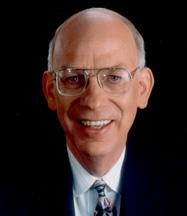 Sen. Robert F. Bennett (R-UT)
Legislative Activity
Stay on top of the latest movement without scrolling through every action
Senate vitiated previous adoption of amendment SA 2084 by Unanimous Consent. (consideration: CR S14145)
November 6, 2003
View full timeline
Senate vitiated previous adoption of amendment SA 2084 by Unanimous Consent. (consideration: CR S14145)
November 6, 2003
Proposed amendment SA 2084 withdrawn in Senate.
November 6, 2003
Senate amendment submitted
November 5, 2003
Senate amendment proposed (on the floor): Amendment SA 2084 proposed by Senator Bennett.(consideration: CR S13971-13972; text: CR S13972)
November 5, 2003
Senate amendment agreed to: Amendment SA 2084 agreed to in Senate by Voice Vote.
November 5, 2003
Amendment SA 2084 proposed by Senator Bennett. (consideration: CR S13971-13972; text: CR S13972) To provide that statements made by the Chairman and/or Ranking Member of the Agriculture Appropriations Subcommittee, and colloquies engaging the Chairman and/or Ranking Member of the Agriculture Appropriations Subcommittee, given on the Senate Floor or submitted for the Record during Senate consideration of this Act shall be deemed part of Senate Committee Report 108-107 for purposes of conference with the House of Representatives.
November 5, 2003
Amendment SA 2084 agreed to in Senate by Voice Vote.
November 5, 2003
Text
Proposed
RURAL UTILITIES SERVICE BROADBAND LOAN PROGRAM

Mrs. CLINTON. Mr. President, I support the effort spearheaded by my
colleagues, Senator Burns and Senator Dorgan, and have serious
objections to the Bush administration's proposal to gut the only
national program we've ever enacted to get broadband high speed
Internet connectivity deployed across our country.
It was just last year that Congress passed, as part of the farm bill,
the only national broadband deployment incentive I am aware of that has
been enacted by the Federal Government--a program that was supposed to
provide over $700 million in loans a year to help get broadband to all
parts of the country--$700 million in loans a year to help create and
bring jobs to rural parts of the country--$700 million a year to help
improve health care and education delivery to places like Upstate New
York, rural Montana, North Dakota, Alaska, Iowa, and all across the
country--$700 million a year to help improve emergency communications
systems so that our first responders can actually receive those calls
for help.
From a fiscal perspective, you couldn't ask for a better deal. It
takes just $20 million in Federal resources to leverage over $700
million in loans--$700 million in loans plus at least another 20
percent in investment from the private sector. Has the program been
popular? You better believe it has. In just 9 months since the Rural
Utilities Service published regulations for the broadband loan program,
the RUS has received applications that total over $1 billion. Our rural
communities across the country recognize the promise of new
telecommunications technologies.
Our rural communities and the coalition of Members from Congress that
helped create the RUS broadband loan program in last year's farm bill
aren't the only ones who recognize the promise of broadband. Look what
other countries are doing.
A recent study by the International Telecommunications Union, the
UN's telecommunications agency, confirmed what many of us already know.
South Korea is leading the world in numbers of high-speed Internet
connections per capita, with Hong Kong and Canada coming in at second
and third. Where is the U.S. a distant 11th.
And these other countries are outspending us on broadband
infrastructure. Sweden has set aside some $800 million on broadband
deployment in rural areas of the country. France is following suit,
having announced not long ago its plans to invest $1.5 billion on
broadband infrastructure over 5 years. In Japan, through the majority
government owned Nippon Telegraph and Telephone, the country is in the
middle of a huge fiber-to-the-home project across the country. In
Korea, the government is laying out some $15 billion to provide an
optical fiber connection to 84 percent of homes by 2005.
We are falling behind. I don't know about the rest of my colleagues,
but I think that's a huge problem. People in upstate New York know it's
a huge problem. There is little disputing that a nation with ubiquitous
broadband will be more efficient and productive than a nation without
it. Just a couple weeks ago, the Wall Street Journal had a story
titled, What's Slowing Us Down?, with the byline, ``Broadband is seen
as a critical part of the national economy. Yet the U.S. lags behind
other countries.''
The Wall Street Journal piece points out that, ``Rising rates of
high-speed Internet access are expected to trigger everything from
increased sales of new computers to a massive rise in worker
productivity.'' A recent Brookings Institution study found that
universal broadband access could add $300 billion a year to the U.S.
economy. Forgoing a major broadband rollout, the Wall Street Journal
notes, might not only hinder economic growth, but also worsen an
already bleak picture for battered telecommunications and high-tech
industries.
That explains the letter that a host of companies and high-tech
associations have sent to Senators Bennett and Kohl, the managers on
this important bill. This letter pleading to restore funding of the RUS
broadband loan program is signed by 3M, Alcatel, Cisco Systems,
Corning, Intel, Nortel Networks, Siemens, and so many others who
recognize the importance of this modest investment.
But they are not the only ones we're hearing from. I am hearing from
small carriers across New York who need assistance to get broadband
deployed to their rural areas--companies like Castle Cable Television
in Alexandria Bay, NY who want to do the right thing--who recognize the
potential of broadband to bring jobs and better services to their
communities.
So what is our plan, our national strategy to help ensure broadband
gets deployed across America? What is our plan to ensure America's
competitiveness? Well, the administration's plan and the one that's
come out of committee in the Senate is to crush the one permanent
broadband deployment program the Federal government has ever enacted.
I understand that we have replaced $10 million that would leverage
over $350 million in broadband loans with $10 million in grants. That
doesn't make any sense. I am not suggesting we not do grants--but it
doesn't make fiscal sense to saw off $10 million that will leverage
over $350 million in loans for a simple $10 million in grants.
And it certainly doesn't make sense to take away the Rural Utilities
Service's administrative funding and capacity to process and review the
pending applications. Rural communities across the country, like Alex
Bay in New York, need these resources to create and attract jobs. And
our country needs to make these investments if we're to stay ahead of--
or at least competitive with--South Korea, Hong Kong, Japan, and our
neighbors to the

[[Page S13958]]

north, Canada, who are making the investments in broadband to move
ahead.
I commend my colleagues, Senators Burns and Dorgan, for their
leadership in helping restore the full funding level for the RUS
broadband loan program, and I ask the managers of this bill and for the
administration to join in what should be a national strategy to deploy
broadband across America.
Mr. KOHL. I suggest the absence of a quorum.
The PRESIDING OFFICER. The clerk will call the roll.
The legislative clerk proceeded to call the roll.
Mr. ROCKEFELLER. Mr. President, I ask unanimous consent that the
order for the quorum call be rescinded.
The PRESIDING OFFICER. Without objection, it is so ordered.
Mr. ROCKEFELLER. I ask unanimous consent to speak as if in morning
business.
Mr. BENNETT. Mr. President, reserving the right to object, could I
ask the Senator from West Virginia how long he intends to speak?
Mr. ROCKEFELLER. I would say 15 to 18 minutes.
Mr. BENNETT. I have no objection.
The PRESIDING OFFICER. Without objection, it is so ordered.
Mr. ROCKEFELLER. Mr. President, I thank my distinguished friend and
colleague.

LEAK OF STAFF DRAFT MEMO

Mr. ROCKEFELLER. There have been statements made on the floor today--
which I was not here to listen to because I was in a Commerce Committee
meeting--expressing concern, outrage, et cetera, about what is
happening with the Senate Intelligence Committee's inquiry into the
prewar Iraqi intelligence. We have heard charges that a draft memo
taken from the Intelligence Committee spaces and provided to the media
somehow represents a plan to discredit what the Intelligence Committee
is doing and to politicize the inquiry. These charges are inaccurate
and unfortunate. I wish to speak to them as vice chairman of that
committee.
I would suggest to my colleagues that there is in fact reason for
concern today, but it is not because of the content of this draft staff
memo--a memo which, for the record, was not approved by me, was not
given to any other member of the Senate Intelligence Committee, nor to
any other staff person, my own staff on the Intelligence Committee, nor
to any other member of the Senate, nor anybody else. It was an internal
draft memo. It happens all the time in the Senate. At some point very
soon the committee and the Senate are going to have to explore the
chain of events surrounding this draft memo since it raises serious
questions about whether the majority is obtaining unauthorized access
to private internal materials of the minority, and who made the
decision in this case to leak the draft of an unofficial memo to the
press.
It is disturbing that individuals are seeking, perhaps or perhaps
not, to score political points with a draft paper describing the rights
of the minority to push for a full and fair review of the issues of the
committee and that the memo is being so grossly mischaracterized to try
to deflect attention from the real issue.

More importantly, the concern this body should feel today is that the
Intelligence Committee is not conducting a thorough and in-depth
inquiry into all aspects of the intelligence process leading up to the
war in Iraq. This body should be disturbed that 5 months after we
started asking questions, we are still going, in essence, hat in hand
to the administration to try to get the documents we need to conduct
this review.
I most sincerely regret the impression that the draft memo has
apparently given to some of my Republican colleagues, but it clearly
reflects staff frustration that the Senate Intelligence Committee's
investigation has not tackled all of the tough issues, and frustration
with the difficulties we have had in obtaining information from the
administration. It should come as no surprise to anyone that there is
tension on the committee. I have said publicly for months that the
committee must review not only the accuracy of prewar intelligence on
weapons of mass destruction and terrorism but also the use or misuse of
that intelligence by senior policymakers in this administration. This
is fundamental to answering the questions the American people have
about how we got into this war. But at every turn, the chairman has
made it clear that the inquiry will be limited to reviewing the prewar
intelligence against the low threshold of a standard called
reasonableness. We have a basic disagreement. These kinds of things
happen in the Senate.
I was pleased last week ended with the chairman and myself standing
side by side, as we should, insisting on the committee's need for
evidence wherever it might be located. But the information we have
requested to date is only part of our work. It should be obvious to all
that our committee still has much to do to assure that our inquiry into
prewar intelligence about Iraq's weapons of mass destruction and links
to terrorism fulfills our responsibilities to the Senate and to the
American public.
I want to take a minute--it is important for me to do so--to describe
these responsibilities because I am not sure all of our colleagues
know. The committee's responsibilities come to us from the Senate. We
don't make them up. The Senate created the Senate Select Committee on
Intelligence in 1976. The measure that established it, S. Res. 400 of
the 95th Congress, remains the Senate's charter to us as a committee.
It is very specific.
S. Res. 400 was not a casual measure. It was the product of years of
interest in improving oversight of intelligence, a major investigation
chaired by Senator Church, reports of several standing committees,
about eight or nine, and extensive floor consideration. It is not up to
the 17 of us who happen now to be on that committee to make up the
boundaries of our responsibility. They are given to us and written out
very clearly.
S. Res. 400 begins by stating its purpose: To create a Senate select
committee ``to oversee and make continuing studies of the intelligence
activities and programs of the United States Government.''
The Senate did not leave the term ``intelligence activities'', the
object of oversight, to the imagination of generations of members of
the Intelligence Committee. Instead, the Senate carefully defined the
term ``intelligence activities'' in section 14 of the resolution to
include ``the collection, analysis, production, dissemination, or use
of the information.''

The five elements of intelligence activity--that is collection,
analysis, production, dissemination, and use--represent the full cycle
with which the committee must be concerned. That is our charter. If we
examine analysis of information without considering the collection of
it, we fail in our responsibility. If we examine both of them but not
the production of reports and the dissemination of information, we fail
in our responsibility. If we stop at dissemination and do not examine
the use of intelligence, we will equally fail in our responsibility.
That examination is what I have been pushing for and it is what I will
continue seeking.
I have heard it said that policy is the responsibility of other
committees. Of course, other committees have responsibilities relating
to national security policies. But so do we. Our mandate from the
Senate is clear. S. Res. 400 also says the information which is subject
to the committee's oversight includes information relating to foreign
countries and to ``the defense, the foreign policy, the national
security, or related policies of the United States.'' It is broad. It
is thorough.
We should be committed as a committee to developing a full record.
The joint letters the chairman and I wrote last week insisting the
administration provide us with the necessary documents and interviews
are a step in the right direction which I very much appreciate. But
there is a lot more to be done. Even if we might disagree about the
evaluation of evidence, we should put the full weight of the committee
behind obtaining all the facts our members believe to be necessary for
a complete inquiry. For me, that means all communications, not just a
limited list, about Iraqi weapons of mass destruction and terrorism
intelligence between the Intelligence Committee and policymakers,
including the White House.
Without those, our record will not be complete. We cannot assess, for
example, whether intelligence agencies were

[[Page S13959]]

pressured to conform to the views of policymakers unless we know what
policymakers were asking of these agencies. This is a key objective of
this inquiry, and we are in danger of completely missing it.
Albeit in strong language, what staff suggests in the draft memo--
which, again, nobody on the committee saw and nobody else had seen it
until it was leaked, and then everybody has it--is that the minority
work with the majority to get as far as we can in this effort. That was
our purpose--to work as far as we can and be as successful as we can in
this effort, and if the majority continued to refuse, then the minority
should be prepared to point out shortcomings consistent with the rules.
It is misleading to suggest this possible approach comes as a
surprise to anyone in this body. I have been clear with the chairman
for months that there is growing interest among many members of the
committee in pursuing a separate investigation. It is not a course I
choose to follow. Many Senate Democrats are on record in support of an
independent commission. We voted it down the other day. I voted against
it, but many Members did not; they voted for it. I am on record
opposing that approach and I continue to oppose it. But, it is an
option that cannot be ruled out.

Exploring or asserting the rights of the minority under the
Intelligence Committee rules in no way amounts to politicizing
intelligence. A substantive disagreement is not grounds for charges of
partisan politics; it is a difference of approach, a difference of
opinion.
I have worked for months within the committee to try to get these
critical questions answered. It was not until the committee Democrats,
in fact, exercised their rights under the rules and forced a meeting in
June that the committee first discussed the parameters of a review.
Democrats, some of them, wanted a formal investigation and ultimately
agreed to the majority's less formal, less structured approach because
the issue was too important to descend into political bickering.
In August, I wrote the chairman with a list of 14 areas where I
thought the committee needed to do more work. I got no response. In
September, after press reports that the chairman was planning to wrap
up the interim investigation by the end of September, I wrote again to
express my belief that we had more work to do and set out a framework
for how we should approach the task we faced. I got no response. I met
with the chairman on numerous occasions and got no response.
Then, 2 weeks ago, after reading press stories from the chairman
describing a committee report that I had not seen and a deadline I knew
we could not meet, I sat down with the chairman--again, we are good
friends, and we will remain that way--to talk about where the inquiry
was and what was left to do. In that meeting, I provided him with draft
letters to the different agencies that owed us documents and interviews
which the committee staff, under the control of the majority, had long
since asked for, months ago. I cosigned a tough letter, along with the
chairman, to the head of the Central Intelligence Agency, pressing him
to provide materials requested by the committee staff--fundamentally
one which his staff director directs. When I provided the majority with
a list of nine examples of the use of intelligence we must have to
understand the interplay between policymakers and the intelligence
community, I was turned down.
The fact is that I have approached the majority in every way I know
how--in private letters, in meetings, in committee meetings, in public
statements, on the Senate floor, imploring the majority to work
together with us and imploring the majority to meet the committee's
fundamental responsibility to investigate the potential misuse of
intelligence by policymakers leading up to the war in Iraq. My
entreaties have been to no avail, eliciting either no response or,
worse yet, public statements by the chairman unilaterally announcing
that the committee will, in fact, not pursue the critical issue of use.
The majority has left the Senate minority with two choices: Either
abandon what we believe is a fundamental obligation in this body to the
American people as is laid out in the Senate resolution creating us,
or, reluctantly, part ways and use our rights as a minority to get the
job done on our own. I prefer not to do that. It is not my nature.
I prefer not to do that. That calls for members working together and
calls for following committee rules and following our charter.

Throughout this difficult situation, I have remained committed to the
committee's investigation. I have been vocal in my appreciation of the
absolutely excellent job done to date by the staff on the aspects of
the investigation they have been asked to perform, which is reviewing
the prewar Iraqi intelligence. They have done a superb job, absolutely
superb job.
I still strongly believe the committee can and should do this job. I
am confident that, presented with the facts, the American people can
and will judge this administration fairly. For my part, I have and I
will continue to support the President when I believe he is right. I
had the same approach with the previous President, President Clinton.
When I believed he was wrong, I went after him really hard, on steel
and other things. But when he was right, I said so. On the other hand,
I will also challenge and question the President and his administration
when I think they are in error. That is my duty. I am an elected
Senator and I represent my people. That is my job as a Senator. It is
my responsibility as vice chairman of the Senate Intelligence
Committee.
I conclude by saying I am also confident that the members of the
Intelligence Committee can put aside their differences and continue
with the tough tasks facing members. Maybe it took this to somehow
embarrass all of us enough to bring us together. I want the result to
be that we do this together under the Senate resolution. I hope we can
put this behind us.
I suggest to the chairman that the full committee meet again this
week to bring us to a point of consensus. We must pursue this inquiry
to the end. These are extraordinarily important matters we are
discussing, not to score political points on either side but because we
must make sure we fix problems and provide our country with the best
intelligence possible. That is our job.
I yield the floor.
Mr. BENNETT. Mr. President, we are back on the bill. I see some
Senators have come to the floor and I ask those who are here if they
intend to offer amendments.
Mr. DORGAN. Mr. President, in response to the Senator from Utah, it
is my intention to offer an amendment. I would like to speak about a
subject that is going to prompt the amendment and then discuss with my
colleague, Senator Burns from Montana, who will be joining me with an
amendment. There are several ways we might offer this amendment. I
would like to have a discussion with Senator Burns and also with
Senator Kohl and Senator Bennett about the specific amendment because
my hope is we can work things out as this bill is on the floor.
It is my intention to offer an amendment with my colleague, Senator
Burns from Montana. I would like to speak about it, and he would
probably want to speak as well.
Mr. REID. Mr. President, if I may respond, the Senator from
California is here. In fact, she left a very important conference
committee to come here because she feels strongly about her amendment.
She has an amendment to offer and she is not in a position to agree to
any time. She will probably take an hour, an hour and a half. So it
will be the first lengthy amendment on this bill.
Mr. BENNETT. I understand the Senator from California had the desire
to offer her amendment, and I encouraged her to come to the floor to do
so. Now she has come.
I ask the Senator from North Dakota how long he might want to take
because I want to accommodate the Senator from California. I say that
as if I control the time, which I clearly do not, but the Senator from
Nevada has suggested the Senator from California be allowed to offer
her amendment and I want to be as accommodating as I can be to all
Senators.
Mr. DORGAN. Might I inquire of the Senator from Utah? First of all, I
would like to speak for perhaps 5 to 7 minutes initially. I guess the
Senator from Montana may want to speak for a

[[Page S13960]]

very short time. Following the presentation by Senator Feinstein and
perhaps after a meeting I will attend, I will speak at greater length,
if I could be recognized--I would be very brief--in order to describe
to the Senator from Wisconsin and the Senator from Utah what Senator
Burns and I want to try to achieve this afternoon on this piece of
legislation.
I think we can introduce that very shortly and then perhaps discuss
it at greater length at a later time.
Mr. BURNS. If the Senator from North Dakota will yield.
Mr. DORGAN. I yield.
Mr. BURNS. It is a good idea to give us time to work it out to the
agreement of both sides. This can be done. We are going to have to
offset it. We would work with the chairman and the ranking member.

I don't need any time prior to Senator Feinstein speaking. We can do
that after because she has come, with all good intentions, to offer her
amendment, and I think she should be allowed to do so.
The PRESIDING OFFICER. The Senator from Utah.
Mr. BENNETT. In that case, Mr. President, I ask unanimous consent
that the Senator from North Dakota be recognized for 7 minutes and,
further, that he be followed by the Senator from California.
The PRESIDING OFFICER. Is there objection?
Without objection, it is so ordered.
The Senator is recognized for 7 minutes.
Mr. DORGAN. Mr. President, as I said, I will speak about this at
greater length this afternoon, but I did want to advance the topic
Senator Conrad Burns and I wish to advance, an amendment on this bill
dealing with something called the Broadband Loan Program.
Let me describe what that is. Let me describe it by telling you I was
recently in my hometown, a town of fewer than 300 people, in
southwestern North Dakota. I visited a home there. I stopped by to say
hello, and there was a woman in that home who had a little device on
her counter. It looked different to me. It had a camera mounted on it.
It was no bigger than a shoe box. She had a bracelet hanging on a
little round projectile on it.
I said: Well, what are you doing there? She said: I am taking a
picture of this bracelet. I said: Why are you doing that? She said: I
sell on eBay.
Here in my hometown is a woman who sells on eBay, and she takes a
picture of those products and puts them on her computer. She told me
she has been supplementing her income by doing business on eBay.
It describes the need, even in a town of 300 people, for computer
access, the need for broadband, the need for the big pipes in which you
can do business on the Internet in a way that does not take you a day
to download something others are downloading in 5 minutes.
So the question of the building out of broadband to rural communities
all across this country, including rural areas especially, is a very
important question. Because if you do not build out broadband
capability, then what happens is you leave some parts of the country
behind. You have an Internet divide. You have people on the right side
of it and you have people on the wrong side. The people on the wrong
side will never have any economic development opportunities because
when you talk to somebody about building a business in this town, they
will ask: Do you have the capability to connect us by computer with
some reasonable speed? When you say: No, we don't, they will say: Well,
so long. We're going elsewhere. That is why this is so important.
Let me describe quickly what we did. In the farm bill, a group of
us--Senator Burns, myself, and others--included a provision that deals
with a broadband loan program. It is the first and the only program in
this country designed to spur the development of the buildout of
broadband capability to rural areas. It was scheduled to use $100
million in direct spending to subsidize $3.5 billion of loans over the
6 years of the farm bill.
Pursuant to that, RUS, down at the Department of Agriculture, put
together the first 2 years $40 million, and they announced they would
make $1.4 billion in loans available. As a result of that, they set a
July 31 deadline. They received $1 billion in loan applications because
we have people with interests and businesses really interested in
building out this broadband capability to rural areas, very much like
the old REA program.
Prior to REA, there was no electricity on America's farms. They were
dark. When the Sun went down, you could not plug into anything because
no one built electricity infrastructure out to America's farms. We
created the Rural Electrification Act, and all of a sudden America's
farms got electricity. It created dramatic explosions in productivity
on America's farms. That is what this is about: the buildout of the
infrastructure for broadband to our small rural communities and to our
farms.
So what happened was the USDA put together this program. The loans
were requested. We have applications for loans. They came in by July
31. What happened, however, is the language that is included now in
this appropriations bill eliminates the broadband section of the farm
bill--it eliminates it--and in its place puts a $9.1 billion
appropriation, which is less than half the amount that should have been
available this year.
If we move down this road, it appears to us the money that has been
applied for, for loans will not be at this point continued. They will
have to start over. You will have half the money. There is no assurance
the additional money will be available in future years because this
will be an appropriated amount rather than being in the farm bill which
authorized this for 6 years.
This is very important. This is about the haves and have-nots in this
country with respect to access to the Internet and with respect to
broadband capability. If we decide that access to the Internet, with
pipes that are of reasonable circumference so you get some decent
speed, does not matter to rural areas, we will have, in my judgment,
economic development only in areas of the country where we have
broadband, and small towns and rural areas are going to be told: So
long, Charlie. Just tough luck. You are not going to be developed
because we have a digital divide, and we support that digital divide.
That is a terrible message to come from the Congress.
What I would like to do, with my colleague, Senator Burns, is to work
with Senator Bennett and Senator Kohl to try to deal with this problem
that is created in the appropriations bill. We have two problems. One
is a language problem. We need to restore the language that existed in
the farm bill that calls for this Broadband Loan Program. We should not
kick that out in this appropriations bill, No. 1.
No. 2, we should restore the funding that was there that was promised
and upon which applicants now have applied for $1 billion in investment
funds to build out broadband capability to rural areas of the country.
I know rural areas are sometimes looked at as kind of the ``back
40.'' Well, it is not the ``back 40.'' It is a wonderful part of this
country. It is small towns and good families trying to make a living,
often in circumstances where they are losing population. These are
places with strong schools, places in which you can raise kids without
worrying about their safety, with good neighbors, good places to be.
But if we decide, as a country, in the age of information technology
and information revolution, that only the big cities are going to have
the aggressive, robust buildout of broadband, then we are consigning
rural America to a pretty desperate struggle for their future. That is
not what we want. That is not what Congress decided.
Congress already made this judgment when it passed the farm bill. It
said: Rural America matters as well. Small towns matter, too. That is
what the Congress decided. As a result of that decision, it made a
specific, deliberate investment to say we are going to fund, through
loans, and we are going to encourage, through loans, the buildout of
broadband infrastructure to help small towns and family farms in this
country.
That promise was well underway, and now what has happened is, in this
bill, we have a problem that derails it. We want to fix it. I want to
work with my colleagues, Senator Bennett and Senator Kohl, to do that.
I will return this afternoon to see if we can do that.
I yield the floor.

[[Page S13961]]

The PRESIDING OFFICER (Mr. Cornyn). The Senator's time has expired.
The Senator from California is recognized.
Mrs. FEINSTEIN. Thank you very much, Mr. President.

Amendment No. 2083

(Purpose: To improve the operation of energy markets)

Mrs. FEINSTEIN. On behalf of Senators Lugar, Levin, Harkin, Cantwell,
Boxer, Leahy, Wyden, Durbin, and Hollings, I send an amendment to the
desk.
The PRESIDING OFFICER. Without objection, the pending amendment is
set aside. The clerk will report.
The bill clerk read as follows:

The Senator from California [Mrs. Feinstein], for herself,
Mr. Lugar, Mr. Levin, Mr. Harkin, Ms. Cantwell, Mrs. Boxer,
Mr. Leahy, Mr. Wyden, Mr. Durbin, and Mr. Hollings, proposes
an amendment numbered 2083.

Mrs. FEINSTEIN. I ask unanimous consent that reading of the amendment
be dispensed with.
The PRESIDING OFFICER. Without objection, it is so ordered.
(The amendment is printed in today's Record under ``Text of
Amendments.'')
Mrs. FEINSTEIN. Mr. President, this amendment has to do with
providing some regulatory oversight over energy trading. It has to do
with closing the Enron loophole. It has to do with providing
transparency. Energy trades today are not subject to the 2000-passed
Commodity Modernization Act. Rather, these energy trades take place
electronically, take place in secret, without transparency, with no
records kept, with no audit trail available, and with no regulatory
oversight to prevent fraud and manipulation in energy trading.
I would like, first of all, from the Derivatives Study Center, to
indicate and read a couple of paragraphs from the letter they have
sent, which I think defines the issue very well.
I quote:

This regulatory assistance comes at a critical time.
According to the Federal Energy Regulatory Commission's
Director of the Office of Market Oversight, ``energy markets
are in severe financial distress.'' Along with the decline in
credit quality in these markets, the loss of confidence and
trust has led to a ruin in the liquidity and depth of these
markets. This legislation will go a long way to address this
problem.

Then he defines what derivatives are. This is important for Members
to know. It is complicated. We went through this once before. I would
like to give you this definition because it is a good one:

Derivatives are highly leveraged financial transactions,
allowing investors to potentially take a large position in
the market without committing an equivalent amount of
capital. Moreover, derivatives traded in over-the-counter
markets are devoid of the transparency that characterizes
exchange-traded derivatives, such as futures, and this lack
of transparency introduces a greater potential for abuse
through fraud and manipulation.

That is exactly what happened. He goes on to say:

Derivatives are often combined into highly complex,
structured transactions that are difficult, even for the
seasoned securities trader and finance professionals, to
understand and price in the market. Enron used such over-the-
counter derivatives extensively in order to hide the nature
of their activities from investors. The failure of Enron and
the demise of other energy derivatives dealers has had a
devastating impact on the level of trust in energy markets.

That is a good definition of what we are trying to do, why we are
trying to do it, and what we are trying to involve.
Now I would like to read into the Record a portion of a letter from
Eliot Spitzer. Mr. Spitzer is the attorney general of the State of New
York. That is the place where many of these cases are now coming to
trial.
He says:

I firmly support your efforts to make energy markets
competitive and protect those markets from fraud and
manipulation. The bill sponsored by Senators Feinstein,
Levin, and Lugar, and under consideration as an amendment to
the proposed 2004 agricultural appropriations bill, is a
major step toward both goals.

He goes on to say:

The amendment makes a major contribution to competitive
energy markets by initiating an electronic information system
to be operated through the Federal Energy Regulatory
Commission. This system will provide open access to
comprehensive, timely, and reliable wholesale electricity and
transmission, price and supply data, greatly expanding the
choices of both buyers and sellers. In addition, the
reliability of market information would be markedly improved
by the amendment's general prohibition on manipulation of the
purchase or sale of electricity or the transmission services
needed to deliver electricity, and by specific prohibition of
the round-trip trading manipulation used so effectively to
inflate electricity prices to the public's injury.

This is a letter from the attorney general of the State of New York.
As such, it places an imprimatur of correctness, of need, and of value
on the amendment that we introduce today.
Now, what is in that amendment? Specifically, the amendment would
improve price transparency in wholesale electricity markets. The
amendment directs the Federal Energy Regulatory Commission to do just
what Mr. Spitzer said it would do: to establish an electronic system to
provide information about the price and availability of wholesale
electricity to buyers, to sellers, and to the public. This provision is
actually similar to the transparency provision offered by my colleague
from New Mexico, Senator Domenici, in the Energy bill.

Secondly, this legislation would prohibit round-trip electricity
trades. What is a round-trip trade? It is the simultaneous buying and
selling of the same quantity of electricity at the same price, in the
same location, with no financial gain or loss. In other words, no
commodity ever changes hands. Again, this is similar to a provision
that Senator Domenici offered during consideration of the Energy bill.
Round-trip or wash trades are bogus trades. No electricity changes
hands but the profits from the trades enrich the bottom line of a
company's financial report.
In fact, I think we had one company--I believe it was CMS--say that
80 percent of their balance sheet in a given year was from bogus
trades. And there is nothing we can do about it? Does anyone believe
that is right? I think not. I don't think the American people do, and
that is one of the reasons these markets are so decimated.
Next we would increase penalties for violations of the Federal Power
Act and the Natural Gas Act. Maximum fines for violations of the
Federal Power Act would be increased from $5,000--that is nothing to a
big company--to $1 million. And maximum sentences are increased from 2
to 5 years. Remember, these rip-offs were tremendous. Just look at the
people plea-bargaining from Enron, look at what they did, look at the
amounts of money they fraudulently compromised.
This language is identical to section 209 of the Senate-passed Energy
bill. Current fines are extraordinarily low and, therefore, provide no
deterrence to illegal activity.
We also amend the Natural Gas Act to do essentially the same thing.
Senator Domenici, in his substitute electricity title to the Energy
bill, increased the fines in the Gas Act but he did not do so in the
Federal Power Act. We would do both in this amendment.
Next the amendment would prohibit manipulation in electricity
markets. Manipulation is prohibited in the wholesale electricity
markets, and FERC is given discretionary authority to revoke market-
based rates for violators.
Strangely enough, manipulation of energy markets is not prohibited in
current law. Can you believe that? Manipulation of energy markets is
not prohibited in current law. This would add language to part 2 of the
Federal Power Act to do just that.
Most importantly, this bill would repeal the Enron exemption and
allow the Commodities Futures Trading Commission, which has oversight
over virtually all other trading, to monitor the over-the-counter
energy market.
This would repeal what happened in 2000 when Enron pushed the
Commodities Futures Modernization Act exemption for large traders in
energy commodities. And it would apply antimanipulation and antifraud
provisions of the Commodities Exchange Act to all over-the-counter
trades in energy commodities and derivatives.
In my view, when Congress exempted energy from the Commodities
Futures Modernization Act of 2000, it created the playing field for the
western energy crisis of 2000 and 2001. The western energy crisis cost
millions of people millions of dollars in my home State of California.
So this is a charge I am making. When this Congress permitted

[[Page S13962]]

the Enron loophole to exist in the Commodities Modernization Act, they
created the loophole for the playing field that Enron and others used
to manipulate the western energy markets.

Next, our bill would provide the Commodity Futures Trading Commission
the tools to monitor over-the-counter energy markets. Over-the-counter
energy trade in energy commodities and derivatives performs a
significant price discovery function, including trade on electronic
trading facilities. Our amendment requires large, sophisticated traders
to keep records and report large trades to the Commodity Futures
Trading Commission. This doesn't change the law. It only applies the
law that exists for futures contracts to over-the-counter trades in
energy markets.
We would limit the use of data. This requires the CFTC to seek the
information that is necessary for the limited purpose of detecting and
preventing manipulations in the futures and over-the-counter markets
for energy, to keep proprietary business data confidential, except when
used for law enforcement purposes. This does not require the real-time
publication of proprietary data. It does not.
This would have no effect on nonenergy commodities or derivatives.
The amendment would not alter or affect the regulation of futures
markets, financial derivatives, or metals. We have specifically stated
on page 20 the following:

The amendments by this title have no effect on the
regulation of excluded commodities under the Commodity
Exchange Act.

In addition, we state:

The amendments made by this title have no effect on the
regulation of metals under the Commodity Exchange Act.

Mr. President, my colleagues may be asking themselves why I continue
to press this cause. Here I note that Senator Levin has come to the
floor. I want the Senate to know how helpful the Senator from Michigan
has been in working on this complicated issue. He has spent hours and
hours of his time. His staff has worked with my staff in evolving this
measure. We have carefully vetted it. I believe we really know what we
are doing here.
The energy crisis in the West demonstrated that, without Federal
oversight, a business becomes solely concerned with its bottom line and
not with any sense of ethical behavior; and arrests and convictions to
date have clearly documented this to be the case.
Californians are still paying the price of this unethical behavior. I
make the point that we are not talking about one bad player in the
California market. This goes way beyond Enron. It extends to others as
well--to Reliant, Dynegy, Williams, AEP, CMS, El Paso Merchant Energy,
Duke, Mirant, Coral, Sempra Energy Trading--unfortunately, in my own
State--Aquila, the City of Redding, Morgan Stanley Capital Group,
Pacificorps, and to the Puget Sound Energy.
We believe California was duped out of $9 billion. The Federal Energy
Regulatory Commission has illustrated its inability to refund
California the money it is owed by recently recommending settlements
that in no way, shape, or form reflect the damage that was caused to
both consumers and the economy of the largest State in the Union. In
fact, FERC settled with Reliant on August 29, allowed them not to admit
wrongdoing, and fined them $836,000. That was $836,000 for rules of
conduct that cost the State $13 million--hardly fair.
This disproportionately low fine gives credibility to the fact that
the price one would have to pay in penalties, if caught manipulating
the market, is worth the risk since the benefits of not getting caught
far outweigh any penalty that may be levied upon a company.
I think it is pretty clear that this disproportionately low fine
gives credibility to the fact that the price one would have to pay in
penalties, if caught manipulating in the market today, is worth the
risk. There is no deterrence, since the benefits of not getting caught
far outweigh any penalties that may be levied on a company. That is
what we are trying to change.
If I left any doubt in my colleagues' minds about the widespread
manipulation that took place during the western energy crisis, let me
point out some recent examples of a case that was brought by the
Securities and Exchange Commission against David Delaney, a former
chief executive with two of the most prominent divisions of Enron.
On October 30, 2002, Delaney pled guilty to insider trading. The SEC
brought charges against him for selling millions of dollars in Enron
stock at a time he knew it was being manipulated. While these charges
appear to be financial in nature, the underlying facts of the case were
that Enron was engaged in manipulative business practices, especially
in California.
In March of 2003, the FERC staff report on price manipulation in
western markets: Investigators said they suspected Enron was using
price information obtained in regulated deals to manipulate trades in
unregulated energy derivative markets.
In one instance, Enron manipulated the price of physical gas, upward,
then downward. Although the price change in the physical markets was
only 10 cents per million Btus, Enron profited due to the effect that
this small change in the physical price had on its large financial
position. Enron earned more than $3 million in the unregulated over-
the-counter markets, while losing only $86,000 on the physical sale of
natural gas.
I think it is important to note that the FERC report also states:

Enron's corporate culture fostered a disregard for the
American energy customer. The success of the company's
trading strategies, while temporary, demonstrates the need
for explicit prohibitions on harmful and fraudulent market
behavior and for aggressive market monitoring and
enforcement.

That is what we are trying to provide in this amendment. That is what
FERC says is missing.
Our amendment would provide greater oversight over these markets so
that fraudulent and manipulative behavior could be prevented. It would
increase the penalties if, in fact, a company engaged in fraudulent or
manipulative behavior, and it would outlaw all types of manipulation
including round-trip trading, wash trades, false reporting, churning,
and deliberately withholding generation. All of the Enron trading
strategies, such as Ricochet, Death Star, Get Shorty, Fat Boy, Non-Firm
Export, Load Shift, Wheel Out, Black Widow, Red Congo, and Cuddly Bear:
these are euphemisms for fraud and manipulation and our amendment would
cover them all.
It is not clear to me why energy derivatives are not regulated while
the Federal Government oversees some physical energy transactions. In
other words, if I buy natural gas, and it is delivered to me, then that
transaction is overseen by FERC, which has the authority to ensure that
this transaction is both transparent and reasonably priced.

But a giant loophole is opened where there is no Government
oversight, when transactions are carried out in electronic exchanges.
As a result, if I sell natural gas to you, and you sell it to someone
else who sells it to another person who then sells it again, none of
these transactions are covered by FERC or the CFTC. Because of that,
what we saw in the western energy crisis is that this particular
loophole allowed energy companies to manipulate prices and to escape
any investigation or prosecution by any regulatory agency.
Our amendment will close the loophole, as Senator Levin said, created
in 2000 when Congress passed the Commodities Futures Modernization Act.
The loophole exempted energy trading from regulatory oversight, and
it excluded it completely if the trade was done electronically. At the
time, Enron was the main force behind getting this exemption in this
act. By closing this loophole, the amendment will prohibit fraud and
price manipulation in all over-the-counter energy commodity
transactions and provide the CFTC the authority it needs to investigate
and prosecute allegations of fraud and manipulation.
Opponents of this amendment have questioned why we need to explicitly
give the CFTC this authority. The answer is we need to give the
Commodities Futures Trading Commission this authority because we
learned during the western energy crisis that there was, in fact,
pervasive manipulation and fraud in energy markets, and that FERC and
the CFTC were either unable or unwilling to use the authority they

[[Page S13963]]

had to intervene. I think Mr. Delaney's plea bargain is eloquent
testimony to that.
We need to give the CFTC this authority because we need regulators to
protect consumers and make sure they are not taken advantage of. We
need to give the CFTC this authority because, when there are inadequate
regulations, consumers are ripped off. Let me be clear. Our amendment
will provide the same protections to consumers in energy markets as
these same consumers have in all other commodity markets such as the
New York Merchantile Exchange or the Chicago Merchantile Exchange. Our
amendment does not provide more regulation or greater oversight than
what currently exists for other commodity markets, merely the same
protections: Protections which are currently lacking.
In fact, in an effort to avoid onerous or complicated requirements,
Senator Levin, Senator Lugar, and I have worked together to make sure
the recordkeeping and reporting requirements are very clear. Our
amendment only requires traders to keep records of over-the-counter
trades in energy commodities and derivatives that perform a significant
price discovery function. In other words, these are the trades that
affect the pricing for everyone. These are the big trades, and these
are the trades where there needs to be transparency because they affect
the market.
If I am a large company and I sell you 1,000 decatherms of natural
gas in a typical transaction on the spot market, this is a price
discovery transaction because the prices of these transactions are
usually covered and reported by the press and will affect prices of
subsequent transactions. Trades on electronic markets serve, by their
very nature, as price discovery functions. They should be available for
everyone to see because they will very likely influence what price the
next trader will buy or sell at in an open and transparent fashion.
Our amendment would require traders to keep records of their trades
and to maintain an audit trail. This requirement would simply regulate
energy trading in the same way other finite commodities are handled.
Why should pork bellies or frozen concentrated orange juice have more
protection for consumers than electricity?
There is nothing in this amendment that should be burdensome for
traders in any way. I would think responsible traders would already be
keeping records and maintaining an audit trail for their own protection
in this world. In fact, the amendment only allows the CFTC to seek
information to investigate allegations of wrongdoing.
We have worked for almost 3 years to craft this provision. It has had
hearings in the committee. It has been discussed on the floor. We have
met with dozens of people. We understand there are those who do not
want to support it. But in not supporting it, what they are doing is
condoning a marketplace that has practiced deep fraud and deep
manipulation and for the most part gotten away with it.
I don't think we do our job as Senators if we can't protect an
unsuspecting public. As the Derivative Center pointed out, these
markets are in disarray now. Why are these markets in disarray? They
are in disarray because people do not have confidence in them. They are
in disarray because there is no transparency because there are hidden
markets, and when they explode, they explode big time.
Why should Mrs. Smith from Texas or Mr. Jones from Pennsylvania or
Mr. Cornyn from Texas invest in these markets? Why should he? He
wouldn't have confidence in them. He would have no transparency. He
would have no ability to know what is going on.
What we are trying to do is put that confidence back in the
marketplace by providing some prudent, commonsense, antifraud,
antimanipulation oversight by saying: If you trade this way, you must
keep a record of the trade. You must keep an audit trail. And these
trades must be transparent so that the Smiths, the Jones, and the
Cornyns, if they so desire, can find out what in fact is going on.
Let me stress that this does not impact financial derivatives in any
way whatsoever. We have clarified that. Our opponents persist in using
the argument that financial derivatives are affected. They are not.
Look at page 20, lines 17 to 20, if you want to see it in black and
white. Nothing in this provision affects the authority of the Federal
Energy Regulatory Commission. We don't change it in any way.

To respond to concerns about trading platforms that only match buyers
and sellers, there is no capital requirement. Let me repeat that
because people are going around saying there is. To respond to concerns
about trading platforms that only match buyers and sellers, there is no
capital requirement.
Bottom line: Our amendment merely gives back to the CFTC most of the
authority it had before Congress passed the Commodity Futures Exchange
Act.
I note that Senator Levin is in the Chamber. I wonder if it would be
appropriate for him, if other Members would agree, to make some
comments at this time.
Mr. BENNETT. Mr. President, I would have no objection to having the
Senator from Michigan make his statement. But I wonder if we can arrive
at some kind of time agreement as to how much longer we are going to
spend on this amendment. I was told the Senator from California
originally said she could deal with it in an hour and a half. I
suggested an hour and was told that was not acceptable. I am now
willing to say an hour and a half if we can, in fact, nail that time
down, with the Senator's statement until now applying against the full
hour and a half.
Mrs. FEINSTEIN. If I might respond, I believe Senator Levin will
speak, Senator Lugar wishes to speak, and Senator Cantwell wishes to
speak. So on our side of this issue, I believe it will be at least an
hour and a half.
Mr. BENNETT. An additional hour and a half, I ask?
Mrs. FEINSTEIN. It may not be. I will try to move it rapidly along.
These Senators have indicated they wish to come to the floor.
Mr. BENNETT. I ask unanimous consent, then, that the debate on the
minority side be limited to an hour and a half from this point forward,
and I will control the time on the majority side and see that we have
no more than an hour and a half to respond.
The PRESIDING OFFICER. Is there objection?
Without objection, it is so ordered.
Mr. BENNETT. In that case, I have no objection to the Senator from
Michigan speaking now.
The PRESIDING OFFICER. The Senator from Michigan is recognized.

Mr. LEVIN. Mr. President, first let me thank Senator Feinstein for
her leadership on this issue and for her typical courtesy in
interrupting her statement so I may give mine at this time. It is most
appreciated. More important, I thank her for her leadership and Senator
Lugar's leadership in bringing this amendment to the floor.
Recent highly negative events in our energy markets show that there
is an urgent need to prevent price manipulation in those markets,
improve the transparency of energy markets, and to strengthen the
ability of State and Federal agencies to enforce the rules governing
the operation of those markets.
Widespread price manipulation and falsification of price information
in the electricity and natural gas markets in the last few years have
inflicted billions of dollars in extra costs on energy consumers and
businesses and have been a severe blow to our economy.
The corruption and manipulation of these markets by Enron and other
companies fueled the collapse of some energy markets in the United
States, the bankruptcy of some energy companies, and a huge decline in
investment and trading in the energy markets.
The bipartisan amendment of Senators Feinstein, Lugar, myself, and
others would close these ``Enron loopholes.'' Enron used these
loopholes, and other companies joined with them, to manipulate energy
markets at the public's expense. Our amendment would strengthen
prohibitions on fraud and manipulation and give both the Federal Energy
Regulatory Commission, FERC, and the Commodity Futures Trading
Commission, CFTC, the necessary tools to monitor the energy markets, to
prevent manipulation, and ensure that prices are fairly and
competitively arrived at.
This legislation is needed because companies such as Enron are now
permitted to trade large amounts of energy in virtually unregulated
markets, making those unregulated markets and

[[Page S13964]]

the resulting price of the energy we use vulnerable to fraud and
manipulation.
FERC's recent report on manipulation in the western energy market
provides some stunning examples of how the energy markets can be
manipulated.
FERC found that Enron, through an unregulated electronics trading
center called EnronOnline, ``manipulated the price of physical gas
upward and downward,'' earning huge amounts of illegal profits. FERC
determined that Enron often ``invited counterparties to wash trades,
and these trades created a false sense of liquidity, which can distort
prices. Enron also manipulated prices on the EOL by having affiliates
on both sides of certain wash-like trades. This created artificial
price volatility and raised prices.''
The report by FERC concluded that ``large-volume, rapid-fire trading
by [Enron] . . . substantially increased natural gas prices in
California.'' FERC found ``significant market manipulation'' in the
``inextricably linked'' natural gas and electricity markets, and that
``dysfunctions in each fed off one another'' during the energy crisis
in California.
According to FERC:

Spot gas prices rose to extraordinary levels, facilitating
the unprecedented price increase in the electricity market.
Dysfunctions in the natural gas market appeared to stem, at
least in part, from efforts to manipulate price indices
compiled by trade publications. Reporting of false data and
wash trading are examples of efforts to manipulate published
price indices.

Finally, the report found:

The widespread false reporting led staff to conclude that
reported prices did not reliably reflect market activity.

I would like to give one specific example on how one day, January 31,
2002, Enron used an unregulated, nontransparent Internet trading system
to manipulate the natural gas market in California.
In August of 2002, the FERC staff issued an investigatory report
finding that out of a total of 227 trades on that day, January 31,
2002, 174, or more than two-thirds of the trades on that day, involved
Enron and a single unnamed party. Most of these trades took place
during the last hour of trading with two parties buying huge amounts of
natural gas from each other in numerous transactions.
FERC determined that the trades took place at ``higher prices,'' in
their words, than other trades that day, and resulted in a steep price
increase over the last hour of trading. FERC described this trading
activity as ``difficult to rationalize as a normal or standard business
practice'' and noted:

[O]nly Enron and possibly the counter party could have
known that so much of the trading was going on between
themselves, because parties looking at EOL's screens could
only see the bid and ask prices; they could not know who the
counter party was on any particular trade.

The FERC report indicated that EnronOnline's prices were routinely
used to prepare published reports on natural gas prices, which meant
that the Enron price data was not just affecting Enron trades but also
causing higher natural gas prices industry-wide. The report concluded
that Enron had ``significant ability and incentive to manipulate the
price data published by the reporting firms.''
This spring, FERC issued a number of recommendations to fix the
problems in the energy markets. FERC recommended new policies and
procedures for the oversight of commodity trades and prices and a
system of market surveillance to detect and prevent manipulation.
In March of this year, following a year-long investigation, I
released a Permanent Subcommittee on Investigations staff report into
the operation of crude oil markets. The report describes the regulated
and unregulated markets for buying and selling crude oil and explains
how crude oil prices are set and how they affect the price of critical
oil commodities, such as gasoline, home heating fuel, jet fuel, and
diesel fuel.

The report describes the vulnerability of unregulated commodity
markets to price manipulation and the need for and beneficial effects
of U.S. commodity regulation. The report also explains how the over-
the-counter markets are virtually unregulated and, therefore,
vulnerable to manipulation.
The report recommends that traders in over-the-counter markets be
required to ``provide the CFTC with routine information on large
positions in crude oil and energy contracts and derivatives, as well as
other information that would aid the CFTC in detecting, preventing, and
halting commodity market manipulation.''
So we have two reports reaching the same conclusions about the need
for more market transparency and strengthened oversight to detect and
prevent fraud and manipulation in energy markets.
How did we get to this position where companies, such as Enron, are
permitted to manipulate prices in our energy markets? The answer lies
in how the energy markets and the Federal regulations have evolved over
the last 20 years.
Billions of dollars' worth of contracts for the future delivery of
energy are now traded every day. These contracts are called energy
derivatives because they derive their price from the price of the
energy commodity in the contract.
There are two basic types of energy derivatives. Energy derivatives
that are traded on futures exchanges are called futures contracts. The
trading of futures contracts on futures exchanges is regulated by the
Commodity Futures Trading Commission under the Commodity Exchange Act.
The other type of energy derivatives, which are not traded on futures
exchanges, are called over-the-counter energy derivatives. These
derivatives may be traded by fax, by phone, in face-to-face meetings,
or over the Internet. The trading of these derivatives is virtually
unregulated.
Both the futures markets and the over-the-counter markets perform
identical economic functions. Both markets enable traders to buy and
sell commodities at fixed prices, disseminate information about
commodity prices, and provide a way for buyers and sellers to hedge
against changes in the price of these commodities. Commodity traders
routinely use both the futures markets and the over-the-counter markets
for price discovery and hedging.
Today, the types of contracts traded in the futures markets and the
over-the-counter markets are virtually identical. As an indication of
how indistinguishable these contracts really are, the NYMEX even calls
some of the contracts that it offers on its over-the-counter electronic
market ``futures contracts.''
This is an example of what is shown on the NYMEX boards. This is the
way the NYMEX advertises: Light Louisiana sweet crude oil futures--
futures. Futures are supposed to be bought and sold on futures markets,
not over-the-counter markets, but this is an over-the-counter sale and
offer.
This is a picture the New York Mercantile projects over the Internet
for the purchase and sale of over-the-counter contracts. Notice it
says: Trading venue is over the counter, and yet it calls that over-
the-counter offer ``futures.'' If they were really futures, they would
be regulated as futures contracts are by the Commodity Futures Trading
Commission. But these are over-the-counter sales. These are
unregulated, and yet they are characterized as futures. The language
used here is interchangeable. The economic function is interchangeable.
The only difference--and it is a critical difference--is that futures
contracts are regulated by the Commission and over-the-counter
contracts are not. And they should be. They perform the same economic
function. The language used is exactly the same and yet there is one
group of contracts unregulated. The other group of contracts is
regulated. It is the unregulated contracts which got us into so much
trouble, the lack of transparency which got us into so much trouble.

Let me give another example. The largest over-the-counter electronic
trading facility is the Intercon-
tinentalExchange, known as ICE, in Atlanta. It trades contracts that it
calls futures, and yet these are not futures; these are over-the-
counter transactions, described by the ICE as futures. It says you can
trade futures from your desktop. Yet these are over-the-counter
transactions.
Here is what they say on their Web site:

IntercontinentalExchange brings parallel trading in IPE
Brent crude of futures to the ICE platform. Electronic
futures trading sessions operate in parallel with the regular

[[Page S13965]]

open-outcry session on the IPE floor in London.

Now, that open-outcry session, as they phrase it, is the futures
trading session that occurs at the exchanges. So they are treating them
the same. They are saying, one can trade in futures electronically. The
language now has become the same, the economic function is the same,
but there is one key difference, and it is a deadly difference in terms
of consumers and in terms of manipulation of prices. That difference is
that futures contracts are in fact regulated and must be disclosed and
are in fact transparent, whereas the over-the-counter trades are not.
They are now dealt with interchangeably by the largest exchange, the
largest over-the-counter electronic trading facility in the country,
the IntercontinentalExchange in Atlanta.
Only real futures markets are regulated to prevent price
manipulation. That is a fact. The over-the-counter market is not. That
is what has got us in the hole we are in. That is what permitted Enron
to dig us deeper into the hole we are in and to cause the loss of huge
amounts of money to our consumers and to many customers. No disclosure,
take care of these trades over the market. If the market were a
regulated market, such as the futures market is, it would have been
regulated. It could have been transparent. We would not have seen the
Enron disaster and the manipulation that we saw in Enron and by other
companies.
The Commodity Exchange Act regulates the futures exchanges so that
they cannot be artificially manipulated. This regulation and
transparency has bolstered the confidence of traders in the integrity
of these markets and it has helped to propel our country into the
leading marketplace for many commodities.
For example, the New York Mercantile Exchange, NYMEX, is the world's
leading exchange for futures contracts, for energy products such as
natural gas, crude oil, gasoline, and home heating oil. The CEA makes
it a felony to manipulate the price of any commodity, and it contains a
number of provisions to enable the futures exchanges and the CFTC to
detect and prevent price manipulation. The CEA requires the regulated
futures exchanges to ensure that trading is orderly and to detect and
prevent price manipulation. The CEA directs the CFTC to oversee the
operations of the futures exchanges and to itself perform market
oversight and ensure that trading is orderly.
According to a former CFTC Chairman:

The job of preventing price distortion is performed today
by regulatory and self-regulatory rules operating before
the fact and by threats of private lawsuits and
disciplinary proceedings after the fact. Both elements are
essential.

According to the CFTC:

The heart of the commission's direct market surveillance is
a large-trader reporting system, under which [the futures
exchanges and brokers] electronically file daily reports with
the commission. These reports contain the futures and option
positions of traders that hold positions above specific
reporting levels set by the CFTC regulations.

There are no protections against manipulation in the over-the-counter
markets. Unlike the futures markets, the over-the-counter markets are
not required to monitor trading to detect and deter fraud and price
manipulation. Information that is routinely reported to the futures
exchanges and the CFTC is not available to the over-the-counter
exchanges or to the CFTC. Traders do not have to report large trades.
There are no position limits or daily price limits. The over-the-
counter markets lack all of the critical features of an effective
program to detect and prevent price manipulation.
Over-the-counter energy derivatives are unregulated because of a
provision that was added to a conference report at the last minute in
an amendment to the Commodity Exchange Act in an omnibus appropriations
bill at the end of the Congress in the year 2000. The Commodity Futures
Modernization Act of 2000 was intended to clarify the regulation of
financial instruments. Most of the provisions in the CFMA were based
upon the recommendations contained in the Report of the President's
Working Group on Financial Markets, Over-the-Counter Derivatives
Markets and the Commodity Exchange Act, which was jointly issued in
November 1999 by the Treasury Department, the Federal Reserve, the SEC,
and the CFTC.
The working group recommended that financial derivatives be excluded
from regulation under the CEA but that derivatives involving
nonfinancial commodities with a limited supply, such as energy
commodities, not be excluded.
The working group stated:

Due to the characteristics of markets for nonfinancial
commodities with finite supplies, however, the working group
is unanimously recommending that the exclusion not be
extended to agreements involving such commodities.

A unanimous recommendation of the working group and the House and
Senate bills leading up to that conference in fact did not extend the
exclusion to commodities transactions. Yet the exemption in the current
law for trades in over-the-counter energy derivatives, the Enron
exemption, somehow or another got inserted in that law at the eleventh
hour during a House-Senate conference. This exemption was never
considered by any committee. It was never discussed at any hearing. It
was never commented on by interested parties. It was simply inserted in
the conference report at the last minute. It is one of the reasons for
the Enron mess that we have had to clean up after.
This amendment would correct that situation. It is essential we have
this kind of transparency regulation in the commodities markets. I hope
this amendment, which is a bipartisan amendment, will be adopted by
this body and close the Enron loophole which was created in the dark of
night, without any debate in this body, without any knowledge of this
body, in a bill which this body had passed without such an exemption,
in a bill which the House had passed without such an exemption, and yet
the exemption showed up nonetheless in a conference report and helped
to create the Enron disaster and mess which we have been trying to
clean up ever since.
Exempting energy commodity trades from the CEA did not make sense
when it happened in 2000. It would be irresponsible to continue it now,
especially after we have seen how it facilitated the market fraud and
manipulation by Enron and others.
The amendment before us would return the commodities law to the way
it was for decades prior to the passage of the Enron exemption. It
would ensure that fraud and price manipulation would be a felony, and
it would remove ``the Enron exemption'' as a shield against regulation
and prosecution. It would authorize the CFTC to establish recordkeeping
requirements to enforce the anti-fraud and anti-manipulation
prohibitions in the CEA.
This amendment also contains important provisions to improve FERC's
ability to ensure the transparency and integrity of wholesale energy
prices. It would direct FERC to establish an electronic price reporting
system, strengthen the penalties for violations of the Federal Power
Act and the Natural Gas Act, prohibit wash trading and other collusive
and manipulative practices in wholesale energy markets, and clarify
FERC's authority to fashion appropriate remedies in cases of wholesale
price manipulation.
There is a great deal of support for this legislation.
Governor Jennifer Granholm, of my home State of Michigan, writes
that, in the aftermath of the massive electricity blackouts that struck
Michigan and large areas of the midwest and northwest this past summer,
``all necessary steps should be taken to bolster business and consumer
confidence in the Nation's energy markets and promote additional
investment in reliable energy delivery at a fair price.'' Governor
Granholm says our language ``would improve energy price transparency in
wholesale electricity markets, greatly increase criminal and civil
penalties for trading violations, prohibit market manipulation and
fraud in all energy market sectors, and strengthen day-to-day energy
market oversight, including over-the-counter market transactions that
significantly affect energy prices.''
The American Public Gas Association supports the amendment because
``it will improve market transparency and provide the essential
regulatory oversight to detect and prevent manipulation and improve the
efficiency of energy markets.''
Attorney General Eliot Spitzer, from the State of New York, urges
swift

[[Page S13966]]

adoption of the amendment, writing that ``the amendment closes
loopholes used to manipulate energy markets, improves the ability to
detect fraud and other manipulation, and deters manipulation by
establishing substantive penalties.''
The North American Securities Administrators Association, the
association representing the securities administrators of the 50
States, supports this amendment because it ``would provide more
transparency to the wholesale electricity markets, supply the CFTC with
the authority to detect fraud and manipulation, and help to deter
wrongdoing by significantly increasing the penalties for violations of
the Federal Power Act.''
Consumers Union, the Consumer Federation of America, Public Citizen,
and the U.S. Public Interest Research Group support this amendment.
They state it ``would go a long way towards addressing the serious
problems plaguing the Nation's energy markets.''
The Derivatives Study Center comments that ``this important
legislation will assure that [energy commodities] will be covered by
Federal prohibitions or fraud and manipulation. . . . It will subject
[energy] derivatives to some of the same regulations that apply to
securities, banking, exchange-traded futures and options and other
sectors of U.S. financial markets.''
The National Association of State Utility Consumer Advocates writes
that this legislation ``will help fix broken energy markets and given
regulators the tools needed to protect consumers from market
manipulators.''
One hundred and fifty years of history of our commodity markets
demonstrates that market integrity and investor confidence will not
magically spring up in markets that have been tainted by manipulation.
That same history shows that fair and efficient markets do not emerge
by themselves. Rather, regulation and oversight are necessary to ensure
that markets are fair and efficient. Without fair and efficient, and
that means transparent, energy markets consumers will pay higher prices
for energy products, capital will be misallocated, and out national
economy and energy security will be harmed.
This history also shows that a legal prohibition against commodity
market manipulation, without more, does not deter or prevent
manipulation. Continuous market disclosure and oversight are essential
to halt manipulation before economic damage is inflicted upon the
market and the public. This is why a major portion of the CFTC's budget
and resources is devoted to oversight of the futures markets.
Although some enforcement actions have been brought following the
manipulation of the western markets, these enforcement actions will do
little to make whole the consumers and businesses that suffered
billions of dollars in losses from those misdeeds. It would be far
better to ensure that such abuses do not occur in the first place,
rather than rely on the hope that a few of the manipulators are caught
after the fact.
We cannot afford to have more Enrons, more manipulations, more
frauds, and more flight of capital in the energy sector. It is
imperative that we restore the integrity and credibility of our energy
markets.
Our bipartisan amendment will help create fair and transparent
energy markets that investors can trust.
Mr. President, I thank the Senator from California for her tenacity
on this and so many other issues. But in this matter she and her State
have suffered firsthand probably more than any other State as a result
of this Enron loophole which she is so heroically and determinedly
trying to close this afternoon.
Mrs. FEINSTEIN. I thank the Senator from Michigan. More than just
thank him, I thank him for his brilliance and for his willingness to be
part of this effort. I think Senator Levin is really one of the fine
minds in this Senate. It has been a great delight for me to have the
opportunity to work with him. I think he has helped us make this a much
better bill. I thank him so much.
Mr. President, at this point I would like to read into the Record a
colloquy between the two leaders, Senators Frist and Daschle, which
makes clear the parameters of this and why we are on the floor on this
bill. If I may:

Senator Daschle: Mr. President, Senator Feinstein has a
market manipulation amendment that she was seeking a vote on.
It is my understanding that the agricultural appropriations
bill would be the appropriate bill for that amendment. I
would inquire of the majority leader, should she offer her
amendment to that bill, would she be assured of a vote on or
in relation to her amendment with no second-degree
amendments, prior to such vote?

The majority leader responds:

The Democratic leader is correct. If Senator Feinstein
offers her amendment to that bill, she will get a vote on or
in relation to it.

I just offer that to clarify the present legal situation.
The PRESIDING OFFICER. The Senator from Indiana.
Mr. LUGAR. Mr. President, I thank the distinguished Senator. I
compliment her and I compliment Senator Levin on this work. I am
pleased to be associated with them in this amendment.
I come to this amendment from an experience serving on the
Agriculture Committee throughout the 27 years of my service in the
Senate and 6 years as chairman of the committee. The Agriculture
Committee spent a great deal of productive time working with the CFTC
to make certain that the regulatory aspects with regard to trading were
as strong and as just as possible. We did so, not in a sense of being
punitive with regard to new markets and new innovations to weigh in on
how American enterprise might flourish, but rather to try to give
confidence to hundreds of thousands of traders and beyond--the farming
community in particular--of our country. That was the basis for the
creation of the Commodity Futures Trading Commission. We have had
renewals of the CFTC during my tenure, and I believe we have improved
upon the situation on each occasion.
Historically, energy has been exempted from CFTC regulations. I will
not attempt to trace the history of why those exemptions occurred. But
I will say, in the give and take of compromise as the legislation made
its way through the committees of the House and the Senate, and
conferences in consultation with the White House, on each occasion in
which energy was about to be incorporated in a regulatory pattern, it
was exempted as a final compromise in order to gain passage of
legislation at one juncture or another. That turned out to be a fatal
flaw.
The testimony before the Agriculture Committee, quite apart from
testimony before other committees represented by the Senators here
today, indicated it was not the entirety of the problem but certainly
an example of the contribution of a very grave set of circumstances in
which traders without particular scruples and with a minimum of
regulation bankrupted each other, and unfortunately, a good number of
other innocent parties in the process.
Even in the midst of all of this rubble, as we witnessed the whole
thing collapsing, there were still brave spirits in committee and
elsewhere who said: ``Let freedom rein; don't regulate anything that
doesn't need regulating.'' But, of course, by that time, most of the
market aspects of it--all the electronic aspects of it--the poles and
the plugs, had literally been pulled.
I do not claim to understand the entirety of the complexities of how
those markets work. At some point, if there are not people who can make
good trades, you literally pull the plug and stop your electronic
mechanism and the trading stops, and those who are still on the merry-
go-round are out of luck.
There has always been the arguments that this is simply a subject for
a few wealthy Americans to consider as they deal with each other. But
that is not the case. The principal users of these markets are very
wealthy people--people who ought to know better and who have proper
legal or financial counsel so they don't make mistakes.
But there are other people who get involved. The ramifications of the
energy markets are not just for private corporations but they branch
out into services for communities and the governing systems of this
country.
I appreciate very much those who will continue to advocate in the
midst of all of the devastation which is apparent--and books are now
being written about the difficulties. These books

[[Page S13967]]

will point out, as some already have, that the President's working
group--whose members testified before the Agriculture Committee several
times when I was chairman--let the markets go without regulation; and
said if you have not regulated at this point, let them alone. I am here
to advise the President and the member of this working group, that
these markets do not work well without public confidence, and without a
degree of transparency. If there is anything occurring in American
financial markets now, anything encouraging to investors, it is the
thought that finally many people in Government have come to their
senses and realized a good number of things have been going on to
undermine confidence in those markets. Those of conservative persuasion
who favor the markets and believe markets work, have to take
responsibility and make certain they do actually work. In order for
them to work, markets must be just, and investors must understand that
there are remedies, as opposed to pulling the plug, literally, and
letting the trades flounder and bankruptcy ensue.

Mr. President, this is a very serious problem. I appreciate very much
the persistence of the Senator from California in insisting that this
issue needed to be raised again. She has raised it, and this is why I
have come to the floor today in support of it.
I recognize the atmosphere in which we are involved in trying to come
to grips with the Agriculture appropriation in such a short time frame.
It is a necessity to complete our work.
This is not, perhaps, the most conducive manner to study this complex
subject matter that Senators might require. However, I simply say,
during my chairmanship, the Agriculture Committee studied this issue to
a fault. Beyond circumstances I can control, I was no longer chairman,
and the issue slid from the agenda. I do recall that we researched the
issue, brought all the parties together, and held 2 days of study with
experts on how future markets work. Many Members came to the conclusion
that energy should be included, and it should be reformed. I pray that
will occur.
The CFTC, I believe, is the logical repository, but I am not
insistent upon that. The need for reform is at hand and this amendment
advances that ball.
I yield the floor.
The PRESIDING OFFICER (Mr. Hagel). The Senator from California.
Mrs. FEINSTEIN. Mr. President, I thank the Senator from Indiana. He
has taken a position based on extraordinary knowledge, having served on
that committee for 27 years, having been its chair, having seen what
happened with the Commodity Futures Oversight Act.
In resisting, as he termed it, the movement just to have anything go,
let anything go, if they are not regulated, let it go that way, he
realizes the American people are not well served and the investment
community is not well served when every day you pick up a newspaper and
someone else is being arrested for fraud or manipulation. Our laws can
prevent that from happening.
I thank the Senator very much. You have been terrific. Your support
is very meaningful to us.
I have stated in the Senate numerous times it is the duty of this
Congress to make sure our regulators have all the authority they need
to prevent fraud and manipulation in the energy markets. Simply put,
this is what our amendment does.
Enron remains the perfect example of how the systems were so easily
gamed. After Enron successfully lobbied for an exemption to the
Commodity Futures Modernization Act in 2000, they and others in the
energy sector quickly took advantage of this new freedom by trading
energy derivatives absent any transparency and regulatory oversight. In
other words, in secret. Thus, after the 2000 legislation was enacted,
Enron began to trade energy derivatives literally without being subject
to proper regulatory oversight. That is how all these schemes came
about. Some hot-shot trader, sitting in front of his computer, found a
way to evolve a strategy for the fraudulent and manipulative action of
the marketplace. They let these various strategies play out.
Unlike the NASDAQ, from which timely electronic trade reports are
available to the public, even prior to its transparency-enhanced
reforms in 1997--in 1997, the NASDAQ reformed itself to make their
traders more transparent--EnronOnline did not offer timely reporting of
executions. This means EnronOnline provided no data regarding recently
executed transactions. Consequently, even after the trades, basic
market information was not provided to market participants.
It should not surprise anyone that without basic transparency,
without the ability to see what is happening, prices would soar. What
interests me is they did and yet there is still resistance to this
legislation.
In 2 years, Enron's derivatives business had been a stand-alone
company. It would have been the 256th largest company in America. That
year, according to author Robert Bryce, Enron claimed it made more
money from its derivatives business, $7.23 billion, than Tyson made
from selling chickens. That is huge, if you think about it. Think what
that means. This segment of the market in one year made $7 billion and
nobody knew how. No one knew what the trades were. They were all in
secret. Nothing was registered. There was no audit trail. There was no
antifraud, antimanipulation oversight. Boom. It happened.
EnronOnline rapidly became the biggest platform for electronic energy
trading. But unlike the regulated exchanges, such as the New York
Mercantile Exchange, the Chicago Mercantile Exchange, and the Chicago
Board of Trade, EnronOnline was not registered with the CFTC. So Enron
set its own standards. In other words, it had a very secure, quiet,
protected niche on the market.
Others have tried to replicate that. The banks, for example, Senator
Levin said, devised something called the IntercontinentalExchange so
they could do the same thing Enron has done. It is wrong.
Traders and others in the energy sector came to rely on EnronOnline
for pricing information. Yet the company's control over this
information and its ability to manipulate it was tremendous. As author
Robert Bryce went on to describe--and this is very colorful and true--
Enron did not just own the casino. On any given deal, Enron could be
the house, the dealer, the oddsmaker, and the guy across the table you
are trying to beat in diesel fuel futures, gas futures, or the
California electricity market. You tell me that is a good situation?
You tell me this Senate and this Congress should let that happen. We
should not. That is just plain wrong. Those who want to protect this
secret niche are just dead wrong. It is not in the American people's
interest to have a secret trading niche that can be an empire for fraud
and manipulation. We need to protect consumers from future Enron-like
scams because they are going to happen.
Now, was Enron and its energy derivative trading arm, Enron Online,
the sole reason California and the West had an energy crisis?
Absolutely not. Was it a continuing factor to the crisis? I certainly
believe that evidence has shown it was.
Unfortunately, because of the energy exemptions in the 2000 Commodity
Futures Modernization Act, which took away the CFTC's authority to
investigate, we may never know for sure. In other words, quite
purposely, this Congress, in 2000, let this secret world be created and
said: We are going to take energy and metals out of the entire trading
regulatory structure and we are going to let them go ``on operating''
on their own, without the proper oversight. That is exactly what
happened. It is just plain wrong.
I repeat, once again, the amendment we offer will subject electronic
exchanges such as EnronOnline to the same oversight as other commodity
exchanges, such as the Chicago Mercantile Exchange, the New York
Mercantile Exchange, and the Chicago Board of Trade--no more, no less.
Without this type of legislation, there is insufficient authority to
investigate and prevent fraud and price manipulations since parties
making the trade are not required to keep a record.
This amendment is not going to do anything to change what happened in
California and the West. That is done. But it does provide the
necessary authority for the CFTC to protect other parts of this country
against this kind of thing happening again. And it well could happen.

[[Page S13968]]

Nobody thought we would ever see the kind of event that blacked out
most of the east coast and the Midwest, but we did. Nobody thought we
would ever see what happened in the West, but we did. Nobody ever
thought anybody would come up with schemes like ``Ricochet,'' ``Death
Star,'' ``Get Shorty,'' ``Fat Boy,'' but they did. Nobody thought they
could use them to commit a manipulation of the market, but they did.
I will leave you with one fact: The total cost of electricity in
California in 2000 was $7 billion. The cost the next year was $28
billion. Does anyone believe that market forces--namely, supply and
demand--could account for a 400-percent increase in the cost of
electricity in a year? The answer has to be no. The answer has to be
that bad things were done.
So we have worked on this amendment. I sit on the Energy Committee. I
have tried to pay a great deal of attention to these matters, to follow
this, and I am absolutely convinced that America and the business
climate of America is much better off when things are transparent, when
there are records kept, when there is a regulatory authority that can
say: Whoa. Something may be going haywire. Let's take a look at it.
That is all we do--no more and no less than for any commodity.
I wish to say one other thing. A financial derivative is not like an
energy derivative. For people to confuse this and say it affects
financial derivatives is not right. Energy is a finite commodity. There
is a beginning and there is an end, and it is different from a
financial derivative.
Mr. President, may I ask how much time our side has remaining?
The PRESIDING OFFICER. The Senator from California has 32 minutes
remaining.
Mrs. FEINSTEIN. Thank you. I retain the remainder of my time.
I yield the floor.
The PRESIDING OFFICER. The Senator from Utah.
Mr. BENNETT. Mr. President, I yield half an hour to the Senator from
Idaho.
Just a moment, Mr. President. I was unaware that the Senator from
Mississippi was on the floor. He was hiding behind me. So I yield 15
minutes to the Senator from Mississippi.
The PRESIDING OFFICER. The Senator from Mississippi is recognized.
Mr. COCHRAN. Mr. President, thank you very much. I thank the chairman
very much for yielding me this time.
Mr. President, the Feinstein amendment suggests a significant change
in the regulatory regime that exists today for energy markets.
My understanding of the Senator's amendment is that it would, for the
first time, require regulation of off-exchange energy derivatives.
These complex instruments, used to transfer risk among sophisticated
traders, are vital tools in today's energy trading environment.
The Commodity Futures Trading Commission exempted off-exchange energy
derivatives from regulation in 1993. The Congress codified this
exemption, largely without change, as part of the Commodity Futures
Modernization Act of 2000. The Congress considered regulating off-
exchange energy derivatives when it debated the modernization act but
chose not to do so because of the disruption new burdensome regulation
would cause to these sophisticated traders.
Senators should remember that the distinguished Senator from
California initially offered an amendment similar to the one before us
today during last year's Senate debate on the Energy bill. On April 10,
2002, the Senate voted 48 to 50 not to invoke cloture on this initial
version of the Feinstein amendment. Senator Feinstein tried again with
a new version of her amendment in June of this year, again during
debate on the Energy bill. On June 11, 2003, the Senate tabled this
amendment by a vote of 55 to 44. It should be noted that the second
version of her amendment received four fewer votes than the first
version. Now we have before us a third version of the Feinstein
amendment.
Senators may remember from the debate last summer on the second
version of the Feinstein amendment that I read into the Record a June
11, 2003, letter from the President's Working Group on Financial
Markets. In that letter, Alan Greenspan, Chairman of the Federal
Reserve; John Snow, Secretary of the Treasury; William Donaldson,
Chairman of the Securities and Exchange Commission; and James Newsome,
Chairman of the Commodity Futures Trading Commission, all expressed
opposition to the Feinstein amendment.
The letter warned that the Feinstein amendment would have significant
unintended consequences for this important risk management market. It
also pointed out that the Commodity Futures Trading Commission has
brought formal legal actions against Enron, Dynegy, and El Paso for
market manipulation, wash--or round-trip--trades, false reporting of
prices, and operation of illegal markets.
The Securities and Exchange Commission, the Federal Energy Regulatory
Commission, and the Department of Justice have also initiated formal
actions in the energy sector. Some of these actions have already
resulted in substantial monetary penalties and other sanctions and make
clear that wrongdoers in the energy markets are fully subject to the
existing enforcement authority of Federal regulators.
To my knowledge, the President's working group has not changed its
position on this latest version of the proposal of the Senator from
California.
Finally, the Feinstein amendment may create regulatory uncertainty
for off-exchange energy derivatives from multiple Federal agencies. On
one hand, the amendment before us requires the Commodity Futures
Trading Commission to regulate off-exchange energy market derivative
transactions. However, the amendment also contains a provision that
appears to preserve the Federal Energy Regulatory Commission's
authority in this market. At a minimum, the amendment appears to muddy
the regulatory water with respect to this market.
Remember, the CFTC has antifraud authority. It has brought legal
actions against Enron, El Paso, Dynergy, and others regarding energy
market problems. It has recovered millions of dollars in fines from
these companies. It has numerous ongoing investigations in this area.
And more charges are possible. The Senator from California has said
that her amendment is needed to prevent wash trades. The CFTC has wash
trade authority. It has specific authority under section 4 of the CEA.
The CFTC has brought several wash trade actions in the last several
years, and its authority to do so has been upheld recently by two U.S.
appeals courts. Just this year, the Commodity Futures Trading
Commission has recovered tens of millions of dollars from merchant
energy traders for wash trades and false trades.
It has also been suggested by the Senator that because exempt
commercial markets such as the InterContinentalExchange are exempt from
regulation under the Commodity Exchange Act that they have no
regulatory oversight. These markets are subject to many regulatory
requirements. They are required by statute to have an electronic audit
trail. They are required by statute to keep records for 5 years. They
are subject to antifraud and antimanipulation authority under the
CFTC's jurisdiction. They are subject to special call examinations by
the commission as well.
This amendment would impose large trader reporting on exempt
commercial markets. Large trader reporting works on retail futures
exchanges with standardized contracts but wouldn't work on exempt
commercial markets which do not have the same type of standardization.
Large trader reporting on exempt commercial markets could actually lead
to misleading information being provided to the public. Large trader
reporting is used for market surveillance in retail futures markets.
The Commodity Futures Trading Commission's statutory authority for
exempt commercial markets is after-the-fact antifraud and
antimanipulation enforcement and is, therefore, inconsistent with a
large trader reporting scheme.
For these reasons, which I think are very compelling, the Senate
should reject this amendment.
I ask unanimous consent to print in the Record the text of a letter
that went out to all Senators signed by myself, Senator Pete Domenici,
Senator Mike Crapo, and Senator Zell Miller on this subject, along with
enclosures which are letters addressed to Senators Crapo and Miller
from the Department of the Treasury, Board of Governors of the Federal
Reserve System,

[[Page S13969]]

signed by John W. Snow, Alan Greenspan, William Donaldson, and James E.
Newsome, along with a Department of the Treasury letter, dated
September 18, 2002, to these same two Senators, Mr. Crapo and Mr.
Miller.
There being no objection, the material was ordered to be printed in
the Record, as follows:

Oppose Feinstein Derivatives Amendment to Agriculture Appropriations
Bill

Dear Colleague: We are writing to express our opposition to
the Feinstein Derivatives Amendment to the Agriculture
Appropriations bill. This amendment has been defeated twice
before on a motion to invoke cloture in April 2002 (48-50)
and most recently on a motion to table in June 2003 (55-44).
The amendment before us today is an up or down vote. The
amendment would significantly modify portions of the
Commodity Futures Modernization Act of 2000 (CFMA) and re-
introduce legal uncertainties into derivatives markets. It is
our understanding that the amendment's goal is to provide
additional regulatory oversight to the over-the-counter (OTC)
energy derivatives markets in light of the California energy
crisis and Enron's bankruptcy; however to date, there is no
evidence that derivatives caused either crisis.
Attached please find copies of two letters from the
President's Working Group. The 2002 letter discusses reasons
why the derivatives amendment is not warranted and urges
Congress ``to be aware of the potential unintended
consequences of current legislative proposals.'' The 2003
letter discusses all the civil, criminal and enforcement
actions taken by the various federal agencies against the
wrongdoers in the energy markets since Enron and specifically
highlights the CFTC's actions.
Finally, the Energy Policy Act of 2003 will address many of
the provisions in Senator Feinstein's proposed legislation,
including increased protection against fraud and
manipulation, which addresses the Enron-On-Line problem, a
ban on roundtrip trading, and increased penalties for
violations of the Federal Power Act and Natural Gas Act. Any
attempt to undermine the Energy bill by adding similar
provisions to the Agriculture Appropriations legislation is
unnecessary and we strongly oppose this effort.
Sincerely,
Thad Cochran.
Mike Crapo.
Pete Domenici.
Zell Miller.
Attachments.
Department of the Treasury, Board of Governors of the
Federal Reserve System, U.S. Securities and Exchange
Commission, Commodity Futures Trading Commission,
June 11, 2003.
Hon. Michael D. Crapo,
U.S. Senate, Russell Senate Office Building, Washington, DC.
Hon. Zell B. Miller,
U.S. Senate, Dirksen Senate Office Building, Washington, DC.
Dear Senators Crapo and Miller: Thank you for your letter
of June 10, 2003, requesting the views of the President's
Working Group on Financial Markets (PWG) on proposed Senate
Amendment #876 to S. 14, the pending energy bill. As this
amendment is similar to a proposed amendment on which you
sought the views of the PWG last year, we reassert the
positions expressed in the PWG's response dated September 18,
2002, a copy of which is enclosed. The proposed amendment
could have significant unintended consequences for an
extremely important risk management market--serving
businesses, financial institutions, and investors throughout
the U.S. economy. For that reason, we believe that adoption
of this amendment is ill-advised.
We would also point out that, since we wrote that letter
last year, various federal agencies have initiated actions
against wrongdoing in the energy markets. As you note, the
CFTC has brought formal actions against Enron, Dynegy, and El
Paso for market manipulation, wash (or roundtrip) trades,
false reporting of prices, and operation of illegal markets.
The Securities and Exchange Commission, the Federal Energy
Regulatory Commission, and the Department of Justice have
also initiated formal actions in the energy sector. Some of
these actions have already resulted in substantial monetary
penalties and other sanctions. These initial actions alone
make clear that wrongdoers in the energy markets are fully
subject to the existing enforcement authority of federal
regulators.
The Commodity Futures Modernization Act of 2000 brought
important legal certainty to the risk management marketplace.
Businesses, financial institutions, and investors throughout
the economy rely upon derivatives to protect themselves from
market volatility triggered by unexpected economic events.
This ability to manage risks makes the economy more resilient
and its importance cannot be underestimated. In our judgment,
the ability of private counterparty surveillance to
effectively regulate these markets can be undermined by
inappropriate extensions of government regulation.
Yours truly,
John W. Snow,
Secretary, Department of the Treasury.
Alan Greenspan,
Chairman, Board of Governors of the Federal Reserve System.
William H. Donaldson,
Chairman, U.S. Securities and Exchange Commission.
James E. Newsome,
Chairman, Commodity Futures Trading Commission.
____

Department of the Treasury, Board of Governors of the
Federal Reserve System, U.S. Securities and Exchange
Commission, Commodity Futures Trading Commission,
September 18, 2002.
Hon. Michael D. Crapo,
U.S. Senate, Russell Senate Office Building, Washington, DC.
Hon. Zell B. Miller,
U.S. Senate, Dirksen Senate Office Building, Washington, DC.
Dear Senators Crapo and Miller: In response to your letter
of September 13, we write to express our serious concerns
about the legislative proposal to expand regulation of the
over-the-counter (OTC) derivatives markets that has recently
been proposed by Senators Harkin and Lugar.
We believe that the OTC derivatives markets in question
have been a major contributor to our economy's ability to
respond to the stresses and challenges of the last two years.
This proposal would limit this contribution, thereby
increasing the vulnerability of our economy to potential
future stresses.
The proposal would subject market participants to
disclosure of proprietary trading information and new capital
requirements. We do not believe a public policy case exists
to justify this governmental intervention. The OTC markets
trade a wide variety of instruments. Many of these are
idiosyncratic in nature. These customized markets generally
do not serve a significant price discovery function for non-
participants, nor do they permit retail investors to
participate. Public disclosure of pricing data for customized
OTC transactions would not improve the overall price
discovery process and may lead to confusion as to the
appropriate pricing for other transactions, as terms and
conditions can vary by contract. The rationale for imposing
capital requirements is unclear to us, and the proposal's
capital requirements also could duplicate or conflict with
existing regulatory capital requirements.
The trading of these instruments arbitrages away
inefficiencies that exist in all financial and commodities
markets. If dealers had to divulge promptly the proprietary
details and pricing of these instruments, the incentive to
allocate capital to developing and finding markets for these
highly complex instruments would be lessened. The result
would be that the inefficiencies in other markets that
derivatives have arbitraged away would reappear.
It is also unclear who would benefit from the proposed
disclosures and regulations other than whoever simply copied
existing products and instruments for their own short-term
advantage. Weakening the protection of proprietary
intellectual property rights in the market arena would
undercut a complex of highly innovative markets that is among
this nation's most valuable assets.
While the derivatives markets may seem far removed from the
interests and concerns of consumers, the efficiency gains
that these markets have fostered are enormously important to
consumers and to our economy. We urge Congress to protect
these markets' contributions to the economy, and to be aware
of the potential unintended consequences of current
legislative proposals.
Yours truly,
Paul H. O'Neill,
Secretary, Department of the Treasury.
Alan Greenspan,
Chairman, Board of Governors of the Federal Reserve System.
Harvey L. Pitt,
Chairman, U.S. Securities and Exchange Commission.
James E. Newsome,
Chairman, Commodity Futures Trading Commission.

The PRESIDING OFFICER. The Senator from Utah.
Mr. BENNETT. I yield a half an hour to the Senator from Idaho.
The PRESIDING OFFICER. The Senator from Idaho is recognized.
Mr. CRAPO. Mr. President, I rise to address the Feinstein amendment,
as the Senator from Mississippi has indicated, for the third occasion
that we have debated this issue in this Congress. It is important to
note that each time this amendment has been raised, it has been
defeated. Each time the amendment has been raised, it has been opposed
by those in the regulatory community--again as has been indicated by
the Senator from Mississippi--whether it be the CFTC, the Department of
the Treasury, the Board

[[Page S13970]]

of Governors of the Federal Reserve, or others. The fact is that
consistently those who are in charge of regulating, overseeing, and
managing our economy and our financial markets have been opposed to
this amendment. The question that we must ask ourselves is, Why?
To do so it is important to go back over the history of this act. The
Commodity Futures Modernization Act that we are debating is one with
which we have had a long history of dealing in this Congress. In fact,
before 2000, when President Clinton was in office, a President's
working group was established which brought together experts from
across the industry, not only those who were in the financial
industries, but those who were regulating the financial industries,
those we have already mentioned. The Secretary of the Treasury, the
Commodity Futures Trading Commission, the Board of the Federal Reserve,
and others were a part of this Presidential working group. Those who
were involved in this Presidential working group looked at all the
different commodities that we deal with, the different types of manners
in which we deal with these commodities, and came up with an approach
to how we should reform and modernize our law to best take advantage of
the types of trading contexts or trading ideas that were utilized in
the management and trading of commodities.
It is a difficult subject to talk about because it is so complicated.
The bottom line is that this act was then put forward. It was brought
forward on a bipartisan basis in Congress, studied extensively by
congressional committees after the Presidential committee brought
forward its recommendations. And in the year 2000, reforms of the act
were implemented.
The amendment seeks to change the structure of regulation that this
act established. The first time this challenge to the act was brought
forward, we had occasion to have Mr. Greenspan before the Banking
Committee. Mr. Greenspan was asked in his testimony what the proposed
amendment would mean and what this concept of derivatives, that most
people in America don't really get very engaged with, meant to our
economy. I was the one who asked the question at that time.
Mr. Greenspan's answer is very illuminating. He said, in his opinion,
increasing the regulation and changing the scheme for regulating the
management and the trading in derivatives from that which had been put
together by the President's working group and approved by Congress
would actually increase the threat to our economy. In fact, he pointed
out that a very simple way to understand derivatives is that they are a
tool by which sophisticated participants in the market are able to
allocate risk so that those who are better able to bear it can pick it
up, and that by being an instrument or a tool through which we allocate
risk in our economy, the American economy actually was able to respond
more quickly, more resiliently, and more effectively to the threats
that have faced it over the last few years.
Had we not had the capacity for derivatives transactions between
sophisticated buyers, had that been regulated and diminished or pushed
offshore because the United States chose to regulate it so
aggressively, we would not have had the resilience and the response in
our economy that we had.
We would have had a deeper trough and a more difficult recovery.
Again, this amendment seeks to change that regulatory system Congress
and the President and his working group so carefully put together.
How did that act work? Well, the act created three different
categories of derivatives transactions. The first category that was
fully covered and is on an exchange--regulated exchange--where the
first category was the category of agricultural transactions. Those
transactions are fully regulated and fully covered under the act.
The act identified certain types of transactions that should not be
covered at all and should have no regulatory impact. Those were called
financial derivatives. They include things such as treasury bonds,
foreign exchange, or interest rates--those types of transactions that
occur in the financial markets, and it was concluded they should not
have any regulation. They were simply excluded from the act.
A middle category was created for all other kinds of transactions. We
have, on the one hand, agricultural transactions, which are fully
covered. On the other hand, we have financial transactions, which are
fully excluded and, in the middle, all other types of commodities,
where the energy transactions fall. It has been argued today that these
energy transactions simply are not covered. In fact, the phrase that
has been used is one that would imply those engaged in energy
derivatives transactions simply don't have any regulatory coverage at
all. The phrase ``let anything go'' has been used, or it has been said
there is literally no antifraud or antimanipulation provision or
protection in the law regarding these types of transactions. That
simply is not the case. This middle type of transaction was not put on
an exchange because these are not the kinds of transactions that
general investors in the market get involved with. These are highly
sophisticated transactions, detailed negotiations between very
sophisticated buyers and sellers, accomplishing this result which I
talked about earlier of trading and exchanging risk. It is done in such
a way that it doesn't effectively work on an exchange. That is why in
this middle category the exchange was not included, but regulation for
price reporting, antiprice manipulation, antimarket manipulation, and
antifraud protection was included. So it is simply not correct to say
those engaged in energy transactions--derivatives transactions--are not
subjected to antifraud, antimanipulation, or price-reporting
requirements. They are, which brings to bear the question of why we
need to change this system of regulation.
Again, on the floor today, as has been the case in the past each time
we have debated it, the argument has been made that the Enron
transaction or the Enron problem would not have been a problem had we
had the aggressive kind of antifraud and antimanipulation this
amendment proposes to create. Well, again, when we have had experts
before us, and as has been said on the floor already by others, the
Agriculture Committee and other committees have studied this very
carefully. The experts have said to us there is no indication the lack
of regulatory authority, if such exists, was any cause for what
happened with Enron, and the lack of having regulated derivatives
transactions, in terms of putting them on an exchange, or failure to
have further fraud or antiprice manipulation and enforcement authority,
was the cause of what happened with regard to the Enron transaction.
As a matter of fact, I asked that same question, when this issue
first came up, to Alan Greenspan. He, among many others, has indicated
there is no evidence the failure to have more rigorous regulatory
schemes in place on derivatives transactions would have stopped Enron
from doing exactly what it did.

Nobody is saying Enron did not violate the market, that Enron did not
engage in price manipulation, that Enron did not engage in these wash
transactions, that Enron did not engage in fraudulent behavior. The
fact is, Enron did engage in these types of activities. The fact is the
CFTC is currently investigating and enforcing its antifraud and
antimanipulation enforcement authority against Enron and others in the
market who might engage in these types of activities.
The point is, as we proceed, we must understand whether what happened
in terms of the Enron circumstance was as a result of the law not being
strong enough or was simply the result of the fact that Enron violated
the law. The fact is Enron did violate the law, those violations are
being identified, and something over $90 million in fines and penalties
against Enron and other market violators have already been enforced.
Again, the point is enforcement is occurring. Why should we be
concerned about adding a further regulatory scheme on top of that which
is already in place? It gets back to the point Alan Greenspan made in
that first hearing, where I first asked him about the issue; that is,
we have a need in this country for resilience in our marketplace, in
terms of allocation of risk.
Our management of derivatives is critical in terms of how well we

[[Page S13971]]

achieve that objective. If we want to increase the regulatory burden
and increase the potential of diminishing our ability in the market to
have the benefit of these very important types of transactions, then we
better have a very good reason for doing so. If we want to have the
benefit of a resilient marketplace, where derivatives transactions can
occur between sophisticated buyers and sellers, then we want to be very
careful about how we regulate it or overregulate it.
I agree with anybody who says we want to make sure there should be
antiprice manipulation or antifraud provisions in place. We should have
those kinds of protections in place. But we should be very careful
that, as we implement this type of regulatory scheme, we don't drive
offshore derivatives transactions or cause a loss of resilience in our
marketplace because we overregulate these important transactions.
I note the chairman is looking to perhaps intervene here to conduct
other business. I will reserve the remainder of my time.

Order of Procedure

Mr. BENNETT. Mr. President, I ask unanimous consent that the vote in
relation to the Feinstein amendment No. 2083 occur at 2:30 today;
provided that no second-degree amendments be in order to the amendment
prior to the vote, with the time until then equally divided in the
usual form. I further ask unanimous consent that following that vote,
the Senate proceed to a vote on passage of H.R. 2622, the Fair Credit
Reporting bill. I also ask as in executive session that the Senate then
proceed to executive session and an immediate vote on the confirmation
of calendar No. 402, Roger Titus to be U.S. District Judge for the
District of Maryland; provided further, that following that vote the
President be immediately notified of the Senate's action and the Senate
then resume legislative session. Finally, I ask unanimous consent that
there be 2 minutes equally divided for debate prior to each of the
votes following the first vote.
Mr. REID. Mr. President, I wonder if my friend will modify his
request to have the votes following the first vote be 10 minutes in
length.
Mr. BENNETT. I am happy to have the second two votes be 10-minute
votes.
The PRESIDING OFFICER. Is there objection?
Without objection, it is so ordered.
Mr. BENNETT. Mr. President, I ask the Senator from Idaho if he has
further comments.
Mr. CRAPO. I do. I will need 3 or 4 or 5 minutes.
Mr. BENNETT. I yield 5 more minutes to the Senator from Idaho.
The PRESIDING OFFICER. The Senator from Idaho.
Mr. CRAPO. Mr. President, I want to conclude by once again going over
the material that has already been put into the record by Senator
Cochran from Mississippi.
As I indicated, as we have gone through this battle--now the third
time--and the debate over whether we should change the manner in which
we address derivatives transactions in this country, each time those
who are charged with regulating and overseeing these types of concerns
have weighed in in opposition to this amendment. I simply want to go
through some of the points they have made from the materials. Again,
they are already a part of the record.
The first time we debated this amendment, back in September, a letter
was submitted by Alan Greenspan, Chairman of the Board of Governors of
the Federal Reserve System, Paul O'Neill from the Department of
Treasury, Mr. Harvey Pitt, Chairman of the U.S. Security and Exchange
Commission, and James E. Newsome, Chairman of the CFTC.
In their letter at that time, they pointed out that this proposal
would subject market participants to disclosure of proprietary trading
information and new capital requirements.
The capital requirements, I understand, have been dropped in this
amendment. But as they go forward, they explain they don't believe a
case exists in public policy to justify this increased level of
Government intervention.
The OTC markets, they state, trade a wide variety of instruments.
Many of them are idiosyncratic in nature. They are customized markets
and do not generally serve a significant price discovery function for
nonparticipants, nor do they permit retail investors to participate.
Again, this is not a market in which general investors participate.
Highly sophisticated investors engage in these transactions. There has
been some debate they have actually created the market through wash
transactions and other activity. My point is that type of manipulation,
either through manipulating a price or through other activities, such
as wash trades, is already regulatable and being addressed by the CFTC.
They go on to make the point: The trading of these instruments
arbitrages away the inefficiencies that exist in all financial and
commodities markets, and that we should not cause increased regulatory
burdens on those important functions in our economy.
Then again in June, when we addressed this issue last, the same group
responded again to the same proposal. They wanted to point out then
that with regard to the argument there was all of this bad activity
taking place and we needed to pass new laws to stop this bad activity,
the same group of regulators--the Treasury, the Federal Reserve System,
the Securities and Exchange Commission, and the CFTC--stated they have
brought formal actions against Enron, Dynegy, and El Paso for market
manipulation, wash or roundtrip trades, false reporting of prices, and
operation of illegal markets, and these actions have already resulted
in substantial monetary penalties and other sanctions.
Again, the point there is, as I made earlier, that we are enforcing
the existing regime.
Lastly, if there is still concern that we don't have enough
protection in the law, our current chairman of the Energy Committee,
Senator Pete Domenici, and those who are working with him from the
Agriculture Committee, and others are beefing up those protections in
the current law.
A letter which, again, the Senator from Mississippi has already put
in the Record, coming from Senator Cochran, myself, Senator Domenici,
and Senator Miller, explains that the Energy Policy Act, which we are
now working through in conference, will contain increased protection
against fraud and price manipulation which addresses the EnronOnline
problems that have been raised by the Senator from California.
Even if the current situation in the law was not already
satisfactory, we are increasing the antifraud and antimanipulation
provisions to make certain that any concerns about this possibility
occurring again are addressed as we focus the regulation without trying
to do something to our derivatives markets that would cause a reduction
in the resiliency of U.S. markets.
Mr. President, I reserve the remainder of my time.
The PRESIDING OFFICER. The Senator from Utah.

Amendment No. 2084

Mr. BENNETT. Mr. President, I send an amendment to the desk on behalf
of myself and Senator Kohl and ask for its immediate consideration.
The PRESIDING OFFICER. Is there objection?
The Senator from California.
Mrs. FEINSTEIN. Is this meant to be an amendment to my amendment?
Mr. BENNETT. No, the unanimous consent agreement, I say to the
Senator from California, is that no second-degree amendments are in
order to her amendment.
Mrs. FEINSTEIN. Correct.
Mr. BENNETT. This is a freestanding amendment separate and apart. If
the Senator from California prefers, I can wait until after the vote to
offer this amendment. This is a housekeeping action.
Mrs. FEINSTEIN. Will the Senator be quick? I want to address some of
the comments that have been made.
Mr. BENNETT. I will, indeed.
The PRESIDING OFFICER. Is there objection to the consideration of the
amendment?
Without objection, the clerk will report.
The bill clerk read as follows:

The Senator from Utah [Mr. Bennett], for himself and Mr.
Kohl, proposes an amendment numbered 2084.

Mr. BENNETT. Mr. President, I ask unanimous consent that the reading
of the amendment be dispensed with.

[[Page S13972]]

The PRESIDING OFFICER. Without objection, it is so ordered.
The amendment is as follows:

On page 79, between lines 7 and 8, insert the following new
section:
``Sec.  . Statements made by the Chairman and/or Ranking
Member of the Agriculture Appropriations Subcommittee, and
colloquies engaging the Chairman and/or Ranking Member of the
Agriculture Appropriations Subcommittee, given on the Senate
Floor or submitted for the Record during Senate consideration
of this Act shall be deemed part of Senate Committee Report
108-107 for purposes of conference with the House of
Representatives.''.

Mr. BENNETT. Mr. President, this amendment provides that statements
made by Senator Kohl and myself, as well as colloquies we have with our
colleagues during consideration of this bill would be germane for
conference with the House. I urge adoption of this amendment.
The PRESIDING OFFICER. Is there further debate?
If not, the question is on agreeing to the amendment.
The amendment (No. 2084) was agreed to.
Mr. KOHL. I move to reconsider the vote.
Mr. BENNETT. I move to lay that motion on the table.
The motion to lay on the table was agreed to.
The PRESIDING OFFICER. Who yields time?
The Senator from California.

Amendment No. 2083

Mrs. FEINSTEIN. Mr. President, I would like to try to respond to some
of the comments that have been made.
I believe the CFTC has antifraud and antimanipulation oversight on
futures exchanges but not on over-the-counter energy trades. That is
the difference here. We would cover over-the-counter energy trades and
particularly those trades that are electronic.
I also want to show where existing law is inadequate. There is a case
that has just been brought to my attention which I think shows that the
existing law is inadequate, and this is what we are trying to fix.
Two energy traders from the energy firms Dynegy and El Paso were
charged by the U.S. Government with reporting false information on a
number of trades--at least 48 trades. They falsely reported the number
and the prices used in trades they conducted involving natural gas in
an attempt to influence the natural gas spot price indices.
The Federal indictment charged them, among other matters, with wire
fraud and violation of the Commodity Exchange Act, which is what we are
talking about, provisions prohibiting price manipulation and
dissemination of false information about energy commodity rates.
The Federal court allowed the wire fraud charges, but it dismissed
the Commodity Exchange Act charges on the ground that the wording of
the act failed to prohibit persons from knowingly providing false
information. While the CEA used the word ``knowingly'' in an earlier
part of the provision, the court ruled that the word had to be repeated
in the section prohibiting false information.
The Feinstein-Lugar-Levin amendment would clarify the wording of the
CEA provision to resolve the problem identified by this Federal
district court in the case of the United States of America v. Michelle
Valencia, Criminal Action No. 8-03-024.
That is a pretty clear indication of where present law is not
adequate. These were bogus trades. These trades never took place. There
were totally bogus, and yet the wording in the Commodity Exchange Act,
which we are trying to fix, was judged by the court as too vague to
take any action.
Second, I want to make this point: What we are trying to do is
prevent fraud and manipulation. We are trying to prevent it and deter
it from happening. The soft penalties we have now don't prevent it.
That should be very clear. We toughen the penalties in the Electricity
Act and in the National Gas Act. Clearly, a number of these schemes
that Enron practiced, whether it was Death Star, Ricochet, or Black
Widow, or any of these other terrible schemes, took place. Our bill
would specifically prevent them.
We are trying to prevent and deter, and the way we do that is by
strengthening the law.
I am really puzzled by the administration's position. I am really
puzzled because it seems to me they should be on the side of the
American people, not on the side of the traders and those who want to
get rich quick from this open marketplace.
Additionally, it is interesting to me that the President's working
group, when it came out in 1999, specifically said:
``Due to the characteristics of markets for nonfinancial commodities
with finite supplies''--that is energy--``however, the working group is
unanimously recommending that the exclusion''--the exclusion from the
bill--``not be extended to agreements involving such commodities.''
So beginning in the year 2000, they have done a total switch and I do
not understand why, particularly after the events of 2000 and 2001,
where we know fraud and manipulation was explicit. Now when the
Government tries to go after two companies for bogus trades, a court
finds the Commodities Exchange Act is inadequate; it is vague.
Why would people oppose what we are trying to do? I think we are on
the side of the angels.
Let me quickly go over some points. Why do we need this legislation?
We need it because companies are now permitted to trade large amounts
of energy in virtually unregulated markets, which makes it easier for
unscrupulous companies such as Enron to manipulate the price of energy.
The bill would close the Enron loophole that allows this unregulated
trading.
Secondly, do we have any examples of how these markets have been
manipulated? FERC recently released a 1-inch thick report on how the
markets for electricity and natural gas in the western United States
were manipulated in 2000 and 2001. So we know it happened. The FERC
found Enron and other companies lied about the prices of their trades,
reported fictitious trades to drive up prices, did wash trades with
each other, and engaged in rapid trading to drive prices up and then
back down, reaping millions of dollars of profits in the process and
costing customers billions of dollars in unjustified energy costs. That
is according to FERC. That is a finding in their study. Yet people
still oppose this legislation. Unbelievable.
Would this legislation have prevented these manipulations? Under
current law, the CFTC is totally in the dark about what goes on in the
over-the-counter markets. Under this legislation, manipulation in these
markets would be a felony and the CFTC would get reports about large
trades in the over-the-counter markets, so it would be able to monitor
these markets, something it cannot do now. Should anybody be able to
escape from ongoing monitoring of what they do in these markets, big
traders? I do not think so. Yet they are in this little loophole that
was created. That was the purpose of the loophole, to prevent anybody
from looking; keep no records. Therefore, they are not going to be able
to catch us, and there will be a weak law so it will not be sustained
in court when they try to bring a case.
Another question: Enron is bankrupt. A number of traders have been
fined and energy trading is back on the rise. The marketplace seems to
be correcting itself. Why is this legislation needed?
It is needed to avoid more problems like we have just had. Although
everything mentioned in the question I just asked may be true, there is
one other significant fact. The consumers and businesses that paid
higher prices have only recovered a small fraction of their losses. It
is better to prevent the manipulation and the losses from happening
than try to make up for them after they take place. That is the point.
What our agencies have shown is there is, up to this point at least, no
way for an aggrieved marketplace to recover its losses from fraud and
any manipulation. Therefore, it should be our job to see the laws are
accurate and in place to prevent this kind of activity from taking
place in the beginning. That is where increasing the penalties comes
in.

Imagine, a $2,000 penalty for doing this. That is nothing. That is
not even a slap on the wrist for multibillion-dollar companies.
How does one respond to the concerns that this legislation will
increase costs and uncertainty and scare off investment in the energy
markets? It will not. The regulated U.S. commodities

[[Page S13973]]

markets are the most successful and reliable in the world. Ever since
the agricultural exchanges were first regulated, we have heard dire
predictions from commodities traders that regulation will drive
business overseas. In fact, the opposite has happened. We have seen a
flight to quality as investors seek safe and reliable markets. That is
a fact. This helps the market.
Many traders and energy companies have said the actual cost of
compliance with this legislation will be minimal.
The final question: Why should energy derivatives be regulated
differently or more stringently than financial derivatives? Because we
do not touch financial derivatives. Mr. Greenspan, please know that.
The price of energy derivatives can be manipulated by manipulating
the supply of the underlying energy commodity. The price of financial
derivatives is very difficult to manipulate because it is difficult to
manipulate the price of financial measures underlying the instruments,
which generally are not commodities but abstract financial measures
such as interest rates and currency exchange rates.
Then again, in 1999, the President's working group saw this. They
recommended they not put energy into the loophole. The Congress saw
differently and put energy into this loophole, and the never-never land
of secrecy went on. These bogus trades were enabled. These bogus trades
took place.
There are cases being brought, and we are even finding that the law
is inadequate because a court has said it is too vague. We correct
that.
I think this is really an important amendment. I do not think I could
live with myself if I did not try to do it. If we lose today, believe
me, I will come back again and again, because we saw what happened. We
know there was massive fraud and manipulation. We know the loophole was
there. We know there is no transparency, no record, no audit trail, and
no antifraud and antimanipulation oversight for any over-the-counter
energy trade. That is what we are trying to do.
My colleagues have referred to futures exchanges rather than over-
the-counter energy trades, and that is what we are referring to in this
bill. Please, I know back here people look at the West and they say,
aha, it is not us, but what I say to them is some day it could be them.
Do they not want the law right? Do they not want to be protected? Do
they not want a record kept so the regulatory agency can look at it? I
really hope the answer is yes, and I hope this Senate will vote for
this amendment.
If there are no further comments, I will yield the remainder of my
time. If there are, I reserve the remainder of my time.
The PRESIDING OFFICER. The Senator from Utah.
Mr. BENNETT. Mr. President, I understand there will be a response on
this side so I would recommend to the Senator from California that she
hang on to all the cards she has.
Mrs. FEINSTEIN. I thank the Senator. I will do that.
Mr. BENNETT. I yield 10 minutes to the Senator from Idaho.
The PRESIDING OFFICER. The Senator from Idaho is recognized.
Mr. CRAPO. Mr. President, I would like to respond to some of the
points my colleague from California has made and try to further clarify
some of these issues. It appears there may be a difference of
understanding between us as to just what the CFTC actually has
jurisdictional authority over. My colleague from California has
indicated that the antifraud and antimanipulation provisions in the
Commodities Futures Modernization Act do not apply to over-the-counter
trades. My understanding is very different from that. In fact, it is my
understanding that the CFTC has antimanipulation authority that allows
the Commission to obtain books and records from any market participant
when the CFTC believes the prices are being manipulated. In fact, as I
had indicated in my previous comments, enforcement authority with
regard to market manipulation and price manipulation is being
undertaken with regard to Enron.
The question here is whether there is a standardized set of books and
records that are required of each participant. In that case, that is
correct; the act does not put the full level of regulation onto those
in the energy derivatives markets, only on agricultural commodities. So
that might be the difference we are talking about. But the fact is, the
distinction here is whether there is an exchange type of document
disclosure as opposed to simply the type of document disclosure that
the CFTC can ask for if it is investigating alleged price manipulation.
Second, the Senator from California indicated that she believed the
penalties were too soft, and her legislation addressed that issue. I
suppose there is not a lot of disagreement. I have not really talked
with other Members of the Senate about it. I don't know if there is a
lot of disagreement in strengthening the penalties, but that is not
really all this amendment does. In fact, it is not really the focus of
this amendment. What this amendment does, as I said before, is it
increases and creates an entirely new regulatory regime for the
management of derivatives transactions in energy.
I think this next point is a very critical point that we need to
address. The Senator from California said in 1999 the working group
said that energy transactions should not be excluded from the act. I am
not familiar with the exact quotation or document that is being
referred to there. But if the word ``excluded'' is the word the
President's working group used, then that makes sense because, as I
said earlier in my remarks, the act that we established after the
President's working group went through its analysis created three
different categories: Those that were included, those that were
excluded, and those that were exempted. Why they use the word
``exempted'' as opposed to some other category, I don't know. But there
is a real distinction in this law between the word ``excluded,'' which
means they are not covered, and the word ``exempted,'' which means they
are not required to be registered on an exchange.
Those that are in the exempted category are not excluded, which is
what the 1999 working group apparently recommended for energy. Energy
transactions in derivatives are not excluded, they are exempted, which
means they, along with every other commodity transaction except for
agricultural and financial transactions, are required to be subject to
the reporting and investigatory antifraud and antimanipulation
provisions of the act. That is what we are debating here.
Finally, the Senator from California mentioned a case where the court
did say there was a sufficient lack of clarity in the act that it could
not be enforced against knowing and willful conduct. That is correct.
That case, to my knowledge, is one of the only, if not the only, case
in the country where there has ever been a court ruling that did not
give the CFTC the authority it needs to go after this type of conduct.
As I indicated in my earlier remarks, the Energy bill, which we are
now putting together in the Energy conference, is correcting the
problem that came up with that case. I actually have the language in
front of me that is being changed in the law to address the concern
raised by that case.
So because there is a case where the court said the language needs to
be tightened up a little bit, that does not mean we then need to create
a whole new regulatory regime for the management of derivatives. What
it means is we need to correct that problem that the case law pointed
out in the statute to be sure that the antifraud and antimanipulation
language is able to be enforced as we intended it to be. That is
exactly what the chairman of the Energy Committee and the others of us
who submitted this letter have stated is being corrected in the Energy
bill.

Then just one final comment. There was some question as to whether
Mr. Greenspan or those of us on this side were making a distinction
between financial derivatives or energy derivatives. I can assure those
who were involved in the debate on all sides that Chairman Greenspan,
as well as the rest of us, understand that we are talking about
different types of derivatives when we talk about financial derivatives
or energy derivatives or agricultural derivatives or other types of
transactions in these commodities. The fact is, whether it is
agriculture or energy or financial or other types of commodities, the
manner in which we regulate them has incredible impacts on the way in
which the markets operate.

[[Page S13974]]

I will conclude my remarks at this time by asking unanimous consent
to have printed in the Record a letter which was delivered to me today,
again by Alan Greenspan, responding this third time to the issue, and
discussing the reasons our market needs to retain its resilience as we
deal with the management of different types of very sophisticated
transactions like these derivatives transactions.
I ask unanimous consent this letter be printed in the Record.
There being no objection, the material was ordered to be printed in
the Record, as follows:

Board of Governors,

Federal Reserve System,

Washington, DC, November 5, 2003.
Hon. Michael D. Crapo,
U.S. Senate,
Washington, DC.
Dear Senator: You have asked me for my views on Senator
Feinstein's latest proposal for additional regulation of
energy derivatives. By imposing large trader reporting
requirements on bilateral transactions in energy commodities,
the proposal would take the first steps toward introduction
of an ex ante prophylactic regulatory regime for the OTC
energy derivatives markets. Such a regime would undermine
market discipline to the extent that market participants come
to depend on the Commodity Futures Trading Commission (CFTC)
to protect their interests and therefore fail to do more to
protect themselves. Reliance on market discipline rather than
government regulation has allowed derivatives markets to
allocate risks very flexibly and effectively, which has
contributed importantly to the resiliency of our financial
system and our economy.
In my view, concerns about market manipulation in the
energy derivatives markets would be addressed more
effectively by a combination of: (1) enhanced market
discipline on the processes through which price data are
gathered and price indexes are constructed, and (2) more
vigorous exercise of the CFTC's existing ex post enforcement
authority with respect to market manipulation. Some
clarification of the CFTC's enforcement authority would be
desirable, but it is not at all clear that the provisions in
the proposed amendment are the best way to accomplish that
goal.
Sincerely,
Alan Greenspan.

Mr. CRAPO. With that, I withhold my further remarks. I suspect we may
need to get into a little bit of debate on these issues, and that may
help us to bring focus on what the differences and concerns we have
are. But I withhold further remarks at this time.
The PRESIDING OFFICER (Mrs. Dole). The Senator from California.
Mrs. FEINSTEIN. Madam President, I would like to respond to the
Senator. I think this discussion is constructive and I am pleased to
partake in this exchange with my good friend from Idaho.
This is a report entitled ``The Over-the-Counter Derivatives Market
in the Commodity Exchange Act'' which was written by the President's
working group on financial markets in 1999.
On page 16 of that report, it goes on to say--and I want to read it
in its context:

Due to the characteristics of markets for nonfinancial
commodities with finite supplies--

Which energy would be one--

the working group is unanimously recommending that the
exclusion--

In other words, the loophole--

not be extended to agreements involving such commodities. For
example, in the case of agricultural commodities, production
is seasonal and volatile and the underlying commodity is
perishable, factors that make the markets for these products
susceptible to supply and pricing distortions and to
manipulation. There have also been several well known efforts
to manipulate the prices of certain metals by attempting to
corner the cash or futures markets. Moreover, the cash market
for many nonfinancial commodities is dependent on the futures
market for price discovery. The CFTC, however, should retain
its authority to grant exemptions for derivatives involving
nonfinancial commodities as it did in 1993 for energy
products, where exemptions are in the public interest and
otherwise consistent with the Commodities Exchange Act.

Then the loophole was promulgated. The section of the Commodities
Exchange Act which contains that loophole is section 2(g) and is
titled, ``Excluded Swap Transactions.''
The section reads, No provision of this Act (other than section 5a
(to the extent provided in sections 5a(g)), 5b, 5d, or 12(e)(2) shall
apply to or govern any agreement, contract or transaction in a
commodity other than an agricultural commodity if agreement, contract
or transaction is . . .
And then it goes on.
This section in the Commodities Exchange Act is what creates the
loophole, and that is the problem that we are trying to correct in this
legislation. I believe we do correct it.
Again, it is very hard for me--and this might have something to do
with the fact we went thorough it the west--to understand why we would
not want to deter this activity and strengthen the rules to prohibit
such manipulation from happening in the future.
We want to be very certain that with all of this kind of trading,
including over the counter trades and electronic trades, that the
records are kept and there is an audit trail clearly exists and there
is an opportunity for the Commodity Futures Trading Commission to note
something may be wrong and hold the proper investigation. This is no
more and no less than what exists on the exchange today.
Why should this secret world of trading be allowed to exist? I know
people get rich through it. This secret trading world allows people to
get rich by engaging in fraudulent trades, as was seen during the
Western energy crisis. It is this type of manipulative behavior that we
are trying to stop.
I can't understand why the administration would not want to support
this. When Mr. Greenspan came in and talked to me a few years ago when
we first proposed this legislation, his main concern was financial
derivatives. This is why we made certain, as I have said in my
comments, that this legislation does not concern financial derivatives.
He may well have expanded his view to all kinds of over-the-counter
trades since then, but at the time I sat down and met with him, that
was not his position.
Regardless, we are talking about public policy. We are talking about
protecting the people of America. We are talking about strengthening
the law so that what happened on the west coast can never happen in the
Midwest or on the east coast or any part of the nation.
I mentioned what the attorney general of the State of New York--the
attorney general, not a deputy--Mr. Spitzer, has written. Once again,
let me read what he said. He is the one who prosecutes many of these
cases and I really think his views in this area should make a
difference.
He says:

I urge your amendment's adoption. In addition to providing
wholesale electricity markets, the transparency vital to
effective competition, the amendment closes loopholes used to
manipulate energy markets. It improves the ability to detect
fraud and other manipulation, and it deters manipulation by
establishing substantive penalties.

This is the attorney general of the State of New York who is going to
be prosecuting many of these cases. He says it is a wise thing to do,
it is a prudent thing to do, and you should do it.
He also says that this amendment makes a major contribution to
competitive energy markets by initiating an electronic information
system to be operated through the Federal Energy Regulatory Commission.
I have already talked about this. Earlier, I said how this legislation
will provide open access to comprehensive, timely, and reliable
wholesale electricity and transmission prices. The attorney general
repeats that. He says:

The reliability of market information would be markedly
improved by the amendment's--

Don't we want that? I think so--

general prohibition on manipulation of the purchase or sale
of electricity, or the transmission services needed to
deliver electricity and by the specific prohibition of the
round trip trading manipulation used so effectively to
inflate electricity prices to the public's injury.

This is the prosecutor in one of the main States that would have this
kind of litigation.
Then he goes on to say:

Enforcement of the law and regulation safeguarding our
energy markets would be greatly aided by other reforms the
amendment provides. The amendment would repeal the so-called
Enron exemption which shields large energy traders from
oversight.

Once again, I want to iterate that this is the attorney general of
New York speaking.

In addition, the amendment would apply to anti-manipulation
and anti-fraud provisions of the Commodity Exchange Act--

I just read to this provision to you. Clearly this section of the Act
is inadequate by anybody's reading to effectively regulate all energy
transactions--

Our legislation would improve the Federal Energy Regulatory
Commission's ability to

[[Page S13975]]

address complaints, and it would lift the restriction on the
Federal Energy Regulatory Commission's authority to order
refunds. These reforms will make accountable parties, which
are currently beyond the law's reach accountable for their
actions and will increase recovery of overcharges.

Once again, I ask, don't we want to do this? Do we really want to
protect these people who are willing to do such harmful things to the
American people?
I am shocked at the administration's letter. I thought they were
there to protect the public.
I thank the Chair. I reserve the remainder of my time.
The PRESIDING OFFICER. The Senator from Utah.
Mr. BENNETT. Madam President, I yield an additional 10 minutes to the
Senator from Idaho and allow him to yield back whatever time he might
decide not to use.
The PRESIDING OFFICER. The Senator from Idaho is recognized.
Mr. CRAPO. Thank you very much, Madam President. I will try to be
brief.
I wish to respond to what really has become the one focal point in
the discussion we have been having over the last few minutes; that is,
whether the Commodity Futures Trading Act applies and provides tools to
protect against over-the-counter trades and derivatives. There isn't
any difference between us in regard to that.
The Senator from California said: Would we want to protect people who
would do all of these bad things? She indicated from the letter she
read from the attorney general of New York that we were shielding large
over-the-counter trades from oversight. I will simply say again that
this is not the way the laws have been interpreted by the authorities
of the government who administer this act, and it is not the way the
law has been interpreted by those who were involved in writing the act.
Frankly, with the exception of one case of a word change correction in
the energy conference bill to address the issue--with the exception of
that one case, to my knowledge, there is no indication that the CFTC
does not have authority to regulate these trades.
Let me go on. I will go back to the letter of June 11. This is a
letter from the Department of the Treasury, the Board of Governors of
the Federal Reserve System, the U.S. Securities and Exchange
Commission, and the Commodity Futures Trading Commission in which they
state they were aware that one of the arguments was they do not have
the authority or that adequate regulation is not taking place.
This is a letter written to me and to Senator Zell Miller, whom I
commend for his efforts in this matter. They state in the letter:

As you know, the Commodity Futures Trading Commission has
brought formal actions against Enron, Dynegy, and El Paso for
market manipulation, wash--roundtrip--trades, false reporting
of prices, and operation of illegal markets.

If they don't have the authority under the act to regulate price
manipulation or other market manipulations, then how could they have
brought formal actions to enforce it? Not only do they bring formal
actions but the Securities and Exchange Commission, the Federal Energy
Regulatory Commission, and the Department of Justice have also
initiated formal actions in the energy sector.
At the time of this letter, which was last June, they indicated:

Some of these actions have already resulted in substantial
monetary penalties and other sanctions. These initial actions
alone make clear that wrongdoers in the energy markets are
fully subject to the existing enforcement authority of
Federal regulators.

We can debate about whether we should increase the penalties or add
more regulations on top of this, but the fact is that under the
Commodity Futures Trading Act, anti-price-manipulation and other
antifraud provisions are enforceable.
I wish to go back also to one other comment the Senator from
California made. She read to us out of the 1999 report of the
President's working group. I listened very carefully to the words she
was reading because it is important to understand the usage of words by
the President's working group.
I will go back again to when the President's working group
recommended how to create this statutory system. When Congress adopted
that recommendation and made it law, we created three categories--
included, exempted, and excluded. What this working group language
which was read to us said was that due to the characteristics of
nonfinancial commodities, exclusion was not intended or not
recommended.
That is exactly, in fact, what we did in the law. We did not exclude
the energy sector. We put it in the middle category, which is exactly
where their working report said it should go. It said they should have
authority to be exempted. It was put in the ``exempted'' category
which, again, although that exempted word makes it sound as if they are
excluded, is not the way the wording of the statute works. The exempted
category is fully subject to antifraud and antiprice manipulation
protections and to record-reporting requirements imposed by the CFTC.
Again, we may have a difference of opinion on where the reach of the
law is, but the bottom line is the agencies involved in administering
these and other laws are fully enforcing the law.
I conclude by reading one further letter sent to the Honorable Bill
Frist and Tom Daschle yesterday by a number of associations. I will
read the names of the associations. These are not just energy companies
but companies, associations, and groups involved with the management of
our economy from many different perspectives. They point out that the
President's working group's approach, which we have been debating
today, has been applied and that enforcement actions are taking place.
In their words:

These actions make it clear that wrongdoers in the energy
markets are fully subject to the significant authority of
federal and state authorities.

Again, in their words:

Led by the CFTC, federal and state authorities are
currently investigating 32 companies and since last year the
Commission has entered into six settlements collecting a
total of $96 million in civil penalties from energy companies
and power merchants for attempting to manipulate energy
prices.

Again, if they do not have the authority to regulate, they are
certainly doing a good job of regulating. They have collected over $96
million in civil penalties and continue to enforce the act.
Signers of this letter are: the American Bankers Association, the ABA
Securities Association, the Association for Financial Professionals,
the Bond Market Association, EMTA, the Financial Services Roundtable,
the Foreign Exchange Committee, the Futures Industry Association, the
International Swap and Derivatives Association, the Managed Funds
Association, the National Mining Association, and the Securities
Industry Association.
I bring that up simply to point out that not only are those agencies
in our Government--such as the Department of the Treasury and the CFTC
and the Federal Reserve and others--concerned about this, but those in
the industry, those operating in our financial industries are concerned
about what this will do to our economy and the resilience of our
ability to manage risk in our economy.
One of the factors that gives us the ability to have the strongest
economy in the world is our ability to utilize these types of
transactional authorities to allocate risk in a way that gives us the
resiliency to defend against the kinds of threats against our economy
we faced over the last few years.
I yield back the remainder of my time.
The PRESIDING OFFICER. Who yields time?
Mr. BENNETT. Madam President, what is the time situation?
The PRESIDING OFFICER. The Senator from Utah has 3 minutes 16 seconds
and the Senator from California has 2 minutes 15 seconds.
Mr. KOHL. Madam President, I would like to make a brief statement on
this amendment. This is a complicated issue.
The PRESIDING OFFICER. Who yields time?
Mrs. FEINSTEIN. I would be very happy to yield my 2 minutes to the
ranking member if I might have 3 minutes to conclude.
The PRESIDING OFFICER. Without objection, it is so ordered.
Mr. KOHL. This is a very complicated issue. This is an issue on which
the Senator from California has spent a lot of time. I believe she
knows it thoroughly. Her proposal would bring more transparency to the
derivatives market, something we should all support. With above-board
transparent

[[Page S13976]]

markets, derivatives trading will never be taken seriously and
investors will always be at risk of being taken advantage of. I will be
supporting the Feinstein amendment. I urge fellow Senators to do the
same.
The PRESIDING OFFICER. Who yields time?
Mrs. FEINSTEIN. Madam President, there really is a difference of
opinion. I would like to have the time to read part of the transcript
in a hearing on the Committee on Agriculture on July 10. A question
that Senator Crapo asks to Mr. Newsome of the CFTC.

Senator Crapo: I know we have been over this before but I
want to be sure that I have it right. As I listened to the
testimony of both of you it seems to me that there is
actually a lot more agreement than disagreement with respect
to what we ought to be doing and where we ought to be. The
disagreement, as I understand it, is over whether 2G excludes
from the fraud and manipulation provision swap transactions.

Now, swap transactions are the dominant majority of what goes over
the over-the-counter market.

I am correct about that. Would the two of you agree that is
the core of the disagreement between your testimony?
Mr. Newsome: 2G certainly does exclude swap transactions.

That is my point. And he is testifying to it in this committee that
this is not covered by the CFTC.
It goes on.

Senator Crapo: It excludes them from fraud and manipulation
protections.
Mr. Newsome: 2G excludes them from jurisdictions of the
CFTC.

The PRESIDING OFFICER. The Senator from Utah.
Mr. BENNETT. Madam President, I yield 2 minutes to the Senator from
Wyoming.
Mr. ENZI. Madam President, I rise to oppose this issue.
I ask unanimous consent that an article from the Wall Street Journal
that explains how small firms are potentially affected by this
amendment, a way that small firms have had for hedging so they could
stay in business in markets that fluctuate dramatically so they could
keep a level price for consumers and still make a profit, be printed in
the Record.
There being no objection, the material was ordered to be printed in
the Record, as follows:

[From the Wall Street Journal, Nov. 3, 2003]

Small Firms Are Turning to Financial Futures for Fuel

(By Russell Gold)

Dallas.--Deregulated energy markets have taken their fair
share of criticism in recent years. But that hasn't scared
off some of the nation's small-business owners, who are
betting that the wild and woolly world of the financial-
futures markets will provide more price stability than the
stodgy regulated utilities.
That's a big departure. Typically, small businesses have
relied on the regulated utilities for their energy needs. But
in the past three years, natural-gas prices have surged and
the regulated utilities have been slow to find ways to put a
lid on the trend. That's opened the doors to marketers that
can use financial derivatives and fixed-rate contracts to
offer stable pricing for customers.
By the end of this year, an estimated 550,000 commercial
clients nationwide will have purchased fixed-price, natural-
gas contracts through energy marketing middlemen, according
to Kema, a consulting firm in Fairfax, Va., that researches
retail-energy markets. That represents a 10% increase from
two years ago. ``We are seeing slow and steady growth'' in
small businesses switching from utilities to deregulated
energy marketers for fuel supplies, says Kema's natural-gas
research director, Gerry Yurkevicz.

locking into fixed prices

In the past, only large industrial companies would take
such risks. But an increasing number of small and midsize
businesses, including property managers, hospitals and fast-
food franchises, are locking in a fixed price rather than
watching their energy bills gyrate from month to month. If
they're lucky, they will save money on fuel. But if a warm
winter causes prices to collapse, they may end up spending
more on natural gas than what utilities would charge.
But for most small businesses, natural-gas marketers have
something to offer besides the possibility of lower prices:
They can offer near-term price stability. This allows
businesses to set their energy budgets for the year and not
worry.
Mark Beffort, president of a real-estate-management concern
in Oklahoma City recently made the switch. Instead of buying
natural gas from the local utility for a 22-story suburban
office tower he manages, he works with natural-gas marketer
Clearwater Enterprises LLC. This past fall, Mr. Beffort
called Clearwater and chewed over whether to but natural gas
for the winter or wait. ``Do we want to lock or do we want to
gamble?'' he asked. Last month, a government report on levels
of natural gas stored in reservoirs for winter use sent
natural-gas prices down. At the urging of Clearwater, Mr.
Beffort bought on the drop. He orally agreed to take enough
natural gas to heat the office tower at a fixed price.
Clearwater then locked in supply using a combination of
futures contracts and fixed-price deals with producers.
``Customers can fix their energy budgets at the beginning
of the year,'' Mr. Yurkevicz says. ``They can set it and
forget it.'' By contrast, regulators set up rules that
discourage utilities from hedging, making retail prices
almost as volatile as natural-gas prices.
For most of the 1990s, natural-gas prices, as measured by
tradable futures contracts on the New York Mercantile
Exchange, held stable at about $2.50 per million British
thermal units. Since 2000, however, the price has whipsawed,
and the average cost so far this year has exceeded $5 per
million BTUs.
Many marketing firms are targeting smaller and smaller
commercial customers. Peoples Energy Services, a unit of
Chicago-based Peoples Energy Corp., reported it number of
commercial clients jumped 20% to 13,073 for the year ended
Sept. 30. Meanwhile, the company's average customer usage
decreased by 9% to 3.2 million cubic feet, as the energy
marketer takes on more smaller customers.
UGI Energy Services, a subsidiary of suburban Philadelphia-
based UGI Corp., has more than quadrupled its number of
customers since 1999. Over the same span, its average
customer usage has dropped 13%, to 23 million cubic feet.
``We view ourselves as risk managers,'' says UGI Energy
Services President Bradley Hall. ``What most people are
looking for its stability.''

switch to propane

That's what attracted customer Jeff Uhlenburg. His family-
owned industrial furnace in Philadelphia had spent more than
six months of its energy budget by mid-March, and high
natural-gas prices forced him to switch to propane. ``I got
burned,'' he says. This summer, he switched to UGI, which
buys natural-gas futures and supplies Mr. Uhlenburg natural
gas at a fixed price.
Rather than fighting the trend, some regulated utilities
are encouraging their customers to switch. The utilities
continue to profit from transporting the natural gas. And
often, the utility and energy marketer share a common
corporate parent.
Oklahoma Natural Gas Co., a regulated utility owned by
Oneok Inc., gained approval from the state earlier this year
to permit even smaller customers than previously allowed to
switch to third-party marketer. The 97-year old utility last
month began asking commercial clients as small as dry
cleaners for permission to send their contact information to
marketers. Oneok is hoping that commercial customers will
choose to sign up with its unregulated subsidiary, Oneok
Energy Marketing Co., to provide their natural gas.

Mr. ENZI. I know this is a glaze-the-eyes-over issue. It is hard for
me to understand. It is probably hard for me to be able to spell
derivatives, let alone understand paragraphs A, B, C, D, G, or whatever
they were.
This amendment has come up twice before. We voted it down twice
before. There have been some changes to pick up a little bit more of a
majority. As the letter read by the Senator from Idaho pointed out, the
industries that were excluded in this have not bit into it yet. They
understand it is a slippery slope and they will come back up and pick
them up.
The SEC has brought action against these companies. If Sarbanes-Oxley
had been in place a year before the time that it was, we would not have
had any problem. There are protections out there. So let's not take
this advantage away from the small businesses.
The proponents of the amendment believe that the trading of
derivatives, especially in the energy area, were the cause of the
energy problems faced by western States in recent years. Specifically,
the proponents believe that energy trading of derivatives by Enron
contributed significantly to the energy problems.
Unfortunately, the problems that caused Enron to fail were based
upon failures in corporate governance and outright fraud. Ironically,
we are addressing this amendment after we celebrated the 1-year
anniversary of the passage of the Sarbanes-Oxley act in July. If that
act had been in place earlier, the problems of Enron, and companies
like Enron, would have been discovered by the independent directors and
effective auditors required by the law.
Proponents of the amendment also would have us believe that Federal
regulators do not have enough power and authority to seek out and
punish the wrong doers. That is simply not true. Three Federal agencies
have brought enforcement actions as a result of the activities of Enron
and companies like Enron and the Department of Justice has instituted
investigations into the matter.

[[Page S13977]]

Two weeks after we defeated the amendment in June, the Federal
Energy Regulatory Commission issued two ``broad show cause'' orders to
over 60 power trading companies that are alleged to have engaged in
manipulative practices that disrupted the western energy markets in
2000 and 2001.
In addition, the Commodities Futures Trading Commission documented
administrative and criminal actions of the energy trading industry in
the agency's, ``Report on Energy Investigations'' that was released on
April 9 of this year.
Finally, in late July, the Securities and Exchange Commission
settled enforcement proceedings in the amount of $255 million against
two investment banks that conspired with Enron to commit fraud. This is
not the first action by the Securities and Exchange Commission in this
area. In total, the Securities and Exchange Commission has brought six
separate actions in connection with the Enron matter.
In addition, the Federal agencies are not sitting idle. In
particular, the Federal Energy Regulatory Commission has regulatory
initiatives to provide greater clarity and transparency to the energy
markets.
It is abundantly clear that the Federal agencies are acting where
appropriate and are using their full authority to pursue those who
commit fraud on the energy and securities markets.
During the debates on the June 11 amendment, the President's working
group, which is comprised of the Chairman of the Board of Governors of
the Federal Reserve, the Secretary of the Department of the Treasury,
the Chairman of the SEC, and the Chairman of the CFTC, sent a letter to
opposed the amendment. In the letter, the working group stated that the
June 11 amendment ``could have significant unintended consequences for
an extremely important risk management market--serving businesses,
financial institutions, and investors throughout the U.S. economy.''
On July 16, Chairman Greenspan testified before the Senate Banking
Committee on the state of monetary policy. In response to question
posed at the hearing, he reiterated his opposition to the amendment.
As I stated on June 11, as we debated this amendment before, I
believe that the amendment is overly broad and if adopted will likely
decrease market liquidity because of increased legal and transactional
uncertainties. In addition, I am suspect of this amendment as it
includes a carve-out for the metals industries. Congress should be very
cautious about carve-outs as it may start out to be a slippery slope
where the initial carve-out is for the metals industry. The next move
will be to exempt other industries until there are enough votes to pass
an amendment--then the process well reverse to pick up the exemptions.
Instead of cutting the throats of particularly small companies, this
will be the death by a thousand small slices. Derivatives are
protecting hedging for small companies and it works. Evidence of small
business use of energy financial products on energy issues can be seen
in the November 3 article of the Wall Street Journal entitled, ``Small
Firms are turning to Financial Futures for Fuel.'' I also would like to
acknowledge the financial services industries opposition to this
amendment.
For every reaction Congress tends to have an overreaction. I believe
that this is the case here. The Commodities Futures Trading Commission
already oversees market manipulation concerns with the energy trading
markets. The pursuit of a new broad-based regulatory scheme for the
oversight of energy trading may be an unnecessary addition to the
market.
Accordingly, I urge my colleagues to vote against this particular
amendment as they have voted it down twice before.
Mr. BENNETT. Madam President, as I have listened to this debate, it
has reminded me once again of why I am glad I did not go to law school.
The details of the legislation are best left to the lawyers who have
argued it.
I simply share with my colleagues a conversation I had when the
question of derivatives arose with respect to the bankruptcy of Orange
County in California. There was an attempt at that point to say we must
regulate these derivatives. Derivatives are terrible. Derivatives are
responsible for all of our troubles. Chairman Greenspan was asked
pointblank if derivatives were responsible for the bankruptcy in
California. He said no, all derivatives did was make the stupid actions
of the treasurer of Orange County be carried out more effectively than
would have been the case without them.
We must remember that derivatives are neutral. They are tools to be
used by managers to hedge risks and to make things move more
efficiently in the marketplace. We sometimes move away from that
understanding and think they are inherently evil in and of themselves.
I accept the assurances that the trading in this area is
appropriately managed by the regulatory agencies that have been set up
and I intend to oppose the amendment. I urge my fellow Senators to do
the same.
Mrs. FEINSTEIN. I ask unanimous consent for 1 minute to permit
Senator Cantwell to speak.
The PRESIDING OFFICER. Without objection, it is so ordered.
The Senator from Washington.
Ms. CANTWELL. Thank you, Madam President.
Madam President, I come to the floor to support the Feinstein
amendment. I think Senator Feinstein has done an outstanding job of
trying to communicate what is essential for markets to operate
efficiently. For markets to operate efficiently, they need
transparency. That is what the underlying amendment does.
It says, let's make these commodities have the same transparency as
other products on the market that are sold as futures, have the ability
to look at the books, and make sure that manipulation has not happened.
I urge my colleagues to support the Feinstein amendment.
The PRESIDING OFFICER. The Senator from Utah.
Mr. BENNETT. Madam President, I move to table the amendment and ask
for the yeas and nays.
Mr. LEVIN. Will the Senator withhold for a unanimous consent request?
Mr. BENNETT. I will withhold.
Mrs. FEINSTEIN. Madam President, I have a copy of a colloquy between
the leaders that we would have an up-or-down vote on the amendment.
Mr. LEVIN. Madam President, while that is being considered, I ask
unanimous consent that a statement of the American Public Gas
Association, supporting the amendment; a statement of Attorney General
Eliot Spitzer, supporting the amendment; a statement of the North
American Securities Administrators Association, supporting the
amendment; a statement from the Consumers Union, Consumer Federation of
America, U.S. Public Interest Research Group, and Public Citizen,
supporting the amendment; and a statement from the Derivatives Study
Center be printed in the Record.
There being no objection, the material was ordered to be printed in
the Record, as follows:

American Public

Gas Association,

Fairfax, VA, October 8, 2003.
Re protecting electricity markets and consumers.

Hon. Richard Lugar,
Hart Senate Office Building,
U.S. Senate, Washington, DC.
Dear Senator Lugar: The American Public Gas Association
(APGA) is very pleased that you and Senators Levin and
Feinstein are leading a bipartisan effort to ensure that
energy prices are determined in a competitive and informed
marketplace. The provisions in your ``Energy Market Oversight
Amendment'' are significant steps toward closing the gaps
that impede effective federal oversight of the energy
marketplace. We strongly support the changes you propose to
the Commodity Exchange Act (CEA) and the Federal Power Act
(FPA). We also urge that you amend the Natural Gas Act (NGA)
in the same manner as the FPA so natural gas markets and
consumers are provided the same level of protection you
propose for electricity markets and consumers.
APGA represents the interests of municipally-owned gas
utilities. There are over 950 public gas systems across the
country in 36 states serving more than five million
residential and commercial customers. APGA represents over
600 of these public gas systems. Our members are not-for-
profit utilities, and their boards are composed of locally
elected and appointed officials. No other trade association
in the gas industry is closer to the customers they serve
than APGA members. And, on behalf of APGA, we strongly
support your amendment because it will improve market
transparency and provide the essential regulatory oversight
to detect and prevent manipulation and improve the efficiency
of energy markets. Greater

[[Page S13978]]

transparency and effective oversight are the basic steps
necessary to restore confidence in the energy markets and
promote the investments needed to provide reliable energy at
fair prices to consumers and businesses.
We applaud your efforts and your goals: to improve
transparency, strengthen enforcement, and preclude
manipulation in energy markets. Fundamental to achieving
these goals is to undo the special exclusions and exemptions
granted in the closing hours of the 106th Congress. The
amendments to the CEA you now propose are focused
specifically on energy markets and will provide a basic level
of protection for all energy consumers because the provisions
clearly establish anti-fraud and anti-manipulation authority
in the over-the-counter derivatives contracts for energy
commodities.
However, we urge you to include changes to the NGA that are
consistent with your changes to the FPA. Unless such changes
are made in tandem, there will be even further disparity
between the consumer protection provisions in these two
important acts. We hope that such disparate treatment will
not be tolerated.
Again, public gas utilities and the hundreds of communities
we serve commend you for your thoughtful and deliberate
leadership on this very important issue. While there may be
some who will oppose this amendment, one need not look far to
see whether the opposition is looking out for the best
interests of Wall Street or Main Street. We pledge to work
with you in any way we can to pass this much-needed
amendment. Please let me know how I can assist you.
Sincerely,
Bob Cave,
President.
____

State of New York,

Office of the Attorney General,

New York, NY, October 15, 2003.
Hon. Ted Stevens,
Chairman, Appropriations Committee, U.S. Senate, Washington,
DC.
Hon. Robert C. Byrd,
Ranking Member, Appropriations Committee, U.S. Senate,
Washington, DC.
Hon. Robert Bennett,
Chairman, Subcommittee on Agriculture, Rural Development, and
Related Services, Appropriations Committee, U.S. Senate,
Washington, DC.
Hon. Herb Kohl,
Ranking Member, Subcommittee on Agriculture, Rural
Development, and Related Services, Appropriations
Committee, U.S. Senate, Washington, DC.
Dear Senators: I firmly support your efforts to make our
energy markets competitive and to protect those markets from
fraud and manipulation. The Energy Market Oversight
Amendment, sponsored by Senators Feinstein, Levin and Lugar
and under consideration as an amendment to the pending 2004
Agriculture, Rural Development, and Related Services
Appropriations legislation, is a major step toward both
goals. I urge its swift adoption. In addition to providing
wholesale electricity markets the transparency vital to
effective competition, the amendment closes loopholes used to
manipulate energy markets, improves the ability to detect
fraud and other manipulation, and deters manipulation by
establishing substantive penalties.
The amendment makes a major contribution to competitive
energy markets by initiating an electronic information system
to be operated through the Federal Energy Regulatory
Commission (`'FERC''). This system will provide open access
to comprehensive, timely and reliable wholesale electricity
and transmission price and supply data, greatly expanding the
choices of both buyers and sellers. In addition, the
reliability of market information would be markedly improved
by the amendment's general prohibition on manipulation of the
purchase or sale of electricity or the transmission services
needed to deliver electricity, and by the specific
prohibition of the ``round trip trading'' manipulation used
so effectively to inflate electricity prices to the public's
injury.
Enforcement of the laws and regulations safeguarding our
energy markets would be greatly aided by other reforms the
amendment provides. The amendment would repeal the so-called
``Enron exemption,'' which shields large energy traders from
oversight. In addition, the amendment would apply the anti-
manipulation and anti-fraud provisions of the Commodity
Exchange Act to energy transactions, would improve FERC's
ability to address complaints, and would lift a restriction
on FERC's authority to order refunds. These reforms will make
accountable parties now beyond the law's reach and will
increase the recovery of overcharges.
Finally,the amendment would give effect to the deterrents
against energy market abuses. These reforms make FERC
penalties more than just a ``cost of doing business.''
The events of the past three years teach that we need
better and stronger laws to protect our energy markets. The
Energy Market Oversight Amendment would significantly improve
our laws and strengthen crucial deterrents against the fraud
and other energy market manipulations that have cost our
citizens and our economy billions. The national interest
would be served by the amendment becoming law as soon as
possible.
Sincerely,
Eliot Spitzer,
Attorney General.
____

North American Securities

Administrators Association, Inc.,

Washington, DC, October 27, 2003.
Hon. Ted Stevens,
Chairman, Appropriations Committee, Washington, DC.
Hon. Robert C. Byrd,
Ranking Member, Appropriations Committee, Washington, DC.
Hon. Robert Bennett,
Chairman, Subcommittee on Agriculture, Rural Development and
Related Services, Washington, DC.
Hon. Herb Kohl,
Ranking Member, Subcommittee on Agriculture, Rural
Development and Related Services, Washington, DC.
Dear Senators: The North American Securities Administrators
Association is writing to express its support for the Energy
Market Oversight Amendment, sponsored by Senators Feinstein,
Levin and Lugar. It is our understanding that this amendment
will be considered as part of the Agriculture Appropriations
bill.
The collapse of Enron, continued reports of fraud,
manipulation in the energy markets, and the lack of
transparency in over-the-counter (OTC) energy trading
underscore the need for this amendment. The Energy Market
Oversight Amendment would provide the transparency and
regulatory tools necessary to detect and prevent manipulation
and improve the efficiency of these markets. Its disclosure
requirements will make the energy marketplace more open for
all producers and consumers, and the result will be a more
sound and efficient market. During this period of market
unrest, now is the time to strengthen the oversight of the
energy markets.
NASAA supports the Feinstein-Levin-Lugar amendment because
it would provide more transparency to the wholesale
electricity markets, supply the CFTC with the authority to
detect fraud and manipulation, and help to deter wrongdoing
by significantly increasing the penalties for violations of
the Federal Power Act.
The events of the past three years should be a wake-up call
that we need stronger laws to protect the users of our energy
markets. This amendment would improve our laws and help to
ensure that problems associated with Enron, the Western
electricity crisis, and the recent Northeast blackout do not
recur. Thank you for your consideration of these 693Y85X
views. Please do not hesitate to contact Deborah Fischione
House, NASAA's Director of Policy at 202-737-0900, if we may
be of assistance to you.
Sincerely,

Ralph A. Lambiase,

NASAA President,
Director of Connecticut Securities.
____

October 16, 2003.
Dear Senator: We are writing to urge you to support the
bipartisan Energy Market Oversight Amendment, which will be
offered during consideration of the Fiscal Year 2004
Agriculture Appropriations bill. This amendment, being
offered by Senators Feinstein, Lugar, Levin and others, would
go a long way towards addressing the serious problems
plaguing the nation's energy markets.
Unfortunately, we have been bombarded with a steady stream
of news reports about how electricity traders have
unscrupulously manipulated the market to unfairly inflate
their profits, costing consumers billions of dollars. More
than one trader has admitted to engaging in ``round trip
trading'' to artificially inflate prices. Some created
transmission congestion in order to be paid to relieve that
congestion. Supplies were withheld to drive prices up,
resulting in a series of rolling blackouts in California. We
are still learning the full extent of the misconduct, and
only now are we coming to understand the nature of these
schemes.
Today, the loss of trust and confidence in the integrity
and creditworthiness of energy and energy derivatives markets
has left trading in oil, gas and electricity suffering from a
lack of liquidity. If markets are going to be the terrain for
setting the price for our key energy products, then it is
crucial that they be orderly and efficient. Towards that end
this amendment seeks to put an end to this plague of fraud
and market manipulation. It will help improve market
oversight and surveillance. It will enable the Commodity
Futures Trading Commission (CFTC) to detect and deter
manipulation. Its disclosure rules will make the marketplace
more transparent for all producers and consumers, and the
result will be a more sound and efficient market.
Given all this, we believe that it would be irresponsible
to weaken consumer protections and cut federal oversight of
the electric industry, as both the Senate and House-passed
versions of the energy bill would do. That is why the Energy
Market Oversight Amendment is so timely. This amendment
would:
Improve price transparency in wholesale electricity markets
by directing the Federal Energy Regulatory Commission (FERC)
to establish an electronic system to provide information
about the price and availability of wholesale electricity to
buyers, sellers and the general public;
Prohibit round trip trading;
Increase penalties for violations of the Federal Power Act
and the Natural Gas Act from $5,000 to $1,000,000;
Prohibit manipulation of the electricity markets, including
giving FERC the authority to revoke market-based rates for
companies that are found to have engaged in market
manipulation;

[[Page S13979]]

Repeal the ``Enron exemption'' in the Commodities Future
Modernization Act for large traders in energy commodities and
apply the anti-fraud provisions of the Commodity Exchange Act
to all over the counter trades in energy derivatives; and
Provide the CFTC tools to monitor energy markets, including
requiring traders to keep records and report large trades to
the CFTC, focusing on transactions that perform a significant
price discovery function, while limiting the CFTC to seeking
only information necessary to detect and prevent price
manipulation in the futures and over the counter markets for
energy.
In addition, the amendment would have no effect on futures
markets, financial derivatives, metals, swaps or electronic
trading of non-energy commodities.
Energy production is a major sector of the economy, but
energy's importance is greater than that measured by its
size. One of the hard learned lessons from the Western
electricity meltdown of 2000 and 2001 is that when energy
companies manipulate the electricity markets, devastating
consequences result. Billions of dollars were lost and
millions of lives were adversely affected. The toll on
businesses both large and small was enormous. The impact of
the Northeast-Midwest blackout was also immense. Congress
should do everything within its power to ensure that such
devastation never occurs again, and, if it does, that those
responsible are punished severely.
Please protect the nation's electricity markets from
further Enron-style manipulations--support the Energy Market
Oversight Amendment.
Thank you.
Sincerely,
Adam J. Goldberg, Policy Analyst, Consumers Union.
Mark N. Cooper, Director of Research, Consumer Federation
of America.
Anna Aurilio, Legislative Director, U.S. Public Interest
Research Group.
Michelle Boyd, Legislative Representative, Public Citizen.
____

Financial Policy Forum,

Derivatives Study Center,

Washington, DC, October 22, 2003.
Dear Senator Levin: I am writing regarding the Energy
Market Oversight legislation being offered as an amendment to
the FY 2004 Agricultural Appropriations bill. This important
legislation will assume that over-the-counter derivatives
markets in ``exempt'' commodities such as energy will be
covered by federal prohibitions on fraud and manipulation. It
will also help to create energy derivatives markets that are
more transparent and thus more efficient. In doing so, this
legislation will bring OTC energy derivatives out of the
shadows and into the same light of financial disclosure. It
will subject these derivatives to some of the same
regulations that apply to securities, banking, exchange-
traded futures and options and other sectors of U.S.
financial markets.
This regulatory assistance comes at a critical time.
According to the Federal Energy Regulatory Commission's
Director of the Office of Market Oversight, ``energy markets
are in severe financial distress.'' Along with the decline in
credit quality in these markets, the loss of confidence and
trust has led to a ruin in the liquidity and depth of these
markets. This legislation will go a long way to address this
problem.
Derivatives are highly leveraged financial transactions,
allowing investors to potentially take a large position in
the market without committing an equivalent amount of
capital. Moreover, derivatives traded in over-the-counter
markets are devoid of the transparency that characterizes
exchange-traded derivatives such as futures, and this lack of
transparency introduces a greater potential for abuse through
fraud and manipulation.
Derivatives are often combined into highly complex
structured transactions that are difficult--even for seasoned
securities traders and finance professionals--to understand
and price in the market. Enron used such over-the-counter
derivatives extensively in order to hide the nature of their
activities from investors. The failure of Enron and the
demise of other energy derivatives dealers has had a
devastating impact on the level of trust in energy markets.
This legislation would help ensure that over-the-counter
derivatives markets operate with proper federal oversight
which will make the markets more stable and transparent. It
is appropriate to place this oversight authority with the
Commodity Futures Trading Commission, which, as the principal
federal regulator of derivatives transactions since its
founding in 1975, will provide oversight, surveillance and
enforcement of anti-fraud and anti-manipulation laws. The
CFTC has the experience to handle these complex financial
transactions and to develop the best rules to implement these
protections.
At a time when these energy markets are deeply distressed
and the investing public looks skeptically at derivatives
trading and firms engaged in derivatives trading, we should
take decisive steps to ensure that the public is protected
from Enron-like abuses and that derivatives are properly
regulated so as to make energy markets more efficient. This
amendment is just such a step, and the authors of the
legislation deserve appreciation for their work in the public
interest.
Thank you for introducing this important legislation.
Sincerely,
Randall Dodd,
Director.
____

State of Michigan

Office of the Governor,

Lansing, MI, October 2, 2003.
Hon. Carl Levin,
U.S. Senate, Russell Senate Office Building, Washington, DC.
Dear Senator Levin: I am writing to express my strong
support for passage of the Feinstein-Lugar-Levin amendment to
the Fiscal Year 2004 agriculture appropriation bill.
In the aftermath of the massive electricity blackout six
weeks ago that affected at least six million Michiganians, I
believe all necessary steps should be taken to bolster
business and consumer confidence in the nation's energy
markets and promote additional investment in reliable energy
delivery at a fair price. Your amendment would improve
electricity price transparency in wholesale electricity
markets, greatly increase criminal and civil penalties for
trading violations, prohibit market manipulation and fraud in
all energy market sectors, and strengthen day-to-day energy
market oversight including over-the-counter market
transactions that significant affect energy prices.
By directing the Federal Energy Regulatory Commission
(FERC) to establish an electronic price and supply monitoring
system and crack down on manipulation in wholesale
electricity markets. Congress would be providing new
authorities consistent with my testimony before the House
Energy and Commerce Committee last month that urged Congress
to sharpen the teeth of federal regulators and hold
electricity market participants accountable to assure energy
reliability.
I appreciate your efforts in the Senate to strengthen
federal oversight of energy markets and promote reliable and
fairly priced energy that will protect consumers and fuel
economic growth.
Sincerely,
Jennifer M. Granholm,
Governor.
____

National Association of

State Utility Consumer Advocates,

October 27, 2003.
Dear Senator: The National Association of State Utility
Consumer Advocates strongly support the bipartisan Energy
Market Oversight Amendment, which will be offered during
consideration of the FY 2004 Agriculture Appropriations bill.
The proposal, offered by Senators Feinstein, Lugar, Levin,
and others will help fix broken energy markets and give
regulators the tools needed to protect consumers from market
manipulators.
The amendment improves price transparency, prohibits round
trip trading, and increases penalties for Federal Power Act
and Natural Gas Act violations. The amendment also prohibits
manipulation of the energy market and repeals the ``Enron
exemption.''
The nation's consumer advocates urge you to support this
important consumer protection amendment.
Sincerely,
Charles A. Acquard,
Executive Director.

The PRESIDING OFFICER. The Senator from Utah.
Mr. BENNETT. Madam President, as I understand the colloquy, it was
either a vote on the amendment or in relation to the amendment, and
that a motion to table is determined as being in relation to the
amendment.
Now, out of courtesy to the Senator from California, I will not make
the motion to table. But I want to make it clear, I am reserving the
right to make a motion to table in future situations similar to this. I
do not want to be discourteous to her for her understanding, but it is
my understanding that I do, indeed, have the right to make that motion.
The PRESIDING OFFICER. The Senator from California.
Mrs. FEINSTEIN. Madam President, the extraordinary courtesy of the
Senator is appreciated because he is actually correct. It did say ``in
relation to.'' But I quickly accept his offer to have an up-or-down
vote.
Mr. REID. Madam President, I ask for the yeas and nays on the
amendment.
The PRESIDING OFFICER. Is there a sufficient second?
There is a sufficient second.
The question is on agreeing to amendment No. 2083.
The clerk will call the roll.
The assistant legislative clerk called the roll.
Mr. REID. I announce that the Senator from North Carolina (Mr.
Edwards), the Senator from Massachusetts (Mr. Kerry), and the Senator
from Connecticut (Mr. Lieberman) are necessarily absent.
I further announce that, if present and voting, the Senator from
Massachusetts (Mr. Kerry) would vote ``yea.''
The PRESIDING OFFICER (Mr. Ensign). Are there any other Senators in
the Chamber desiring to vote?

[[Page S13980]]

The result was announced--yeas 41, nays 56, as follows:

[Rollcall Vote No. 436 Leg.]

YEAS--41

Akaka
Baucus
Biden
Bingaman
Boxer
Byrd
Cantwell
Clinton
Conrad
Corzine
Daschle
Dayton
Dodd
Dorgan
Durbin
Feingold
Feinstein
Fitzgerald
Graham (FL)
Harkin
Hollings
Inouye
Jeffords
Johnson
Kennedy
Kohl
Lautenberg
Leahy
Levin
Lugar
McCain
Mikulski
Murray
Nelson (FL)
Reed
Reid
Rockefeller
Sarbanes
Schumer
Stabenow
Wyden

NAYS--56

Alexander
Allard
Allen
Bayh
Bennett
Bond
Breaux
Brownback
Bunning
Burns
Campbell
Carper
Chafee
Chambliss
Cochran
Coleman
Collins
Cornyn
Craig
Crapo
DeWine
Dole
Domenici
Ensign
Enzi
Frist
Graham (SC)
Grassley
Gregg
Hagel
Hatch
Hutchison
Inhofe
Kyl
Landrieu
Lincoln
Lott
McConnell
Miller
Murkowski
Nelson (NE)
Nickles
Pryor
Roberts
Santorum
Sessions
Shelby
Smith
Snowe
Specter
Stevens
Sununu
Talent
Thomas
Voinovich
Warner

NOT VOTING--3

Edwards
Kerry
Lieberman
The amendment (No. 2083) was rejected.
Mr. COCHRAN. Mr. President, I move to reconsider the vote.
Mr. BENNETT. I move to lay that motion on the table.
The motion to lay on the table was agreed to.

____________________