To limit the liability of the Pension Benefit Guaranty Corporation with respect to a plan for which a reduced deficit contribution is elected.
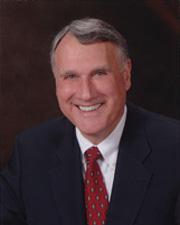 Sen. Jon Kyl (R-AZ)
Legislative Activity
Stay on top of the latest movement without scrolling through every action
Roll call votes on amendments in Senate: Motion to table amendment SA 2234 agreed to in Senate by Yea-Nay Vote. 67 - 25. Record Vote Number: 4.(consideration: CR S271-272)
January 27, 2004
View full timeline
Roll call votes on amendments in Senate: Motion to table amendment SA 2234 agreed to in Senate by Yea-Nay Vote. 67 - 25. Record Vote Number: 4.(consideration: CR S271-272)
January 27, 2004
Considered by Senate. (consideration: CR S266, S270-272)
January 27, 2004
Motion to table amendment SA 2234 agreed to in Senate by Yea-Nay Vote. 67 - 25. Record Vote Number: 4. (consideration: CR S271-272)
January 27, 2004
Considered by Senate. (consideration: CR S226)
January 26, 2004
Senate amendment submitted
January 22, 2004
Senate amendment proposed (on the floor): Amendment SA 2234 proposed by Senator Kyl to Amendment SA 2233.(consideration: CR S166-168; text: CR S166)
January 22, 2004
Amendment SA 2234 proposed by Senator Kyl to Amendment SA 2233. (consideration: CR S166-168; text: CR S166) To limit the liability of the Pension Benefit Guaranty Corporation with respect to a plan for which a reduced deficit contribution is elected.
January 22, 2004
Votes
1 roll call on this amendment
Text
Proposed
PENSION FUNDING EQUITY ACT OF 2003

Mr. McCONNELL. Mr. President, pursuant to the order previously agreed
to, I ask unanimous consent that the Senate now proceed to the
consideration of H.R. 3108, the pension bill.
The PRESIDING OFFICER. Without objection, it is so ordered.
Pursuant to the previous order, the Committee on Finance is
discharged from further consideration of the measure and the clerk will
report the bill by title.
The assistant legislative clerk read as follows:

A bill (H.R. 3108) to amend the Employee Retirement Income
Security Act of 1974 and the Internal Revenue Code of 1986 to
temporarily replace the 30-year Treasury rate with a rate
based on long-term corporate bonds for certain pension plan
funding requirements and other provisions, and for other
purposes.

The PRESIDING OFFICER. The Senator from New Hampshire.
Mr. GREGG. Mr. President, I rise in support of this piece of
legislation. I join the Senator from Iowa, the chairman of the Finance
Committee, along with the senior Senator from the Democratic party on
my committee, Mr. Kennedy, and I believe Senator Baucus. We worked long
and hard to address this issue--and it is a critical issue--of how we
make sure the pension system in this country, or especially relating to
defined benefit pensions, is maintained in a viable and strong way.
The pension system in this country is, regrettably, in trouble. But
the amendment being offered today is designed to restore stability to
the pension system and give us the time to solve the broad, difficult
problems facing the pension system.

Last week, when the Pension Benefit Guaranty Corporation released its
annual report outlining record losses, Labor Secretary Chao put the
issue in proper perspective when she said:

While PBGC [Pension Benefit Guaranty Corporation] is not in
crisis--the agency has sufficient assets to meet its
obligations for a number of years into the future--it is
clear that the financial integrity of the federal pension
insurance system is at risk. It is equally clear that
comprehensive reform of the nation's pension funding rules
must be enacted to strengthen the financial health of the
defined benefit pension system.

Time is the key thing here. That is why we need to legislate today.
The amendment gives critical players the time they need in the area of
reform to accomplish the changes necessary to get through this period
in front of us.
There is in this bill a temporary interest rate fix which gives
Congress time to review all of the options and make the right decisions
on funding, reporting, and many other issues facing the troubled
pension system.
There is also in this bill something called the deficit reduction
contribution relief area which gives airlines and steel companies the
time they need to get their affairs in order after a unique and unusual
period of pressure.
Further, there is reform in the area of the multiemployer pension
system which will give relief to management and labor to get their
agreements in order relative to collective bargaining in order to make
sure those funds are solvent.
No one--Congress, employers, nor unions--is absolved of
responsibility under this amendment. By granting time, we do not
reduce--that should be stressed--anyone's debts nor allow anyone to
avoid liability for debts they have voluntarily accepted.
What we do is provide the necessary breathing room so reforms and
repayments are made in a responsible and manageable fashion and not
under the threat of ``the sky is falling'' situations we confront
today.
The amendment has essentially four elements, as I have outlined.
First is reform of the 30-year Treasury note as being the vehicle by
which we assess pension funding. Second is temporary relief for
specific single-employer pension plans from deficit reduction
contributions, such as airlines and steel. Third is a 2-year delay in
the amortization of recent investment losses experienced by
multiemployer pension plans and the imposition of significant
improvements in the disclosure of information requirements of those
plans to their participants, which is critical.
Turning to the interest rate fix issue, this is the key issue for me.
I have spoken about this a number of times on this floor. In fact, back
in May I said: Now is the time to address this. I guess ``now'' has
become now. But the fact is, we have today a system where 30-year
Treasury bond rates are required in the current pension law for funding
purposes.
We will replace that with a conservative rate pegged to the high-
quality bond corporate basket. The reason for this is that 30-year
bonds essentially do not exist anymore so we have an artificial rate
under which we were requiring companies and pension funds to be funded.
The practical effect of that was that the bond rate was artificially
low, which meant the return on these funds was artificially low and the
funding requirements became, unfortunately, in real terms,
extraordinarily high and inconsistent with what a realistic rate would
be.
By shifting to a corporate basket of high yield corporate bonds, we
will correct this problem, significantly improve the viability of the
pension system, and allow the corporations, for a period of 2 years, to
use this temporary fix. It is a temporary fix.
Two years is a risk, I admit. Whether or not we can put in place the
necessary law changes and reach agreement between the various players
that are involved at the table, including the unions, corporations, and
the guaranteed fund is a question.
It is a short timeframe to resolve this issue. I would have preferred
more time so we could be sure we would reach an accommodation and a
timeframe that were realistic, but that is not what others wanted. It
was not what we were able to accomplish. As we all know, legislating is
sometimes the art of compromise, and in this instance that was the
case.
So we have a 2-year hiatus using a basket of high yield corporate
bonds as the new benchmark for funding. That will be positive relief,
and it will mean, in practical terms, that funds which would have been
artificially flowing into funding pension funds--and unnecessarily
flowing into those funds as a result of having to use the low Treasury
rate--will now be flowing into capital investment which translates
directly into jobs. That is what this is about, protecting jobs and
protecting pensions.
The second area is the deficit reduction contribution relief
function. The amendment grants 2 years of relief to the airline and
steel industries from mandatory deficit reduction contributions. Other
companies may also apply to the Treasury Department for similar relief.
Companies getting relief must remain current on their pension
obligations and cannot increase the benefits that they create under
their pension funds during this period.
Airlines are the main focus of the deficit reduction contribution
relief. Airlines are the main focus because of

[[Page S158]]

the unique stress these companies have suffered. In recent years,
profit pressures within the U.S. airline industry have been amplified
by severe pricing competition, the recession, and, most importantly, by
the effects of terrorism and the war in Iraq. Severe acute respiratory
syndrome, SARS, also created pressure on the entire industry,
especially those flying overseas.
The industry is in transition. The public has been reluctant to
return since September 11 to the level of travel we had before
September 11. Two airlines have already filed for bankruptcy
protection. Others may follow suit. It is our intention with this
amendment to ensure that pension rules are not the determining factor
in selecting which airlines survive and which fail. We should not be
kicking airlines over into bankruptcy on the issue of pensions. If that
happens, it should be a function of their operating activity in the
area of competing for passengers.
The PBGC is also concerned about the steel industry, especially two
specific companies which have filed bankruptcy. Last year the agency
absorbed the largest pension plan in its history when it trusteed the
Bethlehem Steel plan. Only a few steel company pension plans still
exist.
The DRC portion of the amendment gives these plans in this troubled
industry a chance to get their finances in order without the imminent
threat of a takeover by the PBGC. The DRC provisions are important
safeguards to the system and especially to the PBGC. Plans taking the
relief must pay 20 percent of their obligation in the first year and 40
percent of their obligation the second year or the plan's expected
current liability for the year, whichever is greater. This ensures that
no plan will lose ground and become worse off than it was when we
started this process. Plans that are funded at only 75 percent or less
are also prohibited from increasing benefits during this 2-year
moratorium. There is strict accountability. Furthermore, there has been
talk of freezing the PBGC guarantee for these plans.
The multiple employer benefit plan relief is another area that this
bill addresses. What the amendment does is allow plans to suspend
amortizing their experience losses for 2 years. Multis may amortize
experience losses over 15 years under current law. Multiemployer plans
also would be required, under the amendment, to send annual notices to
all participants disclosing the funding status of the plan. This is an
important reform. It will mean that we will have transparency in
multiemployer programs--something we don't have today--so employees can
find out the status of their plans. This reform will have a very
positive impact.
Without this relief, many companies participating in multiemployer
plans will face significant taxes and monetary penalties. This is an
attempt to address that problem over the next 2-year period. It is done
as a result of pressure which we are seeing within the industry to move
out of these types of plans and, in fact, abandon the field of pensions
completely in the area of defined benefits plans.
We understand that if we do not reform these plans and their funding
more substantively over the 2-year hiatus being granted to us, we will
have lost a huge opportunity to make available to employees effective
pension benefits.
Our goal is to make sure we don't arbitrarily force a number of
employers out of the pension area simply because we have an artificial
rate at which they have to fund their plans; that we don't create an
atmosphere where, in the area of airlines and steel, we are essentially
forcing these industries into bankruptcy because of their pension
structure but, at the same time, not create an atmosphere where we
unduly undermine their commitment to their pension structure; thirdly,
not create an atmosphere where multiemployers basically abandon the
field of pension activity and we end up with many employees not having
the opportunity to participate in pensions.
That is our goal. Our basic goal is to assure that we have a viable
pension system for our employees and the option, as part of that viable
pension system, that we have a strong defined benefit element of the
system. We know, regrettably, that as we came out of the period of the
bubble of the 1990s, tremendous pressure was put on these different
pension plans because of their investment experience. It was not unique
to pension plans. Many American citizens who invested in the 1990s
found the same problem. At the end of the 1990s, most of these plans
were extremely solvent and strong. Today they are weak. They need this
type of relief in order to get through this period.
We have been through this type of experience before. I point to the
Chrysler bailout process as an example of how the Government, through
intelligent approaches toward companies that are in stress, could
maintain those industries and be sure that they work their way through
the process during the hard times and, as we move back into a strong
economy, have the opportunity to do the reform necessary to strengthen
those plans so they get them back up to speed.
This is a much more logical approach than the haphazard, sky-is-
falling approach of forcing the plans through reorganizations, through
dramatic funding events that are artificially created through the
interest rates or by making the plans much less attractive because the
pension costs are so high. So I think the bill makes sense. There is
consensus on it and we should move forward with it.

Before I yield the floor, I thank the chairman of the Finance
Committee for his commitment to this effort and the strong work of his
staff in this area, and the cooperation which the Health, Education,
Labor, and Pensions Committee has had on this effort.
The PRESIDING OFFICER. Who seeks recognition?
The Senator from Iowa is recognized.
Mr. GRASSLEY. Mr. President, in turn, I thank the Senator from New
Hampshire as the chairman of the committee dealing with some pension
legislation. I thank him for his cooperation. That cooperation has been
over a long period of time, going back to at least a year when we
started efforts to work together on pension legislation so we would
have a solid approach on the floor of the Senate.
Mr. President, the replacement of the so-called ``30-year Treasury''
interest rate has reached an emergency. This is the statutory rate used
to value pension liabilities.
There is an inverse relationship between interest rates and pension
liabilities: As interest rates go up, pension liabilities go down.
Conversely, as interest rates go down, pension liabilities go up. Small
changes in interest rates mean big differences in pension
contributions.
Current interest rates are at historic lows. Low interest rates have
caused pension plan liabilities to skyrocket. To make matters worse,
the recession that began in 2000 brought down stock values.
The combination of unusually low interest rates and the decline in
stock values have combined to worsen the pension plan funding problem.
Just when you think things can't get any worse, they do.
In October 2001, the U.S. Department of the Treasury discontinued the
30-year Treasury bond. The 30-year bond is the statutory rate used by
pension plans to value their liabilities. While the Treasury Department
still calculates the yield on the 30-year Treasury bond, the number is
increasingly ``soft.''
To help plans cope with high funding requirements, Congress adjusted
the rate to 120 percent of the 30-year Treasury shortly after the
terrorist attack of September 2001. That adjustment was effective for
2002 and 2003. Plans were depending on Congress to extend that relief
before December 31, 2003. We missed our deadline.
At the end of the last session, we needed unanimous consent to pass
an interest rate bill, but we did not have UC to proceed. The
objections were not over replacing the rate, they were over deficit
reduction contribution, or ``DRC relief'' and over relief to
mutliemployer plans.
Let me talk about DRC relief for a moment. There is an honest
difference of opinion in the Senate over whether or not to grant DRC
relief to underfunded pension plans.
The real answer to the question of whether underfunded plans should
be given DRC relief is: It depends.
If a company is otherwise healthy but in a cyclical industry, should
the

[[Page S159]]

combination of the economic downturn and an arbitrary pension rule
force them into bankruptcy?
I respectfully suggest that DRC payments should not force an
otherwise healthy company into bankruptcy. Remember, the company could
survive if the Government takes its thumb off the pension DRC scale for
a little while.
So what should Congress do?
The Senate Finance Committee decided that we should provide temporary
relief to overburden plans. The HELP Committee did not take action on
this issue.
Out of respect to the HELP Committee, we agreed to winnow back the
relief to qualifying airlines and steel firms, but to allow others to
apply to the Government for relief so long as they meet the
qualification requirements. The bill provides only 2 years of limited
DRC relief. Relief for 2004 is limited to 80 percent of the deficit
reduction contribution.
In 2005, the DRC relief is further limited to only 60 percent of the
otherwise payable deficit reduction contribution.
Plans that were poorly funded in 2000 are not eligible for this
relief. We are concerned that for the healthy companies, the DRC
creates an artificial cash demand on companies. The DRC is well-
intentioned, but it may be a flawed requirement.
We wish we had time now to simply reform the DRC. If we had
anticipated the amount of time it has taken us to get to this point, we
would have reformed the DRC. As an alternative to reform, we are
providing short-term DRC relief to qualifying companies.
Now, let me turn to the multiemployer plans.
The same fiscal and financial conditions that have caused the
pension funding crisis among single-employer plans are working against
the multiemployer plans.
Since we have already given 2 years of relief to single-employer
plans (in 2002 and 2003), it is only fair that we now provide some
relief to the multiemployer plans.
This amendment gives multiemployer plans an extra couple of years to
amortize their experience losses. If we don't give them relief, excise
taxes will cascade down the employers who contribute to the plan. The
excise taxes and penalties will hurt the employers--not the unions. The
excise taxes start at 5 percent, but they quickly increase to 100
percent.
These taxes do not help fund the pension plan. They just enrich the
Federal Government.
The reason that this relief is a little different from the single-
employer language is that the multiemployer plans are structured very
differently than a single-employer plan.
A multiemployer plan consists of tens, or hundreds, or a thousand
employers contributing to the same fund. Each employer may have a
slightly different arrangement for its work force. With all those
employers and all the potential differences in the individual
arrangements, the plan cannot change overnight.
The language that we are bringing to the floor gives the
multiemployer plans a little extra time to rearrange their
contributions and benefits before these excise taxes would take effect.
It gives the plans time to go back to the bargaining table and
renegotiate.
This package has been drafted to give temporary funding relief to
both single-employer and multiemployer defined benefit pension plans.
Currently these plans are straining to pay their contributions.
Relief is limited in duration. It will expire at the end of 2005.
Our objective is always to balance the requirement that
participants' benefits be funded and guaranteed, but to do so without
driving otherwise healthy employers into insolvency.
Pension funding rules need to be revised. We know that. While we
work toward that goal, however, this proposal will lessen the burden
that usually low interest rates place on plan funding.
I yield the floor.
The PRESIDING OFFICER. The Senator from Massachusetts.
Mr. KENNEDY. Mr. President, I rise to speak on behalf of the members
of the Finance Committee, and in particular for Senator Max Baucus, and
for members of our committee. I think now of our good friend and good
ally to the chairman of the committee and to the other members of the
Finance Committee who have been working on this legislation for a
significant period of time.
Most of us remember the mishap that happened to Senator Baucus some
time ago, during an event that very few, if any, of us would
participate in--a 50-mile road race. During that race, he slipped and
had a small accident, or so he thought at the time, but still continued
the race. Then, because of complications that took place a number of
weeks after the mishap, additional treatment and care was necessary. So
he is not present with us today.
Senator Baucus wanted the Senate to move ahead on this legislation,
which is typical of Senator Baucus. He encouraged us to go ahead and he
told the leadership on our side and on the other side, that he wants
the Senate to work its will on this legislation because it is
enormously important.
All of us are very mindful today that Senator Max Baucus has been
facing a challenge in terms of recovery. He is doing well. He is
getting better. He will soon be back with all of us.
I certainly thank him--and I think I speak for all of us on our
side--for all the good work he has done in terms of the development of
this legislation. His work has been indispensable and extremely
important.
I also thank the chairman of the Finance Committee, Senator Grassley,
and the chairman of the HELP Committee, Senator Gregg, for their work
on this legislation. This legislation has an enormous impact on workers
in this country, and it has an incredible impact on small businesses
and other businesses in this country that are trying to be responsible
and do the right thing.
All of us understand that retirement income is dependent on a three-
legged stool comprised of Social Security, personal savings, and a
pension. Those are the three elements which men and women, who have
worked hard and played by the rules, look to in terms of their future
and of their golden years. That is why it is so important that we
preserve Social Security.
We are all mindful of what has happened in recent times in terms of
personal savings, where savings have been reduced as a result of a lot
of different factors and forces. The market has been off. And although
it has come back to some extent in the last few weeks, overall there
has been a loss among many of those who had 401(k)s.
Then there is the serious challenge to the whole pension system. It
is indispensable that we find common ground and work to deal with this
issue which is of such incredible importance. The fact we have been
able to work on both sides of the aisle on this extremely important
legislation is, I think, enormously significant.
The chairman of the Finance Committee and I have enjoyed working with
my colleague and friend from New Hampshire, Senator Gregg. We haven't
cosponsored or worked together all that many times, but I always enjoy
it when we do, and even when we differ, I enjoy that as well.
I can't underscore enough the importance of this legislation, and we
are extremely hopeful that the kind of agreement we have had so far
will continue to be the basis of the legislation as it moves forward.
Defined benefit pension plans are, as I mentioned, a key part of
retirement security for millions of Americans. They promise a monthly
benefit starting at retirement and continuing for the rest of your
life. Defined benefit plans are different from defined contribution
plans and all the other pension plans. Only a defined benefit plan
provides benefits backed by the Pension Benefit Guaranty Corporation.
Americans in every industry benefit from these plans. Nearly 35
million workers and retirees are covered by single employer plans, and
9.7 million more are covered by the multiemployer plans. One in every
five workers participates in a defined benefit plan.
But today the secure retirement of these workers is at risk. As we
have heard from many experts, a ``perfect storm'' is overtaking defined
benefit plans. The longest downturn in the stock market since the Great
Depression, combined with a troubled economy, and historically low
interest rates have led to the underfunding of many of these pension
plans, and the storm threatens to wreck the pension dreams of millions
of Americans.

[[Page S160]]

This amendment that Senator Baucus, Senator Grassley, Senator Gregg,
and I are offering will provide immediate short-term measures needed to
deal with this temporary crisis.
The amendment has the broad support of Democrats and Republicans,
employers and unions. Despite our differences, all of us agree that
employees deserve to receive the benefits promised by their pension
plans. To protect the security of their retirement, we need a solution,
and we need it quickly.
Our amendment takes three steps to help defined benefit pension
plans. First, it temporarily replaces the 30-year Treasury bond rate
used to calculate employers' contributions to pension plans with a
corporate bond rate.
As the interest rate on 30-year Treasury bonds has fallen, the
decline has created huge uncertainties for pension plans. As many as 20
percent of defined benefit pension plans are at risk of being
terminated or frozen. Temporarily replacing the 30-year Treasury bond
rate will stabilize these plans and enable them to continue to provide
the benefits they have promised.
Second, our bill provides for additional deficit reduction
contribution relief.
Although the Bush administration keeps speaking of an economic
recovery, the recent economic growth has not translated into job
security for Americans--indeed, only 1,000 jobs were created in
December. Many sectors, such as the airline and steel industries,
continue to struggle.
The men and women in the airline industry are well aware of the
threat to their jobs. Over 100,000 airline workers have lost their jobs
in the last 2 years, and thousands more are accepting cuts in pay and
benefits to preserve their jobs. These workers have done their part to
keep the skies safe and keep their companies flying and they need our
help to protect their jobs and pensions.
The steel industry is also struggling to find new ways to increase
efficiency and compete in the world market. But the industry continues
to face serious challenges, and relief is essential.
The deficit reduction contribution relief in our amendment would
provide relief from these payments to companies that had well-funded
pension plans in the past and need extra assistance now. These are
companies that have met their responsibility and through the confluence
of events are today challenged. This helps provide temporary relief.
This relief is needed to help protect the pensions and jobs of
workers in these industries. These are industries that can come back--
and must come back--to help drive our economic recovery.
Our amendment also includes important relief for the multiemployer
plans, which fill major needs in our pension system by providing
pensions to many low-wage workers, as well to short-term and seasonal
workers who might not otherwise be able to earn a pension.
Forty percent of these workers are in construction, building homes
and offices. They worked around the clock at the World Trade Center
site after the tragedy of September 11. Because many construction jobs
are short term, these workers rely on multiemployer plans to guarantee
their retirement.
Thirty percent of these workers are in retail or service industries.
They clean hotel rooms and corporate offices. They bag groceries and
serve food in restaurants. They do not have golden parachutes or
executive stock options. Without a multiemployer plan, many of them
would have no pension at all.
Ten percent are in the trucking services, traveling across the
country at all hours of the day and night to deliver goods safely to
stores, factories, and homes. A multiemployer plan helps them reach
their retirement destination safely, too.
Multiemployer pension plans also help employees of small businesses.
Only 8 percent of companies with fewer than 100 employees offer a
defined benefit pension plan. Many small businesses find it most
affordable to provide such benefits through a multiemployer plan. As
one pension expert testified before the House, multiemployer plans
``provide literally tens of thousands of small employers with the
opportunity to provide competitive and comprehensive benefit plans to
their employees . . . which would otherwise be too expensive and
administratively complex for them to provide on their own.'' The larger
companies can provide the self-insurance, so to speak, for the pension
plans. The smaller ones have to be involved in these multiemployer
plans that include a variety of different companies.
Like single-employer plans, the multiemployer plans have been
devastated by the stock market. Because of these losses, the plans are
in trouble. The modest relief in our amendment will provide both
companies and workers with more time to negotiate contracts to meet the
soaring funding needs.
These three bipartisan steps provide a vital temporary solution to
the problems faced by the Nation's pension plans. Once these problems
have passed, more must be done to preserve and expand the defined
benefit system that means so much to so many employees today. Our
amendment provides 2 years of relief enough to allow us to begin.

I urge my colleagues to join in providing this much-needed protection
to the millions of hard-working Americans who have worked for and
earned a secure retirement.
To review the highlights of this legislation one further time, there
are 35 million Americans who are covered by the single-employer defined
benefit pension plans. This gives some idea of the importance. There
are 9.7 million, effectively 10 million, more who are covered by
multiemployer defined benefit pension plans. This is effectively 45
million employees who are going to be affected, and obviously thousands
of employers. Only defined benefit plans provide a secure monthly
benefit backed by the Pension Benefit Guaranty Corporation.
What are the factors? Why is this legislation necessary? Why is it
needed? I mentioned in my other comments about the ``perfect storm,''
the series of events which have taken place. These are the factors
which have impacted these pension programs in an adverse way.
First, the prolonged downturn of the stock market during this
administration, the longest since the Great Depression; extremely low
30-year Treasury bond interest rates. Bond interest rates have been
low. That has had some positive impact, obviously, in terms of the
refinancing of automobiles and homes, which has been extraordinarily
important, but adverse in terms of these pension programs. The weak
economic conditions mean the companies cannot afford to make the
additional payments and pay excise taxes imposed by our pension laws.
Because of the economic pressures, the companies are hard pressed to
meet their responsibilities. They have been responsible in trying to
set up these pension plans. They want to provide for their workers.
They want to do the right thing. This helps them, at least in a
temporary way, to deal with those issues.
Those are basically the reasons why this legislation is necessary.
This is a temporary program, but it affects almost 45 million of our
fellow Americans.
I want to mention one other factor, and that is that multiemployer
plans provide literally tens of thousands of small employers with the
opportunity to provide competitive, comprehensive benefit plans to
their employees, which otherwise would be too expensive and
administratively complex for them to provide on their own.
This really helps the small businesses in a very important way. I
will give some idea to our colleagues about the people who are affected
by this action. Multiemployer plans provide pensions to low-wage
workers, and workers in seasonal or short-term employment. They provide
pension plans for workers in many industries. 38 percent are in the
construction industry, clearly the largest industry. Truck
transportation is 9.8 percent; services, 15 percent; retail trade, 14.5
percent; 15.2 percent of all of those workers are in manufacturing. I
think all of us understand the challenge this Nation is facing in
retaining manufacturing jobs in America. This is enormously important
in helping preserve it. There are a lot of different elements in terms
of what we are going to have to do to preserve manufacturing jobs, but
this is vital.

This chart gives the idea. It is manufacturing, it is retail and
service, it is transportation, again, it is construction. For
individuals who are moving

[[Page S161]]

from project to project, by the nature and definition of the
construction industry, they absolutely need the multiemployer plans.
They work. They have been successful. But they are hard pressed, as I
mentioned.
This is a balanced program. It is a temporary program. It has the
broad support of employers, large and small. It has the support of
workers from large companies and large unions to small companies and
individual workers. It responds to a very important and significant
issue, which is, I think, at the heart of the American dream, and that
is how we are going to view retirement. The Greeks used to define a
great civilization by how it cared for its senior citizens. These are
the men and women who have sacrificed, the ones who helped bring this
Nation out of recession, who fought in the various wars in which we
have been involved and, most important, they have sacrificed for their
children. They have sacrificed for their children's educations or for
whatever challenges they had.
But they have been working hard, over a lifetime. They have been
prudent and they have saved. Now, at the time when they are getting
close to retirement, because of forces and factors far beyond their
control--that retirement is threatened in a very significant and
important way.
This legislation makes sense. It has broad support. I am hopeful we
can pass it. It is necessary and it is important.
I commend our leader, Senator Frist, for scheduling this as an early
priority in this session. I think it is a matter of enormous importance
and consequence, and it is a great priority. I commend the leaders for
giving the Senate the opportunity to take action on it.
Mr. President, I yield.
Mr. GRASSLEY. Mr. President, I want to follow on what Senator Kennedy
said in his opening remarks about this bill being here through a great
deal of cooperation between two committees, and Republicans and
Democrats within those committees. It also gives me an opportunity to
thank Senator Baucus because I always have a very close working
relationship with him on our Finance Committee. This is a result of
that cooperation. But, as I previously said, and it has been alluded to
by Senator Kennedy and Senator Gregg, this is an issue where two
committees, the Finance Committee and the Health, Education, Labor, and
Pensions Committee share jurisdiction. So we have had a remarkable
cooperation between the two committees, and that includes Senator
Kennedy's cooperation to get this bill out and hopefully not only get
it to the floor but that this sort of cooperation helps us expedite
this bill.
This is a very important piece of legislation and is needed by a lot
of segments of the economy in order to keep companies viable.
In addition, I hope we will be able to have Senator Baucus back with
us quickly. Originally when he left the hospital we heard it might be 2
weeks' recovery. I hope that is coming along OK and he should be back
here with us very shortly.
Mr. President, I will suggest the calling of a quorum.
Mr. KENNEDY. If the Senator will withhold, we understand the leaders
have set this time now for debate. We are here and ready for debate and
discussion. This is enormously important. The leaders wanted us to try
to consider the concerns of the Members on both sides of the aisle
today. We are going to be at our posts, Senator Grassley and myself,
today and also on Monday.
I think it was the leader's desire to stack the votes for Monday
afternoon. It is now Thursday afternoon, quarter of 2. We are here and
ready for action. We know some Members have spoken with us about their
concerns about different provisions. We are ready to deal with those
issues, or at least be able to debate them and make sure that our
colleagues are going to be fully informed about them by the time we
vote.
I certainly hope those who do have amendments would come over here
and present them so we might be able to consider them, work on them
through the afternoon or through the evening, and make as much progress
as we can. I hope we are not going to be left for these to come in at a
later period. We are prepared to consider these issues at the earliest
possible time.
Mr. GRASSLEY. Yes, the unanimous consent provision does allow for
amendments, an equal number on both sides. We hope the people who are
interested in following that rule will come over. I have been told
there is at least one Member on my side of the aisle who should be here
shortly to offer an amendment. I urge that to happen.
Obviously, we will be glad to have debate and accommodate everybody
in any way we can.
I suggest the absence of a quorum.
The PRESIDING OFFICER. The clerk will call the roll.
The assistant legislative clerk proceeded to call the roll.
Mr. LOTT. Mr. President, I ask unanimous consent that the order for
the quorum call be rescinded.
The PRESIDING OFFICER (Mr. Alexander). Without objection, it is so
ordered.
Mr. LOTT. Mr. President, what is the parliamentary situation? I wish
to speak on the pending legislative issue, the pension bill. Is the
floor open for comments?
The PRESIDING OFFICER. Yes, it is.
Mr. LOTT. Mr. President, I rise in support of this legislation. I
commend the Senators who have been involved in working out most of the
disagreements, including Senators Grassley, Baucus, Gregg, Kennedy,
and, of course, our leaders, Senator Frist and Senator Daschle, who
have all been involved in working through the difficulties of this
legislation.
Quite frankly, this is complicated and difficult legislation to
understand. A lot of times, people start referring to issues by
acronyms such as COLA or DRC. If you are not really involved in the
intricacies of pension issues and, particularly, this area of deficit
reduction contribution, you can get lost in the details. You can even
be misled as to what the reason for it is and what the impact will be.
I have followed this issue because I am a member of the Finance
Committee, which has jurisdiction in the area of pension plan
contributions, and also as chairman of the Aviation Subcommittee of the
Commerce, Science, and Transportation Committee. I do believe the
airline industry is in a difficult situation now, but I think they are
a critical part of America's economy and our transportation system.
There is no question that they have been greatly impacted by fuel
costs, the events of 9/11, and even, temporarily at least, by the war
in Iraq. They have been struggling to deal with those issues. They also
have had mistakes in their past, in management decisions. Some of the
contracts they have with labor put real pressure on them in terms of
being able to make enough money to pay all the costs of delivering this
service. Regardless of that, I think it is hugely important for America
that we have a viable and available airline industry.
We have been doing things to try to help them. Right after 9/11, we
passed major airline relief, leading up to the war in Iraq. In the
aftermath of 9/11, we provided direct assistance to the airlines. Late
last year, we passed the Federal Aviation Administration
reauthorization, a significant multiyear legislation that was hard to
get through, but we got it done. It was supported by management and
labor and the administration in the end. That gives some certainty
about what the administration will be doing, what they can do. We
opened up some areas that needed some changes. This area is also very
important to the survival of some of our airlines.
Some will argue that it gives the major airlines an advantage over
the smaller airlines. I certainly am not in a position to want to do
that. I want all of our airlines to be able to meet the
responsibilities and commitments of their pension plans but also to be
able to stay in business and provide service. We need the shorter
routes, the ones that fly from point to point, and the hub airlines. I
want a healthy airline industry. This is one step in that process.
Some people will attack this legislation and say the airlines brought
it on themselves. Sure, they have made mistakes, but a lot of things
they are being hit with cannot be put at their doorstep as being their
fault. They

[[Page S162]]

didn't cause 9/11. They have not been responsible for the increasing
and up and down prices of fuel. A number of factors that have played
into their economic situation they cannot be blamed for. They have
certainly made mistakes, but this is not something they brought on.
This is a requirement in the law that we put on them. This is a part of
the PBGC legislation, where they have to pay into the pensions, and we
capped how much they could pay in.
A few years ago, in 2000, the airlines were committed and paying, I
think, 100 percent of what was needed. But in the last year or two,
they have fallen under severe pressure, and, as a result of the quirks
in the law, they now would have to pay an accelerated penalty, even
more money, because of the 30-year Treasury bond calculation process to
determine how much they paid in. That has come to a conclusion. They
have to go to a new system.
My point is that I think this DRC relief is the right thing to do. It
is a temporary 2-year deal. They are not absolved of all of their
responsibilities. It is an 80-60 percent--80 percent relief in the
first year, 60 percent in the second year, and only plans that were not
subject to the deficit reduction contribution relief in 2000 would be
eligible for this relief.
The plans would not be able to increase benefits if they were 75
percent funded or less. An application process would allow companies
that are not in those industries to request DRC relief if they were not
subject to the DRC in 2000.
This is a temporary modification to provide relief to allow airlines
to work through the difficulties they are having now. I believe this
relief will enable them to move forward and fulfill their commitments
in the future.
It is not going to bring in all of the plans. It is targeted at
airlines and steel only, and I understand only a couple of steel
companies would be affected by this.
This legislation is bipartisan. Democrats and Republicans have been
working to try to address some of the concerns and deal with the
recognition that interest rates have contributed to this problem, stock
market declines have contributed to this problem, and what would we do
to be of assistance to the airlines. But it also makes sure the PBGC is
not left holding the bag. I think we have come up with the right
solution.
Some people will argue the DRC relief will actually worsen the
financial standing of the PBGC. I am concerned about the financial
stability of the PBGC, but I think this temporary, limited relief will
actually be in its best interest. If we do not do this, some of these
airlines will go into bankruptcy and PBGC will have an even more
difficult situation on their hands. If these companies wind up taking
chapter 11, then the pension fund is going to have a problem.
The point might be made: Let's wait for the bigger pension reform
bill. I know Chairman Grassley and others want to have broad pension
reform. We need to do that. But we are not going to be able to do it in
the next month or two, and I don't even think we are going to be able
to get it done this year. We need to do it. We ought to do it. This
problem is imminent. If we don't act by April 1, these airlines and
steel companies are going to have to pay at the accelerated rate, which
they are not going to be able to do. So it is timely. We have to act
now because in a very short period of time, the roof will come falling
in on these companies.
I understand there may be a couple of amendments. I appreciate the
fact that Members did work with me on a provision I had concerning
multiemployer withdrawal liability. We worked on compromise language
that is in the legislation which I think is acceptable. Many of the
questions that were raised by the chairman of the Budget Committee and
by Senator Kyl of Arizona have been addressed. I understand they may
have an amendment or two. We ought to debate those amendments and have
a vote. But then I hope my colleagues will allow this legislation to
move forward, go on to conference, and let's get it done in a timely
fashion. It is in the best interest of the airline industry and, I
believe, the PBGC, and the American taxpayer.
I thank the Chair. I yield the floor.
The PRESIDING OFFICER. The Senator from West Virginia.
Mr. BYRD. Mr. President, is time controlled?
The PRESIDING OFFICER. It is not.
Mr. BYRD. I thank the Chair.
Is the distinguished senior Senator from Massachusetts a manager of
the bill?
Mr. KENNEDY. The Senator is correct. We have had a good discussion by
those who are the principal sponsors, and we are awaiting, hopefully,
those who would like to amend the bill, but they have not indicated
they are on their way just yet, so we have some time. If the Senator
would like to speak, we obviously would like to accommodate him in any
way.
Mr. BYRD. Mr. President, I thank the distinguished Senator. I always
like to be on God's side, and then I like to be on Senator Kennedy's
side. If there is a choice between the two, why, I think I will pass
for the moment.
Mr. President, it is not hyperbole to suggest that the sky is falling
for too many American workers. You could also say that the ship is
sinking. You could say that the mine wall is collapsing, that the dam
is giving way, or use any number of metaphors for a looming disaster to
describe the current state of America's private pension system.
The entire system is wobbling under assaults from every direction. On
the one side, the stock market plunge has left the pensions for over 44
million workers underfunded by an estimated $350 billion. Last year,
the Pension Benefit Guaranty Corporation had to assume the pension
obligations for scores of bankrupt companies, ranging from airlines to
steelmakers, pushing the PBGC's balance sheet into the red by an
alarming $11.2 billion.
On the other side, the assault is coming from historically low
interest rates that have triggered painful new funding requirements for
employers. Even companies that want to provide for their employees find
themselves unable to compete in a global marketplace against
competitors unencumbered by the legacy costs of pension and health care
benefits.
U.S. employers are warning they will be forced to freeze their
pension plans or terminate them unless the Congress provides them with
relief from their pension obligations. Yet, with $350 billion in
underfunded pensions and a growing deficit, the Federal pension insurer
is warning that unless those pension obligations are funded, a massive
taxpayer bailout, akin to the 1980s savings and loan crisis, is just
over the horizon.
At a time when working families are looking for assurances that their
pensions will be protected and their retirement will be secure, the
Congress is offering neither assurances nor security. This legislation
provides funding relief to employers, but it does little to ensure that
the pension benefits promised to workers will be there when they
retire.
While this short-term patch may be necessary to keep the ship afloat
for a while longer, it does not change the fact that the ship is
sinking, and the Congress has not yet readied the lifeboats.
The Congress is telling workers that once the needs of business have
been addressed, then it can act to ensure their pensions are fully
funded. The Congress is wagering that the pension system will stay
afloat that long. It is a theme I have noticed repeatedly during the
tenure of this administration. While the top of the economic pyramid
receives immediate relief, the hard-working middle class is given only
vague promises, uncertain promises of uncertain relief and delayed
benefits. I have seen it over and over and over. The corporate elite
receives immediate tax cuts, while America's working-class families,
the people who work with their hands, the people who get their hands
dirty, the people who are soiled in grime when it is time to go home
and have supper, are told to wait, wait for the economy to survive.
The pharmaceutical industry receives billions of dollars in taxpayer
subsidies while middle-class families wait endlessly for lower drug
prices.
Corporate profits continue to increase while middle-class families
wait for those profits to trickle down to them. In asking middle-class
Americans to wait for the economy to improve, wait for health care
costs to go down, wait for their wages to rise, it confirms that this
administration of

[[Page S163]]

corporate CEOs and Texas oilmen do not have the slightest comprehension
of the plight of American workers, the people who work with their
hands, who get their hands dirty, who get their fingernails dirty,
whose shirt sleeves are dirty. They are the American worker.
It is a grim, bleak time for working Americans. Two and a half
million jobs have disappeared under this administration's economic
stewardship. Most of them are in our once powerful manufacturing
sector, which has lost jobs for 41 consecutive months. Just come to
West Virginia and see what has happened. The glass plants have gone.
The pottery works have gone. The steel mills, to a large degree, have
gone. The coal industry, which used to employ 125,000 men when I first
came to Congress, today employs perhaps 15,000, 16,000, 18,000 workers
who mine just as much coal as in the days when there were 125,000 men
working in the mines.
Yes, 1 million jobs have been lost. Where have they gone? They have
gone overseas. Eight million workers are unemployed, without hope for
tomorrow, listening to their children, listening to their spouses,
saying: Where will we go? What will we do? What will happen to us?
Eight million workers are unemployed. Half a million discouraged
workers have dropped out of the labor pool saying there is no hope;
hope is gone; the hope to which I held for these many days, these many
weeks, these many months is gone. Three and a half million workers are
collecting unemployment benefits, with an average 350,000 workers
signing up for benefits each week. At the same time, 80,000 jobless
workers are exhausting their unemployment benefits each week, forcing
them to cut back on health care, forcing them to cut back on food
purchases. Workers are losing their health insurance. Two and a half
million more people joined the ranks of the uninsured last year, the
largest single increase in a decade. Think of that.
Put yourself in the shoes of these who go to bed hungry, who go to
bed with heavy burdens, the burdens of forlorn hopes. With health care
costs spiraling out of control, 44 million people must do without
health insurance. Retired workers are forced to do without lifesaving
drugs, without digoxin, without Coumadin, without Singulair. For those
workers with health insurance, the out-of-pocket costs are soaring,
more than doubling for employees of large companies since 1998. Costs
are up sharply and going up more, too, for workers who pay monthly
premiums but rarely see a doctor. Worker pensions are in danger, with
the Federal pension insurer taking over 122 plans last year, slashing
the pension benefit promised to over 200,000 workers. Two million
additional Americans fell into poverty in 2002.
Yes, we can afford to rebuild the oil pipeline, the oil wells in
Iraq. Yes, we can afford to rebuild the infrastructure in Iraq. What
about our own people? What about our own workers, who with their sweat
and their toil have built this country and made it the wonder of the
world? Not coincidentally, almost 2 million workers earn wages at the
statutory minimum, $5.15 per hour. These are real people. It may be
hard to comprehend that there are people who are working for that
minimum wage, and that that minimum wage is the only thing that stands
between them and their children and starvation. These are real people.
These are real stories about working people in this land of the free,
this home of the brave. These people earn their wages at the statutory
minimum of $5.15 per hour. Think of it. Their wages are eroded every
year by inflation, with the real value of the minimum wage dropping.
While the wealthiest taxpayers receive tens of thousands of dollars in
tax cuts, the administration denies a meager $1.50 per hour raise to
our most impoverished workers. These administration people who oppose
an increase in the minimum wage come from the other side of the tracks.

To quote President Franklin Roosevelt, the test of our progress is
not whether we add more to the abundance of those who have much, it is
whether we provide enough for those who have too little.
After three colossal tax cuts, this administration has denied much to
those who have little in order to provide more to those who have much.
The American worker--have you ever been a worker? The American worker
has once again become the forgotten man. While the administration is
offering only vague promises of hope, the American workforce is forced
to endure the most hostile assault in decades. The Bush administration
has tried to repeal the 40-hour workweek and strip workers of their
right to overtime pay. Think of that. It has attacked the civil service
system. It has repealed the safety rules necessary for the protection
of America's workers. It has neglected their health and safety in the
workplace. Now the administration is blocking an increase in the
Federal minimum wage.
It is blocking efforts to provide unemployment benefits to jobless
workers. It is trying to push through a rule to strip 8 million workers
of their hard-earned overtime pay. And it does so always with the
promise that these benefits for businesses and the corporate elite will
one day trickle down to the middle class. This is not the record of an
administration that understands the needs of working families.
Mr. KENNEDY. Will the Senator be good enough to yield?
Mr. BYRD. Yes.
The PRESIDING OFFICER (Mr. Crapo). The Senator from Massachusetts.
Mr. KENNEDY. I commend my friend from West Virginia on speaking of
the forgotten man, the worker of this country, because he has just
listed the series of actions which threaten the well-being and the
livelihood of millions of families. As he says these words, I think it
is important that our colleagues and the American people understand
their significance.
He mentions, for example, the failure to act on the minimum wage. It
has been 7 years since we have acted on an increase in the minimum
wage--7 years. The purchasing power of the minimum wage now is just
about as low as it has ever been. The minimum wage, as it is defined,
is for people who work hard, who play by the rules. This is an issue
which affects women because the majority of recipients of the minimum
wage are women. It affects their children because many of the women
have children. So it is a children's issue. It is a family issue. It is
a civil rights issue because many of those who receive the minimum wage
are men and women of color. It is a fairness issue because if you work
hard and play by the rules, 40 hours a week, 52 weeks of the year, in
the country that has the strongest economy in the world, that is the
United States of America, you should not have to live in poverty.
We have been blocked, as the Senator remembers, by our friends on the
other side from even having a vote. We have a majority in this body who
support an increase, but we are blocked.
The Senator speaks about unemployment compensation. The Senator well
knows there are 90,000 workers a week who are losing their unemployment
compensation. Our friends on the Republican side, have blocked even a
temporary extension on it--90,000 a week.
Overtime? Eight million. I discussed this earlier today. I am not
sure whether the Senator is familiar, I am not sure how many Americans
are familiar, with the definition of professionalism in the Labor
Department's proposed regulation, which will make American workers
ineligible for overtime. This definition will include training received
in the Armed Forces of this country. There are 200 different training
programs that men and women receive in the Armed Forces. They go for
this training, they serve in Iraq with the finest military in the
world, and then they come back, and are hired here, and under the Bush
proposal on overtime, can be denied overtime pay because they have
received training in the military.
Can someone possibly tell us why? Why would the administration
include training programs in the military? An important incentive for
many young people to join the military is to get the education and
training. I see my friend from Tennessee, who served as a Secretary of
Education. He knows the value of education and training. Here we find
the training which veterans of our military have received while serving
our country will make them ineligible for overtime pay. This proposed
rule would also deny overtime, to firefighters, police officers, and
nurses.

[[Page S164]]

The Senator, when he speaks about the forgotten man, speaks wisely
about his people in West Virginia, but he speaks for all those workers
in my State, too, and I daresay for workers around this country. He
mentions these words, these words that have real meaning: before
eliminating overtime pay, consider the family that is struggling to pay
the mortgage, feed their family, clothe their family--people who are
working hard.
The final point I want to mention to the Senator, although I know he
knows this already, is that this proposed regulation works against
women. Many of the professions which will be denied overtime pay are
professions dominated by women, wives, mothers, working hard, trying to
provide for their families, playing by the rules.

There are many things wrong with our economy. But maybe the good
Senator from West Virginia can tell me, of all the things that are
wrong with our economy, why is it that singling out these working
families for a reduction in pay is so important? I just cannot
understand it. The Senator was here when we voted in this body against
the administration's proposal. The House of Representatives voted
against it. Then in the middle of the night the provision preserving
overtime pay was stripped out of the omnibus bill. I know that is an
enormous concern to many families.
I just want to know whether the Senator doesn't believe we ought to
be addressing issues in this Congress that are necessary to protect the
interests of the working people. Does he join in the challenge this
presents? Does he join me in saying to those workers who are listening
to the Senator from West Virginia, we are not going to let them down,
we are going to battle on these issues on the days ahead?
Mr. BYRD. Mr. President, the very able Senator from Massachusetts,
Mr. Kennedy, has led this fight to increase the minimum wage time and
time and time again. I admire him for it.
Yes, this administration has joined in the maiming and the raping of
the Constitution and the rules of the Senate and in doing as it did
with respect to the items that were changed in conference, the items
that were added in conference, the items that passed each of the two
Houses and were deleted in conference. What a shame. What a disgrace. I
have been a Member of Congress 51 years, going into 52 years, and I
have never seen such a disgraceful act as that which was done while
you, the American working people out there, were asleep--were asleep.
These changes were being made behind closed doors. The minority was not
present.
What would John Taber, the Republican chairman of the House
Appropriations Committee when I came to the House--what would he think
of this underhanded method of operating? What would Joe Martin, Speaker
of the House of Representatives from Massachusetts in that day--what
would he think? The Republicans of that day would not have stood for
it. They believed in the American system. They believed in the
Constitution. This is a disgrace. It is a shame, the way this Congress
has acted, the way the Republican leadership in both Houses, and the
White House, has acted in dealing with the taxpayers' money, the
working people, the common people.
You know, I say to the distinguished Senator from Massachusetts, I
came into this world and was an orphan after 1 year.
I grew up in a coal miner's home. I married a coal miner's daughter.
Some leaders of this administration ought to know what it is to have to
buy a stick of pepperoni, a piece of longhorn cheese and a box of
crackers, sit down on railroad rails and eat that humble fare, and what
is left put into a paper bag to eat the next morning for breakfast.
This crowd down here in the White House doesn't know what it is. They
come from the other side of the tracks. They do not know what it is to
get their hands dirty working long hours at night, working to scratch
out a living for their spouses and their children. They do not know
what it is to walk into a coal miner's home and go to the cupboard and
look and see what that family has left to eat. No. They grew up in the
corporate boardrooms of this country. They do not know what it is.
When God turned man out of the Garden of Eden and told him to earn
his bread by the sweat of his brow, that has been the lot of the
workingman. Then to see that workingman further trampled by the
policies and programs of this thoughtless administration is a story in
itself.
This is not the record of an administration that understands the
needs of working families. American workers are sinking on the Titanic
and this administration can only promise workers to send back the
lifeboats once the first-class passengers have been taken to safety.
I recall the great Titanic. It went down I believe on April 15, 1912.
I believe 1,517 passengers and workers on that great Titanic went to
their deaths in the depths of the deep blue ocean. Now this
administration promises workers to send back the lifeboats, but only
after the first-class passengers have been taken to safety.
Americans would have to look back to the Hoover administration during
the nadir of the Great Depression to find an administration that has
treated workers more shabbily. I grew up in that Hoover administration.
The first 20 years I was in politics, I campaigned against the Hoover
administration. It was gone but not forgotten. I have seen those window
shades, those boarded-up windows on the store buildings and business
places and homes of people in southern West Virginia. They were called
``Hoover window shades.''
In 1932, Presidential candidate Franklin Roosevelt blasted the Hoover
administration and blasted the Republican-controlled Congress for
ignoring the plight of American workers, workers who Roosevelt claimed
had become the ``forgotten man'' under the Hoover administration's top-
down economic policies.
I am glad I lived in the Great Depression. I am sorry we had to have
one, but since we had one, I am glad I lived in the Great Depression. I
am glad that there are a few people still alive in this country who
remember the Great Depression.
The ``present condition of our Nation's affairs is too serious to be
viewed through partisan eyes for partisan purposes,'' the future
President Franklin Delano Roosevelt charged. ``These unhappy times call
for the building of plans that rest upon the forgotten, the unorganized
but the indispensable units of economic power, for plans . . . that
build from the bottom up and not from the top down, that put their
faith once more in the forgotten man at the bottom of the economic
pyramid.'' The forgotten man.
I urge Senators to heed those words and to offer workers more than
just ideologically based promises that would have us view the plight of
America's workers from the top down, rather than from the bottom up.
This year, the Congress must extend unemployment benefits. It must
protect workers' pensions. It must increase the minimum wage. It must
protect the overtime pay of our Nation's workforce.
The administration has invested its energies, its resources, its
political fortunes in those at the top of the economic pyramid, and
this administration has abandoned--abandoned--the workers at the bottom
of the economic pyramid. The elected representatives of the people in
this Chamber must not do the same.
I close with Edwin Markham's poem.

The Right To Labor in Joy

Out on the roads they have gathered,
A hundred-thousand men,
To ask for a hold on life as sure
As the wolf's hold in his den.

Their need lies close to the quick of life
As rain to the furrow sown:
It is as meat to the slender rib,
As marrow to the bone.

They ask but the leave to labor
For a taste of life's delight,
For a little salt to savor their bread,
For houses water-tight.
They ask but the right to labor,
And to live by the strength of their hands--

They who have bodies like knotted oaks,
And sinews like iron bands.

And the right of a man to labor,
And his right to labor in joy--
Not all your laws can strangle that right,
Nor the gates of hell destroy.
For it came with the making of man,
And was kneaded into his bones,
And it will stand at the last of things
On the dust of crumbled thrones.
I yield the floor.
Mr. KENNEDY. Mr. President, I suggest the absence of a quorum.
The PRESIDING OFFICER. The clerk will call the roll.

[[Page S165]]

The assistant legislative clerk proceeded to call the roll.
Mr. DASCHLE. Mr. President, I ask unanimous consent that the order
for the quorum call be rescinded.
The PRESIDING OFFICER. Without objection, it is so ordered.
Mr. DASCHLE. Mr. President, I know we will have more opportunity to
debate this legislation in the coming days. I wanted to come to the
floor for a few moments to express my gratitude and my admiration to
those colleagues who have worked so diligently to bring us to this
point. We deal with a lot of divisive issues in the Senate. We just
dealt with one moments ago, the Omnibus appropriations bill. People
sometimes ask me, as I travel the country and in my home State: Why
don't you all ever get together on something?
Here is an illustration where Republicans and Democrats have gotten
together with a work product that I think merits our support, and I say
our enthusiastic support. Senator Kennedy, of course, one of our key
sponsors of this legislation, particularly deserves great thanks and
great recognition for the work he has done to get us to this point.
We have a pension time bomb in this country. That time bomb is going
to explode with even greater impact on the lives of millions and
millions of Americans unless we begin dealing with the issues of
retirement security.
A couple of nights ago, when I had the pleasure of responding to the
State of the Union, one of the points that I made and I know is shared
by my colleagues, especially on this side of the aisle, is on the issue
of pension security. Retirement security is increasingly becoming an
issue of great interest and concern to not only our retirees but to so
many of our workers who are today concerned about whether they can
retire at all as a result of the problems with pensions.
I have some charts I know have already been used, but in case others
missed the opportunity to walk through these charts and to hear the
explanation of this legislation, I want to share a couple of
observations, first about our circumstances, and then why I believe
this bill is as good as it is.
This chart talks about the defined benefit plans that are currently
available, and we have defined benefit plans that have worked well over
the course of the last 50 or 60 years, in particular. Thirty-five
million Americans are covered today by plans that have been
incorporated and utilized within corporations and businesses to provide
a defined benefit at retirement.
Mr. President, 9.7 million Americans are covered by multiemployer
pension plans, only a fraction of what single-employer defined benefit
plans entail, but both the multiemployer and single-employer plans are
currently the ones that are causing employers, employees, and retirees
very serious concern.
Only defined benefit plans provide a secure monthly benefit backed by
the Pension Benefit Guaranty Corporation, and that is where we begin to
run into some very serious problems.
We have 35 million Americans covered by single-employer plans and 9.7
million Americans covered by multiemployer defined benefit pension
plans.
What has happened, of course, over the last couple of years in
particular--but it goes back longer than that--is that a perfect storm
has been created that has caused grave concern to those analyzing the
viability of these pension plans. The perfect storm involves a number
of factors that threaten the very essence of defined benefits as we
have known them now for so long.
The first factor in the defined benefit plan was a prolonged downturn
of the stock market during this administration, the longest downturn we
have had since the Great Depression, almost 70 years ago. We have had
extremely low 30-year Treasury bond interest rates, and that, too, has
contributed to the funding problems some defined benefit plans face.
Then we have had weak economic conditions, which means companies cannot
afford to make the payments and pay the excise tax imposed in the
pension laws themselves.
So we have one of the worst economic circumstances that could
possibly befall these pension plans as pension designers and pension
officials were attempting to struggle with the responsibilities and the
direct legal requirements provided of these pensions.
That is why this legislation is so important. This legislation
addresses that perfect storm. It addresses the circumstances we are now
facing across the country.
What the Grassley-Baucus-Gregg-Kennedy legislation provides is only
temporary relief but, nonetheless, important and essential relief if we
are going to deal with this perfect storm of circumstances.
The legislation temporarily replaces the 30-year Treasury bond with a
corporate bond rate. That will help stabilize these circumstances and
begin putting some greater confidence within the system.
It provides targeted additional deficit reduction contribution relief
to the hardest hit industries. We can walk through those, but there are
some, such as the airline industry, that are really suffering very
serious consequences as a result of this perfect storm. Some industries
have been hurt worse than others. Airlines, perhaps, have been hurt the
hardest of all.
The legislation also provides temporary relief to the multiemployer
pension plans by giving employers and workers time to negotiate changes
to the contributions and benefits in order to preserve these pension
plans in the first place.
Again, this is a very commonsense approach, an opportunity for us to
say, at least in the short term, that we recognize the problem. We
understand this is not going to be resolved with only these actions,
but this will go a long way to providing that temporary relief and that
confidence that is going to be required if we can ensure we begin to
turn around the circumstances we are facing in this perfect storm
today.
One of the most important aspects of this legislation, in my view, is
the third piece of the proposal that I have just described which deals
with multiemployer plans. I am concerned, frankly, that we may
sometimes minimize the importance of these plans and not fully
appreciate the magnitude of their importance to millions of workers.
Those 9.7 million workers have only this to fall back on. We need to be
fully appreciative of the importance these plans have in the daily
lives of the American workers today.
What they allow workers to do is earn pensions under many different
employers, as I said a moment ago, helping workers in short-term or
seasonal employment. We are talking about construction, hospitality,
entertainment, sometimes retail. This is their only opportunity. They
have no real access to retirement security unless they have access to a
multiemployer plan. They couldn't earn pensions in the single-employer
system. It doesn't exist for them. Multiemployer plans provide pensions
to low-wage workers--hotel workers, restaurant workers, janitors, the
people who work through the night oftentimes so that the buildings are
clean when we come back; the people who oftentimes are the workers in
the kitchen.
This is a critical source of pensions for employees in small
businesses as well. In South Dakota, that is the bulk of our business
community--small business. We have thousands and thousands of small
business employees who have absolutely no access to pensions today were
it not for the multiemployer system that we created.
We are talking about a serious concern and, I would say, a serious
response to that concern as we consider this legislation today.
I think this chart lays out very vividly in a picture what I just
described in more rhetorical terms. The multiemployer plans provide
some help to workers in virtually all industries: 15.2 percent of those
9.7 million Americans are in manufacturing; 14 percent in retail trade;
15 percent in services; almost 10 percent in truck transportation; and
38 percent in construction.
This chart in particular caught my attention because we are talking
about South Dakota, and we are talking about rural States in
particular, but we could be talking about any State. Multiemployer
plans provide literally tens of thousands of small employers with the
opportunity to provide competitive, comprehensive benefit plans to
their employees, which would otherwise be too expensive and
administratively too complex for them to provide on their own.
As so many of my colleagues know, one of the concerns we have in our
State is young people taking flight,

[[Page S166]]

leaving our State, once having been educated. We oftentimes in our
State compare it to a good crop. The crop is grown, it is nurtured, and
then somebody from out of State comes along with a combine, harvests
the grain, takes it to another country, sells it, and makes a profit.

In some ways that is a little bit like our young people. We educate
them, nurture them, teach them our values, and then somebody comes
along and hires them away before the first employer has a chance. One
of the reasons they are able to hire them away is oftentimes they can
provide better wages and better benefits.
Well, this is an opportunity for South Dakotans, South Dakota small
businessmen and other rural small businesses, to say, look, we have an
opportunity to keep you in our State, to provide you with a competitive
pension benefit, so you do not have to leave and go to a big city. That
is important as well to small businesses that otherwise are not able to
be competitive.
So this is not just a retirement bill; this is not just a pension
security bill. This is legislation that will provide competitiveness to
small businesses, whether it is in any one of the industries I
mentioned. We have to find ways to ensure that we level the playing
field between big business and small. In part, this legislation will do
it.
So I will end where I started. I am very appreciative of the efforts
made by our colleagues to get us to this point, to contribute to public
policy in a way that I think will send hope to millions of workers and
retirees who are concerned about being right in the center of that
perfect storm today, and, of course, to millions of small
businesspeople who want very much to be able to provide benefits in a
meaningful way and therefore compete, as they do so effectively each
and every day, in our free market system today.
So I likely will have more to say about this legislation prior to the
time we vote on final passage. I again thank my colleague Senator
Kennedy for his leadership and those who have brought us to this point.
This is good legislation. It merits our support.
I yield the floor, and I suggest the absence of a quorum.
The PRESIDING OFFICER (Mr. Sununu). The clerk will call the roll.
The bill clerk proceeded to call the roll.
Mr. GRASSLEY. Mr. President, I ask unanimous consent that the order
for the quorum call be rescinded.
The PRESIDING OFFICER. Without objection, it is so ordered.

Amendment No. 2233

(Purpose: Substitute amendment to amend the Internal Revenue Code of
1986 and the Employee Retirement Income Security Act of 1974 to
temporarily change the determination of the interest rate used for
funding and other purposes from use of the 30-year treasury bond rate
to a composite corporate bond rate, and for other purposes.)

Mr. GRASSLEY. Mr. President, I send an amendment to the desk and ask
for its immediate consideration.
The PRESIDING OFFICER. The clerk will report the amendment.
The bill clerk read as follows:

The Senator from Iowa [Mr. Grassley], for himself, Mr.
Baucus, Mr. Gregg, and Mr. Kennedy, proposes an amendment
numbered 2233.

Mr. GRASSLEY. Mr. President, I ask unanimous consent that the reading
of the amendment be dispensed with.
The PRESIDING OFFICER. Without objection, it is so ordered.
(The amendment is printed in today's Record under ``Text of
Amendments.'')
Mr. GRASSLEY. Mr. President, I suggest the absence of a quorum.
The PRESIDING OFFICER. The clerk will call the roll.
The bill clerk proceeded to call the roll.
Mr. KYL. Mr. President, I ask unanimous consent that the order for
the quorum call be rescinded.
The PRESIDING OFFICER (Mr. Cornyn). Without objection, it is so
ordered.

Amendment No. 2234 to Amendment No. 2233

Mr. KYL. Mr. President, I have a second-degree amendment at the desk.
The PRESIDING OFFICER. The clerk will report.
The assistant legislative clerk read as follows:

The Senator from Arizona [Mr. Kyl] proposes an amendment
numbered 2234 to amendment No. 2233.

Mr. KYL. Mr. President, I ask unanimous consent that the reading of
the amendment be dispensed with.
The PRESIDING OFFICER. Without objection, it is so ordered.
The amendment is as follows:

(Purpose: To limit the liability of the Pension Benefit Guaranty
Corporation with respect to a plan for which a reduced deficit
contribution is elected)

At the end of section 3, insert:
(__) Limitations on PBGC Liability for Plans to Which
Alternative Deficit Reduction Contribution Applies.--
(1) In general.--If a plan with respect to which an
election under section 412(l)(12) of the Internal Revenue
Code or section 302(d)(12) of the Employee Retirement Income
Security Act of 1974 (as added by this section) is made
terminates during the applicable period, the maximum
guarantee limitation under section 4022(b)(3) of such Act,
and the phase-in rate of benefit increases under paragraph
(5) or (7) of section 4022(b) of such Act, shall be the
limitation and rates determined as if the plan terminated on
the day before the first day of the applicable period.
(2) Applicable period.--For purposes of paragraph (1), the
term ``applicable period'' means, with respect to any plan,
the period--
(A) beginning on the first day of the first applicable plan
year with respect to the plan, and
(B) ending on the last day of the second plan year
following the last applicable plan year with respect to the
plan.

For purposes of this paragraph, the term ``applicable plan
year'' has the meaning given such term by section 412(l)(12)
of the Internal Revenue Code of 1986 and section 302(d)(12)
of the Employee Retirement Income Security Act of 1974 (as
added by this section).

Mr. KYL. Mr. President, let me describe briefly what the background
of this amendment is and what the amendment will do--the effect of the
amendment is actually quite simple--and then I will discuss the reasons
for it.
As you are aware, the background of this legislation is the House-
passed bill, H.R. 3108. An amendment to that bill has been offered by
the chairman of the Finance Committee, the ranking member, and others
that would make some corrections to the House bill, H.R. 3108 and,
among other things, provide for a partial waiver of some payments that
otherwise would be made into the fund that helps to guarantee the
pension benefits of employees.
We are aware of the fact that the Federal Government has undertaken a
responsibility for ensuring that pensions which are funded by employers
will actually be there when the employees need to collect on those
pensions. But in some cases, corporations run out of money, go
bankrupt, go out of business, or otherwise can't meet these
obligations. In that situation, the Federal Government has to step in
and has agreed to do so under certain terms through the Pension Benefit
Guaranty Corporation. As a result, we have an obligation to ensure that
the funding for these contingent liabilities is secure. Part of the way
we do that is to ensure that the employers that make the obligations to
their employees pay in enough money to be able to pay for the benefits
they have promised.
The problem is that some of these corporations are not in very good
shape. As a result, there is a fear that they are not going to be able
to make the contributions they need to make in order to pay the
benefits to their employees when the time comes.
As a result of this concern, what we have done is to say these
corporations need to make some catchup payments to ensure the money
will be there. This is necessary in part because of a technical problem
in the way that the funding was fixed based upon a U.S. Government
security that is no longer issued, as a result, we are having to
substitute a different basis for the payment which will be a blended
corporate bond rate, a technicality, but that is going to be the basis
for a couple of years of contributions for corporations until another
method is devised.
In the meantime, corporations whose pensions are underfunded are
being required to make up some of these contributions, and it is called
the deficit

[[Page S167]]

reduction contribution, or the DRC, to reduce the deficit that has been
created and that we need to make up if the money is going to be there
for the employees when it comes time to collect their pensions.
This deficit reduction contribution, according to the amendment
offered by Senators Grassley, Baucus, Gregg, and Kennedy, as I
understand it, would apply to those entities that are 90-percent funded
or less. In other words, where the plan does not fund its benefits at
100 percent, can't pay 100 percent, it can only pay 90 percent or
perhaps even less. So for those entities that are in this kind of
financial shape, they are going to have to make a deficit reduction
contribution, a special catchup contribution.
Under the amendment, they are going to actually be given a waiver of
part of this contribution. The idea is that they can't afford to make
the full contribution; therefore, we are only going to make them pay
part of it. In fact, we are going to waive 80 percent under the
amendment--80 percent of this obligation--in the first year and 60
percent of the obligation in the second year. That means they are only
making 20 percent in the first year and 40 percent in the second year
of the obligation they have. These are corporations that are in
difficult financial condition right now and cannot pay the full 100
cents on the dollar that their employees would be entitled to when
those employees attempt to collect their pensions.
We clearly have a difficult situation here. The purpose of the
amendment, obviously, is to have them pay something in and try to stay
economically viable in the meantime. The concern, of course, of the
Pension Benefit Guaranty Corporation and others is that all we are
doing is digging the hole deeper or, in effect, throwing bad money
after good is another way of putting it.

What we are doing is giving companies that might well fail a chance
to incur further obligations, not pay for those obligations, and then
put the taxpayers at risk for the additional obligations incurred
during this 2-year period of time. That is the risk. That is the
concern we have.
Clearly, if that transpired, there would be several losers. In the
first place, this partial waiver would be harmful to the workers
themselves because they jeopardize the expected pension benefits,
especially for those workers who are supposed to receive larger
pensions than the Pension Benefit Guaranty Corporation will actually
guarantee.
One category of people is airline pilots, for example. So companies
should be required, in my view, to fund their pension promises to their
employees. They should not be excused from these promises because, in
effect, what they are doing is making bargains that are easy to make
with unions and with others, promising to make payments, and then
saying: We are sorry, we can't make them, but we would like to have the
Federal Government bail us out.
The Pension Benefit Guaranty Corporation right now estimates $400
billion in unfunded liabilities. That is a lot of money to be backing
up. Last year their deficit was $11.2 billion.
The amount of the waiver we are talking about is about $16 billion in
benefits. So according to the relief that is being granted by this
partial deficit reduction contribution waiver, the PBGC, or the Pension
Benefit Guaranty Corporation, would lose about $16 billion worth of
funding relief. That is money that obviously may be required at some
future date but will not be there because we are not asking these
companies to pay in that amount of money.
Another loser: We think it is unfair to the healthy plans, to those
corporations and employees who have actually been part of businesses
that have paid attention to their economics, have ensured they are
putting enough money into their pensions to fund the benefits that
their employees are due.
If the underfunded plan fails to pay the amount they are supposed to
and the insurance premiums then go up, the healthy plans are the ones
that end up paying that difference. I believe it is unfair to excuse
these companies that have made the promises and then not require them
to go ahead and pay that money and fulfill their promises.
It is also unfair to competitors. Stop and think about an airline,
for example. I feel this may well be the situation because the waiver
is granted to certain airline companies that need it, allegedly, and to
a couple of steel companies. It is a very selected kind of waiver. The
competitors of the airlines--the airlines that have been trying to
watch their pennies and not overcommit themselves in their pensions--
will be at a disadvantage. They have made their commitments to
employees. They have paid the money into their pension plans to make
sure they can pay those commitments to employees, and now their
competitors, that maybe have overpromised or are now going to be
underfunding, will be able to take that difference and apply it to
other aspects of their business to compete with the airlines that have
done a good job.
There is nothing that says they cannot take the difference and
undercut the other airlines in terms of their fare structure. That
could easily happen, and there is nothing we have here that precludes
that from happening. That is a very big concern I have.
We should not be playing favorites, one company against another, in a
particular business, and the airline business is certainly one in which
this might apply. In effect, it is a backdoor bailout for some
companies, those who have not been able to fund the benefits they have
promised to their employees. It seems to me, therefore, another
potential loser are the competitors of the airlines we would actually
be benefiting here. Finally, it is a big loss to the American taxpayer
if the taxpayer ends up on the hook for these deficits.
As I said, the PBGC reported a deficit of $11.2 billion in its
single-employer insurance plan for fiscal year 2003, which is a record
deficit. Even though it estimates it will have assets sufficient to
meet obligations for the foreseeable future, the PBGC estimates the sum
total of all the single-employer pension plan underfunding amounts to
about $400 billion, and it is Congress, meaning Congress on behalf of
all U.S. taxpayers, who will be held responsible to bail out the
Pension Guaranty Board rather than to allow the entire insurance system
to collapse.
In my view, these waivers are the wrong thing to do for the
employees, for the competitors, for the system, and certainly for the
American taxpayer. Companies that habitually underfund plans should not
be bailed out at the expense of others. I think the primary reason we
are even thinking about doing this is because at least one of the
companies that would be eligible simply cannot post the security or the
bond that is required to obtain a general funding waiver from the
Treasury Department.
Let me make a point that in the law there is already an ability of
these companies to seek a waiver. It is the general waiver authority
that can be sought from the Treasury Department. To do that, you have
to prove some things. You have to post a bond and you have to prove
some things to the Department of the Treasury. Why can't these
companies go through that process? Why do they need special relief from
the Congress to bail them out? Is it too much to ask that they just
follow the current law and apply for the regular waiver as they have
the right to do today? It seems to me that would be the appropriate way
to handle this.
We have the amendment before us, and the reason I have offered this
second-degree amendment is at least in one small way it limits the
liability of the taxpayers should things go wrong. That is the purpose
for this amendment.
Now what is it? It is called a hold-harmless provision. What it says
is the PBGC, the guaranty board, would be held harmless for any benefit
accruals that occurred during the waiver period--the waiver period is 2
years--or that occur 2 years after that. If a plan fails during this
DRC waiver period, or within 2 years after the waiver period, then the
PBGC would only have to fund the benefits that accrued up to the time
the waiver was claimed. It would not have to finance any benefits that
accrued after the waiver was claimed. If you stop to think about it,
this makes very good sense. It is obviously important to protect the
going businesses, the healthy plans, and the taxpayers with this kind
of hold harmless.
One of the big dangers with this waiver of these companies that are
not funding their pensions adequately is

[[Page S168]]

these plans claiming the waiver are going to fail, anyway. The whole
point of doing this for them is they are very close to failing, and the
argument made on their behalf is they are about to fail. You do not
want them to fail, do you? You do not want the Government to have to
make good on all of these pension guarantees. Let's keep going for a
little while longer, and if we waive the pension benefit they have to
pay in, the amount of the contribution they have to pay in, then maybe
they can stay in business a little longer.
Well, maybe they can; maybe they cannot. That is a big gamble we are
taking. What we are saying in the legislation is, all right, we will
try to help keep you afloat for another couple of years, but if you
fail during that period of time or within 2 years of that period of
time, we should not be on the hook. We are doing our part to bail you
out, but we are not going to pay all of your past benefits, all of the
benefits that have accrued to date, plus the benefits you accrue from
now forward by virtue of the fact that we have put in the money, or
conversely we have granted a waiver to you so you can stay in business
during this period of time.

We would in effect be saying we will help you stay afloat to incur
new benefits that then we are going to pay for, and it would be unfair
for the taxpayers to be on the hook for that. So this hold-harmless
provision would mitigate this potential. It would limit the drains on
the healthy plans. It would limit the amount of the money the taxpayers
would be on the hook for, and I think it is eminently fair. It seems to
me to be impossible for these companies to argue that not only should
they have this special benefit nobody else has, that gives them an
advantage over their competitors, that keeps them in business a little
while longer, not only should they have that and put at risk for the
American taxpayers that they are going to have to get bailed out, but
also during this period of time that they are trying to get back on
their feet charge the taxpayers with the new benefits that are accrued
during that period of time. That is what the hold harmless is designed
to try to protect against. We will take care of the benefits you have
incurred up to now, but nothing incurred from now forward during this
4-year window of time. That seems to be eminently reasonable to me, and
what I hope is that even though this will not be voted on until
probably next Tuesday, my colleagues could take a look at this,
consider whether it is worth supporting, and perhaps we could--I will
not even call a rollcall vote if Members are willing to support the
amendment and we can prevail on it, but I do insist we get this passed.
There is another amendment I will file, but I do not intend to send
to the desk at this time, that I think would further strengthen the
situation so it is not quite as big a potential drain on the taxpayers.
It has to do with the fact that I think it totally reasonable to ask
these companies if they are going to ask for this waiver today that
that be it, that they not be asking for any more waivers in the future.
The other idea I have that I will perhaps offer later is a plan that
accepts this DRC funding waiver we are offering in the original
amendment would then not be able to apply for a general funding waiver
for 2 years after the waiver period ends. Otherwise, all we are doing
is essentially postponing the inevitable. If they intend to file for a
general waiver after 2 years, they can clearly file for a general
waiver today. If they think they can prove the case that they need to
get that general waiver from the Department of the Treasury in 2 years,
then they could do it today.
In effect, under the manager's amendment, they have a 2-year holiday
for making their full DRC payments, which are designed to bring their
plans into full funding. I believe it would be inappropriate to allow a
plan that claims this 2-year DRC waiver at the end of that period to
then seek the general waiver for 2 more years, and would note the fact
that the companies that apply to the Treasury for this have to show
there is a substantial business hardship--they ought to be able to show
that--that it is temporary. If it is not temporary, then I do not know
why we are throwing taxpayer money at the problem in the first place.
It is reasonable to expect the plan cannot continue unless the waiver
is granted. That is in effect what at least one of these companies has
been telling Members of Congress that they have to have this relief or
else they are not going to be able to stay in business. At that point
then the Secretary of the Treasury can demand of them some security,
some kind of bond, and grant this waiver.
I do not know why that general authority in the statute today is not
adequate to take care of this problem and why we have to grant this
specific waiver. It seems to me if we grant this specific waiver, then
it is not unfair to ask them to commit to us that they are not going to
seek additional waivers after that.
But, again, that is something that I think makes sense. I may offer
that amendment later. But the amendment that I do offer, which I think
is eminently reasonable and which I cannot imagine my colleagues would
not support, is simply an amendment that would hold the taxpayers
harmless for events that occurred during the period of time this
specific waiver is in effect, and for a period of 2 years after that.
I conclude by saying I think we are on a bit of a slippery slope with
this entire approach. It was entirely appropriate for the House of
Representatives to focus on the need for some kind of temporary
substitute formula for contributions because the old formula clearly
couldn't work anymore. The Government was no longer issuing the
securities on which the formula was based.
There were different choices we could have made. I thought the
Treasury Department had the best solution, but that solution would have
required the companies to pay in more money than they were willing to
pay in. That probably is the most fiscally sound. But what was decided
on as a compromise was this temporary corporate bond rate. I do not
think that is enough to assure the corporation pension benefits will be
secure, but that is what is before us.
By itself, I would be willing to support that for a couple of years.
But what I am not willing to support is this waiver of the payment for
just two companies in one business, steel, and certain airlines that
say they need it and for some reason don't want to go the general
waiver route. I think this is entirely too generous.
But if we are going to do that, then I say at least let's ask for a
``hold harmless'' during the period of the waiver and for a period of 2
years afterward so at least we, the taxpayers, are not liable for new
benefits accrued during this period of time that we are trying to help
these companies out. That, I think, is the least we could expect.
I hope we will have a chance to visit a little bit more on this with
colleagues when they are here on Tuesday or perhaps on Monday morning,
and we can have a vote at that time. Therefore, for the time being,
that is the extent of my discussion on this particular amendment.
Mr. President, seeing no other Member here, I suggest the absence of
a quorum.
The PRESIDING OFFICER. The clerk will call the roll.
The assistant legislative clerk proceeded to call the roll.
Mr. FRIST. Madam President, I ask unanimous consent that the order
for the quorum call be rescinded.
The PRESIDING OFFICER. Without objection, it is so ordered.

____________________