To restrict an employer that elected an alternative deficit reduction contribution from applying for a funding waiver.
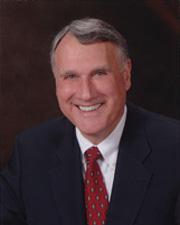 Sen. Jon Kyl (R-AZ)
Legislative Activity
Stay on top of the latest movement without scrolling through every action
Senate amendment not agreed to: Amendment SA 2236 not agreed to in Senate by Voice Vote.
January 28, 2004
View full timeline
Senate amendment not agreed to: Amendment SA 2236 not agreed to in Senate by Voice Vote.
January 28, 2004
Considered by Senate. (consideration: CR S294, S297-298)
January 28, 2004
Amendment SA 2236 not agreed to in Senate by Voice Vote.
January 28, 2004
Considered by Senate. (consideration: CR S266)
January 27, 2004
Senate amendment submitted
January 26, 2004
Senate amendment proposed (on the floor): Amendment SA 2236 proposed by Senator Kyl to Amendment SA 2233.(consideration: CR S235; text: CR S235)
January 26, 2004
Amendment SA 2236 proposed by Senator Kyl to Amendment SA 2233. (consideration: CR S235; text: CR S235) To restrict an employer that elected an alternative deficit reduction contribution from applying for a funding waiver.
January 26, 2004
Text
Proposed
PENSION FUNDING EQUITY ACT OF 2003

The ACTING PRESIDENT pro tempore. Under the previous order, the
Senate will resume consideration of H.R. 3108, which the clerk will
report.
The legislative clerk read as follows:

A bill (H.R. 3108) to amend the Employee Retirement Income
Security Act of 1974 and the Internal Revenue Code of 1986 to
temporarily replace the 30-year Treasury rate with a rate
based on long-term corporate bonds for certain pension plan
funding requirements and other provisions, and for other
purposes.

Pending:

Grassley amendment No. 2233, of a perfecting nature.
Kyl amendment No. 2234 (to amend No. 2233) to limit the
liability of the Pension Benefit Guaranty Corporation with
respect to a plan for which a reduced deficit contribution is
elected.

The ACTING PRESIDENT pro tempore. The Senator from Massachusetts is
recognized.
Mr. KENNEDY. Madam President, during the last 3 years, we have seen
too many good jobs leave this country, and Americans are ending up with
lower pay for part-time jobs. Not only do these jobs pay much less,
they are also much less likely to offer pension benefits. In fact, 3.3
million Americans have lost their pension coverage since 2000. In 2002,
only 53.5 percent of our Nation's workers were participating in
retirement plans, the lowest level in over a decade.
This means the degradation of jobs not only hurts Americans today, it
will continue to hurt them for the rest of their lives and into their
retirement and old age. Instead of adopting an every-worker-for-himself
retirement policy, we should be encouraging the growth of secure
pension plans for all workers. Fewer American workers than ever have a
secure, defined benefit pension plan.
Only one in five workers today has a defined benefit plan compared
with nearly 40 percent of workers in 1980. We must help low-wage
workers and employees of small businesses, less than 10 percent of whom
have pension coverage today.
Strengthening and expanding our pension system is our long-term goal.
But first we must take the initial step of stabilizing the pension
plans that exist today, which have been battered by the perfect storm
of economic conditions over the last 3 years.
The amendment that Chairman Grassley, ranking Finance Committee
member Senator Baucus, as well as the HELP Committee chairman, Senator
Gregg, and I have offered is a moderate bipartisan measure to address
these short-term problems. This amendment does not weaken existing
pension funding rules. These are only temporary measures designed to
give companies and workers some breathing room, to take steps to
further protect these pension plans.

An editorial in today's Washington Post expressed concern about our
amendment and its effect on the PBGC and the American taxpayers. It is
very important to respond to these concerns because they stem from some
misconceptions about how our pension funding system works.
First, additional obligations of the PBGC will not put taxpaying
Americans at risk. The Pension Benefit Guaranty Corporation, which
ensures defined benefit plans, is a self-funded agency. It is not
supported by taxpayer dollars; it is funded by premiums from employers
and holds billions of dollars in assets.
Second, the PBGC's funding deficit, while serious, does not mean the
agency cannot fulfill its mission. The PBGC has been in deficit before.
The PBGC single employer program operated at a deficit for the first 16
years of its existence. The PBGC still holds billions of dollars in
assets, and the agency reports that it has sufficient cash flow to
cover benefit payments and other operating expenses and other
liabilities for a number of years.
Also, the PBGC can and has operated at a surplus. During the Clinton
economy, the PBGC not only shed its deficits, it gained a $10 billion
surplus. What is more, the PBGC's multiemployer program operated at a
surplus for over 20 years--until this year. When our economy improves,
the financial outlook of the PBGC will improve as well.
We were also concerned about overburdening the PBGC. That is why we
limited the DRC relief to companies with healthy pension plans in 2000.
These are companies that have been hit by terrible economic
circumstances, from which we believe they will recover. Companies that
receive the DRC relief will still be responsible for their regular
pension contributions, and they will be restricted from increasing
benefits, thus making pension promises they cannot keep. They will also
be required to keep up with the costs of current benefits so they won't
fall further behind in their funding levels.
Finally, not passing this pension legislation will subject the PBGC
to much greater risk than it faces today. Without the crucial three
pieces that our legislation includes--temporary replacement of the 30-
year Treasury bond rate, targeted deficit reduction contribution
relief, and funding relief to multiemployer plans--far more pension
plans would terminate, which would place additional burdens on the
PBGC.
We want to improve our pension funding rules to ensure that companies
adequately fund pension plans. We want to encourage companies to put
more money into their pension plans when times are good, instead of
only penalizing them with increased contributions when times are bad.
However, we must first address the perfect storm that is battering our
pension plans today. Once we have adopted this short-term solution, I
look forward to working with my colleagues to improve and strengthen
pensions for all America.
I thought I would take a few moments to talk about this perfect storm
that has adversely impacted the pension system, and also the challenges
it presents to our economy generally.

[[Page S227]]

Madam President, 3.3 million Americans have lost their pension
coverage since 2000. Only 53 percent of our Nation's workers are
participating in a retirement plan, the lowest level in over a decade.
As I mentioned before, the three parts of the stool for the American
workers, after they have lived a life of productivity and worked hard
in the workplace, are: One, Social Security; two, their savings; and
three, their pension programs. We have seen a decline in the number of
Americans who are now covered.
The declining quality of jobs in our country also means declining
benefits for American workers. Part-time and low-wage workers are far
less likely to have a pension than full-time workers.
That is why we are concerned and why this legislation, as I pointed
out previously, addresses the needs of nearly 35 million Americans who
are covered by single-employer defined benefit pension plans and the
9.7 million Americans who are covered by multiemployer defined benefit
plans, such as those who work in the construction industry who move
from site to site over a year. That program was developed to make sure
those workers will also have a defined benefit pension plan to provide
a secure monthly benefit backed by the Pension Benefit Guaranty
Corporation. That is a great advantage of the defined benefit program.
What I am talking about in terms of the perfect storm is the economic
factors which have been hurting defined pension plans: The prolonged
downturn of the stock market during the Bush administration, the
longest since the Great Depression; the extremely low 30-year Treasury
bond interest rates--it may be good for some industries, if you are
purchasing a car or a house, but in terms of its impact on pension
plans, it has been extremely adverse--and the generally weak economic
conditions, which means that companies cannot afford to make additional
payments and pay the excise taxes imposed by our pension laws.
Smaller companies, medium-size companies, and even larger companies
are hard pressed at this time because of the economic exigencies we are
facing today. They believe they are under all of this pressure and they
are unable to meet those responsibilities.
I point this out not only to explain the challenge we are facing with
regard to pensions but how inconsistent this is with the remarks of our
President in his State of the Union Address when he commented that this
economy is strong and growing stronger and also pointed out that the
pace of economic growth in the third quarter of 2003 was the fastest in
nearly 20 years.
As some of us have pointed out, this has been very good for Wall
Street but really has not been so good for Main Street.
This chart shows what has happened, going back to 1949, when the U.S.
economy recovered from a recession. This is a comparison of first
quarter recovery.
Looking at the history, using identical figures--and this is done by
EPI Analysis based upon BEA data--first of all, we see, going back to
1949, that wages increased in the first quarter by 16 percent; 10
percent in 1954; in 1958 by 10 percent; 7 percent in 1961; 6.8 percent
in 1970; 7.8 percent in 1975; 9.21 percent in 1982; in 1991, 6.1
percent; and look at the year 2001, 1.5 percent. It is a pretty
interesting indicator as to what is happening in the job market in
terms of economic recovery, of which we heard so much during the State
of the Union Address.
This chart is a comparison since 1949 of what has happened to wages
for workers in the quarter the recession ended. What we see is that
this 1.5 percent is so dramatically different from every other quarter
that it is difficult for many of us to be enthusiastic about this as an
economic indicator.
It is very interesting to look at where the resources have gone in
the recovery. In the Bush economy, corporate profits ballooned compared
to workers' wages. Look at this: In the early nineties, we saw workers'
wages, as a percent of the economic recovery, were 60 percent;
corporate profits, 39 percent. Workers' wages, 60 percent; corporate
profits, 39 percent.

Now look what it is this year. In today's recovery, we find workers'
wages represent 13 percent of the total recovery and profits 86
percent--profits 86 percent. When many of us talk about the recovery
being good for Wall Street, this is it; bad for Main Street, this is
it.
Where are the resources going? They are going to the profits of the
corporation. They are not being returned to the workers. We see what
has happened.
At the end of last week, I noted, when I got home, a very interesting
CNN report on overwhelmed Americans. This is what they pointed out in
their study and review:

Wages are stagnant, productivity is soaring, which means
many Americans are effectively working more for less. And
making matters even worse, millions of American workers now
find themselves competing with cheaper foreign labor just to
hold on to their jobs.

Then it quotes Kate Bronfenbrenner, a professor from Cornell
University, talking about American workers:

They are frightened because they wake up each morning and
they don't know whether their job is going to be outsourced,
downsized, contracted out or eliminated. They are overwhelmed
because they feel like forces way beyond their control are
making the decisions that affect their lives. And they are
exhausted because they are working harder and longer and
faster just to stand still.

I showed those other charts that say American workers are working
longer and harder than any other industrial society in the world. Not
only are workers working longer and harder, but it's all hands on deck
both men and women, moms and dads are working longer and harder just to
try to stay even.
The report goes on:

In growing numbers, workers are feeling overworked,
underappreciated, and burned out. That's according to a
recent study of 1,100 workers that concluded ``Emotion about
the current work experience is extremely negative.''

In the Wall Street Journal on Friday, January 23, we saw a lead
story.
``The Gap in Wages Is Growing Again for U.S. Workers.
``Inequality Is Seen as a Result of the Jobless Recovery; Potential
Election Theme.''

Wage inequality--the gap between America's highest and
lowest earners--has started widening again, a situation with
election-year ramifications.
The trend is a reflection of the job market's exceptionally
weak response to the current economic recovery.

This is the Wall Street Journal. This is not just an article by some
Democratic study group. This is the Wall Street Journal, their studies.
It says:

The trend is a reflection of the job market's exceptionally
weak response to the current economic recovery, as well as
long-term technological and economic changes that have eroded
the bargaining power of America's lowest-paid workers. The
data show that young workers--who currently have fewer job
prospects than a few years ago--and men, in particular are
bearing the brunt . . .
The numbers continue a movement to greater wage inequality
that began around the time President Bush succeeded President
Clinton and the economy slid into recession three years ago.
The trend represents a reversal from the late 1990s, when the
lowest unemployment rates in a generation had enabled the
lowest-paid workers to keep pace with those at the top.

This is the real state of the Union. I am reminded of the study that
just came out at the end of last week from the Economic Policy
Institute, a January 21st study.
I will explain this chart. Basically it says the jobs that are being
created, the few jobs that are being created--the estimate by the
administration is it is going to be 300,000. They created 1,000 jobs
this last month. The jobs that are being created are not as good as the
jobs lost under this administration.
This chart shows that in 48 of the 50 States, jobs in higher paying
industries have given way to jobs in lower paying industries since the
recession ended in November 2001. Nationwide, industries that are
gaining jobs relative to industries that are losing jobs pay 21 percent
less annually. For the States that have lost jobs since the recession
purportedly ended, this is the other shoe dropping. Not only have jobs
been lost, but in 29 of them the losses have been concentrated in
higher paying sectors. For 19 of the 20 States that have seen some
small gain in jobs since the end of the recession, the jobs gained have
been disproportionately in the lower paying sector.
They mentioned several States. One is the State of New Hampshire.
Overall, 15,700 New Hampshire jobs have been lost since this President
took office,

[[Page S228]]

and New Hampshire's unemployment rate has increased 54-percent under
President Bush. The unemployment rate in New Hampshire was 4.3 percent
in November 2003, up from 2.8 percent in January 2001. This change
represents a 54-percent increase since President Bush took office.
According to the most recent State estimate, 6.1 percent of New
Hampshire residents live in poverty, up from 5.5 percent in 2001. New
Hampshire had lost a fifth of its manufacturing jobs since April of
2001. Under President Bush, the low-paying jobs are replacing the high-
paying jobs in New Hampshire. The New England Economic Project recently
estimated the sectors that lost the jobs between 2001 and 2002 in New
Hampshire have an annual average wage of about $44,000. These sectors
adding jobs in the State have an average wage of $38,000.
Over a third of the jobless people in New Hampshire used up their
unemployment benefits before finding a new job. Madam President, here
26 percent of the people on unemployment in New Hampshire used up their
benefit before finding new jobs. However, in September of 2003 nearly
one-third were unable to find work by the time their benefits ended.
These are hard-working Americans who have paid into the unemployment
fund, which has about $20 billion surplus at this time. There are
90,000 workers a week who are losing their unemployment insurance. That
is happening up there in New Hampshire. We have tried more than a dozen
times to get a temporary extension of 13 weeks. It costs about $7
billion. It has been objected to by the Republicans.

Real people are hurting. The unemployment filings in New Hampshire
are the highest since 1992. From 2001 to 2003, the number of
unemployment filings in New Hampshire was the highest it has been since
1992.
Of 240,000 New Hampshire taxpayers, 40 percent--and I mention this
because in the State of the Union Address, the President talked about
how we have doubled the child tax credit, reduced the marriage penalty,
begun to phase out the debt, reduced taxes on capital gains, dividends,
cut taxes on small businesses, have lowered taxes for every American
who pays income tax.
Listen to this. In New Hampshire, 241,000 New Hampshire taxpayers,
which is 40 percent of the New Hampshire taxpayers, will receive less
than $100 from the Bush tax plan in 2004. The top 1 percent of New
Hampshire taxpayers receive 28 percent of the benefits in 2004 and get
an average tax cut of over $67,000.
Some people have asked why some of us were somewhat disappointed in
the State of the Union Address and didn't jump up and applaud these
figures. We take the State of the Union seriously. When you have that
kind of result, in terms of the President's tax bill, one which I voted
against for these very kinds of reasons, you begin to understand what
is happening on Main Street of America.
Not only are we talking about the question of pensions, and we talk
about jobs, let's think about what has been happening to the average
workers with regard to their health care costs and their health care
coverage. We have one in five workers who are uninsured and, when they
are offered insurance, decline coverage because of the limitations of
their wages and because of the costs of health insurance, which I will
come back to. Sixty-five percent of the employers increased the amount
workers pay for their health insurance and 47 percent of the employers
increased the amount workers pay for prescription drugs and 34 percent
of employers increased the cost share employees pay for office visits.
These are the pressures workers are under. That is why we have some
44 million Americans who do not have health insurance--members
representing not only workers but family members of the workers. About
80 percent of all those who do not have health insurance are either
workers or members of workers' families. That is why I believe if it is
worker related in terms of trying to get coverage, we can make a major
step in reducing the total number of those who are uncovered.
Look at what is happening to the costs, the premium costs versus the
Consumer Price Index--the average cost of products. Look at what is
happening. This is a comparison of costs for workers. In 1999, the
Consumer Price Index was 2.7 percent but 5.3 percent for health care.
The next year, 2000, 3.4, 8.2; 2001, 1.6, 10.9. The next year, 2002,
2.4, for the Consumer Price Index, 12.9. In 2001, 1.8, 13.9 percent
increase in the cost of health insurance.
We wonder why workers cannot afford it and workers can't afford it.
That is the real state of the Union. That is the real state of the
Union.
To offer a refundable tax credit of $1,000 is laughable. I say it is
like throwing a 5-foot rope to somebody who is in a boat 10 feet away
and is about to go over Niagara Falls. It is virtually useless. These
are costs that are impacting, affecting the costs of health care
insurance and why workers cannot afford it.
What do we hear from the administration? What is their solution?
Should someone tell us? Do I hear it? I looked hard in the President's
State of the Union Address to find it. Do you know what it was? It was
medical malpractice. That is their answer to all of the problems we are
talking about, and the increase in costs. We will have a chance to get
into that at some time. That is going to be the answer.
It isn't only the cost of health insurance. Look at what is happening
to the families. These are family responsibilities. Workers have
responsibilities. Parents don't want to be a burden. They worked hard.
We guaranteed to the families in 1965 when we passed Medicare that we
would attend to their health care needs. We didn't know prescription
drugs would be so important. Every day that we fail to provide a
comprehensive prescription drug program, we fail in our pledge to our
seniors.
Look at what has happened to the prescription drug costs with respect
to the Consumer Price Index: In 2000, 3.4 percent, and the average
cost-of-living increase was 16 percent; in 2001, 1.67, and 15 percent;
2002, 2.4 percent, and 14 percent. We allegedly passed a prescription
drug program. What did we say in that bill that would get a handle on
costs? Virtually nothing. We prohibited the Secretary of HHS from being
able to negotiate for lower prices. That is not true with VA; they can
reduce prices down some 47 percent, but not with regard to Medicare
because we were prohibited from that. I pay respect to my Democratic
leader, Senator Daschle, and Congresswoman Pelosi for offering
amendments which we will have a chance to address here very soon to
change that.
We have to do something on the coverage, we have to do something on
the costs, or we are not really looking after what is happening out on
Main Street. We talk about jobs. We talk about health. Let us take a
look at another issue families are very much concerned about; that is,
the cost of education.
This is the Bush education record: Failure to provide tuition relief
as college costs increase. On this chart, you find what 4-year costs
for a college education are. This includes not only the tuition but it
is room and board and the routine expenses with which students are
faced. Look over here. In 2002, on help and assistance, these are for
young people who come from families with limited means but have
scholarships and are academically gifted, or are able to meet the
academic standards and gain admission to these excellent schools all
over the country. Look at what we see: Significant increase in the
cost. Look at what help and assistance: Basically flat over the period
of time.
These are family issues for working families concerned about the cost
of prescription drugs that are being paid by their parents. These are
family issues for working families who are concerned about the cost of
having their children go to the fine schools across this country. We
have left them high and dry.
If we look at the Bush economic record, the median household income
is down effectively $1,500 across the country according to the Bureau
of Census in the Department of Commerce; $1,500 for the year 2002, and
a further decline beyond to 2004. That is what is happening out on Main
Street. People are working harder, as these reports point out, and they
are barely able to keep up. Millions are working and competing as well.
As productivity goes up, they are working more for less. We see

[[Page S229]]

that allocations of profits versus the wages.
We see the failure to respond to the needs of working families with
regard to their health care costs or their children's education. These
are all the issues which have been left behind. What has been the
response to those urgent needs? It has been disappointing, at best.
First of all, there are 13 million children who are hungry. We have 8
million Americans who are unemployed. We have 8 million workers who
lose overtime under the Bush proposal. We have 7 million low-wage
workers who have been waiting 7 years for an increase in the minimum
wage. We have 3 million more Americans in poverty since President Bush
took office, and 90,000 workers a week are losing their unemployment
benefits every week. We have tried and tried to get a temporary
extension for these workers.

The decline in the economy is not the result of workers not working
hard and producing. It is because of general overall economic
mismanagement.
This country has always recognized that those workers pay into the
unemployment compensation, and when there is a slide in the economy,
they ought to be able to withdraw some of that. But there has been
objection time in and time out by our Republican friends and virtually
no leadership on this issue from the President.
More than three in four--77 percent--of the unemployed Americans say
the level of stress in their family has increased. How do we measure
that? We listened the other night to how our GNP is going up, with all
of the favorable economic indicators. How do you measure the fact that
in 77 percent of the unemployed families the level of stress in their
family has increased? Two-thirds of those with children have cut back
on spending for their children. Where is that indicated in any of these
economic indicators we heard about in the State of the Union?
Twenty-six percent say another family member has had to start a job
or increase their work hours in order to keep the family together, and
23 percent have had to interrupt their education or that of a family
member. They had to drop out of school for a year, go back to work, and
then come back and try to complete their education. That is what is
happening out there.
We didn't hear about what is happening for average working families.
If we had been able to extend the unemployment insurance, we could have
avoided many of these indicators. But no, we were unable to do so.
What has been the impact by this administration saying no to
extending unemployment compensation? No, we can't do that. What about
those workers who worked hard for 40 hours a week and 52 weeks of the
year? It has been 7 years since the last increase in the minimum wage.
Now, at the end of this year, it will be at an all-time low.
A majority of the Members of this body would vote for an increase in
the minimum wage, and we are not able to get it because of the
Republican filibuster. That is the reason. Make no mistake about it.
Who are these people? These are men and women of great dignity. These
people work hard. They take pride in what they do. They work cleaning
out the great buildings that are the offices of American industry. Many
of them are teacher's aides, or they work in child care. Many of them
work in nursing homes to help look after a generation who brought this
country out of the Depression and sacrificed for their children. They
fought in the wars. Those are minimum wage workers. They are men and
women of dignity. Most of them are women. This is a women's issue. Most
of the women have children. So it is a children's issue. It is a family
issue. Many of them are members of minorities. It is a civil rights
issue.
Beyond all of that, Americans understand that if you work 40 hours a
week for 52 weeks of the year, you should not have to live in poverty.
You should not have to live in poverty. That is our belief. That is our
standard.
We are going to take this issue to our Republican friends time in and
time out all of this year. We welcome those listening to communicate to
our Republican friends their views on this issue. Talk about a family
issue. Talk about family values. How you care for your child, how much
time you are able to spend with your child, talk about family values,
this is it. And we have opposition from the Bush administration on
this.

Finally, I mention again what is happening in terms of the overtime,
opposition to extending unemployment compensation, opposition to an
increase in the minimum wage, and then the rule and regulation that was
debated in the Senate with Republicans and Democrats alike. Rejected.
It went to the House of Representatives. Rejected. And then it was
tucked into the omnibus bill behind closed doors in the dead of night
and passed, although many Members strongly opposed it.
Who are the 8 million Americans who would lose their overtime? It is
extraordinary with this economy for the administration to say that one
of the principal problems with our economy today is the fact that these
workers are being paid too much. They are saying these workers are
being paid too much. Who are these workers? Police officers will lose
their overtime under the definition of the administration. Police
officers, nurses, and firefighters will lose their overtime.
Do we hear about homeland security? Who is on the front line of
defense? It is the nurses, the firefighters, and the policemen. We are
asking them to risk their lives in terms of homeland security yet on
the other hand we will make them ineligible for overtime. Give me a
break.
It is very interesting that so many are professions that involve
women. Women will be very adversely affected. That is why
organizations, including Nine-to-Five and all of the various women
organizations, are so strongly opposed to the administration's
proposal.
Not only did they do this but they added something new regarding who
is made ineligible. That was to say if individuals had gone into the
Armed Forces and they took training programs and then they come out and
they have special skills--that is just what our military has today--
that because they got these training programs, because they have
special skills, they will by definition be ineligible for overtime.
Can anyone believe that, to say to those fighting overseas in Iraq,
Afghanistan, scattered around the world, when they come on back, they
are in the National Guard and Reserve and they come on back in, if they
have the special skills, they will not be eligible for overtime--for
the first time in the history of this country.
Obviously, one of the great reasons we have the best military in the
world is because it is the best trained, best led, and has the best
technology. It should always be that way. When we are talking about the
training, the training they receive saves other soldiers' lives and
carries forward the interests of the United States.
I have my differences with the administration in terms of the Iraqi
policy, but I am going to make sure these soldiers are well trained,
well led, and have that kind of help and assistance. For those in the
Armed Forces who have gone through the various training programs, quite
frankly, it was a very important inducement for recruitment. I don't
know what conversations the Secretary of Labor had with the Secretary
of Defense. I would love to see the exchange of notes, and love to know
if they ever had a conversation; obviously, it has a very important
impact on recruitment.
With the failed economy, so many young people, see going into the
military as a way to get the kind of training that will put them on the
road to some kind of hope and opportunity in the future. Now we are
saying: No, no, no; that is not going to be the way it is. You get the
training, you come back, and you will not be able to get paid.
This is the final insult that the Bush administration would take away
from the veterans, as I mentioned, the overtime pay. That would reduce
the standard of living and quality of life of veterans in scientific,
engineering, medical, and technical operations. Under the Bush
administration, veterans who have received the training in the
military, equivalent to a specialized 4-year degree, could be
classified as exempt ``professional employees'' and would lose their
overtime protection. This is a breach of faith with the American

[[Page S230]]

veterans, another reason it should be defeated. It was not.
Then, one of the most extraordinary publications that any agency has
ever produced in the time I have been in the Senate was the Department
of Labor issuing guidelines of how to avoid paying overtime. They said:
The reason for having this change in the overtime is we are bringing
more workers up, raising their wages. It will have a favorable impact
on a certain number of workers. It will really not disadvantage all
these estimated.
Then we find out what the real issue was: the publication by the
Department of Labor about how to avoid paying any overtime, giving
every business in this country the pathway to avoid paying any
overtime. If they could not figure it out, all they had to do was read
the Department of Labor recommendation and avoid it. Why? To
shortchange American workers. State of the union of American workers,
what is happening to their jobs, their wages, their health care, their
education, and now we find out their overtime. That is ``How to Avoid
Paying Your Employees Overtime,'' courtesy of the Bush Department of
Labor.
I will take a moment to read a letter from a veteran and a Boeing
employee worried about losing his overtime.

My name is Randy Fleming. I live in Haysville, Kansas--
outside Wichita--and I work as an Engineering Technician in
Boeing's Metrology Lab.
I'm also proud to say that I'm a military veteran. I served
in the U.S. Air Force from August 1973 until February 1979.
I've worked for Boeing for 23 years. During that time I've
been able to build a good, solid life for my family and I've
raised a son who now has a good career and children of his
own. There are two things that helped make that possible.
First, the training I received in the Air Force made me
qualified for a good civilian job. That was one of the main
attractions when I enlisted as a young man back in Iowa. I
think it's still one of the main reasons young people today
decide to enlist. Military training opens up better job
opportunities--and if you don't believe me, just look at the
recruiting ads on TV.
The second thing is overtime pay. That's how I was able to
give my son the college education that has opened doors for
him. Some years, when the company was busy and I had those
college bills to pay, overtime pay was probably 10% or more
of my income. My daughter is next. Danielle is only 8, but
we'll be counting on my overtime to help her get her college
degree, too, when that time comes. For my family overtime pay
has made all the difference.
That's where I'm coming from. Why did I come to Washington?
I came to talk about an issue that is very important back
home and to me personally as a working man, a family man, and
a veteran. That issue is overtime rights.
The changes that this administration is trying to make in
the overtime regulations would break the government's bargain
with the men and women in the military and would close down
opportunities that working vets and their families thought
they could count on.
When I signed up back in 1973, the Air Force and I made a
deal that I thought was fair. They got a chunk of my time and
I got training to help me build the rest of my life. There
was no part of that deal that said I would have to give up my
right to overtime pay. You've heard of the marriage penalty?
Well I think that what these new rules do is to create a
military penalty. If you got your training in the military,
no matter what your white collar profession is, your employer
can make you work as many hours as they want and not pay you
a dime extra.
If that's not bait and switch, I don't know what is.
And I don't have any doubt that employers will take
advantage of this new opportunity to cut our overtime pay.
They'll tell us they have to in order compete. They'll say if
they can't take our overtime pay, they'll have to eliminate
our jobs.
It won't be just the bad employers, either--because these
rules will make it very hard for companies to do the right
thing. If they can get as many overtime hours as they want
for free instead of paying us time-and-a-half, they'll say
they owe it to the stockholders. And the veterans and other
working people will be stuck with less time, less money, and
a broken deal.
I'm luckier than some other veterans because I have a union
contract that will protect my rights for a while anyway. But
we know the pressure will be on, because my employer is one
that pushed for these new rules and they've been trying hard
to get rid of our union.
And for all those who want to let these military penalty
rules go through, I have a deal I'd like to propose. If you
think it's okay for the government to renege on its deals, I
think it should be your job to tell our military men and
women in Iraq that when they come home, their service of
their country will be used as a way to cut their overtime
pay.

That says it all. This Senate rejected the administration's proposal.
The House of Representatives rejected it. But the Bush administration
insists they are going to implement it. And they insisted in taking the
Senate passed, House approved language protecting workers' overtime pay
out of the Omnibus.
We are going to do everything we can, with every opportunity we have,
to make sure that provision is overturned. We will do that every time
we get a chance as long as we are in Congress this session.
I will just take a minute to show what happens when people do not
have the overtime protection.
It is probably pretty understandable, workers without overtime
protection are more than twice as likely to work longer hours. This
chart shows that for those workers working a scheduled 40-hour
workweek, without the overtime protection, 44 percent of them work
overtime. If they have overtime protection, in terms of time and a
half, only 19 percent of them work overtime. If there is no overtime
protection for workers if they work over 50 hours a week, still, you
get 15 percent of the workers who work more than 50 hours in a week;
but with overtime protection, only 5 percent work overtime. It is very
clear what is going to happen to workers without overtime protection:
They are going to work harder--a lot harder--and make a good deal less
money.
Is overtime protection what is wrong with our economy? Absolutely
not. I think this administration and this Congress ought to get it:
People are hurting. And they are trying to find out who is on their
side. We are going to address each and every one of these issues in the
course of this Congress because that is required if we are going to be
a fair and decent country.
Mr. President, I yield the floor and suggest the absence of a quorum.
The PRESIDING OFFICER (Mr. Thomas). The clerk will call the roll.
The assistant legislative clerk proceeded to call the roll.
Mr. CONRAD. Mr. President, I ask unanimous consent that the order for
the quorum call be rescinded.
The PRESIDING OFFICER. Without objection, it is so ordered.
Mr. CONRAD. Mr. President, I rise today to speak about the latest
numbers from the Congressional Budget Office that reveal the
seriousness of the explosion in deficit and debt that is occurring in
this country.
Before I do that, when I came to the floor I heard the senior Senator
from Massachusetts, Mr. Kennedy, speaking about the change in overtime
rules in this country and discussing the unfairness of what has
happened.
Just days ago, one of the people who works in this Capitol, who works
with us every day, talked to me about how this change in overtime would
affect him and his family. This man is one of the camera technicians
for one of the networks that covers much of what we do in this body.
He took me aside the other day and said: Senator, this change in
overtime fundamentally threatens me and my family. If those changes go
forward, if they are not stopped, I probably won't be able to keep my
house, where I live with my wife and my two kids.
He said: In our business, an awful lot of our income is overtime pay
because we don't work an 8-hour day. Sometimes we are here 16 hours.
Very frequently we are here, and part of our pay is overtime pay. It is
that overtime pay that allows me and my family to own the home we are
in and to have bought a new car last year and to have made improvements
to the house. If these overtime changes go forward, it is going to
dramatically change my life. I wonder what they are thinking of in
terms of fueling the economy. I think my family and I have done a
pretty good job of fueling the economy. We bought a home, furnished the
home, bought a car--all because there was overtime pay. Now, if they
take that away, my family and tens of thousands of other families like
mine are going to be in a much weakened situation.
I hope people are listening. I hope we have a chance to revisit these
changes in overtime that were permitted by the Omnibus appropriations
bill that recently passed. There were lots of things in that omnibus
bill that should be revisited. It is one of the unfortunate examples of
what happens when a few people go in a back room someplace and come out
with a product that has

[[Page S231]]

had too little scrutiny, too little involvement and, frankly, too
little fairness.

CBO Report on the Budget

Mr. President, I rise to talk about the Congressional Budget Office
report on the budget condition of the United States. They have
indicated that the deficit for this year will be $477 billion. That is
$100 billion more than the biggest deficit we ever had. That was last
year's deficit. Now it is $100 billion more for 2004. Now the record of
the President on the question of fiscal responsibility is becoming more
and more clear.
In the last year of the Clinton administration, we had a $236 billion
budget surplus. Now in the third year of this President, we have a $477
billion budget deficit, the biggest by far, a record.
This chart shows the long-term relationship of the deficit. We can
see the $477 billion; last year it was $374 billion--both of those much
bigger than the previous record deficit of $290 billion back in 1992
when the President's father was President, Bush 1, as they term it.
The President and some of his aides have said: Well, yes, in billion-
dollar terms, they are record deficits, but as a percentage of gross
domestic product, it is not so big.
If we exclude Social Security instead of lumping it in with
everything else, what we see is, even as a percentage of gross domestic
product, this deficit is the biggest since World War II, with the one
exception of 1983. In 1983, there was virtually no Social Security
surplus.
This year, not only is the deficit off the charts at $477 billion,
that understates how much is being taken because under this President's
plan he is also taking every penny of the Social Security surplus, over
$150 billion. So on an operating basis, the deficit is over $620
billion, on a budget of about $2.2 trillion, approaching $2.3 trillion.
Some say it is not that big. What are they talking about? An
operating deficit of over $600 billion on a budget of $2.2 trillion,
and that is not big? What would convince them it is big? It is the
biggest ever in dollar terms and one of the biggest ever, even if you
look at it as a percentage of gross domestic product.
But the biggest worry is not the deficit this year. The biggest worry
is where this is all headed. If you add to what the Congressional
Budget Office has told us, the President's recommendations for
additional tax cuts and the looming crisis in the alternative minimum
tax, which will hit 40 million people in this country by 2013 if we
fail to act, if we put just those two things in, no other additional
spending, no more supplementals by the President, if we just take what
the Congressional Budget Office has told us plus the tax cuts the
President is recommending, plus fixing the alternative minimum tax, we
can see there is no end to the red ink. In fact, it explodes as the
baby boom generation starts to retire, and a deficit on an operating
basis of more than $600 billion for this year will climb to $861
billion by the end of this forecast period.
This is a record of fiscal irresponsibility that is utterly reckless.
That is the course the President has us on.
I hear the President say it is spending; spending is all the problem.
Let us look at where the increases in spending have occurred. Ninety-
two percent of the increase in discretionary spending has occurred in
defense, homeland security, and a third category that is rebuilding New
York, the airline bailout after September 11, and the increase in
international affairs, a dramatic increase there, again, as a result of
the attack of September 11. As you can see, the vast majority of the
increase, 69 percent, is in defense alone. But 92 percent of the
increase in discretionary spending is in just these three categories.
Interestingly enough, the President says he is now going to restrain
growth in what he calls discretionary spending. But if you look at what
has happened to the categories of discretionary spending, domestic
spending has not been growing. Domestic spending is not the problem.
Non-defense domestic spending, as the Administration defines it,
excluding international affairs and homeland security, has grown in
real terms in the last 2 years by just three-tenths of 1 percent. Now
he is going to restrain the growth by 1 percent in this category.
Again, remember, he has a special definition of the discretionary
spending that he is constraining. Most of us think of defense and
homeland security as a part of discretionary spending that is growing.
Indeed, that is where spending has grown. But on the discretionary
spending that he has identified, excluding homeland security, excluding
international affairs, excluding defense, there has been almost no real
growth in spending in the last 2 years, three-tenths of 1 percent. Now
he says he is only going to allow it to grow 1 percent this year. That
is not going to do much. That is a very small part of Federal spending.
In fact, that is only 17 percent of the Federal spending he is talking
about restraining.
So he is going to do very little to cope with these mushrooming
deficits. That is a fact. That is reality. If you look at the revenue
side, it is very interesting. That is where the deficit has exploded.
It is largely on the revenue side.
This year, according to CBO, revenue will be at 15.8 percent of gross
domestic product. That is the lowest revenue as a percentage of gross
domestic product since 1950. Remember, when we had high revenue as a
percentage of GDP, the President said the answer was tax cuts. Now that
we have revenue at the lowest it has been since 1950, the President's
answer is more tax cuts. Dig the hole deeper. Make the deficits bigger.
The President's plan doesn't add up. It doesn't come close to adding
up. It fundamentally threatens our economic security long-term. We can
go back and check the President's record on what he has told us and
what happened. In 2001, he told us:

We can proceed with tax relief without fear of budget
deficits.

He was wrong.
In 2002, he told us:

Our budget will run a deficit that will be small and short-
term.

He was wrong.
In 2003, he told us:

Our current deficit is not large by historical standards
and is manageable.

It is hard to top a record. Not large by historical standards? It is
the biggest it has ever been by a huge margin--$100 billion bigger than
last year, and last year was a record. He was wrong again.
He said:

The deficit will be cut in half over the next 5 years.

Will he be wrong again? His track record is pretty clear; he has been
wrong consistently. Does it matter?
There is a story in the Washington Post this morning about the dollar
and how the dollar has gone down dramatically. What they said in this
article was:

Currency traders who are fretting over that dependency--

They are referring to the need to borrow money from abroad for our
trade deficit, borrow money from abroad for our budget deficit, and
also borrow money internally for our budget deficit.

Currency traders who are fretting over that dependency have
been selling dollars fast and buying euros furiously. The
fear is that foreigners will tire of financing America's
appetites. Foreign investors will dump U.S. assets,
especially stocks and bonds, sending financial markets
plummeting. Interest rates will shoot up to entice them back.
Heavily indebted Americans will not be able to keep up with
rising interest payments. Inflation, bankruptcies, and
economic malaise will follow.

Mr. President, that is the risk this President is running by
conducting a fiscal policy that is absolutely irresponsible. I want to
make clear that I am less concerned about the deficit this year than I
am about the long-term implications of this fiscal policy. That is what
these economists are warning us about. But it is not just them. We have
the Comptroller General of the United States, a Republican, warning us
that we are on an unsustainable course. We have the International
Monetary Fund warning us that the buildup of deficits and debt in this
country doesn't just threaten our own economic security, it
fundamentally threatens the economic security of the globe.
We have already seen the effect on the dollar from these policies.
The dollar has plummeted. It is down nearly 30 percent against the euro
in just 2 years. In the short term, that can be helpful to U.S.
manufacturers. But in the longer term, it is fundamentally threatening
to our economic security.

[[Page S232]]

If you think about it, if you were holding dollar-denominated
investments, and you are a foreign investor, how would you feel if the
underlying value of that currency plummeted? Does that make sense to
continue holding dollar-denominated investments? Warren Buffet, one of
the most successful investors in America, is quoted in the article as
indicating he started to diversify his investments away from dollar-
denominated investments. He is not alone.

It is time for us to think carefully and clearly about our response
to this growing fiscal crisis. Record budget deficits--some say they
don't matter. I think any sober person knows that deficits do matter.
Deficits of this magnitude are simply stunning.
We are running deficits under this President this year of $900,000 a
minute--$900,000 a minute. Every minute that goes by, under this
President's budget plan, we are spending $900,000 more than we take in.
That is a course that is not sustainable. It must be changed. The
President says he has a plan--it appears to be a secret plan at this
point--to cut the deficit in half over the next 5 years. But that
avoids the much larger issue because we know from all of the work that
has been done that the deficit will recede from these record levels.
Cutting it in half is not much of an accomplishment when you are
running an operating deficit of over $600 billion a year. And what is
of deepest concern is that the President's budget plan, which, if he is
good to his word, will reduce the deficit somewhat over the next few
years, puts us on course for the deficit absolutely to explode as his
tax cuts become permanent and as the baby boomers retire. That is the
much greater threat to the economic security of this country.
When the Federal Government runs massive deficits, that puts upward
pressure on interest rates. When interest rates go up, that slows
economic growth and economic activity. That is a reality. This is a
reckless course the President has taken us on, and not just in the
short term. In the short term, we can afford deficits to give lift to
the economy. The President is proposing massive deficits even at a time
when he projects strong economic growth. CBO is telling us the economy
will grow at 3\1/2\ percent a year over the next 5 years. Well, 3\1/2\
percent growth is considered relatively strong in an advanced economy.
Yet we see no end to the budget deficits under the President's plan. In
fact, once we get past this 5-year period and the baby boomers start to
retire, the deficits absolutely explode. That is a reality.
It is time for the President and this Congress to address that very
deep challenge to America's economic future.
I yield the floor and suggest the absence of a quorum.
The PRESIDING OFFICER. The clerk will call the roll.
The assistant legislative clerk proceeded to call the roll.
Mr. FITZGERALD. Mr. President, I ask unanimous consent that the order
for the quorum call be rescinded.
The PRESIDING OFFICER. Without objection, it is so ordered.
Mr. FITZGERALD. Mr. President, I would like to address for a few
moments the bill that is now on the floor, H.R. 3108, dealing with
pension funding for defined benefit pension plans. The House passed
this bill. In the House version of the bill, what it does is it mainly
changes the interest rate assumptions that plans are required to use
when figuring their actuarial liability for their pension plans and for
their annuitants in their plans.
The House bill mainly addresses the situation that has arisen by
virtue of the 30-year Government bond being done away with. A few years
ago, the Treasury Department made the decision that it would no longer
issue 30-year Treasury bonds and the interest rate for 30-year Treasury
bonds had historically been what was used in calculating the
liabilities for defined benefit pension plans. Now that there are fewer
and fewer 30-year Government bonds in circulation, the interest rates
for those bonds have gone down, and, of course, interest rates have
been very low in general for the last couple of years.
So industries in sectors where defined benefit pension plans are
common have come to Washington, asking for some relief in the way they
calculate their unfunded liabilities, or their liabilities, and they
have asked for the replacement of the 30-year Treasury bond with a
benchmark that is, instead, made up of the yield of high-grade
corporate bonds. By going to that different reference point, plans
ultimately will have to put less money in their pension plans because
they can assume a higher rate of return if they are using 30-year
corporate debt or high-grade corporate debt as opposed to 30-year
Treasury bonds.
In fact, right now companies in America, absent any legislation,
would have to put about $170 billion into their defined benefit pension
plans next year. If the interest rate relief alone in H.R. 3108 is
passed, that will cut about 25 percent off the required payments that
all companies with defined benefit pension plans will be required to
make into their plans over the next 2 years. So the relief in this bill
as it passed the House--and the only relief in the House bill is the
interest rate relief--if that relief passes, it would cut about $40
billion per year off the amount that companies have to put into their
defined benefit pension plans. Over 2 years, the life of the bill, it
would cut $80 billion off of the required payments.
What has happened in the Senate is somewhat disappointing, to me. I
could see the public policy rationale for changing the interest rate
benchmark that companies use, now that we have done away with the 30-
year Treasury bond. I can see the argument for coming up with a
different reference. I can see the argument for changing the
assumptions that would allow plans to put less money into their pension
plans. But the Senate is going way beyond that. In addition to giving
the interest rate relief that the House passed, the Senate now is on
the verge of passing amendments that would provide special relief for
airlines and steel companies.
The airlines and the steel companies would get further reductions in
the amounts they have to pay into their pension plans. This is very
troubling because airlines and steel companies, as we all know, tend to
have the most woefully underfunded pensions of all industry in America.
Obviously, they are asking for permission to dig their hole even
deeper.

In addition, the Senate amendment that will be offered this week has
a sweetheart provision for Greyhound Bus Company. I don't know why
Greyhound Bus Company is singled out for this special treatment of all
the companies in America, but it certainly must have some powerful
friends here on Capitol Hill.
Also getting a sweetheart deal is CNF Trucking, which apparently gets
some sort of relief in this bill and some limitation on liability that
it might have to a former subsidiary that it spun off a couple of years
ago.
So there are a couple of sweetheart deals, not just for some chosen
industries, the airlines and steel companies, but also some rifle shots
that would be put in here for two special companies, Greyhound and CNF
Trucking.
In addition, and perhaps most discouraging, is that the Senate
amendment will, in effect, go way beyond just the steel and the airline
industries and allow all companies that have underfunded pension plans
to go through a political process in applying for a waiver from their
required contributions to their pension plans. All companies would be
able to go to the Treasury Department and request a waiver.
If this provision becomes law, you can just imagine right before the
election all the industrial companies in the Upper Midwest, in
Michigan, Pennsylvania, Illinois, Wisconsin, and so forth, all those
industrial companies in States that are critical for the upcoming
election, they will all be going to the administration, asking for this
special waiver from the Treasury Department. They will be making
political threats at the same time, that if the administration doesn't
give them this relief, they may just support someone else for
President. It sets a very bad precedent because now there is a waiver
process. But it is an apolitical one, and one for which you have to
apply with the Internal Revenue Service and also with the Pension
Benefit Guaranty Corporation.

As I said, if it were merely adopting the interest rate relief, we
would be granting a 25-percent reduction in the

[[Page S233]]

required contribution of all companies in toto in America to their
defined benefit pension plans. We are going way beyond that. In the
Senate amendment, we are threatening to grant them an additional about
$17 billion a year, at least in reductions in required amounts going
into pension funds.
There is also a provision in the Senate amendment in the managers'
package that will allow all multiemployer pension plans--those are
union-run plans which span employers--from having to make their full
contributions.
All of these reductions in required contributions into the pension
plans wouldn't be so troublesome but for one fact: In allowing these
companies to dig the hole deeper for themselves, it is more likely that
they will ultimately default on their pension obligations and turn
those obligations over to the Pension Benefit Guaranty Corporation to
take advantage of the Government guarantee. It wouldn't be so offensive
if it were freezing the Government guarantees. But we are not.
There is a no hold harmless provision in this legislation. There are
no reforms of pension funding trying to get tough on the companies that
have considerably underfunded their pension plans. We are just allowing
them to skip required payments into their pension plans. We are
allowing the government guarantees to stay in place.
What is more, we are allowing the companies with underfunded plans to
continue sweetening the benefits for their workers and raising their
own pension liabilities while those pension liabilities are all
guaranteed by the Federal Government.
I know pension funding is something that perhaps makes the eyes of
the press glaze over. Not many members of the public understand the
importance of this. This is a very roundabout way of transferring
liabilities to taxpayers. It is not easy for people to understand. But
if I were to make an analogy that the average American could understand
about what we are doing here, imagine that you have someone who is
behind in their credit card payments. Imagine that you said to that
person, you are behind in making your payments on the credit card. You
are only making the minimum payment. You are trying to make a minimum
payment due each month. You have this huge balance. It is going to take
years and years to pay off this deficit of what you owe the credit card
company or the bank. Imagine if this person were to have their minimum
payments lowered. Imagine that when they are already just barely making
the minimum payments, you say: OK, we will even lower your minimum
payment.
We are doing that here. But in addition, we are going beyond that. We
are telling the credit card holder while you are lowering your minimum
payments and digging the hole deeper so that you are likely never to
get out of debt, we are going to go out and allow you to continue
spending and add more to your credit card. Can you imagine a credit
card company telling anybody that? That wouldn't be a way to advise a
distressed consumer to try to get out of debt.
We are doing that and more here today in the Senate. We are not only
allowing these companies to quit making their required payments into
their pension plans, but we are allowing them to continue spending. We
are allowing them, specifically if they are 60-percent funded, to keep
sweetening the pension benefits for their employees and digging the
hole deeper. That would be not only allowing the credit card holder to
keep spending but encouraging the credit card holder to go out while
they are behind in the payments on this one credit card and get some
more credit cards and run up balances on those credit cards.

Obviously, if we pass this legislation we are going to make it
hopeless for some companies ever to recover and to fulfill the promises
they have made to their pension participants.
Right now, the Pension Benefit Guaranty Corporation--the Government
corporation that guarantees pension benefits of people in defined
pension plans--is in the worst financial condition of its entire
history. It has at least a $11.2 billion deficit. Pension plans in
America are now thought to be underfunded by at least $350 billion.
This legislation would allow that collective underfunding in defined
benefit pension plans in America to grow considerably.
The House was much more responsible. It only passed the change in
interest rate assumptions. It passed the separate version of the bill
that had the interest rate change, plus some relief for airlines. The
Senate is poised to go much further. I am troubled by that. The
administration has issued a threat to veto the legislation.
I refer to a letter. This is a Statement of Administration Policy
that was issued on January 22. I ask unanimous consent that Statement
of Administration Policy on H.R. 3108 be printed in the Record.
There being no objection, the material was ordered to be printed in
the Record, as follows:

Office of Management and Budget,

Washington, DC, January 22, 2004.

Statement of Administration Policy

h.r. 3108--pension funding equity act

The Administration supports prompt Senate passage of H.R.
3108, the Pension Funding Equity Act. The Administration
supports the interest rate provisions in the bill, which are
consistent with the transitional portion of the
Administration proposal for more accurate discounting of
pension liabilities. The Administration also supports the
provision in H.R. 3108 that calls for comprehensive funding
reform to protect the benefits American workers have earned.
H.R. 3108 passed the House with overwhelming bipartisan
support. Since that time, the temporary adjustment to the
statutory rate for discounting pension liabilities has
expired, which means that employers are denied important
short-term funding relief unless and until legislative action
is taken.
Recent data from the Pension Benefit Guaranty Corporation
(PBGC) highlight the importance of passing this legislation
free of additional provisions that would worsen underfunding
in America's pension plans. The PBGC reports a record single-
employer program deficit of $11.2 billion, which is three
times larger than any previously recorded deficit, and the
first multiemployer program deficit in two decades, as of the
end of fiscal year 2003. In addition, the PBGC remains
exposed to $85 billion in pension underfunding in plans
sponsored by financially weak employers.
Consequently, the Administration will strongly oppose any
amendment that would substantially weaken funding
requirements for single-employer or multiemployer pension
plans.
The Administration is developing comprehensive reform
proposals to strengthen America's defined benefit pensions,
and has consistently taken the position that any provisions
to alter the DRC rules should be reviewed in that context.
The DRC is part of a flawed system of funding rules that
should be reviewed and reformed. A well-structured system of
funding rules would lead to less volatility in employer
contribution requirements, while producing stronger pension
funding over time.

Pay-As-You-Go Scoring

The Budget Enforcement Act's pay-as-you-go requirements and
discretionary spending caps expired on September 30, 2002.
The Administration supports the extension of these budget
enforcement mechanisms in a manner that ensures fiscal
discipline and is consistent with the President's budget.
OMB's cost estimate of this bill currently is under
development.

Mr. FITZGERALD. Mr. President, a couple of days ago, Elaine Chao,
Secretary of the Department of Labor; John Snow, Secretary of the
Treasury; and Don Evans, the Secretary of the Department of Commerce,
the three board members of the Pension Benefit Guaranty Corporation,
wrote a letter to our majority leader, Bill Frist, which asks that the
Senate not go beyond amending the interest rate changes that were
passed by the House. They said they would oppose it and recommend that
the President veto any legislation that would further exacerbate the
systemic underfunding of defined benefit pension plans in America.
I ask unanimous consent that this letter be printed in the Record.
There being no objection, the material was ordered to be printed in
the Record, as follows:

Pension Benefit Guaranty

Corporation,

Washington, DC, January 22, 2004.
Hon. Bill Frist,
Majority Leader, U.S. Senate,
Washington, DC.
Dear Mr. Leader: As you are aware, the Senate has entered
into a unanimous consent agreement for the consideration of
H.R. 3108, the Pension Funding Equity Act. We appreciate the
Senate's timely action on this issue of great importance to
America's workers and pension plan sponsors. We are writing
to you in our role as the board of the Pension Benefit
Guaranty Corporation (PBGC).
At the end of 2003, the temporary adjustment to the
statutory rate for discounting pension liabilities expired.
This has denied pension plan sponsors the certainty they need
to plan their pension funding for 2004.

[[Page S234]]

The Administration has expressed its support for the
provision in H.R. 3108 that would discount pension
liabilities for the next two years using a blend of long-term
corporate bond rates.
The PBGC reported a record single-employer program deficit
of $11.2 billion through the end of 2003, three times larger
than any previously recorded deficit. Last year, the General
Accounting Office added the PBGC's single-employer pension
program to its ``high risk'' federal program list. In
addition, the PBGC remains exposed to $85 billion in pension
underfunding in single-employer plans sponsored by
financially weak employers. The PBGC also reported the first
multi-employer program deficit in two decades.
Pension underfunding threatens workers and retirees, who
depend on the defined benefit pension system to be
predictable and reliable. If the Congress encourages firms to
underfund their pensions by substantially weakening pension
funding requirements, retirees could face pension cuts when a
firm terminates its defined benefit pension plan.
We believe that H.R. 3108 would best protect pensions and
pensioners if passed free of any provisions to alter the
Deficit Reduction Contribution (DRC) rules. Specifically, it
would be irresponsible to amend the interest rate bill with
any additional provisions that would significantly further
exacerbate systemic pension plan underfunding. If H.R. 3108
were amended to do so, we as the PBGC board would recommend
that the President veto the legislation.
The Administration is developing comprehensive proposals to
strengthen America's defined benefit pensions, and any
provisions to alter the DRC rules should be reviewed in the
context of reforms to strengthen pension funding over time.
We look forward to working with you in the future to
strengthen the protection of the pension benefits that
America's workers have earned.
The Office of Management and Budget has advised that this
letter is consistent with the Administration's program.
Sincerely,
Elaine L. Chao,
Chairman, Board of Directors.
John W. Snow,
Director.
Donald L. Evans,
Director.

Mr. FITZGERALD. Mr. President, I think the Washington Post editorial
page had a very good editorial on this issue this morning. They dealt
with the irresponsibility of allowing companies with underfunded
pension plans to dig the hole deeper. They also talked about how it is
troubling that in Washington there are always incentives for Members of
the House and Senate to do what is wrong, to cater to the special
interests--in this case, the airlines, the steel companies. This is a
situation in which the airlines and the steel companies and their
managers have conspired with their union members to come to Congress
and allow dispensation which allows the companies to put less money
into their pension plans. And no one in those companies cares because
the pension plans are guaranteed by the taxpayers. So you have the
labor unions and you have the managers coming here to Washington
lobbying for this relief.
We have gone far beyond just the airline and steel companies.
Apparently, in the Senate bill every company in America would be
eligible to ask the Secretary of Treasury for a waiver from its pension
contributions.
Allow me to read this editorial from this morning's Washington Post.
It is called ``Pension Perniciousness.''
Monday, January 26, 2004, by the Washington Post:

Not for the first time, Congress has muscled up to an
important problem, taken a good long look at it and resolved
to make it worse. The problem is the vast hole in the
nation's corporate pension schemes, and the perverse rules
that helped create them. Congress's solution, championed in
the Senate by an alliance of Sens. Charles E. Grassley (R-
Iowa), Judd Gregg (R-N.H.), Max Baucus (D-Mont.) and Edward
M. Kennedy (D-Mass.), is to reward the hole-diggers with what
amounts to a $16 billion loan from taxpayers.
About one in five private-sector workers has a ``defined-
benefit'' pension, the sort in which an employer guarantees a
certain pension to its workers when they retire. To pay for
these future benefits, employers are supposed to put
sufficient money into a pension fund; the problem is they
often don't. The gap between money put aside and money needed
in the underfunded pension plans comes to an enormous $350
billion. When companies go bust, the Pension Benefit Guaranty
Corp., the government-backed entity that insures pensions,
gets saddled with plans that are in deficit. As a result, the
PBGC itself has a deficit of $11.2 billion, which taxpayers
may have to plug eventually. As more companies go bust, more
of the $350 billion problem out there in the private sector
will land on taxpayers' shoulders.
Why do companies run these pension deficits? Because
regulations perversely encourage them to do so. If a firm
gives workers a pay raise, it will have to pay for that
immediately; if it gives them an increase in their pension,
accounting rules allow it to defer the cost into the future.
This deferral is especially tempting for cash-strapped
companies--which often means ones with a strong chance of
going bust. Bethlehem Steel, for example, upped its pension
promises and declared bankruptcy three years later. Wobbly
companies that underfund their pensions would pay extra
insurance premiums if the insurer were a private company. But
the PBGC's rules do not allow it to price risk properly,
adding a further incentive for shaky companies to hitch a
free ride with the others.
There is, as Congress is demonstrating, no political
constituency for fixing this problem. Weak companies with
underfunded pensions lobby lawmakers for permission to
continue their imprudence; labor leaders from those same
firms lobby lawmakers in the same direction; nobody is on the
other side. In the deal currently being cooked up, a group of
hard-pressed companies led by the steel industry and the
airlines will be given a special break for two years; if any
of these firms goes bust in the meantime, the public will end
up shouldering the deficits, which is why the congressional
measure amounts to a taxpayer loan.
Yet taxpayer support for people in defined-benefit pension
plans is a perverse notion. Fully one in two private-sector
workers has no company pension plan whatever. Why should the
less fortunate bail out the lucky ones?

That was the editorial from this morning's Washington Post. It
accurately summed up the imprudence of the bill that the Senate will be
considering this week. Ideally, it would be great if the Senate did not
pass such an irresponsible bill. Obviously, as the Washington Post
points out, when you have labor leaders and CEOs of airlines and steel
companies lobbying together, conspiring together to stick a liability
of theirs off on the taxpayers, I fear they are probably going to win.
My hope, however, is that the House, which has been more responsible
on this issue, and the White House, which is opposed to the vast
expansion of underfunded liabilities that would be engendered by this
legislation--my hope is that the White House and the House will prevail
upon the conference committee to pass something more responsible than
the legislation currently before the Senate.
One final point. The Washington Post editorial referred to this case
of Bethlehem Steel and the editorial talked about how Bethlehem Steel
was sweetening its pension benefits for the 3 years prior to its going
into bankruptcy; then it just handed the pension plan and all its
liabilities off on the Pension Benefit Guaranty Corporation and, by
extension, the taxpayers.
That brings up another issue. Some people think the pension funding
rules are too severe for companies in America and that we ask too much
of companies in the ERISA law where we require them to fund their
pension plans as well as possible. But it turns out that--I held a
hearing on this issue over the summer and what I found was very
troubling--the current rules are exceedingly lax. The law, ERISA, which
was passed in 1974, requires defined benefit plans to be 90 percent
funded. If they are not 90 percent funded, they have to make extra
catchup payments. But that 90 percent funding level is referred to in
ERISA as ``current liability.'' It turns out that the definition of
current liability is not an actuarial definition. It is not the
definition of how much would actually be owed to pay the benefits that
have been promised. It turns out that the definition of current
liability is actually a political definition.
To illustrate this, the Bethlehem Steel case probably is the best
example of how woefully inadequate the current pension funding rules
are. In its last filing with the Pension Benefit Guaranty Corporation,
Bethlehem Steel claimed it was 84 percent funded on a current liability
basis. That was Bethlehem Steel's last filing. Then they filed for
bankruptcy and handed their pension plan over to the PBGC. It turns out
that Bethlehem Steel's pension plan was not 84 percent funded; it was
only 45 percent funded as a percentage of how much the PBGC actually
had to pay, to pay the benefits that had been promised.
That example shows how the pension funding laws of this country are
already woefully lax. We are allowing companies to make promises to
employees that they have no hope of ever fulfilling, promises which
risk that the taxpayers will ultimately have to pay

[[Page S235]]

these pensions. This legislation the Senate is considering this week
will make this lax funding of pensions in this country far more lax. It
will do a lot of long-term damage.
I hope my colleagues in the Senate will think carefully about this
notwithstanding the political pressures they will have from airline
executives and from labor union leaders.
I yield the floor and suggest the absence of a quorum.
The PRESIDING OFFICER (Mr. Burns). The clerk will call the roll.
The legislative clerk proceeded to call the roll.
Mr. KYL. Mr. President, I ask unanimous consent that the order for
the quorum call be rescinded.
The PRESIDING OFFICER. Without objection, it is so ordered.

Amendment No. 2236 to Amendment No. 2233

Mr. KYL. Mr. President, I have an amendment No. 2236 at the desk.
The PRESIDING OFFICER. The pending amendment is set aside.
The clerk will report.
The legislative clerk read as follows:

The Senator from Arizona (Mr. Kyl) proposes an amendment
numbered 2236 to amendment No. 2233.

Mr. KYL. Mr. President, I ask unanimous consent that further reading
of the amendment be dispensed with.
The PRESIDING OFFICER. Without objection, it is so ordered.
The amendment is as follows:

(Purpose: To restrict an employer that elected an alternative deficit
reduction contribution from applying for a funding waiver)

At the end of section 3, insert:
(__) Restrictions on Application for Funding Waiver for
Employers Electing Alternative Deficit Reduction
Contribution.--An employer who makes an election under
section 412(l)(12) of the Internal Revenue Code of 1986 or
section 302(d)(12) of the Employee Retirement Income Security
Act of 1974 (as added by this section) with respect to a plan
for 2 plan years may not receive a funding waiver under
section 412(d) of such Code for any plan year beginning after
December 27, 2005, and before December 28, 2007.

Mr. KYL. Mr. President, I will describe the amendment briefly, the
reason for the amendment, and set the stage here. Of course, the
pending business is H.R. 3108, a bill the House passed, dealing with
the requirements for businesses to pay into the pension fund to ensure
that all of the promises they have made to their employees about
pension benefits being there will in fact exist when the time comes.
What has happened is some Senators have offered an amendment to that
bill which would provide what we call deficit reduction contribution
relief. Deficit reductions are the amounts of money the companies are
supposed to pay into the fund to ensure the fund will be able to
compensate any employees on the pension that has been promised to them.
We have had a deficit in that pension over the last few years because
of the way the amounts due were calculated. That is being fixed. But in
the meantime there has to be some kind of makeup payment to account for
the deficit that has been created. This deficit reduction contribution
will do that.
The problem is some specific industries are seeking relief from that
so they don't have to pay in as much money. They are asking in effect
for a waiver of the requirement that they pay this money into the
pension fund so their employees will be able to collect when the time
comes. Their argument is they don't have enough money. That should be
our first clue that there is a problem. If they don't have enough money
to pay their employees what they are due, we probably should not dig
the hole any deeper by allowing them to continue to make promises and
not pay into the fund what is necessary for them eventually to pay to
their employees.
Some of the Senators have decided what we are going to do is grant a
2-year partial waiver just to certain airlines and two steel companies.
One of the airlines, it is said, cannot afford to pay the premium that
would be required, or the bond payment that would be required, if they
sought a general waiver from the Treasury Department, which you can do.
If you are having trouble making your payments, you can go to the
Secretary of the Treasury and meet certain requirements and say I would
like to have a general waiver. That could be granted. This company
apparently doesn't even have the money to pay for the bond that would
be required in order to seek that relief. But they are asking us to
believe if we will just bail them out for 2 years, everything will be
fine; they will have enough money, and the Government won't have to
make up any of the difference.
The concern I and others have expressed is this partial waiver is
going to result in the Government letting these companies off the hook,
paying less money into the fund than is necessary, and a couple years
from now, if they don't make it financially, it is the taxpayers who
will be on the hook for that difference because we have not had them
pay the full amount. In fact, they are only going to have to pay 20
percent of their obligation next year and only 40 percent the year
after that. So it is a 2-year waiver of almost the entire amount.
I would say this ought to be of concern to us. I don't think it is a
good idea to grant this waiver, and the three key people in the Bush
administration who sit on the board that oversees this have said they
would recommend a veto to the President if this deficit reduction
contribution amendment causes any greater strain on the board to make
payments.
What I have done is offer one amendment, and this is the second
amendment, both of which will reduce that strain just a little bit,
hopefully enough so the Bush administration will not veto this
legislation, should it end up passing.
I urge colleagues, those who agree with me that this whole deficit
reduction contribution waiver is not a good idea and those who think it
is a good idea but might be a little bit concerned the administration
might veto the bill over that provision, to support my amendments
because they are designed to close the loophole a little bit so that at
least the companies that are taking advantage of this 2-year waiver
cannot take unfair or undue advantage of it.
Let me describe what the amendment specifically does. The amendment,
which I have just offered, provides that a company which seeks to take
advantage of this special waiver, where you would only have to pay 20
percent next year and 40 percent the year later, then would not, at the
end of the 2-year period, also then be able to go to the Secretary of
the Treasury and say: Now we want a general waiver. The law currently
provides for a general waiver, and if you want a general waiver, you
can apply for it.
This special waiver that is being granted is designed to be a
substitute for the general waiver, not where you would add one on top
of the other. I think it is a perfectly reasonable request.
I would ask, if anybody is against this, why? Is it because, after
the 2-year special waiver, they then want to seek a general waiver? The
question then would be, if that is the case, why don't you seek a
general waiver right now?
I think it is a perfectly legitimate amendment. It obviously doesn't
upset the whole process. The deficit reduction contribution amendment
that has been offered will still be permitted to go forward, but what I
would call a little bit of a loophole would be closed so the company
that gets this 2-year holiday date from making their full DRC payments
would not then afterward also be able to apply for a general waiver
under the provisions of law that already permits that to be done. It is
very simple.
By the way, just a word about the general waiver. You can apply to
the Treasury Department for any or all of the normal required
contributions to the pension fund, and the only part of the
contribution Treasury cannot waive is an amortization payment of a
previous funding waiver, which makes sense. To receive a waiver, a
company must show there is substantial business hardship, which these
companies all allege; that it is temporary, and they make that point:
We are going to be healthy in 2 years, they say. Good. And it is
reasonable to expect the plan cannot continue unless the waiver is
granted. In other words, if they can't continue to pay into the pension
fund unless a waiver is granted, as I say, a bond can be required of
the Secretary to show their good faith.
I think it is a perfectly sound amendment. Those people who don't
like the DRC waiver, like myself, and those who do should support the
amendment.

[[Page S236]]

For those who do like the waiver, it doesn't hurt the companies they
are seeking to help, and it might actually prevent the bill from being
vetoed by the President.
Let me tell you what I have in this regard. I understand my colleague
from Illinois, Senator Fitzgerald, has already submitted into the
Record this letter, so I will not do it, but I would like to make
reference to the letter, dated January 22, 2004. It is on the
letterhead of the Pension Benefit Guaranty Corporation, which is the
Federal entity that guarantees Federal pensions. It is to Leader Bill
Frist, and it is signed by Elaine Chao, the Chairman of the Board of
Directors, John Snow, director, and Don Evans, director. You might also
recall that Elaine Chao is Secretary of the Department of Labor; John
Snow is Secretary of the Treasury; and Don Evans, of course, is
Secretary of Commerce. These three important members of the Cabinet are
the three board members of the PBGC or the Pension Benefit Guaranty
Corporation.

What they said in their letter to Senator Frist, among other things,
is this:

The PBGC reported a record single-employer program deficit
of $11.2 billion through the end of 2003--

One of my colleagues earlier said there was a $20 billion surplus in
their fund. This letter from the directors notes an $11.2 billion
deficit. They point out:

three times larger than any previously recorded deficit. Last
year, the General Accounting Office added the PBGC's single-
employer pension program to its ``high risk'' federal program
list. In addition, the PBGC remains exposed to $85 billion in
pension underfunding in single-employee plans sponsored by
financially weak employers. The PBGC also reported the first
multi-employer program deficit in two decades.

What this means is that the PBGC, which is the guarantor of
employers' pensions, is in very bad financial condition--a $11.2
billion deficit. It is in the high-risk category of Federal programs.
That means that if we add to the risk by reducing the amount that
employers pay into the fund, then we are increasing the risk that
taxpayers will have to bail these companies out because the fund will
not have enough money to make the payments.
It is a little surprising to me that people who ordinarily like to
present themselves as on the side of employees would be taking the
sides of the employers here saying: Let's let them off the hook so they
don't have to pay as much into this fund for the pensions of their
employees.
The fund exists for the employees, and I would like to be sure there
is enough money in those funds to ensure the employees are paid. But
when we relieve the companies of paying their full obligation, we are
creating a risk that the employees are not going to be paid.
The answer of the bill sponsors is: We will have the Government pick
up that risk. After all, that is the job of the Pension Benefit
Guaranty Corporation. The directors of the Corporation are saying: We
are in financial trouble. We don't have enough money to do this. So
guess who is going to have to make up the difference. You guessed it:
our constituents, the taxpayers.
Haven't we heard a great deal recently about the fact the Federal
Government is spending too much taxpayer money and we have to start
reining in how much we spend? Right now we are committing to spend a
whole lot more because the board that backs up the pension funds is in
a deficit situation. The companies that are seeking relief say they
don't have enough money to cover the obligations to which they have
committed. That leaves only one party to make up the difference: the
taxpayer. And that means either they pay for it in taxes that we
collect or we have to go out and borrow it. Nobody likes the size of
the deficit.
Mr. President, I say to my colleagues, those of you who are
supporting this bill and this amendment--not my amendment but the
underlying amendment--are guaranteeing that we are going to have a
bigger deficit, more taxpayer funding of an obligation that
corporations took on because the corporations don't have the money to
do it themselves.

This amendment is asking that we relieve them of the full 100 percent
of what they are supposed to pay in; that for 1 year, they only pay in
20 percent, and for the other year they only pay 40 percent of this
makeup payment, this deficit reduction payment that is required to make
up the full amount. We are doing it because they are pleading that they
don't have enough money.
My observation is, when you are in a hole, the first thing you do to
get out of it is to stop digging.
Today's edition of the Washington Post makes the same point. I
understand Senator Fitzgerald also put this in the Record. But let me
quote a couple lines from this editorial called ``Pension
Perniciousness'' from the Washington Post today. They point out:

Not for the first time, Congress has muscled up to an
important problem, taken a good long look at it and resolved
to make it worse. The problem is the vast hole in the
nation's corporate pension schemes, and the perverse rules
that helped create them.

Then it talks about the bill that has been introduced by our
colleagues ``to reward the hole diggers with what amounts to a $16
billion loan from taxpayers.'' That is why I say we are already in a
hole. This old rancher friend of mine from Apache County said, if you
are in a hole, the first thing to do to get out is to stop digging. We
are digging the hole even deeper because instead of the companies
trying to fill this hole, we are going to have a deeper hole with
greater taxpayer exposure as a result.
They point out in the Washington Post editorial:

To pay for these future benefits--

That are promised to employees--

employers are supposed to put sufficient money into a pension
fund; the problem is they often don't. The gap between money
put aside and money needed in the underfunded pension plans
comes to an enormous $350 billion. When companies go bust,
the Pension Benefit Guaranty Corp., the Government-backed
entity that insures pensions, gets saddled with plans that
are in deficit. As a result, the PBGC itself has a deficit of
$11.2 billion, which taxpayers may have to plug eventually.

And then, down toward the end of the editorial, they say this:

There is, as Congress is demonstrating, no political
constituency for fixing this problem. Weak companies with
underfunded pensions lobby lawmakers for permission to
continue their imprudence; labor leaders from those same
firms lobby lawmakers in the same direction; nobody is on the
other side. In the deal currently being cooked up, a group of
hard-pressed companies led by the steel industry and the
airlines will be given a special break for two years; if any
of these firms goes bust in the meantime, the public will end
up shouldering the deficits, which is why the congressional
measure amounts to a taxpayer loan.

In the letter to leader Frist from the Pension Benefit Guaranty
Corporation directors, the three Secretaries I mentioned earlier, are
these two points. I quote now:

Pension underfunding threatens workers and retirees, who
depend on the defined benefit pension system to be
predictable and reliable. If the Congress urges firms to
underfund their pensions by substantially weakening funding
requirements, retirees could face pension cuts when a firm
terminates its defined benefit pension plan.
We believe that H.R. 3108 would best protect pensions and
pensioners if passed free of any provisions to alter the
Deficit Reduction Contribution rules--DRC rules.
Specifically, it would be irresponsible to amend the interest
rate bill with any additional provisions that would
significantly further exacerbate systemic pension plan
underfunding. If H.R. 3108 were amended to do so, we as the
PBGC board would recommend that the President veto the
legislation.

By the way, they note that the Office of Management and Budget has
advised that this letter is consistent with the administration's
program.
What you have here is a pretty firm warning from the key Secretaries
in the Bush administration, the people who sit as directors on the
board here of the Pension Benefit Guaranty Corporation, that if the
underlying amendment that is proposed here passes, and it significantly
``further exacerbates the systemic pension plan underfunding''--which I
think it is hard to argue would not occur--they would recommend a veto
of this legislation.
The two amendments I have offered--the one I offered Friday which
would hold the PBGC harmless for obligations incurred after this, that
would be incurred during the time of and for 2 years after this DRC
waiver plan, and the amendment I offered today which simply provides
that a company that takes advantage of this DRC waiver not be able to
apply also for a general waiver--these two amendments should make the
DRC amendment slightly less

[[Page S237]]

onerous. It may be enough for the administration, then, to decide to
allow the amendment to go forward and not recommend a veto.
But I am afraid if my two amendments--both of which I think one could
argue are not harmful to the companies but they might be just enough
for the administration to conclude that it is willing to allow these to
go to the President without a recommended veto--don't pass, one of two
things will happen: Either the President will veto the legislation or,
if he doesn't, the taxpayers are going to be required to make up a
fairly large amount of money when these companies decide they can't
make it in the long run.
I hope my colleagues will give consideration to this. It is my
understanding that perhaps, after the lunches tomorrow, somewhere in
the 2:45 timeframe, we may have a vote on these two amendments. We will
have about a half-hour to discuss the two amendments, so anybody who
has missed the discussion, the robust debate we are engaged in here,
will have an opportunity to at least hear both sides of the argument
and then we will vote on these at 2:45 tomorrow.
Again, I reiterate, I can argue that the DRC waiver that is being
proposed here by the Senator from Iowa, the Senator from Montana, the
Senator from New Hampshire, and the Senator from Massachusetts greatly
jeopardizes the financial stability of the PBGC; the granting of a 2-
year waiver of most of the payment obligations into the fund is a bad
idea. I think a lot of our colleagues agree to that.
What I am saying is, even if you don't agree with that, if you
support the two steel companies or the two airlines--I think there are
two or three airlines that want to take advantage of this--if those are
your constituents and you need to support them here, you need to try to
give them some relief so they don't have to pay as much money in over
the next 2 years--I understand why you would have to do that. But I
would argue, A, don't saddle everybody else with that and, B, if you
really want it to go into law, it would be important to make sure the
President doesn't veto this legislation. Three Secretaries have already
given you a pretty good idea this is what they are going to recommend
if this DRC waiver is actually adopted by the Senate tomorrow.
What I am suggesting is that you can ameliorate the effect of that
just a little bit by adopting these two amendments. One would ensure
that, as I said about the amendment today, there are not going to be
any additional waivers granted. The waiver you get for 2 years is it;
You don't add a general waiver behind that. I think that is consistent
with the intent of the authors here. I certainly hope they will be
willing to support that. And, second, the Pension Benefit Guaranty
Board would be held harmless for obligations that were incurred once a
company began to take advantage of the special waiver provisions. That
is only fair.
I hope my colleagues will support both of these amendments. Take a
look at the Washington Post editorial of today. Certainly take a look
at the letter from Secretaries Chao, Evans, and Snow, and consider
whether a very slight amendment to the underlying amendment would not
be appropriate in order to preserve the intention of what they are
trying to achieve.
I appreciate the earlier comments from my colleague from Illinois,
Senator Fitzgerald. I think he hit the nail right on the head. I note
one of the airlines seeking to take advantage of this has reported a
huge amount of cash on hand, over a couple of billion dollars of cash
on hand. Yet it is saying it doesn't have enough money to make these
modest payments into this fund. It seems to me either that corporation
could apply for a general waiver, which it could get today, or it can
afford to make the payments into the fund. It should not be up to the
taxpayers of this country to be bailing out a company in that kind of
position.
I urge my colleagues to think very carefully. We have just been home
talking to our constituents, talking about their concerns about
deficits, about the role the taxpayers are going to have to pay funding
new spending of the Congress. Yet the very first thing we do this year
out of the box is take on an additional liability that will, in fact,
add to the debt if we have to make up the payments to the Pension
Benefit Guaranty Corporation because companies that took advantage of
this special waiver decided they could no longer remain in existence or
went bankrupt.

I hope my colleagues will support these two amendments. I will
discuss them again tomorrow right after the lunches.
At this time I suggest the absence of a quorum.
The PRESIDING OFFICER. The clerk will call the roll.
The legislative clerk proceeded to call the roll.
Mr. DORGAN. Mr. President, I ask unanimous consent that the order for
the quorum call be rescinded.
The PRESIDING OFFICER (Mr. Chafee). Without objection, it is so
ordered.
Mr. DORGAN. I ask consent to speak in morning business for as much
time as I consume.
The PRESIDING OFFICER. Without objection, it is so ordered.

THE DEFICIT

Mr. DORGAN. Mr. President, today the Congressional Budget Office
released its summary of what to expect in fiscal policy in this
country. I know several of my colleagues have spoken about that today.
But they predict that in the coming fiscal year, the budget deficit for
this country will be $477 billion--nearly a $500 billion deficit--
easily and by far outdistancing any previous budget deficit.
Last week I listened to the State of the Union in the Chamber of the
House.
The President described the state of the Union as he saw it. There
was no discussion about the nearly $.5 trillion budget deficit this
coming year. It was as if everything is just fine; don't worry about
it; be happy.
Days later, the Congressional Budget Office released their January
review. Here is what they show. They show that in January 2001, 3 years
ago, they expected us to have a surplus of $5.6 trillion during the 10-
year period. As a result of that expected budget surplus, we had people
scurrying around here like folks who just had not enough to do and they
wanted to find some way to deal with their $5.6 trillion surplus. Some
of us said this surplus doesn't yet exist. It is just a prediction;
maybe we ought to be a little bit conservative, a little bit careful
about how we deal with this. No. The President said don't worry about
that, and those who supported him in Congress said don't worry about
that; be happy; we are going to have a big, long-term, 10-year surplus,
and let's have very large tax cuts which, by the way, are token for the
highest income earners in this country. If you earn $1 million a year--
and not many do--this Congress passed tax cuts that said we believe you
ought to have a tax cut of nearly $100,000. I didn't support it. We got
busy in this Congress giving that money back not to working families
but the wealthiest people who benefited most from those tax cuts.
In January of 2003, 2 years later, the expectation was that most of
those surpluses had vanished. A number of things had happened, but most
of those surpluses had vanished. Now, 1 year later, we find out there
are no surpluses at all. In fact, we face 10 years of deficits equaling
somewhere around $2.6 trillion. In a period of 3 years, the
Congressional Budget Office expected us to have a $5.6 trillion
surplus, and then 3 years later a $2.6 trillion deficit.
I didn't go to fancy math classes in my small school, but that adds
up to an $8 trillion difference in just 3 years. What happened? As I
indicated, the smell of $5.6 trillion in surplus was just too much for
some: we have to get rid of this surplus--despite the fact it didn't
exist. How shall we do it? Let us give the upper-income Americans a
very generous tax cut; and they got it through the Congress. Some of us
cautioned, saying maybe something is going to happen. What if something
interferes? What if there is an economic downturn? What if we don't
have these surpluses? Never mind, we were told; it doesn't matter.
Don't worry about it; be happy; we are going to have a long-term
surplus and we are going to get about the business of giving it back.
In just a matter of months after that debate began, we discovered the
country entered into a recession. I know my colleagues are fond of
saying President Bush inherited a recession. He did not.

[[Page S238]]

That is not true. The recession started in March of 2001. This
President didn't inherit a recession. In March of 2001, the recession
started. It lasted until about November 2001. So we ran into a
recession in March.
On September 11, 2001, we had this tragic event in which terrorists
murdered innocent Americans by flying airplanes into buildings.
Thousands of Americans lost their lives that day. That had a dramatic
impact on the economy. There is no question about that.
Then we began a war against terrorism, which was expensive; then
homeland security, which is expensive; and then an increase in defense
spending, which is expensive.

Think about it: A $5.6 trillion surplus expected in 10 years, and the
fiscal policy coming from the White House was to say, Let's have very
big tax cuts for upper income Americans.
Then we ran into a recession; September 11, 2001, a terrorist attack;
a war on terrorism; homeland security spending; and defense spending
up, up, way up. Now we discover that not only is there not a surplus,
but we have the largest Federal budget deficit in the history of this
country.
The President in his State of the Union Address did not mention it.
Why would the President neglect to mention this? Is it because there is
no fiscal policy coming from this administration that remedies it? Is
it because the medicine here is not easy to take?
I just finished reading a book that was written by a man named
Suskind about former Treasury Secretary O'Neill who was the Treasury
Secretary for the first 2 years of this administration during the time
this fiscal policy was constructed. That book ought to be read by every
American because it says again from the Treasury Secretary of this
administration that this fiscal policy is folly. It doesn't result from
the best minds sitting around thinking about what is the best policy to
advance this country's economic interests. It was nothing of the sort.
It was all about politics, all about the easy lifting, saying let us
give tax cuts and let us give tax cuts especially to those who
supported the administration.
I was, frankly, very surprised to read that book. I was very
disappointed as well to read that book. The book needed to be written,
and it is controversial. I am sure Mr. O'Neill, former Secretary
O'Neill, will pay dearly for having been candid. But what he described
was the development of a fiscal policy that had nothing at all to do
with thoughtful analysis by people who would know. It had everything to
do with people in the basement constructing political strategy and how
that political strategy should find its way into the fiscal policy of
this country and should actually run that fiscal policy.
Here we are 3 years later. Instead of a $5.6 trillion budget surplus,
we have the prospect of a $2.6 trillion deficit that we will decide our
children should pay. Here we are with an administration that has no
plan except to say deficits don't matter--an administration that gives
us a State of the Union that conveniently forgets we have now the
largest Federal budget deficit in human history.
I mentioned I went to a very small school with a high school senior
class of nine. They didn't teach advanced math. But 1 and 1 equals 2,
and 2 and 2 always equals 4. You cannot have a fiscal policy for our
country that increases defense spending, increases homeland security
spending, and cuts taxes again and again, and have it add up. It just
does not, especially in circumstances when we hit a rough patch in the
economy and are fighting a continuing war on terror. It simply does not
add up. We require--this country demands--leadership on these issues.
All of us here in the Congress need to get serious about spending
initiatives and tax initiatives.
Not too many weeks ago, we had a debate on the floor of the Senate. I
offered an amendment and I lost. It had to do with the expenditure of
$20.3 billion for the reconstruction of the country of Iraq. I said we
ought not spend $20.3 billion to reconstruct the country of Iraq. We
did not bomb Iraq in a manner that destroyed their infrastructure. We
didn't target their roads. We didn't target their electric grids, nor
their dams. We did not target the infrastructure of Iraq, and we did
not destroy their infrastructure. It is not the obligation or the
burden of the American taxpayers to rebuild it. The country of Iraq has
the second largest reserves of oil in the entire world next only to
Saudi Arabia.
My proposition was very simple: that Iraq would be pumping 3 million
barrels of oil a day, according to Ambassador Bremer, by July 1 of this
year, and the sale value of that which is available for export will be
$16 billion a year. That is $160 billion over 10 years. That could
easily be securitized, and the money from a few years of Iraq oil could
easily reconstruct all that is necessary to be reconstructed in Iraq.
It is the burden, it seems to me, of Iraq oil, the resource that
belongs to Iraq, to reconstruct Iraq. It is not the burden of the
American taxpayer.
I have felt strongly--and I did when we debated this issue--that Iraq
oil owned by the Iraqi people ought to be used to reconstruct the
country of Iraq, not the American taxpayer. I lost that vote. That vote
was $20 billion.

Those who decided, no, it is the American taxpayers' burden, decided
we want to spend that money. That is part of Federal spending. We want
to borrow the money, which is what we are now doing in order to
reconstruct the infrastructure of Iraq.
The next time I hear someone come to this floor to say the problem is
the big spenders, it is important to take a look at how Members voted
on the $20 billion to reconstruct Iraq. Talk about big spending, that
is the big daddy of spending, one big chunk, $20.3 billion, not paid
for. We borrowed the money, added it to the Federal debt, and said
let's send it to Iraq.
Now we read in the newspapers that a Halliburton subsidiary has
decided to give money back because there were kickbacks, because there
was fraud. There are investigations. We discover the price charged to
the American taxpayer to haul gasoline into Iraq is probably $1 more
per gallon than it should be.
Are you surprised? I am not. When we throw money at these issues,
which is what happened to the issue of reconstructing Iraq, we find
dramatic amounts of waste. That is what is happening.
We need a fiscal policy that works. Part of it is beginning to cut
back on spending in some of these areas. This would have been a good
candidate and would still be a good candidate. We do not have to spend
all of the $20 billion. There is still time to take some back and
reduce the runup of Federal deficits.
Second, we ought to collect some taxes from those who are not paying
it, some of the largest corporations in the country, some whose names
you would recognize instantly because they advertise all the time. They
do a lot of business in this country and are household names. They have
decided they want to run their business out of a mailbox in the Bahamas
or the Grand Caymans. Why do they want to make a mailbox their
corporate headquarters? To avoid paying U.S. taxes. It is time for us
to shut that down. The American people pay taxes. They earn a wage;
they pay a tax. They do not have flexibility to get out of it. So, too,
should the large corporations that do business and earn profits here.
Deciding either they want to renounce their citizenship, which is
called an inversion, or deciding they want to create all these special
enterprises, special subsidiaries, and run them through a mailbox in
the Bahamas or Grand Caymans or the Dutch Antilles is not something
this country should allow happen.
That means tax reform. It is not just the obligation of working
families to pay taxes, it is the obligation of all Americans who earn
in this country. That includes those at the top. That includes some of
the largest enterprises, some of the largest corporations that now have
decided they want all the benefits of American citizenship except the
requirement to pay taxes for our common defense and for the other
things that invest in this country and its future.
We have a lot to do. If all Americans will read the Suskind book
called ``The Price of Loyalty,'' about former Secretary O'Neill, the
first 2 years of this administration, and the construction of a fiscal
policy, a reader will shut that book and wonder how on Earth

[[Page S239]]

this could have happened. Are there not people involved of good
character who want to do the right thing for this country's future? Is
it all about politics? Read the book. Then make a judgment. Then ask
yourself whether it is not necessary for all, Republicans and
Democrats, conservative and liberals, to create a different resolve,
beginning now. That resolve is to no longer ignore and pretend, as this
administration does, that we have the largest budget deficit in
history.

I did not mention that in addition to the largest fiscal policy
budget deficit in history, predicted today by the Congressional Budget
Office of $477 billion, we also have the largest trade deficit in
history. Together, these two deficits are very serious for the long-
term outlook of this economy. There is no magic.
I know the administration says, look, this is not an issue. We will
just grow out of it. There is no thoughtful economist I am aware of who
believes you grow out of these deficits. You do not. I mentioned an $8
trillion turnaround. The President, in his State of the Union Address,
despite not mentioning the Federal budget deficits or a fiscal policy
dangerously out of control, in my judgment, did mention he wants to
make all of the tax cuts permanent, which will add another $2 trillion
to those deficits in the next 10 years.
We have a lot at stake. I believe it is incumbent upon both political
parties. If the President will not, it is incumbent upon both parties
that do work in the Senate to recognize this is a dangerous fiscal
policy and we must change it. Men and women of good will serving in
this body know that our job is to try to enhance the future of this
country. We want to leave things better than we found it. We want our
children to live in a better world. We want our children to live in a
country that is stronger, whose economy is expanding and producing jobs
and opportunities for our children. But that will not happen if we
burden our children with a reckless fiscal policy that has the largest
deficits in the history of this country.
I call on this President to recognize this issue, work with us to
solve this problem, and put this country back on track with a fiscal
policy that promotes economic growth, that gets rid of these budget
deficits, and provides for a responsible fiscal policy, a balanced
budget, one that will promote growth in this country.
I yield the floor and suggest the absence of a quorum.
The PRESIDING OFFICER. The clerk will call the roll.
The assistant legislative clerk proceeded to call the roll.
Mr. REID. Mr. President, I ask unanimous consent that the order for
the quorum call be rescinded.
The PRESIDING OFFICER. Without objection, it is so ordered.

Campaign Finance Reform

Mr. REID. Mr. President, on December 10 I was in Las Vegas when my
staff stepped into a meeting and said the Supreme Court had upheld the
McCain-Feingold Campaign Reform bill. I couldn't believe it. All of the
political prognosticators said this very conservative Supreme Court
would not uphold that law. They not only upheld the law but they
completely repudiated what the intermediate court of appeals had done.
They went past them and upheld the law.
I was so happy that after I got out of my meeting, when the press
called me, I said that if Sandra Day O'Connor were available I would
give her a big hug because the decision she wrote was tremendous. She
broke from the pack to do what no one thought she would do. I have
tremendous respect and admiration for her courage in doing that. I
wrote her a letter and told her what I said publicly. What she did was
tremendous.
Why did she do it? A lot of it is not only based upon her academic
prowess but the fact that she served as an elected State legislator in
Arizona. I am sure she remembers what fundraising is all about.
The bipartisan campaign finance reform law--I call it bipartisan
because John McCain was one of the main sponsors, even though it was
passed primarily by Democrats in the House and the Senate--and the
December 10 ruling were the culmination of a remarkable 8-year effort
by two outstanding public servants.
They first introduced this bill in September of 1995. Both of these
men realized that since our campaign laws were revamped many years ago,
those who wanted to get around the intent of the law had discovered
some gaping holes and exploited them beyond what anybody could have
imagined.
In the late 19th century and early part of the 20th century,
corporate America basically owned Congress. As a result of that, in the
early 20th century, Congress passed a law saying there could be no
corporate funds used in Federal elections. That is the way it was
during almost all of this past century. Slowly but surely that changed
because the courts ruled that even though you could not give corporate
or soft money directly to a Federal candidate, that candidate could go
out and, in any way they wanted, raise money for the State party.
As we know, during the last 15 years or so, the largest amount of
money spent in Federal elections was soft money, corporate money,
because corporations would give huge amounts of money to the two State
parties and they would run these mostly negative ads. The negative
advertising taking place in America in recent years has come generally
from soft money--so-called corporate money.
Mr. President, the same was developing in recent years that was in
effect before 1900 and shortly after 1900 when corporate America was
giving these huge amounts of money to Congress. Maybe Congress, prior
to December 10, 2003, was not compromised. Maybe they were not
corrupted. I am confident that is true, but what was going on was
corrupting. It would only have been a matter of time until this got way
out of hand, more so than it should have been.
So I appreciate very much the law having been drafted. I appreciate
very much the fact that now we have a campaign practice in America
which says if somebody is running for office, they can go ask an
individual for money and individuals are the only ones who can give
money. An individual Senator or Congressman cannot ask for corporate
money in any fashion or form. That is the way it should be. There is
nothing wrong with asking for campaign money. There is nothing wrong
with giving campaign money, as long as there is full disclosure and it
comes from individuals, not corporations.
The law that passed and was upheld by the Supreme Court is not a
perfect law. I am sure people will manage to find ways around it. But
public confidence had been eroding and now the political parties are
not being allowed to accept large contributions, at least directed at
individual Senators, who won't have as much money, and there is
certainly nothing wrong with that. I am sure we won't see all the
negative ads that we have seen in the past.
These unlimited contributions damaged out political system by raising
the stakes for those who wrote big checks. I am a strong supporter of
business. Businesses create jobs and provide health insurance for many
Americans. They generate the products and services we all enjoy. Most
businesses play by the rules and play fair. They realize their short-
term pursuit of profit is not the only thing that matters. They
understand in the long run, America prospers best when we all share in
the prosperity.
The influence of big money in politics created an environment in
which special interests threatened to overwhelm the common good.
Instead of seeking common ground and compromise, business and interest
groups began to think in terms of a winner-take-all strategy, with the
ability to influence the process going to the highest bidder.
This poisonous climate actually widened the gap between the interests
of big business--which could contribute large sums of soft money--and
the interests of ordinary Americans. Unfortunately, in most cases,
ordinary Americans found themselves on the outside, looking in on a
process that was dominated by big money.
I am not pointing fingers at anyone because it was happening on both
sides. Senators Feingold and McCain realized that something was wrong,
and they set out 8 years ago to make it right. It wasn't easy. It took
years to get to a conclusive vote on the bill. I offered an amendment
identical to their proposal, but a cloture vote failed and it died.

[[Page S240]]

Finally, in 2002, the Senate passed the Campaign Finance Reform Act.
A week later, it was signed by President Bush into law. A little over a
month ago, that law was upheld by the highest court in the land. The
saga of campaign finance reform is a useful lesson to those who study
government. It illustrates the importance of tenacity and conviction.
I have no doubt that the great majority of Americans supported
campaign finance reform from the very beginning. As indicated by the
vote, the people in this body and in the House knew that people favored
this. There may have been some individuals who didn't want to vote for
the bill in their hearts, but they did so because they recognized that
the overwhelming number of people in America supported it. Despite this
support of the American people, the bill would never have become law if
Senators McCain and Feingold had not kept pushing it because there were
a lot of people who may have been outwardly supportive of this in
Congress but simply weren't willing to push very hard to make sure it
came to be.
Time and time again, Senators Feingold and McCain encountered all
kinds of setbacks. Time and time again, they refused to give up. I
don't know how many cloture votes failed in this matter--I would
estimate at least 25 over the years. These two men kept fighting
because they believed in their hearts that this was an issue of
fundamental importance to our democracy.
Senators McCain and Feingold stayed the course because they were
fighting not just for a piece of legislation, they were fighting to
save our political system. The tenacity might have surprised their
opponents, but those of us who followed their careers should not have
been surprised. Is McCain-Feingold perfect? Of course not. Will people
try to get around it? Of course they will. We will have to look at ways
to plug those holes. But it is so much better that we don't have these
large amounts of soft money coming into elections.
Just to be illustrative, in the State of Nevada, when I ran 6 years
ago, Senator John Ensign and I spent, between us, $20 million. The vast
majority of that was soft money that went through political parties.
There were negative ads against me and negative ads against Senator
Ensign. The system would have been better without that money. You can
multiply this all over the country because it was the same. So what has
happened here and what happened with the Supreme Court is good for the
system. I have great respect and admiration for Senator Russ Feingold.
To show you what a man of conviction he is, 6 years ago when he was
involved in his first reelection effort, he was behind in the polls. We
knew that and we said to Russ Feingold: Let us give some money to the
State party to help you. He said: Do not give money to the State party.
In fact, if I recall correctly, money was given and he made us take it
back. Even though he was behind at the time, losing the election was
more acceptable to him than violating a principle--that is, corporate
money being involved in his election. He wound up winning. I think one
reason for that is that people know he is a man of conviction and that
proved it.
He comes from the State of Wisconsin, which has a rich tradition of
progressive reform. There is a statue in this Capitol of ``Fightin'''
Bob LaFollette, a leader of the progressive movement in that State.
Senator Feingold's father was involved in that movement, and he passed
along his strong values to his son.
Russ Feingold graduated from the University of Wisconsin at Madison.
He is a Rhodes scholar. Then he went and graduated with honors from
Harvard School of Law. He then served 8 years in the Wisconsin State
Senate before coming to this body.
His trip to the Senate is a story in itself. Twelve years ago, the
Senate race in Wisconsin was a race involving money. There were people
there who had raised a lot of money and were spending a lot of money.
Russ Feingold had almost no money. He was a State senator, but he had
been walking door to door all over the State of Wisconsin.
Maybe a month before the election, a number of newspapers in
Wisconsin said: We have had enough of this negative campaigning going
on in this race, and we are going to support this young State senator
from Wisconsin. We want people to focus on Russ Feingold, which was a
name few people had heard of. Russ Feingold came from nowhere within a
matter of weeks to win that election.
Here in the Senate he fights to help working people and farmers by
improving health care, education, and creating jobs. I know Russ
Feingold is a man who stands for good government, not only what he did
on campaign finance reform, but also as a watchdog against wasteful
spending.
Russ Feingold is a man who practices what he preaches. When he
launched his effort to ban unregulated soft money, the naysayers said
it couldn't be done. They said the political process had become so
expensive that nobody could get elected without corporate money. Russ
Feingold proved them wrong. He stuck to his principles, kept his
promises to limit spending and reject the use of soft money in his own
race, and he was reelected.
He is a man of strong principles, and he shows strong principles and
successful politics are not mutually exclusive.
I have gotten to know Russ Feingold very well. I have gotten to know
his lovely wife Mary, who is a friend of mine. I try to call her once
in a while just to see how she is doing. She is perky and astute--a
wonderful woman. I want the record to be spread with my admiration for
Russ Feingold and his wife Mary, for the team they are, and I am
certain the encouragement she gave him to stay the course.
Mr. President, the other member of this duo that was responsible for
this legislation is John McCain. John McCain is an interesting person,
to say the least. He is a true American hero. He has lived through
things that most of us cannot comprehend.
More than 20 years ago, I went to a congressional prayer breakfast.
John McCain and I served together in the House of Representatives. We
were elected at the same time. The prayer breakfast in the House, as I
recall, was every Thursday morning. I can't remember the exact day, but
it was held in the morning. I wanted to go because John McCain--this
person with whom I was elected in the same class--was going to make a
presentation at the prayer breakfast. It was one of the most memorable
45 minutes I have ever spent.
John McCain recounted to us--there was no press around; it was a
private meeting--what he had gone through in the state of being a
prisoner of war in Vietnam. He is a graduate of the U.S. Naval Academy.
His father was an outstanding military officer, as was his grandfather.
In October of 1967, John McCain was flying a mission over Vietnam
when his plane was struck, and he was forced to eject from that jet
airplane. He parachuted and landed in a lake, a short ways from the
prison where he was going to be placed. He broke both of his arms,
broke a leg, and sustained many other injuries. Not only that, but a
mob dragged him out of the lake to the shore and then proceeded to beat
on him, even though he was badly injured. He was taken a short distance
to the famous Hanoi Hilton where he was tortured and held in solitary
confinement.
He spent 6 years in prison, much of that in solitary confinement.
Because his father was head of the Seventh Fleet--I think that's the
proper designation; he took care of the theater of war in Vietnam--the
Vietnamese said because your father is a military leader in this area,
you can go home. John McCain said: No, I am not going home unless my
fellow prisoners go with me. So they proceeded to break his shoulders
again and cause him all kinds of physical pain, discomfort, anxiety,
and emotional stress. It was brutal what they did to him.
He recounted this in some detail at the prayer breakfast. But a lot
of it had to be put together because he is certainly not a boastful man
and doesn't talk about his military experience very much and, I repeat,
this was in a very private, prayerful meeting. I can remember his
explaining the first time all these prisoners were able to get together
for Christmas and how they found a way to sing Christmas songs.

[[Page S241]]

It was, as I said, a remarkable experience to listen to John McCain.
He is a man of integrity. To show his humility, if you look at his
biography on his Web site, it is four very short paragraphs. He doesn't
talk about most of the things he has accomplished in life. You have to
read on, not on his Web site, because he is a man of some humility.
McCain and Feingold are a lot alike. They both have tenacity,
perseverance. They both cause the Senate and myself, someone who is
trying to move legislation along, a bit of heartburn on occasion. I
have sometimes asked myself about these two guys--oh, why are they
doing this? They are doing what they do, even though there is some
short-term pain for me and others who are trying to move legislation on
the floor, because they feel strongly about different issues.
There are times when I am anxious and concerned about the issue they
raise, but I never ever question why they do it. I know why they do it.
I work as much as I can to understand that these two watchdogs work
together on a number of issues, and they also work separately. They
have different interests in life.
I couldn't let any more time go by without talking about how
important it is for the body politic to have passed McCain-Feingold and
how important it is to the country that the Supreme Court of the United
States upheld that law nearly as we had written it. It has changed our
lives, but I think for the better. Even though some people are upset it
passed, I am very glad, and it would never have happened but for the
perseverance of these two men. It will renew the vitality of our
political system and restore our faith in Government. It could not have
happened but for these two fine Senators about whom the States of
Wisconsin and Arizona should feel proud.
Mr. President, I suggest the absence of a quorum.
The PRESIDING OFFICER. The clerk will call the roll.
The assistant legislative clerk proceeded to call the roll.
Mr. SPECTER. Mr. President, I ask unanimous consent that the order
for the quorum call be rescinded.
The PRESIDING OFFICER (Mr. Cornyn). Without objection, it is so
ordered.

Amendment No. 2260

Mr. SPECTER. Mr. President, I have sought recognition to discuss
amendment No. 2260, which has been filed. At a later point in my
presentation, I will ask unanimous consent that the pending amendment
be set aside. But I first want to talk about the amendment and about
the plight of US Airways, a very important constituent for a
Pennsylvania Senator, and a very important airline for the United
States on domestic and foreign travel.
There is a long history of the problems which US Airways has faced,
arising really out of the problems of 9/11, when the airline industry
generally has been subjected to great problems because of the reduction
of airline passengers.
US Airways has been in the throes of reorganization, in bankruptcy
proceedings. They have had difficulties obtaining a loan going back to
December of 2002, when there was a critical point.

At the request of US Airlines, requests were made by me to Labor
Secretary Chao, then-Treasury Secretary O'Neill, and Commerce Secretary
Evans to strongly encourage the Pension Benefit Guaranty Corporation to
accept US Airways' pilot pension plan proposal. Ultimately, the PBGC
declined to do so.
Then on January 9, 2003, Senator Santorum and I introduced S. 119 on
behalf of the Air Line Pilots Association with the aim to protect their
pension by allowing US Airways to terminate and then restore their
pension plans. The resolution of the pension liability situation is to
the completion of US Airway's plan of reorganization by the Air
Transportation Safety Board.
Then on January 14, I chaired a hearing of the Labor, Health and
Human Services, and Education Subcommittee on the pension plans
regarding US Airways because it dealt with the labor issue. What we
have sought to do here is to have a longer period of time than the 5
years which US Airways had to fund the program. We have asked for
flexibility of up to 30 years--not necessarily 30 years but up to 30
years.
Had the 2-year relief or deficit reduction been in effect when US
Airways faced the issues relating to its pension plan, there was the
distinct possibility, perhaps likelihood, that US Airways would not
have been in the throes which it is in today. US Airways has since
added to the pilots' defined contribution plan, and the pilots would be
very pleased to see the funding there offset the obligation which US
Airways would have if amendment No. 2260 were to be adopted. That is a
brief statement as to the status of the matter.
There was a unanimous consent agreement entered into on December 9 of
last year which limits the first-degree amendments which are available.
It was only last week that the US Airways pilots came to my office, to
me, to ask that we introduce this amendment. Procedurally, the only way
at this stage that it can be done is as a second-degree amendment.
I have inquired of the Parliamentarian as to whether 2260 would be
germane as a second-degree amendment, and I have been advised that that
is under consideration now and no final decision has been made. I
thought it useful this afternoon to take the floor and go through the
explanation, which I have.
I thank the assistant majority leader for the Democrats, the Senator
from Nevada, for coming to the floor so that he would be present to
hear what I have had to say.
I now ask unanimous consent that the pending second-degree amendment
be set aside so that this second-degree amendment may be considered.
The PRESIDING OFFICER. The assistant minority leader.
Mr. REID. Reserving the right to object, the Parliamentarians have
not had an opportunity to study this in detail. Therefore, they are not
at this time ready to rule on whether or not this amendment is in
order. A number of people have called our cloakroom, recognizing that
as soon as the Parliamentarian makes a decision, that will answer the
question itself. Based upon that, on behalf of a number of other
Senators, I object to setting this amendment aside.
The PRESIDING OFFICER. Objection is heard.
The Senator from Pennsylvania.
Mr. SPECTER. Mr. President, I understand the situation as stated by
the Senator from Nevada. I understand there are other Senators who
represent States which have other airlines, and it is a tough
competitive line out there. So having made the explanation, I shall
await the judgment of the Parliamentarian. When the current second-
degree amendment is disposed of, I will then be in a position to offer
this second-degree amendment.
I thank the Chair. I yield the floor and suggest the absence of a
quorum.
The PRESIDING OFFICER. The clerk will call the roll.
The legislative clerk proceeded to call the roll.
Mr. McCONNELL. Mr. President, I ask unanimous consent that the order
for the quorum call be rescinded.
The PRESIDING OFFICER. Without objection, it is so ordered.

____________________