To express the sense of the Senate with respect to the status of private pension plans.
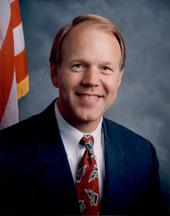 Sen. Don Nickles (R-OK)
Legislative Activity
Stay on top of the latest movement without scrolling through every action
Senate amendment submitted
January 27, 2004
View full timeline
Senate amendment submitted
January 27, 2004
Senate amendment agreed to: Amendment SA 2264 agreed to in Senate by Unanimous Consent.
January 27, 2004
Senate amendment proposed (on the floor): Amendment SA 2264 proposed by Senator Grassley for Senator Nickles to Amendment SA 2233.(consideration: CR S274-275; text: CR S275)
January 27, 2004
Amendment SA 2264 proposed by Senator Grassley for Senator Nickles to Amendment SA 2233. (consideration: CR S274-275; text: CR S275) To express the sense of the Senate with respect to the status of private pension plans.
January 27, 2004
Amendment SA 2264 agreed to in Senate by Unanimous Consent.
January 27, 2004
Text
Proposed
PENSION FUNDING EQUITY ACT OF 2003--Continued

The PRESIDING OFFICER. Under the previous order, the hour of 2:15
p.m. having arrived, the time until 2:30 will be equally divided
between the Senator from Arizona, Mr. Kyl, and the Senator from
Montana, Mr. Baucus, or their designees.
The Senator from West Virginia.
Mr. ROCKEFELLER. Mr. President, the Senator from Montana is otherwise
occupied for the moment, so we are going to turn our attention, through
myself and Senator Kyl, to the legislation we are considering, which is
critically important and which has to do with pension plans and
offering predictable solutions.
There are many people who I would like to thank, but I will not do
that because I only have 7\1/2\ minutes.
The legislation we are considering enacts critical reforms that will
shore up defined benefit pension plans upon which so many Americans
depend. Today, we are updating the interest rate that companies must
use when they calculate the liabilities of their pension plans. An
index of long-term corporate bond rates is surely more accurate as a
measurement of expected investment return than the now entirely defunct
30-year Treasury rate.
This bill also provides a grace period for pension plans, including
multiemployer plans, which have experienced extraordinary losses in the
recent stock market declines. Make no mistake, if companies are not
accorded reasonable flexibility in funding their plans, then they will
not be able to maintain or afford plans for their workers, and their
workers will hurt. I know of that because I live in a State where that
surrounds me.
I hope today's action is only the first step in a thoughtful and
careful process to provide meaningful reforms for the defined benefit
pension plan system. Congress ought to do all it can to encourage
employers to provide retirement security through such plans.
Today, only 35,000 companies provide defined benefit pension plans,
which is less than a quarter of the plans available 20 years ago. That
is a big loss. Given the volatility we have seen in the stock market
over the last few years, more employees would benefit from having the
opportunity to earn secure, predictable pension benefits.
I stand ready to work with my colleagues to address the other
important issues facing companies that are interested in providing
defined benefit pension plans. For example, Congress ought to
reconsider the funding rules to ensure that companies are able to
invest appropriately in their pension plans when business is good and
profits are strong. We also need to consider ways to strengthen the
Pension Benefit Guaranty Corporation which, to say the very least, is
stretched dangerously thin.
I hope my colleagues will work with me on important reforms such as
these so we can improve retirement security for millions of Americans.
As I ask my colleagues to do exactly that, I remind them of the people
who are dependent upon us. I have met with many West Virginians who
have worked hard all of their lives--as they say, played by the rules--
and earned pension benefits from their employers, only to have the rug
pulled out from under them in retirement. It is a painful, painful
sight.
Wheeling Pittsburgh Steel, Weirton Steel, Kaiser Aluminum, and
Special Metals--and I am talking about companies in West Virginia--have
been taken over by the PBGC in recent years. Retirees who dedicated
their working years to those companies have told me how scared they
are. Many have also lost their health insurance. Without their full
pension benefits, they have no way to provide for their health care
needs.
Some people--and I am talking about seniors who are 60 or 65 years
old--have told me they are looking for work. Part of their so-called
retirement will be spent on the job because the pension benefits they
were promised--the benefits they did earn--have been taken away.
The legislation we are considering today will not solve all problems.
More comprehensive pension reform is needed. But I am pleased this bill
will help companies maintain pension plans that otherwise might have
been canceled.

Amendment No. 2234

I would also like to take a moment to address the amendment that has
been offered by my colleague from Arizona. On behalf of the
steelworkers of my State and the steelworkers of the State of the
Presiding Officer, and on behalf of steelworkers across this country
and many other hundreds of thousands of working people, I want to
oppose the amendment that the Senator has offered.
The legislation that Congress is considering today is designed to
help companies maintain critical pensions on which workers are
depending. We are doing so to protect workers from losing benefits that
they have been promised. We understand some companies, faced with
particularly hard times, are unable to immediately make up the
investment losses recently suffered by pension plans. If companies
cannot afford to meet strict deficit reduction contribution
requirements, they might be compelled to abandon pension plans and
leave workers without secure retirement benefits.
Having said this, the Kyl amendment would dramatically decrease the
security of hard-earned retirement benefits. The amendment
fundamentally undermines the guarantee provided by the Pension Benefit
Guaranty Corporation which insures the defined benefit retirement
plans. Let me be very clear about that because the PBGC is,
unfortunately, something that we know a great deal about in the part of
the country I come from. I repeat, the Senator's amendment would
dramatically decrease the security of hard-earned retirement benefits.
It undermines the guaranteed portion of the Pension Benefit Guaranty
Corporation. If Congress is going to change the guarantee provided by
the PBGC, we must look for ways to improve the guaranteed benefit, not
undermine it.
Hundreds of thousands of Americans currently depend on PBGC for their
retirement security. These are people who toiled away for years, often
in very dangerous occupations, in all kinds of them. It is absolutely
essential that we do not erode the already inadequate guarantee that
protects these workers in their old age. Retirees depend upon PBGC
payments to pay for food, housing, and, increasingly, to cover health
care costs when retiree health benefits have been reduced or
eliminated, as is so often the case. It would be unconscionable for
Congress to provide relief to cash-strapped companies to help them
maintain the pension plans they offer, only to punish the employees of
those companies by

[[Page S271]]

denying them the benefits they have earned.
I hope my colleagues will join me in standing up for workers and
defeat this amendment.
The PRESIDING OFFICER (Mr. Voinovich). The Senator from Arizona.
Mr. KYL. Mr. President, it is my understanding that I have 7\1/2\
minutes to speak to the amendment which I have offered.
The PRESIDING OFFICER. The Senator is correct.
Mr. KYL. Let me point out what we are doing here and then explain the
very modest amendment I have offered which would not undermine the
pension guarantee for employees.
The basic problem we have is that the Treasury note that was used to
calculate the payments that companies make to the fund to guarantee
pensions for their employees is no longer being issued, so some
substitute had to be found. The underlying bill uses the 30-year
Treasury note as that substitute. I think everybody agrees that needs
to be done on a temporary basis.
There was a deficit created in the pension fund because companies
were not paying in the appropriate amount during the period of time
that the Treasury note was not being issued. As a result, the fund
accrued a deficit. It is over $11 billion. So companies are being asked
to pay in a deficit reduction contribution to make sure that the fund
has the money that is required to ensure that employees will receive
their benefits.
Ironically, it is the proponents of the amendment that are
undercutting the fund because what they are saying is not everybody
will have to pay their fair share into the fund to guarantee payments
to employees; that for a couple of steel companies and a couple of
airlines, they will not have to make the full deficit reduction
contribution. Instead, in the first year, they only have to pay 20
percent of what is required. In the second year, they would only pay 40
percent of what is required. That, obviously, is going to mean, for
those companies, they are not paying in what they should be to ensure
that their employees are fully covered.
All my amendment does is say that given the fact that in this
situation an employer is not paying in the full amount, the pension
guaranty board should not be on the hook for benefits that are accrued
just during this period of time. So what we say is that if a business
takes advantage of this special rule, and if it fails during the 2-year
period that this is in effect or 2 years thereafter, then all of the
benefits that accrued during that period of time would not be
guaranteed by the board. In other words, the corporation would have to
hold harmless the pension guaranty board.
If we don't do this, then the prediction that the board members who
are in charge made in their recent letter would potentially come true.
The Pension Benefit Guaranty Corporation has three board members: The
Secretary of Treasury, the Secretary of Commerce, and the Secretary of
Labor. They wrote a letter to Leader Frist on January 22 and this is
among the things they said:

We believe that H.R. 3108 would best protect pensions and
pensioners if passed free of any provisions to alter the
Deficit Reduction Contribution rules.

The underlying amendment does, in fact, alter the deficit reduction
contribution rules.

Specifically, it would be irresponsible to amend the
interest rate bill with any additional provisions that would
significantly further exacerbate systemic pension plan
underfunding.

Obviously, if you don't require all of the companies to pay in their
fair share, you are, in fact, undermining the fund. They conclude by
saying:

If H.R. 3108 were amended to do so, we as the PBGC board
would recommend that the President veto the legislation.

My point in mentioning this is to note that it may be that the amount
of money we are talking about would not be interpreted as significantly
underfunding. That would be the hope because if it would be, then I
don't think any of us would be happy. But what I would suggest is that
as a way of ensuring that the impact is minimized, my amendment should
be adopted. It is very minimal. It simply says for those companies, if
any, that choose to take advantage of this special waiver from the
deficit reduction contribution, if they fail during this 2-year waiver
period, then only the benefits that are accrued during that period
would not be covered. That is to say, they would have to hold harmless
the pension guaranty board for that amount of money.
The reason is obvious: They are not paying in. They should not
receive the benefit of the guarantee. If they want to receive the
benefit of the guarantee for those benefits, then pay in their fair
share. Obviously, they are totally covered for all of the benefits
accrued up to that date because they paid in up to that date. So we are
basically saying: If you choose as a corporation to take advantage of
this waiver and not pay in what everybody else has to pay in, you
should be on the hook for that amount of money. You should not ask the
taxpayers or your rivals in business, your competitors, or the board to
try to make up that difference.
The reality is, we are not talking about a great deal of money. The
principle is important and would help to make this underlying amendment
a little bit more palatable to some of us on this side and to the
administration.
I yield to the Senator from Oklahoma.
Mr. NICKLES. Mr. President, I want my colleague from Arizona to
listen. If I misstate this, I hope he will correct me. I urge our
colleagues to vote in favor of the Kyl amendment.
The Pension Benefit Guaranty Corporation is in trouble. It guarantees
pensions, both single-employer plans and multiemployer plans, and it
doesn't have enough money to provide the guarantees that it has already
made.
So there is a catchup provision that says, well, you should pay up;
you should help. This bill we are getting ready to pass is going to
make it easier on some companies--airlines and steel--so they don't
have to pay as much on the catchup. The Senator's amendment says if
those companies grant additional benefits, i.e., increased pensions,
and if they go upside down--declare bankruptcy--PBGC will not be held
for any incremental benefits increase during this 2-year period of
time; is that correct?
Mr. KYL. Mr. President, if I may correct one aspect. Theoretically, a
new employee would be a new benefit, but the reality is that since the
accrual or the benefit is usually a 3- to 5-year time period, new
employees would not in fact be covered.
Mr. NICKLES. If the Senator will yield further, you want to make sure
people are not receiving additional pension changes, i.e., increasing
benefits by 10 percent for all covered employees?
Mr. KYL. Mr. President, that is one of the purposes of this. To be
clear, technically, a new employee would be counted, but since the
benefits don't accrue for 3 to 5 years anyway, it probably would be de
minimis.
I urge my colleagues to support the Kyl amendment.
The PRESIDING OFFICER. All time has expired.
Mr. ROCKEFELLER. Mr. President, have the yeas and nays been ordered?
The PRESIDING OFFICER. No.
Mr. ROCKEFELLER. I move to table the amendment and ask for the yeas
and nays.
The PRESIDING OFFICER. Is there a sufficient second?
There is a sufficient second.
The question is on agreeing to the motion to table the Kyl amendment.
The clerk will call the roll.
The assistant legislative clerk called the roll.
Mr. McCONNELL. I announce that the Senator from Georgia (Mr.
Chambliss) and the Senator from Oklahoma (Mr. Inhofe) are necessarily
absent.
I further announce that, if present and voting, the Senator from
Oklahoma (Mr. Inhofe) would vote ``nay.''
Mr. REID. I announce that the Senator from Montana (Mr. Baucus), the
Senator from Delaware (Mr. Biden), the Senator from North Carolina (Mr.
Edwards), the Senator from Massachusetts (Mr. Kerry), the Senator from
Connecticut (Mr. Lieberman), and the Senator from Maryland (Ms.
Mikulski) are necessarily absent.
I further announce that, if present and voting, the Senator from
Montana (Mr. Baucus) and the Senator from Massachusetts (Mr. Kerry)
would each vote ``yea.''

[[Page S272]]

The PRESIDING OFFICER. Are there any other Senators in the Chamber
desiring to vote?
The result was announced--yeas 67, nays 25, as follows:

[Rollcall Vote No. 4 Leg.]

YEAS--67

Akaka
Alexander
Allen
Bayh
Bennett
Bingaman
Bond
Boxer
Breaux
Brownback
Byrd
Cantwell
Carper
Clinton
Cochran
Coleman
Collins
Conrad
Corzine
Daschle
Dayton
DeWine
Dodd
Domenici
Dorgan
Durbin
Enzi
Feingold
Feinstein
Frist
Graham (FL)
Grassley
Gregg
Harkin
Hatch
Hollings
Inouye
Jeffords
Johnson
Kennedy
Kohl
Landrieu
Lautenberg
Leahy
Levin
Lincoln
Lugar
McConnell
Miller
Murray
Nelson (FL)
Nelson (NE)
Pryor
Reed
Roberts
Rockefeller
Sarbanes
Schumer
Shelby
Smith
Specter
Stabenow
Stevens
Talent
Voinovich
Warner
Wyden

NAYS--25

Allard
Bunning
Burns
Campbell
Chafee
Cornyn
Craig
Crapo
Dole
Ensign
Fitzgerald
Graham (SC)
Hagel
Hutchison
Kyl
Lott
McCain
Murkowski
Nickles
Reid
Santorum
Sessions
Snowe
Sununu
Thomas

NOT VOTING--8

Baucus
Biden
Chambliss
Edwards
Inhofe
Kerry
Lieberman
Mikulski
The motion was agreed to.
Mr. GRASSLEY. Mr. President, I move to reconsider the vote.
Mr. KENNEDY. I move to lay that motion on the table.
The motion to lay on the table was agreed to.
The PRESIDING OFFICER. The Senator from Massachusetts.
Mr. KENNEDY. Mr. President, could I have the attention of the
chairman of the Finance Committee? Would the Senator enlighten us as to
what he expects as far as when we are going to complete this
legislation? As the Senator well knows, we have been on it Wednesday,
Wednesday afternoon, Thursday afternoon, Friday, Monday, and today. We
have had one amendment. I know we are going to run into all kinds of
problems later on in the session about time, and I was just wondering
what the leadership intended to do on this bill.
Mr. GRASSLEY. We hope to work out agreements on all of the remaining
amendments yet today and then have a vote tomorrow and close down very
shortly because of weather.
Mr. KENNEDY. Fine. I do not believe there are any amendments on this
side.
Mr. GRASSLEY. There is one more on this side.
Mr. KENNEDY. Fine. I look forward to working with the chairman. We
are together on this.
Mr. GRASSLEY. Yes.
Mr. KENNEDY. As a matter of interest, Members on our side have
inquired about how we were going to proceed on the legislation. I
wanted to give them some opportunity. I thank the Senator.
The PRESIDING OFFICER (Mr. Chafee). The Senator from Massachusetts.
Mr. KENNEDY. Mr. President, over the past few days we have had a good
debate and discussion of the challenges facing the defined benefit
pension plan system. I thank my colleagues for engaging with us on
these issues that are so vital to the well-being of American workers
and their families.
As I and others have mentioned, defined benefit pension plans provide
a greater certainty and greater security to retirees. Every American
deserves this kind of security in his or her old age in terms of
retirement. There are savings, which are so important, Social Security
and pensions. We have seen savings reduced significantly with our
economic downturn and we have also seen the pensions of so many of our
citizens threatened.
This legislation is designed, as pointed out earlier, to try to deal
with a particular challenge in a temporary way until we can reach a
final determination on how we are going to proceed. But it is
absolutely essential.
This week we have taken the first important step to stabilizing our
Nation's pension plans, which have been battered by a perfect storm of
economic conditions over the last 3 years.
I again thank Chairman Grassley, the ranking minority member, Senator
Baucus, as well as our HELP committee chairman, Senator Gregg, for
working with all of us to develop a moderate bipartisan measure to
address the pension system's short-term problems. This amendment does
not weaken the existing funding bill. It simply provides temporary,
moderate relief to give companies and workers the breathing room needed
to take steps to further protect these pension plans. We must take
advantage of this time to improve and expand our pension system.
More and more American workers are finding themselves without a
pension. Since 2000, 3.3 million Americans have lost their pension
coverage. In 2002, only 53 percent of our Nation's workers were
participating in retirement plans--the lowest level in over a decade.
Only one in five workers today has a secure defined benefit plan.
This drop in pension coverage is part of an overall decline in the
quality of jobs and the quality of benefits that American workers are
receiving. American workers are working harder than ever, but they are
getting less and less for their effort.
I want to take a few moments here on the floor of the Senate to
remind our friends and colleagues what the real state of the union is
with regard to workers in our country at this time.
As recently as today, there were statements and comments by the
chairman of the Federal Reserve. On CNN, they asked the question: Do
you agree with Federal Reserve Chairman Alan Greenspan's comment that
new jobs will replace old jobs as they always have?
We could ask that in this Chamber. I wonder what the answer would be.
The American people get it--certainly the viewers of CNN do. This is
nonscientific, but it is a reaction. Those who believe Mr. Greenspan
was right were 11, and those who believe he was wrong were 89 percent.
Americans are getting it. They are understanding it.
The Federal Reserve Bank publication Economics and Finance, last
summer said--I will include the appropriate references--that the
downward turn in the mid-1970s and early 1980s shows an even mix of
cyclical and structural adjustments--those who lost their jobs as
temporary workers and who lost their jobs which are more permanent in
nature. During these episodes, half the unemployment was structural and
half was cyclical. The pattern changed in the early 1990s when industry
was undergoing structural adjustments and increased its share of total
employment to 57 percent.

The greatest change, however, is apparent. In the 2001 downturn, 79
percent of the employees worked in industries affected more by
structural shifts than by cyclical shifts. That means, in simple
language, those who responded to the CNN poll understand that 80
percent of the jobs that are lost today are permanently lost. This has
to be a major concern.
This chart indicates that the Federal Reserve reports the Bush job
loss is permanent. In the 1950s, the permanent job loss was 51 percent;
in the 1980s, again 51 percent; and, early 1990s, only 57 percent. Now,
there is an 80 percent permanent job loss--the first time in the
history of this country.
There is a report from the Department of Labor which shows that 36
States have lost jobs since President Bush took office, and 27 States
lost more jobs in the last month alone. The rate of job loss in my
State of Massachusetts since President Bush took office is higher than
in any other State.
I say to the Chair, my friend and colleague from Rhode Island, I
doubt if Rhode Island is very far behind. Over the last 3 years,
193,000 jobs disappeared, and 200,000 Massachusetts residents are
currently unemployed. In Massachusetts, 2,500 workers a week are
running out of benefits because our Republican friends and the Bush
administration refuse to extend the unemployment compensation
temporarily for 13 weeks to permit these families to pay a mortgage and
to put food on the table. These workers have paid into the fund. The
fund has $17 billion in surplus. The cost of this legislation for 13
weeks is $7 billion. But no.
Look at what the President of the United States said at the time of
his State of the Union. He said, ``This economy is strong and growing
stronger.'' Applause. And then he said, ``Jobs are on the rise.''
Applause.

[[Page S273]]

That really defies the facts and reality in terms of what is
happening across the United States in terms of real jobs.
I referred previously to the excellent article and report of just
last Friday. This information is current. These figures are current
with regard to my own State of Massachusetts. The statement of the
chairman of the Federal Reserve is current. The study of the Federal
Reserve is current.
Here is the Wall Street Journal pointing out that the gap in wages
and equality is growing for U.S. workers. The gap between the highest
and lowest earners in America is widening again, with election year
ramifications. The trend is a reflection of the job market. The
exceptionally weak response to the current economic recovery as well as
the long-term technological and economic changes have eroded the
bargaining power of America's lowest paid workers. Data show that
younger workers, who currently have fewer job prospects than a few
years ago, in particular are bearing the brunt. The numbers indicate a
movement to greater wage inequality around the time President Bush
succeeded President Clinton.
This is the Wall Street Journal. This is not a Democratic organ I am
quoting.
The disparity started under President Bush with the economic slide
into recession 3 years ago. The trend represents a reversal of the late
1990s when the lowest rates in a generation enabled the lowest paid
workers to keep pace with those at the top. Mr. President, we will look
at the jobs referred to in the President's State of the Union. He
talked about these jobs as being on the rise.

Look at this chart. This refers to what is happening in the job
market.
The late 1990s, 1998 to 2000, all the fourth quarter--the same
quarter we were coming out of the recession--for every job that paid
$16.31, the new job paid $18.32, a $2 bonus. Lost your job? Get a new
job and get better pay. This is the average of all the new jobs.
What is it today? Under the Bush recovery, for every job that was
paying $16.92, the replacement job is $15.65--22 percent nationwide; 35
percent in the State of New Hampshire where so many of our friends and
colleagues are today. No wonder the citizens of New Hampshire are
concerned about the state of the economy, the cost of tuition, and the
cost of health care.
Look what is happening in the industries across the country at the
point of hiring. We find workers are working harder, working longer,
and they are making less. This is the real state of the Union.
This chart shows nationwide only two States--Nebraska and Nevada--
have actually increased employment and had a pay increase over the
employment figures when the President took office. Every other State
has seen a decline.
How does the recovery stack up with other recoveries, the last nine
recoveries, going back to 1949? This chart compares the constant
quarter used when the recession ended. What happened to wages? Going
back to 1949, they went up 16 percent; 10 percent in 1954; 10 percent
again in 1958; in 1961, 7.9 percent; 9.2 percent in 1982; 1991, 6.1
percent; and 2001, 1.58.
That is what is happening out here among workers in the workplace. No
wonder, as CNN reported last week, that American workers are finding
themselves competing with cheap foreign labor just to hold on to their
jobs. They are overwhelmed because they feel as if forces way beyond
their control are making decisions that affect their lives. They are
exhausted because they are working harder and longer and faster just to
stand still.
Who is making out with this recovery? This chart compares the
recovery in the 1990s and the recovery today. In the Bush economy,
corporate profits ballooned compared to workers' wages. With the
recovery in the early 1990s, 60 percent of the new economic activity
was reflected with 60 percent going to the workers' wages; with the
recovery in the 1990s, 40 percent went to corporate profits. With
today's recovery, 86 percent goes to corporate profits and 13 percent
goes to the workers in this country.
Talk about disparity. Talk about fairness. What is going on is the
most dramatic change and shift in recent history in terms of the
relationship between the profits and what the workers are earning.
That is absolutely wrong. The results are dramatic. In the year 2000,
there were 31 million Americans living in poverty. Today, there are 34
million Americans living in poverty, according to the Department of
Commerce.
It is not just what is happening in the job markets; it is happening
in health care costs. We see this in the most recent Time magazine,
February 2, ``Why Your Drugs Cost So Much More.'' The report shows
Americans spent $162 billion on prescription drugs in 2002, up from
less than $100 billion a decade ago.

Health care spending continues to rise; 9.3 percent in 2002,
according to the trade journal Health Affairs. That is the largest
increase in 11 years. Employers tighten coverage to cut costs;
consumers are more resentful of what they are paying at the drugstore.
While prescriptions represented only 10 percent of the total health
care costs in the United States in 2002, they amount to 23 percent of
the out-of-pocket costs for the consumer.
We passed a drug bill last fall. One would think we would look at
coverage and try to do something about costs. No way. Written into
that, behind closed doors, were the provisions that this Bush
administration and the Republicans prohibited the Secretary of HHS to
be able to bargain with the drug companies in order to see some
reduction. The Secretary for Veterans Affairs can do it and it means a
47-percent reduction for veterans' prescription drugs. But this was
prohibited in the legislation.
Hopefully in this Congress under the leadership of Tom Daschle and
Congresswoman Pelosi, we will address what is happening with health
care costs. Prescription drug costs are a special problem because the
cost of prescription drugs is out of control. We have to do something
for our fellow Americans, primarily our seniors but for others as well,
and about the costs of health care generally.
Workers are working harder, longer, and for less. They are worried
about their health care. The costs are going through the roof, with
very little insight to get a handle on that cost.
We look not only at what workers are looking for in terms of their
costs for health care and the costs of health care for their parents.
Look at the costs of college education. This chart is a comparison of
tuition at a 4-year public university: it was $3,700 in 2001-2002; now
it is $4,700. That's a 26-percent increase since 2001.
How can average working families afford to send their child to
school? How do they afford their health care costs, their prescription
drug costs, their tuition?
Look what has happened to wages--nothing. That is the real state of
the Union, not this ``jobs are on the rise, and the economy is strong
and getting stronger.''
This is the description of what is happening out there to American
workers. What is the answer of this administration? We say, with regard
to the lowest workers, let's see an increase in the minimum wage.
The minimum wage has not been increased in 7 years. By the end of
this year it will be at its lowest purchasing power, in real terms, in
the history of the minimum wage. We say: Let's get an increase. There
is a majority of the Members in this body who would vote for an
increase in the minimum wage, and we have been prohibited from getting
it because the Republican leadership will not let us get a vote on the
issue.
Seven million Americans are entitled, when they are working 40 hours
a week, 52 weeks a year, not to have to live in poverty. That is what
we believe on this side. We challenge the other side to give us an
opportunity to let the Senate express itself.
We have the second issue that I have mentioned, unemployment
compensation. Mr. President, 90,000--think of that number of people--
90,000 individuals a week are losing their unemployment compensation. I
do not know how those families do it. How does a father and mother come
back and look into the eyes of their children when they lose that
unemployment compensation, having worked hard all of their lives, paid
into the fund, and it is suddenly gone? And they cannot find a job
because we are in a jobless recovery. As

[[Page S274]]

the figures show, in the last month, this administration said there
would be 300,000 jobs. There have been 1,000 jobs created. It is a
jobless recovery.
How do those parents deal with it? How do those children react? That
is what is happening. Now we cut away their lifeline, the temporary
unemployment compensation. No, you cannot have it. You cannot have an
increase in the minimum wage to provide some relief. And that is a
family value issue because most of those who work for the minimum wage
are women, and many of the women have children. It is a family issue, a
children's issue, a women's issue, a civil rights issue, a fairness
issue. Yet we cannot have a raise in the minimum wage. We cannot have
an extension of unemployment benefits.
Beyond that, we are going to stick it to 8 million Americans in
denying them overtime. We had the debate on that earlier, that proposed
regulation by the administration to restrict overtime coverage for 8
million Americans. It was rejected here under the leadership of my
friend and colleague, Senator Harkin. It came up in the House of
Representatives. It was rejected there. Then those provisions rejecting
this regulation were stripped out of the omnibus bill behind closed
doors in the middle of the night.
That is unfair to a number of different professions. It is unfair to
nurses, firefighters, and police officers. They are the backbone of
homeland security. But it is unfair to others as well, including many
professions which have predominantly women in them. It is very unfair
to working women.
The cruelest part of this whole proposal was the part of the
regulations that said if service men and women, when they are over in
Iraq defending this country, and Afghanistan or other parts of the
world, got a little specialized training, when they come back and take
a job, if they had that specialized training, they would not be
eligible for overtime.
Can you imagine that? We use these training programs as an incentive
for people to go into these services. I have asked on the floor and
would love to see the exchange of information between the Secretaries
of Labor and Defense on that issue because this is a major incentive--
training programs, education--for young people who perhaps do not have
the resources to be able to go on to college and do not want to be a
burden on their parents. They go into the service--proudly go into the
service--and wear the uniform of our country, and defend our country,
but they also try to get that help and assistance in the form of
training and education.
I will end on this issue with this letter from Randy Fleming, a
veteran, and what this proposal would mean to veterans. He is a Boeing
employee worried about losing his overtime. This is what his letter
says:

My name is Randy Fleming. I live in Haysville, Kansas--
outside Wichita--and I work as an Engineering Technician in
Boeing's Metrology Lab.
I'm also proud to say that I'm a military veteran. I served
in the U.S. Air Force from August 1973 until February 1979.
I've worked for Boeing for 23 years. During that time I've
been able to build a good, solid life for my family and I've
raised a son who now has a good career and children of his
own. There are two things that helped make that possible.
First, the training I received in the Air Force made me
qualified for a good civilian job. That was one of the main
attractions when I enlisted as a young man back in Iowa. I
think it's still one of the main reasons young people today
decide to enlist. Military training opens up better job
opportunities--and if you don't believe me, just look at the
recruiting ads on TV.
The second thing is overtime pay. That's how I was able to
give my son the college education that has opened doors for
him. Some years, when the company was busy and I had those
college bills to pay, overtime pay was probably 10% or more
of my income. My daughter is next. Danielle is only 8, but
we'll be counting on my overtime to help her get her college
degree, too, when that time comes. For my family overtime pay
has made all the difference.
That's where I'm coming from. Why did I come to Washington?
I came to talk about an issue that is very important back
home and to me personally as a working man, a family man, and
a veteran. That issue is overtime rights.
The changes that this administration is trying to make in
the overtime regulations would break the government's bargain
with the men and women in the military and would close down
opportunities that working vets and their families thought
they could count on.
When I signed up back in 1973, the Air Force and I made a
deal that I thought was fair. They got a chunk of my time and
I got training to help me build the rest of my life. There
was no part of that deal that said I would have to give up my
right to overtime pay. You've heard of the marriage penalty?
Well I think that what these new rules do is to create a
military penalty. If you got your training in the military,
no matter what your white collar profession is, your employer
can make you work as many hours as they want and not pay you
a dime extra.
If that's not bait and switch, I don't know what is.
And I don't have any doubt that employers will take
advantage of this new opportunity to cut our overtime pay.
They'll tell us they have to in order to compete. They'll say
if they can't take our overtime pay, they'll have to
eliminate our jobs.
It won't be just the bad employers, either--because these
rules will make it very hard for companies to do the right
thing. If they can get as many overtime hours as they want
for free instead of paying us time-and-a-half, they'll say
they owe it to the stockholders. And the veterans and other
working people will be stuck with less time, less money, and
a broken deal.
I'm luckier than some other veterans because I have a union
contract that will protect my rights for a while anyway. But
we know the pressure will be on, because my employer is one
that pushed for these new rules and they've been trying hard
to get rid of our union.
And for all those who want to let these military penalty
rules go through, I have a deal I'd like to propose. If you
think it's okay for the government to renege on its deals, I
think it should be your job to tell our military men and
women in Iraq that when they come home, their service of
their country will be used as a way to cut their overtime
pay.

You can't say it any better than that. And the cruelest part of it
all is that the Labor Department puts out a publication to show
employers how to go about cutting his overtime pay.
Mr. President, just finally, I want to make mention of something we
ought to be concerned with--and we ought to be concerned about all
workers--but it just came to my attention that the administration's
overtime proposal will affect the U.S. Capitol Police.
The Capitol Police was first created in 1828 with the sole mission of
providing security for the U.S. Capitol Building. These dedicated
officers protect our lives, the lives of our staff, and the security of
the Nation's Capitol every single day.
Nearly 2,000 officers are responsible for these duties, and hundreds
of them could lose their overtime pay under the Bush plan.
After September 11, many of these officers worked around the clock to
secure our safety. During the anthrax attacks, the officers dedicated
hours and hours away from their families to secure the Capitol against
further biochemical attacks.
If you walk through these halls, you can hear the buzz among these
officers: Are we going to be affected by this overtime proposal? How
could they do this to us?
Not every officer would be affected, but many with the specific
duties listed in the Bush proposal could lose their overtime
protections. Denying overtime protections to even one Capitol Police
officer is too much.
Sergeants and other officers who spend most of their time on
nonmanagerial activities but who supervise two other officers could
lose their overtime protection.
And for the first time in the history of the Fair Labor Standards
Act, nearly 40 percent of the Capitol Police force--those earning above
a certain amount who meet just one of the exemption criteria--will not
have access to overtime protections.
Well, this is where we are. We want to give the assurance to the
American workers, to their families, to parents and their children that
we are going to battle.
We are going to battle to make sure this administration doesn't
implement those overtime rules. We are going to battle every moment we
have, every opportunity we have, to extend unemployment compensation.
And we are going to battle time and time again to increase the minimum
wage. Let there be no mistake about it. It is going to come up in the
Senate time and time and time and time again, until we provide some
justice for workers in America.

Amendment No. 2264 To Amendment No. 2233

The PRESIDING OFFICER. The Senator from Iowa.
Mr. GRASSLEY. Mr. President, I ask unanimous consent that the pending

[[Page S275]]

amendment be set aside for the purpose of offering another amendment
that has been agreed to.
The PRESIDING OFFICER. Without objection, it is so ordered.
Mr. GRASSLEY. Mr. President, I send an amendment to the desk on
behalf of Senator Nickles and ask for its consideration.
The PRESIDING OFFICER. The clerk will report.
The legislative clerk read as follows:

The Senator from Iowa [Mr. Grassley], for Mr. Nickles,
proposes an amendment numbered 2264 to amendment No. 2233.

Mr. GRASSLEY. Mr. President, I ask unanimous consent that reading of
the amendment be dispensed with.
The PRESIDING OFFICER. Without objection, it is so ordered.
The amendment is as follows:

(Purpose: To express the sense of the Senate with respect to the status
of private pension plans)

At the appropriate place, insert:

SEC. __. SENSE OF THE SENATE ON STATUS OF PRIVATE PENSION
PLANS.

(a) Findings.--Congress makes the following findings:-
(1) The private pension system is integral to the
retirement security of Americans, along with individual
savings and Social Security.
(2) The Pension Benefit Guaranty Corporation (PBGC) is
responsible for insuring the nation's private pension system,
and currently insures the pensions of 34,500,000 participants
in 29,500 single-employer plans, and 9,700,000 participants
in more than 1,600 multiemployer plans.
(3) The PBGC announced on January 15, 2004, that it
suffered a net loss in fiscal year 2003 of $7,600,000,000 for
single-employer pension plans, bringing the PBGC's deficit to
$11,200,000,000. This deficit is the PBGC's worst on record,
three times larger than the $3,600,000,000 deficit
experienced in fiscal year 2002.
(4) The PBGC also announced that the separate insurance
program for multiemployer pension plans sustained a net loss
of $419,000,000 in fiscal year 2003, resulting in a fiscal
year-end deficit of $261,000,000. The 2003 multiemployer plan
deficit is the first deficit in more than 20 years and is the
largest deficit on record.
(5) The PBGC estimates that the total underfunding in
multiemployer pension plans is roughly $100,000,000,000 and
in single-employer plans is approximately $400,000,000,000.
This underfunding is due in part to the recent decline in the
stock market and low interest rates, but is also due to
demographic changes. For example, in 1980, there were four
active workers for every one retiree in a multiemployer plan,
but in 2002, there was only one active worker for every one
retiree.
(6) This pension plan underfunding is concentrated in
mature and often-declining industries, where plan liabilities
will come due sooner.
(7) Neither the Senate Committee on Finance nor the Senate
Committee on Health, Education, Labor and Pensions (HELP),
the committees of jurisdiction over pension matters, has held
hearings this Congress nor reported legislation addressing
the funding of multiemployer pension plans;
(8) The Senate is concerned about the current funding
status of the private pension system, both single and multi-
employer plans;
(9) The Senate is concerned about the potential liabilities
facing the PBGC and, as a result, the potential burdens
facing healthy pension plans and taxpayers;
(b) Sense of the Senate.--It is the sense of the Senate
that the Committee on Finance and the Committee on Health,
Education, Labor and Pensions should conduct hearings on the
status of the multiemployer pension plans, and should work in
consultation with the Departments of Labor and Treasury on
permanent measures to strengthen the integrity of the private
pension system in order to protect the benefits of current
and future pension plan beneficiaries.

Mr. GRASSLEY. Mr. President, as I indicated, this amendment has been
cleared on both sides. I ask for its adoption.
The PRESIDING OFFICER. Is there further debate?
If not, without objection, the amendment is agreed to.
The amendment (No. 2264) was agreed to.
Mr. GRASSLEY. Mr. President, there have been some inquiries about
other amendments. We have some other amendments on which we are
working. I will file them. Then I believe that would be the end of
consideration of this legislation today. I will come back later on to
do that.
I yield the floor.
The PRESIDING OFFICER. The Senator from Delaware.
Mr. CARPER. Mr. President, I would like to offer a comment or two
about the legislation before us and express my thanks to two Members of
the Senate who have been very involved in shaping this legislation,
Senator Grassley and Senator Kennedy. I thank them for the work they
have done.
There is a lot of concern in this country about the exodus of
manufacturing jobs and technology jobs. The legislation before us is a
thoughtful, timely response to a number of employers, large and small,
who are concerned that unless we address this problem with respect to
selecting an appropriate successor to the 30-year Treasury bond, an
appropriate measure to determine what magnitude of money should be
contributed to pension funds, we are going to otherwise increase the
exodus of jobs, manufacturing and otherwise.
We are doing good work. My hope is we will be able to finish this
legislation this week and get on with our business and allow employers
to get on with theirs.

Energy Efficiency for Air Conditioners

Mr. CARPER. Mr. President, about a week or so ago I learned that a
U.S. circuit court of appeals, I believe for the Second District, had
released a decision that is a major victory for energy efficiency. It
offers significant savings for consumers of electricity. It is
important for our Nation's energy future. Finally, it will help to
improve the quality of air we breathe.
Let me take a moment to talk more about this decision and its impact.
To provide a bit of background, among the U.S. Department of Energy's
responsibilities is to establish energy efficiency standards for
electrical appliances. Central air-conditioners, the type that cool
most of our homes and offices, must meet the appropriate seasonal
energy efficiency rating, better known as SEER. During warm summer
days--which seem a long way away now--central air-conditioners account
for more than half of the electricity we use. Increasing the efficiency
of these necessary modern comforts will result in significantly less
stress on our Nation's electricity grid and reduce the occurrence of
blackouts.
According to the Alliance to Save Energy, requiring energy-efficient
air-conditioners would avoid having to construct as many as 48 new
electric powerplants over the next 16 years. It would also result in
less greenhouse gases and harmful air pollution being released into the
atmosphere because of reduced electricity demand.
Some of you may recall at the close of the Clinton administration,
after exhaustive research, review, and comment, the Department of
Energy set forth a new standard known as SEER 13. In doing so, the
Energy Department directed that central air-conditioners, sold
beginning in 2006, would need to be 30-percent more energy efficient
than those currently available.
Unfortunately, that standard was withdrawn a couple of years ago when
the current administration took office. That standard was replaced with
a less efficient, less rigorous requirement. The revised standard,
known as SEER 12, would have required just a 20-percent increase in
energy efficiency.
In response to the administration's actions, 10 States, several
consumer groups, and the Natural Resources Defense Council filed suit
at that time in an attempt to overturn this weakened standard.
It was 2 years ago, as the Senate was beginning to consider the
Energy bill, that I was encouraged that the legislation we are
considering should have restored the higher SEER 13 standard originally
embraced by the Clinton administration. Unfortunately, that language
was removed during the debate on the bill and the weaker SEER 12
standard was allowed to stand.
Last year, I discussed options for reinstating the higher SEER 13
standard but decided to hold off until the pending court case was
decided. As I said, I was gratified to learn last week that the U.S.
Circuit Court of Appeals for the Second Circuit had decided in favor of
the original, more rigorous standard. The court's decision means that
consumers will be able to purchase energy-efficient air-conditioners
that could cut electricity bills for them by over $1 billion per year.
The administration could decide to appeal the court's decision to the
Supreme Court. I urge them today not to do so.
As we debate again and again the future of energy policy, this court
decision is one that should be embraced and encouraged, not appealed.
We

[[Page S276]]

should take every opportunity to increase our energy security. This is
one of those opportunities.
I yield the floor and thank Senator Durbin for his consideration.
The PRESIDING OFFICER. The Senator from Illinois.

CBS Rejection Of MoveOn.Org Ad

Mr. DURBIN. Mr. President, I thank the Senator from Delaware for his
statement and for holding to the time limit he promised. He is a man of
his word.
Recently I learned that the CBS television network, which claims to
be the No. 1, most-watched network, with more than 200 affiliated
stations, rejected an ad for its upcoming Super Bowl broadcast that
will be on Sunday. CBS's explanation for rejecting this ad was that
their network prohibited the showing of advertisements that take stands
on controversial public policy issues.
So what was this controversial, dangerous ad which CBS is protecting
American viewers from watching? Well, it was an ad sponsored by a
nonprofit organization called MoveOn.Org. You can find it on your Web
site at MoveOn.Org. You can see the ad. This 30-second ad shows several
children working unhappily in a variety of grownup jobs.
When you go to the Web site and bring up this ad, you can see a
little girl cleaning the floor of a commercial building with music
playing in the background, a boy washing dishes at a restaurant,
another youngster working on an assembly line in a factory, another
fixing tires at an automobile shop, and another collecting trash for
the back of a truck.
The ad ends with this line:

Guess who's going to pay off President Bush's $1 trillion
deficit?

That is the controversial ad. The ad that CBS doesn't want America to
see, which those who are following this debate can go to MoveOn.org/
cbs/ad and see this ``dangerous,'' ``controversial'' ad that crosses
the line, an ad which CBS is going to protect the American people from
even getting a chance to see. These are some of the still photos from
that ad showing kids in working situations, and closing with one short
tag line:

Guess who's going to pay off President Bush's $1 trillion
deficit?

CBS is afraid of this ad. They are afraid if the American people see
it, they would be so caught up in the controversy of this ad, it would
just be unfair.
Is it controversial? Is this ad too hot for network TV? Would America
be traumatized and changed forever viewing this dangerous,
controversial, 30-second ad? Well, clearly not. This ad makes two
factual assertions every American knows to be true. First, it says we
are facing a growing national debt, a debt exceeding $1 trillion, which
has to be paid off by future generations. Guess what. Those future
generations are going to be comprised of our children.
Second, in those few words at the close of the ad, it says President
Bush and his administration have to accept responsibility for creating
this debt--a fact President Bush's own budget documents readily admit,
a fact substantiated by President Bush's programs of tax cuts for the
wealthy. Everybody with even a short-term memory recalls that only a
few years ago we were dealing with a budgetary surplus under the
Clinton administration. Now we are deep in historic debt year after
year after year during the Bush administration. To argue the Bush
administration's hands are clean when it comes to America's debt defies
common sense and history. So what is so controversial about these
unambiguous facts that our children will be inheriting a large national
deficit created since the time President George W. Bush took office?
Since when has stating the truth--and obvious truth at that--turned out
to be too controversial for America to witness?
Think about it for a moment. CBS was the network, 30 years ago, that
dared to put on a sitcom called ``All in the Family.'' In that sitcom
about a blue-collar, opinionated, rough-talking guy named Archie
Bunker, we heard the reality of a family saying some things which,
frankly, we had never heard before on television. Can you imagine if
these timid souls running from controversy at CBS today were asked to
look at a pilot for a sitcom with Archie Bunker? Frankly, I guess they
would force Archie Bunker to wear a suit and tie and call Meathead his
beloved son-in-law. Otherwise, it just might be too controversial, too
risky for the American people.
Maybe controversy is in the eye of the beholder, and the eye of CBS
now runs from controversy. Or maybe there is another dynamic at work.
Maybe network executives at CBS are so afraid of political pressure
from the rightwing and their business advertisers who are in league
with the rightwing politics of America that they are afraid to put
anything on the air that might in fact make things uncomfortable. If
that is the case, it is time for CBS to announce the name of their
network is the ``conservative broadcasting system'' and come clean with
American viewers.

Look at the record, though. CBS has run controversial ads, many of
which were good for America to see. Ads sponsored by the White House
Drug Control Policy Agency confronted a tough issue, maybe in
controversial terms to some, but ads that were important. The White
House Drug Policy ad that ran during last year's Super Bowl accused
American drug companies of directly supporting international terrorism
that led to the taking of lives of American citizens. Risky, edgy,
controversial? Yes. Did we have a right to see that as Americans? You
bet we did.
Why was CBS ready to run those ads a year ago, but won't let
MoveOn.org address the issue of the debt of America that will be borne
by our children? CBS also runs ads by tobacco companies and antismoking
groups to advocate viewpoints on health. In fact, they are scheduled to
run during the Super Bowl--ads from two different groups, which are the
American Legacy Foundation and Phillip Morris, which are basically
antismoking adds. I fully support these ads. Some may view them as
controversial. But so what. If these airwaves are truly the realm of
the public to learn, why do we run away from a controversial ad even if
it relates to a public health policy some disagree with?
CBS also routinely runs a whole range of controversial, if not
downright offensive, ads during the Super Bowl. We have seen that CBS
has no qualms about running ads featuring comely young women mud
wrestling while a couple of beer-drinking fellows look on.
Controversial? Perhaps to some, but they will run those ads. It appears
CBS executives consider it important to run not one, two, but three
separate ads promoting drugs for sexual dysfunction during the Super
Bowl. They believe in a national debate on such sexual problems is more
important to the public interest than a discussion about the future of
this Nation. In the CBS eye, sexual dysfunction is a topic families
with children can watch. But budgetary dysfunction, which our children
will pay for, is just too controversial, too hot to handle.
So how does CBS define controversial content? Let's take a look at
what goes into their thinking. Remember the series on President Ronald
Reagan? The CBS executives did a complete reversal overnight and pulled
the plug on the miniseries, ``The Reagans,'' after spending millions of
dollars producing it. We learned that the decision was made after
conservative Republicans barraged the boardroom and executives and said
we cannot run this, even though we have not seen it. In fact, CBS caved
in, without the public ever having seen one single episode.
These are the same executives at CBS, incidentally, who, during 1999
and 2000 gave 98 percent of their soft money political contributions to
the Republican Party. They decided this MoveOn.org ad, which just might
raise a question about President Bush's policies leading this Nation,
and the deficit and debt our children face, those same CBS executives
said we don't think we ought to step into this controversial area.
The major pharmaceutical companies, which will be running ads on
three different sexual dysfunction drugs during the Super Bowl, have
also been consistently placed among the five top spenders on lobbying
the Republican Congress and in soft money and PAC contributions to
Republican candidates.
Now let's connect all the dots because there is something more direct

[[Page S277]]

and topical behind this CBS decision, from my point of view. These are
the same executives at CBS who successfully lobbied this Congress to
change the FCC rules on TV station ownership to their corporate
advantage. The provision that was sneaked into the Omnibus
appropriation bill that passed last week and has been signed by the
President. It establishes a new ceiling of 39 percent as the maximum
percentage of American TV viewers in a market that may be reached by TV
stations owned by any one company. Remember that number, 39 percent.
Before the FCC adopted rules in June to raise the cap to 45 percent,
the cap was limited to 35 percent. Upset at what the FCC had done, a
strong majority in the House and Senate agreed to roll back the FCC
rule and take it back down to 35 percent. Why is this important? The
White House and the Republicans in this conference on this Omnibus
appropriation bill, with no Democrats present, came up with a figure of
39 percent as the new cap--39 percent. What is so magic about 39
percent? Allow me to explain. This wasn't chosen at random; it wasn't a
good-faith compromise. No, it just so happens that Viacom, which owns
CBS, currently owns stations reaching 38.8 percent of American
households, and Rupert Murdoch's news corporation, the owners of that
``fair and balanced'' Fox Network, owns stations reaching 37.8 percent.
Interesting. Interesting that the White House and Republican leaders
in Congress pushed a provision in a spending bill in the dark of night,
without Democrats present, that benefited two corporations when it came
to their ownership of television stations--Fox, which is a wholly owned
subsidiary of the Republican Party, and now Viacom, CBS. Both entities
currently violate the old FCC limitation. They needed this new
language. They would have been forced to sell off stations if their
Republican friends in Congress and the White House had not come through
for them.
So the White House and the congressional Republicans give CBS a
significant corporate favor and CBS rewards them by killing an ad
critical of the Bush White House during the Super Bowl. Doesn't that
sound like a perfect subject for a ``60 Minutes'' investigation? Oh, I
forget. ``60 Minutes'' is a CBS program. I don't think we are going to
hear about this on ``60 Minutes.'' I don't think Mike Wallace and
Lesley Stahl are going to be taking an undercover camera into the
boardrooms of CBS to find out what is going on there.
Listen to what our colleague, Senator John McCain of Arizona, said
about this provision that was sneaked into this bill at the last minute
to benefit Viacom and CBS, the biggest corporate favor they could ever
ask for. I am quoting my colleague, Senator John McCain, who said on
the floor:

This provision is objectionable because while purporting to
address public concerns about excessive media consolidation,
it really only addresses the concerns of special interests.
It is no coincidence, my friends--

And this is John McCain speaking--

that the 39 percent is the exact ownership percentage of
Viacom and CBS. Why did they pick 39 percent? So that these
two major conglomerates would be grandfathered in,
purportedly, in order to reduce the media ownership, which
was voted down 55 to 40 in the Senate. The fact is now they
are endorsing Viacom and CBS's 39 percent ownership,
grandfathering them in because they should have been at 35
percent.

In the words of Senator McCain:

Remarkable.

It is clear from the examples, such as the rejection of MoveOn.org's
ad, that CBS and other media companies are dominant in a marketplace
that exercises vast influence over what the American people can see on
television. This is exhibit A in the case against media concentration.
Too much power has been given to media executives who now are going
to pick and choose and censor the content of political material which
we as Americans can see. They can decide on one hand that their friends
will be favored with ads and then reject ads critical of their
political friends as just too controversial for America to witness.
That is exactly what they have done on this MoveOn.org ad. CBS is
able to reject MoveOn.org and anyone else whose views they disagree
with because the executives know there are thousands of other companies
standing in line ready to pay for ads during the Super Bowl.
It all comes down to this: Through years of deregulation, we have
created a situation in America where massive media conglomerates, such
as CBS, are operating without any effective oversight and with little
or no feeling of responsibility to the public.
It used to be people remembered that the airwaves these TV stations
use don't belong to these TV stations, they don't belong to the media
giants, such as Viacom, they don't belong to CBS. They belong to you,
me, and every American. We allow these companies to use the airwaves,
and they make a fortune. We licensed them for that purpose. We used to
say, before the Reagan administration changed the law: If you are going
to use America's airwaves, you have to be fair in the use of the
airwaves. The fairness doctrine was thrown out. Now the only standard
is that they only have to serve the public interest.
It is such a vague term, ``serve the public interest,'' that CBS,
undoubtedly, can get by with rejecting ads for political reasons, such
as their rejection of this MoveOn.org ad. But if the public interest
standard is to mean anything, it must require broadcast licensees to
air diverse points of view on issues of national interest.
It is all right for me as an American to watch something on
television with which, frankly, I disagree. Maybe I want to pick up the
phone and call the station manager or register my complaint with one
group or the other. Isn't that what free speech in America is all
about? Not from CBS's point of view. From the CBS point of view, they
will pick and choose what you can watch. Ads for beer with young folks
doing things which maybe you don't want your children to see--not
controversial. Ads by pharmaceutical companies for sexual dysfunction
drugs you may not want your children to watch--not controversial. But
an ad which says that our children are going to pay off a $1 trillion
national debt created by this administration--over the line, way too
scandalous, way too controversial. Children and good American families
should not be subjected to that, in the eyes of CBS. I certainly
disagree.
Broadcasters and executives running broadcast stations should
remember that, first and foremost, they are journalists. They have a
responsibility to the American people to speak the truth, to give us
the information and let us decide. They have a professional and ethical
obligation to be fair and balanced, even if it means they have to set
aside their own political views and prejudices and perhaps--perhaps--
just once in a while, step on the toes of their political allies and
friends, even the ones who just handsomely rewarded them with the
provision in the recent appropriations bill.
While broadcasters may wish to exercise their discretion in selecting
ads that would run afoul of a community's decency standards,
broadcasters should not and must not become censors of content. That is
the fundamental promise of the first amendment. It is wrong for the
Government to censor content. It is wrong for corporate stewards of our
public airwaves to do so.
If you believe, after watching this ad by MoveOn.org, that CBS was
wrong, that CBS should have allowed this ad, which shows children at
work and says, in its closing frame, ``Guess who's going to pay off
President Bush's $1 trillion deficit?''--if you think CBS made a
mistake, you have a right, as an American, to contact them. You can
write to them at: CBS Television Network, 51 West 52nd Street, New
York, NY, 10019, or you can call them: (212) 975-4321. Ask to talk to
the corporate executive who decided this ad was too controversial for
your family to see. Make certain they understand, as I feel and hope
you feel, that America is ready for an ad which tells the truth, an ad
which may be controversial in the eyes of one political party but
certainly deserves to be aired so the public can finally decide what is
right and what is wrong.
I hope the American people will not sit idly by and watch as these
media giants, such as CBS, become bigger, more powerful, and decide
just exactly what we as Americans will get to see on TV.
I urge everyone watching to call CBS and remind the executive that
you, the American people, are the owners of the American public
airwaves.

[[Page S278]]

For CBS, let me say this: The CBS eye has been closed to truth,
closed to fairness, closed to presenting the facts honestly to the
American people. CBS has a great legacy. It is a storied name when it
comes to public information in America. This chapter is sad and
disgraceful.
Mr. President, I yield the floor. I suggest the absence of a quorum.
The PRESIDING OFFICER. The clerk will call the roll.
The legislative clerk proceeded to call the roll.
Mr. GRASSLEY. Mr. President, I ask unanimous consent that the order
for the quorum call be rescinded.
The PRESIDING OFFICER (Mr. Crapo). Without objection, it is so
ordered.

Amendment No. 2261, As Modified, to Amendment No. 2233

Mr. GRASSLEY. Mr. President, I ask unanimous consent that the Kyl
amendment be temporarily set aside and, further, that the Senate now
proceed to the consideration of amendment No. 2261, as modified, which
is at the desk. I further ask consent that the amendment be agreed to
and the motion to reconsider be laid upon the table.
Mr. REID. No objection.
The PRESIDING OFFICER. Without objection, it is so ordered.
The amendment (No. 2261), as modified, was agreed to, as follows:

(Purpose: To extend transfers of excess pension assets to retiree
health accounts, and for other purposes)

At the appropriate place add:

SEC. __. EXTENSION OF TRANSFERS OF EXCESS PENSION ASSETS TO
RETIREE HEALTH ACCOUNTS.

(a) Amendment of Internal Revenue Code of 1986.--Paragraph
(5) of section 420(b) of the Internal Revenue Code of 1986
(relating to expiration) is amended by striking ``December
31, 2005'' and inserting ``December 31, 2013''.
(b) Amendments of ERISA.--
(1) Section 101(e)(3) of the Employee Retirement Income
Security Act of 1974 (29 U.S.C. 1021(e)(3)) is amended by
striking ``Tax Relief Extension Act of 1999'' and inserting
``Pension Stability Act''.
(2) Section 403(c)(1) of such Act (29 U.S.C. 1103(c)(1)) is
amended by striking ``Tax Relief Extension Act of 1999'' and
inserting ``Pension Stability Act''.
(3) Paragraph (13) of section 408(b) of such Act (29 U.S.C.
1108(b)(3)) is amended--
(A) by striking ``January 1, 2006'' and inserting ``January
1, 2014'', and
(B) by striking ``Tax Relief Extension Act of 1999'' and
inserting ``Pension Stability Act''.

SEC. __. CLARIFICATION OF EXEMPTION FROM TAX FOR SMALL
PROPERTY AND CASUALTY INSURANCE COMPANIES.

(a) In General.--Section 501(c)(15)(A) of the Internal
Revenue Code of 1986 is amended to read as follows:
``(A) Insurance companies (as defined in section 816(a))
other than life (including interinsurers and reciprocal
underwriters) if--
``(i) the gross receipts for the taxable year do not exceed
$600,000, and
``(ii) more than 50 percent of such gross receipts consist
of premiums.''.
(b) Controlled Group Rule.--Section 501(c)(15)(C) of the
Internal Revenue Code of 1986 is amended by inserting ``,
except that in applying section 1563 for purposes of section
831(b)(2)(B)(ii), subparagraphs (B) and (C) of section
1563(b)(2) shall be disregarded'' before the period at the
end.
(c) Conforming Amendment.--Clause (i) of section
831(b)(2)(A) of the Internal Revenue Code of 1986 is amended
by striking ``exceed $350,000 but''.
(d) Effective Date.--The amendments made by this section
shall apply to taxable years beginning after December 31,
2003.

SEC. __. DEFINITION OF INSURANCE COMPANY FOR SECTION 831.

(a) In General.--Section 831 of the Internal Revenue Code
of 1986 is amended by redesignating subsection (c) as
subsection (d) and by inserting after subsection (b) the
following new subsection:
``(c) Insurance Company Defined.--For purposes of this
section, the term `insurance company' has the meaning given
to such term by section 816(a)).''.
(b) Effective Date.--The amendment made by this section
shall apply to taxable years beginning after December 31,
2003.

SEC. __.

On page 12, line 5, before ``or'' insert ``or the mining or
processing of iron ore or beneficiated iron ore products,''.
On page 16, line 18, before ``or'' insert ``or the mining
or processing of iron ore or beneficiated iron ore
products,''.

SEC. __. FUNDS FOR REBUILDING FISH STOCKS.

Section 105 of the Miscellaneous Appropriations and Offsets
Act, 2004 (division H of the Consolidated Appropriations Act,
2004) is repealed.

Mr. GRASSLEY. Mr. President, I ask unanimous consent that when the
Senate resumes consideration of the pension rate bill tomorrow, there
be 30 minutes of debate equally divided between the chairman and
ranking member or their designees, with an additional 10 minutes under
the control of Senator Kyl. I further ask consent that following the
use or yielding back of the time, the Senate proceed to a vote in
relationship to the Kyl amendment No. 2236; provided further, that
following the disposition of the Kyl amendment, the Senate then proceed
to a vote on the adoption of the Grassley amendment No. 2233, with no
intervening action or debate. Finally, I ask consent that following the
disposition of that amendment, the bill be read a third time and the
Senate proceed to a vote on passage of the bill, again, with no
intervening action or debate.
The PRESIDING OFFICER. Without objection, it is so ordered.
Mr. REID. Mr. President, if my friend from Iowa will yield, I express
my appreciation, for the Senate and the staff, to the leader for
getting us out of here as early as possible. The weather is
treacherous. There was a meeting at the White House that prevented us
from getting out earlier. For everyone, I express my appreciation to
the leader for adjourning at this time.
Senator Inhofe and I just finished a very constructive conversation.
I have spoken to Senator Jeffords and to Senator Bond. We feel very
good about moving forward on the highway bill next week. I know the
chairman of the Finance Committee is here. They are going to meet on
Monday to work on a provision on taxes. We can't do the bill unless
they do that. I have spoken to the Senators from Alabama and Maryland,
Senator Sarbanes and Senator Shelby. They are going to mark their
provision up on Tuesday as it deals with mass transit.
I hope this most important bill, creating hundreds of thousands, if
not millions, of jobs over the next 5 years can be completed before we
go for our break in the middle of February.
Mr. GRASSLEY. Mr. President, I associate myself with the remarks the
distinguished assistant Democratic leader just made about the highway
bill. It is one of the most important jobs bills we can have before the
Senate this year. It should have been done last year. We couldn't get
it done. But we can do that now and the Senate is committed to that. I
think the leadership in the House is committed to it. Obviously, we
need to get it done.
I thank the Senator from Nevada.

____________________