To amend chapter 44 of title 18, United States Code, to require the provision of a child safety lock in connection with the transfer of a handgun.
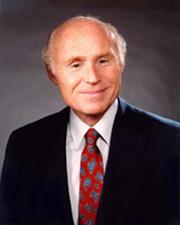 Sen. Herb Kohl (D-WI)
Legislative Activity
Stay on top of the latest movement without scrolling through every action
Senate amendment submitted
February 26, 2004
View full timeline
Senate amendment submitted
February 26, 2004
Senate amendment proposed (on the floor): Amendment SA 2622 proposed by Senator Kohl to Amendment SA 2620.(consideration: CR S1620-1621; text: CR S1620-1621)
February 26, 2004
Senate amendment agreed to: Amendment SA 2622 agreed to in Senate by Voice Vote.
February 26, 2004
Amendment SA 2622 proposed by Senator Kohl to Amendment SA 2620. (consideration: CR S1620-1621; text: CR S1620-1621) To amend chapter 44 of title 18, United States Code, to require the provision of a child safety lock in connection with the transfer of a handgun.
February 26, 2004
Amendment SA 2622 agreed to in Senate by Voice Vote.
February 26, 2004
Text
Proposed
PROTECTION OF LAWFUL COMMERCE IN ARMS ACT--MOTION TO PROCEED

The ACTING PRESIDENT pro tempore. Under the previous order, the
Senate will proceed to consideration of S. 1805, which the clerk will
report.
The assistant journal clerk read as follows:

A bill (S. 1805) to prohibit civil liability actions from
being brought or continuing against manufacturers,
distributors, dealers, or importers of firearms or ammunition
for damages resulting from the misuse of their product by
others.

The ACTING PRESIDENT pro tempore. The Senator from Idaho.
Mr. CRAIG. Mr. President, we are now on S. 1805. Last night, Senator
Reed and I worked into the evening with our colleagues and leadership
on both sides to craft a unanimous consent that now governs us through
late next Tuesday. It establishes a variety of amendments that will be
voted on over the course of today. Some will be offered and set aside
to be voted on on Tuesday. On Tuesday, other key amendments will be
voted on and then final passage.
I am sure there are some Members on both sides who might have
amendments that were not listed to be considered for votes today and/or
Tuesday. What I would ask them to do is come to the Chamber and talk to
Senator Reed and myself to see if we might work those out certainly. We
are happy to take a look at them. There may be an opportunity late
Tuesday and possibly Friday to offer additional amendments. The
unanimous consent request does not preclude any Member from doing that.
I said very early on yesterday that we wanted an open, robust debate
on this issue. Clearly, 75 Members of this Senate, in a very bipartisan
way, said let's get on with it, with the cloture vote yesterday. We
spent the day then fashioning an agreement that brings us to where we
are this morning. I believe it is possible Senator Daschle will be in
the Chamber in a few moments to offer a perfecting amendment, then
Senator Boxer will have an amendment on gunlocks.

I believe the agreement that is in front of us gives us something
that oftentimes is very hard to achieve in the Senate, and that is a
procedure and a final passage locked into an agreement. While Senator
Reed and I worked late into the evening, as I mentioned, to allow that
to happen, and all sides gave a little in it, what I think we have in
front of us is just that, an agreement that allows a variety of
Senators, who have been prominent in this debate on both sides of the
issue, to offer their amendments and to have a vote.
The timelines are very limited. We are not going to filibuster in any
of this. It is clear that when there are
20-, 30- and 60-minute time limits to be shared equally, it does shape
and limit the debate in a way that many of us would like to see.
Certainly on Tuesday, key votes are going to be the McCain-Reed gun
show loophole and Senator Feinstein's gun ban, or assault weapon ban as
it is argued. Those clearly will be the dominant issues on one side.
Senator Ben Nighthorse Campbell, conceal/carry will be another one
voted on on that day, and possibly debate. I will debate that along
with Senator Campbell today. It is on the list to accomplish today.
Possibly we will also have another amendment to be voted on on Tuesday
which deals with Washington, DC, and some of the gun laws that free and
law-abiding citizens have to cope with in this city.
That is the character of what we have been able to put together.
Senator Reed, the manager on the other side, is now in the Chamber. I
yield the floor for any comments he would wish to make. Timewise, we
hope Senator Daschle can make it to the Chamber to offer his amendment,
but if he cannot, at this moment I see no reason Senator Boxer could
not proceed with her amendment.
The ACTING PRESIDENT pro tempore. The Senator from Rhode Island.
Mr. REED. Mr. President, the Senator from Idaho has indicated we
worked late last evening to craft a unanimous consent that will allow
several important amendments to be debated today, and continuing on
through Tuesday. It represents a recognition that there are serious
issues to discuss. Now we are at the stage of not only discussing those
issues but also taking amendments up and voting on them. I know Senator
Daschle will be here in a moment.
Mr. REID. Will the Senator yield?
Mr. REED. I would be happy to yield to the Democratic whip.
Mr. REID. We have explained to the majority that we would, in fact,
ask consent that Senator Boxer be allowed to offer her amendment.
Senator Daschle is occupied at the present time. If necessary, I could
offer it on his behalf, but I think it would be better if he offered it
himself. So we ask unanimous consent that Senator Boxer be allowed to
go forward with her amendment.
The ACTING PRESIDENT pro tempore. Is there objection? Without
objection, it is so ordered.
Mr. REED. Mr. President, I yield the floor.
The ACTING PRESIDENT pro tempore. The Senator from California.

Amendment No. 2620

Mrs. BOXER. Mr. President, I send an amendment to the desk and I ask
for its immediate consideration.
The ACTING PRESIDENT pro tempore. The clerk will report.
The assistant journal clerk read as follows:

[[Page S1613]]

The Senator from California [Mrs. Boxer] proposes an
amendment numbered 2620.

Mrs. BOXER. I ask unanimous consent that the reading of the amendment
be dispensed with.
The ACTING PRESIDENT pro tempore. Without objection, it is so
ordered.
The amendment is as follows:

(Purpose: To amend chapter 44 of title 18, United States Code, to
require the provision of a child safety device in connection with the
transfer of a handgun and to provide safety standards for child safety
devices)

On page 11, after line 19, add the following:

SEC. 5. REQUIREMENT OF CHILD HANDGUN SAFETY DEVICES.

(a) Short Title.--This section may be cited as the ``Child
Safety Device Act of 2004''.
(b) Definitions.--Section 921(a) of title 18, United States
Code, is amended by adding at the end the following:
``(36) The term `locking device' means a device or locking
mechanism that is approved by a licensed firearms
manufacturer for use on the handgun with which the device or
locking mechanism is sold, delivered, or transferred and
that--
``(A) if installed on a firearm and secured by means of a
key or a mechanically, electronically, or electromechanically
operated combination lock, is designed to prevent the firearm
from being discharged without first deactivating or removing
the device by means of a key or mechanically, electronically,
or electromechanically operated combination lock;
``(B) if incorporated into the design of a firearm, is
designed to prevent discharge of the firearm by any person
who does not have access to the key or other device designed
to unlock the mechanism and thereby allow discharge of the
firearm; or
``(C) is a safe, gun safe, gun case, lock box, or other
device that is designed to store a firearm and that is
designed to be unlocked only by means of a key, a
combination, or other similar means.''.
(c) Unlawful Acts.--
(1) In general.--Section 922 of title 18, United States
Code, is amended by adding at the end the following:
``(z) Locking Devices.--
``(1) In general.--Except as provided under paragraph (2),
it shall be unlawful for any licensed importer, licensed
manufacturer, or licensed dealer to sell, deliver, or
transfer any handgun to any person other than a licensed
importer, licensed manufacturer, or licensed dealer, unless
the transferee is provided with a locking device for that
handgun.
``(2) Exceptions.--Paragraph (1) shall not apply to--
``(A) the manufacture for, transfer to, or possession by,
the United States, a department or agency of the United
States, a State, or a department, agency, or political
subdivision of a State, of a firearm;
``(B) transfer to, or possession by, a law enforcement
officer employed by an entity referred to in subparagraph (A)
of a firearm for law enforcement purposes (whether on or off
duty); or
``(C) the transfer to, or possession by, a rail police
officer employed by a rail carrier and certified or
commissioned as a police officer under State law of a firearm
for purposes of law enforcement (whether on or off duty).''.
(2) Effective date.--Section 922(z) of title 18, United
States Code, as added by this subsection, shall take effect
on the date which is 180 days after the date of enactment of
this Act.
(d) Civil Penalties.--Section 924 of title 18, United
States Code, is amended--
(1) in subsection (a)(1), by striking ``or (f)'' and
inserting ``(f), or (p)''; and
(2) by adding at the end the following:
``(p) Penalties Relating to Locking Devices.--
``(1) In general.--
``(A) Suspension or revocation of license; civil
penalties.--With respect to each violation of section
922(z)(1) by a licensee, the Attorney General shall, after
notice and opportunity for hearing--
``(i) suspend or revoke any license issued to the licensee
under this chapter;
``(ii) subject the licensee to a civil penalty of not more
than $15,000; or
``(iii) impose the penalties described in clauses (i) and
(ii).
``(B) Review.--An action by the Attorney General under this
paragraph may be reviewed only as provided under section
923(f).
``(2) Administrative remedies.--The suspension or
revocation of a license or the imposition of a civil penalty
under paragraph (1) does not preclude any administrative
remedy that is otherwise available to the Attorney
General.''.
(e) Amendment to Consumer Product Safety Act.--The Consumer
Product Safety Act (15 U.S.C. 2051 et seq.), is amended by
adding at the end the following:

``SEC. 39. CHILD HANDGUN SAFETY DEVICES.

``(a) Establishment of Standard.--
``(1) Rulemaking required.--
``(A) Initiation of rulemaking.--Notwithstanding section
3(a)(1)(E), the Commission shall initiate a rulemaking
proceeding under section 553 of title 5, United States Code,
not later than 90 days after the date of enactment of the
Child Safety Device Act of 2004 to establish a consumer
product safety standard for locking devices. The Commission
may extend this 90-day period for good cause.
``(B) Final rule.--Notwithstanding any other provision of
law, the Commission shall promulgate a final consumer product
safety standard under this paragraph not later than 12 months
after the date on which the Commission initiated the
rulemaking proceeding under subparagraph (A). The Commission
may extend this 12-month period for good cause.
``(C) Effective date.--The consumer product safety standard
promulgated under this paragraph shall take effect on the
date which is 6 months after the date on which the final
standard is promulgated.
``(D) Standard requirements.--The standard promulgated
under this paragraph shall require locking devices that--
``(i) are sufficiently difficult for children to de-
activate or remove; and
``(ii) prevent the discharge of the handgun unless the
locking device has been de-activated or removed.
``(2) Inapplicable provisions.--
``(A) Provisions of this act.--Sections 7, 9, and 30(d)
shall not apply to the rulemaking proceeding described under
paragraph (1). Section 11 shall not apply to any consumer
product safety standard promulgated under paragraph (1).
``(B) Chapter 5 of title 5.--Chapter 5 of title 5, United
States Code, except for section 553 of that title, shall not
apply to this section.
``(C) Chapter 6 of title 5.--Chapter 6 of title 5, United
States Code, shall not apply to this section.
``(b) Enforcement.--Notwithstanding subsection (a)(2)(A),
the consumer product safety standard promulgated by the
Commission pursuant to subsection (a) shall be enforced under
this Act as if it were a consumer product safety standard
described under section 7(a).
``(c) Definitions.--In this section, the following
definitions shall apply:
``(1) Child.--The term `child' means an individual who has
not attained the age of 13 years.
``(2) Locking device.--The term `locking device' has the
meaning given that term in clauses (i) and (iii) of section
921(a)(36) of title 18, United States Code.''.
(f) Conforming Amendment.--Section 1 of the Consumer
Product Safety Act is amended by adding at the end of the
table of contents the following:

``Sec. 39. Child handgun safety devices.''.

(g) Authorization of Appropriations.--
(1) In general.--There are authorized to be appropriated to
the Consumer Product Safety Commission $2,000,000 for each of
the fiscal years 2005 through 2007 to carry out the
provisions of section 39 of the Consumer Product Safety Act,
as added by subsection (e).
(2) Availability of funds.--Any amounts appropriated
pursuant to paragraph (1) shall remain available until
expended.

Mrs. BOXER. Mr. President, I thank my colleagues on both sides of the
aisle who worked late into the night to put forward a list of
amendments this body would consider. I am very proud my amendment made
the list. It is an amendment this Senate has supported before. It is an
amendment that will protect our children from violence, and what could
be more important to us as we gather here every day than to protect our
children?
My measure would do two things. First, it would require that every
handgun sold in this country come with a child safety device. The
amendment is very broad on what that could be, so it really isn't a
micromanaging type of amendment. This device could be a lock using a
key or a combination, a device that locks electronically, it could be a
lockbox, or technology that is built into the gun itself. Many of the
folks working on this type of technology are very enthusiastic about
it.
There is no question in my mind, there is no question in the minds of
the police in my State who just had a press conference on this issue,
if we were to agree to this and it were to become the law of the land,
the number of children involved in accidental shootings would go way
down. So that is the first thing we do. We require some type of a lock
when you buy a handgun.
Second, my amendment would make sure child safety devices are
effective and that they are not shoddy or of poor quality. One of the
worst things we could do is pass a bill that requires these devices and
then the device doesn't work. That would be a terrible thing for our
families. So the bill requires the Consumer Product Safety Commission
to establish standards for the design of these locks and these boxes
and a standard for their performance. We want to make sure, when
parents use a child safety device, that they are confident it will work
as intended.
In 1999 the Senate passed an amendment by a vote of 78 to 20 to
require that all handguns in this country be sold with a child safety
device. The majority of our colleagues very strongly

[[Page S1614]]

supported this in quite a bipartisan way. I believe we should again
agree that we need to protect our children from accidental gun
shootings.
My home State of California recently enacted an excellent child
safety device bill. It requires that all licensed dealers and
manufacturers equip the guns they sell with State-certified child
safety devices. This is a very important bill for my State and I am
proud of my State for doing it. But it is clear that the States along
California's border do not have this requirement. Not one of those
States has child safety device laws. That means even if California--and
we do--has a good law, anyone can purchase a gun without a safety lock
from a border State and return to California with it. Therefore, the
progress we hope to make in California will be set back because we
don't have a uniform and standard law.
The other important feature of our bill that impacts Californians is
that while there is a State-certified standard for gunlocks in my
State, those standards have not been set by the Consumer Product Safety
Commission, and everyone agrees that the Consumer Product Safety
Commission is the premier organization in the country that sets the
gold standard. Again, I think it is very important that we have this
type of standard because, as many colleagues point out, the
manufacturers of these devices deserve some guidance. California may
have one set of standards, we could have another set of standards in
New York, or in the Midwest, and we are going to have a potpourri of
standards floating around rather than what I call the gold standard of
the Consumer Product Safety Commission.

The other important point for my people of California--again, they
have the safety lock law--is that the amendment allows for a Federal
cause of action for violations of this child safety requirement. So if
in fact there is a serious problem with a child safety lock, and the
State for some reason doesn't get its act together, doesn't put the
case together, and so on, there will be a Federal cause of action. It
is kind of a double protection for the children.
I would like to talk about the need for this amendment for a moment.
I have a chart that shows the statistics. In the United States of
America, in our great country, the greatest country in the world, a
child or a youth is killed by an accidental shooting every 48 hours--
every 48 hours. Where do these statistics come from? The FBI. For every
child killed by a gun, four are wounded. Where does that come from? The
Archives of Pediatric and Adolescent Medicine, December--I am assuming
that is 2000--volume 55, No. 12.
What does this mean, when you multiply it out? Thousands of children
are injured or killed by guns every year in this country. According to
the CDC, the rate of firearm deaths of children under the age of 14 is
nearly 12 times higher in the United States than in 25 other
industrialized countries combined.
Let me repeat that. The rate of firearm deaths of children under the
age of 14 is 12 times higher in the United States than in 25 other
industrialized nations combined.
Colleagues stand up and say: Guns don't kill people; people kill
people. If you want to, say: Guns don't kill children; children kill
children. Yes, children kill children because they pick up a gun and
they fire it at a friend. They fire it at a brother. They don't
understand the consequences of this. More than 22 million children live
in homes with guns. I want you to envision this--22 million children
live in homes with guns. More than 3.3 million of those children live
in homes where the guns are always or sometimes kept loaded and
unlocked.
Too many children are playing with real guns found in their parents'
bedroom or a friend's home, and too many children are killed in this
country because they are doing what children do: They are exploring;
they are being curious. I don't know how many times I have heard
stories with tearful parents saying: I kept that gun away from my
child. It was far away from my child. It was in the highest, darkest
corner of the deepest, tallest closet in my house. I never thought my
baby could climb up and find that gun.
Well, they do. They do. Children are smart. They are tenacious. They
are energetic. One study found that when a gun was in the home, 75 to
80 percent of first and second graders knew where their parents kept
that gun. Seventy-five to eighty percent of first and second graders
knew where their parents kept that gun.
In this country, we do so much to protect our children. We worry
about them, as we should; it is our responsibility. We make sure that
in a car they are put in a child seat facing in the right direction so
they don't have a tendency to get hurt in an accident. We have airbags
to protect them. We protect them from shoddy toys, such as Play-Doh
that they could eat and could hurt them. We set standards. We set
standards for Teddy bears, for toys. We care about our children.
I wrote the afterschool law we have here with Senator Ensign. We love
our children, every one of us--our own children, our children's
children. We are here to protect the children. That is part of our job.
So let me reiterate, one study found that when a gun was in the home,
75 percent to 80 percent of first and second graders knew where the
parents kept that gun. So even if that gun is in a closet, at the top
of a closet, under towels or blankets, kids are tenacious and they find
the guns. But if they found a lockbox and they couldn't open it, they
would be protected. If they grab that gun and it had a child safety
device on it and they tried to shoot, it wouldn't go off. If the gun
had technology built in it so that only when the parents held it it
would fire, they would be protected.

It seems to me in this day and age when we are losing a child or a
youth to an accidental shooting every 48 hours, we ought to be
absolutely united in doing something about it.
I want to show you the face of a beautiful young man, Kenzo, a
Californian, 15 years old, with his mom. His friend, Michael, while
playing with a gun, shot Kenzo Bix, and he is gone forever. If that gun
had had a child safety device on it, it wouldn't have happened.
I will give you some other stories.
Just this January in Indio, CA, a 17-year-old boy named Jason Weed
died after his 14-year-old brother accidentally shot him in the head.
The other boy was showing him the gun in the home when it accidentally
went off, lodging a bullet in the small boy's head. If that gun had had
a safety device, and if the amendment we already passed here--the Kohl-
Hatch-Boxer amendment that passed here the last time--had been adopted
in the other body, if it had been signed into law, Kenzo would be
alive; and this child I just talked about, Jason Weed, would be alive.
Then there is a story from Florida. There are so many stories, and we
just picked a few.
A 3-year-old, Colton Hinke, and his 2-year old sister Kaile were
playing in her parents' bedroom when Colton found an unlocked, loaded
handgun in the drawer. A neighbor heard the shot and rushed to the
scene and found Kaile on her back, her face pale, her lips blue, and a
small hole in her chest. She was in shock, and she was rushed to the
hospital, but it was too late.
The ACTING PRESIDENT pro tempore. The Senator's time has expired.
Mrs. BOXER. Mr. President, I was told I had 30 minutes.
The ACTING PRESIDENT pro tempore. I believe under the order 30
minutes were equally divided. The Senator's 15 minutes have expired.
Mrs. BOXER. May I ask for one additional minute from each side so I
can conclude?
The ACTING PRESIDENT pro tempore. Is there objection?
Without objection, it is so ordered.
Mrs. BOXER. Thank you so very much.
There is another incident where a 1-year-old girl was critically
injured by her 3-year-old brother. This little girl survived.
I could go on, but I don't have the time at this point.
Let's pass this measure. I know Senators DeWine and Kohl have an
amendment to change my bill in a very small way. I don't have a problem
with that. I will be supporting that. I just know the overriding
concern of mine, and I really do think most people in this body who
voted for this the last time, is let us protect our kids. Let us do it
in a smart way. It is the right thing to do for the families of
America.

[[Page S1615]]

I yield the floor.
The ACTING PRESIDENT pro tempore. The Senator from Nevada.
Mr. REID. Mr. President, we have someone who will speak in opposition
to the Boxer amendment. There is a second-degree amendment on its way.
It is not yet ready. It is coming; sometimes I don't know from where. I
ask unanimous consent that the amendment be temporarily set aside. In
keeping with the unanimous consent agreement that was entered last
night, at some subsequent time there will be the opportunity to offer
the amendment Senators Kohl and DeWine are going to offer as a second-
degree amendment to Boxer.
The ACTING PRESIDENT pro tempore. Is there objection?
Without objection, it is so ordered.
The Senator from Idaho.
Mr. CRAIG. Mr. President, we expect a second-degree amendment to be
here to modify and perfect the Boxer amendment.
I want to speak about the Boxer amendment because I in no way
discredit--I guess the best way to say it--fail to recognize the same
kind of concerns Senator Boxer has expressed. She is correct. The
Senate has expressed its will on this issue in the past. But let me
bring you up to date about what the gun industry is doing now. Clearly,
the gun industry is responding very quickly to new technologies and
what is available to make sure firearms are safe, if you will, from the
curiosity of a child and a child who might misuse it. Tragically
enough, when children find a firearm, there is great curiosity.
There are organizations out there that have worked awfully hard to
educate firearms owners and parents about the reality of a gun placed
in a home in an unsafe environment, or not locked behind a door, or in
a situation where a child can't gain access to it. That is simply
critical in the responsible ownership and handling of a gun.
Ninety percent of new guns in the United States are already sold with
a safe storage device. The Senator from California is right, the
devices vary, but so do guns and so do the conformation and structure
of guns. It will be very difficult to suggest that one size fits all.
The industry, with its engineers and its technology and its
computers, is devising trigger locks and safety devices that fit the
particular firearm. This is done through a voluntary program with the
firearms industry. Tremendous numbers of gunshops today--responsible,
federally registered gunshops--are providing free of charge a trigger
lock or a safety device as the weapon is sold. Many States and locales,
such as Texas, have distributed safety devices free of charge, either
in cooperation with the firearms industry or on their own initiative.
Trigger locks are mechanical devices. Like all mechanical devices
they can fail if they are not well designed, and if their owners are
not instructed on how to use them properly. The Consumer Product Safety
Commission recently tested 32 types of gunlocks and found 30 could be
opened without a key. That is why, clearly, uniformity is necessary.
The Senator spoke to that uniformity. But quality gun manufacturers in
this country are already providing safety devices which are critical
and necessary.
What I am trying to suggest is these devices are not a panacea that
reduces all accidents. Clearly, if we can get most handguns in America
in safe and responsible hands and in homes with safety devices or
locked in a safe or locked in a device where a child cannot gain
access, that is going to reduce the kinds of tragic accidents that
occur when a small child in a curious way finds the gun that may not
have been placed in a safe place by a parent.
Gunlocks are designed to address what I believe is a narrow range of
threats. At the same time, when a child's life is lost, how tragic it
is, and all of us understand that. Of course, then it makes tremendous
news and the world wonders why this is happening. The reason it happens
is because in many instances there was a parent who was less than
responsible, who really didn't lock that gun up.
At the same time, let's also recognize the phenomenal complication
involved. Sometimes guns are placed in locations in homes for security
and for safety, and easy access is critically important if that gun is
to be used for the purpose of personal and property safety depending on
the area in which a family lives or an individual lives.
At the same time, that does not deny the responsibility that is
important. Gunlocks address that narrow range of threats. Clearly, they
will deter the casual curiosity of a small child far more readily than
it will deter what I say is the committed thief or the person bent on
murder and mayhem. Some suggest a gunlock means a thief in the house
will not steal the gun. Wrong. That simply is not the case. It simply
means the thief will take the gun, take it out, knock the gunlock off,
have it cut off, take it away so they can have access to a stolen
firearm. That is the reality of thieves stealing guns.
This narrow range we are talking about and that we want to make sure
stays is to deter that casual curiosity of the small child. The
firearms industry is already trying to develop standards to improve
these devices. The industry has sought the creation of an industry
standard for gun safety locks through the American National Standards
Institute. The ANSI review process is well underway. In other words,
because the gun industry is a responsible industry, they are well out
in front of us already on legislation. No, there aren't absolute
mandatory requirements across the Nation. But recognizing the reality
and the tragedy that occurs on occasion, we want to make sure, and the
industry certainly wants to make sure, that they are well out in front
of it.
In a few moments we will have a second-degree perfecting amendment to
deal with this issue. I will reserve the remainder of my time until
that amendment is here.
I suggest the absence of a quorum.
The PRESIDING OFFICER (Ms. Murkowski). The clerk will call the roll.
The assistant legislative clerk proceeded to call the roll.
Mr. REID. Madam President, I ask unanimous consent that the order for
the quorum call be rescinded.
The PRESIDING OFFICER. Without objection, it is so ordered.
Mr. REID. Under the terms of the order, Senator Kohl has 15 minutes
when he offers his second-degree amendment. We have been advised he
will not use that entire amount of time, so at this time I ask consent
that Senator Boxer be allowed to use 4 minutes of the time under the
control of Senators Kohl and DeWine.
The PRESIDING OFFICER. Without objection, it is so ordered.
The Senator from California.
Mrs. BOXER. I take this time to respond to the point made that the
gun manufacturers are taking care of the child safety locks and that we
do not need to have this law.
The experts in this whole field have turned out to be the National
SAFE KIDS Campaign. This is a bipartisan organization that has one
mission only and that is to protect our children. When they saw these
statistics that are still occurring today, they said enough is enough.
A child or youth is killed by a firearm every 3 hours. This has not
changed.
In 1997, the gun manufacturers said they would work on this
themselves, that they did not need a law. Research assessing the
compliance with this agreement found most manufacturers were not
providing locks and those that did offered low-quality devices where
the locks just fell off and did not work.
The SAFE KIDS Campaign is urging us to include a provision to issue
safe standards for gunlocks. This is very important.
My colleague says this is taken care of. It is not taken care of. We
still have children dying. We still have our constituents calling with
the tragic cases. I read some of the cases, but not all of them, case
after case, kids finding out where there is a gun, grabbing it and
trying to act out a fantasy, not understanding this is a lethal weapon
that can kill or maim a brother, a neighbor, a friend.
We did not tell the makers of aspirin, we know you are good
manufacturers. They are good manufacturers. We do not tell them, please
make a childproof cap. They have to make a childproof cap. There are
good manufacturers out there. I applaud them. But if you look at our
bill and the way it works, we are not mandating a particular one-size-
fits-all solution. We are very careful to

[[Page S1616]]

say we know there are many different handguns--this only applies to
handguns; in my State we have one that applies to rifles and long guns,
but this is just a handgun--we say you can have in your array of
products a box that locks. You can have the technology built in the
gun. You can have a combination lock.
I appreciate my friend does not like to put regulations on gun
manufacturers and dealers. I understand that. And I understand he
believes they are the best of the best of the best. But the problem is,
our kids are dying in the home. They are smart. They find out where the
guns are. I cannot understand why this is not something we would all
support. The last time it came to the Senate, we had a huge vote. I am
hoping we will have a similar vote.
Look to the people. We are in charge of a lot of issues. The National
SAFE KIDS Campaign is about one issue, the safety of kids. They are
bipartisan. They are begging us to make this the law of the land. The
Senate did it once before. The Senate should do it again.
Children living in the South have an unintentional shooting death
rate that is 7 times that of children living in the Northeast. That is
a fact the National SAFE KIDS Campaign has shown. All we need to do is
see the rate our kids are dying and compare it to 25 other countries to
see our kids are at a great disadvantage. We can do something today. I
hope we will.
I yield my time.
Mr. DASCHLE. Madam President, I ask unanimous consent the Boxer
amendment be set aside temporarily.
The PRESIDING OFFICER. Without objection, it is so ordered.

Amendment No. 2621

Mr. DASCHLE. And then I ask consent that I be recognized to offer an
amendment, and I send my amendment to the desk.
The PRESIDING OFFICER. The clerk will report.
The assistant legislative clerk read as follows:
The Senator from South Dakota [Mr. Daschle] proposes an
amendment numbered 2621.
Mr. DASCHLE. Madam President, I ask unanimous consent that the
reading of the amendment be dispensed with.
The PRESIDING OFFICER. Without objection, it is so ordered.
The amendment is as follows:

(Purpose: To clarify the definition of qualified civil liability
action, and for other purposes)

On page 7, line 19, strike ``including'' and all that
follows through page 8, line 19, and insert ``including, but
not limited to--

``(I) any case in which the manufacturer or seller
knowingly made any false entry in, or failed to make
appropriate entry in, any record which such person is
required to keep pursuant to State or Federal law, or aided,
abetted or conspired with any person in making any false or
fictitious oral or written statement with respect to any fact
material to the lawfulness of the sale or other disposition
of a qualified product; or
``(II) any case in which the manufacturer or seller aided,
abetted, or conspired with any other person to sell or
otherwise dispose of a qualified product, knowing or having
reasonable cause to believe that the actual buyer of the
qualified product was prohibited from possessing or receiving
a firearm or ammunition under subsection (g) or (n) of
section 922 of title 18, United States Code;''.

On page 9, lines 1 and 2, strike ``or in a manner that is
reasonably foreseeable'' and insert ``, or when used in a
manner that is reasonably foreseeable, except that such
reasonably foreseeable use shall not include any criminal or
unlawful misuse of a qualified product, other than possessory
offenses.''.
On page 9, strike lines 12 through 21, and insert the
following:
(C) Rule of construction.--The exceptions enumerated under
clauses (i) through (v) of subparagraph (A) are intended to
be construed to not be in conflict, and no provision of this
Act shall be construed to create a Federal private cause of
action or remedy.
On page 10, strike lines 13 through 18, and insert the
following:
(C) a person engaged in the business of selling ammunition
(as defined under section 921(a)(17)(A) of title 18, United
States Code) in interstate or foreign commerce at the
wholesale or retail level, who is in compliance with all
applicable Federal, State, and local laws.
On page 11, line 7, strike the semicolon and insert ``;
and''.

On page 11, strike lines 8 through 15, and insert the
following:
(B) 2 or more members of which are manufacturers or sellers
of a qualified product, and that is involved in promoting the
business interests of its members, including organizing,
advising, or representing its members with respect to their
business, legislative, or legal activities in relation to the
manufacture, importation, or sale of a qualified product.
On page 11, strike lines 16 through 19, and insert the
following:
(9) Unlawful misuse.--The term ``unlawful misuse'' means
conduct that violates a statute, ordinance, or regulation as
it relates to the use of a qualified product.

Mr. DASCHLE. I acknowledge, again, as I did yesterday, the
partnership that I have had especially with Senator Craig, Senator
Baucus, and others in the Senate. I express my gratitude to Senator
Craig and my appreciation for his efforts at accommodating many of the
concerns we have had as we address this bill.
I intend to support this bill, in part because of the acknowledgement
of the need to address some of these concerns, as we do with this
amendment.
The amendment we are offering right now strikes a balance between the
need for the safety of Americans and the rights of gun manufacturers
and dealers. That balance is critical. We recognize the vast majority
of gun owners and manufacturers and sellers are honest and decent
people who obey the law and ought to be recognized for their honesty
and the contributions they make to our economy.
The firearm industry is an important source of jobs, not only in
those States where those jobs actually are dedicated to the manufacture
of firearms but to all other States where not only the manufacture but
the sale and distribution of those products are so much a part of our
economic base.
But we should not invalidate the legitimate claims from being heard
in court when those claims have a basis in fact--cases involving kids,
cases involving defective products, cases involving gun dealers or
manufacturers who broke the law.
So our concern was, as originally drafted, the legislation adversely
impacted many of these cases. That is why I went to Senator Craig and
Senator Baucus and others and expressed the hope that we could address
some of these issues and concerns in a way that would accommodate a
solution. And that is what I believe this amendment does.
We have worked in a bipartisan manner. I would hope this legislation
could certainly be supported in a bipartisan manner. It goes a long way
to balancing what are the rights of victims as well as the needs of the
gun industry.
Our amendment makes several key changes in the legislation that was
originally offered. It ensures the cases in which Federal or State laws
have been broken can move forward. There was some lack of clarity with
regard to that particular need. It restores the basic product liability
standards so, in particular, if a child is injured by a defective gun,
the victim's loved ones can still hold accountable those responsible.
It includes a provision to remove immunity from dealers who sell to
straw purchasers; that is, purchasers who have no interest in buying
the gun for themselves but passing on the gun, selling the gun to
somebody who should not have it. Finally, it ensures that only trade
associations connected to the business of manufacturing and selling
firearms would be covered.
I think all of these changes--and many more; there are eight specific
changes--do a great deal to enhance the bill, to make it a better,
stronger bill and, at the same time, address the concerns that many of
us have had. It strives to preserve the long-term vitality of an
important American industry, one that is very important to people in
the West and Midwest, in particular, but all over the country. It
protects the rights and safety of the American public.
So I am very appreciative of the effort that has gone into this
amendment. This took a lot of time, a lot of negotiation. Obviously,
the subtleties in some of the language has more than a subtle impact
ultimately on how legislation is interpreted and how laws are
ultimately enforced. We think this amendment takes us a long way in
addressing the needs of both our manufacturers as well as those who are
concerned for safety on the streets and in our neighborhoods today.
Madam President, I might just take a moment, if I could, prior to
relinquishing the floor, to talk about another matter. I appreciate the
accommodation of my colleagues in so doing.

[[Page S1617]]

America's Unfulfilled Treaty Obligations to Native Americans

Madam President, all week long, tribal leaders from Indian nations
throughout America have been in Washington for the winter conference of
the National Congress of American Indians.
They include leaders from the Great Sioux Nation of South Dakota, and
many others. Democratic Senators just met with many of these leaders;
and some are in the gallery now, listening to these words. I am honored
by their presence.
South Dakotans are very proud of our State's tribal heritage. Some of
the greatest leaders South Dakota has ever produced were Native
Americans. They include Crazy Horse, the legendary warrior-leader; a
man of extraordinary nobility, the great Lakota spiritual leader,
Sitting Bull.
Sitting Bull helped lead his people in defense of their lands. When
it became clear that defeat was inevitable, he helped lead his people's
efforts to secure a fair and just peace.
In negotiating the treaty under which the Lakota ceded their lands,
Sitting Bull asked representatives of this Government: ``Let us put our
minds together and see what life we can make for our children.''
More than a century later, the tribal leaders who have come to
Washington this week are asking us to do the same thing: ``Let us put
our minds together and see what life we can make for our children.''
Last July, the U.S. Commission on Civil Rights released a report that
has already become a landmark. It is entitled ``A Quiet Crisis.'' It
documents the harsh realities of life in Indian country today. I ask
unanimous consent that the executive summary of the report be printed
in the Record at the conclusion of my remarks.
The PRESIDING OFFICER. Without objection, it is so ordered.
(See exhibit 1.)
Mr. DASCHLE. We cannot undo the damage caused by more than a century
of neglect and broken promises in 1 year or even one decade. But we
must make honoring our trust obligations under those treaties we signed
a real priority now. And we must take steps this year to address two of
the most urgent obligations of Native Americans.
The first of these obligations is the need to find a just and fair
settlement of the Indian trust dispute. Partly because so many American
Indians live on remote reservations, not many Americans understand what
the Indian trust fund dispute is about. It stretches back to the 1880s,
when the U.S. Government broke up large tracts of Indian land into
small parcels, which it then allotted to individual Indians and tribes.
The Government, acting as a ``trustee,'' took control of the Indian
lands and established individual accounts for the land owners. The
Government was supposed to manage the lands for account holders. It
would negotiate sales or leases of land, and any revenues generated
from oil drilling, mining, grazing, timber harvesting--or any other use
of the land--was to be distributed to the account holders and their
heirs. But that is not what happened.
The Indian trust fund has been so badly mismanaged for so long by
administrations of both political parties that today no one knows how
much money the trust fund should contain. Estimates of how much is owed
to individual account holders range from a low of $10 billion to more
than $100 billion.
The people who are being hurt by this mismanagement are some of the
poorest people in America. Many live in houses that are little more
than shacks, with no heat, no electricity, and no phones. Many of them
are elderly. They have been waiting their whole lives for money that
belongs to them--money that our Government is holding and refuses to
account for.
Ten years ago, Congress passed legislation requiring the Department
of the Interior to make a full and accurate historical accounting of
all trust assets and obligations. Seven years ago, a banker named
Elouise Cobell, a member of the Blackfeet Indian Nation, sued the
Department to force it to comply with our order.
Last fall, a Federal judge finally agreed. It seemed that was going
to be the beginning of the end of the trust fund dispute, and it was
now finally within reach.
Then, shockingly, the administration and leadership in Congress on
the other side, behind closed doors, added language to the 2004
Interior appropriations conference report ordering the Interior
Department actually to ignore and defy the judge's ruling. Clearly
unconstitutional, it violates the separation of powers and due process
protections.
It has become increasingly clear that this administration's interest
is in limiting the Government's financial exposure rather than seeking
a just settlement of the trust dispute. Despite its obligations to
consult with the tribes, the Interior Department is now trying to push
through its own plan to reorganize the Indian trust.
Tribal leaders have not been consulted. Deep skepticism and
opposition in Indian country continues to exist.
Earlier this month, the administration sent Congress its budget for
next year. It now makes deep cuts in every program affecting Indians,
except one. There is a 50-percent increase for the Department's trust
reorganization plan.
The BIA, the Bureau of Indian Affairs, divides America into 13
regions. Yesterday, congressional and tribal leaders held a ``summit''
on trust reform. At that summit, the tribal representatives to BIA in
all 13 regions pleaded with Congress to slow the Department's
unilateral reorganization of the trust.
No trust reorganization plan can succeed without the involvement,
support, and leadership of the tribes. It is time for Congress to take
a more active role in trust reform. Three things are essential.
First, we need a new round of comprehensive public hearings. This
week, Senator Ben Nigthorse Campbell announced that the Indian Affairs
Committee would hold hearings. I thank him.
Second, congressional meddling in the Cobell litigation must end. The
``midnight rider'' putting court orders on hold must not be extended;
courts must be allowed to do their job. Last year Senators McCain,
Johnson, Inouye and I introduced a bill, the American Indian Trust Fund
Management Reform Act Amendments, requiring the Interior Department to
conduct an historical accounting for all trust assets.
Third and finally, the Federal Government should start budgeting for
an eventual solution. Money in those accounts belongs to Indians, and
the Government cannot continue to hold it. Last year, In introduced the
Indian Payment Trust Equity Act. It would create a $10 billion fund to
begin making payments to trust holders who have received an objective
accounting of their trust assets.
Somehow, the Federal Government must put its money where its mouth is
and begin making trust holders whole. The complexity of the challenge
cannot be used as an excuse to continue denying account holders what is
rightfully theirs.
Another injustice that must end is the chronic underfunding of the
Indian Health Service. The report last summer by the Civil Rights
Commission, and another by the Centers for Disease Control, show that
Native Americans live sicker and die younger than other Americans as a
result of inadequate health care. The Indian Health Service budget
accounts for one-half of 1 percent of 1 percent of the Department of
Health and Human Services budget. The health system with the sickest
people and the greatest needs get the smallest increases.
Last week, I held health care ``town hall meetings'' on Pine Ridge
and Rosebud reservations in South Dakota. We expected 200; we got 700.
I heard horrific, heartbreaking stories. People talked about losing
parents, children, and spouses because health care wasn't available.
Some people had waited months to see an IHS doctor. Finally, they
couldn't take the pain any longer. They went to a non-IHS hospital, and
they ended up with hospital bill they couldn't pay, so they lost their
good credit rating as well as their good name.
It is unacceptable that the Federal Government spends twice as much
on health care for Federal prisoners as it does for Indian children and
families.
It is immoral that sick people are turned away every day from IHS
hospitals and clinics in this country unless

[[Page S1618]]

they are in immediate danger of losing life or limb.
``Life or limb'' is not a figure of speech. It is an actual standard
for care, and it is a national disgrace.
Last March, I offered an amendment to the budget resolution to
provide $2.9 billion in order to fully fund one part of the IHS budget.
Unfortunately, every Republican Senator voted against it. They offered
an amendment with $292 million, one-tenth of the amount we proposed. It
was inadequate, but we accepted it, only to find when we went to
conference, the Republicans killed their own amendment in conference.
We tried repeatedly last year to increase funding by $2.9 billion, and
we will do so again this year.
More than a century ago, our Government signed treaties with the
Indian nations promising to provide them and their descendants three
things forever: health care, education, and housing. The Federal
Government must now keep its promise and provide these benefits which
the Indian people have already paid for in full with their lands.
Tribal leaders are in Washington this week asking once again that we
live up to our ideals.
Let us put our minds together and see what life we can make for our
children.
I yield the floor.

Exhibit 1

Executive Summary

The federal government has a long-established special
relationship with Native Americans characterized by their
status as governmentally independent entities, dependent on
the United States for support and protection. In exchange for
land and in compensation for forced removal from their
original homelands, the government promised through laws,
treaties, and pledges to support and protect Native
Americans. However, funding for programs associated with
those promises has fallen short, and Native peoples continue
to suffer the consequences of a discriminatory history.
Federal efforts to raise Native American living conditions to
the standards of others have long been in motion, but Native
Americans still suffer higher rates of poverty, poor
educational achievement, substandard housing, and higher
rates of disease and illness. Native Americans continue to
rank at or near the bottom of nearly every social, health,
and economic indicator.
Small in numbers and relatively poor, Native Americans
often have had a difficult time ensuring fair and equal
treatment on their own. Unfortunately, relying on the
goodwill of the nation to honor its obligation to Native
Americans clearly has not resulted in desired outcomes. Its
small size and geographic apartness from the rest of American
society induces some to designate the Native American
population the ``invisible minority.'' To many, the
government's promises to Native Americans go largely
unfulfilled. Thus, the U.S. Commission on Civil Rights,
through this report, gives voice to a quiet crisis.
Over the last 10 years, federal funding for Native American
programs has increased significantly. However, this has not
been nearly enough to compensate for a decline in spending
power, which had been evident for decades before that, nor to
overcome a long and sad history of neglect and
discrimination. Thus, there persists a large deficit in
funding Native American programs that needs to be paid to
eliminate the backlog of unmet Native American needs, an
essential predicate to raising their standards of living to
that of other Americans. Native Americans living on tribal
lands do not have access to the same services and programs
available to other Americans, even though the government has
a binding trust obligation to provide them.
In preparing this report, the Commission reviewed the
budgets of the six federal agencies with the largest
expenditures on Native American programs and conducted an
extensive literature review.

department of the interior

The Bureau of Indian Affairs (BIA), within DOI, bears the
primary responsibility for providing the 562 federally
recognized Native American tribes with federal services. The
Congressional Research Service found that between 1975 and
2000, funding for BIA and the Office of the Special Trustee
declined by $6 million yearly when adjusted for inflation.
BIA's mismanagement of Individual Indian Money trust
accounts has denied Native Americans financial resources that
could be applied toward basic needs that BIA programs fail to
provide. Insufficient program funding resulted in $7.4
billion in unmet needs among Native Americans in 2000. Of
this amount, a shortfall in tribal priority allocations
(TPA), which provides such basic services as child welfare
and adult vocational training, alone totaled $2.8 billion
that year. Over the last few decades, Congress has minimally
increased TPA funding. Unmet needs are also evident in school
construction. In December 2002, the deferred maintenance
backlog of BIA schools was estimated at $507 million and
increasing at an annual rate of $56.5 million due to
inflation and natural aging and deterioration of school
buildings. BIA and its programs play a pivotal role in the
lives of Native Americans, but mismanagement and lack of
funding have undercut the agency's ability to improve
living conditions in Native communities.

Department of Health and Human Services

Native Americans have a lower life expectancy than any
other racial/ethnic group and higher rates of many diseases,
including diabetes, tuberculosis, and alcoholism. Yet, health
facilities are frequently inaccessible and medically
obsolete, and preventive care and specialty services are not
readily available. Most Native Americans do not have private
health insurance and thus rely exclusively on the Indian
Health Service (IHS) for health care. The federal government
spends less per capita on Native American health care than on
any other group for which it has this responsibility,
including Medicaid recipients, prisoners, veterans, and
military personnel. Annually, IHS spends 60 percent less on
its beneficiaries than the average per person health care
expenditure nationwide.
The IHS, although the largest source of federal spending
for Native Americans, constitutes only 0.5 percent of the
entire HHS budget. Moreover, it makes up a smaller proportion
of HHS' discretionary budget today than five years ago. By
most accounts, IHS has done well to work within its resource
limitations. However, the agency currently operates with an
estimated 59 percent of the amount necessary to stem the
crisis. If funded sufficiently, IHS could provide more money
to needs such as contract care, urban health programs, health
facility construction and renovation, and sanitation
services.

Department of Housing and Urban Development

The availability of safe, sanitary housing in Indian
Country is significantly less than the need. Over-crowding
and its effects are a persistent problem. Furthermore,
existing housing structures are substandard: approximately 40
percent of on-reservation housing is considered inadequate,
and one in five reservation homes lacks complete plumbing.
Native Americans also have less access to home-ownership
resources, due to limited access to credit, land ownership
restrictions, geographic isolation, and harsh environmental
conditions that make construction difficult and expensive.
While HUD has made efforts to improve housing, lack of
funding has hindered progress. Funding for Native American
programs at HUD increased only slightly over the years (8.8
percent), significantly less than the agency as a whole (62
percent). After controlling for inflation, HUD's Native
American programs actually lost spending power. The tribal
housing loan guarantee program lost nearly 70 percent of its
purchasing power over the last four years, and the Native
American Housing Block Grant has lost funding for three years
in a row. Given the unique housing challenges Native
Americans face, greater and immediate federal financial
support is needed.
Housing needs on reservations and tribal lands cannot be
met with the same interventions that HUD uses to meet rental
housing or homeownership goals in the suburbs or inner
cities. Innovation and a more comprehensive approach are
needed, and the government's trust responsibility to provide
housing to Native Americans must be fully factored into these
efforts.

Department of Justice

All three components of law enforcement--policing, justice,
and corrections--are substandard in Indian Country compared
with the rest of the nation. Native Americans are twice as
likely as any other racial/ethnic group to be the victims of
crime. Yet, per capita spending on law enforcement in
Native American communities is roughly 60 percent of the
national average. Correctional facilities in Indian
Country are also more overcrowded than even the most
crowded state and federal prisons. In addition, Native
Americans have long held that tribal court systems have
not been funded sufficiently or consistently, and hence,
are not equal to other court systems.
Law enforcement professionals concede that the dire
situation in Indian Country is understated. While DOJ should
be commended for its stated intention to meet its obligations
to Native Americans, promising projects have suffered from
inconsistent or discontinued funding. Native American law
enforcement funding increased almost 85 percent between 1998
and 2003, but the amount allocated was so small to begin with
that its proportion to the department's total budget hardly
changed. Native American programs make up roughly 1 percent
of the agency's total budget. A downward trend in funding has
begun that, if continued, will severely compromise public
safety in Native communities.
Additionally, many Native Americans have lost faith in the
justice system, in part due to perceived bias. Many attribute
disproportionately high incarceration rates to unfair
treatment by the criminal justice system, including racial
profiling, disparities in prosecution, and lack of access to
legal representation. Solving these problems is vital to
restoring public safety and justice in Indian Country.

department of education

As a group, Native American students are not afforded
educational opportunities equal to other American students.
They routinely face deteriorating school facilities,
underpaid teachers, weak curricula, discriminatory treatment,
outdated learning tools, and

[[Page S1619]]

cultural isolation. As a result, achievement gaps persist
with Native American students scoring lower than any other
racial/ethnic group in basic levels of reading, math, and
history. Native American students are also more likely to
drop out. The lack of educational opportunities in Native
communities extends to postsecondary and vocational programs.
Special Programs for Indian Adults has not been funded since
1995, and vocational rehabilitation programs are too poorly
funded to meet the abundant need. Although 14 applications
for such programs were submitted in 2001, only five tribal
organizations received funding. Tribal colleges and
universities receive 60 percent less federal funding per
student than other public community colleges.
The federal government has sole responsibility for
providing education to these students--an obligation it is
failing to meet. Funding for DOEd's Office of Indian
Education (OIE) has remained a relatively small portion of
the department's total discretionary budget (ranging from 0.2
to 0.3 percent) between 1998 and 2003. OIE funding has
undergone several reductions over the last few decades and,
in may years, its budget has failed to account for inflation.
At no time during the period under review in this report have
all OIE subprograms been funded.

department of agriculture

The USDA is largely responsible for rural development and
farm and business supplements in rural communities. Native
Americans rely on such programs to foster conditions that
encourage and sustain economic investments. However,
insufficient funding has limited the success of development
programs and perpetuated unstable economies. Poor economic
conditions have resulted in food shortages and hunger. Native
Americans are more than twice as likely as the general
population to face hunger and food insecurity at any given
time. The inaccessibility of food and economic development
programs compromises their usefulness. By its failure to
make programs accessible to Native Americans, the federal
government has denied them the opportunity to receive
benefits routinely available to other citizens.
USDA's set-aside for the Rural Community Advancement
Program fluctuated between 2000 and 2003. The 2004 budget
proposes to reduce funding by more than 18.2 percent from
2003. The Food Distribution Program on Indian Reservations
(FDPIR) lost funding when accounting for inflation (2.8
percent) between 1999 and 2003, reducing available food
resources. FDPIR alone is not meeting the food assistance
needs of Native Americans since many participants are also
enrolled in other food assistance programs. The continuously
high rates of hunger and poverty in Native communities are
the strongest evidence that existing funds are not enough.

conclusion

In short, the Commission finds evidence of a crisis in the
persistence and growth of unmet needs. The conditions in
Indian Country could be greatly relieved if the federal
government honored its commitment to funding, paid greater
attention to building basic infrastructure in Indian Country,
and promoted self-determination among tribes.
The Commission further finds that the federal government
fails to keep accurate and comprehensive records of its
expenditures on Native American programs. There is no uniform
reporting requirement for Native American program fundings,
and because agencies self-report their expenditures,
available information varies across agencies, rendering
monitoring of federal spending difficult.
While some agencies are more proficient at managing funds
and addressing the needs of Native Americans than others, the
government's failure is systemic. The Commission identified
several areas of jurisdictional overlap, inadequate
collaboration, and a lack of articulation among agencies. The
result is inefficiency, service delay, and wasted resources.
Fragmented funding and lack of coordination not only
complicate the application and distribution processes, but
also dilute the benefit potential of the funds.
In this study, the Commission has provided new information
and analyses in the hope of stimulating resolve and action to
address unmet needs in Indian Country. Converting data and
analyses into effective government action plans requires
commitment and determination to honor the promises of laws
and treaties. Toward that end, the Commission offers 11
recommendations, which if fully implemented will yield (1) a
thorough and precise calculation of unmet needs in Indian
Country; (2) increased efficiency and effectiveness in the
delivery of services through goal setting, strategic
planning, implementation, coordination, and measurement of
outcomes; (3) perennial adequate funding; and (4) advancement
of Indian nations toward the goal of independence and self-
goverance.
Failure to act will signify that this country's agreements
with Native people, and other legal rights to which they are
entitled, are little more than empty promises. Focused
federal attention and resolve to remedy the quiet crises
occurring in Indian Country, embodied in these
recommendations and the results that flow from them, would
signal a decisive moment in this nation's history. That
moment would constitute America's rededication to live up to
its trust responsibility for its Native people. Only through
sustained systemic commitment and action will this federal
responsibility be realized.

Recommendations

1. The Native American crisis should be addressed with the
urgency it demands. The administration should establish a
bipartisan, action-oriented initiative at the highest level
of accountability in the government, with representatives
including elected officials, members of Congress, officials
from each Federal agency that funds programs in Indian
Country, tribes, and Native American advocacy organizations.
The action group should be charged with analyzing the current
system, developing solutions, and implementing positive
change.
2. All agencies that distribute funds for Native American
programs should be required to regularly assess unmet needs,
including gaps in service delivery, for both urban and rural
Native individuals. Agencies should establish benchmarks for
the elevation of Native American living conditions to those
of other Americans. Agencies should document Native American
participation in programs and catalog initiatives.
3. Agencies should replicate IHS' Federal Disparity Index
assessment for tracking disparities in services and needs.
Tribal organizations and Native American advocacy groups
should be consulted when agencies develop measures. The
results of such examinations should be used to prepare budget
estimates, prioritize spending, and assess the status of
programs. Congress should require and review unmet needs
analyses annually as a component of each agency's budget
justification.
4. All Federal agencies that administer Native American
programs should be required to set aside money for
infrastructure building that will benefit all. Such a fund
should be jointly managed by the BIA, representatives from
each contributing agency, and a coalition of tribal leaders.
The contributing agencies should develop memoranda of
understanding and other formal coordination mechanisms that
outline precisely how the money will be spent.
5. Federal agencies should avoid implementing across-the-
board budget cuts when the effect on already underfunded
Native American programs is so severe. Agencies must prepare
budgets that account for the proportionality of Native
American funding.
6. Native American programs should be situated within the
Federal agencies that have the requisite expertise, but
agencies should continually improve processes for
redistributing funds to other agencies or tribal governments.
Funds for a common purpose should be consolidated within a
single agency so there is less overlap and clearer
accountability.
7. To the extent possible, programs for Native Americans
should be managed and controlled by Native Americans.
Distribution of funds to tribes should be closely monitored
by the source agencies to ensure that funds are used as
directed in a manner developed in consultation with Native
Americans and tribal governments.
8. Federal appropriations must compensate for costs that
are unique to tribes, such as those required to build
necessary infrastructure, those associated with geographic
remoteness, and those required for training and technical
assistance. The unique needs of non-reservation and urban
Native Americans must also be assessed, and adequate funding
must be provided for programs to serve these individuals.
9. Congress should request an analysis of spending
patterns of every Federal agency that supports Native
American programs, either by the U.S. General Accounting
Office or the Congressional Research Service. In addition, an
independent external contractor should audit fund management
of all Federal agencies distributing Native American
appropriations.
10. Each agency should have one central office responsible
for oversight and management of Indian funds, and which
prepares budgets and analyses that can be compared and
aggregated across agencies.
11. The Office of Management and Budget should develop
governmentwide, uniform standards for tracking and reporting
spending on Native American programs. Agencies should be
required to include justifications for each Native American
project in annual budget requests, as well as justifications
for the discontinuation of such programs. They should also be
required to maintain comprehensive spending logs for Indian
programs, including actual grant disbursements, numbers of
beneficiaries, and unfunded programs.

[Disturbance in the galleries.]
The PRESIDING OFFICER. Expressions of approval or disapproval are not
in order.
The Senator from Idaho.
Mr. CRAIG. Madam President, we are on the Daschle amendment which I
support. The minority leader has expressed the value of that amendment
to the underlying bill, S. 1805. I will be very brief about it. We can
have a vote on it and immediately move back to the Boxer amendment.
Mr. REID. Will the Senator yield for a question?
Mr. CRAIG. I am happy to.
Mr. REID. I am wondering if there is a need for a recorded vote.
Mr. CRAIG. I do not see that need.

[[Page S1620]]

Mr. REID. I think we can do this by voice because it is my
understanding that the Kohl second degree is also going to be done by
voice vote, so that would eliminate the need for two votes. We could go
directly to the Boxer amendment, as amended.
Mr. CRAIG. Madam President, when Senator Daschle and I began to visit
about the issue of liability to gun manufacturers and responsible
licensed gun dealers, we wanted to make sure it was as narrow as I
expressed yesterday that it would be. Senator Daschle came up with some
ideas that would strike the ``knowing and willing'' in the preceding
sentences, potentially increasing the likelihood that this exception in
the general immunity afforded under the law would be applicable in any
given case.
That is what we did. They are two very distinct provisions. I
discussed them last night. I will not go into them today for the
record. But we handed that work over to the Congressional Research
Service. What they have said is this: Applying these changes to the
scenarios at issue--and those relate both to manufacturers and gun
sales--it appears the amendment could have the effect of making it more
likely that this exception to immunity would be applicable in certain
facts, as established.
In other words, we truly have clarified the immunity provision. It is
every bit as narrow as we said it was, that all current Federal laws
pertaining to the mismanagement, mishandling, the criminal actions that
are in violation of a Federal firearm license or that are in violation
of a manufacturers responsibility are adhered to.
I believe the amendment is a good one. It perfects and improves S.
1805. I encourage its passage.
The PRESIDING OFFICER. Is there further debate?
If not, the question is on agreeing to amendment No. 2621.
The amendment (No. 2621) was agreed to.
Mr. REID. I move to reconsider the vote.
Mr. CRAIG. I move to lay that motion on the table.
The motion to lay on the table was agreed to.
Mr. REID. I suggest the absence of a quorum.
The PRESIDING OFFICER. The clerk will call the roll.
The assistant legislative clerk proceeded to call the roll.
Mr. REID. Madam President, I ask unanimous consent that the order for
the quorum call be rescinded.
The PRESIDING OFFICER. Without objection, it is so ordered.
Mr. REID. Madam President, under the terms of the order that is now
before the Senate, Senator DeWine and Senator Kohl were to offer an
amendment. Senator DeWine is not offering the amendment. I ask
unanimous consent that Senator Kohl be allowed to offer a second-degree
amendment to the Boxer amendment.
Mr. CRAIG. I do not object to that request, Madam President.
The PRESIDING OFFICER. Without objection, it is so ordered.
The Senator from Wisconsin.

Amendment No. 2622 to Amendment No. 2620

Mr. KOHL. Madam President, I rise as an original sponsor of the child
safety lock amendment. I thank the Senator from California for offering
this important measure today. The Child Safety Lock Act significantly
reduces the incidence of gun-related tragedies in our country among the
most vulnerable elements of our population; namely, our children.
I have a second-degree amendment I wish to offer now. I send the
amendment to the desk.
The PRESIDING OFFICER. The clerk will report the amendment.
The assistant legislative clerk read as follows:

The Senator from Wisconsin [Mr. Kohl] proposes an amendment
numbered 2622 to amendment No. 2620.

Mr. KOHL. Madam President, I ask unanimous consent that the reading
of the amendment be dispensed with.
The PRESIDING OFFICER. Without objection, it is so ordered.
The amendment is as follows:

(Purpose: To amend chapter 44 of title 18, United States Code, to
require the provision of a child safety lock in connection with the
transfer of a handgun)

In lieu of the matter proposed to be inserted, insert the
following:

TITLE II--CHILD SAFETY LOCKS

SEC. 201. SHORT TITLE.

This title may be cited as the ``Child Safety Lock Act of
2004''.

SEC. 202. PURPOSES.

The purposes of this title are--
(1) to promote the safe storage and use of handguns by
consumers;
(2) to prevent unauthorized persons from gaining access to
or use of a handgun, including children who may not be in
possession of a handgun; and
(3) to avoid hindering industry from supplying firearms to
law abiding citizens for all lawful purposes, including
hunting, self-defense, collecting, and competitive or
recreational shooting.

SEC. 203. FIREARMS SAFETY.

(a) Unlawful Acts.--
(1) Mandatory transfer of secure gun storage or safety
device.--Section 922 of title 18, United States Code, is
amended by inserting at the end the following:
``(z) Secure Gun Storage or Safety Device.--
``(1) In general.--Except as provided under paragraph (2),
it shall be unlawful for any licensed importer, licensed
manufacturer, or licensed dealer to sell, deliver, or
transfer any handgun to any person other than any person
licensed under this chapter, unless the transferee is
provided with a secure gun storage or safety device (as
defined in section 921(a)(34)) for that handgun.
``(2) Exceptions.--Paragraph (1) shall not apply to--
``(A)(i) the manufacture for, transfer to, or possession
by, the United States, a department or agency of the United
States, a State, or a department, agency, or political
subdivision of a State, of a handgun; or
``(ii) the transfer to, or possession by, a law enforcement
officer employed by an entity referred to in clause (i) of a
handgun for law enforcement purposes (whether on or off
duty); or
``(B) the transfer to, or possession by, a rail police
officer employed by a rail carrier and certified or
commissioned as a police officer under the laws of a State of
a handgun for purposes of law enforcement (whether on or off
duty);
``(C) the transfer to any person of a handgun listed as a
curio or relic by the Secretary pursuant to section
921(a)(13); or
``(D) the transfer to any person of a handgun for which a
secure gun storage or safety device is temporarily
unavailable for the reasons described in the exceptions
stated in section 923(e), if the licensed manufacturer,
licensed importer, or licensed dealer delivers to the
transferee within 10 calendar days from the date of the
delivery of the handgun to the transferee a secure gun
storage or safety device for the handgun.
``(3) Liability for use.--
``(A) In general.--Notwithstanding any other provision of
law, a person who has lawful possession and control of a
handgun, and who uses a secure gun storage or safety device
with the handgun, shall be entitled to immunity from a
qualified civil liability action.
``(B) Prospective actions.--A qualified civil liability
action may not be brought in any Federal or State court.
``(C) Defined term.--As used in this paragraph, the term
`qualified civil liability action'--
``(i) means a civil action brought by any person against a
person described in subparagraph (A) for damages resulting
from the criminal or unlawful misuse of the handgun by a
third party, if--

``(I) the handgun was accessed by another person who did
not have the permission or authorization of the person having
lawful possession and control of the handgun to have access
to it; and
``(II) at the time access was gained by the person not so
authorized, the handgun had been made inoperable by use of a
secure gun storage or safety device; and

``(ii) shall not include an action brought against the
person having lawful possession and control of the handgun
for negligent entrustment or negligence per se.''.
(b) Civil Penalties.--Section 924 of title 18, United
States Code, is amended--
(1) in subsection (a)(1), by striking ``or (f)'' and
inserting ``(f), or (p)''; and
(2) by adding at the end the following:
``(p) Penalties Relating To Secure Gun Storage or Safety
Device.--
``(1) In general.--
``(A) Suspension or revocation of license; civil
penalties.--With respect to each violation of section
922(z)(1) by a licensed manufacturer, licensed importer, or
licensed dealer, the Secretary may, after notice and
opportunity for hearing--
``(i) suspend for not more than 6 months, or revoke, the
license issued to the licensee under this chapter that was
used to conduct the firearms transfer; or
``(ii) subject the licensee to a civil penalty in an amount
equal to not more than $2,500.
``(B) Review.--An action of the Secretary under this
paragraph may be reviewed only as provided under section
923(f).
``(2) Administrative remedies.--The suspension or
revocation of a license or the imposition of a civil penalty
under paragraph (1) shall not preclude any administrative
remedy that is otherwise available to the Secretary.''.
(c) Liability; Evidence.--
(1) Liability.--Nothing in this title shall be construed
to--
(A) create a cause of action against any Federal firearms
licensee or any other person for any civil liability; or

[[Page S1621]]

(B) establish any standard of care.
(2) Evidence.--Notwithstanding any other provision of law,
evidence regarding compliance or noncompliance with the
amendments made by this title shall not be admissible as
evidence in any proceeding of any court, agency, board, or
other entity, except with respect to an action relating to
section 922(z) of title 18, United States Code, as added by
this section.
(3) Rule of construction.--Nothing in this subsection shall
be construed to bar a governmental action to impose a penalty
under section 924(p) of title 18, United States Code, for a
failure to comply with section 922(z) of that title.

SEC. 204. EFFECTIVE DATE.

This title and the amendments made by this title shall take
effect 180 days after the date of enactment of this Act.

Mr. KOHL. Madam President, as I understand it, there is no need for
debate on this amendment. The Senator from California has told me she
has no objection to our modifications. So if it is not objectionable to
the managers of the bill, I will speak briefly, and then I will yield
back our time. I will not call for a rollcall vote, and I hope the
Senate will accept these modifications by voice vote.
This amendment will make the Boxer amendment virtually identical to
the bipartisan child safety lock amendment that passed with 78 votes in
1999. Protecting our children from accidental shooting is a concern
that crosses party lines, and I am proud that today we get a chance to
express that concern again in an overwhelming and bipartisan way.
Every year, children and teenagers are involved in more than 10,000
accidental shootings. Close to 800 of those shootings result in a
senseless death. And those 800 deadly accidents do not account for the
thousands of additional gun-related deaths of America's youth each year
that result from suicide or intentional shootings. Every 6 hours, a
young person between the ages of 10 and 19 commits suicide with an
available firearm. In all, nearly 3,000 children and young people die
every year from gun-related injuries.
To many of us, this recitation of numbers and statistics is terribly
grim. But for the families, the pain associated with those avoidable
deaths is unbearable. What is equally tragic is that so many of these
deaths could have been prevented. The use of a child safety lock would
have, at the very least, stopped hundreds of accidents each and every
year.
This legislation is simple, straightforward, and effective. It
mandates that a child safety lock device or a trigger lock be sold with
every handgun. Most locks resemble a padlock that locks around the gun
trigger and immobilizes it, preventing it from being fired. These and
other locks can be purchased in virtually every gun store for less than
$10. They are already used by tens of thousands of responsible gun
owners to protect their firearms from unauthorized use, and they surely
have saved many lives.
Support for this commonsense approach to gun safety is widespread. In
1999, the same child safety lock provision passed the Senate by an
overwhelming vote of 78 to 20. It was an amendment during the juvenile
justice debate. This proposal is as popular with the rest of the
country and the law enforcement community as it was with the 106th
Senate. Polls have shown that 73 percent of the American public,
including 6 of 10 gun owners, favors the mandatory sale of child safety
locks with guns. In a survey of nearly 500 of Wisconsin's police chiefs
and sheriffs, 90 percent agree that child safety locks should be sold
with every gun.
This legislation has the support of the current administration as
well. During his campaign in 2000, President Bush indicated that if
Congress passes a bill making the sale of child safety locks mandatory
with every gun sale, he would sign it into law. Attorney General
Ashcroft affirmed the administration support of the mandatory sale of
child safety locks during his confirmation hearings before the Senate
Judiciary Committee.
The bill is not a panacea. It will not prevent every single avoidable
firearm-related accident, but the fact is all parents want to protect
their children. This legislation will ensure that people purchase child
safety locks when they buy guns. Those who buy locks are more likely to
use them. That much we know is certain. Those who use the locks will be
protected from liability if those guns are misused.
The Child Safety Lock Act is a modest proposal. Though imposing a
minimal cost on consumers, it will prevent the deaths of many innocent
children every year. The Senate spoke overwhelmingly in favor of this
proposal in 1999.
Madam President, I urge my colleagues to support and vote for the
amendment before us today.
The PRESIDING OFFICER. The Senator from Idaho.
Mr. CRAIG. Madam President, I am glad the Senator from Wisconsin has
stepped forward to offer a second-degree amendment. It clarifies the
nature of damages in civil immunity language. It defines the inoperable
in the immunity language. It reduces the penalty violation but sets a
good one--a $2,500 civil fine. Revocation may be a bit harsh, but there
is a small clarification in the Rules of Evidence. It takes effect 180
days after enactment.
Of course, as I mentioned earlier in the debate--and I will discuss
this later after this amendment is accepted--nearly all manufacturers
today comply with this very point as guns leave the factory. So the
industry is moving rapidly toward compliance.
With that, I think we are prepared to vote on the second degree.
The PRESIDING OFFICER. Is there further debate? If not, the question
is on agreeing to amendment No. 2622 to amendment No. 2620.
The amendment (No. 2622) was agreed to.
Mr. REID. Madam President, I move to reconsider the vote.
Mr. REED. I move to lay that motion on the table.
The motion to lay on the table was agreed to.
The PRESIDING OFFICER. The Senator from Nevada.
Mr. REID. Madam President, what is the business before the Senate? Is
it the Boxer amendment, as amended by the Kohl amendment?
The PRESIDING OFFICER. The Boxer amendment, as amended.
Mr. REID. What time is remaining on that?
The PRESIDING OFFICER. The Senator from Idaho has 8 minutes
remaining.
Mr. CRAIG. Madam President, I will take some of those minutes to
speak to the Boxer amendment, as amended. I do oppose this amendment
and here are some very simple facts why.
I have already talked about the industry itself moving rapidly in a
voluntary way toward compliance. Clearly, the bill has been improved by
the Senator from Wisconsin, but let me suggest this to all of us
because I think we understand it in rather simple terms. The home is a
private place and for the first time the long arm of Government will
reach into the private place and suggest to the average American how
they will store an object in that private place.
I am not arguing about the care, the emotion, the concern, and the
reality, not that at all. I understand that. But I do not believe that
Government ought to be telling the average citizen how they store
objects within their home.
We are hearing about the tragedies of children losing their life by
the misuse of a firearm. I think the Senator from Wisconsin mentioned
suicides. My guess is, trigger locks do nothing to suicides. The great
tragedy of a suicide is that a teenager thinks it out, and if they
think it out they are probably going to find the key to the trigger
lock or they will know where it is as a teenager and that will not stop
that tragedy. That is an emotional situation that none of us quite
understand sometimes why teenagers resort to that kind of action and
violence.
I will talk about the home environment and what is going on in the
home environment. Since 1930, accidental deaths by firearms in the home
have declined 62 percent. Firearms are now involved in only 1.5 percent
of accidental fatalities nationwide within the home. Here is the
tragedy: Deaths caused to children by motor vehicle accidents is 47
percent; a child falling down in the home, deaths 15 percent;
poisoning, 10 percent; drowning, 4 percent; fire, 8 percent;
suffocation on small objects going down the throat of a small child, 3
percent. More children suffocate by an object lodging in their throat
than by finding an improperly stored handgun. Now, those are the facts,
as we know them. Those facts

[[Page S1622]]

come from the National Safety Council, the National Center for Health
Statistics.

Again, I do not dispute the emotion or the concern or the care that
the Senator from California has on this issue, but I do dispute the
right of the Federal Government to enter the home and tell the average
citizen they have to comply with mandatory storage laws that exist with
penalties. I believe that is unnecessary in a free society.
I believe safety and responsibility is always necessary, and the
industry is rapidly moving in that direction. Ninety percent are in
compliance with the fundamental principles of the law itself.
This is the thing that concerns me most: Most States already provide
penalties for reckless endangerment under which an adult found grossly
negligent in the storage of a firearm under certain circumstances can
be prosecuted for a felony offense. Universal mandatory storage
requirements are counterproductive. That is going at the individual,
instead of allowing the long arm of the law to come into the home.
Clearly, that is the way it ought to be.
We know that no one-size-fits-all requirement can possibly meet the
needs of all gun owners, and that is what is being suggested. We have
already seen the industry involve science and technology to try to deal
with this issue, and they are trying to develop those kinds of
standards that work.
I have already mentioned that the National Safety Council tested 32
types of gunlocks and found that 30 of them could be opened without a
key. While the industry is rushing to get there, what we are needing,
and the industry is now doing it, is standardization.
In any emergency, and now we are talking about oftentimes why a gun
is in a home, a trigger lock can handicap a person who needs a gun for
protection. While the industry is trying to make them applicable so
they can be accessed within seconds or minutes in case the burglar is
breaking into the home, the reality is that if the gun is locked away
in a safe it is ineffective as a use for personal protection in an
unsafe environment. Those are the kinds of concerns I think all of us
have as we talk about these kinds of issues and as we tick away at the
right of the private gun owner to manage what I believe is a
constitutional right in this country.
I will give a little bit of history and then I will close. In 1936,
British police began adding the following requirements for firearms
certificates: Firearms and ammunition to which this certificate relates
must at all times, when not in actual use, be stored in safe and secure
places. That was 1936. What has transpired in British law until today
is that if one wants to own a gun and they get a certificate to own a
gun, the British police come into their home and ask where they are
going to store it. They look at where it is going to be stored and if
the gun owner does not have a lockbox or if they do not have a safe,
they do not own a gun.
Will that ever happen in this country? I would hope not. I hope
Americans would rebel about the reality of the police entering their
home to tell them what to do as it relates to storing an object in the
home, especially an object that we believe is a constitutional right.
That is the issue at hand.

Again, I am not going to argue with the reason or the logic that the
Senator from California has expressed. States are moving now, and I
think in some ways responsibly, to encourage, educate, and train. The
industry is moving in that direction. To establish a Federal
requirement that says this is the way one is going to do it in their
home--I believe in a fundamental right of privacy--this is a breach of
that right and an entry into the home with the long arm of Federal law.
I do not think we ought to go there.
I hope Senators will join with me in opposing this amendment as
amended by the Kohl amendment. I am prepared to yield back the
remainder of my time in relation to a vote on this issue.
The PRESIDING OFFICER. The Senator from Nevada.
Mr. REID. Madam President, on this amendment all time has been used.
I ask the good offices of my friend from Idaho to allow the Senator
from California 1 minute to respond to the statements of the Senator
from Idaho.
Mr. CRAIG. I accept that if I have an additional 1 minute to close
after the Senator from California.
Mr. REID. I ask unanimous consent that the request be so modified.
The PRESIDING OFFICER. Is there objection? Without objection, it is
so ordered.
Mr. CRAIG. Following that, I would like a moment for a quorum call.
Mr. REID. Madam President, that is fine. I would indicate that
following however long the quorum takes, we would vote on the Boxer
amendment as amended by Kohl. Then I would alert everyone that we would
then have a period of time for up to 1 hour, that Senator Campbell--at
least the way I understand the order now before the Senate--would have
up to an hour on his amendment. Senator Kennedy would follow with an
hour on his amendment. Then two 2 hours would, of course, have gone by.
Senator Frist has the opportunity to offer an amendment. We do not know
if he will at the time.
My point being on those two amendments, the Campbell and Kennedy
amendments, there will be no votes until Tuesday. But that is a
significant amount of time. Following that, Cantwell has 60 minutes. So
this afternoon we should have a lot of debate with no votes in the
immediate future. I would simply ask that those Senators be ready to go
as soon as the vote is completed on this matter.
Mr. CRAIG. I thank the Senator for that. I yield the floor to the
Senator from California.
The PRESIDING OFFICER. The Senator from California.
Mrs. BOXER. I appreciate my friend yielding.
I think this argument has now been joined. The argument Senator Craig
makes against this amendment, to me, is just off point. This bill is
not a mandatory storage law. This has nothing to do with a mandatory
storage law. The fact is we have passed this before, 78 to 20. We are
not saying you have to have storage. We are saying that when you go to
buy a handgun, it has some type of device on it. We don't mandate what
that device is. We say it could be one of five or six different things.
There will be standards set. It is not one-size-fits-all. It is not a
mandatory storage law.
I agree with my friend, if the gun manufacturers do this on their
own, that is great. But as we have learned from the SAFE KIDS Campaign,
not all of them are doing it. Some of them are and some of our kids are
exposed.
I have two quick further points to make.
The PRESIDING OFFICER (Mr. Ensign). The time of the Senator has
expired.
Mrs. BOXER. I ask for an additional minute and give my friend 2
additional minutes.
The PRESIDING OFFICER. Without objection, it is so ordered.
Mrs. BOXER. Let me make this point. When my friend compares an
accidental shooting with a gun resulting in a death to a suicide, I
would say that is quite different, because in the tragedy of suicide,
although my friend is quite right, we do try on some of our bridges to
build barriers, but if there is an intent, although we do our best, we
often fail. But a 3-year-old or 5-year-old child picking up a gun
really doesn't know someone is going to die. So it is up to us to make
sure we do our best. That is all; we do our best.
My last point. There are standards for aspirin caps, cribs, Play-Doh,
Teddy bears, pajamas. There ought to be a standard for a safety lock on
a gun. I don't think we do violence to freedom in any way.
I wish my friend were with me on this, but if not, I hope we can
repeat the vote we had last time; 78 to 20 sounds really good. I hope
we can do that again.
I yield the floor.
Mr. CRAIG. Mr. President, I will be brief. I don't question the
sincerity of the Senator from California. I recognize what she is
attempting to do.
The industry is rushing. It is at near 90 percent compliance today.
We want firearms to be as safe as possible in this country.
Let me close with this. Firearms are involved in 1.5 percent of the
accidents within a home that involve a child; motor vehicles and
children: 47 percent of the deaths of young children are caused by
motor vehicles; falling, 15 percent; poisoning, 10 percent; drowning, 4
percent; fire, 3 percent; objects ingested and lodged in the throat in
which they suffocate, 3 percent.

[[Page S1623]]

As tragic as all of this is, it is a very small number. We are now
working aggressively to resolve that. The industry has developed
standards. I don't believe these penalties are necessary. I don't
believe this approach of uniformity and Federal mandate is necessary. I
ask my colleagues to oppose this amendment.
The PRESIDING OFFICER. The Senator from Nevada.
Mr. REID. Mr. President, the majority leader has indicated it, and
the minority is happy to go forward with a vote at this time.
I ask for the yeas and nays on the amendment.
The PRESIDING OFFICER. Is there a sufficient second?
There appears to be a sufficient second.
The question is on agreeing to amendment No. 2620, as amended. The
clerk will call the roll.
The senior journal clerk called the roll.
Mr. McConnell. I announce that the Senator from Colorado (Mr.
Campbell) is necessarily absent.
Mr. REID. I announce that the Senator from North Carolina (Mr.
Edwards) and the Senator from Massachusetts (Mr. Kerry) are necessarily
absent.
I further announce that, if present and voting, the Senator from
Massachusetts (Mr. Kerry) would vote ``yea''.
The PRESIDING OFFICER. Are there any other Senators in the Chamber
desiring to vote?
The result was announced--yeas 70, nays 27, as follows:

[Rollcall Vote No. 17 Leg.]

YEAS--70

Akaka
Baucus
Bayh
Bennett
Biden
Bingaman
Boxer
Breaux
Brownback
Byrd
Cantwell
Carper
Chafee
Clinton
Cochran
Coleman
Collins
Conrad
Corzine
Daschle
Dayton
DeWine
Dodd
Domenici
Dorgan
Durbin
Feingold
Feinstein
Fitzgerald
Frist
Graham (FL)
Grassley
Gregg
Hagel
Harkin
Hollings
Hutchison
Inouye
Jeffords
Kennedy
Kohl
Landrieu
Lautenberg
Leahy
Levin
Lieberman
Lincoln
Lugar
McCain
McConnell
Mikulski
Murkowski
Murray
Nelson (FL)
Nelson (NE)
Pryor
Reed
Reid
Roberts
Rockefeller
Santorum
Sarbanes
Schumer
Smith
Snowe
Stabenow
Stevens
Voinovich
Warner
Wyden

NAYS--27

Alexander
Allard
Allen
Bond
Bunning
Burns
Chambliss
Cornyn
Craig
Crapo
Dole
Ensign
Enzi
Graham (SC)
Hatch
Inhofe
Johnson
Kyl
Lott
Miller
Nickles
Sessions
Shelby
Specter
Sununu
Talent
Thomas

NOT VOTING--3

Campbell
Edwards
Kerry
The amendment (No. 2620), as amended, was agreed to.
Mr. CRAIG. I move to reconsider the vote.
I move to lay that motion on the table.
The motion to lay on the table was agreed to.
Mr. CRAIG. Mr. President, we have the Campbell concealed-carry bill.
We are minutes away from being ready to offer that so I suggest the
absence of a quorum.
The PRESIDING OFFICER. The clerk will call the roll.
The assistant Journal clerk proceeded to call the roll.
Mr. LEAHY. Mr. President, I ask unanimous consent that the order for
the quorum call be rescinded.
The PRESIDING OFFICER. Without objection, it is so ordered.
Mr. LEAHY. Mr. President, I ask my friend from Idaho, did he say the
Campbell-Leahy concealed-carry bill is the next in line?
Mr. CRAIG. I believe that.
Mr. LEAHY. Then I will stay here.
The PRESIDING OFFICER. The Senator from Connecticut.
Mr. DODD. May I inquire of the managers of the bill, if there are a
few minutes before you get to this, I would like to take a few minutes
and speak on the underlying bill.
Mr. CRAIG. Yes. I see no reason why the Senator could not speak. How
long does the Senator intend to speak?
Mr. DODD. I see my colleague from Massachusetts. Ten minutes.
Mr. KENNEDY. Mr. President, I am trying to find out how we are going
to proceed. I have seen the agreement. I am just trying to understand
the order. We have the concealed weapons amendment and then the cop
killer bullets. I thought we had a time limit on those. I am trying to
find out.
Mr. REID. Will the Senator yield?
The PRESIDING OFFICER. The Senator from Nevada.
Mr. REID. Mr. President, the order now before the Senate indicates
the next amendment is the Campbell-Leahy amendment. That is 60 minutes.
The time, of course, is in the usual form. Following that is the
Kennedy cop killer bullets amendment. Following that is the Cantwell
amendment and maybe somebody else in between. That is where we are. I
do not see Senator Campbell on the floor.

Mr. KENNEDY. I understand we will have an hour. It will be an hour
equally divided. I will have 30 minutes. I would be glad to yield 10
minutes to the Senator from Connecticut so he can make his comments,
and we can move the process along. If it is agreeable with the
managers, that is certainly agreeable with me.
The PRESIDING OFFICER. The Senator from Connecticut has the floor.
Mr. REID. I would ask that Senator Dodd be allowed 10 minutes from
Senator Kennedy's time on the amendment that will soon be offered.
The PRESIDING OFFICER. Without objection, it is so ordered.
Mr. DODD. I will yield for purposes of having the amendment proposed.
Mr. HATCH. Well, let me go first.
Mr. DODD. Are you going to take 30 minutes? I would like to be able
to be heard.
Mr. HATCH. No.
The PRESIDING OFFICER. The Senator from Utah.

Amendment No. 2623

Mr. HATCH. Mr. President, I send an amendment to the desk on behalf
of Senators Campbell, Leahy, Hatch, DeWine, Sessions, and Craig, and
ask for its immediate consideration.
The PRESIDING OFFICER. The clerk will report the amendment.
The assistant Journal clerk read as follows:

The Senator from Utah [Mr. Hatch], for himself, Mr.
Campbell, Mr. Leahy, Mr. DeWine, Mr. Sessions, and Mr. Craig,
proposes an amendment numbered 2623.

The amendment is as follows:

(Purpose: To amend title 18, United States Code, to exempt qualified
current and former law enforcement officers from State laws prohibiting
the carrying of concealed handguns)

On page 11, after line 19, add the following:

SEC. 5. LAW ENFORCEMENT OFFICERS SAFETY ACT.

(a) Short Title.--This section may be cited as the ``Steve
Young Law Enforcement Officers Safety Act of 2004''.
(b) Exemption of Qualified Law Enforcement Officers From
State Laws Prohibiting the Carrying of Concealed Firearms.--
(1) In general.--Chapter 44 of title 18, United States
Code, is amended by inserting after section 926A the
following:

``Sec. 926B. Carrying of concealed firearms by qualified law
enforcement officers

``(a) Notwithstanding any other provision of the law of any
State or any political subdivision thereof, an individual who
is a qualified law enforcement officer and who is carrying
the identification required by subsection (d) may carry a
concealed firearm that has been shipped or transported in
interstate or foreign commerce, subject to subsection (b).
``(b) This section shall not be construed to supersede or
limit the laws of any State that--
``(1) permit private persons or entities to prohibit or
restrict the possession of concealed firearms on their
property; or
``(2) prohibit or restrict the possession of firearms on
any State or local government property, installation,
building, base, or park.
``(c) As used in this section, the term `qualified law
enforcement officer' means an employee of a governmental
agency who--
``(1) is authorized by law to engage in or supervise the
prevention, detection, investigation, or prosecution of, or
the incarceration of any person for, any violation of law,
and has statutory powers of arrest;
``(2) is authorized by the agency to carry a firearm;
``(3) is not the subject of any disciplinary action by the
agency;
``(4) meets standards, if any, established by the agency
which require the employee to regularly qualify in the use of
a firearm; and
``(5) is not prohibited by Federal law from receiving a
firearm.
``(d) The identification required by this subsection is the
photographic identification issued by the governmental agency
for which the individual is, or was, employed as a law
enforcement officer.
``(e) Defined Term.--As used in this section, the term
`firearm' does not include--

[[Page S1624]]

``(1) any machinegun (as defined in section 5845 of title
26);
``(2) any firearm silencer (as defined in section 921); and
``(3) any destructive device (as defined in section
921).''.
(2) Clerical amendment.--The table of sections for chapter
44 of title 18, United States Code, is amended by inserting
after the item relating to section 926A the following:

``926B. Carrying of concealed firearms by qualified law enforcement
officers.''.

(c) Exemption of Qualified Retired Law Enforcement Officers
From State Laws Prohibiting the Carrying of Concealed
Firearms.--
(1) In general.--Chapter 44 of title 18, United States
Code, is amended by inserting after section 926B, as added by
subsection (b), the following:

``Sec. 926C. Carrying of concealed firearms by qualified
retired law enforcement officers

``(a) Notwithstanding any other provision of the law of any
State or any political subdivision thereof, an individual who
is a qualified retired law enforcement officer and who is
carrying the identification required by subsection (d) may
carry a concealed firearm that has been shipped or
transported in interstate or foreign commerce, subject to
subsection (b).
``(b) This section shall not be construed to supersede or
limit the laws of any State that--
``(1) permit private persons or entities to prohibit or
restrict the possession of concealed firearms on their
property; or
``(2) prohibit or restrict the possession of firearms on
any State or local government property, installation,
building, base, or park.
``(c) As used in this section, the term `qualified retired
law enforcement officer' means an individual who--
``(1) retired in good standing from service with a public
agency as a law enforcement officer, other than for reasons
of mental instability;
``(2) before such retirement, was authorized by law to
engage in or supervise the prevention, detection,
investigation, or prosecution of, or the incarceration of any
person for, any violation of law, and had statutory powers of
arrest;
``(3)(A) before such retirement, was regularly employed as
a law enforcement officer for an aggregate of 15 years or
more; or
``(B) retired from service with such agency, after
completing any applicable probationary period of such
service, due to a service-connected disability, as determined
by such agency;
``(4) has a nonforfeitable right to benefits under the
retirement plan of the agency;
``(5) during the most recent 12-month period, has met, at
the expense of the individual, the State's standards for
training and qualification for active law enforcement
officers to carry firearms; and
``(6) is not prohibited by Federal law from receiving a
firearm.
``(d) The identification required by this subsection is
photographic identification issued by the agency for which
the individual was employed as a law enforcement officer.
``(e) Defined Term.--As used in this section, the term
`firearm' does not include--
``(1) any machinegun (as defined in section 5845 of title
26);
``(2) any firearm silencer (as defined in section 921); and
``(3) a destructive device (as defined in section 921).''.
(2) Clerical amendment.--The table of sections for chapter
44 of title 18, United States Code, is amended by inserting
after the item relating to section 926B the following:

``926C. Carrying of concealed firearms by qualified retired law
enforcement officers.''.

Mr. HATCH. Mr. President, let's see if my colleague from Connecticut
can agree to this. I intend to take a few minutes to define the bill. I
have promised Senator DeWine, I think he only has about 3 or 4 minutes.
Mr. DODD. If I may proceed and then finish in a few minutes.
Mr. HATCH. I will say my statement in a very few minutes. Then I ask
unanimous consent that we go to the distinguished Senator from
Connecticut and then----
Mr. DODD. I think I still have the floor.
The PRESIDING OFFICER. The Senator from Nevada had the floor and
relinquished the floor. Now the Senator from Utah has the floor. There
was a unanimous consent request that was agreed to when the Senator
from Connecticut was yielded 10 minutes from Senator Kennedy's time,
but then the Senator from Utah sent up an amendment and reclaimed the
floor. The Senator from Utah has the floor.
Mr. HATCH. I will be short. I ask unanimous consent that the
distinguished Senator from Connecticut be recognized pursuant to
Senator Kennedy's granting of time and immediately thereafter the
Senator from Ohio be recognized.
The PRESIDING OFFICER. Without objection, it is so ordered.
Mr. HATCH. Today I rise and join Senators Campbell, Leahy, Reid, and
others I have named on this bill to offer it as an amendment to S.
1805, the Law Enforcement Officers Safety Act of 2003, which was
favorably reported out of the Judiciary Committee with strong
bipartisan support last session.
This amendment, which permits qualified current and retired law
enforcement officers to carry a concealed firearm in any jurisdiction,
will help protect the American public, our Nation's officers, and their
families. I would note this bill has the overwhelming support of the
Fraternal Order of Police and other law enforcement associations which
have vigorously worked in support of this measure.
This amendment allows qualified law enforcement officers and retired
officers to carry, with appropriate identification, a concealed firearm
that has been shipped or transported in interstate or foreign commerce
regardless of State or local laws.
Importantly, this legislation does not supersede any State law that
permits private persons to prohibit or restrict possession of firearms
on any State or local government properties, installations, buildings,
bases, or parks. Additionally, this amendment clearly defines what is
meant by ``qualified law enforcement officer'' and ``qualified retired
or former law enforcement officer'' to ensure those individuals
permitted to carry concealed firearms are highly trained professionals.
This amendment will not only provide law enforcement officers with
the legal means to protect themselves and their families when they
travel interstate, it will also enhance the security of the American
public, which is long overdue.
By enabling qualified active duty and retired law enforcement
officers to carry firearms, even if off duty, more trained law
enforcement officers will be on the street to enforce the law and to
respond to any crises that may arise.
I urge my colleagues to vote in favor of this amendment because
passage of this important legislation will provide that extra layer of
protection to current and retired law enforcement officers, their
families, and the public that we so desperately need.
Mr. President, I appreciate the cosponsors on this bill, which
includes Senator Reid. I ask unanimous consent that Senator Reid be
added as a cosponsor.
The PRESIDING OFFICER. Without objection, it is so ordered.
Mr. HATCH. I yield the floor.
The PRESIDING OFFICER. The Senator from Connecticut.
Mr. DODD. I thank the Chair. Mr. President, I thank my colleagues,
Senator Hatch and Senator Kennedy, for being very gracious in providing
me a few minutes to address the underlying bill. I know we are going to
debate the amendment on concealed weapons, but I wish to share with my
colleagues my views on this legislation.
I cannot see any amendment that can be offered to this legislation
that is going to convince this Senator that the underlying bill
deserves support. I am stunned, in many ways, that we are even
suggesting this legislation. I can only imagine what the reaction would
be if I were to come to the Chamber and offer a similar amendment that
would exclude any other industry in the country from the exposure of
potential liability for wrongdoing.
In my State, I represent more gun manufacturers than any other Member
of this body. I also represent probably more insurance companies and
more pharmaceutical companies in the State of Connecticut than almost
any other State in the country. As strongly as I support the people who
work in these businesses and respect what they do, the idea that we
would take an entire industry and remove it from the potential of
liability is rather breathtaking to me in this day and age.
I am a great advocate of tort reform, as many of my colleagues know.
I authored the securities litigation reform bill and wrote the uniform
standards litigation bill. I am now working on class action reform. But
the idea that we would take an entire industry and give it immunity
from wrongdoing, I think, is rather stunning to this Member.

[[Page S1625]]

I wish to share with my colleagues some general thoughts. I know
there are amendments going to be offered on assault weapons and a
variety of other proposals, but I want to put my colleagues on notice.
I do not think we can offer any amendment to this bill that will
outweigh the harm done by the underlying proposal and the precedent we
are setting in this body. We are taking an industry and saying: No
matter what you do, no matter how much harm you may cause, you never
have to worry about being held liable and accountable for your actions.
In this day and age, that this body would so overwhelmingly endorse an
idea such as this is breathtaking.

I wish to take a few minutes to say why it is so outrageous. I want
to add, with all the matters we should be addressing with the limited
time in this session, with the thousands of people losing their jobs
today, we have nothing to say about outsourcing. When we have 44
million Americans without health insurance, we have nothing to say
about those issues. We are drowning in budget deficits and trade
deficits. We have the worst job deficit since the Great Depression.
Poverty is increasing, and this Chamber has nothing to say on those
issues except we are now going to take one group of manufacturers and
say: Don't worry about anything, you don't have to ever be held
accountable for your wrongdoing.
This legislation, in my view, is bad policy for a number of reasons.
First, it will have absolutely no impact whatsoever on reducing the
rate of gun violence in our Nation. In fact, this bill ignores the
devastating toll firearm violence continues to have on the country.
According to the Centers for Disease Control and Prevention, there
were nearly 29,000 deaths in the United States from firearms in the
year 2001 alone--29,000 deaths. That is, of course, 10 times the number
of lives that were tragically lost on September 11 at the World Trade
Center, here in Washington, and in Pennsylvania. In fact, one year of
gun violence in America nearly equals the number of Americans who died
in the Korean war and almost half the Americans lost in the entire
Vietnam conflict.
The numbers are staggering. These numbers exceed by a huge margin the
number of firearm-related deaths on a per-capita basis in countries
such as Canada, the United Kingdom, Germany, Japan, and France.
Among those individuals most affected by gun violence are children.
It is not just an incident such as the Columbine High School massacre
in 1999 or inner-city neighborhood shootings that should make us
realize that children are among the most vulnerable to gun violence.
Children are also killed or injured by firearms because their parents
did not store their guns properly, and the kids used them for
horseplay.
It is no coincidence then that firearms are the second leading death
among young Americans ages 19 and under. Approximately 2,700 children
under the age of 19 are killed each year as a result of gun violence or
improper use of guns.
The rate of firearm deaths of children under the age of 14 is already
12 times higher in the United States than in 25 other industrialized
nations combined. Let me repeat that. The firearm death rates of
children under the age of 14 is 12 times higher in the United States
than in 25 other industrialized nations combined.
We are about to exclude an entire industry from even being brought to
the bar to question whether or not they might be liable. One study
noted the firearm injury epidemic among children is nearly 10 times
larger than the polio epidemic in the first half of the 20th century.
The human cost of gun-related deaths and injuries is tragic in
itself, but the economic loss is also significant. According to a study
published in 2000, the average costs of treating gunshot wounds were
$22,000 for each unintentional shooting and $18,400 for each gun
assault injuries. These costs would undoubtedly be much higher today.
Total societal cost of firearms is estimated to be between $100
billion and $126 billion per year. Who pays these expenses? By and
large the American taxpayers do.
My colleagues speak against unfunded mandates, and yet this bill, if
enacted, burdens the Nation's cities and counties with billions and
billions of dollars in medical care, emergency services, police
protections, courts, prisons, and school security. It is shameful that
while tens of thousands of people are dying each year due to firearms,
and while the American taxpayers pay tens of billions of dollars to
cope with the effect of gun violence, the United States Senate is doing
absolutely nothing to make our streets and homes safer. In fact, we are
doing quite the opposite by our actions today.
Second, the legislation will give this industry special legal
protections that no other industry in the United States has. Neither
cigarette companies nor asbestos companies nor polluters have such
sweeping immunity as we are about to give this industry. In fact, gun
manufacturers and sellers are already exempt from Federal Consumer
Product Safety Commission regulation, despite the fact firearms are
among the most dangerous and deadly products in society. We have more
regulations on toy guns than we do on the ones that fire real bullets.

Imagine that, a toy gun that you buy from Mattel, the Consumer
Product Safety Commission issues literally pages of regulations on what
must be included in the production of that toy gun. There is not a
single word in the Consumer Product Safety Commission about the
production of a gun that may kill 29,000 people each year in this
country. The National Rifle Association made sure of this exemption 30
years ago, just as highly addictive tobacco products are not subject to
regulation by the Food and Drug Administration.
I have supported tort reform in specific areas where I believe it is
appropriate. My colleagues know that. At the same time, I recognize
that litigation has been a powerful tool in holding parties accountable
for their negligence and providing them with incentive to improve the
safety of their products.
It has been employed on behalf of other potentially dangerous
products, such as cars, lawnmowers, household products, and medicines,
to protect the health of the American people. The fact that guns are
already specifically exempt from the oversight of the Consumer Product
Safety Commission is reason enough, in my view, why we cannot afford to
grant the firearm industry legal immunity.
If this legislation is enacted, and I know it will be given the
number of cosponsors and how this bill is sweeping through the
Congress, would it remove any incentive under current products
liability law for gun manufacturers to make their firearms safer?
Studies have shown that the technology is both readily available and
very inexpensive to install in order to help avoid future gun-related
tragedies.
For example, a load indicator could be included to tell the user that
the gun is still loaded. That is never going to happen now, I promise.
A magazine disconnect safety could be installed by the manufacturers to
prevent guns from firing if the magazine is removed. Even child
proofing the gun with safety locks can be done relatively easily.
However this bill is enacted into law, gun manufacturers will lose a
huge incentive to include such reasonable safety devices in their
products.
I know I am going to hear shortly, well, we just adopted a gun safety
lock amendment. We did that a few years ago as well. What happened to
it? It got dumped. That is what happened. Do not have any illusion
about these amendments being adopted. My colleagues have been around
long enough to know what is going to happen. When this bill leaves the
Senate and goes down the hall to the other Chamber all of these nice
provisions that are included will be dropped, just as they have been in
the past.
Third, this legislation would close the courthouse door on our
Nation's mayors, gun victims, and law enforcement officers who are
seeking to hold the gun industry accountable for their negligent
conduct. Just last week, Los Angeles Police Chief William Bratton and
over 80 other prominent law enforcement leaders from 26 States sent a
letter to the Senate opposing the legislation.
The chiefs warned that passage of the immunity legislation would
result in more illegal gun running and deter efforts to develop child-
resistant guns. In the words of Chief Bratton:

[[Page S1626]]

The passage of this bill would deliver a devastating blow
to justice. The NRA and Congress need to understand that
special interest groups cannot come before public safety. Gun
stores and manufacturers must be held to the same standards
of safety as any other industry. And if they fail to act
responsibly, they must pay the price.

Evidence has been uncovered which reveals that the gun industry has
been engaged in irresponsible behavior for many years. Senator Reed and
others have already mentioned one such industry actor: Bull's Eye
Shooter Supply in Tacoma, WA. This gun store claims that it ``lost''
the gun used by the Washington, DC snipers John Muhammed and Lee Boyd
Malvo as well as more than 200 other guns. Many of these firearms were
later traced to other crimes.
In fact, Bull's Eye Shooter Supply had no record of the gun ever
being sold and did not report it until after the Bureau of Alcohol,
Tobacco, and Firearms recovered the weapon and traced it back to the
store.
Even after the rifle was linked to the sniper shootings and the
newspapers reported on the disappearance of the guns from Bull's Eye,
the rifle's manufacturer, Bushmaster Firearms, declared that it still
considered Bull's Eye a ``good customer'' and was happy to keep selling
to the shop. The judge in this case has since ruled twice that the suit
brought by the families of the DC-area sniper victims against both
Bushmaster Firearms and Bull's Eye Shooter Supply should proceed to
trial, and a preliminary appeal of these rulings has been rejected.
Nevertheless, this case as well as other important pending and future
lawsuits against negligent gun dealers and manufacturers would be
banned under the Senate bill, according to the opinion of two of the
Nation's most prominent attorneys, David Boies and Lloyd Cutler.
There are many other instances of the gun industry not taking steps
to prevent guns from reaching the illegal market. According to Federal
data from 2000, 1.2 percent of dealers account for 57 percent of all
guns recovered in criminal investigations.
Undercover sting operations in Illinois, Michigan, and Indiana have
found that such dealers routinely permit gun sales to ``straw
purchasers,'' that is, individuals with clean records who buy guns for
criminals, juveniles, or other individuals barred by law from
purchasing them. Again, if the Senate bill is enacted, police officers
shot by a gun bought by a straw purchaser would no longer get his day
in court.
Gun shows are also an important source of guns for criminals. I am
pleased to join my colleagues Senators McCain and Reed in co-sponsoring
legislation to close the gun show loophole in the Brady Act. Studies
have shown that unlicensed dealers often sell large quantities of guns
at these shows without having to run criminal background checks or
keeping records.
Many of my colleagues might recall that a gun show was the source of
the firearm purchased Eric Harris and Dylan Klebold before they went on
their murderous rampage at Columbine High School. But again, the Senate
bill will not hold such negligent gun sellers responsible for the
injuries and deaths their firearms cause.
Supporters of this legislation contend that there is a gun litigation
crisis in America, and that many of the cases being brought against the
gun industry are frivolous. Nothing could be further from the truth. In
fact, there are no massive backlogs of claims against gun dealers and
manufacturers burdening the court system, as with the asbestos
litigation. Only 33 municipalities and one State, New York, have filed
suits against gun makers. Not one of these cases has been dismissed as
being frivolous.
In fact, 18 cities and counties have won favorable rulings on the
legal merits of their cases. These courts have recognized that such
cases are based upon well-established legal principles as negligence,
product liability, and public nuisance. Important information on the
gun industry's wrongful actions, which has long been cloaked in secrecy
for many years, is being revealed during the discovery process. These
cases, however, will be precluded, and the information gleaned from
them will be lost, if the gun industry is granted the immunity it
seeks.
This legislation is the wrong way for the Senate to proceed on gun
violence. Rather than giving special immunity to those manufacturers
and dealers who wrongfully make and sell guns to criminals, the Senate
should be working to protect our police officers and the people they
protect.
Rather than placing more guns on the streets, the Senate should be
considering more responsible guns legislation, such as making the ban
on assault weapons permanent and closing the gun show loophole. I am
hopeful that the Senate will have a full and comprehensive debate on
these important issues in the coming days.
Rather than encouraging reasonable and safe gun use, the Senate is
destroying any incentive for gun manufacturers to improve the safety of
their deadly wares.
The Senate wisely defeated a cloture motion on the motion to proceed
to the medical malpractice bill. It should now tell the gun industry
that they need to be held accountable for their deeds as is the case
for every other industry in America so I urge my colleagues to oppose
this legislation.
I have great respect for my colleagues, but there is no amendment
that is going to be adopted in this Chamber that is going to make this
ugly legislation any better. I do not care how much lipstick is put on
this one, this is an unattractive bill by any measure, and I am going
to vote against it no matter what. What we are doing is outrageous. As
the Senator who represents more of these manufacturers than any other
Member in this body, I can say this is flat out wrong and we ought to
be ashamed of ourselves for taking an entire industry and not holding
it potentially liable for the harm that it causes to people across this
country. Thirty thousand people die every year, almost 3,000 kids, and
we are about to say to the manufacturer of the products that kill them
to take a walk and that you never have to show up again in court. That
is incredible to me that we are about to do that.
I yield the floor.
The PRESIDING OFFICER. The Senator's time has expired.
The Senator from Idaho.
Mr. CRAIG. Mr. President, before I turn the time over to the Senator
from Ohio, let me only say to the Senator from Connecticut, go back and
read section 4 of the bill.
He is a very eloquent Senator, but at the same time this is a very
narrow provision. It says if that manufacturer in a State or if a
licensed gun dealer violates the law, they are in trouble. You bet we
make it to the courthouse. We make it in front of the judge and the
judge hears the arguments.
Let me also refer to one of the Senator's concerned constituents, the
president of Local 376 of the UAW, who has lost over 600 jobs in the
Savage Arms Factory because they have had to spend millions of dollars
defending themselves on frivolous lawsuits. So that is a problem.
Mr. DODD. If my colleague will yield.
Mr. CRAIG. I will not yield. To a question, I will respond.
Mr. DODD. The Senator raised my name. I did not talk about the
Senator from Idaho. The Senator used my name. May I respond?
Mr. CRAIG. No.
The PRESIDING OFFICER. The Senator from Idaho has the floor.
Mr. CRAIG. I have the floor. I would be happy to provide the letter
to the Senator. I referred to the Senator as an eloquent spokesman and
I ask the Senator to read section 4 of the bill.
I now yield 10 minutes to the Senator from Ohio who is a cosponsor of
this legislation.
Mr. KENNEDY. I would be happy to yield another minute to the Senator
from Connecticut so he may respond.
Mr. CRAIG. I have the floor and I have already yielded.
The PRESIDING OFFICER. The manager of the bill cannot yield the floor
to another Senator. The Senator has the right----
Mr. CRAIG. I allocated him time.
The PRESIDING OFFICER. The Senator can allocate time. Other Senators
have the right to compete for recognition, but the Senator cannot
automatically give him the right for recognition.
Several Senators addressed the Chair.
Mr. CRAIG. Mr. President, I yield 1 minute to the Senator from
Connecticut from my time. I do not want

[[Page S1627]]

him to feel I have impugned his good name in any sense.
The PRESIDING OFFICER. The Senator can yield and he can compete for
recognition.
The Senator from Connecticut.
Mr. DODD. Mr. President, I will take less than a minute to say
something about losing jobs. I have lost 45,000 manufacturing jobs in
my State over the last few months. It has nothing to do with this. It
has to do with the fact that this administration has decided that
manufacturing jobs are producing hamburgers at McDonald's, and believe
that outsourcing is a great thing for the country. That is where my
jobs are going, not because of litigation.
There have been 33 lawsuits by counties or communities and one by a
State brought against the gun manufacturers. None of them have ever
gone anywhere. What are we doing? Tell me there is some great problem
out here in litigation with my companies losing lawsuits all across the
country.
We are a nation of 280 million people. Thirty-three lawsuits by
counties, one by a State. The manufacturers never lost one. Why are we
changing the law? Why, when 30,000 people die every year, 3,000 kids,
why are we changing the law? There is no justification in fact or in
law to be doing this.
The PRESIDING OFFICER. The Senator from Idaho has the floor.
Mr. CRAIG. Mr. President, it is my understanding that I can now yield
a block of time.
The PRESIDING OFFICER. That is correct.
Mr. CRAIG. I yield 10 minutes to the Senator from Ohio.
The PRESIDING OFFICER. The Senator from Delaware.
Mr. BIDEN. Mr. President, parliamentary inquiry: Is there a unanimous
consent agreement on time?
The PRESIDING OFFICER. To the Senator's question, the time is
allocated to both sides. Senator Kennedy is controlling the time for
the minority and Senator Craig is controlling the time for the
majority. There are 18 minutes 59 seconds remaining under the control
of Senator Kennedy.
Mr. BIDEN. Mr. President, ask the indulgence of my colleague from
Ohio, who I guess has the floor now, would he yield me 30 seconds?
Mr. DeWINE. Certainly.
Mr. BIDEN. Mr. President, I associate myself with the remarks of my
friend from Connecticut. This is about the raw exercise of political
power. I do not know how many times in my 31 years I have ever heard a
Senator stand up on the floor when he represents the greatest number of
constituents affected by a bill, who are major players in his State,
and say he disagrees with their position. We are missing an awful lot
of that.
I acknowledge that this man has some political courage. We all would
do a lot better if there were a lot more of it to go around.
I yield the floor.
The PRESIDING OFFICER. The Senator from Ohio is recognized.
Mr. DeWINE. Mr. President, I thank my colleague from Idaho and my
colleague from Colorado for agreeing to change the name of this
amendment from the Law Enforcement Officers Safety Act to the Steve
Young Law Enforcement Officers Safety Act.
This name has particular meaning to me. I believe the renaming of
this provision is a fitting tribute to a man who dedicated his life to
keeping our community safe and free from crime.
Steve Young was a dear friend of mine from the State of Ohio. He was
also a well-known and well-respected figure in the law enforcement
community. Steve was elected by his peers to serve as the national
president of the Fraternal Order of Police and held this post until his
death from cancer on January 9, 2003. Steve was just 49 years of age at
his death.
Steve grew up in Upper Sandusky, OH, and was a graduate of Upper
Sandusky High School. He joined the Marion City Police Department in
1976 and spent his entire law enforcement career as an active-duty
officer there. It was in Marion that Steve first became a member of the
FOP, joining FOP lodge No. 24. He later went on to serve as president
of this lodge in the year 2000. He received the prestigious lifetime
honor of president emeritus.
Leadership in the law enforcement community came naturally to Steve,
as his hard work and dedication earned him the respect and admiration
of his peers. Steve went on to become active in the Ohio State lodge of
the FOP and served first as vice president and then as president,
representing Ohio's 24,000 law enforcement officers. Through the Ohio
State lodge, Steve helped to create the Ohio Labor Council. This
council created a model for improved labor-management negotiation in
police forces, a model that has now been adopted in at least 14 other
States.
Steve's leadership in the Ohio law enforcement community and really
his expertise in labor issues earned him a national reputation.
In 2001, after serving for 4 years as national vice president, Steve
was unanimously elected to serve as the national president of the FOP.
In this capacity, Steve represented over 300,000 law enforcement
officers and worked to protect their interests, the interests of our
Nation's finest. This was a job I know Steve loved and one he did with
great dignity and pride.
While Steve Young had an incredibly successful career with multiple
accomplishments, I would also like to take a few moments to discuss my
personal connection with Steve. I had the privilege of knowing not just
Steve Young the police officer but also Steve Young the man. Steve was,
as I said, a dear friend of mine for many years. He was someone in whom
I had a great deal of trust, and was fortunate to be able to call on
him as a trusted adviser. I can't tell Members of the Senate and you,
Mr. President, how often I would call him for advice, whether it was
when I was Lieutenant Governor of Ohio or later when I was a Senator.
I had the opportunity to work with Steve for many, many years. I
relied heavily on his advice and his counsel. I consulted with him
regularly on criminal justice matters, and his keen insights have
helped shape nearly every piece of crime legislation with which I have
been involved.
Steve made a lasting impression on law enforcement, both in Ohio and
across our Nation. From pension plans to crime fighting technology,
Steve's foresight and his vision have helped bring law enforcement into
this century.
One of the last times I saw Steve he was in Washington for a
Judiciary Committee hearing. I am fortunate that I had a chance to
spend a few moments with him that day. It is that meeting that reminded
me of Steve's humility. He was a humble man. He had no airs about him.
He was quiet and self-effacing. He didn't put on a show or try to
impress people with his position or his power within the national FOP.
But you know, at the same time, his affable nature did not hide the
fact that Steve Young was also a very strong man: brave, courageous,
fearless, and tough as nails. After all, he was a policeman, and
exactly the kind of policeman I would have wanted by my side when I was
a county prosecutor many years ago, the kind of policeman I would have
wanted helping me if I were a victim of crime, the kind of policeman I
would have wanted protecting my children or grandchildren or any member
of my family. That was Steve Young--a model for all law enforcement.
He was a humble, dedicated man who devoted his career to working for
the good of his fellow officers, for the good of Ohio, for the good of
this Nation. Steve's commitment to our communities was evident in
everything he did. Criminals were caught because of him and crimes were
prevented. He was a protector. He was a leader. He was a good and
decent, hard-working man for whom I have the greatest respect and
admiration.
It is fitting that this amendment now is named after Steve Young.
I yield the floor.
The PRESIDING OFFICER (Mr. Graham of South Carolina). Who yields
time? The Senator from Idaho.
Mr. CRAIG. Mr. President, I yield 5 minutes to the Senator from
Vermont.
The PRESIDING OFFICER. Senator Leahy is recognized for 5 minutes.
Mr. LEAHY. Mr. President, I thank the managing Senator.
I listened to what the distinguished Senator from Ohio said about
Steve Young. I thought it was eloquent, well put, and I wish to join in
those comments. I consider myself very fortunate to have known Steve. I
thought how important it was that we change the

[[Page S1628]]

short title of this amendment to ``The Steve Young Law Enforcement
Officers Safety Act.'' I remember even talking with Steve a number of
times after he was ill and could no longer travel. Through all of that
time, he, in typical fashion, spoke about others and not about himself.
I began my public career in law enforcement. To this day, the only
thing in my personal Senate office that has my name on it is the plaque
the police gave me when I left that career in law enforcement to become
a Senator. It is a plaque on the door to my office with my name and
above it is the badge I carried as a law enforcement official.
One thing I knew during my time in law enforcement, the law
enforcement officers are never off duty. They are dedicated public
servants, trained to uphold the law and keep the peace. To enable law
enforcement officers nationwide to be prepared to answer a call to duty
no matter where, when, or in what form it comes, I am proud to join
Senators Campbell, Hatch, and Harry Reid to offer the Law Enforcement
Officers Safety Act, S. 253, as it was reported out of the Senate
Judiciary Committee, as an amendment to the Protection of Lawful
Commerce in Arms Act. People understand our amendment would permit off-
duty and retired law enforcement officers to carry a firearm provided
they have demonstrated their ability, provided they follow some very
strict requirements, and be prepared to assist in dangerous situations.
This passed the Judiciary Committee by a vote of 18 to 1. It had 68
cosponsors, both Republicans and Democrats, and was strongly supported
by the Fraternal Order of Police, the National Association of Police
Organizations, the Federal Law Enforcement Officers Association, the
International Brotherhood of Police Officers, and the Law Enforcement
Alliance of America.
I worked with LT Steve Young on this. It was one of the things he and
I talked about before he died. He was dedicated to it. He knew the
importance of having law enforcement officers across the Nation armed
and prepared, whenever and wherever a risk to our public safety arose.
The current national president, MAJ Chuck Canterbury, worked with me
and others to make this legislation law.
We know where community policing and the outstanding work of so many
law enforcement officers have helped a great deal in our crime control
efforts. But during the last few years, the downward trend in violent
crime ended and violent crime rates have turned upward.
We also know that more than 740,000 sworn law enforcement officers
are currently serving in the United States. Since the first recorded
police death in 1792, there have been more than 17,000 law enforcement
officers killed in the line of duty--17,000. In the last decade, over
1,700 officers died in the line of duty--170 every year.
I think of a very sad funeral I went to in Vermont last summer. The
trooper's family was left behind--young children, his widow. Roughly 5
percent of officers who die are killed when taking law enforcement
action in an off-duty capacity, and more than 62,000 law enforcement
officers are assaulted annually.
Convicted criminals often have long and exacting memories. I still
have people come up to me and tell me they remember that I put them in
prison. This happens to a lot of law enforcement officials. That law
enforcement officer, the one who arrested the person who went to
prison, is a target in uniform and out, active, retired, off-duty or
on-duty.
So what we tried to do by bringing together Republicans and
Democrats, Liberals, moderates, conservatives, is to put together an
amendment designed to establish national measures of uniformity and
consistency to permit trained and certified--and I underline that
certified--on- and off-duty law enforcement officers to carry concealed
firearms in situations so they may respond to crimes immediately across
State and other jurisdictional lines as well as to protect themselves
and their families from vindictive criminals.
Mr. President, I thank my friend from Idaho for yielding time. I
think this is an important matter. I yield the floor.
Mr. CRAIG. Mr. President, may I ask how much time our side has
remaining?
The PRESIDING OFFICER. Eleven minutes. Senator Kennedy has 18 minutes
59 seconds.
Mr. CRAIG. Does the Senator from Massachusetts wish to speak at this
time?
Mr. KENNEDY. I thank the Senator. I saw the Senator from Alabama. I
had planned to be here as well, but I would be glad to follow the
Senator from Alabama.
Mr. CRAIG. I thank the Senator for that consideration. If he doesn't
mind, I would defer our allocation of 10 minutes of time to the Senator
from Alabama.
The PRESIDING OFFICER. The Senator from Alabama.
Mr. SESSIONS. Mr. President, I thank Senator Craig and Senator
Kennedy for the opportunity to speak. I am pleased to hear the ranking
member of the Judiciary Committee, Senator Leahy, speak in favor of
this amendment. It does indeed have 67 cosponsors. It is designed to
allow qualified law enforcement officers to carry a concealed weapon
while they are off duty.
Back at my home in Alabama, when I drive into the neighborhood, I
know that a police officer lives at the corner. It gives me some
comfort and my wife comfort. We have discussed it. When we pass that
police car parked there, I know if something happened in that
neighborhood and somebody needed help, he would respond. I also hope
when he is traveling around off duty that he would be allowed to carry
his weapon. We pay him to do it when he is on active duty. We pay him
to carry that weapon and to be ready to respond.
It is one of the greatest bargains Americans have for safety and
security--that law officers would voluntarily, on their own time, be
willing to carry a gun and oftentimes step forward at their own risk to
help those in danger.
I think it is a very good piece of legislation.
If officers who have been trained for 30 years in carrying weapons
retire, we ought to be glad they are willing to carry them as they
travel. We should be glad that active-duty police officers who have
weapons are able to carry them as long as they have proper
identification and the proper training. It would certainly be a
tremendous cost-free-effort project to improve safety throughout
America.
Qualified law enforcement officers are the only ones who can carry a
firearm. They are defined as an employee of a government agency who is
authorized by law to engage in or supervise the prevention, detection,
and investigation or prosecution of, or the incarceration of any person
for any violation of law. They have statutory powers. The officer must
be authorized to carry a firearm and meet the standards established by
the agency which requires the employee to regularly qualify in the use
of a firearm. A qualified law officer is defined as an individual who
has retired in good standing. A qualified retired law enforcement
officer is one who has retired in good standing from service in a
government agency for an aggregate of 5 years or more. The officer must
have fit the above definition while active, must have a nonforfeitable
right to the benefits under a retirement plan during the most recent
12-month period, and have met at his or her own expense the State
standard for training and qualification to carry a firearm. Both active
and retired law officers will be required to carry photographic
identification by the agency for which they were or are employed as a
law officer before they can qualify under this effort.
Why do police officers need it? First of all, they are often at risk
themselves.
People forget that there is a war on crime and that many of the
criminals are seriously deadly individuals who hold grudges against
those who have arrested them. As a former prosecutor for well over 15
years, I have many close friends who are police officers and
prosecutors. I know everyone has in the back of their minds the
possibility that some dangerous criminal they apprehended, arrested, or
prosecuted could utilize force against them.
This, first and foremost, provides the officers with a sense of
comfort and

[[Page S1629]]

personal security. But more than that, it is a free, available asset to
America to protect citizens.
We have terrorists out there. If we had a terrorist attack in a
shopping mall, or on the streets, or in some building, or an attack
going on in our community, wouldn't we be pleased that a law officer
with a gun was there who would plug this guy if need be to save
innocent lives? Wouldn't that be good for America? I think so.
It is a frustrating thing, however, for law officers as they move
from jurisdiction to jurisdiction. This country has a host of different
gun laws. Gun dealers, gun possessors, and gun manufacturers are
subject to the most intense Federal, State, and local regulations. An
officer who goes about his duties and goes from one town to the next
could find himself going through Boston, MA, and end up in a slammer
for doing nothing but being prepared to defend a Boston citizen from a
mugging or assault or a terrorist attack; or coming to Washington, DC;
they could end up in jail. They have some of the toughest laws here--
maybe even tougher than Boston. They could end up in jail for doing
nothing but being prepared to defend people in this community who may
be under attack.

I think this makes good sense. I think it makes good sense for
Federal legal action because you can't do it piecemeal. Every community
has a different rule and a different law. Under the interstate commerce
clause, I think we have a constitutional right and power to enact this
legislation.
The question is: Is it good policy? Is it something we should do? I
think it is good policy, especially in light of all the proliferating
rules around this country, all the requirements in every county in
Alabama, or Massachusetts, every city regulation in Philadelphia where
they sue gun dealers--the mayor sues gun dealers, and they get the
attorneys general in these States to gang up on them and sue them. They
are doing nothing but manufacturing a firearm consistent with what the
Federal and State laws are in America. But because somebody used it
illegally, they want to sue them and put them out of business because
they do not like guns. They are not able to do it completely; they are
not able to pass legislation in their States or in the Federal
Government to deal with this problem. So they want to use the power of
lawsuits to do it.
That is why I support the underlying bill. I think it is good public
policy because all it does is make clear what existing law is, has
been, and should continue to be--that a manufacturer of a legal product
who manufacturers it according to the laws and the distributors of that
product who distribute it according to the complex laws all over this
country should not be responsible if there is an intervening criminal
act by a person who gets his hand on that weapon.
What are lawsuits for? Lawsuits historically have been when something
fails to perform--if a weapon blows up, knocks out your eye, shoots off
at an angle and hits something it is not supposed to, you should be
able to sue the manufacturer. But if the gun is legal, if it is
prepared according to the law and sold, and if some criminal gets it
and commits a crime with it, why should the manufacturer be responsible
for that? It goes against all of our understanding of what appropriate
rule of liability in America is.
We are losing those distinctions. We want to politicize the law. We
have Members who, because they cannot win a political vote, want to
have some lawsuit--some favorable jurisdiction, whether it is in
Philadelphia, or Boston, and they find a judge who is hostile to gun
ownership end up getting the case. They say there are only 30 lawsuits
of this kind, but if you keep filing these lawsuits, pretty soon you
may find 12 people who agree with you, or a judge who agrees with you.
The next thing you know, you have a big verdict.
The question is: Is it justified? Should a company have to defend
itself from this kind of a political attack? If they are irresponsible,
yes. If they violated the law, yes. They should be sued. If the gun is
defective, yes. They should be sued.
But again, I think there is no more strongly felt issue among law
enforcement officers in America than their willingness to carry a gun
and the risk they undertake in doing it because they may even forget
they are crossing the State line into another city and end up being
prosecuted for being prepared to defend the citizens of that
community. They do not like that. It is troubling to them. Many talk to
me about it personally.

I am glad we have overwhelming support in this body to pass this
amendment. I thank the Senator from Idaho for it. I support it and I
believe we will pass it.
I yield the floor and reserve the remainder of the time.
The PRESIDING OFFICER. The Senator from Massachusetts.
Mr. KENNEDY. Mr. President, how much time do I have?
The PRESIDING OFFICER. The Senator has 18 minutes 50 seconds.
Mr. KENNEDY. I ask the Chair to notify me when 15 minutes are up.
I hope we are not going to hear in the Senate more about States
rights and the importance of local communities making local judgments;
they are in touch with the local people; they know best what is in the
interests of the protection of a local community; or that a State knows
more than a Federal Government about how to protect its citizens.
Those arguments are out the window with the proposed amendment to the
underlying legislation. The amendment we are talking about gives
active-duty and retired police officers the right to carry any firearm
on duty or off duty, notwithstanding any State or local gun safety
laws, even if the officers' own department rules prohibit the carrying
of such concealed firearms.
I know this is hoping too much, that our friends on the other side of
the aisle will restrain themselves from making the argument we always
hear in the Senate from the other side, pointing over here that the
Federal Government always knows best.
There is a lot of knowledge at the local and State level. Let's
respect that. That is thrown right out the window with this amendment.
This amendment is overriding gun safety laws that are decided by the
people in local communities, overriding State laws, overriding them
pointblank no matter what the State has said. We are talking about
concealable weapons that will be able to be carried by police officers
or retired officers, as well.
It is opposed by the International Association of Chiefs of Police,
the Police Executive Research Forum, and the U.S. Conference of Mayors.
Let me explain why. This amendment is a serious step in the wrong
direction. It will undermine the safety of our communities and the
safety of police officers by broadly overriding the State and local gun
safety laws. It will also nullify the ability of police departments to
enforce rules and policies on when and how their own officers can carry
firearms. Because of the substantial danger the amendment poses to
police officers and communities, it is vigorously opposed by the
International Association of Chiefs of Police.
There is no precedent for what the supporters of this amendment
intend to accomplish. Congress has never passed a law giving current
and former State and local employees the right to carry weapons in
violation of controlling State and local laws. Congress has never
passed a law interfering with the ability of State and local police
chiefs to regulate their own officers carrying of firearms. Do we
understand what this does? Congress has never passed a law interfering
with the ability of the States or local police chiefs to regulate their
own police officers carrying firearms. This amendment does. This
overrides it.
Today, each State has the authority to decide what kind of concealed-
carry law, if any, best fits the needs of the community. Each State
makes its own judgment about whether private citizens should be allowed
to carry concealed weapons or whether on-duty or off-duty or retired
police officers should be included or exempted in any prohibition.
There is no evidence that States or local governments have failed to
consider the interests and needs of law enforcement officers. No case
has been made.

Consider, for example, the New Jersey law. In 1995, retired police
chief John Deventer was shot and killed while heroically trying to stop
a robbery. This incident prompted New Jersey to enact a law allowing
retired officers to carry handguns under a number

[[Page S1630]]

of different conditions. In drafting this law, the New Jersey
Legislature made a deliberate effort to balance the safety of police
officers with the safety of the public at large by including a number
of important safeguards that are not contained in this amendment.
For example, New Jersey law is limited to handguns. This amendment is
not. As long as the police officer is qualified to carry one type of
gun, he can carry any type of gun, any type of concealable weapon. New
Jersey law is limited to handguns. This amendment is not. New Jersey
law has a maximum age of 70. This amendment does not. Under New Jersey
law, retired police officers must file renewal applications yearly.
There is no application process here. Under New Jersey, retirees must
list all their guns. No such record is required under this amendment.
New Jersey gives police departments discretion to deny permits to
retirees. No such discretion is provided under this amendment.
By enacting this amendment, Congress will be gutting all of the
safeguards contained in the New Jersey statute as well as the judgment
of other States that have considered this issue.
The sponsors of this amendment have presented no evidence that States
and local governments are unable or unwilling to decide these important
issues for themselves. They have offered no explanation why Congress is
better suited than States, cities, and towns to decide how best to
protect police officers, schoolchildren, churchgoers, and other members
of their communities.
Congress should bolster, not undermine, the efforts of States and
local communities to protect their citizens from gun violence. In many
States, cities, and towns, special places--churches, schools, bars,
government offices, hospitals--are singled out as deserving special
protection from the threat of gun violence.
Michigan is a State that prohibits concealed firearms in schools,
sports arenas, bars, churches, and hospitals. Georgia law allows active
and retired police officers to carry firearms in publicly owned
buildings but not in churches, sports arenas, or places where alcohol
is sold. Kentucky prohibits carrying concealed weapons in bars and
schools. South Carolina prohibits concealed firearms in churches and
hospitals.
This amendment will override most such safe harbor laws at the State
level. It will override laws that categorically prohibit guns in
churches and in other houses of worship since only laws that permit
private entities to post signs prohibiting concealed firearms on their
property will remain in force. In most States, churches are not
currently required to post signs in order to have a gun-free zone.
This amendment will also override laws that prohibit concealed
weapons in places where alcohol is served. This amendment will override
State laws and local laws that prohibit carrying concealed weapons in
places where alcohol is served.
Surely it is responsible for a State to prohibit people from bringing
guns into bars, to prevent the extreme danger that results when liquor
and firearms are together. It is no wonder that in the House of
Representatives, Chairman Sensenbrenner has described this legislation
as an affront to State sovereignty on the Constitution.
At the local level, this amendment overrides all gun safety laws
without exception. In the 1990s, Boston, New York, and other cities
made great strides in fighting against crime precisely because they
were able to pass laws that address the factors that led to violence,
including the prevalence of firearms in inner cities. As Congressman
Henry Hyde has said, the best decisions on fighting crime are made at
the local level.
We saw extraordinary progress in my own State of Massachusetts. We
went for 18 months without a homicide. We have strict gun laws in
Massachusetts. We have very strict gun laws in the city of Boston. This
legislation will override it. Not all of the progress was made just
because of the laws, but it was a combination of a variety of different
events a few years ago. Tragically, we have seen an increase in
homicide with the deterioration of the economy in the recent months and
years.
By overriding all local gun safety laws, this amendment will
undermine the ability of cities to fight crime. It will
indiscriminately abrogate safe harbor laws in Boston, New York City,
Cincinnati, Columbus, Chicago, Kansas City, and many other towns.

Congress has no business overriding the judgment of States and local
governments in deciding where concealed weapons should be prohibited.
Supporters have argued this amendment is needed because of the complex
patchwork of Federal, State, and local concealed-carry laws which
prevents officers from protecting themselves and their families from
vindictive criminals. They have distributed lists of officers or prison
guards who were killed while off duty or in retirement. The stories of
these slain men and women are tragic, and their killers deserve to be
severely punished. But none--none--of these incidents involved officers
who were killed outside their home State. They do not demonstrate a
need for a Federal override of State and local gun safety laws.
To the contrary, as New Jersey's response to the tragic shooting of
Chief Deventer shows, States and local governments are best equipped to
implement policies, regulations, and laws that protect the safety of
their own law enforcement officers, and also protect the public at
large.
The supporters have also argued by authorizing officers to carry guns
across State lines, in violation of whatever State and local gun safety
laws would otherwise apply, they will be able to effectively respond to
crimes and terrorist attacks. They apparently envisage a nationwide
unregulated police force, consisting of retired officers and off-duty
officers who are armed while on vacation or traveling outside their
home jurisdictions.
Allowing off-duty or retired officers with concealed weapons to go
into other jurisdictions will only make conditions more dangerous for
police officers and civilians. As the executive director of the IACP
has explained:

One of the reasons that this legislation is especially
troubling to our nation's law enforcement executives is that
it could in fact threaten the safety of police officers by
creating tragic situations where officers from other
jurisdictions are wounded or killed by the local officers.
Police departments throughout the nation train their officers
to respond as a team to dangerous situations. This teamwork
requires months of training to develop and provides the
officers with an understanding of how their coworkers will
respond when faced with different situations. Injecting an
armed, unknown officer, who has received different training
and is operating under different assumptions, can turn an
already dangerous situation deadly.

This amendment neither promotes consistent training policies among
different police jurisdictions nor limits the conditions under which
officers may use their firearms. The idea that more crimes will be
prevented when more concealed weapons are carried by untrained and
unregulated out-of-State off-duty and retired officers is pure fiction.
It is important to note that in giving off-duty and retired police
officers broad authority to nullify State and local gun safety laws,
the amendment is not limited to the carrying of officers' authorized
weapons. In most police departments, officers may seek authorization to
carry a range of weapons. If an officer wants to carry a weapon other
than his service weapon--typically, a 9 millimeter semiautomatic
pistol--he must prove he is qualified before the department will
authorize him to carry it. To become qualified, the officer must
demonstrate he can handle that weapon safely.
Rather than limiting its provisions to authorized weapons, this
amendment provides as long as an officer at some point received
authorization to carry a particular kind of firearm, such as his
service weapon, he can carry, concealed, any other kind of firearm
while off duty or retired, even if he never received authorization from
his own police department to carry that other weapon.
In the 107th Congress, I introduced an amendment in committee
providing an off-duty or retired officer could carry a concealed
firearm only if he had been authorized to carry that firearm by the
agency he works for, or if he had been so authorized at the time of his
retirement. That amendment was rejected by an evenly divided vote, 9 to
9. Thus, the legislation now before us will give off-

[[Page S1631]]

duty and retired officers carte blanche to carry concealed shotguns,
sniper rifles, or other weapons their own police departments have not
authorized them to carry. Its failure to limit this privilege to
authorized police weapons--or even to handguns, as New Jersey law
provides--will further undermine the safety of American communities.
Serious safety problems are also raised by the amendment's override
of gun-safety laws for retired officers, a category that is defined to
include anyone who has served in a law enforcement capacity for 15
years ``in the aggregate'' before retiring or resigning and taking a
different job. There is no requirement that a retiree demonstrate a
special need for a firearm. While the amendment provides that an
officer must have technically left law enforcement in ``good
standing,'' it is well known that sub-par government employees are
routinely released from their positions without a formal finding of
misconduct. The amendment does not draw a distinction between officers
who served ably and those who did not. Officers who retire in ``good
standing'' while under investigation for domestic violence, racial
profiling, excessive force, or substance abuse could still qualify for
broad concealed-carry authority for the remainder of their lives. As
the International Association of Chiefs of Police has observed:

This legislation fails to take into account those officers
who have retired under threat of disciplinary action or
dismissal for emotional problems that did not rise to the
level of ``mental instability.'' Officers who retire or quit
just prior to a disciplinary or competency hearing may still
be eligible for benefits and appear to have left the agency
in good standing. Even a police officer who retires with
exceptional skills today may be stricken with an illness or
other problem that makes him or her unfit to carry a
concealed weapon, but they will not be overseen by a police
management structure that identifies such problems in current
officers.

Perhaps the most troubling aspect of the amendment is its potential
to undermine the effective and safe functioning of police departments
throughout the country. It removes the ability of police departments to
enforce rules and policies on when and how their own officers can carry
firearms. Police chiefs will lose the authority to prohibit their own
officers from carrying certain weapons on duty or off duty.
Section 2 of the amendment provides that regardless of ``any other
provision of the law of any State or any political subdivision
thereof,'' any individual who qualifies as a law enforcement officer
and who carries a photo ID will be authorized to carry any firearm. In
a variety of contexts, including the Federal preemption of State law,
courts have interpreted the term ``law'' to include agency rules and
regulations. The Supreme Court has ruled this term specifically
includes contractual obligations between employers and employees, such
as work rules, policies, and practices promulgated by State and local
police departments.
The PRESIDING OFFICER. The Senator has consumed 15 minutes.
Mr. KENNEDY. As I discussed, there is no requirement in the amendment
that active-duty officers be authorized to carry each firearm that they
wish to carry concealed. In other words, once an officer qualifies to
carry a service weapon, he will have the right under this amendment to
carry any gun, on duty or off duty--even if doing so violates his own
police department's rules.
Thus, if Congress enacts this legislation, police chiefs will be
stripped of their authority to tell their own officers, for example,
that they cannot bring guns into bars while off duty; that they cannot
carry their service weapons on vacation; or that they cannot carry
certain shotguns, rifles, or handguns on the job.
As the International Association of Chiefs of Police stated in a
letter to the Judiciary Committee, ``under the provisions of [this
legislation], police chiefs and local governments would lose the
authority to regulate what type of firearms the officers they employ
can carry even while they are on duty.''

As a result, the legislation would effectively eliminate
the ability of a police department to establish rules
restricting the ability of officers to carry only department-
authorized firearms while on duty. The prospect of officers
carrying unauthorized firearms while on duty is very
troubling to the IACP for several reasons.
First, an unauthorized weapon is unlikely to meet
departmental standards. This in turn means that the officer
will not have received approved departmental training in its
use, and will not have qualified with the weapon under
departmental regulations. Carrying an unauthorized weapon
thus presents a risk of injury to the officer, fellow
officers, and citizens, for the weapon itself may be unsafe
or otherwise unsuitable for police use, and the officer may
not be sufficiently proficient with its use to avoid adverse
consequences.
In addition to the risk of injury involved, the carrying of
unauthorized weapons is a major source of police civil
liability in the U.S. today. An officer who fires an
unauthorized weapon in the line of duty risks civil liability
for the officer and for the department, even though the
shooting may have been otherwise legally justified. A number
of civil-suit plaintiffs have contended that the mere fact
that the weapon that caused the plaintiff's injury was
unauthorized is, in itself, sufficient legal grounds for a
finding of liability.

For these and other reasons, the IACP concluded that this amendment
``has the potential to significantly and negatively impact the safety
of our communities and our officers.''
Law enforcement executives face extremely difficult challenges today.
As crime rates have started to rise again and new concerns about
domestic security have emerged, police chiefs are forced to do more
with less. The weak economy has forced cities and states to cut back on
funding for law enforcement. The administration has tried its best to
eliminate federal funding for such critical programs as the COPS
Universal-Hiring Program, the Byrne Grant program, and the Local Law
Enforcement Block Grant program.
The last thing Congress should do now is enact legislation that
expands the civil liability of police departments and nullifies the
ability of police chiefs to regulate their own officers' use of
firearms and to maintain discipline. By denying police chiefs the right
to run their own departments, the amendment would deal a severe blow to
common sense and public safety.
Each State and local government should be allowed to make its own
judgment as to whether citizens and out-of-State visitors may carry
concealed weapons, and whether active or retired law enforcement
officers should be included in or exempted from any prohibition.
This amendment will unnecessarily damage the efforts of States and
local governments to protect their citizens from gun violence. It will
also expose States and local governments to unnecessary liability and
nullify the ability of police chiefs to maintain discipline and control
within their own departments.
The Nation will be better served if the Senate puts this misguided
legislation aside and turns its attention to measures we know will
reduce crime and enhance the safety of police officers and all
Americans.
Mr. President, how much time do I have remaining?
The PRESIDING OFFICER. A minute and a half.
Mr. KENNEDY. Mr. President, the bottom line on this--we are going to
have a chance to vote on this next Tuesday--is this is an action by
Congress to override State-considered legislation and local legislation
on how to protect their local communities. Some States have made the
judgment that they do not believe they ought to permit concealed
weapons in bars and churches and other public places, such as in
schools, because they do not want to have the proliferation of guns in
schools, they do not want to have the proliferation of guns in bars,
they do not believe concealed weapons ought to be in churches. The
States and local communities have made that judgment in order to
protect their local communities. But somehow we are deciding here in
the Senate, on the basis of about an hour and 20 minutes of debate on
this, that we are going to override the common good sense of States and
local governments and say: We know best. If you are a police officer or
retired officer, you can carry that concealed weapon, even though you
are not trained to be able to use it or authorized to use it, into the
bars, schools, and churches of this country. That makes no sense and is
a contradiction of what the States and local communities do.
How much further do we have to go to kowtow to the National Rifle
Association?
The PRESIDING OFFICER. The Senator's time has expired.

[[Page S1632]]

The Senator from Idaho.
Mr. CRAIG. Mr. President, I understand I have 1 minute.
The legislation exempts qualified active and retired law enforcement
officers from State and local prohibitions on the carrying of concealed
firearms. What this means is that active and retired police officers
will be able to carry their firearms virtually anywhere in the U.S.
without having to worry about violating any local or State gun laws.
The bill is noncontroversial and enjoys wide, bipartisan support in
both the Senate and the House of Representatives. The Senate bill, S.
253, passed the Judiciary Committee in March 2003 on an 18 to 1 vote.
The bill has 67 cosponsors, including Majority Leader Bill Frist,
Minority Leader Tom Daschle, and every other member of the Senate
leadership from both sides of the aisle. Senator Ben Nighthorse
Campbell, a former law enforcement officer, is offering the amendment
along with Judiciary Committee Chairman Orrin G. Hatch, Ranking Member
Patrick J. Leahy, and Minority Whip Harry Reid.
The House bill, H.R. 218, has 286 cosponsors. In addition to a House
majority, the bill has a majority of both the full Judiciary Committee
and the subcommittee of jurisdiction. In 1999, the House passed a
nearly identical measure as an amendment to another bill by an
overwhelming 372 to 53 majority.
This isn't a ``firearms issue''--it is an officer safety issue. And,
on 11 September 2001, it became a critical public safety and homeland
security issue.
Law enforcement officers need this bill--it is the number one issue
among rank-and-file officers today. Policy officers are frequently
finding that they, and their families, are the targets of vindictive
criminals. A police officer may not remember all the faces of all the
criminals he or she has put behind bars, but every one of those
criminals will. This legislation gives all police officers the means to
legally protect themselves and their loved ones--even if off-duty or
retired.
Public safety and homeland security would benefit immensely from this
bill becoming law. Law enforcement officers are a dedicated and trained
body of men and women sworn to uphold the law and keep the peace.
Unlike other professions, a police officer is rarely ``off-duty.'' When
there is a threat to the peace or public safety, the police officer is
sworn to answer the call of duty. Officers who are traveling from one
jurisdiction to another do not leave their instincts or training
behind, but without their weapon, that knowledge and training is
rendered virtually useless. These bills will provide the means for law
enforcement officers to enforce the law and keep the peace--enabling
them to put to use that training and answer the call to duty when the
need arises. Without a weapon, the law enforcement officer is like a
rescue diver without diving gear; all the right training and talent to
lend to an emergency situation, but without the equipment needed to
make that training of any use. Given the ongoing threat of terrorist
activity against U.S. citizens, it just makes sense to give our first
line of defense the tools they need in a first responder situation.
Perhaps the strongest endorsement we can make is that thousands of
violent criminals and terrorists will hate to see it pass.

This is not a States' rights issue and the bill has been carefully
crafted to ensure that it conforms to the U.S. Constitution and the
precepts of Federalism. Congress has the authority, under the ``full
faith and credit'' clause of the Constitution, to extend full faith and
credit to qualified active and retired law enforcement officers who
have met the criteria to carry firearms set by one State, and make
those credentials applicable and recognized in all States and
territories in these United States. States and localities issue
firearms to their police officers and set their own requirements for
their officers in training and qualifying in the use of these weapons.
This legislation maintains the States' power to set these requirements
and determine whether or not an active or retired officer is qualified
in the use of the firearm, and would allow only this narrow universe of
persons to carry their firearms when traveling outside their
jurisdiction. We believe this is similar to the States' issuance of
drivers' licenses--the standards may differ slightly from State to
State, but all States recognize that the drivers have been certified to
operate a motor vehicle on public roadways.
All 50 States require their officers to receive many hours--the
average is 48--of firearms training before they leave the academy.
Before receiving their appointment, law enforcement officers must meet
certain score requirements in order to qualify with their weapon, the
average being about 76 percent. No officer with a score below the 70th
percentile is considered qualified with his weapon.
Most States require their officers to requalify with their weapons on
a regular basis. Individual agencies may require their officers to
qualify more frequently, but they must meet the State's minimum, which
ranges from annually to every 5 years.
How Do Retired Officers Qualify: In order to carry under this
legislation, a retired law enforcement officer would have to qualify
with his firearm at his own expense every 12 months and meet the
qualifications as an active duty officer in his State of residence. For
example, a New Jersey police officer that retires to North Carolina
must qualify annually at his own expense and meet the same standards
that an active duty officer in North Carolina must meet.
Many Federal law enforcement officers currently have the authority to
carry their firearms. Training and qualification for Federal law
enforcement officers is not so dissimilar to that of State and local
law enforcement officers. There have been no issues of concern with
Federal officers carrying in all jurisdiction, why would there be for
State and local law enforcement officers?

There is Congressional precedent on this issue. Congress has
previously acted to force States to recognize permits to carry issued
by other States on the basis of employment in other instances. In June
1993, the Senate and House approved and passed a law, PL 103-55,
mandating reciprocity for weapons licenses issued to armored car
company crew members among States. Congress amended the act in 1998, PL
105-78, providing that the licenses must be renewed every 2 years. This
precedent allows armored car guards--who do not have nearly the same
level of training and qualifications as law enforcement officers--to
receive a license to carry a firearm in one State and forces other
States to recognize its validity.
Airline pilots can obtain the authority law enforcement officers are
seeking. In addition to armored car guards, Congress passed a law
exempts airline pilots who participate in the ``Federal flight deck
officer'' from Federal and State law with respect to the carrying of
concealed firearms. Note that this authority is not limited just to the
cockpit--but also while the pilots are on the ground and off-duty.
Congress has the authority to preempt State and local prohibitions on
the carrying of concealed weapons and has in the past granted a certain
class of persons--based on the nature of their employment and their
value in an emergency situation--the authority to carry firearms in all
jurisdictions. To do the same for law enforcement just makes good
sense.
On the last weekend in June, FOP members from Maryland Lodge No. 70
were packing up their campsite following a 3-day camping trip with
their families in Harpers Ferry. That Sunday afternoon, after many of
the officers and their families had left, a gunman opened fire on
another camper, wounding him in the lower leg. Detective Timothy Utzig
and Officer Andrew Albach reacted quickly, instructing their families
to leave the scene, while they retrieved their firearms and confronted
the man. The gunman, yelling incoherently, eventually obeyed the
officers' orders to lie down on the ground. After searching him, they
discovered that the man had several more live rounds for his shotgun in
his possession. Detective Utzig and Officer Albach held the man until
West Virginia authorities could arrive. It was discovered later that
the gunman had an extensive criminal history--including a murder
conviction.

Sergeant Sam Harmon of the Jefferson County Sheriff's Department
said, ``There's no telling how many lives those men saved Sunday
afternoon. These guys are my heroes for life.''
They were certainly heroes, but they were also in violation of West
Virginia

[[Page S1633]]

State law because they possessed firearms. These brave officers--who
stopped a gunman's rampage on their day off, outside of their own
jurisdiction--were not charged, but their action placed themselves in
legal jeopardy, as well as physical. Had they complied with State law
that Sunday, they or their families could have been victims. This is
just one example of how public safety could be served if this bill were
made law.
In 1991, off-duty Minneapolis Police Officer Jerry Johnson was
vacationing in Phoenix, Arizona. He witnessed a man knock an elderly
female to the ground, take her purse, and run. He immediately gave
chase, without stopping to think that he was unarmed because he could
not legally carry a firearm in Arizona. He caught the thief after a
mile-long foot chase, and fought to subdue him. Had the criminal been
armed, Officer Johnson would surely have been killed. Now retired,
Officer Johnson had to go through a great deal of trouble in his own
State of Minnesota to get a concealed carry weapon permit as it is up
to each individual chief whether or not to issue. When he moved into a
different jurisdiction, he had to get a judge to intercede because the
chief of police in his new locality initially refused to issue him a
permit.

Off-duty and retired officers are often targeted for attack by
vengeful criminals. Off-duty police officer Tim Brauer was having
dinner with his family in an Oklahoma City restaurant, outside his
jurisdiction. While in the restroom, he was attacked by a man he had
previously arrested. At the time, Oklahoma State law permitted off duty
law enforcement officers to carry their firearms only within their home
jurisdiction. In obeying the law and leaving his firearm at home while
out with his family, he was left vulnerable to his attacker. Officer
Brauer suffered severe injuries, but he lived and his family was not
harmed. Oklahoma law now permits officers to carry throughout the
State.
Officer Shynelle Marie Mason, a 2-year veteran with the Detroit,
Michigan Police Department, was shot and killed on July 14, 2000, by a
man she had previously arrested for carrying a concealed weapon. She
encountered the man while off-duty; he confronted her and shot her
several times in the chest. Though she was not on the clock, her death
was considered a ``line of duty'' death and her name appears on the
Wall of Remembrance at Judiciary Square in Washington, DC.
Retired New York State Supreme Court Police Officer William Kirchoff,
a 17-year law enforcement veteran who was forced into retirement in
1989 as a direct result of an injury received when he was assaulted on
the job, was the target of a contract assault/attempted murder. Tony
Mattino, a career criminal with a long rap sheet for illegal possession
of firearms and drugs was arrested and charged with assaulting Officer
Kirchoff's 15-year-old daughter. Mattino was convicted for the assault
and, prior to sentencing, threatened Officer Kirchoff. On February 21,
1998, he made good on his pledge. A pizza delivery man arrived at the
officer's home. Officer Kirchoff had not placed any delivery order, and
would not allow the man inside his home. He did offer the delivery man
the use of his cordless phone--at which point he was attacked. the man,
wielding a metal baseball bat, forced his way into the house, striking
Officer Kirchoff more than 10 times. His 10 year-old-son was in the
home at the time of the attack. The officer was unarmed and had no
firearms on his person or property. Ultimately, Officer Kirchoff was
able to drive off his attacker, who remains at large to this day.
Mattino is also currently free on probation. Since the attack, Officer
Kirchoff has a license to carry in New York and six other States.

Detective Donald Miller, a 10-year veteran with the New Bern Police
Department in North Carolina was off-duty on December 23, 2001. He and
his wife had just completed a visit to their newborn child in the
hospital when the detective observed a man driving recklessly through
the hospital parking lot. He confronted the man, who drew a handgun and
fired--striking Miller in the head. Detective Miller, father of two,
died 2 days later on Christmas Day. Though he was not on the clock, his
death was considered a ``line of duty'' death and his name appears of
the Wall of Remembrance at Judiciary Square in Washington, DC.

Officer Dominick J. Infantes, Jr., a 7-year veteran with the New
Jersey City Police Department, was attacked by two men wielding a pipe
on July 4, 2001. He died 2 days later from severe head injuries.
Infantes was off-duty when he asked two men to stop setting off
fireworks near playing children. He identified himself as a police
officer, but the two killers did not believe him because Infantes did
not have a gun. Though he was not on the clock, his death was
considered a ``line of duty'' death and his name appears of the Wall of
Remembrance at Judiciary Square in Washington, DC.
In 2000, off-duty Las Vegas Police Officer Dennis Devitte, a 20-year
veteran was relaxing at a local sports bar when the establishment was
attacked by three armed assailants. Two of the men opened fire on the
crowd, hitting a man in a wheelchair. Officer Devitte did not
hesitate--he pulled his tiny .25-caliber gun and, knowing he would have
to get very close to make sure he hit his target, charged a man firing
a .40-caliber semiautomatic. Officer Devitte got within one foot of the
man, fired and killed the gunman--but not before he was shot eight
times. The remaining two gunmen fled. All six civilians wounded in the
assault recovered. One witness described Officer Devitte's action as
``the most courageous thing I've ever seen.'' Officer Devitte lost six
units of blood, his gun hand was badly damaged and his knee had to be
entirely reconstructed with bones taken from a cadaver. And yet, he was
back on the job 6 months later. For his incredibly heroic actions,
Officer Devitte was selected as the ``Police Officer of the Year'' by
the International Association of Chiefs of Police, IACP, and Parade
magazine.

On the 4th of July, 1999, off-duty Police Officer Alfredo Rodriguez
of the Nassau County, NY Police Department was driving to Norwich, CT
with his wife and four children when he observed a Norwich Police
Officer attempt to arrest a highly intoxicated man running in and out
of traffic. A second man attacked the Norwich officer from behind and
attempted to take his firearm. Officer Rodriguez, although unarmed,
pulled over, left his family and rushed to the aid of the officer. He
was able to free the Norwich officer from a chokehold and disarm the
attacker, who had successfully gotten the Norwich officer's firearm.
The two officers restrained the initial suspect and battled the second
until additional uniformed Norwich officers arrived. Officer Rodriguez
was awarded Nassau County's Medal of Distinguished Service for his
actions, which undoubtedly saved the life of Norwich Police Officer
Peter Camp.
In July 1995, recently Retired Police Chief John Diventer of the
Hanover, NJ, Police Department was with his family visiting his
family's grave plot in Newark, when he observed several robbers attack
two elderly women and steal their purses. He attempted to intervene,
and was shot and killed, At the time of the chief's murder, retired
police officers were not authorized to carry firearms in New Jersey.
This incident prompted a change in New Jersey law, which now permits
retired officers to carry throughout the State.
In closing, let me say about the amendment that is before us,
concealed-carry, 67 Members of this Senate, Democrats and Republicans,
believe this is a necessary and appropriate amendment to S. 1805. We
believe it is. We think it is important that it be adopted, and that we
extend these law-abiding, well-trained and schooled law enforcement
officers and retirees this opportunity and privilege.
With that, Mr. President, my time has expired. I understand we will
now lay this amendment aside, to be voted on Tuesday next, and by the
order of the unanimous consent agreement we arrived at last night,
Senator Kennedy is now to have the floor to offer one of his amendments
to be debated.
The PRESIDING OFFICER. The Senator is correct.
Mr. CRAIG. I yield the floor.
Mr. REID. Mr. President, I rise to join Senators Campbell, Hatch and
Leahy to offer the Law Enforcement Officers Safety Act amendment.
The purpose of the amendment is simple. It would exempt present and
retired law enforcement officers from State and local laws that
prohibit carrying concealed firearms, as long as

[[Page S1634]]

the officers were bearing valid ID issued from their employing agency.
The Fraternal Order of Police, representing more than 1,000 Nevada
law enforcement officers and more than 300,000 members nationwide,
supports this amendment.
They support this bill because it would improve public safety. It
would allow law enforcement officers to protect the public, as well as
themselves.
This amendment mirrors a bill sponsored by more than two-thirds of
America's Senators.
Again, our overwhelming support underscores the fact that this
measure will protect our communities, as well as the brave police
officers who serve us so well.
As I learned many years ago when I was on the Capitol police force,
law enforcement officers are never truly ``off-duty.'' They are
dedicated public servants trained to uphold the law and keep the peace.
When there is a threat to the peace or to our public safety, law
enforcement officers are sworn to answer that call--and answer it they
do, whether they are on duty or not.
Law enforcement officers are always protecting the innocent just as
they are always under threat from the guilty.
Although a police officer might not remember the name and face of
every criminal he or she has put behind bars, criminals have long
memories. A law enforcement officer is a target whether in or out of
uniform, whether active or retired, and whether on duty or off.
In fact, roughly 5 percent of officers who are killed in action are
actually ``off duty'' at the time of their death.
This amendment is designed to protect officers and their families
from vindictive criminals, and to allow thousands of equipped, trained
and certified law enforcement officers to carry concealed firearms that
will help them protect innocent citizens.
I urge all my colleagues to support this measure, which will make our
communities safer and protect our brave police officers.
The PRESIDING OFFICER. The Senator from Massachusetts.

Amendment No. 2619

Mr. KENNEDY. Mr. President, I understand we have a half an hour; is
that correct?
The PRESIDING OFFICER. The Senator is correct.
Mr. KENNEDY. I yield myself 15 minutes.
The PRESIDING OFFICER. Does the Senator wish to send the amendment to
the desk?
Mr. KENNEDY. I believe the amendment is at the desk.
The PRESIDING OFFICER. The clerk will report.
The assistant legislative clerk read as follows:

The Senator from Massachusetts [Mr. Kennedy] proposes an
amendment numbered 2619.

Mr. KENNEDY. Mr. President, I ask unanimous consent that reading of
the amendment be dispensed with.
The PRESIDING OFFICER. Without objection, it is so ordered.
The amendment is as follows:

(Purpose: To expand the definition of armor piercing ammunition and to
require the Attorney General to promulgate standards for the uniform
testing of projectiles against body armor)

On page 11, after line 19, add the following:

SEC. 5. ARMOR PIERCING AMMUNITION.

(a) Expansion of Definition of Armor Piercing Ammunition.--
Section 921(a)(17)(B) of title 18, United States Code, is
amended--
(1) in clause (i), by striking ``or'' at the end;
(2) in clause (ii), by striking the period at the end and
inserting a semicolon; and
(3) by adding at the end the following:
``(iii) a projectile that may be used in a handgun and that
the Attorney General determines, pursuant to section 926(d),
to be capable of penetrating body armor; or
``(iv) a projectile for a centerfire rifle, designed or
marketed as having armor piercing capability, that the
Attorney General determines, pursuant to section 926(d), to
be more likely to penetrate body armor than standard
ammunition of the same caliber.''.
(b) Determination of the Capability of Projectiles To
Penetrate Body Armor.--Section 926 of title 18, United States
Code, is amended by adding at the end the following:
``(d)(1) Not later than 1 year after the date of enactment
of this subsection, the Attorney General shall promulgate
standards for the uniform testing of projectiles against Body
Armor Exemplar.
``(2) The standards promulgated pursuant to paragraph (1)
shall take into account, among other factors, variations in
performance that are related to the length of the barrel of
the handgun or centerfire rifle from which the projectile is
fired and the amount and kind of powder used to propel the
projectile.
``(3) As used in paragraph (1), the term `Body Armor
Exemplar' means body armor that the Attorney General
determines meets minimum standards for the protection of law
enforcement officers.''.

Mr. KENNEDY. Mr. President, I mentioned that there had been a
homicide in Massachusetts recently, over 18 months. It was juvenile
homicide. I ask that the Record be so corrected.
As we all know too well, the debate about gun violence has often been
aggressive and polarizing with anti-gun violence advocates on one side
of the debate, pro-gun advocates on the other. There are deep divisions
in the country on the issue of gun safety, and the current debate on
the gun immunity bill has thus far only served to highlight those
divisions.
I believe, however, that there are still some principles on which we
can all agree. One principle is that we should do everything we can to
protect the lives and safety of police officers who are working to
protect our streets, schools, and communities.
The amendment I am offering today is intended to close the existing
loopholes in the Federal law that bans cop-killer bullets. Police
officers depend on body armor for their lives. Body armor has saved
thousands of police officers from death or serious injury by firearm
assault. Most police officers who serve large jurisdictions wear armor
at all times when on duty. Nevertheless, even with body armor, too many
police officers remain vulnerable to gun violence.
According to the Federal Bureau of Investigation, every year between
50 and 80 police officers are feloniously killed in the line of duty.
In 2002, firearms were used in 51 of the 56 murders of police officers.
In those shootings, 34 of the officers were wearing body armor at the
time of their deaths. From 1992 to 2002, at least 20 police officers
were killed after bullets penetrated their armor vests and entered
their upper torso.
Some gun organizations have argued that cop-killer bullets are a
myth. The families of these slain police officers know better. In fact,
we know that armor-piercing ammunition is not a myth because it is
openly and notoriously marketed and sold by gun dealers.
I direct my colleagues' attention to the Web site of Hi-Vel,
Incorporated, a self-described exotic products distributor and
manufacturer in Delta, UT. You can access its online catalog on the
Internet right now. Hi-Vel's catalog lists an entry for armor-piercing
ammunition. On that page you will find a listing for armor-piercing
bullets that can penetrate metal objects. The bullets are available in
packages of 10 for $9.95 each. Hi-Vel carries armor-piercing bullets
for both the .223 caliber rifles such as the Bushmaster sniper rifle
used in the Washington area attacks in October 2002, and the 7.62
caliber assault weapons. Over the past 10 years, these two caliber
weapons were responsible for the deaths of 14 of the 20 law enforcement
officers killed by ammunition that penetrated body armor.
In a recent report, the ATF identified three, .223 and the 7.62
caliber rifles, as the ones most frequently encountered by police
officers. These high-capacity rifles, the ATF wrote, pose an enhanced
threat to law enforcement, in part because of their ability to expel
particles at velocities that are capable of penetrating the type of
soft body armor typically worn by law enforcement officers.
Another rifle caliber, the 30.30 caliber, was responsible for
penetrating three officers' armor and killing them in 1993, 1996, and
2002. This ammunition is also capable of puncturing light-armored
vehicles, ballistic or armored glass, armored limousines, even a 600-
pound safe with 600 pounds of safe armor plating.

It is outrageous and unconscionable that such ammunition continues to
be sold in the United States of America. Armor-piercing ammunition for
rifles and assault weapons is virtually unregulated in the United
States. A Federal license is not required to sell such ammunition
unless firearms are sold as well. Anyone over the age of 18 may
purchase this ammunition without a background check. There is no
Federal minimum age of possession. Purchases may be made over the
counter, by mail order, by fax, by Internet, and there is

[[Page S1635]]

no Federal requirement that dealers retain sales records.
In 1999, investigators for the General Accounting Office went
undercover to assess the availability of .50 caliber armor-piercing
ammunition. Purchasing cop-killer bullets, it turned out, is only
slightly more difficult than buying a lottery ticket or a gallon of
milk. Dealers in Delaware, Pennsylvania, and West Virginia informed the
investigators that the purchase of these kinds of ammunition is subject
to no Federal, State, or local restrictions. Dealers in Alaska,
Nebraska, and Oregon who advertised over the Internet told an
undercover agent that he could buy the ammunition in a matter of
minutes, even after he said he wanted the bullets shipped to
Washington, DC, and needed them to pierce an armored limousine or
theoretically take down a helicopter. Talk about homeland security.
In a single year, over 100,000 rounds of military surplus armor-
piercing ammunition were sold to civilians in the United States. In
addition, the gun manufacturer, Smith & Wesson, recently introduced a
powerful new revolver, the .500 magnum, 4\1/2\ pounds, 15 inches long,
that clearly has the capability of piercing body armor using ammunition
allowed under the current law.
The publication, Gun Week, reviewed the new weapon with enthusiasm:
``Behold the magic, feel the power,'' it wrote.

Many of our leaders will buy the Smith & Wesson .500 Magnum
for the same reason that Edmund Hillary climbed Mt. Everest:
Because it is there.

Current Federal law bans certain armor-piercing ammunition for
handguns. It establishes a content-based standard. It covers ammunition
that is, first of all, constructed from tungsten alloys, steel, iron,
brass, bronze, beryllium, copper, or depleted uranium or, secondly,
larger than .22 caliber with a jacket that weighs no more than 25
percent of the total weight of the bullet.
However, there are no restrictions on ammunition that may be
manufactured from other materials but can still penetrate body armor.
Even more important, there are no restrictions on armor-piercing
ammunition used in rifles and assault weapons. Armor-piercing
ammunition has no purpose other than penetrating bulletproof vests. It
is of no use for hunting or self-defense. Such armor-piercing
ammunition has no place in our society--none.
Armor-piercing bullets that sidestep the Federal ban, such as that
advertised on Hi-Vel's Web site, put the lives of American citizens and
those sworn to defend American citizens in jeopardy every single day.
We know the terrorists are now exploiting the weaknesses and loopholes
in our gun laws. The terrorists training manual discovered by American
soldiers in Afghanistan in 2001 advised al-Qaida operatives to buy
assault weapons in the United States and use them against us.
Terrorists are bent on exploiting weaknesses in our gun laws. Just
think of what a terrorist could do with a sniper rifle and only a
moderate supply of armor-piercing ammunition.
My amendment amends the Federal ban on cop-killer bullets to include
a performance standard and extends the ban on centerfire rifles, which
include the sniper rifles and assault weapons responsible for the
deaths of 17 police officers whose body armor was penetrated by this
ammunition.
My amendment will not apply to ammunition that is now routinely used
in hunting rifles or other centerfire rifles. To the contrary, it only
covers ammunition that is designed or marketed as having armor-piercing
capability. That is it--designed or marketed as having armor-piercing
capability, such as armor-piercing ammunition that is now advertised on
the Hi-Vel Web site.
Bullets that are designed or marketed to be armor piercing have no
place in our society. Ducks, deer, and other wildlife do not wear body
armor. Police officers do. We should not let another day pass without
plugging the loopholes in the Federal law that bans cop-killer bullets.
This is an issue on which mainstream gun owners and gun safety
advocates can agree. I urge my colleagues to vote in support of this
amendment.
I reserve the remainder of my time.
The PRESIDING OFFICER (Mr. Crapo). Who yields time? The Senator from
Idaho.
Mr. CRAIG. Mr. President, we have heard over the last few minutes
what might appear, at first listening, to be alarming facts, figures,
and statistics, but we all know that in any good debate the devil is in
the details, and in the details of the Kennedy amendment are some
hidden secrets that must be brought out so we can understand them.
Let me, first and foremost, read into the Record a letter from the
president of the Fraternal Order of Police. The Senator has talked
about cop-killer bullets and protecting cops on the beat, those who
wear soft body armor. This is what Chuck Canterbury, the national
president of the Fraternal Order of Police, says in a letter to me that
he has copied to Senator Frist, Senator Daschle, and to Senator
Kennedy:

I am writing to advise you of our strong opposition to an
amendment Senator Kennedy intends to offer later today----

In relation to the underlying amendment.

Senator Kennedy will certainly present his amendment as an
``officer safety issue''----

And that is exactly what we have heard over the last good number of
minutes----

to get dangerous ``cop-killer'' bullets----

And he talks about how dangerous they are off the shelf.

Regardless of its presentation, the amendment's actual aim
and effect would be to expand the definition of ``armor-
piercing'' to include ammunition based, not on any threat to
law enforcement officers, but on a manufacturer's marketing
strategy.
I do believe we saw that language on the Web site that he quoted--a
strategy, a rhetorical expression as it relates to an encouragement to
buy a given type of ammunition.
He goes on to say:

The truth of the matter is that only one law enforcement
officer has been killed by a round fired from a handgun which
penetrated his soft-body armor--and in that single instance,
it was the body armor that failed to provide the expected
ballistic protection, not because the round was ``armor
piercing.''
It is our view that no expansion or revision of the current
law is needed to protect law enforcement officers. To put it
simply, this is not a genuine officer safety issue. If it
were, Senator Kennedy would not be offering his amendment to
a bill he strongly opposes and is working to defeat.

It sounds as if not only is the president of the Fraternal Order of
Police talking about the facts, he is talking about some reasonable
logic.
He goes on to say:

The real officer safety issue is the adoption of----

The amendment we just set aside----

the Law Enforcement Officers' Safety Act.

That amendment deals with carrying a concealed weapon, to which I
believe the Senator spoke in opposition, which would exempt active and
retired law enforcement officers from local prohibitions for the right
to carry concealed firearms.
Mr. Canterbury goes on:

The Kennedy amendment was considered and defeated by the
Senate Judiciary Committee in March of 2003 on a 10-6 vote.
We believe that it should be rejected again.
On behalf of more than 311,000 members of the Fraternal
Order of Police, I thank you for taking our views on this
issue into consideration.

Here is the president of the National Grand Lodge of the Fraternal
Order of Police saying that the Kennedy amendment is not what it is.
What he is, in fact, saying is that the current armor-piercing, cop-
killing bullet law in place is the kind of adequate protection they
need.
I have made that letter available to all of our colleagues as we
debate this issue.
What will the Kennedy amendment do? I think it is important for us to
understand in reality the impact of expanding this kind of definition
and understanding.
What it does--and I don't know that the Senator intends this
purpose--is that it begins to eliminate ammunition that is used in a
legitimate way for hunting. He is right, Bambi doesn't wear body armor.
Bambi doesn't need to wear body armor. But in the legal sportsmen's
industry and in hunting, here are some very common rifles: 30.30
Winchester, 30.06 Springfield, 308 Winchester, 300 Savage, 7 mm
Remington, 270 Winchester, 257 Roberts, 253 Winchester, and 223
Remington, just to name a few. We believe based on our interpretation
of the amendment that this kind of ammunition is eliminated.
What we also know is that there is ammunition out there used with a
rifle

[[Page S1636]]

that can pierce body armor. That is a fact. But the ammunition we are
talking about that is traditionally known as the cop-killer bullet that
is now outlawed in this country has nothing to do with the rifle. It
had everything to do with the pistol, that weapon of choice by
criminals in our country, and we know why.
Criminals do not walk down the street with a 30.06 over their
shoulder. Somehow there is the visible factor that denies them the use
of that rifle. They use handguns. They conceal them. They hide them on
their person. They carry them in a package or in a carrying type of
valise. They do not carry rifles. Yet the Senator's amendment goes
directly at the hunting sports; it goes directly at hunting ammunition.
This is why at the appropriate time when we have concluded the debate
on the Senator's amendment, I will offer an alternative amendment under
the unanimous consent agreement that we think reflects what ought to be
done in relation to what the Senator is offering.
Let me also add that the most extensive study on this issue pursuant
to a congressional mandate to the Antiterrorism and Effective Death
Penalty Act of 1996 was a BATF draft report provided in 1997 to those
individuals and organizations that had assisted in a BATF study of the
issue of armor-piercing ammunition.
That study mandated, in response to President Clinton's repeated
call, for a ban on bullets capable of penetrating soft body armor.
Those Presidential statements rightfully concerned many in Congress who
were aware that a performance-based ban, and that is what the Senator
is offering, would outlaw the majority of rifle ammunition used for
hunting and target shooting worldwide. That is just what I have spoken
to. If that is the Senator's intent, then I wish he would address that.
Clearly that is what we believe one begins to enter into when they deal
with a performance-based standard. The 1997 study took an intelligent
and honest approach to examining how best to protect the lives of law
enforcement officers, recognizing the reality that between 1985 and
1994 no officer in the United States who was wearing a bullet-resistant
vest died as a result of any round of ammunition having been fired from
a handgun penetrating that officer's armor causing the primary lethal
injuries.
The study instead focused on how to improve police training, both in
teaching officers how to defeat snatches by criminals and to encourage
officers to wear vests routinely. Legislatively, the 1997 study
rightfully concluded that to prohibit any of these commonly used
pistol, rifle, shotgun cartridges because they might defeat a level 1
bullet-resistant vest would create an unreasonable burden on the
legitimate consumer of such cartridges.
Combined with the availability of sensible, defensive strategies, the
existence of laws restricting the common availability of armor-piercing
ammunition was clearly working to protect law enforcement officers, and
no attempt to discard the existing law, in my opinion and many others,
should be undertaken.
At the same time, because the existing laws are working, no
additional legislation is necessary or required, certainly that that
deals with performance-based standards, because one goes directly at
ammunition used in target practice and in hunting. We do not believe,
and I would hope the Senator from Massachusetts would agree, that is
what we would intend to do.
In conclusion, what I am saying is the current law is adequate. This
is not perfecting language. This is language to try to defeat the
underlying bill, S. 1805. Obviously, the Senator has spoken openly
against that. This is in no way a bill that improves the underlying
bill itself and we think very questionably does it improve any existing
Federal law. What it begins to do is what the sporting community and
the legitimate owners of firearms have always been fearful of, that if
the handgun or the rifle could not be controlled, the ammunition would
be targeted and certain classes of ammunition would begin to be
controlled and outlawed, and that is exactly what Senator Kennedy is
attempting to do with this amendment.
I think it is obvious by my statement I will strongly oppose this,
but I will offer--or I should say the majority leader will offer--an
amendment finalizing the debate on Senator Kennedy's amendment that we
think if there is reason to fine-tune the existing law, then we will
offer that fine-tuning to make it extremely punitive for anyone who
might use armor-piercing bullets that would strike a law enforcement
officer in our country, or anyone else for that matter, that would
result in injury or death.
I retain the remainder of my time.
The PRESIDING OFFICER. The Senator from Massachusetts.
Mr. KENNEDY. How much time do I have remaining?
The PRESIDING OFFICER. Just under 19 minutes.
Mr. KENNEDY. I yield myself 7 minutes.
Mr. President, I read through the copy of the Fraternal Order of
Police. As the Senator pointed out, the truth of the matter is only one
law enforcement officer has been killed by a round fired from a
handgun. We are not talking about ammunition in a handgun. We are
talking about assault weapons and rifles, and I am talking about the
FBI. Let's look at what the FBI says.
From 1992 to 2002, 20 law enforcement officers have been killed.
Seventeen out of the 20 were killed with a rifle. That is what this
amendment is about.
The Senator referred to the earlier bill we had on the law. I am the
author of that. It took 5 years to get that passed. Five years it was
opposed by the NRA. I do not doubt it probably is going to take 5 years
to do something about armor-piercing bullets that can shoot through
body armor, through a limousine, or bring down a helicopter. That is
what we are talking about, 17 of the fatal shootings.
I ask unanimous consent that tables 10 and 36 of a document entitled
``Law Enforcement Officers Feloniously Killed by Firearms'' be printed
in the Record.
There being no objection, the material was ordered to be printed in
the Record, as follows:

TABLE 10.--LAW ENFORCEMENT OFFICERS FELONIOUSLY KILLED BY FIREARMS
[Wounded in Upper Torso While Wearing Body Armor, 1992-2001]
--------------------------------------------------------------------------------------------------------------------------------------------------------
Point of entry                      Total     1992     1993     1994     1995     1996     1997     1998     1999     2000     2001
--------------------------------------------------------------------------------------------------------------------------------------------------------
Total................................................      114        5       11       11       10       12       16       14       11       10       14
Entered between side panels of vest..................       19        1        3        4        2        4        2        1        0        1        1
Entered through armhole or shoulder area of vest.....       32        1        2        2        3        2        2        1        6        5        8
Entered above vest (front or back of neck, collarbone       36        1        2        4        2        4        9        6        2        3        3
area)...............................................
Entered below vest (abdominal or lower back area)....        8        0        1        0        1        1        0        3        0        1        1
Penetrated vest......................................       19        2        3        1        2        1        3        3        3        0        1
--------------------------------------------------------------------------------------------------------------------------------------------------------

TABLE 36.--LAW ENFORCEMENT OFFICERS FELONIOUSLY KILLED BY FIREARMS
[Point of Entry for Torso Wounds and Use of Body Armor, 1993-2002]
--------------------------------------------------------------------------------------------------------------------------------------------------------
Point of entry                      Total     1993     1994     1995     1996     1997     1998     1999     2000     2001     2002
--------------------------------------------------------------------------------------------------------------------------------------------------------
Total................................................      120       11       11       10       12       16       14       11       10       14       11
Entered between side panels of vest..................       19        3        4        2        4        2        1        0        1        1        1
Entered through armhole or shoulder area of vest.....       34        2        2        3        2        2        1        6        5        8        3
Entered above vest (front or back of neck, collarbone       38        2        4        2        4        9        6        2        3        3        3
area)...............................................
Entered below vest (abdominal or lower back area)....       11        1        0        1        1        0        3        0        1        1        3
Penetrated vest......................................       18        3        1        2        1        3        3        3        0        1        1
--------------------------------------------------------------------------------------------------------------------------------------------------------

[[Page S1637]]

Mr. KENNEDY. Seventeen of the fatal shootings were done by .223,
.762, or 30.30 caliber rifles. Armor-piercing ammunition for these
caliber rifles is widely advertised and available, and there are no
restrictions at all on the deadly ammunition.
My amendment will not apply to the ammunition routinely used in the
hunting rifles or other centerfire rifles. To the contrary, it covers
only the ammunition that is designed to market bullets having armor-
piercing capability. If that definition is not satisfactory to the
Senator from Idaho, work with me over the weekend to get the right
language that stops this, and he and I will offer a unanimous consent
to be able to vote on that on the Senate floor. The Senator knows what
we are driving at, the kind of armor-piercing bullets that can
penetrate the vests our law enforcement officers are going to wear.
I know the Fraternal Order feels we are trying to slow this bill
down. With all respect to them, I have been the author of the armor-
piercing bullets for 20 years. I have put it on this. I will put it on
something else. They will support us. The Senator from Idaho will
support it. We will put it on the next bill that comes down here. They
know that is not the issue.
As I have pointed out, we are talking about the kind that is being
advertised on the Web site. Here it is for everyone to see. What in the
world is the possible justification for armor-piercing ammunition being
sold in the United States of America today when we have threats in
terms of homeland security, and we are advertising armor-piercing
bullets out of rifles and assault weapons that can penetrate armor and
penetrate helicopters ought to be permitted in the United States of
America? The Senator has not given an answer for it. I have not heard a
good answer for it.
How does this infringe on the hunters in our country? What do we need
an armor-piercing bullet for to go out and hunt deer? What is the
reason for that? I still have not received any answer.
Oh, it is difficult to define. This is open to a lot of different
interpretations. We do not quite know what this will cover.
We will work that out. We will work that out. That is not a good
enough excuse. We are talking about the lives and deaths of these
police officers, their families. We will be back again year after year.
Make no mistake about it, this amendment is not going away. We are
going to come back year after year, and those who are going to vote
against it will have the opportunity to go back and explain it to the
families of those brave law enforcement officers who are killed.
What is the justification for permitting that? What possible
justification is there for permitting that? There is absolutely none.
This is the discussion the General Accounting Office had. It is a GAO
study, which I will put in the Record. The whole section III of it is
only 2\1/2\ pages. I ask unanimous consent that it be printed in the
Record.
There being no objection, the material was ordered to be printed in
the Record, as follows:

III. The Widespread Availability of Armor Piercing Ammunition in the
Civilian Market

As part of their investigation, GAO agents went undercover
to assess the availability of armor piercing fifty caliber
ammunition. This investigation showed that military surplus
ammunition is widely available.
First, GAO agents contacted weapons dealers in Delaware,
Maryland, Pennsylvania, Virginia, and West Virginia. GAO
found that these dealers were willing to sell armor piercing
fifty caliber ammunition. According to GAO, the dealers in
Delaware, Pennsylvania, and West Virginia informed the agent
that purchasing these kinds of ammunition was not subject to
any federal, state, or local restrictions. The dealers in
Virginia told the agent that this specialized ammunition was
illegal to sell or possess in that state. The dealer in
Maryland said he would sell such ammunition only to Maryland
residents. Although the investigator told the dealers in
Delaware, Pennsylvania, and West Virginia that the
investigator was a Virginia resident, none of the other
dealers warned the agent about Virginia's restrictions.
An undercover GAO agent also telephoned several ammunition
dealers that advertised specialized ammunition over the
Internet. The agent called ammunition dealers in Alaska,
Nebraska, and Oregon and recorded conversations in which he
purported to be a customer interested in buying ammunition
for shipment to Washington, D.C., or Virginia. The agent
found that he could secure the purchase of specialized
ammunition from any of the three dealers within a matter of
minutes.
The dealers in Nebraska and Oregon stated that they could
make the transaction when the agent faxed a copy of his
driver's license with a signed statement that he was over 21
and was violating no federal, state, or local restrictions on
the purchase. Although the agent said he was from Virginia,
which bans this type of ammunition, neither dealer expressed
reservations about selling the ammunition to a Virginia
resident. According to the GAO investigator, the dealer in
Alaska said he had 10,000 rounds of armor piercing ammunition
and would sell the ammunition to the investigator. However,
the Alaska dealer said the investigator would have to pick up
the ammunition in Alaska because UPS Ground did not ship
goods from Alaska to the lower 48 states.
The GAO investigator taped the conversations with the three
ammunition dealers. These conversations reveal that the
ammunition dealers employ an ``ask no questions'' approach.
They were willing to sell military surplus ammunition without
restriction even after the investigator said he wanted the
ammunition shipped to his work address in Washington, D.C.,
and needed it to pierce an armored limousine or,
theoretically, to ``take down'' a helicopter.
One of the dealers that GAO contacted was Cascade Ammo, in
Roseburg, Oregon. Cascade Ammo is one of Talon's three
largest civilian customers of refurbished military
ammunition. Although this dealer initially expressed
reservations about shipping armor piercing ammunition to
Washington, D.C., the dealer ultimately agreed to allow the
sale. When asked about the power of the ammunition, the
Oregon dealer said he believed armor piercing ammunition
would penetrate an armored limousine, as the following
interchanges indicate:
Agent: I'm very much interested to making sure that these
rounds can go through like, the bullet-proof glass. Do you
think they'll go through bullet-proof glass?
* * *
Dealer: Well, in the old days, in the old [inaudible], they
used 700 grains, 720 or something. But nowadays they use 660,
so they're getting a little more velocity out of it. And, I
just can't see glass standing up to that.
Agent: How about an armored limousine?
Dealer: Yeah, you're using it to test it?
Agent: Well, I . . .
Dealer: Because we have some people who are testing armored
cars. Like 30-06 AP-rounds.
Agent: Well, I . . . these would be a lot . . .
theoretically the .05 cal should be a lot stronger than a 30-
06 . . .
Dealer: Right, right.
Agent: AP.
Dealer: Right . . . So it should go through.
Agent: Well, yeah, I guess you say testing against armored
limousines . . . Yeah, I'll be testing against armored
limousines. But, but it's gotta work.
Dealer: Right.
The Oregon dealer also was confident the ammunition could
``take down'' a helicopter:
Agent: Right. And then, if I theoretically wanted to use
these rounds to take down an aircraft, say either a
helicopter or something like that, I should be able to take a
helicopter down, shouldn't I?
Dealer: Yeah, they're not armored. They're not armored to a
point that it would stop. If you look at, uh, a military
helicopter that's been through, uh, like the ones that came
back from Vietnam, they've got, uh, little plates of metal
where they weld up the bullet holes. They just take a little
piece of metal and they just weld over the bullet holes. It
makes the guy, the next guy, feel more comfortable when he's
in there.
Agent: I guess so.
Dealer: (laughing) You don't want to see a bullet hole in
there.
Agent: Okay.
Dealer: So, yeah, it'll go through any light stuff like
that.
The final interchange with the Oregon dealer included the
following passages:
Agent: Good. You know, I'm very happy to see that we'll be
able to do business here, because, I'm a little bit
concerned, because here on the East Coast when you go to buy
ammunition--these large, heavy-duty .50 cal--they ask a lot
of questions.
Dealer: Oh.
Agent: And I don't like people asking me questions why I
want this ammunition.
Dealer: Well, see, they use them out here for hunting.
Agent: Um huh. Well, you could say I'm going to be using
this for hunting also, but just hunting of a different kind.
Dealer: (laughing) As long as it's noth-nothing illegal.
Agent: Well, I wouldn't consider it illegal.
Dealer: Okay. Alright.
The conversations with the other ammunition dealers were
similar. For example, the dealer in Nebraska assured the
agent that this ammunition would go through metal, an armored
limousine, and bullet-proof glass. Later in the conversation,
the agent and the dealer discussed whether ordinary ``sniper
round'' ammunition or specialized armor piercing incendiary
ammunition would best meet the agent's need ``to be using
this against . . . an armored limousine and something with
ballistic glass.''
During the agent's other conversation, the dealer in Alaska
claimed his armor piercing ammunition would ``go through six
inches of steel up to a 45 degree angle at a thousand
yards.'' When the agent explained that it was very important
for him to ``defeat an armored-type vehicle,'' the dealer
respond that

[[Page S1638]]

``when them cattle carts come running down your drive, you'd
better be able to stop it.'' The agent respond by saying,
``Exactly, but you know, you can think who drives in armored
limousines, that's why I'm going to need it someday, those
people in armored limousines.'' Audio tapes of these
conversations are available on Rep. Waxman's webpage.

Mr. KENNEDY. This is the part I want to read. They had discussions
with different dealers, and we can go through some of those, but listen
to what the Oregon dealer said. He was confident the ammunition could
take a helicopter down. This is the agent from the GAO:

Right. And then, if I theoretically wanted to use these
rounds--

Armor-piercing ammunition of this type--

to take down an aircraft, say either a helicopter or
something like that, I should be able to take a helicopter
down, shouldn't I?
Dealer: Yeah, they're not armored. They're not armored to a
point that it would stop. . . .

Then it continues. These are the discussions with the dealers. They
talk about how they can penetrate the armor plating on automobiles and
how they can bring down helicopters, and we are talking about
continuing to let them be sold unregulated in this country, over
100,000 rounds for it, and the result of which is we are seeing brave
police officers wearing those armor-piercing vests killed.
What is the possible justification? Why are we so intimidated by the
National Rifle Association that we are not willing to deal with armor-
piercing bullets? That is it. That is it. We haven't heard the
argument--and I would welcome it--how these kinds of bullets are
necessary for hunting. I would love to hear that argument.

Oh, we need these. I remember when we first offered legislation on
the cop-killer bullets in the Judiciary Committee we heard they are
necessary because we want to be humane to the deer, and those bullets
go on and kill the deer rather than wound it. That is what we heard.
Cop-killer bullets. That was the answer we heard for 5 years before we
finally got that passed.
I remember the time it passed. It was with the help and support of,
actually, the Senator from South Carolina, Mr. Strom Thurmond. I
remember it very clearly because I could not understand why we could
not make progress. Now we know, with the new technology in this area,
as we have seen in other areas, exactly what is happening. It is
putting these police officers more and more at risk. That is why we are
attempting to do this.
We hear from the Senator he is going to offer some kind of other
substitute. Why not do the real thing? What are we going to have,
armor-piercing bullets ``lite''? So instead of 20 officers being killed
there will only be 8? 12? Why not do the whole job? That is what this
amendment will do. It will do something.
When this amendment is eventually accepted, and it eventually will
be, they will be able to look on page 40, the list of the law
enforcement officers killed from armor-piercing bullets, and it will be
empty because we will have done something that will be meaningful. But
I tell you, we are going to come back every single year. We are going
to have the FBI, and those numbers are going to continue to go up and
up, as they are going up, according to the FBI report, with no
justification whatsoever for including these provisions.
I reserve the remainder of my time.
The PRESIDING OFFICER. Who yields time?
Mr. CRAIG. Mr. President, how much time is left on both sides?
The PRESIDING OFFICER. The proponents of the amendment have 10
minutes 11 seconds, the opponents of the amendment have 18 minutes.
Mr. KENNEDY. If the Senator would like to agree, I would just as soon
have each of us have a little time before we vote. I know the
leadership has it tight, and I know it has been difficult to work, but
I would rather take 3 or 4 minutes before we vote on Monday. But I
don't know whether that is possible. I don't like to ask consent here.
I welcome the opportunity to continue to discuss this, but I think we
probably would have more involved in it later on.
I am instructed by the floor staff we will have a very brief time
prior to the vote.
Mr. CRAIG. Let me respond to the Senator's inquiry. I don't disagree
with him. I think it is important we do have some limited time to
discuss the difference between his amendment and what will be known as
the Frist-Craig amendment that will be offered in a few moments. That
is important.
I think we have all heard the Senator from Massachusetts very
clearly. He said he wants to ban assault weapons and rifle ammunition.
What he didn't say, or what he will not say, is that the standards he
establishes in his legislation, performance-based standards, ban what
is currently on-the-shelf hunting ammunition. Does the hunting
ammunition in a high-powered rifle have the ability to penetrate soft
body armor? Yes, it does.
Does it have the ability to penetrate other soft armor? Yes, it does.
Is it used for that purpose? No. It is rarely ever found used for that
purpose.
We have a choice. Clearly it is against the law when it is used for
that purpose and we all know that and we ought to go at those people
who use legitimate firearms in illegal ways instead of trying to
eliminate the firearm or, in this case, the ammunition. But, of course,
we know, and all of America's hunters know, they could have a 30.06 in
their gun safe, they could have a 30.30 in their gun safe, they could
have a .308 in their gun safe, they could have a .270 in their gun
safe, and if they didn't have the ammunition for it, it would be a
marvelous historic relic of America's past. Is that what the Senator
from Massachusetts wants?
He says not. But we all know what performance-based standards do.
When you establish a band through that, that is what you accomplish.
The fact is, virtually all hunting and target rifle ammunition is
capable of penetrating soft body armor. That is a reality. So by his
definition does that go off the market? I believe it does. That is why
I think it is unnecessary. That is why the President of the Fraternal
Order of Police said the Kennedy amendment is to kill the underlying
amendment or to make it dramatically of less value, and that he and
311,000 members of the Fraternal Order of Police disagree.
Probably a good many of them are hunters, and they recognize more
than anybody else because they are probably pretty talented people when
it comes to understanding ballistics. When it comes to understanding
ammunition, they probably know a great deal more about it than Senator
Kennedy or this Senator, Mr. Craig.
They say no, it isn't necessary. The current law that the Senator
speaks to, that he is proud of--and he should be--is adequate. It does
protect. It has removed armor-piercing bullets of the handgun type.

Now we step into a whole new arena. Historically, those who want to
control firearms in this country have always said: Oh, no, it is only
the handgun we are after because it is the handgun that is most often
used in the commission of a crime. It is the handgun we want to take
out of circulation and away from the citizens of this country. Leave
the long gun alone. We are all for sportsmen. We are all for hunters.
We like guns. They are good guns. Those are bad guns.
What the amendment of the Senator is suggesting is--he may not say
they are bad guns, but he says their ammunition is bad. And if you take
their ammunition away, then as I said earlier, these kinds of hunting
rifles will become a marvelous museum piece and a relic of our historic
past. I don't believe a majority of the Senate will go there. I hope
the amendment I will soon offer will provide ample reason to say, yes,
we are going to get tough on anybody who uses an armor-piercing bullet
of any kind that is capable of penetrating a vest, soft body armor.
That is what we ought to be about, instead of using the language and
not the definition--and using the language and not the reality--and
using performance-based bans to eliminate a very large category of
hunting ammunition and other types of ammunition used for target
practice and professionally in this country.
I strongly oppose and will encourage my colleagues to oppose this
amendment.
Mr. President, we have possibly one other Senator wishing to come to
speak. Let me check on that. If that is not true, I see no reason we
couldn't reserve the remainder of our time or move on to another
amendment.

[[Page S1639]]

I yield the floor.
The PRESIDING OFFICER. The Senator from Massachusetts.
Mr. KENNEDY. Mr. President, I just want to remind the Senate what we
have just heard. It is a wonderful technique. I don't disparage my
friend from Idaho, and he is my friend. But that is to misrepresent
what the amendment does and then to differ with it.

I have been here several years and I know that technique. It is one
that I have used once in a while.
People ought to understand, when we are talking about life and death,
we ought to be willing to at least deal with the facts.
The facts are as described in the amendment about what the definition
would be in terms of the armor-piercing bullets. That talks about a
projectile for centerfire rifles designed or marketed as having an
armor-piercing capability that the Attorney General determined pursuant
to the section 926(d) to be more likely to penetrate body armor than
standard ammunition of the same caliber, period.
Armor-piercing bullets--as my good friend says, wants to eliminate
all ammunition for these weapons and, therefore, they will just be
relics on the shelves of time.
This is what it is; it is written into the amendment: a projectile
for centerfire rifles designed or marketed as having armor-piercing
capability that the Attorney General determines--not the Senator from
Massachusetts, not the Senator from Idaho--but the one that has the
capability to more likely penetrate body armor.
That is what we are talking about--penetrating body armor that law
enforcement officers wear and which stands between their life and their
death.
That is what this amendment does. We have already seen and sadly
reviewed the statistics that are out there now about the brave officers
who have already been killed. We will have an opportunity to do
something about that on Tuesday next. Let us not fail to do so.
Over the weekend, if there is language that is necessary to ensure
that particular purpose can be achieved with more effective language,
let me give the assurance to the Senator from Idaho and others
interested who take that position that we are more than glad to work
that out.
We will not compromise on dealing with the fundamental issue; and
that is armor-piercing bullets penetrating those vests or put at risk
the lives of brave officers today and in the future.
I withhold the remainder of my time. I saw the Senator from the State
of Washington who I believe is ready to move ahead. I will either yield
back my time or retain my time.
The PRESIDING OFFICER. The Senator from Idaho.
Mr. CRAIG. Mr. President, I ask at this moment that the Senator not
yield time. I have a few moments remaining on my time. I am going to
ask for a very short period of time to go into a quorum call at which
time we will come out of it and offer the Frist-Craig amendment. I
don't need to debate that for any length of time. That is in the order
of the unanimous consent. As the Senator from Massachusetts knows,
those two then will be set aside to be voted on Tuesday next.
With that, I suggest the absence of a quorum.
The PRESIDING OFFICER. The clerk will call the roll.
The assistant legislative clerk proceeded to call the roll.
Mr. CRAIG. Mr. President, I ask unanimous consent that the order for
the quorum call be rescinded.
The PRESIDING OFFICER. Without objection, it is so ordered.
Mr. CRAIG. How much time remains on the current amendment, the
Kennedy amendment?
The PRESIDING OFFICER. The sponsor has 6\1/2\ minutes and the
opponents have 1\1/2\ minutes.
Mr. CRAIG. I am prepared to yield back if the Senator is, and I will
offer the first Craig amendment and speak for a few short minutes on
that and then move on.
Mr. REID. We yield back the time of Senator Kennedy.
The PRESIDING OFFICER. Without objection, the time of the proponent
of the amendment is yielded back.
Mr. CRAIG. I yield back my time.
The PRESIDING OFFICER. All time is yielded back.
Mr. CRAIG. It is my understanding that the Kennedy amendment will now
be set aside to be voted on Tuesday next.
The PRESIDING OFFICER. That is correct.

Amendment No. 2625

Mr. CRAIG. I send to the desk the Frist-Craig amendment.
The PRESIDING OFFICER. The clerk will report.
The assistant legislative clerk read as follows:

The Senator from Idaho [Mr. Craig], for Mr. Frist, for
himself and Mr. Craig, proposes an amendment numbered 2625.

Mr. CRAIG. Mr. President, I ask unanimous consent that reading of the
amendment be dispensed with.
The PRESIDING OFFICER. Without objection, it is so ordered.
The amendment is as follows:

(Purpose: To regulate the sale and possession of armor piercing
ammunition, and for other purposes)

At the appropriate place, add the following:

SEC. 5. ARMOR PIERCING AMMUNITION.

(a) Unlawful Acts.--Section 922(a) of title 18, United
States Code, is amended by striking paragraphs (7) and (8)
and inserting the following:
``(7) for any person to manufacture or import armor
piercing ammunition, unless--
``(A) the manufacture of such ammunition is for the use of
the United States, any department or agency of the United
States, any State, or any department, agency, or political
subdivision of a State;
``(B) the manufacture of such ammunition is for the purpose
of exportation; or
``(C) the manufacture or importation of such ammunition is
for the purpose of testing or experimentation and has been
authorized by the Attorney General.
``(8) for any manufacturer or importer to sell or deliver
armor piercing ammunition, unless such sale or delivery--
``(A) is for the use of the United States, any department
or agency of the United States, any State, or any department,
agency, or political subdivision of a State;
``(B) is for the purpose of exportation; or
``(C) is for the purpose of testing or experimentation and
has been authorized by the Attorney General.''.
(b) Penalties.--Section 924(c) of title 18, United States
Code, is amended by adding at the end the following:
``(5) Except to the extent that a greater minimum sentence
is otherwise provided under this subsection, or by any other
provision of law, any person who, during and in relation to
any crime of violence or drug trafficking crime (including a
crime of violence or drug trafficking crime that provides for
an enhanced punishment if committed by the use of a deadly or
dangerous weapon or device) for which the person may be
prosecuted in a court of the United States, uses or carries
armor piercing ammunition, or who, in furtherance of any such
crime, possesses armor piercing ammunition, shall, in
addition to the punishment provided for such crime of
violence or drug trafficking crime or conviction under this
section--
``(A) be sentenced to a term of imprisonment of not less
than 15 years;
``(B) if death results from the use of such ammunition--
``(i) if the killing is murder (as defined in section
1111), be punished by death or sentenced to a term of
imprisonment for any term of years or for life; and
``(ii) if the killing is manslaughter (as defined in
section 1112), be punished as provided in section 1112.''.
(c) Study and Report.--
(1) Study.--The Attorney General shall conduct a study to
determine whether a uniform standard for the uniform testing
of projectiles against Body Armor is feasible.
(2) Issues to be studied.--The study conducted under
paragraph (1) shall include--
(A) variations in performance that are related to the
length of the barrel of the handgun or centerfire rifle from
which the projectile is fired; and
(B) the amount of powder used to propel the projectile.
(3) Report.--Not later than 2 years after the date of
enactment of this Act, the Attorney General shall submit a
report containing the results of the study conducted under
this subsection to--
(A) the chairman and ranking member of the Judiciary
Committee of the Senate; and
(B) the chairman and ranking member of the Judiciary
Committee of the House of Representatives.

Mr. CRAIG. Mr. President, Senator Kennedy has a copy of this
straightforward amendment that strengthens the current armor-piercing
bullet law. It does a couple of things.
It says the Attorney General shall commission a study to determine
whether a uniform standard for the uniform testing of projectiles
against body armor is feasible and what impact it would have on
sporting and hunting endeavors. It includes within the issues to be
studied variations in performance that are related to the length of the
barrel of the handgun or the

[[Page S1640]]

centerfired rifle from which the projectile is fired and the amount of
powder used to propel the projectile. The Attorney General shall
deliver such report to the chairman and the ranking member of the House
and Senate Judiciary Committee within 2 years of the date of the
enactment of this legislation.
This became the core of the debate between the Senator from
Massachusetts and myself. What does ``performance-based standards''
mean, and how do they impact legitimate sporting and hunting
ammunition?
Also, insert as new, 18 USC, 924:

(5) Except to the extent that a greater minimum sentence is
otherwise provided under this subsection, or by any other
provision of law, any person who, during and in relation to
any crime of violence or drug trafficking crime (including a
crime of violence or drug trafficking crime that provides for
an enhanced punishment if committed by the use of a deadly or
dangerous weapon or device) for which the person may be
prosecuted in a court of the United States, uses or carries
armor piercing ammunition, or who, in furtherance of any such
crime, possesses armor piercing ammunition, shall, in
addition to the punishment provided for such crime of
violence or drug trafficking crime or conviction [under title
18 USC 924]--
``(A) be sentenced to a term of imprisonment of not less
than 15 years;
``(B) if death results from the use of such ammunition--
``(i) if the killing is murder (as defined in section
1111), be punished by death or sentenced to a term of
imprisonment for any term of years or for life; and
``(ii) if the killing is manslaughter (as defined in
section 1112), be punished as provided in section 1112.''

What are we doing? We are adding real teeth to current law. We are
saying to the criminal element and the drug trafficking element in our
country, if you use armor-piercing ammunition in your firearm and it
maims or kills a law enforcement officer, we will put you away for
life.
That is what we are going to do. We do not tolerate it. We never
have. The current law serves effectively, but if there is a sentence,
then let's toughen it, let's strengthen it, let's give stronger
positions to the law enforcement community of this country.
That is the crux of the bill. It is straightforward. It is simple. We
think it offers what certainly all of us want to see and what the law
enforcement community of this country needs.
I hope the Frist-Craig amendment will be accepted. It is a
straightforward amendment. If the Senator would make himself available,
we can conclude this debate, set this amendment aside, and move to the
next amendment.
I suggest the absence of a quorum.
The PRESIDING OFFICER. The clerk will call the roll.
The assistant bill clerk proceeded to call the roll.
Mr. CRAIG. Mr. President, I ask unanimous consent that the order for
the quorum call be rescinded.
The PRESIDING OFFICER. Without objection, it is so ordered.
Mr. CRAIG. Mr. President, the Senator from Massachusetts is in the
Chamber. In his absence, I offered the Frist-Craig amendment and spoke
briefly to it as a true strengthening of current armor-piercing bullet
legislation, to suggest very directly to the criminal element and the
drug trafficking element in our country: If you use armor-piercing
bullets and it wounds or takes the life of a law enforcement officer,
we will put you away for life. I think that is about as clear and
direct as we can become with the already strong prohibition that is in
place for armor-piercing bullets that would be used in handguns.
With that, I retain the remainder of my time.
The PRESIDING OFFICER. The Senator from Massachusetts.
Mr. KENNEDY. Mr. President, I will oppose the amendment because it
does nothing to protect our law enforcement officers from armor-
piercing bullets. All it does say, as I understand it, is if law
enforcement officers are killed, under the current law the penalties
are going to be greater, including even in the death penalty.
My amendment says, let's stop the armor-piercing bullets now to save
lives. Let's be proactive and prevent the loss of lives. The Senator
from Idaho says, well, after they are killed we are going to penalize
these people more. My amendment would effectively save lives because we
would effectively prohibit the kind of armor-piercing bullets from
being sold or available to those who want to do our law enforcement
personnel harm.
So it just misses the point, the idea that we are going to do
something after that police officer is killed. That will not do
anything about these numbers I mention. We have just seen 20 officers
killed over the last 10 years, and 17 of them by armor-piercing
bullets. That is what they were killed by; and that is what my
amendment is focused on. The Senator's amendment will do nothing about
preventing that kind of activity. I appreciate his efforts in trying to
do something, but this fails the mark.
I withhold my time.
The PRESIDING OFFICER. The Senator from Idaho.
Mr. CRAIG. Mr. President, in response to the Senator from
Massachusetts, his legislation goes at long guns, rifles, and their
ammunition. What I did not say, with him coming back into the Chamber,
is we do direct the Attorney General to look at, over a period of time,
2 years--no later than that--and report to the Senate Judiciary
Committee, on which the Senator serves, a study to see whether what the
Senator is proposing in his amendment wipes from the shelves of this
country the kind of hunting ammunition we believe it will, and that
certainly a good many others do.
I am not insensitive to what the Senator is saying, but I am saying,
let's get the facts. We do not want to wipe out half the hunting or
two-thirds of the hunting ammunition and the target ammunition in this
country. That is legitimate. It is law abiding. Does it get misused?
Yes. Does some of it have armor-piercing capability, to some extent?
Yes.
Certainly this is what our intent is. In the meantime, let's toughen
the law. Let's send the message to the criminal element in our country
that armor-piercing ammunition is flat off limits or you pay a
phenomenal price for it.
Is it a deterrent? The Senator from Massachusetts would suggest it is
not. In most instances, we find good, tough law enforcement, and a
reality known by those who would commit crimes with this kind of
ammunition in this country, does serve as a deterrent. That is the
intent of the amendment. We believe it is a good amendment.
I am prepared to yield back the remainder of my time if the Senator
believes he has adequately covered this issue.
Mr. KENNEDY. No. I just want to respond.
The PRESIDING OFFICER. The Senator from Massachusetts.
Mr. KENNEDY. If I may, Mr. President, I yield myself time.
Let me remind my colleagues that armor-piercing ammunition for rifles
and assault weapons is virtually unregulated in the United States of
America. A Federal license is not required to sell such ammunition
unless firearms are sold as well. Anyone over the age of 18 may
purchase this ammunition without a background check, and there is no
Federal minimum age for possession. Purchases may be made over the
counter, by mail order, by fax, or by Internet, and there is no Federal
requirement that dealers retain sale records.
It is this current lawlessness that jeopardizes the safety of police
officers. It is this failure of the existing law that has led to 20
fatal shootings of police officers, and will lead to many more unless
Congress acts, not studies--acts, not studies.
The facts are well established. The FBI statistics do not lie. We do
not need another study. We do not need another report. All we need to
do is adopt the underlying legislation that gives the Attorney General
the authority and the power to ensure the kind of armor-piercing
bullets that are being used, that pierce the armor and kill our law
enforcement officials, will be prohibited from use today.
As I outlined in my amendment: ``a projectile for a centerfire rifle,
designed or marketed as having armor-piercing capability, that the
Attorney General determines . . .''--not the Senator from Idaho or the
Senator from Massachusetts--``to be more likely to penetrate body armor
than standard ammunition of the same caliber.''
We either have a problem or we do not. I believe we do. Certainly the
families of those brave officers who died believe we do--their families
and those police departments. We have an opportunity to do this on next
Tuesday. I

[[Page S1641]]

hope the Craig amendment will be defeated and that the amendment I
offered will be accepted.
I am prepared to yield back the remainder of time if the Senator is.
The PRESIDING OFFICER. The Senator from Idaho.
Mr. CRAIG. Mr. President, I thank the Senator. I too am prepared to
yield back the remainder of our time.
Let me conclude my comments by saying, it is not the role of the
Attorney General of the United States to determine what can or cannot
be used in this country as forms of ammunition. It is our job, if we
are going to do it. And we should not do it. The marketplace has done
it. The Senator has shaped legislation that has controlled types of it,
and that has been supported.
I do not think we need to get as arbitrary as some Attorneys General
can be and have been in the past as it relates to what their vision is
versus what we believe ought to be illegal or legal in this country.
Our job is to make it the law. That is what we are about here at this
moment. But it is important that we establish parameters and
understandings clearly to determine the kinds of tests that are
performance based in what they do to what is now currently legal
ammunition in this country.
With that, I yield back the remainder of my time, and ask that the
Frist-Craig amendment be set aside to be considered on Tuesday next.
I believe the next item under our unanimous consent is to move to
Senator Cantwell for her amendment for an unemployment insurance
extension.
The PRESIDING OFFICER. Does the Senator from Massachusetts yield back
his time?
Mr. KENNEDY. Mr. President, I yield back the remainder of my time.
The PRESIDING OFFICER. All time is yielded back. The amendment will
be set aside.
The Senator from Washington.

Amendment No. 2617

Ms. CANTWELL. Mr. President, I call up my amendment.
The PRESIDING OFFICER. The clerk will report.
The assistant Journal clerk read as follows:

The Senator from Washington [Ms. Cantwell] proposes an
amendment numbered 2617.

Ms. CANTWELL. Mr. President, I ask unanimous consent reading of the
amendment be dispensed with.
The PRESIDING OFFICER. Without objection, it is so ordered.
The amendment is as follows:

(Purpose: To extend and expand the Temporary Extended Unemployment
Compensation Act of 2002, and for other purposes)

At the end, add the following:

TITLE __--UNEMPLOYMENT COMPENSATION

SEC. __01. EXTENSION OF THE TEMPORARY EXTENDED UNEMPLOYMENT
COMPENSATION ACT OF 2002.

(a) In General.--Section 208 of the Temporary Extended
Unemployment Compensation Act of 2002 (Public Law 107-147;
116 Stat. 30), as amended by Public Law 108-1 (117 Stat. 3)
and the Unemployment Compensation Amendments of 2003 (Public
Law 108-26; 117 Stat. 751), is amended--
(1) in subsection (a)(2), by striking ``December 31, 2003''
and inserting ``June 30, 2004'';
(2) in subsection (b)(1), by striking ``December 31, 2003''
and inserting ``June 30, 2004'';
(3) in subsection (b)(2)--
(A) in the heading, by striking ``december 31, 2003'' and
inserting ``june 30, 2004''; and
(B) by striking ``December 31, 2003'' and inserting ``June
30, 2004''; and
(4) in subsection (b)(3), by striking ``March 31, 2004''
and inserting ``September 30, 2004''.
(b) Effective Date.--The amendments made by this section
shall take effect as if included in the enactment of the
Temporary Extended Unemployment Compensation Act of 2002
(Public Law 107-147; 116 Stat. 21).

SEC. __02. ADDITIONAL REVISION TO CURRENT TEUC-X TRIGGER.

Section 203(c)(2)(B) of the Temporary Extended Unemployment
Compensation Act of 2002 (Public Law 107-147; 116 Stat. 30)
is amended to read as follows:
``(B) such a period would then be in effect for such State
under such Act if--
``(i) section 203(d) of such Act were applied as if it had
been amended by striking `5' each place it appears and
inserting `4'; and
``(ii) with respect to weeks of unemployment beginning on
or after the date of enactment of this clause--

``(I) paragraph (1)(A) of such section 203(d) did not
apply; and
``(II) clause (ii) of section 203(f)(1)(A) of such Act did
not apply.''.

SEC. __03. TEMPORARY STATE AUTHORITY TO WAIVE APPLICATION OF
LOOKBACKS UNDER THE FEDERAL-STATE EXTENDED
UNEMPLOYMENT COMPENSATION ACT OF 1970.

For purposes of conforming with the provisions of the
Federal-State Extended Unemployment Compensation Act of 1970
(26 U.S.C. 3304 note), a State may, during the period
beginning on the date of enactment of this Act and ending on
June 30, 2004, waive the application of either subsection
(d)(1)(A) of section 203 of such Act or subsection
(f)(1)(A)(ii) of such section, or both.

Ms. CANTWELL. Mr. President, how much time is allowed for debate on
the amendment?
The PRESIDING OFFICER. One hour, evenly divided.
Ms. CANTWELL. Thank you, Mr. President. If I can be notified when I
have used 10 minutes.
The PRESIDING OFFICER. The Senator will be notified.
Ms. CANTWELL. I thank the Chair.
Mr. President, while we are talking about gun liability, I think a
more important question for this body to be debating is the liability
we are leaving the American workers with when, in fact, this body
refuses to pass unemployment benefit extensions at a time when our
economy is not recovering at the speed it takes to create new jobs.
As our own newspaper in Washington State, the Seattle Post
Intelligencer, said this past week:

Everything is not fine in the job market.

That is what many Americans are saying. That is what many people
across the country are starting to debate when they talk about the
issue of outsourcing. Everything is not fine in the job market.
The President and his economic advisers issued a report, the Economic
Report from the President of the United States, as to the growth we
were supposed to expect in our economy in 2004. If my colleagues have a
copy of that report and turn to page 98, they will see that the
President and his economic advisers, when talking about growth in real
GDP over the long term, predict that jobs for this year are going to
grow by 2.6 million. That was great economic news to a lot of Americans
who have been sitting around since December without Federal
unemployment benefits, sending out resume after resume, only to find
that they are competing with hundreds of other more qualified Americans
for a very few jobs.
What became more frustrating to those unemployed Americans who have
lost their jobs through no fault of their own, many as a result of 9/11
and the impact of terrorist activities on our economy, such as in
aviation, aerospace, and a general downturn, many of those Americans
would rather have the paycheck than the unemployment check. But without
jobs being created, they would like to have some assistance in making
the mortgage payment, paying the rent, paying for health care, and
taking care of their families.
They were stunned when they found out that the President doesn't
really stick by the 2.6 million number. Last week, the President and
two Cabinet Secretaries, the Secretaries of Treasury and Commerce,
ventured to Washington State and refused to meet with unemployed
workers there. We have had, for the better part of the last 2 years, an
unemployment rate over 7 percent. We are a little bit below that right
now, and we are concerned about stimulating the economy and from where
job growth is going to come. When these two members of the President's
Cabinet came to town and were asked about the President's economic
forecast--asked whether they stick by the 2.6 million jobs that will be
created, both of those Secretaries said: Those were assumptions based
on economic models and the calculations have a margin of error.
The American worker is not a rounding error on a statistician's desk.
They are real people who are not getting the economic assistance they
deserve.
It is no surprise that other newspapers across the country have also
noted this. The Atlanta Journal Constitution said:

But the economic bounce has not yet been strong enough for
cautious employers to get beyond squeezing more production
from existing workers and taking the crucial step of hiring.
This leaves millions of unemployed sinking further into debt
and desperation.

That points to what is going on here. The President is backing away
from his economic numbers. People realize that job growth is not
happening. Yet we refuse to pass an extension of unemployment benefits.
Why is that so important? It is important to many Americans who would

[[Page S1642]]

rather have that paycheck than an unemployment check, and it can
provide a real stimulus because for every dollar in unemployment
insurance, it generates $2 of economic stimulus into the local economy.

We continue to see these projections versus reality. The President's
economic advisers said in 2002 that we were only going to lose a few
jobs. We ended up actually losing 1.4 million jobs. In 2003, they said
we were going to grow the economy, 1.7 million. We ended up losing
another almost 500,000 jobs. Now in 2004, they say we are going to grow
2.6 million jobs in what is left of this year. So far we have only
gained 112,000 jobs.
The economy is moving very slowly. We should not leave people out in
the cold. That is exactly what we are doing by not passing Federal
benefits on to those unemployed workers when they exhaust their State
benefits. In fact, in December, we left out lots of workers: in
Illinois, about 17,000 people; Texas, about 23,000; North Carolina,
10,000; Ohio, over 10,000; Pennsylvania, 17,000 people; Georgia, 14,000
people. At the end of December, when the benefit program expired at the
State level, these people were no longer eligible for benefits at the
Federal level because we curtailed the Federal program.
What that means is that every month more and more people exhaust
their State benefits as no jobs are found and thereby are denied
Federal benefits. For example, for the first 6 months of this year,
over 50,000 additional people from Washington State would be eligible,
but won't receive help. On a national level, 2 million people would be
eligible to receive Federal benefits.
These numbers represent what happened to people in these States in
December of 2003, when the other side of the aisle refused to grant the
motion of seeking unanimous consent to pass unemployment benefits for
American workers.
Our colleagues in the House of Representatives who heard the message,
probably when they went home over the recess and did their town
meetings, listened to people across America and found out that this was
a pretty big issue. People wanted to know, where am I going to find a
job? Where is my spouse going to find a job? People were relying on
loans from families just to make mortgage payments.
So the House of Representatives came back from recess and actually
passed unemployment benefit extensions because they got the message.
We are still down in our economy. The key question is, How have we as
a nation responded to these economic recessions in the past? How have
previous administrations, both Democrat and Republican, responded to
recessions? We know that in the early 1990s we had a recession. The
first Bush administration and the Clinton administration became
aggressive about unemployment benefits and had a very expansive program
that was in place for a total of 27 months.
During that time, we ended up creating 2.9 million new jobs, a very
positive outcome. In this recession and recovery, which began in 2001,
we have lost 2.4 million jobs. The difference between this recession
and the last is that we have cut off the Federal benefit program. And
yet, we haven't yet had a net creation of jobs.

We started to slowly shirk the jobs deficit, with 112,000 jobs in
January, but we have curtailed the program before we have seen real
results. Why would we do that when we have previous experience, from
two different administrations, that shows that continuing the program
really does help stimulate the economy?
That is what we want to do. That is why I am not surprised that other
people around the country such as the Akron Beacon Journal said:

The recovery has aptly been called jobless. Offer a bridge
to a better time, and Congress won't simply aid those
struggling to find work. The country as a whole will benefit.

This is not solely about helping individuals who are unemployed. It
is a stimulus to the economy. What happens if the 2 million people who
will lose Federal benefits over the next 6 months can't make mortgage
payments and end up defaulting on their home mortgages. How is that
good for the U.S. economy? Or say, for example, individuals can't make
health insurance payments and end up costing more in uncompensated
health care? How is that good for America?
I was not surprised when I saw in the San Jose Mercury News that the
other side of the aisle had been accused of being of little interest or
being silent on this issue.
Basically, the San Jose Mercury News said:

Despite a recent uptick in hiring across the country in
2004, they could bring more hardship for million of Americans
out of work. A callous Congress is sitting behind as their
hope for receiving extended unemployment benefits fades.

The PRESIDING OFFICER (Mr. Burns). The Chair advises the Senator she
has used 10 minutes.
Ms. CANTWELL. Mr. President, I thank the Chair for that information.
I would like to continue until other of my colleagues from different
regions of the country, which have been hit with high unemployment,
come to the Chamber.
I wish to focus on reality versus rhetoric. We have been promised 2.6
million jobs, but instead, we have seen a loss of 2.3 million. The
rhetoric doesn't stand up. If the President is going to deny his own
economic report and say we are not going to create 2.6 million jobs,
then give American workers a hand--extend unemployment benefits as a
lifeline to help stimulate their family incomes and help stimulate our
national economy.
I ask the President and the other side of the aisle to take a little
bit of time and go back in history. I know not everybody on the other
side of the aisle agrees with the policies of a Democratic
administration juxtaposed to this administration, but let's look at
what the last Bush administration did when we had a downturn of our
economy and how President George H. W. Bush handled the situation.
He had a similar problem when he came into office: the 1990s
recession. In April of 1992, the President saw that we had tremendous
job loss in the millions, but the economy had started to pick up again.
The first President Bush saw that the economy had picked up 379,000
jobs. He could have stopped the unemployment benefit program right then
and there. He could have said: My job is over; the economy is starting
to grow again; I don't have to do anything else about this issue. But
the President did not.
The first President Bush extended unemployment benefits for an
additional 9 months. He did it for 9 months--and it was a program with
more weeks of benefits than the current program. It was 20 weeks
instead of the 13 weeks we have for basic unemployment States.
The first President Bush said: Yes, there was a little bit of job
growth going on, but the negative impact of the recession means we
should not stop Federal unemployment benefits.
What has the second President Bush done? He has been faced with a
similar recession. As we saw from the previous chart, we have lost 2.4
million jobs in the last 2 years and this President sees a little
uptick in the economic numbers. He sees about 112,000 jobs created in
January. And what does he say? That's it; that's it; no more Federal
unemployment benefit program. No unemployment benefits. No weeks, no
program.
Basically, we have left the American workers out in the cold as it
relates to this opportunity to sustain themselves and sustain our
economy in great economically challenging times.
I ask my colleagues on the other side of the aisle to look at this
history, to look at what the first Bush administration did under
similar circumstances, to look at his results. They were very positive
for the U.S. economy and for the U.S. worker. Analyze that juxtaposed
to the positions we have taken in this body today, primarily because
the other side of the aisle, a dozen times now, has refused us the
right to have a vote on this issue. We are going to have that vote, and
I hope my colleagues will stand up for the American worker and, most
importantly, for the American economy that needs this stimulus.
I see some of my colleagues have joined me in the Chamber. I say to
the Senator from Maryland, who has been eloquent on these issues, I
don't know how much time the Senator is seeking, but I will be happy to
yield to the Senator.
Mr. SARBANES. Is the Senator controlling time?
Ms. CANTWELL. Yes, I am. Mr. President, how much time remains?

[[Page S1643]]

The PRESIDING OFFICER. The Senator has 15 minutes 9 seconds
remaining.
Ms. CANTWELL. I am happy to yield the Senator 3 minutes.
Mr. SARBANES. I thank the Senator.
The PRESIDING OFFICER. The Senator from Maryland is recognized.
Mr. SARBANES. Mr. President, I rise in very strong support of the
amendment offered by the able Senator from Washington, Ms. Cantwell, of
which I am pleased to be a cosponsor. This amendment will extend the
unemployment benefits which lapsed at the end of December--they have
lapsed and are not available--and continue the program for 6 months,
through the end of June.
The program lapsed not because the fundamental economic problem which
led to its creation--the very weak labor market--has been solved. That
market's weakness remains a serious concern.
Long-term unemployment--the problem for which this program was
created--is near record levels. There are nearly 1.9 million unemployed
workers in America who are long-term unemployed. That is, they have
been unemployed for more than 26 weeks. They constitute almost 23
percent of all unemployed workers. This level has been above 20 percent
for the past 16 months, the longest stretch of long-term unemployment
at this level in more than 20 years.
It has been 34 months since the recession began. The economy has
almost 2 percent fewer jobs than it had 34 months ago. Jobs are not
being created in sufficient number to close this gap. Job creation is
far below what is needed to improve the situation for unemployed
workers.
Some colleagues have argued that we do not need the program because
we are no longer losing jobs. However, the job growth that the economy
is producing is too slow to put back to work those who have lost their
jobs. Of course, the administration predicted after they passed the
2003 tax cut, that by last month, the economy would have created over 2
million jobs. It created 300,000 jobs over that period.
This amendment's proposal is not excessive by historical standards.
In fact, the administration's refusal to act is what constitutes a
break with historical precedent. Again and again in the past, we have
extended unemployment insurance to provide some assistance to the long-
term unemployed.
Finally, let me simply make this point: We build up an unemployment
trust fund in good times to fund the benefits when we have an economic
downturn. There is over $15 billion in the unemployment insurance trust
fund to pay unemployment insurance benefits. We have millions out there
needing this help. This money was collected for that purpose. It should
be used for that purpose.
I strongly urge support of this amendment.
Ms. CANTWELL. Mr. President, I yield 3 minutes to the Senator from
Oregon.
The PRESIDING OFFICER. The Senator from Oregon.
Mr. WYDEN. Mr. President, I thank my colleague for her leadership. I
wish to make a couple of points. First, there is a staggering amount of
economic hurt in virtually every nook and cranny of my State. Our
unemployment rate is over 7 percent.
The Economic Development Administration recently announced that for
key projects to create jobs in rural areas, small communities are going
to have to come up with $22 to get $1 of help for infrastructure,
something that can create good-paying jobs.
We are trying to get the transportation bill passed, but with those
kinds of measures, we desperately need to extend this lifeline
legislation to the thousands and thousands of Oregonians and other
Americans who are out of work.
These are folks who simply have nowhere to turn to pay the bills.
They are walking an economic tightrope, balancing fuel costs against
food costs and fuel costs against medical costs.
Without this extension and without the look-back rule that this
legislation would provide, these are folks who are going to fall into
the economic abyss. They deserve better.
The fact is, the stock market is doing well. We are glad to see it.
We are glad to see profits up at so many of our companies. All of these
are pluses for our country. But the fact is, middle-class folks, and
particularly the middle class that is unemployed, are feeling pinched
like never before. I am very hopeful my colleagues will support this
legislation. It is essential to provide a measure of relief to these
folks who are enduring so much economic hurt.
I have just gone through a series of community meetings at home, and
it came up again and again. So I hope, in the name of compassion, but
also in the name of helping these middle-class folks get back on their
feet as they look for alternatives, as they look for other positions
that pay them enough to support their families, that my colleagues
would support this important Cantwell amendment.
I yield the floor.
The PRESIDING OFFICER. The Senator from Nevada.
Mr. ENSIGN. Mr. President, I rise in opposition to the Cantwell
amendment, and want to put this in a little perspective. We have an
unemployment benefit insurance program and then we have the temporary
extension of the benefit program which we have been doing for some time
now. In fact, I think the temporary extension has been done two
different times.
I also want to clear up some of the confusion because there is a
payroll survey which measures the amount of jobs created, and there is
a household survey. We know what statistics can do depending in whose
hands they are, but let us at least know what the facts are.
Payroll survey measures--if someone goes to work for somebody, they
get a job and go on their payroll, that is the payroll survey. So if a
person is employed by somebody, it is counted in the payroll survey.
When I was practicing as a veterinarian, I opened my own practice. I
was self-employed. That does not go on the payroll survey, but it does
go on the household survey. Right now, on eBay--we have all heard of
eBay--there is a fairly solid estimate that there are now over 200,000
people with full-time businesses operating on eBay. These are full-time
jobs and the individuals are doing very well operating on eBay. They
are buying and selling things on eBay.
However, those 200,000 jobs are not counted in the payroll survey.
That is the survey the Democrats are commonly referring to all the time
when they are saying there are job losses.
To show the difference between the payroll survey and the household
survey with statistics, in January the payroll survey said we had
created about 100,000 jobs. The household survey showed the creation of
almost half a million jobs. Now if one believes the other side, they
are saying to somebody who is self-employed that they do not have a
job. Well, I am sorry, but when I was a self-employed veterinarian
working 100 hours a week, I thought that was work. I thought that was a
job. Listening to the other side, they are saying it is not a job.

Having said that, let's look at unemployment rates, which is a
measure of the payroll survey. When the Democrats were in charge of the
House, the Senate, and the White House, all three bodies, they had the
ability to extend this program on their own because they had the votes
to do that. Let's look at the historical unemployment rates versus
today's unemployment rates to see whether they extended the program; in
other words, to see when they had the ability to act whether they
matched it against what they are saying today.
In the early 1990s when the Democrats were in control of the Senate,
the House, and the White House, the unemployment rate at the start of
the program was 7.0 percent. When we started the program this time, the
unemployment rate was at 5.7 percent. At the peak of the program in the
90s, the highest unemployment rate under the Democrats went up to 7.8
percent. The peak unemployment rate this time went to 6.3 percent.
When the Democrats voted to end the program, to terminate the
extension of unemployment benefits, the unemployment rate was at 6.4
percent.
What is that unemployment rate today? It is at 5.6 percent, almost a
full percentage point less than when the Democrats controlled the
Senate, the House, and the White House, and they voted to terminate the
program. Why did they vote to terminate it? Because

[[Page S1644]]

the extension of unemployment benefits is put in during times of high
unemployment rates.
Well, they are saying times have changed. Statistics back then do not
compare with statistics now. I do not know why, but that is what they
are saying.
Let's point out what this Senate and the House did last year. We gave
the States $8 billion to help fund their own unemployment programs--
especially those States that have high unemployment like Oregon. The
Senator from Oregon was just on the floor speaking. We gave that money
to the States to handle serious problems with individuals facing long-
term unemployment.
What have the States done with that money? We gave them that money 2
years ago. In March 2002, we gave $8 million to the States. What have
they done with it? Well, there is $4.3 billion the States have not
used. Are our States not compassionate? Do they not care about people,
as the other side would have us believe?
They have not spent over half of the money we gave from the Federal
Government to the States.
So I think we have to look at what is going on today with this
amendment. I believe this is very well intentioned by the other side,
but what has happened is our mindset has changed. What used to be
considered full employment is now considered high unemployment. All of
us back in the early 1990s thought a 5.5 percent unemployment rate
would be considered full employment in this economy, because there are
always people who are changing jobs so they are temporarily unemployed.
There are always people who have difficulty because of training, they
are getting some new training so it takes them longer to find a job.
Then sometimes, frankly, in a changing economy, people do have to move
to find a job. Sometimes it takes a long period of unemployment for
people to make that decision. It is a very difficult decision to make.
I think we need to be sensitive to people, but we also have to look
at the reality we are facing. We are facing huge budget deficits today.
How many of the people running for President have been talking about
the budget problem? On the other side of the aisle, I have heard it
talked about time and time again.
Well, the extension of the unemployment benefits costs almost $1
billion dollars a month. So if we extend it out to the end of this
year, we are going to be talking about another $10 billion, or
somewhere thereabouts, added to the budget deficit. That money will be
borrowed from the Social Security trust fund, because when there is
deficit spending, that is where it is taken out of. We all know that.
It is a paper trust fund anyway, but we all know that is where it will
be taken out of.
So I think it is important for us to understand, first, what got us
here, what the historical implications have been as I have laid them
out, and then what do we do to get out of this dilemma. What we do to
get out of it is to make sure we have a strong enough economy so new
jobs will be created.
What are all of the economists--and I do not care which philosophy
the economists subscribe to, the one thing everybody agrees with is
these large budget deficits we are experiencing today and that are
projected out into the future are the No. 1 single threat to our
economy. So if we want to have a secure future going forward, we must
watch and curtail additional Federal spending.
The reason we have the deficit today, over half of it, is because of
the poor economy. So when businesses and individuals are not making as
much money, they do not pay as much in taxes. Over half of the budget
deficit is caused by that. About another 27 or 28 percent of the budget
deficit was caused by increased Federal spending. And about 20 percent
of it were the last two tax cuts that were enacted. But without those
tax cuts--it is widely accepted now those tax cuts have helped the
economy--we would be in even worse shape.

The number one thing we can do for the economy, as a Federal
Government is to create the atmosphere where those jobs are created. So
the number one thing we can do is make sure we keep our fiscal house in
order by restraining Federal spending.
Looking back at the payroll survey, eight months prior to the tax
cuts we lost 386,000 jobs. Eight months after the tax cuts we produced
300,000 jobs. That is just the payroll survey statistics. That does not
count the household survey, or all of those self-employed people I was
talking about earlier. There are literally a couple of million jobs
that have been produced since the tax cut, when you count self-employed
people.
The other side says that doesn't count. Just ask somebody who is
self-employed whether they think their job counts and should count in
the national statistics. I think everybody who is self-employed out
there, if you have a mom-and-pop business, if you are a doctor who used
to work for a hospital and have your own practice, or you are a nurse-
midwife and you decided to take the risk and go out on your own, does
your job count? A nurse practitioner or a physical therapist, whatever
the job is, should that job count? I believe it should. I believe that
is why there are two different surveys, the household survey and a
payroll survey. It is important that we have both of them so we can
look at the big picture. The economy is changing. We have to have
policies that reflect those changes.
I yield the floor at this time so we can go back and forth and
continue the debate. I see my friend from Oklahoma. Next time I get
recognized, I will yield some time to him.
The PRESIDING OFFICER. The Senator from Washington.
Ms. CANTWELL. Mr. President, how much time remains on both sides?
The PRESIDING OFFICER. The Senator has 8 minutes 57 seconds; they
have 18 minutes 41 seconds.
Ms. CANTWELL. I yield to the Senator from Massachusetts 4 minutes.
The PRESIDING OFFICER. The Senator from Massachusetts is recognized.
Mr. KENNEDY. Will the Chair let me know when 3\1/2\ minutes has
passed?
The PRESIDING OFFICER. The Chair will do that.
Mr. KENNEDY. Mr. President, I thank the Senator from Washington for
being our leader on this issue about concern for the unemployed. She
has, along with our colleagues, on over 12 different occasions
challenged the Senate to try to do the constructive and positive thing,
in terms of the unemployed in this country.
I listened to my friend from Nevada. I wonder what world he is living
in. It probably is the world of the President of the United States.
First, he gave us the State of the Union and said the economy is
wonderful and getting better. Then he made a speech on the State of the
economy and said everything is just rosy-posy. Then he spoke to the
National Governors Association just this last 2 days ago and said
everything is just fine; everything is doing well.
Here I have three of this week's magazines talking about what is
happening. ``Jobs Going Abroad.'' What is happening? ``New Jobs
Migration.'' What is happening? ``Will America still be able to be a
strong economy?'' This is what is happening in the world. And we have
silence by this body.
Look at this chart. Thirteen million children are going hungry every
day in America, 3 million more Americans are living in poverty than 3
years ago, and 90,000 workers are losing their unemployed compensation
every single week. That is the real America.
What we know is what has happened to real people in America. These
are the administration's own figures. This is the Department of Labor.
In 2000, the average family earned $44,000; now it is down to $42,000--
a near $1,500 reduction. That is what is happening.
We have a real need out there. Everyone who travels the country
understands it, except the Republicans.
You have $15 billion in that fund. The Senator from Nevada says we
have $4 billion that the States have. He knows as well as I they are
restricted from using it because of Federal law. There is $15 billion
out there. These are hard-working, decent Americans trying to pay a
mortgage, trying to put food on the table, trying to take care of their
children, and we are here saying, no, no, no; we are not going to give
them the help and the assistance, the lifeline. They paid over a
lifetime of working hard into this country. They paid into this fund.
They are entitled to it. What is the reason for not providing this?
What is the reason for not providing it? That is what the amendment

[[Page S1645]]

of the Senator from the State of Washington will do. It will give them
a lifeline for the next 13 weeks so they will be able to keep their
families together, have a sense of dignity, have a sense of pride, have
a sense of optimism in their future and their family's future. We ought
to be about the business of passing that and I hope we do this
afternoon.
I withhold the remainder of my time.
The PRESIDING OFFICER. Who yields time?
Mr. KENNEDY. Mr. President, I am going to reclaim 30 seconds, if I
can.
I will just take the time to read from this letter. I have a score,
but this one says it all. It is from Tim O'Neal of Lexington, MA.
I strongly urge your immediate action to support and to implement
supplemental federal funding of unemployment benefits. I have been
unemployed for approximately 18 months, though I'm a Vietnam veteran
with a baccalaureate in chemistry, a recent JD, and more than 20 years
of computer industry experience.
Here you have in the paper today, number of mass layoffs rose sharply
in January. More than 2,400 employees across the country reported
laying off 50 or more workers in January, the third highest number of
so-called mass layoffs since the Government began tracking them a
decade ago. That is in today's Washington Post. There is the need.
Senator Cantwell has the answer.
The PRESIDING OFFICER. Who yields time? The Senator from Nevada.
Mr. ENSIGN. I would like to ask the Senator from Washington a
question.
I mentioned before that we gave the States about $8 billion a couple
of years ago and that there is still over half of that money
unexpended.
I wanted to know if the Senator from Washington was aware that her
State was given about $167 million and so far the unexpended available
balance to the State of Washington is about $165 million out of $167
million that was given to your state.
I realize you have a higher unemployment rate than the rest of the
country. I am kind of curious why your State has not spent the money we
gave from the Federal Government?
Ms. CANTWELL. I am happy to answer the Senator's question. I would
like to do so on your time, since you have a little more time left than
I do.
Mr. ENSIGN. I will yield you 1 minute.
Ms. CANTWELL. I thank the Senator.
As the Senator from Massachusetts said, the States have that money
obligated. They are committed to use it. The issue about the Federal
program is that the Federal program is to lay on top of the State
program.
The point about $15.4 billion being in the Federal trust fund is that
$15.4 billion is continually added to by the American employer on
behalf of them and the employee and that fund grows. So the amount at
the Federal level can be dedicated to help with this Federal extension
program.
The PRESIDING OFFICER. Who yields time?
Mr. ENSIGN. Mr. President, I will take a minute while the Senator
from Oklahoma is getting ready to make a couple of other points.
At some point we have to have some fiscal discipline around the
Senate. There are good arguments to make in support of extending
unemployment benefits. There is always anecdotal evidence, stories of
hardship cases. You can always find those. If we had a 1-percent
unemployment rate, you could find people out there who were unemployed,
and unemployed for a long period of time, no matter how low the
unemployment rate.
The question is, by extending these benefits, do you create more of a
problem than you are solving? In other words, we know that about 50
percent of the people who are on unemployment will get a job in the
last 2 weeks before their benefits run out.
We have to have some discipline around here, put our fiscal house in
order so that in the future we don't harm the economy, so that those
jobs will be there for those people who want employment. For every
person who wants to get a job and is willing to work, we need to have a
job available.

I suggest the absence of a quorum.
The PRESIDING OFFICER. The clerk will call the roll.
The assistant Journal clerk proceeded to call the roll.
Ms. CANTWELL. Mr. President, I ask unanimous consent that the order
for the quorum call be rescinded.
The PRESIDING OFFICER. Without objection, it is so ordered.
Ms. CANTWELL. Mr. President, how is the time being counted under the
quorum call?
The PRESIDING OFFICER. The time has been charged to the Senator who
put the quorum call in.
Ms. CANTWELL. Thank you, Mr. President.
The PRESIDING OFFICER. Who yields time?
If neither yields time, the time will be shortened on both sides of
the aisle equally.
Ms. CANTWELL. Mr. President, how much time remains on both sides?
The PRESIDING OFFICER. The Senator's time is 4 minutes 29 seconds; 14
minutes 34 on the opposite side.
Ms. CANTWELL. Mr. President, I will take a minute to report something
to my colleagues. Hopefully this debate has stimulated some great
thinking.
As I pointed out, we can look at the history of the two different
Bush administrations. The first Bush administration decided after
creating 379,000 new jobs that it was going to extend unemployment
benefits for 9 months--20 weeks for individuals who had already
received State benefits could get a Federal benefit. This
administration, having a similar recession in challenging economic
times, only created 112,000 jobs in January and decided there would be
no benefit program and no weeks for employees.
I am not surprised to see the Washington Post headline ``Number of
Mass Layoffs Rose Sharply in January''--``2,400 employers let go 50 or
more people.'' That is the economic news facing the country.
This administration and the other side of the aisle are not promising
jobs or promising unemployment benefits. If someone wants to stand up
and say we are going to have real job creation in 2004 and stand by the
President's numbers, that is one thing. But if you are not promising
either growth or economic assistance, then we have a serious problem.
I reserve the remainder of my time.
Mr. LEVIN. Mr. President, extending unemployment benefits would be
one of the most important and significant action Congress takes this
year. The economy and jobs are consistently the top areas of concern
back home. The people that I speak to are far more interested in
extending unemployment benefits than extending tax cuts to the wealthy.
The House recently acted in strong bipartisan fashion and passed an
amendment to extend unemployment insurance benefits to workers who have
exhausted their state and federal benefits. Now it is time for the
Senate to act as well.
According to the Center for Budget and Policy Priorities, the number
of individuals exhausting their regular State unemployment benefits and
not qualifying for further benefits is higher than at any other time on
record--about 90,000 workers a week. Painful history is being made.
This Senate cannot stay silent. In January alone, about 375,000
unemployed workers exhausted their regular state benefits and are not
eligible for any Federal unemployment aid. This is on top of the
395,000 unemployed workers who exhausted their state benefits last
December 2003.
Action is needed now. President Bush predicted that in 2003, we would
create 1.7 million new jobs. Instead, the Nation lost 53,000 jobs. On
Monday, President Bush said he thought the current unemployment numbers
are ``good.'' Not where I'm from.
In earlier slow economic times, previous Congresses have acted. In
the 1974-75 recession, Congress provided 29 weeks of Federal
unemployment benefits. In the 1981-82 recession, Congress provided 26
weeks of Federal unemployment benefits. In the 1990-91 recession,
Congress provided 26 weeks of Federal unemployment benefits. In the
program that expired on December 31, 2003, Congress provided 13 weeks
of Federal unemployment benefits. That was below previous levels of
Federal weeks but it was something.
The Federal extended benefits program implemented during the last
recession was not allowed to end until the economy had produced nearly
three

[[Page S1646]]

million jobs above its pre-recession levels. The current program has
ended when there are 2.4 million fewer jobs than when the recession
began.
The recently expired Federal unemployment program was closed to new
enrollees last December 31, 2003. Workers currently receiving federal
unemployment benefits will be phased out by the week of March 29, 2004.
The recently expired federal unemployment program not only provided an
added 13 weeks of Federally funded unemployment benefits for workers
who have run out of State benefits--it provided an additional 7 weeks
in States with the highest unemployment. Renewing this program--and
hopefully expanding it to more traditional levels--is crucial.
The Federal unemployment trust fund has over approximately $15
billion in it--for this exact purpose--to allow unemployed workers who
contributed to the fund while working to now use it in their time of
need. The trust fund is the workers' money, made up from their
contributions. Keeping money in consumers' hands will help sustain the
economic recovery, too. Without it, more families will postpone medical
care, watch their savings dry up, and lose their homes.
The Bush administration has told us that a .1 percent national
unemployment rate drop is proof positive that his tax cuts and other
economic initiatives are beginning to work. However, what President
Bush did not tell the American people that factory employment declined
for the 42th consecutive month by eliminating approximately 24,000
manufacturing jobs. Despite last month's growth, America's
manufacturing core has shed an average of 53,000 jobs per month for the
last 12 months. If a recovery is going on, it is essentially a jobless
recovery. A jobless recovery is no recovery at all. The term is an
oxymoron.
The Labor Department statistics also reveal that five million
Americans work part time jobs because they cannot find full-time jobs.
Since President Bush took office, about 3 million private sector jobs
have been lost and a total of almost 9 million Americans are now
unemployed. We have also reached record levels of long-term
unemployment.
Manufacturing jobs, which helped to build and sustain America's
middle class, are disappearing. A total of 2.6 million manufacturing
jobs have been lost since January 2001, 11,000 last month alone.
Manufacturing jobs are good jobs that pay high wages, provide good
health benefits and retirement security. We cannot afford to let these
good jobs leave our country or be lost.
Michigan has been particularly hard hit, losing approximately 225,000
jobs since January 2001 of which 185,000 were manufacturing jobs. Our
states and our nation cannot sustain such losses. On Labor Day
President Bush acknowledged that ``thousands'' of manufacturing jobs
were lost in recent years. He was off by about 2.6 million.
Let us pass an extension of unemployment benefits now. It is simply
the right thing to do. It is the traditional thing to do in times like
this.
I ask unanimous consent that the following chart be printed in the
Record, illustrating previous Congressional action.
There being no objection, the material was ordered to be printed in
the Record, as follows:

------------------------------------------------------------------------
Cumulative Extension of UI
Year                               Benefits
------------------------------------------------------------------------
1974-1975.................................  29 weeks.
1981-1982.................................  26 weeks.
1990-1991.................................  33 weeks (states with high
unemployment); 26 weeks
(all other states).
2002......................................  26 weeks (states with high
unemployment); 13 weeks
(all other states).
Proposed legislation......................  20 weeks (states with high
unemployment); 13 weeks
(all other states).
------------------------------------------------------------------------

Mr. DODD. Mr. President, I thank Senator Cantwell for offering a very
important amendment on unemployment insurance. This amendment is
absolutely necessary because this administration has put this country
on the wrong economic path.
The economy is not improving, jobs are not being created, and workers
and their families are suffering. Since this administration took
office, America has lost nearly 3 million jobs, including over two and
a half million in manufacturing. More than 9 million Americans are out
of work. Unless we see an unbelievable turnaround in the next 8\1/2\
months, this administration will be the first since that of Herbert
Hoover to preside over an economy where more jobs are lost than
created.
And what is the President's plan for economic recovery and job
creation? More tax cuts for the wealthy; eviscerating overtime pay for
hard-working Americans; shipping service and manufacturing jobs
overseas; all while raising our deficits to record levels.
It is not just the President alone who supports these policies--his
administration supports these and other irresponsible policies as well.
They have been forthcoming about their priorities and the priorities
are out of step with working Americans. Therefore, no one should be
surprised when instead of receiving a paycheck they receive a pink
slip. No one should be surprised when they lose their house because the
administration refuses to extend unemployment insurance benefits. No
one should be surprised when retirees see their social security
benefits slashed. No one should be surprised when companies move
overseas or rely on workers overseas.
Also troubling, just yesterday the Fed Chairman encouraged Congress
and the Administration to make cuts into future Social Security
payments in order to bring down the deficit. So now this administration
is telling men and women who have worked hard their whole lives and are
relying on Social Security to help them during their retirement years
that they are better off cutting Social Security benefits rather than
eliminate the tax cuts that go to the wealthy.
The chairman of the President's Council of Economic Advisors is
quoted as saying, ``Outsourcing is just a new way of doing
international trade. More things are tradable than were tradable in the
past. And that's a good thing.'' American workers are losing their jobs
and the Administration says it's a ``good thing''. That is an
extraordinary statement.
In fact, not once in the past month has the President mentioned
extending Federal unemployment benefits. What more must happen for this
administration to wake up and begin to take meaningful action?
The President talks about tremendous job growth this year. This
prediction would only be met if job growth averaged more than 450,000
new jobs each month, about four times the level of job growth in
January according to the Economic Policy Institute.
Americans are hurting and instead of taking steps to ensure job
creation, this administration continues to call for more tax cuts--tax
cuts that will favor the most wealthy, but do nothing for the families
that are struggling today. These tax cuts will cost an additional $1
trillion dollars over the next 10 years. What is even more alarming
about this is that this is coming at the worst possible time--right
when the baby boomers begin to retire.
It is dumbfounding to me that just 3 years ago we were looking at the
biggest surplus in our Nation's history--an annual surplus of $236
billion. We were actually having interesting discussions about the
effects of paying down the debt too fast. If only we were debating that
today. Instead, we are facing an unsustainable fiscal path with the
largest deficit in history--a deficit of $521 billion this year, a
deficit that if not tackled soon, will have dangerous consequences.
It has been projected that by 2009, if we continue on this
irresponsible path, each person's share of the debt will total $35,283.
This will lead to a reduction in consumer demand, an increase in
interest rates, and it will make it enormously difficult for families
across this country to achieve financial security.
Today, the Labor Department reported that 350,000 people filed new
claims for State unemployment benefits last week. Just yesterday, the
Center on Budget and Policy Priorities estimated that from late
December, when the Federal unemployment benefits program expired,
through the end of February, 760,000 jobless workers will have
exhausted their regular unemployment benefits without receiving any
additional Federal aid. More than 4,700 jobless workers in Connecticut
will exhaust their benefits without qualifying for additional Federal
aid.
So that is why I wholeheartedly support extending Federal
unemployment benefits right now. At the very least, we need to reach
out to American workers and offer them a lifeline. This ought not be a
partisan issue. I urge my colleagues to support this important
amendment.

[[Page S1647]]

Mrs. FEINSTEIN. Mr. President, I rise to support Senator Cantwell's
amendment to reinstate the temporary emergency unemployment
compensation program.
The amendment will reinstate the 13-week Federal unemployment
insurance program, extend it for 6 months and ensure that ``high
unemployment'' States continue to be covered.
Given all of the pressures that workers face today--outsourcing, a
political environment that is hostile to organized labor, and a lack of
high-paying jobs--there is no more pressing issue facing our nation's
workforce. And yet although Senate Democrats have asked more than a
dozen times to unanimously pass the unemployment extension--each time
Senate Republicans have said no. It is time that the Senate stop
putting partisanship ahead of what nearly everyone agrees is smart
policy.
On February 4, the House of Representatives voted to reinstate
unemployment benefits by a vote of 227 to 179, with 39 Republicans
defying their leadership and voting in favor of the benefits.
But until the Senate acts, hundreds of thousands of workers will be
in the impossible position of trying to feed, clothe, and house their
families with no work and no benefits.
These are people who are persistently trying to re-enter the
workforce, and yet must contend with an economy that has less than one
job opening for every three workers.
Today we can change this. This amendment provides crucial temporary
assistance to those who have been hardest hit by the recent economic
downturn, and provides them a chance to support themselves and their
families while they look for work.
Although the amendment would not provide more than 13 weeks of
additional benefits to California, since my State's unemployment rate
is 6.4 percent, not high enough to meet the 6.5 percent unemployment
rate trigger in the amendment, it provides a meaningful extension for
Californians by allowing unemployed Californians who were previously
unqualified for unemployment benefits to collect 13 weeks of benefits
as they look for new work.
As of today, 2.3 million Americans have lost their jobs since
President Bush took office in January 2001.
In total, nearly 15 million Americans are out of work, including
discouraged and underemployed workers.
Historically, job loss during a recession is about 50 percent
temporary and 50 percent permanent. Today, nearly 80 percent of the job
loss is permanent. As a result, many of the unemployed will not return
to work soon.
In his Annual Economic Report, President Bush said that the
outsourcing of jobs was the inevitable byproduct of an improving
economy.
The White House says the ``benefits'' of exporting American jobs
``eventually will outweigh the costs as Americans are able to buy
cheaper goods and services and new jobs are created in growing sectors
of the economy.''
How are people without jobs supposed to buy all these goods and
services? How do you keep a consumer economy going when you export all
the jobs?
The chairman of the President's Council of Economic Advisors, the
office that wrote the report, says the ``government should try to salve
the short-term disruption by helping displaced workers obtain the
training they need to enter new fields, such as health care.''
As Senator Daschle pointed out, that sounds like a cruel joke. The
President's proposed budget for next year cuts money for Federal job
training programs. And how do they know that the jobs they are training
for will not be the next jobs targeted to be shipped overseas? It
certainly will not be because the President is fighting to keep them
here.
It seems to me that the jury is in on the course we must take. I
think it is wrong to move to a protectionist stance by raising tariffs
or promoting a weak U.S. currency. Historically, such strategies have
led to more problems than they have solved.

U.S. companies should not be rewarded through our tax code for moving
jobs offshore and then be allowed to bring foreign earned profits back
into the U.S. at a tax rate that is a fraction of what they pay on
their U.S. earned profits--just 5 percent, as compared to 38 percent in
some cases.
You and I pay more than five times that in personal income taxes.
We should be encouraging firms to keep jobs here by producing the
best trained, best educated workforce in the world.
And, we must help those who are displaced by outsourcing by providing
emergency unemployment insurance.
This amendment provides just such a safety net for those who are
temporarily displaced by the economic changes that are engulfing us.
I ask President Bush to put his weight behind this effort to get
unemployment benefits extended to those who have been looking for a job
more than 13 weeks.
If you are the President, you should be cheerleader number one for
the American worker. And you should be supporting workers when they
find themselves overcome by economic circumstances beyond their
control.
When the national economy was booming 4 years ago, California was
particularly blessed. California's economy grew at double-digit rates,
and California became the fifth-largest economy in the world.
Billions of dollars of investment flowed into our State, and
thousands of talented workers moved to California to take advantage of
opportunities in Silicon Valley and other growth engines of the New
Economy. Now that picture is dramatically different.
After dropping to a decade-long low of 4.7 percent in December of
2000, the unemployment rate in California is back up to 6.4 percent as
of the end of 2003.
During this period of economic hardship, we have a duty to give
people the chance to get back onto their feet. This is an obligation
that we have met in the past, most recently when faced with an economic
downturn during the first Bush Administration. The Senate voted in 1991
to extend temporary unemployment insurance on five separate occasions.
Each time such extensions were approved by overwhelming bipartisan
majorities.
I urge my colleagues to support this amendment and those Americans
who have fallen on hard times.
Mr. ENSIGN. Mr. President, how much time does the Senator from
Oklahoma wish?
I yield to the Senator 10 minutes.
The PRESIDING OFFICER. The Senator from Oklahoma is recognized for 10
minutes.
Mr. NICKLES. Mr. President, I compliment my colleague and friend from
Nevada for his statement.
It is important that we create an environment to create jobs. We did
that last year. We didn't have bipartisan support, with the exception
of Senator Miller. But we passed a jobs bill last year. We passed a
bill to help grow the economy. Guess what. It is working.
We passed a bill last year that cut the tax on individuals about in
half--15 percent. We passed a bill last year that cut the tax on
capital gains from 20 to 15 percent. We passed a bill that reduced
marginal rates; that took the rate from 27 percent, for example, and
made it 25 percent.
As a result of that, the economy is growing. With a rather stagnant
economy, the stock market a year ago was less than 8,000; that is, the
Dow Jones. It is over 10,500 today. The Nasdaq is over 50 percent. For
the last three quarters, we now have significant economic growth.
During the last two quarters, one quarter was 8 percent and the other
quarter was 4.4 percent.
We have had the most significant rapid expansion of job growth and
economic growth in the last several months. In the last 6 months,
according to the Wade survey, we have added about 300-some thousand
jobs. If you look at the household survey, it is a couple of million
jobs. The household survey includes self-employed, working at home on
their computers, and so on.
Also, I know this amendment says let us continue this Federal
program. We have a State program of 26 weeks. We had a temporary
Federal program for an additional 13 weeks. Many tried to make that a
permanent program and many tried to double it. They weren't successful
in doubling it. Now they are trying to make it permanent.
They want to take a 13-week program that traditionally was temporary
and usually phases out when the unemployment rate drops down. The
unemployment rate has been dropping down. In

[[Page S1648]]

2003, it was 6.3 percent, and it has declined almost every month to 5.6
percent. We have had significant improvement in the number of jobs, and
the unemployment rate is 5.6 percent.

But I notice that the proponents of the amendment said: What about
the early 1990s? In the early 1990s, we discontinued unemployment
temporary assistance when the rate was 6.4 percent. Today, it is 5.6
percent--a full percentage point less than it was several years ago
when we had this temporary program.
Some people do not like the idea that it is a temporary program. They
would like it to be a permanent program.
It is not.
A couple of other things:
The number of unemployed is falling. If you go back to last year, it
dropped from 9.2 million to 8.3 million--again, a significant
improvement by almost a million.
The number of Federal extended unemployment benefit claims has fallen
dramatically as well. It is declining. That is because economic growth
is going up. Yes. Sometimes there is a lag between economic growth and
the number of new jobs created because you have a lot of inefficiency
in the system.
You have a more productive system. People are producing more with
less, people are more efficient, and people are very productive. The
productivity index has been skyrocketing. We have had a very
productive, efficient workforce. So that is contributing.
I want to make these points. We spent about $30 million in the last
36 months for this program. Again, some people would like it to
continue forever. When you have a national unemployment rate of 5.6
percent--I don't know that we have had the Federal temporary
unemployment assistance apply at a rate that low. I mention that.
I also might mention that almost half the States have less than 5
percent unemployment.
I used to be in manufacturing. When the unemployment rate was less
than 5 percent, it was almost full employment.
You are always going to have an unemployment rate. You are always
going to have some people moving from job to job. With a dynamic
economy, people basically transfer from job to job. Their job may be
phased out, but they are going to another job. That is part of high
tech. That is part of modernizing industry. This is part of keeping up.
That is part of the dynamics of the marketplace which maybe a lot of
people would like to replace. People change jobs. That is not all that
unhealthy. Sometimes that next job is a better job. Sometimes that next
job might have great growth potential.
This program is a Federal temporary program, and it shouldn't be made
permanent. To make it permanent will add $5.4 billion on to the deficit
this year. The deficit this year is already over $500 billion,
according to OMB. CBO is going to say it is less than that. I happen to
agree with the Congressional Budget Office. If you have a deficit of
400-plus or 500-plus billion dollars, let us not add on another 5.4
billion on top of it for this year. Enough is enough.
How long are we going to continue the program? Do we continue this
program if the unemployment rate gets below 5 percent? There has to be
a time when we say enough is enough.
The current program is in the process of phasing out. When we passed
the last bill, we avoided a cliff by December 30. If somebody was in
the 13-week program by the end of December, they got the full Federal
13-week extension. We didn't have somebody automatically losing their
benefit after 1 week on the Federal program.
We also have a program for high unemployment States. That is a
permanent Federal Extended Benefits program. Right now, Alaska
qualifies for extended benefits. Nationally, they already get a 13-week
Federal on top of the State 26 weeks. So Alaska already has 39 weeks.
That is three-fourths of the year.

We have to determine when is enough. I think we have crossed the
line. There is a direct relationship--and the Senator from Nevada
alluded to this--when we discontinue making extra payments, more people
will find work. There is more incentive to get out and find that job,
to make sure you get a job, to make sure you can take care of your
family.
Tradition has shown--and we saw this in the 1990s--when this program
stopped in the 1990s, the unemployment rate declined by another
percentage point because a lot of people went out and found jobs. In
other words, the more you pay people not to work, the less inclined
they are to work. There is a direct relationship. So we should, at some
point, draw this program to a conclusion.
We are saying keep the 26 week State program, keep the permanent
Federal program for high unemployment States, those States that are
really suffering through economic decline. But for the rest of the
country, this is not called for. It is not affordable. It will be
adding to the deficit. It is out of order as far as the budget is
concerned.
I will make a point of order on this but I withhold the vote until
all time has expired on both sides. The pending amendment No. 2617
offered by the Senator from Washington increases direct spending in
excess of the allocation to the Judiciary Committee. Therefore, I raise
a point of order against the amendment pursuant to section 302(f) of
the Budget Act.
The PRESIDING OFFICER. The Chair advises the Senator the point of
order is not timely. It can be made when all time has expired.
Mr. NICKLES. I will reserve the point and see if additional Senators
wish to speak.
I yield the floor.
The PRESIDING OFFICER. The Senator from Nevada.
Mr. ENSIGN. How much time do I have remaining?
The PRESIDING OFFICER. Six minutes five seconds.
Mr. ENSIGN. I will take a couple of minutes.
I asked the Senator from Washington a question a little while ago. Of
the $8 billion we gave to the States, each of the States was allocated
a certain amount of money and the State of Washington was allocated
around $167 million. Up to this point, the State of Washington--this is
money on which the legislature in the State of Washington has to act;
they take that money and spend it on unemployment benefits--so far has
only used about $3.5 million of the $167 million.
Earlier, the Senator from Massachusetts was in the Senate discussing
with the Senator from Washington, saying it is difficult to access.
Massachusetts has used every dollar they were given at that time--every
dollar. So the Senator from Washington, the sponsor of this amendment,
her own State has not used the money the Federal Government made
accessible to them. It seems to me they ought to at least use that
money to help the people in their own State.
Also, we had the Workforce Reinvestment Act that passed unanimously
in the Senate. This act would help about 900,000 people in the United
States to be retrained for new jobs. The other side is filibustering
the appointment of conferees. We need to complete that bill if we want
to help those people out of work get retrained so we can get them into
other jobs.
Mr. NICKLES. Will the Senator yield?
Mr. ENSIGN. I yield.
Mr. NICKLES. I want to make sure everyone is aware, when you talk
about the State has money it has not utilized, are you referring to $8
billion Congress appropriated as part of the package in 2002?
Mr. ENSIGN. Yes.
Mr. NICKLES. There was $8 billion and there is still $4 billion on
the table the States have not utilized for the unemployment
compensation?
Mr. ENSIGN. There is $4.3 billion that has not been used that we gave
the States.
Mr. NICKLES. My colleague mentioned the Workforce Investment Act that
passed unanimously through the Senate and for whatever reasons our
colleagues on the minority side have not agreed to the appointment of
conferees. This is a bill that would help train people to get jobs.

Mr. ENSIGN. They are filibustering the appointment of conferees.
For those people who do not know what that is, we have to appoint
people to be able to work out the differences between the House and the
Senate so we can bring the final bills back to both before we take it
to the White

[[Page S1649]]

House. They are filibustering a bill that was passed unanimously.
Mr. NICKLES. A further clarification. I find it totally unacceptable
and I cannot imagine not agreeing to appointing conferees on a bill
that will help get people trained to find jobs.
Also, I make an editorial comment. There is way too much of that
happening. Our colleagues should be advised, this not agreeing to
appointment of conferees is a travesty on the Senate procedures. Maybe
people think it is commonplace. It is not commonplace in the tradition
of the Senate.
Mr. ENSIGN. The Senator from Oklahoma is correct, it is a rarely used
tactic from the past that has been used increasingly more. It is
obstructing the work of the Senate.
I reserve the remainder of my time.
Ms. CANTWELL. Mr. President, how much time remains on both sides?
The PRESIDING OFFICER. The Senator from Washington has 3 minutes 7
seconds and the other side has 2 minutes 3 seconds.
Ms. CANTWELL. Mr. President, I will take 2 minutes to try to explain
for my colleagues that while I have a great deal of respect for both my
colleagues on the other side of the aisle as they argue their points,
obviously, we all hope for a better economy; we all hope things are
going to get better.
I have some experience with these issues. I have been in the private
sector myself and been part of an organization that was about job
creation, been part of an industry that has great hope for the future.
The question is whether we want to take stimulus out of the economy
by denying people unemployment benefits.
I will not debate the chairman of the Budget Committee about his
budget point of order, but I will say most Americans know that they pay
into a trust fund, through their employers, and those funds are
available at the Federal level in a trust fund for this program. So you
can call it what you want as it relates to the Budget Act; these
dollars are in a trust fund, paid into by employers on behalf of
employees, and those funds can only be used for this purpose.
We can decide we do not want to use them because we think the economy
is getting better. That is what the other side seems to say.
Unfortunately, that is not what the administration is willing to own up
to. Basically, it will not promise job growth after issuing a report
saying there will be 2.6 million jobs. And the other side will not own
up to the need for job growth or own up to helping unemployed workers.
The last Republican administration took the same problem and had a
different outcome. It stepped up its efforts. Even though unemployment
was dropping, even though the rate of unemployment was, month by month
by month, dropping, and even though employment or new job creation was
happening, the first Bush administration said, we believe 9 more months
of unemployment benefits is needed.
I am only asking for 6 months today. I ask my colleagues to take that
into consideration when they are thinking about all the economic
assistance we could be giving. You want to say the tax cut is working.
Great. Then ask the President to stick by his economic plan of 2.6
million jobs.
Mr. NICKLES. I am finding out more about this amendment, and the more
I find out, the less I like it. The sponsor of the amendment has
written it in a way that her State receives extra benefits that most
States do not. So this is not a simple extension. It is a simple
extension, except a few States will get additional high unemployment
assistance.
I am bewildered. I came to the floor and thought it was a simple
extension. It is not. It rewrites the definition of high unemployment.
It changes the criteria and benefits for the State of Washington, and a
probably one or two other States. The State of Washington has money on
the table that we have already appropriated that the State legislature
has not used, as the Senator from Nevada alluded to.
One final note. We discontinued the Federal temporary assistance
program in the early 1990s when the unemployment rate was at 6.4
percent. The unemployment rate today is 5.6 percent. It is much lower.
It is time to say, let's go back to the program that has permanent
extended benefits only for high-unemployment States, not for every
State.

The PRESIDING OFFICER. Who yields time?
The Senator from Nevada.
Mr. ENSIGN. Mr. President, I will wrap up my remarks. I have a couple
comments.
First of all, the economy is improving now, it is not just going to
improve in the future. We are in the middle of a recovery. We just had
the strongest quarter of GDP growth in 20 years. Jobs are being
produced.
Payroll versus household--I do not know how many times we have to say
it, but self-employed people count. They count in the household survey.
Over 2 million jobs have been produced within the last year. When you
count the households and all those self-employed people, those jobs
should count in what we are talking about here.
If somebody lost their job and then started their own company, that
should count as a job. And that is what a lot of people have done. We
know incredible success stories of when people have lost their jobs and
then started their own companies.
Mr. President, it is time to end this continued unemployment benefit
extension, this billion-dollar-a-month program and encourage people to
go to work.
The PRESIDING OFFICER. The Chair advises the Senator from Nevada that
all his time has expired.
The Senator from Washington has 34 seconds.
The Senator from Washington.
Ms. CANTWELL. Mr. President, I think the point is clear; and that is,
this side of the aisle believes the American workers, who have lost
their jobs through no fault of their own, should be given assistance
until job creation is on the upswing in America so we can move further
along this path and so that stimulus is still in the economy.
That has been the result in the past two administrations. The last
Bush administration believed in this, and now, somehow, we want to
forget that economic success.
I urge my colleagues to support this amendment.
The PRESIDING OFFICER. The Senator from Oklahoma.
Mr. NICKLES. Mr. President, the amendment No. 2617 offered by the
Senator from Washington increases direct spending in excess of the
allocation to the Judiciary Committee. Therefore, I raise a point of
order against the amendment pursuant to section 302(f) of the Budget
Act.
The PRESIDING OFFICER. The Senator from Washington.
Ms. CANTWELL. Mr. President, pursuant to section 904 of the
Congressional Budget Act of 1974, I move to waive the applicable
sections of that act for purposes of the pending amendment, and I ask
for the yeas and nays.
The PRESIDING OFFICER. Is there a sufficient second?
There appears to be a sufficient second.
The yeas and nays were ordered.
The PRESIDING OFFICER (Mr. Talent). The Senator from Idaho.
Mr. CRAIG. Mr. President, pursuant to the unanimous consent
agreement, I now ask unanimous consent that this amendment be set
aside, and we will now move to the issue on voting rights.
The PRESIDING OFFICER. Is there objection?
Hearing none, it is so ordered.
Mr. CRAIG. I yield the floor.
The PRESIDING OFFICER. The Senator from Kentucky.

Amendment No. 2626

Mr. McCONNELL. Mr. President, shortly the majority leader will send
an amendment to the desk to provide for a permanent extension of the
Voting Rights Act of 1965. This was one of the truly landmark pieces of
legislation in American history.
Last Congress, Senator Dodd and I spearheaded, along with Senator
Bond, what became a 2-year quest to reform the way elections are
conducted in this country. Senator Dodd was correct in saying the
election reform legislation we passed was the most important civil
rights bill of this century, the 21st century.
With the support of 92 Members of this Chamber, we were successful in
protecting the rights of all Americans--all Americans--to cast a vote
and have it counted, but to do so only once. Gone will be the days of
dogs and dead people registering and voting, and so, too, will be the
days of faulty equipment and being turned away at the

[[Page S1650]]

polls. Now the majority leader shortly will offer an amendment which
makes permanent the most important civil rights bill of the previous
century, the 20th century.
If I may, let me recall a personal experience I had during that
period in the 1960s that is indelibly imprinted on my mind. The day was
August 28, 1963. It was the day Martin Luther King Jr. made that ``I
Have A Dream'' speech from the steps of the Lincoln Memorial. The Mall
was crowded with folks from here at the Capitol all the way down to the
Lincoln Memorial. And in that crowd I found myself. I was there the day
of the March on Washington and the day of the ``I Have A Dream''
speech. Unfortunately, I could not hear it because I was so far down
the Mall, and there were so many people I did not hear the speech. But
you had the sense, if you were in the crowd that day, and sympathetic
with the effort to get voting rights, public accommodations, and fair
housing, that you were in the presence of one of those seminal moments
in American history.
Of course, we now all reflect on that day, August 28, 1963, with
great reverence, and Rev. Martin Luther King, Jr.'s speech is
remembered as one of the great speeches in American history, delivered
that day on the steps of the Lincoln Memorial, August 28, 1963. I will
always remember that I had an opportunity to be a part of that most
important day.
A couple years after that, we passed the Voting Rights Act of 1965.
There were three things that march was about: public accommodation,
passed in 1964; voting rights, which passed in 1965; and fair housing,
1968. But voting, of course, is the most important in a democracy.
Over the years, the Voting Rights Act has successfully addressed
truly egregious problems which existed at that time. Unfortunately,
though, the pattern of the Voting Rights Act is to not make it
permanent and, once again, it is set to expire in 2007.
The protections in the Voting Rights Act are, frankly, too important
to provide on only a temporary basis, and that is the reason the
majority leader will be offering shortly his amendment to make the
Voting Rights Act permanent.
The majority leader, in fact, just within the last couple of weeks
organized a civil rights pilgrimage which was attended by a number of
our colleagues on both sides of the aisle. My wife Elaine and I went to
part of this 3-day pilgrimage that began in Alabama and ended in
Nashville, with the dedication of the Civil Rights Room of the
Nashville Public Library, which is replete with photographs of the
lunch counter sit-ins in Nashville in the 1960s, which led to the
peaceful integration of Nashville during that period.
This was a meaningful experience for all of us who participated, at
the majority leader's request, in this pilgrimage. Congressman John
Lewis was along, one of the great heroes of the civil rights movement.
We talked about August 28, 1963. He got to speak. He was the youngest
speaker on the podium that day. Young John Lewis was there and thrilled
to have an opportunity to speak, at age 23 or 22, on the same day and
from the same podium as Rev. Martin Luther King.
I can think of no better way to memorialize our commitment to a free
and equal society than the adoption of the Frist amendment. This
amendment makes the preclearance and bilingual requirements permanent,
providing a clear message from the Senate that we stand committed to
not only the protection of civil rights but also to the preservation of
those rights as well.
Some may suggest this action is premature. But how can the law of the
land for 39 years be premature? Further, the language of the amendment
is abundantly clear: ``the provisions of this section shall not
expire.'' Let me repeat, in the amendment it says: ``the provisions of
this section shall not expire.''
I cannot think of any reason why anyone on either side of the aisle
would oppose the protection of the franchise of all Americans. If so,
we potentially jeopardize the fundamental tenet of our representative
democracy.
In conclusion, I commend the majority leader for this amendment. It
is an excellent amendment. This is a step we should have taken years
ago. I commend him for offering the amendment today. I hope it will be
adopted by the Senate on an overwhelming bipartisan basis.
I suggest the absence of a quorum.
The PRESIDING OFFICER. The clerk will call the roll.
The assistant legislative clerk proceeded to call the roll.
Mr. FRIST. Mr. President, I ask unanimous consent that the order for
the quorum call be rescinded.
The PRESIDING OFFICER. Without objection, it is so ordered.
Mr. FRIST. Mr. President, I send an amendment to the desk and ask for
its immediate consideration.
The PRESIDING OFFICER. The clerk will report.
The assistant legislative clerk read as follows:

The Senator from Tennessee [Mr. Frist], for himself and Mr.
McConnell, proposes an amendment numbered 2626.

Mr. FRIST. Mr. President, I ask unanimous consent that reading of the
amendment be dispensed with.
The PRESIDING OFFICER. Without objection, it is so ordered.
The amendment is as follows:

(Purpose: To make the provisions of the Voting Rights Act of 1965
permanent)

At the end, add the following:

SEC. __. MAKING THE PROVISIONS OF THE VOTING RIGHTS ACT OF
1965 PERMANENT.

(a) Permanency of Preclearance Requirements.--Section
4(a)(8) of the Voting Rights Act of 1965 (42 U.S.C.
1973b(a)(8)) is amended to read as follows:
``(8) The provisions of this section shall not expire.''.
(b) Permanency of Bilingual Election Requirements.--Section
203(b)(1) of the Voting Rights Act of 1965 (42 U.S.C. 1973aa-
1a(b)(1)) is amended by striking ``Before August 6, 2007, no
covered State'' and insert ``No covered State''.
(c) Effective Date.--The amendments made by this section
shall take effect on the date of enactment of this Act.

Mr. FRIST. Mr. President, the amendment I have offered is the
amendment my distinguished colleague from Kentucky spoke to a few
moments ago. I introduce this on behalf of the Senator from Kentucky
and myself in response, in part, to the expiration of a portion of the
Voting Rights Act. I will speak to the details of it shortly.
By way of introduction, 2 weeks ago, Congressman John Lewis and I
participated in a trip to sites in Alabama and in Tennessee that
reflected important times and places in those States as they pertained
to civil rights and the movement of nonviolence and the struggle for
voting rights. We had a wonderful, powerful trip crossing Selma's
Edmund Pettus Bridge where almost 40 years ago Congressman Lewis had
led marchers in the name of voting rights for all.
The stories were powerful. They endured the beating without striking
back, and they faced the hatred with the power of compassion and love.
Their courage captured a victory that has been to the benefit of
millions today, not just for African Americans but for others all over
this country. I was deeply moved by their courage and their sacrifice
at the time, and I am grateful for their service.
This year, the 39th anniversary of the Voting Rights Act occurs. That
act enshrined fair voting practices for all Americans. The act
reaffirms the 15th amendment to the Constitution and prohibits
individuals and governments from sabotaging the ability of African-
American citizens to vote.
Dorothy Cotton, one of the participants with Congressman Lewis and I,
who ran the Citizenship Education Project of the Southern Christian
Leadership Council with Andrew Young, remarked that she remembers when
voting registration offices were open only when most African Americans
were working during that time of day. Rev. Bernard Lafayette, who was
also with us, another great civil rights leader, remembers routine
harassment at the registration office, such as being required to
interpret obscure sections of the U.S. Constitution or--and his words
are so vivid in my mind--being required to give the number of bubbles
in a bar of soap.
Clearly this was wrong. It was ugly, and it was unconstitutional.
That is why the Congress moved to pass the Voting Rights Act of 1965,
to once and for all protect the right of every American to vote.
The Voting Rights Act also includes section 4, and it will be up for
reauthorization in 2007. President Reagan reauthorized it for 25 years
in 1982. Section 4 is the section that contains the

[[Page S1651]]

temporary preclearance provision that applies to certain States:
Alabama, Georgia, Louisiana, Mississippi, South Carolina, Texas,
Virginia, and parts of Alaska, Arizona, Hawaii, Idaho, and North
Carolina. These States must submit any voting changes to the U.S.
Department of Justice for preclearance and, if the Department of
Justice concludes that the change weakens the voting strength of
minority voters, it can refuse to approve the change.
Section 4 provides an important measure of assurance that the full
force of the U.S. Government stands behind voting rights for all
Americans. That is why Senator McConnell and I today are offering an
amendment to permanently reauthorize section 4 of the Voting Rights
Act. With or without section 4, every American has the right to vote.
That will never change. However, Senator McConnell and I want to make
clear that America will never renege on the hard-fought gains of the
civil rights movement. We don't want anyone to fear that their right to
vote will ever be taken away. Those shameful days are over.
Some of the heroes of the civil rights movement have endorsed this
particular amendment. Congressman John Lewis supports it.
Rev. Bernard Lafayette, who joined Congressman Lewis and I--actually
Bernard Lafayette went with us on our pilgrimage last week, but also he
and John Lewis were together at that fateful time in 1965 for the march
in Selma. His words were this amendment would be an ``important
psychological and political victory for democracy.''
It is my fervent hope that one day soon racism and discrimination
will be totally a thing of the past. Until that time, it is critical
that the Justice Department retain this preclearance authority to
review changes to State voting requirements, not only to allay fears
that might arise but also to enshrine our progress to date.
I do hope all of my colleagues will join me in ensuring the Federal
Government will do all it can to protect the right to vote for all
Americans. I ask my colleagues on both sides of the aisle for their
support of this amendment.
Mr. President, I yield the floor.
The PRESIDING OFFICER. The Senator from Massachusetts.
Mr. KENNEDY. Mr. President, I yield myself such time as I may
consume.
I commend our majority leader for his strong statement and commitment
of ensuring that the Voting Rights Act, which is of fundamental and key
importance in terms of what American democracy is all about, is
something that he wants to see and will extend it and that he is fully
committed to working in every possible way to make that commitment come
true. I also commend my friend and colleague from Kentucky, Senator
McConnell, for expressing similar sentiments. But this is not the best
way to achieve that goal.
What is important to come out of this debate is that the Senate, as
an institution, is firmly committed, as we hear from the majority
leader and from the leadership from that side, to making sure we
continue the Voting Rights Act. The real question is, How is the best
way to make sure that is possible?
I was here in 1964 when we addressed the public accommodations laws
and offered the amendment to eliminate the poll tax, and it was
defeated. I was here in 1965. I am very familiar with the weeks we
spent on that bill to actually get the Voting Rights Act.
I was on the Judiciary Committee in 1982 and listened to the
Republican Attorney General William French Smith--I can remember it
almost as if it were yesterday--because the extension of the Voting
Rights Act had been offered by myself and my wonderful friend and a
great Senator, a Republican Senator, Senator Mathias. We had 32 votes.
The Reagan administration was opposed to extending the Voting Rights
Act. That is the history.
Until the House of Representatives passed the Voting Rights Act
overwhelmingly, we were unable to get to 50 votes and get a majority of
the Judiciary Committee to vote to pass that out. It was only in the
final hours actually that we were able to accept what was the Dole
amendment.
Those who are interested in looking at the history, we were able to
get up to more than a veto-proof majority, and President Reagan signed
the bill.
This is not an issue to be lightly dealt with. This right to vote is
a core issue in our country. We enshrined slavery into the
Constitution. We fought a civil war to free ourselves from the pains of
discrimination. It was Dr. King, quite frankly, who awakened the
conscience of the Nation and the Nation came together and we saw the
great progress that was made in the early 1960s to move us ahead with
voting rights and public accommodations. Then, in 1968, we passed the
Housing Act which really did not do a great deal in housing until
actually the 1988 act.
This has been a long march, as the Senators have pointed out. We have
to ask ourselves whether now is the time to take this action.
Let me read into the Record the letter I have received from the
Leadership Conference on Civil Rights. I read it at this time:

On behalf of the Leadership Conference on Civil Rights, the
Nation's oldest, largest, and most diverse civil and human
rights coalition, we write to express our opposition to the
amendment being offered by Majority Leader Frist to the
protection of the Lawful Commerce in Arms Act, S. 1805, to
make the preclearance of the minority language provisions of
the Voting Rights Act permanent.
The Voting Rights Act is one of the most important civil
rights statutes ever enacted by Congress. This law, which
enforces the 15th amendment, has been successful in removing
direct and indirect barriers to voting for African Americans,
Asian Americans, Latino Americans, and Native Americans. And
since its passage, the act has survived narrow
interpretations by the United States Supreme Court only to be
amended by Congress to restore its original strength.
Nevertheless, voting disenfranchisement still exists today.
As you know, the VRA's preclearance and minority language
provisions are scheduled for reauthorization in 2007. We in
the civil rights community plan to actively engage in the
process, including working to establish a strong legislative
record in support of reauthorization.

I underline, Mr. President, the language that says ``establish a
strong legislative record in support of reauthorization.'' That is a
key phrase in terms of this letter and for reasons to which I will
refer in a moment.

Nevertheless, we oppose the Frist amendment because it is
premature. Critical analysis of issues surrounding
preclearance of minority language provisions of the Voting
Rights Act have not yet been fully examined and analyzed
carefully to reflect the current status of our laws, court
decisions, enforcement actions, and society.
The Supreme Court has made it clear in recent years that it
will require Congress to establish a detailed record through
hearings and legislative findings in order to ensure that
provisions such as these survive constitutional scrutiny.
Therefore, while we plan to strongly support the
reauthorization of these important provisions, we urge you to
vote no on the Frist amendment.

The reasons for this urging are the relevant parts of this letter
which have strong justification, given holdings by the Supreme Court on
other actions that the Congress has taken in trying to expand rights
and liberties for American citizens, and which have been struck down.
Time in and time out and time and again the courts have referred to
the legislative record that has been made on the Voting Rights Act. I
remember it. I was a member of the Judiciary Committee. I remember the
days and months of hearings and testimony, an extraordinary record was
made, unparalleled in recent history, justifying that act, respected by
the Supreme Court. And we are going to say that last night at 11
o'clock the Senate agreed to take up an amendment with a 1-hour time
limitation that is going to extend this, and the possibility of the
Supreme Court looking back, when it is challenged--as we know it will
be challenged--at the legislative history, the background, and they
will find we had 1 hour of debate on the floor of the Senate and put at
risk the Voting Rights Act.
There are some--not the Senator from Tennessee, the majority leader,
or the Senator from Kentucky, but there are those who want to see this
undermined. We know that. We have to be guarded against that
possibility. Voting rights are too important to risk it.
Those families, those individuals, those Americans who are concerned
about the issue of voting rights and in so many instances have been
denied the right to vote and whose families have been denied the right
to vote and have suffered, and in some instances have friends and
family members who lost their lives in the struggle for civil

[[Page S1652]]

rights, say to us, let us do what we believe is necessary to do. Let us
not have an abbreviated legislative process.
Let us go to what the Supreme Court has recognized as being the way
to ensure we will have the kind of protection for this most basic and
fundamental right, and that is do it through the legislative process,
through the hearings, through the testimony, through the evidence that
will be collected and debated on the Senate floor. That is effectively
what is being said by the leadership conference.
That is why I am instructed, under more careful consideration, that
Congressman Lewis, having read this and consulted with lawyers and
constitutional authorities this afternoon, is opposed to this
amendment.
As I say, I am sure the majority leader understands the Supreme Court
decisions that say how important it is to require a substantive record
is made, and we do not have that record on the basis of an hour's
debate this afternoon.
The recent experience in the courts, in the Supreme Court decision of
Nevada Department of Human Resources v. Gibbs, and City of Burns v.
Florida, show the Court will require a substantial legislative record
when reviewing any future challenge to the provisions made permanent by
this record. That is the holding of the Supreme Court, that they will
require a substantial legislative record.
We do not have a substantial legislative record. That is not a part
of this debate. As a result, the Senate should take every necessary
step to develop that substantial record that will ensure any amendment
will withstand the constitutional scrutiny.
I want to give assurances to the majority leader and my friend from
Kentucky that we on the Judiciary Committee will work eagerly with the
leadership on the other side to make sure when we come to grips with
this issue, when we deal with the issue on the Senate floor and we have
the full kind of debate and discussion, it will have the kind of
background, experience, record, testimony, and extensive, exhaustive
historical context so it will meet any possible challenge before the
Supreme Court.
We do not have that. According to constitutional authority, we are
risking not only the provisions we are talking about but the underlying
legislation. That is a risk this Senator is not prepared to support. So
I respect and admire the motives that have inspired our colleagues and
friends to offer this amendment, but I have to indicate virtually the
unanimous recommendation of those who have benefited from the Voting
Rights Act are in strong opposition to this amendment and have
instructed me to make their positions clear to the membership of the
Senate.
I reserve the remainder of my time.
The PRESIDING OFFICER. Who seeks recognition? The Senator from Idaho.
Mr. CRAIG. Might I inquire how much time is remaining on either side?
The PRESIDING OFFICER. The Senator from Idaho has 16 minutes and the
Senator from Massachusetts has about 16 minutes 40 seconds.
Mr. CRAIG. Might I inquire of the Senator from Massachusetts if he
has anyone further who wishes to speak in opposition to the Frist
amendment?
Mr. KENNEDY. First, I will make a few comments. I have been notified
I have one other colleague who will be on his way in the next 4 or 5
minutes. If not, we will be glad to go on.
Mr. CRAIG. Fine.
The PRESIDING OFFICER. The Senator from Idaho has the floor. Does the
Senator yield the floor?
Mr. CRAIG. I do.
The PRESIDING OFFICER. The Senator from Idaho yields the floor.
The Senator from Massachusetts.
Mr. KENNEDY. I yield myself 5 minutes.
Mr. President, we have to understand, as I think all of us do, that
obviously the underlying legislation is important. I have spoken on
this issue. I take strong exception to what is special interest
legislation and singling out a particular industry from liability. That
is important. The provisions that have been debated earlier this
afternoon on the concealable weapons are very important as well in
terms of safety and security. We debated the armor-piercing bullet.
That is important in terms of lives and family. When we are talking now
about the right to vote and ensuring the right to vote, this reaches
the core value of our society and what this Nation is all about.
We know the history of our Nation. I mentioned very briefly slavery
was enshrined in the Constitution. We fought a civil war in order to
free ourselves from it. But it was only in the early 1960s that we
began to make the real progress. The most important of all of those
kinds of civil rights was the right to vote and the extension of that
right and the elimination of the poll tax, the literacy tests, all of
the other kinds of tests that were put up there. This country has been
reminded once again about the importance of the right to vote in the
recent Presidential elections where we saw this enormous fiasco that
took place in the State of Florida, the future of this country
ultimately being decided in the Supreme Court of the United States
rather than the hands of the American people.
So the American people understand the importance. It is almost like a
sacred right. If we were to talk about sacred rights in terms of what
this society and country is about, it is about the right to vote.
Nothing else is possible unless we have the right to vote, guaranteed
to all of those citizens in our country who are eligible to have that
right. It is fundamental to everything else this society is about.
We know it is being challenged and we know there are many who would
set it aside. We have seen that in recent times. We have seen the
threat to the right to vote. Even after we understand some of the
difficulties we had in the last Presidential election, we have seen the
difficulty we have had in this body and around the States to make sure
we were not going to have that problem again and again. We have not
solved the problems we had, but we have to preserve it and protect it
and we cannot tamper with this very important and significant
responsibility we have.
As I said before, I eagerly look forward to working with our two
colleagues, who have spoken eloquently about their strong commitment,
in ensuring that we are going to have an extension of the Voting Rights
Act. I look forward to working with them in the Judiciary Committee. I
know our two colleagues are not members of the Judiciary Committee, but
we have enormous respect for them and their strong support will make an
incredible difference in ensuring we will get the extension, we will
build the record, and we will ensure the next time we pass this, we
will have the kind of record that will be sustained in this Supreme
Court and any future Supreme Court.
We do not want to put that at risk now. We do not want that. That is
not a wise decision. The people who have suffered too long and been
denied that right to vote believe very strongly that to be the case. I
think we should observe their very serious concerns, follow those, and
work to build the kind of record that will survive any constitutional
scrutiny and ensure that rather with the existing protections we have,
we are going to create even greater ones.
I suggest the absence of a quorum.
The PRESIDING OFFICER. The clerk will call the roll.
The assistant legislative clerk proceeded to call the roll.
Mr. KENNEDY. Mr. President, I ask unanimous consent that the order
for the quorum call be rescinded.
The PRESIDING OFFICER. Without objection, it is so ordered.
Mr. KENNEDY. If the Senator from Idaho wishes to yield back his time,
we can do so.
Mr. CRAIG. I thank the Senator. I believe we have one of our
colleagues still yet to come so we will wait for him for a short time.
Time is running on this amendment.
How much time remains on this side?
The PRESIDING OFFICER. The Senator has 15 minutes 7 seconds. The
Senator from Massachusetts has 11 minutes 40 seconds.
Mr. CRAIG. I appreciate that. I suggest the absence of a quorum.
The PRESIDING OFFICER. The clerk will call the roll.
The assistant legislative clerk proceeded to call the roll.
Mr. DODD. Mr. President, I ask unanimous consent that the order for
the quorum call be rescinded.
The PRESIDING OFFICER. Without objection it is so ordered.
Mr. DODD. Mr. President, I just received word on what we are now
debating. I make a parliamentary inquiry.

[[Page S1653]]

Am I correct that this is a Frist amendment to this bill?
The PRESIDING OFFICER. That is correct. The majority leader offered
the amendment.
Mr. DODD. The Frist amendment is amending the Voting Rights Act; is
that correct? It would make the preclearance and minority language
provisions of the Voting Rights Act permanent; is that correct?
The PRESIDING OFFICER. That is the Chair's understanding.
Mr. DODD. I thank the Chair very much for that.
First let me express my gratitude to the majority leader for having a
strong interest in this. As someone who for the last several years,
since the election of 2000, has spent a great deal of time on the
conduct of Federal elections, I worked closely with Mitch McConnell and
Kit Bond of Missouri and Congressman Bob Ney of Ohio, who chairs the
House committee and has jurisdiction over Federal elections over in the
other Chamber, along with a number of other people. There were a lot of
people involved in this, but we were able to put together the HAVA Act,
the Help America Vote Act. It is in the view of many the first civil
rights legislation of the 21st century. Some have called it the most
significant legislation affecting the right to vote since the Voting
Rights Act of 1965.
Certainly, one of the issues we looked at and discussed rather
briefly was the issue of the reauthorization of the Voting Rights Act
when it comes to language minorities. But when we were dealing with
that bill, we did not vote to make permanent those provisions. And for
good reason.
This is a very important part of the Voting Rights Act, these
language minority and preclearance provisions. It is hardly the place,
I suggest, with all due respect to those who are interested in this, as
a floor amendment to any bill here. We are on a bill addressing the
issue of guns, and rather suddenly we are asked to permanently change
one of the most profoundly important laws in our nation.
Just to cite one example to my colleagues, if we adopt this today--
there is a group very much in the news at this very hour. And that is
the people of Haiti. Now, there is a substantial population in the
State of Florida of people who are formerly from Haiti, Haitian
Americans. If this language is adopted, some have raised concerns that
it could have the effect of making it more difficult for Americans of
Haitian background, who do not speak English as a first language, to
obtain the voting information and technologies to which they might
otherwise be entitled and which they might require in order to cast a
ballot. The same concern has been raised about Americans of other
backgrounds, as well, for whom English is not a first language.
I don't think there is a single Member in this Chamber who wants to
vote today on a provision that could make it more difficult, if not
impossible, for thousands if not tens of thousands of citizens, in
effect, to vote. But we are told by those who deal in this issue every
day that this amendment could have that effect. If we adopt this
amendment in an hour's debate here, rather than after the kind of
thoughtful analysis that should go into this, it could actually result
in discrimination against Americans who clearly are language
minorities. I am confident that none of us wants to see that happen.
This is hardly the time, place, and manner to make such a profound
change in law. Frankly, I don't have a prepared speech. I was just
listening to this debate in my office, and having worked on this issue,
I know how much time you take to get this right. To come over and have
an amendment adopted that could permanently exclude a substantial part
of our citizenry from the language minority provisions, I don't think
we want to be on record on that today.
These provisions of the Voting Rights Act, by the way, doesn't expire
until the year 2007. We have 3 years. I think it is always wise to get
something done when you can get it done. But the normal way you proceed
is to sit down, work these things out, listen to people, and examine
whether or not certain groups qualify or should qualify. But I don't
think anyone would exclude from the Voting Rights Act potentially
countless people who have come to this country for reasons with which
we are all unfortunately too familiar, and who clearly qualify as
language minorities.
I, for one, cannot vote for this. I wouldn't want to be on record
supporting this. I would like to work with the majority leader and
others who would like to figure out how to get this done. I will do it
this year.
The Leadership Conference on Civil Rights has stated as much
themselves in a letter they sent to the majority leader. It was dated
today, to give you some idea of how fast this is moving. They say in
their concluding paragraph:

While we plan to strongly support the reauthorization of
these important provisions, we urge you to vote no on the
Frist amendment. The reasons are that this is a complicated
process that takes some time to make sure you are including
those who deserve to be included and excluding those who may
no longer or should not be included under the language
minority provisions.

They believe it is premature. Their critical analysis of the issues
surrounding the preclearance and minority language provisions has not
been fully examined and analyzed. I hope no one would suggest
otherwise. A floor amendment is hardly the place.
If you hold a vote and exclude multiple language minority groups
because you've made this law permanent after a one-hour debate, I would
think you would ask your leadership to pause a minute and analyze
whether this is correct. If it is correct, should we amend this
language? Should we include them? If not, why not? Shouldn't there be a
more thoughtful way to proceed on a matter of this import?
There is no other right, in my view, that is as important as the
right to vote. It is a right upon which all other rights depend. It is
the central ingredient for our democracy--the right of people to vote.
We have understood over the years that there are those who come to
our shores and become wonderful Americans who have language barriers.
If those people are excluded from the process of engaging in electing
Federal officials and electing the leadership of this country, then we
are not fulfilling our obligation historically to see to it that this
basic, fundamental right is being protected.
I am very much interested in seeing us make permanent, if we can,
these language minority and preclearance provisions of the Voting
Rights Act. I would like to do it in a way that is far more
deliberative than a 1-hour debate on the floor of the Senate dealing
with a gun manufacturer bill. This is not the way we ought to be doing
business on something as fundamental as the right to vote.
I prefer not to vote no on this. I would prefer this amendment be
withdrawn and then resubmit it under proper circumstances so we can
have the opportunity to do the analysis necessary to arrive at right
conclusions.
I am the only one speaking about this at this particular moment.
I don't know what the time frame is. Is there a limited time of
debate? I make an inquiry of the Chair.
Are we going to vote on this matter in a few minutes?
The PRESIDING OFFICER. The Senator's side has 3 minutes 16 seconds
remaining. The Senator from Idaho has 12 minutes 52 seconds remaining.
The Senate is operating under a unanimous consent agreement according
to which 1 hour was allowed for debate of this amendment.
Mr. DODD. Do I understand that at the conclusion of roughly 15 or 16
minutes we will then vote on amending major provisions of the Voting
Rights Act?
The PRESIDING OFFICER. After voting on the Cantwell amendment, under
the previous order, the Senate will vote on this amendment.
Mr. DODD. Mr. President, I urge colleagues to think twice about this.
It is the Voting Rights Act of 1965 that we are talking about. We are
talking about amending this act permanently and possibly excluding
major ethnic groups in this country permanently. Please. This issue
requires more thought than it can be given here. This is not the way to
go about changing one of the most important laws ever enacted in our
great country. We should not in effect tell our colleagues that they
have 15 minutes to decide on whether or not potentially millions of
Haitians, Africans, Asians, Hispanics,

[[Page S1654]]

and Europeans would be permanently excluded from key protections of the
Voting Rights Act when we have 3 more years to make that decision.
To do this on an amendment to a gun manufacturer bill is stunning to
me. Why would we take something as critical and important as the Voting
Rights Act and throw it on the table without further consideration and
thought?
I urge my colleagues in the time they have to please talk to the
majority leader and see if we can't pull this back by unanimous consent
and let those of us who spend time on these issues sit and work on
this. This is no way to be dealing with millions of people in our
country who deserve the right to vote and to be protected properly
under language minority and preclearance provisions.
I make that plea to my colleagues.
I yield the floor.
The PRESIDING OFFICER. Who seeks recognition?
The Senator from Idaho.
Mr. CRAIG. Mr. President, I think all of us prefer when we deal with
certain subjects that all amendments to the underlying subject be
germane. That isn't the way the Senate works. Certainly my colleague
from Connecticut knows there are other amendments being discussed today
that by no stretch of the imagination are germane.
But this is a critical issue. It is timely. It is necessary. We speak
to it. That is why the majority leader brought it to the floor. It is
critical to our country that we continue to show our openness as we
reach out and become inclusive with all of those who as citizens have
the right to participate in the electoral process. That is exactly what
we are about.
We have one colleague who still wishes to speak. He will be here in
moments.
How much time remains?
The PRESIDING OFFICER. The Senator has 11 minutes 57 seconds, and
counting.
Mr. CRAIG. Mr. President, I will put us into a quorum call for a few
moments anticipating his arrival.
I suggest the absence of a quorum.
The PRESIDING OFFICER. The clerk will call the roll.
The assistant Journal clerk proceeded to call the roll.
Mr. SPECTER. Mr. President, I ask unanimous consent that the order
for the quorum call be rescinded.
The PRESIDING OFFICER. Without objection, it is so ordered.
Mr. SPECTER. Mr. President, I join in support of this important
amendment for permanent extension of the Voting Rights Act. Voting is
fundamental in our democracy. It has yielded enormous returns.
We know of the historical discrimination against minorities, against
African Americans.
The essence of a democracy is a free electorate. Voting rights are
very important. It ought to be on our books on a permanent basis.
I think it is so fundamental that it doesn't take long to express the
underlying reasons for its importance and the fundamental reason why it
should be in existence of the law on a permanent basis.
I support this amendment.
In the absence of any other Senator seeking recognition, I suggest
the absence of a quorum.
The PRESIDING OFFICER. The clerk will call the roll.
The assistant Journal clerk proceeded to call the roll.
Mr. CRAIG. I ask unanimous consent that the order for the quorum call
be rescinded.
The PRESIDING OFFICER. Without objection, it is so ordered.
Mr. CRAIG. Mr. President, how much time remains on our side?
The PRESIDING OFFICER. The Senator has 6 minutes 51 seconds.
Mr. CRAIG. I yield the remainder of our time to the Senator from the
State of Texas.
The PRESIDING OFFICER. The Senator from Texas is recognized.
Mr. CORNYN. Mr. President, I come to the Chamber in a hurry because
it has come to my attention that this amendment, which is perhaps in a
technical sense not germane to the main bill in the Senate--but I
understand there is an agreement that it could be considered and would
not be out of order--but my concern is this: The Voting Rights Act of
1965 was an important landmark in the Nation's history. It was passed
by the Congress in an attempt to make sure that no person, regardless
of race, regardless of color, was denied their right, their fundamental
right to vote. This was long overdue, very important, and certainly a
result to which we all continue to aspire.
Perhaps Members of the Senate who have, like me, not had a chance to
study this amendment in great detail, or perhaps what the ramifications
of this amendment are, might be interested to know a few facts; that
is, that the Voting Rights Act does not apply to all the States in the
Nation. In other words, we are being asked to extend the Voting Rights
Act only as it applies to a handful of primarily Southern States.
In 1965, perhaps it made sense to apply the Voting Rights Act to just
a handful of States that historically and, yes, tragically, had a
history of denying minorities their rights to be American citizens and
enjoy the franchise unimpeded by those who would deny them that right.
But this is not 1965. This is the year 2004.
If, indeed, this presumption, in essence, that says in order to
change the way in which you conduct your elections, before you
redistrict your State and electoral districts, you must seek permission
from the Department of Justice, if indeed, that is still good policy
for the States that are covered by the Voting Rights Act, I submit it
is good policy for the Nation as a whole. I doubt in all seriousness
that many Members of this body understand what they are being asked to
do, which is to extend this act only to a handful of States.
As I say, if it is good policy, I believe it should be extended to
the entire Nation. Obviously, we have come a long way in this country
since 1965. Some may argue that some States should have a presumption
of guilt while others should have a presumption of innocence. But,
indeed, I believe there ought to be a uniform policy that applies to
the entire Nation when we are talking about something as important as
voting rights and when we are talking about something as important as
protecting the voting rights of all Americans, including minorities who
have, in fact, suffered discrimination in the past.
I raise the question for my colleagues, those who are listening, to
ask whether we truly understand what the implications are of this
amendment and how it would affect the entire country, and how in
practice, if I understand the amendment correctly, it would only apply
to a handful of States. There is an agreement under which second-degree
amendments are out of order, or I would offer an amendment to apply to
the entire Nation, if that were permitted. But under this arrangement,
under this agreement, I can merely ask the question for my colleagues
to ponder if this policy should apply nationwide and not just to a
handful of States, including my State of Texas.

I yield back any remaining time to the Senator from Idaho.
Mr. CRAIG. I thank my colleague from Texas.
I inquire as to the time remaining on both sides.
The PRESIDING OFFICER. The Senator from Idaho has 1 minute 42
seconds, and the Senator from Massachusetts has 1 minute 10 seconds.
Mr. CRAIG. The Senator from Idaho is prepared to yield back. The
Senator from Massachusetts is prepared to do so.
Mr. REID. He is not ready yet.
The PRESIDING OFFICER. Does the Senator yield back his time?
Mr. CRAIG. I do not.
I suggest the absence of a quorum.
The PRESIDING OFFICER. The clerk will call the roll.
The assistant bill clerk proceeded to call the roll.
Mr. CRAIG. I ask unanimous consent that the order for the quorum call
be rescinded.
The PRESIDING OFFICER. Without objection, it is so ordered.
Mr. REID. I yield back time on this side.
The PRESIDING OFFICER. The Senator from Nevada yields back remaining
time on his side.
Mr. CRAIG. I yield back the remainder of my time. The unanimous
consent we are operating under moves us

[[Page S1655]]

to two votes, the Cantwell unemployment extension and the Frist voting
rights.
Have the yeas and nays been called on both of these amendments?
The PRESIDING OFFICER. The yeas and nays have been ordered on the
Cantwell amendment.
Mr. CRAIG. I ask for the yeas and nays on the voting rights
amendment.
The PRESIDING OFFICER. The yeas and nays have been requested on the
Frist second.
Is there a sufficient second?
There is a sufficient second.
The yeas and nays were ordered.

Vote on Amendment No. 2617

The PRESIDING OFFICER. All time having expired, the question is on
agreeing to the motion to waive the Budget Act with respect to the
Cantwell amendment. The yeas and nays have been ordered. The clerk will
call the roll.
The assistant bill clerk called the roll.
Mr. McCONNELL. I announce that the Senator from Colorado (Mr.
Campbell) is necessarily absent.
Mr. REID. I announce that the Senator from North Carolina (Mr.
Edwards) and the Senator from Massachusetts (Mr. Kerry) are necessarily
absent.
I further announce that, if present and voting, the Senator from
Massachusetts (Mr. Kerry) would vote ``yea.''
The PRESIDING OFFICER (Mr. Smith). Are there any other Senators in
the Chamber desiring to vote?
The yeas and nays resulted--yeas 58, nays 39, as follows:

[Rollcall Vote No. 18 Leg.]

YEAS--58

Akaka
Baucus
Bayh
Biden
Bingaman
Bond
Boxer
Breaux
Byrd
Cantwell
Carper
Chafee
Clinton
Collins
Conrad
Corzine
Daschle
Dayton
DeWine
Dodd
Dole
Dorgan
Durbin
Feingold
Feinstein
Graham (FL)
Harkin
Hollings
Inouye
Jeffords
Johnson
Kennedy
Kohl
Landrieu
Lautenberg
Leahy
Levin
Lieberman
Lincoln
McCain
Mikulski
Murkowski
Murray
Nelson (FL)
Nelson (NE)
Pryor
Reed
Reid
Rockefeller
Sarbanes
Schumer
Smith
Snowe
Specter
Stabenow
Talent
Voinovich
Wyden

NAYS--39

Alexander
Allard
Allen
Bennett
Brownback
Bunning
Burns
Chambliss
Cochran
Coleman
Cornyn
Craig
Crapo
Domenici
Ensign
Enzi
Fitzgerald
Frist
Graham (SC)
Grassley
Gregg
Hagel
Hatch
Hutchison
Inhofe
Kyl
Lott
Lugar
McConnell
Miller
Nickles
Roberts
Santorum
Sessions
Shelby
Stevens
Sununu
Thomas
Warner

NOT VOTING--3

Campbell
Edwards
Kerry
The PRESIDING OFFICER. On this vote, the ayes are 58, the nays are
39. Three-fifths of the Senators duly chosen and sworn not having voted
in the affirmative, the motion is rejected. The point of order is
sustained, and the amendment falls.
Mr. CRAIG. Mr. President, I move to reconsider the vote, and I move
to lay that motion on the table.
The motion to lay on the table was agreed to.
The PRESIDING OFFICER. The Senator from Washington is recognized.
Ms. CANTWELL. Mr. President, while there were 58 votes--a majority
voted for this amendment--we will come back to address this again and
again because we are going to see job growth is not happening at the
pace people believe. While we have postponed it today, thinking the UI
trust fund is not being used as part of our deficit, the UI trust fund
should go to these unemployed workers. We will be back to debate this
issue again.
I yield the floor.

Amendment No. 2626 Withdrawn

Mr. FRIST. Mr. President, I ask unanimous consent that my amendment
No. 2626, which was to be considered next, be withdrawn.
The PRESIDING OFFICER. Without objection, it is so ordered.
The Senator from Massachusetts.
Mr. KENNEDY. Mr. President, I thank the majority leader for his
superb statement, and I also thank the Senator from Kentucky for his
comments in support of the extension of the Voting Rights Act. He made
an eloquent statement and sent a message which I know is well received
across this country. As a member of the Judiciary Committee, I want to
work with him and the Senator from Kentucky to try to achieve what he
wants, and that is the permanent extension of the Voting Rights Act. We
will work closely with him to try to get it done in a timely way.
I thank him very much for focusing attention on this issue. I am
grateful to him for his leadership.
Mr. President, on a final point, I draw the attention of the Senate
to this vote on unemployment compensation. A wide majority, a broad
majority of Republicans and Democrats in the Senate voted for extension
of unemployment benefits. I commend the Senator from Washington for her
leadership on this issue. I know she believes, as I do, that this is
not the end of the fight but just one of the innings of fight. I thank
her for her leadership.
The PRESIDING OFFICER. The Senator from Connecticut.
Mr. DODD. Mr. President, briefly, I also thank the majority leader
and others for agreeing to vitiate the vote on the Voting Rights Act. I
underscore the comments made by the senior Senator from Massachusetts
to work with the majority leader and others interested in getting this
done. It can be done rather simply. We do need to build a record on the
issue. That is exactly the way to go.
I commend the majority leader for moving on this. We do not want to
wait until the year 2007. I thank him.
The PRESIDING OFFICER. The Senator from Idaho.
Mr. CRAIG. We will move on now, under our unanimous consent request,
to a Mikulski amendment, a Frist amendment, a Corzine amendment, a
Frist amendment, and a Bingaman amendment. At this moment, I do not
think we are quite ready to move on, so I suggest the absence of a
quorum.
The PRESIDING OFFICER. The clerk will call the roll.
The assistant legislative clerk proceeded to call the roll.
Mr. REID. Mr. President, I ask unanimous consent that the order for
the quorum call be rescinded.
The PRESIDING OFFICER. Without objection, it is so ordered.
Mr. REID. Mr. President, I have spoken to the manager of the bill for
the majority and spoken to the majority leader. It is their intention,
and I think it is a good idea, to have Senator Mikulski finish her
amendment. She has 40 minutes. Following that, there would be an
amendment offered by the majority. When we complete the debate on those
two matters, we would vote on those two matters. We would, in fact,
have two votes, and they would be stacked. Following that, we would
again look at the schedule and see where we are.
The PRESIDING OFFICER. The Senator from Maryland.

Amendment No. 2627

Ms. MIKULSKI. Mr. President, I have an amendment concerning the DC
sniper victims, and I send it to the desk on behalf of myself, Senators
Sarbanes, Lautenberg, Corzine, and Clinton.
The PRESIDING OFFICER. The clerk will report.
The assistant legislative clerk read as follows:

The Senator from Maryland [Ms. Mikulski], for herself, Mr.
Sarbanes, Mr. Lautenberg, Mr. Corzine, and Mrs. Clinton,
proposes an amendment numbered 2627.

Ms. MIKULSKI. Mr. President, I ask unanimous consent that the reading
of the amendment be dispensed with.
The PRESIDING OFFICER. Without objection, it is so ordered.
The amendment is as follows:

(Purpose: To exempt lawsuits involving a shooting victim of John Allen
Muhammad or Lee Boyd Malvo from the definition of qualified civil
liability action)

On page 8, line 22, strike ``or''.
On page 9, line 2, strike the period and insert ``; or''.
On page 9, between lines 2 and 3, insert the following:
``(vi) an action involving a shooting victim of John Allen
Muhammad or Lee Boyd Malvo.''.

Ms. MIKULSKI. Mr. President, I rise on behalf of my Maryland
constituents and other neighbors across the Potomac to offer an
amendment on behalf of the sniper victims. My colleagues might remember
that over 1 year ago, the citizens of Maryland, Virginia, and the
District of Columbia were terrorized by snipers. Soccer games were
cancelled. People were afraid to buy gas

[[Page S1656]]

and terrified to go into a Home Depot. What was happening was that 10
innocent people were killed while they were mowing their lawn or
getting gas or while a new bride was going shopping at Home Depot to
gussy up her home, or one was a bus driver getting ready to do his
duty. These families have experienced tremendous loss, and the Nation
mourned with them.
We so thank our law enforcement agencies for helping us catch the
snipers and the judicial system that is working to try them, but now we
also need to make sure that we protect the victims and the victims'
families.
I bring to the attention of my colleagues that the legislation
Congress is considering now could inflict further pain on the families.
It could slam the courthouse door on the families of the sniper victims
and on all Americans who believe they are harmed by negligent actions
related to guns. It gives gun dealers and manufacturers a free pass,
and it will prevent families and survivors from holding irresponsible
stores accountable if they are negligent.
It actually would prohibit these families from going to court to seek
redress, for it would actually prohibit them from letting a jury of
their peers decide if a gun store or a manufacturer was negligent.
If this legislation passes, one could still go to court over a toy
gun but not a real gun. I think that is wrong.
My amendment is to make sure the sniper victims and their families
have a right to go to court. Before I tell my colleagues about those
families, let me tell my colleagues what my amendment will do. My
amendment protects the legal rights of the families. It allows current
and future cases by sniper victims and their families to proceed.
Currently, one case is pending in Washington State court. It creates
an exemption to the text of S. 1805 for all cases involving a victim of
John Allen Muhammad or Lee Boyd Malvo. This is a very narrowly drawn
bill. It does not exempt any other cases. It does not impact on any of
the legal standards of the bill, and it does not prevent a court from
dismissing a case if there is no negligence.
What it does is create an exemption only, and I emphasize ``only,''
for cases involving a victim of John Allen Muhammad or Lee Boyd Malvo.
This is the Maryland-DC-Virginia sniper case.
I in no way want to create any ambiguity in this bill or create a
loophole in this bill. But this is a very serious matter. I am here in
behalf of those families.
Conrad Johnson, who was the sniper's last victim, I remember hearing
the news when he was shot at a bus stop in Montgomery County. He was
killed by the sniper just as he was getting ready to get on his route.
He was so beloved in that community that 2,000 people came to his
funeral. He drove this route for so many years. They loved him. Thirty
members of his family gathered at the hospital after he was shot. He
was always finding ways to take care of his family and his community.
Conrad Johnson was one of the many Marylanders whose families are still
grieving because of this reign of terror that gripped their State. Five
Maryland families lost their loved ones in the sniper's first 24 hours.
Today I stand here for the rights of those families, to have their
day in court: the rights of Jim Martin's family; he was shot when he
stopped to buy groceries for his church program; James ``Sonny''
Buchanan, a landscape architect who was soon to be married; or the
husband and the 7-year-old son of Sarah Ramos, who was shot 25 minutes
later as she sat on a bench waiting for a ride to go to her babysitting
job; also for the little boy named Iran Brown, who was shot in the
chest as he was dropped off to go into middle school. Thanks to a
guardian angel, it was his aunt, a nurse, who was with him that day
when he was dropped off so she could sweep him up and be with him as he
lay hemorrhaging in the hospital. Thank God, for the genius of American
medicine that little boy is alive.
Family after family has endured incredible pain. Also, there are
other cases that are pending. These families have been through so much
they can never recover their tremendous loss. We owe it to them to make
sure they have their day in court. That is why my amendment is offered
to protect them, and that is why it is in such plain and simple
language. It is limited to victims of John Muhammad and Lee Boyd Malvo.
I don't need any legal experts to interpret this amendment. No judge
has to decide if the case fits one exemption or another. That is
because, under my amendment, any case involving them must proceed.
This is very serious. When we look at the matter, there is evidence
that indicates the snipers bought something called a Bushmaster from
the Bull's Eye Shooter Supply in Tacoma, WA. The Bull's Eye Shooter
Supply Company had lost the assault rifle used by the sniper victim. In
3 years, it managed to lose 237 other guns. Imagine a gunshop that not
only couldn't find records on this gun, it had lost 237 guns.
I am not going to prejudge cases, but I am going to point fingers.
Something was terribly, terribly wrong at this place.
When we look at this, Bull's Eye could not account for 238 guns.
Bull's Eye's missing gun rate was greater than 99 percent of all
Federal arms licenses. Eighty percent of all dealers that sell at least
50 firearms a year can provide records to account for every one of
them. Why couldn't that happen there?
There is item after item about this case. When you look at Malvo and
look at Muhammad, what you find is the snipers obtained a one-shot,
one-kill assault weapon that was from the Bull's Eye Shooter.
When we look at their records, we find that Muhammad was under a
domestic violence protective order and Malvo was both a juvenile and an
illegal alien.
How did they get their hands on these guns? That is for law
enforcement to decide. That is how our legal process should follow its
regular order, to seek redress. But this points out a set of terrible
situations that led to the death of these 10 people in our region. This
is why I am offering this amendment. After the deaths of these
wonderful people, their families should have redress in court. The boy
who was shot in his chest and is still recovering, though at school,
should have redress.
I am going to be very clear that in this bill we do not create
ambiguity, confusion, or something that would derail this. I urge the
Senate to adopt my amendment and to allow the cases affecting this
particular group of people to be able to proceed without prejudice or
without any unintended consequences of this legislation.
I yield the floor and reserve such time as I have.
The PRESIDING OFFICER. Who yields time?
Mr. CRAIG. Does the Senator have other speakers?
Ms. MIKULSKI. The Senator does have other speakers.
Mr. CRAIG. Do you wish to proceed with them?
Ms. MIKULSKI. I yield to the Senator from Illinois, an outspoken
advocate on this issue.
Mr. DURBIN. I thank the Senator from Maryland.
Those of us working in Washington, DC, remember this sniper incident.
Not only do I work here but my daughter lives here with my son-in-law
and grandson, and they live in one of the suburbs represented by the
Senator from Maryland.
I can tell you when these two snipers were moving around the area,
ordinary families were living in fear. They had a sniper rifle and they
were killing innocent people. Some 13 were killed and 6 were injured.
Here are the photos of a few of the victims.
After this terrible sniper incident, we learned there was a gun
dealer who could not even account for the gun that was used to kill
these innocent people. So the survivors, as well as the victims'
families, came forward and said they wanted to hold that gun dealer
accountable in court for irresponsible and reckless conduct in selling
firearms, in allowing them to get into the hands of these snipers. That
is reasonable for the family to do. It is something I support.
But make no mistake, this bill, S. 1805, slams the courthouse door on
these victims and their families. The Senator from Maryland, Ms.
Mikulski, is standing here, pleading with those who bring the bill
forward to keep in mind the sniper victims and their families and give
them a chance to have their day in court. If the court decides

[[Page S1657]]

they don't have a right to recovery, so be it. But should we pass a law
to say these families do not even have a chance to go after the
reckless misconduct of these gun dealers that resulted in the deaths of
their loved ones? That is what this bill is all about. The Senator from
Maryland has dramatized it in terms that everyone who works in this
Capitol will understand.
There was a time when you couldn't go home from work, from this
building, for fear of being shot in the street. It happened over and
over and over again. Why in the world would the Senate pass a bill to
insulate this reckless gun dealer from his civil liability for selling
these guns?
I thank the Senator for her leadership.
Ms. MIKULSKI. I yield such time as he may consume to the Senator from
Rhode Island.
Mr. REED. Mr. President, Senator Mikulski is here, doing something
that is, unfortunately, necessary because the underlying legislation
would cause currently pending suits on behalf of the families and the
estates of these victims of the snipers to be thrown out of court. That
is not only unfortunate but it is unconscionable.
There are arguments that this legislation is crafted so these suits
go forward. But that is not the case at all. The two salient facts in
the sniper shootings with respect to this legislation are, first, the
sniper, Malvo, claims he shoplifted the gun. The storeowner claims that
he was unaware of these weapons being missing until he was contacted
after the shooting by the ATF.
As a result, none of the appropriate exemptions from the preemption
to sue would be applicable in this particular situation.
There are two particular exemptions that are often pointed to. One
talks about the negligent entrustment, which is a theory of law, and
negligence per se. None would apply because it requires the defendant
to have knowledge of a violation of the statute or knowledge that
something untoward would happen. Under the facts as we know them, the
defendant alleges he was unaware of the missing weapons.
In addition, the other exemption would be if there was a violation of
Federal and State statute and that violation was the proximate cause,
almost direct or substantial cause of the harm caused to the plaintiff.
That, too, can be substantiated. We have a situation where this
statute not only does not cover this situation and would require these
cases be thrown out of court, but it raises the extraordinary question
about what other cases there might be in the future that would cry out
for justice, to bring a suit and demand some type of compensation
because of negligence caused by a gun dealer or manufacturer or trade
association. They, too, would fall. That would be as compelling as
these cases of the Washington area sniper victims.
I commend Senator Mikulski for standing up for these families. They
are good people. This is a cutout of these cases from law and allowing
them to go forward. But it just begs the question of how many other
worthy cases will be frustrated by this legislation, if we pass it. I,
of course, urge that we do not pass the legislation. But I certainly
urge the amendment proposed by Senator Mikulski be agreed to.
I yield my time.
Mr. CRAIG. Mr. President, may I inquire as to the time?
The PRESIDING OFFICER. The Senator from Idaho has 20 minutes, and the
Senator from Maryland has 5 minutes.
Mr. CRAIG. Mr. President, I will use some of my time at this moment.
At the outset, let me say Senator Mikulski and I are best of friends.
We appreciate our friendship, and we work closely on a variety of
pieces of legislation. There is nothing I would do nor is there
anything S. 1805 will do to damage the argument and passion and concern
Senator Mikulski has put before us today with her amendment. If you
believe in the underlying bill, S. 1805, there is a problem, and the
problem is Senator Mikulski carves out a very big exception and guts
the bill in the underlying principle. Let me talk about that principle.
I ask the Senator to go with me to page 7 of the bill and to look at
section 4 of the bill. Let us talk about that in relation to the
phenomenal tragedy that hit this city and the families she is
discussing.
Not only did her friends and neighbors hunker down in fear, but so
did we as John Lee Malvo and John Allen Muhammad terrorized the
neighborhoods in Maryland and Virginia.
Here is the problem. What are the facts? The Senator said I am not
going to try the case on the floor, but I am going to point fingers. I
am not going to try the case on the floor, but I am going to point
fingers.
We probably have reasonable cause to point fingers at Bull's Eye in
Tacoma, WA. Something went wrong up there. There are over 300 guns
missing. Lee Malvo himself said, I stole the Bushmaster I used in the
sniper incidents in Virginia and in Maryland. ``I stole the gun.'' He
said so. It is on the record. Already he sets up an interesting
scenario.

As a result of that, the BATF pulled the license of the gun dealer
and recommended felony charges be brought by the Justice Department.
This case is maturing at this moment.
What does our bill do? It tries to very narrowly create an
environment and an exception.
Let us go to that bill and to page 7. Let me read starting on page 6
of the bill because I think it is important. Many Senators have ignored
this in the rhetoric of the day. They shouldn't ignore it.

In general, the term ``qualified civil liability action''
means a civil action brought by any person against a
manufacturer or seller of a qualified product or a trade
association for damages resulting from the criminal or
unlawful misuse of a qualified product by a person or a third
party but shall not include--

In other words, the exceptions under which the Malvo and Muhammad
case can be tried in which those parties the Senator is talking about
contain compensation are the following.

No. 1, an action brought against the transactor convicted
under section 924 of title 18 United States Code or a
comparable or identical State felony law by a party directly
harmed by the conduct for which the transferee is convicted.

Parties harmed. In other words, did the transferee, the gun dealer,
malfunction? Did he break the law? There is a strong appearance that he
might have.

No. 2, an action brought against a seller for negligent
entrustment or negligent per se.
No. 3, an action in which a manufacturer or a seller of a
qualified product knowingly and willingly violated State and
Federal statute applicable to the sale or marketing of a
product and the violation was a proximate cause for the harm
and for which the relief is sought.
No. 4, an action for breach of contract or warranty in
connection with--

And then we go on to deal with basically product liability.
My point is quite simple. I believe we are protecting those families.
I would not write the kind of law that is being suggested would be
written. What I am concerned about are lawsuits in which we are trying
to hold accountable the innocent party--in this case potentially a
manufacturer of a product--unless there is criminal intent, or unless
they have broken the law.
Mr. DURBIN. Mr. President, will the Senator yield?
Mr. CRAIG. I can't yield. My time is limited. I am sorry. The Senator
has had time. Let me continue.
That is the sense of the argument we are dealing with here. Negligent
entrustment:

In subparagraph (a)(2), the term ``negligent entrustment''
means the supplying of a qualified product by a supplier for
use by another person when the supplier knows or should
know--

That is very important.

--the person to whom the product is supplied is likely to and
does use the product in a manner involving unreasonable risk
of physical injury to the person or to others.

What are we trying to do here?
Again, I have said time and time again over the last 24 hours it is a
very narrow exception, but to entrust us to a century of tort law that
says innocent parties are not guilty nor should they be swept into
lawsuits if they have met certain standards of the law--in this case,
licensed gun dealers and manufacturers.

Did the folks up at Bull's Eye in Tacoma meet those standards? We
don't know. But I will tell you the BATF pulled their Federal firearms
license. There is an investigation underway. If they lost that many
firearms and they didn't notice it and they didn't report

[[Page S1658]]

it, I am not an attorney, but I have to assume they have a big
violation on their hands. If Malvo walks in and pulls a Bushmaster from
off the rack and walks out with it and that is not detected, they have
a problem on their hands. I believe they have a problem on their hands,
and they are not exempt.
The argument is--and some have used it--they do not even make it to
the courthouse. That is not a valid statement.
This is a basis from which you argue before the court and a
knowledgeable, and I hope trusting, judge will take these evaluations
in hand and make the determination that this is not a frivolous or a
junk lawsuit; that there is basis, and the reason there is basis is
because there has been a clear violation of Federal law.
If there has not been a violation of Federal law, even though many of
us can certainly have great concern about the families involved, do we
continue to suggest that we go out and harass through the courts legal,
law-abiding citizens and producers of a legal product in this country
simply because it fits the passion of the day or the politics of the
moment? I think not. I don't think the Senator from Maryland wants to
do that. It is clear if you carve out this exception, you gut the bill
because you are saying no, no. We are saying we are giving you all of
these exceptions very clearly in the law. I read them to you. They are
in the law. It is section 4. That is what we are dealing with. It is a
very important part of it.

We think it is the right thing to do at this time. I believe a
majority of my colleagues in the Senate agree with that. The reason
they agree is for the very reason we have been very specific and clear
to adhere to Federal law but to make sure we are not just going to the
court for the purpose of expanding the sweep that one might like to
take because they do not like guns or they do not like the current law
or they want to control them in different ways.
The Federal law is there. It is clear. It is present. The
investigation is underway. We cannot try that case here. But I do agree
with the Senator from Maryland, we cannot try to, but we can point
fingers.
Our bill, S. 1805, sets up a very clear case in which these lawsuits
can be effectively argued and a decision made whether there was a
rupturing of Federal law or whether we do have law-abiding
practitioners in the business of the manufacturing and sale of firearms
in this country. That has to be and it must remain the basis of the
argument and the basis of this law. The amendment the Senator offers
goes directly in the opposite, to carve out special exceptions within
the law now and into the future.
I retain the remainder of my time.
The PRESIDING OFFICER. The Senator from Maryland.
Ms. MIKULSKI. Mr. President, I have two legal opinions, one from
Lloyd Cutler, a very distinguished American lawyer who has served as
White House counsel to a President, who says that S. 1805 contains
language that would require the dismissal of the Johnson case. I have
another legal opinion from Boise, Schiller & Flexner who essentially
say the exceptions would only preserve civil claims brought under other
kinds of law. Other than that, what they are saying is this would
preempt their ability to bring this case.
The opinions clearly state that section 4 on page 7 articulated by my
esteemed colleague does not hold water. It does not protect the victims
of Malvo and Muhammad because it is in such plain English limited to
those cases by the name of the perpetrator and predator. This does not
create a loophole.
Talk about loophole, talk about the gun shield loophole, talk about
all the other loopholes in the gun bills. My amendment does not create
a loophole.
The legal opinions show there is ambiguity in S. 1805 and that
section 4 could preempt the ability of these families to bring this
case.
The distinguished Senator from Idaho has his opinion. I have my two
legal opinions that show that there is confusion and honest
disagreement about the bill. That is why the Mikulski amendment is
necessary, to clear up the ambiguity on the matter of these cases
committed by Malvo and Muhammad.
His point and my legal opinions prove the necessity of the amendment,
to clear up the confusion, end the ambiguity, protect these victims and
the families and their right to pursue.
I yield to the Senator from Illinois, a distinguished lawyer himself,
to further amplify this argument.
Mr. DURBIN. I thank the Senator from Maryland.
I say to the Senator from Idaho who stood up here and said he did not
believe the survivors of the DC sniper shooting had a right to go to
court and therefore he was going to oppose the Senator's amendment, I
guess that is clearly his point of view, but he said just the opposite.
He said he reads this law to allow the victims and their families of
the DC sniper to go court against the dealer.
If that is his opinion, then he ought to accept the amendment from
the Senator from Maryland because that is all she is asking for.
If you do not believe the victims of the DC sniper should have a day
in court against the dealer to determine whether or not he is guilty of
wrongdoing, then just say it. But if you believe that these sniper
victims and their families should have a day in court, for goodness'
sake, accept the amendment of the Senator from Maryland. If you do not,
it really tells the story of your bill.
If your bill is going to stop the families and victims of the DC
snipers from holding a gun dealer guilty for irresponsible, reckless
misconduct, frankly, that is another good reason for us to defeat the
bill. Let us stand behind the innocent victims of the DC snipers.
Talk about people who hate guns. I do not hate guns but I hate
snipers who shoot children and innocent people on the street and I hate
the people who sell them guns irresponsibly. I think they ought to be
held accountable. That is all the Senator from Maryland is asking.
Ms. MIKULSKI. Continuing my argument, there is ambiguity and there is
honest disagreement. I know the Senator from Idaho might bring us a CRS
opinion saying the cases might survive. My colleague from Rhode Island
has an earlier CRS opinion that says the opposite. The point is, there
is ambiguity both in the law and in opinions about the law.
My amendment is a simple, straightforward way to clear up the
ambiguity and let these cases move forward.
The PRESIDING OFFICER. The Senators are reminded to address each
other in the third person.
The Senator from Idaho has 10 minutes 27 seconds remained.
Ms. MIKULSKI. Parliamentary inquiry: Did I do something wrong?
The PRESIDING OFFICER. The Senator from Illinois referred to the
Senator from Idaho in the first person.
Mr. DURBIN. I beg your pardon.
Parliamentary inquiry: I referred to the Senator from Idaho on the
floor; is that improper?
The PRESIDING OFFICER. The Senator several times during his talk used
the pronoun ``you.''
Mr. DURBIN. I apologize for using the pronoun ``you.'' I will never
do it again.
Mr. CRAIG. Mr. President, may I inquire as to the time remaining on
both sides of the Mikulski amendment?
The PRESIDING OFFICER. Ten minutes 20 seconds for the Senator from
Idaho and 14 seconds for the Senator from Maryland.
Mr. CRAIG. With 14 seconds remaining for the Senator from Maryland to
argue, this is her amendment, and under the unanimous consent I will
then offer the Frist-Craig amendment. As we know, then they will be
stood up to be voted on, Frist-Craig first, Mikulski second.
If the Senator would like to make any concluding remarks about her
amendment, I would certainly welcome that. She then controls 20 minutes
of the 40 that would be on my amendment and the debate could go on.
Ms. MIKULSKI. Excuse me, Senator. The Frist-Craig amendment is on
what topic, sir?
Mr. CRAIG. On your topic.
Ms. MIKULSKI. What is the Frist-Craig amendment?
Mr. CRAIG. I have not offered it yet.
Ms. MIKULSKI. You want to conclude debate on this amendment.
Mr. CRAIG. Then we set yours aside for the Frist-Craig debate on the
same subject matter and then stand these up for votes.

[[Page S1659]]

Ms. MIKULSKI. I have no objection to that.
Mr. CRAIG. With that, I assume all time is yielded back.
The PRESIDING OFFICER. All time is yielded back.

Amendment No. 2628

Mr. CRAIG. I ask that the Mikulski amendment be set aside for the
purpose of introduction of an amendment on behalf of Majority Leader
Frist and myself.
The PRESIDING OFFICER. The clerk will report.
The assistant legislative clerk read as follows:

The Senator from Idaho [Mr. Craig], for Mr. Frist, for
himself and Mr. Craig, proposes an amendment numbered 2628.

Mr. CRAIG. Mr. President, I ask unanimous consent that the reading of
the amendment be dispensed with.
The PRESIDING OFFICER. Without objection, it is so ordered.
The amendment is as follows:

(Purpose: To exempt any lawsuit involving a shooting victim of John
Allen Muhammad or John Lee Malvo from the definition of qualified civil
liability action that meets certain requirements)

On page 8, line 22, strike ``or''.
On page 9, line 2, strike the period at the end and insert
``; or ''.
On page 9, between lines 2 and 3, insert the following:
(vi) an action involving a shooting victim of John Allen
Muhammad or John Lee Malvo that meets 1 of the requirements
under clauses (i) through (v).

Mr. DASCHLE. Reserving the right to object, I will not object, but I
am told we have not had the opportunity to see the text of these
amendments. If we are going to work in good faith, it is very important
that on all of these alternative amendments the text be provided if
they are available and certainly before they are offered.
Mr. CRAIG. If the minority leader will yield, it is my fault. I
apologize. We will place ourselves in a quorum until they have copies.
It is brief and to the point and easy to understand for everyone.
I suggest the absence of a quorum.
The PRESIDING OFFICER. The clerk will call the roll.
The assistant legislative clerk proceeded to call the roll.
Mr. CRAIG. Mr. President, I ask unanimous consent that the order for
the quorum call be rescinded.
The PRESIDING OFFICER. Without objection, it is so ordered.
Mr. CRAIG. Mr. President, I apologize once again to the Senator from
Maryland that the stand-beside amendment I offer in conjunction with
hers was not delivered to her. We have a stand-beside Frist-Craig
amendment to the Corzine amendment, which may follow immediately. We
are copying that now to make sure Senator Corzine and the other side
has a copy of it.
My amendment, as you can see, is really very simple, but it is also
extremely important. It is simple in this respect: 55 cosponsors of S.
1805 have cosponsored S. 1805 because of its narrowness, of its
cleanliness in the fact that we do not clutter up a lot of laws and we
create one very limited but very important exemption, and that is junk
lawsuits filed by a third party cannot reach through and suggest that
someone who produces a legal product can be held liable for that
product unless they have broken the law or a person selling that
product is not held liable for that product unless they have broken the
law.
My amendment says, in essence, if an action involving a shooting
victim of John Allen Muhammad or John Lee Malvo meets any of the
exceptions of S. 1805, the action will not be barred by this bill.
Again, what are those exceptions? Well, I have read them earlier. Let
me repeat them. They are very clearly outlined in section 4 of the
bill, and what we say is:

The term ``qualified civil liability action'' means a civil
action brought by any person against a manufacturer or seller
of a qualified product, or a trade association, for damages
resulting from the criminal or unlawful misuse of a qualified
product by the person or a third party.

In other words, if that third party is a guy who breaks the law, but
the seller and the manufacturer are not, then the judge looks at that
and makes that determination and says no.
But here in the case in Maryland and in Virginia, if it is found
that:

an action brought against a transferor convicted under
section 924(h) of title 18, United States Code, or a
comparable or identical State felony law, by a party directly
harmed by the conduct of which the transferee is so
convicted--

``Transferee,'' in this case, in my opinion, at least, is Bull's Eye.
They are the ones responsible for that firearm. They are the ones that
would have sold it legally. In this case it was stolen from their shop.
It appears to have gone unreported.
Secondly:

an action brought against a seller for negligent entrustment
or negligence per se. . . .

So we have not swept that away nor will we sweep that away. In fact,
I believe we strengthen it, and so does the Congressional Research
Service. While there may be a difference of opinion on that, I think
what is significant is that Senator Daschle and I agree. We teamed up
together to strengthen this and to clarify it. Quoting the
Congressional Research Service, our amendment:

would strike ``knowingly and willfully'' in the preceding
sentence, potentially increasing the likelihood that this
exception to the general immunity afforded under the bill
would be applicable in any given case.

In this case, it probably strengthens the position we are dealing
with here, as the Senator from Maryland and I visit about it.
The third exception that clearly could be applicable, and that my
amendment says if found is applicable, in the Muhammad and Malvo case:

an action in which a manufacturer or seller of a qualified
product violated a State or Federal statute applicable to the
sale or marketing of the product, and the violation was a
proximate cause of the harm for which relief is sought.

In other words, relief for these families who were the victims of
John Muhammad and John Lee Malvo.
I believe it is a clear, clean amendment. I don't think it is
ambiguous at all. But it does argue one premise in the law that always
must be argued, and that is, did Bull's Eye break the law? Well, we are
investigating that now. Did the manufacturer of the Bushmaster in any
way violate the law? That is probably getting investigated, too,
although even the Brady Center doesn't impugn in any way that the
manufacturer was involved in this. Those are the facts.
In other words, what I am suggesting by this amendment, what I
believe is still clear in 1805, is that we are not exempting the
victims of the sniper shootings of DC and the Virginia and Maryland
area. It is not our intent to do so. It is our intent to allow them to
go to court. It is our intent to allow them to argue this before a
judge. It is our intent to allow a judge to make a decision based on
these exceptions and now the clearly respelled out exceptions in the
Frist-Craig amendment as to whether, based on this law, there can be
compensation to these families from, in this instance, a dealer and a
manufacturer. That is the essence of it.
I don't believe the courthouse door is locked. All attorneys are
entitled to their own opinions. Everybody reads the law a bit
differently. So is my opinion stronger than your opinion? I know what
my intent is. I know what Senator Daschle's intent is. I know our
intent is not to lock the courthouse door. We believe we don't. And it
has been thoroughly checked by numerous lawyers. We think our amendment
is sound.
I am going to ask the Senate not to gut the underlying 1805 but to
vote for the Frist-Craig amendment which will not only strengthen the
amendment, strengthen the position but, I believe, fulfill the concern
and the arguments of the Senator from Maryland.
I retain the remainder of my time.
The PRESIDING OFFICER. The Senator from Rhode Island.
Mr. REED. Mr. President, the Senator from Idaho points to every
exception because he can't point to one exception that will clearly
establish the right of these plaintiffs to go forward to make their
case. The way this legislation is structured, first, the qualified
civil liability action may not be brought in any Federal or State
court. You are thrown out of court unless you can get yourself back in
by an exemption. In these cases, you are dismissed. You are already in
court but you are out the door. The intent is very clear. It is to stop
individuals from suing dealers, manufacturers, and trade associations.

[[Page S1660]]

What about these exemptions? The first exemption deals with the
transferor or convicted. There have been no charges in Bull's Eye, no
conviction. What happens? The case is already dismissed. Is there
language the Senator from Idaho will apply reinstating the case
automatically?
The second is a possibility that is negligent entrustment or
negligence per se. All of these require knowledge on the part of the
defendant. The facts of Bull's Eye clearly suggest there is no evidence
or none so far proven that the owner knew the gun was shoplifted and,
in fact, he alleges he was not aware of any missing weapons until he
was confronted by the ATF after the crime. This does not apply.
Finally, there is the violation of a Federal or State statute. The
Senator from Idaho often talks about, well, if there is a violation of
Federal and State statute, that, of course, allows a person to go
forward with this case.
But there are two parts of this test. State or Federal statute
violated, and that violation causes proximately, substantially the
injury. In effect, what would have to be shown for any type of
liability to adhere to the Bull's Eye case under this arrangement is
that he was aware of the missing weapons more than 48 hours before he
was confronted by the ATF, and he consciously disregarded his
obligation to report not just a missing weapon but the particular
weapon that was taken by Malvo. None of these exceptions apply to
Bull's Eye or, if they apply, it is a very tortured reach to make the
application.
Then this amendment simply says: Well, if you fall under the statute,
you get to use the statute. This is a circular, is a kind way to
describe what this is. You could substitute anybody's name in the
United States. It doesn't have to be John Allen Muhammad or John Lee
Malvo. It could be the victim of any criminal today walking around the
streets of America with a handgun. Because if you are injured by that
individual with a handgun and you fall into these categories, you get
to go to court.
But this is an easy amendment because very few people, if any, will
qualify under these criteria. That is the whole point of this carefully
worded, excruciatingly arcane approach to shutting people out of court.
That is what this is about.
Essentially you can't have it both ways. You can't stand up here and
claim you are protecting the industry from frivolous suits but every
suit we bring up is a possible worthy and meritorious suit. Well, of
course, that will get into court. Of course, it is one of the
exceptions. You don't get it both ways.
You get it one way in this bill. Innocent people injured by the
negligence of dealers, of manufacturers lose. And they win.
We are not just giving out Federal firearms licenses, if this
legislation passes. We are giving a license to be negligent and
reckless--grossly negligent and grossly reckless. That is what a
Federal firearms license means, if this legislation passes.
I yield the floor and retain the remainder of my time.
The PRESIDING OFFICER. Who yields time?
Mr. REED. I yield 5 minutes to the Senator from New Jersey.
Mr. LAUTENBERG. I thank the Senator for yielding the time to me. I
associate myself with the amendment that was initially introduced by my
colleague from Maryland, Senator Mikulski. I rise to raise questions
about that which is currently now being offered by the Senator from
Idaho.
There is no doubt about the appropriateness of the amendment, as it
was presented by the Senator from Maryland, because it was her
constituents, seven of them, who were shot by the sniper, six of whom
died.
For over a month in the fall of 2001, John Muhammad and John Lee
Malvo terrorized the Washington metropolitan area through a series of
vicious sniper attacks on innocent men, women, and children. In the
area, Americans were afraid to walk outside, afraid to pump gas
outside, school activities were moved to enclosed areas. Everyone was a
target.
As it turned out, there was ample reason to be frightened. From the
trunk of Muhammad's car, the snipers used a Bushmaster assault weapon
to shoot 13 people in Washington, DC, Maryland, and Virginia. Ten of
the 13 died. We have heard the names of those such as Linda Franklin,
47-year-old FBI analyst, standing with her husband in the Home Depot
parking lot in Virginia. She was killed. Another was Pascal Charlot, a
72-year-old retired carpenter standing on a street corner, shot and
killed. Another victim was Iran Brown, a 13-year-old boy who had just
been dropped off at school.
My fellow Senators now prepare to tell mothers and victims throughout
the United States that they don't have a right to file a civil lawsuit
against individuals and businesses that helped cause this tragic event.
We had a debate on the floor yesterday. There was a question, a
semantic question, about whether or not the Bull's Eye store was really
closed. One of my staff people called the number and they said: Yes, we
are open until 7 o'clock. Do you want anything--this is my edition: if
you want anything shipped out, we will get you guns.
So we argued about whether or not they were really closed or who had
the license or what. Those are extraneous things having no significance
in the debate.
We see the same thing replicated here. If you meet certain
conditions, you are still able to bring suit. But if one of the several
conditions is present, then you can't bring suit.
Why don't we tell it like it is? And that is, by whatever stretch of
the imagination you want to bring, these people, the victims of the
sniper attacks, are unable to bring a suit. There is no doubt about it.
We can discuss language all you want, but it is the intent.
Throw another obstacle in the way for these victims to get some
justice, some sense of what it is that took place that was wrong and
how we can help prevent it in the future.
To hear these discussions immersed in language changes--I suppose if
you study it closely enough, you will find punctuation changes. Bull's
Eye claimed they didn't have any record of sale. They cannot explain
how the snipers obtained the assault weapon. I have not heard any
condemnation of their poor practices; that 237 weapons were lost. What
a shame. If any normal store lost items that cost this much, they would
be in a state of panic. Apparently, these guys did not care that much,
but we still want to prevent those who have been victimized by their
poor behavior from getting compensation that is justly theirs under
normal circumstances.
Why we have to take away people's rights is something, frankly, I do
not understand. I hope the public at large begins to raise questions:
What is this? Do you mean if I am injured in an automobile accident and
the automobile manufacturer has been negligent, that they did not
protect the gas tank properly, so it exploded when it was hit in the
back, I shouldn't be able to get compensation for that small error? It
may have burned you alive. Or if there was such a casual structure of
behavior with a pharmaceutical company, and they put the wrong tablets
in a bottle, or if someone there, in a moment of madness, put the wrong
tablets in a bottle and a person becomes ill or dies, they shouldn't be
able to bring an action? This strikes me as something that the
citizenry, who is expecting us to take care of them, is unable to
comprehend.
This debate goes on and there is always another trick, another
maneuver to try and interrupt the flow of what we would consider normal
justice. I hope we will defeat the amendment because it adds nothing to
the compromise that we have to arrive at to get the kind of voting
pattern--the record that says, yes, we made sure the people who suffer
these terrible damages have a right to compensation or to a review by
the court to decide that issue.
I hope we will defeat the Frist-Craig amendment and get on to the
Mikulski amendment, which approaches the problem directly. These people
have been severely injured by the actions of the snipers who got the
gun illegally, inappropriately, improperly--call it what you will.
I yield back the remaining time.
Mr. REED. Mr. President, how much time remains on this side?
The PRESIDING OFFICER. The Senator has 8 minutes 22 seconds.

[[Page S1661]]

Who yields time?
Mr. CRAIG. Mr. President, may I inquire as to the amount of time I
have remaining?
The PRESIDING OFFICER. The Senator has 13 minutes remaining.
Mr. CRAIG. Mr. President, I will use a limited amount of that time.
If the Senator from Maryland wishes to close out the debate, I will
make my closing statement, and we can move to a vote quickly.
Let me address what the Senator from New Jersey said a moment ago and
direct his attention to subsection (v) of section 4. He talked about a
car not functioning properly and somebody being injured. That is called
product liability. It says:

(v) an action for physical injuries or property damage
resulting directly from a defect in design or manufacture of
the product, when used as intended. . . .

Please read the bill when you make those kinds of statements because
if the Senator had, that would have been, in my opinion, improper. We
are not talking product liability.
Mr. LAUTENBERG. Is the question being referred to me directly?
Mr. CRAIG. No, I am only responding.
The PRESIDING OFFICER. The Senator from Idaho has the floor.
Mr. CRAIG. The Senator knows I am only responding to a comment he
made. I am simply suggesting that for the next few moments he might
wish to read that subsection. Here we are not dealing with product
liability. It appeared the Bushmaster tragically operated very well.
What is at hand is, Are the people at Bull's Eye involved in
wrongdoing? That is the question at hand. And should we go after them?
We are carving that out in a way so that the victims can go after
them if they are found guilty of a Federal violation. Let me read what
CRS suggests the Daschle-Craig amendment does:

In the case at hand--

They are referring to the DC snipers--

it has been asserted that the firearm--

And we can only say ``asserted'' at this moment because it is under
investigation--

it has been asserted that the firearm used in the D.C.-area
sniper shootings ``disappeared'' from Bull's Eye's place of
business ``[o]n or about August or September of 2002,'' and
was not reported as missing until November 5, 2002. Pursuant
to 18 U.S.C. 923(g)(6) a licensee--

That is Bull's Eye--

is required to report the theft or loss of a firearm within
48 hours after the theft or loss is discovered. Thus, in the
event that it is established that Bull's Eye was aware that
the firearm was missing from its inventory more than 48 hours
prior to November 5, 2002, the amendment would appear to lend
further support to the application of the exception to
immunity under 4(5). . . .

My point is quite simple: If the evidence is there--and I believe the
Senator from New Jersey yesterday referenced the presence of Lee Malvo
on a video. I was unaware of that. If that is true, that is apparently
more evidence. But once again, here we are with a jumble of facts that
we really do not know because we were not the investigators; we were
not on the scene. We are taking this from newspaper reports.

What I am saying is if the Bull's Eye shop is in violation of the
law, then the Frist-Craig amendment or the underlying S. 1805 clearly
does protect all of these victims so they have their day in court. The
courthouse door is not shut, would not be shut, will not be shut by S.
1805 or the amendment at hand.
I retain the remainder of my time.
The PRESIDING OFFICER. The Senator from Rhode Island.
Mr. REED. Mr. President, before giving all the remaining time to
Senator Mikulski, I would like to make one point. In the CRS report to
which the Senator referred, essentially he failed to note a footnote
that says essentially that it does not appear that any evidence has
been produced of actual violations of these provisions by Bull's Eye in
the case at hand.
If you assume they violated the law, then, of course, the exemption
applies. The facts we know now suggest they knew nothing about the
disappearance of the weapons, and this legislation will bar the
individuals from court.
I add one simple point. Even if we are slightly in doubt debating
this issue, we should support Senator Mikulski's amendment which puts
them in court.
I yield the remaining time to Senator Mikulski.
Ms. MIKULSKI. Mr. President, this amendment does nothing. It keeps
the status quo of the bill, S. 1805. It restates what the bill says. It
says that the sniper cases have to fit in to one of the exceptions that
are described in section 4, paragraph 5. That is what it already says.
The legal experts that I have consulted and have consulted with the
Brady organization believe that the cases do not fit. I understand
that, under the amendment of the Senator from Idaho, the sniper cases
will likely be dismissed. I am going to talk about the legal experts,
but again the mere fact that we are having such intense debate shows
the ambiguity and confusion, which is why the Mikulski amendment is
needed.
Now I will go to the opinion of Boies, Schiller & Flexner, a
distinguished law firm. What they tell us is, according to the terms of
S. 1805, it would foreclose and require the immediate dismissal of any
State or Federal qualified civil liability action which the statute
defines to include a civil action brought by any person against the
manufacturer or seller for damages resulting from the criminal or
unlawful use. They are saying it is going to be dismissed.
They then say when one goes to all of the prohibitions, they believe
that because of the way it is drafted, particularly the items in the
exception, that it expressly disclaims any intention to create causes
of actions or remedies. The above-described exceptions would only
preserve civil claims brought under otherwise applicable State or
Federal law. Other than that, the proposed legislation would preempt as
a matter of Federal law the State or Federal lawsuits against
irresponsible sellers, manufacturers, or so on.
What they are saying is this would require an immediate dismissal of
the sniper victims' claims. We cannot do this. According to the legal
experts, close examination of the exceptions enumerated in section 4 of
the proposed immunity, which they are trying to shoehorn in--they are
trying to shoehorn Malvo in; they are trying to shoehorn Muhammad in to
these exceptions. These exceptions reveal that none would appear to
preserve the claims brought by the victims of the sniper attacks and
their families against the parties responsible for permitting the
snipers to obtain these murder weapons.
In fact, they go on to say:

In fact, the passage of S. 1805 would likely compel the
judge in the sniper case immediately to dismiss those claims.

They refer then to section (5)(A) and there are paragraphs. That
proposed legislation would prove those provisions contain only the
exceptions that even conceivably apply to the snipers' case.
I could go on. This is a 13-page legal opinion. It is not appropriate
for me to read the whole opinion, but the statutory violation exception
embodied in paragraph (5)(A) will not save the snipers victims' claims.
The plain language of section (5)(A)(iii) would appear to dictate the
same result in the sniper case.

Despite the above-discussed evidence of the Bull's Eye
numerous failings as a gun dealer, there is no reason to
believe that the plaintiffs in the sniper case will be
allowed to show that Bull's Eye violated any State or Federal
statute. . . .Indeed, after his arrest, Malvo admitted that
he shoplifted the weapon from Bull's Eye in the summer of
2002. Although the plaintiffs claim that Bull's Eye's lax
security practices permitted Malvo to acquire the weapon,
. . .

Again, we are not trying the case here but, yes, he stole the gun.
There are 237 guns missing from that same gunshop. Something was pretty
sloppy there. Somebody was pretty negligent there. Something was
terribly wrong that 238 people could steal guns, including a juvenile
illegal alien who was obviously walking around a gunshop if he
shoplifted it.
What we are talking about is the statutory violation exception
embodied in (5)(A) would totally blow the snipers victims' claims.
Again, it is being tried in the courts, and I want it to be tried in
the courts. Maybe the kid did not shoplift it, but somehow or another
in that gunshop in Tacoma, WA, with 238 guns missing, something went
terribly wrong. They should have their day in court to at least raise
whether there was these issues of negligence.

[[Page S1662]]

I really do believe the Frist-Craig amendment would gut their ability
to move ahead. It is trying to shoehorn into these exceptions and yet
at the same time these very exceptions would prohibit them from
bringing their claim. I really ask on behalf of these families to be
able to do this.
Also, in another section, the negligent entrustment/negligence per se
exceptions embodied in paragraph (5)(A)(iii) will not save them. As an
initial matter, these exceptions are limited to a seller, and it goes
on and on. What it says in a nutshell is that it would preclude them
from moving forward.
For the information of my colleagues, this legal opinion letter was
printed in yesterday's Record.
I also acknowledge that the Senator from Idaho has a different view
than this legal opinion but that is the point of the amendment. I have
a legal opinion. He has his expertise and the CRS opinion.
I think it is the opinion of the American people, that when someone
brings a whole community to a paralyzing halt, when people have been
ghoulishly and grimly shot down in a deliberate, predatory, and cruel
manner that in this country one ought to at least be able to go to
court to seek some redress. All I am doing is preserving their right to
do so.
When we say we want to stand up for America, I am standing not only
for these victims but I am standing up to keep the courthouse door open
to them, and that is really what the rule of law should mean in the
United States of America.
I yield the floor.
Mr. LAUTENBERG. I would like to ask the Senator from Maryland a
question.
The PRESIDING OFFICER. The Senator from Maryland has 25 seconds
remaining.
Mr. LAUTENBERG. I ask the Senator from Maryland, is there anything
that is in the Craig amendment that changes the ability of these
victims to sue?
There are conditions, are there not, that he places in there that
make them jump through another hoop in order to be able to sue?
Ms. MIKULSKI. Yes, it gives a whole set of other obstacles.
Mr. LAUTENBERG. They may have not met these conditions but they still
have had the damage and the tragedy that befell them?
Ms. MIKULSKI. Yes, and they have also filed suits. What we are
concerned with is this bill will preempt those suits. They will be
thrown out. They will be dismissed and the families will face yet
another injustice at the hands of the Congress.
Mr. LAUTENBERG. I thank the Senator.
The PRESIDING OFFICER. The Senator's time has expired. The Senator
from Idaho.
Mr. CRAIG. Mr. President, I have 8 minutes remaining. I will try not
to use it and will yield it back so we can get to the votes on these
two amendments.
The Senator from Maryland talked about an American principle, and I
agree with her. There is an American principle that says everyone
should have their day in court, and she is right. There is a second
American principle that says that law-abiding citizens who do law-
abiding things should not be dragged into court for frivolous purposes
or junk lawsuits. That is the other American principle. It is as old as
tort law itself. The responsibility is tied to the individual, unless
the individual under law is found totally negligent.
She and I have agreed the case cannot be tried here because we simply
do not know the facts. We know a little bit about it. We know bits and
pieces about it but we have not seen the BATF's report. We have not
seen the kind of investigation that has gone on. I agree with the
Senator; everyone should have their day in court. I do not know how
some are saying that S. 1805 does not even allow them to get to court.
It allows them to argue before a judge the basis of the law, and the
judge will make the determination. I suggest that that is called ``in
court'' and that is exactly what my amendment does. That is what S.
1805 does. It is very clear.
The Senator might be suggesting that this is just one small group.
No, no, this is not one small group. This happens to be a tragically
large group, by all of our estimation in Virginia and Maryland, but
once this is decided how will this precedent be used by others?
She talks about gutting the opportunity. I suggest her amendment guts
S. 1805. Proponents of the amendment claim that it provides an
exception for a small group, but any carve-out that is made part of
this legislation would have the Government turned on its own principles
of equity and justice insofar as the amendment would designate a
particular group of people, though sympathetic--and all of us agree to
that--different in the eyes of the law than others and justice so far
as it would be required to hold remote other responsibilities for the
independent actions of two men.
That is the essence of the two amendments. They are very clear before
us. It is time we vote on these issues. The Senator from New Jersey is
now in the Chamber with his amendment.
Mr. President, how much time do I have?
The PRESIDING OFFICER. The Senator has 5 minutes 45 seconds
remaining.
Mr. CRAIG. I yield the remainder of my time. I ask for the yeas and
nays on the two amendments.
The PRESIDING OFFICER. Is there objection to asking for the yeas and
nays on both amendments at once?
Without objection, it is so ordered.
Is there a sufficient second?
There appears to be a sufficient second.
The yeas and nays were ordered.
Mr. CRAIG. It is my understanding that, under the agreement, the
Frist-Craig amendment would go first and the Mikulski amendment would
follow.

Vote On Amendment No. 2628

The PRESIDING OFFICER. The question is on agreeing to amendment No.
2628. The yeas and nays have been ordered. The clerk will call the
roll.
The senior Journal clerk called the roll.
Mr. McCONNELL. I announce that the Senator from Colorado (Mr.
Campbell) and the Senator from Alaska (Ms. Murkowski) are necessarily
absent.
Mr. REID. I announce that the Senator from North Carolina (Mr.
Edwards) and the Senator from Massachusetts (Mr. Kerry) are necessarily
absent.
I further announce that, if present and voting, the Senator from
Massachusetts (Mr. Kerry) would vote ``nay''.
The PRESIDING OFFICER (Mr. Chambliss). Are there any other Senators
in the Chamber desiring to vote?
The result was announced--yeas 59, nays 37, as follows:

[Rollcall Vote No. 19 Leg.]

YEAS--59

Alexander
Allard
Allen
Baucus
Bayh
Bennett
Bond
Breaux
Brownback
Bunning
Burns
Chambliss
Cochran
Coleman
Collins
Cornyn
Craig
Crapo
Daschle
Dole
Domenici
Dorgan
Ensign
Enzi
Frist
Graham (SC)
Grassley
Gregg
Hagel
Hatch
Hutchison
Inhofe
Johnson
Kyl
Landrieu
Lincoln
Lott
Lugar
McCain
McConnell
Miller
Nelson (FL)
Nelson (NE)
Nickles
Pryor
Reid
Roberts
Rockefeller
Santorum
Sessions
Shelby
Smith
Snowe
Specter
Stevens
Sununu
Talent
Thomas
Voinovich

NAYS--37

Akaka
Biden
Bingaman
Boxer
Byrd
Cantwell
Carper
Chafee
Clinton
Conrad
Corzine
Dayton
DeWine
Dodd
Durbin
Feingold
Feinstein
Fitzgerald
Graham (FL)
Harkin
Hollings
Inouye
Jeffords
Kennedy
Kohl
Lautenberg
Leahy
Levin
Lieberman
Mikulski
Murray
Reed
Sarbanes
Schumer
Stabenow
Warner
Wyden

NOT VOTING--4

Campbell
Edwards
Kerry
Murkowski
The amendment (No. 2628) was agreed to.
Mr. CRAIG. I move to reconsider the vote.
Mr. BOND. I move to lay that motion on the table.
The motion to lay on the table was agreed to.

Amendment No. 2627

The PRESIDING OFFICER. There are now 2 minutes of debate on the
Mikulski amendment, evenly divided, to

[[Page S1663]]

be followed by a vote. And the yeas and nays have already been ordered.
The Senator from Maryland.
Ms. MIKULSKI. Mr. President, my amendment, I believe, is far superior
to the amendment the Senate just adopted. It is a simple,
straightforward amendment. It exempts from the bill all cases related
to those committed by the despicable predators John Malvo and John
Muhammad. This is a very specific, very limited exemption. I urge the
Senators to consider it.
If we really want to honor the victims of the sniper cases, please
give them the opportunity to pursue their cases in court. We have a
substantial legal opinion from an eminent scholar such as Lloyd Cutler,
who says if this bill passes, and passes with Frist-Craig, the victims'
cases will be thrown out of court absolutely or, at the very least, be
left in great ambiguity.
Please, let us do justice to the victims and at least give them the
opportunity to seek justice.
The PRESIDING OFFICER. The Senator from Idaho.
Mr. CRAIG. Mr. President, I say to my colleagues, you have just voted
for the Frist-Craig amendment. If you now vote for the Mikulski
amendment, you have totally reversed your vote. The Mikulski amendment
guts the underlying bill, S. 1805, carves out a substantial exception.
If you are supportive of S. 1805, then you vote no.
But do we protect the right of the victims for their day in court? We
absolutely do. There are four major exceptions in which we say, if
these parties are found guilty, if there was a negligent gun dealer, if
there was a negligent manufacturer--and that is a fact and it is
proven--then their day in court is there, as it should be.
But we do not allow frivolous third-party lawsuits. That is the
underlying premise of the bill. Again, if you voted for Frist-Craig, I
would ask you to vote against Mikulski.
I yield back the remainder of my time.
The PRESIDING OFFICER. The question is on agreeing to the Mikulski
amendment. The yeas and nays have previously been ordered. The clerk
will call the roll.
The assistant legislative clerk called the roll.
Mr. McCONNELL. I announce that the Senator from Colorado (Mr.
Campbell) and the Senator from Alaska (Mr. Murkowski) are necessarily
absent.
Mr. REID. I announce that the Senator from North Carolina (Mr.
Edwards) and the Senator from Massachusetts (Mr. Kerry) are necessarily
absent.
I further announce that, if present and voting, the Senator from
Massachusetts (Mr. Kerry) would vote ``aye''.
The PRESIDING OFFICER. Are there any other Senators in the Chamber
desiring to vote?
The result was announced--yeas 40, nays 56, as follows:

[Rollcall Vote No. 20 Leg.]

YEAS--40

Akaka
Bayh
Biden
Bingaman
Boxer
Byrd
Cantwell
Carper
Chafee
Clinton
Conrad
Corzine
Daschle
Dayton
DeWine
Dodd
Durbin
Feingold
Feinstein
Graham (FL)
Harkin
Hollings
Inouye
Jeffords
Kennedy
Kohl
Lautenberg
Leahy
Levin
Lieberman
Mikulski
Murray
Nelson (FL)
Reed
Rockefeller
Sarbanes
Schumer
Stabenow
Warner
Wyden

NAYS--56

Alexander
Allard
Allen
Baucus
Bennett
Bond
Breaux
Brownback
Bunning
Burns
Chambliss
Cochran
Coleman
Collins
Cornyn
Craig
Crapo
Dole
Domenici
Dorgan
Ensign
Enzi
Fitzgerald
Frist
Graham (SC)
Grassley
Gregg
Hagel
Hatch
Hutchison
Inhofe
Johnson
Kyl
Landrieu
Lincoln
Lott
Lugar
McCain
McConnell
Miller
Nelson (NE)
Nickles
Pryor
Reid
Roberts
Santorum
Sessions
Shelby
Smith
Snowe
Specter
Stevens
Sununu
Talent
Thomas
Voinovich

NOT VOTING--4

Campbell
Edwards
Kerry
Murkowski
The amendment (No. 2627) was rejected.
Mr. REID. I move to reconsider the vote.
Mr. CRAIG. I move to lay that motion on the table.
The motion to lay on the table was agreed to.
The PRESIDING OFFICER. The next order of business is an amendment by
the Senator from New Jersey with 30 minutes of debate equally divided.

Amendment No. 2629

Mr. CORZINE. Mr. President, on behalf of myself, Senator Lautenberg,
Senator Mikulski, Senator Kennedy, Senator Clinton, and Senator Boxer,
I send an amendment to the desk and ask for its immediate
consideration.
The PRESIDING OFFICER. The clerk will report the amendment.
The assistant legislative clerk read as follows:

The Senator from New Jersey [Mr. Corzine], for himself, Mr.
Lautenberg, Ms. Mikulski, Mr. Kennedy, Mrs. Clinton, and Mrs.
Boxer proposes an amendment numbered 2629.

Mr. CORZINE. Mr. President, I ask unanimous consent that the reading
of the amendment be dispensed with.
The PRESIDING OFFICER. Without objection, it is so ordered.
The amendment is as follows:

(Purpose: To protect the rights of law enforcement officers who are
victimized by crime to secure compensation from those who participate
in the arming of criminals)

On page 11, after line 19, insert the following:

SEC. 5. LAW ENFORCEMENT EXCEPTION.

Notwithstanding any other provision of this Act, nothing in
this Act shall be construed as limiting the right of an
officer or employee of any Federal, State, or local law
enforcement agency to recover damages authorized under
Federal or State law.

Mr. CORZINE. Mr. President, I strongly oppose the underlying
legislation before the Senate which waives liability for gun dealers
and manufacturers. In my view, this legislation strips away the legal
rights of victims of gun violence and shields wrongdoers from
accountability. It provides special exemptions for the narrowest of
special interests, and it would make our country less safe.
The bill uses a variety of complicated legal concepts, narrowly drawn
exemptions, to shield irresponsible gun dealers and manufacturers from
accountability. When we get beyond the legalese and Washington speak,
the bottom line is the bill will limit the legal rights of gun violence
victims.
I think that is wrong. In my view, no victim of gun violence should
be denied their day in court. Each should be allowed an opportunity--a
chance--to make their case. That is why I believe this whole bill is a
mistake.
That said, I am a realist. I recognize the majority of my colleagues,
based on the cosponsorship, disagree. On Tuesday, this legislation will
likely be approved. That is why my amendment is so important and needs
to be dealt with.
My hope is we can at least reach an agreement that even if we are
going to strip away the rights for most Americans, we will not take
away the rights from the men and women who serve as our Nation's law
enforcement officers, the protectors of the peace, the people who serve
on our streets, in our neighborhoods, our first responders.
I know all my colleagues appreciate the tremendous service and risk
our law enforcement on our streets provides to our communities, so I
hope they will share my interest in protecting their rights.
The importance of protecting the rights of our police officers was
brought home to me and, I am sure, Senator Lautenberg through a case of
two police officers in the State of New Jersey: New Jersey Police
Detective David Lemongello and Officer Ken McGuire.

In 2001, they were seriously injured when a career criminal shot them
while they were working undercover. This criminal was prohibited from
purchasing a firearm but he obtained his gun illegally from a
trafficker. As it turns out, the trafficker also was prohibited from
buying weapons and had used a so-called straw purchaser to make
multiple gun purchases from a store in West Virginia.
The cash sale for thousands of dollars was so obviously suspicious
that the dealer apparently felt guilty. On the very same day, but after
he took the money and after the guns walked out the door, the dealer
called into the ATF and identified him. But that was

[[Page S1664]]

after the guns were gone. Unfortunately, at the time of the sale the
dealer apparently thought it was more important to make a profit than
to protect the lives of innocent victims.
Sure enough, Officers Lemongello and McGuire paid a severe price for
that pawnshop's negligence. They suffered a serious injury and came
very close to losing their lives. Their families suffered from their
loss and both of them lost their careers and are no longer able to
serve as policemen.
I will read a direct statement from one of these officers, Ken
McGuire, because I think it expresses better than I can just how
outrageous it would be for the Senate to strip them of their rights.
This is some of what Officer McGuire said:

During a stake-out, Detective Lemongello and I were shot by
a felon. I ended up getting into a gunfight with the criminal
in a snowy backyard. That has changed my life forever. I was
shot through the right femur, and it blew apart my femur and
also caused extensive damage to my leg. I was also shot
through my stomach, and it hit the mesenteric artery. I lost
17 units of blood that night. . . . Because of the injuries I
suffered from that shooting, I will never be a police officer
again.

That is the same for Officer Lemongello.
He goes on to say:

I've heard some people say, ``Well, criminals can just get
guns,'' as if there is nothing anybody can do to stop them
from getting guns. Well, guns don't fall from the sky, or
grow from trees, this one didn't either. The man who shot us
got the gun because of an irresponsible gun dealer in West
Virginia . . . who sold 12 handguns to a straw purchaser who
gave them to a gun trafficker. What legitimate reason would
two people have to buy 12 handguns? . . . Why wouldn't the
gun dealer even ask the purchaser: Why would you need 12
guns? Why? Did I mention the purchasers paid for all of this
in cash? If there is any doubt of the destination of these
guns, which was northern New Jersey, months earlier I
arrested a suspect with the same gun make and model from the
same shipment in town.

Officer McGuire continues:

We have filed a lawsuit in West Virginia to hold the
irresponsible dealer accountable. The dealer argued in court
that it had no responsibility to use reasonable care in its
business, but a judge in West Virginia disagreed. She ruled
that we have a legitimate case under West Virginia law, and
that a jury should decide whether this dealer acted
reasonably.
That's all I want today: my day in court, to exercise my
right as an American to present my case before a jury of my
peers and let them decide, under the law, whether these gun
sellers were reasonable or whether they contributed to my
shooting.

Officer McGuire says:

If this bill is passed, Congress will be changing the laws
for gun sellers, overruling the West Virginia judge, and
taking away our rights. That is shameful.

I think it is, too.

I call on all Senators to do everything in their power to
prevent this bill from becoming law.

That was the message from Officer McGuire, but it could have just as
easily come from the countless other law enforcement officers who have
been injured or killed by guns trafficked by irresponsible gun dealers
and manufacturers.
I was talking to Senator Durbin about a situation in Chicago. There
is case after case. How can any of us look into the eyes of any of
these officers, such as Officer McGuire, and tell them we are going to
take away their rights? How can we tell David Lemongello he risked his
life on behalf of our community, and he almost lost it because of an
irresponsible gun dealer, he will be suffering from the attack for the
rest of his life but if he wants to go to court, if he wants justice,
our answer to him is no?
Remember, the question before the Senate is not whether these two
police officers, or any police officer, has a good case. It is simply
whether they have a right to make their case. It is whether they have a
right to try to convince a jury that a gun dealer acted irresponsibly
and whether they deserve compensation as a result.
I do not call this a frivolous lawsuit. I consider this a right for a
law enforcement officer to have a right to make their case in court
before a jury. This bill would deny them that day in court. Not only
would it strip these two heroes of their legal rights, it would do so
retroactively.
I know we are going to hear about narrowly defined exceptions that
will not allow for it. I do not think law enforcement officers should
be limited in their ability to make their case before a jury. As far as
I am concerned, it is an affront to these officers and an insult to
every police officer who puts his or her life on the line for the
community, and it sends precisely the wrong message when we are
supposed to be enhancing homeland security and reinforcing the risks
that people are taking to protect our families and our communities
across this country.
My amendment is very simple. In fact, I will read it word for word:

Notwithstanding any other provision of this Act, nothing in
this Act shall be construed as limiting the right of an
officer or an employee of any Federal, State or local law
enforcement agency to recover damages authorized under
Federal or State law.

I suspect we will hear about amendments that draw these narrow lines
of exception. Why is it that a law enforcement officer cannot go into a
court and get redress if they have been wronged in the illegal sale or
the negligent sale of firearms to criminals? I do not get it.
That is the entire amendment. That is what we are working on. In
essence, this amendment stands for the proposition that we should not
strip police officers of their rights. It says that members of law
enforcement who are victims of gun violence should have their day in
court--no new rights, nothing guaranteed, just their day in court.
The advocates of this legislation argue that it is necessary to
prevent frivolous litigation. I think they are wrong. But does this
Senate really believe that law enforcement officers are flooding the
courts with frivolous lawsuits? Is that what our law enforcement
officers are doing? Do we really believe that men and women who devote
their lives to enforcing our laws are trivializing the judicial
process, that Congress needs to take away their rights because they
are? I do not believe that and I do not believe anybody in this body
does.

There is no evidence of it, and even to suggest it seems out of place
given the trust that we give to these men and women in our local
communities.
Our men and women in uniform put their lives on the line for us every
day. The least they should be able to expect from us is that we would
not strip away their rights when they suffer from gun violence, and
that is what I think we are doing. I hope my colleagues will stand with
me and the men and women of law enforcement and support this amendment.
The PRESIDING OFFICER. Who yields time?
Mr. CORZINE. How much time is remaining?
The PRESIDING OFFICER. The Senator from New Jersey has 5 minutes 25
seconds.
Mr. CORZINE. I yield to my colleague from New Jersey.
The PRESIDING OFFICER. The Senator from New Jersey.
Mr. LAUTENBERG. Mr. President, I thank my colleague and good friend
from New Jersey with whom I have worked very closely on many issues.
There is not anything that we have done that binds us more closely than
this action because we are witnessing it firsthand. We talked to the
two officers who were mentioned in Senator Corzine's commentary.
To me, this whole situation is surreal. The fact is, when there is a
photo opportunity with a cop who is in uniform, we can see him chased
by six Senators to get a picture taken with him. When there are
townhall meetings, Senators will talk about how brave those cops are
and that what they do is they put their lives on the line each and
every day, and many of their families may be thinking that just maybe
they may not see daddy coming back from work.
And here, the hard cold hearts are saying, well, listen, put your
back on the line, put yourself on the line, but do not expect that we
are going to help you collect any damages. You can be the breadwinner
in the family, the only working person in the family. When that person
is shot and killed, the incomes rarely continue for a significant
period of time with enough income to take care of a family.

What do you tell a family which has a couple of children and a spouse
dependent on the wages of that police officer? You tell them, Well,
look, just remember one thing. It is like being a pilot in the
military. You could go out

[[Page S1665]]

and lose your life. The difference is the military takes some care of
you. There are insurance programs, other programs. Many of these small
police departments don't have the kind of resources to provide on their
own for the well-being of those families.
This is an outrage that is being perpetrated on these law enforcement
people. It is an outrage. I hope the public understands what we are
doing here. We want the people to work in those dangerous jobs, but we
don't want to let them on their own go to the courts. That is the
process in this country of ours. We will not let them go to court to
see if there are any damages. They never repair the damage to the mind.
They never repair the damage to the heart. You can't repair the damage
to the soul. But we at least ought to be able to say: Listen, if you
can bring a suit that shows either the manufacturer or the distributor
or the retailer, like the shop in Oregon, was negligent in their
handling of the weapon--no safeguards on these weapons--we ought to be
able to say to them, if anything happens to you, you can go to court
and you can seek damages.
But there is a group here who says no, we want to take away your
right to sue. Do you know why? Because the NRA doesn't like it--putting
it straight up. The NRA doesn't want that to happen. The NRA writes the
legislation, for goodness sake. They don't want it to be available.
They don't want these people to have the same rights everybody else
has. If you are killed in an airplane crash or a car crash or
otherwise, you have a right to go to court.
I have heard the story about product liability. We are not going
through that again. We don't worry about product liability. We worry
about negligence and recklessness and you are blocked from bringing
suit. It is outrageous.
In the year 2003, 148 law enforcement officers across the nation were
killed in the line of duty; 52 of those fallen officers were shot to
death. I would like it if the managers of the bill who so desperately
want this to pass would go to those families and say: You know what, we
are sorry. Gosh, Joe was a good guy. We heard about him. He was a Boy
Scout leader, all of those things. But that is the nature of the job.
So you lost him. Go find another way, Madam Smith, to see if you can
support your kids. See if you can get a job. You may have to leave the
kids at home because you don't have enough money to take care of them
and buy other things.
Every law enforcement officer fatality is a national tragedy. The
only place it doesn't ring true is here. They don't want you to have
the same rights ordinary citizens have when they are injured. It is
incredible to me.
We go through semantic schemes here about: No, it doesn't really mean
that. But it does block their right to collect damages if they are
injured.
The PRESIDING OFFICER. The time controlled by the Senator from New
Jersey has expired. Who seeks time?
Mr. LAUTENBERG. Mr. President, I ask unanimous consent to have
printed in the Record a list of police officers who object to this bill
and feel they are not protected, including an ad run by the Brady
Campaign.
There being no objection, the material was ordered to be printed in
the Record, as follows:

Police Organizations That Oppose the Immunity Bill

Major Cities Chiefs Association (represents police executives
from over 50 of the largest cities in the United States)
National Black Police Association (NBPA) (nationwide
organization of African American Police Associations
representing approximately 35,000 individual members)
Hispanic American Police Command Officers Association
(HAPCOA) (represents over 1,500 command law enforcement
officers from local, state and federal agencies)
Police Foundation (a private, nonprofit research institution
supporting innovation in policing)
Michigan State Association of Chiefs of Police
Rhode Island State Association of Chiefs of Police
Chief Randall J. Ammerman, Two Rivers, WI Police Department
Chief Ron Atstupenas, Blackstone, MA Police Department
Chief William Bratton, Los Angeles, CA Police Department
Commander (Ret.) Lloyd Bratz, Cleveland, OH Police Department
Chief (Ret.) Neil K. Brodin, Minneapolis, MN Police
Department
Ronald J. Brogan, D.A.R.E. America, Special Agent (Ret.) DEA
Chief Thomas V. Brownell, Amsterdam, NY Police Department
James L. Buchanan, Officer (Ret.) Montgomery County, MD
Police Department
Detective Sean Burke, Lawrence, MA Police Department
Chief John H. Cease, Wilmington, NC Police Department
Chief Michael J. Chitwood, Portland, ME Police Department
Superintendent Philip J. Cline, Chicago, IL Police Department
Chief Kenneth V. Collins, Maplewood, MN Police Department
Agent Patrick Clowry, U.S. DOJ
Deputy Javier Custodio, Passaic County Sheriffs Department,
NJ
Chief James Deloach, South Bethany, DE Police Department
Chief Gary P. Dias, Rhode Island Division of Sheriffs, East
Providence, RI
Chief Jed Dolnick, Jackson, WI Police Department
Chief Martin Duffy, Newton Township, PA Police Department
Officer David Elliott, Scranton, PA Police Department
Captain Richard C. Fahltech, Baltimore City, MD Police
Department
Chief David G. Farrington, Burnsville, MN Police Department
Officer Linden Franco, Chicago, IL Police Department
Enriqueta Gallegos, Department Of Homeland Security, U.S.
Border Patrol
Officer Doris Garcia, New York City Police Department
Chief Charles Gruber, South Barrington, IL Police Department
Patrick Gulton, Asst. Special Agent in Charge, Treasury
Dept., Seattle, WA
Chief (Ret.) Thomas K. Hayselden, Shawnee, KS Police
Department
Former Superintendent Terry G. Hillard, Chicago, IL Police
Department
Steven Higgins, Director (Ret.) ATF
Officer Otis Hosley, Chicago, IL Police Department
Deputy Chief Victor E. Hugo, Amsterdam, NY Police Department
Chief Ken James, Emeryville, CA Police Department
Chief Calvin Johnson, Dumfries, VA Police Department
Captain Michael Johnson, Philadelphia, PA Police Department
Officer Bernard Kelly, Chicago, IL Police Department
Agent Lavra A. Kelso, U.S. Marshals' Service
Chief R. Gil Kerlikowske, Seattle, WA Police Department
Sergeant Robert Kirchner, Chicago, IL Police Department
Chief Michael F. Knapp, Medina, WA Police Department
Officer Chad Knorr, Amity Township, PA Police Department
Officer Edward Krely, Philadelphia, PA Police Department
Deputy Chief Jeffery A. Kumorek, Gary, IN Police Department
Detective John Kutnour, Overland Park, KS Police Department
Lieutenant Curtis S. Lavarello, Sarasota County, FL, Sheriffs
Department
Sheriff Ralph Lopez, Bexar County Sheriffs Office, San
Antonio, TX
Chief Cory Lynn, Ketchum, Idaho Police Department
Chief Larry W. Mathieson, Ormond Beach, FL Police Department
Officer J.R. Malveiro, Philadelphia, PA Police Department
Officer Joseph Marker, Philadelphia, PA Police Department
Chief Mark A. Marshall, Smithfield, VA Police Department
Chief Burnham E. Matthews, Alameda, CA Police Department
Captain Michael McCarrick, Philadelphia, PA Police Department
Sergeant Michael McGuire, Essex County, NJ Police Department
Chief Jack McKeever, Lindenhurst, IL Police Department
Chief Roy Meisner, City of Berkeley, CA Police Department
Jill B. Musser, Legal Advisor, Boise, Idaho Police Department
Chief William Musser, Meridian, Idaho Police Department,
James Nestor, NJ Attorney General's Office
Detective Kevin Nolan, Salem, NH Police Department
Gerald Nunziato, Special Agent-In-Charge (Ret.), ATF
Chief Howard O'Neal, Neptune Township, NJ, Police Department
Chief Albert Ortiz, San Antonio, TX Police Department
Chief Richard J. Pennington, Atlanta, GA Police Department
Officer Thomas Pierce, Chicago, IL Police Department
Chief Charles C. Plummer, Alameda County, CA Sheriff's Office
Chief Irvin Portis, Jackson, MI Police Department
Chief Sonya T. Proctor, Bladensburg, MD Police Department
Agent Michael J. Prout, U.S. Marshals' Service
Lieutenant Raj Ramnarace, LaCrosse, WI Police Department
Chief Edward Reines, Yauapai-Pescrott Tribal Police, AZ
Jerry Robinson, Acting Deputy Superintendent, Bureau of
Investigative Services, Chicago, IL Police Department

[[Page S1666]]

Chief Kenneth D. Ridinger, Woodstown, NJ Police Department
Agent Jeffrey Schneider, U.S. Customs and Border Protection
Gerald Schoenle, Director, Erie County Central Police
Services, Buffalo, NY
Chief Michael Seibert, Bolivar, MO Police Department
Sergeant Mike Suplicki, K-9 Unit, Passaic County Sheriffs
Department, NJ
Detective Captain Edward Swannack, Neptune Township, NJ
Chief Toussaint E. Summers, Jr., Herndon, VA Police
Department
Chief William F. Taylor, Rice University Policy Department,
Houston, TX
Chief Vincent Vespia, South Kingstown, RI Police Department
Chief (Ret.) Joseph J. Vince, Jr., Crime Gun Analysis Branch,
ATF
Chief Garnett F. Watson, Jr., Gary, IN Police Department
Hubert Williams, President, Police Foundation, Washington, DC
____

Police Chiefs Urge U.S. Senate: Don't Protect Gun Dealers Who Arm
Killers

big-city police chiefs join l.a. chief bill bratton to demand
accountability for reckless gun dealers

America's top cops have joined forces to oppose an
outrageous bill now being pushed through the U.S. Senate.
Incredibly, it would reward reckless gun dealers with
immunity from legal challenges.
This legislation is the highest priority of the National
Rifle Association.
Police are already battling a tidal wave of illegal guns.
This legislation would make this problem worse--and make
cops' lives even more dangerous. That's why the Major Cities
Chiefs Association and other law enforcement groups have
joined Chief Bratton to forcefully oppose this dangerous
bill.

A cop's worst nightmare: Bull's Eye and the D.C. area snipers

Just 1% of gun dealers supply 57% of the guns used in
crimes. Consider, for example, Bull's Eye Shooter Supply of
Tacoma, Washington. Bull's Eye ``lost'' the assault rifle
used by the D.C. area snipers to murder 12 people. In three
years it managed to ``lose 237 other guns, as well. In all it
supplied guns traced to at least 52 crimes. If the Senate
caves and this bill passes, dealers like Bull's Eye will get
off scot-free and the NRA will win a victory for its
extremist agenda.

Stand with America's Police: Go to our website: STOPtheNRA.com

Polls show that 2 out of 3 Americans want irresponsible gun
merchants such as the dealer that armed the D.C. area snipers
held accountable. But we must make our voices heard--or the
NRA's money and lobbying will prevail. Go to

www.
STOPtheNRA.com and sign our petition so we can send your
name to the senators who support this outrageous bill.

The PRESIDING OFFICER. The Senator from Idaho.
Mr. CRAIG. Mr. President, I will be brief and yield back the
remainder of my time. Of course, our amendment will be set aside. I
will offer a Frist-Craig amendment. I hope we can limit the time on
that. All are encouraging we vote sooner rather than later.
I must say, one of the strengths of the underlying bill, S. 1805, is
it adopted the same rules for all plaintiffs, no matter how sympathetic
or how unsympathetic; no matter how notorious or how mundane the
circumstances of their victimization. It creates the kind of legal
standards in this country we believe all people should stand under.
The Senator from New Jersey is a man who creates law. The picture
beside him is of a man who enforces law. We have obvious and open
respect for both, and we should in this country, because we are a
country of laws. That gentleman you talked about so eloquently who is
pictured beside you is a man who puts on the uniform every day and goes
in harm's way. There is no doubt about it. There is not a Senator on
this floor who doesn't respect men and women in uniform, whether they
be civil police in this country or are men and women in the armed
services.
At the same time, that man enforces law. His life oftentimes is put
in much more jeopardy by plea-bargaining the criminal back onto the
street day after day in urban America, and they have to go out and
rearrest them and rearrest them again. Tragically enough, those
criminals go out and steal guns. Sometimes they buy them. And sometimes
they lie when they buy them. But most of them are stopped by background
checks today. That officer has to face them again.
We understand that principle. That is the history of America. That is
the history of law enforcement. The great tragedy today in law is
criminal law, in my opinion, that we keep kicking them back to the
streets instead of doing the time for the crime and causing that
gentleman to have to go out and face them once again because they are a
repeat, repeat, repeat offender.
What S. 1805 attempts to establish is plaintiffs' rights should be
dependent on settled principles of law, not emotion and not sympathy.
If a lawsuit has enough merit under traditional tort standards to be
allowed by the bill, we believe that cause of action should be
available to all plaintiffs, regardless of their occupation or their
employer or whether particularly an attacker had harmed them. In other
words, we are not suggesting there be carve-outs and special
exemptions.
But clearly, and I can argue and the Senator has already said, I
would come back to those five very key exceptions we have placed in S.
1805. I am not going to repeat those. I have repeated them several
times tonight. They are in the bill. They are in the bill a majority of
the Senators here support, Democrat and Republican. Why do they?
Because they bring stability to the law. They create clear standards.
They don't say that a law-abiding citizen producing a lawful product is
somehow liable if someone takes it and misuses it; that the person who
misuses it is the person who ought to be liable. That person ought to
be the criminal, if so found guilty. That is a premise of the law and
it is an important premise of the law.
I hope my colleagues tonight will oppose the Corzine amendment. It
guts the underlying bill. I doubt the Senator from New Jersey planned
to vote for S. 1805. I can't view this as a friendly amendment. I don't
think it is intended to be. I think it is intended to tear down the
fundamental structure built under S. 1805, to establish solid
principles, clear understandings, not to allow junk lawsuits to move
through, but to allow that gentleman pictured beside you his day in
court. Because the courthouse door is not locked. The opportunity to
argue before the judge still remains so that suit can be filed, so that
case can move on if the principles of the law are met and the standards
meet the test.
With that, I yield back the remainder of my time and ask the Corzine
amendment be laid aside.

Amendment No. 2630

Mr. CRAIG. I send to the desk the Frist amendment.
The assistant legislative clerk read as follows:

The Senator from Idaho [Mr. Craig], for Mr. Frist for
himself and Mr. Craig, proposes an amendment numbered 2630.

Mr. CRAIG. I ask unanimous consent the reading of the amendment be
dispensed with.
The PRESIDING OFFICER. Without objection, it is so ordered.
The amendment is as follows:

(Purpose: To protect the rights of law enforcement officers who are
victimized by crime to secure compensation from those who participate
in the arming of criminals)

On page 9, between lines 21 and 22, insert the following:
(E) Law enforcement exception.--Nothing in this Act shall
be construed to limit the right of an officer or employee of
any Federal, State, or local law enforcement agency to
recover damages authorized under Federal or State law in a
civil action that meets 1 of the requirements under clauses
(i) through (v) of subparagraph (A).

Mr. CRAIG. I will be brief. I think our colleagues wish that of us
tonight. This amendment is not unlike the amendment the Senate accepted
a few moments ago in relation to the Mikulski amendment. Let me read
it. It is every bit as simple and straightforward as the amendment of
the Senator from New Jersey:

Law enforcement exception--Nothing in this Act shall be
construed to limit the right of an officer or employee of any
Federal, State, or local law enforcement agency to recover
damages authorized under Federal or State law in a civil
action that meets 1 of the requirements under clause (i)
through (v) of subparagraph (A).

Of course, I have read that subparagraph and all of those exceptions
to you time and time again over the last several days.
We believe it is clear-cut. We believe that creates the stability
within the law. It sets in motion something very important; that is,
the old principle of tort law--that it is the individual who is guilty
for their actions and they should not be trying to reach through layers
upon layers of acts to find somebody who produced a quality product and
say you are guilty because you produced it and, therefore, you ought

[[Page S1667]]

to pay because somebody misused and damaged or took someone's life. We
have never done that as a country, and we shouldn't. We have found
negligence, and we should where it exists, where there has been
willingness, where there has been a violation of law that is found.
People ought to pay the price if they don't play by the rules.
In the gun community, I know how important this right is in America,
and with this right goes phenomenal responsibility.
This Senate, time and time again, down through the decades has
established very specifically those responsibilities because we view
this as an extremely valuable right.
I say to the Senator from New Jersey that I am not going to keep that
policeman out of the courthouse. I and Americans respect him and his
profession too much to say you cannot go after redress, but you must
find that the laws that you enforce are the same laws that you respect
and must live by.
I retain the remainder of my time.
The PRESIDING OFFICER. Who seeks time? The Senator from Illinois.
Mr. DURBIN. Mr. President, who controls time in opposition to the
Craig amendment?
The PRESIDING OFFICER. The minority manager controls the time. That
would be the Senator from Rhode Island.
Mr. REED. Mr. President, I yield 5 minutes to the Senator from
Illinois.
The PRESIDING OFFICER. The Senator from Illinois is recognized for 5
minutes.
Mr. DURBIN. I thank my colleague from Rhode Island, and I thank the
Presiding Officer.
The Senator from Idaho says when he wrote this bill, he did it
without emotion and without sympathy. Clearly, if he is going to oppose
this amendment offered by the Senator from New Jersey, then he is doing
it without sympathy for the 54 law enforcement officers who are killed
each year in the line of duty with guns. That is what the Senator said.
Mr. CRAIG. Mr. President, will the Senator yield?
Mr. DURBIN. Of course I will not because you would not yield when you
had the floor.
Mr. CRAIG. Fine. I will take my time.
Mr. DURBIN. I will say this to the Senator from Idaho: It is hard for
me to imagine, to believe that you believe that a lawsuit brought by
that police officer or his family for being shot in the line of duty is
a junk lawsuit as you have characterized these over and over again. The
Senator from Idaho should join me in the city of Chicago where I have
visited officers of that police force shot in the line of duty who are
quadriplegic for the rest of their lives because a gang banger shot
them in the line of duty. And you tell that officer and his family--the
Senator from Idaho should tell that officer and his family--that if
they are going to seek redress from a gun dealer who sold those guns to
the gang bangers, that that lawsuit for that officer and his family is
a junk lawsuit--a junk lawsuit. Please.
How in the world can we in the Senate stand here and pronounce our
admiration and respect for the men and women in uniform who protect us
every single day, and then when they are stricken in the line of duty,
when they are shot defending us, tell them when they want to go against
the gun dealers who put these junk guns on the street, these Saturday
night specials through straw purchasers and gun traffickers, that that
lawsuit brought by that officer and his family is a junk lawsuit that
you want to stop with this legislation?
That troubles me. It troubles me because, frankly, I think we
understand if we are going to ask anyone in our community to risk their
lives every single day for us by wearing that badge and that uniform,
we owe them something more than words. We should be standing by them
when they, frankly, give their lives and risk their lives for us every
single day.
The choice we have with the Corzine amendment is a clear choice:
Stand by the police or stand by the gun dealers. The Senator from Idaho
says we need to stand by the gun dealers; that this is a jobs bill. We
need to stand by the gun manufacturers; this is a jobs bill. What about
the men and women in uniform and our law enforcement agencies across
America? What about their jobs? Are they worth standing by or standing
by their families?
I say to those who are going to oppose the Corzine amendment that if
you have a problem in your neighborhood and there is crime in the
neighborhood, don't call 9-1-1. No, dial up your local gun dealer
because if you dial 9-1-1, you are going to get one of these policemen
who just might get hurt and file a junk lawsuit. You had better dial up
that gun dealer. Call the gun dealer and ask him to please come out and
protect your family.
I cannot imagine that we are going to allow this to occur. The Frist-
Craig amendment is meaningless when it says whatever the bill said
originally it applies to law enforcement officials. It doesn't do a
thing for them.
The Corzine amendment does. It says we are going to stand behind the
police. If he is shot in the line of duty, we will stand by him and his
family to go after the wrongdoer and the gun dealer who is selling
those guns to the gang bangers and street killers, the cop killers on
the street.
If you want to vote for the Frist-Craig amendment in this underlying
bill, frankly, we are turning our back on those men and women who are
risking their lives every single day for us.
I thank the Senator from New Jersey for this amendment. We should be
offering this amendment not only for law enforcement officials but for
firefighters, medical responders, and every single person in America
who puts their life on the line for us every single day and risk death
by firearms because this underlying bill is saying to them, if you are
hurt and you sue, you are filing a junk lawsuit.
Mr. CRAIG. Mr. President, may I ask how much time remains on both
sides?
The PRESIDING OFFICER. The Senator from Idaho has 12 minutes 28
seconds. The Senator from Rhode Island has 9 minutes 49 seconds.
Mr. CRAIG. Mr. President, I yield to Senator Sessions.
I am not going to respond to the Senator from Illinois only to say
that he impugned my heart. He suggested I was a person without
sympathy. I have never done that to him. I believe he is a person of
goodwill who comes here to represent the citizens of the State of
Illinois.
When I talk about sympathy, I talk about the impartiality of law. He
is an attorney and I am not. He knows that the law is impartial and it
is clear.
So I must tell you that I grit my teeth a little bit when he suggests
that this Senator has no passion or concern for the loss of life. That
is a step too far.
Let me yield 5 minutes to Senator Sessions.
The PRESIDING OFFICER. The Senator from Alabama is recognized for 5
minutes.
Mr. SESSIONS. Mr. President, I was a prosecutor for a number of
years. Some of my best friends are police officers. I try to meet with
them when I am in my State. I met with 11 or 12 of them in Cherokee on
the Georgia line last week. They are not telling me that if they are
shot or one of their fellow officers are shot they want to sue the gun
manufacturers. None of them have ever suggested that to me. They
believe that criminals with guns ought to be prosecuted aggressively
and go to jail for it when they catch them. They ought to be punished.
And if they shoot and kill a police officer, they want to see them go
to jail or be executed. A lot of people who are opposing this
legislation oppose the death penalty for those who kill police
officers.
The point of this is very simple. In American law, from our ancient
traditions, wrongdoers are the people who ought to be sued. If a
terrorist comes in here and shoots a policeman, a cold-blooded criminal
shoots any American citizen, you should sue the person who shot you.
That is what we are all about. That is what the law has been about.
Now we are in a situation in which the law has been politicized and
used to carry out an agenda. To say that a gun dealer or a gun
manufacturer that has complied with all the extensive regulations for
the sale of firearms, has done everything right, that somehow they
should be the ones to be sued if a criminal in an intervening action
obtains a weapon from another person perhaps and commits a crime with
it and shoots someone, that is not what

[[Page S1668]]

American law is about. It is an abuse of the liability system in
America. It is consistent with current law and our traditions. It is
why, to date, none of these lawsuits against gun manufacturers has been
successful and why few are successful against gun dealers.

However, if a gun manufacturer or if a gun dealer, in particular,
sells a weapon contrary to the complex and detailed regulations the
Federal Government, State, and cities required, that person can be not
only sued for damages, that person can be prosecuted.
When I was a Federal prosecutor, I prosecuted criminals who used
guns; I prosecuted gun dealers who sold guns illegally. They have to
get an ID from the purchaser. They make him sign an affidavit that he
is not a felon. They do a gun check. They have to be a resident of the
State, as I recall. They cannot be a drug addict. If they know there is
an impropriety and sell the gun anyway, they can be responsible and be
sued for it and should be--and should be prosecuted, for that matter.
What we need to focus on in America today is that the Constitution of
this country allows the American people to keep and bear arms. Those
who do not agree, get over it. That is where the American people are.
That is what the Constitution says. That is what the rules are. If you
want to offer legislation to put further controls on the right of an
individual in America to keep and bear arms, put it out here and let's
debate it and see if it has enough votes to win.
This idea of mayors, attorneys general, district attorneys, and
governmental officials filing lawsuits against gun manufacturers who
complied with the law, to try to make them responsible in an end run
effort to carry out an antigun agenda in some of our big, liberal
cities in America--they do not understand where most Americans are
about hunting and guns--is improper. It is not the way we ought to go
about this business.
The Senator from Idaho is correct; this liability question is one we
need to deal with. There is a concerted effort in America to utilize
the legal system in some of our liberal courts to try to knock down the
right to manufacture and sell guns. It is protected by Federal law. It
is controlled by Federal law. It is mandated by Federal law. People who
comply with the law should not be sued. If they do not comply, they
should be sued and prosecuted.
I yield the floor.
The PRESIDING OFFICER. The Senator from Rhode Island.
Mr. REED. Mr. President, let me make two or three quick points and
then yield to Senator Lautenberg and then to Senator Corzine.
First, a neutral assessment of this legislation suggests strongly
that it is not just frivolous lawsuits that are going to be barred by
this legislation; there are going to be many meritorious lawsuits. We
already know about these suits. We know about Officer McGuire; we know
about the victims of the Washington snipers. Those individuals will be
barred from courts. Those are not frivolous suits.
Again, there has been discussion about junk cases. I believe there
will be a lot of junk guns on the streets because essentially what this
legislation does is this. When a Federal firearms dealer gets his
license, he also gets a license to be negligent. He can follow the
rules but he can be negligent. There is no Federal legislation or State
legislation, in many cases, that requires the storage at a facility of
weapons, so you can leave them lying around. That is what they
apparently did at Bull's Eye.

That is negligence, and that negligence harmed several individuals.
And this particular law, if adopted, will prevent people from
exercising their rights for compensation based upon that activity.
All this discussion leads to the inescapable belief on my part that
the proponents want it both ways. They stand here and decry the attack
on the industry, the gun industry besieged by lawsuits, and then turn
and say: Of course, Officer Lemongello will get to court and Officer
McGuire will get to court and the sniper victims will get to court.
They cannot have it both ways.
The law is not impartial. The law is what we make it. We are making a
law today that favors, in an unprecedented fashion, the gun industry,
gun dealers, and the National Rifle Association. That is our making. It
is not some cosmic event taking place and suddenly we have the law. We
are telling them, be negligent, be irresponsible, be reckless, do not
worry about it, we have taken care of you.
What do we say to the victims of the crimes? Tough luck. You were in
the wrong place, officer. You were in the wrong place, Conrad Johnson,
starting your bus up early in the morning. Your family will never get a
nickel from the companies or individuals who were negligent.
I yield 3 minutes to the Senator from New Jersey.
Mr. REED. How much time do we have?
The PRESIDING OFFICER. The Senator has 7 minutes.
Mr. REED. I yield 3 minutes to the Senator from New Jersey.
Mr. LAUTENBERG. Mr. President, I ask to have the Presiding Officer
call attention to the fact when I have 30 seconds remaining.
We listen to the same rhetoric, decry the risk that our law
enforcement people take when they go out to work and how we really
respect them--except that we do not want to give them the same
environment that every ordinary citizen in this country has.
We hear about the fact that if you get the criminals off the streets
and they do not come out again, and then they go back again, what does
it have to do with whether or not we block the suit from law
enforcement personnel who have been injured, who have families who want
redress for them having been killed at work? It has nothing to do with
it.
That is the whole thing. It is an obfuscation of what this bill is
about. This bill does not change a bit with this amendment. It just
reinforces what the bill says, and that is, take away people's rights
to sue, people's rights for redress. Whether it is an errant gun
manufacturer, a dealer, a distributor, an errant airline, or an errant
car manufacturer, people should have the right to sue.
There have been opinions thrown around that, unfortunately, do not
match that of a distinguished attorney such as David Boies who says
this bill will cause a dismissal of the suit of Lemongello and McGuire
immediately. The proposed immunity legislation would require the
immediate dismissal of these claims.
I ask unanimous consent to have printed in the Record what the office
of David Boies, one of the most prominent criminal attorneys in the
country, has confirmed.
There being no objection, the material was ordered to be printed in
the Record, as follows:

Lemongello v. Will Company, No. Civ.A. 02-C-2952, 2003 WL
21488208 (W. Va. Cir. Ct. Mar. 19, 2003). New Jersey Police
Detective David Lemongello and Officer Kenneth McGuire were
seriously injured in January 2001 when they were shot by a
career criminal while performing undercover police work. Even
though the shooter was a person prohibited by law from
purchasing a firearm, he obtained his weapon, a nine
millimeter semi-automatic Ruger handgun, illegally from a gun
trafficker. The trafficker, in turn, was also prohibited from
buying weapons due to a prior felony, so he used an
accomplice (a so-called ``straw purchaser'') to make multiple
gun purchases from defendant Will Jewelry & Loan, in West
Virginia. In their lawsuit against Will Jewelry & Loan and
others, the officers allege that the gun dealer acted
negligently in selling the straw purchaser twelve guns
(including the Ruger used in the shooting of the two
officers) that had been selected in person by the gun
trafficker and paid for in a single cash transaction. The
circumstances of that sale were so suspect that the defendant
dealer reported it to the AFT--but only after the purchase
price had been collected and the guns had left the store. The
officers' suit further charges gun manufacturer Sturm Ruger &
Company with negligently failing to monitor and train its
distributors and dealers and negligently failing to prevent
them from engaging in straw and multiple firearm sales.
Although a West Virginia trial court has held that the
plaintiffs have stated valid negligence and public nuisance
claims under state law, the proposed immunity legislation
would require the immediate dismissal of those claims.
Notwithstanding the plaintiffs' claims that the defendants
failed to exercise reasonable care in their sales of
firearms, neither the dealer nor the manufacturer violated
any statutory prohibition in selling the guns. Nor could the
plaintiffs contend that their case falls within the
``negligent entrustment'' exception to the proposed immunity
legislation because the gun dealer supplied the firearm to a
straw purchaser--not to someone whom the seller knew or
should have known was likely to, and did, use the

[[Page S1669]]

product in a manner involving unreasonable risk of physical
injury to the person or others.

The PRESIDING OFFICER. The Senator has 30 seconds remaining.
Mr. LAUTENBERG. Many police officers and police chiefs wrote in their
opposition to this bill, law enforcement personnel from various police
departments around the country, including Chief William Musser of
Meridian, OH, Police Department. He writes that he is opposed to this.
We have officers from other States as well, including Chief Cory Lynn
from Ketchum, ID, Police Department, in opposition to this legislation.
This letter was printed in the Record of yesterday.
The PRESIDING OFFICER. Who seeks time?
Mr. REED. Mr. President, I yield the remaining time to the Senator
from New Jersey, Mr. Corzine.
The PRESIDING OFFICER. The Senator is recognized for 3\1/2\ minutes.
Mr. CORZINE. Mr. President, the issue before the Senate is pretty
clear. This is a simple principle: Will we protect law enforcement
officers such as Officer Lemongello from losing their rights under this
bill or won't we?
The fact is, the narrow drawing of these exemptions is going to take
cases like I identified in my opening remarks--such as buying guns in
West Virginia from a negligent dealer, who admitted, themselves, on the
same day they had a problem; and it went into the courts--and we are
going to take away their rights to sue. This will not fit under those
legal constraints.
The amendment is clear and straightforward. It says that nothing in
this legislation will limit the legal rights of law enforcement
personnel. All my amendment does is open that up. There are no
conditions. There are no caveats. It is clear. It is simple. My
amendment does not add any new rights. It just guarantees that officers
will not lose any.
I am emotional about these individuals who put their lives on the
line all the time. I accept that others feel the same way. But we
should not be taking away the rights of these individuals to get into a
court and not only pursue the person who perpetrated the crime, but if
someone has facilitated that crime, because they have been negligent,
that ought to be also someone who is subject to the law.
I think we are doing just the opposite. The Frist-Craig amendment is
completely meaningless in this context because it is exactly the same
language that is already in the bill. It is transparent and does not
change a thing.
This officer will not be able to get into a court of law. This
officer will lose his right to sue. That is not right. It is not right
for the other 52 American police officers who lost their lives in 2002
or 2003, and the many, many who have been injured.
I don't understand why we don't want to give them the rights they
deserve under our Constitution. This is not about whether you have a
right to bear arms. This is not about the second amendment. This is
about having the right, when there is negligence and criminal behavior,
to go into a court of law and protect yourself.
We are doing it for law enforcement--for law enforcement--not just
generally. These are not frivolous suits. These are people who know the
law. They are not bringing up frivolous suits, and I do not think I am
hearing that. So if we are not going to have frivolous lawsuits, which
is the argument we are trying to make, we need this legislation.
Why are we taking away the right to sue from law enforcement across
this country? I ask my colleagues to stand with me. I think we are
undermining the safety and the security and the principles and the
rights of law enforcement. I think the Senate ought to be standing with
law enforcement to make sure they are protected. If we vote no against
my amendment, we are doing the opposite. I hope we will stand strong
and stand firmly with law enforcement because that is what we need to
do if we say we appreciate what they are doing for our families and our
communities.
I yield back the remainder of my time.
The PRESIDING OFFICER. Who seeks time?
The Senator from Idaho.
Mr. CRAIG. Mr. President, I understand the opposition has yielded
back all their time.
The PRESIDING OFFICER. That is correct.
Mr. CRAIG. I will be as brief as possible. The hour is late.
I know the Senator from New Jersey speaks with a good heart, and I
appreciate that. I think we all do. He mentioned two important words
just in the last of his closing debate. He mentioned the word
``criminal,'' criminal action, the right to sue, and he mentioned
``negligence'' and the right to sue. Then he said: We block that
policeman from the courthouse door.
I must ask him to return to page 7 of the bill, exception one and
exception two:

an action brought against a transferor convicted under
section 924(h) of title 18, United States Code, or a
comparable or identical State felony law, by a party directly
harmed by the conduct of which the transferee is so
convicted. . . .

He is talking about criminal action. That action is deemed as a
criminal act in the law.
How about negligence? Well, it is the next one down.
It is No. 2:

an action brought against a seller for negligent
entrustment or negligence per se. . . .

Let me tell you what the FOP says. I think we all know what the FOP
is. That is the Fraternal Order of Police, some 311,000 strong. They
oppose the Corzine amendment. We have just visited with them. They
called us and they said: Why? Because they do not believe it
accomplishes what they would like accomplished, and they like the
underlying law.
I think it is fundamentally important that we try to build clean
principles within the law. I would have to agree with the Senator from
New Jersey that policeman is not going to file or have his attorneys
file a junk lawsuit. The Senator is absolutely right. But 31 apparently
have been filed, some are under appeals, and 21 of them have been
thrown out of court by judges who said: Go away, because that is what
this lawsuit is.
Now, oftentimes the municipality and/or the individuals and/or the
county will file it in the name of a fallen officer. I can understand
the emotion. I think we all feel it. But the judge said the law is the
law and there was no basis, and he threw them out. Yet it cost the
industry--the law-abiding industry--hundreds of millions of dollars. It
is beginning to weaken many of our legitimate, legal gun manufacturers,
that oftentimes build the firearm that officer carries on his side to
protect himself and his fellow officers in the commission of their
responsibilities.
We should not be doing that as a country. But clearly we must insist
that the law be clear, unambiguous, and that the officer have his day
in court if he is harmed by a criminal or by someone who has acted in a
criminal way, someone who has violated the law, someone, through
negligence, has somehow caused a firearm to get into the hands of a
criminal.
Then the case is brought, and S. 1805 does not block that.
I yield back the remainder of my time, and I ask for the yeas and
nays on the Frist-Craig amendment and the Corzine amendment.
The PRESIDING OFFICER. Is the Senator seeking the yeas and nays on
both amendments with one show of hands?
Mr. CRAIG. If there is no objection.
The PRESIDING OFFICER. Without objection, it is so ordered. The yeas
and nays are requested.
Is there a sufficient second?
There appears to be a sufficient second.
The yeas and nays were ordered.
The PRESIDING OFFICER. The question is on agreeing to the amendment
No. 2630. The clerk will call the roll.
The assistant journal clerk called the roll.
Mr. McCONNELL. I announce that the Senator from Colorado (Mr.
Campbell), the Senator from New Mexico (Mr. Domenici), and the Senator
from Alaska (Ms. Murkowski) are necessarily absent.
Mr. REID. I announce that the Senator from North Carolina (Mr.
Edwards), the Senator from Massachusetts (Mr. Kerry), and the Senator
from Massachusetts (Mr. Kennedy) are necessarily absent.

[[Page S1670]]

I further announce that, if present and voting, the Senator from
Massachusetts (Mr. Kerry) would vote ``nay.''
The PRESIDING OFFICER. Are there any other Senators in the Chamber
desiring to vote?
The result was announced--yeas 60, nays 34, as follows:

[Rollcall Vote No. 21 Leg.]

YEAS--60

Alexander
Allard
Allen
Baucus
Bayh
Bennett
Bond
Breaux
Brownback
Bunning
Burns
Chambliss
Cochran
Coleman
Collins
Conrad
Cornyn
Craig
Crapo
Daschle
Dayton
Dole
Dorgan
Ensign
Enzi
Frist
Graham (SC)
Grassley
Gregg
Hagel
Hatch
Hutchison
Inhofe
Johnson
Kyl
Landrieu
Lincoln
Lott
Lugar
McCain
McConnell
Miller
Nelson (FL)
Nelson (NE)
Nickles
Pryor
Reid
Roberts
Rockefeller
Santorum
Sessions
Shelby
Smith
Snowe
Specter
Stevens
Sununu
Talent
Thomas
Voinovich

NAYS--34

Akaka
Biden
Bingaman
Boxer
Byrd
Cantwell
Carper
Chafee
Clinton
Corzine
DeWine
Dodd
Durbin
Feingold
Feinstein
Fitzgerald
Graham (FL)
Harkin
Hollings
Inouye
Jeffords
Kohl
Lautenberg
Leahy
Levin
Lieberman
Mikulski
Murray
Reed
Sarbanes
Schumer
Stabenow
Warner
Wyden

NOT VOTING--6

Campbell
Domenici
Edwards
Kennedy
Kerry
Murkowski
The amendment (No. 2630) was agreed to.
Mr. CRAIG. Mr. President, I move to reconsider the vote.
Mr. WYDEN. I move to lay that motion on the table.
The motion to lay on the table was agreed to.

Amendment No. 2629

The PRESIDING OFFICER. The next order of business is consideration of
the Corzine amendment. There are 2 minutes equally divided to be
followed by a vote. The yeas and nays have already been ordered.
Who yields time?
The Senator from New Jersey.
Mr. CORZINE. Mr. President, my amendment is very simple. In fact, I
will read it:

Notwithstanding any other provision of this Act, nothing in
this Act shall be construed as limiting the right of an
officer or employee of any Federal, State or local law
enforcement agency to recover damages authorized under
Federal or State law.

This is a police officer who was shot, injured, and is no longer able
to work in New Jersey. Fifty-two were killed in 2002 by guns in the
hands of criminals, sold negligently--people should have the ability to
go to court and get redress. These are not junk lawsuits, not frivolous
lawsuits.
Law enforcement officers ought to have the ability to protect their
rights in court. They should have their day in court. That is what this
amendment does, and the narrow definitions that are allowed for in the
underlying bill will keep Officers McGuire and Lemongello out of court.
The PRESIDING OFFICER. The Senator's time has expired.
The Senator from Idaho.
Mr. CRAIG. Mr. President, I ask my colleagues to vote against the
Corzine amendment. I ask it on behalf of the Fraternal Order of Police,
some 311,000 strong, who oppose this amendment, who oppose a special
carve-out in a law that is meant to treat all fairly and equitably.
This amendment would gut the underlying bill, S. 1805, and I ask my
colleagues to oppose it and vote against it.
I yield back the remainder of my time.
The PRESIDING OFFICER. The question is on agreeing to amendment No.
2629. The yeas and nays have been ordered. The clerk will call the
roll.
The assistant legislative clerk called the roll.
Mr. McCONNELL. I announce that the Senator from Colorado (Mr.
Campbell), the Senator from New Mexico (Mr. Domenici), and the Senator
from Alaska (Ms. Murkowski) are necessarily absent.
Mr. REID. I announce that the Senator from North Carolina (Mr.
Edwards), the Senator from Massachusetts (Mr. Kennedy), and the Senator
from Massachusetts (Mr. Kerry) are necessarily absent.
I further announce that, if present and voting, the Senator from
Massachusetts (Mr. Kerry) would vote ``yea''.
The PRESIDING OFFICER. Are there any other Senators in the Chamber
desiring to vote?
The result was announced--yeas 38, nays 56, as follows:

[Rollcall Vote No. 22 Leg.]

YEAS--38

Akaka
Bayh
Biden
Bingaman
Boxer
Byrd
Cantwell
Carper
Chafee
Clinton
Conrad
Corzine
Daschle
Dayton
DeWine
Dodd
Durbin
Feingold
Feinstein
Graham (FL)
Harkin
Hollings
Inouye
Jeffords
Kohl
Lautenberg
Leahy
Levin
Lieberman
Mikulski
Murray
Nelson (FL)
Reed
Sarbanes
Schumer
Stabenow
Warner
Wyden

NAYS--56

Alexander
Allard
Allen
Baucus
Bennett
Bond
Breaux
Brownback
Bunning
Burns
Chambliss
Cochran
Coleman
Collins
Cornyn
Craig
Crapo
Dole
Dorgan
Ensign
Enzi
Fitzgerald
Frist
Graham (SC)
Grassley
Gregg
Hagel
Hatch
Hutchison
Inhofe
Johnson
Kyl
Landrieu
Lincoln
Lott
Lugar
McCain
McConnell
Miller
Nelson (NE)
Nickles
Pryor
Reid
Roberts
Rockefeller
Santorum
Sessions
Shelby
Smith
Snowe
Specter
Stevens
Sununu
Talent
Thomas
Voinovich

NOT VOTING--6

Campbell
Domenici
Edwards
Kennedy
Kerry
Murkowski
The amendment (No. 2629) was rejected.
Mr. CRAIG. Mr. President, I move to reconsider the vote.
Mr. REID. I move to lay that motion on the table.
The motion to lay on the table was agreed to.
Mr. CRAIG. Mr. President, we have worked a long day and through what
this time last night was appearing to be a very complicated unanimous
consent. But I think it flowed well today. All of our colleagues worked
hard, and we have been able to meet all but one vote we had on that
unanimous consent.
It is my understanding that it is possible Senator Bingaman will
offer his amendment in the morning.
Mr. REID. Mr. President, if my friend will yield, on our side,
Senator Dayton will be here in the morning to offer his amendment.
Following that, Senator Levin will offer an amendment. Senator Bingaman
wishes to offer his amendment on Monday.
I also say to my friend that Senator Reed has told me he will come
tomorrow or Monday to start laying the groundwork for his amendment and
the amendment with Senator Feinstein. The votes on those amendments
will occur Tuesday morning. When they get the floor, they can talk
about their amendments either tomorrow or Monday.
Mr. CRAIG. Mr. President, I thank the Senator from Nevada for his
cooperation in working with us to facilitate this bill today, to move
it in a timely way and get the votes necessary throughout the day. He
has worked hard, along with all of us, to get that accomplished. We
have had several votes.
Let me also thank, midway through this, my staff and certainly the
staff of the Judiciary Committee and others who worked to make sure we
had the information in a timely way to move forward.
It is my understanding this is the last vote of the day.
Mr. REID. Mr. President, I rise in support of this most important
legislation. In fact, I am a cosponsor of this bill, which is sponsored
by Senators Craig and Baucus.
This legislation protects firearm and ammunition manufacturers from
lawsuits related to deliberate and illegal misuse of their products.
Even more important, it protects the rights of Americans who choose to
legally purchase and use their products.
As a gun owner since I was a young boy, I strongly support the
constitutional right of law-abiding citizens to keep and bear arms.
This constitutional right of responsible individuals should not be
compromised or jeopardized by a small handful who use firearms to
commit crimes.

[[Page S1671]]

In my native State of Nevada, many people own firearms and the vast
majority of them use their guns responsibly and safely. It is their
right to do so, guaranteed in the United States Constitution. It is not
some privilege granted at the whim of Congress or any other part of
government. So I will work on a bipartisan basis to protect and
safeguard that right.
I will work to pass this bill, and I think we have the votes to pass
it.
Toward the end of last year, we tried to consider this bill in the
United States Senate. Unfortunately, we didn't have enough time left in
the first session of this Congress to consider this bill in a fair
manner.
Now the time has come to pass this bill.
We will now debate and vote on the amendments that Senators want to
offer to this bill, and then we will pass it. And when we do, we will
be standing up for the Constitution and the rights of every American
citizen.
I suggest the absence of a quorum.
The PRESIDING OFFICER. The clerk will call the roll.
The assistant Journal clerk proceeded to call the roll.
Mr. McCONNELL. Mr. President, I ask unanimous consent that the order
for the quorum call be rescinded.
The PRESIDING OFFICER. Without objection, it is so ordered.

____________________