To establish a 60-vote point of order against the consideration of any direct spending or revenue legislation that would increase the on-budget deficit in any fiscal year.
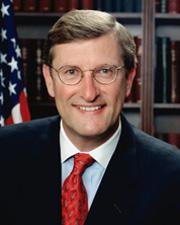 Sen. Kent Conrad (D-ND)
Legislative Activity
Stay on top of the latest movement without scrolling through every action
Senate amendment submitted
March 9, 2004
View full timeline
Senate amendment submitted
March 9, 2004
Roll call votes on amendments in Senate: Amendment SA 2704 not agreed to in Senate by Yea-Nay Vote. 46 - 51. Record Vote Number: 33.
March 9, 2004
Senate amendment proposed (on the floor): Amendment SA 2704 proposed by Senator Conrad.(consideration: CR S2384-2403, S2404-2407; text: CR S2384)
March 9, 2004
Senate amendment not agreed to: Amendment SA 2704 not agreed to in Senate by Yea-Nay Vote. 46 - 51. Record Vote Number: 33.
March 9, 2004
Amendment SA 2704 proposed by Senator Conrad. (consideration: CR S2384-2403, S2404-2407; text: CR S2384) To establish a 60-vote point of order against the consideration of any direct spending or revenue legislation that would increase the on-budget deficit in any fiscal year.
March 9, 2004
Amendment SA 2704 not agreed to in Senate by Yea-Nay Vote. 46 - 51. Record Vote Number: 33.
March 9, 2004
Votes
1 roll call on this amendment
Text
Proposed
CONGRESSIONAL BUDGET FOR THE UNITED STATES GOVERNMENT FOR FISCAL YEAR
2005

The ACTING PRESIDENT pro tempore. Under the previous order, the
Senate will resume consideration of S. Con. Res. 95, which the clerk
will now report.
The assistant legislative clerk read as follows:

A concurrent resolution (S. Con. Res. 95) setting forth the
congressional budget for the United States Government for
fiscal year 2005 and including the appropriate budgetary
levels for fiscal years 2006 through 2009.

The ACTING PRESIDENT pro tempore. Who yields time?
Mr. REID. Mr. President, I would like to ask a question of the
distinguished acting majority leader.
The ACTING PRESIDENT pro tempore. The Senator from Nevada.
Mr. REID. Mr. President, I am wondering if a decision has been made
as to what we are going to do tonight at 7 o'clock or thereabouts. As
the leader knows, we have the Archives dinner. In fact, it will be the
last dinner that will ever be held in the Rotunda, for a number of
reasons. That is going to be tonight. It is a bipartisan dinner. I
wonder if a decision has been made yet as to what is going to be done,
whether we are going to stay in session or whether there will be time
yielded off the resolution during the time we are there.
Mr. McCONNELL. Mr. President, I say to my friend from Nevada, the
plan will be to stay in session, unless we can reach an agreement to
yield back time.
Mr. REID. I would also ask, through the Chair to the distinguished
whip, has there been a decision made as to what we are going to do
during the normal recess we take on Tuesdays for party caucuses?
Mr. McCONNELL. I think, at the risk of being redundant, our plan
would be, if we could get an agreement to equally yield back time, we
would recess for those lunches; otherwise, we would try to press
through.
Mr. REID. So there can be some planning, I wonder if the two managers
have any objection to having that done as it relates to the noontime
recess we normally take on Tuesdays, with that time equally divided.

[[Page S2378]]

Mr. CONRAD. Mr. President, I think we should see how the morning goes
before we make that decision.
Mr. McCONNELL. I thank my friend from North Dakota.
Mr. President, I yield myself time on the concurrent resolution.
The ACTING PRESIDENT pro tempore. The Senator has that right.
The Senator from Kentucky.
Mr. McCONNELL. Mr. President, the Senate has a full agenda of
business this session. To give the American people a full year's worth
of work, I had hoped the politics of the election this fall would maybe
wait at least until some of the leaves had sprouted on the trees late
this spring.
Sadly, that is not the case. We see the one thing in full bloom in
Washington, DC, right now is all politics, all the time. The most
repeated political saw can be summed up by quoting Charles Dickens. We
are told today in America: It is the best of times, and it is the worst
of times. It is the best of times for some, and the worst of times for
others. We are not one nation, indivisible, but two Americas, they
say--two Americas.
What are we? Are we staring into painful reality or are we just
hearing political spin?
Well, Mr. President, I would like to think of myself as a fair
person. So I think we should let the facts themselves do the speaking.
Fact No. 1: To say it is the best of times and the worst of times at
the same time is simply political spin. It is spin to say the same fact
can be good in one place at one time but bad in another place at
another time. Yet many of our colleagues insist on that very twist,
that very twist of logic.
So let's look at the unemployment number, for example. When the
unemployment rate dropped to 5.6 percent back in 1996--5.6 percent back
in 1996--the Senate Democratic leader, our friend, Senator Daschle,
said:

The economy is doing extraordinarily well. Extraordinarily
well.
We have the lowest rate of inflation and unemployment we've
had in 27 years.

That is when the unemployment rate was 5.6 percent in 1996.
At the same time, President Clinton was saying:

I was gratified to hear our partners praise the strength of
the economy. . . . Lower interest rates have helped us slash
unemployment to 5.6 percent.

That was President Clinton in June of 1996.
So, in 1996, 5.6-percent unemployment was viewed by our friends on
the other side as good news and a healthy economy.
Today, we have 5.6-percent unemployment under President Bush--the
very same unemployment figure, a different President. Today our good
friend, Senator Daschle, says:

President Bush suggested that the current unemployment rate
of 5.6 percent was a good number. Well, I was a little
surprised at that. I'm not certain I would agree that it's a
good number.

In 1996, under a Democratic President, 5.6 percent was considered a
good number; 5.6 percent today under a Republican President is not
considered a good number.
Our friend Senator Clinton from New York says about the 5.6 percent
today:

This Administration refuses on so many fronts to accept the
obvious and in this instance it is obvious the economy is not
creating jobs.

President Clinton, when unemployment was at 5.6 percent, was praising
the healthy economy. Senator Clinton, when the unemployment rate is at
5.6 percent, says the economy is not very good.
It is difficult to understand how this same 5.6 percent jobless rate
back in 1996 can be considered indicative of a healthy economy and
today not be so considered. So a 5.6 percent jobless rate was the best
of times under President Clinton and now it is the worst of times under
President Bush. It's the best of times under President Clinton, worst
of times under President Bush. This is spin. That is all it is. How can
at one time 5.6 percent be considered the sign of a healthy economy and
at other times not?
We see the same kind of spin on policy. Under the previous
administration and when the House and Senate were controlled by our
friends on the other side of the aisle, temporary unemployment
compensation benefits were allowed to expire at 6.4 percent
unemployment. Again, temporary jobless benefits expired when the
jobless rate was at 6.4 percent and not a word of complaint was heard
from our friends on the other side of the aisle in 1994. It was the
best policy back in 1994 to allow temporary unemployment to expire at
6.4 percent. That was the policy back then. Now 10 years later, when
the same temporary unemployment compensation benefit expired because
the unemployment rate is at 5.6 percent, the same policy under a better
economy is called an outrageous act.
So the very same decision made under a Republican President is the
worst policy. Under a Democratic President, it is the best policy. It
makes no sense. Why would it be good policy to let the temporary
unemployment policy expire at 6.4 percent under a Democratic President
and not be a good policy at 5.6 percent under a Republican President?
What can we conclude from all of that? It is political spin. That is
what it is--political spin.
Letting temporary jobless benefits expire at a 6.4 percent jobless
rate under President Clinton and a Democratic Congress is the best
policy, but letting the same benefits expire at a 5.6 percent jobless
rate under President Bush and a Republican Congress is the worst
policy. It is all Washington spin.
But it is not just the number or policy that gets spun around; it is
also the words. Let's look at the much discussed term ``outsourcing.''
The term ``outsourcing'' has become a lightning rod. When an economic
advisor to President Bush discussed the outsourcing of jobs, amendments
were offered, strong condemnations were delivered, and heads were
supposed to roll. When the former President's Secretary of Labor
claimed, in a Washington Post op-ed on November 2, 2003 that high tech
jobs are going abroad but that is OK, not a peep was heard about the
former Secretary of Labor's writing.
This is Secretary Robert Reich, November of this past year. Headline:
``High Tech Jobs Are Going Abroad! But That's Okay.'' This is the
Democratic Secretary of Labor. Again we see the same words as the worst
idea by a Bush advisor but a great idea by a Clinton advisor.

Confused? It is just more Washington spin. When the outsourcing issue
was discussed by a Bush advisor, it was considered the worst advice.
When the same thing was said by a former Clinton Labor adviser, it was
considered good advice.
What can you conclude from all of this? Just Washington spin. The
whole issue of outsourcing shows how things are spinning out of
control. After all, Robert Reich, the former Democratic Labor
Secretary, is Senator Kerry's top labor adviser and a member of his
steering committee. It says so right on his Web site. Perhaps most
amazing is their campaign road show announcement on outsourcing that
charges President Bush continues to send jobs overseas. But in the very
next sentence they announce the participation of Robert Reich in these
road shows.
This is the same Robert Reich who said high tech jobs are going
abroad, but that is OK; the same Robert Reich who says he doesn't
believe the outsourcing of jobs is something to lose sleep over; the
same Robert Reich who says it makes no sense for us to try to protect
and preserve high tech jobs or block efforts by American companies to
outsource; the same Robert Reich, the top labor adviser to Senator
Kerry, who is at political events across the country to bash Bush for
his adviser's views on outsourcing.
If this doesn't leave you dizzy, nothing will. Why all the spin? Why
is this word acceptable by one speaker but an outrage when uttered by
another? Why is policy fine one day but a horror the next? Why is the
number applauded one day but the same number condemned the next?
Confused? That is what you get in a political year.
The sky-is-falling crowd seems to be spinning the wheel of misfortune
hoping to hit the political jackpot this fall. And to win this fall,
they must say the sky is falling this spring. They must put the worst
possible spin, the worst possible light on our current economic
situation.
Opponents claim we have had the greatest job loss since the Great
Depression. How many times have we heard that, the greatest job loss
since the Great Depression? That was a time when one out of four
Americans was

[[Page S2379]]

jobless. Today we have 138.5 million jobs and growing in the United
States. Comparing our economic situation today to the Great Depression
is utter nonsense. In the Depression, one out of four Americans was
unemployed. Today there are 138.5 million jobs and growing. Close to 95
percent of Americans who want a job are employed. The sky-is-falling
crowd says this is the worst number in almost a century.
So the political season is here. Facts don't matter; up is down; left
is right; the best is worst, and vice versa. To be sure, the economy is
not perfect. As long as someone wants a job and can't find one, we are
not going to rest. But let's be honest. If a 5.6 percent unemployment
rate was good 8 years ago, then a fair person would have to say it is
not so bad now. But we haven't heard that, nor will we hear that.
Instead we are told we are in a jobless Armageddon. Why? Because this
is an election year and that is just the way the world spins.
Mr. SANTORUM. Will the Senator from Kentucky yield for a question?
Mr. McCONNELL. Yes, I yield to the Senator from Pennsylvania.
Mr. SANTORUM. Mr. President, the Senator from Kentucky makes a very
persuasive case about how up is down, right is left, that the other
side is doing an incredibly masterful job of trying to spin the
economy.
I want him to comment on something that has concerned me. Over the
last 7, 8 months we have seen and heard talk about how bad the economy
is, how difficult. I want him to recall from 3 years ago the discussion
in the Senate. I want to see if the Senator from Kentucky sees what was
claimed at that time by Senator Conrad and others as potentially
occurring again in the year 2004.
Senator Conrad said in March of 2001, almost 3 years ago to this
date:

I don't think there's any question but the President is
talking down the economy, and the Vice President has hurt
confidence. . . . It hurts the economy because it puts doubt
in people's minds about the underlying strength of the
American economy. And any economy is in part based on
confidence. So when the Vice President was talking about
recession back in December, that set off a string of
newspaper headlines--

By the way, the newspaper headlines: ``Support for Bush Falls on
Economy . . . '' after a whole day of speeches on the part of Democrats
belittling this economy.
It says:

Newspaper headlines led to a string of additional emphasis
on the negative. When you consistently emphasize the
negative, you contribute to a climate that loses and lacks
confidence.

Mr. President, I ask the Senator from Kentucky, does he think over
the last 7 or 8 months Democrats railing on the negative aspects of
this economy has hurt economic growth and, in fact, may have caused
people to lose their jobs as a result?
Mr. McCONNELL. There is no question, I say to my friend from
Pennsylvania, there has been a concerted, coordinated effort to cause
Americans to lose confidence in an economy that is, by all standards,
rolling. You cannot find a category that is not heading in the right
direction.
As I pointed out, a mere 8 years ago colleagues on the other side of
the aisle were cheering for an economy of 5.6 percent unemployment,
saying that was terrific. Today they act as if we are in the Great
Depression.
I say my friend is right on the mark. There has been a coordinated,
concerted, consistent effort over the last 4, 5 months to talk the
American people into believing the economy is not heading in the right
direction.
Mr. SANTORUM. Will the Senator yield for an additional question?
Mr. McCONNELL. I yield to the Senator for a question.
Mr. SANTORUM. I ask, when the administration in March of 2001 was
talking about their concerns about the economy, does the Senator from
Kentucky recall whether the economy was growing in January and February
and March of 2001?
Mr. McCONNELL. It was clearly not growing. They were stating the
obvious.
Mr. SANTORUM. In fact, I believe that quarter of 2001 in which the
Vice President and the President were talking about their concerns with
the economy was, in fact, the first quarter of a recession that was
actually in place at the time; correct?
Mr. McCONNELL. Yes.
Mr. SANTORUM. So what they were doing was reflecting the reality of
an economy that was in trouble when they took office.
I just want to, again--Senator Conrad is here. I don't want to pick
him out as being the only one who was accusing the President and Vice
President of talking down the economy because Senator Daschle was doing
the same thing:

I think we're talking down the economy, and in talking down
the economy, I think we're beginning to see the results in
the market. The Bush administration has been talking down the
economy now for some time . . . but look at what's happened.

I say to the Senator from Kentucky, at the time the administration
was ``talking down the economy,'' the economy was, in fact, in trouble.
At the time the Democrats are talking down this economy, is this
economy in the same shape it was in January, February, and March of
2001?
Mr. McCONNELL. No, this economy is rolling, and virtually every
category by which one can measure the direction in which the economy is
going is heading in the right direction--in some cases dramatically in
the right direction. Even the unemployment figure, which they want to
harp on, is the same unemployment figure they were praising a mere 8
years ago--praising as the best of times. Today it is the worst of
times, and the only thing that is different is there is a different
President in the White House.
Mr. SANTORUM. So basically the contrast about who is talking up or
talking down the economy, which is my point, is the Bush administration
was reflecting the reality of what was going on in trying to be honest
with the American public as to the state of the economy at the time,
and what is going on now, as you have clearly illustrated, is the
economy is on an upswing and we have a group of people who are trying
to drive that economy back down where we hoped, we thought all of us
did not want it to be?
Mr. McCONNELL. I thank my friend from Pennsylvania for his question.
It is pretty obvious the facts illustrate the economy is rolling, it is
moving dramatically in the right direction, and even though
unemployment is higher than we would like it to be, it is the same
figure as a mere 8 years ago when our friends on the other side of the
aisle were cheering the healthy economy.
Mr. President, I yield the floor.
The ACTING PRESIDENT pro tempore. The Senator from North Dakota.
Mr. CONRAD. Mr. President, I have been interested to listen to this
early morning repartee on the other side about what the status of the
economy is and what the status of the job market is. I do not think it
is a matter of spin to talk about what the facts are, and the facts are
really very clear with respect to this President and what has happened
to the job market under this President.
When people say this is the first President to have lost private
sector jobs since Herbert Hoover, that is a fact. Nobody is saying, as
the Senator from Kentucky represented, the Bush record on the economy
is the same as the Herbert Hoover record on the economy. That is not
what anybody has said here. The Senator from Kentucky has not been
here; perhaps he missed what has been said.
What has been said is the simple fact that this administration is the
first administration since Herbert Hoover to lose private sector jobs.
In every other administration--Roosevelt, Truman, Eisenhower, Kennedy,
Johnson, Nixon, Ford, Carter, Reagan, the first President Bush,
President Clinton--there has been in every one of those administrations
growth in the private sector job market.
Under President Bush, we have seen a loss of private sector jobs. The
last time that was true was in the administration of Herbert Hoover.
That is a fact. That is not talking down the economy. It is a fact.
The second fact is this recovery is very different from every other
recovery from recession since World War II. That also is a fact.
If we look at the average of the nine recessions since World War II,
what we see is, after 17 months, after the business cycle peaked, we
start to see substantial job recovery. That has been the pattern of the
nine recessions we have had since World War II.

[[Page S2380]]

Look what is happening in this recovery. Here we are 36 months past
the peak of the business cycle, and still we are not getting job
recovery. Something is wrong. If we want to be serious about figuring
out how to solve the problem, we first have to diagnose it correctly.
We are 5.4 million jobs short of the typical recovery in the nine
recessions since World War II. Something is wrong.
Private sector jobs have declined. We have seen 3 million jobs lost
since January of 2001. That is not talking down the economy. That is a
fact, I say to my friend. It is a fact. If we are going to diagnose
what is going wrong here, we have to figure out how is this different
from what we have seen previously. I think any objective observer
looking will have to conclude this is something dramatically different.
The Chairman of this President's Council of Economic Advisers, in a
briefing on the 2004 Economic Report of the President, which was issued
just last month, said:

[W]e expect sort of on average jobs in 2004 to be 2.6
million more than the jobs in 2003.

That was this administration's projection a month ago. For that
projection to come true, there would have to be 520,000 jobs created in
every month from now to the third quarter of this year.
Look what happened in February. There were not 520,000 jobs created.
There were not 420,000 jobs created. There were not 320,000 jobs
created. There were not 120,000 jobs created. There were 21,000 jobs
created in February. That is 500,000 jobs short of the monthly totals
this administration will need to meet its projection.
Every one of these jobs that was created was a Government job. There
were no jobs created in the private sector. Something is wrong.
When we report to the American people on the status of the economy,
there is a dramatic difference between what was occurring during the
Clinton years--remember, during the Clinton Presidency, 22 million jobs
were created. This President has lost 3 million jobs. In the Clinton
administration, there were 22 million jobs created in the private
sector.
If we look at this current recovery, one of the things we see is that
we have the longest average duration of unemployment in over 20 years.
In other words, when somebody loses their job, it is taking them longer
to find a new job than at any time in 20 years. Now, that is
dramatically different than what occurred during the Clinton
administration. During the Clinton administration, there was very
powerful job creation. In fact, there was not only powerful job
creation but the longest economic expansion in our Nation's history.
In addition to that, we had the lowest unemployment in 30 years, the
lowest inflation in 30 years, the highest level of business investment
in our Nation's history, and record deficits were turned to record
surpluses. That is the economic record during the Clinton
administration. So if that is what they want to debate, we would be
delighted to join in the discussion. We would be delighted to talk
about the difference between the economic performance during the
Clinton years and the Bush years.
This is just one indication, the longest average duration of
unemployment in over 20 years. That is what is happening in this Bush
administration. Something is wrong.
When we go further and look at the number of people employed, the
Senator from Kentucky said we have over 100 million people employed--I
do not remember the exact number he used but I am sure he was accurate
in his number--but if we look at it in a different way, we see the
smallest share of the population at work since 1994; 62.2 percent of
the American people are employed. That is the lowest level in a decade.
Again, it is just a fact. If we are going to analyze what is
happening in this economy, we have to diagnose what is happening. To
diagnose what is happening, we have to describe accurately what is
occurring.
We also look at real wages. I asked my staff to find out for me what
has happened to real wages in this country during this administration.
We went back to 1996--we probably should have gone back even further--
and look what happened in 1996 to 2000, the last term of the Clinton
administration. We saw a dramatic growth in weekly wages. Since that
time, they have basically stagnated. Real wages are up less than $8 a
week in this administration.
If we are interested in public opinion, which I think we all are--the
Senator from Kentucky talked about public opinion--consumers believe
jobs are hard to get. Eighty-eight percent believe jobs are not
plentiful or are hard to get. Only 12 percent believe jobs are
plentiful. So this is not just a matter of opinion on the Senate floor.
The American people are saying jobs are hard to get. They are saying
jobs are scarce.

This is another look at what is happening in the job market. We see
that wage growth of production workers is starting to fall behind
inflation. Again, we went back to the beginning of this administration.
The red line is consumer prices. The green line is average hourly
earnings. We can see now for the first time the lines crossing. So wage
increases are not keeping pace with inflation. That is putting pressure
on people. That is why I think we see this strong concern all across
the country. People are worried about what is happening in this
economy.
Mr. REID. Will my friend yield for a question?
Mr. CONRAD. I would be happy to yield.
Mr. REID. I say through the Chair to my distinguished friend, the
ranking member of the Budget Committee, I listened to the statement of
the distinguished Senator from Kentucky and the questions asked by my
friend from Pennsylvania. One thing the debate this morning has not
touched upon, and I would like to hear the Senator from North Dakota
explain a little bit, when this administration came into power there
was a huge surplus over a 10-year period. It is my understanding that
is gone and we are going to have record deficits as far as the eye can
see. Is that a fair statement?
Mr. CONRAD. That is a fair statement.
Mr. REID. A final question, as part of that, do deficits matter?
Mr. CONRAD. Well, let's first talk about what is happening with
deficits under this administration. Over the next 5 years, under the
President's plan, the debt of the United States will increase by $3
trillion. Now let's think about that. That is an average of $600
billion a year of increased debt.
The President says he is going to cut the deficit in half over the
next 5 years, but he only gets that by leaving out things. For example,
he leaves out any war cost past September 30 of this year. He says
there is no cost of the war in Afghanistan, the war in Iraq, the war on
terror, past September 30 of this year. Does anybody believe that?
When we ask his people about it, they say, well, it is hard to
predict what the cost will be. Well, we would agree with that, it is
hard to predict. The right answer is not zero. The right answer is
there is not going to be no cost. The Congressional Budget Office tells
us the cost is going to be $280 billion. Yet the President has nothing
in his budget.
It does not stop there. If one looks at the cost of the President's
proposed tax cuts, what one sees is that in the first 5 years they are
relatively modest, but the cost of those tax cuts explode in the second
5 years. It does not end there. The alternative minimum tax, which is
going to cost some $600 billion to fix, according to the Congressional
Budget Office--my colleagues will remember the alternative minimum tax
was designed to catch millionaires. It was put in place back in the
1980s, but it has not been adjusted. The result is, more and more
middle-income people are being sucked into the alternative minimum tax.
There are about 3 million people affected now. By the end of this
decade, 40 million people will be affected.
In his budget, the President provides 1 year of the cost of fixing
the alternative minimum tax. He lets the rest of it go, which is
writing in a tax increase beyond the first year, and it will be a tax
increase increasingly on the middle class.
It does not end there. The biggest thing the President is proposing,
in terms of how he finances these massive deficits and debt, is to
borrow money. The President is fond of saying it is the people's money,
and he is exactly right, it is the people's money. It is also the
people's debt.

[[Page S2381]]

How is he financing these enormous deficits and debt? First, he is
borrowing every penny of the Social Security surplus over the next 10
years, every dime, $2.4 trillion, money that is really not in surplus
at all because it is going to be needed when the baby boomers retire.
So the President is really not showing the American people how
serious our fiscal condition is. When he says he is going to cut the
deficit in half, he says the deficit in the fifth year will be $237
billion, but if we add back all of the things he has just left out,
what we find is the debt of the country will actually increase by over
$600 billion in that fifth year. All of this is right before the baby
boomers retire.

So on the question of do deficits matter, certainly deficits matter.
The trade deficit matters. That is running nearly $500 billion a year.
The budget deficit matters. That is going to run nearly $500 billion
this year. Why does it matter? Deficits matter because when the
Government spends more than it takes in, it has to borrow the money.
When the Government borrows money, it is in competition with others to
borrow money.
In this society, we have over $20 trillion of debt--government debt,
Federal Government debt, State and local government debt, corporate
debt, private debt--$20 trillion. When the Government has to go borrow
money in competition with the private sector, most economists would
argue that puts upward pressure on interest rates. When you have $20
trillion in debt in an economy, a 1-percent change in interest rates
costs you $200 billion.
I can remember very well when Lloyd Bentsen was Secretary of the
Treasury, he called me to lunch one day down at the Treasury
Department. I walked in and sat down.
He said: Kent, you probably wondered why I asked you here today.
I said: Yes, I did wonder.
He said: I wanted to share with you because now you are on the
Finance Committee, you have my seat on the Finance Committee, something
that is very important to remember when you are dealing with the
economics of the country; that is, when you look at the debt of the
country in all forms--government debt, corporate debt, individual
debt--and you look at a change in interest rates, you come to
understand how critically important it is to manage this economy in a
way that keeps pressure off of interest rates. That means it is
critically important to hold down deficits and to hold down debt
because that will keep pressure off of interest rates. If you hold down
pressure on interest rates, you are giving more lift to the economy
than anything you can do on the tax cut side of the ledger. It is so
powerful, the difference 1 percent makes in interest rates in this
society because of all the debt there is.
It is a lesson I have never forgotten. I don't think any of us should
forget it. That is why deficits matter.
Some will say interest rates are at very low levels now. Indeed they
are. In fact, one of the reasons we have seen the economy resume growth
is because interest rates are at a 40-year low, even though we have
these massive deficits. How can it be? How can interest rates be at a
40-year low when we have these massive deficits? It is because right
now there is very little competition for money from the private sector
because the economy has been weak. As the economy resumes growth, as it
has, we will see upward pressure on interest rates. That is something
we have to keep in mind as we fashion Federal policy on the budget.
We have the ability in the Senate, the Congress and the President, to
influence the fiscal policy of the country. There are two things that
contribute and affect the economy. One is fiscal policy, spending and
revenue decisions that are made here and in the House of
Representatives and by the President. The other aspect of Government
policy that affects the economy is monetary policy.
The monetary policy is guided by the Federal Reserve. The Federal
Reserve has put in place a very accommodative economic policy, the
lowest interest rates in 40 years. It is a key reason for this economic
recovery. But that is jeopardized, it is threatened if interest rates
are forced up.
What might force them to go up? As we see economic recovery, as we
see the private sector borrowing more money to build and expand their
businesses, and the Federal Government is also borrowing these record
amounts of money, that will put upward pressure on interest rates. That
will threaten long-term economic growth and recovery. That is why
deficits matter.
Does the Senator from Pennsylvania seek time? I yield the floor.
The PRESIDING OFFICER (Mr. Enzi). The Senator from Pennsylvania.
Mr. SANTORUM. Mr. President, I will pick up where the Senator from
North Dakota left off. I suggest historically the lesson we learn from
the conversation he had with Lloyd Bentsen: Lloyd Bentsen was wrong.
The bottom line is there are a lot of other factors that go into the
calculation of interest rates other than the deficit. That is obvious
from the fact that we have a relatively high deficit right now and
interest rates remain low.
It is a very complex economy. I think the idea we are going to focus
in on one thing or another that is going to create jobs or not create
jobs is folly. What we need to do is try to put a grand strategy
together, including keeping inflation low, working to keep interest
rates low, keeping tax rates low, trying to reduce litigation costs,
trying to reduce the costs of regulation. All of those are a complex
series of factors, and there are a whole lot of others, frankly, beyond
the control of the Senate that we need to look at as to creating an
environment in which jobs can be created and wealth can be created.
Our job in the Senate comes down to a few simple things. We have been
debating this year trying to reduce the cost of litigation. This side
of the aisle, generally speaking, has been on the side of reducing that
transaction cost to the economy, and it is a huge cost to this economy.
We have a couple of other bills coming up such as asbestos litigation
that I am hopeful will be scheduled in the next couple of months so we
will get a date certain to have a vote in the Senate. I would argue we
can do more to help the manufacturing economy in this country by taking
away the burden of asbestos litigation which is crippling dozens upon
dozens of large manufacturers who employ hundreds of thousands of
people who make this economy go. It is crippling them, having to defend
tens of thousands of lawsuits. Most of them are frivolous. Most are
filed by people who are not sick. They are filed by lawyers who are
looking for big fees and big settlements and tying up enormous
resources and clogging up our courts.
We have an opportunity to solve that problem and, more importantly,
get the money to the people who are truly sick and injured as a result
of exposure to asbestos. We have an opportunity to do that right here.
If you want to help the manufacturing economy, if you want to create
better jobs, if you want to loosen up the burden of frivolous lawsuits
on a whole sector of our society, the manufacturing economy, let's pass
this asbestos litigation. I don't hear any of you talking about that.
How about class action reform? That is another abuse of the legal
process by a handful of trial lawyers who, again, put together these
massive suits, with people getting very little benefit except, of
course, the lawyers who are suing on ``behalf'' of this class of
people. We have an opportunity to do something there that will
dramatically help this economy, help the manufacturing economy, help
the economy in general. So the idea there is just one aspect we need to
focus on is false. There are a lot of things we can do in the Senate.
I can tell you another aspect we need to focus on in the Senate, and
that is spending. There is a big concern in our markets today, in the
economy today, about the appetite for spending in Washington, DC, and
the potential impact that will have on our economy because it will lead
to further spending. Growing the Government will lead to higher
deficits and, as we will see over the next 4 days, calls to increase
taxes to pay for more Government spending. What do increased taxes
mean? That means less money in the private sector out there creating
jobs and more money in Washington--well, maybe creating a few jobs in
town.
So the idea of more spending and higher taxes is what the Senate is
going to be dealing with in the next few days. That is an important
topic to discuss, and one that will have profound consequences on this
economy--

[[Page S2382]]

beyond the talking down of the economy that I illustrated before that
has been going on for months during the Democratic primary, and the
chorus in the Senate talking about how terrible things are. To pull out
a chart, as the Senator from North Dakota pulls out, saying that we
have a percentage of the population that is working which is lower now
than it has been in 10 years, the percentage--does that matter? The
question is, How about the percentage of the people who are looking for
work? That is really what we are interested in. The fact that the
percentage of seniors has grown in America over the last 10 years will
mean by definition that probably fewer people as a percentage of the
population are going to be working. That is sort of a natural thing to
assume. This idea that we are going to pull out all these incredible
sort of arcane statistics to make a point when the overwhelming body of
evidence is that this is an economy that is growing, unemployment rates
are at historically low levels, and wealth is growing in this country,
household income is growing in this country, the idea that this is the
worst economy since the Great Depression is folly.

It is the kind of talking down of this economy that the President and
the Vice President were accused of 3 years ago when the economy was in
bad shape. The idea that somehow or another this administration has
lost all these jobs when this administration entered office during a
recession, which, I assume, the Democrats at least will admit the
President had nothing to do with when he was sworn in in January of
2001--we were in a recession--that somehow or another we are going to
blame the President for the resulting job loss of that and the events
of 9/11, or the corporate scandals which ran amok during the Clinton
administration, which, again, this President had to patch together--
this idea that because the economy was in terrible shape when the
President rose his hand and said I take this oath is now the
President's fault, again, just doesn't, thankfully, make a whole lot of
sense to the American public.
The American public isn't buying a lot of this snake oil salesmanship
that is going on about how bad things are in America. I think the more
we get the information out about what really is happening in this
economy, and the things this administration is doing now and which we
are trying to do in the Senate to make it better, the better this
economy will do--even more than it is doing today.
But our job in the Senate over the next 4 days is to ask whether we
want to see this economy grow.
No. 1, how much are we going to resist the call to increase spending?
That is a big concern out there in the private sector. Will Washington
try to live within its budget?
And, No. 2, how much are we going to try to take from the American
public in the form of higher taxes?
I have decided to resurrect a couple of charts I have used over the
last year. One is the Democratic spendometer. For every amendment that
is offered which increases spending, we will put that amendment here.
We will put the number of Democrats who voted for this amendment, the
1-year cost, and the 5-year cost over this budget.
Just to recollect, I heard the Senator from Nevada, who is a very
persuasive and articulate spokesman for the other side, talk about this
horrible deficit we have. I remind all who are listening that last year
at this time the Democrats proposed adding $1.3 trillion in new
spending over the next 10 years to last year's budget.

Let me repeat that: $1.3 trillion in new spending not offset by other
spending cuts added to this deficit over the next 10 years. Had we done
what they wanted to do last year, this deficit would be in much worse
shape than what it is today.
That was just in the budget. The first time I brought out this chart
was during last January's discussion of the appropriations bills which
the Democrats failed to pass when they controlled the Senate in 2002.
That was the omnibus bill of January of 2003. During that debate on
Democrat appropriations bills that passed out of their committee, they
sought to add a half trillion dollars in new spending to the fiscal
year 2003 budget--the omnibus spending, the appropriations bill in
2003--and $1.3 trillion over 10 years to last year's budget, which
again, thankfully, was defeated. Then, after the budget passed and we
had to deal with last year's appropriations bill to which they again
attempted to add, the spend o meter was brought out--$800 billion in
new spending to those bills.
I just remind everybody who will come to the floor and bemoan budgets
and deficits and how irresponsible the President and those of us who
are in the majority are, they attempted to add $800 billion to last
year's appropriations bills, and $1.3 trillion to last year's budget,
all of which was not offset with any other spending reductions.
I will again put up this chart.
There is a clever thing, I suspect, that many on the other side will
do this time; that is, they will pay for these amendments. They will
say they are concerned about the deficit. Last year, they were not.
Last year, we did not offset these expenditures. Last year, they simply
ran up the tab. But all of a sudden, we are awash with fiscal
conservatism. We have this great concern now about the Federal budget
deficit. What is going to happen with a lot of the amendments that will
be offered by the other side is that they will be paid for. How will
they be paid for?
That brings me to my second chart, the Democrat taxometer. What they
are going to do is not only increase spending with more money flowing
to the bureaucrats in Washington, DC, but they are going to do so on
the backs of taxpayers in America. They will say: Oh, all we want to do
is tax the richest of the rich, and our amendments are designed only to
go after those wealthy people who can afford to pay taxes. But, of
course, we know that is not what their amendments do. What their
amendments do is instruct the Finance Committee to come up with revenue
raising. That is all this amendment does. It is all it can do. It
cannot specify what the Finance Committee will do nor what this
Congress will do. So all it will do, and will do repeatedly, is
instruct the Finance Committee to raise taxes.
For every amendment that is offered that is ``paid for,'' we will
have, again, the amendment, the number of Democrats who voted for this
tax increase, the 1-year cost to the taxpayers in increased taxes, and
the 5-year cost to taxpayers in increased taxes.
When we hear this debate, what we are back to again is sort of a
typical saw that we hear in Washington, DC, tax and spend, tax and
spend, all in the name of trying to have fiscal accountability. In
reality, it is growing the size of government. It is growing the power
and influence of the Federal Government over your life and taking your
money so we can have more power over you, and you can have less freedom
to do what you believe is in your best interests and the best interests
of your family. Of course, we know, if you listen to the other side,
that we can spend your money better than you can; that the money we
have to spend is for great and wondrous causes which will have a
tremendous benefit to the American public; and, of course, if we let
you keep this money, you would use it on frivolous things that have no
great benefit to you or to your family or to the community and to the
country.
The same kind of cynicism that we have seen pervade on the other side
of the aisle for decades, nothing has changed. It is the same old saw.
We know what to do better with your money than you do, and we are going
to prove it time and time again over the next 4 days as hundreds of
billions of dollars in tax increases will be voted on on the floor of
the Senate. Hundreds of billions of dollars of new taxes will be voted
on in the Senate, with hundreds of billions of dollars of wonderful new
Government programs that will solve all the problems we have in America
that, of course, if that money were left to you, you would not have any
idea what to do, that would be of any benefit to the American public or
to these great causes we announce in the Senate.

This is the debate. There is lots of talk about deficits and fiscal
responsibility, but in the end this comes down to more Government,
bigger Government, more Government control, less freedom.
The late Paul Coverdell used to say his basic understanding of taxes
was it is an issue of freedom. The more money we take from you, the
less free you are

[[Page S2383]]

to take care of yourself and to provide for yourself and your family.
The less money we take, the more freedom you have. So this is an issue
of basic freedom, economic freedom in this country.
We will see over the next 4 days what party sides with the American
public, what party trusts you, and what party believes they can do
better with your money than you can, that they know what is best for
America than the millions of Americans across this country whose money
will be taken and sent to Washington for new programs that will better
solve American problems than leaving the money at home with Americans
to solve it for themselves.
I am looking forward to this debate. I could be wrong, but I suspect
I will need more than one of these charts. I suspect I will need
several of these charts about where the Democrats and how much the
Democrats are going to try to increase taxes over the next several
days. We will need several charts of how Democrats will try to increase
spending and grow the size of Government. It will be hundreds of
billions of dollars. It may even be, over 5 years, $1 trillion, and
they will do so all by maintaining a straight face that they are the
protectors of fiscal discipline in Washington, DC; they are the ones
who are for lower deficits, who are for Government control--of
controlling Government spending; they are the fiscal watchdogs on guard
to the American taxpayer.
Let's see what happens over the next 4 days. Let's see who calls for
spending increases. Let's see who calls for tax increases. And let's
find out who really is on your side.
I yield the floor.
The PRESIDING OFFICER. The Senator from North Dakota.
Mr. CONRAD. Mr. President, I am delighted to follow the Senator from
Pennsylvania. I have been looking forward for a long time to this
opportunity because the Senator from Pennsylvania makes a lot of
aggressive assertions. Unfortunately, he is aggressively wrong, wrong,
wrong.
Let's start with the question of when the deficit starts. The Senator
from Pennsylvania says it started in the Clinton administration.
Mr. SANTORUM. If the Senator will yield?
Mr. CONRAD. I am happy to yield if I misstated.
Mr. SANTORUM. I did not talk about the deficit starting in the
Clinton administration. I am talking about when the recession started.
Mr. CONRAD. I apologize; I meant to say when the recession started. I
think the Senator from Pennsylvania said the recession started during
the Clinton administration.
Mr. SANTORUM. Again, Mr. President, I think I said it started when
the President was taking the oath of office in January of 2001.
Mr. CONRAD. I am happy to have the Senator state his position.
Let me just say the problem with that is the National Bureau of
Economic Research, which does the official dating of recessions, says
the downturn began in March 2001, early in Bush's Presidency.
But that is not the thing I am most eager to answer in terms of what
the Senator from Pennsylvania has said. He has repeatedly used his
spend-o-meter chart in the Senate and that chart is just a complete
fabrication. I don't know of a nice way to say this. That chart is a
complete fabrication.
How is it a fabrication? First of all, all the Democratic amendments
to last year's budget resolution were paid for. The Senator from
Pennsylvania said they were not paid for. That is factually wrong and
he ought to come out here and correct the record because it is wrong.
All he has to do is look at the record to know it is wrong. Our
amendments were paid for. I will go to a complete list of those
amendments next to demonstrate the statements of the Senator from
Pennsylvania are false.
In addition, the Democratic amendments were offered individually, not
as a package. The Senator from Pennsylvania wants to act as though the
Democratic amendments were offered as a big package. False. They were
offered individually.
Third, the Senator from Pennsylvania wants to act as though these
amendments were all 10-year amendments. False again. Half of these
amendments were for 1 year.
What the Senator from Pennsylvania has done is very conveniently
taken 1-year amendments and multiplied to make them 10-year amendments
and then cumulate them to act as though they were a package. Wrong,
wrong, wrong.
What is most wrong, he asserts they were not paid for last year. He
ought to have done his homework better before coming out and making an
assertion like that because even the least bit of research, even the
least bit, would have demonstrated that is a false statement.

Let's go to the amendments that were offered. I have a list of all of
the amendments. We can see whether the statement of the Senator from
Pennsylvania was correct. He says the amendments were not paid for.
Let's go down the list.
An amendment by Senator Biden to restore the COPS Program was a 10-
year amendment and costs $1 billion. It was fully paid for, plus $1
billion to reduce the deficit.
An amendment by Senator Kerry on HIV/global AIDS cost over 10 years
about $800 million. Completely paid for, plus an additional amount to
reduce the deficit.
We can go right down the list. Every single one of the Democratic
amendments was completely paid for--in most cases, more than paid for--
so the deficit would be reduced as well.
The chart of the Senator from Pennsylvania is wrong. Factually wrong.
He ought to come out here and correct the record.
As I say, I will put this entire list in the Record because it
demonstrates all of the Democratic amendments were paid for, countering
the assertion of the Senator from Pennsylvania--and more than paid for.
So if you did cumulate them, it would reduce the deficit $687 billion.
It is not right to cumulate. They were not offered as a package but
individually.
There was an amendment by Senator Dorgan for veterans, to give
greater budget resources for veterans health care, for $1 billion. But
that was completely paid for, plus an additional amount to reduce the
deficit. That is the fact of the matter.
These amendments were offered not as a package, they were offered
individually. So this amendment was offered. It was defeated.
Then we offered another amendment on rural health care. That
amendment was defeated. Then we offered another amendment. The idea you
can combine them as a package is false and misleading.
Then the Senator from Pennsylvania has another chart on the
appropriations bills. This is my favorite because this is another
complete fabrication. The Democratic amendments to the Omnibus
appropriations bill were offered individually, not as a package. You
cannot accumulate them.
No. 2, the Democratic amendments were for 1 year, not 10 years. They
just took 1-year amendments and multiplied them by 10. They were not
10-year amendments. They were 1-year amendments.
No. 3, if you did total them and take out the duplication, they
totaled $37 billion, not the $500 billion asserted by the Senator from
Pennsylvania. That is an absolute fiction, a concoction. It has
absolutely no merit.
What is really interesting is what the Republicans did. Our
amendments, if you can total them--which you should not do because they
were not offered as a package--but if you did, they were $37 billion.
But do you know what the Republicans did when they recaptured
control? They went into a conference committee, locked out the
Democrats, and they came back and increased spending by $63 billion.
Let's look at the difference between what they are saying and what
they did. Here are the amendments we offered to the Omnibus
appropriations bills. Each one of them was offered individually.

We offered improvements in homeland security. It would have cost $5
billion. That was defeated. So that money was still available. We then
offered an amendment to improve education. That was defeated. It would
have cost $6 billion.
What the Senator from Pennsylvania has done is add up all these. They
were not offered as a package. They were offered individually. They
were 1-year amendments, and he multiplied them as 10-year amendments.
What is interesting is, if you did add them all up,

[[Page S2384]]

they do not cost $500 billion; they cost $37 billion.
But look what our friends on the Republican side did when they
captured control and wrote the final Omnibus appropriations bill. They
went into the conference committee and came back with $63 billion of
add-on--$63 billion--trumping us almost two to one if you did
accumulate our amendments.
Mr. REID. Will the Senator yield for a question?
Mr. CONRAD. I am happy to yield.
Mr. REID. I say to the Senator, will you leave the chart, please?
Mr. CONRAD. Yes.
Mr. REID. It is my understanding that the $37 billion was done in the
Senate where there was full debate and recorded votes. Is it true that
the $63 billion, which was added on, was done in a secret, closed
meeting, with no public able to watch what went on, no one knowing how
the votes were cast, and not a single Democrat was in the room?
Mr. CONRAD. That is correct. Rarely have I seen in my time in the
Senate--I have been here 17 years--rarely have I seen somebody come out
with a more fabricated chart than the one presented by the Senator from
Pennsylvania. It is false in its detail. It is false in its assertion.
It is a complete fabrication. For him to come and say our amendments on
the budget resolution were not offset is absolutely false, and the
record shows it as clearly as it can be shown.
On the appropriations bills, to assert we offered $500 billion of
amendments is just false. It is not true. We authored, if you totaled
them, $37 billion of amendments. But you cannot total them. They were
offered one after another. We would offer an amendment. It would be
defeated. Then we would take that same money and offer a different
amendment. That is the fact of the matter.
But what is most interesting is, if you did total them, we were
completely outstripped by what the Republicans did when they went into
the conference committee between the House and the Senate to work out
the differences and they came back and increased spending $63 billion.
Now, let's talk about who has responsibility here for the explosion
of the debt, because that record is very clear. Our friends on the
other side are in total control. They control the House. They control
the Senate. They have since 2001. They control the White House. This is
what has happened to the debt under their stewardship and under their
leadership. The debt has exploded.
When President Bush took office, the publicly held debt was projected
to be, in 2008, at that amount, $36 billion. In his 2002 budget, it got
raised to $1.2 trillion. Then his tax cut passed and it went up to $1.6
trillion. Then the President's 2003 budget came up and he expanded the
debt to $3.3 trillion. Then we got his budget for 2004 and it increased
the debt to $5 trillion. Then we got the Senate GOP 2005 budget and
they increase the debt to almost $5.5 trillion.

These guys are totally in charge. The Republicans control the House.
They control the Senate. They control the White House. It is on their
watch that the debt has exploded. That is the fact of the matter. It is
no wonder they are now trying to distort our record to give themselves
cover for what they have done.

Amendment No. 2704

Mr. President, I am now going to lay down an amendment. I send an
amendment to the desk. I might add, I have the agreement of the
chairman of the committee that we will proceed with this amendment at
this time. I inform the Presiding Officer, I have discussed this with
the chairman. I send this amendment to the desk.
The PRESIDING OFFICER. The clerk will report the amendment.
The assistant legislative clerk read as follows:

The Senator from North Dakota [Mr. Conrad] proposes an
amendment numbered 2704.

Mr. CONRAD. Mr. President, I ask unanimous consent that reading of
the amendment be dispensed with.
The PRESIDING OFFICER. Without objection, it is so ordered.
The amendment is as follows:

(Purpose: To require Congress to pay for any new tax cut or mandatory
spending legislation until the budget is balanced without counting the
Social Security surplus, to encourage Congress to work expeditiously to
ensure the long-term viability and permanent sustainability of the
Social Security program for current and future generations, and to
ensure that Social Security benefits are not cut to offset the costs of
enacting new tax cuts or extending the President's tax cuts that
benefit the wealthiest among us)

At the end of title IV, insert the following:

SEC. __. POINT OF ORDER TO PROTECT SOCIAL SECURITY FIRST.

(a) Point of Order in the Senate.--It shall not be in order
in the Senate to consider any direct spending or revenue
legislation that would increase the on-budget deficit in any
fiscal year until the budget is balanced without Social
Security.
(b) Supermajority Waiver and Appeal.--This section may be
waived or suspended in the Senate only by an affirmative vote
of three-fifths of the Members, duly chosen and sworn. An
affirmative vote of three-fifths of the Members of the
Senate, duly chosen and sworn, shall be required in the
Senate to sustain an appeal of the ruling of the Chair on a
point of order raised under this section.

Mr. CONRAD. Mr. President, the amendment I am offering today is to
protect the Social Security trust fund surpluses from additional raids.
My amendment would establish a 60-vote point of order against the
consideration of any direct spending or revenue legislation that would
increase the on-budget deficit in any fiscal year until we have
balanced the budget without counting the Social Security surpluses.
Very simply, what this amendment does is to say, no new spending, no
new tax cuts, unless they are paid for, until we secure Social
Security, until we stop the raid on Social Security trust fund
surpluses.
I said from the beginning that President Bush's fiscal plan would
ultimately threaten Social Security. I believed it then, and I,
unfortunately, believe that events have confirmed how seriously the
President's fiscal plan threatens the fundamentals of our economic
security.
Now we see the Chairman of the Federal Reserve, Chairman Greenspan,
suggesting we are overcommitted. He has said to the Congress of the
United States that he recommends we consider reducing Social Security
benefits. That is where the President's overall fiscal plan leads. It
fundamentally threatens not only Social Security but Medicare as well.
I want to go back to 2001 and what the President told us then. The
President told us, in his budget blueprint for the 2002 budget:

None of the Social Security surplus will be used to fund
other spending initiatives or tax relief.

Yet that is precisely what we see happening. Not only is the
President using Social Security, he is using $2.4 trillion of Social
Security surpluses over the next 10 years. Let me be quick to say they
are not surpluses. All of that money is going to be needed to pay for
the retirement of the baby boom generation. The President, who pledged
not to take the money and use it for other purposes, is doing precisely
that. He is using every penny of the Social Security surplus over the
next decade to pay for his tax cuts and other expenses of Government.
Interestingly enough, if one looks at the Social Security money that
he is borrowing over this next 10 years to pay other bills and compares
it to the cost of his tax cuts--both those already passed and those
proposed--one finds a very close fit, a very close fit between the
money he is borrowing from Social Security, with no plan to pay it
back, and the cost of his tax cuts. They are almost identical.
There is $2.4 trillion of Social Security money taken over the next
10 years--all of it financed with payroll taxes, primarily paid by
middle-income people--and he is using it to provide income tax cuts
that disproportionately go to the wealthiest among us.
It is very interesting to pierce the veil and to see what the
President is doing and to see the full effects of his policy: $2.4
trillion taken from Social Security--borrowed, if you will--and then
used to finance income tax cuts.
If we look at who the beneficiaries are of those income tax cuts,
here it is: We see overwhelmingly they are going to the wealthiest
among us. The top 1 percent, those earning over $337,000 a year, get 33
percent of the benefits of these tax cuts. Almost 69 percent of the
benefits go to the top 20 percent.

[[Page S2385]]

Shown down here on the chart, the bottom 20 percent get virtually
nothing. The second 20 percent gets 4.8 percent of the benefits. The
middle 20 percent gets 10.6 percent of the benefits.
The fourth 20 percent in terms of income, those with $73,000 or less
in income, get 15.8 percent of the benefits. The top 20 percent get 69
percent of the benefits.
If we look on the recipient side, those who get Social Security
benefits, that is instructive as well. What this chart shows is almost
two-thirds of retirees rely on Social Security for more than half of
their income. In fact, 31 percent of Social Security beneficiaries get
at least 90 percent of their income from Social Security benefits; 33
percent get 50 to 89 percent of their income from Social Security; and
36 percent get less than 50 percent of their income from Social
Security.
What is going on is--again, I like to use the term ``pierce the
veil''--the President is borrowing from the Social Security trust fund,
$2.4 trillion during this next 10 years, using it to finance income tax
cuts costing $2.5 trillion. The income tax cuts go overwhelmingly to
the wealthiest among us. Thirty-three percent goes to those earning
over $337,000 a year, and it is all financed by payroll taxes paid
disproportionately by middle-class people. In fact, over 70 percent of
Americans pay more in payroll taxes than they pay in income taxes.
This is the greatest shift of wealth that has perhaps ever occurred
in our history, from the many to the few. That is the President's plan.
Here we see the difference Social Security has made, before we had
Social Security and without it. Nearly 50 percent of beneficiaries
would be in poverty. That has been the extraordinary power of Social
Security and Medicare. It has lifted people out of poverty. Before we
had Social Security and Medicare, almost half of seniors were in
poverty. Social Security has reduced that to 9 percent; 9 percent now
of our seniors are in poverty. What a remarkable social program this
has been, the combination of Social Security and Medicare, to lift
people out of poverty.
The President says: Well, we have a big shortfall in Social Security
over the next 75 years.
Indeed, we do. The 75-year shortfall in Social Security is $3.8
trillion. That is according to the actuaries. But interestingly enough,
if you look at the cost of the President's tax cuts over that same 75-
year period, they are three times as much: $12.1 trillion is the 75-
year cost of the President's tax cuts.
All of this should inform what we face in the very near future. The
President's massive runup of deficits and debt is occurring at the
worst possible time, right before the baby boomers begin to retire.
This chart shows it very well. It shows the tax cuts explode as the
surpluses in the trust funds of Social Security and Medicare become
deficits.
The green part of these bars is the Social Security trust fund. The
blue part is the Medicare trust fund. The red is the costs of the
President's tax cuts. What you can see is right now the surpluses from
Social Security and Medicare are larger than the cost of the tax cuts.
As I have indicated, over the next 10 years the Social Security
surpluses that are being taken to finance the tax cuts are about
equivalent to the cost of the tax cuts. That is over the next 10 years.
But look what happens when the trust fund goes cash negative. At that
very time the cost of the tax cuts explodes, driving us right over the
cliff into deeper deficit and debt. This is what is so fundamentally
flawed about the President's fiscal plan for this country. We see the
same flaw in what has been reported out of the Budget Committee. It is
seen most clearly in the President's plans because of his adherence to
even more tax cuts when we are running record budget deficits. The
President is proposing increasing spending and cutting revenue when we
already can't pay our bills. What does that do? We can see what it does
as he takes more and more of the Social Security money to finance tax
cuts and other expenditures. That string starts to run out when the
trust fund goes cash negative.

Unfortunately, the President has made no provision for it. His answer
is: Cut the revenue more. Spend more, when you already have record
deficits.
This is where it is all headed. It is not just the Congressional
Budget Office and it is not just this Senator's calculations. We see
these warnings coming from the Comptroller General of the United
States. We see them coming from the International Monetary Fund. We see
them coming from responsible budget groups warning the President has us
on an unsustainable course.
Here is what is going to happen with Social Security. We are going to
see a dramatic increase in the number of people who are eligible to
receive it. There is going to be a doubling of those eligible for
Social Security. We have about 40 million people now who are eligible
for Social Security. That is going to double to more than 82 million.
The President has no plan to deal with it.
Unfortunately, what he is doing is taking the Social Security
surpluses. We can see the pattern on the Social Security surplus. We
can see it is at very high levels now. The Social Security surplus for
this year will be about $160 billion. That continues to increase
dramatically in preparation for the retirement of the baby boom
generation. But instead of using this money to pay down the debt or
prepay the liability, the President is taking it all to finance current
tax cuts and other expenditures, putting us in a more vulnerable
position.
My amendment says, let's protect Social Security first. We protect
the Social Security trust funds from further raids by preventing the
consideration of new revenue or new spending that is not paid for until
the budget is balanced without counting the Social Security surplus.
This is enforced by a 60-vote point of order.
I want to make clear, the basic idea is if you want new spending, if
you want new tax cuts, you can do it, but you either have to pay for
it, or you have to get a supermajority vote. We would maintain that
discipline until the raid on Social Security is stopped, until we stop
the Bush administration from using Social Security funds to pay for tax
cuts and other expenditures.

This is a commonsense amendment. I hope very much our colleagues will
support it. It is critically important to provide the discipline on
both the spending side and the tax side as we go forward.
I yield the floor.
The PRESIDING OFFICER. Who yields time?
The Senator from Oklahoma.
Mr. NICKLES. Mr. President, I thank my colleague for this amendment.
For the information of our colleagues, it is my expectation we will
probably vote on this amendment shortly after lunch, unless others wish
to speak on it. We are happy to accommodate that.
I rise in opposition to the amendment, but I want to give a little
explanation about what, in my opinion, this amendment does and does not
do.
First, if we did what my friend and colleague from North Dakota is
saying, we would be in violation of the Budget Act.
In the Congressional Budget Act of 1974, section 301, there is a
Social Security point of order that says it is against the law to bring
any budget concurrent resolution to the floor of the Senate if you do
anything detrimental to the so-called trust fund. I will read the point
of order:

It shall not be in order in the Senate to consider any
concurrent resolution on the budget or amendment or motion or
conference report on the resolution that would decrease the
excess Social Security revenues over Social Security outlays
in any of the fiscal years covered by the concurrent
resolution.

That is strong. That is the law. We comply with the law. If we did
not, our entire budget would fall. I make that point.
Senator Conrad eludes to the fact that we are raiding Social
Security. I disagree with that entirely. With great respect, I will say
Senator Conrad's budget, which he wrote in 2002 that passed the
committee but did not pass the Senate, did the exact same thing, for at
least $866 billion. I understand politics, and I understand the way
this is being framed, but it is absolutely wrong. What do we do with a
Social Security surplus? Senator Conrad is correct, there is $166
billion more Social Security taxes coming into the Social Security
trust fund than money going out.

[[Page S2386]]

What do we do with the excess money? We do exactly what the law says
we should do. We take that money and buy Treasury bonds that are
supposedly invested in West Virginia. I say ``supposedly'' because all
the money got into one big pot. Social Security, as well as income
taxes, all goes into one big pot.
If you are an employee and look at your W-2, you have withholding for
Social Security and income taxes that goes out every payroll period.
All that money goes into the U.S. Treasury. Half does not go over here
and half over there. All of it goes into the Treasury, and Treasury
writes the checks.
With Social Security, if they determine there are less outlays than
income, they take the balance and buy T bills. That is a commitment by
the U.S. Treasury to pay it back with interest. That is the law of the
land, and that is exactly what we do. That is exactly what we do under
this resolution.
This chart shows exactly what the trust funds will be approximately,
with the budget and without the budget. The trust fund is exactly the
same because we take every dime of the surplus and we buy T bills with
it. I might add, if our colleagues on the other side of the aisle
offered a budget, it would be exactly the same or else their budget
would fall.
I just make that point. I hope people do not get confused about all
the raiding talk. We buy T bills with the Social Security surpluses.
That is what has been done for years because that is the law of the
land.
There is some discussion that if we had a surplus, maybe we should
buy equities or not buy equities. You could buy major corporations, you
could buy a very significant portion of the stock exchange, and so on.
But we did not do that. We follow the law of the land. Instead of
picking out which company or sector might benefit from a Government
investment, we said, no, we are going to buy T bills.
With those T bills, we can do one of two things: spend the money or
pay off debt. But that is beside the point. The trust fund is basically
the same, the obligation to pay. We are not changing the law of the
land. The law of the land is we have obligations to pay Social Security
benefits based on formulas. We can change those formulas. We can change
eligibility. We can change retirement age. We can change the cost-of-
living benefits. We can take a lot of different actions. Congress can
do that. We cannot do it under a budget resolution, not if it is
detrimental to the health of the trust fund.
I want to make sure everybody understands we are not raiding the
Social Security trust fund. The Social Security trust fund is going to
be exactly the same under this resolution as before because that is the
law of the land, and we abide by the law.
I also repeat, Senator Conrad's budget and, frankly, any budget that
I have seen in my years in the Senate--and I have seen 24 of them--we
did not pass Senator Conrad's budget, but the 23 we passed all treated
Social Security the same--all did.

What about this point of order he is creating? That sounds pretty
good, and I think I hear him correctly when he says no new spending and
no new tax cuts unless we have this supermajority. Guess what? We
exempt a whole lot of spending. According to CBO, we exempt about $1
trillion of spending under the baseline. They just assume the spending
is going to continue, even though, in many cases, the authorizations
expire. But the way this is drafted and the way I can tell, we more or
less exempt that.
For example, the farm bill. The farm bill expires at the end of 5 or
6 years. Under this amendment, we would not say the new farm bill has
to be paid for, at least that is not my interpretation of the
amendment. So spending has an advantage compared to tax cuts.
Any tax cuts, because tax cuts are for a definite short term, a
limited term, when they expire, they would have to be 100 percent paid
for. But a lot of spending programs, over $1 trillion worth of spending
programs, would continue even though they are scheduled to expire. They
are assumed to continue. Tax cuts are not assumed to continue. There is
a big difference.
We also exempt appropriations. We can have big increases in
appropriated accounts. Discretionary accounts--the money we spend--in
some cases have been growing rather dramatically. We will exempt that.
In this fiscal year, fiscal year 2004, we are going to have
discretionary spending of about $788 billion, according to the
Congressional Budget Office, and we are projecting under the budget
resolution $814 billion. It may be higher. CBO scores the President's
budget at $823 billion. There is a difference between $823 billion and
$788 billion of about $35 billion. Under this amendment, no, you do not
have to pay for that.
If we can have lots of increases in discretionary spending, that
wouldn't have to be paid for. We basically exempt all the appropriated
accounts, about $1 trillion of mandatory spending that is assumed to
continue. That does not have to be paid for.
What has to be paid for? What is the real target of this amendment?
The real target of this amendment is if you want to continue present
law in the Tax Code, you have to have 60 votes. That is what this
amendment is really getting at, and it is trying to cloud the issue
with Social Security.
We treat Social Security exactly the way Senator Conrad did in his
budget. We treat Social Security the same as every other budget that
has been before the Senate. We treat Social Security according to the
law. If we have surpluses, we buy T bills--that is an IOU--period.
The real essence of this amendment is, they would like to make sure
that if we are going to continue present law, we have to have 60 votes.
That is the essence of it.
It means if there is going to be a lot of other legislation--maybe it
is the prescription drug bill, maybe it would be the Energy bill, maybe
it would be anything else--oh, that has to have 60 votes, too. We
basically would be changing the way we do business in the Senate and
say we have to have 60 votes for anything.
Some people think that should be the case anyway. I disagree. Some
people go in with the idea that we are going to have a filibuster on
every bill, have to have 60 votes. That is not the tradition of the
Senate. That is not how the Senate historically has worked, and it
should not work that way. Filibusters should be very rare and few, and
it seems as if everybody wants to pull that trigger every time we turn
around. I disagree with that practice, and I hope people will think
about that further because it will greatly undermine the workings of
the Senate.
Also, this amendment, in my opinion, would encourage spending because
a lot of people around here do not like tax cuts. They would realize
you could never have a tax cut if we were not in balance, minus Social
Security, and, therefore, there is real tendency to increase spending
with a majority vote and you have to have a supermajority to get tax
cuts. So it is going to be a lot harder to get tax cuts and less harder
to get more spending, and the more spending you get, the less likely a
tax cut will happen.
Some of our colleagues and many people would love this bias towards
spending because you can pass spending increases, discretionary
spending increases, with a majority vote. They do not count and,
therefore, if you spend more, it would be less likely to have tax cuts.
Tax cuts would be out of order.
The more I think about this, the less I like it. I have great respect
for my colleague from North Dakota, Senator Conrad, but I think this
amendment demagogs on the issue of Social Security.
Maybe it tries to inflame people about raiding Social Security. I
absolutely think that is false. I told my colleague from North Dakota I
look forward to having a hearing in the Budget Committee in the not too
distant future on this whole concept of trust funds, what is there,
what is not there, what obligations we have, what they really mean,
because I think there are a lot of misconceptions about trust funds in
general. I look forward to that.
I also will make a couple of comments on a few facts relating to
Social Security. I know Senator Conrad asked, is it not interesting
because the Social Security surplus is just about equal, the same
amount of money as the tax cuts? Well, I will show Social Security
taxes and payroll taxes are just about equal--not quite equal--to

[[Page S2387]]

the total amount of money that we pay out in Social Security and
Medicare.
So one could easily say the Social Security surpluses are used to pay
Medicare. That is the point I am making.
As a matter of fact, they do not quite pay for Medicare. It so
happens the Medicare beneficiaries are by and large the same
beneficiaries of Social Security, and those are just some facts.
To give an example in the year 2004, actually the total benefits for
Social Security and Medicare together are $784 billion. The total
amount of money coming in from payroll tax is $753 billion. In other
words, we pay out $31 billion more than we take in on payroll taxes for
Medicare and Social Security.
Somebody says: I am not aware of that. I thought we had big
surpluses. We have surpluses in the Social Security trust fund
theoretically because 12.4 percent of payroll tax goes in for Social
Security; 2.9 percent of payroll tax goes into Medicare. I started to
say it is the same payroll tax. If one looks at their W-2, it says FICA
tax. A lot of people do not even know what FICA means. That is the
Social Security and Medicare tax. It is 15.3 percent, which is 12.2 and
3.9. Do I have that right? I know that did not add up right--I have not
given this speech in a while. It is 12.4 and 2.9, which equals 15.3,
and that is what individuals pay. Self-employed individuals pay all of
it. Individuals who have an employer, they pay half and the employer
pays half. It adds up to 15.3 percent of payroll, up to a taxable base
of $87,900. Wow.
So my point is, if we add all the payroll taxes up, that is a lot,
but it does not quite pay for all of the benefits that are going out in
Social Security and Medicare. It is about $30 billion short. Some
people can say, well, those Social Security excesses are used to pay
for tax cuts. I disagree with that. I think they are being used to pay
for Medicare.

We subsidize Medicare. Under the budget, we pay for three-fourths of
part B. That is the doctor expense. The beneficiary pays one-fourth and
the Government pays three-fourths. The Government pays for it out of
general revenues. My point is, this money is all going into one pot.
All the money goes into one pot and comes out of one pot.
There is a balance. If there is a balance in Social Security, we
credit that to the Social Security trust fund. We do it by the law. We
do it the same way Senator Conrad did when he passed his budget out of
the Budget Committee.
So I hope we have a little less talk about we are stealing or raiding
because that language is somewhat political or inflammatory. Again,
let's stay with the facts and stick by the budget resolution. That is
exactly what we do. Let's not create a bias for let's spend more, but
if we are going to do more in spending, we are really not going to
count that. We are not going to count incremental increases in
discretionary. We are not going to count a trillion dollars of
entitlements that are assumed to be expanded forever, but if we want to
extend present law on the Tax Code, oh, it has to be paid for.
Right now the child tax credit is $1,000 per child. That is present
law. Some of us want to extend that. The President of the United States
wants to extend that. Some people are saying, oh, no, we think we
should have to pay for that. What do they mean? They are trying to say,
well, we think there should be higher taxes some place else. In other
words, we want to extend entitlements.
I will make an editorial comment. I did not hear this argument raised
when we were dealing with greatly expanding the Medicare bill. People
said, oh, let's pay for it, let's make sure that is paid for with
increased revenues or reduction in spending. No, it was not.
We have a bill that CBO estimates it will be a $395 billion expansion
over last year's bill. I think it will be more than that. The OMB said
they thought it might be higher than that. They thought it might be
$500 billion and something. I would not be a bit surprised if it was
higher than both estimates because we put in some very generous benefit
increases. I did not hear a hue and cry about that.
Guess what. We did not terminate that law after 5 years or 10 years
and say at the end of that 5 years it has been paid for. So it is going
to terminate and go to zero unless other offsets or other cuts are
found.

There is a real bias the way this would work that would benefit
spending and be very much to the detriment of a continuation of tax
increases at least, not to mention further tax reduction.
I happen to be proud of the tax reduction that we passed last year. I
was very involved in it. I think that was very good tax relief. I think
we have seen positive results of the tax bill that we passed last year.
Yes, we cut the tax rate on capital gains, and I think revenues are
starting to come in. We cut the tax on dividends. We tax dividends
higher than any other country in the world. Chairman Greenspan said we
should probably have a zero individual tax on dividends. He said we
should only tax dividends once. Now we tax them about one and a half
times. We have a 15-percent rate on dividends.
I understand some people want that rate to go up to 35 percent, or
maybe they want it to go to 39.6 percent. Maybe they want it to go
higher than that. I wonder what the reaction would be for the stock
market and what people's 401(k)s would do and what their investment
balance would be. Because we made those tax changes last year, there is
the best economic growth news we have had in decades in the last two or
three quarters. It has been great, positive economic news. That is
really good. We have seen the stock market grow by 40 percent from last
year at this same point.
Now, some people want to increase those taxes. I do not. I want to
continue them. Yet under the Senator's amendment to continue present
law, there would have to be 60 votes. A lot of people realize right now
60 votes are very hard to obtain on a lot of issues.
Under Senator Conrad's amendment, I would think there would have to
be 60 votes to do anything. There would have to be 60 votes to pass an
Energy bill. There would have to be 60 votes to pass an increase in
child nutrition on which Senator Dole and some others are working.
There would have to be 60 votes to pass family tax relief; i.e, the
marriage penalty relief that we gave for married couples who have
taxable income of $58,000, we are going to tax them at 15 percent. That
is present law. Some of us want to continue that.
If we do not continue that, that means instead of paying 15 percent
up to $58,000, people start paying 25 percent around $52,000. There is
a $900 difference. I do not want to sock it to middle-income families
who earn $58,000. Maybe it is a teacher and a spouse with taxable
income of $58,000. They are not particularly wealthy. I keep hearing
about all of this benefit going to the wealthy. The tax cuts we are
trying to extend are very pro-family tax cuts and, frankly, directed
towards middle-income Americans. I want to be able to continue that.
Senator Conrad's amendment says there would have to be 60 votes. There
would have to be 60 votes for almost anything at least for the next 10
years.

I do not think that is the road we want to go down. I urge our
colleagues at the appropriate time to vote no on the amendment.
The PRESIDING OFFICER. The Senator from North Dakota.
Mr. CONRAD. Mr. President, I think this is a very important debate,
and I thank my colleague for the way he has joined the debate. I
disagree profoundly with him. He knows that, but that is what a debate
is about. I think this is absolutely one of the most critical debates
that we can have because of where we are headed.
The Senator from Oklahoma put up a chart that lumps Social Security
and Medicare together as though they are one program. They are not.
Social Security is completely separate and apart from Medicare, as the
Senator knows. The Senator says if we look at all of the payroll taxes,
they do not cover Medicare and Social Security. So there is no real
surplus. But that isn't the way these programs are funded. Social
Security is funded with payroll taxes. If you look at Social Security,
the revenue coming in is far in excess of the money going out. This
year there is a $160 billion Social Security surplus. For this next
year, it will be $172 billion. By 2009, the surplus in Social Security
will be $235 billion.

Under the President's plan, and under the chairman's plan, all of
these surpluses in Social Security are going to be taken and used to
pay for other

[[Page S2388]]

things. It is very interesting to see that the Social Security surplus
being taken over the next 10 years is almost equal to the amount of the
income tax cuts proposed by the President. You have what I consider a
spectacle of financing income tax cuts that primarily go to the most
wealthy in the country out of payroll taxes being paid predominantly by
middle-income people. Then you don't have the money to keep the promise
in Social Security, so you have the head of the Federal Reserve coming
to Congress and saying: Whoops, you are overcommitted, you better cut
Social Security benefits.
Look, I don't think it was ever anticipated when Social Security was
reformed that those surpluses would be used to pay the operating
expenses of the Government. You couldn't do that in the private sector.
No private sector employers could take the retirement funds of their
employees and use them to pay the operating expenses of the company.
You could not do that in the private sector. If you did, you would be
on your way to a Federal facility, but it would not be the Congress of
the United States. It would not be the White House. You would be on
your way to a Federal facility, all right. It would be a Federal
prison, because that is a violation of Federal law, to take the
retirement funds of employees and use them to pay the operating
expenses of a company. That is a violation of Federal law. That is
exactly what we are doing here. Let's understand what we are doing.
Mr. NICKLES. Will the Senator yield?
Mr. CONRAD. I will be happy to yield.
Mr. NICKLES. Correct me if I am wrong. What we are doing with the
excess money is exactly what the law states. According to the statute,
and I will show you the statute, it says you buy T-bills with it, and
correct me if I'm wrong, that is exactly what we are doing with the
surplus.
Mr. CONRAD. The Senator is exactly right. The problem is this. That
is what is being done. How do those T-bills get redeemed? We have
borrowed the money under the President's plan, all of us, instead of
using it to pay down debt or to prepay the liability. The cash is gone.
The cash has been used for something else, leaving an IOU behind.
How does the IOU get paid back? The President has no plan to pay it
back. The only way I believe the President intends to pay it back is
dramatically reduce Social Security and Medicare payments in the
future. I think we have seen a forewarning of where it is headed with
the head of the Federal Reserve saying to people you ought to consider
cutting Social Security benefits.
The Senator said payroll taxes don't pay for Social Security and
Medicare. They were never designed to pay for both. Payroll taxes were
designed to pay for Social Security and those funds are in surplus, but
they are being used for another purpose. Medicare is a separate
program, financed in part by payroll taxes, in part by general fund
transfers. So these are not the same programs. They are not funded in
the same way. The fact is payroll taxes, in both the part of Medicare
they fund and in Social Security, are in surplus, and the surpluses,
the funds, are being taken and used to pay the operating expenses of
the Federal Government. I think that is a serious mistake.

What is the alternative? I think the alternative is to use the money
to either pay down debt or prepay the liability. That is what most
people would do in their private lives, getting ready for retirement,
and that is what we should have done to prepare for the retirement of
the baby boom generation.
The Senator says all the money goes in one pot, and that is exactly
right. That is how it works. All the revenues coming in go in one pot.
All the expenditures come out of that pot. The problem with that is all
these revenues are not the same. Some of them are supposedly for a
trust fund for Social Security and Medicare. Those moneys are designed
to be in surplus now in preparation for the retirement of the baby boom
generation, but they are not being used in a way that will prepare for
the retirement of the baby boom generation.
The Senator talked about budgets I have offered, and that they are
exactly the same as what is being done here. No, I say respectfully,
no, they are not. In 2002 I proposed a budget that had $473 billion
less in deficit. Why? Because I wanted to use that money to prepare for
the retirement of the baby boom generation. In 2003, my budget had $523
billion less in deficit and added debt. In 2004, my budget proposal had
$1.2 trillion less in deficit and debt for the budget period.
The reason was, I wanted to use that money to either pay down debt or
prepay the liability we all know is coming.
Mr. NICKLES. Will the Senator yield?
Mr. CONRAD. I would prefer not to yield for the moment. I would like
to complete a thought and then I will be happy to yield.
My own belief is that would have been a much better strategy for the
country than to run up the credit card. Obviously, once this hole has
been dug so deep, any budget one writes for a time will use Social
Security money. There is no other way to write one anymore. This hole
has been dug so deep, the Senator is correct when he says budgets I
offered last year would have used Social Security funds for a time.
Absolutely. There is no way to write a budget anymore that does not.
The trick is to get on a glidepath to stop it. We did that
successfully in the late 1990s. I was very proud to have been part of
the 1993 effort and the 1997 effort. Those two budget plans put us on a
course to stop using Social Security money for other purposes, and for
2 years we stopped what I considered to be a raid on Social Security.
We stopped it.
The President pledged to continue that policy, not to use Social
Security revenues for other purposes. Why did he make that pledge if he
didn't think it was important? Why did he make that pledge if he didn't
think it was important?
He thought it was important. I think the vast majority of Members in
this body pledged to protect Social Security funds. But it is not being
done.
On the question of this amendment, whether there is a bias towards
spending or tax cuts, I would say there is no intention to have any
bias here. When we have put in place budget disciplines, I say to my
friend, the chairman of the committee, we have always targeted
mandatory spending with respect to pay-go provisions and revenue. That
is how we have done it in the past--mandatory spending and revenues.
That is what this amendment does.

We have used spending caps to discipline discretionary spending. I
support both. I think we need both disciplines. Mandatory spending is
now two-thirds of Federal spending. We just saw the biggest increase in
mandatory spending ever last year, a program that now they tell us will
cost $530 billion over the next 10 years. I think it would have been
very healthy to have in place the budget discipline my amendment
contemplates. My amendment says no new mandatory spending--and that is
two-thirds of Federal spending--and no new tax cuts, unless they are
paid for, until we stop using Social Security money, Social Security
surpluses to pay other bills of Government, to pay for tax cuts, to pay
for other expenditures of Government. I think that would be the right
policy to put in place.
The Senator says, Then you would require 60 votes for all these kinds
of spending initiatives. Absolutely, I would. I would put in place a
requirement for at least a supermajority vote, at least 60 votes for
new spending. I would put in place a supermajority requirement for
additional tax cuts. And, I say to my colleague, I would be part of the
60 on the middle-class tax cuts. I have stated publicly I am for
extending the 10-percent bracket. I am for extending marriage penalty
relief. I am for extending the child care credits. I would even vote to
extend the expensing for small business. Sign me up. I will work to get
the 60 votes. But I think it ought to be paid for. I think any new
spending ought to be paid for, until we stop taking the Social Security
funds and using them to pay other bills, to pay for the tax cuts, and
to pay for other expenditures of Government.

I think at this time with the baby boom generation about to retire we
ought to be taking those Social Security surpluses that are being
generated

[[Page S2389]]

now that we all know are going to be needed when the baby boomers
retire and we ought to use that money in one of two ways: We either
ought to pay down the debt with it to better prepare ourselves for what
we all know is to come, or we ought to prepay the liability.
That is what I urged my colleagues to do back in 2001 when we had
these supposedly huge surpluses. I urged that we use a third of that
money to either pay down the debt more or to prepay the liability that
we all know is coming. I think that would be a far wiser course than
the one we are embarked on now.
I yield the floor.
The PRESIDING OFFICER. The Senator from Oklahoma is recognized.
Mr. NICKLES. Mr. President, I am reminded of the movie ``Show Me The
Money.''
I say to our friends on the Democrat side, show me this budget
because this budget would do exactly the same thing. Senator Conrad's
budget that was written in 2002, which passed the committee and did not
pass the floor, used $866.3 billion of the Social Security surplus
under his budget. If I wanted to--I am not going to do that because I
don't believe in that--I could say you were raiding Social Security and
using that spending on other programs. I am not going to do that
because I don't think that is correct.
I think what he did was the same thing every other budget did
whenever there has been a Social Security surplus, and that is buy
securities. I will quote the law. That is the law of the land. If we
are breaking the law, let people know. People say you are taking that
money and spending it on other things. We are investing that money in T
bills. I make the argument that it is an entry and say this is how much
the trust fund is, but it is exactly the same under this budget as it
would be under Senator Conrad's budget. If I had an alternative or any
other budget that anybody else would offer, it would be exactly the
same. You are bound by law to purchase T bills, which are basically
Government IOUs saying we will pay this amount of money with those T
bills.
The Government receives money. What do they do with it? They use it
to either spend money or pay down the debt. By and large, over the last
many years, it has been used for other things. The Government has that
money. The Government has to buy the T bills. We have a T bill. We take
that cash and buy a T bill with a promise for a future obligation. That
obligation is paramount. It has always been made by the Federal
Government.
That doesn't mean Social Security doesn't have problems in the long
term. Demographically there are fewer people writing the checks than
people who will be receiving them. People who will be receiving the
checks are living longer. We have some demographic problems that need
to be addressed.
Incidentally, it is a lot worse in Medicare than it is in Social
Security. We need to be talking about it. I am happy to discuss long-
term challenges that we have, whether it be Medicare or Social
Security.
The Medicare challenge is about five times greater than Social
Security. I think some people think they can score political points
with Social Security and are maybe trying to scare senior citizens.
This is happening. They forget to say they did the same thing. We have
always done the same thing but we think maybe we can score some
political points. I urge our colleagues not to go down that road.
There is a bias. There is definitely a bias in this amendment towards
spending. We don't count discretionary spending. You can increase
discretionary spending under this resolution by $100 million per year.
You don't have to pay for that. There is a trillion dollars' worth of
spending that the Congressional Budget Office has on mandatory programs
that expire. Those won't be included. They can expire but we will just
assume they continue. You don't have to pay for those. But if a tax cut
expires, you have to pay for that. But you don't have to on mandatory
programs. I find that argument very inconsistent.
For all the above reasons, I urge our colleagues to vote no on the
Conrad amendment.
I yield the floor.
The PRESIDING OFFICER. The Senator from North Dakota.
Mr. CONRAD. Mr. President, this is a very important debate. I know it
is probably hard for people at home to follow.
The Senator says we are treating the money exactly the same way, and
that we are following the law. To a point, he is exactly right. When
the money comes in, the Social Security payroll tax revenue comes in,
and the money is used, as he described, to buy what are special issue
Treasury bonds with the full faith and credit of the United States.
The Senator made reference to West Virginia. That is where those
bonds are in a vault calling on the Federal Government to pay back
Social Security for the money that has been borrowed. The difference
is, What is used with the receipts? What is used with the actual cash?
I believe the right course would be to use that cash to either pay
down the Federal debt or to prepay the liability that we all know is
coming in Social Security.
The budget I proposed in 2001 for 2002 did precisely that. Instead of
having as big of a tax cut, I had half as big a tax cut and used the
rest of that money to pay down the debt or prepay the liability.
There is a fundamental difference here about how to use the cash
receipts that are the overage from the money coming in from Social
Security payroll taxes that are over and above what is needed to pay
the immediate benefit. The Senator says we are following the law. Yes.
We are following the law. But it is also true that we are taking the
money, and instead of using it to pay down the debt or prepay the
liability, we are using it to pay for other tax cuts and to pay other
Government expenses.
I believe that is a profound mistake. The only way we get back to
some policy that stops that practice is to discipline both the spending
side of the equation and the revenue side of the equation to require a
60-vote point of order against new tax cuts or new spending that is not
paid for.
I think it would be a tremendous advance for this Congress to say,
Let's secure Social Security first. That is the first thing we ought to
protect. The way to do it is to provide additional discipline on the
spending side of the equation and the revenue side of the equation, to
say if it is not paid for, it has to require a 60-vote hurdle, a
supermajority vote, for new taxes and for new spending that is not paid
for.
I note the Senator from New Jersey is seeking time. How much time
does the Senator desire?
Mr. LAUTENBERG. I would like about 20 minutes, if I may.
Mr. CONRAD. Let me yield 20 minutes off the resolution to the Senator
from New Jersey.
The PRESIDING OFFICER. The Senator from New Jersey is recognized.
Mr. LAUTENBERG. Mr. President, I have listened to this debate with
interest. Frankly, if this were a theater, which it often is, I would
still be looking for the direction that this play is going to take.
When we look at the budget resolution before us, I think what we are
seeing is downright deception. I think it is fair to say that those who
look at this budget resolution with favor and try to make the case for
it are doing it, but I think it has a hollow ring to it.
There are a number of games being played, as our friends on the other
side present their picture of this new budget. By way of example, there
is 1 year of relief from the AMT, the alternative minimum tax, included
in their calculation. This AMT will cost something over $650 billion to
fix for a 10-year-period.

There is only $23 billion included for this year. There is only 1
year of funding for continued military operations in the war against
terrorism.
All Members know we speculate about where we will be going with our
needs in Iraq. It hardly seems reasonable to put out a $30 billion
figure that represents a single year when over a 10-year-period it is
believed it will cost $280 billion.
The question is, What kind of accounting are we seeing in this
budgeting? Is the Bush administration following the practices we are
seeing in the corporate world? The practices getting so much criticism,
the audit reports on Enron and Tyco and

[[Page S2390]]

WorldCom, are we following their example? Or perhaps they learned their
accounting from the actions of our Government, which is making promises
that are so outrageous they will never be kept--cannot be met? If we
had a stock issued, I would say they were trying to push the stock
price; perhaps they are, but it is called electioneering.
It cannot be done. The people on their way to prosecution, the
leadership in Tyco, Enron, or WorldCom, who are now being punished for
their deception, have learned you can say all you want but when it
comes time to evaluating, it has to be in practical terms.
What happened? I served as the ranking member of the Budget Committee
during the period we moved from deficits to surpluses. I and so many
others were proud of our accomplishments. That is why it is so
disturbing for me to see all of our hard work undone. I tip my hat to
our colleague from North Dakota who is now the ranking member of the
Budget Committee for his hard work. It is never an easy assignment. It
is fair to say that we feel compelled on our side to tell it like it
is. What is going on is shameful.
Consideration of this budget resolution also provides a much needed
opportunity to review the economic record of this administration.
Unfortunately, the report card does not show a passing grade. We see it
in the confidence that is lost by the public across this country. Why
has the confidence been lost? Because over 2 million jobs have been
lost and people feel that.
Last Thursday or Friday we had a hearing at the Democratic Policy
Committee where we had unemployed workers talk about what life is like
after losing a job. They talked about a small company in Michigan where
some 2,700 people were employed in a town of about 9,000. The company,
Electrolux, is packing their bags and going to Mexico.
The man who worked there for 23 years described the personal impact
it had on him. He said: I have a daughter in college. I have two kids
following. I had health care taken care of. I paid my mortgage. I did
everything I could for my family, held my head high, walked with
dignity. Now my life has retreated into a shameful morass. He could
barely talk at one point because he was choking with tears.
He asked: What has happened? He said if a cyclone hit, the damage
would not be any less than closing this factory. Everything, the
infrastructure, the storekeepers, the gasoline station, everyone is
going to feel this impact.
That does not affect what is happening in this administration.
President Bush will be the first President to preside over a net job
loss since Herbert Hoover was in office during the Depression.
Fortunately, or unfortunately, I am one of those people who lived
through Herbert Hoover's presidency. You have to live a long time
because Herbert Hoover was President at the end of the 1920s. He
brought panic and havoc to our society, our country.
It is astonishing, but there are fewer people at work today than when
George W. Bush was sworn in. Yet the country has grown substantially;
the population has increased.
To make matters worse, President Bush was given a 10-year surplus
estimate of $5.6 trillion. Now CBO is projecting--and we do not hear
anyone challenging it--CBO is projecting a $3.5 trillion Bush deficit
for the same period. That is a reversal of fortune of almost $9
trillion. That change in direction is so gigantic, it cannot be
happenstance. It cannot be attributed to carelessness. It can only be
due to recklessness or by plan.

The plan is a grand scheme to shift the size of Government--this has
been pledged by this administration--and the functioning of our
Government while effecting a transfer of wealth hardly seen in
contemporary times, in a way often seen in the days of monarchies or
revolution, the transfer of wealth from the middle class and the poor
to the wealthy.
I saw a statistic the other day in the newspaper that said in 1977,
the top 1 percent of the wage earners of this country earned as much as
the 49 percent at the lower end of the wage scale. In reverse terms, if
you took accumulated earnings of 49 percent of our people and put it in
a pot, it would have to be a giant pot, it would equal the 1 percent of
the people on the top end, people who had all of the means they needed.
Worse, after 22 years, in 1999, that ratio shifted to 1 percent earning
what 55 percent of the people earn; 55 percent all lumping their wages
all together equals what 1 percent of our population is earning.
Substantial reductions in programs will directly affect people's
incomes. If they cannot afford to get the babysitters, if they cannot
afford to educate their children, if they cannot afford to take care of
their wellness, if they cannot afford to see their health care needs
are taken care of, that is a cut in income. It is deliberate.
Otherwise, we would not have had a debate on whether overtime ought to
be stripped away from people who work hard and who depend on overtime
as part of their ordinary compensation. But, no, we lost that debate
here because the Republicans in the House did not want to go along with
it.

When we look at the budget, we cannot look at this budget out of the
context of where we are as a society. Jobs are necessary. It is
important we stop outsourcing our opportunity to create more jobs and
more income. It is not a happy picture.
Republican irresponsibility with regard to the Federal budget is
threatening the long-term solvency of Social Security and Medicare,
right as the first cohort of baby boomers gets close to retirement age.
Everybody knows if your expenses are higher than your income, there
is only one way to meet your obligations, and that is, to borrow it.
That is what we have done. What we are saying to people across the
country is: Don't watch your spending. Just go ahead and borrow it.
Does that sound like good advice to kids who are growing up and
learning? I do not think so. Borrow it. Borrow it from Social Security.
Borrow it from Medicare. That is what you do.
The fact that it could totally obliterate the ability of these
programs to carry on in future years does not seem to strike home, not
as long as we can give tax cuts to ``fat cats.'' I speak as someone who
has had the good fortune of having been in business and having had a
success. I am going to get a tax break, I am told, of substantial
proportion.
I do not want to be a showoff. I do not want that tax cut because
that is hardly a legacy that means anything to my children. I have 10
grandchildren, the oldest of whom is 10. So their lives are way out in
front of them. What would I want to do, more than anything, for those
grandchildren of mine? It is to have a country that is stable, that is
harmonious, where people are getting along, where everybody has a
chance, where jobs are available, where when they get to retirement age
they know Social Security will be there for them, where they know their
health care and their children's health care can be taken care of.
That, to me, is the legacy I would best and all of us would best leave
our children.
For me to take a tax cut, for others here who have been financially
successful to take a tax cut, while the country is bleeding
financially, while we steal it from Social Security and Medicare and
other programs, while only half the 1.6 million kids who are eligible
for Head Start are enrolled--I took a minute today to learn a little
more about Head Start.
Head Start is for little kids who do not have the chance to
understand what learning is about, maybe because they come from
poverty-stricken homes, or perhaps they have a single parent, or maybe
there is not even a parent in the house, maybe they live with
grandparents. It is a program that teaches them there is more ahead in
life than they see in their own homes. It teaches them it is good to
learn. It teaches them when they get to school--and these are kids who
are 3, 4, 5 years old--learning is a good objective. It teaches them
something else, that there is a place where they can get some
nutrition, get a meal or two, while they are in the care of those who
are running the Head Start Program.
It also says something else to them: If you feel sick, you can see a
nurse or a doctor. But even as you grow, what else can happen is you
can get care for your wellness. We can see things that might attack you
physically, diseases that are threatening. You can get injections or
inoculations, and you can get a medication that will help the child
grow and develop.

[[Page S2391]]

Mr. President, hundreds of thousands of those kids are going to lose
their programs because ``fat cats,'' people who earn, on average,
$1,000,000 a year, or the top asset holders in this country of ours,
will get a $100,000 tax cut. And it does not mean anything. When you
are worth $10 million, $100,000 is not a difference in your life. So to
do that and take away care for hundreds of thousands of children in
Head Start is outrageous.
We have other silly things going on. We decided in the budget we
would get rid of 2,000 meat inspectors, when we have mad cow running
around and chickens dying of disease. Yes, cut down on the number of
people who are doing meat inspections. Take 25,000 cops off the street
who are now in the COPS Program.
I was in communities in New Jersey talking about what it means for a
community with a small police department to lose two, three, five, six
cops who are there on the Federal program, to lose them and their law
enforcement efforts as we try to fight crime and be on the alert for
terrorism.

It says over 20,000 veterans, as a result of that tax cut for that
``fat cat''--it almost has a rhyme, but there is no reason to it--it
means 20,000-plus veterans will lose their health care.
I had the good fortune to serve in the Army in World War II a long
time ago in the European theater, and I know this: The people who count
the most on the Government's promises are those who serve us so
gallantly in the military.
We had a visit the other night to Walter Reed Hospital and talked to
people who have been severely wounded, some with the loss of a limb, or
even the loss of two limbs. One young man I spoke to was 23 years old.
What is the prospect for his life? He will get a prosthesis that will
help him get along, but we have to make sure the Medicare we give him
is the best we can possibly do. But in this budget, there are cuts in
VA health programs.
The administration will not take responsibility for the problems I
have just outlined. They do not even acknowledge these problems exist.
The Republican solution is to hide the direction and the cuts in vital
programs and hope no one is going to notice or deceive people with
sleight-of-hand tricks, like starting a purportedly good----
The PRESIDING OFFICER. The Senator's time has expired.
Mr. LAUTENBERG. Mr. President, I ask unanimous consent, can I have 10
more minutes?
Mr. CONRAD. Mr. President, I give 10 more minutes off the resolution
to the Senator from New Jersey.
The PRESIDING OFFICER. The Senator from New Jersey.
Mr. LAUTENBERG. I thank my colleague from North Dakota.
We take a program such as the Medicare program that belted its way
through this House, that made empty promises to people--but they are
going to pay more. Everybody knows it. It is going to cost more, and
they are going to get less.
There is a battle about whether the administration can send out
circulars that purport to describe the benefits of this health care
program. It is an election campaign distribution. We understand 36
million copies of a pretty circular, showing someone healthy and
praising Medicare, are going out across the country. But they do not
start the program until 2006. Why is 2006 a magic number? Because in
2004, as we all know, there is a big-time election, and we do not want
to have an election after the new Medicare program has started because
when people see it in action, they are going to be angry, they are
going to be sore. They will not want to vote for anybody who is
responsible for that program being put in place.
We keep hearing that jobs are coming back. But the cold, hard facts
contradict this claim. The President trumpets the fact that 364,000
jobs have been created since August. He says it is great news. But the
economy would have had to create over 1 million jobs just to keep pace
with new entrants into the labor force.
The President says this trickle of new jobs, which includes just
21,000 in February--by the way, 20,000 of those are Government jobs--is
proof that his tax cuts are working. They are not working. In May of
2003, the President's Council of Economic Advisers, the CEA, said the
economy would create more than 2 million jobs in the first 7 months
after the tax cut was enacted. We happen to be short, just missed a
little. We are only 1.7 million jobs short. The tax cuts are not
creating jobs. They are creating record budget deficits.
What is the solution? Some of my Republican colleagues wish to
recreate reality. They now say we have been using the wrong employment
statistics. They want to use the so-called household survey, not the
payroll survey, which most economists, including Alan Greenspan, agree
is the proper measure. He said:
Everything we've looked at suggests that it's the payroll data . . .
which you have to follow.
As our friend and former colleague, Pat Moynihan, used to say:
Everybody is entitled to their own opinions, but not entitled to their
own facts.
We all would be better off if this administration and its allies in
Congress would stop playing games to make the employment situation seem
better than it really is. The bottom line is, 8 million Americans want
to work but can't find a job.
Another example of the Republicans' utter inability to look at the
facts squarely: Budget deficits. Putting President Bush and fiscal
responsibility into the same sentence, frankly, is a challenge.
President Bush has broken his father's dubious record by racking up the
biggest deficits in our country's history.
Initially he told us in 2001:

We can proceed with tax relief without fear of budget
deficits.

What a statement that is. Then he said in 2002:

Our budget will run a deficit that will be small and short-
term.

Now the President boldly says: Well, we will halve the budget deficit
in the next 5 years.
There are not a lot of believers about to support that.
In 2003, he had the audacity to say:

We will not pass our problems on to future generations.

Boy, if that was coming from a company with listed stock, I wouldn't
buy that stock, I will tell you. If we were depending on those kinds of
statements to make our way, we would be sitting with Martha Stewart
someplace, suffering the same consequence. Not a single forecaster sees
a surplus anywhere in our future. In fact, as baby boomers begin to
retire, the Bush budget deficit is set to skyrocket to 10 percent of
gross domestic product and more over the next few decades. This deficit
is huge by any standard, and it is growing by more than $2 billion each
and every day, which explains why our outstanding public debt has
soared above $7 trillion for the first time in our Nation's history.
Some are saying deficits are due to the war on terror. The only
problem with that argument is we could eliminate the entire Defense
Department and the entire Homeland Security Department and we still
wouldn't get rid of the deficit. Other Republicans are saying the
deficit is due to rising discretionary spending. That is wrong. Even if
we eliminated every penny of domestic discretionary spending--that is
virtually the entire Government--we still would not get rid of the
budget deficit.

For the most part, the deficits have been caused by massive tax
breaks skewed to the wealthiest Americans, pure and simple.
The most cynical tactic this administration has used is their
repeated attempt to blame the economic mess they have created on the
previous administration. Again and again and again, we hear them say:
President Bush inherited the recession. They say this knowing full well
the recession began in March of 2001. That is according to the
nonpartisan National Bureau of Economic Research, the official arbiter
of when recessions begin and end. As the saying goes: Facts are
stubborn things.
The Republicans also argue that 9/11 caused the recession. Of course,
claiming that the recession began under President Clinton and that 9/11
caused it are mutually contradictory and flat out wrong. These are some
of the strategies of the present President, administration officials,
and Republicans in

[[Page S2392]]

Congress to mislead the American people, to disguise the facts, to
distort reality, to pretend they are not responsible for the worst
economy in years.
The American people are smarter than to believe the administration's
propaganda machine. They know they can't find jobs. They know deficits
will hurt the economy. They know their Social Security is in jeopardy.
Here is some truth: America simply cannot afford these ruinous
economic and fiscal policies any longer. We need a drastic change of
course, and we need it soon. This budget resolution would be a good
place to start.
I urge adoption of the amendment offered by my friend from North
Dakota. I think we ought to have a 60-vote requirement for any more
deficit-increasing tax cuts that are to be made.
I yield the floor.
The PRESIDING OFFICER. The Senator from Oklahoma.
Mr. NICKLES. Mr. President, I heard part of my colleague's speech,
but I will just say that budget resolutions are not easy. When I see
people holding up charts that have a picture of President Bush and
another one of Herbert Hoover and saying job loss and so on, that is
politics.
Enough with politics. Let's do our Nation's business. Let's pass a
budget. Some people seem to think this is a political free-for-all. We
are going to have an election in November. We have plenty of time to do
politics. We have conventions in July, August, and September. That is
time enough. This is March. To be having a picture of the President of
the United States, and comparing him to Herbert Hoover, I find
offensive. I find it so political, it is debasing to the Senate. I
guess people have a right to do that, but enough is enough.
Let's stay with the business at hand instead of trying to score
political points. I urge our colleagues to do that. I have never been a
fan of charts, but my good friend, Senator Conrad, manufactures them on
a daily basis. I compliment him for it. But to have pictures and to use
those kinds of things denigrates our President. In my opinion, I am not
sure it elevates the caliber of debate that we should have before the
Senate.
Mr. SESSIONS. Will the Senator yield for a question?
Mr. NICKLES. I am happy to yield to my colleague from Alabama.
Mr. SESSIONS. I know Senator Nickles talked about the economy and who
is responsible. We can all debate how much the President actually has
influence over it. I don't know. But when President Roosevelt took
office, there was a high unemployment rate. I think it was 20 percent,
or maybe it even increased under his administration initially. He
inherited an economy that was in trouble. Is it not a fact that when
President Bush took office, contrary to the myth that is out there,
that the third quarter of his last year in office was negative growth,
and that the first quarter that President Bush inherited, before he had
any time to do anything, was negative growth, and that President Bush
actually inherited an economy that was in trouble?
That is a big part of some of the difficulties we have had today.
Mr. NICKLES. To respond to my colleague's question, maybe it is an
interesting analogy between President Bush and President Hoover.
President Hoover was present when the market collapsed on that fateful
day in October in 1929.
President Clinton was President when the market collapsed in March of
2000. NASDAQ took a dive. The stock market took a dive and continued to
dive throughout 2000.
I do not want to play that game, but I am offended when I see
pictures and hear those kinds of aspersions. I do not think it helps
the debate.
I agree with my colleague, that market crash was foretelling that we
had very significant problems coming, and it resulted in a lot of lost
revenue to the Government that no one projected, whether it be the
White House or anybody else.
I appreciate my colleague. I want to elevate the caliber of the
debate and not be quite so political and quite so partisan so early.
Mr. LAUTENBERG. Will the Senator from Oklahoma yield for a question?
Mr. NICKLES. I will be happy to yield.
Mr. LAUTENBERG. Is the Senator aware of the fact that when President
Roosevelt took over, we had a 22-percent unemployment problem in 1933?
He succeeded in bringing unemployment down through Government programs,
through all kinds of programs. But the fact is, he wanted to get people
back to work.
I happen to remember my father was one of those people who had to
resort shamefully to a Government program. He was embarrassed by it,
but he had to feed his family. That was more important. The fact is, I
believe, the Senator would agree, that while the portrayal may not be
to the Senator's liking, this is the administration that has lost more
jobs since the term of Herbert Hoover. Does the Senator dispute that
point?
Mr. NICKLES. I respond to my colleague, I am offended by the
political partisan nonsense that is coming up with that picture and the
tone of the debate. Let's have a good debate. But to cast aspersions--I
am offended.
I am telling my colleague that I do not think we have to go to that
level of partisanship. It is March. Why don't we do our Nation's
business and play politics in September, October, and November?
The PRESIDING OFFICER. Who yields time? The Senator from Montana.
Mr. BURNS. I thank the Chair.
Mr. President, this is my first time on the floor speaking on this
particular subject. I wish to thank the ranking member, Senator Conrad,
from North Dakota.
I agree with my chairman that we should be here solving problems
instead of throwing salt on old wounds because we have a great
challenge ahead of us. There comes a time when we talk about all kinds
of interests, but the national interest is more important right now
than at any time in our history.
We do have serious problems and challenges. I think every Senator in
this body has the capability and the will to solve some of those
problems so we can go home and we can couch the argument any way we
want on the political stump. I think we better add something to the
debate.
Last year was my first year on the Budget Committee. Of course, this
is my second budget. I compliment the leadership of the committee on
both sides of the aisle because in committee we talked about some very
contentious issues, different ideas on how we approach the budget and
how it affects everyday life in the United States of America, knowing
there are circumstances that none of us had any control over and
probably will have a limited amount of effect on our country unless the
American people understand the circumstances in which we find
ourselves.
One has to remember the budget is a result of three different
entities coming together and producing a document that reflects some of
their priorities, some of their do-nots and some of their do-dos, and
that is working with the White House and this President and also
working with the Senate and the House and both sides of the aisle. That
is what this product will reflect.
There are provisions in this resolution that probably do not find
favor with everybody, and there are some provisions in this resolution
that we do favor. Nonetheless, it will be a product of working with
each other on this floor and also with the House of Representatives and
with this President that will produce this document, a budget
resolution.
Nobody likes deficit spending. We went through that once before. Some
of it was self-inflicted. This one was not self-inflicted, as far as
our Government is concerned. It was a result of some circumstances that
happened to this country at a very inopportune time. No one could have
predicted 9/11. Nobody could have predicted what that would cost or
what that circumstance taught us.
It taught us one thing: that our economy is very fragile.
Catastrophic events tend to shatter all other beliefs about what we do
here as far as our economy is concerned.
It also taught us that our freedoms are very fragile; that in times
of stress and national emergency, some things are done by Government
and by people to cope with the stress of the time.
Mr. President, 9/11 probably had more to do with putting us in this
pickle

[[Page S2393]]

than anything around because of the normal reaction of Government and
Americans to that event.
What we have to look at most is that this budget reflects much of the
President's proposals, but because of caps that were put in place a
year ago, we are looking at some tough choices.
This budget takes steps to reduce Federal deficit spending; in other
words, slow it down, much slower than first thought when we started
into the process or what you have read in the newspapers or heard on
television. We just have to slow it down. It is kind of like the fellow
who one day got up and said: My day started off bad, and then it just
tapered off.
Sometimes in the budget process--and my good friend from North Dakota
has been in this process much longer than I and knows much more about
it, the technical parts of it anyway, but nonetheless there are some
days you get nothing for your labor.
The resolution cuts the deficit from an estimated, some people say
over $500 billion. We had a figure of around $477 billion going into
the process. Now looking at the figure, it will be around $477 billion
this year, but we are going to get it down much lower than that by the
year 2005.
The resolution prevents tax increases that would go into effect if
Congress does not act. Those taxes and those tax cuts were very
important to this country. How much deficit would we have had we not
had them to spur this economy and see the growth not only in the New
York Stock Exchange but NASDAQ.
We have seen growth in agriculture. Agricultural products are doing
very well now in most sectors. As I go across my State of Montana, we
can talk about marriage penalty relief, we can talk about child tax
credits, but I will tell you what has helped my State more than
anything else, especially my agricultural producers and my small
businesspeople--and Montana is made up of small business; small
business provides the vast majority of jobs in my State--was
accelerated depreciation because there have been capital expenditures
to revamp or redo the way they do business and how they do business.
Accelerated depreciation was the shot we needed in the State of
Montana.
By the way, those recommendations came out of the Small Business
Committee of which Senator Kit Bond of Missouri is the chairman. You
look for those opportunities when we start talking about small business
or business in general.
The economy is growing at a steady pace, and I believe this budget
will be reflective of that growth and show the importance to the
American people to expand jobs.
If we take a look at the GDP and our national debt and our deficit
spending, right now it is something we can handle, but we cannot allow
it to continue. So we moved in that direction. I think the resolution
will provide important assistance not only to Government through strong
fiscal responsibility but also the American people through improved
jobs and job environment, and private growth and opportunity.
If we look at the household surveys on unemployment, we are going to
find a lot of folks are working out of their homes. We see small
businesses perking up everywhere, primarily because of the tax
situation. This is a good time to move in and maybe retire from a job
and start one's own business.
So we have asked the American people to sacrifice because we are
facing an enemy we have never had to face before. We have never had to
take on terrorism as have other countries that have been putting up
with it for a long time. As a result, we have said to the American
people that some sacrifice is needed, and I think the American people
have responded to that because we know we have a different kind of
enemy that wants to take away our freedoms, not only the economic
freedoms we enjoy but also our political freedoms.
They do it by fear. That is the worst kind of enemy, that operates in
the shadows and complete surprise. They have no regard for age or who
one is, combatants or noncombatants. In other words, they are
completely indiscriminate as far as their targets are concerned. That
spreads fear among people, and fear rules us.
I made the remark the other day to some visitors in Washington, DC,
that I can remember when I first came to Washington, it was a very
beautiful place. Right now we are moving into a season where Washington
really is very pretty, but we are ugly today because of jersey
barriers, security and construction. We are not a very nice place
because of what we have to go through in order for this Government and
its representatives to operate. So the sacrifices that are made not
only here but in the whole country are difficult. We have asked America
to sacrifice in these times, and they have responded.
Our young men and women who are still in the field face an unusual
type of enemy. They are facing it with great professionalism and great
courage. I think we ought to demonstrate the same kind of courage on
this floor, to do what we have to do in order to balance this budget,
in order to present a budget we can live with so the economy continues
to grow and we can grow out of this situation.
I yield the floor, and I suggest the absence of a quorum.
The PRESIDING OFFICER. The clerk will call the roll.
The assistant legislative clerk proceeded to call the roll.
Mr. CONRAD. Mr. President, I ask unanimous consent that the order for
the quorum call be rescinded.
The PRESIDING OFFICER. Without objection, it is so ordered.
Mr. CONRAD. Mr. President, I will make the point once again as to the
great concern I have about both the President's budget and the budget
that has come out of the Budget Committee, and that is it adds
dramatically to the national debt right before the baby boom generation
starts to retire. I look at the President's budget, and in the 5 years
that he has proposed, he will add $3 trillion to the national debt.
When I look at the budget proposal from the Budget Committee, it adds
almost as much, $2.86 trillion to the national debt over that same 5
years.
I hear the other side saying we are cutting the deficit in half.
Well, maybe they are cutting the deficit in half but the increases in
the debt are not being reduced hardly at all. If we look at this chart,
in 2004 the debt subject to limit, that is the gross debt of the United
States, is $7.4 trillion.
Under this budget, they will add over $600 billion to the debt. The
next year, they will add nearly $600 billion to the debt, $569 billion.
The next year, they will add $552 billion to the debt. The next year,
they will add $563 billion to the debt. And out here, in 2008, between
2008 and 2009, they will add another $563 billion to the debt.
How can it be that these two statements are both right? How can it be
they say they are going to reduce the deficit, they are going to cut it
in half, and on the other hand the increases in the debt are hardly
being reduced at all? The biggest reason is the Social Security trust
funds that are being taken. Over this 5-year period, hundreds and
hundreds of billions of dollars of Social Security trust fund money is
being borrowed and is being used to pay for tax cuts and other things.
It is, in effect, hiding from us our true fiscal condition.
The hard reality is the increases to the debt are not being reduced
by this budget proposal. In fact, the debt is being run up and, as I
have said many times, that is at the worst possible time, right before
the baby boomers retire. That is why I think the amendment I put before
our colleagues is so important, because it adds discipline. It says:
Look, we can't do new mandatory spending--and that is two-thirds of
Federal spending--and we can't do new tax cuts that are not paid for,
without a 60-vote supermajority, until we stop taking the Social
Security fund and using it to pay for the operating expenses of the
Federal Government.
This reminds me so much of what has happened in the corporate sector
when these various companies--Enron most notably, WorldCom the same
way--understated how far underwater they really were. They were
basically hiding their debt from the shareholders, hiding the debt from
investors, hiding the debt maybe even from themselves. I see some of
that same pattern occurring here.
The Senator from North Dakota is here. How much time does the Senator
require?
Mr. DORGAN. I would like 15 or 20 minutes.

[[Page S2394]]

Mr. CONRAD. I yield 20 minutes to the Senator from North Dakota, off
the resolution.
The PRESIDING OFFICER. The Senator from North Dakota.
Mr. DORGAN. Mr. President, first let me compliment my colleague,
Senator Conrad, for the work he has done. Let me also pay tribute to my
colleague from Oklahoma, Senator Nickles. While we might disagree on a
good many issues, Senator Nickles has been someone who has contributed
substantially to this Chamber through his service in the Senate. I note
he is leaving the Senate at the end of this year and I want to pay my
compliments to Senator Nickles.
There is a tendency in this Chamber, I think, for us to treat the
serious too lightly and the light too seriously. It is very hard to
overestimate the importance of this fiscal policy that is completely
off track, completely out of sync with reality. We have until recently
had a fiscal policy that said: Here is what we will do. We will
increase defense spending a great deal, we will increase spending on
homeland security a substantial amount, we will cut taxes, cut taxes,
cut taxes again, and then we will hope the economy grows enough to
cover all of that.
The fact is the economy has not grown to cover all of that and we now
have sunk into the largest Federal budget deficits in the history of
our country. But some don't want to admit that we are there. They want
to ignore it and continue to say this is not a problem, we will just
grow out of this.
We have a responsibility now to address these issues. It is
irresponsible for us to say, let's just do it all and let the kids
worry about this, or let the grandkids worry about it.
We are technically capable of doing so many things. Today, on
Tuesday, we have two little vehicles--made in this country--scrounging
around the surface of Mars, controlled by some controllers in NASA, and
we are picking up rocks and analyzing rocks on the surface of Mars.
What a remarkable thing. By the way, I might say just from the pictures
I have seen from Mars it looks like a place about 5 miles south of my
hometown. But we spent a lot of money to get to Mars, I want them to do
well with these experiments, and I think they are wonderful. I think it
is quite remarkable, the technology we have to put vehicles on Mars.
Why is it we are technically capable of doing these breathtaking
things and then we seem so unable to come to the floor of the Senate
and at least admit that there is a giant problem in fiscal policy? We
are far off track. Just 3 years ago, we had very large surpluses and
Alan Greenspan couldn't even sleep at night because he was worried
these surpluses would be too big. He didn't know what we could do with
them. Three years later, of course, we now find the largest deficits in
the history of this country stretching out as far as the eye can see,
stretching out every single year for the next decade.
The budget brought to the floor of the Senate by the majority party
says the following: We will take the Federal debt to $10.2 trillion by
the year 2009. Let's see if we can ratchet this debt up to $10.2
trillion. It says let's have a deficit this year of $512 billion. Let's
have a deficit next year of $445 billion; the year after, let's have a
Federal budget deficit of $431 billion; the year following that, let's
have a Federal budget deficit of $441 billion; and the year following
that, the fifth year, the last year for this budget resolution, let's
have a budget deficit of $439 billion. This is not a budget that
tackles problems. This retreats from the problems and from the
challenge.

There is a circumstance that has occurred in this country that should
require all of us to be more serious about this: We ran into a
recession. It began in the spring of 2001. Precisely, it began in March
2001. Following that recession we were the victims of a terrorist
attack on 9/11. Then we had to fight a war against terrorism. Following
that attack against our country the entire aviation industry was
grounded. It had a profound impact on our economy. Then we were
involved in Afghanistan and a war in Iraq. We have had some pretty
tough times and some big challenges.
But the administration has said and the majority party has said we
can do all of this. We can and should and will increase defense
spending. We can, should and will increase spending on homeland
security. And we will cut your taxes again and again and, if the
Republicans get their way, again this year. And it will not matter
because it will all add up.
This is like the old story in the movies, what are you going to
believe, me or your own eyes? Your own eyes will tell you what is in
this document. It says let's take this country to $10.2 trillion in
debt in 2009. The question is, when will the Congress, and especially
when will the President, be serious about these policies?
It is interesting that the budget sent to us by the President this
year predicted we would spend zero, no money at all, for Afghanistan
and Iraq. We have been spending very close to $5 billion a month in
Afghanistan and Iraq. Last year I raised the same question. If we are
spending money, why don't we budget for it? The answer is, we don't
know how much to budget. We do know what we are spending, we are
spending $5 billion a month, $60 billion a year. Do you know what these
documents from the President and the majority say? It says zero, we are
not spending anything. What do they mean? They will just hide it by
coming up with a supplemental bill later on, I suppose after the
election, and we will act as if it doesn't matter.
It does matter. It is saying to the kids, you go ahead and pay this
bill because we don't have the courage to do it. We don't want to pay
for it. We don't intend to pay for it. We will ask you kids to pay for
it when you are old enough to work and pay taxes and inherit this debt.
There are many issues to discuss with respect to the budget. My
colleague has offered an amendment that I came to support, dealing with
Social Security trust funds. This is certainly the biggest bait-and-
switch operation in the history of mankind. The bait and switch that
has been going on says the following: When you work, you pay a tax from
your paycheck and we will tell you this, we will guarantee you we will
put that money in a trust fund called the Social Security trust fund.
Then, when you get to the point where you are retiring, we will have
sufficient moneys in the trust fund to be able to meet those retirement
needs.

The problem is the trust fund at this point is not accepting new
money because all the new money being taken from paychecks in the form
of Social Security taxes is being used as an offset for other spending.
We had people genuflecting on the floor of the Senate about lockboxes
for the last 4 or 5 years. They would come to the floor and have an
apoplectic seizure about some lockbox they wanted to create for Social
Security. There is no lockbox. The box is open and all the money is
gone because budgets like this say we are going to spend all that
money. The only priority with this is to preserve the tax cuts that
went to upper-income Americans.
I think it is wonderful if you are an upper-income American. Look, if
you make $100 million or $10 million or $1 million a year, God bless
you, this is a great country and you have a right to do that and I
congratulate you on your success. But I would say I expect as an
American you would also want to contribute to this country, and part of
that contribution is to pay for that which we need--a war on terrorism
and money to fund the troops when we send them overseas to protect this
country. All of these issues are important issues that we have to
provide for. When we also protect these upper income tax cuts, we spend
the Social Security trust fund. This makes no sense at all. That is a
classic bait and switch.

This reminds me of an old story about elephants. When I was a young
kid, I grew up in a very small town. But even though it was a small
town of 400 or 500 people, we occasionally had a circus come to town.
It was a relatively small circus but they at least had one elephant. I
never quite understood as a kid why a very large elephant would stand
in one place if they just put a cuff around the elephant's back foot
and then a chain with one little steel stake driven into the ground.
How on Earth would that keep an elephant from escaping?
Then I read about how they do that. They do it in Thailand where they
capture these elephants in the wild and then find a big banyan tree.
They put a

[[Page S2395]]

big steel cuff on the elephant's leg and they chain that big steel cuff
to a huge banyan tree. For a week that elephant will struggle and grunt
and grown and fight and try to pull away from that banyan tree. But it
can't. It doesn't get away from that banyan tree. In a while, it learns
it is there permanently as long as that chain is on its leg, as long as
that cuff exists. Then they take the other end of the banyan tree and
put a stake in the ground and the elephant will never move because the
elephant is chained to his habit. The elephant knows it can't move. So
it doesn't move.
A big chain to a habit is what I see in this Chamber by the majority
party. They say it doesn't matter what the facts are, it doesn't matter
what the deficits are, it doesn't matter that we are off the ditch with
respect to fiscal policy. We are going to pretend and act as if things
are just fine, that things are going along just fine.
Those who will pay the cost of this, in my judgment, will be people
5, 15, 25, and 40 years from now and who will bear the consequences of
an irresponsible fiscal policy.
My colleague has offered an amendment that says: Look, let's prohibit
the use of Social Security trust funds except for the purpose they were
intended to be used. Radical? No. I don't think so. Obviously, there is
some common sense to do that.
I don't expect that this amendment will pass the Senate when it is
voted on because the majority party has to protect the fiscal policy
despite the fact that all the evidence is this fiscal policy doesn't
work. We have an economy that is not producing jobs. We have an economy
that is not providing the opportunity we expect it to provide and that
the administration said it would provide. Why? I have some theories
about that.
We held a hearing last Friday on the question of why American jobs
are shipped overseas in large quantities. Why do we see all of these
announcements about companies that used to make American coats are now
producing them overseas? Did you know that the Levis you are wearing
are not American pants? If you are wearing Fruit of the Loom, you are
not wearing American underwear. Did you know that if you are eating Fig
Newtons, you are eating Mexican Fig Newtons? Yes. They are not produced
in America--not even Fig Newton cookies.

The question is, Why are we exporting all of these jobs overseas?
What kind of economy is it that says we have economic growth in this
country but we are not producing new jobs? The new jobs are being
created in Bangladesh, Sri Lanka, Indonesia, China, and Mexico.
This is a failed economic strategy, a set of failed economic
policies, and all you have to do is go to the budget document.
Page 4 of this document, which comes from the majority party, says
the following. Let us increase the Federal debt to $10.2 trillion by
the year 2009. They say, let us every year between now and then have a
Federal budget deficit over $400 billion. That is over $1.5 billion a
day every single day for the next 4 to 5 years. This isn't a budget
document; this is a failure.
It is a failure of responsibility to own up to what is happening in
this country and to fix it not just on behalf of politicians but on
behalf of the American people and their children who aspire to have a
country that expands the most opportunity and new jobs and growth once
again.
Mr. DURBIN. Mr. President, will the Senator yield for a question?
Mr. DORGAN. Yes.
Mr. DURBIN. I thank the Senator from North Dakota for taking the
floor to bring this to our attention. I would like to ask him this
question.
Was it not during the last 2 weeks that the Chairman of the Federal
Reserve, Alan Greenspan, who has been Chairman under both Democratic
and Republican Parties, testified before the House of Representatives,
I believe the Budget Committee, suggesting we have now reached a point
because of our deficit situation and the debt of America when we have
to seriously consider structural changes in Social Security relative to
the benefits paid out to senior citizens and their retirement age? Does
the Chairman of the Federal Reserve, who had endorsed President Bush's
tax cuts for the wealthiest people in America, now say we are in such a
desperate situation that we have to turn to Social Security and to cut
back in terms of potential benefits for future recipients?
Mr. DORGAN. Mr. President, the Senator from Illinois is absolutely
correct. The Chairman of the Federal Reserve, Alan Greenspan, did
testify and say that we have to look at cutting Social Security
benefits.
I find it interesting that Mr. Greenspan, who was actually shaking
the pom-poms in support of the tax cut and this administration's fiscal
policy, is now saying part of the cost of the policy should be for us
now to consider cutting Social Security for senior citizens.
Look, their fiscal policy has provided the largest rewards in history
in the form of tax cuts for upper income Americans. We have one-half of
the world's billionaires living in this country. Good for them. I wish
I were one of them. I wish my colleague from Illinois was among them,
and I wish my colleague from Wyoming was among them. But it seems to me
those who have done so well in this country would want to help pay the
bill.

Promoting tax cuts for the upper income folks, those at the very top
of the ladder--for example, those who have $1 million a year in
income--and saying during these tough times you get $80,000 a year in
tax cuts makes no sense to me. Yet Chairman Greenspan supported that,
and he now comes back and says--he doesn't say it quite this way but
the cause and effect are the same--we don't have the money now. We gave
money in terms of tax cuts to the folks who make $1 million a year. Now
we should ask the folks at the other end of the ladder to take a cut in
Social Security benefits. I don't understand that.
In my judgment, when we talk about fuzzy math, this isn't fuzzy; this
is vacant math.
Mr. DURBIN. If the Senator would further yield for a question through
the Chair, last week Paul Krugman, wrote an article for the New York
Times entitled, ``Maestro of Chutzpah'' directed toward Mr. Alan
Greenspan, which addressed this issue.
Mr. Greenspan came before Congress endorsing President Bush's tax
cuts for the wealthiest people in America and now that we have rid the
world of those tax cuts which have created record deficits that we have
never seen in the history of the United States, Mr. Greenspan is now
coming back to us saying the way to start resolving these budget
problems is to cut Social Security benefits.
I ask the Senator from North Dakota if he would respond to whether
Krugman accurately notes that during the 1980s it was the Greenspan
commission that persuaded Congress to increase the payroll tax for
Social Security which supports the program, a tax which is regressive,
falls more heavily on middle- and lower-income families.
In fact, Mr. Krugman goes on to write that Greenspan's suggestion in
the 1980s that raised the retirement age in America and raised the
payroll taxes in America is generating record surpluses in the Social
Security trust fund with the regressive payroll tax. Now that Social
Security has generated the money it needs, it is Mr. Greenspan who says
now we need to reach into the Social Security trust fund and make
certain we pay off our debt, and also we need to cut benefits and raise
the retirement age even further.

I ask my friend from North Dakota, the Senator who has come to the
Senate to address this issue, is it disingenuous for Mr. Greenspan to,
on the one hand, call for higher payroll taxes so the Social Security
trust fund grows, and then when it grows to such a point, to allow tax
cuts to be funded by Social Security trust fund that go to the
wealthiest people in America? The working families are paying into the
Social Security trust fund, but it is the wealthy families who are
taking the money out from the Bush tax cuts.
I ask the Senator his response.
Mr. DORGAN. As always, the Senator from Illinois creates the
calculation exactly the right way. It is true the Chairman of the
Federal Reserve Board chaired the commission in the early 1980s that
decided to collect more money in the Social Security trust fund than
was necessary to meet current expenses. Why? Because when the war
babies or the baby boomers retire,

[[Page S2396]]

we will have the largest crop of babies ever produced in this country
who will hit the retirement rolls, and we need to save for that day. In
fact, it was the Greenspan commission that recommended that. Congress
embraced that.
Now Mr. Greenspan comes back to the Congress and says you are using
all that money for tax cuts for upper income Americans and you are
increasing defense, increasing homeland security, and telling people
you do not have to pay for that. So now why don't we cut Social
Security payments for the elderly.
There is an old song in that movie, ``Where have you been, Joe
DiMaggio?'' We ought to ask the question, Where have you been, Alan
Greenspan? It seems to me that as the construct of this fiscal policy
has become clearer and clearer, I would have expected the Chairman of
the Federal Reserve Board perhaps to send some warning signs.
I finished the book ``The Price of Loyalty,'' written by Mr. Suskind.
What he says, according to former Treasury Secretary O'Neill, is that
the Chairman of the Federal Reserve Board is a critic of this fiscal
policy in private while being supportive of this fiscal policy in
public. A wrong approach.
Mr. DURBIN. Will the Senator yield?
The PRESIDING OFFICER. The time of the Senator from North Dakota has
expired.
Mr. DORGAN. I yield myself an additional 10 minutes on the
resolution.
The PRESIDING OFFICER. Without objection, it is so ordered.
Mr. DURBIN. If I might continue, in the same book, it notes Chairman
Greenspan and Treasury Secretary O'Neill had several ideas. One of them
was a trigger which said there will not be any tax cuts if the surplus
disappears. The surplus is long gone. Later Lindsay and other economic
advisers, including the President, resisted this idea of trigger.
Second, the book notes it was the plan of Chairman Greenspan to take
$1 trillion out of the surplus and frankly make certain Social Security
would be stronger for that much longer period of time. Yet we now have
this same Chairman of the Federal Reserve who is telling us that absent
both of those happening, he now has the solution, and the solution is a
later retirement age and cutting the benefits out of Social Security to
pay for the Bush deficit created by the Bush tax cuts for wealthy
people.

How can it be fair to senior citizens who paid into Social Security
their entire lives, who receive rather modest returns for that, to be
told they should receive even less so people in the highest income
categories can end up receiving these Bush tax cuts?
If I am not mistaken, this warped logic is continued by the
Republican budget which is presented in the Senate. I ask the Senator
from North Dakota if he could respond to that.
Mr. DORGAN. Mr. President, the budget that is presented in the Senate
has on page 5 their estimate of what the debt should be in the year
2009. This is recommended policy. By 2009, we should have a debt of
$10.2 trillion, they recommend. Every year getting there we should have
budget deficits, each and every year, of over $400 billion a year.
Maybe it is something in the water. Maybe it is the food. One would
expect there to be some conservative impulses here to decide that a
fiscal policy ought to add up. This simply does not add up.
I mention one additional point. It was not very long ago when the
Senate considered a proposal to spend a substantial amount of money,
$20 billion--do you know how hard it is to get $20 billion for
anything? It is a huge amount of money. The proposal was to spend $20
billion to reconstruct the country of Iraq. We must have it, they said.
We won't pay for it; just have to have it.
I said, Iraq has the third largest reserves of oil in the world. The
Iraqis can pump their oil and pay for their own reconstruction.
They said, We will not hear any of that. We demand the $20 billion.
The majority party, the same folks who have written this budget said,
we demand that money. We do not want to pay for it, just borrow it and
spend it in the country of Iraq for reconstruction.
It is the kind of thing that if you did not know where the desks were
placed in this Chamber you would not recognize who was saying this.
There is no common sense with respect to this kind of a budget
document. This fiscal policy is radically off track and the quicker we
stop, say wait, this has to somehow add up or this country will bear
the consequences--this somehow has to make sense.
Let me conclude by making this point. We have a lot of people who
think they know how the economy works and yet the Treasury Secretary
said he is mystified. I used to teach economics and I am not sure I
know how it works, but I know despite all the judgments about fiscal
and monetary policies, this economy moves forward when the American
people are confident about the future. If citizens are confident about
the future, they do things that manifest that confidence and there is
an expansion of the economy. They buy a house, buy a home, take a trip,
do the things that expand the economy. If citizens are not confident,
they do exactly the opposite and the economy contracts.

The biggest problem we have, in my judgment, is that it is very hard
for the American people to take a look at this fiscal policy--deficits
as far as the eye can see, the largest in American history, a $10.2
trillion debt--and conclude, yes, that works all right for us. Instead,
this looks to them like a bunch of politicians who have their heads in
the sand.
I came to the floor to support the amendment my colleague from North
Dakota offered dealing with Social Security trust funds. I am happy to
do that. After having debates in the Senate for about 5 years on the
subject of lockbox, there is not a lockbox in sight. If there was a
box, there would be no lock in site. Every single penny of money
collected for Social Security is being used to give tax cuts to upper
income folks and defend spending in homeland security because this
majority party says you can do it all, do not worry, charge it to the
kids. That is irresponsible fiscal policy and one we need to change.
I yield the floor.
The PRESIDING OFFICER (Mr. Sununu). The Senator from Colorado.
Mr. ALLARD. Mr. President, I yield myself 20 minutes and ask it be
charged against the budget debate itself and not the amendment on the
Republican side.
The PRESIDING OFFICER. The Senator is recognized.
Mr. ALLARD. Mr. President, we have heard a lot of discussion about
how important eliminating the deficit is. I could not agree more. We do
need to eliminate the deficit. The reason we have a deficit today is
because this Senate has refused to make tough choices about spending.
I make the point that when President Bush assumed office, he came
into office when the economy was starting to move down. I don't think
anybody can dispute that. When he took office, he was challenged as
much as any President in recent history because not only was the
economy turning down--and, I might add, with an unprecedented turndown
of 2 to 3 years consecutively--but then on top of that we had the
September 11 terrorist attack. We went to conflict in Afghanistan, as
well as Iraq. It has been a tough time for this President.
Fortunately, this country has had strong leadership. Without that
strong leadership, I would hate to imagine where we might be today.
We look at the combination of all these events as having an impact on
revenues coming into the Federal Government. They had an impact on
spending. I have been a supporter of a balanced budget amendment to the
Constitution, as have many Members of the Senate, but there has always
been a provision in times of conflict that there would be an exception
to balance the budget. This is one of those exceptions in time caused
by the attack on September 11 against the Twin Towers and the Pentagon.
Then we lost a plane in the Midwest. Heroic, Americans on that plane
tried to take over that particular plane. So I think it is
understandable why the Senate and the House would decide we need to
appropriate some dollars to take care of this time of conflict.

If we look back, the spending was probably the second most
significant thing that contributed to our shortfall

[[Page S2397]]

as far as eliminating the deficit. The most significant factor was the
recession.
An analysis has been made by the Joint Economic Committee that has
indicated that at least 40 percent--and there are other estimates of at
least 49 percent--of the deficit can be attributed to this
unprecedented recession.
Then, second in line is the amount of spending we have had, somewhere
around 35 percent, if my memory serves me correctly. I might be off a
few percentage points. And then somewhere around 25, 26, 27 percent--in
that area--was attributed to the tax cuts we put in place.
The problem has been basically the turndown in the economy and the
amount of spending. I think it is all too easy to go ahead and
criticize the tax cuts and ignore the major reasons as to why we are
having a shortfall in the deficit. I happen to think the tax package we
passed when the President was first elected, and then we came back and
passed an economic stimulus package, and then last year we passed
another package of tax cuts, really did stimulate the economy.
We are going to have amendment after amendment on the floor saying we
ought to increase spending and increase taxes. I think it is the wrong
way to go. I think if we raise taxes, as our economy is showing signs
of recovery, it sends the wrong message, and that later on this year we
will find our economy still struggling and trying to work its way out
of this economic downturn. But if we can sustain these tax cuts--in
fact, even those that are expiring, if we go ahead and renew those, I
think it will instill confidence in our economy and that we can expect
it to continue to do well for the rest of the year.
I think the American workers need a break. Frankly, they send a lot
of money to Washington. The producers of this country send a lot of
money to Washington. From our colleagues on the other side, we hear all
about how they want to go ahead and tax the wealthy, the upper 10
percent or the upper 1 percent, and then provide some program of
sustained spending that is never going to quit. It is going to continue
to grow.
If we look at our tax policy, we put taxes in on a temporary period
of time--10 years most of them--and then they go away. In our spending
programs, we put them in place, and they just seem to go on and on and
on.
If we look at what happens to those tax figures as we go out in time
in the budget, and we look at what happens to the spending figures as
we go out in time from this year, the spending increases at a greater
rate than the cost from the tax cuts. In other words, if we were to
spend an equal amount of money for tax cuts and an equal amount of
money for one of the spending programs, as it moves out over time,
there is a discrepancy that develops, and spending increases at a
greater rate than what happens with the tax cut.
I think it is something we need to do. I think it would be shameful
if we abandoned the President's plan for economic growth, particularly
when the economy is starting to recover.
There are those who would argue they do not think the jobs are coming
or growing as fast as they would like to see. I agree, we would all
like to see the jobs grow faster, but the fact is we are getting job
recovery.

If we look at the household survey, for example, for a number of
months now--close to 9 months--we have seen some phenomenal growth. Why
is the household survey important? Because it measures small business.
It measures individuals who are out producing on their own, or a few
people are out producing on their own. There is no salary. They are all
in together. They decide to start a company or provide a service.
I am a veterinarian. A lot of them are veterinarians. They are a
single-person practice. They are going out there and taking care of the
needs of the community, and they are working and creating revenue for
their family. They pay property taxes. They are supporting their
community. But they never get counted, except in the household survey,
because they may very well be operating out of their home.
We have a plethora of small businesses that work that way. We have
seen this growth. I think a good percentage of that growth has been so
phenomenal that they are trying to come up with an explanation for it.
Here is my conclusion. I think when we had the downturn in the high-
tech sector of our economy, many of those individuals left their former
employers with some kind of bonus when they separated, so they had this
pocket full of cash. They did not have a job, so they thought: Here is
a great opportunity for me to go into business for myself.
A lot of these businesses are things that can sustain themselves if
you have a good computer system and you can run it out of your home.
Your costs are minimal. It is a great opportunity for an entrepreneur
to take some idea he may have and start a business for himself, with a
relatively inexpensive operation, and running it out of his home. That
is the American dream.
This is the small business sector. This is where Americans have hope
not only of owning their own home, but also of going into business for
themselves. A lot of them have this desire.
I think when we saw the downturn and a separation of many employees
from high-tech companies, they took the separation bonuses they were
getting and took this opportunity to go into business for themselves. I
think that is great. That is the strength of America.
Now let's look at the payroll survey. The payroll survey in the last
couple months has been showing a growth. That is the last parameter,
historically, that you see happen when the economy is recovering. I
think that is great.
We saw job growth this month. Maybe it was not as great as some would
like to see it. The previous month was a phenomenal figure; in fact, it
led to some pretty optimistic projections on job growth this month that
did not occur. But I think over time we are going to continue to see
this growth in jobs. I think that is very important to the recovery
efforts, and our tax cuts have contributed to that. We recognize this
in the budget which the Republican Budget Committee has proposed and
brought to the floor. I think it is one that recognizes our economy is
starting to recover.
This economic growth is going to help us eliminate some of our
deficit problems. I am optimistic about that. I think we made some
tough decisions in this budget when we made some spending decisions.
Last year, I told the chairman of the Budget Committee that we simply
had to have a plan on how we were going to eliminate the deficit.
Obviously, we had to limit the spending parameters. So the Budget
Committee went ahead, last year, with a plan as to how to pay down the
deficit. What I was watching for this year was to make sure we stayed
on plan to eliminate that deficit within 10 years. And we are well
within the plan.
I was pleased, at the first of this year, when the President endorsed
the idea that we needed to have a plan to pay down the deficit. The
plan he put forward was a 5-year plan. It said, as a percentage of
gross domestic product--which is probably, from an economist point of
view, a very realistic way of looking at the impact of our deficit on
the economy--that in 5 years we want to eliminate it by one-half.
I looked at those figures and, lo and behold, the nominal rate was
also reduced in half. Now, this is the actual dollar figure. The Budget
Committee did better than that. They eliminated the plan. They did
better than that. They reached about where the President was in about 3
years or so. And both the figures--as a percent of gross domestic
product and nominally speaking, where we look at actual dollars--has
got us well on the way to eliminating the deficit.
I am proud to support this budget because we are taking a realistic
approach.
Spending is a problem. We are going to have to take a serious look at
spending. I remember when we passed the budget in 2000, the last year
of the Clinton administration, we were trying to adjourn the Congress.
In the last few days of that session, we passed over $500 billion in
new spending. We had to compromise with then-President Clinton on a lot
of his spending priorities. He was moving out of office. We were trying
to get out of session so we could move on with the election. That $500

[[Page S2398]]

billion in new spending over a 10-year period is now coming home to
roost.
We are beginning to see phenomenal growth in spending in programs. It
strikes me how many people believe we need to do more spending. If we
look out at producers in the country, the taxpayers, they are having to
take cuts. Many of them are losing their jobs. Yet the agencies can't
afford to take a cut. Even the President's budget, as austere as it is,
takes care of defense needs. We are in conflict. It takes care of
homeland security to protect the country, and we should put our efforts
into that. It is a very small increase in the rest of the budget, about
.5 percent.
The fact is, there is still an increase in spending. While the rest
of the country is suffering reductions in their household spending, the
Government still claims it needs increases year after year, despite
what happens to the economy.
There are going to have to be some serious decisions made about
spending programs. Some of those decisions are going to be made this
year. That is a step in the right direction. We need to look at what it
is we can put in place as a policy for the Senate and the Congress to
hold down spending. In 2002, a number of provisions we had adopted that
would help us restrain spending in the Congress, help us restrain
spending on the Senate side, expired. When they expired, we all of a
sudden began to see spending increases. We needed to have budget
parameters. Thankfully we began to put them in place in the last
budget, and we are going to put them in place now with this budget.
I know the chairman committed during our Budget Committee
deliberations he would work with the ranking member to see if they
cannot put together legislation and send a bill to the President he
could sign where we could put in place some of the President's
recommendations on how we can restrain spending and some of the
recommendations of Members in the Senate. They are giving a lot of
serious thought to it. I know Senator Conrad, as well as Senator
Nickles, is thinking about it. I commend them both for looking at some
of these parameters.
We have in this particular budget some provisions to help restrain
spending in the future. Hopefully we can keep those in the budget, and
hopefully they will be applied in a way that will help hold down
spending.
I want to talk a little bit now about who is paying the taxes. About
1 percent of the population, the top 1 percent, pays 34 percent of the
individual income taxes. These are 2001 figures. Then if we look at the
top 50 percent, they pay about 96 percent. That means the bottom 50
percent of individual income tax filers is paying the balance, is
paying only 4 percent of the individual income tax. We keep hearing
talk about how the producers of the country, the top 50 percent of the
country, are getting off scot-free. They are the ones who are really
making a difference. They are the ones who are making our economy move.
I made some comments in this regard yesterday.

I also looked at the amount of money. If you take all the income tax
filers together, the whole group of them, and you take those paying
$100,000 or more in taxes, they pay 75 percent of our total income
taxes. So they are paying their fair share.
Today a study was brought to my attention that had been done by the
Urban-Brookings Tax Policy Center. Usually I don't pay too much
attention because they don't actually end up focusing on tax cuts and
the tax issue. But they have come up with some very interesting data,
more current than what I was quoting as far as the tax foundation was
concerned. The bottom 50 percent of taxpayers is paying minus 3 percent
of income taxes. In other words, our earned tax credits are kicking in,
and they are showing the bottom 50 percent of the taxpayers is paying a
minus 3 percent of income. The earned income tax credit is a cash
payment we give to those with lower income. Fourteen percent of the
payroll taxes come from that 50 percent.
Yesterday somebody said: You didn't talk about the payroll taxes.
This bottom 50 percent makes up about 14 percent of the payroll taxes.
That is only 5 percent of all income and payroll taxes. So when we
combine those together, we come up with 5 percent. That includes your
filers, plus the withholding from their taxes.
What happens to the top 10 percent of the taxpayers? The top 10
percent pay 71 percent of our income. That is based on the Urban-
Brookings Tax Policy Center. Thirty-two percent of those are payroll
taxes. That is a total of 53 percent of all income and payroll taxes
together. So 10 percent of all taxpayers, including income tax plus
payroll taxes, are paying 53 percent. The bottom 50 percent is paying 5
percent when you combine them.
The producers of this country, the wealthy, if you want to put them
in that category, are the ones who are really making a difference.
It is time we put aside class warfare and talk about meaningful
change in the economy that will make a difference.
I yield the floor.
The PRESIDING OFFICER. The Senator from Oregon.
Mr. WYDEN. Mr. President, as a member of the Budget Committee, I
yield myself up to 20 minutes off the resolution.
The PRESIDING OFFICER. The Senator is recognized.
Mr. WYDEN. Mr. President, the distinguished Senator from Colorado was
in the Budget Committee and saw our focus on health care issues. He
said in particular he was hoping we would have an effort to bring forth
ideas that would generate bipartisan support. That is exactly what I
hope to do this afternoon. I want to discuss the question of laying the
foundation in this budget resolution for containing prescription drug
costs.
If you think about what happened in the Budget Committee, there was
no topic that generated as much interest and as much concern as the
question of health care and particularly Medicare and prescription
drugs.
In fact, at one point the distinguished chairman of the Finance
Committee, Senator Grassley, said: Well, are we going to relitigate the
entire prescription drug bill on the budget? Obviously, the budget
resolution does not allow for something like that.
I think Chairman Grassley's comments were indicative of the
frustration and concern across this country with respect to the
inability to hold down the skyrocketing costs of prescription drugs.
I want to discuss an idea about which I and others on the Budget
Committee have been talking. It is also in the legislation I have been
able to work on with Senator Snowe.
What particularly pleased me in the Budget Committee is Senator
Gregg, the chairman of the HELP Committee, said he thought this idea
had considerable merit. I am hopeful by the time this comes out on the
floor, we can do what Senator Allard has been talking about, and that
is to have ideas that are bipartisan that deal with these important
issues, particularly concerns such as health care where we have this
demographic tsunami ahead, that really do address what the American
people, and especially seniors, are talking about.
What will be offered before too long is an effort to lay the
groundwork in the budget resolution for making sure the Secretary of
Health and Human Services has the authority to negotiate for our
seniors and hold down the costs of prescription drugs.
For the first time, the Congressional Budget Office in a letter to me
on March 3 said:

Giving the Secretary an additional tool--the authority to
negotiate prices with manufacturers of such drugs--can put
greater pressure on manufacturers and could produce some
additional savings.

What I say to the Senate and colleagues is for the first time now, we
have the Congressional Budget Office on record stating that giving the
Secretary of Health and Human Services the authority to negotiate
prices could produce additional savings for some pharmaceuticals that
are purchased by our seniors.
I would hope every Member of the Senate would be sympathetic of this
desire to contain costs in prescription drugs at this time. There are a
couple of reasons for this. The first, in my view, is the fact we have
just seen in recent weeks the prescription drug legislation that passed
is going to cost $134 billion more than was estimated.
In light of this dramatic increase, which has come up in a matter of

[[Page S2399]]

weeks, in light of the fact we have this demographic revolution ahead,
it seems to me it is critical the Senate act responsibly and search for
every way possible to assure access to affordable medicines for seniors
and to protect the interests of the taxpayers.
I voted for the Medicare legislation. I still have the welts on my
back to prove it. I also believe strongly in making sure the private
sector has every opportunity to help in lowering costs and delivering
needed pharmaceuticals to seniors.
I have always felt there is considerable merit in the approach used
by the Federal Employees Health Benefits Program that uses the private
sector to make sure you get a fair shake for Federal employees. But I
also think it is important there be backup kinds of tools, that there
be additional tools to the private sector approach, and that is why it
is so important the Senate, before it completes its business, uses the
opportunity to lay the groundwork in this budget resolution to make
sure the Secretary of Health and Human Services is in a position to try
to wring out the best possible bargain for seniors and for taxpayers on
these medicine costs.
Given the fact the Congressional Budget Office has now told us
additional savings are possible when we provide the Secretary of Health
and Human Services with the authority to negotiate, it seems to me to
be derelict to not have the Senate on a bipartisan basis lay the
groundwork for giving the Secretary that authority to negotiate.
I was very much encouraged when the distinguished chairman of the
HELP Committee, Senator Gregg, said there was considerable merit to
this idea.
I see the Senator from Colorado on the floor. He has talked
repeatedly about his desire to have bipartisan efforts in the health
care area.
In the past, every time in the budget resolution when Senator Snowe
was on the committee, Senator Smith, and others, we have been able to
do it. This year it was not possible, and that is tragic, particularly
in light of the increase in the cost of pharmaceuticals and the
increase in the prescription drug costs over a matter of a few weeks.
I am very hopeful now we will have a chance to move ahead on this
issue. The approach that will be offered is one I think is consistent
with the votes of those who supported the legislation and many who were
against it. Many who were against the legislation said they had
reservations because it did not do enough to contain costs. Now we have
the opportunity, because of what the Congressional Budget Office has
told us, to actually rein in the costs of this program. We have seen we
can do it in some areas that are very significant. Take single-source
medicine. The American Academy of Actuaries has found in many instances
these drugs comprise a significant portion of the entire expenditure of
the program. I think we can do this in a fashion that ensures access
for those who need this medicine.
I have worked so closely with those programs--the National Alliance
for Mentally Ill and others--that are concerned about those drugs. We
can get these cost savings, ensure access for those individuals, and
save taxpayers money. It seems to me if the Congress simply lets pass
this opportunity to rein in the costs--and we see the costs of the
program have skyrocketed more than $100 billion in a matter of months--
one has to ask oneself, What is ahead? How much more of this program, a
program so desperately needed by the elderly, is going to be eaten up
as a result of the Senate not taking the steps to rein in the costs?
The Congressional Budget Office has told us now what is possible, so
it really becomes a question of political will. I am very hopeful as
the Senate goes about its work over the next few days, we understand
here is a chance to build on the legislation that passed. It is not
putting in place price controls and some kind of arbitrary ``set the
prices from Washington, DC'' kind of regime. I believe private
marketplace forces can work. I have seen that in my hometown where we
have many older people in managed care programs. But I also want us to
make sure the Secretary of Health and Human Services has every
appropriate additional tool to try to wring out price savings for both
seniors and taxpayers. With the nonpartisan Congressional Budget Office
now telling us for the first time, reversing the position they outlined
back in January of this year, I think we ought to make sure we pass
legislation that lays the groundwork for the Secretary of Health and
Human Services to have the tool, the authority to negotiate prices,
that can produce the additional savings for some pharmaceuticals the
Congressional Budget Office has outlined.
I want to emphasize to my colleagues this is not price controls. This
would not set aside the private sector and the authority of the private
sector to negotiate. I happen to think that is constructive. I think we
will get some savings. Certainly, the fact some seniors will get their
health care medicines and pharmaceuticals through managed care plans
and have the kind of buying power that produces will be very useful,
and I support that. But I also think on top of that private sector
leverage, we ought to give the Secretary the authority to negotiate.
It is, in effect, a fallback tool that can ensure you wring out
savings for taxpayers and for older people. I offer in the spirit the
Senator from Colorado talked about in the committee--he wanted to see
people come forward with ideas, and I say to the Senator from Colorado,
I have come forth with an idea.
I have come forth with an idea that the distinguished chairman of the
HELP Committee, Senator Gregg, says has considerable merit. When there
is that kind of opportunity and one faces these escalating costs we
have seen just in a matter of weeks, $134 billion more than was
originally envisioned, the Congress ought to act.
A number of colleagues have worked very hard on this issue over the
years--Senator Kennedy, Senator Feingold, Senator Stabenow on this
side. I have been so pleased to be able to work with Senator Snowe and
Senator Smith on many of these issues over the years.
I ask my colleagues to reflect on what the Congressional Budget
Office has said on this topic. When there are these kinds of increases
in prescription drug costs both for older people who walk into a
pharmacy and for the entire Medicare Program, $134 billion increase in
a matter of months, let's heed the objective analysis of the
Congressional Budget Office and make sure we wring out every possible
savings for the taxpayers and seniors of this country.
There was a reason why in the Budget Committee no subject was
discussed at such length as health care costs. The reason is medical
costs are gobbling up everything in sight. There are no costs going up
like medical bills. We see that for every possible group.
I am one who believes the private sector can help contain costs. That
is why I have been a supporter of the Federal Employee Health Benefit
Plan. I also believe when the Congressional Budget Office tells us
there are ways to make additional savings by giving Health and Human
Services the authority to negotiate a good deal for senior citizens
under the Medicare Program, it would be derelict for the Senate not to
make sure that opportunity was not picked up on.
We will have a good debate on this issue. I am very hopeful that the
words we heard from the distinguished chairman of the HELP Committee,
the idea of giving the Secretary the authority to negotiate prices for
seniors has considerable merit and that we can have bipartisan support
for the efforts in this budget resolution to lay the groundwork for an
approach on prescription drug cost containment.
This is about cost containment. It is not about throwing the whole
law in the trash can. It is not about starting over. It is about
containing costs. It is about the principal concern older people and
taxpayers have all across this country. The Congressional Budget Office
has told us we have a chance to contain costs. We ought to lay the
groundwork to do that.
I yield the floor.
The PRESIDING OFFICER. The Senator from Colorado.
Mr. ALLARD. Mr. President, I yield myself 15 minutes. I ask to have
that charged against the time allocated to the budget resolution.
The PRESIDING OFFICER. The Senator is recognized.
Mr. ALLARD. Mr. President, I emphasize that we are moving forward.

[[Page S2400]]

We just finished a recession. The attack on America and the war on
terror have created some unacceptable budget deficits and we are trying
to deal with these in the budget.
Since 2001, spending increases and the economy, not tax cuts, have
been the biggest contributors to the deficits. The President's economic
policies are working. The gross domestic product growth is up,
unemployment is down, and the combined value of the New York Stock
Exchange and the NASDAQ have increased 40 percent. We are moving
forward. We can reduce deficits by slowing spending and preventing
economically damaging tax increases.

I will go over just a few things that our budget will do. In 3 years,
by 2007, it is going to cut the deficit in half and continue bringing
deficits down. It is going to slow the growth of discretionary
spending. We are eliminating wasteful mandatory spending. We are
attempting to prevent tax increases on families. We are trying to
maintain some spending discipline. We are trying to show that as
Republicans, we can lead, and that Senator Nickles from Oklahoma is
willing to take and make the tough decisions necessary to eliminate our
deficits under this budget.
Our Nation's priorities, as reflected in the budget, are that we
fully fund the President's request on homeland security; education,
there is a $1 billion increase for both IDEA and title I grants;
veterans health care, there is a $1.4 billion increase for veterans
health care; international affairs, $3.6 billion increase under the
President's proposal, including funding for the global AIDS initiative.
The budget also rejects several of the President's proposed cuts for
congressional priorities like the Corps of Engineers and the EPA Clean
Water Act.
I think this is a very responsible budget. I think it is a very
thoughtful budget, and obviously it is a budget that reflects what the
American people are trying to tell the Congress. The noise I hear back
home and the noise I hear from the American people is, look, these
deficits are a problem, but the tax cuts are not what is contributing
to the deficit. The tax cuts are actually stimulating our economy.
Even the people who are in our States are beginning to realize that
the economy is recovering. They would like to see it recover more, and
I do not blame them. I do, too. The fact is the tax cuts are making a
difference.
I would like to go back to the discussion I was holding earlier this
afternoon on who pays the taxes. I will speak about this chart I have
before me. This chart reflects a study made by the Urban-Brookings Tax
Policy Center. Under this area of ``with tax cuts,'' the issue is, what
is going to happen as far as the income tax rates are concerned?
Well, the bottom 50 percent of the tax cuts is a minus 3 percent.
What does that mean? That means that there is actually a cash payout to
taxpayers. How does that happen? We have an income tax credit where we
actually make a cash payment to individuals who are low income who are
working.
The top 10 percent of the taxpayers are 71 percent. The payroll
taxes--and yesterday when we were talking about what was happening with
tax cuts, I was talking about the income taxes and then they brought
up, well, what about the payroll taxes? That is how much one's check
comes up short. There is the gross amount and then they take out all
the payroll taxes and the bottom line is what a person takes home.
This means the bottom 50 percent of taxpayers pay about 14 percent of
the payroll taxes and the top 10 percent of the taxpayers 32 percent.
That figure was a little bit of a surprise to me. I thought perhaps
that would be closer, but again it is pretty obvious that the higher
income taxpayers are paying a considerable amount more than those in
the bottom 50 percent. That is the top 10 percent. Then if we combine
both of those, if we combine the income taxes that are paid and then
combine the payroll taxes, it averages out that the bottom 50 percent
of the taxpayers pay about 5 percent of the taxes. The top 10 percent
pay 53 percent of the taxes.
What happens without the tax cuts? An interesting phenomenon has
happened. Every time we have cut taxes in the Senate, the percentage
the high-income taxpayers pay keeps going on. When we cut taxes, they
pay a greater percentage of the revenues derived from income tax. This
is reflected in the column ``without the tax cut.''
Here is what we see happening. We see that the bottom 50 percent pay
about a minus 1 percent. In other words, they are not getting as much
money sent back as we saw with the tax cuts. We see less taxes being
paid by the top 10 percent. So here we are with the tax cuts, and their
share of the taxes goes from 67 percent up to 71 percent.
We even see that phenomenon happening when we combine both income and
payroll taxes. This is significant. When we make our adjustments in our
tax cuts, those who are in the higher income pay a higher percentage of
taxes as we move forward with our tax cuts. I think that is important.

The upper income pays a greater share of the tax burden with tax cuts
than without. This is broken out a little differently, but if we look
at the top 1 percent, the red here reflects with the tax cuts and, over
here, what happens without tax cuts. We see the top 1 percent ends up
paying a greater percentage of the tax cuts. We go here to the 10
percent, we see there is still an increase. Without a tax cut it is a
lower percentage than with the tax cut. We are getting a shift
automatically to the higher income taxpayer.
On the 50 percent it is close to even, although there is a little,
very narrow difference there. Then the bottom half actually is paying
fewer taxes as a percentage with the tax cuts as opposed to without.
What happens with this budget when we are talking about the child tax
credit, the marriage penalty, and changing the tax bracket? We need to
do this if we want to preserve income for the family. Here is how this
breaks out as we have it in the bill. If we let all these taxes expire,
here is what happens. If we don't take any action on taxes this year,
here is what happens. Assume the family tax bill in 2004 for a middle-
class family of 4 is $6,000. Then here is what would happen with that
family of four. They are going to pay $600 more, because we begin to
see a drop in the per-child tax credit. It expires. Then we begin to
see the marriage penalty relief expire. We see a drop there--$911. We
see the 10-percent bracket expansion expires. That adds $100. So the
total tax increase that will hit that family of 4 is $1,611. That means
the family tax bill from 2004 to 2005 is going to increase $7,611. That
means there is going to be $1,611 less expendable income from that
family.
My view is if we can keep that money in the family they are going to
create jobs because they are out buying products, they are buying and
stimulating the economy, as opposed to the Federal Government, where
that does not happen. That phenomenon is not there. That is a 26-
percent tax increase that happens if we do not go ahead and implement
these tax relief provisions that are in the budget bill. These are very
important. They are important to families in America and they are
important if we are going to continue to see our economy grow, because
it gives the family greater discretionary income so they can meet their
needs.
If we can keep the money in the taxpayers' pockets in their own local
communities, then that money is available to help those communities.
Taxpayers look at the whole tax burden. If it is too high at the
Federal level, they don't particularly feel they want to give up their
hard-earned taxes for things that are happening in their community. But
if they can get tax relief at the Federal level, then they realize some
relief from the Federal tax burden and they are more willing to support
what needs to be done in their community. Maybe they need to increase
the sales tax for open spaces or have a sewer plant replaced or maybe a
water treatment plant for the drinking water needs to be improved upon,
or maybe the roads and highways need to be taken care of. These are
local projects. It means there is more money available at the local
level so the local communities can do that.

To me, this makes a lot of sense. We need to move the power from
Washington back to our cities and States. That is what this is all
about. It is not about whether we are going to tax the wealthy. The
wealthy are carrying their fair share. It is about getting the

[[Page S2401]]

money back down to the States, back down to the individuals, where it
will make a difference in people's lives.
This is a well-thought-out budget. I think it moves this country
forward. It is a budget that I think will make a difference in American
lives. It is something I hope we can pass out of the Senate, get to the
conference committee, and we can get it back with minimal change.
Obviously there will be a few things that will happen. We will have a
number of amendments here on the floor, but this is basically a pretty
good plan. We need to get a budget this year. That is the first step.
Then once you get the budget passed you can get your appropriations
bills.
Without a budget, it is catastrophic. We saw that happen 3 years ago.
We didn't get a budget passed from this Senate. We saw spending get out
of control. We saw all sorts of budget discipline lost in the budget
process and this all contributed to the deficits we are facing today.
I urge my colleagues in the Senate to work with the chairman of the
Budget Committee because he has indicated a willingness to work with
the Members of the Senate to take care of their concerns. Let's get a
budget passed and move forward, a budget that will hold the Senate
accountable so we will be well on our way to eliminating the deficits
we now face.
I yield the remainder of my time.
The PRESIDING OFFICER (Mr. Voinovich). The Senator from
Massachusetts.
Mr. KENNEDY. Mr. President, I yield myself 20 minutes on the
underlying resolution.
The PRESIDING OFFICER. The Senator is recognized.
Mr. KENNEDY. I thank the Chair.
Mr. President, we are considering now for the next 3 days the
recommended figure that has come from the Budget Committee to allocate
the resources of this country in the Federal budget. We know we will
have the debate on this. This is a question of choices. It is a
question of priorities, even with the scarce resources we have at the
present time, how these resources ought to be allocated in the national
interest.
The overall issue on the budget is to recognize there are two
instruments that guide our economy. One is monetary policy, which is
interest rates, and there is fiscal policy, which is about what we
spend. Both of those together ultimately decide whether we have a
strong economy or a weak economy, those two elements. We are
considering the second element here today, what we call the fiscal
policy, the resources we have to invest or give in tax breaks or invest
in education or health care. That is what this debate is about.
What we do know is this has a major impact. What we do with this
budget has a major impact on the state of our economy. When you have
Presidential leadership that understands both the fiscal and monetary
policy, you can get economic growth, you can get price stability. We
have seen it in the past. We only have to be reminded about the recent
leadership we had with President Clinton in 1992, 1993, when we had a
budget that was the benchmark and the benchpost for the expanded
economic growth we had. There were 22 million jobs created over that 8-
year period. That is a result of fiscal policy, the budget as well as
the monetary policy. They were harmonized in a way that brought
economic growth to our country, price stability and economic growth.
Earlier than that, in the early 1960s, we had a similar effort to use
economic growth, fiscal policy, and monetary policies. The early 1960s
had the longest period of economic growth and price stability we had
had up to that time, for this century. So we know this is an
extraordinarily important document, in terms of deciding what the state
of our economy is, whether there are going to be good jobs, or whether
there are going to be investments in education, whether there are going
to be investments in training, whether we are going to deal with the
challenges of health care.
Anyone who is interested in the issue of jobs has to look over this
budget and ask, where is the policy? Where's the beef? Where are the
provisions in this budget that are going to reflect itself in expanded
job opportunities? You come to the conclusion that they are not there.
For those men and women across this country--the millions who have
lost their jobs and the millions more who have gotten new jobs that are
not paying what the old jobs were paying--can say as a result of their
budget, if it goes through the way it is, help is not on the way. This
is not a budget that is going to bring this economy back to a growing
and expanding economy. What it is basically doing is just what we have
done in the last 3 years. We should have learned our lesson. We have
massive tax breaks for the wealthiest individuals in this society, and
then we find out that it still hasn't worked in terms of producing
jobs. Now we find the administration is going to do the same thing with
regard to this budget, and hopefully out there somewhere there will be
creation of jobs. They just aren't going to be there.
We should have learned the lesson of that. All we have to do is look
at what the administration has said and what has happened over the
period of the last 3 years going back to 2001 when we had the
administration's proposal on these very extensive tax reductions and
breaks for the wealthiest individuals that it was estimated were going
to create millions of jobs. That is the purple line right here. What
happened is the red line declined with a total loss of 3 million jobs.
A million have been recovered. We are still 2 million jobs short of
where we were when this President became President.
Do we understand that? After the economic policies of this
administration, we are 2 million short.
It is amazing because we keep hearing this Bush administration
talking about how we are going to have very extensive job growth, and
it never happens. It just doesn't happen. It hasn't happened. Why
should we believe it is going to happen with this budget? It isn't
going to happen.
Here we see the first estimate. Then last year they said it is going
to really happen up here. We will have an increase of another 2 or 3
million jobs. From the point where the Bush administration's estimate
of where we are now, we are 5 million jobs off.
We had the most recent report last week, and we had the question
about the creation of jobs: Not a single new private job in the
country. The 21,000 new jobs are basically in the public sector.
It is amazing to me--it must be to millions of Americans--because
they hear from our President an entirely different story. They heard in
the State of the Union from the President of the United States:

The pace of economic growth in the third quarter of 2000
was the fastest in nearly 20 years. Productivity and jobs are
on the rise.

On ``Meet the Press,'' February 8, the President said in response to
Mr. Russert:

Well, it's happening. There is good momentum when it comes
to the creation of new jobs.

There it is on February 8.
On February 23 at the National Governors Association Conference.

Obviously the economy and jobs are on my mind. I know they
are on yours as well. I am pleased that the economy is
growing.

There it is again. The President is saying that everything is hunky-
dory.
Just last week in California on March 4:

A lot of people are feeling confident and optimistic about
our future so they can say I am going to hire two more.

They can sit here and tell the President in front of cameras, I will
hire 2 more people.
There was a good deal of laughter. He said:

That's confidence.

He said in Texas on March 6:

The economy is getting stronger. We have pro-growth and
pro-entrepreneurial that is making the economy stronger and
stronger.

With all of these statements, the problem is the President just
doesn't get it. He doesn't understand what is happening out there
across the Main Streets of this country.
It is interesting that we find just today Treasury Secretary Snow
spoke in Washington at the National Association of State Treasurers and
noted that with the underlying condition of the economy looking
unusually sound, the lack of job growth is a mystery.
Now at least you have the Secretary of the Treasury understanding
that.
But to say with this budget that everything is just going well in
terms of

[[Page S2402]]

our economy fails to understand what is happening in the Main Streets
across this country. We have an opportunity to do something about it.
The question is whether we will.
Certainly the budget that has been recommended by our Republican
friends doesn't bode terribly well for working families or for the
middle class. This legislation extends the tax breaks for wealthy
investors while refusing to extend the unemployment benefits, leaving
90,000 more workers each week without benefits. The 90,000 workers who
paid into the compensation fund each week are losing those benefits.
What do they use that unemployment for? They use that to pay the
mortgage, pay the rent, and put the food on the table. That
unemployment compensation fund is in surplus.
The proposal of the Senator from Washington was about $5.5 billion.
But, no, that wasn't included in this budget. That would be a hand
reaching out to workers in this country who have paid into that fund.
The judgment and the choice and the priority of the Republic
budgeteers is to say, Look, we are going to provide the continuation of
the tax breaks for the wealthy and leave the 90,000 workers behind.
Then they permanently reduce the tax breaks for the top brackets paid
by the wealthiest taxpayers but provide no relief for the workers that
cannot afford the spiraling cost of health benefits and cuts in health
care for low-income families. That will be a $11 billion cut which is
directed to working families and low-income families, but we don't
address that. Repeal the inheritance tax on multi-millionaire estates
while raising taxes on low-income workers by cutting the earned income
tax credit.
I heard my friend from Colorado say when he was describing who is
paying it on the taxes, Look, some people actually get a rebate. That
is true. Those are families that are on the lower rung of the economic
ladder. They have the earned income tax credit. It has been enormously
successful in making work pay. They have to be working, and they
receive those funds. That is being cut back. Imagine that. Some tax
help and assistance for low-income working families we are cutting back
and at the same time eliminating the taxes for the very wealthiest
individuals in this country.
The issue goes on and on.
I want to point out a couple of factors with regard to the issues on
education and the issues on health care and what we are finding in
regard to this particular budget.
We have passed what we called the No Child Left Behind Act, which was
a bipartisan effort. We said that over a 12-year period we would try to
bring proficiency to every child in America. It is not easy. It is
difficult and complex. We had a variety of different ways to try to do
it. Basically it was to get a well-trained teacher in smaller class
sizes to try to provide help and assistance to those children who
needed help, who are going to be periodically tested, and those who
need help are going to get the supplementary services. Involved in
supplementary services will be well-trained people who can help those
children that have spelling needs. It was going to involve parents. It
was going to provide additional help to those schools so they could get
up to standard. It was a real contract with parents, children, and the
Congress of the United States.
The tragic fact is the children are meeting their responsibilities;
the parents are meeting their responsibilities; the teachers are trying
to meet their responsibilities; and we are failing in ours.
That is why. Here it is. You can just look at this chart under the
Bush budget that we have before us about the number of children who are
going to be left behind going from fiscal year 2005 all the way to
2013, still leaving 4 million children out, still leaving 4 million
children behind. That is absolutely unacceptable.
We will have the possibility under the Murray amendment to do
something about that. It is a responsible amendment. It will pay
effectively for itself. It is not going to run up the deficit. It will
ensure that all children are included and at end, that ``no child is
left behind.''
We have to make a judgment. This is an issue of priorities. Do we
want to invest in our children or do we want to leave those children
further and further behind?
I want to point out briefly while I am talking about the No Child
Left Behind Act that the Bush administration has been withholding data
for 6 weeks now. But the Congressional Research Service tells us that
over 7,500 school districts are about to get a cut in No Child Left
Behind Act aid. Many of these are the poorest of the poor school
districts. East St. Louis, IL, 41-percent poverty, will get a $315,000
cut in July. Canton, MS, 34-percent poverty, will get a cut of $148,000
this July. Camden, NJ, 38-percent poverty, will get a cut of $550,000
this July. East Cleveland, OH, 35-percent poverty, will get a cut of
$90,000 in July. Holyoke, MA, 36-percent poverty, will get a cut of
$350,000 this July.

Money does not answer all the problems in education, but it is a
pretty clear reflection of the kind of priority we in this body are
giving to education. We are allowing cutbacks in children's education,
while expanding, making permanent, the tax cuts for the wealthiest
individuals.
That is not the only issue. We just mentioned the challenges facing
K-12. We have other issues on No Child Left Behind, including ensuring
we have well-qualified teachers who will work in supplementary
services, dealing more effectively with the issues of disability,
dealing with limited English proficient students, trying to work with
States on a representative size in measuring annual and yearly
progress. But you cannot do those issues if you do not have the
resources necessary. This budget does not provide them.
Let's look at what has happened in the area of higher education and
ask what this budget does in the areas of higher education. This chart
reflects the increased costs of college tuition for the public for
average tuition for 2- and 4-year public colleges: $3,725 for 2001-
2002; 2003 and 2004, $4,700, a 26-percent increase.
On the one hand we have a budget that is not performing in terms of
creating jobs in our society, as the most recent results of last week
indicate, and not doing the job in terms of our commitment to the
children in K-12. What does this 26-percent increase in costs say to
those working families, middle-income families trying to put their kids
through college?
What has been the reaction of this administration and our Republican
friends? College budget: more student debt, less grant aid.
We have seen the increase of the student debt by $4.7 billion in the
last 3 years for students under the Bush education program, effectively
cutting 171,000 LEAP student grants, which are the State grants,
matched by the Federal Government. This budget zeros out any increase
in individual student Pell grants in spite of what the President said
when he ran for the Presidency. He said we ought to have a Pell grant
of $5,000 when he was running for the Presidency. There is not a nickel
increase. And zero increase in college work-study programs and campus-
based financial aid, which are programs that are basically essential
for low- and moderate-income families who need to be able to
supplement, besides their scholarships, besides their loans.
I will show what the budget does and what choice is before the
Senate. As I mentioned, in this budget we have a question of
priorities. These are the priorities. The Bush plan to cut No Child
Left Behind saves little compared to the cost of tax cuts for the top 1
percent.
This is the cost of the Bush tax cut for those making over $337,000
in 2005: $45 billion. This is the additional cost to fully fund No
Child Left Behind in 2005, $9.4 billion. What is important? There we
have it. We will have a chance to vote on it.
What are your priorities? Ensuring that we will be able to fund the
programs for the education of the children or are we going to provide
the $45 billion?
Let me show the chart for this year. We will hear from the Budget
Committee chairman saying we have addressed this higher education. They
put in some funding which will be necessary to keep the floor under the
Pell grants and then they take them out. The Senate GOP would need to
add to its budget to fully fund the No Child Left Behind Act, the $8.6
billion, yet

[[Page S2403]]

there is virtually no real commitment in there.
I will discuss two items in terms of health care that are not
addressed. There is no attempt with this budget to try to deal with the
issues of coverage on health care, and there is virtually no effort to
try to get a handle on costs of health care. What we have seen over the
period of the last 3\1/2\ years of the total numbers of individuals who
are not covered with health care has been going up, up, up. This is the
chart that shows how the numbers have been going up since this
administration: 39.8 million, 41 million, and 43 million.
Look at what has happened in the course of a year. Let's take a look
at what happens in terms of health care costs. We have the total number
of people going up, up, up. This chart shows the premium increase
versus the consumer price increase: 10 percent, 12 percent, 13 percent;
2001, 2002 and 2003; a 43-percent cumulative over this administration.
Maybe someone in the Budget Committee can show us where this budget
is doing anything about the costs coming out of the pockets of working
families in this country. We are not creating jobs, we are not
investing in the education of the children, and the issues of health
care costs and coverage are out of control. We would think that at
least this budget would have addressed those issues and questions.
Fortunately, there will be amendments over the next 2 days to address
those. I hope our colleagues will support them.
I yield the floor.
Mr. McCain. Mr. President, the amendment offered by my friend from
North Dakota is playing politics with two very critical issues to our
Nation's economic well-being: The skyrocketing deficit and the future
of Social Security.
Clearly, there is a lot we need to do to tackle the enormous $500
billion deficit. There is also a critical need to shore up Social
Security.
Let me remind my colleagues that, recently, Federal Reserve Chairman
Alan Greenspan called for new steps to restrain spending, warning that
unless we take action, our lack of fiscal discipline could lead to
increased long-term interest rates. He also recently expressed serious
concerns about the need to address Social Security, given the impending
retirement of 77 million Americans 7 years from now. Unfortunately,
this amendment is not a solution.
We need to start making some tough choices around here and in a
manner that puts the good of the Nation ahead of partisan politics. I
support PAYGO budget enforcement mechanisms, but not when they are tied
to a political agenda. I regret that I must vote against the amendment.
The PRESIDING OFFICER. The Senator from Maryland.

____________________