To create a reserve fund to allow for an increase in Veterans' medical care by $2.7 billion and lower the national debt by reducing the President's tax breaks for taxpayers with incomes in excess of $1 million a year.
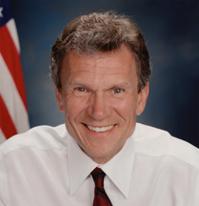 Sen. Thomas A. Daschle (D-SD)
Legislative Activity
Stay on top of the latest movement without scrolling through every action
Senate amendment submitted
March 9, 2004
View full timeline
Senate amendment submitted
March 9, 2004
Senate amendment proposed (on the floor): Amendment SA 2710 proposed by Senator Daschle.(consideration: CR S2411-2423; text: CR S2411)
March 9, 2004
Senate amendment not agreed to: Amendment SA 2710 not agreed to in Senate by Yea-Nay Vote. 44 - 53. Record Vote Number: 34.
March 9, 2004
Roll call votes on amendments in Senate: Amendment SA 2710 not agreed to in Senate by Yea-Nay Vote. 44 - 53. Record Vote Number: 34.
March 9, 2004
Amendment SA 2710 proposed by Senator Daschle. (consideration: CR S2411-2423; text: CR S2411) To create a reserve fund to allow for an increase in Veterans' medical care by $2.7 billion and lower the national debt by reducing the President's tax breaks for taxpayers with incomes in excess of $1 million a year.
March 9, 2004
Amendment SA 2710 not agreed to in Senate by Yea-Nay Vote. 44 - 53. Record Vote Number: 34.
March 9, 2004
Votes
1 roll call on this amendment
Text
Proposed
CONGRESSIONAL BUDGET FOR THE UNITED STATES GOVERNMENT FOR FISCAL YEAR
2005--Continued

Amendment No. 2704

Mr. CRAPO. Mr. President, the amendment that is before the Senate
today, and on which I expect we will vote very soon, is an amendment
that would change the budget enforcement rules as we proceed forward in
considering legislation. This amendment would amend title IV of the
budget enforcement provisions of the committee-reported resolution to
include a 60-vote point of order against the consideration of any
direct spending or tax relief legislation that would increase the on-
budget deficit in any fiscal year, in its terms, ``until the budget is
balanced without Social Security'' payroll tax receipts.
The problem this amendment poses, although it sounds very admirable
on its face, is that it is based on the faulty premise that either tax
relief or spending is raiding the Social Security trust fund.
I will be one of the first to agree we should control spending in
this body, such that we do not engage in deficit spending, which makes
it more difficult for the Federal Government to pay down its
outstanding debt obligations.
In fact, as I said yesterday on the floor, when I ran for Congress, I
ran on a principle of a balanced budget, and beginning in about 1994,
in this Congress, we were able to exert the kind of fiscal discipline
that helped us ultimately, with the assistance of a strong economy, to
achieve a balanced budget to start paying for what we were spending in
Congress and to be able to pay down significant amounts of the national
debt.
I believe that is a very admirable principle. But to argue that
either the excess spending or the cuts in taxes are somehow raiding the
Social Security trust fund is to create a spin that needs to be
clarified.
The first point I believe the public needs to understand is that when
proceeds come into the Social Security trust fund, by law, those
proceeds are utilized, first, for the purposes of the Social Security
benefits that are provided. Then, if there are excesses--and in the
past few years there have been excesses; there will be for a number of
years until the Social Security trust fund begins to run deficits--
those excesses or surpluses are then invested, by law, in Government
bond instruments, in other words, Government debt instruments.
Those Government debt instruments, as other debt instruments which
the Government issues, are then sold to the public or to buyers around
the world, frankly, and then repurchased at the time when they become
due by the Federal Government.
It will be necessary for us, when these bonds come due--for any year
we issue them--to pay for them. The more deficit spending we engage in,
the more debt we incur, and the heavier the debtload for future
generations, it is true.
The net effect of the amendment we are now debating is directed
specifically at tax relief. There is tax relief that this Congress and
the President of the United States have passed, and the President
signed into law in the past few years that will expire because of the
procedural mechanisms utilized to get it through the Senate. The
various provisions of this tax relief that we were able to accomplish
in the last few years expire on different dates, depending on the terms
of the legislation we passed.
I believe everyone should be very clear about one important fact.
Although there has been a lot of debate in the last few days, and will
be for the next few, primarily attacking the President for supporting
tax relief and primarily saying that this tax relief was for the
wealthy and the rich, the fact is the tax relief was provided across
the board to Americans from all income categories who pay taxes. In
fact, the highest percentage of the tax relief went to those who were
in the lower and middle-income categories.
We can debate the value of the tax relief that is claimed to be for
the wealthy. Most of it went to small businesses that apparently are
categorized as the wealthy. Most of it was that which is providing the
incentive to invest in capital that will generate strength in the
economy and create more jobs. But setting that debate aside, those
provisions of the tax relief that this Congress and previous Congresses
enacted over the past few years under President Bush's leadership that
expire this year, those that are in jeopardy of going away this year
are not these tax increases that everyone has been referring to in the
last few days, these so-called tax cuts for the wealthy. They are
instead the tax cuts that directly benefit the middle and lower income
classes.
What are they? First, we expanded the 10-percent income tax bracket
so that more people are covered at the 10-percent level than the higher
levels of taxes. That is the lowest level of tax in the income tax
structure. The tax bracket of protection for the lowest level of
income-tax payers was expanded. It is that tax relief that will

[[Page S2405]]

expire this year. It is that tax relief which is the target of this
amendment. It is that tax relief which this amendment will make more
difficult to maintain and which will result in direct tax increases on
those who are paying taxes at the first and lowest level of income
category in our income-tax code.
The second tax that is going to expire this year is not this so-
called tax on the wealthy that is so excoriated in the Senate. No, it
is the marriage tax penalty relief. Those who fought us for years to
stop elimination of the marriage tax penalty would love to see a
procedural roadblock put into the place of this marriage tax penalty
relief that is expiring. We don't want to see that happen.
What is the third and the last tax that will expire this year after
the expansion of the 10-percent bracket and the elimination of the
marriage tax penalty? It is the $1,000-per-child tax credit. I don't
believe those who are attacking the President's tax relief are going to
claim that everybody who has a child and who can take advantage of the
child tax credit is wealthy, according to the standards they have been
putting forth. This one doesn't impact across income categories except
that it is phased out for those in upper income categories and is a
primary benefit specifically to those in the lower and middle-income
categories.
So we have three critical tax relief provisions that are going to
expire this year which directly benefit the lower and middle-income
classes that will be made more difficult to extend if this amendment
passes.

When you look at these things on their face, it sounds very nice to
say let's put a procedural mechanism in place to make it harder to cut
taxes. But let's not make a mistake. The taxes they are going at are
the taxes specifically identified in the reconciliation provisions of
our budget; that is, the expansion of the 10-percent bracket, the
elimination of the marriage tax penalty, and the child tax credit. For
those reasons, I believe it is important we recognize this amendment
must fail.
There has been a lot of talk about what is going to happen to Social
Security. I, for one, will vote to have strong fiscal restraint in this
budget and to do what is necessary to stimulate and strengthen our
economy, to make sure our economy can start gaining steam again and
help us address these budget deficits.
I have a small chart that shows what the Social Security trust fund
is going to look like under the current budget or without the current
budget, having undone the current budget. The point is, it is the same.
The reason it is the same? There will be about $4 trillion in the
Social Security trust fund either way. The reason it is the same either
way is all surpluses in the Social Security trust fund are by law
invested in government bonds and government debt instruments. Those
government debt instruments will protect the Social Security trust fund
in either case.
Again, I want to make clear, the way to protect the Social Security
trust fund is to stop overspending our budget. The way to protect the
Social Security trust fund is to stop running deficits and start, once
again, as we were in the late 1990s, paying down the national debt,
giving greater strength and resiliency to our economy and confidence in
our ability to repay these debts as they come due.
Let's not get ourselves caught up in this debate about whether taxes
and tax cuts are bad or good. Those who debate this issue on the floor
and criticize the President primarily have two messages: The first is,
they want to blame the tax relief of the past few years for all of the
economic problems our Nation has faced in the last 3 or 4 years, when
in reality we saw the stock market bubble pop. We were attacked on 9/11
which drove down consumer confidence and drove spending through the
roof in terms of the war on terrorism and the effort to defend attacks
on our homeland. And we have seen other problems, mainly the
uncontrolled increases in entitlement spending that drive spending in
this budget.
Over the next few days we will continue to have this debate over
whether it is better to have higher taxes and higher spending and
somehow spend ourselves into prosperity or whether it is better to have
lower taxes and give an economic stimulus to the private sector and to
strengthen consumption and then try to control the deficits, thereby
stimulating the economy and controlling spending. That is going to be
what we debate in one context or another for the rest of this week.
I say to those who are listening, this amendment will essentially
accomplish one thing, and that is to put roadblocks in the way of the
kind of tax relief for which we have been fighting for the last 3 or 4
years. It doesn't put roadblocks in the way of discretionary spending
proposals. It doesn't put roadblocks in the way of entitlement spending
increases. It puts roadblocks in the way of efforts to maintain the tax
relief that we have had in the past few years. Again, primarily that
tax relief which we are targeting and which we are projecting to the
Finance Committee in our reconciliation bill is the tax relief that is
intended to expire this year: The expansion of the 10-percent tax
bracket for those at the lowest level of income tax payment, the
marriage tax penalty elimination, and the $1,000-per-child tax credit.
I encourage all of my colleagues to vote no on this amendment.
I yield back the remainder of my time.
The PRESIDING OFFICER. The Senator from North Dakota.
Mr. CONRAD. Mr. President, I almost don't recognize my amendment when
I hear the description of the Senator from Idaho. The amendment he is
talking about is not my amendment. My amendment says very simply: No
new mandatory spending, and that is two-thirds of Federal spending; no
new tax cuts unless they are paid for until we stop using Social
Security funds for other purposes. The only way around that is a
supermajority vote.
So let me repeat what this amendment does. This amendment says: No
increase in mandatory spending, no new tax cuts that are not paid for
until we stop the use of Social Security funds for other purposes.
Let me be clear. We have had in the past pay-go provisions, and the
pay-go provisions operated in just this way. They were focused on
mandatory spending, not on discretionary spending. We disciplined
discretionary spending with spending caps. We have a cap in place right
now. Mandatory spending we disciplined with a pay-go provision just
like mine, and we disciplined the tax cut side of the agenda with a
discipline just like mine. But those disciplines were stopped in 2002.
What I am saying is they ought to be put in place. We ought to insist
that if somebody wants more spending, new spending on the mandatory
side, they ought to come up with a way of paying for it. If they want
new tax cuts, they ought to find a way to pay for it until we stop the
use of Social Security money for other purposes. We would defend those
disciplines with a 60-vote point of order.
Mr. CRAPO. Will the Senator respond to a question?
Mr. CONRAD. I will in a minute. Let me complete my thought, and then
I will be happy to yield to the Senator for the purpose of a question.
I believe this is critically important that we put this discipline in
place. The Senator has referenced the middle-class tax reductions. I
have said publicly that I will support the extension of the 10-percent
bracket. I will support the continuing marriage penalty relief. I will
support the continuing relief that we see with the expansion of the
child tax credit. But to do it, we ought to pay for it, just as we
ought to pay for new spending. If we cannot pay for it, then we ought
to have a 60-vote hurdle in front of us to discipline the spending-and-
tax-cutting process in this body.
Look, we have record budget deficits, and under the budget that is
before us by the majority, the increases in the debt are virtually
unchanged over the 5-year period. The debt is being increased under
this budget by $2.86 trillion. The increases in the debt year by year
are never below $550 billion, $560 billion.
I will be happy to yield to the Senator for a question.
Mr. REID. Mr. President, may I ask a parliamentary inquiry--I guess
it is not parliamentary inquiry--if the Senator from North Dakota will
yield?
The PRESIDING OFFICER. The Senator from Nevada will state his
inquiry.
Mr. REID. I apologize to my friend from Idaho. May I ask the ranking

[[Page S2406]]

member of the committee what the chairman and he have decided on a
vote? We have people anxious to know when this vote is going to take
place. Can the ranking member or the chairman respond to my question of
when the vote will take place on the pending amendment?
Mr. NICKLES. Mr. President, to respond to my colleague from Nevada,
we told people to expect a vote at 2:30 p.m. I told my colleague from
North Dakota we expected a very short summary and debate by the two of
us. It is agreeable with this Senator to vote in the next 6 or 8
minutes, 10 minutes, 4 or 5 minutes to a side.
Mr. REID. Can we set the vote at quarter to 3?
Mr. NICKLES. That will be fine.
Mr. REID. Ten minutes, five minutes on each side.
Mr. NICKLES. Mr. President, I ask unanimous consent that the rollcall
vote on the Conrad amendment occur at 2:45 p.m.
Mr. REID. With the time to be equally divided.
Mr. NICKLES. With the time equally divided.
Mr. REID. And no second-degree amendments in order.
Mr. NICKLES. That is not necessary.
The PRESIDING OFFICER. Without objection, it is so ordered.
Who yields time? If no one yields time, time will be charged equally.
The Senator from North Dakota.
Mr. CONRAD. I thank the Chair. I thank my colleagues.
Mr. President, let me be clear. The amendment I am offering says
this: No new mandatory spending, no new tax cuts unless they are paid
for until we stop using Social Security money for other purposes. It
guards that budget discipline with a supermajority point of order. That
is how we have worked in the past with the pay-go provision, focused on
mandatory spending and on the tax side of the ledger. It is not
different from what we have done in the past.
Some have said it does not discipline discretionary spending. We have
never disciplined discretionary spending with this kind of mechanism.
We have done that with spending caps, and we have in place today a
spending cap. I have supported spending caps to discipline the
discretionary side of the spending.
Remember, mandatory spending is two-thirds of Federal spending, and
we have nothing in place now to protect us on the revenue side or the
mandatory spending side. That is what this amendment does.
If we look at the President's budget, it is very interesting what we
see. Over the next 10 years, he is taking every penny of the Social
Security surplus and using it to pay for other items. What are the
other items he is paying for? One is his income tax cuts. There will be
a $2.4 trillion Social Security surplus over the next 10 years. By the
way, it is not surplus at all. It is a misnomer because we are going to
need that money when the baby boomers retire. But he is taking that
money that is in surplus for the moment and using it to pay for other
programs, including $2.5 trillion of income tax cuts.
Income tax cuts are primarily going to the wealthiest among us. If we
look at who benefits from the Bush income tax cuts, what we see is the
top 1 percent, those earning over $337,000 a year, get 33 percent of
the benefit.
Our friends on the other side will say they pay more taxes. Indeed,
they do, but they do not pay 33 percent of the tax burden in this
country. They pay about 23 percent of the tax burden in this country.
They have gotten a disproportionate benefit.
If we look at who benefits from Social Security, we see that two-
thirds of retirees rely on Social Security for more than half their
income; 31 percent get at least 90 percent of their income from Social
Security; 33 percent get 50 to 89 percent of their income from Social
Security; 36 percent get less than 50 percent of their income from
Social Security.
The big problem we have is shown on this chart. This shows the Social
Security and Medicare trust funds that are now in surplus. Those
surpluses are being used to pay for other items. The red bars show the
cost of the President's tax cuts. What one can see is, as the trust
funds go past negative, the expense of the President's tax cuts
explodes, driving us right over a cliff into deeper and deeper deficit
and debt.
That is what has led the head of the Federal Reserve to urge cuts in
Social Security. The head of the Federal Reserve has come before
Congress and has said: You are overcommitted. You are spending way more
than you are taking in, and this is going to lead to an incredible
crunch. He said to us: One of the things you ought to consider is
cutting Social Security benefits.
The President said to us repeatedly that Social Security funds should
not be used to fund other expenses of Government.
In his 2002 budget blueprint, the President said:

None of the Social Security surplus will be used to fund
other spending initiatives or tax relief.

That is a broken promise. In 2001, in a radio address, the President
said:

Every dollar of Social Security and Medicare tax revenue
will be reserved for Social Security and Medicare.
In a radio address on March 3, 2001, the President said:

We're going to keep the promise of Social Security and keep
the government from raiding the Social Security surplus.

That is exactly what he is doing. That is why this amendment is
important. I urge my colleagues to support it.
The PRESIDING OFFICER. The Senator from Oklahoma.
Mr. NICKLES. Mr. President, I urge our colleagues to vote against
this amendment. For those who say we are raiding Social Security, I
believe that is absolutely false. We are protecting Social Security
just like any other budget, just like the budget Senator Conrad passed
out of the Budget Committee a couple of years ago. He raided Social
Security to the tune--if one uses that terminology, and I do not want
to use it because I do not believe it--of about $866 billion. He did
the same thing that we are doing today.
We knew exactly what the law says. The law says if there are surplus
Social Security revenues, they are to be invested in T-bills, and I
will quote the law. This is the Social Security Act, Section 201(d):

It shall be the duty of the Managing Trustee to invest such
portion of the Trust Funds as is not, in his judgment,
required to meet current withdrawals. Such investments may be
made only in interest-bearing obligations of the United
States or in obligations guaranteed as to both principal and
interest by the United States.

That is exactly what we do. I think some are trying to politically
scare people into making a mistake. The mistake would be to say 60
votes are needed to do anything in the future, supposedly pay-go for
everything.
In reality, they did not cover appropriated amounts. There could be
an appropriation increase of $100 billion. Oh, that does not have to be
paid for. Maybe there are caps, maybe there are not caps. We have had a
year that we did not have a budget resolution and did not have caps. It
would be very easy not to have a resolution and not to have caps.
Basically, discretionary spending would be exempt from this very new
stringent requirement. Plus, there would be almost an encouragement for
more spending. Some people could say let's increase spending because if
spending is increased, there will not be a tax cut. Obviously, there
are some people who do not want to have a tax cut--not only not have a
tax cut, they do not want to see present law extended. That is really
what we are talking about. Some people want to have a supermajority or
mandate where there cannot be an extension of present law. So this is
very important.

I heard my colleague say any increases in mandatory, those are
covered just like tax increases. That is not the case. There are
billions of dollars of mandatory programs that are sunset, but
according to the CBO those are assumed to be extended. They do not have
to be paid for after they are sunset, but taxes are sunset and they
have to be paid for. So this makes it tough on the taxpayer.
If this amendment passes, there is a big bull's eye on taxpayers.
Look out, you are getting ready to be hit. Congress is making it a lot
easier to spend money. New spending on the discretionary and lots of
mandatory are not covered, but any taxes, even present law extension,
those are going to be hit. Taxpayers, look out.
I urge my colleagues to vote no on this resolution. I do not think 60
votes

[[Page S2407]]

should be required to pass everything in the Senate, and I am afraid
that is what this amendment would lead to.
I urge my colleagues to vote no on the amendment. I yield the
remainder of our time, and I ask for the yeas and nays on the
amendment.
The PRESIDING OFFICER. Is there a sufficient second?
There appears to be a sufficient second.
The clerk will call the roll.
The assistant legislative clerk called the roll.
Mr. REID. I announce that the Senator from North Carolina (Mr.
Edwards), the Senator from South Dakota (Mr. Johnson), and the Senator
from Massachusetts (Mr. Kerry) are necessarily absent.
I further announce that, if present and voting, the Senator from
Massachusetts (Mr. Kerry) would vote ``yea.''
The PRESIDING OFFICER (Mr. Crapo). Are there any other Senators in
the Chamber desiring to vote?
The result was announced--yeas 46, nays 51, as follows:

[Rollcall Vote No. 33 Leg.]

YEAS--46

Akaka
Baucus
Bayh
Biden
Bingaman
Boxer
Breaux
Byrd
Cantwell
Carper
Chafee
Clinton
Conrad
Corzine
Daschle
Dayton
Dodd
Dorgan
Durbin
Feingold
Feinstein
Graham (FL)
Harkin
Hollings
Inouye
Jeffords
Kennedy
Kohl
Landrieu
Lautenberg
Leahy
Levin
Lieberman
Lincoln
Mikulski
Murray
Nelson (FL)
Nelson (NE)
Pryor
Reed
Reid
Rockefeller
Sarbanes
Schumer
Stabenow
Wyden

NAYS--51

Alexander
Allard
Allen
Bennett
Bond
Brownback
Bunning
Burns
Campbell
Chambliss
Cochran
Coleman
Collins
Cornyn
Craig
Crapo
DeWine
Dole
Domenici
Ensign
Enzi
Fitzgerald
Frist
Graham (SC)
Grassley
Gregg
Hagel
Hatch
Hutchison
Inhofe
Kyl
Lott
Lugar
McCain
McConnell
Miller
Murkowski
Nickles
Roberts
Santorum
Sessions
Shelby
Smith
Snowe
Specter
Stevens
Sununu
Talent
Thomas
Voinovich
Warner

NOT VOTING--3

Edwards
Johnson
Kerry
The amendment (No. 2704) was rejected.
Mr. NICKLES. I move to reconsider the vote.
Mr. TALENT. I move to lay that motion on the table.
The motion to lay on the table was agreed to.
The PRESIDING OFFICER. The Senator from Illinois.
Mr. DURBIN. Mr. President, I don't know if any of my colleagues are
prepared to offer an amendment at this time. If not, I would like to
speak to the budget which is before the Senate.
Mr. REID. I yield to the Senator from Illinois 25 minutes.
The PRESIDING OFFICER. The Senator from Illinois is recognized for 25
minutes.
Mr. DURBIN. Once again, if any colleagues are prepared to offer an
amendment, please indicate and I would be happy to give them a chance
to do that.
Before beginning, I notice the junior Senator from Michigan is here.
I would like to ask, if possible, in a colloquy how much time she would
like to use so I don't go over. I know she has waited patiently for a
chance to speak.
Ms. STABENOW. Mr. President, I was hoping to have 15 minutes if that
is possible.
Mr. DURBIN. If it is all right with the Senator from Michigan, I will
take 15 minutes, and if there is no objection, I ask unanimous consent
that the floor then be yielded to the junior Senator from Michigan.
The PRESIDING OFFICER. Without objection, it is so ordered.
Mr. DURBIN. Mr. President, this is an important debate because it is
a debate about promises that have been made and promises that have not
been kept. Many Members can recall President Bush, when he came to
office, said he had a plan for putting America's economy back on its
feet.
Now, understand, when President Bush took office we had gone through
a period of amazing economic expansion in the United States. Under the
8 years of the previous administration we had created some 27 million
new jobs in America. We can remember the feeling of exhilaration and
excitement as this economy charged forward. Silicon Valley was leading
our technology and our economy, and people across the board were
finding their retirement plans and savings were growing to historic
levels. There was a great feeling of optimism, creation of more jobs
than at any time in our history, lower inflation, a situation where we
had more new businesses created than we had seen in any comparable
period, and more for women and minorities. It was a dramatic period of
economic expansion. It was a period when there was real confidence we
were doing the right thing.
Some of that is within the control of the President and some of it is
not. Giving credit to the previous administration, I believe President
Clinton made an important early decision. When he came to office, he
decided his party, the Democratic Party, would do something that
surprised many observers. He said, we will seriously and honestly
address the deficit.
We remember the deficit. Under President Ronald Reagan and President
George Bush 1, we had amassed annual deficits and a national debt
emerging from them of record proportion. In fact, there was more debt
in that period of time than any time since the beginning of the United
States of America. The debts just kept on coming.
In came President Clinton who said: We can do better; but in order to
do better, we have to do two things. One, we have to cut spending.
Second, we will have to impose some new taxes. There were tax cuts for
sure in the package, and I voted for it, but he said those are the
things that have to be done. If they are done, President Clinton said
in 1993, I believe it will be a signal to the business community in
America that the U.S. Government will get its house in order. We will
stop running these massive annual deficits. We will stop accumulating
this national debt. We will be more responsible. President Clinton
brought that proposal to Congress. I was serving in the House at the
time. It passed the House of Representatives by one vote, without a
single Republican Congressman voting for it. Then it came to the Senate
where a vote was cast again on President Clinton's plan to get the
economy back on its feet, and what happened here? A tie vote broken by
then-Vice President Al Gore, all Democratic votes again, passing the
Clinton plan.
Members of the Republican Party came to the floor during the debate
and predicted if President Clinton had his way, if his plan were
enacted, we would lose jobs, move into a recession, and find our
economy permanently damaged. Those speeches were coming at us like
rapid fire out of a gun from the other side of the aisle. They did not
provide one single vote for the Clinton plan to put this economy on its
feet. Fortunately, it passed and, in passing, set us on course for the
great economic expansion which I just explained.
Now look where we are today. The first thing to do is to consider
where President Bush was when he came to office. This chart is an
indication of the deficits in surplus in the United States. Under
President Reagan we can see the first deficit he ran into was in the
range of $79 billion. Then the annual deficit increased to about $153
billion. In other words, we were overspending that much each year.
Then under President Bush's father, the annual $153 billion deficit
grew to $290 billion. That was money we were spending we did not have.
We were increasing the mortgage of the United States of America every
single year under President Reagan and President Bush's father.
Then came President Clinton and he said, as I described earlier, we
need to do the responsible thing. We need to cut spending and we need
to increase taxes on those who can afford to pay. As a result, we see
the deficit line go from a high of $290 billion under President Bush's
father and the annual deficit start plummeting under President Clinton
until 1997 when we will start running surpluses. Who would have
guessed, after all those years, 12 or 13 years of straight deficits, we
started running surpluses in America.

What did a surplus mean? It meant we were putting money into the
Social Security fund instead of borrowing it. Why is that important?
Because we

[[Page S2408]]

have a horde of Americans, called baby boomers--and I am just outside
that class--who will show up for Social Security and Medicare soon. We
said, let's get Social Security and Medicare stronger. We know they are
coming. That is what President Clinton did. Because of his decisions,
we reached the maximum point in his administration where we had an
annual surplus of $236 billion, generating more money than we were
spending. What a change. What a dramatic change over this period under
President Reagan, President Bush's father, and President Clinton.
Then look what happened when President Bush came into office. He came
into office with an economy that was starting to show some recession,
it is a natural thing, and came up with a plan for America which called
for the most substantial tax cuts in our history, with a substantial
part of them going to the highest income, wealthiest Americans.
President Bush and his adherents in the House and Senate insisted if
you just give a tax break to the wealthiest people in America, they
will save it and spend it and invest it in a way that will turn the
American economy around.
President Bush carried the day. I didn't vote for it. Some of my
Democratic colleagues did. He passed not one but two major tax cuts.
Now look what happened as a result of President Bush's economic
policy over the last 3 years and 3 months. Look at this line. We have
gone from a $236 billion surplus under President Clinton to a $477
billion deficit we are facing today--an abject failure of President
Bush's economic policy.

Every year we continue to give tax cuts we cannot afford to pay for,
and we continue to spend money we do not have. How in the world can the
Federal Government do that? How can we consistently act like a bankrupt
nation and get by with it? Well, the answer is, we reach into the
Social Security trust fund.
This trust fund is created every single minute of every day by every
worker in America. As they go to work and earn their wage, the Federal
Government takes about 7 or 8 percent of it from the employee, the same
amount from the employer, and says: We are putting that away for Social
Security, so when you are ready to retire it will be there.
All that money accumulates and grows. We pay the current Social
Security recipients, and we save the balance for the future. That
balance grows. The way we sustain a deficit is by reaching into that
Social Security trust fund and spending it, leaving IOUs behind.
The vote that was just taken, for those who are following it, was
very basic. It said: Stop reaching into the Social Security trust fund
to increase tax cuts for America or to increase mandatory spending. You
saw what happened. The vote went down resoundingly. I guess my
colleagues are being very honest about this. They know we have deficits
we cannot handle, and they know you cannot sustain those deficits
without reaching into the Social Security trust fund and taking the
money out, and they are perfectly willing to keep doing that. In fact,
they are willing to increase the tax cuts at a time when we are in deep
deficit and have to rely on the Social Security trust fund to save it.
So what do we have here? We have such a dramatic reversal in such a
short period of time. President George W. Bush's economic policy has
failed miserably. This red line on this chart, this dramatic increase
in our annual debt is a clear indication.
Now take a look at some other economic indicators. There are those
who argue the economy is growing; good signs are on the horizon; a
reason for optimism. Well, what happened last Friday? Last Friday we
had a report from the Department of Commerce about the number of jobs
created last month in our economy. The report said 21,000 new jobs were
created. Cause for celebration? Hardly. All 21,000 new jobs were
created by State and local governments; no net increase in jobs in the
private sector in businesses. Businesses are not creating new jobs. The
Bush economic policy has failed in that regard as well--21,000 new
jobs, all with State and local governments. We need to create about
125,000 new jobs each month just to keep up with the new entries into
the workforce, people who are now looking for jobs for the first time.
We are not even keeping up with the new entries.
We have an incredible thing happening. Over 400,000 Americans have
stopped looking. They have been on unemployment for so long they have
given up. They are not even looking any longer. They are not being
counted. The number of unemployed people in this economy,
unfortunately, is growing dramatically.
Again, the Bush economic policy has failed, with record deficits,
higher than any time in our history. Unfortunately, this President has
presided over the loss of more jobs during his administration than any
President in the history of the United States since President Herbert
Hoover in the Great Depression.

Those are the realities of the failed Bush economic policy, and the
budget before us today is proof positive of the fact that is likely to
continue.
The Bush administration has not been realistic when it comes to job
projections. Take a look at this chart. The black line at the bottom
shows the actual job situation, how many jobs we have had in America.
These red lines that come shooting off, suggesting many more jobs are
going to be created, are all predictions by President Bush's
administration. The economic reports of 2002, 2003, and 2004 said
recovery was on the way, around the corner, and millions--literally
millions--of jobs will be created. Each and every time they have been
wrong. Their policy has been wrong.
Just several weeks ago, a gentleman by the name of Gregory Mankiw,
who is the head of the President's Council of Economic Advisers, sent
this Congress a report, signed by President George W. Bush, that took a
look at the job situation. Incredibly, Mr. Mankiw reported to us that
in fact the outsourcing of jobs, the sending of American jobs overseas,
Mr. Mankiw says, is a good thing. It is healthy for us to see American
jobs leave our shores to India and China and other countries around the
world.
His argument--I suppose among some economists this is credible--was
that now jobs that did not used to be ``tradeable,'' in his words, are
tradeable. Call center jobs--the next time you get a call at home from
somebody who wants you to take a credit card or change a phone service,
ask them from where they are calling. I started asking recently. My
last two callers were calling from India.
This morning we read about a small town in Virginia that is about to
lose Travelocity, which is an agency which books travel for people
around the world. Their jobs--several hundred in a small Virginia
town--are going over to India. Mr. Mankiw says to Congress: Don't get
worried. This is a good thing. This is a healthy thing. Call center
jobs in America are tradeable.
Well, I do not think Mr. Mankiw is living in the real world. I defy
him to take that argument to any main street in America, in Michigan,
in Idaho, or in Illinois, and say to the people there what we are
facing in America today is a good thing, with jobs going overseas.
How does that relate to this budget? Sadly, when we look at the job
situation, you find that, as Lou Dobbs of CNN estimates, 348 companies
in America are now outsourcing work overseas, either sending U.S. jobs
overseas or choosing to employ cheap overseas labor instead of American
workers.
The President's budget, which we have today, is so deep in red ink he
has cut back on what is called domestic discretionary programs, and by
doing so, he has no jobs program whatsoever. He does nothing in his
budget to end tax breaks for companies that are sending jobs overseas.
He does not extend unemployment insurance. During the first 6 months of
2004, that will mean an estimated 2 million unemployed workers receive
neither a paycheck nor unemployment insurance. He does not provide the
money for these families to keep their basics together, to pay for
their mortgage and utilities and food and health insurance.

Time and again, the Republicans in the Congress have refused to offer
unemployment benefits to the casualties of the Bush economic policy. Is
that compassionate conservatism? I do not think so. I think he is
turning his back on hard-working people who have been victimized by his
failed economic policy.

[[Page S2409]]

Also, this budget shortchanges job retraining. Vocational and adult
education programs cut by almost 25 percent, from $2.1 billion to $1.6
billion.
Mr. President, 2.5 million full-time, year-round workers live in
poverty in the United States. You can talk about all the tax breaks in
the world but, frankly, they never reach these folks. Pennies come to
them. Thousands come to those in higher income categories.
The PRESIDING OFFICER. The Senator's time has expired.
Mr. DURBIN. Mr. President, I ask unanimous consent for 5 additional
minutes, if the Senator from Michigan will bear with me.
The PRESIDING OFFICER. Without objection, it is so ordered.
Mr. DURBIN. Mr. President, take a look at the annual growth rate of
private sector jobs under President Bush. You have to go all the way
back to President Hoover to see such a low growth rate, which had a
negative growth rate of over 4 percent. Under President George W. Bush,
we see here something that has not happened in this country for almost
70 years: the loss of private sector jobs because of a failed economic
policy.
Then when you take a look at the manufacturing jobs, that is where it
is really painful. Manufacturing jobs are the best-paying jobs in
Illinois and Michigan. We just had a hearing last Friday. Employees of
Electrolux--was it in Greenville, MI?
Ms. STABENOW. Greenville, MI.
Mr. DURBIN. Greenville, MI, a town of about 9,000 people, if I
remember correctly, and over 2,000 jobs are going to be lost.
Ms. STABENOW. Twenty-seven hundred jobs.
Mr. DURBIN. So, 2,700 jobs. I am glad Senator Stabenow reminds me.
Electrolux makes Frigidaires. They are moving to Mexico. We asked them
whether they sold Frigidaires in Mexico. No. They are going to sell
them in the United States. More manufacturing jobs heading over the
border.
Maytag, in Galesburg, IL--the stories just go on and on and on. It is
not like these jobs are leaving and new, good jobs are coming. When we
asked an employee of Lucent Technologies from Illinois how much he made
an hour for Lucent after almost 30 years on the job, he said $27. When
I asked him: What kind of job are you looking for now? He said: I am
lucky to get one that pays $8 an hour with no benefits.
For the Bush administration to argue there are job replacements out
there is to overlook the obvious. For certain workers there is nothing
that can replace a good-paying manufacturing job in a person's
lifetime. And that, unfortunately, is the sad reality.
When you look at this budget, you realize the obvious.
The money is not there for health insurance, which is critical for
unemployed workers and basically for workers and businesses large and
small. There is no money provided here to basically take care of the 43
million Americans who don't have health insurance. Many of them are our
neighbors who get up and go to work every morning, many with children
who have no health insurance protection.
This budget fails to keep the President's promise on education.
President Bush came to office and said: I am an education President and
for No Child Left Behind. It was passed with a bipartisan vote. Still
he refuses to find the money to pay for the very program he has
mandated on State and local school districts. The President's budget
for No Child Left Behind falls $9.4 billion short of his promise. At a
time when the President says we have to give the wealthiest in America
some $45 billion in tax cuts, the President has not kept his word on No
Child Left Behind.
The money is not there to deal with health insurance, nor is there
money to retrain workers who have lost their jobs. That is the best we
can get out of President Bush's budget. Is it any wonder people across
America say: It is time for a change.
I yield the floor to the Senator from Michigan.
The PRESIDING OFFICER. The Senator from Michigan is recognized for 15
minutes.
Ms. STABENOW. Mr. President, I thank my colleague for his eloquence,
as usual. My friend from Illinois has addressed concerns we have in
Michigan as well. There is nothing more important to us than making
sure everyone has a good-paying job and the health benefits, pensions,
and other job security that go along with it.
Last year Michigan lost more jobs than any other State. We understand
what needs to happen for our families and how to create real economic
security and to create jobs, to support a level playing field in trade,
to tackle the rising cost of health care, to invest in education
innovation. All of the things that make for the creation of a strong
economic policy are what we should be doing. I thank my friend from
Illinois for speaking to some very important issues.
One of my concerns as a member of the Budget Committee is in fact
this budget does not adequately fund education. It eliminates some
important areas of technology innovation. A program called the Advanced
Technology Program, which we have used in Michigan with the auto
industry and other manufacturing industries, partnering with our
universities to create new, cutting-edge technologies that will allow
us to compete in the global economy, has been proposed for elimination
in this budget, and that is of great concern to me.
Those who don't support tackling the trade issues and creating a
level playing field, those who say free trade, anything goes, point to
education and innovation and say: That is how we compete. That is how
we create jobs. Yet we see in this budget areas of tremendous need to
invest in our people and create opportunity, areas that in fact are
cut.

I wanted to speak for just a moment on some things that have been
said in the debate about the challenge for us in total as it relates to
the budget. We are told the problem is domestic spending, that, in
fact, if we were to have only a small amount of growth in our domestic
programs--education, protecting the environment, family health care,
law enforcement, homeland security--somehow that is what we ought to be
debating because that will make the biggest difference in reducing the
deficit.
Certainly we want to fund programs in a way that provides
accountability and efficiency and supports every precious dollar being
used as wisely as possible. It is important to look at one comparison
in terms of numbers when we look at where to go to focus our time to
reduce the massive red ink that has been created in the last 3 years.
First, if you exclude the Department of Defense, all discretionary
spending--so we are not talking about Medicare and Medicaid but all
discretionary funding, education, Head Start, children's health care,
family health care, senior programs, environmental protection, homeland
security, the COPS Program, supporting firefighters, the Justice
Department, everything we do outside of defense, everything we do
outside of defense in the discretionary domestic budget--is costing
$445 billion this year.
The deficit projected for this year, 1 year, the deficit during the
same time period is $521 billion. We could eliminate every penny of
investment in our children, every penny invested in protecting the
environment, every penny for law enforcement and firefighters and
homeland security, and every penny we provide to protect our parks and
all of the other things we do in the domestic budget, we could
eliminate every penny and we would still have a debt.
This is extraordinary.
I was fortunate to be in the House of Representatives in 1997 when we
balanced the budget for the first time in 30 years. I was very proud of
that vote. It was tough because we had to make choices about how to
balance the budget. But we did it. We saw at the end of the decade, and
as I began my term in the Senate, a debate about the largest budget
surpluses in the history of the country, $5.6 trillion in surpluses. In
3 years we have gone to the largest deficit, over $3 trillion in
deficit in just 3 years.
There is something else that has been talked about. We could wipe out
every penny in domestic spending for the United States and not
eliminate this deficit. So surely something else is at play. We have to
look at the larger picture of what is going on.
That relates to the number shown on this chart. We have tax cuts that
have

[[Page S2410]]

been voted upon by this body in 2001 and 2003. Both enacted and
proposed tax cuts over the next 10 years will take $2.5 trillion of
revenue. So we remove that from the Federal ledger, $2.5 trillion. That
almost equals--it is pretty darn close--$2.4 trillion in Social
Security surpluses. We have surpluses built up here. We take dollars
away here.
Now we are being told, because Social Security surpluses are
essentially being used to fund these tax cuts, we have a surplus on one
side, we have a deficit on the other. They pretty much equal each
other. Common sense would say the Social Security surplus is in fact
funding these tax cuts.
Another way to look at that is, when we look at the amount of Social
Security surplus that is saved in the next 10 years, it is zero. It is
another way of saying the same thing. We save zero. It is being used.
It is not being saved. It is not being put aside in the infamous
lockbox we used to talk about and I still think is a good idea. Instead
we save zero, and the amount of Social Security surplus that is spent
is in fact the whole amount, $2.4 trillion.
At the same time this is happening, we hear from the Chairman of the
Federal Reserve that because of the challenge in Social Security,
because of the fact the surplus is being used because of the baby
boomers and the long-time obligations that are coming, we should look
at raising Social Security taxes or lowering benefits.
There is another option. The other option is don't use this money.
Don't use the Social Security trust fund to fund tax cuts primarily for
the privileged few.
There are some tax cuts--the child tax credit, the marriage penalty
repeal, small business efforts, the lowest income tax bracket being
lowered--that are helpful to everyone, and they make sense to help grow
the economy. But the vast majority of the tax cuts are geared to the
privileged few in this country at a time of war, at a time when we need
to ask everyone to be sacrificing together so that we are not leaving
mounds of red ink for our children.
When we look long term at the budget cuts as compared to Social
Security, other people say, that is not true. Let's look at the reality
over 75 years. The actuaries look over a 75-year period at the
soundness of Social Security. Let's look over the next 75 years. If all
of the tax cuts that have passed are made permanent, with those being
proposed by the President, we will see a cost of $12.1 trillion over 75
years; $12.1 trillion of revenues essentially pulled out of the Federal
Government.
What is the shortfall in Social Security? Shockingly, a Social
Security shortfall over 75 years is $3.8 trillion. So it is absolutely
accurate to say, as we look to the future and plan, as we know the baby
boomers are coming, of which I am one, and we know the challenges of
having more people in retirement and fewer people working, that we
better pay attention to these numbers and understand that,
unfortunately, the hole that has been dug as it relates to jeopardizing
Social Security is one that was dug consciously.
We, in fact, can stop that. We can reverse it. We can protect Social
Security for the future, as our leader on the Budget Committee tried to
do in the last amendment where he said we are not going to use Social
Security until we can totally protect Social Security; that we are not
going to add to that deficit through either spending or tax cuts. That
was the right amendment to adopt, and I commend him for it. I am deeply
disappointed it was not adopted.
The budget is all about choices. It is all about our values and our
priorities. I believe at a time of challenge and national security
concerns, a time of war, it is all about being in this together as
Americans as well, not asking some to sacrifice greatly and others not
to sacrifice at all.
What is great about our country is that we come together and we chip
in, and we certainly saw that after 9/11. We saw the wonderful spirit
of what it means to be an American: people willing to chip in, be part
of the positive solution, be part of helping each other. I believe they
want a budget for the United States that reflects the same attitude--
all of us chipping in, all of us being willing to be responsible for
the future for our children and not leave them trillions of dollars in
red ink that they will then have to figure out how to pay for after we
are gone.
That is not the legacy I want to leave for my children and
grandchildren yet to come. I am very interested in having us put
forward a budget that reflects the values and priorities of all
Americans, not just a privileged few. That is what this debate will be
about every day this week: What choices are we going to make? Are we
going to do more tax cuts for the privileged few or are we going to
keep everybody safe by fully funding all of the homeland security needs
we have? Are we going to give more tax cuts for the privileged few or
are we going to protect Social Security for the next 75 years, for the
next generation?
We have choices to make, and I am very hopeful that the choices we
will make will be ones that will make us proud when we look at the
faces of our children in the future.
Thank you, Mr. President.
The PRESIDING OFFICER. The Senator from North Dakota.
Mr. CONRAD. I thank the Chair. Mr. President, I thank the Senator
from Michigan for an excellent presentation, but much more than that, I
thank her for the superb contribution she makes on the Senate Budget
Committee. I think she has been one of the strongest members of the
Budget Committee in a very long time. She is somebody who has a very
strong background in economics and business issues and understands that
a budget is about choices, and these choices matter. They matter to the
long-term economic security of the country. They matter to whether we
are going to have Social Security and Medicare for our seniors in the
future or if it is going to be dramatically reduced.
The Senator from Michigan understands this is a matter of choices
about national security, whether we are going to have the resources to
fund the military in a way that keeps it the most powerful and most
dominant military in the world.
She understands that a budget is about choices between those issues
that strengthen us as a nation and as a people in terms of providing an
outstanding education because that is what it is going to take to be
fully competitive in a modern world; whether we are going to be able to
expand health care coverage in America to deal with the more than 40
million people in this Nation who do not have health care coverage;
whether or not we are going to have homeland security that is something
that makes us as safe as we can be in the face of this terrorist
threat.
Frankly, we on our side question the choices the President has made
to cut the COPS Program. The COPS Program puts 100,000 police on the
street. The President says cut it 94 percent. What sense does that make
when there is an ongoing terrorist threat? What sense does it make to
cut port security by almost two-thirds? That is what the President is
saying. What sense does it make to cut the funding for firefighters all
across America by a third? Those are the choices the President has
made, all of it sacrificed on the altar of tax cuts going primarily to
the wealthiest among us. As I indicated earlier today, under the
President's plan, the tax cuts he seeks to make permanent would add
$1.5 trillion to the debt. The President says it is the people's money.
Give it back. There is nothing to give back. The money is gone. This
country is in debt. The deficit this year alone is going to be
approaching $500 billion, and the truth is, that does not begin to
describe how deep the hole is because that counts the $160 billion more
he is taking from Social Security, every penny of which he has to pay
back and he has no plan to do it.
Now we are talking about an operating deficit in the range of $700
billion in this year alone. And the President comes in and says: Let's
just hold down the growth of nondefense, nonhomeland security domestic
spending. That sounds as though he is doing something. But when you
look at it, that part of Federal spending is just a tiny share of the
Federal budget.
The spending he is talking about slowing down is only 17 percent of
Federal spending, and his savings are only about $7 billion when you
have a $700 billion problem. I call it the 1-percent solution. He is
not dealing with the problem in any serious way.
Then the President says: Don't worry; I know we have run up these big

[[Page S2411]]

deficits, the biggest in the history of the country, and we have a lot
more coming. But I am going to cut the deficit in half in the next 5
years. But he is not. The only way he cuts the deficit in half the next
5 years is he just leaves out everything. For example, he leaves out
any war cost past September 30. Does anybody believe the war in
Afghanistan, Iraq, and the war on terror ends on September 30? The
Congressional Budget Office tells us it is going to cost $280 billion
more, and the President has nothing to pay for it.

I see the leader in the Chamber and I understand he is ready to offer
an amendment, so I will cut short my remarks at this moment.
I conclude by saying it is time we face reality. The President's
budget is not going to cut the deficit in half in the next 5 years. If
one looks at the additions to the debt, what they see is there is
virtually no change over the 5 years of the President's plan. The
additions to the debt are going to run $500 billion, $600 billion a
year every year.
I yield the floor.
Mr. NICKLES. I suggest the absence of a quorum.
The PRESIDING OFFICER. The clerk will call the roll.
The legislative clerk proceeded to call the roll.
Mr. DASCHLE. Mr. President, I ask unanimous consent that the order
for the quorum call be rescinded.
The PRESIDING OFFICER. Without objection, it is so ordered.

Amendment No. 2710

Mr. DASCHLE. Mr. President, I send an amendment to the desk and ask
for its immediate consideration.
The PRESIDING OFFICER. The clerk will report.
The legislative clerk read as follows:

The Senator from South Dakota [Mr. Daschle] proposes an
amendment numbered 2710.

Mr. DASCHLE. Mr. President, I ask unanimous consent that the reading
of the amendment be dispensed with.
The PRESIDING OFFICER. Without objection, it is so ordered.
The amendment is as follows:

(Purpose: To create a reserve fund to allow for an increase in
Veterans' medical care by $2.7 billion and lower the national debt by
reducing the President's tax breaks for taxpayers with incomes in
excess of $1 million a year)

On page 3, line 9, increase the amount by $4,860,000,000.
On page 3, line 10, increase the amount by $486,000,000.
On page 3, line 11, increase the amount by $22,000,000.
On page 3, line 12, increase the amount by $5,000,000.
On page 3, line 17, increase the amount by $4,860,000,000.
On page 3, line 18, increase the amount by $486,000,000.
On page 3, line 19, increase the amount by $22,000,000.
On page 3, line 20, increase the amount by $5,000,000.
On page 4, line 20, increase the amount by $4,860,000,000.
On page 4, line 21, increase the amount by $486,000,000.
On page 4, line 22, increase the amount by $22,000,000.
On page 4, line 23, increase the amount by $5,000,000.
On page 5, line 3, decrease the amount by $4,860,000,000.
On page 5, line 4, decrease the amount by $5,346,000,000.
On page 5, line 5, decrease the amount by $5,368,000,000.
On page 5, line 6, decrease the amount by $5,373,000,000.
On page 5, line 7, decrease the amount by $5,373,000,000.
On page 5, line 11, decrease the amount by $4,860,000,000.
On page 5, line 12, decrease the amount by $5,346,000,000.
On page 5, line 13, decrease the amount by $5,368,000,000.
On page 5, line 14, decrease the amount by $5,373,000,000.
On page 5, line 15, decrease the amount by $5,373,000,000.
At the end of Title III, insert the following:

SEC.   . RESERVE FUND FOR VETERANS' MEDICAL CARE.

The Chairman of the Committee on the Budget of the Senate
shall revise the aggregates, functional totals, allocations
to the Committee on Appropriations of the Senate,
discretionary spending limits, and other appropriate levels
and limits in this resolution by up to $2,700,000,000 in
budget authority for fiscal year 2005, and by the amount of
outlays flowing therefrom in 2005 and subsequent years, for a
bill, joint resolution, motion, amendment, or conference
report that provides additional fiscal year 2005
discretionary appropriations, in excess of levels provided in
this resolution, for veterans' medical programs, excluding
construction projects and a program that provides grants to
states to build long-term care facilities, included in this
resolution for the Department of Veterans Affairs.

Mr. DASCHLE. Mr. President, given all that the brave men and women in
uniform have done for our country, there should not be any disagreement
that veterans should be our top budget priority this year. This is
especially true now during a time of war when hundreds of thousands of
future veterans are on the front lines in Iraq in the war on terrorism
sacrificing everything for this country.
Unfortunately, the budget before us does not make veterans a
priority. It does not demonstrate that we recognize and respect all
that we have asked of them. It does not keep the commitment this Nation
made to them when we asked them to lay their lives on the line.
The budget before us proposes a funding level for veterans health
care that is more than $200 million below last year's level adjusted
for inflation. In other words, veterans do not even receive what they
received last year. Despite our best efforts, last year's level was
also insufficient. There are 60,000 veterans who are already wait-
listed for health care as we speak.
This budget gets worse. The budget proposes a $250 enrollment fee for
middle-income veterans to receive health care. The budget seeks to more
than double the prescription drug copayment for low-income veterans. It
would prevent priority 8 veterans from enrolling in veterans health
care.
Despite the fact that the average veteran must now wait for more than
6 months to have his or her disability claim processed and a backlog of
348,000 claims, this budget proposes eliminating 540 claims-processing
staff. That is a remarkable development. At a time when we have 348,000
pending claims, this budget proposes we eliminate 540 of the very staff
whose responsibility it is to process these claims.
As a result of this increased fee and barriers to access to the
veterans health care system, the administration's own budget estimates
more than 1 million veterans will drop out of the veterans health care
system. My amendment would prevent all of this. It would give the
veterans the resources and care they have earned. It would restore
funding to the level called for by the Independent Budget, a national
coalition of leading veterans organizations that have made an
assessment of what veterans need and deserve. My amendment would add
$2.7 billion to the veterans health care account and $2.7 billion for
additional deficit reduction. The cost of this amendment would be fully
offset by reducing the tax breaks for those earning $1 million a year
or more.
This chart illustrates how the amendment would be paid for. Taxpayers
with incomes in excess of $1 million will receive a tax cut under this
budget of $27 billion this year. Coincidentally, that is almost exactly
the amount of money that veterans are now given in the health care
budget in this year. They will receive a benefit, under these cuts, of
about $140,000 a person under the current budget rule. My amendment
would reduce that $140,000 to $112,000. Every millionaire in this
country would still get a $112,000 tax cut, and we would simply use the
difference between $112,000 and $140,000 to pay for the extra $2.7
billion to go first to pay for the veterans health care, and the other
to reducing the size of the debt.

Hundreds of thousands of Americans have served their country
honorably. Before we prevail in Iraq and the war on terror, hundreds of
thousands of other Americans are going to be asked to lay their lives
on the line.
In order to demonstrate our appreciation for what so many have
already done, and will be asked to do, we have an obligation in this
body to do our share. We have an obligation to provide our veterans
with the resources and care commensurate with what they have done for
us.
The amendment is very simple. It simply restores to the level the
independent budget has required in order to ensure that we eliminate
the backlog, and provide the veterans with the care they need while we
refrain from asking them to pay additional costs. We eliminate that
$250 annual fee some veterans will now have to pay. We eliminate the
increase in payment for prescription drugs and the per-office visit. We
do that simply by reducing the amount of

[[Page S2412]]

tax cut, only to millionaires, by approximately $28,000 per year. They
still will receive $112,000 in a tax cut in the next fiscal year. That,
in my view, is a reasonable sacrifice, given the message this amendment
and this budget, if it were amended, would send to our veterans and to
those soldiers in Iraq who are counting on us to do the right thing,
who are counting on us to remember not only to support our troops, but
to support our veterans.
I yield the floor and I suggest the absence of a quorum.
The PRESIDING OFFICER (Mr. Chafee). The clerk will call the roll.
The legislative clerk proceeded to call the roll.
Mr. REID. Mr. President, I ask unanimous consent the order for the
quorum call be rescinded.
The PRESIDING OFFICER. Without objection, it is so ordered.
Mr. REID. Mr. President, on behalf of Senator Conrad, I yield myself
such time as I may consume.
Mr. President, the ranking member of the Budget Committee, the
distinguished Senator from North Dakota, did a brilliant job today
responding to the false statements made by the Senator from
Pennsylvania. He did it factually and with enough emotion to make his
point well taken. I thought it was a stunning retort to these
outlandish statements that have been made by the Senator from
Pennsylvania for some time now.
But in addition to those statements that I think need some
discussion, there was another statement the Senator from Pennsylvania
made about why this country is in deficit, why the President's budgets
are so off kilter. He said it is because of, among other things,
asbestos litigation. And he talked about how hard it was on business.
I acknowledge that the asbestos litigation has been hard on companies
throughout America, but not once during the statement of the Senator
from Pennsylvania did he mention the people who are in dire physical
condition--not once. The reason there is this litigation going on is
because people are dying, and suffering. There are two conditions
caused by asbestos that are fatal. One is something called
mesothelioma. With mesothelioma, from the time that you are diagnosed
with this dread disease until the time you die is an average of 14
months. With asbestosis you can linger a long time and suffer a long
time. So we shouldn't make these little passing statements about this
asbestos litigation bankrupting companies--it has not happened. Some
have filed bankruptcy without losing a single job in the process. The
only people who have been hurt, with their bankruptcies, are the people
who are sick and dying.
My brother called me a couple of weeks ago and said: Do you remember
Harold Hansen?
I said: Yes, I remember Harold Hansen.
My brother is quite a bit older than I am. I idolized my brother. I
had two brothers older than I am. They were both wonderful. One passed
away. But I remember the Hansens. We lived in Searchlight, far from the
nearest high school, and when we went to high school we lived with
other people. My brother Dale lived with the Hansen family. I remember
Harold and Chuck. They were good athletes in high school. I remember
them.
He said: You know, he called me and he has mesothelioma.
I said: Has he ever worked around asbestos?
He said not that he knows of, no.
So I said: We have to make sure he is taken care of because he
doesn't have long to live.
And he doesn't. He has about a year left, if he is average.
So the fact is, we have to do something about asbestos litigation.
There are some cases that are filed that should not be filed, but we
have to make sure the people who are sick are protected. And when
people come to this floor and just by chance mention this is causing
the deficit of this country--let them recognize that people, while they
are speaking, are dying from what big corporate America did to them.
I recommend, for people who want to make statements about how bad
asbestos litigation is, that they read a couple of books.
Let them read ``Fatal Deception,'' a brand new book that talks about
the deception of big companies that covered up the disastrous
consequences of their use of asbestos. Let them read a book called
``Libby Montana,'' also a new book that talks about a little town in
Montana which was decimated as a result of this product. They covered
up what would happen. For a few hundred thousand dollars, W.R. Grace &
Company, which was making billions a year, could have created a clean
house for these people which would have protected them from exposure,
but they didn't want to waste the money on these people from Libby, MT.
It is not just people who worked in the plants who got sick. Workers in
those plants would go home with asbestos in the dust on their clothes
and the wife would wash their clothes. Now we have wives dying of this
disease. Children would come rushing to meet their father coming home
from the plants at Libby, MT, and they would also come in contact with
the dust that would come out of their clothes. Now the children are
dying.
I hope Members who come to this floor and make statements about
asbestos litigation will read those two books. We want to do something
with asbestos legislation to make a better approach to the way
litigation takes place. But until those people with asbestosis and
mesothelioma are taken care of, as long as I have breath I will fight
the effort to wipe out those cases.
My friend from Pennsylvania also didn't mention one reason for the
deficit. Some of us on this floor think we are in a quagmire in Iraq.
We need to spend money to make sure our troops get everything they
need. I attended a meeting in the majority leader's office, along with
Senator Daschle and Senator McConnell, with the Iraqi Governing
Council. One of these Iraqi Governing Council people said: People in
America think we have the second largest reserves of oil in the world.
He said: I want you and them to know that we have the largest oil
reserves in the world--not No. 2 but No. 1--and within 2 years we are
going to be producing 6 million barrels of oil a day.
That kind of clicked in my head. If that is the case, why don't we,
rather than giving them the money, loan them the money and secure that
debt with oil?
That is what we tried to do on the floor. We were, as we say in a
baseball game, skunked. We were unable to get enough votes to have the
country of Iraq loaned the money; no, it was, give it to them--a
country producing 6 million barrels of oil a day within a matter of
months. We gave them $150 million in supplemental appropriations.
Then the Secretary of Health and Human Services, Tommy Thompson, last
week was asked by the press: We are spending billions of dollars on
health care for Iraq. Don't you think we should be spending some of
that in America? He responded by saying we have universal coverage in
America, because if you do not have insurance you get taken care of.
Try to explain that to the 44 million people who have no health
insurance and who have to go begging if their child has a cold or some
illness which they do not know what it is. And he says there is
universal coverage. Man, I have trouble accepting that.
My friend from Pennsylvania, in addition to not understanding the
situation dealing with asbestos, I think doesn't understand the
situation about where money has been going during the 3 years of this
Bush administration. We are talking down the economy? He says we are
the ones who are creating discomfort with the American people. We are
telling the truth. If that is uncomfortable, that is what we have to
do.
He talks about arcane statistics, referring to the charts of the
Senator from North Dakota. Sometimes statistics are arcane, if you do
not agree with them.
We had a situation during the last years of the Clinton
administration where we were paying down the national debt. What does
that mean? We were spending less money than we were taking in. We were
paying down the debt. What do we have now? We have red ink as far as
you can see. The surplus we had when he took office is gone. That is
what this budget is all about. Whether the programs that this President
has pushed forward is bankrupting the country or not, I think simple
math says this country is going bankrupt, if it is not already
bankrupt.

[[Page S2413]]

I suggest the absence of a quorum.
The PRESIDING OFFICER. The clerk will call the roll.
The assistant legislative clerk proceeded to call the roll.
Mr. REID. Mr. President, I ask unanimous consent that the order for
the quorum call be rescinded.
The PRESIDING OFFICER. Without objection, it is so ordered.
Mr. REID. Mr. President, on behalf of Senator Conrad, I yield 10
minutes to the Senator from Florida.
The PRESIDING OFFICER. The Senator from Florida is recognized.
Mr. NELSON of Florida. Mr. President, later on--I do not know if it
will be today or tomorrow--I will be offering an amendment to bring the
account that deals with veterans health care up by $1.8 billion. This
is the amount that was considered and agreed to in a joint bipartisan
report in the Senate Committee on Veterans' Affairs as the very minimum
that we need over and above the President's request to give the
veterans of this country the very basic minimal health care they
deserve.
I must say I was shocked when I offered this amendment in the Budget
Committee last week that there was a partisan rollcall vote against
this increase. I don't think there is one Senator in this body who has
not heard the cries and the pleas from our veterans back in our States,
or the anguished stories of having to wait months before they could
even get an appointment with a doctor in order to be able to get a
prescription.
I don't think there is a Senator who hasn't heard the anguished pleas
from veterans about why the President's budget starts to shift a lot of
the burden to the veterans by increasing the copays and by an
enrollment fee, particularly at a time such as this when we are
honoring our veterans every day because of the sacrifices we see being
carried on by our servicemen and servicewomen around the world. Of all
times and places, not to give our veterans the minimum health care
which they not only expect but which they certainly deserve is just
unconscionable.
Interestingly, there is a double game that is being played. There is
a lot of rhetoric going around. But when it comes time to produce, the
votes are never there. We are going to give the Senate an opportunity
to put their vote where their rhetoric is.
This amendment I will be offering at a time our leadership suggests
will, in fact, provide for the offsets for the $1.8 billion to come out
of the tax account and out of the tax loopholes that are rampant in the
Tax Code and in the President's proposed budget.
I want to take this opportunity. As soon as the leader of the
committee gives me the high sign, I will be on the floor offering that
so all the Senators will have an opportunity to vote on that amendment.
I yield the floor.
The PRESIDING OFFICER. The Senator from North Dakota.
Mr. CONRAD. Mr. President, I thank our colleague, Senator Nelson from
Florida, who has been such a valuable Member of the Senate Budget
Committee. He did a superb job of offering the amendment he has just
described in the committee.
I am very hopeful that either his amendment or Senator Daschle's
amendment will pass so we can increase the amount of money going to
veterans million dollar care. I held a hearing in my State on this
question. I invited all the veterans organizations. It was
disappointing to hear what is happening to veterans across the country.
We had testimony of people waiting 10 months to get an appointment for
specialty care, an appointment to see an orthopaedic surgeon, an
appointment to have certain eye care because there is a shortage of
specialists in the VA. They testified clearly and compellingly that
more money is needed.
We will hear from the other side, we will hear from the chairman of
the committee, that there have been significant increases of veterans
medical care. There is a chart that shows that is exactly true, going
back 10 or 12 years. We would expect just on inflation alone, over that
extended period, we would see a doubling of the costs. Remember, when
we come to veterans medical care, that upward slope is even sharper
because health care expenditures have been advancing faster than the
rate of inflation.
In addition, the population that is in need of health care is
expanding because we have our World War II, our Korean War veterans,
and our Vietnam vets getting to that age when they need more intensive
care. The result is tremendous upward pressure on the costs.
That chart shows spending on veterans from I don't know how far back,
1990 perhaps, $15 billion, and we are now approaching $30 billion; but
we have to remember over that extended period of time, not only are we
dealing with inflation, we are dealing with medical inflation that is
running at higher levels than other inflation. The number of veterans
who are in an age group that requires more intensive care is exploding.
What was very moving at the hearing I conducted was to hear from
veterans all across North Dakota. We heard of the tremendous stress on
the veterans population because of an inadequate level of care in our
VA facilities. No. 1, an inadequate number of VA facilities, so many
people are traveling for specialty care in North Dakota 12 hours one
way in a van and then 12 hours back to get a doctor's appointment. We
had veterans testify they traveled 12 hours one way in a van, had to go
all the way to Minneapolis to get specialty care and got there to be
advised their appointment had been canceled and then had to get back in
a van and drive 12 hours back to North Dakota. That is not right.
Mr. NELSON of Florida. Will the Senator yield?
Mr. CONRAD. I am happy to yield.
Mr. NELSON of Florida. Mr. President, I thank the Senator for
yielding.
Just to add to his comments what he has described in North Dakota,
imagine because of our size and particularly during the winter months
when so many veterans come to the State of Florida how the problems are
compounded. When a veteran has to wait 5 months for an appointment just
to see a doctor to get a prescription, that is not health care for our
Nation's veterans.
I have had occasion to talk to the Secretary of Veterans Affairs
quite frequently recently on problems we have in some of our hospitals
in Florida. Listen to what he said in the House Veterans Affairs'
Committee on February 4 of this year. Secretary Principi said:

I asked OMB for $1.2 billion more than I received.

Even the Secretary of the VA is calling for money.
Then is it any wonder our Senate Veterans' Committee in a bipartisan
analysis of the VA budget concludes that we should have at least $1.8
billion more? That is the figure I have offered in the amendment I will
be offering.
I thank the Senator from North Dakota for yielding.
Mr. CONRAD. I thank the Senator from Florida for making the point. It
is an important point. We had testimony at my hearing where people have
waited 10 months to see specialists.
While it is absolutely true what the Senator from Colorado shows on
his chart, that we have seen substantial increases already in veterans
health care funding, veterans medical care funding, it is also true we
are still not meeting the need. The reason for that is not only
inflation but medical inflation and the sharp increase in the number of
veterans being served.
In 2002, 4.7 million were provided health services. That is expected
to increase to 5.2 million in 2005. So we have, really, a double
whammy. We have inflationary costs, medical inflation running far ahead
of regular inflation. On top of that, the number of veterans seeking
care and needing care increasing now, of course, with the operation in
Iraq and Afghanistan. All who have been to Walter Reed have seen that
circumstance firsthand. We have seen the wards literally filled with
young soldiers and some not so young who have been grievously injured.
They deserve to know they will get the best medical care this country
can provide.
That is what the Senator from Florida is saying in the Senate. That
is what the Democratic leader is saying in the Senate. We have a
commitment here. This is a priority. It is a priority that ought to be
met.
I yield the floor.
The PRESIDING OFFICER. The Senator from Colorado.
Mr. NICKLES. I yield the Senator such time as he desires.
The PRESIDING OFFICER. The Senator from Colorado.

[[Page S2414]]

Mr. ALLARD. I thank the Senator from Oklahoma.
Mr. President, there is no doubt the veterans have sacrificed a lot
for our freedom in this country. I am looking at this amendment where
we have $5.4 billion we take out of tax cuts. I am assuming a lot of
that would come out of the child tax credit, for example, and then it
is put over in reserve, perhaps, to be used later by the appropriators.
There are several points I will make. No. 1, this administration and
the budgeteers in this Senate have been committed to the issue of
veterans. This chart shows a picture is worth a thousand words. Look at
the year 2000; before that it is very much a flat line. Then after the
year 2000, after President Bush has been elected to office, we see a
very distinct steady climb in the amount of benefits provided for
veterans.
In real figures, in 1997 we were looking at 2.8 percent increase on
veterans medical care; in 1998, 4.2 percent; in 1999, .7 percent; in
2001, we had 7.8 percent--and it persists--in 2002, a 7.6 percent
increase; in 2003, a 12.3 percent increase; in 2004, an 11.1 percent
increase. We do not have the medical cost-of-living increases for 2004,
but prior to that most of those were in the 4 percent range, so we were
appropriating dollars over and above what the medical cost-of-living
figures were showing. We were sensitive to that. We all realize that
there are a lot of needs out there for veterans. I see a lot of need
for veterans in my State.
Here is what concerns me about the amendment. We have young families
right now making a huge sacrifice for us in fighting for freedom in
Iraq, Iran. I have a lot of families in Colorado, families all over the
State that have young children. They are taking advantage of the child
tax credit. Do we take this away, in the way of a tax increase, do we
take away that benefit and make it available to the veterans when we
have been giving them a double-digit increase for the last several
years? There are a lot of different choices they have to make between
the balance of our needs. I guess one of the concerns I have is how
these tax increases being proposed by the other side are going to
impact our active military, and also making the assumption that our
veterans do not pay taxes. They do pay taxes.

I hear as much concern from veterans about the effect of taxes on
their daily lives as I do from any other population. Of course, we
don't hear too much from those who are right now serving over in Iraq
who have dependents because they are tied up with that. But to think in
this debate that somehow or other these tax increases are not going to
have an adverse impact on those already serving in the military and our
current veterans of foreign wars--we have to keep this issue in
balance.
My point is, in this whole debate, in trying to imply that somehow we
have not been sensitive to the needs of the veterans of this country,
all one has to do is look at the double-digit increases that have
happened in the last several years for the veterans, exceeding the cost
of living for medical care, what they call the medical care inflation
rate. But, again, we cannot assume that veterans do not pay taxes. They
do. We need to balance this out.
I think what the Budget Committee has reported out is responsible. It
is a little bit different than what the President proposed. For
example, the President proposed a $250 enrollment fee. We took that
out. We were sensitive to what impact today's environment is having on
veterans. We took that out.
I think this has a good balance. I would hate to upset that balance.
I would hate to take away a tax cut that is going to have a beneficial
effect for our men overseas. I think it will have a beneficial effect
on our veterans as they are trying to save their money to meet their
own needs with their own families at home.
I yield the floor.
Ms. MIKULSKI. Mr. President, I rise in strong support of the Daschle
amendment to increase funding for VA medical care.
America is at war, and my thoughts are with our troops. Our men and
women in uniform have my steadfast support, and so do those men and
women who fought before them. We need to get behind our troops and our
veterans, and use this budget to support them. We must support the
brave men and women who have fought for our country. Our veterans need
to know that America is with them and that we owe them a debt of
gratitude.
As the ranking member on the VA-HUD Appropriations Subcommittee, my
guiding principle for the VA budget is that we keep the promises we
made to our veterans. This means no toll charges on veterans to get
health care or prescription drugs, and no waiting lines for veterans to
get medical care. But the VA's budget request puts new toll charges and
means tests on our veterans.
Specifically, the budget proposes four things. First, the budget
proposes to keep the VA closed to priority 8 veterans. These are
veterans who are not disabled as a result of their service, and who the
VA considers to be higher-income. Second, the budget proposes a new
$250 membership fee for priority 7 and 8 veterans. Third, the budget
assumes that VA will increase outpatient primary care copayments from
$15 to $20. And finally, the budget proposes to increase prescription
drug copayments from $7 to $15.
We have great respect for VA Secretary Principi. He's a combat
decorated Vietnam veteran who continues to serve his country. But he's
battling OMB now for adequate VA funding, and I am deeply concerned
that the budget OMB gave VA this year leaves VA foraging for funding.
Over a year ago, the VA health care system stopped accepting new
priority 8 veterans. Manufacturing is fading and private health
insurance is failing. And many of those affected are priority 8
veterans. Many corporations involved in manufacturing had defined
benefits plans that included health plans with guaranteed retiree
coverage. For these veterans, VA healthcare is their last safety net,
until they turn 65 and are eligible for Medicare.
For example, in Maryland, there are 13,000 Bethlehem Steel retirees.
Many are Vietnam veterans. They came back from serving their country at
war, and they continued to fight for America's national and economic
security by working in our steel mills. But now, many have lost their
health insurance because of Bethlehem Steel's bankruptcy. They are not
eligible for Medicare yet. Under this budget, many will be turned away
from VA--the safety net they counted on will not be there because VA
will continue to shut-out priority 8 veterans.
Bethlehem Steel's veterans, and other veterans who worked in
manufacturing or for other businesses that don't offer health
insurance, fought for their country and now they will have to fend for
themselves on the open-market for health insurance. I am deeply
concerned that this policy and many other potholes in VA's budget leave
our veterans paying toll charges, standing in lines, or without any
healthcare at all.
In the last 5 years, the VA-HUD Subcommittee has provided large
increases for medical care--$1.7 billion in 2000, $1.3 billion in 2001,
$1 billion in 2002, $2.4 billion in 2003, and $3 billion in 2004. We
did this because we know that the failure of private health insurance
companies and high prescription drug costs are really straining our
veterans on fixed incomes. At the same time, our veterans' population
is growing, and getting older. Today, VA treats 2 million more veterans
than in 1996.
Last year, the VA-HUD Subcommittee rejected the proposals that we see
in the administration's budget request again this year. Instead, we put
$1.6 billion more than the request in the Federal checkbook for VA
medical care. Our veterans didn't stand in waiting lines when they were
called up or they volunteered to serve our country. So they shouldn't
have to stand in line to get medical care.
Veterans who need specialized health care services must not be kept
waiting--like spinal cord injury care, blind rehab, and prosthetics.
For example, the Blinded Veterans Association tells us that there are
over 2,000 veterans waiting up to 2 years for admission into a blind
rehab center.
Mr. President, I urge my colleagues to support our veterans in this
budget by supporting the Daschle amendment.
The PRESIDING OFFICER. Who yields time?
Mr. DORGAN addressed the Chair.
The PRESIDING OFFICER. Who yields time to the Senator?

[[Page S2415]]

Mr. CONRAD. Mr. President, I would be happy to yield time to the
Senator from North Dakota.
How much time does the Senator seek?
Mr. DORGAN. Fifteen minutes.
Mr. CONRAD. Mr. President, I yield 15 minutes off the resolution.
The PRESIDING OFFICER. The Senator from North Dakota is recognized.
Mr. DORGAN. Mr. President, first, I want to respond to the question
posed by my colleague from Colorado. The amendment before us does, in
fact, propose that we increase spending for veterans by recovering some
of the tax cuts. But it does that only for those who are receiving
incomes in excess of $1 million a year.
So with respect to the concern that was expressed about those
National Guard men and women who are now serving in Iraq being
inconvenienced by this amendment, I would venture to guess there are
very few of those who are now serving in Iraq who are making $1 million
a year or more.
This amendment is not about reducing the child tax credit. It is not
about cutting aid for working families. It is not about that at all. It
is about trying to ratchet back just a little bit of the tax cut for
those earning over $1 million a year in income and using it to invest
in health care for veterans.
It is very simple. In the year 2005--that is next year--those with
incomes in excess of $1 million a year will have received $27 billion
in tax cuts from the President's tax cut proposal. This amendment
proposes taking $2.7 billion of that $27 billion and using it to invest
in veterans health care.
The other side is saying this amendment will hurt working families,
kids, and childcare. Don't believe any of that; just read the
amendment. Then you will understand none of that applies to this
debate. So the question for this Congress is, Will we ever keep our
promise to veterans? Will we ever do that?
We have a kind of tax that we apply for veterans who have a
disability. Their military pensions are reduced dollar-for-dollar by
the amount they receive in disability from the Department of Veterans
Affairs. We tried to get rid of that offset. But the President
threatened to the entire Defense Authorization Bill if Congress tried
to fix the problem.
Serve our country, we say to our veterans, and you will receive
health care benefits. But we do not meet the promise. It is time for
this Congress to ask itself the question: Are you going to keep
promising? If so, are you ever going to keep the promise? Because you
cannot promise veterans you will provide health care and then have them
serve their country and then come back to find out we actually did not
really mean that.

Many of those who need this health care, these days, are those who
Tom Brokaw calls the greatest generation, that group of Americans who,
in his book, he describes as laying on Omaha Beach on the D-Day
invasion, who were in Guadalcanal, who went across the sands of
northern Africa, through France, and into Germany. That greatest
generation fought for this country with valor.
At the end of May we are going to dedicate a wonderful memorial to
the World War II veterans here on The Mall. But we apparently have
decided that we do not have enough money to keep our promise to them
for the health care we indicated they would receive.
Many of them are now in their seventies and eighties and are at the
maximum need for that health care, and we say we just do not have the
money. But we have the money to give those who make $1 million or more
in income a year $27 billion in tax cuts next year but we do not have
$2.7 billion to invest in health care for veterans. It does not make
sense to me.
One day I traveled to a VA hospital on a Sunday morning. A sister of
a veteran had asked if I could get the medals for this veteran. I have
already told my colleagues this story on another occasion, but it is
worth repeating. They were medals he earned in World War II conflicts.
So I did.
On a Sunday morning, I went to the VA hospital to present him with
his medals. He was an American Indian. His name was Edmond Young Eagle.
Edmond was dying of lung cancer. I did not know it at the time but he
would die in 7 days.
But on that Sunday morning, at that VA hospital, the doctors came
into the room, the nurses came into the room--his sisters were there;
some people even drove up from the Old Soldiers Home in Lisbon, ND--and
we cranked up the bed so Edmond Young Eagle was in a sitting position.
He was sick but he was well aware of what was happening that morning.
I pinned on his pajama top the medals this man had earned in the
Second World War. He fought in northern Africa. He fought in Europe. He
had been at D-Day, at Normandy. On that day, 7 days before he died of
lung cancer, as I pinned the medals on his pajama top, this American
Indian said to me: It's the proudest day of my life.
He fought for his country. He came back, lived on the reservation,
never had very much, never had a family. He did not have children. He
worked odd jobs. But he was enormously proud--enormously proud--as he
lay dying in the hospital of the service he had given to his country.
This country can do no less, in my judgment, for all of those
veterans than to say to them: We are proud of you. And part of that
pride will be registered by our vote in favor of full health care
benefits for veterans to whom we have given that promise.
One day I was holding a town meeting in North Dakota. A man came to
the meeting, an older fellow with kind of stubbled white whiskers. He
had not shaved for some long while. He walked up in front of the entire
crowd and he said: Mr. Senator, my teeth don't fit, and they cut my
gums and cut my lips. He opened his mouth to show me the cuts in his
mouth.
He said: I flew in the Air Corps in the Second World War and they
promised me health care. And they gave me teeth a long time go. Now
they don't fit. They won't give me new teeth.
He said: I don't have any money.
He was nearly 80 years old, destitute, with no money. He had cuts in
his mouth from teeth that didn't fit and a VA that said: We're sorry,
no teeth.
That should not happen to veterans in this country. It should not
happen. We know better than that. If this country cannot keep its
promise and show its gratitude to those who serve America, tell me what
is a higher priority--not five, just one? Tell me what is a higher
priority?
We have seen people come to this floor breathless about giving
millionaires tax cuts, believing if we give more tax cuts to those at
the upper income level, somehow American's ship of state should begin
sailing once again.

We will spend $27 billion next year to give tax cuts to those whose
incomes are $1 million or more a year. The question on this amendment
is, will we spend $2.7 billion of that to provide health care for
veterans to whom we have promised that health care?
My colleague Senator Conrad has described the circumstances of the
veterans health care delivery system. We have more people reaching that
age, Second World War veterans who need health care. They come to the
VA system to claim it, only to be told: We are sorry. It is not
available. You have cataracts? You can wait a year or, in the case of
North Dakota, as my colleague said, you can drive from Fargo to
Minneapolis, 225 miles and, by the way, do it three times. Then you get
your cataract surgery. You go down for a checkup, then go back for
surgery, and then go back and get checked up again. And, by the way, do
that after you have waited for 9 to 12 months, and maybe you get all
that if you are lucky.
Why? Because there the VA doesn't have enough money. We couldn't
afford it. The health care system doesn't have enough money. We have
plenty of money for people at the top of their income ladder, calling
on their friends around here for tax cuts.
This is about choices. It is always about choices in this Chamber.
What do we choose to do? What is our priority. Someone once said, think
of the task of writing an obituary for someone you never met but had a
check register with which you could judge that person's life. What
would you know about and what would you say about their priorities?
Such is true of this budget of ours. One hundred years from now we will
all be gone. Yet historians can take a look at what we decided was

[[Page S2416]]

important. What did we describe as valuable? What were our choices?
What was our value system? You can tell something about that by looking
at these budgets. What did you choose to spend the taxpayers' dollars
on? What did you invest in? Did you do things that kept your promise?
Did you do things that invested in the future?
That is the choice when we vote on this amendment. I am pleased to
have cosponsored the amendment with my colleague Senator Daschle. We
live in a region of the country where people drive long distances for
health care. We are told North Dakota is one of the least well served
regions of America with respect to veterans health care, measured by
the number of miles veterans have to drive to access the health care
system. We need to change that. Senator Conrad and I and others are
working to do so.
One way we would change it is to decide now to make the tough choice
and say: This is valuable. This is worth providing funding for, to
improve health care for America's veterans.
One final point: We talk a lot about service to country these days. I
and many of my colleagues have been to the veterans hospitals in the DC
area, visited with many veterans who have been injured in this Iraq
war, injured in other circumstances. Many now will return from Iraq. We
have the largest rotation of troops going on since the Second World
War, 120,000 or 130,000 troops moving from that region of the world,
Iraq, Afghanistan, back into this country, and then rotating a similar
number into that region.
As these veterans come back to our country, they will be welcomed.
Our country will say: A job well done. Thank you for your service. Our
communities will have celebrations. Families will open their arms to
their loved ones. The question is, will this Congress celebrate their
return? Will this Congress open its arms to our veterans by casting
votes that say to them: We stand with you and we keep our promise with
respect to veterans health care?
I yield the floor.
The PRESIDING OFFICER. The Senator from Oklahoma.
Mr. NICKLES. Mr. President, I want to talk a little bit about the
facts. Every once in a while we need to get back to facts. I made the
statement in our Budget Committee no matter what level we assumed in
the budget for veterans, some people would try to offer amendments to
increase it. It is almost a habit. It is going to happen. I guess we
have to expect it.
Let me throw out a few facts. The budget we have before us increases
veterans care, mandatory and discretionary, by 14.5 percent.
I looked at the amendment and I said, how much does this increase
outlays for veterans? It is zero. So we have a lot of rhetoric. It
increases taxes over present law, certainly over the budget resolution.
But then it tries to avoid a budget point of order by creating a
reserve fund that says, well, if and when the appropriators spend more
money, then we will give them more money.
I don't know that that would pass a budget point of order. I will
have to talk to the Parliamentarian about it. But it is life's little
game. It doesn't increase benefits for veterans, at least directly.
I think I heard the sponsor of the amendment say, the budget before
us has copays on drugs for certain veterans, level 7 and 8 veterans.
That was in the President's budget. It is not in our budget resolution.
Frankly, when people talk about crowding, level 7 and 8 are for
nonservice-connected and high income veterans. People who might be
injured playing basketball or something else like that and have high
incomes would have to have a higher copay under the administration's
proposal. It may be a good proposal. Anyway, we didn't assume it in
this budget. We also didn't assume that $250 deductible on the same
category of people, high income people, nonservice connected. It was
proposed by the administration. We did not assume it in the budget. It
was mentioned that we did. Maybe he was referring to the President's
budget, not the budget before us.
Let's talk about some of the facts. The facts are, when I look at how
the function totals have grown over the years, I look in 1993, total
veterans benefits and services was $36 billion. In the year 2001, it
was 47. That was an increase of about $9 billion. In 2001, it was 47.
Today it is 70, actually 70.34. Last year it was 61. This is mandatory
as well as discretionary. Both count, both are real dollars. Both are
Uncle Sam writing the check. To go from $61 billion in 2004 to $70.4
billion in 2005, that is a 14.5 percent increase.
Even though we have allocated 14.5 percent, some people say that is
not enough, and we would have to have 22 or 25 percent if this
amendment was adopted and if this reserve fund was created and if it
was released.
I don't know when you say enough is enough. I understand there is
demand on veterans care. Senator Allard pointed out the amount of money
we have spent has risen dramatically. I might mention, it has grown
more in the last few years. In just veterans health care services
alone, it has risen from $21 billion in 2001 to $29 billion under this
resolution. That is a very significant percentage increase. I could go
on and on. We have done a lot.
I might mention we have done a lot in other areas. I mentioned
mandatory as well as discretionary. Last year we passed concurrent
receipts, so starting for the first time this year, veterans who are
service-connected disabled with 50 percent or more rating receive both
military retirement and VA disability. That affects about 250,000
disabled military retirees. We passed the Montgomery GI bill increasing
the benefits of that 52 percent in educational benefits. They can
receive benefits equaling up to $35,000 worth of GI benefits.

Veterans buying their first homes, we have increased the VA home loan
guarantee by 20 percent up to a maximum mortgage of $240,000. We have
done a lot.
Under this budget we increase medical care, which I have heard is
being cut, by $1.4 billion over last year. So we have done a lot. We
increased medical and prosthetic research by about 25 percent. I could
go on and on. A lot has been done. Yet I see this amendment says we
haven't done near enough. We want to it grow 20 percent.
How sustainable is that when we are trying to do a budget that holds
the growth of spending down close to a freeze in nondefense areas? We
didn't hold it to a freeze in VA. VA discretionary and mandatory is
14.5 percent. That is a big increase. Yet it is still not enough.
I want to attack how this is being paid for. I have heard some people
say this assumes there is only going to be a tax on millionaires. That
is not in the budget resolution or the amendment. The amendment says,
let's raise taxes by about $5.4 billion for 2005. One can say, our
assumption is that is only going to be on millionaires. It reminds me
of Russell Long: Yes, tax someone. Don't tax me, tax somebody behind
the tree. Tax somebody else.
Well, what we are assuming in the budget resolution, what we guess we
might be successful in getting passed, what I hope and expect we will
be successful in getting passed is a continuation of present law.
In present law, most of those benefits go to low-income people, to
families. For example, the child tax credit is $2.6 billion. The
marriage penalty relief is $5.4 billion. So we almost pay for this if
we eliminate the marriage penalty relief that we have given people for
2004 and that some want to give in 2005.
This idea we are just going to tax millionaires, do my colleagues
think the President is going to sign a bill that is going to increase
marginal rates? I can guarantee you he will not. I know the President
very well. I can tell you we will not let that pass. I am not going to
let it pass. I happen to be on the Finance Committee. I can talk for a
long time. That is not going to happen.
People can say: We are just going to tax these upper income rates.
Those happen to be small businesspeople. The real tax debate is: Are we
going to extend present law? Are we going to make present law
permanent, or are we going to extend permanent law? Those are family-
friendly tax cuts--marriage penalty relief, child tax credit, and the
10-percent rate.
Some people are saying we do not want to do those cuts; we do not
want to extend those cuts. My point is, if you look particularly in the
last few years, since President Bush has been in office, total spending
for veterans care

[[Page S2417]]

has risen dramatically. It has risen more than Bill Clinton's first 8
years--substantially more. The total amount of outlays since 2001 has
increased by $23 billion. In President Clinton's 8 years, total
outlays, mandatory and discretionary, grew by $11 billion. Yet that is
still not enough, according to this amendment.
Then this amendment says let's just increase taxes. They assume it is
going to be on those darn millionaires. For one, they cannot make that
assumption. If you read the amendment, it doesn't say that. It tells
the Finance Committee: Raise more taxes than assumed by this resolution
by several billion dollars.
Also, this is interesting: Oh, this just applies to 2005. Sure, if we
are going to increase spending by $2.7 billion in 2005, you might as
well multiply that by 10 plus an inflater because this is not going to
happen for 1 year. We are not going to fund it for 1 year and drop it
off, just as I hope we do not give a tax cut to families and then stop
it at the end of this year. I hope we don't. So the real cost of this
amendment over a 10-year period of time would probably be more like $35
billion, and people should be aware of that fact.
My guess is we will have a lot of amendments where people will want
to raise taxes and raise spending. I happen to disagree with that. I
disagree and will take issue with this idea of increasing marginal
rates from 35 percent. When Bill Clinton was elected, the maximum rate
was 31 percent. It went all the way up to 39.6, and we finally have it
down to 35 percent. Thirty-five percent happens to be the same rate
that corporations pay. Why should individuals who maybe own a business,
maybe a restaurant or something, why should they pay more than the
corporate rate? That would be bad policy. If you want to slam the door
on the economic recovery, that is a good way to do it because about 80
percent of the jobs are created by small business, and they are 80
percent of the beneficiaries of that top percent.
That top percent rate does not fly. There is nothing in this
amendment when one reads it that says it only applies to millionaires.
That is in rhetoric but not in reality. The reality is it raises taxes
by $5.4 billion, and we are going to assume, yes, maybe eventually it
is going to come to Veterans Affairs even though there is not an outlay
for the VA in this amendment.
At the appropriate time, I will urge my colleagues to vote against
this amendment. I advise my colleagues my expectation is we will be
voting on this amendment probably in the next 30 minutes.
The PRESIDING OFFICER. Who yields time? The Senator from North
Dakota.
Mr. CONRAD. Mr. President, first, I ask unanimous consent that the
following Members be added as cosponsors to Senator Daschle's
amendment: Senator Boxer, Senator Feingold, Senator Reid of Nevada,
Senator Lincoln, Senator Dorgan, Senator Graham of Florida, Senator
Rockefeller, Senator Leahy, Senator Johnson of South Dakota, and
Senator Kerry.
The PRESIDING OFFICER. Without objection, it is so ordered.
Mr. CONRAD. Mr. President, as always, the chairman of the committee
has been very articulate in his defense of his budget. The problem is
he is defending the indefensible when it comes to the question of
funding for veterans medical care.
Yes, there have been increases in funding for veterans medical care.
I think the chart the Senator from Colorado had up showed veterans
medical care back in 1990 was about $15 billion, and now in that period
of time--14 years, actually 15, to 2005--it is almost double, not
quite.
Medical inflation in that period of time would lead to a doubling
alone--only medical inflation. Is that the only factor forcing up costs
for veterans medical care? No.
Let's recall in 1996 this Congress voted to expand eligibility for
veterans medical care. In 1996, there were 100,000 in categories 7 and
8, and by 2003, the number eligible increased from 100,000 to 1.3
million. In categories 1 through 6, there were 2.6 million people in
1996. By 2005, that will increase to 3.7 million people. The fact is,
the increases for veterans medical care are not keeping pace with the
demands.
The chairman of the committee talks about facts. I agree. Let's talk
about facts, and the facts are that medical inflation over that period
of time has doubled the cost to provide the same coverage to the same
number of people. We have not quite doubled the amount of money.
It is not just a matter of medical inflation for the same number of
people. The number of people eligible has been dramatically expanded by
action of this Congress. Again, in 1996, we dramatically increased
eligibility, and the number of those in categories 7 and 8 that was
only 100,000 of the workload in 1996, by 2003 had increased to 1.3
million. That is an increase of more than tenfold.
In categories 1 through 6, 2.6 million people were eligible in 1996.
By 2005, that is expected to reach 3.7 million people. That is an
increase of almost 50 percent.
The reality we are confronting is not just numbers on a page. The
reality we are confronting is, Are we providing adequate resources for
the medical care of the Nation's veterans? The Nation's veterans have
looked at the President's budget and have said it is inadequate. They
have said it is inadequate to the tune of about $3 billion.
That is why Senator Daschle is on the Senate floor saying we ought to
increase veterans medical care by $2.7 billion. He has said we ought to
pay for it, and we ought to pay for it by looking to those who are
fortunate enough to be earning over $1 million a year and ask them to
give up 10 percent of their tax cuts.
Their tax cuts in 2005 are going to cost $27 billion. The Senator
from South Dakota is asking our colleagues to go to those who are the
wealthiest among us, earning over $1 million a year, and ask them to
give up 10 percent of their tax benefits in that year so we can more
adequately fund veterans medical care. That is a reasonable request.
I note the Senator from Wisconsin is in the Chamber, and I ask him
how much time is he seeking.
Mr. FEINGOLD. Madam President, if I could have 10 minutes.
Mr. CONRAD. I yield 10 minutes off the resolution to the Senator from
Wisconsin.
The PRESIDING OFFICER (Mrs. Dole). The Senator from Wisconsin.
Mr. FEINGOLD. Madam President, I thank the Senator from North Dakota
for yielding me this time.
I rise in strong support of the amendment offered by the Senator from
South Dakota to fully fund health care programs for our Nation's
veterans.
America is indebted to our veterans and military personnel and to
their families for the extraordinary service and sacrifice that they
have so selflessly provided to our country. As we debate this budget
resolution, our men and women in uniform put their lives on the line in
this country and around the world, from Iraq to Afghanistan to the
Balkans to the Korean DMZ and countless other places. We thank those
men and women and we hope for their quick and safe return to their
families.
At the same time that the current members of our Armed Forces serve
us across the globe, we must not forget those who paved the way for the
soldiers, sailors, airmen, and marines of today. Our Nation's veterans
and their families have given selflessly to the cause of protecting our
freedom. Too many have given the ultimate sacrifice for their country,
from the battlefields of the Revolutionary War that gave birth to the
United States, to the Civil War, which sought to secure for all
Americans the freedoms envisioned by the Founding Fathers, to the
global fight against Nazism and fascism in World War II.
In the last century, Americans fought and died in two world wars and
in conflicts in Korea, Vietnam and the Persian Gulf. They also
participated in peacekeeping missions around the globe, some of which
are still going on.
We owe it to our veterans to ensure that they have a decent standard
of living and access to adequate health care. It is the least that we
can do in return for their courageous service to our country. This is
especially important as we welcome home a new generation of veterans
who are serving in Iraq and in the fight against terrorism. We must
ensure that their service and sacrifice, which is much lauded during
times of conflict, is not forgotten once the battles have ended and our
troops have come home.

[[Page S2418]]

The amendment that we are considering will go a long way toward
ensuring that the VA health care system can meet the demand for care
from the existing veterans population and will help to ensure that the
VA is able to care for returning veterans who will require health care
services.
For too long our veterans have had to wait months for appointments to
see a doctor at a VA facility. Others are unable to access VA care
within a reasonable distance from their homes. I cannot tell my
colleagues how many times I have heard that comment at the town
meetings ended all over Wisconsin. And still others are told by the VA
that they are not eligible for care because their priority group level
is too low. The amendment before us today would ensure that the
Veterans Health Administration is funded at the level recommended by
the Independent Budget for Veterans Affairs, which is drafted annually
by a coalition of veterans service organizations. By their
calculations, the President's budget request falls short by nearly $2.8
billion, and the underlying budget resolution is $2.7 billion below
what would be needed to meet demand at VA health care facilities during
fiscal year 2005.
The amendment that is before the Senate would increase the amount for
veterans' health care in the budget resolution by $2.7 billion. This
increase would ensure that all veterans, including those in priority
group 8 who are currently barred from enrolling in the VA health care
system, receive care at VA facilities. It would also eliminate the need
for the proposed prescription drug co-payment increases and new user
fees for veterans in priority groups 7 and 8 that have been proposed by
the President.
The Secretary of Veterans Affairs said the following about his
Department's budget request:

My top priority in health care is to ensure that resources
are available to care for those veterans who are most
deserving of VA's medical services. The proposals in this
budget will assist us in continuing that focus on our core
service population in our health care system.

Let me repeat that. The Secretary said his budget would ensure that
resources are available to care for those veterans who are ``most
deserving of VA's medical services.''
In my view and in the view of veterans and their families who I have
spoken with around Wisconsin, all veterans are deserving of the VA's
medical services. I am troubled that the Secretary's comments seem to
pit groups of veterans against each other for health care services. The
amendment before the Senate today will enable the VA to serve all
veterans who wish to take advantage of their health care benefits.
In order to offset this increase, the amendment would reduce the tax
cut for Americans making more than $1 million annually. This is a more
than fair exchange that will allow us to provide badly needed health
care services to our veterans.
I am deeply concerned that for the last several years funding for
veterans health care and other programs for our Nation's veterans has
been delayed as Congress and the administration wrangle over the
Federal budget. I believe strongly that we should consider and pass a
budget resolution and 13 individual appropriations bills each year. I
regret that the VA budget has been rolled into omnibus measures, thus
delaying this important funding for our Nation's veterans.
I hope that this amendment will be the first step in providing
adequate funding to care for our veterans in fiscal year 2005 and
beyond. This is the very least that we can do for those who done so
much for our country. I strongly urge my colleagues to support this
important amendment.
I yield the floor.
Mr. NICKLES. Will the Senator yield for a question?
Mr. FEINGOLD. The Senator yields.
Mr. NICKLES. I believe I heard my good colleague and friend from
Wisconsin, a member of the Budget Committee--and I have worked with him
on some issues and amendments--say this is only a tax increase on
millionaires, but I read the resolution. It says, raise taxes, but it
does not say raise it on millionaires.
Would the Senator not agree with me on a budget resolution the
Finance Committee can raise revenues, but they cannot be directed how
to do it?
Mr. FEINGOLD. I think this amendment offered by Senator Daschle
clearly attempts to fund this out of the most unjustified aspects of
the tax cut that was put into place. It would simply prevent certain
tax cuts that are for very high-income people from going forward, and
at a minimum level make sure the Veterans Affairs budget is fully
funded. I believe this is an appropriate amendment.
The PRESIDING OFFICER. The Senator from Oklahoma.
Mr. NICKLES. Madam President, I appreciate that answer, but the facts
are, and my colleague from North Dakota I know will affirm this if
pressed, we do not write tax law in the budget resolution. We may
assume something. I am assuming we are going to continue law that is
presently in effect. We have at least scored enough for reconciliation
to make sure low and middle-income families do not get a big tax
increase to the tune of, for a family of 4, about $1,600, and for a
family of 6 about $2,200 next year. That is basically all we are
assuming for next year. And a little AMT relief. In reconciliation,
that is all we are assuming.
If last year is any example, we assumed a lot but we only got what we
reconciled. Reconciliation assumes continuation of present law. In
other words, no tax increase on families, no tax increase on marriage
penalty, no tax increase on families that have children. That is what
we are assuming.
This amendment says, no, we want $5.5 billion more in taxes. That is
just the first year. That might as well be multiplied by 10.
My point is, this assumes a tax increase. The proponents may say they
assume it is only for millionaires, but that is not what the amendment
says. The amendment says to the Finance Committee, go raise some taxes;
increase spending in an account that is already growing by 14.3 percent
in the budget we have before us, mandatory and discretionary.
So I just make those points. I am a little disappointed to hear my
colleague from Florida say he wants to do an amendment tomorrow that is
going to raise the same function by another $1.5 billion without regard
to how this amendment comes out. How many times do we have to vote on
Veterans Affairs? I guess I will wrestle with that one tomorrow.
I just tell my colleagues, in looking at what this President has done
and what this Congress has done since the year 2001, it is a dramatic
increase compared with what the previous Congresses did for the last 8
or 10 years; a dramatic increase. Yet some people are still saying that
is not enough.
This amendment needs to be defeated for a lot of different reasons. I
mentioned we have done a lot for veterans, including expanding the
Montgomery Bill of Rights by 52 percent, by expanding concurrent
receipt--last year a multibillion dollar expansion for about 250,000
retirees. We added $1.4 billion for VA medical care under this
resolution. We did not assume the increase in copays that some people
have alleged.
I urge our colleagues, in the not too distant future--my guess is we
will be voting on this amendment within the next 20 minutes--to vote
no.
The PRESIDING OFFICER. The Senator from North Dakota.
Mr. CONRAD. Madam President, perhaps this would be a good time for us
to say what a budget resolution does do and doesn't do. The chairman is
entirely correct that when the budget resolution gives an instruction
to the Finance Committee to raise a certain amount of revenue, it does
not control how they do it. When the Budget Committee gives an
allocation to an appropriations committee or an appropriations
function, we give them an allocation of funds. We don't tell them how
to spend it. That is true.
What is also true is when we offer amendments on the floor we talk
about assumptions. In fairness, the chairman has talked about
assumptions that he has with respect to his reconciliation instruction.
He has said he is assuming that money will be used to extend the 10-
percent rate, to extend the child care credit, to extend marriage
penalty relief. But the fact is we do not control how the Finance
Committee ultimately decides to use those funds any more than we
control, with what Senator Daschle has done, reducing the tax cuts for
those who earn over a million dollars a year by 10 percent in

[[Page S2419]]

order to fund increased resources for veterans medical care.
The chairman's assumptions are made with respect to reconciliation.
He has stated them clearly and directly. The Democratic leader has
stated his assumptions clearly and directly. He has indicated he would
fund the increased spending for veterans health care by reducing the
tax cuts for those who earn over $1 million a year by 10 percent. That
is his assumption. Just as the chairman has indicated, the
reconciliation instruction that he has provided in this Budget
resolution he believes ought to be used to expand, for the most part,
middle-class tax cuts.
The fact is, neither of them control what the Finance Committee does
with their allocation. But it is an assumption and both sides are using
assumptions, so there is really not a difference there between the two
sides.
With that, the Senator from Florida is seeking time. Is he asking for
10 minutes?
Mr. GRAHAM of Florida. If possible.
Mr. CONRAD. I yield the distinguished Senator from Florida 10 minutes
off the resolution.
The PRESIDING OFFICER. The Senator from Florida.
Mr. GRAHAM of Florida. Madam President, I appreciate the Senator from
North Dakota yielding me 10 minutes. I hope he will not take offense at
what I am going to say.
The Senators from Oklahoma and North Dakota have just given us a very
accurate and descriptive statement of how certain parts of the budget
procedures operate. But let me say, I do not believe this issue is
about the arcane features of budget policy; rather, they are first
about choices.
When we voted in 2001 and again in 2003 for the most massive tax cuts
in American history, targeted primarily at the wealthiest 10 percent of
Americans, we were making a choice. One of those choices comes home
today, and that is, will we be able to adequately finance our
responsibility to the health care of American veterans as well as the
health care of those American men and women who have been injured as a
result of the ongoing wars in Afghanistan and Iraq?
That comes to the second thing this is about. This is about real
people. I take a different job every month, and in November, on
Veterans Day, I worked at a VA hospital in Miami, FL. While I was
there, I met a returning soldier. I will use the name ``John'' in order
to respect his confidentiality.
John is approximately 24 years old. He was born and lived most of his
life in Puerto Rico. The reason he is in the Miami VA hospital is
because it has responsibility for certain specialty care that is
provided to veterans from most of Florida, Puerto Rico, and the U.S.
Virgin Islands.
John was a member of the Puerto Rican National Guard and was called
up to duty in Iraq. Prior to his reporting for duty, he married a
beautiful young lady who I will call Linda. John was a tanker. He was
assigned to a tank unit that led the surge from the Kuwait border into
Baghdad. After the conflict ended, his tank crew was given the
assignment of taking down some of the buildings Saddam Hussein had
constructed in Baghdad, some of them because they were no longer safe
by virtue of U.S. military action, some because of their symbolic
importance. John's assignment was to stand by the side of the tank as
the tank was used as a battering ram to take down these buildings.
Unfortunately, in the course of this he was hit by a falling wall from
one of these structures and is now a paraplegic. He is in the spinal
cord injury program at the Miami VA hospital.
You can imagine the devastation of John and Linda, as their plans for
a life together, functioning as a normal couple, have been devastated
by this spinal cord injury.
John is who we are talking about here today and John very
specifically is who we are talking about here today because this
Congress, in the late 1990s, took on for the Veterans Administration
the responsibility for 2 years after discharge from active duty for the
care for Americans who had been injured in combat. John is one of those
veterans.
Last year we asked the VA how much it was going to cost to carry out
this responsibility. They did some calculations based on, first, what
their experience was in the first Persian war as to what percentage of
troops would be injured and become eligible for this VA service, and
what is the current per-capita cost of delivering this service.
Do you know what they came up with? The cost would be $350 million.
The administration objected to that cost, and after extended
negotiation that figure was reduced to $100 million--less than a third
of what the VA estimated the cost would be. Then do you know what
happened. They didn't spend it on health care. They spent it to improve
the processing capability of the VA for a variety of veterans
applications. That may be desirable to do, but that is not what even
the miserly $100 million was appropriated to do.
John now sits there in his wheelchair facing many years--possibly a
lifetime--as a paraplegic, and his country told him last year he wasn't
worthy of having that service he had been promised by the Congress. Now
we are about to tell him again he is not worthy of having that service
financed.
We need to be realistic. This budget for American veterans and the
brave fighting men and women who are returning is totally inadequate.
It does not provide even enough to cover the cost for medical
inflation, including payroll increases for the health care of the
current group of U.S. veterans.
This budget, unfortunately, reflects this administration's priority.
If enacted, it will have a devastating effect on the men and women who
have served this country with honor and those who are currently serving
with honor because this administration has said this is all it is
willing to do.
Rather than funding these programs as our veterans were promised, the
President seeks to fund the shortfall in his request by increasing the
out-of-pocket costs to the so-called higher income veterans. That means
veterans who have earnings starting at approximately $24,000. We would
raise the prescription drug copayment from $7 to $15. But, more
importantly, we would charge a $250 enrollment fee which not only has
as its goal to generate some additional revenue but, more importantly,
it will artificially reduce the demand for VA services by veterans who
either cannot or do not feel it would be advantageous to pay that $250
enrollment fee.
Mr. NICKLES. Madam President, will the Senator yield?
Mr. GRAHAM of Florida. If I could just finish. The Senate Committee
on Veterans Affairs has reviewed this on a repeated basis. The
Presiding Officer is a member of that committee, as am I. All of the
members of the committee, Republicans and Democrats, rejected the
proposed increases in copayments or in the $250 annual enrollment fee.
All Members agree Congress needs to appropriate sufficient funds to
obviate the need for these abhorrent out-of-pocket costs to veterans.
The committee also recognized the need to protect vital specialty
services. These were not included in the President's budget.
Can you believe we are not going to fund the long-term care needs of
the veteran population which is aging in place and which will have
increasing demands for either community-based services or institutional
care as they are unable to be fully independent?
It also would substantially reduce mental health services to a
population which as it ages encounters increasing and more severe
mental health problems.
It is insulting to laud this budget but continue to bar veterans from
the VA health care they have earned by their service.
It is unfair to double prescription drug copayments for other
veterans so some veterans can have their increased costs paid through
that means rather than through the appropriations to the Veterans
Administration.

This is nothing short of hypocrisy to deliberately reduce demand for
health care services and count that reduction in demand as if it were
savings.
The PRESIDING OFFICER. The Senator has used his time.
Mr. CONRAD. Madam President, I would be happy to extend an additional
5 minutes of time to the Senator.
Mr. NICKLES. Madam President, will the Senator yield?
Mr. GRAHAM of Florida. No. I will yield when I complete my remarks,
which will be soon.
The amendment my colleagues and I are debating today would provide
the

[[Page S2420]]

VA with the $1.8 million which is necessary to keep the current
services in place and would also provide the funds to meet the cost of
these wounded returning American service men and women like John so we
will be able to honor the commitment we have made to him. It will also
provide the funds to continue to meet our long-term care and mental
health needs.
These numbers were not derived out of smoke. These numbers were
derived by an independent budget committee. This is a committee made up
of representatives of all the major veterans organizations looking at
what is the realistic cost of providing appropriate service. This
consortium of veterans organizations has set the bar as well as to how
much VA needs will be to treat their patients.
This administration has made the war in Iraq and Afghanistan a
priority, appropriately so. But at the same time, this administration
does not want to provide the resources to meet the health care needs of
returning combatants. This war will create a new generation of
veterans, and this budget fails to take that into account.
This budget has the potential of creating a conflict between
generations of veterans. It is asking the current veterans assume a
further dilution in their medical services so the newly returning
injured combatants will be able to receive the care for which they have
been promised.
It is up to us in the Congress to see service members and veterans
alike receive the benefits they have earned. We can do no less than to
meet our duty to their patriotic service.
Thank you, Madam President. I would be glad to yield to the Senator
from Oklahoma.
Mr. NICKLES. Madam President, I wanted to clarify. I heard my
colleague say increase in copays. You are aware, I am sure, under the
resolution we are not assuming any increase in copay for categories 7
or 8, and we are also not assuming the $250 deductible.
Mr. GRAHAM of Florida. Does that mean the budget is even more out of
balance in terms of providing services than the one the President
submitted which would have had those increases in out-of-pocket costs?
Mr. NICKLES. I thought I heard my colleague say you were opposed to
these increase in copays. I was trying to make sure you are aware we
did not assume an increase. We did not have that in our budget. I
wanted to make sure you knew that. If you didn't, I will read it to
you. It says the committee resolution does not assume the President's
proposal to establish a new $250 enrollment fee for priority 7 or 8
veterans or to increase the insurance for prescription drug copayment
for priority 7 and 8 veterans from $7 to $15. That is not in our
resolution. I wanted to make sure you knew that.
Mr. GRAHAM of Florida. Does the resolution, therefore, contain the
funds from appropriate sources to offset that which would have been
raised had the President's recommendation of the prescription drug
copayment increased and the enrollment fee been enacted?
Mr. NICKLES. Madam President, I want to remind our colleague to go
through the Chair. I warned other people. I think I need to do that.
Our resolution, to answer my colleague's question, has a $1.4 billion
increase in VA care. It assumes an increase in VA--and it is
mandatory--from $61 billion to $70 billion--a 14.3 percent increase, so
my colleague will know.
Mr. GRAHAM of Florida. My question was not what the totality is, but
since the President assumed a substantial additional revenue source for
the VA through these enrollment fees and increased copayments, how does
the budget resolution propose to fund those items or to provide the
replacement revenue that would come from those two items?
The PRESIDING OFFICER. The time of the Senator from Florida has
expired.
Mr. NICKLES. Madam President, I have a couple comments.
We did not have the assumptions; they were not revenue raisers, as I
understand from the administration's perspective. What they were trying
to do is get high-income nonservice-connected disabled veterans to not
clog the system or at least have them pay a little more. If they were
not injured by military service--maybe they were playing basketball or
whatever and they had high incomes, shouldn't they pay a greater
percentage of the prescription drug? That was the assumption. It is
more to change behavior than to raise money. We did not make that
assumption in our resolution.
I yield the Senator from Texas as much time as he desires. I know
there is a reception tonight. If the Senator could keep his remarks to
10 or 15 minutes.
For the information of our colleagues, I suspect we will have a vote
probably about 5:45, hopefully not much later than that.
The PRESIDING OFFICER. The Senator from Texas.
Mr. CORNYN. Madam President, I will say a few words about this budget
resolution because it is an important document. As in any budget, we
identified what our Nation's priorities are, and we have done the tough
job that all budget writers have to do, whether it is the Senate, a
small business, or a family, in trying to figure out how to live within
our means, how do we make sure we are good stewards of the taxpayers'
money.
I commend the chairman of the Budget Committee, the Senator from
Oklahoma and the ranking member, the Senator from South Dakota, for
conducting a very important debate about our Nation's priorities and
how they are reflected in this budget and the civility with which that
debate has taken place in the Budget Committee and in the Senate.
There is no higher priority in the Federal Government than our
national security. Indeed, this budget does fund an increase in
national security; it, likewise, funds an increase in homeland security
funding--two items which would strike me as no-brainers in a post-
September 11 world. Particularly when it comes to military spending
with our troops in the field and with the Nation being at war, we have
to keep our commitments to those troops in the field that we will give
them the resources they need in order to get the job done.
As to the rest of the nondefense, nonhomeland security spending, this
discretionary part of the budget is essentially flat. That represents
the considered judgment of a lot of people who have this Nation's best
interests at heart: How do we deal with this budget deficit and how do
we meet this Nation's commitments without killing the burgeoning growth
of the recovery of the economy while at the same time recognizing we
are a nation at war, a nation that needs to harden its homeland
security.

However, what we all need to realize when we hear amendments being
proposed from the Senate to this budget, we are talking about spending
more of the taxpayers' money, plain and simple. The American people are
wise enough to understand when people talk about tax increases on the
wealthy, if they begin to look at the numbers, ultimately what we are
talking about are tax increases on the middle class and literally on
all Americans.
I referred back to some figures and discovered that last year our
Democratic colleagues offered budget amendments in the range of $85
billion additional spending to the budget over 1 year and it would have
calculated $1.2 trillion over 10 years.
I don't know how anyone can stand in front of this group or anyone
else and say those geometric leaps in spending could be accomplished
without raising taxes across the board. We cannot do both. We cannot
have the kind of huge increases in spending that our colleagues across
the aisle would want to have without raising taxes across the board.
I know it is easier to make the class warfare argument, tax
millionaires, but when we look at the people who are paying taxes, it
includes small businesses that pay not as corporations but pay as an
individual taxpayer would if they were a sole proprietor or a
partnership or small subchapter S corporation. They essentially pay
income taxes as if they were individuals.
What our colleagues on the other side of the aisle are proposing when
they talk about raising taxes against the wealthy, they are talking
about raising taxes against the very engine that grows jobs in our
economy. We have come off of a rough time in our history, the last 2\1/
2\ years since September 11. Of course, we were starting into a
recession when President Bush and Vice

[[Page S2421]]

President Cheney took office. We suffered a body blow to our Nation's
economy and to our consciousness on September 11. That had a
devastating impact on our economy. Of course we saw the stock market
plummet as investors lost confidence in corporate America because of
some scandals which shook that confidence to its very core.
So we have had what some have called, many have called, the perfect
storm. It is as a result of the tax relief and growth package we passed
last year in this body, something our colleagues on the other side of
the aisle argued mightily against, but it is as a result of allowing
the people who earn the money to keep it, to keep more of it, and spend
it as they see fit, to save it, and to invest it in their small
businesses that we have seen the job growth.
We have seen the roaring back of the economy in a way we have not
seen in the last 20 years. It comes to productivity; it comes to growth
in the gross domestic production.
I fear if we were to accept this formula offered by our colleagues on
the other side of the aisle to tax more and to spend more, it would
simply squelch the nascent recovery we are seeing in this economy.
There is a lot of discussion about jobs. Obviously that is a core
goal we all share. We do not grow jobs by killing the profits, by
taxing the engine of job creation--which our colleagues across the
aisle would do by their proposals, including this one. The only way we
get more in this economy is by letting people who earn the money keep
more of it and invest it, save it, and create more jobs. That is simply
the formula that we on this side of the aisle, as well as our
President, have said is the philosophy we should approach.
Let the people who earn the money keep more of it. We have seen as a
result explosive growth in our economy. We know over time we will
reduce unemployment rates to the point that literally anybody and
everybody who wants to work can find a job. Indeed, that is our goal.
While we have to make tough choices in writing a budget, just as
anyone else does, what our colleagues by this amendment seek to do is
to add to an already substantial increase when it comes to veterans
benefits and services. I can think of no more sympathetic or deserving
cause than our veterans.
My dad was a veteran of World War II. He flew B-17s in the Army Air
Corps, was shot down after a bombing mission over Mannheim, Germany,
was captured and served for a time in a German prisoner-of-war camp
before General Patton and his Army came along and liberated him and his
colleagues. As so many in this generation, he came back to this
country, married my mom, and helped build this Nation into what is
today the envy of the entire world. We owe a debt to all of our
veterans to see that we address their needs, whether it is health care
or other veterans benefits.
But at a time when this budget resolution proposes giving less money
than the Commander in Chief has asked for in terms of current military
operations, I am sure all of our veterans would understand why we say a
14.5-percent increase over last year is a reasonable increase in
veterans benefits and services, and why they would say--at a time when
we are looking at trying to balance the budget under tough times and
actually giving the Commander in Chief, our Department of Defense, less
than what has been requested because of our attempt to try to balance
the budget, to meet our priorities to the soldiers and airmen and
sailors and marines in the field and on the waters--that is an
appropriate increase at this time.
Particularly for those veterans coming back from their military duty,
they would want to make sure there will be, once they leave active duty
military service, jobs for them to hold to provide for their families.
I think this is a good budget resolution. I agree with the Senator
from Oklahoma the best thing we could do to keep faith with both our
troops in the field and our veterans is to make sure we are
responsible, that we meet our priorities, that we do not overtax, that
we do not overspend, and that we continue to grow this economy so
anyone and everyone who wants to work can find a good job.
With that, I yield the floor back to the Senator from Oklahoma.
The PRESIDING OFFICER. The Democratic leader.
Mr. DASCHLE. Madam President, I think we are about to wrap up the
debate on this amendment. I know the Senator from Arkansas wants to be
recognized for a couple minutes. Once she finishes, I will have the
final comments on the amendment and we will prepare to have a vote.
I yield the floor to accommodate the Senator from Arkansas.
The PRESIDING OFFICER. Does the leader yield to her?
Mr. DASCHLE. Yes. Are we under a time agreement now?
The PRESIDING OFFICER. Yes.
Mr. DASCHLE. Madam President, I yield time off the resolution, 3
minutes, to the Senator from Arkansas.
The PRESIDING OFFICER. The Senator from Arkansas.
Mrs. LINCOLN. Madam President, I thank my colleague, the minority
leader.
I stand today to speak in strong support of Senator Daschle's
amendment to the budget resolution that would ensure the U.S. Veterans
Administration has the funding it needs to provide the best services
possible to our Nation's veterans.
My father passed away about a year and a half ago. He was an
infantryman in the Korean war. Both of my grandfathers served in World
War II.
I believe probably one of the most important values those men
instilled in me when I was growing up was the need to respect and honor
our Nation's veterans, those who had put their lives on the line to
ensure our freedoms and this incredible Nation we are a part of could
be sustained.
I have always treasured that lesson, and my father's example has
guided me throughout my career in public service, as well as the
examples of those I have met along the road of the very strong and
determined and willing Arkansans who have also served this country.

That lesson has always been important, but it is particularly
poignant today. With the war on terrorism and the war in Iraq, a new
generation of young people has stepped forward to defend our Nation and
the world against threats to our security, peace, and stability. Many
have given their lives in this cause. A great many more, who rarely get
mentioned, have been wounded in action, and they will need our support
in the years to come.
We often hear people talk about the American military's superiority
in weapons and technology, which is the most advanced and powerful in
the history of the world. I know every Member in this body is proud of
that. But there is also no getting around the fact our most important
military strength resides in our people, in the men and women who
serve, and in the officers who lead them. No weapon and no technology
is as valuable to our military as our military personnel.
One of my top priorities has been to ensure our military personnel
gets the support they need, whether it is equity in pay, health care,
housing, or child care.
With an all-volunteer military, it follows you are going to have more
career soldiers, and more of those soldiers are going to be married and
have families. We should recognize this and provide for their needs.
Particularly with the demands placed on our soldiers in the war on
terror and in Iraq, we need to find new ways to better serve them and
their families in recognition of their service and their sacrifice to
this country. Their sacrifice today reminds of us of the sacrifices of
earlier generations. It reminds us of the service and sacrifice of
those who are here today. It should remind us we owe our veterans a
much greater debt than just gratitude and respect. We also have an
obligation to support the health and well-being and dignity of our
veterans and their families when they need health care or when death,
disability, and economic hardship leave them in distress.
The cornerstone of this commitment is our Veterans Administration,
with its numerous support programs for health care, homelessness, and
veterans with special needs. But as many of you know all too well, our
veterans programs have not always lived up to their promise. While
things have improved in many respects, we still have some distance to
travel to make our

[[Page S2422]]

veterans programs the most effective they can be.
The PRESIDING OFFICER. The Senator's time has expired.
Mrs. LINCOLN. Madam President, I ask unanimous consent for an
additional 2 minutes.
Mr. DASCHLE. Madam President, I yield the Senator 2 additional
minutes.
The PRESIDING OFFICER. The Senator from Arkansas.
Mrs. LINCOLN. One of my priorities as a Senator has been to seek ways
we can make our Government work better. I believe one important place
to begin is with our programs for our veterans. It is particularly true
as our population ages, the Veterans Administration must adapt to new
demands. Over 45 percent of American veterans are now over the age of
60.
In addition, the largest group of veterans, the Vietnam-era veterans,
are nearing retirement. We are going to need innovative approaches to
meet the needs of these veterans. A top priority should be to ensure
our veterans benefits are more fair and equitable. The amendment
Senator Daschle and I, as a cosponsor, offer today would increase
funding for veterans health care by $2.7 billion. We would accomplish
this by reducing tax cuts for people making over $1 million per year,
so this measure would not add to the Nation's budget deficit, the
budget deficit our children will be paying.

One measure of a nation's greatness is how well it cares for those
who have fought and sacrificed to protect its citizens, its values, its
freedoms, and its interests.
I urge my colleagues to join me in voting for this amendment to
ensure our veterans have health care they so richly deserve, and that
we do so without putting an enormous burden on our children.
I would like to also comment on some of the talks we have had, both
in the Finance Committee and here, about where those dollars are
actually going to come from and who actually gets harmed, and remind
our colleagues today these dollars do not come out of the small
business arena. We have had information from the IRS which indicates
that. We have charts which help us show that.
I hope my colleagues will look at what is most important: The
priorities and the choices we have to make today, and the consequences
we will see from those choices we make. Let us support our veterans.
Thank you, Madam President.
The PRESIDING OFFICER. The Democratic leader.
Mr. DASCHLE. Madam President, I thank very much the distinguished
Senator from Arkansas for her strong statement.
Does the Senator from Iowa seek recognition to speak on this
amendment, as well?
Mr. GRASSLEY. Yes, I do want to speak.
Mr. DASCHLE. Madam President, I yield the floor to accommodate the
Senator from Iowa.
Mr. NICKLES. Madam President, I yield the Senator from Iowa such time
as he desires.
The PRESIDING OFFICER. The Senator from Iowa.
Mr. GRASSLEY. Madam President, what we have to think about when
people suggest raising taxes is, I have hardly ever had anybody ever
tell me they want to raise taxes. How high do taxes have to be to be
high enough to satisfy the people asking to raise the taxes?
Since we hear that more from the other side of the aisle than we do
from this side of the aisle, I cannot help but ask anybody on that side
of the aisle who is going to be suggesting during this debate on the
budget to raise taxes, how high do they have to be to satisfy you?
We have had marginal tax rates of 93 percent in the last 50 years.
Was that high enough? We had 70 percent in the last 20 years. Is that
high enough? We have had them as low as 28 percent. People felt an
awful lot of economic good happened, particularly promoting
entrepreneurship, when they were lower.
I think the most important thing for my colleagues to think about
during this debate is on the issue of process. Quite frankly, we are
being given some direction through this amendment to raise taxes. We
are being told the intent is to raise them on the very wealthy, but
that is not how the budget resolution works. The budget resolution just
says to the Budget Committee, raise X number of dollars based upon what
that budget says. We decide where that is going to be raised.
Anybody who believes that by voting for this amendment, they are
putting the burden on just the wealthy, for instance, are sadly
mistaken. What it takes to get a bill out of the Senate Finance
Committee is a bipartisan compromise, and just taxing one class of
people is kind of a nonstarter for our committee, if you believe in
bipartisanship.
In addition, if the issue of raising taxes just on millionaires is an
issue, you need to remember you cannot just tax the wealthy. You
confiscate all the income of people over $1 million, and you are going
to run the Government for a few days. If you see that as a solution to
our budget problems, you don't study the statistics, you don't study
the impact taxation can have on the economy.
Also, if it is the millionaires, just think in terms of the top 1
percent, earning about 27 percent of the income, paying 33 percent of
all of the income tax coming into the Federal treasury. Once again, how
much is enough for the top 1 percent to pay? They make 27 percent of
all the income. They pay 33 percent of the taxes. Should they pay 50
percent? Pretty soon it gets to the point where maybe they ought to pay
100 percent of it all. But that is a nonstarter. There is not enough
income there to take care of our problems.
What does this high tax philosophy lead us to? It eventually leads us
to taxing the common ordinary American to a greater extent than is good
for the country, good for economic freedom, and obviously a
discouragement to entrepreneurship.
I believe I saw on the chart, the one the Senator from Arkansas had,
does taxing higher tax rates or lowering marginal tax rates really help
small business? That is probably based on the argument that every small
business does not pay the highest marginal tax rate. We are not dealing
just with what is the highest marginal tax rate; we are dealing with
fairness between self-employed, sole proprietors, and their highest
rate of taxation and the highest rate of taxation of corporations. So
anybody who is suggesting we ought to raise the marginal tax rate above
where it is now at 35 percent is being unfair to sole proprietors,
self-employed people, compared to corporations.
We should not have a penalty against small business in America.
Regardless of the income of that small business, there should not be a
penalty. When you have a 38.6-percent marginal tax rate, that is a 13-
percent penalty on small business. It is unfair to sole proprietors.
There is no reason individuals paying taxes in America ought to have to
pay more than corporations.
I am not arguing raising the corporation tax because we know what
that does to our international competitiveness. That hurts our
international competitiveness because we have high cost of capital. But
I am arguing for fairness between corporations and sole proprietors,
self-employed people, people who scrounge to get money to invest. They
don't have stockholders. They can't go to the bond market like
corporations can. They have to raise their capital. They live
relatively moderately and maybe even low income throughout their
livelihood to reinvest their earned income, to expand their business,
to create jobs. Why do we want to penalize them? That is basically what
this business of taxing the wealthy is all about.
There isn't enough wealthy in this country to do everything they want
to do on the other side. Eventually it filters down to hurting the
middle class.
We have to protect the middle class. What we are doing is talking
about lower rates of taxation, protecting working men and women from
having their resources confiscated by government.
I urge we defeat the amendment.
The PRESIDING OFFICER. The Democratic leader.
Mr. DASCHLE. Madam President, I have great respect for the Senator
from Iowa. He does a terrific job as our chair of the Finance
Committee. I would ask him to read the amendment. He gave a great
speech on fairness among taxpayers. I am concerned about fairness in
this budget between millionaires and veterans. That is the fairness I
am looking for.

[[Page S2423]]

In this budget, there is a $27 billion tax cut for millionaires
alone. What I am asking is the $27 billion we have for veterans for
their health care, which is also in this budget, be increased by a mere
$2.7 billion. How do I do it? Not by raising taxes. We are not talking
about raising taxes. Each millionaire in this budget will get a
$140,000 tax cut this year. We are simply suggesting maybe we could
reduce that $140,000 to $112,000 so veterans are not going to have to
wait in line up to 6 months to get health care today, so veterans who
are concerned about whether their VA facility is going to close do not
have to be concerned about it, so veterans who are being told today
they are going to have to pay $250 to walk in the front door will be
told, you don't have to worry about that anymore because now the
millionaires only get $112,000 and you are going to be able to walk in
the door without having to pay that fee. That is the fairness I am
talking about. We don't want to raise taxes, but we certainly want to
see some fairness when it comes to veterans.
I have seen countless bumper stickers in South Dakota, across the
country that say support our troops. I think we ought to add three
words: ``and our veterans.'' If we really are serious about supporting
our veterans and our troops, we ought to be willing to say to our
veterans: You know the billion dollars you are now being asked to pay
for your health care? We are actually going to find a way so you are
not going to be asked to pay anymore, that billion dollars can be
reduced somewhat.
I actually have had veterans in the last couple weeks ask me about
having to pay double for prescription drugs, which is also in this
budget. We increased the fee for each prescription drug from $7 to $15,
each office visit to $20. We are telling category 7s and 8s they are
now going to have to pay $250 to walk in the door. That accumulated
amount of money is a billion dollars paid for by veterans after they
have fought and defended their country.
Is it fair to simply say: We are going to give the millionaires of
this country a $112,000 tax cut so we have an opportunity here to
provide some fairness to veterans in a budget as the war in Iraq and
the war on terrorism go on?
I yield the floor.
The PRESIDING OFFICER. The Senator from Oklahoma.
Mr. NICKLES. Madam President, my colleague and good friend from South
Dakota said: This budget increases copays on veterans on drugs from
$7.50 to $15. That is not correct. Read the resolution. The resolution
has a paragraph that we did not assume either the $250 deductible or
the increase in copays for category 7 or 8 veterans. It is not in the
budget. I have only said that about three times. Maybe my good friend
missed one of my great speeches.
Look what we have done. I venture to say that whatever we do is never
enough. Mr. President, I say to Senator Byrd, many times he talked to
me about mandatories. Mandatory spending on veterans and discretionary
are growing under this budget from $61 billion to $71.4 billion. That
is a 14.5-percent increase. Not too many categories in this budget will
be growing 14.5 percent.
I want people to know we are doing a lot. We have assumed a $1.4
billion increase in VA health care. So we have a lot already in this
assumption that we are already expanding.
I looked at the amendment of my colleague from South Dakota, and
where is the increase for outlays for veterans? It is not in this
amendment. It assumes maybe there is a trust fund, and if the
appropriations bills come in and if they spend a certain amount, then
maybe it will be increased and then we will increase the caps. It has a
lot of assumptions. The only thing for sure is that it increases taxes.
It is very hypothetical, at the most, to say we think that is only
going to be on millionaires for a certain amount. That is not what the
amendment says. The amendment says increase taxes next year by $5.4
billion over the budget resolution.
I also tell my colleagues the taxes that we are assuming for next
year will be continued to make sure taxpayers do not have a tax
increase are really the marriage penalty relief of $5.4 billion, and
the 10-percent tax bracket. That is $4.3 billion for 2005, and the
child tax credit is $2.6 billion. That is really what we are assuming.
This idea we are going to rewrite the Tax Code is just not going to
happen--I think my colleagues know that--not in this election year, not
in this environment.
What we are assuming are some profamily tax credits. It just so
happens veterans are also taxpayers. If we do not do some of these
things, a lot of veterans are going to have an increase in their taxes,
if they have kids, to the tune of maybe $1,200, $1,600, $2,200,
depending on how many kids they have. The marriage penalty alone, if
they have taxable income of $58,000, a husband and wife, is $900.
The only fact we are sure about in this amendment is we are going to
increase taxes and maybe veterans might get some of it if it goes
through this process of a reserve fund and then the reserve fund is
released and then, depending on appropriations--that is an interesting
way to say we are trying to help veterans.
This budget tries to help veterans. It tries to be responsible, to
give a significant increase, a $1.4 billion increase for veterans when
we have very little increases period in nondefense, nonhomeland.
I urge our colleagues to vote no on the amendment. Madam President, I
ask for the yeas and nays.
The PRESIDING OFFICER (Mr. Alexander). Is there a sufficient second?
There appears to be a sufficient second.
All time is yielded back. The question is on agreeing to amendment
No. 2710. The clerk will call the roll.
The assistant legislative clerk called the roll.
Mr. REID. I announce that the Senator from Delaware (Mr. Carper), the
Senator from South Dakota (Mr. Johnson), and the Senator from
Massachusetts (Mr. Kerry) are necessarily absent.
I further announce that, if present and voting, the Senator from
Massachusetts (Mr. Kerry) would vote ``yea''.
The PRESIDING OFFICER. Are there any other Senators in the Chamber
desiring to vote?
The result was announced--yeas 44, nays 53, as follows:

[Rollcall Vote No. 34 Leg.]

YEAS--44

Akaka
Bayh
Biden
Bingaman
Boxer
Breaux
Byrd
Cantwell
Clinton
Conrad
Corzine
Daschle
Dayton
Dodd
Dorgan
Durbin
Edwards
Feingold
Feinstein
Graham (FL)
Harkin
Hollings
Inouye
Jeffords
Kennedy
Kohl
Landrieu
Lautenberg
Leahy
Levin
Lieberman
Lincoln
McCain
Mikulski
Murray
Nelson (FL)
Pryor
Reed
Reid
Rockefeller
Sarbanes
Schumer
Stabenow
Wyden

NAYS--53

Alexander
Allard
Allen
Baucus
Bennett
Bond
Brownback
Bunning
Burns
Campbell
Chafee
Chambliss
Cochran
Coleman
Collins
Cornyn
Craig
Crapo
DeWine
Dole
Domenici
Ensign
Enzi
Fitzgerald
Frist
Graham (SC)
Grassley
Gregg
Hagel
Hatch
Hutchison
Inhofe
Kyl
Lott
Lugar
McConnell
Miller
Murkowski
Nelson (NE)
Nickles
Roberts
Santorum
Sessions
Shelby
Smith
Snowe
Specter
Stevens
Sununu
Talent
Thomas
Voinovich
Warner

NOT VOTING--3

Carper
Johnson
Kerry
The amendment (No. 2710) was rejected.
Mr. NICKLES. Mr. President, I move to reconsider the vote.
Mr. BENNETT. I move to lay that motion on the table.
The motion to lay on the table was agreed to.
Mr. NICKLES. Mr. President, for the information of our colleagues,
that will be the last rollcall vote tonight. Senator Conrad and I have
indicated we are willing to stay to do additional business tonight,
maybe well into the night. That remains to be seen, depending on the
amendments that will be offered and/or discussed. If there are
rollcalls on the amendments to be offered tonight, we will hold those
over for tomorrow at a mutually agreeable time with our leaders.
For the information of our colleagues, I am not sure how late we will
work tonight. We will see. I think we are making progress on the
resolution

[[Page S2424]]

and on the amendments. I know Senators Lindsey Graham and Jim Bunning
have an amendment. I don't believe it is quite ready. I believe Senator
Murray has an amendment. I also believe Senator Bennett wants to speak
on a report.
We will have additional business probably for some time tonight, for
the information of our colleagues. Some of our colleagues have said
they would like to speak tonight. That is fine with this Senator. We
would like to get as much work done on this resolution as possible so
we are not crammed into the last day and a half with a lot of votes.
I do thank our colleagues. We are off to a good start in working
through this resolution. I thank our colleagues for their cooperation.
The PRESIDING OFFICER. The Senator from Utah.
Mr. BENNETT. Mr. President, I am happy to yield to the Senator from
Kentucky if he wants to lay an amendment down. Does the Senator from
Kentucky wish to speak? I have anticipated speaking on behalf of the
Joint Economic Committee. The ranking member of the Joint Economic
Committee, Senator Reed, is also prepared to speak. We are here under
the Budget Act to make a presentation to the Senate in the middle of
the budget discussion. I don't know if that has ever been done, but we
are going to do it. It is for that purpose I sought recognition, but I
don't want to hold up the Senator from Kentucky if he has an amendment.
Mr. BUNNING. Will the Senator from Utah yield?
Mr. REID. Mr. President, I object to the Senator yielding to the
Senator from Kentucky. It is not appropriate.
The PRESIDING OFFICER. The Senator may yield for a question.
Mr. BENNETT. Mr. President, if the Senator from Kentucky has a
question, I will yield for a question.
Mr. BUNNING. Will the Senator yield for a question?
Mr. BENNETT. I am happy to yield for a question.
Mr. BUNNING. The Senator from Kentucky was going to make a general
statement on the budget resolution. If the Senator from Utah would like
to yield, that is up to him. But I rose to seek recognition to make my
general statement on the budget resolution.
Mr. BENNETT. Mr. President, I would be happy to yield to the Senator
from Kentucky if he would tell me how long he intends to talk.

Mr. REID. Mr. President, the Senator from Utah has no right to yield
to the Senator from Kentucky except for a question.
The PRESIDING OFFICER. Senators may not yield control of the floor to
other Senators.
Mr. NICKLES. Mr. President, they can yield for a question.
The PRESIDING OFFICER. Senators may yield for a question.
Mr. BENNETT. Mr. President, under the circumstances, then, having
made arrangements with Senator Reed for this time, I will proceed and
suggest to the Senator from Kentucky he respond when we finish.
The debate has been an interesting one since the beginning of the
budget period. There has been a great deal said about the economy and a
great deal said about the state of the economy. Much that has been
said, in my opinion, has more to do with the fact this is an election
year than it does with the situation facing the economy.
In response to the requirement of the act creating the congressional
budget process that says the Joint Economic Committee is to make a
report to the Senate during the Budget Committee deliberations, I have
asked for and received this time for myself and Senator Reed to address
the Senate.
I do not wish to address the specifics of the budget resolution
because I think it is more important we lay down the background of the
economy and what is really happening in the economy. I will do my best
to keep it out of the realm of politics, keep it out of the realm of
the rhetoric of this election, and stay as close as I can to statistics
and facts so we can understand exactly what is happening in the economy
and where the economy is headed. The basis and sources I have used in
this situation have in every case been from outside groups. This is not
the Republican Policy Committee or any other partisan group that has
come up with these statistics. I will share them with the Senate
tonight in the hope it will help the Senate and anyone who is watching
understand exactly where the economy is.
We begin, if we can, by reviewing exactly what happened with respect
to the recession and the recovery. There has been a lot of rhetoric
about this. I have heard on the Senate floor this is the worst
recession in 50 years, the worst economy we have ever had.
On this chart, we go back to the year 2000 and through the year 2003.
The first quarter of 2004 is not in yet, so this goes back to the
beginning of the softening of the economy through the recession and the
recovery.
These bars are by quarters. The first quarter of 2000 was a very weak
quarter. This is measuring the growth of the economy in terms of the
gross domestic product, the GDP. These data come from the government
agency that tracks economic performance. These data are always
available only after the fact. It is almost impossible to be sure of
the data at the time it is happening, but after the fact the Bureau of
Economic Analysis goes back and reconstructs what happens and makes
whatever changes have to be made in order to make sure the data are
correct. This is their current reading of what has happened in the last
4 years.

In 2000, in the first quarter, very weak quarter, only 1 percent
growth; second quarter, very high. Some will say that is because of
weather. Very often, there is bad weather in the first quarter which
causes sales to go down. They are delayed. They show up in the second
quarter. But in the third quarter, we spilt into negative territory;
that is, instead of expanding, the gross domestic product contracted
one-half of 1 percent.
The definition, according to many observers, of a recession is two
successive quarters of contraction, and we did not have that. We came
up with a relatively weak fourth quarter in 2000.
I will point out in that period of time there were those who were
suggesting the economy was in fact weakening. They were attacked as
having made partisan political statements trying to talk the economy
down for political purposes. We now know in fact they were correct, the
economy was in fact weakening. In the first quarter of 2001, once
again, the economy contracted rather than expanded. Then in the second
quarter, it contracted even more.
The common definition of a recession was therefore met with two
successive quarters of contraction, and then you have a third quarter
where the economy contracted 1.3 percent. This, of course, was the
quarter in which September 11 occurred.

We have the three successive quarters of contraction. There are some
who say this quarter, the fourth quarter of 2000, will be revised to
show contraction rather than expansion as the data are further
reviewed. As of now, these are the data the Bureau of Economic Analysis
has given us.
The fourth quarter of 2001 was positive, up 2 percent. Not robust
growth, but at least positive. By definition, that is the beginning of
the recovery. The first quarter of 2002 was strong and then we went
back to anemic growth and kept that pretty much through 2002.
In 2003, the growth starts to pick up and becomes very robust. The
entire year showed growth of 4.3 percent which, by historic terms, is
higher than the average growth of all of the years of the 1990s. If we
can sustain 4.3 percent growth, we can be very happy indeed. We can see
the economy is starting to recover, the recovery is getting traction
and it is getting hold in 2003.
Let's go back over the same time period and look at some of the
spending patterns that came through the same situation. In green, the
bars are the same quarters on the previous chart and they show consumer
spending. A very unusual thing happened during this period of recession
and recovery. Consumer spending remained positive in every single
quarter. It got a little weak in the first quarter of 2001, but it
remained positive, above the line, in every single quarter. That has
never happened before. In recessions consumer spending goes negative,
but in this one the consumers had enough confidence they stayed
positive all the way through. That is one of the things that kept this
recession from being deeper and more long lasting than it might
otherwise have been.

[[Page S2425]]

The blue bars, however, show a very different story and give us the
reasons why this recession occurred. The blue bars are business
investment. Business investment in the first and second quarters of
2000 was very strong. A weak third quarter followed, and a very weak
fourth quarter, and into negative territory we fell in the first
quarter of 2001, staying there for one, two, three, four, five, six,
seven, eight, nine successive quarters, with business investment down.
It is not until we get to the second quarter of 2003 that business
investment becomes positive again and very strong.
This was an investment recession. It was not a consumer recession. It
was an investment recession, as businesses felt they were overextended
and cut back on their investment. After nine quarters--a long period of
time--business investment finally began to be robust again. This again
is from the Bureau of Economic Analysis. When this starts to happen, we
assume we will start to get jobs because business investment has the
biggest impact on jobs, not consumer spending.
From the Department of Labor we have statistics on jobless claims.
This shaded period on the chart is the period of the recession--that
is, the three quarters when there was negative gross domestic
production growth. The jobless claims heading into the recessionary
period are going up. They reach their peak during the recessionary
period. Then when the recession ends and the recovery takes place, the
jobless claims start coming down somewhat, until you get that strong
business investment that we saw on the previous chart. Then the jobless
claims start coming down much more dramatically, indicating the jobs
are on their way back.

We have heard a lot about manufacturing. The Institute for Supply
Management provides a composite index on manufacturing activity. In
1999, manufacturing was up. And manufacturing follows the same pattern.
It starts down in the second half of 2000 and comes down during the
recession and stays down for longer than the recession itself. It is
down in negative territory below this line, through all of 2001, gets
up a little bit in 2002 but comes back down and again down, finally.
When business investment starts up in 2003, the manufacturing
activity comes up strongly. So it goes down, stays down, but when the
business investment comes back, the manufacturing activity comes back
very strongly.
What about jobs, then? Where are the jobs? If this activity is coming
back, why aren't we seeing the jobs? If there is investment activity,
why aren't we seeing the jobs? What we are seeing is something we have
not seen before, and that is the surveys done by the Bureau of Labor
Statistics as to jobs--and there are two of them, one known as the
establishment survey or payroll survey and one known as the household
survey--have diverged in ways they have never diverged before in
history.
Before, they pretty well track each other. The difference is the
payroll survey or establishment survey gets its sample entirely from
firms and other employers, whereas the household survey does its sample
by checking households to see who has jobs and who does not. The
household survey picks up agricultural jobs. The household survey picks
up self-employed and, to the degree they impact the statistics, the
household survey would pick up illegal aliens who for one reason or
another do not show up on the payroll survey.
Everyone says the payroll survey is the more reliable. I will
stipulate that everyone says that, but I ask this same ``everyone,'' if
that is the case, how can you explain the sudden discrepancy between
the two, a discrepancy that has come in this recession and this
recovery? The discrepancy is not minor. If you take the entire period
we are talking about, the payroll survey shows a loss of 2.3 million
jobs while the household survey shows a gain of 614,000. That is a
discrepancy of three million jobs.
I don't have the answer as to what is causing that discrepancy. We
have tried to do studies in the JEC staff to get the answer. I have
asked the Commissioner of the Bureau of Labor Statistics if she will do
some studies to find the answer. I have discussed this with Chairman
Greenspan, and he says the Federal Reserve people are concerned about
this and are trying to find the answer.

If we take the period since November of 2001--this is the recovery
period, as opposed to the entire period that included the recession--in
this recovery period, even while we are in recovery, the payroll survey
says we have lost 718,000 jobs; the household survey says during the
recovery we have added 1.895 million jobs. That is a very wide margin.
If we look at just the past six months, the period of the strongest
recovery, the period when we are getting the strongest activity, the
payroll survey says yes, we have finally started to add jobs. In the
last 6 months, the payroll survey says 364,000 new jobs, while the
household survey says 981,000. I am not saying the household survey is
right and the payroll survey is wrong, I want to make clear. I am
saying something is happening in the economy that has not happened
before for which we do not have an accurate gauge. What is important is
that our statistics be accurate so when we throw them around in a
political debate, we know we are telling the truth.
It is very clear to me the payroll survey needs to be adjusted
upward. How far upward, I do not know. It is probable the household
survey needs to be adjusted downward. How far downward, I do not know.
Commissioner Utgoff, the head of the Bureau of Labor Statistics, has
said the real number is probably somewhere in between the number shown
by both surveys. But she does not know. This is one of the things we
are pursuing in the Joint Economic Committee, to do what we can to get
accurate data so we can make accurate analysis of what is happening in
the economy.
All right. Let's look at the unemployment rate. The unemployment rate
is figured on the basis of the household survey.
As shown on this chart, the shaded areas show the recession. In this
case I have gone beyond the time period of the first chart. In this
case we go back to the recession that occurred during the time Ronald
Reagan was President, and you will see two shaded areas because Ronald
Reagan suffered the double dip; that is, we went into a recession, had
two quarters of negative growth or of contraction of the economy, came
out, and went back in for an even longer period of time.
This is the worst recession in memory. Unemployment hit a high of
10.8 percent at that time. When it spiked up and came back down, there
were a lot of people, with unemployment at that level, who said: Well,
we are in good shape now. The jobs are coming back. Notice that level
was about 7 percent unemployment, but it came down further as the
prosperity of the late Reagan years took hold, and it was down until
the next recession hit. As is always the case--it was the case, as
shown on this chart here and here--it happened here. As soon as the
recession hit, the unemployment went up and spiked up even during the
recovery. This is the period of time when we talked about the jobless
recovery. I had just come to the Senate, and I remember everybody
saying: Well, if we are in recovery, where are the jobs? Unemployment
spiked several quarters after the recession was over at 7.8 percent--
not nearly as bad as the 10.8 percent of the previous peak, but still
pretty bad.
All right. Then it started coming down slowly. We did not get down to
the prerecession level for 4 years. It took 4 years for the economy to
generate enough jobs to bring us down to the prerecession level of
unemployment, which was just under 6 percent.
Incidentally, that is the level where we are right now, because in
this recession we saw exactly the same reaction. The unemployment rate
came up dramatically during the recession, just as it did here several
quarters after the recovery started. The unemployment rate was still
going up. It peaked a little later than this one did, but a lot lower
than this one did. The unemployment rate peaked at 6.3 percent and then
started coming down, and it is now down to a level which in previous
recessions would be considered very good.
In the debate on the floor about the extension of unemployment
insurance, we noted that extended benefits were allowed to run out at a
level of unemployment that was well below the corresponding level at
which such benefits

[[Page S2426]]

expired during the Clinton administration.
I share all of this information to make this point: This recession is
different. It is not different because it happened on George W. Bush's
watch or because it happened in a Republican-controlled Congress. As
Paul Samuelson has pointed out, if Presidents knew how to create jobs,
every President would have a 3.5 percent unemployment number going into
his reelection. If Congress could control jobs, every Congress would
see to it in every October, as we were running for reelection, the
unemployment rate would be at 3.2 percent. But unemployment is a
reflection of what is happening in the economy. What this information
shows us is what is happening in technology with this recession and
this recovery is different from that which has happened in previous
recessions.

Let me give you my personal view of what is happening here. I believe
the recession we have just gone through and the recovery we are now in
represent the first recession and recovery of the information age, as
opposed to the previous recessions and recoveries, which were the last
recessions and recoveries of the industrial age.
When I took economics, I was told recessions basically were a series
of inventory buildups, and recoveries were inventory selloffs.
For example, you got excited about how well things were going in the
automobile industry, and you built more cars. Suddenly, the vice
president of marketing looks out on the back lot and says: Good
heavens, there are 40 acres covered with Chryslers we haven't been able
to sell. Send everybody home. Lay them all off until we sell off all
the back acres full of cars. And after some time, suddenly he looks out
the back window and says: There aren't any cars. Quick, get everybody
on the phone and tell them to come back to work so we can build up
again. That is the classic, vastly oversimplified definition of an
industrial age recession and recovery.
It is clear from the data I have displayed here that this recession
was different. This recession was an investment recession. This
recession came at a time when productivity, by virtue of the
information age and the application of high technology, was higher than
it has ever been. This was a recession where productivity stayed
positive and in high territory all the way through the recession, and
productivity has stayed high during the recovery.
In the hearing we held last Friday, I asked Commissioner Utgoff: What
was productivity growth in 2003? She said: 4.4 percent. I asked: What
was GDP growth in 2003? She said: 4.3 percent. In other words,
productivity grew faster than GDP, even though GDP grew at a rate
higher than the average of the 1990s. When productivity goes up faster
than economic growth, you lose jobs.
I asked: How many jobs did we lose in 2003, again according to the
payroll survey, which is the survey she uses for this kind of
calculation. She said: We lost 60,000 jobs in 2003. I asked: Is that
about the right number with productivity at 4.4 percent and GDP at 4.3
percent? She said: Yes, that is about the right number. If productivity
is growing more than GDP, at that number you would lose about 60,000
jobs statistically.
That is the challenge we have as we look forward. We do not want to
do anything in the economy to bring down productivity, because
productivity is what gives us a higher standard of living, productivity
is what gives us lower prices, productivity is what gives us
economic dominance in the rest of the world. Our rate of productivity
is higher than any other nation's, and we clearly want to keep it that
way.

The challenge is to get GDP growing faster than productivity. That is
where the jobs will come from, and that is why we are having a
different kind of recovery this time, because it is a different kind of
recession, because it is the first recession of the information age
when we are finally reaping the rewards of all the investment we have
made in technology in the decades leading up to this. It is finally
paying off in this very significant productivity.
That is what I believe is happening. As we do our analysis around
here, I think, therefore, it is not helpful to be using industrial age
assumptions dealing with the first information age recession and
recovery.
A few other items, and then I am through.
We have heard a lot on this floor about the size of the deficit and
how terribly big it is. In terms of nominal dollars, I will concede--
absolutely, I will stipulate--it is the largest deficit in history.
Now let's look at it the way you have to look at it if you are going
to understand it intelligently, which is, how big is it with respect to
the size of the economy?
Going back over the same period where we have talked about previous
recessions, only this time I have gone back and picked up some others,
this chart goes back to the recession of 1970--again, the recession
period is shaded--the recession of 1975, the double dip of the early
Reagan years, the recession in the early 1990s, and now the recession
we have just gone through. In every case, when you go into the
recession, the deficit comes up.
In this case the deficit is not measured in absolute dollars. It is
measured as a percentage of the economy. In 1970, it goes up. When you
get into the recovery, it comes back down. In the next recession, the
deficit goes up dramatically because this recession lasted longer and
becomes a double dip. The deficit goes up tremendously because this was
the most serious recession we had. Then in the recovery it comes back
down. It goes up. The recovery hits us and it starts coming down.
Indeed, we even get into a surplus period. And we were in a surplus but
the recession hit us, and once again the same historic pattern occurred
as the deficit came back up and is now coming back down.
The blue lines are history. You can see that the highest point of the
deficit as a percentage of GDP was during the double dip that occurred
in the early Reagan years. Then there was a pretty high point in the
recession of the early 1990s, pretty close to the high point of the
recession in the mid-1970s. The current point is about equivalent to
the size of the deficit in the 1970s, below the deficits of the last
two recessions.
The red line and the green line on the chart are the projections of
where the deficit is going in the years ahead. The red line is the
President's projection. The green line is CBO's projection.
I can't tell you which one of the two is right. I can tell you that
both of them are wrong. Because when you try to make projections that
far ahead with an $11 trillion economy, you are always going to be
wrong. But I can tell you that the trend will be down.
I remember the projections when the deficit was here. This was when I
came to the Senate when President Clinton went to the White House. We
hoped and prayed--and we signed the balanced budget agreement in the
mid-1990s--that it was going to get the deficit down to zero by 2002.
We went into surplus in 2 years. We missed it. Everybody missed it. CBO
missed it. OMB missed it. Everybody missed it. The economy was so
strong that the deficit turned into a surplus.
Then we had the projections of surplus, and we missed it again. I
hear the rhetoric on the floor: We were promised this surplus. Well,
the only thing I can promise is that these lines are wrong. Even though
they are CBO's best guess, they are OMB's best guess, they are wrong.
Because the economy responds in different ways than the computers
anticipate around here.
Let's go directly to the question of the debt. This is the real
issue, because deficits in one year or one business cycle don't matter
all that much. It is the accumulation of the deficits, cycle over
cycle, that adds up to the national debt that matters. If you have too
many of them back to back, you have real problems. If you have one that
is not a problem by itself, you can deal with it.
Here is the publicly held debt as a percentage of GDP. That is the
measure Chairman Greenspan urges us to use and so that is the measure
we have used. People are always a little surprised to find that the
highest level of publicly held debt in our history was 1945. We paid
for the Second World War with debt. It was over 100 percent of the
economy. It started coming down.

Here we have the Korean war, and the debt kept coming down. It
bottomed out in the mid-1970s and started to rise again. That is the
period of time

[[Page S2427]]

when we began to get some entitlement programs built into the system,
the later years of Richard Nixon and Jimmy Carter. Then it starts going
up again, and it goes up again and up again and up again.
As we saw from the statistics in the previous chart, the deficit then
fell, even becoming a surplus, and the debt comes down dramatically.
Then we hit the latest recession. The debt starts up again. Once again,
the blue line is historic debt to GDP. The red line is the President's
projection and the green line is CBO's projection.
Once again, the only thing I know about those projections is they are
wrong. It will be something different. It always is.
We can see the debt at the present time is in relatively comfortable
territory. I know Senator Conrad will then start talking about, yes,
but what happens out here. I agree with him, what happens out here is
going to be horrendous if we don't start to fix things. But I don't
think that this particular year, in a time of war, in a time of
recovery, when the economy is just getting traction, that the size of
the deficit--which we don't know what it will be at the end of the
year; last year we missed it by $80 billion--is going to determine what
is going to happen out here. I think what is going to happen out here
in terms of the Social Security and Medicare problem has to do with the
way we restructure Social Security and Medicare around the demographic
realities rather than what we do in this particular year. I am
perfectly willing to vote for this budget as it comes out in this
situation.
There are other charts that I shall not burden you with. I will end
with this one. We, once again, get to this question of projections. We
have a projection of a surplus. No, we have a projection of a huge
deficit. We always go back after the fact and the actual figures never
match the projections. They are always high or low. Again, last year
the fiscal year that came in $81 billion lower than the high
projections we got in the middle of the year. You say: Gee, $81 billion
is a huge miss.
Not necessarily. Out of an $11 trillion economy, $80 billion is
within the margin of error, a phrase that all of us understand.
Here, then, is the analysis of what happened to the surplus. Yes, the
blue shows that the surplus went for tax cuts. The 2001 tax cut took 18
percent of the projected surplus. The economic stimulus package that we
passed in 2002 took another 1 percent. The tax cuts of 2003 took
another 5 percent of the surplus. Thirty-eight percent of the surplus
went for increased spending: the war on terror, rebuilding New York,
handling the aftermath of 9/11, homeland security, and lack of
discipline on the Senate floor for a whole series of issues.
I am a member of the Appropriations Committee. I know what happens in
the conferences. I know what happens when people come in and start
saying: We have to have this much more and that much more, and you have
to hold the line. And the line doesn't get held and the combination is
more red, if you will, than blue.
But the biggest part of the chart, the reason we missed the
projection, 40 percent was the weak economy. We just missed calculating
what the economy would produce because we missed the recession. We
didn't see the recession coming and we didn't see how weak the recovery
would be.
There are those who insist--and I happen to agree with them--that if
we had not passed the tax cut, the economy would have been weaker than
it was.
Just about every economist I talk to on Wall Street says: If you had
not passed the tax cut, you would not have had the recovery that you
have had in the financial markets.
That is not trivial because in the financial markets we have seen the
recovery, if you will, in the form of between $3 trillion and $4
trillion worth of wealth. That may very well have funded the increased
business investment I showed on an earlier chart. You cannot say this
is a sum zero game and if the tax cuts had not occurred, then you would
have had that much of the surplus left, because if the tax cut had not
occurred, there would have been more weakness in the economy. I don't
think it is one-to-one. I think clearly the tax cuts took more out of
the economy than came back. But, over time, it may well have been one-
to-one. The tax cuts happened at the right time and in the right places
to produce a stronger economy and give us the recovery we need.
So, Mr. President, I conclude with this observation once again: I
believe that the recession we have just gone through is the first
recession of the information age; therefore, this is the first recovery
of the information age. It has not behaved like any previous recession,
and it has not behaved like any previous recovery. We need to
understand it far more than we do--we may have to go through 2 or 3
more before we truly understand it--in order to make the right
prescriptions as to what we should do. But we are in recovery. The
recovery is now strong.
GDP is now growing almost as fast as productivity, and if GDP can
grow faster than productivity, then jobs will come. We don't want to do
anything to destroy productivity in the effort to create jobs because
it is the growth of productivity that is responsible for our standard
of living and for our hope for the future.
Overall, for the next 10 years, the prospects for the U.S. economy
are very strong and bright. Hanging out there in the future, there is
the baby boom retirement problem and the challenge that we have to deal
with that in a structural fashion.
I hope this has been useful to the chair and other Members of the
Senate. I appreciate the indulgence and allowing me to go through this
in detail.
I yield the floor.
The PRESIDING OFFICER (Mr. Talent). The Senator from Rhode Island is
recognized.
Mr. REED. Mr. President, I yield myself 20 minutes from the time
allocated.
The PRESIDING OFFICER. The Chair recognizes the Senator from Rhode
Island for 20 minutes.
Mr. REED. Mr. President, first, I thank the chairman of the Joint
Economic Committee, Senator Bennett, for arranging this discussion on
the economic aspects of the budget before us. Also, I thank him for his
gracious and very thoughtful chairmanship of the committee.
In 1992, it was popular to say, ``It is the economy, stupid.'' I
think circa 2004 the saying is, ``It is jobs, stupid.'' I think the
economy can be measured in many different ways. It can be measured by
GDP, which seems to be moving along at a healthy pace. It can be
measured in terms of productivity.
But for most families, the true measure is a very simple one: Do I
have a good job? Will I keep this job for the next several years,
hopefully until I retire? Will my children, who I have attempted to
educate and give advantages to, be able to realize even better job
opportunities and be able to hold those jobs in the future? Frankly,
for families across this country, those questions are very uncertain at
this moment as a result of the record of the last several years in
terms of job creation, the record of the administration in terms of its
economic stewardship of the most critical factor, and that is jobs for
Americans.
There is much discussion about these numbers. For example, this
morning, the distinguished Senator from Kentucky, Mr. McConnell,
pointed out that in 1996 the unemployment rate was the same as it is
now, 5.6 percent. He then stated that Democrats at that time argued
that achieving that rate of unemployment was good news, but today we
seem to be unsatisfied with the 5.6 percent unemployment rate.
First, the Senator from Kentucky is right about that fact. In January
1996, 3 full years into President Clinton's term, the unemployment rate
was 5.6 percent. Now, 3 full years into President Bush's term, the
unemployment rate is 5.6 percent. But that is where the similarities
end.
When President Clinton took office in January 1993, he really did
inherit a weak economy. The unemployment rate was 7.3 percent. Three
years later, it was 5.6 percent, a drop of 1.7 percentage points. Of
course, Democrats regarded that 5.6 percent unemployment rate as a
significant improvement, and based on the experience of the Reagan-Bush
years when the unemployment rate was always above 5 percent, it was
about as good as it seemed to get.
What has been the experience under this President Bush? He inherited
an

[[Page S2428]]

economy that was definitely slowing down from the very strong growth
achieved in the late 1990s. But the unemployment rate was 4.2 percent
when he took office in January, 2001. The unemployment rate had been
below 5 percent for 3\1/2\ years prior to his inauguration. So 3 years
later, when the unemployment rate was 1.4 percentage points higher than
when he took office, a 5.6 unemployment rate doesn't look very good at
all. That is because it is a sign of continued weakness in the economy.

The unemployment rate has been above 5.5 percent for over 2 years.
Put simply, under President Bush, unemployment went up. Under President
Clinton, it went down. Families throughout this country recognize the
difference.
Let's look not just at unemployment rates, but at job creation. When
the unemployment rate stood at 5.6 percent in 1996, the economy had
already created nearly 7 million new jobs under President Clinton. As
we all know, the unemployment rate may be the same for President Bush
at a comparable point in his Presidency; but instead of presiding over
the creation of 7 million jobs, he has presided over the loss of 2.2
million jobs--one of the most significant records of job loss of any
President of the United States in our history.
My colleagues on the other side sometimes think it is unfair to
compare President Bush's job record with President Hoover's. We are not
saying that the economy today is the same as it was in 1930. We are
saying what the facts show. This is the most persistent jobless
recovery since the 1930s. The unemployment rate is lower now, but we
are not creating jobs.
One of the worst aspects of the job slump we are experiencing is a
large faction of the unemployed have been unemployed more than 26 weeks
and are no longer eligible for regular State unemployment insurance
benefits. This morning, Senator McConnell argued that the President and
our Republican colleagues were justified in not reviewing the Federal
temporary extended unemployment compensation program because the
unemployment rate was so low. But here again, the numbers tell a
different story.
When President Clinton discontinued the temporary Federal extended
benefits in 1994, the unemployment rate was 6.4 percent, as Senators
McConnell and Bennett said. But the economy was creating jobs at a
rapid pace at that time. The situation is starkly different now. The
official unemployment rate may be 5.6 percent, but when you include
people who want to work but have dropped out of the labor force and
people who are working part-time because of the weak economy, you are
talking about an unemployment rate that is 9.6 percent, and that is a
function of one I think important point that must be made again and
again: The way we measure unemployment in the United States is based
upon the number of people who are in the workforce who are actively
seeking work, either have work or are actively seeking it.
What the number really disguises is the number of people--hundreds of
thousands of people--who have given up or are working part time. Let me
say this again. If we were looking at all the people who historically,
in the last several years, have been in the workforce, and we looked at
the number of jobs, the rate of unemployment would be closer to 9.6
percent.
That is the difference between creating jobs in the mid-1990s when
the waiting period for a job was much shorter and today when very
talented, highly trained individuals are having a very difficult time
to find any employment whatsoever.
With respect to the budget resolution at hand, the President's
economic policies have failed, and the budget being proposed by the
majority will lock us into that failed policy.
What the economy has needed for the past few years is short-term job-
creating policies and long-term growth-creating policies. What we have
instead are tax cuts that go disproportionately to upper income
taxpayers and create a legacy of large budget deficits and mounting
debt.
Those tax cuts have provided very little job-creating stimulus
relative to their huge costs, and they will depress growth in the long
run.
All of the economic analysis I have seen says that when the economy
is in a slump with excess unemployment--which is the situation we have
been in for several years now--the immediate policy objective is to
stimulate job creation. Giving tax cuts to high-income taxpayers who
are more likely to save those tax cuts than to spend them is exactly
the wrong approach.
If this is an investment recession, then our policies have not been
particularly geared to stimulating directed investment. These large
income tax cuts to wealthy Americans have not translated into jobs.
If we really were interested in creating jobs, we could have targeted
much more of these tax cuts to lower income Americans who would consume
and thus drive up demand. We could give specific incentives to industry
to provide investments in new plant and equipment. This approach, which
would make much more sense if you are trying to deal with a lack of
demand and an investment slump, could have been done, but it was not.
Last year, when we debated a similar stimulus package, the
President's Council of Economic Advisers estimated that nearly 2
million jobs would be created in the second half of last year, with
about half a million of those jobs coming as a direct result of the tax
cuts.
Again, these are the projections of the Council of Economic Advisers:
2 million extra jobs and a half million jobs directly related to the
tax cut.
In fact, however, in that period, only 124,000 jobs were created. We
got the tax cuts--actually most of the tax cuts went to the wealthiest
Americans--but we did not get the jobs.
I do not know when we will see a truly sustainable job-creating
recovery, but I know it will not erase the legacy of large structural
budget deficits that the policies of the past 3 years have produced.
Economic analysis tells us that persistent structural deficits are
bad for the economy. They drain national savings and slow down or crowd
out private investment. That means our standard of living grows more
slowly and becomes more costly.
Analysis by the Congressional Budget Office and the Joint Committee
on Taxation has found that tax cuts that add to the budget deficit are,
on net, harmful to long-term growth.
Some have tried to distract our attention from the deteriorating
long-term budget outlook by talking about cutting the deficit in half
in 5 years. Such an approach completely ignores the real story, which
is what happens to the budget when the baby boom generation starts to
retire in just a few years.
In my opinion, the charts Senator Bennett showed historically looking
back at the highs and lows of deficits miss a very important point. In
the mid-sixties, in the mid-seventies, and even in the mid-eighties, we
were not on the cusp of a huge number of Americans being entitled to
Social Security benefits and Medicare benefits in the foreseeable
future. I think failing to recognize the onset of the baby boom
generation into these programs and reserving funds to deal with it is a
tremendous mistake.
I read, as many did, a book about Secretary of the Treasury Paul
O'Neill's tenure in the Bush administration, and I was struck by the
fact that he and Chairman Greenspan apparently saw this onslaught of
the baby boom generation with respect to Social Security, and they were
working very diligently to reserve $1 trillion from our surplus to do
the structural reforms about which so many talk. But what happened on
the way to structural reforms? That trillion-dollar surplus turned into
a trillion-dollar deficit, and our opportunity to deal honestly and in
a timely fashion with Social Security, and also Medicare, evaporated
along with the evaporating surplus.
The budget before us represents a continuation of the failed policies
of the past 3 years. It has no effective programs to provide short-term
job-creating stimulus and does nothing to address the problems faced by
large numbers of American workers who see their jobs disappearing.
By making the tax cuts permanent, it locks us into a legacy of
deficits that could leave us unprepared to deal with the demographic
challenge of the baby boomers' retirement.

[[Page S2429]]

Those deficits will depress future standards of living by draining
national savings, discouraging investment, and adding to our foreign
indebtedness.
This is a situation that argues for different policies. I agree, I
think, with the Senator from Utah that we are in a different type of
economic climate. The information technology has transformed radically
what we do in our economy, but the policies and programs espoused by
the President and embraced by this budget do not recognize, in my view,
this new reality, and certainly I do not think we can content ourselves
with the view that in the long run everything will be fine because, as
Maynard Keynes pointed out, in the long run we are all dead.
Our constituents expect us to act in the short run prudently and
realistically to help them, and I hoped we could be here debating a
budget that would invest in our people, would reassure the American
people that we are working to help stimulate the creation of private
jobs in this economy.
Finally, I point out what was most alarming to me in the last report
from the Bureau of Labor Statistics last Friday is that not only was
there negligible job growth--21,000 jobs--virtually none of these were
in the private sector. They were public sector jobs.
We can do more, and we should do more, to ensure that every family in
this country feels confident in their job and in the ability of their
children to obtain meaningful work in this country. That should be the
first priority of any government. This budget does not represent that
type of priority.
I yield the floor.
The PRESIDING OFFICER. The Senator from Rhode Island yields the
floor. Who seeks recognition?
The Senator from North Dakota.
Mr. CONRAD. Mr. President, maybe I can engage in a colloquy with the
chairman for a moment. I am going to speak in response to Senator
Bennett for probably 20 or 25 minutes, and I do not want to unduly take
the time of the chairman. Perhaps he wants to stay and listen to this.
He has heard much of this before. I want to tell him what my intention
is.
If there are arrangements we can make for tomorrow at this point,
that would be useful. We have just been talking about that point. Maybe
we can talk some more later. I wanted to tell the chairman that I
sought recognition for the purpose of speaking for some amount of time
giving an alternative view of what we heard from Senator Bennett. I do
not know how the chairman wants to proceed. I do not want him to just
have to sit here and listen to what he has heard several times before.
Mr. NICKLES. Mr. President, I appreciate the comments of my very good
friend, Senator Conrad. I will suggest the absence of a quorum and see
if he and I can work out an arrangement for finishing tonight.
The PRESIDING OFFICER. Does the Senator from North Dakota, who has
the floor, suggest the absence of a quorum?
Mr. CONRAD. I will be happy to suggest the absence of a quorum.
The PRESIDING OFFICER. The clerk will call the roll.
The legislative clerk proceeded to call the roll.
Mr. NICKLES. Mr. President, I ask unanimous consent that the order
for the quorum call be rescinded.
The PRESIDING OFFICER. Without objection, it is so ordered.
Mr. NICKLES. Mr. President, I want to make a couple of comments. I
heard my very good friend, Senator Reed from Rhode Island, call
President Bush's economic policies failed. I take issue with that.
Last year we passed an economic stimulus package and it happened to
work. The proof is in the pudding. We have the results. The last three
quarters have been phenomenal growth. The third quarter of last year
grew at over 8 percent. That is record growth for the last 20 some
years, which is phenomenal growth. A quarter after that, it was 4.4
percent. So if we look at the GDP, we can see real significant growth
as a result of the growth package we passed last year.
Look at the stock market. The stock market was a precursor for the
decline in the economy that happened in the year 2000-2001. NASDAQ, as
I mentioned a few times, declined by almost 50 percent in the year
2000, kind of sending a signal there was a recession coming.
Subsequently, we saw two or three quarters of negative growth in 2000-
2001.
We made these changes last year in economic policy by accelerating
the rate cuts by saying we should not tax individuals more than
corporations. I thank my colleagues for their vote on that last
amendment saying we really should not tax individuals, doctors,
lawyers, entrepreneurs, or self-employed individuals at a rate higher
than Exxon. That was one of the things that was voted on just a minute
ago, and I thank my colleagues.
I think reducing the tax on dividends has helped the economy. The
stock market has now shown significant growth. Dow Jones a little over
a year ago was at 7,700. Now it is at 10,500. NASDAQ went up by 50
percent last year. The stock market has sent some good signals and we
have seen good economic growth for the last few quarters.
When my good friend, and he is my good friend, my marine buddy,
Senator Reed from Rhode Island, said President Bush's economic policies
are a failure, I beg to disagree. I think we have evidence the changes
we made last year have caused very significant, positive economic
growth, and I mention that with great respect, but I wanted to give a
different viewpoint.
Momentarily, we are going to be locking in an order for tomorrow. We
made good progress on the budget today. We worked a lot of the day.
Senator Conrad and I both have been on the floor since 9:30 this
morning, and we are really starting to work our way through the budget.
I thank all of our colleagues, Democrat and Republican, for their
cooperation in doing so.
Tomorrow I believe Senator Ensign from Nevada wishes to make a
speech, and shortly after that I believe Senator Murray will be
recognized to offer an education amendment. After that, I believe
Senator Lindsey Graham and Senator Bunning have an amendment, and we
will consider that. There will be a mutually agreeable time to vote on
those amendments. We do not expect the debate on those amendments to be
too prolonged. That is not in our interest. Our interest is trying to
complete this budget and to conduct business in an appropriate, orderly
manner so we can avoid the vote-aramas that have happened in the past.
I want to let our colleagues know there will not be any more votes
tonight. We will be on the floor for a little while longer. We do have
in the queue a couple of the amendments ready. It will be Senator
Murray's amendment and Senator Lindsey Graham's amendment tomorrow
morning.
The PRESIDING OFFICER. The Senator from North Dakota.
Mr. CONRAD. Is it the chairman's intention we not ask for a unanimous
consent in terms of that basic structure or could we at least have a
unanimous consent agreement to the extent Senator Ensign would be
recognized for up to 30 minutes and then we would turn to Senator
Murray's amendment, and after the disposition of that amendment we
would go to the amendment of Senator Graham of South Carolina?
Mr. NICKLES. I am happy to enter into such an agreement. That would
be fine. I can state the agreement. I think the staffs are working on
it. Why do we not let staff complete it because we will also yield back
some time and complete that. I am happy to agree to such a request.
Mr. CONRAD. I thank the Chair. I think it will help our colleagues
understand there is a basic order and structure tomorrow so they can
make their plans accordingly in terms of seeking recognition if they
understand Senator Ensign will first be recognized for a period and
then we will turn to the Murray amendment on education and then to the
Graham amendment.
Senator Wyden is here. I yield to Senator Wyden 5 minutes off the
resolution.
The PRESIDING OFFICER. The Senator from Oregon is recognized for up
to 5 minutes.
Mr. WYDEN. Mr. President, I thank Senator Conrad of North Dakota, and
also thank Senator Nickles, whose staff has been working with me.
Many Senators know last year we put a tremendous amount of effort in
trying to get a bipartisan bill passed to

[[Page S2430]]

get our forests healthy again. We have seen much of our country just
devastated by staggering forest fires.
A key part of that legislation was to authorize $760 million in
hazardous fuels reduction programs. The amendment I have filed--and I
will be asking the Senate to vote on it tomorrow--has generated
interest among many colleagues of both political parties. It would add
$343 million to last year's $417 million for hazardous fuels reductions
to reach the $760 million authorization in title I Healthy Forests
legislation.
It seems to me what we have seen over the years is essentially a
shell game, where various Forest Service programs are robbed in order
to fund the hazardous fuels reduction programs and we end up without
adequate resources across the board in the forestry area. I am hopeful
we will be able to agree with our Republican colleagues on this effort.
Suffice it to say, it was a Herculean task to get Healthy Forest
legislation passed last session. I think many thought it was
impossible. It seems to me the Senate owes it to the people who are
waiting to see improvements in their communities to fully fund this
important legislation.
I am going to work with colleagues on both sides of the aisle on this
particular piece of legislation. This amendment will ensure we really
get some health back into this idea of healthy forests. We are not
going to be able to do it if we consistently underfund these programs.
In the past, it seems to me, we played sort of a ``rob one fund in
order to fund another fund'' kind of program. That is not going to do
the job responsibly for the long term. We are talking about millions
and millions of acres that we are going to have to thin in the days
ahead.
After the Senate passes historic legislation, legislation that is
going to be good for the environment, good for the economy, promote old
growth, involve local communities, protect the rights of citizens--for
example, being involved in forestry policy--what we have to do is fund
this properly.
There will be interest among colleagues on both sides of the aisle on
the legislation. I thank Chairman Nickles for being willing to work
with me on it, and Senator Conrad as well. On the other side of the
aisle, Senators Domenici and Burns are intensely interested in this
matter. On our side of the aisle, Senators Daschle, Feinstein,
Bingaman--all of us have cooperated with the ranking member, Senator
Conrad, and the chairman, Senator Nickles.
My amendment has been filed, and I am hopeful we will be able to pass
it without controversy tomorrow.
I yield the floor.
The PRESIDING OFFICER. Who seeks recognition?
The Senator from Oklahoma.
Mr. NICKLES. I thank my colleague from Oregon, Senator Wyden, for his
gracious comments. It is a pleasure working with him on a multitude of
issues, this being one, forest fires.
Mr. WYDEN. I thank the Chairman.

____________________