S.Amdt. 3412
What it does: Adds SEC. __. CLARIFICATION OF AVAILABILITY OF PRIVATE RIGHT OF ACTION FOR STATE VIOLATIONS OF UNIFORMED SERVICES EMPLOYMENT AND REEMPLOYMENT RIGHTS ACT OF 1994 at the appropriate place in title VI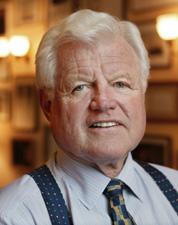 Sen. Edward M. Kennedy (D-MA)
What it changes
1 change to S. 2400
Adds SEC. __. CLARIFICATION OF AVAILABILITY OF PRIVATE RIGHT OF ACTION FOR STATE VIOLATIONS OF UNIFORMED SERVICES EMPLOYMENT AND REEMPLOYMENT RIGHTS ACT OF 1994 at the appropriate place in title VI
Adds a sectionInserted: SEC. __. CLARIFICATION OF AVAILABILITY OF PRIVATE RIGHT OF ACTION FOR STATE VIOLATIONS OF UNIFORMED SERVICES EMPLOYMENT AND REEMPLOYMENT RIGHTS ACT OF 1994.
Inserted: (a) Findings.--Congress makes the following findings:
Inserted: (1) The Federal Government has an important interest in attracting and training a military to provide for the National defense. The Constitution grants Congress the power to raise and support an army for purposes of the common defense. The Nation's military readiness requires that all members of the Armed Forces, including those employed in State programs and activities, be able to serve without jeopardizing their civilian employment opportunities.
Inserted: (2) The Uniformed Services Employment and Reemployment Rights Act of 1994, commonly referred to as "USERRA" and codified as chapter 43 of title 38, United States Code, is intended to safeguard the reemployment rights of members of the uniformed services (as that term is defined in section 4303(16) of title 38, United States Code) and to prevent discrimination against any person who is a member of, applies to be a member of, performs, has performed, applies to perform, or has an obligation to perform service in a uniformed service. Effective enforcement of the Act depends on the ability of private individuals to enforce its provisions in court.
Inserted: (3) In Seminole Tribe of Florida v. Florida, 517 U.S. 44 (1996), the Supreme Court held that congressional legislation enacted pursuant to the commerce clause of Article I, section 8, of the Constitution cannot abrogate the immunity of States under the 11th amendment to the Constitution. In addition, in Alden v. Maine 527 U.S. 706, 712 (1999), the Supreme Court held that this immunity also prohibits the Federal Government from subjecting "non-consenting states to private suits for damages in state courts." Some courts have cited the sovereign immunity prinicples of Alden and Seminole Tribe to prohibit state employees from maintaining a private suit to enforce their USERRA rights. As a result, although USERRA specifically provides that a person may commence an action for relief against a State for its violation of that Act, persons harmed by State violations of that Act lack important remedies to vindicate the rights and benefits that are available to all other persons covered by that Act. Unless a State chooses to waive sovereign immunity, or the Attorney General brings an action on their behalf, persons affected by State violations of USERRA may have no adequate Federal remedy for such violations.
Inserted: (4) A failure to provide a private right of action by persons affected by State violations of USERRA would leave vindication of their rights and benefits under that Act solely to Federal agencies, which may fail to take necessary and appropriate action because of administrative overburden or other reasons. Action by Congress to specify such a private right of action ensures that persons affected by State violations of USERRA have a remedy if they are denied their rights and benefits under that Act.
Inserted: (b) Clarification of Right of Action Under USERRA.--Section 4323 of title 38, United States Code, is amended--
Inserted: (1) in subsection (b), by striking paragraph (2) and inserting the following new paragraph (2):
Inserted: "(2) In the case of an action against a State (as an employer) by a person, the action may be brought in a district court of the United States or State court of competent jurisdiction.";
Inserted: (2) by redesignating subsection (j) as subsection (k); and
Inserted: (3) by inserting after subsection (i) the following new subsection (j):
Inserted: "(j)(1)(A) A State's receipt or use of Federal financial assistance for any program or activity of a State shall constitute a waiver of sovereign immunity, under the 11th amendment to the Constitution or otherwise, to a suit brought by an employee of that program or activity under this chapter for the rights or benefits authorized the employee by this chapter.
Show 2 more inserted paragraphsShow less
Inserted: "(B) In this paragraph, the term 'program or activity' has the meaning given the term in section 309 of the Age Discrimination Act of 1975 (42 U.S.C. 6107).
Inserted: "(2) An official of a State may be sued in the official capacity of the official by any person covered by paragraph (1) who seeks injunctive relief against a State (as an employer) under subsection (e). In such a suit the court may award to the prevailing party those costs authorized by section 722 of the Revised Statutes (42 U.S.C. 1988).".
The amendment doesn't say where this goes; the clerk decides.
Original wording
At the appropriate place in title VI, insert the following:
Read automatically from the Congressional Record. Check the original before relying on it.
As printed
SA 3412. Mr. KENNEDY submitted an amendment intended to be proposed by him to the bill S. 2400, to authorize appropriations for fiscal year 2005 for military activities of the Department of Defense, for military construction, and for defense activities of the Department of Energy, to prescribe personnel strengths for such fiscal year for the Armed Services, and for other purposes; which was ordered to lie on the table; as follows:
At the appropriate place in title VI, insert the following:
SEC. __. CLARIFICATION OF AVAILABILITY OF PRIVATE RIGHT OF ACTION FOR STATE VIOLATIONS OF UNIFORMED SERVICES EMPLOYMENT AND REEMPLOYMENT RIGHTS ACT OF 1994.
(a) Findings.--Congress makes the following findings:
(1) The Federal Government has an important interest in attracting and training a military to provide for the National defense. The Constitution grants Congress the power to raise and support an army for purposes of the common defense. The Nation's military readiness requires that all members of the Armed Forces, including those employed in State programs and activities, be able to serve without jeopardizing their civilian employment opportunities.
(2) The Uniformed Services Employment and Reemployment Rights Act of 1994, commonly referred to as “USERRA” and codified as chapter 43 of title 38, United States Code, is intended to safeguard the reemployment rights of members of the uniformed services (as that term is defined in section 4303(16) of title 38, United States Code) and to prevent discrimination against any person who is a member of, applies to be a member of, performs, has performed, applies to perform, or has an obligation to perform service in a uniformed service. Effective enforcement of the Act depends on the ability of private individuals to enforce its provisions in court.
(3) In Seminole Tribe of Florida v. Florida, 517 U.S. 44 (1996), the Supreme Court held that congressional legislation enacted pursuant to the commerce clause of Article I, section 8, of the Constitution cannot abrogate the immunity of States under the 11th amendment to the Constitution. In addition, in Alden v. Maine 527 U.S. 706, 712 (1999), the Supreme Court held that this immunity also prohibits the Federal Government from subjecting “non-consenting states to private suits for damages in state courts.” Some courts have cited the sovereign immunity prinicples of Alden and Seminole Tribe to prohibit state employees from maintaining a private suit to enforce their USERRA rights. As a result, although USERRA specifically provides that a person may commence an action for relief against a State for its violation of that Act, persons harmed by State violations of that Act lack important remedies to vindicate the rights and benefits that are available to all other persons covered by that Act. Unless a State chooses to waive sovereign immunity, or the Attorney General brings an action on their behalf, persons affected by State violations of USERRA may have no adequate Federal remedy for such violations.
(4) A failure to provide a private right of action by persons affected by State violations of USERRA would leave vindication of their rights and benefits under that Act solely to Federal agencies, which may fail to take necessary and appropriate action because of administrative overburden or other reasons. Action by Congress to specify such a private right of action ensures that persons affected by State violations of USERRA have a remedy if they are denied their rights and benefits under that Act.
(b) Clarification of Right of Action Under USERRA.--Section 4323 of title 38, United States Code, is amended--
(1) in subsection (b), by striking paragraph (2) and inserting the following new paragraph (2):
“(2) In the case of an action against a State (as an employer) by a person, the action may be brought in a district court of the United States or State court of competent jurisdiction.”;
(2) by redesignating subsection (j) as subsection (k); and
(3) by inserting after subsection (i) the following new subsection (j):
“(j)(1)(A) A State's receipt or use of Federal financial assistance for any program or activity of a State shall constitute a waiver of sovereign immunity, under the 11th amendment to the Constitution or otherwise, to a suit brought by an employee of that program or activity under this chapter for the rights or benefits authorized the employee by this chapter.
“(B) In this paragraph, the term ‘program or activity' has the meaning given the term in section 309 of the Age Discrimination Act of 1975 (42 U.S.C. 6107).
“(2) An official of a State may be sued in the official capacity of the official by any person covered by paragraph (1) who seeks injunctive relief against a State (as an employer) under subsection (e). In such a suit the court may award to the prevailing party those costs authorized by section 722 of the Revised Statutes (42 U.S.C. 1988).”.
Legislative Activity
Stay on top of the latest movement without scrolling through every action
Senate amendment submitted
June 7, 2004