S.Amdt. 3694Senate108th Congress (2003-2005)
To require a report on reform of the education sector in Pakistan.
Sponsored by 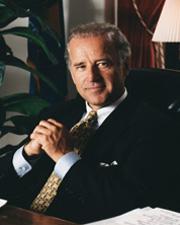 Sen. Joseph R. Biden Jr. (D-DE)
Sen. Joseph R. Biden Jr. (D-DE)Submitted September 23, 2004
Legislative Activity
Stay on top of the latest movement without scrolling through every action
Floor
Latest Action
Senate amendment submitted
September 23, 2004
View full timeline
Floor
Senate amendment submitted
September 23, 2004
Floor
Senate amendment proposed (on the floor): Amendment SA 3694 proposed by Senator McConnell for Senator Biden.(consideration: CR S9588-9592; text: CR S9589)
September 23, 2004
Floor
Senate amendment agreed to: Amendment SA 3694 agreed to in Senate by Unanimous Consent.
September 23, 2004
Floor
Amendment SA 3694 proposed by Senator McConnell for Senator Biden. (consideration: CR S9588-9592; text: CR S9589) To require a report on reform of the education sector in Pakistan.
September 23, 2004
Floor
Amendment SA 3694 agreed to in Senate by Unanimous Consent.
September 23, 2004
Text
Proposed
FOREIGN OPERATIONS, EXPORT FINANCING, AND RELATED PROGRAMS
APPROPRIATIONS ACT, 2005

The PRESIDING OFFICER. Under the previous order, the Appropriations
Committee is discharged from further consideration of and the Senate
will proceed to the consideration of H.R. 4818, which the clerk will
report.
The legislative clerk read as follows:

A bill (H.R. 4818) making appropriations for foreign
operations, export financing, and related programs for the
fiscal year ending September 30, 2005, and for other
purposes.

The PRESIDING OFFICER. All after the enacting clause is stricken, and
the text of S. 2812, the Senate Foreign Operations appropriations bill,
is inserted in lieu thereof. The amendment is considered as original
text, with no points of order waived.
The PRESIDING OFFICER. The majority leader is recognized.
Mr. FRIST. Mr. President, we have had a long day already, but we made
real progress. Again, over the course of the day, people do not see all
the activity that has gone on. The managers of the bill and myself have
actually spent most of the day on the bill we just went to, and that is
the Foreign Operations bill. I say that because a lot of work has been
done, a lot of negotiations and a lot of discussion, and our intention
is we are on the bill to complete the bill tonight.
There are still discussions about amendments, and we want to make
sure they are appropriately considered. But the intent is to finish
debate and voting on whatever amendments there might be and passage
tonight. It means it may well be a late night--it is already fairly
late--or we could finish in a fairly expeditious way.
In the event that we do not complete the bill tonight, we will be
voting tomorrow morning. We will have to stack the votes for tomorrow
morning. That is not what the majority of Senators have expressed over
the course of the day and the last few hours; thus, it is our intention
to be voting tonight, and we will be voting tonight, and to complete
the bill tonight.
I would like the Democratic leader to comment. The reason we feel it
is important to finish tonight is the Jewish holiday is tomorrow. A lot
of people have travel plans over the course of the day; thus, it is
critical we finish.
Next week, we will be going directly to the intelligence reform
issue. We need to be focusing on the safety and security of the
American people. That does mean an appropriate response to the 9/11
Commission recommendations. Thus, with so few days left before October
8, it is absolutely critical we complete this bill tonight or very
early in the morning. Our intention is to complete it tonight.
The PRESIDING OFFICER. The Democratic leader is recognized.
Mr. DASCHLE. Mr. President, I agree wholeheartedly with the majority
leader. We have a window of about 24 hours. A number of colleagues have
indicated to us that they would prefer that we not have any votes at
all tomorrow, and that would be our first choice. But we also have
Senators who have expressed an interest in offering amendments. We know
if the hour gets too late, we will have no choice but, of course, to
put these amendments over until tomorrow morning, but we will finish
this bill either tonight or tomorrow morning. It will be up to
Senators.
So I ask Senators on this side of the aisle if they have amendments
to speak to me immediately so that we know just how much time they are
going to need and how many amendments they intend to offer. It would be
our hope that we could have a finite list of amendments certainly
within the next 10 minutes.
This should not be a surprise to anyone.
We have talked about this all day long. I think the two managers of
the bill have done an outstanding job and we ought to be prepared to go
immediately to the bill and finish our work shortly, but please, if
Senators have amendments, let me know immediately so we know exactly
what our circumstances will be.
Mrs. BOXER. Will my colleague yield for a comment?
Mr. DASCHLE. I would be happy to yield to the Senator from
California.
Mrs. BOXER. I urge us all, if we can possibly finish this tonight, as
many of my colleagues know, it is a very important holiday for some of
us tomorrow. I have to travel all across country, and others do as
well, and it becomes tough to get it all in with families if we are not
able to leave by 10 in the morning. So I hope my friends would offer
amendments and vote on them tonight.
Mr. DASCHLE. I yield the floor.
The PRESIDING OFFICER. The minority whip.
Mr. McCONNELL. Mr. President, I report to the majority leader and the
Democratic leader, as far as this side is concerned, we believe we only
have one amendment that may require a rollcall vote and we are working
on that one. So we are down to one and I hope we will soon be down to
none, but one that we know of at the moment.
The PRESIDING OFFICER. The Senator from Vermont.
Mr. LEAHY. Mr. President, the senior Senator from Kentucky and I have
been working very closely for the last week to get rid of as many
amendments as we could. I think we have done a lot of that. As I said
on the floor earlier this afternoon, if people have amendments, come
and let me know. We have one, possibly two, and we are working
diligently on those.
I say to the distinguished leaders, the best they can do might be to
go forward. I am willing to move quickly. I

[[Page S9581]]

would be delighted to go to final passage in the next 5 minutes, but we
do not want to preclude Senators from offering amendments. So if
Senators are not serious about an amendment, then they should make that
clear.
Senator McConnell and I have tried to reflect the interests of both
parties. As I recall, we passed this bill out from the Appropriations
Committee unanimously. Republicans and Democrats alike strongly
supported it. So this is very carefully crafted legislation.
The PRESIDING OFFICER. The majority leader.
Mr. FRIST. I will simply close by expressing my appreciation to our
colleagues for working together. It has been a long day as we have
worked toward the consideration of this bill. Again, I am confident if
we continue to work together over the next few minutes, we will be able
to have a very good game plan to finish the bill tonight. If we do not,
we are going to be voting tomorrow morning. To me, that gives us a real
incentive to work expeditiously over the next few minutes to bring this
bill up, debate it, and then bring it to appropriate closure.
The PRESIDING OFFICER. The majority whip.
Mr. McCONNELL. Mr. President, the fiscal year 2005 Foreign Operations
appropriations bill totals $19.386 billion in discretionary spending,
$42.5 million in mandatory spending, and $150 million in emergency
spending for HIV/AIDS. The discretionary amount is $1.9 billion below
the President's request.
The bill provides significant counterterrorism and counternarcotics
resources, including full funding under the Economic Support Fund, ESF,
and Foreign Military Financing, FMF, accounts for Israel, Egypt,
Afghanistan, Pakistan, and Jordan. There is $329 million provided under
the International Narcotics Control and Law Enforcement account, $30
million below the request but $89 million above last year's level. The
Andean Counterdrug Initiative is fully funded at $731 million.
Peacekeeping programs are fully funded at $104 million.
The bill provides a total of $2.4 billion for HIV/AIDS, TB and
malaria from all accounts in the bill, including $1.45 billion under
the Global HIV/AIDS Initiative account. There is $400 million made
available for a contribution to the Global Fund, of which $150 million
is designated as emergency spending. When combined with funding in the
Labor-HHS appropriations bill, the total for HIV/AIDS, TB and malaria
exceeds $3 billion, which is the amount authorized by Congress in
Public Law 108-25.
The bill fully funds or increases funding above the request in the
following accounts: development assistance, international disaster and
famine assistance, assistance for Eastern Europe and the Baltic states,
assistance for the independent states of the former Soviet Union, and
international military education and training.
Reductions had to be made and we spread these out between the Export-
Import Bank, transition initiatives, USAID operating expenses, economic
support fund, Peace Corps, debt restructuring, foreign military
financing, the Multilateral Development Banks, and the Millennium
Challenge Corporation.
On the latter, let me be clear that the bill contains $1.12 billion,
an increase of $120 million above last year's enacted level. There is
strong support for this program on both sides of aisle.
Let me address refugee assistance and Sudan. We significantly
increased assistance above the request under the Migration and Refugee
Assistance account and the Emergency Refugee and Migration Assistance
Fund, by $45 million and $30 million, respectively. While we intend a
portion of these funds to be used to address the horrific crisis in
Darfur, a provision was included to provide an additional $150 million
for Sudan, Darfur and the region from funds previously appropriated for
Iraq in Public Law 108-106. Should the President not use these funds
within 30 days after enactment of this act, they will be returned to
the Iraq account.
Many long hours went into the preparation of this bill, and I want to
recognize the efforts and input of Senator Leahy and his staff, Tim
Rieser and Mark Lippert. On my staff, Paul Grove and LaShawnda Smith
deserve thanks for their hard work.
I also want to express my appreciation to Reb Brownell, a State
Department detailee who helped put the bill together, and Bob Lester,
whose continued counsel from his seat at USAID has been invaluable over
the years. Finally, this bill would not exist if Richard Larson and his
capable crew didn't assemble and print it. I want to thank Richard for
his superb support of the Foreign Operations Subcommittee.
The PRESIDING OFFICER. The Senator from Vermont.
Mr. LEAHY. Mr. President, I want to echo what my friend from Kentucky
has just said. This is a good bill. Our subcommittee allocation is
below the President's request, so we had to make some tough choices,
but we did the best we could with what we had.
I want to thank Senator McConnell for working in the best spirit of
the Senate to produce a bipartisan bill and accommodate the
overwhelming majority of requests from Senators. Chairman Stevens and
Senator Byrd also deserve a great deal of credit for this year's
Foreign Operations bill.
Senator McConnell went over the details of the bill so I will
highlight just a few items:
The bill contains much-needed increases in refugee assistance that
goes to some of the most vulnerable people in the world.
The bill rolls back proposed cuts to the Child Survival and Health
and the Development Assistance accounts. This is important because most
of the requests we received from Senators on both sides of the aisle
were for projects or activities funded in these accounts.
The bill provides a total of $2.4 billion to combat AIDS, TB and
Malaria, including $150 million in emergency money for the global fund
that we added by Senators Durbin and Brownback during the committee
markup.
When combined with the funds in the Labor-HHS bill, this brings the
Senate total for AIDS prevention and treatment to $3.1 billion,
including $550 million for the global fund.
The bill added $150 million in emergency funds to address the crisis
in Darfur. There are hundreds of millions of dollars in additional
disaster and food assistance for Sudan in this bill and in the
Agriculture appropriations bill.
The bill includes several other important provisions dealing with
accountability at the multilateral development banks, human rights in
Colombia, corruption in Nicaragua and Guatemala, the interim government
in Haiti, environmental conservation, international family planning,
and assistance for Afghan women and girls, to name a few.
This is a good, balanced bill. We are on a fast track to get this
done, so I hope Senators will come to the floor to offer their
amendments. We want to move to third reading as soon as possible.
The PRESIDING OFFICER. The Senator from New Jersey.

Amendment No. 3671

Mr. CORZINE. I call up amendment No. 3671 and ask for its immediate
consideration.
The PRESIDING OFFICER. The clerk will report the amendment.
The legislative clerk read as follows:

The Senator from New Jersey [Mr. Corzine] for himself, Mr.
DeWine, Mr. Biden, Mr. Durbin, Mr. Lieberman, Ms. Landrieu,
Mr. Feingold, and Mr. Leahy, proposes an amendment numbered
3671.

The amendment is as follows:

(Purpose: To make available to the Department of State for the purpose
of providing support for the rapid expansion of the African Union
mission in Darfur, Sudan, $75,000,000, to be designated as an emergency
requirement)

On page 183, after line 23, add the following:

support for african union mission in darfur, sudan

Sec. 599F. (a) In addition, $75,000,000 is appropriated to
the Department of State to carry out the provisions of
section 551 of the Foreign Assistance Act of 1961 for the
purpose of providing equipment, logistical, financial,
material, and other resources necessary to support the rapid
expansion of the African Union mission in Darfur, Sudan.
(b) The entire amount in subsection (a) is designated as an
emergency requirement pursuant to section 402 of S. Con. Res.
95 (108th Congress), as made applicable to the House of
Representatives by H. Res. 649 (108th Congress) and
applicable to the Senate by section 14007 of Public Law 108-
287.
The PRESIDING OFFICER. The Democratic leader.

[[Page S9582]]

Mr. REID. Mr. President, I direct a question through the Chair to the
distinguished Senator from New Jersey. It is my understanding that
Senator DeWine is going to be a cosponsor of this amendment; is that
right?
Mr. CORZINE. Absolutely.
Mr. REID. The manager of the bill is checking with Senator DeWine to
see how much time he is going to take. Does the Senator from New Jersey
have an idea how much time he could get by with?
Mr. CORZINE. Fifteen minutes or less.
Mr. REID. I ask unanimous consent that Senator Corzine be recognized
for up to 15 minutes on this amendment.
The PRESIDING OFFICER. Is there objection? Without objection, it is
so ordered.
The Senator from New Jersey.
Mr. CORZINE. I ask unanimous consent that the following Senators be
added as cosponsors: Senators Biden, Durbin, Lautenberg, Lieberman,
Landrieu, Feingold, and Leahy.
The PRESIDING OFFICER. Without objection, it is so ordered.
Mr. CORZINE. Mr. President, this amendment simply adds $75 million in
support of an expanded African union mission in Darfur, Sudan, moneys
critically needed to stop the genocide that we all agree, voted on on
this floor, is occurring. Hundreds of thousands of lives are at stake.
We have heard estimates north of 300,000 to as many as a million.
Actually, the life of the whole country is at stake. The facts on the
ground are well known. There have been 1.2 million people violently
displaced. So-called Janjaweed or the militia supported by the
government of Sudan have deliberately and systematically destroyed
villages, foodstocks, poisoned water supplies, murdered and raped
civilians, and an estimated 50,000 civilians have died.
There is no dispute in this country about what is happening. We heard
a declaration a week ago from Secretary Powell that the rightful term
with regard to what is going on in Darfur is ``genocide.'' The question
now is, what do we do about it? Are we responsible to give voice and
meaning and money to do something to stop it?
It is terrific and it is very positive how the United States has
reacted with regard to humanitarian assistance. It is critical if we
hope to save lives, and it has made a huge difference. I know the
majority leader, Senator Brownback, myself, and others have visited.
The humanitarian aid is making a difference. Is that enough?
The real challenge is to make sure we stop the genocide, not just
feed the hungry. We need to do everything we can to bring security to
the people of Darfur.
During my 3-day visit, I spoke with an incredible number of displaced
people from all over that area of Darfur, which is roughly the size of
France, who described rape, murder, starvation, hundreds of thousands
of people displaced, families broken up. It is time to act.
Even after people have been able to move into camps, they have
described how the Janjaweed will come in after dark and continue
harassing, hurting, and challenging the actual viability of the people
in the camps.
The camps keep growing. There are more displaced people all the time
who are attacked and forced from their homes. International
humanitarian organizations are struggling to assist these folks. Our
humanitarian aid has made a difference, as a number of us have seen,
but it goes on and on. It is estimated that from illnesses, starvation,
and other means, somewhere between 6,000 and 10,000 people die a month.
There is fear that it could accelerate if an epidemic were to take hold
in one of these camps or in a number of them.

There is also a security problem. Poor humanitarian conditions within
those camps are creating anger among the displaced people, which might
be quite obvious to anyone. If my colleagues could have seen one of
these places, people are living in hovels and without any kind of
quality water considerations, even if they have rations and food. This
anger that is building in the camps is fueling this revolution that is
going on between the Government of Sudan and the Darfur rebels. It is
inciting even more of it.
Given the complete lack of security and stability in the region, a
seemingly endless crisis involving displaced people which will go on
for years if there is not something done about both the security
situation and the political situation, we are going to end up spending
$500 million for as far as the eye can see to maintain people staying
and living in these camps.
That does not make sense. Remember, if we build up the anger in those
camps, what have we created? We have created a breeding ground for
further violence and also the fomenting of terrorism. Remember, Sudan 8
years ago was the home to Osama bin Laden and the terrorist groups--al-
Qaida.
We can help stop the genocide, bring security to Darfur, start to
stabilize the region, and create the conditions for peace. What is
more, there is at this brief critical moment a real consensus. You hear
it in the Foreign Relations Committee. You read it in the newspapers.
You see it from the people who are sponsoring the efforts on genocide.
This is something we can deal with today if we are prepared to allow in
this bill the resources that will allow the United States to help the
African Union fund the kinds of peacekeeping troops on the ground that
will make a difference.
Right now there are currently 125 African Union monitors in Darfur
and an additional 305 monitors, watchers, protective forces for the
monitors who are looking at this area that is the size of France. It is
kind of ridiculous on the surface of it, as a peacekeeping force.
There is an opportunity. The African Union wants to provide the
troops. It doesn't have the money. It doesn't have the logistical
support. But it has the ability to put the troops on the ground.
We should not send American troops. Nobody is asking to send American
troops. What we are trying to do is get the resources so we can stop
this genocide by putting a legitimate peacekeeping force on the ground.
It is an incredible tradeoff. Are we going to continue to spend $500
million a year on humanitarian aid to keep people in camps or are we
going to try to create a secure situation where people can go back to
the villages, start their lives, and maintain some safety in their
world? To me, this is an easy expenditure. It is a cost-benefit
analysis that we should be able to understand. It brings an opportunity
for people to have security in the villages, in and around the camps,
and change the terms and conditions of security which is the
precondition to get on with a political settlement between the
Darfurian rebels and the central government--which, by the way, was
also locked with the whole issue of how the southern Sudanese rebels
and the central government were working together, which we as a nation
have put so much effort to bring about. But this is standing in the way
of that moving forward.
I do not understand why we would not want to make an investment that
will work on the security, that will lay the pathway to have us get to
a political settlement that will make a difference and save incredible
amounts. This is being supported, endorsed, and embraced by African
leaders across the continent. They just don't have the resources to
deal with it. It is being led by Nigerian President Olusegun Obasanjo,
who currently heads the AU. He has done everything he can to get the
rebels and the central government to negotiate a political settlement,
but as long as there is continuing violence and anger building up in
these camps, we are not going to get to that answer. We are not going
to get to it, and we need to make sure we invest in something that will
bring change, bring security as well as the humanitarian aid so we can
get on with that political settlement.
There are very few times when you can say, if we invest $75 million
now, over a longer period of time we will save having to bring all this
humanitarian aid. People really care deeply about trying to prevent the
kind of loss of life that is estimated by officials from all parts of
the world. This is something that is clear and present and should be
dealt with. This is where the United States ought to show the moral
courage to stand up and act because there is something that is going to
happen that is very clear in people's eyes if we do not.
I encourage my colleagues to say this is $75 million; it is going to
be above

[[Page S9583]]

the budget resolution. If I am not mistaken, we just approved $146
billion worth of overage, over-budget resolutions, without any paying
for it. Here we are talking about $75 million that can start us on the
pathway to peace and protection of as many as 1.2 million individuals.
I hope we will be reasonable, particularly in light of how we dealt
with the budget resolution on tax cuts. We ought to think about the
cost-benefit that will be very obvious. It will make a real difference
in human life and it is something we can all be proud of because we are
making a statement that we want to stand with humanity on straightening
out a very serious problem.
To reiterate, this amendment would add $75 million to support an
expanded African Union mission in Darfur, Sudan. This money is
critically needed to stop the genocide that we all agree is occurring
there. Hundreds of thousands of lives are at stake, as is the future of
an entire country.
The facts on the ground are now well known. There are 1.2 million
people who have been violently displaced. The Janjaweed militia,
supported by the Government of Sudan, have deliberately and
systematically destroyed villages and food stocks, poisoned water
supplies, murdered and raped civilians. An estimated 50,000 civilians
have died.
There now is no dispute in this country about what is happening. On
July 22, both houses of Congress spoke, calling the atrocities in
Darfur by their rightful name: ``genocide.'' On September 9, Secretary
of State Colin Powell made the same declaration. The question now is
what do we do about it?
Humanitarian assistance is critical if we hope to save lives, and I
have and will continue to push for the maximum amount of U.S. and
international aid. The crisis in Darfur requires more than a half a
billion dollars this year, and we are still hundreds of million of
dollars short.
But we also must do everything we can to begin to bring security to
Darfur. During my recent trip, I spoke with internally displaced people
who described for me the attacks that forced them from their villages.
I asked one man when he expected to return. He told me, ``maybe 30
years.'' Other displaced people told me how they can't venture outside
the camps and how women are at constant risk of rape. They even
described how the Janjaweed ride through the camps at night,
terrorizing those who recently fled their attacks.
Meanwhile the camps are growing, as more and more displaced people
are attacked and forced from their homes. As a result, the
international humanitarian organizations are struggling to assist the
new displaced people. When I was in Krinding camp, in Geneina, I saw
newly arrived displaced people without shelter, huddling under
makeshift lean-tos of sticks and pieces of burlap and other materials
they had found. These conditions persist in the midst of the rainy
season and are fueling the current death toll, which is estimated at
between 6,000 and 10,000 a month.
The security problems and the poor humanitarian conditions in the
camps are creating increasing anger among the displaced people. This
rage risks spinning out of control and fueling the civil war currently
being waged between the Government of Sudan and the rebels. Given the
complete lack of security and stability in Darfur and the seemingly
endless crisis involving displaced people, we can anticipate years of
crisis--costing the international community half a billion dollars a
year, eliminating any possibility of stability or economic growth in
Sudan, and possibly leading to the kind of failed state that breeds
chronic violence and terrorism.
We can help stop the genocide, bring security to Darfur, start to
stabilize the region and create the conditions for peace. What's more,
there is--at this brief and critical moment--real consensus, here in
America and among our allies about what to do.
Our option--our only option at this time--is to support the mission
of the African Union. There are currently 125 AU monitors in Darfur,
sent following the cease fire signed between the Government of Sudan
and the rebels on April 8 in Chad. There are also 305 Rwandan and
Nigerian troops deployed as protection forces for the monitors. I
visited the monitoring teams when I was in Darfur. Their efforts to
investigate and document violations of the cease fire are critical to
establishing accountability, and their presence and the presence of the
troops are the only hope for deterring attacks by the warring parties
and the Janjaweed.
But the small AU contingent is, by all accounts, insufficient. Darfur
is the size of France, and much of it is not easily accessible. To
really address the security crisis in Darfur, we need more monitoring
teams, deployed throughout the region. And we need thousands of troops
with an expanded mission, to protect civilians and bring security to
the region. The monitors and troops need meaningful support--air lift,
vehicles, communications equipment, and other resources. This support
is not insignificant--the United Nations has estimated that a 4,200-
person force will cost $228 million per year. But, when we are
considering an indefinite humanitarian crisis costing half a billion a
year, how can we fail to spend less than half that amount for the only
possibility of stabilizing Darfur and eventually resolving what is, in
the end, a political and military crisis.
As for the U.S. contribution, my amendment would make available $75
million for an expanded AU force, one third of the UN estimate.
Clearly, we need to engage with the EU and our other allies, with Arab
and Muslim countries, and with other member states of the UN so that
support for the AU is truly an international endeavor. But we can
provide real leadership by demonstrating America's commitment to ending
this genocide, not just in words but in a real contribution to peace
and security.
This particular moment is made even more critical by the fact that
the African Union has stepped up. The AU's leadership, whom I met in
Addis Ababa, Ethiopia, has demonstrated initiative and courage in
standing up to the Government of Sudan and insisting on a real and
effective mission in Darfur. Almost 2 months ago, on July 27, 2004, the
AU Peace and Security Council called for a ``comprehensive plan'' to
enhance the effectiveness of the mission, including, ``the possibility
of turning the mission into a full-fledged peacekeeping mission, with
the requisite mandate and size,'' a mission that would emphasize, ``the
disarmament and neutralization of the Janjaweed militia, the protection
of the civilian population and the facilitation of the delivery of the
humanitarian assistance.'' Then, on August 4, the AU as a whole stated
its interest in expanding its force in Darfur to several thousand
troops.

This vision has been pushed by visionary African leaders such as
Nigerian President Obasanjo who currently heads the AU. President
Obasanjo has not only supported an expanded role in Darfur, but pushed
in his own country for more troops.
This will not be easy. The AU is a new institution and, despite its
strong leadership, does not have meaningful experience, as a
bureaucracy, with peacekeeping. Darfur is, in every sense, a real test
of the AU. But it is also a test for us. African leaders are taking
bold initiatives to confront a crisis on the continent, and we have
expressed our support. But they need real help to succeed. If we merely
support the AU in theory, but don't put resources where our mouth is,
the tragedy will be almost beyond comprehension. Even beyond the
genocide in Darfur, we will have set up the AU for failure at precisely
the moment when it could really succeed. We will have crippled the AU,
when it stands ready to help bring peace to this and other parts of
Africa.
An expanded AU mission in Darfur has bipartisan support in Congress.
The administration has also said, and begun to do, the right things. On
September 9, Secretary Powell said:

The most practical contribution we can make to the security
of Darfur, in the short-term, is to do everything we can to
increase the number of Union monitors.

He also stated that the expansion of the AU force:

Will be first priority for our efforts in the days ahead.

We are currently providing $6.8 million to the tiny AU force now
deployed in Darfur, and I was pleased that Secretary Powell came before
the Senate Foreign Relations Committee and identified another $20.5
million. But, as

[[Page S9584]]

Secretary Powell acknowledged, the expansion of the African Union force
will require money, assets, planes, logistics support and current
funding levels are simply not enough.

Finally, a word about the international support for an expanded AU
mission. Last Saturday, the UN Security Council passed Resolution 1564
which supported:

The intention of the African Union to enhance and augment
its monitoring mission in the Darfur region of Sudan.
The Resolution also urged member states to support the AU by
providing all:

Equipment, logistical, financial, material, and other
resources necessary to support the rapid expansion of the
African Union Mission.

This is precisely what this amendment would do--it would support the
AU and send a powerful message to the rest of the world that America
will provide real, tangible leadership on this issue.
There is one sticking point, and that is the Government of Sudan,
whose leadership has stated that it does not oppose the expansion of
the AU force, but has hardly been welcoming. The Government of Sudan
has also resisted any AU force with an explicit peacekeeping mandate.
We must bring the full weight of the international community and use
all available leverage, including the explicit threat of sanctions to
get this expanded AU force on the ground. The Security Council
resolution alluded to this threat, stating that if the Government of
Sudan fails to cooperate fully with the expansion and extension of the
AU mission, it would, quote, ``consider taking additional measures.''
While the resolution also made reference to Sudan's petroleum sector
and measures against the Government of Sudan or individual members of
the Government of Sudan, it could have been, and should have been much
stronger and more specific. But, last week's Security Council action at
least puts the international community on record. Now we need to treat
this situation with the urgency it demands. We need to make it
perfectly clear to the Government of Sudan that there will be
multilateral sanctions if it does not cooperate with an expanded AU
mission. This threat must be real. We cannot allow it to be watered
down in the Security Council. Khartoum either allows the mission in, or
it doesn't. The Council has said there will be consequences for not
cooperating. Those consequences should be immediate; there should be no
extensions.
And we should signal our seriousness to the Government of Sudan, to
our allies and to the AU by putting in place everything that an
expanded AU mission in Darfur will need. We have the resources to do
this. There are practical ways for us to stop this genocide. We can, if
we have the will, do this now.
Mr. President, I ask unanimous consent to add Senator Mikulski and my
friend from Michigan, Senator Stabenow, as well, as cosponsors of this
amendment.
The PRESIDING OFFICER. Without objection, it is so ordered.
Ms. STABENOW. I thank the Senator.
Mr. CORZINE. Mr. President, I am not certain but I think Senator
DeWine wanted to speak. I don't know how much time we have left.
The PRESIDING OFFICER. The Democratic whip.
Mr. REID. Mr. President, I wish to express through you to the senior
Senator from New Jersey the appreciation of the whole Senate. Everyone
knows it is late at night and there are a lot of significant things to
do tomorrow, including a religious holiday.
Those of us in the Senate know how passionately he feels about many
issues, not the least of which is the terrible situation we have in
Darfur. I want him to know that we appreciate his eloquence. He
certainly very eloquently made the point. I, among others, am confident
we will vote for this amendment. It is really important, and I
appreciate the cooperation of the Senator from New Jersey, as usual.
The PRESIDING OFFICER. The Senator from Illinois.
Mr. DURBIN. Mr. President, I will be equally brief to commend my
colleague from New Jersey, Senator Corzine, for his extraordinary
leadership on this bipartisan amendment. Senator DeWine of Ohio is a
cosponsor of it. It is clearly an issue we all share feeling on, on
both sides of the aisle.
We learned our lesson in Rwanda. President Clinton has said that of
all the things in foreign policy during his Presidency, he regrets the
most that he didn't act and act quickly to confront the genocide in
Rwanda. I commend not only Senator Corzine and Senator DeWine, and add
my name as a cosponsor, but I also commend Secretary of State Colin
Powell who has said clearly:

We concluded that genocide has been committed in Darfur and
that the government of Sudan and the Janjaweed bear
responsibility and genocide may still be occurring.

That word, ``genocide,'' used by Secretary Powell, is historic. It is
historic because it then places a burden on every civilized nation,
including the United States, as signatories to the antigenocide treaty,
to do something.
What Senator Corzine and Senator DeWine suggest, increasing the
African Union monitors, is going to be critical. That is what we are
doing here today. We are putting more monitors in the field, in the
field where men are still being murdered, women are still being raped
and murdered. The least, I really mean the least, we can do is give the
African Union the tools to try to halt this genocide. I am happy to
join in cosponsorship of this amendment, and I yield the floor.
The PRESIDING OFFICER. The Senator from New York.
Mrs. CLINTON. Mr. President, I rise to add my strong support to the
efforts of the Senator from New Jersey. The situation in Sudan has been
plaguing the civilized world for years. Despite the best efforts of
those who have attempted to broker some kind of resolution, including
our Secretary of State, the Secretary General of the United Nations,
other people of good will, the Sudanese Government--which is largely a
terrorist regime--continues to thumb its nose at the civilized world
and continues to support and engage in the terrorism that afflicts the
Darfur region.
We have to do something. What the Senator from New Jersey proposes,
to declare a contingent emergency, to ask the administration to
continue its best efforts to look for a way to bring even greater
pressure on the Sudanese, is exactly what we should do.
Many of my colleagues have been to Sudan. They have returned to
report and to validate the stories we read in the press. The Janjaweed
are, obviously, a tool of the Sudanese Government. The regime in
Khartoum is attempting to obliterate, to commit genocide against the
people of Darfur.
Once again, for the rest of the world, including the United States,
to stand by and watch this happen, engage in diplomatic, political, and
United Nations Security Council negotiations, but the murdering
continues, the raping continues, the extraordinary hardship continues,
it is just unacceptable.
There have been a lot of books written in the last couple of years
about how could we let Rwanda happen? Why did we wait so long before we
went into Bosnia and Kosovo? I don't know the answer to all of that.
But I know that we face right now another situation of genocide.
I commend the Senator from New Jersey, who has been to Sudan, who has
seen firsthand the effect of these genocidal policies carried out by
the Sudanese Government, and I hope we will support his efforts. The
Senate should be on the side of protecting people who are attempting to
live their lives and go about their daily business.
We are expending tens of billions of dollars to bring democracy and
freedom to Iraq. We should be doing all we can with moral authority and
financial support and with logistical support to try to end the
genocide in Darfur.
I hope our colleague will support this very important amendment by
the Senator from New Jersey and stand with the people who are
oppressed, who are left behind, largely women and children who are
totally under the thumb, the heel, the boot of these Janjaweed
marauders who are fully supported by the Sudanese Government, and do
what we can to go on record in this Foreign Operations appropriations
to make it clear that we will do whatever we can to stand with people
who are being subjected to genocide.
I hope our colleagues on both sides of the aisle will support the
amendment of the Senator from New Jersey.
I yield the floor.

[[Page S9585]]

The PRESIDING OFFICER. Is there further debate on the amendment?
Mr. REID. Mr. President, I suggest the absence of a quorum.
The PRESIDING OFFICER. The clerk will call the roll.
The assistant legislative clerk proceeded to call the roll.
Mr. REID. Mr. President, I ask unanimous consent that the order for
the quorum call be dispensed with.
The PRESIDING OFFICER. Without objection, it is so ordered.
Mr. REID. Mr. President, I ask unanimous consent that the pending
amendment be set aside for the purpose of Senator Dayton offering an
amendment. It is my understanding that he only wishes up to 7\1/2\
minutes to speak for his amendment.
The PRESIDING OFFICER. Is there objection?
Mr. McCONNELL. Mr. President, if the assistant minority whip will
yield for a moment, I am able to announce that there are no more
amendments on this side that will require rollcall votes.
Mr. REID. We are prepared to announce on this side, following the
conclusion of the Corzine amendment and the Dayton amendment, that we
have no more rollcall votes.
The PRESIDING OFFICER. Is there objection?
Without objection, it is so ordered.
The Senator from Minnesota.

Amendment No. 3672

Mr. DAYTON. Mr. President, I send an amendment to the desk.
The PRESIDING OFFICER. The clerk will report.
The assistant legislative clerk read as follows:

The Senator from Minnesota [Mr. Dayton] proposes an
amendment numbered 3672.

Mr. DAYTON. Mr. President, I ask unanimous consent that reading of
the amendment be dispensed with.
The PRESIDING OFFICER. Without objection, it is so ordered.
The amendment is as follows:

(Purpose: To provide an additional $500,000,000 for economic
development in Afghanistan)

On page 183, after line 23, add the following:

additional economic assistance for afghanistan

Sec. 599F. The total amount appropriated by title II for
other bilateral economic assistance under the heading
``economic support fund'' is hereby increased by
$500,000,000. Of such total amount, as so increased,
$500,000,000 shall be available for assistance for
Afghanistan.

Mr. DAYTON. Mr. President, I ask unanimous consent that Senator Reid
of Nevada be added as an original cosponsor of the amendment.
The PRESIDING OFFICER. Without objection, it is so ordered.
Mr. DAYTON. Mr. President, this amendment would increase the funding
for economic development assistance aid to Afghanistan by $500 million.
The bill before us provides only $225 million in economic development
assistance through the Economic Security Fund and then some portion of
$172 million identified for development and health.
Last year, in fiscal year 2004, the Congress appropriated $900
million in economic development aid and $172 million for development in
health through the regular and the supplemental appropriations bills.
Those combined categories in total appropriations under this bill will
drop from $1.71 billion from the current fiscal year, to $397 million
for 2005. That is a cut in funding of 63 percent from one year to the
next.
My amendment will increase next year's Afghanistan development aid to
$897 million, which is still 15 percent less than it is in the current
fiscal year.
What kind of message does this bill send to Afghanistan President
Karzai and to his Government--one of their leaders was almost
assassinated last week--and to the people of Afghanistan just before
they hold their elections?
This is probably not the intent of the bill, but there was a 60-
percent cut in economic development assistance that was too little
before.
Afghanistan is not a wealthy country like Iraq. It will be when its
oil reserves can be developed. Afghanistan, right now, is poverty and
poppies--opium. The more poverty they have, the more poppies they will
grow.
Just 3 months ago, President Karzai made a strong appeal to all of us
in a joint session of Congress for more aid. That was following the
necessary war which this Senate supported unanimously in September of
2001, for which I voted along with all of us who were present at that
time. Our courageous Armed Forces succeeded in 10 weeks and
accomplished what the former Soviet Union could not achieve in 10
years. Our Armed Forces routed the Taliban and al-Qaida but left
political, social, and economic vacuums that have not been filled--at
least not by the right elements.
President Karzai stated eloquently and emphatically 3 months ago the
need for more aid. He said, and I quote in part:

We must build a partnership that will consolidate our
achievements and enhance stability, prosperity and democracy
in Afghanistan and in the region. This requires sustaining
and accelerating the reconstruction of Afghanistan through
long-term commitments.

That is what President Karzai said to six of us in January of 2002 in
Kabul in a bipartisan delegation that was led by our Democratic leader,
Senator Daschle.
Yet the Bush response to that plea has been tepid.
The world response has been cold. This bill would ice the effort with
a 60-percent economic development aid cut. In fact, the entire bill's
total military and nonmilitary aid to Afghanistan combined is less than
half of the fiscal 2004 appropriation--less than half.
Mr. President, today's New York Times has an editorial entitled ``A
Chance of Success Slips Away,'' by J Alexander Thier, a fellow at the
Hoover Institution in California. I ask unanimous consent that it be
printed in the Record at the conclusion of my remarks.
The PRESIDING OFFICER. Without objection, it is so ordered.
(See exhibit 1.)
Mr. DAYTON. I would like to read a few portions of Mr. Thier's
analysis:

President Bush describes Afghanistan, the first front on
the war on terrorism, as a success. In comparison to Iraq,
perhaps it is. But if you look at Afghanistan on its own
merits, the lack of progress is disheartening. In 2002,
President Bush promised a ``Marshall Plan'' for the country,
with the goal of turning Afghanistan into a stable,
democratic state. . . .Yet in nearly three years we have
failed to create security, stability, prosperity or the rule
of law in Afghanistan.
. . . .Our efforts in Afghanistan are underfinanced and
undermanned, and our attention is waning.
The root of the problem is that we invaded Afghanistan to
destroy something--the Taliban and Al Qaeda--but we didn't
think much about what would grow in its place. . . .
Afghanistan has become a collection of warlord-run fiefs
fueled by a multibillion-dollar opium economy.

Continuing with Mr. Thier's editorial remarks:

Our Army continues to hunt insurgents in the mountains, but
we have refused to take the steps necessary to secure the
rest of the country, and it shows. More coalition and Afghan
government soldiers and aid workers have died this year than
in each of the previous two. This summer, Doctors Without
Borders, which has worked in the most desperate and dangerous
conditions around the world, pulled out of Afghanistan after
24 years. In other words, the group felt safer in Afghanistan
during the Soviet occupation and the civil war that followed
than it did three years after the United States-led coalition
toppled the Taliban.

He concludes by stating:

Our experience demonstrates that you can't fight wars, or
do nation-building, on the cheap. Afghanistan should be a
critical election issue this year, but Iraq looms much larger
in the public mind. Unless the next administration steps up
to the plate, it may well be an issue in four years, when we
start asking, ``Who lost Afghanistan?''

I submit that tonight is our opportunity in this Senate to step to
the plate, not to let this become a failed opportunity, not to allow
the blood that has been shed by American soldiers to do what we
originally said was the thrust of the war against terrorism--to go
after al-Qaida, to drive them out of that country, to deny them safe
havens and sanctuaries there, to rout the Taliban government, to
install a democracy--and yet we have largely missed that opportunity
along with the other wealthy nations of the world.
The failure of an adequate response to assist that country
economically and in its rehabilitation has been just astonishing to me.
What a missed opportunity. What an opportunity it is to showcase to the
world our way of life, our generosity, to transform a country in a
short period of time and show the rest of the Islamic world what our
way of life, what our economic system can

[[Page S9586]]

do, and why it is so vastly superior to anything else, to take the
horns of misperception off of the way those people incorrectly perceive
this country. But many millions of them do. What an opportunity we
have, and here we are cutting economic development aid to Afghanistan
in this bill by over 60 percent.
I thank the Senator from Nevada for his cosponsorship. He has been a
champion of this concern before I started here tonight. He has brought
it up on the floor numerous times. Even though there is not an offset
in this amendment, I think it would be penny-wise and pound very, very
unwise for us not to raise the level of funding in this bill for
Afghanistan for economic development aid to help move that country
forward and to save American lives this year and years to come, both
here and around the world.
Thank you, Mr. President. I yield the floor.

Exhibit 1

[From the New York Times, Sept. 23, 2004]

A Chance of Success Slips Away

(By J. Alexander Thier)

Stanford, Calif.--President Bush describes Afghanistan, the
first front on the war on terrorism, as a success. In
comparison to Iraq, perhaps it is. But if you look at
Afghanistan on its own merits, the lack of progress is
disheartening. In 2002, President Bush promised a ``Marshall
Plan'' for the country, with the goal of turning Afghanistan
into a stable, democratic state. On Tuesday, before the
United Nations General Assembly, the president said that
``the Afghan people are on the path to democracy and
freedom.'' Yet in nearly three years we have failed to create
security, stability, prosperity or the rule of law in
Afghanistan.
These failings are not just a reflection of the great
difficulties of nation-building in places like Afghanistan,
they are also the direct result of the Bush administration's
policy decisions. Our efforts in Afghanistan are
underfinanced and undermanned, and our attention is waning.
The root of the problem is that we invaded Afghanistan to
destroy something--the Taliban and Al Qaeda--but we didn't
think much about what would grow in its place. While we
focused on fighting the terrorist (and even there our
effectiveness has been questionable), Afghanistan has become
a collection of warlord-run fiefs fueled by a multibillion-
dollar opium economy. We armed and financed warlord armies
with records of drug-running and human rights abuses
stretching back two decades. Then we blocked the expansion of
an international security force meant to rein in the
militias. These decisions were made for short-term
battlefield gain--with disregard for the long-term
implications for the mission there.
Our Army continues to hunt insurgents in the mountains, but
we have refused to take the steps necessary to secure the
rest of the country, and it shows. More coalition and Afghan
government soldiers and aid workers have died this year than
in each of the previous two. This summer, Doctors Without
Borders, which has worked in the most desperate and dangerous
conditions around the world, pulled out of Afghanistan after
24 years. In other words, the group felt safer in Afghanistan
during the Soviet occupation and the civil war that followed
than it did three years after the United States-led coalition
toppled the Taliban.
Last month, after a United Nations-backed voter
registration office was bombed, the vice president of the
United Nations Staff Union urged Secretary General Kofi Annan
to pull employees out of Afghanistan. The opium trade is also
out of control, fueling lawlessness and financing terrorists.
Last year, the trade brought in $2.3 billion; this year,
opium production is expected to increase 50 to 100 percent.
Amid terrorist attacks and fighting among regional
warlords, the country is preparing for presidential elections
on Oct. 9. A recent United Nations report warned that
warlords were intimidating voters and candidates. This month,
the Organization for Security and Cooperation in Europe,
which has monitored post-conflict elections in trouble spots
like Bosnia and Kosovo, declared that Afghanistan was too
dangerous for its election monitors (it is sending a small
``election support team'' instead). President Hamid Karzai
narrowly escaped assassination last week on his first
campaign trip outside Kabul, and eight other presidential
candidates have called for elections to be delayed, saying
it's been too dangerous for them to campaign.
Many of these problems flow from early mistakes. Rather
than moving quickly to establish security and then gradually
turning over control to a legitimate domestic authority, we
have done the opposite. As fighting among warlord militias in
the countryside intensifies, we are slowly expanding our
presence and being dragged into conflicts. The American
``advisers'' in Afghan Army units, the ubiquitous heavily
armed ``private'' security forces and the fortress-like
American Embassy are garnering comparisons to the day of the
Soviets.
In Kabul, the effort to build a stable, capable government
has also lagged dangerously. President Karzai has begun to
show great fortitude in challenging warlords. But his
factious cabinet, born of political compromise, has collapsed
under the pressure of the country's hurried presidential
elections. Outside Kabul, his control remains tenuous in some
places, nonexistent in others. Kabul's Supreme Court, the
only other branch of government, is controlled by Islamic
fundamentalists unconcerned with the dictates of
Afghanistan's new Constitution. On Sept. 1, without any case
before the court, the chief justice ordered that Latif
Pedram, a presidential candidate, be barred from the
elections and investigated for blasphemy. His crime? Mr.
Pedram had suggested that polygamy was unfair to women. These
clerics are trying to establish a system like that in Iran,
using Islam as a bludgeon against democracy.
It's true that there have been several important
accomplishments in these three years: the Taliban and Al
Qaeda no longer sit in Kabul's Presidential Palace; girls are
back in school in many parts of the country; some roads and
buildings have been rebuilt; and more than 10 million Afghans
have registered to vote for the presidential elections.
Thousands of international aid workers have been working with
the Afghans, often at great risk, to make things better.
Despite the slow progress, most Afghans are more hopeful
about their future than they have been in years.
But many people working there are left with the nagging
feeling that much more could have been done both to help
Afghanistan and fight terrorism over the last three years.
Our experience demonstrates that you can't fight wars, or do
nation-building, on the cheap. Afghanistan should be a
critical election issue this year, but Iraq looms much larger
in the public mind. Unless the next administration steps up
to the plate, it may well be an issue in four years, when we
start asking, ``Who lost Afghanistan?''
The PRESIDING OFFICER. The minority whip.
Mr. REID. Mr. President, the Senator from Minnesota and I acknowledge
we tonight do not have the votes for this amendment. That is not to
take away from the severity and the importance of this amendment. The
people of Afghanistan deserve this. All the attention is focused on
Iraq, a little bit on Afghanistan. But you look at the numbers here,
with what was given last year, plus the supplemental to Afghanistan,
this is only about half as much money as they got last year.
Afghanistan is a place where Pat Tillman gave his life and about 35
or 40 other Americans. I think it is wrong that we are not reaching out
to this country we abandoned on a previous occasion. I would hope that
everyone here recognizes that the Senator from Minnesota and I will be
back on this issue. This is an issue that is important to our country,
to maintain the dignity of our country, to show that we do not give up
on our friends. And Afghanistan is our friend.
I compliment and applaud the Senator from Minnesota for being the
kind of person he is, to care about people who need caring about. If
there were ever a society that needs help, it is the people of
Afghanistan. This is not money for more guns and tanks and airplanes.
It is money to help build that country up from the grassroots, so to
speak, to help them become more than what they now are. And that is
what they deserve.

Amendment No. 3672 Withdrawn

It is my understanding, Mr. President, the Senator from Minnesota and
I are--is it appropriate I ask consent this amendment be withdrawn?
Mr. DAYTON. Reluctantly so, I say to the Senator, and with the
request or plea to those who will take this bill to conference that
they seek ways--the House has an increase in funding by $48 million
over the administration's request. I plead that the conferees look for
ways to increase this funding. It would be money very well spent. But,
yes, I ask unanimous consent to withdraw the amendment.
The PRESIDING OFFICER. Without objection, the amendment is withdrawn.
The PRESIDING OFFICER. The Senator from Ohio.

Amendment No. 3671, As Modified

Mr. DeWINE. Mr. President, I ask unanimous consent to amend the
Corzine-DeWine amendment that is currently at the desk.
The PRESIDING OFFICER. Is there objection to modifying the amendment?
Without objection, the amendment is modified.
The amendment, as modified, is as follows:
On page 183, after line 23, add the following:

support for african union mission in darfur, sudan

Sec. 599F. (a) In addition, $75,000,000 is appropriated to
the Department of State to

[[Page S9587]]

carry out the provisions of section 551 of the Foreign
Assistance Act of 1961 for the purpose of providing
equipment, logistical, financial, material, and other
resources necessary to support the rapid expansion of the
African Union mission in Darfur, Sudan.
(b) The entire amount in subsection (a) is designated as an
emergency requirement pursuant to section 402 of S. Con. Res.
95 (108th Congress), as made applicable to the House of
Representatives by H. Res. 649 (108th Congress) and
applicable to the Senate by section 14007 of Public Law 108-
287.
(c) That such amount shall be available only to the extent
that an official budget request for $75,000,000 that includes
designation of the amount as an emergency requirement, as
defined in S. Con. Res. 95 (108th Congress), as made
applicable to the Senate by section 14007 of Public Law 108-
287, is transmitted by the President to the Congress.

Mr. DeWINE. Mr. President, I rise to support the Corzine-DeWine
amendment. I will be very brief.
This bill, as I said earlier today, already contains additional money
to assist the humanitarian mission in Darfur, in the Sudan. I think
everyone in this Chamber knows why this money is necessary. This
amendment, that is currently pending that my colleague Senator Corzine
and I have submitted, would provide an additional $75 million to be
used to support the African Union's mission in Darfur. It would help
support these troops. This would be our share of that support. Their
mission is necessary. As my colleague said earlier, spending this money
now would certainly save us spending money in the future.
But it is the right thing to do. Anyone who has seen the pictures of
what is going on in Darfur, anyone who has read about this genocide,
understands the need to have the African Union troops in there as
monitors and for other purposes. They need to be in there. This will
contribute and make this money available. So I ask my colleagues to
support this as the right thing to do.
I thank the Chair.
Mr. LEAHY. Mr. President, I strongly support the amendment offered by
the Senator from New Jersey to address the crisis in Darfur, Sudan.
This amendment appropriates $95 million to support the African Union
mission that will help to provide desperately needed security in
Darfur.
We simply must act: What is happening there is genocide. The Congress
has said it. The Secretary of State has said it. The world knows it.
People are dying at a staggering rate, and it will only get worse.
After we appropriate this money, there is one other important piece
of the puzzle--the administration must spend it. I will be working with
the Senator from New Jersey and the Senator from Ohio to ensure that
the President does the right thing and spends this money.
I thank the Senator from New Jersey for his strong leadership on this
issue.
The PRESIDING OFFICER. Is there further debate on the amendment? If
not, the question is on agreeing to the amendment, as modified.
The amendment (No. 3671), as modified, was agreed to.
Mr. McCONNELL. I move to reconsider the vote and I move to lay that
motion on the table.
The motion to lay on the table was agreed to.
The PRESIDING OFFICER. The Senator from Kansas.
Mr. BROWNBACK. Mr. President, I wanted to speak for a minute and
thank the managers of this bill, if I may. I thank the chairman and
ranking member. They have done an outstanding job on a broad set of
topical issues, from Sudan to Darfur to the Global Fund to HIV, malaria
issues, food aid programs that we have been able to plus up in a tight
budget. This is a bill people can be quite proud of, on which people
have done good work. They have done it well within the resources that
were available to us.
There will be things we will continue to work on in conference that
are important, but I think they have done an outstanding job. It is
something this Nation can be proud of, that we are investing in other
people who are in difficult circumstances in a lot of places around the
world. There are not many votes there from this country, but there are
a lot of hearts and souls that need to be touched.
The chairman and ranking member have done an outstanding job. I
wanted to recognize them. This is certainly a vote I will be pleased to
make at this time.
I yield the floor.
The PRESIDING OFFICER (Ms. Murkowski). The Senator from Kentucky.
Mr. McCONNELL. Madam President, I thank the Senator from Kansas for
his kind remarks and the important contributions he has made to this
bill, both in committee and on the floor. I thank him very much.
The PRESIDING OFFICER. The Senator from Vermont.
Mr. LEAHY. I also commend the Senator from Kansas. We have had long
discussions on some of these efforts. He knows the Senator from
Kentucky and I have been trying to work out as nonpartisan a bill as
possible on these issues. His sense of morality and concern--I say it
in the best sense of the word--has been very helpful. All 100 of us
live a comfortable life. None of us go hungry except by choice. Some of
us do that off and on for whatever reason. But it is only by choice. We
have people in parts of the world we have been talking about who cannot
even be fed by choice. They starve to death. They have no choice.
On these amendments, what the Senator from Kansas and the Senator
from Kentucky and I, the Senator from New Jersey, the Senator from
Ohio, and others have tried to do is let them know in this country, the
wealthiest, most powerful Nation on earth, there are people who know
they are starving, they know they are dying, they know this goes beyond
a question of politics. This is a question of morality, deepest moral
sense of human beings to make sure we feed them. I commend him for his
work.
The PRESIDING OFFICER. The majority whip.
Mr. McCONNELL. Let me indicate that we are near the end of the road
here. I hope to be able to announce in a few moments that our business
will be completed entirely on rollcall votes. I can't announce that
quite yet, but we are close. We should know momentarily whether we can
complete all of the remaining amendments and final passage on voice
vote.

Mr. LEAHY. Madam President, there is a rock group that I have been
reputed to have spent time with and listened to. One of their songs is
``Keep on Trucking.'' I might say, a long strange trip it has been. But
if we keep on trucking, at least those of us with a touch of gray will
complete this.
I will at this point, while the distinguished Senator from Kentucky
tries to maintain his composure, stop going through the song, the
playbook of the Grateful Dead.
Mr. McCONNELL. Madam President, I am relieved that the senior Senator
from Vermont is not going to break into song. We have had a feeling
between us over the years in doing this bill that each year we wanted
to finish it in less time than we did the year before. And I might say
to my friend from Vermont, I think this year may be our record. We are
on the verge of the shortest time for passage in our history together.
Mr. LEAHY. Madam President, a lot of people watch and don't fully
understand what goes on. We have quorum calls during the day. They are
watching on TV. They can see different huddles of Senators. We are
oftentimes getting a lot of work done. I once joked that more laws get
passed in the Senators' dining room or the Senators' gym than on the
floor. That is where Senators get together. The Senator from Kentucky
and I, based on our years and years of personal friendship, along with
the distinguished Senator from Alaska, the chairman, and the
distinguished Senator from West Virginia, the ranking member, know how
to work these things out. We have done this. We keep our word to each
other. We do it the old-fashioned way, sort of the way we called a law
being passed when I first came here 30 years ago. That is why we are at
this point on a bill that used to take sometimes 2 or 3 weeks.
I like the working relationship with the Senator from Kentucky, and I
think we are very close to setting a record.
The PRESIDING OFFICER. The Senator from Kentucky.
Mr. McCONNELL. I am pleased to announce to our colleagues there will
be no further rollcall votes tonight.
Mr. LEAHY. I suggest the absence of a quorum.
The PRESIDING OFFICER. The clerk will call the roll.

[[Page S9588]]

The legislative clerk proceeded to call the roll.
Mr. LEAHY. Madam President, I ask unanimous consent that the order
for the quorum call be rescinded.
The PRESIDING OFFICER. Without objection, it is so ordered.
Mr. LEAHY. Madam President, a number of us during the quorum call
were complimenting each other on both sides of the aisle for working
through a complex piece of legislation on which we still have some
paperwork to do, but it will pass this body unanimously. If any piece
of legislation should, it is this one. I alluded to the fact that our
responsibility in other parts of the world goes beyond just a sense of
altruism. Obviously, to the extent that we alleviate hunger, suffering,
and disease in parts of the world, we make those parts of the world
able to have stability and become less of a threat to themselves, their
neighbors, and also to the United States.

We also have to ask ourselves this question as Americans: When you
live in the wealthiest, most powerful Nation history has ever known,
with a standard of living for most Americans so substantially above
that of billions of other people, when you look at nations where they
don't even list the birth of babies until they make sure they survive
for a year, or get the kind of normal things my grandchildren get, such
as inoculations, vaccinations, and so on, it is almost unheard of--
there is either no money for it or no way to bring it to them. And
people starve by the thousands in some countries, every month,
suffering genocide, slaughter, and some of the worst conditions that
exist.
We have a moral responsibility, to the extent that this country can
help. Obviously, I am not suggesting America can solve every problem
throughout the world. We cannot. But there are areas where we can
help--medical help, fighting AIDS, combating polio, measles,
diphtheria, dysentery, diseases that kill thousands of people. If every
one of us were handed a picture and it said this child is going to
starve or die of an easily preventable disease, would you pay 6 cents,
or 7 cents, or a dime, or 20 cents to make sure they don't have those
childhood diseases, we would say, of course; in fact, we can do that
for hundreds more if it would help.
Basically, that is what we are talking about here. The foreign aid
budget is a fraction of 1 percent of our total budget--a fraction of 1
percent. A lot of countries give a much larger percentage of their
budget. But in many parts of the world, people say America is their
hope because we have helped.
That is why I commend those on both sides of the aisle who have
joined us in carrying that out, because it is not a political issue, it
is not a military issue, it is not a partisan issue; it is a truly
moral issue. If we are truly people of God, if we care, this is what we
will do. So I commend those Senators who are making it possible.
I ask my friend from Kentucky, are we close to having the final
agreement on the managers' package?
Mr. McCONNELL. Mr. President, I believe our staffs are working on
that right now.
Mr. LEAHY. Mr. President, I suggest the absence of a quorum.
The PRESIDING OFFICER. The clerk will call the roll.
The legislative clerk proceeded to call the roll.
Mr. McCONNELL. Madam President, I ask unanimous consent that the
order for the quorum be rescinded.
The PRESIDING OFFICER. Without objection, it is so ordered.

Amendments Nos. 3680 through 3701, en bloc

Mr. McCONNELL. Madam President, I have a managers' package here that
has been approved on both sides. I send it to the desk and ask for its
immediate consideration.
The PRESIDING OFFICER. The clerk will report.
The legislative clerk read as follows:

The Senator from Kentucky (Mr. McConnell) proposes
amendments numbered 3680 through 3701, en bloc.

The PRESIDING OFFICER. Without objection, the reading will be
dispensed with.
Mr. McCONNELL. I ask unanimous consent that the amendments be agreed
to.
The PRESIDING OFFICER. Without objection, it is so ordered.
The amendments were agreed to, as follows:

amendment no. 3680

(Purpose: Technical amendment)

On page 96, line 10 of the bill, insert ``central'' before
``government''.

amendment no. 3681

(Purpose: Technical amendment)

On page 9, line 21, strike ``a program of''.

amendment no. 3682

(Purpose: Regarding USAID operating expenses)

On page 17, line 26, strike ``$600,000,000'' and insert in
lieu thereof ``$618,000,000'';
On page 58, line 16, strike ``$69,691,000'' and insert in
lieu thereof ``$59,691,000''; and
On page 59, line 6, strike ``$75,000,000'' and insert in
lieu thereof ``$67,000,000''.

amendment no. 3683

On page 105, line 12, after the period, insert the
following:
(p) Affordable Housing.--Section 607(b)(3)(B) of Title VI
of Division D of the Consolidated Appropriations Act of 2004,
P.L. 108-199, January 23, 2004, is amended by striking
``and'' under subparagraph (A), and inserting before the
period in subparagraph (B): ``; and (C) provide decent,
affordable housing.''

amendment no. 3684

(Purpose: Regarding assistance for Liberia)

On page 24, line 11, after ``Kenya:'', insert the
following: ``Provided further, That of the funds appropriated
under this heading, not less than $25,000,000 should be made
available for assistance for Liberia:''.

amendment no. 3685

(Purpose: To limit the extension of certain credit, and for other
purposes)

On page 3, line 25, strike the period and insert the
following: ``: Provided further, That not later than 30 days
after the date of enactment of this Act, the Export-Import
Bank shall submit a report to the Committees on
Appropriations of the House of Representatives and the
Senate, containing an analysis of the economic impact on
United States producers of ethanol of the extension of credit
and financial guarantees for the development of an ethanol
dehydration plant in Trinidad and Tobago, including a
determination of whether such extension will cause
substantial injury to such producers, as defined in section
2(e)(4) of the Export-Import Bank Act of 1945 (12 U.S.C.
635(e)(4)): Provided further, That the Export-Import Bank
shall consult with the Committees on Appropriations and the
Senate Committee on Finance prior to extending direct credit
or financial guarantee to establish or expand the production
of indigenous products for export by a beneficiary country
pursuant to section 423 of the Tax Reform Act of 1986 (19
U.S.C. 2703 note).''.

amendment no. 3686

(Purpose: To express the sense of the Senate on the need for
international support for the interim government of Haiti)

At the appropriate place in the bill, insert the following:

improving security in haiti

Sec.  . (a) Congress makes the following findings:
(1) Haiti is important to the national security interests
of the United States.
(2) The United States has contributed significant
assistance to support the political, economic and social
development of Haiti with limited and uneven results.
(3) The Haitian people are currently suffering from extreme
poverty, threats from armed groups who control large areas of
the country, and violations of human rights, including
kidnappings.
(4) As of September 22, 2004, Tropical Storm Jeanne killed
more than 1,000 people, with many hundreds remaining missing,
in Gonaives and other areas of Haiti, and caused severe
destruction of property.
(5) The Interim Government of Haiti under Prime Minister
Gerard Latortue is attempting to initiate much needed reforms
and bring political stability to the country prior to the
reintroduction of anticipated democratically-elected
governance in 2005.
(6) On July 19-20, 2004, the international community
pledged $1,085,000,000 in assistance for Haiti, including
$230,000,000 from the United States.
(7) The immediate challenges facing Haiti are (a)
addressing the insecurity and instability caused by armed
groups who are undermining the ability of the Interim
Government of Haiti to combat poverty and create the
conditions for free and fair elections; (b) establishing the
rule of law; and (c) economic reactivation and job creation.
(8) On April 30, 2004, the United Nations Security Council
authorized the United Nations Stabilization Mission in Haiti
(MINUSTAH) 6,700 military personnel and 1,622 civilian police
personnel, but as of July 31, 2004, only 2,259 military
personnel and 224 civilian police personnel had been
deployed.
(9) MINUSTAH is essential to efforts to restore stability
and security, including countering the activities of rebels,
ex-combatants and other armed groups.
(b) Congress--
(1) appreciates the contributions of military and civilian
police personnel to MINUSTAH by Brazil and other nations;
(2) calls upon the Secretary of State to redouble his
efforts to encourage contributions of additional personnel to
MINUSTAH;
(3) calls upon MINUSTAH to assertively fulfill its mandate
under Chapter VII of the

[[Page S9589]]

United Nations Charter to ``ensure a secure and stable
environment within which the constitutional and political
process in Haiti can take place'', by confronting and
resolving security threats to the Interim Government of Haiti
and the people of Haiti;
(4) calls upon the United States and the international
community, including the United Nations and the Organization
of American States, to expedite the disbursement of
sufficient assistance to enable the Interim Government of
Haiti to--
(a) address Haiti's urgent humanitarian needs, including to
assist Haitians affected by Tropical Storm Jeanne;
(b) increase employment and promote economic development;
and
(c) carry out democratic elections in 2005;
(5) calls upon the Interim Government of Haiti to make
every effort to ensure that all political parties can
participate fully and freely in the electoral process; and
(6) notes that the failure to establish a secure and stable
environment and to conduct credible and inclusive elections
will likely result in Haiti's complete transition from a
failed state to a criminal state.

amendment no. 3687

(Purpose: Regarding medically accurate information on condom use)

On page 12, line 12, strike ``nothing'' and everything
thereafter through ``1961'' on line 15 and insert in lieu
thereof: ``information provided about the use of condoms as
part of projects or activities that are funded from amounts
appropriated by this Act shall be medically accurate and
shall include the public health benefits and failure rates of
such use''.

amendment no. 3688

(Purpose: Regarding assistance for Greece)

On page 51, line 16, after the colon, insert: ``Provided
further, That of the funds appropriated under this heading,
not less than $2,000,000 shall be made available for
assistance for Greece:''.

amendment no. 3689

On page 38, strike line 23 through ``treaties'' on page 39,
line 1, and insert in lieu thereof the following: ``of
civilians forcibly displaced by such groups; and (4) the
Government of Colombia has not enacted legislation
inconsistent with its obligations under the United States-
Colombian treaty on extradition, and has committed to the
United States that it will continue to extradite Colombian
citizens to the United States, including members of such
illegal armed groups, in accordance with that treaty''.

amendment no. 3690

At the appropriate place in the bill insert:

report on global poverty and national security

Sec.   . Not later than 180 days after the date of the
enactment of this Act, the Secretary of State, in
consultation with other relevant federal agencies, shall
submit a report to Congress on the impact of global poverty
on the national security of the United States, which shall
include: (1) an evaluation of the effects of global poverty
on United States efforts to promote democracy, equitable
economic development, and the rule of law in developing
countries; (2) a description of the relationship between
global poverty and political instability, civil conflict, and
international terrorism; and (3) recommendations for
improving the ability of the United States Government to
effectively address the problems in (1) and (2) by combating
global poverty, including possible organizational changes
within the Federal government.

amendment no. 3691

(Purpose: Regarding assistance for Nepal)

On page 169, line 20, after the period insert:
(d) Funds made available for assistance for Nepal pursuant
to subsection (a) may be made available if the Secretary of
State reports to the Committees on Appropriations that the
Government of Nepal is: (1) complying promptly with habeas
corpus orders issued by the Supreme Court of Nepal, including
all outstanding orders; (2) cooperating with the National
Human Rights Commission of Nepal to resolve all cases of
disappearances; and (3) granting the National Human Rights
Commission of Nepal unimpeded access to places of detention:
Provided, That the Secretary of State may waive the
requirements of this subsection if he determines and reports
to the Committees on Appropriations that to do so is in the
security interests of the United States.

amendment no. 3692

(Purpose: To provide that $10,000,000 should be made available to
reduce the threat that man-portable air defense systems could be
acquired by terrorists or by state sponsors of terrorism)

On page 45, line 21, strike ``funds.'' and insert ``funds:
Provided further, That of the funds appropriated under this
heading, $10,000,000 should be made available to reduce the
threat that man-portable air defense systems (`MANPADS')
could be acquired by terrorists or by state sponsors of
terrorism.''.

Amendment No. 3693

(Purpose: To provide $10 million in election related assistance to
Haiti through the OAS)

on page 118, strike lines 9-11 and insert in lieu thereof
the following:
``(3) 35,000,000 from ``Economic Support Fund'',
$25,000,000 of which shall be made available or judicial
reform programs, and $20,000,000 of which shall be made
available for to the Organization of American States for
expenses related to the organization and holding of free and
fair elections in Haiti in 2005; and''.

amendment no. 3694

(Purpose: to require a report on reform of the education sector in
Pakistan)

On page 183, after line 23, insert the following new
section.

report on Education reform in Pakistan.

(a) Not later than 90 days after the date of enactment of
this Act, the Secretary of State shall submit a report to the
appropriate congressional committees
(1) describing the strategy of the Government of Pakistan
to implement education reform in Pakistan, and the strategy
of the Government of the United States to assist Pakistan to
achieve that objective;
(2) providing information on the amount of funding--
(A) obligated and expended by the Government of Pakistan
and the Government of the United States, respectively, for
education reform in Pakistan, since January 1, 2002;
(B) expected to be provided by the Government of Pakistan
and Government of the United States, respectively, for
education reform in Pakistan, including any assistance to be
provided by the United States pursuant to the commitment of
President Bush to provide $3,000,000,000 in assistance to
Pakistan during fiscal year 2005 through fiscal year 2009;
and
(3) discussing progress made in achieving education reform
in Pakistan since January 1, 2002.
(b) Definitions.--In this section--
(1) the term ``appropriate congressional committees''
means--
(A) the Committees on Appropriations and International
Relations of the House of Representatives; and
(B) the Committees on Appropriations and Foreign Relations
of the Senate;
(2) the term ``education reform'' includes efforts to
expand and improve the secular education system in Pakistan,
and to develop and utilize a moderate curriculum for private
religious schools in Pakistan.

amendment no. 3695

On page 128, line 19, after ``shall'' insert the following:
``consult with the appropriate congressional committees,''.

amendment no. 3696

(Purpose: To urge the President, the United States Permanent
Representative to the United Nations, and other appropriate United
States officials to work to dissuade member states of the United
Nations from supporting resolutions that unfairly castigate Israel and
to promote within the United Nations General Assembly more balanced and
constructive approaches to resolving conflict in the Middle East)

On page 183, after line 23, add the following:

united nations resolutions on israel

Sec. 599F. (a) The Senate makes the following findings:
(1) The United Nations General Assembly and United Nations
Security Council have over a period of many years engaged in
a pattern of enacting measures and resolutions castigating
and condemning the state of Israel.
(2) Despite the myriad of challenges facing the world
community, the United Nations General Assembly has devoted a
disproportionate amount of time and resources to castigating
Israel;
(3) During the fifty-seventh session of the United Nations
General Assembly, the General Assembly adopted a total of 80
resolutions by roll call vote, 23 of which related to Israel
and were opposed by the United States.
(4) The United States has a responsibility to promote fair
and equitable treatment of all nations in the context of
international organizations, including the United Nations.
(b) It is the sense of the Senate that the President, the
United States Permanent Representative to the United Nations,
and other appropriate United States officials should--
(1) work to dissuade member states of the United Nations
from voting in support of United Nations General Assembly
resolutions that unfairly castigate Israel; and
(2) promote within the United Nations General Assembly more
balanced and constructive approaches to resolving the
conflict in the Middle East.
(c) Section 406(b)(4) of the Foreign Relations
Authorization Act, Fiscal Years 1990 and 1991 (Public Law
101-246; 22 U.S.C. 2414a(b)(4)) is amended by inserting after
``United States'' the following: ``, including a separate
listing of all plenary votes cast by member countries of the
United Nations in the General Assembly on resolutions
specifically related to Israel that are opposed by the United
States''.

amendment no. 3697

(Purpose: To express the sense of Congress on actions of the President
to address violations of religious freedom in Saudi Arabia)

On page 183, after line 23, add the following:

sense of the senate on violations of religious freedom in saudi arabia

Sec. 599F. It is the sense of Senate that, in light of the
designation of Saudi Arabia as a country of particular
concern under section 402(b)(1)(A) of the International
Religious Freedom Act of 1998 (22 U.S.C. 6442(b)(1)(A))
because the Government of Saudi Arabia has engaged in or
tolerated particularly severe

[[Page S9590]]

violations of religious freedom, the President should--
(1) under the authority in section 402(c)(2) and 405(c) of
such Act, negotiate a binding agreement with the Government
of Saudi Arabia that requires such Government to phase out
any program, policy, or practice that contributes to the
violations of religious freedom occurring or being tolerated
in Saudi Arabia; or
(2) take an action described in one of the paragraphs (9)
through (15) of 405(a) of such Act or a commensurate action
under the authority in section 402(c)(1)(B) of such Act with
respect to Saudi Arabia that the President determines is
appropriate after consideration of the recommendations for
United States policy made by the United States Commission on
International Religious Freedom.

amendment no. 3698

On page 139, line 22, after ``conflict'' insert:
, respond to disasters,

amendment no. 3699

On page 112, line 4, after ``FINES'', insert: ``AND REAL
PROPERTY TAXES''
On page 112, line 10, after ``penalties'', insert: ``and
unpaid property taxes''
On page 112, line 15, after ``penalties'', insert: ``and
unpaid property taxes''
On page 112, line 24, after ``penalties'', insert: ``and
unpaid property taxes''
On page 113, line 1, after ``(d)'', insert: ``(1)''
On page 113, line 2, after ``(a)'', insert: ``with respect
to parking fines and penalties''
On page 113, line 6, after ``so.'', insert: ``(2) The
Secretary of State may waive the requirements set forth in
subsection (a) with respect to the unpaid property taxes if
the Secretary of State determines that it is in the national
interests of the United States to do so.''
On page 113, line 13, after ``penalties'', insert: ``and
unpaid property taxes and interest''
On page 114, line 12, after ``2004'', insert: ``(4) The
term `unpaid property taxes' means the amount of unpaid taxes
and interest on such taxes that have accrued on real property
in the District of Columbia or New York, New York under
applicable law.''

amendment no. 3700

(Purpose: To express support for the sovereignty, territorial
integrity, and political independence of Lebanon)

On page 183, after line 23, add the following:

support for the political independence of Lebanon

Sec. 599F. (a) The Senate makes the following findings:
(1) The United States has long supported the sovereignty,
territorial integrity, and political independence of Lebanon
and the sole and exclusive exercise by the Government of
Lebanon of national governmental authority throughout that
country.
(2) The continued presence in Lebanon of nongovernmental
armed groups and militias, including Hizbollah, prevents the
Government of Lebanon from exercising its full sovereignty
over all territory in that country.
(3) The Government of Syria has had a military presence in
Lebanon since 1976, and maintains approximately 20,000 troops
in Lebanon.
(4) The Government of Syria continues to violate United
Nations Security Council Resolution 520, adopted in 1982,
which demands that ``all non-Lebanese forces'' leave Lebanon.
(5) Syria has, since 1979, been labeled by the Department
of State as a state sponsor of terrorism.
(6) President George W. Bush signed an Executive order on
May 11, 2004, that implements sanctions against the
Government of Syria pursuant to the Syria Accountability and
Lebanese Sovereignty Restoration Act of 2003 (Public Law 108-
175; 22 U.S.C. 2151 note), demonstrating the resolve of the
United States to address both the continued military presence
of Syria in Lebanon and the support of the Government of
Syria for terrorism.
(7) United Nations Security Resolution 1559, approved on
September 2, 2004, expressed support for a free and fair
electoral process in the upcoming presidential election in
Lebanon conducted according to constitutional rules adopted
in Lebanon without foreign interference or influence.
(8) On September 3, 2004, the Government of Syria,
according to numerous reports, exerted undue influence upon
government officials in Lebanon to amend the constitution to
extend the term of the President of Lebanon, Emile Lahoud,
who is supported by the Government of Syria.
(b) Congress--
(1) commends President George W. Bush for implementing
sanctions on the Government of Syria pursuant to the Syria
Accountability and Lebanese Sovereignty Restoration Act of
2003;
(2) urges the United Nations to seek a firm, negotiated
schedule for the complete withdrawal from Lebanon of Syria
armed forces in order to facilitate the restoration of the
sovereignty, territorial integrity, and political
independence of Lebanon;
(3) calls upon the Government of Syria to immediately
withdraw its troops from Lebanon in accordance with United
Nations resolutions;
(4) demands that the Government of Syria--
(A) cease its support and armament of terror groups such as
Hizbollah; and
(B) facilitate efforts by the legitimate national
government and armed forces of Lebanon to disarm all
nongovernmental armed groups and militias located in Lebanon
and to extend central government authority throughout
Lebanon; and
(5) condemns all efforts to derail the democratic process
in Lebanon and to interfere with the legitimate election
process in that country.

amendment no. 3701

On page 134, line 16, after the period insert:
(e) Availability and Use of Funds.--Funds appropriated
under the heading ``International Organizations and
Programs'' that are not made available for UNFPA because of
the operation of any provision of law shall remain available
until September 30, 2006: Provided, That funds made available
pursuant to this section may not be used for any other
purpose, notwithstanding the authority contained in sections
451, 610 and 614 of the Foreign Assistance Act of 1961, or
any other provision of law unless specifically authorized in
subsequent legislation.

amendment no. 3685

Mr. GRASSLEY. Madame President, I rise to offer an amendment. My
amendment serves two purposes. First, to ensure that credit guarantees
extended by the Export-Import Bank to help build an ethanol dehydration
plant in Trinidad and Tobago did not violate the Bank's charter. And,
second, to ensure that Congress has prior notification before similar
credit is extended by the Bank in the future.
Much to my dismay, I recently learned that the Export-Import Bank
approved approximately $9.6 million in taxpayer guaranteed credit
insurance to help Angostura Limited finance the construction of an
ethanol dehydration plant in Trinidad and Tobago. The purpose of this
credit insurance was to enable Angostura Limited to purchase equipment
which will be used to dehydrate up to 100 million gallons of ethanol
annually from Brazil and re-export the ethanol to the United States
duty-free under the current Caribbean Basin Initiative trade preference
program. I am deeply concerned that the extension of this credit may
have violated the letter and spirit of the Export-Import Bank's own
authorizing statutes.
Section 635(e) of the authorizing statute states that the Bank is not
to provide credit or financial guarantees to expand production of
commodities for export to the United States if the resulting production
capacity is expected to compete with U.S. production of the same
commodity and that the extension of such credit will cause substantial
injury to U.S. producers of the same commodity. The statute further
provides that ``the extension of any credit or guarantee by the Bank
will cause substantial injury if the amount of the capacity for
production established, or the amount of the increase in such capacity
expanded, by such credit or guarantee equals or exceeds 1 percent of
United States production.'' The total 100 million gallon capacity of
the facility in question is nearly four percent of U.S. production.
Thus, the capacity of this plant clearly exceeds the one percent
threshold for causing substantial injury to the U.S. ethanol industry
outlined in the authorizing statute. This raises serious questions as
to whether it was within the Bank's authority to issue credit for the
construction of the Angostura Limited facility.
Because the amount financed by the Export-Import Bank was less than
$10 million dollars no detailed economic impact analysis was conducted
by the Bank. Thus, the Export-Import Bank never conducted an analysis
to determine whether this plant will cause substantial injury to
ethanol facilities in the United States. Let's be clear--the potential
economic impact of financing this facility is significant. This new
facility will be able to dehydrate up to 100 million gallons of
Brazilian ethanol per year for duty-free export to the United States.
The capacity of this single facility far exceeds total annual U.S.
imports of ethanol from the entire Caribbean region, which have never
exceeded about 60 million gallons in any one year. This fact alone
should have raised concerns within the Export-Import Bank as to whether
it was appropriate to provide financing for this project.
It is now time to get all the facts from the Export-Import Bank. This
amendment requires that the Bank conduct an economic impact analysis on
this project and report within 30 days after the enactment of this bill
on whether or not this facility will cause substantial injury to U.S.
and Iowa producers of ethanol. If so, the Export-

[[Page S9591]]

Import Bank may have violated its own statutory authority. If that is
the case, we will evaluate what further actions to take at that time.
I also want to note that no public notice was provided in the Federal
Register during the Bank's consideration of whether to provide credit
financing for this project, and no written report was issued setting
out the basis for the Bank's decision. I am confident that public
notice and greater transparency throughout this process would have
provided interested parties such as myself an opportunity to comment on
this proposal. I want to make sure the general public and I have an
opportunity to comment on proposals for similar projects in the future.
Thus, my amendment will also require consultation with the appropriate
committees before credit is extended for similar purposes.
Recently I introduced S. 2762 which would prohibit ethanol from
getting duty-free access through the Caribbean Basin Initiative trade
preference program unless the ethanol is produced substantially with
inputs from the Caribbean Basin nations. The purpose of this
legislation is to close the loophole in the Caribbean Basin Initiative
which enables companies such as Angostura Limited to transship
Brazilian ethanol to the United States duty-free. Sadly, the extension
of credit for the facility in Trinidad and Tobago flies in the face of
this goal. Instead of helping to close the loophole, the Export-Import
Bank's actions actually help foreign companies exploit it. These
actions seem to violate common sense. I intend to do all I can to try
to determine how the Export-Import Bank came to this decision and,
hopefully, to make sure the Bank does not make similar decisions in the
future.
I appreciate the willingness of Chairman McConnell and Ranking Member
Leahy in working with me to include my amendment as part of this
legislation. Their understanding of the importance of this issue to my
home state of Iowa and many others in the United States is appreciated.
I also appreciate their understanding of the importance of making sure
that taxpayer money is being used appropriately and that the Export-
Import Bank is operating within the confines, and spirit, of its
statutory authority.

Amendment No. 3693

Mr. DODD. Madam President, as I noted earlier today on the Senate
floor, I had the privilege of attending the inaugural ceremony of His
Excellency Miguel Angel Rodriguez to be the next Secretary General of
the Organization of American States. It was an honor to be present for
that event. I was inspired by the words of the Secretary General as he
assumed his new office.
Earlier today, I put the entire speech in the Congressional Record so
that our colleagues would have an opportunity to review it. One
paragraph in particular caught my attention because it is so relevant
to what we are attempting to do with the programs we fund in the
legislation before us:

In this twenty-first century, inspired by the values we
share, imbued with the ideals of our forefathers, and
outraged by the pain of poverty, inequity and exclusion, we
women and men of the Americas must redouble our efforts, to
expedite the achievement and full exercise of human freedom
and dignity.

These words are especially relevant to the abysmal state of affairs
in Haiti. We truly should be outraged by the poverty, inequity and
exclusion that most of the 8 million Haitians live with everyday.
Two-thirds of Haiti's 8 million people live in poverty. Twenty-five
percent of Haitian children under the age of five are chronically
malnourished. The average life expectancy is 53 years. The infant
mortality rate is 80 per 1000 births--an extraordinarily high
percentage. HIV/AID affects more than 5 percent of the Haitian
population--the highest infection rate in the Western Hemisphere and
comparable to rates being experienced in Sub Saharan Africa.
And if an ordinary day in Haiti was not bad enough, natural disasters
had made recent days even more unspeakable. Over the last 4 months
these natural disasters have made an already vulnerable population more
endangered. Four months ago, flooding took the lives of 1,700 Haitians.
More recently, Tropical Storm Jeanne has already been responsible for
the deaths of at least 1,000 people--we will probably never know the
full extent of lives lost as many bodies swept out to sea during the
torrential rains will never be recovered.
As if that were not enough, insecurity prevails through most of the
country with armed gangs threatening to kill individuals for their
political views or affiliations.
Secretary General Rodriguez is absolutely right: We truly must
redouble our efforts so that every Haitian can live in freedom with
dignity, rather than in abject poverty and pervasive insecurity.
In that regard, I appreciate the attention that the chairman and
ranking member of the subcommittee have paid to Haiti's plight in the
bill before us. Even though the overall allocation in the fiscal year
2005 budget for foreign assistance programs is very limited, the bill
before us contains approximately $80 million in assistance for Haiti:
$20 million in Child Survival and Health programs; $25 million in
development assistance to support agricultural and environmental and
other development related programs; $25 million in Economic Support
funds for judicial reform programs, and $10 million of International
Narcotics and Law Enforcement Control monies for police training.
I certainly support all of those allocations. But given the
challenges confronting Haiti today, it isn't nearly enough.
More importantly, it neglects a very critical and immediate need
confronting Haiti now, namely planning and organizing elections so that
the interim, unelected regime can be replaced by a government chosen by
the Haitian people in free and fair elections.
Past experience makes it patently obvious that without the assistance
of the international community, Haitian authorities will be unable to
conduct municipal, parliamentary and presidential elections next year.
Some steps have been taken to begin the electoral process. The new
Provisional Electoral Council, CEP, has been formed, but it has yet to
agree on a calendar for the elections or on the measures necessary to
ensure their success. But the CEP alone will not be able to conduct
these elections without money and technical assistance from the
international community.
The United Nations has already asked the Organization of American
States to assist the CEP with the first steps toward holding elections,
namely creating a voter registration list. Further down the road the
OAS will be asked to assist with other aspects of the elections. The
OAS is willing and committed to assisting Haiti with its electoral
process, but it cannot do it without adequate funding. The amendment I
have proposed to the pending legislation would contribute $10 million
for that effort.
Mr. President, $10 million won't cover the entire costs of Haiti's
elections, but it is an important signal that the US is prepared to be
a partner in that effort. It should also position the OAS to solicit
additional funds from other interested OAS members.
The United States has committed itself and our resources to assisting
Iraq and Afghanistan conduct elections over the next 6 months. Surely
we can do as much for a small country in our own hemisphere. Are the
people of Haiti any less worthy to live in freedom and democracy than
those in Iraq or Afghanistan? I do not believe they are--I hope my
colleagues don't either. And for that reason I would urge that they
support this amendment.

Amendment No. 3694

Mr. BIDEN. Mr. President, I propose this amendment in the hope that
it will help Congress to assess the progress that is being made in
reforming Pakistan's secular and religious educational system. This
objective, shared by the Governments of Pakistan and the United States,
must be addressed. If the next generation of Pakistani youth is denied
the benefits of a sound, modern, ideologically moderate education, the
results could be tragic for both of our nations.
The President has committed the United States to a 5-year, $3 billion
package of assistance to Pakistan, a key ally in the South Asia region
in the war against al-Qaida, but also a place where radical
fundamentalism has taken root. One important element of this U.S. aid
package to Pakistan is assistance for educational reform.

[[Page S9592]]

Because of the many problems plaguing Pakistan's education system,
many parents in that country turn to the vast, unregulated system of
madrassas, or religious academies. These madrassas range from well-run
schools teaching both Western and Islamic subjects side-by-side, to a
far larger number of institutions that provide only the very most
rudimentary education, in either religious or secular topics. Of
greatest concern--to U.S. and Pakistani interests alike--are a small
but significant number of madrassas that indoctrinate their students
with radical, violent ideology, and sometimes serve as training camps
and recruitment offices for militant organizations and terrorist
groups.
When President Musharraf was our guest in the Senate in June 2003, he
specifically highlighted the urgent need for educational reform as a
key priority, and one for which he requested U.S. assistance. With
regard to the madrassa system, President Musharraf has already laid out
what should be done--the task now is to stop strategizing and start
doing it. First, all madrassas should be registered with the
government. Second, a uniform basic curriculum should be promulgated:
this curriculum should include instruction in subjects like math,
science and other non-religious topics, so that religious education is
a part of the course at these academies, but not the totality. Third,
instruction at madrassas should not foster extremist or violent
ideology, and should not include military or paramilitary training.
For the past 3 years, various officials of the U.S. government have
been stating that progress was right around the corner. For years, we
have been told that if we provide Pakistan with debt relief, Islamabad
will use the savings in debt service to undertake serious educational
reform. Yet it is not clear that much has been done.
The reporting requirement set forth in this amendment will ensure
that the Congress has adequate information about the amount of funding
provided for educational reform and the strategy for undertaking such
reform. We should have a clear strategy--and the means by which to
evaluate the progress of educational reform in Pakistan.

desert locusts

Ms. LANDRIEU. Madam President, I would like to commend Chairman
McConnell and ranking member Leahy for drafting a Foreign Operations
Appropriations bill that provides a generous amount of foreign
assistance to help vulnerable people around the world. Their bi-
partisan efforts have resulted in a strong bill that addresses many of
the needs that exist across our globe.
I would like to discuss a crisis that is growing in West Africa and
that is the crop destruction occurring from a rampant outbreak of
desert locusts during harvest season. When we talk of improving living
conditions in Africa, we must first look at whether Africa has enough
food to sustain its needs. Regrettably, civil wars, poor agricultural
practices, poor weather conditions, or pests and vermin leave Africa on
the brink of hunger all too often. Today, the United Nation's Food and
Agriculture Organization reports the Sahel in West Africa is under
invasion from desert locusts. Locust swarms have infested nearly four
million hectares. Wide-spread crop damage has been reported, and the
FAO fears West Africa's food supplies and food security may be in
jeopardy. If action is not taken, millions of people could face famine
and starvation.
The international community is only now beginning to realize the
gravity of this crisis. Donor nations have pledged $37 million to the
FAO's efforts to eradicate the desert locust in West Africa. The United
States has committed $4 million in Fiscal Year 2004 pledges, and I am
grateful for this contribution. However, the FAO says these pledges
fall short of the $100 million necessary to stem this locust
infestation. So much more needs to be done.
As we move the FY 2005 Foreign Operations bill to conference, I would
hope that Congress and the Executive branch would take a further look
at the gravity of the situation is in West Africa. Senator Leahy, I
know how committed you are to the economic development of Africa. I
hope you would join me in calling on the State Department and the U.S.
Agency for International Development to make an even greater
contribution to the FAO or direct contributions to nations suffering
from locust infestations. Moreover, can we agree to work together in
conference to identify FY 2005 funds to ameliorate the crisis in West
Africa? Without significant action by the U.S. and the world community,
the locusts will only continue wreak havoc in West Africa. After all,
FAO predicts locusts hatches will continue through the Fall and spike,
once again, in the Spring.
Mr. LEAHY. Mr. President, I concur about the seriousness of these
locust swarms. Hunger and famine increase the susceptibility to malaria
and other dangerous diseases, and we must help our friends in West
Africa fight the spread of locusts. I will call on the USAID
Administrator to do more to address this crisis.
Ms. LANDRIEU. Thank you Senator Leahy for your consideration of my
requests.
Ms. LANDRIEU. Madam President, I would like to commend Chairman
McConnell and ranking member Leahy for drafting a Foreign Operations
Appropriations bill that provides a generous amount of foreign
assistance to help vulnerable people around the world. Their bi-
partisan efforts have resulted in a strong bill that addresses many of
the needs that exist across our globe. I would like to take this
opportunity to present two items that I respectfully request our
committee address in conference negotiations of this bill with the
House. These items refer to allocations for the United Nations
Development Fund for Women UNIFEM.
UNIFEM works in more than 100 countries to invest in women to reduce
poverty, end violence against women, combat HIV/AIDS, and support
women's roles in conflict prevention and reconstruction. This
investment in women contributes to a more stable world for all
countries.
Despite our contributions for UNIFEM's work and mission, the United
States has yet to step forward and provide adequate core support to
UNIFEM. Our current contribution is $1 million annually, less than
countries like Belgium, whose size and population are less than some of
our states. In fact, our total support for UNIFEM is 6 percent of their
budget, a considerable distance from the average of 22 percent that the
United States contributes to other UN agencies. Additionally, the
UNIFEM Trust Fund in Support of Actions to Eliminate Violence Against
Women--a key support mechanism for local groups fighting violence--has
never received a US government contribution.
As you know, the House has passed a Foreign Operations Appropriations
bill that includes greater funding for UNIFEM than is included in the
proposed Senate bill. Specifically, the House report says, ``The
Committee supports a total of $3,000,000 for the United Nations
Development Fund for Women (UNIFEM) including a $2,000,000 contribution
to the Fund and a $1,000,000 first time contribution to the Trust Fund
in Support of Actions to Eliminate Violence Against Women. This level
is $2,000,000 above the request and $2,006,000 above the level provided
in the 2004 act.''
I respectfully request that the Senate work to adopt the House
recommended support levels for the United Nations Development Fund for
Women--UNIFEM--and the UNIFEM Trust Fund in Support of Actions to
Eliminate Violence Against Women. Specifically, in conference, I hope
the Senate will favorably consider the addition of $500,000 to the $1.5
million that is presently allocated to UNIFEM, for a total of $2.0
million. Second, I respectfully ask that the Senate conferees consider
the addition of $1 million as a first time contribution to the UNIFEM
Trust Fund in Support of Actions to Eliminate Violence Against Women.
Again, these additions would reflect the sums allocated in the House
Foreign Operations Appropriations bill and provide critical assistance
to women throughout the developing world.
I hope that Senator Leahy will work in conference to take actions
that are necessary to ensure that the House recommendations are adopted
in the final passage of this law.
Mr. LEAHY. Mr. President, I concur about the importance of this
funding and will try to address these concerns

[[Page S9593]]

in our continued deliberation of the Foreign Operations Appropriations
legislation.
Ms. LANDRIEU. I thank Senator Leahy for his consideration of my
requests.
Mr. ENSIGN. Madam President, the last few years have seen an enormous
amount of change in the make up of the Middle East. Thanks to the will
of President Bush and the skill and sacrifice of our men and women in
uniform, Afghanistan and Iraq have been freed from the shackles of
oppressive dictatorships. Democracy is taking root, with free elections
on the way.
Tragically, there are some countries which choose to oppress rather
than liberate the spirit of the people. Syria is one of these
countries.
On September 2, U.N. Security Resolution 1559 expressed support for a
free and fair electoral process in Lebanon's upcoming presidential
election conducted according to Lebanese constitutional rules devised
without foreign interference or influence. On September 3, according to
numerous reports, the Government of Syria exerted undue influence upon
Lebanese government officials to amend the constitution to extend the
term of Syrian-backed President Emile Lahoud.
That was wrong, but hardly surprising given the role of Syria in
Lebanon. In 1976 Syrian armed forces entered Lebanon to help prevent a
Muslim attack on local Christians. But when the threat of attack
subsided, Syrian troops remained. Today 20,000 of them continue their
stranglehold on Lebanon.
The time has come for Syria to release her grip on Lebanon. Lebanon
is a sovereign nation. It should be allowed to exercise control over
its territory--all of its territory--and not be hampered by the
continued presence of Syrian military forces.
The United States has long supported the political independence of
Lebanon, as has the international community. Syria has been in
violation of U.N. Security Council Resolution 520, demanding that ``all
non-Lebanese forces'' leave Lebanon since September 17, 1982.
That is why I believe it is particularly important that President
Bush for implemented sanctions on Syria pursuant to the Syria
Accountability and Lebanese Sovereignty Restoration Act of 2003,
demonstrating U.S. resolve to address the Syria's continued military
presence in Lebanon and its support for terrorism.
I implore my colleagues to recognize the importance of keeping
pressure on Syria. This resolution urges the United Nations to seek a
firm, negotiated timetable for complete withdrawal of Syrian armed
forces from Lebanon, in order to facilitate the restoration of
Lebanon's sovereignty, territorial integrity, and political
independence. It calls upon the Government of Syria to immediately
withdraw its troops from Lebanon in accordance with United Nations
resolutions. It demands that the Government of Syria cease its support
and armament of terror groups such as Hezbollah and facilitate efforts
by the legitimate government and armed forces of Lebanon to disarm all
nongovernmental armed groups and militias located in Lebanon and extend
central government authority throughout that country. And it condemns
all efforts to derail the democratic process and interfere with the
legitimate election process in Lebanon.
Like all nations, Lebanon deserves the right to chart its own
destiny, to have free and fair elections, and to be free of foreign
occupation.
Mr. McCAIN. Madam President, I support passage of the Foreign
Operations Appropriations Act for fiscal year 2005. This important
legislation funds the international development and assistance portion
of our national budget. By passing this bill, we acknowledge the
importance of these programs on a global scale. Supporting foreign aid,
military assistance, development funds, democracy programs and other
programs should be a matter of course--something that America does as
part of its responsibilities as the global superpower.
I commend Senator McConnell, Chairman of the Foreign Operations
Subcommittee, and Senator Leahy, ranking member of the subcommittee, on
developing an appropriations measure that is generally free of
earmarks. This year's bill provides $1.96 billion to carry out our many
foreign operations programs. I note, however, that the bill falls
nearly $2 billion short of the administration's budget request. In
these difficult times, we cannot afford to shortchange programs or
misdirect resources that comprise a critical instrument of America's
international influence.
In addition, of the total appropriated in this bill, $64.1 million
can be identified as unrequested or unauthorized spending. Let me be
clear. Many of the earmarks in this legislation may be worthy projects
in and themselves, but they have not gone through the proper
legislative process which should be followed if they are to receive
U.S. taxpayer funding. In addition, while I may agree with many of the
policy positions included in the bill, they should instead be included
in authorizing legislation. Policy changes simply do not belong in
appropriations legislation, and such inclusions usurp the jurisdiction
of the authorizors.
I note with regret that, once again, the Senate has failed to pass an
authorization bill prior to considering this legislation. Again, the
responsibilities of authorizors and appropriators are expected to be
distinct. The Senate Foreign Relations Committee has the responsibility
for laying out a blueprint for the policies and funding levels of USAID
and the Department of State and their programs. But because that
committee has not been able to move its bill on the Senate floor, we do
not have the benefit of its recommendations, which is unfortunate.
The Senate as a whole must place as much emphasis on passing
authorization bills and conducting proper oversight as it does on
passing appropriations measures. Until we do so, we will continue to
fund authorized programs and marginalize many of our committees.
With this said, I must once again convey my gratitude to the members
of the subcommittee. Their attention and commitment to supporting vital
programs has provided a sound bill with which to fund our foreign
operations for the coming fiscal year.
Mr. NICKLES. Madam President, the pending Foreign Operations
appropriations bill for Fiscal Year 2005, S. 2674, as reported by the
Senate Committee on Appropriations, provides $19.386 billion in
discretionary budget authority and $26.728 billion discretionary
outlays in Fiscal Year 2005. The bill also includes an additional $43
million in mandatory spending.
The discretionary totals are $1.933 billion in budget authority and
$250 million in outlays below the President's request.
The discretionary budget authority provided in the bill matches the
302(b) allocation adopted by the Senate Appropriations Committee as
well as the amount provided in the House-passed bill. The discretionary
outlays provided in the bill are $57 million less than the 302(b)
allocation and $29 million above the House-passed bill.
Section 595 of the bill includes $360 million in 2005 budget
authority for Iraqi debt relief and Section 599D of the bill includes
$150 million for humanitarian needs in Darfur, Sudan. These amounts are
designated emergencies and are paired with a rescission of like amounts
of budget authority from the Iraq Relief and Reconstruction Fund, which
has an emergency designation. Section 599E of the bill includes an
additional $150 million in emergency budget authority for the Global
Fund to Fight AIDS, Tuberculosis, and Malaria. There is no transfer or
rescission associated with this provision. All three sections are
subject to a Budget Act point of order. While I will not raise a point
of order on these provisions I do ask the conferees to hold the line on
spending in the bill so that it does not exceed 302(b) allocation and
to include appropriate offsets for any provisions with emergency
designations.
I ask unanimous consent that a table displaying the Budget Committee
scoring of the bill be printed in the Record.
There being no objection, the material was ordered to be printed in
the Record, as follows:

[[Page S9594]]

S. 2812, 2005 FOREIGN OPERATIONS APPROPRIATIONS
[SPENDING COMPARISONS--Senate-reported bill (Fiscal Year 2005, $
millions)]
------------------------------------------------------------------------
General
purpose   Mandatory    Total
------------------------------------------------------------------------
Senate reported bill: \1\
Budget authority.....................     19,386         43     19,429
Outlays..............................     26,728         43     26,771
Senate Committee allocation:
Budget authority.....................     19,386         43     19,429
Outlays..............................     26,785         43     26,828
2004 Enacted:
Budget authority.....................     38,776         44     38,820
Outlays..............................     24,651         44     24,695
President's request:
Budget authority.....................     21,319         43     21,362
Outlays..............................     26,978         43     27,021
House-passed bill:
Budget authority.....................     19,386         43     19,429
Outlays..............................     26,699         43     26,742

SENATE-REPORTED BILL COMPARED TO:

Senate 302(b) allocation:
Budget authority.....................  .........  .........  .........
Outlays..............................        -57  .........        -57
2004 Enacted:
Budget authority.....................    -19,390         -1    -19,391
Outlays..............................      2,077         -1      2,076
President's request:
Budget authority.....................     -1,933  .........     -1,933
Outlays..............................       -250  .........       -250
House-passed bill:
Budget authority.....................  .........  .........  .........
Outlays..............................         29  .........         29
------------------------------------------------------------------------
Note: Details may not add to totals due to rounding. Totals adjusted for
consistency with scorekeeping conventions.
\1\ In addition to the amounts shown above, the bill includes $510
million in 2005 budget authority for emergencies that is paired with a
rescission of a like amount of budget authority from the Iraq Relief
and Reconstruction Fund, which was an emergency. An additional $150
million in emergency budget authority for the Global Fund to Fight
AIDS, Tuberculosis, and Malaria is also provided, but no transfer or
rescission is associated with it.

Mr. LEAHY. Madam President, I want to, once again, thank Senator
McConnell for his hard work to pass a very good Foreign Operations
bill. I also thank Chairman Stevens and Senator Byrd.
I want to thank the staff--Paul Groove and LaShawnda Smith for the
Majority. Paul worked countless hours to put this bill together. His
patience, high standards, meticulous attention to detail, and
unwavering good humor are appreciated by all of us. LaShawnda Smith
literally kept the office going.
I want to thank Reb Brownell, a detailee from the State Department,
who was extremely helpful at every turn. Reb represents the very best
that the State Department has to offer.
And finally, I want to thank Bob Lester of USAID's Office of General
Counsel. We literally could not write this bill without Bob. His
knowledge of the Foreign Assistance Act and his drafting skills are
unequaled. Although Bob talks of retiring, I don't see any way that we
can get along without him. None of us are indispensable, but Bob Lester
certainly comes as close as humanly possible.
The PRESIDING OFFICER. The question is on the engrossment of the
amendments and third reading of the bill.
The amendments were ordered to be engrossed and the bill to be read
the third time.
The bill was read the third time.
The PRESIDING OFFICER. The bill having been read the third time, the
question is, Shall the bill pass?
The bill (H.R. 4818), as amended, was passed, as follows:
(The bill will be printed in a future edition of the Record.)
Mr. McCONNELL. I move to reconsider the vote and move to lay that
motion on the table.
The motion to lay on the table was agreed to.
The PRESIDING OFFICER. Under the previous order, the Senate insists
on its amendment and requests a conference with the House.
The Presiding Officer (Ms. Murkowski) appointed Senators McConnell,
Specter, Gregg, Shelby, Bennett, Campbell, Bond, DeWine, Stevens,
Leahy, Inouye, Harkin, Mikulski, Durbin, Johnson, Landrieu, and Byrd
conferees on the part of the Senate.
The PRESIDING OFFICER. The Senator from Kentucky.
Mr. McCONNELL. Madam President, have we now completed both the bill
and the appointment of conferees?
The PRESIDING OFFICER. The Senator is correct, yes.
Mr. McCONNELL. I thank both the majority and minority staff for their
excellent work on this and commend my friend and colleague, Senator
Leahy, for his important contribution again this year as usual.
Mr. LEAHY. Madam President, I thank both the distinguished Democratic
leader, Mr. Reid, and the distinguished chairman of the Appropriations
Subcommittee, Mr. McConnell. They were able to finish up the bill. I
say again--as I said in my statement complimenting the Senator from
Kentucky and his able staff and also my able staff--we have set an all-
time record on a very complex piece of legislation in getting it
through. I compliment the Senator.
Mr. McCONNELL. I compliment my friend from Vermont. Maybe we can
break our record next year.
I extend my thanks to Paul Grove, the majority staff director, for
his fine work on this bill; Tim Rieser, as well, on the Democratic
side. It is always a pleasure to work with them. They are great
professionals who have done a marvelous job in smoothing the passage
that we have achieved tonight on voice vote.

____________________