To improve the provisions relating to the Inspector General of the National Intelligence Authority.
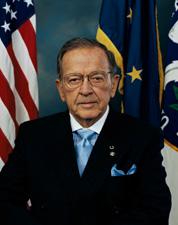 Sen. Ted Stevens (R-AK)
Legislative Activity
Stay on top of the latest movement without scrolling through every action
Senate amendment agreed to: Amendment SA 3882 as modified agreed to in Senate by Unanimous Consent.(text as modified: CR S10477-10478)
October 6, 2004
View full timeline
Senate amendment agreed to: Amendment SA 3882 as modified agreed to in Senate by Unanimous Consent.(text as modified: CR S10477-10478)
October 6, 2004
Considered by Senate. (consideration: CR S10476, S10477-10478)
October 6, 2004
Amendment SA 3882 as modified agreed to in Senate by Unanimous Consent. (text as modified: CR S10477-10478)
October 6, 2004
Considered by Senate. (consideration: CR S10391)
October 5, 2004
Considered by Senate. (consideration: CR S10296)
October 4, 2004
Senate amendment proposed (on the floor): Amendment SA 3882 proposed by Senator Stevens.(consideration: CR S10234-10236; text: CR S10234)
October 1, 2004
Amendment SA 3882 proposed by Senator Stevens. (consideration: CR S10234-10236; text: CR S10234) To improve the provisions relating to the Inspector General of the National Intelligence Authority.
October 1, 2004
Senate amendment submitted
September 30, 2004
Text
Modified
NATIONAL INTELLIGENCE REFORM ACT OF 2004

The PRESIDING OFFICER. Under the previous order, the Senate will
resume consideration of S. 2845, which the clerk will report.
The assistant legislative clerk read as follows:

A bill (S. 2845) to reform the intelligence community and
the intelligence and intelligence-related activities of the
United States Government, and for other purposes.

Pending:

Kyl Amendment No. 3801, to modify the privacy and civil
liberties oversight.
Stevens Amendment No. 3839, to strike section 201, relating
to public disclosure of intelligence funding.
Leahy/Grassley Amendment No. 3945, to require Congressional
oversight of translators employed and contracted for by the
Federal Bureau of Investigation.
Reid (for Harkin) Amendment No. 3821, to modify the
functions of the Privacy and Civil Liberties Oversight Board.
Roberts Amendment No. 3742, to clarify the continuing
applicability of section 504 of the National Security Act of
1947 to the obligation and expenditure of funds appropriated
for the intelligence and intelligence-related activities of
the United States.
Stevens Amendment No. 3827, to strike section 206, relating
to information sharing.
Stevens Amendment No. 3840, to strike the fiscal and
acquisition authorities of the National Intelligence
Authority.
Stevens Amendment No. 3882, to propose an alternative
section 141, relating to the Inspector General of the
National Intelligence Authority.
Warner Amendment No. 3876, to preserve certain authorities
and accountability in the implementation of intelligence
reform.
Levin Modified Amendment No. 3809, to exempt military
personnel from certain personnel transfer authorities.
Levin Amendment No. 3810, to clarify the definition of
National Intelligence Program.
Stevens Amendment No. 3830, to modify certain provisions
relating to the Central Intelligence Agency.
Warner Amendment No. 3875, to clarify the definition of
National Intelligence Program.
Reid (for Leahy) Amendment No. 3913, to address enforcement
of certain subpoenas.
Reid (for Leahy) Amendment No. 3916, to strengthen civil
liberties protections.
Reid (for Leahy) Amendment No. 3915, to establish criteria
for placing individuals on the consolidated screening watch
list of the Terrorist Screening Center.
Collins (for Frist) Modified Amendment No. 3895, to
establish the National Counterproliferation Center within the
National Intelligence Authority.
Collins (for Frist) Amendment No. 3896, to include certain
additional Members of Congress among the congressional
intelligence committees.

The PRESIDING OFFICER. Under the previous order, the time until 11:30

[[Page S10477]]

a.m. will be equally divided for debate between the two managers and 15
minutes of that time will be under the control of Senator Warner and
Senator Levin.
The Senator from Maine.
Ms. COLLINS. Mr. President, I yield 10 minutes to the Senator from
Alaska. I then hope we can proceed to four pending amendments of the
Senator from Alaska.
Mr. REID. On this time, on behalf of Senator Lieberman, I yield 10
minutes to the Senator from Illinois.
The PRESIDING OFFICER. The Senator from Alaska is recognized for 10
minutes, to be followed by the Senator from Illinois for 10 minutes.

Amendments Nos. 3830, As Modified, 3840, As Modified, and 3882, As
Modified, En Bloc

Mr. STEVENS. I have sent three of the pending amendments to the desk
in an amended form. These changes have been coordinated with the
managers of the bill and I believe they are acceptable to them.
The first amendment, No. 3840, revises the acquisition authority of
the national intelligence director and that is at the desk. The second
amendment, No. 3830, modifies a certain provision related to the
Central Intelligence Agency and that amendment is at the desk.
Amendment No. 3882 revises the provisions related to the inspector
general of the National Intelligence Authority. It conforms these
provisions to those in the Inspector General Act and avoids duplication
of the inspector general efforts across the impacted agencies. That
amendment is at the desk.
I appreciate the courtesy of the managers of the bill and their
staffs, and their willingness to engage in dialog on these amendments
with me and my staff.
We are still working to resolve differences over amendment No. 3827
regarding the information-sharing network to address some of the
concerns identified by the White House and others. We hope to reach a
resolution on that language this morning, but, as I said, I thank the
managers of the bill for their help in resolving these issues. It has
been a matter of great concern to those of us who have worked with the
intelligence community for quite some time.
I now ask unanimous consent that amendments Nos. 3840, 3830, and 3882
be amended as noted in the revised amendments that I have sent to the
desk; that the amendments be considered en bloc and adopted en bloc,
and that the motions to reconsider be laid upon the table.
The PRESIDING OFFICER. Is there objection? Without objection, it is
so ordered.
The amendments, as modified, were agreed to, as follows:

amendment no. 3830

On page 28, beginning on line 16, strike ``of the National
Intelligence Director''.
On page 43, beginning on line 1, strike ``OF THE NATIONAL
INTELLIGENCE DIRECTOR''.
On page 43, beginning on line 5, strike ``of the National
Intelligence Director'' and insert ``for the National
Intelligence Director and the Director of the Central
Intelligence Agency''.
On page 43, line 14, add at the end the following: ``Any
use of funds from the Reserve shall be subject to the
direction and approval of the National Intelligence Director
and in accordance with procedures issued by the Director.''.
On page 43, beginning on line 17, strike ``of the National
Intelligence Director''.
On page 141, between lines 15 and 16, insert the following:
(H) the Director of the Central Intelligence Agency or his
designee;
On page 141, line 16, strike ``(H)'' and insert ``(I)''.
On page 141, line 18, strike ``(I)'' and insert ``(J)''.
On page 141, line 21, strike ``(J)'' and insert ``(K)''.
On page 194, beginning on line 23, strike ``of the National
Intelligence Director''.

amendment no. 3840

On page 109, line 6, insert the words ``within the National
Intelligence Program'' after the words ``for each
intelligence program''.
On page 109, strike lines 12 and 13 and insert the
following:
(B) serve as exclusive milestone decision authority, except
that with respect to Department of Defense programs the
Director shall serve as milestone decision authority jointly
with the Secretary of Defense or the designee of the
Secretary; and
On page 110, strike lines 8 through 18 and insert the
following:
(4) If the National Intelligence Director and the Secretary
of Defense are unable to reach agreement on a milestone
decision under this subsection, the Director shall assume
milestone decision authority subject to review by the
President at the request of the Secretary.

amendment no. 3882

On page 60, strike line 5 and all that follows through page
77, line 18, and insert the following:

SEC. 141. INSPECTOR GENERAL OF THE NATIONAL INTELLIGENCE
AUTHORITY.

(a) Inspector General of National Intelligence Authority.--
There is an Inspector General of the National Intelligence
Authority. The Inspector General of the National Intelligence
Authority and the Office of the Inspector General of the
National Intelligence Authority shall be subject to the
provisions of the Inspector General Act of 1978 (5 U.S.C.
App.).
(b) Amendments to Inspector General Act of 1978  Relating
to Inspector General of National Intelligence Authority.--The
Inspector General Act of 1978 (5 U.S.C. App.) is amended--
(1) by redesignating section 8J as section 8K; and
(2) by inserting after section 8I the following new
section:

``special provisions concerning the national intelligence authority

``Sec. 8J. (a)(1) Notwithstanding the last 2 sentences of
section 3(a), the Inspector General of the National
Intelligence Authority (in this section referred to as the
`Inspector General') shall be under the authority, direction,
and control of the National Intelligence Director (in this
section referred to as the `Director') with respect to audits
or investigations, or the issuance of subpoenas, which
require access to information concerning intelligence or
counterintelligence matters the disclosure of which would
constitute a serious threat to national security.
``(2) With respect to information described in paragraph
(1), the Director may prohibit the Inspector General from
initiating, carrying out, or completing any investigation,
inspection, or audit, or from issuing any subpoena, if the
Director determines that such prohibition is necessary to
preserve the vital national security interests of the United
States.
``(3) If the Director exercises the authority under
paragraph (1) or (2), the Director shall submit to the
congressional intelligence committees an appropriately
classified statement of the reasons for the exercise of such
authority within 7 days.
``(4) The Director shall advise the Inspector General at
the time a report under paragraph (3) is submitted, and, to
the extent consistent with the protection of intelligence
sources and methods, provide the Inspector General with a
copy of such report.
``(5) The Inspector General may submit to the congressional
intelligence committees any comments on a report of which the
Inspector General has notice under paragraph (4) that the
Inspector General considers appropriate.
``(b) In addition to the qualifications for the appointment
of the Inspector General under section 3(a), the Inspector
General shall be appointed on the basis of prior experience
in the field of intelligence or national security.
``(c)(1)(A) In addition to the duties and responsibilities
of the Inspector General specified elsewhere in this Act, the
Inspector General shall, for the purpose stated in
subparagraph (B), provide policy direction for, and conduct,
supervise, and coordinate audits and investigations relating
to--
``(i) the coordination and collaboration among elements of
the intelligence community within the National Intelligence
Program; and
``(ii) the coordination and collaboration between elements
of the intelligence community within the National
Intelligence Program and other elements of the intelligence
community.
``(B) The Inspector General shall conduct the activities
described in subparagraph (A) to ensure that the coordination
and collaboration referred to in that paragraph is conducted
efficiently and in accordance with applicable law and
regulation.
``(C) Before undertaking any investigation, inspection, or
audit under subparagraph (A), the Inspector General shall
consult with any other inspector general having
responsibilities regarding an element of the intelligence
community whose activities are involved in the investigation,
inspection, or audit for the purpose of avoiding duplication
of effort and ensuring effective coordination and
cooperation.
``(2) In addition to the matters of which the Inspector
General is required to keep the Director and Congress fully
and currently informed under section 4(a), the Inspector
General shall--
``(A) keep the Director and Congress fully and currently
informed concerning--
``(i) violations of civil liberties and privacy that may
occur in the programs and operations of the National
Intelligence Authority; and
``(ii) violations of law and regulations, violations of
civil liberties and privacy, and fraud and other serious
problems, abuses, and deficiencies that may occur in the
coordination and collaboration referred to in clauses (i) and
(ii) of paragraph (1)(A); and
``(B) report the progress made in implementing corrective
action with respect to the matters referred to in
subparagraph (A).
``(3) To enable the Inspector General to fully and
effectively carry out the duties and responsibilities
specified in this Act, the Inspector General and the
inspectors general of the other elements of the intelligence
community shall coordinate their internal audit,

[[Page S10478]]

inspection, and investigative activities to avoid duplication
and ensure effective coordination and cooperation.
``(4) The Inspector General shall take due regard for the
protection of intelligence sources and methods in the
preparation of all reports issued by the Inspector General,
and, to the extent consistent with the purpose and objective
of such reports, take such measures as may be appropriate to
minimize the disclosure of intelligence sources and methods
described in such reports.
``(d)(1) Each semiannual report prepared by the Inspector
General under section 5(a) shall--
``(A) include an assessment of the effectiveness of all
measures in place in the National Intelligence Authority for
the protection of civil liberties and privacy of United
States persons; and
``(B) be transmitted by the Director to the congressional
intelligence committees.
``(2) In addition the duties of the Inspector General and
the Director under section 5(d)--
``(A) the Inspector General shall report immediately to the
Director whenever the Inspector General becomes aware of
particularly serious or flagrant problems, abuses, or
deficiencies relating to--
``(i) the coordination and collaboration among elements of
the intelligence community within the National Intelligence
Program; and
``(ii) the coordination and collaboration between elements
of the intelligence community within the National
Intelligence Program and other elements of the intelligence
community; and
``(B) the Director shall transmit to the congressional
intelligence committees each report under subparagraph (A)
within 7 calendar days of receipt of such report, together
with such comments as the Director considers appropriate.
``(3) Any report required to be transmitted by the Director
to the appropriate committees or subcommittees of Congress
under section 5(d) shall also be transmitted, within the 7-
day period specified in that section, to the congressional
intelligence committees.
``(4) In the event that--
``(A) the Inspector General is unable to resolve any
differences with the Director affecting the execution of the
duties or responsibilities of the Inspector General;
``(B) an investigation, inspection, or audit carried out by
the Inspector General should focus on any current or former
National Intelligence Authority official who holds or held a
position in the Authority that is subject to appointment by
the President, by and with the advice and consent of the
Senate, including such a position held on an acting basis;
``(C) a matter requires a report by the Inspector General
to the Department of Justice on possible criminal conduct by
a current or former official described in subparagraph (B);
``(D) the Inspector General receives notice from the
Department of Justice declining or approving prosecution of
possible criminal conduct of any current or former official
described in subparagraph (B); or
``(E) the Inspector General, after exhausting all possible
alternatives, is unable to obtain significant documentary
information in the course of an investigation, inspection, or
audit,
the Inspector General shall immediately notify and submit a
report on such matter to the congressional intelligence
committees.
``(5) Pursuant to title V of the National Security Act of
1947 (50 U.S.C. 413 et seq.), the Director shall submit to
the congressional intelligence committees any report or
findings and recommendations of an investigation, inspection,
or audit conducted by the office which has been requested by
the Chairman or Ranking Minority Member of either committee.
``(e)(1) In addition to the other authorities of the
Inspector General under this Act, the Inspector General shall
have access to any personnel of the National Intelligence
Authority, or any employee of a contractor of the Authority,
whose testimony is needed for the performance of the duties
of the Inspector General. Whenever such access is, in the
judgment of the Inspector General, unreasonably refused or
not provided, the Inspector General shall report the
circumstances to the Director without delay.
``(2) Failure on the part of any employee or contractor of
the National Intelligence Authority to cooperate with the
Inspector General shall be grounds for appropriate
administrative actions by the Director, including loss of
employment or termination of an existing contractual
relationship.
``(3) Whenever, in the judgment of the Director, an element
of the intelligence community that is part of the National
Intelligence Program has unreasonably refused or not provided
information or assistance requested by the Inspector General
under paragraph (1) or (3) of section 6(a), the Director
shall so inform the head of the element, who shall promptly
provide such information or assistance to the Inspector
General.
``(4) The level of classification or compartmentalization
of information shall not, in and of itself, provide a
sufficient rationale for denying the Inspector General access
to any materials under section 6(a).
``(f) In addition to the authorities and requirements in
section 7 regarding the receipt of complaints by the
Inspector General--
``(1) the Inspector General is authorized to receive and
investigate complaints or information from any person
concerning the existence of an activity constituting a
violation of laws, rules, or regulations, or mismanagement,
gross waste of funds, abuse of authority, or a substantial
and specific danger to the public health and safety; and
``(2) once such complaint or information has been received
from an employee of the Federal Government--
``(A) the Inspector General shall not disclose the identity
of the employee without the consent of the employee, unless
the Inspector General determines that such disclosure is
unavoidable during the course of the investigation or the
disclosure is made to an official of the Department of
Justice responsible for determining whether a prosecution
should be undertaken; and
``(B) no action constituting a reprisal, or threat of
reprisal, for making such complaint may be taken by any
employee in a position to take such actions, unless the
complaint was made or the information was disclosed with the
knowledge that it was false or with willful disregard for its
truth or falsity.
``(g) In this section, the terms `congressional
intelligence committees', `intelligence community', and
`National Intelligence Program' have the meanings given such
terms in section 2 of the National Intelligence Reform Act of
2004.''.
(c) Technical and Conforming Amendments to Inspector
General Act of 1978.--(1)(A) Section 8H(a)(1) of the
Inspector General Act of 1978 (5 U.S.C. App.) is further
amended--
(i) by redesignating subparagraph (C) as subparagraph (D);
and
(ii) by inserting after subparagraph (B) the following new
subparagraph (C):
``(C) An employee of the National Intelligence Authority,
of an entity other than the Authority who is assigned or
detailed to the Authority, or of a contractor of the
Authority who intends to report to Congress a complaint or
information with respect to an urgent concern may report the
complaint or information to the Inspector General of the
National Intelligence Authority.''.
(B) In support of this paragraph, Congress makes the
findings set forth in paragraphs (1) through (6) of section
701(b) of the Intelligence Community Whistleblower Protection
Act of 1998 (title VII of Public Law 105-272; 5 U.S.C. App.
8H note).
(2) The Inspector General Act of 1978 is further amended--
(A) in section 8K, as redesignated by subsection (b)(1) of
this section, by striking ``8F or 8H'' and inserting ``8F,
8H, 8I, or 8J''; and
(B) in section 11--
(i) in paragraph (1), by inserting ``the National
Intelligence Director;'' after ``the Attorney General;''; and
(ii) in paragraph (2), by inserting ``the National
Intelligence Authority,'' after ``the National Aeronautics
and Space Administration,''.
(d) Separate Budget Account.--The National Intelligence
Director shall, in accordance with procedures to be issued by
the Director in consultation with congressional intelligence
committees, include in the National Intelligence Program
budget a separate account for the Office of Inspector General
of the National Intelligence Authority.
(e) Sense of Congress On Adoption of Standards of Review.--
It is the sense of Congress that the Inspector General of the
National Intelligence Authority, in consultation with other
Inspectors General of the intelligence community and the
President's Council on Integrity and Efficiency, should adopt
standards for review and related precedent that are generally
used by the intelligence community for reviewing
whistleblower reprisal complaints made under sections 7 and
8J(f) of the Inspector General Act of 1978.
On page 203, strike lines 9 through 22.
On page 204, line 1, strike ``312.'' and insert ``311.''.

The PRESIDING OFFICER. The Senator from Maine.
Ms. COLLINS. Mr. President, I thank the senior Senator from Alaska
for working with Senator Lieberman and me to resolve these three
amendments. I very much appreciate the good-faith suggestions that were
made on both sides, and I am grateful to him for working with us to
address his concerns.
I think we have come up with very good suggestions, and I am pleased
that the amendments have been adopted.
The PRESIDING OFFICER. The Senator from Alaska.
Mr. STEVENS. How much time do I have remaining of the 10 minutes?
The PRESIDING OFFICER. There is 7\1/2\ minutes.

Weapons of Mass Destruction

Mr. STEVENS. Mr. President, I have heard this talk about the
inspectors and their conclusion that they have not found weapons of
mass destruction. Seventeen times the United Nations asked Saddam
Hussein to disclose where the weapons of mass destruction were. We know
he used them on the Kurds. We know he used them in Iran. We know we
have evidence he was trying to build additional weapons but the
inspectors kept asking to return. They asked again and again to return
so they could find out if there was evidence of where he had those
weapons of mass destruction.

[[Page S10479]]

Now they are before the Armed Services Committee this morning and
they are going to testify that they have found ``no evidence'' of the
weapons of mass destruction. We had the same conclusion with regard to
the Iraqi air force. We were told Saddam had destroyed a series of
airplanes. Later we found them buried in the Iraqi desert--a whole
series of airplanes--the whole airplane buried. It was capable of being
dug up, brought out of the dirt and used.
Now, we have not found the weapons of mass destruction yet. This
Senator believes he had them. We know he had them in the Kurd area. We
know he used them on Iran. This idea that somehow or another the
President or the Vice President have lied, I am tired of hearing this
disrespect for the President and Vice President of the United States
and I will be willing to debate any time what happened in Iraq.
I went to Kuwait time after time, and to Saudi Arabia, and talked to
the pilots who were flying the continuous air patrol over Iraq. Since
the gulf war, our pilots were up there every day, and every day they
were shot at by ground-to-air weapons that Saddam was not supposed to
have at all.
This idea that somehow or another the President and Vice President of
the United States lied because they believed there were weapons of mass
destruction there, I believe there are weapons of mass destruction
there and I still believe there are weapons there somewhere. Where they
have taken them, I do not know, but they have not found them. The
inspectors kept finding enough reason to go back and go back. They went
back 17 times.
To say the President lied, what about those inspectors who said, We
have to go back; we have not found them yet but we are going to find
some more? Did they lie?
I think there ought to be greater respect for the Presidency and the
Vice Presidency of this country, and in this campaign. I have never
heard such disrespect. I did not go out and campaign against President
Clinton and say he lied, and yet we know he did. He admitted he lied
about the matters that were before the grand jury. Now we did not go
out and accuse the President of lying. We had a lot of discussions on
the floor about that.
So if we want to compare Presidents and who lied and who did not, I
am ready any time the Democrats want to do it, but I am tired of this
disrespect. It is time we showed respect for the system. I do not
remember in the past when a Senator asked another Senator to yield and
if that Senator had time, it normally would happen. At the very least
the Senator would say: Let me finish my statement now and I will yield
at the end of my statement. That kind of senatorial courtesy has to
come back to the Senate.
If the Senator wants me to yield, I will yield the remainder of my
time.
The PRESIDING OFFICER. Has the Senator yielded the floor?
The Senator from Illinois.
Mr. DURBIN. Mr. President, it is my understanding I have 10 minutes.
The PRESIDING OFFICER. That is correct.
Mr. DURBIN. Mr. President, let me say that----
Mr. STEVENS. The Senator has 10 minutes on his time on the 1 hour to
which the Senator is entitled.
The PRESIDING OFFICER. That is correct.
Mr. DURBIN. Mr. President, if the Senator will check the record, he
will find that without exception I have always yielded for a question
but I was in a difficult position because the Senator from Delaware
wanted to speak after me. In the entire amount of time given to me, I
would have been happy to yield.
I think, frankly, dialog between two Senators is something perilously
close to debate in the Senate, which we hardly ever have. I am sorry we
did not have that opportunity, but I think we have the opportunity at
this moment.
What I hear from the Senator from Alaska is that we should show
respect for the Office of the Presidency. I could not agree more.
Whether the President is of my party or any other party, he should be
given respect. Even if I disagree with that President, his policy or
his statements, I am hoping that I will always be viewed as a person
who has that respect for the Office of the Presidency. That is the
least that is expected of every single Member of Congress, and I hope
the people across the United States.
Having said that, I do not believe that disagreeing with the policies
of an administration is disrespectful. In fact, I think it is part of
the national debate which makes America so unique.
I do not believe it is disrespectful to say that the information
given by the President, the Vice President, the Secretary of Defense,
and the Secretary of State was wrong and misleading. It was. I have
never used the word ``lie,'' nor would I because a lie means there was
a deliberate misrepresentation. I don't have any evidence there was a
deliberate misrepresentation. But there was a misrepresentation, at
least in four specific elements. Let me tell you what they were.
The administration misled the American people in believing there were
weapons of mass destruction--an arsenal of chemical, biological, and
nuclear weapons set to strike countries in the Middle East as well as
the United States--in Iraq before our invasion. We know now, based on
clear and convincing evidence, there is no indication that Saddam
Hussein ever had these arsenals of weapons of mass destruction. So when
the President and the administration said that to justify the invasion,
they were wrong. The American people were misled. That is a fact.
Point No. 2, this administration misled the American people about the
capacity of Iraq to build nuclear weapons. Yesterday I came to the
floor and talked about the most recent disclosure about aluminum tubes.
The American people were misled into believing Saddam Hussein was about
to become a nuclear power, threatening the region and the United
States. The administration was wrong. The American people were misled.
Point No. 3, the administration said there was linkage, and I quoted
this morning direct quotes from Vice President Cheney. They argued
there was linkage between Saddam Hussein and the 9/11 tragedy in
America; that somehow Saddam Hussein and al-Qaida were consorting to
attack the United States. We have seen repeatedly through the 9/11
Commission Report, the Senate Intelligence Committee report, as well as
clear statements now, today, by the Secretary of Defense, that was
wrong. The American people were misled. That is a fact.
These elements are facts that cannot be denied. To say the
administration misled the American people is there for the record. I
have not said the President lied. But I do say he gave wrong
information to the American people, and even the President has conceded
that fact. When the Secretary of Defense says there is no linkage, when
the President removes the offensive words from the State of the Union
Address, he concedes the fact that statements made before the invasion
were misleading and they were wrong.
Why in the world can't this administration accept that reality? Why
do they have to cling to the fiction that was presented to the American
people?
The Senator from Alaska said we should show respect for the
Presidency, and I agree. But more important, we need to show respect
for the American people. They are the ones we serve, the President and
every Member of Congress. We need to show them respect by giving them
the clear, unvarnished truth so they understand the facts before we
make critical decisions.
We have now lost over 1,050 of our best and brightest and bravest
American soldiers in Iraq. We lost them because we invaded that country
before we let the inspectors do their job in Iraq, before we created a
broad coalition of countries that would join us in this military
effort, and here we stand today.
Last night, Vice President Cheney said don't demean the coalition.
Other countries stand with us. I certainly respect the fact that they
would stand by the side of America. But make no mistake, when you open
the morning paper, regularly, virtually every morning you learn of the
death of another American soldier. It is American soldiers who are
fighting and dying in Iraq in much greater numbers, even, than any
other country I should say, and much greater numbers than I think
should be the case.
Had this President done the same thing his father did, gone to the
United Nations for approval of our invasion, put together a coalition
of nations

[[Page S10480]]

which included Arab nations--President Bush's father understood that,
in the Persian Gulf. He knew that to bring in Arab nations as part of
the coalition meant there would be less resentment in Arab states for
our action. This President did not wait to bring in an Arab state to
help us in this coalition of the willing. As a consequence, the
resentment against the actions of the United States in the Arab world
has been growing apace, and we have found the recruiting efforts to
find more terrorists to not only invade Iraq and kill our soldiers but
to spread around the world are mushrooming. Are we safer today because
of that invasion, because we didn't build the coalition? I think not.

I am glad Saddam Hussein is in prison. I am glad he is out of power.
But don't diminish the cost to the United States and the fact that
there is no end in sight to this war in Iraq.
There was no plan from this administration to execute this war and
protect our troops with body armor, with Humvees armored, with
protective equipment on helicopters, and certainly we understand today,
based on Ambassador Bremer's statements just 2 days ago, that we didn't
have a sufficient number of troops to bring stability to the region.
We are paying the price for those bad decisions. Statements were made
by this administration that were wrong and misleading. Decisions were
made that clearly evidence that we were not prepared, as we should have
been. We are paying that price, and there is no end in sight.
If the Senator from Alaska suggests it is disrespectful to the
President to raise these issues, I respectfully disagree with him. It
is our obligation to have an open, honest, national debate about the
foreign policy of this country, which involves families far and wide in
Illinois, Alaska, and around the United States.
I reserve the remainder of my time.
The PRESIDING OFFICER. The Senator from Alaska.
Mr. STEVENS. Mr. President, I am delighted to have an opportunity to
debate with the Senator from Illinois because I listened to the
comments he made before, comments I violently disagree with. For
instance, in 1998, President Clinton went before the general officers
of this Nation, officers from all of our units of the military, and he
told them he believed Saddam Hussein had weapons of mass destruction.
He laid down a just challenge to Saddam Hussein to come forward and
disclose them or he believed he might have to go into Iraq himself.
That seems to be forgotten.
Apparently, the Senator from Illinois didn't hear the Vice President
when he mentioned Mr. Zarqawi last night, a man who was in Iraq before
even the problems of Afghanistan who was operating there. He is back
there now. He had operated in Afghanistan and Pakistan, was part of the
bad guys there. Now we know he is back in Iraq again. He is mentioned
as being one of the senior contacts within the al-Qaida organization
that was there before and came back again now. The Vice President has
mentioned the contacts that existed in the al-Qaida world in Iraq.
I still believe he was right. There is no question about it. There
was a portion of the terrorist organization in Iraq before, and they
are back there now.
As far as the weapons of mass destruction, I believe at the time we
had seen the briefings--and I am one of the eight in the Congress who
received the same briefings the President of the United States got
about Iraq. We got them in confidence. As a matter of fact, even the
statement the Senator from Illinois made about Mr. Bremer, who is the
President's representative, that is from a classified report that we
should not be discussing on the floor. It ended up somehow being
leaked, that one line from the report. But the report deals with the
overall relationship of Mr. Bremer to the whole process.
The problem is this: When we look at the Bremer situation, what
Bremer did--we were there. We talked to him. He did want more forces
around Baghdad. He thought there should be more. The President relied
upon our general officers. He told me personally and he told us as we
went to Iraq and came back from Iraq, we are doing what our general
officers request, as far as the troop strength is concerned.

The general officers disagreed with Bremer as to the location of
those forces. There is no question about it. We probably should have
had more. In my opinion, we should have been able to come through Iraq
from the north, through Turkey, and come from the south from Kuwait,
and had two forces moving through Iraq and squash those people over
there.
Instead, because of developments in Turkey, we could not go through
Turkey. We flew our troops down to Kuwait, we took their supples all
the way around, and when the supplies reached them they then went in,
and instead of having forces meet in Baghdad, particularly in Saddam
Hussein's home part of Iraq, they then come back to Baghdad, and that
left them spread out. My memory is that the insurrection started in the
south because the forces had gone north and we couldn't spread them
that thin.
People said: Send more troops. Send more troops. We heard that on the
floor: Send more troops. The ability to maintain and supply those
troops was a real difficult situation, particularly when all the
support supplies were coming through Kuwait. We even started sending
some supplies through Jordan.
But the problem really is what happened in terms of Saddam Hussein,
in terms of the relationship to al-Qaida, and the relationship to
weapons of mass destruction. I stood here on the floor of the Senate
and called Saddam Hussein a Hitler. I did that at least 9 months before
the war started. I still believe he was a Hitler. He invaded Kuwait,
and we had to kick him out. He was rebuilding his military within that
area that he still maintained control of in Iraq. We had control of the
south and north part of his country. Yet look at it in terms of the no-
fly zone we were trying to protect.
But in terms of the part he controlled he was rebuilding his military
because of the money that came into his hands through the ``food-for-
oil'' program.
You can stand here, no matter what you say, and say we haven't found
weapons of mass destruction. That is true. We haven't found them. I
still believe there are some out there, whether they are in adjoining
nations or buried in the ground. Whatever happened to them, he had
them.
To accuse the administration of misleading the public when they
relied upon the intelligence analysts that we relied on--the same
intelligence analysts President Clinton relied on when he made his 1998
speech. Certainly those of us who were here supported the resolution
that asked the President to send troops into Iraq; we believed it. When
you look at it, if we want to get into situations when Senator Kerry
voted against the 1991 war resolution in spite of what Iraq did in
invading Kuwait, he voted against us going into Kuwait to liberate
Kuwait.
I think my friends on the other side of the aisle have been wrong for
30 years. As a matter of fact, those on the other side of the aisle
mainly opposed the Reagan buildup in the 1980s. I was chairman of the
Defense Appropriations Subcommittee, and I remember those votes. Fifty
times here we voted on amendments that were offered to try to strike
weapons systems from the defense bill that I managed to bring to the
floor to rebuild the military capacity of the United States. All of
those amendments came from the other side of the aisle.
When you look at it, when you look at the trouble, why did we have a
shortage of intelligence? President Clinton started degrading human
intelligence in the CIA. He denuded the intelligence system as far as
human intelligence is concerned because he wanted to rely on the
satellites in the air and the communications systems, electrical
systems.
I cannot believe we are going to get into these one-sided statements.
I would like to have a full debate. I am sort of at a loss. I don't
have my records. The Senator from Illinois has his records, but I don't
have them.
But I have a feeling that had we not denuded the CIA in the 1990s, we
would have had better intelligence. But the information we had relied
upon, the American public relied upon, and this Senate relied upon when
we voted to give the President the right to go into Iraq.

[[Page S10481]]

To say the President was wrong because he relied on the same
intelligence we relied upon I think is a faulty argument, and it should
not happen on the floor of the Senate in a political season where we
are trying to destroy the reputation which the President deserves for
having the guts to do what Clinton didn't have the guts to do.
The PRESIDING OFFICER. The Senator from Illinois.
Mr. DURBIN. Mr. President, how much time do I have remaining?
The PRESIDING OFFICER. There are 3\1/2\ minutes remaining.
Mr. DURBIN. Mr. President, let me say in response to the Senator from
Alaska before he leaves the floor--I want to let him know I want to
respond to his comments so there will be no mistake about it.
First, the statement that Ambassador Bremer's comments had something
to do with classified information, what I have said on the floor was
based upon some front pages of the newspapers. Ambassador Bremer was
reported to have said to a private organization in a speech that one of
the problems we have in Iraq today stems from the fact that we had an
inadequate number of troops in the field to bring stability, to stop
the looting and violence immediately after the deposition of Saddam
Hussein. That is not classified. It is on the front pages of the
newspapers. Ambassador Bremer has now backed away from those comments.
But the fact is he made them, and many believe the same thing--that we
had an inadequate number of troops at the right and appropriate moment
and are paying the price today because the insurgency has grown.
Second, last night Vice President Cheney, and this morning the
Senator from Alaska, make a great deal about the so-called Ayman al-
Zawahiri link, a ruthless terrorist who is affiliated with al-Qaida.
The Vice President made the statement last night that the Senator made
today--that there was a linkage between Ayman al-Zawahiri and Saddam
Hussein and, therefore, proof positive al-Qaida and Saddam Hussein were
working together justified the invasion.
I commend to my colleagues and those following the debate this
morning's report from MSNBC.com from Washington:

A CIA report has found no conclusive evidence that former
Iraqi President Saddam Hussein harbored Ayman al-Zawahiri
which the Bush administration asserted before the invasion of
Iraq.

This is a fact. It comes from the President's own CIA. They continue
to build these straw men to justify an invasion when the facts don't
back them up--no weapons of mass destruction, no nuclear arsenal, no
evidence of bringing in yellowcake from Niger, no evidence of linkage
with al-Qaida. And they cling tenaciously and stubbornly to these
assertions even though the facts defeat them.
How can you trust an administration that will not accept the facts
and reality to prepare a defense for America? Shouldn't the defense of
our Nation be based on reality rather than theory? Shouldn't it be
based on sound intelligence instead of political ideology? I would
think so.
Any President who comes to this office with a predetermined set of
ideas on what we need to do to protect America regardless of the facts
is not serving our country well. I hope both political parties would
acknowledge that.

Amendment No. 3801

Let me also say we are about to consider in the early parts of the
debate this morning an amendment by Senator Kyl to the underlying bill
on intelligence reform. I oppose this amendment. I hope my colleagues
will join me in opposing it.
We have come together with a bipartisan agreement on the civil
liberties board. It is a board which has been created by both sides of
the aisle working to implement the recommendations in the 9/11
Commission report. What Senator Kyl is trying to do is take away some
important powers and responsibilities of this board.
For example, he wants to eliminate the board's standard of review.
This is the standard that the board uses to take a look at proposed
expansions of the government's power and make sure they don't infringe
on rights. What Senator Kyl suggests is we take away the standard of
review from the civil liberties board. That would frankly create a ship
above water.

We need to make sure this board has a standard of review so they can
look at government actions and decide whether they go too far. That is
what the 9/11 Commission suggested and that is what we should stick to.
Senator Kyl's amendment also would remove the Board's subpoena power.
He said he would be concerned that this civil liberties board would be
subpoenaing members of our Government, agents of our Government, to
come in from all over the world and give them evidence. I hope the
Senator from Arizona will read this provision more carefully and more
closely because the subpoena authority in this bill is very narrow. It
only applies to people outside of the Government.
The Kyl amendment would also eliminate the requirement of the board
to inform the public about its activities in a manner consistent with
protecting classified information. This directly contradicts the
recommendation of the 9/11 Commission. We are talking about protecting
the American public's rights, liberties, and freedoms. It is essential
that the work of the civil liberties board be made public so the
American people can understand what they are doing and whether our
Government has gone too far. Why the Senator from Arizona would want to
keep secrecy and a veil over this activity, I don't understand.
I certainly hope we reject the Kyl amendment which would demolish the
Collins-Lieberman civil liberties board, a bipartisan creation. It
would upset the delicate balance between government powers and civil
liberties this bill strikes. I urge my colleagues to oppose the
amendment.
I yield the floor and suggest the absence of a quorum.
The PRESIDING OFFICER. The clerk will call the roll.
The assistant legislative clerk proceeded to call the roll.
Mr. REID. Mr. President, I ask unanimous consent that the order for
the quorum call be dispensed with.
The PRESIDING OFFICER. Without objection, it is so ordered.
Mr. REID. I ask unanimous consent that the time for the quorum call
be charged equally to both sides.
The PRESIDING OFFICER. Without objection, it is so ordered.
Mr. REID. I suggest the absence of a quorum.
The PRESIDING OFFICER. The clerk will call the roll.
The assistant legislative clerk proceeded to call the roll.
Mr. REID. Mr. President, I ask unanimous consent that the order for
the quorum call be rescinded.
The PRESIDING OFFICER. Without objection, it is so ordered.
Mr. REID. Is there still time on both sides under the order that has
been entered?
The PRESIDING OFFICER. There is 20 minutes on each side.
Mr. REID. The Senator from Delaware gets 5 minutes.
Mr. CARPER. I thank the minority leader for yielding to me.
The PRESIDING OFFICER. The Senator from Delaware is recognized.
Mr. CARPER. I thank the Chair.
(The remarks of Mr. CARPER pertaining to the introduction of S. 2899
are located in today's Record under ``Statements on Introduced Bills
and Joint Resolutions.'')
Mr. REID. I suggest the absence of a quorum and I ask the time be
charged equally.
The PRESIDING OFFICER. Without objection, it is so ordered.
The clerk will call the roll.
The assistant legislative clerk proceeded to call the roll.
Mr. REID. Mr. President, I ask unanimous consent that the order for
the quorum call be rescinded.
The PRESIDING OFFICER. Without objection, it is so ordered.
(The remarks of Mr. REID pertaining to the submission of S. Res. 448
are printed in today's Record under ``Submitted Resolutions.'')
The PRESIDING OFFICER. The Senator from Vermont is recognized.
Mr. LEAHY. Parliamentary inquiry: Was there time reserved for the
Senator from Vermont prior to the vote?
The PRESIDING OFFICER. No.
Mr. LEAHY. Mr. President, I seek recognition in my own right.
Ms. COLLINS. Mr. President, how much time does the Senator need? I
believe 30 minutes has been reserved for

[[Page S10482]]

Senator Warner and Senator Levin of the hour and a half of debate that
was available this morning.
Mr. LEAHY. Mr. President, am I correct that we are planning to vote
at 11:30 on the Kyl amendment?
The PRESIDING OFFICER. That is the order.
Mr. LEAHY. Mr. President, I will speak for 3 to 4 minutes on the Kyl
amendment.
Mr. REID. Mr. President, if I may say to my distinguished friend, the
Senator from Vermont, time was evenly divided, and the minority's time
is gone. We were not aware of the Senator from Vermont needing time.
I ask the Senator from Maine, does she wish to make a statement? All
the time left is hers.
Ms. COLLINS. Mr. President, I do intend to speak, so we need to
reserve time. I am also concerned that the two Senators who
specifically requested time have not had an opportunity to speak.
Mr. REID. They have had an opportunity but have not taken it. We need
to get this vote off near the time. The Senator from Vermont needs 3 or
4 minutes.
I ask unanimous consent that the Senator from Vermont be recognized
for 4 minutes and that time also be added to that of the majority, so
there would be an extra 8 minutes. We cannot extend it past that time
because there are things people need to do.
Ms. COLLINS. Mr. President, I have no objection.
The PRESIDING OFFICER. Without objection, it is so ordered.
The Senator from Vermont is recognized.
Mr. LEAHY. Mr. President, I thank the Senator from Nevada and the
Senator from Maine.
Mr. President, I rise today to discuss the provisions in the Collins-
Lieberman bill establishing a privacy and civil liberties oversight
board and to respond to some of the disturbing discourse and efforts to
undermine those provisions.
It is unquestioned that one of the key recommendations of the 9/11
Commission was the creation of a civil liberties board to fill a clear
void in government structure for addressing these concerns. The
Commission discovered that there was ``no office within the government
whose job it is to look across the government at the actions we are
taking to protect ourselves to ensure that liberty concerns are
appropriately considered.'' In response to this vacuum, the Commission
explicitly recommended that ``at this time of increased and
consolidated government authority, there should be a board within the
executive branch to oversee adherence to the guidelines we recommend
and the commitment the government makes to defend our civil
liberties.'' The 9/11 Commission concluded: ``We must find ways of
reconciling security with liberty, since the success of one helps
protect the other.''
The Commission was certainly right. There is no doubt that such a
board is needed given the heightened civil liberty tensions created by
the realities of terrorism and modern warfare. The tools of the
information age include precise data-gathering, networked databases,
and tracking and sensing technologies impervious to the common eye. The
legal tools are similarly powerful, ranging from substantial
capabilities under the USA PATRIOT Act and under our immigration laws.
As the Commission noted, ``[e]ven without the changes we recommend, the
American public has vested enormous authority in the U.S. government.''
In an even more pointed and ominous assessment of these powers, Vice
Chairman Hamilton noted, in a recent Judiciary Committee hearing, these
developments are ``an astounding intrusion in the lives of ordinary
Americans that (are) routine today in government.''
One of my colleagues suggested that this bill is solely to strengthen
our intelligence tools and ``not a bill regarding our civil
liberties.'' But this is a myopic view. You cannot divorce one from the
other. Security and liberty are always in tension in a free society,
and that is readily apparent today. It is our vigilant duty to work
hard at striking the right balance. We must enhance our capabilities,
but with such powerful tools comes heightened responsibility, and the
Commission has challenged us to take up those reins: ``This shift of
power and authority to the government calls for an enhanced system of
checks and balances to protect the precious liberties that are vital to
our way of life.''
We have an obligation to ensure that there are mechanisms in place
that will see to it that this power is subject to appropriate checks
and balances and congressional oversight. An effective civil liberties
board can help provide those checks and contribute to preserving both
liberty and security.
We need a civil liberties board whose members collectively can think
critically and independently about the policies we implement as a
nation and about how they affect our fundamental rights. The board must
be able to participate in the policymaking process, review technology
choices and options, peer into various agencies and assess actions,
review classified materials and investigate concerns. This board must
have the versatility to work closely with government officials, but at
the same time it must be sufficiently independent to assess those
government policies without fear, favor or compromise. Given these
significant responsibilities, it is equally important that the board be
accountable to Congress and the American people.
The civil liberties board outlined in the Collins-Lieberman bill
makes great strides toward meeting these goals. It represents a true
bipartisan effort from conception to introduction. I was pleased to
work with these Senators along with Senator Durbin to make this civil
liberties board the kind of board that would honor the 9/11
Commission's intent. It should not go without notice that Commissioners
Slade Gorton and Richard Ben-Veniste issued a bipartisan statement
that, ``A civil liberties board of the kind we recommend can be found
in the Collins-Lieberman bill in the Senate.''
This legislation establishes a bipartisan board that would have
access to the documents and information needed to assess our
counterterrorism policies that affect the vital civil liberties of the
American people. It provides a mechanism for them to work closely with
administration officials, including working with a network of newly
created department-level privacy and civil liberty officers, whose
proximity to decision makers will ensure that these concerns are
considered from the earliest stages of policy formation. It requires
the board to report to Congress on a regular basis, and--without
compromising classified information--to inform the public about
policies that affect their vital liberties.
Unfortunately, Senator Kyl's amendment 3801 attempts to gut the
carefully crafted, bipartisan civil liberty and privacy provisions that
are the hallmark of the Collins-Lieberman bill. It is inconsistent with
the recommendations of the 9/11 Commission and would undermine the
civil liberties that we cherish.
First, Senator Kyl's amendment attempts to cut off the information
flow that would ensure that the board could accurately, reliably and
effectively advise on the impact of policies on privacy and civil
liberties. It would also eliminate the board's ability to subpoena
people outside of the government who may have important information,
such as private sector data collectors working on behalf of the
government. It would also eliminate the privacy officers, as well as
public hearings and reports to the public.
It is clear that the Commission intended for the board to have access
to the information that it needed in order to effectively assess
policy. In a recent House Judiciary Committee hearing, Vice Chairman
Hamilton said, ``The key requirement is that government agencies must
be required to respond to the board.'' He went on to note that the
Commission itself had subpoena power, and ``if we had not had it, our
job would have been much, much more difficult.'' I would note that the
Collins-Lieberman bill does not go as far as to mandate subpoena power
over government officials, but rather only over relevant non-government
persons.

Given the secrecy and civil liberty concerns that have been pervasive
in this administration, we should be enhancing information flow and
dialogue, not eliminating it. It is ironic that at the same time that
the administration has been making it more difficult for the public to
learn what government agencies are up to, the government and its
private sector partners have been

[[Page S10483]]

quietly building more and more databases to learn and store more
information about the American people themselves.
Second, Senator Kyl's amendment would eliminate a provision that
gives the board important guidance on how to review requests by the
government for new and enhanced powers. This is a critical omission. In
order to balance liberty and security, we need to ensure that the board
will be looking at policies through a prism that would allow for
heightened security protection, while also ensuring that intrusions are
not disproportionate to benefits, or that they would unduly undermine
privacy and civil liberties. This guidance would also keep the board
focused on the right priorities and prevent the mission creep that some
fear.
Contrary to assertions that this would be a ``citizen board'' gone
wild that would ``haul any agent in anywhere in the world and grill
him,'' this board would consist of highly accomplished members who have
the appropriate clearance to access classified information, who have
extensive professional expertise on civil liberty and privacy issues,
and who have the knowledge of how to view these concerns in the context
of important anti-terrorism objectives. Again, its subpoena power would
be limited to non-government persons, and so could not used willy-nilly
to drag in agents from the field.
It simply cannot be that the government can create and implement
policies that impinge on our liberties without having to account to
anyone. While that may make things convenient or easy, it certainly
does not preserve the ideals of the country we are fighting to protect.
As the Commission reminded us, ``if our liberties are curtailed, we
lose the values that we are struggling to defend.''
Some have suggested that we leave this responsibility to ``federal
agencies that are already equipped and designed for that function.''
But this misses precisely the point raised in the report. There is
currently no such suitable entity that can look across government and
offer an independent, uncompromised assessment of the impact of
government powers on civil liberties. And I emphasize look, because
some would suggest that we do not need a board with an affirmative
obligation to go out and review policy. To the contrary, what we do not
need is passivity. We need to be as vigilant about protecting our
fundamental rights as we are in hunting down and capturing terrorists.
It is what Commissioner Gorton, a former Republican Senator from
Washington, described as a ``watchdog to assure maximum protection of
individual rights and liberties in those programs.'' Similarly,
Commissioner Hamilton has said that ``it ought to have a very tough
investigative staff and it ought to be a very active board and
agency.''
Others have suggested that the administration's recent efforts are a
suitable substitute. I strongly disagree. Rather, the Executive Order
attempted to foist upon us an anemic civil liberties board. I and
several of my colleagues noted in a letter to the President that the
board was not a bipartisan or independent entity. It had no authority
to access information and it had no accountability. It was housed in
the Department of Justice, and it was comprised solely of
administration officials from the law enforcement and intelligence
communities, precisely the communities that the board would have an
obligation to oversee. It was the proverbial case of the fox guarding
the henhouse. This would not have resulted in a vigorous consideration
of policy that the Commission intended.
As the Commission noted, the ``burden of proof for retaining a
particular governmental power should be on the Executive, to explain
(a) that the power actually materially enhances security and (b) that
there is adequate supervision of the Executive's use of the powers to
ensure protection of civil liberties. If the power is granted, there
must be adequate guidelines and oversight to properly confine its
use.''
We should be looking for ways to ensure that this burden of proof
will be met, rather than weakening oversight and accountability.
As the 9/11 Commission noted, when it comes to security and civil
liberties, ``while protecting our homeland, Americans should be mindful
of threats to vital personal and civil liberties. This balancing is no
easy task, but we must constantly strive to keep it right.''
Senator Kyl's amendment fails to ``keep it right,'' and I urge that
the Senate honor the spirit of the recommendations of the 9/11
Commission, and reject it.
Senators Collins and Lieberman have it right in their bill and we
should not allow that to be gutted.
I ask unanimous consent that a letter to the President from myself
and others on this subject be printed in the Record.
There being no objection, the material was ordered to be printed in
the Record, as follows:
U.S. Senate,

Committee on the Judiciary,

Washington, DC, September 21, 2004.
Hon. George W. Bush,
President of the United States,
The White House, Washington, DC.
Dear President Bush: We are writing in response to the
recent creation and activities of the Administration's Board
on Safeguarding Americans' Civil Liberties.
One of the key recommendations of the 9/11 Commission was
the creation of a civil liberties board to balance the
enormous powers granted by the people to the government for
protection against terrorism. Critically, it concluded: ``We
must find ways of reconciling security with liberty, since
the success of one helps protect the other.''
There is no doubt that such a board is needed given
heightened civil liberty tensions created by the realities of
terrorism and modem warfare. The tools of the information age
include precise data-gathering, networked databases, and
tracking and sensing technologies impervious to the common
eye. With such powerful tools comes heightened
responsibility.
But the civil liberties board established by the August 27,
2004, Executive Order and the manner in which it is
proceeding do little to further the goal of balancing liberty
and security. The board resembles a presidential advisory
team, and not an independent, bi-partisan entity. Housed in
the Department of Justice, the board will be comprised solely
of Administration officials from the law enforcement and
intelligence communities, precisely the communities that the
board will need to oversee. In essence, this board's
responsibility would be to oversee itself; it is the
proverbial case of the fox guarding the hen house. Further,
the board has no meaningful investigative authority, and
there is no apparent role for Congress.
While such an entity may help inform the White House of the
impact of Administration policies on civil liberties, it is
no substitute for the sort of civil liberties board that
would meet the 9/11 Commission's call for an ``enhanced
system of checks and balances to protect the precious
liberties that are vital to our way of life.'' Simply put,
the Executive Order does not establish an entity with the
authority, independence and accountability necessary to
protect civil liberties.
Further, the board's hasty meeting, with no discussion of
these matters, and with no advance notice to the public, is
inherently inconsistent with the very characteristics of
openness and accountability necessary to protect civil
liberties. A post-meeting press release is simply not the
kind of open communication that will foster any trust and
confidence in this board's ability to protect the liberties
we hold dear.
It is important that we have a civil liberties board that
can think critically and independently about the policies we
implement as a nation and how they impact our fundamental
rights. Choices about its composition, powers and
accountability should serve that goal and will need to be
openly discussed and carefully weighed. The board must be
able to participate in the policymaking process, review
technology choices, peer into various agencies and assess
actions, review classified materials, and investigate
concerns. In particular, the hoard will need to be
sufficiently independent of the Department of Justice to
assess its actions without compromise.
Accountability is essential. We cannot assign a board such
significant responsibilities without periodically reviewing
its progress to ensure that its mandates are being met.
Regular reports to Congress and the public provide such
checks.
As the 9/11 Commission noted, when it comes to security and
civil liberties, the ``balancing is no easy task, but we must
constantly strive to keep it right.'' We agree. We must do
this right and we must do it together. Congress is currently
considering various proposals to create an effective civil
liberties board that can achieve these goals, and we hope
that the Administration and its civil liberties advisors will
support and cooperate with Congress in its development.
Sincerely,
Patrick Leahy,
Edward M. Kennedy,
Russell D. Feingold,
U.S. Senators.

Mr. LEAHY. Mr. President, I retain the remainder of my time.
Ms. COLLINS. Mr. President, I suggest the absence of a quorum.
The PRESIDING OFFICER. The clerk will call the roll.
The legislative clerk proceeded to call the roll.

[[Page S10484]]

Mr. ROCKEFELLER. Mr. President, I ask unanimous consent that the
order for the quorum call be rescinded.
The PRESIDING OFFICER. Without objection, it is so ordered.
Will the Senator suspend? Is time yielded to the Senator from West
Virginia?
Ms. COLLINS. Mr. President, I yield 5 minutes to the Senator from
West Virginia.
The PRESIDING OFFICER. The Senator from West Virginia is recognized
for 5 minutes.
Mr. ROCKEFELLER. Mr. President, I rise to speak in opposition to the
amendment of my good friend from Virginia, Senator Warner. The Warner
amendment would effectively undermine the ability of the national
intelligence director to manage the intelligence programs by changing
the definition in the bill of what constitutes a national intelligence
program.
Under the Collins-Lieberman bill, the national intelligence program
includes all programs--all programs--projects, and activities of a
number of national intelligence agencies, including the National
Security Agency, the National Geospatial-Intelligence Agency, and the
National Reconnaissance Office.
The Collins-Lieberman bill has been carefully crafted to provide the
new intelligence director with the consolidated budget, personnel, and
tasking authority necessary to manage the newly defined national
intelligence program. The Warner amendment seeks to unravel this. It is
a major ``undoing'' amendment. It unravels these unified authorities
under the intelligence director by giving the Secretary of Defense
significant control over the National Security Agency, the National
Geospatial-Intelligence Agency, and the National Reconnaissance Office.
I specifically mention this troika of national intelligence
agencies--NSA, NGA, and the NRO--because each agency is partially
funded through the Joint Military Intelligence Program budget, known as
JMIP.
For instance, in the President's fiscal year 2005 budget request, 30
percent of the National Geospatial-Intelligence Agency's budget comes
from the JMIP. Similarly, hundreds of millions of dollars in the NRO
and NSA budgets are funded through JMIP.
The Warner amendment would eliminate these programs from the
definition of the national intelligence program, thereby splitting the
management of these national intelligence agencies between the national
intelligence director and the Secretary of Defense.
It is very important to note that these programs are not--repeat
not--tactical military intelligence programs. The Secretary of Defense
would retain control over these tactical military programs under the
pending bill. So under the Collins-Lieberman bill, the national
intelligence director, consistent with the 9/11 Commission mandate, is
given authority over the programs and activities of these three basic
programs.
But now the Warner amendment would have the Senate say: Hold on, we
do not want the director to have complete authority over these
agencies. We want a sizable portion of their activities to be jointly
shared, jointly managed, jointly tasked by the national intelligence
director and the Secretary of Defense.
That is exactly what the situation is today and why we are trying to
change all of this. It is exactly the type of bifurcated arrangement
the 9/11 Commission highlighted as fundamentally dysfunctional. This is
exactly the type of crossways organizational setup that inhibits our
intelligence community from achieving efficiency and effectiveness of
management that we need to protect our national security. This is
exactly the type of problem the Collins-Lieberman bill would correct.
Adoption of the Warner amendment would strip away from the national
intelligence director an essential ability to manage what is now an
intelligence community in name but not in reality.
I urge my colleagues to oppose this amendment. Mr. President, I yield
the floor.
The PRESIDING OFFICER. The Senator from Maine.
Ms. COLLINS. Mr. President, I thank the Senator from West Virginia
for his comments.
Mr. President, I ask unanimous consent that it be in order for the
Senator from Arizona and the Senator from Georgia to each have 2
minutes to discuss their amendment.
The PRESIDING OFFICER. Without objection, it is so ordered.
The Senator from Arizona is recognized for 2 minutes.

Amendment No. 3801

Mr. KYL. Mr. President, we are going to be asking unanimous consent
to withdraw amendment No. 3801, which is an amendment Senator Chambliss
and I offered to deal with the problem of overlapping and redundant
civil rights and privacy investigations, entities, or individuals that
would be added to those that already exist to protect civil rights and
privacy in the national intelligence director office and other offices
of the intelligence community.
The head of the 9/11 Commission, Philip Zelikow, the Executive
Director, noted one of the biggest problems we have with our
intelligence collection and analysis when he said:

We also found--

``We'' meaning the 9/11 Commission--

that the 9/11 story illustrated the danger of risk aversion
from constant worry of being investigated. We gave several
important examples of officials who overinterpreted existing
legal constraints for fear of exceeding their authority. We
were also astonished by the extent to which CIA officials,
beyond any others in the Government, already conduct their
work in a manner that anticipates and guards themselves for
the prospect of future investigations.

We found this in the Intelligence Committee, and the 9/11 Commission
found the same thing--a profound aversion to taking risks because of
all the people looking over the shoulders of these agents, ready to
pounce on them if they do anything wrong or make a mistake.
What does the underlying legislation do? It exacerbates the problem
because it requires that existing agencies of the Government either
designate an existing officer or create a new position for privacy and
civil liberties. Notwithstanding the fact that each Department--
Homeland Security, Health and Human Services, CIA, and others--already
have officers with the responsibility, including an inspector general,
chief privacy officer, and the officer for civil rights and civil
liberties.
In each one of these agencies, those officers currently exist. There
is a new mandate placed on all of them, in addition to which the
President, following the 9/11 Commission recommendation, appointed his
own board on Safeguarding American's Civil Liberties, and the bill
creates a privacy and civil liberties oversight board with subpoena
power and puts under the National Intelligence Authority an officer for
civil rights and liberties and a privacy officer, in addition to the
already existing inspector general.
The PRESIDING OFFICER. The Senator's time has expired.
Mr. KYL. Mr. President, I ask unanimous consent for an additional 30
seconds.
The PRESIDING OFFICER. Without objection, it is so ordered.
Mr. KYL. And the creation of an ombudsman. This is overkill. It is
going to exacerbate the problem of risk aversion with having too many
people looking over the shoulder of too many people we tasked with the
difficult job of collecting and analyzing intelligence.
Mr. President, 9/11 did not happen because we had too many people
with privacy being violated or civil rights being violated. It happened
because our intelligence was not good enough. Too many of these are
going to impede our intelligence, and that is why we offered this
amendment. I regret we are going to have to withdraw it, but I
appreciate the fact that the sponsors of the legislation are committed
to working with us in the conference to try to bring a better balance
to the bill.
The PRESIDING OFFICER. The Senator from Georgia.
Mr. CHAMBLISS. Mr. President, I thank my colleague from Arizona for
his tremendous leadership on this particular issue.
I voted yesterday with our leadership to invoke cloture on this bill,
but, frankly, I did so reluctantly because I sympathize with the
comments that the Senator from Alaska, Mr. Stevens, made just yesterday
and the day before relative to the fact that we are rushing into an
issue that is so complex that we really need to take the time to do
this right. But I understand we are at

[[Page S10485]]

the end of this session and that we need to get this bill done and get
it to conference. That is the only reason that Senator Kyl and I are
willing to withdraw this amendment. Let's get it to conference and try
to clean this up there.

Once again, I have been reminded about the problems we have at the
CIA under the leadership now of a new CIA Director whose hands are
going to be tied by this particular provision that we are seeking to
modify in this bill. We are concentrating, from an overall intelligence
reform standpoint, on building up our collection of intelligence
through human assets. But now with the creation of the civil liberties
board in this bill, a political bureaucracy is being established that
is going to be looking over the shoulder of every CIA agent around the
world and is going to have the ability to determine whether that CIA
agent violated the civil liberties of somebody in the prosecution of
gathering intelligence. I think this is a very harmful provision in
this bill.
The Senator from Arizona has provided strong leadership on this
issue, and I thank him for that. We need to clean up the provision of
the bill as it relates to the civil liberties board before we destroy
the morale of our agents in the field. While I regret we are going to
have to withdraw the amendment at this point in time, I also am
encouraged by the comments of the chairman, as well as Senator
Lieberman, that they are willing to work with us as we move into
conference. It is critical to make the necessary modifications in
conference to ensure that our intelligence community has a free hand in
trying to gather intelligence to protect the lives of our citizens
without violating civil liberties, and without violating privacy
rights. Our intelligence professionals have and will conduct their
dangerous and important work within the framework of our laws.
I yield the floor.
The PRESIDING OFFICER. The Senator's time has expired.

Amendment No. 3801, Withdrawn

Mr. KYL. Mr. President, I ask unanimous consent that the amendment be
withdrawn.
The PRESIDING OFFICER. Without objection, it is so ordered.
The Senator from Maine.
Ms. COLLINS. Mr. President, I thank the two Senators. I understand
their concern. This issue is going to be the subject of much
discussion, I am sure, in the Senate-House conference. I very much
appreciate the issues they have raised. I take them seriously, and I
appreciate their cooperation in withdrawing the amendment. I thank my
colleagues.
The PRESIDING OFFICER. The Senator from Connecticut.
Mr. LIEBERMAN. Mr. President, I join Senator Collins in thanking the
Senator from Georgia and the Senator from Arizona for their support of
the bill, for their deep commitment to national security, for raising
the questions they have raised, which are good questions, and, frankly,
for being willing, as we approach the final passage of this bill, to
not press this particular concern and to allow us to go forward.
I look forward to working with them on matters of intelligence and
national security in the years ahead.
The PRESIDING OFFICER. The Senator from Maine.
Ms. COLLINS. Mr. President, I suggest the absence of a quorum.
The PRESIDING OFFICER. The clerk will call the roll.
The legislative clerk proceeded to call the roll.
Ms. COLLINS. Mr. President, I ask unanimous consent that the order
for the quorum call be rescinded.
The PRESIDING OFFICER. Without objection, it is so ordered.

Amendment No. 3742, As Modified

Ms. COLLINS. Mr. President, I ask unanimous consent that we proceed
to the consideration of the Roberts amendment, No. 3742, as modified.
The PRESIDING OFFICER. Without objection, it is so ordered.
The Senator from Kansas.
Mr. ROBERTS. Mr. President, I ask unanimous consent that the pending
amendment be set aside.
The PRESIDING OFFICER. Without objection, it is so ordered.
Mr. ROBERTS. I ask unanimous consent to call up amendment No. 3742,
with a modification.
The PRESIDING OFFICER. The amendment is pending.
The amendment (No. 3742), as modified, is as follows:

amendment no. 3742, as modified

On page 33, between lines 2 and 3, insert the following:

SEC. 114. FUNDING OF INTELLIGENCE ACTIVITIES.

(a) Funding of Activities.--(1) Notwithstanding any other
provision of this Act, appropriated funds available to an
intelligence agency may be obligated or expended for an
intelligence or intelligence-related activity only if--
(A) those funds were specifically authorized by the
Congress for use for such activities;
(B) in the case of funds from the Reserve for Contingencies
of the National Intelligence Director, and consistent with
the provisions of section 503 of the National Security Act of
1947 (50 U.S.C. 413b) concerning any significant anticipated
intelligence activity, the National Intelligence Director has
notified the appropriate congressional committees of the
intent to make such funds available for such activity; or
(C) in the case of funds specifically authorized by the
Congress for a different activity--
(i) the activity to be funded is a higher priority
intelligence or intelligence-related activity; and
(ii) the National Intelligence Director, the Secretary of
Defense, or the Attorney General, as appropriate, has
notified the appropriate congressional committees of the
intent to make such funds available for such activity.
(2) Nothing in this subsection prohibits the obligation or
expenditure of funds available to an intelligence agency in
accordance with sections 1535 and 1536 of title 31, United
States Code.
(b) Applicability of Other Authorities.--Notwithstanding
any other provision of this Act, appropriated funds available
to an intelligence agency may be obligated or expended for an
intelligence, intelligence-related, or other activity only if
such obligation or expenditure is consistent with subsections
(b), (c), and (d) of section 504 of the National Security Act
of 1947 (50 U.S.C. 414).
(c) Definitions.--In this section:
(1) The term ``intelligence agency'' means any department,
agency, or other entity of the United States involved in
intelligence or intelligence-related activities.
(2) The term ``appropriate congressional committees''
means--
(A)(i) the Permanent Select Committee on Intelligence and
the Committee on Appropriations of the House of
Representatives; and
(ii) the Select Committee on Intelligence and the Committee
on Appropriations of the Senate;
(B) in the case of a transfer of funds to or from, or a
reprogramming within, the Department of Defense--
(i) the committees and select committees referred to in
subparagraph (A);
(ii) the Committee on Armed Services of the House of
Representatives; and
(iii) the Committee on Armed Services of the Senate; and
(C) in the case of a transfer of funds to or from, or a
reprogramming within, the Federal Bureau of Investigation--
(i) the committees and select committees referred to in
subparagraph (A);
(ii) the Committee on the Judiciary of the House of
Representatives; and
(iii) the Committee on the Judiciary of the Senate.
(3) The term ``specifically authorized by the Congress''
means that--
(A) the activity and the amount of funds proposed to be
used for that activity were identified in a formal budget
request to the Congress, but funds shall be deemed to be
specifically authorized for that activity only to the extent
that the Congress both authorized the funds to be
appropriated for that activity and appropriated the funds for
that activity; or
(B) although the funds were not formally requested, the
Congress both specifically authorized the appropriation of
the funds for the activity and appropriated the funds for the
activity.
On page 33, line 3, strike ``114.'' and insert ``115.''.
On page 35, line 1, strike ``115.'' and insert ``116.''.
On page 38, line 21, strike ``116.'' and insert ``117.''.
On page 40, line 10, strike ``117.'' and insert ``118.''.
On page 43, line 1, strike ``118.'' and insert ``119.''.
On page 200, between line 18 and 19, insert the following:

SEC. 309. CONFORMING AMENDMENTS ON FUNDING OF INTELLIGENCE
ACTIVITIES.

Section 504 of the National Security Act of 1947 (50 U.S.C.
414) is amended--
(1) in subsection (a)(3)--
(A) in subparagraph (A), by adding ``and'' at the end;
(B) by striking subparagraph (B); and
(C) by redesignating subparagraph (C) as subparagraph (B);
and
(2) in subsection (e), by striking paragraph (2) and
inserting the following new paragraph (2):
``(2) the term `appropriate congressional committees'
means--

[[Page S10486]]

``(A)(i) the Permanent Select Committee on Intelligence and
the Committee on Appropriations of the House of
Representatives; and
``(ii) the Select Committee on Intelligence and the
Committee on Appropriations of the Senate;
``(B) in the case of a transfer of funds to or from, or a
reprogramming within, the Department of Defense--
``(i) the committees and select committees referred to in
subparagraph (A);
``(ii) the Committee on Armed Services of the House of
Representatives; and
``(iii) the Committee on Armed Services of the Senate; and
``(C) in the case of a transfer of funds to or from, or a
reprogramming within, the Federal Bureau of Investigation--
``(i) the committees and select committees referred to in
subparagraph (A);
``(ii) the Committee on the Judiciary of the House of
Representatives; and
``(iii) the Committee on the Judiciary of the Senate;
and''.
On page 200, line 19, strike ``309.'' and insert ``310.''.
On page 201, line 11, strike ``310.'' and insert ``311.''.
On page 203, line 9, strike ``311.'' and insert ``312.''.
On page 204, line 1, strike ``312.'' and insert ``313.''.
Mr. ROBERTS. Mr. President, I thank Chairman Collins and Senator
Lieberman for working with me to include this provision in the act. It
preserves an important requirement from section 504 of the National
Security Act of 1947. It is very simple: That funds appropriated for an
intelligence activity must be specifically authorized.
I appreciate your cooperation on this matter. It is a very simple
amendment.
I yield to the distinguished chairman of the Governmental Affairs
Committee.
The PRESIDING OFFICER. The Senator from Maine.
Ms. COLLINS. Mr. President, I thank Senator Roberts for offering this
amendment. As chairman of the Senate Intelligence Committee, his
expertise and advice on this bill have been invaluable. As he
indicates, this preserves a requirement in section 504 of the National
Security Act of 1947 that funds appropriated for an intelligence
activity must also be specifically authorized before being obligated or
expended.
It is my understanding that other committees with interest in this
matter have been consulted and there is no objection. I will ask for
the yeas and nays.
The PRESIDING OFFICER. The Senator from Connecticut.
Mr. LIEBERMAN. Mr. President, I strongly support this amendment and
thank Senator Roberts for offering it. I thank him generally for the
many ways in which he has strengthened this bill.
The bottom line here is this amendment will ensure that intelligence
activities, which by their nature are classified and not subject to
public scrutiny, receive specific review and authorization by the
Senate and House of Representatives Intelligence Committees. It is
another way to make clear that what we have said all along, that this
bill does not represent an alteration of power and authority between
the Congress and the executive branch, is in fact what happens. I thank
the Senator and I am glad to support the amendment.
The PRESIDING OFFICER. The yeas and nays have been requested. Is
there a sufficient second?
There is a sufficient second.
The question is on agreeing to the amendment, as modified.
The clerk will call the roll.
The legislative clerk called the roll.
Mr. REID. I announce that the Senator from North Carolina (Mr.
Edwards) and the Senator from Massachusetts (Mr. Kerry) are necessarily
absent.
The PRESIDING OFFICER (Ms. Murkowski). Are there any Senators in the
Chamber desiring to vote?
The result was announced--yeas 98, nays 0, as follows:

[Rollcall Vote No. 198 Leg.]

YEAS--98

Akaka
Alexander
Allard
Allen
Baucus
Bayh
Bennett
Biden
Bingaman
Bond
Boxer
Breaux
Brownback
Bunning
Burns
Byrd
Campbell
Cantwell
Carper
Chafee
Chambliss
Clinton
Cochran
Coleman
Collins
Conrad
Cornyn
Corzine
Craig
Crapo
Daschle
Dayton
DeWine
Dodd
Dole
Domenici
Dorgan
Durbin
Ensign
Enzi
Feingold
Feinstein
Fitzgerald
Frist
Graham (FL)
Graham (SC)
Grassley
Gregg
Hagel
Harkin
Hatch
Hollings
Hutchison
Inhofe
Inouye
Jeffords
Johnson
Kennedy
Kohl
Kyl
Landrieu
Lautenberg
Leahy
Levin
Lieberman
Lincoln
Lott
Lugar
McCain
McConnell
Mikulski
Miller
Murkowski
Murray
Nelson (FL)
Nelson (NE)
Nickles
Pryor
Reed
Reid
Roberts
Rockefeller
Santorum
Sarbanes
Schumer
Sessions
Shelby
Smith
Snowe
Specter
Stabenow
Stevens
Sununu
Talent
Thomas
Voinovich
Warner
Wyden

NOT VOTING--2

Edwards
Kerry

The amendment (No. 3742), as modified, was agreed to.
Ms. COLLINS. Madam President, I move to reconsider the vote.
Mr. LIEBERMAN. I move to lay that motion on the table.
The motion to lay on the table was agreed to.
The PRESIDING OFFICER. The Senator from Maine.
Ms. COLLINS. Madam President, for the information of my colleagues, I
am going to ask unanimous consent that we go to Senator Leahy's
amendment No. 3945. I anticipate that being accepted on a voice vote.
Therefore, there will be no further rollcalls until 2 o'clock, for the
information of my colleagues.
Mr. REID. Could we make that 2:15?
Ms. COLLINS. Madam President, I would be glad to amend the request to
make it 2:15. I ask unanimous consent that be the order.
The PRESIDING OFFICER. Without objection, it is so ordered.
The Senator from Vermont.

Amendment No. 3945

Mr. LEAHY. Madam President, I understand my amendment regarding
translators, No. 3945, is now before the Senate.
The PRESIDING OFFICER. It is pending.
Mr. LEAHY. Madam President, this is an amendment on behalf of myself
and Senator Grassley. We did this because 3 years ago, a law was passed
requiring the Attorney General to report on the FBI translators
program, why it was failing, and how he is going to fix it. The
Attorney General has never followed the law and submitted that report.
Our amendment requires the Attorney General to submit a report on FBI
translators within 30 days of enactment of this act.
Senator Grassley, of course, is well known as being one of the most
vigilant people on FBI oversight issues.
Last week the Justice Department's Office of Inspector General
released an unclassified version of its Audit of the FBI's Foreign
Language Program. The report shows that despite concerns expressed for
years by some of us in Congress and by former FBI contractors, among
others, and despite an influx of tens of millions of dollars to hire
new linguists, the FBI foreign language translation unit continues to
be saddled with growing backlogs, systemic difficulties, security
problems, too few qualified staff, and an astounding lack of
organization.
What is the use of taping thousands of hours of conversations of
intelligence targets in foreign languages if we cannot translate the
material promptly, securely, accurately and efficiently? The
administration owes Congress and the American public an explanation as
to why it has repeatedly failed to take the necessary steps to fix
these serious intelligence failings.
Almost 3 years ago, Congress required the Attorney General to report
upon where the FBI translators program was failing and how he was going
to fix it. The Attorney General has never submitted that report.
To make sure that report is delayed no more, and to respond to the
Inspector General's recommendations, Senator Grassley and I have
offered the Translator Reports Act of 2004 as an amendment. I am proud
to be joined in this effort by my friend from Iowa, who has been ever-
vigilant on FBI oversight issues.
Our amendment requires the Attorney General to submit a report on FBI
translators within 30 days of enactment of the National Intelligence
Reform Act. It also adds further reporting requirements that will be
crucial to understanding whether or not the FBI is capable of fixing,
and has fixed, the problems outlined by the Inspector General.

[[Page S10487]]

This report will allow Congress to meet the 9/11 Commission's
directive that Congress exercise greater oversight over the
counterintelligence and counterterrorism needs of the executive branch.
I urge my colleagues to vote in favor of the amendment.
Madam President, I yield the floor.
The PRESIDING OFFICER. The Senator from Maine.
Ms. COLLINS. Madam President, I appreciate the Senator from Vermont
working with Senator Lieberman and me. His amendment would require the
Attorney General to submit annual reports to the House and Senate
Judiciary Committees on the number of translators employed or
contracted for by the FBI and other components of the Department of
Justice, the needs of the FBI for translation services, a description
of the implementation of quality control procedures, among other
provisions.
As we know, there is a serious backlog of translation in the FBI, and
this sends a very strong message that Congress is going to be carefully
monitoring the progress of this program.
I urge support for the amendment.
The PRESIDING OFFICER. The Senator from Connecticut.
Mr. LIEBERMAN. Madam President, I thank the Senator from Vermont for
this amendment. It responds to a direct call, a conclusion of the 9/11
Commission report that the FBI did not dedicate sufficient resources to
the surveillance and translation needs of counterterrorism agents and
lacks sufficient translators proficient in Arabic and other key
languages.
The reporting requirement contained in this amendment will obviously
help and force Congress to determine the scope of the problem and
develop possible fixes. I thank the Senator from Vermont for his
initiative and accept the amendment.
The PRESIDING OFFICER. Is there further debate on the amendment?
If not, the question is on agreeing to amendment No. 3945.
The amendment (No. 3945) was agreed to.
Mr. LEAHY. Madam President, I move to reconsider the vote.
Mr. LIEBERMAN. I move to lay that motion on the table.
The motion to lay on the table was agreed to.
Ms. COLLINS. I suggest the absence of a quorum.
The PRESIDING OFFICER. The clerk will call the roll.
The legislative clerk proceeded to call the roll.
Mr. LIEBERMAN. Madam President, I ask unanimous consent that the
order for the quorum call be rescinded.
The PRESIDING OFFICER. Without objection, it is so ordered.

Amendment No. 3821, As Modified

Mr. LIEBERMAN. Madam President, I call up among the pending
amendments amendment No. 3821 offered by the Senator from Iowa, Mr.
Harkin.
The PRESIDING OFFICER. The amendment is pending.
Mr. LIEBERMAN. I ask unanimous consent on behalf of Senator Harkin to
send a modification of the amendment to the desk.
The PRESIDING OFFICER. Without objection, the amendment is so
modified.
The amendment, as modified, is as follows:
On page 158, between lines 9 and 10 insert the following:
(C) the minority views on any findings, conclusions, and
recommendations of the Board resulting from its advice and
oversight functions under subsection (d).
Mr. LIEBERMAN. Madam President, I urge adoption of the amendment, as
modified.
The PRESIDING OFFICER. Is there further debate on the modified
amendment?
Mr. LIEBERMAN. Very briefly, the Harkin amendment is focused on a
requirement relative to the new board we are creating in this proposal.
The new board, to watch out for the privacy and civil liberties rights
of American citizens and others, is required to make periodic reports
to Congress. This amendment now simply says that in those reports,
there should be an opportunity for minority views to be recorded as
well. It is a good amendment, as modified, having eliminated some more
controversial provisions. I urge its adoption.
The PRESIDING OFFICER. The Senator from Maine.
Ms. COLLINS. Madam President, I very much appreciate the fact that
the Senator from Iowa has worked with us on it. The revised amendment,
unlike the original, is one I support and I, too, urge adoption of the
modified amendment.
The PRESIDING OFFICER. Is there further debate?
If not, the question is on agreeing to the amendment.
The amendment (No. 3821), as modified was agreed to.
Mr. LIEBERMAN. Madam President, I move to reconsider the vote.
Ms. COLLINS. I move to lay that motion on the table.
The motion to lay on the table was agreed to.
Ms. COLLINS. I suggest the absence of a quorum.
The PRESIDING OFFICER. The clerk will call the roll.
The legislative clerk proceeded to call the roll.
Ms. COLLINS. Madam President, I ask unanimous consent that the order
for the quorum call be rescinded.
The PRESIDING OFFICER. Without objection, it is so ordered.

Amendment No. 3809, as Modified

Ms. COLLINS. Madam President, I ask unanimous consent to proceed to
the consideration of Levin amendment No. 3809, as modified.
The PRESIDING OFFICER. Without objection, the amendment is pending.

Amendment No. 3962 To Amendment No. 3809, as Modified

Ms. COLLINS. Madam President, I call up a second-degree amendment to
that amendment. The second degree is numbered 3962. I ask unanimous
consent that it be considered.
The PRESIDING OFFICER. Without objection, the clerk will report.
The legislative clerk read as follows:

The Senator from Maine [Ms. Collins], for herself and Mr.
Lieberman, proposes an amendment numbered 3962 to amendment
No. 3809, as modified.

Ms. COLLINS. Madam President, I ask unanimous consent that further
reading of the amendment be dispensed with.
The PRESIDING OFFICER. Without objection, it is so ordered.
The amendment is as follows:

On page 1, line 3, strike ``military'' and all that follows
through page 2, line 9, and insert the following:

uniformed services personnel, except that the Director may
transfer military positions or billets if such transfer is
for a period not to exceed three years; and
(E) nothing in section 143(i) or 144(f) shall be construed
to authorize the Director to specify or require the head of a
department, agency, or element of the United States
Government to approve a request for the transfer, assignment,
or detail of uniformed services personnel, except that the
Director may take such action with regard to military
positions or billets if such transfer is for a period not to
exceed three years.

Ms. COLLINS. Madam President, I am going to have Senator Levin first
discuss this issue, and then Senator Lieberman and I will respond.
The PRESIDING OFFICER. The Senator from Michigan is recognized.
Mr. LEVIN. Madam President, military personnel comprise an important
part of the national intelligence community. Managing military
personnel is the appropriate function of the Secretary of Defense and
the military departments.
The bill, as drafted, would permit the transfer of military personnel
within the national intelligence program. This amendment strikes that
language and does not permit the transfer of the military personnel
within the national intelligence program.
The second-degree amendment makes it clear that the positions, of
course, cannot be transferred. In other words, providing that the
people who are in those positions are not transferred by the national
intelligence director, if it is just the money for the positions, which
providing it falls within the scope of reprogramming, for instance, and
can be done in any event; providing it is the positions or the money
attached to the positions that are transferred from one part of the
intelligence community to another, that we do not prevent. It is the
transfer of uniformed people that cannot be accepted, and this
amendment would prevent that from happening.
So if we are in a situation, for instance, where the national
intelligence director says, I want those five people from a particular
agency, and if these are uniform military personnel, that would not be
possible when my amendment is adopted. The national intelligence
director would be able to transfer positions, or the money, and say

[[Page S10488]]

$400,000 or $1 million or whatever, providing, again, it is within or
below the limit that is established, which would require programming
approval by the Congress; providing it is below that limit, the NID
continues to have that authority, which he would have in any event, to
transfer funds or positions from one place to another. So we don't
touch the money or the positions.
However, we maintain a chain of command. We maintain military
careers. These are uniform military careers, and we do not have an
outside civilian person changing that career by transferring a uniform
military person from one place to another.
I thank my colleagues, the managers of the bill, for working out this
language with us. It is a very important change in terms of military
careers, in terms of military personnel, in terms of the management of
military personnel, in terms of morale. But it does not disturb, again,
the budgetary power or the shifting around of budgets--or billets, as
we call them--or positions, providing, again, they are underneath and
within the limits established by the reprogramming procedures that have
been established, where individual agency heads are allowed to transfer
money from one place to another. If it is above that limit, it is
established by the reprogramming procedures, then, of course, they have
to go through the normal reprogramming process before money can be
transferred from one place to another.
The PRESIDING OFFICER. The Senator from Maine is recognized.
Ms. COLLINS. Madam President, the Collins-Lieberman bill grants the
national intelligence director the authority to transfer personnel
within the national intelligence program to meet higher priorities.
This is extremely important authority because we want to make sure the
NID can, for example, staff up the National Counterterrorism Center
with individuals from a variety of agencies, including military
personnel who may be at the Defense Intelligence Agency, for example.
But the compromise that we have reached addresses two important
concerns. One, it puts a 3-year limit on the length of time for this
personnel. That is important because we don't want to disrupt the
military careers of individuals who are temporarily transferred.
Second, it makes clear that we are talking about slots, or billets, and
not individual members of the military.
In other words, the NID cannot say: I want ``Colonel Murkowski'' to
go to the National Counterterrorism Center. Instead, the NID would say:
I want a linguist to go to the National Counterterrorism Center, or
describe what the slot may be.
I think this is a good compromise on this issue, and it leaves intact
the strong authority of the national intelligence director, while
addressing the legitimate concerns raised by Senator Levin.
Mr. LIEBERMAN. Madam President, I rise to support this modification
of the amendment. Here, again, we have reasoned together about the
significant changes that will come about as a result of the underlying
proposal in the creation of an NID. I think it will come out with a
result that is fair and will be effective.
As I have said before, our intelligence forces today are like an army
without a general. The whole idea of creating an NID is to put somebody
in charge. Part of being in charge has to mean the ability to transfer
the forces to places where the director thinks they are needed.
Senator Levin was understandably concerned about the impact that
might have on the military chain of command. In an initial proposal he
said these transfers could not occur without the approval of the
Secretary of Defense. We thought that would frustrate the authority
that we are trying to give to the national intelligence director. So we
have come to a very reasonable compromise, which is, as Senator Collins
and Senator Levin said, with regard to uniform military personnel
working within the intelligence community. If the NID believes he needs
three, four, or five positions from military intelligence, the slots
can be moved. But the NID, with regard to uniformed military personnel,
cannot go in and say, I want--as Senator Collins said--``Colonel
Murkowski'' to be transferred to the national intelligence center, or
some other subdivision of the intelligence community. That is quite
reasonable. But it would allow the position, the slot, to be
transferred. And then, presumably, for a process of negotiation, it
would allow a process of negotiation to go on for the Secretary of
Defense or the NID, or their designees, as to who actually filled that
slot. With regard to nonuniformed personnel, including military
personnel, those within the Department of Defense, they can be
transferred by the national intelligence director, acting on his own.
I think this is a very good, balanced compromise. I thank Senator
Levin for his characteristic thoughtfulness. I even thank him for his
persistence, which I think has brought about a good result. I am happy
to support this amendment, as modified.
The PRESIDING OFFICER. The Senator from Michigan.
Mr. LEVIN. Madam President, my thanks to the managers, not just for
their work on this amendment, but their work generally on this bill. It
has been exemplary and a model to all of us in this Senate as to how we
can achieve things on a bipartisan basis. They worked together
beautifully, and I commend them for it.
The PRESIDING OFFICER. The question is on agreeing to amendment No.
3962 to amendment No. 3809, as modified.
The amendment (No. 3962) was agreed to.
The PRESIDING OFFICER. The question is on agreeing to amendment No.
3809, as modified, as amended.
The amendment (No. 3809), as modified, as amended, was agreed to.
Mr. LEVIN. I move to reconsider the vote.
Mr. LIEBERMAN. I move to lay that motion on the table.
The motion to lay on the table was agreed to.
Ms. COLLINS. Madam President, I suggest the absence of a quorum.
The PRESIDING OFFICER. The clerk will call the roll.
The assistant legislative clerk proceeded to call the roll.
Ms. COLLINS. Madam President, I ask unanimous consent that the order
for the quorum call be rescinded.
The PRESIDING OFFICER. Without objection, it is so ordered.

____________________