To authorize the Secretary of State to increase the number of consular officers, clarify the responsibilities and functions of consular officers, and require the Secretary of Homeland Security to increase the number of border patrol agents and customs enforcement investigators.
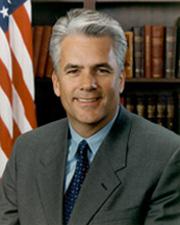 Sen. John Ensign (R-NV)
Legislative Activity
Stay on top of the latest movement without scrolling through every action
Senate amendment submitted
October 6, 2004
View full timeline
Senate amendment submitted
October 6, 2004
Senate amendment proposed (on the floor): Amendment SA 3978 proposed by Senator Collins for Senator Ensign.(consideration: CR S10541-10543; text: CR S10542)
October 6, 2004
Senate amendment agreed to: Amendment SA 3978 agreed to in Senate by Unanimous Consent.
October 6, 2004
Amendment SA 3978 proposed by Senator Collins for Senator Ensign. (consideration: CR S10541-10543; text: CR S10542) To authorize the Secretary of State to increase the number of consular officers, clarify the responsibilities and functions of consular officers, and require the Secretary of Homeland Security to increase the number of border patrol agents and customs enforcement investigators.
October 6, 2004
Amendment SA 3978 agreed to in Senate by Unanimous Consent.
October 6, 2004
Text
Submitted
TEXT OF AMENDMENTS

SA 3975. Ms. COLLINS (for Mr. Hatch (for himself and Mr. Leahy))
proposed an amendment to the bill H.R. 1417, to amend title 17, United
States Code, to replace copyright arbitration royalty panels with
Copyright Royalty Judges; as follows:

Strike all after the enacting clause and insert the
following:

SECTION 1. SHORT TITLE.

This Act may be cited as the ``Copyright Royalty and
Distribution Reform Act of 2004''.

SEC. 2. REFERENCE.

Except as otherwise expressly provided, whenever in this
Act an amendment or repeal is expressed in terms of an
amendment to, or repeal of, a section or other provision, the
reference shall be considered to be made to a section or
other provision of title 17, United States Code.

SEC. 3. COPYRIGHT ROYALTY JUDGE AND STAFF.

(a) In General.--Chapter 8 is amended to read as follows:

``CHAPTER 8--PROCEEDINGS BY COPYRIGHT ROYALTY JUDGES

``Sec.
``801. Copyright Royalty Judges; appointment and functions.
``802. Copyright Royalty Judgeships; staff.
``803. Proceedings of Copyright Royalty Judges.
``804. Institution of proceedings.
``805. General rule for voluntarily negotiated agreements.

``Sec. 801. Copyright Royalty Judges; appointment and
functions

``(a) Appointment.--The Librarian of Congress shall appoint
3 full-time Copyright Royalty Judges, and shall appoint 1 of
the 3 as the Chief Copyright Royalty Judge. The Librarian
shall make appointments to such positions after consultation
with the Register of Copyrights.
``(b) Functions.--Subject to the provisions of this
chapter, the functions of the Copyright Royalty Judges shall
be as follows:
``(1) To make determinations and adjustments of reasonable
terms and rates of royalty payments as provided in sections
112(e), 114, 115, 116, 118, 119 and 1004. The rates
applicable under sections 114(f)(1)(B), 115, and 116 shall be
calculated to achieve the following objectives:
``(A) To maximize the availability of creative works to the
public.
``(B) To afford the copyright owner a fair return for his
or her creative work and the copyright user a fair income
under existing economic conditions.
``(C) To reflect the relative roles of the copyright owner
and the copyright user in the product made available to the
public with respect to relative creative contribution,
technological contribution, capital investment, cost, risk,
and contribution to the opening of new markets for creative
expression and media for their communication.
``(D) To minimize any disruptive impact on the structure of
the industries involved and on generally prevailing industry
practices.
``(2) To make determinations concerning the adjustment of
the copyright royalty rates under section 111 solely in
accordance with the following provisions:
``(A) The rates established by section 111(d)(1)(B) may be
adjusted to reflect--
``(i) national monetary inflation or deflation; or
``(ii) changes in the average rates charged cable
subscribers for the basic service of providing secondary
transmissions to maintain the real constant dollar level of
the royalty fee per subscriber which existed as of the date
of October 19, 1976,

except that--
``(I) if the average rates charged cable system subscribers
for the basic service of providing secondary transmissions
are changed so that the average rates exceed national
monetary inflation, no change in the rates established by
section 111(d)(1)(B) shall be permitted; and
``(II) no increase in the royalty fee shall be permitted
based on any reduction in the average number of distant
signal equivalents per subscriber.

The Copyright Royalty Judges may consider all factors
relating to the maintenance of such level of payments,
including, as an extenuating factor, whether the industry has
been restrained by subscriber rate regulating authorities
from increasing the rates for the basic service of providing
secondary transmissions.
``(B) In the event that the rules and regulations of the
Federal Communications Commission are amended at any time
after April 15, 1976, to permit the carriage by cable systems
of additional television broadcast signals beyond the local
service area of the primary transmitters of such signals, the
royalty rates established by section 111(d)(1)(B) may be
adjusted to ensure that the rates for the additional distant
signal equivalents resulting from such carriage are
reasonable in the light of the changes effected by the
amendment to such rules and regulations. In determining the
reasonableness of rates proposed following an amendment of
Federal Communications Commission rules and regulations, the
Copyright Royalty Judges shall consider, among other factors,
the economic impact on copyright owners and users; except
that no adjustment in royalty rates shall be made under this
subparagraph with

[[Page S10588]]

respect to any distant signal equivalent or fraction thereof
represented by--
``(i) carriage of any signal permitted under the rules and
regulations of the Federal Communications Commission in
effect on April 15, 1976, or the carriage of a signal of the
same type (that is, independent, network, or noncommercial
educational) substituted for such permitted signal; or
``(ii) a television broadcast signal first carried after
April 15, 1976, pursuant to an individual waiver of the rules
and regulations of the Federal Communications Commission, as
such rules and regulations were in effect on April 15, 1976.
``(C) In the event of any change in the rules and
regulations of the Federal Communications Commission with
respect to syndicated and sports program exclusivity after
April 15, 1976, the rates established by section 111(d)(1)(B)
may be adjusted to assure that such rates are reasonable in
light of the changes to such rules and regulations, but any
such adjustment shall apply only to the affected television
broadcast signals carried on those systems affected by the
change.
``(D) The gross receipts limitations established by section
111(d)(1) (C) and (D) shall be adjusted to reflect national
monetary inflation or deflation or changes in the average
rates charged cable system subscribers for the basic service
of providing secondary transmissions to maintain the real
constant dollar value of the exemption provided by such
section, and the royalty rate specified therein shall not be
subject to adjustment.
``(3)(A) To authorize the distribution, under sections 111,
119, and 1007, of those royalty fees collected under sections
111, 119, and 1005, as the case may be, to the extent that
the Copyright Royalty Judges have found that the distribution
of such fees is not subject to controversy.
``(B) In cases where the Copyright Royalty Judges determine
that controversy exists, the Copyright Royalty Judges shall
determine the distribution of such fees, including partial
distributions, in accordance with section 111, 119, or 1007,
as the case may be.
``(C) The Copyright Royalty Judges may make a partial
distribution of such fees during the pendency of the
proceeding under subparagraph (B) if all participants under
section 803(b)(2) in the proceeding that are entitled to
receive those fees that are to be partially distributed--
``(i) agree to such partial distribution;
``(ii) sign an agreement obligating them to return any
excess amounts to the extent necessary to comply with the
final determination on the distribution of the fees made
under subparagraph (B);
``(iii) file the agreement with the Copyright Royalty
Judges; and
``(iv) agree that such funds are available for
distribution.
``(D) The Copyright Royalty Judges and any other officer or
employee acting in good faith in distributing funds under
subparagraph (C) shall not be held liable for the payment of
any excess fees under subparagraph (C). The Copyright Royalty
Judges shall, at the time the final determination is made,
calculate any such excess amounts.
``(4) To accept or reject royalty claims filed under
sections 111, 119, and 1007, on the basis of timeliness or
the failure to establish the basis for a claim.
``(5) To accept or reject rate adjustment petitions as
provided in section 804 and petitions to participate as
provided in section 803(b) (1) and (2).
``(6) To determine the status of a digital audio recording
device or a digital audio interface device under sections
1002 and 1003, as provided in section 1010.
``(7)(A) To adopt as a basis for statutory terms and rates
or as a basis for the distribution of statutory royalty
payments, an agreement concerning such matters reached among
some or all of the participants in a proceeding at any time
during the proceeding, except that--
``(i) the Copyright Royalty Judges shall provide to those
that would be bound by the terms, rates, or other
determination set by any agreement in a proceeding to
determine royalty rates an opportunity to comment on the
agreement and shall provide to the other participants in the
proceeding under section 803(b)(2) that would be bound by the
terms, rates, or other determination set by the agreement an
opportunity to comment on the agreement and object to its
adoption as a basis for statutory terms and rates; and
``(ii) the Copyright Royalty Judges may decline to adopt
the agreement as a basis for statutory terms and rates for
participants that are not parties to the agreement, if any
other participant described in subparagraph (A) objects to
the agreement and the Copyright Royalty Judges conclude,
based on the record before them if one exists, that the
agreement does not provide a reasonable basis for setting
statutory terms or rates.
``(B) License agreements voluntarily negotiated pursuant to
section 112(e)(5), 114(f)(3), 115(c)(3)(E)(i), 116(c), or
118(b) (2) or (3) that do not result in statutory terms and
rates shall not be subject to clauses (i) and (ii) of
subparagraph (A).
``(C) Interested parties may negotiate and agree to, and
the Copyright Royalty Judges may adopt, an agreement that
specifies as terms notice and recordkeeping requirements that
apply in lieu of those that would otherwise apply under
regulations.
``(8) To perform other duties, as assigned by the Register
of Copyrights within the Library of Congress, except as
provided in section 802(g) at times when Copyright Royalty
Judges are not engaged in performing the other duties set
forth in this section.
``(c) Rulings.--As provided in section 802(f)(1), the
Copyright Royalty Judges may make any necessary procedural or
evidentiary rulings in any proceeding under this chapter and
may, before commencing a proceeding under this chapter, make
any such rulings that would apply to the proceedings
conducted by the Copyright Royalty Judges.
``(d) Administrative Support.--The Librarian of Congress
shall provide the Copyright Royalty Judges with the necessary
administrative services related to proceedings under this
chapter.
``(e) Location in Library of Congress.--The offices of the
Copyright Royalty Judges and staff shall be in the Library of
Congress.

``Sec. 802. Copyright Royalty Judgeships; staff

``(a) Qualifications of Copyright Royalty Judges.--
``(1) In general.--Each Copyright Royalty Judge shall be an
attorney who has at least 7 years of legal experience. The
Chief Copyright Royalty Judge shall have at least 5 years of
experience in adjudications, arbitrations, or court trials.
Of the other two Copyright Royalty Judges, one shall have
significant knowledge of copyright law, and the other shall
have significant knowledge of economics. An individual may
serve as a Copyright Royalty Judge only if the individual is
free of any financial conflict of interest under subsection
(h).
``(2) Definition.--In this subsection, the term
`adjudication' has the meaning given that term in section 551
of title 5, but does not include mediation.
``(b) Staff.--The Chief Copyright Royalty Judge shall hire
3 full-time staff members to assist the Copyright Royalty
Judges in performing their functions.
``(c) Terms.--The individual first appointed the Chief
Copyright Royalty Judge shall be appointed to a term of 6
years, and of the remaining individuals first appointed
Copyright Royalty Judges, 1 shall be appointed to a term of 4
years, and the other shall be appointed to a term of 2 years.
Thereafter, the terms of succeeding Copyright Royalty Judges
shall each be 6 years. An individual serving as a Copyright
Royalty Judge may be reappointed to subsequent terms. The
term of a Copyright Royalty Judge shall begin when the term
of the predecessor of that Copyright Royalty Judge ends. When
the term of office of a Copyright Royalty Judge ends, the
individual serving that term may continue to serve until a
successor is selected.
``(d) Vacancies or Incapacity.--
``(1) Vacancies.--If a vacancy should occur in the position
of Copyright Royalty Judge, the Librarian of Congress shall
act expeditiously to fill the vacancy, and may appoint an
interim Copyright Royalty Judge to serve until another
Copyright Royalty Judge is appointed under this section. An
individual appointed to fill the vacancy occurring before the
expiration of the term for which the predecessor of that
individual was appointed shall be appointed for the remainder
of that term.
``(2) Incapacity.--In the case in which a Copyright Royalty
Judge is temporarily unable to perform his or her duties, the
Librarian of Congress may appoint an interim Copyright
Royalty Judge to perform such duties during the period of
such incapacity.
``(e) Compensation.--
``(1) Judges.--The Chief Copyright Royalty Judge shall
receive compensation at the rate of basic pay payable for
level AL-1 for administrative law judges pursuant to section
5372(b) of title 5, and each of the other two Copyright
Royalty Judges shall receive compensation at the rate of
basic pay payable for level AL-2 for administrative law
judges pursuant to such section. The compensation of the
Copyright Royalty Judges shall not be subject to any
regulations adopted by the Office of Personnel Management
pursuant to its authority under section 5376(b)(1) of title
5.
``(2) Staff members.--Of the staff members appointed under
subsection (b)--
``(A) the rate of pay of 1 staff member shall be not more
than the basic rate of pay payable for level 10 of GS-15 of
the General Schedule;
``(B) the rate of pay of 1 staff member shall be not less
than the basic rate of pay payable for GS-13 of the General
Schedule and not more than the basic rate of pay payable for
level 10 of GS-14 of such Schedule; and
``(C) the rate of pay for the third staff member shall be
not less than the basic rate of pay payable for GS-8 of the
General Schedule and not more than the basic rate of pay
payable for level 10 of GS-11 of such Schedule.
``(3) Locality pay.--All rates of pay referred to under
this subsection shall include locality pay.
``(f) Independence of Copyright Royalty Judge.--
``(1) In making determinations.--
``(A) In general.--(i) Subject to clause (ii) of this
subparagraph and subparagraph (B), the Copyright Royalty
Judges shall have full independence in making determinations
concerning adjustments and determinations of copyright
royalty rates and terms, the distribution of copyright
royalties, the acceptance or rejection of royalty claims,
rate adjustment petitions, and petitions to participate, and
in issuing other rulings under this title, except that the
Copyright Royalty Judges may consult with the Register of
Copyrights on any matter other than a question of fact.

[[Page S10589]]

``(ii) A Copyright Royalty Judge or Judges, or, by motion
to the Copyright Royalty Judge or Judges, any participant in
a proceeding may request an interpretation by the Register of
Copyrights concerning any material question of substantive
law (not including questions of procedure before the
Copyright Royalty Judges, the ultimate adjustments and
determinations of copyright royalty rates and terms, the
ultimate distribution of copyright royalties, or the
acceptance or rejection of royalty claims, rate adjustment
petitions, or petitions to participate) concerning an
interpretation or construction of those provisions of this
title that are the subject of the proceeding. Any such
request for a written interpretation by the Register of
Copyrights shall be on the record. Reasonable provision shall
be made for comment by the participants in the proceeding on
the material question of substantive law in such a way as to
minimize duplication and delay. Except as provided in
subparagraph (B), the Register of Copyrights shall deliver to
the Copyright Royalty Judges a response within 14 days of
receipt by the Register of Copyrights of all of the briefs or
comments of the participants. Such decision shall be in
writing and shall be included by the Copyright Royalty Judges
in the record that accompanies their final determination. If
such a decision is timely delivered to the Copyright Royalty
Judges, the Copyright Royalty Judges shall apply the legal
interpretation embodied in the response of the Register of
Copyrights in resolving material questions of substantive
law.
``(B) Novel questions.--(i) In any case in which a novel
material question of substantive law concerning an
interpretation of those provisions of this title that are the
subject of the proceeding is presented, the Copyright Royalty
Judges shall request a decision of the Register of
Copyrights, in writing, to resolve such novel question.
Reasonable provision shall be made for comment on such
request by the participants in the proceeding, in such a way
as to minimize duplication and delay. The Register shall
transmit his or her decision to the Copyright Royalty Judges
within 30 days of receipt by the Register of Copyrights of
all of the briefs or comments of the participants. Such
decision shall be in writing and included by the Copyright
Royalty Judges in the record that accompanies their final
determination. If such a decision is timely delivered, the
Copyright Royalty Judges shall apply the legal determinations
embodied in the decision of the Register of Copyrights in
resolving material questions of substantive law.
``(ii) In clause (i), a `novel question of law' is a
question of law that has not been determined in prior
decisions, determinations, and rulings described in section
803(a).
``(C) Consultation.--Notwithstanding the provisions of
subparagraph (A), the Copyright Royalty Judges shall consult
with the Register of Copyrights with respect to any
determination or ruling that would require that any act be
performed by the Copyright Office, and any such determination
or ruling shall not be binding upon the Register of
Copyrights.
``(D) Review of legal conclusions by the register of
copyrights.--The Register of Copyrights may review for legal
error the resolution by the Copyright Royalty Judges of a
material question of substantive law under this title that
underlies or is contained in a final determination of the
Copyright Royalty Judges. If the Register of Copyrights
concludes, after taking into consideration the views of the
participants in the proceeding, that any resolution reached
by the Copyright Royalty Judges was in material error, the
Register of Copyrights shall issue a written decision
correcting such legal error, which shall be made part of the
record of the proceeding. Additionally, the Register of
Copyrights shall cause to be published in the Federal
Register such written decision together with a specific
identification of the legal conclusion of the Copyright
Royalty Judges that is determined to be erroneous. As to
conclusions of substantive law involving an interpretation of
the statutory provisions of this title, the decision of the
Register of Copyrights shall be binding as precedent upon the
Copyright Royalty Judges in subsequent proceedings under this
chapter. When a decision has been rendered pursuant to
section 802(f)(1)(D), the Register of Copyrights may, on the
basis of and in accordance with such decision, intervene as
of right in any appeal of a final determination of the
Copyright Royalty Judges pursuant to section 803(d) in the
United States Court of Appeals for the District of Columbia
Circuit. If, prior to intervening in such an appeal, the
Register of Copyrights gives notification and undertakes to
consult with the Attorney General with respect to such
intervention, and the Attorney General fails within
reasonable period after receipt of such notification to
intervene in such appeal, the Register of Copyrights may
intervene in such appeal in his or her own name by any
attorney designated by the Register of Copyrights for such
purpose. Intervention by the Register of Copyrights in his or
her own name shall not preclude the Attorney General from
intervening on behalf of the United States in such an appeal
as may be otherwise provided or required by law.
``(E) Effect on judicial review.--Nothing in this section
shall be interpreted to alter the standard applied by a court
in reviewing legal determinations involving an interpretation
or construction of the provisions of this title or to affect
the extent to which any construction or interpretation of the
provisions of this title shall be accorded deference by a
reviewing court.
``(2) Performance appraisals.--
``(A) In general.--Notwithstanding any other provision of
law or any regulation of the Library of Congress, and subject
to subparagraph (B), the Copyright Royalty Judges shall not
receive performance appraisals.
``(B) Relating to sanction or removal.--To the extent that
the Librarian of Congress adopts regulations under subsection
(h) relating to the sanction or removal of a Copyright
Royalty Judge and such regulations require documentation to
establish the cause of such sanction or removal, the
Copyright Royalty Judge may receive an appraisal related
specifically to the cause of the sanction or removal.
``(g) Inconsistent Duties Barred.--No Copyright Royalty
Judge may undertake duties that conflict with his or her
duties and responsibilities as a Copyright Royalty Judge.
``(h) Standards of Conduct.--The Librarian of Congress
shall adopt regulations regarding the standards of conduct,
including financial conflict of interest and restrictions
against ex parte communications, which shall govern the
Copyright Royalty Judges and the proceedings under this
chapter.
``(i) Removal or Sanction.--The Librarian of Congress may
sanction or remove a Copyright Royalty Judge for violation of
the standards of conduct adopted under subsection (h),
misconduct, neglect of duty, or any disqualifying physical or
mental disability. Any such sanction or removal may be made
only after notice and opportunity for a hearing, but the
Librarian of Congress may suspend the Copyright Royalty Judge
during the pendency of such hearing. The Librarian shall
appoint an interim Copyright Royalty Judge during the period
of any such suspension.

``Sec. 803. Proceedings of Copyright Royalty Judges

``(a) Proceedings.--
``(1) In general.--The Copyright Royalty Judges shall act
in accordance with regulations issued by the Copyright
Royalty Judges and the Librarian of Congress, and on the
basis of a written record, prior determinations and
interpretations of the Copyright Royalty Tribunal, Librarian
of Congress, copyright arbitration royalty panels, the
Register of Copyrights, and the Copyright Royalty Judges (to
the extent those determinations are not inconsistent with a
decision of the Register of Copyrights that was timely
delivered to the Copyright Royalty Judges pursuant to section
802(f)(1) (A) or (B), or with a decision of the Register of
Copyrights pursuant to section 802(f)(1)(D)), under this
chapter, and decisions of the court of appeals under this
chapter before, on, or after the effective date of the
Copyright Royalty and Distribution Reform Act of 2004.
``(2) Judges acting as panel and individually.--The
Copyright Royalty Judges shall preside over hearings in
proceedings under this chapter en banc. The Chief Copyright
Royalty Judge may designate a Copyright Royalty Judge to
preside individually over such collateral and administrative
proceedings, and over such proceedings under paragraphs (1)
through (5) of subsection (b), as the Chief Judge considers
appropriate.
``(3) Determinations.--Final determinations of the
Copyright Royalty Judges in proceedings under this chapter
shall be made by majority vote. A Copyright Royalty Judge
dissenting from the majority on any determination under this
chapter may issue his or her dissenting opinion, which shall
be included with the determination.
``(b) Procedures.--
``(1) Initiation.--
``(A) Call for petitions to participate.--(i) Promptly upon
a determination made under section 804(a), or no later than
January 5 of a year specified in section 804(b) (2) or (3),
or as provided under section 804(b)(8), or by no later than
January 5 of a year specified in section 804 for the
commencement of a proceeding if a petition has not been filed
by that date, the Copyright Royalty Judges shall cause to be
published in the Federal Register notice of commencement of
proceedings under this chapter calling for the filing of
petitions to participate in a proceeding under this chapter
for the purpose of making the relevant determination under
section 111, 112, 114, 115, 116, 118, 119, 1004, or 1007, as
the case may be.
``(ii) Petitions to participate shall be filed by no later
than 30 days after publication of notice of commencement of a
proceeding, under clause (i), except that the Copyright
Royalty Judges may, for substantial good cause shown and if
there is no prejudice to the participants that have already
filed petitions, accept late petitions to participate at any
time up to the date that is 90 days before the date on which
participants in the proceeding are to file their written
direct statements. Notwithstanding the preceding sentence,
petitioners whose petitions are filed more than 30 days after
publication of notice of commencement of a proceeding are not
eligible to object to a settlement reached during the
voluntary negotiation period under section 803(b)(3), and any
objection filed by such a petitioner shall not be taken into
account by the Copyright Royalty Judges.
``(B) Petitions to participate.--Each petition to
participate in a proceeding shall describe the petitioner's
interest in the subject

[[Page S10590]]

matter of the proceeding. Parties with similar interests may
file a single petition to participate.
``(2) Participation in general.--Subject to paragraph (4),
a person may participate in a proceeding under this chapter,
including through the submission of briefs or other
information, only if--
``(A) that person has filed a petition to participate in
accordance with paragraph (1) (either individually or as a
group under paragraph (1)(B)), together with a filing fee of
$150;
``(B) the Copyright Royalty Judges have not determined that
the petition to participate is facially invalid; and
``(C) the Copyright Royalty Judges have not determined, sua
sponte or on the motion of another participant in the
proceeding, that the person lacks a significant interest in
the proceeding.
``(3) Voluntary negotiation period.--
``(A) In general.--Promptly after the date for filing of
petitions to participate in a proceeding, the Copyright
Royalty Judges shall make available to all participants in
the proceeding a list of such participants and shall initiate
a voluntary negotiation period among the participants.
``(B) Length of proceedings.--The voluntary negotiation
period initiated under subparagraph (A) shall be 3 months.
``(C) Determination of subsequent proceedings.--At the
close of the voluntary negotiation proceedings, the Copyright
Royalty Judges shall, if further proceedings under this
chapter are necessary, determine whether and to what extent
paragraphs (4) and (5) will apply to the parties.
``(4) Small claims procedure in distribution proceedings.--
``(A) In general.--If, in a proceeding under this chapter
to determine the distribution of royalties, a participant in
the proceeding asserts a claim in the amount of $10,000 or
less, the Copyright Royalty Judges shall decide the
controversy on the basis of the filing of the written direct
statement by the participant, the response by any opposing
participant, and 1 additional response by each such party.
The participant asserting the claim shall not be required to
pay the filing fee under paragraph (2).
``(B) Bad faith inflation of claim.--If the Copyright
Royalty Judges determine that a participant asserts in bad
faith an amount in controversy in excess of $10,000 for the
purpose of avoiding a determination under the procedure set
forth in subparagraph (A), the Copyright Royalty Judges shall
impose a fine on that participant in an amount not to exceed
the difference between the actual amount distributed and the
amount asserted by the participant.
``(5) Paper proceedings.--The Copyright Royalty Judges in
proceedings under this chapter may decide, sua sponte or upon
motion of a participant, to determine issues on the basis of
the filing of the written direct statement by the
participant, the response by any opposing participant, and
one additional response by each such participant. Prior to
making such decision to proceed on such a paper record only,
the Copyright Royalty Judges shall offer to all parties to
the proceeding the opportunity to comment on the decision.
The procedure under this paragraph--
``(A) shall be applied in cases in which there is no
genuine issue of material fact, there is no need for
evidentiary hearings, and all participants in the proceeding
agree in writing to the procedure; and
``(B) may be applied under such other circumstances as the
Copyright Royalty Judges consider appropriate.
``(6) Regulations.--
``(A) In general.--The Copyright Royalty Judges may issue
regulations to carry out their functions under this title.
All regulations issued by the Copyright Royalty Judges are
subject to the approval of the Librarian of Congress. Not
later than 120 days after Copyright Royalty Judges or interim
Copyright Royalty Judges, as the case may be, are first
appointed after the enactment of the Copyright Royalty and
Distribution Reform Act of 2004, such judges shall issue
regulations to govern proceedings under this chapter.
``(B) Interim regulations.--Until regulations are adopted
under subparagraph (A), the Copyright Royalty Judges shall
apply the regulations in effect under this chapter on the day
before the effective date of the Copyright Royalty and
Distribution Reform Act of 2004, to the extent such
regulations are not inconsistent with this chapter, except
that functions carried out under such regulations by the
Librarian of Congress, the Register of Copyrights, or
copyright arbitration royalty panels that, as of such date of
enactment, are to be carried out by the Copyright Royalty
Judges under this chapter, shall be carried out by the
Copyright Royalty Judges under such regulations.
``(C) Requirements.--Regulations issued under subparagraph
(A) shall include the following:
``(i) The written direct statements of all participants in
a proceeding under paragraph (2) shall be filed by a date
specified by the Copyright Royalty Judges, which may be not
earlier than 4 months, and not later than 5 months, after the
end of the voluntary negotiation period under paragraph (3).
Notwithstanding the preceding sentence, the Copyright Royalty
Judges may allow a participant in a proceeding to file an
amended written direct statement based on new information
received during the discovery process, within 15 days after
the end of the discovery period specified in clause (iii).
``(ii)(I) Following the submission to the Copyright Royalty
Judges of written direct statements by the participants in a
proceeding under paragraph (2), the judges shall meet with
the participants for the purpose of setting a schedule for
conducting and completing discovery. Such schedule shall be
determined by the Copyright Royalty Judges.
``(II) In this chapter, the term `written direct
statements' means witness statements, testimony, and exhibits
to be presented in the proceedings, and such other
information that is necessary to establish terms and rates,
or the distribution of royalty payments, as the case may be,
as set forth in regulations issued by the Copyright Royalty
Judges.
``(iii) Hearsay may be admitted in proceedings under this
chapter to the extent deemed appropriate by the Copyright
Royalty Judges.
``(iv) Discovery in such proceedings shall be permitted for
a period of 60 days, except for discovery ordered by the
Copyright Royalty Judges in connection with the resolution of
motions, orders and disputes pending at the end of such
period.
``(v) Any participant under paragraph (2) in a proceeding
under this chapter to determine royalty rates may request of
an opposing participant nonprivileged documents directly
related to the written direct statement or written rebuttal
statement of that participant. Any objection to such a
request shall be resolved by a motion or request to compel
production made to the Copyright Royalty Judges according to
regulations adopted by the Copyright Royalty Judges. Each
motion or request to compel discovery shall be determined by
the Copyright Royalty Judges, or by a Copyright Royalty Judge
when permitted under subsection (a)(2). Upon such motion, the
Copyright Royalty Judges may order discovery pursuant to
regulations established under this paragraph.
``(vi)(I) Any participant under paragraph (2) in a
proceeding under this chapter to determine royalty rates may,
by means of written motion or on the record, request of an
opposing participant or witness other relevant information
and materials if absent the discovery sought the Copyright
Royalty Judges' resolution of the proceeding would be
substantially impaired. In determining whether discovery will
be granted under this clause, the Copyright Royalty Judges
may consider--

``(aa) whether the burden or expense of producing the
requested information or materials outweighs the likely
benefit, taking into account the needs and resources of the
participants, the importance of the issues at stake, and the
probative value of the requested information or materials in
resolving such issues;
``(bb) whether the requested information or materials would
be unreasonably cumulative or duplicative, or are obtainable
from another source that is more convenient, less burdensome,
or less expensive; and
``(cc) whether the participant seeking discovery has had
ample opportunity by discovery in the proceeding or by other
means to obtain the information sought.

``(II) This clause shall not apply to any proceeding
scheduled to commence after December 31, 2010.
``(vii) In a proceeding under this chapter to determine
royalty rates, the participants entitled to receive royalties
shall collectively be permitted to take no more than 10
depositions and secure responses to no more than 25
interrogatories and the participants obligated to pay
royalties shall collectively be permitted to take no more
than 10 depositions and secure responses to no more than 25
interrogatories. The Copyright Royalty Judges shall resolve
any disputes among similarly aligned participants to allocate
the number of depositions or interrogatories permitted under
this clause.
``(viii) The rules and practices in effect on the day
before the effective date of the Copyright Royalty and
Distribution Reform Act of 2004, relating to discovery in
proceedings under this chapter to determine the distribution
of royalty fees, shall continue to apply to such proceedings
on and after such effective date.
``(ix) In proceedings to determine royalty rates, the
Copyright Royalty Judges may issue a subpoena commanding a
participant or witness to appear and give testimony or to
produce and permit inspection of documents or tangible things
if the Copyright Royalty Judges' resolution of the proceeding
would be substantially impaired by the absence of such
testimony or production of documents or tangible things. Such
subpoena shall specify with reasonable particularity the
materials to be produced or the scope and nature of the
required testimony. Nothing in this subparagraph shall
preclude the Copyright Royalty Judges from requesting the
production by a nonparticipant of information or materials
relevant to the resolution by the Copyright Royalty Judges of
a material issue of fact.
``(x) The Copyright Royalty Judges shall order a settlement
conference among the participants in the proceeding to
facilitate the presentation of offers of settlement among the
participants. The settlement conference shall be held during
a 21-day period following the end of the discovery period and
shall take place outside the presence of the Copyright
Royalty Judges.
``(xi) No evidence, including exhibits, may be submitted in
the written direct statement

[[Page S10591]]

or written rebuttal statement of a participant without a
sponsoring witness, except where the Copyright Royalty Judges
have taken official notice, or in the case of incorporation
by reference of past records, or for good cause shown.
``(c) Determination of Copyright Royalty Judges.--
``(1) Timing.--The Copyright Royalty Judges shall issue
their determination in a proceeding not later than 11 months
after the conclusion of the 21-day settlement conference
period under subsection (b)(3)(C)(x), but, in the case of a
proceeding to determine successors to rates or terms that
expire on a specified date, in no event later than 15 days
before the expiration of the then current statutory rates and
terms.
``(2) Rehearings.--
``(A) In general.--The Copyright Royalty Judges may, in
exceptional cases, upon motion of a participant under
subsection (b)(2), order a rehearing, after the determination
in a proceeding is issued under paragraph (1), on such
matters as the Copyright Royalty Judges determine to be
appropriate.
``(B) Timing for filing motion.--Any motion for a rehearing
under subparagraph (A) may only be filed within 15 days after
the date on which the Copyright Royalty Judges deliver their
initial determination concerning rates and terms to the
participants in the proceeding.
``(C) Participation by opposing party not required.--In any
case in which a rehearing is ordered, any opposing party
shall not be required to participate in the rehearing, except
as provided under subsection (d)(1).
``(D) No negative inference.--No negative inference shall
be drawn from lack of participation in a rehearing.
``(E) Continuity of rates and terms.--(i) If the decision
of the Copyright Royalty Judges on any motion for a rehearing
is not rendered before the expiration of the statutory rates
and terms that were previously in effect, in the case of a
proceeding to determine successors to rates and terms that
expire on a specified date, then--
``(I) the initial determination of the Copyright Royalty
Judges that is the subject of the rehearing motion shall be
effective as of the day following the date on which the rates
and terms that were previously in effect expire; and
``(II) in the case of a proceeding under section
114(f)(1)(C) or 114(f)(2)(C), royalty rates and terms shall,
for purposes of section 114(f)(4)(B), be deemed to have been
set at those rates and terms contained in the initial
determination of the Copyright Royalty Judges that is the
subject of the rehearing motion, as of the date of that
determination.
``(ii) The pendency of a motion for a rehearing under this
paragraph shall not relieve persons obligated to make royalty
payments who would be affected by the determination on that
motion from providing the statements of account and any
reports of use, to the extent required, and paying the
royalties required under the relevant determination or
regulations.
``(iii) Notwithstanding clause (ii), whenever royalties
described in clause (ii) are paid to a person other than the
Copyright Office, the entity designated by the Copyright
Royalty Judges to which such royalties are paid by the
copyright user (and any successor thereto) shall, within 60
days after the motion for rehearing is resolved or, if the
motion is granted, within 60 days after the rehearing is
concluded, return any excess amounts previously paid to the
extent necessary to comply with the final determination of
royalty rates by the Copyright Royalty Judges. Any
underpayment of royalties resulting from a rehearing shall be
paid within the same period.
``(3) Contents of determination.--A determination of the
Copyright Royalty Judges shall be supported by the written
record and shall set forth the findings of fact relied on by
the Copyright Royalty Judges. Among other terms adopted in a
determination, the Copyright Royalty Judges may specify
notice and recordkeeping requirements of users of the
copyrights at issue that apply in lieu of those that would
otherwise apply under regulations.
``(4) Continuing jurisdiction.--The Copyright Royalty
Judges may, with the approval of the Register of Copyrights,
issue an amendment to a written determination to correct any
technical or clerical errors in the determination or to
modify the terms, but not the rates, of royalty payments in
response to unforeseen circumstances that would frustrate the
proper implementation of such determination. Such amendment
shall be set forth in a written addendum to the determination
that shall be distributed to the participants of the
proceeding and shall be published in the Federal Register.
``(5) Protective order.--The Copyright Royalty Judges may
issue such orders as may be appropriate to protect
confidential information, including orders excluding
confidential information from the record of the determination
that is published or made available to the public, except
that any terms or rates of royalty payments or distributions
may not be excluded.
``(6) Publication of determination.--Following review of
the determination by the Register of Copyrights under section
802(f)(1)(D), the Librarian of Congress shall cause the
determination, and any corrections thereto, to be published
in the Federal Register. The Librarian of Congress shall also
publicize the determination and corrections in such other
manner as the Librarian considers appropriate, including, but
not limited to, publication on the Internet. The Librarian of
Congress shall also make the determination, corrections, and
the accompanying record available for public inspection and
copying.
``(7) Late payment.--A determination of Copyright Royalty
Judges may include terms with respect to late payment, but in
no way shall such terms prevent the copyright holder from
asserting other rights or remedies provided under this title.
``(d) Judicial Review.--
``(1) Appeal.--Any determination of the Copyright Royalty
Judges under subsection (c) may, within 30 days after the
publication of the determination in the Federal Register, be
appealed, to the United States Court of Appeals for the
District of Columbia Circuit, by any aggrieved participant in
the proceeding under subsection (b)(2) who fully participated
in the proceeding and who would be bound by the
determination. Any participant that did not participate in a
rehearing may not raise any issue that was the subject of
that rehearing at any stage of judicial review of the hearing
determination. If no appeal is brought within that 30-day
period, the determination of the Copyright Royalty Judges
shall be final, and the royalty fee or determination with
respect to the distribution of fees, as the case may be,
shall take effect as set forth in paragraph (2).
``(2) Effect of rates.--
``(A) Expiration on specified date.--When this title
provides that the royalty rates and terms that were
previously in effect are to expire on a specified date, any
adjustment or determination by the Copyright Royalty Judges
of successor rates and terms for an ensuing statutory license
period shall be effective as of the day following the date of
expiration of the rates and terms that were previously in
effect, even if the determination of the Copyright Royalty
Judges is rendered on a later date. A transmission service
shall be obligated to continue making payments under the
rates and terms previously in effect until such time as rates
and terms for the successor period are established. Whenever
royalties pursuant to this section are paid to a person other
than the Copyright Office, the entity designated by the
Copyright Royalty Judges to which such royalties are paid by
the copyright user (and any successor thereto) shall, within
60 days after the final determination of the Copyright
Royalty Judges establishing rates and terms for a successor
period or the exhaustion of all rehearings or appeals of such
determination, if any, return any excess amounts previously
paid to the extent necessary to comply with the final
determination of royalty rates. Any underpayment of royalties
by a copyright user shall be paid to the entity designated by
the Copyright Royalty Judges within the same period.
``(B) Other cases.--In cases where rates and terms have
not, prior to the inception of an activity, been established
for that particular activity under the relevant license, such
rates and terms shall be retroactive to the inception of
activity under the relevant license covered by such rates and
terms. In other cases where rates and terms do not expire on
a specified date, successor rates and terms shall take effect
on the first day of the second month that begins after the
publication of the determination of the Copyright Royalty
Judges in the Federal Register, except as otherwise provided
in this title, or by the Copyright Royalty Judges, or as
agreed by the participants in a proceeding that would be
bound by the rates and terms. Except as otherwise provided in
this title, the rates and terms, to the extent applicable,
shall remain in effect until such successor rates and terms
become effective.
``(C) Obligation to make payments.--
``(i) The pendency of an appeal under this subsection shall
not relieve persons obligated to make royalty payments under
section 111, 112, 114, 115, 116, 118, 119, or 1003, who would
be affected by the determination on appeal, from--

``(I) providing the statements of account and any report of
use; and
``(II) paying the royalties required under the relevant
determination or regulations.

``(ii) Notwithstanding clause (i), whenever royalties
described in clause (i) are paid to a person other than the
Copyright Office, the entity designated by the Copyright
Royalty Judges to which such royalties are paid by the
copyright user (and any successor thereto) shall, within 60
days after the final resolution of the appeal, return any
excess amounts previously paid (and interest thereon, if
ordered pursuant to paragraph (3)) to the extent necessary to
comply with the final determination of royalty rates on
appeal. Any underpayment of royalties resulting from an
appeal (and interest thereon, if ordered pursuant to
paragraph (3)) shall be paid within the same period.
``(3) Jurisdiction of court.--If the court, pursuant to
section 706 of title 5, modifies or vacates a determination
of the Copyright Royalty Judges, the court may enter its own
determination with respect to the amount or distribution of
royalty fees and costs, and order the repayment of any excess
fees, the payment of any underpaid fees, and the payment of
interest pertaining respectively thereto, in accordance with
its final judgment. The court may also vacate the
determination of the Copyright Royalty Judges and remand the
case to the Copyright Royalty Judges for further proceedings
in accordance with subsection (a).
``(e) Administrative Matters.--

[[Page S10592]]

``(1) Deduction of costs of library of congress and
copyright office from filing fees.--
``(A) Deduction from filing fees.--The Librarian of
Congress may, to the extent not otherwise provided under this
title, deduct from the filing fees collected under subsection
(b) for a particular proceeding under this chapter the
reasonable costs incurred by the Librarian of Congress, the
Copyright Office, and the Copyright Royalty Judges in
conducting that proceeding, other than the salaries of the
Copyright Royalty Judges and the 3 staff members appointed
under section 802(b).
``(B) Authorization of appropriations.--There are
authorized to be appropriated such sums as may be necessary
to pay the costs incurred under this chapter not covered by
the filing fees collected under subsection (b). All funds
made available pursuant to this subparagraph shall remain
available until expended.
``(2) Positions required for administration of compulsory
licensing.--Section 307 of the Legislative Branch
Appropriations Act, 1994, shall not apply to employee
positions in the Library of Congress that are required to be
filled in order to carry out section 111, 112, 114, 115, 116,
118, or 119 or chapter 10.

``Sec. 804. Institution of proceedings

``(a) Filing of Petition.--With respect to proceedings
referred to in paragraphs (1) and (2) of section 801(b)
concerning the determination or adjustment of royalty rates
as provided in sections 111, 112, 114, 115, 116, 118, 119,
and 1004, during the calendar years specified in the schedule
set forth in subsection (b), any owner or user of a
copyrighted work whose royalty rates are specified by this
title, or are established under this chapter before or after
the enactment of the Copyright Royalty and Distribution
Reform Act of 2004, may file a petition with the Copyright
Royalty Judges declaring that the petitioner requests a
determination or adjustment of the rate. The Copyright
Royalty Judges shall make a determination as to whether the
petitioner has such a significant interest in the royalty
rate in which a determination or adjustment is requested. If
the Copyright Royalty Judges determine that the petitioner
has such a significant interest, the Copyright Royalty Judges
shall cause notice of this determination, with the reasons
for such determination, to be published in the Federal
Register, together with the notice of commencement of
proceedings under this chapter. With respect to proceedings
under paragraph (1) of section 801(b) concerning the
determination or adjustment of royalty rates as provided in
sections 112 and 114, during the calendar years specified in
the schedule set forth in subsection (b), the Copyright
Royalty Judges shall cause notice of commencement of
proceedings under this chapter to be published in the Federal
Register as provided in section 803(b)(1)(A).
``(b) Timing of Proceedings.--
``(1) Section 111 proceedings.--(A) A petition described in
subsection (a) to initiate proceedings under section
801(b)(2) concerning the adjustment of royalty rates under
section 111 to which subparagraph (A) or (D) of section
801(b)(2) applies may be filed during the year 2005 and in
each subsequent fifth calendar year.
``(B) In order to initiate proceedings under section
801(b)(2) concerning the adjustment of royalty rates under
section 111 to which subparagraph (B) or (C) of section
801(b)(2) applies, within 12 months after an event described
in either of those subsections, any owner or user of a
copyrighted work whose royalty rates are specified by section
111, or by a rate established under this chapter before or
after the enactment of the Copyright Royalty and Distribution
Reform Act of 2004, may file a petition with the Copyright
Royalty Judges declaring that the petitioner requests an
adjustment of the rate. The Copyright Royalty Judges shall
then proceed as set forth in subsection (a) of this section.
Any change in royalty rates made under this chapter pursuant
to this subparagraph may be reconsidered in the year 2005,
and each fifth calendar year thereafter, in accordance with
the provisions in section 801(b)(3) (B) or (C), as the case
may be. A petition for adjustment of rates established by
section 111(d)(1)(B) as a result of a change is the rules and
regulations of the Federal Communications Commission shall
set forth the change on which the petition is based.
``(C) Any adjustment of royalty rates under section 111
shall take effect as of the first accounting period
commencing after the publication of the determination of the
Copyright Royalty Judges in the Federal Register, or on such
other date as is specified in that determination.
``(2) Certain section 112 proceedings.--Proceedings under
this chapter shall be commenced in the year 2007 to determine
reasonable terms and rates of royalty payments for the
activities described in section 112(e)(1) relating to the
limitation on exclusive rights specified by section
114(d)(1)(C)(iv), to become effective on January 1, 2009.
Such proceedings shall be repeated in each subsequent fifth
calendar year.
``(3) Section 114 and corresponding 112 proceedings.--
``(A) For eligible nonsubscription services and new
subscription services.--Proceedings under this chapter shall
be commenced as soon as practicable after the effective date
of the Copyright Royalty and Distribution Reform Act of 2004
to determine reasonable terms and rates of royalty payments
under sections 114 and 112 for the activities of eligible
nonsubscription transmission services and new subscription
services, to be effective for the period beginning on January
1, 2006, and ending on December 31, 2010. Such proceedings
shall next be commenced in January 2009 to determine
reasonable terms and rates of royalty payments, to become
effective on January 1, 2011. Thereafter, such proceedings
shall be repeated in each subsequent fifth calendar year.
``(B) For preexisting subscription and satellite digital
audio radio services.--Proceedings under this chapter shall
be commenced in January 2006 to determine reasonable terms
and rates of royalty payments under sections 114 and 112 for
the activities of preexisting subscription services, to be
effective during the period beginning on January 1, 2008, and
ending on December 31, 2012, and preexisting satellite
digital audio radio services, to be effective during the
period beginning on January 1, 2007, and ending on December
31, 2012. Such proceedings shall next be commenced in 2011 to
determine reasonable terms and rates of royalty payments, to
become effective on January 1, 2013. Thereafter, such
proceedings shall be repeated in each subsequent fifth
calendar year.
``(C)(i) Notwithstanding any other provision of this
chapter, this subparagraph shall govern proceedings commenced
pursuant to section 114(f)(1)(C) and 114(f)(2)(C) concerning
new types of services.
``(ii) Not later than 30 days after a petition to determine
rates and terms for a new type of service that is filed by
any copyright owner of sound recordings, or such new type of
service, indicating that such new type of service is or is
about to become operational, the Copyright Royalty Judges
shall issue a notice for a proceeding to determine rates and
terms for such service.
``(iii) The proceeding shall follow the schedule set forth
in such subsections (b), (c), and (d) of section 803, except
that--
``(I) the determination shall be issued by not later than
24 months after the publication of the notice under clause
(ii); and
``(II) the decision shall take effect as provided in
subsections (c)(2) and (d)(2) of section 803 and section
114(f)(4)(B)(ii) and (C).
``(iv) The rates and terms shall remain in effect for the
period set forth in section 114(f)(1)(C) or 114(f)(2)(C), as
the case may be.
``(4) Section 115 proceedings.--A petition described in
subsection (a) to initiate proceedings under section
801(b)(1) concerning the adjustment or determination of
royalty rates as provided in section 115 may be filed in the
year 2006 and in each subsequent fifth calendar year, or at
such other times as the parties have agreed under section
115(c)(3) (B) and (C).
``(5) Section 116 proceedings.--(A) A petition described in
subsection (a) to initiate proceedings under section 801(b)
concerning the determination of royalty rates and terms as
provided in section 116 may be filed at any time within 1
year after negotiated licenses authorized by section 116 are
terminated or expire and are not replaced by subsequent
agreements.
``(B) If a negotiated license authorized by section 116 is
terminated or expires and is not replaced by another such
license agreement which provides permission to use a quantity
of musical works not substantially smaller than the quantity
of such works performed on coin-operated phonorecord players
during the 1-year period ending March 1, 1989, the Copyright
Royalty Judges shall, upon petition filed under paragraph (1)
within 1 year after such termination or expiration, commence
a proceeding to promptly establish an interim royalty rate or
rates for the public performance by means of a coin-operated
phonorecord player of nondramatic musical works embodied in
phonorecords which had been subject to the terminated or
expired negotiated license agreement. Such rate or rates
shall be the same as the last such rate or rates and shall
remain in force until the conclusion of proceedings by the
Copyright Royalty Judges, in accordance with section 803, to
adjust the royalty rates applicable to such works, or until
superseded by a new negotiated license agreement, as provided
in section 116(b).
``(6) Section 118 proceedings.--A petition described in
subsection (a) to initiate proceedings under section
801(b)(1) concerning the determination of reasonable terms
and rates of royalty payments as provided in section 118 may
be filed in the year 2006 and in each subsequent fifth
calendar year.
``(7) Section 1004 proceedings.--A petition described in
subsection (a) to initiate proceedings under section
801(b)(1) concerning the adjustment of reasonable royalty
rates under section 1004 may be filed as provided in section
1004(a)(3).
``(8) Proceedings concerning distribution of royalty
fees.--With respect to proceedings under section 801(b)(3)
concerning the distribution of royalty fees in certain
circumstances under section 111, 119, or 1007, the Copyright
Royalty Judges shall, upon a determination that a controversy
exists concerning such distribution, cause to be published in
the Federal Register notice of commencement of proceedings
under this chapter.

``Sec. 805. General rule for voluntarily negotiated
agreements

``Any rates or terms under this title that--
``(1) are agreed to by participants to a proceeding under
section 803(b)(3),
``(2) are adopted by the Copyright Royalty Judges as part
of a determination under this chapter, and

[[Page S10593]]

``(3) are in effect for a period shorter than would
otherwise apply under a determination pursuant to this
chapter,

shall remain in effect for such period of time as would
otherwise apply under such determination, except that the
Copyright Royalty Judges shall adjust the rates pursuant to
the voluntary negotiations to reflect national monetary
inflation during the additional period the rates remain in
effect.''.
(b) Conforming Amendment.--The table of chapters for title
17, United States Code, is amended by striking the item
relating to chapter 8 and inserting the following:

``8. Proceedings by Copyright Royalty Judges.................801''.....

SEC. 4. DEFINITION.

Section 101 is amended by inserting after the definition of
``copies'' the following:
``A `Copyright Royalty Judge' is a Copyright Royalty Judge
appointed under section 802 of this title, and includes any
individual serving as an interim Copyright Royalty Judge
under such section.''.

SEC. 5. TECHNICAL AMENDMENTS.

(a) Cable Rates.--Section 111(d) is amended--
(1) in paragraph (2), in the second sentence, by striking
``a copyright arbitration royalty panel'' and inserting ``the
Copyright Royalty Judges.''; and
(2) in paragraph (4)--
(A) in subparagraph (A), by striking ``Librarian of
Congress'' each place it appears and inserting ``Copyright
Royalty Judges'';
(B) in subparagraph (B)--
(i) in the first sentence, by striking ``Librarian of
Congress shall, upon the recommendation of the Register of
Copyrights,'' and inserting ``Copyright Royalty Judges
shall'';
(ii) in the second sentence, by striking ``Librarian
determines'' and inserting ``Copyright Royalty Judges
determine''; and
(iii) in the third sentence--

(I) by striking ``Librarian'' each place it appears and
inserting ``Copyright Royalty Judges''; and
(II) by striking ``convene a copyright arbitration royalty
panel'' and inserting ``conduct a proceeding''; and

(C) in subparagraph (C), by striking ``Librarian of
Congress'' and inserting ``Copyright Royalty Judges''.
(b) Ephemeral Recordings.--Section 112(e) is amended--
(1) in paragraph (3)--
(A) by amending the first sentence to read as follows:
``Proceedings under chapter 8 shall determine reasonable
rates and terms of royalty payments for the activities
specified by paragraph (1) during the 5-year periods
beginning on January 1 of the second year following the year
in which the proceedings are to be commenced, or such other
periods as the parties may agree.''; and
(B) by striking the second sentence;
(C) in the third sentence, by striking ``Librarian of
Congress'' and inserting ``Copyright Royalty Judges''; and
(D) in the fourth sentence, by striking ``negotiation'';
(2) in paragraph (4)--
(A) by amending the first sentence to read as follows:
``The schedule of reasonable rates and terms determined by
the Copyright Royalty Judges shall, subject to paragraph (5),
be binding on all copyright owners of sound recordings and
transmitting organizations entitled to a statutory license
under this subsection during the 5-year period specified in
paragraph (3), or such other period as the parties may
agree.'';
(B) by striking ``copyright arbitration royalty panel''
each subsequent place it appears and inserting ``Copyright
Royalty Judges'';
(C) in the fourth sentence, by striking ``its decision''
and inserting ``their decision'';
(D) in the fifth sentence, by striking ``negotiated as
provided'' and inserting ``described''; and
(E) in the last sentence, by striking ``Librarian of
Congress'' and inserting ``Copyright Royalty Judges'';
(3) in paragraph (5), by striking ``or decision by the
Librarian of Congress'' and inserting ``, decision by the
Librarian of Congress, or determination by the Copyright
Royalty Judges'';
(4) by striking paragraph (6) and redesignating paragraphs
(7), (8), and (9), as paragraphs (6), (7), and (8),
respectively; and
(5) in paragraph (6)(A), as so redesignated, by striking
``Librarian of Congress'' and inserting ``Copyright Royalty
Judges''.
(c) Scope of Exclusive Rights in Sound Recordings.--Section
114(f) is amended--
(1) in paragraph (1)--
(A) in subparagraph (A)--
(i) by amending the first sentence to read as follows:
``Proceedings under chapter 8 shall determine reasonable
rates and terms of royalty payments for subscription
transmissions by preexisting subscription services and
transmissions by preexisting satellite digital audio radio
services specified by subsection (d)(2) during 5-year periods
beginning on January 1 of the second year following the year
in which the proceedings are to be commenced, except where
different transitional periods are provided in section
804(b), or such periods as the parties may agree.'';
(ii) in the third sentence, by striking ``Librarian of
Congress'' and inserting ``Copyright Royalty Judges''; and
(iii) in the fourth sentence, by striking ``negotiation'';
(B) in subparagraph (B)--
(i) by amending the first sentence to read as follows:
``The schedule of reasonable rates and terms determined by
the Copyright Royalty Judges shall, subject to paragraph (3),
be binding on all copyright owners of sound recordings and
entities performing sound recordings affected by this
paragraph during the 5-year period specified in subparagraph
(A), a transitional period provided in section 804(b), or
such other period as the parties may agree.'';
(ii) in the second sentence, by striking ``copyright
arbitration royalty panel'' and inserting ``Copyright Royalty
Judges''; and
(iii) in the second sentence, by striking ``negotiated as
provided'' and inserting ``described''; and
(C) by amending subparagraph (C) to read as follows:
``(C) The procedures under subparagraphs (A) and (B) also
shall be initiated pursuant to a petition filed by any
copyright owners of sound recordings, any preexisting
subscription services, or any preexisting satellite digital
audio radio services indicating that a new type of
subscription digital audio transmission service on which
sound recordings are performed is or is about to become
operational, for the purpose of determining reasonable terms
and rates of royalty payments with respect to such new type
of transmission service for the period beginning with the
inception of such new type of service and ending on the date
on which the royalty rates and terms for subscription digital
audio transmission services most recently determined under
subparagraph (A) or (B) and chapter 8 expire, or such other
period as the parties may agree.'';
(2) in paragraph (2)--
(A) in subparagraph (A)--
(i) by amending the first paragraph to read as follows:
``Proceedings under chapter 8 shall determine reasonable
rates and terms of royalty payments for subscription
transmissions by eligible nonsubscription transmission
services and transmissions by new subscription services
specified by subsection (d)(2) during 5-year periods
beginning on January 1 of the second year following the year
in which the proceedings are to be commenced, except where
different transitional periods are provided in section
804(b), or such periods as the parties may agree.'';
(ii) in the third sentence, by striking ``Librarian of
Congress'' and inserting ``Copyright Royalty Judges''; and
(iii) in the fourth sentence, by striking ``negotiation'';
(B) in subparagraph (B)--
(i) by amending the first sentence to read as follows:
``The schedule of reasonable rates and terms determined by
the Copyright Royalty Judges shall, subject to paragraph (3),
be binding on all copyright owners of sound recordings and
entities performing sound recordings affected by this
paragraph during the 5-year period specified in subparagraph
(A), a transitional period provided in section 804(b), or
such other period as the parties may agree.'';
(ii) by striking ``copyright arbitration royalty panel''
each subsequent place it appears and inserting ``Copyright
Royalty Judges''; and
(iii) in the last sentence by striking ``negotiated as
provided'' and inserting ``described in''; and
(C) by amending subparagraph (C) to read as follows:
``(C) The procedures under subparagraphs (A) and (B) shall
also be initiated pursuant to a petition filed by any
copyright owners of sound recordings or any eligible
nonsubscription service or new subscription service
indicating that a new type of eligible nonsubscription
service or new subscription service on which sound recordings
are performed is or is about to become operational, for the
purpose of determining reasonable terms and rates of royalty
payments with respect to such new type of service for the
period beginning with the inception of such new type of
service and ending on the date on which the royalty rates and
terms for preexisting subscription digital audio transmission
services or preexisting satellite digital radio audio
services, as the case may be, most recently determined under
subparagraph (A) or (B) and chapter 8 expire, or such other
period as the parties may agree.'';
(3) in paragraph (3), by striking ``or decision by the
Librarian of Congress'' and inserting ``, decision by the
Librarian of Congress, or determination by the Copyright
Royalty Judges''; and
(4) in paragraph (4)--
(A) by striking ``Librarian of Congress'' each place it
appears and inserting ``Copyright Royalty Judges''; and
(B) by adding after the first sentence ``The notice and
recordkeeping rules in effect on the day before the effective
date of the Copyright Royalty and Distribution Reform Act of
2004 shall remain in effect unless and until new regulations
are promulgated by the Copyright Royalty Judges. If new
regulations are promulgated under this subparagraph, the
Copyright Royalty Judges shall take into account the
substance and effect of the rules in effect on the day before
the effective date of the Copyright Royalty and Distribution
Reform Act of 2004 and shall, to the extent practicable,
avoid significant disruption of the functions of any
designated agent authorized to collect and distribute royalty
fees.''.
(d) Phonorecords of Nondramatic Musical Works.--Section
115(c)(3) is amended--
(1) in subparagraph (A)(ii), by striking ``(F)'' and
inserting ``(E)'';
(2) in subparagraph (B)--
(A) by striking ``under this paragraph'' and inserting
``under this section'';
(B) by inserting ``on a nonexclusive basis'' after ``common
agents''; and

[[Page S10594]]

(C) by striking ``subparagraphs (C) through (F)'' and
inserting ``this subparagraph and subparagraphs (C) through
(E)''; and
(3) in subparagraph (C)--
(A) by amending the first sentence to read as follows:
``Proceedings under chapter 8 shall determine reasonable
rates and terms of royalty payments for the activities
specified by this section during periods beginning with the
effective date of such rates and terms, but not earlier than
January 1 of the second year following the year in which the
petition requesting the proceeding is filed, and ending on
the effective date of successor rates and terms, or such
other period as the parties may agree.'';
(B) in the third sentence, by striking ``Librarian of
Congress'' and inserting ``Copyright Royalty Judges''; and
(C) in the fourth sentence, by striking ``negotiation'';
(4) in subparagraph (D)--
(A) by amending the first sentence to read as follows:
``The schedule of reasonable rates and terms determined by
the Copyright Royalty Judges shall, subject to subparagraph
(E), be binding on all copyright owners of nondramatic
musical works and persons entitled to obtain a compulsory
license under subsection (a)(1) during the period specified
in subparagraph (C), such other period as may be determined
pursuant to subparagraphs (B) and (C), or such other period
as the parties may agree.'';
(B) in the third sentence, by striking ``copyright
arbitration royalty panel'' and inserting ``Copyright Royalty
Judges''; and
(C) in the third sentence, by striking ``negotiated as
provided in subparagraphs (B) and (C)'' and inserting
``described'';
(5) in subparagraph (E)--
(A) in clause (i)--
(i) in the first sentence, by striking ``Librarian of
Congress'' and inserting ``Librarian of Congress, Copyright
Royalty Judges, or a copyright arbitration royalty panel to
the extent those determinations were accepted by the
Librarian of Congress''; and
(ii) in the second sentence, by striking ``(C), (D) or (F)
shall be given effect'' and inserting ``(C) or (D) shall be
given effect as to digital phonorecord deliveries''; and
(B) in clause (ii)(I), by striking ``(C), (D) or (F)'' each
place it appears and inserting ``(C) or (D)''; and
(6) by striking subparagraph (F) and redesignating
subparagraphs (G) through (L) as subparagraphs (F) through
(K), respectively.
(e) Coin-Operated Phonorecord Players.--Section 116 is
amended--
(1) in subsection (b), by amending paragraph (2) to read as
follows:
``(2) Chapter 8 proceeding.--Parties not subject to such a
negotiation may have the terms and rates and the division of
fees described in paragraph (1) determined in a proceeding in
accordance with the provisions of chapter 8.''; and
(2) in subsection (c)--
(A) in the subsection heading, by striking ``Copyright
Arbitration Royalty Panel Determinations'' and inserting
``Determinations by Copyright Royalty Judges''; and
(B) by striking ``a copyright arbitration royalty panel''
and inserting ``the Copyright Royalty Judges''.
(f) Use of Certain Works in Connection With Noncommercial
Broadcasting.--Section 118 is amended--
(1) in subsection (b)--
(A) in paragraph (1)--
(i) in the first sentence, by striking ``Librarian of
Congress'' and inserting ``Copyright Royalty Judges''; and
(ii) by striking the second and third sentences;
(B) in paragraph (2), by striking ``Librarian of
Congress:'' and all that follows through the end of the
sentence and inserting ``Librarian of Congress, a copyright
arbitration royalty panel, or the Copyright Royalty Judges,
to the extent that they were accepted by the Librarian of
Congress, if copies of such agreements are filed with the
Copyright Royalty Judges within 30 days of execution in
accordance with regulations that the Copyright Royalty Judges
shall issue.''; and
(C) in paragraph (3)--
(i) in the second sentence--

(I) by striking ``copyright arbitration royalty panel'' and
inserting ``Copyright Royalty Judges''; and

(II) by striking ``paragraph (2).'' and inserting
``paragraph (2) or (3).'';

(ii) in the last sentence, by striking ```Librarian of
Congress'' and inserting ``Copyright Royalty Judges''; and
(iii) by striking ``(3) In'' and all that follows through
the end of the first sentence and inserting the following:
``(3) Voluntary negotiation proceedings initiated pursuant
to a petition filed under section 804(a) for the purpose of
determining a schedule of terms and rates of royalty payments
by public broadcasting entities to copyright owners in works
specified by this subsection and the proportionate division
of fees paid among various copyright owners shall cover the
5-year period beginning on January 1 of the second year
following the year in which the petition is filed. The
parties to each negotiation proceeding shall bear their own
costs.
``(4) In the absence of license agreements negotiated under
paragraph (2) or (3), the Copyright Royalty Judges shall,
pursuant to chapter 8, conduct a proceeding to determine and
publish in the Federal Register a schedule of rates and terms
which, subject to paragraph (2), shall be binding on all
owners of copyright in works specified by this subsection and
public broadcasting entities, regardless of whether such
copyright owners have submitted proposals to the Copyright
Royalty Judges.'';
(2) by striking subsection (c) and redesignating
subsections (d) through (g) as subsections (c) through (f),
respectively;
(3) in subsection (c), as so redesignated, in the matter
preceding paragraph (1)--
(A) by striking ``(b)(2)'' and inserting ``(b)(2) or (3)'';
(B) by striking ``(b)(3)'' and inserting ``(b)(4)''; and
(C) by striking ``a copyright arbitration royalty panel
under subsection (b)(3)'' and inserting ``the Copyright
Royalty Judges under subsection (b)(3), to the extent that
they were accepted by the Librarian of Congress'';
(4) in subsection (d), as so redesignated--
(A) by striking ``in the Copyright Office'' and inserting
``with the Copyright Royalty Judges''; and
(B) by striking ``Register of Copyrights shall prescribe''
and inserting ``Copyright Royalty Judges shall prescribe as
provided in section 803(b)(6)''; and
(5) in subsection (f), as so redesignated, by striking
``(d)'' and inserting ``(c)''.
(g) Secondary Transmissions by Satellite Carriers.--Section
119(b) is amended--
(1) in paragraph (3), by striking ``Librarian of Congress''
and inserting ``Copyright Royalty Judges''; and
(2) in paragraph (4)--
(A) in subparagraph (A), by striking ``Librarian of
Congress'' each place it appears and inserting ``Copyright
Royalty Judges''; and
(B) by amending subparagraphs (B) and (C) to read as
follows:
``(B) Determination of controversy; distributions.--After
the first day of August of each year, the Copyright Royalty
Judges shall determine whether there exists a controversy
concerning the distribution of royalty fees. If the Copyright
Royalty Judges determine that no such controversy exists, the
Librarian of Congress shall, after deducting reasonable
administrative costs under this paragraph, distribute such
fees to the copyright owners entitled to receive them, or to
their designated agents. If the Copyright Royalty Judges find
the existence of a controversy, the Copyright Royalty Judges
shall, pursuant to chapter 8 of this title, conduct a
proceeding to determine the distribution of royalty fees.
``(C) Withholding of fees during controversy.--During the
pendency of any proceeding under this subsection, the
Copyright Royalty Judges shall withhold from distribution an
amount sufficient to satisfy all claims with respect to which
a controversy exists, but shall have the discretion to
proceed to distribute any amounts that are not in
controversy.''.
(h) Digital Audio Recording Devices.--
(1) Royalty payments.--Section 1004(a)(3) is amended by
striking ``Librarian of Congress'' each place it appears and
inserting ``Copyright Royalty Judges''.
(2) Entitlement to royalty payments.--Section 1006(c) is
amended by striking ``Librarian of Congress shall convene a
copyright arbitration royalty panel which'' and inserting
``Copyright Royalty Judges''.
(3) Procedures for distributing royalty payments.--Section
1007 is amended--
(A) in subsection (a), by amending paragraph (1) to read as
follows:
``(1) Filing of claims.--During the first 2 months of each
calendar year, every interested copyright party seeking to
receive royalty payments to which such party is entitled
under section 1006 shall file with the Copyright Royalty
Judges a claim for payments collected during the preceding
year in such form and manner as the Copyright Royalty Judges
shall prescribe by regulation.''; and
(B) by amending subsections (b) and (c) to read as follows:
``(b) Distribution of Payments in the Absence of a
Dispute.--After the period established for the filing of
claims under subsection (a), in each year, the Copyright
Royalty Judges shall determine whether there exists a
controversy concerning the distribution of royalty payments
under section 1006(c). If the Copyright Royalty Judges
determine that no such controversy exists, the Librarian of
Congress shall, within 30 days after such determination,
authorize the distribution of the royalty payments as set
forth in the agreements regarding the distribution of royalty
payments entered into pursuant to subsection (a). The
Librarian of Congress shall, before such royalty payments are
distributed, deduct the reasonable administrative costs
incurred by the Librarian under this section.
``(c) Resolution of Disputes.--If the Copyright Royalty
Judges find the existence of a controversy, the Copyright
Royalty Judges shall, pursuant to chapter 8 of this title,
conduct a proceeding to determine the distribution of royalty
payments. During the pendency of such a proceeding, the
Copyright Royalty Judges shall withhold from distribution an
amount sufficient to satisfy all claims with respect to which
a controversy exists, but shall, to the extent feasible,
authorize the distribution of any amounts that are not in
controversy. The Librarian of Congress shall, before such
royalty payments are distributed, deduct the reasonable
administrative costs incurred by the Librarian under this
section.''.

[[Page S10595]]

(4) Determination of certain disputes.--(A) Section 1010 is
amended to read as follows:

``Sec. 1010. Determination of certain disputes

``(a) Scope of Determination.--Before the date of first
distribution in the United States of a digital audio
recording device or a digital audio interface device, any
party manufacturing, importing, or distributing such device,
and any interested copyright party may mutually agree to
petition the Copyright Royalty Judges to determine whether
such device is subject to section 1002, or the basis on which
royalty payments for such device are to be made under section
1003.
``(b) Initiation of Proceedings.--The parties under
subsection (a) shall file the petition with the Copyright
Royalty Judges requesting the commencement of a proceeding.
Within 2 weeks after receiving such a petition, the Chief
Copyright Royalty Judge shall cause notice to be published in
the Federal Register of the initiation of the proceeding.
``(c) Stay of Judicial Proceedings.--Any civil action
brought under section 1009 against a party to a proceeding
under this section shall, on application of one of the
parties to the proceeding, be stayed until completion of the
proceeding.
``(d) Proceeding.--The Copyright Royalty Judges shall
conduct a proceeding with respect to the matter concerned, in
accordance with such procedures as the Copyright Royalty
Judges may adopt. The Copyright Royalty Judges shall act on
the basis of a fully documented written record. Any party to
the proceeding may submit relevant information and proposals
to the Copyright Royalty Judges. The parties to the
proceeding shall each bear their respective costs of
participation.
``(e) Judicial Review.--Any determination of the Copyright
Royalty Judges under subsection (d) may be appealed, by a
party to the proceeding, in accordance with section 803(d) of
this title. The pendency of an appeal under this subsection
shall not stay the determination of the Copyright Royalty
Judges. If the court modifies the determination of the
Copyright Royalty Judges, the court shall have jurisdiction
to enter its own decision in accordance with its final
judgment. The court may further vacate the determination of
the Copyright Royalty Judges and remand the case for
proceedings as provided in this section.''.
(B) The item relating to section 1010 in the table of
sections for chapter 10 is amended to read as follows:

``1010. Determination of certain disputes.''.

SEC. 6. EFFECTIVE DATE AND TRANSITION PROVISIONS.

(a) Effective Date.--This Act and the amendments made by
this Act shall take effect 6 months after the date of
enactment of this Act, except that the Librarian of Congress
shall appoint 1 or more interim Copyright Royalty Judges
under section 802(d) of title 17, United States Code, as
amended by this Act, within 90 days after such date of
enactment to carry out the functions of the Copyright Royalty
Judges under title 17, United States Code, to the extent that
Copyright Royalty Judges provided for in section 801(a) of
title 17, United States Code, as amended by this Act, have
not been appointed before the end of that 90-day period.
(b) Transition Provisions.--
(1) In general.--Subject to paragraphs (2) and (3), the
amendments made by this Act shall not affect any proceedings
commenced, petitions filed, or voluntary agreements entered
into before the date of enactment of this Act under the
provisions of title 17, United States Code, as amended by
this Act, and pending on such date of enactment. Such
proceedings shall continue, determinations made in such
proceedings, and appeals taken therefrom, as if this Act had
not been enacted, and shall continue in effect until modified
under title 17, United States Code, as amended by this Act.
Such petitions filed and voluntary agreements entered into
shall remain in effect as if this Act had not been enacted.
For purposes of this paragraph, the Librarian of Congress may
determine whether a proceeding has commenced. The Librarian
of Congress may terminate any proceeding commenced before the
date of enactment of this Act pursuant to chapter 8 of title
17, United States Code, and any proceeding so terminated
shall become null and void. In such cases, the Copyright
Royalty Judges may initiate a new proceeding in accordance
with regulations adopted pursuant to section 803(b)(6) of
title 17, United States Code.
(2) Certain royalty rates proceedings.--Notwithstanding any
other provision of law, proceedings to determine royalty
rates pursuant to section 119(c) of title 17, United States
Code, shall be conducted pursuant to the provisions of title
17, United States Code, and the rules and practices in effect
under that chapter on the day before any provision of this
Act takes effect.
(3) Pending proceedings.--Notwithstanding paragraph (1),
any proceedings to establish or adjust rates and terms for
the statutory licenses under section 114(f)(2) or 112(e) of
title 17, United States Code, for a statutory period
commencing on or after January 1, 2005, shall be terminated
upon the date of enactment of this Act and shall be null and
void. The rates and terms in effect under section 114(f)(2)
or 112(e) of title 17, United States Code, on December 31,
2004, for new subscription services, eligible nonsubscription
services, and services exempt under section 114(d)(1)(C)(iv)
of such title, and the rates and terms published in the
Federal Register under the authority of the Small Webcaster
Settlement Act of 2002 (17 U.S.C. 114 note; Public Law 107-
321) (including the amendments made by that Act) for the
years 2003 through 2004, as well as any notice and
recordkeeping provisions adopted pursuant thereto, shall
remain in effect until the later of the first applicable
effective date for successor terms and rates specified in
section 804(b) (2) or (3)(A) of title 17, United States Code,
or such later date as the parties may agree or the Copyright
Royalty Judges may establish. For the period commencing
January 1, 2005, an eligible small webcaster or a
noncommercial webcaster, as defined in the regulations
published by the Register of Copyrights pursuant to the Small
Webcaster Settlement Act of 2002 (17 U.S.C. 114 note; Public
Law 107-321) (including the amendments made by that Act), may
elect to be subject to the rates and terms published in those
regulations by complying with the procedures governing the
election process set forth in those regulations not later
than the first date on which the webcaster would be obligated
to make a royalty payment for such period. Until successor
terms and rates have been established for the period
commencing January 1, 2006, licensees shall continue to make
royalty payments at the rates and on the terms previously in
effect, subject to retroactive adjustment when successor
rates and terms for such services are established.
(4) Interim proceedings.--Notwithstanding subsection (a),
as soon as practicable after the date of enactment of this
Act, the Copyright Royalty Judges or interim Copyright
Royalty Judges shall publish the notice described in section
803(b)(1)(A) of title 17, United States Code, as amended by
this Act, to initiate a proceeding to establish or adjust
rates and terms for the statutory licenses under section
114(f)(2) or 112(e) of title 17, United States Code, for new
subscription services and eligible nonsubscription services
for the period commencing January 1, 2006. The Copyright
Royalty Judges or Interim Copyright Royalty Judges are
authorized to cause that proceeding to take place as provided
in subsection (b) of section 803 of that title within the
time periods set forth in that subsection. Notwithstanding
section 803(c)(1) of that title, the Copyright Royalty Judges
shall not be required to issue their determination in that
proceeding before the expiration of the statutory rates and
terms in effect on December 31, 2004.
(c) Existing Appropriations.--Any funds made available in
an appropriations Act to carry out chapter 8 of title 17,
United States Code, shall be available to the extent
necessary to carry out this section.
______

SA 3976. Ms. COLLINS (for Mr. Inhofe (for himself, Mr. Jeffords, Mr.
Bond, and Mr. Reid)) proposed an amendment to the bill S. 1134, to
reauthorize and improve the programs authorized by the Public Works and
Economic Development Act of 1965; as follows:

Strike all after the enacting clause and insert the
following:

SECTION 1. SHORT TITLE; TABLE OF CONTENTS.

(a) Short Title.--This Act may be cited as the ``Economic
Development Administration Reauthorization Act of 2004''.
(b) Table of Contents.--The table of contents for this Act
is as follows:

Sec. 1. Short title; table of contents.

TITLE I--GENERAL PROVISIONS

Sec. 101. Findings and declarations.
Sec. 102. Definitions.
Sec. 103. Establishment of Economic Development partnerships.
Sec. 104. Coordination.

TITLE II--GRANTS FOR PUBLIC WORKS AND ECONOMIC DEVELOPMENT

Sec. 201. Grants for planning.
Sec. 202. Cost sharing.
Sec. 203. Supplementary grants.
Sec. 204. Regulations on relative needs and allocations.
Sec. 205. Grants for training, research, and technical assistance.
Sec. 206. Prevention of unfair competition.
Sec. 207. Grants for economic adjustment.
Sec. 208. Use of funds in projects constructed under projected cost.
Sec. 209. Special impact areas.
Sec. 210. Performance awards.
Sec. 211. Planning performance awards.
Sec. 212. Direct expenditure or redistribution by recipient.
Sec. 213. Brightfields demonstration program.

TITLE III--COMPREHENSIVE ECONOMIC DEVELOPMENT STRATEGIES

Sec. 301. Eligibility of areas.
Sec. 302. Comprehensive Economic Development strategies.

TITLE IV--ECONOMIC DEVELOPMENT DISTRICTS

Sec. 401. Incentives.
Sec. 402. Provision of comprehensive Economic Development strategies to
Regional Commissions.

TITLE V--ADMINISTRATION

Sec. 501. Economic Development information clearinghouse.
Sec. 502. Businesses desiring Federal contracts.
Sec. 503. Performance evaluations of grant recipients.
Sec. 504. Conforming amendments.

[[Page S10596]]

TITLE VI--MISCELLANEOUS

Sec. 601. Annual report to Congress.
Sec. 602. Relationship to assistance under other law.
Sec. 603. Brownfields redevelopment report.
Sec. 604. Savings clause
Sec. 605. Sense of Congress regarding Economic Development
Representatives.

TITLE VII--FUNDING

Sec. 701. Authorization of appropriations.
Sec. 702. Funding for grants for planning and grants for administrative
expenses.

TITLE I--GENERAL PROVISIONS

SEC. 101. FINDINGS AND DECLARATIONS.

Section 2 of the Public Works and Economic Development Act
of 1965 (42 U.S.C. 3121) is amended to read as follows:

``SEC. 2. FINDINGS AND DECLARATIONS.

``(a) Findings.--Congress finds that--
``(1) there continue to be areas of the United States
experiencing chronic high unemployment, underemployment,
outmigration, and low per capita incomes, as well as areas
facing sudden and severe economic dislocations because of
structural economic changes, changing trade patterns, certain
Federal actions (including environmental requirements that
result in the removal of economic activities from a
locality), and natural disasters;
``(2) economic growth in the States, cities, and rural
areas of the United States is produced by expanding economic
opportunities, expanding free enterprise through trade,
developing and strengthening public infrastructure, and
creating a climate for job creation and business development;
``(3) the goal of Federal economic development programs is
to raise the standard of living for all citizens and increase
the wealth and overall rate of growth of the economy by
encouraging communities to develop a more competitive and
diversified economic base by--
``(A) creating an environment that promotes economic
activity by improving and expanding public infrastructure;
``(B) promoting job creation through increased innovation,
productivity, and entrepreneurship; and
``(C) empowering local and regional communities
experiencing chronic high unemployment and low per capita
income to develop private sector business and attract
increased private sector capital investment;
``(4) while economic development is an inherently local
process, the Federal Government should work in partnership
with public and private State, regional, tribal, and local
organizations to maximize the impact of existing resources
and enable regions, communities, and citizens to participate
more fully in the American dream and national prosperity;
``(5) in order to avoid duplication of effort and achieve
meaningful, long-lasting results, Federal, State, tribal, and
local economic development activities should have a clear
focus, improved coordination, a comprehensive approach, and
simplified and consistent requirements; and
``(6) Federal economic development efforts will be more
effective if the efforts are coordinated with, and build
upon, the trade, workforce investment, transportation, and
technology programs of the United States.
``(b) Declarations.--In order to promote a strong and
growing economy throughout the United States, Congress
declares that--
``(1) assistance under this Act should be made available to
both rural- and urban-distressed communities;
``(2) local communities should work in partnership with
neighboring communities, the States, Indian tribes, and the
Federal Government to increase the capacity of the local
communities to develop and implement comprehensive economic
development strategies to alleviate economic distress and
enhance competitiveness in the global economy;
``(3) whether suffering from long-term distress or a sudden
dislocation, distressed communities should be encouraged to
support entrepreneurship to take advantage of the development
opportunities afforded by technological innovation and
expanding newly opened global markets; and
``(4) assistance under this Act should be made available to
promote the productive reuse of abandoned industrial
facilities and the redevelopment of brownfields.''.

SEC. 102. DEFINITIONS.

(a) Eligible Recipient.--Section 3(4)(A) of the Public
Works and Economic Development Act of 1965 (42 U.S.C.
3122(4)(A)) is amended--
(1) by striking clause (i) and redesignating clauses (ii)
through (vii) as clauses (i) through (vi), respectively; and
(2) in clause (iv) (as redesignated by paragraph (1)) by
inserting ``, including a special purpose unit of a State or
local government engaged in economic or infrastructure
development activities,'' after ``State''.
(b) Regional Commissions; University Center.--Section 3 of
the Public Works and Economic Development Act of 1965 (42
U.S.C. 3122) is amended--
(1) by redesignating paragraphs (8), (9), and (10) as
paragraphs (9), (10), and (11), respectively;
(2) by inserting after paragraph (7) the following:
``(8) Regional commissions.--The term `Regional
Commissions' means--
``(A) the Appalachian Regional Commission established under
chapter 143 of title 40, United States Code;
``(B) the Delta Regional Authority established under
subtitle F of the Consolidated Farm and Rural Development Act
(7 U.S.C. 2009aa et seq.);
``(C) the Denali Commission established under the Denali
Commission Act of 1998 (42 U.S.C. 3121 note; 112 Stat. 2681-
637 et seq.); and
``(D) the Northern Great Plains Regional Authority
established under subtitle G of the Consolidated Farm and
Rural Development Act (7 U.S.C. 2009bb et seq.).''; and
(3) by adding at the end the following:
``(12) University center.--The term `university center'
means an institution of higher education or a consortium of
institutions of higher education established as a University
Center for Economic Development under section
207(a)(2)(D).''.

SEC. 103. ESTABLISHMENT OF ECONOMIC DEVELOPMENT PARTNERSHIPS.

Section 101 of the Public Works and Economic Development
Act of 1965 (42 U.S.C. 3131) is amended--
(1) in subsection (b), by striking ``and multi-State
regional organizations'' and inserting ``multi-State regional
organizations, and nonprofit organizations''; and
(2) in subsection (d)(1), by striking ``adjoining'' each
place it appears.

SEC. 104. COORDINATION.

Section 103 of the Public Works and Economic Development
Act of 1965 (42 U.S.C. 3132) is amended--
(1) by inserting ``(a) In General.--'' before ``The
Secretary'';
(2) in subsection (a) (as designated by paragraph (1)), by
inserting ``Indian tribes,'' after ``districts,''; and
(3) by adding at the end the following:
``(b) Meetings.--To carry out subsection (a), or for any
other purpose relating to economic development activities,
the Secretary may convene meetings with Federal agencies,
State and local governments, economic development districts,
Indian tribes, and other appropriate planning and development
organizations.''.

TITLE II--GRANTS FOR PUBLIC WORKS AND ECONOMIC DEVELOPMENT

SEC. 201. GRANTS FOR PLANNING.

Section 203(d) of the Public Works and Economic Development
Act of 1965 (42 U.S.C. 3143(d)) is amended--
(1) in paragraph (1), by inserting ``, to the maximum
extent practicable,'' after ``developed'' the second place it
appears;
(2) by striking paragraph (3) and inserting the following:
``(3) Coordination.--Before providing assistance for a
State plan under this section, the Secretary shall consider
the extent to which the State will consider local and
economic development district plans.''; and
(3) in paragraph (4)--
(A) by striking ``and'' at the end of subparagraph (C);
(B) by redesignating subparagraph (D) as subparagraph (F);
and
(C) by adding after subparagraph (C) the following:
``(D) assist in carrying out the workforce investment
strategy of a State;
``(E) promote the use of technology in economic
development, including access to high-speed
telecommunications; and''.

SEC. 202. COST SHARING.

(a) Federal Share.--Section 204 of the Public Works and
Economic Development Act of 1965 (42 U.S.C. 3144) is amended
by striking subsection (a) and inserting the following:
``(a) Federal Share.--Except as provided in subsection (c),
the Federal share of the cost of any project carried out
under this title shall not exceed--
``(1) 50 percent; plus
``(2) an additional percent that--
``(A) shall not exceed 30 percent; and
``(B) is based on the relative needs of the area in which
the project will be located, as determined in accordance with
regulations promulgated by the Secretary.''.
(b) Non-Federal Share.--Section 204(b) of the Public Works
and Economic Development Act of 1965 (42 U.S.C. 3144(b)) is
amended by inserting ``assumptions of debt,'' after
``equipment,''.
(c) Increase in Federal Share.--Section 204 of the Public
Works and Economic Development Act of 1965 (42 U.S.C. 3144)
is amended by adding at the end the following:
``(c) Increase in Federal Share.--
``(1) Indian tribes.--In the case of a grant to an Indian
tribe for a project under this title, the Secretary may
increase the Federal share above the percentage specified in
subsection (a) up to 100 percent of the cost of the project.
``(2) Certain states, political subdivisions, and nonprofit
organizations.--In the case of a grant to a State, or a
political subdivision of a State, that the Secretary
determines has exhausted the effective taxing and borrowing
capacity of the State or political subdivision, or in the
case of a grant to a nonprofit organization that the
Secretary determines has exhausted the effective borrowing
capacity of the nonprofit organization, the Secretary may
increase the Federal share above the percentage specified in
subsection (a) up to 100 percent of the cost of the project.
``(3) Training, research, and technical assistance.--In the
case of a grant provided under section 207, the Secretary may
increase the Federal share above the percentage specified in
subsection (a) up to 100 percent of the cost of the project
if the Secretary determines that the project funded by

[[Page S10597]]

the grant merits, and is not feasible without, such an
increase.''.

SEC. 203. SUPPLEMENTARY GRANTS.

(a) In General.--Section 205 of the Public Works and
Economic Development Act of 1965 (42 U.S.C. 3145) is amended
by striking subsection (b) and inserting the following:
``(b) Supplementary Grants.--Subject to subsection (c), in
order to assist eligible recipients in taking advantage of
designated Federal grant programs, on the application of an
eligible recipient, the Secretary may make a supplementary
grant for a project for which the recipient is eligible but
for which the recipient cannot provide the required non-
Federal share because of the economic situation of the
recipient.''.
(b) Requirements Applicable to Supplementary Grants.--
Section 205(c) of the Public Works and Economic Development
Act of 1965 (42 U.S.C. 3145(c)) is amended--
(1) by striking paragraphs (1) and (2) and inserting the
following:
``(1) Amount of supplementary grants.--The share of the
project cost supported by a supplementary grant under this
section may not exceed the applicable Federal share under
section 204.
``(2) Form of supplementary grants.--The Secretary shall
make supplementary grants by--
``(A) the payment of funds made available under this Act to
the heads of the Federal agencies responsible for carrying
out the applicable Federal programs; or
``(B) the award of funds under this Act, which will be
combined with funds transferred from other Federal agencies
in projects administered by the Secretary.''; and
(2) by striking paragraph (4).

SEC. 204. REGULATIONS ON RELATIVE NEEDS AND ALLOCATIONS.

Section 206 of the Public Works and Economic Development
Act of 1965 (42 U.S.C. 3146) is amended--
(1) in paragraph (1)(C), by striking ``and'' at the end;
(2) in paragraph (2), by striking the period at the end and
inserting a semicolon; and
(3) by adding at the end the following:
``(3)(A) rural and urban economically distressed areas are
not harmed by the establishment or implementation by the
Secretary of a private sector leveraging goal for a project
under this title;
``(B) any private sector leveraging goal established by the
Secretary does not prohibit or discourage grant applicants
under this title from public works in, or economic
development of, rural or urban economically distressed areas;
and
``(C) the relevant Committees of Congress are notified
prior to making any changes to any private sector leveraging
goal; and
``(4) grants made under this title promote job creation and
will have a high probability of meeting or exceeding
applicable performance requirements established in connection
with the grants.''.

SEC. 205. GRANTS FOR TRAINING, RESEARCH, AND TECHNICAL
ASSISTANCE.

(a) In General.--Section 207(a)(2) of the Public Works and
Economic Development Act of 1965 (42 U.S.C. 3147(a)(2)) is
amended--
(1) by striking ``and'' at the end of subparagraph (F);
(2) by redesignating subparagraph (G) as subparagraph (I);
and
(3) by inserting after subparagraph (F) the following:
``(G) studies that evaluate the effectiveness of
coordinating projects funded under this Act with projects
funded under other Acts;
``(H) assessment, marketing, and establishment of business
clusters; and''.
(b) Cooperation Requirement.--Section 207(a) of the Public
Works and Economic Development Act of 1965 (42 U.S.C.
3147(a)) is amended by striking paragraph (3) and inserting
the following:
``(3) Cooperation requirement.--In the case of a project
assisted under this section that is national or regional in
scope, the Secretary may waive the provision in section
3(4)(A)(vi) requiring a nonprofit organization or association
to act in cooperation with officials of a political
subdivision of a State.''.

SEC. 206. PREVENTION OF UNFAIR COMPETITION.

(a) In General.--Section 208 of the Public Works and
Economic Development Act of 1965 (42 U.S.C. 3148) is
repealed.
(b) Conforming Amendment.--The table of contents in section
1(b) of the Public Works and Economic Development Act of 1965
(42 U.S.C. 3121 note) is amended by striking the item
relating to section 208.

SEC. 207. GRANTS FOR ECONOMIC ADJUSTMENT.

(a) Assistance to Manufacturing Communities.--Section
209(c) of the Public Works and Economic Development Act of
1965 (42 U.S.C. 3149(c)) is amended--
(1) in paragraph (3), by striking ``or'';
(2) in paragraph (4), by striking the period at the end and
inserting ``; or''; and
(3) by adding at the end the following:
``(5) the loss of manufacturing jobs, for reinvesting in
and diversifying the economies of the communities.''.
(b) Direct Expenditure or Redistribution by Recipient;
Special Provisions Relating to Revolving Loan Fund Grants.--
Section 209 of the Public Works and Economic Development Act
of 1965 (42 U.S.C. 3149) is amended by striking subsection
(d) and inserting the following:
``(d) Special Provisions Relating to Revolving Loan Fund
Grants.--
``(1) In general.--The Secretary shall promulgate
regulations to maintain the proper operation and financial
integrity of revolving loan funds established by recipients
with assistance under this section.
``(2) Efficient administration.--The Secretary may--
``(A) at the request of a grantee, amend and consolidate
grant agreements governing revolving loan funds to provide
flexibility with respect to lending areas and borrower
criteria;
``(B) assign or transfer assets of a revolving loan fund to
third party for the purpose of liquidation, and the third
party may retain assets of the fund to defray costs related
to liquidation; and
``(C) take such actions as are appropriate to enable
revolving loan fund operators to sell or securitize loans
(except that the actions may not include issuance of a
Federal guaranty by the Secretary).
``(3) Treatment of actions.--An action taken by the
Secretary under this subsection with respect to a revolving
loan fund shall not constitute a new obligation if all grant
funds associated with the original grant award have been
disbursed to the recipient.
``(4) Preservation of securities laws.--
``(A) Not treated as exempted securities.--No securities
issued pursuant to paragraph (2)(C) shall be treated as
exempted securities for purposes of the Securities Act of
1933 (15 U.S.C. 77a et seq.) or the Securities Exchange Act
of 1934 (15 U.S.C. 78a et seq.), unless exempted by rule or
regulation of the Securities and Exchange Commission.
``(B) Preservation.--Except as provided in subparagraph
(A), no provision of this subsection or any regulation
promulgated by the Secretary under this subsection supersedes
or otherwise affects the application of the securities laws
(as the term is defined in section 3(a) of the Securities
Exchange Act of 1934 (15 U.S.C. 78c(a))) or the rules,
regulations, or orders of the Securities and Exchange
Commission or a self-regulatory organization under that
Commission.''.

SEC. 208. USE OF FUNDS IN PROJECTS CONSTRUCTED UNDER
PROJECTED COST.

Section 211 of the Public Works and Economic Development
Act of 1965 (42 U.S.C. 3151) is amended to read as follows:

``SEC. 211. USE OF FUNDS IN PROJECTS CONSTRUCTED UNDER
PROJECTED COST.

``(a) In General.--In the case of a grant to a recipient
for a construction project under section 201 or 209, if the
Secretary determines, before closeout of the project, that
the cost of the project, based on the designs and
specifications that were the basis of the grant, has
decreased because of decreases in costs, the Secretary may
approve, without further appropriation, the use of the excess
funds (or a portion of the excess funds) by the recipient--
``(1) to increase the Federal share of the cost of a
project under this title to the maximum percentage allowable
under section 204; or
``(2) to improve the project.
``(b) Other Uses of Excess Funds.--Any amount of excess
funds remaining after application of subsection (a) may be
used by the Secretary for providing assistance under this
Act.
``(c) Transferred Funds.--In the case of excess funds
described in subsection (a) in projects using funds
transferred from other Federal agencies pursuant to section
604, the Secretary shall--
``(1) use the funds in accordance with subsection (a), with
the approval of the originating agency; or
``(2) return the funds to the originating agency.
``(d) Review by Comptroller General.--
``(1) Review.--The Comptroller General of the United States
shall regularly review the implementation of this section.
``(2) Report.--Not later than 1 year after the date of
enactment of this subsection, the Comptroller General shall
submit to the Committee on Environment and Public Works of
the Senate and the Committee on Transportation and
Infrastructure of the House of Representatives a report on
the findings of the Comptroller General on implementation of
this subsection.''.

SEC. 209. SPECIAL IMPACT AREAS.

(a) In General.--Title II of the Public Works and Economic
Development Act of 1965 (42 U.S.C. 3141 et seq.) is amended
by adding at the end the following:

``SEC. 214. SPECIAL IMPACT AREAS.

``(a) In General.--On the application of an eligible
recipient that is determined by the Secretary to be unable to
comply with the requirements of section 302, the Secretary
may waive, in whole or in part, the requirements of section
302 and designate the area represented by the recipient as a
special impact area.
``(b) Conditions.--The Secretary may make a designation
under subsection (a) only after determining that--
``(1) the project will fulfill a pressing need of the area;
and
``(2) the project will--
``(A) be useful in alleviating or preventing conditions of
excessive unemployment or underemployment; or
``(B) assist in providing useful employment opportunities
for the unemployed or underemployed residents in the area.
``(c) Notification.--At the time of the designation under
subsection (a), the Secretary shall submit to the Committee
on Environment and Public Works of the Senate and the
Committee on Transportation and Infrastructure of the House
of Representatives a written notice of the designation,
including a justification for the designation.''.

[[Page S10598]]

(b) Conforming Amendment.--The table of contents contained
in section 1(b) of the Public Works and Economic Development
Act of 1965 (42 U.S.C. 3121 note) is amended by inserting
after the item relating to section 213 the following:

``Sec. 214. Special impact areas.''.

SEC. 210. PERFORMANCE AWARDS.

(a) In General.--Title II of the Public Works and Economic
Development Act of 1965 (42 U.S.C. 3141 et seq.) (as amended
by section 209) is amended by adding at the end the
following:

``SEC. 215. PERFORMANCE AWARDS.

``(a) In General.--The Secretary may make a performance
award in connection with a grant made, on or after the date
of enactment of this section, to an eligible recipient for a
project under section 201 or 209.
``(b) Performance Measures.--
``(1) Regulations.--The Secretary shall promulgate
regulations to establish performance measures for making
performance awards under subsection (a).
``(2) Considerations.--In promulgating regulations under
paragraph (1), the Secretary shall consider the inclusion of
performance measures that assess--
``(A) whether the recipient meets or exceeds scheduling
goals;
``(B) whether the recipient meets or exceeds job creation
goals;
``(C) amounts of private sector capital investments
leveraged; and
``(D) such other factors as the Secretary determines to be
appropriate.
``(c) Amount of Awards.--
``(1) In general.--The Secretary shall base the amount of a
performance award made under subsection (a) in connection
with a grant on the extent to which a recipient meets or
exceeds performance measures established in connection with
the grant.
``(2) Maximum amount.--The amount of a performance award
may not exceed 10 percent of the amount of the grant.
``(d) Use of Awards.--A recipient of a performance award
under subsection (a) may use the award for any eligible
purpose under this Act, in accordance with section 602 and
such regulations as the Secretary may promulgate.
``(e) Federal Share.--Notwithstanding section 204, the
funds of a performance award may be used to pay up to 100
percent of the cost of an eligible project or activity.
``(f) Treatment in Meeting Non-Federal Share
Requirements.--For the purposes of meeting the non-Federal
share requirements under this, or any other, Act the funds of
a performance award shall be treated as funds from a non-
Federal source.
``(g) Terms and Conditions.--In making performance awards
under subsection (a), the Secretary shall establish such
terms and conditions as the Secretary considers to be
appropriate.
``(h) Funding.--The Secretary shall use any amounts made
available for economic development assistance programs to
carry out this section.
``(i) Reporting Requirement.--The Secretary shall include
information regarding performance awards made under this
section in the annual report required under section 603.
``(j) Review by Comptroller General.--
``(1) Review.--The Comptroller General shall regularly
review the implementation of this section.
``(2) Report.--Not later than 1 year after the date of
enactment of this section, the Comptroller General shall
submit to the Committee on Environment and Public Works of
the Senate and the Committee on Transportation and
Infrastructure of the House of Representatives a report on
the findings of the Comptroller on implementation of this
subsection.''.
(b) Conforming Amendment.--The table of contents contained
in section 1(b) of the Public Works and Economic Development
Act of 1965 (42 U.S.C. 3121 note) is amended by inserting
after the item relating to section 214 the following:

``Sec. 215. Performance awards.''.

SEC. 211. PLANNING PERFORMANCE AWARDS.

(a) In General.--Title II of the Public Works and Economic
Development Act of 1965 (42 U.S.C. 3141 et seq.) (as amended
by section 210) is amended by adding at the end the
following:

``SEC. 216. PLANNING PERFORMANCE AWARDS.

``(a) In General.--The Secretary may make a planning
performance award in connection with a grant made, on or
after the date of enactment of this section, to an eligible
recipient for a project under this title located in an
economic development district.
``(b) Eligibility.--The Secretary may make a planning
performance award to an eligible recipient under subsection
(a) in connection with a grant for a project if the Secretary
determines before closeout of the project that--
``(1) the recipient actively participated in the economic
development activities of the economic development district
in which the project is located;
``(2) the project is consistent with the comprehensive
economic development strategy of the district;
``(3) the recipient worked with Federal, State, and local
economic development entities throughout the development of
the project; and
``(4) the project was completed in accordance with the
comprehensive economic development strategy of the district.
``(c) Maximum Amount.--The amount of a planning performance
award made under subsection (a) in connection with a grant
may not exceed 5 percent of the amount of the grant.
``(d) Use of Awards.--A recipient of a planning performance
award under subsection (a) shall use the award to increase
the Federal share of the cost of a project under this title.
``(e) Federal Share.--Notwithstanding section 204, the
funds of a planning performance award may be used to pay up
to 100 percent of the cost of a project under this title.
``(f) Funding.--The Secretary shall use any amounts made
available for economic development assistance programs to
carry out this section.''.
(b) Conforming Amendment.--The table of contents contained
in section 1(b) of the Public Works and Economic Development
Act of 1965 (42 U.S.C. 3121 note) is amended by inserting
after the item relating to section 215 the following:

``Sec. 216. Planning performance awards.''.

SEC. 212. DIRECT EXPENDITURE OR REDISTRIBUTION BY RECIPIENT.

(a) In General.--Title II of the Public Works and Economic
Development Act of 1965 (42 U.S.C. 3141 et seq.) (as amended
by section 211) is amended by adding at the end the
following:

``SEC. 217. DIRECT EXPENDITURE OR REDISTRIBUTION BY
RECIPIENT.

``(a) In General.--Subject to subsection (b), a recipient
of a grant under section 201, 203, or 207 may directly expend
the grant funds or may redistribute the funds in the form of
a subgrant to other eligible recipients to fund required
components of the scope of work approved for the project.
``(b) Limitation.--A recipient may not redistribute grant
funds received under section 201 or 203 to a for-profit
entity.
``(c) Economic Adjustment.--Subject to subsection (d), a
recipient of a grant under section 209 may directly expend
the grant funds or may redistribute the funds to public and
private entities in the form of a grant, loan, loan
guarantee, payment to reduce interest on a loan guarantee, or
other appropriate assistance.
``(d) Limitation.--Under subsection (c), a recipient may
not provide any grant to a private for-profit entity.''.
(b) Conforming Amendment.--The table of contents contained
in section 1(b) of the Public Works and Economic Development
Act of 1965 (42 U.S.C. 3121 note) is amended by inserting
after the item relating to section 216 the following:

``Sec. 217. Direct expenditure or redistribution by recipient.''.

SEC. 213. BRIGHTFIELDS DEMONSTRATION PROGRAM.

(a) In General.--Title II of the Public Works and Economic
Development Act of 1965 (42 U.S.C. 3141 et seq.) (as amended
by section 212) is amended by adding at the end the
following:

``SEC. 218. BRIGHTFIELDS DEMONSTRATION PROGRAM.

``(a) Definition of Brightfield Site.--In this section, the
term `brightfield site' means a brownfield site that is
redeveloped through the incorporation of 1 or more solar
energy technologies.
``(b) Demonstration Program.--On the application of an
eligible recipient, the Secretary may make a grant for a
project for the development of a brightfield site if the
Secretary determines that the project will--
``(1) use 1 or more solar energy technologies to develop
abandoned or contaminated sites for commercial use; and
``(2) improve the commercial and economic opportunities in
the area in which the project is located.
``(c) Savings Clause.--To the extent that any portion of a
grant awarded under subsection (b) involves remediation, the
remediation shall be subject to section 612.
``(d) Authorization of Appropriations.--There is authorized
to be appropriated to carry out this section $5,000,000 for
each of fiscal years 2004 through 2008, to remain available
until expended.''.
(b) Conforming Amendment.--The table of contents contained
in section 1(b) of the Public Works and Economic Development
Act of 1965 (42 U.S.C. 3121 note) is amended by inserting
after the item relating to section 217 (as added by section
212(b)) the following:

``Sec. 218. Brightfields demonstration program.''.

TITLE III--COMPREHENSIVE ECONOMIC DEVELOPMENT STRATEGIES

SEC. 301. ELIGIBILITY OF AREAS.

Section 301(c)(1) of the Public Works and Economic
Development Act of 1965 (42 U.S.C. 3161(c)(1)) is amended by
inserting after ``most recent Federal data available'' the
following: ``(including data available from the Bureau of
Economic Analysis, the Bureau of Labor Statistics, the Census
Bureau, the Bureau of Indian Affairs, or any other Federal
source determined by the Secretary to be appropriate)''.

SEC. 302. COMPREHENSIVE ECONOMIC DEVELOPMENT STRATEGIES.

(a) In General.--Section 302(a)(3)(A) of the Public Works
and Economic Development Act of 1965 (42 U.S.C.
3162(a)(3)(A)) is amended by inserting ``maximizes effective
development and use of the workforce consistent with any
applicable State or local workforce investment strategy,
promotes the use of technology in economic development
(including access to high-speed telecommunications),'' after
``access,''.

[[Page S10599]]

(b) Approval of Other Plan.--Section 302(c) of the Public
Works and Economic Development Act of 1965 (42 U.S.C.
3162(c)) is amended--
(1) by striking ``The Secretary'' and inserting the
following:
``(1) In general.--The Secretary''; and
(2) by adding at the end the following:
``(2) Existing strategy.--To the maximum extent
practicable, a plan submitted under this paragraph shall be
consistent and coordinated with any existing comprehensive
economic development strategy for the area.''.

TITLE IV--ECONOMIC DEVELOPMENT DISTRICTS

SEC. 401. INCENTIVES.

(a) In General.--Section 403 of the Public Works and
Economic Development Act of 1965 (42 U.S.C. 3173) is
repealed.
(b) Conforming Amendment.--The table of contents in section
1(b) of the Public Works and Economic Development Act of 1965
(42 U.S.C. 3121 note) is amended by striking the item
relating to section 403.

SEC. 402. PROVISION OF COMPREHENSIVE ECONOMIC DEVELOPMENT
STRATEGIES TO REGIONAL COMMISSIONS.

(a) In General.--Section 404 of the Public Works and
Economic Development Act of 1965 (42 U.S.C. 3174) is amended
to read as follows:

``SEC. 404. PROVISION OF COMPREHENSIVE ECONOMIC DEVELOPMENT
STRATEGIES TO REGIONAL COMMISSIONS.

``If any part of an economic development district is in a
region covered by 1 or more of the Regional Commissions, the
economic development district shall ensure that a copy of the
comprehensive economic development strategy of the district
is provided to the affected Regional Commission.''.
(b) Conforming Amendment.--The table of contents contained
in section 1(b) of the Public Works and Economic Development
Act of 1965 (42 U.S.C. 3121 note) is amended by striking the
item relating to section 404 and inserting the following:

``Sec. 404. Provision of comprehensive economic development strategies
to Regional Commissions.''.

TITLE V--ADMINISTRATION

SEC. 501. ECONOMIC DEVELOPMENT INFORMATION CLEARINGHOUSE.

Section 502 of the Public Works and Economic Development
Act of 1965 (42 U.S.C. 3192) is amended--
(1) by striking paragraph (1) and inserting the following:
``(1) maintain a central information clearinghouse on the
Internet with--
``(A) information on economic development, economic
adjustment, disaster recovery, defense conversion, and trade
adjustment programs and activities of the Federal Government;
``(B) links to State economic development organizations;
and
``(C) links to other appropriate economic development
resources;'';
(2) by striking paragraph (2) and inserting the following:
``(2) assist potential and actual applicants for economic
development, economic adjustment, disaster recovery, defense
conversion, and trade adjustment assistance under Federal and
State laws in locating and applying for the assistance;'';
(3) by striking the period at the end of paragraph (3) and
inserting ``; and''; and
(4) by adding at the end the following:
``(4) obtain appropriate information from other Federal
agencies needed to carry out the duties under this Act.''.

SEC. 502. BUSINESSES DESIRING FEDERAL CONTRACTS.

(a) In General.--Section 505 of the Public Works and
Economic Development Act of 1965 (42 U.S.C. 3195) is
repealed.
(b) Conforming Amendment.--The table of contents in section
1(b) of the Public Works and Economic Development Act of 1965
(42 U.S.C. 3121 note) is amended by striking the item
relating to section 505.

SEC. 503. PERFORMANCE EVALUATIONS OF GRANT RECIPIENTS.

(a) In General.--Section 506(c) of the Public Works and
Economic Development Act of 1965 (42 U.S.C. 3196(c)) is
amended by striking ``after the effective date of the
Economic Development Administration Reform Act of 1998''.
(b) Evaluation Criteria.--Section 506(d)(2) of the Public
Works and Economic Development Act of 1965 (42 U.S.C.
3196(d)(2)) is amended by inserting ``program performance,''
after ``applied research,''.

SEC. 504. CONFORMING AMENDMENTS.

Section 602 of the Public Works and Economic Development
Act of 1965 (42 U.S.C. 3212) is amended--
(1) in the first sentence, by striking ``in accordance
with'' and all that follows before the period at the end and
inserting ``in accordance with subchapter IV of chapter 31 of
title 40, United States Code''; and
(2) in the third sentence, by striking ``section 2 of the
Act of June 13, 1934, as amended (40 U.S.C. 276c)'' and
inserting ``section 3145 of title 40, United States Code''.

TITLE VI--MISCELLANEOUS

SEC. 601. ANNUAL REPORT TO CONGRESS.

Section 603 of the Public Works and Economic Development
Act of 1965 (42 U.S.C. 3213) is amended--
(1) by striking ``Not later'' and inserting the following:
``(a) In General.--Not later''; and
(2) by adding at the end the following:
``(b) Inclusions.--Each report required under subsection
(a) shall--
``(1) include a list of all grant recipients by State,
including the projected private sector dollar to Federal
dollar investment ratio for each grant recipient;
``(2) include a discussion of any private sector leveraging
goal with respect to grants awarded to--
``(A) rural and urban economically distressed areas; and
``(B) highly distressed areas; and
``(3) after the completion of a project, include the
realized private sector dollar to Federal dollar investment
ratio for the project.''.

SEC. 602. RELATIONSHIP TO ASSISTANCE UNDER OTHER LAW.

Section 609 of the Public Works and Economic Development
Act of 1965 (42 U.S.C. 3219) is amended--
(1) by striking subsection (a); and
(2) by striking ``(b) Assistance Under Other Acts.--''.

SEC. 603. BROWNFIELDS REDEVELOPMENT REPORT.

(a) In General.--Title VI of the Public Works and Economic
Development Act of 1965 (42 U.S.C. 3171 et seq.) is amended
by adding at the end the following:

``SEC. 611. BROWNFIELDS REDEVELOPMENT REPORT.

``(a) Definition of Brownfield Site.--In this section, the
term `brownfield site' has the meaning given the term in
section 101(39) of the Comprehensive Environmental Response,
Compensation, and Liability Act of 1980 (42 U.S.C. 9601(39)).
``(b) Report.--
``(1) In general.--Not later than 1 year after the date of
enactment of this section, the Comptroller General shall
prepare a report that evaluates the grants made by the
Economic Development Administration for the economic
development of brownfield sites.
``(2) Contents.--The report shall--
``(A) identify each project conducted during the previous
10-year period in which grant funds have been used for
brownfield sites redevelopment activities; and
``(B) include for each project a description of --
``(i) the type of economic development activities
conducted;
``(ii) if remediation activities were conducted--

``(I) the type of remediation activities; and
``(II) the amount of grant money used for those activities
in dollars and as a percentage of the total grant award;

``(iii) the economic development and environmental
standards applied, if applicable;
``(iv) the economic development impact of the project;
``(v) the role of Federal, State, or local environmental
agencies, if any; and
``(vi) public participation in the project.
``(3) Submission of report.--The Comptroller General shall
submit to the Committee on Environment and Public Works of
the Senate and the Committee on Transportation and
Infrastructure of the House of Representatives a copy of the
report.''.
(b) Conforming Amendment.--The table of contents contained
in section 1(b) of the Public Works and Economic Development
Act of 1965 (42 U.S.C. 3121 note) is amended by inserting
after the item relating to section 610 the following:

``Sec. 611. Brownfields redevelopment report.''.

SEC. 604. SAVINGS CLAUSE.

(a) In General.--Title VI of the Public Works and Economic
Development Act of 1965 (42 U.S.C. 3171 et seq.) (as amended
by section 603(a)) is amended by adding at the end the
following:

``SEC. 612. SAVINGS CLAUSE.

``To the extent that any portion of grants made under this
Act are used for an economic development project that
involves remediation, the remediation shall be conducted in
compliance with all applicable Federal, State, and local laws
and standards.''.
(b) Conforming Amendment.--The table of contents contained
in section 1(b) of the Public Works and Economic Development
Act of 1965 (42 U.S.C. 3121 note) is amended by inserting
after the item relating to section 611 (as added by section
603(b)) the following:

``Sec. 612. Savings clause.''.

SEC. 605. SENSE OF CONGRESS REGARDING ECONOMIC DEVELOPMENT
REPRESENTATIVES.

(a) Findings.--Congress finds that--
(1) planning and coordination among Federal agencies, State
and local governments, Indian tribes, and economic
development districts is vital to the success of an economic
development program;
(2) economic development representatives of the Economic
Development Administration provide distressed communities
with the technical assistance necessary to foster this
planning and coordination; and
(3) in the 5 years preceding the date of enactment of this
Act, the number of economic development representatives has
declined by almost 25 percent.
(b) Sense of Congress.--It is the sense of Congress that
the Secretary should maintain a sufficient number of economic
development representatives to ensure that the Economic
Development Administration is able to provide effective
assistance to distressed

[[Page S10600]]

communities and foster economic growth and development among
the States.

TITLE VII--FUNDING

SEC. 701. AUTHORIZATION OF APPROPRIATIONS.

Section 701 of the Public Works and Economic Development
Act of 1965 (42 U.S.C. 3231) is amended to read as follows:

``SEC. 701. GENERAL AUTHORIZATION OF APPROPRIATIONS.

``(a) Economic Development Assistance Programs.--There are
authorized to be appropriated for economic development
assistance programs to carry out this Act, to remain
available until expended--
``(1) $400,000,000 for fiscal year 2004;
``(2) $425,000,000 for fiscal year 2005;
``(3) $450,000,000 for fiscal year 2006;
``(4) $475,000,000 for fiscal year 2007; and
``(5) $500,000,000 for fiscal year 2008.''
``(b) Salaries and Expenses.--There are authorized to be
appropriated for salaries and expenses of administering this
Act, to remain available until expended--
``(1) $33,377,000 for fiscal year 2004; and
``(2) such sums as are necessary for each fiscal year
thereafter.''.

SEC. 702. FUNDING FOR GRANTS FOR PLANNING AND GRANTS FOR
ADMINISTRATIVE EXPENSES.

(a) In General.--Title VII of the Public Works and Economic
Development Act of 1965 (42 U.S.C. 3231 et seq.) is amended
by adding at the end the following:

``SEC. 704. FUNDING FOR GRANTS FOR PLANNING AND GRANTS FOR
ADMINISTRATIVE EXPENSES.

``Of the amounts made available under section 701 for each
fiscal year, not less than $27,000,000 shall be made
available for grants provided under section 203.''.
(b) Conforming Amendment.--The table of contents contained
in section 1(b) of the Public Works and Economic Development
Act of 1965 (42 U.S.C. 3121 note) is amended by inserting
after the item relating to section 703 the following:

``Sec. 704. Funding for grants for planning and grants for
administrative expenses''.
______

SA 3977. Ms. COLLINS (for herself and Mr. Lieberman) proposed an
amendment to the bill S. 2845, to reform the intelligence community and
the intelligence and intelligence-related activities of the United
States Government, and for other purposes; as follows:

On page 4, beginning on line 10, strike ``information
gathered, and activities'' and inserting ``foreign
intelligence gathered, and information gathering and other
activities''.
On page 4, line 16, insert before the period the following:
``, but does not include personnel, physical, document, or
communications security programs''.
On page 23, line 8, strike the period and insert ``as it
pertains to those programs, projects, and activities within
the National Intelligence Program''.
On page 24, line 10, insert ``transactional deposit'' after
``establish''.
On page 181, line 9, insert ``or involving intelligence
acquired through clandestine means'' before the period.
______

SA 3978. Ms. COLLINS (for Mr. Ensign) proposed an amendment to the
bill S. 2845, to reform the intelligence community and the intelligence
and intelligence-related activities of the United States Government,
and for other purposes; as follows:

At the end, add the following:

TITLE IV--OTHER MATTERS

SEC. 401. RESPONSIBILITIES AND FUNCTIONS OF CONSULAR
OFFICERS.

(a) Increased Number of Consular Officers.--The Secretary
of State, in each of fiscal years 2006 through 2009, may
increase by 150 the number of positions for consular officers
above the number of such positions for which funds were
allotted for the preceding fiscal year.
(b) Limitation on Use of Foreign Nationals for Visa
Screening.--
(1) Immigrant visas.--Subsection (b) of section 222 of the
Immigration and Nationality Act (8 U.S.C. 1202) is amended by
adding at the end the following: ``All immigrant visa
applications shall be reviewed and adjudicated by a consular
officer.''.
(2) Nonimmigrant visas.--Subsection (d) of such section is
amended by adding at the end the following: ``All
nonimmigrant visa applications shall be reviewed and
adjudicated by a consular officer.''.
(c) Training for Consular Officers in Detection of
Fraudulent Documents.--Section 305(a) of the Enhanced Border
Security and Visa Entry Reform Act of 2002 (8 U.S.C. 1734(a))
is amended by adding at the end the following: ``As part of
the consular training provided to such officers by the
Secretary of State, such officers shall also receive training
in detecting fraudulent documents and general document
forensics and shall be required as part of such training to
work with immigration officers conducting inspections of
applicants for admission into the United States at ports of
entry.''.
(d) Assignment of Anti-Fraud Specialists.--
(1) Survey regarding document fraud.--The Secretary of
State, in coordination with the Secretary of Homeland
Security, shall conduct a survey of each diplomatic and
consular post at which visas are issued to assess the extent
to which fraudulent documents are presented by visa
applicants to consular officers at such posts.
(2) Requirement for specialist.--
(A) In general.--Not later than July 31, 2005, the
Secretary of State shall, in coordination with the Secretary
of Homeland Security, identify the diplomatic and consular
posts at which visas are issued that experience the greatest
frequency of presentation of fraudulent documents by visa
applicants. The Secretary of State shall assign or designate
at each such post at least one full-time anti-fraud
specialist employed by the Department of State to assist the
consular officers at each such post in the detection of such
fraud.
(B) Exceptions.--The Secretary of State is not required to
assign or designate a specialist as described in subparagraph
(A) at a diplomatic and consular post if an employee of the
Department of Homeland Security is assigned on a full-time
basis to such post under the authority in section 428 of the
Homeland Security Act of 2002 (6 U.S.C. 236).

SEC. 402. INCREASE IN FULL-TIME BORDER PATROL AGENTS.

In each of fiscal years 2006 through 2010, the Secretary of
Homeland Security shall, subject to the availability of
appropriations for such purpose, increase by not less than
1,000 the number of positions for full-time active duty
border patrol agents within the Department of Homeland
Security above the number of such positions for which funds
were made available during the preceding fiscal year. Of the
additional border patrol agents, in each fiscal year not less
than 20 percent of such agents shall be assigned to duty
stations along the northern border of the United States.

SEC. 403. INCREASE IN FULL-TIME IMMIGRATION AND CUSTOMS
ENFORCEMENT INVESTIGATORS.

In each of fiscal years 2006 through 2010, the Secretary of
Homeland Security shall, subject to the availability of
appropriations for such purpose, increase by not less than
800 the number of positions for full-time active duty
investigators within the Department of Homeland Security
investigating violations of immigration laws (as defined in
section 101(a)(17) of the Immigration and Nationality Act (8
U.S.C. 1101(a)(17)) above the number of such positions for
which funds were made available during the preceding fiscal
year.
______

SA 3979. Ms. COLLINS (for Mr. Kyl) proposed an amendment to the bill
S. 2845, to reform the intelligence community and the intelligence and
intelligence-related activities of the United States Government, and
for other purposes; as follows:

At the end, add the following new title:

TITLE IV--VISA REQUIREMENTS

SEC. 401. IN PERSON INTERVIEWS OF VISA APPLICANTS.

(a) Requirement for Interviews.--Section 222 of the
Immigration and Nationality Act (8 U.S.C. 1202) is amended by
adding at the end the following new subsection:
``(h) Notwithstanding any other provision of this Act, the
Secretary of State shall require every alien applying for a
nonimmigrant visa--
``(1) who is at least 12 years of age and not more than 65
years of age to submit to an in person interview with a
consular officer unless the requirement for such interview is
waived--
``(A) by a consular official and such alien is within that
class of nonimmigrants enumerated in section 101(a)(15)(A) or
101(a)(15)(G) or is granted a diplomatic visa on a diplomatic
passport or on the equivalent thereof;
``(B) by a consular official and such alien is applying for
a visa--
``(i) not more than 12 months after the date on which the
alien's prior visa expired;
``(ii) for the classification under section 101(a)(15) for
which such prior visa was issued;
``(iii) from the consular post located in the country in
which the alien is a national; and
``(iv) the consular officer has no indication that the
alien has not complied with the immigration laws and
regulations of the United States; or
``(C) by the Secretary of State if the Secretary determines
that such waiver is--
``(i) in the national interest of the United States; or
``(ii) necessary as a result of unusual circumstances; and
``(2) notwithstanding paragraph (1), to submit to an in
person interview with a consular officer if such alien--
``(A) is not a national of the country in which the alien
is applying for a visa;
``(B) was previously refused a visa, unless such refusal
was overcome or a waiver of ineligibility has been obtained;
``(C) is listed in the Consular Lookout and Support System
(or successor system at the Department of State);
``(D) may not obtain a visa until a security advisory
opinion or other Department of State clearance is issued
unless such alien is--
``(i) within that class of nonimmigrants enumerated in
section 101(a)(15)(A) or 101(a)(15)(G); and
``(ii) not a national of a country that is officially
designated by the Secretary of State as a state sponsor of
terrorism; or

[[Page S10601]]

``(E) is identified as a member of a group or sector that
the Secretary of State determines--
``(i) poses a substantial risk of submitting inaccurate
information in order to obtain a visa;
``(ii) has historically had visa applications denied at a
rate that is higher than the average rate of such denials; or
``(iii) poses a security threat to the United States.''.

SEC. 402. VISA APPLICATION REQUIREMENTS.

Section 222(c) of the Immigration and Nationality Act (8
U.S.C. 1202(c)) is amended by inserting ``The alien shall
provide complete and accurate information in response to any
request for information contained in the application.'' after
the second sentence.

SEC. 403. EFFECTIVE DATE.

Notwithstanding section 341 or any other provision of this
Act, this title shall take effect 90 days after date of the
enactment of this Act.
______

SA 3980. Mr. LIEBERMAN (for Mr. Schumer) proposed an amendment to the
bill S. 2845, to reform the intelligence community and the intelligence
and intelligence-related activities of the United States Government,
and for other purposes; as follows:

At the appropriate place, insert the following:

SEC. __. REGIONAL MODEL STRATEGIC PLAN PILOT PROJECTS.

(a) Pilot Projects.--Consistent with sections 302 and 430
of the Homeland Security Act of 2002 (6 U.S.C. 182, 238), not
later than 90 days after the date of enactment of this Act,
the Secretary of Homeland Security, in coordination with the
Executive Director of the Office of State and Local
Government Coordination and Preparedness and the
Undersecretary for Science and Technology, shall establish
not fewer than 2 pilot projects in high threat urban areas or
regions that are likely to implement a national model
strategic plan.
(b) Purposes.--The purposes of the pilot projects required
by this section shall be to develop a regional strategic plan
to foster interagency communication in the area in which it
is established and coordinate the gathering of all Federal,
State, and local first responders in that area, consistent
with the national strategic plan developed by the Department
of Homeland Security.
(c) Selection Criteria.--In selecting urban areas for the
location of pilot projects under this section, the Secretary
shall consider--
(1) the level of threat risk to the area, as determined by
the Department of Homeland Security;
(2) the number of Federal, State, and local law enforcement
agencies located in the area;
(3) the number of potential victims from a large scale
terrorist attack in the area; and
(4) such other criteria reflecting a community's risk and
vulnerability as the Secretary determines is appropriate.
(d) Interagency Assistance.--The Secretary of Defense shall
provide assistance to the Secretary of Homeland Security, as
necessary for the development of the pilot projects required
by this section, including examining relevant standards,
equipment, and protocols in order to improve interagency
communication among first responders.
(e) Reports to Congress.--The Secretary of Homeland
Security shall submit to Congress--
(1) an interim report regarding the progress of the
interagency communications pilot projects required by this
section 6 months after the date of enactment of this Act; and
(2) a final report 18 months after that date of enactment.
(f) Funding.--There are authorized to be made available to
the Secretary of Homeland Security, such sums as may be
necessary to carry out this section.
______

SA 3981. Mr. McCONNELL (for himself, Mr. Reid, Mr. Frist, and Mr.
Daschle) proposed an amendment to the resolution S. Res. 445, to
eliminate certain restrictions on service of a Senator on the Senate
Select Committee on Intelligence; as follows:

Strike all after the resolving clause and insert the
following:

SEC. 100. PURPOSE.

It is the purpose of titles I through V of this resolution
to improve the effectiveness of the Senate Select Committee
on Intelligence, especially with regard to its oversight of
the Intelligence Community of the United States Government,
and to improve the Senate's oversight of homeland security.

TITLE I--HOMELAND SECURITY OVERSIGHT REFORM

SEC. 101. HOMELAND SECURITY.

(a) Committee on Homeland Security and Government
Affairs.--The Committee on Governmental Affairs is renamed as
the Committee on Homeland Security and Governmental Affairs.
(b) Jurisdiction.--There shall be referred to the committee
all proposed legislation, messages, petitions, memorials, and
other matters relating primarily to the following subjects:
(1) Department of Homeland Security, except matters
relating to the Coast Guard, the Transportation Security
Administration, the Federal Law Enforcement Training Center,
and the revenue functions of the Customs Service.
(2) Archives of the United States.
(3) Budget and accounting measures, other than
appropriations, except as provided in the Congressional
Budget Act of 1974.
(4) Census and collection of statistics, including economic
and social statistics.
(5) Congressional organization, except for any part of the
matter that amends the rules or orders of the Senate.
(6) Federal Civil Service.
(7) Government information.
(8) Intergovernmental relations.
(9) Municipal affairs of the District of Columbia, except
appropriations therefor.
(10) Organization and management of United States nuclear
export policy.
(11) Organization and reorganization of the executive
branch of the Government.
(12) Postal Service.
(13) Status of officers and employees of the United States,
including their classification, compensation, and benefits.
(c) Additional Duties.--The committee shall have the duty
of--
(1) receiving and examining reports of the Comptroller
General of the United States and of submitting such
recommendations to the Senate as it deems necessary or
desirable in connection with the subject matter of such
reports;
(2) studying the efficiency, economy, and effectiveness of
all agencies and departments of the Government;
(3) evaluating the effects of laws enacted to reorganize
the legislative and executive branches of the Government; and
(4) studying the intergovernmental relationships between
the United States and the States and municipalities, and
between the United States and international organizations of
which the United States is a member.
(d) Jurisdiction of Senate Committees.--The jurisdiction of
the Committee on Homeland Security and Governmental Affairs
provided in subsection (b) shall supersede the jurisdiction
of any other committee of the Senate provided in the rules of
the Senate.

TITLE II--INTELLIGENCE OVERSIGHT REFORM

SEC. 201. INTELLIGENCE OVERSIGHT.

(a) Committee on Armed Services Membership.--Section
2(a)(3) of Senate Resolution 400, agreed to May 19, 1976
(94th Congress) (referred to in this section as ``S. Res.
400'') is amended by--
(1) inserting ``(A)'' after ``(3)''; and
(2) inserting at the end the following:
``(B) The Chairman and Ranking Member of the Committee on
Armed Services (if not already a member of the select
Committee) shall be ex officio members of the select
Committee but shall have no vote in the Committee and shall
not be counted for purposes of determining a quorum.''.
(b) Number of Members.--Section 2(a) of S. Res. 400 is
amended--
(1) in paragraph (1), by inserting ``not to exceed'' before
``fifteen members'';
(2) in paragraph (1)(E), by inserting ``not to exceed''
before ``seven''; and
(3) in paragraph (2), by striking the second sentence and
inserting ``Of any members appointed under paragraph (1)(E),
the majority leader shall appoint the majority members and
the minority leader shall appoint the minority members, with
the majority having a one vote margin.''.
(c) Elimination of Term Limits.--Section 2 of Senate
Resolution 400, 94th Congress, agreed to May 19, 1976, is
amended by striking subsection (b) and by redesignating
subsection (c) as subsection (b).
(d) Appointment of Chairman and Ranking Member.--Section
2(b) of S. Res. 400, as redesignated by subsection (c) of
this section, is amended by striking the first sentence and
inserting the following: ``At the beginning of each Congress,
the Majority Leader of the Senate shall select a chairman of
the select Committee and the Minority Leader shall select a
vice chairman for the select Committee.''.
(e) Subcommittees.--Section 2 of S. Res. 400, as amended by
subsections (a) through (d), is amended by adding at the end
the following:
``(c) The select Committee may be organized into
subcommittees. Each subcommittee shall have a chairman and a
vice chairman who are selected by the Chairman and Vice
Chairman of the select Committee, respectively.''.
(f) Reports.--Section 4(a) of S. Res. 400 is amended by
inserting ``, but not less than quarterly,'' after
``periodic''.
(g) Staff.--Section 15 of S. Res. 400 is amended to read as
follows:
``Sec. 15. (a) The select Committee shall hire or appoint
one employee for each member of the select Committee to serve
as such Member's designated representative on the select
Committee. The select Committee shall only hire or appoint an
employee chosen by the respective Member of the select
Committee for whom the employee will serve as the designated
representative on the select Committee.
``(b) The select Committee shall be afforded a supplement
to its budget, to be determined by the Committee on Rules and
Administration, to allow for the hire of each employee who
fills the position of designated representative to the select
Committee. The designated representative shall have office
space and appropriate office equipment in the select
Committee spaces, and shall have

[[Page S10602]]

full access to select Committee staff, information, records,
and databases.
``(c) The designated employee shall meet all the
requirements of relevant statutes, Senate rules, and
committee clearance requirements for employment by the select
Committee.''.
(h) Nominees.--S. Res. 400 is amended by adding at the end
the following:
``Sec. 17. (a) The select Committee shall have final
responsibility for reviewing, holding hearings, and voting on
civilian persons nominated by the President to fill a
position within the intelligence community that requires the
advice and consent of the Senate.
``(b) Other committees with jurisdiction over the nominees'
executive branch department may hold hearings and interviews
with that person.''.

TITLE III--COMMITTEE STATUS

SEC. 301. COMMITTEE STATUS.

(a) Homeland Security.--The Committee on Homeland Security
and Governmental Affairs shall be treated as the Committee on
Governmental Affairs listed under paragraph 2 of rule XXV of
the Standing Rules of the Senate for purposes of the Standing
Rules of the Senate.
(b) Intelligence.--The Select Committee on Intelligence
shall be treated as a committee listed under paragraph 2 of
rule XXV of the Standing Rules of the Senate for purposes of
the Standing Rules of the Senate.

TITLE IV--INTELLIGENCE-RELATED SUBCOMMITTEES

SEC. 401. SUBCOMMITTEE RELATED TO INTELLIGENCE OVERSIGHT.

(a) Establishment.--There is established in the Select
Committee on Intelligence a Subcommittee on Oversight which
shall be in addition to any other subcommittee established by
the select Committee.
(b) Responsibility.--The Subcommittee on Oversight shall be
responsible for ongoing oversight of intelligence activities.

SEC. 402. SUBCOMMITTEE RELATED TO INTELLIGENCE
APPROPRIATIONS.

(a) Establishment.--There is established in the Committee
on Appropriations a Subcommittee on Intelligence. The
Subcommittee on Military Construction shall be combined with
the Subcommittee on Defense into 1 subcommittee.
(b) Jurisdiction.--The Subcommittee on Intelligence of the
Committee on Appropriations shall have jurisdiction over
funding for intelligence matters.

TITLE V--EFFECTIVE DATE

SEC. 501. EFFECTIVE DATE.

This resolution shall take effect on the convening of the
109th Congress.
______

SA 3982. Mr. FRIST (for Mr. Hatch (for himself and Mr. Biden))
proposed an amendment to the bill S. 2195, to amend the Controlled
Substances Act to clarify the definition of anabolic steroids and to
provide for research and education activities relating to steroids and
steroid precursors; as follows:

In section 4(c) in the matter proposed to be inserted,
strike ``primarily''.
______

SA 3983. Mr. McCONNELL (for Mr. McCain (for himself and Mr. Nelson of
Florida)) proposed an amendment to the bill H.R. 2608, to reauthorize
the National Earthquake Hazards Reduction Program, and for other
purposes; as follows:

Strike out all after the enacting clause and insert the
following:

SECTION 1. TABLE OF CONTENTS.

The table of contents for this Act is as follows:

Title I--Earthquake Hazard Reduction

Sec. 101. Short title.
Sec. 102. Definitions.
Sec. 103. National earthquake hazards reduction program.
Sec. 104. Authorization of appropriations.

Title II--Windstorm Impact Reduction

Sec. 201. Short title.
Sec. 202. Findings.
Sec. 203. Definitions.
Sec. 204. National windstorm impact reduction program.
Sec. 205. National advisory committee on windstorm impact reduction.
Sec. 206. Savings clause.
Sec. 207. Authorization of appropriations.
Sec. 208. Biennial report.
Sec. 209. Coordination.

Title III--Commercial Space Transportation

Sec. 301. Authorization of appropriations.

TITLE I--EARTHQUAKE HAZARD REDUCTION

SEC. 101. SHORT TITLE.

This title may be cited as the ``National Earthquake
Hazards Reduction Program Reauthorization Act of 2004''.

SEC. 102. DEFINITIONS.

Section 4 of the Earthquake Hazards Reduction Act of 1977
(42 U.S.C. 7701 et seq.) is amended by adding at the end the
following new paragraphs:
``(8) The term `Interagency Coordinating Committee' means
the Interagency Coordinating Committee on Earthquake Hazards
Reduction established under section 5(a).
``(9) The term `Advisory Committee' means the Advisory
Committee established under section 5(a)(5).''.

SEC. 103. NATIONAL EARTHQUAKE HAZARDS REDUCTION PROGRAM.

Section 5 of the Earthquake Hazards Reduction Act of 1977
(42 U.S.C. 7704(b)) is amended--
(1) by amending subsection (a) to read as follows:
``(a) Establishment.--
``(1) In general.--There is established the National
Earthquake Hazards Reduction Program.
``(2) Program activities.--The activities of the Program
shall be designed to--
``(A) develop effective measures for earthquake hazards
reduction;
``(B) promote the adoption of earthquake hazards reduction
measures by Federal, State, and local governments, national
standards and model code organizations, architects and
engineers, building owners, and others with a role in
planning and constructing buildings, structures, and
lifelines through--
``(i) grants, contracts, cooperative agreements, and
technical assistance;
``(ii) development of standards, guidelines, and voluntary
consensus codes for earthquake hazards reduction for
buildings, structures, and lifelines;
``(iii) development and maintenance of a repository of
information, including technical data, on seismic risk and
hazards reduction; and
``(C) improve the understanding of earthquakes and their
effects on communities, buildings, structures, and lifelines,
through interdisciplinary research that involves engineering,
natural sciences, and social, economic, and decisions
sciences; and
``(D) develop, operate, and maintain an Advanced National
Seismic Research and Monitoring System established under
section 13 of the Earthquake Hazards Reduction Act of 1977
(42 U.S.C. 7707), the George E. Brown, Jr. Network for
Earthquake Engineering Simulation established under section
14 of that Act (42 U.S.C. 7708), and the Global Seismographic
Network.
``(3) Interagency coordinating committee on earthquake
hazards reduction.--
``(A) In general.--There is established an Interagency
Coordinating Committee on Earthquake Hazards Reduction
chaired by the Director of the National Institute of
Standards and Technology (referred to in this subsection as
the `Director').
``(B) Membership.--The committee shall be composed of the
directors of--
``(i) the Federal Emergency Management Agency;
``(ii) the United States Geological Survey;
``(iii) the National Science Foundation;
``(iv) the Office of Science and Technology Policy; and
``(v) the Office of Management and Budget.
``(C) Meetings.--The Committee shall meet not less than 3
times a year at the call of the Director.
``(D) Purpose and duties.--The Interagency Coordinating
Committee shall oversee the planning, management, and
coordination of the Program. The Interagency Coordinating
Committee shall--
``(i) develop, not later than 6 months after the date of
enactment of the National Earthquake Hazards Reduction
Program Reauthorization Act of 2004 and update periodically--

``(I) a strategic plan that establishes goals and
priorities for the Program activities described under
subsection (a)(2); and
``(II) a detailed management plan to implement such
strategic plan; and

``(ii) develop a coordinated interagency budget for the
Program that will ensure appropriate balance among the
Program activities described under subsection (a)(2), and, in
accordance with the plans developed under clause (i), submit
such budget to the Director of the Office of Management and
Budget at the time designated by that office for agencies to
submit annual budgets.
``(4) Annual report.--The Interagency Coordinating
Committee shall transmit, at the time of the President's
budget request to Congress, an annual report to the Committee
on Science and the Committee on Resources of the House of
Representatives, and the Committee on Commerce, Science, and
Transportation of the Senate. Such report shall include--
``(A) the Program budget for the current fiscal year for
each agency that participates in the Program, and for each
major goal established for the Program activities under
subparagraph (3)(A);
``(B) the proposed Program budget for the next fiscal year
for each agency that participates in the Program, and for
each major goal established for the Program activities under
subparagraph (3)(A);
``(C) a description of the activities and results of the
Program during the previous year, including an assessment of
the effectiveness of the Program in furthering the goals
established in the strategic plan under (3)(A);
``(D) a description of the extent to which the Program has
incorporated the recommendations of the Advisory Committee;
``(E) a description of activities, including budgets for
the current fiscal year and proposed budgets for the next
fiscal year, that are carried out by Program agencies and
contribute to the Program, but are not included in the
Program; and
``(F) a description of the activities, including budgets
for the current fiscal year and proposed budgets for the
following fiscal year, related to the grant program carried
out under subsection (b)(2)(A)(i).
``(5) Advisory committee.--

[[Page S10603]]

``(A) In general.--The Director shall establish an Advisory
Committee on Earthquake Hazards Reduction of at least 11
members, none of whom may be an employee (as defined in
subparagraphs (A) through (F) of section 7342(a)(1) of title
5, United States Code, including representatives of research
and academic institutions, industry standards development
organizations, State and local government, and financial
communities who are qualified to provide advice on earthquake
hazards reduction and represent all related scientific,
architectural, and engineering disciplines. The
recommendations of the Advisory Committee shall be considered
by Federal agencies in implementing the Program.
``(B) Assessment.--The Advisory Committee shall assess--
``(i) trends and developments in the science and
engineering of earthquake hazards reduction;
``(ii) effectiveness of the Program in carrying out the
activities under (a)(2);
``(iii) the need to revise the Program; and
``(iv) the management, coordination, implementation, and
activities of the Program.
``(C) Report.--Not later than 1 year after the date of
enactment of the National Earthquake Hazards Reduction
Program Reauthorization Act of 2004 and at least once every 2
years thereafter, the Advisory Committee shall report to the
Director on its findings of the assessment carried out under
subparagraph (B) and its recommendations for ways to improve
the Program. In developing recommendations, the Committee
shall consider the recommendations of the United States
Geological Survey Scientific Earthquake Studies Advisory
Committee.
``(D) Federal advisory committee act application.--Section
14 of the Federal Advisory Committee Act (5 App. U.S.C. 14)
shall not apply to the Advisory Committee.'';
(2) in subsection (b)--
(A) in paragraph (1)--
(i) by striking ``Federal Emergency Management Agency'' and
all that follows through ``of the Agency'' and inserting
``National Institute of Standards and Technology shall have
the primary responsibility for planning and coordinating the
Program. In carrying out this paragraph, the Director of the
Institute'';
(ii) by striking subparagraphs (B) and (C) and
redesignating subparagraphs (D) and (E) as subparagraphs (C)
and (D), respectively;
(iii) by inserting after subparagraph (A) the following:
``(B) support the development of performance-based seismic
engineering tools, and work with appropriate groups to
promote the commercial application of such tools, through
earthquake-related building codes, standards, and
construction practices;'';
(iv) by striking ``The principal official carrying out the
responsibilities described in this paragraph shall be at a
level no lower than that of Associate Director.''; and
(v) in subparagraph (D), as redesignated by clause (ii), by
striking ``National Science Foundation, the National
Institutes of Standards and Technology'' and inserting
``Federal Emergency Management Agency, the National Science
Foundation'';
(B) by striking so much of paragraph (2) as precedes
subparagraph (B) and inserting the following:
``(2) Department of homeland security; federal emergency
management agency.--
``(A) Program responsibilities.--The Under Secretary of
Homeland Security for Emergency Preparedness and Response
(the Director of the Federal Emergency Management Agency)--
``(i) shall work closely with national standards and model
building code organizations, in conjunction with the National
Institute of Standards and Technology, to promote the
implementation of research results;
``(ii) shall promote better building practices within the
building design and construction industry including
architects, engineers, contractors, builders, and inspectors;
``(iii) shall operate a program of grants and assistance to
enable States to develop mitigation, preparedness, and
response plans, prepare inventories and conduct seismic
safety inspections of critical structures and lifelines,
update building and zoning codes and ordinances to enhance
seismic safety, increase earthquake awareness and education,
and encourage the development of multi-State groups for such
purposes;
``(iv) shall support the implementation of a comprehensive
earthquake education and public awareness program, including
development of materials and their wide dissemination to all
appropriate audiences and support public access to locality-
specific information that may assist the public in preparing
for, mitigating against, responding to and recovering from
earthquakes and related disasters;
``(v) shall assist the National Institute of Standards and
Technology, other Federal agencies, and private sector
groups, in the preparation, maintenance, and wide
dissemination of seismic resistant design guidance and
related information on building codes, standards, and
practices for new and existing buildings, structures, and
lifelines, and aid in the development of performance-based
design guidelines and methodologies supporting model codes
for buildings, structures, and lifelines that are cost
effective and affordable;
``(vi) shall develop, coordinate, and execute the National
Response Plan when required following an earthquake, and
support the development of specific State and local plans for
each high risk area to ensure the availability of adequate
emergency medical resources, search and rescue personnel and
equipment, and emergency broadcast capability;
``(vii) shall develop approaches to combine measures for
earthquake hazards reduction with measures for reduction of
other natural and technological hazards including
performance-based design approaches;
``(viii) shall provide preparedness, response, and
mitigation recommendations to communities after an earthquake
prediction has been made under paragraph (3)(D); and
``(ix) may enter into cooperative agreements or contracts
with States and local jurisdictions and other Federal
agencies to establish demonstration projects on earthquake
hazard mitigation, to link earthquake research and mitigation
efforts with emergency management programs, or to prepare
educational materials for national distribution.'';
(C) in paragraph (3)--
(i) by inserting ``and other activities'' after ``shall
conduct research'';
(ii) in subparagraph (C), by striking ``the Agency'' and
inserting ``the Director of the Federal Emergency Management
Agency and the Director of the National Institute of
Standards and Technology'';
(iii) in subparagraph (D), by striking ``the Director of
the Agency'' and inserting ``the Director of the Federal
Emergency Management Agency and the Director of the National
Institute of Standards and Technology'';
(iv) in subparagraph (E), by striking ``establish, using
existing facilities, a Center for the International Exchange
of Earthquake Information'' and inserting ``operate, using
the National Earthquake Information Center, a forum for the
international exchange of earthquake information'';
(v) in subparagraph (F), by striking ``Network'' and
inserting ``System''; and
(vi) by inserting after subparagraph (H) the following new
subparagraphs:
``(I) work with other Program agencies to coordinate
Program activities with similar earthquake hazards reduction
efforts in other countries, to ensure that the Program
benefits from relevant information and advances in those
countries; and
``(J) maintain suitable seismic hazard maps in support of
building codes for structures and lifelines, including
additional maps needed for performance-based design
approaches.'';
(D) in paragraph (4)--
(i) by redesignating subparagraphs (D), (E), and (F) as
subparagraphs (E), (F), and (H), respectively;
(ii) by inserting after subparagraph (C) the following:
``(D) support research that improves the safety and
performance of buildings, structures, and lifeline systems
using large-scale experimental and computational facilities
of the George E. Brown Jr. Network for Earthquake Engineering
Simulation and other institutions engaged in research and the
implementation of the National Earthquake Hazards Reduction
Program;'';
(iii) in subparagraph (F) (as so redesignated), by striking
``; and'' and inserting a semicolon; and
(iv) by inserting after subparagraph (F) (as so
redesignated) the following:
``(G) include to the maximum extent practicable diverse
institutions, including Historically Black Colleges and
Universities and those serving large proportions of
Hispanics, Native Americans, Asian-Pacific Americans, and
other underrepresented populations; and'';
(E) in paragraph (5), by striking ``The National'' and
inserting ``In addition to the lead agency responsibilities
described under paragraph (1), the National''; and
(F) in paragraph (5)--
(i) by striking ``and'' after the semicolon in subparagraph
(C);
(ii) by redesignating subparagraph (D) as subparagraph (E);
and
(iii) by inserting after subparagraph (C) the following:
``(D) support the development and commercial application of
cost effective and affordable performance-based seismic
engineering by providing technical support for seismic
engineering practices and related building code, standards,
and practices development; and''; and
(3) in subsection (c)(1), by striking ``Agency'' and
inserting ``Interagency Coordinating Committee''.

SEC. 104. AUTHORIZATION OF APPROPRIATIONS.

(a) In General.--Section 12 of the Earthquake Hazards
Reduction Act of 1977 (42 U.S.C. 7706) is amended--
(1) by adding at the end of subsection (a) the following:
``(8) There are authorized to be appropriated to the
Federal Emergency Management Agency for carrying out this
title--
``(A) $21,000,000 for fiscal year 2005,
``(B) $21,630,000 for fiscal year 2006,
``(C) $22,280,000 for fiscal year 2007,
``(D) $22,950,000 for fiscal year 2008, and
``(E) $23,640,000 for fiscal year 2009,
of which not less than 10 percent of available program funds
actually appropriated shall be made available each such
fiscal year for supporting the development of performance-
based, cost-effective, and affordable design guidelines and
methodologies in codes for buildings, structures, and
lifelines.'';
(2) by inserting ``(1)'' before ``There'' in subsection
(b);
(3) by striking ``subsection'' in the last sentence and
inserting ``paragraph'';

[[Page S10604]]

(4) by redesignating paragraphs (1) through (5) of
subsection (b) as subparagraphs (A) through (E),
respectively;
(5) by adding at the end of subsection (b) the following:
``(2) There are authorized to be appropriated to the United
States Geological Survey for carrying out this title--
``(A) $77,000,000 for fiscal year 2005, of which not less
than $30,000,000 shall be made available for completion of
the Advanced National Seismic Research and Monitoring System
established under section 13;
``(B) $84,410,000 for fiscal year 2006, of which not less
than $36,000,000 shall be made available for completion of
the Advanced National Seismic Research and Monitoring System
established under section 13;
``(C) $85,860,000 for fiscal year 2007, of which not less
than $36,000,000 shall be made available for completion of
the Advanced National Seismic Research and Monitoring System
established under section 13;
``(D) $87,360,000 for fiscal year 2008, of which not less
than $36,000,000 shall be made available for completion of
the Advanced National Seismic Research and Monitoring System
established under section 13; and
``(E) $88,900,000 for fiscal year 2009, of which not less
than $36,000,000 shall be made available for completion of
the Advanced National Seismic Research and Monitoring System
established under section 13.'';
(6) by inserting ``(1)'' before ``To'' in subsection (c);
(7) by adding at the end of subsection (c) the following:
``(2) There are authorized to be appropriated to the
National Science Foundation for carrying out this title--
``(A) $38,000,000 for fiscal year 2005;
``(B) $39,140,000 for fiscal year 2006;
``(C) $40,310,000 for fiscal year 2007;
``(D) $41,520,000 for fiscal year 2008; and
``(E) $42,770,000 for fiscal year 2009.'';
(8) by inserting ``(1)'' before ``To'' in subsection (d);
and
(9) by adding at the end of subsection (d) the following:
``(2) There are authorized to be appropriated to the
National Institute of Standards and Technology for carrying
out this title--
``(A) $10,000,000 for fiscal year 2005,
``(B) $11,000,000 for fiscal year 2006,
``(C) $12,100,000 for fiscal year 2007,
``(D) $13,310,000 for fiscal year 2008, and
``(E) $14,640,000 for fiscal year 2009,
of which $2,000,000 shall be made available each such fiscal
year for supporting the development of performance-based,
cost-effective, and affordable codes for buildings,
structures, and lifelines.''.
(b) Separate Authorization for the Advanced national
Seismic Research and Monitoring System.--Section 13 of the
Earthquake Hazards Reduction Act of 1977 (42 U.S.C. 7707) is
amended by striking subsection (c).
(c) Separate Authorization for the Network for Earthquake
Engineering Simulation.--Section 14(b) of the Earthquake
Hazards Reduction Act of 1977 (42 U.S.C. 7708(b)) is
amended--
(1) by striking ``and'' after the semicolon in paragraph
(3);
(2) by striking ``2004.'' in paragraph (4) and inserting
``2004;'';
(3) by adding at the end the following:
``(5) $20,000,000 for fiscal year 2005, all of which shall
be available for operations and maintenance;
``(6) $20,400,000 for fiscal year 2006, all of which shall
be available for operations and maintenance;
``(7) $20,870,000 for fiscal year 2007, all of which shall
be available for operations and maintenance;
``(8) $21,390,000 for fiscal year 2008, all of which shall
be available for operations and maintenance; and
``(9) $21,930,000 for fiscal year 2009, all of which shall
be available for operations and maintenance.''.

TITLE II--WINDSTORM IMPACT REDUCTION

SEC. 201. SHORT TITLE.

This Act may be cited as the ``National Windstorm Impact
Reduction Act of 2004''.

SEC. 202. FINDINGS.

The Congress finds the following:
(1) Hurricanes, tropical storms, tornadoes, and
thunderstorms can cause significant loss of life, injury,
destruction of property, and economic and social disruption.
All States and regions are vulnerable to these hazards.
(2) The United States currently sustains several billion
dollars in economic damages each year due to these
windstorms. In recent decades, rapid development and
population growth in high-risk areas has greatly increased
overall vulnerability to windstorms.
(3) Improved windstorm impact reduction measures have the
potential to reduce these losses through--
(A) cost-effective and affordable design and construction
methods and practices;
(B) effective mitigation programs at the local, State, and
national level;
(C) improved data collection and analysis and impact
prediction methodologies;
(D) engineering research on improving new structures and
retrofitting existing ones to better withstand windstorms,
atmospheric-related research to better understand the
behavior and impact of windstorms on the built environment,
and subsequent application of those research results; and
(E) public education and outreach.
(4) There is an appropriate role for the Federal Government
in supporting windstorm impact reduction. An effective
Federal program in windstorm impact reduction will require
interagency coordination, and input from individuals,
academia, the private sector, and other interested non-
Federal entities.

SEC. 203. DEFINITIONS.

In this title:
(1) Director.--The term ``Director'' means the Director of
the Office of Science and Technology Policy.
(2) Program.--The term ``Program'' means the National
Windstorm Impact Reduction Program established by section
204(a).
(3) State.--The term ``State'' means each of the States of
the United States, the District of Columbia, the Commonwealth
of Puerto Rico, the United States Virgin Islands, Guam,
American Samoa, the Commonwealth of the Northern Mariana
Islands, and any other territory or possession of the United
States.
(4) Windstorm.--The term ``windstorm'' means any storm with
a damaging or destructive wind component, such as a
hurricane, tropical storm, tornado, or thunderstorm.

SEC. 204. NATIONAL WINDSTORM IMPACT REDUCTION PROGRAM.

(a) Establishment.--There is established the National
Windstorm Impact Reduction Program.
(b) Objective.--The objective of the Program is the
achievement of major measurable reductions in losses of life
and property from windstorms. The objective is to be achieved
through a coordinated Federal effort, in cooperation with
other levels of government, academia, and the private sector,
aimed at improving the understanding of windstorms and their
impacts and developing and encouraging implementation of
cost-effective mitigation measures to reduce those impacts.
(c) Interagency Working Group.--Not later than 90 days
after the date of enactment of this Act, the Director shall
establish an Interagency Working Group consisting of
representatives of the National Science Foundation, the
National Oceanic and Atmospheric Administration, the National
Institute of Standards and Technology, the Federal Emergency
Management Agency, and other Federal agencies as appropriate.
The Director shall designate an agency to serve as Chair of
the Working Group and be responsible for the planning,
management, and coordination of the Program, including budget
coordination. Specific agency roles and responsibilities
under the Program shall be defined in the implementation plan
required under subsection (e). General agency
responsibilities shall include the following:
(1) The National Institute of Standards and Technology
shall support research and development to improve building
codes and standards and practices for design and construction
of buildings, structures, and lifelines.
(2) The National Science Foundation shall support research
in engineering and the atmospheric sciences to improve the
understanding of the behavior of windstorms and their impact
on buildings, structures, and lifelines.
(3) The National Oceanic and Atmospheric Administration
shall support atmospheric sciences research to improve the
understanding of the behavior of windstorms and their impact
on buildings, structures, and lifelines.
(4) The Federal Emergency Management Agency shall support
the development of risk assessment tools and effective
mitigation techniques, windstorm-related data collection and
analysis, public outreach, information dissemination, and
implementation of mitigation measures consistent with the
Agency's all-hazards approach.
(d) Program Components.--
(1) In general.--The Program shall consist of three primary
mitigation components: improved understanding of windstorms,
windstorm impact assessment, and windstorm impact reduction.
The components shall be implemented through activities such
as data collection and analysis, risk assessment, outreach,
technology transfer, and research and development. To the
extent practicable, research activities authorized under this
title shall be peer-reviewed, and the components shall be
designed to be complementary to, and avoid duplication of,
other public and private hazard reduction efforts.
(2) Understanding of windstorms.--Activities to enhance the
understanding of windstorms shall include research to improve
knowledge of and data collection on the impact of severe wind
on buildings, structures, and infrastructure.
(3) Windstorm impact assessment.--Activities to improve
windstorm impact assessment shall include--
(A) development of mechanisms for collecting and
inventorying information on the performance of buildings,
structures, and infrastructure in windstorms and improved
collection of pertinent information from sources, including
the design and construction industry, insurance companies,
and building officials;
(B) research, development, and technology transfer to
improve loss estimation and risk assessment systems; and
(C) research, development, and technology transfer to
improve simulation and computational modeling of windstorm
impacts.
(4) Windstorm impact reduction.--Activities to reduce
windstorm impacts shall include--
(A) development of improved outreach and implementation
mechanisms to translate existing information and research
findings into

[[Page S10605]]

cost-effective and affordable practices for design and
construction professionals, and State and local officials;
(B) development of cost-effective and affordable windstorm-
resistant systems, structures, and materials for use in new
construction and retrofit of existing construction; and
(C) outreach and information dissemination related to cost-
effective and affordable construction techniques, loss
estimation and risk assessment methodologies, and other
pertinent information regarding windstorm phenomena to
Federal, State, and local officials, the construction
industry, and the general public.
(e) Implementation Plan.--Not later than 1 year after date
of enactment of this title, the Interagency Working Group
shall develop and transmit to the Congress an implementation
plan for achieving the objectives of the Program. The plan
shall include--
(1) an assessment of past and current public and private
efforts to reduce windstorm impacts, including a
comprehensive review and analysis of windstorm mitigation
activities supported by the Federal Government;
(2) a description of plans for technology transfer and
coordination with natural hazard mitigation activities
supported by the Federal Government;
(3) a statement of strategic goals and priorities for each
Program component area;
(4) a description of how the Program will achieve such
goals, including detailed responsibilities for each agency;
and
(5) a description of plans for cooperation and coordination
with interested public and private sector entities in each
program component area.
(f) Biennial Report.--The Interagency Working Group shall,
on a biennial basis, and not later than 180 days after the
end of the preceding 2 fiscal years, transmit a report to the
Congress describing the status of the windstorm impact
reduction program, including progress achieved during the
preceding two fiscal years. Each such report shall include
any recommendations for legislative and other action the
Interagency Working Group considers necessary and
appropriate. In developing the biennial report, the
Interagency Working Group shall consider the recommendations
of the Advisory Committee established under section 205.

SEC. 205. NATIONAL ADVISORY COMMITTEE ON WINDSTORM IMPACT
REDUCTION.

(a) Establishment.--The Director shall establish a National
Advisory Committee on Windstorm Impact Reduction, consisting
of not less than 11 and not more than 15 non-Federal members
representing a broad cross section of interests such as the
research, technology transfer, design and construction, and
financial communities; materials and systems suppliers;
State, county, and local governments; the insurance industry;
and other representatives as designated by the Director.
(b) Assessment.--The Advisory Committee shall assess--
(1) trends and developments in the science and engineering
of windstorm impact reduction;
(2) the effectiveness of the Program in carrying out the
activities under section 204(d);
(3) the need to revise the Program; and
(4) the management, coordination, implementation, and
activities of the Program.
(c) Biennial Report.--At least once every two years, the
Advisory Committee shall report to Congress and the
Interagency Working Group on the assessment carried out under
subsection (b).
(d) Sunset Exemption.--Section 14 of the Federal Advisory
Committee Act shall not apply to the Advisory Committee
established under this section.

SEC. 206. SAVINGS CLAUSE.

Nothing in this title supersedes any provision of the
National Manufactured Housing Construction and Safety
Standards Act of 1974. No design, construction method,
practice, technology, material, mitigation methodology, or
hazard reduction measure of any kind developed under this
title shall be required for a home certified under section
616 of the National Manufactured Housing Construction and
Safety Standards Act of 1974 (42 U.S.C. 5415), pursuant to
standards issued under such Act, without being subject to the
consensus development process and rulemaking procedures of
that Act.

SEC. 207. AUTHORIZATION OF APPROPRIATIONS.

(a) Federal Emergency Management Agency.--There are
authorized to be appropriated to the Federal Emergency
Management Agency for carrying out this title--
(1) $8,700,000 for fiscal year 2006;
(2) $9,400,000 for fiscal year 2007; and
(3) $9,400,000 for fiscal year 2008.
(b) National Science Foundation.--There are authorized to
be appropriated to the National Science Foundation for
carrying out this title--
(1) $8,700,000 for fiscal year 2006;
(2) $9,400,000 for fiscal year 2007; and
(3) $9,400,000 for fiscal year 2008.
(c) National Institute of Standards and Technology.--There
are authorized to be appropriated to the National Institute
of Standards and Technology for carrying out this title--
(1) $3,000,000 for fiscal year 2006;
(2) $4,000,000 for fiscal year 2007; and
(3) $4,000,000 for fiscal year 2008.
(d) National Oceanic and Atmospheric Administration.--There
are authorized to be appropriated to the National Oceanic and
Atmospheric Administration for carrying out this title--
(1) $2,100,000 for fiscal year 2006;
(2) $2,200,000 for fiscal year 2007; and
(3) $2,200,000 for fiscal year 2008.

SEC. 208. BIENNIAL REPORT.

Section 37(a) of the Science and Engineering Equal
Opportunities Act (42 U.S.C. 1885d(a)) is amended by striking
``By January 30, 1982, and biennially thereafter'' and
inserting ``By January 30 of each odd-numbered year''.

SEC. 209. COORDINATION.

The Secretary of Commerce, the Director of the National
Institute of Standards and Technology, the Director of the
Office of Science and Technology Policy and the heads of
other Federal departments and agencies carrying out
activities under this title and the statutes amended by this
title shall work together to ensure that research,
technologies, and response techniques are shared among the
programs authorized in this title in order to coordinate the
Nation's efforts to reduce vulnerability to the hazards
described in this title.

TITLE III--COMMERCIAL SPACE TRANSPORTATION

SEC. 301. AUTHORIZATION OF APPROPRIATIONS.

Section 70119 of title 49, United States Code, is amended
by striking paragraphs (1) and (2) and inserting the
following:
``(1) $11,941,000 for fiscal year 2005;
``(2) $12,299,000 for fiscal year 2006;
``(3) $12,668,000 for fiscal year 2007;
``(4) $13,048,000 for fiscal year 2008; and
``(5) $13,440,000 for fiscal year 2009.''.
______

SA 3984. Mr. BAYH (for himself, Mr. Roberts, Mr. Wyden, and Mrs.
Feinstein) submitted an amendment intended to be proposed to amendment
SA 3981 proposed by Mr. McConnell (for himself, Mr. Reid, Mr. Frist,
and Mr. Daschle) to the resolution S. Res. 445, to eliminate certain
restrictions on service of a Senator on the Senate Select Committee on
Intelligence; which was ordered to lie on the table; as follows:

Section 201 is amended by adding at the end the following:
(i) Referral.--Section 3 of S. Res. 400 is amended by--
(1) striking subsection (b); and
(2) redesignating subsections (c) and (d) as subsections
(b) and (c), respectively.
______

SA 3985. Mr. CHAMBLISS (for himself and Mr. Kennedy) submitted an
amendment intended to be proposed to amendment SA 3981 proposed by Mr.
McConnell (for himself, Mr. Reid, Mr. Frist, Mr. Daschle) to the
resolution S. Res. 445, to eliminate certain restrictions on service of
a Senator on the Senate Select Committee on Intelligence; which was
ordered to lie on the table; as follows:

At the end of section 101(b)(1) insert the following:
``and except matters relating to the U.S. Citizenship and
Immigration Service, the U.S. Customs and Border Protection,
and the U.S. Immigration and Customs Enforcement, other than
predominantly and substantially anti-terrorism matters; and
except matters relating to the immigration functions of the
Directorate of Border and Transportation Security.''.

____________________