To provide humanitarian food assistance in connection with U.S. activities in Iraq.
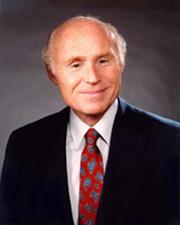 Sen. Herb Kohl (D-WI)
Legislative Activity
Stay on top of the latest movement without scrolling through every action
Senate amendment agreed to: Amendment SA 455 agreed to in Senate by Yea-Nay Vote. 67 - 26. Record Vote Number: 124.
April 3, 2003
View full timeline
Senate amendment agreed to: Amendment SA 455 agreed to in Senate by Yea-Nay Vote. 67 - 26. Record Vote Number: 124.
April 3, 2003
Senate amendment proposed (on the floor): Amendment SA 455 proposed by Senator Stevens for Senator Kohl.(consideration: CR S4803-4806; text: CR S4803)
April 3, 2003
Roll call votes on amendments in Senate: Amendment SA 455 agreed to in Senate by Yea-Nay Vote. 67 - 26. Record Vote Number: 124.
April 3, 2003
Amendment SA 455 proposed by Senator Stevens for Senator Kohl. (consideration: CR S4803-4806; text: CR S4803) To provide humanitarian food assistance in connection with U.S. activities in Iraq.
April 3, 2003
Amendment SA 455 agreed to in Senate by Yea-Nay Vote. 67 - 26. Record Vote Number: 124.
April 3, 2003
Senate amendment submitted
April 2, 2003
Votes
1 roll call on this amendment
Text
Proposed
[[Page S4789]]

-----------------------------------------------------------------------

Senate

SUPPLEMENTAL APPROPRIATIONS ACT TO SUPPORT DEPARTMENT OF DEFENSE
OPERATIONS IN IRAQ FOR FISCAL YEAR 2003--Continued

Mr. SPECTER. Mr. President, there is no doubt that major cities, such
as Philadelphia, with airports and seaports and Independence Hall and
the Liberty Bell, have much higher costs than cities which do not have
these facilities.
I have discussed the issue with Mayor Street. The letter which I have
had printed in the Record is a succinct summary, so we can observe this
very short time limit which has been agreed to.
Similarly, I have conferred with Mayor Tom Murphy of Pittsburgh, who,
again, makes the comment about the additional costs.
I have had an opportunity--actually, I was called by Mayor Bloomberg
of New York City about the very substantial increases in costs there,
and during the markup in the Appropriations Committee earlier this week
commented about these factors and have sought to increase the funding
from the $100 million for high-risk urban areas to a total of some $600
million.
Again, it would be highly desirable if we had more money, as
suggested by Senator Schumer, but that simply cannot be accommodated
within the current budget constraints.
In the conversations with Mayor Bloomberg, he pointed out about the
fact that police cost some $5 million a month, and there are other
costs in the range of $8 million a month for the United Nations, with a
very heavy imposition of costs on New York City, commenting in a way
very similar to the mayors of Philadelphia and Pittsburgh.
There is no doubt these costs really ought to be borne principally by
the Federal Government. In the bill, language was inserted by Senator
Gregg and language by myself which would require the Secretary of
Homeland Defense to make a report to the Congress within 60 days to
identify what are the costs in safeguarding airports, seaports,
landmarks such as Independence Hall, such as the Liberty Bell, and to
make a recommendation as to an allocation by the Federal Government,
and whether such costs, in part, should be borne by other entities.
That will enable us to make a determination as to how this $600 million
will be spent, and to have a rationale for what the expenses will be
with the specification of the costs involved and an allocation between
the Federal Government and other governmental agencies if it is
determined that would be appropriate.

Exhibit 1

City of Philadelphia,

Office of the Mayor,

Philadelphia, PA, April 2, 2003.
Hon. Arlen Specter,
9400 Federal Building,
Philadelphia, PA.
Dear Senator Specter: In Fiscal Year 2002, the City of
Philadelphia spent $21.2 million in increased domestic
security costs. These costs include overtime incurred by the
Police, Fire and Public Health employees associated with the
formation of Rapid Assessment Teams. These teams, consisting
of employees from each department responded to all critical
incidents citywide. Additionally, $8 million was allocated
for security improvements to city facilities. These
improvements include installations of bollards around the
perimeter of City Hall, installation of security access and
surveillance systems in the One Parkway Building and
installation of security cameras and metal detectors at other
facilities. The Police Department enhanced coverage in Center
City and provided enhanced security staffing at the
Philadelphia Stock Exchange, Red Cross Headquarters and the
City's Emergency Operations Center. An intensive training was
given to a team of police officers and supervisors that may
be called upon to respond to a hazardous materials incident.
Going forward, the Police Commissioner formed the Bureau of
Counter-Terrorism absorbing the Detective Bureau's Organized
Crime Unit as its foundation. The 76 member Bureau is
developing new methods and initiatives to pursue counter-
terrorism preparedness. These initiatives include strategic
and tactical training, equipment purchase, inter-agency and
regional cooperation and coordination, and community
outreach. The Bureau meets regularly with task forces such as
the FBI's Joint Terrorism Task Force, the US Attorney's Anti-
Terror Task Force and the US Coast Guard Task Force to keep
current with the latest counter-terrorism strategies. These
initiatives are likely to cost about $10 million annually.
Sincerely,
John F. Street,
Mayor.

SECURITY COSTS IN RESPONSE TO SEPTEMBER 11TH
----------------------------------------------------------------------------------------------------------------
Full year
---------------------------------------------------------------------------
Purchased       Matrl., Supplies
Personnel           Services         & Equipment           Total
----------------------------------------------------------------------------------------------------------------
Police Department (General Fund)....          3,949,187             47,006          1,400,437          5,396,630
Police Department (Airport).........          3,288,784  .................  .................          3,228,784
Fire Department.....................          2,810,271  .................  .................          2,810,271
Public Property.....................            891,000            360,000             17,000          1,268,000
Office of Fleet Management..........             54,034            102,770  .................            156,804
Public Health.......................            340,178  .................  .................            340,178
Triplex Security....................  .................          8,000,000  .................          8,000,000
---------------------------------------------------------------------------
Total...........................         11,273,454          8,509,776          1,147,437         21,200,667
===========================================================================

[[Page S4790]]

Total General Fund..............          8,044,670          8,509,776          1,417,437         17,971,883
----------------------------------------------------------------------------------------------------------------

Mr. SPECTER. Mr. President, how much of my 15 minutes remains?
The PRESIDING OFFICER. The Senator from Pennsylvania has 9 minutes
remaining.
Mr. SPECTER. Mr. President, I yield 5 minutes to the distinguished
chairman of the Appropriations Committee.
The PRESIDING OFFICER. The Senator from Alaska.
Mr. STEVENS. Mr. President, I have asked for a portion of the time of
the Senator from Pennsylvania because we had worked to try to reach an
agreement between the two amendments so that they would be put together
and have an amendment we could adopt. We are unable to do that.
I am compelled to state I will oppose the first-degree amendment of
Senator Schumer. It is a situation where, as far as I am concerned,
there is ample money in the House bill, if we are compelled to raise
the amount that is in our bill. But it is the kind of situation where
we prefer to have this amendment not be adopted now, so we can find a
way to work the matter out with the House.
We have $100 million in the bill. The Schumer amendment, as I
understand it, as drafted, now adds $600 million. I oppose going to
that height. That would, in effect, take it to the level of the House.
And the administration opposes the level in the House bill.
Mr. SCHUMER addressed the Chair.
The PRESIDING OFFICER. Who yields time?
Mr. SCHUMER. Mr. President, I believe I have time. I will yield 3
minutes to myself.
The PRESIDING OFFICER. The Senator from New York.
Mr. SCHUMER. Mr. President, I heard my friend from Pennsylvania speak
on----
Mr. STEVENS. Mr. President, will the Senator allow me to interrupt
for a problem that has come up.
Mr. SCHUMER. Please.
Mr. STEVENS. The problem has come up in connection with the unanimous
consent agreement. There was no time allocated to those who might want
to oppose the Specter amendment. And, as I understand it, a Senator on
the Democratic side wishes to oppose the Specter amendment. In
fairness, I ask unanimous consent she be given 5 minutes to speak; and
if it raises additional items the Senator has not spoken to that he
wishes to speak to, I would allocate an additional 5 minutes to Senator
Specter, so there would be a comment back and forth. All right. I make
that request.
The PRESIDING OFFICER. Is there objection?
Without objection, it is so ordered.
Mr. STEVENS. I thank the Senator from New York.
The PRESIDING OFFICER. The Senator from New York.
Mr. SCHUMER. Mr. President, I heard my friend from Pennsylvania speak
for his amendment. I will support that amendment because it is better
than what is currently in the bill, although I wish it had more money.
I wish it had money for the FIRE and COPS Programs, which the amendment
I am offering with my colleagues from New York and Maryland, does. And
I wish it gave more funding to high-threat, high-need areas, and to all
other areas. I also wish that it ensured, as my amendment does, that
the Department of Homeland Security would be required to provide the
funds within 30 days and that the amendment would guarantee an 80/20
split of those funds between the States and localities.

The Schumer amendment is the amendment that provides sufficient
funding for police, for fire, for first responders all across the
country. We all know how beleaguered they are. We know how stretched
they are. We know whether they be in a large city like New York City,
or a medium-sized city like Rochester or Syracuse, or a suburb, or even
a rural area, our police and firefighters have been pushed to the
limit. They must meet their regular law enforcement and public safety
responsibilities, but now have new responsibilities under 9/11, and
from the Iraq war.
And many police and fire departments have to do more with fewer
people and fewer resources, because of the terrible budget deficits at
the State and local level, and because many are in the Reserves and
have been called up and are proudly serving our country.
So we have an obligation. If we are going to fight the war on
terrorism at home, we have to vote for this amendment. We cannot just
fight the war on terrorism overseas and not fight it at home. Our first
responders, our police and fire, in a very real sense are on the front
lines.
So I hope we will get support for the Schumer amendment. I hope we
will back up our police and firefighters. I hope we will back up our
local governments and our first responders.
The idea that we can win the war on terror just by fighting it
overseas and giving it all the money for needs overseas--I am for that
and support that proudly--but not do what we need to do domestically
makes no sense. We will rue the day.
I ask my colleagues to vote for an amendment that really provides
sufficient funding. Again, I am for the Specter amendment. It is an
improvement. I salute my colleague from Pennsylvania for offering it.
But if you really want to give the dollars to police and fire in the
way that they need them, then the Schumer amendment is the answer. It
is not a Democratic or Republican amendment. It is supported by police
and fire organizations, both management and union throughout the
country. It is supported by local governments. It is what our badly
strapped local governments need in this post-9/11 world.
Again, a good team needs a good offense and good defense. Our
soldiers overseas are providing the offense. But it is our police, our
firefighters, our first responders who are providing the defense. We
need to back them up and back them up fully as well.
I urge support of the Schumer amendment and yield 3 minutes to my
colleague who has been with me all along on this issue, the Senator
from New York, Mrs. Clinton.
Mrs. CLINTON. Mr. President, I support the Schumer-Clinton-Mikulski
amendment because I believe it more accurately reflects the needs that
have been conveyed. Even in the materials that the Senator from
Pennsylvania has entered into the Record, the kind of requests we are
hearing from mayors and county executives and police chiefs and fire
chiefs far exceed what is available. It has been now 18 months where we
have failed to arrive at an understanding of what our local communities
and our States require in order to fulfill their obligations on the
front lines of this second front.
Once again, I believe we have an opportunity to do what is needed,
but we are not taking it. The Schumer amendment provides the kind of
thoughtful analysis and disbursement of funds that will most guarantee
that the money, No. 1, gets out of the Federal Government within 30
days--something not in the Specter amendment--and that once it gets to
the States, it has to be distributed within 60 days. And we appreciate
that. But one of the problems we have had is getting the money out of
the Federal Government to the States, and we also have to assure that
the money gets where it is most needed--to our first responders.
I urge our colleagues to support the Schumer amendment as being far
more reflective of the overall needs our country confronts when it
comes to homeland security.
Across the country, there are common sounds that should trigger an
alarm in all of us: the sound of a firehouse door closing for the final
time; a police officer turning in his or her badge as it slides across
the desk; or an ambulance door locking. In the cities

[[Page S4791]]

and the towns in the States we represent our first responders are
losing their jobs.
States and cities are trying to deal with budget deficits--some the
worst in a generation, and they simple do not have the money to keep
paying for additional homeland security costs.
We need to work together--Republicans and Democrats--to provide them
with the resources they need to strengthen our domestic defense.
Yes, we have made progress since September 11, but we have not done
enough. That same message echoes from report after report, from our
experts, from independent commissions, from our police commissioners,
fire chiefs, mayors, doctors and nurses--we have not done enough to
prevent and respond to another terrorist attack.
I cannot find a single credible security expert who has said, ``We're
fine. We've done enough.'' ``There's no need to guard our chemical
plants and nuclear plants. It's okay if we only check 2 percent of the
containers that come through our ports. Don't worry about hiring border
guards they don't need the extra support. We don't need to give our
police officers, firefighters, and emergency response personnel the
equipment they need. We're fine, and `All's Quiet on the Homefront.' ''
You know last week, the President was asked about how long the war in
Iraq would take and he responded correctly, ``How ever long it takes.''
That's the same attitude we need to use for homeland security--
``whatever it takes'' to protect the American people. This isn't a new
public work project or an example of frivolous spending; this is about
securing our country on the frontlines here at home. And for 18 months
our cities and States and counties have been shouldering this burden
alone. Homeland security is a national priority and these costs and
these responsibilities should be shared by the Nation.
So what are we doing?
What we are doing 18 months after that tragic day in September when
nearly 3,000 Americans lost their lives still debating homeland
security?
Still debating whether or not we should not take the steps we need to
take in order to prevent another day like that from ever happening
again. Still talking about whether or not we should provide our first
responders with the support they need.
Homeland security is a concern we all share. We should not allow
politics to prevail over our Nation's protection. We should not let it
get in the way of strengthening our border and port security, improving
security at our chemical and nuclear plants, and providing critical
support for our police officers, firefighters, emergency personnel, and
public health officials.
Why would some in this Chamber willingly say ``no'' to critical steps
that would improve our domestic defense? Why would our colleagues who
care just as much about their constituent's safety as I care about the
people of New York say, ``no, this isn't the right vehicle for these
investments. No, this isn't the right time for homeland security
because this supplemental bill is for spending that's an emergency-it's
for the war.''
This is the right vehicle. This is the right time. This is an
emergency. This is funding that does go toward winning the war against
terrorism here at home. And this would be the right moment for
Washington to send a clear message to the millions of first responders
across this Nation who have sacrificed in order to keep us safe--we
support you too.
This amendment that I am proposing with Senator Schumer and Senator
Mikulski would provide $4.3 billion for critical first responder
funding. It includes $3 billion for grants to States and local
governments; another $1.045 billion for high-threat areas like New York
City; $155 million for the FIRE Act, and $130 million for the COPS
Program.
Yes, the President's proposal last week was a good start, but it is
not nearly enough for what we need to do here at home in order to fight
this two-front war.
This amendment would provide $3 billion to Office of Domestic
Preparedness at DHS for grants to States and Local Governments:
$2.5 billion of this funding would go toward equipment, training,
exercises, planning, and first responder personnel costs.
The Federal Government must pass the money to States within 30 days.
States must pass on at least 80 percent of this money to local
communities within 30 days of the date they receive it.
And States and local governments may use up to 20 percent of this
$2.5 billion for first responder personnel costs, including overtime.
For the last 18 months, our majors, fire chiefs, police
commissioners, and public health officials have been telling me that
they need more help from Washington to better protect the American
people. This amendment provides that help. It guarantees that the
Federal resources will get out of Washington and to the state houses
and to our local first responders quickly so that they can continue to
do what they do best-keep America safe.
In January I gave a speech at John Jay in New York City to talk about
how our country needed to renew its commitment to strengthen our
domestic defense. I also released a report that showed how 70 percent
of New York cities and counties had not received any federal homeland
security funding.
I continue to work with the U.S. Conference of Mayors, national
police organizations, firefighters, and emergency medical technicians
from across the country to find the best way to support our first
responders. And I spoke with Secretary Ridge the other day to talk
about improving this formula to meet our country's needs, and he
agrees.
Within the $3 billion for State grants, $500 million is set-aside for
States and local communities to secure critical infrastructure
security--bridges, nuclear and chemical plants, water treatment
facilities, communication centers to name a few.
All of this money may be used for first responder personnel costs,
including overtime. The States must provide 80 percent of this funding
to local communities, with states allowed to use 20 percent. And again,
the federal government must send this money to the States within 30
days, and the States must pass through 80 percent of the funds to local
communities within 30 days.
These ideas follow my block grant proposal of 2001 and I am very
pleased that the leadership has adopted my other proposal to put aside
more than $1 billion for high threat areas. And I want to thank my
colleague Senator Byrd for understanding that New York's needs are
different because it is the top target for terrorists.
The $1.045 billion for high-threat areas would be disbursed based on
whether or not there is a credible threat, over-all vulnerability,
critical infrastructure that is important to the Nation, population,
and the needs of public safety organizations.
This isn't just good for New York City and DC; it's good for all of
our Nation's most vulnerable targets. This applies to Arizona and the
recent threat against the nuclear power plant. This amendment would
help cover extra security costs. Recent news reports suggested that al-
Qaida was targeting the Arizona Memorial at Pearl Harbor. This would
help Hawaii cover costs and take precautions. It would assist Las Vegas
Nevada where the population doubles Friday through Sunday. This would
benefit Florida and help them cover costs to secure Disney World.
These are high-threat areas. They are different and they need extra
assistance. Let's look at recent ``code orange'' costs. According to
the U.S. Conference of Mayors, they estimate that cities are spending
an extra $70 million a week. In six months, when this supplemental runs
out, that's $2 billion in costs. $2 billion they don't have, but costs
they will incur because they are honoring their commitment to protect
this country.
During the ``code orange,'' New York and New York City are spending a
total of $12 million a week. In the supplemental, the President set
aside only $50 million to cover such costs for every high-risk area.
New York will have exhausted those resources by the end of next week.
That's why we need this extra $1 billion for high-threat areas. And we
cannot forget that it's not just in our cities where extra security
steps are being taken. Who would have thought that a terrorist cell was
working in Lackawanna, NY? This could

[[Page S4792]]

have been a small town in Missouri, Texas, or Pennsylvania.
I know that some of my colleagues believe that their State isn't a
target--they may think that because their state is small, it's safe. I
bet the chief of police in Lackawanna, NY, would beg to differ about
the likelihood of terrorists turning up in small towns. He would say we
cannot forget that the terrorists continue to plot and plan against us,
and we can't predict exactly where they will turn up.
Yesterday, the FBI issued a new warning to their field agents to look
out for people making chemicals like Ricin. Yesterday, the Wall Street
Journal reported that the Bush administration was getting ready to
launch a plan to increase chemical plant security. The Department of
Homeland Security's spokesman said, ``We realize that voluntary efforts
alone will not be sufficient to assure the appropriate level of
security across the chemical sector.''
And in the last few weeks, we heard Secretary of State Powell, FBI
Director Mueller, Secretary Ridge and CIA Director Tenet all state that
another attack by al-Qaida is not a matter of ``if'' but ``when.''
We can all hope for the best, but I think it's best to plan and
prepare for the worst.
Why would any of us want to take a risk that ``when'' that day comes,
it would be in someone else's back yard--a tragedy in another state
across the Continental Divide and not my problem. When any city or
State or American interest abroad has been attacked like we were.
America was attacked and Washington and the country united to deal with
that aftermath.
Again, we have to do that today to pass this amendment and improve
our domestic defense.
I believe that Retired Colonel Randy Larsen, from the ANSER Institute
said it best when he testified about the Hart-Rudman report on November
14, 2002. He said, ``All of us want what is best for America. But we do
not have much time. We must get it right--or close to right--very soon.
I cannot repeat often enough: America is at war. We need to act like it
while there is still time to prepare.''
But they way to prepare, the way to fund homeland security isn't by
taking money from existing traditional first responder programs. That's
why this amendment also includes $155 million for the FIRE Act, and
$130 million for the COPS Program. We need to fully fund every
traditional first responder program. Since 1994, COPS has helped nearly
12,950 jurisdictions through 27 different grant programs. As of
September 2002, COPS had provided funding for 116,573 community
policing professionals across the country.
It has played a critical role in reducing crime. It has worked well
in the past, and it will continue to work well in the future to help
our communities fight crime. And it should not be used to fund homeland
security.
The same applies to the FIRE Act. The $155 million here ensures full
funding--$900 million--for the FIRE Act for FY 2003. This program
assists fire departments in protecting communities and fire fighters'
health and safety. Local communities may use the funding for training,
equipment and additional staffing.
Currently, 2/3 of this Nation's fire departments do not meet the
standards for adequate staffing. Congress would never allow our Army to
engage in a war with 2/3 of its divisions understaffed.
But this is exactly what we are asking our fire fighters to do. To
date this grant program has received requests totaling more than $2
billion. The program's funding levels only allow it to award grants
that a small percentage of that need. In the event of a terrorist act,
fire fighters are the troops on the front lines. And they deserve our
full support.
So when we think about all of the good that comes out of this
amendment and the others that strengthen our domestic defense, why
wouldn't every leader support these steps?
There are some who may try to defeat domestic defense funding by
saying that the only dollars that should be included in the emergency
supplemental are those that go toward winning this war. I agree, we
should only be talking about funding to fight the war, but I believe we
need to fight the war on all fronts that it is being waged.
Every support that our troops in Iraq need to win will have the full
support of Congress. We cannot forget about our men and women who
continue to fight al-Qaida in Afghanistan--they too deserve every
resource they need. And so do our domestic troops, our police,
firefighters, and EMT's, on the frontlines here at home. The
President's proposal last week was a good start, but it is not nearly
enough. The Congress and the administration have the opportunity to do
so much good for our first responders and strengthen the domestic
defense of our Nation. It would be a shame if we did not take advantage
of this moment, use this as the moment Washington turned the page and
said the time has come, whatever it takes, we will give it our all to
secure our country.
But instead of using this as a chance to do more for our country,
we're hearing phrases like ``beat them straight up.'' ``We will fight
it out.'' ``Defeat them.'' Those aren't words meant for Saddam Hussein
or al-Qaida. Those are fighting words against those of us who are
trying to get more homeland security funding, new masks for
firefighters, extra patrols along our borders and at nuclear power
plants, guards at tunnels and bridges, new high tech equipment to track
radioactive material, and more help for the Coast Guard.
We seem to have gotten stuck in a dialogue that eliminates our
ability to look at a great American tradition that is at stake in this
debate. Some of our country's greatest successes reside in our ability
to do whatever it takes to do what is right for the greater good of our
country.
Imagine if George Washington had decided at the battle of Brooklyn
that it was too much of a challenge for the army to retreat to
Manhattan that night? That decisive act saved the majority of our army,
made victory inevitable, and this debate possible.
What about Lewis and Clark? What if they turned back just after they
had embarked on their journey? Or imagine if Jefferson believed that it
would take too long and that it was too much for two men to search for
that path to the Pacific? But his belief in them, the task at hand, and
that expansion and exploration was critical to a young nation.
What about Josuah Chamberline, a professor from Bowdoin College in
Maine and what he did for our country at the battle of Gettysburg. He
and his regiment stood their ground at Little Round Top. Against
overwhelming odds and the future of the Union resting on his shoulders,
Chamberline charged. His regiment followed, they prevented the south
from taking that hill, and our Union was preserved.
Or when President Lincoln gave the final speech about Reconstruction
in April 1865, he did not buckle at the great challenge of uniting a
divided and partially destroyed country.
Or today, what if we as a Congress decided to only partially support
our troops in Iraq? What kind of victory would follow if we balked at
the challenge? So then why would we not do the same for our domestic
defense? Why wouldn't we support our first responders?
Again, our country's success rises and falls in our ability to
confront great challenges. On September 11th, we were tested once
again. The new challenges that came out of that tragic day are what we
are debating today. These are the stakes.
The Senate has a choice to meet the new demands against the war on
terrorism at home, to finally give it our all to protect this country,
and to carry on this tradition of never giving up and doing what it
takes to do what is right.
Or we can bow our heads, look the other way and pray that tragedy
does not strike again on our shores and hope that if the alarms do ring
in our fire stations and police stations, our brave men and women in
uniform here at home are ready to answer the call to 9-1-1.
I urge my colleagues to make the right choice and support this
amendment.
Mr. AKAKA. Mr. President, I am pleased to join Senators Schumer,
Clinton, and Mikulski in offering this amendment that addresses funding
shortfalls for the Federal, State, and local first responders who are
on the front lines of the war on terrorism. I

[[Page S4793]]

am disappointed that since 9/11, the administration has failed to
provide adequate funding for local governments to prepare for the
possibility of new terrorist attacks.
This funding is critically important to Hawaii. The Hawaii State
Civil Defense estimates that a response to a weapons of mass
destruction attack would challenge the State's emergency response
system. As with all States, in the event of a terrorist attack, Hawaii
would rely on Federal, State, and local officials. However, unlike all
States but Alaska, external assistance from the U.S. mainland is not
immediately available. Hawaii's geographic location makes mutual aid
from mainland States or from other Pacific jurisdictions impossible.
As a result, Hawaii's State Civil Defense estimates that each of the
State's four counties need the capability to sustain an effective
response to any weapons of mass destruction attack for up to 72 hours.
Independent experts and government officials have repeatedly warned
that first responders do not have sufficient resources. A Council on
Foreign Relations Task Force Report entitled ``America--Still
Unprepared, Still in Danger'' concluded that first responders are not
prepared for a weapons of mass destruction attack. According to the
same report, first responders lack the training and equipment to
protect themselves and the public in an emergency and do not have
radios that can communicate with one another. In fact, the National
Fire Protection Association estimates that only one-quarter of the
Nation's fire departments have equipment to communicate with State and
Federal emergency officials.
Our amendment takes important steps to respond to funding shortfalls
by providing $4.3 billion for first responders, including $3 billion
for State and local first responders.
Mr. LIEBERMAN. Mr. President, I rise in strong support of Senator
Schumer's amendment, which I am proud to cosponsor.
We spent much of last year on the Senate floor talking about how to
reorganize our Federal Government to meet and beat the challenge of
terrorism. In the end, we passed a bill creating a Department of
Homeland Security that for the first time is refocusing and
reorganizing the Federal Government to make America safer.
But we have said all along that while better organization is a
necessary prerequisite to making us safer, it isn't enough. We need to
put dollars where the danger is. You can't protect your house in a
dangerous neighborhood with a jerry-rigged lock or no lock at all. A
``Beware of Dog'' sign isn't good enough. You need to spend some money.
You need to buy a real lock. You need to get a decent dog.
The President often says that America has the resolve it needs to win
this war against terrorism. And that is true. Americans are resolute.
They are courageous. They are prepared to face down danger and do what
it takes to overcome it. That is especially true of the men and women
in our fire departments, police departments, emergency medical offices,
and hospitals the men and women we call first responders.
Resolve, however, will only go so far if it isn't matched by real
resources. Can resolve buy interoperable communications equipment? Pay
for firefighters' overtime? Install a security system at a port?
Upgrade the information sharing databases in local communities?
Dramatically improve public health systems to deal with biological or
chemical attacks? No all those urgent improvements and others demand
more than resolve. They demand resources.
Right now the resources are nowhere to be found. This administration
seems determined to do homeland security on the cheap adding just $300
million to the budget for next fiscal year for homeland security. And
the reason boils down to one reason and one reason only. The
administration is committed to protecting $2 trillion in unfair,
unfocused, and ineffective tax cuts, at all costs. On this, it will not
budge. It will not yield. It will not reconsider a single digit or a
single dollar.
That irrational and ideological commitment to those unaffordable tax
cuts has squeezed out every other priority. It has raided the national
cupboard at a time when we desperately need new resources to tackle new
threats.
America has the greatest military in the world, and that is because
we have paid for it. Generation after generation, we have worked
together across party lines and every other division to invest in our
Armed Forces and the men and women who dedicate their lives to the
common defense. We are truly, to recall President Kennedy, willing to
pay any price and bear any burden to deter and defeat foreign threats.
There is no way around this: If we want the best domestic defenses,
we will have to pay for them, too.
At the State and local level, where fiscal crises are already forcing
cuts in services, the Federal Government's failure to invest is
especially serious.
The amendment under consideration today addresses the critical
shortfalls facing our local communities by providing $3 billion in
first responder grants to States in the wartime supplemental budget,
and over $1 billion for grants to high threat urban areas. In addition
to these first responder grants, the amendment provides $155 million in
grants to fire departments to fully fund the $900 million authorized
level, and an additional $130 million to the COPS Program, which will
fund additional police costs.
This is the least we can provide. As you may know, I have called for
a still greater investment--$7.5 billion for our first responders above
and beyond the President's proposal in next year's budget--and $16
billion overall in that budget above and beyond the paltry $300 million
increase.
But this amendment, along with the other amendments I am proud to
cosponsor that will come before the Senate today, is a good start, a
necessary start. Let me give you a few examples of the urgent needs
throughout America today that it would begin to address:
New York Mayor Michael Bloomberg said his city is currently spending
$5 million a week to post armed units at potential targets like Times
Square, conduct bioterrorism detection, and prepare police in the five
boroughs to operate as independent departments should the Manhattan
headquarters be disabled in an emergency.
According to The Washington Post in an article published April 1--
and, no, unfortunately it wasn't an April Fool's joke--Los Angeles
``has grown so desperate waiting for federal money that last week it
reluctantly raided a municipal trust fund for $4.5 million and bought
1,000 chemical protection suits for firefighters and police.'' L.A. has
also reduced staffing at its 24-hour emergency operation center in part
to save money on security costs.
According to The Baltimore Sun, the mayor's office in Baltimore
estimates that the city needs to spend another $8.4 million on new
communications and hazmat equipment, protective gear, and training, not
to mention another $122 million to upgrade water treatment plants,
build a new emergency operations center, and more.
The list goes on. My own home community of New Haven, CT, has been
able to outfit about 10 percent--just 10 percent--of its 300
firefighters with protective equipment that will be needed to respond
in the event of a chemical or biological attack.
Let's face it. Meeting those needs and others will take more money
from Washington, plain and simple. But some don't seem to understand
that. The majority leader, Senator Frist, was quoted in CongressDaily
as saying that, ``It is unnecessary and wasteful to spend more money at
the federal level. The problem is not the federal availability of
money. It's getting it down to the local level.''
With all respect, that is just not the case. In fact, according to
the National Governors Association, States have already obligated or
spent more than 90 percent of their Federal funds. And to complicate
things, many States have been spending their own money for 15 months
but have yet to be reimbursed by the slow and cumbersome process
through which money flows from the Federal Government to States and
localities. This is only exacerbating budget crises at the State and
local level, where many communities are actually laying off and
reducing the number of first responders--so we are going backwards. The
reality is that we need to get more funding to first responders, and we
need to get it to them as quickly as possible.

[[Page S4794]]

The bottom line is this: We must get our first responders more
resources and we need to do it without further delay. Enough posturing,
enough politics. Let's rise above partisanship and put the national
interest first.
The strain on our local first responders has put them in a fiscal
straitjacket of historic proportions--one we must relieve now if we are
to protect Americans from terrorism.
Nevertheless, let's be fair. Let's realize that, yes, we have made
some progress in the 18 months since September 11. Today we are better
equipped to handle a second September 11. Our skies are safer. The FBI
has announced major reforms, which are in progress. I hope we are
beginning to tackle the problem of intelligence coordination that
plagued us in the weeks and months leading up to that dark day.
But the terrorists constantly change their methods. Next time, the
threat isn't likely to come in the form of airplanes crashing into
buildings. The weapon might only be visible under the microscope.
Instead of arriving with a loud crash and flames, it might come
quietly, secretly, surreptitiously. Just as September 11 challenged our
police officers and firefighters as never before, a biological or
chemical attack would challenge our public health first responders as
never before.
The reality is, if that happens, we are nowhere near ready. As
resolute and resourceful as our public health professionals are, they
lack the support, the capabilities, and the funding they need to detect
these deadly diseases swiftly and protect us effectively. We need
significant new investment today to improve our readiness tomorrow.
Look at the reaction to the recent outbreak of Severe Acute
Respiratory Syndrome, or SARS. An unknown microbial agent. A mysterious
name. Those harrowing pictures of children with surgeon's masks
covering their mouths and noses. The slow but consistent spread
throughout Asia, and now around America. Travel warnings from the World
Health Organization placing large swaths of the world off limits. This,
by all accounts, is simply a serious disease with which we are
unfamiliar--but the profile of the outbreak is frighteningly close to
what we imagined a bioterror attack might look like.
The public health officials in our local communities are well
informed and well trained. But working together with the CDC, they just
don't have the tools to determine what is causing SARS. They don't have
the tools to treat the victims. They don't have the tools to try to
stop the spread of the disease in its tracks.
If SARS is 4-percent lethal, what will we do with a disease that is
80 percent lethal? What will we do with a disease that spreads faster
and is harder to diagnose? Let's not cross our fingers and hope.
Unfortunately, that is exactly what we are forced to do under the
administration's budget, which shortchanges investment in our local
public health systems and hospitals.
As a result, our hospitals--already constrained by drastic budget
cuts, are now rubbing quarters together when they need to be building
substantial new capabilities to contend with the new threats. Time
magazine put it this way: ``Speed and calm, both critical in a state of
emergency, can be taught without special gear, but training in certain
techniques and life-saving equipment, like $25,000 protective suits,
don't come cheap. That means most of America's hospitals are ill-
prepared to face a major disaster.''

According to the Greater New York Hospital Association, hospitals
throughout the State have spent more than $200 million on security and
emergency response improvements that they never imagined would be
necessary before September 11--with plans to spend more than that in
the coming year. What has Washington's contribution been? About $8
million in new funding--less than the hospitals will spend on the new
smallpox vaccination program alone.
These new demands are only further straining emergency rooms that are
already stretched to the limit. Dr. Cai Glushak, director of emergency
medicine at the University of Chicago, described the state of Chicago's
hospitals this way: ``The hospitals are vastly lacking in resources and
have yet to address major things with brick and mortar to create truly
adequate facilities to deal with a major contamination issue.'' He went
on to say of his hospital, ``If we had an onslaught of 20 people in
this emergency room, it would be a catastrophe. It would be sending an
external disaster on top of an internal overload.''
How can we expect our hospitals, clinics, labs, and public health
departments to protect us from unknown biothreats when they themselves
are on the verge of being fiscally bedridden?
Now, of course money isn't all that local hospitals need from the
Feds. They also need information, expertise, and guidance. They are
getting some of that from the CDC. But a sustained improvement in our
bioterror defense demands more than that. It demands a real investment.
It demands Federal leadership. Those are sorely lacking in the budget
requests that we have seen from this administration.
For the next fiscal year, I have called for $3 billion in new
homeland security funding over and above the president's proposal to
shore up bioterror preparedness. Mr. President, $1 billion of that
increase would increase CDC grants to help State public health
departments care for and track infectious disease outbreaks, $500
million would help local hospitals increase capacity, training and
supplies, and $1.5 billion would help get new medical research as
quickly as possible from ``bench to bedside''--meaning, from the
discovery phase into actual use.
Hand in hand with these efforts, we simply must jumpstart efforts to
spark private sector production of the drugs, antidotes, and
countermeasures we need to fight unknown chemical and biological
agents. Again, the SARS example is instructive here as well.
We have no antidote for this disease. No vaccine. No countermeasure.
No diagnostic. It is possible that the only effective medical response
will turn out to be quarantine.
Imagine a biological weapon that spreads twice as fast and is twice
as deadly. Do we really want quarantine to be our only answer? No--we
need real medical shields to fight back against the biological and
chemical weapons our enemies might use.
And we can't simply hope and pray for these to appear. Stocking our
medicine cabinet with the right drugs to protect people from SARS will
take months or years of research, months or years of investment, months
or years of hard work by private and government professionals.
That is why we need to begin today--not in 6 months, not in a year--
engaging every national resource we have to develop the drugs,
vaccines, and antidotes we may need in the event of a biological
attack. We know of dozens upon dozens of deadly agents for which we
currently have no defense, and this does not even count the hybrid or
genetically modified organisms we may see in the future. America is
blessed with thousands and thousands of brilliant researchers in
universities and companies across the country. Why not harness their
ingenuity to develop those antidotes, those vaccines, those medicines?
Senator Hatch and I have proposed legislation that would do exactly
that.
I do not believe that Project Bioshield, the limited incentive
program the President has proposed, is remotely enough. At best, it
focuses on short-term procurement of existing countermeasures, not on
long-term research to deal with the threats for which we have no
countermeasure. It will not lead to development of a broad-spectrum
antibiotic, or to the development of powerful new research tools that
will enable us to quickly develop an antiviral to deal with a new
threat like SARS. It is a start, but it is late and it does not reflect
the urgency that is warranted by the threat.
The bill Senator Hatch and I have introduced will put in place a
broad range of incentives our private sector needs to start filling our
medicine cabinet today so our public health first responders are not
caught emptyhanded tomorrow, as they have been caught with SARS.
We are at war against terrorism. Our first responders--whether they
go to work in firehouses, police precincts, hospitals, or
laboratories--are our first line of defense. Let's not frustrate and
condemn to failure those whose job it is to protect us--many of whom
risk their lives--by failing to provide them

[[Page S4795]]

the resources they need to meet and beat the new and unfamiliar threats
to our homeland.
The war against terrorism cannot be won with a magic wand, tough
talk, or wishful thinking. It will take talent, training, and
technology. It will take real, not rhetorical, partnership among every
layer and level of government. It will take bipartisan action in
Congress. It will take money. To begin providing our Government the
resources it needs to protect us from terrorism, I urge my colleagues
to support this amendment.
Mr. LEAHY. Mr. President, I rise today in support of the amendment
offered by Senators Schumer, Clinton, Mikulski, and others. I am proud
to join them as a cosponsor of this amendment that will provide
desperately-needed funds directly to State and local governments to
boost the emergency preparedness capabilities of our Nation's first
responders. The amendment also provides much-needed funding for high
threat urban areas, FIRE grants, and COPS.
Our Nation is at war, and we find ourselves facing enormous
challenges, both at home and abroad. The American people have responded
to those challenges and are performing with skill and determination and
valor on both fronts.
We have nearly a quarter of a million troops in the Middle East. Our
soldiers and marines have been engaging tenacious guerilla fighters in
Iraq's harshest weather conditions. Our sailors are superbly executing
their complex missions. Our Air Force already has performed thousands
of missions over long distances amid withering ground fire, eliminating
threats to all our troops. And we have National Guard units being
called up all across the country to prepare for what could turn into a
lengthy assignment overseas.
Here on the homefront, our first responders and thousands of
dedicated Federal workers are giving their all to preparedness and
prevention. Police officers, firefighters, and emergency medical
response providers are being pushed to the limit with added duties,
longer shifts, and cancelled time off. The new responsibilities they
are shouldering in guarding against and preparing for terrorism have
become largely unfunded mandates on them and on their States and
communities. Every time the threat alert level is raised, it takes
millions more in local and State costs to respond.
The administration readily accepts the need to fund our antiterrorism
efforts abroad, but the administration continues to downplay and
minimize the real needs in real communities across the Nation for
adequate resources to meet homeland defense needs here at home. That
must change. We need to do both we need a robust response to terrorism
on both fronts, here and abroad.
This supplemental spending plan the President submitted to the
Congress addresses costs in Iraq and other locations overseas but
misses the mark by a mile in funding our needs on the homefront. We are
fighting a two-front war, yet the President's request mostly only
addresses the war in Iraq--as well as the needs of a few coalition
allies.
It is frustrating, as well as more than a little ironic, that after
all of the repeated requests from Congress and State and local
officials, over a period now of a year and a half, about the need for
taking care of the fight against terrorism at home, the administration
has decided to request almost $8 billion in assistance on behalf of the
foreign nations that it considers helpful in the war against Iraq, but
only $2 billion for first responders. The Nation's Governors and mayors
have made abundantly clear the urgent need for that same level of
funding, $8 billion. Our hometown heroes need help now.
In recent months, the Nation's first responder needs have grown
increasingly urgent. I have repeatedly joined with congressional
leaders like Senator Byrd, Senator Daschle, and others in asking the
President, in this supplemental request for appropriations, to include
at least $5 billion for our State and local first responders. But the
administration has fallen far short in this bill, including only $2
billion to assist State and local governments to support federally
mandated terrorism preparedness during this time of heightened threats
and insecurity. The amount included in the supplemental is inadequate.
No Federal agencies are doing the jobs that we need first responders
to do. When terrorists attack, the first call that is made is not to a
Federal agency in Washington. It is to 9-1-1, for their State and local
first responders. The responsibility now falls to the Congress to boost
funding for our first responders. We are in a two-front war, overseas
and here at home, and we need to fund both.
The sooner we help first responders help us in the war on terrorism,
the better. I hope you will agree that our Governors and mayors know
what their States and communities need to be safe from and respond to
terrorist attacks. My colleagues and I who introduce this amendment
have heard their pleas and responded. I hope the Congress will respond
accordingly, even though the administration so far has not.
Mr. KENNEDY. Mr. President, September 11, 2001, taught us that the
Nation is vulnerable to terrorist attacks on our own soil. In
Massachusetts, almost 200 families lost loved ones on that day, and
they bear an especially heavy share of the burden of that
vulnerability.
Here in Congress, we are each committed to do all we can to see that
9/11 never happens again. We need to work together to provide the
resources to prevent terrorists from attacking the cities, the towns,
the villages, and the communities we all care so much about in our
States and across this country.
Yet we failed to live up to our responsibility yesterday during the
debate on Senator Hollings' needed proposal to strengthen the
protection of our seaports. It would have provided $1 billion to begin
to protect our Nation's notoriously porous and vulnerable ports. Yet
during the debate on the amendment, opponents questioned ``where will
it end?'' as if this was such an extravagant investment. It was
defeated, and I cannot understand why.
One billion dollars was proposed to secure our seaports against
sabotage, dirty bombs or worse in cargo containers. Was that really too
much--even though the President has pledged $9 billion in aid to other
nations to help them protect their own citizens?
These entryways into the United States are responsible for 95 percent
of all U.S. international trade, but only about 2 percent of all cargo
is now being inspected. An urgent proposal to do more, and do it now,
should certainly get a unanimous vote in the Senate. The stakes are too
high. September 11 taught us what can happen.
Obviously, we don't have unlimited funds. Obviously, we can't make
ourselves 100 percent free of the terrorist threat. But can we really
say that we are doing all we can when the overall bill before us
provides only $2 billion to help State and local governments meet their
new security requirements? Facing serious budget reductions of their
own, the Nation's cities are spending an additional $70 million a week
on direct homeland security costs, and tens of millions more in
indirect costs.
But can we really say we are doing all we can when Federal assistance
for homeland security has, to date, provided the entire State of
Massachusetts with only $11 million, the entire State of Pennsylvania
with only $18.5 million, and the entire State of California with only
$45 million?
Can we say we are doing all we can--let alone all that we should--
when the bill before us provides the grand total of only $100 million
to protect all the high-level-threat urban areas in the country?
How many of these high-level-threat urban areas are there?
Is $100 million enough--or is it only a drop in the bucket--when we
are talking about the security of Atlanta or Austin or Baltimore or
Boston or Charleston or Cleveland or Chicago or Dallas or Denver or
Detroit or Houston or Las Vegas or Los Angeles or Miami or Milwaukee or
Minneapolis or New York City or New Orleans or Philadelphia or Phoenix
or Portland or Pittsburgh or Seattle or St. Louis or St. Paul or San
Diego or San Antonio or San Francisco or Tampa or Washington, DC, or
dozens of other American cities that can legitimately be called high-
threat areas.
Mr. President, $100 million for high-level urban threat areas--just
for the 29 cities I mentioned above, that works out to $3.3 million for
each city. That won't go very far in New York City,

[[Page S4796]]

where the mayor is spending $5 million a week.
It won't go very far in Boston, which is struggling to meet its
security obligations while confronting a potential 2-year State-aid cut
of $153 million. As a result of these cuts, and declining tax revenues
brought about by the recession, there will be no incoming class of
police officers for Boston this year. No incoming class, when the
threats to the city are unprecedented and when 18 of Boston's officers
are serving their country in Iraq.
Is Boston supposed to take on these new challenges, with only token
financial support from Washington?
Apparently, Boston is to go it alone in its efforts to prevent a
terrorist attack on any of the 61 hazardous material storage facilities
that dot its waterfront. Boston alone is supposed to protect the home
heating oil depots along its expressway. And Boston alone is supposed
to prevent terrorists from commandeering any one of the hundreds of
cruise vessels that stop in our port every year.
Instead of wondering where it will end, a better question for us to
be asking ourselves today is: How can we go back to our States without
doing all we can to protect our communities?
Last week, half of the Senate had no problem voting for a massively
excessive tax cut for the wealthiest Americans on the flimsiest of
economic justifications. Yet now we have voted down $1 billion to
protect our seaports--even though their vulnerability could have
immediate and devastating effects on our economy--and we are reluctant
to add another $2 billion to secure our communities.
The amendment before us is modest. It does not try to change the
fundamental fiscal relationships between the Federal, State, and local
governments. It simply says that we can do more. We can do more than
the bare minimum that the President's Budget Director says is
absolutely necessary. We can do more so that our Nation's homeland
security isn't entirely dependent upon property taxes, lottery
revenues, and car washes.
The amendment before us would increase assistance to first responders
by $1 billion, provide a total of $1.05 billion for assistance to high
threat urban areas, $155 million for firefighter's equipment grants,
and $130 million for staffing and overtime expenses for COPS Program
activities.
In the context of an unprecedented supplemental appropriation request
of $74.8 billion, and with the backdrop of heightened domestic
security, can anyone really pretend that these investments are unwise
or unnecessary?
Today, I spoke to 17 mayors in Massachusetts by conference call, all
of whom are struggling to meet the challenges of post-September 11
security--and none of whom know how they can go on bearing these costs
alone. Their obstacles are impossible to overcome.
Mayor Fred Kalisz of New Bedford, a city of 94,000 people and home of
the Nation's highest value commercial fishing fleet, has incurred
$500,000 in specific homeland security expenses to date and has come up
with list of $3.4 million in essential capital security requests to
protect his city's port, its commercial fishing fleet, and key public
facilities. He has no way to pay for these costs. He recently had to
suspend drug and alcohol prevention programs for New Bedford's youth.
Mayor John Barrett of North Adams, a city of only 14,000 people, has
to deploy his small town police force to secure two nuclear
powerplants--including 533 spent radioactive fuel rods--against
terrorist attack.
In Everett, a city of 38,000 people located just outside Boston,
Mayor David Ragucci spends $10,000 a day to secure facilities
containing 685,000 gallons of propane, 95 million gallons of jet fuel
and a 1500 megawatt powerplant from terrorist attack. In the wake of a
$4.5 million budget cut, Mayor Ragucci deserves a combat medal for his
efforts to protect these facilities which are within 5 miles of nearly
1 million people.
Mayor Bill Whelan of Quincy, a city of 88,000 people, has been hit
with over $300,000 in overtime and other personnel costs responding to
over 300 anthrax and hazardous materials calls since 9/11. He also has
had to begin patrolling the city's 27 miles of open coastline, and
begin providing 24-hour police protection for a Muslim place of
worship. And he is staring at $4.3 million of State local aid cuts in
the face.

In Fall River, with 92,000 people, Mayor Ed Lambert has done a good
job so far balancing a very difficult situation. With a reservoir that
serves 200,000 people and the State's largest bridge within city
limits, Mayor Lambert has had to dramatically increase security at both
these critical sites. But, he has had to do it while cutting back his
police and fire forces in response to difficult budget shortfalls. Over
the last 18 months, Fall River has lost 15 percent of its police force
and 10 percent of its firefighters because of budget cuts.
In Brockton, Mayor Jack Yunits has been trying to meet the challenges
confronting his city of 94,000 while dealing with the loss of 17 police
officers. Another six will soon be retiring, and there is no funding to
replace them. Among the mayor's chief homeland security challenges is
the safety and well-being of the 6,000 students and faculty who attend
Brockton High School each day, the largest high school this side of the
Mississippi River. His difficulties will soon be compounded if the
proposed State cut of $2.9 million from his budget becomes law.
In Lowell, with a population 105,000, six of its police officers and
a fireman have been sent to Iraq. With a police force of 220, Lowell
may have to insist on 30 early retirements this year to meet its budget
constraints. City Manager John Cox tells me that for the first time in
recent memory, there will be no new recruits from the police academy.
Worcester is Massachusetts' second largest city, and Mayor Tim Murray
tells me that he has lost over 80 police officers and 86 firefighters
due to budget difficulties.
All these mayors have their backs against the wall. They are trying
as hard as they can to protect their security, but they are not being
given the help they need.
I think Mayor Yunits from Brockton said it best ``Our first
responders are fighting for their jobs, while they continue fighting to
protect us.''
They will keep at it, I am sure, because they care about this
country. They care about their city. They care about protecting their
citizens. They care about doing every last thing possible to prevent
another disaster on American soil.
Shouldn't we in the Senate--with our responsibility to protect the
American people--at least try to help ease this burden?
I urge my colleagues to support this amendment, and send a message to
the Governors and mayors of America that they are not alone, that they
can count on Congress to provide more than mere photo opportunities as
they confront the threat of domestic terrorism in their communities.
Mrs. BOXER. Mr. President, first, let me thank Senator Schumer for
offering this amendment to immediately provide more resources to our
local first responders. I am pleased to be a cosponsor of this
amendment.
This amendment is vital to our first responders at the State and
local levels of government. We must increase the resources available so
that our police, firefighters, and other emergency personnel can help
prevent and respond to terrorist acts.
This amendment makes $2.2 billion available to the Office for
Domestic Preparedness in the Department of Homeland Security.
This $2.2 billion is for direct grants to States and local
governments. This funding will be passed to the States, and then on to
local governments within 45 days.
This expediency is an important concern of many States, including my
State of California. We have all heard about the budget shortages that
many States are facing. These budget shortages then affect cities and
counties.
My State of California is facing a budget shortfall of between $26
and $35 billion. In California, revenue from vehicle license fees helps
communities pay for the equivalent of 12,000 police officers or 15,000
firefighters for one year. But, because of the State shortfall, this
funding may not be passed on to local communities.
Already, the financial crunch is taking its toll. For example, the
city of Marysville faces a $700,000 budget shortfall. This shortfall
will affect the police payroll, which accounts for 60 percent of the
city's budget. The cities of Santa Cruz, and Napa have also made cuts
in police and fire departments. This amendment will assist cities like
Marysville, Santa Cruz and

[[Page S4797]]

Napa to have full teams of first responders.
On top of this budget crunch, the Federal Government has handed
additional responsibilities and a heightened terror alert to already
troubled State and local governments. The states are paying for
security costs that the Federal Government has asked them to cover. In
California, the Governor estimates $500 million in statewide homeland
defense costs for the State and local governments. These estimates are
probably low, especially if the war in Iraq goes on for several months.
The city of Los Angeles spent an additional $4.2 million just during
the 20 days of code orange to meet the demands of heightened security.
The city of Fresno is spending between $15,000 and $20,000 per week on
homeland security costs. On average, the city of San Francisco is
spending $2.3 million per week, second only to New York City. In fact,
of the five cities nationwide that are spending the most money on
protecting the homeland, two of them--San Francisco and Los Angeles--
are in my State.
This amendment is vital for our communities, vital for our local
police, vital for our local firefighters, vital for the protection of
the American people. I urge my colleagues to support this amendment.
The PRESIDING OFFICER. The Senator from New York.
Mr. SCHUMER. Mr. President, I yield 3 minutes to another sponsor of
the amendment, somebody who has fought long and hard for first
responders and localities, the people of Maryland, the Senator from
Maryland, Ms. Mikulski.
The PRESIDING OFFICER. The Senator from Maryland is recognized for 3
minutes.
Ms. MIKULSKI. Mr. President, I am pleased to join with my colleagues,
Senators Schumer and Clinton, who have been working steadfastly to get
the resources we need to properly fund homeland security. They have
stood up not only for New York but for all of America because we know
that homeland security cannot be done on the cheap. We are at war. We
are at war in Iraq, and we need to support our troops. But we are at
war here. The President of the United States, George Bush, said we are
at war here in the war against terrorism and we need to support the
hometown, homeland troops. They are our first responders.
Where are they? They are in local governments. They are in fire
stations. They are in police stations. They are standing sentry behind
the ambulances ready to respond to any emergency need. When a citizen
calls 911 because of an event that has happened in their community, it
happens locally.
The Schumer-Clinton-Mikulski amendment not only gives more money,
which is desperately needed, but it brings money to the local
communities where it is needed.
We live in the capital region, we in Maryland, whether it is
Montgomery County or Prince George's or Baltimore City. Our overtime is
skyrocketing. We are spending loads of money in the protection for
infrastructure. In Baltimore, every time we go to code orange we are
spending $50,000 a week on police overtime. Prince George's County
needs $50 million just to be able to talk to the rest of the State in
interoperable radio equipment. Anne Arundel County is responsible for
the protection of the National Security Agency, the Naval Academy, the
capitol of the State of Maryland, and BWI Airport. We say: Oh, wow, we
can't afford to do it.
Let me say this: When the country goes to code orange, our local
communities go to red ink. Local governments have no place to turn
except higher property taxes. We say no to higher property taxes. We
say yes to more funds for homeland security. If we want to wear the
flag, let's stand up for the flag and let's stand up for the flag by
supporting our first responders in the local community and by putting
the money where our patriotism is, right in the Federal checkbook.
I yield the floor.
The PRESIDING OFFICER. The Senator from Louisiana.
Ms. LANDRIEU. Mr. President, I rise in support of the Schumer
amendment, but I also wanted to make a comment about the Specter
amendment. I support the amendment of the Senators from New York and
Maryland who are lead sponsors on this particular amendment. They are
absolutely correct. We are not giving the resources that are necessary
to first responders.
While the bill before us attempts in good measure to support the war
underway, we always need to be prepared each and every day to fight the
war on terrorism--which is broader than the battlefield in Iraq. The
battlefield has now become in some sense the U.S. territory, and we
need to do more faster. I realize we can't pay for every bill that is
submitted, but we most certainly can do more than what we are doing. I
intend to vote for the Schumer amendment.
I am not sure what I will do on the Specter amendment. I will say
why. I think the offset is inappropriate. I understand there might be
some consensus about the amendment of the Senator from Pennsylvania,
but let me say what I object to strenuously in the amendment. To fund
the high threat urban areas, a portion of the money, $150 million, is
taken from State and local governments, and a portion is taken from
critical infrastructure protection. So here, as a Senator from
Louisiana, I have to now be forced to choose--these are tough votes and
this is a job we asked for--because on one hand, I do want to add money
to the overall pot, which the amendment does, but I want to call to the
attention of my colleagues that part of the offset is taking it away
from protection for pipelines, chemical plants, ports, and other
critical infrastructure that could be described as highways, rail, et
cetera, to support high urban threat areas.
It is a dilemma. I hope, however, it is resolved. Perhaps a better
offset could be found in the conference report because I agree with
Senator Schumer and Senator Clinton that we have to do more. I don't
agree with the proposal put down by the Senator from Pennsylvania that
to solve that problem, it needs to be taken from States such as
Louisiana--perhaps Texas could find itself in the same situation--
having a tremendous amount of critical infrastructure to protect, which
I might say to my colleagues in the Senate, supplies a tremendous
amount of energy for the Nation. Those critical infrastructures are all
over urban as well as rural parts of Louisiana. So I rise in support of
the Schumer amendment, and with great reservations about the amendment
offered by the Senator from Pennsylvania.

The PRESIDING OFFICER. Who yields time?
The Senator from New York.
Mr. SCHUMER. Mr. President, I yield 2 minutes to the Senator from
Michigan, who has been a great supporter of first responders.
Ms. STABENOW. I thank my colleague. I rise as a cosponsor of this
amendment. I commend my colleagues for bringing it forward.
As has been said so many times, we have two front lines in the battle
on terrorism. We have come together virtually unanimously in support of
our troops in Iraq and for the efforts on other soils away from our
country. But here at home we have not done the same. Back in Michigan,
I held nine different community meetings around the State, and I heard
the same thing from our urban to rural areas: They are working hard,
working overtime, but they cannot do it alone.
When our country was attacked, it was not just New York or
Washington. They were, in fact, attacking the United States of America.
We have an obligation to our hard-working men and women, the
firefighters, the police officers, the emergency medical workers, to
make sure we are partnering with them to make sure they have the
resources they need.
I have heard so much about the need for communications equipment,
bioterrorism training, additional personnel. They are saying to me that
it is very frustrating when, on the one hand, we say we are getting
them more money, and then we cut the COPS Program or the Fire Grant
Program.
The Senator from Louisiana raises an important point about the
Specter amendment as to where the dollars come from. I will support the
Specter amendment, but we have to make sure these are really new
dollars and not just moving from one pot to another pot because the
reality is that our first responders cannot do this without our
partnership and our support.

[[Page S4798]]

This is the time we are bringing forth the resources to fund the war
to support our troops abroad. We have troops right here. They are
asking us, finally, to support them. We have tried for 18 months to
provide the resources, to let them know, and today is the day.
I hope my colleagues will join unanimously to do that.
The PRESIDING OFFICER. Who yields time?
Mr. SPECTER. Mr. President, by way of a brief reply and comment on
the arguments that have been made, I agree with a great deal of what
has been said. It would be highly desirable to put in more money, but
what we have seen today are efforts on the other side of the aisle to
add funds, and a response on this side of the aisle, pretty much on
party-line votes, to deny the addition. I have sought to find a figure
that is significant, such as $600 million, which will be agreed to by
votes significantly on this side of the aisle, and with some votes on
the other side of the aisle.
When the Senator from New York, Mrs. Clinton, made the comment that
there are features of Senator Schumer's amendment that expedite the
disbursement of the funds, that is not included in my amendment because
we don't really know what the formula should be. When Secretary Ridge
testified before the Appropriations Committee on March 27, he agreed
that the current formula on a population basis was inappropriate, that
high-risk areas need more money. At the moment, we do not have a
determination as to what those costs are. We have directed the
Secretary to make that determination. Once he makes that determination,
then we can make an allocation. I certainly would like to see more
money.
I agree totally with the comments made about the bravery of the
firefighters and of the police officers, and the threat of terrorism
that has to be fought domestically as well as overseas. What I am
looking for in my amendment is the art of the possible--to come up with
a figure, and $600 million is substantial.
It is true, as the Senator from Louisiana points out, money has been
taken in other lines for $300 million. But we have gotten the managers
to agree to an additional $200 million, so it is a matter of
priorities. If you look at the high-risk areas, such as New Orleans, it
is in the interest of the State of Louisiana to have this allocation.
How much of my time remains?
The PRESIDING OFFICER. The Senator has 10 minutes remaining.
Mr. SCHUMER. I inquire how much time I have.
The PRESIDING OFFICER. The Senator from New York has 4 minutes
remaining.
Ms. LANDRIEU. Will the Senator from Pennsylvania yield?
The PRESIDING OFFICER. Who yields time?
The Senator from Louisiana has 2 minutes remaining.
Ms. LANDRIEU. Mr. President, I wish to respond to the Senator from
Pennsylvania because this is a very important debate. I thank him,
first, for the effort he has made to try to bring some compromise to
the issue.
I restate how difficult it is for some of us from some States that
have serious needs of critical infrastructure. We supply 20 percent of
the Nation's oil and gas. I have more pipelines in my State than any
other State in the Union. We are happy to provide the energy. We have
more chemical plants than Illinois, New Jersey, and other States. To
ask us to be forced to say we don't really need money for that and we
can give money to urban areas--the fact is, we need to give money to
both, and to New York, Pennsylvania, New Orleans, as well as other
places where pipelines run under very small communities.
I hope the Senator from Pennsylvania will take seriously--and I know
he does--what point I am making and perhaps work as a member of the
Appropriations Committee as this bill moves through to try to find an
additional remedy so we don't have to get rural areas giving up their
money for urban areas, or urban areas giving up their money for rural
areas, and we can try to make fair allocations to protect all of the
critical infrastructure in the Nation, whether it is in rural or urban
areas.
Mr. SPECTER. Mr. President, I think the Senator from Louisiana makes
a valid point on the need for more funding. We are now on the emergency
supplemental. We do not know at this moment what the costs are to
protect all of these interests. We will know shortly. We have asked for
60 days. We will be moving forward with more appropriations bills. We
are in the process now of moving forward.
The subcommittee, chaired by the distinguished Senator from
Mississippi, on which I serve, will be taking it up. We will be
interested to see the specifications as to what it costs to protect the
interests identified by the Senator from Louisiana. But I think this is
a substantial start. This is a combination of trying to get more funds
in, and getting $200 million is not easy on this side of the aisle.
Making the reallocation of the $600 million is a very material advance.
Ms. LANDRIEU. I thank the Senator for his comments. I look forward to
working with him as we try to provide additional funding for the
critical structure that is necessary throughout many places in the
South and in the industrial East.
Mr. SCHUMER. Mr. President, I ask unanimous consent to add Senator
Lautenberg as a cosponsor.
The PRESIDING OFFICER. Without objection, it is so ordered.
Mr. SCHUMER. Mr. President, I yield to the Senator from New Jersey 2
minutes.
Mr. LAUTENBERG. Mr. President, I rise in support of the amendment
offered by our colleagues, Senator Schumer, Senator Clinton, and
Senator Mikulski.
The amendment of the Senator from Pennsylvania, too, is an amendment
that has to be considered favorably. This amendment would provide
desperately needed funds to State and local governments to bolster
their emergency preparedness. I am pleased the amendment sponsors have
included my proposal to reimburse State and local governments for
additional costs that they are incurring because they have not replaced
the first responders called to active duty in the Reserves or National
Guard.
Not surprisingly, many local police and fire and rescue and emergency
medical service and hazardous material disposal personnel serve in the
National Guard and Reserves. More and more, these men and women are
being called up for longer and longer tours of active duty, and
especially now that the war with Iraq is underway. It is critical that
we bolster our military capabilities here and abroad but that we not do
it at the expense of our safety and security at home.
I have spoken to a lot of mayors in New Jersey. New Jersey shared the
impact of the terrible assault on the Trade Centers with New York, as
700 of our citizens died that day. What perplexes them is the fact that
here they are being asked to bolster the defenses at home, to make sure
they cover the emergency needs, and, in many instances, it takes people
away to serve either in the Reserves or the National Guard, to put them
on active duty.
They do not understand--and I agree with them--why it is we cannot
take care of our defenses with strength at home as well as abroad.
I am pleased that the amendment sponsors have included my proposal to
reimburse State and local governments and Indian tribes for the
additional costs they incur replacing their first responders who are
called to active duty in the Reserves or National Guard.
The 1.2 million men and women who serve in the National Guard and
Reserves are a crucial component of our military. They account for just
8.3 percent of the Defense budget but give us the capability, if
necessary, of nearly doubling our armed forces.
Not surprisingly, many local police, fire, rescue, emergency medical
service, and emergency hazardous material disposal personnel serve in
the National Guard and Reserves. More and more of these men and women
are being called up for longer and longer tours of active duty,
especially now that the war with Iraq has begun.
It is critical that we bolster our military capabilities here and
abroad. But we must not do it at the expense of our safety and security
at home.
Our local communities must have the necessary personnel to respond to
terrorism, natural disasters, and other emergencies.

[[Page S4799]]

My proposal would reimburse State, local, and tribal governments for
the additional costs they incur when their ``first responders'' who
serve in the Reserves and the National Guard are called to active duty
for 6 or more consecutive months.
Reimbursable costs could include the salary and benefits associated
with hiring a replacement or the overtime paid to other emergency
personnel who ``fill in'' for the first responder called to active
duty.
The effect of my amendment would be to make such reimbursements an
authorized use of the $500 million contained in the underlying
provision.
Increasingly, I am hearing from State and local officials who are
concerned about the toll that active duty call-ups are taking on their
emergency preparedness.
According to the Police Executive Research Forum, 452 of 1,002 law
enforcement agencies and departments surveyed so far have lost
personnel to call-ups.
The problem is worse in rural and smaller jurisdictions where just a
few call-ups can decimate a police or fire department.
State and local governments are facing their worst fiscal crisis in
over 50 years. We shouldn't leave them ``holding the bag'' when their
first responders get called up. And we should not be making our
communities less able to respond to terrorism, natural disasters, and
other emergencies.
Again, I thank my colleagues from New York and Senator Mikulski for
accommodating my proposal. I think my language makes a good amendment
even better and I urge my colleagues to adopt it.
The PRESIDING OFFICER. The Senator's time has expired.
Mr. SPECTER. Mr. President, I yield to the Senator from Mississippi.
The PRESIDING OFFICER. The Senator from Mississippi.
Mr. COCHRAN. Mr. President, the bill reported by the committee
provides an additional $2 billion in supplemental appropriations to
enhance assistance to State and local first responders. It does so in a
manner which builds on the State strategies; provides funding for
enhanced security of critical infrastructure, and allows the Secretary
to target funds to high threat urban areas.
This amendment does more than just boost funding for the Office for
Domestic Preparedness. It mandates mechanisms for the dispersal of
Federal funds which would dilute the impact of the supplemental funding
altogether.
The amendment which has been offered requires a direct pass-through
of grant funds to States within 30 days. This requirement would negate
the strategic planning process the Office for Domestic Preparedness has
developed and implemented with States to allocate funds to those with
greatest need and it would undermine the States' regional approach
which is currently supported by the majority of States.
The amendment requires that funds for grants be allocated to States
based on the minimum grant requirement in the USA PATRIOT Act and the
remaining amounts being distributed on a per capita basis. This is what
is being done currently. However, it mandates that the funds be
allocated to States within 30 days of enactment of the Act. This would
not allow time for the States to submit a plan for the use of the funds
requested which ensures some degree of accountability that Federal
funds will be used to cover allowable costs.
The amendment further requires that not less than 80 percent of each
State's funds be made available to units of local government based on
population. Of the 80 percent mandated to go to localities, the
amendment then requires 20 percent be used ``shall be for''--``costs of
law enforcement, fire, emergency medical services, and other emergency
personnel, including covering overtime expenses.''
In addition, the amendment allows grant funds to be used for
``personnel funds''. It does not define what this means. Does this mean
hiring personnel or reimbursement of costs of existing personnel, or
both? What is the baseline for determining this? What will ensure that
Federal assistance supplement and not supplant existing levels of
effort?
The amendment also does not define units of Local Government. If it
truly means all local units will receive funds based on population, the
Federal funding will be diluted by giving many small jurisdictions
small grants. And, it will most likely cause further delay, if you
consider there are over 3,100 counties, each containing townships,
villages or other governmental units, and the States are required, as
this amendment mandates, to disperse all these funds to this number of
jurisdictions based on population within 30 days, and then to make sure
that 20 percent of those funds be allocated only for specified
purposes, as the amendment requires.
Where the current system relies on planning-based decisionmaking,
this amendment resembles revenue sharing.
I realize that changes to the current system may be merited.
Questions have been raised about the appropriate Federal share of the
additional cost to States and local governments of terrorism
preparedness and response efforts; what should properly be a Federal
responsibility; and the formula for distributing funds, and the extent
to which it properly reflects risks and vulnerabilities.
However, changes should be made after careful review by the authoring
committees of jurisdiction, not done on this supplemental
appropriations bill. The chairman of the Senate Government Affairs
Committee has already announced a series of hearings, beginning next
week, to review the Department of Homeland Security's grant programs
and their effectiveness.
I do know that with respect to making a decision on this here today,
the current process is preferable to what is being proposed by this
amendment. This amendment would only make things worse.
The same is true for the mechanism proposed by this amendment to
deliver critical infrastructure protection funds to States. It would
require funds be distributed on a per capita basis to States. Once
funds are available to States, 50 percent must be made available to
local jurisdictions within 30 days of receipt.
Again, it would dilute the funds being made available for security
costs related to protection of critical infrastructure, which are
intended to help State and local governments cover additional costs
resulting from Operation Liberty Shield. Again, this is not targeted
assistance, it is a revenue sharing approach to a problem.
The amendment also provides an additional $155 million for grants
under the Federal Fire Prevention and Control Act. There is no
indication that additional funding is needed at this time. The
Department of Homeland Security is still processing applications for
the $745 million made available for fiscal year 2003.

Plus, this additional funding, as well as an additional $130 million
proposed for the Department of Justice Community-Oriented Policing
Services, is proposed on top of the amendment's requirement that 20
percent of local jurisdictions' share of State grants be used for ``law
enforcement, fire, emergency medical services, and other emergency
personnel, including covering overtime expenses.''
The bill reported by the Appropriations Committee includes $2 billion
in supplemental appropriations for the Office for Domestic Preparedness
to assist State and local governments to expand their capacity to
prepare and respond to potential terrorist acts.
It provides an additional $1.42 billion for grants to States, at
least 80 percent of which must be passed through to local governments.
This funding is for the acquisition of equipment, training, excercises,
and planning. It is intended to assist States to more aggressively
implement their statewide domestic preparedness strategies.
In addition, the committee-reported bill provides an additional $30
million in direct technical assistance to states for a variety of
activities, as needed, including support for plan development and
implementation of exercises.
It also provides $450 million, as requested by the President, for
State grants to assist State and local governments with the costs of
augmenting security at critical infrastructure facilities during the
period of hostilities with Iraq. This recognizes the new requirements
imposed on States and localities by the immediate need for heightened
protection of critical infrastructure facilities. We understand

[[Page S4800]]

that the department has already reached out to States to ensure
security measures are under way for the most sensitive sites and has
been working with governors in developing site protection plans so that
these funds can be released rapidly.
Lastly, it provides an additional $100 million to be targeted to
high-risk urban areas, as determined by the Secretary of Homeland
Security.
The amendment offered by the Senator from Pennsylvania would alter
the amounts recommended in the committee-reported bill to provide total
supplemental appropriations of $600 million for assistance to high-
threat urban areas and the total supplemental appropriations for the
Office for Domestic Preparedness to $2.2 billion. I support the Specter
amendment, and I urge my colleagues to oppose the amendment offered by
Senator Schumer.
Mr. SPECTER. Mr. President, I yield to the distinguished chairman.
Mr. STEVENS. How much time remains, Mr. President?
The PRESIDING OFFICER. The Senator from Pennsylvania has 8 minutes 16
seconds.
Mr. STEVENS. Mr. President, I want to make clear what I stated
before. I do support the Specter amendment. By virtue of the approach
the Senator from Pennsylvania has enunciated, we end up with more
moneys in this area of great concern, but we increase the amount of
money in the bill by $200 million. There was already $100 million in
the committee-reported bill.
I do accept Senator Specter's approach to this. I am hopeful we can
convince the House to recognize that this is the proper way to allocate
the money the President requested and convince them that the amount we
have in this bill is sufficient to meet the objectives we all seek to
attain.
I urge Senators to vote for the Specter amendment. Again,
reluctantly, I state I am opposed to the amendment offered by the
Senator from New York and his colleagues.
Mr. SPECTER. Mr. President, I ask for the yeas and nays.
The PRESIDING OFFICER. Is there a sufficient second?
There appears to be a sufficient second.
Mr. SPECTER. How much time remains on our side?
The PRESIDING OFFICER. The Senator from Pennsylvania has 7 minutes.
Mr. SPECTER. On the other side?
The PRESIDING OFFICER. The Senator from New York has 1 minute 50
seconds.
Mr. SPECTER. Mr. President, I am prepared to yield back time if the
Senator from New York is.
Mr. SCHUMER. I am prepared to yield back our time as well so we can
move this along.
The PRESIDING OFFICER. All time is yielded back. The question is on
agreeing to amendment No. 515.
The clerk will call the roll.
The legislative clerk called the roll.
Mr. McCONNELL. I announce that the Senator from Kentucky (Mr.
Bunning) is necessarily absent.
I further announce that, if present and voting, the Senator from
Kentucky (Mr. Bunning) would vote ``yes.''
Mr. REID. I announce that the Senator from Hawaii (Mr. Inouye) and
the Senator from Massachusetts (Mr. Kerry) are necessarily absent.
I further announce that, if present and voting, the Senator from
Massachusetts (Mr. Kerry) would vote ``aye.''
The PRESIDING OFFICER. Are there any other Senators in the Chamber
desiring to vote?
The result was announced--yeas 65, nays 32, as follows:

[Rollcall Vote No. 122 Leg.]

YEAS--65

Akaka
Alexander
Allen
Bayh
Bennett
Bond
Boxer
Brownback
Burns
Campbell
Cantwell
Chambliss
Clinton
Cochran
Coleman
Collins
Cornyn
Corzine
Daschle
Dayton
DeWine
Dodd
Dole
Domenici
Durbin
Edwards
Feinstein
Fitzgerald
Frist
Graham (FL)
Grassley
Hagel
Hatch
Hutchison
Jeffords
Kohl
Lautenberg
Levin
Lieberman
Lincoln
Lott
Lugar
McCain
McConnell
Mikulski
Miller
Murkowski
Murray
Nelson (FL)
Nelson (NE)
Pryor
Reid
Roberts
Sarbanes
Schumer
Shelby
Smith
Snowe
Specter
Stabenow
Stevens
Talent
Voinovich
Warner
Wyden

NAYS--32

Allard
Baucus
Biden
Bingaman
Breaux
Byrd
Carper
Chafee
Conrad
Craig
Crapo
Dorgan
Ensign
Enzi
Feingold
Graham (SC)
Gregg
Harkin
Hollings
Inhofe
Johnson
Kennedy
Kyl
Landrieu
Leahy
Nickles
Reed
Rockefeller
Santorum
Sessions
Sununu
Thomas

NOT VOTING--3

Bunning
Inouye
Kerry
The amendment (No. 515) was agreed to.

Change of Vote

Mr. BAUCUS. Mr. President, on vote No. 122, I voted aye. It was my
intention to vote no. I ask unanimous consent that it be recorded as
no. It does not change the outcome of the vote.
The PRESIDING OFFICER. Without objection, it is so ordered.
(The foregoing tally has been changed to reflect the above order.)

Vote On Amendment No. 514

The PRESIDING OFFICER. The Senator from New York.
Mr. SCHUMER. Mr. President, I ask for the yeas and nays on the
Schumer amendment.
The PRESIDING OFFICER. Is there a sufficient second?
Mr. STEVENS. Mr. President, I move to table that amendment.
The PRESIDING OFFICER. Is there a sufficient second on the motion to
table?
There appears to be.
The question is on agreeing to the motion. The clerk will call the
roll.
The assistant legislative clerk called the roll.
Mr. McCONNELL. I announce that the Senator from Kentucky (Mr.
Bunning) is necessarily absent.
I further announce that, if present and voting, the Senator from
Kentucky (Mr. Bunning) would vote ``yes.''
Mr. REID. I announce that the Senator from Hawaii (Mr. Inouye) and
the Senator from Massachusetts (Mr. Kerry) are necessarily absent.
I further announce that, if present and voting, the Senator from
Massachusetts (Mr. Kerry) would vote ``no.''
The PRESIDING OFFICER. Are there any other Senators in the Chamber
desiring to vote?
The result was announced--yeas 51, nays 46, as follows:

[Rollcall Vote No. 123 Leg.]

YEAS--51

Alexander
Allard
Allen
Bennett
Bond
Brownback
Burns
Campbell
Chafee
Chambliss
Cochran
Coleman
Collins
Cornyn
Craig
Crapo
DeWine
Dole
Domenici
Ensign
Enzi
Fitzgerald
Frist
Graham (SC)
Grassley
Gregg
Hagel
Hatch
Hutchison
Inhofe
Kyl
Lott
Lugar
McCain
McConnell
Miller
Murkowski
Nickles
Roberts
Santorum
Sessions
Shelby
Smith
Snowe
Specter
Stevens
Sununu
Talent
Thomas
Voinovich
Warner

NAYS--46

Akaka
Baucus
Bayh
Biden
Bingaman
Boxer
Breaux
Byrd
Cantwell
Carper
Clinton
Conrad
Corzine
Daschle
Dayton
Dodd
Dorgan
Durbin
Edwards
Feingold
Feinstein
Graham (FL)
Harkin
Hollings
Jeffords
Johnson
Kennedy
Kohl
Landrieu
Lautenberg
Leahy
Levin
Lieberman
Lincoln
Mikulski
Murray
Nelson (FL)
Nelson (NE)
Pryor
Reed
Reid
Rockefeller
Sarbanes
Schumer
Stabenow
Wyden

NOT VOTING--3

Bunning
Inouye
Kerry
The motion was agreed to.
The PRESIDING OFFICER. The Senator from Alaska.
Mr. STEVENS. Mr. President, I would like to be able to discuss what
we are going to do now. We have the managers' package that has some
problems. We have to decide how to get out of it. It is my suggestion
that we listen to the Senator from Arizona on some of the objections he
has to items in the managers' package and see what we can do after the
Senator explains his position.
How long would the Senator like to talk?
Mr. McCAIN. Ten minutes.
Mr. STEVENS. I ask unanimous consent we listen to Senator McCain for
10 minutes and see what objections we can possibly remedy with the
problems he has with the managers' package.

[[Page S4801]]

The PRESIDING OFFICER. Without objection, it is so ordered.
Mr. STEVENS. I ask unanimous consent to be recognized when he has
finished.
The PRESIDING OFFICER. Without objection, it is so ordered.
Mr. McCAIN. Mr. President, approximately 40 minutes ago, maybe a half
hour ago, we were given a ``managers' package.'' The managers' package,
the first group was--we haven't yet received the second group of
amendments in the managers' package--27 amendments. There is $10
million for the South Pole station in the managers' package; $10
million for NOAA; $600 million for the Department of Agriculture expert
assistance; $500 million for the DOJ and FEMA; $281 million for the
Department of Energy; $5 million earmarked for a Kentucky public safety
communications system. I haven't finished compiling the list because we
haven't even had a chance to review these amendments.
I ask my colleagues again: How do you accept a managers' package--in
this case worth billions, B as in billions--worth billions of dollars
without any debate, without any vote, without any discussion that I
know of of any kind? How do you do that? How do you do that?
I intend to have votes on parts of the managers' package. I don't
know why we need in this bill $10 million for the South Pole station. I
did not know that al-Qaida had reached the South Pole. More
importantly, how can we appropriate $500 million for the Department of
Justice and FEMA without even talking about it? Couldn't we debate it?
Maybe it won't be absolutely necessary. Do we need $281 million
additional for the Department of Energy? I don't think the Department
of Energy is on the frontline in the war in Iraq.
I am told by the Senator from Alaska--I have the greatest respect
and, believe it or not, a great deal of affection for him--that, well,
they would pass anyway and this is the best way to treat it because
then he will be able to reduce it in the conference.
I am not a member of the conference. Most of us are not conferees.
Most of us are just ordinary Senators who have a responsibility to our
constituents, not to approve of a managers' package worth billions of
dollars that none of us have ever seen or read--and you would not have
seen or read it if I had not demanded that the managers' package be
shown to us.

Is this the way to govern? Is this the way to spend the taxpayers'
dollars? It cannot be. It cannot be the right thing to do.
I have great sympathy for what the Senator from Alaska is trying to
achieve by getting this bill done, paying for the war, paying for the
war on terror. But how do we sit here and accept billions of dollars in
a managers' package that none of us--excuse me, all but a few of us
have ever seen, debated, discussed, voted on, or will ever have
anything to do with?
I trust the judgment of those who go to the appropriations
conference, but I don't give them the responsibility that I have to the
taxpayers of my State.
I am sure many of these amendments in the managers' package will
pass. I have already seen that today. When we had an amendment to take
out the totally extraneous provisions, we only got 39 votes. I am sure
they will pass. At least I will be able to go back and tell my
constituents that I didn't support $10 million for the South Pole
Station in the name of fighting the war on terrorism and the war on
Iraq. I have greater respect for the men and women in the military who
are doing the fighting than to vote for $10 million for the South Pole
in the name of helping them fight the war.
I will yield the remainder of my time, and I will object to the
managers' package, and we will have a series of votes. I yield the
floor.
Mr. STEVENS. Mr. President, I have great respect for the Senator from
Arizona. He provides really a service to the Senate to make us think
about these issues. I have thought about all of these. In fact, a dozen
Senators on either side are already carrying a grudge because they
didn't get their amendment through the process to even get to the
Senator from Arizona because they were rejected by someone in the
committee of jurisdiction.
Let me say to the Senator, for instance, the $10 million for the
South Pole is not an add-on. We took that money off an account and put
it in there because they had a disastrous winter. This is the last
supplemental for this year, as far as we know. Only another tragedy and
the war could bring us to another supplemental. We are going into
regular bills after this bill. We will have nights such as this on some
of them, probably.
The money for the Department of Energy was identified by several
Members, and that is security at nuclear facilities. It was debated on
the floor. It was raised here and debated. I asked them to put it into
the package because it was my opinion that it was, frankly, raising the
bill a little too much, and I didn't want it to look as if I was
accepting those amendments. There are a few others that we accepted
that go in the bill. As you say, there are times that it is possible to
reduce amendments voted on the floor in conference; but when the Senate
votes overwhelmingly for an amendment on the floor, it is difficult to
deal with in the House--if the House doesn't want to put the full
amount up and to reduce it, or negotiate it.
We have several amendments. Senator Kohl's amendment, for instance.
He has been courteous in allowing us to put that amendment--it will
pass, by the way; I know it will pass. I will tell the Senate that
there is not an amendment in this managers' package that I believe
would pass the Senate if raised individually.

Why do we have a managers' package? Because we have cleared each
amendment with the committee of jurisdiction, cleared by the majority
and minority on the subcommittee involved in our Appropriations
Committee, and cleared by Senator Byrd and myself, and we have cleared
them or offered them to Senator McCain and to Senator Reid, or whoever
wants to look at the package can look at it. It is a package of
convenience.
By putting these amendments together on items we think would pass
anyway, we might be able to go home at a decent hour tonight. I might
be able to keep my commitment to the Senator from Hawaii to be in
Hawaii with him when he gets his great honor on Saturday. That may not
be possible because I have a job and I will stay until we do it.
It is also a problem that a couple of the Senators have already
departed, and they are relying on us to put these in the package
because they had other problems with family, and they are not here now.
I can think of three of them who are gone who have amendments in here.
We passed judgment on a collective basis. It hasn't just been myself,
or myself and my colleague, or our staffs. Everybody in the system is
involved in clearing a bill, including the Senator from Arizona who
knows I cleared several with him as chairman of the Commerce Committee.
All I say is, I am prepared to proceed in any way that the Senate
wishes to proceed with the amendments. There are 25 amendments in this
package. They call it the first package. Several are being cleared that
will go in this. There is a group of, I think, six that is still out
there being cleared. Of these, Senator McCain has agreed with 11 out of
the 25. He agrees to modify four others that were not in my accounting.
So we can proceed with those on a consent basis and see if the Senator
wants to call up the amendments. We are going to be here for a long
time if we do that, but in fairness I don't have the ability to
withdraw these and say the Senators cannot offer them. They allowed us
to use them in the package mechanism so we could save time for the
Senate. It is obviously not going to do that. I am prepared, however,
as soon as I get the balance of this, to offer them all and let the
Senator object and then we will move them one at a time.
Mr. BYRD. Will the Senator yield?
Mr. STEVENS. I yield to my friend.
Mr. BYRD. Why don't we just finish this Tuesday?
Mr. STEVENS. If we finish this Tuesday, the bill cannot be finished
by next weekend because we have to have time for both Houses to prepare
a chart on a bill such as this, to see what our differences are, so we
can go into conference and deal with the differences. If we pass this
bill Tuesday, the House will pass it Tuesday or Wednesday, and we will
not be able to get it finished by a week from Friday.
Mr. BYRD. Will the Senator yield?
Mr. STEVENS. Yes, sir.

[[Page S4802]]

Mr. BYRD. In the request that will be propounded with respect to the
appointment of conferees, how many conferees on the part of the Senate
is the chairman expecting?
Mr. STEVENS. In the conference on the supplemental, following the
procedures the Senator from West Virginia and I have used in the past,
we will have the full committee.
Mr. BYRD. Will the Senator yield further?
Mr. STEVENS. Yes.
Mr. BYRD. Other Senators may do as they wish. This Senator is going
to go home. That is my right to do. I don't have any quarrel with
others who want to stay. I have cast over 16,600 votes in the Senate. I
think I have been pretty loyal to my duties to my constituents. But I
need to be home. I have been married almost 66 years. I have been in
the Senate a little over 44 years. I have been married longer. So I
think my duty is to my wife. There are only two duties that will exceed
my duties in the Senate. One is my duty to my God and the second is to
my family.
So I ask unanimous consent, in accordance with paragraph 2 of rule VI
of the Standing Rules of the Senate, that I be granted leave to go home
now and not vote any further today. I will be granted a leave of
absence for the rest of the day so that I can go home and be with my
wife. Others who wish to stay here may do so. I have spent my time over
the years here. If others want to stay, that is fine. I don't think it
is absolutely necessary to finish this tonight. I think we can wait
until Tuesday. But as far as I am concerned, I thank all Senators for
their staying around and completing action on this bill, but count me
out. I so ask unanimous consent.

The PRESIDING OFFICER. Without objection, it is so ordered.
Mr. BYRD. I thank the Chair.
The PRESIDING OFFICER. The Senator from Alaska.
Mr. STEVENS. Mr. President, my great friend from West Virginia today
told me of the difficult problems he has and wanted to leave by 5:30. I
thought we might make that. Again I find myself apologizing to my
friend twice in 2 days.
Mr. BYRD. The Senator does not owe me an apology.
Mr. STEVENS. I thought we would finish the bill in time for the
Senator to be with his wife.
Mr. BYRD. The Senator has always been courteous to me. I have no
quarrel with him or any other Senator.
Mr. STEVENS. I thank the Senator.
The PRESIDING OFFICER. The Senator from Arizona.
Mr. McCAIN. Mr. President, I do not want to prolong the debate. The
Senator from Alaska just mentioned there are six amendments still being
cleared. This cannot be the way to spend the taxpayers' dollars--to
pack 25, or how ever many amendments there are, into a managers'
amendment accumulating billions of dollars.
The Senator from Alaska said ``the appropriate people were notified
and these amendments were discussed with them.'' I do not like to
indulge in a show of hands, but I guarantee you, Mr. President, most of
the Members of this body were not consulted on most of these amendments
that are in the managers' package because I have been here most of the
day and I have never heard them discussed or debated. The only reason I
am seeing them now for the first time, as I say, 40 minutes before we
would have had final passage on the bill is because we demanded to see
them.
Again, I am not a member of the Appropriations Committee. I believe
there are 20 some members of the hundred of us who are members of the
Appropriations Committee. For us to simply say, I will accept a $600
million amendment; don't worry, we will work it out in conference--I am
supposed to go back to my constituents and say: I spent $600 million of
your money, but do not worry, we left it up to another Senator to work
it out in conference.
We cannot govern this way. We cannot. We cannot have this kind of
procedure. I apologize to my colleagues for this, but I am not the one
who ran this procedure. I warned the Senator from Alaska time after
time that the managers' package was the most egregious of everything
that is done in the appropriations process. I will never forget a
couple years ago when I asked the manager of the bill: What is in the
managers' package, as everybody was standing in line to vote. He said:
I don't know.

I let it go because I did not want to anger my colleagues and upset
the schedules of my colleagues. Do you know what we found? We found
about $50 million in absolutely unnecessary and unrelated projects
added in a ``managers' amendment.'' We cannot do that. We cannot do
business this way.
I agree with the Senator from Alaska that he will win on every one of
these votes because we just saw earlier today that if we are not going
to reject $93 million for an agriculture research center and $50
million for maritime administration guaranteed loans, which is a
totally failed program--and I have forgotten some of the others--we
certainly are not going to turn down amendments that have as much as
$600 million.
Here is another one. An amendment described as town meetings.
Interesting, town meetings. It removes a 250,000-person threshold for
Senate funding of town meetings. What is that all about? It may be, as
the Senator alleges--I did not know they had more severe winters than
others at the South Pole, but there may be a very legitimate reason to
lift the cap on a 250,000-person threshold for Senate funding of town
meetings. We do not know. We do not know, I say to the Senator from
Alaska.
Mr. STEVENS. Will the Senator yield?
Mr. McCAIN. No. I would like to finish first.
I yield to the Senator from Alaska. I yield.
Mr. STEVENS. No, I will wait.
Mr. McCAIN. All I am saying is we do not know. There may be good
reasons or there may be bad reasons. There may be good reasons, when we
are trying to fight the war on terrorism and the war on Iraq, to lift
the 250,000-person threshold for funding for town meetings. There may
not be also. We do not know.
Mr. President, I would like to make two points. One, I propose a vote
on the Kohl amendment, which is amendment No. 455, which gives an
additional $600 million for agriculture. At the conclusion of that
vote, then I will be ready to go to final passage, but I want to tell
my colleagues for the last time, I will not--I will not--we cannot
govern this way. It is not right. We are not carrying out our duties to
the people who send their hard-earned tax dollars to us to handle with
care and deliberation.
So if it is agreeable with the Senator from Alaska, we will have a
vote, which he will win, adding $600 million, which was in the
managers' package and never debated or discussed that I know of, and I
bet most of my colleagues never knew of, and we will probably adopt it,
giving an additional $600 million to help I guess feed the troops in
Iraq, and then we will go to final passage.
But I tell my colleagues who are here on the floor, I will not do
this managers' package routine ever again. If the Senator from Alaska
feels he will not carry something in conference because it is a losing
vote, then that is how it should be, but at least every Senator will be
on record and their constituents will know how they stood on town
meetings and the South Pole and all of these others--Louisville/
Jefferson County Public Safety Communications System, et cetera. If it
is agreeable with the Senator from Alaska, I will agree to a unanimous
consent request to do that.
The PRESIDING OFFICER. The Senator from Alaska.
Mr. STEVENS. Mr. President, I am grateful to the Senator from Arizona
for that suggestion. I point out to him before we proceed--and we will
proceed; I will ask Senator Kohl to be prepared to offer his amendment,
and following that we will offer the managers' amendment--but just this
afternoon, I was notified that travel and transportation for members of
the armed services was not authorized in some circumstances. One of
these amendments authorizes transportation of families of the people
who have been injured to Germany, or wherever they are, so they can see
their loved ones. They did not have that authority. An amendment in
this bill will do that.

They also do not have the money and authorization to buy, for a young
person injured and coming back not on a

[[Page S4803]]

gurney, but needs civilian clothes, something different to wear other
than a military uniform because of the injury--we have a provision in
here for the purchase of civilian attire for medical evacuation of
members of the Armed Forces. Those came to me at 6 o'clock. I think
they are relevant to this bill, one of the six the Senator has not seen
yet. There are a lot that came up.
I suggest we proceed. The managers' package concept replaces the old
litany of amendments that were offered and offered and offered. I
remember one time we were here 40 hours. That is what you get into when
you do not have a managers' package.
Is Senator Kohl here?
Mr. DASCHLE. We can offer it on his behalf.
Mr. STEVENS. Will the Chair lay before the Senate Senator Kohl's
amendment?

Amendment No. 455

Mr. STEVENS. Mr. President, I call up amendment No. 455.
The PRESIDING OFFICER. Without objection, the clerk will report.
The assistant legislative clerk read as follows:

The Senator from Alaska [Mr. Stevens], for Mr. Kohl, for
himself, Mr. Leahy, Mr. Byrd, Mr. Biden, Mrs. Murray, Mr.
Harkin, and Mr. Nelson of Florida, proposes an amendment
numbered 455.

Mr. STEVENS. Mr. President, I ask unanimous consent that the reading
of the amendment be dispensed with.
The PRESIDING OFFICER. Without objection, it is so ordered.
The amendment is as follows:

(Purpose: To provide humanitarian food assistance in connection with
U.S. activities in Iraq)

On page 2, after line 7, insert the following:

``public law 480 title ii grants (including transfer of funds)

``For additional expenses during the current fiscal year,
not otherwise recoverable, and unrecovered prior year's
costs, including interest thereon, under the Agricultural
Trade Development Act of 1954, $600,000,000, to remain
available until expended, for commodities supplied in
connection with dispositions abroad under title II of said
Act: Provided, That of this amount, $155,000,000 shall be
used to restore funding for previously approved fiscal year
2003 programs under section 204(a)(2) of the Agricultural
Trade Development and Assistance Act of 1954: Provided
further, That of the funds provided under this heading, the
Secretary of Agriculture shall transfer to the Commodity
Credit Corporation such sums as are necessary to acquire, and
shall acquire, a quantity of commodities for use in
administering the Bill Emerson Humanitarian Trust in an
amount equal to the quantity allocated by the Corporation
pursuant to the release of March 19, 2003, and the release of
March 20, 2003: Provided further, That the authority
contained in 7 U.S.C. 1736f-1(c)(4) shall not apply during
fiscal year 2003 for any release of commodities after the
date of enactment of this Act.''.

Mr. STEVENS. Mr. President, I ask unanimous consent that following
the consideration of Senator Kohl's amendment, the amendments that I
shall offer en bloc be considered en bloc, and adopted en bloc as a
managers' package.
Mr. HARKIN. I object.
The PRESIDING OFFICER. Objection is heard.
The Senator from Nevada.
Mr. STEVENS. I withdraw the request.
Mr. REID. I suggest the absence of a quorum.
The PRESIDING OFFICER. The clerk will call the roll.
The legislative clerk proceeded to call the roll.
Mr. REID. Mr. President, I ask unanimous consent that the order for
the quorum call be rescinded.
The PRESIDING OFFICER. Without objection, it is so ordered.
Mr. REID. Would the Senator renew his request?
Mr. STEVENS. I intend to renew the request. This is a unanimous
consent that the amendments we have here in the managers' package be
considered en bloc following the vote on or in relation to the
amendment offered by Senator Kohl.
The PRESIDING OFFICER. Without objection, it is so ordered.

Amendment No. 455

Mr. KOHL. Mr. President,
I am pleased to join with Senator Roberts in offering this amendment.
I offer an amendment to provide $600 million for our international
food aid programs. The amendment is cosponsored by Senators Byrd,
Daschle, Leahy, Harkin, Biden, Murray, Nelson of Florida, Dorgan,
Lincoln, Durbin, DeWine, Baucus, Roberts, and Dayton.
Our amendment is necessary because of the intense pressure the food
needs in Iraq have placed on our world food programs. Already, the
Department of Defense has used $269 million from our largest
international food aid program--PL-480--to feed the Iraqi people. That
is $269 million from the $1.4 billion that was appropriated last year
for other world hunger needs in places like Sub-Saharan Africa and
Afghanistan. As the war progresses and the reconstruction begins, the
draw on our existing food aid accounts will continue.
Specifically, our amendment replenishes the $269 million already
taken from PL-480 for Iraq. It also adds $100 million to an emergency
grain reserve--the Emerson Trust--which has recently released
approximately 800,000 tons of wheat to Iraq. A final $231 million is
made available for future Iraqi draws on PL-480 as that country waits
for the resumption of the UN ``Oil for Food'' Program.
This amendment is responsible budgeting. We are asking only for the
minimum dollars we need to meet an unanticipated food crisis in Iraq--a
crisis that is the direct result of the war. Our actions will allow us
to meet this crisis efficiently without crippling our other food aid
efforts.
I do not for a moment dispute the Administration's decision to tap
into PL-480 funds to meet immediate needs in Iraq. I do dispute the
position that we should not replenish those funds--thus effectively
defaulting on our obligations to starving people in other countries.
There is no doubt that the war has disrupted food delivery to
innocent Iraqis. And everyone agrees that, as we move to liberate the
Iraqi people, we have an absolute obligation to deliver humanitarian
relief.
Before the war, a full 60 percent of the Iraqi population was fed
through the UN-run ``Oil for Food Program''--a program that turned
Iraqi oil revenues into food supplies. It provided over $3 billion
worth of food a year distributed at more than 40,000 food distribution
sites throughout the country. On March 17, UN Secretary General Kofi
Annan suspended the Oil for Food Program. Now, over 2 weeks later, the
citizens of Iraq are nearing the end of their food stocks.
We are not just guessing that a food crisis is imminent in Iraq. The
UN has stated unequivocally that there is a continuing and immediate
need to feed the Iraqi people as they attempt to reestablish the Oil
for Food Program. Last Friday, the United Nations petitioned the world
community for $1.3 billion to meet that need. Just Saturday, the World
Food Program announced that the operation in Iraq could ``evolve into
the largest humanitarian operation in history.'' The supplemental
before us earmarks no funds for that effort.
The administration has decided--I believe correctly--to use our
existing food aid programs to deliver this aid to Iraq. Our amendment
simply asks that we replace the funds we are removing now--and will
continue to remove--from that program--funds that were budgeted for
starving people in Africa, Afghanistan, Indonesia, and North Korea.
Our amendment is endorsed by a coalition of international relief
agencies called the ``Coalition for Food Aid.'' Their members include
the American Red Cross, CARE, Catholic Relief Services, and Save the
Children. The amendment is also supported by the American Farm Bureau,
the National Association of Wheat Growers, the U.S. Rice Producers
Association, the USA Rice Federation, and the Wheat Export Trade
Education Committee. I ask unanimous consent to have printed in the
Record these letters of endorsement.
There being no objection, the material was ordered to be printed in
the Record, as follows:
April 3, 2003.
Hon. Herbert Kohl,
U.S. Senate,
Washington, DC.
Dear Senator Kohl: The undersigned organizations appreciate
your dedication to restore funding for food aid and we
support your amendment to the FY03 Supplemental
Appropriations bill.
Your amendment comes at a critical time as the United
States prepares to provide necessary food aid for the people
of Iraq. Providing additional funding and replenishing

[[Page S4804]]

funding for current food aid programs will place these
programs in a better position to meet this year's food aid
needs. The amendment also provides the flexibility to
purchase the mix of commodities that are needed without
disrupting our own domestic market.
American agriculture is prepared and dedicated to providing
U.S. commodities for those in need to help alleviate hunger.
We thank you for your leadership and urge adoption of your
amendment.
Sincerely,
American Farm Bureau Federation, National Association of
Wheat Growers, US Rice Producers Association, USA Rice
Federation, and Wheat Export Trade Education Committee.
____

Agriculture, Maritime and Charitable Organizations,
Supporting Additional Food Aid Funding,
April 2, 2003.
Hon. Herb Kohl,
U.S. Senate,
Washington, DC.
Dear Senator Kohl: We appreciate and support your amendment
to the FY 2003 Supplemental Appropriations Bill to restore
funding for food aid programs and to provide adequate
additional funds for emergency needs. By appropriating $600
million for PL 480 Title II, including funds to partially
replenish the Bill Emerson Humanitarian Trust, this amendment
will allow the US to meet commitments to many needy countries
this year and to be prepared to provide adequate humanitarian
food assistance in the wake of conflict in Iraq.
Because of the gap between the amount of funds available
for food aid and actual food needs, the Administration has
been forced to limit funding for African emergencies and to
reduce ongoing food assistance in many vulnerable countries,
including Angola, Bangladesh, Uganda, Malawi, Haiti,
Mozambique, Ghana, Kenya, Bolivia, Guatemala, Peru and parts
of Ethiopia. The amendment assures the restoration of funds
for previously-approved food aid programs in FY 2003. It is
critical that these funds be provided as soon as possible to
replenish these programs, since it takes a few months to buy
commodities and to deliver them abroad.
The amendment also provides funds to restore the Bill
Emerson Humanitarian Trust to 2 million metric tons, one half
of the authorized level. This will replenish the value of
commodities that are allocated in FY 2003 for food assistance
related to the conflict in Iraq. For the rest of fiscal year
2003, it would remove the authority for the Secretary of
Agriculture to sell Emerson Trust commodities on the domestic
market. Because additional funds are made available by this
amendment for Title II and to replenish the Emerson Trust,
needed commodities can be purchased directly from the market
and sales of commodities held by the Trust is unnecessary.
With America's abundant agricultural resources and long-
standing tradition of helping the poor, providing funding so
the United States may meet its commitments to help alleviate
hunger is both appropriate and necessary. We therefore thank
you for your leadership and urge the acceptance of your
amendment by the United States Senate.
Sincerely,
ACDI/VOCA, Africare, American Red Cross, Cal Western
Packaging Corp., Adventist Development & Relief Agency
International, American Maritime Congress, American Soybean
Association, CARE, Catholic Relief Services, Counterpart
International, Food for the Hungry International,
International Food Additives Council, International Orthodox
Christian Charities, Jesuit Refugee Service/USA, Maersk
Sealand, and Maritime Institute for Research and Industrial
Development.
National Association of Wheat Growers, National Dry Bean
Council, National Milk Producers Federation, OIC
International, SUSTAIN, Transportation Institute, U.S. Rice
Producers Association, USA Dry Pea & Lentil Council, Wheat
Export Trade Education Committee, World Vision, Colorado
Potato Growers Association, Didion Milling, Inc., Global Food
& Nutrition Inc., International Organization of Masters,
Mates & Pilots, International Relief & Development, Land
O'Lakes, Marine Engineers Beneficial Association, Mercy
Corps, National Corn Growers Association, National Farmers
Union, North American Millers' Association, Save the
Children, TECO Ocean Shipping Company, U.S. Dairy Export
Council, U.S. Wheat Associates; USA Rice Federation; and
Wilson Logistics, Inc.
Mr. KOHL. In the last month, we have heard many voices expressing
many views of what it means to be American and at war. Among those
disparate voices, there are strong, common themes: our pride in our
brave troops; our burning hatred for tyranny and injustice; our undying
compassion for the poor and hungry of the world.
Our amendment speaks to the last of these. It states simply that,
even in times of war, America will remain a compassionate leader in the
world community and a passionate combatant of hunger and hopelessness
throughout the world.
To reiterate, I offer this amendment because through the Department
of Defense and other agencies, $269 million from our largest
international food program, Public Law 480, and the Bill Emerson
Humanitarian Trust, have already been obligated to meet the urgent
necessity to feed the Iraqi people. That $269 million is derived from
funds appropriated or made available last year for other world hunger
needs in countries such as Saudi Arabia, Afghanistan, Korea, and North
Korea. We need to replenish that money which has been used to feed the
people in Iraq.
I also thought we needed to provide more than an additional $200
million for the requirements that I anticipate we will be very shortly
facing in Iraq with respect to feeding their people. The Bill Emerson
Humanitarian Trust is an emergency grain reserve which recently
released approximately 800,000 tons of wheat for assistance to Iraq at
a cost of $100 million. The replenishment of the Bill Emerson
Humanitarian Trust, restoration of Public Law 480 funds that have been
diverted from areas such as Sub-Saharan Africa, and providing resources
for anticipated needs in Iraq total the $600 million I have included in
this amendment.
I urge my colleagues to support the amendment.
Mr. NELSON of Florida. Mr. President, as U.S. and allied forces
steadfastly close on Baghdad, they come closer to liberating the people
of Iraq, and closer to ridding the world of a menace to global peace.
Our troops are performing magnificently. The young men and women of our
armed forces have served bravely and honorably, and have made me proud.
When the bombing stops and the war is over, the world will be a safer
place. But make no mistake, the American commitment in Iraq must endure
for a long haul. It is incumbent upon the United States to ensure
Iraq's transition to a freedom. One element critical to post-conflict
reconstruction has already begun, and must continue throughout the
fighting. That element is the supply of food and humanitarian relief to
the people of Iraq.
The supplemental does provide some funds for humanitarian relief, but
it is not enough. The Senator from Wisconsin has offered an amendment
to this legislation which would provide $600 million in funding in
emergency food relief for P.L. 480, Title Two and the Emerson
Humanitarian Trust. This $600 million the amendment provides is based
on close consultation with organizations who know the situation well
from their humanitarian work. The Kohl amendment is vitally important
to ongoing operations in Iraq. It: restores funds diverted from other
emergency food assistance provided in P.L. 480 activities--including
those in Africa--that have been redirected for assistance to Iraq;
restores 800,000 metric tons of Emerson Trust, another humanitarian
food relief program, because of previous releases this year; and allows
for at least one third of food aid needs for Iraq, as identified by the
World Food Program. Historically, the U.S. provides one half of
emergency food aid needs.
At the time hostilities commenced in Iraq, the U.N. Oil for Food
Program provided food to over 60 percent of the Iraqi people via over
40,000 feeding stations. These feeding stations were run by the regime
of Saddam Hussein. Hopefully, U.S. and coalition forces can restore the
program quickly. But hope alone will not feed Iraqi families left
starving by a disruption in this program. The world Food Program has
just announced an overall appeal of $1.3 billion for food aid for Iraq
for the next 6 months.
We must make adequate preparations right now to provide the food
assistance required of us. The Kohl amendment delivers on this moral
imperative by providing funds needed for the remainder of this fiscal
year in the event significant Oil for Food Program revenues are not
available, or is otherwise unable to function.
In another part of the globe desperately needing food assistance, the
droughts in sub-Saharan Africa have caused a massive food shortage over
the last several months. The toll of this famine threatens millions of
Africans and could be far worse than anything we have seen previously.
The terrible epidemic of HIV/AIDS, which is currently ravaging the
continent, destroys the immune systems of its victims. When further
weakened by malnutrition, they are unable to fight off

[[Page S4805]]

even the most mild illnesses thereby exacerbating the impact of the
food shortage. In addition, we know there is still about $250-$350
million shortfall in food assistance to Africa for this fiscal year,
which the Congress was unable to provide during consideration of the
omnibus appropriations legislation for 2003. It is vitally important
that food assistance to this region not be shortchanged, forcing us to
choose which mouths to feed, on which continents.
Similarly, there have been droughts in regions of Haiti. The United
States currently provides food assistance to Haiti from P.L. 480, Title
Two, to the tune of about $22 million, or about 40 percent of our
bilateral assistance. This assistance is so important because it is one
of the few ways in which we can help the Haitian people, without
providing assistance to a corrupt government. We do not provide Haiti
with other forms of assistance commonly provided to other countries,
like economic support funds or development assistance. This is due to
the political stalemate, almost 3 years old, and the inability of
President Aristide to take any meaningful and demonstrable steps to
resolve the crisis and improve conditions. Therefore, the integrity of
the food assistance to Haiti must be protected and preserved in its
entirety. The Kohl Amendment does so.
This provision also provides initial resources that will be needed to
win the peace in Iraq. It does not specifically designate the funds for
Iraq, to be consistent with the way we have traditionally appropriated
food assistance governed by P.L. 480 Title II funds, but I trust that
these funds will be used for the purpose for which they are intended--
feeding the Iraqi people without raiding important food assistance
accounts for other regions, such as sub-Saharan Africa, and Haiti.
We must act now. I urge support of the Kohl Amendment.
Mr. McCAIN. Mr. President, the Senator from Wisconsin mentioned Saudi
Arabia; I did not know the people of Saudi Arabia were in need.
But, again, it is unrequested by the administration. I am sure it is
worthwhile. There is not an amendment that has come before us that is
not worthwhile, but it was not felt urgent at this time by the
administration.
I yield the floor.
The PRESIDING OFFICER. Is there further debate?
Mr. STEVENS. Mr. President, I don't know of anyone on our side who
asked for time on the amendment. I believe the Senator has explained
it. I ask unanimous consent that when we start consideration of this
vote, there be no further amendments in order, and that immediately
following the vote on the managers' package, we go to third reading of
this bill, and we have a procedure arranged so that we would hold this
bill at the desk until the House bill arrived and it would
automatically be married to the House bill and sent to conference as
soon as possible.
The PRESIDING OFFICER. Is there objection?
Mr. WYDEN. Reserving the right to object, I will be very brief. I am
very reluctant to do this because the chairman has been very gracious
to me.
Senator Collins and I had worked throughout the day on a bipartisan
amendment. We would like a few minutes. It has been heard by the
committees of jurisdiction, and we would like a few minutes to work
with the chairman because if we are going to spend billions, we
certainly ought to make sure there is a repetitiveness in the
contracting. The Senator from Maine, the Chair of the Governmental
Affairs Committee, has done exceptional work in this area. If we could
work with the chairman, I think in a few minutes we could work this
out.
I am very reluctant to make this reservation.
Mr. STEVENS. Mr. President, the Senator's amendment would change the
procedure for every Department or Agency in the Federal Government in
terms of the concept of what must be published in the Federal Register.
It also has an exception for withholding publication of any document
that is classified.
But in the period of time we are in right now, I don't have time to
research this in terms of what does this do to the Department of
Defense, what does it do to the CIA, what does it do to the FBI, what
does it do to every other organization of the country. I have tried to
clear this. There is a great deal of what has been eliminated, but I,
too, am a member of this Governmental Affairs Committee, and I could
not ever remember taking it up in the Governmental Affairs Committee. I
understand what it is, but I don't understand its impact on the
agencies I am supposed to protect in terms of the Department of
Defense.
I cannot in good faith accept that.
I renew my request that following the vote on the managers' package,
no further votes be in order and we proceed immediately to third
reading under the proceedings as outlined, which will be outlined in
fuller detail at that time, but it will mean that will be the last vote
of the day and we will not vote past taking the bill to third reading.
The Kohl amendment comes first.
The PRESIDING OFFICER. Is there objection?
Mr. REID. Reserving the right to object, the first amendment offered
by the Senator from Alaska when we started yesterday, that is going to
be withdrawn; is my understanding correct?
Mr. STEVENS. We will have a dialog here about the debt ceiling
amendment, and I have given my word to the Senator from West Virginia
that we would withdraw the amendment. I want to have that dialog. That
can take place after the vote. I assured everyone that will be handled
in a proper way. I have been asked to make a record of why we did not
proceed with the debt ceiling amendment, and I would like to do it at
that time.
I renew my request.
The PRESIDING OFFICER. Without objection, it is so ordered.
Mr. STEVENS. The parliamentary situation is: We will vote on the Kohl
amendment, we will vote then on the managers' package, and then the
bill will go to third reading under the outline we provided at that
time, and there be no further votes or amendments in order to this
bill.
The PRESIDING OFFICER. There are four amendments pending which must
be disposed of prior to third reading.

Amendments Nos. 440, 500, and 504, Withdrawn

Mr. STEVENS. I would say there are amendments at the desk that have
been modified or agreed to and put into the managers' package. So I ask
that those be withdrawn. I believe all the Members involved know what
has been done on those amendments. I ask that they be withdrawn and--
there are four of them.
The PRESIDING OFFICER. Without objection, it is so ordered.
Mr. STEVENS. I will withdraw the other amendment when we have the
dialog after the vote.
The PRESIDING OFFICER (Mr. Talent). Without objection, it is so
ordered. The three amendments are withdrawn.
Mr. STEVENS. I ask for the yeas and nays on the Kohl amendment.
The PRESIDING OFFICER. Is there a sufficient second?
There is a sufficient second.
The question is on agreeing to amendment No. 455. The clerk will call
the roll.
The legislative clerk called the roll.
Mr. FRIST. I announce that the Senator from Kentucky (Mr. Bunning),
the Senator from New Mexico (Mr. Domenici), and the Senator from
Kentucky (Mr. McConnell) are necessarily absent.
Mr. REID. I announce that the Senator from West Virginia (Mr. Byrd),
the Senator from Hawaii (Mr. Inouye), the Senator from Massachusetts
(Mr. Kerry), and the Senator from Connecticut (Mr. Lieberman) are
necessarily absent.
I further announce that, if present and voting, the Senator from
Massachusetts (Mr. Kerry), would vote ``Aye.''
The result was announced--yeas 67, nays 26, as follows:

[Rollcall Vote No. 124 Leg.]

YEAS--67

Akaka
Baucus
Bayh
Bennett
Biden
Bingaman
Boxer
Breaux
Brownback
Burns
Campbell
Cantwell
Carper
Clinton
Cochran
Coleman
Collins
Conrad
Cornyn
Corzine
Daschle
Dayton
DeWine
Dodd
Dole
Dorgan
Durbin
Edwards
Feingold
Feinstein
Fitzgerald
Graham (FL)
Grassley
Hagel
Harkin
Hatch

[[Page S4806]]

Hollings
Hutchison
Jeffords
Johnson
Kennedy
Kohl
Landrieu
Lautenberg
Leahy
Levin
Lincoln
Lugar
Mikulski
Miller
Murkowski
Murray
Nelson (FL)
Nelson (NE)
Pryor
Reed
Reid
Roberts
Rockefeller
Sarbanes
Schumer
Snowe
Specter
Stabenow
Talent
Warner
Wyden

NAYS--26

Alexander
Allard
Allen
Bond
Chafee
Chambliss
Craig
Crapo
Ensign
Enzi
Frist
Graham (SC)
Gregg
Inhofe
Kyl
Lott
McCain
Nickles
Santorum
Sessions
Shelby
Smith
Stevens
Sununu
Thomas
Voinovich

NOT VOTING--7

Bunning
Byrd
Domenici
Inouye
Kerry
Lieberman
McConnell
The amendment (No. 455) was agreed to.
Mr. STEVENS. Mr. President, I move to reconsider the vote.
Mr. DASCHLE. I move to lay that motion on the table.
The motion to lay on the table was agreed to.
The PRESIDING OFFICER. The majority leader.
Mr. FRIST. Mr. Senator, let me thank all Members for their patience
and consideration in expediting the bill. It is imperative that we
complete this bill, get it to conference, and then get the bill on the
President's desk. This next vote will be the last vote of the week. The
Senate will not be in session on Friday. We will resume business on
Monday with a vote occurring at 5 p.m. on a judicial nomination.
Next week we hope to take up and complete the CARE Act, the FISA
bill, POW resolution, other nominations, as well as conference reports
that become available.
I thank everyone for their attention and appreciate the hard work
over the course of the day.
The PRESIDING OFFICER. The Senator from Florida.
Mr. GRAHAM of Florida. Mr. President, I ask unanimous consent that
Senators Jeffords and Kennedy be added as cosponsors of amendment No.
459.
The PRESIDING OFFICER. Without objection, it is so ordered.

Amendment No. 522

Mr. STEVENS. Mr. President, I have an amendment at the desk, a series
of amendments. I ask that these amendments be considered en bloc and
they be adopted en bloc by one rollcall vote.
The PRESIDING OFFICER. Without objection, it is so ordered.
Mr. STEVENS. I withdraw that. Is it possible we might have a voice
vote? I will be happy to have a voice vote.
I renew the request that the managers' package at the desk be
considered en bloc and adopted en bloc. Does the Senator want a
rollcall vote? Without a rollcall vote.
The PRESIDING OFFICER. Without objection, it is so ordered.
Mr. STEVENS. I call the attention of the clerk to the fact that there
are several original amendments in that package, and they will be
properly handled.
Mr. McCAIN. May I ask what that means?
Mr. STEVENS. It just means they were not numbered. We took out some
amendments and put a new one in its place, but we did not make it a
substitute for the amendment that is in place.
The PRESIDING OFFICER. The clerk will report the amendment.
The assistant legislative clerk read as follows:

The Senator from Alaska [Mr. Stevens] proposes an amendment
numbered 522.

(The amendment is printed in today's Record under ``Text of
Amendments.'')
Mr. EDWARDS. Mr. President, I rise today to speak about an amendment
I have offered to provide funding for the All Hazards Emergency Warning
Network. If we are truly going to improve homeland defense, we must
prepare Americans to respond in time of attack. And the first step
towards that goal is updating our emergency warning system. We must
ensure that warnings reach all Americans at risk as quickly as
possible.
In the event of a terrorist attack or natural disaster, Americans
must know how to respond. Unfortunately, for everything that has
happened since September 11, if an attack happened again, many of us
still would not know what to do. Today, our emergency alert system
depends heavily on television and radio, and doesn't reach millions of
Americans who aren't near a TV and radio at a given moment. In
addition, the system doesn't provide all the information we need. Right
now, the All Hazards Warning Network cannot effectively broadcast
information about all types of emergencies, particularly terrorist
attacks. That must change. We need to ensure that NOAA has the funds it
needs to begin incorporating new warnings and new technologies within
the national weather radio immediately.
I have proposed providing NOAA with $10 million right now for
incorporating additional technologies for disseminating terrorism
warnings within the All Hazards Warning Network. There are a lot of
ways that NOAA weather radio could be broadcast using existing
technology. For example, cell phones could receive emergency warnings
for users in a certain area even if those folks are just passing
through. Pagers and beepers can achieve the same result. Televisions
can be programmed to come on automatically and provide alerts in the
event of a disaster. We need to encourage the development and
implementation of these new technologies.
Additionally, and perhaps most importantly, NOAA needs to have full
communication with emergency managers at the local level--the men and
women who will be on the front lines of any emergency. The All Hazards
Warning Network needs to allow emergency managers to transmit warnings
about all types of disasters, including terrorism, to citizens in their
area without the delays currently in place.
This is an idea I have been working on for some time. This first bill
I introduced this session, together with Mr. Hollings, would require
the Department of Homeland Security and the Department of Commerce to
make sure that comprehensive, easily understood emergency warnings get
to every American at risk. Today's amendment will go a long way towards
reaching that goal.
Mr. LEAHY. Mr. President, today I am proud to offer an amendment with
Senator Craig and five other Senators that will repeal a rider that was
inserted without a vote, without debate, and without discussion into
the Omnibus Appropriations Conference Report.
After the Conference Committee met and behind closed doors, this
special interest rider gutted the organic standards just recently
enacted by U.S. Department of Agriculture. This special interest
provision was inserted into the bill on behalf of a single producer who
essentially wants to hijack the ``organic'' certification label for his
own purposes, to get a market premium for his products, without
actually being an organic product.
The antiorganic rider allows producers to label their meat and dairy
products ``organic'' even though they do not meet the strict criteria
set forth by USDA, including the requirement that the animals be fed
organically grown feed. This approach was considered and outright
rejected by USDA last June. The entire organic industry opposed this
weakening of the organic standards.
If beef, poultry, pork and dairy producers are able to label their
products as ``organic'' without using organic feed, which is one of the
primary inputs, then what exactly is organic about the product?
Opposition to this rider has been broad, deep, and extremely
bipartisan. I have spoken to Secretary Veneman, who has come out
publicly in opposition to the antiorganic rider. In the last month, a
total of 68 Senators have joined me by cosponsoring a bill to repeal
this rider.
This antiorganic rider is particularly galling because so many
producers have already made the commitment to organic production. For
most, this is a huge financial commitment on their part.
Now the rider has created a legal limbo for farmers. No one knows
what the legal requirements for organic animal products are anymore.
I have heard from large producers--General Mills, Tyson Foods--as
well as scores of farmers from Vermont and around the country who are
enraged by this special loophole included for one company that does not
want to play by the rules.
Our amendment simply strikes this antiorganic rider from the Omnibus

[[Page S4807]]

Appropriations Act, restoring the strong organic standards created by
USDA. We need to send a message to all producers that if you want to
benefit from the organic standards economically, you must actually meet
them.
When I included the Organic Foods Production Act in the 1990 farm
bill, it was because farmers recognized the growing consumer demand for
organically produced products, but needed a tool to help consumers know
which products were truly organic and which were not.
The act directed USDA to set minimum national standards for products
labeled ``organic'' so that consumers could make informed buying
decisions. The national standard also reassured farmers selling
organically produced products that they would not have to follow
separate rules in each State, and that their products could be labeled
``organic'' overseas.
The new standards have been enthusiastically welcomed by consumers,
because through organic labeling they now can know what they are
choosing and paying for when they shop. The antiorganic rider, however,
has undermined public confidence in organic labeling, which is less
than a year old.
This was not the first attempt to weaken the organic standards.
Getting the organic standards that are behind the ``USDA Organic''
label right was a long and difficult process, but critically important
to the future of the industry. During the rule-making process, some
tried to allow products treated with sewer sludge, irradiation, and
antibiotics to be labeled ``organic.''
The public outcry against this was overwhelming. More than 325,000
people weighed in during the comment period, as did I. The groundswell
of support for strong standards clearly showed that the public wants
``organic'' to really mean something. Those efforts to hijack the term
were defeated and this one should be, too.
Consumers and producers rely on the standard. I hope more members
will support my amendment and send a message to special interests that
they cannot hijack the organic industry through a rider on the spending
bill.
We need to fix this mistake and restore integrity to our organic
standards.
I urge my colleagues to support this amendment.
Mrs. FEINSTEIN. Mr. President, the amendment I offer today would
restore fiscal year 2003 funding for the State Criminal Alien
Assistance Program, SCAAP, to the level of funding Congress provided in
fiscal year 2002.
Specifically, my amendment would provide an additional $315 million
in supplemental funding to the SCAAP program, to bring the total fiscal
year 2003 appropriations to the same amount that was appropriated in
fiscal year 2002--$565 million.
Most of my colleagues have had to deal with the question of illegal
immigration. Just the sheer number of illegal immigrants in our
country--estimates range from 9 to 11 million--suggests that Federal
strategies to curb illegal immigration have failed.
While only a relatively small percentage of the illegal immigrant
population have committed crimes, nonetheless, even that small
percentage represents a significant burden on State and local
governments, which are forced to apprehend, prosecute, and incarcerate
those who prey on our communities.
Today most States are encountering their largest deficits in more
than 60 years. Indeed, the fiscal consequences of illegal immigration
have contributed to this challenge. In fiscal year 2002, for instance,
States and counties incurred more than $13 billion in incarceration
expenses. It is the responsibility of the Federal Government to help
shoulder the burden that its failures have created. The Federal
Government alleviated some of that burden by providing $565 million to
the States in fiscal year 2002.
Increasingly, States and local counties are relying on SCAAP funding
to help supplement their homeland security activities.
Clearly, our local governments would spend the $13 billion they have
spent incarcerating criminal aliens on other fiscal priorities, such as
homeland security.
The amendment I offer today would not only provide a more equitable
level of funding to help reimburse States for the costs they incur for
incarcerating undocumented criminal aliens, it would also help free up
funds that State and local governments may need for their first
responder activities.
Without adequate funding, this fiscal burden will continue to fall on
many of our local law enforcement agencies--including sheriffs, police
officers on the beat, antigang violence units, and district attorneys
offices.
At a time when cash-strapped State and local governments are being
asked to do even more to protect our homeland, we cannot afford to
eliminate vital funding that already falls far short of what local
governments spend to incarcerate undocumented criminal aliens.
SCAAP payments have never matched the true costs to the States
dealing with this problem, but they have nevertheless been critical
additions to prison and jail budgets. They have also symbolized the
Federal Government's obligation to pay for the results of its failed
immigration strategies.
Counties and sheriffs offices across the country, and not just those
along the border, are very concerned because of the severe cuts in
funding this year. I have received letters from county executives and
sheriffs from Virginia, Wisconsin, New York, and other States who are
facing critical cuts in their law enforcement budgets because of the
anticipated shortfall in SCAAP funding. Those amounts will be cut
drastically.
I ask unanimous consent that I may submit for the record, a chart
comparing the amount of SCAAP money States received in fiscal year 2002
to the amount they will receive with the fiscal year 2003 SCAAP
allocation of $250 million.
Our Nation is facing one of the most challenging periods in our
Nation's history. And, we want, to the best extent possible, our
constituents to feel secure in their homes and in their communities.
At a time when the Nation is focused on enhancing security within our
borders, our States, and our local communities, a vital program like
SCAAP should not be vulnerable to being underfunded or eliminated
altogether.
The control of illegal immigration is a Federal obligation and we owe
it to our States and local communities to provide them with the
critical Federal assistance they need to continue doing their job.
Therefore, I urge my colleagues to support this amendment.
Mr. KENNEDY. Mr. President, my amendment will increase funding by
$295 million to help meet the humanitarian and other needs that are
already obvious in Iraq and that are likely to mushroom in the weeks
and months ahead.
To achieve victory in Iraq, we must not only win the war, but win the
peace as well. And we know that in order to do this, we will have to
deal effectively from the start with all the serious problems we'll
face in meeting humanitarian needs, establishing law and order, and
beginning the reconstruction process there.
For the next six months, to cover the additional costs that are
likely to arise in the current fiscal year, the administration has
requested $2.4 billion for humanitarian assistance and reconstruction.
It's an essential down payment, and I commend the administration for
including this provision.
Many of us on both of the aisle feel that we need to send a strong
signal of our willingness to work with the UN in post-war Iraq, and put
the recent harsh divisions that erupted in the Security Council behind
us.
President Bush said that that if military force is required to disarm
Iraq, the United States would ``quickly seek new Security Council
resolutions to encourage broad participation in the process of helping
the Iraqi people to build a free Iraq.'' He also said that to achieve
the goal of a unified Iraq with democratic institutions, we will be
``working closely with the international community, including the
United Nations and our coalition partners.''
Lately, however, we read stories of a tug of war between the State
Department and DoD over who will be in charge of the post-war effort
and how. Secretary Powell has said that the UN has ``a role to play in
many different

[[Page S4808]]

ways'' and that its involvement is needed to provide ``international
legitimacy'' to the post-war efforts.
As our key ally, Prime Minister Tony Blair of Great Britain said
yesterday the post-war effort ``should not, in the end, be run by the
Americans, should not be run by the British, should not be run by any
outside force. Iraq should be run, for the first time in decades, by
the Iraqi people.''
These are strong statements of the importance of cooperation among
our friends and allies in the major challenges facing the region and
the world in the aftermath of this war.
They also make good sense. The UN will be essential in assessing,
coordinating and delivering humanitarian aid, and in defusing any rage
in the region over a so-called U.S. occupation.
With the resumption of the UN's Oil for Food program last week,
resources will start to become available to meet the food needs of the
Iraqi people. However, we still have to meet other needs, such as
sanitation, health, shelter, the removal of landmines, and local
emergency repairs to help civilians resume their daily lives as soon as
possible. My amendment provides an additional $225 million to meet
these priorities and to prevent illness, disease, and death among the
survivors of the war.
It also provides an additional $45 million for law enforcement. The
rule of law--the sense of public security and safety--is something that
we often take for granted. As we learned in Kosovo, and again in
Afghanistan, law and order are the indispensable cornerstones for
building a functioning society. Without it, everything else takes
longer, and costs more. Experts may doubt that Iraq will erupt into
major civil conflicts, but most of them do expect local violence,
revenge killing, and power struggles if there is no clear transitional
force and stable government.
The bill before us contains funds for a civilian police force, but a
full judicial team has not been included. This was a significant
problem in Kosovo, and it can be avoided in Iraq by paying adequate
attention to revising laws so that the effort to bring criminals to
justice is not undermined. The immediate presence of a judicial team
will assist in expediting this process and begin to establish adequate
rules on arrests, detention, trials, and other aspects of a new legal
system.
Fair treatment of the people of Iraq in the immediate weeks and
months after the war will obviously help to smooth the way to peace and
encourage other nations to join in meeting this responsibility.
The final provision of this amendment addresses a separate ongoing
need. The Emergency Refugee and Migration Assistance Fund is our global
fund for unforeseen refugee and migration emergencies. This program has
been funded at $50 million, but its needs continue to outpace the
available resources. The United Nations refugee agency recently
appealed to us for $29 million to assist the refugee emergency in the
Ivory Coast and another $29 million to finance the repatriation of
Angolans.
The underlying bill provides an additional $75 million, but in the
next six months, new demands for these emergency funds are likely for
Afghanistan, Sudan, and the Congo. It makes sense to provide the funds
now that we already know we will need for this account. With emergency
relief, it is not a question of if but when. The amendment will add $25
million to be sure that we have sufficient monies to respond to
emergencies on the horizon. As we focus on the humanitarian needs in
Iraq, we cannot ignore the refugee crises in Africa and other regions
of the world.
We know that the whole world is watching what we do. Reports of
massive anger in the Middle East and in other countries should be very
troubling to us all. We need to get the Iraq reconstruction effort
right the first time. Its importance cannot be under-estimated, and we
can't afford to leave it underfunded.
These additional funds are a start, a downpayment on the longer
effort. This bill may well not be enough even for the very short term
of the next six months. Far more will be needed to meet our
responsibilities, and to win the peace. We ought to be planning and
preparing to meet these reponsibilites now.
I urge my colleagues to support this amendment.
The PRESIDING OFFICER. The question is on agreeing to the amendment.
Mr. STEVENS. I thank all Members for their patience and courtesy. And
as the leader said, this is the last vote. We will handle the problem
of moving this matter to third reading after this vote. There will be
no further votes tonight. Have we adopted the managers' amendment?
The PRESIDING OFFICER. The question is on agreeing to amendment No.
522.
The amendment (No. 522) was agreed to.

amendment no. 435, withdrawn

Mr. STEVENS. Mr. President, according to the Treasury Department, the
statutory limit on the national debt needs to be raised. The amendment
I offered yesterday would have increased the debt limit so as to avoid
the risk of a default. I understand the concerns that have been raised
about this amendment by the other side, and I am willing to withdraw
the amendment if the majority can be assured that the Senate will pass
a freestanding bill to increase the debt limit with the cooperation of
the minority and without unnecessary delay, and there will be no
necessity to file cloture to bring this bill to a vote. I know the
distinguished Democratic whip has discussed this with the Democratic
leader and others, and I would ask if he is able to give those
assurances at this time.
Mr. REID. I would say to the distinguished chairman of the
Appropriations Committee that he is correct: I have discussed this
matter with the Democratic leader and others, and we fully understand
the importance of ensuring that the borrowing authority of the Treasury
is not impeded, and we appreciate the interest of the Senator from
Alaska making certain that the full faith and credit of the United
States is never called into question. While we on this side cannot
commit to supporting a bill we have not seen, we do assure the Senator
from Alaska that when a freestanding bill to increase the debt limit in
the usual form is brought to the floor, we will work with him to see to
it that the bill is passed in a timely and orderly way, without any
unncesssary delay. The Senator has our commitment on that.
Mr. STEVENS. I appreciate the cooperation of the Democratic whip, and
given his assurances, I withdraw my amendment dealing with the debt
ceiling.
The PRESIDING OFFICER. Without objection, amendment No. 435 is
withdrawn.

ATAP

Mr. DOMENICI. Mr. President, I rise to address Senator McConnell, the
chairman of the Foreign Operations Appropriations Subcommittee, about
the Antiterrorism Training Assistance Program, or ATAP.
I note that the supplemental appropriations bill includes $52 million
for the State Department to establish the Center for Antiterrorism and
Security Training (CAST) in Maryland. These funds were deferred from
the Consolidated appropriations Resolution for Fiscal Year 2003 with
the understanding that they would be included in an appropriate
vehicle, which is this bill. CAST will be a central training academy
for the State Department.
It will be a while before the new center is operational, which makes
it difficult for me to understand the actions of the State Department
to eliminate and scale back existing antiterrorism training programs
that have been successfully carried out by Louisiana State University
(LSU) and the New Mexico Institute of Mining and Technology (New Mexico
Tech) for the past several years. In fact, LSU has been carrying out
this training for the State Department for over a decade. New Mexico
Tech has partnered with LSU since January 2000.
The State Department has relocated the Hostage Negotiations Program
from New Mexico Tech to LSU, and it has advised New Mexico Tech that it
will relocate the Rural Border Operations Course to a facility on a
military base in Albuquerque.
Ms. LANDRIEU. Mr. President, I join my colleague from New Mexico in
questioning the State Department's actions on the ATAP training
programs. Both

[[Page S4809]]

universities and the surrounding communities have made substantial
investments in facilities, curriculum, and even diplomacy in welcoming
foreign law enforcement officers to their communities and providing
them with training courses to help them combat terrorist and other
criminal activity. Yet it appears the State Department will pull all
ATAP training out of New Mexico Tech by this June. I can only guess
that the State Department has similar intentions for LSU in my State.
Mr. DOMENICI. Mr. Chairman, this makes no sense to me as this Nation
contiues to fight the war on terrorism and is now engaged in a war
against Iraq. The antiterrorism training programs are more critical
than ever, and they should continue to be carried out at LSU and New
Mexico Tech, which have run successful programs for the Department of
State for years.
Mr. Chairman, would you agree with me that it is premature to
withdraw current antiterrorism training assistance courses out of LSU
and New Mexico Tech during these troubled times?
Mr. McCONNELL. I would agree with the Senator from New Mexico that
this seems to be an unusual time for the State Department to take such
actions. The Foreign Operations Subcommittee has provided significant
increases for the ATAP Program through the regular appropriations bill
and the supplemental appropriations bill last year, and the President
proposes another $106 million for this program, an increase of nearly
$42 million above the current level.
I believe these programs with law enforcement personnel from other
nations are more important than ever, and there is a significant
benefit to the State Department in using the facilities at LSU and New
Mexico Tech to continue these training programs. I would concur that
the Department should continue to carry out these courses at these two
universities.
Ms. LANDRIEU. I thank the Chairman for his direction on this matter.
Mr. LEAHY. I can understand the concerns of the Senator from
Louisiana and the Senator from New Mexico. I join the chairman of the
Foreign Operations Subcommittee in his view that the State Department
should continue to carry out ATAP courses at Lousiana State University
and the New Mexico Institute of Mining and Technology.
Mr. DOMENICI. I thank the Chairman and Ranking Member for their
interest in, and assistance on, this most important issue.

Surplus Food Aid to Iraq

Mrs. BOXER. Mr. President, 2 weeks ago Ambassador Wendy Chamberlain
of the U.S. Agency for International Development testified before the
Senate Foreign Relations Committee that there is as little as a 1-month
supply of food available to Iraqi citizens. I am told that the
administration has had informal discussions with the Appropriations
Committee on how they plan to spend the $2.4 billion in the
supplemental for the Iraq Relief and Reconstruction Fund.
After hearing about these consultations with the administration, I am
very concerned to learn that there is virtually no new money in this
bill for food aid. Rather, the money that is being requested will be
used primarily to reimburse funds that were already borrowed from other
fiscal year 2003 foreign operation accounts to pay for food aid or to
pay for logistics and distribution. The good news is that the Senate
may be working to increase the amount of food aid in this bill and the
House version of the supplemental appropriates funds for food aid.
With this food aid, we have a chance to help not only the Iraqi
people, but also America's farmers. Many of America's farmers are
experiencing a surplus of commodities that could provide valuable
nutrition to the Iraqi people while alleviating potential crop losses
for our Nation's farmers. Our high quality food products such as rice,
beans, raisings, dates, dried fruit and other relatively nonperishable
items are familiar foods in that region of the world and would be
appropriate for inclusion in our relief supplies.
I am wondering if the chairman and ranking member of the Agriculture
Appropriations Subcommittee could tell me if this additional food aid
funding can be used to purchase surplus agricultural commodities, which
would both help feed the Iraqi people and benefit American farmers?
Mr. BENNETT. Yes, that use is entirely permitted. I agree that we
should do all that we can to help the Iraqi people and our farmers at
the same time.
Mr. KOHL. I think that this is an excellent suggestion, and I would
support the use of a portion of these funds to purchase surplus U.S.
commodities that are appropriate to meet the dietary needs of the
affected populations and that are currently authorized for inclusion
under these programs.
Mrs. BOXER. I thank my colleagues.
<bullet> Mr. KERRY. Mr. President, we are currently engaged in a war
with Iraq. I strongly believe that our military must have every
resource at its disposal to fully prosecute and win this war. I support
the Senate fiscal year 2003 supplemental appropriations bill because it
provides funding for the military functions of the Department of
Defense as it prosecutes the war in Iraq. The bill also includes
funding for the reconstruction efforts in Iraq and funding to continue
our anti-terrorism efforts. However, I am disappointed that the bill
does not provide adequate funding to protect our homeland.
The bill provides more than $62 billion to prosecute the military
operations in Iraq, including replenishing munitions that have been
expended and maintaining air, ground and sea operations critical to our
war effort. It also provides more than $7.8 billion to support the
reconstruction of health services, sanitation, transportation and
telecommunications for the people of Iraq.
I also support the additional funds included in this bill to increase
airline security. The bill provides $1 billion to reimburse airline
security costs, $100 million to assist airlines in upgrading cockpit
doors, and $375 million for airline operating and capital costs. I
believe that this funding will help maintain the flying safety of the
American public.
I am grateful to both Chairman Stevens and Ranking Member Byrd for
providing $150 million to the Department of Veterans Affairs for health
care services to veterans of the Iraq war. I worked with Senator Graham
on an amendment to help pay for the health care of returning service
members who are released from the military. We are not meeting our
promises to our veterans. The VA has consistently received inadequate
resources to meet rising medical costs and a growing demand for its
health services. This funding crisis has forced the VA health system to
resort to short-term fixes, such as discontinuing outreach activities
in an effort to reduce enrollment and instituting new regulations that
require the rationing of health care. This veteran's health care crisis
has been exacerbated with the recent announcement that the VA would
provide free medical services to all veterans of the Iraq war for 2
years. The additional funding included in the supplemental is crucial
to insure that current veterans do not receive a further reduction in
health benefits.
While this legislation contains an acceptable level of funding to
help prosecute the war with Iraq, I am deeply concerned that this
legislation does not meet our Nation's homeland security needs.
Vulnerabilities exist in our homeland security infrastructure, and we
should not squander a single day addressing them. An independent task
force, chaired by former Senators Gary Hart and Warren Rudman, recently
advised that ``America remains dangerously unprepared to prevent and
respond to a catastrophic attack on U.S. soil.'' We must act to ensure
that the Federal and State agencies needed to better protect our
borders, coasts, cities, and towns have sufficient resources to do so.
The bill includes approximately $4.6 billion for increased border and
maritime security to assist State and local governments in protecting
our cities and our critical infrastructure from terrorism. But I
believe that more should have been done to protect our homeland from
the risk of terrorism. That is why, I supported an amendment offered by
Senator Schumer which would have provided $3 million in additional
funding for first responders and $1 billion for security in high-threat
areas.
Last year I was very involved in the development of the new port
security law, which included new rigorous security requirements for our
ports. Given

[[Page S4810]]

the vulnerabilities that we know exist in our port security, I am
deeply disappointed that the Senate has thus far provided insufficient
funding to address these problems. I strongly supported a Hollings
amendment that would have provided $1 billion for port security and to
screen vessels for radioactive materials.
I also support an amendment offered by Senator Boxer that would
provide $30 million to the Department of Homeland Security for
research, development and initial deployment of technology to protect
commercial aircraft from the threat posed by stinger missiles.
While I missed the votes on these amendments, I was recorded in
support of each in the Record.
We must continue to fight both the war with Iraq and the war against
terrorism and funding for these programs is a necessary component of
that fight.<bullet>
Mr. LEVIN. I am pleased that this supplemental appropriations bill
contains language proposed by Senator Stabenow and myself that will
increase security inspections of trucks hauling municipal solid waste
into Michigan from Canada. At a time when we are increasing security
measures at all levels to protect our citizens, it doesn't make sense
to allow 130 to 140 truckloads of waste cross into Michigan every day
from Canada without inspection.
On January 1, 2003, the city of Toronto began shipping all of its
municipal solid waste 1.1 million tons--to Michigan's landfills. As a
result, thousands of truckloads of waste cross the Blue Water Bridge
and the Ambassador Bridge and travel through the busiest parts of Metro
Detroit without inspection.
Even though Customs recently issued a memo announcing that it would
increase security measures for municipal solid waste trucks, citing
security concerns related to September 11, it reversed that decision on
February 7, 2003, the same day that the Homeland Security national
threat level was raised to level orange. Therefore, these trucks will
continue to be treated as a low-risk commodity, which will allows these
trucks carrying tons of municipal solid waste to cross the Michigan-
Canadian border with minimal scrutiny.
Our amendment, that has been included in this bill, will ensure that
these trucks are inspected before they cross the Ambassador and Blue
Water Bridges. Further, the amendment provides that the Blue Water
Bridge will receive radiation detection equipment by May 1, 2003.
We cannot take the chance that harmful materials will be transported
into Michigan on one of these trucks. Our amendment will help to
prevent that scenario by ensuring the inspection of these municipal
solid waste trucks at the border.
Mr. JEFFORDS. Mr. President, reluctantly, I am voting for this
supplemental appropriations bill to provide funding for homeland
defense and our military campaign in Iraq. Like it or not, the war is
on and we owe it to our men and women in uniform to provide them with
the resources necessary to bring the war to a rapid and successful
conclusion.
We have known for more than a decade that Saddam has chemical and
biological weapons, but there has been little concern that these
weapons pose a direct threat to the United States. Since coming to
office, this administration has raised the specter that Iraq also has
been developing nuclear weapons capable of causing great harm to the
United States. It has focused a great deal of America's intelligence
assets on the question of Saddam's capabilities, yet the administration
has not presented any evidence of an active nuclear program. In fact,
one of the key pieces of evidence provided to the United Nations by the
administration turned out to be a forged document. Moreover,
International Atomic Energy Agency experts rejected the
administration's assertion that the aluminum tubing in Iraq's
possession was evidence of a nuclear program. Two months of intrusive
inspections by U.N. inspectors turned up no additional evidence of new
Iraqi possession or production of weapons of mass destruction. In the
end, the administration has failed to demonstrate that possession of
such weapons by Iraq would pose an imminent threat to the United
States.
My concerns with the administration's course of action are long-
standing and public. I voted against the resolution to give the
President the authority to go to war because I did not believe that the
threat posed by Iraq was imminent. I do not believe that the
administration should have abandoned the U.N. inspection regime. Its
inspectors were on the ground in Iraq and achieving concrete results in
actively disarming Saddam's regime. Instead of allowing the inspection
process to continue, the administration turned its back on
international institutions and relationships built up over many decades
and pursued a unilateralist course of action with a narrow coalition of
allies.
As we all know, the military campaign in Iraq is now at a critical
juncture. With countless examples of Saddam's troops using the Iraqi
population as human shields, the prospect of devastating consequences
looms with the impending battle for Baghdad. In recognition of this
fact, Gen Richard Myers today suggested that the United States
military, while consolidating its encirclement of Baghdad, might
attempt to isolate Saddam Hussein and cut off his communication with
the rest of Iraq without bringing the military campaign into Baghdad. I
urge President Bush to use this opportunity to turn to the
international community, whether it be the United Nations or the Arab
League, or any other suitable or appropriate entity, to make one last
effort to seek the removal of Saddam Hussein and his cadre of
supporters. Time is fleeting, but I believe we must make this effort
prior to exposing American lives, and the lives of untold numbers of
innocent Iraqis, to the potential devastation of a door-to-door
campaign in the streets and houses of densely populated Baghdad.
Accordingly, I call on the administration to hold off for a period of 3
to 4 days on the invasion of Baghdad. During this time, the United
States and its military allies could continue building their forces
around Baghdad and consolidating control across the rest of Iraq.
However, this critical period would provide Saddam Hussein one last
opportunity to spare his people the inevitable destruction and loss of
life that would result from the siege of Baghdad. Such an initiative
also would demonstrate to the international community, particularly to
the other nations in the region, America's continued commitment to
seeking the removal of Saddam Hussein from power with the least
possible loss of civilian life.
President Bush campaigned for President on a pledge that America
would be humble in its relations with other countries. However, on
issue after issue of critical international importance, the Bush
administration has governed in a very different fashion. It rejected
the Kyoto Treaty, despite years of negotiation and worldwide agreement
on the dangers of global warming. It has refused to join worldwide
efforts to bring into force the Comprehensive Nuclear Test Ban Treaty,
despite the critical dangers posed by the spread of nuclear weapons
technology. Instead of capitalizing on a Russian desire to reach
agreement on deep cuts in nuclear weapons, and ensuring that Russian
nuclear materials never fell into the hands of America's enemies, the
President allowed his distaste for arms control to preclude agreement
on real cuts in nuclear weapons. In its place we got the charade called
the Moscow Treaty, a treaty that fails to remove even one nuclear
warhead from either country's arsenal.
A decade ago, the United States went to war with the United Nations'
blessing, a united NATO, and a broad, diverse coalition of nations by
its side. Today, the United States is at war without U.N. support, in
the face of direct opposition by longtime NATO allies, and with only a
smattering of other major nations aligned with it. A decade ago,
America's gulf war allies joined in the military action and funded the
bulk of the war effort. Today, the administration has been forced to
open the vault, offering untold tens of billions of dollars to enlist
the support of allies that traditionally have stood by our side. And I
am afraid the American people will be left picking up the tab for both
the military operation and the rebuilding of Iraq.
I urge the President to take this opportunity to avert more bloodshed
and

[[Page S4811]]

to involve the international community in the Iraqi end-game and the
critically important job of rebuilding the political and economic
infrastructure of Iraq.
Mr. REID. Mr. President, I rise to support this important bill that
will provide $60 billion for our troops in Iraq. I am especially proud
of the Nevada sons and daughters who have been deployed to the Middle
East as part of Operation Iraqi Freedom. As many of you know, Nevada
has the finest military aviation training facilities in the world.
Nellis Air Force Base and Fallon Naval Air Station train the aviators
serving on the front lines of this battle. Hundreds from Nellis--pilots
and other mission critical personnel--are right now serving on the
front lines. Hundreds trained at Fallon are there too. When you see
those Navy fighters taking off from carriers in the Gulf, chances are
they were trained at Fallon.
Nevada's Guard and Reserve troops are also playing a significant
role. Nevada's percentage of Guard and Reserve call-ups and deployments
has been one of the highest in the Nation. I understand why so many
Nevadans have been called up. They are talented. They are heroes. When
this action started, I promised to do everything in my power to ensure
that Congress fully funds and supports the needs of our troops as this
conflict proceeds. This bill provides more than $60 billion to make
good on the commitment that my colleagues and I made to support our
troops.
I am also encouraged by the efforts the administration made to
provide additional funds for protecting our frontline defenders here at
home--the emergency responders we depend on to respond to a terrorist
attack. I believe we could have done more to give cities and counties
in each of our states the resources they need to ensure our homeland is
as secure as it can be. I am pleased that we were able to add an
additional $150 million for securing nuclear materials at home and
abroad. This amendment will provide additional resources to keep
terrorists from getting the ingredients they need to make a dirty bomb.
I want to thank my colleagues for completing this bill in a timely
manner to help our troops as they help bring freedom to the people of
Iraq.
Mr. STEVENS. Do we have the yeas and nays on final passage? I am too
tired. We are going to third reading. We are finished. I am going to do
that right now. We are done.
Mr. President, I ask unanimous consent that following the passage of
S. 762, the bill be held at the desk; provided further that when the
Senate receives the House companion bill to S. 762, the Senate proceed
to its consideration, all after the enacting clause be stricken, the
text of S. 762, as amended, be inserted in lieu thereof; provided
further the bill then be read for a third time and passed, the motion
to reconsider be laid upon the table, the Senate then insist on its
amendment, request a conference with the House, and the Chair be
authorized to appoint conferees on the part of the Senate; finally, I
ask unanimous consent that passage of S. 762 be vitiated and it be
placed back on the calendar at that time and that the conferees be the
entire Appropriations Committee.
The PRESIDING OFFICER. Without objection, it is so ordered.
Mr. STEVENS. Parliamentary inquiry: There is no further business to
be had on that bill; right?
The PRESIDING OFFICER. That is correct.
Mr. STEVENS. Good night, ladies and gentlemen.
The PRESIDING OFFICER. The question is on the engrossment and third
reading of the bill.
The bill was ordered to be engrossed for third reading and was read
the third time.
The PRESIDING OFFICER. The bill having been read the third time, the
question is, Shall the bill, as amended, pass?
The yeas and nays have been ordered. The clerk will call the roll.
The legislative clerk called the roll.
Mr. FRIST. I announce that the Senator from Kentucky (Mr. Bunning),
the Senator from New Mexico (Mr. Domenici), and the Senator from
Kentucky (Mr. McConnell) are necessarily absent.
I further announce that if present and voting the Senator from
Kentucky (Mr. McConnell) would vote ``yes''.
Mr. REID. I announce that the Senator from West Virginia (Mr. Byrd),
the Senator from Hawaii (Mr. Inouye), the Senator from Massachusetts
(Mr. Kerry), and the Senator from Connecticut (Mr. Lieberman) are
necessarily absent.
I further announce that, if present and voting, the Senator from West
Virginia (Mr. Byrd) and the Senator from Massachusetts (Mr. Kerry)
would each vote ``aye''.
The result was announced--yeas 93, nays 0, as follows:

[Rollcall Vote No. 125 Leg.]

YEAS--93

Akaka
Alexander
Allard
Allen
Baucus
Bayh
Bennett
Biden
Bingaman
Bond
Boxer
Breaux
Brownback
Burns
Campbell
Cantwell
Carper
Chafee
Chambliss
Clinton
Cochran
Coleman
Collins
Conrad
Cornyn
Corzine
Craig
Crapo
Daschle
Dayton
DeWine
Dodd
Dole
Dorgan
Durbin
Edwards
Ensign
Enzi
Feingold
Feinstein
Fitzgerald
Frist
Graham (FL)
Graham (SC)
Grassley
Gregg
Hagel
Harkin
Hatch
Hollings
Hutchison
Inhofe
Jeffords
Johnson
Kennedy
Kohl
Kyl
Landrieu
Lautenberg
Leahy
Levin
Lincoln
Lott
Lugar
McCain
Mikulski
Miller
Murkowski
Murray
Nelson (FL)
Nelson (NE)
Nickles
Pryor
Reed
Reid
Roberts
Rockefeller
Santorum
Sarbanes
Schumer
Sessions
Shelby
Smith (OR)
Snowe
Specter
Stabenow
Stevens
Sununu
Talent
Thomas
Voinovich
Warner
Wyden

NOT VOTING--7

Bunning
Byrd
Domenici
Inouye
Kerry
Lieberman
McConnell
The bill (S. 762), as amended, was passed.
(The bill will be printed in a future edition of the Record.)
Mr. REID. I move to reconsider the vote.
Mr. STEVENS. I move to lay that motion on the table.
The motion to lay on the table was agreed to.
The PRESIDING OFFICER. The Senator from Nevada.
Mr. REID. Mr. President, I announce for Senator Byrd that at the time
of final passage, he was necessarily absent, but if Senator Byrd had
been here, he would have voted aye.
The PRESIDING OFFICER. The Senator from Alaska is recognized.
Mr. STEVENS. Mr. President, I ask unanimous consent that it be in
order for the chairman and ranking member, with the concurrence of both
leaders, to be permitted to make technical and conforming changes as
necessary to the supplemental appropriations bill. The bill was put
together pretty quickly, and we want to do it carefully. We have
cleared this with both leaders and with both sides of the aisle.
The PRESIDING OFFICER. Without objection, it is so ordered.
The Senator from Oregon.
Mr. WYDEN. Mr. President, I ask unanimous consent to speak as in
morning business.
The PRESIDING OFFICER. Without objection, it is so ordered.

____________________