S.Amdt. 542Senate108th Congress (2003-2005)2nd degree
To authorize the Governors of the States to elect to participate in the renewable fuel program.
Sponsored by 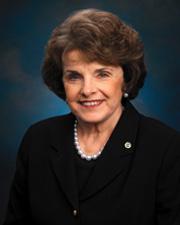 Sen. Dianne Feinstein (D-CA)
Submitted May 13, 2003
Legislative Activity
Stay on top of the latest movement without scrolling through every action
Floor
Latest Action
Senate amendment submitted
May 13, 2003
View full timeline
Floor
Senate amendment submitted
May 13, 2003
Floor
Senate amendment proposed (on the floor): Amendment SA 542 proposed by Senator Feinstein to Amendment SA 539.(consideration: CR S6045, S6047-6048, S6061; text: CR S6047)
May 13, 2003
Floor
Amendment SA 542 proposed by Senator Feinstein to Amendment SA 539. (consideration: CR S6045, S6047-6048, S6061; text: CR S6047) To authorize the Governors of the States to elect to participate in the renewable fuel program.
May 13, 2003
Floor
Proposed amendment SA 542 withdrawn in Senate.
May 13, 2003
Text
Proposed
ENERGY POLICY ACT OF 2003--Resumed

The PRESIDING OFFICER. The clerk will report the pending business.
The legislative clerk read as follows:

A bill (S. 14) to enhance the energy security of the United
States, and for other purposes.

Pending:

Frist-Daschle amendment No. 539, to eliminate methyl
tertiary butyl ether from the United States fuel supply, to
increase production and use of renewable fuel, and to
increase the Nation's energy independence.

The PRESIDING OFFICER. The Senator from New Mexico is recognized.
Mr. DOMENICI. Mr. President, I think the Senate now knows that S. 14,
a comprehensive energy policy, is before the Senate. Obviously, we are
going to have to take some time in this calendar of ours to get it
done.
We always speak of a comprehensive energy bill and we tell the
country we need one. We have one before us. There are many of us who
think it is very good. We won't know how good the Senate thinks it is
until we have had a chance to go through it and vote on it. I am very
hopeful that those who have amendments will start thinking about coming
down here to offer them.
The pending amendment is a major one--the so-called ethanol
amendment. That is the bill which establishes a national goal of 5
billion barrels by the year 2012. It is a very important contribution
to America's independence and a component of the bill, if adopted, when
adopted, that will create diversification. It will be moving toward
independence rather than dependence. Obviously, it has fantastic side
effects for rural America, agricultural America, which those who have
been working on it for years have already spoken to, and many more
will.

[[Page S6044]]

Nonetheless, there are Senators who have concerns about the pending
amendment. There are Senators who want to amend it. I urge and ask
those Senators who have amendments to get them down here and let the
Senate pass judgment on whether it wants the ethanol package that has
been worked on for years, which is bipartisan and was introduced
essentially by the majority and minority leaders, with cosponsors in
ample numbers from both sides of the aisle as an indication of
its support. I hope Senators who we understand have amendments will
begin to bring them down so we can debate and vote on them.

I understand that at this point the distinguished Senator from Ohio,
Mr. Voinovich, desires to speak in favor of the amendment. As manager
of the bill, even though we are operating under no time agreements, I
yield the floor at this point, assuming he will give his 15-minute
address.
The PRESIDING OFFICER. The Senator from Ohio is recognized.
Mr. VOINOVICH. Mr. President, I thank the Senator from New Mexico for
this opportunity to speak in favor of the ethanol amendment, No. 539.
This amendment has been offered by the distinguished majority leader
and the distinguished minority leader. As I have often stated, it is
about time this Nation had an energy policy. I have said that, I think,
3 years in a row. Last year, we worked very hard to come up with what
we considered to be a decent package. Unfortunately, that package did
not come out of conference committee and we are here today, this week,
to see if we cannot resurrect part of that and enhance it with some of
the improvements that were done in the Energy Committee under the
chairmanship of Senator Domenici.
When the President released his national energy policy in May of
2001, he noted that America was too dependent upon foreign oil; that we
needed to increase our use of renewable fuels, such as ethanol and
biodiesel; and that we needed to protect the environment while
producing the energy that drives our economy. President Bush was right
about that 2 years ago and, quite frankly, the urgency is greater today
than it was then.
The United States has a responsibility to develop a policy that
harmonizes the needs of our economy and our environment. These are not
competing needs and too often are looked upon as if they are. A
sustainable environment is critical to a strong economy. A sustainable
economy is critical to providing the funding necessary to improve our
environment.
We need a policy that broadens our base of energy resources to create
stability, guarantee reasonable prices, and protect America's security.
It has to be a policy that will keep energy affordable. Finally, it has
to be a policy that won't cripple the engines of commerce that fund the
research that will yield environmental protection technologies for the
future.
I believe that increasing our use of alternative and renewable fuels,
such as ethanol and biodiesel, is a key element in our effort to
construct a viable energy policy.
During the last Congress, I worked with a number of my colleagues,
including Senators Hagel, Daschle, Jeffords, Inhofe, Grassley, Bond,
and Bingaman, to develop an ethanol package that would not only
increase the use of renewable fuels in America but would provide other
tangible benefits for the American people. That package was included in
the comprehensive energy bill passed by the Senate in an overwhelming
bipartisan vote.
This year, thanks to the leadership of Chairman Inhofe, we were able
to vote language out of the Environment and Public Works Committee that
reflects that bipartisan agreement we reached last year on a bipartisan
basis. Thanks to the leadership of our distinguished majority and
minority leaders, as well as a large number of Senators, we again have
the opportunity to pass legislation that contains a renewable fuels
package.
Mr. President, passage of an ethanol bill will protect our national
security, economy, and our environment. Amendment No. 539 contains the
language in S. 791, the Renewable Fuels Act of 2003, which was
introduced and shepherded through the EPW Committee by Chairman Inhofe.
This language establishes a nationwide renewable fuels standard of 5
billion gallons by 2012, repeals the Clean Air Act's oxygenate
requirement for reformulated gasoline, and phases down the use of MTBE
over a 4-year period.
This language has strong, bipartisan support and is the result of
long negotiation between the Renewable Fuels Association, the National
Corn Growers Association, the Farm Bureau Federation, the American
Petroleum Institute, the Northeast States for Coordinated Air Use
Management, and the American Lung Association.
It is hard to get all those people together on any piece of
legislation. I think it is wonderful.
I happen to come from a State that is an oil State. We have Ashland
Marathon Oil in Ohio. I also come from a State that has a large number
of people who belong to the Corn Growers Association. I think we are
fifth or sixth in the Nation in producing corn.
I recall a couple of years ago them coming to me and asking me to
take their cause on this particular issue. I suggested to them, rather
than do that, I wanted them to go into a room and start to negotiate
and start talking to each other.
I will never forget it. We were in the LBJ Room. I saw a bunch of
people on stage at a big news conference. A year before, if anyone had
said those people would stand on the same stage together, they had to
say they had something wrong with their head.
My colleagues in the Senate should realize this is an unusual
situation for all of these people to get together, and that is why it
is so important that we do not allow any amendments to this very
carefully put together compromise by all of these various organizations
and groups.
In fact, I suggest we ought to be looking to do that in so many more
instances around here where people just talk past each other instead of
talking to each other.
It is with no small irony we are discussing issues affecting our
gasoline supply so shortly after our troops were engaged in a war in
the Middle East. As we know, they are still engaged and will be for a
long time.
While our purpose in Iraq was to end a regime that sought to become
the arsenal of terrorism and liberate the Iraqi people from oppression
and violence, our mere presence in that part of the world highlights
the fact that we are entirely too dependent on the oil we import from
the Middle East.
The amendment the majority leader has offered, a compromise that will
triple the amount of domestically produced ethanol used in America, is
one essential tool in reducing our dependence on imported oil.
It is no secret we currently import over 58 percent of the oil we
use. Last year, we imported an average of 4,558,000 barrels per day
from OPEC countries and 442,000 barrels per day from Iraq. It is
interesting; all during the last several years while we were bombing
Iraq occasionally and maintaining the no-fly zone, we were getting an
enormous amount of oil from Iraq. In some instances, almost 5 percent
of our oil for this country was coming from Iraq.
Again, last year we imported nearly a half million barrels from Iraq.
This dependence is not getting better. The Energy Information
Administration estimates that our dependency on imported oil could grow
to nearly 70 percent by 2020.
Although our troops were successful in the liberation of Iraq, our
greatest energy challenge remains the need to reduce our reliance on
foreign sources and to meet our energy needs.
President Bush has stated repeatedly that energy security is a
cornerstone for national security, and I agree. It is crucial that we
become less dependent on foreign sources of oil and look more to
domestic sources to meet our energy needs, and ethanol is an excellent
domestic source. It is a clean-burning, home-grown renewable fuel that
we can rely on for generations to come. The renewable fuels standard in
this language will displace 1.6 billion barrels of oil.

Ethanol is not only good for our Nation's economy, tripling the use
of renewable fuels over the next decade will also reduce our national
trade deficit by more than $34 billion. A lot of our trade deficit has
to do with importing oil. It will increase the U.S. gross domestic
product by $156 billion by 2012. It will create more than 214,000 new

[[Page S6045]]

jobs. It will expand household income by an additional $51.7 billion.
It will save taxpayers $2 billion annually in reduced Government
subsidies due to the creation of new markets for corn.
The benefits for the farm economy are even more pronounced. Ohio is
sixth in the Nation in terms of corn production and is among the
highest in the Nation in putting ethanol into its gas tanks. Over 40
percent of all gasoline in Ohio sold contains ethanol.
An increase in the use of ethanol across the Nation means an economic
boost to thousands of farm families across my State and across the
States throughout this country.
Currently, ethanol production provides 192,000 jobs and $4.5 billion
to net farm income nationwide. Passage of this amendment will increase
net farm income by nearly $6 billion annually. Passage of this
amendment will create $5.3 billion of new investment in renewable fuels
production capacity.
Phasing out MTBE on a national basis will be good for our fuel supply
because refiners are under tremendous strain from having to make
several different gasoline blends to meet various clean air
requirements. And no new refineries, as you know, Mr. President, have
been built in the last 25 years.
The effects of various State responses to the threat of MTBE
contamination, including bans and phaseouts on different schedules,
will add a significant burden to existing refineries. That is why we
have to get this bill done this year. States are banning it, and
refiners are trying to figure out how they are going to deal with this
new marketplace.
We went through this a couple of years ago when we had a shutdown of
one of the oil supplies from Michigan and then from Texas. They were
reformulating gas, and we saw the price of gasoline skyrocket at that
time.
The MTBE phaseout provisions in this package will ensure that
refiners will have less stress on their system and that gasoline will
be more fungible nationwide. That is very important.
Expanding the use of ethanol will also protect our environment by
reducing auto emissions, which will mean cleaner air and improved
public health. Use of ethanol reduces emissions of carbon monoxide and
hydrocarbons by 20 percent. Ethanol also reduces emissions of
particulate by 40 percent. Use of ethanol reformulated gas helped move
Chicago into attainment of the Federal ozone standard, the only RFG
area to see such an improvement.
In 2002, ethanol use in the United States reduced greenhouse gas
emissions by 4.3 million tons, the equivalent of removing more than
630,000 vehicles from the road.
It is my hope and expectation that the Senate will adopt this fuels
package. These issues have been in front of us for far too long, and
now that we have everybody in the same room at the same time agreeing
to the same legislation, we need to move it. We need to get this
amendment done. I urge my colleagues to support amendment No. 539.

Mr. DOMENICI. Mr. President, I ask the Senator from Ohio if he can
remain in the Chamber for a few moments. An amendment is going to be
offered to the bill, and I have to be elsewhere. Will the Senator do
that for the Senator from New Mexico?
Mr. VOINOVICH. I will be happy to.
The PRESIDING OFFICER (Mr. Sessions). The Senator from California.

Amendment No. 542 to Amendment No. 539

Mrs. FEINSTEIN. Mr. President, I very much respect the Senator from
Ohio. He has been both a distinguished mayor and a distinguished
Governor of his State. I hate to disagree with him, but in this case I
find the ethanol mandate in this bill to be egregious, to be
wrongheaded, to be just terrible public policy. I will go through my
concerns about this mandate point by point, and then I will end by
offering a second-degree amendment.
My first concern is this: Only 2.1 billion gallons of ethanol were
produced in 2002. The ethanol mandate before us requires 5 billion
gallons by 2012.
This fuel additive is not necessary to make clean-burning gasoline.
Yet it is mandated into our fuel supply. Under the credit trading
provisions of the ethanol mandate, States are going to be forced to pay
for ethanol whether they use it or not. Let me repeat that. Under the
credit trading provisions in this bill, States are going to be forced
to pay for it, whether they use it or not.
Secondly, this is going to drive up the price of gasoline. It can
only do so. The Council of Economic Advisers and the Federal Trade
Commission have advised President Bush that the ethanol mandate is:

Costly to both consumers and the Government and will
provide little environmental benefit.

So this provision will force up prices. California's costs are
already high. I just paid $50 for a tank of gasoline when I was home in
California. Wait until this bill goes into operation.
Ninety-nine percent of all ethanol production is based in the
Midwest. States outside the Corn Belt have severe infrastructure and
ethanol supply problems. This, too, means higher gas prices.
Finally, we have a dangerously high market concentration in this
bill. The ethanol industry today is highly concentrated, with the
largest supplier, Archer Daniels Midland, controlling 46 percent of the
market, and the top seven firms controlling 71 percent of the market.
That is according to the GAO.
ADM admitted to price fixing in 1996. Its executives went to jail.
Last year, ADM purchased its largest competitor, Minnesota Corn
Processers, which controlled 5 percent of the ethanol market. I believe
we are taking a great risk by allowing one firm to control such a large
percentage of the ethanol market, and this shows it: 46 percent, ADM;
Williams Bio-Energy, 6 percent; Cargill, 5 percent; High Plains
Corporation, 4 percent; New Energy Corporation, 4 percent; Midwest
Grain, 3 percent; Chief Ethanol, 3 percent. These are the top seven
ethanol producers in the United States.
So you have a huge market concentration by a company that pled guilty
to price fixing. It makes me, a Californian, very uneasy about what the
future may bring under current law.
Gasoline is taxed by the Federal Government at 18.4 cents per gallon.
Yet gasoline blended with ethanol is only taxed at 13.1 cents per
gallon. The other 5.3 cents per gallon is credited to ethanol producers
instead of funding the highway trust fund. According to the
Congressional Research Service, over the past 20 years, this ethanol
subsidy has cost the highway trust fund over $11 billion in foregone
income.
Under the proposal in the Energy Tax Bill, these ethanol subsidies
will be paid not from the highway trust fund, as was before us last
year, but from the general fund, at the expense of taxpayers. So
instead of spending money for education or Cops on the Beat, or parks,
we are funding ethanol with billions in subsidies. It makes no sense to
me.
The Congressional Research Service has indicated that the ethanol
mandate will cost approximately $7 billion. This means $7 billion is
diverted away from either the highway trust fund or the general fund,
which means either we will have fewer jobs and roads or taxpayers will
have to pick up the tab.
As I said, this future $7 billion loss is on top of the $11 billion
in gas tax revenue that has already been lost by giving ethanol a
partial exemption from the fuel tax.

My sixth reason is that ethanol has mixed environmental and health
results. Evidence suggests that ethanol reduces carbon monoxide air
pollution. However, evidence also suggests that mandating more ethanol
will produce more smog in the summer months because ethanol produces
nitrogen oxide (NO<inf>X</inf>) emissions. Studies also show ethanol
accelerates the ability of toxic gasoline additives, such as benzene,
to break apart and seep into the ground water. Recently, the EPA
disclosed that ethanol plants are emitting many more dangerous toxins
than previously thought. I do not believe we should mandate so much use
of something we know so little about.
One other thing on the benzene plumes, once they break away, they
actually spread faster in water and soil than MTBE plumes. We know
benzene is carcinogenic.
My seventh reason is that there is unprecedented liability
protection. A safe harbor provision in the ethanol mandate will prevent
legal redress if ethanol and other fuel additives harm the environment
or public health. How

[[Page S6046]]

will communities afford cleanup costs if there is liability protection
for ethanol? I find this really egregious.
This reduces carbon monoxide but it increases nitrous oxide. The
benzene plumes will break away. They spread more rapidly than MTBE.
They can pollute our ground water but there is no remedy. There is no
liability. They are liability-free. One of the reasons you now have the
large oil companies going along with this bill is because they have
liability protection.
So we are mandating something we do not know all of the results of in
huge amounts, that are unnecessary in the first place, that may have
adverse consequences, and then we are saying to the consumer, sorry,
the damage is your problem, you cannot even go to court to get redress
in the form of damages. What a sweetheart bill. My goodness, people
should be embarrassed.
Ethanol already has a high tariff to keep imports out. If there is an
ethanol shortage in the United States, States will not be able to
import ethanol from countries abroad because of a high 54-cent-per-
gallon tariff on foreign ethanol. So what are they doing? They already
have a high tariff on foreign ethanol. Now we are mandating 5 billion
gallons? That is egregious. It is wrong public policy.
My ninth reason is an ethanol mandate will strain the fuel supply.
Using ethanol will constrict the overall gasoline supply because mixing
MTBE with gasoline produces more fuel than mixing gasoline with
ethanol. Consequently, in a State such as California where you have no
extra refinery availability, you have to produce more than you did with
MTBE because of the properties of ethanol which take more gasoline.
That is going to be a real problem and that, too, will force up prices.
Tenth, ethanol is not a renewable fuel. According to many scientists
and experts, including Cornell Professor David Pimentel, it takes more
energy to make ethanol than we save by using it. So we can hardly call
ethanol a renewable fuel.
Eleven, the ethanol mandate will largely benefit producers, not
farmers. Ethanol subsidies pay more money to ethanol producers like ADM
than farmers.
Twelve, the bottom line, this is a very bad deal. The ethanol mandate
reflects a deal worked out behind closed doors, between ethanol
lobbyists and oil interests that is going to harm consumers. Mandating
5 billion gallons by 2012 is terrible public policy. Since there are
high costs for States like California to comply with any mandated
Federal fuel requirement, these costs will only be passed on to drivers
at the pump.
The ethanol mandate, as I have said, will drive up the price of
gasoline. Instead of imposing a new mandate on our fuel supply, we
should be lifting the one that already exists.
On July 29, 1999, the nonpartisan broad-based U.S. EPA blue ribbon
panel on oxygenates and gasoline recommended that the 2 percent
oxygenate requirement be removed in order to provide flexibility to
blend adequate fuel supplies in a cost-effective manner while quickly
reducing usage of MTBE and maintaining air quality benefits.
It is long past the time for Congress to act on that. Instead of
mandating ethanol into our fuel supply, we should be lifting all
mandates or at least allow States a choice. We need to provide
flexibility to refiners to allow them to optimize how and what they
blend instead of forcing them to blend gasoline with MTBE or ethanol.
California has long sought a waiver of the 2 percent oxygenate
requirement. I have written and called former EPA Administrator Browner
and the current Administrator, Christine Todd Whitman, both former
President Clinton and President Bush, urging approval of the waiver for
the State. Yet both the Clinton administration and the Bush
administration have denied California's request. I know during the
Clinton years an affirmative finding came from EPA to the White House.
I also know that Members of both parties went to the White House to
stop it from happening. I believe EPA would have no objection.
In the campaign, when I heard both Al Gore and George Bush say: We
are for ethanol--I thought, oh boy, here it comes. And here it is
today.
MTBE, methyl tertiary butyl ether, has been the oxygenate of choice
by main refiners in their effort to comply with the Clean Air Act's
reformulated gasoline requirements. Governor Davis of California has
ordered a phaseout of MTBE in our State by the end of this year while
the Federal law requiring 2 percent oxygenate remains, putting our
State in an untenable position. This is because the most likely
substitute for MTBE to meet the 2 percent requirement is ethanol, but
it is tremendously costly to blend ethanol from the Midwest into the
specially formulated California gasoline.
Without eliminating these mandates, we can expect disruptions and
price spikes during the peak driving months of this summer on top of
the high prices motorists are already paying. Just remember, you heard
it here.
California has developed a gasoline formula that provides flexibility
and provides clean air. Refiners use an approach called the predictive
model which guarantees clean-burning RFG gas with oxygenates, with less
than 2 percent oxygenates and with no oxygenates.
As Red Cavaney, president of the American Petroleum Institute, said
in March before the Energy Committee:

Refiners have been saying for years that they can produce
gasoline meeting clean-burning fuels and federal reformulated
gasoline requirements without the use of oxygenates. . . . In
addition, reformulated blendstocks--the base into which
oxygenates are added--typically meet RFG requirements before
oxygenates are added.

So they are not necessary. These facts demonstrate oxygenates are not
necessary.
I believe it is egregious to require this Nation to use more ethanol
than we need in our fuel supply. Mandating 5 billion gallons into our
fuel supply is terrible public policy. This amounts to a wealth
transfer of billions of dollars from every State in the Nation to a
handful of ethanol producers. It is families and businesses who will
pay the higher costs that result from increased gas prices.
This sweeping policy will have long-term repercussions in our
environment, on our health, our fuel supply, and the price of gasoline.
Since ethanol production is subsidized by the Government with a credit
from the Federal motor fuels tax, $1 for ethanol firms like ADM means
$1 less to improve our Nation's roads and bridges.
The Congressional Research Service has indicated the ethanol mandate
in this energy bill will divert $7 billion away from the highway trust
fund. If the energy tax bill is passed into law, this money will no
longer come from the highway trust fund. It will come from the general
fund. As I said, it will be paid for by taxpayers.
This future $7 billion payout is on top of the $11 billion in gas tax
revenue that has already been lost by giving ethanol a partial
exemption from the fuel tax. Ethanol is a subsidized product. It is
protected from foreign competition by high trade barriers. And now we
are going to mandate a market for it. This is unconscionable. Forcing
States to use ethanol we do not need, and forcing States to pay for
ethanol we do not use amounts to a transfer of wealth from all States
to Midwest corn States.
Under the credit trading provisions in this bill, if we do not use
ethanol, we still have to pay for it.
Proponents of the ethanol mandate argue that gas price increases will
be minimal, but the projections do not take into consideration the
real-world infrastructure constraints and concentration in the market
that can lead to price spikes. I believe everyone outside of the
Midwest will have to grapple with how to bring ethanol to their States
since the Midwest controls 99 percent of the production.
California has done more analysis than any other State on what it
will take to get ethanol to the State. The bottom line is that it
cannot happen without raising gasoline prices.
I am particularly concerned, as I pointed out, about the limited
number of suppliers in the ethanol market. This leaves consumers
vulnerable to price spikes as it did when electricity and natural gas
prices soared in the West because a few out-of-State generating firms
dominated the market. If we have learned anything from the recent
western energy crisis, it is that when there is not ample supply and
adequate competition in the market, prices soar and consumers pay.

[[Page S6047]]

I also mention that Archer Daniels Midland is the dominant producer
in the highly concentrated ethanol market. It has purchased its largest
competitor. It controls 46 percent of the market, and that is only what
is now produced. The company has an even greater control over how
ethanol is distributed and marketed.
I am also concerned about the long-term effects of mandating such a
large amount of ethanol in our gasoline supply.
I mentioned the health effects about which we do not know much. I
mentioned the environmental effects.
The scientific evidence is mixed. I believe it is bad public policy
to mandate this amount before scientific and health experts can fully
investigate the impact of ethanol on the air we breathe and the water
we drink.
We made this mistake with MTBE and now we have learned that MTBE may
well be a human carcinogen.
Ethanol is often made out to be an ideal renewable fuel, giving off
fewer emissions. Yet, on balance, ethanol can be a cause of more air
pollution because it produces smog in the summer months. Smog is a
powerful respiratory irritant that affects large segments of the
population, and it has an especially pernicious effect on the elderly,
on children, and individuals with existing respiratory problems, as I
mentioned, such as asthma.
Earlier this month, the American Lung Association named California
the smoggiest State, by listing nine counties and six metropolitan
areas as having the worst conditions. A 1999 report from the National
Academy of Sciences found:

The use of commonly available oxygenates [like ethanol] in
reformulated gasoline has little impact on improving ozone
air quality and has some disadvantages. Moreover, some data
suggest that oxygenates can lead to higher Nitrogen Oxide
emissions.

Nitrogen oxides, as we have said, cause smog.
The American Lung Association report also noted that half of
Americans are living in counties with unhealthy smog levels. Why would
we want to take the chance of increasing these unhealthy smog levels by
mandating billions of unnecessary gallons of ethanol into our fuel
supply?
Ethanol can be both good and bad for air quality. To me, it would
make sense to maximize the advantages of ethanol while minimizing the
disadvantages. This is exactly why States should have flexibility to
decide what goes into their gasoline in order to meet clean air
standards. All we should care about is if the clean air standards are
met. Let the States have the flexibility. If we are mandating, why
exempt manufacturers and refiners from their legal responsibility to
provide a safe product?
Evidence also suggests that ethanol accelerates the ability of toxins
found in gasoline to seep into our ground water supplies. The EPA Blue
Ribbon Panel on Oxygenates found ethanol:

. . . may retard biodegradation and increase movement of
benzene and other hydrocarbons around leaking tanks.

According to a report by the State of California entitled ``Health
and Environmental Assessment of the Use of Ethanol as a Fuel
Oxygenate,'' there are valid questions about the impact of ethanol on
ground and surface water. An analysis in the report found that there
will be a 20-percent increase in public drinking water wells
contaminated with benzene if a significant amount of ethanol is used.
Benzene is a known human carcinogen, and we are giving them liability
protection.
At a hearing held on the House side last year, Professor Gordon
Rausser of UC Berkeley commented on the potential harm of ethanol in
the ground water. Professor Rausser testified:

When gasoline that contains ethanol is released into ground
water, the resulting benzene plumes can be longer and more
persistent than plumes resulting from releases of
conventional gasoline. Research suggests that the presence
of ethanol in gasoline will delay the degradation of
benzene and will lengthen the benzene plumes by between 25
percent and 100 percent.

This evidence on the potential harm of ethanol is extraordinarily
troubling.
For these reasons, I cannot support the amendment offered by the
majority leader. I would like to offer a second-degree amendment that
would require the Governor of a State to opt into the ethanol mandate.
If the ethanol mandate is such a great mandate, then Governors should
want to include their States in it. Why are we forcing them to do it?
Everybody who comes down here for ethanol says it is the best thing
since sliced bread. If it is so good, let that case be made to the
Governors of States and let them opt into the program.
The Senators from Alaska and Hawaii have worked it out so that their
States are exempted from this mandate. I believe each and every State
should have this choice, so I am sending an amendment to the desk at
this time that would do the same thing that Alaska and Hawaii have
achieved. The Governor is able to opt into the mandate. If this is so
wonderful, Governors will opt in. If it is not, Governors will not.
I yield the floor.
The PRESIDING OFFICER. The clerk will report the amendment.
The bill clerk read as follows:

The Senator from California (Mrs. Feinstein) proposes an
amendment numbered 542 to amendment No. 539.

Mrs. FEINSTEIN. I ask unanimous consent that the reading of the
amendment be dispensed with.
The PRESIDING OFFICER. Without objection, it is so ordered.
The amendment is as follows:

(Purpose: To authorize the Governors of the States to elect to
participate in the renewable fuel program)

Section 211(o)(2) of the Clean Air Act (as added by the
amendment) is amended by inserting after subparagraph (B) the
following:
``(C) Election by states.--The renewable fuel program shall
apply to a State only if the Governor of the state notifies
the Administrator that the State elects to participate in the
renewable fuel program.''.

Mrs. FEINSTEIN. I ask the floor leader, the distinguished Senator
from New Mexico, what is his pleasure? I understand there are no votes
today. Shall I ask the amendment be set aside?
Mr. DOMENICI. No, I believe we will leave the amendment pending. The
order is not that there will be no votes today but, rather, no votes
until all Senators have returned. It could be this evening, but there
is no order to do that or not to do it at this point, so it will remain
the pending amendment.
Mrs. FEINSTEIN. I thank the Senator.
The PRESIDING OFFICER. The Senator from New Mexico.
Mr. DOMENICI. I am going to yield momentarily to the distinguished
Senator from Ohio, Mr. Voinovich, who has worked for many years on this
amendment. Suffice it to say, every argument the distinguished Senator
from California made, and she made many of them, has been brought
before the Committee on Environment and Public Works. They have been
raised time and time again at many of the informal and formal hearings
regarding this legislation. In the end, in the interest of getting
something done that was uniform and that would work, they have all been
denied. Efforts as she has put before us have been denied heretofore. I
submit it is time for the Senate, at the earliest possible time, when
we can, to vote. We should turn it down and leave in effect the
national policy that is before us on ethanol, that has been so
eloquently discussed on a number of occasions already in the Senate,
and even today discussed by the distinguished Senator from the State of
Ohio.
With that, I yield to the Senator from Ohio for further comments. I
yield the floor.
The PRESIDING OFFICER. The Senator from Ohio.
Mr. VOINOVICH. Mr. President, I thank the Senator from New Mexico.
I respectfully disagree with some of the information that was
provided to us by the distinguished Senator from California. First, I
would like to say this second-degree amendment would create more
balkanization of the fuel supply. We need a national fuel policy. This
amendment, in my opinion, would further constrain the fuel supply in
this country.
The bipartisan agreement that was negotiated last year between
various organizations was not done behind closed doors. It was
relatively transparent. In spite of some of the comments made about the
environmental threat of ethanol, that agreement was supported by the
American Lung Association. I am sure if they had any concern that this
was going to harm the environment, they certainly would not have signed
on to the agreement that was entered into last year.

[[Page S6048]]

The fuels agreement passed by the Senate last year includes the
establishment of a renewable fuels standard. The RFS would provide for
greater refinery flexibility in the fuels marketplace and the existing
clean air oxygenate requirement, particularly as MTBE is phased out of
gasoline. It does not require that a single gallon of renewable fuels
be used in any particular State or region. Rather, the requirement is
on refiners.

The RFS will allow much greater flexibility in the use of oxygenates,
which should reduce the chances that localized supply disruptions of
gasoline or oxygenates will result in retail supply shortages and price
spikes.
The additional flexibility provided by the RFS credit trading
provisions in the House and Senate bills would result in much lower
costs to refiners and thus to consumers. The credit trading system will
ensure that renewable fuels are used when and where it is most cost
effective to do so.
In California, according to the information I have, nearly all of the
refiners have voluntarily switched from MTBE to ethanol in advance of
the State's MTBE phaseout deadline of January 1, 2004. The results can
only be described as seamless. There have been no ethanol shortages,
transportation delays, or logistical problems associated with the
increased use of ethanol in the State.
In fact, according to an April 2003 California Energy Commission
report, the transition to ethanol, which began in January of 2003, is
progressing without any major problems. Today, approximately 65 percent
of all California gasoline is blended with ethanol, and it is estimated
that 80 percent of the fuel will contain ethanol by the summer.
As a result, while only about 100 million gallons of ethanol were
used in the State last year, California refiners will use between 600
and 700 million gallons in 2003. Thus, efforts to carve out California
from the RFS, while unjustified, are also completely unnecessary.
I would also like to make the point that any State may petition EPA
for a waiver of the renewable fuels requirement for any year. If EPA,
in consultation with the Departments of Energy and Agriculture, finds
that there would be substantial harm to the economy or environment of a
State, region, or the United States, or that there would be an
inadequate domestic supply for distribution capacity to meet the
requirement, EPA may reduce the volume of renewable fuel required in
whole or in part. Such a waiver would be good for 1 year but could be
renewed. Under this circumstance, the overall renewable fuel volume
requirement would be reduced nationwide.
In addition, I would like to point out that the use of ethanol
significantly reduces the tailpipe emissions of carbon monoxide, an
ozone precursor, and VOCs and fine particulates that pose a health
threat to children, seniors, and those with respiratory ailments.
Perhaps that is one of the reasons the American Lung Association is
supporting this compromise.
Importantly, renewable fuels help to reduce greenhouse gases emitted
from vehicles, including carbon dioxide, methane, and other gases that
contribute to global warming--another answer to the problem of carbons.
The fuels agreement included protects against any backsliding on air
quality. First, the agreement tightens the toxic requirements of
reformulated gasoline by moving the baseline that refiners must meet to
1999-2000. Secondly, refiners have agreed to meet southern-tier RFG
standards for VOC emissions.
Other adjustments to the existing mobile source air toxics rule will
ensure additional environmental protections. The agreement allows
States and the Ozone Transport Assessment Group--I have been dealing
with that group for many years and have had some large disagreements
with them, but the agreement allows them to opt into RFG whether the
State is in attainment for ozone or not.

Finally, the bill allows EPA, as I mentioned before, to waive a
State's volatility to tolerance for ethanol-blended fuels, if
necessary, for air quality. In other words, if there is a problem with
ethanol in a period of time, the State can waive out of the requirement
during that period of time.
I could say many other things, but I think most of the issues raised
can be answered very easily. The last thing I would like to point out
deals with the issue of cost. The Department of Agriculture has
concluded that the ethanol tax incentive program actually--actually--
saves the Government money by reducing farm program costs and
stimulating rural economies. This is a big deal for rural economies in
the United States of America.
I will also say that there was some statement about Archer Daniels
Midland being the big supplier. In my State, the farmers and
cooperatives are in the process of going forward with building
processing plants for ethanol. You are going to have a lot more people
in the marketplace when this legislation passes.
The USDA has stated that the net impact of the tax incentive on farm
programs is a net savings of more than $3 billion annually. I point
out, just as I mentioned before, there are 11 new ethanol facilities or
under construction in the United States. Twenty or more ethanol
facilities are in the planning stages.
Last but not least, the concern that has been raised regarding the
Federal ethanol tax incentive's impact on the highway trust fund has
been addressed in legislation introduced by Senators Grassley and
Baucus. It is supported by a broad coalition of transportation, local
government, business, and agricultural people. The proposal returns
full funding to the highway trust fund while restructuring and
preserving the Federal tax incentives for ethanol.
So on all of these points, this amendment that we have offered, that
is being sponsored by the majority leader and the minority leader, and
so many Members of the Senate, is good for America, is good for our
economy, is good for our security, and is good for the environment. And
the amendment from the Senator from California, I think, would
certainly make it less effective, if it were agreed to by the Senate. I
urge its defeat.
The PRESIDING OFFICER. The Senator from Florida.
Mr. NELSON of Florida. Mr. President, I ask unanimous consent that I
be allowed to address the Senate for 2 minutes.
The PRESIDING OFFICER. Without objection, it is so ordered.
(The remarks of Mr. Nelson of Florida pertaining to the introduction
of the legislation are printed in today's Record under ``Statements on
Introduced Bills and Joint Resolutions.'')
The PRESIDING OFFICER (Mr. Voinovich). The Senator from Nevada.
Mr. REID. Mr. President, I know the Chair is anxious to close the
Senate for our caucuses. I ask the patience of the Chair. The majority
will be here shortly. We have a very important unanimous consent
request that we have to enter before the recess.
I suggest the absence of a quorum.
The PRESIDING OFFICER. The clerk will call the roll.
The bill clerk proceeded to call the roll.
Mr. McCONNELL. Mr. President, I ask unanimous consent that the order
for the quorum call be rescinded.
The PRESIDING OFFICER. Without objection, it is so ordered.

____________________