To amend the Internal Revenue Code of 1996 to close the "janitors insurance" tax loophole.
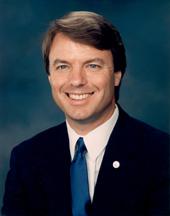 Sen. John Edwards (D-NC)
Legislative Activity
Stay on top of the latest movement without scrolling through every action
Senate amendment submitted
May 15, 2003
View full timeline
Senate amendment submitted
May 15, 2003
Senate amendment proposed (on the floor): Amendment SA 662 proposed by Senator Edwards.(consideration: CR S6441; text: CR S6441)
May 15, 2003
Roll call votes on amendments in Senate: Motion to waive the Budget Act with respect to amendment SA 662 rejected in Senate by Yea-Nay Vote. 37 - 63. Record Vote Number: 175.
May 15, 2003
Amendment SA 662 proposed by Senator Edwards. (consideration: CR S6441; text: CR S6441) To amend the Internal Revenue Code of 1996 to close the "janitors insurance" tax loophole.
May 15, 2003
Point of order raised in Senate with respect to amendment SA 662.
May 15, 2003
Motion to waive the Budget Act with respect to amendment SA 662 rejected in Senate by Yea-Nay Vote. 37 - 63. Record Vote Number: 175.
May 15, 2003
Amendment SA 662 ruled out of order by the chair.
May 15, 2003
Votes
1 roll call on this amendment
Text
Proposed
[[Page S6429]]

-----------------------------------------------------------------------

Senate

JOBS AND GROWTH TAX RELIEF RECONCILIATION ACT OF 2003--Continued

The PRESIDING OFFICER. The Senator from Iowa.
Mr. GRASSLEY. Mr. President, in opposition to this amendment, first,
ask people at the IRS. This would be very difficult to handle
mechanically.
Regardless of that, repeating as I have often in opposition to other
amendments along these same lines, we have $95 billion for children in
the bill already. The amendment includes an acceleration for low-income
families paid for by tax increases on small business owners. We need to
balance incentives for spending and investments. We have a correct
balance in this bill. This amendment breaks this balance.
There also would be a budget point of order, and I make that, that
the amendment increases spending and if adopted would cause the
underlying bill to exceed the committee section 302(a) allocations.
Therefore, a point of order ought to rise against it pursuant to
section 302(f).
Mr. CONRAD. Mr. President, pursuant to section 904 of the
Congressional Budget Act of 1974, I move to waive the applicable
section of the act for the purpose of the pending amendment and I ask
for the yeas and nays.
The PRESIDING OFFICER. Is there a sufficient second?
There is a sufficient second.
The question is on agreeing to the motion.
The yeas and nays have been ordered.
The clerk will call the roll.
The assistant legislative clerk called the roll.
Mr. BAUCUS. Mr. President, I have two housekeeping matters that have
to be cleared up.

Amendments Nos. 593 and 612 Withdrawn

Mr. President, I ask unanimous consent that the pending McCain and
Burns amendments be withdrawn.
The PRESIDING OFFICER. Is there objection?
Without objection, it is so ordered.
The yeas and nays resulted--yeas 49, nays 51, as follows:

[Rollcall Vote No. 166 Leg.]

YEAS--49

Akaka
Baucus
Bayh
Biden
Bingaman
Boxer
Breaux
Byrd
Campbell
Cantwell
Carper
Clinton
Conrad
Corzine
Daschle
Dayton
Dodd
Dorgan
Durbin
Edwards
Feingold
Feinstein
Graham (FL)
Harkin
Hollings
Inouye
Jeffords
Johnson
Kennedy
Kerry
Kohl
Landrieu
Lautenberg
Leahy
Levin
Lieberman
Lincoln
Mikulski
Murray
Nelson (FL)
Nelson (NE)
Pryor
Reed
Reid
Rockefeller
Sarbanes
Schumer
Stabenow
Wyden

NAYS--51

Alexander
Allard
Allen
Bennett
Bond
Brownback
Bunning
Burns
Chafee
Chambliss
Cochran
Coleman
Collins
Cornyn
Craig
Crapo
DeWine
Dole
Domenici
Ensign
Enzi
Fitzgerald
Frist
Graham (SC)
Grassley
Gregg
Hagel
Hatch
Hutchison
Inhofe
Kyl
Lott
Lugar
McCain
McConnell
Miller
Murkowski
Nickles
Roberts
Santorum
Sessions
Shelby
Smith
Snowe
Specter
Stevens
Sununu
Talent
Thomas
Voinovich
Warner
The PRESIDING OFFICER. On this vote, the yeas are 49, the nays are
51. Three-fifths of the Senators duly chosen and sworn not having voted
in the affirmative, the motion is rejected. The point of order is
sustained, and the amendment falls.
Mr. GRASSLEY. Mr. President, I move to reconsider the vote.
Mr. REID. I move to lay that motion on the table.
The motion to lay on the table was agreed to.
Mr. GRASSLEY. Mr. President, I suggest the absence of a quorum.
The PRESIDING OFFICER. The clerk will call the roll.
The senior assistant bill clerk proceeded to call the roll.
Mr. GRASSLEY. Mr. President, I ask unanimous consent that the order
for the quorum call be rescinded.
The PRESIDING OFFICER. Without objection, it is so ordered.
Mr. GRASSLEY. Mr. President, for our leader, I ask unanimous consent
that the next amendments in order be the following in the order
mentioned: Senator Daschle, substitute; Senator Nickles, on the subject
of dividends; Senator Reid; then Senator Breaux, and Senator Breaux's
deals with section 911; Senator Santorum, dealing with annuities;
Senator Bingaman, small business pensions; Senator Mikulski,
caregivers; Senator Sessions, sunset tax increase provisions; and
Senator Dayton, a substitute.
I further ask unanimous consent that there be 2 minutes equally
divided prior to the vote in relationship to the amendments, that no
amendments be in order to the amendments prior to the vote, and,
finally, that this sequence of votes be limited to 10 minutes each.
The PRESIDING OFFICER. Is there objection?
Without objection, it is so ordered.
The Democratic leader.
Mr. DASCHLE. Mr. President, I ask unanimous consent that the pending
amendments be set aside.
The PRESIDING OFFICER. Without objection, it is so ordered.

Amendment No. 656

(Purpose: To create jobs, provide opportunity, and restore prosperity)

Mr. DASCHLE. Mr. President, I send an amendment to the desk.
The PRESIDING OFFICER. The clerk will report.
The senior assistant bill clerk read as follows:

The Senator from South Dakota [Mr. Daschle] proposes an
amendment numbered 656.

Mr. DASCHLE. Mr. President, I ask unanimous consent that reading of
the amendment be dispensed with.
The PRESIDING OFFICER. Without objection, it is so ordered.

[[Page S6430]]

(The amendment is printed in today's Record under ``Amendments
Submitted.'')
Mr. DASCHLE. Mr. President, in this debate about creating jobs, we
have a clear choice. The Republican bill, according to virtually all
economic analyses, doesn't create jobs until the year 2004. What few
jobs it does create this year are vastly outdone by the bill we have
before us now. This bill creates 1 million jobs this year.
If this bill is about fiscal responsibility, we have a choice. The
Republican bill will use $422 billion of Social Security trust funds.
Our legislation has been scored at $152 billion. There is a dramatic
difference between this bill and our bill when it comes to fiscal
responsibility.
We are talking about providing meaningful help to the vast majority
of American taxpayers who need help now, who can be spurred with
economic incentive. This bill does it by providing a wage credit of
$300 per person. A family of four would be entitled to $1,600 when the
child tax credit and marriage penalty provisions are added.
There is a clear choice. This bill is fiscally responsible. This bill
provides the kind of broad-based relief we want. This bill provides the
kind of jobs this country so badly needs.
The PRESIDING OFFICER. The Senator from Iowa.
Mr. GRASSLEY. Mr. President, 1 minute does not give justice to saying
what is wrong with this amendment, so I will just give two or three
points.
First, in regard to the marriage penalty relief, it provides for
acceleration of the standard deduction of married couples but doesn't
do anything regarding the expansion of the 15-percent individual income
tax bracket. And that is a major part of marriage penalty relief. It
doesn't help hard-working, middle-class families the way it should.
Second, in regard to the child tax credit, this proposal only
increases the child tax credit to $700 in 2003 and $800 in 2004. The
mark accelerates it to the full $1,000 in 2003.
Again, for real relief for working families, the wage credit is a key
component of this proposal.
This would send $300 checks to anyone, regardless of whether they
paid any income tax, and even if they didn't file an income tax return.
There is a point of order on this amendment. I raise that point of
order: That it increases mandatory spending and, if agreed to, it would
cause the underlying bill to exceed the committee's section 302(a)
allocation. Therefore, a point of order lies against the amendment
pursuant to 302(f) of the Congressional Budget Act.
Mr. DASCHLE. Mr. President, pursuant to section 904 of the
Congressional Budget Act, I move to waive the applicable sections of
that act and budget resolution for consideration of the pending
amendment and ask for the yeas and nays.
The PRESIDING OFFICER. Is there a sufficient second?
There is a sufficient second.
The question is on agreeing to the motion.
The clerk will call the roll.
The senior assistant bill clerk called the roll.
The yeas and nays resulted--yeas 46, nays 54, as follows:

[Rollcall Vote No. 167 Leg.]

YEAS--46

Akaka
Bayh
Biden
Bingaman
Boxer
Byrd
Cantwell
Carper
Chafee
Clinton
Conrad
Corzine
Daschle
Dayton
Dodd
Dorgan
Durbin
Edwards
Feingold
Feinstein
Graham (FL)
Harkin
Hollings
Inouye
Jeffords
Johnson
Kennedy
Kerry
Kohl
Landrieu
Lautenberg
Leahy
Levin
Lieberman
Lincoln
Mikulski
Murray
Nelson (FL)
Pryor
Reed
Reid
Rockefeller
Sarbanes
Schumer
Stabenow
Wyden

NAYS--54

Alexander
Allard
Allen
Baucus
Bennett
Bond
Breaux
Brownback
Bunning
Burns
Campbell
Chambliss
Cochran
Coleman
Collins
Cornyn
Craig
Crapo
DeWine
Dole
Domenici
Ensign
Enzi
Fitzgerald
Frist
Graham (SC)
Grassley
Gregg
Hagel
Hatch
Hutchison
Inhofe
Kyl
Lott
Lugar
McCain
McConnell
Miller
Murkowski
Nelson (NE)
Nickles
Roberts
Santorum
Sessions
Shelby
Smith
Snowe
Specter
Stevens
Sununu
Talent
Thomas
Voinovich
Warner
The PRESIDING OFFICER. On this vote, the yeas are 46, the nays are
54. Three-fifths of the Senators duly chosen and sworn not having voted
in the affirmative, the motion is rejected. The point of order is
sustained, and the amendment falls.
Mr. NICKLES. I suggest the absence of a quorum.
The PRESIDING OFFICER. The clerk will call the roll.
The assistant legislative clerk proceeded to call the roll.
Mr. BAUCUS. Mr. President, I ask unanimous consent that the order for
the quorum call be rescinded.
The PRESIDING OFFICER. Without objection, it is so ordered.
Mr. BAUCUS. Mr. President, I ask unanimous consent that the next
amendment in order be that offered by the Senator from Minnesota, Mr.
Dayton.
The PRESIDING OFFICER. Without objection, it is so ordered.
Under the order, the Senator from Minnesota is recognized.

Amendment No. 615

Mr. DAYTON. Mr. President, I salute the Senator from Montana and the
Senator from Iowa and their colleagues for their resolve in making the
House legislation into a responsible bill.
My amendment would make it a better bill. It would take the money
that would go to millionaire taxpayers and give it, instead, to middle-
income taxpayers. We do so by tripling the amount of income that is
taxed at the 10-percent rate.
We keep the committee's increases in the child tax credit, its
elimination of the marriage penalty and the alternative minimum tax,
and its offsets would extend unemployment benefits for those who have
currently run through them. It would also freeze the top rate at its
present level.
In my amendment, a family of four with an income of $40,000 a year
would receive a $2,232 tax cut in 2003, which is more than double the
amount in the committee bill. A single taxpayer with an annual income
of $40,000 would receive a $600 tax cut compared with $282 under the
tax bill. And that is with the same cost--$350 billion--over 10 years,
with tax relief evenly distributed and a much better economic stimulus.
I urge my colleagues to support this amendment.
The PRESIDING OFFICER. The Senator's time has expired.
Mr. GRASSLEY. Mr. President, once again, we have a substitute that
would basically eliminate all the growth we have in our growth package.
We have a well-balanced package before us between short-term
investment, long-term investment, between consumer spending and
investment.
This amendment is not about investment; it is all about spending.
I hope we will defeat the amendment. This language happens to not be
germane to the measure now before us. Therefore, I raise a point of
order under section 305(b)(2) of the Congressional Budget Act.
The PRESIDING OFFICER. The Senator from Montana.
Mr. BAUCUS. On behalf of the Senator from Minnesota, pursuant to
section 904 of the Congressional Budget Act, I move to waive the
applicable sections of that act, and I ask for the yeas and nays.
The PRESIDING OFFICER. The amendment has not been sent to the desk.
The clerk will report the amendment.
The senior assistant bill clerk read as follows:

The Senator from Minnesota [Mr. Dayton] proposes an
amendment numbered 615.

Mr. BAUCUS. Mr. President, I think the clerk should read the entire
amendment. That is a pretty hefty amendment.
Mr. GRASSLEY. Mr. President, I ask unanimous consent that reading of
the amendment be dispensed with.
The PRESIDING OFFICER. Without objection, it is so ordered.
(The amendment is printed in the Record of May 14, 2003 under ``Text
of Amendments.'')
The PRESIDING OFFICER. A point of order has been raised against the
amendment. A motion to waive has also been made.
Is there a sufficient second?
There appears to be. The question is on agreeing to the motion. The
clerk will call the roll.
The assistant legislative clerk called the roll.
The yeas and nays resulted--yeas 44, nays 56, as follows:

[[Page S6431]]

[Rollcall Vote No. 168 Leg.]

YEAS--44

Akaka
Bayh
Biden
Bingaman
Boxer
Byrd
Cantwell
Carper
Clinton
Conrad
Corzine
Daschle
Dayton
Dodd
Dorgan
Durbin
Edwards
Feingold
Feinstein
Graham (FL)
Harkin
Hollings
Inouye
Jeffords
Johnson
Kennedy
Kerry
Kohl
Landrieu
Lautenberg
Leahy
Levin
Lieberman
Mikulski
Murray
Nelson (FL)
Pryor
Reed
Reid
Rockefeller
Sarbanes
Schumer
Stabenow
Wyden

NAYS--56

Alexander
Allard
Allen
Baucus
Bennett
Bond
Breaux
Brownback
Bunning
Burns
Campbell
Chafee
Chambliss
Cochran
Coleman
Collins
Cornyn
Craig
Crapo
DeWine
Dole
Domenici
Ensign
Enzi
Fitzgerald
Frist
Graham (SC)
Grassley
Gregg
Hagel
Hatch
Hutchison
Inhofe
Kyl
Lincoln
Lott
Lugar
McCain
McConnell
Miller
Murkowski
Nelson (NE)
Nickles
Roberts
Santorum
Sessions
Shelby
Smith
Snowe
Specter
Stevens
Sununu
Talent
Thomas
Voinovich
Warner
The PRESIDING OFFICER. On this vote, the yeas are 44, the nays are
56. Three-fifths of the Senators duly chosen and sworn not having voted
in the affirmative, the motion is rejected. The point of order is
sustained, and the amendment falls.
Mr. BAUCUS. Mr. President, as we await the scoring for the Nickles
amendment, I ask unanimous consent that the Senator from Maryland be
recognized for the purpose of offering her amendment.
The PRESIDING OFFICER. Without objection, it is so ordered. The
Senator from Maryland is recognized.

Amendment No. 605

Ms. MIKULSKI. Mr. President, I call up my amendment No. 605.
The PRESIDING OFFICER. The clerk will report.
The senior assistant bill clerk read as follows:

The Senator from Maryland [Ms. Mikulski], for herself, Mr.
Kennedy, Mr. Sarbanes, Mr. Johnson, Mrs. Clinton, and Mr.
Durbin, proposes an amendment numbered 605.

Ms. MIKULSKI. Mr. President, I ask unanimous consent that further
reading of the amendment be dispensed with.
The PRESIDING OFFICER. Without objection, it is so ordered.
(The amendment is printed in the Record of May 14, 2003 under ``Text
of Amendments.'')
Ms. MIKULSKI. Mr. President, my amendment is the family caregiver
relief amendment. It gives help to those who practice self-help. It
will provide tax relief for family caregivers who face the crushing
consequence of caring for a chronically ill family member.
Some of our families are facing extraordinary challenges, such as
caring for a loved one with special needs, a child with autism or
cerebral palsy, a parent with Alzheimer's or Parkinson's, or a spouse
with multiple sclerosis. I want to give help to those families who are
practicing family responsibility.
My amendment would provide a tax credit up to $5,000 for family
caregivers. This tax credit would help people pay for prescription
drugs, home health care, specialized daycare, and respite care. One in
five Americans has a multiple chronic condition requiring some type of
medical intervention. That means over 26 million people were supported
by many organizations.
I urge my colleagues to vote for my family caregiver relief tax
amendment.
Mr. GRASSLEY. Mr. President, once again, albeit good intentions on
the part of people offering these amendments, what they are doing in
the process of offering their very favorable new program--one on which
I have legislation, in fact--they are destroying the growth in our
growth package by taking money from the growth portions and the
investment portions of our bill to do other good things.
Right now, we are concerned about the economy. We have a balanced
bill and want to keep it balanced. We don't want to destroy portions of
our bill to create a new program. However, the Senator knows I am very
interested in long-term care, and I hope she will work with me and the
Senator from Florida, Mr. Graham, in the hopes that she can join us in
advancing long-term care insurance for senior citizens but doing it in
a context that doesn't destroy other very important pieces of
legislation.
This language is not germane to the measure before us. Therefore, I
raise a point of order under section 305(b)(2) of the Budget Act.
Ms. MIKULSKI. Mr. President, pursuant to section 904 of the
Congressional Budget Act of 1974, I move to waive the applicable
sections of that act for the consideration of the pending amendment,
and I ask for the yeas and nays.
The PRESIDING OFFICER. Is there a sufficient second?
There is a sufficient second.
The question is on agreeing to the motion.
The yeas and nays are ordered and the clerk will call the roll.
The senior assistant bill clerk called the roll.
Mr. McCONNELL. I announce that the Senator from Alabama (Mr. Shelby)
is necessarily absent.
The PRESIDING OFFICER. Are there any other Senators in the Chamber
desiring to vote?
The yeas and nays resulted--yeas 48, nays 51, as follows:

[Rollcall Vote No. 169 Leg.]

YEAS--48

Akaka
Baucus
Bayh
Biden
Bingaman
Boxer
Breaux
Byrd
Cantwell
Carper
Clinton
Conrad
Corzine
Daschle
Dayton
Dodd
Dorgan
Durbin
Edwards
Feingold
Feinstein
Graham (FL)
Harkin
Hollings
Inouye
Jeffords
Johnson
Kennedy
Kerry
Kohl
Landrieu
Lautenberg
Leahy
Levin
Lieberman
Lincoln
Mikulski
Murray
Nelson (FL)
Nelson (NE)
Pryor
Reed
Reid
Rockefeller
Sarbanes
Schumer
Stabenow
Wyden

NAYS--51

Alexander
Allard
Allen
Bennett
Bond
Brownback
Bunning
Burns
Campbell
Chafee
Chambliss
Cochran
Coleman
Collins
Cornyn
Craig
Crapo
DeWine
Dole
Domenici
Ensign
Enzi
Fitzgerald
Frist
Graham (SC)
Grassley
Gregg
Hagel
Hatch
Hutchison
Inhofe
Kyl
Lott
Lugar
McCain
McConnell
Miller
Murkowski
Nickles
Roberts
Santorum
Sessions
Smith
Snowe
Specter
Stevens
Sununu
Talent
Thomas
Voinovich
Warner

NOT VOTING--1

Shelby

The PRESIDING OFFICER. On this vote, the yeas are 48, the nays are
51. Three-fifths of the Senators duly chosen and sworn not having voted
in the affirmative, the motion is rejected. The point of order is
sustained, and the amendment falls.
Mr. GRASSLEY. I move to reconsider the vote.
Mr. CRAIG. I move to lay that motion on the table.
The motion to lay on the table was agreed to.
The PRESIDING OFFICER. The Senator from North Dakota.
Mr. CONRAD. Mr. President, I suggest the absence of a quorum.
The PRESIDING OFFICER. The clerk will call the roll.
The assistant legislative clerk proceeded to call the roll.
Mr. NICKLES. Mr. President, I ask unanimous consent that the order
for the quorum call be rescinded.
Mr. BAUCUS. Mr. President, I object.
The PRESIDING OFFICER. Objection is heard.
The assistant legislative clerk continued with the call of the roll.
Mr. BAUCUS. Mr. President, I ask unanimous consent that the order for
the quorum call be rescinded.
The PRESIDING OFFICER. Without objection, it is so ordered.
Mr. BAUCUS. I ask unanimous consent that the next amendment be that
from Senator Sessions.
The PRESIDING OFFICER. Is there objection?
Without objection, it is so ordered.
The Senator from Alabama.

Amendment No. 639

Mr. SESSIONS. Mr. President, I call up amendment No. 639.
The PRESIDING OFFICER. The clerk will report.
The senior assistant bill clerk read as follows:

The Senator from Alabama [Mr. Sessions] proposes an
amendment numbered 639.

Mr. SESSIONS. Mr. President, I ask unanimous consent that the reading
of the amendment be dispensed with.

[[Page S6432]]

The PRESIDING OFFICER. Without objection, it is so ordered.
The amendment is as follows:

(Purpose: To apply the sunset provision to the revenue increase
provisions)

Strike subsection (b) of section 601 and insert the
following:
(b) Exceptions.--(1) Subsection (a) shall not apply to the
provisions of, and amendments made by, title I (other than
section 107).
(2) Subsection (a) shall not apply to Title III (other than
section 362) however the provisions within Title III shall
not apply to taxable years beginning after December 31, 2015.

The PRESIDING OFFICER. The Senator from Alabama.
Mr. SESSIONS. Under the agreed framework of this legislation, the tax
reduction part of the growth package, those tax reductions will
terminate in 2012. As an attempt to build the kind of growth package
this Congress wanted to do, I believe a majority wants to do, we have
added some tax increases. Those tax increases are permanent. In order
not to affect the agreement and impact the budget in any way, I have
proposed that those tax increases be terminated on 12-31-2015. It would
have absolutely no budgetary impact in any way.
So I believe we made an agreement to bring this package together. The
tax growth package will terminate in 2012. So should the tax increases
in 2015.
The PRESIDING OFFICER. The time of the Senator has expired. Who seeks
time in opposition?
The Senator from Montana.
Mr. BAUCUS. Mr. President, this amendment sunsets offsets not in this
decade but in the next decade. Many of the provisions in this bill
should be permanent; that is, corporate inversion legislation,
shelters, provisions that should change the law. That is good public
policy. Not all of the provisions in this bill are offsets just to make
the budget numbers work. Rather, they are provisions which make good
public policy and should continue.
Also, it violates the Byrd rule because it raises an extraneous
matter in a reconciliation bill.
I make a point of order that the amendment violates section 313 of
the Budget Act.
The PRESIDING OFFICER. The Senator from Alabama.
Mr. SESSIONS. Pursuant to section 904(c) of the Congressional Budget
Act of 1974, I move to waive the entire Budget Act, and I ask for the
yeas and nays.
The PRESIDING OFFICER. Is there a sufficient second?
There appears to be a sufficient second.
The yeas and nays were ordered.
The PRESIDING OFFICER. The majority leader.

Unanimous Consent Agreement--S. 1050

Mr. FRIST. Mr. President, I ask unanimous consent that at 2:30 on
Monday, May 19, the Senate proceed to the consideration of Calendar No.
96, S. 1050, the Department of Defense authorization bill; provided
that all first-degree amendments be relevant; that any second-degree
amendments be relevant to the first-degree to which it is offered;
finally, provided that on Monday there be debate only on the bill until
5:30 p.m., with the time equally divided until 5:30.
The PRESIDING OFFICER. Is there objection?
Mr. REID. Mr. President, we have conferred with the ranking member,
Senator Levin. We have no objection to the unanimous consent request.
The PRESIDING OFFICER. Without objection, it is so ordered.
The majority leader.
Mr. FRIST. Mr. President, we are making progress on the underlying
bill. Again, we are going to keep the votes at 10 minutes, but we are
going to cut them off at 15 minutes sharp. So, again, everybody stay in
the Chamber.
The PRESIDING OFFICER. The question is on agreeing to the motion. The
yeas and nays have been ordered. The clerk will call the roll.
The assistant legislative clerk called the roll.
The yeas and nays resulted--yeas 51, nays 49, as follows:

[Rollcall Vote No. 170 Leg.]

YEAS--51

Alexander
Allard
Allen
Bennett
Bond
Brownback
Bunning
Burns
Campbell
Chambliss
Cochran
Coleman
Collins
Cornyn
Craig
Crapo
DeWine
Dole
Domenici
Ensign
Enzi
Fitzgerald
Frist
Graham (SC)
Grassley
Gregg
Hagel
Hatch
Hutchison
Inhofe
Kyl
Lott
Lugar
McCain
McConnell
Miller
Murkowski
Nelson (NE)
Nickles
Roberts
Santorum
Sessions
Shelby
Smith
Specter
Stevens
Sununu
Talent
Thomas
Voinovich
Warner

NAYS--49

Akaka
Baucus
Bayh
Biden
Bingaman
Boxer
Breaux
Byrd
Cantwell
Carper
Chafee
Clinton
Conrad
Corzine
Daschle
Dayton
Dodd
Dorgan
Durbin
Edwards
Feingold
Feinstein
Graham (FL)
Harkin
Hollings
Inouye
Jeffords
Johnson
Kennedy
Kerry
Kohl
Landrieu
Lautenberg
Leahy
Levin
Lieberman
Lincoln
Mikulski
Murray
Nelson (FL)
Pryor
Reed
Reid
Rockefeller
Sarbanes
Schumer
Snowe
Stabenow
Wyden
The PRESIDING OFFICER. On this question, the yeas are 51, the nays
are 49. Three-fifths of the Senators not having voted in the
affirmative, the motion is rejected. The point of order is sustained.
The amendment falls.
Mr. GRASSLEY. I move to reconsider the vote.
Mr. BAUCUS. I move to lay that motion on the table.
The motion to lay on the table was agreed to.
Mr. SESSIONS. I ask that Senator Allen be made a cosponsor to that
amendment.
The PRESIDING OFFICER. Without objection, it is so ordered.

Amendment No. 664

Mr. NICKLES. I send an amendment to the desk and ask for its
immediate consideration.
The PRESIDING OFFICER. The clerk will report.
The legislative clerk read as follows:

The Senator from Oklahoma [Mr. Nickles], for himself and
Mr. Miller, Mr. Kyl, Mr. Lott, Mr. Bunning, Mr. Crapo, Mr.
Graham of South Carolina, Mr. Bennett, Mr. Frist, Mr.
McConnell, Mr. Santorum, Mr. Ensign, Mr. Smith, and Mr.
Thomas, proposes an amendment numbered 664.

Mr. NICKLES. Mr. President, I ask unanimous consent that the reading
of the amendment be dispensed with.
The PRESIDING OFFICER. Without objection, it is so ordered.
The amendment is as follows:

(Purpose: To modify the dividend exclusion provision, and for other
purposes)

Beginning on page 9, line 16, strike all through page 12,
line 9, and insert:

SEC. 104. ACCELERATION OF INCREASE IN STANDARD DEDUCTION FOR
MARRIED TAXPAYERS FILING JOINT RETURNS.

(a) In General.--Paragraph (7) of section 63(c) (relating
to standard deduction) is amended to read as follows:
``(7) Applicable percentage.--For purposes of paragraph
(2), the applicable percentage shall be determined in
accordance with the following table:

``For taxable years beginning in calendar year--         The applicable
percentage is--
2003.............................................................195
2004.............................................................200
2005.............................................................174
2006.............................................................184
2007.............................................................187
2008.............................................................190
2009 and thereafter...........................................200.''.
(b) Conforming Amendment.--Section 301(d) of the Economic
Growth and Tax Relief Reconciliation Act of 2001 is amended
by striking ``2004'' and inserting ``2002''.
(c) Effective Date.--The amendments made by this section
shall apply to taxable years beginning after December 31,
2002.

SEC. 105. ACCELERATION OF 15-PERCENT INDIVIDUAL INCOME TAX
RATE BRACKET EXPANSION FOR MARRIED TAXPAYERS
FILING JOINT RETURNS.

(a) In General.--Subparagraph (B) of section 1(f )(8)
(relating to phaseout of marriage penalty in 15-percent
bracket) is amended to read as follows:
``(B) Applicable percentage.--For purposes of subparagraph
(A), the applicable percentage shall be determined in
accordance with the following table:

``For taxable years beginning in calendar year--         The applicable
percentage is--
2003.............................................................195
2004.............................................................200
2005.............................................................180
2006.............................................................187
2007.............................................................193
2008 and thereafter...........................................200.''.
(b) Conforming Amendment.--Section 302(c) of the Economic
Growth and Tax Relief Reconciliation Act of 2001 is amended
by striking ``2004'' and inserting ``2002''.
(c) Effective Date.--The amendments made by this section
shall apply to taxable years beginning after December 31,
2002.
Beginning on page 15, line 12, strike all through page 18,
line 11, and insert:

SEC. 107. INCREASED EXPENSING FOR SMALL BUSINESS.

(a) In General.--Paragraph (1) of section 179(b) (relating
to dollar limitation) is amended to read as follows:

[[Page S6433]]

``(1) Dollar limitation.--The aggregate cost which may be
taken into account under subsection (a) for any taxable year
shall not exceed $25,000 ($100,000 in the case of taxable
years beginning after 2002 and before 2008).''.
(b) Increase in Qualifying Investment at Which Phaseout
Begins.--Paragraph (2) of section 179(b) (relating to
reduction in limitation) is amended by inserting ``($400,000
in the case of taxable years beginning after 2002 and before
2008)'' after ``$200,000''.
(c) Off-the-Shelf Computer Software.--Paragraph (1) of
section 179(d) (defining section 179 property) is amended to
read as follows:
``(1) Section 179 property.--For purposes of this section,
the term `section 179 property' means property--
``(A) which is--
``(i) tangible property (to which section 168 applies), or
``(ii) computer software (as defined in section
197(e)(3)(B)) which is described in section 197(e)(3)(A)(i),
to which section 167 applies, and which is placed in service
in a taxable year beginning after 2002 and before 2008,
``(B) which is section 1245 property (as defined in section
1245(a)(3)), and
``(C) which is acquired by purchase for use in the active
conduct of a trade or business.

Such term shall not include any property described in section
50(b) and shall not include air conditioning or heating
units.''.
(d) Adjustment of Dollar Limit and Phaseout Threshold for
Inflation.--Subsection (b) of section 179 (relating to
limitations) is amended by adding at the end the following
new paragraph:
``(5) Inflation adjustments.--
``(A) In general.--In the case of any taxable year
beginning in a calendar year after 2003 and before 2008, the
$100,000 and $400,000 amounts in paragraphs (1) and (2) shall
each be increased by an amount equal to--
``(i) such dollar amount, multiplied by
``(ii) the cost-of-living adjustment determined under
section 1(f)(3) for the calendar year in which the taxable
year begins, by substituting `calendar year 2002' for
`calendar year 1992' in subparagraph (B) thereof.
``(B) Rounding.--
``(i) Dollar limitation.--If the amount in paragraph (1) as
increased under subparagraph (A) is not a multiple of $1,000,
such amount shall be rounded to the nearest multiple of
$1,000.
``(ii) Phaseout amount.--If the amount in paragraph (2) as
increased under subparagraph (A) is not a multiple of
$10,000, such amount shall be rounded to the nearest multiple
of $10,000.''.
(e) Revocation of Election.--Paragraph (2) of section
179(c) (relating to election irrevocable) is amended to read
as follows:
``(2) Revocation of election.--An election under paragraph
(1) with respect to any taxable year beginning after 2002 and
before 2008, and any specification contained in any such
election, may be revoked by the taxpayer with respect to any
property. Such revocation, once made, shall be
irrevocable.''.
(f) Effective Date.--The amendments made by this section
shall apply to taxable years beginning after December 31,
2002.
On page 19, line 5, insert ``the applicable percentage of''
before ``qualified''.
On page 19, strike lines 7 through 15, and insert:
``(2) Applicable percentage.--For purposes of this
subsection, the applicable percentage is--
``(A) 50 percent in the case of taxable years beginning in
2003,
``(B) 100 percent in the case of taxable years beginning in
2004, 2005, and 2006, and
``(C) zero percent in the case of any other taxable year.
On page 21, beginning with line 21, strike all through page
22, line 2, and redesignate accordingly.
On page 26, strike lines 17 through 22, and insert:
(4) Section 531 is amended--
(A) by inserting ``the taxable percentage of'' after
``equal to'', and
(B) by adding at the end the following: ``For purposes of
this section, the taxable percentage is 100 percent minus the
applicable percentage (as defined in section 116(a)(2)).''
(5) Section 541 is amended--
(A) by inserting ``the taxable percentage of'' after
``equal to'', and
(B) by adding at the end the following: ``For purposes of
this section, the taxable percentage is 100 percent minus the
applicable percentage (as defined in section 116(a)(2)).''
On page 27, between lines 16 and 17, insert:
(9)(A) Section 1059(a) is amended by striking
``corporation'' each place it appears and inserting
``taxpayer''.
(B)(i) The heading for section 1059 is amended by striking
``CORPORATE''.
(ii) The item relating to section 1059 in the table of
sections for part IV of subchapter O of chapter 1 is amended
by striking ``Corporate shareholder's'' and inserting
``Shareholder's''.
On page 27, line 19, strike ``2003'' and insert ``2002''.

Mr. BAUCUS. If the Senator will yield, this is probably the most
important amendment of the night. I ask consent each side be allowed 2
minutes instead of the customary 1 minute.
The PRESIDING OFFICER. Without objection, it is so ordered.
The PRESIDING OFFICER. The Senator from Oklahoma is recognized for 2
minutes.
Mr. NICKLES. The amendment I sent to the desk on behalf of myself,
Senator Miller from Georgia, Senator Kyl, Senator Lott, Senator Frist,
and others, would do several things. It would make this dividend
package and make the growth package a lot more robust. It would
accomplish the President's objective of eliminating double taxation of
dividends. We tax dividends higher than any other country in the world.
We are tied with Japan. We would eliminate double taxing.
We would have 50-percent exclusion on dividend income in 2003, and
100 percent in 2004, 2005, and 2006. This would have a very
significant, positive impact on the stock market, on individuals'
401(k)'s, on people who have teacher retirement accounts, and others.
It would help them dramatically. Some estimate 5 percent, some say 10
percent, some say 20 percent, some say more. I encourage my colleagues
to vote for it.
We also would adopt the House provision dealing with expensing. This
is a much more accelerated and more upfront accelerated expensing
provision than what we had in the Senate bill and certainly over
present law. Current law is $25,000. This goes to $100,000 of expensing
and would last for 5 years. The Senate bill we have before the Senate
has $75,000 and goes over 10 years. This encourages a lot of companies,
and bigger companies, companies that have an annual investment of
$400,000, would get to be able to deduct in 1 year $100,000. It is more
robust in the expensing provision and more robust in the dividend
provision.
It would encourage investment; it would encourage jobs; it would
encourage growth. I encourage our colleagues to vote in favor of this
amendment.
I reserve the remainder of my time.
The PRESIDING OFFICER. The Senator from Montana.
Mr. BAUCUS. Mr. President, let me read a quote of American Enterprise
Institute, conservative economist, commenting on this amendment:

Clearly, this proposal is one of the most patently absurd
tax policies ever proposed.

That is AEI, Republican economist, commenting on this amendment. Why
say that? First, this amendment goes far beyond any other attempt to
eliminate double taxation of dividends. What is the effect of this
amendment? The effect of this amendment is in many cases to not only
eliminate double taxation of dividends but to also eliminate single
taxation of dividends.
In many cases, as a consequence of the way this amendment is
written--which we saw just for the first time half an hour ago--is to
say there is no taxation on many dividends offered by corporation
shareholders, not the shareholder paying any tax, and not the
corporation paying any tax.
Second, who subsidizes this if that is the nontaxation of dividends
under this proposal? Americans are subsidizing this. Who? Americans
today who otherwise would receive the relief under the marriage penalty
contained in this bill are going to be subsidizing and paying for, in
effect, these tax-free dividends. That is because that is the pay-for
in this bill.
In addition, this bill increases the budget deficit so our children
will be paying for many of those tax-free dividends contained in this
bill.
Next, this is a huge yo-yo tax provision. Now you see it, now you
don't; 50 percent 1 year, 100 percent the next year, 100 percent
another year, then zero. Tell me if any corporation will be able to
plan on whether or not to pay dividends with a tax policy like that.
Clearly, they will wait for the 100 percent and they will not know if
it will be continued in law.
This is absurd and irresponsible to enact tax legislation like this.
I strongly urge Senators to consider what they are doing tonight if
they support this amendment. This is an outrage.
Mr. NICKLES. Mr. President, I urge our colleagues to vote in favor of
this amendment. It is much more robust than in the underlying bill, and
it is what the President wants. I think it will grow the economy and
create jobs. I urge my colleagues to vote in favor of the amendment.
The PRESIDING OFFICER. Time is expired.
Mr. NICKLES. I ask for the yeas and nays.
The PRESIDING OFFICER. Is there a sufficient second?

[[Page S6434]]

There is a sufficient second.
The question is on agreeing to the amendment.
The clerk will call the roll.
The legislative clerk called the roll.
The result was announced--yeas 50, nays 50, as follows:

[Rollcall Vote No. 171 Leg.]

YEAS--50

Alexander
Allard
Allen
Bennett
Bond
Brownback
Bunning
Burns
Campbell
Chambliss
Cochran
Coleman
Collins
Cornyn
Craig
Crapo
DeWine
Dole
Domenici
Ensign
Enzi
Fitzgerald
Frist
Graham (SC)
Grassley
Gregg
Hagel
Hatch
Hutchison
Inhofe
Kyl
Lott
Lugar
McConnell
Miller
Murkowski
Nelson (NE)
Nickles
Roberts
Santorum
Sessions
Shelby
Smith
Specter
Stevens
Sununu
Talent
Thomas
Voinovich
Warner

NAYS--50

Akaka
Baucus
Bayh
Biden
Bingaman
Boxer
Breaux
Byrd
Cantwell
Carper
Chafee
Clinton
Conrad
Corzine
Daschle
Dayton
Dodd
Dorgan
Durbin
Edwards
Feingold
Feinstein
Graham (FL)
Harkin
Hollings
Inouye
Jeffords
Johnson
Kennedy
Kerry
Kohl
Landrieu
Lautenberg
Leahy
Levin
Lieberman
Lincoln
McCain
Mikulski
Murray
Nelson (FL)
Pryor
Reed
Reid
Rockefeller
Sarbanes
Schumer
Snowe
Stabenow
Wyden
The VICE PRESIDENT. The Senate will be in order, please.
On this vote, the yeas are 50, the nays are 50. The Senate being
equally divided, the Vice President votes in the affirmative.
The amendment of the Senator from Oklahoma is agreed to.
Mr. McCONNELL. Mr. President, I move to reconsider the vote.
Mr. CRAIG. I move to lay that motion on the table.
The motion to lay on the table was agreed to.
Mr. NICKLES. I ask unanimous consent to add Senator Domenici and
Senator Allard as original cosponsors.
The VICE PRESIDENT. Without objection, it is so ordered.
Mr. BAUCUS. Mr. President, I ask unanimous consent the Reid amendment
be temporarily laid aside to occur after the Santorum amendment. Is the
next amendment in order the Breaux amendment? Is that the next
amendment?
The VICE PRESIDENT. The Senator is correct.
Mr. BAUCUS. I ask 4 minutes total, 2 minutes on each side, on the
Breaux amendment.
The VICE PRESIDENT. Without objection, it is so ordered.
The Senator from Louisiana.

Amendment No. 663

Mr. BREAUX. Mr. President, I ask my amendment No. 663, which is at
the desk, be reported.
The VICE PRESIDENT. The clerk will report.
The legislative clerk read as follows:

The Senator from Louisiana [Mr. Breaux] proposes an
amendment numbered 663.

Mr. BREAUX. I ask unanimous consent the reading of the amendment be
dispensed with.
The VICE PRESIDENT. Without objection, it is so ordered.
The amendment is as follows:

Strike Sec. 350.
On page 19, line 11, strike ``100'' and insert ``65.''

Mr. BREAUX. Mr. President, may we have order in the Senate?
The VICE PRESIDENT. The Senate will be in order, please.
The Senator from Louisiana.
Mr. BREAUX. Mr. President, most people think we are debating a tax
cut bill. There are some tax cuts in the bill. But there is also a $35
billion tax increase--a $35 billion tax increase on schoolteachers who
work overseas, ministers who work overseas, Catholic relief workers,
charitable workers, and technicians who work overseas, earn income
overseas, and pay taxes overseas. We are now changing the law to
eliminate the exemption they have always traditionally enjoyed. They do
not live in this country and don't get the benefits of living in this
country, and therefore we give them a tax exemption. That has been
eliminated in the amendment that has been offered by the Senator from
Oklahoma. It is a $35 billion tax increase to pay for the dividend
provisions of the legislation.
We just voted, incidentally, for overseas corporations, if they bring
their profits back to the United States--guess what we did. We voted to
tax them at 5 percent for 1 year. But if an individual works overseas
and makes money, we are now saying that your tax exemption has been
eliminated; you will pay taxes in the country where you are getting a
credit against your income tax, but you will pay taxes as if you
lived--resided--and worked in United States. It is a $35 billion tax
increase on people making $50,000 to $75,000 a year in order to pay for
a dividend tax cut from which most people are not going to benefit.
My amendment is paid for by reducing 3 years of the dividend
reduction from 100 percent down to 65 percent elimination of the
dividend tax. That is substantially more than we passed in the Finance
Committee. You still get a major dividend tax cut, much larger than the
Finance Committee passed and eliminate the taxes on individuals working
overseas--middle-income and moderate-income people. We are robbing
Peter to pay for Paul. Unfortunately, we are taking it from middle-
income people.
Mr. GRASSLEY. Mr. President, let us set the record straight. This is
not a tax increase. This is a loophole closure for people who live
overseas. Taxpayer dollars should, in fact, not be subsidizing an
employer's cost of sending an employee overseas. This subsidy equals
$98,000 of taxes for each employee each year. Repeal will not cause
people to be double taxed because of the fact that the foreign tax
credit can be used against American taxes owed. A vote for the Breaux
amendment will in fact gut the dividend exclusion we just passed.
The bottom line is, let us weight the advantage of the dividend
exclusion of the 234 million people who will benefit from that against
only 358,000 people who benefit from section 911.
I think it is pretty clear that this amendment should be defeated. It
will destroy the well-balanced provisions we put together between
investment and consumer spending, a well-balanced bill between helping
investment and helping people of lower income with the refundables that
are in the bill.
I yield the floor.
The VICE PRESIDENT. All time has expired. The question is on agreeing
to the amendment.
Mr. BREAUX. I ask for the yeas and nays.
The VICE PRESIDENT. Is there a sufficient second?
There is a sufficient second.
The question is on agreeing to the amendment. The clerk will call the
roll.
The assistant legislative clerk called the roll.
The result was announced--yeas 49, nays 51, as follows:

[Rollcall Vote No. 172 Leg.]

YEAS--49

Akaka
Baucus
Bayh
Biden
Bingaman
Boxer
Breaux
Byrd
Cantwell
Carper
Chafee
Clinton
Conrad
Corzine
Daschle
Dayton
Dodd
Dorgan
Durbin
Edwards
Feingold
Feinstein
Graham (FL)
Harkin
Hollings
Inouye
Jeffords
Johnson
Kennedy
Kerry
Kohl
Landrieu
Lautenberg
Leahy
Levin
Lieberman
Lincoln
Lott
Mikulski
Murray
Nelson (FL)
Pryor
Reed
Reid
Rockefeller
Sarbanes
Schumer
Stabenow
Wyden

NAYS--51

Alexander
Allard
Allen
Bennett
Bond
Brownback
Bunning
Burns
Campbell
Chambliss
Cochran
Coleman
Collins
Cornyn
Craig
Crapo
DeWine
Dole
Domenici
Ensign
Enzi
Fitzgerald
Frist
Graham (SC)
Grassley
Gregg
Hagel
Hatch
Hutchison
Inhofe
Kyl
Lugar
McCain
McConnell
Miller
Murkowski
Nelson (NE)
Nickles
Roberts
Santorum
Sessions
Shelby
Smith
Snowe
Specter
Stevens
Sununu
Talent
Thomas
Voinovich
Warner
Mr. CRAIG. I move to reconsider the vote.
Mr. BENNETT. I move to lay that motion on the table.
The motion to lay on the table was agreed to.
The VICE PRESIDENT. The Senator from Montana.
Mr. BAUCUS. Mr. President, I ask unanimous consent that it now be in
order to go to the amendment offered

[[Page S6435]]

by the Senator from California, Mrs. Boxer.
The VICE PRESIDENT. Without objection, it is so ordered.
The Senator from California.

Amendment No. 667

Mrs. BOXER. Mr. President, I send an amendment to the desk and ask
for its immediate consideration.
The VICE PRESIDENT. The clerk will report the amendment.
The legislative clerk read as follows:

The Senator from California [Mrs. Boxer] proposes an
amendment numbered 667.

Mrs. BOXER. Mr. President, I ask unanimous consent that reading of
the amendment be dispensed with.
The VICE PRESIDENT. Without objection, it is so ordered.
The amendment is as follows:

(Purpose: To require a parent who is chronically delinquent in child
support to include the amount of the unpaid obligation in gross income)

At the end of subtitle C of title V, add the following:

SEC. ____. CHILD SUPPORT ENFORCEMENT.

(a) Inclusion in Income of Amount of Unpaid Child
Support.--Section 108 (relating to discharge of indebtedness
income) is amended by adding at the end the following new
subsection:
``(h) Unpaid Child Support.--
``(1) In general.--For purposes of this chapter, any unpaid
child support of a delinquent debtor for any taxable year
shall be treated as amounts includible in gross income of the
delinquent debtor for the taxable year.
``(2) Definitions.--For the purposes of this subsection--
``(A) Child support.--The term `child support' means--
``(i) any periodic payment of a fixed amount, or
``(ii) any payment of a medical expense, education expense,
insurance premium, or other similar item,

which is required to be paid to a custodial parent by an
individual under a support instrument for the support of any
qualifying child of such individual. `Child support' does not
include any amount which is described in section 408(a)(3) of
the Social Security Act and which has been assigned to a
State.
``(B) Custodial parent.--The term `custodial parent' means
an individual who is entitled to receive child support and
who has registered with the appropriate State office of child
support enforcement charged with implementing section 454 of
the Social Security Act.
``(C) Delinquent debtor.--The term `delinquent debtor'
means a taxpayer who owes unpaid child support to a custodial
parent.
``(D) Qualifying child.--The term `qualifying child' means
a child of a custodial parent with respect to whom a
dependent deduction is allowable under section 151 for the
taxable year (or would be so allowable but for paragraph (2)
or (4) of section 152(e)).
``(E) Support instrument.--The term `support instrument'
means--
``(i) a decree of divorce or separate maintenance or a
written instrument incident to such a decree,
``(ii) a written separation agreement, or
``(iii) a decree (not described in clause (i)) of a court
or administrative agency requiring a parent to make payments
for the support or maintenance of 1 or more children of such
parent.
``(F) Unpaid child support.--The term `unpaid child
support' means child support that is payable for months
during a custodial parent's taxable year and unpaid as of the
last day of such taxable year, provided that such unpaid
amount as of such day equals or exceeds one-half of the total
amount of child support due to the custodial parent for such
year.
``(3) Coordination with other laws.--Amounts treated as
income by paragraph (1) shall not be treated as income by
reason of paragraph (1) for the purposes of any provision of
law which is not an internal revenue law.''.
(b) Effective Date; Implementation.--The amendments made by
is section shall apply to taxable years beginning after
December 31, 2002. The Secretary of the Treasury shall
publish Form 1099-CS (or such other form that may be
prescribed to comply with the amendment made by subsection
(b)(1)) and regulations, if any, that may be deemed necessary
to carry out the purposes of this Act, not later than 90 days
after the date of enactment of this Act.

Mrs. BOXER. Mr. President, I will only take about a minute of the
Senate's time to explain this amendment, which I am very happy has been
cleared on both sides.
This amendment is based on a bill that Congressman Chris Cox and I
wrote, and it is a money raiser. It actually raises, over the 10-year
period, in excess of $400 million.
What it does, in essence, is say this: If a parent who is ordered to
pay child support fails to pay that child support, and fails to pay at
least 50 percent of that child support then that delinquent parent
would have to add the amount that he or she was supposed to pay to
child support to his or her gross income.
Each year, nearly 60 percent of the 20 million children who are owed
child support receive less than the amount they are due, and more than
30 percent receive no payment at all.
This amendment will bring much-needed relief to the millions of
families who are not receiving the child support they desperately need.
The PRESIDING OFFICER (Mr. Chambliss). The Senator's time has
expired.
Mrs. BOXER. I thank the Chair.
I am very pleased this amendment has been signed off on by both
sides.
Mr. REID. Mr. President, I suggest the absence of a quorum.
The PRESIDING OFFICER. The clerk will call the roll.
The legislative clerk proceeded to call the roll.
Mr. REID. Mr. President, I ask unanimous consent that the order for
the quorum call be rescinded.
The PRESIDING OFFICER. Without objection, it is so ordered.
Mr. REID. Mr. President, before the majority leader addresses the
Senate, could we dispose of the Boxer amendment?
Mrs. BOXER. Just by voice vote.
The PRESIDING OFFICER. If time is yielded back in opposition, the
Senate can dispose of the amendment.
Mr. THOMAS. We have no objection to the amendment.
The PRESIDING OFFICER. Without objection, the amendment is agreed to.
The amendment (No. 667) was agreed to.
The PRESIDING OFFICER. The majority leader.
Mr. FRIST. Mr. President, we have had tremendous progress. It has
been a long day. Most of us have been actually here on the floor for
almost 11 hours. We have made great progress. We have completed 25
votes. Yet in conversations with the assistant Democratic leader, it is
very clear we have a number of other amendments that people have
expressed an interest in. We have dealt with most of the major
amendments that have been discussed over today and yesterday and the
day before. I know there are a number of other amendments people would
like to talk about, would like to vote on, but I encourage Senators,
due to the late hour, that we try to get that list as small as
possible, and that Members talk to the chairman and ranking member and
condense that list as narrowly as possible.
So our colleagues will know, as I said 2 days ago, and as I said
yesterday, and as I said today, we are going to finish this bill
tonight, and we are going to go to the global HIV/AIDS bill with the
intention of completing that tonight. And that means if it is 10
o'clock, if it is 11 o'clock, if it is 12 o'clock, if it is 1 o'clock,
we will be having rollcall votes.
Thus, I encourage everybody to focus, to use common sense, to be
reasonable in terms of the amendments they put on the floor at this
juncture. But I repeat, we will continue having rollcall votes until we
finish the jobs and growth bill, as well as the global HIV/AIDS bill,
tonight.
The PRESIDING OFFICER. The Senator from Nevada.
Mr. REID. Mr. President, the Democratic leader has asked me to
announce that he has joined with the majority leader in recognizing
this bill needs to be finished tonight. As the majority leader has
indicated, following this bill, we are going to complete the global
HIV/AIDS bill, which has a number of amendments we will have to dispose
of.
Right now I have here about 14 amendments. There are a couple on the
other side. The rest of them are on this side. We know how strongly
people feel about their issues, but I would like to say Senator Dorgan
and I have been waiting for a long time to offer an amendment on
concurrent receipts. We are not going to offer that amendment tonight
because we have an opportunity to offer that at a later time on another
piece of legislation. When the defense bill comes through here--both
the defense bill and the defense appropriations bill--we can do that. I
know I will find another place at a later time to offer the notch-baby
amendment.
I feel strongly about both of these issues, but I had one amendment
yesterday. It was a good debate. I would hope that people who have the
opportunity to offer an amendment--and we

[[Page S6436]]

recognize that--would look to see if we have debated these issues
before. We have voted on some issues several times already, and if they
must offer an amendment, maybe we could dispose of it by voice vote.
Although I have not agreed with most of the votes that have occurred
here in the last couple days, I have a pretty good indication how the
votes are going to turn out tonight on the rest of these amendments. So
I would rather that we were not finishing the bill tonight. The two
leaders have said we are finishing the bill tonight or in the morning--
and that does not mean we are going to have a break before morning
comes.
So I hope everyone will work with us and do what they can to get rid
of these amendments in a way that they feel is appropriate.
Several Senators addressed the Chair.
The PRESIDING OFFICER. The Senator from Montana.
Mr. DOMENICI. Mr. President, I have a question.
Mr. BAUCUS. Mr. President, I think sometimes discretion is the better
part of valor. We have been on this bill for 2 full days. I have
amendments which I would like to offer. I am willing to forego those
amendments.
As the Senator from Nevada said, there are about 14 amendments left.
That means in 5 more hours we will be here on this bill, before we get
to the global HIV/AIDS bill.
I urge Senators on both sides of the aisle--and I guess I
particularly appeal to Senators on my side of the aisle--that there are
a couple here that probably could and should be voted on but some of
them probably not.
There will be another day. There will be another tax bill. There will
be other opportunities for us to offer amendments. I think, frankly,
after a couple, three or four or five more amendments, it is about time
to wrap up this bill. We know what the conclusion is going to be on all
the amendments. As the Senator has said, some of the subjects have
already been addressed. Some have not, but some of the subjects already
have been addressed. I have been working with the chairman of the
committee throughout this bill to try to work out a good process. My
judgment is that we should whittle down the list.
The PRESIDING OFFICER. The Senator from New Mexico.
Mr. DOMENICI. Have we already agreed on a list or are people still
able to add to it?
Mr. BAUCUS. The answer to the question is, we have not agreed to a
list. Technically people are still able to add.
Mr. DOMENICI. Do you have a list?
Mr. BAUCUS. We do have a list. We have 14--12 on our side at least.
Mr. DOMENICI. I ask unanimous consent that no other amendments be in
order this evening on this bill.
The PRESIDING OFFICER. Is there objection?
Mr. REID. Mr. President, I think in fairness to everyone I should
read what the amendments are. We have a Kennedy amendment on drugs;
Gregg amendment on pension interest rates; Dodd amendment on higher
education; Dorgan amendment on debt collection, with Senator Byrd;
Dorgan, to protect Social Security, on which he will take a voice vote;
Hollings has an amendment on striking out the tax cuts--he will take a
voice vote on that; Senator Levin, on inversion; Senator Rockefeller,
school construction; Senator Durbin, on health coverage for caregivers;
Senator Kennedy, on No Child Left Behind; in addition to the managers'
amendment; and those on the previous list which we have three on the
previous list; and an Edwards amendment.
The PRESIDING OFFICER. The Senator from Wyoming.
Mr. THOMAS. Mr. President, on our side we have just three, a Gregg
amendment, and possibly two Santorum amendments.
Mr. DOMENICI. I ask unanimous consent that there be no further
amendments in order.
Mr. REID. Mr. President, on the Santorum amendments, we would like to
know the subject of them.
The PRESIDING OFFICER. The Senator from New Mexico.
Mr. BINGAMAN. Mr. President, am I on the list? I was not read off.
Mr. REID. You are on the previous list.
Mr. BINGAMAN. I have no objection.
The PRESIDING OFFICER. Who seeks time?
Mr. DOMENICI. I renew my request.
The PRESIDING OFFICER. Is the Senator from New Mexico making a
unanimous consent request?
Mr. DOMENICI. I renew my request.
The PRESIDING OFFICER. Is there objection?
Mr. SARBANES. Reserving the right to object, have Members been given
notice that a motion of this sort was to be offered? Have Members been
given notice that a motion of this sort is to be offered?
Mr. DOMENICI. You have had it in mind most of the day. But, no, they
have not. I am just kidding the Senator.
Mr. BAUCUS. If I might respond, the answer is no, not formally. I
suggest that after about 15 minutes or so, we put the request again. At
least we can go through a couple amendments now, then renew the request
in 15 minutes.

The PRESIDING OFFICER. The Senator from New Mexico has made a
request. Is there objection?
Mr. REID. Mr. President, Senator Harkin wishes to be added to that
list. I would add to the request of the Senator from New Mexico, that
we handle second-degree amendments as we have handled amendments on the
bill up to this point.
Mr. DOMENICI. I have no objection.
The PRESIDING OFFICER. The Senator from New York.
Mr. SCHUMER. Reserving the right to object, I have an amendment that
I believe is technical, although important, with no revenues. It was
approved by this side and is awaiting approval by the other side. I ask
that it be added to the list, and I don't think we will have to debate
it. But I can't forgo the opportunity to bring it up.
The PRESIDING OFFICER. The Senator from Wyoming.
Mr. THOMAS. While we are coming to an agreement, could we move
forward. Senator Gregg is prepared with his amendment.
Mr. SARBANES. Mr. President, I object to the request. I think it
should be worked out with the chairman.
The PRESIDING OFFICER. Objection is heard.
Mr. DOMENICI. I withdraw the request.
Mr. SARBANES. So everyone can have a fair opportunity.
Mr. THOMAS. I yield to Senator Gregg.
The PRESIDING OFFICER. The Senator from New Hampshire is recognized.
Mr. GREGG. Mr. President, I am not going to call up the amendment. I
will withdraw the amendment. I do wish to speak for 1 minute on the
amendment.
The PRESIDING OFFICER. The Senator is recognized.
Mr. GREGG. My amendment addresses a problem that faces a large number
of our largest employers in the country and that's the funding of
pension plans. Because there is no longer a 30-year Treasury bond
issued in this country, the values of pension plans are being
artificially underaccounted. As a result, many companies are going to
have to take money which they might spend on employees or money they
might spend on plants and equipment and put it into funding in order to
cover what is an artificial shortfall.

This amendment is supported by the AFL-CIO and by the business
community. This includes the U.S. Chamber of Commerce, the Business
Roundtable, the National Association of Manufacturers, the ERISA
Industry Committee, the American Benefits Council, the American Society
of Pension Actuaries, the Committee on Investment of Employment Benefit
Assets, and Financial Executives International, and other major
business groups.
My amendment is an attempt to address what we all understand to be a
problem that is created through the fact that there is no longer a 30-
year Treasury bond being issued. The amendment extends a fix put in
place last year and uses a composite of high quality corporate bonds as
a new standard during that extension period. Then the amendment sets up
a commission, the purpose of which is to come up with a new standard
for the purpose of valuing what the pension funding mechanism should be
and how much should be put into pension plans.
So it is an appropriate action. The problem is it has to be taken
before the middle of the summer.
I will withdraw the amendment at this time in order to move the
process along.

[[Page S6437]]

The PRESIDING OFFICER. Who seeks time?
Mr. BAUCUS. I ask unanimous consent that the next amendment in order
be the amendment offered by the Senator from Massachusetts, Mr.
Kennedy.
The PRESIDING OFFICER. Without objection, it is so ordered. The
Senator from Massachusetts.

Amendment No. 545

Mr. KENNEDY. Mr. President, I call up amendment 545 and ask for its
immediate consideration.
The PRESIDING OFFICER. The clerk will report the amendment.
The legislative clerk read as follows:

The Senator from Massachusetts [Mr. Kennedy] proposes an
amendment numbered 545.

Mr. KENNEDY. I ask unanimous consent that reading of the amendment be
dispensed with.
The PRESIDING OFFICER. Without objection, it is so ordered.
The amendment is as follows:

(Purpose: To eliminate the dividend and upper bracket tax cuts, which
primarily benefit the wealthy, to provide the additional funds
necessary for an adequate medicare prescription drug benefit, including
assuring that the benefit is comprehensive, with no gaps or excessive
cost-sharing, covers all medicare beneficiaries, provides special help
for beneficiaries with low income, and does not undermine employer
retirement coverage)

At the end of subtitle C of title V, add the following:

SEC. ____. REPEAL OF PARTIAL EXCLUSION OF DIVIDENDS AND
ELIMINATION OF ACCELERATION OF TOP RATE
REDUCTION IN INDIVIDUAL INCOME TAX RATES.

(a) Repeal of Partial Exclusion of Dividends.--Section 201
of this Act, and the amendments made by such section, are
repealed.
(b) Elimination of Acceleration of Top Rate Reduction In
Individual Income Tax Rates.--Notwithstanding the amendment
made by section 102(a) of this Act, in lieu of the percent
specified in the last column of the table in paragraph (2) of
section 1(i) of the Internal Revenue Code of 1986, as amended
by such section 102(a), for taxable years beginning during
calendar years 2003, 2004, and 2005, the following
percentages shall be substituted for such years:
(1) For 2003, 38.6%.
(2) For 2004 and 2005, 37.6%.
(c) Effective Date.--Subsection (a) and (b) shall take
effect on the date of enactment of this Act.

Mr. KENNEDY. Mr. President, this amendment substitutes the funds that
have been allocated for the dividend tax, the $120 million, plus the
accelerated funds that come from accelerating the lowering of the upper
tax rates, which is another $30 billion, which is $150 billion, and
adds that into a prescription drug benefit program. That is effectively
what this amendment does.
Effectively we are making judgments. We are making decisions and
priorities this evening. It does seem to me that there is a greater
need to make sure we are going to have a solid prescription drug
program that is going to be the third leg of the Medicare system. The
Medicare system provides for hospitalization and physician services. It
does not provide for a prescription drug program. This will ensure that
we have adequate funds for a prescription drug program that hopefully
we will enact by the end of this session.
The PRESIDING OFFICER. Who seeks time in opposition? The Senator from
Wyoming.
Mr. THOMAS. Mr. President, on behalf of the chairman, I oppose this
amendment. It is not germane to the underlying bill. It takes money
away from our job creation package, and it is premature. The amendment
is premature because the Finance Committee will shortly take up a
comprehensive Medicare prescription drug and Medicare improvement bill.
We are on target to do so before the Fourth of July recess. The
committee has been working to reach out to both Democrats and
Republicans on a policy that makes sense and can work, and most of all
we are here to help seniors get access to prescription drugs. The
budget resolution contains the reserve fund of $400 billion that we
intend to spend in a bipartisan way on behalf of seniors who have
lacked affordable drug coverage for too long.
The President deserves credit for kick-starting the debate on
Medicare this year by dedicating $400 billion in this budget to make
Medicare stronger. We have come a long way toward accomplishing that
goal. The chairman continues to work with colleagues on both sides of
the aisle.
The PRESIDING OFFICER. Time has expired.
Mr. THOMAS. Mr. President, this amendment is not germane and I raise
a point of order.
Mr. KENNEDY. Parliamentary inquiry: Since the amendment only changes
the figures, is it not then germane? Since it only adjusts and changes
the figures that are in the underlying bill, therefore is it not
germane?
Mr. THOMAS. I raise the point that it is not germane.
The PRESIDING OFFICER. If it deals with figures that are not
contained in the underlying bill, it would not be germane.
Mr. KENNEDY. They are included. They are included, Mr. President.
They are changing the figures which are in the underlying bill and,
therefore, this amendment is germane just for these provisions in the
bill.
Mr. THOMAS. Mr. President, after looking at it, it is our opinion
that these numbers have nothing to do with it. It just guts the numbers
and, therefore, it is not germane, and we raise the point of order.
Mr. KENNEDY. Mr. President, it is germane. It is a simple striking.
It conforms to the rules of the Senate.
Mr. THOMAS. It has nothing to do with prescription drugs.
Mr. KENNEDY. We are talking about relevancy of the amendment, and it
does just strike the relevant provisions. It is germane. The text of
the amendment does not speak to prescription drugs.
The PRESIDING OFFICER. It is the opinion of the Chair that the
amendment does address numbers which are addressed in the underlying
bill and, therefore, the amendment is germane.
Mr. KENNEDY. I ask for the yeas and nays, Mr. President.
The PRESIDING OFFICER. Is there a sufficient second?
Mr. THOMAS. Mr. President, I suggest the absence of a quorum.
The PRESIDING OFFICER. The clerk will call the roll to ascertain the
presence of a quorum.
Mr. KENNEDY. Mr. President, point of order, I make a point of order,
there is obviously a quorum present. I ask for the yeas and nays.
The PRESIDING OFFICER. The Chair has no authority to note the
presence of a quorum. The quorum call is appropriate. The clerk will
call the roll.
The legislative clerk proceeded to call the roll.
Mr. KENNEDY. Mr. President, I ask unanimous consent that the order
for the quorum call be rescinded.
The PRESIDING OFFICER. Without objection, it is so ordered.
Mr. THOMAS. Mr. President, we believe it is legitimate and we want to
move forward. All this does is do away with dividends. Therefore, we
are agreeable to having an up-or-down vote.
Mr. KENNEDY. Mr. President, I ask for the yeas and nays.
The PRESIDING OFFICER. Is there a sufficient second? There is a
sufficient second.
The yeas and nays are ordered, and the clerk will call the roll.
The legislative clerk called the roll.
The result was announced--yeas 48, nays 52, as follows:

[Rollcall Vote No. 173 Leg.]

YEAS--48

Akaka
Baucus
Bayh
Biden
Bingaman
Boxer
Breaux
Byrd
Cantwell
Carper
Chafee
Clinton
Conrad
Corzine
Daschle
Dayton
Dodd
Dorgan
Durbin
Edwards
Feingold
Feinstein
Graham (FL)
Harkin
Hollings
Inouye
Jeffords
Johnson
Kennedy
Kerry
Kohl
Landrieu
Lautenberg
Leahy
Levin
Lieberman
Lincoln
Mikulski
Murray
Nelson (FL)
Pryor
Reed
Reid
Rockefeller
Sarbanes
Schumer
Stabenow
Wyden

NAYS--52

Alexander
Allard
Allen
Bennett
Bond
Brownback
Bunning
Burns
Campbell
Chambliss
Cochran
Coleman
Collins
Cornyn
Craig
Crapo
DeWine
Dole
Domenici
Ensign
Enzi
Fitzgerald
Frist
Graham (SC)
Grassley
Gregg
Hagel
Hatch
Hutchison
Inhofe
Kyl
Lott
Lugar
McCain
McConnell
Miller
Murkowski
Nelson (NE)
Nickles
Roberts
Santorum
Sessions
Shelby
Smith
Snowe

[[Page S6438]]

Specter
Stevens
Sununu
Talent
Thomas
Voinovich
Warner
The amendment (No. 545) was rejected.
The Senator from Montana.
Mr. BAUCUS. Mr. President, I ask unanimous consent that we now
proceed to the amendment offered by the Senator from Connecticut.
The PRESIDING OFFICER. Without objection, it is so ordered. The
Senator from Connecticut is recognized.

Amendment No. 572

Mr. DODD. Mr. President, the purpose of this amendment is to improve
access to higher education for middle- and low-income families by
expanding the HOPE and lifetime learning tax credits and Pell grants,
as well as deficit reduction. This is done by eliminating the 10
percent dividend exclusion for amounts greater than $500 and
eliminating acceleration of the top tax rate reduction.
I have outlined in the amendment the purpose of this proposal. I do
not think any of us would disagree that the long-term economic strength
of our Nation will depend upon whether or not the next generation
receives the higher education necessary to provide our Nation with the
benefits of learning so the country can grow.
I am simply asking the question, as many Americans are, as we are
talking about reducing Pell grants and doing nothing to expand the HOPE
and lifetime learning proposals which are directly designed to assist
middle-income families, can we not, on an evening when we are about to
adopt a massive tax cut for the wealthiest Americans, set aside some of
these funds to adequately provide for educational opportunities for
people who would not otherwise be able to afford them? That is the
purpose of the amendment.
The PRESIDING OFFICER. Will the Senator please send his amendment to
the desk?
Mr. DODD. Mr. President, it is amendment No. 572. It is at the desk.
The PRESIDING OFFICER. The clerk will report.
The legislative clerk read as follows:

The Senator from Connecticut [Mr. Dodd], for himself, Mr.
Kennedy, Mr. Bingaman, and Mr. Biden, proposes an amendment
numbered 572.

The PRESIDING OFFICER. Without objection, the reading of the
amendment is dispensed with.
The amendment is as follows:

(Purpose: To improve access to higher education for middle income
families by making resources available to expand the Hope and Lifetime
Learning Scholarship Credits and for lower-income families by making
resources available to increase the maximum Pell Grant to $4500 and to
provide an equal amount for deficit reduction by eliminating the 10
percent dividend tax exclusion for amounts above $500 and eliminating
acceleration of the 38.6 percent income tax rate reduction)

On page 19, line 9, strike ``sum of'' and all that follows
through line 15 and insert ``$500 ($250 in the case of a
married individual filing a separate return).''.
On page 18, after line 17, insert the following:

SEC. 109. ELIMINATION OF ACCELERATION OF TOP RATE REDUCTION
IN INDIVIDUAL INCOME TAX.

Notwithstanding the amendment made by section 102(a) of
this Act, in lieu of the percent specified in the last column
of the table in paragraph (2) of section 1(i) of the Internal
Revenue Code of 1986, as amended by such section 102(a), for
taxable years beginning during calendar years 2003, 2004, and
2005, the following percentages shall be substituted for such
years:
(1) For 2003, 38.6%
(2) For 2004 and 2005, 37.6%
Mr. THOMAS. Mr. President, this amendment, like the last one, ought
to be verified and categorized as violating the truth-in-advertising
law. This amendment has nothing to do with education. It does not
mention education other than in the title. All it does is eliminate the
top rate reduction which hurts small businesses. It cuts the dividend
provision. This is an amendment that will actually increase taxes. It
has nothing to do with education, and it should be defeated.
Mr. DODD. Mr. President, if I may, the purpose I have outlined in the
amendment says what it is for. Some may want to interpret it otherwise,
but this is a vote on whether we value higher education enough to
ensure that all Americans have access to it.
Mr. THOMAS. If we are going to debate this, it says nothing about it
in the text of the bill.
Mr. DODD. The purpose states it clearly.
The PRESIDING OFFICER. Does anyone seek the yeas and nays?
Mr. DODD. Mr. President, I ask for the yeas and nays.
The PRESIDING OFFICER. Is there a sufficient second?
There is a sufficient second.
The question is on agreeing to amendment No. 572. The clerk will call
the roll.
The assistant legislative clerk called the roll.
Mr. McCONNELL. I announce that the Senator from Alabama (Mr. Shelby)
is necessarily absent.
The PRESIDING OFFICER. Are there any other Senators in the Chamber
desiring to vote?
The result was announced--yeas 49, nays 50, as follows:

[Rollcall Vote No. 174 Leg.]

YEAS--49

Akaka
Baucus
Bayh
Biden
Bingaman
Boxer
Breaux
Byrd
Cantwell
Carper
Chafee
Clinton
Conrad
Corzine
Daschle
Dayton
Dodd
Dorgan
Durbin
Edwards
Feingold
Feinstein
Graham (FL)
Harkin
Hollings
Inouye
Jeffords
Johnson
Kennedy
Kerry
Kohl
Landrieu
Lautenberg
Leahy
Levin
Lieberman
Lincoln
Mikulski
Murray
Nelson (FL)
Nelson (NE)
Pryor
Reed
Reid
Rockefeller
Sarbanes
Schumer
Stabenow
Wyden

NAYS--50

Alexander
Allard
Allen
Bennett
Bond
Brownback
Bunning
Burns
Campbell
Chambliss
Cochran
Coleman
Collins
Cornyn
Craig
Crapo
DeWine
Dole
Domenici
Ensign
Enzi
Fitzgerald
Frist
Graham (SC)
Grassley
Gregg
Hagel
Hatch
Hutchison
Inhofe
Kyl
Lott
Lugar
McCain
McConnell
Miller
Murkowski
Nickles
Roberts
Santorum
Sessions
Smith
Snowe
Specter
Stevens
Sununu
Talent
Thomas
Voinovich
Warner

NOT VOTING--1

Shelby

The amendment (No. 572) was rejected.
The PRESIDING OFFICER. Who seeks recognition? The Senator from
Montana.
Mr. BAUCUS. Mr. President, I ask unanimous consent that the pending
amendments be set aside so we can consider the Hollings amendment.
The PRESIDING OFFICER. Without objection, it is so ordered.

Amendment No. 607

Mr. HOLLINGS. Mr. President, I call up my amendment 607 on behalf of
myself and Senator Chafee and ask for its immediate consideration.
The PRESIDING OFFICER. The clerk will report.
The legislative clerk read as follows:

The Senator from South Carolina [Mr. Hollings], for himself
and Mr. Chafee, proposes an amendment numbered 607.

Mr. HOLLINGS. Mr. President, I ask unanimous consent that the reading
of the amendment be dispensed with.
The PRESIDING OFFICER. Without objection, it is so ordered.
The amendment is as follows:

Strike titles I, II, IV, and V.
Strike section 601 and insert the following:

SEC. 601. SUNSET

Except as otherwise provided, the provisions of, and
amendments made, by section 362 shall not apply to taxable
years, beginning after December 31, 2012, and the Internal
Revenue Code of 1986 shall be applied and administered to
such years as if such amendments had never been enacted.
The PRESIDING OFFICER. The Senator from South Carolina is recognized
for 1 minute.
Mr. HOLLINGS. Mr. President, the distinguished majority leader
admonished that we act with common sense and be reasonable. So in
acting with common sense and being reasonable, this amendment
eliminates the tax cuts from this measure because the country cannot
afford it.
At the very moment we are running at a $500 billion or more deficit--
which is a $500 billion stimulus, incidentally--we have just adopted a
budget that calls for a $600 billion deficit stimulus each year for 10
years. What we are really engaged in is a pollster charade whereby the
pollsters admonish tax cuts have to be voted for in order to get
reelected.
This country cannot afford the tax cuts, and it is time we looked
upon the

[[Page S6439]]

needs of the country rather than the needs of the campaign.
I yield what time I have remaining to my distinguished colleague,
Senator Chafee.
The PRESIDING OFFICER. The Senator from Rhode Island.
Mr. CHAFEE. Mr. President, we are debating a bill called the Jobs and
Growth Tax Relief Reconciliation Tax Act of 2003. Two years ago this
same month, we debated and passed a bill called the Economic Growth and
Tax Relief Reconciliation Act of 2001. Whatever these bills are called,
they add to the deficits.
The PRESIDING OFFICER. The time of the Senator has expired.
Mr. CHAFEE. There is not an elected official in the United States who
does not want to cut taxes. The good ones only do it responsibly.
The PRESIDING OFFICER. The Senator from Arizona.
Mr. KYL. Mr. President, I at least want to compliment the sponsors of
this amendment for not having a gimmicky amendment. This is a flat out,
straight assault. It simply abolishes all the tax cuts in the bill. So
I do compliment my colleagues on their very straightforward approach.
However, that makes the vote pretty easy. I urge my colleagues to vote
this amendment down.
The PRESIDING OFFICER. Is there further debate?
The question is on agreeing to the amendment.
The amendment (No. 607) was rejected.
The PRESIDING OFFICER. The Senator from Montana.
Mr. BAUCUS. Mr. President, I ask unanimous consent that the pending
amendments be set aside so we can consider the Dorgan amendment that
Senator Reid of Nevada will call up.
The PRESIDING OFFICER. Without objection, it is so ordered.
The Senator from Nevada.

Amendment No. 668

Mr. REID. I call up amendment No. 668.
The PRESIDING OFFICER. The clerk will report.
The legislative clerk read as follows:

The Senator from Nevada [Mr. Reid], for Mr. Dorgan,
proposes an amendment numbered 668.

Mr. REID. Mr. President, I ask unanimous consent that the reading of
the amendment be dispensed with.
The PRESIDING OFFICER. Without objection, it is so ordered.
The amendment is as follows:

At the appropriate place, insert the following:

SEC. ____. ENSURING DEFICIT REDUCTION.

(a) Trigger.--Notwithstanding any other provision of this
Act, the provisions as described in subsection (b) shall take
effect only as provided in subsection (c).
(b) Provision Described.--A provision of this Act described
in this subsection is--
(1) a provision of this Act that accelerates the scheduled
phase down of the top tax rate of 38.6 percent to 37.6
percent in 2004 and to 35 percent in 2006; and
(2) a provision of this Act that provides a 50 percent
dividends exclusion between December 31, 2002, and December
31, 2003, and a 100 percent dividends exclusion between
December 31, 2003 and December 31, 2006.
(c) Delay.--
(1) In general.--Each year when the final monthly Treasury
report for the most recently ended fiscal year is released,
the Secretary of the Treasury shall certify whether the on-
budget deficit exceeds $300,000,000,000 for such year.
(2) Effective date.--The provisions described in subsection
(b) shall become effective on January 1 in the calendar year
following the issuance of the final Treasury report only if
the Secretary has determined that the on-budget deficit is
$300,000,000,000 or less for the recently ended fiscal year.
(d) Discretionary Spending Limitation.--
(1) In general.--Notwithstanding any other provision of
law, in any fiscal year subject to the delay provisions of
subsection (c)--
(A) the amount of budget authority for discretionary
spending for Federal agency administrative overhead expenses
shall be limited to the level in the preceding fiscal year
minus 5 percent; and
(B) with respect to a second or subsequent consecutive
fiscal year subject to this subsection, the amount of budget
authority for discretionary spending for Federal agency
administrative overhead expenses shall be limited to the
level in the preceding fiscal year.
(2) Definition.--In this subsection, the term
``administrative overhead expenses'' mean costs of resources
that are jointly or commonly used to produce 2 or more types
of outputs but are not specifically identifiable with any of
the outputs. Administrative overhead expenses include general
administrative services, general research and technology
support, rent, employee health and recreation facilities, and
operating and maintenance costs for buildings, equipment, and
utilities.

Mr. REID. Mr. President, this amendment would cut Federal agency
administrative overhead expenses by 5 percent and delay the
acceleration of the top income tax rate reduction and availability of
the dividend tax exclusion relief in the reconciliation bill if the
Secretary of the Treasury certifies that the on-budget deficit,
excluding Social Security surpluses, for the most recently ended fiscal
year is over $300 billion.
The PRESIDING OFFICER. Is there anyone in opposition to the
amendment?
The Senator from Arizona.
Mr. KYL. Mr. President, this is another amendment where we
essentially voted on this concept several times, of taking money from
the reduction in the tax package, in this case the top rate. Again, I
would urge my colleagues to vote no.
The PRESIDING OFFICER. Is there any further debate on the amendment?
If not, the question is on agreeing to the amendment.
The amendment (No. 668) was rejected.
The PRESIDING OFFICER. Who seeks recognition?
The Senator from Montana.
Mr. BAUCUS. Mr. President, I ask unanimous consent that the pending
amendments be set aside so we can consider the Durbin amendment.
The PRESIDING OFFICER. The Senator from Illinois is recognized for 1
minute to introduce his amendment.

Amendment No. 669

(Purpose: To provide health care coverage for qualified caregivers)

Mr. DURBIN. Mr. President, I ask the clerk to read amendment No. 669.
The PRESIDING OFFICER. The clerk will report.
The legislative clerk read as follows:
The Senator from Illinois [Mr. Durbin] proposes an
amendment numbered 669.

Mr. DURBIN. Mr. President, I ask unanimous consent that the reading
of the amendment be dispensed with.
The PRESIDING OFFICER. Without objection, it is so ordered.
(The text of the amendment is printed in today's Record under ``Text
of Amendments.'')
The PRESIDING OFFICER. The Senator from Illinois is recognized for 1
minute.
Mr. DURBIN. Mr. President, we live in a nation that pays people more
to watch its pets than it pays to watch its parents in nursing homes.
We live in a nation where we pay more to parking lot attendants than to
those who attend our children in daycare centers. These underpaid
caregivers of America have no health insurance.
This amendment provides resources to States to provide health
insurance to caregivers, such as child care workers, personal
attendants for the disabled, nursing home aides, and home health aides.
This amendment will give us a choice between helping a limited group
of wealthy people or helping those who care for our children, our
grandchildren, our parents, and our grandparents.
I urge my colleagues to adopt this amendment.
The PRESIDING OFFICER. Who seeks recognition?
Mr. KYL. Mr. President, again, this is another amendment which
eliminates the reduction of the top income tax bracket acceleration.
Therefore, I urge my colleagues to vote no.
The PRESIDING OFFICER. The question is on agreeing to the amendment.
The amendment (No. 669) was rejected.

Amendment No. 618, as Modified

(Purpose: To expand the incentives for the construction and renovation
of public schools)

Mr. BAUCUS. Mr. President, I ask consent that the pending amendments
be set aside so we can consider the Rockefeller amendment.
The PRESIDING OFFICER. The Senator from West Virginia.
Mr. ROCKEFELLER. Mr. President, I call up my amendment numbered 618,
which is the modification at the desk. Senators Reid, Mikulski,
Bingaman, and others are cosponsoring it.
The PRESIDING OFFICER. The clerk will report.
The legislative clerk read as follows:

The Senator from West Virginia [Mr. Rockefeller] for
himself and Mr. Daschle,

[[Page S6440]]

Mr. Bingaman, Mr. Harkin, Mr. Kennedy, Mr. Pryor, Mrs.
Murray, Mr. Kerry, Mr. Reid, Mr. Johnson, and Mr. Levin,
proposes an amendment numbered 618, as modified.

Mr. ROCKEFELLER. I ask unanimous consent the reading of the amendment
be dispensed with.
The PRESIDING OFFICER. Without objection, it is so ordered.
(The amendment is printed in Today's Record under ``Text of
Amendments.'')
Mr. ROCKEFELLER. The average public school in this country is 42
years old. Last week, I visited two in West Virginia; one was 88 years
old, and the other was built the year the Titanic was sunk. It is a
disgrace.
This amendment will provide $25 billion which, because of interest-
free payments, would actually only cost the Federal Treasury less than
$8 billion over a period of 2 years and create 500,000 jobs, build new
schools, and create opportunities for our young people.
I hope my amendment will pass. I ask for a vote on my amendment. A
voice vote is acceptable.
Mr. KYL. For my colleagues, this is another amendment which takes tax
cuts from the tax cut bill; therefore, I urge my colleagues to vote no.
The PRESIDING OFFICER. Does the Senator from West Virginia ask for
the yeas and nays?
Mr. ROCKEFELLER. No.
The PRESIDING OFFICER. The question is on agreeing to the amendment.
The amendment (No. 618), as modified, was rejected.
Mr. REID. I suggest the absence of a quorum.
The PRESIDING OFFICER. The clerk will call the roll.
The assistant legislative clerk proceeded to call the roll.
Mr. BAUCUS. I ask unanimous consent that the order for the quorum
call be rescinded.
The PRESIDING OFFICER. Without objection, it is so ordered.
Mr. BAUCUS. I ask unanimous consent that the pending amendments be
set aside so the Senator from Michigan and I can enter into a
colloquy----
The PRESIDING OFFICER. Without objection, it is so ordered.
Mr. BAUCUS. Concerning the amendment he might otherwise have.
Mr. LEVIN. Mr. President, I thank my good friend from Montana. Some
U.S. companies have opened sham offices in Bermuda and pretended that
the sham offices are the parent corporation, and thereby avoided taxes
which the rest of us have to pay and which, indeed, their competitors
have to pay. It is called inversion. It is not only a sham, it is
shameful.
This bill takes some steps in addressing future inversions, but in
terms of people who have already inverted, there is a lot of additional
work to do. The ill-gotten gains which some companies have obtained
through these sham moves to Bermuda should be confronted. It is not
only unpatriotic, it is costing American taxpayers about $2 billion
over the next 10 years.
My amendment would have addressed the future tax avoidance of people
who have already gone through these sham moves to Bermuda.
Rather than offering the amendment at this time--it is a somewhat
complicated amendment--I ask the Senator from Montana whether he might
be able to support an effort along this line in the future.
Mr. BAUCUS. Mr. President, the Senator from Michigan raised a very
good point. There are provisions in the bill which address corporations
that invert--that is, 100 percent invert--in tax shelters in Bermuda or
other tax havens. That was shut down in March of this year. The next
category is of companies with 50-percent or 80-percent ownership that
also are inverted overseas. The Senator from Michigan makes a very good
point that this, too, should be addressed.
I will work with the Senator in the committee to address this
windfall that these companies get from existing inversions. I will work
with the Senator to try to shut that down.
Mr. LEVIN. I thank my friend and I will not be calling up my
amendment.

Amendment No. 616

Mr. BAUCUS. I ask unanimous consent the pending amendment be set
aside to consider the Dayton amendment.
The PRESIDING OFFICER. The Senator from Minnesota is recognized.
Mr. DAYTON. I call up amendment numbered 616.
The PRESIDING OFFICER. The clerk will report.
The legislative clerk read as follows:

The Senator from Minnesota [Mr. Dayton] proposes an
amendment numbered 616.

The PRESIDING OFFICER. The Senator is recognized for 1 minute.
Mr. DAYTON. This amendment would end the phony practice of making tax
cuts phase in, phase out, appear, and reappear like popups on a
computer screen and say any new tax provision must take full effect 1
year after enactment and remain in effect until changed by a subsequent
Congress.
The revolving sunset makes a mockery of tax policy and of the Senate.
Businesses and individual taxpayers cannot make prudent decisions when
the Tax Code changes with every new year or new budget resolution.

This gimmickry is fictional and farcical, and it makes the Senate
look foolish and foolhardy. We owe the American people and we owe this
great institution something better than that.
I urge my colleagues to support the amendment. I yield the floor.
Mr. KYL. We would all like to accomplish what the distinguished
Senator proposed, but under the reconciliation procedures and the
balanced budget amendment we do have sunsets that we have to contend
with. Whether it is 10 years or 5 years or 3 years, it is not possible
to permanently adopt many of these changes we are considering. It would
be nice if we could, but under our rules, obviously, we cannot.
Secondly, there are times when it is important to be able to phase a
program in because you cannot accomplish all of the changes within the
very short period of time allotted for the first year. For example, the
dividends proposal we approved earlier this evening falls into that
category.
While what the Senator says is laudable, as a practical matter it
cannot be accomplished.
I urge my colleagues to vote against his amendment.
The PRESIDING OFFICER. The question is on agreeing to the amendment.
The amendment (No. 616) was rejected.

Amendment No. 670

(Purpose: To provide a dividend exclusion which eliminates the double
taxation of corporate dividends)

Mr. BAUCUS. Mr. President, I ask unanimous consent that the pending
amendments be set aside to consider the Santorum amendment.
The PRESIDING OFFICER. The Senator from Pennsylvania is recognized.
Mr. SANTORUM. I send an amendment to the desk.
The PRESIDING OFFICER. The clerk will report.
The assistant legislative clerk read as follows:

The Senator from Pennsylvania [Mr. Santorum] for himself
and Mr. Nelson of Nebraska, proposes an amendment numbered
670.

Mr. SANTORUM. Mr. President, I ask unanimous consent that the reading
of the amendment be dispensed with.
The PRESIDING OFFICER. Without objection, it is so ordered.
(The amendment is printed in Today's Record under ``Text of
Amendments.'')
Mr. SANTORUM. Mr. President, I offer this amendment which deals with
the issue of variable annuities and how they are dealt with under the
dividend proposal which disadvantages long-term savings annuities,
retirement annuities, and as a result puts them in a competitive
disadvantage vis-a-vis other savings vehicles. This amendment is
offered to correct that.
My understanding is the amendment as drafted, because it deals with
variable annuities, is outside the window of the Byrd rule and outside
of reconciliation and subject to the Byrd rule.

Amendment No. 670 Withdrawn

Therefore, I withdraw my amendment, but this is an issue that needs
to be addressed. We need to encourage this, not disadvantage them. I
hope the conferees consider this measure.
The PRESIDING OFFICER. The amendment is withdrawn.
Mr. BAUCUS. Mr. President, the next amendment is that of the Senator
from New Mexico.

Amendment No. 603 Withdrawn

Mr. BINGAMAN. Mr. President, I have amendment No. 603, which was a

[[Page S6441]]

follow-on to the amendment Senator Santorum of Pennsylvania was
intending to offer. If we had extended the tax exclusion we are
providing here for dividends to annuities as well, this would put small
business retirement plans at a disadvantage. My amendment was trying to
ensure that that not happen.
Since he has chosen to withdraw his amendment, I will not offer this
amendment, No. 603. I withdraw it as well.
The PRESIDING OFFICER. The amendment, without objection, is
withdrawn.

Amendment No. 662

Mr. BAUCUS. Mr. President, I ask unanimous consent that we now
proceed to the Edwards amendment.
The PRESIDING OFFICER (Mr. Cornyn). The Senator from North Carolina
is recognized.
Mr. EDWARDS. I call up amendment No. 662.
Mr. KYL. Mr. President, I suggest the absence of a quorum.
The PRESIDING OFFICER. The clerk will call the roll.
The legislative clerk proceeded to call the roll.
Mr. EDWARDS. Mr. President, I ask unanimous consent that the order
for the quorum call be rescinded.
The PRESIDING OFFICER. Without objection, it is so ordered.
Mr. EDWARDS. Mr. President, I call up my amendment.
The PRESIDING OFFICER. The clerk will report.
The legislative clerk read as follows:

The Senator from North Carolina [Mr. Edwards], for himself,
Mr. McCain, and Mr. Graham of South Carolina, proposes an
amendment numbered 662.

Mr. EDWARDS. I ask unanimous consent that the reading of the
amendment be dispensed with.
The PRESIDING OFFICER. Without objection, it is so ordered.
The amendment is as follows:

(Purpose: To amend the Internal Revenue Code of 1986 to close the
``janitors insurance'' tax loophole)

At the end of subtitle C of title V, insert the following:

SEC. ____. REPEAL OF TAX BENEFITS RELATING TO COMPANY-OWNED
LIFE INSURANCE.

Repeal of Tax Benefits Relating to Company-Owned Life
Insurance.--
(1) Inclusion of life insurance investment gains.--Section
72 (relating to annuities; certain proceeds of endowment and
life insurance contracts) is amended by inserting after
subsection (j) the following new subsection:
``(k) Treatment of Certain Company-Owned Life Insurance
Contracts.--In the case of a company-owned life insurance
contract, the income on the contract (as determined under
section 7702(g)) for any taxable year shall be includible in
gross income for such year unless the contract covers the
life solely of individuals who are key persons (as defined in
section 264(e)(3)).''.
(2) Repeal of exclusion for death benefits.--Section 101
(relating to certain death benefits) is amended by adding at
the end the following new subsection:
``(j) Proceeds of Certain Company-Owned Life Insurance.--
Notwithstanding any other provision of this section, there
shall be included in gross income of the beneficiary of a
company-owned life insurance contract (unless the contract
covers the life solely of individuals who are key persons (as
defined in section 264(e)(3)))--
``(1) amounts received during the taxable year under such
contract, less
``(2) the sum of amounts which the beneficiary establishes
as investment in the contract plus premiums paid under the
contract.

Amounts included in gross income under the preceding sentence
shall be so included under section 72.''.
(3) Effective date.--The amendments made by this subsection
shall apply to contracts entered into after the date of
enactment of this section.

Mr. EDWARDS. Mr. President, this is a simple proposal from Senator
McCain, Senator Graham of South Carolina, and myself. What we are
trying to do is eliminate one of the worst tax scams in the Tax Code
today. What we have is companies getting billions of dollars in tax
breaks for buying life insurance policies on janitors, secretaries, and
other working people. The companies get billions for this. They are
also the beneficiaries of the policies when these working people die.
So the janitors themselves, the secretaries themselves, the workers
themselves get absolutely nothing--not a dime.
Officials in the Reagan administration tried to eliminate this tax
scam. Officials in the Clinton administration tried to eliminate it. It
is time for us to bring it to an end.
We have specifically excluded key employees from this amendment, so
this amendment just eliminates the fraudulent portion of this tax
break. I ask my colleagues to support it.
I ask for the yeas and nays.
The PRESIDING OFFICER. Is there a sufficient second?
At the moment there is not a sufficient second.
There is a sufficient second.
The yeas and nays were ordered.
Mr. KYL. Mr. President, let me speak in opposition to this amendment.
There are some problems, as the distinguished Senator from North
Carolina has pointed out. But this is a very big deal that affects a
lot of people. It is not something we should be dealing with without
the proper debate that should attend it. As a result, in addition to
the fact that it is not germane, I urge my colleagues to vote against
it.
I make a point of order that under section 305(b)(2) of the
Congressional Budget Act of 1974, the measure is not germane.
The PRESIDING OFFICER. The Senator from North Carolina.
Mr. EDWARDS. Pursuant to section 904 of the Congressional Budget Act
of 1974, I move to waive the applicable sections of that act and the
budget resolution for purposes of the pending amendment. I ask for the
yeas and nays.
The PRESIDING OFFICER. Is there a sufficient second?
There is a sufficient second.
The question is on agreeing to the motion. The clerk will call the
roll.
The yeas and nays resulted--yeas 37, nays 63, as follows:

[Rollcall Vote No. 175 Leg.]

YEAS--37

Akaka
Biden
Bingaman
Boxer
Byrd
Cantwell
Clinton
Corzine
Daschle
Dayton
Durbin
Edwards
Feingold
Feinstein
Graham (FL)
Graham (SC)
Hollings
Inouye
Kennedy
Kerry
Kohl
Landrieu
Lautenberg
Leahy
Levin
Lincoln
McCain
Mikulski
Murray
Nelson (FL)
Pryor
Reed
Rockefeller
Sarbanes
Schumer
Stabenow
Wyden

NAYS--63

Alexander
Allard
Allen
Baucus
Bayh
Bennett
Bond
Breaux
Brownback
Bunning
Burns
Campbell
Carper
Chafee
Chambliss
Cochran
Coleman
Collins
Conrad
Cornyn
Craig
Crapo
DeWine
Dodd
Dole
Domenici
Dorgan
Ensign
Enzi
Fitzgerald
Frist
Grassley
Gregg
Hagel
Harkin
Hatch
Hutchison
Inhofe
Jeffords
Johnson
Kyl
Lieberman
Lott
Lugar
McConnell
Miller
Murkowski
Nelson (NE)
Nickles
Reid
Roberts
Santorum
Sessions
Shelby
Smith
Snowe
Specter
Stevens
Sununu
Talent
Thomas
Voinovich
Warner
The PRESIDING OFFICER. On this vote, the yeas are 37, the nays are
63. Three-fifths of the Senators duly chosen and sworn not having voted
in the affirmative, the motion is rejected. The point of order is
sustained, and the amendment falls.
The PRESIDING OFFICER. The Senator from Nevada.
Mr. REID. Mr. President, I have conferred with the two leaders and
the two managers of the bill. We have one amendment by Senator Reed of
Rhode Island that will be offered. That will be handled with no
rollcall vote. We have a Dorgan-Byrd amendment which will require a
rollcall vote, and we also have a Santorum amendment which will also be
handled by voice. The other amendment that is pending is the Schumer
amendment. We hope that will be resolved. Then there will be final
passage.
Also, there is a Kerry colloquy that I failed to mention, for the
information of Members.
The PRESIDING OFFICER. The Senator from Montana.
Mr. BAUCUS. Mr. President, I ask unanimous consent that we now go to
the amendment of the Senator from Rhode Island.

Amendment No. 672

Mr. REED. Mr. President, I send an amendment to the desk.
The PRESIDING OFFICER. The clerk will report.
The assistant legislative clerk read as follows:

The Senator from Rhode Island [Mr. Reed], for himself and
Mr. Corzine, Mr. Kerry, Ms. Mikulski, and Mr. Rockefeller,
proposes an amendment numbered 672.

Mr. REED. Mr. President, I ask unanimous consent that reading of the
amendment be dispensed with.

[[Page S6442]]

The PRESIDING OFFICER. Without objection, it is so ordered.
The amendment is as follows:

(Purpose: To preserve the value of the low-income housing tax credit)

At the end of subtitle C of title V add the following:

SEC. ____. LOW-INCOME HOUSING TAX CREDIT.

(a) Findings.--The Senate finds the following:
(1) The low-income housing tax credit is the Nation's
primary program for producing affordable rental housing.
(2) Each year, the low-income housing tax credit produces
over 115,000 affordable apartments.
(3) Since Congress created the low-income housing tax
credit in 1986, the credit has created 1,500,000 units of
affordable housing for about 3,500,000 Americans.
(4) Analyses have found that certain approaches to reducing
or eliminating the taxation of dividends have the potential
to reduce the value of the low-income housing tax credit and
so reduce the amount of affordable housing available.
(5) As of 2001, over 7,000,000 American renter families (1
in 5) suffer severe housing affordability problems, meaning
that the family spends more than half of its income on rent
or lives in substandard housing.
(6) More than 150,000 apartments in the low-cost rental
housing inventory are lost each year due to rent increases,
abandonment, and deterioration.
(b) Sense of the Senate.--It is the sense of the Senate
that any reduction or elimination of the taxation on
dividends should include provisions to preserve the success
of the low-income housing tax credit.

Mr. REED. Mr. President, I offer this amendment along with Senators
Corzine, Mikulski, Kerry, and Rockefeller. It is a sense-of-the-Senate
amendment.
It addresses the potential detrimental effect on the low-income
housing tax credit by proposing to reduce or eliminate taxes on
dividends. If those proposals with respect to dividends are passed,
they could provide a disincentive for corporations to invest in the
low-income tax credit, which is the major form of support for low-
income and moderate-income housing, and rental housing in particular,
in the United States.
I understand this amendment is acceptable to the other side. I urge
its adoption.
The PRESIDING OFFICER. Who yields time?
Mr. GRASSLEY. Mr. President, we support the amendment and urge its
adoption.
The PRESIDING OFFICER. Is there further debate on the amendment?
Mr. REED. Mr. President, I ask unanimous consent to include Senators
Landrieu and Sarbanes as cosponsors.
The PRESIDING OFFICER. Without objection, it is so ordered.
The PRESIDING OFFICER. Is there further debate on the amendment?
If not, the question is on agreeing to the amendment.
The amendment (No. 672) was agreed to.
The PRESIDING OFFICER. The Senator from Montana.
Mr. BAUCUS. Mr. President, I ask unanimous consent that we now go to
the amendment by the Senator from Pennsylvania, Mr. Santorum.
The PRESIDING OFFICER. Without objection, it is so ordered.

Amendment No. 648

Mr. SANTORUM. Mr. President, I send an amendment to the desk.
The PRESIDING OFFICER. The clerk will report.
The assistant legislative clerk read as follows:

The Senator from Pennsylvania [Mr. Santorum] proposes an
amendment numbered 648.

Mr. SANTORUM. Mr. President, I ask unanimous consent that reading of
the amendment be dispensed with.
The PRESIDING OFFICER. Without objection, it is so ordered.
The amendment is as follows:

(Purpose: To clarify the treatment of net operating loss in calculating
tax attributes under section 108 of the Internal Revenue Code of 1986)

On page 281, between lines 2 and 3, insert the following:

SEC. ____. CLARIFICATION OF THE TREATMENT OF NET OPERATING
LOSSES.

(a) In General.--Subparagraph (A) of section 108(b)(2)
(relating to tax attributes affected; order of reduction) is
amended to read as follows:
``(A) NOL.--Any net operating loss (in the case of a
taxpayer which is a member of an affiliated group of
corporations which files a consolidated return under section
1501, any consolidated net operating loss, as defined in
regulations prescribed by the Secretary) for the taxable year
of the discharge, and any net operating loss carryover to
such taxable year.''.
(b) Effective Date.--The amendment made by subsection (a)
shall apply to discharges of indebtedness occurring after May
8, 2003, except that discharges of indebtedness under any
plan of reorganization in a case under title 11, United
States Code, shall be deemed to occur on the date such plan
is confirmed.

Mr. SANTORUM. Mr. President, I ask unanimous consent to have this
article written by David Henry in Business Week magazine printed in the
Record.
There being no objection, the material was ordered to be printed in
the Record, as follows:

Why This Tax Loophole for Losers Should End

Is there no end to the ugly superlatives that fallen
telecom giant WorldCom Inc., is amassing? First, its top
execs reigned over the greatest alleged accounting fraud in
history. Then, the company filed the largest corporate
bankruptcy. Now, it is lining up to collect what could be one
of the biggest single corporate tax breaks of all time.
To the fury of its competitors, WorldCom is angling to
share a $2.5 billion benefit from Uncle Sam. How? By
exploiting a provision in the Internal Revenue Service code
so it can hang onto previous losses of at least $6.6 billion
and enjoy years of tax-free earnings. What's more, the ploy
would protect new management against any takeover for at
least two years. And, WorldCom could use the losses to offset
even income it picks up by taking over other companies.
``WorldCom is in an enviable, position,'' says Robert
Willens, tax accounting analyst at Lehman Brothers Inc. ``It
will have copious tax losses and can be a powerful
acquirer.''
WorldCom's new owners--the holders of its $41 billion of
bad debt--are driving a truck through a loophole that needs
to be closed pronto. It was left open by Congress when the
lawmakers overhauled IRS rules to stamp out a notorious trade
in corporate tax losses. At one time, owners of loss-making
businesses could see their companies along with their
accumulated tax loss--often their only asset--to profitable
companies. Now, tax losses are snuffed out when company
ownership changes hands.
So, WorldCom is going through hoops to avoid that fate.
Pending a final vote by creditors later this year, the
company is changing its bylaws to prohibit anyone from
building a stake of more than 4.75% in the company. They have
to keep bidders at bay for at least two years, otherwise the
IRS would argue that control of WorldCom has changed hands
and that the tax losses--which, assuming a 38% tax rate,
could give a $2.5 billion boost to earnings--should be wiped
out. ``It is the perfect poison pill,'' says Carl M. Jenks,
tax expert at law firm Jones Day.
The perverse tactic is increasingly popular. The former
Williams Communications Group put a similar 5% ownership
limit in place last fall when it became WilTel Communications
Group Inc. after a bankruptcy reorganization. The bankruptcy
judge overseeing UAL Corp. agreed on Feb. 24 to similar
restriction on UAL securities in order to preserve its $4
billion of tax losses. ``We will generally recommend that any
company with net operating losses worth anything adopt these
restrictions,'' says Douglas W. Killip, a tax lawyer at Akin
Group Strauss Hauer & Feld.
For WorldCom's rivals, the tax break is salt on a wound.
William P. Barr, a former U.S. attorney general and now
general counsel of Verizon Communications, fumes that World-
Com is trying to ``compound its fraud by escaping the payment
of taxes.'' WorldCom's bankruptcy reorganization will
eliminate the cost of servicing some $30 billion of debt.
That, the company projects, will help it to make $2 billion
before taxes next year. By using the tax losses, it will be
able to keep about $780 million in cash it would otherwise
owe the government. In fact, it won't be liable for any tax
at least until the accumulated losses are worked through.
And, because it racked up the $6.6 billion in losses just
through 2001, WorldCom could have billions more to play with
once the numbers for 2002 are finally worked out.
What's more, the poison pill is likely to deter any company
from buying WorldCom and dumping some of the obsolete assets
still clogging the telecom industry. That will slow any
recovery in capital spending and hurt WorldCom's competitors.
``It is bad when business decisions are motivated by tax
reasons and not based on sound economics,'' says Anthony
Sabino, bankruptcy law professor at St. John's University.
Rivals are likely to push the IRS to find a way to stop
WorldCom from utilizing the losses, observers say. But their
chances of success are slim because the IRS never issued
regulations that could have nullified the ploy. And the
courts generally rule against the agency when it attempts to
write rules retroactively, Willens says.
Still, it's time to close the stable door before any more
horses bolt. Besides, Uncle Sam could use the money right
now.
Mr. SANTORUM. Mr. President, this is an amendment that attempts to
close a big loophole that may get huge. This is an amendment that deals
with the problem that was identified in this Business Week article
having to do with MCI-WorldCom now coming out of

[[Page S6443]]

bankruptcy. When you are coming out of bankruptcy, your debts are taken
off but they are offset. By the way, you aren't taxed on the
forgiveness of that debt but you offset that tax forgiveness, if you
will, against attributes like net operating losses.
MCI has figured out a way to restructure coming out of bankruptcy so
they can cheat these operating losses and will probably not pay taxes
for the next 10 years.
This is a huge loophole. You have the biggest stock scandal in
history. MCI comes out of bankruptcy, and they are setting a new
accounting standard which is as scandalous as the first one.
This is something we need to deal with. I will not force a vote
because I know this is a new thing and we have not had a hearing. But
this is major problem that we need to address because other companies
are going to take this loophole and run with it.
The PRESIDING OFFICER. The Senator from Iowa.
Mr. GRASSLEY. Mr. President, I hope the Senator from Pennsylvania
will withdraw his amendment. I have had a lot of discussion with him
tonight on it. He makes a very strong case about something which I have
not studied, nor am I convinced he is wrong. But based upon how I
approach bankruptcy--that is, I see bankruptcy as an impartial person,
a judge making a decision on whether a business ought to continue or go
out of business or how it ought to be restructured--we are talking
about tax legislation that has been on the books for an awfully long
time.
But we are also aware, as the Senator has told me, of crafty people
giving advice to corporations on how they can maybe restructure and
become strong and avoid taxation such that other corporate entities
that are competitors maybe would have a disadvantage. But I am not
convinced of it. I would probably have to fight the amendment if it
were offered tonight.
I can promise the Senator, first of all, we will go into depth on
this matter with Treasury, with my own Finance Committee staff, and
with the Joint Committee on Taxation staff, and it probably will lead
to a hearing. I hate to promise with the workload of the committee on
taxes, on welfare, and on prescription drugs this summer that we are
going be able to have a hearing tomorrow. But I will give very serious
consideration to the very strong position that the Senator from
Pennsylvania has made.
The Senator is a member of my committee. He is a strong advocate for
his position. I don't think it is going to get lost in the dust. I will
do what I can to keep it paramount in my mind because I want to make
sure we don't have crafty people advising people who are in bankruptcy
any more than we have crafty people advising about corporate tax
shelters who are not in bankruptcy. We will look into it with the same
vigor that I pursued other corporate tax shelters and as I pursued
other inversions and other attempts of corporations to avoid taxation.

Amendment No. 648 Withdrawn

Mr. SANTORUM. Mr. President, I withdraw the amendment.
The PRESIDING OFFICER. The amendment is withdrawn.
The amendment (No. 648) was withdrawn.
Mr. BAUCUS. Mr. President, we will next turn to the amendment of the
Senator from North Dakota, Mr. Dorgan.

amendment No. 666

Mr. DORGAN. Mr. President, I send an amendment to the desk.
The PRESIDING OFFICER. The clerk will report.
The assistant legislative clerk read as follows:

The Senator from North Dakota [Mr. Dorgan], for himself and
Mr. Byrd, Mr. Baucus, Ms. Mikulski, and Mr. Sarbanes,
proposes an amendment numbered 666.

Mr. DORGAN. Mr. President, I ask unanimous consent that reading of
the amendment be dispensed with.
The PRESIDING OFFICER. Without objection, it is so ordered.
The amendment is as follows:

(Purpose: To strike the section relating to qualified tax collection
contracts)

On page 8, strike the matter preceding line 1, and insert:

----------------------------------------------------------------------------------------------------------------------------------------------------------------------------------------------------------------------------------------------------------------------------------------------------------------------------------------------------------------
The corresponding percentages shall be substituted forthe following percentages:
``In the case of taxable years     -------------------------------------------------------------------------------------------------------------------------------------------------------------------------------------------------------------------------------------------------------------------------------------------------------------------------
beginning during calendar year:         28%        31%      36%                                                                                                                                              39.6%
----------------------------------------------------------------------------------------------------------------------------------------------------------------------------------------------------------------------------------------------------------------------------------------------------------------------------------------------------------------
2001..................................     27.5%      30.5%    35.5%                                                                                                                                             39.1%
2002..................................     27.0%      30.0%    35.0%                                                                                                                                             38.6%
2003..................................     25.0%      28.0%    33.0%                                                                                                                                             35.4%
2004 and thereafter...................     25.0%      28.0%    33.0%                                                                                                                                            35.0%''.
----------------------------------------------------------------------------------------------------------------------------------------------------------------------------------------------------------------------------------------------------------------------------------------------------------------------------------------------------------------

Strike section 357.
Mr. DORGAN. Mr. President, very briefly, deep in this reconciliation
bill is a provision that would eliminate the longstanding rule
preventing the IRS from using private collection companies to collect
IRS debt.
First of all, this provision has never had a hearing in the Senate.
There was one hearing in the House last week, and it raised far more
questions than it answered.
Let me make a point that we had a test of this some years ago--in
1996. This small test showed that we had people getting calls at 4
o'clock in the morning from private collection agencies.
The former IRS Commissioner said if Congress were to appropriate $296
million to hire additional IRS compliance employees to work on these
accounts, the IRS would collect $9 billion.
This bill puts in more money than that and says it will collect $900
million, which is only one-tenth of the amount.
I don't think we ought to decide that we ought to provide private
collection agencies the responsibility to collect this debt. This is a
responsibility of the Federal Government. In any event, why would you
want to spend money for something that is one-tenth as effective as
what the Commissioner says can be done with the IRS?
I ask for a favorable vote on this amendment.
The amendment is cosponsored by Senators Byrd, Baucus, Mikulski, and
Sarbanes.
The PRESIDING OFFICER. The Senator's time has expired.
The Senator from Arizona.
Mr. KYL. Mr. President, this amendment will undermine our efforts to
ensure that those who owe taxes will pay them. There is over $250
billion in uncollected debt. The IRS, obviously, has the primary
responsibility. But over 40 States and the Department of Education use
private collectors, and they must abide by the various rules that
apply, including the Taxpayers' Bill of Rights and the Fair Debt
Collections Act. Therefore, there is an opportunity to collect money
that is owed the Treasury as a result of this provision.
So striking this provision would not only be bad policy but also
would, unfortunately, lose about $1 billion in revenue from the
underlying bill. As a result, the reduction in revenues in excess of
the levels set out in section 202 of H. Con. Res. 95, the fiscal year
2004 concurrent resolution on the budget, would raise a point of order,
and I do raise a point of order under section 202 of that resolution.
Mr. DORGAN. Mr. President, there should be no point of order. But let
me say, pursuant to section 904 of the Congressional Budget Act of
1974, I move to waive the applicable sections of that act and the
budget resolution for the consideration of the pending amendment, and I
ask for the yeas and nays.
The PRESIDING OFFICER. Is there a sufficient second?
There appears to be a sufficient second.
The question is on agreeing to the motion.
The clerk will call the roll.
The legislative clerk called the roll.
The yeas and nays resulted--yeas 43, nays 57, as follows:

[Rollcall Vote No. 176 Leg.]

YEAS--43

Akaka
Baucus
Biden
Bingaman
Boxer
Breaux
Byrd
Cantwell
Clinton
Conrad
Corzine
Dayton
Dodd
Dorgan
Durbin
Edwards
Feingold
Feinstein
Graham (FL)
Harkin
Hollings
Inouye
Jeffords
Kennedy
Kerry
Kohl
Landrieu
Lautenberg
Leahy
Levin
Lieberman
Lincoln
Mikulski
Murray
Nelson (FL)
Nelson (NE)
Pryor
Reed
Rockefeller
Sarbanes
Schumer
Stabenow
Wyden

NAYS--57

Alexander
Allard
Allen
Bayh
Bennett
Bond
Brownback
Bunning
Burns
Campbell
Carper
Chafee
Chambliss
Cochran
Coleman
Collins
Cornyn
Craig
Crapo
Daschle
DeWine
Dole
Domenici
Ensign
Enzi
Fitzgerald
Frist
Graham (SC)
Grassley
Gregg
Hagel
Hatch
Hutchison

[[Page S6444]]

Inhofe
Johnson
Kyl
Lott
Lugar
McCain
McConnell
Miller
Murkowski
Nickles
Reid
Roberts
Santorum
Sessions
Shelby
Smith
Snowe
Specter
Stevens
Sununu
Talent
Thomas
Voinovich
Warner
The PRESIDING OFFICER. On this vote, the yeas are 43, the nays are
57. Three-fifths of the Senators duly chosen and sworn not having voted
in the affirmative, the motion is not agreed to. The point of order is
sustained, and the amendment falls. The point of order is not
sustained, and the amendment does not fall.
Mr. GRASSLEY. Mr. President, I move to reconsider the vote.
Mr. REID. I move to lay that motion on the table.
The PRESIDING OFFICER. The Chair will clarify: The point of order was
not sustained. The amendment is pending.
The Senator from Montana.
Mr. BAUCUS. Mr. President, I suggest that the Senate now vote by
voice on this amendment.
The PRESIDING OFFICER. The question is on agreeing to amendment No.
666.
In the opinion of the Chair, the noes have it.
Mr. BAUCUS. Mr. President, I suggest that the Chair put the question
a second time.
The PRESIDING OFFICER. The question is on agreeing to amendment No.
666.
The amendment was rejected.
The PRESIDING OFFICER. The Senator from Montana.
Mr. BAUCUS. Mr. President, I now urge the Chair to recognize the
Senator from Massachusetts for the purpose of a colloquy.
The PRESIDING OFFICER. Without objection, it is so ordered. The
Senator from Massachusetts.
Mr. KERRY. Mr. President, I have an amendment which I am not going to
ask to vote on, after discussing it with both the chairman and the
ranking member, and other colleagues. I thank Senator Grassley and
Senator Baucus and particularly Senator Kennedy and Senator Clinton,
Senator Schumer, Senator Graham, and Senator Feinstein. This is an
amendment that would have affected positively 37 States in the country.
Among the top 10 States that would have been helped in a completely
nonpartisan way would have been Mississippi, Georgia, North Carolina,
Ohio, Louisiana, Pennsylvania, Texas, California, New York, and many
others. This refers to the safety net hospitals in our country that are
picking up the costs of those who are the most disadvantaged who need
health care.
Unfortunately, in this amendment the funding under the Children's
Health Insurance Program has been cut as an offset in this legislation
by some $800 million. There are 2 million additional uninsured in this
country. None of them have the ability to be able to get care unless we
are providing the so-called disproportionate share allocation to those
hospitals. I ask the chairman and the ranking member if they would
agree that when the Medicare bill comes up in about a month that at
that time it would be appropriate for the Finance Committee to try to
rectify what is happening here because the increasing numbers of
uninsured are literally flooding the hospitals and urban centers and
rural communities where they don't have the capacity to be able to
provide the care. It seems extraordinary that we can find the money for
those who earn more than $315,000 a year at the expense of those who
are the most vulnerable in our society.
I hope we will rectify it.
The PRESIDING OFFICER. The Senator from Iowa.
Mr. GRASSLEY. Mr. President, I appreciate very much what Senator
Kerry has stated to us. I want everybody to know that I share their
concerns. I think I expressed and shared that in legislation on which I
joined with Senator Baucus last fall, not reintroduced this year. But
Senator Baucus and I reflected on this and accommodated this as one of
many factors in a Medicare bill that we put together. The
disproportionate share program, of course, is a primary source of
support for safety net hospitals which serve vulnerable patients. I
agree that the safety net hospitals are also under considerable
financial strain and that the disproportionate share hospital cuts now
in effect make it even harder. That has been compounded by a weaker
economy. The number of uninsured has gone up.
Nationally, the 2003 disproportionate share hospital cliff represents
an estimated reduction of $1.1 billion to total State allotments for
fiscal year 2002 to 2003. I supported fixing this in the past, as I
have stated.
In June, we will in fact be considering Medicare prescription drug
legislation. I think it is very appropriate to deal with that at that
particular time. I am committed to working with my colleagues on this
important issue in the context of our work on the Medicare prescription
drug bill.
Mr. KERRY. I thank the chairman.
The PRESIDING OFFICER. The Senator from Montana.
Mr. BAUCUS. Mr. President, I, too, pledge to work with the Senator
from Massachusetts. Last year the Senator from Ohio and myself
introduced legislation in the Medicare providers bill to address this
very issue. It is called the DSH cliff, essentially. The Medicaid
payments are scheduled to go off a cliff--that is, dramatically
lowered--and we had extended the level of payments for a couple years
last year to avoid the cliff, the point being that we are very
cognizant of the problem facing the large public hospitals,
particularly in urban areas that serve a disproportionate number of
low-income people.
We will certainly work very hard to deal with this when we take up
the Medicare legislation in the next couple of months.
Mr. KERRY. Mr. President, I thank the chairman and the ranking
member. I know they will both work in good faith to try to address this
issue.
I know the Senator from California wanted a moment to say something.
The PRESIDING OFFICER. The Senator from California.
Mrs. FEINSTEIN. I thank the Senator from Massachusetts.
Mr. President, this is a very important issue to virtually every
urban community. For California, the cuts to Medicaid DSH payments
means a loss of over $184 million a year. At Fresno Valley Hospital
alone this cut is worth $6 million a year. We have had a number of our
hospitals close, due in part to cuts to disproportionate share
payments.
I want to particularly thank the Senator from Massachusetts, and the
manager of the bill, the chairman of the committee, and the ranking
member for their commitment to take this matter up on the Medicare
bill. I look forward to working with them to fix this important
program.
The PRESIDING OFFICER. The Senator from Nevada.
Mr. REID. Mr. President, I suggest the absence of a quorum.
The PRESIDING OFFICER. The clerk will call the roll.
The assistant legislative clerk proceeded to call the roll.
Mr. FRIST. Mr. President, I ask unanimous consent that the order for
the quorum call be rescinded.
The PRESIDING OFFICER. Without objection, it is so ordered.
Mr. FRIST. Mr. President, we are quite late at night and, just for
clarification, we will put forth a unanimous consent, but we are
waiting for final passage. We are waiting for the managers' package to
be completed. That will take about 20 to 25 minutes or so. What we will
do is set the bill aside and go ahead with the global HIV/AIDS bill and
plan on going straight to the first amendment. The plan is to spend
approximately 10 minutes equally divided and then go directly to a
vote, after which the managers' package will be ready, and we will go
to final passage on the jobs and growth bill.
Let me turn to the Democratic leader to see if that is satisfactory,
to make the best use of the time. We can't have final passage until we
have the managers' package. That is going to be about 20 minutes. We
will be able to dispense with the first amendment on the AIDS bill.
Mr. DASCHLE. Mr. President, we have been discussing this matter for
the last hour or so. We understand there are no more amendments to be
offered on the tax bill, so we are prepared now to go to the managers'
amendment. In order to make the most efficient use of the time, we felt
it might be helpful to go to the first

[[Page S6445]]

amendment. In fact, there will be additional amendments on that. We
wanted to finish the bill tonight.
This is in keeping with our discussions. I would hope we could go
ahead and offer the first amendment.
Mr. BIDEN. Will the minority leader yield?
Mr. DASCHLE. I am happy to yield.
Mr. BIDEN. We have a number of amendments on this side. And when I
say ``a number,'' we have more than one. We are getting time agreements
on all the amendments. For the benefit of the Senate, I might tell you
quickly of the major amendments that we have and the time agreements:
The Durbin-Kerry, et cetera, amendment on global AIDS funding is 10
minutes equally divided. Senator Feinstein has an amendment; it is up
to 30 minutes equally divided. Senator Dorgan has an amendment and has
agreed to 10 minutes equally divided. Senator Kennedy has an amendment,
30 minutes equally divided. Senator Dodd has one, 20 minutes equally
divided; Senator Boxer, 10 minutes equally divided.
The reason I bothered to tell you that is I think we can do this. I
think we can meet the objective of the majority leader to get this bill
passed. People are being very cooperative. If we move like this, I
think we should do it quickly.
Mr. DASCHLE. I thank the Senator from Delaware.
I yield the floor.
Mr. FRIST. Mr. President, I ask unanimous consent that no other
amendments be in order, other than a managers' amendment, which must be
agreed to by both managers and the two leaders, and that the bill now
be temporarily set aside and the Senate resume consideration of the
global AIDS bill as under the previous order, and that the other
provisions of the order with respect to S. 1054 remain in effect.
The PRESIDING OFFICER. Is there objection?
Mr. CORZINE. Reserving the right to object, I am in the midst of a
negotiation on a colloquy we will put in so we can withdraw an
amendment. I want to make sure that has been accepted.
Mr. FRIST. The Senator would be able to do that, Mr. President.
Mr. CORZINE. If there is no guarantee that we are going to have
acceptance of the colloquy, then I cannot offer my amendment.
Mr. DASCHLE. Mr. President, I ask unanimous consent that the request
be amended to accommodate the colloquy offered by the Senator from New
Jersey or an amendment.
The PRESIDING OFFICER. Is there objection?
Without objection, it is so ordered.
Ms. LANDRIEU. Mr. President, reserving the right to object, I also
have an amendment being submitted that I would like to be included on
the list.
Mr. FRIST. Is that request for the global HIV/AIDS bill? Just to
clarify, on the global HIV/AIDS bill, people will still be able to
propose amendments. The unanimous consent was for the underlying jobs
and growth bill.
The PRESIDING OFFICER. Is there objection?
Without objection, it is so ordered.

____________________