To provide emergency funding for food aid to HIV/AIDS affected populations in sub-Saharan Africa.
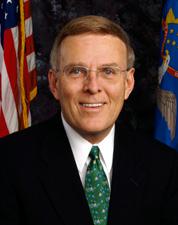 Sen. Byron L. Dorgan (D-ND)
Legislative Activity
Stay on top of the latest movement without scrolling through every action
Senate amendment submitted
May 15, 2003
View full timeline
Senate amendment submitted
May 15, 2003
Senate amendment proposed (on the floor): Amendment SA 678 proposed by Senator Dorgan.(consideration: CR S6449-6450; text: CR S6449)
May 15, 2003
Roll call votes on amendments in Senate: Motion to waive the Budget Act with respect to amendment SA 678 rejected in Senate by Yea-Nay Vote. 48 - 52. Record Vote Number: 178.
May 15, 2003
Amendment SA 678 proposed by Senator Dorgan. (consideration: CR S6449-6450; text: CR S6449) To provide emergency funding for food aid to HIV/AIDS affected populations in sub-Saharan Africa.
May 15, 2003
Point of order raised in Senate with respect to amendment SA 678.
May 15, 2003
Motion to waive the Budget Act with respect to amendment SA 678 rejected in Senate by Yea-Nay Vote. 48 - 52. Record Vote Number: 178.
May 15, 2003
Amendment SA 678 ruled out of order by the chair.
May 15, 2003
Votes
1 roll call on this amendment
Text
Proposed
UNITED STATES LEADERSHIP AGAINST HIV/AIDS, TUBERCULOSIS, AND MALARIA
ACT OF 2003--Continued

The PRESIDING OFFICER. The Senate will continue consideration of H.R.
1298, which the clerk will report.
The legislative clerk read as follows:

A bill (H.R. 1298) to provide assistance to foreign
countries to combat HIV/AIDS, tuberculosis, and malaria, and
for other purposes.

The PRESIDING OFFICER. The Senator from Delaware is recognized.
Mr. BIDEN. Mr. President, I misspoke. The Durbin-Kerry-Biden, et al,
amendment is 20 minutes equally divided.
Mr. FRIST. Mr. President, I ask unanimous consent that there be 10
minutes equally divided in the usual form in relation to the Durbin
global fund amendment; further, that following the debate, the Senate
proceed to a vote in relation to the amendment, with no amendment in
order prior to the vote.
Finally, I ask that following that vote, the Senate proceed to the
final amendments to the jobs bill, if available, and passage of the
jobs and growth legislation.
I will modify that to ask that there be 20 minutes equally divided in
the usual form, with the remainder of the unanimous consent request as
described.
The PRESIDING OFFICER. Is there objection?
Without objection, it is so ordered.
The Senator from Illinois is recognized.

Amendment No. 676

Mr. DURBIN. Mr. President, I send an amendment to the desk.
The PRESIDING OFFICER. The clerk will report.
The legislative clerk read as follows:

The Senator from Illinois [Mr. Durbin], for himself, Mr.
Daschle, and Mr. Kerry, proposes an amendment numbered 676.

Mr. DURBIN. Mr. President, I ask unanimous consent that further
reading of the amendment be dispensed with.
The PRESIDING OFFICER. Without objection, it is so ordered.
The amendment is as follows:

(Purpose: To provide alternate terms for the United States
participation in the Global Fund to Fight AIDS, Tuberculosis and
Marlaria)

Beginning on page 35, strike line 22, and all that follows
through page 45, line 25, and insert the following section:

SEC. 202. PARTICIPATION IN THE GLOBAL FUND TO FIGHT AIDS,
TUBERCULOSIS AND MALARIA.

(a) Authority for United States Participation.--
(1) United states participation.--The United States is
authorized to( participate in the Global Fund.
(2) Privileges and immunities.--The Global Fund shall be
considered a public international organization for purposes
of section 1 of the International Organizations Immunities
Act (22 U.S.C. 288).
(b) Public Dissemination.--Not later than 180 days after
the date of the enactment of this Act, and regularly
thereafter for the duration of the Global Fund, the
Coordinator of the United States Government Activities to
Combat HIV/AIDS Globally shall make available to the public,
through electronic media and other publication mechanisms,
the following documents:
(1) Any proposal approved for funding by the Global Fund.
(2) A list of all organizations that comprise each country
coordinating mechanism, as such mechanism is recognized by
the Global Fund.
(3) A list of all organizations that received funds from
the Global Fund, including the amount of such funds received
by each organization.
(c) Annual Report.--Not later than one year after the date
of the enactment of this Act, and annually thereafter, the
Coordinator of the United States Government Activities to
Combat HIV/AIDS Globally shall submit to the appropriate
congressional committees a report on the Global Fund. The
report shall include, for the reporting period, the following
elements:
(1) Contributions pledged to or received by the Global Fund
(including donations from the private sector).
(2) Efforts made by the Global Fund to increase
contributions from all sources other than the United States.
(3) Programs funded by the Global Fund.
(4) An evaluation of the effectiveness of such programs.
(5) Recommendations regarding the adequacy of such
programs.
(d) United States Financial Participation.--
(1) Authorization of appropriations.--Of the amounts
authorized to be appropriated under section 401, there are
authorized to be appropriated for United States contributions
to the Global Fund, in addition to any other amounts
authorized to be appropriated under any other provision of
law for such purpose, $1,000,000,000 for fiscal year 2004,
$1,200,000,000 for fiscal year 2005, and such sums as may be
necessary for fiscal years 2006 through 2008.
(2) Availability of funds.--
(A) Certain fiscal year 2004 funds.--Of the amount
authorized to be appropriated by paragraph (1) for fiscal
year 2004, the amount in excess of $500,000,000 shall be
available only if the Global Fund receives, during the period
beginning on April 1, 2003, and ending on March 31, 2004,
pledges from all donors other than the United States for
funding new grant proposals in an amount not less than
$2,000,000,000.
(B) Certain fiscal year 2005 funds.--Of the amount
authorized to be appropriated by paragraph (1) for fiscal
year 2005, the amount in excess of $600,000,000 shall be
available only if the Global Fund receives, during the period
beginning on April 1, 2004, and ending on March 31, 2005,
pledges from all donors other than the United States for
funding new grant proposals in an amount not less than
$2,400,000,000.
(C) Receipt of pledges before period end.--If the Global
Fund receives in a period described in subparagraph (A) or
(B) the pledges described in such subparagraph in the amount
required by such subparagraph as of a date before the end of
such period, the United States contribution specified in such

[[Page S6446]]

subparagraph shall be available as of such date.
(D) Availability of amounts.--Amounts authorized to be
appropriated by paragraph (1), and available under that
paragraph or this paragraph, shall remain available until
expended.
(3) Prior fiscal year funds.--Any unobligated balances of
funds made available for fiscal years 2001 and 2002 under
section 141 of the Global AIDS and Tuberculosis Relief Act of
2000 (22 U.S.C. 6841)--
(A) are authorized to remain available until expended; and
(B) shall be merged with, and made available for the same
purposes as, the funds authorized to be appropriated by
paragraph (1).

Mr. DURBIN. Mr. President, I know it is late at night, so I will
abbreviate this debate. I hope it is no reflection on the seriousness
of this issue. Everyone understands the global AIDS epidemic is a
challenge facing our generation and our children's generation to which
we need to respond.
As I said earlier today, there has been outstanding leadership on
this issue on both sides of the aisle. The President of the United
States, in the State of the Union Address, set a standard and goal for
America that deserves the applause of both sides of the aisle--a $15
billion commitment to the global AIDS fight.
I have seen extraordinary efforts on both sides of the aisle, with
Senator Frist, our majority leader, on the Republican side, as the
nominal and real leader on this issue, as well as Senator Lugar; and on
our side, Senator Biden, as well as Senator Kerry. The list goes on.
The reason I raise these points at this moment is this: I served for
14 years in the House before I came to the Senate. It is a very
important Chamber. They make important decisions. But all wisdom
doesn't reside on that side of the rotunda. What I am asking you to
consider this evening as the initial amendment on this issue is what we
have already voted for in the Senate on a bipartisan basis. What I am
suggesting to you is not novel; it is not radical; it is not partisan;
it is what the Senate agreed to do. I am asking us to stand behind our
bipartisan position and say to our friends in the House this is not a
wholesale change of your bill, but it is a modification that is
critically important.
Let me tell you why I think it is critically important and why I hope
we can stand together as the Senate and say to the House Members,
please, let's work together for this modification, which is really to
the benefit of all of us.
Here is what it does. It relates to our contribution to the global
fund. It is what we have already voted for in the Senate. It says that
in the next fiscal year, 2004, we will contribute $1 billion to the
global fund under the following conditions: The first $500 million will
go to the global fund, with no strings attached, no limitations. The
second $500 million will go, as long as it is matched by other
contributions--and not just matched but matched on a 2-to-1 basis.
In other words, the second tranche of $500 million will require $2 of
foreign contributions from other nations for every $1 contributed by
the United States. That is the approach that I believe is sensible. It
says we are committed to the global fund and we understand that they
need resources, but the United States cannot carry this alone. We will
lead because we are the richest nation on Earth, and our President has
committed us to this leadership. But then, once we have made the $500
million commitment, we will turn to the rest of the world to join us in
this effort.
That is not a radical notion; it is a notion which, frankly, the
House version of this bill considers as well. But there is an error in
the language in the House bill. Some of you have said to me you just
want to take this bill as passed by the House, pass it in the Senate,
not change a word, and hand it to the President on Air Force One on his
way to the G-8 conference.
If you will turn to page 38 of the House version, there is a serious
error about the match. It suggests, when you read it, that we are not
putting up a third of the money to be matched but 25 percent. It is
just a drafting error. But as wise, as seasoned, and as experienced as
the House Members may be, they made a mistake.

This amendment corrects that mistake and it says it is truly a 2-to-1
match. We will come up with one-third. They made a mistake in drafting.
Why would we want the President to take that mistake with him on Air
Force One?
I also tell you that this bill does something the House bill doesn't
do. I think it is something they would readily agree to. We all know,
at least, that the global fund has been recently reviewed by the GAO
and it was found to be a good organization, committing money to good
projects around the world. But we owe it to the taxpayers of this
country to make sure that the dollars we put in the global fund are
well spent.
So this amendment, offered by myself, Senator Daschle, Senator Kerry,
and others, makes public and available all the approved proposals to
the global fund--transparency--so we can see what they are funding.
It lists all the organizations that make up the country coordinating
mechanism. It lists all the organizations receiving funding, and it
calls for a report from the global fund that includes where the money
is going to be spent.
That is the kind of accountability and transparency which does not
violate the spirit of the House bill but merely adds provisions which I
think protect taxpayers' dollars in a responsible way.
I withhold the remainder of my time and yield to the other side for
their response. I hope my colleagues will favorably consider this
amendment.
Mr. LUGAR. Mr. President, I yield 5 minutes to the distinguished
Senator from Wyoming.
The PRESIDING OFFICER. The Senator from Wyoming.
Mr. ENZI. Mr. President, I urge my colleagues to vote against this
amendment. I want to give everyone a bit of the philosophy developed in
the House that my colleagues have not had the opportunity to observe.
There are numbers very important in this debate.
The United States has had a tremendous commitment. The United States
will continue to have a tremendous commitment. What we are trying to do
is make sure the other countries also join in this commitment and that
it does not become solely a U.S. fund.
This chart shows that the United States has maintained its commitment
to the global fund. We have pledged $200 million a year. Here is what
is happening with the other countries: They started at 275. By 2006,
they dropped off to a little bit above zero. By 2008, they hit zero.
That is what the commitment is at the present time.
This chart shows how the fund is shaping up at the moment. The United
States is putting in 51 percent of the money, not 33 percent of the
money--51 percent of the money.
Some of the numbers you have heard go back to 2001, 2002, and 2003
when we had a higher commitment, but the other countries had a higher
commitment. They were almost at $150 million. That has been dropping
off steadily.
When we get into the pledges, it drops off considerably faster. We
have to do something to get the other countries energized to still be a
part of this. This should not be, cannot be, and will not work if it is
just U.S. funds.
This chart shows the way that it shapes up with the bill, the way the
House brought it out. We will be providing 42 percent, then 60 percent,
then 96 percent, then 99.5 percent, and then 100 percent of the fund if
this amendment is not defeated. I do not think we ever intended to be
100 percent of the entire world solution to this problem, and we are
not doing our job with the rest of the world if we become 100 percent
of the solution. It is participation by the countries that is extremely
important.
The global fund administrator supports the leveraging efforts. He
recognizes what is happening with those pledges and what is happening
with the rest of the world. He says:

I hope and expect that the U.S. will continue to ensure
that its contribution represents a ``fair share'' relative to
the total commitments to the fund, potentially through a
``challenge grant''--

And that is the way it is written coming out of the House. It is
saying that we will put up money to encourage others, and as they reach
their goals on the pledges, we will increase ours. We are setting aside
an extra $1 billion to do that.

. . . potentially through a ``challenge grant'' mechanism
as we await the new and renewed pledges of other donors.

[[Page S6447]]

We have the support of the administrator of the global fund. We at
present are exceeding what we envisioned doing in that fund. We know it
is extremely important. The only way that it works is if we have the
involvement from all of the countries or at least more of the countries
than we have at the present time.
The intent of the global fund was to be a global multilateral
response to these epidemics. Thus far, the United States has clearly
shown its commitment to this issue, and we are asking others to
contribute to this necessary cause. The global fund cannot become an
``us'' or a U.S.-only fund. If it is to be successful, other countries
have to be a part of the contributions.
I ask my colleagues to join in defeating this amendment so that we
keep that challenge grant commitment there. I yield the floor.
The PRESIDING OFFICER. Who yields time?
Mr. LUGAR. Mr. President, how much time remains on each side?
The PRESIDING OFFICER. The sponsor has 4\1/2\ minutes. The opposition
has 5 minutes 42 seconds.
Mr. BIDEN. I yield whatever time the Senator from Illinois needs on
the remaining time.
Mr. DURBIN. Mr. President, I agree with everything the Senator from
Wyoming said. This amendment agrees with everything the Senator from
Wyoming said. There is no doubt about the fact that the United States
should not carry this burden alone. The House was right to establish a
standard that the United States would be contributing as long as other
nations contributed as well. That is exactly what this amendment says.
I think we have passed the point of questioning whether the global
fund is an important investment in fighting global AIDS. In fact, we
were instrumental as a nation in setting up the global fund. Now I
think we have to work with other countries around the world to ensure
its success.
The global fund is operating now in 92 countries in the first two
rounds. The grants are intended to respond to locally defined needs,
and it has really shown successful pilot programs. But the fund is in a
dire situation at this moment.
Those who have joined our global AIDS caucus know that when we met
last week with Dr. Feecham, who heads up the fund, they are running out
of money to deal with the global AIDS epidemic.
I am saying let's put $500 million into the global fund from the
United States but no more money unless it is matched 2 to 1 from other
sources than the United States. I am completely in agreement with the
Senator from Wyoming. This should not be the United States alone. I ask
you to merely stand by the position of the Senate which we voted for on
a bipartisan basis last year.
I yield to the minority leader, Senator Daschle.
Mr. DASCHLE. Mr. President, the Senator from Illinois is exactly
right. I do not disagree with anything the Senator from Wyoming said.
We agree it should not be a commitment solely made by the United
States, and that really is the whole purpose of this legislation. That
is why we are trying to pass this legislation tonight so the President
can take this authority with him to the conference and use it as
leverage, use it for setting the example, use it as an opportunity to
lay out our expectations for the rest of the world.
We are simply saying we are going to commit to 500, and you have to
commit to a billion. You have to commit two times to the one unit we
are committing. We want a 2-to-1 ratio internationally, and we are
basically setting a floor. We say we will do the 500, and you come up
with the rest. It has to be a 2-to-1 ratio accommodation to address
directly the concerns legitimately raised by the Senator from Wyoming.
So there is no disagreement. We just want world cooperation, world
involvement, world commitment, and we believe this is an opportunity to
achieve that.
The PRESIDING OFFICER. The Senator from Indiana.
Mr. LUGAR. Mr. President, let me try to describe what I believe is
the lay of the land at this stage. We have had in the Foreign Relations
Committee about 4 months of discussion about various ways that this
issue might be approached. And that followed, as was pointed out
earlier in the day in the debate, the remarkable bill that was offered
by Senators Frist and Kerry last year. It passed unanimously. It did
not receive consideration in the House, and it did not become law.
The issue was revived in a big way when President Bush mentioned this
prominently in his State of the Union Address. President Bush not only
mentioned it then, but he has been mentioning it on almost every
occasion when he has met with Senators. This is very important to us,
it is very important to our President, and it is very important to the
world that a bill pass this evening.
The situation comes down to this. In the Foreign Relations Committee,
ultimately, the distinguished ranking member, Senator Biden, and I
formulated a bill which we believed had a strong majority in our
committee. We believed it had a strong majority potentially on the
floor of the Senate.
The House of Representatives, in the meanwhile, under the leadership
of Congressman Hyde and Congressman Lantos, has passed an excellent
bill, in our judgment. We believe we could have improved upon it. The
amendments that are being offered tonight all suggest they might
improve upon it.
As a matter of fact, some have foreign policy objectives that I would
agree with wholeheartedly. But the issue tonight comes down to this:
The President of the United States has visited with me, Senator Biden,
and others, as late as last Thursday--and, in fact, in Indianapolis on
Tuesday. He has indicated to me he believes the only chance that he
will have a bill he can sign, that he can take to the G-8 meeting that
commences June 1, is if the Senate adopts the House bill without
amendments, without conference, without possible parliamentary
strategies that stand between the President and a bill that he will
take to the G-8.
Why does he want to do that? Because he wants money from the G-8. He
wants commitments. He wants somebody besides the United States in this
ball game. It is very important that he succeed. This is not a
peripheral item for the President. It is up front. He has appealed in
every way he knows.
I have told him I will support him, and I will do the best I can to
manage a bill this evening that passes that has no amendments, however
meritorious, because I believe that way he will have a bill, we will
have success at the G-8 and, more importantly, the people who are going
to be helped will be helped as opposed to our having an extended study
in which people come from the left, from the right, from the center,
perfecting this and that, but we do not have a bill and our President
goes to the G-8 without that momentum of support he wants.
Now, that will be the issue in my remarks on each amendment. It
finally comes down to the fact that I will ask my colleagues in the
Senate to defeat amendments; to pass the bill; to do so promptly; to do
so tonight, so that the issue is concluded, the President is supported,
and he moves on.
The PRESIDING OFFICER. The Senator from Delaware.
Mr. BIDEN. How much time is remaining?
The PRESIDING OFFICER. One minute 40 seconds for each side.
Mr. BIDEN. I ask unanimous consent that I have an additional 2
minutes--I will not ask that again tonight--to respond to or to
reaffirm some of what the chairman said.
The PRESIDING OFFICER. Without objection, it is so ordered.
Mr. BIDEN. It is true we did go see the President. The Senator from
Indiana and I have a slightly different take on what we told the
President. My view is the President has incredible leverage with the
Republican House. And my point to the President was: Mr. President,
what we had in the Biden-Lugar bill and, prior to that, the bill of the
leader, Senator Kerry, and Senator Feingold, who have been the real
leaders on this issue, you liked all of it; you said it was okay, and
so, Mr. President, I do not know why you cannot pick up the phone, call
Mr. DeLay and say, I, the most popular Republican in the Nation, want
this.
He said he cannot do that, he will not be able to get a bill.
He also said he needs this bill. Why do we need this before the G-8?
He says he needs this before the G-8 to demonstrate to the G-8 we are
doing something and we expect them to do more.

[[Page S6448]]

I take the President at his word that that is why he wants it, but
the reason why the Durbin amendment is so important is everybody knows
the House does not really care about this bill. The House bill says up
to a billion dollars--up to, meaning zero to a billion. My argument to
the President is, if we have $500 million at the front end, everybody
in the G-8 will believe it and he will really have leverage.
The problem I have is, I do not understand why the President of the
United States is unwilling to exercise his leverage on the House
leadership. So I really think we are helping him in spite of what he
wants. Let's help him.
Sometimes, as my dear mother used to say: This is for your own good,
Joey.
This is for his own good. We give him a bottom line of $500 million
to go to the G-8. Then Chirac will look and say, they mean it. If you
go with zero to a billion, knowing that Mr. Hastert, who does not like
this bill, Mr. DeLay, who does not like this bill, the same House that
killed this bill before, they will say, we do not have to do anything.
We know those guys are not going to do anything. Their reputations are
well earned and well known.
I do not say that in a pejorative way. They do not like this bill.
Everybody knows they do not like this bill. They do not even like their
own bill.
Because the President, to his credit, said in the State of the Union,
I want one, they had to pass something. So let's help the President.
Let's give him some leverage.
I would be willing to bet that if this passes, I will be dumbfounded
if the President does not pick up the phone and say, Denny, I need a
little help--meaning Speaker Hastert--and, Mr. DeLay, we are both from
Texas; me, President, you No. 2. Maybe we can get this done.
I have confidence in the President's leadership. So let us help him
out. Give him some leverage. Let him get the job done.
I yield the floor.
The PRESIDING OFFICER. Who yields time?
The Senator from Wyoming.
Mr. ENZI. Mr. President, to get away from the rhetoric about what the
President can and cannot do, let's go back to the amendment. The
purpose of the bill we are looking at now is to make sure we are
providing a challenge grant for the world. That is what we have been
asked to do. That is what the President wants to take to the G-8. That
is what we need to do right now. We do not need to put out a promise
that we are going to have $500 million immediately. The up to $1
billion--that is still a big number for me. I have trouble saying it.
The promise of up to $1 billion is if there is a match by the others.
If they match, we give. The House agreed to that. We will agree to it.
But to put in another number there to show we are willing to go even
further than any other country in the world and maybe even be willing
to fund the fund 100 percent is not a good idea at this point.
What we need to do is follow what the House did, make sure there is
an assurance there that the President can take. We do not need to try
and outbid the rest of the world when they are not even bidding. When
you go to an auction sale, you do not drive up your own bid. That is
what we are doing, is an auction sale. We are trying to provide a
little bit of psychology to get everybody to participate so they will
have more concern even in their own country. So let's not bid against
ourselves. Let's defeat this amendment.
Mr. FEINGOLD. Mr. President, I rise in support of the Durbin
amendment, which strikes an important balance between supporting the
Global Fund for AIDS, TB, and Malaria and demanding accountability and
appropriate burdensharing.
The Global Fund holds tremendous promise for leveraging donations to
ensure maximum impact, helping us all to get the most for our money. It
not only deserves U.S. support--it needs it to survive, because our
leadership sends a critical signal to the rest of the donor community.
Today we are being urged to strengthen the President's hand with other
donors at the next G-8 meeting. Well Mr. President, I want to
strengthen his hand. Making a strong commitment to the fund--and
conditioning part of that commitment on a significant effort from other
donors, definitely fits the bill.
The President's historic commitment in his State of the Union Address
raised expectations around the world. But the United States cannot
possibly tackle this pandemic alone. We must throw down the gauntlet,
and signal our substantial support for the fund and our respect for its
mission. This is the kind of leadership that can make the President's
vision a reality, making a real difference in the lives of millions
around the world.
The PRESIDING OFFICER. The Senator from Illinois.
Mr. DURBIN. Mr. President, the Senator from Wyoming must be arguing
with himself, because there is no argument on this side of the aisle.
We agree with him. The United States should lead, but we should also
ask other countries to join us, and the formula we have come up with is
not a partisan response. It is the formula that came out of the Foreign
Relations Committee, chaired by a great Republican Senator from Indiana
named Lugar.
The PRESIDING OFFICER. The Senator's time has expired.
Mr. DURBIN. I ask my colleagues to join in supporting the Biden-Lugar
approach.
The PRESIDING OFFICER. The opposition has 9 seconds.
The Senator from Indiana.
Mr. LUGAR. The President of the United States needs an opportunity to
forward our cause. Please give him that opportunity. Pass a clean bill
this evening. Please vote against this amendment.
The PRESIDING OFFICER. The time has expired. The question is on
agreeing to amendment No. 676.
Mr. DASCHLE. I ask for the yeas and nays.
The PRESIDING OFFICER. Is there a sufficient second?
There is a sufficient second.
The clerk will call the roll.
The assistant legislative clerk called the roll.
The result was announced--yeas 48, nays 52, as follows:

[Rollcall Vote No. 177 Leg.]

YEAS--48

Akaka
Baucus
Bayh
Biden
Bingaman
Boxer
Breaux
Byrd
Cantwell
Carper
Clinton
Conrad
Corzine
Daschle
Dayton
Dodd
Dorgan
Durbin
Edwards
Feingold
Feinstein
Graham (FL)
Harkin
Hollings
Inouye
Jeffords
Johnson
Kennedy
Kerry
Kohl
Landrieu
Lautenberg
Leahy
Levin
Lieberman
Lincoln
Mikulski
Murray
Nelson (FL)
Nelson (NE)
Pryor
Reed
Reid
Rockefeller
Sarbanes
Schumer
Stabenow
Wyden

NAYS--52

Alexander
Allard
Allen
Bennett
Bond
Brownback
Bunning
Burns
Campbell
Chafee
Chambliss
Cochran
Coleman
Collins
Cornyn
Craig
Crapo
DeWine
Dole
Domenici
Ensign
Enzi
Fitzgerald
Frist
Graham (SC)
Grassley
Gregg
Hagel
Hatch
Hutchison
Inhofe
Kyl
Lott
Lugar
McCain
McConnell
Miller
Murkowski
Nickles
Roberts
Santorum
Sessions
Shelby
Smith
Snowe
Specter
Stevens
Sununu
Talent
Thomas
Voinovich
Warner
The amendment (No. 676) was rejected.
Mr. LUGAR. Mr. President, I move to reconsider the vote.
Mr. REID. I move to lay that motion on the table.
The motion to lay on the table was agreed to.
Mr. REID. I suggest the absence of a quorum.
The PRESIDING OFFICER. The clerk will call the roll.
The legislative clerk proceeded to call the roll.
Mr. LUGAR. Mr. President, I ask unanimous consent that the order for
the quorum call be rescinded.
The PRESIDING OFFICER. Without objection, it is so ordered.
Mr. LUGAR. Mr. President, it is my understanding that the
distinguished Senator from North Dakota has an amendment.
I ask the Chair what the time agreement is on the Dorgan amendment.
The PRESIDING OFFICER. There is no time agreement.
Mr. REID. Mr. President, I ask unanimous consent that the time on the
Dorgan amendment be evenly divided with 5 minutes on each side.
The PRESIDING OFFICER. Without objection, it is so ordered.
The Senator from North Dakota.

[[Page S6449]]

Amendment No. 678

Mr. DORGAN. Mr. President, I send an amendment to the desk.
The PRESIDING OFFICER. The clerk will report.
The legislative clerk read as follows:

The Senator from North Dakota [Mr. Dorgan proposes an
amendment numbered 678.

Mr. DORGAN. Mr. President, I ask unanimous consent that reading of
the amendment be dispensed with.
The PRESIDING OFFICER. Without objection, it is so ordered.
The amendment is as follows:

(Purpose: To provide emergency funding for food aid to HIV/AIDS
affected populations in sub-Saharan Africa)

At the appropriate place insert the following:

SEC. ____. EMERGENCY FOOD AID FOR HIV/AIDS VICTIMS.

(a) Findings.--The Senate finds the following:
(1) Whereas the Centers for Disease Control and Prevention
found that ``For persons living with HIV/AIDS, practicing
sound nutrition can play a key role in preventing
malnutrition and wasting syndrome, which can weaken an
already compromised immune system.''.
(2) Whereas there are immediate needs for additional food
aid in sub-Saharan Africa where the World Food Program has
estimated that more than 40,000,000 people are at risk of
starvation.
(3) Whereas prices of certain staple commodities have
increased by 30 percent over the past year, which was not
anticipated by the President's fiscal year 2004 budget
request.
(4) The Commodity Credit Corporation has the legal
authority to finance up to $30,000,000,000 for ongoing
agriculture programs and $250,000,000 represents a use of
less than 1 percent of such authority to combat the worst
public health crisis in 500 years.
(b) Commodity Credit Corporation.--
(1) In general.--The Secretary of Agriculture shall
immediately use the funds, facilities, and authorities of the
Commodity Credit Corporation to provide an additional
$250,000,000 in fiscal year 2003 to carry out programs
authorized under title II of the Agricultural Trade
Development and Assistance Act of 1954 (7 U.S.C. 1691 et
seq.) to assist in mitigating the effects of HIV/AIDS on
affected populations in sub-Saharan Africa and other
developing nations, and by September 30, 2003, the
Administrator of the United States Agency for International
Development shall enter into agreements with private
voluntary organizations, non-governmental organizations, and
other appropriate organizations for the provision of such
agricultural commodities through programs that--
(A) provide nutritional assistance to individuals with HIV/
AIDS and to children, households, and communities affected by
HIV/AIDS; and
(B) generate funds from the sale of such commodities for
activities related to the prevention and treatment of HIV/
AIDS, support services and care for HIV/AIDS infected
individuals and affected households, and the creation of
sustainable livelihoods among individuals in HIV/AIDS
affected communities, including income-generating and
business activities.
(2) Requirement.--The food aid provided under this
subsection shall be in addition to any other food aid
acquired and provided by the Commodity Credit Corporation
prior to the date of enactment of this Act. Agricultural
commodities made available under this subsection may,
notwithstanding any other provision of law, be shipped in
fiscal years 2003 and 2004.

Mr. DORGAN. Mr. President, this amendment provides $250 million in
food aid through the Commodity Credit Corporation to those who are
suffering from AIDS/HIV infections in sub-Saharan Africa. The Senate is
already on record in supporting this level of food aid. During the
consideration of the fiscal year 2003 omnibus appropriations bill, the
Senate approved a bipartisan amendment that would have provided $500
million for this type of food aid. That was reduced to $250 million in
the conference. This amendment would simply add back the amount which
was cut in conference.
In 1984, 8 million people were in need of food aid. In sub-Saharan
Africa today, that number is 11 million. Some are predicting that it
will go up to 20 million. Yet there is little attention in 2003 to this
crisis.
The United Nations reports that 29.4 million adults and children are
infected with the HIV virus in sub-Saharan Africa, and 11 million
orphans currently living in Africa are facing the risk of malnutrition
as a result of the AIDS crisis.
The relationship between these two crises is very strong. The World
Food Program Director, James Morris, testified before the Senate on
February 25 of this year and stated that HIV and AIDS was the central
cause of famine in that part of Africa. Poverty in that part of the
world contributes to the AIDS epidemic. Not only are the health systems
inundated but poverty and hunger lead many women to be commercial sex
workers. Devastation in the rural areas causes many men to become
migrant workers in urban areas which leads to multiple partners. In
addition, once a person is infected with the HIV virus, for those who
are lucky enough to get medical treatment, good nutrition is crucial in
helping ward off infections. Malnutrition complicates and accelerates
the problems associated with this HIV infection. The body is unable to
fight the disease when it is starving for food.
This is a crisis that calls out for a dramatic response. Anyone in
this Senate who has held a child in his or her arms who is dying of
malnutrition and starvation--and some of us have--will never forget
that experience. The fact is that tonight in sub-Saharan Africa, there
are hundreds of thousands--millions--of people at risk, especially
children.
This Senate has already made the decision that it would support $500
million. That was cut to $250 million in conference on the omnibus. I
propose that we restore that $250 million, and do what we should do--do
what a generous and good country must do at this point.
I ask that my amendment be supported by my colleagues.
I reserve the remainder of my time.
Mr. LEAHY. Mr. President, I rise today in support of the Dorgan-Leahy
amendment. This amendment tries to get at the heart of two
interconnected problems that are literally wiping out countries in sub-
Saharan Africa. Famine and AIDS.
This amendment directs the Secretary of Agriculture to use the
authorities of the Commodity Credit Corporation (CCC) to provide $250
million in desperately needed food aid to HIV/AIDS victims in sub-
Saharan Africa and other developing countries. Moreover, it allows the
administration to sell this food aid and use the money to purchase
drugs, medical equipment, and other supplies to help combat HIV/AIDS in
sub-Saharan Africa.
In other words, this amendment takes a small step in addressing two
of the most critical problems on the African continent.
We have all seen the pictures and heard the statistics about AIDS in
Africa. But, let me take just a moment to reiterate a couple of points.
According to the Congressional Research Service, about 30 million
adults and children are infected with the HIV virus in Africa. As of
2001, an estimated 21.5 million Africans had died of AIDS, including
2.2 million who died in that year. AIDS is now the leading cause of
death in Africa.
At the same time AIDS is ravaging the continent, a famine has placed
more than 40 million Africans at risk of starvation. Men, women, and
children of all ages of all religions are dying, because they cannot
get enough to eat.
There is a direct connection between HIV/AIDS and malnourishment. The
House bill recognizes that fact. Let me read to you one section--and I
am quoting: ``Healthy and nutritious foods for individuals infected or
living with HIV/AIDS are an important complement in HIV/AIDS medicines
for such individuals.'' The bill goes on to say: ``Individuals infected
with HIV have higher nutritional requirements than individuals who are
not infected with HIV . . . Also, there is evidence to suggest that the
full benefit of therapy to treat HIV/AIDS may not be achieved in
individuals who are malnourished . . .''
There are plenty of statistics, medical studies, and reports. But, it
is common sense. When people are starving, its harder for their bodies
to fight the HIV/AIDS virus.
We know that HIV/AIDS is the worst public health crisis in human
history. We see 40 million people at risk of starvation in Africa. We
need to do something about it right now.
To be sure, H.R. 1298 is an important bill and it is a good start at
taking action. But there is a gaping hole in this bill--resources. This
bill does not appropriate one dime of money to address this problem.
Let me repeat that. This bill does not appropriate one dime of money to
address AIDS or famine in Africa.
As I have said over and over, we can have the best policies in the
world, but

[[Page S6450]]

if we don't have the money to back them up, our policies simply will
not be effective.
I am a member of the Appropriations Committee. I have seen the
President's budget request for P.L. 480 food aid. Is there an increase
to effectively deal with this problem? No. The President's budget
decreases food aid by $574 million. That is a 32 percent cut from last
year's level.
More importantly, the funds we do provide in the fiscal year 2004
budget won't be available for months. We don't have months. By then,
the problem will have gotten worse. More people will have died. We need
to break this cycle. That is exactly what this amendment does. It tells
the Secretary of Agriculture to use existing authorities to provide
$250 million in food aid for HIV/AIDS affected populations in sub-
Saharan Africa.
We are not giving the Secretary of Agriculture any new authority. The
CCC can already provide $30 billion to support agricultural programs--
both here and abroad. This amendment simply says that we should use
less than 1 percent of this authority to combat the worst public health
crisis in human history.
We all know that we need to act for humanitarian reasons. But, we
should not forget that there are important national security reasons
for taking action to address AIDS and famine in Africa. For example,
CIA Director Tenent testified that ``[t]he chronic problems of sub-
Saharan Africa make it, too, fertile ground for direct and indirect
threats to United States interests. Governments without accountability
and natural disasters have left Africa with the highest concentration
of human misery in the world''.
This should not be a hard amendment to support. Each and every
Senator has already essentially expressed his or her support for this
amendment. Let me explain.
During Senate consideration of the fiscal year 2003 Omnibus
Appropriations bill, Senator Bill Nelson and I offered a bipartisan
amendment to add $500 million in emergency food aid to sub-Saharan
Africa. The amendment was accepted by the Senate, but was reduced by
the House to $250 million in the conference committee.
My amendment simply directs to Secretary of Agriculture to use the
authorities of the Credit Commodity Corporation to restore this $250
million that the Senate supported but the House eliminated in
conference.
I want to remind people that this $500 million figure was not picked
out of the air. It was based on an assessment by humanitarian
organizations with field operations in Africa. More importantly, this
figure represents the U.S. share of what is needed to combat this
problem. In other words, it doesn't let other donors off the hook.
I would point out that the Dorgan-Leahy amendment has a wide range of
support from international relief organizations--from Catholic Relief
Services to Oxfam to the International Rescue Committee. In addition,
agricultural organizations, as represented by the Coalition for Food
Aid, supports this amendment.
This is not a partisan issue. One has to look no further than
Republican Representative Frank Wolf's op-ed in Sunday's Washington
Post on this very issue. It is, however, a security issue. It is a
humanitarian issue. It is a moral issue.
The AIDS pandemic in Africa is out of control. A famine threatens the
lives of 40 million people. We need to act. We need to act now. We need
to provide real resources. This amendment does all of these things.
The PRESIDING OFFICER. Who yields time?
Mr. LUGAR. Mr. President, I yield myself as much time as required.
The argument against the Dorgan amendment, which I will make, is that
a budget point of order clearly is applicable against this particular
amendment, and at the appropriate time I will raise that budget point
of order.
I say simply that the bill we are considering, which came through the
House of Representatives and is the basis for our debate today, does
mention food assistance, and does so generously, as a prevention
technique. It is mentioned at several points throughout the
legislation. So it has not been overlooked. But the amendment that is
being offered by my distinguished colleague clearly approaches
appropriations language, as opposed to authorization language, and
clearly is in violation of the budget we have adopted. At the
appropriate time, I will seek recognition to raise the budget point or
order.
In addition, the fact is that once again it amends the basic bill we
are attempting to pass tonight, which is very important for Members to
consider.
Mr. DORGAN. Mr. President, there is indeed a point of order. But I
hope someone in this Chamber will take it upon themselves to explain to
those who are sick and to the hungry children who are dying that this
can't be done because there was a point of order in the Senate at 11
o'clock at night in consideration of this bill. The fact is we have
already made this decision. This is not a partisan issue. We have made
this decision previously.
The Senate said we will provide $500 million to try to provide
assistance to those who are devastated by HIV and devastated by
malnutrition and hunger. We have already made that decision in the
Senate. It was cut to $250 million in conference.
Let us again decide that this emergency problem cries out for our
response and not for a claim of a point of order. This is talking about
feeding hungry people who are devastated by famine and who are ravaged
by HIV and AIDS. This deserves our support, and deserves it tonight.
I yield the floor.
Mr. LUGAR. Mr. President, as each one of us discussed amendments
tonight, there are ways in which this bill could be perfected. There
will be an opportunity in a humanitarian way to try to perfect our
work. Our work tonight, however, is to pass this legislation so that
our President has a bill at the G-8. In furtherance of that, I note
that the pending amendment offered by the distinguished Senator from
North Dakota increases mandatory spending, and, if adopted, would cause
the underlying bill to exceed the committee section 302(a) allocations.
Therefore, I raise a point of order against the amendment pursuant to
section 302(f) of the Congressional Budget Act of 1974.
Mr. DORGAN. Mr. President, pursuant to section 904 of the
Congressional Budget Act, I move to waive the applicable sections of
that act for the consideration of the pending amendment and I ask for
the yeas and nays.
The PRESIDING OFFICER. Is there a sufficient second?
There is a sufficient second.
The question is on agreeing to the motion. The clerk will call the
roll.
The legislative clerk called the roll.
The yeas and nays resulted--yeas 48, nays 52, as follows:

[Rollcall Vote No. 178 Leg.]

YEAS--48

Akaka
Baucus
Bayh
Biden
Bingaman
Boxer
Breaux
Byrd
Cantwell
Carper
Clinton
Conrad
Corzine
Daschle
Dayton
Dodd
Dorgan
Durbin
Edwards
Feingold
Feinstein
Graham (FL)
Harkin
Hollings
Inouye
Jeffords
Johnson
Kennedy
Kerry
Kohl
Landrieu
Lautenberg
Leahy
Levin
Lieberman
Lincoln
Mikulski
Murray
Nelson (FL)
Nelson (NE)
Pryor
Reed
Reid
Rockefeller
Sarbanes
Schumer
Stabenow
Wyden

NAYS--52

Alexander
Allard
Allen
Bennett
Bond
Brownback
Bunning
Burns
Campbell
Chafee
Chambliss
Cochran
Coleman
Collins
Cornyn
Craig
Crapo
DeWine
Dole
Domenici
Ensign
Enzi
Fitzgerald
Frist
Graham (SC)
Grassley
Gregg
Hagel
Hatch
Hutchison
Inhofe
Kyl
Lott
Lugar
McCain
McConnell
Miller
Murkowski
Nickles
Roberts
Santorum
Sessions
Shelby
Smith
Snowe
Specter
Stevens
Sununu
Talent
Thomas
Voinovich
Warner
The PRESIDING OFFICER. On this vote, the yeas are 48, the nays are
52.
Three-fifths of the Senators duly chosen and sworn not having voted
in the affirmative, the motion is not agreed to. The point of order is
sustained and the amendment falls.
Mr. LUGAR. Mr. President, I move to reconsider the vote and to lay
that motion on the table.
The motion to lay on the table was agreed to.

____________________