To exclude metals from regulatory oversight by the Commodity Futures Trading Commission.
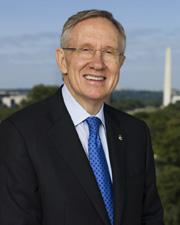 Sen. Harry Reid (D-NV)
Legislative Activity
Stay on top of the latest movement without scrolling through every action
Considered by Senate. (consideration: CR S7658-7662, S7675; text as modified: CR S7658)
June 11, 2003
View full timeline
Considered by Senate. (consideration: CR S7658-7662, S7675; text as modified: CR S7658)
June 11, 2003
Proposed amendment SA 877 withdrawn in Senate.
June 11, 2003
Senate amendment submitted
June 10, 2003
Senate amendment proposed (on the floor): Amendment SA 877 proposed by Senator Reid to Amendment SA 876.(consideration: CR S7594-7599; text: CR S7594)
June 10, 2003
Amendment SA 877 proposed by Senator Reid to Amendment SA 876. (consideration: CR S7594-7599; text: CR S7594) To exclude metals from regulatory oversight by the Commodity Futures Trading Commission.
June 10, 2003
Text
Proposed
CHANGE OF VOTE

Mr. SHELBY. Mr. President, on Thursday, June 5, on rollcall vote No.
209, I voted yea. It was my intention then to vote nay. Therefore, I
ask unanimous consent that I be permitted to change my vote since it
will not affect the outcome.
The PRESIDING OFFICER. Is there objection?
Without objection, it is so ordered.
The PRESIDING OFFICER. Under the previous order, the Senator from
Oregon is recognized.

Amendment No. 875

(Purpose: To strike the provision relating to deployment of new nuclear
power plants)

Mr. WYDEN. Mr. President, I send an amendment to the desk.
The PRESIDING OFFICER. The clerk will report.
The assistant legislative clerk read as follows:

The Senator from Oregon [Mr. Wyden], for himself, Mr.
Sununu, Mr. Bingaman, Mr. Ensign, Mr. Reid, Mr. Feingold, Mr.
Jeffords, and Ms. Snowe, proposes an amendment numbered 875.

Strike subtitle B of title IV.
Mr. WYDEN. Mr. President and colleagues, this amendment is sponsored
by three Democrats, three Republicans, and one Independent. I hope this
afternoon that it will have the support of Senators with varying
degrees of views about the advisability of nuclear power. I am
particularly pleased that the lead cosponsor, Senator Sununu, is with
us today.
I will make a few brief remarks to begin the debate and then I am
anxious to have plenty of time for colleagues.
The reason three Democrats and three Republicans and one Independent
are sponsoring this amendment is that I think many of us in the Senate
are neither pronuclear nor antinuclear but we are definitely
protaxpayer. That is why we are on the floor this afternoon, because
the loan guarantees that are in this legislation to construct nuclear
power facilities are unprecedented and represent, in my view,
particularly onerous and troublesome risks to the taxpayers of this
country.
Frankly, people in my part of the country know a bit about this. It
is not an abstraction for the people of the Pacific Northwest where we
had the WPPSS debacle and 4 out of 5 facilities were never built. It
was the biggest municipal bond failure in history, and it has certainly
colored my thinking with respect to why we are on the floor today.
The loan guarantees--we did some research into this--are
unprecedented with respect even to nuclear power. As far as I can tell,
in the early days of nuclear power, there were subsidies for nuclear
power but never before were the taxpayers on the hook from the get-go.
That is what the Senate is confronted with now.
When it comes to the question of risk, I hope the Senate will focus
on what the nonpartisan Congressional Budget Office has said on this
topic. I will quote. It is at page 9 of the Congressional Budget Office
analysis that we have made available to Senators. The Congressional
Budget Office considered:

The risks of default on such loan guarantees to be very
high, well above 50 percent.

Colleagues, first, when we are talking about risk--because nothing in
life is foolproof and there are no guarantees of anything--I hope in
looking at these guarantees you will first focus on the fact that the
Congressional Budget Office has specifically said in their analysis
that the risk of default on the

[[Page S7577]]

guarantees is very high. If those plants default, the exposure to
taxpayers is enormous.
I will quote from the Congressional Research Service report they did
with respect to these subsidies. They said:

. . . the potential cost to the federal government of the
nuclear power plant subsidies that would be provided by [this
title] would be in the range of $14-$16 billion in 2002
dollars.

I think it is worth noting that the Senate spent a great deal of time
on the child tax credit last week. There we were focusing on something
involving $3 billion. If one or two of these plants go down, taxpayers
are on the hook for a sum greater than that child tax credit.
Now, in the course of today's discussion, we will hear a number of
arguments against the Wyden-Sununu amendment. One of the first will be:
There are tax credits for a variety of energy sources in this
legislation, for wind and solar and a variety of energy alternatives.
That is correct. But those tax incentives are fundamentally different
than the loan guarantees because in those instances the producer faces
substantial risk.
With respect to, say, a wind facility, if the producer takes the
initial risk and later on produces some wind power, they would get a
credit in order to defray some of their costs. With respect to the loan
guarantees for nuclear power, the producer faces no such risk. The
producer has the Government, in effect, guaranteeing, right at the
outset, much of the risk.
So with respect to these nuclear loan guarantees, unlike the
incentives for wind or solar, what we are talking about is that the
Government will socialize the losses but will let private investors
pick up the gains. The losses will be socialized; the gains will be
privatized. And that is unique in this legislation.
I also say to my colleagues in the Senate, the White House has never
asked for these loan guarantees. These loan guarantees are not in the
House bill. Senators' phones are not ringing off the hook from the
Secretary of Energy or others clamoring that this must be done. This is
something that, in my view, is far out of the mainstream in terms of
energy policy, not because I am antinuclear--and I don't intend to talk
about safety issues--but because it is such a large exposure to
taxpayers.
For example, a number of reports have come out already with respect
to how nuclear power stands up with respect to other costs such as
natural gas or coal. One of the reasons, in my view, the Congressional
Budget Office believes there is such a high risk of default is that the
objective analyses show that nuclear has not been competitive with
other sources such as coal.
I hope Senators will look at those two reports: a report done by the
Congressional Budget Office documenting a high likelihood of default,
and a report done by the Congressional Research Service talking about
exposure to taxpayers.
I would finally say to the Senate, it did not have to be this way. I
know the distinguished chairman of the Energy Committee feels very
strongly about this subject. He is a longtime family friend. I was very
willing, and I think other Senators were as well, to have had a modest
program. We had been talking, for example, about one experimental
initiative to look at advanced technologies of one sort or another. I
think that would have been acceptable. But here we are talking about
guarantees for up to seven plants.
I will make reference to the legislation. The bill authorizes DOE to
provide loan guarantees for up to 50 percent of the construction costs
of new nuclear plants and, on top of that, would authorize the
Department of Energy to enter into long-term contracts for the purchase
of power from those plants. The Secretary could provide loan guarantees
for up to seven plants.

That is not a modest experiment that would have been acceptable to
this Member of the Senate, but it is a very significant exposure to the
taxpayers of this country at a time when every Senator is concerned
about deficits.
Mr. President, I intend to allow time for my colleagues. I see
Senator Sununu is on the floor. Senator Reid has strong views on this.
I also express my appreciation to the distinguished ranking minority
member of the Energy Committee. He has worked very closely with me. He
embodies the philosophy of a lot of our colleagues in that he has been
supportive of nuclear power in the past but believes these subsidies
are too rich.
I am hopeful that today Senators with varying degrees of views on the
nuclear power issue will agree with the Congressional Budget Office,
will agree with the Congressional Research Service on these issues with
respect to the taxpayers, and support the Wyden-Sununu amendment.
Mr. President, I yield at this time so other colleagues who have time
constraints may speak. I will have the opportunity to speak later in
the debate.
The PRESIDING OFFICER. Who yields time?
The Senator from New Hampshire.
Mr. SUNUNU. Mr. President, I begin by thanking my colleague from
Oregon for his work on this amendment. I am pleased to join as a
cosponsor. As he pointed out, this is ultimately about what kind of an
energy policy we want, what kind of an economic policy makes sense, and
whether we can do the right thing and protect taxpayers from being
exposed to the potential liability and cost that Senator Wyden
described.
This provision we are trying to strike in this bill guarantees 50
percent of the construction costs of up to six nuclear powerplants.
Those plants could cost anywhere from $2 to $4 billion. And any
taxpayer out there can simply do the math as to what kind of exposure
this would provide.
It has been a pleasure to work with the Senator from Oregon. We are
going to get into the substance of this debate and the details of this
debate over the next couple of hours, but at this time I yield the
floor to the Senator from Nevada, who has been a very strong voice on
this and other matters having to do with energy.
The PRESIDING OFFICER (Mr. Domenici). The Senator from Nevada.
Mr. REID. Mr. President, I express my appreciation to the Senator
from New Hampshire for allowing me to speak. I have to speak at a
memorial service in just a short time, and but for his kindness and
generosity I would have had to either miss the ability to debate this
matter or be late to debate this matter. So I appreciate very much the
comity of my friend from New Hampshire.
I express my appreciation to my longtime friend and colleague,
Senator Wyden, for this legislation. I also say the way this
legislation has been approached is the way to approach legislation.
This is a bipartisan amendment. This is a good debate we are having on
the Senate floor.
My friend from New Mexico, the manager of this bill, believes very
deeply in the renewal of nuclear power. I understand how he feels about
this.
As I say, this is the way legislation should be handled. This is a
good, fair, open debate. I approach this more from an environmental
perspective than my friend from New Hampshire does. Even though he has
been here just a short period of time, the Senator from New Hampshire
is always focused on numbers, taxpayer dollars.
I rise in support of this amendment offered by my colleagues, the
Senator from Oregon and the Senator from New Hampshire. I really do
appreciate their efforts to bring to light the tremendous financial
risks this Energy bill places on the backs of American working men and
women and their families.
Let me underline and underscore, my opposition to this amendment has
nothing to do with the longstanding, seemingly never-ending debate on
nuclear waste. This has nothing to do with nuclear waste.
This Energy bill contains a provision, which this amendment would
strike, that would make the Federal Government the guarantor of the
costs of building new nuclear powerplants.
The Energy bill would allow the Secretary of Energy to enter into
agreements with nuclear powerplant owners to give Federal loan
guarantees for loans to construct new reactors or to enter into new
contracts for guaranteed purchases of power from these reactors.
According to the Congressional Budget Office, what we refer to as
CBO, this is an extremely risky financial endeavor. In fact, the CBO
considers ``the risk of default on such a loan guarantee to be very
high--well above 50 percent.''

[[Page S7578]]

That means the American taxpayer will be footing the bill for
construction of these nuclear powerplants, the way the Senator from
Oregon indicated we would have really a socialization of the costs and
the nonbenefits of this legislation. If this provision remains in the
bill, the Federal Government will be entering into loan guarantees and
power purchase agreements that could cost at least $14 billion.
CBO is not alone in its assessment of the financial risk of backing
the new reactor construction.
We have from Standard & Poor's a document I ask unanimous consent to
print in the Record.
There being no objection, the material was ordered to be printed in
the Record, as follows:

Time for a New Start for U.S. Nuclear Energy?

(By Peter Rigby)

Since its beginnings, commercial nuclear energy has offered
the tantalizing promise of clean, reliable, secure, safe, and
cheap energy for a modern world dependent upon electricity.
No one did more than Lewis Strauss, chairman of the U.S.
Atomic Energy Commission, to define expectations for the
industry when he declared in 1954 that nuclear energy would
one day be ``too cheap to meter.'' But the record proved far
different. Nuclear energy became the most expensive form of
generating electricity and the most controversial following
accidents at Three Mile Island and Chernobyl. And today's
electricity industry's credit problems of too much debt and
too many power plants will do little to invite new interest
in an advanced design nuclear power plant. Yet energy bills
circulating through the U.S. Senate and House of
Representatives hope to change that perception and perhaps
lower the credit risk sufficient enough to attract new
capital. Will Washington, D.C.'s new energy initiatives lower
the barriers to new nuclear construction? Many would like to
think so, but it will be an uphill battle.
The House version of the Energy Bill modestly ``. . . sets
the stage for building new nuclear reactors by reauthorizing
Price-Anderson. . . .'' Since 1957, the Price-Anderson Act
has indemnified the private sector's liability if a major
nuclear accident happens on the premise that no private
insurance carriers could provide such coverage on commercial
terms. Without Price-Anderson, it is difficult to envision
how nuclear plants could operate commercially, now or in the
future. The more ambitious Senate version of the Energy Bill
seeks to jump-start new nuclear plants in the U.S. by
providing measurable financial resources for new projects.
According to the latest version of the Senate Energy Bill,
the Secretary of Energy could provide financial assistance to
supplement private sector financing if the proposed new
nuclear plant contributes to energy security, fuel, or
technology diversity or clean air attainment goals. The bill
would limit financial assistance to 50% of the project costs
with financial assistance being defined as a line of credit,
secured loan, loan guarantee, purchase agreement, or some
combination of these assistance plans.
In light of how well U.S. nuclear plants have generally
been operating recently and with promising new technology on
the horizon, nuclear energy would seem to have a future.
Currently, about 20% of the nation's electricity comes from
nuclear power plants. The introduction of competition and
deregulation in the U.S. has helped drive the nuclear fleet
into achieving record availabilities and load factors, as
independent owners have taken ownership from utilities that
divested generation. Even utilities that did not divest their
nuclear plants have experienced greatly improved performance
across the board. Today's nuclear power plant operation and
maintenance and fuel costs are remarkably low compared with
many fossil fuel plants--as low as 1.68 cents per kWh
according to the Nuclear Energy Institute. Although the high-
profile accidents at Three Mile Island and Chernobyl greatly
raised the threshold for safer operations, operating success
stories may overstate what may be achievable with new
designs. Nuclear operators in the U.S. have had a few decades
to work out operationsl problems, and with original debt paid
off, more cash resources have been dedicated to improving
performance. Providers of new capital for advanced, nuclear
energy will want some comfort that credit and operating risks
are covered. But the industry's legacy of cost growth,
technolgy problems, cumbersome political and regulatory
oversight, and the newer risks brought about by competition
and terrorism concerns may keep credit risk too high for even
the Senate bill to overcome.

Historic Risks Will Persist

A nuclear power plant's life cycle exposes capital
providers to four distinct periods of credit risk that
history has shown will persist. These periods are pre-
construction, construction, operations, and decommissioning.
The risks tend to be asymmetrical with an enormous downside
bias against credit providers and little or no upside
benefits. To attrack new capital, future developers will have
to demonstrate that the risks no longer exist or that the
provisions of the Energy Bill can effectively mitigate the
risks.
During a nuclear plant's pre-construction, phase, lenders,
as they do with other projects, face the risks of cost growth
and delay. When nuclear engineers encountered technology
problems during the planning stages in the 1960s and 1970s,
solutions inevitably resulted in scope changes or re-designs,
or both. A 1979 Rand Corp. study for the U.S. Dept. of Energy
still serves as a warning to investors in new, untested
nuclear technology. The study found that cost budget
estimates grew on average 114% over first estimates and that
final actual costs exceeded those estimates by 141%. Half of
the plants in the study never reached commercial operations.
An extreme example of delays and cost overruns, which remains
fresh in investors' minds, is Long Island Lighting Co.'s
Shoreham nuclear power station. Begun in 1965 at an initial
cost estimate of $65 million-$75 million, Shoreham endured 20
years of construction delays and design changes due to legal
battles, local opposition, regulatory and political
intervention, and technical problems that pushed the final
cost to almost $6 billion. In the end, a complete and fully
licensed power plant never went operational, and ratepayers,
investors, and taxpayers are still footing the bill. Another
example is TXU Corp.'s 2,300 MW Comanche Peak Units 1 and 2,
which took longer than any nuclear plant to build and saw
costs mushroom to nearly $12 billion by the time full
operations began in 1993.
That no new nuclear plant construction has begun in the
U.S. for over 2 years suggests that a new one would be
susceptible to cost growth risk as engineers incorporate
advances in control and power systems, fuel systems, safety
and regulatory requirements (which could become more onerous
during the years of design and construction), material
sciences and information technology. Even promising new
designs, such as the pebble bed reactor (PBR) design that
Eskom Holdings Ltd. of South Africa plans to build soon,
would likely risk design changes and attendant cost growth
if built in the U.S. Cost growth and delay can also arise
from design and scope changes due to the efforts of
effective interveners, such as the anti-nuclear citizen
activist groups that successfully delayed Shoreham and
ultimately prevented it from going commercial.
History also suggests that the construction and start-up
phases of new nuclear power will likely encounter problems
that will result in increased costs and delays. Licensing
delays, construction management problem procurement holdups,
troubles with new technologies and construction defects,
among other problems extended construction beyond 10 years
for some U.S. nuclear power plants. It would be overly heroic
to assume that the first nuclear plant to be built in more
than two decades would escape the industry's legacy of
construction problems. For a debt-financed construction
endeavor, likely to cost hundreds of millions of dollars
(possibly into the billion dollar plus range), these
problems, or even the possibility of such problems, will
likely drive risk-averse lender to demand a significant risk
premium unless a third party assumes completion and delay
risks. In the world of cost-of-service, rate-of-return
environments, utilities could, and did, pass these costs onto
ratepayers to a certain extent. The bankruptcies of El Paso
Electric Co. and Public Service Company of New Hampshire in
the 1980s, however, attest to the limits of ratepayers'
capacity to absorb construction risk.
Today, no utility or independent power producer or their
capital provide will want to take unmitigated construction
risk, particularly if it is difficult to quantify. In
addition, given the possibility that much of the construction
risk of a new nuclear plant may lay outside of the
engineering, procurement, and construction contractor's
control, no contractor will want to risk its balance sheet to
provide the fixed-price, date-certain, turnkey construction
contracts that have given great certainty to the cost of
today's new fossil-fueled power plants. Because of the long
lead-time historically associated with nuclear power,
securing 100% financing upfront, as the industry has become
accustomed to, may be difficult. That could introduce
financing risks if projects encounter problems during
construction; delays in securing final financing would, among
other problems, drive up capitalized interest costs during
construction and ultimately the project's cost.
While U.S. nuclear power plants have operated without major
mishap for over 20 years, unexpected costs during the
operational phase of a nuclear plant can be substantial. And
it is unclear whether and if proposed government programs
will be able, or willing, to offset the risk of these costs.
Still, today's operators have demonstrated that they can
safely operate older nuclear power plants. Yet the potential
that incidents,such as last year's wholly unanticipated
corrosion problem at FirstEnergy Corp's Davis Besse 900 MW
plant, are not unique, one-time affairs will keep credit risk
high for nuclear plant owners. In addition, investors will
remember that the Davis Besse repair costs of about $400
million, not including replacement power, are unrecoverable
from ratepayers, leaving investors to shoulder the costs,
incidentally, had the outage occurred during a period of high
power prices and tight supply, as was the case two years ago,
the cost to investors would have been much higher.
Decommissioning costs, which entail the considerable
expense of tearing down a plant and safely disposing or
storing the radioactive waste, remain uncertain at best given

[[Page S7579]]

how few U.S. nuclear plants have undergone decommissioning.
Progress toward creating a permanent disposal site for
nuclear waste at the government's Yucca Mountain site in
Nevada will help mitigate decommissioning risk, as well as
spent fuel disposal costs. Again, it is not clear who will
bear decommissioning costs, but if lenders foresee any lender
liability risk, they will steer clear of new nuclear
investments or require steep compensation. That, as a point
aside, may be one of the reasons so many plants have been
granted license extensions. Refurbishing a depreciated
nuclear power plant costs far less than decommissioning one.
Finally, for many of the reasons described above and all
else being equal, Standard & Poor's Ratings Services has
found that an electric utility with a nuclear exposure has
weaker credit than one without and can expect to pay more on
the margin for credit. Federal support of construction costs
will do little to change that reality. Therefore, were a
utility to embark on a new or expanded nuclear endeavor,
Standard & Poor's would likely revisit its rating on the
utility.

competition introduces new risks for nuclear energy

As electricity deregulation and industry reform have
progressed, capital providers to the nuclear power sector
face some of the same risks as capital providers to other
power generation technologies. Again, if policymakers want to
attract capital to the industry, lenders in particular will
likely have to be convinced that at least some of the risks
are covered or mitigated. The sheer size of most new nuclear
investments suggests that downside risk for lenders could be
considerable indeed.
Clearly, buying and selling electricity in a competitive
environment comes with its risks, both market and political.
The wake of California's electricity reform problems forced
one utility into bankruptcy and brought another to the brink
of bankruptcy. Independent power producers are resisting
efforts by California and its Department of Water Resources
to abrogate or renegotiate recently executed power sales
agreements. These events, combined with the credit crunch
that has hit many other utilities and energy merchants, have
understandably moved public utility commissioners and capital
providers into more risk-averse postures. Absent these
problems, nuclear power would still be challenged to attract
new capital; in this environment, however, the task is all
the more difficult. Competition has dramatically shifted
risks from ratepayers to lenders and other investors; that is
not likely to change.
In a competitive wholesale power environment, nuclear
plants would likely sell power as a base load generator
behind hydroelectric and ahead of coal and gas. Capital costs
would be higher than coal plants and much higher than natural
gas plants, but marginal operating costs would be very low,
as they are now. Nonetheless, an owner of a new nuclear plant
would likely want a long-term--20 years or more--
power contract with a creditworthy utility to ensure that
fixed and variable cost are covered in order to attract
the massive amount of capital needed for construction.
Alternatively, a utility that wants to add a new nuclear
plant to its portfolio would need regulatory assurances
from its public utility commission that the entire cost of
the plant would be recoverable from its rate base. In the
first instance, few utilities, or their regulators, want
such long-term contract obligations, especially in an
environment of excess generation that can be purchased on
the cheap. That gas costs and clean-air compliance costs
could be on the rise might offset some of those concerns.
For some of the same reasons, public utility commissioners
may not be so forthcoming with their authority to grant
rate-based treatment of a new nuclear plant, especially in
the preconstruction period if cost growth risk remains
uncovered. For many commissioners, the all-in costs of
alternative generation will likely seem more predictable
and cheaper than a new nuclear plant.
The current backlash against regulatory reform and open
markets in parts of the country could also put a new nuclear
plant at risk. A large, new nuclear plant will typically need
access to a large electrical network with a geographically
dispersed customer group--the network that a structured
regional transmission organization, as envisioned by FERC,
could provide. However, if transmission access is limited or
if states have chosen to maintain barriers to electricity
trading and marketing, physical or otherwise, as many have, a
new nuclear power plant may find itself operating within a
much smaller system, a situation that could raise its credit
risk, all else being equal. One obvious mitigant to this rise
would be to build much smaller nuclear plants, such as the
100-MW modular PBR designs.
Whether a new nuclear plant is financed directly from the
wallets of captive ratepayers or with long-term contracts, a
large nuclear plant's size relative to its market raises
outage-cost risk. A nuclear plant with a long-term power
contract will likely contain provisions to provide
replacement power, or the financial equivalent, if the plant
becomes temporarily unavailable. Given nuclear power's
vulnerability to rare, but extended forced outages,
replacement power costs for 1,000-2,000 MW of base load power
could be considerable, which would factor into credit risk.
Similarly, a utility that owns a large nuclear station could
find itself spending hundreds of millions of dollars to cover
its short position while its station was down without
assurances of recovery from ratepayers. Again, smaller PBRs
would mitigate this risk.
Some the preliminary provisions of the Senate Energy Bill
contemplate some of these risks. A long-term power contract,
for example, with the federal government that covers 50% of
the plant's costs might mitigate some of concerns of
operating in a competitive environment. Similarly, loan
guarantees or lines of credit could also offset the costs.
However, if gas- and coal-fired plants can be built for much
less (e.g., 50% less) and the operational risk of extended
nuclear plant outages remains uncovered, a government program
could fall short of relieving investors' credit concerns.
Moreover, as with any government subsidy program, offenders
would invariably factor U.S. government counterparty risk in
the form of subsidy re-authorization uncertainty. Would the
programs envisioned by the Senate bill last through the
capital recovery period? Maybe. Maybe not.
A new risk for nuclear energy that has caught everyone's
attention is terrorism. Because of the dangers that nuclear
energy brings, security and insurance costs for nuclear
facilities--new and old--are much higher than for fossil or
renewable power plants. Therefore, in a competitive power
environment, stakeholders in power generation may be
reluctant to assume new risks that cost more to mitigate.
Again, if a government subsidy can put security costs for new
nuclear plants on an even playing field with conventional
power generation, the industry could attract new capital.
However, most new programs envisioned by Washington only
address the construction risk.
As a note aside, some power generators and utilities may
oppose efforts to support new U.S. nuclear generation
capacity beyond existing subsidies, such as Price-Andersen,
if they are heavily invested in coal and gas. New nuclear
energy's low variable operating costs would likely displace
existing coal-fired and gas-fired generation units in today's
environment. It will do little, however, to displace oil-
fired generation or lower U.S. oil imports because so little
electricity, about 2% of the U.S. load, is actually generated
by oil and much of that is for peak load, which nuclear
energy would not serve anyway. But for stakeholders--
investors, state politicians and regulators, lenders,
customers--the risk that new nuclear generation could strand
investment in conventional fossil-fuel-fired generation may
be unacceptable unless the government provides financial
compensation. And for a government trying to contain federal
spending, those costs could be prohibitively expensive.

an energy bill could mitigate the risks

To attract new capital to build the next generation of
nuclear power plants in the U.S., developers will need to
convince capital providers that the following risks are not
materially greater than for fossil fuel power plants:
The expense of cost growth, scope change, technology risk
and start-up delay.
The costs of unforeseen design problems that manifest
themselves well after commercial operations begin.
The costs resulting from the activities of effective
interveners.
The costs resulting from regulatory changes, including
growth in oversight and compliance costs.
The cost arising from forced outages in a competitive
wholesale environment.
The costs of replacing credit counterparties who are
unwilling or unable to honor obligations or commitments upon
which a nuclear plant's financing decisions were made.
The added and uncertain expense of providing insurance and
terrorism protection that nuclear plants need and that would
disadvantage a nuclear plant operating in a
competitive wholesale market.
The versions of the Energy Bill circulating around Capital
Hill may indeed mitigate enough of the risks that would
otherwise dissuade investors from financing new nuclear
capacity. The key drivers will be not so much in the broad
generalities of the authorizing legislation, but the details
of the enabling regulations promulgated by the Department of
Energy. That could take some time to draft. However, the
Senate markup of the bill appears to recognize the issues.
Absent an affordable alternative, if Price-Anderson is not
re-authorized, existing nuclear power plants could be forced
to close because of the potential liability of an accident
that could run into the billions of dollars. Beyond Price-
Anderson, however, considerable government financial support
will like be needed to attract capital, given the perceived
credit risks.
The proposed Energy Act's subtitle section, the ``Nuclear
Energy Finance Act of 2003.'' provides support for ``advanced
reactor designs'' that covers reactors that enhance safety,
efficiency, proliferation resistance, or waste reduction
compared with existing commercial nuclear reactors in the
U.S. In addition, financial support would consider ``eligible
costs'' that would cover costs incurred by a project
developer to develop and construct a nuclear plant, including
costs arising from regulatory and licensing delays. Financial
assistance may take the form of a loan guarantee of principal
and interest, a power purchase agreement, or some combination
of both.
The government's proposed support of new nuclear
construction will come with limits.

[[Page S7580]]

The objective is to cover the risks of new nuclear general
technology and construction until capital providers gain
confidence that a new generation of nuclear power plants is
commercially sustainable. The act would limit support to 50%
of eligible project costs and to the first 8,400 MW of new
nuclear generation. The 50% limit would certainly control the
government's exposure, as well as mitigate the risks of moral
hazard that a complete guarantee would invite. However, as
the industry has learned, some of the costs that could
undermine new nuclear power are not those of construction and
design, but are the operational ones that could arise after
government assistance has ended. In addition, given the risk
of cost growth and the likely high capital costs of a new
nuclear plant, a 50% level of financial assistance may not be
enough to entice a developer comparing uncertain estimates of
$1,500-$2,000 per kW capital cost of a new generation nuclear
plant with more certain $500 per kW combined-cycle gas
turbine or $1,000 per kW coal capital costs.
Whether or not the nuclear energy provisions of the
Senate's version of the Energy Bill are good ecomonic or
energy policy is beyond the scope or intent of this article.
New nuclear energy has compelling attributes, such as
supporting energy diversity, replacing an aging U.S. nuclear
fleet, offsetting rising natural gas prices, and reducing
greenhouse gases and NO<inf>X</inf>, SO<inf>X</inf>, and
particulate airborne pollutants. Once the capital costs are
sunk, the variable operating cost can indeed be quite low.
However, nuclear power tends to raise credit risk concerns
during construction and well after construction. Investors,
particularly lenders who rarely see any upside potential in
cutting-edge technology investments, including energy, will
likely find the potential downside credit risk of an
advanced, nuclear power plan too much to bear unless a third
party can cover some of the risks. An Energy Bill that covers
advanced design nuclear plant construction risk may go a long
way toward allaying those concerns, but if operational and
decommissioning risks remain uncovered, look for lenders to
sit this opportunity out.

Mr. REID. I will only read one sentence:

But the industry's legacy of cost growth, technology
problems, cumbersome political and regulatory oversight, and
the newer risks brought about by competition and terrorism
concerns may keep credit risk too high for even the Senate to
overcome.

In addition, we have the Economist magazine of May 19 which says,
among other things:

That is why the real argument over nuclear's future should
rest on economics. Given the industry's history of cost
overruns and wasted billions, the claim of dramatically
improved economics would, if true, support a revival. Alas,
as our special report makes clear . . . the claim is dubious.
Why in the world should a mature, well-capitalized industry
receive subsidies, such as government liability insurance or
help the costs of waste disposal and decommissioning?

The article closes by saying:

If the private sector wishes to build new nuclear plants in
an open and competitive energy market, more power to it. As
subsidies are withdrawn, however, that possibility will
become ever less likely. Nuclear power, which early advocates
thought would be ``too cheap to meter'', is more likely to be
remembered as too costly to matter.

These statements hardly sound like a sound investment for the Federal
Government to make at this time. The simple truth is if investors on
Wall Street won't invest in new nuclear powerplants, we should not
force the families on Main Street to back them with their hard-earned
income. We have an obligation to protect the American taxpayer from
having his or her money guarantee investments by the Federal Government
in these risky programs. This amendment is not about whether you
support or oppose nuclear power; it is about keeping the Federal
Government from making risky investments.
A wide range of national taxpayer, environmental, and public interest
groups understand these risks. That is why more than a dozen of these
groups signed a letter supporting the Wyden-Sununu amendment. The
groups include the National Taxpayers Union, Taxpayers for Common
Sense, Council for Citizens Against Government Waste, the U.S. Public
Interest Research Group, and the National Resources Defense Counsel.
I ask unanimous consent that a letter from these organizations be
printed in the Record.
There being no objection, the material was ordered to be printed in
the Record, as follows:

Support Wyden-Sununu-Bingaman-Ensign amendment To Strike Taxpayer
Financing for New Nuclear Reactors

June 5, 2003.
Dear Senator: As national taxpayer, public interest, and
environmental organizations, we are writing in support of the
Wyden-Sununu-Bingaman-Ensign amendment to strike Title IV,
Subtitle B from S. 14, the ``Energy Policy Act of 2003.''
This irresponsible provision makes taxpayers liable for up to
half the cost of constructing new reactors, a new and
unprecedented extreme in the long history of subsidizing the
mature nuclear industry. We urge you to support the Wyden-
Sununu-Bingaman-Ensign amendment to strike Title IV, Subtitle
B of S. 14.
Subtitle B authorizes the Department of Energy to provide
federal loan guarantees to finance half the cost of bringing
on line an additional 8,400 megawatts of nuclear energy)
amounting to an estimated taxpayer subsidy of $14 to $16
billion. There are no guidelines regarding interest rates and
repayment for the loan guarantees, and the Congressional
Budget Office considers the risk of default on such a loan
guarantee to be ``very high--well above 50 percent.''
Additionally, this provision authorizes the federal
government to enter into purchase agreements to buy power
back from these new reactors. The legislation does not state
how much energy the federal government will purchase and at
what rate, but Department of Energy documents recommend that
the federal government contract to purchase nuclear power at
above market rates. Offering these subsidies to a mature
industry would further distort electricity markets by
granting nuclear power an unfair and undesirable advantage
over other energy alternatives.
Even the first nuclear reactors did not require this level
of taxpayer financing. Since then, federal taxpayers have
already provided $66 billion in research and development
subsidies to the nuclear power industry. Nearly five decades
and more than 100 reactors later, it is time for the industry
to support itself. If proposed new reactors are as economical
as the industry claims, they should be able to finance them
privately.
There is no justification for providing the mature nuclear
industry with these massive subsidies. Again, we strongly
urge you to vote for the Wyden-Sununu-Bingaman-Ensign
amendment to strike Title IV Subtitle B of S. 14.
Sincerely,
Anna Aurillio, Legislative Director, U.S. Public Interest
Research Group.
Alden Meyer, Director of Government Relations, Union of
Concerned Scientists.
Jill Lancelot, President, Taxpayers for Common Sense.
Debbie Boger, Senior Washington DC Representative, Sierra
Club.
Wenonah Hauter, Director, Public Citizen's Critical Mass.
Michael Mariotte, Executive Director, Nuclear Information
and Resource Service.
Alyssondra Campaigne, Legislative Director, Natural
Resources Defense Council.
Pete Sepp, Vice President of Communications, National
Taxpayers Union.
Betsy Loyless, Political director, League of Conservation
Voters.
Leslie Seff, Esq., Project Director, Sustainable Energy,
GRACE Public Fund.
Erich Pica, Green Scissors Director, Friends of the Earth.
Tom Schatz, President, Council for Citizens Against
Government Waste.
Susan Gordon, Director, Alliance for Nuclear
Accountability.

Mr. REID. Mr. President, I also have a letter signed by the League of
Conservation Voters indicating they will consider including the vote on
this amendment in their yearly environmental scorecard. I ask unanimous
consent that that letter be printed in the Record.
There being no objection, the material was ordered to be printed in
the Record, as follows:

League of Conservation Voters,

June 10, 2003.
Re Wyden-Sununu-Bingaman-Engsign Amendment To Strike Taxpayer
Financing For New Nuclear Reactors.

Hon. Harry Reid,
U.S. Senate,
Washington, DC.
Dear Senator Reid: In response to an inquiry from your
staff, this letter will confirm that the League of
Conservation Voters (LCV) supports an amendment that will be
offered by Senators Wyden (D-OR), Sununu (R-NH), Bingaman (D-
NM) and Ensign (R-NV) to the Senate Energy bill (S. 14)
striking a provision that would make taxpayers liable for up
to half the costs of constructing new reactors, a new and
unprecedented extreme in the long history of subsidizing the
mature nuclear industry.
S. 14 would provide federal loan guarantees to finance half
the cost of bringing on line an additional 8,400 megawatts of
nuclear energy, and estimated taxpayer subsidy of $14 to $16
billion. There are no guidelines regarding interest rates and
repayment for the loan guarantees. In addition, this
provision authorizes the federal government to enter into
purchase agreements to buy power back from these new
reactors. The legislation does not state how much energy the
federal government will purchase and at what rate, but
Department of Energy documents recommend that the federal
government contract to purchase nuclear power at above market
rates. Offering these subsidies to a mature industry would
further distort electricity markets by granting nuclear power
an unfair and undesirable advantage over other energy
alternatives.

[[Page S7581]]

Even the first nuclear reactors did not require this level
of taxpayer financing. Since then, federal taxpayers have
already provided $66 billion in research and development
subsidies to the nuclear power industry. Nearly five decades
and more than 100 reactors later, it is time for the industry
to support itself. If proposed new reactors are as economical
as the industry claims, they should be able to finance them
privately.
There is no justification for providing the mature nuclear
industry with these massive subsidies. For this reason, we
strongly support the Wyden-Sununu-Bingaman-Ensign amendment
to strike the nuclear construction subsidy from S. 14. LCV's
Political Advisory Committee will strongly consider including
votes on this issue in compiling LVC's 2003 Scorecard. If you
need more information, please call me or Mary Minette, LVC's
legislative director, at (202) 785-8683.
Sincerely,
Betsy Loyless,
Vice President, Policy & Lobbying.

Mr. REID. The nuclear power industry is a mature, developed industry.
It has had more than 30 years to convince the wizards on Wall Street of
its financial merit. The truth is Wall Street is not convinced, and
until Wall Street is convinced, Congress should stay out of the risky
financial deals.
The New York Times today had an article about the empty energy bill.
One of the paragraphs from the New York Times article reads:

The biggest addition to this dreary lineup [of matters in
this bill] is a huge $30 billion subsidy for nuclear power.

It goes on to say that this is simply bad. Even pronuclear allies
regard this package as being excessive.
The Washington Post today says:

. . . taxpayers should not be asked to provide subsidies
for new nuclear power plants either. As it stands, Senate
legislation would provide loan guarantees for up to half of
the construction costs of new nuclear plants.
If the Senate wants to encourage nuclear power plant
construction, it should find means to do so that don't risk
such a high price to the [American] taxpayer.

I don't believe my colleagues should guarantee these loans, and that
is what we are doing. They wouldn't do it with their own money, so we
should not allow the Federal Government to do it with taxpayer money.
I commend and applaud the sponsors of the amendment, the Senator from
Oregon and the Senator from New Hampshire. I hope their amendment will
pass.
The PRESIDING OFFICER. The Senator from New Mexico.
Mr. BINGAMAN. Mr. President, let me speak briefly also in support of
the amendment by Senator Wyden and Senator Sununu. This is an amendment
I offered in the committee markup with Senator Wyden. We were not
successful at that time, obviously. I congratulate both sponsors of the
amendment for offering it again here.
Clearly, I am not opposed to the building of new nuclear powerplants.
I believe nuclear power makes a very major contribution to our energy
needs. It supplies about 20 percent of our Nation's electricity today.
It does so safely. It does so reliably. It does not generate greenhouse
gases. And it does so at prices that are competitive with coal and
natural gas.
I hope in the future we will see additional nuclear power production
in this country and worldwide. I think it is a technology that provides
many benefits to us.
There are provisions in the bill that are strongly in support of the
nuclear power industry and its future: The renewal of the Price-
Anderson Act, for example, that protects the nuclear industry against
liability from accidents. There are provisions in there to carry out
research and development to help with the training of a workforce.
There are many provisions in this bill that are very strongly in
support of the nuclear power industry.
The provision this amendment goes to would authorize the Secretary of
Energy to guarantee up to half the cost of 8,400 megawatts of nuclear
capacity. That translates into at least six large nuclear powerplants.
We do not know with any precision how much these loan guarantees would
wind up costing taxpayers. That depends on many variables, such as how
many plants are actually built under the program, how much they cost,
whether in fact there is a default, what the interest rates might be on
the defaulted loans, whether the plants would still be able to operate
if there were default.

There is a lot of uncertainty in the provision that is the subject of
this debate. The Congressional Budget Office has made a number of
assumptions that are favorable to the industry in coming up with its
estimate. It assumes, for example, that the Government would only
guarantee one, not six, plants during the next 10 years. It also
assumes that it would cost about half as much as Seabrook and Shoreham
did two decades ago and that it would still be able to operate after a
default. Under these assumptions, CBO has concluded that the loan
guarantees would cost in the range of $275 million for the one plant.
The Nuclear Energy Institute takes strong exception to these
Congressional Budget Office conclusions. NEI doubts the industry will
default on its loans. It believes CBO's estimate is based on
noncredible, illogical assumptions and that the CBO estimate is
unrealistically high.
So we have experts on all sides of this issue. The debate is
important, but I do think it glosses over some of the fundamental
questions: Does this nuclear power industry need these loan guarantees
at this point? Is guaranteeing the nuclear power industry's loans sound
public policy? On both of those issues, I believe the preponderance of
the argument is on the side of the Wyden-Sununu amendment. I do not
believe loan guarantees are necessary in this magnitude at this time.
This is a mature industry. We have been building nuclear powerplants
in this country for nearly half a century. We have over 100 nuclear
powerplants now operating. The nuclear industry did not need loan
guarantees to get off the ground 50 years ago, and I do not believe
those guarantees are required at this point.
Moreover, the companies that are most likely to build these new
nuclear powerplants are the ones that have built them before and the
ones that are operating them now. These are not small businesses.
As a result of the recent wave of mergers and acquisitions, there are
a dozen utilities that now own 75 percent of the Nation's nuclear
capacity and two-thirds of its nuclear reactors. Each of these
utilities generates billions of dollars in revenues each year. Many
generate tens of billions of dollars in revenue each year.
Collectively, these 12 utilities had nearly $12 billion in revenues in
2001.
There is no evidence of which I am aware in the record before us that
the nuclear industry needs loan guarantees of this magnitude to build
new nuclear powerplants. The Energy and Natural Resources Committee
held hearings on the state of the nuclear industry in the past
Congress. We heard from both the utility industry and the financial
community, and neither one suggested that loan guarantees were
appropriate or required.
The utility representative said that the state of the nuclear
industry is ``very sound'' and that new plants would be ``economically
competitive'' and acceptable to investors. The Wall Street
representative at our committee hearing testified that a large
successful utility could finance the construction of a new nuclear
powerplant, and nobody mentioned the need for a Federal loan program of
this type or a loan guarantee program of this type.
Second, I do not believe that shifting the financial risk of
constructing these plants from industry to the Federal Government or to
the taxpayers is sound public policy.
For most of the last century, utilities built powerplants in this
country, whether nuclear or non-nuclear plants, under what is called
the regulatory compact. Utilities were State-regulated monopolies. They
accepted an obligation to serve everyone in their service territories
at State-set rates. In return, they were shielded from competition.
They were guaranteed recovery of their prudently incurred costs plus a
reasonable profit.
The regulatory compact has largely been abandoned in this country
during the last couple of decades. It has been replaced by deregulated,
competitive, wholesale electricity markets. So instead of wholesale
electricity prices being set based on the utility's cost of production,
they are now being set more by the market, and title XI of the bill
before us is intended to further these developments.
Giving Government loan guarantees of this magnitude to one segment of
the utility industry--indeed one of the better financed segments of the
industry--I think unduly interferes with the

[[Page S7582]]

free market. It runs counter to efforts to establish competitive
electricity markets in this country.
In a competitive market, utilities are supposed to decide whether to
build new powerplants by weighing the economic risk involved against
the economic reward they might receive. Loan guarantees skew the market
by shifting the risk to the taxpayers while keeping the rewards for the
utility shareholders.

We have had this debate before, 50 years ago, at the dawn of the
nuclear era. The House and Senate debated whether nuclear powerplants
should be built and operated by the private sector or by the
Government. The decision was made to leave the construction and
operation of nuclear powerplants to the utilities, to the private
sector.
The Federal Government encouraged support of the utilities through
nuclear research programs, through fuel subsidies, and through
indemnification against accidents. It did not use loans or grants or
loan guarantees.
The Federal Government's faith in the utilities 50 years ago was
justified as the more than 100 nuclear powerplants operating today
attest, and we should continue to have faith in the free market today
and not subsidize the next generation of nuclear powerplants to this
extent by shifting economic risks from utility shareholders to the
taxpayers.
I urge colleagues to support the amendment. I yield the floor.
The PRESIDING OFFICER (Mr. Voinovich). Who yields time? The Senator
from New Hampshire.
Mr. SUNUNU. Mr. President, I thank my colleague, the Senator from New
Mexico, Mr. Bingaman, for his comments and his very well-reasoned
argument on behalf of our amendment.
As I indicated in my earlier comments, this is part and parcel of a
debate as to what an energy policy really should be in our country. I
support a number of initiatives that I think would help ensure access
to stable, reliable sources of energy for our country's economy so it
can continue to grow. That means conservation, and we just had an
amendment that sets a target of conserving some 1 billion gallons of
gasoline in our automotive industries over the next decade.
We also need to make sure we have good, sound infrastructure for
transporting electricity or natural gas across State lines and around
the country. We want a good strong electricity title. That has been the
effort and the work of the Energy Committee. We need to make sure we
streamline and reduce unnecessary regulations. I will come back to this
point shortly, but that is one of the real problems the nuclear
industry faces right now: uncertainty due to complexity in the
regulatory environment where the process of building or licensing a
plant can be halted multiple times throughout the licensing process.
Of course, I believe, as I hope most Americans do, that we need
access to new energy sources and new energy reserves, and that is why I
supported exploration in the northern slope of Alaska.
At the same time, we need to be careful that our energy policy is not
about trying to pick winners and losers in the energy markets; that we
not digress toward a subsidy ``arms race.'' We heard people argue if we
give a subsidy to this industry, we should give it to another, tax
credits there or how about a subsidy here. We should not have a subsidy
``arms race'' where we burden the taxpayers because that is who is
paying for all of this policy, giving out subsidies to industries that
are favored at a particular point in time. And we certainly should not
single out an industry, as unfortunately a portion of this bill does,
for an unprecedented loan guarantee, unprecedented taxpayer guarantees
for the construction of new powerplants. Whether this is targeted at
the coal-fired electricity industry or natural gas-fired plants or, as
in this case, nuclear plants, I think it is questionable public policy
to provide such loan guarantees.

We are putting the taxpayer at risk, and we can call five different
economists to try to estimate the size and scope of that risk, but the
provision of the bill we seek to strike allows the Secretary of Energy
to provide loan guarantees for up to half the cost of up to six plants.
That is 50 percent of the cost for six plants, each perhaps costing
between $2 billion and $4 billion. That is a $10 billion to $15 billion
subsidy.
The Congressional Research Service, which is about as nonpartisan as
you can get, states that the maximum Federal cost will be in the range
of $14 billion to $16 billion in 2002 dollars. The Congressional Budget
Office states that the risk of default on these guarantees would be
quite high, well above 50 percent.
It is difficult to forecast risk. It is difficult to forecast cost.
Whether these were guarantees for 25 percent of the cost or 50 or 100
percent or for one plant or for 71 plants, my concerns and I think the
concerns of the Senator from Oregon would still be the same: this sets
a bad precedent in singling out one industry for this type of a
construction loan guarantee. It sets a bad precedent because in all
likelihood other areas of private industry would, in the long run, seek
to be treated in the same way. Of course, it sets a bad precedent in
that it is an unprecedented sum, an unprecedented guarantee.
I would very much like to see a strong and revitalized nuclear
industry, and I credit the chairman of the Energy Committee for
focusing on this issue in his bill, extending Price-Anderson, investing
in basic research, physics and nuclear technologies, and pushing
forward scientific and research initiatives that he has included in the
bill.
I disagree on some of the slight nuances of those provisions, whether
they are exactly the right size or targeted to the right areas, but I
give him a lot of credit for focusing on strengthening our nuclear
power industry. I simply do not believe this kind of a guarantee is
right for any industry. Equally important, perhaps more important, I do
not believe this kind of a taxpayer subsidy is right for the men and
women of our nation who are working long and hard, sending their taxes
to Washington, and expecting them to be used fairly and equitably.
There is a lot of uncertainty in the energy markets and in the
nuclear power industry in particular, and we can ask the question why
are not more plants being built, why have we not had a new plant
licensed in over 20 years? I think the answer can be found in the
uncertainty and the risk created by the regulatory markets, created by
the litigious society that we live in and the fact that the licensing
process can be brought to a dead halt time and again. Whether or not we
have the technology that would allow us to build a nuclear powerplant
for $100 million or $500 million versus $2 billion, this uncertainty is
enough to discourage capital markets from lending to the large private
companies that are engaged in the nuclear power industry.
I think we will not find private resources being attracted to the
nuclear industry, and we should not find taxpayer resources subsidizing
the industry, until something is done about that uncertainty and that
regulatory complexity.
We have an interest rate environment right now that benefits anyone
building anything just about anywhere in our country, the lowest
interest rates in 40 years. That is about as big as an incentive as one
could possibly have for undertaking new construction projects. I
certainly do not believe we need to put the taxpayers on the hook in
order to provide even more incentive.
We are reaching out trying to protect the taxpayers, trying to do the
right thing, I think trying to make this bill better and trying to set
a good precedent. Again, I thank Ron Wyden, the Senator from Oregon,
for his work. We have bipartisan support for this amendment, three
Republican and three Democrat cosponsors. As we move toward a vote, I
think we will see bipartisan support for the amendment.
Again, I thank the chairman of the committee for being thoughtful
enough to work with us so we could get a consent agreement to bring
this amendment up today, to have a fair and thoughtful debate, and to
be able to have a straight up-or-down vote on the amendment at the
conclusion of the debate. I reserve the remainder of our time.
I yield the floor.
The PRESIDING OFFICER (Mr. Crapo). The Senator from New Mexico.
Mr. DOMENICI. Mr. President, I wonder if I might speak with the
distinguished Senator from Oregon about the

[[Page S7583]]

final vote. We are wondering, from our side, for no reasons other than
time--the more time we have left, the more we might get done--whether
we might be able to vote at 3:45 instead of 4:15, saving half an hour.
We would be delighted to not ask the Senator to give up very much of
that time but I wonder if he would consider a consent agreement for
3:45, which will give us, instead of our hour, 40 minutes, and what is
left would belong to the Senator, or 35 minutes. Would that be fair
enough for the Senator?
Mr. WYDEN. I want to be accommodating to the distinguished chairman
of the committee. Let me spend a couple of minutes looking into it.
Mr. DOMENICI. Sure.
Mr. WYDEN. I will try to ascertain how many Senators on our side of
the proposition would like to speak, but the Senator has always been
fair.
Mr. DOMENICI. Let's not agree. Let's put that before them as a
possibility. Right now we are exploring the notion of voting at 3:45
instead of 4:15. If we did that, we would allocate the time away from
each hour in order to get there. In the meantime, we will both ask our
cloakrooms if there is any problems with any Senators. The Senator from
Oregon will do it on his side and I will do it on mine.
Mr. President, I assume I can speak at this point; I have the floor?
The PRESIDING OFFICER. That is correct.
Mr. WYDEN. Would the distinguished Senator yield?
Mr. DOMENICI. I would be pleased to yield.
Mr. WYDEN. I think we may need to go to 4 rather than 3:45, but I
will try to accommodate the distinguished chairman. We will spend some
time checking his desire to move the legislation, which has transcended
any particular amendment, and we are anxious to accommodate.
Mr. DOMENICI. For the benefit of the Senators who would like to
speak, Senator Alexander has indicated a desire to speak for a few
moments. He is here. Senator Voinovich, who occupies the chair, desires
to speak; Senator Landrieu, from the other side of the aisle, desires
to speak. Senator Inhofe and Senator Larry Craig.
I say to all of them, if they would let us know through the
cloakroom, we will try to put some times opposite their names. We will
be using 4 as kind of our scheduling time to see what we can do about
setting up a time.
Would the Senator from Tennessee like to speak at this time or would
he rather that the Senator from New Mexico speak for a few moments?
Mr. ALEXANDER. I will listen to the Senator from New Mexico.
Mr. DOMENICI. I thank the Senator. I will try to be brief.
My colleagues know I have been in the Senate 31 years and that for
the better part of that time I spent my time on energy matters but
principally, from the standpoint of the floor of the Senate, I was
known as the person who handled the budget for the Senate. That is
where I had the luxury and privilege of meeting the distinguished
Senator, who opposes me on the floor, Mr. Wyden, and many others who
serve with me. In fact, that is where I became a very good friend of
the distinguished majority leader of the Senate, who served, as the
Senator might recall, on that Budget Committee way down at the end of
the Republican side. One of the Senators who served for most of that
time, that the Senator from Oregon will recognize and remember, was
probably one of the most astute and knowledgeable Senators who we have
both had the luxury of knowing. We might both put some other attributes
along with those but he was that, and that was Senator Gramm of Texas.

One day I was exploring a matter with the Senator from Texas. I said:
Senator, you know I have been on this Budget Committee for so long, and
I am thinking about moving over to the Energy Committee where I have
been in the second position for all of these years. You are from Texas
and I noticed you never did bother to even get on the Energy Committee.
He said: Yes, that is right.
I said: Why is that?
Listen carefully. He said: Senator Pete, energy is one of the most
difficult things to do anything about, nigh on impossible to effect by
law any real policy regarding energy, if you are talking about advanced
policy that has any impact.
I said: Well, Senator Gramm, I might agree with you but--and before I
could finish he said: However, I would like to correct that and say one
thing to you.
Now, this was 5 years ago.
Senator Domenici, there is indeed a probability that you can do
something if you take over the Energy Committee, and I tell you for
sure there is only one thing and that is to reestablish nuclear power
as an option for these United States and the world.
I wish he were here. I am not quoting him exactly so do not put it in
quotes, but he would remember that.
When I decided to take this job and give up the Budget Committee, I
remembered that and I even told my wife, when discussing at home my
next few years in the Senate, that some pretty good people think I am
taking on a committee that does not have a lot of potential because
energy is too tough to legislate and make policy about. It just sort of
happens, except for that rascal nuclear power.
Well, he said it. He may not be right but I am trying to prove him
right in this debate today and in this Energy bill that we are going to
try to finish this week, perhaps with 1 additional week.
On May 21 of this year, Alan Greenspan, speaking to the House Energy
Committee, said: If we're going to continue to expand our energy base,
we're going to have to be starting to look at nuclear power as a
potential reservoir of new sources of energy which are not available by
other means.
He continues: I think that we ought to be spending more money and
more time looking and contemplating the issue of nuclear power since
natural gas is a serious problem.
This morning I happened to hear a talk show with typical Americans
calling talking about energy. It was rather nice to hear people from
Oklahoma City, from somewhere in Tennessee, California, Oregon,
obviously average citizens who were calling in on a radio show asking
questions. Most questions had to do with, why don't we have more
natural gas? Finally someone asked, aren't there other things we can
use? What about nuclear power? Of course, as one might suspect, the
answers were rather muddled.
The real question now before this institution is, can nuclear power,
held in abeyance for about 14 to 16 years in the United States while
Japan built new facilities, the country of France is 80 percent
dependent upon nuclear power, a little country like Taiwan, which is
booming, is currently constructing two facilities with General Electric
engineering and design--I cannot recall the name of the contractor. And
the United States sits with everybody saying it is almost impossible.
With the exponential growth in electricity needs, where we all expect
to use natural gas in the burners, to create the heat and electricity,
it is nearly impossible that we will have enough natural gas. It is not
a question of whether we have a lot of it. It is a question that we do
not use anything else because we are frightened to death of using
anything else.
Some in this country, a small group, have scared us to death about
nuclear power. When we add up all the energy produced by nuclear power
in the world, including the terrible accident in Russia, which was
attributable to a very old-fashioned nuclear powerplant that we would
not dare license in America, add these together and nuclear power has
been safer than any of the other power sources combined--be it coal or
any other--save and except for energy produced by dams. I am speaking
of large quantities. Certainly, if we speak of windmills, we speak of
solar, we can produce clean energy.
Having said that, the issue before the Senate today is, do we want to
support a committee that put together a bill that said, fellow
Americans, the time has come to quit playing around with energy and do
something about a myriad of sources. And to say, wherever you can, we
are going to produce more energy.
We have tried to produce or cause to be produced every natural gas
source we know of that had impediments. If it was too deep, we gave it
a benefit of some sort so it could get taken out, anyway. If it was too
far away in the ice lands of Alaska, we gave those companies something
so they could get it down here. If it is coal, we said subsidize.

[[Page S7584]]

They are talking that we should not be granting a loan guarantee,
presumably at market value, to a first-class company that might want to
take a risk at building a powerplant. They are saying we should not do
that. But when it comes to coal, we are going to spend over $2 billion
on pure research to try to get to that miracle place of clean coal.
We did not say, my, you just should not put your tax dollars in a big
waste.
Last but not least, while our opponents will find this is not
relevant, we already have a subsidy for wind energy, those 50-foot-tall
windmills. Without the new one contemplated to be added to this bill,
that has the potential of producing 245,000 windmills, equivalent
source of energy. The powerplants we contemplate lending money to, or
offering a loan guarantee, the same amount. Guess how much the taxpayer
will have given if that occurs. Thirty-one billion is the direct source
for those windmills.
Now, the opposition to ours might say, but you are going to get
windmills. When you say to the American power industry, if you want to
come along and try to build a new nuclear powerplant, modern type, you
have to go get your money, you have to take all the risks, and we will
underwrite half of it with a loan, they would have us say that is a
terrible risk even if it is only $2 billion to $5 billion. But that $31
billion that might occur for windmills is not? Of course, the windmill
is not a risk, but it certainly is throwing your money at something
that most Americans would wonder seriously about.
Having said that, this Senator is not against any of the sources. I
think we will win today. When we win, we will go to conference
eventually and come out with a major new impetus for nuclear power in
this country. For the first time somebody is going to say, let us build
one or two new nuclear powerplants. And the greenhouse gas issue that
has been raised will not be there because there is no pollution from
those two plants that I have just described, if they come into being--
none. Zero. Absolutely clean.
We are going to have to find some way to take care of the waste
someday. If we want to have a debate here today, or next week, on the
waste, suffice it to say that the United States has scared herself
silly about waste. Waste is nothing but a technical problem. If you
want to go see all the waste in France, get a ticket and go to a city,
ask them where it is, and they will take you to a building, and you can
go see it all.
You might say: Who would want to see it?
They will just take you to a building that looks like a schoolhouse.
You walk in and say: Can I see the waste? And they will say: You are
walking on it. They will say: Just take a look down.
You look down. It looks like glass, and there sits the waste,
encapsulated, and it will be there for as long as 50 years, if that is
what is needed by the French scientists to find out how to put it away
or how to reuse it.
Here we sit fooling around because somebody convinced us we ought to
become immobilized, when it comes to an alternative, until we have a
hole in the ground so deep, so big, in such hard rock that we can
figure out, way in advance, a way to put the waste in it and monitor it
with calculators and say to America and the world: We just monitored
it, and we can tell you there will be no radiation for 10,000 years.
That is the test because we want to be so careful we don't hurt
anybody ever. The test of the technology that is going to have to
monitor that--and you can hardly draw the plans, it is such an
absurdity--is 10,000 years.
Having said all that, we are back to a simple proposition: Do you or
do you not want to let the Energy Committee go to a conference with the
House and to take with it a bill that says: All the rest of these
energies get their help: Biomass gets its assistance, coal gets its
help, the renewables are helped immeasurably with tax assistance, every
single thing we know how to do to produce more oil and gas is done--
right?
Ms. LANDRIEU. Right.
Mr. DOMENICI. I could go on and on. That is all going to be there.
But also in the event--and I am looking for the language in the statute
as to when the Secretary can issue these--we have statutory language
that says, very simply--and I will read it and close:

Subject to the requirements of the Federal Credit Reform
Act [et cetera, et cetera, et cetera], the Secretary may,
subject to appropriations, make available to project
developers for eligible project costs such financial
assistance as the Secretary determines is necessary to
supplement private-sector financing for projects if he
determines that such projects are needed to contribute to
energy security, fuel or technology diversity, or clean air
attainment goals. The Secretary shall prescribe such terms or
conditions for financial assistance as the Secretary deems
necessary. . . .

That then is provided as up to 50 percent of the cost, by way of a
loan.
Frankly, it is all a question of risks. It is not a question of
philosophy. It is not a question of whose party wants to get on what
slope, a slope of entrepreneurship or a slope of guaranteeship. All of
that is meaningless. What this is about is: Is it worth this little
risk we are speaking of--to get what I just described going again
for America?

I say, overwhelmingly, absolutely, positively, yes. I do hope, come
that vote time, there will not be 50 Senators, or half of those who
vote today, who will say we want to strike this and kill this
opportunity for America.
With that, I will yield the floor to Senator Alexander for his time.
Senator Landrieu, are you on some time frame that is urgent?
Ms. LANDRIEU. I can yield to the Senator from Tennessee. He was here,
of course, prior to my arrival. How much time would he like?
Mr. DOMENICI. I yield to him and then to the Senator from Louisiana.
Mr. ALEXANDER. I would like about 5 minutes.
Ms. LANDRIEU. Fine.
The PRESIDING OFFICER. The Senator from Tennessee.
Mr. ALEXANDER. Mr. President, I rise in support of the chairman in
opposition to the amendment.
In 1987 our family, which included three teenagers and a 7-year-old,
visited the Peace Park in Hiroshima, Japan. We thought twice before we
took our children there because it is such a staggering experience to
see what happened on that August day in World War II when the atomic
bomb was dropped.
I marvel even more that today Japan, because it knows of the
importance of energy, now relies on nuclear energy--the same process
that wiped out half the lives in Hiroshima--for peace, for the peaceful
production of electricity for homes and jobs for about 80 percent of
their electric needs. They are producing about one new reactor a year.
In France, as the chairman said, about 80 percent of the electricity,
I believe, is produced by nuclear power. We have about 100 ships in our
Navy that operate with little nuclear reactors. Yet, for some reason,
over the last 30 years we became afraid to start a new nuclear
powerplant. I guess we became so accustomed to abundant supplies of
coal and oil and relatively cheap gasoline that we thought it would
last forever. But I think we have gotten over that. At least it is time
for us to get over that and to break away from this national attitude
that, since the 1970s, has kept us from starting a new nuclear
powerplant.
Why not nuclear? That is the question we should be asking. We have
heard the testimony of the terrible price increases in natural gas and
the projections that we have a really serious problem with continuing
natural gas prices.
This Senate voted not to go explore for more oil in Alaska.
Windmills are promising, but the promise of 245,000 of them to
produce 2 percent of our energy and to see them all over our deserts
and ridgetops--there is some limit to what windmills will be able to do
for us. Coal produces half of our electricity, but it produces carbon
and it produces pollution and we have not yet quite developed the clean
coal technology we all want.
Nuclear power more and more seems to be imperative. So what are we
doing about it in this bill? We are basically adding nuclear to the
arsenal of weapons we want to use to make ourselves less dependent on
foreign oil and more likely to have clean air and a cheap and abundant
supply of electricity.
It is said that we are subsidizing the idea of nuclear power. In a
way we are: A new type of advanced nuclear powerplant that has the
promise of building plants for $1.5 billion--much cheaper,

[[Page S7585]]

much more efficient, safer, to start up that industry, to stimulate it.
But we are doing exactly the same thing as the chairman said with wind
power. We are doing exactly the same kind of thing with clean coal
technology to the tune of $2.2 billion. We are doing exactly the same
thing with oil and gas, and $2.5 billion is in the bill for that.
This morning, we talked about putting a Presidential emphasis, thanks
to the Senator from Louisiana, on conservation. We need to add nuclear
to our list. The larger question would be, Why would we keep it out?
Why would we encourage every other form of energy and not nuclear
energy?
I strongly urge that we keep in this bill nuclear power as an option
for our future. There will be great discussions in this body about
carbon and the concern of greenhouse gases. Nuclear power is carbon
free. It is carbon free. There will be a lot of talk about our
dependence on oil. The most reliable and largest opportunity to replace
oil in the next 20 years is nuclear power.
There is a lot of talk about the worry of natural gas prices. The
best way to keep natural gas prices under control is to have an
alternative. That would be nuclear power. I strongly urge my colleagues
to vote no on the amendment.
I yield the floor.
The PRESIDING OFFICER. The Senator from New Mexico is recognized.
Mr. DOMENICI. Mr. President, I ask unanimous consent that the vote in
relation to the pending amendment occur at 3:50 with the remaining time
to be divided with 20 minutes for the proponents and 10 minutes under
the control of the opponents.
The PRESIDING OFFICER. Is there objection?
Without objection, it is so ordered.
The Senator from Louisiana.
Ms. LANDRIEU. Mr. President, I thank the Senator from New Mexico. I
will take 3 or 4 minutes. I understand that the Senator from Alabama
would like to speak in opposition to the amendment as well.
In all due respect to my colleagues who are offering this amendment
to strike this very important provision from the bill, I wanted to come
to the floor to strongly disagree and to add my voice at the outset of
the debate and on the points which the chairman of the committee
brought to the fore on this very important part of the Energy bill.
I wish to begin by saying that our Nation has 103 nuclear
powerplants. The nuclear industry provides 20 percent of our
electricity. I don't believe we will strip the Energy bill of this
provision, but if we did, we would jeopardize the reliable and
affordable source of electricity that this Nation needs to stay
competitive in this world economy.
It will cost jobs and cause hardship. People would lose their jobs
with this amendment.
I am not sure my colleagues are aware that over the next 20 years the
United States doesn't need to move backwards as this amendment would
suggest. We need to move very quickly in the other direction. We need
to build 1,300 new powerplants in this Nation, which is the equivalent
of 60 to 90 new powerplants per year to keep up with the increased
demand of electricity. Why? Because our economy is more productive;
because technology is demanding it; because good, old Yankee know-how
makes it crucial that we provide our businesses with electricity and
with power. If we don't give them power, they can't operate. If we
don't give them power that is reliable and affordable, then we will
lose jobs to our international competitors. It is as simple as that. We
need everything and more, everything we thought of and more than we
thought of.
Nuclear is a very important component of that. The amendment's
authors argue that this is a subsidy. It is not a subsidy. It is a loan
guarantee. It is our intention that these loans be fully paid with
interest. We do this. There are 100 examples in the Federal rule book
where we do this. We want to encourage the development and movement in
a certain way. We can give loan guarantees, and we have done it time
and again. It is time we do it for the nuclear industry to keep them
moving in the right direction.
Let me say to the chairman that I went down to Louisiana. We have two
nuclear powerplants. Seventeen percent of Louisiana's fuel is nuclear.
As the chairman knows, one out of five has the clean benefit of nuclear
power.
My producers of natural gas said to me, Senator, please go and fight
for nuclear energy. If we don't get more energy into the marketplace,
the demands on natural gas will become so high that we cannot pay our
gas bills, and it is driving our industry to its knees. They said,
Senator, please go and fight for an increase in all sources, including
nuclear.
Nuclear energy currently generates electricity for one in every five
homes and businesses.
It is important not only in Louisiana, where two nuclear plants
produce nearly 17 percent of my State's electricity, but also in States
such as Connecticut, Illinois, New Hampshire, New Jersey, South
Carolina, and Vermont where nuclear generates more electricity than any
other source.
Nationwide, 103 reactors provide 20 percent of our electricity--the
largest source of U.S. emission-free power provided 24-7.
Nuclear energy is one of the most competitive sources of energy on an
operational cost basis.
While I strongly support the use of natural gas for our energy needs,
we cannot rely, as we have in recent years, on any one source of energy
to meet our Nation's increasing electricity demand.
Over the next 20 years, U.S. natural gas consumption is projected to
grow by over 50 percent while U.S. natural gas production will grow by
only 14 percent.
The CEO of Dow Chemical recently wrote that the chemical industry--
the Nation's largest industrial user of natural gas--is particularly
vulnerable to high natural gas prices.
To remain an economic leader we must promote a diversified and robust
energy mix, including the full range of traditional and alternative
energy sources.
Nuclear energy is also vitally important for our environment and our
Nation's clean air goals.
Nuclear energy is the Nation's largest clean air source of
electricity, generating three-fourths of all emission-free electricity.
Nuclear energy will be an essential partner for future generations of
Americans, whose reliance on electricity will increase and who
rightfully will demand a cleaner environment.
Just this past Sunday, the Washington Post highlighted the problems
that the Shenandoah National Forest now faces with pollution. Think how
much worse our Nation's air pollution would be if nuclear energy did
not generate one fifth of our electricity.
To preserve our current levels of emission-free electricity
generation, we must build 50,000 megawatts of new nuclear energy
production by 2020.
In addition to providing the largest source of emission-free
electricity, nuclear energy possesses the most viable solution to our
over reliance on foreign oil, i.e., the potential to someday cogenerate
hydrogen as a clean transportation substitute to oil.
The Wyden amendment will hurt our Nation's long-term economic,
environmental and security goals if passed.
Building a windmill that has a generating capacity of 2 megawatts
should not be compared to building a nuclear power plant that produces
1,000 megawatts or more.
I agree with my ranking member that the nuclear industry is mature in
the sense that it has been safely, efficiently, and effectively
producing electricity for several decades. But we have not brought a
new nuclear plant on line in this country for over a decade and a new
project will face some uncertainties.
The costs of the first few plants will be higher than those that are
built later. Because the business risks will be greater for the initial
few projects, financing will be more difficult to obtain. That is why
the Federal Government needs to step in and provide an incentive to
allow the industry to get over that hurdle.
Some rather large numbers have been thrown around as to the costs of
this provision. Were theses numbers accurate, I would share the
concerns voiced by my colleagues.
The construction costs as derived by CBO would be $2,300 per kilowatt
of capacity is inconsistent with current cost incurred by other nations
building similar types of advanced nuclear reactors.

[[Page S7586]]

According to a detailed cost analysis developed by industry the first
few plants will cost less than $1,400 per kilowatt hour and will later
fall to less than $1,000 per kilowatt hour, making nuclear plants very
competitive with the costs of other technologies.
My colleagues who are opposed to these loan guarantees are assuming
that a new nuclear plant could rise to costs over $3,800 per killowatt,
based on questionable CBO projections.
In addition my colleagues also fail to mention that the Secretary of
Energy will be required to use stringent criteria to provide loan
guarantees.
I concede that we probably don't know what the exact cost will be,
but the economic, environmental, and security benefits of investing in
new nuclear plants for our future generations are many and great while
the financial risk to the public sector is by comparison rather small.
Let's give this idea a chance.
In conclusion, I urge my colleagues to vote against the Wyden
amendment. And I thank the chairman for all his efforts in helping to
promote a vital source of energy and for helping to pave the way
towards improving our Nation's energy security.
I strongly oppose the amendment on the floor to strip the provision
in this bill, and I support the chairman's mark.
Mr. DOMENICI. Mr. President, how much time does the Senator from New
Mexico have?
The PRESIDING OFFICER. Six minutes.
Mr. DOMENICI. I yield 3 minutes to the Senator from Alabama.
The PRESIDING OFFICER. The Senator from Alabama is recognized for 3
minutes.
Mr. SESSIONS. Mr. President, I wish to express my deep appreciation
to Senator Domenici. He, more than any other person in this body,
understands what role nuclear power must play in America and in the
world if we are to maintain a clean environment and a healthy energy
source. In nations that have readily available electricity in the
world, compared to those that do not, the lifespan is twice as long.
This is a matter of extreme importance. We are trying to
simultaneously increase our power sources in America and improve the
cleanliness of our air and protect our environment. The only way that
can be done is with nuclear power.
I feel very strongly about this. It is important for America's
economy. Alan Greenspan testified at the Joint Economic Committee last
week and raised again the crisis that we are facing in natural gas.
Natural gas is a source for all new electric plants in America today.
We are driving up this tremendous demand on natural gas. If we drive up
the cost for natural gas, as we certainly will at the rate we are
going, homeowners are going to pay so much more for their heating.
Businesses that use natural gas are going to have to pay twice as much.
We can meet that demand without any air pollution by expanding nuclear
power.
There are 29 nuclear plants being built around the world. France gets
80 percent of its power from nuclear power. Nearly 50 percent of
Japan's power comes from nuclear power.
We have not built a nuclear plant in America in 20 years. It is time
for that to change. Twenty percent of our electricity comes from
nuclear power producing no adverse environmental impacts to the
atmosphere.
I would like to read what we save for the atmosphere by having
nuclear power. A recent study showed that nuclear energy has prevented
the release of 219 million tons of sulfur dioxide, 98 million tons of
nitrogen oxide polluted in the atmosphere, and prevented the emission
into the air of 2 billion tons of carbon dioxide. That is considered by
some to be a global-warming gas. We can stop that. We may have offset
the effects of carbon dioxide already by producing 20 percent of our
energy with nuclear power.

We have to include a provision like this in the bill. Last year, I
introduced a bill that would provide a tax credit, similar to that for
renewable energy, for the production of nuclear energy. The tax credit
would have cost only one-fifth the amount of tax credits that other
forms of clean energy receive, and it would have encouraged the
production of a steady, reliable source of energy. The provision in
this bill likewise encourages nuclear energy, and I support it. I
reject the notion that there would be a high rate of default on these
loans. I have studied nuclear energy and I have visited plants. These
loans are needed to provide the nuclear industry a small incentive to
take a big step towards constructing a plant. We need to go to
conference with it. If we do, I would be willing to work with Senators
who oppose this. But I think we have to have something in this bill
that will allow us to encourage nuclear power. Not to do so would be a
failure of incredible proportions.
I thank the chairman. I feel very strongly about it. I thank Senator
Domenici again for his historic leadership that can lead us into a new
way to produce large sources of energy without pollution costs to the
environment.
I yield the floor.
The PRESIDING OFFICER. Who yields time?
Mr. SUNUNU. Mr. President, I ask if the Senator from Oregon would
yield 2 minutes to the distinguished Senator from Arizona.
Mr. WYDEN. Yes.
The PRESIDING OFFICER. The Senator from Arizona.
Mr. KYL. Mr. President, first, I agree with the comments of the
Senator from Alabama that we ought to be promoting nuclear power. I am
a strong advocate of that. I compliment the chairman of committee,
Senator Domenici, for being very strong in his support for nuclear
energy and for being totally consistent in the positions he has taken.
I want to argue against hypocrisy. An environmental group handed me a
sheet of paper a while ago. They are very much against subsidies. As it
turns out, a subsidy for nuclear energy would be very bad. They are
right about arguing against subsidies. That is why I am going to
support this amendment.
But all of the environmental arguments I have seen have been for
subsidies when it comes to ethanol, solar power, biomass, wind energy,
and you name it. The point here is that we ought to be consistent. If
you think subsidies are a wonderful idea for these other things, then
maybe you ought to support the loan guarantee for this additional
method of producing power. But if you think subsidies are wrong, then
you shouldn't support them for anything.
As the chairman of the committee knows, I opposed all of these
subsidies in the Finance Committee. I will offer amendments again to
try to strip them out of the finance part of the bill when it is added
to the Energy bill on the floor.
I wish to make the point that if you want to be hypocritical--I am
talking about these organizations and not Members of the Senate--then
fine. Oppose this subsidy for nuclear and continue to support it for
all of the rest. But if you want to be honest about it, like the
chairman and I, though we have come to a different conclusion, but at
least the chairman has been consistent and I hope I have been
consistent.
I oppose these subsidies, even for those sources of energy which I
think are critical for this country to continue to develop, and that
includes nuclear energy.
I support the amendment in order to remain consistent in opposing
subsidies.
The PRESIDING OFFICER. Who yields time?
Mr. SUNUNU. Mr. President, I thank the Senator from Arizona for his
support for our amendment. I will pick up a little bit where he left
off talking about the issue of subsidies across a range of areas.
The distinguished chairman of the committee spoke earlier about the
clean coal subsidy, the $2 billion in clean coal subsidy. He suggested
that supporters of this amendment also supported that subsidy.

I just want to be clear. I do not support $2 billion for clean coal.
I have, in my service in the House of Representatives, opposed the
clean coal technology program. In addition to that, I oppose the fossil
fuel research and development fund that is in this bill because they
effectively provide a subsidy for research and development in the areas
of fossil fuel, areas where private companies operate in a very
profitable and successful way.

[[Page S7587]]

It is not to hold anything against those fossil fuel firms or those
coal firms, but it is to stand up for some of the concerns expressed by
the Senator from Arizona that we should try to be as consistent as
possible in striking these unnecessary subsidies.
The suggestion was made earlier on the floor--in fact, the statement
was made specifically--that this loan guarantee program is ``not a
subsidy.'' I reject that out of hand. If this was not a subsidy, then
it would convey no benefit to those who sought the loan guarantee. And
if there were no benefit, then people should have no objection to
removing it from the bill. But, of course, there is a lot of objection
to removing this from the bill because there is a big benefit to be
gained by having a federally subsidized loan guarantee for the
construction of new nuclear plants.
It was also suggested that perhaps this is an attack on nuclear
power. Let me close by reemphasizing that is simply not the case. I
support the Price-Anderson provisions in the bill. I supported the
effort to establish a long-term storage facility for nuclear waste at
Yucca Mountain that could be operated for the long-term, safely for our
utilities and energy industries.
In an effort to suggest this is an attack on nuclear power, the big
guns have also been rolled out: there's been a suggestion that Alan
Greenspan, of all people, might somehow harbor some support for this
loan guarantee program. Let me say, clearly, like Alan Greenspan, I am
a proponent and supporter of the concept of using nuclear power to help
meet our energy needs, but I do not believe, for a moment, that means
Alan Greenspan is a supporter of federally guaranteed loans to private
industry. And if someone can produce testimony from Alan Greenspan
supporting a Federal loan guarantee program for private industry to
build nuclear powerplants, I will quite literally eat my hat. I simply
do not believe that to be the case.
I join with the Senator from Oregon in support of this amendment to
strike one provision from this very large Energy bill; and that will
protect taxpayers by preventing them from being exposed to $14 or $16
billion in loan guarantees to private industry. I do not think we need
it.
I look forward to a vote on this amendment. I certainly ask my
colleagues to support the amendment.
I yield the floor.
Mr. INHOFE. Mr. President, I rise to oppose this amendment. Nuclear
power is a clean, reliable, stable, affordable, and domestic source of
energy. It is an essential part of this Nation's energy mix. And if we
care about energy stability and the environment, then nuclear power
must play an important role in our energy future.
I am a strong supporter of nuclear power and I want to commend
Senator Domenici for his commitment to nuclear energy in this bill. His
legislation provides incentives to enhance and expand our energy base
and usher new advanced-design nuclear power technologies. It has been
nearly 20 years since a new nuclear plant has been built. The safety
and efficiency record of the industry over that time has been
astounding. Through increased efficiency, nuclear plants have increased
their clean generation of energy. The increased electricity generation
from nuclear powerplants in the past 10 years was the equivalent of
adding 22 new 1,000-megawatt plants in our Nation's electricity grid.
But with energy demand increasing by at least 30 percent over the next
15 years, more generation will be necessary to meet our needs. As we
look to the future, if we are to meet those needs, provide stability in
the marketplace, and ensure clean air, then we will have to continue to
expand our nuclear base load. Nuclear energy is America's only
expandable large-scale source of emission-free electricity.
The Environment & Public Works Committee--the committee of which I
have the honor to serve as chairman--has jurisdiction over the Nuclear
Regulatory Agency and I have been active in overseeing that agency,
both as the nuclear subcommittee chairman, and now as chairman of the
full committee. In 1998 I began a series of NRC oversight hearings. I
did so with the goal of changing the bureaucratic atmosphere that had
infected the NRC. By 1998, the NRC had become an agency of process, not
results. I knew that if we were to have a robust nuclear energy sector,
we needed a regulatory body that was both efficient and effective--and
one in which the public could be sure that safety is the top priority.
If the agency was to improve it had to employ a more results-oriented
approach--one that was risk-based and science-based, not one mired in
unnecessary process and paperwork. I am pleased that in the last 5
years, we have seen tremendous strides at the NRC. It has become a lean
and more effective regulatory agency. I have the utmost confidence in
the NRC ability to ensure that nuclear energy in this country is safe
and reliable.
We have all of the pieces in place to move to the next generation of
nuclear power. If we are to meet the energy demands of the future and
we are serious about reducing utility emissions, then we should get
serious about the zero emissions energy production that nuclear power
provides. And that means that we should not be discouraging the
development of new, safe nuclear technologies. Quite the opposite, we
should provide the incentives and the assurances in order to meet the
energy needs of this country.
The bill before us provides a sensible incentive for future nuclear
power projects. Unfortunately, the Wyden/Sununu amendment will remove
those incentives--it is a step backward--away from long-term stable and
clean energy supplies.
Mr. FEINGOLD. Mr. President, I am pleased to be a cosponsor of this
amendment and want to detail the reasons for my support. The amendment
strikes subtitle B of title IV of the bill, the section on deployment
of new nuclear plants. This section would provide new loan guarantees
for the construction of new nuclear plants. In addition to providing
the nuclear industry loan guarantees, the Senate Energy Bill appears to
also authorize the Federal Government to enter into power purchase
agreements to buy power back from new reactors--potentially at rates
above market prices.
I think subtitle B goes too far and the amendment to strike is
necessary for several reasons. First, the bill places no ceiling on
these loans, making the Federal Government liable, according to the
Congressional Research Service, for between $14-$16 billion in loan
guarantees.
Second, I feel strongly that if private investors are not willing to
put their own money on the line to support new nuclear plants, then the
Federal Government should not put taxpayers' money at risk either. Yet,
under the provisions currently included in the Senate bill, taxpayers
would be required to subsidize up to 50 percent of the cost of
constructing and operating 8,400 megawatts of power. The Congressional
Budget Office has estimated the risk of default would be ``well above
50 percent.'' I feel that $14-$16 billion is a lot of money to gamble
on an investment that has a 50/50 risk of failure.
Finally, as I have expressed in the past, I am concerned that our
current nuclear waste storage program is of insufficient size to handle
our current nuclear waste problem. I do not think it is wise to build
more plants, when we do not have enough storage for our current waste.
Yucca Mountain is not authorized at a size that is big enough to take
all of the current nuclear waste. Among the reasons that I opposed the
Yucca Mountain resolution was its insufficient size. I was concerned
that my home state of Wisconsin would go back on the list as a possible
site for a large-scale nuclear repository. Constructing new nuclear
plants does nothing to relieve those concerns, and instead makes it
more likely that we will have a growing nuclear waste problem for which
we will need a permanent storage solution, putting Wisconsin back at
risk.
I think this amendment makes fiscal and policy sense, and deserves
the support of the Senate.
Mr. VOINOVICH. Mr. President, I rise in support of nuclear energy and
in support of the provisions in S. 14 that promote the use of this
vital component of our energy portfolio.
Nuclear energy accounts for 20 percent of our electricity
generation--one in five American homes and businesses are powered by
nuclear energy. It is an important energy source now, and will

[[Page S7588]]

become even more important in the future--as we strive to meet growing
energy demands while protecting our environment.
As many of my colleagues know, nuclear energy provides emissions-free
electricity--no emission of airborne pollutants, no emission of carbon
dioxide or other greenhouse gases. In fact, nuclear energy provides
three-fourths of the emissions-free electricity generated in the United
States--more than hydro, wind, solar and geothermal energy combined.
President Bush has said many times that energy security is a
cornerstone of national security. He is right--and nuclear energy is a
vital component of our energy supply.
Uranium--the fuel for our nuclear fleet--is mined domestically and by
many of our allies.
Unlike oil, nuclear energy is not subject to foreign manipulation.
Unlike natural gas, nuclear energy does not have domestic shortages
and importation problems.
Unlike wind, solar and geothermal energy, nuclear energy provides
highly affordable and reliable power.
Production costs of nuclear energy were 1.76 cents per kilowatt-hour
versus 1.79 cents for coal and 5.69 cents for natural gas in 2000.
Plant capacity utilization exceeded 90 percent in 2002--the fourth
year in a row that the industry set a record for output without
building any new plants.
Nuclear energy is safe. Our nuclear plants are the most hardened of
any commercial structures in the country and have a superb safety
record and few, if any, industries have oversight comparable to that
provided by the NRC for nuclear plants.
Our nuclear Navy is a great example of the safety of nuclear energy--
The U.S. Navy has safely traveled over 126 million miles without a
single reactor incident and with no measurable impact on the world's
environment.
Sailors on a nuclear submarine, working within yards of a reactor,
receive less radiation while on active duty than they would at home
from natural radiation background.
However, we must act now if we want to preserve the benefits of
nuclear energy.
The last license for a domestic reactor was issued in 1978--and the
technologies used to power our nuclear plants are over 30 years old.
Our industry has developed advanced nuclear technologies--and the NRC
has licensed them--but new plants have only been built overseas, not in
America.
Our nuclear plants were built in a highly regulated market--where
returns on these investments were guaranteed--not in today's highly
competitive energy markets.
Nuclear plants present unusual risks to the financial community due
to the significant up-front capital investments that are required years
before they generate any returns--as opposed to natural gas generators
that are relatively inexpensive and easy to build.
Without new interest in nuclear power, our pool of qualified nuclear
workers is drying up.
From 1990-95, the number of students in nuclear engineering dropped
by 30 percent.
In 1975, there were 76 research reactors on American college
campuses--today there are 32.
Current estimates project that domestic energy demand will increase
by almost 50 percent by 2030. Without a significant effort to increase
our nuclear capacity--which must include construction of new nuclear
facilities--we will have no other choice than reliance on natural gas
to meet that demand, which will drive up the costs for both electricity
and natural gas through the roof.
The nuclear energy provisions in S. 14 are essential to assure that
nuclear energy continues to thrive and provide its benefits to our
Nation:
Price-Anderson reauthorization: The bill permanently reauthorizes the
Price-Anderson liability protection that is so crucial to all nuclear
facilities.
Advanced reactor construction: The bill will authorize construction
of a new advanced reactor as a research test-bed using the very latest
ideas developed in the Generation IV reactor program.
Advanced fuel cycle initiative: Authorizes funding for development of
technologies to reduce the volume and toxicity of final waste projects,
simplify siting for future repositories and recover fuel from spent
fuel.
Federal loan guarantees: The bill provides loan guarantees for new
plant construction in order to offset the problems with new development
that I mentioned earlier.
I want to spend just a minute on the Federal loan guarantees that are
the subject of an amendment by Senator Wyden and Senator Sununu.
These loan guarantees are necessary to jumpstart construction on new
nuclear plants. In order to begin construction of a new facility, the
nuclear industry needs to move into uncharted waters--they need to go
to investment bankers and say ``I know that this is a huge capital
outlay, and that we haven't built one of these facilities in 30 years,
but we need to do this.'' These loan guarantees will ensure that
private-sector financing will be available for utilities that make the
decision to move forward.
My distinguished colleague from Oregon has stated that we are
throwing away good money on these ``subsidies.'' I must respectfully
disagree. As Chairman Domenici pointed out earlier, this is not a
handout program.
These are loan guarantees--for up to 50 percent of the construction
costs for a new facility--which means that the utilities will have to
make payments on the loans, and that there will likely be no expenses
to the Government.
I applaud the work that Chairman Domenici has done on these
provisions--all of these provisions--and I will oppose any efforts to
strip them from the energy bill.
I urge my colleagues to oppose the Wyden-Sununu amendment.
Mrs. FEINSTEIN. Mr. President, I rise to support the amendment
offered by Senators Wyden, Bingaman, Sununu, and Enzi to strike the
section of the energy bill providing Federal subsidies for the
construction of new nuclear plants.
Title IV of the energy bill includes loans, loan guarantees, and
other forms of financial assistance to subsidize the construction of
new nuclear powerplants.
In the past 50 years, California has built 5 commercial nuclear
powerplants and one experimental reactor. Today, just two of these
nuclear powerplants are still operating in the State. The plants at San
Onofre and Diablo Canyon are running at diminished capacity but still
provide 4,400 megawatts of power in California--close to a fifth of
California's energy supply.
Impressive as these numbers may be in terms of the power-generating
capacity of nuclear energy, they tell only part of the story of
California's experiment with nuclear power. Of six nuclear powerplants
built in California, four have been decommissioned due to high
operating costs and excessive risk.
In the late 1950s, an experimental reactor at the Rocketdyne site in
Ventura County was shut down after a severe meltdown.
In 1967, the Vallecitos plant closed its doors after 20 years of
operating because its owner, General Electric, was unable to obtain
accident insurance due to the high risk of operating a nuclear power
plant.
In 1976, the Plant at Humboldt Bay shut its doors after 13 years of
operation as a result of the discovery of a fault line near the plant
that would have required millions of dollars in seismic retrofits.
And in 1989, the Rancho Seco plant near Sacramento was closed by
public referendum after 14 years of operation plagued by mismanagement
that resulted in cost overruns.
Nuclear power is expensive and risky. Yet I believe that if private
investors are not willing to put their own money on the line to support
new nuclear plants, then the Federal Government should not put
taxpayers' money at risk either. However, under the nuclear subsidy
provision in this energy bill, taxpayers would be required to subsidize
up to 50 percent of construction costs of new nuclear plants--costs
that CRS estimates to be in the range of $14-16 billion. CRS also
estimates the risk of default on these loan guarantees to be ``very
high--well above 50 percent.''
I strongly believe it is not in the public interest for our Nation to
subsidize

[[Page S7589]]

costly nuclear plants. Instead we should devote more resources to the
development of renewable energy.
I strongly believe we should be doing more to encourage the
development of renewable power such as, wind, geothermal, and biomass,
instead of providing subsidies to an industry that has not built a new
powerplant since the 1970s.
Unfortunately, this Energy bill currently has an over-reliance on
promoting traditional energy resources, such as nuclear power.
The U.S. nuclear power industry, while currently generating about 20
percent of the Nation's electricity, faces an uncertain long-term
future. No nuclear plants have been ordered since 1978 and more than
100 reactors have been canceled, including all those ordered after
1973. No units are currently under construction.
The nuclear power industry's troubles include high nuclear powerplant
construction costs, public concern about nuclear safety and waste
disposal, and regulatory compliance costs.
Controversies over safety have dogged nuclear power throughout its
development, particularly following the March 1979 Three Mile Island
accident in Pennsylvania and the April 1986 Chernobyl disaster in the
former Soviet Union. These events shaped much of our opinions about
nuclear power.
Safety continues to raise concerns today. In a recent example, it was
discovered in March 2002 that leaking boric acid had eaten a large
cavity in the top of the reactor vessel in Ohio's Davis-Besse nuclear
plant. The corrosion left only the vessel's quarter-inch-thick
stainless steel inner liner to prevent a potentially catastrophic
release of reactor cooling water.
Furthermore, nuclear powerplants have long been recognized as
potential targets of terrorist attacks, and I remain skeptical that
there are enough safeguards in place to defend against potential
terrorist attacks on our nuclear plants.
Concern about nuclear safety and waste disposal makes Californians
apprehensive about nuclear power. California has shifted away from
nuclear power over the years and activists in the communities
surrounding the Diablo Canyon and San Onofre plants continue to express
concerns about the safety of the remaining reactors in California.
The construction of new nuclear reactors would also exacerbate the
nuclear waste problem. Since the volume of nuclear waste in the United
States is expected to exceed capacity at the controversial Yucca
Mountain repository by 2010, any new plants will create even more waste
storage problems.
I voted with Senator Bingaman to strike these nuclear subsidies in
committee and today I will vote with Senator Wyden to do the same.
The PRESIDING OFFICER. The Senator from Oregon.
Mr. WYDEN. Mr. President, how much time remains for each side?
The PRESIDING OFFICER. The proponents of the amendment have 14
minutes 18 seconds; the opponents of the amendment have 2 minutes 35
seconds.
Mr. WYDEN. Mr. President, if I could engage the distinguished
chairman of the committee, I would like to close the debate. At this
point, I believe the Presiding Officer said I have in the vicinity of
14 minutes. I say to the Senator, you have in the vicinity of 2
minutes. Would you like to speak now?
Mr. DOMENICI. No, I would not.
Mr. WYDEN. Then I will take 5 minutes of our time at this point.
The PRESIDING OFFICER. The Senator from Oregon.
Mr. WYDEN. Mr. President, at that point we have 9 minutes remaining?
The PRESIDING OFFICER. About 8\1/2\.
Mr. WYDEN. Thank you, Mr. President.
Mr. President, a couple of arguments need to be addressed at this
point. The Senator from Louisiana, Ms. Landrieu, just recently said the
Wyden-Sununu provision would, in some way, jeopardize the reliability
of power and cost jobs today. That is simply not correct. No plant that
is operating today--not one--would be affected by this amendment, and
not a single job in America would be lost. Now, with respect to jobs of
the future--and I think this is important to note--if you look at the
official figures of the Federal Government--these are supplied by the
Energy Information Agency--the fact is, you can build four or five gas-
fired plants for the cost of one nuclear facility. That is, again, not
something just made up. Those are the official figures of the Federal
Government with respect to the comparative costs of this amendment.
I think we ought to note, for example, just how unprecedented this
is. When people began to debate nuclear power decades ago--50 years
ago--when the commercial nuclear industry was first getting started,
there were not any loan guarantees. In fact, even during the early
days, there was no subsidy along these lines. People would say, let's
support research, let's support various opportunities to assist with
the nuclear reactors but not even in the early days was there a
construction subsidy. In fact, in the Atomic Energy Act of 1954 there
was an explicit prohibition on subsidizing any of these facilities.
So what we are talking about is something where a nonpartisan
analysis from the Congressional Budget Office has made it clear it is
risky. They said there is upwards of a 50-percent likelihood of
default. The Congressional Research Service has said it is going to be
costly. Mr. President, $14 to $16 billion is the appraisal of the
Congressional Research Service.
I have made it clear it is unprecedented both with respect to this
bill and the history. Finally, it is simply unfair when you compare it
to other sources of power.
I wrap up this part of the discussion by making sure Senators are
clear on the distinction between nuclear power and various other
sources of power under this proposal.
Under the way the Domenici legislation is written, if you do not
produce any wind, you get no direct subsidy. But under the legislation
as it stands today, if you do not produce any nuclear power, you get a
subsidy. That is as clear a distinction as we could possibly make. For
all the other sources of power, if you produce nothing, no subsidy; for
nuclear, if you produce nothing, you get a big subsidy. The
difference--what it all comes down to--is whether Senators believe that
one particular source of power deserves cash up front and, in effect,
putting taxpayers on the hook at the outset before anything is
produced.
On a bipartisan basis--three Democratic Senators, three Republican
Senators, and an Independent--we think that is unwise.
Mr. President, I reserve the remainder of my time.
The PRESIDING OFFICER. Who yields time?
Mr. DOMENICI. Mr. President, I have been asked because of other
people--not me--that we commence this vote at 3:45. I ask unanimous
consent that be the case.
Several Senators addressed the Chair.
The PRESIDING OFFICER. The unanimous consent request has been made.
Is there objection?
Mr. WYDEN. Mr. President, reserving the right to object.
The PRESIDING OFFICER. The Senator from Oregon.
Mr. WYDEN. Mr. President, if we could just take a second to make sure
we are fair, I note that the Senator from Nevada would like to have
several minutes, and we would like the opportunity to close. So if we
can work out the opportunity----
Mr. DOMENICI. I say to the Senator, they want a vote at 3:45, so we
don't need any time. He can have 3 minutes and you can close.
Mr. WYDEN. I withdraw my reservation.
The PRESIDING OFFICER. Without objection, it is so ordered.
The Senator from Nevada is recognized for 3 minutes.
Mr. ENSIGN. Mr. President, I just want to make a couple points and
keep it fairly brief.
The nuclear power industry has been around for a long time. We hear
about other new sources of energy that this country is trying to
develop, and it seems to make sense we would subsidize some of that new
research. It is basic research that the Government is involved in.
Whether it is health care, whether it is energy, that seems to be an
appropriate role for the Federal Government.
But nuclear energy has been around for a long time, and it is
commercially viable in many other countries in the

[[Page S7590]]

world. To this Senator, it does not seem to be the right thing to do to
be subsidizing nuclear power because it should have already proven its
merit in the marketplace and been able to stand on its own.
Unfortunately, we have a situation where we had a vote last year on
the Yucca Mountain project, which is the Nation's nuclear waste
repository, and this Senate decided to continue to build Yucca
Mountain. What that indicates is that the Senate is already subsidizing
nuclear power. People say, no, Yucca Mountain is being built by the
ratepayers, the people who receive the benefits of nuclear energy. They
pay a tax on that or a rate on that and, therefore, they pay into the
nuclear fund that will build on Yucca Mountain.
According to the General Accounting Office, that is not going to be
enough. So we are going to be subsidizing nuclear power as it is. To
add another subsidy would be wrong at this time. Whether you look at
Japan or Germany, these other countries, they are building them
commercially; they are operating them viably.
If nuclear power is so good commercially, then it should stand on its
own. We have several other provisions in the bill that Senators Sununu
and Wyden have not touched on nuclear power. But to actually have
Federal loan guarantees that will leave the taxpayer holding the bill
would be wrong at this time. If nuclear power is going to stand, let it
stand on its own.
I yield the floor.
The PRESIDING OFFICER. The Senator from Oregon.
Mr. DOMENICI. Mr. President, I wonder if the Senator could do me one
favor. Let Senator Graham have 1 minute. Then you wind up with the time
you have, the same time you have.
Mr. WYDEN. I am happy to accommodate the Senator from South Carolina.
How much additional time do I have?
The PRESIDING OFFICER. Under the unanimous consent agreement, the
vote was to occur at a quarter to 4. You have the time between now and
then.
Mr. DOMENICI. We don't need to have the Senator speak. Go ahead.
Mr. WYDEN. Mr. President, I ask unanimous consent that the Senator
from South Carolina have 2 additional minutes and if I could have 3
additional minutes after he is done speaking.
Mr. DOMENICI. We cannot do that.
The PRESIDING OFFICER. Objection is heard.
Mr. DOMENICI. It is not me. I have just been told, after instructions
from the leadership.
Mr. WYDEN. Mr. President, then I would like to accommodate the
Senator from South Carolina. I have a couple of minutes to go.
Mr. DOMENICI. You don't have a couple minutes.
The PRESIDING OFFICER. You have 2 minutes at this point. The Senator
from Oregon.
Mr. WYDEN. Mr. President, as we move to the vote, basically all the
arguments made against the
Wyden-Sununu-Snowe-Ensign-Binga-
man amendment, all of the arguments made against us were made for the
WPPSS facilities which resulted in the biggest municipal bond failure
in history. Back then they said it wouldn't be unduly risky. They said
there wouldn't be any questions with respect to exposure to those who
were financing it. Look at what happened. Four out of those five
facilities did not get built.
I say to my colleagues, those who are pronuclear, those who are
antinuclear, this is not about your position with respect to nuclear
power pro or con. It is about whether or not you are going to be
protaxpayer. The Congressional Research Service says the taxpayers are
on the hook for $14 to $16 billion. The Congressional Budget Office
says there is upwards of a 50-percent likelihood of default. Under this
provision, the loan guarantees provide opportunities to construct
nuclear facilities that no one else is getting. Other people don't get
the break unless they produce something. Here you get the break even if
you produce no nuclear power whatsoever and you get it directly out of
the taxpayer's pocket.
It is unwise. I hope my colleagues will vote with three Democratic
Senators, three Republican Senators, and an Independent for this
amendment.
I yield the floor.
The PRESIDING OFFICER. The question is on agreeing to amendment No.
875.
Mr. DOMENICI. Mr. President, I ask for the yeas and nays.
The PRESIDING OFFICER. Is there a sufficient second?
There appears to be a sufficient second. The clerk will call the
roll.
The legislative clerk called the roll.
Mr. ALLEN (when his name was called). Present.
Mr. REID. I announce that the Senator from Connecticut (Mr.
Lieberman) is necessarily absent.
The PRESIDING OFFICER (Mr. Chafee). Are there any other Senators in
the Chamber desiring to vote?
The result was announced--yeas 48, nays 50, as follows:

[Rollcall Vote No. 214 Leg.]

YEAS--49

Akaka
Baucus
Bayh
Biden
Bingaman
Boxer
Byrd
Campbell
Cantwell
Chafee
Clinton
Collins
Conrad
Corzine
Daschle
Dayton
Dodd
Dorgan
Durbin
Edwards
Ensign
Feingold
Feinstein
Graham (FL)
Gregg
Harkin
Jeffords
Johnson
Kennedy
Kerry
Kohl
Kyl
Lautenberg
Leahy
Levin
McCain
Mikulski
Murray
Reed
Reid
Rockefeller
Sarbanes
Schumer
Smith
Snowe
Stabenow
Sununu
Wyden

NAYS--50

Alexander
Allard
Bennett
Bond
Breaux
Brownback
Bunning
Burns
Carper
Chambliss
Cochran
Coleman
Cornyn
Craig
Crapo
DeWine
Dole
Domenici
Enzi
Fitzgerald
Frist
Graham (SC)
Grassley
Hagel
Hatch
Hollings
Hutchison
Inhofe
Inouye
Landrieu
Lincoln
Lott
Lugar
McConnell
Miller
Murkowski
Nelson (FL)
Nelson (NE)
Nickles
Pryor
Roberts
Santorum
Sessions
Shelby
Specter
Stevens
Talent
Thomas
Voinovich
Warner

ANSWERED ``Present''--1

Allen

NOT VOTING--1

Lieberman

The amendment (No. 875) was rejected.
Mr. CARPER. I move to reconsider the vote.
Mr. CRAIG. I move to lay that motion on the table.
The motion to lay on the table was agreed to.
Mr. DOMENICI. I thank all Members for debate and votes.
I believe the Indian amendment of the Senator from Colorado is next.

Amendment No. 864 Withdrawn

Mr. CAMPBELL. Mr. President, as the author of amendment No. 864, the
Indian provision to the Energy Bill, I ask unanimous consent to
withdraw the amendment.
The PRESIDING OFFICER. Without objection, it is so ordered.
The Senator from California.
Mrs. FEINSTEIN. Mr. President, I inquire as to what the order is.
The PRESIDING OFFICER. There is no unanimous consent agreement at
this time.

Amendment No. 876

(Purpose: To Tighten Oversight of Energy Markets)

Mrs. FEINSTEIN. Mr. President, I send an amendment to the desk on
behalf of Senators Fitzgerald, Harkin, Lugar, Cantwell, Wyden, Boxer,
and Leahy.
The PRESIDING OFFICER. The clerk will report.
The legislative clerk read as follows:

The Senator from California [Mrs. FEINSTEIN], for herself,
Mr. Fitzgerald, Mr. Harkin, Mr. Lugar, Ms. Cantwell, Mr.
Wyden, Mrs. Boxer, and Mr. Leahy, proposes an amendment
numbered 876.

Mrs. FEINSTEIN. Mr. President, I ask unanimous consent that the
reading of the amendment be dispensed with.
The PRESIDING OFFICER. Without objection, it is so ordered.
(The amendment is printed in today's Record under ``Text of
Amendments.'')
Mrs. FEINSTEIN. Mr. President, I heard the comments of the
distinguished ranking member that they had not had an opportunity to
see the amendment. Of course, we will allow that opportunity to take
place. This amendment closes a major loophole which allows energy
trades to take place electronically, in private, with no transparency,
no record, no audit trail, or any oversight to guard against fraud and
manipulation.

[[Page S7591]]

This amendment will close a loophole created in 2000 when Congress
passed the Commodity Futures Modernization Act which exempted energy
and metals trading from regulatory oversight and excluded them
completely if the trade was done electronically.
This amendment was presented by me before. Senator Fitzgerald spoke,
Senator Wyden spoke, Senator Cantwell spoke. We got just about a
majority. Senator Gramm of Texas argued against it. It did go back to
the Agriculture Committee. The Agriculture Committee held hearings and
both Senators Harkin and Lugar participated in making changes, which I
think has made this a better amendment.
We were hoping for a markup, but the Congress ended without that
markup having taken place. Now the Energy bill is before us, and it
seems to me this is the time to present this.
This bill has had floor discussion. It has had a committee hearing.
It has been modified by the chairman and the ranking member of the
Agriculture Committee and is now before us.
Today, if there is no delivery of physical energy, there is no price
transparency. By that I mean, if I buy natural gas from you and you
deliver it to me, the Federal Energy Regulatory Commission has the
authority to ensure that the transaction is transparent--meaning it is
available to look at--and that it is reasonably priced. However, many
energy transactions no longer result in delivery. In other words, if I
sell to you and you sell to Senator Craig who sells to Senator Domenici
who sells to somebody else who then delivers it, none of these trades
is covered if done electronically. That means there is no record; there
is no audit trail; there are no capital requirements; there is no
transparency; there is no antifraud or antimanipulation oversight
today. It is a huge loophole permitted in the Commodity Futures
Modernization Act of 2000.
This lack of transparency and oversight applies to energy and metals
trading. It does not apply if you are selling wheat or pork bellies or
any other tangible commodity. Why do we include metals? Fraud and
manipulation have not been confined to the energy trading sector. For
example, in 1996 U.S. consumers were overcharged $2.5 billion from
Sumitomo's manipulation of the copper markets.
Furthermore, in 1999 the President's Working Group on Financial
Markets recommended excluding only financial derivatives, not energy
and metals derivatives, from the CFTC's jurisdiction.
After intense lobbying by, of all people, Enron, a change was made to
the Commodity Futures Modernization Act to exempt energy and metals
trading from CFTC oversight in 2000. It did not take long for
EnronOnline and others in the energy sector to take advantage of this
new freedom by trading energy derivatives absent any transparency and
regulatory oversight. In other words, a whole new niche was found where
you could avoid any scrutiny and do this trading.
After the 2000 legislation was enacted, EnronOnline began to trade
energy derivatives bilaterally, without being subject to proper
regulatory oversight. It should not surprise anyone that without the
transparency, prices soared and games were played.
Three years ago this summer, California's energy market began to
spiral out of control. In May of 2000, families and businesses in San
Diego saw their energy bills soar. The western energy crisis forced
every family and business in California and many of the other States to
pay more for energy. The crisis forced the State of California into a
severe budget shortfall. It forced the State's largest utility into
bankruptcy and nearly bankrupted the second largest publicly owned
utility.
Now, 3 years and $45 billion in costs later, we have learned how the
energy markets in California were gamed and abused. Originally everyone
around here said: Oh, it's the problem of the 1996 deregulation law. I
will admit that law is a faulty law. However, you cannot have the price
of energy 1 year being $7 billion throughout the whole State and the
next year it is $28 billion and say that is supply and demand. You
cannot have a 400 percent increase just based on supply and demand.
Clearly, you do not have a 400 percent increase in demand in a 1-year
period of time. Nor did that happen in a 1-year period of time.

In March of this year, the Federal Energy Regulatory Commission
issued a report titled ``Price Manipulation In Western Markets,'' which
confirmed that there was widespread and pervasive fraud and
manipulation during the western energy crisis. According to the FERC
report, the abuse in our energy markets was pervasive and unlawful. Yet
this Energy bill does not prevent another energy crisis from occurring
nor does it curb illegal Enron-type manipulation.
Just last week, the FBI arrested former Enron trader John M. Forney,
saying he was a key architect of Enron's well-known trading schemes
blamed for worsening California's energy crisis in 2000 and 2001.
Mr. Forney was charged with a single count each of wire fraud and
conspiracy. He is the third Enron trader accused by the Justice
Department of criminal manipulation of western energy markets but the
first who did not reach a plea agreement, leading to his arrest last
Tuesday. According to the criminal complaint, Forney is allegedly the
architect of the Enron trading strategies with the now infamous names
of Ricochet, Death Star, Get Shorty, Fat Boy, and others.
These Enron strategies were first revealed on Monday, May 6, 2002,
when the Federal Energy Regulatory Commission posted a series of
documents on their Web site that revealed Enron manipulated the western
energy market by engaging in these suspect trading strategies.
Under one such trading strategy called Death Star, which was also
called Forney's Perpetual Loop, for John Forney, Enron would ``get paid
for moving energy to relieve congestion without actually moving energy
or relieving any congestion,'' according to an internal memo. It was a
fraud.
It was a fraud. A was a trading strategy which was clearly and simply
fraudulent and manipulative.
In another strategy detailed in these memos, Enron would ``create the
appearance of congestion through the deliberate overstatement of
loads'' to drive up prices.
The above-mentioned strategies reveal an intentional and coordinated
attempt to manipulate the Western energy market for profit.
This is an important piece of the puzzle that has been uncovered.
Some former Enron traders helped fill in the blanks.
CBS News reported in May 2002 that former Enron traders admitted the
company was directly responsible for local blackouts in California.
Yet, interestingly enough, no one has followed up on this report.
According to CBS News reporter Jason Leopold, the traders said
Enron's former president Jeff Skilling pushed them to trade
aggressively in California and told them, ``If you can't do that, then
you need to find a job at another company or go trade pork bellies.''
The CBS article mentions that Enron traders played a disturbing role
in blackouts that hit California. The report mentions specific
manipulative behavior by Enron on June 14 and 15 in the summer of 2000
when traders said they intentionally clogged Path 26--a key
transmission path connecting Northern and Central California.
Here is what one trader said about the event:

What we did was overbook the line we had the rights on
during a shortage or in a heat wave. We did this in June 2000
when the Bay Area was going through a heat wave and the ISO
couldn't send power to the North. The ISO has to pay Enron to
free up the line in order to send power to San Francisco to
keep the lights on. But by the time they agreed to pay us,
rolling blackouts had already hit California and the price
for electricity went through the roof.

In other words, they waited for the weather. They calculatedly
overbooked the line to clog the lines so that power could not be
transmitted to the north. Therefore, what power was transmitted went
sky high in terms of price. Second, a blackout resulted.
California lost billions. Yet according to the traders, Enron made
millions of dollars by employing this strategy alone.
On top of all this, traders disclosed that Enron's manipulative
trading strategies helped force California to sign expensive long-term
contracts. It is no surprise that Enron and others were able to profit
so handsomely during the crisis.
Now, after 3 years, the FBI and the Justice Department are beginning
to

[[Page S7592]]

bring these traders to justice. In February, Jeffrey Richter, the
former head of Enron's Short-Term California energy trading desk, pled
guilty to conspiracy to commit fraud as part of Enron's well known
schemes to manipulate Western energy markets.
Richter's plea followed that of head Enron trader Tim Belden in the
fall of 2002. Belden admitted that he schemed to defraud California
during the Western energy crisis and also plead guilty to conspiracy to
commit wire fraud.
Nobody can believe this didn't happen, because it did. Two people
have pled guilty, and a third was just arrested for doing just what we
hope to prevent happening with this amendment.
The plea by Jeff Richter came on the heels of FERC's release of
transcripts from Reliant Energy in January of this year that reveal how
their traders intentionally withheld power from the California market
in an attempt to increase prices. This is one of the most egregious
examples of manipulation and it is clear and convincing evidence of
coordinated schemes to defraud consumers.
Let me read just one part of the transcript to demonstrate the greed
behind the market abuse by Reliant and its traders.
On June 20, 2000 two Reliant employees had the following conversation
that reveals the company withheld power from the California market to
drive prices up:

Reliant Operations Manager 1. I don't necessarily foresee
those units being run the remainder of this week. In fact you
will probably see, in fact I know, tomorrow we have all the
units at Coolwater off.

The Coolwater plant is a 526 Megawatt plant.

Reliant Plant Operator 2. Really?
Reliant Operations Manager 1. Potentially. Even number
four. More due to some market manipulation attempts on our
part. And so, on number four it probably wouldn't last long.
It would probably be back on the next day, if not the day
after that. Trying to uh . . .
Reliant Plant Operator 2. Trying to shorten supply, uh?
That way the price on demand goes up.
Reliant Operations Manager 1. Well, we'll see.
Reliant Plant Operator 2. I can understand. That's cool.
Reliant Operations Manager 1. ``We've got some term
positions that, you know, that would benefit.

That is what existed. That is the kind of thing that went on, and it
has to stop. It has to be made illegal and it has to have heavy
penalties.
Let's turn to some other examples.
On January 27, 2003, Michelle Marie Valencia, a 32-year-old former
senior energy trader for Dynegy, was arrested on charges that she
reported fictitious natural gas transactions to an industry
publication.
On December 5, 2002, Todd Geiger, a former vice president on the
Canadian natural gas trading desk for El Paso Merchant Energy, was
charged with wire fraud and filing a false report after allegedly
telling a trade publication about the prices for 48 natural gas trades
that he never made in an effort to boost prices and company profit.
In other words, he is telling an energy trade publication about 48
gas trades that were never made. It was bogus information which was
given out. Why? Simply to boost the market.
These indictments are just a few examples of how energy firms
reported inaccurate prices to trade publications to drive energy prices
higher.
Industry publications claimed they could not be fooled by false
prices because deviant prices are rejected, but this claim was
predicated on the fact that everyone was reporting honestly which we
now know they weren't doing.
CMS Energy, Williams, American Electric Power Company, and Dynegy
have each acknowledged that its employees gave inaccurate price data to
industry participants. On December 19 Dynegy agreed to pay a $5 million
fine for its actions.
Let us turn to other types of fraudulent trades that many energy
firms have admitted to.
Dynegy, Duke Energy, El Paso, Reliant Resources Inc., CMS Energy
Corp., and Williams Cos. all admitted engaging in false ``round-trip''
or ``wash trades.''
What is a ``round-trip'' trade, one might ask?
``Round-trip'' trades occur when one firm sells energy to another and
then the second firm simultaneously sells the same amount of energy
back to the first company at exactly the same price. No commodity ever
actually changes hands, but when done on an exchange, these
transactions send a price signal to the market and they artificially
boost revenue for the company.
How widespread are ``round-trip'' trades? Well, the Congressional
Research Service looked at trading patterns in the energy sector over
the last few years and reported, ``this pattern of trading suggests a
market environment in which a significant volume of fictitious trading
could have taken place.''
Yet since most of the energy trading market is unregulated by the
government, we have only a slim idea of the illusions being perpetrated
in the energy sector.
Consider the following confessions from energy firms about ``round-
trip'' trades:
Reliant admitted 10 percent of its trading revenues came from
``round-trip'' trades. The announcement forced the company's President
and head of wholesale trading to both step down.
These are bogus traders.
CMS Energy announced 80 percent of its trades in 2001 were ``round-
trip'' trades.
Eighty percent of all of the trading this company did was bogus.
Remember, these trades are sham deals where nothing was exchanged,
yet the company booked revenues from the trades. This is exactly what
our legislation aims to stop.
Duke Energy disclosed that $1.1 billion worth of trades were ``round-
trip'' since 1999. Roughly two-thirds of these were done on the
InterContinental Exchange owned by banks that oppose this legislation.

Let me repeat that. Duke Energy disclosed that $1.1 billion worth of
trades were bogus ``round-trip'' trades since 1991. And two-thirds of
those were done on the InterContinental Exchange, which is an
electronic exchange. That means that thousands of subscribers would
have seen false price signals.
A lawyer for J.P. Morgan Chase admitted the bank engineered a series
of ``round-trip'' trades with Enron. Dynegy and Williams have also
admitted to this ``round-trip'' trading. And although those trades
mostly occurred with electricity, there is evidence to suggest that
``round-trip'' trades were made in natural gas and even broadband.
By exchanging the same amount of a commodity at the same price, these
companies have not engaged in meaningful transactions but in deceptive
practices to fool investors and drive up energy prices for consumers.
It is, therefore, imperative that the Department of Justice, the
Federal Energy Regulatory Commission, the Securities and Exchange
Commission, the Commodity Futures Trading Commission, and every other
oversight agency conduct an aggressive and vigorous investigation into
all of the energy companies that may have committed fraud and abuse in
the western energy market.
Beyond that, I believe strongly that Congress must reexamine what
tools the Government needs to keep a better watch over these volatile
markets that, frankly, are little understood. In the absence of
vigilant Government oversight of the energy sector, firms have the
incentive to create the appearance of a mature liquid and well
functioning market, but it is unclear whether such a market exists. And
I don't believe, for a minute, that such a market exists.
The ``round-trip'' trades, the Enron memos, the FERC report on
``Price Manipulation in the Western Markets'' raise questions about the
energy markets of our country. To this end, I believe it is critical
for the Senate to approve this amendment, which would provide more
regulatory oversight of online energy trading.
When the Senate Energy Committee marked up the Energy bill in April,
there was a consensus to include some provisions of the Energy Market
Oversight Act, S. 509, I introduced earlier this year. The Energy bill,
S. 14, does include higher criminal and civil penalties for violations
of the Federal Power Act and the Natural Gas Act.
Under section 1173 of the bill now on the floor, fines will be $1
million instead of the current $5,000 for a one-time violation of the
statutes. I thank

[[Page S7593]]

the chairman of the committee for this. Jail time will be raised to 5
years instead of the current 2 years. And I thank the chairman of the
committee for this. Fines will be $50,000 per violation per day instead
of the current $500 per violation per day for violations of the
statutes. And I thank the chairman of the committee for this.
Furthermore, section 1174 of the Energy bill will eliminate the
unnecessary 60-day waiting period for FERC to grant refunds. I thank
both Senator Domenici and Senator Bingaman, the chairman and the
ranking member of the Energy Committee, for their efforts to include
provisions of S. 509, the Energy Market Oversight Act, in this Energy
bill.
Now let me turn to the specifics of the amendment.
I am offering this amendment--and I am hopeful that Senator
Fitzgerald will come to the floor; I know he intends to speak on this
amendment, and I hope he does--I am offering this amendment to subject
electronic exchanges, such as EnronOnline, the InterContinental
Exchange, and any other electronic exchange, to the same oversight,
reporting, and capital requirements of other commodity exchanges, such
as the Chicago Mercantile Exchange, the New York Mercantile Exchange,
and the Chicago Board of Trade.

Why should there be one secret trading venue where fraud and
manipulation can take place abbondanza? I do not think there should be.
I do not think it is in the interests of our citizens to have that
happen. And the western energy market should be a major case in point.
I am very pleased that Senators Fitzgerald, Harkin, Lugar, Cantwell,
Wyden, Leahy, Durbin, and Boxer have again signed on to this amendment.
I was very proud of the work we did in the 107th Congress, and I hope
we can adopt this amendment on this Energy bill because without this
type of legislation, there is insufficient authority to investigate and
prevent fraud and price manipulation since parties making the trades
are not required to keep a record. That is the problem.
The CFTC will say: Oh, we are already doing that. But in the law
there is no requirement to keep a record. There is a specific exemption
in the law. So I do not see how the CFTC has the adequate tools to do
what they need to do without this amendment because this amendment
closes that loophole which exists just for energy and just for metals
and, because of its existence, has allowed EnronOnline and a number of
other exchanges--Dynegy had one; InterContinental Exchange had one as
well--to do all these things in secret with no audit trail, no record,
no capital requirements. Nobody has a responsibility to set any capital
requirements. There is no audit trail and no antifraud and
antimanipulation oversight. Clear and simple, it is a travesty.
Right now, energy transactions are regulated by FERC. When there is
actual delivery, that is taken care of. If Senator Reid sells me energy
and I deliver it, that is covered by FERC. But interim trades are not
covered by anybody. They are on their own in secret.
Many energy transactions no longer result in delivery, so this giant
loophole where there is no government oversight--when these
transactions are done on electronic exchanges--is major. I think it is
mega. I think a number of companies have jumped into this void simply
because they thought they could make a quick buck by gaming the system,
and in fact they have done just that.
As I mentioned, in 2000 Congress passed the Commodity Futures
Modernization Act, which exempted energy and metals from regulatory
oversight, and excluded it completely if the trade was done
electronically. So today, as long as there is no delivery, there is no
price transparency, there is no record, there is no audit trail, there
is no capital requirement, there is no antifraud, antimanipulation
oversight.
This lack of transparency and oversight only applies to energy. It
does not apply if you are selling wheat or pork bellies or any other
tangible commodity. And financial derivatives are not included in this
amendment.
It did not take long for Enron and others to take advantage of this
new freedom by trading derivatives absent any regulatory oversight.
Thus, after the 2000 legislation was enacted, EnronOnline, as I said,
began to trade energy derivatives bilaterally without being subject to
regulatory oversight. It should not be a surprise to anyone that prices
soared.
In March, Warren Buffett published a warning in Fortune magazine
saying:

Derivatives are financial weapons of mass destruction.

In his annual warning letter to shareholders about what worries him
about the financial markets, Warren Buffett called derivatives and the
trading activities that go with them ``time bombs.''
In the letter, Mr. Buffett states:

In recent years some huge-scale frauds and near-frauds have
been facilitated by derivatives trades. In the energy and
electric utility sectors, for example, companies used
derivatives and trading activities to report great
``earnings''--until the roof fell in when they actually
tried to convert the derivatives-related receivables on
their balance sheets into cash.

We clearly saw this with Enron. Was Enron and its energy derivative
trading arm, Enron Online, the sole reason California and the West had
an energy crisis? No. Was it a contributing factor to the crisis? I
believe it was.
Unfortunately, because of the energy exemptions in the 2000
Commodities Futures Modernization Act, which took away the CFTC's
authority to investigate, we may never know for sure. In the 107th
Congress, this legislation was debated during consideration of the
Senate Energy bill, and it was a subject of a hearing in the Senate
Agriculture Committee. As I said, time ran out before it could be
marked up and passed. Since that time, both Senators Lugar and Harkin
have made significant improvements to the legislation.
So today I am pleased to note that the following companies and
organizations are supporting this legislation: the National Rural
Electric Cooperative Association; the Derivatives Study Center; the
American Public Gas Association; the American Public Power Association;
the California Municipal Utilities Association; Southern California
Public Power Authority; the Transmission Access Policy Study Group;
U.S. Public Interest Research Group; the Consumers Union; the Consumers
Federation of America; Calpine; Southern California Edison; Pacific Gas
and Electric; and the FERC Chairman Pat Wood.
Here is a quick explanation of what this amendment does. It applies
antifraud and antimanipulation authority to all exempt commodity
transactions. An exempt commodity is a commodity which is not financial
and not agricultural and mainly includes energy and metals. The bill
sets up two classes of swaps for those made between sophisticated
persons, basically institutions and wealthy individuals, that are not
entered into on a trading facility, for example, an exchange. Antifraud
and antimanipulation provisions apply and wash trades are prohibited.
The following regulations would apply to all swaps made on an
electronic trading facility and a ``dealer market'' which includes
dealers who buy and sell swaps in exempt commodities and the entity on
which the swap takes place. Antifraud and antimanipulation provisions
and the prohibition of wash trades apply.
If the entity on which the swap takes place serves a pricing or price
discovery function, increased notice, reporting, bookkeeping, and other
transparency requirements are provided. The requirement to maintain
sufficient capital is commensurate with the risk associated with the
swap. We don't determine that in this legislation. The Commodities
Futures Trading Commission would determine that. In other words, they
would determine what kind of net capital requirement there will be, and
that would be commensurate with the degree of risk involved in the
transaction.
Except for the antifraud and antimanipulation provisions, the CFTC
has the discretion to tailor the above requirements to fit the
character and financial risk involved with the swap or entity. While
the CFTC could require daily public disclosure of trading data, such as
opening and closing prices, similar to the requirement of futures
exchanges, it could not require real-time publication of proprietary
trading information or prohibit an entity from selling their data. So
proprietary information is protected.

[[Page S7594]]

The CFTC may allow entities to meet certain self-regulatory
responsibilities as provided in a list of core principles. If an entity
chooses to become a self regulator, these core principles would
obligate the entity to monitor trading to prevent fraud and
manipulation, as well as assure that its other regulatory obligations
are met.
The penalties for manipulation are greatly increased. The civil
monetary penalty for manipulation is increased from $100,000 to $1
million. Wash trades are subject to the monetary civil penalty for each
violation and imprisonment of up to 10 years.
The FERC is required to improve communications with other Federal
regulatory agencies. A shortcoming in the main antifraud provision of
the CEA is also corrected by allowing CFTC enforcement of fraud to
apply to instances of either defrauding a person for oneself or on
behalf of others.
This would also require the FERC and the CFTC to meet quarterly and
discuss how energy derivative markets are functioning and affecting
energy deliveries. So they are required to look at this, to monitor it
closely, and to sit quarterly and see how these markets are, in fact,
functioning.
This would grant the FERC the authority to use monetary penalties on
companies that don't comply with requests for information. This is
essentially the same authority the SEC has today.
It would make it easier for FERC to hire the necessary outside help
they need, including accountants, lawyers, and investigators for
investigative purposes. And it would eliminate the requirement that
FERC receive approval from the Office of Management and Budget before
launching an investigation or price discovery of electricity or natural
gas markets involving more than 10 companies.
This amendment is not going to do anything to change what happened in
California and the West. But it does provide the necessary authority
for the CFTC and the FERC which will help protect against another
energy crisis. No one is immune from this kind of thing. The gaming,
the fraud, the manipulation has been extraordinary.
Just the chutzpah to do Death Star, Get Shorty, Ricochet, just the
chutzpah to do these kinds of trades in secret, it is a bunco
operation. It is nothing else but. And who is buncoed? The consumer is
buncoed. That is why consumer organizations feel strongly about this.
When regulatory agencies have the will but not the authority to
regulate, Congress must step in and ensure that our regulators have the
necessary tools. Unfortunately, sometimes an agency has neither. In
this case, I am glad to have the support of FERC, and I hope the CFTC
will reconsider its position and support this amendment.
I note that Senator Fitzgerald is on the floor. I would like to yield
to him. But before I do, may I just say one quick thing.
Mr. REID. You are not yielding to Senator Fitzgerald.
Mrs. FEINSTEIN. Pardon me?
Mr. REID. You are not yielding to Senator Fitzgerald.
Mrs. FEINSTEIN. I am not?
The PRESIDING OFFICER (Mrs. Dole). Senators are not permitted to
yield the floor to one another.
Mrs. FEINSTEIN. I thank the Chair for the clarification.
I wish to make one comment about this amendment. This amendment has
been in the Agriculture Committee. It has had a hearing. It has been
reviewed by both staffs, Republican and Democratic. The Democratic
chairman of the committee, Senator Harkin, worked on this. The ranking
member at the time, Senator Lugar, worked on this. They have both
concurred. They are supporting this legislation. The staffs have
reviewed it.
We believe it is bona fide, that it is solid, and that it will stand
the test of time.
I thank the Chair. I yield the floor.
The PRESIDING OFFICER. The Senator from Nevada.

Amendment No. 877 to Amendment No. 876

Mr. REID. Madam President, I send an amendment to the desk.
The PRESIDING OFFICER. The clerk will report the amendment.
The assistant legislative clerk read as follows:

The Senator from Nevada [Mr. Reid] proposes an amendment
numbered 877 to amendment No. 876.

Mr. REID. Madam President, I ask unanimous consent that the reading
of the amendment be dispensed with.
The PRESIDING OFFICER. Without objection, it is so ordered.
The amendment is as follows:

(Purpose: To exclude metals from regulatory oversight by the Commodity
Futures Trading Commission)

On page 17 after line 25:
``(10) Applicability.--This subsection does not apply to
any agreement, contract, or transaction in metals.''

Mr. REID. Madam President, first, I commend the senior Senator from
California and her cosponsor, the junior Senator from Illinois, for
their amendment and their work on this very difficult issue dealing
with derivatives and how to regulate them.
To critics of the amendment, I suggest you put yourself in Senator
Feinstein's shoes. She represents the largest State in the United
States and one of the largest governments in the world. The State of
California's GDP is larger than most countries' of the world.
In the West, we are still feeling shock waves from the energy crisis
that threatened California's and Nevada's prosperity and brought home
to all of us that we are in uncharted territory with energy
deregulation.
Senator Feinstein inadvertently included metal derivatives with the
energy derivatives that are the intended target of her amendment.
Unlike energy derivatives which raise questions because of the recent
energy crisis, metal derivatives have been sold over the counter for
decades. The amendments in 2000 to the Commodities Exchange Act did not
change this, and that was proper. They only clarified and confirmed the
legality of these markets.
Lumping metal derivatives together with energy derivatives would
impose regulatory burdens that never existed even before the 2000
amendments and, of course, without justification; therefore, I offer
this second-degree amendment to restore metal derivatives trading to
exempt commodity status. Metals would be treated as if they were under
the Commodity Futures Modernization Act of 2000.
Like other derivatives, metal derivatives markets help companies
manage the risk of sudden and large price changes.
In recent years, derivatives and so-called hedging transactions
helped the mining companies in the State of Nevada, which is the third
largest producer of gold in the world, second only to Australia and
South Africa, with a steadily declining gold price by selling mining
production forward.
A large mining company in Nevada, Barrick Gold, had no layoffs during
this period of time as a result of these forward selling programs. The
last couple of years illustrate the function and value in the
marketplace of such transactions. Some companies decided not to hedge,
betting the gold price would rise and hedging contracts would lock them
into below-market prices. Most of those companies are no longer around
because the gold price has stayed relatively low.
In contrast, other companies hedged some or most of their production.
These companies have survived or even thrived, for the most part. By
choosing to manage their risk, they accepted the risk that the gold
price could rise, but they stabilized company performance, continued to
provide jobs and contribute to communities in rural Nevada where they
are so important.
The gold mining business in America is so important. It is important
because it is one of the few areas where we are a net exporter, and
that is the way it has always been. The Feinstein amendment includes
metal derivatives citing fraud in the metals markets, but there is no
example of fraud on any occasion regarding the metals markets in the
past decade.
Examples of such fraud that did take place a long time ago are cases
such as the Hunt brothers in silver and Sumitomo in copper. These were
regulated markets and over the counter trades did not exist at that
time. The Hunt brothers just went out and bought silver on the free
market. Neither of these fraud cases are addressed by the Feinstein
amendment.

The attempt, as I indicated, by the Hunt brothers in 1979 to ``corner
the silver market'' involved manipulation of the physical silver
market. The

[[Page S7595]]

Hunt silver scandal involved trading on regulated exchanges, not in the
over-the-counter derivatives markets. The trading abuses involved the
physical accumulation of 200 million ounces of silver. It did not
involve over-the-counter derivatives.
I say in passing, I had a great friend. His name was Forrest Mars,
one of the richest men in the world. He lived in Las Vegas in a very
small apartment above his candy store. But as you know, this giant of
commerce was a multi-multibillionaire. After the Hunt brothers had
manipulated the market, he told me: These guys are so dumb. They should
have come to me. I could have told them you cannot have monopolies.
They do not work. I tried it a couple times.
He said: For example, once I went out and tried to corner the market
on black pepper. Black pepper has been part of commerce for so many
centuries, and he figured he could corner the market on all black
pepper, and he did. He owned every producing facility, farm, and
manufacturing facilities related to black pepper in the world. But he
said: They outfoxed me because all they did was dye white pepper and
ruined my monopoly.
I say this because the Hunt brothers fiasco in 1979 was an effort to
have a monopoly, and it did not work for a lot of reasons.
The Sumitomo situation involved the alleged manipulation of the
copper market by a Japanese company acting through a rogue trader
acting in London and Tokyo. The trading abuses occurred on a fully
regulated exchange, not in the over-the-counter derivatives market. The
trading abuses involved manipulation of the price of copper on the
London Metal Exchange, a futures exchange which is fully regulated by
the UK's Financial Services Authority. Further, the manipulation took
place overseas, not in United States markets.
I repeat, we owe Senator Feinstein and Senator Fitzgerald a debt of
gratitude for their interest in this issue and their work in proposing
changes to the Commodity Exchange Act that will ensure trading in
energy derivatives when it is done over the counter with transparency,
in a way that inspires public confidence in the markets.
I urge my colleagues to eliminate metals from this amendment. I think
it would help the adoption of their amendment. If they decide not to do
that, I urge my colleagues to support my amendment which strikes metal
derivatives from the Feinstein amendment. My amendment would not allow
metal derivatives markets and participants to trade derivatives without
accountability and transparency. Adequate recordkeeping needs to be in
place. The Commodity Exchange Act already requires some recordkeeping
for these otherwise ``exempt'' transactions.
Derivatives are essential to the health of the metals market, and
fraud in metals markets did not involve over-the-counter derivatives.
I suggest the absence of a quorum.
The PRESIDING OFFICER. The clerk will call the roll.
The assistant legislative clerk proceeded to call the roll.
Mr. FITZGERALD. Madam President, I ask unanimous consent that the
order for the quorum call be rescinded.
The PRESIDING OFFICER. Without objection, it is so ordered.
Mr. FITZGERALD. Madam President, I rise today to support my colleague
from California, Senator Feinstein, and her amendment, which I have
cosponsored, which would very simply close the so-called Enron loophole
in the commodity futures trading laws of this country.
This really is not that complex an issue. A few years ago, we passed
a reauthorization of the Commodity Futures Trading Commission. I am
very familiar with the commodities industry because we are the heart of
it in my State of Illinois, particularly the city of Chicago, where
they have the largest derivative exchanges in the country in the Board
of Trade, in the Mercantile Exchange in Chicago. Those exchanges trade
all sorts of commodities from pork bellies to Treasury bonds. They
trade financial commodities as well as agricultural commodities, corn
and soybeans.
The Board of Trade and the Mercantile Exchange, like the NYMEX, the
New York Mercantile Exchange in New York, or the New York Board of
Trade, are fully regulated exchanges. The reauthorization of the
Commodity Futures Trading Commission, which we passed a few years ago,
continued that regulation that we have had in this country over our
boards of trades and our other derivatives or futures transaction
trading facilities in this country.
Somehow, when we were working on that legislation in the House and
the Senate--it is funny how little codicils, little paragraphs and
sentences get added when the bills go to conference committees between
the House and the Senate. I believe what happened is when that bill was
over in the House, a couple of congressmen added some language that
exempted from all regulation by the CFTC--and there is no regulation by
the SEC in this area--online facilities that trade energy, metals, and
broadband derivatives contracts or futures contracts. Online exchanges
that trade those kinds of contracts are completely exempt from
regulation. This is the so-called Enron loophole.
At the time, Enron owned EnronOnline and they had an online platform
for trading energy contracts, which when Enron went bankrupt later they
sold.
Now that EnronOnline was totally exempted from regulation--as Senator
Feinstein very eloquently and very thoroughly described for us all of
the bogus trades that were done on online derivative exchanges that
trade metals and energy contracts, and she described the wash trades
that were discovered when Enron fell apart. In fact, many energy
companies were simply engaging in round trip trades with trading
partners. A round trip trade, as Senator Feinstein noted, is when one
party sells a commodity to another party at a certain price, and the
other party sells that same commodity back at the very same price.
Nothing really transpired in that transaction except that the other
party books revenue from a sale and this party books revenue from a
sale, but nothing really happened from an economic point of view.
If party A sells a barrel of oil to party B for $30, and party B
simultaneously sells a barrel of oil back to party A for $30, nothing
has really happened. Everybody is still the same. What we saw in the
energy industry with a whole bunch of energy companies, not just Enron,
is they were artificially boosting their revenues by engaging in wash
trades, round trip trades with other energy partners.
I recall one energy company after this came to light had to restate
its revenues downward by $7 billion when new auditors came in and made
them cancel out all these wash trades.
Senator Feinstein's amendment simply closes this Enron loophole. It
says the CFTC will be able to ban wash trades on these online
derivatives transaction facilities. That is all we are trying to do.
She does not impose full-scale regulation by the CFTC like we have at
the Board of Trade or Mercantile Exchange in Illinois or the New York
Mercantile Exchange in New York. They have far more regulation.
However, we will put a light level of regulation on online derivative
transactions facilities that trade energy, metals, and broadband
online. Do not forget, Enron was a big trader of broadband, as well. In
fact, that is why the Enron loophole as it got written in the House
created a special carve-out for energy, metals, broadband, and also
weather contracts.
The question is--why are we picking out energy, metal, broadband, and
weather contracts and saying these contracts when traded online cannot
be regulated by anyone? What is the public policy rationale for this
special carve-out? Why didn't they also include corn and soybeans in
this carve-out? Or other commodities? The fact is, this was a special
interest carve-out for a hand full of companies.
Now, there is a company owned by a number of banks and energy
companies called the InterContinental Exchange. I believe it is opposed
to our amendment. Why they are opposed--I gather some of their owners
are, in fact, for this--but the majority of the owners of this exchange
are opposed. They do not want to be regulated. Our obligation is not to
those banks that own the InterContinental Exchange or to the energy
companies that own the InterContinental Exchange. Our obligations here

[[Page S7596]]

are to investors around the country and to consumers around the
country.
We saw what kind of wool can be pulled over people's eyes when online
exchanges are allowed to go on without any regulation. Not only were a
bunch of energy companies such as Enron doing round-trip trades to
artificially boost their own revenues but they were also doing
fictitious round-trip trades to set artificial prices.
Indeed, although I was very skeptical at first whether that was
happening in California but, in fact, it was. The online exchanges
would tell California that this is the price that has been trading on
our online exchange, so that is the price you have to pay for the
energy. But, in fact, it was a fictitious market and most of the trades
were fictitious and no one could regulate it.
All we are trying to do is have a light level of regulation to ban
wash trades, round-trip trades, ban fraud and abuse, and protect
consumers and investors, have some price discovery so people can know
what the prices are for the commodities that are traded on these online
exchanges, a very light level of regulation to protect the integrity of
our derivatives market.
My good friend and colleague from the State of Nevada, the senior
Senator from Nevada, Mr. Reid, has proposed exempting metals contracts
from the amendment Senator Feinstein and I have put together. In other
words, he would go along with closing the Enron loophole with respect
to energy and broadband but he wants to keep a carve-out for metals. I
don't think that is a good idea. We should not have to wait until we
have fraudulent transactions involving a metals contract, say, of gold,
silver, or platinum, before we act. We have already had fraudulent
transactions in energy markets on the online exchanges and we need to
stop that. But certainly we can foresee the same problem could occur in
an online contract of metals that is traded on one of these online
exchanges. All commodities of which there is a finite supply should be
treated equally. We should not have a special carve-out either for
energy or for metals or for broadband.

In 1999, a working group was put together on the financial markets
and the working group was put together ahead of our rewrite of the
Commodity Futures Modernization Act. The panel comprised in the working
group was made up of Federal Reserve Chairman Alan Greenspan, the
Treasury Secretary, the Chairman of the SEC, and the Chairman of the
CFTC at the time. In their report, the President's Working Group on
Financial Markets, as it was called, that group concluded:

Due to the characteristics of markets for nonfinancial
commodities with finite supplies [energy, metals broadband
all fit that category; they are nonfinancial commodities and
there are finite supplies of energy and of metals] the
working group is unanimously recommending that the exclusion
not be extended to agreements involving such commodities. The
exclusion should not extend to any swap agreement that
involves a nonfinancial commodity with a finite supply.

In other words, the President's working group was saying there should
be oversight, there should be regulation of swap agreements, of futures
contracts, of derivatives contracts, involving nonfinancial commodities
with finite supplies. They separated that category of commodities from
financial commodities that have an infinite supply, say, interest rates
futures, or futures contracts or derivative contracts based on
currencies. With those types of financial commodities, it is very
difficult for someone to corner the market in interest rates, for
example. I don't think it is possible. There is not a finite supply of
interest rates. No one could corner the market there. So they wanted to
provide legal certainty for derivatives involving financial commodities
with infinite supplies and they have done that. We did not touch
financial derivatives. We allow that legal certainty to remain for the
financial commodities. We do not upset that. Instead, we simply treat
energy, metals, and broadband, as the other finite commodities such as
corn and soybeans and other agricultural commodities are treated.
The President's working group made this recommendation that all
nonfinancial commodities with finite supplies be treated the same. I
have to ask my colleagues, what possible public policy rationale could
explain the carve-out in the commodity futures reauthorization bill for
energy and metals transactions? If it is proper to exempt these finite
physical commodities from CFTC regulation, why not exempt agricultural
commodities such as corn, soybeans, and pork bellies? It does not make
any sense and we should close this loophole.
Some have argued that we shouldn't have regulation in this area. I
know, particularly on my side of the aisle, there are a lot of
conservative Republicans, and I am certainly a conservative Republican,
and very pro-free markets. I am always reluctant to see Government
regulation and I always question the need for it. However, I point out
that a light level of Government regulation can actually be healthy in
promoting markets.
There is no finer example than our security markets in the United
States. Prior to the adoption of the Securities and Exchange Commission
Act in the early 1930s, average people remained very leery of ever
investing in the stock market. They thought it was a fool's game that
was rigged for the insiders on Wall Street and it was very risky. In
fact, by regulating the securities markets and making it safe for
average people to invest in the markets by having some laws against the
insider dealing and so forth, and requiring a thorough dissemination of
information so it could be widely shared, we have gotten to the point
where over 50 percent of Americans in this country invest in the stock
market.
I point to that example as an area where we have pretty light
regulations in our security laws. They are simply disclosure laws.
Publicly traded companies have to file disclosure and there is not much
more regulation than that, but that disclosure is very important in
maintaining the integrity of our markets.
I believe Senator Feinstein and I have an amendment that is very
light regulation, that simply will help restore the faith of people who
may want to trade, of institutions that may want to trade in an online
derivatives facility. It will restore their faith in that market, give
them more trust in that market and make them more likely to use that
market.
Since we have had this scandal in the energy industry, the
InterContinental Exchange's volume has just plummeted and people who
wanted to hedge their positions in energy and metals have been flocking
back to the fully regulated exchange in New York, the New York
Mercantile Exchange.
So the point here, the moral of this story, I think, is by opposing
this regulation, the InterContinental Exchange has, in fact, hurt their
own cause because people are staying away from their market. They do
not trust it, they know there is no price discovery, they know there is
no regulator there who is going to prevent them from being defrauded.
There is no cop there so nobody wants to trade there.
So if the InterContinental Exchange and the banks that own it want to
encourage all the Senators here to vote against this, I think they are
actually working against their own self-interest in the long run, just
as Wall Street would have been working against its own self-interest
back in the 1930s if they had come to Washington and tried to block the
implementation of the Securities Exchange Commission Act.
All the bill does, and Senator Feinstein has gone through it very
thoroughly--but specifically it requires reporting, notification, and
recordkeeping. In addition, it requires these energy and metal trading
venues to keep books and records and maintain sufficient capital to
operate soundly. Those are just commonsense requirements. Why anybody
would be against this, I don't know.
Finally, on a somewhat more parochial basis, as someone who
represents the exchanges in Chicago, the Board of Trade and the
Mercantile Exchange, they have a much heavier degree of regulation than
we are asking of these online exchanges that trade in energy and
metals. I, frankly, think it is unfair to impose super-regulations on
one type of trading facility and then no regulation at all on another
type of facility. I think that unfairness in the disparate treatment
between different derivatives transaction facilities is a disparity and
disparate treatment that should be eliminated in the name of fairness.
The bottom line is, while there has been a lot of hype surrounding
this

[[Page S7597]]

issue, I think those who study it closely will realize, will recognize
it is good public policy. It is in the public's interest.
I urge my colleagues to support this amendment. It is very well
drafted. Senator Lugar and Senator Harkin have both signed on as
cosponsors. It was the subject of a hearing in the Agriculture
Committee, as Senator Feinstein pointed out, and the Agriculture
Committee, of course, is where legislation dealing with the Commodity
Futures Trading Commission goes. The Agriculture Committee has worked
on this, and they produced very good legislation that will prevent, if
we adopt it, the kind of abuses we have seen in online derivatives
transactions in the last couple of years. It is a commonsense
amendment. It simply will make it easier to act against fraudulent or
bogus energy or metals or broadband trades. It is common sense. I urge
my colleagues to adopt it.
Unless anyone further wishes to talk, I suggest the absence of a
quorum.
The PRESIDING OFFICER. The clerk will call the roll.
The legislative clerk proceeded to call the roll.
Mrs. FEINSTEIN. Mr. President, I ask unanimous consent the order for
the quorum call be rescinded.
The PRESIDING OFFICER. Without objection, it is so ordered.
Mrs. FEINSTEIN. Madam President, I rise to thank the Senator from
Illinois. We have worked on this now through two Congresses. It was
very clear to me that he has a great deal of knowledge in this area.
His advice, his support, his efforts have been very helpful. I think he
has very clearly stated the facts of this legislation.
There are those who, for purposes I do not understand, want to make
this legislation out to be much more than it is, some heavy requirement
of Government. Really, all we are saying is, if you are going to trade
online, energy and metals and broadband, those trades are subject to
recordkeeping, to an audit trail, and to antifraud and antimanipulation
oversight.
That is the same as any other finite commodity. Anywhere else does
this same thing. But this loophole, at the request, as the Senator from
Illinois said, of Enron--by the House, and then in a conference in 2000
they dropped the requirement for coverage from the Commodity Futures
Modernization Act. Therefore, this loophole was created into which
these companies jumped and began to set up these online trading
exchanges.
I couldn't believe my eyes when I saw that one company announced that
80 percent of the trades they did in 2001 were round trip or wash
trades.
Senator Fitzgerald just explained that very clearly, what a round
trip or a wash trade is.
Mr. FITZGERALD. Will the Senator yield for a question?
Mrs. FEINSTEIN. I certainly will.
Mr. FITZGERALD. I ask Senator Feinstein, I was wondering, you said
one company said 80 percent of its trades had been wash trades, just
round trip trades. Was that an energy firm?
Mrs. FEINSTEIN. Yes, it was CMS Energy. The year was 2001. They
announced that.
Additionally, Duke Energy disclosed that $1.1 billion worth of trades
were round trip, wash trades, since 1999; roughly two-thirds of these
were done on the InterContinental Exchange, which means that thousands
of subscribers would have seen these false price signals.
I could finish this, if you like? A class action suit accused the El
Paso Corporation of engaging in dozens of round trip energy wash trades
that artificially bolstered its revenues and trading volumes over the
last 2 years.
CMS Energy Corp. has admitted conducting wash energy trades that
artificially inflated its revenue by more than $4.4 billion.
So this is important. I have a hard time, I think, as you do, that if
I sell something to you and you just sell it back to me and we both
boost sales and yet nothing is really sold, that that is a legitimate
way of doing business.
Mr. FITZGERALD. Madam President, I ask Senator Feinstein if it is
true that under the current law no one can do anything about these wash
trades because of this Enron loophole that is in the law. We are trying
to take that out, so somebody could actually ban this kind of
fraudulent trading practice. Isn't that correct?
Mrs. FEINSTEIN. That is absolutely correct. That is what we are
trying to do. For the life of me, I don't understand why people are
against it.
Mr. FITZGERALD. Does the Senator know why people would oppose the
authority of regulators to ban wash trades? Has anybody explained that
to the Senator?
Mrs. FEINSTEIN. The only thing I can figure is they want to do it.
They want the unabashed ability to conduct the bogus trades. That would
be the only reason they would want this little, dark, hidden place
through electronic trading because there is no oversight for fraud or
manipulation. There is no record kept. There is no audit trail.
Mr. FITZGERALD. And no one can find out what prices they were trading
at, either. There is no price discovered.
Mrs. FEINSTEIN. That is right.
Mr. FITZGERALD. They do not do these wash trades at the exchange in
New York because all of that would be transparent to the public.
Mrs. FEINSTEIN. That is exactly right. That is why we suspect it. It
is hard to prove.
Again, there have been three arrests of Enron traders who devised
these schemes. Actually two were plea-bargained. There was a recent
arrest last week of this fellow who apparently set these trading
schemes up for Enron.
To have a transparent marketplace, I think, gives confidence to the
50 percent of the people who are small investors who would want to
participate in the market. You have to show there is oversight. You
have to show it is up and up, that it is a legitimate bona fide
marketplace with trades that mean something.
In my heart of hearts, I believe that a lot of this kind of activity
is what amounted to a 400-percent increase in the cost of power in 1
year in California alone.
Mr. FITZGERALD. Because they were simply trading back and forth
amongst themselves at a price that really was not determined on an
arms' length basis. They were just engaging in bogus trades back and
forth to artificially set a price or to artificially increase revenues
for the companies on both sides of the trade. Some of these
transactions were done on the InterContinental Exchange.
As I recall, when we had the hearing before the Senate Agriculture
Committee, either early this winter or maybe even last fall, some
shareholder on the InterContinental Exchange came before the committee
and testified that notwithstanding the official position of the
exchange they, as an owner of the exchange, disagreed with the policy
of the InterContinental Exchange on this, and they favored our
elimination of this Enron online loophole in the commodities laws; they
thought that the company in which they were a shareholder would be
better off if there were some regulation of their business.
Does the Senator recall that?
Mrs. FEINSTEIN. I was not at the hearing. I do not recall that. But I
think whomever that was, they are certainly correct because that would
give confidence to their company and to people to invest in that
company which is on the up and up, which is regulated and which has
transparency.
I think particularly now after what we know has transpired over the
past that this is one of the reasons why our economy has had problems
in that people have lost confidence. They have seen these companies go
down.
The Senator mentioned some of the big companies that have gone down
that have done just this kind of thing. At some point, Peter has to pay
Paul. If they don't have the capital to handle it, there is a problem.
Mr. FITZGERALD. If we had the same problem somewhere in the stock
market and people couldn't figure out the price of a stock by looking
in the newspaper or looking on the Internet to see what the published
price of a stock was on the exchange, if instead you had a similar
situation with a stock as you have with these online energy derivatives
exchanges, and a customer had to call the exchange and ask what the
price of oil is trading at, but you just had somebody telling you the
price of oil is such and such but you had no way of verifying that, I
think no one would want to invest in the stock market if you couldn't
discover the price, or if there was no price discovery.

[[Page S7598]]

Why does the Senator think anybody would even want to trade on an
online exchange in which there is no price discovery, or where there is
no regulator protecting the customers from fraud, manipulation, or
abuse? Why is it that someone would even want to trade on such an
exchange? Isn't it true that, in fact, the InterContinental Exchange
volume, the last I heard, was dropping and their legitimate customers
were going back to trading on a fully regulated exchange in New York,
the NYNEX?
Mrs. FEINSTEIN. The Senator is asking me to hypothesize. I sure
wouldn't do it. I can only assume that some sophisticated trader has
worked out some scheme and was utilizing it in this venue and knew that
he or she was safe because there was no way to pin it on them. There
were no records kept.
Mr. FITZGERALD. If someone is operating a corrupt exchange and there
is no price discovery and no regulation, isn't it true that a customer
could call into that exchange and say, I want to trade oil at $30 a
barrel, and the broker could tell them he could get some oil at $35 a
barrel and just require the customer to pay more than that customer
really should have had to pay because the market wasn't that high,
there is no way for the customer to know what the real market price is?
The broker could make up a price and then keep the difference for
himself or for the exchange. Isn't that correct, if there is no price
discovery?
Mrs. FEINSTEIN. That is correct.
Mr. FITZGERALD. It seems to me that this is an absolute no-brainer to
close this indefensible loophole. I can't imagine that anybody is going
to want to defend the concept that we can have an online exchange that
is open for business with the public, although not retail customers, I
gather, but institutional customers, where it is just a black hole
which no one can regulate and can't ban wash trades where there is no
price discovery. What in the world would be the objection to closing
this loophole and having some modicum of oversight to protect the
people who may want to use this exchange and to protect the integrity
of the market?
Mrs. FEINSTEIN. The Senator is absolutely correct. When we had this
vote in the last Congress, if I recall correctly, we got 48 votes. It
wasn't really crystal clear what the excesses were at that time. Now we
have documentation of the excesses. We have literally billions of
dollars of fraudulent trades, wash trades, round-trip trades, whatever
you call them, but fraudulent trades. So we know. We also know that Mr.
Fortney was arrested and two others have plead guilty to creating these
schemes. To continue to allow that kind of thing to exist would be a
real dereliction of this Congress.
Mr. FITZGERALD. There really is a difference between this year's vote
and last year's. Last year when the Senator and I had this amendment on
the floor, it was in the immediate aftermath of all those energy
companies collapsing. There were some initial reports out there about
possibly bogus trades but we didn't have that proof yet. We had 48
votes, 2 votes shy of passing it.
Since that time, and in the intervening year, we have had all the
hard evidence come out proving everything the Senator and I were saying
last year on the floor of this body--that there were, in fact, bogus
wash trades not only in the millions of dollars but in the billions of
dollars. How big were some of those?
Mrs. FEINSTEIN. CMS Energy admitted to conducting wash energy trades
that artificially inflated its revenue by $4.4 billion.
Mr. FITZGERALD. That was probably a huge percentage of their
revenues--all fictitious--from doing wash trades on an online exchange
with no economic purpose. But that fictitious revenue was fooling the
investing public, making people think that company had more revenue
than it actually did. They were all just ``wash'' trades.

Mrs. FEINSTEIN. Right. May I ask the Senator a question? Some, I
understand, may come to the floor and want a study. The study has
already been done, and it is the ``Final Report On Price Manipulation
in Western Energy Markets, Fact-Finding Investigation of Potential
Manipulation of Electric and Natural Gas Prices.'' It was prepared by
the staff of the Federal Energy Regulatory Commission. It was put out
in March of this year.
I would like to read one section of it to the Senator and see if he
is aware of this. It reads:

Recommend that Congress consider giving direct authority to
a Federal agency to ensure that electronic trading platforms
for wholesale sales of electric energy and natural gas in
interstate commerce are monitored and provide market
information that is necessary for price discovery in
competitive energy markets.

Mr. FITZGERALD. So you are saying the FERC has done a study in which
they have already concluded that we basically need to close this
loophole so there can be some price discovery and some monitoring of
these energy markets?
Mrs. FEINSTEIN. That is correct. This is the report. It is a final
report. It was done in March 2003, so it has been circulated for a few
months.
Additionally, our legislation has the support of the chairman of the
Federal Energy Regulatory Commission. We have kept in touch with him so
he is aware of what is in the report, and, of course, the former
chairman of the Agriculture Committee, Senator Harkin, and former
ranking member of the Agriculture Committee, Senator Lugar.
Mr. FITZGERALD. Madam President, and my dear colleague from
California, I think this is simply commonsense legislation and long
overdue. I think it is unfortunate that we made the mistake when
passing the Commodity Futures Modernization Act back a few years ago,
which created that special carve-out for energy and metals and
broadband contracts that were traded in an online exchange, that they
could be exempt from regulation by anybody. Because had we not made
that mistake, had Congress not made that mistake, it might have
prevented the manipulation and fraud and abuse that was done at the
hands of a whole bunch of energy companies. We might have prevented
that, if we had not allowed this loophole to be included in that
Commodity Futures Modernization Act. And I think it is high time we
simply close that loophole.
Madam President, I will be interested to see who comes to the floor
to make an argument that we should still have this loophole so that
energy and metals contracts can be traded without any oversight by any
regulator, so no one can discover the price, so that there is no
protection for the customers of these exchanges.
I will be interested to see who comes to the floor and what their
argument is in favor of this because, I have to tell you, on most
pieces of legislation that come before this body, it is pretty easy to
see what the arguments will be on the other side. There is normally at
least a plausible public policy rationale on both sides of the issue.
But in this case, I have to say that, looked at very objectively, it is
hard to understand how anybody could oppose this commonsense measure to
protect the integrity of our energy and metals trading markets in this
country. It seems like a very commonsense piece of legislation.
I compliment Senator Feinstein. She has been tenacious in bringing
this up, and she has been persistent to make sure that we had the
opportunity to offer the amendment on the floor.
Madam President, I yield the floor.
The PRESIDING OFFICER. The Senator from California.
Mrs. FEINSTEIN. Madam President, I would also like to point out
another study that has been done in a CRS report for Congress, and that
was dated January 28 of this year, pointing out that this bill was
presented in the last Congress and probably would be presented in this
Congress. One of the points it makes is that if over-the-counter
derivatives dealers were required to keep and make available for
inspection records of all trades and to disclose information about
trading volume and prices, abuses like the ones we have been talking
about would be easier to detect and, thus, presumably less likely to
occur.
That is really the purpose of this: not to allow sort of a secret
niche in the trading arena where people could go to hide and trade, but
to bring the sunshine into that niche and to provide--and it is very
conservative--regulation of what they must do.
I know my friend and senior Senator from Nevada has proposed an
amendment. Regrettably, I have to vote against the amendment. This bill
had been worked out with Senator Harkin

[[Page S7599]]

and Senator Lugar. My understanding is they believe we should close the
loophole entirely, not leave one area sort of in the dark, so to speak.
I am troubled by the amendment because our reading of the amendment
indicates that it effectively exempts metals entirely without any
oversight or regulation by the CFTC, even less than under current law.
In good conscience, I cannot do that.
So I think we made the arguments, Madam President. And with what has
happened--and now that we know the extent of the fraud that has taken
place online--not to close that loophole, I think, would be a terrible
blot on this Congress.
So I am hopeful we will have a positive vote.
I thank the Chair for your indulgence and yield the floor.
Mr. REID. I suggest the absence of a quorum.
The PRESIDING OFFICER. The clerk will call the roll.
The legislative clerk proceeded to call the roll.
Mr. REID. Mr. President, I ask unanimous consent that the order for
the quorum call be rescinded.
The PRESIDING OFFICER (Mr. Alexander). Without objection, it is so
ordered.
Mr. REID. Mr. President, I have been working with the two sponsors of
this legislation. They have agreed to take my amendment. I have spoken
with the majority and they say, no, they didn't want it to be done
tonight, maybe tomorrow. I would simply say that we in good faith have
worked, as I told the majority leader I would do, to try to move this
bill along. Moving this bill along does not mean they are only going to
be happy if we offer amendments that they like. The Senator from
California in good faith offered this amendment. Whether people like it
or not, if we are going to move this Energy bill along, we have to vote
on it in some way. But it is my understanding that tonight nothing is
going to happen.
It is pretty obvious nothing is going to happen. There has been
nobody here. There has been nobody here to oppose her amendment. Of
course, no other amendments can be offered until this one is set aside.
I just want the record to so reflect at a later time, when people
come and say, we should try to move this bill along, and there have
been statements on the floor made by the manager and the majority
leader that they wanted to finish this bill this week.
I was asked at lunchtime, how did I feel about finishing the bill
this week. I said to the reporters asking me: When you step back a
little bit, there is about as much chance of our finishing this bill
this week as my turning a back flip here in front of the two of you.
The record should reflect, I can't turn a back flip and never have
been able to.
My point, I repeat, is that I am doing my very best to cooperate as I
have been advised by the Democratic leader we should do everything we
can to help with this bill. But help is a two-way street. When an
amendment is offered that people don't like, you just can't have them
leave rather than a single word being spoken against the amendment of
the Senator from California other than my amendment which they have
agreed to accept.
Having said that, wanting to continue to move this important piece of
legislation, I note the absence of a quorum.
The PRESIDING OFFICER. The clerk will call the roll.
The assistant legislative clerk proceeded to call the roll.
Mr. REID. Mr. President, I ask unanimous consent that the order for
the quorum call be rescinded.
The PRESIDING OFFICER. Without objection, it is so ordered.
Mr. EDWARDS. Mr. President, I was unavoidably absent for rollcall
vote No. 212 on the Dorgan amendment. Were I present for that vote, I
would have voted in favor of the amendment.

____________________