To improve disclosure requirements and to increase beneficiary choices.
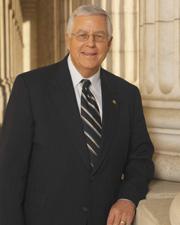 Sen. Michael B. Enzi (R-WY)
Legislative Activity
Stay on top of the latest movement without scrolling through every action
Senate amendment agreed to: Amendment SA 932 as modified agreed to in Senate by Yea-Nay Vote. 95 - 0. Record Vote Number: 228.(text as modified: CR S8182)
June 19, 2003
View full timeline
Senate amendment agreed to: Amendment SA 932 as modified agreed to in Senate by Yea-Nay Vote. 95 - 0. Record Vote Number: 228.(text as modified: CR S8182)
June 19, 2003
Roll call votes on amendments in Senate: Amendment SA 932 as modified agreed to in Senate by Yea-Nay Vote. 95 - 0. Record Vote Number: 228.(text as modified: CR S8182)
June 19, 2003
Considered by Senate. (consideration: CR S8169, S8182-8184, S8184-8189, S8198)
June 19, 2003
Amendment SA 932 as modified agreed to in Senate by Yea-Nay Vote. 95 - 0. Record Vote Number: 228. (text as modified: CR S8182)
June 19, 2003
Senate amendment submitted
June 18, 2003
Senate amendment proposed (on the floor): Amendment SA 932 proposed by Senator Enzi.(consideration: CR S8105-8108, S8109; text: CR S8105)
June 18, 2003
Amendment SA 932 proposed by Senator Enzi. (consideration: CR S8105-8108, S8109; text: CR S8105) To improve disclosure requirements and to increase beneficiary choices.
June 18, 2003
Votes
1 roll call on this amendment
Amendments
1 amendmentOffered to this amendment
Amendments
1 amendmentOffered to this amendment
Text
Proposed
PRESCRIPTION DRUG AND MEDICARE IMPROVEMENT ACT OF 2003--Resumed

The PRESIDING OFFICER. Under the previous order, the hour of 10 a.m.
having arrived, the Senate will proceed to the consideration of S. 1,
which the clerk will report.
The assistant legislative clerk read as follows:

A bill (S. 1) to amend title XVIII of the Social Security
Act to make improvements in the medicare program, to provide
prescription drug coverage under the medicare program, and
for other purposes.

The PRESIDING OFFICER (Mr. Cornyn). The Senator from New Hampshire.
Mr. GREGG. Mr. President, I rise to talk about an issue which we, as
the Senate, are going to address for the next 2 weeks, which is the
question of how to put in place a drug benefit and to reform the
Medicare system so that it is more viable.
This is, obviously, the most significant piece of legislation in the
area of spending on which any of us in this Congress will vote. In
fact, in my years in Congress, this is the most significant piece of
spending legislation I have ever seen because it represents the most
dramatic expansion, the greatest expansion of an entitlement in our
history; therefore, it needs to be done right. In my opinion, there are
issues which need to be addressed and which we need to discuss in order
to accomplish that.
To understand the issue and to put it in context, you have to go back
to the beginning of the problem. And the beginning of the problem, I
hate to say it, was when I was born--1946, 1947 through 1955. It was
that postwar period, where America was full of itself, and our people
were returning from the war, and we repopulated our country with the
largest baby boom in the history of our country. That baby boom meant
an explosion of people in our country, people who have contributed, I
hope--people think immensely--over those years and decades since that

[[Page S8014]]

time. But in each decade, the postwar baby boom generation has moved
forward, it has changed fundamentally, not only the demographics of the
country but also the reaction of the country to various issues.
For example, in the 1950s, we had to build literally hundreds of
elementary schools in order to accommodate this generation. In the
1960s, there was, of course, the great upheaval of social
consciousness, which was driven primarily by the coming of age of the
baby boom generation and their concerns about civil rights, about the
war in Vietnam, about the rights of women.
So as this generation has moved through the tube of its time, there
has been a bubble which has significantly changed all around them. Now
that generation is headed for retirement and, as a result, our
retirement systems which were put in place with a very appropriate
social purpose of making sure that senior citizens were properly cared
for, which arose out of the period of the Depression in the 1930s,
where so many people suffered--I was not alive then, but history tells
us and the people who experienced it tell us that this was a period of
immense trauma--we as a culture decided we were wealthy enough and
strong enough to make sure that never happened again to our seniors. So
we put in place the Social Security system and the Medicare system as
an effort to try to make sure seniors could live their final days of
their retirement in dignity, financially and in health care.
These systems have been extraordinarily good systems for our Nation.
But now as this generation heads into retirement, these systems are
going to come under immense pressure. The whole concept of both of
these systems was that there would be a pyramid where you would have a
large number of people working and a smaller number of people retired,
like a pyramid. So that the large number of people working could be
paying into the retirement system and benefiting those people in
retirement. So the pyramid would work as long as there was a larger
working population than retired population.
The practical effect of the baby boom generation, the demographic
effect, is that when we hit the retirement system, we go from a pyramid
to basically a rectangle where essentially you will have about as many
people working as retired.
For example, in 1950 there were 12.5 people working for every 1
person retired. This year, there is something like 3.3, 3.5 people
working for every 1 person retired. By the time we hit 2030, there are
going to be 2 people working for every 1 person retired. The number of
people retired today is 40 million. The number of people who will be
retired in the year 2030 will be 70 million, a 75 percent increase. So
the system, which was structured to be a pyramid and has worked very
well as a pyramid, simply won't work effectively as a rectangle. You
can't have about as many people working, paying retirement benefits, as
you have people taking those benefits because the practical effect of
that is you would have to dramatically increase the taxes on working
Americans in order to support nonworking retired Americans to a point
where working Americans' lifestyles would be significantly reduced.
The debate today has to be put in the context of two fundamental
issues: One, how do we benefit senior citizens with a reasonable drug
program that is going to give them adequate drug care, adequate
prescription drug opportunities; but, two--and we can't forget this
issue in addressing the question--how do we make sure that in doing
that, we don't set up a situation where the next generation of young
people--these folks who are working as our pages, people who are in
high school today, people who are in college today, people in their
twenties today--don't end up with a tax burden that is so large that we
significantly reduce the quality of their life because we have decided
this year to give seniors a benefit which we cannot afford 5 or 10
years from now because there will be so many seniors who are retiring.
We have to keep in mind, as we go through this reform effort and the
addition of a prescription drug benefit to Medicare, those two groups--
seniors and young people who will have to pay the taxes, our children
and grandchildren, in order to support that program.
This brings us to the question of what type of program should we have
which can accomplish that. To begin with, we have to put in place a
Medicare Program which is cost sensitive, which has in place
marketplace forces which allow us to maintain a reasonable cost so that
we don't have a growth rate in Medicare that is so great that it simply
overwhelms the ability of working Americans to pay the taxes to support
it.
We know, for example, we already have a $13.3 trillion unfunded
liability in Medicare. We know, for example, that under the present
Medicare system, the costs of Medicare are exceeding the income of
Medicare by about 71 percent and that by 2026 the Medicare system will
be insolvent under the present structure, insolvent because it has this
huge unfunded liability as a result of the huge demographic group, the
postwar baby boom generation, entering the system.
These are facts that cannot be changed. The people are alive, the
baby boom generation exists, and we will retire. We will, therefore, be
on the Medicare system and on the Social Security system.
We have to find some way to address the Medicare system in a manner
which will allow us to make it affordable as we move into the outyears.
This means putting some cost sensitivity into its structure. If we are
going to add a new benefit to Medicare, we have to be sensitive that it
does not at the same time create a massive new unfunded liability.
If, for example, we simply put on to the Medicare system a $330
billion new drug benefit, which was the proposal last year from
someone--that was the number; today it is $400 billion--that $330
billion drug benefit over 10 years translates into a $4.6 trillion add-
on in unfunded liability in the system, which just means you have to
raise taxes by that much on working Americans, on our children and
their children, in order to pay for it. So we have to be thoughtful
about how we do this. As a parent and hopefully a future grandparent, I
don't want to reduce the lifestyle of my children and their children
and their ability to participate in the American dream simply to
support me when I am retired.
What does this bill do? This bill has two fundamental problems, both
of which go to the issue. First, it adds a $400 billion drug benefit,
but it does it in a way that essentially says: We are going to take a
lot of people who are already paying for their benefit, middle-income
Americans, Americans who have worked and have obtained a retirement
benefit, which includes a drug benefit, and we are going to move them
from the private sector on to the public sector. We are essentially
going to nationalize the drug delivery system for everybody who is over
65, whether they want it or not. That policy has some fundamental
flaws.
What do we need as a drug benefit? What we need is to make sure that
people who cannot afford to buy drugs today, people who are making the
difficult decision between purchasing a meal or maintaining their
residence and buying the drugs they need to be healthy, those folks who
have to make that type of choice, that they have support, that they
have a drug assistance program that helps them buy pharmaceuticals and
assists them in a way that allows them to live a decent lifestyle
without having to make terrible choices between the basics of life,
such as food and housing versus their medical care.
We do need a drug benefit that does that, that takes care of the low-
income individual who is not covered today by a drug benefit. And we
need a drug benefit that says you don't have to spend your life savings
in order to pay for your drugs. You don't have to wipe yourself out
financially in order to be able to care for yourself physically as a
result of your needs to purchase pharmaceuticals. So we need
catastrophic coverage, where over a certain level you basically have an
insurance program that comes in and pays your costs. But this bill
doesn't do that.
What this bill does, as I mentioned, is it says to everyone that you
shall have drug coverage, and it takes literally 40 percent of the
seniors, as a conservative estimate, who presently have some sort of
private coverage program and moves them onto the public coverage
system. As a practical matter, in

[[Page S8015]]

doing that, it spends a lot of money but, more importantly, it creates
a lot of outyear liability because it essentially says the Federal
Government shall have a nationalized drug system for everybody over 65
which will be paid for by earning Americans who are in their twenties
and thirties and trying to raise families. Whether or not they are
wealthy, they are going to have this sort of drug benefit. That really
doesn't make a whole lot of sense, in my opinion.
It would make much more sense if the drug benefit in the bill said
something to the effect of, if you are a low-income individual and you
don't qualify for a State program, which already gives you a drug
benefit--which is Medicaid, basically--and your income is, say, under
200 percent of poverty--I'll just pick that as a number because I think
that is a reasonable number--then you shall receive assistance in
purchasing your prescription drugs. There are about 4 million to 5
million people in that category. There are 40 million seniors. In the
category between those covered by Medicaid and those at 200 percent of
poverty, there are approximately 4 million to 5 million people. The
cost of doing that part of the drug benefit to make sure you had a
reasonable drug benefit--and essentially those low-income seniors have
the support they need to pay for their drugs--can be $135 billion to
$185 billion, depending how you score it. But it would not be $400
billion.
So you could set up a reasonable program targeted at low-income
seniors to make sure they had fair and reasonable coverage, with the
support of the Government. Other seniors who are over that income level
should have the protection of a catastrophic program. But they should
not have the protection of a public program because they already have
it.
It has been estimated that 75 percent of the seniors in the country
today already have some form of drug coverage. Why should the Federal
Government come in and replace that? Why should the Federal Government
come in and say to General Motors, which negotiated a contract with its
employees that when they retire they would get a health care package
that gave them drug coverage--why should you, a person working at a
restaurant in Claremont, NH, in your twenties, trying to raise two kids
and send them to school--why should your Medicare and health insurance
tax be taken to pay for a drug benefit for somebody who retired from
General Motors, who already has a benefit under the terms of the
agreement they negotiated with General Motors? All you are essentially
doing is saying, if you do that, that some poor guy or woman who is
working hard to make ends meet in Claremont, NH, in a restaurant is
going to bear the burden of what General Motors should be bearing for
its retirees. You are replacing the obligation of General Motors with
the obligation of some poor guy or woman in their twenties or thirties
who is trying to raise a family and is working in a restaurant, and
they have two kids going to school. They have to buy a Chevrolet, which
is a pretty expensive experience. They should not have to pay for the
health care of the person who made that Chevrolet. But that is what
this bill essentially does.

The bill basically frees up, within 5 years--not immediately because
there are contracts in place--certainly by the time the baby boom
generation retires, which is 2008, it basically frees up corporate
America from any obligation to bear any cost relative to retirement in
the area of drugs. Now, there may be some unions that will negotiate a
strong contract with their corporations and they will force them to
come and do some sort of wraparound. But the core of the drug benefit
will always be from here on out, once this bill is passed, that the
public sector will bear the burden of all the costs for drugs for all
Americans, no matter how wealthy they are, no matter what their income
is, whether they had a union contract, agreement, or a Medigap policy
that covers the drug costs.
The practical effect of that is going to be that when the baby boom
generation--my generation--hits retirement beginning in 2008, we are
going to escalate the cost of this benefit radically--radically. So
$400 billion is a conservative number for 10 years and, over the life
of this program, $4.6 trillion is an incredibly conservative number.
This benefit, which is a very legitimate benefit and a very appropriate
benefit, should be targeted at people who need it, people who cannot
afford it, people who are having to make the tough choices in their
life between the food they eat, the housing they have, and the drugs
they pay for. Those folks deserve Government support. But Bill Gates,
when he retires, does not deserve Government support in the area of
purchasing his drugs. Under this bill, he would get it.
So that is the first and most fundamental flaw in this bill. It
essentially nationalizes and moves from the private sector literally
millions of people who are presently capable of having, and who are in,
programs that take care of their drug benefit. It does an aggressive
job, I admit, on the low-income person and that should be kept in
place. There are a variety of ways to do that. But we should not
nationalize the system for everyone.
The second flaw in this bill, the most fundamental flaw, is the issue
of how you control the overall cost of Medicare. This is at the essence
of the future financial soundness of this country. Today, Medicare
consumes about 14 percent of the GDP, if you include retirement
benefits, Social Security, Medicare, and Medicaid. If you applied the
projections to the Medicare, which are in place, the fact that we have
a $13 trillion unfunded liability, and if you apply the unfunded
liability projections to Social Security and Medicaid, then you will
end up by 2030 having those three--Social Security, Medicare and
Medicaid--absorbing 14 percent of the GDP. They do not do that today,
obviously. Today, the Federal Government absorbs about 19 percent of
the gross domestic product. So you could see that if you project the
cost of Medicare and Social Security out to 2030 and you have it using
up 14 percent of the gross national product, and today we do all
Government spending, all the Government responsibilities, including
education, national defense, and all the different issues of core
Government needs we manage with 19 percent of the gross national
product, we can see that by the time we get to the year 2030, there is
not going to be anything left that the Federal Government is going to
be able to do other than take care of the retirement accounts. We are
not going to be able to do national defense, education, roads, parks--
all the important functions to have a strong Government and a good
society. They are not going to be affordable unless we are willing to
radically increase the taxes on the working Americans of this country
who will be our children and our grandchildren.

That is why I say reforming Medicare--and Social Security, for that
matter, which I have already worked on extensively--is one of the most
fundamental issues we face as a country, getting those costs under
control in the outyears.
Does this bill do that? This bill attempts to create a market force
in the area of Medicare by setting up something called PPOs, preferred
provider groups. The practical effect, though, is there are very few
likely scenarios under which the PPOs will be viable, under which
private market forces will come into play. We will still have,
basically, a price-controlled situation, a single-payer situation.
We cannot reform Medicare unless we bring into Medicare market
forces. We cannot control the price and delivery of health care unless
we start to put in place some sensitivity to the quality of care that
is being delivered in the context of how it is being delivered, when it
should be delivered, and the amount that should be delivered. We cannot
do that in a single-payer system. We cannot do that in a price-
controlled system. We can only do that if we have market forces that
are competing and, thus, bringing to the table the essence of
competition, which is competing on the basis of price and quality.
This bill in name attempts to do that through the PPO process. It is
projected, however, by CBO, the Congressional Budget Office--there are
so many initials thrown around; we confuse people--that only 2 percent
of the Medicare recipients will take advantage of this market-oriented
approach.
The White House and the Office of Management and Budget projects it
at

[[Page S8016]]

a much higher level. They say 45 percent will take advantage of this
program, and that is because they are optimistic, and it is because it
is their plan. I think the Congressional Budget Office has taken a much
fairer and objective look at this. They have said: What in this plan
creates an atmosphere which would cause somebody to leave Medicare and
move over to a private provider? There is virtually nothing in this
plan that would cause somebody to do that. There is no market force
which is allowed to be brought into play to accomplish that because of
the way the pricing mechanism is set up under this bill.
The practical effect is that the market has been taken out of--at
least in a real sense, not in an illusory sense; it is there as a
stated purpose--but as a practical likely effect, it has been taken out
of the game. So we are going to move forward into the next generation
with the same program that we presently have with a drug benefit on top
of it, which drug benefit essentially will cover everyone, no matter
what their income levels are, no matter what their benefit structures
are. They already exist.
Instead of improving the system, what we are going to end up with is
the same old Medicare system, a 1950s car with a brand new paint job on
it in the form of the drug benefit but without anything in it that is
going to fundamentally improve it as it moves into the next generation
and the need to control costs in the next generation.

The practical effect of it will be that the $13.3 trillion unfunded
liability that already exists in Medicare will have $4.6 trillion of
new unfunded liability put on top of that for the purpose of the drug
benefit, which are all massive numbers, but they come down to this: For
a child born today--John Jones or Mary Smith--when that child takes his
or her first breath, that child gets with that breath a debt of $44,000
to pay for Medicare. That debt is going to have added to it $15,000
after this bill passes to pay for the new Medicare benefit.
Yes, this bill does take care of our seniors and our baby boom
generation group who are becoming seniors in a very generous way. One-
half of the equation is addressed--seniors. That is always politically
very attractive. It polls very well. It gets you through the next
election. It makes you a hero with groups of people who are concerned
about seniors' rights. But the other half of the equation is our
children and our children's children. It leaves them with an
extraordinary bill and with no opportunity to affect it.
The great tragedy is this drug benefit gave us, the Congress and the
executive branch, the first and best opportunity to substantively
reform Medicare using the drug benefit basically as the carrot that
brings along the reforms. We could have used this benefit in an
extraordinarily constructive way to assure that my generation, the baby
boom generation, is not an undue burden on our children and our
grandchildren or on that fellow or woman working in a restaurant in
Claremont.
Instead, what we have done with this bill is added a drug benefit
which will make my generation very happy and seniors who are receiving
it today very happy, which will leave in place a Medicare system that
has a $13 trillion projected unfunded liability and which will leave
with our kids a debt which is both unfair, inappropriate, and,
ironically, unnecessary were we approaching this with better policy.
I suppose, in understated terms, I have reservations about this bill.
Mr. President, I yield the floor.
The PRESIDING OFFICER. The Senator from Nevada.
Mr. REID. Mr. President, it is my understanding, under the order now
in effect, that a Democrat will be recognized; is that right?
The PRESIDING OFFICER. That is correct.
Mr. REID. Senator Kennedy is here and ready to speak. Under the
previous order, a Democrat is to be recognized to speak now. The
Senator has until 11 o'clock if he wants to use that time. At 11
o'clock, the two managers of the bill will be recognized to offer a
substitute.
Mr. KENNEDY. We now will be recognized?
Mr. REID. For debate only on the bill.
Mr. CRAIG. Mr. President, will the minority whip yield?
Mr. REID. I will be happy to.
Mr. CRAIG. Will it be possible for me to gain some time following the
Senator from Massachusetts?
Mr. REID. Through the Chair, I ask the Senator from Massachusetts,
how long does the Senator wish to speak? I say to the Senator from
Massachusetts, Senator Gregg spoke for 30 minutes. Under the order, we
have the time.
Mr. KENNEDY. We have 9 minutes?
Mr. REID. Senator Kennedy has until the top of the hour.
Mr. KENNEDY. I want to accommodate my friend. Do I understand the
Senator from Michigan intends to offer an amendment this morning?
Mr. REID. Mr. President, the intention, although there is no order in
effect, is that at 11 o'clock, the two managers of the bill will be
recognized and, at that time, they will offer their substitute. At that
time, it will be open to amendment. It has been talked about for the
last 2 days that Senator Stabenow will be recognized to offer an
amendment.
Mr. KENNEDY. We have, therefore, about 20 minutes between now and 11
o'clock. I will be glad to divide that time.
Mr. CRAIG. I will require more time than that. The Senator,
obviously, has the floor, as under the UC, which is fine. I am looking
for a window of about 15 or 20 minutes maximum.
Mr. REID. Mr. President, I do not know if the two managers of the
bill would be willing to start at 11:15 rather than 11. They are in the
cloakroom. While Senator Kennedy speaks, I will walk back and ask them.
Mr. CRAIG. That would be appreciated.
The PRESIDING OFFICER. The Senator from Massachusetts.
Mr. KENNEDY. Mr. President, I thank the Senator from Idaho as well.
As I indicated, I was willing to share the time we had up to 11. As
soon as a Member is prepared to offer an amendment, I will yield the
floor because I do think we have had a good opportunity to make general
comments and opening statements over the period of these last 2 days,
and I think the business of the Senate should require that we begin to
address some of the areas which need addressing.
I understood my friend and colleague from Michigan will be in the
Chamber shortly, and as soon as she is and it is agreeable with the
managers, I will yield the floor.
To review very quickly, this is a momentous time. We give credit to
the chairman and ranking member of the Finance Committee in moving this
process forward in a way which I think can be a building foundation for
addressing the critical issue which is on the minds of so many of our
seniors, and that is a good, effective, reliable, affordable
prescription drug program.
As has been mentioned previously, when we passed the Medicare Program
in 1965, it provided for the hospitalization and physician fees, but it
did not provide for prescription drugs. Only about 3 percent of all of
the private sector insurance programs had a prescription drug program.
What we have seen since that time is the extraordinary explosion of
prescription drugs which are so necessary to enhance and improve the
quality of life for so many of our seniors. They are as indispensable
to our seniors as hospitalization and physician fees.
In 1965, we made a commitment and a pledge to our seniors that is
really the basis of a program that was developed in the late 1950s. It
was an issue that divided the two political parties in the 1960
campaign. President Kennedy felt strongly about developing a Medicare
system for our seniors. We had failed to provide national health
insurance for all Americans, a goal I am still committed to. It was
Harry Truman's goal.
We are always reminded that we in the Senate, Republicans and
Democrats, effectively have national health insurance. There is not a
single Member of this body who does not take the Federal employees
program, rejects that, and takes their own homegrown program. They all
take the Federal employees program, which is heavily underwritten by
the Federal Government. I do not know of a single program that exists
in this country that has the taxpayer underwriting what we in the
Congress and the Senate have, including a prescription drug program.
So I am always interested in those who complain about our efforts to
try

[[Page S8017]]

and pass a good, effective prescription drug program when we have it
ourselves. We have looked out after ourselves and we have been so slow
in looking out after the needs of our fellow elderly citizens.
I arrived to the Chamber too late to hear my good friend--and he is
my good friend--from New Hampshire talk about the indebtedness this
bill will provide in terms of the children of this country. This is a
$400 billion bill and it is going to mean several thousand dollars of
indebtedness to the children who are being born today. Well, that pales
in significance when we think that under the Republican administration
of the last 2 \1/2\ years we have passed a $2.3 billion tax reduction
that is going to mean billions and hundreds of billions of dollars of
indebtedness for our children.

This program at least is going to make a difference in terms of the
quality of life for seniors who have built this country and sacrificed
for their children and fought in the wars and fought to make sure we
were going to have economic recovery. It is an investment in them
rather than just to the wealthiest individuals. I welcome the
opportunity to debate, if we are going to have the chance to do it,
which is of greater value to the Nation, which is of greater value to
our fellow human beings, these extraordinary tax cuts or the
downpayment on the prescription drug program.
The principal reason we have been unable to bring this matter up and
develop a bipartisan approach is because of ideology, which has been a
part of the Republican commitment over the years, and that is to
privatize Social Security and privatize Medicare. They have been
opposed to Medicare, opposed to Social Security, from the time
immemorial when these programs were passed. We heard the word
``socialism'' talked about all during the debates on the Medicare
Program. Every other word was ``socialized medicine.'' We do not hear
any of those words anymore. We hear words, as we heard from Newt
Gingrich, ``we want to see Medicare wither on the vine.'' But they are
opposed to it.
So this issue has been divisive because those of us who have been
strongly committed to Medicare refuse to see that it is effectively
dismantled by offering a prescription program that would be used to
either bribe or coerce seniors out of the Medicare system into a
private sector system and then to let the Medicare system wither on the
vine. Our elderly people, our seniors, those who have contributed to
this country, know their doctor, they know their neighborhood, they
know their hospital, and they do not want to be forced out of Medicare
into an uncertain system. Many of us in this body are going to resist
that and fight that with every fiber in our body.
We have seen an alteration and change, and that is what has been
developed in the Senate Finance Committee legislation, which will
permit those who are under Medicare to be assured that no matter what
part of the country they live in they are going to be able to have
access to the prescription drug program that is outlined in this
legislation.
For those who want to go into the HMOs, there will be at least the
opportunity for those in the private sector who want to risk providing
the benefit package that is in here, and want to take the chance, to be
able to compete. That is the compromise that has certainly not
satisfied everyone--I certainly would not have drafted the bill as it
is drafted today--but nonetheless it is the compromise that came out of
that committee and which I think Senator Grassley and Senator Baucus
deserve credit for.
They have established a foundation in which this prescription drug
program can be enhanced, strengthened, and built upon, both during the
debate over the next 6 days but also in the future years. As long as I
am in the Senate and honored to represent the people of Massachusetts,
I make the commitment and pledge that I am going to do everything I
possibly can to make sure this is the kind of program which is worthy
of our senior citizens in the future, but we will have a downpayment in
this program with this legislation.
In the past, we reviewed very briefly the need for this program and
the costs for this program. I think at the time that we are actually
into the amendments, we do not have to go back and speak about the
enormous costs our elderly are paying, how their CPI, their adjustment,
is not enough to make up for these escalating costs; the fact that
these prescription drugs are absolutely indispensable to the lives and
well-being of millions of our citizens. We know that is the truth. We
know we have an uncertain condition out there in terms of the seniors
having access to the drugs. Many of them do not have it. Others are in
retirement programs. An increasing number of the retirement programs
are dropping individuals. Millions of others have them in Medicaid and
that is being cut back in a number of our States, and they are being
left out and left behind.
Millions are in HMOs, and almost half of those numbers have been
dropped by the HMOs and other conditions have been put on in terms of
restricting the amounts that will be expended by the HMOs in the
prescription drug program which is disadvantaging these individuals to
an enormous degree. Medigap is not picking up the process. The fact
remains, our seniors are enormously vulnerable today. Never have they
been more vulnerable.

This is against another background that I will just mention very
briefly. We have seen in the Congress, in the Senate, over the period
of this last 5 years the doubling of the NIH budget. Why was that done?
The reason it was done is the recognition that we have had, Republicans
and Democrats alike, of the enormous opportunities for breakthroughs,
in prescription drugs primarily, and in new technologies to deal with
the challenges in health care, mixing technologies and mixing
prescription drugs to make further advances--which is certainly the
goal of Dr. Sahni at the NIH.
These are very bold and challenging new initiatives in which they are
involved. We have seen the mapping of the human genome, with all that
means, in the predictability of how genes are going to function and so
averting dangers that presents to patients in the future, anticipating
that and developing medical technologies that can address that so we
can prevent individuals from developing, in this instance I am talking
about, several different types of cancers. The list goes on.
We have the most extraordinary opportunity now for breakthroughs in
prescription drugs. Now that we have doubled the NIH budget, we have to
ask ourselves what is the sense of making these breakthroughs and
spending billions and billions of dollars if we are not going to get
them out of the laboratory and into the homes of those who need them?
This bill is that downpayment that ensures the drugs get out of the
laboratory and to those who need them. That is why it is so important
we take action. We are seeing such progress. I see in my own State of
Massachusetts--we have more biotech companies in our State than all of
Western Europe. I am always amazed at the continued dreams in these
research labs in terms of potential breakthroughs and the progress that
is being made. It is beyond the possible imagination of so many of us,
to think someday we might really conquer cancer, we might really
conquer Alzheimer's, we might really conquer diabetes or other
diseases. There are dreamers who believe it will be done, and in the
none-too-distant future.
We want to put in place a process, a procedure, a delivery system
which is affordable, dependable, reliable, so those breakthroughs can
get out and get to them. That is what this bill does.
I will just review this because these issues were raised. One of the
features, which is not a major feature but which I find has not been
mentioned in most of the news reports, is that in January of next year
5 million seniors will receive a card--some might have to pay $25 for
it but no more than $25--that will guarantee them $600 worth of
prescription drugs. If they do not use all $600, if they use just $400,
they can carry that over to next year. That is a real downpayment of
this legislation. Five million people are going to receive that.
Although the Medicare program will take 3 years to get implemented,
this prescription drug card will soon provide needed relief to millions
of seniors. That is an indicator to at least 5 million of our seniors,
that help is coming, help is on its way.

[[Page S8018]]

Let me give three quick examples of an average senior citizen with an
income of $15,000. That is the average senior citizen, if they have
drug costs at the national average of $2,300. This is the group this
legislation perhaps helps the least. We take great care of the 40
percent of the senior citizens with lowest incomes and we take care of
those with catastrophic expenses. This is the group we hope to provide
additional assistance. This individual would pay a $420 premium, and
they would pay $1,298 for cost sharing, and they would receive $604.
That may not sound like much, but that is $604 they do not get today.

Let's take the instance of an individual who has the same income,
average income, and has a great deal of medical expenses; $15,000
income and they have $10,000 in expenses. They will end up paying the
$4,500 but they get $5,400 in savings under this legislation. That is
still a good deal--I'd like it to be better, but at least they will
gain significantly from this legislation if they have those kinds of
bills.
Let's take the same individual. By and large this is 40 percent of
all the senior citizens--not half but not far from it. Let's look at a
person just above the poverty line with $9,000 in income and the same
$2,300 in drug expenses each year. That works out to about $190 per
month.
Under this legislation, at $9,000 income, you would pay $5. That
would mean a monthly savings of $185.
If your income is $12,000 and you pay out the $190 per month in
expenses today, under this legislation you would pay $10 and would save
$180 per month.
If your income is $13,500 and you have $190 in monthly costs, under
this legislation you would pay $23 and save $168. That is a major
relief for those families who are facing these extraordinary challenges
across this country.
I see the ranking members of the Finance Committee now on the floor.
Let me wind up.
Mr. President, listen to this: 83 percent of all Medicare
beneficiaries are going to receive more out of this legislation than
they will pay in. Today, in part B of the Medicare only about 50
percent of seniors get out more than they pay in. Under this
legislation it would be 83 percent.
For those who go through what they call the doughnut hole, that is
the period of time when they are not getting the full assistance I
would like to see, it is important to recognize that two-thirds of
those who go into the doughnut hole go out the other end into the
catastrophic and get extra help. Only about 8 percent actually remain
in that doughnut hole.
We are going to have the opportunity here to try to make some further
adjustments to strengthen and improve this legislation.
Finally, let me say in watching what happened over in the House of
Representatives, their legislation fails to have the kind of backup
this legislation has in the delivery of the Medicare benefit, which is
unacceptable. They have what they call a premium support program which
effectively would undermine the Medicare system, which is completely
unacceptable. The means testing is in there, which would require
individuals to submit their tax forms to agencies of the Federal
Government and insurance companies. I think that would be very
offensive.
There are many different aspects of that legislation that are
enormously troubling. But that is not this bill. That is not this bill.
So, again, I commend Senator Grassley and Senator Baucus and our
Republican leader, Senator Frist, for all they have done working this
through. I look forward to the opportunity to address these amendments.
I see the hour of 11 has arrived.
Mr. REID. Mr. President, even though there may not be a unanimous
consent request that has been ordered, I ask that the two managers be
recognized now; that following whatever they decide to do the Senator
from Idaho be recognized to speak for up to 15 minutes; and following
the statement of the Senator from Idaho that Senator Stabenow be
recognized to offer an amendment. We talked about her amendment for a
couple of days.
I ask all this in the form of a unanimous consent request.
The PRESIDING OFFICER. Is there objection?
Without objection, it is so ordered.
The PRESIDING OFFICER. The Senator from Iowa is recognized.
Mr. GRASSLEY. Mr. President, I am going to offer a modification in
just a minute. We are going to wait for our staff to come and present
the exact language which we will use in the unanimous consent request.
Before we do that, I have not had the opportunity to express my
appreciation to the entire Senate for Senator Baucus's cooperation in
bringing the bill here, and for everything we have done in order to
bring a bipartisan bill here which was voted out of a committee on a
16-5 vote.
In other speeches, I have talked about people who have been working
on this issue, such as Senator Breaux with the Breaux Commission. I
have talked about the tripartisan people who worked over the last 2
years to bring a bill before the Senate last year, all of which set the
stage for some of the subject matter we have before us. Senator Baucus
and I hope we will have a continuation of the bipartisanship that has
been expressed so far in that vote.
But I haven't had a chance to tell the Senate of my appreciation to
Senator Baucus in working both at the staff level and his staff--
meaning the Finance Committee staff on the Democratic side, and the
Finance Committee staff on the Republican side--doing a lot of nitty-
gritty work to bring things together with a consensus that can be
arrived at at the staff level, but, more importantly, a lot of the
things Senator Baucus and I had to work out.
When it was all said and done, it was a very pleasant experience. I
don't say that because of the relationship Senator Baucus and I have,
but it is because of a continuation of the tradition of the Senate
Finance Committee to do most of its business--albeit not all of its
business--in a bipartisan way.

We would not have an issue before us like this--and a lot of other
issues that have come out of the Senate Finance Committee--without that
sort of cooperation.
I think this deserves a little more special attention of
bipartisanship and Senator Baucus's cooperation. This is the first
major expansion of Medicare in 35 years. This is something that
candidates of both political parties have talked about the necessity of
doing--providing prescription drugs for seniors.
There is something which is very much of an issue to Montana and to
Iowa and to a lot of other States we call rural States. There is an
inequity issue within Medicare reimbursement.
Working very closely with Senator Baucus last year to establish a
Baucus-Grassley bill on Medicare rural equity, then moving this year to
adopt the one earlier on a tax bill and duplicating that effort in this
prescription drug bill was all done in a bipartisan way. You can only
say it so many times, but I don't think you can say it enough either,
because people think the Senate is always a highly partisan body.
Sometimes we are too highly partisan. Sometimes it is OK to be
partisan, I believe, in our system of government. But really nothing
gets done in the Senate if there isn't some bipartisan cooperation.
Obviously, I take this opportunity to thank Senator Baucus for that
cooperation.
We still have not had that agreement presented to us yet. I am going
to ask Senator Baucus if we should let Senator Craig go ahead and speak
for his 15 minutes before we lay down our amendment.
Mr. BAUCUS. Mr. President, first I very much appreciate the kind
words by the chairman of the committee. It is wonderful working with
the Senator from Iowa. He is a good man.
With respect to the point made by the chairman, I agree. I think it
makes sense at this time, since we are still trying to get papers
ready, for the Senator from Idaho to proceed.
Mr. GRASSLEY. Mr. President, we will let the Senator from Idaho
finish before we proceed with our unanimous consent.
The PRESIDING OFFICER. The Senator from Idaho.
Mr. CRAIG. Mr. President, I want to thank the Chairman of the Finance
Committee and the ranking member for the work they have done on the
Finance Committee on S. 1, the Medicare legislation.
The legislation before us today is a praiseworthy document, in that
it is a

[[Page S8019]]

step forward toward the fundamental goals of providing prescription
drug relief for America's seniors and strengthening the Medicare
program. This is certainly not to suggest that this legislation is
without flaws, but it does begin the process of improving Medicare for
our children and our grandchildren down the road and in what we hope
will be the right direction.
To paraphrase the words of a rather historic person, Benjamin
Franklin, ``Is the sun rising, or is the sun setting'' on the promise
of creating a federally funded but also privately competitive Medicare
system that can succeed, both in holding down costs and in providing
adequate coverage?
Only the future will tell whether what we have before us is the case
of a sun rising on a new day in health care or simply a dramatic shift
and a sun setting.
What I think is happening here today is the beginning of a very
important debate for the remainder of this week and next week. I hope
that passage of this legislation will prove to be a major step forward.
As chairman of the Special Committee on Aging, I have convened a
variety of hearings over the last several months to carefully examine
the difficulties of all of the issues that are going to be talked about
here this week, including the long-term demographic pressures facing
Medicare, the value of integrating competitive alternatives into the
program, and the promise of making care coordination part of a
strengthened and improved Medicare prescription drug coverage.
All of these are important. But there is no question that
prescription drug coverage is the political engine that drives this
debate, but it is just one of several grave challenges we face as we
take up this important legislation.
There is no question that drug coverage for America's seniors is long
overdue, especially for those in the greatest of need. Except for
Medicare, virtually every health care insurance plan in America today
covers prescription drugs. Medicare today is trapped in a 1960s model
of health care delivery, and lags decades behind what the private
sector has to offer.
This bill would address this problem. Beginning immediately,
America's seniors would receive a drug discount card enabling them to
purchase drugs at a significant discount. More importantly, in 2006
seniors would be able to enroll in federally subsidized Medicare drug
coverage for a premium of about $35 a month--coverage that would be of
greater per-dollar value than that currently offered through Medicare
supplemental, Medigap, or wraparound plans.
I am especially pleased that this legislation devotes the greatest
share of its drug assistance to seniors of low and modest income--most
especially seniors below 160 percent of poverty. These seniors--those
with annual incomes below about $13,500 for an individual, and about
$18,200 for a couple--would receive special assistance of about 80 to
90 percent for their drug costs, depending on income.
The truth is, the proportion of seniors who truly cannot afford
prescription drugs is relatively small--perhaps 25 percent. It is on
these seniors in the greatest of need that our help should be focused.
Mr. President, even more important than drug coverage is the urgent
need to begin putting Medicare on a more modern and secure footing as
the 77-million-strong baby boomer generation moves even closer to
retirement age. According to the Medicare Trustees, Medicare costs,
even without any drug benefit, will more than triple over the next 75
years, placing a tremendous burden on future generations.
Despite this looming challenge, Medicare today remains clogged by
rigid bureaucracy and complex regulations regulations that are already
beginning to drive doctors and other health care providers out of this
program, leaving our seniors, in many instances, without access to the
health care they need.
Medicare, as we know it today, is micromanaged to the tiniest of
details for medical payments and procedures, including the pricing and
regulation of more than 7,000 medical procedures and over 500 hospital
procedures. Why are we so intent on micromanaging the system? Medicare
regulations now total more than 110,000 pages of rules and regulations.
Perhaps it is not surprising, then, that doctors and hospitals report
having to spend half an hour to an hour in paperwork for every hour
spent in patient care. In other words, there is often more intensity on
doing the paperwork right than there is on good health care procedures
for the patient and all because of a Federal system that is so heavily
micromanaged. And of course, the risks to providers are high if they
fail to perform the required regulatory tasks in the most minute of
ways.
Even more distressing, the heavily bureaucratic Medicare Program has
ultimately failed to keep up with the kinds of medical and health care
coverage innovations most of the rest of us take for granted. For
example, the current Medicare Program only covers a handful of
preventive screenings and tests and in most cases will not even pay for
a standard physical.
Medicare also lags far behind the private sector in its use of care
coordination and disease management systems under which a patient's
care is coordinated and optimized, promoting better health outcomes and
fewer days of hospitalization.
For certain chronic conditions, such as diabetes and congestive heart
failure, as many as 83 to 97 percent of America's health care plans now
offer such care coordination. Medicare, meanwhile, has only barely
begun to experiment with demonstration projects in this area and some
prominent experts, such as former CBO Director Dan Crippen, doubt that
care management can ever work effectively in Medicare as we know it
today.
The bill before us seeks to bring Medicare into the 21st century, not
just by providing prescription drug coverage, but also by offering
seniors the choice to enroll in federally supervised but privately
operated health care plans the same kind of choices and coverage
currently enjoyed by millions of other Americans under age 65. Ideally,
these plans could include preferred provider organizations, fee-for-
service plans, HMOs, and even medical savings accounts.
The current Medicare system forces seniors to hunt for and purchase
supplemental plans for many of the things that Medicare does not cover.
By contrast, the new Medicare Advantage plans would give seniors one-
stop shopping for comprehensive and integrated coverage including
prescription drugs, preventive care, care coordination, and
protection against high catastrophic medical bills, benefits which are
largely unheard of in the traditional Medicare plan of today.

Importantly, these new choices would be entirely voluntary. Seniors
who want to keep their current coverage and stay in traditional
Medicare would be free to do so. Also, the new prescription drug
program would be offered in both the traditional program and in the new
Medicare Advantage plans. No senior would see any reduction in Medicare
benefits under this bill. No benefits would be taken away--none.
I am also extremely pleased this bill includes a significant and
necessary package of improvements in rural health care and
reimbursement. Among other changes, this legislation would improve
certain categories of rural payment and would make needed rule changes
to assist critical access hospitals and other rural providers.
For far too long, doctors and hospitals in Idaho and other rural
States have suffered under payment classifications and reimbursement
levels that put them at a significant disadvantage and that make the
already difficult job of providing health care in rural America even
more daunting.
The underlying framework of this bill is a sound one, and it follows
the basic principles laid out by President Bush earlier this year--
namely, to strengthen traditional Medicare and keep it as an
alternative for those seniors who want it, but also to provide a new
foundation for the future, one built on choices, competition, and
innovation.
This said, however, I am gravely troubled by certain aspects of this
bill's current design--particularly the fact that we have not
incorporated in it enough competitive alternatives.
First, I believe it is a mistake to offer exactly equivalent drug
benefits in the older, more traditional program

[[Page S8020]]

and in the new Medicare Advantage plans--and thereby not create a
strong competitive advantage for the Medicare Advantage programs. This
is an important issue in causing seniors to make selections toward the
marketplace and toward a variety of alternatives--rather than to be
fearfully hunkered down, if you will, in the old program. If we truly
believe, as I do, that structured competition, rather than a
perpetuation of top-down bureaucratic health care, is the better future
for Medicare, our legislation should reflect this commitment.
Second, this bill unwisely imposes a ceiling, or benchmark, on the
amount the Federal Government will pay the new Medicare Advantage
plans. What we want is a variety of robust competitive alternatives in
the marketplace, and capping or creating a ceiling may threaten that
goal.
Third, the legislation creates an unnecessarily heavy-handed and
restrictive bidding system for the Medicare Advantage Program. Under
this program, HHS would choose only three winning plans for each of ten
national regions. Far preferable would be a system like the Federal
Health Benefits Program, under which any plan meeting basic federal
standards would be permitted to compete. It should be the marketplace,
not HHS bureaucrats, who decide which plans succeed or fail.
Fourth, I am concerned by this legislation's overall high level of
complexity and prescriptiveness--prescriptiveness that threatens to add
appreciably to the 110,000 pages of regulation already in place. Shame
on us if we do that. This bill, which I suspect weighs a few pounds,
has hundreds and hundreds of pages. I hope that, for every page of
legislation we do not also see 25 or 30 pages of ensuing regulation. If
that is the case, we will have created the opposite of what we should
intend--namely walking away from the bureaucracy and into the
marketplace, into the opportunity of choice, and into a much freer
environment--one that providers want to join, and one that provides
optimum health care for the senior of today.
Over the course of the next week and a half, hopefully, amendments
will take us toward simplicity instead of toward the kind of
micromanagement we have seen in the past. History should not repeat
itself here, and I think all of us should be concerned that it might.
This is because we have the great tendency to err on the side of the
bureaucracy and the side of regulation, when, in fact, the
marketplace--as shown by the hearings I have held--can, in fact, be the
greater arbiter of health care when effective competition is provided.
These concerns are by no means exhaustive. Like many of my
colleagues, I am also concerned about the complexity and stability of
the proposed system for providing drug coverage in the traditional
Medicare program, and I worry about the possibility that some employers
may react to the new Federal drug coverage by cutting back or dropping
benefits they currently provide to their retirees.
Finally, I want to caution my colleagues, in no uncertain terms, that
neither this bill nor any of the alternative Democratic proposals
offers a magic bullet for Medicare's future. The financial and
demographic outlook for Medicare is sobering in the extreme, and
nothing can change the fact that hard choices lie ahead, regardless of
what we do this year. This legislation could improve our prospects, but
it is, at best, only a first step.
Majority Leader Frist, Senator Grassley, and others on the Finance
Committee deserve tremendous credit for bringing us to where we are
today, as does President Bush for making prescription drugs and
Medicare reform a top priority this year.
The coming weeks will be critical ones. I hope we can succeed in
producing a bill worthy of this historic opportunity.
Mr. President, I again thank the chairman and the ranking member. I
also thank Senator Frist, our leader, for insisting that this issue get
to the floor for the kind of debate I trust we will have--and for
working with the House toward putting on our President's desk something
that we have long promised America's seniors: That those who are truly
needy will have access to prescription drugs and all seniors will have
access to a modernized Medicare Program.
I yield the floor.
The PRESIDING OFFICER (Mr. Graham of South Carolina). The Senator
from Nevada.
Mr. REID. Mr. President, I suggest the absence of a quorum.
The PRESIDING OFFICER. The clerk will call the roll.
The legislative clerk proceeded to call the roll.
Mr. GRASSLEY. Mr. President, I ask unanimous consent that the order
for the quorum call be rescinded.
The PRESIDING OFFICER. Without objection, it is so ordered.

Modification to Committee Amendment

Mr. GRASSLEY. Mr. President, with the authority of the majority of
the Finance Committee, I now modify my committee substitute and the
modification is at the desk.
The PRESIDING OFFICER. The amendment is so modified.
The committee amendment, as modified, is as follows:

SECTION 1. SHORT TITLE; AMENDMENTS TO SOCIAL SECURITY ACT;
REFERENCES TO BIPA AND SECRETARY; TABLE OF
CONTENTS.

(a) Short Title.--This Act may be cited as the
``Prescription Drug and Medicare Improvement Act of 2003''.
(b) Amendments to Social Security Act.--Except as otherwise
specifically provided, whenever in this Act an amendment is
expressed in terms of an amendment to or repeal of a section
or other provision, the reference shall be considered to be
made to that section or other provision of the Social
Security Act.
(c) BIPA; Secretary.--In this Act:
(1) BIPA.--The term ``BIPA'' means the Medicare, Medicaid,
and SCHIP Benefits Improvement and Protection Act of 2000, as
enacted into law by section 1(a)(6) of Public Law 106-554.
(2) Secretary.--The term ``Secretary'' means the Secretary
of Health and Human Services.
(d) Table of Contents.--The table of contents of this Act
is as follows:

Sec. 1. Short title; amendments to Social Security Act; references to
BIPA and Secretary; table of contents.

TITLE I--MEDICARE PRESCRIPTION DRUG BENEFIT

Subtitle A--Medicare Voluntary Prescription Drug Delivery Program

Sec. 101. Medicare voluntary prescription drug delivery program.

``Part D--Voluntary Prescription Drug Delivery Program

``Sec. 1860D. Definitions; treatment of references to provisions in
MedicareAdvantage program.

``Subpart 1--Establishment of Voluntary Prescription Drug Delivery
Program

``Sec. 1860D-1. Establishment of voluntary prescription drug delivery
program.
``Sec. 1860D-2. Enrollment under program.
``Sec. 1860D-3. Election of a Medicare Prescription Drug plan.
``Sec. 1860D-4. Providing information to beneficiaries.
``Sec. 1860D-5. Beneficiary protections.
``Sec. 1860D-6. Prescription drug benefits.
``Sec. 1860D-7. Requirements for entities offering Medicare
Prescription Drug plans; establishment of standards.

``Subpart 2--Prescription Drug Delivery System

``Sec. 1860D-10. Establishment of service areas.
``Sec. 1860D-11. Publication of risk adjusters.
``Sec. 1860D-12. Submission of bids for proposed Medicare Prescription
Drug plans.
``Sec. 1860D-13. Approval of proposed Medicare Prescription Drug plans.
``Sec. 1860D-14. Computation of monthly standard prescription drug
coverage premiums.
``Sec. 1860D-15. Computation of monthly national average premium.
``Sec. 1860D-16. Payments to eligible entities.
``Sec. 1860D-17. Computation of monthly beneficiary obligation.
``Sec. 1860D-18. Collection of monthly beneficiary obligation.
``Sec. 1860D-19. Premium and cost-sharing subsidies for low-income
individuals.
``Sec. 1860D-20. Reinsurance payments for expenses incurred in
providing prescription drug coverage above the annual
out-of-pocket threshold.
``Sec. 1860D-21. Direct subsidy for sponsor of a qualified retiree
prescription drug plan for plan enrollees eligible for,
but not enrolled in, this part.

``Subpart 3--Miscellaneous Provisions

``Sec. 1860D-25. Prescription Drug Account in the Federal Supplementary
Medical Insurance Trust Fund.

[[Page S8021]]

``Sec. 1860D-26. Other related provisions.
Sec. 102. Study and report on permitting part B only individuals to
enroll in medicare voluntary prescription drug delivery
program.
Sec. 103. Rules relating to medigap policies that provide prescription
drug coverage.
Sec. 104. Medicaid and other amendments related to low-income
beneficiaries.
Sec. 105. Expansion of membership and duties of Medicare Payment
Advisory Commission (MedPAC).
Sec. 106. Study regarding variations in spending and drug utilization.

Subtitle B--Medicare Prescription Drug Discount Card and Transitional
Assistance for Low-Income Beneficiaries

Sec. 111. Medicare prescription drug discount card and transitional
assistance for low-income beneficiaries.

Subtitle C--Standards for Electronic Prescribing

Sec. 121. Standards for electronic prescribing.

Subtitle D--Other Provisions

Sec. 131. Additional requirements for annual financial report and
oversight on medicare program.
Sec. 132. Trustees' report on medicare's unfunded obligations.

TITLE II--MEDICAREADVANTAGE

Subtitle A--MedicareAdvantage Competition

Sec. 201. Eligibility, election, and enrollment.
Sec. 202. Benefits and beneficiary protections.
Sec. 203. Payments to MedicareAdvantage organizations.
Sec. 204. Submission of bids; premiums.
Sec. 205. Special rules for prescription drug benefits.
Sec. 206. Facilitating employer participation.
Sec. 207. Administration by the Center for Medicare Choices.
Sec. 208. Conforming amendments.
Sec. 209. Effective date.

Subtitle B--Preferred Provider Organizations

Sec. 211. Establishment of MedicareAdvantage preferred provider program
option.

Subtitle C--Other Managed Care Reforms

Sec. 221. Extension of reasonable cost contracts.
Sec. 222. Specialized Medicare+Choice plans for special needs
beneficiaries.
Sec. 223. Payment by PACE providers for medicare and medicaid services
furnished by noncontract providers.
Sec. 224. Institute of Medicine evaluation and report on health care
performance measures.
Sec. 225. Expanding the work of medicare quality improvement
organizations to include parts C and D.

TITLE III--CENTER FOR MEDICARE CHOICES

Sec. 301. Establishment of the Center for Medicare Choices.
Sec. 302. Miscellaneous administrative provisions.

TITLE IV--MEDICARE FEE-FOR-SERVICE IMPROVEMENTS

Subtitle A--Provisions Relating to Part A

Sec. 401. Equalizing urban and rural standardized payment amounts under
the medicare inpatient hospital prospective payment
system.
Sec. 402. Adjustment to the medicare inpatient hospital PPS wage index
to revise the labor-related share of such index.
Sec. 403. Medicare inpatient hospital payment adjustment for low-volume
hospitals.
Sec. 404. Fairness in the medicare disproportionate share hospital
(DSH) adjustment for rural hospitals.
Sec. 405. Critical access hospital (CAH) improvements.
Sec. 406. Authorizing use of arrangements to provide core hospice
services in certain circumstances.
Sec. 407. Services provided to hospice patients by nurse practitioners,
clinical nurse specialists, and physician assistants.
Sec. 408. Authority to include costs of training of psychologists in
payments to hospitals under medicare.
Sec. 409. Revision of Federal rate for hospitals in Puerto Rico.
Sec. 410. Authority regarding geriatric fellowships.
Sec. 411. Clarification of congressional intent regarding the counting
of residents in a nonprovider setting and a technical
amendment regarding the 3-year rolling average and the
IME ratio.
Sec. 412. Limitation on charges for inpatient hospital contract health
services provided to Indians by medicare participating
hospitals.
Sec. 413. GAO study and report on appropriateness of payments under the
prospective payment system for inpatient hospital
services.

Subtitle B--Provisions Relating to Part B

Sec. 421. Establishment of floor on geographic adjustments of payments
for physicians' services.
Sec. 422. Medicare incentive payment program improvements.
Sec. 423. Increase in renal dialysis composite rate.
Sec. 424. Extension of hold harmless provisions for small rural
hospitals and treatment of certain sole community
hospitals to limit decline in payment under the OPD PPS.
Sec. 425. Increase in payments for certain services furnished by small
rural and sole community hospitals under medicare
prospective payment system for hospital outpatient
department services.
Sec. 426. Increase for ground ambulance services furnished in a rural
area.
Sec. 427. Ensuring appropriate coverage of air ambulance services under
ambulance fee schedule.
Sec. 428. Treatment of certain clinical diagnostic laboratory tests
furnished by a sole community hospital.
Sec. 429. Improvement in rural health clinic reimbursement.
Sec. 430. Elimination of consolidated billing for certain services
under the medicare PPS for skilled nursing facility
services.
Sec. 431. Freeze in payments for certain items of durable medical
equipment and certain orthotics; establishment of quality
standards and accreditation requirements for DME
providers.
Sec. 432. Application of coinsurance and deductible for clinical
diagnostic laboratory tests.
Sec. 433. Basing medicare payments for covered outpatient drugs on
market prices.
Sec. 434. Indexing part B deductible to inflation.
Sec. 435. Revisions to reassignment provisions.
Sec. 436. Extension of treatment of certain physician pathology
services under medicare.
Sec. 437. Adequate reimbursement for outpatient pharmacy therapy under
the hospital outpatient PPS.
Sec. 438. Limitation of application of functional equivalence standard.
Sec. 439. Medicare coverage of routine costs associated with certain
clinical trials.
Sec. 440. Waiver of part B late enrollment penalty for certain military
retirees; special enrollment period.
Sec. 441. Demonstration of coverage of chiropractic services under
medicare.
Sec. 442. Medicare health care quality demonstration programs.
Sec. 443. Medicare complex clinical care management payment
demonstration.
Sec. 444. Medicare fee-for-service care coordination demonstration
program.
Sec. 445. GAO study of geographic differences in payments for
physicians' services.

Subtitle C--Provisions Relating to Parts A and B

Sec. 451. Increase for home health services furnished in a rural area.
Sec. 452. Limitation on reduction in area wage adjustment factors under
the prospective payment system for home health services.
Sec. 453. Clarifications to certain exceptions to medicare limits on
physician referrals.
Sec. 454. Demonstration program for substitute adult day services.

TITLE V--MEDICARE APPEALS, REGULATORY, AND CONTRACTING IMPROVEMENTS

Subtitle A--Regulatory Reform

Sec. 501. Rules for the publication of a final regulation based on the
previous publication of an interim final regulation.
Sec. 502. Compliance with changes in regulations and policies.
Sec. 503. Report on legal and regulatory inconsistencies.

Subtitle B--Appeals Process Reform

Sec. 511. Submission of plan for transfer of responsibility for
medicare appeals.
Sec. 512. Expedited access to judicial review.
Sec. 513. Expedited review of certain provider agreement
determinations.
Sec. 514. Revisions to medicare appeals process.
Sec. 515. Hearing rights related to decisions by the Secretary to deny
or not renew a medicare enrollment agreement;
consultation before changing provider enrollment forms.
Sec. 516. Appeals by providers when there is no other party available.
Sec. 517. Provider access to review of local coverage determinations.

Subtitle C--Contracting Reform

Sec. 521. Increased flexibility in medicare administration.

[[Page S8022]]

Subtitle D--Education and Outreach Improvements

Sec. 531. Provider education and technical assistance.
Sec. 532. Access to and prompt responses from medicare contractors.
Sec. 533. Reliance on guidance.
Sec. 534. Medicare provider ombudsman.
Sec. 535. Beneficiary outreach demonstration programs.

Subtitle E--Review, Recovery, and Enforcement Reform

Sec. 541. Prepayment review.
Sec. 542. Recovery of overpayments.
Sec. 543. Process for correction of minor errors and omissions on
claims without pursuing appeals process.
Sec. 544. Authority to waive a program exclusion.

TITLE VI--OTHER PROVISIONS

Sec. 601. Increase in medicaid DSH allotments for fiscal years 2004 and
2005.
Sec. 602. Increase in floor for treatment as an extremely low DSH State
under the medicaid program for fiscal years 2004 and
2005.
Sec. 603. Increased reporting requirements to ensure the
appropriateness of payment adjustments to
disproportionate share hospitals under the medicaid
program.
Sec. 604. Clarification of inclusion of inpatient drug prices charged
to certain public hospitals in the best price exemptions
for the medicaid drug rebate program.
Sec. 605. Assistance with coverage of legal immigrants under the
medicaid program and SCHIP.
Sec. 606. Establishment of consumer ombudsman account.
Sec. 607. GAO study regarding impact of assets test for low-income
beneficiaries.
Sec. 608. Health care infrastructure improvement.
Sec. 609. Capital infrastructure revolving loan program.
Sec. 610. Federal reimbursement of emergency health services furnished
to undocumented aliens.
Sec. 611. Increase in appropriation to the health care fraud and abuse
control account.
Sec. 612. Increase in civil penalties under the False Claims Act.
Sec. 613. Increase in civil monetary penalties under the Social
Security Act.
Sec. 614. Extension of customs user fees.

TITLE I--MEDICARE PRESCRIPTION DRUG BENEFIT

Subtitle A--Medicare Voluntary Prescription Drug Delivery Program

SEC. 101. MEDICARE VOLUNTARY PRESCRIPTION DRUG DELIVERY
PROGRAM.

(a) Establishment.--Title XVIII (42 U.S.C. 1395 et seq.) is
amended by redesignating part D as part E and by inserting
after part C the following new part:

``Part D--Voluntary Prescription Drug Delivery Program

``definitions; treatment of references to provisions in
medicareadvantage program

``Sec. 1860D. (a) Definitions.--In this part:
``(1) Administrator.--The term `Administrator' means the
Administrator of the Center for Medicare Choices as
established under section 1808.
``(2) Covered drug.--
``(A) In general.--Except as provided in subparagraphs (B),
(C), and (D), the term `covered drug' means--
``(i) a drug that may be dispensed only upon a prescription
and that is described in clause (i) or (ii) of subparagraph
(A) of section 1927(k)(2); or
``(ii) a biological product described in clauses (i)
through (iii) of subparagraph (B) of such section; or
``(iii) insulin described in subparagraph (C) of such
section;
and such term includes a vaccine licensed under section 351
of the Public Health Service Act and any use of a covered
drug for a medically accepted indication (as defined in
section 1927(k)(6)).
``(B) Exclusions.--
``(i) In general.--The term `covered drug' does not include
drugs or classes of drugs, or their medical uses, which may
be excluded from coverage or otherwise restricted under
section 1927(d)(2), other than subparagraph (E) thereof
(relating to smoking cessation agents), or under section
1927(d)(3).
``(ii) Avoidance of duplicate coverage.--A drug prescribed
for an individual that would otherwise be a covered drug
under this part shall not be so considered if payment for
such drug is available under part A or B, but shall be so
considered if such payment is not available under part A or B
or because benefits under such parts have been exhausted.
``(C) Application of formulary restrictions.--A drug
prescribed for an individual that would otherwise be a
covered drug under this part shall not be so considered under
a plan if the plan excludes the drug under a formulary and
such exclusion is not successfully resolved under subsection
(d) or (e)(2) of section 1860D-5.
``(D) Application of general exclusion provisions.--A
Medicare Prescription Drug plan or a MedicareAdvantage plan
may exclude from qualified prescription drug coverage any
covered drug--
``(i) for which payment would not be made if section
1862(a) applied to part D; or
``(ii) which are not prescribed in accordance with the plan
or this part.
Such exclusions are determinations subject to reconsideration
and appeal pursuant to section 1860D-5(e).
``(3) Eligible beneficiary.--The term `eligible
beneficiary' means an individual who is entitled to, or
enrolled for, benefits under part A and enrolled under part B
(other than a dual eligible individual, as defined in section
1860D-19(a)(4)(E)).
``(4) Eligible entity.--The term `eligible entity' means
any risk-bearing entity that the Administrator determines to
be appropriate to provide eligible beneficiaries with the
benefits under a Medicare Prescription Drug plan, including--
``(A) a pharmaceutical benefit management company;
``(B) a wholesale or retail pharmacist delivery system;
``(C) an insurer (including an insurer that offers medicare
supplemental policies under section 1882);
``(D) any other risk-bearing entity; or
``(E) any combination of the entities described in
subparagraphs (A) through (D).
``(5) Initial coverage limit.--The term `initial coverage
limit' means the limit as established under section 1860D-
6(c)(3), or, in the case of coverage that is not standard
prescription drug coverage, the comparable limit (if any)
established under the coverage.
``(6) Medicareadvantage organization; medicareadvantage
plan.--The terms `MedicareAdvantage organization' and
`MedicareAdvantage plan' have the meanings given such terms
in subsections (a)(1) and (b)(1), respectively, of section
1859 (relating to definitions relating to MedicareAdvantage
organizations).
``(7) Medicare prescription drug plan.--The term `Medicare
Prescription Drug plan' means prescription drug coverage that
is offered under a policy, contract, or plan--
``(A) that has been approved under section 1860D-13; and
``(B) by an eligible entity pursuant to, and in accordance
with, a contract between the Administrator and the entity
under section 1860D-7(b).
``(8) Prescription drug account.--The term `Prescription
Drug Account' means the Prescription Drug Account (as
established under section 1860D-25) in the Federal
Supplementary Medical Insurance Trust Fund under section
1841.
``(9) Qualified prescription drug coverage.--The term
`qualified prescription drug coverage' means the coverage
described in section 1860D-6(a)(1).
``(10) Standard prescription drug coverage.--The term
`standard prescription drug coverage' means the coverage
described in section 1860D-6(c).
``(b) Application of MedicareAdvantage Provisions Under
This Part.--For purposes of applying provisions of part C
under this part with respect to a Medicare Prescription Drug
plan and an eligible entity, unless otherwise provided in
this part such provisions shall be applied as if--
``(1) any reference to a MedicareAdvantage plan included a
reference to a Medicare Prescription Drug plan;
``(2) any reference to a provider-sponsored organization
included a reference to an eligible entity;
``(3) any reference to a contract under section 1857
included a reference to a contract under section 1860D-7(b);
and
``(4) any reference to part C included a reference to this
part.

``Subpart 1--Establishment of Voluntary Prescription Drug Delivery
Program

``establishment of voluntary prescription drug delivery program

``Sec. 1860D-1. (a) Provision of Benefit.--
``(1) In general.--The Administrator shall provide for and
administer a voluntary prescription drug delivery program
under which each eligible beneficiary enrolled under this
part shall be provided with access to qualified prescription
drug coverage as follows:
``(A) Medicareadvantage enrollees receive coverage through
medicareadvantage plan.--
``(i) In general.--Except as provided in clause (ii), an
eligible beneficiary who is enrolled under this part and
enrolled in a MedicareAdvantage plan offered by a
MedicareAdvantage organization shall receive coverage of
benefits under this part through such plan.
``(ii) Exception for enrollees in medicareadvantage msa
plans.--An eligible beneficiary who is enrolled under this
part and enrolled in an MSA plan under part C shall receive
coverage of benefits under this part through enrollment in a
Medicare Prescription Drug plan that is offered in the
geographic area in which the beneficiary resides. For
purposes of this part, the term `MSA plan' has the meaning
given such term in section 1859(b)(3).
``(iii) Exception for enrollees in medicareadvantage
private fee-for-service plans.--An eligible beneficiary who
is enrolled under this part and enrolled in a private fee-
for-service plan under part C shall--

``(i) receive benefits under this part through such plan if
the plan provides qualified prescription drug coverage; and
``(ii) if the plan does not provide qualified prescription
drug coverage, receive coverage of benefits under this part
through enrollment in a Medicare Prescription Drug plan

[[Page S8023]]

that is offered in the geographic area in which the
beneficiary resides. For purposes of this part, the term
`private fee-for-service plan' has the meaning given such
term in section 1859(b)(2).

``(B) Fee-for-service enrollees receive coverage through a
medicare prescription drug plan.--An eligible beneficiary who
is enrolled under this part but is not enrolled in a
MedicareAdvantage plan (except for an MSA plan or a private
fee-for-service plan that does not provide qualified
prescription drug coverage) shall receive coverage of
benefits under this part through enrollment in a Medicare
Prescription Drug plan that is offered in the geographic area
in which the beneficiary resides.
``(2) Voluntary nature of program.--Nothing in this part
shall be construed as requiring an eligible beneficiary to
enroll in the program under this part.
``(3) Scope of benefits.--Pursuant to section 1860D-
6(b)(3)(C), the program established under this part shall
provide for coverage of all therapeutic categories and
classes of covered drugs (although not necessarily for all
drugs within such categories and classes).
``(4) Program to begin in 2006.--The Administrator shall
establish the program under this part in a manner so that
benefits are first provided beginning on January 1, 2006.
``(b) Access to Alternative Prescription Drug Coverage.--In
the case of an eligible beneficiary who has creditable
prescription drug coverage (as defined in section 1860D-
2(b)(1)(F)), such beneficiary--
``(1) may continue to receive such coverage and not enroll
under this part; and
``(2) pursuant to section 1860D-2(b)(1)(C), is permitted to
subsequently enroll under this part without any penalty and
obtain access to qualified prescription drug coverage in the
manner described in subsection (a) if the beneficiary
involuntarily loses such coverage.
``(c) Financing.--The costs of providing benefits under
this part shall be payable from the Prescription Drug
Account.

``enrollment under program

``Sec. 1860D-2. (a) Establishment of Enrollment Process.--
``(1) Process similar to part b enrollment.--The
Administrator shall establish a process through which an
eligible beneficiary (including an eligible beneficiary
enrolled in a MedicareAdvantage plan offered by a
MedicareAdvantage organization) may make an election to
enroll under this part. Such process shall be similar to the
process for enrollment in part B under section 1837,
including the deeming provisions of such section.
``(2) Condition of enrollment.--An eligible beneficiary
must be enrolled under this part in order to be eligible to
receive access to qualified prescription drug coverage.
``(b) Special Enrollment Procedures.--
``(1) Late enrollment penalty.--
``(A) Increase in monthly beneficiary obligation.--Subject
to the succeeding provisions of this paragraph, in the case
of an eligible beneficiary whose coverage period under this
part began pursuant to an enrollment after the beneficiary's
initial enrollment period under part B (determined pursuant
to section 1837(d)) and not pursuant to the open enrollment
period described in paragraph (2), the Administrator shall
establish procedures for increasing the amount of the monthly
beneficiary obligation under section 1860D-17 applicable to
such beneficiary by an amount that the Administrator
determines is actuarially sound for each full 12-month period
(in the same continuous period of eligibility) in which the
eligible beneficiary could have been enrolled under this part
but was not so enrolled.
``(B) Periods taken into account.--For purposes of
calculating any 12-month period under subparagraph (A), there
shall be taken into account--
``(i) the months which elapsed between the close of the
eligible beneficiary's initial enrollment period and the
close of the enrollment period in which the beneficiary
enrolled; and
``(ii) in the case of an eligible beneficiary who reenrolls
under this part, the months which elapsed between the date of
termination of a previous coverage period and the close of
the enrollment period in which the beneficiary reenrolled.
``(C) Periods not taken into account.--
``(i) In general.--For purposes of calculating any 12-month
period under subparagraph (A), subject to clause (ii), there
shall not be taken into account months for which the eligible
beneficiary can demonstrate that the beneficiary had
creditable prescription drug coverage (as defined in
subparagraph (F)).
``(ii) Beneficiary must involuntarily lose coverage.--
Clause (i) shall only apply with respect to coverage--

``(I) in the case of coverage described in clause (ii) of
subparagraph (F), if the plan terminates, ceases to provide,
or reduces the value of the prescription drug coverage under
such plan to below the actuarial value of standard
prescription drug coverage (as determined under section
1860D-6(f));
``(II) in the case of coverage described in clause (i),
(iii), or (iv) of subparagraph (F), if the beneficiary is
involuntarily disenrolled or becomes ineligible for such
coverage; or
``(III) in the case of a beneficiary with coverage
described in clause (v) of subparagraph (F), if the issuer of
the policy terminates coverage under the policy.

``(D) Periods treated separately.--Any increase in an
eligible beneficiary's monthly beneficiary obligation under
subparagraph (A) with respect to a particular continuous
period of eligibility shall not be applicable with respect to
any other continuous period of eligibility which the
beneficiary may have.
``(E) Continuous period of eligibility.--
``(i) In general.--Subject to clause (ii), for purposes of
this paragraph, an eligible beneficiary's `continuous period
of eligibility' is the period that begins with the first day
on which the beneficiary is eligible to enroll under section
1836 and ends with the beneficiary's death.
``(ii) Separate period.--Any period during all of which an
eligible beneficiary satisfied paragraph (1) of section 1836
and which terminated in or before the month preceding the
month in which the beneficiary attained age 65 shall be a
separate `continuous period of eligibility' with respect to
the beneficiary (and each such period which terminates shall
be deemed not to have existed for purposes of subsequently
applying this paragraph).
``(F) Creditable prescription drug coverage defined.--
Subject to subparagraph (G), for purposes of this part, the
term `creditable prescription drug coverage' means any of the
following:
``(i) Drug-only coverage under Medicaid.--Coverage of
covered outpatient drugs (as defined in section 1927) under
title XIX or a waiver under 1115 that is provided to an
individual who is not a dual eligible individual (as defined
in section 1860D-19(a)(4)(E)).
``(ii) Prescription drug coverage under a group health
plan.--Any outpatient prescription drug coverage under a
group health plan, including a health benefits plan under
chapter 89 of title 5, United States Code (commonly known as
the Federal employees health benefits program), and a
qualified retiree prescription drug plan (as defined in
section 1860D-20(e)(4)).
``(iii) State pharmaceutical assistance program.--Coverage
of prescription drugs under a State pharmaceutical assistance
program.
``(iv) Veterans' coverage of prescription drugs.--Coverage
of prescription drugs for veterans, and survivors and
dependents of veterans, under chapter 17 of title 38, United
States Code.
``(v) Prescription drug coverage under medigap policies.--
Coverage under a medicare supplemental policy under section
1882 that provides benefits for prescription drugs (whether
or not such coverage conforms to the standards for packages
of benefits under section 1882(p)(1)).
``(G) Requirement for creditable coverage.--Coverage
described in clauses (i) through (v) of subparagraph (F)
shall not be considered to be creditable coverage under this
part unless the coverage provides coverage of the cost of
prescription drugs the actuarial value of which (as defined
by the Administrator) to the beneficiary equals or exceeds
the actuarial value of standard prescription drug coverage
(as determined under section 1860D-6(f)).
``(H) Disclosure.--
``(i) In general.--Each entity that offers coverage of the
type described in clause (ii) (iii), (iv), or (v) of
subparagraph (F) shall provide for disclosure, consistent
with standards established by the Administrator, of whether
the coverage provides coverage of the cost of prescription
drugs the actuarial value of which (as defined by the
Administrator) to the beneficiary equals or exceeds the
actuarial value of standard prescription drug coverage (as
determined under section 1860D-6(f)).
``(ii) Waiver of limitations.--An individual may apply to
the Administrator to waive the application of subparagraph
(G) if the individual establishes that the individual was not
adequately informed that the coverage the beneficiary was
enrolled in did not provide the level of benefits required in
order for the coverage to be considered creditable coverage
under subparagraph (F).
``(2) Initial election periods.--
``(A) Open enrollment period for current beneficiaries in
which late enrollment procedures do not apply.--In the case
of an individual who is an eligible beneficiary as of
November 1, 2005, there shall be an open enrollment period of
6 months beginning on that date under which such beneficiary
may enroll under this part without the application of the
late enrollment procedures established under paragraph
(1)(A).
``(B) Individual covered in future.--In the case of an
individual who becomes an eligible beneficiary after such
date, there shall be an initial election period which is the
same as the initial enrollment period under section 1837(d).
``(3) Special enrollment period for beneficiaries who
involuntarily lose creditable prescription drug coverage.--
``(A) Establishment.--The Administrator shall establish a
special open enrollment period (as described in subparagraph
(B)) for an eligible beneficiary that loses creditable
prescription drug coverage.
``(B) Special open enrollment period.--The special open
enrollment period described in this subparagraph is the 63-
day period that begins on--
``(i) in the case of a beneficiary with coverage described
in clause (ii) of paragraph (1)(F), the later of the date on
which the plan terminates, ceases to provide, or
substantially reduces (as defined by the Administrator) the
value of the prescription drug coverage under such plan or
the date the beneficiary is provided with notice of such
termination or reduction;

[[Page S8024]]

``(ii) in the case of a beneficiary with coverage described
in clause (i), (iii), or (iv) of paragraph (1)(F), the later
of the date on which the beneficiary is involuntarily
disenrolled or becomes ineligible for such coverage or the
date the beneficiary is provided with notice of such loss of
eligibility; or
``(iii) in the case of a beneficiary with coverage
described in clause (v) of paragraph (1)(F), the latter of
the date on which the issuer of the policy terminates
coverage under the policy or the date the beneficiary is
provided with notice of such termination.
``(c) Period of Coverage.--
``(1) In general.--Except as provided in paragraph (2) and
subject to paragraph (3), an eligible beneficiary's coverage
under the program under this part shall be effective for the
period provided in section 1838, as if that section applied
to the program under this part.
``(2) Open and special enrollment.--
``(A) Open enrollment.--An eligible beneficiary who enrolls
under the program under this part pursuant to subsection
(b)(2) shall be entitled to the benefits under this part
beginning on January 1, 2006.
``(B) Special enrollment.--Subject to paragraph (3), an
eligible beneficiary who enrolls under the program under this
part pursuant to subsection (b)(3) shall be entitled to the
benefits under this part beginning on the first day of the
month following the month in which such enrollment occurs.
``(3) Limitation.--Coverage under this part shall not begin
prior to January 1, 2006.
``(d) Termination.--
``(1) In general.--The causes of termination specified in
section 1838 shall apply to this part in the same manner as
such causes apply to part B.
``(2) Coverage terminated by termination of coverage under
part a or b.--
``(A) In general.--In addition to the causes of termination
specified in paragraph (1), the Administrator shall terminate
an individual's coverage under this part if the individual is
no longer enrolled in both parts A and B.
``(B) Effective date.--The termination described in
subparagraph (A) shall be effective on the effective date of
termination of coverage under part A or (if earlier) under
part B.
``(3) Procedures regarding termination of a beneficiary
under a plan.--The Administrator shall establish procedures
for determining the status of an eligible beneficiary's
enrollment under this part if the beneficiary's enrollment in
a Medicare Prescription Drug plan offered by an eligible
entity under this part is terminated by the entity for cause
(pursuant to procedures established by the Administrator
under section 1860D-3(a)(1)).

``election of a medicare prescription drug plan

``Sec. 1860D-3. (a) In General.--
``(1) Process.--
``(A) Election.--
``(i) In general.--The Administrator shall establish a
process through which an eligible beneficiary who is enrolled
under this part but not enrolled in a MedicareAdvantage plan
(except for an MSA plan or a private fee-for-service plan
that does not provide qualified prescription drug coverage)
offered by a MedicareAdvantage organization--

``(I) shall make an election to enroll in any Medicare
Prescription Drug plan that is offered by an eligible entity
and that serves the geographic area in which the beneficiary
resides; and
``(II) may make an annual election to change the election
under this clause.

``(ii) Clarification regarding enrollment.--The process
established under clause (i) shall include, in the case of an
eligible beneficiary who is enrolled under this part but who
has failed to make an election of a Medicare Prescription
Drug plan in an area, for the enrollment in any Medicare
Prescription Drug plan that has been designated by the
Administrator in the area. The Administrator shall establish
a process for designating a plan or plans in order to carry
out the preceding sentence.
``(B) Requirements for process.--In establishing the
process under subparagraph (A), the Administrator shall--
``(i) use rules similar to the rules for enrollment,
disenrollment, and termination of enrollment with a
MedicareAdvantage plan under section 1851, including--

``(I) the establishment of special election periods under
subsection (e)(4) of such section; and
``(II) the application of the guaranteed issue and renewal
provisions of section 1851(g) (other than clause (i) and the
second sentence of clause (ii) of paragraph (3)(C), relating
to default enrollment); and

``(ii) coordinate enrollments, disenrollments, and
terminations of enrollment under part C with enrollments,
disenrollments, and terminations of enrollment under this
part.
``(2) First enrollment period for plan enrollment.--The
process developed under paragraph (1) shall ensure that
eligible beneficiaries who enroll under this part during the
open enrollment period under section 1860D-2(b)(2) are
permitted to elect an eligible entity prior to January 1,
2006, in order to ensure that coverage under this part is
effective as of such date.
``(b) Enrollment in a MedicareAdvantage Plan.--
``(1) In general.--An eligible beneficiary who is enrolled
under this part and enrolled in a MedicareAdvantage plan
(except for an MSA plan or a private fee-for-service plan
that does not provide qualified prescription drug coverage)
offered by a MedicareAdvantage organization shall receive
access to such coverage under this part through such plan.
``(2) Rules.--Enrollment in a MedicareAdvantage plan is
subject to the rules for enrollment in such plan under
section 1851.
``(c) Information to Entities To Facilitate Enrollment.--
Notwithstanding any other provision of law, the Administrator
may provide to each eligible entity with a contract under
this part such information about eligible beneficiaries as
the Administrator determines to be necessary to facilitate
efficient enrollment by such beneficiaries with such
entities. The Administrator may provide such information only
so long as and to the extent necessary to carry out such
objective.

``providing information to beneficiaries

``Sec. 1860D-4. (a) Activities.--
``(1) In general.--The Administrator shall conduct
activities that are designed to broadly disseminate
information to eligible beneficiaries (and prospective
eligible beneficiaries) regarding the coverage provided under
this part.
``(2) Special rule for first enrollment under the
program.--The activities described in paragraph (1) shall
ensure that eligible beneficiaries are provided with such
information at least 30 days prior to the first enrollment
period described in section 1860D-3(a)(2).
``(b) Requirements.--
``(1) In general.--The activities described in subsection
(a) shall--
``(A) be similar to the activities performed by the
Administrator under section 1851(d);
``(B) be coordinated with the activities performed by--
``(i) the Administrator under such section; and
``(ii) the Secretary under section 1804; and
``(C) provide for the dissemination of information
comparing the plans offered by eligible entities under this
part that are available to eligible beneficiaries residing in
an area.
``(2) Comparative information.--The comparative information
described in paragraph (1)(C) shall include a comparison of
the following:
``(A) Benefits.--The benefits provided under the plan and
the formularies and grievance and appeals processes under the
plan.
``(B) Monthly beneficiary obligation.--The monthly
beneficiary obligation under the plan.
``(C) Quality and performance.--The quality and performance
of the eligible entity offering the plan.
``(D) Beneficiary cost-sharing.--The cost-sharing required
of eligible beneficiaries under the plan.
``(E) Consumer satisfaction surveys.--The results of
consumer satisfaction surveys regarding the plan and the
eligible entity offering such plan (conducted pursuant to
section 1860D-5(h).
``(F) Additional information.--Such additional information
as the Administrator may prescribe.

``beneficiary protections

``Sec. 1860D-5. (a) Dissemination of Information.--
``(1) General information.--An eligible entity offering a
Medicare Prescription Drug plan shall disclose, in a clear,
accurate, and standardized form to each enrollee at the time
of enrollment, and at least annually thereafter, the
information described in section 1852(c)(1) relating to such
plan. Such information includes the following:
``(A) Access to covered drugs, including access through
pharmacy networks.
``(B) How any formulary used by the entity functions.
``(C) Copayments, coinsurance, and deductible requirements.
``(D) Grievance and appeals processes.
The information described in the preceding sentence shall
also be made available on request to prospective enrollees
during open enrollment periods.
``(2) Disclosure upon request of general coverage,
utilization, and grievance information.--Upon request of an
individual eligible to enroll in a Medicare Prescription Drug
plan, the eligible entity offering such plan shall provide
information similar (as determined by the Administrator) to
the information described in subparagraphs (A), (B), and (C)
of section 1852(c)(2) to such individual.
``(3) Response to beneficiary questions.--An eligible
entity offering a Medicare Prescription Drug plan shall have
a mechanism for providing on a timely basis specific
information to enrollees upon request, including information
on the coverage of specific drugs and changes in its
formulary.
``(4) Claims information.--An eligible entity offering a
Medicare Prescription Drug plan must furnish to enrolled
individuals in a form easily understandable to such
individuals--
``(A) an explanation of benefits (in accordance with
section 1806(a) or in a comparable manner); and
``(B) when prescription drug benefits are provided under
this part, a notice of the benefits in relation to the
initial coverage limit and annual out-of-pocket limit for the
current year (except that such notice need not be provided
more often than monthly).

[[Page S8025]]

``(5) Approval of marketing material and application
forms.--The provisions of section 1851(h) shall apply to
marketing material and application forms under this part in
the same manner as such provisions apply to marketing
material and application forms under part C.
``(b) Access to Covered Drugs.--
``(1) Access to negotiated prices for prescription drugs.--
An eligible entity offering a Medicare Prescription Drug plan
shall have in place procedures to ensure that beneficiaries
are not charged more than the negotiated price of a covered
drug. Such procedures shall include the issuance of a card
(or other technology) that may be used by an enrolled
beneficiary for the purchase of prescription drugs for which
coverage is not otherwise provided under the Medicare
Prescription Drug plan.
``(2) Assuring pharmacy access.--
``(A) In general.--An eligible entity offering a Medicare
Prescription Drug plan shall secure the participation in its
network of a sufficient number of pharmacies that dispense
(other than by mail order) drugs directly to patients to
ensure convenient access (as determined by the Administrator
and including adequate emergency access) for enrolled
beneficiaries, in accordance with standards established by
the Administrator under section 1860D-7(g) that ensure such
convenient access. Such standards shall take into account
reasonable distances to pharmacy services in both urban and
rural areas.
``(B) Use of point-of-service system.--An eligible entity
offering a Medicare Prescription Drug plan shall establish an
optional point-of-service method of operation under which--
``(i) the plan provides access to any or all pharmacies
that are not participating pharmacies in its network; and
``(ii) the plan may charge beneficiaries through
adjustments in copayments any additional costs associated
with the point-of-service option.

The additional copayments so charged shall not count toward
the application of section 1860D-6(c).
``(3) Requirements on development and application of
formularies.--If an eligible entity offering a Medicare
Prescription Drug plan uses a formulary, the following
requirements must be met:
``(A) Pharmacy and therapeutic (p&t) committee.--
``(i) In general.--The eligible entity must establish a
pharmacy and therapeutic committee that develops and reviews
the formulary.
``(ii) Composition.--A pharmacy and therapeutic committee
shall include at least 1 academic expert, at least 1
practicing physician, and at least 1 practicing pharmacist,
all of whom have expertise in the care of elderly or disabled
persons, and a majority of the members of such committee
shall consist of individuals who are a practicing physician
or a practicing pharmacist (or both).
``(B) Formulary development.--In developing and reviewing
the formulary, the committee shall base clinical decisions on
the strength of scientific evidence and standards of
practice, including assessing peer-reviewed medical
literature, such as randomized clinical trials,
pharmacoeconomic studies, outcomes research data, and on such
other information as the committee determines to be
appropriate.
``(C) Inclusion of drugs in all therapeutic categories and
classes.--
``(i) In general.--The formulary must include drugs within
each therapeutic category and class of covered drugs (as
defined by the Administrator), although not necessarily for
all drugs within such categories and classes.
``(ii) Requirement.--In defining therapeutic categories and
classes of covered drugs pursuant to clause (i), the
Administrator shall use--

``(I) the compendia referred to section 1927(g)(1)(B)(i);
and
``(II) other recognized sources of drug classifications and
categorizations determined appropriate by the Administrator.

``(D) Provider education.--The committee shall establish
policies and procedures to educate and inform health care
providers concerning the formulary.
``(E) Notice before removing drugs from formulary.--Any
removal of a drug from a formulary shall take effect only
after appropriate notice is made available to beneficiaries,
physicians, and pharmacists.
``(F) Appeals and exceptions to application.--The eligible
entity must have, as part of the appeals process under
subsection (e), a process for timely appeals for denials of
coverage based on such application of the formulary.
``(c) Cost and Utilization Management; Quality Assurance;
Medication Therapy Management Program.--
``(1) In general.--An eligible entity shall have in place
the following with respect to covered drugs:
``(A) A cost-effective drug utilization management program,
including incentives to reduce costs when appropriate.
``(B) Quality assurance measures to reduce medical errors
and adverse drug interactions and to improve medication use,
which--
``(i) shall include a medication therapy management program
described in paragraph (2); and
``(ii) may include beneficiary education programs,
counseling, medication refill reminders, and special
packaging.
``(C) A program to control fraud, abuse, and waste.

Nothing in this section shall be construed as impairing an
eligible entity from applying cost management tools
(including differential payments) under all methods of
operation.
``(2) Medication therapy management program.--
``(A) In general.--A medication therapy management program
described in this paragraph is a program of drug therapy
management and medication administration that is designed to
assure, with respect to beneficiaries with chronic diseases
(such as diabetes, asthma, hypertension, hyperlipidemia, and
congestive heart failure) or multiple prescriptions, that
covered drugs under the Medicare Prescription Drug plan are
appropriately used to optimize therapeutic outcomes through
improved medication use and to achieve therapeutic goals and
reduce the risk of adverse events, including adverse drug
interactions.
``(B) Elements.--Such program may include--
``(i) enhanced beneficiary understanding of such
appropriate use through beneficiary education, counseling,
and other appropriate means;
``(ii) increased beneficiary adherence with prescription
medication regimens through medication refill reminders,
special packaging, and other appropriate means; and
``(iii) detection of patterns of overuse and underuse of
prescription drugs.
``(C) Development of program in cooperation with licensed
pharmacists.--The program shall be developed in cooperation
with licensed and practicing pharmacists and physicians.
``(D) Considerations in pharmacy fees.--The eligible entity
offering a Medicare Prescription Drug plan shall take into
account, in establishing fees for pharmacists and others
providing services under the medication therapy management
program, the resources and time used in implementing the
program.
``(3) Public disclosure of pharmaceutical prices for
equivalent drugs.--The eligible entity offering a Medicare
Prescription Drug plan shall provide that each pharmacy or
other dispenser that arranges for the dispensing of a covered
drug shall inform the beneficiary at the time of purchase of
the drug of any differential between the price of the
prescribed drug to the enrollee and the price of the lowest
cost generic drug covered under the plan that is
therapeutically equivalent and bioequivalent.
``(d) Grievance Mechanism, Coverage Determinations, and
Reconsiderations.--
``(1) In general.--An eligible entity shall provide
meaningful procedures for hearing and resolving grievances
between the eligible entity (including any entity or
individual through which the eligible entity provides covered
benefits) and enrollees with Medicare Prescription Drug plans
of the eligible entity under this part in accordance with
section 1852(f).
``(2) Application of coverage determination and
reconsideration provisions.--The requirements of paragraphs
(1) through (3) of section 1852(g) shall apply to an eligible
entity with respect to covered benefits under the Medicare
Prescription Drug plan it offers under this part in the same
manner as such requirements apply to a MedicareAdvantage
organization with respect to benefits it offers under a
MedicareAdvantage plan under part C.
``(3) Request for review of tiered formulary
determinations.--In the case of a Medicare Prescription Drug
plan offered by an eligible entity that provides for tiered
cost-sharing for drugs included within a formulary and
provides lower cost-sharing for preferred drugs included
within the formulary, an individual who is enrolled in the
plan may request coverage of a nonpreferred drug under the
terms applicable for preferred drugs if the prescribing
physician determines that the preferred drug for treatment of
the same condition is not as effective for the individual or
has adverse effects for the individual.
``(e) Appeals.--
``(1) In general.--Subject to paragraph (2), the
requirements of paragraphs (4) and (5) of section 1852(g)
shall apply to an eligible entity with respect to drugs not
included on any formulary in a manner that is similar (as
determined by the Administrator) to the manner that such
requirements apply to a MedicareAdvantage organization with
respect to benefits it offers under a MedicareAdvantage plan
under part C.
``(2) Formulary determinations.--An individual who is
enrolled in a Medicare Prescription Drug plan offered by an
eligible entity may appeal to obtain coverage for a covered
drug that is not on a formulary of the entity under the terms
applicable for a formulary drug if the prescribing physician
determines that the formulary drug for treatment of the same
condition is not as effective for the individual or has
adverse effects for the individual.
``(f) Privacy, Confidentiality, and Accuracy of Enrollee
Records.--Insofar as an eligible entity maintains
individually identifiable medical records or other health
information regarding eligible beneficiaries enrolled in the
Medicare Prescription Drug plan offered by the entity, the
entity shall have in place procedures to--
``(1) safeguard the privacy of any individually
identifiable beneficiary information in a manner consistent
with the Federal regulations (concerning the privacy of
individually identifiable health information) promulgated

[[Page S8026]]

under section 264(c) of the Health Insurance Portability and
Accountability Act of 1996;
``(2) maintain such records and information in a manner
that is accurate and timely;
``(3) ensure timely access by such beneficiaries to such
records and information; and
``(4) otherwise comply with applicable laws relating to
patient privacy and confidentiality.
``(g) Uniform Monthly Plan Premium.--An eligible entity
shall ensure that the monthly plan premium for a Medicare
Prescription Drug plan charged under this part is the same
for all eligible beneficiaries enrolled in the plan.
``(h) Consumer Satisfaction Surveys.--An eligible entity
shall conduct consumer satisfaction surveys with respect to
the plan and the entity. The Administrator shall establish
uniform requirements for such surveys.

``prescription drug benefits

``Sec. 1860D-6. (a) Requirements.--
``(1) In general.--For purposes of this part and part C,
the term `qualified prescription drug coverage' means either
of the following:
``(A) Standard prescription drug coverage with access to
negotiated prices.--Standard prescription drug coverage (as
defined in subsection (c)) and access to negotiated prices
under subsection (e).
``(B) Actuarially equivalent prescription drug coverage
with access to negotiated prices.--Coverage of covered drugs
which meets the alternative coverage requirements of
subsection (d) and access to negotiated prices under
subsection (e), but only if it is approved by the
Administrator as provided under subsection (d).
``(2) Permitting additional prescription drug coverage.--
``(A) In general.--Subject to subparagraph (B) and section
1860D-13(c)(2), nothing in this part shall be construed as
preventing qualified prescription drug coverage from
including coverage of covered drugs that exceeds the coverage
required under paragraph (1).
``(B) Requirement.--An eligible entity may not offer a
Medicare Prescription Drug plan that provides additional
benefits pursuant to subparagraph (A) in an area unless the
eligible entity offering such plan also offers a Medicare
Prescription Drug plan in the area that only provides the
coverage of prescription drugs that is required under
paragraph (1).
``(3) Cost control mechanisms.--In providing qualified
prescription drug coverage, the entity offering the Medicare
Prescription Drug plan or the MedicareAdvantage plan may use
a variety of cost control mechanisms, including the use of
formularies, tiered copayments, selective contracting with
providers of prescription drugs, and mail order pharmacies.
``(b) Application of Secondary Payor Provisions.--The
provisions of section 1852(a)(4) shall apply under this part
in the same manner as they apply under part C.
``(c) Standard Prescription Drug Coverage.--For purposes of
this part and part C, the term `standard prescription drug
coverage' means coverage of covered drugs that meets the
following requirements:
``(1) Deductible.--
``(A) In general.--The coverage has an annual deductible--
``(i) for 2006, that is equal to $275; or
``(ii) for a subsequent year, that is equal to the amount
specified under this paragraph for the previous year
increased by the percentage specified in paragraph (5) for
the year involved.
``(B) Rounding.--Any amount determined under subparagraph
(A)(ii) that is not a multiple of $1 shall be rounded to the
nearest multiple of $1.
``(2) Limits on cost-sharing.--The coverage has cost-
sharing (for costs above the annual deductible specified in
paragraph (1) and up to the initial coverage limit under
paragraph (3)) that is equal to 50 percent or that is
actuarially consistent (using processes established under
subsection (f)) with an average expected payment of 50
percent of such costs.
``(3) Initial coverage limit.--
``(A) In general.--Subject to paragraph (4), the coverage
has an initial coverage limit on the maximum costs that may
be recognized for payment purposes (including the annual
deductible)--
``(i) for 2006, that is equal to $4,500; or
``(ii) for a subsequent year, that is equal to the amount
specified in this paragraph for the previous year, increased
by the annual percentage increase described in paragraph (5)
for the year involved.
``(B) Rounding.--Any amount determined under subparagraph
(A)(ii) that is not a multiple of $1 shall be rounded to the
nearest multiple of $1.
``(4) Limitation on out-of-pocket expenditures by
beneficiary.--
``(A) In general.--The coverage provides benefits with
cost-sharing that is equal to 10 percent after the individual
has incurred costs (as described in subparagraph (C)) for
covered drugs in a year equal to the annual out-of-pocket
limit specified in subparagraph (B).
``(B) Annual out-of-pocket limit.--
``(i) In general.--For purposes of this part, the `annual
out-of-pocket limit' specified in this subparagraph--

``(I) for 2006, is equal to $3,700; or
``(II) for a subsequent year, is equal to the amount
specified in this subparagraph for the previous year,
increased by the annual percentage increase described in
paragraph (5) for the year involved.

``(ii) Rounding.--Any amount determined under clause
(i)(II) that is not a multiple of $1 shall be rounded to the
nearest multiple of $1.
``(C) Application.--In applying subparagraph (A)--
``(i) incurred costs shall only include costs incurred,
with respect to covered drugs, for the annual deductible
(described in paragraph (1)), cost-sharing (described in
paragraph (2)), and amounts for which benefits are not
provided because of the application of the initial coverage
limit described in paragraph (3) (including costs incurred
for covered drugs described in section 1860D(a)(2)(C)); and
``(ii) such costs shall be treated as incurred only if they
are paid by the individual (or by another individual, such as
a family member, on behalf of the individual), under section
1860D-19, under title XIX, or under a State pharmaceutical
assistance program and the individual (or other individual)
is not reimbursed through insurance or otherwise, a group
health plan, or other third-party payment arrangement for
such costs.
``(D) Information regarding third-party reimbursement.--In
order to ensure compliance with the requirements of
subparagraph (C)(ii), the Administrator is authorized to
establish procedures, in coordination with the Secretary of
Treasury and the Secretary of Labor, for determining whether
costs for individuals are being reimbursed through insurance
or otherwise, a group health plan, or other third-party
payment arrangement, and for alerting the entities in which
such individuals are enrolled about such reimbursement
arrangements. An entity with a contract under this part may
also periodically ask individuals enrolled in a plan offered
by the entity whether the individuals have or expect to
receive such third-party reimbursement. A material
misrepresentation of the information described in the
preceding sentence by an individual (as defined in standards
set by the Administrator and determined through a process
established by the Administrator) shall constitute grounds
for termination of enrollment under section 1860D-2(d).
``(5) Annual percentage increase.--For purposes of this
part, the annual percentage increase specified in this
paragraph for a year is equal to the annual percentage
increase in average per capita aggregate expenditures for
covered drugs in the United States for beneficiaries under
this title, as determined by the Administrator for the 12-
month period ending in July of the previous year.
``(d) Alternative Coverage Requirements.--A Medicare
Prescription Drug plan or MedicareAdvantage plan may provide
a different prescription drug benefit design from the
standard prescription drug coverage described in subsection
(c) so long as the Administrator determines (based on an
actuarial analysis by the Administrator) that the following
requirements are met and the plan applies for, and receives,
the approval of the Administrator for such benefit design:
``(1) Assuring at least actuarially equivalent prescription
drug coverage.--
``(A) Assuring equivalent value of total coverage.--The
actuarial value of the total coverage (as determined under
subsection (f)) is at least equal to the actuarial value (as
so determined) of standard prescription drug coverage.
``(B) Assuring equivalent unsubsidized value of coverage.--
The unsubsidized value of the coverage is at least equal to
the unsubsidized value of standard prescription drug
coverage. For purposes of this subparagraph, the unsubsidized
value of coverage is the amount by which the actuarial value
of the coverage (as determined under subsection (f)) exceeds
the actuarial value of the amounts associated with the
application of section 1860D-17(c) and reinsurance payments
under section 1860D-20 with respect to such coverage.
``(C) Assuring standard payment for costs at initial
coverage limit.--The coverage is designed, based upon an
actuarially representative pattern of utilization (as
determined under subsection (f)), to provide for the payment,
with respect to costs incurred that are equal to the initial
coverage limit under subsection (c)(3), of an amount equal to
at least the product of--
``(i) such initial coverage limit minus the deductible
under subsection (c)(1); and
``(ii) the percentage specified in subsection (c)(2).

Benefits other than qualified prescription drug coverage
shall not be taken into account for purposes of this
paragraph.
``(2) Deductible and limitation on out-of-pocket
expenditures by beneficiaries may not vary.--The coverage may
not vary the deductible under subsection (c)(1) for the year
or the limitation on out-of-pocket expenditures by
beneficiaries described in subsection (c)(4) for the year.
``(e) Access to Negotiated Prices.--
``(1) Access.--
``(A) In general.--Under qualified prescription drug
coverage offered by an eligible entity or a MedicareAdvantage
organization, the entity or organization shall provide
beneficiaries with access to negotiated prices used for
payment for covered drugs, regardless of the fact that no
benefits may be payable under the coverage with respect to
such drugs because of the application of the deductible, any
cost-sharing, or an initial coverage limit (described in
subsection (c)(3)). For purposes of this part, the term
`negotiated prices' includes all discounts, direct

[[Page S8027]]

or indirect subsidies, rebates, or other price concessions or
direct or indirect remunerations.
``(B) Medicaid related provisions.--Insofar as a State
elects to provide medical assistance under title XIX for a
drug based on the prices negotiated under a Medicare
Prescription Drug plan under this part, the requirements of
section 1927 shall not apply to such drugs. The prices
negotiated under a Medicare Prescription Drug plan with
respect to covered drugs, under a MedicareAdvantage plan with
respect to such drugs, or under a qualified retiree
prescription drug plan (as defined in section 1860D-20(e)(4))
with respect to such drugs, on behalf of eligible
beneficiaries, shall (notwithstanding any other provision of
law) not be taken into account for the purposes of
establishing the best price under section 1927(c)(1)(C).
``(2) Cards or other technology.--
``(A) In general.--In providing the access under paragraph
(1), the eligible entity or MedicareAdvantage organization
shall issue a card or use other technology pursuant to
section 1860D-5(b)(1).
``(B) National standards.--
``(i) Development.--The Administrator shall provide for the
development of national standards relating to a standardized
format for the card or other technology required under
subparagraph (A). Such standards shall be compatible with
parts C and D of title XI and may be based on standards
developed by an appropriate standard setting organization.
``(ii) Consultation.--In developing the standards under
clause (i), the Administrator shall consult with the National
Council for Prescription Drug Programs and other standard-
setting organizations determined appropriate by the
Administrator.
``(iii) Implementation.--The Administrator shall implement
the standards developed under clause (i) by January 1, 2008.
``(f) Actuarial Valuation; Determination of Annual
Percentage Increases.--
``(1) Processes.--For purposes of this section, the
Administrator shall establish processes and methods--
``(A) for determining the actuarial valuation of
prescription drug coverage, including--
``(i) an actuarial valuation of standard prescription drug
coverage and of the reinsurance payments under section 1860D-
20;
``(ii) the use of generally accepted actuarial principles
and methodologies; and
``(iii) applying the same methodology for determinations of
alternative coverage under subsection (d) as is used with
respect to determinations of standard prescription drug
coverage under subsection (c); and
``(B) for determining annual percentage increases described
in subsection (c)(5).

Such processes shall take into account any effect that
providing actuarially equivalent prescription drug coverage
rather than standard prescription drug coverage has on drug
utilization.
``(2) Use of outside actuaries.--Under the processes under
paragraph (1)(A), eligible entities and MedicareAdvantage
organizations may use actuarial opinions certified by
independent, qualified actuaries to establish actuarial
values, but the Administrator shall determine whether such
actuarial values meet the requirements under subsection
(c)(1).

``requirements for entities offering medicare prescription drug plans;
establishment of standards

``Sec. 1860D-7. (a) General Requirements.--An eligible
entity offering a Medicare Prescription Drug plan shall meet
the following requirements:
``(1) Licensure.--Subject to subsection (c), the entity is
organized and licensed under State law as a risk-bearing
entity eligible to offer health insurance or health benefits
coverage in each State in which it offers a Medicare
Prescription Drug plan.
``(2) Assumption of financial risk.--
``(A) In general.--Subject to subparagraph (B) and
subsections (d)(2) and (e) of section 1860D-13, to the extent
that the entity is at risk pursuant to such section 1860D-16,
the entity assumes financial risk on a prospective basis for
the benefits that it offers under a Medicare Prescription
Drug plan and that is not covered under section 1860D-20.
``(B) Reinsurance permitted.--To the extent that the entity
is at risk pursuant to section 1860D-16, the entity may
obtain insurance or make other arrangements for the cost of
coverage provided to any enrolled member under this part.
``(3) Solvency for unlicensed entities.--In the case of an
eligible entity that is not described in paragraph (1) and
for which a waiver has been approved under subsection (c),
such entity shall meet solvency standards established by the
Administrator under subsection (d).
``(b) Contract Requirements.--The Administrator shall not
permit an eligible beneficiary to elect a Medicare
Prescription Drug plan offered by an eligible entity under
this part, and the entity shall not be eligible for payments
under section 1860D-16 or 1860D-20, unless the Administrator
has entered into a contract under this subsection with the
entity with respect to the offering of such plan. Such a
contract with an entity may cover more than 1 Medicare
Prescription Drug plan. Such contract shall provide that the
entity agrees to comply with the applicable requirements and
standards of this part and the terms and conditions of
payment as provided for in this part.
``(c) Waiver of Certain Requirements in Order To Ensure
Beneficiary Choice.--
``(1) In general.--In the case of an eligible entity that
seeks to offer a Medicare Prescription Drug plan in a State,
the Administrator shall waive the requirement of subsection
(a)(1) that the entity be licensed in that State if the
Administrator determines, based on the application and other
evidence presented to the Administrator, that any of the
grounds for approval of the application described in
paragraph (2) have been met.
``(2) Grounds for approval.--The grounds for approval under
this paragraph are the grounds for approval described in
subparagraphs (B), (C), and (D) of section 1855(a)(2), and
also include the application by a State of any grounds other
than those required under Federal law.
``(3) Application of waiver procedures.--With respect to an
application for a waiver (or a waiver granted) under this
subsection, the provisions of subparagraphs (E), (F), and (G)
of section 1855(a)(2) shall apply.
``(4) References to certain provisions.--For purposes of
this subsection, in applying the provisions of section
1855(a)(2) under this subsection to Medicare Prescription
Drug plans and eligible entities--
``(A) any reference to a waiver application under section
1855 shall be treated as a reference to a waiver application
under paragraph (1); and
``(B) any reference to solvency standards were treated as a
reference to solvency standards established under subsection
(d).
``(d) Solvency Standards for Non-Licensed Entities.--
``(1) Establishment and publication.--The Administrator, in
consultation with the National Association of Insurance
Commissioners, shall establish and publish, by not later than
January 1, 2005, financial solvency and capital adequacy
standards for entities described in paragraph (2).
``(2) Compliance with standards.--An eligible entity that
is not licensed by a State under subsection (a)(1) and for
which a waiver application has been approved under subsection
(c) shall meet solvency and capital adequacy standards
established under paragraph (1). The Administrator shall
establish certification procedures for such eligible entities
with respect to such solvency standards in the manner
described in section 1855(c)(2).
``(e) Licensure Does Not Substitute for or Constitute
Certification.--The fact that an entity is licensed in
accordance with subsection (a)(1) or has a waiver application
approved under subsection (c) does not deem the eligible
entity to meet other requirements imposed under this part for
an eligible entity.
``(f) Incorporation of Certain MedicareAdvantage Contract
Requirements.--The following provisions of section 1857 shall
apply, subject to subsection (c)(4), to contracts under this
section in the same manner as they apply to contracts under
section 1857(a):
``(1) Protections against fraud and beneficiary
protections.--Section 1857(d).
``(2) Intermediate sanctions.--Section 1857(g), except that
in applying such section--
``(A) the reference in section 1857(g)(1)(B) to section
1854 is deemed a reference to this part; and
``(B) the reference in section 1857(g)(1)(F) to section
1852(k)(2)(A)(ii) shall not be applied.
``(3) Procedures for termination.--Section 1857(h).
``(g) Other Standards.--The Administrator shall establish
by regulation other standards (not described in subsection
(d)) for eligible entities and Medicare Prescription Drug
plans consistent with, and to carry out, this part. The
Administrator shall publish such regulations by January 1,
2005.
``(h) Periodic Review and Revision of Standards.--
``(1) In general.--Subject to paragraph (2), the
Administrator shall periodically review the standards
established under this section and, based on such review, may
revise such standards if the Administrator determines such
revision to be appropriate.
``(2) Prohibition of midyear implementation of significant
new regulatory requirements.--The Administrator may not
implement, other than at the beginning of a calendar year,
regulations under this section that impose new, significant
regulatory requirements on an eligible entity or a Medicare
Prescription Drug plan.
``(h) Relation to State Laws.--
``(1) In general.--The standards established under this
part shall supersede any State law or regulation (including
standards described in paragraph (2)) with respect to
Medicare Prescription Drug plans which are offered by
eligible entities under this part--
``(A) to the extent such law or regulation is inconsistent
with such standards; and
``(B) in the same manner as such laws and regulations are
superseded under section 1856(b)(3).
``(2) Standards specifically superseded.--State standards
relating to the following are superseded under this section:
``(A) Benefit requirements, including requirements relating
to cost-sharing and the structure of formularies.
``(B) Premiums.
``(C) Requirements relating to inclusion or treatment of
providers.
``(D) Coverage determinations (including related appeals
and grievance processes).
``(E) Requirements relating to marketing materials and
summaries and schedules of

[[Page S8028]]

benefits regarding a Medicare Prescription Drug plan.
``(3) Prohibition of state imposition of premium taxes.--No
State may impose a premium tax or similar tax with respect
to--
``(A) monthly beneficiary obligations paid to the
Administrator for Medicare Prescription Drug plans under this
part; or
``(B) any payments made by the Administrator under this
part to an eligible entity offering such a plan.

``Subpart 2--Prescription Drug Delivery System

``establishment of service areas

``Sec. 1860D-10. (a) Establishment.--
``(1) Initial establishment.--Not later than April 15,
2005, the Administrator shall establish and publish the
service areas in which Medicare Prescription Drug plans may
offer benefits under this part.
``(2) Periodic review and revision of service areas.--The
Administrator shall periodically review the service areas
applicable under this section and, based on such review, may
revise such service areas if the Administrator determines
such revision to be appropriate.
``(b) Requirements for Establishment of Service Areas.--
``(1) In general.--The Administrator shall establish the
service areas under subsection (a) in a manner that--
``(A) maximizes the availability of Medicare Prescription
Drug plans to eligible beneficiaries; and
``(B) minimizes the ability of eligible entities offering
such plans to favorably select eligible beneficiaries.
``(2) Additional requirements.--The Administrator shall
establish the service areas under subsection (a) consistent
with the following requirements:
``(A) There shall be at least 10 service areas.
``(B) Each service area must include at least 1 State.
``(C) The Administrator may not divide States so that
portions of the State are in different service areas.
``(D) To the extent possible, the Administrator shall
include multistate metropolitan statistical areas in a single
service area. The Administrator may divide metropolitan
statistical areas where it is necessary to establish service
areas of such size and geography as to maximize the
participation of Medicare Prescription Drug plans.
``(3) May conform to medicareadvantage preferred provider
regions.--The Administrator may conform the service areas
established under this section to the preferred provider
regions established under section 1858(a)(3).

``publication of risk adjusters

``Sec. 1860D-11. (a) Publication.--Not later than April 15
of each year (beginning in 2005), the Administrator shall
publish the risk adjusters established under subsection (b)
to be used in computing--
``(1) the amount of payment to Medicare Prescription Drug
plans in the subsequent year under section 1860D-16(a),
insofar as it is attributable to standard prescription drug
coverage (or actuarially equivalent prescription drug
coverage); and
``(2) the amount of payment to MedicareAdvantage plans in
the subsequent year under section 1858A(c), insofar as it is
attributable to standard prescription drug coverage (or
actuarially equivalent prescription drug coverage).
``(b) Establishment of Risk Adjusters.--
``(1) In general.--Subject to paragraph (2), the
Administrator shall establish an appropriate methodology for
adjusting the amount of payment to plans referred to in
subsection (a) to take into account variation in costs based
on the differences in actuarial risk of different enrollees
being served. Any such risk adjustment shall be designed in a
manner as to not result in a change in the aggregate payments
described in paragraphs (1) and (2) of subsection (a).
``(2) Considerations.--In establishing the methodology
under paragraph (1), the Administrator may take into account
the similar methodologies used under section 1853(a)(3) to
adjust payments to MedicareAdvantage organizations.
``(3) Data collection.--In order to carry out this
subsection, the Administrator shall require--
``(A) eligible entities to submit data regarding drug
claims that can be linked at the beneficiary level to part A
and part B data and such other information as the
Administrator determines necessary; and
``(B) MedicareAdvantage organizations (except MSA plans or
a private fee-for-service plan that does not provide
qualified prescription drug coverage) to submit data
regarding drug claims that can be linked to other data that
such organizations are required to submit to the
Administrator and such other information as the Administrator
determines necessary.

``submission of bids for proposed medicare prescription drug plans

``Sec. 1860D-12. (a) Submission.--
``(1) In general.--Each eligible entity that intends to
offer a Medicare Prescription Drug plan in an area in a year
(beginning with 2006) shall submit to the Administrator, at
such time in the previous year and in such manner as the
Administrator may specify, such information as the
Administrator may require, including the information
described in subsection (b).
``(2) Annual submission.--An eligible entity shall submit
the information required under paragraph (1) with respect to
a Medicare Prescription Drug plan that the entity intends to
offer on an annual basis.
``(b) Information Described.--The information described in
this subsection includes information on each of the
following:
``(1) The benefits under the plan (as required under
section 1860D-6).
``(2) The actuarial value of the qualified prescription
drug coverage.
``(3) The amount of the monthly plan premium under the
plan, including an actuarial certification of--
``(A) the actuarial basis for such monthly plan premium;
``(B) the portion of such monthly plan premium attributable
to standard prescription drug coverage or actuarially
equivalent prescription drug coverage and, if applicable, to
benefits that are in addition to such coverage; and
``(C) the reduction in such monthly plan premium resulting
from the payments provided under section 1860D-20.
``(4) The service area for the plan.
``(5) Whether the entity plans to use any funds in the plan
stabilization reserve fund in the Prescription Drug Account
that are available to the entity to stabilize or reduce the
monthly plan premium submitted under paragraph (3), and if
so, the amount in such reserve fund that is to be used.
``(6) Such other information as the Administrator may
require to carry out this part.
``(c) Options Regarding Service Areas.--
``(1) In general.--The service area of a Medicare
Prescription Drug plan shall be either--
``(A) the entire area of 1 of the service areas established
by the Administrator under section 1860D-10; or
``(B) the entire area covered by the medicare program.
``(2) Rule of construction.--Nothing in this part shall be
construed as prohibiting an eligible entity from submitting
separate bids in multiple service areas as long as each bid
is for a single service area.

``approval of proposed medicare prescription drug plans

``Sec. 1860D-13. (a) Approval.--
``(1) In general.--The Administrator shall review the
information filed under section 1860D-12 and shall approve or
disapprove the Medicare Prescription Drug plan.
``(2) Requirements for approval.--The Administrator may not
approve a Medicare Prescription Drug plan unless the
following requirements are met:
``(A) Compliance with requirements.--The plan and the
entity offering the plan comply with the requirements under
this part.
``(B) Application of fehbp standard.--(i) The portion of
the monthly plan premium submitted under section 1860D-12(b)
that is attributable to standard prescription drug coverage
reasonably and equitably reflects the actuarial value of the
standard prescription drug coverage less the actuarial value
of the reinsurance payments under section 1860D-20 and the
amount of any funds in the plan stabilization reserve fund in
the Prescription Drug Account used to stabilize or reduce the
monthly plan premium.
``(ii) If the plan provides additional prescription drug
coverage pursuant to section 1860D-6(a)(2), the monthly plan
premium reasonably and equitably reflects the actuarial value
of the coverage provided less the actuarial value of the
reinsurance payments under section 1860D-20 and the amount of
any funds in the plan stabilization reserve fund in the
Prescription Drug Account used to stabilize or reduce the
monthly plan premium.
``(b) Negotiation.--In exercising the authority under
subsection (a), the Administrator shall have the authority
to--
``(1) negotiate the terms and conditions of the proposed
monthly plan premiums submitted and other terms and
conditions of a proposed plan; and
``(2) disapprove, or limit enrollment in, a proposed plan
based on--
``(A) the costs to beneficiaries under the plan;
``(B) the quality of the coverage and benefits under the
plan;
``(C) the adequacy of the network under the plan; or
``(D) other factors determined appropriate by the
Administrator.
``(c) Special Rules for Approval.--The Administrator may
approve a Medicare Prescription Drug plan submitted under
section 1860D-12 only if the benefits under such plan--
``(1) include the required benefits under section 1860D-
6(a)(1); and
``(2) are not designed in such a manner that the
Administrator finds is likely to result in favorable
selection of eligible beneficiaries.
``(d) Access to Competitive Coverage.--
``(1) Number of contracts.--The Administrator, consistent
with the requirements of this part and the goal of containing
costs under this title, shall, with respect to a year,
approve at least 2 contracts to offer a Medicare Prescription
Drug plan in each service area (established under section
1860D-10) for the year.
``(2) Authority to reduce risk to ensure access.--
``(A) In general.--Subject to subparagraph (B), if the
Administrator determines, with respect to an area, that the
access required under paragraph (1) is not going to be
provided in the area during the subsequent year, the
Administrator shall--

[[Page S8029]]

``(i) adjust the percents specified in paragraphs (2) and
(4) of section 1860D-16(b) in an area in a year; or
``(ii) increase the percent specified in section 1860D-
20(c)(1) in an area in a year.

The administrator shall exercise the authority under the
preceding sentence only so long as (and to the extent)
necessary to assure the access guaranteed under paragraph
(1).
``(B) Requirements for use of authority.--In exercising
authority under subparagraph (A), the Administrator--
``(i) shall not provide for the full underwriting of
financial risk for any eligible entity;
``(ii) shall not provide for any underwriting of financial
risk for a public eligible entity with respect to the
offering of a nationwide Medicare Prescription Drug plan; and
``(iii) shall seek to maximize the assumption of financial
risk by eligible entities to ensure fair competition among
Medicare Prescription Drug plans.
``(C) Requirement to accept 2 full-risk qualified bids
before exercising authority.--The Administrator may not
exercise the authority under subparagraph (A) with respect to
an area and year if 2 or more qualified bids are submitted by
eligible entities to offer a Medicare Prescription Drug plan
in the area for the year under paragraph (1) before the
application of subparagraph (A).
``(D) Reports.--The Administrator, in each annual report to
Congress under section 1808(c)(1)(D), shall include
information on the exercise of authority under subparagraph
(A). The Administrator also shall include such
recommendations as may be appropriate to limit the exercise
of such authority.
``(e) Guaranteed Access.--
``(1) Access.--In order to assure access to qualified
prescription drug coverage in an area, the Administrator
shall take the following steps:
``(A) Determination.--Not later than September 1 of each
year (beginning in 2005) and for each area (established under
section 1860D-10), the Administrator shall make a
determination as to whether the access required under
subsection (d)(1) is going to be provided in the area during
the subsequent year. Such determination shall be made after
the Administrator has exercised the authority under
subsection (d)(2).
``(B) Contract with an entity to provide coverage in an
area.--Subject to paragraph (3), if the Administrator makes a
determination under subparagraph (A) that the access required
under subsection (d)(1) is not going to be provided in an
area during the subsequent year, the Administrator shall
enter into a contract with an entity to provide eligible
beneficiaries enrolled under this part (and not, except for
an MSA plan or a private fee-for-service plan that does not
provide qualified prescription drug coverage enrolled in a
MedicareAdvantage plan) and residing in the area with
standard prescription drug coverage (including access to
negotiated prices for such beneficiaries pursuant to section
1860D-6(e)) during the subsequent year. An entity may be
awarded a contract for more than 1 of the areas for which the
Administrator is required to enter into a contract under this
paragraph but the Administrator may enter into only 1 such
contract in each such area. An entity with a contract under
this part shall meet the requirements described in section
1860D-5 and such other requirements determined appropriate by
the Administrator.
``(C) Requirement to accept 2 reduced-risk qualified bids
before entering into contract.--The Administrator may not
enter into a contract under subparagraph (B) with respect to
an area and year if 2 or more qualified bids are submitted by
eligible entities to offer a Medicare Prescription Drug plan
in the area for the year after the Administrator has
exercised the authority under subsection (d)(2) in the area
for the year.
``(D) Entity required to meet beneficiary protection and
other requirements.--An entity with a contract under
subparagraph (B) shall meet the requirements described in
section 1860D-5 and such other requirements determined
appropriate by the Administrator.
``(E) Competitive procedures.--Competitive procedures (as
defined in section 4(5) of the Office of Federal Procurement
Policy Act (41 U.S.C. 403(5))) shall be used to enter into a
contract under subparagraph (B).
``(2) Monthly beneficiary obligation for enrollment.--
``(A) In general.--In the case of an eligible beneficiary
receiving access to qualified prescription drug coverage
through enrollment with an entity with a contract under
paragraph (1)(B), the monthly beneficiary obligation of such
beneficiary for such enrollment shall be an amount equal to
the applicable percent (as determined under section 1860D-
17(c)) of the monthly national average premium (as computed
under section 1860D-15) for the area for the year, as
adjusted using the geographic adjuster under subparagraph
(B).
``(B) Establishment of geographic adjuster.--The
Administrator shall establish an appropriate methodology for
adjusting the monthly beneficiary obligation (as computed
under subparagraph (A)) for the year in an area to take into
account differences in drug prices among areas. In
establishing such methodology, the Administrator may take
into account differences in drug utilization between eligible
beneficiaries in an area and eligible beneficiaries in other
areas and the results of the ongoing study required under
section 106 of the Prescription Drug and Medicare Improvement
Act of 2003. Any such adjustment shall be applied in a manner
so as to not result in a change in the aggregate payments
made under this part that would have been made if the
Administrator had not applied such adjustment.
``(3) Payments under the contract.--
``(A) In general.--A contract entered into under paragraph
(1)(B) shall provide for--
``(i) payment for the negotiated costs of covered drugs
provided to eligible beneficiaries enrolled with the entity;
and
``(ii) payment of prescription management fees that are
tied to performance requirements established by the
Administrator for the management, administration, and
delivery of the benefits under the contract.
``(B) Performance requirements.--The performance
requirements established by the Administrator pursuant to
subparagraph (A)(ii) shall include the following:
``(i) The entity contains costs to the Prescription Drug
Account and to eligible beneficiaries enrolled under this
part and with the entity.
``(ii) The entity provides such beneficiaries with quality
clinical care.
``(iii) The entity provides such beneficiaries with quality
services.
``(C) Entity only at risk to the extent of the fees tied to
performance requirements.--An entity with a contract under
paragraph (1)(B) shall only be at risk for the provision of
benefits under the contract to the extent that the management
fees paid to the entity are tied to performance requirements
under subparagraph (A)(ii).
``(4) Eligible entity that submitted a bid for the area not
eligible to be awarded the contract.--An eligible entity that
submitted a bid to offer a Medicare Prescription Drug plan
for an area for a year under section 1860D-12, including a
bid submitted after the Administrator has exercised the
authority under subsection (d)(2), may not be awarded a
contract under paragraph (1)(B) for that area and year. The
previous sentence shall apply to an entity that was awarded a
contract under paragraph (1)(B) for the area in the previous
year and submitted such a bid under section 1860D-12 for the
year.
``(5) Term of contract.--A contract entered into under
paragraph (1)(B) shall be for a 1-year period. Such contract
may provide for renewal at the discretion of the
Administrator if the Administrator is required to enter into
a contract under such paragraph with respect to the area
covered by such contract for the subsequent year.
``(6) Entity not permitted to market or brand the
contract.--An entity with a contract under paragraph (1)(B)
may not engage in any marketing or branding of such contract.
``(7) Rules for areas where only 1 competitively bid plan
was approved.--In the case of an area where (before the
application of this subsection) only 1 Medicare Prescription
Drug plan was approved for a year--
``(A) the plan may (at the option of the plan) be offered
in the area for the year (under rules applicable to such
plans under this part and not under this subsection);
``(B) eligible beneficiaries described in paragraph (1)(B)
may receive access to qualified prescription drug coverage
through enrollment in the plan or with an entity with a
contract under paragraph (1)(B); and
``(C) for purposes of applying section 1860D-
3(a)(1)(A)(ii), such plan shall be the plan designated in the
area under such section.
``(f) Two-Year Contracts.--Except for a contract entered
into under subsection (e)(1)(B), a contract approved under
this part (including a contract under) shall be for a 2-year
period.

``computation of monthly standard prescription drug coverage premiums

``Sec. 1860D-14. (a) In General.--For each year (beginning
with 2006), the Administrator shall compute a monthly
standard prescription drug coverage premium for each Medicare
Prescription Drug plan approved under section 1860D-13 and
for each MedicareAdvantage plan.
``(b) Requirements.--The monthly standard prescription drug
coverage premium for a plan for a year shall be equal to--
``(1) in the case of a plan offered by an eligible entity
or MedicareAdvantage organization that provides standard
prescription drug coverage or an actuarially equivalent
prescription drug coverage and does not provide additional
prescription drug coverage pursuant to section 1860D-6(a)(2),
the monthly plan premium approved for the plan under section
1860D-13 for the year; and
``(2) in the case of a plan offered by an eligible entity
or MedicareAdvantage organization that provides additional
prescription drug coverage pursuant to section 1860D-
6(a)(2)--
``(A) an amount that reflects only the actuarial value of
the standard prescription drug coverage offered under the
plan; or
``(B) if determined appropriate by the Administrator, the
monthly plan premium approved under section 1860D-13 for the
year for the Medicare Prescription Drug plan (or, if
applicable, the MedicareAdvantage plan) that, as required
under section 1860D-6(a)(2)(B) for a Medicare Prescription
Drug plans and a MedicareAdvantage plan--
``(i) is offered by such entity or organization in the same
area as the plan; and
``(ii) does not provide additional prescription drug
coverage pursuant to such section.

[[Page S8030]]

``computation of monthly national average premium

``Sec. 1860D-15. (a) Computation.--
``(1) In general.--For each year (beginning with 2006) the
Administrator shall compute a monthly national average
premium equal to the average of the monthly standard
prescription drug coverage premium for each Medicare
Prescription Drug plan and each MedicareAdvantage plan (as
computed under section 1860D-14). Such premium may be
adjusted pursuant to any methodology determined under
subsection (b), as determined appropriate by the
Administrator.
``(2) Weighted average.--The monthly national average
premium computed under paragraph (1) shall be a weighted
average, with the weight for each plan being equal to the
average number of beneficiaries enrolled under such plan in
the previous year.
``(b) Geographic Adjustment.--The Administrator shall
establish an appropriate methodology for adjusting the
monthly national average premium (as computed under
subsection (a)) for the year in an area to take into account
differences in prices for covered drugs among different
areas. In establishing such methodology, the Administrator
may take into account differences in drug utilization between
eligible beneficiaries in that area and other eligible
beneficiaries and the results of the ongoing study required
under section 106 of the Prescription Drug and Medicare
Improvement Act of 2003. Any such adjustment shall be applied
in a manner as to not result in a change in aggregate
payments made under this part than would have been made if
the Administrator had not applied such adjustment.
``(c) Special Rule for 2006.--For purposes of applying this
section for 2006, the Administrator shall establish
procedures for determining the weighted average under
subsection (a)(2) for 2005.

``payments to eligible entities

``Sec. 1860D-16. (a) Payment of Monthly Plan Premiums.--For
each year (beginning with 2006), the Administrator shall pay
to each entity offering a Medicare Prescription Drug plan in
which an eligible beneficiary is enrolled an amount equal to
the full amount of the monthly plan premium approved for the
plan under section 1860D-13 on behalf of each eligible
beneficiary enrolled in such plan for the year, as adjusted
using the risk adjusters that apply to the standard
prescription drug coverage published under section 1860D-11.
``(b) Portion of Total Payments of Monthly Plan Premiums
Subject to Risk.--
``(1) Notification of spending under the plan.--
``(A) In general.--For each year (beginning in 2007), the
eligible entity offering a Medicare Prescription Drug plan
shall notify the Administrator of the following:
``(i) Total actual costs.--The total amount of costs that
the entity incurred in providing standard prescription drug
coverage (or prescription drug coverage that is actuarially
equivalent pursuant to section 1860D-6(a)(1)(B)) for all
enrollees under the plan in the previous year.
``(ii) Actual costs for specific drugs.--With respect to
the total amount under clause (i) for the year, a breakdown
of--

``(I) each covered drug that constitutes a portion of such
amount;
``(II) the negotiated price for the eligible entity for
each such drug;
``(III) the number of prescriptions; and
``(IV) the average beneficiary coinsurance rate for a each
covered drug that constitutes a portion of such amount.

``(B) Certain expenses not included.--The amounts under
clauses (i) and (ii)(II) of subparagraph (A) may not
include--
``(i) administrative expenses incurred in providing the
coverage described in subparagraph (A)(i);
``(ii) amounts expended on providing additional
prescription drug coverage pursuant to section 1860D-6(a)(2);
or
``(iii) amounts expended for which the entity is
subsequently provided with reinsurance payments under section
1860D-20.
``(2) Adjustment of payment.--
``(A) No adjustment if allowable costs within risk
corridor.--If the allowable costs (specified in paragraph
(3)) for the plan for the year are not more than the first
threshold upper limit of the risk corridor (specified in
paragraph (4)(A)(iii)) and are not less than the first
threshold lower limit of the risk corridor (specified in
paragraph (4)(A)(i)) for the plan for the year, then no
additional payments shall be made by the Administrator and no
payments shall be made by (or collected from) the eligible
entity offering the plan.
``(B) Increase in payment if allowable costs above upper
limit of risk corridor.--
``(i) In general.--If the allowable costs for the plan for
the year are more than the first threshold upper limit of the
risk corridor for the plan for the year, then the
Administrator shall increase the total of the monthly
payments made to the entity offering the plan for the year
under subsection (a) by an amount equal to the sum of--

``(I) the applicable percent (as defined in subparagraph
(D)) of such allowable costs which are more than such first
threshold upper limit of the risk corridor and not more than
the second threshold upper limit of the risk corridor for the
plan for the year (as specified under paragraph (4)(A)(iv));
and

``(II) 90 percent of such allowable costs which are more
than such second threshold upper limit of the risk corridor.

``(ii) Special transitional corridor for 2006 and 2007.--If
the Administrator determines with respect to 2006 or 2007
that at least 60 percent of Medicare Prescription Drug plans
and MedicareAdvantage Plans (excluding MSA plans or private
fee-for-service plans that do not provide qualified
prescription drug coverage) have allowable costs for the plan
for the year that are more than the first threshold upper
limit of the risk corridor for the plan for the year and that
such plans represent at least 60 percent of eligible
beneficiaries enrolled under this part, clause (i)(I) shall
be applied by substituting `90 percent' for `applicable
percent'.
``(C) Plan payment if allowable costs below lower limit of
risk corridor.--If the allowable costs for the plan for the
year are less than the first threshold lower limit of the
risk corridor for the plan for the year, then the entity
offering the plan shall a make a payment to the Administrator
of an amount (or the Administrator shall otherwise recover
from the plan an amount) equal to--
``(i) the applicable percent (as so defined) of such
allowable costs which are less than such first threshold
lower limit of the risk corridor and not less than the second
threshold lower limit of the risk corridor for the plan for
the year (as specified under paragraph (4)(A)(ii)); and
``(ii) 90 percent of such allowable costs which are less
than such second threshold lower limit of the risk corridor.
``(D) Applicable percent defined.--For purposes of this
paragraph, the term `applicable percent' means--
``(i) for 2006 and 2007, 75 percent; and
``(ii) for 2008 and subsequent years, 50 percent.
``(3) Establishment of allowable costs.--
``(A) In general.--For each year, the Administrator shall
establish the allowable costs for each Medicare Prescription
Drug plan for the year. The allowable costs for a plan for a
year shall be equal to the amount described in paragraph
(1)(A)(i) for the plan for the year, adjusted under
subparagraph (B)(ii).
``(B) Repricing of costs.--
``(i) Calculation of average plan cost.--Utilizing the
information obtained under paragraph (1)(A)(ii) and section
1860D-20(b)(1)(B), for each year (beginning with 2006), the
Administrator shall establish an average negotiated price
with respect to all Medicare Prescription Drug plans for each
covered drug.
``(ii) Adjustment if actual costs exceed average costs.--
With respect to a Medicare Prescription Drug plan for a year,
the Administrator shall reduce the amount described in
paragraph (1)(A)(i) for the plan for the year to the extent
such amount is based on costs of specific covered drugs
furnished under the plan in the year (as specified under
paragraph (1)(A)(ii)) for which the negotiated prices are
greater than the average negotiated price for the covered
drug for the year (as determined under clause (i)).
``(4) Establishment of risk corridors.--
``(A) In general.--For each year (beginning with 2006), the
Administrator shall establish a risk corridor for each
Medicare Prescription Drug plan. The risk corridor for a plan
for a year shall be equal to a range as follows:
``(i) First threshold lower limit.--The first threshold
lower limit of such corridor shall be equal to--

``(I) the target amount described in subparagraph (B) for
the plan; minus
``(II) an amount equal to the first threshold risk
percentage for the plan (as determined under subparagraph
(C)(i)) of such target amount.

``(ii) Second threshold lower limit.--The second threshold
lower limit of such corridor shall be equal to--

``(I) the target amount described in subparagraph (B) for
the plan; minus
``(II) an amount equal to the second threshold risk
percentage for the plan (as determined under subparagraph
(C)(ii)) of such target amount.

``(iii) First threshold upper limit.--The first threshold
upper limit of such corridor shall be equal to the sum of--

``(I) such target amount; and
``(II) the amount described in clause (i)(II).

``(iv) Second threshold upper limit.--The second threshold
upper limit of such corridor shall be equal to the sum of--

``(I) such target amount; and
``(II) the amount described in clause (ii)(II).

``(B) Target amount described.--The target amount described
in this paragraph is, with respect to a Medicare Prescription
Drug plan offered by an eligible entity in a year--
``(i) in the case of a plan offered by an eligible entity
that provides standard prescription drug coverage or
actuarially equivalent prescription drug coverage and does
not provide additional prescription drug coverage pursuant to
section 1860D-6(a)(2), an amount equal to the total of the
monthly plan premiums paid to such entity for such plan for
the year pursuant to subsection (a), reduced by the
percentage specified in subparagraph (D); and
``(ii) in the case of a plan offered by an eligible entity
that provides additional prescription drug coverage pursuant
to section 1860D-6(a)(2), an amount equal to the total of the
monthly plan premiums paid to such entity for such plan for
the year pursuant to subsection (a) that are related to
standard prescription drug coverage (determined using the
rules under section 1860D-14(b)), reduced by the percentage
specified in subparagraph (D).

[[Page S8031]]

``(C) First and second threshold risk percentage defined.--
``(i) First threshold risk percentage.--Subject to clause
(iii), for purposes of this section, the first threshold risk
percentage is--

``(I) for 2006 and 2007, and 2.5 percent;

``(II) for 2008 through 2011, 5 percent; and
``(III) for 2012 and subsequent years, a percentage
established by the Administrator, but in no case less than 5
percent.

``(ii) Second threshold risk percentage.--Subject to clause
(iii), for purposes of this section, the second threshold
risk percentage is--

``(I) for 2006 and 2007, 5.0 percent;
``(II) for 2008 through 2011, 10 percent
``(III) for 2012 and subsequent years, a percentage
established by the Administrator that is greater than the
percent established for the year under clause (i)(III), but
in no case less than 10 percent.

``(iii) Reduction of risk percentage to ensure 2 plans in
an area.--Pursuant to paragraph (2) of section 1860D-13(d),
the Administrator may reduce the applicable first or second
threshold risk percentage in an area in a year in order to
ensure the access to plans required under paragraph (1) of
such section.
``(D) Target amount not to include administrative expenses
negotiated between the administrator and the entity offering
the plan.--For each year (beginning in 2006), the
Administrator and the entity offering a Medicare Prescription
Drug plan shall negotiate, as part of the negotiation process
described in section 1860D-13(b) during the previous year,
the percentage of the payments to the entity under subsection
(a) with respect to the plan that are attributable and
reasonably incurred for administrative expenses for providing
standard prescription drug coverage or actuarially equivalent
prescription drug coverage in the year.
``(5) Plans at risk for entire amount of additional
prescription drug coverage.--An eligible entity that offers a
Medicare Prescription Drug plan that provides additional
prescription drug coverage pursuant to section 1860D-6(a)(2)
shall be at full financial risk for the provision of such
additional coverage.
``(6) No effect on eligible beneficiaries.--No change in
payments made by reason of this subsection shall affect the
beneficiary obligation under section 1860D-17 for the year in
which such change in payments is made.
``(7) Disclosure of information.--
``(A) In general.--Each contract under this part shall
provide that--
``(i) the entity offering a Medicare Prescription Drug plan
shall provide the Administrator with such information as the
Administrator determines is necessary to carry out this
section; and
``(ii) the Administrator shall have the right to inspect
and audit any books and records of the eligible entity that
pertain to the information regarding costs provided to the
Administrator under paragraph (1).
``(B) Restriction on use of information.--Information
disclosed or obtained pursuant to the provisions of this
section may be used by officers and employees of the
Department of Health and Human Services only for the purposes
of, and to the extent necessary in, carrying out this
section.
``(c) Stabilization Reserve Fund.--
``(1) Establishment.--
``(A) In general.--There is established, within the
Prescription Drug Account, a stabilization reserve fund in
which the Administrator shall deposit amounts on behalf of
eligible entities in accordance with paragraph (2) and such
amounts shall be made available by the Secretary for the use
of eligible entities in contract year 2008 and subsequent
contract years in accordance with paragraph (3).
``(B) Reversion of unused amounts.--Any amount in the
stabilization reserve fund established under subparagraph (A)
that is not expended by an eligible entity in accordance with
paragraph (3) or that was deposited for the use of an
eligible entity that no longer has a contract under this part
shall revert for the use of the Prescription Drug Account.
``(2) Deposit of amounts for 5 years.--
``(A) In general.--If the target amount for a Medicare
Prescription Drug plan for 2006, 2007, 2008, 2009, or 2010
(as determined under subsection (b)(4)(B)) exceeds the
applicable costs for the plan for the year by more than 3
percent, then--
``(i) the entity offering the plan shall make a payment to
the Administrator of an amount (or the Administrator shall
otherwise recover from the plan an amount) equal to the
portion of such excess that is in excess of 3 percent of the
target amount; and
``(ii) the Administrator shall deposit an amount equal to
the amount collected or otherwise recovered under clause (i)
in the stabilization reserve fund on behalf of the eligible
entity offering such plan.
``(B) Applicable costs.--For purposes of subparagraph (A),
the term `applicable costs' means, with respect to a Medicare
Prescription Drug plan and year, an amount equal the sum of--
``(i) the allowable costs for the plan and year (as
determined under subsection (b)(3)(A); and
``(ii) the total amount by which monthly payments to the
plan were reduced (or otherwise recovered from the plan) for
the year under subsection (b)(2)(C).
``(3) Use of reserve fund to stabilize or reduce monthly
plan premiums.--
``(A) In general.--For any contract year beginning after
2007, an eligible entity offering a Medicare Prescription
Drug plan may use funds in the stabilization reserve fund in
the Prescription Drug Account that were deposited in such
fund on behalf of the entity to stabilize or reduce monthly
plan premiums submitted under section 1860D-12(b)(3).
``(B) Procedures.--The Administrator shall establish
procedures for--
``(i) reducing monthly plan premiums submitted under
section 1860D-12(b)(3) pursuant to subparagraph (A); and
``(ii) making payments from the plan stabilization reserve
fund in the Prescription Drug Account to eligible entities
that inform the Secretary under section 1860D-12(b)(5) of the
entity's intent to use funds in such reserve fund to reduce
such premiums.
``(d) Portion of Payments of Monthly Plan Premiums
Attributable to Administrative Expenses Tied to Performance
Requirements.--
``(1) In general.--The Administrator shall establish
procedures to adjust the portion of the payments made to an
entity under subsection (a) that are attributable to
administrative expenses (as determined pursuant to subsection
(b)(4)(D)) to ensure that the entity meets the performance
requirements described in clauses (ii) and (iii) of section
1860D-13(e)(4)(B).
``(2) No effect on eligible beneficiaries.--No change in
payments made by reason of this subsection shall affect the
beneficiary obligation under section 1860D-17 for the year in
which such change in payments is made.
``(e) Payment Terms.--
``(1) Administrator payments.--Payments to an entity
offering a Medicare Prescription Drug plan under this section
shall be made in a manner determined by the Administrator and
based upon the manner in which payments are made under
section 1853(a) (relating to payments to MedicareAdvantage
organizations).
``(2) Plan payments.--The Administrator shall establish a
process for collecting (or other otherwise recovering)
amounts that an entity offering a Medicare Prescription Drug
plan is required to make to the Administrator under this
section.
``(f) Payments to MedicareAdvantage Plans.--For provisions
related to payments to MedicareAdvantage organizations
offering MedicareAdvantage plans for qualified prescription
drug coverage made available under the plan, see section
1858A(c).
``(g) Secondary Payer Provisions.--The provisions of
section 1862(b) shall apply to the benefits provided under
this part.

``computation of monthly beneficiary obligation

``Sec. 1860D-17. (a) Beneficiaries Enrolled in a Medicare
Prescription Drug Plan.--In the case of an eligible
beneficiary enrolled under this part and in a Medicare
Prescription Drug plan, the monthly beneficiary obligation
for enrollment in such plan in a year shall be determined as
follows:
``(1) Monthly plan premium equals monthly national average
premium.--If the amount of the monthly plan premium approved
by the Administrator under section 1860D-13 for a Medicare
Prescription Drug plan for the year is equal to the monthly
national average premium (as computed under section 1860D-15)
for the area for the year, the monthly beneficiary obligation
of the eligible beneficiary in that year shall be an amount
equal to the applicable percent (as determined in subsection
(c)) of the amount of such monthly national average premium.
``(2) Monthly plan premium less than monthly national
average premium.--If the amount of the monthly plan premium
approved by the Administrator under section 1860D-13 for the
Medicare Prescription Drug plan for the year is less than the
monthly national average premium (as computed under section
1860D-15) for the area for the year, the monthly beneficiary
obligation of the eligible beneficiary in that year shall be
an amount equal to--
``(A) the applicable percent of the amount of such monthly
national average premium; minus
``(B) the amount by which such monthly national average
premium exceeds the amount of the monthly plan premium
approved by the Administrator for the plan.
``(3) Monthly plan premium exceeds monthly national average
premium.--If the amount of the monthly plan premium approved
by the Administrator under section 1860D-13 for a Medicare
Prescription Drug plan for the year exceeds the monthly
national average premium (as computed under section 1860D-15)
for the area for the year, the monthly beneficiary obligation
of the eligible beneficiary in that year shall be an amount
equal to the sum of--
``(A) the applicable percent of the amount of such monthly
national average premium; plus
``(B) the amount by which the monthly plan premium approved
by the Administrator for the plan exceeds the amount of such
monthly national average premium.
``(b) Beneficiaries Enrolled in a MedicareAdvantage Plan.--
In the case of an eligible beneficiary that is enrolled in a
MedicareAdvantage plan (except for an MSA plan or a private
fee-for-service plan that does not provide qualified
prescription drug coverage), the Medicare monthly beneficiary
obligation for qualified prescription drug coverage shall be
determined pursuant to section 1858A(d).
``(c) Applicable Percent.--For purposes of this section,
except as provided in section

[[Page S8032]]

1860D-19 (relating to premium subsidies for low-income
individuals), the applicable percent for any year is the
percentage equal to a fraction--
``(1) the numerator of which is 30 percent; and
``(2) the denominator of which is 100 percent minus a
percentage equal to--
``(A) the total reinsurance payments which the
Administrator estimates will be made under section 1860D-20
to qualifying entities described in subsection (e)(3) of such
section during the year; divided by
``(B) the sum of--
``(i) the amount estimated under subparagraph (A) for the
year; and
``(ii) the total payments which the Administrator estimates
will be made under sections 1860D-16 and 1858A(c) during the
year that relate to standard prescription drug coverage (or
actuarially equivalent prescription drug coverage).

``collection of monthly beneficiary obligation

``Sec. 1860D-18. (a) Collection of Amount in Same Manner as
Part B Premium.--
``(1) In general.--Subject to paragraph (2), the amount of
the monthly beneficiary obligation (determined under section
1860D-17) applicable to an eligible beneficiary under this
part (after application of any increase under section 1860D-
2(b)(1)(A)) shall be collected and credited to the
Prescription Drug Account in the same manner as the monthly
premium determined under section 1839 is collected and
credited to the Federal Supplementary Medical Insurance Trust
Fund under section 1840.
``(2) Procedures for sponsor to pay obligation on behalf of
retiree.--The Administrator shall establish procedures under
which an eligible beneficiary enrolled in a Medicare
Prescription Drug plan may elect to have the sponsor (as
defined in paragraph (5) of section 1860D-20(e)) of
employment-based retiree health coverage (as defined in
paragraph (4)(B) of such section) in which the beneficiary is
enrolled pay the amount of the monthly beneficiary obligation
applicable to the beneficiary under this part directly to the
Administrator.
``(b) Information Necessary for Collection.--In order to
carry out subsection (a), the Administrator shall transmit to
the Commissioner of Social Security--
``(1) by the beginning of each year, the name, social
security account number, monthly beneficiary obligation owed
by each individual enrolled in a Medicare Prescription Drug
plan for each month during the year, and other information
determined appropriate by the Administrator; and
``(2) periodically throughout the year, information to
update the information previously transmitted under this
paragraph for the year.
``(c) Collection for Beneficiaries Enrolled in a
MedicareAdvantage Plan.--For provisions related to the
collection of the monthly beneficiary obligation for
qualified prescription drug coverage under a
MedicareAdvantage plan, see section 1858A(e).

``premium and cost-sharing subsidies for low-income individuals

``Sec. 1860D-19. (a) Amount of Subsidies.--
``(1) Full premium subsidy and reduction of cost-sharing
for qualified medicare beneficiaries.--In the case of a
qualified medicare beneficiary (as defined in paragraph
(4)(A))--
``(A) section 1860D-17 shall be applied--
``(i) in subsection (c), by substituting `0 percent' for
the applicable percent that would otherwise apply under such
subsection; and
``(ii) in subsection (a)(3)(B), by substituting `the amount
of the monthly plan premium for the Medicare Prescription
Drug plan with the lowest monthly plan premium in the area
that the beneficiary resides' for `the amount of such monthly
national average premium', but only if there is no Medicare
Prescription Drug plan offered in the area in which the
individual resides that has a monthly plan premium for the
year that is equal to or less than the monthly national
average premium (as computed under section 1860D-15) for the
area for the year;
``(B) the annual deductible applicable under section 1860D-
6(c)(1) in a year shall be reduced to $0;
``(C) section 1860D-6(c)(2) shall be applied by
substituting `2.5 percent' for `50 percent' each place it
appears;
``(D) such individual shall be responsible for cost-sharing
for the cost of any covered drug provided in the year (after
the individual has reached the initial coverage limit
described in section 1860D-6(c)(3) and before the individual
has reached the annual out-of-pocket limit under section
1860D-6(c)(4)(A)), that is equal to 5.0 percent; and
``(E) section 1860D-6(c)(4)(A) shall be applied by
substituting `2.5 percent' for `10 percent'.

In no case may the application of subparagraph (A) result in
a monthly beneficiary obligation that is below 0.
``(2) Full premium subsidy and reduction of cost-sharing
for specified low income medicare beneficiaries and
qualifying individuals.--In the case of a specified low
income medicare beneficiary (as defined in paragraph (4)(B))
or a qualifying individual (as defined in paragraph (4)(C))--
``(A) section 1860D-17 shall be applied--
``(i) in subsection (c), by substituting `0 percent' for
the applicable percent that would otherwise apply under such
subsection; and
``(ii) in subsection (a)(3)(B), by substituting `the amount
of the monthly plan premium for the Medicare Prescription
Drug plan with the lowest monthly plan premium in the area
that the beneficiary resides' for `the amount of such monthly
national average premium', but only if there is no Medicare
Prescription Drug plan offered in the area in which the
individual resides that has a monthly plan premium for the
year that is equal to or less than the monthly national
average premium (as computed under section 1860D-15) for the
area for the year;
``(B) the annual deductible applicable under section 1860D-
6(c)(1) in a year shall be reduced to $0;
``(C) section 1860D-6(c)(2) shall be applied by
substituting `5.0 percent' for `50 percent' each place it
appears;
``(D) such individual shall be responsible for cost-sharing
for the cost of any covered drug provided in the year (after
the individual has reached the initial coverage limit
described in section 1860D-6(c)(3) and before the individual
has reached the annual out-of-pocket limit under section
1860D-6(c)(4)(A)), that is equal to 10.0 percent; and
``(E) section 1860D-6(c)(4)(A) shall be applied by
substituting `2.5 percent' for `10 percent'.
In no case may the application of subparagraph (A) result in
a monthly beneficiary obligation that is below 0.
``(3) Sliding scale premium subsidy and reduction of cost-
sharing for subsidy-eligible individuals.--
``(A) In general.--In the case of a subsidy-eligible
individual (as defined in paragraph (4)(D))--
``(i) section 1860D-17 shall be applied--

``(I) in subsection (c), by substituting `subsidy percent'
for the applicable percentage that would otherwise apply
under such subsection; and
``(II) in subparagraphs (A) and (B) of subsection (a)(3),
by substituting `the amount of the monthly plan premium for
the Medicare Prescription Drug plan with the lowest monthly
plan premium in the area that the beneficiary resides' for
`the amount of such monthly national average premium', but
only if there is no Medicare Prescription Drug plan offered
in the area in which the individual resides that has a
monthly plan premium for the year that is equal to or less
than the monthly national average premium (as computed under
section 1860D-15) for the area for the year; and

``(ii) the annual deductible applicable under section
1860D-6(c)(1)--

``(I) for 2006, shall be reduced to $50; and
``(II) for a subsequent year, shall be reduced to the
amount specified under this clause for the previous year
increased by the percentage specified in section 1860D-
6(c)(5) for the year involved;

``(iii) section 1860D-6(c)(2) shall be applied by
substituting `10.0 percent' for `50 percent' each place it
appears;
``(iv) such individual shall be responsible for cost-
sharing for the cost of any covered drug provided in the year
(after the individual has reached the initial coverage limit
described in section 1860D-6(c)(3) and before the individual
has reached the annual out-of-pocket limit under section
1860D-6(c)(4)(A)), that is equal to 20.0 percent; and
``(v) such individual shall be responsible for the cost-
sharing described in section 1860D-6(c)(4)(A).

In no case may the application of clause (i) result in a
monthly beneficiary obligation that is below 0.
``(B) Subsidy percent defined.--For purposes of
subparagraph (A)(i), the term `subsidy percent' means, with
respect to a State, a percent determined on a linear sliding
scale ranging from--
``(i) 0 percent with respect to a subsidy-eligible
individual residing in the State whose income does not exceed
135 percent of the poverty line; to
``(ii) the highest percentage that would otherwise apply
under section 1860D-17 in the service area in which the
subsidy-eligible individual resides, in the case of a
subsidy-eligible individual residing in the State whose
income equals 160 percent of the poverty line.
``(4) Definitions.--In this part:
``(A) Qualified medicare beneficiary.--Subject to
subparagraph (H), the term `qualified medicare beneficiary'
means an individual who--
``(i) is enrolled under this part, including an individual
who is enrolled under a MedicareAdvantage plan;
``(ii) is described in section 1905(p)(1); and
``(iii) is not--

``(I) a specified low-income medicare beneficiary;
``(II) a qualifying individual; or
``(III) a dual eligible individual.

``(B) Specified low income medicare beneficiary.--Subject
to subparagraph (H), the term `specified low income medicare
beneficiary' means an individual who--
``(i) is enrolled under this part, including an individual
who is enrolled under a MedicareAdvantage plan;
``(ii) is described in section 1902(a)(10)(E)(iii); and
``(iii) is not--

``(I) a qualified medicare beneficiary;
``(II) a qualifying individual; or
``(III) a dual eligible individual.

``(C) Qualifying individual.--Subject to subparagraph (H),
the term `qualifying individual' means an individual who--
``(i) is enrolled under this part, including an individual
who is enrolled under a MedicareAdvantage plan;

[[Page S8033]]

``(ii) is described in section 1902(a)(10)(E)(iv) (without
regard to any termination of the application of such section
under title XIX); and
``(iii) is not--

``(I) a qualified medicare beneficiary;
``(II) a specified low-income medicare beneficiary; or
``(III) a dual eligible individual.

``(D) Subsidy-eligible individual.--Subject to subparagraph
(H), the term `subsidy-eligible individual' means an
individual--
``(i) who is enrolled under this part, including an
individual who is enrolled under a MedicareAdvantage plan;
``(ii) whose income is less than 160 percent of the poverty
line; and
``(iii) who is not--

``(I) a qualified medicare beneficiary;
``(II) a specified low-income medicare beneficiary;
``(III) a qualifying individual; or
``(IV) a dual eligible individual.

``(E) Dual eligible individual.--
``(i) In general.--The term `dual eligible individual'
means an individual who is--

``(I) enrolled under title XIX or under a waiver under
section 1115 of the requirements of such title for medical
assistance that is not less than the medical assistance
provided to an individual described in section
1902(a)(10)(A)(i) and includes covered outpatient drugs (as
such term is defined for purposes of section 1927); and
``(II) entitled to benefits under part A and enrolled under
part B.

``(ii) Inclusion of medically needy.--Such term includes an
individual described in section 1902(a)(10)(C).
``(F) Poverty line.--The term `poverty line' has the
meaning given such term in section 673(2) of the Community
Services Block Grant Act (42 U.S.C. 9902(2)), including any
revision required by such section.
``(G) Eligibility determinations.--Beginning on November 1,
2005, the determination of whether an individual residing in
a State is an individual described in subparagraph (A), (B),
(C), (D), or (E) and, for purposes of paragraph (3), the
amount of an individual's income, shall be determined under
the State medicaid plan for the State under section 1935(a).
In the case of a State that does not operate such a medicaid
plan (either under title XIX or under a statewide waiver
granted under section 1115), such determination shall be made
under arrangements made by the Administrator.
``(H) Nonapplication to dual eligible individuals and
territorial residents.--In the case of an individual who is a
dual eligible individual or an individual who is not a
resident of the 50 States or the District of Columbia--
``(i) the subsidies provided under this section shall not
apply; and
``(ii) such individuals may be provided with medical
assistance for covered outpatient drugs (as such term is
defined for purposes of section 1927) in accordance with
section 1935 under the State medicaid program under title
XIX.
``(b) Rules in Applying Cost-Sharing Subsidies.--Nothing in
this section shall be construed as preventing an eligible
entity offering a Medicare Prescription Drug plan or a
MedicareAdvantage organization offering a MedicareAdvantage
plan from waiving or reducing the amount of the deductible or
other cost-sharing otherwise applicable pursuant to section
1860D-6(a)(2).
``(c) Administration of Subsidy Program.--The Administrator
shall establish a process whereby, in the case of an
individual eligible for a cost-sharing subsidy under
subsection (a) who is enrolled in a Medicare Prescription
Drug plan or a MedicareAdvantage plan--
``(1) the Administrator provides for a notification of the
eligible entity or MedicareAdvantage organization involved
that the individual is eligible for a cost-sharing subsidy
and the amount of the subsidy under such subsection;
``(2) the entity or organization involved reduces the cost-
sharing otherwise imposed by the amount of the applicable
subsidy and submits to the Administrator information on the
amount of such reduction; and
``(3) the Administrator periodically and on a timely basis
reimburses the entity or organization for the amount of such
reductions.

The reimbursement under paragraph (3) may be computed on a
capitated basis, taking into account the actuarial value of
the subsidies and with appropriate adjustments to reflect
differences in the risks actually involved.
``(d) Relation to Medicaid Program.--For provisions
providing for eligibility determinations and additional
Federal payments for expenditures related to providing
prescription drug coverage for dual eligible individuals and
territorial residents under the medicaid program, see section
1935.

``reinsurance payments for expenses incurred in providing prescription
drug coverage above the annual out-of-pocket threshold

``Sec. 1860D-20. (a) Reinsurance Payments.--
``(1) In general.--Subject to section 1860D-21(b), the
Administrator shall provide in accordance with this section
for payment to a qualifying entity of the reinsurance payment
amount (as specified in subsection (c)(1)) for costs incurred
by the entity in providing prescription drug coverage for a
qualifying covered individual after the individual has
reached the annual out-of-pocket threshold specified in
section 1860D-6(c)(4)(B) for the year.
``(2) Budget authority.--This section constitutes budget
authority in advance of appropriations Acts and represents
the obligation of the Administrator to provide for the
payment of amounts provided under this section.
``(b) Notification of Spending Under the Plan for Costs
Incurred in Providing Prescription Drug Coverage Above the
Annual Out-of-Pocket Threshold.--
``(1) In general.--Each qualifying entity shall notify the
Administrator of the following with respect to a qualifying
covered individual for a coverage year:
``(A) Total actual costs.--The total amount (if any) of
costs that the qualifying entity incurred in providing
prescription drug coverage for the individual in the year
after the individual had reached the annual out-of-pocket
threshold specified in section 1860D-6(c)(4)(B) for the year.
``(B) Actual costs for specific drugs.--With respect to the
total amount under subparagraph (A) for the year, a breakdown
of--
``(i) each covered drug that constitutes a portion of such
amount;
``(ii) the negotiated price for the qualifying entity for
each such drug;
``(iii) the number of prescriptions; and
``(iv) the average beneficiary coinsurance rate for a each
covered drug that constitutes a portion of such amount.
``(2) Certain expenses not included.--The amounts under
subparagraphs (A) and (B)(ii) of paragraph (1) may not
include--
``(A) administrative expenses incurred in providing the
coverage described in paragraph (1)(A); or
``(B) amounts expended on providing additional prescription
drug coverage pursuant to section 1860D-6(a)(2).
``(3) Restriction on use of information.--The restriction
specified in section 1860D-16(b)(7)(B) shall apply to
information disclosed or obtained pursuant to the provisions
of this section.
``(c) Reinsurance Payment Amount.--
``(1) In general.--The reinsurance payment amount under
this subsection for a qualifying covered individual for a
coverage year is an amount equal to 80 percent of the
allowable costs (as specified in paragraph (2)) incurred by
the qualifying entity with respect to the individual and
year.
``(2) Allowable costs.--
``(A) In general.--In the case of a qualifying entity that
has incurred costs described in subsection (b)(1)(A) with
respect to a qualifying covered individual for a coverage
year, the Administrator shall establish the allowable costs
for the individual and year. Such allowable costs shall be
equal to the amount described in such subsection for the
individual and year, adjusted under subparagraph (B).
``(B) Repricing of costs if actual costs exceed average
costs.--The Administrator shall reduce the amount described
in subsection (b)(1)(A) with respect to a qualifying covered
individual for a coverage year to the extent such amount is
based on costs of specific covered drugs furnished under the
plan in the year (as specified under subsection (b)(1)(B))
that are greater than the average cost for the covered drug
for the year (as determined under section 1860D-16(b)(3)(A)).
``(d) Payment Methods.--
``(1) In general.--Payments under this section shall be
based on such a method as the Administrator determines. The
Administrator may establish a payment method by which
interim payments of amounts under this section are made
during a year based on the Administrator's best estimate
of amounts that will be payable after obtaining all of the
information.
``(2) Source of payments.--Payments under this section
shall be made from the Prescription Drug Account.
``(e) Definitions.--In this section:
``(1) Coverage year.--The term `coverage year' means a
calendar year in which covered drugs are dispensed if a claim
for payment is made under the plan for such drugs, regardless
of when the claim is paid.
``(2) Qualifying covered individual.--The term `qualifying
covered individual' means an individual who--
``(A) is enrolled in this part and in a Medicare
Prescription Drug plan;
``(B) is enrolled in this part and in a MedicareAdvantage
plan (except for an MSA plan or a private fee-for-service
plan that does not provide qualified prescription drug
coverage); or
``(C) is eligible for, but not enrolled in, the program
under this part, and is covered under a qualified retiree
prescription drug plan.
``(3) Qualifying entity.--The term `qualifying entity'
means any of the following that has entered into an agreement
with the Administrator to provide the Administrator with such
information as may be required to carry out this section:
``(A) An eligible entity offering a Medicare Prescription
Drug plan under this part.
``(B) A MedicareAdvantage organization offering a
MedicareAdvantage plan under part C (except for an MSA plan
or a private fee-for-service plan that does not provide
qualified prescription drug coverage).
``(C) The sponsor of a qualified retiree prescription drug
plan.
``(4) Qualified retiree prescription drug plan.--
``(A) In general.--The term `qualified retiree prescription
drug plan' means employment-based retiree health coverage if,
with respect to a qualifying covered individual

[[Page S8034]]

who is covered under the plan, the following requirements are
met:
``(i) Assurance.--The sponsor of the plan shall annually
attest, and provide such assurances as the Administrator may
require, that the coverage meets or exceeds the requirements
for qualified prescription drug coverage.
``(ii) Disclosure of information.--The sponsor complies
with the requirements described in clauses (i) and (ii) of
section 1860D-16(b)(7)(A).
``(B) Employment-based retiree health coverage.--The term
`employment-based retiree health coverage' means health
insurance or other coverage, whether provided by voluntary
insurance coverage or pursuant to statutory or contractual
obligation, of health care costs for retired individuals (or
for such individuals and their spouses and dependents) based
on their status as former employees or labor union members.
``(5) Sponsor.--The term `sponsor' means a plan sponsor, as
defined in section 3(16)(B) of the Employee Retirement Income
Security Act of 1974.

``direct subsidy for sponsor of a qualified retiree prescription drug
plan for plan enrollees eligible for, but not enrolled in, this part

``Sec. 1860D-21. (a) Direct Subsidy.--
``(1) In general.--The Administrator shall provide for the
payment to a sponsor of a qualified retiree prescription drug
plan (as defined in section 1860D-20(e)(4)) for each
qualifying covered individual (described in subparagraph (C)
of section 1860D-20(e)(2)) enrolled in the plan for each
month for which such individual is so enrolled.
``(2) Amount of payment.--
``(A) In general.--The amount of the payment under
paragraph (1) shall be an amount equal to the direct subsidy
percent determined for the year of the monthly national
average premium for the area for the year (determined under
section 1860D-15), as adjusted using the risk adjusters that
apply to the standard prescription drug coverage published
under section 1860D-11.
``(B) Direct subsidy percent.--For purposes of subparagraph
(A), the term `direct subsidy percent' means the percentage
equal to--
``(i) 100 percent; minus
``(ii) the applicable percent for the year (as determined
under section 1860D-17(c).
``(b) Payment Methods.--
``(1) In general.--Payments under this section shall be
based on such a method as the Administrator determines. The
Administrator may establish a payment method by which interim
payments of amounts under this section are made during a year
based on the Administrator's best estimate of amounts that
will be payable after obtaining all of the information.
``(2) Source of payments.--Payments under this section
shall be made from the Prescription Drug Account.

``Subpart 3--Miscellaneous Provisions

``prescription drug account in the federal supplementary medical
insurance trust fund

``Sec. 1860D-25. (a) Establishment.--
``(1) In general.--There is created within the Federal
Supplementary Medical Insurance Trust Fund established by
section 1841 an account to be known as the `Prescription Drug
Account' (in this section referred to as the `Account').
``(2) Funds.--The Account shall consist of such gifts and
bequests as may be made as provided in section 201(i)(1), and
such amounts as may be deposited in, or appropriated to, the
Account as provided in this part.
``(3) Separate from rest of trust fund.--Funds provided
under this part to the Account shall be kept separate from
all other funds within the Federal Supplementary Medical
Insurance Trust Fund.
``(b) Payments From Account.--
``(1) In general.--The Managing Trustee shall pay from time
to time from the Account such amounts as the Secretary
certifies are necessary to make payments to operate the
program under this part, including--
``(A) payments to eligible entities under section 1860D-16;
``(B) payments under 1860D-19 for low-income subsidy
payments for cost-sharing;
``(C) reinsurance payments under section 1860D-20;
``(D) payments to sponsors of qualified retiree
prescription drug plans under section 1860D-21;
``(E) payments to MedicareAdvantage organizations for the
provision of qualified prescription drug coverage under
section 1858A(c); and
``(F) payments with respect to administrative expenses
under this part in accordance with section 201(g).
``(2) Treatment in relation to part b premium.--Amounts
payable from the Account shall not be taken into account in
computing actuarial rates or premium amounts under section
1839.
``(c) Appropriations To Cover Benefits and Administrative
Costs.--There are appropriated to the Account in a fiscal
year, out of any moneys in the Treasury not otherwise
appropriated, an amount equal to the payments and transfers
made from the Account in the year.

``other related provisions

``Sec. 1860D-26. (a) Restriction on Enrollment in a
Medicare Prescription Drug Plan Offered by a Sponsor of
Employment-Based Retiree Health Coverage.--
``(1) In general.--In the case of a Medicare Prescription
Drug plan offered by an eligible entity that is a sponsor (as
defined in paragraph (5) of section 1860D-20(e)) of
employment-based retiree health coverage (as defined in
paragraph (4)(B) of such section), notwithstanding any other
provision of this part and in accordance with regulations of
the Administrator, the entity offering the plan may restrict
the enrollment of eligible beneficiaries enrolled under this
part to eligible beneficiaries who are enrolled in such
coverage.
``(2) Limitation.--The sponsor of the employment-based
retiree health coverage described in paragraph (1) may not
offer enrollment in the Medicare Prescription Drug plan
described in such paragraph based on the health status of
eligible beneficiaries enrolled for such coverage.
``(b) Coordination With State Pharmaceutical Assistance
Programs.--
``(1) In general.--An eligible entity offering a Medicare
Prescription Drug plan, or a MedicareAdvantage organization
offering a MedicareAdvantage plan (other than an MSA plan or
a private fee-for-service plan that does not provide
qualified prescription drug coverage), may enter into an
agreement with a State pharmaceutical assistance program
described in paragraph (2) to coordinate the coverage
provided under the plan with the assistance provided under
the State pharmaceutical assistance program.
``(2) State pharmaceutical assistance program described.--
For purposes of paragraph (1), a State pharmaceutical
assistance program described in this paragraph is a program
that has been established pursuant to a waiver under section
1115 or otherwise.
``(c) Regulations To Carry Out This Part.--
``(1) Authority for interim final regulations.--The
Secretary may promulgate initial regulations implementing
this part in interim final form without prior opportunity for
public comment.
``(2) Final regulations.--A final regulation reflecting
public comments must be published within 1 year of the
interim final regulation promulgated under paragraph (1).''.
(b) Conforming Amendments to Federal Supplementary Medical
Insurance Trust Fund.--Section 1841 (42 U.S.C. 1395t) is
amended--
(1) in the last sentence of subsection (a)--
(A) by striking ``and'' before ``such amounts''; and
(B) by inserting before the period the following: ``, and
such amounts as may be deposited in, or appropriated to, the
Prescription Drug Account established by section 1860D-25'';
(2) in subsection (g), by inserting after ``by this part,''
the following: ``the payments provided for under part D (in
which case the payments shall be made from the Prescription
Drug Account in the Trust Fund),'';
(3) in subsection (h), by inserting after ``1840(d)'' the
following: ``and sections 1860D-18 and 1858A(e) (in which
case the payments shall be made from the Prescription Drug
Account in the Trust Fund)''; and
(4) in subsection (i), by inserting after ``section
1840(b)(1)'' the following: ``, sections 1860D-18 and
1858A(e) (in which case the payments shall be made from the
Prescription Drug Account in the Trust Fund),''.
(c) Conforming References to Previous Part D.--Any
reference in law (in effect before the date of enactment of
this Act) to part D of title XVIII of the Social Security Act
is deemed a reference to part F of such title (as in effect
after such date).
(d) Submission of Legislative Proposal.--Not later than 6
months after the date of the enactment of this Act, the
Secretary shall submit to the appropriate committees of
Congress a legislative proposal providing for such technical
and conforming amendments in the law as are required by the
provisions of this Act.

SEC. 102. STUDY AND REPORT ON PERMITTING PART B ONLY
INDIVIDUALS TO ENROLL IN MEDICARE VOLUNTARY
PRESCRIPTION DRUG DELIVERY PROGRAM.

(a) Study.--The Administrator of the Center for Medicare
Choices (as established under section 1808 of the Social
Security Act, as added by section 301(a)) shall conduct a
study on the need for rules relating to permitting
individuals who are enrolled under part B of title XVIII of
the Social Security Act but are not entitled to benefits
under part A of such title to buy into the medicare voluntary
prescription drug delivery program under part D of such title
(as so added).
(b) Report.--Not later than January 1, 2005, the
Administrator of the Center for Medicare Choices shall submit
a report to Congress on the study conducted under subsection
(a), together with any recommendations for legislation that
the Administrator determines to be appropriate as a result of
such study.

SEC. 103. RULES RELATING TO MEDIGAP POLICIES THAT PROVIDE
PRESCRIPTION DRUG COVERAGE.

(a) Rules Relating to Medigap Policies That Provide
Prescription Drug Coverage.--Section 1882 (42 U.S.C. 1395ss)
is amended by adding at the end the following new subsection:
``(v) Rules Relating to Medigap Policies That Provide
Prescription Drug Coverage.--
``(1) Prohibition on sale, issuance, and renewal of
policies that provide prescription drug coverage to part d
enrollees.--

[[Page S8035]]

``(A) In general.--Notwithstanding any other provision of
law, on or after January 1, 2006, no medicare supplemental
policy that provides coverage of expenses for prescription
drugs may be sold, issued, or renewed under this section to
an individual who is enrolled under part D.
``(B) Penalties.--The penalties described in subsection
(d)(3)(A)(ii) shall apply with respect to a violation of
subparagraph (A).
``(2) Issuance of substitute policies if the policyholder
obtains prescription drug coverage under part d.--
``(A) In general.--The issuer of a medicare supplemental
policy--
``(i) may not deny or condition the issuance or
effectiveness of a medicare supplemental policy that has a
benefit package classified as `A', `B', `C', `D', `E', `F'
(including the benefit package classified as `F' with a high
deductible feature, as described in subsection (p)(11)), or
`G' (under the standards established under subsection (p)(2))
and that is offered and is available for issuance to new
enrollees by such issuer;
``(ii) may not discriminate in the pricing of such policy,
because of health status, claims experience, receipt of
health care, or medical condition; and
``(iii) may not impose an exclusion of benefits based on a
pre-existing condition under such policy,

in the case of an individual described in subparagraph (B)
who seeks to enroll under the policy during the open
enrollment period established under section 1860D-2(b)(2) and
who submits evidence that they meet the requirements under
subparagraph (B) along with the application for such medicare
supplemental policy.
``(B) Individual described.--An individual described in
this subparagraph is an individual who--
``(i) enrolls in the medicare prescription drug delivery
program under part D; and
``(ii) at the time of such enrollment was enrolled and
terminates enrollment in a medicare supplemental policy which
has a benefit package classified as `H', `I', or `J'
(including the benefit package classified as `J' with a high
deductible feature, as described in section 1882(p)(11))
under the standards referred to in subparagraph (A)(i) or
terminates enrollment in a policy to which such standards do
not apply but which provides benefits for prescription drugs.
``(C) Enforcement.--The provisions of subparagraph (A)
shall be enforced as though they were included in subsection
(s).
``(3) Notice required to be provided to current
policyholders with prescription drug coverage.--No medicare
supplemental policy of an issuer shall be deemed to meet the
standards in subsection (c) unless the issuer provides
written notice during the 60-day period immediately preceding
the period established for the open enrollment period
established under section 1860D-2(b)(2), to each individual
who is a policyholder or certificate holder of a medicare
supplemental policy issued by that issuer that provides some
coverage of expenses for prescription drugs (at the most
recent available address of that individual) of--
``(A) the ability to enroll in a new medicare supplemental
policy pursuant to paragraph (2); and
``(B) the fact that, so long as such individual retains
coverage under such policy, the individual shall be
ineligible for coverage of prescription drugs under part
D.''.
(b) Rule of Construction.--
(1) In general.--Nothing in this Act shall be construed to
require an issuer of a medicare supplemental policy under
section 1882 of the Social Security Act (42 U.S.C. 1395rr) to
participate as an eligible entity under part D of such Act,
as added by section 101, as a condition for issuing such
policy.
(2) Prohibition on state requirement.--A State may not
require an issuer of a medicare supplemental policy under
section 1882 of the Social Security Act (42 U.S.C. 1395rr) to
participate as an eligible entity under part D of such Act,
as added by section 101, as a condition for issuing such
policy.

SEC. 104. MEDICAID AND OTHER AMENDMENTS RELATED TO LOW-INCOME
BENEFICIARIES.

(a) Determinations of Eligibility for Low-Income
Subsidies.--Section 1902(a) (42 U.S.C. 1396a(a)) is amended--
(1) by striking ``and'' at the end of paragraph (64);
(2) by striking the period at the end of paragraph (65) and
inserting ``; and''; and
(3) by inserting after paragraph (65) the following new
paragraph:
``(66) provide for making eligibility determinations under
section 1935(a).''.
(b) New Section.--
(1) In general.--Title XIX (42 U.S.C. 1396 et seq.) is
amended--
(A) by redesignating section 1935 as section 1936; and
(B) by inserting after section 1934 the following new
section:

``special provisions relating to medicare prescription drug benefit

``Sec. 1935. (a) Requirement for Making Eligibility
Determinations for Low-Income Subsidies.--As a condition of
its State plan under this title under section 1902(a)(66) and
receipt of any Federal financial assistance under section
1903(a), a State shall satisfy the following:
``(1) Determination of eligibility for transitional
prescription drug assistance card program for eligible low-
income beneficiaries.--For purposes of section 1807A, submit
to the Secretary an eligibility plan under which the State--
``(A) establishes eligibility standards consistent with the
provisions of that section;
``(B) establishes procedures for providing presumptive
eligibility for eligible low-income beneficiaries (as defined
in section 1807A(i)(2)) under that section in a manner that
is similar to the manner in which presumptive eligibility is
provided to children and pregnant women under this title;
``(C) makes determinations of eligibility and income for
purposes of identifying eligible low-income beneficiaries (as
so defined) under that section; and
``(D) communicates to the Secretary determinations of
eligibility or discontinuation of eligibility under that
section for purposes of notifying prescription drug card
sponsors under that section of the identity of eligible
medicare low-income beneficiaries.
``(2) Determination of eligibility for premium and cost-
sharing subsidies under part D of title XVIII for low-income
individuals.--Beginning November 1, 2005, for purposes of
section 1860D-19--
``(A) make determinations of eligibility for premium and
cost-sharing subsidies under and in accordance with such
section;
``(B) establish procedures for providing presumptive
eligibility for individuals eligible for subsidies under that
section in a manner that is similar to the manner in which
presumptive eligibility is provided to children and pregnant
women under this title;
``(C) inform the Administrator of the Center for Medicare
Choices of such determinations in cases in which such
eligibility is established; and
``(D) otherwise provide such Administrator with such
information as may be required to carry out part D of title
XVIII (including section 1860D-19).
``(3) Agreement to establish information and enrollment
sites at social security field offices.--Enter into an
agreement with the Commissioner of Social Security to use all
Social Security field offices located in the State as
information and enrollment sites for making the eligibility
determinations required under paragraphs (1) and (2).
``(b) Federal Subsidy of Administrative Costs.--
``(1) Enhanced match for eligibility determinations.--
Subject to paragraphs (2) and (4), with respect to calendar
quarters beginning on or after January 1, 2004, the amounts
expended by a State in carrying out subsection (a) are
expenditures reimbursable under section 1903(a)(7) except
that, in applying such section with respect to such
expenditures incurred for--
``(A) such calendar quarters occurring in fiscal year 2004
or 2005, `75 percent' shall be substituted for `50 per
centum';
``(B) calendar quarters occurring in fiscal year 2006, `70
percent' shall be substituted for `50 per centum';
``(C) calendar quarters occurring in fiscal year 2007, `65
percent' shall be substituted for `50 per centum'; and
``(D) calendar quarters occurring in fiscal year 2008 or
any fiscal year thereafter, `60 percent' shall be substituted
for `50 per centum'.
``(2) 100 percent match for eligibility determinations for
subsidy-eligible individuals.--In the case of amounts
expended by a State on or after November 1, 2005, to
determine whether an individual is a subsidy-eligible
individual for purposes of section 1860D-19, such
expenditures shall be reimbursed under section 1903(a)(7) by
substituting `100 percent' for `50 per centum'.
``(3) Enhanced match for updates or improvements to
eligibility determination systems.--With respect to calendar
quarters occurring in fiscal year 2004, 2005, or 2006, the
Secretary, in addition to amounts otherwise paid under
section 1903(a), shall pay to each State which has a plan
approved under this title, for each such quarter an amount
equal to 90 percent of so much of the sums expended during
such quarter as are attributable to the design, development,
acquisition, or installation of improved eligibility
determination systems (including hardware and software for
such systems) in order to carry out the requirements of
subsection (a) and section 1807A(h)(1). No payment shall be
made to a State under the preceding sentence unless the
State's improved eligibility determination system--
``(A) satisfies such standards for improvement as the
Secretary may establish; and
``(B) complies, and is compatible, with the standards
established under part C of title XI and any regulations
promulgated under section 264(c) of the Health Insurance
Portability and Accountability Act of 1996 (42 U.S.C. 1320d-2
note).
``(4) Coordination.--The State shall provide the Secretary
with such information as may be necessary to properly
allocate expenditures described in paragraph (1), (2), or (3)
that may otherwise be made for similar eligibility
determinations or expenditures.
``(c) Federal Payment of Medicare Part B Premium for States
Providing Prescription Drug Coverage for Dual Eligible
Individuals.--
``(1) In general.--Subject to paragraph (4), in the case of
a State that provides medical assistance for covered drugs
(as such term is defined in section 1860D(a)(2)) to dual
eligible individuals under this title that satisfies the
minimum standards described in paragraph (2), the Secretary
shall be responsible in accordance with section 1841(f)(2)
for paying 100 percent of the medicare cost-sharing described
in section 1905(p)(3)(A)(ii) (relating to premiums under
section 1839) for individuals--

[[Page S8036]]

``(A) who are dual eligible individuals or qualified
medicare beneficiaries; and
``(B) whose family income is at least 74 percent, but not
more than 100 percent, of the poverty line (as defined in
section 2110(c)(5)) applicable to a family of the size
involved.
``(2) Minimum standards described.--For purposes of
paragraph (1), the minimum standards described in this
paragraph are the following:
``(A) In providing medical assistance for dual eligible
individuals for such covered drugs, the State satisfies the
requirements of this title (including limitations on cost-
sharing imposed under section 1916) applicable to the
provision of medical assistance for prescribed drugs to dual
eligible individuals.
``(B) In providing medical assistance for dual eligible
individuals for such covered drugs, the State provides such
individuals with beneficiary protections that the Secretary
determines are equivalent to the beneficiary protections
applicable under section 1860D-5 to eligible entities
offering a Medicare Prescription Drug plan under part D of
title XVIII.
``(C) In providing medical assistance for dual eligible
individuals for such covered drugs, the State does not impose
a limitation on the number of prescriptions an individual may
have filled.
``(3) Nonapplication.--Section 1927(d)(2)(E) shall not
apply to a State for purposes of providing medical assistance
for covered drugs (as such term is defined in section
1860D(a)(2)) to dual eligible individuals that satisfies the
minimum standards described in paragraph (2).
``(4) Limitation.--Paragraph (1) shall not apply to any
State before January 1, 2006.
``(d) Federal Payment of Medicare Part A Cost-Sharing for
Certain States.--
``(1) In general.--Subject to paragraph (2), in the case of
a State that, as of the date of enactment of the Prescription
Drug and Medicare Improvement Act of 2003, provides medical
assistance for individuals described in section
1902(a)(10)(A)(ii))(X), the Secretary shall be responsible in
accordance with section 1817(g)(2), for paying 100 percent of
the medicare cost-sharing described in subparagraphs (B) and
(C) of section 1905(p)(3) (relating to coinsurance and
deductibles established under title XVIII) for the
individuals provided medical assistance under section
1902(a)(10)(A)(ii)(X), but only--
``(A) with respect to such medicare cost-sharing that is
incurred under part A of title XVIII; and
``(B) for so long as the State elects to provide medical
assistance under section 1902(a)(10)(A)(ii)(X).
``(2) Limitation.--Paragraph (1) shall not apply to any
State before January 1, 2006.
``(e) Treatment of Territories.--
``(1) In general.--In the case of a State, other than the
50 States and the District of Columbia--
``(A) the previous provisions of this section shall not
apply to residents of such State; and
``(B) if the State establishes a plan described in
paragraph (2), the amount otherwise determined under section
1108(f) (as increased under section 1108(g)) for the State
shall be further increased by the amount specified in
paragraph (3).
``(2) Plan.--The plan described in this paragraph is a plan
that--
``(A) provides medical assistance with respect to the
provision of covered drugs (as defined in section
1860D(a)(2)) to individuals described in subparagraph (A),
(B), (C), or (D) of section 1860D-19(a)(3); and
``(B) ensures that additional amounts received by the State
that are attributable to the operation of this subsection are
used only for such assistance.
``(3) Increased amount.--
``(A) In general.--The amount specified in this paragraph
for a State for a fiscal year is equal to the product of--
``(i) the aggregate amount specified in subparagraph (B);
and
``(ii) the amount specified in section 1108(g)(1) for that
State, divided by the sum of the amounts specified in such
section for all such States.
``(B) Aggregate amount.--The aggregate amount specified in
this subparagraph for--
``(i) the last 3 quarters of fiscal year 2006, is equal to
$22,500,000;
``(ii) fiscal year 2007, is equal to $30,000,000; and
``(iii) any subsequent fiscal year, is equal to the
aggregate amount specified in this subparagraph for the
previous fiscal year increased by the annual percentage
increase specified in section 1860D-6(c)(5) for the calendar
year beginning in such fiscal year.
``(4) Nonapplication.--Section 1927(d)(2)(E) shall not
apply to a State described in paragraph (1) for purposes of
providing medical assistance described in paragraph (2)(A).
``(5) Report.--The Secretary shall submit to Congress a
report on the application of this subsection and may include
in the report such recommendations as the Secretary deems
appropriate.
``(f) Definitions.--For purposes of this section, the terms
`qualified medicare beneficiary', `subsidy-eligible
individual', and `dual eligible individual' have the meanings
given such terms in subparagraphs (A), (D), and (E),
respectively, of section 1860D-19(a)(4).''.
(2) Conforming amendment.--Section 1108(f) (42 U.S.C.
1308(f)) is amended by inserting ``and section
1935(e)(1)(B)'' after ``Subject to subsection (g)''.
(3) Transfer of federally assumed portions of medicare
cost-sharing.--
(A) Transfer of assumption of part b premium for states
providing prescription drug coverage for dual eligible
individuals to the federal supplementary medical insurance
trust fund.--Section 1841(f) (42 U.S.C. 1395t(f)) is
amended--
(i) by inserting ``(1)'' after ``(f)''; and
(ii) by adding at the end the following new paragraph:
``(2) There shall be transferred periodically (but not less
often than once each fiscal year) to the Trust Fund from the
Treasury amounts which the Secretary of Health and Human
Services shall have certified are equivalent to the amounts
determined under section 1935(c)(1) with respect to all
States for a fiscal year.''.
(B) Transfer of assumption of part a cost-sharing for
certain states.--Section 1817(g) (42 U.S.C. 1395i(g)) is
amended--
(i) by inserting ``(1)'' after ``(g)''; and
(ii) by adding at the end the following new paragraph:
``(2) There shall be transferred periodically (but not less
often than once each fiscal year) to the Trust Fund from the
Treasury amounts which the Secretary of Health and Human
Services shall have certified are equivalent to the amounts
determined under section 1935(d)(1) with respect to certain
States for a fiscal year.''.
(4) Amendment to best price.--Section 1927(c)(1)(C)(i) (42
U.S.C. 1396r-8(c)(1)(C)(i)), as amended by section 111(b), is
amended--
(A) by striking ``and'' at the end of subclause (IV);
(B) by striking the period at the end of subclause (V) and
inserting ``; and''; and
(C) by adding at the end the following new subclause:

``(VI) any prices charged which are negotiated under a
Medicare Prescription Drug plan under part D of title XVIII
with respect to covered drugs, under a MedicareAdvantage plan
under part C of such title with respect to such drugs, or
under a qualified retiree prescription drug plan (as defined
in section 1860D-20(f)(1)) with respect to such drugs, on
behalf of eligible beneficiaries (as defined in section
1860D(a)(3).''.

(c) Extension of Medicare Cost-Sharing for Part B Premium
for Qualifying Individuals Through 2008.--
(1) In general.--Section 1902(a)(10)(E)(iv) (42 U.S.C.
1396a(a)(10)(E)(iv)) is amended to read as follows:
``(iv) subject to sections 1933 and 1905(p)(4), for making
medical assistance available (but only for premiums payable
with respect to months during the period beginning with
January 1998, and ending with December 2008) for medicare
cost-sharing described in section 1905(p)(3)(A)(ii) for
individuals who would be qualified medicare beneficiaries
described in section 1905(p)(1) but for the fact that their
income exceeds the income level established by the State
under section 1905(p)(2) and is at least 120 percent, but
less than 135 percent, of the official poverty line (referred
to in such section) for a family of the size involved and who
are not otherwise eligible for medical assistance under the
State plan;''.
(2) Total amount available for allocation.--Section 1933(c)
(42 U.S.C. 1396u-3(c)) is amended--
(A) in paragraph (1)--
(i) in subparagraph (D), by striking ``and'' at the end;
(ii) in subparagraph (E)--

(I) by striking ``fiscal year 2002'' and inserting ``each
of fiscal years 2002 through 2008''; and
(II) by striking the period and inserting ``; and''; and

(iii) by adding at the end the following new subparagraph:
``(F) the first quarter of fiscal year 2009,
$100,000,000.''; and
(B) in paragraph (2)(A), by striking ``the sum of'' and all
that follows through ``1902(a)(10)(E)(iv)(II) in the State;
to'' and inserting ``twice the total number of individuals
described in section 1902(a)(10)(E)(iv) in the State; to''.
(d) Outreach by the Commissioner of Social Security.--
Section 1144 (42 U.S.C. 1320b-14) is amended--
(1) in the section heading, by inserting ``and subsidies
for low-income individuals under title xviii'' after ``cost-
sharing'';
(2) in subsection (a)--
(A) in paragraph (1)--
(i) in subparagraph (A), by inserting ``for the
transitional prescription drug assistance card program under
section 1807A, or for premium and cost-sharing subsidies
under section 1860D-19'' before the semicolon; and
(ii) in subparagraph (B), by inserting ``, program, and
subsidies'' after ``medical assistance''; and
(B) in paragraph (2)--
(i) in the matter preceding subparagraph (A), by inserting
``, the transitional prescription drug assistance card
program under section 1807A, or premium and cost-sharing
subsidies under section 1860D-19'' after ``assistance''; and
(ii) in subparagraph (A), by striking ``such eligibility''
and inserting ``eligibility for medicare cost-sharing under
the medicaid program''; and
(3) in subsection (b)--
(A) in paragraph (1)(A), by inserting ``, for the
transitional prescription drug assistance card program under
section 1807A, or for premium and cost-sharing subsidies for
low-income individuals under section 1860D-19'' after
``1933''; and

[[Page S8037]]

(B) in paragraph (2), by inserting ``, program, and
subsidies'' after ``medical assistance''.
(e) Report Regarding Voluntary Enrollment of Dual Eligible
Individuals in Part D.--Not later than January 1, 2005, the
Secretary shall submit a report to Congress that contains
such recommendations for legislation as the Secretary
determines are necessary in order to establish a voluntary
option for dual eligible individuals (as defined in 1860D-
19(a)(4)(E) of the Social Security Act (as added by section
101)) to enroll under part D of title XVIII of such Act for
prescription drug coverage.

SEC. 105. EXPANSION OF MEMBERSHIP AND DUTIES OF MEDICARE
PAYMENT ADVISORY COMMISSION (MEDPAC).

(a) Expansion of Membership.--
(1) In general.--Section 1805(c) (42 U.S.C. 1395b-6(c)) is
amended--
(A) in paragraph (1), by striking ``17'' and inserting
``19''; and
(B) in paragraph (2)(B), by inserting ``experts in the area
of pharmacology and prescription drug benefit programs,''
after ``other health professionals,''.
(2) Initial terms of additional members.--
(A) In general.--For purposes of staggering the initial
terms of members of the Medicare Payment Advisory Commission
under section 1805(c)(3) of the Social Security Act (42
U.S.C. 1395b-6(c)(3)), the initial terms of the 2 additional
members of the Commission provided for by the amendment under
paragraph (1)(A) are as follows:
(i) One member shall be appointed for 1 year.
(ii) One member shall be appointed for 2 years.
(B) Commencement of terms.--Such terms shall begin on
January 1, 2005.
(b) Expansion of Duties.--Section 1805(b)(2) (42 U.S.C.
1395b-6(b)(2)) is amended by adding at the end the following
new subparagraph:
``(D) Voluntary prescription drug delivery program.--
Specifically, the Commission shall review, with respect to
the voluntary prescription drug delivery program under part
D, competition among eligible entities offering Medicare
Prescription Drug plans and beneficiary access to such plans
and covered drugs, particularly in rural areas.''.

SEC. 106. STUDY REGARDING VARIATIONS IN SPENDING AND DRUG
UTILIZATION.

(a) Study.--The Secretary shall study on an ongoing basis
variations in spending and drug utilization under part D of
title XVIII of the Social Security Act for covered drugs to
determine the impact of such variations on premiums imposed
by eligible entities offering Medicare Prescription Drug
plans under that part. In conducting such study, the
Secretary shall examine the impact of geographic adjustments
of the monthly national average premium under section 1860D-
15 of such Act on--
(1) maximization of competition under part D of title XVIII
of such Act; and
(2) the ability of eligible entities offering Medicare
Prescription Drug plans to contain costs for covered drugs.
(b) Report.--Beginning with 2007, the Secretary shall
submit annual reports to Congress on the study required under
subsection (a).

Subtitle B--Medicare Prescription Drug Discount Card and Transitional
Assistance for Low-Income Beneficiaries

SEC. 111. MEDICARE PRESCRIPTION DRUG DISCOUNT CARD AND
TRANSITIONAL ASSISTANCE FOR LOW-INCOME
BENEFICIARIES.

(a) In General.--Title XVIII is amended by inserting after
section 1806 the following new sections:

``medicare prescription drug discount card endorsement program

``Sec. 1807. (a) Establishment.--There is established a
medicare prescription drug discount card endorsement program
under which the Secretary shall--
``(1) endorse prescription drug discount card programs
offered by prescription drug card sponsors that meet the
requirements of this section; and
``(2) make available to eligible beneficiaries information
regarding such endorsed programs.
``(b) Eligibility, Election of Program, and Enrollment
Fees.--
``(1) Eligibility and election of program.--
``(A) In general.--Subject to subparagraph (B), the
Secretary shall establish procedures--
``(i) for identifying eligible beneficiaries; and
``(ii) under which such beneficiaries may make an election
to enroll in any prescription drug discount card program
endorsed under this section and disenroll from such a
program.
``(B) Limitation.--An eligible beneficiary may not be
enrolled in more than 1 prescription drug discount card
program at any time.
``(2) Enrollment fees.--
``(A) In general.--A prescription drug card sponsor may
charge an annual enrollment fee to each eligible beneficiary
enrolled in a prescription drug discount card program offered
by such sponsor.
``(B) Amount.--No enrollment fee charged under subparagraph
(A) may exceed $25.
``(C) Uniform enrollment fee.--A prescription drug card
sponsor shall ensure that the enrollment fee for a
prescription drug discount card program endorsed under this
section is the same for all eligible medicare beneficiaries
enrolled in the program.
``(D) Collection.--Any enrollment fee shall be collected by
the prescription drug card sponsor.
``(c) Providing Information to Eligible Beneficiaries.--
``(1) Promotion of informed choice.--
``(A) By the secretary.--In order to promote informed
choice among endorsed prescription drug discount card
programs, the Secretary shall provide for the dissemination
of information which compares the costs and benefits of such
programs. Such dissemination shall be coordinated with the
dissemination of educational information on other medicare
options.
``(B) By prescription drug card sponsors.--Each
prescription drug card sponsor shall make available to each
eligible beneficiary (through the Internet and otherwise)
information--
``(i) that the Secretary identifies as being necessary to
promote informed choice among endorsed prescription drug
discount card programs by eligible beneficiaries, including
information on enrollment fees, negotiated prices for
prescription drugs charged to beneficiaries, and services
relating to prescription drugs offered under the program;
``(ii) on how any formulary used by such sponsor functions.
``(2) Use of medicare toll-free number.--The Secretary
shall provide through the 1-800-MEDICARE toll free telephone
number for the receipt and response to inquiries and
complaints concerning the medicare prescription drug discount
card endorsement program established under this section and
prescription drug discount card programs endorsed under such
program.
``(d) Beneficiary Protections.--
``(1) In general.--Each prescription drug discount card
program endorsed under this section shall meet such
requirements as the Secretary identifies to protect and
promote the interest of eligible beneficiaries, including
requirements that--
``(A) relate to appeals by eligible beneficiaries and
marketing practices; and
``(B) ensure that beneficiaries are not charged more than
the lower of the negotiated retail price or the usual and
customary price.
``(2) Ensuring pharmacy access.--Each prescription drug
card sponsor offering a prescription drug discount card
program endorsed under this section shall secure the
participation in its network of a sufficient number of
pharmacies that dispense (other than by mail order) drugs
directly to patients to ensure convenient access (as
determined by the Secretary and including adequate emergency
access) for enrolled beneficiaries. Such standards shall take
into account reasonable distances to pharmacy services in
both urban and rural areas.
``(3) Quality assurance.--Each prescription drug card
sponsor offering a prescription drug discount card program
endorsed under this section shall have in place adequate
procedures for assuring that quality service is provided to
eligible beneficiaries enrolled in a prescription drug
discount card program offered by such sponsor.
``(4) Confidentiality of enrollee records.--Insofar as a
prescription drug card sponsor maintains individually
identifiable medical records or other health information
regarding eligible beneficiaries enrolled in a prescription
drug discount card program endorsed under this section, the
prescription drug card sponsor shall have in place procedures
to safeguard the privacy of any individually identifiable
beneficiary information in a manner that the Secretary
determines is consistent with the Federal regulations
(concerning the privacy of individually identifiable health
information) promulgated under section 264(c) of the Health
Insurance Portability and Accountability Act of 1996.
``(5) No other fees.--A prescription drug card sponsor may
not charge any fee to an eligible beneficiary under a
prescription drug discount card program endorsed under this
section other than an enrollment fee charged under subsection
(b)(2)(A).
``(6) Prices.--
``(A) Avoidance of high priced drugs.--A prescription drug
card sponsor may not recommend switching an eligible
beneficiary to a drug with a higher negotiated price absent a
recommendation by a licensed health professional that there
is a clinical indication with respect to the patient for such
a switch.
``(B) Price stability.--Negotiated prices charged for
prescription drugs covered under a prescription drug discount
card program endorsed under this section may not change more
frequently than once every 60 days.
``(e) Prescription Drug Benefits.--
``(1) In general.--Each prescription drug card sponsor may
only provide benefits that relate to prescription drugs (as
defined in subsection (i)(2)) under a prescription drug
discount card program endorsed under this section.
``(2) Savings to eligible beneficiaries.--
``(A) In general.--Subject to subparagraph (D), each
prescription drug card sponsor shall provide eligible
beneficiaries who enroll in a prescription drug discount card
program offered by such sponsor that is endorsed under this
section with access to negotiated prices used by the sponsor
with respect to prescription drugs dispensed to eligible
beneficiaries.
``(B) Inapplicability of medicaid best price rules.--The
requirements of section 1927 relating to manufacturer best
price shall

[[Page S8038]]

not apply to the negotiated prices for prescription drugs
made available under a prescription drug discount card
program endorsed under this section.
``(C) Guaranteed access to negotiated prices.--The
Secretary, in consultation with the Inspector General of the
Department of Health and Human Services, shall establish
procedures to ensure that eligible beneficiaries have access
to the negotiated prices for prescription drugs provided
under subparagraph (A).
``(D) Application of formulary restrictions.--A drug
prescribed for an eligible beneficiary that would otherwise
be a covered drug under this section shall not be so
considered under a prescription drug discount card program if
the program excludes the drug under a formulary.
``(3) Beneficiary services.--Each prescription drug
discount card program endorsed under this section shall
provide pharmaceutical support services, such as education,
counseling, and services to prevent adverse drug
interactions.
``(4) Discount cards.--Each prescription drug card sponsor
shall issue a card to eligible beneficiaries enrolled in a
prescription drug discount card program offered by such
sponsor that the beneficiary may use to obtain benefits under
the program.
``(f) Submission of Applications for Endorsement and
Approval.--
``(1) Submission of applications for endorsement.--Each
prescription drug card sponsor that seeks endorsement of a
prescription drug discount card program under this section
shall submit to the Secretary, at such time and in such
manner as the Secretary may specify, such information as
the Secretary may require.
``(2) Approval.--The Secretary shall review the information
submitted under paragraph (1) and shall determine whether to
endorse the prescription drug discount card program to which
such information relates. The Secretary may not approve a
program unless the program and prescription drug card sponsor
offering the program comply with the requirements under this
section.
``(g) Requirements on Development and Application of
Formularies.--If a prescription drug card sponsor offering a
prescription drug discount card program uses a formulary, the
following requirements must be met:
``(1) Pharmacy and therapeutic (p&t) committee.--
``(A) In general.--The eligible entity must establish a
pharmacy and therapeutic committee that develops and reviews
the formulary.
``(B) Composition.--A pharmacy and therapeutic committee
shall include at least 1 academic expert, at least 1
practicing physician, and at least 1 practicing pharmacist,
all of whom have expertise in the care of elderly or disabled
persons, and a majority of the members of such committee
shall consist of individuals who are a practicing physician
or a practicing pharmacist (or both).
``(2) Formulary development.--In developing and reviewing
the formulary, the committee shall base clinical decisions on
the strength of scientific evidence and standards of
practice, including assessing peer-reviewed medical
literature, such as randomized clinical trials,
pharmacoeconomic studies, outcomes research data, and such
other information as the committee determines to be
appropriate.
``(3) Inclusion of drugs in all therapeutic categories and
classes.--
``(A) In general.--The formulary must include drugs within
each therapeutic category and class of covered outpatient
drugs (as defined by the Secretary), although not necessarily
for all drugs within such categories and classes.
``(B) Requirement.--In defining therapeutic categories and
classes of covered outpatient drugs pursuant to subparagraph
(A), the Secretary shall use the compendia referred to
section 1927(g)(1)(B)(i) or other recognized sources for
categorizing drug therapeutic categories and classes.
``(4) Provider education.--The committee shall establish
policies and procedures to educate and inform health care
providers concerning the formulary.
``(5) Notice before removing drugs from formulary.--Any
removal of a drug from a formulary shall take effect only
after appropriate notice is made available to beneficiaries
and pharmacies.
``(h) Fraud and Abuse Prevention.--
``(1) In general.--The Secretary shall provide appropriate
oversight to ensure compliance of endorsed programs with the
requirements of this section, including verification of the
negotiated prices and services provided.
``(2) Disqualification for abusive practices.--The
Secretary may implement intermediate sanctions and may revoke
the endorsement of a program that the Secretary determines no
longer meets the requirements of this section or that has
engaged in false or misleading marketing practices.
``(3) Authority with respect to civil money penalties.--The
Secretary may impose a civil money penalty in an amount not
to exceed $10,000 for any violation of this section. The
provisions of section 1128A (other than subsections (a) and
(b)) shall apply to a civil money penalty under the previous
sentence in the same manner as such provisions apply to a
penalty or proceeding under section 1128A(a).
``(4) Reporting to secretary.--Each prescription drug card
sponsor offering a prescription drug discount card program
endorsed under this section shall report information relating
to program performance, use of prescription drugs by eligible
beneficiaries enrolled in the program, financial information
of the sponsor, and such other information as the Secretary
may specify. The Secretary may not disclose any proprietary
data reported under this paragraph.
``(5) Drug utilization review.--The Secretary may use
claims data from parts A and B for purposes of conducting a
drug utilization review program.
``(i) Definitions.--In this section:
``(1) Eligible beneficiary.--
``(A) In general.--The term `eligible beneficiary' means an
individual who--
``(i) is entitled to, or enrolled for, benefits under part
A and enrolled under part B; and
``(ii) is not a dual eligible individual (as defined in
subparagraph (B)).
``(B) Dual eligible individual.--
``(i) In general.--The term `dual eligible individual'
means an individual who is--

``(I) enrolled under title XIX or under a waiver under
section 1115 of the requirements of such title for medical
assistance that is not less than the medical assistance
provided to an individual described in section
1902(a)(10)(A)(i) and includes covered outpatient drugs (as
such term is defined for purposes of section 1927); and
``(II) entitled to benefits under part A and enrolled under
part B.

``(ii) Inclusion of medically needy.--Such term includes an
individual described in section 1902(a)(10)(C).
``(2) Prescription drug.--
``(A) In general.--Except as provided in subparagraph (B),
the term `prescription drug' means--
``(i) a drug that may be dispensed only upon a prescription
and that is described in clause (i) or (ii) of subparagraph
(A) of section 1927(k)(2); or
``(ii) a biological product or insulin described in
subparagraph (B) or (C) of such section,

and such term includes a vaccine licensed under section 351
of the Public Health Service Act and any use of a covered
outpatient drug for a medically accepted indication (as
defined in section 1927(k)(6)).
``(B) Exclusions.--The term `prescription drug' does not
include drugs or classes of drugs, or their medical uses,
which may be excluded from coverage or otherwise restricted
under section 1927(d)(2), other than subparagraph (E) thereof
(relating to smoking cessation agents), or under section
1927(d)(3).
``(3) Negotiated price.--The term `negotiated price'
includes all discounts, direct or indirect subsidies,
rebates, price concessions, and direct or indirect
remunerations.
``(4) Prescription drug card sponsor.--The term
`prescription drug card sponsor' means any entity with
demonstrated experience and expertise in operating a
prescription drug discount card program, an insurance program
that provides coverage for prescription drugs, or a similar
program that the Secretary determines to be appropriate to
provide eligible beneficiaries with the benefits under a
prescription drug discount card program endorsed by the
Secretary under this section, including--
``(A) a pharmaceutical benefit management company;
``(B) a wholesale or retail pharmacist delivery system;
``(C) an insurer (including an insurer that offers medicare
supplemental policies under section 1882);
``(D) any other entity; or
``(E) any combination of the entities described in
subparagraphs (A) through (D).

``transitional prescription drug assistance card program for eligible
low-income beneficiaries

``Sec. 1807A. (a) Establishment.--
``(1) In general.--There is established a program under
which the Secretary shall award contracts to prescription
drug card sponsors offering a prescription drug discount card
that has been endorsed by the Secretary under section 1807
under which such sponsors shall offer a prescription drug
assistance card program to eligible low-income beneficiaries
in accordance with the requirements of this section.
``(2) Application of discount card provisions.--Except as
otherwise provided in this section, the provisions of section
1807 shall apply to the program established under this
section.
``(b) Eligibility, Election of Program, and Enrollment
Fees.--
``(1) Eligibility and election of program.--
``(A) In general.--Subject to the succeeding provisions of
this paragraph, the enrollment procedures established under
section 1807(b)(1)(A)(ii) shall apply for purposes of this
section.
``(B) Enrollment of any eligible low-income beneficiary.--
Each prescription drug card sponsor offering a prescription
drug assistance card program under this section shall permit
any eligible low-income beneficiary to enroll in such program
if it serves the geographic area in which the beneficiary
resides.
``(C) Simultaneous enrollment in prescription drug discount
card program.--An eligible low-income beneficiary who enrolls
in a prescription drug assistance card program offered by a
prescription drug card

[[Page S8039]]

sponsor under this section shall be simultaneously enrolled
in a prescription drug discount card program offered by such
sponsor.
``(2) Waiver of enrollment fees.--
``(A) In general.--A prescription drug card sponsor may not
charge an enrollment fee to any eligible low-income
beneficiary enrolled in a prescription drug discount card
program offered by such sponsor.
``(B) Payment by secretary.--Under a contract awarded under
subsection (f)(2), the Secretary shall pay to each
prescription drug card sponsor an amount equal to any
enrollment fee charged under section 1807(b)(2)(A) on behalf
of each eligible low-income beneficiary enrolled in a
prescription drug discount card program under paragraph
(1)(C) offered by such sponsor.
``(c) Additional Beneficiary Protections.--
``(1) Providing information to eligible low-income
beneficiaries.--In addition to the information provided to
eligible beneficiaries under section 1807(c), the
prescription drug card sponsor shall--
``(A) periodically notify each eligible low-income
beneficiary enrolled in a prescription drug assistance card
program offered by such sponsor of the amount of coverage for
prescription drugs remaining under subsection (d)(2)(A); and
``(B) notify each eligible low-income beneficiary enrolled
in a prescription drug assistance card program offered by
such sponsor of the grievance and appeals processes under the
program.
``(2) Convenient access in long-term care facilities.--For
purposes of determining whether convenient access has been
provided under section 1807(d)(2) with respect to eligible
low-income beneficiaries enrolled in a prescription drug
assistance card program, the Secretary may only make a
determination that such access has been provided if an
appropriate arrangement is in place for eligible low-income
beneficiaries who are in a long-term care facility (as
defined by the Secretary) to receive prescription drug
benefits under the program.
``(3) Coordination of benefits.--
``(A) In general.--The Secretary shall establish procedures
under which eligible low-income beneficiaries who are
enrolled for coverage described in subparagraph (B) and
enrolled in a prescription drug assistance card program have
access to the prescription drug benefits available under such
program.
``(B) Coverage described.--Coverage described in this
subparagraph is as follows:
``(i) Coverage of prescription drugs under a State
pharmaceutical assistance program.
``(ii) Enrollment in a Medicare+Choice plan under part C.
``(4) Grievance mechanism.--Each prescription drug card
sponsor with a contract under this section shall provide in
accordance with section 1852(f) meaningful procedures for
hearing and resolving grievances between the prescription
drug card sponsor (including any entity or individual through
which the prescription drug card sponsor provides covered
benefits) and enrollees in a prescription drug assistance
card program offered by such sponsor.
``(5) Application of coverage determination and
reconsideration provisions.--
``(A) In general.--The requirements of paragraphs (1)
through (3) of section 1852(g) shall apply with respect to
covered benefits under a prescription drug assistance card
program under this section in the same manner as such
requirements apply to a Medicare+Choice organization with
respect to benefits it offers under a Medicare+Choice plan
under part C.
``(B) Request for review of tiered formulary
determinations.--In the case of a prescription drug
assistance card program offered by a prescription drug card
sponsor that provides for tiered pricing for drugs included
within a formulary and provides lower prices for preferred
drugs included within the formulary, an eligible low-income
beneficiary who is enrolled in the program may request
coverage of a nonpreferred drug under the terms applicable
for preferred drugs if the prescribing physician determines
that the preferred drug for treatment of the same condition
is not as effective for the eligible low-income beneficiary
or has adverse effects for the eligible low-income
beneficiary.
``(C) Formulary determinations.--An eligible low-income
beneficiary who is enrolled in a prescription drug assistance
card program offered by a prescription drug card sponsor may
appeal to obtain coverage for a covered drug that is not on a
formulary of the entity if the prescribing physician
determines that the formulary drug for treatment of the same
condition is not as effective for the eligible low-income
beneficiary or has adverse effects for the eligible low-
income beneficiary.
``(6) Appeals.--
``(A) In general.--Subject to subparagraph (B), a
prescription drug card sponsor shall meet the requirements of
paragraphs (4) and (5) of section 1852(g) with respect to
drugs not included on any formulary in a similar manner (as
determined by the Secretary) as such requirements apply to a
Medicare+Choice organization with respect to benefits it
offers under a Medicare+Choice plan under part C.
``(B) Formulary determinations.--An eligible low-income
beneficiary who is enrolled in a prescription drug assistance
card program offered by a prescription drug card sponsor may
appeal to obtain coverage for a covered drug that is not on a
formulary of the entity if the prescribing physician
determines that the formulary drug for treatment of the same
condition is not as effective for the eligible low-income
beneficiary or has adverse effects for the eligible low-
income beneficiary.
``(C) Appeals and exceptions to application.--The
prescription drug card sponsor must have, as part of the
appeals process under this paragraph, a process for timely
appeals for denials of coverage based on the application of
the formulary.
``(d) Prescription Drug Benefits.--
``(1) In general.--Subject to paragraph (5), all the
benefits available under a prescription drug discount card
program offered by a prescription drug card sponsor and
endorsed under section 1807 shall be available to eligible
low-income beneficiaries enrolled in a prescription drug
assistance card program offered by such sponsor.
``(2) Assistance for eligible low-income beneficiaries.--
``(A) $600 annual assistance.--Subject to subparagraphs (B)
and (C) and paragraph (5), each prescription drug card
sponsor with a contract under this section shall provide
coverage for the first $600 of expenses for prescription
drugs incurred during each calendar year by an eligible low-
income beneficiary enrolled in a prescription drug assistance
card program offered by such sponsor.
``(B) Coinsurance.--
``(i) In general.--The prescription drug card sponsor shall
determine an amount of coinsurance to collect from each
eligible low-income beneficiary enrolled in a prescription
drug assistance card program offered by such sponsor for
which coverage is available under subparagraph (A).
``(ii) Amount.--The amount of coinsurance collected under
clause (i) shall be at least 10 percent of the negotiated
price of each prescription drug dispensed to an eligible low-
income beneficiary.
``(iii) Construction.--Amounts collected under clause (i)
shall not be counted against the total amount of coverage
available under subparagraph (A).
``(C) Reduction for late enrollment.--For each month during
a calendar quarter in which an eligible low-income
beneficiary is not enrolled in a prescription drug assistance
card program offered by a prescription drug card sponsor with
a contract under this section, the amount of assistance
available under subparagraph (A) shall be reduced by $50.
``(D) Crediting of unused benefits toward future years.--
The dollar amount of coverage described in subparagraph (A)
shall be increased by any amount of coverage described in
such subparagraph that was not used during the previous
calendar year.
``(E) Waiver to ensure provision of benefit.--The Secretary
may waive such requirements of this section and section 1807
as may be necessary to ensure that each eligible low-income
beneficiaries has access to the assistance described in
subparagraph (A).
``(3) Additional discounts.--A prescription drug card
sponsor with a contract under this section shall provide each
eligible low-income beneficiary enrolled in a prescription
drug assistance program offered by the sponsor with access to
negotiated prices that reflect a minimum average discount of
at least 20 percent of the average wholesale price for
prescription drugs covered under that program.
``(4) Assistance cards.--Each prescription drug card
sponsor shall permit eligible low-income beneficiaries
enrolled in a prescription drug assistance card program
offered by such sponsor to use the discount card issued under
section 1807(e)(4) to obtain benefits under the program.
``(5) Application of formulary restrictions.--A drug
prescribed for an eligible low-income beneficiary that would
otherwise be a covered drug under this section shall not be
so considered under a prescription drug assistance card
program if the program excludes the drug under a formulary
and such exclusion is not successfully resolved under
paragraph (4), (5), or (6) of subsection (c).
``(e) Requirements for Prescription Drug Card Sponsors That
Offer Prescription Drug Assistance Card Programs.--
``(1) In general.--Each prescription drug card sponsor
shall--
``(A) process claims made by eligible low-income
beneficiaries;
``(B) negotiate with brand name and generic prescription
drug manufacturers and others for low prices on prescription
drugs;
``(C) track individual beneficiary expenditures in a format
and periodicity specified by the Secretary; and
``(D) perform such other functions as the Secretary may
assign.
``(2) Data exchanges.--Each prescription drug card sponsor
shall receive data exchanges in a format specified by the
Secretary and shall maintain real-time beneficiary files.
``(3) Public disclosure of pharmaceutical prices for
equivalent drugs.--The prescription drug card sponsor
offering the prescription drug assistance card program shall
provide that each pharmacy or other dispenser that arranges
for the dispensing of a covered drug shall inform the
eligible low-income beneficiary at the time of purchase of
the drug of any differential between the price of the
prescribed drug to the enrollee and the price of the lowest
priced generic drug covered under the plan that is
therapeutically equivalent and bioequivalent and available at
such pharmacy or other dispenser.
``(f) Submission of Bids and Awarding of Contracts.--

[[Page S8040]]

``(1) Submission of bids.--Each prescription drug card
sponsor that seeks to offer a prescription drug assistance
card program under this section shall submit to the
Secretary, at such time and in such manner as the Secretary
may specify, such information as the Secretary may require.
``(2) Awarding of contracts.--The Secretary shall review
the information submitted under paragraph (1) and shall
determine whether to award a contract to the prescription
drug card sponsor offering the program to which such
information relates. The Secretary may not approve a program
unless the program and prescription drug card sponsor
offering the program comply with the requirements under this
section.
``(3) Number of contracts.--There shall be no limit on the
number of prescription drug card sponsors that may be awarded
contracts under paragraph (2).
``(4) Contract provisions.--
``(A) Duration.--A contract awarded under paragraph (2)
shall be for the lifetime of the program under this section.
``(B) Withdrawal.--A prescription drug card sponsor that
desires to terminate the contract awarded under paragraph (2)
may terminate such contract without penalty if such sponsor
gives notice--
``(i) to the Secretary 90 days prior to the termination of
such contract; and
``(ii) to each eligible low-income beneficiary that is
enrolled in a prescription drug assistance card program
offered by such sponsor 60 days prior to such termination.
``(C) Service area.--The service area under the contract
shall be the same as the area served by the prescription drug
card sponsor under section 1807.
``(5) Simultaneous approval of discount card and assistance
programs.--A prescription drug card sponsor may submit an
application for endorsement under section 1807 as part of the
bid submitted under paragraph (1) and the Secretary may
approve such application at the same time as the Secretary
awards a contract under this section.
``(g) Payments to Prescription Drug Card Sponsors.--
``(1) In general.--The Secretary shall pay to each
prescription drug card sponsor offering a prescription drug
assistance card program in which an eligible low-income
beneficiary is enrolled an amount equal to the amount agreed
to by the Secretary and the sponsor in the contract awarded
under subsection (f)(2).
``(2) Payment from part b trust fund.--The costs of
providing benefits under this section shall be payable from
the Federal Supplementary Medical Insurance Trust Fund
established under section 1841.
``(h) Eligibility Determinations Made by States;
Presumptive Eligibility.--States shall perform the functions
described in section 1935(a)(1).
``(i) Appropriations.--There are appropriated from the
Federal Supplementary Medical Insurance Trust Fund
established under section 1841 such sums as may be necessary
to carry out the program under this section.
``(j) Definitions.--In this section:
``(1) Eligible beneficiary; negotiated price; prescription
drug.--The terms `eligible beneficiary', `negotiated price',
and `prescription drug' have the meanings given those terms
in section 1807(i).
``(2) Eligible low-income beneficiary.--The term `eligible
low-income beneficiary' means an individual who--
``(A) is an eligible beneficiary (as defined in section
1807(i)); and
``(B) is described in clause (iii) or (iv) of section
1902(a)(10)(E) or in section 1905(p)(1).
``(3) Prescription drug card sponsor.--The term
`prescription drug card sponsor' has the meaning given that
term in section 1807(i), except that such sponsor shall also
be an entity that the Secretary determines is--
``(A) is appropriate to provide eligible low-income
beneficiaries with the benefits under a prescription drug
assistance card program under this section; and
``(B) is able to manage the monetary assistance made
available under subsection (d)(2);
``(C) agrees to submit to audits by the Secretary; and
``(D) provides such other assurances as the Secretary may
require.
``(4) State.--The term `State' has the meaning given such
term for purposes of title XIX.''.
(b) Exclusion of Prices From Determination of Best Price.--
Section 1927(c)(1)(C)(i) (42 U.S.C. 1396r-8(c)(1)(C)(i)) is
amended--
(1) by striking ``and'' at the end of subclause (III);
(2) by striking the period at the end of subclause (IV) and
inserting ``; and''; and
(3) by adding at the end the following new subclause:

``(V) any negotiated prices charged under the medicare
prescription drug discount card endorsement program under
section 1807 or under the transitional prescription drug
assistance card program for eligible low-income beneficiaries
under section 1807A.''.

(c) Exclusion of Prescription Drug Assistance Card Costs
From Determination of Part B Monthly Premium.--Section
1839(g) of the Social Security Act (42 U.S.C. 1395r(g)) is
amended--
(1) by striking ``attributable to the application of
section'' and inserting ``attributable to--
``(1) the application of section'';
(2) by striking the period and inserting ``; and''; and
(3) by adding at the end the following new paragraph:
``(2) the prescription drug assistance card program under
section 1807A.''.
(d) Regulations.--
(1) Authority for interim final regulations.--The Secretary
may promulgate initial regulations implementing sections 1807
and 1807A of the Social Security Act (as added by this
section) in interim final form without prior opportunity for
public comment.
(2) Final regulations.--A final regulation reflecting
public comments must be published within 1 year of the
interim final regulation promulgated under paragraph (1).
(3) Exemption from the paperwork reduction act.--The
promulgation of the regulations under this subsection and the
administration the programs established by sections 1807 and
1807A of the Social Security Act (as added by this section)
shall be made without regard to chapter 35 of title 44,
United States Code (commonly known as the ``Paperwork
Reduction Act'').
(e) Implementation; Transition.--
(1) Implementation.--The Secretary shall implement the
amendments made by this section in a manner that discounts
are available to eligible beneficiaries under section 1807 of
the Social Security Act and assistance is available to
eligible low-income beneficiaries under section 1807A of such
Act not later than January 1, 2004.
(2) Transition.--The Secretary shall provide for an
appropriate transition and discontinuation of the programs
under section 1807 and 1807A of the Social Security Act. Such
transition and discontinuation shall ensure that such
programs continue to operate until the date on which the
first enrollment period under part D ends.

Subtitle C--Standards for Electronic Prescribing

SEC. 121. STANDARDS FOR ELECTRONIC PRESCRIBING.

Title XI (42 U.S.C. 1301 et seq.) is amended by adding at
the end the following new part:

``Part D--Electronic Prescribing

``standards for electronic prescribing

``Sec. 1180. (a) Standards.--
``(1) Development and Adoption.--
``(A) In general.--The Secretary shall develop or adopt
standards for transactions and data elements for such
transactions (in this section referred to as `standards') to
enable the electronic transmission of medication history,
eligibility, benefit, and other prescription information.
``(B) Consultation.--In developing and adopting the
standards under subparagraph (A), the Secretary shall consult
with representatives of physicians, hospitals, pharmacists,
standard setting organizations, pharmacy benefit managers,
beneficiary information exchange networks, technology
experts, and representatives of the Departments of Veterans
Affairs and Defense and other interested parties.
``(2) Objective.--Any standards developed or adopted under
this part shall be consistent with the objectives of
improving--
``(A) patient safety; and
``(B) the quality of care provided to patients.
``(3) Requirements.--Any standards developed or adopted
under this part shall comply with the following:
``(A) Electronic transmittal of prescriptions.--
``(i) In general.--Except as provided in clause (ii), the
standards require that prescriptions be written and
transmitted electronically.
``(ii) Exceptions.--The standards shall not require a
prescription to be written and transmitted electronically--

``(I) in emergency cases and other exceptional
circumstances recognized by the Administrator; or
``(II) if the patient requests that the prescription not be
transmitted electronically.

If a patient makes a request under subclause (II), no
additional charges may be imposed on the patient for making
such request.
``(B) Patient-specific medication history, eligibility,
benefit, and other prescription information.--
``(i) In general.--The standards shall accommodate
electronic transmittal of patient-specific medication
history, eligibility, benefit, and other prescription
information among prescribing and dispensing professionals at
the point of care.
``(ii) Required information.--The information described in
clause (i) shall include the following:

``(I) Information (to the extent available and feasible) on
the drugs being prescribed for that patient and other
information relating to the medication history of the patient
that may be relevant to the appropriate prescription for that
patient.
``(II) Cost-effective alternatives (if any) to the drug
prescribed.
``(III) Information on eligibility and benefits, including
the drugs included in the applicable formulary and any
requirements for prior authorization.
``(IV) Information on potential interactions with drugs
listed on the medication history, graded by severity of the
potential interaction.
``(V) Other information to improve the quality of patient
care and to reduce medical errors.

``(C) Undue burden.--The standards shall be designed so
that, to the extent practicable, the standards do not impose
an

[[Page S8041]]

undue administrative burden on the practice of medicine,
pharmacy, or other health professions.
``(D) Compatibility with administrative simplification and
privacy laws.--The standards shall be--
``(i) consistent with the Federal regulations (concerning
the privacy of individually identifiable health information)
promulgated under section 264(c) of the Health Insurance
Portability and Accountability Act of 1996; and
``(ii) compatible with the standards adopted under part C.
``(4) Transfer of information.--The Secretary shall develop
and adopt standards for transferring among prescribing and
insurance entities and other necessary entities appropriate
standard data elements needed for the electronic exchange of
medication history, eligibility, benefit, and other
prescription drug information and other health information
determined appropriate in compliance with the standards
adopted or modified under this part.
``(b) Timetable for Adoption of Standards.--
``(1) In general.--The Secretary shall adopt the standards
under this part by January 1, 2006.
``(2) Additions and modifications to standards.--The
Secretary shall, in consultation with appropriate
representatives of interested parties, review the standards
developed or adopted under this part and adopt modifications
to the standards (including additions to the standards), as
determined appropriate. Any addition or modification to such
standards shall be completed in a manner which minimizes the
disruption and cost of compliance.
``(c) Compliance With Standards.--
``(1) Requirement for all individuals and entities that
transmit or receive prescriptions electronically.--
``(A) In general.--Individuals or entities that transmit or
receive electronic medication history, eligibility, benefit
and prescription information, shall comply with the standards
adopted or modified under this part.
``(B) Relation to state laws.--The standards adopted or
modified under this part shall supersede any State law or
regulations pertaining to the electronic transmission of
medication history, eligibility, benefit and prescription
information.
``(2) Timetable for compliance.--
``(A) Initial compliance.--
``(i) In general.--Not later than 24 months after the date
on which an initial standard is adopted under this part, each
individual or entity to whom the standard applies shall
comply with the standard.
``(ii) Special rule for small health plans.--In the case of
a small health plan, as defined by the Secretary for purposes
of section 1175(b)(1)(B), clause (i) shall be applied by
substituting `36 months' for `24 months'.
``(d) Consultation With Attorney General.--The Secretary
shall consult with the Attorney General before developing,
adopting, or modifying a standard under this part to ensure
that the standard accommodates secure electronic transmission
of prescriptions for controlled substances in a manner that
minimizes the possibility of violations under the
Comprehensive Drug Abuse Prevention and Control Act of 1970
and related Federal laws.

``grants to health care providers to implement electronic prescription
programs

``Sec. 1180A. (a) In General.--The Secretary is authorized
to make grants to health care providers for the purpose of
assisting such entities to implement electronic prescription
programs that comply with the standards adopted or modified
under this part.
``(b) Application.--No grant may be made under this section
except pursuant to a grant application that is submitted in a
time, manner, and form approved by the Secretary.
``(c) Authorization of Appropriations.--There are
authorized to be appropriated for each of fiscal years 2006,
2007, and 2008, such sums as may be necessary to carry out
this section.''.

Subtitle D--Other Provisions

SEC. 131. ADDITIONAL REQUIREMENTS FOR ANNUAL FINANCIAL REPORT
AND OVERSIGHT ON MEDICARE PROGRAM.

(a) In General.--Section 1817 (42 U.S.C. 1395i) is amended
by adding at the end the following new subsection:
``(l) Combined Report on Operation and Status of the Trust
Fund and the Federal Supplementary Medical Insurance Trust
Fund (Including the Prescription Drug Account).--In addition
to the duty of the Board of Trustees to report to Congress
under subsection (b), on the date the Board submits the
report required under subsection (b)(2), the Board shall
submit to Congress a report on the operation and status of
the Trust Fund and the Federal Supplementary Medical
Insurance Trust Fund established under section 1841
(including the Prescription Drug Account within such Trust
Fund), in this subsection referred to as the `Trust Funds'.
Such report shall include the following information:
``(1) Overall spending from the general fund of the
treasury.--A statement of total amounts obligated during the
preceding fiscal year from the General Revenues of the
Treasury to the Trust Funds, separately stated in terms of
the total amount and in terms of the percentage such amount
bears to all other amounts obligated from such General
Revenues during such fiscal year, for each of the following
amounts:
``(A) Medicare benefits.--The amount expended for payment
of benefits covered under this title.
``(B) Administrative and other expenses.--The amount
expended for payments not related to the benefits described
in subparagraph (A).
``(2) Historical overview of spending.--From the date of
the inception of the program of insurance under this title
through the fiscal year involved, a statement of the total
amounts referred to in paragraph (1), separately stated for
the amounts described in subparagraphs (A) and (B) of such
paragraph.
``(3) 10-year and 50-year projections.--An estimate of
total amounts referred to in paragraph (1), separately stated
for the amounts described in subparagraphs (A) and (B) of
such paragraph, required to be obligated for payment for
benefits covered under this title for each of the 10 fiscal
years succeeding the fiscal year involved and for the 50-year
period beginning with the succeeding fiscal year.
``(4) Relation to other measures of growth.--A comparison
of the rate of growth of the total amounts referred to in
paragraph (1), separately stated for the amounts described in
subparagraphs (A) and (B) of such paragraph, to the rate of
growth for the same period in--
``(A) the gross domestic product;
``(B) health insurance costs in the private sector;
``(C) employment-based health insurance costs in the public
and private sectors; and
``(D) other areas as determined appropriate by the Board of
Trustees.''.
(b) Effective Date.--The amendment made by subsection (a)
shall apply with respect to fiscal years beginning on or
after the date of enactment of this Act.
(c) Congressional Hearings.--It is the sense of Congress
that the committees of jurisdiction of Congress shall hold
hearings on the reports submitted under section 1817(l) of
the Social Security Act (as added by subsection (a)).

SEC. 132. TRUSTEES' REPORT ON MEDICARE'S UNFUNDED
OBLIGATIONS.

(a) Report.--The report submitted under sections 1817(b)(2)
and 1841(b)(2) of the Social Security Act (42 U.S.C.
1395i(b)(2) and 1395t(b)(2)) during 2004 shall include an
analysis of the total amount of the unfunded obligations of
the Medicare program under title XVIII of the Social Security
Act.
(b) Matters Analyzed.--The analysis described in subsection
(A) shall compare the long-term obligations of the Medicare
program to the dedicated funding sources for that program
(other than general revenue transfers), including the
combined obligations of the Federal Hospital Insurance Trust
Fund established under section 1817 of such Act (42 U.S.C.
1395i) and the Federal Supplementary Medical Insurance Trust
Fund established under section 1841 of such Act (42 U.S.C.
1395t).

TITLE II--MEDICAREADVANTAGE

Subtitle A--MedicareAdvantage Competition

SEC. 201. ELIGIBILITY, ELECTION, AND ENROLLMENT.

Section 1851 (42 U.S.C. 1395w-21) is amended to read as
follows:

``eligibility, election, and enrollment

``Sec. 1851. (a) Choice of Medicare Benefits Through
MedicareAdvantage Plans.--
``(1) In general.--Subject to the provisions of this
section, each MedicareAdvantage eligible individual (as
defined in paragraph (3)) is entitled to elect to receive
benefits under this title--
``(A) through--
``(i) the original Medicare fee-for-service program under
parts A and B; and
``(ii) the voluntary prescription drug delivery program
under part D; or
``(B) through enrollment in a MedicareAdvantage plan under
this part.
``(2) Types of medicareadvantage plans that may be
available.--A MedicareAdvantage plan may be any of the
following types of plans of health insurance:
``(A) Coordinated care plans.--Coordinated care plans which
provide health care services, including health maintenance
organization plans (with or without point of service options)
and plans offered by provider-sponsored organizations (as
defined in section 1855(d)).
``(B) Combination of msa plan and contributions to
medicareadvantage msa.--An MSA plan, as defined in section
1859(b)(3), and a contribution into a MedicareAdvantage
medical savings account (MSA).
``(C) Private fee-for-service plans.--A MedicareAdvantage
private fee-for-service plan, as defined in section
1859(b)(2).
``(3) Medicareadvantage eligible individual.--
``(A) In general.--Subject to subparagraph (B), in this
title, the term `MedicareAdvantage eligible individual' means
an individual who is entitled to (or enrolled for) benefits
under part A, enrolled under part B, and enrolled under part
D.
``(B) Special rule for end-stage renal disease.--Such term
shall not include an individual medically determined to have
end-stage renal disease, except that--
``(i) an individual who develops end-stage renal disease
while enrolled in a Medicare+Choice or a MedicareAdvantage
plan may continue to be enrolled in that plan; and

[[Page S8042]]

``(ii) in the case of such an individual who is enrolled in
a Medicare+Choice plan or a MedicareAdvantage plan under
clause (i) (or subsequently under this clause), if the
enrollment is discontinued under circumstances described in
section 1851(e)(4)(A), then the individual will be treated as
a `MedicareAdvantage eligible individual' for purposes of
electing to continue enrollment in another MedicareAdvantage
plan.
``(b) Special Rules.--
``(1) Residence requirement.--
``(A) In general.--Except as the Secretary may otherwise
provide and except as provided in subparagraph (C), an
individual is eligible to elect a MedicareAdvantage plan
offered by a MedicareAdvantage organization only if the plan
serves the geographic area in which the individual resides.
``(B) Continuation of enrollment permitted.--Pursuant to
rules specified by the Secretary, the Secretary shall provide
that a plan may offer to all individuals residing in a
geographic area the option to continue enrollment in the
plan, notwithstanding that the individual no longer resides
in the service area of the plan, so long as the plan provides
that individuals exercising this option have, as part of the
basic benefits described in section 1852(a)(1)(A), reasonable
access within that geographic area to the full range of basic
benefits, subject to reasonable cost-sharing liability in
obtaining such benefits.
``(C) Continuation of enrollment permitted where service
changed.--Notwithstanding subparagraph (A) and in addition to
subparagraph (B), if a MedicareAdvantage organization
eliminates from its service area a MedicareAdvantage payment
area that was previously within its service area, the
organization may elect to offer individuals residing in all
or portions of the affected area who would otherwise be
ineligible to continue enrollment the option to continue
enrollment in a MedicareAdvantage plan it offers so long as--
``(i) the enrollee agrees to receive the full range of
basic benefits (excluding emergency and urgently needed care)
exclusively at facilities designated by the organization
within the plan service area; and
``(ii) there is no other MedicareAdvantage plan offered in
the area in which the enrollee resides at the time of the
organization's election.
``(2) Special rule for certain individuals covered under
fehbp or eligible for veterans or military health benefits.--
``(A) FEHBP.--An individual who is enrolled in a health
benefit plan under chapter 89 of title 5, United States Code,
is not eligible to enroll in an MSA plan until such time as
the Director of the Office of Management and Budget certifies
to the Secretary that the Office of Personnel Management has
adopted policies which will ensure that the enrollment of
such individuals in such plans will not result in increased
expenditures for the Federal Government for health benefit
plans under such chapter.
``(B) VA and dod.--The Secretary may apply rules similar to
the rules described in subparagraph (A) in the case of
individuals who are eligible for health care benefits under
chapter 55 of title 10, United States Code, or under chapter
17 of title 38 of such Code.
``(3) Limitation on eligibility of qualified medicare
beneficiaries and other medicaid beneficiaries to enroll in
an msa plan.--An individual who is a qualified medicare
beneficiary (as defined in section 1905(p)(1)), a qualified
disabled and working individual (described in section
1905(s)), an individual described in section
1902(a)(10)(E)(iii), or otherwise entitled to medicare cost-
sharing under a State plan under title XIX is not eligible to
enroll in an MSA plan.
``(4) Coverage under msa plans on a demonstration basis.--
``(A) In general.--An individual is not eligible to enroll
in an MSA plan under this part--
``(i) on or after January 1, 2004, unless the enrollment is
the continuation of such an enrollment in effect as of such
date; or
``(ii) as of any date if the number of such individuals so
enrolled as of such date has reached 390,000.

Under rules established by the Secretary, an individual is
not eligible to enroll (or continue enrollment) in an MSA
plan for a year unless the individual provides assurances
satisfactory to the Secretary that the individual will reside
in the United States for at least 183 days during the year.
``(B) Evaluation.--The Secretary shall regularly evaluate
the impact of permitting enrollment in MSA plans under this
part on selection (including adverse selection), use of
preventive care, access to care, and the financial status of
the Trust Funds under this title.
``(C) Reports.--The Secretary shall submit to Congress
periodic reports on the numbers of individuals enrolled in
such plans and on the evaluation being conducted under
subparagraph (B).
``(c) Process for Exercising Choice.--
``(1) In general.--The Secretary shall establish a process
through which elections described in subsection (a) are made
and changed, including the form and manner in which such
elections are made and changed. Such elections shall be made
or changed only during coverage election periods specified
under subsection (e) and shall become effective as provided
in subsection (f).
``(2) Coordination through medicareadvantage
organizations.--
``(A) Enrollment.--Such process shall permit an individual
who wishes to elect a MedicareAdvantage plan offered by a
MedicareAdvantage organization to make such election through
the filing of an appropriate election form with the
organization.
``(B) Disenrollment.--Such process shall permit an
individual, who has elected a MedicareAdvantage plan offered
by a MedicareAdvantage organization and who wishes to
terminate such election, to terminate such election through
the filing of an appropriate election form with the
organization.
``(3) Default.--
``(A) Initial election.--
``(i) In general.--Subject to clause (ii), an individual
who fails to make an election during an initial election
period under subsection (e)(1) is deemed to have chosen the
original medicare fee-for-service program option.
``(ii) Seamless continuation of coverage.--The Secretary
may establish procedures under which an individual who is
enrolled in a Medicare+Choice plan or another health plan
(other than a MedicareAdvantage plan) offered by a
MedicareAdvantage organization at the time of the initial
election period and who fails to elect to receive coverage
other than through the organization is deemed to have elected
the MedicareAdvantage plan offered by the organization (or,
if the organization offers more than 1 such plan, such plan
or plans as the Secretary identifies under such procedures).
``(B) Continuing periods.--An individual who has made (or
is deemed to have made) an election under this section is
considered to have continued to make such election until such
time as--
``(i) the individual changes the election under this
section; or
``(ii) the MedicareAdvantage plan with respect to which
such election is in effect is discontinued or, subject to
subsection (b)(1)(B), no longer serves the area in which the
individual resides.
``(d) Providing Information To Promote Informed Choice.--
``(1) In general.--The Secretary shall provide for
activities under this subsection to broadly disseminate
information to medicare beneficiaries (and prospective
medicare beneficiaries) on the coverage options provided
under this section in order to promote an active, informed
selection among such options.
``(2) Provision of notice.--
``(A) Open season notification.--At least 15 days before
the beginning of each annual, coordinated election period (as
defined in subsection (e)(3)(B)), the Secretary shall mail to
each MedicareAdvantage eligible individual residing in an
area the following:
``(i) General information.--The general information
described in paragraph (3).
``(ii) List of plans and comparison of plan options.--A
list identifying the MedicareAdvantage plans that are (or
will be) available to residents of the area and information
described in paragraph (4) concerning such plans. Such
information shall be presented in a comparative form.
``(iii) Additional information.--Any other information that
the Secretary determines will assist the individual in making
the election under this section.

The mailing of such information shall be coordinated, to the
extent practicable, with the mailing of any annual notice
under section 1804.
``(B) Notification to newly eligible medicareadvantage
eligible individuals.--To the extent practicable, the
Secretary shall, not later than 30 days before the beginning
of the initial MedicareAdvantage enrollment period for an
individual described in subsection (e)(1), mail to the
individual the information described in subparagraph (A).
``(C) Form.--The information disseminated under this
paragraph shall be written and formatted using language that
is easily understandable by medicare beneficiaries.
``(D) Periodic updating.--The information described in
subparagraph (A) shall be updated on at least an annual basis
to reflect changes in the availability of MedicareAdvantage
plans, the benefits under such plans, and the
MedicareAdvantage monthly basic beneficiary premium,
MedicareAdvantage monthly beneficiary premium for enhanced
medical benefits, and MedicareAdvantage monthly beneficiary
obligation for qualified prescription drug coverage for such
plans.
``(3) General information.--General information under this
paragraph, with respect to coverage under this part during a
year, shall include the following:
``(A) Benefits under the original medicare fee-for-service
program option.--A general description of the benefits
covered under parts A and B of the original medicare fee-for-
service program, including--
``(i) covered items and services;
``(ii) beneficiary cost-sharing, such as deductibles,
coinsurance, and copayment amounts; and
``(iii) any beneficiary liability for balance billing.
``(B) Catastrophic coverage and combined deductible.--A
description of the catastrophic coverage and unified
deductible applicable under the plan.
``(C) Outpatient prescription drug coverage benefits.--The
information required under section 1860D-4 with respect to
coverage for prescription drugs under the plan.

[[Page S8043]]

``(D) Election procedures.--Information and instructions on
how to exercise election options under this section.
``(E) Rights.--A general description of procedural rights
(including grievance and appeals procedures) of beneficiaries
under the original medicare fee-for-service program
(including such rights under part D) and the
MedicareAdvantage program and the right to be protected
against discrimination based on health status-related factors
under section 1852(b).
``(F) Information on medigap and medicare select.--A
general description of the benefits, enrollment rights, and
other requirements applicable to medicare supplemental
policies under section 1882 and provisions relating to
medicare select policies described in section 1882(t).
``(G) Potential for contract termination.--The fact that a
MedicareAdvantage organization may terminate its contract,
refuse to renew its contract, or reduce the service area
included in its contract, under this part, and the effect of
such a termination, nonrenewal, or service area reduction may
have on individuals enrolled with the MedicareAdvantage plan
under this part.
``(4) Information comparing plan options.--Information
under this paragraph, with respect to a MedicareAdvantage
plan for a year, shall include the following:
``(A) Benefits.--The benefits covered under the plan,
including the following:
``(i) Covered items and services beyond those provided
under the original medicare fee-for-service program option.
``(ii) Beneficiary cost-sharing for any items and services
described in clause (i) and paragraph (3)(A)(i), including
information on the unified deductible under section
1852(a)(1)(C).
``(iii) The maximum limitations on out-of-pocket expenses
under section 1852(a)(1)(C).
``(iv) In the case of an MSA plan, differences in cost-
sharing, premiums, and balance billing under such a plan
compared to under other MedicareAdvantage plans.
``(v) In the case of a MedicareAdvantage private fee-for-
service plan, differences in cost-sharing, premiums, and
balance billing under such a plan compared to under other
MedicareAdvantage plans.
``(vi) The extent to which an enrollee may obtain benefits
through out-of-network health care providers.
``(vii) The extent to which an enrollee may select among
in-network providers and the types of providers participating
in the plan's network.
``(viii) The organization's coverage of emergency and
urgently needed care.
``(ix) The comparative information described in section
1860D-4(b)(2) relating to prescription drug coverage under
the plan.
``(B) Premiums.--
``(i) In general.--The MedicareAdvantage monthly basic
beneficiary premium and MedicareAdvantage monthly beneficiary
premium for enhanced medical benefits, if any, for the plan
or, in the case of an MSA plan, the MedicareAdvantage monthly
MSA premium.
``(ii) Reductions.--The reduction in part B premiums, if
any.
``(iii) Nature of the premium for enhanced medical
benefits.--Whether the MedicareAdvantage monthly premium for
enhanced benefits is optional or mandatory.
``(C) Service area.--The service area of the plan.
``(D) Quality and performance.--Plan quality and
performance indicators for the benefits under the plan (and
how such indicators compare to quality and performance
indicators under the original medicare fee-for-service
program under parts A and B and under the voluntary
prescription drug delivery program under part D in the area
involved), including--
``(i) disenrollment rates for medicare enrollees electing
to receive benefits through the plan for the previous 2 years
(excluding disenrollment due to death or moving outside the
plan's service area);
``(ii) information on medicare enrollee satisfaction;
``(iii) information on health outcomes; and
``(iv) the recent record regarding compliance of the plan
with requirements of this part (as determined by the
Secretary).
``(5) Maintaining a toll-free number and internet site.--
The Secretary shall maintain a toll-free number for inquiries
regarding MedicareAdvantage options and the operation of this
part in all areas in which MedicareAdvantage plans are
offered and an Internet site through which individuals may
electronically obtain information on such options and
MedicareAdvantage plans.
``(6) Use of non-federal entities.--The Secretary may enter
into contracts with non-Federal entities to carry out
activities under this subsection.
``(7) Provision of information.--A MedicareAdvantage
organization shall provide the Secretary with such
information on the organization and each MedicareAdvantage
plan it offers as may be required for the preparation of the
information referred to in paragraph (2)(A).
``(e) Coverage Election Periods.--
``(1) Initial choice upon eligibility to make election if
medicareadvantage plans available to individual.--If, at the
time an individual first becomes eligible to elect to receive
benefits under part B or D (whichever is later), there is 1
or more MedicareAdvantage plans offered in the area in which
the individual resides, the individual shall make the
election under this section during a period specified by the
Secretary such that if the individual elects a
MedicareAdvantage plan during the period, coverage under the
plan becomes effective as of the first date on which the
individual may receive such coverage.
``(2) Open enrollment and disenrollment opportunities.--
Subject to paragraph (5), the following rules shall apply:
``(A) Continuous open enrollment and disenrollment through
2005.--At any time during the period beginning January 1,
1998, and ending on December 31, 2005, a Medicare+Choice
eligible individual may change the election under subsection
(a)(1).
``(B) Continuous open enrollment and disenrollment for
first 6 months during 2006.--
``(i) In general.--Subject to clause (ii) and subparagraph
(D), at any time during the first 6 months of 2006, or, if
the individual first becomes a MedicareAdvantage eligible
individual during 2006, during the first 6 months during 2006
in which the individual is a MedicareAdvantage eligible
individual, a MedicareAdvantage eligible individual may
change the election under subsection (a)(1).
``(ii) Limitation of 1 change.--An individual may exercise
the right under clause (i) only once. The limitation under
this clause shall not apply to changes in elections effected
during an annual, coordinated election period under paragraph
(3) or during a special enrollment period under the first
sentence of paragraph (4).
``(C) Continuous open enrollment and disenrollment for
first 3 months in subsequent years.--
``(i) In general.--Subject to clause (ii) and subparagraph
(D), at any time during the first 3 months of 2007 and each
subsequent year, or, if the individual first becomes a
MedicareAdvantage eligible individual during 2007 or any
subsequent year, during the first 3 months of such year in
which the individual is a MedicareAdvantage eligible
individual, a MedicareAdvantage eligible individual may
change the election under subsection (a)(1).
``(ii) Limitation of 1 change during open enrollment period
each year.--An individual may exercise the right under clause
(i) only once during the applicable 3-month period described
in such clause in each year. The limitation under this clause
shall not apply to changes in elections effected during an
annual, coordinated election period under paragraph (3) or
during a special enrollment period under paragraph (4).
``(D) Continuous open enrollment for institutionalized
individuals.--At any time during 2006 or any subsequent year,
in the case of a MedicareAdvantage eligible individual who is
institutionalized (as defined by the Secretary), the
individual may elect under subsection (a)(1)--
``(i) to enroll in a MedicareAdvantage plan; or
``(ii) to change the MedicareAdvantage plan in which the
individual is enrolled.
``(3) Annual, coordinated election period.--
``(A) In general.--Subject to paragraph (5), each
individual who is eligible to make an election under this
section may change such election during an annual,
coordinated election period.
``(B) Annual, coordinated election period.--For purposes of
this section, the term `annual, coordinated election period'
means, with respect to a year before 2003 and after 2006, the
month of November before such year and with respect to 2003,
2004, 2005, and 2006, the period beginning on November 15 and
ending on December 31 of the year before such year.
``(C) Medicareadvantage health information fairs.--During
the fall season of each year (beginning with 2006), in
conjunction with the annual coordinated election period
defined in subparagraph (B), the Secretary shall provide for
a nationally coordinated educational and publicity campaign
to inform MedicareAdvantage eligible individuals about
MedicareAdvantage plans and the election process provided
under this section.
``(D) Special information campaign in 2005.--During the
period beginning on November 15, 2005, and ending on December
31, 2005, the Secretary shall provide for an educational and
publicity campaign to inform MedicareAdvantage eligible
individuals about the availability of MedicareAdvantage
plans, and eligible organizations with risk-sharing contracts
under section 1876, offered in different areas and the
election process provided under this section.
``(4) Special election periods.--Effective on and after
January 1, 2006, an individual may discontinue an election of
a MedicareAdvantage plan offered by a MedicareAdvantage
organization other than during an annual, coordinated
election period and make a new election under this section
if--
``(A)(i) the certification of the organization or plan
under this part has been terminated, or the organization or
plan has notified the individual of an impending termination
of such certification; or
``(ii) the organization has terminated or otherwise
discontinued providing the plan in the area in which the
individual resides, or has notified the individual of an
impending termination or discontinuation of such plan;
``(B) the individual is no longer eligible to elect the
plan because of a change in the individual's place of
residence or other change in circumstances (specified by the
Secretary, but not including termination of the individual's
enrollment on the basis described in clause (i) or (ii) of
subsection (g)(3)(B));

[[Page S8044]]

``(C) the individual demonstrates (in accordance with
guidelines established by the Secretary) that--
``(i) the organization offering the plan substantially
violated a material provision of the organization's contract
under this part in relation to the individual (including the
failure to provide an enrollee on a timely basis medically
necessary care for which benefits are available under the
plan or the failure to provide such covered care in
accordance with applicable quality standards); or
``(ii) the organization (or an agent or other entity acting
on the organization's behalf) materially misrepresented the
plan's provisions in marketing the plan to the individual; or
``(D) the individual meets such other exceptional
conditions as the Secretary may provide.

Effective on and after January 1, 2006, an individual who,
upon first becoming eligible for benefits under part A at age
65, enrolls in a MedicareAdvantage plan under this part, the
individual may discontinue the election of such plan, and
elect coverage under the original fee-for-service plan, at
any time during the 12-month period beginning on the
effective date of such enrollment.
``(5) Special rules for msa plans.--Notwithstanding the
preceding provisions of this subsection, an individual--
``(A) may elect an MSA plan only during--
``(i) an initial open enrollment period described in
paragraph (1);
``(ii) an annual, coordinated election period described in
paragraph (3)(B); or
``(iii) the month of November 1998;
``(B) subject to subparagraph (C), may not discontinue an
election of an MSA plan except during the periods described
in clause (ii) or (iii) of subparagraph (A) and under the
first sentence of paragraph (4); and
``(C) who elects an MSA plan during an annual, coordinated
election period, and who never previously had elected such a
plan, may revoke such election, in a manner determined by the
Secretary, by not later than December 15 following the date
of the election.
``(6) Open enrollment periods.--Subject to paragraph (5), a
MedicareAdvantage organization--
``(A) shall accept elections or changes to elections during
the initial enrollment periods described in paragraph (1),
during the period beginning on November 15, 2005, and ending
on December 31, 2005, and during the annual, coordinated
election period under paragraph (3) for each subsequent year,
and during special election periods described in the first
sentence of paragraph (4); and
``(B) may accept other changes to elections at such other
times as the organization provides.
``(f) Effectiveness of Elections and Changes of
Elections.--
``(1) During initial coverage election period.--An election
of coverage made during the initial coverage election period
under subsection (e)(1)(A) shall take effect upon the date
the individual becomes entitled to (or enrolled for) benefits
under part A, enrolled under part B, and enrolled under part
D, except as the Secretary may provide (consistent with
sections 1838 and 1860D-2)) in order to prevent retroactive
coverage.
``(2) During continuous open enrollment periods.--An
election or change of coverage made under subsection (e)(2)
shall take effect with the first day of the first calendar
month following the date on which the election or change is
made.
``(3) Annual, coordinated election period.--An election or
change of coverage made during an annual, coordinated
election period (as defined in subsection (e)(3)(B)) in a
year shall take effect as of the first day of the following
year.
``(4) Other periods.--An election or change of coverage
made during any other period under subsection (e)(4) shall
take effect in such manner as the Secretary provides in a
manner consistent (to the extent practicable) with protecting
continuity of health benefit coverage.
``(g) Guaranteed Issue and Renewal.--
``(1) In general.--Except as provided in this subsection, a
MedicareAdvantage organization shall provide that at any time
during which elections are accepted under this section with
respect to a MedicareAdvantage plan offered by the
organization, the organization will accept without
restrictions individuals who are eligible to make such
election.
``(2) Priority.--If the Secretary determines that a
MedicareAdvantage organization, in relation to a
MedicareAdvantage plan it offers, has a capacity limit and
the number of MedicareAdvantage eligible individuals who
elect the plan under this section exceeds the capacity limit,
the organization may limit the election of individuals of the
plan under this section but only if priority in election is
provided--
``(A) first to such individuals as have elected the plan at
the time of the determination; and
``(B) then to other such individuals in such a manner that
does not discriminate, on a basis described in section
1852(b), among the individuals (who seek to elect the plan).

The preceding sentence shall not apply if it would result in
the enrollment of enrollees substantially nonrepresentative,
as determined in accordance with regulations of the
Secretary, of the medicare population in the service area of
the plan.
``(3) Limitation on termination of election.--
``(A) In general.--Subject to subparagraph (B), a
MedicareAdvantage organization may not for any reason
terminate the election of any individual under this section
for a MedicareAdvantage plan it offers.
``(B) Basis for termination of election.--A
MedicareAdvantage organization may terminate an individual's
election under this section with respect to a
MedicareAdvantage plan it offers if--
``(i) any MedicareAdvantage monthly basic beneficiary
premium, MedicareAdvantage monthly beneficiary obligation for
qualified prescription drug coverage, or MedicareAdvantage
monthly beneficiary premium for required or optional enhanced
medical benefits required with respect to such plan are not
paid on a timely basis (consistent with standards under
section 1856 that provide for a grace period for late payment
of such premiums);
``(ii) the individual has engaged in disruptive behavior
(as specified in such standards); or
``(iii) the plan is terminated with respect to all
individuals under this part in the area in which the
individual resides.
``(C) Consequence of termination.--
``(i) Terminations for cause.--Any individual whose
election is terminated under clause (i) or (ii) of
subparagraph (B) is deemed to have elected to receive
benefits under the original medicare fee-for-service program
option.
``(ii) Termination based on plan termination or service
area reduction.--Any individual whose election is terminated
under subparagraph (B)(iii) shall have a special election
period under subsection (e)(4)(A) in which to change coverage
to coverage under another MedicareAdvantage plan. Such an
individual who fails to make an election during such period
is deemed to have chosen to change coverage to the original
medicare fee-for-service program option.
``(D) Organization obligation with respect to election
forms.--Pursuant to a contract under section 1857858., each
MedicareAdvantage organization receiving an election form
under subsection (c)(2) shall transmit to the Secretary (at
such time and in such manner as the Secretary may specify) a
copy of such form or such other information respecting the
election as the Secretary may specify.
``(h) Approval of Marketing Material and Application
Forms.--
``(1) Submission.--No marketing material or application
form may be distributed by a MedicareAdvantage organization
to (or for the use of) MedicareAdvantage eligible individuals
unless--
``(A) at least 45 days (or 10 days in the case described in
paragraph (5)) before the date of distribution the
organization has submitted the material or form to the
Secretary for review; and
``(B) the Secretary has not disapproved the distribution of
such material or form.
``(2) Review.--The standards established under section 1856
shall include guidelines for the review of any material or
form submitted and under such guidelines the Secretary shall
disapprove (or later require the correction of) such material
or form if the material or form is materially inaccurate or
misleading or otherwise makes a material misrepresentation.
``(3) Deemed approval (1-stop shopping).--In the case of
material or form that is submitted under paragraph (1)(A) to
the Secretary or a regional office of the Department of
Health and Human Services and the Secretary or the office has
not disapproved the distribution of marketing material or
form under paragraph (1)(B) with respect to a
MedicareAdvantage plan in an area, the Secretary is deemed
not to have disapproved such distribution in all other areas
covered by the plan and organization except with regard to
that portion of such material or form that is specific only
to an area involved.
``(4) Prohibition of certain marketing practices.--Each
MedicareAdvantage organization shall conform to fair
marketing standards, in relation to MedicareAdvantage plans
offered under this part, included in the standards
established under section 1856. Such standards--
``(A) shall not permit a MedicareAdvantage organization to
provide for cash or other monetary rebates as an inducement
for enrollment or otherwise (other than as an additional
benefit described in section 1854(g)(1)(C)(i)); and
``(B) may include a prohibition against a MedicareAdvantage
organization (or agent of such an organization) completing
any portion of any election form used to carry out elections
under this section on behalf of any individual.
``(5) Special treatment of marketing material following
model marketing language.--In the case of marketing material
of an organization that uses, without modification, proposed
model language specified by the Secretary, the period
specified in paragraph (1)(A) shall be reduced from 45 days
to 10 days.
``(i) Effect of Election of MedicareAdvantage Plan
Option.--
``(1) Payments to organizations.--Subject to sections
1852(a)(5), 1853(h), 1853(i), 1886(d)(11), and 1886(h)(3)(D),
payments under a contract with a MedicareAdvantage
organization under section 1853(a) with respect to an
individual electing a MedicareAdvantage plan offered by the
organization shall be instead of the amounts which (in the
absence of the contract) would otherwise be payable

[[Page S8045]]

under parts A, B, and D for items and services furnished to
the individual.
``(2) Only organization entitled to payment.--Subject to
sections 1853(f), 1853(h), 1853(i), 1857(f)(2), 1886(d)(11),
and 1886(h)(3)(D), only the MedicareAdvantage organization
shall be entitled to receive payments from the Secretary
under this title for services furnished to the individual.''.

SEC. 202. BENEFITS AND BENEFICIARY PROTECTIONS.

Section 1852 (42 U.S.C. 1395w-22) is amended to read as
follows:

``benefits and beneficiary protections

``Sec. 1852. (a) Basic Benefits.--
``(1) In general.--Except as provided in section 1859(b)(3)
for MSA plans, each MedicareAdvantage plan shall provide to
members enrolled under this part, through providers and other
persons that meet the applicable requirements of this title
and part A of title XI--
``(A) those items and services (other than hospice care)
for which benefits are available under parts A and B to
individuals residing in the area served by the plan;
``(B) except as provided in paragraph (2)(D), qualified
prescription drug coverage under part D to individuals
residing in the area served by the plan;
``(C) a maximum limitation on out-of-pocket expenses and a
unified deductible; and
``(D) additional benefits required under section
1854(d)(1).
``(2) Satisfaction of requirement.--
``(A) In general.--A MedicareAdvantage plan (other than an
MSA plan) offered by a MedicareAdvantage organization
satisfies paragraph (1)(A), with respect to benefits for
items and services furnished other than through a provider or
other person that has a contract with the organization
offering the plan, if the plan provides payment in an amount
so that--
``(i) the sum of such payment amount and any cost-sharing
provided for under the plan; is equal to at least
``(ii) the total dollar amount of payment for such items
and services as would otherwise be authorized under parts A
and B (including any balance billing permitted under such
parts).
``(B) Reference to related provisions.--For provisions
relating to--
``(i) limitations on balance billing against
MedicareAdvantage organizations for noncontract providers,
see sections 1852(k) and 1866(a)(1)(O); and
``(ii) limiting actuarial value of enrollee liability for
covered benefits, see section 1854(f).
``(C) Election of uniform coverage policy.--In the case of
a MedicareAdvantage organization that offers a
MedicareAdvantage plan in an area in which more than 1 local
coverage policy is applied with respect to different parts of
the area, the organization may elect to have the local
coverage policy for the part of the area that is most
beneficial to MedicareAdvantage enrollees (as identified by
the Secretary) apply with respect to all MedicareAdvantage
enrollees enrolled in the plan.
``(D) Special rule for private fee-for-service plans.--
``(i) In general.--A private fee-for-service plan may elect
not to provide qualified prescription drug coverage under
part D to individuals residing in the area served by the
plan.
``(ii) Availability of drug coverage for enrollees.--If a
beneficiary enrolls in a plan making the election described
in clause (i), the beneficiary may enroll for drug coverage
under part D with an eligible entity under such part.
``(3) Enhanced medical benefits.--
``(A) Benefits included subject to secretary's approval.--
Each MedicareAdvantage organization may provide to
individuals enrolled under this part, other than under an MSA
plan (without affording those individuals an option to
decline the coverage), enhanced medical benefits that the
Secretary may approve. The Secretary shall approve any such
enhanced medical benefits unless the Secretary determines
that including such enhanced medical benefits would
substantially discourage enrollment by MedicareAdvantage
eligible individuals with the organization.
``(B) At enrollees' option.--A MedicareAdvantage
organization may not provide, under an MSA plan, enhanced
medical benefits that cover the deductible described in
section 1859(b)(2)(B). In applying the previous sentence,
health benefits described in section 1882(u)(2)(B) shall not
be treated as covering such deductible.
``(C) Application to medicareadvantage private fee-for-
service plans.--Nothing in this paragraph shall be construed
as preventing a MedicareAdvantage private fee-for-service
plan from offering enhanced medical benefits that include
payment for some or all of the balance billing amounts
permitted consistent with section 1852(k) and coverage of
additional services that the plan finds to be medically
necessary.
``(D) Rule for approval of medical and prescription drug
benefits.--Notwithstanding the preceding provisions of this
paragraph, the Secretary may not approve any enhanced medical
benefit that provides for the coverage of any prescription
drug (other than that relating to prescription drugs covered
under the original medicare fee-for-service program option).
``(4) Organization as secondary payer.--Notwithstanding any
other provision of law, a MedicareAdvantage organization may
(in the case of the provision of items and services to an
individual under a MedicareAdvantage plan under circumstances
in which payment under this title is made secondary pursuant
to section 1862(b)(2)) charge or authorize the provider of
such services to charge, in accordance with the charges
allowed under a law, plan, or policy described in such
section--
``(A) the insurance carrier, employer, or other entity
which under such law, plan, or policy is to pay for the
provision of such services; or
``(B) such individual to the extent that the individual has
been paid under such law, plan, or policy for such services.
``(5) National coverage determinations and legislative
changes in benefits.--If there is a national coverage
determination or legislative change in benefits required to
be provided under this part made in the period beginning on
the date of an announcement under section 1853(b) and ending
on the date of the next announcement under such section and
the Secretary projects that the determination will result in
a significant change in the costs to a MedicareAdvantage
organization of providing the benefits that are the subject
of such national coverage determination and that such change
in costs was not incorporated in the determination of the
benchmark amount announced under section 1853(b)(1)(A) at the
beginning of such period, then, unless otherwise required by
law--
``(A) such determination or legislative change in benefits
shall not apply to contracts under this part until the first
contract year that begins after the end of such period; and
``(B) if such coverage determination or legislative change
provides for coverage of additional benefits or coverage
under additional circumstances, section 1851(i)(1) shall not
apply to payment for such additional benefits or benefits
provided under such additional circumstances until the first
contract year that begins after the end of such period.

The projection under the previous sentence shall be based on
an analysis by the Secretary of the actuarial costs
associated with the coverage determination or legislative
change in benefits.
``(6) Authority to prohibit risk selection.--The Secretary
shall have the authority to disapprove any MedicareAdvantage
plan that the Secretary determines is designed to attract a
population that is healthier than the average population
residing in the service area of the plan.
``(7) Unified deductible defined.--In this part, the term
`unified deductible' means an annual deductible amount that
is applied in lieu of the inpatient hospital deductible under
section 1813(b)(1) and the deductible under section 1833(b).
Nothing in this part shall be construed as preventing a
MedicareAdvantage organization from requiring coinsurance or
a copayment for inpatient hospital services after the unified
deductible is satisfied, subject to the limitation on
enrollee liability under section 1854(f).
``(b) Antidiscrimination.--
``(1) Beneficiaries.--
``(A) In general.--A MedicareAdvantage organization may not
deny, limit, or condition the coverage or provision of
benefits under this part, for individuals permitted to be
enrolled with the organization under this part, based on any
health status-related factor described in section 2702(a)(1)
of the Public Health Service Act.
``(B) Construction.--Except as provided under section
1851(a)(3)(B), subparagraph (A) shall not be construed as
requiring a MedicareAdvantage organization to enroll
individuals who are determined to have end-stage renal
disease.
``(2) Providers.--A MedicareAdvantage organization shall
not discriminate with respect to participation,
reimbursement, or indemnification as to any provider who is
acting within the scope of the provider's license or
certification under applicable State law, solely on the basis
of such license or certification. This paragraph shall not be
construed to prohibit a plan from including providers only to
the extent necessary to meet the needs of the plan's
enrollees or from establishing any measure designed to
maintain quality and control costs consistent with the
responsibilities of the plan.
``(c) Disclosure Requirements.--
``(1) Detailed description of plan provisions.--A
MedicareAdvantage organization shall disclose, in clear,
accurate, and standardized form to each enrollee with a
MedicareAdvantage plan offered by the organization under this
part at the time of enrollment and at least annually
thereafter, the following information regarding such plan:
``(A) Service area.--The plan's service area.
``(B) Benefits.--Benefits offered under the plan, including
information described section 1852(a)(1) (relating to
benefits under the original Medicare fee-for-service program
option, the maximum limitation in out-of-pocket expenses and
the unified deductible, and qualified prescription drug
coverage under part D, respectively) and exclusions from
coverage and, if it is an MSA plan, a comparison of benefits
under such a plan with benefits under other MedicareAdvantage
plans.
``(C) Access.--The number, mix, and distribution of plan
providers, out-of-network coverage (if any) provided by the
plan, and

[[Page S8046]]

any point-of-service option (including the MedicareAdvantage
monthly beneficiary premium for enhanced medical benefits for
such option).
``(D) Out-of-area coverage.--Out-of-area coverage provided
by the plan.
``(E) Emergency coverage.--Coverage of emergency services,
including--
``(i) the appropriate use of emergency services, including
use of the 911 telephone system or its local equivalent in
emergency situations and an explanation of what constitutes
an emergency situation;
``(ii) the process and procedures of the plan for obtaining
emergency services; and
``(iii) the locations of--

``(I) emergency departments; and
``(II) other settings, in which plan physicians and
hospitals provide emergency services and post-stabilization
care.

``(F) Enhanced medical benefits.--Enhanced medical benefits
available from the organization offering the plan,
including--
``(i) whether the enhanced medical benefits are optional;
``(ii) the enhanced medical benefits covered; and
``(iii) the MedicareAdvantage monthly beneficiary premium
for enhanced medical benefits.
``(G) Prior authorization rules.--Rules regarding prior
authorization or other review requirements that could result
in nonpayment.
``(H) Plan grievance and appeals procedures.--All plan
appeal or grievance rights and procedures.
``(I) Quality assurance program.--A description of the
organization's quality assurance program under subsection
(e).
``(2) Disclosure upon request.--Upon request of a
MedicareAdvantage eligible individual, a MedicareAdvantage
organization must provide the following information to such
individual:
``(A) The general coverage information and general
comparative plan information made available under clauses (i)
and (ii) of section 1851(d)(2)(A).
``(B) Information on procedures used by the organization to
control utilization of services and expenditures.
``(C) Information on the number of grievances,
reconsiderations, and appeals and on the disposition in the
aggregate of such matters.
``(D) An overall summary description as to the method of
compensation of participating physicians.
``(E) The information described in subparagraphs (A)
through (C) in relation to the qualified prescription drug
coverage provided by the organization.
``(d) Access to Services.--
``(1) In general.--A MedicareAdvantage organization
offering a MedicareAdvantage plan may select the providers
from whom the benefits under the plan are provided so long
as--
``(A) the organization makes such benefits available and
accessible to each individual electing the plan within the
plan service area with reasonable promptness and in a manner
which assures continuity in the provision of benefits;
``(B) when medically necessary the organization makes such
benefits available and accessible 24 hours a day and 7 days a
week;
``(C) the plan provides for reimbursement with respect to
services which are covered under subparagraphs (A) and (B)
and which are provided to such an individual other than
through the organization, if--
``(i) the services were not emergency services (as defined
in paragraph (3)), but--

``(I) the services were medically necessary and immediately
required because of an unforeseen illness, injury, or
condition; and
``(II) it was not reasonable given the circumstances to
obtain the services through the organization;

``(ii) the services were renal dialysis services and were
provided other than through the organization because the
individual was temporarily out of the plan's service area; or
``(iii) the services are maintenance care or post-
stabilization care covered under the guidelines established
under paragraph (2);
``(D) the organization provides access to appropriate
providers, including credentialed specialists, for medically
necessary treatment and services; and
``(E) coverage is provided for emergency services (as
defined in paragraph (3)) without regard to prior
authorization or the emergency care provider's contractual
relationship with the organization.
``(2) Guidelines respecting coordination of post-
stabilization care.--A MedicareAdvantage plan shall comply
with such guidelines as the Secretary may prescribe relating
to promoting efficient and timely coordination of appropriate
maintenance and post-stabilization care of an enrollee after
the enrollee has been determined to be stable under section
1867.
``(3) Definition of emergency services.--In this
subsection--
``(A) In general.--The term `emergency services' means,
with respect to an individual enrolled with an organization,
covered inpatient and outpatient services that--
``(i) are furnished by a provider that is qualified to
furnish such services under this title; and
``(ii) are needed to evaluate or stabilize an emergency
medical condition (as defined in subparagraph (B)).
``(B) Emergency medical condition based on prudent
layperson.--The term `emergency medical condition' means a
medical condition manifesting itself by acute symptoms of
sufficient severity (including severe pain) such that a
prudent layperson, who possesses an average knowledge of
health and medicine, could reasonably expect the absence of
immediate medical attention to result in--
``(i) placing the health of the individual (or, with
respect to a pregnant woman, the health of the woman or her
unborn child) in serious jeopardy;
``(ii) serious impairment to bodily functions; or
``(iii) serious dysfunction of any bodily organ or part.
``(4) Assuring access to services in medicareadvantage
private fee-for-service plans.--In addition to any other
requirements under this part, in the case of a
MedicareAdvantage private fee-for-service plan, the
organization offering the plan must demonstrate to the
Secretary that the organization has sufficient number and
range of health care professionals and providers willing to
provide services under the terms of the plan. The Secretary
shall find that an organization has met such requirement with
respect to any category of health care professional or
provider if, with respect to that category of provider--
``(A) the plan has established payment rates for covered
services furnished by that category of provider that are not
less than the payment rates provided for under part A, B, or
D for such services; or
``(B) the plan has contracts or agreements with a
sufficient number and range of providers within such category
to provide covered services under the terms of the plan,

or a combination of both. The previous sentence shall not be
construed as restricting the persons from whom enrollees
under such a plan may obtain covered benefits.
``(e) Quality Assurance Program.--
``(1) In general.--Each MedicareAdvantage organization must
have arrangements, consistent with any regulation, for an
ongoing quality assurance program for health care services it
provides to individuals enrolled with MedicareAdvantage plans
of the organization.
``(2) Elements of program.--
``(A) In general.--The quality assurance program of an
organization with respect to a MedicareAdvantage plan (other
than a MedicareAdvantage private fee-for-service plan or a
nonnetwork MSA plan) it offers shall--
``(i) stress health outcomes and provide for the
collection, analysis, and reporting of data (in accordance
with a quality measurement system that the Secretary
recognizes) that will permit measurement of outcomes and
other indices of the quality of MedicareAdvantage plans and
organizations;
``(ii) monitor and evaluate high volume and high risk
services and the care of acute and chronic conditions;
``(iii) provide access to disease management and chronic
care services;
``(iv) provide access to preventive benefits and
information for enrollees on such benefits;
``(v) evaluate the continuity and coordination of care that
enrollees receive;
``(vi) be evaluated on an ongoing basis as to its
effectiveness;
``(vii) include measures of consumer satisfaction;
``(viii) provide the Secretary with such access to
information collected as may be appropriate to monitor and
ensure the quality of care provided under this part;
``(ix) provide review by physicians and other health care
professionals of the process followed in the provision of
such health care services;
``(x) provide for the establishment of written protocols
for utilization review, based on current standards of medical
practice;
``(xi) have mechanisms to detect both underutilization and
overutilization of services;
``(xii) after identifying areas for improvement, establish
or alter practice parameters;
``(xiii) take action to improve quality and assesses the
effectiveness of such action through systematic followup; and
``(xiv) make available information on quality and outcomes
measures to facilitate beneficiary comparison and choice of
health coverage options (in such form and on such quality and
outcomes measures as the Secretary determines to be
appropriate).

Such program shall include a separate focus (with respect to
all the elements described in this subparagraph) on racial
and ethnic minorities.
``(B) Elements of program for organizations offering
medicareadvantage private fee-for-service plans, and
nonnetwork msa plans.--The quality assurance program of an
organization with respect to a MedicareAdvantage private fee-
for-service plan or a nonnetwork MSA plan it offers shall--
``(i) meet the requirements of clauses (i) through (viii)
of subparagraph (A);
``(ii) insofar as it provides for the establishment of
written protocols for utilization review, base such protocols
on current standards of medical practice; and
``(iii) have mechanisms to evaluate utilization of services
and inform providers and enrollees of the results of such
evaluation.

Such program shall include a separate focus (with respect to
all the elements described in this subparagraph) on racial
and ethnic minorities.

[[Page S8047]]

``(C) Definition of nonnetwork msa plan.--In this
subsection, the term `nonnetwork MSA plan' means an MSA plan
offered by a MedicareAdvantage organization that does not
provide benefits required to be provided by this part, in
whole or in part, through a defined set of providers under
contract, or under another arrangement, with the
organization.
``(3) External review.--
``(A) In general.--Each MedicareAdvantage organization
shall, for each MedicareAdvantage plan it operates, have an
agreement with an independent quality review and improvement
organization approved by the Secretary to perform functions
of the type described in paragraphs (4)(B) and (14) of
section 1154(a) with respect to services furnished by
MedicareAdvantage plans for which payment is made under this
title. The previous sentence shall not apply to a
MedicareAdvantage private fee-for-service plan or a
nonnetwork MSA plan that does not employ utilization review.
``(B) Nonduplication of accreditation.--Except in the case
of the review of quality complaints, and consistent with
subparagraph (C), the Secretary shall ensure that the
external review activities conducted under subparagraph (A)
are not duplicative of review activities conducted as part of
the accreditation process.
``(C) Waiver authority.--The Secretary may waive the
requirement described in subparagraph (A) in the case of an
organization if the Secretary determines that the
organization has consistently maintained an excellent record
of quality assurance and compliance with other requirements
under this part.
``(4) Treatment of accreditation.--
``(A) In general.--The Secretary shall provide that a
MedicareAdvantage organization is deemed to meet all the
requirements described in any specific clause of subparagraph
(B) if the organization is accredited (and periodically
reaccredited) by a private accrediting organization under a
process that the Secretary has determined assures that the
accrediting organization applies and enforces standards that
meet or exceed the standards established under section 1856
to carry out the requirements in such clause.
``(B) Requirements described.--The provisions described in
this subparagraph are the following:
``(i) Paragraphs (1) and (2) of this subsection (relating
to quality assurance programs).
``(ii) Subsection (b) (relating to antidiscrimination).
``(iii) Subsection (d) (relating to access to services).
``(iv) Subsection (h) (relating to confidentiality and
accuracy of enrollee records).
``(v) Subsection (i) (relating to information on advance
directives).
``(vi) Subsection (j) (relating to provider participation
rules).
``(C) Timely action on applications.--The Secretary shall
determine, within 210 days after the date the Secretary
receives an application by a private accrediting organization
and using the criteria specified in section 1865(b)(2),
whether the process of the private accrediting organization
meets the requirements with respect to any specific clause in
subparagraph (B) with respect to which the application is
made. The Secretary may not deny such an application on the
basis that it seeks to meet the requirements with respect to
only one, or more than one, such specific clause.
``(D) Construction.--Nothing in this paragraph shall be
construed as limiting the authority of the Secretary under
section 1857, including the authority to terminate contracts
with MedicareAdvantage organizations under subsection (c)(2)
of such section.
``(5) Report to congress.--
``(A) In general.--The Secretary shall submit to Congress a
biennial report regarding how quality assurance programs
conducted under this subsection focus on racial and ethnic
minorities.
``(B) Contents of report.--Each such report shall include
the following:
``(i) A description of the means by which such programs
focus on such racial and ethnic minorities.
``(ii) An evaluation of the impact of such programs on
eliminating health disparities and on improving health
outcomes, continuity and coordination of care, management of
chronic conditions, and consumer satisfaction.
``(iii) Recommendations on ways to reduce clinical outcome
disparities among racial and ethnic minorities.
``(f) Grievance Mechanism.--Each MedicareAdvantage
organization must provide meaningful procedures for hearing
and resolving grievances between the organization (including
any entity or individual through which the organization
provides health care services) and enrollees with
MedicareAdvantage plans of the organization under this part.
``(g) Coverage Determinations, Reconsiderations, and
Appeals.--
``(1) Determinations by organization.--
``(A) In general.--A MedicareAdvantage organization shall
have a procedure for making determinations regarding whether
an individual enrolled with the plan of the organization
under this part is entitled to receive a health service under
this section and the amount (if any) that the individual is
required to pay with respect to such service. Subject to
paragraph (3), such procedures shall provide for such
determination to be made on a timely basis.
``(B) Explanation of determination.--Such a determination
that denies coverage, in whole or in part, shall be in
writing and shall include a statement in understandable
language of the reasons for the denial and a description of
the reconsideration and appeals processes.
``(2) Reconsiderations.--
``(A) In general.--The organization shall provide for
reconsideration of a determination described in paragraph
(1)(B) upon request by the enrollee involved. The
reconsideration shall be within a time period specified by
the Secretary, but shall be made, subject to paragraph (3),
not later than 60 days after the date of the receipt of the
request for reconsideration.
``(B) Physician decision on certain reconsiderations.--A
reconsideration relating to a determination to deny coverage
based on a lack of medical necessity shall be made only by a
physician with appropriate expertise in the field of medicine
which necessitates treatment who is other than a physician
involved in the initial determination.
``(3) Expedited determinations and reconsiderations.--
``(A) Receipt of requests.--
``(i) Enrollee requests.--An enrollee in a
MedicareAdvantage plan may request, either in writing or
orally, an expedited determination under paragraph (1) or an
expedited reconsideration under paragraph (2) by the
MedicareAdvantage organization.
``(ii) Physician requests.--A physician, regardless whether
the physician is affiliated with the organization or not, may
request, either in writing or orally, such an expedited
determination or reconsideration.
``(B) Organization procedures.--
``(i) In general.--The MedicareAdvantage organization shall
maintain procedures for expediting organization
determinations and reconsiderations when, upon request of an
enrollee, the organization determines that the application of
the normal timeframe for making a determination (or a
reconsideration involving a determination) could seriously
jeopardize the life or health of the enrollee or the
enrollee's ability to regain maximum function.
``(ii) Expedition required for physician requests.--In the
case of a request for an expedited determination or
reconsideration made under subparagraph (A)(ii), the
organization shall expedite the determination or
reconsideration if the request indicates that the application
of the normal timeframe for making a determination (or a
reconsideration involving a determination) could seriously
jeopardize the life or health of the enrollee or the
enrollee's ability to regain maximum function.
``(iii) Timely response.--In cases described in clauses (i)
and (ii), the organization shall notify the enrollee (and the
physician involved, as appropriate) of the determination or
reconsideration under time limitations established by the
Secretary, but not later than 72 hours of the time of receipt
of the request for the determination or reconsideration (or
receipt of the information necessary to make the
determination or reconsideration), or such longer period as
the Secretary may permit in specified cases.
``(4) Independent review of certain coverage denials.--The
Secretary shall contract with an independent, outside entity
to review and resolve in a timely manner reconsiderations
that affirm denial of coverage, in whole or in part. The
provisions of section 1869(c)(5) shall apply to independent
outside entities under contract with the Secretary under this
paragraph.
``(5) Appeals.--An enrollee with a MedicareAdvantage plan
of a MedicareAdvantage organization under this part who is
dissatisfied by reason of the enrollee's failure to receive
any health service to which the enrollee believes the
enrollee is entitled and at no greater charge than the
enrollee believes the enrollee is required to pay is
entitled, if the amount in controversy is $100 or more, to a
hearing before the Secretary to the same extent as is
provided in section 205(b), and in any such hearing the
Secretary shall make the organization a party. If the amount
in controversy is $1,000 or more, the individual or
organization shall, upon notifying the other party, be
entitled to judicial review of the Secretary's final decision
as provided in section 205(g), and both the individual and
the organization shall be entitled to be parties to that
judicial review. In applying subsections (b) and (g) of
section 205 as provided in this paragraph, and in applying
section 205(l) thereto, any reference therein to the
Commissioner of Social Security or the Social Security
Administration shall be considered a reference to the
Secretary or the Department of Health and Human Services,
respectively.
``(h) Confidentiality and Accuracy of Enrollee Records.--
Insofar as a MedicareAdvantage organization maintains medical
records or other health information regarding enrollees under
this part, the MedicareAdvantage organization shall establish
procedures--
``(1) to safeguard the privacy of any individually
identifiable enrollee information;
``(2) to maintain such records and information in a manner
that is accurate and timely; and
``(3) to assure timely access of enrollees to such records
and information.
``(i) Information on Advance Directives.--Each
MedicareAdvantage organization shall meet the requirement of
section

[[Page S8048]]

1866(f) (relating to maintaining written policies and
procedures respecting advance directives).
``(j) Rules Regarding Provider Participation.--
``(1) Procedures.--Insofar as a Medicare-Advantage
organization offers benefits under a MedicareAdvantage plan
through agreements with physicians, the organization shall
establish reasonable procedures relating to the participation
(under an agreement between a physician and the organization)
of physicians under such a plan. Such procedures shall
include--
``(A) providing notice of the rules regarding
participation;
``(B) providing written notice of participation decisions
that are adverse to physicians; and
``(C) providing a process within the organization for
appealing such adverse decisions, including the presentation
of information and views of the physician regarding such
decision.
``(2) Consultation in medical policies.--A
MedicareAdvantage organization shall consult with physicians
who have entered into participation agreements with the
organization regarding the organization's medical policy,
quality, and medical management procedures.
``(3) Prohibiting interference with provider advice to
enrollees.--
``(A) In general.--Subject to subparagraphs (B) and (C), a
MedicareAdvantage organization (in relation to an individual
enrolled under a MedicareAdvantage plan offered by the
organization under this part) shall not prohibit or otherwise
restrict a covered health care professional (as defined in
subparagraph (D)) from advising such an individual who is a
patient of the professional about the health status of the
individual or medical care or treatment for the individual's
condition or disease, regardless of whether benefits for such
care or treatment are provided under the plan, if the
professional is acting within the lawful scope of practice.
``(B) Conscience protection.--Subparagraph (A) shall not be
construed as requiring a MedicareAdvantage plan to provide,
reimburse for, or provide coverage of a counseling or
referral service if the MedicareAdvantage organization
offering the plan--
``(i) objects to the provision of such service on moral or
religious grounds; and
``(ii) in the manner and through the written
instrumentalities such MedicareAdvantage organization deems
appropriate, makes available information on its policies
regarding such service to prospective enrollees before or
during enrollment and to enrollees within 90 days after the
date that the organization or plan adopts a change in policy
regarding such a counseling or referral service.
``(C) Construction.--Nothing in subparagraph (B) shall be
construed to affect disclosure requirements under State law
or under the Employee Retirement Income Security Act of 1974.
``(D) Health care professional defined.--For purposes of
this paragraph, the term `health care professional' means a
physician (as defined in section 1861(r)) or other health
care professional if coverage for the professional's services
is provided under the MedicareAdvantage plan for the services
of the professional. Such term includes a podiatrist,
optometrist, chiropractor, psychologist, dentist, licensed
pharmacist, physician assistant, physical or occupational
therapist and therapy assistant, speech-language pathologist,
audiologist, registered or licensed practical nurse
(including nurse practitioner, clinical nurse specialist,
certified registered nurse anesthetist, and certified nurse-
midwife), licensed certified social worker, registered
respiratory therapist, and certified respiratory therapy
technician.
``(4) Limitations on physician incentive plans.--
``(A) In general.--No MedicareAdvantage organization may
operate any physician incentive plan (as defined in
subparagraph (B)) unless the following requirements are met:
``(i) No specific payment is made directly or indirectly
under the plan to a physician or physician group as an
inducement to reduce or limit medically necessary services
provided with respect to a specific individual enrolled with
the organization.
``(ii) If the plan places a physician or physician group at
substantial financial risk (as determined by the Secretary)
for services not provided by the physician or physician
group, the organization--

``(I) provides stop-loss protection for the physician or
group that is adequate and appropriate, based on standards
developed by the Secretary that take into account the number
of physicians placed at such substantial financial risk in
the group or under the plan and the number of individuals
enrolled with the organization who receive services from the
physician or group; and
``(II) conducts periodic surveys of both individuals
enrolled and individuals previously enrolled with the
organization to determine the degree of access of such
individuals to services provided by the organization and
satisfaction with the quality of such services.

``(iii) The organization provides the Secretary with
descriptive information regarding the plan, sufficient to
permit the Secretary to determine whether the plan is in
compliance with the requirements of this subparagraph.
``(B) Physician incentive plan defined.--In this paragraph,
the term `physician incentive plan' means any compensation
arrangement between a MedicareAdvantage organization and a
physician or physician group that may directly or indirectly
have the effect of reducing or limiting services provided
with respect to individuals enrolled with the organization
under this part.
``(5) Limitation on provider indemnification.--A
MedicareAdvantage organization may not provide (directly or
indirectly) for a health care professional, provider of
services, or other entity providing health care services (or
group of such professionals, providers, or entities) to
indemnify the organization against any liability resulting
from a civil action brought for any damage caused to an
enrollee with a MedicareAdvantage plan of the organization
under this part by the organization's denial of medically
necessary care.
``(6) Special rules for medicareadvantage private fee-for-
service plans.--For purposes of applying this part (including
subsection (k)(1)) and section 1866(a)(1)(O), a hospital (or
other provider of services), a physician or other health care
professional, or other entity furnishing health care services
is treated as having an agreement or contract in effect with
a MedicareAdvantage organization (with respect to an
individual enrolled in a MedicareAdvantage private fee-for-
service plan it offers), if--
``(A) the provider, professional, or other entity furnishes
services that are covered under the plan to such an enrollee;
and
``(B) before providing such services, the provider,
professional, or other entity --
``(i) has been informed of the individual's enrollment
under the plan; and
``(ii) either--

``(I) has been informed of the terms and conditions of
payment for such services under the plan; or
``(II) is given a reasonable opportunity to obtain
information concerning such terms and conditions,

in a manner reasonably designed to effect informed agreement
by a provider.

The previous sentence shall only apply in the absence of an
explicit agreement between such a provider, professional, or
other entity and the MedicareAdvantage organization.
``(k) Treatment of Services Furnished by Certain
Providers.--
``(1) In general.--Except as provided in paragraph (2), a
physician or other entity (other than a provider of services)
that does not have a contract establishing payment amounts
for services furnished to an individual enrolled under this
part with a MedicareAdvantage organization described in
section 1851(a)(2)(A) shall accept as payment in full for
covered services under this title that are furnished to such
an individual the amounts that the physician or other entity
could collect if the individual were not so enrolled. Any
penalty or other provision of law that applies to such a
payment with respect to an individual entitled to benefits
under this title (but not enrolled with a MedicareAdvantage
organization under this part) also applies with respect to an
individual so enrolled.
``(2) Application to medicareadvantage private fee-for-
service plans.--
``(A) Balance billing limits under medicareadvantage
private fee-for-service plans in case of contract
providers.--
``(i) In general.--In the case of an individual enrolled in
a MedicareAdvantage private fee-for-service plan under this
part, a physician, provider of services, or other entity that
has a contract (including through the operation of subsection
(j)(6)) establishing a payment rate for services furnished to
the enrollee shall accept as payment in full for covered
services under this title that are furnished to such an
individual an amount not to exceed (including any
deductibles, coinsurance, copayments, or balance billing
otherwise permitted under the plan) an amount equal to 115
percent of such payment rate.
``(ii) Procedures to enforce limits.--The MedicareAdvantage
organization that offers such a plan shall establish
procedures, similar to the procedures described in section
1848(g)(1)(A), in order to carry out clause (i).
``(iii) Assuring enforcement.--If the MedicareAdvantage
organization fails to establish and enforce procedures
required under clause (ii), the organization is subject to
intermediate sanctions under section 1857(g).
``(B) Enrollee liability for noncontract providers.--For
provisions--
``(i) establishing a minimum payment rate in the case of
noncontract providers under a MedicareAdvantage private fee-
for-service plan, see section 1852(a)(2); or
``(ii) limiting enrollee liability in the case of covered
services furnished by such providers, see paragraph (1) and
section 1866(a)(1)(O).
``(C) Information on beneficiary liability.--
``(i) In general.--Each MedicareAdvantage organization that
offers a MedicareAdvantage private fee-for-service plan shall
provide that enrollees under the plan who are furnished
services for which payment is sought under the plan are
provided an appropriate explanation of benefits (consistent
with that provided under parts A, B, and D, and, if
applicable, under medicare supplemental policies) that
includes a clear statement of the amount of the enrollee's
liability (including any liability for balance billing
consistent with this subsection) with respect to payments for
such services.

[[Page S8049]]

``(ii) Advance notice before receipt of inpatient hospital
services and certain other services.--In addition, such
organization shall, in its terms and conditions of payments
to hospitals for inpatient hospital services and for other
services identified by the Secretary for which the amount of
the balance billing under subparagraph (A) could be
substantial, require the hospital to provide to the enrollee,
before furnishing such services and if the hospital imposes
balance billing under subparagraph (A)--

``(I) notice of the fact that balance billing is permitted
under such subparagraph for such services; and
``(II) a good faith estimate of the likely amount of such
balance billing (if any), with respect to such services,
based upon the presenting condition of the enrollee.

``(l) Return to Home Skilled Nursing Facilities for Covered
Post-Hospital Extended Care Services.--
``(1) Ensuring return to home snf.--
``(A) In general.--In providing coverage of post-hospital
extended care services, a MedicareAdvantage plan shall
provide for such coverage through a home skilled nursing
facility if the following conditions are met:
``(i) Enrollee election.--The enrollee elects to receive
such coverage through such facility.
``(ii) SNF agreement.--The facility has a contract with the
MedicareAdvantage organization for the provision of such
services, or the facility agrees to accept substantially
similar payment under the same terms and conditions that
apply to similarly situated skilled nursing facilities that
are under contract with the MedicareAdvantage organization
for the provision of such services and through which the
enrollee would otherwise receive such services.
``(B) Manner of payment to home snf.--The organization
shall provide payment to the home skilled nursing facility
consistent with the contract or the agreement described in
subparagraph (A)(ii), as the case may be.
``(2) No less favorable coverage.--The coverage provided
under paragraph (1) (including scope of services, cost-
sharing, and other criteria of coverage) shall be no less
favorable to the enrollee than the coverage that would be
provided to the enrollee with respect to a skilled nursing
facility the post-hospital extended care services of which
are otherwise covered under the MedicareAdvantage plan.
``(3) Rule of construction.--Nothing in this subsection
shall be construed to do the following:
``(A) To require coverage through a skilled nursing
facility that is not otherwise qualified to provide benefits
under part A for medicare beneficiaries not enrolled in a
MedicareAdvantage plan.
``(B) To prevent a skilled nursing facility from refusing
to accept, or imposing conditions upon the acceptance of, an
enrollee for the receipt of post-hospital extended care
services.
``(4) Definitions.--In this subsection:
``(A) Home skilled nursing facility.--The term `home
skilled nursing facility' means, with respect to an enrollee
who is entitled to receive post-hospital extended care
services under a MedicareAdvantage plan, any of the following
skilled nursing facilities:
``(i) SNF residence at time of admission.--The skilled
nursing facility in which the enrollee resided at the time of
admission to the hospital preceding the receipt of such post-
hospital extended care services.
``(ii) SNF in continuing care retirement community.--A
skilled nursing facility that is providing such services
through a continuing care retirement community (as defined in
subparagraph (B)) which provided residence to the enrollee at
the time of such admission.
``(iii) SNF residence of spouse at time of discharge.--The
skilled nursing facility in which the spouse of the enrollee
is residing at the time of discharge from such hospital.
``(B) Continuing care retirement community.--The term
`continuing care retirement community' means, with respect to
an enrollee in a MedicareAdvantage plan, an arrangement under
which housing and health-related services are provided (or
arranged) through an organization for the enrollee under an
agreement that is effective for the life of the enrollee or
for a specified period.''.

SEC. 203. PAYMENTS TO MEDICAREADVANTAGE ORGANIZATIONS.

Section 1853 (42 U.S.C. 1395w-23) is amended to read as
follows:

``payments to medicareadvantage organizations

``Sec. 1853. (a) Payments to Organizations.--
``(1) Monthly payments.--
``(A) In general.--Under a contract under section 1857 and
subject to subsections (f), (h), and (j) and section
1859(e)(4), the Secretary shall make, to each
MedicareAdvantage organization, with respect to coverage of
an individual for a month under this part in a
MedicareAdvantage payment area, separate monthly payments
with respect to--
``(i) benefits under the original medicare fee-for-service
program under parts A and B in accordance with subsection
(d); and
``(ii) benefits under the voluntary prescription drug
program under part D in accordance with section 1858A and the
other provisions of this part.
``(B) Special rule for end-stage renal disease.--The
Secretary shall establish separate rates of payment to a
MedicareAdvantage organization with respect to classes of
individuals determined to have end-stage renal disease and
enrolled in a MedicareAdvantage plan of the organization.
Such rates of payment shall be actuarially equivalent to
rates paid to other enrollees in the MedicareAdvantage
payment area (or such other area as specified by the
Secretary). In accordance with regulations, the Secretary
shall provide for the application of the seventh sentence of
section 1881(b)(7) to payments under this section covering
the provision of renal dialysis treatment in the same manner
as such sentence applies to composite rate payments described
in such sentence. In establishing such rates, the Secretary
shall provide for appropriate adjustments to increase each
rate to reflect the demonstration rate (including the risk
adjustment methodology associated with such rate) of the
social health maintenance organization end-stage renal
disease capitation demonstrations (established by section
2355 of the Deficit Reduction Act of 1984, as amended by
section 13567(b) of the Omnibus Budget Reconciliation Act of
1993), and shall compute such rates by taking into account
such factors as renal treatment modality, age, and the
underlying cause of the end-stage renal disease.
``(2) Adjustment to reflect number of enrollees.--
``(A) In general.--The amount of payment under this
subsection may be retroactively adjusted to take into account
any difference between the actual number of individuals
enrolled with an organization under this part and the number
of such individuals estimated to be so enrolled in
determining the amount of the advance payment.
``(B) Special rule for certain enrollees.--
``(i) In general.--Subject to clause (ii), the Secretary
may make retroactive adjustments under subparagraph (A) to
take into account individuals enrolled during the period
beginning on the date on which the individual enrolls with a
MedicareAdvantage organization under a plan operated,
sponsored, or contributed to by the individual's employer or
former employer (or the employer or former employer of the
individual's spouse) and ending on the date on which the
individual is enrolled in the organization under this part,
except that for purposes of making such retroactive
adjustments under this subparagraph, such period may not
exceed 90 days.
``(ii) Exception.--No adjustment may be made under clause
(i) with respect to any individual who does not certify that
the organization provided the individual with the disclosure
statement described in section 1852(c) at the time the
individual enrolled with the organization.
``(C) Equalization of federal contribution.--In applying
subparagraph (A), the Secretary shall ensure that the payment
to the MedicareAdvantage organization for each individual
enrolled with the organization shall equal the
MedicareAdvantage benchmark amount for the payment area in
which that individual resides (as determined under paragraph
(4)), as adjusted--
``(i) by multiplying the benchmark amount for that payment
area by the ratio of--

``(I) the payment amount determined under subsection
(d)(4); to
``(II) the weighted service area benchmark amount
determined under subsection (d)(2); and

``(ii) using such risk adjustment factor as specified by
the Secretary under subsection (b)(1)(B).
``(3) Comprehensive risk adjustment methodology.--
``(A) Application of methodology.--The Secretary shall
apply the comprehensive risk adjustment methodology described
in subparagraph (B) to 100 percent of the amount of payments
to plans under subsection (d)(4)(B).
``(B) Comprehensive risk adjustment methodology
described.--The comprehensive risk adjustment methodology
described in this subparagraph is the risk adjustment
methodology that would apply with respect to
MedicareAdvantage plans offered by MedicareAdvantage
organizations in 2005, except that if such methodology does
not apply to groups of beneficiaries who are aged or disabled
and groups of beneficiaries who have end-stage renal disease,
the Secretary shall revise such methodology to apply to such
groups.
``(C) Uniform application to all types of plans.--Subject
to section 1859(e)(4), the comprehensive risk adjustment
methodology established under this paragraph shall be applied
uniformly without regard to the type of plan.
``(D) Data collection.--In order to carry out this
paragraph, the Secretary shall require MedicareAdvantage
organizations to submit such data and other information as
the Secretary deems necessary.
``(E) Improvement of payment accuracy.--Notwithstanding any
other provision of this paragraph, the Secretary may revise
the comprehensive risk adjustment methodology described in
subparagraph (B) from time to time to improve payment
accuracy.
``(4) Annual calculation of benchmark amounts.--For each
year, the Secretary shall calculate a benchmark amount for
each MedicareAdvantage payment area for each month for such
year with respect to coverage of the benefits available
under the original medicare fee-for-service program option
equal to the greater of the following amounts (adjusted as
appropriate for the application of the risk adjustment
methodology under paragraph (3)):

[[Page S8050]]

``(A) Minimum amount.--\1/12\ of the annual Medicare+Choice
capitation rate determined under subsection (c)(1)(B) for the
payment area for the year.
``(B) Local fee-for-service rate.--The local fee-for-
service rate for such area for the year (as calculated under
paragraph (5)).
``(5) Annual calculation of local fee-for-service rates.--
``(A) In general.--Subject to subparagraph (B), the term
`local fee-for-service rate' means the amount of payment for
a month in a MedicareAdvantage payment area for benefits
under this title and associated claims processing costs for
an individual who has elected to receive benefits under the
original medicare fee-for-service program option and not
enrolled in a MedicareAdvantage plan under this part. The
Secretary shall annually calculate such amount in a manner
similar to the manner in which the Secretary calculated the
adjusted average per capita cost under section 1876.
``(B) Removal of medical education costs from calculation
of local fee-for-service rate.--
``(i) In general.--In calculating the local fee-for-service
rate under subparagraph (A) for a year, the amount of payment
described in such subparagraph shall be adjusted to exclude
from such payment the payment adjustments described in clause
(ii).
``(ii) Payment adjustments described.--

``(I) In general.--Subject to subclause (II), the payment
adjustments described in this subparagraph are payment
adjustments which the Secretary estimates are payable during
the year--

``(aa) for the indirect costs of medical education under
section 1886(d)(5)(B); and
``(bb) for direct graduate medical education costs under
section 1886(h).

``(II) Treatment of payments covered under state hospital
reimbursement system.--To the extent that the Secretary
estimates that the amount of the local fee-for-service rates
reflects payments to hospitals reimbursed under section
1814(b)(3), the Secretary shall estimate a payment adjustment
that is comparable to the payment adjustment that would have
been made under clause (i) if the hospitals had not been
reimbursed under such section.

``(b) Annual Announcement of Payment Factors.--
``(1) Annual announcement.--Beginning in 2005, at the same
time as the Secretary publishes the risk adjusters under
section 1860D-11, the Secretary shall annually announce (in a
manner intended to provide notice to interested parties) the
following payment factors:
``(A) The benchmark amount for each MedicareAdvantage
payment area (as calculated under subsection (a)(4)) for the
year.
``(B) The factors to be used for adjusting payments under
the comprehensive risk adjustment methodology described in
subsection (a)(3)(B) with respect to each MedicareAdvantage
payment area for the year.
``(2) Advance notice of methodological changes.--At least
45 days before making the announcement under paragraph (1)
for a year, the Secretary shall--
``(A) provide for notice to MedicareAdvantage organizations
of proposed changes to be made in the methodology from the
methodology and assumptions used in the previous
announcement; and
``(B) provide such organizations with an opportunity to
comment on such proposed changes.
``(3) Explanation of assumptions.--In each announcement
made under paragraph (1), the Secretary shall include an
explanation of the assumptions and changes in methodology
used in the announcement in sufficient detail so that
MedicareAdvantage organizations can compute each payment
factor described in paragraph (1).
``(c) Calculation of Annual Medicare+Choice Capitation
Rates.--
``(1) In general.--For purposes of making payments under
this part for years before 2006 and for purposes of
calculating the annual Medicare+Choice capitation rates under
paragraph (7) beginning with such year, subject to paragraph
(6)(C), each annual Medicare+Choice capitation rate, for a
Medicare+Choice payment area before 2006 or a
MedicareAdvantage payment area beginning with such year for a
contract year consisting of a calendar year, is equal to the
largest of the amounts specified in the following
subparagraph (A), (B), or (C):
``(A) Blended capitation rate.--The sum of--
``(i) the area-specific percentage (as specified under
paragraph (2) for the year) of the annual area-specific
Medicare+Choice capitation rate for the MedicareAdvantage
payment area, as determined under paragraph (3) for the year;
and
``(ii) the national percentage (as specified under
paragraph (2) for the year) of the input-price-adjusted
annual national Medicare+Choice capitation rate, as
determined under paragraph (4) for the year,

multiplied by the budget neutrality adjustment factor
determined under paragraph (5).
``(B) Minimum amount.--12 multiplied by the following
amount:
``(i) For 1998, $367 (but not to exceed, in the case of an
area outside the 50 States and the District of Columbia, 150
percent of the annual per capita rate of payment for 1997
determined under section 1876(a)(1)(C) for the area).
``(ii) For 1999 and 2000, the minimum amount determined
under clause (i) or this clause, respectively, for the
preceding year, increased by the national per capita
Medicare+Choice growth percentage described in paragraph
(6)(A) applicable to 1999 or 2000, respectively.
``(iii)(I) Subject to subclause (II), for 2001, for any
area in a Metropolitan Statistical Area with a population of
more than 250,000, $525, and for any other area $475.
``(II) In the case of an area outside the 50 States and the
District of Columbia, the amount specified in this clause
shall not exceed 120 percent of the amount determined under
clause (ii) for such area for 2000.
``(iv) For 2002 through 2013, the minimum amount specified
in this clause (or clause (iii)) for the preceding year
increased by the national per capita Medicare+Choice growth
percentage, described in paragraph (6)(A) for that succeeding
year.
``(v) For 2014 and each succeeding year, the minimum amount
specified in this clause (or clause (iv)) for the preceding
year increased by the percentage increase in the Consumer
Price Index for all urban consumers (U.S. urban average) for
the 12-month period ending with June of the previous year.
``(C) Minimum percentage increase.--
``(i) For 1998, 102 percent of the annual per capita rate
of payment for 1997 determined under section 1876(a)(1)(C)
for the Medicare+Choice payment area.
``(ii) For 1999 and 2000, 102 percent of the annual
Medicare+Choice capitation rate under this paragraph for the
area for the previous year.
``(iii) For 2001, 103 percent of the annual Medicare+Choice
capitation rate under this paragraph for the area for 2000.
``(iv) For 2002 and each succeeding year, 102 percent of
the annual Medicare+Choice capitation rate under this
paragraph for the area for the previous year.
``(2) Area-specific and national percentages.--For purposes
of paragraph (1)(A)--
``(A) for 1998, the `area-specific percentage' is 90
percent and the `national percentage' is 10 percent;
``(B) for 1999, the `area-specific percentage' is 82
percent and the `national percentage' is 18 percent;
``(C) for 2000, the `area-specific percentage' is 74
percent and the `national percentage' is 26 percent;
``(D) for 2001, the `area-specific percentage' is 66
percent and the `national percentage' is 34 percent;
``(E) for 2002, the `area-specific percentage' is 58
percent and the `national percentage' is 42 percent; and
``(F) for a year after 2002, the `area-specific percentage'
is 50 percent and the `national percentage' is 50 percent.
``(3) Annual area-specific medicare+choice capitation
rate.--
``(A) In general.--For purposes of paragraph (1)(A),
subject to subparagraph (B), the annual area-specific
Medicare+Choice capitation rate for a Medicare+Choice payment
area--
``(i) for 1998 is, subject to subparagraph (D), the annual
per capita rate of payment for 1997 determined under section
1876(a)(1)(C) for the area, increased by the national per
capita Medicare+Choice growth percentage for 1998 (described
in paragraph (6)(A)); or
``(ii) for a subsequent year is the annual area-specific
Medicare+Choice capitation rate for the previous year
determined under this paragraph for the area, increased by
the national per capita Medicare+Choice growth percentage for
such subsequent year.
``(B) Removal of medical education from calculation of
adjusted average per capita cost.--
``(i) In general.--In determining the area-specific
Medicare+Choice capitation rate under subparagraph (A) for a
year (beginning with 1998), the annual per capita rate of
payment for 1997 determined under section 1876(a)(1)(C) shall
be adjusted to exclude from the rate the applicable percent
(specified in clause (ii)) of the payment adjustments
described in subparagraph (C).
``(ii) Applicable percent.--For purposes of clause (i), the
applicable percent for--

``(I) 1998 is 20 percent;
``(II) 1999 is 40 percent;
``(III) 2000 is 60 percent;
``(IV) 2001 is 80 percent; and

``(V) a succeeding year is 100 percent.

``(C) Payment adjustment.--
``(i) In general.--Subject to clause (ii), the payment
adjustments described in this subparagraph are payment
adjustments which the Secretary estimates were payable during
1997--

``(I) for the indirect costs of medical education under
section 1886(d)(5)(B); and
``(II) for direct graduate medical education costs under
section 1886(h).

``(ii) Treatment of payments covered under state hospital
reimbursement system.--To the extent that the Secretary
estimates that an annual per capita rate of payment for 1997
described in clause (i) reflects payments to hospitals
reimbursed under section 1814(b)(3), the Secretary shall
estimate a payment adjustment that is comparable to the
payment adjustment that would have been made under clause (i)
if the hospitals had not been reimbursed under such section.
``(D) Treatment of areas with highly variable payment
rates.--In the case of a Medicare+Choice payment area for
which the annual per capita rate of payment determined under
section 1876(a)(1)(C) for 1997 varies by more than 20 percent
from such rate for 1996, for purposes of this subsection the
Secretary may substitute for such rate for

[[Page S8051]]

1997 a rate that is more representative of the costs of the
enrollees in the area.
``(4) Input-price-adjusted annual national medicare+choice
capitation rate.--
``(A) In general.--For purposes of paragraph (1)(A), the
input-price-adjusted annual national Medicare+Choice
capitation rate for a Medicare+Choice payment area for a year
is equal to the sum, for all the types of medicare services
(as classified by the Secretary), of the product (for each
such type of service) of--
``(i) the national standardized annual Medicare+Choice
capitation rate (determined under subparagraph (B)) for the
year;
``(ii) the proportion of such rate for the year which is
attributable to such type of services; and
``(iii) an index that reflects (for that year and that type
of services) the relative input price of such services in the
area compared to the national average input price of such
services.

In applying clause (iii), the Secretary may, subject to
subparagraph (C), apply those indices under this title that
are used in applying (or updating) national payment rates for
specific areas and localities.
``(B) National standardized annual medicare+choice
capitation rate.--In subparagraph (A)(i), the `national
standardized annual Medicare+Choice capitation rate' for a
year is equal to--
``(i) the sum (for all Medicare+Choice payment areas) of
the product of--

``(I) the annual area-specific Medicare+Choice capitation
rate for that year for the area under paragraph (3); and
``(II) the average number of medicare beneficiaries
residing in that area in the year, multiplied by the average
of the risk factor weights used to adjust payments under
subsection (a)(1)(A) for such beneficiaries in such area;
divided by

``(ii) the sum of the products described in clause (i)(II)
for all areas for that year.
``(5) Payment adjustment budget neutrality factor.--For
purposes of paragraph (1)(A), for each year, the Secretary
shall determine a budget neutrality adjustment factor so that
the aggregate of the payments under this part (other than
those attributable to subsections (a)(3)(C)(iii) and (i))
shall equal the aggregate payments that would have been made
under this part if payment were based entirely on area-
specific capitation rates.
``(6) National per capita medicare+choice growth percentage
defined.--
``(A) In general.--In this part, the `national per capita
Medicare+Choice growth percentage' for a year is the
percentage determined by the Secretary, by March 1st before
the beginning of the year involved, to reflect the
Secretary's estimate of the projected per capita rate of
growth in expenditures under this title for an individual
entitled to (or enrolled for) benefits under part A and
enrolled under part B, reduced by the number of percentage
points specified in subparagraph (B) for the year. Separate
determinations may be made for aged enrollees, disabled
enrollees, and enrollees with end-stage renal disease.
``(B) Adjustment.--The number of percentage points
specified in this subparagraph is--
``(i) for 1998, 0.8 percentage points;
``(ii) for 1999, 0.5 percentage points;
``(iii) for 2000, 0.5 percentage points;
``(iv) for 2001, 0.5 percentage points;
``(v) for 2002, 0.3 percentage points; and
``(vi) for a year after 2002, 0 percentage points.
``(C) Adjustment for over or under projection of national
per capita medicare+choice growth percentage.--Beginning with
rates calculated for 1999, before computing rates for a year
as described in paragraph (1), the Secretary shall adjust all
area-specific and national Medicare+Choice capitation rates
(and beginning in 2000, the minimum amount) for the previous
year for the differences between the projections of the
national per capita Medicare+Choice growth percentage for
that year and previous years and the current estimate of such
percentage for such years.
``(7) Transition to medicareadvantage competition.--
``(A) In general.--For each year (beginning with 2006)
payments to MedicareAdvantage plans shall not be computed
under this subsection, but instead shall be based on the
payment amount determined under subsection (d).
``(B) Continued calculation of capitation rates.--For each
year (beginning with 2006) the Secretary shall calculate and
publish the annual Medicare+Choice capitation rates under
this subsection and shall use the annual Medicare+Choice
capitation rate determined under subsection (c)(1) for
purposes of determining the benchmark amount under subsection
(a)(4).
``(d) Secretary's Determination of Payment Amount.--
``(1) Review of plan bids.--The Secretary shall review each
plan bid submitted under section 1854(a) for the coverage of
benefits under the original medicare fee-for-service program
option to ensure that such bids are consistent with the
requirements under this part an are based on the assumptions
described in section 1854(a)(2)(A)(iii).
``(2) Determination of weighted service area benchmark
amounts.--The Secretary shall calculate a weighted service
area benchmark amount for the benefits under the original
medicare fee-for-service program option for each plan equal
to the weighted average of the benchmark amounts for benefits
under such original medicare fee-for-service program option
for the payment areas included in the service area of the
plan using the assumptions described in section
1854(a)(2)(A)(iii).
``(3) Comparison to benchmark.--The Secretary shall
determine the difference between each plan bid (as adjusted
under paragraph (1)) and the weighted service area benchmark
amount (as determined under paragraph (2)) for purposes of
determining--
``(A) the payment amount under paragraph (4); and
``(B) the additional benefits required and
MedicareAdvantage monthly basic beneficiary premiums.
``(4) Determination of payment amount for original medicare
fee-for-service benefits.--
``(A) In general.--Subject to subparagraph (B), the
Secretary shall determine the payment amount for
MedicareAdvantage plans for the benefits under the original
medicare fee-for-service program option as follows:
``(i) Bids that equal or exceed the benchmark.--In the case
of a plan bid that equals or exceeds the weighted service
area benchmark amount, the amount of each monthly payment to
a MedicareAdvantage organization with respect to each
individual enrolled in a plan shall be the weighted service
area benchmark amount.
``(ii) Bids below the benchmark.--In the case of a plan bid
that is less than the weighted service area benchmark amount,
the amount of each monthly payment to a MedicareAdvantage
organization with respect to each individual enrolled in a
plan shall be the weighted service area benchmark amount
reduced by the amount of any premium reduction elected by the
plan under section 1854(d)(1)(A)(i).
``(B) Application of comprehensive risk adjustment
methodology.--The Secretary shall adjust the amounts
determined under subparagraph (A) using the comprehensive
risk adjustment methodology applicable under subsection
(a)(3).
``(6) Adjustment for national coverage determinations and
legislative changes in benefits.--If the Secretary makes a
determination with respect to coverage under this title or
there is a change in benefits required to be provided under
this part that the Secretary projects will result in a
significant increase in the costs to MedicareAdvantage
organizations of providing benefits under contracts under
this part (for periods after any period described in section
1852(a)(5)), the Secretary shall appropriately adjust the
benchmark amounts or payment amounts (as determined by the
Secretary). Such projection and adjustment shall be based on
an analysis by the Secretary of the actuarial costs
associated with the new benefits.
``(7) Benefits under the original medicare fee-for-service
program option defined.--For purposes of this part, the term
`benefits under the original medicare fee-for-service program
option' means those items and services (other than hospice
care) for which benefits are available under parts A and B to
individuals entitled to, or enrolled for, benefits under part
A and enrolled under part B, with cost-sharing for those
services as required under parts A and B or an actuarially
equivalent level of cost-sharing as determined in this part.
``(e) MedicareAdvantage Payment Area Defined.--
``(1) In general.--In this part, except as provided in
paragraph (3), the term `MedicareAdvantage payment area'
means a county, or equivalent area specified by the
Secretary.
``(2) Rule for esrd beneficiaries.--In the case of
individuals who are determined to have end stage renal
disease, the MedicareAdvantage payment area shall be a State
or such other payment area as the Secretary specifies.
``(3) Geographic adjustment.--
``(A) In general.--Upon written request of the chief
executive officer of a State for a contract year (beginning
after 2005) made by not later than February 1 of the previous
year, the Secretary shall make a geographic adjustment to a
MedicareAdvantage payment area in the State otherwise
determined under paragraph (1)--
``(i) to a single statewide MedicareAdvantage payment area;
``(ii) to the metropolitan based system described in
subparagraph (C); or
``(iii) to consolidating into a single MedicareAdvantage
payment area noncontiguous counties (or equivalent areas
described in paragraph (1)) within a State.

Such adjustment shall be effective for payments for months
beginning with January of the year following the year in
which the request is received.
``(B) Budget neutrality adjustment.--In the case of a State
requesting an adjustment under this paragraph, the Secretary
shall initially (and annually thereafter) adjust the payment
rates otherwise established under this section for
MedicareAdvantage payment areas in the State in a manner so
that the aggregate of the payments under this section in the
State shall not exceed the aggregate payments that would have
been made under this section for MedicareAdvantage payment
areas in the State in the absence of the adjustment under
this paragraph.
``(C) Metropolitan based system.--The metropolitan based
system described in this subparagraph is one in which--
``(i) all the portions of each metropolitan statistical
area in the State or in the case of a consolidated
metropolitan statistical area,

[[Page S8052]]

all of the portions of each primary metropolitan statistical
area within the consolidated area within the State, are
treated as a single MedicareAdvantage payment area; and
``(ii) all areas in the State that do not fall within a
metropolitan statistical area are treated as a single
MedicareAdvantage payment area.
``(D) Areas.--In subparagraph (C), the terms `metropolitan
statistical area', `consolidated metropolitan statistical
area', and `primary metropolitan statistical area' mean any
area designated as such by the Secretary of Commerce.
``(f) Special Rules for Individuals Electing MSA Plans.--
``(1) In general.--If the amount of the MedicareAdvantage
monthly MSA premium (as defined in section 1854(b)(2)(D)) for
an MSA plan for a year is less than \1/12\ of the annual
Medicare+Choice capitation rate applied under this section
for the area and year involved, the Secretary shall deposit
an amount equal to 100 percent of such difference in a
MedicareAdvantage MSA established (and, if applicable,
designated) by the individual under paragraph (2).
``(2) Establishment and designation of MedicareAdvantage
medical savings account as requirement for payment of
contribution.--In the case of an individual who has elected
coverage under an MSA plan, no payment shall be made under
paragraph (1) on behalf of an individual for a month unless
the individual--
``(A) has established before the beginning of the month (or
by such other deadline as the Secretary may specify) a
MedicareAdvantage MSA (as defined in section 138(b)(2) of the
Internal Revenue Code of 1986); and
``(B) if the individual has established more than 1 such
MedicareAdvantage MSA, has designated 1 of such accounts as
the individual's MedicareAdvantage MSA for purposes of this
part.

Under rules under this section, such an individual may change
the designation of such account under subparagraph (B) for
purposes of this part.
``(3) Lump-sum deposit of medical savings account
contribution.--In the case of an individual electing an MSA
plan effective beginning with a month in a year, the amount
of the contribution to the MedicareAdvantage MSA on behalf of
the individual for that month and all successive months in
the year shall be deposited during that first month. In the
case of a termination of such an election as of a month
before the end of a year, the Secretary shall provide for a
procedure for the recovery of deposits attributable to the
remaining months in the year.
``(g) Payments From Trust Funds.--Except as provided in
section 1858A(c) (relating to payments for qualified
prescription drug coverage), the payment to a
MedicareAdvantage organization under this section for
individuals enrolled under this part with the organization
and payments to a MedicareAdvantage MSA under subsection
(e)(1) shall be made from the Federal Hospital Insurance
Trust Fund and the Federal Supplementary Medical Insurance
Trust Fund in such proportion as the Secretary determines
reflects the relative weight that benefits under part A and
under part B represents of the actuarial value of the total
benefits under this title. Monthly payments otherwise payable
under this section for October 2000 shall be paid on the
first business day of such month. Monthly payments otherwise
payable under this section for October 2001 shall be paid on
the last business day of September 2001. Monthly payments
otherwise payable under this section for October 2006 shall
be paid on the first business day of October 2006.
``(h) Special Rule for Certain Inpatient Hospital Stays.--
In the case of an individual who is receiving inpatient
hospital services from a subsection (d) hospital (as defined
in section 1886(d)(1)(B)) as of the effective date of the
individual's--
``(1) election under this part of a MedicareAdvantage plan
offered by a MedicareAdvantage organization--
``(A) payment for such services until the date of the
individual's discharge shall be made under this title through
the MedicareAdvantage plan or the original medicare fee-for-
service program option (as the case may be) elected before
the election with such organization,
``(B) the elected organization shall not be financially
responsible for payment for such services until the date
after the date of the individual's discharge; and
``(C) the organization shall nonetheless be paid the full
amount otherwise payable to the organization under this part;
or
``(2) termination of election with respect to a
MedicareAdvantage organization under this part--
``(A) the organization shall be financially responsible for
payment for such services after such date and until the date
of the individual's discharge;
``(B) payment for such services during the stay shall not
be made under section 1886(d) or by any succeeding
MedicareAdvantage organization; and
``(C) the terminated organization shall not receive any
payment with respect to the individual under this part during
the period the individual is not enrolled.
``(i) Special Rule for Hospice Care.--
``(1) Information.--A contract under this part shall
require the MedicareAdvantage organization to inform each
individual enrolled under this part with a MedicareAdvantage
plan offered by the organization about the availability of
hospice care if--
``(A) a hospice program participating under this title is
located within the organization's service area; or
``(B) it is common practice to refer patients to hospice
programs outside such service area.
``(2) Payment.--If an individual who is enrolled with a
MedicareAdvantage organization under this part makes an
election under section 1812(d)(1) to receive hospice care
from a particular hospice program--
``(A) payment for the hospice care furnished to the
individual shall be made to the hospice program elected by
the individual by the Secretary;
``(B) payment for other services for which the individual
is eligible notwithstanding the individual's election of
hospice care under section 1812(d)(1), including services not
related to the individual's terminal illness, shall be made
by the Secretary to the MedicareAdvantage organization or the
provider or supplier of the service instead of payments
calculated under subsection (a); and
``(C) the Secretary shall continue to make monthly payments
to the MedicareAdvantage organization in an amount equal to
the value of the additional benefits required under section
1854(f)(1)(A).''.

SEC. 204. SUBMISSION OF BIDS; PREMIUMS.

Section 1854 (42 U.S.C. 1395w-24) is amended to read as
follows:

``submission of bids; premiums

``Sec. 1854. (a) Submission of Bids by MedicareAdvantage
Organizations.--
``(1) In general.--Not later than the second Monday in
September and except as provided in paragraph (3), each
MedicareAdvantage organization shall submit to the Secretary,
in such form and manner as the Secretary may specify, for
each MedicareAdvantage plan that the organization intends to
offer in a service area in the following year--
``(A) notice of such intent and information on the service
area of the plan;
``(B) the plan type for each plan;
``(C) if the MedicareAdvantage plan is a coordinated care
plan (as described in section 1851(a)(2)(A)) or a private
fee-for-service plan (as described in section 1851(a)(2)(C)),
the information described in paragraph (2) with respect to
each payment area;
``(D) the enrollment capacity (if any) in relation to the
plan and each payment area;
``(E) the expected mix, by health status, of enrolled
individuals; and
``(F) such other information as the Secretary may specify.
``(2) Information required for coordinated care plans and
private fee-for-service plans.--For a MedicareAdvantage plan
that is a coordinated care plan (as described in section
1851(a)(2)(A)) or a private fee-for-service plan (as
described in section 1851(a)(2)(C)), the information
described in this paragraph is as follows:
``(A) Information required with respect to benefits under
the original medicare fee-for-service program option.--
Information relating to the coverage of benefits under the
original medicare fee-for-service program option as follows:
``(i) The plan bid, which shall consist of a dollar amount
that represents the total amount that the plan is willing to
accept (not taking into account the application of the
comprehensive risk adjustment methodology under section
1853(a)(3)) for providing coverage of the benefits under the
original medicare fee-for-service program option to an
individual enrolled in the plan that resides in the service
area of the plan for a month.
``(ii) For the enhanced medical benefits package offered--

``(I) the adjusted community rate (as defined in subsection
(g)(3)) of the package;
``(II) the portion of the actuarial value of such benefits
package (if any) that will be applied toward satisfying the
requirement for additional benefits under subsection (g);
``(III) the MedicareAdvantage monthly beneficiary premium
for enhanced medical benefits (as defined in subsection
(b)(2)(C));

``(IV) a description of any cost-sharing;
``(V) a description of whether the amount of the unified
deductible has been lowered or the maximum limitations on
out-of-pocket expenses have been decreased (relative to the
levels used in calculating the plan bid);
``(VI) such other information as the Secretary considers
necessary.

``(iii) The assumptions that the MedicareAdvantage
organization used in preparing the plan bid with respect to
numbers, in each payment area, of enrolled individuals and
the mix, by health status, of such individuals.
``(B) Information required with respect to part d.--The
information required to be submitted by an eligible entity
under section 1860D-12, including the monthly premiums for
standard coverage and any other qualified prescription drug
coverage available to individuals enrolled under part D.
``(C) Determining plan costs included in plan bid.--For
purposes of submitting its plan bid under subparagraph (A)(i)
a MedicareAdvantage plan offered by a MedicareAdvantage
organization satisfies subparagraphs (A) and (C) of section
1852(a)(1) if the actuarial value of the deductibles,
coinsurance, and copayments applicable on average to
individuals enrolled

[[Page S8053]]

in such plan under this part with respect to benefits under
the original medicare fee-for-service program option on which
that bid is based (ignoring any reduction in cost-sharing
offered by such plan as enhanced medical benefits under
paragraph (2)(A)(ii) or required under clause (ii) or (iii)
of subsection (g)(1)(C)) equals the amount specified in
subsection (f)(1)(B).
``(3) Requirements for msa plans.--For an MSA plan
described in section 1851(a)(2)(B), the information described
in this paragraph is the information that such a plan would
have been required to submit under this part if the
Prescription Drug and Medicare Improvements Act of 2003 had
not been enacted.
``(4) Review.--
``(A) In general.--Subject to subparagraph (B), the
Secretary shall review the adjusted community rates (as
defined in section 1854(g)(3)), the amounts of the
MedicareAdvantage monthly basic premium and the
MedicareAdvantage monthly beneficiary premium for enhanced
medical benefits filed under this subsection and shall
approve or disapprove such rates and amounts so submitted.
The Secretary shall review the actuarial assumptions and data
used by the MedicareAdvantage organization with respect to
such rates and amounts so submitted to determine the
appropriateness of such assumptions and data.
``(B) MSA exception.--The Secretary shall not review,
approve, or disapprove the amounts submitted under paragraph
(3).
``(C) Clarification of authority regarding disapproval of
unreasonable beneficiary cost-sharing.--Under the authority
under subparagraph (A), the Secretary may disapprove the bid
if the Secretary determines that the deductibles,
coinsurance, or copayments applicable under the plan
discourage access to covered services or are likely to result
in favorable selection of MedicareAdvantage eligible
individuals.
``(5) Application of fehbp standard; prohibition on price
gouging.--Each bid amount submitted under paragraph (1) for a
MedicareAdvantage plan must reasonably and equitably reflect
the cost of benefits provided under that plan.
``(b) Monthly Premiums Charged.--
``(1) In general.--
``(A) Coordinated care and private fee-for-service plans.--
The monthly amount of the premium charged to an individual
enrolled in a MedicareAdvantage plan (other than an MSA plan)
offered by a MedicareAdvantage organization shall be equal to
the sum of the following:
``(i) The MedicareAdvantage monthly basic beneficiary
premium (if any).
``(ii) The MedicareAdvantage monthly beneficiary premium
for enhanced medical benefits (if any).
``(iii) The MedicareAdvantage monthly obligation for
qualified prescription drug coverage (if any).
``(B) MSA plans.--The rules under this section that would
have applied with respect to an MSA plan if the Prescription
Drug and Medicare Improvements Act of 2003 had not been
enacted shall continue to apply to MSA plans after the date
of enactment of such Act.
``(2) Premium terminology.--For purposes of this part:
``(A) Medicareadvantage monthly basic beneficiary
premium.--The term `MedicareAdvantage monthly basic
beneficiary premium' means, with respect to a
MedicareAdvantage plan, the amount required to be charged
under subsection (d)(2) for the plan.
``(B) Medicareadvantage monthly beneficiary obligation for
qualified prescription drug coverage.--The term
`MedicareAdvantage monthly beneficiary obligation for
qualified prescription drug coverage' means, with respect to
a MedicareAdvantage plan, the amount determined under section
1858A(d).
``(C) Medicareadvantage monthly beneficiary premium for
enhanced medical benefits.--The term `MedicareAdvantage
monthly beneficiary premium for enhanced medical benefits'
means, with respect to a MedicareAdvantage plan, the amount
required to be charged under subsection (f)(2) for the plan,
or, in the case of an MSA plan, the amount filed under
subsection (a)(3).
``(D) Medicareadvantage monthly msa premium.--The term
`MedicareAdvantage monthly MSA premium' means, with respect
to a MedicareAdvantage plan, the amount of such premium filed
under subsection (a)(3) for the plan.
``(c) Uniform Premium.--The MedicareAdvantage monthly basic
beneficiary premium, the MedicareAdvantage monthly
beneficiary obligation for qualified prescription drug
coverage, the MedicareAdvantage monthly beneficiary premium
for enhanced medical benefits, and the MedicareAdvantage
monthly MSA premium charged under subsection (b) of a
MedicareAdvantage organization under this part may not vary
among individuals enrolled in the plan.
``(d) Determination of Premium Reductions, Reduced Cost-
Sharing, Additional Benefits, and Beneficiary Premiums.--
``(1) Bids below the benchmark.--If the Secretary
determines under section 1853(d)(3) that the weighted service
area benchmark amount exceeds the plan bid, the Secretary
shall require the plan to provide additional benefits in
accordance with subsection (g).
``(2) Bids above the benchmark.--If the Secretary
determines under section 1853(d)(3) that the plan bid exceeds
the weighted service area benchmark amount (determined under
section 1853(d)(2)), the amount of such excess shall be the
MedicareAdvantage monthly basic beneficiary premium (as
defined in section 1854(b)(2)(A)).
``(e) Terms and Conditions of Imposing Premiums.--Each
MedicareAdvantage organization shall permit the payment of
any MedicareAdvantage monthly basic premium, the
MedicareAdvantage monthly beneficiary obligation for
qualified prescription drug coverage, and the
MedicareAdvantage monthly beneficiary premium for enhanced
medical benefits on a monthly basis, may terminate election
of individuals for a MedicareAdvantage plan for failure to
make premium payments only in accordance with section
1851(g)(3)(B)(i), and may not provide for cash or other
monetary rebates as an inducement for enrollment or otherwise
(other than as an additional benefit described in subsection
(g)(1)(C)(i)).
``(f) Limitation on Enrollee Liability.--
``(1) For benefits under the original medicare fee-for-
service program option.--The sum of--
``(A) the MedicareAdvantage monthly basic beneficiary
premium (multiplied by 12) and the actuarial value of the
deductibles, coinsurance, and copayments (determined on the
same basis as used in determining the plan's bid under
paragraph (2)(C)) applicable on average to individuals
enrolled under this part with a MedicareAdvantage plan
described in subparagraph (A) or (C) of section 1851(a)(2) of
an organization with respect to required benefits described
in section 1852(a)(1)(A); must equal
``(B) the actuarial value of the deductibles, coinsurance,
and copayments that would be applicable on average to
individuals who have elected to receive benefits under the
original medicare fee-for-service program option if such
individuals were not members of a MedicareAdvantage
organization for the year (adjusted as determined appropriate
by the Secretary to account for geographic differences and
for plan cost and utilization differences).
``(2) For enhanced medical benefits.--If the
MedicareAdvantage organization provides to its members
enrolled under this part in a MedicareAdvantage plan
described in subparagraph (A) or (C) of section 1851(a)(2)
with respect to enhanced medical benefits relating to
benefits under the original medicare fee-for-service program
option, the sum of the MedicareAdvantage monthly beneficiary
premium for enhanced medical benefits (multiplied by 12)
charged and the actuarial value of its deductibles,
coinsurance, and copayments charged with respect to such
benefits for a year must equal the adjusted community rate
(as defined in subsection (g)(3)) for such benefits for the
year minus the actuarial value of any additional benefits
pursuant to clause (ii), (iii), or (iv) of subsection
(g)(2)(C) that the plan specified under subsection
(a)(2)(i)(II).
``(3) Determination on other basis.--If the Secretary
determines that adequate data are not available to determine
the actuarial value under paragraph (1)(A) or (2), the
Secretary may determine such amount with respect to all
individuals in the same geographic area, the State, or in the
United States, eligible to enroll in the MedicareAdvantage
plan involved under this part or on the basis of other
appropriate data.
``(4) Special rule for private fee-for-service plans.--With
respect to a MedicareAdvantage private fee-for-service plan
(other than a plan that is an MSA plan), in no event may--
``(A) the actuarial value of the deductibles, coinsurance,
and copayments applicable on average to individuals enrolled
under this part with such a plan of an organization with
respect to required benefits described in subparagraphs (A),
(C), and (D) of section 1852(a)(1); exceed
``(B) the actuarial value of the deductibles, coinsurance,
and copayments that would be applicable on average to
individuals entitled to (or enrolled for) benefits under part
A and enrolled under part B if they were not members of a
MedicareAdvantage organization for the year.
``(g) Requirement for Additional Benefits.--
``(1) Requirement.--
``(A) In general.--Each MedicareAdvantage organization (in
relation to a MedicareAdvantage plan, other than an MSA plan,
it offers) shall provide that if there is an excess amount
(as defined in subparagraph (B)) for the plan for a contract
year, subject to the succeeding provisions of this
subsection, the organization shall provide to individuals
such additional benefits described in subparagraph (C) as the
organization may specify in a value which the Secretary
determines is at least equal to the adjusted excess amount
(as defined in subparagraph (D)).
``(B) Excess amount.--For purposes of this paragraph, the
term `excess amount' means, for an organization for a plan,
is 100 percent of the amount (if any) by which the weighted
service area benchmark amount (determined under section
1853(d)(2)) exceeds the plan bid (as adjusted under section
1853(d)(1)).
``(C) Additional benefits described.--The additional
benefits described in this subparagraph are as follows:
``(i) Subject to subparagraph (F), a monthly part B premium
reduction for individuals enrolled in the plan.
``(ii) Lowering the amount of the unified deductible and
decreasing the maximum limitations on out-of-pocket expenses
for individuals enrolled in the plan.

[[Page S8054]]

``(iii) A reduction in the actuarial value of plan cost-
sharing for plan enrollees.
``(iv) Subject to subparagraph (E), such additional
benefits as the organization may specify.
``(v) Contributing to the stabilization fund under
paragraph (2).
``(vi) Any combination of the reductions and benefits
described in clauses (i) through (v).
``(D) Adjusted excess amount.--For purposes of this
paragraph, the term `adjusted excess amount' means, for an
organization for a plan, is the excess amount reduced to
reflect any amount withheld and reserved for the organization
for the year under paragraph (2).
``(E) Rule for approval of medical and prescription drug
benefits.--An organization may not specify any additional
benefit that provides for the coverage of any prescription
drug (other than that relating to prescription drugs covered
under the original medicare fee-for-service program option).
``(F) Premium reductions.--
``(i) In general.--Subject to clause (ii), as part of
providing any additional benefits required under subparagraph
(A), a MedicareAdvantage organization may elect a reduction
in its payments under section 1853(a)(1)(A)(i) with respect
to a MedicareAdvantage plan and the Secretary shall apply
such reduction to reduce the premium under section 1839 of
each enrollee in such plan as provided in section 1840(i).
``(ii) Amount of reduction.--The amount of the reduction
under clause (i) with respect to any enrollee in a
MedicareAdvantage plan--

``(I) may not exceed 125 percent of the premium described
under section 1839(a)(3); and
``(II) shall apply uniformly to each enrollee of the
MedicareAdvantage plan to which such reduction applies.

``(G) Uniform application.--This paragraph shall be applied
uniformly for all enrollees for a plan.
``(H) Construction.--Nothing in this subsection shall be
construed as preventing a MedicareAdvantage organization from
providing enhanced medical benefits (described in section
1852(a)(3)) that are in addition to the health care benefits
otherwise required to be provided under this paragraph and
from imposing a premium for such enhanced medical benefits.
``(2) Stabilization fund.--A MedicareAdvantage organization
may provide that a part of the value of an excess amount
described in paragraph (1) be withheld and reserved in the
Federal Hospital Insurance Trust Fund and in the Federal
Supplementary Medical Insurance Trust Fund (in such
proportions as the Secretary determines to be appropriate) by
the Secretary for subsequent annual contract periods, to the
extent required to prevent undue fluctuations in the
additional benefits offered in those subsequent periods by
the organization in accordance with such paragraph. Any of
such value of the amount reserved which is not provided as
additional benefits described in paragraph (1)(A) to
individuals electing the MedicareAdvantage plan of the
organization in accordance with such paragraph prior to the
end of such periods, shall revert for the use of such Trust
Funds.
``(3) Adjusted community rate.--For purposes of this
subsection, subject to paragraph (4), the term `adjusted
community rate' for a service or services means, at the
election of a MedicareAdvantage organization, either--
``(A) the rate of payment for that service or services
which the Secretary annually determines would apply to an
individual electing a MedicareAdvantage plan under this part
if the rate of payment were determined under a `community
rating system' (as defined in section 1302(8) of the Public
Health Service Act, other than subparagraph (C)); or
``(B) such portion of the weighted aggregate premium, which
the Secretary annually estimates would apply to such an
individual, as the Secretary annually estimates is
attributable to that service or services,

but adjusted for differences between the utilization
characteristics of the individuals electing coverage under
this part and the utilization characteristics of the other
enrollees with the plan (or, if the Secretary finds that
adequate data are not available to adjust for those
differences, the differences between the utilization
characteristics of individuals selecting other
MedicareAdvantage coverage, or MedicareAdvantage eligible
individuals in the area, in the State, or in the United
States, eligible to elect MedicareAdvantage coverage under
this part and the utilization characteristics of the rest of
the population in the area, in the State, or in the United
States, respectively).
``(4) Determination based on insufficient data.--For
purposes of this subsection, if the Secretary finds that
there is insufficient enrollment experience to determine the
average amount of payments to be made under this part at the
beginning of a contract period or to determine (in the case
of a newly operated provider-sponsored organization or other
new organization) the adjusted community rate for the
organization, the Secretary may determine such an average
based on the enrollment experience of other contracts entered
into under this part and may determine such a rate using data
in the general commercial marketplace.
``(h) Prohibition of State Imposition of Premium Taxes.--No
State may impose a premium tax or similar tax with respect to
payments to MedicareAdvantage organizations under section
1853.
``(i) Permitting Use of Segments of Service Areas.--The
Secretary shall permit a MedicareAdvantage organization to
elect to apply the provisions of this section uniformly to
separate segments of a service area (rather than uniformly to
an entire service area) as long as such segments are composed
of 1 or more MedicareAdvantage payment areas.''.
(b) Study and Report on Clarification of Authority
Regarding Disapproval of Unreasonable Beneficiary Cost-
Sharing.--
(1) Study.--The Secretary, in consultation with
beneficiaries, consumer groups, employers, and
Medicare+Choice organizations, shall conduct a study to
determine the extent to which the cost-sharing structures
under Medicare+Choice plans under part C of title XVIII of
the Social Security Act discourage access to covered services
or discriminate based on the health status of Medicare+Choice
eligible individuals (as defined in section 1851(a)(3) of the
Social Security Act (42 U.S.C. 1395w-21(a)(3))).
(2) Report.--Not later than December 31, 2004, the
Secretary shall submit a report to Congress on the study
conducted under paragraph (1) together with recommendations
for such legislation and administrative actions as the
Secretary considers appropriate.

SEC. 205. SPECIAL RULES FOR PRESCRIPTION DRUG BENEFITS.

Part C of title XVIII (42 U.S.C. 1395w-21 et seq.) is
amended by inserting after section 1857 the following new
section:

``special rules for prescription drug benefits

``Sec. 1858A. (a) Availability.--
``(1) Plans required to provide qualified prescription drug
coverage to enrollees.--
``(A) In general.--Except as provided in subparagraph (B),
on and after January 1, 2006, a MedicareAdvantage
organization offering a MedicareAdvantage plan (except for an
MSA plan) shall make available qualified prescription drug
coverage that meets the requirements for such coverage under
this part and part D to each enrollee of the plan.
``(B) Private fee-for-service plans may, but are not
required to, provide qualified prescription drug coverage.--
Pursuant to section 1852(a)(2)(D), a private fee-for-service
plan may elect not to provide qualified prescription drug
coverage under part D to individuals residing in the area
served by the plan.
``(2) Reference to provision permitting additional
prescription drug coverage.--For the provisions of part D,
made applicable to this part pursuant to paragraph (1), that
permit a plan to make available qualified prescription drug
coverage that includes coverage of covered drugs that exceeds
the coverage required under paragraph (1) of section 1860D-6
in an area, but only if the MedicareAdvantage organization
offering the plan also offers a MedicareAdvantage plan in the
area that only provides the coverage that is required under
such paragraph (1), see paragraph (2) of such section.
``(3) Rule for approval of medical and prescription drug
benefits.--Pursuant to sections 1854(g)(1)(F) and
1852(a)(3)(D), a MedicareAdvantage organization offering a
MedicareAdvantage plan that provides qualified prescription
drug coverage may not make available coverage of any
prescription drugs (other than that relating to prescription
drugs covered under the original medicare fee-for-service
program option) to an enrollee as an additional benefit or as
an enhanced medical benefit.
``(b) Compliance With Additional Beneficiary Protections.--
With respect to the offering of qualified prescription drug
coverage by a MedicareAdvantage organization under a
MedicareAdvantage plan, the organization and plan shall meet
the requirements of section 1860D-5, including requirements
relating to information dissemination and grievance and
appeals, and such other requirements under part D that the
Secretary determines appropriate in the same manner as such
requirements apply to an eligible entity and a Medicare
Prescription Drug plan under part D. The Secretary shall
waive such requirements to the extent the Secretary
determines that such requirements duplicate requirements
otherwise applicable to the organization or the plan under
this part.
``(c) Payments for Prescription Drugs.--
``(1) Payment of full amount of premium to organizations
for qualified prescription drug coverage.--
``(A) In general.--For each year (beginning with 2006), the
Secretary shall pay to each MedicareAdvantage organization
offering a MedicareAdvantage plan that provides qualified
prescription drug coverage, an amount equal to the full
amount of the monthly premium submitted under section
1854(a)(2)(B) for the year, as adjusted using the risk
adjusters that apply to the standard prescription drug
coverage published under section 1860D-11.
``(B) Application of part d risk corridor, stabilization
reserve fund, and administrative expenses provisions.--The
provisions of subsections (b), (c), and (d) of section 1860D-
16 shall apply to a MedicareAdvantage organization offering a
MedicareAdvantage plan that provides qualified prescription
drug coverage and payments made to such organization under
subparagraph (A) in the same manner as such provisions apply
to an eligible entity offering a Medicare Prescription Drug
plan and payments made to such entity under subsection (a) of
section 1860D-16.

[[Page S8055]]

``(2) Payment from prescription drug account.--Payment made
to MedicareAdvantage organizations under this subsection
shall be made from the Prescription Drug Account in the
Federal Supplementary Medical Insurance Trust Fund under
section 1841.
``(d) Computation of MedicareAdvantage Monthly Beneficiary
Obligation for Qualified Prescription Drug Coverage.--In the
case of a MedicareAdvantage eligible individual receiving
qualified prescription drug coverage under a
MedicareAdvantage plan during a year after 2005, the
MedicareAdvantage monthly beneficiary obligation for
qualified prescription drug coverage of such individual in
the year shall be determined in the same manner as the
monthly beneficiary obligation is determined under section
1860D-17 for eligible beneficiaries enrolled in a Medicare
Prescription Drug plan, except that, for purposes of this
subparagraph, any reference to the monthly plan premium
approved by the Secretary under section 1860D-13 shall be
treated as a reference to the monthly premium for
qualified prescription drug coverage submitted by the
MedicareAdvantage organization offering the plan under
section 1854(a)(2)(A) and approved by the Secretary.
``(e) Collection of MedicareAdvantage Monthly Beneficiary
Obligation for Qualified Prescription Drug Coverage.--The
provisions of section 1860D-18, including subsection (b) of
such section, shall apply to the amount of the
MedicareAdvantage monthly beneficiary obligation for
qualified prescription drug coverage (as determined under
subsection (d)) required to be paid by a MedicareAdvantage
eligible individual enrolled in a MedicareAdvantage plan in
the same manner as such provisions apply to the amount of the
monthly beneficiary obligation required to be paid by an
eligible beneficiary enrolled in a Medicare Prescription Drug
plan under part D.
``(f) Availability of Premium Subsidy and Cost-Sharing
Reductions for Low-Income Enrollees and Reinsurance
Payments.--For provisions--
``(1) providing premium subsidies and cost-sharing
reductions for low-income individuals receiving qualified
prescription drug coverage through a MedicareAdvantage plan,
see section 1860D-19; and
``(2) providing a MedicareAdvantage organization with
reinsurance payments for certain expenses incurred in
providing qualified prescription drug coverage through a
MedicareAdvantage plan, see section 1860D-20.''.
(b) Treatment of Reduction for Purposes of Determining
Government Contribution Under Part B.--Section 1844(c) (42
U.S.C. 1395w) is amended by striking ``section
1854(f)(1)(E)'' and inserting ``section 1854(d)(1)(A)(i)''.

SEC. 206. FACILITATING EMPLOYER PARTICIPATION.

Section 1858(h) (as added by section 211) is amended by
inserting ``(including subsection (i) of such section)''
after ``section 1857''.

SEC. 207. ADMINISTRATION BY THE CENTER FOR MEDICARE CHOICES.

On and after January 1, 2006, the MedicareAdvantage program
under part C of title XVIII of the Social Security Act shall
be administered by the Center for Medicare Choices
established under section 1808 such title (as added by
section 301), and each reference to the Secretary made in
such part shall be deemed to be a reference to the
Administrator of the Center for Medicare Choices.

SEC. 208. CONFORMING AMENDMENTS.

(a) Organizational and Financial Requirements for
MedicareAdvantage Organizations; Provider-Sponsored
Organizations.--Section 1855 (42 U.S.C. 1395w-25) is
amended--
(1) in subsection (b), in the matter preceding paragraph
(1), by inserting ``subparagraphs (A), (B), and (D) of''
before ``section 1852(A)(1)''; and
(2) by striking ``Medicare+Choice'' and inserting
``MedicareAdvantage'' each place it appears.
(b) Establishment of PSO Standards.--Section 1856 (42
U.S.C. 1395w-26) is amended by striking ``Medicare+Choice''
and inserting ``MedicareAdvantage'' each place it appears.
(c) Contracts With MedicareAdvantage Organizations.--
Section 1857 (42 U.S.C. 1395w-27) is amended--
(1) in subsection (g)(1)--
(A) in subparagraph (B), by striking ``amount of the
Medicare+Choice monthly basic and supplemental beneficiary
premiums'' and inserting ``amounts of the MedicareAdvantage
monthly basic premium and MedicareAdvantage monthly
beneficiary premium for enhanced medical benefits'';
(B) in subparagraph (F), by striking ``or'' after the
semicolon at the end;
(C) in subparagraph (G), by adding ``or'' after the
semicolon at the end; and
(D) by inserting after subparagraph (G) the following new
subparagraph:
``(H)(i) charges any individual an amount in excess of the
MedicareAdvantage monthly beneficiary obligation for
qualified prescription drug coverage under section 1858A(d);
``(ii) provides coverage for prescription drugs that is not
qualified prescription drug coverage;
``(iii) offers prescription drug coverage, but does not
make standard prescription drug coverage available; or
``(iv) provides coverage for prescription drugs (other than
that relating to prescription drugs covered under the
original medicare fee-for-service program option described in
section 1851(a)(1)(A)(i)) as an enhanced medical benefit
under section 1852(a)(3)(D) or as an additional benefit under
section 1854(g)(1)(F),''; and
(2) by striking ``Medicare+Choice'' and inserting
``MedicareAdvantage'' each place it appears.
(d) Definitions; Miscellaneous Provisions.--Section 1859
(42 U.S.C. 1395w-28) is amended--
(1) by striking subsection (c) and inserting the following
new subsection:
``(c) Other References to Other Terms.--
``(1) Enhanced medical benefits.--The term `enhanced
medical benefits' is defined in section 1852(a)(3)(E).
``(2) Medicareadvantage eligible individual.--The term
`MedicareAdvantage eligible individual' is defined in section
1851(a)(3).
``(3) Medicareadvantage payment area.--The term
`MedicareAdvantage payment area' is defined in section
1853(d).
``(4) National per capita medicare+choice growth
percentage.--The `national per capita Medicare+Choice growth
percentage' is defined in section 1853(c)(6).
``(5) Medicareadvantage monthly basic beneficiary premium;
medicareadvantage monthly beneficiary obligation for
qualified prescription drug coverage; medicareadvantage
monthly beneficiary premium for enhanced medical benefits.--
The terms `MedicareAdvantage monthly basic beneficiary
premium', `MedicareAdvantage monthly beneficiary obligation
for qualified prescription drug coverage', and
`MedicareAdvantage monthly beneficiary premium for enhanced
medical benefits' are defined in section 1854(b)(2).
``(6) Qualified prescription drug coverage.--The term
`qualified prescription drug coverage' has the meaning given
such term in section 1860D(9).
``(7) Standard prescription drug coverage.--The term
`standard prescription drug coverage' has the meaning given
such term in section 1860D(10).''; and
(2) by striking ``Medicare+Choice'' and inserting
``MedicareAdvantage'' each place it appears.
(e) Conforming Amendments Effective Before 2006.--
(1) Extension of MSAs.--Section 1851(b)(4) (42 U.S.C.
1395w-21(b)(4)) is amended by striking ``January 1, 2003''
and inserting ``January 1, 2004''.
(2) Continuous open enrollment and disenrollment through
2005.--Section 1851(e) of the Social Security Act (42 U.S.C.
1395w-21(e)) is amended--
(A) in paragraph (2)(A), by striking ``through 2004'' and
``December 31,2004'' and inserting ``through 2005'' and
``December 31, 2005'', respectively;
(B) in the heading of paragraph (2)(B), by striking
``during 2005'' and inserting ``during 2006'';
(C) in paragraphs (2)(B)(i) and (2)(C)(i), by striking
``2005'' and inserting ``2006'' each place it appears;
(D) in paragraph (2)(D), by striking ``2004'' and inserting
``2005''; and
(E) in paragraph (4), by striking ``2005'' and inserting
``2006'' each place it appears.
(3) Effective date.--The amendments made by this subsection
shall take effect on the date of enactment of this Act.
(e) Other Conforming Amendments.--
(1) Conforming medicare cross-references.--
(A) Section 1839(a)(2) (42 U.S.C. 1395r(a)(2)) is amended
by striking ``section 1854(f)(1)(E)'' and inserting ``section
1854(g)(1)(C)(i)''.
(B) Section 1840(i) (42 U.S.C. 1395s(i)) is amended by
striking ``section 1854(f)(1)(E)'' and inserting ``section
1854(g)(1)(C)(i)''.
(C) Section 1844(c) (42 U.S.C. 1395w(c)) is amended by
striking ``section 1854(f)(1)(E)'' and inserting ``section
1854(g)(1)(C)(i)''.
(D) Section 1876(k)(3)(A) (42 U.S.C. 1395mm(k)(3)(A)) is
amended by inserting ``(as in effect immediately before the
enactment of the Prescription Drug and Medicare Improvements
Act of 2003)'' after section 1853(a).
(F) Section 1876(k)(4) (42 U.S.C. 1395mm(k)(4)(A)) is
amended--
(i) in subparagraph (A), by striking ``section
1853(a)(3)(B)'' and inserting ``section 1853(a)(3)(D)''; and
(ii) in subparagraph (B), by striking ``section 1854(g)''
and inserting ``section 1854(h)''.
(G) Section 1876(k)(4)(C) (42 U.S.C. 1395mm(k)(4)(C)) in
amended by inserting ``(as in effect immediately before the
enactment of the Prescription Drug and Medicare Improvements
Act of 2003)'' after ``section 1851(e)(6)''.
(H) Section 1894(d) (42 U.S.C. 1395eee(d)) is amended by
adding at the end the following new paragraph:
``(3) Application of provisions.--For purposes of
paragraphs (1) and (2), the references to section 1853 and
subsection (a)(2) of such section in such paragraphs shall be
deemed to be references to those provisions as in effect
immediately before the enactment of the Prescription Drug and
Medicare Improvements Act of 2003.''.
(2) Conforming medicare terminology.--Title XVIII (42
U.S.C. 1395 et seq.), except for part C of such title (42
U.S.C. 1395w-21 et seq.), and title XIX (42 U.S.C. 1396 et
seq.) are each amended by striking ``Medicare+Choice'' and
inserting ``MedicareAdvantage'' each place it appears.

[[Page S8056]]

SEC. 209. EFFECTIVE DATE.

(a) In General.--Except as provided in section 208(d)(3)
and subsection (b), the amendments made by this title shall
apply with respect to plan years beginning on and after
January 1, 2006.
(b) MedicareAdvantage MSA Plans.--Notwithstanding any
provision of this title, the Secretary shall apply the
payment and other rules that apply with respect to an MSA
plan described in section 1851(a)(2)(B) of the Social
Security Act (42 U.S.C. 1395w-21(a)(2)(B)) as if this title
had not been enacted.

Subtitle B--Preferred Provider Organizations

SEC. 211. ESTABLISHMENT OF MEDICARE ADVANTAGE PREFERRED
PROVIDER PROGRAM OPTION.

(a) Establishment of Preferred Provider Program Option.--
Section 1851(a)(2) is amended by adding at the end the
following new subparagraph:
``(D) Preferred provider organization plans.--A
MedicareAdvantage preferred provider organization plan under
the program established under section 1858.''.
(b) Program specifications.--Part C of title XVIII (42
U.S.C. 1395w-21 et seq.) is amended by inserting after
section 1857 the following new section:

``preferred provider organizations

``Sec. 1858. (a) Establishment of Program.--
``(1) In general.--Beginning on January 1, 2006, there is
established a preferred provider program under which
preferred provider organization plans offered by preferred
provider organizations are offered to MedicareAdvantage
eligible individuals in preferred provider regions.
``(2) Definitions.--
``(A) Preferred provider organization.--The term `preferred
provider organization' means an entity with a contract under
section 1857 that meets the requirements of this section
applicable with respect to preferred provider organizations.
``(B) Preferred provider organization plan.--The term
`preferred provider organization plan' means a
MedicareAdvantage plan that--
``(i) has a network of providers that have agreed to a
contractually specified reimbursement for covered benefits
with the organization offering the plan;
``(ii) provides for reimbursement for all covered benefits
regardless of whether such benefits are provided within such
network of providers; and
``(iii) is offered by a preferred provider organization.
``(C) Preferred provider region.--The term `preferred
provider region' means--
``(i) a region established under paragraph (3); and
``(ii) a region that consists of the entire United States.
``(3) Preferred provider regions.--For purposes of this
part the Secretary shall establish preferred provider regions
as follows:
``(A) There shall be at least 10 regions.
``(B) Each region must include at least 1 State.
``(C) The Secretary may not divide States so that portions
of the State are in different regions.
``(D) To the extent possible, the Secretary shall include
multistate metropolitan statistical areas in a single region.
The Secretary may divide metropolitan statistical areas where
it is necessary to establish regions of such size and
geography as to maximize the participation of preferred
provider organization plans.
``(E) The Secretary may conform the preferred provider
regions to the service areas established under section 1860D-
10.
``(b) Eligibility, Election, and Enrollment; Benefits and
Beneficiary Protections.--
``(1) In general.--Except as provided in the succeeding
provisions of this subsection, the provisions of sections
1851 and 1852 that apply with respect to coordinated care
plans shall apply to preferred provider organization plans
offered by a preferred provider organization.
``(2) Service area.--The service area of a preferred
provider organization plan shall be a preferred provider
region.
``(3) Availability.--Each preferred provider organization
plan must be offered to each MedicareAdvantage eligible
individual who resides in the service area of the plan.
``(4) Authority to prohibit risk selection.--The provisions
of section 1852(a)(6) shall apply to preferred provider
organization plans.
``(5) Assuring access to services in preferred provider
organization plans.--
``(A) In general.--In addition to any other requirements
under this section, in the case of a preferred provider
organization plan, the organization offering the plan must
demonstrate to the Secretary that the organization has
sufficient number and range of health care professionals and
providers willing to provide services under the terms of the
plan.
``(B) Determination of sufficient access.--The Secretary
shall find that an organization has met the requirement under
subparagraph (A) with respect to any category of health care
professional or provider if, with respect to that category of
provider the plan has contracts or agreements with a
sufficient number and range of providers within such category
to provide covered services under the terms of the plan.
``(C) Construction.--Subparagraph (B) shall not be
construed as restricting the persons from whom enrollees
under such a plan may obtain covered benefits.
``(c) Payments to Preferred Provider Organizations.--
``(1) Payments to organizations.--
``(A) Monthly payments.--
``(i) In general.--Under a contract under section 1857 and
subject to paragraph (5), subsection (e), and section
1859(e)(4), the Secretary shall make, to each preferred
provider organization, with respect to coverage of an
individual for a month under this part in a preferred
provider region, separate monthly payments with respect to--

``(I) benefits under the original medicare fee-for-service
program under parts A and B in accordance with paragraph (4);
and
``(II) benefits under the voluntary prescription drug
program under part D in accordance with section 1858A and the
other provisions of this part.

``(ii) Special rule for end-stage renal disease.--The
Secretary shall establish separate rates of payment
applicable with respect to classes of individuals determined
to have end-stage renal disease and enrolled in a preferred
provider organization plan under this clause that are similar
to the separate rates of payment described in section
1853(a)(1)(B).
``(B) Adjustment to reflect number of enrollees.--The
Secretary may retroactively adjust the amount of payment
under this paragraph in a manner that is similar to the
manner in which payment amounts may be retroactively adjusted
under section 1853(a)(2).
``(C) Comprehensive risk adjustment methodology.--The
Secretary shall apply the comprehensive risk adjustment
methodology described in section 1853(a)(3)(B) to 100 percent
of the amount of payments to plans under paragraph
(4)(D)(ii).
``(D) Adjustment for spending variations within a region.--
The Secretary shall establish a methodology for adjusting the
amount of payments to plans under paragraph (4)(D)(ii) that
achieves the same objective as the adjustment described in
paragraph 1853(a)(2)(C).
``(2) Annual calculation of benchmark amounts for preferred
provider regions.--For each year (beginning in 2006), the
Secretary shall calculate a benchmark amount for each
preferred provider region for each month for such year with
respect to coverage of the benefits available under the
original medicare fee-for-service program option equal to the
average of each benchmark amount calculated under section
1853(a)(4) for each MedicareAdvantage payment area for the
year within such region, weighted by the number of
MedicareAdvantage eligible individuals residing in each such
payment area for the year.
``(3) Annual announcement of payment factors.--
``(A) Annual announcement.--Beginning in 2005, at the same
time as the Secretary publishes the risk adjusters under
section 1860D-11, the Secretary shall annually announce (in a
manner intended to provide notice to interested parties) the
following payment factors:
``(i) The benchmark amount for each preferred provider
region (as calculated under paragraph (2)(A)) for the year.
``(ii) The factors to be used for adjusting payments
described under--

``(I) the comprehensive risk adjustment methodology
described in paragraph (1)(C) with respect to each preferred
provider region for the year; and
``(II) the methodology used for adjustment for geographic
variations within such region established under paragraph
(1)(D).

``(B) Advance notice of methodological changes.--At least
45 days before making the announcement under subparagraph (A)
for a year, the Secretary shall--
``(i) provide for notice to preferred provider
organizations of proposed changes to be made in the
methodology from the methodology and assumptions used in the
previous announcement; and
``(ii) provide such organizations with an opportunity to
comment on such proposed changes.
``(C) Explanation of assumptions.--In each announcement
made under subparagraph (A), the Secretary shall include an
explanation of the assumptions and changes in methodology
used in the announcement in sufficient detail so that
preferred provider organizations can compute each payment
factor described in such subparagraph.
``(4) Secretary's determination of payment amount for
benefits under the original medicare fee-for-service
program.--The Secretary shall determine the payment amount
for plans as follows:
``(A) Review of plan bids.--The Secretary shall review each
plan bid submitted under subsection (d)(1) for the coverage
of benefits under the original medicare fee-for-service
program option to ensure that such bids are consistent with
the requirements under this part and are based on the
assumptions described in section 1854(a)(2)(A)(iii) that the
plan used with respect to numbers of enrolled individuals.
``(B) Determination of preferred provider regional
benchmark amounts.--The Secretary shall calculate a preferred
provider regional benchmark amount for that plan for the
benefits under the original medicare fee-for-service program
option for each plan equal to the regional benchmark adjusted
by using the assumptions described in section
1854(a)(2)(A)(iii) that the plan used

[[Page S8057]]

with respect to numbers of enrolled individuals.
``(C) Comparison to benchmark.--The Secretary shall
determine the difference between each plan bid (as adjusted
under subparagraph (A)) and the preferred provider regional
benchmark amount (as determined under subparagraph (B)) for
purposes of determining--
``(i) the payment amount under subparagraph (D); and
``(ii) the additional benefits required and
MedicareAdvantage monthly basic beneficiary premiums.
``(D) Determination of payment amount.--
``(i) In general.--Subject to clause (ii), the Secretary
shall determine the payment amount to a preferred provider
organization for a preferred provider organization plan as
follows:

``(I) Bids that equal or exceed the benchmark.--In the case
of a plan bid that equals or exceeds the preferred provider
regional benchmark amount, the amount of each monthly payment
to the organization with respect to each individual enrolled
in a plan shall be the preferred provider regional benchmark
amount.
``(II) Bids below the benchmark.--In the case of a plan bid
that is less than the preferred provider regional benchmark
amount, the amount of each monthly payment to the
organization with respect to each individual enrolled in a
plan shall be the preferred provider regional benchmark
amount reduced by the amount of any premium reduction elected
by the plan under section 1854(d)(1)(A)(i).

``(ii) Application of adjustment methodologies.--The
Secretary shall adjust the amounts determined under
subparagraph (A) using the factors described in paragraph
(3)(A)(ii).
``(E) Factors used in adjusting bids and benchmarks for
preferred provider organizations and in determining enrollee
premiums.--Subject to subparagraph (F), in addition to the
factors used to adjust payments to plans described in section
1853(d)(6), the Secretary shall use the adjustment for
geographic variation within the region established under
paragraph (1)(D).
``(F) Adjustment for national coverage determinations and
legislative changes in benefits.--The Secretary shall provide
for adjustments for national coverage determinations and
legislative changes in benefits applicable with respect to
preferred provider organizations in the same manner as the
Secretary provides for adjustments under section 1853(d)(7).
``(5) Payments from trust fund.--The payment to a preferred
provider organization under this section shall be made from
the Federal Hospital Insurance Trust Fund and the Federal
Supplementary Medical Insurance Trust Fund in a manner
similar to the manner described in section 1853(g).
``(6) Special rule for certain inpatient hospital stays.--
Rules similar to the rules applicable under section 1853(h)
shall apply with respect preferred provider organizations.
``(7) Special rule for hospice care.--Rules similar to the
rules applicable under section 1853(i) shall apply with
respect to preferred provider organizations.
``(d) Submission of Bids by PPOs; Premiums.--
``(1) Submission of bids by preferred provider
organizations.--
``(A) In general.--For the requirements on submissions by
MedicareAdvantage preferred provider organization plans, see
section 1854(a)(1).
``(B) Uniform premiums.--Each bid amount submitted under
subparagraph (A) for a preferred provider organization plan
in a preferred provider region may not vary among
MedicareAdvantage eligible individuals residing in such
preferred provider region.
``(C) Application of fehbp standard; prohibition on price
gouging.--Each bid amount submitted under subparagraph (A)
for a preferred provider organization plan must reasonably
and equitably reflect the cost of benefits provided under
that plan.
``(D) Review.--The Secretary shall review the adjusted
community rates (as defined in section 1854(g)(3)), the
amounts of the MedicareAdvantage monthly basic premium and
the MedicareAdvantage monthly beneficiary premium for
enhanced medical benefits filed under this paragraph and
shall approve or disapprove such rates and amounts so
submitted. The Secretary shall review the actuarial
assumptions and data used by the preferred provider
organization with respect to such rates and amounts so
submitted to determine the appropriateness of such
assumptions and data.
``(E) Authority to limit number of plans in a region.--If
there are bids for more than 3 preferred provider
organization plans in a preferred provider region, the
Secretary shall accept only the 3 lowest-cost credible bids
for that region that meet or exceed the quality and minimum
standards applicable under this section.
``(2) Monthly premiums charged.--The amount of the monthly
premium charged to an individual enrolled in a preferred
provider organization plan offered by a preferred provider
organization shall be equal to the sum of the following:
``(A) The MedicareAdvantage monthly basic beneficiary
premium, as defined in section 1854(b)(2)(A) (if any).
``(B) The MedicareAdvantage monthly beneficiary premium for
enhanced medical benefits, as defined in section
1854(b)(2)(C) (if any).
``(C) The MedicareAdvantage monthly obligation for
qualified prescription drug coverage, as defined in section
1854(b)(2)(B) (if any).
``(3) Determination of premium reductions, reduced cost-
sharing, additional benefits, and beneficiary premiums.--The
rules for determining premium reductions, reduced cost-
sharing, additional benefits, and beneficiary premiums under
section 1854(d) shall apply with respect to preferred
provider organizations.
``(4) Prohibition of segmenting preferred provider
regions.--The Secretary may not permit a preferred provider
organization to elect to apply the provisions of this section
uniformly to separate segments of a preferred provider region
(rather than uniformly to an entire preferred provider
region).
``(e) Portion of Total Payments to an Organization Subject
to Risk for 2 Years.--
``(1) Notification of spending under the plan.--
``(A) In general.--For 2007 and 2008, the preferred
provider organization offering a preferred provider
organization plan shall notify the Secretary of the total
amount of costs that the organization incurred in providing
benefits covered under parts A and B of the original medicare
fee-for-service program for all enrollees under the plan in
the previous year.
``(B) Certain expenses not included.--The total amount of
costs specified in subparagraph (A) may not include--
``(i) subject to subparagraph (C), administrative expenses
incurred in providing the benefits described in such
subparagraph; or
``(ii) amounts expended on providing enhanced medical
benefits under section 1852(a)(3)(D).
``(C) Establishment of allowable administrative expenses.--
For purposes of applying subparagraph (B)(i), the
administrative expenses incurred in providing benefits
described in subparagraph (A) under a preferred provider
organization plan may not exceed an amount determined
appropriate by the Administrator.
``(2) Adjustment of payment.--
``(A) No adjustment if costs within risk corridor.--If the
total amount of costs specified in paragraph (1)(A) for the
plan for the year are not more than the first threshold upper
limit of the risk corridor (specified in paragraph
(3)(A)(iii)) and are not less than the first threshold lower
limit of the risk corridor (specified in paragraph (3)(A)(i))
for the plan for the year, then no additional payments shall
be made by the Secretary and no reduced payments shall be
made to the preferred provider organization offering the
plan.
``(B) Increase in payment if costs above upper limit of
risk corridor.--
``(i) In general.--If the total amount of costs specified
in paragraph (1)(A) for the plan for the year are more than
the first threshold upper limit of the risk corridor for the
plan for the year, then the Secretary shall increase the
total of the monthly payments made to the preferred provider
organization offering the plan for the year under subsection
(c)(1)(A) by an amount equal to the sum of--

``(I) 50 percent of the amount of such total costs which
are more than such first threshold upper limit of the risk
corridor and not more than the second threshold upper limit
of the risk corridor for the plan for the year (as specified
under paragraph (3)(A)(iv)); and

``(II) 90 percent of the amount of such total costs which
are more than such second threshold upper limit of the risk
corridor.

``(C) Reduction in payment if costs below lower limit of
risk corridor.--If the total amount of costs specified in
paragraph (1)(A) for the plan for the year are less than the
first threshold lower limit of the risk corridor for the plan
for the year, then the Secretary shall reduce the total of
the monthly payments made to the preferred provider
organization offering the plan for the year under subsection
(c)(1)(A) by an amount (or otherwise recover from the plan an
amount) equal to--
``(i) 50 percent of the amount of such total costs which
are less than such first threshold lower limit of the risk
corridor and not less than the second threshold lower limit
of the risk corridor for the plan for the year (as specified
under paragraph (3)(A)(ii)); and
``(ii) 90 percent of the amount of such total costs which
are less than such second threshold lower limit of the risk
corridor.
``(3) Establishment of risk corridors.--
``(A) In general.--For 2006 and 2007, the Secretary shall
establish a risk corridor for each preferred provider
organization plan. The risk corridor for a plan for a year
shall be equal to a range as follows:
``(i) First threshold lower limit.--The first threshold
lower limit of such corridor shall be equal to--

``(I) the target amount described in subparagraph (B) for
the plan; minus
``(II) an amount equal to 5 percent of such target amount.

``(ii) Second threshold lower limit.--The second threshold
lower limit of such corridor shall be equal to--

``(I) the target amount described in subparagraph (B) for
the plan; minus
``(II) an amount equal to 10 percent of such target amount.

``(iii) First threshold upper limit.--The first threshold
upper limit of such corridor shall be equal to the sum of--

``(I) such target amount; and

[[Page S8058]]

``(II) the amount described in clause (i)(II).

``(iv) Second threshold upper limit.--The second threshold
upper limit of such corridor shall be equal to the sum of--

``(I) such target amount; and
``(II) the amount described in clause (ii)(II).

``(B) Target amount described.--The target amount described
in this paragraph is, with respect to a preferred provider
organization plan offered by a preferred provider
organization in a year, an amount equal to the sum of--
``(i) the total monthly payments made to the organization
for enrollees in the plan for the year under subsection
(c)(1)(A); and
``(ii) the total MedicareAdvantage basic beneficiary
premiums collected for such enrollees for the year under
subsection (d)(2)(A).
``(4) Plans at risk for entire amount of enhanced medical
benefits.--A preferred provider organization that offers a
preferred provider organization plan that provides enhanced
medial benefits under section 1852(a)(3)(D) shall be at full
financial risk for the provision of such benefits.
``(5) No effect on eligible beneficiaries.--No change in
payments made by reason of this subsection shall affect the
amount of the MedicareAdvantage basic beneficiary premium
that a beneficiary is otherwise required to pay under the
plan for the year under subsection (d)(2)(A).
``(6) Disclosure of information.--The provisions of section
1860D-16(b)(7), including subparagraph (B) of such section,
shall apply to a preferred provider organization and a
preferred provider organization plan in the same manner as
such provisions apply to an eligible entity and a Medicare
Prescription Drug plan under part D.
``(f) Organizational and Financial Requirements for
Preferred Provider Organizations.--A preferred provider
organization shall be organized and licensed under State law
as a risk-bearing entity eligible to offer health insurance
or health benefits coverage in each State within the
preferred provider region in which it offers a preferred
provider organization plan.
``(g) Inapplicability of Provider-Sponsored Organization
Solvency Standards.--The requirements of section 1856 shall
not apply with respect to preferred provider organizations.
``(h) Contracts With Preferred Provider Organizations.--The
provisions of section 1857 shall apply to a preferred
provider organization plan offered by a preferred provider
organization under this section.''.
(c) Preferred Provider Terminology Defined.--Section
1859(a) is amended by adding at the end the following new
paragraph:
``(3) Preferred provider organization; preferred provider
organization plan; preferred provider region.--The terms
`preferred provider organization', `preferred provider
organization plan', and `preferred provider region' have the
meaning given such terms in section 1858(a)(2).''.

Subtitle C--Other Managed Care Reforms

SEC. 221. EXTENSION OF REASONABLE COST CONTRACTS.

(a) Five-Year Extension.--Section 1876(h)(5)(C) (42 U.S.C.
1395mm(h)(5)(C)) is amended by striking ``2004'' and
inserting ``2009''.
(b) Application of Certain Medicare+Choice Requirements to
Cost Contracts Extended or Renewed After 2003.--Section
1876(h) (42 U.S.C. 1395mm(h)(5)), as amended by subsection
(a), is amended--
(1) by redesignating paragraph (5) as paragraph (6); and
(2) by inserting after paragraph (4) the following new
paragraph:
``(5) Any reasonable cost reimbursement contract with an
eligible organization under this subsection that is extended
or renewed on or after the date of enactment of the
Prescription Drug and Medicare Improvements Act of 2003 for
plan years beginning on or after January 1, 2004, shall
provide that the following provisions of the Medicare+Choice
program under part C (and, on and after January 1, 2006, the
provisions of the MedicareAdvantage program under such part)
shall apply to such organization and such contract in a
substantially similar manner as such provisions apply to
Medicare+Choice organizations and Medicare+Choice plans (or,
on and after January 1, 2006, MedicareAdvantage organizations
and MedicareAdvantage plans, respectively) under such part:
``(A) Paragraph (1) of section 1852(e) (relating to the
requirement of having an ongoing quality assurance program)
and paragraph (2)(B) of such section (relating to the
required elements for such a program).
``(B) Section 1852(j)(4) (relating to limitations on
physician incentive plans).
``(C) Section 1854(c) (relating to the requirement of
uniform premiums among individuals enrolled in the plan).
``(D) Section 1854(g), or, on and after January 1, 2006,
section 1854(h) (relating to restrictions on imposition of
premium taxes with respect to payments to organizations).
``(E) Section 1856(b) (regarding compliance with the
standards established by regulation pursuant to such section,
including the provisions of paragraph (3) of such section
relating to relation to State laws).
``(F) Section 1852(a)(3)(A) (regarding the authority of
organizations to include supplemental health care benefits
and, on and after January 1, 2006, enhanced medical benefits
under the plan subject to the approval of the Secretary).
``(G) The provisions of part C relating to timelines for
benefit filings, contract renewal, and beneficiary
notification.
``(H) Section 1854(e), or, on and after January 1, 2006,
section 1854(f) (relating to proposed cost-sharing under the
contract being subject to review by the Secretary).''.
(c) Permitting dedicated group practice health maintenance
organizations to participate in the medicare cost contract
program.--Section 1876(h)(6) of the Social Security Act (42
U.S.C. 1395mm(h)(6)), as redesignated and amended by
subsections (a) and (b), is amended--
(1) in subparagraph (A), by striking ``After the date of
the enactment'' and inserting ``Except as provided in
subparagraph (C), after the date of the enactment'';
(2) in subparagraph (B), by striking ``subparagraph (C)''
and inserting ``subparagraph (D)'';
(3) by redesignating subparagraph (C) as subparagraph (D);
and
(4) by inserting after subparagraph (B), the following new
subparagraph:
``(C) Subject to paragraph (5) and subparagraph (D), the
Secretary shall approve an application to enter into a
reasonable cost contract under this section if--
``(i) the application is submitted to the Secretary by a
health maintenance organization (as defined in section
1301(a) of the Public Health Service Act) that, as of January
1, 2004, and except as provided in section 1301(b)(3)(B) of
such Act, provides at least 85 percent of the services of a
physician which are provided as basic health services through
a medical group (or groups), as defined in section 1302(4) of
such Act; and
``(ii) the Secretary determines that the organization meets
the requirements applicable to such organizations and
contracts under this section.''.

SEC. 222. SPECIALIZED MEDICARE+CHOICE PLANS FOR SPECIAL NEEDS
BENEFICIARIES.

(a) Treatment as Coordinated Care Plan.--Section
1851(a)(2)(A) (42 U.S.C. 1395w-21(a)(2)(A)) is amended by
adding at the end the following new sentence: ``Specialized
Medicare+Choice plans for special needs beneficiaries (as
defined in section 1859(b)(4)) may be any type of coordinated
care plan.''.
(b) Specialized Medicare+Choice Plan for Special Needs
Beneficiaries Defined.--Section 1859(b) (42 U.S.C. 1395w-
28(b)) is amended by adding at the end the following new
paragraph:
``(4) Specialized medicare+choice plans for special needs
beneficiaries.--
``(A) In general.--The term `specialized Medicare+Choice
plan for special needs beneficiaries' means a Medicare+Choice
plan that exclusively serves special needs beneficiaries (as
defined in subparagraph (B)).
``(B) Special needs beneficiary.--The term `special needs
beneficiary' means a Medicare+Choice eligible individual
who--
``(i) is institutionalized (as defined by the Secretary);
``(ii) is entitled to medical assistance under a State plan
under title XIX; or
``(iii) meets such requirements as the Secretary may
determine would benefit from enrollment in such a specialized
Medicare+Choice plan described in subparagraph (A) for
individuals with severe or disabling chronic conditions.''.
(c) Restriction on Enrollment Permitted.--Section 1859 (42
U.S.C. 1395w-28) is amended by adding at the end the
following new subsection:
``(f) Restriction on Enrollment for Specialized
Medicare+Choice Plans for Special Needs Beneficiaries.--In
the case of a specialized Medicare+Choice plan (as defined in
subsection (b)(4)), notwithstanding any other provision of
this part and in accordance with regulations of the Secretary
and for periods before January 1, 2008, the plan may restrict
the enrollment of individuals under the plan to individuals
who are within 1 or more classes of special needs
beneficiaries.''.
(d) Report to Congress.--Not later than December 31, 2006,
the Secretary shall submit to Congress a report that assesses
the impact of specialized Medicare+Choice plans for special
needs beneficiaries on the cost and quality of services
provided to enrollees. Such report shall include an
assessment of the costs and savings to the medicare program
as a result of amendments made by subsections (a), (b), and
(c).
(e) Effective Dates.--
(1) In general.--The amendments made by subsections (a),
(b), and (c) shall take effect on the date of enactment of
this Act.
(2) Deadline for issuance of requirements for special needs
beneficiaries; transition.--No later than 1 year after the
date of enactment of this Act, the Secretary shall issue
final regulations to establish requirements for special needs
beneficiaries under section 1859(b)(4)(B)(iii) of the Social
Security Act, as added by subsection (b).

SEC. 223. PAYMENT BY PACE PROVIDERS FOR MEDICARE AND MEDICAID
SERVICES FURNISHED BY NONCONTRACT PROVIDERS.

(a) Medicare Services.--
(1) Medicare services furnished by providers of services.--
Section 1866(a)(1)(O) (42 U.S.C. 1395cc(a)(1)(O)) is
amended--
(A) by striking ``part C or'' and inserting ``part C, with
a PACE provider under section 1894 or 1934, or'';
(B) by striking ``(i)'';
(C) by striking ``and (ii)''; and

[[Page S8059]]

(D) by striking ``members of the organization'' and
inserting ``members of the organization or PACE program
eligible individuals enrolled with the PACE provider,''.
(2) Medicare services furnished by physicians and other
entities.--Section 1894(b) (42 U.S.C. 1395eee(b)) is amended
by adding at the end the following new paragraphs:
``(3) Treatment of medicare services furnished by
noncontract physicians and other entities.--
``(A) Application of medicare+choice requirement with
respect to medicare services furnished by noncontract
physicians and other entities.--Section 1852(k)(1) (relating
to limitations on balance billing against Medicare+Choice
organizations for noncontract physicians and other entities
with respect to services covered under this title) shall
apply to PACE providers, PACE program eligible individuals
enrolled with such PACE providers, and physicians and other
entities that do not have a contract establishing payment
amounts for services furnished to such an individual in the
same manner as such section applies to Medicare+Choice
organizations, individuals enrolled with such organizations,
and physicians and other entities referred to in such
section.
``(B) Reference to related provision for noncontract
providers of services.--For the provision relating to
limitations on balance billing against PACE providers for
services covered under this title furnished by noncontract
providers of services, see section 1866(a)(1)(O).
``(4) Reference to related provision for services covered
under title xix but not under this title.--For provisions
relating to limitations on payments to providers
participating under the State plan under title XIX that do
not have a contract with a PACE provider establishing payment
amounts for services covered under such plan (but not under
this title) when such services are furnished to enrollees of
that PACE provider, see section 1902(a)(66).''.
(b) Medicaid Services.--
(1) Requirement under state plan.--Section 1902(a) (42
U.S.C. 1396a(a)) is amended--
(A) in paragraph (64), by striking ``and'' at the end;
(B) in paragraph (65), by striking the period at the end
and inserting ``; and''; and
(C) by inserting after paragraph (65) the following new
paragraph:
``(66) provide, with respect to services covered under the
State plan (but not under title XVIII) that are furnished to
a PACE program eligible individual enrolled with a PACE
provider by a provider participating under the State plan
that does not have a contract with the PACE provider that
establishes payment amounts for such services, that such
participating provider may not require the PACE provider to
pay the participating provider an amount greater than the
amount that would otherwise be payable for the service to the
participating provider under the State plan for the State
where the PACE provider is located (in accordance with
regulations issued by the Secretary).''.
(2) Reference in medicaid statute.--Section 1934(b) (42
U.S.C. 1396u-4(b)) is amended by adding at the end the
following new paragraphs:
``(3) Treatment of medicare services furnished by
noncontract physicians and other entities.--
``(A) Application of medicare+choice requirement with
respect to medicare services furnished by noncontract
physicians and other entities.--Section 1852(k)(1) (relating
to limitations on balance billing against Medicare+Choice
organizations for noncontract physicians and other entities
with respect to services covered under title XVIII) shall
apply to PACE providers, PACE program eligible individuals
enrolled with such PACE providers, and physicians and other
entities that do not have a contract establishing payment
amounts for services furnished to such an individual in the
same manner as such section applies to Medicare+Choice
organizations, individuals enrolled with such organizations,
and physicians and other entities referred to in such
section.
``(B) Reference to related provision for noncontract
providers of services.--For the provision relating to
limitations on balance billing against PACE providers for
services covered under title XVIII furnished by noncontract
providers of services, see section 1866(a)(1)(O).
``(4) Reference to related provision for services covered
under this title but not under title xviii.--For provisions
relating to limitations on payments to providers
participating under the State plan under this title that do
not have a contract with a PACE provider establishing payment
amounts for services covered under such plan (but not under
title XVIII) when such services are furnished to enrollees of
that PACE provider, see section 1902(a)(66).''.
(c) Effective Date.--The amendments made by this section
shall apply to services furnished on or after January 1,
2004.

SEC. 224. INSTITUTE OF MEDICINE EVALUATION AND REPORT ON
HEALTH CARE PERFORMANCE MEASURES.

(a) Evaluation.--
(1) In general.--Not later than the date that is 2 months
after the date of enactment of this Act, the Secretary of
Health and Human Services shall enter into an arrangement
under which the Institute of Medicine of the National Academy
of Sciences (in this section referred to as the
``Institute'') shall conduct an evaluation of leading health
care performance measures and options to implement policies
that align performance with payment under the medicare
program under title XVIII of the Social Security Act (42
U.S.C. 1395 et seq.).
(2) Specific matters evaluated.--In conducting the
evaluation under paragraph (1), the Institute shall--
(A) catalogue, review, and evaluate the validity of leading
health care performance measures;
(B) catalogue and evaluate the success and utility of
alternative performance incentive programs in public or
private sector settings; and
(C) identify and prioritize options to implement policies
that align performance with payment under the medicare
program that indicate--
(i) the performance measurement set to be used and how that
measurement set will be updated;
(ii) the payment policy that will reward performance; and
(iii) the key implementation issues (such as data and
information technology requirements) that must be addressed.
(3) Scope of health care performance measures.--The health
care performance measures described in paragraph (2)(A) shall
encompass a variety of perspectives, including physicians,
hospitals, health plans, purchasers, and consumers.
(4) Consultation with medpac.--In evaluating the matters
described in paragraph (2)(C), the Institute shall consult
with the Medicare Payment Advisory Commission established
under section 1805 of the Social Security Act (42 U.S.C.
1395b-6).
(b) Report.--Not later than the date that is 18 months
after the date of enactment of this Act, the Institute shall
submit to the Secretary of Health and Human Services, the
Committees on Ways and Means and Energy and Commerce of the
House of Representatives, and the Committee on Finance of the
Senate a report on the evaluation conducted under subsection
(a)(1) describing the findings of such evaluation and
recommendations for an overall strategy and approach for
aligning payment with performance in the original medicare
fee-for-service program under parts A and B of title XVIII of
the Social Security Act, the Medicare+Choice program under
part C of such title, and any other programs under such title
XVIII.
(c) Authorization of Appropriations.--There are authorized
to be appropriated $1,000,000 for purposes of conducting the
evaluation and preparing the report required by this section.

SEC. 225. EXPANDING THE WORK OF MEDICARE QUALITY IMPROVEMENT
ORGANIZATIONS TO INCLUDE PARTS C AND D.

(a) Application to Medicare Managed Care and Prescription
Drug Coverage.--Section 1154(a)(1) (42 U.S.C. 1320c-3(a)(1))
is amended by inserting ``, Medicare+Choice organizations and
MedicareAdvantage organizations under part C, and
prescription drug card sponsors and eligible entities under
part D'' after ``under section 1876''.
(b) Prescription Drug Therapy Quality Improvement.--Section
1154(a) (42 U.S.C. 1320c-3(a)) is amended by adding at the
end the following new paragraph:
``(17) The organization shall execute its responsibilities
under subparagraphs (A) and (B) of paragraph (1) by offering
to providers, practitioners, prescription drug card sponsors
and eligible entities under part D, and Medicare+Choice and
MedicareAdvantage plans under part C quality improvement
assistance pertaining to prescription drug therapy. For
purposes of this part and title XVIII, the functions
described in this paragraph shall be treated as a review
function.''.
(c) Effective Date.--The amendments made by this section
shall apply on and after January 1, 2004.

TITLE III--CENTER FOR MEDICARE CHOICES

SEC. 301. ESTABLISHMENT OF THE CENTER FOR MEDICARE CHOICES.

(a) In General.--Title XVIII (42 U.S.C. 1395 et seq.), as
amended by section 111, is amended by inserting after 1806
the following new section:

``establishment of the center for medicare choices

``Sec. 1808. (a) Establishment.--By not later than March 1,
2004, the Secretary shall establish within the Department of
Health and Human Services the Center for Medicare Choices,
which shall be separate from the Centers for Medicare &
Medicaid Services.
``(b) Administrator and Deputy Administrator.--
``(1) Administrator.--
``(A) In general.--The Center for Medicare Choices shall be
headed by an Administrator (in this section referred to as
the `Administrator') who shall be appointed by the President,
by and with the advice and consent of the Senate. The
Administrator shall report directly to the Secretary.
``(B) Compensation.--The Administrator shall be paid at the
rate of basic pay payable for level III of the Executive
Schedule under section 5314 of title 5, United States Code.
``(C) Term of office.--The Administrator shall be appointed
for a term of 5 years. In any case in which a successor does
not take office at the end of an Administrator's term of
office, that Administrator may continue in office until the
entry upon office of such a successor. An Administrator
appointed to a term of office after the commencement of such
term may serve under such appointment only for the remainder
of such term.

[[Page S8060]]

``(D) General authority.--The Administrator shall be
responsible for the exercise of all powers and the discharge
of all duties of the Center for Medicare Choices, and shall
have authority and control over all personnel and activities
thereof.
``(E) Rulemaking authority.--The Administrator may
prescribe such rules and regulations as the Administrator
determines necessary or appropriate to carry out the
functions of the Center for Medicare Choices. The regulations
prescribed by the Administrator shall be subject to the
rulemaking procedures established under section 553 of title
5, United States Code.
``(F) Authority to establish organizational units.--The
Administrator may establish, alter, consolidate, or
discontinue such organizational units or components within
the Center for Medicare Choices as the Administrator
considers necessary or appropriate, except that this
subparagraph shall not apply with respect to any unit,
component, or provision provided for by this section.
``(G) Authority to delegate.--The Administrator may assign
duties, and delegate, or authorize successive redelegations
of, authority to act and to render decisions, to such
officers and employees of the Center for Medicare Choices as
the Administrator may find necessary. Within the limitations
of such delegations, redelegations, or assignments, all
official acts and decisions of such officers and employees
shall have the same force and effect as though performed or
rendered by the Administrator.
``(2) Deputy administrator.--
``(A) In general.--There shall be a Deputy Administrator of
the Center for Medicare Choices who shall be appointed by the
Administrator.
``(B) Compensation.--The Deputy Administrator shall be paid
at the rate of basic pay payable for level IV of the
Executive Schedule under section 5315 of title 5, United
States Code.
``(C) Term of office.--The Deputy Administrator shall be
appointed for a term of 5 years. In any case in which a
successor does not take office at the end of a Deputy
Administrator's term of office, such Deputy Administrator may
continue in office until the entry upon office of such a
successor. A Deputy Administrator appointed to a term of
office after the commencement of such term may serve under
such appointment only for the remainder of such term.
``(D) Duties.--The Deputy Administrator shall perform such
duties and exercise such powers as the Administrator shall
from time to time assign or delegate. The Deputy
Administrator shall be the Acting Administrator of the Center
for Medicare Choices during the absence or disability of the
Administrator and, unless the President designates another
officer of the Government as Acting Administrator, in the
event of a vacancy in the office of the Administrator.
``(3) Secretarial coordination of program administration.--
The Secretary shall ensure appropriate coordination between
the Administrator and the Administrator of the Centers for
Medicare & Medicaid Services in carrying out the programs
under this title.
``(c) Duties; Administrative Provisions.--
``(1) Duties.--
``(A) General duties.--The Administrator shall carry out
parts C and D, including--
``(i) negotiating, entering into, and enforcing, contracts
with plans for the offering of MedicareAdvantage plans under
part C, including the offering of qualified prescription drug
coverage under such plans; and
``(ii) negotiating, entering into, and enforcing, contracts
with eligible entities for the offering of Medicare
Prescription Drug plans under part D.
``(B) Other duties.--The Administrator shall carry out any
duty provided for under part C or D, including duties
relating to--
``(i) reasonable cost contracts with eligible organizations
under section 1876(h); and
``(ii) demonstration projects carried out in part or in
whole under such parts, including the demonstration project
carried out through a MedicareAdvantage (formerly
Medicare+Choice) project that demonstrates the application of
capitation payment rates for frail elderly medicare
beneficiaries through the use of an interdisciplinary team
and through the provision of primary care services to such
beneficiaries by means of such a team at the nursing facility
involved.
``(C) Noninterference.--In order to promote competition
under parts C and D, the Administrator, in carrying out the
duties required under this section, may not, to the extent
possible, interfere in any way with negotiations between
eligible entities, MedicareAdvantage organizations,
hospitals, physicians, other entities or individuals
furnishing items and services under this title (including
contractors for such items and services), and drug
manufacturers, wholesalers, or other suppliers of covered
drugs
``(D) Annual reports.--Not later than March 31 of each
year, the Administrator shall submit to Congress and the
President a report on the administration of the voluntary
prescription drug delivery program under this part during the
previous fiscal year.
``(2) Management staff.--
``(A) In general.--The Administrator, with the approval of
the Secretary, may employ, such management staff as
determined appropriate. Any such manager shall be required to
have demonstrated, by their education and experience (either
in the public or private sector), superior expertise in the
following areas:
``(i) The review, negotiation, and administration of health
care contracts.
``(ii) The design of health care benefit plans.
``(iii) Actuarial sciences.
``(iv) Compliance with health plan contracts.
``(v) Consumer education and decision making.
``(B) Compensation.--
``(i) In general.--Subject to clause (ii), the
Administrator shall establish the rate of pay for an
individual employed under subparagraph (A).
``(ii) Maximum rate.--In no case may the rate of
compensation determined under clause (i) exceed the highest
rate of basic pay for the Senior Executive Service under
section 5382(b) of title 5, United States Code.
``(3) Redelegation of certain functions of the centers for
medicare & medicaid services.--
``(A) In general.--The Secretary, the Administrator of the
Center for Medicare Choices, and the Administrator of the
Centers for Medicare & Medicaid Services shall establish an
appropriate transition of responsibility in order to
redelegate the administration of part C from the Secretary
and the Administrator of the Centers for Medicare & Medicaid
Services to the Administrator of the Center for Medicare
Choices as is appropriate to carry out the purposes of this
section.
``(B) Transfer of data and information.--The Secretary
shall ensure that the Administrator of the Centers for
Medicare & Medicaid Services transfers to the Administrator
such information and data in the possession of the
Administrator of the Centers for Medicare & Medicaid Services
as the Administrator requires to carry out the duties
described in paragraph (1).
``(C) Construction.--Insofar as a responsibility of the
Secretary or the Administrator of the Centers for Medicare &
Medicaid Services is redelegated to the Administrator under
this section, any reference to the Secretary or the
Administrator of the Centers for Medicare & Medicaid Services
in this title or title XI with respect to such responsibility
is deemed to be a reference to the Administrator.
``(d) Office of Beneficiary Assistance.--
``(1) Establishment.--The Secretary shall establish within
the Center for Medicare Choices an Office of Beneficiary
Assistance to carry out functions relating to medicare
beneficiaries under this title, including making
determinations of eligibility of individuals for benefits
under this title, providing for enrollment of medicare
beneficiaries under this title, and the functions described
in paragraph (2). The Office shall be a separate operating
division within the Center for Medicare Choices.
``(2) Dissemination of information on benefits and appeals
rights.--
``(A) Dissemination of benefits information.--The Office of
Beneficiary Assistance shall disseminate to medicare
beneficiaries, by mail, by posting on the Internet site of
the Center for Medicare Choices, and through the toll-free
telephone number provided for under section 1804(b),
information with respect to the following:
``(i) Benefits, and limitations on payment (including cost-
sharing, stop-loss provisions, and formulary restrictions)
under parts C and D.
``(ii) Benefits, and limitations on payment under parts A,
and B, including information on medicare supplemental
policies under section 1882.
``(iii) Other areas determined to be appropriate by the
Administrator.

Such information shall be presented in a manner so that
medicare beneficiaries may compare benefits under parts A, B,
and D, and medicare supplemental policies with benefits under
MedicareAdvantage plans under part C.
``(B) Dissemination of appeals rights information.--The
Office of Beneficiary Assistance shall disseminate to
medicare beneficiaries in the manner provided under
subparagraph (A) a description of procedural rights
(including grievance and appeals procedures) of beneficiaries
under the original medicare fee-for-service program under
parts A and B, the MedicareAdvantage program under part C,
and the voluntary prescription drug delivery program under
part D.
``(3) Medicare ombudsman.--
``(A) In general.--Within the Office of Beneficiary
Assistance, there shall be a Medicare Ombudsman, appointed by
the Secretary from among individuals with expertise and
experience in the fields of health care and advocacy, to
carry out the duties described in subparagraph (B).
``(B) Duties.--The Medicare Ombudsman shall--
``(i) receive complaints, grievances, and requests for
information submitted by a medicare beneficiary, with respect
to any aspect of the medicare program;
``(ii) provide assistance with respect to complaints,
grievances, and requests referred to in clause (i),
including--

``(I) assistance in collecting relevant information for
such beneficiaries, to seek an appeal of a decision or
determination made by a fiscal intermediary, carrier,
MedicareAdvantage organization, an eligible entity under part
D, or the Secretary; and
``(II) assistance to such beneficiaries with any problems
arising from disenrollment from a MedicareAdvantage plan
under part C or a prescription drug plan under part D; and

[[Page S8061]]

``(iii) submit annual reports to Congress, the Secretary,
and the Medicare Competitive Policy Advisory Board describing
the activities of the Office, and including such
recommendations for improvement in the administration of this
title as the Ombudsman determines appropriate.
``(C) Coordination with state ombudsman programs and
consumer organizations.--The Medicare Ombudsman shall, to the
extent appropriate, coordinate with State medical Ombudsman
programs, and with State- and community-based consumer
organizations, to--
``(i) provide information about the medicare program; and
``(ii) conduct outreach to educate medicare beneficiaries
with respect to manners in which problems under the medicare
program may be resolved or avoided.
``(e) Medicare Competitive Policy Advisory Board.--
``(1) Establishment.--There is established within the
Center for Medicare Choices the Medicare Competitive Policy
Advisory Board (in this section referred to as the `Board').
The Board shall advise, consult with, and make
recommendations to the Administrator with respect to the
administration of parts C and D, including the review of
payment policies under such parts.
``(2) Reports.--
``(A) In general.--With respect to matters of the
administration of parts C and D, the Board shall submit to
Congress and to the Administrator such reports as the Board
determines appropriate. Each such report may contain such
recommendations as the Board determines appropriate for
legislative or administrative changes to improve the
administration of such parts, including the stability and
solvency of the programs under such parts and the topics
described in subparagraph (B). Each such report shall be
published in the Federal Register.
``(B) Topics described.--Reports required under
subparagraph (A) may include the following topics:
``(i) Fostering competition.--Recommendations or proposals
to increase competition under parts C and D for services
furnished to medicare beneficiaries.
``(ii) Education and enrollment.--Recommendations for the
improvement of efforts to provide medicare beneficiaries
information and education on the program under this title,
and specifically parts C and D, and the program for
enrollment under the title.
``(iii) Quality.--Recommendations on ways to improve the
quality of benefits provided under plans under parts C and D.
``(iv) Disease management programs.--Recommendations on the
incorporation of disease management programs under parts C
and D.
``(v) Rural access.--Recommendations to improve competition
and access to plans under parts C and D in rural areas.
``(C) Maintaining independence of board.--The Board shall
directly submit to Congress reports required under
subparagraph (A). No officer or agency of the United States
may require the Board to submit to any officer or agency of
the United States for approval, comments, or review, prior to
the submission to Congress of such reports.
``(3) Duty of administrator.--With respect to any report
submitted by the Board under paragraph (2)(A), not later than
90 days after the report is submitted, the Administrator
shall submit to Congress and the President an analysis of
recommendations made by the Board in such report. Each such
analysis shall be published in the Federal Register.
``(4) Membership.--
``(A) Appointment.--Subject to the succeeding provisions of
this paragraph, the Board shall consist of 7 members to be
appointed as follows:
``(i) Three members shall be appointed by the President.
``(ii) Two members shall be appointed by the Speaker of the
House of Representatives, with the advice of the chairman and
the ranking minority member of the Committees on Ways and
Means and on Energy and Commerce of the House of
Representatives.
``(iii) Two members shall be appointed by the President pro
tempore of the Senate with the advice of the chairman and the
ranking minority member of the Committee on Finance of the
Senate.
``(B) Qualifications.--The members shall be chosen on the
basis of their integrity, impartiality, and good judgment,
and shall be individuals who are, by reason of their
education and experience in health care benefits management,
exceptionally qualified to perform the duties of members of
the Board.
``(C) Prohibition on inclusion of federal employees.--No
officer or employee of the United States may serve as a
member of the Board.
``(5) Compensation.--Members of the Board shall receive,
for each day (including travel time) they are engaged in the
performance of the functions of the Board, compensation at
rates not to exceed the daily equivalent to the annual rate
in effect for level IV of the Executive Schedule under
section 5315 of title 5, United States Code.
``(6) Terms of office.--
``(A) In general.--The term of office of members of the
Board shall be 3 years.
``(B) Terms of initial appointees.--As designated by the
President at the time of appointment, of the members first
appointed--
``(i) one shall be appointed for a term of 1 year;
``(ii) three shall be appointed for terms of 2 years; and
``(iii) three shall be appointed for terms of 3 years.
``(C) Reappointments.--Any person appointed as a member of
the Board may not serve for more than 8 years.
``(D) Vacancy.--Any member appointed to fill a vacancy
occurring before the expiration of the term for which the
member's predecessor was appointed shall be appointed only
for the remainder of that term. A member may serve after  the
expiration of that member's term until a successor has
taken office. A vacancy in the Board shall be filled in
the manner in which the original appointment was made.
``(7) Chair.--The Chair of the Board shall be elected by
the members. The term of office of the Chair shall be 3
years.
``(8) Meetings.--The Board shall meet at the call of the
Chair, but in no event less than 3 times during each fiscal
year.
``(9) Director and staff.--
``(A) Appointment of director.--The Board shall have a
Director who shall be appointed by the Chair.
``(B) In general.--With the approval of the Board, the
Director may appoint such additional personnel as the
Director considers appropriate.
``(C) Assistance from the administrator.--The Administrator
shall make available to the Board such information and other
assistance as it may require to carry out its functions.
``(10) Contract authority.--The Board may contract with and
compensate government and private agencies or persons to
carry out its duties under this subsection, without regard to
section 3709 of the Revised Statutes (41 U.S.C. 5).
``(f) Funding.--There is authorized to be appropriated, in
appropriate part from the Federal Hospital Insurance Trust
Fund and from the Federal Supplementary Medical Insurance
Trust Fund (including the Prescription Drug Account), such
sums as are necessary to carry out this section.''.
(b) Use of Central, Toll-Free Number (1-800-MEDICARE).--
Section 1804(b) (42 U.S.C. 1395b-2(b)) is amended by adding
at the end the following: ``By not later than 1 year after
the date of the enactment of the Prescription Drug and
Medicare Improvement Act of 2003, the Secretary shall
provide, through the toll-free number 1-800-MEDICARE, for a
means by which individuals seeking information about, or
assistance with, such programs who phone such toll-free
number are transferred (without charge) to appropriate
entities for the provision of such information or assistance.
Such toll-free number shall be the toll-free number listed
for general information and assistance in the annual notice
under subsection (a) instead of the listing of numbers of
individual contractors.''.

SEC. 302. MISCELLANEOUS ADMINISTRATIVE PROVISIONS.

(a) Administrator as Member and Co-Secretary of the Board
of Trustees of the Medicare Trust Funds.--The fifth sentence
of sections 1817(b) and 1841(b) (42 U.S.C. 1395i(b),
1395t(b)) are each amended by striking ``shall serve as the
Secretary'' and inserting ``and the Administrator of the
Center for Medicare Choices shall serve as the Co-
Secretaries''.
(b) Increase in Grade to Executive Level III for the
Administrator of the Centers for Medicare & Medicaid
Services.--
(1) In general.--Section 5314 of title 5, United States
Code, is amended by adding at the end the following:
``Administrator of the Centers for Medicare & Medicaid
Services.''.
(2) Conforming amendment.--Section 5315 of such title is
amended by striking ``Administrator of the Health Care
Financing Administration.''.
(3) Effective date.--The amendments made by this subsection
take effect on March 1, 2004.

TITLE IV--MEDICARE FEE-FOR-SERVICE IMPROVEMENTS

Subtitle A--Provisions Relating to Part A

SEC. 401. EQUALIZING URBAN AND RURAL STANDARDIZED PAYMENT
AMOUNTS UNDER THE MEDICARE INPATIENT HOSPITAL
PROSPECTIVE PAYMENT SYSTEM.

(a) In General.--Section 1886(d)(3)(A)(iv) (42 U.S.C.
1395ww(d)(3)(A)(iv)) is amended--
(1) by striking ``(iv) For discharges'' and inserting
``(iv)(I) Subject to the succeeding provisions of this
clause, for discharges''; and
(2) by adding at the end the following new subclauses:
``(II) For discharges occurring during the last 3 quarters
of fiscal year 2004, the operating standardized amount for
hospitals located other than in a large urban area shall be
increased by \1/2\ of the difference between the operating
standardized amount determined under subclause (I) for
hospitals located in large urban areas for such fiscal year
and such amount determined (without regard to this subclause)
for other hospitals for such fiscal year.
``(III) For discharges occurring in a fiscal year beginning
with fiscal year 2005, the Secretary shall compute an
operating standardized amount for hospitals located in any
area within the United States and within each region equal to
the operating standardized amount computed for the previous
fiscal year under this subparagraph for hospitals located in
a large urban area (or, beginning with fiscal year 2006,
applicable for all hospitals in the previous fiscal year)
increased by the applicable percentage increase under

[[Page S8062]]

subsection (b)(3)(B)(i) for the fiscal year involved.''.
(b) Conforming Amendments.--
(1) Computing drg-specific rates.--Section 1886(d)(3)(D)
(42 U.S.C. 1395ww(d)(3)(D)) is amended--
(A) in the heading, by striking ``in different areas'';
(B) in the matter preceding clause (i), by striking ``each
of which is'';
(C) in clause (i)--
(i) in the matter preceding subclause (I), by inserting
``for fiscal years before fiscal year 2005,'' before ``for
hospitals''; and
(ii) in subclause (II), by striking ``and'' after the
semicolon at the end;
(D) in clause (ii)--
(i) in the matter preceding subclause (I), by inserting
``for fiscal years before fiscal year 2005,'' before ``for
hospitals''; and
(ii) in subclause (II), by striking the period at the end
and inserting ``; and''; and
(E) by adding at the end the following new clause:
``(iii) for a fiscal year beginning after fiscal year 2004,
for hospitals located in all areas, to the product of--
``(I) the applicable operating standardized amount
(computed under subparagraph (A)), reduced under subparagraph
(B), and adjusted or reduced under subparagraph (C) for the
fiscal year; and
``(II) the weighting factor (determined under paragraph
(4)(B)) for that diagnosis-related group.''.
(2) Technical conforming sunset.--Section 1886(d)(3) (42
U.S.C. 1395ww(d)(3)) is amended--
(A) in the matter preceding subparagraph (A), by inserting
``, for fiscal years before fiscal year 1997,'' before ``a
regional adjusted DRG prospective payment rate''; and
(B) in subparagraph (D), in the matter preceding clause
(i), by inserting ``, for fiscal years before fiscal year
1997,'' before ``a regional DRG prospective payment rate for
each region,''.

SEC. 402. ADJUSTMENT TO THE MEDICARE INPATIENT HOSPITAL PPS
WAGE INDEX TO REVISE THE LABOR-RELATED SHARE OF
SUCH INDEX.

(a) In General.--Section 1886(d)(3)(E) (42 U.S.C.
1395ww(d)(3)(E)) is amended--
(1) by striking ``wage levels.--The Secretary'' and
inserting ``wage levels.--
``(i) In general.--Except as provided in clause (ii), the
Secretary''; and
(2) by adding at the end the following new clause:
``(ii) Alternative proportion to be adjusted beginning in
fiscal year 2005.--
``(I) In general.--Except as provided in subclause (II),
for discharges occurring on or after October 1, 2004, the
Secretary shall substitute `62 percent' for the proportion
described in the first sentence of clause (i).
``(II) Hold harmless for certain hospitals.--If the
application of subclause (I) would result in lower payments
to a hospital than would otherwise be made, then this
subparagraph shall be applied as if this clause had not been
enacted.''.
(b) Waiving Budget Neutrality.--Section 1886(d)(3)(E) (42
U.S.C. 1395ww(d)(3)(E)), as amended by subsection (a), is
amended by adding at the end of clause (i) the following new
sentence: ``The Secretary shall apply the previous sentence
for any period as if the amendments made by section 402(a) of
the Prescription Drug and Medicare Improvement Act of 2003
had not been enacted.''.

SEC. 403. MEDICARE INPATIENT HOSPITAL PAYMENT ADJUSTMENT FOR
LOW-VOLUME HOSPITALS.

Section 1886(d) (42 U.S.C. 1395ww(d)) is amended by adding
at the end the following new paragraph:
``(12) Payment adjustment for low-volume hospitals.--
``(A) Payment adjustment.--
``(i) In general.--Notwithstanding any other provision of
this section, for each cost reporting period (beginning with
the cost reporting period that begins in fiscal year 2005),
the Secretary shall provide for an additional payment amount
to each low-volume hospital (as defined in clause (iii)) for
discharges occurring during that cost reporting period which
is equal to the applicable percentage increase (determined
under clause (ii)) in the amount paid to such hospital under
this section for such discharges.
``(ii) Applicable percentage increase.--The Secretary shall
determine a percentage increase applicable under this
paragraph that ensures that--

``(I) no percentage increase in payments under this
paragraph exceeds 25 percent of the amount of payment that
would (but for this paragraph) otherwise be made to a low-
volume hospital under this section for each discharge;
``(II) low-volume hospitals that have the lowest number of
discharges during a cost reporting period receive the highest
percentage increases in payments due to the application of
this paragraph; and

``(III) the percentage increase in payments to any low-
volume hospital due to the application of this paragraph is
reduced as the number of discharges per cost reporting period
increases.

``(iii) Low-volume hospital defined.--For purposes of this
paragraph, the term `low-volume hospital' means, for a cost
reporting period, a subsection (d) hospital (as defined in
paragraph (1)(B)) other than a critical access hospital (as
defined in section 1861(mm)(1)) that--

``(I) the Secretary determines had an average of less than
2,000 discharges (determined with respect to all patients and
not just individuals receiving benefits under this title)
during the 3 most recent cost reporting periods for which
data are available that precede the cost reporting period to
which this paragraph applies; and
``(II) is located at least 15 miles from a like hospital
(or is deemed by the Secretary to be so located by reason of
such factors as the Secretary determines appropriate,
including the time required for an individual to travel to
the nearest alternative source of appropriate inpatient care
(after taking into account the location of such alternative
source of inpatient care and any weather or travel conditions
that may affect such travel time).

``(B) Prohibiting certain reductions.--Notwithstanding
subsection (e), the Secretary shall not reduce the payment
amounts under this section to offset the increase in payments
resulting from the application of subparagraph (A).''.

SEC. 404. FAIRNESS IN THE MEDICARE DISPROPORTIONATE SHARE
HOSPITAL (DSH) ADJUSTMENT FOR RURAL HOSPITALS.

(a) Equalizing DSH Payment Amounts.--
(1) In general.--Section 1886(d)(5)(F)(vii) (42 U.S.C.
1395ww(d)(5)(F)(vii)) is amended by inserting ``, and, after
October 1, 2004, for any other hospital described in clause
(iv),'' after ``clause (iv)(I)'' in the matter preceding
subclause (I).
(2) Conforming amendments.--Section 1886(d)(5)(F) (42
U.S.C. 1395ww(d)(5)(F)) is amended--
(A) in clause (iv)--
(i) in subclause (II)--

(I) by inserting ``and before October 1, 2004,'' after
``April 1, 2001,''; and
(II) by inserting ``or, for discharges occurring on or
after October 1, 2004, is equal to the percent determined in
accordance with the applicable formula described in clause
(vii)'' after ``clause (xiii)'';

(ii) in subclause (III)--

(I) by inserting ``and before October 1, 2004,'' after
``April 1, 2001,''; and
(II) by inserting ``or, for discharges occurring on or
after October 1, 2004, is equal to the percent determined in
accordance with the applicable formula described in clause
(vii)'' after ``clause (xii)'';

(iii) in subclause (IV)--

(I) by inserting ``and before October 1, 2004,'' after
``April 1, 2001,''; and
(II) by inserting ``or, for discharges occurring on or
after October 1, 2004, is equal to the percent determined in
accordance with the applicable formula described in clause
(vii)'' after ``clause (x) or (xi)'';

(iv) in subclause (V)--

(I) by inserting ``and before October 1, 2004,'' after
``April 1, 2001,''; and
(II) by inserting ``or, for discharges occurring on or
after October 1, 2004, is equal to the percent determined in
accordance with the applicable formula described in clause
(vii)'' after ``clause (xi)''; and

(v) in subclause (VI)--

(I) by inserting ``and before October 1, 2004,'' after
``April 1, 2001,''; and
(II) by inserting ``or, for discharges occurring on or
after October 1, 2004, is equal to the percent determined in
accordance with the applicable formula described in clause
(vii)'' after ``clause (x)'';

(B) in clause (viii), by striking ``The formula'' and
inserting ``For discharges occurring before October 1, 2004,
the formula''; and
(C) in each of clauses (x), (xi), (xii), and (xiii), by
striking ``For purposes'' and inserting ``With respect to
discharges occurring before October 1, 2004, for purposes''.
(b) Effective Date.--The amendments made by this section
shall apply to discharges occurring on or after October 1,
2004.

SEC. 405. CRITICAL ACCESS HOSPITAL (CAH) IMPROVEMENTS.

(a) Permitting CAHs To Allocate Swing Beds and Acute Care
Inpatient Beds Subject to a Total Limit of 25 Beds.--
(1) In general.--Section 1820(c)(2)(B)(iii) (42 U.S.C.
1395i-4(c)(2)(B)(iii)) is amended to read as follows:
``(iii) provides not more than a total of 25 extended care
service beds (pursuant to an agreement under subsection (f))
and acute care inpatient beds (meeting such standards as the
Secretary may establish) for providing inpatient care for a
period that does not exceed, as determined on an annual,
average basis, 96 hours per patient;''.
(2) Conforming amendment.--Section 1820(f) (42 U.S.C.
1395i-4(f)) is amended by striking ``and the number of beds
used at any time for acute care inpatient services does not
exceed 15 beds''.
(3) Effective date.--The amendments made by this subsection
shall with respect to designations made on or after October
1, 2004.
(b) Elimination of the Isolation Test for Cost-Based CAH
Ambulance Services.--
(1) Elimination.--
(A) In general.--Section 1834(l)(8) (42 U.S.C.
1395m(l)(8)), as added by section 205(a) of BIPA (114 Stat.
2763A-482), is amended by striking the comma at the end of
subparagraph (B) and all that follows and inserting a period.
(B) Effective date.--The amendment made by subparagraph (A)
shall apply to services furnished on or after January 1,
2005.
(2) Technical correction.--Section 1834(l) (42 U.S.C.
1395m(l)) is amended by redesignating paragraph (8), as added
by section 221(a) of BIPA (114 Stat. 2763A-486), as paragraph
(9).
(c) Coverage of Costs for Certain Emergency Room On-Call
Providers.--
(1) In general.--Section 1834(g)(5) (42 U.S.C. 1395m(g)(5))
is amended--
(A) in the heading--

[[Page S8063]]

(i) by inserting ``certain'' before ``emergency''; and
(ii) by striking ``physicians'' and inserting
``providers'';
(B) by striking ``emergency room physicians who are on-call
(as defined by the Secretary)'' and inserting ``physicians,
physician assistants, nurse practitioners, and clinical nurse
specialists who are on-call (as defined by the Secretary) to
provide emergency services''; and
(C) by striking ``physicians' services'' and inserting
``services covered under this title''.
(2) Effective date.--The amendments made by paragraph (1)
shall apply to costs incurred for services provided on or
after January 1, 2005.
(d) Authorization of Periodic Interim Payment (PIP).--
(1) In general.--Section 1815(e)(2) (42 U.S.C. 1395g(e)(2))
is amended--
(A) in subparagraph (C), by striking ``and'' after the
semicolon at the end;
(B) in subparagraph (D), by adding ``and'' after the
semicolon at the end; and
(C) by inserting after subparagraph (D) the following new
subparagraph:
``(E) inpatient critical access hospital services;''.
(2) Effective date.--The amendments made by paragraph (1)
shall apply to payments for inpatient critical access
facility services furnished on or after January 1, 2005.
(e) Exclusion of New CAHs From PPS Hospital Wage Index
Calculation.--Section 1886(d)(3)(E)(i) (42 U.S.C.
1395ww(d)(3)(E)(i)), as amended by section 402, is amended by
inserting after the first sentence the following new
sentence: ``In calculating the hospital wage levels under the
preceding sentence applicable with respect to cost reporting
periods beginning on or after January 1, 2004, the Secretary
shall exclude the wage levels of any facility that became a
critical access hospital prior to the cost reporting period
for which such hospital wage levels are calculated.''.
(f) Provisions Related to Certain Rural Grants.--
(1) Small rural hospital improvement program.--Section
1820(g) (42 U.S.C. 1395i-4(g)) is amended--
(A) by redesignating paragraph (3)(F) as paragraph (5) and
redesignating and indenting appropriately; and
(B) by inserting after paragraph (3) the following new
paragraph:
``(4) Small rural hospital improvement program.--
``(A) Grants to hospitals.--The Secretary may award grants
to hospitals that have submitted applications in accordance
with subparagraph (B) to assist eligible small rural
hospitals (as defined in paragraph (3)(B)) in meeting the
costs of reducing medical errors, increasing patient safety,
protecting patient privacy, and improving hospital quality
and performance.
``(B) Application.--A hospital seeking a grant under this
paragraph shall submit an application to the Secretary on or
before such date and in such form and manner as the Secretary
specifies.
``(C) Amount of grant.--A grant to a hospital under this
paragraph may not exceed $50,000.
``(D) Use of funds.--A hospital receiving a grant under
this paragraph may use the funds for the purchase of computer
software and hardware, the education and training of hospital
staff, and obtaining technical assistance.''.
(2) Authorization for appropriations.--Section 1820(j) (42
U.S.C. 1395i-4(j)) is amended to read as follows:
``(j) Authorization of Appropriations.--
``(1) HI trust fund.--There are authorized to be
appropriated from the Federal Hospital Insurance Trust Fund
for making grants to all States under--
``(A) subsection (g), $25,000,000 in each of the fiscal
years 1998 through 2002; and
``(B) paragraphs (1) and (2) of subsection (g), $40,000,000
in each of the fiscal years 2004 through 2008.
``(2) General revenues.--There are authorized to be
appropriated from amounts in the Treasury not otherwise
appropriated for making grants to all States under subsection
(g)(4), $25,000,000 in each of the fiscal years 2004 through
2008.''.
(3) Requirement that states awarded grants consult with the
state hospital association and rural hospitals on the most
appropriate ways to use such grants.--
(A) In general.--Section 1820(g) (42 U.S.C. 1395i-4(g)), as
amended by paragraph (1), is amended by adding at the end the
following new paragraph:
``(6) Required consultation for states awarded grants.--A
State awarded a grant under paragraph (1) or (2) shall
consult with the hospital association of such State and rural
hospitals located in such State on the most appropriate ways
to use the funds under such grant.''.
(B) Effective date and application.--The amendment made by
subparagraph (A) shall take effect on the date of enactment
of this Act and shall apply to grants awarded on or after
such date and to grants awarded prior to such date to the
extent that funds under such grants have not been obligated
as of such date.

SEC. 406. AUTHORIZING USE OF ARRANGEMENTS TO PROVIDE CORE
HOSPICE SERVICES IN CERTAIN CIRCUMSTANCES.

(a) In General.--Section 1861(dd)(5) (42 U.S.C.
1395x(dd)(5)) is amended by adding at the end the following:
``(D) In extraordinary, exigent, or other non-routine
circumstances, such as unanticipated periods of high patient
loads, staffing shortages due to illness or other events, or
temporary travel of a patient outside a hospice program's
service area, a hospice program may enter into arrangements
with another hospice program for the provision by that other
program of services described in paragraph (2)(A)(ii)(I). The
provisions of paragraph (2)(A)(ii)(II) shall apply with
respect to the services provided under such arrangements.
``(E) A hospice program may provide services described in
paragraph (1)(A) other than directly by the program if the
services are highly specialized services of a registered
professional nurse and are provided non-routinely and so
infrequently so that the provision of such services directly
would be impracticable and prohibitively expensive.''.
(b) Conforming Payment Provision.--Section 1814(i) (42
U.S.C. 1395f(i)) is amended by adding at the end the
following new paragraph:
``(4) In the case of hospice care provided by a hospice
program under arrangements under section 1861(dd)(5)(D) made
by another hospice program, the hospice program that made the
arrangements shall bill and be paid for the hospice care.''.
(c) Effective Date.--The amendments made by this section
shall apply to hospice care provided on or after October 1,
2004.

SEC. 407. SERVICES PROVIDED TO HOSPICE PATIENTS BY NURSE
PRACTITIONERS, CLINICAL NURSE SPECIALISTS, AND
PHYSICIAN ASSISTANTS.

(a) In general.--Section 1812(d)(2)(A) (42 U.S.C.
1395d(d)(2)(A) in the matter following clause (i)(II), is
amended--
(1) by inserting ``or services described in section
1861(s)(2)(K)'' after ``except that clause (i) shall not
apply to physicians' services''; and
(2) by inserting ``, or by a physician assistant, nurse
practitioner, or clinical nurse specialist whom is not an
employee of the hospice program, and who the individual
identifies as the health care provider having the most
significant role in the determination and delivery of medical
care to the individual at the time the individual makes an
election to receive hospice care,'' after the ``(if not an
employee of the hospice program)''.
(b) Effective Date.--The amendments made by subsection (a)
shall apply to hospice care furnished on or after October 1,
2004.

SEC. 408. AUTHORITY TO INCLUDE COSTS OF TRAINING OF
PSYCHOLOGISTS IN PAYMENTS TO HOSPITALS UNDER
MEDICARE.

Effective for cost reporting periods beginning on or after
October 1, 2004, for purposes of payments to hospitals under
the medicare program under title XVIII of the Social Security
Act for costs of approved educational activities (as defined
in section 413.85 of title 42 of the Code of Federal
Regulations), such approved educational activities shall
include professional educational training programs,
recognized by the Secretary, for psychologists.

SEC. 409. REVISION OF FEDERAL RATE FOR HOSPITALS IN PUERTO
RICO.

Section 1886(d)(9) (42 U.S.C. 1395ww(d)(9)) is amended--
(1) in subparagraph (A)--
(A) in clause (i), by striking ``for discharges beginning
on or after October 1, 1997, 50 percent (and for discharges
between October 1, 1987, and September 30, 1997, 75
percent)'' and inserting ``the applicable Puerto Rico
percentage (specified in subparagraph (E))''; and
(B) in clause (ii), by striking ``for discharges beginning
in a fiscal year beginning on or after October 1, 1997, 50
percent (and for discharges between October 1, 1987, and
September 30, 1997, 25 percent)'' and inserting ``the
applicable Federal percentage (specified in subparagraph
(E))''; and
(2) by adding at the end the following new subparagraph:
``(E) For purposes of subparagraph (A), for discharges
occurring--
``(i) between October 1, 1987, and September 30, 1997, the
applicable Puerto Rico percentage is 75 percent and the
applicable Federal percentage is 25 percent;
``(ii) on or after October 1, 1997, and before October 1,
2004, the applicable Puerto Rico percentage is 50 percent and
the applicable Federal percentage is 50 percent;
``(iii) on or after October 1, 2004, and before October 1,
2009, the applicable Puerto Rico percentage is 0 percent and
the applicable Federal percentage is 100 percent; and
``(iv) on or after October 1, 2009, the applicable Puerto
Rico percentage is 50 percent and the applicable Federal
percentage is 50 percent.''.

SEC. 410. AUTHORITY REGARDING GERIATRIC FELLOWSHIPS.

The Secretary shall have the authority to clarify that
geriatric training programs are eligible for 2 years of
fellowship support for purposes of making payments for direct
graduate medical education under subsection (h) of section
1886 of the Social Security Act (42 U.S.C. 1395ww) and
indirect medical education under subsection (d)(5)(B) of such
section on or after October 1, 2004.

SEC. 411. CLARIFICATION OF CONGRESSIONAL INTENT REGARDING THE
COUNTING OF RESIDENTS IN A NONPROVIDER SETTING
AND A TECHNICAL AMENDMENT REGARDING THE 3-YEAR
ROLLING AVERAGE AND THE IME RATIO.

(a) Clarification of Requirements for Counting Residents
Training in Nonprovider Setting.--

[[Page S8064]]

(1) D-GME.--Section 1886(h)(4)(E) (42 U.S.C.
1395ww(h)(4)(E)) is amended by adding at the end the
following new sentence: For purposes of the preceding
sentence time shall only be counted from the effective date
of a written agreement between the hospital and the entity
owning or operating a nonprovider setting. The effective date
of such written agreement shall be determined in accordance
with generally accepted accounting principles. All, or
substantially all, of the costs for the training program in
that setting shall be defined as the residents' stipends and
benefits and other costs, if any, as determined by the
parties.''.
(2) IME.--Section 1886(d)(5)(B)(iv) (42 U.S.C.
1395ww(d)(5)(B)(iv)) is amended by adding at the end the
following new sentence: For purposes of the preceding
sentence time shall only be counted from the effective date
of a written agreement between the hospital and the entity
owning or operating a nonprovider setting. The effective date
of such written agreement shall be determined in accordance
with generally accepted accounting principles. All, or
substantially all, of the costs for the training program in
that setting shall be defined as the residents' stipends and
benefits and other costs, if any, as determined by the
parties.''.
(b) Limiting One-Year Lag in the Indirect Medical Education
(IME) Ratio and Three-Year Rolling Average in Resident Count
for IME and for Direct Graduate Medical Education (D-GME) To
Medical Residency Programs.--
(1) IME ratio and ime rolling average.--Section
1886(d)(5)(B)(vi) of the Social Security Act (42 U.S.C.
1395ww(d)(5)(B)(vi)) is amended by adding at the end the
following new sentence: ``For cost reporting periods
beginning during fiscal years beginning on or after October
1, 2004, subclauses (I) and (II) shall be applied only with
respect to a hospital's approved medical residency training
programs in the fields of allopathic and osteopathic
medicine.''.
(2) D-GME rolling average.--Section 1886(h)(4)(G) of the
Social Security Act (42 U.S.C. 1395ww(h)(4)(G)) is amended by
adding at the end the following new clause:
``(iv) Application for fiscal year 2004 and subsequent
years.--For cost reporting periods beginning during fiscal
years beginning on or after October 1, 2004, clauses (i)
through (iii) shall be applied only with respect to a
hospital's approved medical residency training program in the
fields of allopathic and osteopathic medicine.''.

SEC. 412. LIMITATION ON CHARGES FOR INPATIENT HOSPITAL
CONTRACT HEALTH SERVICES PROVIDED TO INDIANS BY
MEDICARE PARTICIPATING HOSPITALS.

(a) In General.--Section 1866(a)(1) (42 U.S.C.
1395cc(a)(1)) is amended--
(1) in subparagraph (R), by striking ``and'' at the end;
(2) in subparagraph (S), by striking the period and
inserting ``, and''; and
(3) by adding at the end the following new subparagraph:
``(T) in the case of hospitals which furnish inpatient
hospital services for which payment may be made under this
title, to be a participating provider of medical care--
``(i) under the contract health services program funded by
the Indian Health Service and operated by the Indian Health
Service, an Indian tribe, or tribal organization (as those
terms are defined in section 4 of the Indian Health Care
Improvement Act), with respect to items and services that are
covered under such program and furnished to an individual
eligible for such items and services under such program; and
``(ii) under a program funded by the Indian Health Service
and operated by an urban Indian organization with respect to
the purchase of items and services for an eligible urban
Indian (as those terms are defined in such section 4),

in accordance with regulations promulgated by the Secretary
regarding admission practices, payment methodology, and rates
of payment (including the acceptance of no more than such
payment rate as payment in full for such items and
services).''.
(b) Effective Date.--The amendments made by this section
shall apply as of a date specified by the Secretary of Health
and Human Services (but in no case later than 6 months after
the date of enactment of this Act) to medicare participation
agreements in effect (or entered into) on or after such date.

SEC. 413. GAO STUDY AND REPORT ON APPROPRIATENESS OF PAYMENTS
UNDER THE PROSPECTIVE PAYMENT SYSTEM FOR
INPATIENT HOSPITAL SERVICES.

(a) Study.--The Comptroller General of the United States,
using the most current data available, shall conduct a study
to determine--
(1) the appropriate level and distribution of payments in
relation to costs under the prospective payment system under
section 1886 of the Social Security Act (42 U.S.C. 1395ww)
for inpatient hospital services furnished by subsection (d)
hospitals (as defined in subsection (d)(1)(B) of such
section); and
(2) whether there is a need to adjust such payments under
such system to reflect legitimate differences in costs across
different geographic areas, kinds of hospitals, and types of
cases.
(b) Report.--Not later than 24 months after the date of
enactment of this Act, the Comptroller General of the United
States shall submit to Congress a report on the study
conducted under subsection (a) together with such
recommendations for legislative and administrative action as
the Comptroller General determines appropriate.

Subtitle B--Provisions Relating to Part B

SEC. 421. ESTABLISHMENT OF FLOOR ON GEOGRAPHIC ADJUSTMENTS OF
PAYMENTS FOR PHYSICIANS' SERVICES.

Section 1848(e)(1) (42 U.S.C. 1395w-4(e)(1)) is amended--
(1) in subparagraph (A), by striking ``subparagraphs (B)
and (C)'' and inserting ``subparagraphs (B), (C), (E), and
(F)''; and
(2) by adding at the end the following new subparagraphs:
``(E) Floor for work geographic indices.--
``(i) In general.--For purposes of payment for services
furnished on or after January 1, 2004, and before January 1,
2008, after calculating the work geographic indices in
subparagraph (A)(iii), the Secretary shall increase the work
geographic index to the work floor index for any locality for
which such geographic index is less than the work floor
index.
``(ii) Work floor index.--For purposes of clause (i), the
term `applicable floor index' means--

``(I) 0.980 with respect to services furnished during 2004;
and
``(II) 1.000 for services furnished during 2005, 2006, and
2007.

``(F) Floor for practice expense and malpractice geographic
indices.--For purposes of payment for services furnished on
or after January 1, 2005, and before January 1, 2008, after
calculating the practice expense and malpractice indices in
clauses (i) and (ii) of subparagraph (A) and in subparagraph
(B), the Secretary shall increase any such index to 1.00 for
any locality for which such index is less than 1.00.

SEC. 422. MEDICARE INCENTIVE PAYMENT PROGRAM IMPROVEMENTS.

(a) Procedures for Secretary, and Not Physicians, To
Determine When Bonus Payments Under Medicare Incentive
Payment Program Should Be Made.--Section 1833(m) (42 U.S.C.
1395l(m)) is amended--
(1) by inserting ``(1)'' after ``(m)''; and
(2) by adding at the end the following new paragraph:
``(2) The Secretary shall establish procedures under which
the Secretary, and not the physician furnishing the service,
is responsible for determining when a payment is required to
be made under paragraph (1).''.
(b) Educational Program Regarding the Medicare Incentive
Payment Program.--The Secretary shall establish and implement
an ongoing educational program to provide education to
physicians under the medicare program on the medicare
incentive payment program under section 1833(m) of the Social
Security Act (42 U.S.C. 1395l(m)).
(c) Ongoing GAO Study and Annual Report on the Medicare
Incentive Payment Program.--
(1) Ongoing study.--The Comptroller General of the United
States shall conduct an ongoing study on the medicare
incentive payment program under section 1833(m) of the Social
Security Act (42 U.S.C. 1395l(m)). Such study shall focus on
whether such program increases the access of medicare
beneficiaries who reside in an area that is designated (under
section 332(a)(1)(A) of the Public Health Service Act (42
U.S.C. 254e(a)(1)(A))) as a health professional shortage area
to physicians' services under the medicare program.
(2) Annual reports.--Not later than 1 year after the date
of enactment of this Act, and annually thereafter, the
Comptroller General of the United States shall submit to
Congress a report on the study conducted under paragraph (1),
together with recommendations as the Comptroller General
considers appropriate.

SEC. 423. INCREASE IN RENAL DIALYSIS COMPOSITE RATE.

Notwithstanding any other provision of law, with respect to
payment under part B of title XVIII of the Social Security
Act for renal dialysis services furnished in 2005 and 2006,
the composite rate for such services shall be increased by
1.6 percent under section 1881(b)(12) of such Act (42 U.S.C.
1395rr(b)(7)), as added by section 433(b)(5).

SEC. 424. EXTENSION OF HOLD HARMLESS PROVISIONS FOR SMALL
RURAL HOSPITALS AND TREATMENT OF CERTAIN SOLE
COMMUNITY HOSPITALS TO LIMIT DECLINE IN PAYMENT
UNDER THE OPD PPS.

(a) Small Rural Hospitals.--Section 1833(t)(7)(D)(i) (42
U.S.C. 1395l(t)(7)(D)(i)) is amended by inserting ``and
during 2006'' after ``2004,''.
(b) Sole community hospitals.--Section 1833(t)(7)(D) (42
U.S.C. 1395l(t)(7)(D)) is amended by adding at the end the
following:
``(iii) Temporary treatment for sole community hospitals
.--In the case of a sole community hospital (as defined in
section 1886(d)(5)(D)(iii)) located in a rural area, for
covered OPD services furnished in 2006, for which the PPS
amount is less than the pre-BBA amount, the amount of payment
under this subsection shall be increased by the amount of
such difference.''.

SEC. 425. INCREASE IN PAYMENTS FOR CERTAIN SERVICES FURNISHED
BY SMALL RURAL AND SOLE COMMUNITY HOSPITALS
UNDER MEDICARE PROSPECTIVE PAYMENT SYSTEM FOR
HOSPITAL OUTPATIENT DEPARTMENT SERVICES.

(a) Increase.--

[[Page S8065]]

(1) In general.--In the case of an applicable covered OPD
service (as defined in paragraph (2)) that is furnished by a
hospital described in clause (i) or (iii) of paragraph (7)(D)
of section 1833(t) of the Social Security Act (42 U.S.C.
1395l(t)), as amended by section 424, on or after January 1,
2005, and before January 1, 2008, the Secretary shall
increase the medicare OPD fee schedule amount (as determined
under paragraph (4)(A) of such section) that is applicable
for such service in that year (determined without regard to
any increase under this section in a previous year) by 5
percent.
(2) Applicable covered opd services defined.--For purposes
of this section, the term ``applicable covered OPD service''
means a covered clinic or emergency room visit that is
classified within the groups of covered OPD services (as
defined in paragraph (1)(B) of section 1833(t) of the Social
Security Act (42 U.S.C. 1395l(t))) established under
paragraph (2)(B) of such section.
(b) No Effect on Copayment Amount.--The Secretary shall
compute the copayment amount for applicable covered OPD
services under section 1833(t)(8)(A) of the Social Security
Act (42 U.S.C. 1395l(t)(8)(A)) as if this section had not
been enacted.
(c) No Effect on Increase Under Hold Harmless or Outlier
Provisions.--The Secretary shall apply the temporary hold
harmless provision under clause (i) and (iii) of paragraph
(7)(D) of section 1833(t) of the Social Security Act (42
U.S.C. 1395l(t)) and the outlier provision under paragraph
(5) of such section as if this section had not been enacted.
(d) Waiving Budget Neutrality and No Revision or
Adjustments.--The Secretary shall not make any revision or
adjustment under subparagraph (A), (B), or (C) of section
1833(t)(9) of the Social Security Act (42 U.S.C. 1395l(t)(9))
because of the application of subsection (a)(1).
(e) No Effect on Payments After Increase Period Ends.--The
Secretary shall not take into account any payment increase
provided under subsection (a)(1) in determining payments for
covered OPD services (as defined in paragraph (1)(B) of
section 1833(t) of the Social Security Act (42 U.S.C.
1395l(t))) under such section that are furnished after
January 1, 2008.
(f) Technical Amendment.--Section 1833(t)(2)(B) (42 U.S.C.
1395l(t)(2)(B)) is amended by inserting ``(and periodically
revise such groups pursuant to paragraph (9)(A))'' after
``establish groups''.

SEC. 426. INCREASE FOR GROUND AMBULANCE SERVICES FURNISHED IN
A RURAL AREA.

Section 1834(l) (42 U.S.C. 1395m(l)), as amended by section
405(b)(2), is amended by adding at the end the following new
paragraph:
``(10) Temporary increase for ground ambulance services
furnished in a rural area.--
``(A) In general.--Notwithstanding any other provision of
this subsection, in the case of ground ambulance services
furnished on or after January 1, 2005, and before January 1,
2008, for which the transportation originates in a rural area
described in paragraph (9) or in a rural census tract
described in such paragraph, the fee schedule established
under this section, with respect to both the payment rate for
service and the payment rate for mileage, shall provide that
such rates otherwise established, after application of any
increase under such paragraph, shall be increased by 5
percent.
``(B) Application of increased payments after 2007.--The
increased payments under subparagraph (A) shall not be taken
into account in calculating payments for services furnished
on or after the period specified in such subparagraph.''.

SEC. 427. ENSURING APPROPRIATE COVERAGE OF AIR AMBULANCE
SERVICES UNDER AMBULANCE FEE SCHEDULE.

(a) Coverage.--Section 1834(l) (42 U.S.C. 1395m(l)), as
amended by section 426, is amended by adding at the end the
following new paragraph:
``(11) Ensuring appropriate coverage of air ambulance
services.--
``(A) In general.--The regulations described in section
1861(s)(7) shall ensure that air ambulance services (as
defined in subparagraph (C)) are reimbursed under this
subsection at the air ambulance rate if the air ambulance
service--
``(i) is medically necessary based on the health condition
of the individual being transported at or immediately prior
to the time of the transport; and
``(ii) complies with equipment and crew requirements
established by the Secretary.
``(B) Medically necessary.--An air ambulance service shall
be considered to be medically necessary for purposes of
subparagraph (A)(i) if such service is requested--
``(i) by a physician or a hospital in accordance with the
physician's or hospital's responsibilities under section 1867
(commonly known as the Emergency Medical Treatment and Active
Labor Act);
``(ii) as a result of a protocol established by a State or
regional emergency medical service (EMS) agency;
``(iii) by a physician, nurse practitioner, physician
assistant, registered nurse, or emergency medical responder
who reasonably determines or certifies that the patient's
condition is such that the time needed to transport the
individual by land or the lack of an appropriate ground
ambulance, significantly increases the medical risks for the
individual; or
``(iv) by a Federal or State agency to relocate patients
following a natural disaster, an act of war, or a terrorist
attack.
``(C) Air ambulance services defined.--For purposes of this
paragraph, the term `air ambulance service' means fixed wing
and rotary wing air ambulance services.''.
(b) Conforming Amendment.--Section 1861(s)(7) (42 U.S.C.
1395x(s)(7)) is amended by inserting ``, subject to section
1834(l)(11),'' after ``but''.
(c) Effective Date.--The amendments made by this section
shall apply to services furnished on or after January 1,
2005.

SEC. 428. TREATMENT OF CERTAIN CLINICAL DIAGNOSTIC LABORATORY
TESTS FURNISHED BY A SOLE COMMUNITY HOSPITAL.

Notwithstanding subsections (a), (b), and (h) of section
1833 of the Social Security Act (42 U.S.C. 1395l) and section
1834(d)(1) of such Act (42 U.S.C. 1395m(d)(1)), in the case
of a clinical diagnostic laboratory test covered under part B
of title XVIII of such Act that is furnished in 2005 or 2006
by a sole community hospital (as defined in section
1886(d)(5)(D)(iii) of such Act (42 U.S.C.
1395ww(d)(5)(D)(iii))) as part of services furnished to
patients of the hospital, the following rules shall apply:
(1) Payment based on reasonable costs.--The amount of
payment for such test shall be 100 percent of the reasonable
costs of the hospital in furnishing such test.
(2) No beneficiary cost-sharing.--Notwithstanding section
432, no coinsurance, deductible, copayment, or other cost-
sharing otherwise applicable under such part B shall apply
with respect to such test.

SEC. 429. IMPROVEMENT IN RURAL HEALTH CLINIC REIMBURSEMENT.

Section 1833(f) (42 U.S.C. 1395l(f)) is amended--
(1) in paragraph (1), by striking ``, and'' at the end and
inserting a semicolon;
(2) in paragraph (2)--
(A) by striking ``in a subsequent year'' and inserting ``in
1989 through 2004''; and
(B) by striking the period at the end and inserting a
semicolon; and
(3) by adding at the end the following new paragraphs:
``(3) in 2005, at $80 per visit; and
``(4) in a subsequent year, at the limit established under
this subsection for the previous year increased by the
percentage increase in the MEI (as so defined) applicable to
primary care services (as so defined) furnished as of the
first day of that year.''.

SEC. 430. ELIMINATION OF CONSOLIDATED BILLING FOR CERTAIN
SERVICES UNDER THE MEDICARE PPS FOR SKILLED
NURSING FACILITY SERVICES.

(a) Certain Rural Health Clinic and Federally Qualified
Health Center Services.--Section 1888(e) (42 U.S.C.
1395yy(e)) is amended--
(1) in paragraph (2)(A)(i)(II), by striking ``clauses (ii)
and (iii)'' and inserting ``clauses (ii), (iii), and (iv)'';
and
(2) by adding at the end of paragraph (2)(A) the following
new clause:
``(iv) Exclusion of certain rural health clinic and
federally qualified health center services.--Services
described in this clause are--

``(I) rural health clinic services (as defined in paragraph
(1) of section 1861(aa)); and

``(II) Federally qualified health center services (as
defined in paragraph (3) of such section);

that would be described in clause (ii) if such services were
furnished by a physician or practitioner not affiliated with
a rural health clinic or a Federally qualified health
center.''.
(b) Certain Services Furnished by an Entity Jointly Owned
by Hospitals and Critical Access Hospitals.--For purposes of
applying section 411.15(p)-(3)(iii) of title 42 of the Code
of Federal Regulations, the Secretary shall treat an entity
that is 100 percent owned as a joint venture by 2 Medicare-
participating hospitals or critical access hospitals as a
Medicare-participating hospital or a critical access
hospital.
(c) Technical Amendments.--Sections 1842(b)(6)(E) and
1866(a)(1)(H)(ii) (42 U.S.C. 1395u(b)(6)(E);
1395cc(a)(1)(H)(ii)) are each amended by striking ``section
1888(e)(2)(A)(ii)'' and inserting ``clauses (ii), (iii), and
(iv) of section 1888(e)(2)(A)''.
(d) Effective Date.--The amendments made by this section
and the provision of subsection (b) shall apply to services
furnished on or after January 1, 2005.

SEC. 431. FREEZE IN PAYMENTS FOR CERTAIN ITEMS OF DURABLE
MEDICAL EQUIPMENT AND CERTAIN ORTHOTICS;
ESTABLISHMENT OF QUALITY STANDARDS AND
ACCREDITATION REQUIREMENTS FOR DME PROVIDERS.

(a) Freeze for DME.--Section 1834(a)(14) (42 U.S.C.
1395m(a)(14)) is amended--
(1) in subparagraph (E), by striking ``and'' at the end;
(2) in subparagraph (F)--
(A) by striking ``a subsequent year'' and inserting
``2003''; and
(B) by striking ``the previous year.'' and inserting
``2002;''; and
(3) by adding at the end the following new subparagraphs:
``(G) for each of the years 2004 through 2010--
``(i) in the case of class III medical devices described in
section 513(a)(1)(C) of the Federal Food, Drug, and Cosmetic
Act (21 U.S.C. 360(c)(1)(C)), the percentage increase
described in subparagraph (B) for the year involved; and
``(ii) in the case of covered items not described in clause
(i), 0 percentage points; and

[[Page S8066]]

``(H) for a subsequent year, the percentage increase
described in subparagraph (B) for the year involved.''.
(b) Freeze for Off-the-Shelf Orthotics.--Section
1834(h)(4)(A) of the Social Security Act (42 U.S.C.
1395m(h)(4)(A)) is amended--
(1) in clause (vii), by striking ``and'' at the end;
(2) in clause (viii), by striking ``a subsequent year'' and
inserting ``2003''; and
(3) by adding at the end the following new clauses:
``(ix) for each of the years 2004 through 2010--

``(I) in the case of orthotics that have not been custom-
fabricated, 0 percent; and
``(II) in the case of prosthetics, prosthetic devices, and
custom-fabricated orthotics, the percentage increase
described in clause (viii) for the year involved; and

``(x) for 2011 and each subsequent year, the percentage
increase described in clause (viii) for the year involved;''.
(c) Establishment of Quality Standards and Accreditation
Requirements for Durable Medical Equipment Providers.--
Section 1834(a) (42 U.S.C. 1395m(a)) is amended--
(1) by redesignating paragraph (17), as added by section
4551(c)(1) of the Balanced Budget Act of 1997 (111 Stat.
458), as paragraph (19); and
(2) by adding at the end the following new paragraph:
``(20) Identification of quality standards.--
``(A) In general.--Subject to subparagraph (C), the
Secretary shall establish and implement quality standards for
providers of durable medical equipment throughout the United
States that are developed by recognized independent
accreditation organizations (as designated under subparagraph
(B)(i)) and with which such providers shall be required to
comply in order to--
``(i) participate in the program under this title;
``(ii) furnish any item or service described in
subparagraph (D) for which payment is made under this part;
and
``(iii) receive or retain a provider or supplier number
used to submit claims for reimbursement for any item or
service described in subparagraph (D) for which payment may
be made under this title.
``(B) Designation of independent accreditation
organizations.--
``(i) In general.--Not later that the date that is 6 months
after the date of enactment of the Prescription Drug and
Medicare Improvement Act of 2003, the Secretary shall
designate independent accreditation organizations for
purposes of subparagraph (A).
``(ii) Consultation.--In determining which independent
accreditation organizations to designate under clause (i),
the Secretary shall consult with an expert outside advisory
panel composed of an appropriate selection of representatives
of physicians, practitioners, suppliers, and manufacturers to
review (and advise the Secretary concerning) selection of
accrediting organizations and the quality standards of such
organizations.
``(C) Quality standards.--The quality standards described
in subparagraph (A) may not be less stringent than the
quality standards that would otherwise apply if this
paragraph did not apply and shall include consumer services
standards.
``(D) Items and services described.--The items and services
described in this subparagraph are covered items (as defined
in paragraph (13)) for which payment may otherwise be made
under this subsection, other than items used in infusion, and
inhalation drugs used in conjunction with durable medical
equipment.
``(E) Phased-in implementation.--The application of the
quality standards described in subparagraph (A) shall be
phased-in over a period that does not exceed 3 years.''.

SEC. 432. APPLICATION OF COINSURANCE AND DEDUCTIBLE FOR
CLINICAL DIAGNOSTIC LABORATORY TESTS.

(a) Coinsurance.--
(1) In general.--Section 1833(a) (42 U.S.C. 1395l(a)) is
amended--
(A) in paragraph (1)(D)(i), by striking ``(or 100 percent,
in the case of such tests for which payment is made on an
assignment-related basis)''; and
(B) in paragraph (2)(D)(i), by striking ``(or 100 percent,
in the case of such tests for which payment is made on an
assignment-related basis or to a provider having an agreement
under section 1866)''.
(2) Conforming amendment.--The third sentence of section
1866(a)(2)(A) of the Social Security Act (42 U.S.C.
1395cc(a)(2)(A) is amended by striking ``and with respect to
clinical diagnostic laboratory tests for which payment is
made under part B''.
(b) Deductible.--Section 1833(b) of the Social Security Act
(42 U.S.C. 1395l(b)) is amended--
(1) by striking paragraph (3); and
(2) by redesignating paragraphs (4), (5), and (6) as
paragraphs (3), (4), and (5), respectively.
(c) Effective Date.--The amendments made by this section
shall apply to tests furnished on or after January 1, 2004.

SEC. 433. BASING MEDICARE PAYMENTS FOR COVERED OUTPATIENT
DRUGS ON MARKET PRICES.

(a) Medicare Market Based Payment Amount.--Section 1842(o)
(42 U.S.C. 1395u(o)) is amended--
(1) in paragraph (1), by striking ``equal to 95 percent of
the average wholesale price.'' and inserting ``equal to--
``(A) in the case of a drug or biological furnished prior
to January 1, 2004, 95 percent of the average wholesale
price; and
``(B) in the case of a drug or biological furnished on or
after January 1, 2004, the payment amount specified in--
``(i) in the case of such a drug or biological that is
first available for payment under this part on or before
April 1, 2003, paragraph (4); and
``(ii) in the case of such a drug or biological that is
first available for payment under this part after such date,
paragraph (5).''; and
(2) by adding at the end the following new paragraphs:
``(4)(A) Subject to subparagraph (C), the payment amount
specified in this paragraph for a year for a drug or
biological is an amount equal to the lesser of--
``(i) the average wholesale price for the drug or
biological; or
``(ii) the amount determined under subparagraph (B)
``(B)(i) Subject to clause (ii), the amount determined
under this subparagraph is an amount equal to--
``(I) in the case of a drug or biological furnished in
2004, 85 percent of the average wholesale price for the drug
or biological (determined as of April 1, 2003); and
``(II) in the case of a drug or biological furnished in
2005 or a subsequent year, the amount determined under this
subparagraph for the previous year increased by the
percentage increase in the consumer price index for medical
care for the 12-month period ending with June of the previous
year.
``(ii) In the case of a vaccine described in subparagraph
(A) or (B) of section 1861(s)(10), the amount determined
under this subparagraph is an amount equal to the average
wholesale price for the drug or biological.
``(C)(i) The Secretary shall establish a process under
which the Secretary determines, for such drugs or biologicals
as the Secretary determines appropriate, whether the widely
available market price to physicians or suppliers for the
drug or biological furnished in a year is different from the
payment amount established under subparagraph (B) for the
year. Such determination shall be based on the information
described in clause (ii) as the Secretary determines
appropriate.
``(ii) The information described in this clause is the
following information:
``(I) Any report on drug or biological market prices by the
Inspector General of the Department of Health and Human
Services or the Comptroller General of the United States that
is made available after December 31, 1999.
``(II) A review of drug or biological market prices by the
Secretary, which may include information on such market
prices from insurers, private health plans, manufacturers,
wholesalers, distributors, physician supply houses, specialty
pharmacies, group purchasing arrangements, physicians,
suppliers, or any other source the Secretary determines
appropriate.
``(III) Data and information submitted by the manufacturer
of the drug or biological or by another entity.
``(IV) Other data and information as determined appropriate
by the Secretary.
``(iii) If the Secretary makes a determination under clause
(i) with respect to the widely available market price for a
drug or biological for a year, the following provisions shall
apply:
``(I) Subject to clause (iv), the amount determined under
this subparagraph shall be substituted for the amount
determined under subparagraph (B) for purposes of applying
subparagraph (A)(ii)(I) for the year and all subsequent
years.
``(II) The Secretary may make subsequent determinations
under clause (i) with respect to the widely available market
price for the drug or biological.
``(III) If the Secretary does not make a subsequent
determination under clause (i) with respect to the widely
available market price for the drug or biological for a year,
the amount determined under this subparagraph shall be an
amount equal to the amount determined under this subparagraph
for the previous year increased by the percentage increase
described in subparagraph (B)(i)(II) for the year involved.
``(iv) If the first determination made under clause (i)
with respect to the widely available market price for a drug
or biological would result in a payment amount in a year that
is more than 15 percent less than the amount determined under
subparagraph (B) for the drug or biological for the previous
year (or, for 2004, the payment amount determined under
paragraph (1)(A), determined as of April 1, 2003), the
Secretary shall provide for a transition to the amount
determined under clause (i) so that the payment amount is
reduced in annual increments equal to 15 percent of the
payment amount in such previous year until the payment amount
is equal to the amount determined under clause (i), as
increased each year by the percentage increase described in
subparagraph (B)(i)(II) for the year. The preceding sentence
shall not apply to a drug or biological where a generic
version of the drug or biological first enters the market on
or after January 1, 2004 (even if the generic version of the
drug or biological is not marketed under the chemical name of
such drug or biological).
``(5) In the case of a drug or biological that is first
available for payment under this part after April 1, 2003,
the following rules shall apply:

[[Page S8067]]

``(A) As a condition of obtaining a code to report such new
drug or biological and to receive payment under this part, a
manufacturer shall provide the Secretary (in a time, manner,
and form approved by the Secretary) with data and information
on prices at which the manufacturer estimates physicians and
suppliers will be able to routinely obtain the drug or
biological in the market during the first year that the drug
or biological is available for payment under this part and
such additional information that the manufacturer determines
appropriate.
``(B) During the year that the drug or biological is first
available for payment under this part, the manufacturer of
the drug or biological shall provide the Secretary (in a
time, manner, and form approved by the Secretary) with
updated information on the actual market prices paid by such
physicians or suppliers for the drug or biological in the
year.
``(C) The amount specified in this paragraph for a drug or
biological for the year described in subparagraph (B) is
equal to an amount determined by the Secretary based on the
information provided under subparagraph (A) and other
information that the Secretary determines appropriate.
``(D) The amount specified in this paragraph for a drug or
biological for the year after the year described in
subparagraph (B) is equal to an amount determined by the
Secretary based on the information provided under
subparagraph (B) and other information that the Secretary
determines appropriate.
``(E) The amount specified in this paragraph for a drug or
biological for the year beginning after the year described in
subparagraph (D) and each subsequent year is equal to the
lesser of--
``(i) the average wholesale price for the drug or
biological; or
``(ii) the amount determined--
``(I) by the Secretary under paragraph (4)(C)(i) with
respect to the widely available market price for the drug or
biological for the year, if such paragraph was applied by
substituting `the payment determined under paragraph
(5)(E)(ii)(II) for the year' for `established under
subparagraph (B) for the year'; and
``(II) if no determination described in subclause (I) is
made for the drug or biological for the year, under this
subparagraph with respect to the drug or biological for the
previous year increased by the percentage increase described
in paragraph (4)(B)(i)(II) for the year involved.''.
(b) Adjustments to Payment Amounts for Administration of
Drugs and Biologicals.--
(1) Adjustment in physician practice expense relative value
units.--Section 1848(c)(2) (42 U.S.C. 1395w-4(c)(2)) is
amended--
(A) in subparagraph (B)--
(i) in clause (ii)(II), by striking ``The adjustments'' and
inserting ``Subject to clause (iv), the adjustments''; and
(ii) by adding at the end the following new clause:
``(iv) Exemption from budget neutrality in 2004.--Any
additional expenditures under this part that are attributable
to subparagraph (H) shall not be taken into account in
applying clause (ii)(II) for 2004.''; and
(B) by adding at the end the following new subparagraph:
``(H) Adjustments in practice expense relative value units
for drug administration services for 2004.--In establishing
the physician fee schedule under subsection (b) with respect
to payments for services furnished in 2004, the Secretary
shall, in determining practice expense relative value units
under this subsection, utilize a survey submitted to the
Secretary as of January 1, 2003, by a physician specialty
organization pursuant to section 212 of the Medicare,
Medicaid, and SCHIP Balanced Budget Refinement Act of 1999 if
the survey--
``(i) covers practice expenses for oncology administration
services; and
``(ii) meets criteria established by the Secretary for
acceptance of such surveys.''.
(2) Payment for multiple chemotherapy agents furnished on a
single day through the push technique.--
(A) Review of policy.--The Secretary shall review the
policy, as in effect on the date of enactment of this Act,
with respect to payment under section 1848 of the Social
Security Act (42 U.S.C. 1395w-4) for the administration of
more than 1 anticancer chemotherapeutic agent to an
individual on a single day through the push technique.
(B) Modification of policy.--After conducting the review
under subparagraph (A), the Secretary shall modify such
payment policy if the Secretary determines such modification
to be appropriate.
(C) Exemption from budget neutrality under physician fee
schedule.--If the Secretary modifies such payment policy
pursuant to subparagraph (B), any increased expenditures
under title XVIII of the Social Security Act resulting from
such modification shall be treated as additional expenditures
attributable to subparagraph (H) of section 1848(c)(2) of the
Social Security Act (42 U.S.C. 1395w-4(c)(2)), as added by
paragraph (1)(B), for purposes of applying the exemption to
budget neutrality under subparagraph (B)(iv) of such section,
as added by paragraph (1)(A).
(3) Treatment of other services currently in the
nonphysician work pool.--The Secretary shall make adjustments
to the nonphysician work pool methodology (as such term is
used in the final rule promulgated by the Secretary in the
Federal Register on December 31, 2002 (67 Fed. Reg. 251)),
for the determination of practice expense relative value
units under the physician fee schedule under section
1848(c)(2)(C)(ii) of the Social Security Act (42 U.S.C.
1395w-4(c)(2)(C)(ii)), so that the practice expense relative
value units for services determined under such methodology
are not disproportionately reduced relative to the practice
expense relative value units of services not determined under
such methodology, as a result of the amendments to such Act
made by paragraph (1).
(4) Administration of blood clotting factors.--Section
1842(o) (42 U.S.C. 1395u(o)), as amended by subsection
(a)(2), is amended by adding at the end the following new
paragraph:
``(6)(A) Subject to subparagraph (B), in the case of
clotting factors furnished on or after January 1, 2004, the
Secretary shall, after reviewing the January 2003 report to
Congress by the Comptroller General of the United States
entitled `Payment for Blood Clotting Factor Exceeds Providers
Acquisition Cost' (GAO-03-184), provide for a separate
payment for the administration of such blood clotting factors
in an amount that the Secretary determines to be appropriate.
``(B) In determining the separate payment amount under
subparagraph (A) for blood clotting factors furnished in
2004, the Secretary shall ensure that the total amount of
payments under this part (as estimated by the Secretary) for
such factors under paragraphs (4) and (5) and such separate
payments for such factors does not exceed the total amount of
payments that would have been made for such factors under
this part (as estimated by the Secretary) if the amendments
made by section 433 of the Prescription Drug and Medicare
Improvement Act of 2003 had not been enacted.
``(C) The separate payment amount under this subparagraph
for blood clotting factors furnished in 2005 or a subsequent
year shall be equal to the separate payment amount determined
under this paragraph for the previous year increased by the
percentage increase described in paragraph (4)(B)(i)(II) for
the year involved.''.
(5) Increase in composite rate for end stage renal disease
facilities.--Section 1881(b) (42 U.S.C. 1395rr(b) is
amended--
(A) in paragraph (7), by adding at the end the following
new sentence: ``In the case of dialysis services furnished in
2004 or a subsequent year, the composite rate for such
services shall be determined under paragraph (12).''; and
(B) by adding at the end the following new paragraph:
``(12)(A) In the case of dialysis services furnished during
2004, the composite rate for such services shall be the
composite rate that would otherwise apply under paragraph (7)
for the year increased by an amount to ensure (as estimated
by the Secretary) that--
``(i) the sum of the total amount of--
``(I) the composite rate payments for such services for the
year, as increased under this paragraph; and
``(II) the payments for drugs and biologicals (other than
erythropoetin) furnished in connection with the furnishing of
renal dialysis services and separately billed by renal
dialysis facilities under paragraphs (4) and (5) of section
1842(o) for the year; is equal to
``(ii) the sum of the total amount of the composite rate
payments under paragraph (7) for the year and the payments
for the separately billed drugs and biologicals described in
clause (i)(II) that would have been made if the amendments
made by section 433 of the Prescription Drug and Medicare
Improvement Act of 2003 had not been enacted.
``(B) Subject to subparagraph (E), in the case of dialysis
services furnished in 2005, the composite rate for such
services shall be an amount equal to the composite rate
established under subparagraph (A), increased by 0.05 percent
and further increased pursuant to section 423 of the
Prescription Drug and Medicare Improvement Act of 2003.
``(C) Subject to subparagraph (E), in the case of dialysis
services furnished in 2006, the composite rate for such
services shall be an amount equal to the composite rate
established under subparagraph (B), increased by 0.05
percent.
``(D) Subject to subparagraph (E), in the case of dialysis
services furnished in 2007 or a subsequent year, the
composite rate for such services shall be an amount equal to
the composite rate established under this paragraph for the
previous year (determined as if such section 423 had not been
enacted), increased by 0.05 percent.
``(E) If the Secretary implements a reduction in the
payment amount under paragraph (4)(C) or (5) for a drug or
biological described in subparagraph (A)(i)(II) for a year
after 2004, the Secretary shall, as estimated by the
Secretary--
``(i) increase the composite rate for dialysis services
furnished in such year in the same manner that the composite
rate for such services for 2004 was increased under
subparagraph (A); and
``(ii) increase the percentage increase under subparagraph
(C) or (D) (as applicable) for years after the year described
in clause (i) to ensure that such increased percentage would
result in expenditures equal to the sum of the total
composite rate payments for such services for such years and
the total payments for drugs and biologicals described in
subparagraph (A)(i)(II) is equal to the sum of the total
amount of the composite rate

[[Page S8068]]

payments under this paragraph for such years and the payments
for the drugs and biologicals described in subparagraph
(A)(i)(II) that would have been made if the reduction in
payment amount described in subparagraph had not been made.
``(F) There shall be no administrative or judicial review
under section 1869, section 1878, or otherwise, of
determinations of payment amounts, methods, or adjustments
under this paragraph.''.
(6) Home infusion drugs.--Section 1842(o) (42 U.S.C.
1395u(o)), as amended by subsection (a)(2) and paragraph (4),
is amended by adding at the end the following new paragraph:
``(7)(A) Subject to subparagraph (B), in the case of
infusion drugs and biologicals furnished through an item of
durable medical equipment covered under section 1861(n) on or
after January 1, 2004, the Secretary may make separate
payments for furnishing such drugs and biologicals in an
amount determined by the Secretary if the Secretary
determines such separate payment to be appropriate.
``(B) In determining the amount of any separate payment
under subparagraph (A) for a year, the Secretary shall ensure
that the total amount of payments under this part for such
infusion drugs and biologicals for the year and such separate
payments for the year does not exceed the total amount of
payments that would have been made under this part for the
year for such infusion drugs and biologicals if section 433
of the Prescription Drug and Medicare Improvement Act of 2003
had not been enacted.''.
(7) Inhalation drugs.--Section 1842(o) (42 U.S.C.
1395u(o)), as amended by subsection (a)(2) and paragraphs (4)
and (6), is amended by adding at the end the following new
paragraph:
``(8)(A) Subject to subparagraph (B), in the case of
inhalation drugs and biologicals furnished through durable
medical equipment covered under section 1861(n) on or after
January 1, 2004, the Secretary may increase payments for such
equipment under section 1834(a) and may make separate
payments for furnishing such drugs and biologicals if the
Secretary determines such increased or separate payments are
necessary to appropriately furnish such equipment and drugs
and biologicals to beneficiaries.
``(B) The total amount of any increased payments and
separate payments under subparagraph (A) for a year may not
exceed an amount equal to 10 percent of the amount (as
estimated by the Secretary) by which--
``(i) the total amount of payments that would have been
made for such drugs and biologicals for the year if section
433 of the Prescription Drug and Medicare Improvement Act of
2003 had not been enacted; exceeds
``(ii) the total amount of payments for such drugs and
biologicals under paragraphs (4) and (5).''.
(8) Pharmacy dispensing fee for certain drugs and
biologicals.--Section 1842(o)(2) (42 U.S.C. 1395u(o)(2)) is
amended to read as follows:
``(2) If payment for a drug or biological is made to a
licensed pharmacy approved to dispense drugs or biologicals
under this part, the Secretary--
``(A) in the case of an immunosuppressive drug described in
subparagraph (J) of section 1861(s)(2) and an oral drug
described in subparagraph (Q) or (T) of such section, shall
pay a dispensing fee determined appropriate by the Secretary
(less the applicable deductible and coinsurance amounts) to
the pharmacy; and
``(B) in the case of a drug or biological not described in
subparagraph (A), may pay a dispensing fee determined
appropriate by the Secretary (less the applicable deductible
and coinsurance amounts) to the pharmacy.''.
(9) Payment for Chemotherapy Drugs Purchased but not
Administered by Physicians.--Section 1842(o) (42 U.S.C.
1395u(o)), as amended by subsection (a)(2) and paragraphs
(4), (6) and (7), is amended by adding at the end the
following new paragraph:
``(9)(A) Subject to subparagraph (B), the Secretary may
increase (in an amount determined appropriate) the amount of
payments to physicians for anticancer chemotherapeutic drugs
or biologicals that would otherwise be made under this part
in order to compensate such physicians for anticancer
chemotherapeutic drugs or biologicals that are purchased by
physicians with a reasonable intent to administer to an
individual enrolled under this part but which cannot be
administered to such individual despite the reasonable
efforts of the physician.
``(B) The total amount of increased payments made under
subparagraph (A) in a year (as estimated by the Secretary)
may not exceed an amount equal to 1 percent of the total
amount of payments made under paragraphs (4) and (5) for such
anticancer chemotherapeutic drugs or biologicals furnished by
physicians in such year (as estimated by the Secretary).''.
(c) Linkage of Revised Drug Payments and Increases for Drug
Administration.--The Secretary shall not implement the
revisions in payment amounts for a category of drug or
biological as a result of the amendments made by subsection
(a) unless the Secretary concurrently implements the
adjustments to payment amounts for administration of such
category of drug or biological for which the Secretary is
required to make an adjustment, as specified in the
amendments made by, and provisions of, subsection (b).
(d) Prohibition of Administrative and Judicial Review.--
(1) Drugs.--Section 1842(o) (42 U.S.C. 1395u(o)), as
amended by subsection (a)(2) and paragraphs (4), (6), (7),
and (9) of subsection (b), is amended by adding at the end
the following new paragraph:
``(10) There shall be no administrative or judicial review
under section 1869, section 1878, or otherwise, of
determinations of payment amounts, methods, or adjustments
under paragraph (2) or paragraphs (4) through (9).''.
(2) Physician fee schedule.--Section 1848(i)(1) (42 U.S.C.
1395w-4(i)(1)) is amended--
(A) in subparagraph (D), by striking ``and'' at the end;
(B) in subparagraph (E), by striking the period at the end
and inserting ``, and''; and
(C) by adding at the end the following new subparagraph:
``(F) adjustments in practice expense relative value units
under subsection (c)(2)(H).''.
(3) Multiple chemotherapy agents and other services
currently on the non-physician work pool.--There shall be no
administrative or judicial review under section 1869, section
1878, or otherwise, of determinations of payment amounts,
methods, or adjustments under paragraphs (2) and (3) of
subsection (b).
(e) Studies and Reports.--
(1) GAO study and report on beneficiary access to drugs and
biologicals.--
(A) Study.--The Comptroller General of the United States
shall conduct a study that examines the impact the provisions
of, and the amendments made by, this section have on access
by medicare beneficiaries to drugs and biologicals covered
under the medicare program.
(B) Report.--Not later than January 1, 2006, the
Comptroller General shall submit a report to Congress on the
study conducted under subparagraph (A) together with such
recommendations as the Comptroller General determines to be
appropriate.
(2) Study and report by the hhs inspector general on market
prices of drugs and biologicals.--
(A) Study.--The Inspector General of the Department of
Health and Human Services shall conduct 1 or more studies
that--
(i) examine the market prices that drugs and biologicals
covered under the medicare program are widely available to
physicians and suppliers; and
(ii) compare such widely available market prices to the
payment amount for such drugs and biologicals under section
1842(o) of the Social Security Act (42 U.S.C. 1395u(o).
(B) Requirement.--In conducting the study under
subparagraph (A), the Inspector General shall focus on those
drugs and biologicals that represent the largest portions of
expenditures under the medicare program for drugs and
biologicals.
(C) Report.--The Inspector General shall prepare a report
on any study conducted under subparagraph (A).

SEC. 434. INDEXING PART B DEDUCTIBLE TO INFLATION.

The first sentence of section 1833(b) (42 U.S.C. 1395l(b))
is amended by striking ``and $100 for 1991 and subsequent
years'' and inserting the following: ``, $100 for 1991
through 2005, $125 for 2006, and for 2007 and thereafter, the
amount in effect for the previous year, increase by the
percentage increase in the consumer price index for all urban
consumers (U.S. city average) for the 12-month period ending
with June of the previous year, rounded to the nearest
dollar''.

SEC. 435. REVISIONS TO REASSIGNMENT PROVISIONS.

(a) In General.--Section 1842(b)(6)(A)(ii) (42 U.S.C.
1395u(b)(6)(A)(ii)) is amended to read as follows: ``(ii)
where the service was provided under a contractual
arrangement between such physician or other person and an
entity (as defined by the Secretary), to the entity if under
such arrangement such entity submits the bill for such
service and such arrangement meets such program integrity and
other safeguards as the Secretary may determine to be
appropriate,''.
(b) Conforming Amendment.--The second sentence of section
1842(b)(6) (42 U.S.C. 1395u(b)(6)) is amended by striking
``except to an employer or facility as described in clause
(A)'' and inserting ``except to an employer or entity as
described in subparagraph (A)''.
(c) Effective Date.--The amendments made by this section
shall apply to payments made on or after the date of
enactment of this Act.

SEC. 436. EXTENSION OF TREATMENT OF CERTAIN PHYSICIAN
PATHOLOGY SERVICES UNDER MEDICARE.

Section 542(c) of BIPA (114 Stat. 2763A-551) is amended by
inserting ``, and for services furnished during 2005'' before
the period at the end.

SEC. 437. ADEQUATE REIMBURSEMENT FOR OUTPATIENT PHARMACY
THERAPY UNDER THE HOSPITAL OUTPATIENT PPS.

(a) Special Rules for Drugs and Biologicals.--Section
1833(t) (42 U.S.C. 1395(t)) is amended--
(1) by redesignating paragraph (13) as paragraph (14); and
(2) by inserting after paragraph (12) the following new
paragraph:
``(13) Special rules for certain drugs and biologicals.--
``(A) Before 2007.--

[[Page S8069]]

``(i) In general.--Notwithstanding paragraph (6), but
subject to clause (ii), with respect to a separately payable
drug or biological described in subparagraph (D) furnished on
or after January 1, 2005, and before January 1, 2007,
hospitals shall be reimbursed as follows:

``(I) Drugs and biologicals furnished as part of a current
opd service.--The amount of payment for a drug or biological
described in subparagraph (D) provided as a part of a service
that was a covered OPD service on May 1, 2003, shall be the
applicable percentage (as defined in subparagraph (C)) of the
average wholesale price for the drug or biological that would
have been determined under section 1842(o) on such date.
``(II) Drugs and biologicals furnished as part of other opd
services.--The amount of payment for a drug or biological
described in subparagraph (D) provided as part of any other
covered OPD service shall be the applicable percentage (as
defined in subparagraph (C)) of the average wholesale price
that would have been determined under section 1842(o) on May
1, 2003, if payment for such a drug or biological could have
been made under this part on that date.

``(ii) Update for 2006.--For 2006, the amounts determined
under clauses (i) and (ii) shall be the amount established
for 2005 increased by the percentage increase in the Consumer
Price Index for all urban consumers (U.S. urban average) for
the 12-month period ending with June of the previous year.
``(B) After 2007.--
``(i) Ongoing study and reports on adequate
reimbursements.--

``(I) Study.--The Secretary shall contract with an eligible
organization (as defined in subclause (IV)) to conduct a
study to determine the hospital acquisition and handling
costs for each individual drug or biological described in
subparagraph (D).
``(II) Study requirements.--The study conducted under
subclause (I) shall--

``(aa) be accurate to within 3 percent of true mean
hospital acquisition and handling costs for each drug and
biological at the 95 percent confidence level;
``(bb) begin not later than January 1, 2005; and
``(cc) be updated annually for changes in hospital costs
and the addition of newly marketed products.

``(III) Reports.--Not later than January 1 of each year
(beginning with 2006), the Secretary shall submit to Congress
a report on the study conducted under clause (i) together
with recommendations for such legislative or administrative
action as the Secretary determines to be appropriate.
``(IV) Eligible organization defined.--In this clause, the
term `eligible organization' means a private, nonprofit
organization within the meaning of section 501(c) of the
Internal Revenue Code.

``(ii) Establishment of payment methodology.--
Notwithstanding paragraph (6), the Secretary, in establishing
a payment methodology on or after the date of enactment of
the Prescription Drug and Medicare Improvement Act of 2003,
shall take into consideration the findings of the study
conducted under clause (i)(I) in determining payment amounts
for each drug and biological provided as part of a covered
OPD service furnished on or after January 1, 2007.
``(C) Applicable percentage defined.--In this paragraph,
the term `applicable percentage' means--
``(i) with respect to a biological product (approved under
a biologics license application under section 351 of the
Public Health Service Act), a single source drug (as defined
in section 1927(k)(7)(A)(iv)), or an orphan product
designated under section 526 of the Food, Drug, and Cosmetic
Act to which the prospective payment system established under
this subsection did not apply under the final rule for 2003
payments under such system, 94 percent;
``(ii) with respect to an innovator multiple source drug
(as defined in section 1927(k)(7)(A)(ii)), 91 percent; and
``(iii) with respect to a noninnovator multiple source drug
(as defined in as defined in section 1927(k)(7)(A)(iii)), 71
percent.
``(D) Drugs and biologicals described.--A drug or
biological described in this paragraph is any drug or
biological--
``(i) for which the amount of payment was determined under
paragraph (6) prior to January 1, 2005;
``(ii) which is assigned to a drug specific ambulatory
payment classification on or after the date of enactment of
the Prescription Drug and Medicare Improvement Act of 2003;
and
``(iii) that would have been reimbursed under paragraph (6)
but for the application of this paragraph.''.
(b) Exceptions to budget neutrality requirement.--Section
1833(t)(9)(B) (42 U.S.C. 1395l(t)(9)(B)) is amended by adding
at the end the following: ``In determining the budget
neutrality adjustment required by the preceding sentence for
fiscal years 2005 and 2006, the Secretary shall not take into
account any expenditures that would not have been made but
for the application of paragraph (13).''.

SEC. 438. LIMITATION OF APPLICATION OF FUNCTIONAL EQUIVALENCE
STANDARD.

Section 1833(t)(6) (42 U.S.C. 1395l(t)(6)) is amended by
adding at the end the following new subparagraph:
``(F) Limitation of application of functional equivalence
standard.--
``(i) In general.--The Secretary may not publish
regulations that apply a functional equivalence standard to a
drug or biological under this paragraph.
``(ii) Application.--Paragraph (1) shall apply to the
application of a functional equivalence standard to a drug or
biological on or after the date of enactment of the
Prescription Drug and Medicare Improvement Act of 2003
unless--

``(I) such application was being made to such drug or
biological prior to such date of enactment; and
``(II) the Secretary applies such standard to such drug or
biological only for the purpose of determining eligibility of
such drug or biological for additional payments under this
paragraph and not for the purpose of any other payments under
this title.

``(iii) Rule of construction.--Nothing in this subparagraph
shall be construed to effect the Secretary's authority to
deem a particular drug to be identical to another drug if the
2 products are pharmaceutically equivalent and bioequvalent,
as determined by the Commissioner of Food and Drugs.

SEC. 439. MEDICARE COVERAGE OF ROUTINE COSTS ASSOCIATED WITH
CERTAIN CLINICAL TRIALS.

(a) In General.--With respect to the coverage of routine
costs of care for beneficiaries participating in a qualifying
clinical trial, as set forth on the date of the enactment of
this Act in National Coverage Determination 30-1 of the
Medicare Coverage Issues Manual, the Secretary shall deem
clinical trials conducted in accordance with an
investigational device exemption approved under section
520(g) of the Federal Food, Drug, and Cosmetic Act (42 U.S.C.
360j(g)) to be automatically qualified for such coverage.
(b) Rule of Construction.--Nothing in this section shall be
construed as authorizing or requiring the Secretary to modify
the regulations set forth on the date of the enactment of
this Act at subpart B of part 405 of title 42, Code of
Federal Regulations, or subpart A of part 411 of such title,
relating to coverage of, and payment for, a medical device
that is the subject of an investigational device exemption by
the Food and Drug Administration (except as may be necessary
to implement subsection (a)).
(c) Effective Date.--This section shall apply to clinical
trials begun on or after January 1, 2005.

SEC. 440. WAIVER OF PART B LATE ENROLLMENT PENALTY FOR
CERTAIN MILITARY RETIREES; SPECIAL ENROLLMENT
PERIOD.

(a) Waiver of Penalty.--
(1) In general.--Section 1839(b) (42 U.S.C. 1395r(b)) is
amended by adding at the end the following new sentence: ``No
increase in the premium shall be effected for a month in the
case of an individual who is 65 years of age or older, who
enrolls under this part during 2002, 2003, 2004, or 2005 and
who demonstrates to the Secretary before December 31, 2005,
that the individual is a covered beneficiary (as defined in
section 1072(5) of title 10, United States Code). The
Secretary shall consult with the Secretary of Defense in
identifying individuals described in the previous
sentence.''.
(2) Effective date.--The amendment made by paragraph (1)
shall apply to premiums for months beginning with January
2005. The Secretary shall establish a method for providing
rebates of premium penalties paid for months on or after
January 2005 for which a penalty does not apply under such
amendment but for which a penalty was previously collected.
(b) Medicare Part B Special Enrollment Period.--
(1) In general.--In the case of any individual who, as of
the date of enactment of this Act, is 65 years of age or
older, is eligible to enroll but is not enrolled under part B
of title XVIII of the Social Security Act, and is a covered
beneficiary (as defined in section 1072(5) of title 10,
United States Code), the Secretary shall provide for a
special enrollment period during which the individual may
enroll under such part. Such period shall begin 1 year after
the date of the enactment of this Act and shall end on
December 31, 2005.
(2) Coverage period.--In the case of an individual who
enrolls during the special enrollment period provided under
paragraph (1), the coverage period under part B of title
XVIII of the Social Security Act shall begin on the first day
of the month following the month in which the individual
enrolls.

SEC. 441. DEMONSTRATION OF COVERAGE OF CHIROPRACTIC SERVICES
UNDER MEDICARE.

(a) Definitions.--In this section:
(1) Chiropractic services.--The term ``chiropractic
services'' has the meaning given that term by the Secretary
for purposes of the demonstration projects, but shall
include, at a minimum--
(A) care for neuromusculoskeletal conditions typical among
eligible beneficiaries; and
(B) diagnostic and other services that a chiropractor is
legally authorized to perform by the State or jurisdiction in
which such treatment is provided.
(2) Demonstration project.--The term ``demonstration
project'' means a demonstration project established by the
Secretary under subsection (b)(1).
(3) Eligible beneficiary.--The term ``eligible
beneficiary'' means an individual who is enrolled under part
B of the medicare program.
(4) Medicare program.--The term ``medicare program'' means
the health benefits program under title XVIII of the Social
Security Act (42 U.S.C. 1395 et seq.).

[[Page S8070]]

(b) Demonstration of Coverage of Chiropractic Services
Under Medicare.--
(1) Establishment.--The Secretary shall establish
demonstration projects in accordance with the provisions of
this section for the purpose of evaluating the feasibility
and advisability of covering chiropractic services under the
medicare program (in addition to the coverage provided for
services consisting of treatment by means of manual
manipulation of the spine to correct a subluxation described
in section 1861(r)(5) of the Social Security Act (42 U.S.C.
1395x(r)(5))).
(2) No physician approval required.--In establishing the
demonstration projects, the Secretary shall ensure that an
eligible beneficiary who participates in a demonstration
project, including an eligible beneficiary who is enrolled
for coverage under a Medicare+Choice plan (or, on and after
January 1, 2006, under a MedicareAdvantage plan), is not
required to receive approval from a physician or other health
care provider in order to receive a chiropractic service
under a demonstration project.
(3) Consultation.--In establishing the demonstration
projects, the Secretary shall consult with chiropractors,
organizations representing chiropractors, eligible
beneficiaries, and organizations representing eligible
beneficiaries.
(4) Participation.--Any eligible beneficiary may
participate in the demonstration projects on a voluntary
basis.
(c) Conduct of Demonstration Projects.--
(1) Demonstration sites.--
(A) Selection of demonstration sites.--The Secretary shall
conduct demonstration projects at 6 demonstration sites.
(B) Geographic diversity.--Of the sites described in
subparagraph (A)--
(i) 3 shall be in rural areas; and
(ii) 3 shall be in urban areas.
(C) Sites located in hpsas.--At least 1 site described in
clause (i) of subparagraph (B) and at least 1 site described
in clause (ii) of such subparagraph shall be located in an
area that is designated under section 332(a)(1)(A) of the
Public Health Service Act (42 U.S.C. 254e(a)(1)(A)) as a
health professional shortage area.
(2) Implementation; duration.--
(A) Implementation.--The Secretary shall not implement the
demonstration projects before October 1, 2004.
(B) Duration.--The Secretary shall complete the
demonstration projects by the date that is 3 years after the
date on which the first demonstration project is implemented.
(d) Evaluation and Report.--
(1) Evaluation.--The Secretary shall conduct an evaluation
of the demonstration projects--
(A) to determine whether eligible beneficiaries who use
chiropractic services use a lesser overall amount of items
and services for which payment is made under the medicare
program than eligible beneficiaries who do not use such
services;
(B) to determine the cost of providing payment for
chiropractic services under the medicare program;
(C) to determine the satisfaction of eligible beneficiaries
participating in the demonstration projects and the quality
of care received by such beneficiaries; and
(D) to evaluate such other matters as the Secretary
determines is appropriate.
(2) Report.--Not later than the date that is 1 year after
the date on which the demonstration projects conclude, the
Secretary shall submit to Congress a report on the evaluation
conducted under paragraph (1) together with such
recommendations for legislation or administrative action as
the Secretary determines is appropriate.
(e) Waiver of Medicare Requirements.--The Secretary shall
waive compliance with such requirements of the medicare
program to the extent and for the period the Secretary finds
necessary to conduct the demonstration projects.
(f) Funding.--
(1) Demonstration projects.--
(A) In general.--Subject to subparagraph (B) and paragraph
(2), the Secretary shall provide for the transfer from the
Federal Supplementary Insurance Trust Fund under section 1841
of the Social Security Act (42 U.S.C. 1395t) of such funds as
are necessary for the costs of carrying out the demonstration
projects under this section.
(B) Limitation.--In conducting the demonstration projects
under this section, the Secretary shall ensure that the
aggregate payments made by the Secretary under the medicare
program do not exceed the amount which the Secretary would
have paid under the medicare program if the demonstration
projects under this section were not implemented.
(2) Evaluation and report.--There are authorized to be
appropriated such sums as are necessary for the purpose of
developing and submitting the report to Congress under
subsection (d).

SEC. 442. MEDICARE HEALTH CARE QUALITY DEMONSTRATION
PROGRAMS.

Title XVIII (42 U.S.C. 1395 et seq.) is amended by
inserting after section 1866B the following new section:

``health care quality demonstration program

``Sec. 1866C. (a) Definitions.--In this section:
``(1) Beneficiary.--The term `beneficiary' means a
beneficiary who is enrolled in the original medicare fee-for-
service program under parts A and B or a beneficiary in a
staff model or dedicated group model health maintenance
organization under the Medicare+Choice program (or, on and
after January 1, 2006, under the MedicareAdvantage program)
under part C.
``(2) Health care group.--
``(A) In general.--The term `health care group' means--
``(i) a group of physicians that is organized at least in
part for the purpose of providing physician's services under
this title;
``(ii) an integrated health care delivery system that
delivers care through coordinated hospitals, clinics, home
health agencies, ambulatory surgery centers, skilled nursing
facilities, rehabilitation facilities and clinics, and
employed, independent, or contracted physicians; or
``(iii) an organization representing regional coalitions of
groups or systems described in clause (i) or (ii).
``(B) Inclusion.--As the Secretary determines appropriate,
a health care group may include a hospital or any other
individual or entity furnishing items or services for which
payment may be made under this title that is affiliated with
the health care group under an arrangement structured so that
such hospital, individual, or entity participates in a
demonstration project under this section.
``(3) Physician.--Except as otherwise provided for by the
Secretary, the term `physician' means any individual who
furnishes services that may be paid for as physicians'
services under this title.
``(b) Demonstration Projects.--The Secretary shall
establish a 5-year demonstration program under which the
Secretary shall approve demonstration projects that examine
health delivery factors that encourage the delivery of
improved quality in patient care, including--
``(1) the provision of incentives to improve the safety of
care provided to beneficiaries;
``(2) the appropriate use of best practice guidelines by
providers and services by beneficiaries;
``(3) reduced scientific uncertainty in the delivery of
care through the examination of variations in the utilization
and allocation of services, and outcomes measurement and
research;
``(4) encourage shared decision making between providers
and patients;
``(5) the provision of incentives for improving the quality
and safety of care and achieving the efficient allocation of
resources;
``(6) the appropriate use of culturally and ethnically
sensitive health care delivery; and
``(7) the financial effects on the health care marketplace
of altering the incentives for care delivery and changing the
allocation of resources.
``(c) Administration by Contract.--
``(1) In general.--Except as otherwise provided in this
section, the Secretary may administer the demonstration
program established under this section in a manner that is
similar to the manner in which the demonstration program
established under section 1866A is administered in accordance
with section 1866B.
``(2) Alternative payment systems.--A health care group
that receives assistance under this section may, with respect
to the demonstration project to be carried out with such
assistance, include proposals for the use of alternative
payment systems for items and services provided to
beneficiaries by the group that are designed to--
``(A) encourage the delivery of high quality care while
accomplishing the objectives described in subsection (b); and
``(B) streamline documentation and reporting requirements
otherwise required under this title.
``(3) Benefits.--A health care group that receives
assistance under this section may, with respect to the
demonstration project to be carried out with such assistance,
include modifications to the package of benefits available
under the traditional fee-for-service program under parts A
and B or the package of benefits available through a staff
model or a dedicated group model health maintenance
organization under part C. The criteria employed under the
demonstration program under this section to evaluate outcomes
and determine best practice guidelines and incentives shall
not be used as a basis for the denial of medicare benefits
under the demonstration program to patients against their
wishes (or if the patient is incompetent, against the wishes
of the patient's surrogate) on the basis of the patient's age
or expected length of life or of the patient's present or
predicted disability, degree of medical dependency, or
quality of life.
``(d) Eligibility Criteria.--To be eligible to receive
assistance under this section, an entity shall--
``(1) be a health care group;
``(2) meet quality standards established by the Secretary,
including--
``(A) the implementation of continuous quality improvement
mechanisms that are aimed at integrating community-based
support services, primary care, and referral care;
``(B) the implementation of activities to increase the
delivery of effective care to beneficiaries;
``(C) encouraging patient participation in preference-based
decisions;
``(D) the implementation of activities to encourage the
coordination and integration of medical service delivery; and
``(E) the implementation of activities to measure and
document the financial impact on the health care marketplace
of altering

[[Page S8071]]

the incentives of health care delivery and changing the
allocation of resources; and
``(3) meet such other requirements as the Secretary may
establish.
``(e) Waiver Authority.--The Secretary may waive such
requirements of titles XI and XVIII as may be necessary to
carry out the purposes of the demonstration program
established under this section.
``(f) Budget Neutrality.--With respect to the 5-year period
of the demonstration program under subsection (b), the
aggregate expenditures under this title for such period shall
not exceed the aggregate expenditures that would have been
expended under this title if the program established under
this section had not been implemented.
``(g) Notice Requirements.--In the case of an individual
that receives health care items or services under a
demonstration program carried out under this section, the
Secretary shall ensure that such individual is notified of
any waivers of coverage or payment rules that are applicable
to such individual under this title as a result of the
participation of the individual in such program.
``(h) Participation and Support by Federal Agencies.--In
carrying out the demonstration program under this section,
the Secretary may direct--
``(1) the Director of the National Institutes of Health to
expand the efforts of the Institutes to evaluate current
medical technologies and improve the foundation for evidence-
based practice;
``(2) the Administrator of the Agency for Healthcare
Research and Quality to, where possible and appropriate, use
the program under this section as a laboratory for the study
of quality improvement strategies and to evaluate, monitor,
and disseminate information relevant to such program; and
``(3) the Administrator of the Centers for Medicare &
Medicaid Services and the Administrator of the Center for
Medicare Choices to support linkages of relevant medicare
data to registry information from participating health care
groups for the beneficiary populations served by the
participating groups, for analysis supporting the purposes of
the demonstration program, consistent with the applicable
provisions of the Health Insurance Portability and
Accountability Act of 1996.
``(i) Implementation.--The Secretary shall not implement
the demonstration program before October 1, 2004.''.

SEC. 443. MEDICARE COMPLEX CLINICAL CARE MANAGEMENT PAYMENT
DEMONSTRATION.

(a) Establishment.--
(1) In general.--The Secretary shall establish a
demonstration program to make the medicare program more
responsive to needs of eligible beneficiaries by promoting
continuity of care, helping stabilize medical conditions,
preventing or minimizing acute exacerbations of chronic
conditions, and reducing adverse health outcomes, such as
adverse drug interactions related to polypharmacy.
(2) Sites.--The Secretary shall designate 6 sites at which
to conduct the demonstration program under this section, of
which at least 3 shall be in an urban area and at least 1
shall be in a rural area. One of the sites shall be located
in the State of Arkansas.
(3) Duration.--The Secretary shall conduct the
demonstration program under this section for a 3-year period.
(4) Implementation.--The Secretary shall not implement the
demonstration program before October 1, 2004.
(b) Participants.--Any eligible beneficiary who resides in
an area designated by the Secretary as a demonstration site
under subsection (a)(2) may participate in the demonstration
program under this section if such beneficiary identifies a
principal care physician who agrees to manage the complex
clinical care of the eligible beneficiary under the
demonstration program.
(c) Principal Care Physician Responsibilities.--The
Secretary shall enter into an agreement with each principal
care physician who agrees to manage the complex clinical care
of an eligible beneficiary under subsection (b) under which
the principal care physician shall--
(1) serve as the primary contact of the eligible
beneficiary in accessing items and services for which payment
may be made under the medicare program;
(2) maintain medical information related to care provided
by other health care providers who provide health care items
and services to the eligible beneficiary, including clinical
reports, medication and treatments prescribed by other
physicians, hospital and hospital outpatient services,
skilled nursing home care, home health care, and medical
equipment services;
(3) monitor and advocate for the continuity of care of the
eligible beneficiary and the use of evidence-based
guidelines;
(4) promote self-care and family caregiver involvement
where appropriate;
(5) have appropriate staffing arrangements to conduct
patient self-management and other care coordination
activities as specified by the Secretary;
(6) refer the eligible beneficiary to community services
organizations and coordinate the services of such
organizations with the care provided by health care
providers; and
(7) meet such other complex care management requirements as
the Secretary may specify.
(d) Complex Clinical Care Management Fee.--
(1) Payment.--Under an agreement entered into under
subsection (c), the Secretary shall pay to each principal
care physician, on behalf of each eligible beneficiary under
the care of that physician, the complex clinical care
management fee developed by the Secretary under paragraph
(2).
(2) Development of fee.--The Secretary shall develop a
complex care management fee under this paragraph that is paid
on a monthly basis and which shall be payment in full for all
the functions performed by the principal care physician under
the demonstration program, including any functions performed
by other qualified practitioners acting on behalf of the
physician, appropriate staff under the supervision of the
physician, and any other person under a contract with the
physician, including any person who conducts patient self-
management and caregiver education under subsection (c)(4).
(e) Funding.--
(1) In general.--The Secretary shall provide for the
transfer from the Federal Supplementary Insurance Trust Fund
established under section 1841 of the Social Security Act (42
U.S.C. 1395t) of such funds as are necessary for the costs of
carrying out the demonstration program under this section.
(2) Budget neutrality.--In conducting the demonstration
program under this section, the Secretary shall ensure that
the aggregate payments made by the Secretary do not exceed
the amount which the Secretary would have paid if the
demonstration program under this section was not implemented.
(f) Waiver Authority.--The Secretary may waive such
requirements of titles XI and XVIII of the Social Security
Act (42 U.S.C. 1301 et seq.; 1395 et seq.) as may be
necessary for the purpose of carrying out the demonstration
program under this section.
(g) Report.--Not later than 6 months after the completion
of the demonstration program under this section, the
Secretary shall submit to Congress a report on such program,
together with recommendations for such legislation and
administrative action as the Secretary determines to be
appropriate.
(h) Definitions.--In this section:
(1) Activity of daily living.--The term ``activity of daily
living'' means eating, toiling, transferring, bathing,
dressing, and continence.
(2) Chronic condition.--The term ``chronic condition''
means a biological, physical, or mental condition that is
likely to last a year or more, for which there is no known
cure, for which there is a need for ongoing medical care, and
which may affect an individual's ability to carry out
activities of daily living or instrumental activities of
daily living, or both.
(3) Eligible beneficiary.--The term ``eligible
beneficiary'' means any individual who--
(A) is enrolled for benefits under part B of the medicare
program;
(B) has at least 4 complex medical conditions (one of which
may be cognitive impairment); and
(C) has--
(i) an inability to self-manage their care; or
(ii) a functional limitation defined as an impairment in 1
or more activity of daily living or instrumental activity of
daily living.
(4) Instrumental activity of daily living.--The term
``instrumental activity of daily living'' means meal
preparation, shopping, housekeeping, laundry, money
management, telephone use, and transportation use.
(5) Medicare program.--The term ``medicare program'' means
the health care program under title XVIII of the Social
Security Act (42 U.S.C. 1395 et seq.).
(6) Principal care physician.--The term ``principal care
physician'' means the physician with primary responsibility
for overall coordination of the care of an eligible
beneficiary (as specified in a written plan of care) who may
be a primary care physician or a specialist.

SEC. 444. MEDICARE FEE-FOR-SERVICE CARE COORDINATION
DEMONSTRATION PROGRAM.

(a) Establishment.--
(1) In general.--The Secretary shall establish a
demonstration program to contract with qualified care
management organizations to provide health risk assessment
and care management services to eligible beneficiaries who
receive care under the original medicare fee-for-service
program under parts A and B of title XVIII of the Social
Security Act to eligible beneficiaries.
(2) Sites.--The Secretary shall designate 6 sites at which
to conduct the demonstration program under this section. In
selecting sites under this paragraph, the Secretary shall
give preference to sites located in rural areas.
(3) Duration.--The Secretary shall conduct the
demonstration program under this section for a 5-year period.
(4) Implementation.--The Secretary shall not implement the
demonstration program before October 1, 2004.
(b) Participants.--Any eligible beneficiary who resides in
an area designated by the Secretary as a demonstration site
under subsection (a)(2) may participate in the demonstration
program under this section if such beneficiary identifies a
care management organization who agrees to furnish care
management services to the eligible beneficiary under the
demonstration program.
(c) Contracts With CMOs.--

[[Page S8072]]

(1) In general.--The Secretary shall enter into a contract
with care management organizations to provide care management
services to eligible beneficiaries residing in the area
served by the care management organization.
(2) Cancellation.--The Secretary may cancel a contract
entered into under paragraph (1) if the care management
organization does not meet negotiated savings or quality
outcomes targets for the year.
(3) Number of cmos.--The Secretary may contract with more
than 1 care management organization in a geographic area.
(d) Payment to CMOs.--
(1) Payment.--Under an contract entered into under
subsection (c), the Secretary shall pay care management
organizations a fee for which the care management
organization is partially at risk based on bids submitted by
care management organizations.
(2) Portion of payment at risk.--The Secretary shall
establish a benchmark for quality and cost against which the
results of the care management organization are to be
measured. The Secretary may not pay a care management
organization the portion of the fee described in paragraph
(1) that is at risk unless the Secretary determines that the
care management organization has met the agreed upon savings
and outcomes targets for the year.
(e) Funding.--
(1) In general.--The Secretary shall provide for the
transfer from the Federal Hospital Insurance Trust Fund under
section 1817 of the Social Security Act (42 U.S.C. 1395i) and
the Federal Supplementary Insurance Trust Fund established
under section 1841 of such Act (42 U.S.C. 1395t), in such
proportion as the Secretary determines to be appropriate, of
such funds as are necessary for the costs of carrying out the
demonstration program under this section.
(2) Budget neutrality.--In conducting the demonstration
program under this section, the Secretary shall ensure that
the aggregate payments made by the Secretary do not exceed
the amount which the Secretary would have paid if the
demonstration program under this section was not implemented.
(f) Waiver Authority.--
(1) In general.--The Secretary may waive such requirements
of titles XI and XVIII of the Social Security Act (42 U.S.C.
1301 et seq.; 1395 et seq.) as may be necessary for the
purpose of carrying out the demonstration program under this
section.
(2) Waiver of medigap preemptions.--The Secretary shall
waive any provision of section 1882 of the Social Security
Act that would prevent an insurance carrier described in
subsection (h)(3)(D) from participating in the demonstration
program under this section.
(g) Report.--Not later than 6 months after the completion
of the demonstration program under this section, the
Secretary shall submit to Congress a report on such program,
together with recommendations for such legislation and
administrative action as the Secretary determines to be
appropriate.
(h) Definitions.--In this section:
(1) Care management services.--The term ``care management
services'' means services that are furnished to an eligible
beneficiary (as defined in paragraph (2)) by a care
management organization (as defined in paragraph (3)) in
accordance with guidelines established by the Secretary that
are consistent with guidelines established by the American
Geriatrics Society.
(2) Eligible beneficiary.--The term ``eligible
beneficiary'' means an individual who is--
(A) entitled to (or enrolled for) benefits under part A and
enrolled for benefits under part B of the Social Security Act
(42 U.S.C. 1395c et seq.; 1395j et seq.);
(B) not enrolled with a Medicare+Choice plan or a
MedicareAdvantage plan under part C; and
(C) at high-risk (as defined by the Secretary, but
including eligible beneficiaries with multiple sclerosis or
another disabling chronic condition, eligible beneficiaries
residing in a nursing home or at risk for nursing home
placement, or eligible beneficiaries eligible for assistance
under a State plan under title XIX).
(3) Care management organization.--The term ``care
management organization'' means an organization that meets
such qualifications as the Secretary may specify and includes
any of the following:
(A) A physician group practice, hospital, home health
agency, or hospice program.
(B) A disease management organization.
(C) A Medicare+Choice or MedicareAdvantage organization.
(D) Insurance carriers offering medicare supplemental
policies under section 1882 of the Social Security Act (42
U.S.C. 1395ss).
(E) Such other entity as the Secretary determines to be
appropriate.

SEC. 445. GAO STUDY OF GEOGRAPHIC DIFFERENCES IN PAYMENTS FOR
PHYSICIANS' SERVICES.

(a) Study.--The Comptroller General of the United States
shall conduct a study of differences in payment amounts under
the physician fee schedule under section 1848 of the Social
Security Act (42 U.S.C. 1395w-4) for physicians' services in
different geographic areas. Such study shall include--
(1) an assessment of the validity of the geographic
adjustment factors used for each component of the fee
schedule;
(2) an evaluation of the measures used for such adjustment,
including the frequency of revisions;
(3) an evaluation of the methods used to determine
professional liability insurance costs used in computing the
malpractice component, including a review of increases in
professional liability insurance premiums and variation in
such increases by State and physician specialty and methods
used to update the geographic cost of practice index and
relative weights for the malpractice component;
(4) an evaluation of whether there is a sound economic
basis for the implementation of the adjustment under
subparagraphs (E) and (F) of section 1848(e)(1) of the Social
Security Act (42 U.S.C. 1395w-4(e)(1)), as added by section
421, in those areas in which the adjustment applies;
(5) an evaluation of the effect of such adjustment on
physician location and retention in areas affected by such
adjustment, taking into account--
(A) differences in recruitment costs and retention rates
for physicians, including specialists, between large urban
areas and other areas; and
(B) the mobility of physicians, including specialists, over
the last decade; and
(6) an evaluation of appropriateness of extending such
adjustment or making such adjustment permanent.
(b) Report.--Not later than 1 year after the date of
enactment of this Act, the Comptroller General of the United
States shall submit to Congress a report on the study
conducted under subsection (a). The report shall include
recommendations regarding the use of more current data in
computing geographic cost of practice indices as well as the
use of data directly representative of physicians' costs
(rather than proxy measures of such costs).

Subtitle C--Provisions Relating to Parts A and B

SEC. 451. INCREASE FOR HOME HEALTH SERVICES FURNISHED IN A
RURAL AREA.

(a) In General.--In the case of home health services
furnished in a rural area (as defined in section
1886(d)(2)(D) of the Social Security Act (42 U.S.C.
1395ww(d)(2)(D))) on or after October 1, 2004, and before
October 1, 2006, the Secretary shall increase the payment
amount otherwise made under section 1895 of such Act (42
U.S.C. 1395fff ) for such services by 5 percent.
(b) Waiving Budget Neutrality.--The Secretary shall not
reduce the standard prospective payment amount (or amounts)
under section 1895 of the Social Security Act (42 U.S.C.
1395fff ) applicable to home health services furnished during
a period to offset the increase in payments resulting from
the application of subsection (a).
(c) No Effect on Subsequent Periods.--The payment increase
provided under subsection (a) for a period under such
subsection--
(1) shall not apply to episodes and visits ending after
such period; and
(2) shall not be taken into account in calculating the
payment amounts applicable for episodes and visits occurring
after such period.

SEC. 452. LIMITATION ON REDUCTION IN AREA WAGE ADJUSTMENT
FACTORS UNDER THE PROSPECTIVE PAYMENT SYSTEM
FOR HOME HEALTH SERVICES.

Section 1895(b)(4)(C) (42 U.S.C. 1395fff(b)(4)(C)) is
amended--
(1) by striking ``factors.--The Secretary'' and inserting
``factors.--
``(i) In general.--Subject to clause (ii), the Secretary'';
and
(2) by adding at the end the following new clause:
``(ii) Limitation on reduction in fiscal year 2005 and
2006.--For fiscal years 2005 and 2006, the area wage
adjustment factor applicable to home health services
furnished in an area in the fiscal year may not be more that
3 percent less than the area wage adjustment factor
applicable to home health services for the area for the
previous year.''.

SEC. 453. CLARIFICATIONS TO CERTAIN EXCEPTIONS TO MEDICARE
LIMITS ON PHYSICIAN REFERRALS.

(a) Limits on Physician Referrals.--
(1) Ownership and investment interests in whole
hospitals.--
(A) In general.--Section 1877(d)(3) (42 U.S.C.
1395nn(d)(3)) is amended--
(i) by striking ``and'' at the end of subparagraph (A); and
(ii) by redesignating subparagraph (B) as subparagraph (C)
and inserting after subparagraph (A) the following:
``(B) the hospital is not a specialty hospital (as defined
in subsection (h)(7)); and''.
(B) Definition.--Section 1877(h) (42 U.S.C. 1395nn(h)) is
amended by adding at the end the following:
``(7) Specialty hospital.--
``(A) In general.--For purposes of this section, except as
provided in subparagraph (B), the term `specialty hospital'
means a hospital that is primarily or exclusively engaged in
the care and treatment of one of the following:
``(i) patients with a cardiac condition;
``(ii) patients with an orthopedic condition;
``(iii) patients receiving a surgical procedure; or
``(iv) any other specialized category of patients or cases
that the Secretary designates as inconsistent with the
purpose of permitting physician ownership and investment
interests in a hospital under this section.
``(B) Exception.--For purposes of this section, the term
`specialty hospital' does not include any hospital--

[[Page S8073]]

``(i) determined by the Secretary--

``(I) to be in operation before June 12, 2003; or
``(II) under development as of such date;

``(ii) for which the number of beds and the number of
physician investors at any time on or after such date is no
greater than the number of such beds or investors as of such
date; and
``(iii) that meets such other requirements as the Secretary
may specify.''.
(2) Ownership and investment interests in a rural
provider.--Section 1877(d)(2) (42 U.S.C. 1395nn(d)(2)) is
amended to read as follows:
``(2) Rural providers.--In the case of designated health
services furnished in a rural area (as defined in section
1886(d)(2)(D)) by an entity, if--
``(A) substantially all of the designated health services
furnished by the entity are furnished to individuals residing
in such a rural area;
``(B) the entity is not a specialty hospital (as defined in
subsection (h)(7)); and
``(C) the Secretary determines, with respect to such
entity, that such services would not be available in such
area but for the ownership or investment interest.''.
(b) Effective Date.--Subject to paragraph (2), the
amendments made by this section shall apply to referrals made
for designated health services on or after January 1, 2004.
(c) Application of Exception for Hospitals Under
Development.--For purposes of section 1877(h)(7)(B)(i)(II) of
the Social Security Act, as added by subsection (a)(1)(B), in
determining whether a hospital is under development as of
June 12, 2003, the Secretary shall consider--
(1) whether architectural plans have been completed,
funding has been received, zoning requirements have been met,
and necessary approvals from appropriate State agencies have
been received; and
(2) any other evidence the Secretary determines would
indicate whether a hospital is under development as of such
date.

SEC. 454. DEMONSTRATION PROGRAM FOR SUBSTITUTE ADULT DAY
SERVICES.

(a) Establishment.--The Secretary shall establish a
demonstration program (in this section referred to as the
``demonstration program'') under which the Secretary provides
eligible medicare beneficiaries with coverage under the
medicare program of substitute adult day services furnished
by an adult day services facility.
(b) Payment Rate for Substitute Adult Day Services.--
(1) Payment rate.--For purposes of making payments to an
adult day services facility for substitute adult day services
under the demonstration program, the following rules shall
apply:
(A) Estimation of payment amount.--The Secretary shall
estimate the amount that would otherwise be payable to a home
health agency under section 1895 of the Social Security Act
(42 U.S.C. 1395fff) for all home health services described in
subsection (i)(4)(B)(i) under the plan of care.
(B) Amount of payment.--Subject to paragraph (3)(B), the
total amount payable for substitute adult day services under
the plan of care is equal to 95 percent of the amount
estimated to be payable under subparagraph (A).
(2) Limitation on balance billing.--Under the demonstration
program, an adult day services facility shall accept as
payment in full for substitute adult day services (including
those services described in clauses (ii) through (iv) of
subsection (i)(4)(B)) furnished by the facility to an
eligible medicare beneficiary the amount of payment provided
under the demonstration program for home health services
consisting of substitute adult services.
(3) Adjustment in case of overutilization of substitute
adult day services to ensure budget neutrality.--The
Secretary shall monitor the expenditures under the
demonstration program and under title XVIII of the Social
Security Act for home health services. If the Secretary
estimates that the total expenditures under the demonstration
program and under such title XVIII for home health services
for a period determined by the Secretary exceed expenditures
that would have been made under such title XVIII for home
health services for such period if the demonstration program
had not been conducted, the Secretary shall adjust the rate
of payment to adult day services facilities under paragraph
(1)(B) in order to eliminate such excess.
(c) Demonstration Program Sites.--The demonstration program
shall be conducted in not more than 3 sites selected by the
Secretary.
(d) Duration; Implementation.--
(1) Duration.--The Secretary shall conduct the
demonstration program for a period of 3 years.
(2) Implementation.--The Secretary may not implement the
demonstration program before October 1, 2004.
(e) Voluntary Participation.--Participation of eligible
medicare beneficiaries in the demonstration program shall be
voluntary.
(f) Waiver Authority.--
(1) In general.--Except as provided in paragraph (2), the
Secretary may waive such requirements of titles XI and XVIII
of the Social Security Act (42 U.S.C. 1301 et seq.; 1395 et
seq.) as may be necessary for the purposes of carrying out
the demonstration program.
(2) May not waive eligibility requirements for home health
services.--The Secretary may not waive the beneficiary
eligibility requirements for home health services under title
XVIII of the Social Security Act.
(g) Evaluation and Report.--
(1) Evaluation.--The Secretary shall conduct an evaluation
of the clinical and cost effectiveness of the demonstration
program.
(2) Report.--Not later than 30 months after the
commencement of the demonstration program, the Secretary
shall submit to Congress a report on the evaluation conducted
under paragraph (1) and shall include in the report the
following:
(A) An analysis of the patient outcomes and costs of
furnishing care to the eligible medicare beneficiaries
participating in the demonstration program as compared to
such outcomes and costs to such beneficiaries receiving only
home health services under title XVIII of the Social Security
Act for the same health conditions.
(B) Such recommendations regarding the extension,
expansion, or termination of the program as the Secretary
determines appropriate.
(i) Definitions.--In this section:
(1) Adult day services facility.--
(A) In general.--Except as provided in subparagraphs (B)
and (C), the term ``adult day services facility'' means a
public agency or private organization, or a subdivision of
such an agency or organization, that--
(i) is engaged in providing skilled nursing services and
other therapeutic services directly or under arrangement with
a home health agency;
(ii) provides the items and services described in paragraph
(4)(B); and
(iii) meets the requirements of paragraphs (2) through (8)
of subsection (o).
(B) Inclusion.--Notwithstanding subparagraph (A), the term
``adult day services facility'' shall include a home health
agency in which the items and services described in clauses
(ii) through (iv) of paragraph (4)(B) are provided--
(i) by an adult day services program that is licensed or
certified by a State, or accredited, to furnish such items
and services in the State; and
(ii) under arrangements with that program made by such
agency.
(C) Waiver of surety bond.--The Secretary may waive the
requirement of a surety bond under section 1861(o)(7) of the
Social Security Act (42 U.S.C. 1395x(o)(7)) in the case of an
agency or organization that provides a comparable surety bond
under State law.
(2) Eligible medicare beneficiary.--The term ``eligible
medicare beneficiary'' means an individual eligible for home
health services under title XVIII of the Social Security Act.
(3) Home health agency.--The term ``home health agency''
has the meaning given such term in section 1861(o) of the
Social Security Act (42 U.S.C. 1395x(o)).
(4) Substitute adult day services.--
(A) In general.--The term ``substitute adult day services''
means the items and services described in subparagraph (B)
that are furnished to an individual by an adult day services
facility as a part of a plan under section 1861(m) of the
Social Security Act (42 U.S.C. 1395x(m)) that substitutes
such services for some or all of the items and services
described in subparagraph (B)(i) furnished by a home health
agency under the plan, as determined by the physician
establishing the plan.
(B) Items and services described.--The items and services
described in this subparagraph are the following items and
services:
(i) Items and services described in paragraphs (1) through
(7) of such section 1861(m).
(ii) Meals.
(iii) A program of supervised activities designed to
promote physical and mental health and furnished to the
individual by the adult day services facility in a group
setting for a period of not fewer than 4 and not greater than
12 hours per day.
(iv) A medication management program (as defined in
subparagraph (C)).
(C) Medication management program.--For purposes of
subparagraph (B)(iv), the term ``medication management
program'' means a program of services, including medicine
screening and patient and health care provider education
programs, that provides services to minimize--
(i) unnecessary or inappropriate use of prescription drugs;
and
(ii) adverse events due to unintended prescription drug-to-
drug interactions.

TITLE V--MEDICARE APPEALS, REGULATORY, AND CONTRACTING IMPROVEMENTS

Subtitle A--Regulatory Reform

SEC. 501. RULES FOR THE PUBLICATION OF A FINAL REGULATION
BASED ON THE PREVIOUS PUBLICATION OF AN INTERIM
FINAL REGULATION.

(a) In General.--Section 1871(a) (42 U.S.C. 1395hh(a)) is
amended by adding at the end the following new paragraph:
``(3)(A) With respect to the publication of a final
regulation based on the previous publication of an interim
final regulation--
``(i) subject to subparagraph (B), the Secretary shall
publish the final regulation within the 12-month period that
begins on the date of publication of the interim final
regulation;
``(ii) if a final regulation is not published by the
deadline established under this paragraph, the interim final
regulation shall not continue in effect unless the Secretary
publishes a notice described in subparagraph (B) by such
deadline; and

[[Page S8074]]

``(iii) the final regulation shall include responses to
comments submitted in response to the interim final
regulation.
``(B) If the Secretary determines before the deadline
otherwise established in this paragraph that there is good
cause, specified in a notice published before such deadline,
for delaying the deadline otherwise applicable under this
paragraph, the deadline otherwise established under this
paragraph shall be extended for such period (not to exceed 12
months) as the Secretary specifies in such notice.''.
(b) Effective Date.--The amendment made by subsection (a)
shall take effect on the date of enactment of this Act and
shall apply to interim final regulations published on or
after such date.
(c) Status of Pending Interim Final Regulations.--Not later
than 6 months after the date of enactment of this Act, the
Secretary shall publish a notice in the Federal Register that
provides the status of each interim final regulation that was
published on or before the date of enactment of this Act and
for which no final regulation has been published. Such notice
shall include the date by which the Secretary plans to
publish the final regulation that is based on the interim
final regulation.

SEC. 502. COMPLIANCE WITH CHANGES IN REGULATIONS AND
POLICIES.

(a) No Retroactive Application of Substantive Changes.--
(1) In general.--Section 1871 (42 U.S.C. 1395hh) is amended
by adding at the end the following new subsection:
``(d)(1)(A) A substantive change in regulations, manual
instructions, interpretative rules, statements of policy, or
guidelines of general applicability under this title shall
not be applied (by extrapolation or otherwise) retroactively
to items and services furnished before the effective date of
the change, unless the Secretary determines that--
``(i) such retroactive application is necessary to comply
with statutory requirements; or
``(ii) failure to apply the change retroactively would be
contrary to the public interest.''.
(2) Effective date.--The amendment made by paragraph (1)
shall apply to substantive changes issued on or after the
date of enactment of this Act.
(b) Timeline for Compliance With Substantive Changes After
Notice.--
(1) In general.--Section 1871(d)(1), as added by subsection
(a), is amended by adding at the end the following:
``(B) A compliance action may be made against a provider of
services, physician, practitioner, or other supplier with
respect to noncompliance with such a substantive change only
for items and services furnished on or after the effective
date of the change.
``(C)(i) Except as provided in clause (ii), a substantive
change may not take effect before the date that is the end of
the 30-day period that begins on the date that the Secretary
has issued or published, as the case may be, the substantive
change.
``(ii) The Secretary may provide for a substantive change
to take effect on a date that precedes the end of the 30-day
period under clause (i) if the Secretary finds that waiver of
such 30-day period is necessary to comply with statutory
requirements or that the application of such 30-day period is
contrary to the public interest. If the Secretary provides
for an earlier effective date pursuant to this clause, the
Secretary shall include in the issuance or publication of the
substantive change a finding described in the first sentence,
and a brief statement of the reasons for such finding.''.
(2) Effective date.--The amendment made by paragraph (1)
shall apply to compliance actions undertaken on or after the
date of enactment of this Act.

SEC. 503. REPORT ON LEGAL AND REGULATORY INCONSISTENCIES.

Section 1871 (42 U.S.C. 1395hh), as amended by section
502(a)(1), is amended by adding at the end the following new
subsection:
``(e)(1) Not later than 2 years after the date of enactment
of this subsection, and every 3 years thereafter, the
Secretary shall submit to Congress a report with respect to
the administration of this title and areas of inconsistency
or conflict among the various provisions under law and
regulation.
``(2) In preparing a report under paragraph (1), the
Secretary shall collect--
``(A) information from beneficiaries, providers of
services, physicians, practitioners, and other suppliers with
respect to such areas of inconsistency and conflict; and
``(B) information from medicare contractors that tracks the
nature of all communications and correspondence.
``(3) A report under paragraph (1) shall include a
description of efforts by the Secretary to reduce such
inconsistency or conflicts, and recommendations for
legislation or administrative action that the Secretary
determines appropriate to further reduce such inconsistency
or conflicts.''.

Subtitle B--Appeals Process Reform

SEC. 511. SUBMISSION OF PLAN FOR TRANSFER OF RESPONSIBILITY
FOR MEDICARE APPEALS.

(a) Submission of Transition Plan.--
(1) In general.--Not later than April 1, 2004, the
Commissioner of Social Security and the Secretary shall
develop and transmit to Congress and the Comptroller General
of the United States a plan under which the functions of
administrative law judges responsible for hearing cases under
title XVIII of the Social Security Act (and related
provisions in title XI of such Act) are transferred from the
responsibility of the Commissioner and the Social Security
Administration to the Secretary and the Department of Health
and Human Services.
(2) Contents.--The plan shall include information on the
following:
(A) Workload.--The number of such administrative law judges
and support staff required now and in the future to hear and
decide such cases in a timely manner, taking into account the
current and anticipated claims volume, appeals, number of
beneficiaries, and statutory changes.
(B) Cost projections and financing.--Funding levels
required for fiscal year 2005 and subsequent fiscal years to
carry out the functions transferred under the plan and how
such transfer should be financed.
(C) Transition timetable.--A timetable for the transition.
(D) Regulations.--The establishment of specific regulations
to govern the appeals process.
(E) Case tracking.--The development of a unified case
tracking system that will facilitate the maintenance and
transfer of case specific data across both the fee-for-
service and managed care components of the medicare program.
(F) Feasibility of precedential authority.--The feasibility
of developing a process to give decisions of the Departmental
Appeals Board in the Department of Health and Human Services
addressing broad legal issues binding, precedential
authority.
(G) Access to administrative law judges.--The feasibility
of--
(i) filing appeals with administrative law judges
electronically; and
(ii) conducting hearings using tele- or video-conference
technologies.
(H) Independence of administrative law judges.--The steps
that should be taken to ensure the independence of
administrative law judges, including ensuring that such
judges are in an office that is functionally and
operationally separate from the Centers for Medicare &
Medicaid Services and the Center for Medicare Choices.
(I) Geographic distribution.--The steps that should be
taken to provide for an appropriate geographic distribution
of administrative law judges throughout the United States to
ensure timely access to such judges.
(J) Hiring.--The steps that should be taken to hire
administrative law judges (and support staff).
(K) Performance standards.--The establishment of
performance standards for administrative law judges with
respect to timelines for decisions in cases under title XVIII
of the Social Security Act.
(L) Shared resources.--The feasibility of the Secretary
entering into such arrangements with the Commissioner of
Social Security as may be appropriate with respect to
transferred functions under the plan to share office space,
support staff, and other resources, with appropriate
reimbursement.
(M) Training.--The training that should be provided to
administrative law judges with respect to laws and
regulations under title XVIII of the Social Security Act.
(3) Additional information.--The plan may also include
recommendations for further congressional action, including
modifications to the requirements and deadlines established
under section 1869 of the Social Security Act (as amended by
sections 521 and 522 of BIPA (114 Stat. 2763A-534) and this
Act).
(b) GAO Evaluation.--The Comptroller General of the United
States shall--
(1) evaluate the plan submitted under subsection (a); and
(2) not later than 6 months after such submission, submit
to Congress, the Commissioner of Social Security, and the
Secretary a report on such evaluation.
(c) Submission of GAO Report Required Before Plan
Implementation.--The Commissioner of Social Security and the
Secretary may not implement the plan developed under
subsection (a) before the date that is 6 months after the
date the report required under subsection (b)(2) is submitted
to the Commissioner and the Secretary.

SEC. 512. EXPEDITED ACCESS TO JUDICIAL REVIEW.

(a) In General.--Section 1869(b) (42 U.S.C. 1395ff(b)) is
amended--
(1) in paragraph (1)(A), by inserting ``, subject to
paragraph (2),'' before ``to judicial review of the
Secretary's final decision''; and
(2) by adding at the end the following new paragraph:
``(2) Expedited access to judicial review.--
``(A) In general.--The Secretary shall establish a process
under which a provider of services or supplier that furnishes
an item or service or a beneficiary who has filed an appeal
under paragraph (1) (other than an appeal filed under
paragraph (1)(F)(i)) may obtain access to judicial review
when a review entity (described in subparagraph (D)), on its
own motion or at the request of the appellant, determines
that the Departmental Appeals Board does not have the
authority to decide the question of law or regulation
relevant to the matters in controversy and that there is no
material issue of fact in dispute. The appellant may make
such request only once with respect to a question of law or
regulation for a specific matter in dispute in a case of an
appeal.

[[Page S8075]]

``(B) Prompt determinations.--If, after or coincident with
appropriately filing a request for an administrative hearing,
the appellant requests a determination by the appropriate
review entity that the Departmental Appeals Board does not
have the authority to decide the question of law or
regulations relevant to the matters in controversy and that
there is no material issue of fact in dispute, and if such
request is accompanied by the documents and materials as the
appropriate review entity shall require for purposes of
making such determination, such review entity shall make a
determination on the request in writing within 60 days after
the date such review entity receives the request and such
accompanying documents and materials. Such a determination by
such review entity shall be considered a final decision and
not subject to review by the Secretary.
``(C) Access to judicial review.--
``(i) In general.--If the appropriate review entity--

``(I) determines that there are no material issues of fact
in dispute and that the only issues to be adjudicated are
ones of law or regulation that the Departmental Appeals Board
does not have authority to decide; or
``(II) fails to make such determination within the period
provided under subparagraph (B);

then the appellant may bring a civil action as described in
this subparagraph.
``(ii) Deadline for filing.--Such action shall be filed, in
the case described in--

``(I) clause (i)(I), within 60 days of the date of the
determination described in such clause; or
``(II) clause (i)(II), within 60 days of the end of the
period provided under subparagraph (B) for the determination.

``(iii) Venue.--Such action shall be brought in the
district court of the United States for the judicial district
in which the appellant is located (or, in the case of an
action brought jointly by more than 1 applicant, the judicial
district in which the greatest number of applicants are
located) or in the District Court for the District of
Columbia.
``(iv) Interest on any amounts in controversy.--Where a
provider of services or supplier is granted judicial review
pursuant to this paragraph, the amount in controversy (if
any) shall be subject to annual interest beginning on the
first day of the first month beginning after the 60-day
period as determined pursuant to clause (ii) and equal to the
rate of interest on obligations issued for purchase by the
Federal Supplementary Medical Insurance Trust Fund for the
month in which the civil action authorized under this
paragraph is commenced, to be awarded by the reviewing court
in favor of the prevailing party. No interest awarded
pursuant to the preceding sentence shall be deemed income or
cost for the purposes of determining reimbursement due
providers of services, physicians, practitioners, and other
suppliers under this Act.
``(D) Review entity defined.--For purposes of this
subsection, a `review entity' is a panel of no more than 3
members from the Departmental Appeals Board, selected for the
purpose of making determinations under this paragraph.''.
(b) Application to Provider Agreement Determinations.--
Section 1866(h)(1) (42 U.S.C. 1395cc(h)(1)) is amended--
(1) by inserting ``(A)'' after ``(h)(1)''; and
(2) by adding at the end the following new subparagraph:
``(B) An institution or agency described in subparagraph
(A) that has filed for a hearing under subparagraph (A) shall
have expedited access to judicial review under this
subparagraph in the same manner as providers of services,
suppliers, and beneficiaries may obtain expedited access to
judicial review under the process established under section
1869(b)(2). Nothing in this subparagraph shall be construed
to affect the application of any remedy imposed under section
1819 during the pendency of an appeal under this
subparagraph.''.
(c) GAO Study and Report on Access to Judicial Review.--
(1) Study.--The Comptroller General of the United States
shall conduct a study on the access of medicare beneficiaries
and health care providers to judicial review of actions of
the Secretary and the Department of Health and Human Services
with respect to items and services under title XVIII of the
Social Security Act subsequent to February 29, 2000, the date
of the decision of Shalala, Secretary of Health and Human
Services, et al. v. Illinois Council on Long Term Care, Inc.
(529 U.S. 1 (2000)).
(2) Report.--Not later than 1 year after the date of
enactment of this Act, the Comptroller General shall submit
to Congress a report on the study conducted under paragraph
(1) together with such recommendations as the Comptroller
General determines to be appropriate.
(d) Conforming Amendment.--Section 1869(b)(1)(F)(ii) (42
U.S.C. 1395ff(b)(1)(F)(ii)) is amended to read as follows:
``(ii) Reference to expedited access to judicial review.--
For the provision relating to expedited access to judicial
review, see paragraph (2).''.
(e) Effective Date.--The amendments made by this section
shall apply to appeals filed on or after October 1, 2004.

SEC. 513. EXPEDITED REVIEW OF CERTAIN PROVIDER AGREEMENT
DETERMINATIONS.

(a) Termination and Certain Other Immediate Remedies.--
(1) In general.--The Secretary shall develop and implement
a process to expedite proceedings under sections 1866(h) of
the Social Security Act (42 U.S.C. 1395cc(h)) in which--
(A) the remedy of termination of participation has been
imposed;
(B) a sanction described in clause (i) or (iii) of section
1819(h)(2)(B) of such Act (42 U.S.C. 1395i-3(h)(2)(B)) has
been imposed, but only if such sanction has been imposed on
an immediate basis; or
(C) the Secretary has required a skilled nursing facility
to suspend operations of a nurse aide training program.
(2) Priority for cases of termination.--Under the process
described in paragraph (1), priority shall be provided in
cases of termination described in subparagraph (A) of such
paragraph.
(b) Increased Financial Support.--In addition to any
amounts otherwise appropriated, to reduce by 50 percent the
average time for administrative determinations on appeals
under section 1866(h) of the Social Security Act (42 U.S.C.
1395cc(h)), there are authorized to be appropriated (in
appropriate part from the Federal Hospital Insurance Trust
Fund and the Federal Supplementary Medical Insurance Trust
Fund) to the Secretary such sums for fiscal year 2004 and
each subsequent fiscal year as may be necessary to increase
the number of administrative law judges (and their staffs) at
the Departmental Appeals Board of the Department of Health
and Human Services and to educate such judges and staff on
long-term care issues.

SEC. 514. REVISIONS TO MEDICARE APPEALS PROCESS.

(a) Timeframes for the Completion of the Record.--Section
1869(b) (42 U.S.C. 1395ff(b)), as amended by section
512(a)(2), is amended by adding at the end the following new
paragraph:
``(3) Timely completion of the record.--
``(A) Deadline.--Subject to subparagraph (B), the deadline
to complete the record in a hearing before an administrative
law judge or a review by the Departmental Appeals Board is 90
days after the date the request for the review or hearing is
filed.
``(B) Extensions for good cause.--The person filing a
request under subparagraph (A) may request an extension of
such deadline for good cause. The administrative law judge,
in the case of a hearing, and the Departmental Appeals Board,
in the case of a review, may extend such deadline based upon
a finding of good cause to a date specified by the judge or
Board, as the case may be.
``(C) Delay in decision deadlines until completion of
record.--Notwithstanding any other provision of this section,
the deadlines otherwise established under subsection (d) for
the making of determinations in hearings or review under this
section are 90 days after the date on which the record is
complete.
``(D) Complete record described.--For purposes of this
paragraph, a record is complete when the administrative law
judge, in the case of a hearing, or the Departmental Appeals
Board, in the case of a review, has received--
``(i) written or testimonial evidence, or both, submitted
by the person filing the request,
``(ii) written or oral argument, or both,
``(iii) the decision of, and the record for, the prior
level of appeal, and
``(iv) such other evidence as such judge or Board, as the
case may be, determines is required to make a determination
on the request.''.
(b) Use of Patients' Medical Records.--Section
1869(c)(3)(B)(i) (42 U.S.C. 1395ff(c)(3)(B)(i)) is amended by
inserting ``(including the medical records of the individual
involved)'' after ``clinical experience''.
(c) Notice Requirements for Medicare Appeals.--
(1) Initial determinations and redeterminations.--Section
1869(a) (42 U.S.C. 1395ff(a)) is amended by adding at the end
the following new paragraph:
``(4) Requirements of notice of determinations and
redeterminations.--A written notice of a determination on an
initial determination or on a redetermination, insofar as
such determination or redetermination results in a denial of
a claim for benefits, shall be provided in printed form and
written in a manner to be understood by the beneficiary and
shall include--
``(A) the reasons for the determination, including, as
appropriate--
``(i) upon request in the case of an initial determination,
the provision of the policy, manual, or regulation that
resulted in the denial; and
``(ii) in the case of a redetermination, a summary of the
clinical or scientific evidence used in making the
determination (as appropriate);
``(B) the procedures for obtaining additional information
concerning the determination or redetermination; and
``(C) notification of the right to seek a redetermination
or otherwise appeal the determination and instructions on how
to initiate such a redetermination or appeal under this
section.''.
(2) Reconsiderations.--Section 1869(c)(3)(E) (42 U.S.C.
1395ff(c)(3)(E)) is amended to read as follows:
``(E) Explanation of decision.--Any decision with respect
to a reconsideration of a qualified independent contractor
shall be in writing in a manner to be understood by the
beneficiary and shall include--

[[Page S8076]]

``(i) to the extent appropriate, a detailed explanation of
the decision as well as a discussion of the pertinent facts
and applicable regulations applied in making such decision;
``(ii) a notification of the right to appeal such
determination and instructions on how to initiate such appeal
under this section; and
``(iii) in the case of a determination of whether an item
or service is reasonable and necessary for the diagnosis or
treatment of illness or injury (under section 1862(a)(1)(A))
an explanation of the medical or scientific rationale for the
decision.''.
(3) Appeals.--Section 1869(d) (42 U.S.C. 1395ff(d)) is
amended--
(A) in the heading, by inserting ``; Notice'' after
``Secretary''; and
(B) by adding at the end the following new paragraph:
``(4) Notice.--Notice of the decision of an administrative
law judge shall be in writing in a manner to be understood by
the beneficiary and shall include--
``(A) the specific reasons for the determination
(including, to the extent appropriate, a summary of the
clinical or scientific evidence used in making the
determination);
``(B) the procedures for obtaining additional information
concerning the decision; and
``(C) notification of the right to appeal the decision and
instructions on how to initiate such an appeal under this
section.''.
(4) Preparation of record for appeal.--Section
1869(c)(3)(J) (42 U.S.C. 1395ff(c)(3)(J)) is amended by
striking ``such information as is required for an appeal''
and inserting ``the record for the appeal''.
(d) Qualified Independent Contractors.--
(1) Eligibility requirements of qualified independent
contractors.--Section 1869(c) (42 U.S.C. 1395ff(c)) is
amended--
(A) in paragraph (2)--
(i) by inserting ``(except in the case of a utilization and
quality control peer review organization, as defined in
section 1152)'' after ``means an entity or organization
that''; and
(ii) by striking the period at the end and inserting the
following: ``and meets the following requirements:
``(A) General requirements.--
``(i) The entity or organization has (directly or through
contracts or other arrangements) sufficient medical, legal,
and other expertise (including knowledge of the program under
this title) and sufficient staffing to carry out duties of a
qualified independent contractor under this section on a
timely basis.
``(ii) The entity or organization has provided assurances
that it will conduct activities consistent with the
applicable requirements of this section, including that it
will not conduct any activities in a case unless the
independence requirements of subparagraph (B) are met with
respect to the case.
``(iii) The entity or organization meets such other
requirements as the Secretary provides by regulation.
``(B) Independence requirements.--
``(i) In general.--Subject to clause (ii), an entity or
organization meets the independence requirements of this
subparagraph with respect to any case if the entity--

``(I) is not a related party (as defined in subsection
(g)(5));
``(II) does not have a material familial, financial, or
professional relationship with such a party in relation to
such case; and
``(III) does not otherwise have a conflict of interest with
such a party (as determined under regulations).

``(ii) Exception for compensation.--Nothing in clause (i)
shall be construed to prohibit receipt by a qualified
independent contractor of compensation from the Secretary for
the conduct of activities under this section if the
compensation is provided consistent with clause (iii).
``(iii) Limitations on entity compensation.--Compensation
provided by the Secretary to a qualified independent
contractor in connection with reviews under this section
shall not be contingent on any decision rendered by the
contractor or by any reviewing professional.''; and
(B) in paragraph (3)(A), by striking ``, and shall have
sufficient training and expertise in medical science and
legal matters to make reconsiderations under this
subsection''.
(2) Eligibility requirements for reviewers.--Section 1869
(42 U.S.C. 1395ff) is amended--
(A) by amending subsection (c)(3)(D) to read as follows:
``(D) Qualifications of reviewers.--The requirements of
subsection (g) shall be met (relating to qualifications of
reviewing professionals).''; and
(B) by adding at the end the following new subsection:
``(g) Qualifications of Reviewers.--
``(1) In general.--In reviewing determinations under this
section, a qualified independent contractor shall assure
that--
``(A) each individual conducting a review shall meet the
qualifications of paragraph (2);
``(B) compensation provided by the contractor to each such
reviewer is consistent with paragraph (3); and
``(C) in the case of a review by a panel described in
subsection (c)(3)(B) composed of physicians or other health
care professionals (each in this subsection referred to as a
`reviewing professional'), each reviewing professional meets
the qualifications described in paragraph (4).
``(2) Independence.--
``(A) In general.--Subject to subparagraph (B), each
individual conducting a review in a case shall--
``(i) not be a related party (as defined in paragraph (5));
``(ii) not have a material familial, financial, or
professional relationship with such a party in the case under
review; and
``(iii) not otherwise have a conflict of interest with such
a party (as determined under regulations).
``(B) Exception.--Nothing in subparagraph (A) shall be
construed to--
``(i) prohibit an individual, solely on the basis of
affiliation with a fiscal intermediary, carrier, or other
contractor, from serving as a reviewing professional if--

``(I) a nonaffiliated individual is not reasonably
available;
``(II) the affiliated individual is not involved in the
provision of items or services in the case under review;
``(III) the fact of such an affiliation is disclosed to the
Secretary and the beneficiary (or authorized representative)
and neither party objects; and
``(IV) the affiliated individual is not an employee of the
intermediary, carrier, or contractor and does not provide
services exclusively or primarily to or on behalf of such
intermediary, carrier, or contractor;

``(ii) prohibit an individual who has staff privileges at
the institution where the treatment involved takes place from
serving as a reviewer merely on the basis of such affiliation
if the affiliation is disclosed to the Secretary and the
beneficiary (or authorized representative), and neither party
objects; or
``(iii) prohibit receipt of compensation by a reviewing
professional from a contractor if the compensation is
provided consistent with paragraph (3).
``(3) Limitations on reviewer compensation.--Compensation
provided by a qualified independent contractor to a reviewer
in connection with a review under this section shall not be
contingent on the decision rendered by the reviewer.
``(4) Licensure and expertise.--Each reviewing professional
shall be a physician (allopathic or osteopathic) or health
care professional who--
``(A) is appropriately credentialed or licensed in 1 or
more States to deliver health care services; and
``(B) has medical expertise in the field of practice that
is appropriate for the items or services at issue.
``(5) Related party defined.--For purposes of this section,
the term `related party' means, with respect to a case under
this title involving an individual beneficiary, any of the
following:
``(A) The Secretary, the medicare administrative contractor
involved, or any fiduciary, officer, director, or employee of
the Department of Health and Human Services, or of such
contractor.
``(B) The individual (or authorized representative).
``(C) The health care professional that provides the items
or services involved in the case.
``(D) The institution at which the items or services (or
treatment) involved in the case are provided.
``(E) The manufacturer of any drug or other item that is
included in the items or services involved in the case.
``(F) Any other party determined under any regulations to
have a substantial interest in the case involved.''.
(3) Number of qualified independent contractors.--Section
1869(c)(4) (42 U.S.C. 1395ff(c)(4)) is amended by striking
``12'' and inserting ``4''.
(e) Implementation of Certain BIPA Reforms.--
(1) Delay in certain bipa reforms.--Section 521(d) of BIPA
(114 Stat. 2763A-543) is amended to read as follows:
``(d) Effective Date.--
``(1) In general.--Except as specified in paragraph (2),
the amendments made by this section shall apply with respect
to initial determinations made on or after December 1, 2004.
``(2) Expedited proceedings and reconsideration
requirements.--For the following provisions, the amendments
made by subsection (a) shall apply with respect to initial
determinations made on or after October 1, 2003:
``(A) Subsection (b)(1)(F)(i) of section 1869 of the Social
Security Act.
``(B) Subsection (c)(3)(C)(iii) of such section.
``(C) Subsection (c)(3)(C)(iv) of such section to the
extent that it applies to expedited reconsiderations under
subsection (c)(3)(C)(iii) of such section.
``(3) Transitional use of peer review organizations to
conduct expedited reconsiderations until qics are
operational.--Expedited reconsiderations of initial
determinations under section 1869(c)(3)(C)(iii) of the Social
Security Act shall be made by peer review organizations until
qualified independent contractors are available for such
expedited reconsiderations.''.
(2) Conforming amendments.--Section 521(c) of BIPA (114
Stat. 2763A-543) and section 1869(c)(3)(C)(iii)(III) of the
Social Security Act (42 U.S.C. 1395ff(c)(3)(C)(iii)(III)), as
added by section 521 of BIPA, are repealed.
(f) Effective Date.--The amendments made by this section
shall be effective as if included in the enactment of the
respective provisions of subtitle C of title V of BIPA, 114
Stat. 2763A-534.

[[Page S8077]]

(g) Transition.--In applying section 1869(g) of the Social
Security Act (as added by subsection (d)(2)), any reference
to a medicare administrative contractor shall be deemed to
include a reference to a fiscal intermediary under section
1816 of the Social Security Act (42 U.S.C. 1395h) and a
carrier under section 1842 of such Act (42 U.S.C. 1395u).

SEC. 515. HEARING RIGHTS RELATED TO DECISIONS BY THE
SECRETARY TO DENY OR NOT RENEW A MEDICARE
ENROLLMENT AGREEMENT; CONSULTATION BEFORE
CHANGING PROVIDER ENROLLMENT FORMS.

(a) Hearing Rights.--
(1) In general.--Section 1866 (42 U.S.C. 1395cc) is amended
by adding at the end the following new subsection:
``(j) Hearing Rights in Cases of Denial or Nonrenewal.--The
Secretary shall establish by regulation procedures under
which--
``(1) there are deadlines for actions on applications for
enrollment (and, if applicable, renewal of enrollment); and
``(2) providers of services, physicians, practitioners, and
suppliers whose application to enroll (or, if applicable, to
renew enrollment) are denied are provided a mechanism to
appeal such denial and a deadline for consideration of such
appeals.''.
(2) Effective date.--The Secretary shall provide for the
establishment of the procedures under the amendment made by
paragraph (1) within 18 months after the date of enactment of
this Act.
(b) Consultation Before Changing Provider Enrollment
Forms.--Section 1871 (42 U.S.C. 1395hh), as amended by
sections 502 and 503, is amended by adding at the end the
following new subsection:
``(f) The Secretary shall consult with providers of
services, physicians, practitioners, and suppliers before
making changes in the provider enrollment forms required of
such providers, physicians, practitioners, and suppliers to
be eligible to submit claims for which payment may be made
under this title.''.

SEC. 516. APPEALS BY PROVIDERS WHEN THERE IS NO OTHER PARTY
AVAILABLE.

(a) In General.--Section 1870 (42 U.S.C. 1395gg) is amended
by adding at the end the following new subsection:
``(h) Notwithstanding subsection (f) or any other provision
of law, the Secretary shall permit a provider of services,
physician, practitioner, or other supplier to appeal any
determination of the Secretary under this title relating to
services rendered under this title to an individual who
subsequently dies if there is no other party available to
appeal such determination.''.
(b) Effective Date.--The amendment made by subsection (a)
shall take effect on the date of enactment of this Act and
shall apply to items and services furnished on or after such
date.

SEC. 517. PROVIDER ACCESS TO REVIEW OF LOCAL COVERAGE
DETERMINATIONS.

(a) Provider Access To Review of Local Coverage
Determinations.--Section 1869(f)(5) (42 U.S.C. 1395ff(f)(5))
is amended to read as follows:
``(5) Aggrieved party defined.--In this section, the term
`aggrieved party' means--
``(A) with respect to a national coverage determination, an
individual entitled to benefits under part A, or enrolled
under part B, or both, who is in need of the items or
services that are the subject of the coverage determination;
and
``(B) with respect to a local coverage determination--
``(i) an individual who is entitled to benefits under part
A, or enrolled under part B, or both, who is adversely
affected by such a determination; or
``(ii) a provider of services, physician, practitioner, or
supplier that is adversely affected by such a
determination.''.
(b) Clarification of Local Coverage Determination
Definition.--Section 1869(f)(2)(B) (42 U.S.C.
1395ff(f)(2)(B)) is amended by inserting ``, including, where
appropriate, the specific requirements and clinical
indications relating to the medical necessity of an item or
service'' before the period at the end.
(c) Request for Local Coverage Determinations by
Providers.--Section 1869 (42 U.S.C. 1395ff), as amended by
section 514(d)(2)(B), is amended by adding at the end the
following new subsection:
``(h) Request for Local Coverage Determinations by
Providers.--
``(1) Establishment of process.--The Secretary shall
establish a process under which a provider of services,
physician, practitioner, or supplier who certifies that they
meet the requirements established in paragraph (3) may
request a local coverage determination in accordance with the
succeeding provisions of this subsection.
``(2) Provider local coverage determination request
defined.--In this subsection, the term `provider local
coverage determination request' means a request, filed with
the Secretary, at such time and in such form and manner as
the Secretary may specify, that the Secretary, pursuant to
paragraph (4)(A), require a fiscal intermediary, carrier, or
program safeguard contractor to make or revise a local
coverage determination under this section with respect to an
item or service.
``(3) Request requirements.--Under the process established
under paragraph (1), by not later than 30 days after the date
on which a provider local coverage determination request is
filed under paragraph (1), the Secretary shall determine
whether such request establishes that--
``(A) there have been at least 5 reversals of
redeterminations made by a fiscal intermediary or carrier
after a hearing before an administrative law judge on claims
submitted by the provider in at least 2 different cases
before an administrative law judge;
``(B) each reversal described in subparagraph (A) involves
substantially similar material facts;
``(C) each reversal described in subparagraph (A) involves
the same medical necessity issue; and
``(D) at least 50 percent of the total number of claims
submitted by such provider within the past year involving the
substantially similar material facts described in
subparagraph (B) and the same medical necessity issue
described in subparagraph (C) have been denied and have been
reversed by an administrative law judge.
``(4) Approval or rejection of request.--
``(A) Approval of request.--If the Secretary determines
that subparagraphs (A) through (D) of paragraph (3) have been
satisfied, the Secretary shall require the fiscal
intermediary, carrier, or program safeguard contractor
identified in the provider local coverage determination
request, to make or revise a local coverage determination
with respect to the item or service that is the subject of
the request not later than the date that is 210 days after
the date on which the Secretary makes the determination. Such
fiscal intermediary, carrier, or program safeguard contractor
shall retain the discretion to determine whether or not, and/
or the circumstances under which, to cover the item or
service for which a local coverage determination is
requested. Nothing in this subsection shall be construed to
require a fiscal intermediary, carrier or program safeguard
contractor to develop a local coverage determination that is
inconsistent with any national coverage determination, or any
coverage provision in this title or in regulation, manual, or
interpretive guidance of the Secretary.
``(B) Rejection of request.--If the Secretary determines
that subparagraphs (A) through (D) of paragraph (3) have not
been satisfied, the Secretary shall reject the provider local
coverage determination request and shall notify the provider
of services, physician, practitioner, or supplier that filed
the request of the reason for such rejection and no further
proceedings in relation to such request shall be
conducted.''.
(d) Study and Report on the Use of Contractors To Monitor
Medicare Appeals.--
(1) Study.--The Secretary shall conduct a study on the
feasibility and advisability of requiring fiscal
intermediaries and carriers to monitor and track--
(A) the subject matter and status of claims denied by the
fiscal intermediary or carrier (as applicable) that are
appealed under section 1869 of the Social Security Act (42
U.S.C. 1395ff), as added by section 522 of BIPA (114 Stat.
2763A-543) and amended by this Act; and
(B) any final determination made with respect to such
claims.
(2) Report.--Not later than the date that is 1 year after
the date of enactment of this Act, the Secretary shall submit
to Congress a report on the study conducted under paragraph
(1) together with such recommendations for legislation and
administrative action as the Commission determines
appropriate.
(e) Authorization of Appropriations.--There are authorized
to be appropriated such sums as are necessary to carry out
the amendments made by subsections (a), (b), and (c).
(f) Effective Dates.--
(1) Provider access to review of local coverage
determinations.--The amendments made by subsections (a) and
(b) shall apply to--
(A) any review of any local coverage determination filed on
or after October 1, 2003;
(B) any request to make such a determination made on or
after such date; or
(C) any local coverage determination made on or after such
date.
(2) Provider local coverage determination requests.--The
amendment made by subsection (c) shall apply with respect to
provider local coverage determination requests (as defined in
section 1869(h)(2) of the Social Security Act, as added by
subsection (c)) filed on or after the date of enactment of
this Act.

Subtitle C--Contracting Reform

SEC. 521. INCREASED FLEXIBILITY IN MEDICARE ADMINISTRATION.

(a) Consolidation and Flexibility in Medicare
Administration.--
(1) In general.--Title XVIII is amended by inserting after
section 1874 the following new section:

``contracts with medicare administrative contractors

``Sec. 1874A. (a) Authority.--
``(1) Authority to enter into contracts.--The Secretary may
enter into contracts with any eligible entity to serve as a
medicare administrative contractor with respect to the
performance of any or all of the functions described in
paragraph (4) or parts of those functions (or, to the extent
provided in a contract, to secure performance thereof by
other entities).
``(2) Eligibility of entities.--An entity is eligible to
enter into a contract with respect to the performance of a
particular function described in paragraph (4) only if--
``(A) the entity has demonstrated capability to carry out
such function;

[[Page S8078]]

``(B) the entity complies with such conflict of interest
standards as are generally applicable to Federal acquisition
and procurement;
``(C) the entity has sufficient assets to financially
support the performance of such function; and
``(D) the entity meets such other requirements as the
Secretary may impose.
``(3) Medicare administrative contractor defined.--For
purposes of this title and title XI--
``(A) In general.--The term `medicare administrative
contractor' means an agency, organization, or other person
with a contract under this section.
``(B) Appropriate medicare administrative contractor.--With
respect to the performance of a particular function in
relation to an individual entitled to benefits under part A
or enrolled under part B, or both, a specific provider of
services, physician, practitioner, facility, or supplier (or
class of such providers of services, physicians,
practitioners, facilities, or suppliers), the `appropriate'
medicare administrative contractor is the medicare
administrative contractor that has a contract under this
section with respect to the performance of that function in
relation to that individual, provider of services, physician,
practitioner, facility, or supplier or class of provider of
services, physician, practitioner, facility, or supplier.
``(4) Functions described.--The functions referred to in
paragraphs (1) and (2) are payment functions (including the
function of developing local coverage determinations, as
defined in section 1869(f)(2)(B)), provider services
functions, and beneficiary services functions as follows:
``(A) Determination of payment amounts.--Determining
(subject to the provisions of section 1878 and to such review
by the Secretary as may be provided for by the contracts) the
amount of the payments required pursuant to this title to be
made to providers of services, physicians, practitioners,
facilities, suppliers, and individuals.
``(B) Making payments.--Making payments described in
subparagraph (A) (including receipt, disbursement, and
accounting for funds in making such payments).
``(C) Beneficiary education and assistance.--Serving as a
center for, and communicating to individuals entitled to
benefits under part A or enrolled under part B, or both, with
respect to education and outreach for those individuals, and
assistance with specific issues, concerns, or problems of
those individuals.
``(D) Provider consultative services.--Providing
consultative services to institutions, agencies, and other
persons to enable them to establish and maintain fiscal
records necessary for purposes of this title and otherwise to
qualify as providers of services, physicians, practitioners,
facilities, or suppliers.
``(E) Communication with providers.--Serving as a center
for, and communicating to providers of services, physicians,
practitioners, facilities, and suppliers, any information or
instructions furnished to the medicare administrative
contractor by the Secretary, and serving as a channel of
communication from such providers, physicians, practitioners,
facilities, and suppliers to the Secretary.
``(F) Provider education and technical assistance.--
Performing the functions described in subsections (e) and
(f), relating to education, training, and technical
assistance to providers of services, physicians,
practitioners, facilities, and suppliers.
``(G) Additional functions.--Performing such other
functions, including (subject to paragraph (5)) functions
under the Medicare Integrity Program under section 1893, as
are necessary to carry out the purposes of this title.
``(5) Relationship to mip contracts.--
``(A) Nonduplication of activities.--In entering into
contracts under this section, the Secretary shall assure that
activities of medicare administrative contractors do not
duplicate activities carried out under contracts entered into
under the Medicare Integrity Program under section 1893. The
previous sentence shall not apply with respect to the
activity described in section 1893(b)(5) (relating to prior
authorization of certain items of durable medical equipment
under section 1834(a)(15)).
``(B) Construction.--An entity shall not be treated as a
medicare administrative contractor merely by reason of having
entered into a contract with the Secretary under section
1893.
``(6) Application of federal acquisition regulation.--
Except to the extent inconsistent with a specific requirement
of this title, the Federal Acquisition Regulation applies to
contracts under this title.
``(b) Contracting Requirements.--
``(1) Use of competitive procedures.--
``(A) In general.--Except as provided in laws with general
applicability to Federal acquisition and procurement, the
Federal Acquisition Regulation, or in subparagraph (B), the
Secretary shall use competitive procedures when entering into
contracts with medicare administrative contractors under this
section.
``(B) Renewal of contracts.--The Secretary may renew a
contract with a medicare administrative contractor under this
section from term to term without regard to section 5 of
title 41, United States Code, or any other provision of law
requiring competition, if the medicare administrative
contractor has met or exceeded the performance requirements
applicable with respect to the contract and contractor,
except that the Secretary shall provide for the application
of competitive procedures under such a contract not less
frequently than once every 6 years.
``(C) Transfer of functions.--The Secretary may transfer
functions among medicare administrative contractors without
regard to any provision of law requiring competition. The
Secretary shall ensure that performance quality is considered
in such transfers. The Secretary shall provide notice
(whether in the Federal Register or otherwise) of any such
transfer (including a description of the functions so
transferred and contact information for the contractors
involved) to providers of services, physicians,
practitioners, facilities, and suppliers affected by the
transfer.
``(D) Incentives for quality.--The Secretary may provide
incentives for medicare administrative contractors to provide
quality service and to promote efficiency.
``(2) Compliance with requirements.--No contract under this
section shall be entered into with any medicare
administrative contractor unless the Secretary finds that
such medicare administrative contractor will perform its
obligations under the contract efficiently and effectively
and will meet such requirements as to financial
responsibility, legal authority, and other matters as the
Secretary finds pertinent.
``(3) Performance requirements.--
``(A) Development of specific performance requirements.--
The Secretary shall develop contract performance requirements
to carry out the specific requirements applicable under this
title to a function described in subsection (a)(4) and shall
develop standards for measuring the extent to which a
contractor has met such requirements. In developing such
performance requirements and standards for measurement, the
Secretary shall consult with providers of services,
organizations representative of beneficiaries under this
title, and organizations and agencies performing functions
necessary to carry out the purposes of this section with
respect to such performance requirements. The Secretary shall
make such performance requirements and measurement standards
available to the public.
``(B) Considerations.--The Secretary shall include, as 1 of
the standards, provider and beneficiary satisfaction levels.
``(C) Inclusion in contracts.--All contractor performance
requirements shall be set forth in the contract between the
Secretary and the appropriate medicare administrative
contractor. Such performance requirements--
``(i) shall reflect the performance requirements published
under subparagraph (A), but may include additional
performance requirements;
``(ii) shall be used for evaluating contractor performance
under the contract; and
``(iii) shall be consistent with the written statement of
work provided under the contract.
``(4) Information requirements.--The Secretary shall not
enter into a contract with a medicare administrative
contractor under this section unless the contractor agrees--
``(A) to furnish to the Secretary such timely information
and reports as the Secretary may find necessary in performing
his functions under this title; and
``(B) to maintain such records and afford such access
thereto as the Secretary finds necessary to assure the
correctness and verification of the information and reports
under subparagraph (A) and otherwise to carry out the
purposes of this title.
``(5) Surety bond.--A contract with a medicare
administrative contractor under this section may require the
medicare administrative contractor, and any of its officers
or employees certifying payments or disbursing funds pursuant
to the contract, or otherwise participating in carrying out
the contract, to give surety bond to the United States in
such amount as the Secretary may deem appropriate.
``(6) Retaining diversity of local coverage
determinations.--A contract with a medicare administrative
contractor under this section to perform the function of
developing local coverage determinations (as defined in
section 1869(f)(2)(B)) shall provide that the contractor
shall--
``(A) designate at least 1 different individual to serve as
medical director for each State for which such contract
performs such function;
``(B) utilize such medical director in the performance of
such function; and
``(C) appoint a contractor advisory committee with respect
to each such State to provide a formal mechanism for
physicians in the State to be informed of, and participate
in, the development of a local coverage determination in an
advisory capacity.
``(c) Terms and Conditions.--
``(1) In general.--Subject to subsection (a)(6), a contract
with any medicare administrative contractor under this
section may contain such terms and conditions as the
Secretary finds necessary or appropriate and may provide for
advances of funds to the medicare administrative contractor
for the making of payments by it under subsection (a)(4)(B).
``(2) Prohibition on mandates for certain data
collection.--The Secretary may not require, as a condition of
entering into, or renewing, a contract under this section,
that the medicare administrative contractor match data
obtained other than in its activities under this title with
data used in the administration of this title for purposes of

[[Page S8079]]

identifying situations in which the provisions of section
1862(b) may apply.
``(d) Limitation on Liability of Medicare Administrative
Contractors and Certain Officers.--
``(1) Certifying officer.--No individual designated
pursuant to a contract under this section as a certifying
officer shall, in the absence of the reckless disregard of
the individual's obligations or the intent by that individual
to defraud the United States, be liable with respect to
any payments certified by the individual under this
section.
``(2) Disbursing officer.--No disbursing officer shall, in
the absence of the reckless disregard of the officer's
obligations or the intent by that officer to defraud the
United States, be liable with respect to any payment by such
officer under this section if it was based upon an
authorization (which meets the applicable requirements for
such internal controls established by the Comptroller
General) of a certifying officer designated as provided in
paragraph (1) of this subsection.
``(3) Liability of medicare administrative contractor.--No
medicare administrative contractor shall be liable to the
United States for a payment by a certifying or disbursing
officer unless, in connection with such a payment, the
medicare administrative contractor acted with reckless
disregard of its obligations under its medicare
administrative contract or with intent to defraud the United
States.
``(4) Relationship to false claims act.--Nothing in this
subsection shall be construed to limit liability for conduct
that would constitute a violation of sections 3729 through
3731 of title 31, United States Code (commonly known as the
``False Claims Act'').
``(5) Indemnification by secretary.--
``(A) In general.--Notwithstanding any other provision of
law and subject to the succeeding provisions of this
paragraph, in the case of a medicare administrative
contractor (or a person who is a director, officer, or
employee of such a contractor or who is engaged by the
contractor to participate directly in the claims
administration process) who is made a party to any judicial
or administrative proceeding arising from, or relating
directly to, the claims administration process under this
title, the Secretary may, to the extent specified in the
contract with the contractor, indemnify the contractor (and
such persons).
``(B) Conditions.--The Secretary may not provide
indemnification under subparagraph (A) insofar as the
liability for such costs arises directly from conduct that is
determined by the Secretary to be criminal in nature,
fraudulent, or grossly negligent.
``(C) Scope of indemnification.--Indemnification by the
Secretary under subparagraph (A) may include payment of
judgments, settlements (subject to subparagraph (D)), awards,
and costs (including reasonable legal expenses).
``(D) Written approval for settlements.--A contractor or
other person described in subparagraph (A) may not propose to
negotiate a settlement or compromise of a proceeding
described in such subparagraph without the prior written
approval of the Secretary to negotiate a settlement. Any
indemnification under subparagraph (A) with respect to
amounts paid under a settlement are conditioned upon the
Secretary's prior written approval of the final settlement.
``(E) Construction.--Nothing in this paragraph shall be
construed--
``(i) to change any common law immunity that may be
available to a medicare administrative contractor or person
described in subparagraph (A); or
``(ii) to permit the payment of costs not otherwise
allowable, reasonable, or allocable under the Federal
Acquisition Regulations.''.
(2) Consideration of incorporation of current law
standards.--In developing contract performance requirements
under section 1874A(b) of the Social Security Act (as added
by paragraph (1)) the Secretary shall consider inclusion of
the performance standards described in sections 1816(f)(2) of
such Act (relating to timely processing of reconsiderations
and applications for exemptions) and section 1842(b)(2)(B) of
such Act (relating to timely review of determinations and
fair hearing requests), as such sections were in effect
before the date of enactment of this Act.
(b) Conforming Amendments to Section 1816 (Relating to
Fiscal Intermediaries).--Section 1816 (42 U.S.C. 1395h) is
amended as follows:
(1) The heading is amended to read as follows:

``provisions relating to the administration of part a''.

(2) Subsection (a) is amended to read as follows:
``(a) The administration of this part shall be conducted
through contracts with medicare administrative contractors
under section 1874A.''.
(3) Subsection (b) is repealed.
(4) Subsection (c) is amended--
(A) by striking paragraph (1); and
(B) in each of paragraphs (2)(A) and (3)(A), by striking
``agreement under this section'' and inserting ``contract
under section 1874A that provides for making payments under
this part''.
(5) Subsections (d) through (i) are repealed.
(6) Subsections (j) and (k) are each amended--
(A) by striking ``An agreement with an agency or
organization under this section'' and inserting ``A contract
with a medicare administrative contractor under section 1874A
with respect to the administration of this part''; and
(B) by striking ``such agency or organization'' and
inserting ``such medicare administrative contractor'' each
place it appears.
(7) Subsection (l) is repealed.
(c) Conforming Amendments to Section 1842 (Relating to
Carriers).--Section 1842 (42 U.S.C. 1395u) is amended as
follows:
(1) The heading is amended to read as follows:

``provisions relating to the administration of part b''.

(2) Subsection (a) is amended to read as follows:
``(a) The administration of this part shall be conducted
through contracts with medicare administrative contractors
under section 1874A.''.
(3) Subsection (b) is amended--
(A) by striking paragraph (1);
(B) in paragraph (2)--
(i) by striking subparagraphs (A) and (B);
(ii) in subparagraph (C), by striking ``carriers'' and
inserting ``medicare administrative contractors''; and
(iii) by striking subparagraphs (D) and (E);
(C) in paragraph (3)--
(i) in the matter before subparagraph (A), by striking
``Each such contract shall provide that the carrier'' and
inserting ``The Secretary'';
(ii) by striking ``will'' the first place it appears in
each of subparagraphs (A), (B), (F), (G), (H), and (L) and
inserting ``shall'';
(iii) in subparagraph (B), in the matter before clause (i),
by striking ``to the policyholders and subscribers of the
carrier'' and inserting ``to the policyholders and
subscribers of the medicare administrative contractor'';
(iv) by striking subparagraphs (C), (D), and (E);
(v) in subparagraph (H)--

(I) by striking ``if it makes determinations or payments
with respect to physicians' services,''; and
(II) by striking ``carrier'' and inserting ``medicare
administrative contractor'';

(vi) by striking subparagraph (I);
(vii) in subparagraph (L), by striking the semicolon and
inserting a period;
(viii) in the first sentence, after subparagraph (L), by
striking ``and shall contain'' and all that follows through
the period; and
(ix) in the seventh sentence, by inserting ``medicare
administrative contractor,'' after ``carrier,'';
(D) by striking paragraph (5);
(E) in paragraph (6)(D)(iv), by striking ``carrier'' and
inserting ``medicare administrative contractor''; and
(F) in paragraph (7), by striking ``the carrier'' and
inserting ``the Secretary'' each place it appears.
(4) Subsection (c) is amended--
(A) by striking paragraph (1);
(B) in paragraph (2), by striking ``contract under this
section which provides for the disbursement of funds, as
described in subsection (a)(1)(B),'' and inserting ``contract
under section 1874A that provides for making payments under
this part'';
(C) in paragraph (3)(A), by striking ``subsection
(a)(1)(B)'' and inserting ``section 1874A(a)(3)(B)'';
(D) in paragraph (4), by striking ``carrier'' and inserting
``medicare administrative contractor'';
(E) in paragraph (5), by striking ``contract under this
section which provides for the disbursement of funds, as
described in subsection (a)(1)(B), shall require the
carrier'' and ``carrier responses'' and inserting ``contract
under section 1874A that provides for making payments under
this part shall require the medicare administrative
contractor'' and ``contractor responses'', respectively; and
(F) by striking paragraph (6).
(5) Subsections (d), (e), and (f) are repealed.
(6) Subsection (g) is amended by striking ``carrier or
carriers'' and inserting ``medicare administrative contractor
or contractors''.
(7) Subsection (h) is amended--
(A) in paragraph (2)--
(i) by striking ``Each carrier having an agreement with the
Secretary under subsection (a)'' and inserting ``The
Secretary''; and
(ii) by striking ``Each such carrier'' and inserting ``The
Secretary'';
(B) in paragraph (3)(A)--
(i) by striking ``a carrier having an agreement with the
Secretary under subsection (a)'' and inserting ``medicare
administrative contractor having a contract under section
1874A that provides for making payments under this part'';
and
(ii) by striking ``such carrier'' and inserting ``such
contractor'';
(C) in paragraph (3)(B)--
(i) by striking ``a carrier'' and inserting ``a medicare
administrative contractor'' each place it appears; and
(ii) by striking ``the carrier'' and inserting ``the
contractor'' each place it appears; and
(D) in paragraphs (5)(A) and (5)(B)(iii), by striking
``carriers'' and inserting ``medicare administrative
contractors'' each place it appears.
(8) Subsection (l) is amended--
(A) in paragraph (1)(A)(iii), by striking ``carrier'' and
inserting ``medicare administrative contractor''; and
(B) in paragraph (2), by striking ``carrier'' and inserting
``medicare administrative contractor''.

[[Page S8080]]

(9) Subsection (p)(3)(A) is amended by striking ``carrier''
and inserting ``medicare administrative contractor''.
(10) Subsection (q)(1)(A) is amended by striking
``carrier''.
(d) Effective Date; Transition Rule.--
(1) Effective date.--
(A) In general.--Except as otherwise provided in this
subsection, the amendments made by this section shall take
effect on October 1, 2005, and the Secretary is authorized to
take such steps before such date as may be necessary to
implement such amendments on a timely basis.
(B) Construction for current contracts.--Such amendments
shall not apply to contracts in effect before the date
specified under subparagraph (A) that continue to retain the
terms and conditions in effect on such date (except as
otherwise provided under this title, other than under this
section) until such date as the contract is let out for
competitive bidding under such amendments.
(C) Deadline for competitive bidding.--The Secretary shall
provide for the letting by competitive bidding of all
contracts for functions of medicare administrative
contractors for annual contract periods that begin on or
after October 1, 2011.
(2) General transition rules.--
(A) Authority to continue to enter into new agreements and
contracts and waiver of provider nomination provisions during
transition.--Prior to the date specified in paragraph (1)(A),
the Secretary may, consistent with subparagraph (B), continue
to enter into agreements under section 1816 and contracts
under section 1842 of the Social Security Act (42 U.S.C.
1395h, 1395u). The Secretary may enter into new agreements
under section 1816 during the time period without regard to
any of the provider nomination provisions of such section.
(B) Appropriate transition.--The Secretary shall take such
steps as are necessary to provide for an appropriate
transition from agreements under section 1816 and contracts
under section 1842 of the Social Security Act (42 U.S.C.
1395h, 1395u) to contracts under section 1874A, as added by
subsection (a)(1).
(3) Authorizing continuation of mip activities under
current contracts and agreements and under transition
contracts.--The provisions contained in the exception in
section 1893(d)(2) of the Social Security Act (42 U.S.C.
1395ddd(d)(2)) shall continue to apply notwithstanding the
amendments made by this section, and any reference in such
provisions to an agreement or contract shall be deemed to
include agreements and contracts entered into pursuant to
paragraph (2)(A).
(e) References.--On and after the effective date provided
under subsection (d)(1), any reference to a fiscal
intermediary or carrier under title XI or XVIII of the Social
Security Act (or any regulation, manual instruction,
interpretative rule, statement of policy, or guideline issued
to carry out such titles) shall be deemed a reference to an
appropriate medicare administrative contractor (as provided
under section 1874A of the Social Security Act).
(f) Secretarial Submission of Legislative Proposal.--Not
later than 6 months after the date of enactment of this Act,
the Secretary shall submit to the appropriate committees of
Congress a legislative proposal providing for such technical
and conforming amendments in the law as are required by the
provisions of this section.
(g) Reports on Implementation.--
(1) Proposal for implementation.--At least 1 year before
the date specified in subsection (d)(1)(A), the Secretary
shall submit a report to Congress and the Comptroller General
of the United States that describes a plan for an appropriate
transition. The Comptroller General shall conduct an
evaluation of such plan and shall submit to Congress, not
later than 6 months after the date the report is received, a
report on such evaluation and shall include in such report
such recommendations as the Comptroller General deems
appropriate.
(2) Status of implementation.--The Secretary shall submit a
report to Congress not later than October 1, 2008, that
describes the status of implementation of such amendments and
that includes a description of the following:
(A) The number of contracts that have been competitively
bid as of such date.
(B) The distribution of functions among contracts and
contractors.
(C) A timeline for complete transition to full competition.
(D) A detailed description of how the Secretary has
modified oversight and management of medicare contractors to
adapt to full competition.

Subtitle D--Education and Outreach Improvements

SEC. 531. PROVIDER EDUCATION AND TECHNICAL ASSISTANCE.

(a) Coordination of Education Funding.--
(1) In general.--The Social Security Act is amended by
inserting after section 1888 the following new section:

``provider education and technical assistance

``Sec. 1889. (a) Coordination of Education Funding.--The
Secretary shall coordinate the educational activities
provided through medicare contractors (as defined in
subsection (e), including under section 1893) in order to
maximize the effectiveness of Federal education efforts for
providers of services, physicians, practitioners, and
suppliers.''.
(2) Effective date.--The amendment made by paragraph (1)
shall take effect on the date of enactment of this Act.
(3) Report.--Not later than October 1, 2004, the Secretary
shall submit to Congress a report that includes a description
and evaluation of the steps taken to coordinate the funding
of provider education under section 1889(a) of the Social
Security Act, as added by paragraph (1).
(b) Incentives To Improve Contractor Performance.--
(1) In general.--Section 1874A, as added by section
521(a)(1), is amended by adding at the end the following new
subsection:
``(e) Incentives To Improve Contractor Performance in
Provider Education and Outreach.--
``(1) Methodology to measure contractor error rates.--In
order to give medicare contractors (as defined in paragraph
(3)) an incentive to implement effective education and
outreach programs for providers of services, physicians,
practitioners, and suppliers, the Secretary shall develop and
implement by October 1, 2004, a methodology to measure the
specific claims payment error rates of such contractors in
the processing or reviewing of medicare claims.
``(2) GAO review of methodology.--The Comptroller General
of the United States shall review, and make recommendations
to the Secretary, regarding the adequacy of such methodology.
``(3) Medicare contractor defined.--For purposes of this
subsection, the term `medicare contractor' includes a
medicare administrative contractor, a fiscal intermediary
with a contract under section 1816, and a carrier with a
contract under section 1842.''.
(2) Report.--The Secretary shall submit to Congress a
report that describes how the Secretary intends to use the
methodology developed under section 1874A(e)(1) of the Social
Security Act, as added by paragraph (1), in assessing
medicare contractor performance in implementing effective
education and outreach programs, including whether to use
such methodology as a basis for performance bonuses.
(c) Improved Provider Education and Training.--
(1) Increased funding for enhanced education and training
through medicare integrity program.--Section 1817(k)(4) (42
U.S.C. 1395i(k)(4)) is amended--
(A) in subparagraph (A), by striking ``subparagraph (B)''
and inserting ``subparagraphs (B) and (C)'';
(B) in subparagraph (B), by striking ``The amount
appropriated'' and inserting ``Subject to subparagraph (C),
the amount appropriated''; and
(C) by adding at the end the following new subparagraph:
``(C) Enhanced provider education and training.--
``(i) In general.--In addition to the amount appropriated
under subparagraph (B), the amount appropriated under
subparagraph (A) for a fiscal year (beginning with fiscal
year 2004) is increased by $35,000,000.
``(ii) Use.--The funds made available under this
subparagraph shall be used only to increase the conduct by
medicare contractors of education and training of providers
of services, physicians, practitioners, and suppliers
regarding billing, coding, and other appropriate items and
may also be used to improve the accuracy, consistency, and
timeliness of contractor responses to written and phone
inquiries from providers of services, physicians,
practitioners, and suppliers.''.
(2) Tailoring education and training for small providers or
suppliers.--
(A) In general.--Section 1889, as added by subsection (a),
is amended by adding at the end the following new subsection:
``(b) Tailoring Education and Training Activities for Small
Providers or Suppliers.--
``(1) In general.--Insofar as a medicare contractor
conducts education and training activities, it shall take
into consideration the special needs of small providers of
services or suppliers (as defined in paragraph (2)). Such
education and training activities for small providers of
services and suppliers may include the provision of technical
assistance (such as review of billing systems and internal
controls to determine program compliance and to suggest more
efficient and effective means of achieving such compliance).
``(2) Small provider of services or supplier.--In this
subsection, the term `small provider of services or supplier'
means--
``(A) an institutional provider of services with fewer than
25 full-time-equivalent employees; or
``(B) a physician, practitioner, or supplier with fewer
than 10 full-time-equivalent employees.''.
(B) Effective date.--The amendment made by subparagraph (A)
shall take effect on January 1, 2004.
(d) Additional Provider Education Provisions.--
(1) In general.--Section 1889, as added by subsection (a)
and as amended by subsection (c)(2), is amended by adding at
the end the following new subsections:
``(c) Encouragement of Participation in Education Program
Activities.--A medicare contractor may not use a record of
attendance at (or failure to attend) educational activities
or other information gathered during an educational program
conducted under this section or otherwise by the Secretary to
select or track providers of

[[Page S8081]]

services, physicians, practitioners, or suppliers for the
purpose of conducting any type of audit or prepayment review.
``(d) Construction.--Nothing in this section or section
1893(g) shall be construed as providing for disclosure by a
medicare contractor--
``(1) of the screens used for identifying claims that will
be subject to medical review; or
``(2) of information that would compromise pending law
enforcement activities or reveal findings of law enforcement-
related audits.
``(e) Definitions.--For purposes of this section and
section 1817(k)(4)(C), the term `medicare contractor'
includes the following:
``(1) A medicare administrative contractor with a contract
under section 1874A, a fiscal intermediary with a contract
under section 1816, and a carrier with a contract under
section 1842.
``(2) An eligible entity with a contract under section
1893.

Such term does not include, with respect to activities of a
specific provider of services, physician, practitioner, or
supplier an entity that has no authority under this title or
title XI with respect to such activities and such provider of
services, physician, practitioner, or supplier.''.
(2) Effective date.--The amendment made by paragraph (1)
shall take effect on the date of enactment of this Act.

SEC. 532. ACCESS TO AND PROMPT RESPONSES FROM MEDICARE
CONTRACTORS.

(a) In General.--Section 1874A, as added by section
521(a)(1) and as amended by section 531(b)(1), is amended by
adding at the end the following new subsection:
``(f) Communicating With Beneficiaries and Providers.--
``(1) Communication process.--The Secretary shall develop a
process for medicare contractors to communicate with
beneficiaries and with providers of services, physicians,
practitioners, and suppliers under this title.
``(2) Response to written inquiries.--Each medicare
contractor (as defined in paragraph (5)) shall provide
general written responses (which may be through electronic
transmission) in a clear, concise, and accurate manner to
inquiries by beneficiaries, providers of services,
physicians, practitioners, and suppliers concerning the
programs under this title within 45 business days of the date
of receipt of such inquiries.
``(3) Response to toll-free lines.--The Secretary shall
ensure that medicare contractors provide a toll-free
telephone number at which beneficiaries, providers,
physicians, practitioners, and suppliers may obtain
information regarding billing, coding, claims, coverage, and
other appropriate information under this title.
``(4) Monitoring of contractor responses.--
``(A) In general.--Each medicare contractor shall,
consistent with standards developed by the Secretary under
subparagraph (B)--
``(i) maintain a system for identifying who provides the
information referred to in paragraphs (2) and (3); and
``(ii) monitor the accuracy, consistency, and timeliness of
the information so provided.
``(B) Development of standards.--
``(i) In general.--The Secretary shall establish (and
publish in the Federal Register) standards regarding the
accuracy, consistency, and timeliness of the information
provided in response to inquiries under this subsection. Such
standards shall be consistent with the performance
requirements established under subsection (b)(3).
``(ii) Evaluation.--In conducting evaluations of individual
medicare contractors, the Secretary shall consider the
results of the monitoring conducted under subparagraph (A)
taking into account as performance requirements the standards
established under clause (i). The Secretary shall, in
consultation with organizations representing providers of
services, suppliers, and individuals entitled to benefits
under part A or enrolled under part B, or both, establish
standards relating to the accuracy, consistency, and
timeliness of the information so provided.
``(C) Direct monitoring.--Nothing in this paragraph shall
be construed as preventing the Secretary from directly
monitoring the accuracy, consistency, and timeliness of the
information so provided.
``(5) Medicare contractor defined.--For purposes of this
subsection, the term `medicare contractor' has the meaning
given such term in subsection (e)(3).''.
(b) Effective Date.--The amendment made by subsection (a)
shall take effect October 1, 2004.

SEC. 533. RELIANCE ON GUIDANCE.

(a) In General.--Section 1871(d), as added by section
502(a), is amended by adding at the end the following new
paragraph:
``(2) If--
``(A) a provider of services, physician, practitioner, or
other supplier follows written guidance provided--
``(i) by the Secretary; or
``(ii) by a medicare contractor (as defined in section
1889(e) and whether in the form of a written response to a
written inquiry under section 1874A(f)(1) or otherwise)
acting within the scope of the contractor's contract
authority,

in response to a written inquiry with respect to the
furnishing of items or services or the submission of a claim
for benefits for such items or services;
``(B) the Secretary determines that--
``(i) the provider of services, physician, practitioner, or
supplier has accurately presented the circumstances relating
to such items, services, and claim to the Secretary or the
contractor in the written guidance; and
``(ii) there is no indication of fraud or abuse committed
by the provider of services, physician, practitioner, or
supplier against the program under this title; and
``(C) the guidance was in error;

the provider of services, physician, practitioner, or
supplier shall not be subject to any penalty or interest
under this title (or the provisions of title XI insofar as
they relate to this title) relating to the provision of such
items or service or such claim if the provider of services,
physician, practitioner, or supplier reasonably relied on
such guidance. In applying this paragraph with respect to
guidance in the form of general responses to frequently asked
questions, the Secretary retains authority to determine the
extent to which such general responses apply to the
particular circumstances of individual claims.''.
(b) Effective Date.--The amendment made by subsection (a)
shall apply to penalties imposed on or after the date of
enactment of this Act.

SEC. 534. MEDICARE PROVIDER OMBUDSMAN.

(a) Medicare Provider Ombudsman.--Section 1868 (42 U.S.C.
1395ee) is amended--
(1) by adding at the end of the heading the following: ``;
medicare provider ombudsman'';
(2) by inserting ``Practicing Physicians Advisory
Council.--(1)'' after ``(a)'';
(3) in paragraph (1), as so redesignated under paragraph
(2), by striking ``in this section'' and inserting ``in this
subsection'';
(4) by redesignating subsections (b) and (c) as paragraphs
(2) and (3), respectively; and
(5) by adding at the end the following new subsection:
``(b) Medicare Provider Ombudsman.--
``(1) In general.--By not later than 1 year after the date
of enactment of the Prescription Drug and Medicare
Improvement Act of 2003, the Secretary shall appoint a
Medicare Provider Ombudsman.
``(2) Duties.--The Medicare Provider Ombudsman shall--
``(A) provide assistance, on a confidential basis, to
entities and individuals providing items and services,
including covered drugs under part D, under this title with
respect to complaints, grievances, and requests for
information concerning the programs under this title
(including provisions of title XI insofar as they relate to
this title and are not administered by the Office of the
Inspector General of the Department of Health and Human
Services) and in the resolution of unclear or conflicting
guidance given by the Secretary and medicare contractors to
such providers of services and suppliers regarding such
programs and provisions and requirements under this title and
such provisions; and
``(B) submit recommendations to the Secretary for
improvement in the administration of this title and such
provisions, including--
``(i) recommendations to respond to recurring patterns of
confusion in this title and such provisions (including
recommendations regarding suspending imposition of sanctions
where there is widespread confusion in program
administration), and
``(ii) recommendations to provide for an appropriate and
consistent response (including not providing for audits) in
cases of self-identified overpayments by providers of
services and suppliers.
``(3) Staff.--The Secretary shall provide the Medicare
Provider Ombudsman with appropriate staff.''.
(b) Funding.--There are authorized to be appropriated to
the Secretary (in appropriate part from the Federal Hospital
Insurance Trust Fund and the Federal Supplementary Medical
Insurance Trust Fund (including the Prescription Drug
Account)) to carry out the provisions of subsection (b) of
section 1868 of the Social Security Act (42 U.S.C. 1395ee)
(relating to the Medicare Provider Ombudsman), as added by
subsection (a)(5), such sums as are necessary for fiscal year
2004 and each succeeding fiscal year.

SEC. 535. BENEFICIARY OUTREACH DEMONSTRATION PROGRAMS.

(a) Demonstration on the Provision of Advice and Assistance
to Medicare Beneficiaries at Local Offices of the Social
Security Administration.--
(1) Establishment.--The Secretary shall establish a
demonstration program (in this subsection referred to as the
``demonstration program'') under which medicare specialists
employed by the Department of Health and Human Services
provide advice and assistance to medicare beneficiaries at
the location of existing local offices of the Social Security
Administration.
(2) Locations.--
(A) In general.--The demonstration program shall be
conducted in at least 6 offices or areas. Subject to
subparagraph (B), in selecting such offices and areas, the
Secretary shall provide preference for offices with a high
volume of visits by medicare beneficiaries.
(B) Assistance for rural beneficiaries.--The Secretary
shall provide for the selection of at least 2 rural areas to
participate in the demonstration program. In conducting the
demonstration program in such rural areas, the Secretary
shall provide for medicare specialists to travel among local
offices in a rural area on a scheduled basis.
(3) Duration.--The demonstration program shall be conducted
over a 3-year period.

[[Page S8082]]

(4) Evaluation and report.--
(A) Evaluation.--The Secretary shall provide for an
evaluation of the demonstration program. Such evaluation
shall include an analysis of--
(i) utilization of, and beneficiary satisfaction with, the
assistance provided under the program; and
(ii) the cost-effectiveness of providing beneficiary
assistance through out-stationing medicare specialists at
local social security offices.
(B) Report.--The Secretary shall submit to Congress a
report on such evaluation and shall include in such report
recommendations regarding the feasibility of permanently out-
stationing Medicare specialists at local social security
offices.
(b) Demonstration on Providing Prior Determinations.--
(1) Establishment.--By not later than 1 year after the date
of enactment of this Act, the Secretary shall establish a
demonstration project to test the administrative feasibility
of providing a process for medicare beneficiaries and
entities and individuals furnishing such beneficiaries with
items and services under title XVIII of the Social Security
Act program to make a request for, and receive, a
determination (after an advance beneficiary notice is issued
with respect to the item or service involved but before such
item or service is furnished to the beneficiary) as to
whether the item or service is covered under such title
consistent with the applicable requirements of section
1862(a)(1)(A) of such Act (42 U.S.C. 1395y(a)(1)(A))
(relating to medical necessity).
(2) Evaluation and report.--
(A) Evaluation.--The Secretary shall provide for an
evaluation of the demonstration program conducted under
paragraph (1).
(B) Report.--By not later than January 1, 2006, the
Secretary shall submit to Congress a report on such
evaluation together with recommendations for such legislation
and administrative actions as the Secretary considers
appropriate.

Subtitle E--Review, Recovery, and Enforcement Reform

SEC. 541. PREPAYMENT REVIEW.

(a) In General.--Section 1874A, as added by section
521(a)(1) and as amended by sections 531(b)(1) and 532(a), is
amended by adding at the end the following new subsection:
``(g) Conduct of Prepayment Review.--
``(1) Standardization of random prepayment review.--A
medicare administrative contractor shall conduct random
prepayment review only in accordance with a standard protocol
for random prepayment audits developed by the Secretary.
``(2) Limitations on initiation of nonrandom prepayment
review.--A medicare administrative contractor may not
initiate nonrandom prepayment review of a provider of
services, physician, practitioner, or supplier based on the
initial identification by that provider of services,
physician, practitioner, or supplier of an improper billing
practice unless there is a likelihood of sustained or high
level of payment error (as defined by the Secretary).
``(3) Termination of nonrandom prepayment review.--The
Secretary shall establish protocols or standards relating to
the termination, including termination dates, of nonrandom
prepayment review. Such regulations may vary such a
termination date based upon the differences in the
circumstances triggering prepayment review.
``(4) Construction.--Nothing in this subsection shall be
construed as preventing the denial of payments for claims
actually reviewed under a random prepayment review. In the
case of a provider of services, physician, practitioner, or
supplier with respect to which amounts were previously
overpaid, nothing in this subsection shall be construed as
limiting the ability of a medicare administrative contractor
to request the periodic production of records or supporting
documentation for a limited sample of submitted claims to
ensure that the previous practice is not continuing.
``(5) Random prepayment review defined.--For purposes of
this subsection, the term `random prepayment review' means a
demand for the production of records or documentation absent
cause with respect to a claim.''.
(b) Effective Date.--
(1) In general.--Except as provided in this subsection, the
amendment made by subsection (a) shall take effect on the
date of enactment of this Act.
(2) Deadline for promulgation of certain regulations.--The
Secretary shall first issue regulations under section
1874A(g) of the Social Security Act, as added by subsection
(a), by not later than 1 year after the date of enactment of
this Act.
(3) Application of standard protocols for random prepayment
review.--Section 1874A(g)(1) of the Social Security Act, as
added by subsection (a), shall apply to random prepayment
reviews conducted on or after such date (not later than 1
year after the date of enactment of this Act) as the
Secretary shall specify. The Secretary shall develop and
publish the standard protocol under such section by not later
than 1 year after the date of enactment of this Act.

SEC. 542. RECOVERY OF OVERPAYMENTS.

(a) In General.--Section 1874A, as added by section
521(a)(1) and as amended by sections 531(b)(1), 532(a), and
541(a), is amended by adding at the end the following new
subsection:
``(h) Recovery of Overpayments.--
``(1) Use of repayment plans.--
``(A) In general.--If the repayment, within the period
otherwise permitted by a provider of services, physician,
practitioner, or other supplier, of an overpayment under this
title meets the standards developed under subparagraph (B),
subject to subparagraph (C), and the provider, physician,
practitioner, or supplier requests the Secretary to enter
into a repayment plan with respect to such overpayment, the
Secretary shall enter into a plan with the provider,
physician, practitioner, or supplier for the offset or
repayment (at the election of the provider, physician,
practitioner, or supplier) of such overpayment over a period
of at least 1 year, but not longer than 3 years. Interest
shall accrue on the balance through the period of repayment.
The repayment plan shall meet terms and conditions determined
to be appropriate by the Secretary.
``(B) Development of standards.--The Secretary shall
develop standards for the recovery of overpayments. Such
standards shall--
``(i) include a requirement that the Secretary take into
account (and weigh in favor of the use of a repayment plan)
the reliance (as described in section 1871(d)(2)) by a
provider of services, physician, practitioner, and supplier
on guidance when determining whether a repayment plan should
be offered; and
``(ii) provide for consideration of the financial hardship
imposed on a provider of services, physician, practitioner,
or supplier in considering such a repayment plan.

In developing standards with regard to financial hardship
with respect to a provider of services, physician,
practitioner, or supplier, the Secretary shall take into
account the amount of the proposed recovery as a proportion
of payments made to that provider, physician, practitioner,
or supplier.
``(C) Exceptions.--Subparagraph (A) shall not apply if--
``(i) the Secretary has reason to suspect that the provider
of services, physician, practitioner, or supplier may file
for bankruptcy or otherwise cease to do business or
discontinue participation in the program under this title; or
``(ii) there is an indication of fraud or abuse committed
against the program.
``(D) Immediate collection if violation of repayment
plan.--If a provider of services, physician, practitioner, or
supplier fails to make a payment in accordance with a
repayment plan under this paragraph, the Secretary may
immediately seek to offset or otherwise recover the total
balance outstanding (including applicable interest) under the
repayment plan.
``(E) Relation to no fault provision.--Nothing in this
paragraph shall be construed as affecting the application of
section 1870(c) (relating to no adjustment in the cases of
certain overpayments).
``(2) Limitation on recoupment.--
``(A) No recoupment until reconsideration exercised.--In
the case of a provider of services, physician, practitioner,
or supplier that is determined to have received an
overpayment under this title and that seeks a reconsideration
of such determination by a qualified independent contractor
under section 1869(c), the Secretary may not take any action
(or authorize any other person, including any Medicare
contractor, as defined in subparagraph (C)) to recoup the
overpayment until the date the decision on the
reconsideration has been rendered.
``(B) Payment of interest.--
``(i) Return of recouped amount with interest in case of
reversal.--Insofar as such determination on appeal against
the provider of services, physician, practitioner, or
supplier is later reversed, the Secretary shall provide for
repayment of the amount recouped plus interest for the period
in which the amount was recouped.
``(ii) Interest in case of affirmation.--Insofar as the
determination on such appeal is against the provider of
services, physician, practitioner, or supplier, interest on
the overpayment shall accrue on and after the date of the
original notice of overpayment.
``(iii) Rate of interest.--The rate of interest under this
subparagraph shall be the rate otherwise applicable under
this title in the case of overpayments.
``(C) Medicare contractor defined.--For purposes of this
subsection, the term `medicare contractor' has the meaning
given such term in section 1889(e).
``(3) Payment audits.--
``(A) Written notice for post-payment audits.--Subject to
subparagraph (C), if a medicare contractor decides to conduct
a post-payment audit of a provider of services, physician,
practitioner, or supplier under this title, the contractor
shall provide the provider of services, physician,
practitioner, or supplier with written notice (which may be
in electronic form) of the intent to conduct such an audit.
``(B) Explanation of findings for all audits.--Subject to
subparagraph (C), if a medicare contractor audits a provider
of services, physician, practitioner, or supplier under this
title, the contractor shall--
``(i) give the provider of services, physician,
practitioner, or supplier a full review and explanation of
the findings of the audit in a manner that is understandable
to the provider of services, physician, practitioner, or
supplier and permits the development of an appropriate
corrective action plan;
``(ii) inform the provider of services, physician,
practitioner, or supplier of the appeal

[[Page S8083]]

rights under this title as well as consent settlement options
(which are at the discretion of the Secretary); and
``(iii) give the provider of services, physician,
practitioner, or supplier an opportunity to provide
additional information to the contractor.
``(C) Exception.--Subparagraphs (A) and (B) shall not apply
if the provision of notice or findings would compromise
pending law enforcement activities, whether civil or
criminal, or reveal findings of law enforcement-related
audits.
``(4) Notice of over-utilization of codes.--The Secretary
shall establish, in consultation with organizations
representing the classes of providers of services,
physicians, practitioners, and suppliers, a process under
which the Secretary provides for notice to classes of
providers of services, physicians, practitioners, and
suppliers served by a medicare contractor in cases in which
the contractor has identified that particular billing codes
may be overutilized by that class of providers of services,
physicians, practitioners, or suppliers under the programs
under this title (or provisions of title XI insofar as they
relate to such programs).
``(5) Standard methodology for probe sampling.--The
Secretary shall establish a standard methodology for medicare
administrative contractors to use in selecting a sample of
claims for review in the case of an abnormal billing pattern.
``(6) Consent settlement reforms.--
``(A) In general.--The Secretary may use a consent
settlement (as defined in subparagraph (D)) to settle a
projected overpayment.
``(B) Opportunity to submit additional information before
consent settlement offer.--Before offering a provider of
services, physician, practitioner, or supplier a consent
settlement, the Secretary shall--
``(i) communicate to the provider of services, physician,
practitioner, or supplier in a nonthreatening manner that,
based on a review of the medical records requested by the
Secretary, a preliminary evaluation of those records
indicates that there would be an overpayment; and
``(ii) provide for a 45-day period during which the
provider of services, physician, practitioner, or supplier
may furnish additional information concerning the medical
records for the claims that had been reviewed.
``(C) Consent settlement offer.--The Secretary shall review
any additional information furnished by the provider of
services, physician, practitioner, or supplier under
subparagraph (B)(ii). Taking into consideration such
information, the Secretary shall determine if there still
appears to be an overpayment. If so, the Secretary--
``(i) shall provide notice of such determination to the
provider of services, physician, practitioner, or supplier,
including an explanation of the reason for such
determination; and
``(ii) in order to resolve the overpayment, may offer the
provider of services, physician, practitioner, or supplier--

``(I) the opportunity for a statistically valid random
sample; or
``(II) a consent settlement.

The opportunity provided under clause (ii)(I) does not waive
any appeal rights with respect to the alleged overpayment
involved.
``(D) Consent settlement defined.--For purposes of this
paragraph, the term `consent settlement' means an agreement
between the Secretary and a provider of services, physician,
practitioner, or supplier whereby both parties agree to
settle a projected overpayment based on less than a
statistically valid sample of claims and the provider of
services, physician, practitioner, or supplier agrees not to
appeal the claims involved.''.
(b) Effective Dates and Deadlines.--
(1) Not later than 1 year after the date of enactment of
this Act, the Secretary shall first--
(A) develop standards for the recovery of overpayments
under section 1874A(h)(1)(B) of the Social Security Act, as
added by subsection (a);
(B) establish the process for notice of overutilization of
billing codes under section 1874A(h)(4) of the Social
Security Act, as added by subsection (a); and
(C) establish a standard methodology for selection of
sample claims for abnormal billing patterns under section
1874A(h)(5) of the Social Security Act, as added by
subsection (a).
(2) Section 1874A(h)(2) of the Social Security Act, as
added by subsection (a), shall apply to actions taken after
the date that is 1 year after the date of enactment of this
Act.
(3) Section 1874A(h)(3) of the Social Security Act, as
added by subsection (a), shall apply to audits initiated
after the date of enactment of this Act.
(4) Section 1874A(h)(6) of the Social Security Act, as
added by subsection (a), shall apply to consent settlements
entered into after the date of enactment of this Act.

SEC. 543. PROCESS FOR CORRECTION OF MINOR ERRORS AND
OMISSIONS ON CLAIMS WITHOUT PURSUING APPEALS
PROCESS.

(a) In General.--The Secretary shall develop, in
consultation with appropriate medicare contractors (as
defined in section 1889(e) of the Social Security Act, as
added by section 531(d)(1)) and representatives of providers
of services, physicians, practitioners, facilities, and
suppliers, a process whereby, in the case of minor errors or
omissions (as defined by the Secretary) that are detected in
the submission of claims under the programs under title XVIII
of such Act, a provider of services, physician, practitioner,
facility, or supplier is given an opportunity to correct such
an error or omission without the need to initiate an appeal.
Such process shall include the ability to resubmit corrected
claims.
(b) Deadline.--Not later than 1 year after the date of
enactment of this Act, the Secretary shall first develop the
process under subsection (a).

SEC. 544. AUTHORITY TO WAIVE A PROGRAM EXCLUSION.

The first sentence of section 1128(c)(3)(B) (42 U.S.C.
1320a-7(c)(3)(B)) is amended to read as follows: ``Subject to
subparagraph (G), in the case of an exclusion under
subsection (a), the minimum period of exclusion shall be not
less than 5 years, except that, upon the request of an
administrator of a Federal health care program (as defined in
section 1128B(f)) who determines that the exclusion would
impose a hardship on beneficiaries of that program, the
Secretary may, after consulting with the Inspector General of
the Department of Health and Human Services, waive the
exclusion under subsection (a)(1), (a)(3), or (a)(4) with
respect to that program in the case of an individual or
entity that is the sole community physician or sole source of
essential specialized services in a community.''.

TITLE VI--OTHER PROVISIONS

SEC. 601. INCREASE IN MEDICAID DSH ALLOTMENTS FOR FISCAL
YEARS 2004 AND 2005.

(a) In General.--Section 1923(f)(4) (42 U.S.C. 1396r-
4(f)(4)) is amended--
(1) in the paragraph heading, by striking ``fiscal years
2001 and 2002'' and inserting ``certain fiscal years'';
(2) in subparagraph (A)--
(A) in clause (i)--
(i) by striking ``paragraph (2)'' and inserting
``paragraphs (2) and (3)''; and
(ii) by striking ``and'' at the end;
(B) in clause (ii), by striking the period and inserting a
semicolon; and
(C) by adding at the end the following:
``(iii) for fiscal year 2004, shall be the DSH allotment
determined under paragraph (3) for that fiscal year increased
by the amount equal to the product of 0.50 and the difference
between--

``(I) the amount that the DSH allotment would be if the DSH
allotment for the State determined under clause (ii) were
increased, subject to subparagraph (B) and paragraph (5), by
the percentage change in the Consumer Price Index for all
urban consumers (all items; U.S. city average) for each of
fiscal years 2002 and 2003; and
``(II) the DSH allotment determined under paragraph (3) for
the State for fiscal year 2004; and

``(iv) for fiscal year 2005, shall be the DSH allotment
determined under paragraph (3) for that fiscal year increased
by the amount equal to the product of 0.50 and the difference
between--

``(I) the amount that the DSH allotment would be if the DSH
allotment for the State determined under clause (ii) were
increased, subject to subparagraph (B) and paragraph (5), by
the percentage change in the Consumer Price Index for all
urban consumers (all items; U.S. city average) for each of
fiscal years 2002, 2003, and 2004; and
``(II) the DSH allotment determined under paragraph (3) for
the State for fiscal year 2005.''; and

(3) in subparagraph (C)--
(A) in the subparagraph heading, by striking ``after fiscal
year 2002'' and inserting ``for other fiscal years''; and
(B) by striking ``2003 or'' and inserting ``2003, fiscal
year 2006, or''.
(b) DSH Allotment for the District of Columbia.--Section
1923(f)(4) (42 U.S.C. 1396r-4(f)(4)), as amended by paragraph
(1), is amended--
(1) in subparagraph (A), by inserting ``and except as
provided in subparagraph (C)'' after ``paragraph (2)'';
(2) by redesignating subparagraph (C) as subparagraph (D);
and
(3) by inserting after subparagraph (B) the following:
``(C) DSH allotment for the district of columbia.--
``(i) In general.--Notwithstanding subparagraph (A), the
DSH allotment for the District of Columbia for fiscal year
2004, shall be determined by substituting `49' for `32' in
the item in the table contained in paragraph (2) with respect
to the DSH allotment for FY 00 (fiscal year 2000) for the
District of Columbia, and then increasing such allotment,
subject to subparagraph (B) and paragraph (5), by the
percentage change in the Consumer Price Index for all urban
consumers (all items; U.S. city average) for each of fiscal
years 2000, 2001, 2002, and 2003.
``(ii) No application to allotments after fiscal year
2004.--The DSH allotment for the District of Columbia for
fiscal year 2003, fiscal year 2005, or any succeeding fiscal
year shall be determined under paragraph (3) without regard
to the DSH allotment determined under clause (i).''.
(c) Conforming Amendment.--Section 1923(f)(3) of such Act
(42 U.S.C. 1396r-4(f)(3)) is amended by inserting ``,
paragraph (4),'' after ``subparagraph (B)''.

[[Page S8084]]

SEC. 602. INCREASE IN FLOOR FOR TREATMENT AS AN EXTREMELY LOW
DSH STATE UNDER THE MEDICAID PROGRAM FOR FISCAL
YEARS 2004 AND 2005.

(a) In General.--Section 1923(f)(5) (42 U.S.C. 1396r-
4(f)(5)) is amended--
(1) by striking ``In the case of'' and inserting the
following:
``(A) In general.--In the case of''; and
(2) by adding at the end the following:
``(B) Increase in floor for fiscal years 2004 and 2005.--
``(i) Fiscal year 2004.--In the case of a State in which
the total expenditures under the State plan (including
Federal and State shares) for disproportionate share hospital
adjustments under this section for fiscal year 2000, as
reported to the Administrator of the Centers for Medicare &
Medicaid Services as of August 31, 2003, is greater than 0
but less than 3 percent of the State's total amount of
expenditures under the State plan for medical assistance
during the fiscal year, the DSH allotment for fiscal year
2004 shall be increased to 3 percent of the State's total
amount of expenditures under such plan for such assistance
during such fiscal year.
``(ii) Fiscal year 2005.--In the case of a State in which
the total expenditures under the State plan (including
Federal and State shares) for disproportionate share hospital
adjustments under this section for fiscal year 2001, as
reported to the Administrator of the Centers for Medicare &
Medicaid Services as of August 31, 2004, is greater than 0
but less than 3 percent of the State's total amount of
expenditures under the State plan for medical assistance
during the fiscal year, the DSH allotment for fiscal year
2005 shall be the DSH allotment determined for the State for
fiscal year 2004 (under clause (i) or paragraph (4) (as
applicable)), increased by the percentage change in the
consumer price index for all urban consumers (all items; U.S.
city average) for fiscal year 2004.
``(iii) No application to allotments after fiscal year
2005.--The DSH allotment for any State for fiscal year 2006
or any succeeding fiscal year shall be determined under this
subsection without regard to the DSH allotments determined
under this subparagraph.''.
(b) Allotment Adjustment.--
(1) In general.--Section 1923(f) of the Social Security Act
(42 U.S.C. 1396r-4(f)) is amended--
(A) by redesignating paragraph (6) as paragraph (7); and
(B) by inserting after paragraph (5) the following:
``(6) Allotment adjustment.--Only with respect to fiscal
year 2004 or 2005, if a statewide waiver under section 1115
that was implemented on January 1, 1994, is revoked or
terminated before the end of either such fiscal year, the
Secretary shall--
``(A) permit the State whose waiver was revoked or
terminated to submit an amendment to its State plan that
would describe the methodology to be used by the State (after
the effective date of such revocation or termination) to
identify and make payments to disproportionate share
hospitals, including children's hospitals and institutions
for mental diseases or other mental health facilities (other
than State-owned institutions or facilities), on the basis of
the proportion of patients served by such hospitals that are
low-income patients with special needs; and
``(B) provide for purposes of this subsection for
computation of an appropriate DSH allotment for the State for
fiscal year 2004 or 2005 (or both) that provides for the
maximum amount (permitted consistent with paragraph
(3)(B)(ii)) that does not result in greater expenditures
under this title than would have been made if such waiver had
not been revoked or terminated.''.
(2) Treatment of institutions for mental diseases.--Section
1923(h)(1) of the Social Security Act (42 U.S.C. 1396r-
4(h)(1)) is amended--
(A) in paragraph (1), in the matter preceding subparagraph
(A), by inserting ``(subject to paragraph (3))'' after ``the
lesser of the following''; and
(B) by adding at the end the following new paragraph:
``(3) Special rule.--The limitation of paragraph (1) shall
not apply in the case of a State to which subsection (f)(6)
applies.''.

SEC. 603. INCREASED REPORTING REQUIREMENTS TO ENSURE THE
APPROPRIATENESS OF PAYMENT ADJUSTMENTS TO
DISPROPORTIONATE SHARE HOSPITALS UNDER THE
MEDICAID PROGRAM.

Section 1923 (42 U.S.C. 1396r-4) is amended by adding at
the end the following new subsection:
``(j) Annual Reports Regarding Payment Adjustments.--With
respect to fiscal year 2004 and each fiscal year thereafter,
the Secretary shall require a State, as a condition of
receiving a payment under section 1903(a)(1) with respect to
a payment adjustment made under this section, to submit an
annual report that--
``(1) identifies each disproportionate share hospital that
received a payment adjustment under this section for the
preceding fiscal year and the amount of the payment
adjustment made to such hospital for the preceding fiscal
year; and
``(2) includes such other information as the Secretary
determines necessary to ensure the appropriateness of the
payment adjustments made under this section for the preceding
fiscal year.''.

SEC. 604. CLARIFICATION OF INCLUSION OF INPATIENT DRUG PRICES
CHARGED TO CERTAIN PUBLIC HOSPITALS IN THE BEST
PRICE EXEMPTIONS FOR THE MEDICAID DRUG REBATE
PROGRAM.

(a) In General.--Section 1927(c)(1)(C)(i)(I) of the Social
Security Act (42 U.S.C. 1396r-8(c)(1)(C)(i)(I)) is amended by
inserting before the semicolon the following: ``(including
inpatient prices charged to hospitals described in section
340B(a)(4)(L) of the Public Health Service Act)''.
(b) Anti-Diversion Protection.--Section 1927(c)(1)(C) of
the Social Security Act (42 U.S.C. 1396r-8(c)(1)(C)) is
amended by adding at the end the following:
``(iii) Application of auditing and recordkeeping
requirements.--With respect to a covered entity described in
section 340B(a)(4)(L) of the Public Health Service Act, any
drug purchased for inpatient use shall be subject to the
auditing and recordkeeping requirements described in section
340B(a)(5)(C) of the Public Health Service Act.''.
(c) Effective Date.--The amendments made by this section
take effect on October 1, 2003.

SEC. 605. ASSISTANCE WITH COVERAGE OF LEGAL IMMIGRANTS UNDER
THE MEDICAID PROGRAM AND SCHIP.

(a) Medicaid Program.--Section 1903(v) (42 U.S.C. 1396b(v))
is amended--
(1) in paragraph (1), by striking ``paragraph (2)'' and
inserting ``paragraphs (2) and (4)''; and
(2) by adding at the end the following new paragraph:
``(4)(A) With respect to any or all of fiscal years 2005
through 2007, a State may elect (in a plan amendment under
this title) to provide medical assistance under this title
(including under a waiver authorized by the Secretary) for
aliens who are lawfully residing in the United States
(including battered aliens described in section 431(c) of
such Act) and who are otherwise eligible for such assistance,
within either or both of the following eligibility
categories:
``(i) Pregnant women.--Women during pregnancy (and during
the 60-day period beginning on the last day of the
pregnancy).
``(ii) Children.--Children (as defined under such plan),
including optional targeted low-income children described in
section 1905(u)(2)(B).
``(B)(i) In the case of a State that has elected to provide
medical assistance to a category of aliens under subparagraph
(A), no debt shall accrue under an affidavit of support
against any sponsor of such an alien on the basis of
provision of assistance to such category and the cost of such
assistance shall not be considered as an unreimbursed cost.
``(ii) The provisions of sections 401(a), 402(b), 403, and
421 of the Personal Responsibility and Work Opportunity
Reconciliation Act of 1996 shall not apply to a State that
makes an election under subparagraph (A).''.
(b) SCHIP.--Section 2107(e)(1) (42 U.S.C. 1397gg(e)(1)) is
amended by redesignating subparagraphs (C) and (D) as
subparagraph (D) and (E), respectively, and by inserting
after subparagraph (B) the following new subparagraph:
``(C) Section 1903(v)(4) (relating to optional coverage of
categories of permanent resident alien children), but only if
the State has elected to apply such section to the category
of children under title XIX and only with respect to any or
all of fiscal years 2005 through 2007.''.

SEC. 606. ESTABLISHMENT OF CONSUMER OMBUDSMAN ACCOUNT.

(a) In General.--Section 1817 (42 U.S.C. 1395i) is amended
by adding at the end the following new subsection:
``(i) Consumer Ombudsman Account.--
``(1) Establishment.--There is hereby established in the
Trust Fund an expenditure account to be known as the
`Consumer Ombudsman Account' (in this subsection referred to
as the `Account').
``(2) Appropriated amounts to account for health insurance
information, counseling, and assistance grants.--
``(A) In general.--There are hereby appropriated to the
Account from the Trust Fund for each fiscal year beginning
with fiscal year 2005, the amount described in subparagraph
(B) for such fiscal year for the purpose of making grants
under section 4360 of the Omnibus Budget Reconciliation Act
of 1990.
``(B) Amount described.--For purposes of subparagraph (A),
the amount described in this subparagraph for a fiscal year
is the amount equal to the product of--
``(i) $1; and
``(ii) the total number of individuals receiving benefits
under this title for the calendar year ending on December 31
of the preceding fiscal year.''.
(b) Conforming Amendment.--Section 4360(g) of the Omnibus
Budget Reconciliation Act of 1990 (42 U.S.C. 1395b-4(g)) is
amended to read as follows:
``(g) Funding.--The Secretary shall use amounts
appropriated to the Consumer Ombudsman Account in accordance
with section 1817(i) of the Social Security Act for a fiscal
year for making grants under this section for that fiscal
year.''.

SEC. 607. GAO STUDY REGARDING IMPACT OF ASSETS TEST FOR LOW-
INCOME BENEFICIARIES.

(a) Study.--The Comptroller General of the United States
shall conduct a study to determine the extent to which drug
utilization and access to covered drugs for an individual
described in subsection (b) differs from the drug utilization
and access to covered drugs of an individual who qualifies
for

[[Page S8085]]

the transitional assistance prescription drug card program
under section 1807A of the Social Security Act (as added by
section 111) or for the premiums and cost-sharing subsidies
applicable to a qualified medicare beneficiary, a specified
low-income medicare beneficiary, or a qualifying individual
under section 1860D-19 of the Social Security Act (as added
by section 101).
(b) Individual Described.--An individual is described in
this subsection if the individual does not qualify for the
transitional assistance prescription drug card program under
section 1807A of the Social Security Act or for the premiums
and cost-sharing subsidies applicable to a qualified medicare
beneficiary, a specified low-income medicare beneficiary, or
a qualifying individual under section 1860D-19 of the Social
Security Act solely as a result of the application of an
assets test to the individual.
(c) Report.--Not later than September 30, 2007, the
Comptroller General shall submit a report to Congress on the
study conducted under subsection (a) that includes such
recommendations for legislation as the Comptroller General
determines are appropriate.
(d) Definitions.--In this section:
(1) Covered drugs.--The term ``covered drugs'' has the
meaning given that term in section 1860D(a)(D) of the Social
Security Act.
(2) Qualified medicare beneficiary; specified low-income
medicare beneficiary; qualifying individual.--The terms
``qualified medicare beneficiary'', ``specified low-income
medicare beneficiary'' and ``qualifying individual'' have the
meaning given those terms under section 1860D-19 of the
Social Security Act.

SEC. 608. HEALTH CARE INFRASTRUCTURE IMPROVEMENT.

At the end of the Social Security Act, add the following
new title:

``TITLE XXII--HEALTH CARE INFRASTRUCTURE IMPROVEMENT

``SEC. 2201. DEFINITIONS.

``In this title, the following definitions apply:
``(1) Eligible project costs.--The term `eligible project
costs' means amounts substantially all of which are paid by,
or for the account of, an obligor in connection with a
project, including the cost of--
``(A) development phase activities, including planning,
feasibility analysis, revenue forecasting, environmental
study and review, permitting, architectural engineering and
design work, and other preconstruction activities;
``(B) construction, reconstruction, rehabilitation,
replacement, and acquisition of facilities and real property
(including land related to the project and improvements to
land), environmental mitigation, construction contingencies,
and acquisition of equipment;
``(C) capitalized interest necessary to meet market
requirements, reasonably required reserve funds, capital
issuance expenses, and other carrying costs during
construction;
``(D) major medical equipment determined to be appropriate
by the Secretary; and
``(E) refinancing projects or activities that are otherwise
eligible for financial assistance under subparagraphs (A)
through (D).
``(2) Federal credit instrument.--The term `Federal credit
instrument' means a secured loan, loan guarantee, or line of
credit authorized to be made available under this title with
respect to a project.
``(3) Investment-grade rating.--The term `investment-grade
rating' means a rating category of BBB minus, Baa3, or higher
assigned by a rating agency to project obligations offered
into the capital markets.
``(4) Lender.--The term `lender' means any non-Federal
qualified institutional buyer (as defined in section
230.144A(a) of title 17, Code of Federal Regulations (or any
successor regulation), known as Rule 144A(a) of the
Securities and Exchange Commission and issued under the
Securities Act of 1933 (15 U.S.C. 77a et seq.)), including--
``(A) a qualified retirement plan (as defined in section
4974(c) of the Internal Revenue Code of 1986) that is a
qualified institutional buyer; and
``(B) a governmental plan (as defined in section 414(d) of
the Internal Revenue Code of 1986) that is a qualified
institutional buyer.
``(5) Line of credit.--The term `line of credit' means an
agreement entered into by the Secretary with an obligor under
section 2204 to provide a direct loan at a future date upon
the occurrence of certain events.
``(6) Loan guarantee.--The term `loan guarantee' means any
guarantee or other pledge by the Secretary to pay all or part
of the principal of and interest on a loan or other debt
obligation issued by an obligor and funded by a lender.
``(7) Local servicer.--The term `local servicer' means a
State or local government or any agency of a State or local
government that is responsible for servicing a Federal credit
instrument on behalf of the Secretary.
``(8) Obligor.--The term `obligor' means a party primarily
liable for payment of the principal of or interest on a
Federal credit instrument, which party may be a corporation,
partnership, joint venture, trust, or governmental entity,
agency, or instrumentality.
``(9) Project.--The term `project' means any project that
is designed to improve the health care infrastructure,
including the construction, renovation, or other capital
improvement of any hospital, medical research facility, or
other medical facility or the purchase of any equipment to be
used in a hospital, research facility, or other medical
research facility.
``(10) Project obligation.--The term `project obligation'
means any note, bond, debenture, lease, installment sale
agreement, or other debt obligation issued or entered into by
an obligor in connection with the financing of a project,
other than a Federal credit instrument.
``(11) Rating agency.--The term `rating agency' means a
bond rating agency identified by the Securities and Exchange
Commission as a Nationally Recognized Statistical Rating
Organization.
``(12) Secured loan.--The term `secured loan' means a
direct loan or other debt obligation issued by an obligor and
funded by the Secretary in connection with the financing of a
project under section 2203.
``(13) State.--The term `State' has the meaning given the
term in section 101 of title 23, United States Code.
``(14) Subsidy amount.--The term `subsidy amount' means the
amount of budget authority sufficient to cover the estimated
long-term cost to the Federal Government of a Federal credit
instrument, calculated on a net present value basis,
excluding administrative costs and any incidental effects on
governmental receipts or outlays in accordance with the
provisions of the Federal Credit Reform Act of 1990 (2 U.S.C.
661 et seq.).
``(15) Substantial completion.--The term `substantial
completion' means the opening of a project to patients or for
research purposes.

``SEC. 2202. DETERMINATION OF ELIGIBILITY AND PROJECT
SELECTION.

``(a) Eligibility.--To be eligible to receive financial
assistance under this title, a project shall meet the
following criteria:
``(1) Application.--A State, a local servicer identified
under section 2205(a), or the entity undertaking a project
shall submit a project application to the Secretary.
``(2) Eligible project costs.--To be eligible for
assistance under this title, a project shall have total
eligible project costs that are reasonably anticipated to
equal or exceed $40,000,000.
``(3) Sources of repayments.--Project financing shall be
repayable, in whole or in part, from reliable revenue sources
as described in the application submitted under paragraph
(1).
``(4) Public sponsorship of private entities.--In the case
of a project that is undertaken by an entity that is not a
State or local government or an agency or instrumentality of
a State or local government, the project that the entity is
undertaking shall be publicly sponsored or sponsored by an
entity that is described in section 501(c)(3) of the Internal
Revenue Code of 1986 and exempt from tax under section 501(a)
of such Code.
``(b) Selection Among Eligible Projects.--
``(1) Establishment.--The Secretary shall establish
criteria for selecting among projects that meet the
eligibility criteria specified in subsection (a).
``(2) Selection criteria.--
``(A) In general.--The selection criteria shall include the
following:
``(i) The extent to which the project is nationally or
regionally significant, in terms of expanding or improving
the health care infrastructure of the United States or the
region or in terms of the medical benefit that the project
will have.
``(ii) The creditworthiness of the project, including a
determination by the Secretary that any financing for the
project has appropriate security features, such as a rate
covenant, credit enhancement requirements, or debt services
coverages, to ensure repayment.
``(iii) The extent to which assistance under this title
would foster innovative public-private partnerships and
attract private debt or equity investment.
``(iv) The likelihood that assistance under this title
would enable the project to proceed at an earlier date than
the project would otherwise be able to proceed.
``(v) The extent to which the project uses or results in
new technologies.
``(vi) The amount of budget authority required to fund the
Federal credit instrument made available under this title.
``(vii) The extent to which the project helps maintain or
protect the environment.
``(B) Specific requirements.--The selection criteria shall
require that a project applicant--
``(i) be engaged in research in the causes, prevention, and
treatment of cancer;
``(ii) be designated as a cancer center for the National
Cancer Institute or be designated by the State as the
official cancer institute of the State; and
``(iii) be located in a State that, on the date of
enactment of this title, has a population of less than
3,000,000 individuals.
``(C) Rating letter.--For purposes of subparagraph (A)(ii),
the Secretary shall require each project applicant to provide
a rating letter from at least 1 rating agency indicating that
the project's senior obligations have the potential to
achieve an investment-grade rating with or without credit
enhancement.

``SEC. 2203. SECURED LOANS.

``(a) In General.--
``(1) Agreements.--Subject to paragraphs (2) through (4),
the Secretary may enter into agreements with 1 or more
obligors to make secured loans, the proceeds of which shall
be used--

[[Page S8086]]

``(A) to finance eligible project costs;
``(B) to refinance interim construction financing of
eligible project costs; or
``(C) to refinance existing debt or prior project
obligations;
of any project selected under section 2202.
``(2) Limitation on refinancing of interim construction
financing.--A loan under paragraph (1) shall not refinance
interim construction financing under paragraph (1)(B) later
than 1 year after the date of substantial completion of the
project.
``(3) Risk assessment.--Before entering into an agreement
for a secured loan under this subsection, the Secretary, in
consultation with each rating agency providing a rating
letter under section 2202(b)(2)(B), shall determine an
appropriate capital reserve subsidy amount for each secured
loan, taking into account such letter.
``(4) Investment-grade rating requirement.--The funding of
a secured loan under this section shall be contingent on the
project's senior obligations receiving an investment-grade
rating, except that--
``(A) the Secretary may fund an amount of the secured loan
not to exceed the capital reserve subsidy amount determined
under paragraph (3) prior to the obligations receiving an
investment-grade rating; and
``(B) the Secretary may fund the remaining portion of the
secured loan only after the obligations have received an
investment-grade rating by at least 1 rating agency.
``(b) Terms and Limitations.--
``(1) In general.--A secured loan under this section with
respect to a project shall be on such terms and conditions
and contain such covenants, representations, warranties, and
requirements (including requirements for audits) as the
Secretary determines appropriate.
``(2) Maximum amount.--The amount of the secured loan shall
not exceed 100 percent of the reasonably anticipated eligible
project costs.
``(3) Payment.--The secured loan--
``(A) shall--
``(i) be payable, in whole or in part, from reliable
revenue sources; and
``(ii) include a rate covenant, coverage requirement, or
similar security feature supporting the project obligations;
and
``(B) may have a lien on revenues described in subparagraph
(A) subject to any lien securing project obligations.
``(4) Interest rate.--The interest rate on the secured loan
shall be not less than the yield on marketable United States
Treasury securities of a similar maturity to the maturity of
the secured loan on the date of execution of the loan
agreement.
``(5) Maturity date.--The final maturity date of the
secured loan shall be not later than 30 years after the date
of substantial completion of the project.
``(6) Nonsubordination.--The secured loan shall not be
subordinated to the claims of any holder of project
obligations in the event of bankruptcy, insolvency, or
liquidation of the obligor.
``(7) Fees.--The Secretary may establish fees at a level
sufficient to cover all or a portion of the costs to the
Federal Government of making a secured loan under this
section.
``(c) Repayment.--
``(1) Schedule.--The Secretary shall establish a repayment
schedule for each secured loan under this section based on
the projected cash flow from project revenues and other
repayment sources.
``(2) Commencement.--Scheduled loan repayments of principal
or interest on a secured loan under this section shall
commence not later than 5 years after the date of substantial
completion of the project.
``(3) Sources of repayment funds.--The sources of funds for
scheduled loan repayments under this section shall include
any revenue generated by the project.
``(4) Deferred payments.--
``(A) Authorization.--If, at any time during the 10 years
after the date of substantial completion of the project, the
project is unable to generate sufficient revenues to pay the
scheduled loan repayments of principal and interest on the
secured loan, the Secretary may, subject to subparagraph (C),
allow the obligor to add unpaid principal and interest to the
outstanding balance of the secured loan.
``(B) Interest.--Any payment deferred under subparagraph
(A) shall--
``(i) continue to accrue interest in accordance with
subsection (b)(4) until fully repaid; and
``(ii) be scheduled to be amortized over the remaining term
of the loan beginning not later than 10 years after the date
of substantial completion of the project in accordance with
paragraph (1).
``(C) Criteria.--
``(i) In general.--Any payment deferral under subparagraph
(A) shall be contingent on the project meeting criteria
established by the Secretary.
``(ii) Repayment standards.--The criteria established under
clause (i) shall include standards for reasonable assurance
of repayment.
``(5) Prepayment.--
``(A) Use of excess revenues.--Any excess revenues that
remain after satisfying scheduled debt service requirements
on the project obligations and secured loan and all deposit
requirements under the terms of any trust agreement, bond
resolution, reimbursement agreement, credit agreement, loan
agreement, or similar agreement securing project obligations
may be applied annually to prepay the secured loan without
penalty.
``(B) Use of proceeds of refinancing.--The secured loan may
be prepaid at any time without penalty, regardless of whether
such repayment is from the proceeds of refinancing from non-
Federal funding sources.
``(6) Forgiveness of indebtedness.--The Secretary may
forgive a loan secured under this title under terms and
conditions that are analogous to the loan forgiveness
provision for student loans under part D of title IV of the
Higher Education Act of 1965 (20 U.S.C. 1087a et seq.),
except that the Secretary shall condition such forgiveness on
the establishment by the project of--
``(A) an outreach program for cancer prevention, early
diagnosis, and treatment that provides services to a
substantial majority of the residents of a State or region,
including residents of rural areas;
``(B) an outreach program for cancer prevention, early
diagnosis, and treatment that provides services to multiple
Indian tribes; and
``(C)(i) unique research resources (such as population
databases); or
``(ii) an affiliation with an entity that has unique
research resources.
``(d) Sale of Secured Loans.--
``(1) In general.--Subject to paragraph (2), as soon as
practicable after substantial completion of a project and
after notifying the obligor, the Secretary may sell to
another entity or reoffer into the capital markets a secured
loan for the project if the Secretary determines that the
sale or reoffering can be made on favorable terms.
``(2) Consent of obligor.--In making a sale or reoffering
under paragraph (1), the Secretary may not change the
original terms and conditions of the secured loan without the
written consent of the obligor.
``(e) Loan Guarantees.--
``(1) In general.--The Secretary may provide a loan
guarantee to a lender in lieu of making a secured loan if the
Secretary determines that the budgetary cost of the loan
guarantee is substantially the same as that of a secured
loan.
``(2) Terms.--The terms of a guaranteed loan shall be
consistent with the terms set forth in this section for a
secured loan, except that the rate on the guaranteed loan and
any prepayment features shall be negotiated between the
obligor and the lender, with the consent of the Secretary.

``SEC. 2204. LINES OF CREDIT.

``(a) In General.--
``(1) Agreements.--Subject to paragraphs (2) through (4),
the Secretary may enter into agreements to make available
lines of credit to 1 or more obligors in the form of direct
loans to be made by the Secretary at future dates on the
occurrence of certain events for any project selected under
section 2202.
``(2) Use of proceeds.--The proceeds of a line of credit
made available under this section shall be available to pay
debt service on project obligations issued to finance
eligible project costs, extraordinary repair and replacement
costs, operation and maintenance expenses, and costs
associated with unexpected Federal or State environmental
restrictions.
``(3) Risk assessment.--Before entering into an agreement
for a secured loan under this subsection, the Secretary, in
consultation with each rating agency providing a rating
letter under section 2202(b)(2)(B), shall determine an
appropriate subsidy amount for each secured loan, taking into
account such letter.
``(4) Investment-grade rating requirement.--The funding of
a line of credit under this section shall be contingent on
the project's senior obligations receiving an investment-
grade rating from at least 1 rating agency.
``(b) Terms and Limitations.--
``(1) In general.--A line of credit under this section with
respect to a project shall be on such terms and conditions
and contain such covenants, representations, warranties, and
requirements (including requirements for audits) as the
Secretary determines appropriate.
``(2) Maximum amounts.--
``(A) Total amount.--The total amount of the line of credit
shall not exceed 33 percent of the reasonably anticipated
eligible project costs.
``(B) 1-year draws.--The amount drawn in any 1 year shall
not exceed 20 percent of the total amount of the line of
credit.
``(3) Draws.--Any draw on the line of credit shall
represent a direct loan and shall be made only if net
revenues from the project (including capitalized interest,
any debt service reserve fund, and any other available
reserve) are insufficient to pay the costs specified in
subsection (a)(2).
``(4) Interest rate.--The interest rate on a direct loan
resulting from a draw on the line of credit shall be not less
than the yield on 30-year marketable United States Treasury
securities as of the date on which the line of credit is
obligated.
``(5) Security.--The line of credit--
``(A) shall--
``(i) be payable, in whole or in part, from reliable
revenue sources; and
``(ii) include a rate covenant, coverage requirement, or
similar security feature supporting the project obligations;
and
``(B) may have a lien on revenues described in subparagraph
(A) subject to any lien securing project obligations.
``(6) Period of availability.--The line of credit shall be
available during the period beginning on the date of
substantial completion of the project and ending not later
than 10 years after that date.
``(7) Rights of third-party creditors.--

[[Page S8087]]

``(A) Against federal government.--A third-party creditor
of the obligor shall not have any right against the Federal
Government with respect to any draw on the line of credit.
``(B) Assignment.--An obligor may assign the line of credit
to 1 or more lenders or to a trustee on the lenders' behalf.
``(8) Nonsubordination.--A direct loan under this section
shall not be subordinated to the claims of any holder of
project obligations in the event of bankruptcy, insolvency,
or liquidation of the obligor.
``(9) Fees.--The Secretary may establish fees at a level
sufficient to cover all or a portion of the costs to the
Federal Government of providing a line of credit under this
section.
``(10) Relationship to other credit instruments.--A project
that receives a line of credit under this section also shall
not receive a secured loan or loan guarantee under section
2203 of an amount that, combined with the amount of the line
of credit, exceeds 100 percent of eligible project costs.
``(c) Repayment.--
``(1) Terms and conditions.--The Secretary shall establish
repayment terms and conditions for each direct loan under
this section based on the projected cash flow from project
revenues and other repayment sources.
``(2) Timing.--All scheduled repayments of principal or
interest on a direct loan under this section shall commence
not later than 5 years after the end of the period of
availability specified in subsection (b)(6) and be fully
repaid, with interest, by the date that is 25 years after the
end of the period of availability specified in subsection
(b)(6).
``(3) Sources of repayment funds.--The sources of funds for
scheduled loan repayments under this section shall include
reliable revenue sources.

``SEC. 2205. PROJECT SERVICING.

``(a) Requirement.--The State in which a project that
receives financial assistance under this title is located may
identify a local servicer to assist the Secretary in
servicing the Federal credit instrument made available under
this title.
``(b) Agency; Fees.--If a State identifies a local servicer
under subsection (a), the local servicer--
``(1) shall act as the agent for the Secretary; and
``(2) may receive a servicing fee, subject to approval by
the Secretary.
``(c) Liability.--A local servicer identified under
subsection (a) shall not be liable for the obligations of the
obligor to the Secretary or any lender.
``(d) Assistance From Expert Firms.--The Secretary may
retain the services of expert firms in the field of project
finance to assist in the underwriting and servicing of
Federal credit instruments.

``SEC. 2206. STATE AND LOCAL PERMITS.

``The provision of financial assistance under this title
with respect to a project shall not--
``(1) relieve any recipient of the assistance of any
obligation to obtain any required State or local permit or
approval with respect to the project;
``(2) limit the right of any unit of State or local
government to approve or regulate any rate of return on
private equity invested in the project; or
``(3) otherwise supersede any State or local law (including
any regulation) applicable to the construction or operation
of the project.

``SEC. 2207. REGULATIONS.

``The Secretary may issue such regulations as the Secretary
determines appropriate to carry out this title.

``SEC. 2208. FUNDING.

``(a) Funding.--
``(1) In general.--There are authorized to be appropriated
to carry out this title, $49,000,000 to remain available
during the period beginning on July 1, 2004 and ending on
September 30, 2008.
``(2) Administrative costs.--From funds made available
under paragraph (1), the Secretary may use, for the
administration of this title, not more than $2,000,000 for
each of fiscal years 2004 through 2008.
``(b) Contract Authority.--Notwithstanding any other
provision of law, approval by the Secretary of a Federal
credit instrument that uses funds made available under this
title shall be deemed to be acceptance by the United States
of a contractual obligation to fund the Federal credit
instrument.
``(c) Availability.--Amounts appropriated under this
section shall be available for obligation on July 1, 2004.

``SEC. 2209. REPORT TO CONGRESS.

``Not later than 4 years after the date of enactment of
this title, the Secretary shall submit to Congress a report
summarizing the financial performance of the projects that
are receiving, or have received, assistance under this title,
including a recommendation as to whether the objectives of
this title are best served--
``(1) by continuing the program under the authority of the
Secretary;
``(2) by establishing a Government corporation or
Government-sponsored enterprise to administer the program; or
``(3) by phasing out the program and relying on the capital
markets to fund the types of infrastructure investments
assisted by this title without Federal participation.''.

SEC. 609. CAPITAL INFRASTRUCTURE REVOLVING LOAN PROGRAM.

(a) In General.--Part A of title XVI of the Public Health
Service Act (42 U.S.C. 300q et seq.) is amended by adding at
the end the following new section:

``capital infrastructure revolving loan program

``Sec. 1603. (a) Authority To Make and Guarantee Loans.--
``(1) Authority to make loans.--The Secretary may make
loans from the fund established under section 1602(d) to any
rural entity for projects for capital improvements,
including--
``(A) the acquisition of land necessary for the capital
improvements;
``(B) the renovation or modernization of any building;
``(C) the acquisition or repair of fixed or major movable
equipment; and
``(D) such other project expenses as the Secretary
determines appropriate.
``(2) Authority to guarantee loans.--
``(A) In general.--The Secretary may guarantee the payment
of principal and interest for loans made to rural entities
for projects for any capital improvement described in
paragraph (1) to any non-Federal lender.
``(B) Interest subsidies.--In the case of a guarantee of
any loan made to a rural entity under subparagraph (A), the
Secretary may pay to the holder of such loan, for and on
behalf of the project for which the loan was made, amounts
sufficient to reduce (by not more than 3 percent) the net
effective interest rate otherwise payable on such loan.
``(b) Amount of Loan.--The principal amount of a loan
directly made or guaranteed under subsection (a) for a
project for capital improvement may not exceed $5,000,000.
``(c) Funding Limitations.--
``(1) Government credit subsidy exposure.--The total of the
Government credit subsidy exposure under the Credit Reform
Act of 1990 scoring protocol with respect to the loans
outstanding at any time with respect to which guarantees have
been issued, or which have been directly made, under
subsection (a) may not exceed $50,000,000 per year.
``(2) Total amounts.--Subject to paragraph (1), the total
of the principal amount of all loans directly made or
guaranteed under subsection (a) may not exceed $250,000,000
per year.
``(d) Capital Assessment and Planning Grants.--
``(1) Nonrepayable grants.--Subject to paragraph (2), the
Secretary may make a grant to a rural entity, in an amount
not to exceed $50,000, for purposes of capital assessment and
business planning.
``(2) Limitation.--The cumulative total of grants awarded
under this subsection may not exceed $2,500,000 per year.
``(e) Termination of Authority.--The Secretary may not
directly make or guarantee any loan under subsection (a) or
make a grant under subsection (d) after September 30,
2008.''.
(b) Rural Entity Defined.--Section 1624 of the Public
Health Service Act (42 U.S.C. 300s-3) is amended by adding at
the end the following new paragraph:
``(14)(A) The term `rural entity' includes--
``(i) a rural health clinic, as defined in section
1861(aa)(2) of the Social Security Act;
``(ii) any medical facility with at least 1 bed, but with
less than 50 beds, that is located in--
``(I) a county that is not part of a metropolitan
statistical area; or
``(II) a rural census tract of a metropolitan statistical
area (as determined under the most recent modification of the
Goldsmith Modification, originally published in the Federal
Register on February 27, 1992 (57 Fed. Reg. 6725));
``(iii) a hospital that is classified as a rural, regional,
or national referral center under section 1886(d)(5)(C) of
the Social Security Act; and
``(iv) a hospital that is a sole community hospital (as
defined in section 1886(d)(5)(D)(iii) of the Social Security
Act).
``(B) For purposes of subparagraph (A), the fact that a
clinic, facility, or hospital has been geographically
reclassified under the medicare program under title XVIII of
the Social Security Act shall not preclude a hospital from
being considered a rural entity under clause (i) or (ii) of
subparagraph (A).''.
(c) Conforming Amendments.--Section 1602 of the Public
Health Service Act (42 U.S.C. 300q-2) is amended--
(1) in subsection (b)(2)(D), by inserting ``or
1603(a)(2)(B)'' after ``1601(a)(2)(B)''; and
(2) in subsection (d)--
(A) in paragraph (1)(C), by striking ``section
1601(a)(2)(B)'' and inserting ``sections 1601(a)(2)(B) and
1603(a)(2)(B)''; and
(B) in paragraph (2)(A), by inserting ``or 1603(a)(2)(B)''
after ``1601(a)(2)(B)''.

SEC. 610. FEDERAL REIMBURSEMENT OF EMERGENCY HEALTH SERVICES
FURNISHED TO UNDOCUMENTED ALIENS.

(a) Total Amount Available for Allotment.--There is
appropriated, out of any funds in the Treasury not otherwise
appropriated, $250,000,000 for each of fiscal years 2005
through 2008, for the purpose of making allotments under this
section to States described in paragraph (1) or (2) of
subsection (b). Funds appropriated under the preceding
sentence shall remain available until expended.
(b) State Allotments.--
(1) Based on percentage of undocumented aliens.--
(A) In general.--Out of the amount appropriated under
subsection (a) for a fiscal year, the Secretary shall use
$167,000,000 of such

[[Page S8088]]

amount to make allotments for such fiscal year in accordance
with subparagraph (B).
(B) Formula.--The amount of the allotment for each State
for a fiscal year shall be equal to the product of--
(i) the total amount available for allotments under this
paragraph for the fiscal year; and
(ii) the percentage of undocumented aliens residing in the
State with respect to the total number of such aliens
residing in all States, as determined by the Statistics
Division of the Immigration and Naturalization Service, as of
January 2003, based on the 2000 decennial census.
(2) Based on number of undocumented alien apprehension
states.--
(A) In general.--Out of the amount appropriated under
subsection (a) for a fiscal year, the Secretary shall use
$83,000,000 of such amount to make allotments for such fiscal
year for each of the 6 States with the highest number of
undocumented alien apprehensions for such fiscal year.
(B) Determination of allotments.--The amount of the
allotment for each State described in subparagraph (A) for a
fiscal year shall bear the same ratio to the total amount
available for allotments under this paragraph for the fiscal
year as the ratio of the number of undocumented alien
apprehensions in the State in that fiscal year bears to the
total of such numbers for all such States for such fiscal
year.
(C) Data.--For purposes of this paragraph, the highest
number of undocumented alien apprehensions for a fiscal year
shall be based on the 4 most recent quarterly apprehension
rates for undocumented aliens in such States, as reported by
the Immigration and Naturalization Service.
(3) Rule of construction.--Nothing in this section shall be
construed as prohibiting a State that is described in both of
paragraphs (1) and (2) from receiving an allotment under both
paragraphs for a fiscal year.
(c) Use of Funds.--
(1) Authority to make payments.--From the allotments made
for a State under subsection (b) for a fiscal year, the
Secretary shall pay directly to local governments, hospitals,
or other providers located in the State (including providers
of services received through an Indian Health Service
facility whether operated by the Indian Health Service or by
an Indian tribe or tribal organization) that provide
uncompensated emergency health services furnished to
undocumented aliens during that fiscal year, and to the
State, such amounts (subject to the total amount available
from such allotments) as the local governments, hospitals,
providers, or State demonstrate were incurred for the
provision of such services during that fiscal year.
(2) Limitation on state use of funds.--Funds paid to a
State from allotments made under subsection (b) for a fiscal
year may only be used for making payments to local
governments, hospitals, or other providers for costs incurred
in providing emergency health services to undocumented aliens
or for State costs incurred with respect to the provision of
emergency health services to such aliens.
(3) Inclusion of costs incurred with respect to certain
aliens.--Uncompensated emergency health services furnished to
aliens who have been allowed to enter the United States for
the sole purpose of receiving emergency health services may
be included in the determination of costs incurred by a
State, local government, hospital, or other provider with
respect to the provision of such services.
(d) Applications; Advance Payments.--
(1) Deadline for establishment of application process.--
(A) In general.--Not later than September 1, 2004, the
Secretary shall establish a process under which States, local
governments, hospitals, or other providers located in the
State may apply for payments from allotments made under
subsection (b) for a fiscal year for uncompensated emergency
health services furnished to undocumented aliens during that
fiscal year.
(B) Inclusion of measures to combat fraud.--The Secretary
shall include in the process established under subparagraph
(A) measures to ensure that fraudulent payments are not made
from the allotments determined under subsection (b).
(2) Advance payment; retrospective adjustment.--The process
established under paragraph (1) shall allow for making
payments under this section for each quarter of a fiscal year
on the basis of advance estimates of expenditures submitted
by applicants for such payments and such other investigation
as the Secretary may find necessary, and for making
reductions or increases in the payments as necessary to
adjust for any overpayment or underpayment for prior quarters
of such fiscal year.
(e) Definitions.--In this section:
(1) Hospital.--The term ``hospital'' has the meaning given
such term in section 1861(e) of the Social Security Act (42
U.S.C. 1395x(e)).
(2) Indian tribe; tribal organization.--The terms ``Indian
tribe'' and ``tribal organization'' have the meanings given
such terms in section 4 of the Indian Health Care Improvement
Act (25 U.S.C. 1603).
(3) Provider.--The term ``provider'' includes a physician,
any other health care professional licensed under State law,
and any other entity that furnishes emergency health
services, including ambulance services.
(4) Secretary.--The term ``Secretary'' means the Secretary
of Health and Human Services.
(5) State.--The term ``State'' means the 50 States and the
District of Columbia.

SEC. 611. INCREASE IN APPROPRIATION TO THE HEALTH CARE FRAUD
AND ABUSE CONTROL ACCOUNT.

Section 1817(k)(3)(A) (42 U.S.C. 1395i(k)(3)(A)) is
amended--
(1) in clause (i)--
(A) in subclause (II), by striking ``and'' at the end; and
(B) by striking subclause (III), and inserting the
following new subclauses:

``(III) for fiscal year 2004, the limit for fiscal year
2003 increased by $10,000,000;
``(IV) for fiscal year 2005, the limit for fiscal year 2003
increased by $15,000,000;
``(V) for fiscal year 2006, the limit for fiscal year 2003
increased by $25,000,000; and
``(VI) for each fiscal year after fiscal year 2006, the
limit for fiscal year 2003.''; and

(2) in clause (ii)--
(A) in subclause (VI), by striking ``and'' at the end;
(B) in subclause (VII)--
(i) by striking ``each fiscal year after fiscal year 2002''
and inserting ``fiscal year 2003''; and
(ii) by striking the period and inserting a semicolon; and
(3) by adding at the end the following:

``(VIII) for fiscal year 2004, $170,000,000;
``(IX) for fiscal year 2005, $175,000,000;
``(X) for fiscal year 2006, $185,000,000; and
``(XI) for each fiscal year after fiscal year 2006, not
less than $150,000,000 and not more than $160,000,000.''.

SEC. 612. INCREASE IN CIVIL PENALTIES UNDER THE FALSE CLAIMS
ACT.

(a) In General.--Section 3729(a) of title 31, United States
Code, is amended--
(1) by striking ``$5,000'' and inserting ``$7,500''; and
(2) by striking ``$10,000'' and inserting ``$15,000''.
(b) Effective Date.--The amendments made by subsection (a)
shall apply to violations occurring on or after January 1,
2004.

SEC. 613. INCREASE IN CIVIL MONETARY PENALTIES UNDER THE
SOCIAL SECURITY ACT.

(a) In General.--Section 1128A(a) (42 U.S.C. 1320a-7a(a)),
in the matter following paragraph (7), is amended--
(1) by striking ``$10,000'' each place it appears and
inserting ``$12,500'';
(2) by striking ``$15,000'' and inserting ``$18,750''; and
(3) striking ``$50,000'' and inserting ``$62,500''.
(b) Effective Date.--The amendments made by subsection (a)
shall apply to violations occurring on or after January 1,
2004.

SEC. 614. EXTENSION OF CUSTOMS USER FEES.

Section 13031(j)(3) of the Consolidated Omnibus Budget
Reconciliation Act of 1985 (19 U.S.C. 58c(j)(3)) is amended
by striking ``September 30, 2003'' and inserting ``September
30, 2013''.
Mr. GRASSLEY. Mr. President, the technical corrections in this
modification obviously have been agreed to by Senator Baucus or I would
not have offered it, and they are not controversial. The corrected
items in this modification are technical in nature. It merely perfects
policies in the Finance Committee's reported mark that were drafted
incorrectly in S. 1. The corrected items also reflect drafting changes
that, while small, were important from CBO's perspective in getting us
a complete score. All of these technical changes are incorporated now
into this modified version of S. 1.
The new version also includes an official line-by-line score from the
Congressional Budget Office. I am looking forward to getting on to
amendments at this point. I repeat what I said yesterday: My hope is
the spirit of comity and consensus building that existed in the Finance
Committee last week will be and can be, and I am surely going to work
for it to be, replicated here on the Senate floor. The Finance
Committee members reached across party lines to arrive at that
consensus. For some it was very difficult. But the final vote showed a
lot of give and take because that vote out of committee was 16 to 5. I
hope that same spirit will prevail here today and in the coming days
this week and next week that we are on the bill.
There was another part of the consent I did not ask. I now ask
unanimous consent the amendment be agreed to--our professional staff
has some disagreement whether or not I should be making that motion at
this point, so I will not.
The PRESIDING OFFICER. The Senator from Nevada.
Mr. REID. Mr. President, the Senator from Michigan is now going to
offer her amendment. We are willing to enter into a time agreement on
the amendment. There are a number of meetings at the White House, I am
told, that prevent our arriving at a definite time for the amendment
today. I have spoken to the staff on both sides, and maybe at 3:15 we
could have a vote.

[[Page S8089]]

Members should keep that in mind, that we may be able to do that.
There is nothing definite at this stage. I want the record to reflect
we are not trying to stall movement of this bill. We have this
amendment, this important amendment. We are ready to vote on it earlier
than 3:15. But because of the White House calling Senators down, we
will be unable to do that.
Mr. GRASSLEY. Mr. President, in addition to what the Senator
expressed, it is a desire on our part that we would have some votes yet
today and that we would like to move along very quickly. I think the
spirit he has set is one that is shared on our side, even to the point
of being specific statements from our leadership, the extent to which
they would hope to have some votes today.
I yield the floor.
Mr. REID. It was suggested earlier today that we would rotate back
and forth on amendments. That is fine. I think we have more amendments
than you have, but if that is the case, we are happy to alternate back
and forth.
Mr. GRASSLEY. Mr. President, if I may further add to what the Senator
said, for our part, we would like to have a very general rule that we
would alternate back and forth, but it is also our belief on this side
that we would give great deference to the other side to offer
amendments, two Democratic or three Democratic amendments in order so
we could be very flexible on that. We did want to reserve and provide
some predictability to the order on the floor because there might be
some Members on the Republican side who would like to offer an
amendment, and they want some certainty when that would be done.
The PRESIDING OFFICER. The Senator from Michigan.

Amendment No. 931

Ms. STABENOW. Mr. President, I send an amendment to the desk on
behalf of myself, Senators Boxer, Bob Graham, Rockefeller, Harkin,
Cantwell, Kerry, Bingaman, Jack Reed, Clinton, and Mikulski. I ask for
its immediate consideration.
The PRESIDING OFFICER. The clerk will report.
The legislative clerk read as follows:

The Senator from Michigan [Ms. Stabenow], for herself, Mrs.
Boxer, Mr. Graham of Florida, Mr. Rockefeller, Mr. Harkin,
Ms. Cantwell, Mr. Kerry, Mr. Bingaman, Mr. Reed, Mrs.
Clinton, and Ms. Mikulski, proposes an amendment numbered
931.

Ms. STABENOW. Mr. President, I ask unanimous consent that reading of
the amendment be dispensed with.
The PRESIDING OFFICER. Without objection, it is so ordered.
The amendment is as follows:

(Purpose: To require that the Medicare plan, to be known as the
Medicare Guaranteed Option, be available to all eligible beneficiaries
in every year)

Beginning on page 74, strike line 10 and all that follows
through page 84, line 3, and insert the following:
``(e) Medicare Guaranteed Option.--
``(1) Access.--
``(A) In general.--The Administrator shall enter into a
contract with an entity in each area (established under
section 1860D-10) to provide eligible beneficiaries enrolled
under this part (and not, except for an MSA plan or a private
fee-for-service plan that does not provide qualified
prescription drug coverage, enrolled in a MedicareAdvantage
plan) and residing in the area with standard prescription
drug coverage (including access to negotiated prices for such
beneficiaries pursuant to section 1860D-6(e)). An entity may
be awarded a contract for more than 1 area but the
Administrator may enter into only 1 such contract in each
such area.
``(B) Entity required to meet beneficiary protection and
other requirements.--An entity with a contract under
subparagraph (A) shall meet the requirements described in
section 1860D-5 and such other requirements determined
appropriate by the Administrator.
``(C) Competitive procedures.--Competitive procedures (as
defined in section 4(5) of the Office of Federal Procurement
Policy Act (41 U.S.C. 403(5))) shall be used to enter into a
contract under subparagraph (A).
``(D) Same timeframe as medicare prescription drug plans.--
The Administrator shall apply similar timeframes for the
submission of bids and entering into to contracts under this
subsection as the Administrator applies to Medicare
Prescription Drug plans.
``(2) Monthly beneficiary obligation for enrollment.--In
the case of an eligible beneficiary receiving access to
qualified prescription drug coverage through enrollment with
an entity with a contract under paragraph (1)(A), the monthly
beneficiary obligation of such beneficiary for such
enrollment shall be an amount equal to the applicable percent
(as determined under section 1860D-17(c) before any
adjustment under paragraph (2) of such section) of the
monthly national average premium (as computed under section
1860D-15 before any adjustment under subsection (b) of such
section) for the year.
``(3) Payments under the contract.--
``(A) In general.--A contract entered into under paragraph
(1)(A) shall provide for--
``(i) payment for the negotiated costs of covered drugs
provided to eligible beneficiaries enrolled with the entity;
and
``(ii) payment of prescription management fees that are
tied to performance requirements established by the
Administrator for the management, administration, and
delivery of the benefits under the contract.
``(B) Performance requirements.--The performance
requirements established by the Administrator pursuant to
subparagraph (A)(ii) shall include the following:
``(i) The entity contains costs to the Prescription Drug
Account and to eligible beneficiaries enrolled under this
part and with the entity.
``(ii) The entity provides such beneficiaries with quality
clinical care.
``(iii) The entity provides such beneficiaries with quality
services.
``(C) Entity only at risk to the extent of the fees tied to
performance requirements.--An entity with a contract under
paragraph (1)(A) shall only be at risk for the provision of
benefits under the contract to the extent that the management
fees paid to the entity are tied to performance requirements
under subparagraph (A)(ii).
``(4) Term of contract.--A contract entered into under
paragraph (1)(A) shall be for a period of at least 2 years
but not more than 5 years.
``(5) No effect on access requirements.--The contract
entered into under subparagraph (1)(A) shall be in addition
to the plans required under subsection (d)(1).
``(6) Authority to prevent increased costs.--If the
Administrator determines that Federal payments made with
respect to eligible beneficiaries enrolled in a contract
under paragraph (1)(A) exceed on average the Federal payments
made with respect to eligible beneficiaries enrolled in a
Medicare Prescription Drug plan or a MedicareAdvantage plan
(with respect to qualified prescription drug coverage), the
Administrator may adjust the requirements or payments under
such a contract to eliminate such excess.

Ms. STABENOW. Mr. President, first of all, before explaining the
amendment, I commend my colleagues for their leadership on the Finance
Committee. They have been working very diligently--the chairman,
Senator Grassley, and the ranking member, Senator Baucus, and members
on both sides of the aisle. I commend them for bringing forward one of
the most critical issues affecting American people, American families,
American seniors today. While we may disagree on specifics and on what
is the best approach, I very much commend them for giving us the
opportunity to debate this critical issue and for the hard work that
has gone on, on both sides.
My amendment is a simple one. It would provide another choice of
prescription drug plans for seniors on Medicare. In fact, it would
provide the choice the majority of seniors want to make on Medicare.
The underlying bill allows seniors to choose a prescription drug
plan, but only if the plan is one offered by a private insurance
company. My amendment simply allows seniors to get their prescription
drugs through the Medicare Program. It is creating one more option. The
legislation before us tries to expand health care choices for people on
Medicare. Regrettably, it does not provide the full range of choices
for seniors.
Without my amendment, we are not in fact providing the full range of
choices, including the one for which the seniors are asking. My
amendment will allow seniors the choice to get their prescriptions
filled within traditional Medicare, to choose a private prescription
drug plan, or enroll in a PPO or an HMO. This range of choice will
foster competition among the different plans and allow our seniors to
make the best possible choice for themselves. This amendment puts all
of the plans on the same footing and does not favor one over the other.
I think it is also important to note that the private plans described
in the bill don't exist today. In fact, Robert Reischauer was quoted
recently in the New York Times saying, ``Private drug-only plans don't
exist in nature.'' They don't currently exist in nature. So we are
designing a system around plans that do not currently exist.
Medicare does exist. A Medicare plan is one that we know we can put
together and that seniors can count on, at the same time giving the
opportunity for new plans to be created, as

[[Page S8090]]

well as the structures of HMOs and PPOs.
I also think this plan could actually save the Federal Government
dollars, and certainly the record would reflect that. There is ample
objective evidence that providing health care through the Medicare
Program is more efficient than through the private sector. This is one
area where the evidence is clear, based on various points of
information. Let me just share some with you.
On May 5, 2003, the New York Times reported on findings by MedPAC,
our own nonpartisan advisory plan. MedPAC discovered that private
health plan fees are about 15 percent higher than Medicare. The Center
for Studying Health Systems Change has also made similar findings. So
we know that if we go to private plans, on average, services will be
about 15 percent higher--more costly for fees for services. Surgeries,
they found, were about 26 percent more. Radiology was about 19 percent
more. Hospital and nursing home visits and consultations were 9 percent
more. On average, we know it doesn't in fact cost less to provide
services to private plans. Independent, nonpartisan organizations have
found that it in fact costs more.

Also, using private plans would likely cost additional dollars. In
the year 2000, our own General Accounting Office estimated that
payments to Medicare+Choice plans--and those are the Medicare HMOs that
were set up in 1997--exceeded the costs that would have been incurred
for treating patients directly through traditional Medicare by an
annual average of 13.2 percent.
So, again, we have a situation where our own nonpartisan, objective
General Accounting Office said that providing services through Medicare
HMOs actually cost, on average, 13.2 percent more than the same service
offered under traditional Medicare, where seniors get to select their
own doctors and have the dependability of knowing that Medicare will be
there.
Thirdly, private plans are not necessarily more efficient than
Medicare. The inspector general of the Department of Health and Human
Services found that HMOs that contract with Medicare, on average, spent
15 percent of their revenue on administrative costs rather than on
health care. In fact, we know those numbers can be even higher in other
private sector plans. Dollars have been put aside in this plan to cover
higher administrative costs. Some managed care systems spend as much as
32 percent of their revenue. That means that for every precious dollar
we have that we want to help seniors pay for their medicine, about one-
third of that could go to administration.
By contrast, the Medicare plan spends only 2 percent of its budget on
administrative overhead. On average, a private HMO--and we realize more
plans are being developed under this proposal than just HMOs, but if we
look at what we have to go on in terms of the differences, it is 2
percent administrative costs under Medicare and an average of 15
percent for HMOs. And we know that in some areas, in fact, it is even
higher administrative costs for other private insurance plans.
Furthermore, the enrollment experience with private plans in Medicare
has certainly not been stellar. In the past 5 years, 2.5 million
seniors have been dropped by their Medicare HMO. As I have indicated
before, one of those in fact was my own mother in Lansing, MI, who had
a very positive experience under a Medicare HMO. But the decision was
made, for financial reasons, to no longer cover Medicare recipients.
She lost her plan and her doctor, and she was left to figure out how
else she would be receiving care under Medicare.
In 2002, three plans in Michigan dropped out of Medicare+Choice
altogether, while two dropped significant numbers of enrollees. More
than 31,000 seniors in Michigan have been dropped just since 2002. What
does that mean in real terms for people? It means that they went into a
system, they had a doctor, they were within a certain kind of health
care system; then the private managed care plan decided to pull out,
and they were then left to go find another plan, actually another
doctor, and another way of providing health care.
Only 8 of 83 counties in Michigan now have private Medicare HMO
plans, and all of them are concentrated in one area, southeastern
Michigan, around metro Detroit, which means that those in the Upper
Peninsula of our State don't have that choice. I expect it would be
very difficult for them to find a private sector plan, even into the
future, in northern Michigan, the Upper Peninsula, or the west side of
the State. Right now, the only option is obviously around metro
Detroit. None of the remaining Medicare HMOs in Michigan is accepting
new enrollees.
One Michigan provider even chose to pay a $25,000 fine to get out of
Medicare+Choice and stop serving seniors immediately rather than go
through the official withdrawal process. That requires more than 3
months of notice of intent to withdraw. By pulling out immediately,
this plan left our seniors in the lurch with very little transition
time to explore other ways in order to be able to get their health
coverage.
Because of the poor records of the Medicare+Choice plan, almost 9 out
of 10 seniors--basically 89 percent--have decided to stay in
traditional Medicare. I believe they ought to have the choice to do
that. That is what my amendment is all about. It is saying to those
right now who have had a choice of a private managed care plan or
traditional Medicare since 1997, who have chosen to stay with
traditional Medicare, to choose their own doctor, to know that
regardless of where they live they will have the dependability, the
stability of Medicare, it will be there for those individuals who have
chosen overwhelmingly to stay in traditional Medicare--89 percent.

Any one of us would love that kind of a percentage when people are
choosing in an election. Eighty-nine percent of the seniors today have
said they want traditional Medicare. Yet this choice they have made is
not available to them if there are two or more private sector plans
available in their region. Essentially, unfortunately, what the current
plan says is you have made your choice; we do not like your choice;
pick again. My amendment would guarantee seniors would be able to have
that choice.
I know some colleagues strongly believe that moving seniors into the
private sector is the best way to provide them prescription drug
coverage. While I respectfully disagree with this premise, I think it
is a good idea to provide private sector options for those who desire
them.
Back to my own family, I think my mother should have that choice, and
she should be able to go into Medicare+Choice or another managed care
plan if she so desires. I absolutely agree with that if it works for
them.
The question is whether the Federal Government should force seniors
into a plan, whether it is a private insurance plan or traditional
Medicare. Should we be deciding what our seniors should have for their
prescription drug coverage? Should we make that choice or should they
make the choice? That is why my amendment is so important. It will
allow seniors to choose the appropriate plan for them, not the Federal
Government.
I have heard a lot of arguments that we should provide seniors with
the same options that Members of Congress and Federal employees have in
the Federal Employees Health Benefits Plan. Under that plan, we have
several options ranging from fee for service to PPOs to HMOs. If we
like one of those options--and we choose that option, by the way--the
Federal Government does not come in and say, If you work for the
Senate, you cannot have option A, you can only get B, C, D, and only A
under certain circumstances. We say here is the range of options; you
select the one that works for you. If we like the one we selected, we
can stay in that plan as long as we want. As long as we are covered by
the Federal employees health plan, we can choose that plan. We are
never forced to switch plans.
Mr. President, can you imagine if we were living under the plan we
are asking seniors to live under; if every employee had to switch back
and forth, potentially, depending on what was offered in the private
sector, rather than remaining with the plan they desired? We have never
been forced to switch plans ourselves. It should be the same for our
seniors. If we do not have to switch plans year to year, then seniors
should not have to switch either.

[[Page S8091]]

My guess is most of us like the plans we are in and probably want to
stay with them. Certainly, if we do not, we have the opportunity to
change. But the last thing we want to do is switch health plans every
year or every other year and try to leaf through hundreds of pages of
brochures to evaluate the benefits of a new plan. I, for one, find it
is difficult to find the time to do that. I cannot imagine anyone would
want the chore of going through every year or every other year all of
the paperwork to figure out what is best for them, particularly if they
like the plan they are in.

Many seniors want stability. They seek a good, solid, guaranteed
health plan where they can see their own doctors. There are some
seniors who prefer to experiment with private plans, and they should be
given that option. But all seniors should have all options, and that is
what my amendment would do. It would make sure the choice is in the
hands of our seniors.
Again, this approach is within the framework of the bill. It is
within the $400 billion that has been carved out within the budget
resolution. It is within the framework of the benefits structure that
has been designed by the committee. This amendment does not change
anything other than to say every senior should have the option, as 89
percent of them have chosen to do, to not only have their own doctor
under Medicare, but to have a prescription drug plan under Medicare
regardless of where they live, and a plan they can count on and depend
on.
Again, I commend my colleagues who have been working diligently on
this issue. I know it has been a challenge for everyone. I believe this
amendment does exactly what the seniors of America want and allows all
of us to enthusiastically embrace this proposal as being the right
proposal.
I hope my colleagues will support my amendment to offer one more
choice to seniors. It builds on the structure of this bipartisan plan
and provides more choices.
I know many of us believe this bill can be improved. Outside
objective critics have even used stronger language about the way this
is restricted in the bill. For example, former CBO Director Robert
Reischauer said:

The benefit is rather skimpy and has a bizarre structure.
It is an insurance structure that exists nowhere in the
private sector or in nature.

Through this amendment we will have a structure that makes sense,
that is dependable, that is explainable, that is simple and
straightforward, that provides all range of options to seniors so they
can decide what it is they wish to do in terms of prescription drug
coverage.
Mr. President, I have a letter from the National Committee to
Preserve Social Security and Medicare. I will read a portion of it:

On behalf of the millions of members and supporters of the
National Committee to Preserve Social Security and Medicare,
I am writing in support of your ``Medicare Guaranteed
Option'' amendment to S. 1. Since the current Senate
prescription drug bill, S. 1, wants to offer seniors choices,
your amendment would offer seniors real choices because they
would have the choice of what they really want, which is a
defined benefit under Medicare.

I ask unanimous consent that this letter be printed in the Record.
There being no objection, the material was ordered to be printed in
the Record, as follows:
June 17, 2003.
Hon. Debbie Stabenow,
U.S. Senate,
Washington, DC.
Dear Senator Stabenow: On behalf of the millions of members
and supporters of the National Committee to Preserve Social
Security and Medicare (NCPSSM), I am writing in support of
your ``Medicare Guaranteed Option'' amendment to S. 1. Since
the current Senate prescription drug bill, S. 1, wants to
offer seniors choices, your amendment would offer seniors
real choices because they would have the choice of what they
really want, which is defined benefit under Medicare.
We understand that your amendment would allow traditional
Medicare to be an option that stands side-by-side next to the
other two or more private plans that are required to be in
that region. Instead of the current requirement that Medicare
stand as a fall back, only if there are no private plans in
the area, it would allow Medicare to be a third choice for
seniors who prefer to get their benefits through traditional
Medicare. We agree that seniors should have the right to
select the option in which they are most comfortable, and for
many, that choice might be to stay with traditional Medicare
versus one of private plans that are located within their
region.
We applaud your efforts and dedication on behalf of
America's seniors, and appreciate your continued leadership
on this issue. We look forward to continuing to work with
you.
Sincerely,

Barbara B. Kennelly,

President.

Ms. STABENOW. I thank the Chair. Mr. President, again, I urge my
colleagues to join in this amendment. I am hopeful we can join together
enthusiastically in embracing a system that has worked since 1965 for
our seniors. I hope also we can join together to improve it, not only
prescription drug coverage, but ways to minimize paperwork and focus
more on prevention, as the Secretary of HHS has suggested.
There are many opportunities for us to improve within the structure
of Medicare a plan that is focused more on prevention, to eliminate the
paperwork, and to do it together and still provide our seniors with the
choice for which they are asking.
In conclusion, I ask unanimous consent to add Senator Levin, Senator
Kohl, and Senator Dodd as cosponsors of my amendment.
The PRESIDING OFFICER. Without objection, it is so ordered.
Ms. STABENOW. I thank the Chair. I yield the floor.
The PRESIDING OFFICER. The Senator from Montana.
Mr. BAUCUS. Mr. President, first, I congratulate the Senator from
Michigan. She has worked very hard and, I might add, effectively in
helping make this a better bill.
Everyone in this body wants legislation passed that gives good, solid
prescription drug benefits to seniors.
The debate is somewhat over delivery; that is, how we set the plan
up, who provides the benefits and so on. The bottom line is the same
for all of us. We want good, solid prescription drug benefits for
seniors.
The Senator from Michigan is probably as well-versed in this subject
and more of an advocate for seniors than any other Member of this body,
or at least as much as any other Member of this body. I thank her very
much for what she has done.
The issue basically is that we have roughly $400 billion to spend
over 10 years, and the question is how we best assure that seniors get
those benefits. Now, $400 billion over 10 years may sound like a lot of
money to some folks but when it is cranked out in terms of deductibles,
copays, premiums and benefits, it is really a modest benefit for
seniors. It is not a lot of money.
Some other programs give much more generous prescription drug
benefits than is called for under this legislation. For example, under
TRICARE, that is the military plan, military retirees receive
substantially more benefits than are called for under this bill. The
same is true for the VA. If the U.S. Government, under this
legislation, were to provide the same benefits for seniors generally
that the military does under TRICARE, this bill would not be $400
billion, it would be upwards of $800 billion to a trillion dollars,
which gives one a sense of the difference.
The VA's benefits are greater. The Federal Employees Health Benefits
Plan, FEHBP, provides drug benefits that are greater than called for
under this bill.
I mention that so the expectations are not raised too high that this
legislation is going to be the be-all and end-all, that it is going to
help seniors with all their drug expenditures. It will not, but it is a
first step. It is a major advancement in helping seniors get their
prescription drug benefits.
There will be many bills later on in the next several years as we
address ways to improve our health care delivery system generally, on
how we can help improve prescription drug benefits to seniors more
specifically, but we are operating under a bit of a constraint and the
constraint is $400 billion. That is what we in the Congress agreed to,
$400 billion on the Senate side for prescription drug benefits for
seniors.
Under that constraint, we have to work very hard to try to achieve
some balance. One goal is stability, another is efficiency. What do I
mean?
Under stability, we clearly want this program to be as stable as
possible so seniors know what they are getting for the premiums they
will be paying. This is a voluntary program. Seniors are not

[[Page S8092]]

required to sign up. What we want is a stable program. We do not want a
program that is changing a lot. That is unsettling to seniors.
We also want to achieve efficiencies. By that I mean lower some
costs. The Medicare Program is growing exponentially. We all know that
not too many years from now, when the baby boomers start to retire, we
are going to face some significant challenges on how we address
Medicare payments generally, which certainly will include some
prescription drug benefits. We want to try to cut costs, and the idea
that a balance is struck between stability and efficiency is
essentially one where both private plans and the U.S. Government
participate.
I strongly wish we were able to have more dollars to spend so we
would have more stability and have a program that more closely
resembles the military's TRICARE plan or the Federal Employees Health
Benefits Plan or the Veterans' Administration plan, and even some
private plans, but we do not. We are taking this steadily, a step at a
time.
The Senator from Michigan has a good idea. Her idea is that in the
interest of stability, as opposed to efficiency, that any senior would
have the right to participate for life in the Government-sponsored plan
as opposed to the private sector. We in the Finance Committee have
labored mightily to try to find the right balance, and the right
balance is not easy to find, I must say. We have Senators from one side
of the spectrum and Senators from the other side of the spectrum
bending my ear and bending the ear of the chairman. Quite often, our
ears are bent so much we wonder if there is any rubber left in them. We
have been talked to.
I have been talked to very much by the wonderful Senator from
Michigan about her amendment. If I had my druthers, it would be
something I would prefer, but we are a bit constrained. I do not know
that I can support the amendment for that reason because we are trying
to keep a balance.
I do want to highly commend the Senator for the great effort she has
undertaken. She has clearly helped advance the ball in many ways. She
will continue to advance the ball, there is no doubt in my mind. She is
a great Senator for the people of the State of Michigan.
I yield the floor.
The PRESIDING OFFICER (Ms. Murkowski). The Senator from Iowa.
Mr. GRASSLEY. Madam President, I rise in opposition to the amendment.
I have had a chance to hear what the Senator from Montana has said
about the amendment. I associate myself with his remarks. I also heard
what he said about the Senator from Michigan being a fair player and
offering alternatives, and I share his compliments of her and how she
approaches these issues.
This is a place where we have some honest disagreements. We are going
to debate those honest disagreements, and I hope the Senator from
Michigan comes out on the short end of this debate when we have a
rollcall vote.
Before I make some specific statements in opposition to her
amendment, I will state that the chart she has before her right now is
an accurate chart, but I would like to comment on it from the
standpoint of not being maybe a complete picture. I think the
percentages are very accurate but we also need to remember that
Medicare+Choice is not offered in all parts of the United States. For
instance, in my State of Iowa, there is only 1 county out of 99--and
that is Pottawattamie County, Council Bluffs county seat across from
Omaha--where there are about 4,000 people out of about 350,000 seniors
who belong to a Medicare+Choice plan, and I find that they like it very
well. They can join in that county because they are associated with
Omaha across the river in Nebraska.
Also in several major cities in California, Arizona, Texas, Florida,
and New York there are several, maybe even some rural areas in those
States, where they get a very high percentage. Now, how much higher
than 11 percent, I do not know, but I remember back in the mid-to-late
1990s that I was able to say--whether I can still say it today, I do
not know--that 40 percent of the seniors in some large cities did, in
fact, choose Medicare+Choice plans. Whatever higher percentage it is in
those cities, we have to realize that people are in these
Medicare+Choice plans voluntarily.
I also have come in contact with many Iowans who winter in other
States where they have Medicare+Choice, and they do not seem to
understand why we cannot have Medicare+Choice in Iowa, and I wonder
that myself. I took action in 1997 to very dramatically increase the
payment to Medicare+Choices so they would come to the State of Iowa,
but they still have not come.
We have increased it from $300 per month per beneficiary up to a
national floor now of $490, and they still don't come, even considering
the fact that fee for service in Iowa is closer to the $300 per month
per beneficiary. So I don't know why we can get almost 50 percent more
and at least 70 percent more Medicare+Choice, yet the plans don't come
to Iowa.
What I am saying to the Senator from Michigan is it is not fair to
say Medicare fee for service is so well liked by seniors, as her chart
would imply, that we ought to completely forget about anything but fee
for service. In a lot of places people like it. A high percentage of
seniors are in it. They are in it voluntarily. They can come in one
year and get out the next if they want to go to the fee for service. In
my State of Iowa, citizens are irritated because in Arizona they see
people getting benefits through Medicare+Choice that we do not get in
fee for service within the State of Iowa.
There is nothing wrong with your chart except I think it ought to be
magnified to some extent so that there are a lot of people with
Medicare+Choice who like it. More would choose it if it was more widely
available. That is one of the advantages of our PPO section of the bill
before the Senate: to give more people that opportunity. That does not
necessarily mean HMO. It can be preferred provider organization or it
could even be a fee for service.
Let me get back to the specifics of the amendment. The purpose of the
amendment is to make the Government-run fallback plan available in
every area all the time, even when the bill before us has very strict
standards for the presence of private plans, and that these be met, and
when they are met or provided for, no fallback is needed.
In essence, this amendment would destroy our bill's competitive
incentives and replace them with a Government-controlled regime for
dispensing drugs in this country. The amendment before us would also
create an unlevel playing field between the Government-run plans and
private plans. As a result, it would discourage the initial entry of
private plans, dooming the effort to provide the drug benefit through
competing private plans. This would place the drug benefit right back
in the very command-and-control mentality of Government-run health care
plans we ought to try to move away from. It would reinstitute
Government micromanagement, and it would bring about price controls.
It would ultimately put the Government into the full-time business of
setting drug prices and determining what drugs are covered and which
are not.
This is the opposite result of what the underlying bill is seeking to
achieve with a competitive private-sector-run prescription health plan.
The Government-run approach saves less than competing private plans.
Private plans competing to enroll beneficiaries would achieve greater
savings because at-risk plans would work harder to negotiate lower
prices and work harder to offer more affordable premiums.
This fact is brought out by CBO this year, but it reaffirms
everything we knew about every plan in the Senate discussed last July,
including the tripartisan plan that set out the tripartisan plan
savings and costing less as opposed to the Government-run plans that
were offered on the other side of the aisle last summer when we debated
this same issue.
CBO has indicated that a structure based on competing at-risk private
plans has a higher cost management factor than Government-run plans
which cannot respond quickly to market changes. The Congressional
Budget Office recognizes that private plans will do a better job of
managing drug costs and keeping pace with market changes.
Don't we want the seniors to have a right to choose? And they do have
the

[[Page S8093]]

right to choose. That is what this approach is all about: not forcing
something down the throats of seniors. But don't we all think we ought
to have programs that respond to the market because that gives our
seniors an opportunity to select products and services that are the
result of the dynamics of our marketplace?
You know how long it takes Congress to make a decision. You know how
long it takes a bureaucracy to make a decision. It does not serve
seniors as adequately as we should be serving seniors. In fact, we know
already the Government does a very poor job of reimbursing for
prescription drugs because of the years of overpayment for the drugs
already covered under Part B of Medicare.
Medicare has been overpaying for Part B drugs for years because of
its inability to keep up with the marketplace. Taxpayers are paying
more because CMS is about 2 or 3 years behind in pricing new therapies,
such as new approaches in the area of prosthetics.
In fact, the bill before us includes reforms to Part B drug payments
to end the overpayments Medicare is already making. But it has taken
years for General Accounting Office reports and investigations by the
Inspector General for Congress to act to fix this problem.
Overpayment for drugs in Part B has cost taxpayers billions of
dollars and our underlying bill seeks to correct that problem. But we
should learn the lessons of history and recognize that if the
Government is wasting billions in overpayments for the drugs covered
under Part B today, how much would be wasted by the Government if such
a system were used for all prescription drugs dispensed to the seniors.
In answering that question, don't believe the assumption in my
question, believe what CBO has already said about it. The Congressional
Budget Office has the expertise of pricing these things and accounting
for the costs. The potential waste, then, the overpayments for drugs
and increased costs to the taxpayers has become astonishingly high.
Setting up a Government-run plan that undermines or eliminates
private-sector competition will take choices and savings away from
seniors. By pushing private plans out of the market, I believe,
regardless of how well-intended the amendment by the Senator from
Michigan is, it would reduce the broad array of choices that would
otherwise be available to beneficiaries under the bill before the
Senate. This would deny seniors the opportunity to enroll in the plan
that best fits their needs by forcing these seniors into the typical
one-size-fits-all model.
This would effectively deny seniors a private plan operation, which
would deny them the enhanced savings achieved by the private plans.
This would effectively undermine a major principle of this legislation:
the right of seniors to choose. Seniors ought to have that right. They
may not want to exercise that right, but we should not assume, when
there are 40-some-million seniors in America, that one program is right
for all of them. We give alternatives. The right to choose is very
important. The right to choose in Medicare is one of the major ways we
modernize and strengthen Medicare. Medicare has become a part of the
social fabric of America, like Social Security. We do not want to, in
any way, affect this integral part of the social fabric of America
except to give American seniors more right to choose.

The amendment before the Senate by the Senator from Michigan takes
away some right to choose or destroys the dynamics of the choices we
are giving to seniors.
I urge my colleagues to defeat this amendment.
The PRESIDING OFFICER. The Senator from Michigan.
Ms. STABENOW. Madam President, I will respond to my colleague, the
chairman of the Finance Committee. First, I thank the Senator for his
kind words and my esteemed ranking member from Montana, as well, for
his kind words. We have different views, different perspectives on how
best to provide seniors with prescription drug help, but we all share a
common desire to do that and, within the confines we are operating
under, to create a way to do that.
First, the Senator from Iowa, the chairman of the committee, is
correct: A portion of the individuals who are in traditional Medicare
are there because there are not plans available in their area. In
Michigan, as I indicated in explaining the amendment, only 2 percent of
the people right now in Medicare in Michigan have access to
Medicare+Choice. So it is definitely true.
It is my understanding, though, that CBO has said under the new plan
only 1 or 2 percent of the folks would go into managed care under this
bill. If that is correct, we would not see much of a choice even if it
were available.
However, the larger point is whether or not the market has worked as
it relates to health care for seniors. In 1965, when Medicare was
created, it came about because at that time half the seniors in the
country could not find health care insurance or could not afford it.
The market was not working for older Americans at that time.
I argue, also, the fact that there are no managed care plans in Iowa,
northern Michigan, or other parts of the country. Again, it is a
question of whether or not the market works in those circumstances. The
reason Medicare came into being is because there were not health care
plans in rural America, there were not health care plans available to
those who needed them. We decided in one of the best decisions that has
been made by the Congress--I was not there at that time--one of the
wisest things that was done at that time was to say our value, as
Americans, is that older Americans, the disabled in our country, should
not have to struggle to find health care. We believe health care should
be available to them whether they live in a rural community, whether
they live in a city or a suburb, anywhere in the United States. Our
priority as Americans is to create a system that, regardless of where
you live, health care would be available and affordable for older
Americans and disabled.
Many say today we should be going in the exact opposite direction of
expanding what we are doing to make sure everyone has the opportunity
for the same health care that seniors and the disabled have in our
country; that children and families, working hard every day, that
individuals working two and three part-time jobs who cannot find health
insurance, ought to have the ability to buy into a system of health
care coverage.
There is a great need to make sure that health care is available and
affordable. Medicare has done that.
I agree there are improvements to be made, such as more focus on
prevention. We can certainly streamline the paperwork and bring it into
the 21st century as far as technology and other options, to make the
system better. From my perspective, here is a plan, unfortunately, that
moves away from that stability, the dependability and affordability of
Medicare.
I see my esteemed colleague from Iowa, Senator Harkin, and I know he
wants to speak. Members feel strongly about this issue. What we are
doing with this amendment is the ultimate choice. It is the real
choice. It is the choice the majority of seniors have already made, and
it is the choice they want. Under the underlying bill, the only way
they could get to the place to choose what they want is if private
insurance plans were not available in their area. The plan goes through
all kinds of changes to try and make that available, even if it costs
more.

Ask any small business, any large business in this country today, how
fast their private insurance premiums are going up. We have seen small
business premiums double in 5 years. We have seen Medicare going up
about 5 percent. We see private sector going up 15, 20, 25, 30 percent
a year. This says rather than having a plan that goes up 5 percent a
year, we are going to design this so it goes up 15 or 20 percent a
year.
That does not make sense. In all honesty, the only group this makes
sense for are the pharmaceutical companies who do not want folks in one
place to be able to bargain and negotiate lower prices, which is what
Medicare would be able to do--negotiate lower prices.
For all who want to get this right for our seniors, I urge my
colleagues to join in creating real choice for our seniors. Give them
the opportunity for the choice they want. If, in fact, someone chooses
to go into managed care, an HMO, PPO, or other kinds of private plans,
they should have that choice, as

[[Page S8094]]

well. This amendment allows them to do that.
I yield the floor.
The PRESIDING OFFICER. The Senator from Iowa.
Mr. HARKIN. Madam President, as the cosponsor of the Stabenow
amendment, I add my strong support for the amendment offered by my
distinguished colleague from Michigan.
Senator Stabenow has it right. She understands what is happening.
Senator Stabenow has time and time again come to the floor to point out
we need to give seniors more choices rather than fewer choices. That is
what we are doing with this amendment.
The bill we are considering in the Senate this week, S. 1, has a
number of flaws despite its good intentions. Its prescription drug
benefit for seniors is far from comprehensive. There is a significant
coverage gap. Premiums are not fixed. Many of the copays are too high.
The bill does not contain the actual costs of prescription drugs.
Although the generics amendment, which I assume will be added to the
bill, which will certainly help in that regard, the bill does not go
into effect until 2006; interestingly enough, just to get us by the
2004 election.
I have a number of concerns. I plan to speak about all of these as we
proceed on this bill this week. One of the most significant flaws in
this bill is addressed by this amendment offered by Senator Stabenow;
that is, this bill requires seniors obtain the prescription drug
benefit through private insurance unless there are not two such private
insurance plans in their area. In other words, a prescription drug
benefit through Medicare is only available as a so-called fallback.
In other words, if you are a senior in, let us say, a rural State
where there are no private HMOs--speaking about my State of Iowa, we
don't have one Medicare-based HMO in the State of Iowa. Let us say you
are in an area and you have two private plans. You don't have a choice
other than those two. That is all you have. You have those two. If you
are in a State where there are not two plans, then you can get
Medicare. Let us talk about this. It is only a fallback position. If
the two plans aren't there, then you can get it through Medicare.
What Senator Stabenow's amendment says is that we want a prescription
drug benefit through Medicare that would be available to all seniors at
all times so they can have a real choice. Under this amendment, this is
how it would change the bill.
You are in an area and you have two private plans. You could also
have Medicare. Now you have one of three choices. Under the bill here,
you have one of two choices. We are expanding the choices. We are
saying you can go with private plan A, private plan B, or Medicare. You
have the choice. If private plans are so desirable and they are so
good, then let them compete against a Medicare benefit. Let us see
which one a senior chooses.
I found the arguments propounded by my friend and colleague from my
own State of Iowa Orwellian at best. The chairman of the committee was
talking about choices. We want to give seniors choices. If a senior has
one of two choices, or one of three choices, which one gives the senior
more choices? The chairman of the committee said the first one that
offers two plans gives them more choices. That is Orwellian. It is
Orwellian-speak that somehow two choices are more than three choices.
Go figure.
To me, this is the key issue that needs to be fixed in this bill. I
am glad it is the first amendment because it is vital. I think it
represents the fundamental difference between many on our side and many
on the Republican side on this bill.
I want to be very clear. I am not against a free market. I am not
against the private sector or private health insurance plans. But the
reality is that the private sector by its very nature leaves certain
groups of people behind, especially in the health care area.
Let us be honest about it. People with disabilities are not a
profitable group. You have a disability. Try getting insurance. Try it.
There is no money to be made there. People with mental illnesses are
not a profitable group. We have been trying for some time to get mental
health parity. We still don't have it because the private sector
understands they can't make money.
Guess what other group is not profitable? Senior citizens are not
profitable. They use more health care as they get older. So they are
not profitable.
If you look back in history, that is why we established Medicare in
the first place in the 1960s--to care for those people who were left
behind by the private sector.
I remember as though it were yesterday when my father was in his
later years and had health care problems. In the 1950s my father was
then in his early seventies. He had been quite disabled from working
for over 20 years in coal mines. He had ``miners lung,'' as they called
it then. Later they called it ``black lung.'' He had had some
accidents. He was now in his late sixties. He was in his early
seventies in the 1950s. His health was in bad shape. He was on Social
Security. That is all he had. He had no life savings. He had no
dividends. He owned no stock. My father only went to the 8th grade. He
worked most of his life in the coal mines. After that, he worked as a
handyman. All he owned was a small house on 1 acre of land. That is all
he had. Thank God he worked enough to pay into Social Security to get a
Social Security benefit. But he had no health care insurance. He had no
outside sources of income. He had some young kids, me being one of
them. We had no outside source of income at all. My father's income in
the 1950s on an annual basis was probably around about--I would be
surprised if it was over $2,000 or maybe $2,500 a year at the most. He
couldn't get health insurance.

There was no one who would sell my father health insurance, even if
we could have afforded it. Later on, when a couple of his kids got out
of college and we looked around to try to see if we could get some, no
one would cover him. He was now in his midseventies and had black lung
disease. He had a few other problems. Try to find an insurance program.
There were health insurance programs at that time. There were a lot of
health insurance programs that covered a lot of workers at that time
through their employment but they were not about to cover my father.
That would not have been profitable.
I remember when Medicare came in. My father got his Medicare card.
Now he could go to the doctor and go to the hospital.
There are those of us who lived through this and saw our parents
denied health care coverage because they couldn't afford a private
health care plan because the private health care plans left them
behind. We look at this bill and say: Wait a minute. You are saying you
are going to have these two private plans out there but you are not
going to have a Medicare choice?
We experimented with private health care and HMOs. Guess what
happened. Seniors all over the country were dumped by plans. They had a
plan. They signed up. As soon as the plan saw they weren't making
money, they said: We are out of town. So seniors were dumped. We didn't
have a law that said you had to cover them. They just walked away from
it.
That is what is going to happen with this bill, too. Obviously, they
can do it on an annual basis. That is another point of this bill that
is going to get highlighted. A plan could be in effect and they find
out after a year they are not making enough money. Bang, they walk
away. Then maybe another plan will come in. Oh, well. Maybe a senior
can sign up for that. What is the coverage, or the copay, or what is
the deductible? It may be different.
For years, Republicans have not so subtly wanted to privatize
Medicare. There were public comments such as then-Speaker Newt Gingrich
who said about Medicare that he wanted to ``let it wither on the
vine.''
I think when you read those statements and the statements by the
third ranking Republican in the Senate who said that the basic Medicare
benefit basically needs to be done away with, you get an insight into
the long-term goal of those on that side.
What they state is their support for including the private sector
here to take advantage of the efficiency by the experience and the
virtues of private competition. All well and good. I am all for
competition and efficiency. But what happens is that this bill now
before us relies on the participation of private plans to deliver this
drug benefit to our seniors. But you have to set the rhetoric aside.

[[Page S8095]]

The current structure of this bill before us invests unwisely in
private health plans to provide the drug benefit for seniors, and it
restricts their choice. It restricts it. As I said, the Senator from
Iowa, the chairman of the committee, spoke about giving seniors
choices. That is exactly what the Stabenow amendment does. If they do
not want to be in Medicare, they can go out and get a private plan. But
under the bill before us, if they do not want to be in a private plan
and want to stay in Medicare, they cannot do it.
Now, again, for some reason I am having trouble understanding this
argument made by the chairman of the committee that somehow having two
choices gives you more choices than having three choices. Someone has
to really explain this to me because that is what the Stabenow
amendment does. It gives you three choices: Medicare, plan A, plan B.
The bill before us gives you two choices: plan A or plan B.
Now, again, this is especially bad for seniors in rural States where
private plans have shown no interest in participating in the Medicare
program. Now, again, the scheme in this bill of having the private
plans only--if there was some history to back this up, and the chairman
of the committee talked about history. Well, OK, let's look at the
history. We know from history the administrative costs in Medicare are
much lower than in private health plans--2 to 3 percent a year compared
to 15 percent in the private health care plans. We know that. That is
fact. That is data.
We also know that over the past 30 years Medicare spending has grown
at a slower rate than private health care spending; about 9.6 percent
for Medicare, over 11 percent for private health care plans. We know
that. It is factual. Yet ignoring this history, in the plan before us,
this administration and the Republican leadership in the Senate insist
on relying almost solely on private plans to provide this drug benefit
to our seniors.
As I said, the bill before us might be reasonable if we had some past
history to back up the fact that the private health care plans were the
most efficient. They want to talk about efficiency. The facts show that
administrative costs are about one-fifth--one-fifth--as much in
Medicare as in private plans, 2 to 3 percent compared to 15 percent. So
efficiency? Obviously, Medicare is more efficient.
And the cost, well, as I said, over the last 30 years Medicare has
grown at a slower rate than private health plan spending. So which
costs more, Medicare or private health care plans? Well, we have the
facts. We have the data. This cannot be ignored.
The only way you can ignore this data and these facts is if your
ideology trumps experience. If you have an ideology that says we are
going to set up a system that will ensure that Medicare sometime in the
future fails, I guess you could ignore facts, you could ignore the
history. And that is really what this is all about, folks.
The result of all this private plan investment means there is less
money available to actually help seniors get the drugs they need. It is
estimated that the underlying bill will actually pay private insurance
companies over $25 billion just to participate. Boy, talk about a
sweetheart deal.
OK, let me get it straight now. We want only two private plans out
there in a region for seniors. The bill will not let Medicare compete.
That is what the Stabenow amendment does for us, it allows Medicare to
compete. The bill will not. So you have two private plans out there.
Because why? ``They are more efficient. They have more experience,'' et
cetera, et cetera. ``They will have competition, and the competition
will keep the price down.'' Then why are we giving them $25 billion in
subsidies to get them into the program? You would think they would be
knocking the doors of the Senate down rushing to get in on this.

Let me proffer a question. What if we took out the subsidies to the
private insurance plans? How many would come into this program? Zero.
No, we are going to give them $25 billion. What if we took that $25
billion and we put it into a prescription drug benefit? Well, we could
cut down what? We could cut down the deductible, maybe. We could cut
down the copays. We could close the coverage gap--all of which would
help our seniors. No, no, no. We are going to take $25 billion and we
are going to help the private insurance companies. We are going to coax
them. I have a different word. We are going to bribe them. We are going
to bribe them with $25 billion of money to come in here.
Talk about efficiency. Boy, isn't the private sector grand. Isn't
competition wonderful when the Government comes in with your taxpayers'
dollars and gives them $25 billion so they can offer some kind of a
prescription drug plan.
I mentioned just a minute ago about how in the past private plans
have come into existence. Seniors join them, and then the plans close
down, leaving the seniors holding the bag. That is the history. That is
the data. That is what has happened. Because of the structure of this
plan, seniors could be forced to switch plans and drugs on a yearly
basis--yearly--as private plans may join and then pull out of the
markets.
So you have these two plans out there. Your grandparents, your
parents, join plan B because it looks good for them, and it turns out
maybe the first year it is OK for them, but the plan they joined finds
they are not making enough money. Guess what. At the end of the year
they walk away.
Now, what do your grandma and grandpa do then? Well, they can go to
maybe plan A, or maybe another plan will come in, have a different
copay, different deductible, different this, different that. And I will
tell you, if you think your health plan today is confusing--and it is.
I look at my health care plan every year when the open season comes
around and I try to make heads or tails of it. I was trained as a
lawyer. I may not be a very good one, but I was trained as a lawyer,
and reading these things is confusing, even for someone trained. Put
these plans out there for the average senior citizen to read every year
of who gives what, what is the benefit--total confusion.
Then what happens? Well, people get confused. They get upset with the
program. Seniors talk among themselves at their various groups and
clubs, and they find out that Mrs. Jones over here, while she has an
income of $14,640 a year--guess what--her deductible and her copays are
up here, they are high. Mrs. Smith, her friend and neighbor, who comes
to the same club, her income is $14,639--$1 less--and she gets all hers
free. Think about that. Think about what this is going to mean to the
elderly out there when they see: Wait a minute, my neighbor, my friend,
they get a few dollars more a year than I do. They pay. I get a few
dollars less. I don't have to pay anything.
What is that going to lead to? Not only to confusion, it is going to
lead to anger, and it is going to lead ultimately to seniors saying
that this whole system has to be changed. And that is the end result of
what the Republicans want to do with this bill; that is, to strike a
dagger to the heart of Medicare. Now they can't go after the heart
right now, so you cut a few veins. You take a leg here and a leg there
and an arm here and an arm there, and pretty soon Medicare is done for.
That is why this amendment by Senator Stabenow is so important. It
follows a simple and reasonable philosophy that says seniors who want
to stay in traditional Medicare ought to have that choice. We are not
forcing them. Senator Stabenow is not forcing any senior to stay in any
plan. She is simply providing them the choice.
Again, as the chairman of the committee said earlier, as the
President has said, they extoll the virtues of giving seniors more
choices. I say yes, let's give them more choices. This amendment does
that by doing two things. It gives seniors the option of staying in
traditional Medicare for all of their health care needs including
prescription drugs. They have that choice. They don't have to if they
don't want to. And as Senator Stabenow has shown time and time again,
11 percent of the seniors have said no, they don't want to stay in
Medicare. Fine, if they want to go somewhere else, that is their
privilege. Her amendment would not change that whatsoever.
But the second thing the Stabenow amendment does is it guarantees our
seniors, especially those who live in rural areas where private plans
are less likely to participate, a reliable and consistent option that
will never leave them without coverage.
Throughout this debate, we have heard and will continue to hear our

[[Page S8096]]

friends on the other side, the Republicans, talk about how great
private plans are, how they will control costs through competition. I
just cited some statistics that show that historically this has not
been true. The Stabenow amendment will make sure that every senior in
every State has access to a consistent benefit and the option of
staying in the Medicare Program.
I would think--maybe I am naive; I hope not--that if the chairman of
the committee and the Republicans really wanted to give choices to
seniors, they would welcome this amendment. If you listen to our
friends on the Republican side and trust them, you will believe the
private plans will provide a better benefit at a better price to
seniors. If that is the case, what are they afraid of?
If the Republicans truly believe the private plans will provide a
better benefit at a better price to seniors, why are they so afraid of
letting seniors have Medicare as an option then? Because obviously they
would pick the private plan because it would be better than Medicare.
So what are they afraid of? Why would they not want this amendment?
Because, all rhetoric aside, the Republicans want to constrict choice.
They want to force seniors into private health care plans--force them--
and only if there are not two plans available, then you get this
fallback into Medicare. If it is good enough as a fallback, why not let
it compete upfront?
I may have an amendment on this later in the week, but if these
private plans are going to be so good and they are so good at
competition and efficiency and so good at keeping prices down, why do
we have to give them $25 billion in subsidies? Let them go out there on
their own. That is the private market. I don't think they need the
subsidies if they are truly going to provide this kind of a benefit.
Again, I am not arguing it now. I am saying that may come along later.
The Stabenow amendment provides seniors with three choices. The bill
provides them with two choices. So this amendment offers them more
choices than the underlying bill does. If what the Republicans want are
more choices, this is it. They should support the amendment.
I yield the floor.
The PRESIDING OFFICER. The Senator from New Mexico.
Mr. DOMENICI. Madam President, on behalf of the leadership, I ask
unanimous consent that following my remarks, Senator Graham of Florida
be recognized to speak for up to 10 minutes on the Stabenow amendment.
The PRESIDING OFFICER. Without objection, it is so ordered.

TENTH CIRCUIT COURT OF APPEALS DECISION

Mr. DOMENICI. Madam President, I thank Senator Graham for allowing me
to speak on a matter of utmost importance to my State. That accounts
for the consent that he would follow me. He was supposed to speak next.
I come to the floor to discuss a situation of grave concern in my
State of New Mexico. On June 12, the Tenth Circuit Court of Appeals
issued an opinion that puts the fate of a small endangered fish called
the silvery minnow ahead of the interests of the people of New Mexico.
This ruling has far-reaching implications for all Americans. It
essentially favors fish over people.
This ruling requires that the Bureau of Reclamation reassess its
contractual obligations to provide water to the cities of Albuquerque,
Santa Fe, and others--even water resulting from interbasin transfers.
The two judges issuing the majority opinion conclude that under the
Endangered Species Act, the water needs of the silvery minnow come
before the water needs of the people of my State.
This far-reaching opinion essentially says that the Endangered
Species Act can be used to artificially create a drought. That is
precisely what is going to happen if the Bureau of Reclamation deprives
cities, farms, and Indian reservations in my State of the water they
desperately need. The ruling says the Endangered Species Act can
preempt anything and everything, essentially.
This opinion creates a new Federal right for endangered species. It
effectively invalidates preexisting contracts and orders the
importation of water from another basin in violation of New Mexico law
that allows only for municipal use. In essence, it says even that water
must be used for the fish. The water resulting from the interbasin
transfer was never part of the ecosystem or the stream basin. It was
brought in for other purposes. Under the court's theory, no city,
county, State, or agricultural community can reasonably expect a
permanent water supply.
This is not what Congress intended when we passed the Endangered
Species Act. This is not what I intended when I voted for the law. The
concurring opinion of Judge Porfilio says that the Endangered Species
Act can undermine any contract with the Federal Government for the
supply of water resources if bureaucrats determine that an endangered
fish or threatened species needs the water. As we saw with Klamath
Falls 2 years ago, bureaucrats are often wrong in these affairs. But no
matter, according to the court, what Federal bureaucrats mandate in the
name of ESA must be so, regardless of the devastating consequences.
Did any of us who voted for the Endangered Species Act believe we
were amending all Federal laws and contracts at the time of its
passage? I certainly did not. Has anyone who has contracted with the
Federal Government for a timber lease, mineral lease, for water, or for
use of Federal facilities included a clause that says such contract
will not be amended by action under the ESA? Because, according to this
ruling, if one didn't, the contract won't stand if a bureaucrat somehow
or somewhere decides that a fly, a fish, or rodent needs that resource.
This decision cannot be allowed to stand. It threatens all Federal
contracts. It undermines the financial integrity of the United States
of America and all of those with whom she contracts.
This opinion will be devastating for western water users at a time of
growing crisis in the West. Currently, after years of drought,
agriculture, States, cities, and counties are struggling to meet their
water needs now and in the future. There simply isn't enough water to
go around. Members of Congress have been deeply involved in trying to
resolve this growing crisis. Now comes the Tenth Circuit Court of
Appeals with its announcement that the ESA preempts 75 years of
existing water law, all existing contracts, and the needs of the
burgeoning western population. This ruling hobbles us in our efforts to
address the western water crisis.
Judge Kelly, in his dissent, rightly characterizes the ESA as a
Frankenstein. Despite good intentions, this law has become a monster.
Congress never meant for this to happen. Yet, for years, we have
stood by as our own law has wreaked havoc--oftentimes needlessly--in
the cooperative relationship of man and nature.
I believe there is a better way. I believe we can amend this law to
better protect struggling species, while still respecting the authority
of this Government, States, localities, and Indian tribes. I believe we
can amend this law to better protect struggling species, while still
allowing people access to the resources we need to survive.
Critics have rightly pointed out that since the passage of the ESA,
the number of threatened and endangered species has increased
exponentially. There are now more than 1,100 species on that list. Only
a handful have recovered since the passage of the ESA. Most of them,
like the bald eagle, recovered because we banned the use of DDT. I have
not seen evidence of any species that recovered because of abrogated
water rights, which is the principal issue discussed by this Senator
regarding this opinion.
As this law is now written and interpreted by the courts, we are
failing our struggling species. We are also failing our citizens who
look to us, State, and local leaders, for access to the resources they
need to live.
This ruling says we cannot even guarantee them the very water they
need for survival, sanitation, and food. In fact, it says we cannot do
that by importing water into a river basin in which the fish lived
before the importation. This decision says that even imported water for
local use can and must be allocated for these fish. Government cannot
function under such prescribed chaos.

[[Page S8097]]

Madam President, we must amend this law. I don't know when it will
happen, but I will ask this Senate to address this law and the far-
reaching implications of this decision. I will have that ready soon so
that the first bill that goes through here can carry it along to
fruition.
Certainty is the bedrock of western water law. That certainty is
critical for our people and our country and our economy and, yes, our
environment, including the endangered species. Certainty is a must for
endangered species also. The court, however, chose to abandon
collaborative efforts and the 2003 biological opinion and directly
threaten every interstate compact in America, established adjudication,
and the intent of Congress.
These rights are all out the window by virtue of this 2-to-1 opinion.
A request for a rehearing en banc will be made to the Tenth Circuit
and, obviously, the State of New Mexico must take it to the Supreme
Court, if necessary. But I am going to look to the Senate--at least for
New Mexico and what I have described here today--for a way to fix it by
statutory prescription. I will be looking for the help of Senators
within the next month or two on one of the bills that moves its way
through here.
I yield the floor.

Amendment No. 931

Mr. BAUCUS. Madam President, if I am not mistaken, the pending
amendment is the one offered by the Senator from Michigan. I see the
Senator from Florida, Senator Graham, who would like to address the
Senate.
The PRESIDING OFFICER. The Senator from Florida is recognized.
Mr. GRAHAM of Florida. Madam President, I rise in strong support of
the amendment offered by the Senator from Michigan. We are about to
undertake a massive social experiment. We are about to do it with the
39 million older Americans, including some of the most vulnerable and
frail of our fellow citizens. Why do I say this is a massive social
experiment? Because there is no example in America of a freestanding
drug-only insurance policy as the means to gain access to prescription
drugs.
There are some very fundamental reasons why we don't do that in the
Federal Employees Health Benefit Program, and why even the
pharmaceutical industry doesn't do it in distributing drugs to its
employees. There are two basic reasons why this is a first-of-a-kind
social experiment. One is this is not an insurable risk. The example
that has been frequently used is the one of fire insurance. If you are
going to purchase fire insurance, you buy it on the whole house, from
the bedroom to the living room, to the garage, to the kitchen. If you
were to go to your insurance company and say I don't want to insure the
whole house, I only want to insure the kitchen, the answer would be we
won't sell you such a policy because the kitchen is the most vulnerable
part of the house to actually have a fire.
This is a similar proposition. Prescription drugs are the fastest
growing part of the health care budget. Insurance companies don't want
to sell a prescription-drug-only freestanding policy. That is seen in
the structure of this bill. Essentially, although the statement is made
that we are going to get better prices because of competition and the
willingness of insurance agencies to assume the risk, the Federal
Government is assuming virtually all the risk under this plan.
Therefore, all of the expectations and representations that we are
going to have competition through that lower cost is a mirage.
The second reason is the fact that within health care, there are
tradeoffs. As an example, just a few years ago the standard way of
dealing with ulcers was surgery. Today there is almost no ulcer
surgery; the standard treatment is through prescription drugs.
What is the relevance of that? If you are only providing prescription
drugs, if you had a freestanding prescription drug only policy, all you
would have is the additional cost of prescription drugs. If you are
insuring the whole body, you get the savings of avoiding surgery while
you get the additional cost of providing the prescription drugs.
Those are just two of the reasons there is no other example of what
we are about to impose on 39 million old, many very sick, many very
frail, Americans as a social experiment. If we were going to do this, I
think what we ought to do is say we are going to change the Federal
health insurance policy starting now and let us all be the experiment
to find out whether such a freestanding prescription drug policy will
work.
We represent a much more diverse population--Federal employees. Many
of us are younger, healthier than the Medicare population. We would be
a more appropriate guinea pig for this experimentation than to focus
this on the oldest and, in many cases, the most vulnerable of our
people.
A second concern I have about this approach is that it denies choice.
Under the structure of this bill, once the elderly have made two
choices, then they will not have any choice at all as it relates to
prescription drugs.
The first choice they make is the choice that they are making today
and have made for many years in the past: Will I get my total health
care coverage through traditional Medicare, the fee-for-service plan,
or will I get it through some form of a managed care plan?
The jury has come in and rendered its verdict on that issue. Over 85
percent of America's elderly have decided they want to get their health
care through the traditional fee for service. The basic reason they
want fee for service is that is the true access to choice. Under fee
for service, they can decide what doctor, what hospital they wish to
use. Under the various managed care plans, they frequently are
restricted in their choice, and they have to use a gatekeeper in order
to get to what choices are available.
We have had a big debate in this Chamber, a debate I anticipate we
will return to, and that is over the standards of managed care. That
debate was sparked because so many people have had a negative
experience with managed care, where services were denied or where they
did not have access to the physician they wanted for their particular
needs.
This whole debate about whether there should be some Federal
standards for HMOs is because of the actual real-life human experience
of many Americans, including older Americans, as to how these managed
care systems work.
After the Americans have made the judgment as to which plan they wish
to be in, then they will make a second judgment, and that is, under
this prescription drug plan, do they want to take advantage of it? It
is yes or no as to whether they will participate in the prescription
drug plan.
Once they have decided, yes, I wish to participate, then they lose
their choices. If they are in the traditional care plan and if there
are not two or more standalone prescription drug plans, then they will
be forced to get their prescription drugs through the social experiment
with a freestanding prescription drug plan. If there is only one plan
where they live, they will be denied access to that single plan and
they will have to get their drugs through traditional Medicare. I think
that is a denial of the fundamental option and choice which has been a
key part of the success of Medicare.

I also think denial of choice could well be the torpedo which will
sink prescription drugs. We learned a lesson about 15 years ago when we
passed something called catastrophic care which the Congress thought
would be received by the elderly with roses and flowers and applause.
In fact, it ended up being received by the chairman of the House Ways
and Means Committee having his car turned upside down, there was so
much objection to that plan.
I think we had better keep our cars in the garage after we pass this
because we may experience the same thing, and this issue will be one of
the reasons, in my judgment, that there will be less elderly
participation in the prescription drugs and an increased likelihood
that there will be a sufficient revolt that we will be forced, as were
our predecessors, to repeal what we thought was going to be a very
popular plan.
This prescription drug architecture only works if a very high
percentage of the elderly sign up to participate. If the only ones who
sign up are those who are already sick and using high levels of
prescription drugs, this plan will crater as being actuarially
unsustainable. If it is to attract

[[Page S8098]]

enough of the elderly who are not sick and do not have high drug bills,
who will see this as a true insurance policy--that is, that they are
purchasing this plan not just based on their current prescription drug
costs but because they believe they may someday become ill, sicker than
they are today, and get into this category of high cost--we must be
able to attract that group of the elderly in order to make this plan
sustainable.
I think one of the reasons the relatively healthy elderly will resist
joining this is precisely this issue of the denial of choice. If I am
an elderly person and I live in a rural area of Florida where only one
prescription drug plan is available, why shouldn't I be able to elect
that one prescription drug plan or traditional Medicare? If, on the
other hand, I am in an urban area where there are 20 freestanding
plans, although I think this is a highly unlikely prospect, why
shouldn't I be allowed to elect one of the prescription drug plans or
traditional Medicare?
Why? What is the rationale of us denying the elderly that important
choice when there is no evidence that the standalone plans are going to
actually save money? This bill itself is the best evidence of its
unlikelihood of doing so since the Federal Government is picking up
most of the risk that the standalone plans will, of their necessity,
entail and while we are denying choice to elderly as to which of the
various options they want to utilize.
I cannot conceive of why we are saying to America's elderly that they
will be denied the choice how they want to get their prescription
drugs, particularly when they have spoken so overwhelmingly of their
desire to stay in traditional fee-for-service Medicare for the rest of
their benefits.
So for those who favor the approach we are taking, they ought to be
the strongest voices for the Stabenow amendment because it is one of
the key steps in assuring that this plan will be positively received by
Medicare beneficiaries and will actually work once it is in place.
I urge all of my colleagues, those who favor the basic principles of
this plan and those who have reservations, to vote for this amendment
because it is fundamental to achieving the results that are being
sought, a broadly participated in prescription drug plan which is
sufficiently attractive, including attractive through choice, for
America's older citizens.
The PRESIDING OFFICER (Mr. Hagel). The Senator from Nevada.
Mr. REID. Parliamentary inquiry. Is there any consent now in effect
dealing with who speaks next on this amendment?
The PRESIDING OFFICER. There is none.
Mr. REID. The two managers asked if Senator Reed from Rhode Island
could speak for up to 5 minutes--is that right?
Mr. REED. Ten.
Mr. REID. Ten minutes. The Senator from Georgia only has 5 minutes to
speak generally on the bill. So I am wondering if the Senator from
Rhode Island would allow him to speak for 5 minutes?
Mr. REED. I would be happy to.
Mr. REID. Is that right?
Mr. CHAMBLISS. That is correct.
Mr. REID. I ask unanimous consent that the Senator from Georgia be
recognized for 5 minutes to speak on the bill generally and following
that the Senator from Rhode Island be recognized for 10 minutes to
speak on the amendment.
The PRESIDING OFFICER. Without objection, it is so ordered.
The Senator from Georgia.
Mr. CHAMBLISS. Mr. President, I thank the Senator from Nevada and my
friend Senator Reed for being gracious enough to let me speak on this
bill.
All of us who have served in this body over the past several years,
whether it is during our campaigns, going back home for town halls, or
visiting home over the weekends, have talked about the need for a
prescription drug benefit within Medicare. We all agree on that. I am
very pleased that this week, as well as all of next week, we will be
debating this issue regarding the inclusion of a prescription drug
benefit within Medicare and the overall improvement of Medicare.
I am also very pleased that the particular bill that came out of the
committee has certain options available for seniors in it. The one
thing we tend to do from a legislative perspective is to put mandates
and dictates on people, particularly when dealing with health care.
This particular bill does not do that. There are significant options in
this bill that Medicare beneficiaries are going to have with respect to
a prescription drug benefit. I think having these options in place is
going to put competition in place within Medicare and allow the
marketplace to work.
There are senior citizens today that we all refer to, and now I would
like to concentrate on. I am talking about those low-income senior
citizens who have high drug costs that need to be taken care of. While
I remain positive that we are developing a bill--and there are a lot of
positive things within this bill--I am very concerned that we are
reaching beyond what most of us in this body have talked about over the
last several years with respect to a prescription drug benefit; We are
going way above and beyond providing that benefit just for those low-
income, high-monthly-drug-cost individuals who so desperately need this
benefit.
The reason I am so concerned is that from a fiscally responsible
standpoint, it is incumbent on us, as Members of this body and as
members of the House, that we do not overreach and put a burden on the
young people in this country. I don't want them coming back to us one
day and saying, ``What in the world did you folks do to us in 2003 by
imposing such a heavy financial burden on Medicare? Because of this
prescription drug benefit, Medicare cannot remain solvent without
increasing payments going into Medicare.''
I have strong concerns that we are overreaching with this bill. That
is why I am so pleased the Senator from Nebraska, the Presiding Officer
today, and the Senator from Nevada, Senator Ensign, who have studied
this issue and have developed a substitute which may be offered as an
amendment. I look forward to having a healthy debate working with their
language in addition to the base bill coming out of committee. It is my
sincere hope that we can find the right answers, and at the same time,
continue to serve and provide a benefit to those people who so
desperately need it.
There is another issue that I want to make sure we are very
deliberate about and that we cover, and that is the issue regarding the
ability of our pharmacists, particularly in rural areas, to participate
in this program. We cannot afford to have a one-size-fits-all benefit
that allows individuals to go straight to the manufacturing source for
their benefits under this plan. These pharmacists, particularly in
rural areas, deal with individual patients and customers on a daily
basis. They provide a service that not only benefits the patient and
the customer but benefits Medicare. Pharmacists give advice and counsel
regarding the drugs that have been prescribed for them, and I think
without question will save millions of dollars in future years in this
program within Medicare.
Lastly, I could not stand up and talk about a prescription drug
benefit without recognizing that our drug companies over the years--and
I happened to be sitting in the chair yesterday when Senator Dorgan was
talking about this, and Senator Dorgan is exactly right--have stepped
up to serve seniors by providing significant amounts of drugs to low-
income individuals who simply could not afford to buy those drugs.
These companies offer monetary discounts on large quantities of drugs
to seniors involved in their plans. One of those companies, Pfizer,
happened to be in my office today reiterated exactly what they have
done. This is a very positive thing we should all remember when we are
talking about our drug companies.
As we move forward with this bill for the next 2 weeks, I remain very
cautious about where we are going to be at the end of the day. We do
have to make sure that we have a healthy debate in light of the fact
that we do have to provide a prescription drug benefit. We know a bill
is going to pass, but we certainly need to send the right bill into
conference with the House, so that when it comes out of conference it
benefits those folks who need it most, those low-income individuals
with enormous monthly drug bills. We should be able to look these young

[[Page S8099]]

pages in the eye and say we did not saddle them with a burden that will
be unaffordable years from now.
So I thank the Senator from Nevada for letting me interrupt and the
Senator from Rhode Island for letting me come in and give my speech
now. I look forward to the debate over the next 10 days as we conclude
this at the end of next week.
I yield the floor.
The PRESIDING OFFICER. The Senator from Rhode Island.

Amendment No. 931

Mr. REED. Mr. President, I rise in strong support of the Stabenow
amendment. I believe the Senator from Michigan has done exactly what is
right, proper, and wise to do, which is to provide for a permanent
fallback prescription drug benefit for our seniors in the context of
this new Part D drug program. Indeed, out of the 650-plus page of this
bill, the proposal by the Senator from Michigan is the one that most
closely resembles what is familiar to seniors with regard to the
current Medicare Program. It is an important issue.
According to the Congressional Budget Office, roughly 32 percent of
Medicare beneficiaries enrolled in the proposed new Part D program
would receive their drug coverage through the fallback plan, at least
during the initial implementation of the program, so a significant
number of seniors we already know will participate in these fallback
plans.
The reason is because under the existing language of the bill, if two
private companies are not prepared to offer pharmaceutical benefits in
a particular region, Medicare must have a fallback program for seniors.
That makes entirely good sense. The problem is, if and when there are
two companies, this fallback provision evaporates. It goes away. What
this will lead to is instability and a circumscribed choice for
seniors.
We can just imagine a senior who enters the fallback program may
spend 1, 2, 3, or 4 years there, is happy with the program, satisfied
with the benefits, and suddenly they are told, no, this program is
going away because there are now two competitors in the marketplace. It
does not make sense. It circumscribes choice and it creates instability
and uncertainty in a program that should be full of stability,
certainty, and choice. I hope we can adopt this amendment to ensure
that the Medicare fallback program is a permanent part of the Part D
program.

Let me suggest something else. When we think of the dynamics of this
proposed program, two pharmaceutical beneficiary management companies
come into a particular region knowing full well if one decides to go,
then Medicare would have to reconstitute this fallback program--
expensive--probably on short notice. That is tremendous leverage for
other PBMs in the market to go back to the Medicare program and say,
wait a second, we are leaving unless you provide additional incentives,
additional compensation, additional risk sharing.
That is a leverage point that I think will be exploited by
businesses. It is a fair point to exploit. They can vote with their
feet. They can leave the region. That is tremendous power to put in the
hands of any one plan--it is not the two; anyone could decide to go--
and suddenly you have to constitute the standby.
If there is a permanent fallback program, that leverage does not
exist. Automatically, the senior would choose or not choose to get
their benefits from the fallback program. That is another important
aspect.
We also understand these managed care programs and pharmaceutical
benefit managers operate, obviously, to make a profit. They are
prepared and capable of leaving on short notice if, in fact, they
believe they are not realizing a profit.
We have seen this in my home State of Rhode Island, a state with a
significant penetration of Medicare managed care. Thirty percent of
beneficiaries in Medicare in my State are enrolled in a managed care
plan. There used to be several managed care plans, but most have left
the market, leaving essentially one insurance company providing these
managed care benefits. When the other plans departed, we saw increases
in costs to seniors and less generous terms offered by the surviving
companies. Why? Simple. Competition slacked off; they did not have to
be as aggressive competing for seniors. That likelihood could happen in
this case.
Again, that is a strong argument for the Stabenow amendment, to have
at least one plan that will be there, with permanent, defined benefits
that are not likely to change as other competitors drop out of the
market. That is another selling point, a strong selling point, for the
Stabenow plan.
I believe this amendment is very important. It will go a long way to
assuring seniors they are not part of some arbitrary experiment in the
marketplace, that there will be at least one plan that is always there,
that the benefits are well defined, and that plan will be an important
aspect of making sure there is market discipline as well as consumer
choice for seniors.
Some people might say: We cannot do this because we have a cap of
$400 billion over 10 years that limits us. That is an arbitrary limit,
obviously. In fact, it seems to me it is a limit that is not justified,
given the generous tax cuts we have already provided to so many wealthy
Americans as opposed to those likely recipients of this package. This
arbitrary cap should not limit us from creating a program that we hope
will not only endure for a long time but will be efficient, effective,
and attractive to seniors.
I believe if we pass the Stabenow amendment, we are going to make
this program much more attractive to seniors, give them confidence they
have at least one choice through the standby plan, that will not leave
the marketplace, that will not change benefits as competitive forces
change, that will be something they can count on. As well as receiving
pharmaceutical benefits, I think seniors are asking for something else,
and that is confidence that their benefits will endure and not be
ephemeral.
As a result, I urge my colleagues to support the Stabenow amendment.
I yield the floor and suggest the absence of a quorum.
The PRESIDING OFFICER. The clerk will call the roll.
The legislative clerk proceeded to call the roll.
The PRESIDING OFFICER. The Senator from Michigan.
Ms. STABENOW. Mr. President, I ask unanimous consent that the order
for the quorum call be rescinded.
The PRESIDING OFFICER. Without objection, it is so ordered.
Ms. STABENOW. Mr. President, I appreciate my colleagues coming to the
floor in support of my amendment. I take a moment to reiterate what we
are doing in this amendment.
We are indicating in this amendment we want to make sure every senior
has the choice of traditional Medicare for prescription drugs as well
as a choice of HMOs or PPOs or other private sector plans. We are
talking about seniors wanting to have choice or the desire to give
seniors choice.
The majority of seniors, as a matter of fact, like traditional
Medicare. It is very clear. They either have chosen traditional
Medicare or do not have any private options, and 89 percent of our
seniors fall in that category. The majority have chosen Medicare or may
live in a rural area where they do not have the choice of a private
plan but they are in Medicare and they have their coverage, they can
choose their doctor, they can live anywhere within their State or
anywhere in the country and know the cost will be the same. It is
dependable; it is available it them.
That is what we are trying to do, guarantee seniors will be able to
continue to have that choice along with new options for those who live
in an area where there is a managed care plan and they choose to go
into an HMO or PPO, that would be absolutely available to them. If they
choose another private insurance plan, assuming there are those
available to them, fine, that is certainly an option that we all agree
should be available to our seniors.
The question is whether we will shut off the choice the majority of
seniors have already selected, the one they say they want. With all of
the talk about choices, what I hear from folks is not: Please give me
more insurance plans to wade through or to figure out how to get health
care; please give me more insurance bureaucracy to wade through each
day. Seniors say: Update Medicare and cover prescription drugs.

[[Page S8100]]

It is simple. They want their traditional Medicare, choose their own
doctor, choose their own pharmacy, to be able to make their own choices
and to have them available regardless of where they are in the country,
but they want to make sure they have prescription drugs as well.
We know if health care in 1965 were like it is now, prescription
drugs would have automatically been covered. We know that. We also know
in 1965, as I indicated earlier, Medicare came into being essentially
because of a failure in the private market. That is not a criticism; it
is a reality that covering older Americans certainly is more costly as
we use more health care. As we get up in age, we find we use more
health care, we use more prescription drugs. There are fewer carriers
wanting to cover. Certainly, way back in 1965, that was the case when
half the seniors in the country could not find a private insurance plan
or could not afford a private insurance plan available.
Medicare came into being in order to make sure that health care was
available for older Americans and for the disabled in our country. It
was a value statement about who we are and what we think is important.
It was an important value statement just as Social Security coming into
being was a value statement about the fact we wanted to make sure there
was a basic amount of money for everyone to know there is a certain
amount of financial support available to them as they get older, as
they retire. It is a value statement. Medicare and Social Security have
both been great American success stories.

We are now at a point where medicine has changed, the delivery
system, the way we provide care. Most of us go to the doctor's office
and walk out with at least one prescription. We have the opportunity to
take medicine to keep us well, to manage our high blood pressure,
cholesterol, or other issues that allow us to remain healthy and remain
out of the hospital. These are all very positive. We also have the
opportunity to avoid heart surgery by taking a pill or have other
options by taking medications that cause us not to have to go into
inpatient care in the hospital.
A lot of good has happened. We are now at a point where it makes
sense to update Medicare. The question is how to do that. We really
have two different views on how to do that.
One that I share says we should take a system that has worked and we
should make sure it is fully funded so our physicians and hospitals and
home health care and nursing homes have what they need to provide
services. That is another critical issue--the resources being pulled
out of Medicare and the underfunding of Medicare which has caused
problems. We should provide full funding, and we should make sure it is
modernized to cover preventive efforts and that we cover prescription
drugs as a part of an integrated, modern health care system under
Medicare. We should use more technology so there is less paperwork and
more streamlining, which I know is of great concern to health care
providers. We can do all that within the framework of Medicare, which
has worked so well. Why is that important? Because it is dependable,
reliable, affordable, and it is a value statement about who we are as
Americans. That is one view.
Another view is we should move back to the model before Medicare came
into existence, and that is more of a reliance on private health
insurance plans. We hear from many insurance carriers that they are not
interested in prescription-only policies. They are not interested. It
is different. Insurance usually means you provide insurance to a large
number of people assuming only some of them will get sick or some will
have automobile crashes or some will have their homes burn down--not
everybody.
In the area of prescription drugs for seniors, from an insurance
model it is very different. In fact, when you cover people, you can be
assured almost all of them, if not all of them, will in fact need your
insurance. They will need your coverage. So it is a very different kind
of model than traditional insurance, where only some people use the
insurance but everybody is paying into a system and spreading the risk.
That is one of the difficulties we have had, trying to fit this model
of private insurance into the fact that we are talking about private
insurance for health care, prescription drug care, where everyone who
is buying the product will be using it. There are a number of questions
about how to fit that model in and make it work.
Then there are questions about why. Why do we do that? Why do we
propose something that is complicated, that on the one hand provides
choice, which is good, from the private sector, but on the other hand
is convoluted and complicated for those who want to stay in traditional
Medicare and not make them make that choice. That is one of the
questions, Why is this happening?
From the pharmaceuticals' standpoint, they are very much opposed to
seniors being under one plan, 40 million people in one place, to be
able to negotiate large discounts in price. As a result of that, they
certainly have lobbied very heavily for a plan that divides seniors
into a lot of different places so they have less leverage to be able to
lower prices and negotiate discounts. That is also a concern of mine.
We know also that under traditional Medicare, we actually save money.
We hear all the talk about market forces and lowering prices. In
reality, facts show the opposite. In fact, commonsense I think shows
the opposite when we look at what is happening in the private sector
today. The average small business has seen its insurance premiums
double in the last 5 years. Certainly in Michigan, major high-tech
manufacturing in the State has seen 15 or 20 percent or more increases
in the cost of private health insurance every year. Yet under Medicare
we see the costs going up about 5 percent a year.
We look at this and say: Wait a minute, we are talking about a plan
that costs more, not less. How does that make sense?
We also know, when we look at administrative costs, we are told by
those who have analyzed it that administrative costs for Medicare to
administer the program are about 2 percent. In the private HMOs in
place right now under Medicare, their costs are 15 percent for
administration. We are told that in the private sector they actually go
higher, that in some private plans it has been as high as 31 percent
for administrative costs.
We look at that and say, How does this make sense? We don't want 15
percent going into administration when it can be 2 percent so more of
those precious dollars that we have can then go into buying medicine.
That would seem to make sense.
There are a number of different reasons I believe it makes sense to
make sure the real choice seniors want to have, which is traditional
Medicare, is one of the choices available to them. I personally believe
it will save dollars. It will allow the money we have to be used more
for purchasing medicine and for health care rather than for
administration or other kinds of costs.
Medicare is a nonprofit system by design. I know there are
differences in philosophy about a for-profit system under health care
versus a nonprofit system. But the majority of hospitals in this
country are nonprofit. The Medicare system itself is set up so that
every dollar possible goes into care. I believe that is a model we
should continue. I believe it is a model, although it can always be
improved--and I would be the first to say we can improve and streamline
the Medicare system--fundamentally it has worked for people. It has
been there. It has been a system that has held down costs. It has been
dependable and reliable for every single person who is an older
American, or for a disabled person in our country. I wish we would
embrace it rather than talk about dismantling it.
I ask colleagues to come today, as we vote on this amendment, and
join together to provide real choice for our seniors, the choice they
are asking for as well as every other choice. Let's make sure every
choice they might want to have they could have, including traditional
Medicare.
Mr. President, I yield the floor. I suggest the absence of a quorum.
The PRESIDING OFFICER. The clerk will call the roll.
The legislative clerk proceeded to call the roll.
Mr. SMITH. Mr. President, I ask unanimous consent that the order for
the quorum call be rescinded.
The PRESIDING OFFICER. Without objection, it is so ordered.
The Senator from Oregon.

[[Page S8101]]

Mr. SMITH. Mr. President, I rise to respond to the Senator from
Michigan. I think she makes a number of points that are worth our
consideration. I think this can be done through the Government route.
But the grand experiment here is predicated on a belief that the
marketplace can actually work.
If we were to adopt the Stabenow amendment, it would clearly
undermine the private sector from forming plans and offering prices
which have the potential of very real savings for our seniors and
providing us with some very real reforms which seniors are counting on;
that is, that we provide this benefit without undermining the financial
integrity of Medicare.
We need to make up our minds. We can either go the Government route
or we can go the market route. The Government route can work but it
comes at a cost that is, frankly, hard to calculate.
Even as we speak, right now on Part B Medicare, the Government is
looking at gross overpayments already on prescription drugs and is
having to make reimbursements because of that.
Imagine all of the inefficiencies that would be infused into the
system if we relied upon the Federal Government to manage every
prescription drug for every senior in this country. If they are
overpaying on one and wasting money at the same time, I hate to think
of the bill the Federal Government would have to foot if we did this
for every senior on the basis that the Senator is describing.
Moreover, the Congressional Budget Office has just announced an
initial estimate of what the Stabenow amendment would cost, which is an
additional $50 billion over 10 years. Without a doubt, with the budget
that provides $400 billion over 10 years, this would exceed that by $50
billion. I am sure at some point a manager of the bill will make a
budget point of order. It has come at a significant additional cost of
$50 billion.
Again, I return to the point that we can either let the marketplace
work or we can let the Government do it. But if you have a permanent
Government backup as opposed to a fallback provision until the
marketplace develops, you will retard, if not destroy, the marketplace
from ever developing. It is that simple.
The predicate of the compromise between Republicans and Democrats
that has been a result of the prescription drug benefit coming to our
seniors is that we are going to have a fallback. But we are going to
give the marketplace a chance. We are going to see which one works. As
for me and my money, I am placing my bet on the marketplace, if we
provide an economic structure for it to develop. If it develops, it
will give real hope and a real renewed life to Medicare, and it will
give our seniors the benefit they need of a prescription drug
immediately. I think that is the better vote. I think it is the better
way.
I think we know how Government works. When it is necessary for a
Government bureaucrat to be between you and your medicine cabinet, I
shutter, frankly, at the inefficiencies that can come from that;
whereas, if you allow the marketplace to work--as with PPOs which the
Presiding Officer and I have as Federal employees--frankly, they can
take a holistic approach to your health by including prescription
drugs. It gives us a very real chance to give our seniors a program
that includes prescription drugs, which includes holistic health care,
and which doesn't rely on a Government formulary and Government price
setting to determine what drugs you can have and what they are going to
cost.
I urge my colleagues to vote no on the Stabenow amendment because it
undermines entirely the bipartisan agreement that has been arrived at
in the Finance Committee.
I yield the floor.
The PRESIDING OFFICER. The Senator from Michigan.
Ms. STABENOW. Mr. President, my friend from Oregon was speaking about
medicine cabinets. On the question of whether you want a for-profit
insurance company or a bureaucrat between you and your medicine
cabinet, or whether you want Medicare, which we have known and relied
upon since 1965, I appreciate that there is a different view and
philosophy. I think there is a fundamental difference in ideology that
is working here.
It is interesting. I had a chance to go back to the debates when
Medicare was first developed. The same kind of differences occurred at
that time and the same debate about whether or not we should provide
care under one plan under Medicare that is stable and reliable or use
the private market private insurance company. The very same kind of
debate was going on then that is going on now.
I believe the right choice in 1965 was Medicare. I believe it
continues to be one of the choices that makes sense to offer to
seniors.
I wish to respond to the Congressional Budget Office estimate. It is
disappointing to me to find that they have chosen to score it at $50
billion above the $400 billion. We have worked with them. In fact, we
made it clear that the intent of this amendment was not to add $1 to
the budget resolution. It is to use the $400 billion and within that to
have a carve-out or choice of Medicare. In fact, so as to guarantee
that, we included at the end of the bill an authority to prevent
increased costs. If the administrator--in this case we are talking
about HHS--determines that Federal payments made with respect to
eligible beneficiaries enrolled in a contract under this section exceed
on average the Federal payments made with respect to eligible
beneficiaries enrolled in a Medicare prescription drug plan or
MedicareAdvantage, the administrator may adjust the requirement or
payment under such a contract to eliminate such excess.
The reason we have included that is to guarantee that it is within
the $400 billion parameter. If, in fact, the Congressional Budget
Office has not looked at that, it is unfortunate. I would disagree with
their analysis.
I indicate again that this is not about changing the budget
resolution or the amount of dollars. It is about creating the best
choice or one more choice. It may not be the best for an individual.
They may decide that going through a PPO or an HMO or some other part
of the alphabet might be a better choice for them. The question is
whether people will have a full range of choices including the choice
that the overwhelming number of seniors have told us they want.
The intent of this amendment is in fact not to add anything to the
cost of this particular bill.
I yield the floor. I suggest the absence of a quorum.
The PRESIDING OFFICER. The clerk will call the roll.
The legislative clerk proceeded to call the roll.
Mrs. HUTCHISON. Mr. President, I ask unanimous consent that the order
for the quorum call be rescinded.
The PRESIDING OFFICER. Without objection, it is so ordered.
Mrs. HUTCHISON. Mr. President, I have heard the Senator from Michigan
describe her amendment. I have to say I would be concerned about a
Government-run prescription drug benefit because of what it would do to
our free enterprise system and our capability to have competition which
I think is very important. I think the underlying bill provides the
competitiveness that will be so important for a balanced system, and it
is also one that will give seniors the best prices and the best
choices.
I would like to make a statement in general about the bill we have
before us. I have to say that we have been talking about reform of
Medicare for years--maybe for the 10 years I have been here. But today
we are now talking about a real bill and maybe a real chance to reform
this very important program.
I think it is clear that any time there is reform we must include a
prescription drug component. We must have a choice which is similar to
that in the private sector, and we must admit that Medicare has not
kept pace with the rapid changes in our health care system.
As our research community pushes the envelope and develops lifesaving
medicines and procedures, our Nation's health care system must take
that innovation into account or it will not be the greatest health care
system in the world.
Pharmaceuticals have revolutionized medical care. Increasingly,
ailments are treated with medication as opposed to invasive surgeries.
It is imperative that those who rely on Medicare have access to
affordable prescription drugs.

[[Page S8102]]

When Medicare won't pay for medicine to treat diabetes but will pay for
the amputation of a limb caused by complications of diabetes, I think
we can admit that we have a problem.
A prescription drug benefit alone is not the answer. True reform must
provide our Nation's seniors the freedom to choose physicians and
benefits based on their individual needs. If a beneficiary is satisfied
with existing coverage, the beneficiary should have the option to stay
put. But if she chooses to enroll in a private insurance PPO or HMO,
she should be allowed that choice. This choice is incorporated in the
underlying bill.
Also, I have an amendment, cosponsored by Senators Kennedy, Durbin,
Specter, and Talent, to restore cuts in Medicare reimbursement to
teaching hospitals. Texas hospitals are facing the loss of $26 million
in 2003 due to Medicare reimbursement cuts. Nationwide, teaching
hospitals will lose $794 million this year and $4.2 billion over the
next 5 years. Every State will be similarly affected.
Teaching hospitals are experiencing a terrible financial crisis. My
amendment restores the fiscal year 2002 level of reimbursement for
indirect medical education--they are called IME payments--to teaching
hospitals. This allowance has been cut incrementally since the Balanced
Budget Act of 1997 from 7.7 percent to 5.5 percent in fiscal year 2003.
Teaching hospitals have higher costs due to their critical role in
educating tomorrow's physicians. They run more tests, they have newer
technology, and they require more staff because they are training our
future health professionals. The additional payment is vital to
continuing this training. A disproportionate percentage of the most
seriously ill and injured patients recover and convalesce in teaching
hospitals. These hospitals have 78 percent of all trauma centers and 92
percent of all burn beds.
Although only 21 percent of all hospitals are teaching hospitals,
they deliver over two-thirds of charity care. They conduct
groundbreaking research. The University of Texas Medical Branch in
Galveston--as one example in my State--will lose $1.9 million in these
payments this year if the amendment is not adopted. UTMB leads research
on anthrax, smallpox, and plague. We cannot afford to have teaching
hospitals cut back on research that benefits every individual.
In the budget we passed earlier this year, $400 billion was set aside
for Medicare reform. It is our responsibility to use that $400 billion
wisely and to bring this incredible program into the 21st century so
that America's seniors will have the medical coverage they need and
deserve.
I think the bill before us needs work. We all agree that it is not a
perfect bill and we want to make it better. We want to make sure it
does two basic things: that it increases the quality of health care for
our seniors, and, secondly, that it does so at a reasonable price for
our future generations. We do not want another huge commitment that is
going to turn into an entitlement that is unbearable in the future. But
when Medicare will cover the cost of a hospital stay for 5 days for the
amputation of a limb but it will not allow you to pay for the medicine
that will keep you from having to amputate that limb, something is
wrong in the system, and we must fix it. This time we can do it.
Thank you, Mr. President. I yield the floor.
The PRESIDING OFFICER. The Senator from Utah.
Mr. HATCH. Mr. President, I have been listening to this debate and
listening to the distinguished Senator from Michigan. If you love the
Federal Government and the Federal Government's control over all of our
lives, boy, this is the program for you, because it certainly would fly
in the face of everything we have been trying to do to create a program
where you have some options, some choices, and where people can make
their own decisions as to what type of health care they want, seniors
in particular.
So I rise in opposition to the Stabenow amendment. The way I
understand the amendment, it would require a permanent fallback to be
offered to beneficiaries in addition to the private stand-alone drug
plans. Making the fallback plan a permanent option will completely
undermine the very structure upon which this bill is built.
First and foremost, including a permanent fallback plan creates an
uneven playing field. Frankly, we hope the Government fallback plan is
never needed. The only reason it is in this bill is to take care of
those situations where there are no bidding competitors to provide the
health care. We believe there would be bidding competitors, and there
is no real reason to have a fallback other than in those rural areas or
tough areas where it is uneconomical for business to compete for the
business, where you are going to need a no-risk, Government sponsored
and subsidized, and completely controlled fallback plan.
So first and foremost, including a permanent fallback plan creates an
uneven playing field. The Government fallback is a non-risk-bearing
entity. The fallback plan will operate in regions without any risk for
gains or losses. The Government pays for the fallback plan's
administrative costs associated with delivering the drug benefit. If we
make the fallback plan permanent, as the distinguished Senator from
Michigan would do, we are basically requiring privately delivered drug
plans, which are at least partially responsible for bearing the risk of
delivering this benefit, to enter this same market and compete with
these Government fallback plans.
This would not only be unfair, but it also sets up our drug plan for
failure. There isn't a private health plan out there that will enter
such a lopsided market where we give their competitors such a large
financial advantage. Simply put, this amendment would discourage the
initial entry of private plans, dooming the effort to provide
beneficiaries the drug benefit through competing private plans with all
of the cost savings and benefits that would come from competition.
In addition, including a permanent fallback plan would add billions
of dollars to the cost of this bill. CBO estimates that the cost of
this fallback plan would be at least $50 billion over 10 years. So,
literally, by including a permanent fallback plan that will cost $50
billion-plus over 10 years to the cost of this bill, we would be
relying, at least partially, on an inefficient, more costly,
Government-controlled, Government-style delivery system to provide
beneficiaries with drug coverage.
When the Senate was debating the Medicare prescription drug issue
last year, this was one of the biggest criticisms against the Graham
drug benefit. The Graham drug benefit plan created a one-size-fits-all
drug benefit delivered by the Federal Government. This is not what
Medicare beneficiaries want.
Beneficiaries want choice in drug coverage. They do not want to be
forced into a Government-run plan and offered a one-size-fits-all
benefit. The Stabenow amendment would place the drug benefit right back
in the hands of Government-run health care, Government micromanagement,
and, worst of all, price controls. Government bureaucrats would
ultimately put the Government in charge of setting drug prices. We
simply do not want Government bureaucrats in charge of setting drug
prices. We want the private market to make these decisions, not the
Federal Government.
My colleague from Florida was just reminiscing about the 1988
catastrophic law. I was here. I argued against it. We all saw the
people jumping up and down on Danny Rostenkowski's car when they
realized they had to pay for their drug expenses. Well, you can imagine
what is going to happen if we have Government take over this program.
If this amendment passes, we will be creating another Medicare
catastrophe. In fact, we already know the Federal Government does not
do the best job of reimbursing for prescription drugs due to years of
overpayments for the drugs already covered under Part B of Medicare.
Medicare has been overpaying for Part B drugs for years because of
its inability to keep up with the marketplace. The intent of S. 1 is to
introduce a new model to deliver care to Medicare beneficiaries. We
want to offer Medicare beneficiaries a meaningful drug benefit. This
drug benefit will include multiple choices but it only works when all
options are expected to participate under the same rules. You

[[Page S8103]]

don't set it up so that all the options that have a chance of working
fail because you have a government-run, government-subsidized,
government-controlled, government-bureaucratized program, which is
exactly what the Stabenow amendment would establish.
Those who are extremely liberal will love that program, because it
just means Government controls every aspect of our lives in health
care. In S. 1, we included the Government fallback as a safety net to
ensure that every senior has access to pharmaceutical drug coverage.
But it is a fallback of last resort. We hope we will never have to have
a fallback plan for any region or any area. But it is a last resort, if
we need it. That is because even the Congressional Budget Office
concludes that the permanent fallback plan is a more costly, less
efficient model to deliver pharmaceutical benefits.
Again, let me remind everybody that the CBO says the Stabenow
amendment will cost at least $50 billion over the next 10 years.
Knowing the Government as I do, I say at least $50 billion. It will
probably be a lot more than that. It will take all the incentives to
keep costs down out of the program, as we take away risk, which is what
the competing companies have to meet. They have to meet risk factors.
In conclusion, the Stabenow amendment would deny Medicare
beneficiaries the opportunity to enroll in the plan that best fits
their needs. They would be denied that opportunity. The Stabenow plan
would force all our seniors into a government-run, government-
controlled, government-bureaucratized drug benefit. It would basically
undermine every possible competitive aspect that might possibly hold
costs in line and bring them down.
This amendment by the distinguished Senator from Michigan would
effectively deny beneficiaries a private plan option thus denying
beneficiaries a choice in drug coverage, one of the fundamental
principles of this bill--choice, the right to pick the coverage you
want. That is what our prescription drug program would give
beneficiaries.
There are those who believe that socialism is the answer to
everything. Let government do it. Government can do it more
efficiently. If you believe that, you haven't watched the last 50
years. I urge my colleagues to defeat this amendment because it will
take away important drug coverage choices for Medicare beneficiaries.
It will lead us into a situation where Government is going to control
everything, and, as a result, Medicare beneficiaries will be left with
no choices in drug coverage. I don't want to go back to those days when
they were jumping up and down on Danny Rostenkowski's car because the
senior citizens realized they had to pay for it. I want to give
Medicare beneficiaries choices and make sure there is some competition
in the marketplace so that the choices will be good ones. I don't want
to go to just a one-size-fits-all government program which literally
will not work except at a tremendously costly expense to U.S.
taxpayers.
For these reasons, I urge my colleagues to oppose the Stabenow
amendment.
I yield the floor.
Ms. MIKULSKI. Mr. President, I want a medicare prescription drug plan
that benefits seniors--not a plan that benefits insurance companies.
That is why I am a cosponsor of the Stabenow amendment.
This amendment gives seniors a choice: to get their prescription
drugs through traditional Medicare or through a private insurance
company
Why is this important? Because it lets seniors choose the program
that fits their needs. Seniors trust Medicare. It has provided a safety
net for seniors for almost 40 years. Medicare hasn't let them down.
We can't say the same about insurance companies. We have been down
that road in Maryland with Medicare+Choice. The insurance companies
came in. They enticed seniors with promises of better care and
prescription drugs. They took the money from our seniors and left town
leaving over 100,000 Maryland seniors without coverage.
Seniors in my State were gouged and abandoned. So I don't trust
insurance companies to be there for seniors. I trust seniors to make
their own decision to decide which prescription drug plan is best for
them.
Seniors trust Medicare. When given an opportunity, I think seniors
will choose Medicare. In the mid-1990s, when Medicare HMOs offered
prescription drug benefits. Only about 15 percent of beneficiaries
signed up.
Yet year after year, Senate Democrats have fought off efforts to
privatize Medicare--to force seniors to leave their family doctors and
join HMOs and other private plans. We heard Newt Gingrich talk about
making Medicare ``wither on the vine.'' Then this year, the President's
prescription drug proposal would have forced seniors to leave the
Medicare they trust to get the drugs they need.
I believe honor thy mother and father is not just a good commandment
to live by. It is good public policy to govern by. That is why I feel
so strongly about Medicare.
Medicare is not the problem. It is the solution. That is why Congress
must now provide a prescription drug benefit for seniors. To benefit
seniors--not to benefit insurance companies. We must do it now--to help
seniors, to help families, top help American business and to help our
economy.
I urge my colleagues to join me in supporting the Stabenow amendment.
The PRESIDING OFFICER. The Senator from Oregon.
Mr. SMITH. Mr. President, I ask unanimous consent that the vote in
relationship to the pending amendment No. 931 occur at 3:15 today with
no amendments in order to the amendment prior to the vote and 5 minutes
for debate equally divided prior to the vote.
I further ask unanimous consent that at 2:15 today the amendment be
set aside and Senator Enzi then be recognized to offer an amendment.
Mr. REID. Reserving the right to object, the senior Senator from
Illinois is on the floor. I am wondering how long the Senator wishes to
speak on the Stabenow amendment. If the Senator from Oregon would allow
the Senator from Illinois to speak until 2:15 on the Stabenow
amendment.
Mr. SMITH. I have no objection.
Mr. REID. I would ask for a modification; that we be recognized for
10 minutes; following that, Senator Enzi be recognized after the
Stabenow amendment is set aside.
The PRESIDING OFFICER (Mr. Alexander). Is there objection to the
modified request?
Without objection, it is so ordered.
The Senator from Illinois.
Mr. DURBIN. Pursuant to the unanimous consent request, it is my
understanding I am recognized for 10 minutes.
The PRESIDING OFFICER. That is correct.
Mr. DURBIN. Mr. President, at about 3:15 we will have a chance to
vote on an amendment. It is an important amendment to the prescription
drug plan, an amendment offered by my colleague and friend Senator
Stabenow of Michigan, who has been our leader in the Democratic caucus
on the prescription drug issue. There is no one who has put more time
in it. Senator Stabenow is going to give the Senate a very basic choice
to make.
Under the Grassley-Baucus bill, a senior citizen, once this goes in
effect after the Presidential election, will take a look at the area
they live in and if they can find two private providers for
prescription drugs, they have to choose between the two of them. If
they can't find two that will provide that protection, that service,
then there will be a Medicare plan known as a fallback plan which the
senior can turn to, but it is not a plan that will be administered by
Medicare. It is a plan that will be administered by a private provider
under Medicare. So no matter where you turn as a senior under this
plan, you are always going to find a private provider, a private
insurance company.
The Republicans, many who support the bill, argue that is real
competition. Senator Stabenow takes it to another level and says, if
you want real competition, one of the options that should always be
available to the senior is to go to a prescription drug plan
administered by Medicare itself.
Why would you want a Federal agency to administer this plan? I will
give you two reasons. First, there is no profit motive. Medicare is
basically going to be involved in this to try to provide

[[Page S8104]]

the service, and we know that the services they provide are at a lower
administrative cost than any private insurance company. No. 2--and this
is where the rubber meets the road--Medicare can say to the drug
companies, we want you to be part of the Medicare alternative;
therefore, tell us what you will do to contain the cost of your
prescription drugs. So they have bargaining power on behalf of seniors
to reduce the overall cost of drugs that are offered to seniors, a win/
win situation.
Does it work? Go to the Veterans' Administration hospitals. Look what
they have accomplished. They said to the drug companies, you want to
sell drugs to veterans, great. But tell us the best price you will give
us, and the best price offered at veterans' hospitals to the men and
women in uniform is 40 to 50 percent below what seniors are paying over
the counter for their prescription drugs across America today. So if
you go to the Stabenow alternative, a Medicare-administered plan, no
profit motive, low administrative cost and a formulary, a group of
drugs that has been discounted for seniors, it is an absolute win
situation for seniors and for the Government and for the cost of the
program.
Those who are arguing for competition on the other side say, just let
these private providers get at it. Boy, they will really show you how
they can bring prices down. They live in fear that if Medicare is
involved in it, Medicare will show them how prices can really come
down. That is what this is all about.
I hear these arguments on the floor from people who I respect saying
the Stabenow amendment is going to limit choices. The heck it will. The
Stabenow amendment gives to seniors the real choice, the Medicare
choice, the choice that they want.
I would like to ask the Senator from Michigan if she will respond to
a question. She has a chart that shows the interests of senior citizens
on this issue. If this is any indication, how would the senior citizens
vote on the Stabenow amendment?
Ms. STABENOW. First, I thank my colleague for his eloquence. It is
true that 89 percent of the seniors in this country are in traditional
Medicare. Only 11 percent are currently in managed HMO plans. Since
1997, seniors have been given a choice between what has been called
Medicare+Choice and traditional Medicare. Overwhelmingly, they have
stayed in Medicare.
Mr. DURBIN. Does the Senator's amendment limit the choices for
seniors--
Ms. STABENOW. Absolutely not.
Mr. DURBIN.--when you compare it to the underlying bill?
Ms. STABENOW. Absolutely not. What we are doing is saying, instead of
two private insurance plans, we add a third, so instead of two choices,
you have at least three.
Mr. DURBIN. Again, let me ask, through the Chair, if I might, is it
not true that if Medicare then can offer this plan on behalf of tens of
millions of seniors, Medicare can go to the drug companies and say: All
right, you want to sell us Celebrex or Zoloft or whatever; what is the
best price you will offer Medicare?
Isn't that more of an assurance that the prices seniors will pay
under that alternative will be lower?
Ms. STABENOW. Absolutely. The Senator from Illinois has hit what I
think is the most critical point, and the reason there is such
opposition, certainly from the pharmaceutical industry, to what we are
trying to do through Medicare. They don't want the majority of seniors
in one insurance plan together in Medicare where they can force a group
discount. They would like to divide seniors up in lots of different
insurance plans and not give them the leverage to bring prices down.
Mr. DURBIN. Also, I ask, under the underlying Grassley-Baucus bill,
what force is there for cost containment? What kinds of elements are in
that bill that will help bring down the cost of prescription drugs for
America's families and America's seniors if we don't put Medicare into
the process bargaining on their behalf?
Ms. STABENOW. I don't see anything in here that brings it down. In
fact, what we are doing in the underlying bill is adding the profit. We
are putting for-profit business into this process, so you are actually
adding to the cost of this system. I don't see anything in here that
will bring prices down. I think that is why the pharmaceutical industry
is very supportive of this plan because, unfortunately, the average
retail price of an advertised brand is going up three times the rate of
inflation. This does nothing to address that and bring the prices down.

Mr. DURBIN. I thank the Senator.
While I still have a minute or two, I will just say this. Time and
again, our friends on the Republican side of the aisle say we should
contract out Government services, privatize them, to save the taxpayers
money. They say, if you will just get it away from the Government
bureaucracy and put it into the private sector, we will show you how to
really provide a service at a low cost. Sadly, many times that doesn't
happen. The costs go up, the quality is not good, and we are stuck with
private-side contractors when we contract out.
Now we have an interesting turn of events. We hear from the
Republicans and conservative side that we don't want a Government
agency to be able to compete with the private sector. We don't think
that is going to be fair. There is no real choice there.
There is a choice. I think the choice is obvious. If Medicare--
speaking for the vast majority of senior citizens--can bargain for
lower prescription drug prices, the winners will be not only the
seniors who will pay less but the taxpayers who will pay less. The $400
billion in this bill will go a lot further if we can have lower cost
prescription drugs.
I say to my friends on the Republican side of the aisle, don't be
afraid of competition, and don't be afraid if one of the competitors is
Medicare. The seniors who you represent have already voted on this
issue by a 9-to-1 margin. They prefer traditional Medicare. We should
not be afraid of it.
The Stabenow amendment is a step in the right direction. It says if
we are going to have a prescription drug plan that Americans can afford
and that the taxpayers can afford to pay for, yes, we need to have cost
containment. This bill has little or none. The Stabenow amendment
brings in real competition and, unless that competition is there, let
me tell you what we have done; we have said we will subsidize
prescription drug costs no matter how high they go. Mark my words, as
history has proven, they will continue to increase to a point where it
bankrupts the current bill before us.
The Stabenow amendment is, I think, not only a stand for common sense
but a guarantee that competition will really be there to protect
seniors.
I yield the floor.
The PRESIDING OFFICER. The Democratic leader is recognized.
Mr. DASCHLE. Mr. President, I will use my leader time. I am not sure
what the allocation of time is right now.
I commend the distinguished Senator from Michigan and the Senator
from Illinois for their work on this particular amendment. I think I
can say for most, if not all, of our caucus members, this is the most
important amendment as it relates to this bill, in large measure
because it goes to the essence of what it is we believe we need to do.
What we have said from the very beginning is let's build on what we
have achieved in the Medicare system now for the last 38 years.
Obviously, we know there are ways in which the program needs to be
updated and reformed. I think there is common agreement among
Republicans and Democrats that if we are to reform Medicare, the single
most important priority is to ensure that we recognize that health care
delivery has changed dramatically in the last 40 years.
Health care delivery now is largely outpatient. Far more people get
their health care in an outpatient setting than they do inpatient. With
that recognition, we made a decision in the 1960s that was wrong. We
said we would reimburse drug costs in a hospital but we would not
reimburse drug costs outside of a hospital or doctor's office. Well,
had we decided back then that we would reimburse drug costs regardless,
we would not be here today. So we made a decision based on, I am sure,
a lot of different factors--cost was probably important--that we wish
now we could have reversed a long time ago. But that, in essence, is
what we are talking about with reform. It is a recognition that health
care delivery itself has changed.

[[Page S8105]]

The real question is, What will be the mechanism by which seniors
acquire these prescription drugs? There are those who have suggested
that seniors ought to have choice. I have heard the distinguished
Senator from Michigan say so eloquently that if you are in favor of
choice, you will be in favor of this amendment because that is
basically what we are proposing--choice. We are saying to seniors, if
you think you can find a better plan out there somewhere, offered
within your region, take it. This is a voluntary program. We are not
mandating that you do anything. But if you think Medicare has provided
a good service and if you think, in order to be consistent with the
spirit and the concept of Medicare to begin with, that it ought to be
offered through the Medicare system, you ought to have a right to
choose that as well.
Why in Heaven's name would we deny a senior the right to stay within
Medicare when they get their doctor and hospital benefits through
Medicare? They ought to get prescription drugs through Medicare. So
that is, in essence, what the Senator from Michigan is suggesting with
her amendment. Let's allow choice; let's allow consistency.
But I think it goes beyond the choice of the senior citizens. The
reason it ought to be our choice occurred again last night to me as I
listened to some of the debate in the House Committee. The question was
asked last night: Can you tell us what the administrative costs will be
for the private sector systems providing this new prescription drug
benefit? On record last night during that debate the answer was given:
25 percent.
The administrative costs for the private sector plans is anticipated
to be 25 percent. That means out of the $400 billion we are committing
to the drug program under this legislation, $100 billion could go to
paperwork.
We have asked what is the administrative cost of the Medicare system,
and we are told by CBO and others that the administrative cost today
for Medicare is between 3 and 4 percent. So we could save upwards of 20
percent if we had an opportunity for seniors to use the Medicare
system. That is another reason that choice would make sense to us--to
keep administrative costs down.
We only have to look to the Veterans Administration to see how
effectively they have controlled costs, not only administratively but
on drug acquisition costs. The drug acquisition cost through the
Veterans Administration is dramatically lower, ranging anywhere from 15
to 30 percent below what is done in the private sector through private
insurance companies. We could save in Medicare as well.
From a cost containment point of view, an administrative point of
view, and a choice point of view, this amendment ought to pass. I think
it is key to sending the right signal not only to our seniors about
what kind of services we want to provide, about what kind of
consistency, what kind of choice we want to offer, but it ought to be a
message to the taxpayer. We are going to do it through the most
efficient, most administratively simple concept to which we can
subscribe. Extending Medicare, providing drug benefits through
Medicare, is the way to do it.
Again, I commend the distinguished Senator from Michigan for her
efforts and for her amendment. I hope it will enjoy broad bipartisan
support. I yield the floor.
The PRESIDING OFFICER. Under the previous order, the Senator from
Wyoming is recognized.

Amendment No. 932

Mr. ENZI. Mr. President, I send an amendment to the desk, and I ask
unanimous consent that the pending amendment be set aside until 5
minutes before the vote.
The PRESIDING OFFICER. Without objection, it is so ordered. The clerk
will report.
The assistant legislative clerk read as follows:

The Senator from Wyoming [Mr. Enzi], for himself and Mr.
Reed, proposes an amendment numbered 932.

Mr. ENZI. Mr. President, I ask unanimous consent that the reading of
the amendment be dispensed with.
The PRESIDING OFFICER. Without objection, it is so ordered.
The amendment is as follows:

(Purpose: To improve disclosure requirements and to increase
beneficiary choices)

On page 57, between lines 21 and 22, insert the following:
``(3) Disclosure.--The eligible entity offering a Medicare
Prescription Drug plan and the MedicareAdvantage organization
offering a MedicareAdvantage plan shall disclose to the
Administrator (in a manner specified by the Administrator)
the extent to which discounts, direct or indirect subsidies,
rebates, or other price concessions or direct or indirect
remunerations made available to the entity or organization by
a manufacturer are passed through to enrollees through
pharmacies and other dispensers or otherwise. The provisions
of section 1927(b)(3)(D) shall apply to information disclosed
to the Administrator under this paragraph in the same manner
as such provisions apply to information disclosed under such
section.
``(4) Audits and reports.--To protect against fraud and
abuse and to ensure proper disclosures and accounting under
this part, in addition to any protections against fraud and
abuse provided under section 1860D-7(f)(1), the Administrator
may periodically audit the financial statements and records
of an eligible entity offering a Medicare Prescription Drug
plan and a MedicareAdvantage organization offering a
MedicareAdvantage plan.
On page 37, between lines 20 and 21, insert the following:
``(C) Level playing field.--An eligible entity offering a
Medicare Prescription Drug plan shall permit enrollees to
receive benefits (which may include a 90-day supply of drugs
or biologicals) through a community pharmacy, rather than
through mail order, with any differential in cost paid by
such enrollees.
``(D) Participating pharmacies not required to accept
insurance risk.--An eligible entity offering a Medicare
Prescription Drug plan may not require participating
pharmacies to accept insurance risk as a condition of
participation.

Mr. ENZI. Mr. President, I rise today to offer an amendment that will
contribute to fair prices for consumers and fair treatment for
pharmacies under the new Medicare prescription drug benefit. I am
pleased that my distinguished colleague from Rhode Island, Senator
Reed, is joining me in offering this amendment. He serves with me on
the Health, Education, Labor, and Pensions Committee and has been a
stalwart in helping with some of the small pharmacist issues. That is
what a large area this bill seeks to take care of.
It is an issue across the entire country. It is not just an issue in
Wyoming or the West. We all have local pharmacists. Local pharmacists
provide a tremendous service to the people for whom they are providers.
One of those local services is to explain how the drugs are used, what
their proper use is. They have an excellent knowledge of the drugs a
person is taking and recognize conflicts and iron those out with the
doctor. They work with the doctor to come up with some generic drugs,
in some cases, to save costs. Largely, they are left out of any of the
pricing mechanisms. They do all of this on a very low margin.
This bill does not take care of that part of local pharmacists, but
it allows them to still be in the market. This bill ensures fair prices
for consumers.
The amendment we are proposing would ensure that we hold Medicare
drug plans accountable for passing on to consumers a fair portion of
the rebates, the discounts, and the other incentives that the plan may
receive from drug manufacturers and other sources.
Specifically, the amendment would require Medicare prescription drug
plans and Medicare Advantage organizations to disclose to the Federal
Government the extent to which they pass those rebates and discounts on
to Medicare beneficiaries.
The amendment would also clarify that the Federal Government may
audit their financial statements and records to ensure compliance and
deter fraud and abuse in this area.
To ensure fair treatment for pharmacies, the amendment we are
offering would prohibit Medicare drug plans from implementing
restrictions that would steer consumers to the mail order pharmacies.
It would require the Medicare drug plans to allow local community
pharmacists to fill long-term prescriptions--not just 30-day
prescriptions, but 90-day prescriptions--and offer other services they
are equipped and licensed to provide. It protects the rights of seniors
to choose their trusted local pharmacist over a mail order house.
Our amendment would also prohibit Medicare prescription drug plans
and Medicare Advantage organizations from requiring pharmacies to
accept

[[Page S8106]]

insurance risk as a condition of participation in a plan. Pharmacists
and pharmacies dispense medications and provide services; they are not
insurance companies.
This provision will ease the minds of the pharmacists who are
concerned that Medicare drug plans might force them to share the risk.
This has come to light, I am sure, to all of us in town meetings we
have held, town meetings where pharmacists have shown up, town meetings
where the pharmacists either have their national publication or
publications from their colleges that point out some of the
difficulties they are having operating in the local market, the local
market where they have the actual contact with the consumer, the local
market where they are the ones providing the advice, the care, and
sometimes the protection of the patient. We want to make absolutely
sure we do not leave them out of the mix.

This is a part of the solution that has been suggested in those
college publications and those national pharmacist publications. These
are local professionals who provide a local service. They do an
outstanding job of helping out their customers. They understand who the
customer is because they see them face to face; they are not just a
voice over the telephone taking an order.
They will play an important role in any drug benefit that is passed,
whether it is through a profitable situation for them--and we hope they
can stay in business so we have the help of this local pharmacist--or
whether it is forced on them in a nonprofitable way. They have been
doing that.
It would be nice if we watched out for the small businesses in the
towns across America. Small businesses are the heart of America. They
are the ones that provide the community help and community services.
They are the ones that participate in all kinds of community events.
We have to be careful this bill does not take them out of the loop
and put them out of business so that kind of service disappears from
the face of America. It is part of America. The drug stores have been
the heart of downtown for years and now the heart of the health care
system. They are often the main source of health care service and
advice, particularly in the rural and frontier areas. In the bigger
cities, there may be more contact with people who can provide
information. Some of that comes through the HMOs, and some of it comes
through the prescription drug managers who are often tied in with those
HMOs. But they are not the ones who really do the contact with the
customer, particularly in the rural and frontier areas.
I sponsored a bill to remedy our pharmacist shortage, and I am hoping
that bill will come to the floor. It is a bill that helps with the
forgiveness of the loans it takes to get through the process of
becoming a pharmacist. We have to make sure these people are available
and continue to be available in smalltown America and in the big
cities. We also have to make sure there are faculty to teach these
people properly to interact with the customers.
Half of the money would go to providing loan forgiveness for
pharmacists who become faculty and half to forgiveness for people who
actually become pharmacists in underserved areas, and underserved areas
are sometimes urban areas as well. This bill does not address this.
That is another bill we need to fill in the pharmacist piece. It
unanimously came through the Health, Education, Labor, and Pensions
Committee, and it recognizes the need for local pharmacists and that
local interface we are all used to having. Seniors and pharmacists are
both concerned with how the interaction will happen. Seniors do trust
their hometown pharmacist.
Senator Reed and I believe this amendment will go a long way toward
answering the concerns of seniors and pharmacists about how this new
Medicare drug benefit will impact the trusted relationship that
pharmacists and their senior patients share.
I encourage all of my colleagues to take a closer look at this
amendment and help me get it adopted. As I mentioned, it has bipartisan
support. If we had a little more time, I am sure we would have had a
lot more cosponsors. We recognize this is an appropriate place for this
amendment to appear and an appropriate service to provide under the
prescription drug benefit of Medicare.
So I encourage my colleagues to vote for it. I thank them for their
consideration.
I yield the floor.
The PRESIDING OFFICER (Mrs. Dole). The Senator from Oregon.
Mr. SMITH. I thank my colleague for his amendment. I think the Enzi-
Reed amendment will clearly improve beneficiaries' access to long-term
prescriptions at their local pharmacies, as well as to increased
disclosure requirements for participating plans. Community pharmacists
play an integral and active role in health care delivery by providing
programs that help patients manage their disease, prevent dangerous
drug interactions and educate and counsel on the proper use of their
medications. Any prescription drug program will rely heavily on
community pharmacists.
Under S. 1, the underlying bill, entities eligible to offer a
Medicare prescription drug plan would be required to ensure that
beneficiaries have convenient access to community pharmacies in both
rural and urban areas. Additionally, no eligible plan would be allowed
to offer prescription drug coverage solely through mail order
pharmacies.
The Enzi amendment builds on the provisions already included in S. 1
and would ensure that beneficiaries who enroll in prescription drug
plans and Medicare Advantage plans that offer mail order benefits would
also have the option to fill long-term prescriptions in community
pharmacies. This amendment also would provide beneficiaries
flexibility, convenience, and increased corporate reporting
requirements for Medicare prescription drug plans. This should promote,
not stifle, competition and improve choice.
So let's be clear. There are efficiencies inherent in mail order
pharmacies and beneficiaries would continue to benefit financially by
purchasing drugs through the mail, but this amendment would provide
them with yet another choice, another option, as well.
It is certainly my intention to vote for the Enzi-Reed amendment. I
am not in a position to say that the chairman is saying that yet, but I
suspect he will.
I understand Senator Enzi will speak for a few more minutes.
The PRESIDING OFFICER. The Senator from Wyoming.
Mr. ENZI. I thank the Senator from Oregon for his comments. He has
very concisely laid it out, has a tremendous understanding of this
amendment and the need for it, and made a fair assumption that it could
cost slightly more by going through the local pharmacist. But one of
the things we want to do is make sure that local pharmacist is an
option.
If beneficiaries getting the prescription drugs order it through the
local pharmacy and the cost comes to more than it would be through a
mail order firm, then the person receiving the prescription drugs does
have to make up that difference in cost.
These four provisions in the amendment will make a tremendous
difference to both consumers and to pharmacists. The aim is twofold. It
is to have fair prices for consumers and then fair treatment for the
local pharmacies. As was mentioned, the two provisions that require
fair prices would require the Medicare prescription drug plans and
Medicare Advantage organizations to disclose, to the extent that they
pass Medicare beneficiaries, any rebates or discounts that they
negotiate from drug manufacturers. In other words, if they get a break,
the consumer is supposed to get a break. It permits the Government to
audit the plans and the organizations' financial statements and
records--and it is primarily the records that are important--to ensure
compliance to make sure there is not fraud and abuse and to make sure,
again, that those reductions get passed through to the consumer. So we
want fair prices for consumers.
The consumers and pharmacies do support the first two provisions
aimed at ensuring this transparency and accountability on the part of
pharmacy benefit managers, PBMs, the companies that will probably win
contracts or bids to manage the new drug benefit.
Pharmacies argue that the pharmacy benefit managers, the PBMs, are

[[Page S8107]]

squeezing their margins while consumers argue that the PBMs have
financial incentives to steer patients to the drugs that make the most
profits for the PBMs, even when they may not be the most appropriate
drugs for the patients. So that is another reason that not only the
fair price but the transparency has to be there.
What are these PBMs, pharmacy benefit managers? PBMs administer
prescription drug benefits through contracts with employers, managed
health care organizations, and insurance carriers. Today, the top 20
firms manage more than 90 percent of retail prescription drug
purchases, and three firms, AdvancePCS, Express Scripts, and Merck-
Medco Managed Care, dominate the market.
Large self-insured employers turned to PBMs during the 1990s to
administer the popular drug benefit, to manage the costs and
utilization trends to ensure appropriate use of drugs and improved
quality care. However, the employer frustration over rising costs and
questions about appropriateness of drug use are stimulating interest in
PBM contractual relationships, especially financial arrangements with
drug manufacturers, and the bearing those relationships have on the PBM
performance.
PBMs once earned the bulk of their revenue by holding down drug costs
for health plans. They now earn a large portion of their revenue from
drug companies that pay them undisclosed rebates and other financial
incentives for promoting certain medications. For nearly 4 years,
the U.S. attorney's office in Philadelphia has been looking into how
PBMs negotiate discounts, rebates, and payments from pharmaceutical
manufacturers and how the resulting revenues are shared with PBM
clients.

So what does the amendment do to answer the concerns? The amendment
would give the Government the ability to ensure that the Medicare drug
plans administered by PBMs are passing through the fair share of their
rebates and discounts on to consumers. It would also clarify the
Government's authority to audit the drug plans to confirm the accuracy
of the disclosure of the rebates and discounts.
The main thrust of it is to make sure the local pharmacist has a fair
shot for the service they provide. I hope everybody remembers when they
go to a pharmacist the time he spends explaining how often they take
the drugs and what they cannot take before or after, and what they can
have with them. They also have an understanding of the other
medications that people are taking so that if there is a possibility
that there will be an interaction between two medications, they can
solve that problem.
Of course, the only way that happens is if a person is working with
one pharmacist. If people are calling a whole bunch of different
pharmacists, because of privacy laws they do not have access to the
interaction of the other drugs that a person is taking.
So that local pharmacist provides a tremendous service, and it is
only fair that we include those professionals in the ability to compete
in this market, and people can continue to place their trust in the
local person that they can see face to face and from whom they can pick
up their prescriptions. It is a relatively short amendment, but again
it is one that has very strong bipartisan support and one that will
fulfill a need. So far as we know, there is very little opposition. So
I look forward to having my colleagues support it.
Again, I thank the Senator from Oregon for his comments and this
opportunity to present the amendment.
I yield the floor.
Mr. SMITH. I suggest the absence of a quorum.
The PRESIDING OFFICER. The clerk will call the roll.
The bill clerk proceeded to call the roll.
Mr. REED. Madam President, I ask unanimous consent that the order for
the quorum call be rescinded.
The PRESIDING OFFICER. Without objection, it is so ordered.
Mr. REED. Madam President, I rise in support of the Enzi-Reed
pharmacy access amendment.
I compliment my colleague and friend, Senator Enzi from Wyoming. We
have worked on several issues with respect to the pharmacy benefits. It
has been a pleasure and it has been productive, not only for ourselves
but for the professional pharmacy community. Pharmacists are the third
largest health care profession in the country in terms of numbers of
practitioners, and they are becoming increasingly more central to our
health care system.
This amendment is designed to accomplish two very important
objectives with respect to the proposed Medicare pharmacy benefit for
seniors. First, its aim is to assure transparency and accountability in
the collection and dissemination of negotiated savings by Medicare
prescription drug benefit plans and Medicare Advantage plans. Second,
it is designed to guarantee Medicare beneficiaries access to community
pharmacies when filling prescriptions of 90 days or longer. Without the
Enzi-Reed amendment, these protections, these safeguards, these
essential elements would not be present in the bill we are considering
today.
This language is very similar to proposed language included in the
counterpart legislation being deliberated in the other body. If we are
to rely upon private companies to negotiate and administer a benefit on
behalf of the Federal Government as well as on behalf of tens of
millions of elderly and disabled beneficiaries, we need to be sure
these entities operate with the best interests of these parties in mind
and not simply and exclusively their bottom line. Through this
amendment, plans will be required to disclose to the Government the
extent to which they pass on to Medicare beneficiaries rebates,
discounts, and any other savings negotiated from the drug
manufacturers.
We all recognize one of the essential elements of this legislation is
the notion that private pharmacy benefit management companies will
negotiate with pharmacies and manufacturers to get the best possible
price. We hope that best possible price is passed on almost entirely to
the beneficiaries and to the payers, which include the Federal
Government. It would be ironic, indeed, if we establish a system in
which the intermediaries gained huge profits, while the Government and
beneficiaries continue to pay substantial sums for the pharmaceutical
benefits.

By requiring disclosure of negotiated savings by drug plan
administrators, we guarantee a greater degree of transparency and make
sure beneficiaries are getting the best possible savings on their
prescription drugs. The essence of the Enzi-Reed amendment is let the
markets operate, but make sure everyone has complete information about
who is reaping the benefits of these negotiated transactions between
purchasers and suppliers of these pharmaceuticals.
Since beneficiaries are expected to pay anywhere between 50 percent
and 100 percent of the cost of drugs--those individuals in the gap
would be paying 100 percent of the cost of drugs--we have to make sure
they are getting the best possible deal. This amendment will go a long
way towards ensuring that actually happens.
If the PBMs do not pass these benefits and negotiated savings along
to the public and the Federal Government, then we all should know. This
amendment will ensure that level of accountability.
Second, the Enzi-Reed amendment allows beneficiaries to receive 90-
day prescriptions and other related benefits through community
pharmacies. Senator Enzi represents the great State of Wyoming in which
a pharmacy--I am sure in some of the smaller communities--might be the
only source of pharmaceutical supplies and medical advice and many
other things. Pharmacies are an important part of the fabric of a
community. To deny seniors the right to get their pharmaceutical
supplies from these pharmacies would not only be wrong but inefficient.
If that is where they would like to get their prescriptions, they would
be assured they can get the benefit through the local pharmacy under
this amendment.
Rhode Island is a little different from Wyoming, but pharmacies in
Rhode Island have the same role in the lives of seniors, particularly
in terms of getting their benefits and other important health care
services. This amendment would allow beneficiaries to obtain 90-day
supplies through the community pharmacist, wherever they are.

[[Page S8108]]

This does not exclude mail order, but it simply makes sure it is not
the only option that seniors have; that they can continue to rely upon
the local pharmacy for their benefits.
I should say something else. Not only is the local pharmacy a source
of pharmaceuticals, it is usually an excellent source of advice and
assistance by trained pharmacists. Increasingly, these pharmacists are
taking on a very important role in advising seniors, within the limits
of their practice, as to the appropriate use of pharmaceuticals and are
also a source of advice on many other health care issues. So I hope my
colleagues would agree that we should encourage the use of local
pharmacies. This amendment will help do that.
I again commend Senator Enzi for his work and leadership on this
issue. We share a common belief that professional pharmacy is a
critical part of our health care system. If we allow pharmacists to
operate, we will get the benefit of their expertise, and it will
redound to the health needs of our seniors and to the financial
responsibilities that we face in enacting this legislation.
I urge all my colleagues to support this amendment.
I yield the floor.
Mr. ENZI. Madam President, I thank the Senator from Rhode Island, Mr.
Reed, for his efforts on this bill and the efforts on all the other
ones we worked on together over the years. We came to the Senate at the
same time and served on the Health, Education, Pensions and Labor
Committee since that time. I think we have been able to reach some
reasonable solutions before, and we will have yet another one here. I
appreciate his comments and his work.
I yield the floor and suggest the absence of a quorum.
The PRESIDING OFFICER. The clerk will call the roll.
The bill clerk proceeded to call the roll.

Mr. REID. Madam President, I ask unanimous consent that the order for
the quorum call be rescinded.
The PRESIDING OFFICER. Without objection, it is so ordered.
Under the previous order, there are 5 minutes evenly divided before
the vote on the Stabenow amendment.
Who yields time?
The Senator from Michigan.
Ms. STABENOW. Madam President, I appreciate those who are
cosponsoring my amendment and have joined with me. I ask unanimous
consent that Senator Lieberman's name be added as a cosponsor to the
amendment.
The PRESIDING OFFICER. Without objection, it is so ordered.
Ms. STABENOW. This amendment is very simple and very straightforward.
What we are saying is, seniors ought to have every possible choice for
their prescription drugs, and one of those choices should be under
traditional Medicare.
Today, 89 percent of seniors and those with disabilities in our
country are under the traditional Medicare insurance plan; only 11
percent are not. We want to make sure, in this amendment, those seniors
who are under traditional Medicare--choosing their own doctor, having
the confidence to know that regardless of where they live they will
have the same premium, the same cost, the same benefit, the
dependability of Medicare--that they, in fact, will be able to choose
traditional Medicare.
Under every cost estimate we have looked at, in terms of
administrative costs, the growth in programs, other kinds of costs,
Medicare has always come out less expensive than the private plans that
have been compared to it. So, in fact, this does not cost more money,
it costs less.
In our proposal, we stay within the $400 billion parameters by
allowing the Secretary of HHS to actually modify the plan to stay
within the $400 billion in the budget resolution. This is no additional
cost. This is a question of choice and making sure seniors who,
overwhelmingly, choose to stay in traditional Medicare have the
opportunity to do so. I ask my colleagues to join with us in creating
true choice for our seniors.
Madam President, I reserve the remainder of my time.
The PRESIDING OFFICER. The Senator from Oregon.
Mr. SMITH. Madam President, it is my understanding that CBO has
evaluated the information just provided them by the Senator from
Michigan, and they are standing by their opinion that her amendment
will cost an additional $50 billion over 10 years. So while the
Stabenow amendment does violate the budget, which allocates $400
billion, it is my understanding the leadership on this side does not
want to raise a point of order and would like to take this vote just
straight up on its merits.
The provisions of this bill offer Senators a choice between a new way
or the old way. I ask my colleagues: Do you want to go the way of
Government price control in which you put a bureaucrat between you and
your medicine cabinet regardless of Medicare's terrible experience in
evaluating market prices on prescription drugs? If you believe this is
the way Medicare's future is best provided, then you should vote for
the Stabenow amendment.
If you want to try a new way, if you want to see if the marketplace
actually works to provide more choices, more cost control, and even
better quality and innovation, then you should vote with the bipartisan
agreement that has the support of, I believe, a majority of Senators.
This bill presents a choice between the past and the future, between
Government, central planning, price controls, and a marketplace that
can evolve. But that marketplace will not evolve if Government comes in
and says, on a permanent basis: we are going to be the other choice. I
can promise you capital will not follow, and there will be no
marketplace developed.
I think seniors of this country are due a prescription drugs package
that can pass and that the President will sign. The President is not
going to sign a Medicare and Prescription Drugs bill that comprises the
Stabenow amendment.
I yield the floor.
The PRESIDING OFFICER. The Senator from Michigan.
Ms. STABENOW. Madam President, prior to 1965, seniors had to go to
private insurance companies to get their health care. Half could not
find or afford private health care. That is why we created Medicare.
Now we are looking at the opportunity to keep that choice for
seniors, plus the opportunity to expand. If they want to be in an HMO,
if they want to be in a PPO, they can find insurance in their
community. That is terrific. That is their choice. But those who have
chosen Medicare deserve the right to pick that choice.
The PRESIDING OFFICER. The Senator's time has expired.
The Senator from Oregon.
Mr. SMITH. Madam President, have the yeas and nays been ordered?
The PRESIDING OFFICER. They have not.
Mr. SMITH. I ask for the yeas and nays.
The PRESIDING OFFICER. Is there a sufficient second?
There is a sufficient second.
The question is on agreeing to amendment No. 931.
The clerk will call the roll.
The legislative clerk called the roll.
Mr. REID. I announce that the Senator from North Carolina (Mr.
Edwards), the Senator from Hawaii (Mr. Inouye), the Senator from
Massachusetts (Mr. Kerry), and the Senator from Connecticut (Mr.
Lieberman), are necessarily absent.
I also announce that the Senator from Massachusetts (Mr. Kennedy) is
absent attending a funeral.
I further announce that, if present and voting, the Senator from
Massachusetts (Mr. Kerry) would vote ``yea''.
The PRESIDING OFFICER. Are there any other Senators in the Chamber
desiring to vote?
The result was announced--yeas 37, nays 58, as follows:

[Rollcall Vote No. 227 Leg.]

YEAS--37

Akaka
Bayh
Biden
Bingaman
Boxer
Byrd
Cantwell
Clinton
Conrad
Corzine
Daschle
Dayton
Dodd
Dorgan
Durbin
Feingold
Feinstein
Graham (FL)
Harkin
Hollings
Johnson
Kohl
Lautenberg
Leahy
Levin
Lincoln
Mikulski
Murray
Nelson (FL)
Pryor
Reed

[[Page S8109]]

Reid
Rockefeller
Sarbanes
Schumer
Stabenow
Wyden

NAYS--58

Alexander
Allard
Allen
Baucus
Bennett
Bond
Breaux
Brownback
Bunning
Burns
Campbell
Carper
Chafee
Chambliss
Cochran
Coleman
Collins
Cornyn
Craig
Crapo
DeWine
Dole
Domenici
Ensign
Enzi
Fitzgerald
Frist
Graham (SC)
Grassley
Gregg
Hagel
Hatch
Hutchison
Inhofe
Jeffords
Kyl
Landrieu
Lott
Lugar
McCain
McConnell
Miller
Murkowski
Nelson (NE)
Nickles
Roberts
Santorum
Sessions
Shelby
Smith
Snowe
Specter
Stevens
Sununu
Talent
Thomas
Voinovich
Warner

NOT VOTING--5

Edwards
Inouye
Kennedy
Kerry
Lieberman
The amendment (No. 931) was rejected.
Mr. SMITH. I move to reconsider the vote.
Mr. BAUCUS. I move to lay that motion on the table.
The motion to lay on the table was agreed to.
Mr. BAUCUS. I suggest the absence of a quorum.
The PRESIDING OFFICER. The clerk will call the roll.
The legislative clerk proceeded to call the roll.
Mr. BAUCUS. Madam President, I ask unanimous consent that the order
for the quorum call be rescinded.
The PRESIDING OFFICER (Mr. Graham of South Carolina). Without
objection, it is so ordered.
Mr. BAUCUS. Mr. President, we are now on the Enzi amendment. I ask
unanimous consent that the Enzi amendment be temporarily set aside so
that at 4:20 the Senate can proceed to an amendment offered by the
Senator from New Mexico, Mr. Bingaman.
The PRESIDING OFFICER. Is there objection?
Without objection, it is so ordered.
Mr. BAUCUS. I also ask that there be 30 minutes on that amendment
equally divided in the usual form.
The PRESIDING OFFICER. Is there objection?
Mr. BAUCUS. Mr. President, I withdraw the second request. So the only
request pending, which I think the Chair has ruled on favorably, is
that we go to the Bingaman amendment at 4:20.
The PRESIDING OFFICER. That is correct.
Mr. BAUCUS. I thank the Chair.
Mr. President, pending 4:20, when the Senator from New Mexico will
offer his amendment, I rise to speak about the rural provisions in the
Medicare bill.
This bill has a lot of provisions to help rural America. I am very
proud of these provisions. I also wish to compliment the chairman of
the committee, Senator Grassley. Over the last year, he and I have
jointly co-authored legislation to address the imbalance in Medicare
payments that exists between rural and urban areas of our country. For
many rural areas of our country, providing health care services is very
challenging given Medicare's current payment rates.
In rural America, Medicare often dominates. That is, most hospitals,
doctors and other health care providers receive the lion's share of
their reimbursements from Medicare. I know that in many communities in
Montana, particularly the smallest communities, Medicare accounts for
over more than 50 percent of hospitals total reimbursements. This share
is also as high in some larger towns, but certainly more the case in
smaller towns.
Rural hospitals are often the major employer in their communities. It
is what makes the small town tick. If it were not for the rural
hospital, the population in those towns would deteriorate. I have seen
that happen in a good number of communities in Montana, where the
hospital--fewer than 20 beds in many cases--is the major employer in
the town.
Once Medicare payments start to decline significantly, as is the case
in many areas, that smalltown hospital has to close up, or converts to
what is called a critical access facility and is no longer the full
service hospital it was. So it is very important that rural America be
adequately reimbursed under Medicare.
In addition to Medicare reimbursements, I believe we have also
provided assistance to rural areas with respect to our proposed drug
benefit. I believe that the drug benefit outlined in this bill will
work for rural America. For example, if private drug-only plans do not
materialize, our bill provides for a hard and fast fallback, a
Government guarantee for rural seniors. This guarantee is important
because many rural States have had an unfortunate experience with
Medicare+Choice, the program that currently allows private health plans
to participate in Medicare. But because there are so few people in
rural America, HMOs and other Medicare+Choice plans, have found it too
difficult to operate and have withdrawn.
I do not have the figures with me off the top of my head, but there
are thousands of people in rural areas who once had access to a
Medicare+Choice plan but no longer have that opportunity because the
areas are just so sparsely populated for health plans to work. That is
a real concern with respect to the prescription drug benefit we are
providing in this bill; namely, will private drug plans, in addition to
the preferred provider organizations, want to offer prescription drug
benefits in rural America or not? It is a big question, and it is an
unanswered question.
We hope they do want to come in and participate. We hope private
plans that currently do not now exist will, under the provisions of
this bill, when it goes into effect in a few years, want to provide
prescription drug benefits for seniors. We hope that many plans want to
come in and compete with each other to help reduce costs.
There is no great assurance that these private plans will reduce
costs. If one looks at the HMOs, they currently are paid at a higher
rate than what Medicare pays for beneficaries in the fee-for-service
program. Some can make a strong argument that these private plans are
going to cost more. The theory is that competition will allow them to
bring down costs and provide the same benefits for seniors. So it is an
unanswered question. People just do not know the degree to which these
private plans are going to work. Therein lies the question: What about
those parts of America where private plans do not participate? What
about those seniors? How can we assure that they are going to get
prescription drug benefits? The bill before us tries to address that.
The bill addresses this question by providing for a guaranteed
fallback plan. In those parts of the country where there are not two or
more competing private drug plans, government-backed fallback plan is
guaranteed. Seniors will be able to get the prescription drug benefits
under pharmacy benefit manager (PMB), or similar organization that is
not required to bear insurance risk. It will only be required to bear
performance risk for the administrative costs of providing the benefit.
The fallback plan will not bear insurance risk as required of the
private drug plans.
The purpose of the fallback plan is to make sure that rural America--
in fact, any part of America where there are not two private plans--is
served fairly by this prescription drug program.
As I mentioned, the bill includes many provisions to address the
current imbalance in Medicare reimbursements between urban and rural
America. One provision would correct differences in the standardized
amount rate for inpatient hospitals. The standardized amount is higher
for urban hospitals than for rural hospitals. The provision says that
Medicare should pay the same across the board. Clearly, there will be
other adjustments that affect different circumstances and different
parts of the country, but the standardized amount would be the same
rate for both urban and rural hospitals. That is extremely important to
many hospitals in rural areas.
Last year's appropriations bill equalized the standardized amount for
a 6-month period. This bill makes that permanent. It is a change that
the Medicare Payment Advisory Commission, or MedPAC, has recommended
that Congress make. This bill this and other MedPAC recommendations to
heart by saying, You are the experts, you know better what is going on
than anyone else.
This bill contains a couple of other important MedPAC
recommendations. For example, it raises the Medicare disproportionate
share threshold for rural hospitals. The Medicare DSH program says if
you are a hospital and

[[Page S8110]]

have a disproportionate number of people under Medicare who are low
income, you should receive extra assistance under Medicare. Our bill
raises that threshold for rural hospitals a little higher.
The bill also adjusts payments for hospitals with very low patient
volume. We know volume is a big component of whether a hospital is able
to make ends meet.
The bill extends the rural home health add-on payment at a level of 5
percent. Home health care is extremely important in rural America.
This bill includes other provisions that not necessarily rural
specific. For example, the legislation increases payments to dialysis
providers, including those in urban areas, for a 2-year period.
The bill provides desperately needed assistance to urban hospitals
that provide a disproportionate share of services to low income
individuals. These hospitals are struggling with growing pressures of
more uninsured and low income patients. It is not fair for those
hospitals that have to bear these costs. They have to provide charity
care. In fact, in many respects under the law they are required to.
This gives them a bit of a break with these burdens and their nursing
shortages
The bill provides much-needed regulatory relief for both rural and
urban hospitals. We have heard from doctors and hospitals that say the
carriers and fiscal intermediaries are too heavy-handed; they assume
physicians and providers are guilty when they question reimbursement,
instead of assuming we are innocent. The regulatory relief measures in
this bill address this concern. These provisions are significant and go
a long way to assure providers spend less time on paperwork burdens and
more time with their patients.

Some may say that this bill does not go far enough to relieve these
burdens. A lot of doctors and hospitals administrators will say: Gee,
why all this Medicare paperwork? We want to spend time with our
patients. Nevertheless, the regulatory provisions of this bill will
reduce paperwork and unnecessary regulation.
I realize there are a number of provider provisions--with respect to
doctors and hospitals and other providers--that are not addressed in
this bill. These provisions include payments under the Medicare
physician fee schedule, which will be cut in 2004 through 2007 unless
further congressional action despite an additional $54 billion in the
bill we passed earlier this year. We recognize the need to address
these impending cuts in the future. Physician's fees are projected to
drop significantly. We cannot address that in this bill. We do not have
the money. That is a problem we will have to face in 2004. I alert
Senators, that will be expensive. We will have to deal with it.
There are also Senators who want to address what is called IME, or
indirect medical education. This is the special payment adjustor under
Medicare for teaching hospitals. It is now currently reduced to its
lowest level ever. That is, teaching hospitals are receiving less to
help train physicians across the country. That is a concern many have.
We are going to try to deal with that as best we can as this bill
progresses.
Nursing home payments are not addressed. Many Senators have talked
about addressing some of the problems facing nursing homes. They, too,
experienced a sharp reduction in payments over in 2003. This list of
payment provisions is not limited. There are several other provider
provisions about which many Senators have raised concerns.
Our ability to deal with these additional issues is limited. Why?
Because this is a $400 billion Medicare package. The fact remains, this
is a package of relatively sparse drug benefits. Yes, $400 billion
sounds like a lot of money, and it is. But $400 billion extended over
10 years, means that we have to carefully consider what the amounts
should be for the deductible, copayments, and the premiums. The numbers
are OK, but they are not great.
I don't want to oversell this bill or over promise. This legislation
is a step in the right direction. This is a good first chapter. It is a
start in providing prescription drug benefits for seniors. We only have
$400 billion so we have not been able to address these other
provisions. We would like to. We would like to find a way to deal with
them. But at this time, the dollars are simply not there.

I might add, we will do what we can in future days, weeks, and months
to try to address these concerns.
I know the chairman of the committee, Senator Grassley, wants to work
with our colleagues to address these provisions and also provide a fair
deal for rural, as well as urban, folks in America. We want to address
future geographic inequities with respect to the drug benefit. The fact
is, rural States are very concerned if we enact this prescription drug
benefit, are going to come out on the short end of the stick. More
federal money will end up going to go to urban seniors. That will cause
a great problem.
At the same time, seniors in urban areas are afraid the money will go
to the rural areas, that the urban cities will end up on short end of
the stick. The fact is, we do not know how it will work. We just don't
know. Senator Snowe offered an amendment in the Finance Committee for a
study to address possible geographic inequities in drug spending across
the country. She later amended it, made it a little stronger, to say
that HHS will have the discretion to address any geographic inequities.
There may be an amendment on the floor to require the HHS Secretary to
address the inequities.
It is a point about which we are all very sensitive. We are trying to
find a way to make this geographic adjustment process work. Geographic
adjustment for drug spending has never been tried before. It is
uncharted territory. We just don't know. It probably makes sense the
Secretary have discretion.
That is a short summary of some of the rural provisions in the bill.
I see the Senator from Texas is on the Senate floor. Does the Senator
from Texas wish to speak at this point?
I yield the floor.
The PRESIDING OFFICER. The Senator from Texas.
Mr. CORNYN. Mr. President, I appreciate the Senator from Montana
giving me a chance to say just a few words.
May I inquire, my understanding was Senator Bingaman was going to be
coming at 4:20 under a previous agreement to speak, but there also was
a possibility I might be allowed to continue a while longer, perhaps 20
minutes.
The PRESIDING OFFICER. Is there objection to the modification of the
agreement?
Mr. BINGAMAN. Mr. President, I have no objection to the request of
the Senator from Texas who asked if he could be allowed to speak for 15
or 20 minutes before we begin my amendment. If that is not a problem
for the manager of the bill, I have no objection.
The PRESIDING OFFICER. Without objection, it is so ordered.
Mr. CORNYN. I express my appreciation to the managers of the bill and
Senator Bingaman for his courtesy.
This is obviously a critical issue that confronts the Senate, one
this body has talked about for a long time. It appears we are on the
precipice of actually delivering what many of us have campaigned on, on
both sides of the aisle, in previous elections.
Medicare has been a successful program for the last 30 years, and it
has served our seniors well. But it faces major challenges. Obviously,
we are all interested in strengthening Medicare so it will continue to
be a program that will serve our children and grandchildren as it has
our parents and grandparents. Medicare was created in 1965 and reflects
the state of health care in that year. While the world has changed and
medicine has changed, Medicare has not changed. It is time to improve
and strengthen Medicare so it can serve the needs of Americans of this
generation and the next, and can also be within our fiscal constraints.

Medicare is stuck in 1965, and so are its beneficiaries. Medicare's
promise falls far short when its recipients suffer from outdated and
inadequate benefits, limited protection against rising medical costs,
or a stodgy Government plan that cannot deliver responsive medical
services or ensure high-quality health care.
While health insurance has followed the demands of the free market,
Medicare still lacks catastrophic protection or full coverage of many
preventive benefits in a comprehensive outpatient prescription drug
benefit.
One of the critical improvements included in this bill is immediate
assistance, in the form of prescription drug

[[Page S8111]]

coverage, for those seniors who cannot currently obtain it or who do so
only at great economic hardship and great personal hardship. I have
supported the principle of a prescription drug benefit from day 1 for
the seniors who need it. I am proud to reiterate my support here today.
Having said that, I have significant concerns about the legislation
that is before this body--some aspects of it, significant aspects of
it. While a prescription drug benefit and expanded treatment choices
will help America's seniors, this bill falls substantially short of
President Bush's framework for reform. If we endorse this legislation
without real and meaningful reform, we rush to satisfy political
interests rather than take the time to form sound policy, and we do a
great disservice to the Medicare beneficiaries who depend on this
coverage, to our constituencies, and to the future generations who will
have the financial burden to pay for it. Ultimately, if we do not take
care, we could do more harm than good.
According to estimates of the Congressional Budget Office, this plan
will have unintended ramifications for Americans. It will force nearly
40 percent of retired Americans who currently have prescription drug
benefits under private plans onto taxpayer-paid plans that would be
provided under this bill. The CBO, the Congressional Budget Office,
predicts that only 2 percent of seniors will actually choose the only
vehicle for reform provided for under this bill, that of the preferred
provider organizations, the PPOs, while the rest will remain in
Medicare basically as it currently exists with a prescription drug
benefit added, hardly what we could call true reform.
We should not fool ourselves. What we are actually providing seniors
under Medicare, and through this bill, is actually very different from
what Members of Congress receive. Under the Federal Employees Health
Benefits Plan, all of us in this body, along with 10 million Federal
employees, can enroll in a number of flexible preferred provider
organizations. The plans we can choose as Federal employees do not have
restrictive price caps, and they provide for more choice. As a result,
those of us who work for the Federal Government can obtain better
coverage and treatment than the vast majority of our constituents. This
disparity, I believe, should not be tolerated under this plan,
especially one that charges under the banner of reform.

Price controls are a recipe for long-term disaster. The best
determiner of price in a product is the free market, not government
bureaucrats sitting in darkened cubicles wearing green eyeshades. My
other concern is that this purports to be a universal entitlement,
based on nothing like what we have talked about in many of our
campaigns, which is actually need. It will provide a prescription drug
benefit to millionaires, including Members of this body who just do not
need it. I question the morality of any proposal that would take the
hard-earned money out of the pockets of truck drivers, schoolteachers,
police officers, small business men and women and single moms, to
subsidize a prescription drug benefit for people who are well to do.
When it comes to health care, I believe the proper role of government
is to protect the freedom of all people to act as they see fit to
maintain and improve their health care. Today, millions of Americans
suffer from chronic diseases that are for the most part preventable.
Our Nation spends about $1.4 trillion a year on health care--more than
any other country in the world--and chronic diseases account for
roughly 75 percent of those health care costs. Preventing disease
before it happens is better, more humane, and less expensive than
curing disease after it manifests itself, and prevention can lead to a
far better quality of life. If Medicare is to adapt to the demands of a
new populace, it must become a system refocused on the importance of
preventive care.
I strongly believe that real positive change in our Medicare system
must begin with the foundation of individual responsibility and the
choices that can only be provided by the free market--not by a
government mandate.
We must not offer up a short-term legislative answer that plays
politics with people's health and the needs of future beneficiaries. We
should not tinker only around the edges and call it reform.
As we work over this week and next to produce a solution to this
challenge that lies before us, we cannot allow ourselves to believe our
striving will fail, and we must not convince ourselves we have already
succeeded.
In conclusion, let me say it is my most ardent hope that this bill,
which I know was produced by great effort of the staff and on a
bipartisan basis by the Senate Finance Committee, can be improved and
that the improvement will allow us to make sure the benefit is targeted
to those seniors who actually need the help and not millionaires,
thereby having the wealth transferred out of the pockets of hard-
working Americans to pay for a prescription drug benefit for
millionaires and others who are well to do.
Second, let us make sure we don't crowd out private dollars that are
currently paying for prescription drug benefits for many retired
persons which they have negotiated under the terms of their retirement
or pension plan. Right now up to 40 percent of those dollars will be
chased off and the Federal Government--in other words, the taxpayer--
will step forward and fill that gap. That is something we should not
allow.
Third, if this is truly going to be reform, it has to be something
more than business as usual.
What concerns me quite a bit is on the one hand the OMB estimates
that some 40 percent of seniors will opt for the true vehicle for
reform--the PPOs, the preferred provider organizations--but, on the
other hand, another agency of the Federal Government, the Congressional
Budget Office, says No, it won't be 43 percent. It won't be 40 percent.
It will be 2 percent.
In other words, if the Congressional Budget Office is right, we will
not have accomplished what the President has asked us to do and what
many in this institution believe is so important; that is, true reform.
It is my hope and prayer we will be able to make the necessary
adjustments to this very good start. But there are some very grave
concerns that I and others have about the bill as it currently exists.
In a tight budget, I hope we do not vote for what is by most
conservative estimates a $400 billion new entitlement on top of $2.2
trillion the Federal Government commits to nondiscretionary entitlement
spending each year, unless we make sure it is absolutely necessary and
targeted to those who need it most, and that it does not supplant other
private insurance and other measures designed to provide prescription
drug coverage for our seniors.

I yield the floor.
I suggest the absence of a quorum.
The PRESIDING OFFICER. The clerk will call the roll.
The assistant legislative clerk proceeded to call the roll.
Mr. BINGAMAN. Mr. President, I ask unanimous consent that the order
for the quorum call be rescinded.
The PRESIDING OFFICER. Without objection, it is so ordered.

Amendment No. 933

Mr. BINGAMAN. Mr. President, I send an amendment to the desk.
The PRESIDING OFFICER. The clerk will report.
The assistant legislative clerk read as follows:

The Senator from New Mexico [Mr. Bingaman] proposes an
amendment numbered 933.

Mr. BINGAMAN. Mr. President, I ask unanimous consent that reading of
the amendment be dispensed with.
The PRESIDING OFFICER. Without objection, it is so ordered.
The amendment is as follows:

(Purpose: To eliminate the application of an asset test for purposes of
eligibility for premium and cost-sharing subsidies for low-income
beneficiaries)

On page 120, between lines 16 and 17, insert the following:
``(I) Elimination of application of asset test.--With
respect to eligibility determinations for premium and cost-
sharing subsidies under this section made on or after October
1, 2008, such determinations shall be made without regard to
subparagraph (C) of section 1905(p)(1) (to the extent a
State, as of such date, has not already eliminated the
application of such subparagraph).

Mr. BINGAMAN. Mr. President, this is a very straightforward, simple
amendment that deals with a problem that is buried in this legislation
and

[[Page S8112]]

which really needs to be dealt with. That is the so-called assets test.
My amendment would eliminate the assets test beginning in the year
2009.
The first obvious question everyone should be asking is, What is the
assets test? The assets test is as follows: The bill provides a more
generous set of benefits for low-income individuals and low-income
couples. That is as we intend.
I think all Members of the Senate recognize that those who have the
least in the way of income really need the most help in paying for
their prescription drugs, particularly when you are dealing with
seniors who are not, in most cases, out in the workplace able to
increase their income. We believe the proper, the humane, and the
compassionate thing is to provide this greater level of subsidy for
low-income individuals.
In particular, we look at those individuals with incomes up to 160
percent of poverty. That is the figure we have in this legislation.
That translates into, I believe, what we are talking about. A couple
with an income of perhaps $17,000 or $18,000 a year would qualify, and
if they had any more income than that they would not qualify for this
higher level of subsidy.
The bill also provides that if a low-income individual has as much as
$4,000 in assets, that individual is not entitled to that subsidy in
the same way others would be.
For example, if you have a 70 or 75-year-old widow who is receiving
$5,000 a year in income or $6,000 a year or $8,000 in income and that
widow also has $1,000 in U.S. savings bonds, and a car that has a blue
book value of $3,100, then that widow is not entitled to the full
benefit unless and until she goes out and either sells the savings
bonds or sells the car or somehow or other impoverishes herself to be
able to demonstrate she does not have assets worth $4,000.`
This is a test that was put in the law many years ago. It is one that
adds great complexity to the law. In fact, a major effect of this
assets test is to discourage a great many low-income individuals from
even applying for the increased benefit that is provided for in this
legislation because the requirements for reporting, filling out forms,
getting blue book values on your automobile--these are complicated
requirements that discourage people from applying across the board.
I also point out that under this assets test, not only is it $4,000
for an individual--so if you have $4,000 worth of income, of assets, as
a widow, you fail the assets test--but if you are married, it is then
$6,000. A lot of the Members of this Senate and the Congress have given
speeches about what a terrible thing the marriage penalty is. Here is
another marriage penalty that is in the law we are dealing with today.
This is a penalty which says, if you get married, your ability to hold
on to assets and still get this full benefit is reduced. You cannot
hold on to as many assets. You can only hold on to $6,000 as a couple
whereas you could hold on to $4,000 as an individual.
In my view, the justification for this assets test has long since
gone away. The reality is, if people are unable to work, as most
seniors are, unable to increase their income, if they are low-income
individuals, and if they have very substantial prescription drug costs,
they need the assistance we are providing in this legislation--or
trying to provide in this legislation--and we should not take that away
from them by virtue of their having $4,000 worth of assets as an
individual or $6,000 worth of assets as a couple.
Let me elaborate on this a little bit more. There are about 40
million seniors and people with disabilities who depend on Medicare who
could benefit from this prescription drug coverage we are talking about
in this bill, and this assistance is particularly critical for those
low-income individuals. Here we are talking about 14 million
beneficiaries who have incomes less than 160 percent of poverty. Many
of those individuals are in the State the Presiding Officer represents.
Many of those individuals are in my State of New Mexico.
The bill provides a significant benefit to those low-income seniors
and individuals with disabilities, but it does so only if they do not
fail the assets test. I do not know the exact figures, but the
Congressional Budget Office estimate is that 21 percent of Medicare
beneficiaries who would otherwise qualify for this low-income benefit
in fact will be denied that full benefit because they fail the assets
test.
In fact, for those below 100 percent of poverty, if they fail the
assets test, their cost sharing is increased, under this bill, by 400
percent. For those between 100 and 135 percent of poverty, the assets
test causes their cost sharing to increase by 200 percent.
I believe strongly that in the year 2009--which is what I have in my
amendment--we should eliminate the assets test. I would propose we do
it earlier, frankly, but I am informed that the Budget Committee has
calculated the cost of the bill in such a way that there is no funding
available for us to do anything such as eliminate the assets test
before the year 2009. So I have crafted the amendment so that it would
become effective in the year 2009.
In addition to protecting low-income beneficiaries below 135 percent
of poverty from much higher costs, much higher copays due to this
assets test, it should also be noted that the assets test significantly
increases the paperwork burden on seniors and on individuals with
disabilities.
While the underlying bill provides physicians and other health
providers with regulatory relief--and that is one of the things we keep
talking about when we try to describe the benefits in this bill--I fear
the bill will significantly complicate the ability of Medicare
beneficiaries to receive prescription drug coverage, particularly low-
income individuals. They may need--I said this in the committee during
our markup, and I believe it is not a totally facetious statement--they
may need an accountant or a lawyer just to figure out the paperwork
having to do with this assets test and how they can access these
benefits.
We should not be putting people to the choice of selling their car or
liquidating their U.S. savings bonds in order to get the benefits of
this bill. There are a great many low-income individuals who have very
high prescription drug costs. That is a very unfortunate fact but one
we are trying to come to grips with here.
Under the bill, if they fail the assets test, their copay requirement
is 10 percent up until they hit the so-called doughnut portion of the
bill, which means essentially $4,000 of prescription drug expense in
any given year; and then for the next $1,500 or $1,800 beyond that,
they pay a 20-percent copay. If you have high prescription drug costs,
a 20-percent copay is substantial. If you have high prescription drug
costs, even a 10-percent copay can be substantial if your income is
extremely low. And that is the group we are talking about here.
So, Mr. President, I hope my colleagues will support the amendment.
It is done in a responsible way. It is not drafted in such a way that
it would take effect immediately. It takes effect in the year 2009,
when we are advised by the Budget Committee funds will be available to
pay to eliminate this assets test. It clearly is the right thing to do.
It is the humane thing to do if, in fact, we are serious about helping
low-income seniors deal with this very substantial burden. We should
adopt this amendment and eliminate the assets test as soon as we can
afford to do so. And the Budget Committee tells me that is in fiscal
year 2009.
So I hope very much colleagues will support the amendment.
Mr. SPECTER. Mr. President, I have sought recognition to express my
support for increased funding for rural hospitals. Pennsylvania is a
geographically and demographically diverse State, and the health care
needs of the communities across the Commonwealth differ significantly.
But there is one constant--access to appropriate health care is
critical, and if we are not prudent in making wise health care policy
decisions now, we may jeopardize our citizens' ability to get the right
care, in the right setting, at the right time.
We must be aware of the pressures and challenges that constantly
weaken the foundation of the health care system--the medical liability
insurance crisis, inadequate State and Federal reimbursements,
workforce shortages, growing uncompensated care costs, rising costs of
technology and pharmaceuticals, bioterrorism planning and

[[Page S8113]]

training, and a growing elderly population. As we look at restructuring
a segment of the Medicare Program, we have the opportunity to
strengthen that foundation. Improving our prescription drug benefits
will not help the senior citizens of this country if health care
providers cannot meet their needs.
We must also remember that our actions here in the Senate and by our
colleagues in the House have implications not only for the quality and
stability of our health care system but for our economic health as
well. A recent study completed by the Penn State Cooperative Extension
and the Pennsylvania Office of Rural Health shows that the State's
hospitals are the largest component of the health services sector,
generating more than $33.9 billion to the State's economy. This
includes 260,000 full- and part-time jobs, a payroll exceeding $9.3
billion, and a ripple effect that provides another 179,400 jobs and
$5.4 billion in additional employee compensation. In many counties, the
hospital is the No. 1 employer. Furthermore, the State's research
hospitals have been identified as an integral component of
biotechnology clusters, serving as an engine of growth in the new
economy.
Given all of these dynamics, we must support a legislative plan that
adequately funds hospital and health systems. This plan must recognize
that our rural communities face a unique set of challenges because they
are often the only provider of health care in a vast geographic region
and they have greater difficulty recruiting health care workers and
physicians in today's health care climate. Such a plan should also
include two major rural provisions dealing with the standardized rate
amount and a change in the labor component to 62 percent. The
standardized rate amount will allow rural hospitals to receive a
Medicare standardized payment rate equal to the higher rate paid to
urban areas. The adjustment of the labor component from 71 percent to
62 percent for rural hospitals will allow rural hospitals, which
traditionally have low labor costs, to base a larger portion of their
Medicare reimbursement on nonlabor provisions, thereby receiving a
higher reimbursement from Medicare.
I urge my colleagues to join in making sound health care policy
decisions to ensure we are strengthening the foundation of our health
care delivery system in those areas in which it is most vulnerable.
I yield the floor and suggest the absence of a quorum.
The PRESIDING OFFICER. The clerk will call the roll.
The bill clerk proceeded to call the roll.
Mr. FRIST. Mr. President, I ask unanimous consent that the order for
the quorum call be rescinded.
The PRESIDING OFFICER. Without objection, it is so ordered.
Mr. FRIST. Mr. President, I wish to take a few minutes to address the
Prescription Drug and Medicare Improvement Act of 2003 in a very basic
way, and that is to answer some of the questions I have received over
the last several days since we have captured much of the attention both
of the media as well as constituents around the country who realize we
really are going to pass very significant, very important legislation
that will affect their lives, that will affect the lives of seniors,
individuals with disabilities, and that will affect the lives of future
generations. And this will happen in the next 12 to 13 days.
It goes back to the question of, Do we really need to change? Are
things really that different that they demand the sort of response we
are putting forward where we talk about strengthening and improving the
Medicare Program overall and at the same time providing prescription
drug coverage for seniors and individuals with disabilities that is not
being provided today, and do it in a way that can be sustained over
time, recognizing that we will have a huge demographic shift of seniors
over the next 30 years as a product of the baby boom following World
War II. That fertility curve, that baby boom moving through the system
begins to hit about 2007, 2008. That is when the curve moves through.
For the next 25 years after that, we will see this huge explosive
growth in the number of seniors with fewer and fewer workers actually
paying into the system.
We have now been on the bill Monday, Tuesday, and Wednesday, after
having over 30 hearings on Medicare over the last several years and
several hearings this year specifically on prescription drugs and
Medicare modernization in the Finance Committee. We have done it in a
very systematic way, in a bipartisan way that I think captures the very
best of what this institution is all about, recognizing that we do not
know all of the answers, we cannot cure all of the problems.
We have to be very careful not to overpromise because everybody wants
as much health care resources as possible, so we cannot overpromise. As
I say, we need to reform the system in a way that does not just respond
to the needs of today but responds to the next year, 5 years from now
and 10 years from now. Since we cannot do it perfectly now, we have to
do it in a way so that the system is flexible and allows us to adapt
appropriately.
Working on a bipartisan basis, the goal is to deliver a secure
Medicare Program that is comprehensive and, at the same time, offers
maximum choice with that increased flexibility and that much-needed
prescription drug coverage which seniors do not have today through the
Medicare Program.
I look forward to the continued debate over the next 10, 11 days on
how we collectively determine how best to accomplish those goals. I am
confident we will be able to cull the very best ideas from both sides
of the aisle to pass a responsible and effective plan.
As I mentioned, I want to limit my comments today to about how
medicine, science, and health care delivery has evolved and, indeed,
how that evolution, which has been very rapid in terms of breakthroughs
in science, which I have been privileged to watch and participate in as
I was in the field of medicine for 20 years before coming to the
Senate--it has been miraculous in so many ways. When I close my eyes, I
see my patients with artificial hearts I had the privilege of
implanting, and with the heart transplants I was blessed to do on a
weekly basis or even more often. I was involved in not the whole period
since 1965 when Medicare began, but shortly thereafter, I was in the
active practice of clinical medicine over that period of time.
If we just look at the last 10 years, life expectancy has increased
by around 2 to 3 years, and if we look at the last 40 years, going back
to about 1960, life expectancy increased 10 years in that period of
time since Medicare was begun.
Death rates from heart disease have been cut in about half over the
period since Medicare began. Heart disease happens to be the field in
which I specialized.
If we look at the field of cancer, whether it is prostate cancer,
breast cancer, or colon cancer, because of new treatments, new
medicines, and new diagnostic tools, we have seen markedly increased
patient survival rates. At the same time, we have seen these great
medical breakthroughs in the health care delivery system, the private
health care delivery system--not Medicare--but the private health care
delivery system has evolved and has responded.
The problem is that the underlying Medicare system itself has not
evolved. In fact, there has been very little change in the Medicare
system since 1965. So we have all these great medical advances and
advances in health care delivery over time which has skyrocketed, with
improved advances throughout, but we have a Medicare system that has
changed very little. It is this gap, this difference between the great
breakthroughs in medicine, science, and health care delivery and the
pretty much nonchanging Medicare system. That gap is what we are
attempting to fill, to respond to as we go forward.

Medicare was designed to respond to an acute illness. Let's say you
are healthy and all of a sudden you have a heart attack and you have a
good response to that heart attack in hospital treatment, and it worked
pretty well as long as that was what health care delivery was.
Today, the situation has changed markedly. Preventive medicine today
is exponentially more important than in 1965. Why? Because we
understand how to prevent disease, how to maintain health. In 1965, we
did not fully understand the nature of the science of preventive
medicine. It simply was not

[[Page S8114]]

developed in 1965 to the degree it is today. Yet we have a Medicare
system which has--I came close to saying almost no preventive care is
provided in Medicare today. That is a little bit of an overexaggeration
because we have to legislate that, yes, Medicare does cover
mammography. Almost every one of these procedures has to be legislated,
and with so many advances coming through quickly, we cannot keep up.
There is very little preventive care in Medicare today. Yet we all
know how important it is if we look at managing one's health today,
maximizing one's health.
In the 1970s, health care responded to acute episodic illnesses.
Today it is preventive health care, maintaining wellness, management of
chronic disease on an outpatient basis, using medicines, but Medicare
has not changed very much.
I will give a couple of examples. Again, the goal is health care
security for seniors. If you see a senior, you want to be able to say:
The Government is helping you with health care security, and health
care security means we have to include prescription drugs.
I mentioned Medicare lacks good preventive coverage. It also lacks
the wellness care in chronic disease management. For example, Medicare
does not cover cholesterol screening. If we look at heart disease,
cholesterol is important. Yet Medicare does not cover cholesterol
screening.
Medicare does not cover an annual physical examination today. I do
not know if it has to be every year or every 18 months, but the point
is, systematic regular examinations, if you are going to pick up that
cancer when it is small or that heart disease before it becomes a
massive heart attack, you can do it through annual physical exams, but
they are not covered under Medicare.
Medicare does not protect at the extreme end, what we call
catastrophic. That means if you are sick enough, if you have a lot of
out-of-pocket expenditures, Medicare has no limit to that. Today if you
have a catastrophic illness, there is no upper limit. A lot of people
do not realize that.
The one issue we talk a lot about, because it is probably most
dramatic, is that Medicare does not at all cover outpatient
prescription drugs.
Thus, we have gaps in coverage for seniors. We are promising them
health care security which they deserve, and yet we have these huge
gaps in coverage which have been created since 1965. It is our
obligation, our responsibility to respond, and, thus, over the next 12
days we will be putting together a bipartisan plan--though we do not
know all the answers--we will be putting together the very best of what
we do know to respond to these needs.
Today, on average--and a lot of people do not understand, or they
were not aware of this, so it is important for us to keep saying it--
Medicare covers right at about half of what a senior's medical care
expenses are. Most think it covers 80 or 90 percent. If one is not yet
a senior, it is important for them to know what their Government is
doing for them now is to cover only about half of the expenses. Again,
most people are not aware of that.
The response to that is that seniors and individuals with
disabilities try to fill those gaps on their own, sometimes
successfully, and many times not. They try to do it through Medicaid.
They try to do it through private supplemental insurance programs, only
to find that they are hit with these skyrocketing premiums that are
growing 10, 15, 20 percent a year at this point. Or they find that
their employer on whom they were depending is scaling back on the
benefits that they once had when they were working full time.
I say all of this because it is important for people to understand
why we are aggressively moving ahead in the way we are to develop a
strengthened and improved Medicare plan.
I mentioned the lack of prescription drugs. If we look at aging, our
population over the age of 65, we know prescription drugs become even
more important than they are under 65 years of age or under 50 years of
age or under 45 years of age, and that is new. It is really within the
last 30 years that these medicines have become so important. Thus, it
is our obligation to strengthen and improve access to prescription
drugs.
I have had the privilege to observe a lot of this as a physician, and
I will give a couple of examples. Over the past 3 decades--remember,
Medicare started in 1965--the death rate from hardening of the
arteries, or atherosclerosis, the underlying pathology within the
heart, has declined by 74 percent. Deaths from ischemic heart disease--
ischemic is low blood flow where the heart is not getting enough oxygen
and blood, and that is what causes a heart attack, hardening of the
arteries, myocardial infarction, heart attack--death rates have fallen
over the last 30 years by 60 percent.
People ask why. There are lots of reasons, but I would say one of the
major reasons is medicines today, that we are treating high blood
pressure earlier; we are treating congestive heart failure earlier
before these deaths from ischemic and other heart disease occur.
Medicines that were not around 30 years ago are the beta blockers. It
actually makes the heart so it does not beat so hard. If it is not
beating so hard, it does not consume as much energy and does not need
as much oxygen. Therefore, low blood flow to the heart does okay. Other
drugs called ACE, A-C-E, inhibitors, the medicines, in large part, have
explained this increasing survival fall in mortality.
Over the last 30 years since Medicare began, death rates from
emphysema, or lung disease--a type of lung disease called chronic
obstructive pulmonary disease, emphysema, is one of those two types--
have fallen by 60 percent in large part because of the use of anti-
inflammatory medications--they decrease the inflammation in the lungs--
and also a group of drugs call bronchodilators, which dilate those
little bronchial air waves in the lung. The point is, it is these
medicines that in large part explain this improved health and the
improved treatment of emphysema.
I have a couple of books with which I wanted to illustrate my point.
Nearly 400 lifesaving drugs have been produced in the last 10 years.
Meanwhile, there are over 600 medicines under development right now by
the Nation's pharmaceutical research companies to treat diabetes, heart
disease, cancer, stroke, and peripheral vascular disease.

I mentioned these books. This is called the PDR, the Physicians' Desk
Reference, for pharmaceutical specialities and biologicals for the
physician's desk. Every physician in the country uses this on a regular
basis because it allows them to look up individual medicines. It gives
the descriptions, the side effects, and the contraindications. No
matter how smart one is or how much time one spends with it, there is
no way to remember all of these drugs or everything in the book,
although some people may be able to.
The point is, this book was printed in 1965. This is the year
Medicare was actually passed and then implemented. That was over 30
years ago. Again, this book has 1,060 pages in it. The type is pretty
small. It is just medicine after medicine. When I see this, I am kind
of glad I do not have to know all of that right now because there is so
much in it.
This PDR is the 57th edition, and this one is from 2003. It is pretty
interesting to me because this first book is when Medicare started, and
this other book is where we are today. Today's book is a little bigger
but is a lot thicker, and instead of having 1,060 pages in it--these
are not all lifesaving drugs but all drugs which have a real importance
in terms of treating and quality of life--this book has 3,500 pages in
it. I wish I could show this to the Chair, but the type in this new
book is about half the size of the type in the old book. So the truth
is, it is about 6,000 pages.
The point is, medicines make a difference. They made a difference in
1965. They really make a difference today. Seniors do not have access
to these through our Medicare system in either case. Great advances,
and our Medicare system has not changed. It does not recognize that as
we go forward. That is why we are here. I want to make this case of why
we are here and why this is so important today that the health care
system, the delivery system, has markedly improved with great
scientific advances, and Medicare is not capturing it today. Our
seniors deserve for those to be captured.
Next month does mark the 38th anniversary of the launch of Medicare.
On July 30, 1965, President Johnson traveled to Independence, MO, to
sign the

[[Page S8115]]

bill into law. President Truman, who had initiated the drive for health
care security for seniors about 20 years earlier, was on hand to
receive that first Medicare card. President Johnson, upon signing that
historic legislation, told the assembled lawmakers in 1965:

The benefits under the law are as varied and broad as the
marvelous modern medicine itself. No longer will older
Americans be denied the healing miracle of modern medicine.
No longer will illness crush and destroy the savings that
they have so carefully put away over a lifetime so that they
might enjoy dignity in their later years. No longer will
young families see their own incomes, and their own hopes,
eaten away simply because they are carrying out their deep
moral obligations to their parents . . .

Nearly 40 years later, we have an opportunity to realize this noble
vision. Before the end of next week, the Senate will have the
opportunity to pass legislation that does provide prescription drug
coverage for our seniors, that does protect seniors and gives them
health care security by giving them greater choices so that they can
choose the health care coverage that best meets their individual needs.
I believe future generations will judge us by the choices we make
over the next several days and at the end of next week, whether we
chose to act responsibly, recognizing our obligations to strengthen and
improve the system, or whether we chose just to talk about it, the same
rhetoric, something that we should do. My position is clear; now is the
time to act. I am delighted we are acting in a bipartisan way. Now is
the time not just to tinker and play around the edges, but it is time
to truly transform the system.
We have a responsibility to provide our seniors with a system that
works, that indeed gives them health care security, and now is our
opportunity to deliver it. It will require us to focus on the big
picture. It will require us to focus on the future. It will require us
to focus on our fellow citizens, whom we are so privileged to
represent.
The PRESIDING OFFICER (Ms. Collins). The Senator from Utah.
Mr. HATCH. Madam President, I compliment the distinguished majority
leader for his excellent set of remarks today. The comparison between
the two PDR books is startling. Anyone who looks at it has to admit we
have come a long way since 1965.
This bill was a great addition to the health care for our people. It
could not have happened without the distinguished Senator from
Tennessee, our leader, plus the distinguished Senator from Iowa,
Senator Grassley, and the distinguished leader from Montana, Senator
Baucus. I appreciate having a doctor in the Senate. As a former medical
liability defense lawyer, I have to say I have always respected Senator
Frist very greatly, but nothing comes close to how much I respect him
as a physician, as somebody who cares for people and has given so much
of his life to healing people.
I am very grateful to have heard these remarks today.
Mr. FRIST. I thank the Senator.

Amendment No. 933

Mr. HATCH. Madam President, I will only take a few minutes, but I
rise in opposition to the Bingaman amendment.
First, let me make one thing clear, and perfectly clear:
The assets test in S. 1 is the same assets test used for determining
eligibility for the qualified Medicare beneficiaries, QMBs, specified
low-income Medicare beneficiaries, SLMBs, and qualified individuals,
QI-1s.
S. 1 provides a generous low-income subsidy for those who are below
160 percent of the Federal poverty level. Currently, in order for some
individuals under 160 percent of poverty to receive limited Medicaid
protections, they must meet both an income limit and an assets test.
In S. 1, we simply follow these same rules in order for low-income
beneficiaries to receive assistance with their prescription drug
coverage.
By including the Medicaid assets test for Medicare prescription drug
subsidies, we are providing beneficiaries with seamless health
coverage. We are not confusing beneficiaries and we are not adding
additional administrative burdens to States.
Let me give you some background on the current assets test included
in the Medicaid program.
Qualified Medicare beneficiaries are individuals below 100 percent of
poverty. In 2006, the annual income limit is $9,670 for individuals and
$13,051 for couples. QMBs are allowed to have assets below $4,000 for
individuals and $6,000 for couples.
Specified low-income Medicare beneficiaries and QI-1s are those with
incomes between 100 percent of poverty and 135 percent of poverty. In
2006, the annual income limit is $13,054 for individuals and $17,618
for couples. SLMBs and QI-1s are allowed to have assets below $4,000
for individuals and $6,000 for couples.
Beneficiaries between 136 percent and 159 percent of poverty will
have annual income limits of $15,472 for individuals and $20,881 for
couples in 2006. Beneficiaries between 136 and 159 percent of poverty
would not be subjected to assets tests.
Current law establishes resource limits for low-income elderly or
disabled individuals. Let met emphasize, this is not a newly added
restriction on certain low-income Medicare beneficiaries. However,
current law also provides States with the flexibility to choose to
disregard all or part of these resources.
The Bingaman amendment, which eliminates the Medicaid assets test
limits would add significantly to the number of eligible beneficiaries.
A study prepared for the Kaiser Family Foundation estimates that as
many as 11 million individuals would be newly eligible for low-income
assistance if the assets test were eliminated. I have no idea how much
that will cost but it will be expensive.
In addition to increasing the Federal cost of the bill, this
amendment would impose a significant, new, unfunded mandate on States,
which must pay a share of Medicaid benefits by paying for the dual
eligible beneficiary's liability for premiums, deductibles, and
coinsurance.
Also, some States may experience an additional administrative or
financial impact from potential program redesigns because, in some
cases, States link eligibility for their state-only programs with the
eligibility requirements for these special categories of the dually
eligible.
S. 1 includes a provision to require the GAO to conduct a study and
make recommendations to Congress by 2007 regarding the extent to which
drug utilization and access to covered drugs differs between qualifying
dual eligibles who receive subsidies and individuals who do not qualify
solely because of the application of an assets test.
This amendment will not only cost money, it will cause confusion. I
urge my colleagues to defeat the Bingaman amendment.
The PRESIDING OFFICER. The Senator from Iowa.
Mr. GRASSLEY. Madam President, the underlying bill, the bill from the
Senate Finance Committee to provide prescription drugs for the
improvement and strengthening of Medicare, provides a very generous
low-income subsidy for those who are below 160 percent of the Federal
poverty level. For some of the seniors below 160 percent of the Federal
poverty level, there is no asset test.
Currently, in order for some of the individuals below 160 percent of
poverty to receive the most generous low-income subsidies, there is an
asset test and there ought to be. The crafting of this bill provided
everyone a conscientious effort and decision to make possible this
legislation and to make it well balanced. There were extra dollars and
the decision was made to fill in the coverage gap rather than eliminate
the assets test. There is no limitless amount of funds for this
prescription drug benefit.
We are in a position of zero sum gain. We have $400 billion under the
budget to work with. This bill works to do the most for all Medicare
beneficiaries. Seniors with incomes below 160 percent and who do not
pass the established asset test still receive a very generous low-
income subsidy. These beneficiaries will not have a gap in coverage.
This amendment by the Senator from New Mexico will add unknown costs
to the current bill. It will change the structure of the bill and
affect the current Medicaid Program by adding costs that are very
substantial in the outyears. Therefore, when we vote tomorrow on the
Bingaman amendment I hope we will have a strong vote against it. Not
that I denigrate in any way the intentions of the Senator from New
Mexico. I know him to be a very conscientious Senator, to do well, and
to

[[Page S8116]]

be very thoughtful in his approach. Obviously, on this point he has
some disagreement with the product of our committee that was voted out
16 to 5 last Thursday.
But, here again, we have to do the most we can within the $400
billion that the Budget Committee has given us to work with for
providing a prescription drug benefit to our seniors as part of
improving and strengthening the Medicare Program overall. We could have
put more money into the asset test as he indicates he wants to do now
with this amendment. We chose, as I indicated before, to help more
people with the same amount of money by filling in the gap or, as some
people would say, the donut hole.
We believe we should put as much effort as we can into taking care of
that problem because, to help the very same people Senator Bingaman
wants to help, we have put a lot of resources into the effort of
prescription drugs for seniors, for those below 160 percent of poverty.
So, once again, I urge the amendment be defeated when we vote on it
tomorrow.
I yield the floor. I suggest the absence of a quorum.
The PRESIDING OFFICER. The clerk will call the roll.
The legislative clerk proceeded to call the roll.
Mr. GRASSLEY. Madam President, I ask unanimous consent that the order
for the quorum call be rescinded.
The PRESIDING OFFICER. Without objection, it is so ordered.

____________________