To prohibit an eligible entity offering a Medicare Prescription Drug plan, a Medicare Advantage Organization offering a MedicareAdvantage plan, and other health plans from contracting with a pharmacy benefit manager (PBM) unless the PBM satisfies certain requirements.
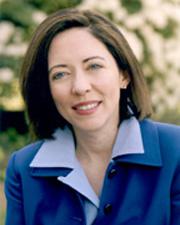 Sen. Maria Cantwell (D-WA)
Legislative Activity
Stay on top of the latest movement without scrolling through every action
Senate amendment submitted
June 19, 2003
View full timeline
Senate amendment submitted
June 19, 2003
Senate amendment agreed to: Amendment SA 944 agreed to in Senate by Voice Vote.
June 19, 2003
Senate amendment proposed (on the floor): Amendment SA 944 proposed by Senator Enzi for Senator Cantwell to Amendment SA 932.(consideration: CR S8184; text: CR S8184)
June 19, 2003
Amendment SA 944 proposed by Senator Enzi for Senator Cantwell to Amendment SA 932. (consideration: CR S8184; text: CR S8184) To prohibit an eligible entity offering a Medicare Prescription Drug plan, a Medicare Advantage Organization offering a MedicareAdvantage plan, and other health plans from contracting with a pharmacy benefit manager (PBM) unless the PBM satisfies certain requirements.
June 19, 2003
Amendment SA 944 agreed to in Senate by Voice Vote.
June 19, 2003
Text
Proposed
PRESCRIPTION DRUG AND MEDICARE IMPROVEMENT ACT OF 2003

The PRESIDING OFFICER. Under the previous order, the Senate will
resume consideration of S. 1, which the clerk will report.
The legislative clerk read as follows:

A bill (S. 1) to amend title XVIII of the Social Security
Act to make improvements in the Medicare Program, to provide
prescription drug coverage under the Medicare Program, and
for other purposes.

Pending:

Enzi/Reed Amendment No. 932, to improve disclosure
requirements and to increase beneficiary choices.
Bingaman Amendment No. 933, to eliminate the application of
an asset test for purposes of eligibility for premium and
cost-sharing subsidies for low-income beneficiaries.

The PRESIDING OFFICER. The Senator from Maine.

Amendment No. 933

Ms. SNOWE. Madam President, I rise to address the pending Bingaman
amendment because I believe it is important to provide some of the
background as to how we arrived at the asset test that is included in
the pending bill before the Senate regarding prescription drug coverage
and the overall Medicare Program.
We learned a lot, as I said initially, from the debate and the
tripartisan plan we had offered last year. We had included an asset
test. That asset test did present a number of problems to colleagues on
the other side of the political aisle. We attempted to work it out, but
obviously it was not to their satisfaction. We had a number of meetings
during the course of the debate last fall on the pending legislation,
but we were not able to resolve the differences.
One of the key contentious issues was the fact that we had an asset
test they believed was too encompassing, that it would deny many low-
income individuals the ability to have access to the overall drug
coverage and the type of subsidy we had included. So we learned from
that debate, we learned from the discussions, and we took a far
different approach this time in this legislation to incorporate the
lessons that had been learned in developing an asset test.
We understand Senator Bingaman's desire to do more for low-income
beneficiaries, but we have to keep in mind that we have crafted the
legislation within the $400 billion parameter included in the budget
resolution. We have come a long way in terms of how much we are
providing for a prescription drug benefit. Can we do more? Absolutely.
But obviously we have to live within the confines of our ability to
finance this and so many other obligations.
Just 5 years ago we started at $28 billion with then-President
Clinton's proposal. We increased it to $40 billion, to $300 billion, to
$370 billion. Now we are up to $400 billion as proposed by President
Bush. That is almost $200 billion more than he had originally proposed
last year. We have come a long way in this debate.
How do we design the best, most effective, fairest low-income subsidy
assistance? We decided it would be important to provide a universal
benefit in the Medicare Program when it came to prescription drug
coverage. But also we wanted to ensure that we targeted those who were
most in need. That was one of the other principles that was so
essential in developing the program. That is why we decided to use
various low-income Medicare and Medicaid beneficiary programs that are
already enacted and have been part of law, consistent across the board
with respect to formulas, and have been used by senior citizens so it
is something familiar to them.
We used the qualified Medicare beneficiaries program, otherwise known
as QMBs, the select low-income immediate beneficiaries, SLIMBs, and
qualified individuals, the QI-1 program, to send the highest level of
assistance with cost premiums, deductibles, and copayments to those
most in need. As it exists in current law, we target the assistance to
beneficiaries based on both their income and asset level to make sure
we are capturing those who truly have the most need.
We drop the asset test that was included in the previous tripartisan
legislation that would have prevented 40 percent of low-income
beneficiaries from receiving coverage. We really address some of the
inequities and the problems with our previous asset test by including,
this time, in this legislation, programs that have already worked for
seniors who have a very limited asset test.

For those in the lowest income categories, we are talking $2,000 for
individuals, $3,000 for couples. For those from 73 percent to 100
percent, we are talking about asset tests between $4,000 for
individuals and $6,000 for couples. The same is true for those between
100 and 135 percent of the poverty level; then for those between 135
percent and 160 percent of poverty level, assets again at $4,000 and
$6,000 for a couple.
We think that by establishing consistency with other programs that
have worked, we are able to design a fairer approach to the issue in
terms of eligibility for the low-income subsidy. Also, we are utilizing
existing government infrastructure so that we do not divert scarce
dollars away from beneficiaries to create new Federal or State
bureaucracies.
In developing S. 1, we did look to the lessons we learned from last
summer's debate and the negotiations that progressed into the fall. We
realized that in constructing the tripartisan plan, we were excluding
millions of seniors and disabled Americans from eligibility for the
low-income assistance subsidy because their income or assets did not
meet the strict guidelines. Obviously, we did that because we were then
living within the confines of $370 billion.
So we created the new categories for low-income assistance. It goes
up to 160 percent of poverty level. Again, that is also a change from
the tripartisan plan where we put the maximum subsidies up to 150
percent of poverty level. So we increased it from 150 to 160 percent of
poverty level. For an individual that means $15,472 and for a couple
that is $20,881, regardless of an individual's assets. We are not even
using an asset test for another category below 160 percent of poverty
level so that we are ensured we are capturing everybody who comes
within those poverty guidelines in order to ensure they get the maximum
subsidy possible.
This new category that we are capturing under the 160 percent and not
requiring an asset test will include 8.5 million additional Medicare
beneficiaries in 2006 and provide them with very generous assistance.
They will not be subject as well to the gap in coverage where they are
responsible for 100 percent of the cost of the prescription drugs.
This new benefit only requires a $15 deductible compared to the $275
for those above 160 percent of poverty. They have a much more generous
cost sharing starting at 10 percent, from $51 to the benefit cap of
$4,500; and from $4,500 until they spend $3,700, they pay a 20 percent
copayment. Once they reach the catastrophic cap, the Government will
pay 90 percent of the cost.
We clearly did design a program that provides the most assistance to
those in most need. I know we always could do more, but obviously we
had to stay within the parameters of the $400 billion in designing this
program. There are those on my side of the political aisle who believe
we have gone too far in providing the types of subsidies we do. But we
have copayments that obviously do help to reduce utilization and

[[Page S8170]]

overutilization of the benefit. At the same time, we also understand if
these individuals don't have access to any type of prescription drug
coverage, then they are going to be denied the ability to have access
to the most innovative therapies and medications now available to treat
so many illnesses. If they don't have access to these types of therapy,
they can become sicker, which then results in hospitalization, and
then, of course, we have a more expensive form of care that does impose
additional and exorbitant costs on the Medicare system.
So I think in the final analysis we are going to see, by the type of
benefit we have provided to the low-income, that they have the ability
to have access to a prescription drug benefit so that ultimately we can
realize savings to the Medicare Program. It is absolutely vital that
this benefit be available to those individuals most in need.
It is also vital that we have a universal drug benefit, and that is
why we designed the program from that standpoint, embracing the
universal tenet of the Medicare Program. It is important that we do all
we can to maintain consistency with the basic tenets and principles of
the Medicare Program.
Madam President, I believe we have designed a very fair, effective,
generous assistance to those in the low-income category. As I said, we
even increased it from the tripartisan bill of last year, from 150
percent up to 160 percent of poverty level. We essentially removed the
asset test for those in the categories from 160 percent of income
levels and below. We have created consistency by using other low-income
programs in the Medicaid and Medicare areas that will not result in any
confusion or contradictions among different eligibility standards. So
we have really made considerable progress in designing, I think, the
best, most effective type of program.
With that, I yield the floor.
The PRESIDING OFFICER. The Senator from Montana is recognized.
Mr. BAUCUS. Madam President, I see the Senator from Missouri in the
Chamber. He wants to speak next. For the information of all Senators, I
think we are going to get an amendment offered on the floor shortly.
But the sponsor of the amendment has only a very short time that he can
be in the Chamber. I urge my friend from Missouri to remember that
brevity is the soul of not only wit but sometimes persuasion.
The PRESIDING OFFICER. The Senator from Missouri is recognized.
Mr. TALENT. Madam President, I appreciate the Senator's comments. I
remind him that I have only recently come over from the House and am
used to speaking in 3-, 4-, and 5-minute bites where necessary. I will
try to adhere to the old standard. I know many people want to speak on
this important bill. Many have important amendments they want to offer.
I will not delay the Senate very long.
I wanted to come down and speak about this, in part, because this is
a problem which has existed for a long time and has hurt a lot of
people, and which I am just very encouraged and pleased to say I
believe this Congress will finally solve.
I went into the House of Representatives in 1992 and, as many Members
do, I often went to parades in the communities I represented. I enjoyed
walking in them and shaking hands with folks. There was one couple with
whom I got to shake hands virtually every parade in the city of
Hazelwood. They would sit in the garage watching the parade. I would
run up the driveway and visit with them. Every year, we would visit
about this issue. They would take a minute--not too long because the
parade was going by--and tell me of the struggles they were going
through because there was no prescription drug feature to their
Medicare coverage. They were making the choice that many senior
citizens in the State of Missouri have to make every day between the
cost of their prescription drugs and the cost of other necessities of
life.
That choice hurts all of us. It hurts them, hurts their families who
worry about them, and it hurts all of us because they often resolve
that dilemma against buying the prescription drugs. Those drugs are
often medicine they need to stay healthy. It is one of the things that
is so self-defeating about our current policy because if folks cannot
take the drugs they need, they get sick, and then Medicare covers the
treatment and it costs a lot more than if we had simply helped them
stay healthy in the first place.
We should not interpret any of this as a slap at Medicare. Medicare
is a program which has provided important medical care for tens of
millions of people for a generation. But it was devised in 1965 when
nobody had prescription drug coverage. Prescription drugs were not a
major feature of ongoing medical care in those days. Since then, it has
become a very common feature of health insurance to have some kind of
prescription drug coverage. But we have not updated Medicare to keep
pace with those changes. We have not strengthened and improved Medicare
as we should have. But now we are going to. That is the good news.
That is really the message I wanted to come down here and deliver. To
me, the legislation is all about the principles and, yes, of course, it
is about the details, but first you have to try to do the right thing,
and then you have to check the details to make certain you are trying
to do the right thing.
We need coverage that goes into effect, at least partially, right
away. Seniors have waited long enough. We have been promising long
enough, and now we need to deliver. We need coverage that is permanent,
not one that sunsets a few years from now. We need voluntary coverage
in the sense that you don't have to change your coverage if you have
another method you like better. This bill qualifies on that count. We
need coverage that targets the bulk of its relief for the people who
need it the most. This is something that in townhall meetings all over
Missouri seniors have said this to me. The folks with the lowest income
and the highest prescription drug costs should get the most relief.
This bill makes efforts to achieve that, and I think it largely does.

We need legislation that has a reasonable system of copays and
deductibles for those who can afford them because that is the way we
control overutilization, and overutilization can be bad for everybody.
If too much money that we don't need to spend has to be spent in the
prescription drug area, that is less money for care for heart patients
or kidney patients or maintaining the standards at our teaching
hospitals, which is so important to the quality of Medicare.
We need a bill that provides choices for people, one that competes
for the business of these seniors, to make certain they are getting the
highest quality at the lowest cost that we are capable of providing.
There are going to be many amendments offered to this bill. I am
going to vote for some of them. There is one I believe we will see
today that will help make certain that local pharmacies are able to
participate. I think that is a great idea. I will vote for that
amendment. I will vote against some. Some will undoubtedly carry and
some will fail.
It is my intention to vote for this bill on final passage--almost no
matter what. I don't want to sign a complete blank check here, but I
cannot imagine changes that would be made to the bill that would keep
me from voting to send this bill on, to move this process forward, to
begin keeping the promise we have made over and over and over again in
the last few years to that generation of Americans who won the Second
World War, who set up the architecture of containment that won the cold
war, and built this country by their work, faith, sweat and, effort.
That is what this bill represents to me.
I congratulate the Finance Committee, the chairman, and the ranking
member for producing this bill. It is, at minimum, a noble effort, a
good first step. I think it is probably better than that, but, at
minimum, it is that. We cannot get to the end if we don't take the
first step. That is what this bill represents. I am pleased to be here
supporting it. I hope we can strengthen and improve the bill as we
strengthen and improve Medicare, and I am grateful for the opportunity
to say a few words on the floor.
I yield the floor at this time.
Mr. BAUCUS. Madam President, I apologize to my good friend from
Missouri. It turns out that the Senator who is going to offer the
amendment is not able to do so at this time.
Mr. TALENT. Perhaps I should want to do another 30 minutes or so. I
am

[[Page S8171]]

kidding. I had all the time I needed, and I appreciate the suggestion.
The PRESIDING OFFICER. The Senator from Montana.
Mr. BAUCUS. I thank the Chair. Madam President, I wish to take a few
minutes to speak about a feature of this prescription drug bill which I
believe is particularly noteworthy, and that is help for low-income
seniors.
The subsidies provided for low-income seniors and disabled people are
far more generous and much more humanitarian than many of the proposals
the Senate has considered in the past. We know that most seniors who
signed up for this new drug program will benefit from assistance with
their prescription drug costs.
Many seniors today pay thousands of dollars a year for drugs. That is
common knowledge, and that is a substantial expense to them. It is to
everybody, but particularly seniors and particularly low-income
seniors.
For 40 percent of our seniors who make less than $15,000 per year,
the prescription drug coverage provided by this bill will be truly
lifesaving. That is, 40 percent of our seniors make less than $15,000 a
year.
We have all heard stories about poor seniors who eat less so they can
pay for their prescription drugs or who take only half the dosage the
doctor recommends. I have seen that. I worked at a drugstore one day. I
was really quite taken aback by the number of times the elderly would
walk up to the pharmacist and quietly ask the pharmacist whether they
could cut back on their prescription because they could not pay for it
all, and they and the pharmacist would go into a little huddle as to
which drugs to take and which ones not to take. I have seen it
firsthand. A lot of us have heard a lot about this. We have heard about
patients with disabling illnesses who cannot afford the expensive drugs
that might slow the progression of a dangerous and unpredictable
disease. It is clear, 40 percent of our seniors are making less than
$15,000. That has to tell us it is a huge problem we have to address.
This bill will give some hope to those folks. The bill is an
improvement, as I mentioned, over last year's bill. Last year, that
bill gave seniors generous assistance with cost sharing but up to a
point. Once the low-income senior hit the so-called benefit gap--that
is the donut we are talking about--the bottom fell out of the low-
income safety net.
Seniors who could hardly afford food and rent would have to be
responsible under that bill for half the cost of their drugs, a cost
that most obviously could not be assumed. By some estimates, 30 percent
of low-income seniors would fall into this gap.
In the bill before us, low-income seniors remain much better
protected in this so-called gap. They pay higher cost sharing in the
benefit gap, but their out-of-pocket expense would never go more than
20 percent above the cost of drugs, and for the lowest income seniors
who are not eligible for full Medicaid benefits, cost sharing would not
go above 10 percent. I think this is a good improvement.
I am also proud the chairman of the committee, Senator Grassley, and
I have been able to increase the number of low-income seniors who will
benefit from the extra subsidies. Our bill will provide assistance for
Medicaid beneficiaries up to 160 percent of the Federal poverty level.
An amendment was offered in committee to raise the poverty level to
160 percent. I wish it could go higher, but we are somewhat limited by
the $400 billion we are working with in the entire bill. But at least
we are up to 160 percent of the Federal poverty level. That means
beneficiaries with an annual income of barely over $14,000--that is
because they are not within 160 percent, just slightly over--are still
struggling to provide for life's basics.

Perhaps one of the most important improvements in this bill is the
assistance it provides for low-income seniors without subjecting them
to assets tests.
Asset levels for elderly Medicaid beneficiaries and so-called QMBs
and SLMBs are very low. Those are categories depending upon the
percentage of poverty, so that if an individual has accountable assets
of over $4,000, they are not eligible for assistance. A couple with
assets over $6,000 is not eligible for assistance. These asset levels,
which are based on SSI eligibility standards, have not been adjusted
since 1989.
Asset tests exclude millions of poor Americans from Medicaid, and
they would have excluded millions of poor seniors from many of last
year's prescription drug subsidies. Think of it, an 80-year-old man
with $800 a month in income might not be eligible for any assistance if
his brother left him, say, a $10,000 car in his will. If he is married
and he has paid life insurance premiums his whole life, the policy
could prevent him from getting help with prescription drug benefits.
This proposal includes a subsidy category that is based only on
income, not on assets. It is not as generous as the asset-tested
categories, and I wish we could improve that, but it takes an important
step toward covering more needy seniors and allowing them the dignity
of keeping a car or a single precious heirloom.
We could do more if we had more money, but we do not have more money.
We could eliminate the asset test altogether. We could provide better
subsidies in the donut. We could provide more help to people who are
still in need but who make $15,000 or $18,000 per year and have high
drug costs.
Nevertheless, I am proud of the progress we have made over last
year's low-income proposals, and I suspect with each new chapter in
this prescription drug/Medicare book, we are going to be able to make
improvements along the way.
This bill is a major improvement over current law. It is a major
improvement over the low-income provisions in last year's bill. I urge
this body to adopt this proposal.
I yield the floor.
The PRESIDING OFFICER. The Senator from Maine.
Ms. SNOWE. Madam President, the ranking member, Senator Baucus,
raised a number of valid issues as to how we were able to improve upon
the lessons we learned last year from our debate on this most important
issue regarding asset tests. That was, obviously, one of the areas we
had difficulties addressing in a way that would satisfy most of our
colleagues in the Senate.
This year, having drawn upon those lessons, we did craft a proposal
that ultimately maximizes the ability of those low-income individuals
of participating in this program in the fairest way possible, and that
is not to exclude those who certainly are in need of this type of
benefit and certainly are in need of some type of assistance because
they do have low incomes. Therefore, I think the asset test is a much
more fairer approach, much more equitable, without excluding those who
certainly have the need for this type of program.
We have come a long way in designing a system that, for the most
part, will satisfy those who had concerns with the previous provision
in the tripartisan plan.
In fact, Families USA supported our legislation with respect to this
provision. I quote from it:

We congratulate the U.S. Senate for making major
improvements in the prescription drug coverage for America's
14 million Medicare beneficiaries below 160 percent of
poverty.

They felt it was essential to assist the most vulnerable Medicare
beneficiaries, and they, obviously, supported our efforts and thought
we should not take any steps to minimize the improvements that have
been made in this legislation with respect to the subsidies included in
the pending legislation.
I raise another issue I was unable to address yesterday, and that is
with respect to the Government fallback provision that is included in
the pending legislation. I know there was an amendment that was offered
by the Senator from Michigan that would provide for a permanent
fallback because those who argue we should have a permanent option to
Government fallback so seniors can choose under the stand-alone
prescription drug benefit say it will offer more stability and more
choices to seniors.
As we worked last year, again drawing upon the lessons with respect
to a Government fallback, we learned two things. Obviously the
provision and the way we addressed it in the tripartisan plan was not
satisfactory. We did have

[[Page S8172]]

language that ensured it guaranteed a seamless approach so seniors
would not lose their coverage in the event the private delivery
mechanism did not work to provide the prescription drug benefit, but
that did not satisfy many of the critics with respect to our
legislation last fall.
On the other hand, we saw how much a Government-run program can cost.
CBO estimated a Government-run program could cost at least $600
billion, at least based on the bill that had been introduced in the
Senate, and that we debated with several versions, up to a trillion
dollars or more. It also sunset in order to mask the true costs because
again a Government-run system that has no competition, has no choices,
does not do anything to maximize the efficiency or increase the
innovative ways in which the private sector could provide those plans.
When one is competing against a Government-run program that has no
risk, then the cost goes up. That is at least the way the Congressional
Budget Office assigned the score to that program. So we had a $600
billion to $1 trillion cost with a Government-run program, because
there were no risks involved in that program in implementing that type
of an approach. It was all performance based, and so therefore it was
going to be much more costly. Then again, it was sunset. After 7 years,
the prescription drug benefit under that approach would have been
sunsetted.
It also statutorily limited the number of drugs a senior could
purchase to two in any therapeutic class. So, again, not only did the
benefit sunset but it also limited the choices available to seniors
with respect to the types of medications that would be covered under
that approach because it was too costly, because it was a Government-
run program.
On the other hand, we understood it was absolutely essential that
seniors, regardless of where they lived in America, whether it was in a
rural area or in an urban area, should have the ability to have a
prescription drug benefit that was of equal value, that was in the bill
that became law. So we did include a Government fallback provision.
There were those who felt it did not go far enough or was not
sufficient to prevent a seamless, uninterrupted approach in terms of
coverage.
This year, having drawn upon that experience, we designed a different
approach, and we included a Government fallback. We think the
Government fallback should be the last resort, not the first resort.
So, therefore, there have to be two participating in the program with a
drug benefit. If that fails, then the Government would step in. If only
one plan participated, the Government would step in and provide a
fallback. We think this maximizes the approaches in terms of enhancing
competition and choices but at the same time ensuring seniors that no
matter what happens, if private plans do not participate in some part
of the country, they will always have the assurance and the guarantee
that they will have access to a prescription drug benefit in the
coverage without interruption. So therefore we designed a system that
incorporated the risk management so we can encourage competition among
the private sector plans. We think that is important.

We also help give the Secretary the flexibility to dial down the risk
even to nothing in order to encourage private plans to participate. But
in the event that does not happen, that we do not get two plans at a
minimum participating and providing choices to seniors in any part of
the country in any one of the 10 regions, then certainly the Government
would step in and provide the fallback plan. Even if there is only one
private plan that is available, the Government will step in. Again, to
address concerns on this side of the aisle with respect to the fact
that we are not doing enough to encourage seniors to go into the
private delivery model, we do only allow for a 1-year contract for the
Government fallback, again trying to encourage private plans to
participate in the process.
We obviously think if seniors have private plans participating, they
will have competition and choices that will maximize the number of
choices for seniors across the board similar to what is available to
Members of Congress and to Federal employees under the Federal Employee
Health Benefits Program. There are a maximum number of choices, an
array of plans, different types of approaches tailored to the needs of
seniors either in that particular region or in terms of their medical
and health care needs.
For example, a private plan could design a generic-only plan or it
could design a plan that includes the most commonly used drugs for
medications. So we have hopes that we not only encourage competition
but at the same time provide a fallback for prescription drug benefits.
The Secretary has the authority to design that program and negotiate
the risks for the plans to make the market as appealing as possible and
is required to make choices among a number of plans, at least three
plans for each region. However, if at least two plans are not willing
to provide services in the region, as I said earlier, the Government
fallback will be triggered. Once triggered, the Government will enter
into a 1-year contract with a fallback company.
Further, that leaves one plan that is willing to participate in a
fallback region. The Secretary may allow that plan to provide coverage
alongside the Government fallback plan.
So we think we have maximized the assurances and the security for
seniors that, irrespective of where they live in America, they will
have access to a prescription drug benefit. The structure of this
provision was vital in securing the type of bipartisan support we
received in the Senate Finance Committee, and tripartisan support with
the support of Senator Jeffords we were able to achieve in the final
analysis. It was a 16-to-5 vote in the Senate Finance Committee because
we were able to incorporate the lessons of the past.
That is why we designed this type of permanent fallback so that it
does not undermine the costs of the programs. It invites competition
but it also provides the assurances to seniors that they will have
prescription drug benefit regardless of where they live in America,
regardless of what happens in the private sector. If the private sector
does not play a role, Government most assuredly will. I think we have
designed the maximum amount of security and the least amount of risk to
seniors in terms of the type of coverage they will receive.
I did want to address some of those issues because I do think it is a
fundamental component of this legislation before us. There has been a
lot of confusion about what this legislation is and is not, and I
assure my colleagues that we do have Government protection but at the
same time we also do not want to diminish the ability of the private
sector to play a competitive role. In the event that does not
transpire, then we obviously will have the availability of a fallback
provided by Government and the maximum amount of authority vested in
the Secretary to design that program so it does not jeopardize seniors'
access to coverage at any point, especially those seniors who live in
rural areas.
I yield the floor.
The PRESIDING OFFICER. The Democratic leader.
Mr. DASCHLE. Madam President, if we can get consent, which I will
offer in a moment, I intend to offer an amendment which would address
one of the concerns I have with the current bill; that is, the
uncertainty with regard to the premium itself.
Under the bill, it is anticipated the monthly premium paid for by
beneficiaries, the beneficiary obligation, would be $35, but there is
no guarantee that beneficiary figure of $35 is going to be what our
beneficiaries are going to pay; it is only an average. The
Congressional Budget Office that gave the $35 figure cannot state what
the range will be that will be charged to beneficiaries. It could be
lower. Most likely, it could be higher. I am told last year the
Medicare+Choice plans increased by 15.5 percent. That was just last
year alone. If Medicare+Choice premiums increased by 15.5 percent,
there is no telling what the figure could be. It could be $40 or $50,
and I will get into that in a moment.
Even the so-called Medicare fallback, available when private plans
choose not to serve a community, provides no guarantee. So you do not
have any guarantee in the private sector options that will be made
available. And if those cannot be made available in a region, the
Medicare fallback does not

[[Page S8173]]

offer any guarantee with regard to what the premium will be either.
Initially, we were told by the bill's authors that the fallback plan
would have a uniform premium, but in fact it does not have even a
uniform premium. So not only do we anticipate that it will not be $35,
we do not know what it will be. We also know it could be different in
different areas. We know that Alaska or South Dakota could be forced to
pay a much higher premium than someplace where price and utilization
figures could be different; say, Florida. We actually see that right
now with Medicare+Choice. Medicare+Choice HMOs offer prescription drug
coverage today. According to a report provided to the Congress
recently, the premiums in Connecticut, under a Medicare+Choice plan,
today are $99 per month. That same premium is $16 in Florida.
So with the experience we have already had in the private sector, the
Medicare+Choice option, we have seen a dramatic variation in the price
of the premium for beneficiaries. I fear we are going to see exactly
the same thing with the private plans offered through this bill as soon
as the legislation is implemented.
We have two issues: First, we do not know what the premium will cost
because we just have an estimated national average; second, even if
there is a national average, we are concerned that there could be a
dramatic variation from one part of the country to the other. It is
that variation, as well as that uncertainty with regard to the premium
itself, that we are trying to address with the amendment we are
offering.
The way the bill is written, I will state what will likely happen.
There are two terms with which I hope people will become more familiar.
The first term is the national weighted average premium. That is the
overall premium cost that must be achieved in order to pay for the
private sector coverage as well as the Medicare backup when the bill is
implemented. In other words, the prescription drug companies will
determine, given what the benefit package is, given the utilization
rates, given the actuarial tables, it will take so much money, divided
up per person, to pay for the plan once it is implemented.

There will be two payments. One will be from the Government and the
other is from the beneficiary. The second part of this term, the
beneficiary obligation, is what the senior citizen is going to pay.
That is the so-called $35. But the overall premium could be $100. In
fact, we think it might be in the $100 range. So, under that example,
$65 would be paid by Government, $35 would be paid for in the premium
by the beneficiary, the beneficiary obligation.
Assume the average is $100 and assume, then, the payment is over by
$10. Assume the premium is not $100 but it is $110. Under this bill,
that $10 extra in the premium is paid all by the beneficiary. That will
be added to the beneficiary obligation. So instead of a $35 payment, it
could be $45, a 30 percent increase in the premium the Medicare
beneficiary will have to pay. That is why there could be a significant
variation.
So we have these two calculations: The national weighted average
premium, which we estimate could be around $100; the beneficiary
obligation, which is $35, roughly, give or take. And of course, as I
said, we do not know what it will be like in some parts of the country.
It could be dramatically different, as we have seen with
Medicare+Choice right now.

Amendment No. 939

Mr. DASCHLE. I ask unanimous consent that the pending amendments be
set aside and that this amendment be considered at this time.
The PRESIDING OFFICER. Without objection, it is so ordered.
The clerk will report.
The assistant legislative clerk read as follows:

The Senator from South Dakota [Mr. Daschle] proposes an
amendment numbered 939.

Mr. DASCHLE. Madam President, I ask unanimous consent that the
reading of the amendment be dispensed with.
The PRESIDING OFFICER. Without objection, it is so ordered.
The amendment is as follows:

(Purpose: To ensure that an affordable plan is available in all areas)

On page 103, strike lines 10 through 13 and insert the
following:
``(B) the lesser of--
``(i) the amount by which the monthly plan premium approved
by the Administrator for the plan exceeds the amount of the
monthly national average premium; or
``(ii) in the case of an eligible beneficiary who is
enrolled in a Medicare Prescription Drug plan that provides
standard prescription drug coverage or an actuarially
equivalent prescription drug coverage and does not provide
additional prescription drug coverage pursuant to section
1860D-6(a)(2), an amount equal to 10 percent of the amount of
the monthly national average premium.
On page 77, strike lines 10 through 22 and insert the
following:
``(A) In general.--In the case of an eligible beneficiary
receiving access to qualified prescription drug coverage
through enrollment with an entity with a contract under
paragraph (1)(B), the monthly beneficiary obligation of such
beneficiary for such enrollment shall be an amount equal to
the lesser of--
``(i) the applicable percent (for the area in which the
beneficiary resides, as determined under section 1860D-17(c))
of the monthly national average premium (as computed under
section 1860D-15) for the year as adjusted using the
geographic adjuster under subparagraph (B); or
``(ii) 110 percent of an amount equal to the applicable
percent (as determined under section 1860D-17(c) before any
adjustment under paragraph (2) of such section) of the
monthly national average premium (as computed under section
1860D-15 before any adjustment under subsection (b) of such
section) for the year.

Mr. DASCHLE. Madam President, basically what our amendment does is
simply say: We understand there will be variance. We understand we
cannot pinpoint with any precision exactly what the cost to the
beneficiary is going to be. Why don't we put a cap on what that senior
citizen is going to be required to pay, within some reason. If we say
the beneficiary obligation is going to be $35 a month, put a 10 percent
cap on that premium. It can be below to whatever extent. If it comes
down to $15, we all ought to celebrate. But if it is going to be more
than $35, say that it cannot exceed 10 percent of the average
beneficiary obligation.
This would give some assurance to senior citizens that they are not
going to be facing dramatically varied costs or facing this
extraordinary uncertainty with regard to what the premium will be. But
within a 10 percent range, give or take, they will know what their
premium obligation will be as they make their decision from one year to
the next as to what that premium will cost them.
This is exactly what we do with Medicare Part B. Right now with
Medicare Part B, beneficiaries pay $58.70 a month for their physician
and outpatient care. I might add, that is a consistent figure. It is
the same in Alaska and South Dakota as it is in New York and
California. That has worked. No one has complained.
I don't know that any amendment has ever been offered to suggest
South Dakota ought to pay a different Medicare Part B premium than
someone else. No one has said that having an actual figure every year
that seniors can know will be a given cost is something that does not
work for physicians. If it works for Medicare Part B, if it works for
physicians and outpatient costs, why wouldn't it work for prescription
drugs?

We are actually giving more latitude. We are not saying it has to be
$35. What we are saying, simply, is let's make sure there is some
certainty. Even if it cannot be with the same precision--which,
frankly, I think it could be--but if it cannot be the same precision as
we expect with Medicare Part B, let's at least say: Give or take 10
percent, it has to be in that $35 range. I don't think that is too much
to ask, with all the uncertainty people are facing today as they
consider this.
I was just talking on a radio station a few minutes ago, trying to
explain what a senior would have to pay. The question was, What does
this mean for a senior?
Here is what I had to say. I said we think the premium is going to be
$35. We think the deductible is going to be $275. We think the copay is
going to be 50/50 between the program and the beneficiary with all the
charges up to $4,500, and after that we know the benefits are cut off
until you reach about $5,800, and then it kicks on at a 90-percent
reimbursement rate at $5,800.
If I was a 87-year-old citizen listening to the radio, I would say:
Holy cow, call my accountant. And this is for a drug benefit.

[[Page S8174]]

But that is what we are doing. We are asking the senior citizen
somehow to make sense of all this, and then we have to say we don't
even know if two companies are going to come into your region to
provide the benefits in the first place. If they do not, there will be
a Medicare backup and we will give you the details on that later.
This just provides a modicum of additional certainty, some degree of
confidence that they have some idea, with one of those calculations, of
the premium itself, that it is not going to be $45, $55, $65 a month;
that it is going to be $35 a month, give or take 10 percent. I do not
think that is too much to ask.
We had a debate about this legislation in the committee. I was
disappointed the amendment was not adopted in committee. I feel so
strongly about it I think it is important for the Senate to have an
opportunity to reconsider the amendment.
We got a letter from the National Committee to Preserve Social
Security and Medicare. Let me read this letter:

On behalf of the millions of members and supporters of the
National Committee . . . I am writing in support of your
``Guaranteed Premium'' amendment to S. 1. The current Senate
prescription drug bill, S. 1, does not limit the premium
increases, which could potentially subject seniors to
dramatic fluctuations in premium costs. Seniors want
assurance that their costs will not suddenly skyrocket. Over
the past year, premiums for Medicare Plus Choice plans
increased 15.5 percent. Seniors need to know what costs they
can expect in order to receive a drug benefit. Most seniors
are on fixed incomes and even the slightest increase could
impose a huge burden on their ability to afford a drug
benefit or other necessities, such as food and shelter.
We understand your amendment would limit premium increases
. . . preventing dramatic changes in price. We agree that
seniors have the right to know what they will be paying today
and in the future for a drug benefit. . . .

I will just add one other thought. The letter notes that a slight
increase could impose a huge burden on their ability to afford a drug
benefit. I have talked literally to hundreds of seniors--maybe even
thousands by now. I know it is hard for a United States Senator to be
fully appreciative of what it means to live on Social Security but many
seniors do. That is their only source of income.
We are now telling them in addition to the $58.70 they pay for
Medicare Part B, there is going to be added to that at least $35,
probably more, for a prescription drug benefit. So now we are talking
about, not $58, but probably $100, out of whatever Social Security
check they get each month.
I have talked to many seniors who have said: For me, it is a choice
between drugs and rent, drugs and groceries.
I think we overlook that. I think people minimize the extraordinary
financial impact these charges, these costs have in their daily lives.
What they want is a little more certainty. What they want is a little
more assurance that they can make ends meet with these extraordinarily
limited budgets within which they live.
That is what our amendment does. I am hopeful the Senate will
consider it. My hope is that, on a bipartisan basis, we can adopt it
later today.
I yield the floor and I suggest the absence of a quorum.
The PRESIDING OFFICER. The clerk will call the roll.
The bill clerk proceeded to call the roll.
Mr. REID. Madam President, I ask unanimous consent the order for the
quorum call be rescinded.
The PRESIDING OFFICER. Without objection, it is so ordered.
Mr. REID. Madam President, I worked with Senator Baucus all morning,
getting people to come and offer amendments.
For the information of all Senators and other interested parties, we
have a number of very important committees going on--Judiciary,
Commerce, to name but two. We have people on this side who really want
to offer amendments, but they are simply unable to do so because of
their other Senate responsibilities today.
There will be amendments offered, but we have to get these committees
out of the way first.
I suggest the absence of a quorum.
The PRESIDING OFFICER. The clerk will call the roll.
The bill clerk proceeded to call the roll.
Mr. DASCHLE. Madam President, I ask unanimous consent that the order
for the quorum call be rescinded.
The PRESIDING OFFICER. Without objection, it is so ordered.

Amendment No. 939, As Modified

Mr. DASCHLE. Madam President, yesterday the committee offered a
modified version of the bill before us. My amendment does not conform
to the modified version in terms of page and line numbers. I ask
unanimous consent that a modified amendment be offered and substituted
for the amendment I offered earlier this morning.
The PRESIDING OFFICER. Without objection, it is so ordered.
The amendment (No. 939), as modified, is as follows:
On page 106, strike lines 11 through 14 and insert the
following:
``(B) the lesser of--
``(i) the amount by which the monthly plan premium approved
by the Administrator for the plan exceeds the amount of the
monthly national average premium; or
``(ii) in the case of an eligible beneficiary who is
enrolled in a Medicare Prescription Drug plan that provides
standard prescription drug coverage or an actuarially
equivalent prescription drug coverage and does not provide
additional prescription drug coverage pursuant to section
1860D-6(a)(2), an amount equal to 10 percent of the amount of
the monthly national average premium.
On page 80, strike lines 1 through 12 and insert the
following:
``(A) In general.--In the case of an eligible beneficiary
receiving access to qualified prescription drug coverage
through enrollment with an entity with a contract under
paragraph (1)(B), the monthly beneficiary obligation of such
beneficiary for such enrollment shall be an amount equal to
the lesser of--
``(i) the applicable percent (for the area in which the
beneficiary resides, as determined under section 1860D-17(c))
of the monthly national average premium (as computed under
section 1860D-15) for the year as adjusted using the
geographic adjuster under subparagraph (B); or
``(ii) 110 percent of an amount equal to the applicable
percent (as determined under section 1860D-17(c) before any
adjustment under paragraph (2) of such section) of the
monthly national average premium (as computed under section
1860D-15 before any adjustment under subsection (b) of such
section) for the year.

Mr. DASCHLE. I suggest the absence of a quorum.
The PRESIDING OFFICER (Mr. Roberts). The clerk will call the roll.
The bill clerk proceeded to call the roll.
Mr. SANTORUM. Mr. President, I ask unanimous consent the order for
the quorum call be rescinded.
The PRESIDING OFFICER (Mr. Graham of South Carolina). Without
objection, it is so ordered.
Mr. SANTORUM. Mr. President, I am going to make an opening statement
on this legislation. I understand there are amendments being worked on.
First, I commend the President for his leadership. But for his
leadership on this issue, we would not be here today. The President a
few months ago laid out a framework for the reform and improvement and
strengthening of the Medicare system which we are using in this
underlying bill today. The President said he would be willing to move
forward with an expansion--a rather expensive expansion, $400 billion
over the next 10 years of taxpayer dollars--to provide prescription
drug benefits for our senior population, outpatient prescription drug
benefits. Obviously inpatient prescription drugs are covered but
outpatient prescription drugs are not. The President said he would be
willing to move forward with that. He believes, as I believe everyone
in this Chamber does, that this is a necessary part of the continuum of
care with which seniors, as well as all Americans, should be provided.
The question is how do you move forward with a huge dollar expansion
of a program, Medicare, which is already $14 trillion short in revenues
over the next 50-plus years? How do you move forward with a bill or an
idea that is going to expand this program and create another unfunded
liability of $3 to $4 trillion?
What does that mean? That means the money coming into the Medicare
system is going to be insufficient to cover the additional expenditures
we are going to put on the system with this bill to the tune of $3 or
$4 trillion over the next 50 years. How do you justify adding this
expense to a program that is already $14 trillion short in revenues?

The President said, I justify this because, No. 1, we need to do it.
It makes no sense to have seniors receive care

[[Page S8175]]

that is not the best quality or not necessarily recommended from the
standpoint of what a physician would recommend but is done because the
alternative pharmaceutical product is not covered under Medicare. They
will do things that may not be the best quality care or may not be
called for, just because it is covered, as opposed to something that is
not covered. This is an important benefit that needs to be provided.
But how do you justify that to the American public and future
taxpayers?
The President said we need to balance that future expenditure with an
improvement to the system, an improvement in terms of efficiency in the
system to make the system work better from two perspectives: No. 1,
from the perspective of efficiency so the money we are putting in to
the system is used more efficiently and, No. 2, that we provide better
quality, that the quality of care improves under the changes we hope to
make in the Medicare system.
The President set out with those two goals, provide a prescription
drug benefit but improve the efficiency and the quality of the Medicare
system going forward. He had other goals, but I would argue those are
the two big, overriding ones. So he put forward a model.
He understood the way you improve efficiency in this country is not
to have the Government run the operation. The way you improve the
efficiency is to marry what Government does well with what the private
sector does well. What Government does well is guarantee a stream of
funding and provide oversight, regulation--or refereeing, if you will--
to the private sector. What the private sector does well is compete to
drive down costs. Competition drives down costs. And it responds to the
consumer in front of you, responds to the person with whom you have to
deal. Because if you do not treat your patient well or your insured
well, then you will lose their business.
Under Medicare today, Medicare cannot lose the senior's business. You
have one Medicare plan. It is what it is. If you don't like it, tough.
That is it. People cannot walk, by and large. In a few communities they
have Medicare+Choice but just in some urban areas in this country. By
and large, Medicare has a monopoly and they treat beneficiaries just
like all monopolies treat beneficiaries--not well.
What we want is to have a system in place where we have private
sector insurance plans that have to treat you well, have to design
benefit packages you want; otherwise, they are not going to get your
business. If they do not get your business, they do not survive. We
believe that will improve the quality of the medicine that is going to
be practiced. But it will also improve the efficiency of the health
care system.
The tradeoff, and an important one, to adding benefits to this
already cash-starved program was to put some things in place that over
the long term will result in more efficiency and better quality care
for our seniors. So the President put up a model which is doing that
right now. The model is the Federal Employees Health Benefits Plan that
the Presiding Officer from South Carolina and myself are under--with
the exception of the pages. I don't know for sure whether they have
coverage under the Federal Employees Health Benefits Plan. I don't
know. I don't think they do. Maybe they do. All the other people in
this Chamber who are employees of the Senate have health coverage
through their Federal Employees Health Benefits Plan. It is a system
that marries what the Government does well, which is a steady stream of
funding, and an oversight board to make sure the private sector is
doing things properly--and with competition. They let each region in
which the Federal employees health benefit system offers plans
contract. People come and bid for business. The companies that
participate in the Federal employees health benefit system go out and
market to Federal employees in the region to get them to sign up to
their plan. If they don't do a good job, people do not sign up for
their plan. If they don't offer a good benefit package, if they don't
service the beneficiaries well, then they lose business and move on.
And someone else comes and picks up the slack. It is a good combination
of public-private partnership to get quality benefits and efficiency of
taxpayer dollars and a reliable benefit for Federal employees.

The President saw this as a good model to move Medicare--which is
right now a one-size-fits-all Government program run out of Baltimore,
MD, and here in Washington, DC. Prices are set here for all of the
country--what is going to be reimbursed, what is not going to be
reimbursed, what technology is going to be available, what medical
technology will not be available, what drugs will be available, and
what drugs will not be available. Everything is run out of central
planning here.
The average time it takes for Medicare to have a new technology
approved is roughly 18 months at the earliest and 3 or 5 years at the
latest. The turnover rate for a change in medical technology is 18
months to 2 years. Just about the time Medicare has the approval of a
new technology, it is replaced.
We are always behind. Why? Because it is a bureaucracy. Guess what.
They don't have to compete for your business. If you do not like it,
tough. You have no choice. If you want health care coverage as a
senior, this is what you get. It is not consumer friendly. It is not
patient friendly because there is no incentive to be.
We want to marry these two concepts--public and private, the good
parts of both.
When the President put this plan out, some complained that what we
put out wasn't detailed enough. I know many of us in the Senate urged
the President not to be very detailed. His job is to provide the vision
and the overall goal and structure by which we can accomplish it in
very broad-brush terms. What we have been doing for the last few weeks
is figuring out how precisely we get that done. It is very complicated.
It is very difficult. We are working through a lot of those issues
right now.
I think we took a very good step and a big step in the right
direction in the Senate Finance Committee. That is the next group which
I would like to congratulate--the chairman, Senator Grassley, and the
ranking member, Senator Baucus--for working together in a bipartisan
way.
The President put forth a plan that he argued--and I think it has
been proven out--is the basis for a bipartisan compromise.

``Mediscare'' has been used in this Chamber and across this country
for far too long. It is time to get down to solving the problem. That
means we have to try to put something together that brings the two
parties together. The President put out a plan that lays the
foundation. Now it is our job to continue that work.
I think with the vote in the Senate Finance Committee of 16 to 5, you
saw that there is a foundation which has now been flushed out
considerably on the Senate floor as a solid one on which to build this
service. There are still a lot of problems.
I don't want to paint this as a rosy scenario and that we are going
to walk arm in arm down the aisle for a bill signing in the next day or
two. There are a lot of issues we have to go through. The ones that
concern many on this side of the aisle and yet to be resolved are
issues that go to the underlying premise of what the President is
trying to accomplish.
I talked about the President wanting to add this very expensive and
needed benefit onto this program but at the same time providing some
improvements to the system--marrying the private and public sector so
we would have long-term stability in this program.
There are concerns on this side of the aisle that while we have
accomplished the first--that is, we have added $402 billion worth of
new drug benefits--we may not have done enough to make sure this new
system that mirrors the Federal Employees Health Benefits Plan, a
combination of the public-private, as opposed to just the solely
public. But this new system was written in a way for it to succeed.
We are working through that process right now to make sure we don't
go forward with a plan which simply adds a drug benefit to a
monopolistic, publicly run, bureaucratically run health care system--
Medicare--and simply add more costs to it without the improvements in
efficiency and quality that, frankly, beneficiaries deserve and that
the public should demand.

[[Page S8176]]

We have some work to do. A lot of Members on our side are very
concerned about that balance because it is important. The big stumbling
block on this side of the aisle has always been of adding a new benefit
that has never existed. Universally, people here believe we need to
extend outpatient prescription drug benefits to seniors. But the real
question is, How do we deliver that benefit? Candidly, how do we
improve the Medicare system that was designed in the mid-1960s? It was
designed after a 1965 Blue Cross plan that exists nowhere in the
``wild,'' if you will--only in the zoo here in the U.S. Capitol--which
is Medicare. But it does not exist in the ``wild'' anymore because it
couldn't survive. It became extinct because it could not compete with
all the other species out there that were offering better benefits at
higher quality and at lower costs.
This dinosaur--this 1965 Blue Cross plan--became extinct in the
``wild.'' But only in the laboratory of the Government here in
Washington, DC, has this dinosaur been able to survive. Does it survive
and thrive? No, it does not. Is it reproducing? No. It will be
reproduced nowhere. The only place this will ever survive is in this
environment of the Federal Government.
What we need to do is understand that there are better species out
there. There are better models out there. There are improvements as to
how we deliver quality care and better responses that beneficiaries
need through the insurance process. We need to implement those. I would
argue that we need to implement them quickly. We need to get as many
people as possible into those better models. I don't see too many
people driving around in a 1965 Plymouth Fury. People do not drive them
anymore. They are driving newer models and technologically innovative
automobiles that have responded to consumer demands and they have
improved as a result.

That has not happened in Medicare. We need to get people into a much
more efficient, quality-oriented model for them to ``drive'' through
their senior years. That is what we are attempting to do. But if we do
not do that--and in the past, when we looked at all these bills,
whether it was in the last session of Congress or in previous sessions
of Congress, we were never willing to get out of the 1965 ``car.'' We
always wanted to keep more and more people, with more and more demands,
and with there being more and more complexity, ``driving'' in this old
vehicle that does not work well.
It is on its last leg. As I said before, using the animal analogy, it
does not survive in the ``wild.'' We want something that can survive in
the ``wild.'' Why? Because the private sector has evolved to be
responsive to the needs of our people. So as new technologies come into
play--where it takes 2 or 3 or 4 or 5 years for Medicare to figure out
it is a good idea--the private sector, because they have the pressure
of knowing people can leave their plans, can look at it and say, yes,
we will reimburse this right away because it is better quality,
probably better value, and it may lead to lower costs somewhere else.
Medicare does not do that. It is not that they can't do it; they don't
do it.
So we will have plans in place that change as medicine changes. And
that quality is what seniors deserve. But we have to make sure the bill
is structured to make sure these plans have the resources and don't
have the regulatory ropes to constrain them to where they can't
survive.
So it is a major issue. It is one that is being debated as we speak
in a lot of places around this Capitol as to how we structure this
system. I know there are many people on the other side of the aisle who
would not like to see this system exist. They have been very clear
about that. They want a continuation of the ``extinct dinosaur'' that
can survive nowhere in the ``wild'' as being a model by which we can
model this plan after to deliver this benefit.
Or the 1965 Plymouth, you don't see very many of them around. Why?
The consumer wants something different, better, higher quality, more
efficient. That is what we are trying to accomplish here. I understand
there is opposition over there. I understand people want to stay with
what they are comfortable with. Unfortunately, for lots of years,
seniors have been scared into believing that any change is bad, that we
are going to destroy Medicare or have Medicare go away. Candidly,
models of cars change, animals evolve, we change based on technology,
innovation, improvement, and Medicare needs to do the same. It needs to
have the ability to do the same. That should not scare the American
public. It should be that we give seniors the kind of quality health
care system they deserve, that every other American has in the private
sector who has private-sector insurance, which is available to them. So
we are making a good start. We have a little ways to go.
We have to make sure that what is the highest priority on this side
of the aisle--which is to have a balance between a drug benefit and
improvements to the system--is maintained in this bill. I know that
isn't the highest priority for many on the other side of the aisle.
Thank goodness there are more than a handful of Members on the other
side of the aisle who understand the need to accomplish both these
goals. That is what bipartisan consensus is formed on.
I hope we can continue down that road and keep this bill centered, by
accomplishing both missions, not just what one party really wants or
what the other party is really seeking but both missions. If we can do
that, if we can have a balanced bill, then we will pass this bill by an
overwhelming margin. If we have a bill that ultimately is going to rely
on a ``1965 Plymouth'' or a ``dinosaur'' to deliver benefits, then it
is not going to be a bipartisan bill and there will not be any bill at
all.
We need to have both. Seniors deserve both. Taxpayers deserve both.
Future generations, who are going to be dealing with this unfunded
liability, deserve both. And we have a responsibility to deliver that.
Mr. President, I yield the floor and suggest the absence of a quorum.
The PRESIDING OFFICER. The clerk will call the roll.
The assistant legislative clerk proceeded to call the roll.
Mr. FRIST. Mr. President, I ask unanimous consent that the order for
the quorum call be rescinded.
The PRESIDING OFFICER. Without objection, it is so ordered.
Mr. FRIST. Mr. President, while we have been in the quorum call,
there are a lot of negotiations underway in terms of various amendments
being brought to the floor and the ones that are currently here. While
I have an opportunity, I want to spend a few moments on a couple of
charts I know have helped me and I believe will help my colleagues and
others who are paying attention to the debate as to why we are looking
at real changes in Medicare and why such changes will result in
strengthening and improving Medicare in a way that we just did not do
5, 10, or 15 years ago and why the time is now for us to act.
Yesterday, I talked a little bit about the history and the advances
that have taken place since 1965, when Medicare was enacted. The
advances have been huge. The point I had begun to make was that the
advances in health care, health care delivery, medical technology, and
science have been huge and dramatic, but at the same time the
structure, the system, has been almost frozen in a 1965 model.
I will use three consecutive charts. The X axis here will be time,
1965, when Medicare was first enacted, and the present date here, 2003
or 2005. Then on this vertical axis--this is subjective--is change. It
is modernization. It is advances. It is differences from 1965 to where
we are today. With the third chart, I will put this together.
Referring to the first chart--this is change; this is time--Medicare
was enacted in 1965. Things didn't change very much in the system until
1972, when coverage was expanded for individuals with disabilities and
for a subpopulation that had been missed but was growing, and that is
people with kidney failure, called ESRD, end stage renal disease. That
was a pretty dramatic change in the system because we changed the
entitlement nature and we expanded coverage. We are doing a little bit
of that on the floor this week and next week. I will come back to that.
It was a reasonable change. In terms of overall change, it wasn't a
big change. Then things went for another 13 years, to 1985, until we
had the next big structural change in the way health care is delivered
to our seniors.

[[Page S8177]]

That change--we ratchet it up a little bit here in 1985--we had what is
called prospective payment for hospitals, inpatient hospitalization. So
if you had a patient in a hospital, instead of just reimbursing
whatever cost went through, we sat back and said: What should a patient
with a certain diagnosis--say, heart disease, or it could be ischemic
heart disease--if you took all the patients coming through, what is a
reasonable price, looking at everything we knew at that point in time,
to reimburse the hospital.
That is called the prospective payment system, PPS, for inpatient
hospitals. That was an innovative change that was important to overall
health care delivery in the system.
Then we had several references to what happened in 1988 and 1989. In
fact, a lot of people have said to me: We will have to be very careful
with what we do; otherwise, we will repeat what happened in 1988 and
1989. Here we had enactment. We passed a bill and then repealed
catastrophic coverage, meaning high out-of-pocket expenditures if there
was a tragic, unexpected event or an automobile accident where health
care costs were just huge, that there would be some limit there. It was
nobody's fault. You would have some insurance there to cap how much you
take out of your pocket to pay for that catastrophic event in one's
life.
Here I have a line coming up. And since we repealed it, I have a line
going back down. So we attempted a pretty big change at the time, but
for all sorts of reasons the system was not quite ready for it and,
therefore, it was enacted and then shortly thereafter, in 1989,
repealed.

Then things didn't change very much until the late 1980s and we had
added a prospective payment system for physicians. I mentioned that we
did it for hospitals in 1985. So again, we ratcheted up, and the system
changed. It was modernized; it was improved in the late 1980s.
Since then, we had some other types of changes that didn't
dramatically change the system in terms of the way health care is
delivered to our seniors but did affect it dramatically. We had the
Balanced Budget Act of 1997. We had what is called Medicare+Choice
which is predominantly an HMO. What we are talking about in the bill on
the floor is not health maintenance organizations. We are talking about
a newer, more up-to-date way than HMOs of delivering care called PPOs,
which is a preferred provider way of delivering care. It is very
different.
This is Medicare+Choice, HMO delivery, in 1997. Today, there are
about 5 million people in HMOs and Medicare, and although those numbers
are falling over time, it is because there are fewer HMOs offering it
because of the regulations, the way we reimburse. But the people who
are in the HMOs, those 5 million seniors, are very pleased with those
plans in the aggregate. We did some other prospective payment changes
here but not much change.
The point of this graph is that since 1965, the Medicare system, a
great system that has served people very well, has not changed very
much at a time--and this is what is on the next chart--when technology,
medical science, medical advances have all been really quite dramatic
over this same period. Indeed, if you look, again, from 1965 to 2003,
you see there has been huge growth in health care advances, both
science and technology, what we know, the human genome project,
delivery of care directly.
For example, in 1967, there was the first successful heart transplant
and the first liver transplant. I put that on there because that is
what I did before coming to the Senate. In 1969, we developed a
genetically engineered vaccine. We are trying to go back and pass new
legislation called BioShield. As soon as we get finished with Medicare,
we have to come back to that legislation because it looks at the
importance of vaccines to fight bioterrorism, SARS, and other
illnesses.
In 1974, this body passed the HMO Act, a new type of delivery system.
It hasn't worked out quite as well as anybody would have liked, but it
was important to try to deliver health care more efficiently. In 1977,
coronary angioplasty developed, where you put these stints in the
heart. Before then, it had never been done.
In 1984, we talked about HIV/AIDS on the floor. I was a resident at
that time, working up in Boston, MA. We didn't even know what that
virus was, HIV/AIDS. Since 1981, 23 million people have died from this
virus we identified not that long ago. We responded on this floor in a
very admirable, bipartisan way, following the leadership of the
President. We passed a public health bill that targets this HIV/AIDS
virus throughout the world.
The first successful single lung transplant was in 1983.
In 1985 came preferred provider organizations, a new type of health
care delivery system. Over a million people were enrolled.
I will jump up to 1998. Now 90 million people are enrolled in this
entity that was invented in 1985. Remember, Medicare hadn't changed at
all. Medicare doesn't have PPOs in it today, except in a few
demonstration projects.
Prozac, in 1988, had a revolutionary effect on people when
appropriately prescribed for certain disorders.
In 1987, there was the first cloned adult animal, Dolly. We remember
that. It brings up all sorts of issues we will be coming back to
eventually here, including the appropriate role of the cloning, stem
cells, and all of the issues that are before us.
In 1997, 85 percent were enrolled in managed care. It did not exist
in 1965 or 1970. Yet there was 85 percent enrollment in 1997.
The human genome project--the Senator from New Mexico just walked in
and he is, in my mind, the father of this project. It finished 2 years
ahead of schedule, under budget. It really started as an idea here, or
was captured as an idea on the floor of the Senate by the distinguished
Senator from New Mexico and others as well. Since that point in time,
over a 10-year period, there are 3 billion bits of information we now
know that we didn't know 10 years ago. There have been tremendous
advances, and it opens up a whole new spectrum of innovation,
creativity, and technology to benefit untreatable diseases today. This
human genome project is exciting.
The challenge we have today is to have a Medicare system that can
capture that innovation, that technology, and what we learned in better
health care delivery, and right now Medicare doesn't do that. Medicare
is not designed to do that. Thus, as we look ahead, we need to
strengthen and improve Medicare. Now we have the opportunity.
If you put these two charts together, it explains why we are on this
bill and why we are working hard to negotiate this bill in a way that
is bipartisan and looks at health care security for seniors. That is
what we want on both sides of the aisle. Shown in red on this chart,
Medicare has not changed very much over the last 35 years. Yet we have
health care delivery, and science and technology, pharmaceutical
research, and heart surgery, lung surgery, and coronary artery bypass
surgery wasn't done in 1965, period. Medicare has not changed at all.
Health care advances have changed dramatically and will change even
more, and it is this gap--for our seniors we are talking about--that we
are addressing.
How can we sufficiently change Medicare so the line will come up and
we can be more in sync with health care advances and health delivery
advances with a system that is flexible enough to capture them--whether
it is treatment for mental illnesses or whether it is preventive care.
There is no preventive care in Medicare today. There is no protection
for catastrophic coverage. There is no chronic disease management. Yet
our health care delivery system knows that is the most effective way to
treat seniors and, indeed, everybody in terms of health care.
So what is the response? The gap is what conceptually has changed. I
don't have numbers over on this side of the chart because it is
concepts. But at least what we are trying to do is bring that forward.
What are we going to do? I will go through this quickly. We have
seniors today--this is Medicare today--who have two choices. There is
traditional Medicare, with 35 million in the program. These are seniors
and individuals with disabilities, those two groups. Five million
people are in Medicare+Choice. We brought that forward about 5 years
ago. Those 5 million are pretty satisfied. They are mainly HMOs, that 5
million. So 35 million are in traditional Medicare, what we call fee
for service. It is this traditional Medicare that really has not
changed

[[Page S8178]]

much since 1965. There have been some changes but not many.

The next question is, if this legislation is passed, after we amend
it and pull things together, what are we going to have in 8 months or a
year from now? That will be this chart. It is going to be the same
format for the next two charts. We will have, again, traditional
Medicare, with 35 million people, and 5 million people in
Medicare+Choice. This will alter a little bit. The addition to this
will be the prescription drug card. Maybe 6 to 9 months from the time
the bill is signed, every senior will have access to a prescription
drug card that will allow that senior to go into a pharmacy, a retail
outlet, or a mail order house and, with that card being used, will be
given a discount of maybe 10, 15, 20 percent. That will be within--I
don't know--6 to 8 months when that will take place, while the rest of
the system is being modernized. That is in 2004.
People need help now. We can give them help now. I mentioned some
figures earlier. If you are low income, this prescription drug card can
be used just straight right off the top as a benefit. Then the last
chart----
Mr. DOMENICI. Mr. Leader, every time you pointed to this group, the
most important fact about it is they don't have any prescription drugs.
When you talk about the other groups, they may have. But this group
doesn't have any today.
Mr. FRIST. That is correct. In response to the distinguished Senator
from New Mexico, he is exactly right. We are talking about health care
security for individuals, and 35 million seniors who are choosing this
particular plan today do not have access. They have no choice. Even if
they wanted it through Medicare, they cannot get it. That is the
benefit--the prescription drug card--that we are initially going to
reach out with to help every single senior.
People with low incomes will get a lot more help than wealthy people.
Every senior will have access to the prescription drug card. On the
last chart, we will show what happens 2\1/2\ years from now. This will
be Medicare in 2006. This is exciting. Seniors, after using the
prescription drug card about 2 years, will stop using that because, by
then, we will have designed a system that does the following:
Those people, just as the distinguished Senator from New Mexico said,
who chose traditional Medicare can keep it. They can keep exactly what
they had, but they will have access to a new prescription drug
insurance plan. They don't have this now. We are going to add that.
Some people say they don't want all these choices. ``I am fine, Dr.
Frist, Senator Frist. Let me keep what I have. I am 80 years old and I
just want exactly what I have. I am doing fine.''
We are going to be able to tell them they can keep what they have,
but if they would like, they can have access to prescription drugs. The
green here represents prescription drugs. Medicare+Choice, which is
mainly HMOs, already has prescription drugs--almost all of them. The
value is about $600 today, if you choose this. Only 5 million people
chose this, and 35 million are in that. We will really double the
value. If you want to stay in Medicare+Choice, the actuarial value--I
really hate using these words--you are going to get this much benefit,
and you are going to have this much benefit.
Or--this is the exciting part--we have the entities that build upon
all the rapid advances of the last 20 to 30 years that is state of the
art. That is why it is so important to get the best Democrats have to
offer, the best Republicans have to offer, the best of the private
sector, the best of the administration to make sure this is designed
well with state-of-the-art technology, the most modern, the fairest,
the most equitable--this is where a lot of the debate is going to be.
People can stay in traditional Medicare, choose Medicare+Choice, or
choose these new PPOs. The PPOs will have prescription drug insurance
as part of integrated health care and coordinated care where they have
teams of doctors and chronic disease management, with nurses who are
integrated into a team who may call a patient once a week to make sure
they have not picked up too much weight. When you pick up weight, that
means you are retaining water, and you could develop congestive heart
failure.
They actually will have chronic disease management and preventive
care. Remember, there is no preventive care in Medicare. There is no
coordination in Medicare. If you have chest pain, it may be esophagitis
or indigestion, and you might go see Bill Frist, the heart surgeon,
because it is in your chest. That is what you do in Medicare. You go to
Bill Frist, the heart surgeon. I know a lot about heart surgery and
fixing a heart, but I do not know that much, to be honest with you,
about indigestion. Yet people will come see me when I practice. That
coordination is fragmented, it is disjointed, and that is what we will
give away by giving this option of the PPOs. That is pretty much it.
The debate is how many people will move from traditional Medicare to
Medicare+Choice or PPOs. Should there be incentives for people to move
since we know PPOs are a higher quality of care in terms of objective
management?
It only makes sense, if you coordinate people's care, you have
preventive medicine built into it and chronic disease management. It is
going to be hard to argue that the care is not there. But what sort of
incentives? That is where much of the debate will be.
Initially, the debate was maybe the prescription drug package over
here should be more available than this one and people will gravitate.
The underlying bill does not have that happen. This Medicare benefit
for drugs is the same as the Medicare+Choice benefit and the same as
the PPO benefit.
That is the way I look at this issue. It keeps it simple, which I
need as we go through this debate. Now we are down to filling in the
details to make this system work.
I am very optimistic that this will be what seniors have access to in
2006, but it will not happen unless we do our work over the next 10
days.
Mr. DOMENICI. Will the Senator yield?
Mr. FRIST. Mr. President, I will be happy to yield to my
distinguished colleague.
Mr. DOMENICI. Mr. President, first, I was watching the majority
leader's discussion in my Senate office. I was so pleased that he chose
to give the history of Medicare and his personal understanding of where
we are that I thought I should come down and be present, at least as he
finished.
I congratulate Senator Frist. I am going to say something that is
perhaps outrageous. I do not think it is possible that previous
Senates, as they passed great health care programs--Medicaid,
Medicare--or when they passed Social Security in the Franklin Roosevelt
days, I do not believe there can possibly be a Congressional Record
that has an explanation of something as complicated as this that is as
competent, as good, as understandable as this, and I commend Senator
Frist for that.

First of all, Senator Frist understands the issue. Second, we are
very fortunate that he happens to be a great doctor who decided to be a
Senator. That does not happen very often either in history. Combine the
two, and then we were pretty fortunate--we Republicans, and then the
Senate--that we elected him as leader.
Frankly, as his good friend, the truth is, Senator Frist had not been
around here long enough to be the leader. But we picked him anyway. How
lucky we are. Frankly, he has not missed a step. This year will end, as
it started, with one success after another because of his leadership.
This bill will pass. Seniors will know more about this program than
any comparable program because of Senator Frist, because of the way he
has handled it. As a matter of fact, those who talk to America on all
the talk shows, whether they are for this or against it, whether they
call it too liberal, too generous, whether they call it wrongheaded,
whether they call it a Kennedy program that Republicans have been
suckered into--whatever they are saying out there, the truth is, it is
very bipartisan, and there is nothing wrong with that.
I was telling Senator Frist the other day that Social Security and
Medicare heretofore in our history were not passed with equanimity of
support.

[[Page S8179]]

However, once they were passed, regardless of what has been said
partisan-wise out there, the support has been just about the same by
Democrats and Republicans for Medicare funding and Social Security
funding. We have all agreed to save Medicare and save Social Security.
It is just about Democrats and Republicans doing the same thing because
it seems that somehow the seniors of the country bring us together. We
end up being one, and that is happening here.
The Senator would admit, would he not, that we are taking a chance
because we are drafting something enormous, and a huge portion of it is
going to have to be administered by both private companies and by the
Government. It would seem that we are trying in these models to give
our seniors choice, to build into a model something we have left out of
medical practice, and that is preventive medicine and group practice.
The majority leader gave an example of where perhaps somebody who is
sick will actually be treated by a team if they are in a PPO. That does
not happen today unless it is an extraordinary fee-for-service doctor
who has a lot more than just a doctor's office but has all the
equipment and two nurses who are treating people. We also are hoping
people will say they are comfortable, but maybe they ought to move over
and try this broader scope of coverage.
I will tell all of my colleagues that my good friend, the leader,
knows a lot about my ailments. I have been pretty sick for the last few
years; in fact, for 4\1/2\ years. I have something wrong with my hand
that causes unabated pain and the leader has been very helpful to me.
The other day he was explaining the PPO system to me. He slipped and
talked to me as one of America's senior citizens. He started laughing
as he said it. He said: Well, you are, aren't you?
I said: That's true, I am. I'm 71.
He laughed and said: It would not be too easy to tell you, Senator,
just move on over and get into a PPO. I said to him it would not be
easy. I want to be honest, it is not going to be easy for a lot of
senior citizens.
The point is, they are going to find out from their neighbors, their
friends, through their relatives, and, if it is done right, from their
doctors, that moving from traditional Medicare to the PPOs, the group
coverage which will also have the same prescription coverage, is a
better way for more Americans.
That is our hope. As a matter of fact, I think I am correct that is
the hope of the system. That has to happen if this new system is going
to work properly. I ask the Senator, is that a fair assumption?
Mr. FRIST. Mr. President, in response, I believe it is. Some people
would say, no, we can make everything work and improve on everything.
In terms of the demographic shift, the fact is, we have doubled the
number of seniors. It is unprecedented. It never has happened in the
history of this country, or indeed in the world, where a country has
doubled the number of seniors over a 30-year period, going from 40
million seniors to approximately 78--really about 37 million to 77
million. At the same time, we have not half but a diminishing number of
workers paying into the system.
I argue that this is done on quality of care. I just know if one gets
into a system where they have a doctor talking to a nurse, a doctor
talking to a specialist, that they have preventive care, they have a
nurse who specializes in chronic disease management--which is the whole
purpose of this coordinated care, that they are getting a higher
quality of care.
In addition to that, it is a more efficient system. Choice is going
to allow people to go to the systems that give the best care, and with
that it is sustainable over time because it allows an element of the
marketplace to work.
The marketplace is nothing more than rational people making rational
decisions, and it might be to stay in traditional Medicare. But the
argument would be if someone is getting better care over here and
better value over time, the PPO model will attract people.
The other point I should at least mention, and the reason why I know
it can work, is that people who are near seniors say they are 64 years
of age and they become 65 years of age about 80 percent of them have
similar type plans, although not exactly. They have employer-sponsored
plans. So when they get to be 65--not the Senator from New Mexico
because he is in the Federal Government and he is already in a plan
like this. We have that advantage. We want to give it to our seniors.
But for the person who is 64, soon to be 65, when they make it to 65
they give up their employer-sponsored plan and have to take this
traditional Medicare. So what we are going to say is when someone hits
65----
Mr. DOMENICI. They can stay there.
Mr. FRIST. They can keep that sort of plan. That is why I am so
confident that over the next 30 years this will work because that is
what the Senator has, and what I have, and what most employer-sponsored
plans are. But that is what we are denying seniors and those with
disabilities. That is why underneath I am so confident this can work.
We have to make this work. We have to improve it and that is what we
can do over the next 8, 9, 10 days.
Mr. DOMENICI. Does the Senator remember--well, he was not in the
Senate yet.
Mr. FRIST. I was probably in the operating room.
Mr. DOMENICI. He probably was. The Senator was making those flying
trips back and carrying the hearts so he actually could transplant them
in a timely manner. But when we first started talking about HMOs, there
was a big battle going on between whom? The doctors of America and the
legislators because the doctors were not accustomed to HMOs. The
doctors were all accustomed to what was called traditional care;
that is, they themselves ran it. They did not have any kind of group
practice. They did not have any kind of clinical practice. As a matter
of fact, we used to have to go home as legislators and meet with
doctors and try to convince them that the goal was not to destroy the
medical practice but rather to give them an opportunity to practice in
a different way.

Mr. FRIST. Yes.
Mr. DOMENICI. Frankly, what was being said in this Chamber--not as
well as the Senator from Tennessee says it and not with as much
knowledge--but what was being said was everyone would benefit if we
went to the HMOs. The patients will get better care. Prevention has a
better chance of inserting itself into the system than the traditional
way. We have now--and not because we are great thinkers and because
America plans things very well, but we have moved in the direction of
PPOs that is professional units--and HMOs, which are privately managed
delivery groups, they are no longer a surprise to the doctors. Some
still sit home, like in my State, and wonder what is happening to the
world. It is passing them by and it is no good.
The truth is, millions are trying managed care and hundreds of
thousands of doctors are practicing that way.
Mr. FRIST. Mr. President, if I could just briefly respond, and that
is where this Medicare+Choice is really the HMO model, although not for
everybody.
Mr. DOMENICI. Correct.
Mr. FRIST. We have learned a lot from it since 1974. The point is
Medicare has not changed.
Mr. DOMENICI. Right.
Mr. FRIST. We can preserve the good of that model but, based on what
we know in 2003, add state-of-the-art, quality, partnering-type,
coordinated, integrated delivery of health care. That is a great
example of traditional Medicare in 1965. We opened up the
Medicare+Choice and 5 million people went with it. That is one type of
plan. It is not for everybody now because, to be honest, a lot of
patients want more choice, and therefore we give them a system that has
more choice. That is really what this legislation is all about.
Mr. DOMENICI. The other thing I wanted to close with, and it seems to
be quite obvious, is there is no question but that some of our best
Senators have already, or will speak about this plan, and they are
worried. They will speak with trepidation and principally they will
talk about two things, but the big one will be it is going to cost more
than we think. Can we afford it? There is another question that is
asked around, and that is: Are we giving benefits to the right groups
of people in the right quantities?

[[Page S8180]]

I served on the Budget Committee for 28 or 30 years. I was chairman
14 times. When I left the Committee, I could have given a little speech
and said, here is what is going to happen over the next 10 years, and
here is what is going to happen over the next 15 years. Of course, I
could have predicted cycles, that we are going to have big deficits,
and we are going to come out of them and we are going to get bigger
ones. I probably could have talked about the fear of the baby boomers
and our ability to pay what we have said we are going to pay them when
their day comes. That is lingering and that is kind of washing its way
through this debate.
The question is not, will we, because we will pay. The question is,
When we get there and we have to make all of those payments, how are we
going to pay for it? Frankly, I do not think that is a reason to say we
should not do this. We do not know whether in 15 or 20 years we will be
able to have a balanced budget. In fact, if someone were to ask me--and
the Senator is not asking me--I would say in 15 years we probably
cannot, regardless of the economy.
The choice is to do something for the seniors on medication, which we
know we have to do. Or we can choose to do nothing because we are
worried about how we are going to handle this. Or we can say when that
day comes there will be another great confrontation, and it will very
simply be a confrontation about how do we change this, for it is not
written in stone like the Ten Commandments? How do we change them if we
have to? Or, God forbid, how do we change the fiscal plan of the
country, whatever that is, in terms of putting a tax to pay for what?
Now, it is not embarrassing to admit that. It seems to me that I
ought to say that. I know that. I am very lucky to know that, and it
cannot be that I am wrong. People cannot say I should not tell
Americans that, because it is true.
I was fortunate. I have heard every economist. I probably deserve a
degree in economics. I did not take economics. I took chemistry and
physics.
I have heard Alan Greenspan 20 times in my life. I called him up on
the Energy bill. When I need somebody to tell the world there is a
shortage of natural gas, I call an expert. I say Alan Greenspan will
find out if it is true. And sure enough, he will tell the world. When
he does, they listen.
He tells Members the same thing I am talking about here. But it does
not mean we should not do this. How can we leave a system that has
seniors without prescription drugs because we have questions about what
will happen in 20 years? We don't. We move on ahead.
The Senator mentioned in passing the mentally ill coverage. I don't
intend to inject that here. But we cannot forget about the mentally ill
in our country and the fact they are not covered by insurance because
we have problems. We cannot say, well, we have problems, so forget
about them. Because the system made a mistake and did not include them,
we cannot run around and say we made a mistake. Half the people that
are in the gutters of America are there because they are homeless,
because they are mentally ill, because there was no insurance when they
were little kids and they end up from about 15 years of age onward
doing nothing. We cannot say there is no solution.
To that end, I thank the Senator for his assistance with reference to
that group of people.
Last, your eloquent speech about the greatest wellness research
program in the history of mankind, that is what I call the program the
Senator described when we mapped the human genome. There is no greater
scientific wellness research program. It delivered to the hands and
minds of the scientists of the world the chromosome makeup of every
serious disease known to mankind. They said, as if to challenge the
scientists, Here it is, here is where they are located within the
chromosome system; solve it, scientists. What a fantastic thing to have
been a part of.
I thank the Senator for commenting on my involvement.
Mr. FRIST. I take 1 minute. I know we have other Senators on the
floor and we will turn to those Senators.
The human genome project which I mentioned a few minutes ago really
happened. Completion really took 10 years. There are great advances
that will come out of this mapping of the human genome. It is like a
phone book we did not used to have, but now we have all that
information. There will be tremendous advances out of that.
The problem with the Medicare system, which has not changed very
much, is those new advances and what we learned cannot be rapidly
incorporated into Medicare. I talked earlier about heart disease. Most
people know cholesterol is important to heart disease. The cholesterol
screening test is not covered by traditional Medicare today. Before
seniors could benefit from heart transplants, the private sector was
doing heart transplants. It took 6 years before seniors had access to
that lifesaving operation.
The micromanagement out of Washington, DC, means new technology is
slow to come into the system because it is so rigid. If we are going to
capture the great advances, we need a system that is receptive, that is
flexible. That is what the PPO model does. The demographic shift is
critical.
The Senator from New Mexico is the expert in this body, having
chaired the Budget Committee in such an admirable way, a distinguished
way for so many years. Whatever we do on this floor, we have to look 10
years out, 20 years out, 30 years out because of the demographic shift.
This plan does that.
In terms of the delivery program, it can be sustained over time.
Traditional Medicare right now, because of its rigidity, means a
doubling in the taxes. Maybe we can do that as we go forward. By giving
traditional Medicare improving benefits, and allowing prescription
drugs, allowing flexibility, allowing choice to be part of that, it can
be sustained long term.
I appreciate the comments of my distinguished colleague from New
Mexico. I appreciate the patience of the other Senators on the floor.
This is an important issue. Every now and then it pays to walk back and
look from 30,000 feet at what is going on below. What goes on below
determines ultimately what goes on at 30,000 feet. I have enjoyed the
opportunity to do that.
The PRESIDING OFFICER (Mr. Bunning). The Senator from Michigan.
Ms. STABENOW. Mr. President, before my esteemed colleague from New
Mexico leaves the floor, I commend him for his leadership on the issues
related to mental health and mental health parity. No one has been more
of a champion than the Senator from New Mexico on these issues related
to mental health. I have been pleased since being in the Senate to
cosponsor those efforts. I congratulate the Senator and urge him on as
we work to provide mental health parity which is another very important
health care issue we need to address in the Senate.
I will speak in general as it relates to this debate regarding
prescription drug coverage and Medicare. Seeing my friend from Wyoming,
I commend the Senator from Wyoming, Senator Enzi, who spoke on an
amendment dealing with community pharmacies which is important to pass.
I am supportive of it.
I did not have a chance to say that yesterday and wanted to take a
moment today to commend him for his work. Part of providing choice for
seniors is to make sure they can have the same choice from their
community pharmacy as mail order and a number of other issues dealing
with the importance of community pharmacies. Congratulations for his
work in this area.
I take a moment to speak about my perspective relating to where we
are and the issues of Medicare and many of the comments I have been
hearing this morning that I respectfully share a difference on. I
believe millions of Americans who have benefitted from Medicare have a
different perspective about the choice of traditional Medicare--
dependability, reliability, ability to choose your own doctor, the fact
it has been there for our seniors and people with disabilities since
1965--have a different view versus wading through the insurance
bureaucracies. There are lots of bureaucracies we can talk about, but
certainly Medicare is not alone in having a bureaucracy. Anyone who has
had to wade through insurance forms or attempted to wade through
questions from our insurance companies certainly would not say that is
less bureaucratic or less paperwork. I find it interesting to hear
comments lauding

[[Page S8181]]

the process of working through insurance companies. If you ask anyone
when they have a claim of any kind whether or not that is a
streamlined, easy process, usually it is not.
When I hear about how traditional Medicare does not cover preventive
services or has not been updated to cover other services, it is very
important to note that it could. Traditional Medicare can cover
preventive services. Since arriving in the House of Representatives in
1997, we have gone from paying for mammograms every other year to
paying for mammograms every year. We have added other screenings. We
can continue to do that. There is nothing about prevention that cannot
be done through traditional Medicare. There is nothing relating to
coordination that cannot be done through traditional Medicare.
I am in a fee-for-service health plan myself through Blue Cross/Blue
Shield, an integrated plan. I am able in a fee-for-service plan to have
integration. We can do that, if we want to do that, if we want to
strengthen Medicare. The question is where we want to go with health
care. If we want to strengthen traditional Medicare, we add preventive
measures. We do prescription drug benefit within Medicare so it is
coordinated. We are certainly not adding to the coordinated nature of
Medicare by saying you can receive an integrated health care approach
through an HMO or PPO or other plans, but we are going to, instead,
offer only private insurance if it is available in your community. You
can't have an integrated approach through traditional Medicare.

That is a conscious policy choice. It is not that you can't.
What we are really debating here is the very same debate that we had
before Medicare came into being. I urge colleagues to go back and look
at the Congressional Record and read the debate about what occurred
before 1965. There were two different philosophies. So many years later
it is interesting to me the very same two philosophies exist.
One philosophy, at that time, that of my Republican colleagues, is we
should not have Medicare. It is a big Government program. What we
should have is private insurance. People should buy from private
insurance. At that time about half the seniors in the country could not
find private insurance. Much like today, in many parts of the country
it was not available to them. Certainly, prescription-only policies are
difficult to find. Certainly, in Michigan an HMO is hard to find. If
you live anywhere but metro Detroit, you don't have an option such as
that. So, much like today, it was not available or not affordable. So
the decision was made. It was championed by the Democrats in the
Congress. I am proud of that. They were joined by, I believe, 12
Republican Members at the time who voted to make the decision, as an
American value, that we were going to make sure older Americans and
people with disabilities had access to health care they could afford,
quality health care, and they would have access to it regardless of
where they lived in the United States.
That was an important value statement made in 1965. I think it is
fair to say it has radically changed and improved the quality of life
for millions, tens of millions of American citizens, that decision in
1965.
Since that time, it is absolutely true that health care has changed.
Boy, has it changed. There are exciting new things that have happened.
There are new treatments. There are new miracle drugs. You can take a
pill instead of having heart surgery. Our esteemed leader of the Senate
talked about those changes and certainly we all agree with those
changes.
The question is, Do we change and improve and strengthen Medicare to
reflect that, or do we move to a different system? That is a conscious
choice. We can absolutely do everything that is being talked about here
through traditional Medicare if we choose to do that.
Mr. President, 89 percent of the seniors are under traditional
Medicare; 11 percent have chosen to go into managed care available in
their area. I share the desire to make sure options are available to
seniors at their choice.
But to somehow say we have to abandon the insurance system called
Medicare that has worked because it is outdated is not accurate. The
accurate statement is we choose not to update Medicare. We choose not
to strengthen and modernize Medicare because we want to go back to the
private sector, private for-profit insurance and managed care. That is
a conscious choice. I find it interesting that is the very same debate
that took place when Medicare started.
Again, there is a difference in philosophy of different parties. I
believe we have seen the philosophy at work back since the mid-1990s to
weaken Medicare, so it is easier to criticize. What do I mean by that?

We had a Speaker of the House, a well-known Speaker back in the mid-
1990s, say we cannot eliminate Medicare directly--I am paraphrasing--
but, instead, we will let it wither on the vine.
At that time, there was a lot of strong support for going to managed
care, HMOs, under Medicare. At that time the person who now leads the
Center for Medicare and Medicaid said there would be a California gold
rush into managed care. People would be leaving in droves, going to
managed care because it was so much better than traditional Medicare.
In fact, that did not happen. In the areas where it did happen, such
as Michigan--which I have talked about many times on the Senate floor--
we have had over 35,000 seniors dropped because the private HMO made
the business decision to pull out of the market and not to cover
Medicare beneficiaries anymore. Those individuals went back into
traditional Medicare.
But what happened in the 1990s? We had a balanced budget agreement. I
believed it was important. I supported that in 1997. But since that
time, we have seen cuts, very deep cuts, deeper than we were told would
happen, to providers who cover Medicare beneficiaries, people who
provide critical home health services, people who provide critical
nursing home coverage; our hospitals, our teaching hospitals, our
doctors, nurses, physical therapists--all of those who provide health
care. We have seen deep, deep cuts.
We have seen rural hospitals and urban hospitals closing. We have
seen tremendous cutbacks, more paperwork, less funding. We have seen a
crisis. Again, this was due to policy decisions to pull money away from
Medicare, to underfund Medicare. My concern is that essentially
Medicare has been set up by underfunding it, and then those who do not
support Medicare saying: See, it doesn't work; not funding preventive
care and saying: See, we don't fund preventive care. See, it is too
bureaucratic. All those things could be fixed if there was a commitment
to Medicare, if there was a commitment to a program that is a great
American success story.
Let me just say in conclusion--I see colleagues on the Senate floor I
know wish to speak--I think it is important in this debate that we be
very honest with the American people about what the real debate is. It
is not that Medicare has failed. It is not that Medicare cannot be
improved upon and modernized. The debate is a philosophical one, an
ideological one. There is a difference in view where those now in the
majority believed, before Medicare, and believe now, that we are better
off with a private for-profit insurance company model.
I am also deeply concerned when I continue to hear that somehow we
cannot afford to continue with Medicare anymore because of the
demographics. I have two points about that. I said this before, but the
evidence is overwhelming. Medicare's administrative costs are less, and
they are growing at a slower rate. Its costs are less right now than
those of managed care HMOs. Every independent study shows there is no
evidence that when you bring in a private for-profit insurance company
that needs to make a profit because they are in the private sector, the
for-profit side of the world, that somehow that brings more money for
health care--when they have to take a piece of that for administrative
costs and for profit, and so on. In fact, it is just the opposite. The
majority of health care in this country, the majority of hospitals, the
majority of home health agencies and nursing homes are nonprofit so
that every dollar goes into health care because health care is not an
option. It is a critical necessity for our people. That is really the
debate.

The other piece of the debate is another question of values and
priorities. We continue to see trillions of dollars

[[Page S8182]]

being given in tax cuts as a priority to a privileged few in this
country, instead of focusing on shoring up and modernizing health care
with a real, comprehensive prescription drug benefit, and instead of
investing in education and innovation in our country to grow the
economy through greater productivity. These are conscious choices. The
fact that this is not a very good benefit and the fact we are limited
in scope is a conscious choice by this body, by this Congress, and by
this President, which says Medicare and health care is not as important
as another round, and what will be coming, another round and another
round of tax cuts for the privileged few of this country.
I will just say in conclusion that as we speak I believe we need to
talk about the fact that these are conscious choices being made. I for
one believe all the evidence shows we can strengthen and modernize and
update Medicare in a way that our seniors want, need, and deserve.
I yield the floor.
The PRESIDING OFFICER. The Senator from North Carolina.
Mrs. DOLE. Mr. President, I rise in favor of a Medicare prescription
drug benefit. We live in different times now. Thirty-eight years ago
when the Medicare Program was created, most people were treated in
hospitals. Many illnesses were untreatable, and the average lifespan
was shorter than it is today. But we have made great strides since
then. Today people are living longer, better, and healthier lives. My
own mother turned 102 years old last month--something perhaps she never
even imagined. But new medical technologies and advanced drugs have
made it possible for many of our elderly to live productive lives for
many years.
Unfortunately, the high cost of these life-sustaining medications is
preventing many of our seniors from reaping the benefits of these
advancements.
The elderly in my State of North Carolina have been hit particularly
hard. The State's Division of Aging estimates that one-half of North
Carolina's residents aged 65 and older have no prescription drug
coverage.
As I traveled our 100 counties, I have heard their stories. They are
cutting their pills in half to make them last longer--a dangerous
practice that can lead to unanticipated drug reactions. They are
sacrificing groceries so they have money to buy the drugs they need.
Even worse, far too many of them are simply going without needed drugs.
Many of North Carolina's seniors have even been forced to go back
into the workplace from retirement--often with an ailing condition--
just to earn some income because of prescription drugs.
I talked last night to a woman in Clayton, NC named Kathy Roberts.
She retired after 13 years of working at Wal-Mart with dreams of
spending time with her grandchildren, but a heart condition ran up
medical costs. Kathy had soon lost $29,000 in savings. She recently
returned to her job at Wal-Mart for the extra money. But because she is
only working part time in order to keep her $700 a month Social
Security check, she is ineligible for the health insurance benefits
Wal-Mart gives to its full-time employees. Her prescription drugs cost
$170 each month.

In Mecklenburg County, officials recently completed a report on the
status of seniors there. The study found that 45 percent of older
adults said the high cost of prescription drugs made them decide not to
take a medicine as frequently as prescribed. Forty percent had not
purchased a prescription because of costs, and more than 15 percent
said they put off paying for food, rent, or utilities to buy medicine.
This is simply not right. Our elderly deserve better treatment. This
Government made a promise to our seniors when the Medicare program was
created, and we should keep our promise.
This year we have our best chance yet to get a prescription drug
benefit signed into law. It is an opportunity that should not be
allowed to slip away.
I have been reviewing the prescription drug plan passed by the
Finance Committee as well as proposals put forth by other Senators. The
Finance Committee legislation commits $400 billion over the next 10
years for a benefit. It is a voluntary program, something I have long
advocated. But I have concerns. While the legislation adds a drug
benefit to Medicare, it does not make sufficient changes to strengthen
and improve an outdated program. None of us want to add a benefit that
is simply going to send Medicare's bills through the roof as soon as
the baby boomers retire.
Just 3 months ago, Government trustees reported Medicare was 4 years
closer to insolvency than expected. It is projected to start paying out
more money than it brings in in the year 2013. With Medicare so close
to the brink of insolvency, shouldn't we look more closely at ways to
improve this aging program?
This bill provides a prescription drug initiative--an enormous
change. But in terms of improving and strengthening Medicare, it simply
does not go far enough.
For instance, the bill does not do enough to eliminate the mountains
of paperwork and red tape that discourage doctors from participating in
Medicare--100,000 pages of regulations, according to the Mayo Clinic.
Where is the regulatory reform Medicare so desperately needs?
There is also a need to provide for more disclosure among our
pharmacy benefit managers and plans. The Senate should consider
amendments such as that offered by Senators Enzi and Reed which promote
greater transparency and require plans to disclose how much of the
rebates from drug manufacturers are being passed on to consumers. We
must seek to provide a prescription drug benefit that maintains fiscal
responsibility, too.
There are also concerns that this drug benefit will cause private
insurers to drop coverage. The Congressional Budget Office estimates
that 37 percent of employers would be inclined to terminate
prescription drug coverage for retirees. This would shift those
retirees into the Government-sponsored system and further drive up
costs of the program. Our Nation cannot afford that. The budget
is already being stretched because of national security concerns.

The Senate must ensure this program stays within the cap of $400
billion over 10 years we agreed to in the budget resolution.
I intend to spend the next several days listening to the debate and
further examining proposals. I hope we can find ways to address these
issues so we can pass a benefit for our seniors this year without
creating a system that will balloon into a tremendous burden for future
generations.
Thank you, Mr. President. I yield the floor.
The PRESIDING OFFICER. The Senator from Wyoming.
Mr. ENZI. Mr. President, I call for regular order.
The PRESIDING OFFICER. The Senator's amendment is the regular order.
Mr. ENZI. Thank you, Mr. President.

Amendment No. 932, As Modified

Mr. ENZI. I send a modification to my amendment to the desk.
The PRESIDING OFFICER. The Senator has that right. The amendment is
so modified.
The amendment (No. 932), as modified, is as follows:

(Purpose: To improve disclosure requirements and increase beneficiary
choices)

On page 57, between lines 21 and 22, insert the following:
``(3) Disclosure.--The eligible entity offering a Medicare
Prescription Drug plan and the MedicareAdvantage organization
offering a MedicareAdvantage plan shall disclose to the
Administrator (in a manner specified by the Administrator)
the extent to which discounts, direct or indirect subsidies,
rebates, or other price concessions or direct or indirect
remunerations made available to the entity or organization by
a manufacturer are passed through to enrollees through
pharmacies and other dispensers or otherwise. The provisions
of section 1927(b)(3)(D) shall apply to information disclosed
to the Administrator under this paragraph in the same manner
as such provisions apply to information disclosed under such
section.
``(4) Audits and reports.--To protect against fraud and
abuse and to ensure proper disclosures and accounting under
this part, in addition to any protections against fraud and
abuse provided under section 1860D-7(f)(1), the Administrator
may periodically audit the financial statements and records
of an eligible entity offering a Medicare Prescription Drug
plan and a MedicareAdvantage organization offering a
MedicareAdvantage plan.

On page 37, between lines 20 and 21, insert the following:
``(C) Level playing field.--An eligible entity offering a
Medicare Prescription Drug plan shall permit enrollees to
receive benefits (which may include a 90-day supply of

[[Page S8183]]

drugs or biologicals) through a community pharmacy, rather
than through mail order, and may permit a differential amount
to be paid by such enrollees.

Mr. ENZI. Thank you, Mr. President.
I thank the Senator from North Carolina for her comments about the
amendment and appreciate her support. I am going to try to convince
everybody else that support is also warranted.
I have offered a modified version of amendment 932 to the original
one yesterday on behalf of myself and my distinguished colleague from
Rhode Island, Senator Reed. Senators Pryor, Cochran, and Chambliss also
join us on offering this modified amendment. I welcome their
cosponsorship and support.
These modifications ensure the amendment will not add to the cost of
this Medicare bill, which is a concern I share with Chairman Grassley
and a great many of my colleagues.
I thank the Senator from Iowa for his willingness to work with me to
address the concerns of our seniors and pharmacists.
The heart of this amendment remains the provisions that would ensure
fair prices for consumers and fair treatment for local pharmacists
under a new Medicare prescription drug benefit.
To ensure reasonable drug prices for seniors, the amendment would
hold Medicare drug plans and Medicare Advantage organizations
accountable for passing on to their consumers a fair portion of the
rebates, discounts, and other incentives the plans may receive from
drug manufacturers and other sources.
The amendment would require disclosure of these incentives to the
Federal Government. It would also clarify that the Government may audit
the records of these plans and organizations to ensure compliance with
this disclosure requirement. The amendment would not, however, make
these disclosures part of the public record. This is certainly not our
intent. The amendment simply ensures that our corporate partners are
held accountable for sharing with our seniors the savings they
generate.
To ensure fair treatment for the pharmacists in our communities, the
amendment we are offering would prohibit Medicare drug plans from
implementing restrictions that would steer consumers to only mail-order
pharmacies. It would require Medicare drug plans to allow local
community pharmacists to fill long-term prescriptions--long-term
prescriptions; not just 30-day ones but 90 days as well--and offer
other services they are equipped and licensed to provide.
Seniors trust their local pharmacist, and they should be allowed to
keep that relationship in place under this bill. This drug benefit
should not force them to choose a mail-order house when a pharmacist
who could provide the same or better service is right down the street,
and they are used to dealing with them.
This amendment would permit a Medicare drug plan or Medicare
Advantage organization to charge a different cost for a mail-order
prescription versus a prescription filled by a community pharmacist.
This happens today in many health plans. As an example, one health plan
for Federal employees charges a $10 copay for a 30-day prescription
filled at a local pharmacy but charges a $20 copay for a 90-day
prescription filled through a mail order. That is a $10 savings. This
would allow the local pharmacist to offer the 90-day prescription so
the consumer could take advantage of the same reduction in copay.
Under this amendment, Medicare drug plans could still charge
different copays, but the plans could not prohibit a local pharmacy
from filling 90-day prescriptions.
I know some of my colleagues are concerned that seniors may get
confused. Actually, if they can get through the rest of the bill
without being confused, they will not be confused by this. But some
people are concerned that may happen or that they may pay more than
they should for their drugs. In response, I would say the Finance
Committee's bill clearly states that seniors cannot be charged more
than the negotiated price of a covered drug.
The bill is also very direct in its expectations of Medicare drug
plans. The bill would require plans to provide clear information about
copayments and deductibles. This information would have to include
details on the differences in cost between mail-order and retail
prescriptions.
I think seniors and their families are very smart about drug costs,
and they will take factors, such as different copays, into account when
they make a health care decision.
I am sure Medicare drug plans will encourage seniors to use mail
order, just as health plans encourage us to use mail order. What this
amendment would do is give seniors the option--the option--to use their
local pharmacists.

The bill already requires health plans to give seniors accurate
information on the costs of their options. From that point, I think we
should trust seniors and their families to make the decisions that are
best for them, without arbitrary limitations on services that steer
seniors in one direction or the other.
Again, I thank Senators Reed, Pryor, Cochran, and Chambliss for
joining me in offering this modified amendment. The sponsors of this
bill appreciate the role local pharmacists play in helping all
Americans manage their medications, especially the elderly and the
sick, who need the most advice.
As I mentioned yesterday, Senator Reed and I worked last week to pass
a bill to address the pharmacist shortage through the Committee on
Health, Education, Labor and Pensions. We agreed to work together on
that bill to ensure our aging population has access to the knowledge of
pharmacists on how to use a new Medicare drug benefit appropriately and
safely.
As highly educated professionals, our pharmacists know how important
drug therapy is in helping seniors live longer and better lives, and
they want to support this bill. In fact, many pharmacies and
pharmacists are supporting, and will support, the bill, in part because
of this amendment.
The National Association of Chain Drug Stores and the Food Marketing
Institute support this amendment. I ask unanimous consent to have
letters of support printed in the Record.
There being no objection, the material was ordered to be printed in
the Record, as follows:

Food Marketing Institute,

Washington, DC, June 11, 2003.
Hon. Charles Grassley,
Chairman, Senate Finance Committee,
Washington, DC.
Dear Chairman Grassley: The Food Marketing Institute (FMI),
on behalf of our supermarket members who operate more than
12,000 in-store pharmacy departments throughout the United
States, wishes to express our industry's strong support for
legislation that you are developing along with Senator Baucus
and other members of the Finance Committee that will reform
the Medicare program and provide our nation's seniors with a
meaningful outpatient drug benefit.
This bi-partisan initiative embraces a number of very
important principles that will promote greater competition in
the marketplace and provide more choices for seniors in the
delivery of medications through alliances with retail
pharmacies, pharmaceutical manufacturers and other entities.
Moreover, it is our understanding that the bi-partisan
legislation includes provisions that will generate
information so that seniors can make informed decisions in
terms of selecting a plan that best meets their individual
needs for medications.
FMI is further encouraged that the legislation seeks to
ensure that seniors have convenient access to prescription
drugs through pharmacy networks and that pharmacies are not
placed at risk under this new benefit. Additionally, our
industry is hopeful that the bi-partisan bill will clarify
that retail pharmacy will be permitted to offer Medicare
beneficiaries the option to receive long-term 90-day
prescriptions which means seniors will have both convenience
and the opportunity to consult with their pharmacist about
taking their medications safely and effectively.
In closing, FMI wishes to commend you on your leadership
regarding Medicare reform, and we look forward to working
with you throughout the legislative process as Congress moves
toward providing seniors with outpatient drug coverage.
Sincerely,

John J. Motley III,

Senior Vice President,
Government and Public Affairs.
____

Ahold USA, Inc.,

Chantilly, VA, June 13, 2003.
Hon. Charles Grassley,
Chairman, Senate Finance Committee,
Senate Hart Office Building, Washington, DC.
Dear Chairman Grassley: Ahold USA, which operates retail
food stores and over 800 pharmacies along the Eastern
seaboard under the names of BI-LO, Bruno's, Giant of
Carlisle, Giant of Maryland, Stop & Shop and

[[Page S8184]]

Tops, wishes to express our strong support for legislation
that you are developing, along with Senator Baucus and other
members of the Finance Committee, that will reform the
Medicare program and provide our nation's seniors with a
meaningful outpatient drug benefit.
The bi-partisan initiative embraces a number of very
important principles that will promote greater competition in
the marketplace and provide more choices for seniors in the
delivery of medications through alliances with retail
pharmacies, pharmaceutical manufacturers, and other entities.
It is our understanding that the bi-partisan legislation
includes provisions that will generate information so that
seniors can make informed decisions in terms of selecting a
plan that best meets their individual needs for medications.
As a retailer in the marketplace, we are further encouraged
that the legislation seeks to ensure that seniors have
convenient access to prescription drugs through pharmacy
networks and that pharmacies are not placed at risk under
this new benefit. We are also hopeful that the bi-partisan
bill will clarify that retail pharmacies will be permitted to
offer Medicare beneficiaries the option to receive long-term,
90-day prescriptions which means seniors will have both
convenience and the opportunity to consult with their
pharmacist in a timely manner about taking their medications
safely and effectively.
Ahold USA wishes to commend you on your leadership
regarding Medicare reform. We look forward to working with
you throughout the legislative process as Congress moves
toward providing seniors with outpatient drug coverage.
Sincerely,
Barry F. Scher,
Vice President, Public Affairs/Communications.
John J. Fegan,
Vice President, Pharmacies.
____

Winn Dixie,

Jacksonville, FL, June 11, 2003.
Hon. Charles E. Grassley,
U.S. Senate, Senate Finance Committee, Chairman, Washington,
DC.
Dear Mr. Chairman: Winn-Dixie Stores, Inc., operates more
than 680 in-store pharmacies throughout the Sunbelt. We are
writing to express our support for legislation that you are
developing along with Senator Baucus and the Finance
Committee Members to reform Medicare and the development of
an outpatient drug benefit for our nation's seniors.
The bill, which has bi-partisan support, will promote
competition and provide seniors with more choices of delivery
of their prescription medication. Additionally, seniors will
be more informed in terms of selecting a plan that will work
best for their particular needs.
Other positive points of significance include:
Risk is eliminated for pharmacies under the new benefit.
Convenient access for seniors through pharmacy networks.
Clarification of retail pharmacy providing 90-day supplies
of prescription needs.
Continued of retail pharmacy providing 90-day supplies of
prescription needs.
Continued pharmacist's consultation with seniors ensuring
medication safety and effectiveness.
In closing, Winn-Dixie salutes your hard work on this most
important issue and we look forward to working with you as
this most important issue continues to develop.
Sincerely,
Randy Hutton,
Vice President, Director of Government Relations.
____

The Kroger Co.,

Cincinnati, OH, June 17, 2003.
Hon. Charles E. Grassley,
Chairman, Senate Finance Committee, Dirksen Senate Office
Building, Washington, DC.
Dear Chairman Grassley: The Kroger Co., appreciates your
leadership and the efforts of Senator Baucus in developing
with your colleagues in the U.S. Senate legislation that will
reform the Medicare program.
Kroger is the nation's 7th largest pharmacy provider. We
support the Medicare reform legislation because we believe it
improves Medicare in several important ways.
First, we believe having a range of entities that can offer
a pharmacy benefit or drug discount card will benefit seniors
and all taxpayers.
Second, it is our understanding the legislation ensures
that senior will have access to nonconfidential, summary
information gathered from plan sponsors. We believe this
transparency will facilitate informed consumer choice.
Seniors also will benefit from the option of having their
90-day, long-term prescriptions filled by their neighborhood
pharmacy. The value-added services pharmacists provide are
important to the health and well being of our seniors.
And finally, we appreciate the clarification we understand
the legislation contains that pharmacists should not be held
responsible for risks they do not manage or control.
Again, we appreciate your leadership and look forward to
working with you and the Senate Finance Committee.
Sincerely,
Joseph A. Piohler,
Chairman of the Board and Chief Executive Officer.

Mr. ENZI. Mr. President, by ensuring fair prices for seniors and fair
treatment for pharmacists, we will ensure this new Medicare drug
benefit does right by seniors and values the trusted relationship that
pharmacists and their senior patients share.
This is just a small step to helping community pharmacists. I would
like to do more, but we are matching that constraint with the
requirement that there can be no amendment that adds dollars to the
cost of this bill. So we are staying in that constraint but still
giving that option for the local pharmacists.
I ask my colleagues to support this amendment, as modified, and I am
gratified by all the people who are doing that.

Amendment No. 944 To Amendment No. 932, As Modified

Mr. President, I offer, on behalf of Senator Cantwell, a second-
degree amendment to my amendment and send the amendment to the desk.
I thank Senator Cantwell, who has worked with Senator Reed and myself
on coming up with this amendment, which also does not add a single
dollar of additional cost to the pharmacy bill but does provide some
clarification on how any audits would be done on records to make sure
that rebates and refunds are going to the proper place.
The PRESIDING OFFICER. Without objection, the amendment will be
reported.
The legislative clerk read as follows:

The Senator from Wyoming [Mr. Enzi] for Ms. Cantwell,
proposes an amendment numbered 944 to amendment No. 932.

Mr. REID. Mr. President, I ask unanimous consent reading of the
amendment be dispensed with.
The PRESIDING OFFICER. Without objection, it is so ordered.
The amendment is as follows:

(Purpose: To prohibit an eligible entity offering a Medicare
Prescription Drug plan, a MedicareAdvantage Organization offering a
MedicareAdvantage plan, and other health plans from contracting with a
pharmacy benefit manager (PBM) unless the PBM satisfies certain
requirements)

On page 2 of Amendment No. 932 between lines 18 and 19
strike ``.'' and insert the following: ``with the auditor of
the Administrator's choice.''

Mr. ENZI. I thank the Chair and yield the floor.
The PRESIDING OFFICER. The Senator from Nevada.
Mr. REID. Mr. President, before the Senator from West Virginia takes
the floor, I say to my friend from Wyoming, shouldn't we accept this
second-degree amendment now?
Mr. ENZI. Mr. President, I am sure it has been cleared on both sides,
and I would be more than happy to do that at this time.
The PRESIDING OFFICER. If there is no further debate on amendment No.
944, without objection, the amendment is agreed to.
The amendment (No. 944) was agreed to.
The PRESIDING OFFICER. The Senator from West Virginia.

Amendment No. 932, As Modified

Mr. ROCKEFELLER. Mr. President, I would like to speak briefly on the
underlying amendment.
We are here to consider legislation that is going to create a much
needed prescription drug benefit. We have been here to consider that
matter for some years now. We have 41 million seniors and disabled
people in this country who require and need that benefit. So it is a
momentous time. It is also a moment of opportunity, which we will
either grab or not grab, where we can craft a prescription drug benefit
that provides the coverage seniors desperately need, coverage that is
both affordable and reliable for all seniors.
I intend to offer amendments--not now, but later--that will improve
the proposed coverage and delivery system for the Medicare prescription
drug benefit so that this bill will better meet the real needs of our
senior citizens.
In 1965, this Nation recognized that health care costs were the
primary reason that one-third of our Nation's seniors lived in absolute
poverty. With the establishment of a universal health care benefit for
seniors, financed through both individual payroll tax contributions and
the General Treasury--the Medicare program--we lifted most American
seniors out of poverty.
That is something to be profoundly proud of, but it is the work of
our predecessors. And now there is work for us

[[Page S8185]]

to do. Medicare is one of America's great achievements, but it has long
needed to include a prescription drug benefit. At the time Medicare was
enacted, prescription drugs were not a popular form of treatment. Now
they are a critical part of health care.
A Medicare prescription drug benefit is something I have heard
seniors tell me they want and need almost every time I have ever run
into them or have had meetings with them in my State. And I daresay the
Presiding Officer has had the same situation in his State of Kentucky.
I have worked on this for nearly 2 decades as a Senator, and we are
perhaps at the point--or perhaps we are not. I don't know. I hope so.
Fifteen years ago, Congress acted to provide a catastrophic drug
benefit under Medicare. The fact of the matter is, it was a very good
bill. I led the fight on this floor three times to defeat repeal by the
House because it was a very good benefit. There has never been anything
that approached that in terms of catastrophic drug benefits since that
time.
However, seniors did not understand the bill because we did not do a
good job of putting it out to them, and we passed it perhaps too
quickly. So the catastrophic benefit was rejected by the very people
that it was intended to help through the votes of their elected
representatives.
We should not repeat that experience. We should do our very best as
the legislative process moves forward to offer a benefit that will be
widely welcomed by Medicare beneficiaries and by their families. This
will be a very hard thing to do, working with only $400 billion, as
that is not the full cost of what we need. But that is what we have. We
are operating, therefore, under a very tough budget constraint. I
understand and accept that. But I think we should keep in mind that if
we can achieve more than 50 votes for a Medicare prescription drug
benefit, we might be able to achieve more than 60 votes to pay for a
strengthened drug benefit. We shall see whether the Senate is able to
successfully amend this proposal over the next several days, weeks,
whatever the situation will be.
For my part, I remain committed to fight to improve the Medicare
prescription drug benefit that is before us because I know the need is
tremendous. The average total gross income for the average Medicare
beneficiary in West Virginia is about $10,800. My guess is for the
State of Kentucky, it is not a great deal more. It probably is somewhat
over that, but $10,800 in West Virginia. If they have various kinds of
internal problems, they may be paying $3-, $4-, $5,000. That doesn't
give them very much to live on.
When I talk about this, I think about senior citizens in Mingo and
Raleigh Counties in West Virginia; Charleston and Weirton, in
Martinsburg and Parkersburg. They want and expect a prescription drug
benefit that will meet their needs, and they have that right. I would
like to believe that 2003 could be another landmark date in the passage
of Medicare legislation that will improve the basic health of more than
40 million Americans. But even as I say that, I need to acknowledge
that there are a few things in this bill that are very troubling to me
and which may well make the difference between a welcome and sustained
Medicare drug benefit and a long road of complaints and criticisms from
the very people we are, in fact, trying to help.
Let me take a minute to talk about a couple of them. There is a
substantial gap in coverage under this bill. That gap is about $1,300.
Under the bill, there will still be times when seniors are paying a
premium and receiving no benefits whatsoever. We should eliminate that
coverage gap.
I fundamentally disagree with the notion that we should pay private
insurers more than traditional fee-for-service Medicare to deliver a
drug benefit. Either they are more efficient or they are not. If they
have marketing costs, well, then that has to be factored in, but there
is no reason to pay private insurers more than other providers.
All Medicare beneficiaries should get the same benefit. They should
pay the same premium, just as they do under Part A or Part B. There
should not be different benefits or premiums for Medicare beneficiaries
just because they happen to live in West Virginia or Montana or, on the
other hand, in New York or California.
Seniors who don't have access to a private insurer or choose to stay
in traditional Medicare should be able to still receive additional
benefits such as a catastrophic limit on their medical expenses. We
should do our best to make sure that employers do not drop coverage
because there is not a sufficient incentive for them to continue
providing this coverage to their retirees. That should not be an
excuse. We could fix this by allowing employer contributions to count
toward the out-of-pocket costs seniors currently are paying.

In addition, I have serious concerns about the fallback in the
proposal. It is, in my judgment, unstable. Under this proposal, if
there are not at least two quality bids for plans to serve a region, as
we all know by now, the fallback moves into place for 1 year. The next
year, a new bidding process begins. And if two plans show up, the
fallback disappears. This means seniors, especially seniors in rural
areas where PPOs and private plans are not likely to come or perhaps
have not ever been, may end up bouncing between a fall back, then a
private plan the next year, and then back to a fallback. All the while
seniors will be forced to change doctors and pharmacists. Their cost
sharing will be changed, and there will be other changes. This will be
of profound concern to them, confusing to them. I think it is a
frightening scenario which takes me back to the catastrophic bill to
which I referred a few moments ago. I don't think that kind of coverage
represents a stable, genuine, or guaranteed fallback for seniors.
Finally, there have been a number of Members on the floor of the
Senate referring to this as a universal drug benefit. We should all be
very clear this is not a universal drug benefit. In fact, this
legislation specifically excludes some Medicare beneficiaries from
enrolling in the Medicare drug benefit. Those Medicare beneficiaries
who are low income, 74 percent of poverty or below, and therefore,
qualify to receive a drug benefit under Medicaid, are excluded from
enrolling in the Medicare benefit. This is the first time in the
history of the program that we would prohibit some Medicare
beneficiaries from receiving a Medicare benefit.
Not only is it unfair to exclude the poorest seniors from part of the
Medicare Program, it gives them a bad deal. Prescription drugs are an
optional benefit under Medicaid. States can and are limiting the number
of prescriptions. Some States only cover three drugs or charge any
copayments that they choose to or that they have to. Since 1965,
Medicare has provided a universal benefit to all of its beneficiaries.
That has been its magnificent social contract. It is the promise that
society made to our seniors: If you work and make your payroll
contributions, then you get Medicare, regardless of where you live, how
old you are, or what your income might be.
This legislation--for the very first time in the history of the
program--would prohibit some Medicare beneficiaries from receiving a
Medicare benefit. We should provide all seniors with a dependable
Medicare guarantee of prescription drug coverage. That is what seniors
expect when we tell them we are giving them a Medicare drug benefit.
And we should make sure that they have a drug plan they can always
count on, even if some believe private plans are the future of the
program.
I have a word on the pending Daschle amendment. The current Senate
plan offers no protection against varying premiums. The estimate that
is given, $35 as an average premium, is precisely that. It is an
estimate. The proposed legislation gives PPOs broad discretion in
assigning premiums. Senator Daschle's amendment will limit variations
in the amount the beneficiaries have to pay to only 10 percent above
the national average, no matter where they live. So it does not limit
the amounts plans could charge as a whole; i.e., the total premium. It
would also not prevent lower premiums.
Stable premiums limit seniors' cost of liability and complement the
provisions of the fallback plan. Stable premiums increase the safety
net for seniors in geographic regions where private insurers are less
likely to offer affordable coverage. This amendment is especially
important for seniors who

[[Page S8186]]

live in rural areas because it is in rural areas where private insurers
are more likely to charge higher premiums to offset the increased costs
associated with benefit deliveries.
Stable premiums do not inhibit competition. Instead they increase the
safety net for seniors. Beneficiaries in rural areas, such as West
Virginia, are often older and sicker. Competition among private
insurance plans in these areas is likely to be less under any
circumstances. Seniors' ability to plan for prescription drug
expenditures within their limited budgets hinges upon a great degree of
certainty. That is what seniors depend on. Their ability to have this
assurance should not be decided by private HMOs, who respond to market
forces and attempt to correct deficiencies by varying and fluctuating
premiums. Seniors should not have to wait and see what private
insurance companies are going to charge them from year to year.

I support Senator Daschle's amendment. He is working to pass a
Medicare package--as we all are--that works for all Medicare
beneficiaries no matter where they live.
I yield the floor.
The PRESIDING OFFICER (Mr. Talent). The Senator from Nebraska is
recognized.
Mr. NELSON of Nebraska. Mr. President, I appreciate the opportunity
today to speak regarding the Daschle amendment. First, I want to
commend my colleagues from Iowa and New Mexico, Senator Grassley and
Senator Baucus, for doing truly an outstanding job with putting
together a package of legislation to deal with the challenges we have
all met and continue to sort out relating to prescription drug coverage
for seniors. I commend them for an outstanding effort.
In the midst of that commendation, I think--and others would admit--
that the pending legislation can be improved. I have yet to see a piece
of legislation that could not have some amendment that at least some
people would think would be an improvement.
In this particular situation, I think the area that we could improve
is in making sure the rate differentials among the States is not
extraordinary. Therefore, the Daschle amendment sets a 10 percent
variation of the national average, so that a State would not have a
rate that would be 10 percent above what that national average is. What
this provides is protection that the rate differential between States
such as New York and Nebraska are not going to vary more than 10
percent.
We all recognize if insurance is a focus to provide protection and
stabilize across a broad base of individuals, to spread the costs and
risks over that entire group of individuals, you will then have a rate
that would be based on that spreading of the risk. This particular
situation seeks to do that, but the spread of the risk seems to be more
directed on a statewide basis, therefore giving the opportunity for a
wide variation of rates between two States on a nationwide basis.
I think this amendment will correct that and will assure that people
living in whatever State they may reside are not going to be paying a
substantially higher rate than other individuals.
The proposed prescription drug plan promises an average premium of
about $35 a month. But we cannot be sure that is a guarantee because
just in the case of Medicare, managed care, Medicare+Choice, there is
no set premium under the new prescription drug proposal. So all
premiums will vary nationwide. Experience suggests that premiums could
significantly--as they do with premiums for Medicare HMO plans--vary
from $99 a month in Connecticut to $16 a month in Florida. Floridians
might enjoy that, but residents of Connecticut might ask a question as
to why we cannot have a balanced rate nationwide with variations of a
much smaller amount.
Spreading the risk is what insurance is all about. I think spreading
the risk in this case involves spreading the costs as well. I think I
speak for many of my colleagues when I say we want to have a
prescription drug benefit that is well balanced, meets the needs of
those who are the neediest and the sickest, but provides a fair amount
of coverage for all American seniors who qualify. It is my duty to make
sure that what we provide, whether for Nebraskans or Floridians, is
truly a spread of the risk and cost. We need to ensure that the
premiums are priced both fairly and equitably and that geographic
concerns don't price seniors out of the market for coverage in any
location. That is what I think we must find as the focus as we move
forward.
So, again, I commend my colleagues for putting together an
outstanding package of benefits given the very difficult task of making
the ends meet with $400 billion, but with needs that could exceed that
several times over, putting together a package that I think truly
represents what will take care of the prescription drug needs of our
seniors. At the same time, we want to make sure the protection is also
there against a wide disparity of rates from State to State. So I speak
today on behalf of the Daschle amendment. I hope the people within this
body will look at that and think about that in terms of their own
States--not as to whether their State will get a better deal than
others but where we all have an opportunity for an excellent deal and
that the variations will be minimal at best.
I thank the Chair and I yield the floor.
The PRESIDING OFFICER. Who seeks recognition?
The Senator from North Dakota is recognized.
Mr. DORGAN. Mr. President, I note that the managers are not on the
Senate floor at this moment. I had visited with Senator Reid before the
Democratic Policy Committee luncheon, and he indicated the floor would
be open for an amendment. I have an amendment I wanted to offer. It
deals with reimportation. I am ready to offer that. The amendment is
written, and I have been told that they are looking for amendments.
This is ready to go. If we are not able to offer it now, the question I
ask is when are we able to offer it?
Can we sequence it so I may have an understanding as to when I may
offer it this afternoon?
The issue of reimportation is one that relates to this legislation
because it relates to the issue of the cost of prescription drugs. I
will want to offer this on behalf of myself and Senators Stabenow,
Jeffords, Snowe, Johnson, Levin, and Boxer. I don't want to tie up the
Senate for any great length of time. I think this is important, and I
would like to speak on it. I expect a number of colleagues would like
to speak on this amendment as well. It makes sense to me to have it
considered, and then I will make a presentation, and then it can be set
aside so others can make presentations.
I understand we have three additional amendments that are now pending
and on which we will likely have a vote, perhaps midafternoon. I don't
know exactly the whereabouts of the committee chairman or ranking
member. They are not on the floor. I shall not ask for unanimous
consent, but I would like to, as soon as they return, be able to query
them so I can understand where I fit in this mix. As I indicated
yesterday and today, I have continued to hear that they want amendments
offered, and they want to move through these issues as quickly as
possible. I am ready. Several of my colleagues would like to speak on
this as well and are ready to do so. I will wait at this moment until
the chairman and ranking member come back. I will make the inquiry of
them as to when I might be sequenced. I would like to be recognized to
offer this amendment this afternoon--the earlier the better.
At the moment, I will relinquish the floor. I am tempted to ask
unanimous consent, but I shall not in recognition that the chairman and
ranking member will want to find some order. I will relinquish the
floor with the expectation of being able to query them on the floor
when they return.
The PRESIDING OFFICER. The Senator from Iowa is recognized.
Mr. HARKIN. Mr. President, to follow the remarks of my colleague from
North Dakota, I, too, have an amendment I would like to lay down. It is
a very short amendment. It would not require a great deal of debate and
discussion. I hope it would have widespread support. It has to do with
mammography screening under Medicare, and the fact that we have a dual
system now for that screening. They are reimbursed at a certain rate.
For diagnostic mammographies, they are reduced to a lower rate. What
we find is when a woman who is Medicare

[[Page S8187]]

eligible who gets screened for breast cancer and, under the screening
mammography, there are some indications possibly that she might have
breast cancer, she now needs to get a diagnostic screening. The waiting
time is up to 6 months because the rates are so low for the
reimbursement for diagnostic screening of mammographies.
What we have done is put women in this very terrible position. They
get screened and there is some indication they might have breast
cancer, and yet they then cannot get the diagnostic screening they
need.
What my amendment would do, basically, is increase the technical
portion of diagnostic mammograms performed in hospital-based facilities
by removing this procedure from the ambulatory payment categories and
placing it in the Medicare fee schedule. The Medicare fee schedule
reimburses at a higher rate than the ambulatory payment categories. The
change would result in roughly a 13-percent increase for unilateral
diagnostic mammograms and roughly a 39-percent increase for bilateral
diagnostic mammograms.
As I have said, under these two repayment categories, screening
mammographies are already in the Medicare fee schedule, but the
diagnostic mammograms are still in the ambulatory payment category.
This amendment would put the diagnostic screening in the same position
as the screening.
Medicare officials estimate that more than half of all women who are
Medicare beneficiaries receive their breast cancer screenings in a
hospital-based facility. Unfortunately, due to the low Medicare
reimbursement rates for the diagnostic screening, over 700 hospital-
based mammography facilities have closed in the last 2 years simply
because the reimbursement rates are so low. As a result, waiting times
for hospital-based mammograms covered by Medicare can be several months
in many parts of the country. These delays can have significant
clinical implications for fighting breast cancer.

Again, what my amendment would do is correct the problem by
increasing the reimbursement for the diagnostic mammograms. I point out
again why this is necessary. Women receive diagnostic mammograms
following the screening mammograms if there is a suspicious finding.
Imagine that you had a screening--put yourself in a woman's shoes--
and they said there is some suspicion there, but because there are no
local hospital-based mammography facilities--they have closed down--you
may have to wait weeks or months to get your diagnosis definitively
confirmed or denied. As these facilities close, there are fewer places
for women to get mammograms.
When you consider that approximately 1 million additional women per
year become age eligible for these mammogram screenings, it is easy to
see we have an access problem. Moreover, because radiologists use and
train at these hospital facilities, they find it difficult to sustain
their mammography practices, and fewer and fewer of them are being
trained.
Again, it is a very simple, straightforward amendment. I would like
to ask that the pending amendment be set aside, but I am not going to
do that. As the Senator from North Dakota pointed out, the managers are
not in the Chamber. It seems to me we are trying to move this process
along, and we have amendments we could offer and have a short debate,
have a vote or have them accepted. We are standing here not being able
to move the process along.
Mr. DORGAN. Mr. President, will the Senator from Iowa yield for a
question?
Mr. HARKIN. I will be delighted to yield to my colleague from North
Dakota.
Mr. DORGAN. I know what is going to happen. When we get into mid next
week, late next week, as we try to finish this bill, there is not going
to be enough time to offer these amendments and to debate these
amendments. That is why, it seems to me, right now it is in our
interest to lay these amendments down, have the discussion on the
amendments, and then proceed.
I mention to the Senator from Iowa, there is a second amendment I
have--I have not offered it, but I have talked to the staff about an
amendment that sounds similar to the amendment Senator Harkin
described, and that is on the issue of cholesterol screening.
If you have heart disease and have cholesterol screening for that
heart disease, it is covered under Medicare. But if you do not have
heart disease and the screening is to determine whether you have heart
disease, it is not covered. It seems to me the best way to promote
wellness and the appropriate way to deal with the reimbursement for
these issues, especially something such as cholesterol screening, would
be to cover cholesterol screening, especially if the cholesterol
screening is to determine whether someone has heart disease, not just
cover in the circumstance you know they have heart disease. It seems to
be a similar circumstance to the situation the Senator from Iowa
was describing.

I am told the chairman and ranking member are off the floor working
on this bill. When they come back, I hope to inquire of them. My desire
would be to be the next Democratic amendment. I know the Senator from
Iowa wishes to have his amendment considered. It behooves the Senate
and those managing this bill to put us in line, let us offer amendments
and move them through, so that by late next week we are not in a
circumstance where we are told: We have to finish this bill; we do not
have to time to consider your amendment.
I thank the Senator.
Mr. HARKIN. Mr. President, I think the Senator has laid out exactly
the format. We know the crunch is going to come next week because at
the end of next week begins the July 4 recess period. They are going to
go around asking, Can you drop your amendment; drop your amendment; we
have to get out of here.
Here we are ready to go with amendments that I think are meaningful.
The Senator from North Dakota has a meaningful amendment. The one on
cholesterol screening sounds meaningful. These are important life-and-
death issues for a lot of people out there, as mammogram screenings for
women are.
These are not amendments that are going to require a long time to
debate. As a matter of fact, in the length of time I have stood here, I
probably could have offered my amendment, had it debated, and started a
vote on it or had it accepted. I hope we will move along.
Mr. President, parliamentary inquiry.
The PRESIDING OFFICER. The Senator will state his inquiry.
Mr. HARKIN. Will the Chair please advise at least this Senator what
is pending at the desk right now? What is the pending business before
the Senate right now?
The PRESIDING OFFICER. The pending question is the Enzi amendment, as
modified and amended. There are also two other amendments pending.
Mr. HARKIN. Further parliamentary inquiry: There are three amendments
pending, and the one that is now before the Senate is the Enzi
amendment.
The PRESIDING OFFICER. The Senator is correct.
Mr. HARKIN. The Senator assumes then the other two amendments--I am
sorry, I forgot what they are--a unanimous consent agreement was
entered to set them aside to consider the Enzi amendment.
The PRESIDING OFFICER. The Enzi amendment was the first amendment
called up, and consent was obtained to set the Enzi amendment aside,
first for the Bingaman amendment and then for the Daschle amendment.
Then Senator Enzi called for the regular order, which brought the
amendment back before the Senate.
Mr. HARKIN. The pending business is the Enzi amendment. As I said,
with comity with respect to the fact the managers are not here, I will
not ask unanimous consent to set the Enzi amendment aside to offer my
amendment. When they come back, I hope we can do so.
I yield the floor.
The PRESIDING OFFICER. The Senator from New Hampshire.
Mr. GREGG. Mr. President, I understand there are some issues as to
who is in line and how this is going to proceed. I will simply express
what I hope will occur and what I believe is the general understanding,
at least amongst a number of Senators, and that is that the next
amendment to be offered is a Republican amendment. We

[[Page S8188]]

have been alternating back and forth. The amendment that would be
offered would be the amendment sponsored by myself, Senator Schumer,
Senator McCain, and Senator Kennedy, which deals with generic drugs. We
would agree to an hour of debate, no second degree, and then a vote on
that amendment.
I would ask unanimous consent for that now, but I understand there is
one Senator from the other side who may have an issue. So we want to
wait for that.
As long as we are waiting and not doing much, I will talk a little
bit about this amendment and then hopefully that will even lessen the
time that has to be dedicated to it once we get to it.
This amendment which will be brought forward by myself, Senator
Schumer, Senator McCain, and Senator Kennedy, is very important
legislation. It is not specifically on the Medicare issue but it is
certainly specifically on the issue of how we make affordable drugs
more available to people in this country by making available to people
in this country drugs which are of a generic form which therefore cost
less and are more affordable.
This has been an issue that has been before the Senate before. It has
been debated. As a matter of fact, a bill offered by Senator McCain and
Senator Schumer passed the Senate by a rather large vote. I did not
support it at the time. However, we have taken the issue back. We have
sat down. We have worked very hard with all the different people who
are concerned about how we should proceed in this very critical area of
getting drugs out to consumers at a more reasonable price, and we have
now worked out this understanding with legislation which passed out of
the Health, Education, Labor and Pension Committee, which I have the
honor to chair and Senator Kennedy is the ranking member. It passed out
of that committee unanimously.
The reason it passed out unanimously obviously is because after a
great deal of consideration we were able to reach an accommodation that
works rather well in addressing this issue.
The basic theme of this bill is really quite simple. No. 1, we want
to make generic drugs more available to consumers on a faster
timeframe, which therefore gives them lower cost drugs. At the same
time, we want to continue to encourage innovation, especially in our
brand-name companies, which are the ones that create the drugs to begin
with. Without their creativity and research, we would not have a
generic industry because there would not be any underlying drug from
which to develop the generic. So we do not want to chill innovation.
Rather, we want to accomplish both goals, and to some degree the goals
pull at each other.
The third thing which I was concerned with was that we not set up a
massive atmosphere of litigation, that we not create a minefield of
litigation through which people have to pass before they are successful
in getting the generics to the market or fight getting the generics to
the market, having a definitive decision in both of those areas.
This bill does that. It accomplishes those three goals. I think it
does as well as can be expected in the context of the different forces
pulling at the issue.

It builds upon the underlying law, which is the Hatch-Waxman law,
which was extraordinarily good legislation put together by Senator
Hatch on our side of the aisle and Congressman Waxman across the
hallway, which basically created the first attempt at settling out the
issue of how generics get to the market in a prompt way while still
maintaining innovation.
Over the years, Hatch-Waxman, as with much legislation, was put under
the microscope of the attorneys and the creative folks who work for
various entities involved in this issue. As a result, it developed
cracks. We found that in some instances the system was being gamed and
in some instances simply misdirected. As a result, it wore down over
time and there were corrections that needed to be made. That is what
the purpose of this bill is, to correct the problems we saw that were
occurring.
At the same time we moved this legislation forward, the
administration was moving forward with its own initiative in this area
dealing with a 30-month stay issue, which is the technical part of this
bill. They have now put out a rule in this area. The rule is fairly
close to where we end up with the legislation. As a practical matter,
the administration could not go as far as they wanted. And when I am
talking of the administration, I am speaking of the FDA, the Food and
Drug Administration. They could not go as far as they wanted to go
because they were restricted by the fact they were working within the
framework of regulatory requirements, but because we are working in a
legislative atmosphere we can go much further, and we have. We have
addressed not only the issue of the 30-month stay, we have addressed
the issue of the 180-day questions which were raised. We have addressed
the issue of listing, of how we handle the orange book and a variety of
other issues, including patent extension, the changing of labels,
coloring of pills, and things like that which became an issue of
whether they were actually substantive changes or attempts simply to
avoid having the generics come to the market.
Our bill goes considerably further than the rule the FDA has put in
place. In my opinion, it is a very substantive improvement over the
proposal which came through this body last year, and although it
passed, it never became law. That is why it has garnered very
bipartisan support.
I note the amendment I am going to be offering is cosponsored. The
original sponsors are from last year, Senators Schumer and McCain, who
designed this bill, joined by myself and Senator Kennedy, the chairman
and the ranking members of the committee, Senator Roberts, Senator
Edwards, Senator Collins, Senator Leahy, Senator Johnson, Senator
Feingold, Senator Harkin, and Senator Kohl. I know other Members have a
deep interest in this bill and will probably want to cosponsor this
amendment also.
With that being said as an introduction to the issue, hopefully we
can move to it as soon as we reach an accommodation with all of those
parties who have other issues floating around.
I will yield the floor unless the Senator from Oregon has a question?
The PRESIDING OFFICER. The Senator from Oregon.
Mr. WYDEN. If I could pose a question to the Senator from New
Hampshire and the Senator from New York, who has been very gracious in
indicating that he has been in support of what I want to do. Last week
I made public a report from the General Accounting Office involving
Taxil, which is the biggest selling cancer drug in history. This drug
was developed largely by the taxpayers, with everything for support
from the Pacific yew tree, which grows in my home State of Oregon, all
the way to the work done at the National Cancer Institutes by Federal
researchers, and has produced $9 billion in sales for Bristol-Myers
with the Federal Government getting a return of about $35 million,
about one half of 1 percent on the biggest selling cancer drug in
history.

In this report, the General Accounting Office documents that the
Federal Government basically dropped the ball. Without going to price
controls and regulations and things of this nature, with some modest
steps, the Federal Government could have stood up for the taxpayers and
the patients who cannot afford the medicine and gotten the drug to
market quickly and also taken steps to make it affordable and to
protect the taxpayers. It is my desire, as somebody who has worked on
these issues often with the Senator from New Hampshire for many years,
to work out a bipartisan agreement where the National Institutes of
Health would simply consider affordability when it enters into these
agreements. It would not have to do anything prescriptive but would
also have to look at affordability. I do not want in any way to hold up
the work of the Senator. I think what he and the Senator from New York
have done is very helpful, but I would have to object now if we could
not get an agreement to at least at some point in this take a very
modest step and ask that the question of affordability be considered
when the National Institutes of Health enters these agreements, given
the fact that basically patients on this particular drug, which has
been the biggest selling cancer drug in history, cannot afford it and
taxpayers got very little in return.

[[Page S8189]]

Would that be acceptable to the Senator from New Hampshire? If I did
not object at this point, would the Senator from New Hampshire work
with me so at some point later in this discussion we could get a
bipartisan agreement on a very modest step that affordability be
considered in these agreements? Is that acceptable to the Senator from
New Hampshire?
The PRESIDING OFFICER. The Senator from New Hampshire has the floor.
Mr. GREGG. First, I was very impressed with the report the Senator
was able to get out of the public domain. It was a report that raised
very serious issues. The fact is it appears somebody dropped the ball
somewhere in the process. We should have gotten a better return for the
taxpayer than we got on this drug.
The Senator is approaching an issue which needs to be addressed. I am
happy to work with the Senator to try to address it. I cannot say
unilaterally I can agree to the terms, but I will work throughout the
day and tomorrow and have our staffs work to try to come up with
language that gets to the Senator's purpose to make sure, when this
research is done by NIH or other Federal entities, that research
receives a fair return to the taxpayer. I was rather surprised we did
not in that instance. I am happy to work with the Senator.
On this amendment, there is an agreement between myself and the other
primary sponsors that we will not have second-degree amendments because
we worked hard to get to this point.
Mr. WYDEN. Mr. President, the Senator from New Hampshire is being
very gracious. On the basis of his statement that he would work with me
on it--what the Senator from New Hampshire and Senator Schumer have
accomplished is very important. I reiterate how important it be done at
this time. It is one thing when drugs are developed with private sector
money. It is a free enterprise system. Fortunately, investors take
risks. There are some gushers, some that are not profitable. It is a
different story when the drugs get to market with taxpayer money. Here
we have the largest selling cancer drug in history.
It is imperative over the next day or so we work in a bipartisan way.
The National Institutes of Health does phenomenal work. I don't want to
do anything to impede their mission in getting drugs to market quickly.
That is their first and foremost obligation. But let us also make sure
when they sit down and enter into these agreements, they also try to
make sure the drugs are affordable. It is one thing to get the drugs on
the shelf, and it is another to not have the patients able to afford
them.
On the basis of the pledge of the Senator from New Hampshire to try
to work this out with me in the next day or so in an agreeable fashion,
I do not intend to object. I want to see the amendment of the Senator
from New Hampshire and the Senator from New York go forward. I will
work with the Senator from New Hampshire when he completes this
important amendment.
I yield the floor.
The PRESIDING OFFICER. The Senator from New Hampshire.
Mr. GREGG. I appreciate the Senator from Oregon. His issues are
legitimate. I certainly hope we can work this out and include it in the
bill. It is an appropriate place for it.
I now ask unanimous consent, regarding the amendment Senator Schumer,
I, Senator Kennedy, and Senator McCain will offer relative to generics,
that we have 1 hour of debate equally divided and there be no second
degrees and the yeas and nays be considered as ordered on the
amendment.
The PRESIDING OFFICER. The Chair informs the Senator, the Senator
cannot order the yeas and nays by unanimous consent.
Mr. BAUCUS. Reserving the right to object, I suggest the absence of a
quorum.
The PRESIDING OFFICER. The Senator from New Hampshire has the floor.
Mr. GREGG. Mr. President, I suggest the absence of a quorum.
The PRESIDING OFFICER. The clerk will call the roll.
The assistant legislative clerk proceeded to call the roll.
Mr. GRASSLEY. Mr. President, I ask unanimous consent the order for
the quorum call be rescinded.
The PRESIDING OFFICER. Without objection, it is so ordered.
Mr. GRASSLEY. Mr. President, I ask unanimous consent the pending
amendments be set aside and that Senator Gregg be recognized in order
to offer an amendment regarding generic drugs, with no second-degree
amendment in order to the amendment; further, that there be 60 minutes
equally divided for debate prior to the vote in relation to the
amendment; provided further that at 3:45 today the Senate proceed to a
vote in relation to the Enzi amendment, No. 932, as amended, with no
other amendments in order to the Enzi amendment. I further ask that
following that vote there be 10 minutes equally divided for debate
prior to a vote in relation to the Daschle amendment, No. 939, again
with no second-degree amendment also in order prior to the vote.
Finally, I ask consent that following that vote, the Senate proceed to
a vote on the Gregg amendment, with no intervening action or debate,
and 2 minutes equally divided prior to the vote.
I further ask consent that following disposition of the Gregg
amendment, the next sequence of amendments be the following: Senator
Dorgan, Senator Grassley, and Senator Harkin, and these would be first-
degree amendments.
The PRESIDING OFFICER. Is there objection?
Mr. BAUCUS. Reserving the right to object, I wonder if we could get
some time to explain the amendments.
The second two votes will be 10-minute votes? I ask consent they be
10-minute votes, not the ordinary 15.
The PRESIDING OFFICER. Does the Senator object?
Mr. GRASSLEY. I amend my consent request accordingly.
The PRESIDING OFFICER. Is there objection? The Senator from Nevada.
Mr. REID. Reserving the right to object, as the manager of the bill
said, there will also be 2 minutes equally divided before each vote?
Mr. GRASSLEY. That is in my request.
The PRESIDING OFFICER. Is there objection? The Senator from North
Dakota.
Mr. DORGAN. Reserving the right to object, and I shall not object, is
it my understanding the vote on Gregg-Schumer is the third rollcall
vote in sequence, and following the disposition of that vote I will be
recognized to offer an amendment?
Mr. GRASSLEY. Yes.
Mr. DORGAN. I have no objection.
The PRESIDING OFFICER. Without objection, it is so ordered.
The Senator from New Hampshire.

Amendment No. 945

Mr. GREGG. Mr. President, I send an amendment to the desk and ask for
its immediate consideration.
The PRESIDING OFFICER. The clerk will report.
The assistant legislative clerk read as follows:

The Senator from New Hampshire [Mr. Gregg], for himself,
Mr. Schumer, Mr. McCain, Mr. Kennedy, Mr. Roberts, Mr.
Edwards, Ms. Collins, Mr. Leahy, Mr. Johnson, Mr. Feingold,
Mr. Harkin, and Mr. Kohl, proposes an amendment numbered 945.

Mr. GREGG. I ask unanimous consent the reading of the amendment be
dispensed with.
The PRESIDING OFFICER. Without objection, it is so ordered.
(The amendment is printed in today's Record under ``Text Of
Amendments.'')
Mr. GREGG. I yield 5 minutes to the Senator from Arizona, who is one
of the original creators of this legislation and has done such
extraordinary work in this area.
The PRESIDING OFFICER. The Senator from Arizona.
Mr. McCAIN. Mr. President, I thank Senator Gregg for his leadership
on this legislation. I thank him for reaching out to Senator Schumer,
Senator Kennedy, and myself to resolve issues that are important. He
recognized the problem existed and worked to ensure loopholes in the
system are closed and consumers have access to the best and most
affordable medicines. Senator Gregg's leadership enabled the
expeditious introduction and successful committee markup of this
legislation. Under his chairmanship, the bill was reported out by
unanimous consent last Wednesday.
Senator Kennedy's support of this measure must also be recognized.
His

[[Page S8190]]

experience and technical expertise have been invaluable throughout the
process. Staffs of all three of these Senators have worked 7 days a
week for the last few weeks to ensure that the language we have crafted
is as technically sound as possible without unintended consequences.
I also thank my friend, Senator Schumer, with whom I have enjoyed
working over the last few years. His dedication to American consumers
and his commitment to restoring fairness to the drug industry must be
commended time after time.
This amendment will enhance competition and restore a level of sanity
in the pharmaceutical market. The amendment closes loopholes in the
current food and drug laws that allow brand pharmaceutical companies to
protect themselves from generic competition by unfairly extending drug
patent life, maximizing company profits on the backs of American
consumers.
This amendment ensures that lower cost generic drugs will get to
market faster and with more competition, allowing substantial savings
for both consumers and taxpayers. With this measure, we are one step
closer to the larger goal of providing better access to affordable
health care for all Americans.

Several years ago, my good friend, Senator Schumer, and I began this
effort when we introduced the first Greater Access to Affordable
Pharmaceuticals Act in the fall of 2000. I joined Senator Schumer then
in order to put a stop to the anticompetitive actions in the
pharmaceutical industry that artificially inflate prices and keep lower
cost prescription drugs out of the hands of American consumers. I am
here today because those loopholes remain.
Last summer, when the Senate was mired in partisan gridlock debating
a Medicare prescription drug benefit, the later version of the bill was
used as a vehicle for Medicare debate. Although the Senate failed to
pass a Medicare prescription drug benefit package last summer, the GAAP
Act passed by an overwhelming margin of 78 to 21. That bill set
consumers on course to save an estimated $60 billion over 10 years,
while providing seniors and all Americans with access to more
affordable prescription drugs. Unfortunately, after our astounding
victory for consumers, the bill was not subsequently passed or even
considered by the other body.
Today, we are once again debating Medicare prescription drug
benefits. We have before us a plan that is estimated to cost a minimum
of $400 billion over the next 10 years but will surely cost
substantially more upon implementation. Unlike the majority of the
amendments that have been and will be considered during this debate,
the amendment we are offering will not cost the taxpayers a dime. In
fact, it will save money for both the Federal Government and American
consumers.
The amendment is the result of a carefully crafted bipartisan
compromise, which Senators Schumer, Gregg, Kennedy, and I reached
several weeks ago. This amendment achieves the same goals Senator
Schumer and I have been striving to achieve over the last few years. It
closes loopholes in the law, encouraging competition, without
sacrificing incentives for innovation, while discouraging
anticompetitive behavior on the part of brand or generic drug
companies.
Of the many elements contributing to the rapid growth in our Nation's
health care costs, the rising costs of prescription drugs is one of the
most significant. This year alone, prescription drug costs are expected
to rise by 19 percent.
I ask my friend from New Hampshire if he would yield me an additional
4 minutes?
Mr. GREGG. I yield the Senator from Arizona such time as he may need.
The PRESIDING OFFICER. The Senator from Arizona.
Mr. McCAIN. I thank my friend from New Hampshire.
I want to repeat that comment. This year alone, prescription drug
costs are expected to rise by 19 percent. Today, this morning, in New
York, New Hampshire, Massachusetts, and Arizona, seniors are getting on
a bus--in the case of Arizona, to drive to Mexico; in the case of New
Hampshire, Massachusetts, and New York, to go to Canada--to buy their
prescription drugs. Most times these prescription drugs are fine. Most
times they are exactly what they are advertised to be. But sometimes
they are not. That is because these seniors who are having to get on
the bus to go to Canada or Mexico simply cannot afford to go to their
local druggist and get the prescription drugs that they very badly
need--many cases in lifesaving situations.
Skyrocketing health care costs have left many businesses struggling
to provide coverage for their employees and an increasing number of
Americans without any health insurance. Consequently, access to
affordable prescription drugs represents one of the most serious
problems facing our Nation's health care system today. Not isolated to
one segment of society, this issue affects individuals, families,
companies, and the like.
The financial burdens associated with rising prescription drug costs
have left many companies struggling to provide employees with health
care coverage. This January, workers at General Electric staged a 2-day
strike over increased copayments for prescription drugs covered under
the company's insurance plan. General Motors, one of the largest
providers of private sector health care coverage, spends billions of
dollars a year on workers, retirees, and their dependents, over $1
billion of which is on prescription drugs alone. Even with aggressive
cost-saving mechanisms in place, General Motors' prescription drug
costs continue to rise between 15 percent and 20 percent per year.
Given the crises in both corporate America and our Nation's health
care system, anticompetitive behavior in the marketplace is
particularly onerous. Such abuse simply has no place in our health care
system. My intention in supporting this amendment is not to weaken
patent laws to the detriment of the pharmaceutical industry, nor is it
to impede the tremendous investments they make in the research and
development of new life-sustaining drugs. The purpose of the underlying
legislation is to close loopholes in the Hatch-Waxman Act, which
established the generic drug industry we know today, and to ensure more
timely access to generic medications. This is an important distinction
which must be made clear.

Nonetheless, to believe that patent laws are not being abused, is to
ignore the mountain of testimony from consumers, industry analysts, and
the Federal Trade Commission (FTC). Over the past three years several
Senate and House committees have heard testimony regarding the extent
by which pharmaceutical companies, including generic manufacturers,
engage in anti-competitive activities and impede access to affordable
medications. During a hearing at the Senate Commerce Committee,
Chairman Muris of the FTC testified that:

[in] spite of this remarkable record of success, the Hatch-
Waxman Amendments have also been subject to abuse. Although
many drug manufacturers, including both branded companies and
generics, have acted in good faith, some have attempted to
``game'' the system, securing greater profits for themselves
without providing a corresponding benefit to consumers.

The intent of the Hatch-Waxman Act was to address the escalating
costs of prescription drugs by encouraging generic competition, while
at the same time providing incentives for brand name drug companies to
continue research and development into new and more advanced drugs. To
a large extent, Hatch-Waxman has succeeded in striking that difficult
balance between bringing new lower-cost alternatives to consumers,
while encouraging more investment in U.S. pharmaceutical research and
development in the pharmaceutical industry has increased exponentially.
Unfortunately, however, some bad actors have manipulated the law in a
manner that delays and, at times, prohibits generics from entering the
marketplace.
I believe that this amendment will improve the current system while
preserving the intent of Hatch-Waxman. This legislation is not an
attempt to jeopardize the patent rights of innovative companies, nor
does it seek to provide an unfair advantage to generic manufacturers.
Rather, the intent of this amendment is to strike a balance between
these two interests so that we can close the loopholes that allow some
companies to engage in anti-competitive actions by unfairly prolonging
patents or eliminating fair competition.

[[Page S8191]]

In doing so, we offer consumers more choice in the marketplace.
It is imperative that Congress build upon the strengths of our
current health care system while addressing its weaknesses. This should
not be done by imposing price controls or creating a universal,
government-run health care system. Rather, a balance must be found that
protects consumers with market-based, competitive solutions without
allowing those protections to be manipulated at the consumers'
expense--particularly senior citizens and working families without
health care insurance.
I want to thank my friend, Senator Schumer, with whom I have enjoyed
working over the last few years. His dedication to American consumers
and his commitment to restoring fairness to the drug industry must be
commended.
I also want to thank Senator Gregg for reaching out to Senator
Schumer, Senator Kennedy and myself, to find middle ground. He
recognized that this problem existed and joined us to ensure that
loopholes in the system are closed and consumers have access to the
best and most affordable medicines. Senator Gregg's leadership enabled
the expeditious introduction and successful Committee markup of this
legislation, where under his chairmanship the bill was reported out by
unanimous consent last Wednesday.
Senator Kennedy's support of this measure must also be recognized.
His experience and technical expertise have been invaluable throughout
the process. The staffs of all three of these senators have worked
seven days a week for the last few weeks, to ensure that the language
we have crafted is as technically sound as possible--without any
unintended consequences.
It is my strong belief that this measure represents a significant and
immediate step that Congress can take to help to improve the lives of
many Americans. I look forward to debating this issue and working with
my colleagues on both sides of the aisle to protect the health care
needs of older Americans while also eliminating the anti-competitive
abuses of both pioneer and generic drug companies.
This place in some ways has become more partisan than a lot of us
would like. I think this legislation is an example of how people on
both sides of the aisle can work together. In this case, the chairman
and ranking member of the appropriate committee, Senator Gregg and
Senator Kennedy, have worked together, as have Senator Schumer and I,
and all others on his committee who have made this legislation come to
the floor. I imagine it will pass with relative ease, to the benefit of
many millions of Americans.
I again thank all who have been involved in it.
I yield the floor.
The PRESIDING OFFICER. The Senator from New Hampshire.
Mr. GREGG. Mr. President, I thank the Senator from Arizona for laying
the foundation without which this piece of legislation could not have
come forward. I thank him, and, of course, Senator Schumer--two key
Members in getting this initiative going. I congratulate them for
making this product a much better product this year.
Also, I ask for the yeas and nays on the amendment.
The PRESIDING OFFICER. Is there a sufficient second?
There is a sufficient second.
The yeas and nays were ordered.
The PRESIDING OFFICER. The Senator from New York.
Mr. SCHUMER. Mr. President, I cleared this with the Democratic
manager. I ask unanimous consent that I control the time under the
control of the Democratic manager.
The PRESIDING OFFICER. Without objection, it is so ordered.
Mr. SCHUMER. Mr. President, I yield myself 10 minutes.
The PRESIDING OFFICER. The Senator is recognized.
Mr. SCHUMER. Thank you, Mr. President.
I thank my colleagues and my friend, the Senator from Arizona, who is
just walking off the floor. He and I got involved in this issue a
couple of years ago when we saw the abuses that occurred. He has been
simply a pleasure to work with--right on the money, focused on getting
the job done for consumers, and not being deterred by interest groups
on one side pushing him one way or by others questioning him on this or
that. I thank him.
I also thank my partner in this endeavor, Senator Gregg of New
Hampshire. Early on this year, he came over to Senator McCain and me
and said: Why can't we work this out? He agrees with the principles in
the bill that we put together, but he had some very positive and
constructive suggestions. I mean this as a complete compliment, having
spent 7 years there. Without his New England style leadership--
understated, to the point, courageous, forthright--this bill would not
have gotten as far as it did. I thank him for his leadership. I would
say that New England leadership is tempered by having spent a few years
in higher education in the great city of New York as well.
Finally, I thank my good friend and our great leader in this Senate,
a Senator I have been privileged to know and who again has been
invaluable in bringing this bill to the floor. The original Schumer-
McCain bill would not have gotten the push that it did if the Senator
from Massachusetts had not steered it through the shoals of the health
committee when he was chair, and again he and his staff have just been
of constant, invaluable assistance in making this happen. I thank him
for that.
The concept of this bill is simple. It is clear that we know we have
these miracle drugs. They are wonderful drugs. The people who invent
them in the pharmaceutical industry, I know many have had harsh words
for on occasion, and I am not the least of those. But they do a very
good thing. They come up with new, wonderful drugs that keep people
living longer and living healthier.
One of the reasons that my parents--praise God--just last week turned
80 and 75--our whole family got together and celebrated their birthdays
in Connecticut--is the fact that these drugs are available. I think
every family can recount the stories.
The careful balance we seek to reinstate here says we want to see
innovation continue. We want to see a fair and reasonable rate of
return made. We want to realize that for every 1 successful drug, there
may be 20 or 50 or even 100 failures. There has to be an economic
viability there. We want that to happen.
I think most of us agree that the Hatch-Waxman bill--I thank my
friend from Utah, who I think is over at the Judiciary Committee trying
to work out another grand compromise, this time on asbestos, understood
that.
But here is what has happened over the last several years. This is
where I fault the drug companies despite the goodness of the products
they come up with. A lot of blockbuster drugs were on the market. Their
patents were about to expire. The drug industry, accustomed to the high
rate of return they have had, came to the conclusion that they had to
do everything they could, they had to pull out all the stops to extend
their monopolies. They came up with wild and crazy schemes to do it,
such as patenting the substance the body makes when the drug is
ingested; developing computer programs and listing the patents on the
drug; and, in one case, absurdly, a new patent was asked for because
the color of the bottle was changed.
That was never the concept of Hatch-Waxman. We found that the
pharmaceutical industry, instead of spending all its time developing
new drugs, was developing new patents. They seemed to care more about
hiring good lawyers than good chemists, scientists, and doctors.
Let me give you one example of what happened. Paxil, a $2.1 billion
drug used to treat obsessive compulsive disorders, has been in
litigation since 1998. After the lawsuit began and the first 30-month
stay was triggered, the brand, Glaxo, listed nine additional patents on
the drug, triggering five additional 30-month stays.
Well, over the past 4 years, there have been court decisions on four
of those patents. The patent which began this litigation was found not
to be infringed by the generic, and three others were found invalid.
But the 30-month stays are still going on and on and on, costing
consumers $3 billion. The same drug, with its same miracle qualities,
would have been available for $3 billion less altogether had these
frivolous and unnecessary patents not been filed. Well, this story
could be repeated and has been repeated.

[[Page S8192]]

Why is this a great day for consumers? Because the cost of the
generic drug is so much less than the cost of the brand-name drug. And
that generic drug should be allowed to come on to the market without
frivolous patents, lawsuits, and legal mumbo jumbo preventing that from
happening.
We want a rate of return to be made by the drug company, but we do
not want to allow them to do what they have been doing, with increasing
frequency: playing games, perverting the law, and costing consumers
billions of dollars because the lower-priced generic drug is delayed
from coming on the market by frivolous patents.
Let me give you some examples in my State:
In Buffalo, Allegra, a great drug for allergies: The brand cost for
30 pills is $84.56; if a generic were available, it would cost about
$32.98.
In New York City, Prevacid, to treat acid reflux: The brand cost is
$154.28; the generic would cost $60.17.
In Rochester, Celebrex, a great drug for arthritis: The brand cost is
$108.29; the generic would cost $42.23.
In Rochester, Lipitor, a wonder drug for cholesterol; I think it is
now the largest selling drug in the world: The brand cost is $77.73;
the generic would cost $30.32.
And finally, in Syracuse, Norvasc, for angina and hypertension: The
brand cost is $54.37; the generic would cost $21.20.
The bottom line is: When 30 pills cost you $100 for the brand-name
drug, it will cost you $25 or $30 for the generic--for the exact same
medication.
What our proposal does is encourages robust competition by allowing
the generic to come on to the market in its fair time. It restores the
balance of Hatch-Waxman. It does it in a way without frivolous
lawsuits. It does it in a way that gives everybody notice. But what it
says is, the recent trend to extend the patent monopolies long beyond
what anyone thought they should be will be stopped.
So this is a fair compromise. It is a compromise that helps
consumers. It was estimated that the original McCain-Schumer--bill I
don't see why it should be too much different in this new bill that
Senator Gregg and myself, with Senator McCain and Senator Kennedy, have
sponsored, other than some changes due to the baseline--would have
saved American consumers $60 billion over 10 years. It was estimated
our bill would have saved $18 billion in the Democratic Medicare
package on the floor last year.
In the same way, the bill before us today will save companies, that
are struggling to pay for health care, hundreds of millions of dollars.
That is why it has such a big and broad coalition behind it. And not
just consumers and consumer groups, but industry groups, companies such
as General Motors, the insurance industry--which I am often at odds
with when it comes to health care issues--are fully on our side. There
is a broad consensus of support.
It is my hope the House will pass this bill. It is my hope the
President of the United States will support this bill and sign it. And
it is my hope--my sincere hope--the drug companies will see the error
of their ways and, instead of spending so much time on extending patent
monopolies, they will, rather, spend that time creating new drugs. They
will spend their time not innovating new patents but, rather,
innovating new drugs. That is what this is all about.

One final point. Some might say, well, the FDA is doing some of this,
anyway. I am glad they are, but as this chart shows, the FDA only goes
about a third of the way in doing what is needed in this fair and
balanced bipartisan compromise. In fact, when the FDA actually talked
about closing these loopholes, it was made clear that legislation would
be needed to finish the job.
Mr. President, in conclusion, this legislation finishes the job. It
allows generics to come on the market. It will save consumers, American
companies, and our Government billions of dollars and increase the
quality of health care--the good health and vitality--of the American
people.
The PRESIDING OFFICER (Mr. CRAPO). The Senator has used 10 minutes.
Mr. SCHUMER. Mr. President, I do not see Senator Gregg on the floor,
so let me yield 10 minutes to my colleague and partner in this 2-year
attempt to bring balance back into the area between brand and generic
drugs. He is one of our great leaders in the Senate on health care and
so many other issues, the Senator from Massachusetts.
The PRESIDING OFFICER. The Senator from Massachusetts is recognized
for 10 minutes.
Mr. KENNEDY. Mr. President, if the Chair will remind me when I have
used 8 minutes.
Mr. President, first of all, I congratulate Senator Schumer and
Senator McCain for the development of this legislation from over 2
years ago. I thank them for their work and help with our Labor and
Human Resources Committee.
When I was fortunate enough to be chairman of that committee, we
considered the legislation, and we reported that legislation out. But
it was a very contentious meeting of our committee, and we had a very
contentious debate here on the floor of the Senate.
But what we have been able to do over the period of the recent
months, under the leadership of Senator Gregg and others, is we have
come up with a recommendation which reflects virtually a unanimous
committee. I think this legislation is going to achieve the objectives
Senator McCain and Senator Schumer had intended.
So at the outset, I want to say that I am very hopeful we will get
this legislation passed.
I quite frankly think this is the appropriate amendment on the
appropriate vehicle because we are talking about prescription drugs and
we are talking about Medicare, and we are now talking about the costs
of the prescription drugs. These matters are interrelated.
If you ask people and seniors about their issues with prescription
drugs, they will say, first, accessibility and availability, but,
secondly, they will talk about cost. This legislation isn't going to be
the final answer on cost, but make no mistake about it, as Senator
Schumer has pointed out, the savings will be in the tens of billions of
dollars to consumers over the period of the next few years. That is
incredibly important.

The Hatch-Waxman legislation, as we know, was to try to provide
encouragement to our drug companies to innovate and to create and to
bring new possibilities into the market. It has been very successful.
But it has also interfered with the chances for generics to enter the
market after these patents were up.
As has been pointed out by those earlier, we found out there were
abuses. Senator McCain and Senator Schumer noted this and made a series
of recommendations in order that we address it. Their position was
justified, again just over a year ago, by the Federal Trade Commission,
which virtually identified very similar kinds of problems. There were
previously many questions by the Members of this body--I remember the
debate and I can still hear the voices in opposition. But, I think,
this legislation is reaffirming the efforts which they have developed
and which will, hopefully, pass here and will be accepted in the
conference that is going to take place.
Just finally, Mr. President, I want to review once again, as the
Senators have pointed out, the cost difference of the various drugs
over recent times.
First of all, this chart I have in the Chamber shows you that the
brand and generic price gap continues to widen.
This chart goes back to 1990. And here you will see, the average
prescription was going for $27.16, but only $10.20 for the generic.
On the chart, the red represents the continuing increase in the cost
of the average prescription drug that is requested by the pharmacy. It
has gone up to $65.29 over the period of 10 years. For the generic, it
has gone from $10.29 up to $19. So we have seen this dramatic increase
in terms of the brand name, and really a very level increase
effectively in terms of the generic.
If we are talking about cost and talking about prices, the more we do
to help give consumers a greater opportunity to get generics, we will
have had some important impact in terms of creating a downward trend in
prices. That is enormously important.
Let's just look over, as others have pointed out, the difference
between the average cost per brand name on these

[[Page S8193]]

various items. If we look at Prozac for depression, $110.77 for the
brand name versus $44.31 for the generic. Claritin for allergies,
$63.65 versus $25.46. And going to heart disease, Norvasc, $55.69 to
$22.27. Zocor for high cholesterol, $124.71 to $49.88. These are
various drugs dealing with ulcers, depression, allergies, heart
disease, and high cholesterol, which are many of the challenges our
seniors are facing. This is a pretty good indicator of what we are
talking about in terms of making generics more available and improving
the opportunity for them to get on the market and be able to have a
positive impact for our consumers.
All of us understand that we have doubled the NIH budget. That is
because we recognized in a very important way, Republicans and
Democrats, that this really is the life sciences century. The
opportunities we are facing now with the mapping of the human genome,
the analysis of DNA, the proclivities that individuals have in terms of
cancer and other diseases, are enabling us to anticipate and begin to
develop medical technologies that will help prevent individuals from
getting these diseases. The opportunities are unlimited. We have made
that commitment and we are finding these breakthroughs that are taking
place every single day. Many of these initiatives are up in my home
State of Massachusetts, they are in New England, associated with many
of our great universities and our teaching hospitals. We want to make
sure those kinds of breakthroughs are actually going to get out and
benefit our fellow citizens.
We want to maintain on the one hand the incentives for the industry,
the pharmaceutical industry to move ahead with breakthrough kinds of
technologies. On the other hand, we want to make sure that available
drugs in the form of generics will be accessible. This legislation is
going to have an important impact in terms of the cost.
I commend the Senator from New York, Mr. Schumer, and Senator McCain
for moving this along. I thank very much the chairman of the committee,
Senator Gregg, for giving it time and attention and for his very
constructive and positive help. This is an important piece of
legislation. It makes a very significant difference for our seniors. I
am hopeful this will pass by an overwhelming majority.
I yield back to the Senator from New York any remaining time I have.
The PRESIDING OFFICER. The Senator from New Hampshire.
Mr. GREGG. I thank the Senator from Massachusetts and the Senator
from New York for their kind words. Obviously their efforts have
already been highlighted and have been the key to this successful
undertaking. The doggedness of Senator Schumer on this issue has
managed to bring this to fruition.
It is an important piece of legislation as has been outlined relative
to the differential in cost. It will save people significant amounts of
dollars on their pharmaceuticals, obviously, as they come off patent.
It is important not to underestimate the innovation side. We didn't
want to do something that basically undermines or chills innovation,
because the ability of our health care system to function well today
requires a pretty strong pharmaceutical industry. Pharmaceuticals are
really the process by which we are going to be caring for people as we
go into the future. That is where the true discoveries are occurring,
especially in the biologics area.
We want to make sure we have an extraordinarily vibrant and strong
research component, not only in the public sector through NIH, where we
have doubled that budget, but in the private sector where people will
invest in research, if they see a reasonable return. Some folks forget
when they go to Canada to buy these drugs at a discounted price, they
don't realize the cost of bringing a drug to the market is
extraordinary. It takes about somewhere between 10 and 12, 15 years to
bring a new drug to the market. It costs somewhere in the vicinity of
three quarters of a billion dollars, $750 million to $1 billion, to
bring it to the market. You can't do that unless you have dollars to
support the investment and that length of time it takes to develop the
drug.
In a free market society, dollars flow where there will be a return.
If somebody is going to find that they invest in a drug and that drug
research comes to fruition and they produce a drug and immediately the
drug is taken over or in too short of a time the drug's patent rights
are taken over so there cannot be an adequate return on investment,
people will not make the investment in trying to find a new drug. As a
result, everyone will suffer. There will be fewer new and exciting
drugs on the market that help people with health issues. So we have to
have a strong and vibrant industry doing the research. That is why I
have always been an aggressive advocate of a strong pharmaceutical
industry. It is key to maintaining a health care system in this country
which is going to be vibrant and effective for people.
That being said, there is a time at which drugs need to come off
patent. They have to be available at a lower price. They have to be
available at a more reasonable price, the return having occurred on the
original investment. What we saw, regrettably, under Hatch-Waxman, was
there were games being played. There were games being played on both
sides of the aisle, in fact. There were games being played on the
brand-name side which would use the 30-month stay as a weapon,
basically interminable stays. And there were games on the generic side
where they might team up with a brand name and take advantage of the
180-day exclusivity clause and never bring the drug to market even
though they had filed. This bill is an attempt to address those issues.
It addresses them very conscientiously and in a positive way. It does
it in a way that will not open up a whole new arena of litigation. It
is going to do it in the context of the already existing causes of
action which is the way it should be done, and it goes a little bit
further than what the administration could do in their FDA rule, quite
a bit further in some areas, certainly the 180-day issue. In addition,
it has statutory support versus regulatory action which means it
probably has more opportunity to survive a court challenge.
We think this is an excellent bill. It is a bipartisan bill. I thank
the original sponsors, Senators Schumer and McCain. I especially thank
Senator Kennedy for his willingness to work across the aisleway to make
sure we move it through committee in a prompt way and have it be done
in a constructive manner.
I notice the Senator from Maine is here. I suspect she wishes to
speak on this as she has been an aggressive advocate for this type of
approach, one of the leaders on this issue in the Senate. We regret she
is no longer on the HELP Committee because she was a positive force on
lots of issues but especially this one specifically.
Now that she is chairperson of the Investigation and Oversight
Committee, she has her plate full of her own accord. I yield to the
Senator from Maine such time as she may consume.
The PRESIDING OFFICER. The Senator from Maine is recognized.
Ms. COLLINS. I thank my colleague from New Hampshire for his
leadership on this issue. He is an extraordinarily talented chairman of
the HELP Committee who was able to bring people together on both sides
of the aisle. This is yet another example of an outstanding achievement
of the chairman, working together to benefit the people of this
country. I do miss serving on the HELP Committee. I enjoyed the many
issues the committee addresses, and this is an issue that is near and
dear to my heart. I am very pleased to be a cosponsor of this
amendment. I commend not only Chairman Gregg, but also Senators
Schumer, McCain, and Kennedy, for all of their hard work on this
comprehensive proposal.

The amendment we are offering today will make prescription drugs more
affordable by promoting competition in the pharmaceutical industry to
increase access to lower priced generic drugs while at the same time
protecting innovation and preserving the incentives for companies to
make the investments necessary to develop newer, better, and safer
pharmaceuticals.
This amendment, which is based on legislation I joined Senators
Schumer and McCain in introducing earlier this year, will make
prescription drugs more affordable for all Americans. The Congressional
Budget Office estimates that our original proposal would have cut our
Nation's drug costs by some $60 billion over the next 10 years, and I
understand this compromise proposal is

[[Page S8194]]

also expected to result in similar savings.
I will repeat that. There are very few bills we are ever going to
consider that will result in cutting our Nation's health care costs.
This proposal, according to the CBO, will help reduce the cost of
prescription drugs by some $60 billion over the next decade. At a time
when we are modernizing Medicare to include a prescription drug
benefit, it is very important that this legislation be passed to help
moderate the cost of prescription drugs.
Prescription drug spending in the United States has increased by 92
percent over the past 5 years. These soaring costs are a particular
burden for millions of uninsured Americans, as well as for seniors on
Medicare who now lack prescription drug coverage. Many of these
individuals are simply priced out of the market or forced to choose
between paying the bills or buying the pills that keep them healthy.
Skyrocketing prescription drug costs are also putting the squeeze on
our Nation's employers, who are struggling in the face of double-digit
annual premium increases to continue to provide health insurance for
their employees. They are exacerbating the Medicaid funding crisis that
all of us are hearing about from our Governors back home as they
struggle to bridge shortfalls in their States' budgets.
The 1984 Hatch-Waxman Act made significant changes in our patent laws
that were intended to encourage pharmaceutical companies to make the
investments necessary to develop new drug products while enabling their
competitors to bring lower priced generic alternatives to the market.
We should acknowledge that, toward that end, the Hatch-Waxman Act has
succeeded to a large degree. Prior to the Hatch-Waxman Act passing, it
took 3 to 5 years for generics to enter the marketplace after a brand
name patent expired. Today, lower cost generics often enter the market
immediately upon the expiration of the patent. As a consequence,
consumers are saving anywhere from $8 billion to $10 billion a year by
purchasing lower priced generic drugs.
There are even greater potential savings on the horizon. Within the
next few years, the patents on brand name drugs with combined sales of
$20 billion are set to expire. If the Hatch-Waxman Act were to work as
it was intended, consumers could expect to save between 50 to 60
percent on these drugs as lower cost generics became available as these
patents expired.

Despite its past success, however, it has become increasingly
apparent that our patent laws in the Hatch-Waxman Act have been subject
to abuse. While many pharmaceutical companies have acted in good faith,
there is mounting evidence that some manufacturers have attempted to
game the system by exploiting legal loopholes in the current law.
Too many pharmaceutical companies have maximized their profits at the
expense of consumers by filing frivolous patents that have delayed
access to the lower priced generics. Currently, brand name companies
can delay a generic drug from going to market for years. A ``new''
patent for an existing drug can be awarded for merely changing the
color of the pill or its packaging. There were examples cited by the
Chairman of the Federal Trade Commission in testimony before the Senate
Commerce Committee last year.
One case involved the producer of a heart medication which brought a
lawsuit for patent and trademark infringement against the generic
manufacturer in early 1996. Instead of asking the generic company to
pay damages, however, the brand name manufacturer offered a settlement
to pay the generic company more than $80 million in return for keeping
the generic drug off the market. In the meantime, the consumers of this
heart medication, which treats high blood pressure, chest pains, and
heart disease, were paying about $73 a month, while the generic would
have cost them only $32 a month.
Last July, the FTC released a long-awaited report that found that
brand name drug manufacturers had misused the loopholes to delay the
entry of lower cost generics into the market. The FTC found that these
tactics led to delays of between 4 and 40 months--that is over and
above the first 30-month stay provided under the Hatch-Waxman Act--for
generic competitors of at least eight drugs since 1992.
The FTC report pointed to two specific provisions of our patent
laws--the automatic 30-month stay and the 180-day market exclusivity
for the first generic to file a patent challenge--as being particularly
vulnerable to strategies that could delay the entry of lower cost
generics into the market. And it is precisely those two provisions
which this carefully crafted compromise, which the chairman of the HELP
Committee, Senator Kennedy, Senator Schumer, and Senator McCain have
crafted, it is precisely those provisions that would be solved, and
those loopholes would be closed by the amendment we are offering today.
The bipartisan amendment we are offering would restore the balance in
the current laws. It would close the loopholes that have reduced the
original law's effectiveness in bringing lower cost generic drugs to
market more quickly.
Again, I salute the chairman for the tremendous work that was done on
this important proposal. I am delighted it is being offered. I am proud
to be a cosponsor. This will make a real difference in the drug bill,
not only for consumers, not only for seniors, but employers, State
governments, or anyone who is purchasing prescription drugs.
I urge my colleagues to support the amendment.
Mr. FEINGOLD. Mr. President, I join my colleagues, Senators Gregg,
Schumer, McCain, Kennedy and others in introducing the Gregg-Schumer-
McCain-Kennedy Amendment to the Medicare Prescription Drug Benefit
bill.
As we all know, the sky-rocketing cost of prescription drugs is a
problem deeply affecting senior citizens across the country. During my
listening sessions and travels around my State of Wisconsin, health
care, and specifically the cost of prescription drugs, continue to be
the number one issue on people's minds. The problem of access to
affordable prescription drugs is particularly acute among Wisconsin
senior citizens who live on fixed incomes. Nationally, prescription
drugs are senior citizens' largest single out-of-pocket health care
expenditure, and the amount they are spending is rapidly increasing:
this year, the average senior spends $996 a year for their prescription
drugs. This is expected to rise to $1,147 in 2004.
I am pleased to be an original cosponsor of the bill on which this
amendment is based, the Greater Access to Affordable Pharmaceuticals
Act. This important legislation will improve access to prescription
drugs, and make them more affordable for our Nation's seniors. By
closing a series of loopholes that are hindering true competition in
the prescription drug market, this legislation will bring lower-cost
generic drugs to the market faster, passing on approximately $60
billion in savings to consumers over the next ten years.
A Medicare Prescription Drug Benefit is absolutely necessary, and the
debate we are having on this bill is an important one. But there are no
real cost-control measures for the rapidly escalating costs of
prescription drugs. This amendment is truly a cost-savings measure for
not only our Nation's seniors, but also all Americans who need
prescription drugs. This amendment offers a way to help halt the rising
costs of prescription drugs, without costing the taxpayers a dime.
Drug companies have every right to profit from their innovations. We
need drug companies to continue the important research that brings
life-saving drugs to the market. But once a prescription drug patent
expires, we cannot allow the drug companies to keep renewing their
patents for frivolous reasons, denying consumers affordable access to a
generic alternative.
Mr. KOHL. Mr. President, I rise today in strong support of the
amendment offered by Senators Gregg and Schumer, of which I am a
cosponsor.
We are all aware of the incredibly high cost of health care these
days and the often prohibitive cost of prescription drugs. We have all
heard the sad but true stories of the senior citizens who are forced to
choose whether to buy food or buy the medicine they need. We have heard
the stories of seniors who only take half a pill instead of a whole one
in order to make their prescriptions last longer. We hear these
stories, and we all struggle to find a solution to these problems.
I believe this amendment is an incredibly important step towards that

[[Page S8195]]

solution. In 2001, Americans spent more than $130 billion on
prescription drugs, and of this amount, only $11 billion of this was
spent on generic drugs. What makes this statistic so important is that
although only $11 billion out of $130 billion spent was on generic
drugs, this $11 billion bought 45 percent of the total prescription
drugs purchased in 2001. Generic drugs, as safe and effective as their
brand name counterparts, cost up to 80 percent less than those
counterparts, and this amendment will help make sure that these drugs
are made available to the consumer as soon as possible.
This important amendment will close the loopholes that brand name
companies have been using to make sure that their drug is the only one
on the market, keeping their profits, and consumer costs, high. It will
prevent brand name drugs companies from listing frivolous patents with
the FDA in order to keep generics from being able to enter the market,
and if they do, it will give generic companies recourse options. It
will limit brand name companies to one automatic 30-month stay
automatically keeping a generic alternative off of the market, instead
of unlimited stays, which have kept generics off the market for years.
These provisions, and others in this amendment, will save significant
money to States, large corporations, small businesses, senior citizens,
and so many others--money we could all use in this economy. For
example, at the State level, Wisconsin spent over $14 million dollars
in 2001 as a part of its Medicaid Program on 17 popular drugs whose
patents will expire in the next 2 years. If generics for those drugs
are allowed to enter the market, the taxpayers in my State will save
about half of that money. That is no small change.
At the same time, however, this amendment will not force
pharmaceutical companies to stop researching and developing new and
improved drugs, and looking for the cure for cancer, Alzheimer's
disease, Parkinson's disease, and so many other ailments we are so
close to curing. Both of these goals--bringing generics to the market
as soon as possible, and continuing to support companies in their
research and development efforts--are vital, and I believe this
amendment strikes a solid balance between the two.
I would like to commend Senators Schumer, McCain, Kennedy, and Gregg
for their hard work on this effort, and I encourage all Senators to
vote in favor of this amendment.
Mr. HATCH. Mr. President, I rise to speak on the Gregg-Schumer
amendment. This is a revised and improved version of S. 1225, the
Gregg-Schumer bill, ``The Greatest Access to Affordable Pharmaceuticals
Act of 2003.'' The HELP Committee reported S. 1225 just last week.
This bipartisan amendment was authored by Senators Gregg, Schumer,
McCain, and Kennedy. I commend all of them for their hard work which, I
believe has resulted in a bill that is vastly improved over legislation
that passed the Senate last July, S. 812. Additionally, substantial
improvements have been made between the version reported by the HELP
Committee last week and the new draft of the amendment that I
understand was only completed early this morning after an all night
drafting session.
While I am supportive of the efforts and leadership of Senator Gregg
and his prime cosponsors, Senators Schumer, McCain, and Kennedy, I am
not in position to support this extremely important but complicated
amendment at this time.
While I am mindful that the underlying bill is an attractive vehicle
for this amendment, my experience teaches me that it is good to let the
dust settle a bit, or at least let the ink dry, before making an
informed judgment on an amendment that works at the complex
intersection between the patent code and the Federal Food, Drug, and
Cosmetic Act.
I can say this for certain: Senators Gregg, Schumer, McCain, and
Kennedy deserve credit for their effort to make drugs more affordable
for the public without undermining the existing incentives for
developing new medicine.
On Tuesday, the Senate Judiciary Committee held a hearing on the
issue of competition in the pharmaceutical industry. This hearing
focused on the July 2002 Federal Trade Commission Study: Generic Drug
Entry Prior to Patient Expiration, the recently-finalized Food and Drug
Administration rule on patent listings and the statutory 30-month stay
available in certain circumstances, and the new bipartisan Gregg-
Schumer legislation, S. 1225.
At that hearing, I requested the Department of Justice to give us its
opinion on the constitutionality of a provision of the legislation and
asked the Patent and Trademark Office for their views on the patent-
related provisions of the bill. I want to learn more from DOJ and PTO
and others about their views on this only recently developed piece of
legislation.
As well, at the hearing I discussed with the Chairman of the Federal
Trade Commission, Tim Muris, and the Chief Counsel for Food and Drugs
at the Department of Health and Human Services, Dan Troy, problems that
may arise from the manner in which the bill addresses the granting of
the 180-day marketing exclusivity incentive when patents are
successfully challenged. The amendment appears to retain a feature of
the current system that grants the 180-day marketing exclusivity period
to first filers of generic drug applications rather than those
applicants actually successful in defeating the patents of pioneer drug
firms.
I look forward to working with the proponents of this legislation and
once again commend them for their efforts to bring innovative and
affordable drugs to the American public.
Mr. GRASSLEY. I commend Senator Gregg and Senator Schumer for their
bipartisan efforts and leadership on this issue. This amendment would
eliminate questionable practices that have emerged since passage of
Hatch-Waxman. I applaud the responsible intent of this amendment.
This amendment reduces the possibility for drug companies to play
games and prevent competition. These drug companies have not been
accountable to consumers. Simply stated, this bill helps to ensure that
consumers have access to low-priced drugs. This is a good thing.
This amendment reduces the cost of prescription drugs.
I can't think of a better time to enact these improvements. The
underlying bill, S. 1, will provide drugs to seniors and this amendment
will ensure access to lower priced drugs to everyone.
I support this amendment and appreciate the efforts of the HELP
Committee on this issue.
The PRESIDING OFFICER. The Senator from New Hampshire is recognized.
Mr. GREGG. Mr. President, I ask unanimous consent that Senator Gordon
Smith of Oregon be added as a cosponsor of the amendment.
I reserve the remainder of my time.
The PRESIDING OFFICER. Who yields time?
If no one yields time, the time will be charged equally to both
sides.
The Senator from Montana is recognized.
Mr. BAUCUS. Mr. President, how much time remains on both sides?
The PRESIDING OFFICER. The Senator from New Hampshire has 4 minutes.
The Senator from Montana has 11 minutes.
Mr. BAUCUS. Mr. President, I yield 5 minutes to the Senator from
Michigan.
The PRESIDING OFFICER. The Senator from Michigan is recognized.
Ms. STABENOW. Mr. President, I thank my friend and colleague from
Montana, who is working hard overall on this legislation. We appreciate
his work.
I came to the floor today to join with colleagues to support this
amendment and to commend the Senator from New Hampshire and the Senator
from Massachusetts for their joint leadership on the committee of
jurisdiction and on this very important amendment.
I think one of the most important actions we can take to lower
prescription drug prices for everyone is this amendment. Making the
marketplace work, making competition work, allowing, once a patent is
completed, for a generic drug--or, as we say in Michigan, an
unadvertised brand--to have the opportunity to go on the market, to be
able to manufacture that drug and drop the price, I think is very
significant.
It is very important that we adopt the provisions in this amendment
that relate to enforcement and the 30-month stay.

[[Page S8196]]

We have had in Michigan for the last couple of years a very important
coalition with Blue Cross and Blue Shield, the Detroit Regional
Chamber, and the Grand Rapids Chamber. I just came from a meeting in my
office with representatives from the chambers, with other businesses,
and those in the community who understand we have to get a handle on
the explosion of prescription drug prices, and it is critically
important we have competition to bring those prices down.
We know the average brand-name product is going up about three times
the rate of inflation. We also know it is very costly to invest in new
breakthrough drugs. We have many policies on the books to support and
subsidize, through the taxpayers, new breakthrough lifesaving
medication and to get it to market.
There is important research done in my State of Michigan, of which I
am very proud, through those working in Ann Arbor and Kalamazoo and
many other parts of Michigan, which has made a real difference in our
lives.
Also, after we help fund the National Institutes of Health research,
we allow companies tax deductions and credits for research, and we give
them up to a 20-year patent so they can recover their costs from their
investments in critical research and then the opportunity to bring
these products to market.
The deal with the American taxpayers is once that process of
subsidizing and support is finished, that formula, that information is
supposed to be available for companies that do not do research--
companies that have been called generic drug companies--to manufacture
that medicine at a cheaper price. They do not do the research so, by
definition, it can be done at a cheaper price. We know that anywhere
from 30 percent--I have seen prices that were 70 percent lower. There
is a wide range in the ability to bring down prices by having this
system work.
We also know that, unfortunately, there have been cases where the
system has not worked, where companies have gamed the system or
manipulated the system to stop these lower-cost medications from going
on the market.
This amendment will close the loopholes and hopefully better enable
the system to work so we can have the benefit as consumers, as American
taxpayers, of the investments we have made in helping to bring new
drugs to the market and have the benefit of being able to afford those
products once that medicine comes to the market.
I am very pleased and appreciate the hard work everyone on both sides
of the aisle has been involved in to bring this legislation forward. I
have spoken many times on the floor about what I believe to be the two
goals of Medicare prescription drug coverage and lowering prices for
everyone. This amendment is part of lowering the prices for everyone.
I commend everyone involved and urge support of the amendment.
The PRESIDING OFFICER. The Senator's time has expired. The Senator
from Montana.
Mr. BAUCUS. Mr. President, it goes without saying we live in a very
complicated era. That is especially true with prescription drug
pricing, health care costs, new technologies, and new health care
technologies. You cannot turn on the evening news without seeing a new
technology, some way to help people lead higher quality lives, and you
cannot turn on the TV without seeing an ad where essentially a
prescription drug is being advertised as a new drug to help make
people's lives better.
It is very hard for people to know what to believe. It is also very
difficult to know just what the right policy should be in Congress with
respect to prescription drug benefits, more particularly what prices
people should pay for drugs, and that is why we have deductibles,
copays, and catastrophic coverage, and also what price Medicare should
pay to the prescription drug companies when seniors are receiving
benefits for drugs, and what the subsidy would be.
It is not easy. I commend the Senators who put together this
amendment because this amendment says: OK, the brand-name drug
companies, the pharmaceuticals have their patent protection, and there
is a good reason for patent protection: Because it takes a long time to
develop drugs, and it is expensive. But there comes a time when enough
is enough, when 17 years--I think that is the number of years of patent
protection--is enough.
Over the years, some of the drug companies have been able to prevent
competition from working; that is, the generic companies come along to
produce basically the same product, since the patent expired, but they
are, in effect, denied the ability to sell at the much lower price
because pharmaceuticals have multiple 30-month periods of stay. I am
not saying this bill is perfect, but it is a great advance in helping
beneficiaries and in helping the Federal Government get the best price,
get the best buy for the drugs that are on the market that senior
citizens are going to utilize and buy, one way or another, and Uncle
Sam is going to buy.
I highly compliment the authors of this legislation. We will see how
well it works. My guess is it is going to work pretty well. There are
many efforts, Mr. President, as you know, around the country; many
States are figuring out ways, with volume purchasing, to get lower
prices for prescription drugs under the Medicaid program.
We do not want to kill the goose that lays the golden egg. The
pharmaceuticals have provided our people with wonderful drugs. There is
no getting around that. At the same time, everybody wants to get as
much as he or she can for themselves--not everybody but a lot of people
do. Certainly, in our competitive capitalistic system which works
pretty well, companies are concerned about the bottom line,
shareholders, quarterly reports, so they are going to try to make as
much money as they can for the shareholders, and that is their
responsibility.
In so doing, brand-name companies have taken advantage of the patent,
taken advantage of current law. They have found a loophole, and this
legislation is designed to close that loophole, so that after 17 years
and the patent period has expired, companies can offer generic drugs,
lower-priced drugs. That makes the most sense once the patent period
has expired. It is going to help. This is a bill which has many
different provisions. It is very complicated. We are entering a whole
new era of prescription drug benefits and a whole new way to get them
out to senior citizens through Medicare, through private plans, through
PPOs, through HMOs, and trying to find the right balance between value
for beneficiaries--that is stability, so our senior citizens know what
they are getting on the one hand and efficiency on the other; that is
making sure it is the lowest price possible.
This amendment before us does a pretty good job in striking that
balance; that is, efficiency as a lower cost to seniors and the Federal
Government because of generics, and also stability because it is done
in a way that seniors have a better idea what they are getting.
I commend the Senators, and I yield the floor.
The PRESIDING OFFICER. The time of the Senator has expired. The
Senator from Oregon.
Mr. SMITH. Mr. President, I rise in support of this amendment. I
commend Senators Gregg, Schumer, McCain, and Kennedy for their work on
this carefully crafted and bipartisan amendment.
Improved access to generic drugs is a policy that is, frankly, long
overdue. Last year I voted in favor of this amendment, and I am pleased
to say I believe today's vote will be on an improved amendment.
The bill's sponsors have worked with the FDA, the drug industry, and
the generics to reach the compromise that is before the Senate today.
The result is a bill that will bring generics to the market in a timely
way without stifling or shifting the process. Innovations that are
vital to the American public and to health care consumers around the
globe are, I believe, contained within this bill. By closing the
loopholes that have allowed both the brand name drug companies and the
generics to keep more affordable drugs off the market, all Americans
win. I urge my colleagues to support this amendment.
I yield the floor.
The PRESIDING OFFICER. Who yields time?
Mr. SMITH. I suggest the absence of a quorum.

[[Page S8197]]

The PRESIDING OFFICER. The clerk will call the roll.
The legislative clerk proceeded to call the roll.
Mr. ENZI. Mr. President, I ask unanimous consent that the order for
the quorum call be rescinded.
The PRESIDING OFFICER. Without objection, it is so ordered.
Mr. ENZI. Mr. President, I ask unanimous consent that Senator Lincoln
be added as a cosponsor to my modified amendment.
The PRESIDING OFFICER. Without objection, it is so ordered.
Mr. ENZI. I suggest the absence of a quorum.
The PRESIDING OFFICER. The clerk will call the roll.
The legislative clerk proceeded to call the roll.
Mr. GREGG. Mr. President, I ask unanimous consent that the order for
the quorum call be rescinded.
The PRESIDING OFFICER. Without objection, it is so ordered.
Mr. GREGG. Mr. President, how much time remains?
The PRESIDING OFFICER. Forty-five seconds.
Mr. GREGG. Mr. President, that is just enough time for me to once
again thank the people who have brought this bill to fruition,
especially Senator Schumer, Senator McCain, and Senator Kennedy. It is
very strong legislation which is going to do a lot to make drugs more
affordable for all American citizens, and innovation for new drugs to
care for the people in America.
I yield the floor, and I suggest the absence of a quorum.
The PRESIDING OFFICER. The clerk will call the roll.
The legislative clerk proceeded to call the roll.
Mr. FRIST. Mr. President, I ask unanimous consent that the order for
the quorum call be rescinded.
The PRESIDING OFFICER. Without objection, it is so ordered.
Mr. FRIST. Mr. President, I know we are about to vote in a couple of
minutes. I look forward to voting for this very important amendment. I
commend the Senator from New Hampshire and the Senator from New York
for their tireless work to bring this amendment to the floor in a way
that it will receive broad support. It will achieve the objective of
lowering the cost of prescription drugs, I believe, by bringing generic
drugs to market faster. It will do so in a balanced, responsible way.
I also want to take a second to applaud the Senator from Utah, Mr.
Hatch, who really showed remarkable foresight in the original Hatch-
Waxman bill that has done so much to maintain balance between fostering
research and innovation of new drugs on the one hand and expanding
accessibility of more affordable generic drugs on the other. The
success of that particular bill has been remarkable.
I do have several concerns about the amendment. I will be voting
proudly for this amendment, but I will state the few concerns I have
that I hope we can address over the coming days.
The intent of the amendment is clear: To improve competition, to
bring high-quality, cost-efficient, and generic alternatives to the
market sooner; and this amendment does just that.
Mr. President, I want to address the amendment before us offered by
Senator Gregg and to commend him for his tireless work to lower the
cost of prescription drugs by bringing generic drugs to market faster.
Last year, the Senate considered, and I voted against, a proposal to
disrupt a system that has worked relatively well for almost 20 years--
the landmark Hatch-Waxman law. And I want to express my respect and
admiration for the tremendous commitment and foresight shown by Senator
Hatch in sponsoring and authoring--along with other colleagues in this
body--the original Hatch-Waxman bill that has done so much to maintain
a balance between fostering research and innovation of new drugs on the
one hand and expanding the accessibility of more affordable generic
drug copies of existing medicines on the other.
Under Hatch-Waxman, generic competition has flourished. In 1984, when
the law was passed, generics represented less than 20 percent of the
market. Today, generic drugs represent nearly 50 percent of the entire
market.
Yet because of some abuses of the law, S. 812 last year proposed to
address the conditions under which generic drugs come to market.
Although the bill was intended to speed this process and bring cheaper
drugs to the American consumer, I voted against this proposal for a
number of reasons, including concerns about the impact the bill would
have on public health as well as its possible effect on the development
of new, innovative drugs. I shared the concern about abuses to Hatch-
Waxman and agreed with issues related to rising drug costs, but the
proposal last year simply went too far, way beyond the recommendations
contained in the Federal Trade Commission's 2-year study.
Therefore, I commend Senator Gregg for the good work he has done on
today's amendment. This represents significant improvement from last
year's bill in an attempt to address ongoing concerns with last year's
proposal.
Currently, we are working to provide Medicare recipients access to
prescription drugs, and that debate will continue into next week.
During this discussion, we must address the cost issue, what current
changes we must invoke to maintain the long-term sustainability of this
added benefit by ensuring that the cost of drugs are appropriate,
reasonable, and not beyond the reach of Americans. The Hatch-Waxman law
has almost 20 years of balance, and now is the time to go back and
readjust and make sure that balance is well situated going forward.
As we look at the overall skyrocketing cost of health care, the cost
of prescription drugs is dramatically increasing. But in the name of
cost savings, never should we threaten public health. Furthermore,
never should we threaten the research and innovation that has made us
the envy of the world in terms of health care--the great breakthrough
drugs, the investment in research and development, which eventually
will deliver a cure for diseases that are not curable today.
Let me make clear that today's amendment is much improved over last
year's proposal, which took a heavyhanded approach to this very real
problem and would have dealt a serious blow to pharmaceutical research
and innovation. My colleagues, Senators Gregg, Schumer, McCain, and
Kennedy, should be commended for their progress. Nevertheless, the
amendment still has some significant flaws. Let me briefly outline
several of my concerns. Even though these concerns will not prevent me
from voting for this amendment, I believe that we must address these
issues and I hope my colleagues will work with me in this regard.

First, I am concerned by questions that have been raised regarding
the constitutionality of a key provision allowing generic drug makers
to seek declaratory judgment that the brand's patent is not valid or is
not infringed. At the least, it seems likely that this question will
generate significant litigation; at the worst, it raises the prospect
that all of the work put in on this point may ultimately be for naught
if the courts decide that it is unconstitutional.
Next, under current law, if the court finds that a person has
willfully infringed a patent, then the court awards treble damages. The
amendment states that the court need not award treble damages in some
circumstances--an alteration of patent rights that would apply only to
drug patents and that removes the disincentive for generic companies to
willfully infringe patents.
While this amendment seeks to codify the recently finalized FDA rule
limiting innovators to one 30 month stay, I am concerned that it fails
to include a clarification of the Food and Drug Administration's, FDA,
current policy that an amendment or supplement to an abbreviated new
drug application, ANDA, cannot cover a drug other than the original
drug indicated in the ANDA. Without closing this obvious loophole, we
are only creating additional problems with the appropriate
administration of the 30-month stay and leaving in place a possible
manner by which to game the system.
The intent of the amendment is clear, to improve competition and
bring high-quality, cost-efficient generic alternatives to market
sooner. If improving competition is achieved, I believe costs will
decrease. However, I believe changes could be made to better improve
competition, for example,

[[Page S8198]]

by allowing a generic firm that may not have been the first to file but
is the first to have an approved drug ready for market to obtain the
180-day marketing exclusivity. This would be more proconsumer because
it would reward the generic company that actually gets their drug to
market fastest, rather than the one that simply was first in line.
However, I do comment Senator Gregg for including a ``use it or lose
it'' provision to discourage anticompetitive behavior. This is a
significant advancement from last year's ``rolling exclusivity''
provision, and will protect consumers from anticompetitive behavior on
the part of both brand drug companies and generics.
I will support this amendment. However, I believe we must continue to
work to ensure the workability of the amendment, to provide that this
does not inadvertently increase the health and safety risks to
patients, and to avoid setting precedents that could lead to greater
confusion and litigation in this area. I thank Chairman Gregg for his
work on this issue and look forward to continuing to work with him on
this as we move forward.
Again, I commend the Senator from New Hampshire for his tremendous
support in authoring, sponsoring, and amending this amendment.
I yield the floor.
The PRESIDING OFFICER. Under the previous order, the question is on
agreeing to amendment No. 932, as modified and amended.
Mr. ENZI. I ask for the yeas and nays.
The PRESIDING OFFICER. Is there a sufficient second?
There appears to be a sufficient second.
The clerk will call the roll.
The legislative clerk called the roll.
Mr. REID. I announce that the Senator from North Carolina (Mr.
Edwards), the Senator from Florida (Mr. Graham), the Senator from
Hawaii (Mr. Inouye), the Senator from Massachusetts (Mr. Kerry), and
the Senator from Connecticut (Mr. Lieberman) are necessarily absent.
I further announce that, if present and voting, the Senator from
Massachusetts (Mr. Kerry) would vote ``yea''.
The PRESIDING OFFICER (Mr. Smith). Are there any other Senators in
the Chamber desiring to vote?
The result was announced--yeas 95, nays 0, as follows:

[Rollcall Vote No. 228 Leg.]

YEAS--95

Akaka
Alexander
Allard
Allen
Baucus
Bayh
Bennett
Biden
Bingaman
Bond
Boxer
Breaux
Brownback
Bunning
Burns
Byrd
Campbell
Cantwell
Carper
Chafee
Chambliss
Clinton
Cochran
Coleman
Collins
Conrad
Cornyn
Corzine
Craig
Crapo
Daschle
Dayton
DeWine
Dodd
Dole
Domenici
Dorgan
Durbin
Ensign
Enzi
Feingold
Feinstein
Fitzgerald
Frist
Graham (SC)
Grassley
Gregg
Hagel
Harkin
Hatch
Hollings
Hutchison
Inhofe
Jeffords
Johnson
Kennedy
Kohl
Kyl
Landrieu
Lautenberg
Leahy
Levin
Lincoln
Lott
Lugar
McCain
McConnell
Mikulski
Miller
Murkowski
Murray
Nelson (FL)
Nelson (NE)
Nickles
Pryor
Reed
Reid
Roberts
Rockefeller
Santorum
Sarbanes
Schumer
Sessions
Shelby
Smith
Snowe
Specter
Stabenow
Stevens
Sununu
Talent
Thomas
Voinovich
Warner
Wyden

NOT VOTING--5

Edwards
Graham (FL)
Inouye
Kerry
Lieberman
The amendment (No. 932), as modified and amended, was agreed to.

Amendment No. 939

The PRESIDING OFFICER. There are now 10 minutes equally divided prior
to the next vote.
Who yields time?
The Democratic leader.
Mr. DASCHLE. Mr. President, the amendment that is now pending before
the Senate addresses a concern that many of us have with regard to the
volatility of the premium.
As everyone knows, currently, the Medicare Part B premium is $58.70.
That is across the board, across the country. Regardless of where you
live, regardless of the circumstances, a senior pays $58.70. We do not
know what the premium for this prescription drug benefit will be. We
are told the average cost is anticipated to be $35. But there is the
average national weighted premium that is supposed to be about $100,
which comprises both what the beneficiary pays and what the Government
pays. If that is off by $10, if it is going to be $110 rather than
$100, that $10 is going to be added to the $35, requiring a 30-percent
increase in the cost of the premium for the beneficiary.
So we are very concerned, first, about the unpredictability of the
premium, and, secondly, about the volatility of the premium because we
really do not know what the national weighted average is going to be.
We also know because of utilization, there could be dramatic changes
from region to region. Currently, in a Medicare+Choice program,
including prescription drug benefits, a benefit package in Florida
costs $16 and a package costs $99 in Connecticut. So you get a wide-
ranging variance with regard to regions of the country.
This amendment simply says: Look, of all the factors you have to be
concerned about; at least on the premium you are going to have some
understanding that it is not going to vary as dramatically and as
wildly as it might because there will be a cap of 10 percent over that
national average for the beneficiary's contribution. If the national
average is $35, it cannot exceed 10 percent more in any 1 year. It
might exceed more than that year after year, but each year it would be
within 10 percent of the average. It can go below that, but it just
cannot go above 10 percent.
When you look at all of the concerns that seniors have with regard to
the unpredictability of this plan, the co-pay, the coverage gap, the
stop loss, the benefits package itself--all of those concerns, in
addition to the variance of the premium--we are simply saying, let's
do, at least in part, what we do with Medicare Part B. If Medicare Part
B can be $58.70, let's say the prescription drug benefit can be $35
plus 10 percent regardless of what circumstances may be out there.
Let's give a little more certainty, a little more stability to
seniors as they begin to pay their premiums. As it as a result of this
bill, they are going to be paying $100 a month now for Part B as well
as for this new prescription drug benefit per month. I think we have to
be concerned about how high those costs can go and how much economic
challenge these seniors are going to have to take on as they face the
real prospect of being in a position of not being able to afford the
benefit at all.
Mr. President, I yield to my dear friend and colleague from Nebraska,
Senator Nelson.
The PRESIDING OFFICER. The Senator from Nebraska.
Mr. NELSON of Nebraska. Mr. President, the purpose of insurance is to
help stabilize the market and spread costs and risk over an entire
group of people. This amendment will help achieve that goal. It will
reduce significantly the unpredictability of the premium and the
unpredictability of the disparity of State premiums. It will bring
certainty to the process. People will know that their rate cannot be
greater than 10 percent of the national average.
If we are going to manage care, we need to manage competition as
well. This is one way of being able to do it. Just such as in Medicare,
the insurance companies here, providing the new drugs, would decide
what premiums to charge seniors based on experience within the State.
What we would say is they have to take into account the national
statistics and data in determining the rates.
I think it will even it out, and the disparity between State 1 and
State 2 will be significantly lower. Unpredictability will be reduced
and the certainty that will be established will be beneficial to the
people. It will give seniors peace of mind, as well, with the ability
to pay and know what the future will bring.
Stability and predictability is important in this particular program.
We hope our colleagues will take a look at this and understand that the
difference in the rate in New York should not be significantly
different than the rate in Florida or Nebraska or wherever we may
reside.
I think we all have an interest in making sure this program works,
that

[[Page S8199]]

it is sustainable, and, therefore, I ask colleagues to be supportive of
this amendment. I think it is in the best interests of the insuring
public, and, in this particular case, our seniors.
Mr. HATCH. Mr. President, I rise in opposition to the amendment
offered by the minority leader, Senator Daschle. This amendment would
mandate a nationwide cap on the premium for the stand-alone
prescription drug plans.
Although at first this amendment might seem attractive, a closer look
reveals blemishes and flaws in this approach, flaws that would spell
disaster for the stand-alone prescription drug benefit and for Medicare
beneficiaries were we to adopt this amendment.
S. 1 provides for a stand-alone prescription drug plan premium that
would average $35 nationwide. The amendment offered by Senator Daschle
would cap the premium at $38.50.
Although it may sound trivial, the difference between these two
approaches is an important distinction to make if we are to implement a
successful program.
S. 1 provides for at least two, and perhaps many more, private
entities to bid for and provide stand-alone prescription drug coverage
in each region. The plans may provide either the standard drug benefit
or a drug benefit that is actuarially equivalent to the standard drug
benefit.
The actuarially equivalent plans will have some flexibility in
determining the specific prescription drugs that they provide and how
they provide those drugs to beneficiaries. Some plans may be more
efficient. These plans may find that they are able to provide
prescription drugs at a lower cost and charge a premium that is less
than $35. Others may choose to offer enhanced coverage or use delivery
systems that require a premium that is higher than $35. It may be 5
percent higher. It may be 10 percent higher. It may be 15 percent
higher. Or, it could also be lower.
So why should we lock ourselves in? We would be negating the very
flexibility around which S. 1 was designed.
The point is that by providing for an average nationwide premium and
stipulating that the plans may be actuarially equivalent, we allow
plans to offer choices. And that is what Americans and particularly
Medicare beneficiaries want.
S. 1 provides Medicare beneficiaries with the opportunity to choose
plans based on price, service, and within certain mandated limits, the
prescription drugs that are provided.
Let me mention something that I addressed also a few days ago in my
opening remarks. This pertains to the provision in the bill ensuring
that Medicare beneficiaries will have affordable prescription drug
coverage.
S. 1 gives the Secretary of Health and Human Services the discretion
to make adjustments in geographic regions so there will not be a large
discrepancy in Medicare prescription drug premiums across the country.
This is very important to me, because I do not want Utahns paying
significantly higher premiums than Medicare beneficiaries living in
Miami or New York.
That being said, I believe it is better to give the Secretary of HHS
the discretion to make those important decisions. If we cap the monthly
premium in legislation, we are taking away plan flexibility--one of the
fundamental principles of S. 1.
If we adopt the Daschle amendment and cap the stand-alone drug plan
premium nationwide, Medicare beneficiaries will lose choices. The plans
will not have the flexibility to offer improved service; they may find
that they are unable to offer different services at all. There could be
little to distinguish plans from each other. And beneficiaries may not
be able to find a plan that offers the services or the particular brand
of drug that they prefer.
This is not what Medicare beneficiaries want and it is certainly not
what we in the Senate should offer them. My Finance Committee
colleagues and I have worked hard during the last several months to
provide Medicare beneficiaries with choices; choices that allow them to
determine which prescription drug plan works best for them.
My colleague from South Dakota is concerned also about the complexity
of variable premiums in S. 1. He has claimed that differences between
plans will be confusing to our Nation's seniors.
I share Senator Daschle's desire that our seniors understand the
terms of the plans that they are offered. However, I must disagree that
the stand-alone prescription drug plans provided for in S. 1 will
confuse seniors because the choices offered to them will be clear.
Differences between plans will be obvious; seniors will choose a plan
based on the factors that are important to them. It seems to me that
this promotes the kind of transparency in public policy that a
democratic, open society is all about.
Let me mention another problem that will certainly occur if the
Senate were to mandate a national prescription drug premium.
If we mandate a specific, nationwide premium dollar amount, Congress
will be back here every year debating whether that amount reflects the
true cost to deliver prescription drugs. Since we all know how quickly
the Government moves, this seems like a decidedly inefficient process.
This is not how the American people want their elected officials to
spend our time, and it certainly is not how I think we can best use our
time. This is an instance when Congress should trust the American
people to determine what is best for them by making choices in the
marketplace.
Furthermore, providing for a nationwide average premium allows plans
the flexibility to design prescription drug benefit packages that
reflect modern health care--not just what makes sense today, but what
will make sense in 10 to 20 years.
If plans do not have this flexibility, we may in 10 years find
ourselves in the same situation that we are in today, needing to revise
a system that no longer provides the up-to-date options that Medicare
beneficiaries need and deserve.
The private health insurance market and the Federal Employees Health
Benefit Plans operate in this manner.
These plans provide benefits that have evolved over time in response
to enrollees' needs to keep pace with modern health care innovations.
Flexibility enables these plans to adjust quickly to meet their
enrollees' needs and flexibility will allow the stand-alone
prescription drug plans to meet Medicare beneficiary needs quickly and
efficiently over time.
It is important also that we recognize that the Congressional Budget
Office has said that prescriptive benefits, those spelled out in
statute, will cost more and will provide lower quality and less
efficient health care. Setting limits usually means that plans provide
the minimum benefit at the lowest cost. Providing flexibility enables
plans to be innovative and to offer multiple coverage options that
reflect what Medicare beneficiaries want.
I urge my colleagues on both sides of the aisle to resist the
temptation to vote for this amendment. Although it may sound enticing,
capping the prescription drug premium will result in an outcome that
none of us desire and that no one intended.
Capping the prescription drug premium will result in a one-size-fits-
all approach, an approach that will leave us in a few years with a
tired old prescription drug plan that doesn't meet anyone's needs.
This bill, S. 1, is about providing people with choices--choices that
are affordable, but choices that also provide Medicare beneficiaries
with what they need and want.
When the Government limits prices, Americans lose choices. In
establishing a national average premium, not a nationwide premium, S. 1
will provide Medicare beneficiaries with the prescription drugs that
they need and the choices that they want today and in the future. That
is what Medicare beneficiaries tell us that they want and that is what
my Finance Committee colleagues and I have worked so hard to provide.
And that is why I will oppose this amendment and why I urge my
colleagues to do the same.
The PRESIDING OFFICER. Time in support of the amendment has expired.
Who yields time in opposition?
The Senator from Wyoming.
Mr. THOMAS. Mr. President, I yield time to the Senator from Montana.
The PRESIDING OFFICER. The Senator from Montana.
Mr. BAUCUS. Mr. President, I just want to inform my colleagues that
this

[[Page S8200]]

is a balanced bill. It has been very difficult to achieve that balance.
I fear it is becoming more fragile as the days pass by. I think it
would be very unfortunate if this bill fell apart.
I am not saying, by any stretch of the imagination, that the
amendment offered by my very good friend from South Dakota is going to
tip the balance of the bill, but I am saying--knowing of other
amendments that are coming up, and the views that various Senators are
taking on the amendments they may offer later on--this balance, this
bill which I think we all want to support, is not in jeopardy yet but
it is somewhat tenuous.
There are protections in the bill for premiums. A couple quick
points: One, under the bill, there are large geographic areas, which
will tend to force the premiums to not fluctuate but to be according to
insurable principles.
Second, there are very strong consumer protections that are basically
the FEHBP protections which provide premiums have to be in line with
benefits. That is under FEHBP. We incorporated that in the bill.
There is also a geographic adjustment in the bill. Right now, the
Secretary has discretion to make the geographic adjustment. That might
be strengthened later on in the proceedings.
I am sympathetic with the purpose of this amendment, but my judgment
is, at this time, we should not adopt this amendment because there are
sufficient protections in the bill, and I do not want this bill--I do
not think any Senator wants this bill--to go south because of other
amendments that may be adopted that may cause that to happen.
This is a historic moment. We are on the eve, the cusp of passing
prescription drug benefit legislation. We should not take that lightly.
I know we don't. I think we want a big vote. Medicare passed by a large
margin back in 1965. Many Senators are saying there is a chance this
underlying bill could get 60, 70, 80 votes. I say to my colleagues, I
think we owe it to ourselves to try to find a way to help pass this
legislation by a large margin.
The PRESIDING OFFICER. Who seeks recognition?
Mr. BREAUX. Mr. President, how much time remains?
The PRESIDING OFFICER. Two and a half minutes.
The Senator from Wyoming.
Mr. THOMAS. Mr. President, I urge my colleagues to vote against this
amendment. Competition is the key to holding down costs. That is common
sense. This amendment is anticompetitive because it constrains
competition. I think we should oppose it.
According to CBO, the competitive policies in our bill ensure that
premiums and cost sharing for drug coverage will be affordable. Under
S. 1, prescription drug plans that do a poor job of negotiating drug
prices will have to charge a higher premium. The same goes for plans
that are inefficient and wasteful. Plans that do a good job negotiating
will be able to charge lower premiums. That is the marketplace. We
should not micromanage it. This amendment does just that. I urge my
colleagues to oppose it.
I remind my colleagues, a similar amendment capping premiums at 5
percent was defeated in the Finance Committee last week by a vote of 7
to 14.
I yield to my friend from Louisiana.
The PRESIDING OFFICER. The Senator from Louisiana.
Mr. BREAUX. Mr. President, I would just say, in conclusion,
protections in this bill are exactly the same we have as Members of the
Senate. The Administrator could not approve a premium unless it
reasonably and equitably reflects the value of the prescriptions they
are getting. A Government agency makes the decision on whether it is a
reasonable premium.
When you have a deductible that is fixed, it cannot be varied at all.
And the catastrophic cut-in cannot be raised. It can be lowered. You
have to have something left to compete on, and the premium will be one
thing, although it still has to be approved by the Administrator.
So I think the balance we have in the bill is a good one. It is
equitable, and I think it can work.
Mr. DASCHLE. Mr. President, I ask for the yeas and nays.
The PRESIDING OFFICER. Is there a sufficient second?
There is a sufficient second.
The question is on agreeing to amendment No. 939, as modified. The
clerk will call the roll.
The assistant legislative clerk called the roll.
Mr. REID. I announce that the Senator from North Carolina (Mr.
Edwards), the Senator from Florida (Mr. Graham), the Senator from
Hawaii (Mr. Inouye), the Senator from Massachusetts (Mr. Kerry), and
the Senator from Connecticut (Mr. Lieberman) are necessarily absent.
I further announce that, if present and voting, the Senator from
Florida (Mr. Graham) and the Senator from Massachusetts (Mr. Kerry)
would each vote ``yea''.
The PRESIDING OFFICER. Are there any other Senators in the Chamber
desiring to vote?
The result was announced--yeas 39, nays 56, as follows:

[Rollcall Vote No. 229 Leg.]

YEAS--39

Akaka
Bayh
Biden
Bingaman
Boxer
Byrd
Cantwell
Carper
Clinton
Conrad
Corzine
Daschle
Dayton
Dodd
Dorgan
Durbin
Feingold
Feinstein
Harkin
Hollings
Johnson
Kennedy
Kohl
Lautenberg
Leahy
Levin
Lincoln
Mikulski
Murray
Nelson (FL)
Nelson (NE)
Pryor
Reed
Reid
Rockefeller
Sarbanes
Schumer
Stabenow
Wyden

NAYS--56

Alexander
Allard
Allen
Baucus
Bennett
Bond
Breaux
Brownback
Bunning
Burns
Campbell
Chafee
Chambliss
Cochran
Coleman
Collins
Cornyn
Craig
Crapo
DeWine
Dole
Domenici
Ensign
Enzi
Fitzgerald
Frist
Graham (SC)
Grassley
Gregg
Hagel
Hatch
Hutchison
Inhofe
Jeffords
Kyl
Landrieu
Lott
Lugar
McCain
McConnell
Miller
Murkowski
Nickles
Roberts
Santorum
Sessions
Shelby
Smith
Snowe
Specter
Stevens
Sununu
Talent
Thomas
Voinovich
Warner

NOT VOTING--5

Edwards
Graham (FL)
Inouye
Kerry
Lieberman
The amendment (No. 939) was rejected.
Mr. STEVENS. Mr. President, I move to reconsider the vote and I move
to lay that motion on the table.
The motion to lay on the table was agreed to.
The PRESIDING OFFICER. The Senator from New Hampshire.

Amendment No. 945

Mr. GREGG. Mr. President, what is the regular order?
The PRESIDING OFFICER. The Gregg amendment, on which there are 2
minutes of debate evenly divided.
Mr. GREGG. Mr. President, I ask unanimous consent that Senator Talent
be added as a cosponsor of the amendment.
The PRESIDING OFFICER. Without objection, it is so ordered.
Mr. GREGG. Mr. President, I will just say this amendment is a good
idea. I yield back the remainder of my time.
The PRESIDING OFFICER. Who yields time in opposition?
If all time is yielded back, the question is on agreeing to the
amendment of the Senator from New Hampshire.
The yeas and nays have been ordered.
The clerk will call the roll.
Mr. REID. I announce that the Senator from North Carolina (Mr.
Edwards), the Senator from Florida (Mr. Graham), the Senator from
Hawaii (Mr. Inouye), the Senator from Massachusetts (Mr. Kerry), and
the Senator from Connecticut (Mr. Lieberman) are necessarily absent.
I further announce that, if present and voting, the Senator from
Massachusetts (Mr. Kerry) would vote ``yea''.
The PRESIDING OFFICER (Mr. Cornyn). Are there any other Senators in
the Chamber desiring to vote?
The result was announced--yeas 94, nays 1, as follows:

[Rollcall Vote No. 230 Leg.]

YEAS--94

Akaka
Alexander
Allard
Allen
Baucus
Bayh
Bennett
Biden
Bingaman
Bond
Boxer
Breaux
Brownback
Bunning
Burns
Byrd
Campbell
Cantwell
Carper
Chafee
Chambliss
Clinton
Cochran
Coleman
Collins
Conrad
Cornyn

[[Page S8201]]

Corzine
Craig
Crapo
Daschle
Dayton
DeWine
Dodd
Dole
Domenici
Dorgan
Durbin
Ensign
Enzi
Feingold
Feinstein
Fitzgerald
Frist
Graham (SC)
Grassley
Gregg
Hagel
Harkin
Hollings
Hutchison
Inhofe
Jeffords
Johnson
Kennedy
Kohl
Kyl
Landrieu
Lautenberg
Leahy
Levin
Lincoln
Lott
Lugar
McCain
McConnell
Mikulski
Miller
Murkowski
Murray
Nelson (FL)
Nelson (NE)
Nickles
Pryor
Reed
Reid
Roberts
Rockefeller
Santorum
Sarbanes
Schumer
Sessions
Shelby
Smith
Snowe
Specter
Stabenow
Stevens
Sununu
Talent
Thomas
Voinovich
Warner
Wyden

NAYS--1

Hatch

NOT VOTING--5

Edwards
Graham (FL)
Inouye
Kerry
Lieberman
The amendment (No. 945) was agreed to.

____________________