To make all Medicare beneficiaries eligible for Medicare prescription drug coverage.
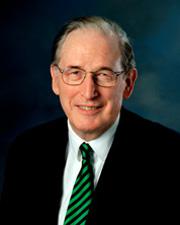 Sen. John D. Rockefeller IV (D-WV)
Legislative Activity
Stay on top of the latest movement without scrolling through every action
Senate amendment not agreed to: Amendment SA 975 not agreed to in Senate by Yea-Nay Vote. 47 - 51. Record Vote Number: 257.
June 26, 2003
View full timeline
Senate amendment not agreed to: Amendment SA 975 not agreed to in Senate by Yea-Nay Vote. 47 - 51. Record Vote Number: 257.
June 26, 2003
Roll call votes on amendments in Senate: Amendment SA 975 not agreed to in Senate by Yea-Nay Vote. 47 - 51. Record Vote Number: 257.
June 26, 2003
Considered by Senate. (consideration: CR S8606, S8639-8641, S8644, S8647-8648; text as modified: CR S8639-8640)
June 26, 2003
Amendment SA 975 not agreed to in Senate by Yea-Nay Vote. 47 - 51. Record Vote Number: 257.
June 26, 2003
Considered by Senate. (consideration: CR S8480)
June 25, 2003
Considered by Senate. (consideration: CR S8386)
June 24, 2003
Senate amendment submitted
June 23, 2003
Senate amendment proposed (on the floor): Amendment SA 975 proposed by Senator Rockefeller.(consideration: CR S8324-8325; text: CR S8325)
June 23, 2003
Amendment SA 975 proposed by Senator Rockefeller. (consideration: CR S8324-8325; text: CR S8325) To make all Medicare beneficiaries eligible for Medicare prescription drug coverage.
June 23, 2003
Votes
1 roll call on this amendment
Text
Modified
PRESCRIPTION DRUG AND MEDICARE IMPROVEMENT ACT OF 2003--Continued

The PRESIDING OFFICER. The Senator from Louisiana.
Mr. BREAUX. I thank the Chair. Mr. President, I would like to make a
couple comments before we begin voting.
This legislation is historic. It is incredibly important. It is the
first reform in a major way to the Medicare Program since we wrote it
over 35 years ago in 1965.
To get this legislation adopted by the Congress and signed into law
by the President, there obviously has to be a great deal of work, a
great deal of legitimate compromise among the various parties that have
put this package together. That is what this bill does.
There are some Members of Congress who argue the Federal Government
should do nothing with regard to Medicare--that the private sector
should do everything and that the Federal Government should do nothing.
There are others, on the other hand, who take the position that with
regard to Medicare the Federal Government should do everything and the
private sector should do nothing.
What we have been able to put together, under the leadership of the
chairman and ranking member and many others who have worked so hard, is
a compromise that says let's combine the best of what the Government
can do with the best of what the private sector can do and put that
package together. That is why we have gotten to the point we are today.
We saw a bill come out of the Senate Finance Committee in a
bipartisan fashion with 16 votes in favor; only five votes against it.
I predict when the final vote comes on this bill, we will see the same
type of bipartisan representation with a significant number, maybe over
three-fourths of the Senate saying, yes, this has sufficient
improvement and reform in it for me to support it.
It has enough Government involvement to make sure it is paid for,
enough Government involvement to make sure it is run properly but not
micromanaged, and it has enough private sector involvement to deliver,
for the very first time, through a competitive private delivery system,
prescription drugs for all seniors regardless of where they are or in
what program they happen to be.
It also says the private sector will offer, for the first time on a
voluntary basis, to seniors who want to move into a new system a
private delivery system that will cover drugs, will cover hospitals,
and will also cover physician charges under the program. This is a
historic opportunity to combine the best of what Government can do with
the best of what the private sector can do.
There is going to be a very important amendment offered by Chairman
Grassley and the ranking member, Senator Baucus. Because we were able
to get a score that said there is $12 billion extra money available,
the question then became, How do we divide it? I never thought we would
have such a difficult time spending money. We normally get into fights
when we do not have enough money. Lo and behold, we found there was $12
billion in extra funds.
The question then for the Senate is how are we going to allocate that
money? Senator Baucus and Senator Grassley, working with Senator
Kennedy and others, came up with a plan that is fair.
It says to the Republican Members: Take half of it, and they want to
utilize it for a demonstration program to determine whether PPOs or the
provider networks in the private sector will work. We are not certain.
We think they will. But let's do a test. And if it costs more, there
will be $6 billion available to pay for it starting in the year 2009.
That is what many Republicans thought was the right way to use half of
the money.

On the other hand, Members on my side said, We need to do more for
traditional fee-for-service. If they are going to experiment with the
preferred providers in the private sector, we want to also know what
will happen if we are able to put in more money for preventive health
care and for people who want to stay in the old program.
What Senator Baucus and Senator Grassley did, working with Senator
Kennedy, was to say to people who are inclined to the Democratic
perspective, we are going to let you use $6 billion for people who want
to stay in the old program. Here is what you can do with it: You can
use the money to provide enhanced benefits for people who stay in
traditional Medicare. What we mean by that is to give them additional
care for chronic care coordination, for the chronically ill, to
coordinate better how they are getting their health care.
We have more money for disease management, which is incredibly
important. When we are talking about saving money and giving people a
better quality of life; disease management is important. Also, they can
use the money for other benefits and services that the Secretary
determines will improve preventive health care for the beneficiaries.
What we have crafted is an effort to take the extra money and allow
for a legitimate experiment, a legitimate test of whether the preferred
provider system will cost less money--I think it will; they can provide
services that I think are better and at a better price, but we do not
know that for sure, so let's do some testing on it in certain regions
of the country. If it saves money, hallelujah for everybody. But if it
costs money, they will have $6 billion to help pay for those extra
charges.
The Democrats, on the other hand, have the provisions to have $6
billion over the period in order to provide disease management and
preventive health care services in the traditional Medicare Program.
That is as fair as it can be in a divided Senate. If one side had their
way, they would do it all with the preferred providers. If our side
perhaps had their will, it would provide all the money to be put back
in traditional Medicare, but we all know in a divided Senate that is
not possible.
So the best possible compromise has been crafted by the chairman,
Senator Grassley; by the ranking member, Senator Baucus; and by Senator
Kennedy's involvement and many others who have worked on this issue.
This is a good amendment. It is an important amendment. We are on the
edge of an historic day in being able to enact real Medicare reform
with prescription drugs for all of our Nation's seniors. We cannot let
that goal be lost while we fight over how to divide extra funds. I
think this division is as fair as it possibly can be, and I urge all of
our Members to vote for it. In fact, I think the vote should be
approximately like it came out in the Finance Committee. We lost a few
what I would say were on the left, we lost a few what I would say were
on the right, of the political spectrum. But in the end the vast
majority supported this legislation in the committee and will do so on
the Senate floor.
I certainly ask them to support the Grassley-Baucus amendment when it
is voted on as well.
I yield the floor.
The PRESIDING OFFICER. All time has expired.

Vote on Amendment No. 1102

The PRESIDING OFFICER. The question is on agreeing to the McConnell
amendment No. 1102.
Mr. HATCH. I ask for the yeas and nays.
The PRESIDING OFFICER. Is there a sufficient second?
There appears to be a sufficient second.
The clerk will call the roll.
The legislative clerk called the roll.
Mr. REID. I announce that the Senator from Massachusetts (Mr. Kerry)
and the Senator from Connecticut (Mr. Lieberman) are necessarily
absent.

[[Page S8636]]

I further announce that, if present and voting, the Senator from
Massachusetts (Mr. Kerry) would vote ``yea''.
The PRESIDING OFFICER. Are there any other Senators in the Chamber
desiring to vote?
The result was announced--yeas 98, nays 0, as follows:

[Rollcall Vote No. 252 Leg.]

YEAS--98

Akaka
Alexander
Allard
Allen
Baucus
Bayh
Bennett
Biden
Bingaman
Bond
Boxer
Breaux
Brownback
Bunning
Burns
Byrd
Campbell
Cantwell
Carper
Chafee
Chambliss
Clinton
Cochran
Coleman
Collins
Conrad
Cornyn
Corzine
Craig
Crapo
Daschle
Dayton
DeWine
Dodd
Dole
Domenici
Dorgan
Durbin
Edwards
Ensign
Enzi
Feingold
Feinstein
Fitzgerald
Frist
Graham (FL)
Graham (SC)
Grassley
Gregg
Hagel
Harkin
Hatch
Hollings
Hutchison
Inhofe
Inouye
Jeffords
Johnson
Kennedy
Kohl
Kyl
Landrieu
Lautenberg
Leahy
Levin
Lincoln
Lott
Lugar
McCain
McConnell
Mikulski
Miller
Murkowski
Murray
Nelson (FL)
Nelson (NE)
Nickles
Pryor
Reed
Reid
Roberts
Rockefeller
Santorum
Sarbanes
Schumer
Sessions
Shelby
Smith
Snowe
Specter
Stabenow
Stevens
Sununu
Talent
Thomas
Voinovich
Warner
Wyden

NOT VOTING--2

Kerry
Lieberman

The amendment (No. 1102) was agreed to.
Mr. HATCH. Mr. President, I move to reconsider the vote.
Mr. REID. I move to lay that motion on the table.
The motion to lay on the table was agreed to.

Amendment No. 1102, As Modified

Mr. HATCH. Mr. President, I ask unanimous consent that amendment
1102, which was just agreed to, be modified with the changes that are
the desk.
The PRESIDING OFFICER (Mr. Crapo). Without objection, it is so
ordered.
The amendment (No. 1102), as modified, is as follows:

(Purpose: To protect seniors with cardiovascular disease, cancer,
diabetes, or Alzheimer's disease)

At the end of subtitle A of title I, add the following:

SEC. ____. PROTECTING SENIORS WITH CARDIOVASCULAR DISEASE,
CANCER, OR ALZHEIMER'S DISEASE.

Any eligible beneficiary (as defined in section 1860D(3) of
the Social Security Act) who is diagnosed with cardiovascular
disease, cancer, diabetes or Alzheimer's disease shall be
protected from high prescription drug costs in the following
manner:
(1) Subsidy eligible individuals with an income below 100
percent of the federal poverty line.--If the individual is a
qualified medicare beneficiary (as defined in section 1860D-
19(a)(4) of such Act), such individual shall receive the full
premium subsidy and reduction of cost-sharing described in
section 1860D-19(a)(1) of such Act, including the payment
of--
(A) no deductible;
(B) no monthly beneficiary premium for at least one
Medicare Prescription Drug plan available in the area in
which the individual resides; and
(C) reduced cost-sharing described in subparagraphs (C),
(D), and (E) of section 1860D-19(a)(1) of such Act.
(2) Subsidy eligible individuals with an income between 100
and 135 percent of the federal poverty line.--If the
individual is a specified low income medicare beneficiary (as
defined in paragraph 1860D-19(4)(B) of such Act) or a
qualifying individual (as defined in paragraph 1860D-19(4)(C)
of such Act) who is diagnosed with cardiovascular disease,
cancer, or Alzheimer's disease, such individual shall receive
the full premium subsidy and reduction of cost-sharing
described in section 1860D-19(a)(2) of such Act, including
payment of--
(A) no deductible;
(B) no monthly premium for any Medicare Prescription Drug
plan described paragraph (1) or (2) of section 1860D-17(a) of
such Act; and
(C) reduced cost-sharing described in subparagraphs (C),
(D), and (E) of section 1860D-19(a)(2) of such Act.
(3) Subsidy-eligible individuals with income between 135
percent and 160 percent of the federal poverty level.--If the
individual is a subsidy-eligible individual (as defined in
section 1860D-19(a)(4)(D) of such Act) who is diagnosed with
cardiovascular disease, cancer, or Alzheimer's disease, such
individual shall receive sliding scale premium subsidy and
reduction of cost-sharing for subsidy-eligible individuals,
including payment of--
(A) for 2006, a deductible of only $50;
(B) only a percentage of the monthly premium (as described
in section 1860D-19(a)(3)(A)(i)); and
(C) reduced cost-sharing described in clauses (iii), (iv),
and (v) of section 1860D-19(a)(3)(A).
(4) Eligible beneficiaries with income above 160 percent of
the federal poverty level.--If an individual is an eligible
beneficiary (as defined in section 1860D(3) of such Act), is
not described in paragraphs (1) through (3), and is diagnosed
with cardiovascular disease, cancer, or Alzheimer's disease,
such individual shall have access to qualified prescription
drug coverage (as described in section 1860D-6(a)(1) of such
Act), including payment of--
(A) for 2006, a deductible of $275;
(B) the limits on cost-sharing described section 1860D-
6(c)(2) of such Act up to, for 2006, an initial coverage
limit of $4,500; and
(C) for 2006, an annual out-of-pocket limit of $3,700 with
10 percent cost-sharing after that limit is reached.

Mr. HATCH. Mr. President, I ask unanimous consent that the next three
votes be 10 minutes in length each.
The PRESIDING OFFICER. Without objection, it is so ordered.

Amendment No. 1108

Under the previous order, there will 2 minutes equally divided on the
Durbin amendment No. 1108.
Mr. DURBIN. Mr. President, with all due respect to my colleagues, the
amendment we just agreed to did nothing. It did not add one penny or
one new benefit to any senior suffering from Alzheimer's. This
amendment I offer, along with Senator Harkin, will put $12 billion into
providing prescription drug coverage for the seniors we represent who
suffer from heart disease, cancer, Alzheimer's, diabetes and its
complications. Take your pick--a $6 billion tax subsidy for HMO and
private insurance companies or $12 billion for your seniors struggling
to pay impossible prescription drug bills who will be cut off under
this bill. It is an easy choice for me. If you take it home to your
State, you will find it is an easy choice, too.
I hope you will vote for this amendment.
The PRESIDING OFFICER. The Senator from Utah.
Mr. HATCH. Mr. President, I rise in opposition. I want to stress my
opposition is not because I do not understand or am not sympathetic to
the difficult situation beneficiaries who are afflicted with
cardiovascular disease, cancer, or Alzheimer's disease experience.
But I also recognize there are millions and millions of other seniors
who suffer from diseases just as debilitating and life-threatening as
the ones my colleague has identified here. Under this proposal they
would be treated as second-class citizens because they do not suffer
from the right disease.
The most basic, and really the most important, tenet of the Medicare
program is to provide a universal benefit to all seniors. We have done
that under S. 1.
We crafted a prescription drug benefit that helps every senior and
also targets the most help to those who are less able to afford the
appropriate care.
While I am sympathetic to my colleagues' desire to enhance the
benefit, I can't support a proposal that pits one group of seniors
against the other based solely on this disease.
I urge my colleagues to vote against this amendment so we can remain
faithful to the most basic tenet of the Medicare program, a universal
benefit, and to ensure that the Senate does not discriminate against
seniors based on their disease.
I move to table the amendment, and I ask for the yeas and nays.
The PRESIDING OFFICER. Is there a sufficient second?
There is a sufficient second.
The question is on agreeing to the motion. The clerk will call the
roll.
The assistant legislative clerk called the roll.
Mr. REID. I announce that the Senator from Massachusetts (Mr. Kerry)
and the Senator from Connecticut (Mr. Lieberman) are necessarily
absent.
I further announce that, if present and voting, the Senator from
Massachusetts (Mr. Kerry) would vote ``nay.''
The PRESIDING OFFICER. Are there any other Senators in the Chamber
desiring to vote?
The result was announced--yeas 57, nays 41, as follows:

[[Page S8637]]

[Rollcall Vote No. 253 Leg.]

YEAS--57

Alexander
Allard
Allen
Baucus
Bennett
Bond
Breaux
Brownback
Bunning
Burns
Campbell
Chafee
Chambliss
Cochran
Coleman
Collins
Cornyn
Craig
Crapo
DeWine
Dole
Domenici
Ensign
Enzi
Fitzgerald
Frist
Graham (SC)
Grassley
Gregg
Hagel
Hatch
Hutchison
Inhofe
Jeffords
Kennedy
Kyl
Lott
Lugar
McCain
McConnell
Miller
Murkowski
Nelson (NE)
Nickles
Roberts
Santorum
Sessions
Shelby
Smith
Snowe
Specter
Stevens
Sununu
Talent
Thomas
Voinovich
Warner

NAYS--41

Akaka
Bayh
Biden
Bingaman
Boxer
Byrd
Cantwell
Carper
Clinton
Conrad
Corzine
Daschle
Dayton
Dodd
Dorgan
Durbin
Edwards
Feingold
Feinstein
Graham (FL)
Harkin
Hollings
Inouye
Johnson
Kohl
Landrieu
Lautenberg
Leahy
Levin
Lincoln
Mikulski
Murray
Nelson (FL)
Pryor
Reed
Reid
Rockefeller
Sarbanes
Schumer
Stabenow
Wyden

NOT VOTING--2

Kerry
Lieberman

The motion was agreed to.
Mr. REID. Mr. President, I move to reconsider the vote and to lay
that motion on the table.
The motion to lay on the table was agreed to.

Amendment No. 1103 To Amendment No. 1092

The PRESIDING OFFICER. Under the previous order, there are 2 minutes
equally divided on the Dorgan second-degree amendment.
Who yields time?
Mr. DORGAN. Mr. President, the importance of this amendment is
answering the question, what to do with $12 billion. I propose we use
that $12 billion to reduce the premium that senior citizens will be
required to pay for this prescription drug benefit, roughly $7 a month,
from $35 to $28.
The rebuttal to my amendment has been: This really doesn't mean very
much. Only in this Chamber would $12 billion not mean very much.
Frankly, this means a great deal to senior citizens. The underlying
amendment represents the worst of all worlds. It says, let's give $6
billion to insurance companies. And I guarantee, you dye that money
purple, you will have purple pockets in the insurance industry. That is
where it is going. Let's have $6 billion go to the insurance industry
to conduct an experiment that we already know has failed.
I don't understand why that is the way we want to use billions of
dollars. Why not use it to help senior citizens close the coverage gap
or, as I suggest, to reduce monthly premiums which start at $35 a month
in this bill and then ratchet up and up and up as prescription drug
prices increase. Pass my amendment and help senior citizens reduce
these premiums.
The PRESIDING OFFICER. The Senator from Iowa.
Mr. GRASSLEY. Yes, $12 billion is a lot of money; $6 billion of that
$12 billion he wants to take away from this provision, this bipartisan
provision, that would be used for things he stands for. He has been
talking about chronic disease management. He has been talking about
managing to a better extent people with chronic diseases. We have put
$6 billion into demonstration projects like that to save the taxpayers'
money. Why? Because 5 percent of the seniors cause 50 percent of the
costs to Medicare. That is why those demonstration projects are very
important. That is why I hope you will vote against this amendment.
Mr. SANTORUM. Mr. President, I ask for the yeas and nays.
The PRESIDING OFFICER. Is there a sufficient second?
There appears to be a sufficient second.
The question is on agreeing to the amendment. The clerk will call the
roll.
The legislative clerk called the roll.
Mr. REID. I announce that the Senator from Massachusetts (Mr. Kerry)
and the Senator from Connecticut (Mr. Lieberman) are necessarily
absent.
I further announce that, if present and voting, the Senator from
Massachusetts (Mr. Kerry) would vote ``yea.''
The PRESIDING OFFICER. Are there any other Senators in the Chamber
desiring to vote?
The result was announced--yeas 39, nays 59, as follows:

[Rollcall Vote No. 254 Leg.]

YEAS--39

Akaka
Bayh
Biden
Bingaman
Boxer
Byrd
Cantwell
Clinton
Conrad
Corzine
Daschle
Dayton
Dodd
Dorgan
Durbin
Edwards
Feingold
Feinstein
Graham (FL)
Harkin
Hollings
Inouye
Johnson
Kohl
Lautenberg
Leahy
Levin
Lincoln
Mikulski
Murray
Nelson (FL)
Pryor
Reed
Reid
Rockefeller
Sarbanes
Schumer
Stabenow
Wyden

NAYS--59

Alexander
Allard
Allen
Baucus
Bennett
Bond
Breaux
Brownback
Bunning
Burns
Campbell
Carper
Chafee
Chambliss
Cochran
Coleman
Collins
Cornyn
Craig
Crapo
DeWine
Dole
Domenici
Ensign
Enzi
Fitzgerald
Frist
Graham (SC)
Grassley
Gregg
Hagel
Hatch
Hutchison
Inhofe
Jeffords
Kennedy
Kyl
Landrieu
Lott
Lugar
McCain
McConnell
Miller
Murkowski
Nelson (NE)
Nickles
Roberts
Santorum
Sessions
Shelby
Smith
Snowe
Specter
Stevens
Sununu
Talent
Thomas
Voinovich
Warner

NOT VOTING--2

Kerry
Lieberman

The amendment (No. 1103) was rejected.

Amendment No. 1092

The PRESIDING OFFICER. Under the previous order, there are now 2
minutes equally divided on the Grassley amendment.
The Senator from Montana.
Mr. BAUCUS. Mr. President, I say to my colleagues, this is the key
amendment that will provide for the passage of this legislation and,
therefore, prescription drug benefits for seniors. It is the key
amendment.
Why do I say key amendment? Very simply because we have $12 billion,
and we have to find a way, in an evenhanded, balanced way, to spend
that $12 billion. We have to marry two competing philosophies: private
competition and Medicare.
We have, therefore, designed the solution that the $12 billion will
be evenly divided to keep the balance so that we can get this
legislation passed and, more importantly, so seniors get a prescription
drug benefit as quickly as possible.
If this amendment is not adopted, we are going to be in the soup.
There are going to be Senators from one side of the aisle who are going
to want to spend all of it their way; there are going to be Senators on
the other side of the aisle who want it all spent their way; and we are
going to be nowhere. We are going to be back where we have been the
last 4 years, talking about prescription drugs benefits but not doing
something about it, not providing the benefits to our seniors.
This is a key amendment. This is the amendment which will allow
benefits to go to seniors.
The PRESIDING OFFICER (Mr. Smith). The Senator's time has expired.
The Senator from Pennsylvania.
Mr. SANTORUM. Mr. President, to pick up on what Senator Baucus said,
let me tell you what this does. There will be $6 billion spent on our
side of the aisle to do the things about which we are concerned. What?
Allow the competitive model to work, allow the new blueprint for
Medicare to be successful, starting in 2009, because that is when the
money is available, but what Jon Kyl and so many others on this side of
the aisle have been concerned about is in this amendment. If my
colleagues want to give competition a chance, this is the amendment
they vote for.

On that side of the aisle, what is $6 billion? For chronic care and
disease management. Senator Kennedy has worked on this tirelessly. Five
percent of Medicare recipients consume 50 percent of the Medicare
benefits. What we need in the fee-for-service plan is programs for
disease management and chronic illness management. As the Senator from
Massachusetts said to me just a few minutes ago, nowhere else will we
be able to find $6 billion to do this very important, cost-saving,
quality improvement to the basic Medicare system. It is what both sides
want.
We have come together and we hope we will get strong support for this
amendment.

[[Page S8638]]

Several Senators addressed the Chair.
The PRESIDING OFFICER. The majority leader.
Mr. DORGAN. Mr. President, parliamentary inquiry. Who is recognized
to speak in opposition to the amendment?
The PRESIDING OFFICER. The majority leader was recognized.
Mr. FRIST. Mr. President, very briefly, this amendment is the
culmination of several days of debate where both Democrats and
Republicans have come together, again bringing different issues to the
table, but together it is a positive, strong amendment for the American
people and for seniors.
On the one hand, it invests $6 billion, that is not in the underlying
bill, in preventive medicine, which almost does not exist in
traditional Medicare, and in chronic disease management. All of us know
5 percent of the beneficiaries are responsible for 50 percent of the
cost and we know we need to manage those people better. So we have $6
billion for preventive medicine and chronic disease management.
In addition, there is $6 billion to support the concept of private
enterprise, competition, the private entities, which we believe is not
the only salvation but critical if we are going to address the long-
term, 75-year unfunded liabilities that are incurred when we add a new
prescription drug benefit.
For that reason, I urge our colleagues on both sides of the aisle to
recognize that we worked together, Democrats and Republicans, to come
to this carefully negotiated agreement that will be to the benefit of
seniors and individuals with disabilities.
Several Senators addressed the Chair.
The PRESIDING OFFICER. The Senator from North Dakota.
Mr. DORGAN. Mr. President, parliamentary inquiry. My understanding
was prior to a vote there was to be time divided between opponents and
supporters. We have just heard from three supporters.

The PRESIDING OFFICER. The agreement was the time was to be evenly
divided.
Mr. DORGAN. Evenly divided between whom?
The PRESIDING OFFICER. The managers.
Mr. BAUCUS. Mr. President, I ask unanimous consent that the Senator
from North Dakota be given 2 minutes.
The PRESIDING OFFICER. Without objection, it is so ordered.
The Senator from North Dakota.
Mr. DORGAN. Mr. President, there does need to be opposition, it seems
to me, for those of us who believe this is not the right way to use $12
billion. The $12 billion was made available. Twelve billion is what we
discovered. The CBO estimate was below the $400 billion available for
this program. So the question was: How shall the $12 billion be used?
We have spent all of our lives in this Chamber making choices. Too
often we make the wrong choices in circumstances such as this. We come
back with a plan that says let's use the $12 billion for two purposes,
and both of them are for experiments. In both cases, we know the answer
to the experiments. One, $6 billion to the insurance companies so we
can incentivize--subsidize--the insurance companies to see if they can
provide the prescription drug benefit at equivalent or less cost than
Medicare does. We know the answer to that. That experiment has been
done.
Ask senior citizens all across this country what would you rather
have, better benefits or lower costs or would you like to have $12
billion in demonstration projects? That is the choice. The choice has
been presented to us at this point in this amendment to say let's
bifurcate this into two $6 billion pots, both of which will be
demonstration projects, the answer to which we know in both cases.
First, the circumstance with subsidizing the insurance companies, we
know the answer to that. They are going to provide this benefit at
higher costs. We know that. Second, does wellness and chronic care
help? Yes, we know that. Why do we not take the $12 billion and use it
to provide better benefits or lower costs for senior citizens? After
all, that is why we started this process, to provide a prescription
drug benefit that works for senior citizens.
We come to the end of this process, and we have a group of people who
go into a closed room and come out with a deal that says we have
decided how the $12 billion should be used.
Ask senior citizens how they would like it used and I guarantee there
is only one answer from every corner of this country: Use it to provide
us benefits that were promised, deliver that which was promised to us.
The PRESIDING OFFICER. The Senator's time has expired.
Mr. SANTORUM. I ask for the yeas and nays.
The PRESIDING OFFICER. Is there a sufficient second?
There appears to be a sufficient second.
The question is on agreeing to amendment No. 1092, as modified.
The clerk will call the roll.
The assistant legislative clerk called the roll.
Mr. McCONNELL. I announce that the Senator from Ohio (Mr. Voinovich)
is necessarily absent.
Mr. REID. I announce that the Senator from Massachusetts (Mr. Kerry)
and the Senator from Connecticut (Mr. Lieberman) are necessarily
absent.
I further announce that, if present and voting, the Senator from
Massachusetts (Mr. Kerry) would vote ``nay''.
The PRESIDING OFFICER. Are there any other Senators in the Chamber
desiring to vote?
The result was announced--yeas 71, nays 26, as follows:

[Rollcall Vote No. 255 Leg.]

YEAS--71

Alexander
Allard
Allen
Baucus
Bayh
Bennett
Biden
Bingaman
Bond
Breaux
Brownback
Bunning
Burns
Campbell
Carper
Chafee
Chambliss
Cochran
Coleman
Collins
Conrad
Cornyn
Corzine
Craig
Crapo
DeWine
Dole
Domenici
Ensign
Enzi
Feinstein
Fitzgerald
Frist
Graham (SC)
Grassley
Gregg
Hagel
Hatch
Hutchison
Inhofe
Inouye
Jeffords
Kennedy
Kyl
Landrieu
Lautenberg
Lincoln
Lott
Lugar
McCain
McConnell
Miller
Murkowski
Nelson (NE)
Nickles
Pryor
Reid
Roberts
Santorum
Schumer
Sessions
Shelby
Smith
Snowe
Specter
Stevens
Sununu
Talent
Thomas
Warner
Wyden

NAYS--26

Akaka
Boxer
Byrd
Cantwell
Clinton
Daschle
Dayton
Dodd
Dorgan
Durbin
Edwards
Feingold
Graham (FL)
Harkin
Hollings
Johnson
Kohl
Leahy
Levin
Mikulski
Murray
Nelson (FL)
Reed
Rockefeller
Sarbanes
Stabenow

NOT VOTING--3

Kerry
Lieberman
Voinovich
The amendment (No. 1092) was agreed to.
Mr. REID. Mr. President, I move to reconsider the vote.
Mr. ENSIGN. I move to lay that motion on the table.
The motion to lay on the table was agreed to.
Mr. REID. I suggest the absence of a quorum.
The PRESIDING OFFICER. The clerk will call the roll.
The assistant legislative clerk proceeded to call the roll.
Mr. BAUCUS. Mr. President, I ask unanimous consent that the order for
the quorum call be rescinded.
The PRESIDING OFFICER. Without objection, it is so ordered. The
Senate will be in order.
The Senator from Montana.
Mr. BAUCUS. Mr. President, on behalf of myself and the chairman of
the committee, Senator Grassley, I ask unanimous consent that at 5 p.m.
today the Senate proceed to a vote in relation to the Sessions
amendment, No. 1011, to be followed by a vote in relation to the
Rockefeller amendment numbered 975, as modified; to be followed by a
vote in relation to the Bingaman amendment numbered 1066; provided
further that there be no amendment in order to the amendments prior to
the votes, and there be 2 minutes equally divided for debate.

The PRESIDING OFFICER. Is there objection?
Without objection, it is so ordered.
Mr. REID. Mr. President, I ask unanimous consent that the time
between now and 5 o'clock be equally divided.
The PRESIDING OFFICER. Without objection, it is so ordered.
Who yields time?
Mr. REID. Mr. President, I suggest the absence of a quorum, and I ask

[[Page S8639]]

unanimous consent that the time be equally divided.
The PRESIDING OFFICER. Without objection, it is so ordered.
The clerk will call the roll.
The assistant legislative clerk proceeded to call the roll.
Mr. BAUCUS. Mr. President, I ask unanimous consent that the order for
the quorum call be rescinded.
The PRESIDING OFFICER. Without objection, it is so ordered.
Mr. BAUCUS. Mr. President, I yield 5 minutes to the Senator from West
Virginia.
The PRESIDING OFFICER. The Senator from West Virginia.
Mr. ROCKEFELLER. Mr. President, I thank the distinguished ranking
member of the Finance Committee.

Amendment No. 975, As Modified

Mr. President, in accordance with the agreement just entered into, I
send a modification of my amendment to the desk and ask for its
immediate consideration.
The PRESIDING OFFICER. The amendment is so modified.
The amendment (No. 975), as modified, is as follows:

On page 10, lines 12 and 13, strike ``(other than a dual
eligible individual, as defined in section 1860D-
19(a)(4)(E))''.
On page 21, strike lines 22 through 25, and insert ``title
XIX through a waiver under 1115 where covered outpatient
drugs are the sole medical assistance benefit.
On page 107, line 3, strike ``30 percent'' and insert
``27.5 percent''.
On page 116, line 10, insert ``and'' after the semi-colon.
On page 116, line 12, strike ``; and'' and insert a period.
On page 116, strike lines 13 through 17.
On page 116, line 24, insert ``and'' after the semi-colon.
On page 117, line 2, strike ``; and'' and insert a period.
On page 117, strike lines 3 through 7.
On page 117, line 13, insert ``and'' after the semicolon.
On page 117, line 17, strike ``; and'' and insert a period.
On page 117, strike lines 18 through 23.
On page 118, line 6, insert ``and'' after the semicolon.
On page 118, in line 13, insert ``or'' after the semi-
colon.
On page 118, line 14, strike ``; or'' and insert a period.
On page 118, strike line 15.
Beginning on page 118, strike line 16 and all that follows
through page 119, line 9.
On page 119, line 10, strike ``(F)'' and insert ``(E)''.
On page 119, line 15, strike ``(G)'' and insert ``(F)''.
On page 119, line 19, strike ``(C), (D), or (E)'' and
insert ``(C), or (D)''.
On page 120, line 3, strike ``(H)'' and insert ``(G)''.
On page 120, lines 5 and 6, strike ``who is a dual eligible
individual or an individual''.
Beginning on page 121, line 24, strike ``dual eligible''
and all that follows through ``and'' on page 122, line 1.
On page 146, line 6, insert before the period ``and to the
design, development, acquisition or installation of improved
data systems necessary to track prescription drug spending
for purposes of implementing section 1935(c)''.
Beginning on page 146, strike line 23 and all that follows
through page 149, line 21, and insert the following:
``(c) Federal Assumption of Medicaid Prescription Drug
Costs for Dually Eligible Beneficiaries.--
``(1) In general.--For purpose of section 1903(a)(1) for a
State for a calendar quarter in a year (beginning with 2006)
the amount computed under this subsection is equal to the
product of the following:
``(A) Standard prescription drug coverage under medicare.--
With respect to individuals who are residents of the State,
who are entitled to, or enrolled for, benefits under part A
of title XVIII, or are enrolled under part B of title XVIII
and are receiving medical assistance under subparagraph
(A)(i), (A)(ii), or (C) of section 1902(a)(10) (or as the
result of the application of section 1902(f)) that includes
covered outpatient drugs (as defined for purposes of section
1927) under the State plan under this title (including such a
plan operated under a waiver under section 1115)--
``(i) the total amounts attributable to such individuals in
the quarter under section 1860D-19 (relating to premium and
cost-sharing subsidies for low-income medicare
beneficiaries); and
``(ii) the actuarial value of standard prescription drug
coverage (as determined under section 1860D-6(f)) provided to
such individuals in the quarter.
``(B) State matching rate.--A proportion computed by
subtracting from 100 percent the Federal medical assistance
percentage (as defined in section 1905(b)) applicable to the
State and the quarter.
``(C) Phase-out proportion.--Subject to subparagraph (D),
the phase-out proportion for a quarter in--
``(i) 2006 is 100 percent;
``(ii) 2007 is 95 percent;
``(iii) 2008 or 2009, is 90 percent;
``(iv) 2010 is 86 percent; or
``(v) 2011, 2012, or 2013 is 80 percent.
``(d) Medicaid as Secondary Payor.--In the case of an
individual who is entitled to a Medicare Prescription Drug
plan under part D or drug coverage under a MedicareAdvantage
plan, and medical assistance including covered outpatient
drugs under this title, medical assistance shall continue to
be provided under this title for covered outpatient drugs to
the extent payment is not made under the Medicare
Prescription Drug plan or a MedicareAdvantage plan.''
Beginning on page 152, strike line 3 and all that follows
through page 153, line 15, and insert the following:
``(f) Definition.--For purposes of this section, the term
`subsidy-eligible individual' has the meaning given that term
in subparagraph (D) of section 1860D-19(a)(4).''.
(C) Conforming amendments.--
(1) Section 1903(a)(1) (42 U.S.C. 1396a(a)(1)) is amended
by inserting before the semicolon the following: ``, reduced
by the amount computed under section 1935(c)(1) for the State
and the quarter''.
(2) Section 1108(f) (42 U.S.C. 1308(f)) is amended by
inserting ``and section 1935(e)(1)(B)'' after ``Subject to
subsection (g)''.
Beginning on page 157, strike line 21 and all that follows
through page 158, line 4.
On page 173, beginning on line 15, strike ``that is not''
and all that follows through ``includes'' on line 18 on that
page, and insert ``that includes but is limited solely to''.
On page 190, in line 18, strike ``and''.
On page 190, between lines 18 and 19, insert the following:
``(B) is not a dual eligible beneficiary as defined under
section 1807(i)(1)(B); and''.
On page 190, line 19, strike ``(B)'' and insert ``(C)''.
On page 529, between lines 8 and 9, insert the following:

SEC. 455. MEDICARE SECONDARY PAYOR (MSP) PROVISIONS.

(a) Technical Amendment Concerning Secretary's Authority to
Make Conditional Payment When Certain Primary Plans Do Not
Pay Promptly.--
(1) In general.--Section 1862(b)(2) (42 U.S.C. 1395y(b)(2))
is amended--
(A) in subparagraph (A)(ii), by striking ``promptly (as
determined in accordance with regulations)'';
(B) in subparagraph (B)--
(i) by redesignating clauses (i) through (iii) as clauses
(ii) through (iv), respectively; and
(ii) by inserting before clause (ii), as so redesignated,
the following new clause:
``(i) Authority to make conditional payment.--The Secretary
may make payment under this title with respect to an item or
service if a primary plan described in subparagraph (A)(ii)
has not made or cannot reasonably be expected to make payment
with respect to such item or service promptly (as determined
in accordance with regulations). Any such payment by the
Secretary shall be conditioned on reimbursement to the
appropriate Trust Fund in accordance with the succeeding
provisions of this subsection.''.
(2) Effective date.--The amendments made by paragraph (1)
shall be effective as if included in the enactment of title
III of the Medicare and Medicaid Budget Reconciliation
Amendments of 1984 (Public Law 98-369).
(b) Clarifying Amendments to Conditional Payment
Provisions.--Section 1862(b)(2) (42 U.S.C. 1395y(b)(2)) is
further amended--
(1) in subparagraph (A), in the matter following clause
(ii), by inserting the following sentence at the end: ``An
entity that engages in a business, trade, or profession shall
be deemed to have a self-insured plan if it carries its own
risk (whether by a failure to obtain insurance, or otherwise)
in whole or in part.'';
(2) in subparagraph (B)(ii), as redesignated by subsection
(a)(2)(B)--
(A) by striking the first sentence and inserting the
following: ``A primary plan, and an entity that receives
payment from a primary plan, shall reimburse the appropriate
Trust Fund for any payment made by the Secretary under this
title with respect to an item or service if it is
demonstrated that such primary plan has or had a
responsibility to make payment with respect to such item or
service. A primary plan's responsibility for such payment may
be demonstrated by a judgment, a payment conditioned upon the
recipient's compromise, waiver, or release (whether or not
there is a determination or admission of liability) of
payment for items or services included in a claim against the
primary plan or the primary plan's insured, or by other
means.''; and
(B) in the final sentence, by striking ``on the date such
notice or other information is received'' and inserting ``on
the date notice of, or information related to, a primary
plan's responsibility for such payment or other information
is received''; and
(3) in subparagraph (B)(iii), as redesignated by subsection
(a)(2)(B), by striking the first sentence and inserting the
following: ``In order to recover payment made under this
title for an item or service, the United States may bring an
action against any or all entities that are or were required
or responsible (directly, as an insurer or self-insurer, as a
third-party administrator, as an employer that sponsors or
contributes to a group health plan, or large group health
plan, or otherwise) to make payment with respect to the same
item or service (or any portion thereof) under a primary
plan. The

[[Page S8640]]

United States may, in accordance with paragraph (3)(A)
collect double damages against any such entity. In addition,
the United States may recover under this clause from any
entity that has received payment from a primary plan or from
the proceeds of a primary plan's payment to any entity.''.
(c) Clerical Amendments.--Section 1862(b) (42 U.S.C.
1395y(b)) is amended--
(1) in paragraph (1)(A), by moving the indentation of
clauses (ii) through (v) 2 ems to the left; and
(2) in paragraph (3)(A), by striking ``such'' before
``paragraphs''.

Mr. ROCKEFELLER. Mr. President, this amendment ensures that the
Medicare prescription drug benefit we are debating is, in fact, truly
universal. It is a principle we have all espoused over the years.
The underlying bill, which we are debating, precludes Medicare
beneficiaries who are eligible for Medicaid from enrolling in the
Medicare drug benefit. That would be the first time ever that Medicare
beneficiaries would be, in fact, precluded from being Medicare
beneficiaries.
The group, which is referred to as dual eligibles, consists of those
who are the poorest seniors. They are those who have incomes below 74
percent of poverty. If my colleagues are interested, that income level
is $6,645. That is their total gross income. The majority of them are
single. The majority of them are women who are in poor health and more
likely to be over the age of 85.
Precluding these people is wrong, and my amendment would fix it. I am
happy to say the amendment is budget neutral. I will explain that in a
minute.
Prescription drugs are optional as a benefit under Medicaid. We all
know that. States can limit the number of prescriptions they make
available. Some allow two or three prescriptions per year. They can cap
the benefits. They can charge any copayments they want. They can end it
altogether.
So you have States, predictably, already in a situation with very
different Medicaid levels. Because of our financial situation
nationally, and in our States, Medicaid is always going to be the very
first benefit which will be cut. It has already happened, and will
happen substantially more over the coming years.
I remind, again, my colleagues these are the poorest of the poor, the
oldest of the old, and the sickest of the sick we are talking about.
I strongly urge my colleagues to provide all of the seniors in their
States with the benefit of a real Medicare drug benefit by supporting
this amendment.
If a State gets to the position where it is simply unable to continue
with prescription drugs under the Medicaid program, and they virtually
eliminate it, that poor person, below 74 percent of poverty--which is
just a little bit over $6,000 a year--has nowhere else to go. Always--
including presently--that person can return to Medicare. This
underlying bill would preclude that from happening. My amendment would
fix that in a budget-neutral fashion.
I hope my colleagues will support this amendment which I consider one
of the most moral and humane of amendments that has come before this
body on this issue.
I thank the Presiding Officer.
Mr. GRASSLEY. Mr. President, I rise in opposition to this amendment.
In S. 1, beneficiaries who are enrolled in both Medicaid and Medicare
will continue to receive the generous drug coverage that they currently
know through the Medicaid program.
Some of my colleagues have argued that by having dual eligibles
remain in the Medicaid program, Congress is treating these vulnerable
seniors as second-class citizens and subjecting them to a lower quality
benefit.
This is not the case. In fact, this letter from the Long Term Care
Pharmacy Alliance applauds S. 1 for keeping the duals in Medicaid.
Specifically, the letter states, ``This approach will preserve the
time-tested safeguards designed to prevent medication errors and ensure
quality care for the majority of these beneficiaries in the
institutional setting.''
The policy decision to cover the drug cost for dual eligibles in
Medicaid was not made in vacuum. These vulnerable citizens deserve the
best benefit available, which is the benefit provided through Medicaid.
I also remind my colleagues that the intent of this legislation is to
expand prescription drug coverage to our senior citizens who do not
have access to prescription drugs or who are faced with paying a large
share of their income for their drug coverage.
This does not describe the current coverage experienced by those who
are dually eligible.
These seniors currently have a drug benefit through the Medicaid
program. In fact, many advocates and beneficiaries describe and know
this benefit to be very generous.
Medicaid was created to assist individuals who do not have the means
to pay for their share of health care costs. That is a responsibility
shared between the Federal Government and the States. Medicaid pays for
many benefits that Medicare does not.
We all know that the purpose of S. 1 is to provide prescription drugs
to seniors that do not currently have access to drugs or are paying
extremely high drug costs.
However, recognizing the costs associated with covering the cost of
providing prescription drug coverage to the dual eligible population,
S. 1 does provide nearly 18 billion in new Federal dollars to
compensate States for some of these costs.
This is because S. 1 provides minimum standards that ensure that
every aspect of the benefit provided through Medicaid is the same high
quality that is provided through part D of the Medicare program.
I remind my colleagues that adoption of this amendment will not
expand coverage at all; it will simply shift the cost to the Federal
Government and in time to the other Medicare beneficiaries.
In closing, I remind my colleagues that S. 1 helps to deliver care
that is consistent with current law and is familiar to vulnerable
beneficiaries.
I urge my colleagues to defeat this amendment.
I ask unanimous consent to print the letter to which I referred in
the Record.
There being no objection, the material was ordered to be printed in
the Record, as follows:

Long Term Care Pharmacy Alliance,

Washington, DC, June 24, 2003.
Hon. Charles E. Grassley,
Chairman, Committee on Finance, U.S. Senate, Dirksen
Building, Washington, DC.
Dear Chairman Grassley: On behalf of the Long Term Care
Pharmacy Alliance, I appreciate this opportunity to express
our support for provisions of Medicare legislation you have
advanced to protect the nation's frail elderly beneficiaries
residing in nursing facilities. In particular, we are pleased
that your legislation would allow dual eligible beneficiaries
to retain their prescription drug coverage under Medicaid.
While most Medicare beneficiaries are able to walk into
pharmacies to pick up their prescriptions or to receive vials
of pills through the mail, a sizable percentage of
beneficiaries cannot do so and need special services that
retail and mail order pharmacies do not provide. Nursing home
residents have specific diseases and multiple co-morbidities
that require specialized pharmacy care.
To meet these needs, long-term pharmacies provide
specialized packaging, 24-hour delivery, infusion therapy
services, geriatric-specific formularies, clinical
consultation and other services that are indispensable in the
long-term care environment. Without such treatment, we cannot
expect positive therapeutic outcomes for these patients.
Failure to take into consideration the special pharmacy needs
of the frail and institutionalized elderly will lead to a
marked increase in medication errors and other adverse
events.
In recognition of these concerns, your proposed legislation
would retain the current system of Medicaid coverage to
provide specialized pharmacy services to dual-eligible
beneficiaries residing in nursing facilities. This approach
will preserve the time-tested safeguards designed to prevent
medication errors and ensure quality care for the majority of
these beneficiaries in the institutional setting. Medicaid
today provides generous benefits to dual eligible
beneficiaries and has experience in addressing the special
needs of nursing home patients. The proposed new Medicare
Part D benefit does not contemplate the impact on nursing
home residents which must be considered to protect these
patients.
We are encouraged that Section 104 of the Senate bill
requires the Secretary to provide recommendations to cover
dual eligible beneficiaries by the new Medicare Part D
benefit before statutorily mandating such action.
Nevertheless, we strongly recommend additional language to
address the special pharmacy needs of beneficiaries residing
in nursing facilities who are not dually-eligible for
Medicare and Medicaid. Such language would require the
Secretary of Health and Human Services to review the current
standards of practice for pharmacy services provided to
patients in nursing facilities and to report to the Congress
its

[[Page S8641]]

findings prior to implementation of the new prescription drug
benefit. This report would include a detailed description of
the Department's plans to implement the provisions of this
Act in a manner consistent with applicable state and federal
laws designed to protect the safety and quality of care of
nursing facility patients. Such provisions were included in
legislation approved by the House Ways and Means and Energy
and Commerce Committees, and we would respectfully request
that you adopt similar language.
We appreciate your leadership in carefully considering the
multitude of complex issues related to the creation of a new
Medicare prescription drug benefit. We are grateful for the
chance to work constructively with you to protect patient
safety and to ensure the continued provision of quality
pharmacy services to the most vulnerable seniors.
If you have any questions or would like additional
information, please feel free to contact me. Again, thank you
for your efforts to ensure patient safety and promote quality
care for Medicare beneficiaries residing in nursing
facilities.
Sincerely,
Paul Baldwin,
Executive Director.
Mr. KENNEDY. One of the great strengths of Medicare is that it is for
everyone. Rich and poor alike contribute to the system. Rich and poor
alike benefit from it.
At bottom, Medicare is a commitment to every senior citizen and every
disabled American that we will not have two-class medicine in America.
When a senior citizen enters a hospital, Medicare pays the same amount
for their care whether they are a pauper or a millionaire. When a
senior citizen goes to a doctor, she has the peace of mind of knowing
that Medicare has the same obligation to pay for her treatment no
matter what her financial circumstances--and the doctor has no
financial interest in rationing her care according to the contents of
her bank account.
Through the Medicaid Program, we do try to provide extra help for
those who are poor. But the fact that Medicaid provides extra
assistance for the poor does not reduce Medicare's obligation to
provide equal treatment for all. Medicare always has primary payment
responsibilities for the service it covers. Medicaid is always
supplementary.
Medicaid provides critical help to the poor and elderly, but it does
not provide the same reliable guarantees of equal treatment that
Medicare does. Under Medicaid, States have limited the number of days
of hospital care they would provide or the number of doctor visits they
will support. States have placed arbitrary limits on the number of
prescriptions.
This legislation sets an undesirable precedent for treatment of poor
senior citizens who are eligible for both Medicare and Medicaid. For
every other benefit, these senior citizens enroll in Medicare, and
Medicaid supplements Medicare's coverage. But for this benefit, the
bill says that the poor are excluded from Medicare. The only benefits
they get are from the Medicaid Program. Medicare is for all senior
citizens who paid into the program during their working years--not just
some senior citizens. And it should stay that way.
This amendment rights this wrong. It says we will not take away the
Medicare that the poor have earned by a lifetime of hard work.
The PRESIDING OFFICER. Who yields time?
Mr. BINGAMAN addressed the Chair.
The PRESIDING OFFICER. Who yields time to the Senator from New
Mexico?
Mr. BINGAMAN. Mr. President, I request that the manager allot me 5
minutes.
Mr. BAUCUS. Mr. President, I yield 5 minutes to the Senator from New
Mexico.
The PRESIDING OFFICER. The Senator from New Mexico.
Mr. BINGAMAN. I thank the Senator from Montana.

Amendment No. 1066

Mr. President, I would like to take this opportunity to explain
amendment No. 1066, which is scheduled to be one of the amendments
considered in this next block of amendments.
Mr. President, I am concerned that the prescription drug coverage
included in S. 1 is not sufficient to fully meet the needs of our
seniors and that those seniors who elect to participate in Part D and
get this prescription drug benefit will be restricted from purchasing
supplemental coverage.
The Kaiser Family Foundation estimates that in 2006--which is the
year this legislation really takes effect, this benefit occurs--the
average Medicare beneficiary will spend $3,160 per year on prescription
drugs. Under the current plan, those individuals will have $1,700 that
same year in out-of-pocket expenses in addition to the $420 they pay in
Part D premiums. Therefore, the average Medicare beneficiary who elects
Part D will have approximately $2,100 per year in out-of-pocket
expenses. This translates, of course, into $175 a month. That is a
significant expenditure for a lot of individuals and couples on a fixed
income.
It would seem reasonable to allow these individuals who want to
protect themselves against unpredictable and increasing prescription
drug expenses to purchase supplemental insurance coverage that would
allow additional prescription drugs to be purchased.
Medigap was designed to fill the gaps in Medicare. A sizable gap
exists in the prescription drug benefit we are offering in this bill.
Yet the current bill specifically prohibits seniors from filling that
gap with a Medigap policy.
Section 103 of S. 1, which is the bill we are considering, explicitly
prohibits people who elect Part D prescription drug coverage from
purchasing additional prescription drug coverage as part of any Medigap
plan.
Let me give you the quotation out of the bill. It says:

No Medicare supplemental policy that provides coverage of
expenses for prescription drugs may be sold, issued, or
renewed under this section to an individual who is enrolled
under Part D.

So you essentially have a choice: Am I going to enroll in this new
Part D and get this benefit and therefore forego any Medigap policy or
am I going to stay out?
We are telling seniors whose cost burden, on average, will be $2,100
a year, and 10 percent of whom are likely to have out-of-pocket
expenses of $4,000 or more per year, they will not be allowed to seek
additional prescription drug relief.
The amendment I am offering would give seniors the option of
purchasing more prescription coverage as part of a comprehensive
Medigap plan. The amendment calls on the National Association of
Insurance Commissioners to devise two new Medigap plans that would each
offer prescription drug coverage to beneficiaries who elect Part D.
There are currently 10 standard Medigap plans. They are designated A
through J, and they offer insurance to seniors. Of those, plans H, I,
and J offer prescription drug coverage in addition to Part A and Part B
wraparounds. Of these, H and J are the most commonly elected plans.
Under S. 1, the way it now stands, seniors who elect Part D would no
longer qualify for H, I, or J. However, if the amendment is adopted,
the two new policies designed by the National Association of Insurance
Commissioners would be similar to the current Medigap policies of H and
J, but their prescription drug coverage would be tailored to wrap
around the Part D coverage. So seniors who are currently H or J
subscribers would have the option of electing Part D and still
maintaining a Medigap plan similar to what they have now.
The amendment would give the National Association of Insurance
Commissioners 18 months to develop and report back on these two new
plans. In my view, it would be a substantial improvement to the current
bill.
As I said, my amendment will give the National Association of
Insurance Commissioners 18 months to develop and report back on two new
plans. The NAIC is the appropriate body to develop these plans because
they have a system already in place for doing so with appropriate
representation from all interested and affected parties. The NAIC can
best determine how the benefits proposed in this amendment can be
designed in order to avoid over-utilization and to coordinate with the
existing medigap benefit packages. They were the body employed to
develop the current Medigap plans A through J and they are the body
best equipped to develop these two new plans.
This amendment is similar to language already included in the House
version of the bill and thus already has a great deal of support in the
House of Representatives.
This amendment also provides a provision to stabilize the Medigap
market

[[Page S8642]]

during this time of transition. The current bill states that seniors
who are enrolled in H, I, or J at the time when they elect Part D will
be displaced from their current Medigap plans and given open enrollment
into any other Medigap plan A-G offered in their State. Our amendment
will still guarantee them the option of enrolling in substitute
coverage without the risk of discrimination based on age, health
status, utilization, etc. However, our amendment will reduce the chaos
of this transition time by keeping the majority of Medigap subscribers
with their current carriers.
Let me explain. Beneficiaries displaced from H, I, or J will have the
option of choosing any other Medigap plan--A-G--that their carrier
offers or one of the two new plans. If their current carrier does not
choose to offer one of the new plans then they will have the option of
switching carriers in order to obtain a medigap policy that includes
prescription coverage. Thus, the majority of seniors will be staying
with their current carriers and thus, those carriers will be better
able to predict the affect of this shift and better able to ease the
transition for their subscribers.
This is a simple amendment that should elicit very little
controversy. People may raise concerns because it will be difficult to
construct a standardized wrap around benefit to compliment Part D when
Part D is not standardized. But this is not a reason to deny people
access to supplemental coverage. Rather, we are giving the NAIC 18
months to put together such a plan.
Consumer groups such as the Consumer Union and Medicare Advocacy
support our amendment because it provides much needed additional
coverage options for our Nation's seniors. Likewise, insurance carriers
like it because it allows them to continue to provide a service that
they have been providing up until this point and yet it does not force
them to offer these new plans if they do not see them as viable. The
cost of the amendment should be negligible as it is not adding any
additional Government expenditure nor expediting a beneficiary's trip
to the catastrophic threshold. This amendment simply gives seniors an
opportunity to continue to seek the insurance industry an opportunity
to meet the needs of our seniors not met by Medicare Part D.
Mr. President, I ask my colleagues to review this amendment before
they vote. I think it is an excellent amendment.
I ask them to join me in supporting it.
The PRESIDING OFFICER. Who yields time?

Amendment No. 1011

Mr. GRAHAM of Florida. Mr. President, I rise to speak on an issue
that will come before the Senate shortly. That is an amendment to
strike the language from this legislation which is found in section
605, the legal immigrant child health provision. Let me give the
background on section 605.
What this legislation would do would be to allow States on a State
option basis to elect to provide health care for pregnant women for the
period of their pregnancy, plus 60 days thereafter, and immigrant
children. In both categories we are talking about legal immigrants, not
people who have arrived outside the system and undocumented. These are
individuals who have come to the United States under all of the
procedures that allow for legal immigration, with the most prominent
category being for family reunification.
The restoration of this has already been considered by the Senate
Finance Committee, first in 2001, then in June of 2002, and most
recently in the consideration of this legislation. This provision was
sustained in the chairman's mark, as it had been placed by Senator
Grassley and Senator Baucus, by a vote of 13 to 8. There has been both
consideration and approval of this provision by the Finance Committee.
It has been alleged that the provision of these services to legal
immigrants will encourage illegal immigration. We are talking
exclusively about pregnant women and children who have entered the
United States on a legal basis.
Prior to 1996, there was no restriction on health care benefits for
legal immigrants. We are now carving out from the current exclusion for
health care two categories, which are both humane and very much in the
public interest, that pregnant women have adequate access to health
care and that children grow up with adequate health care.
It has been alleged that there are a number of benefits which have
also been made available to legal immigrants, including emergency
medical services, Head Start programs, foster care, school lunches, and
food stamps. Those can be debated on their own merits but they are no
substitute for providing to legal immigrants, children, and pregnant
women a place to get appropriate health care.
It has also been stated that this should be a responsibility of the
sponsor.
The PRESIDING OFFICER. The Senator's time has expired.
Mr. GRAHAM of Florida. May I have 30 seconds to close?
Mr. BAUCUS. Mr. President, I ask unanimous consent that the Senator
have 30 additional seconds.
The PRESIDING OFFICER. Without objection, it is so ordered.
Mr. GRAHAM of Florida. The Immigration and Naturalization Service
under the current law has limited the kinds of public benefits that are
relevant to the so-called public charge finding. INS officers place no
weight on the receipt of noncash public benefits when determining
whether an immigrant will be a public charge on society. This
provision, section 605, is consistent with current national immigration
policy. Therefore, I urge the defeat of this amendment.
The PRESIDING OFFICER. The Senator from Oklahoma.
Mr. NICKLES. I believe our side has 2 minutes remaining. I ask
unanimous consent for 4 minutes and yield the Senator from Alabama 2
minutes.
The PRESIDING OFFICER. Without objection, it is so ordered.
Mr. SESSIONS. Mr. President, included in the Medicare prescription
drug reform bill in section 605 is a Medicaid reform of welfare
benefits for noncitizens, reversing a policy adopted by this Senate in
1996 by a vote of 74 to 24. Section 605 is a very substantial change in
our current policy. It will cost, according to CBO estimates, $500
million over just 3 years. It is not to be taken lightly. Frankly, we
haven't had debate on it.
I have offered an amendment that would strike the existing language
in section 605, along with a sense of the Senate that this matter go
back to the Finance Committee for hearings this fall, the time when the
Finance Committee plans to be addressing Medicaid welfare reform. That
is what this is. This is Medicaid welfare reform, not Medicare senior
citizens reform.
This is clearly unconnected to the purpose of the bill. It was
slipped in as some sort of compromise. We ought not to allow that to
happen, to erode a very important part of the 1996 Welfare Reform Act.
The administration, which is very favorable to matters that would help
immigrants in this country, opposes this change. They say it should be
done, if at all, as part of the welfare reform of this fall.

That is why our sense of the Senate calls on the Finance Committee to
reevaluate it as part of their requirement this fall on reform welfare.
Millions of people come to this country legally. They come here with
sponsors. Those sponsors say they will pay for the medical welfare
needs of those people they sponsor. That is by affidavit and it should
be honored, not undercut.
Mr. NICKLES. Mr. President, I wish to compliment Senator Sessions for
his leadership. I urge my colleagues to vote in favor of the Sessions
amendment to strike out this provision that does not belong in a
Medicare bill.
This is a Medicaid provision. This is a welfare provision. We are
going to reauthorize welfare later this summer. It should be considered
at that time. This is part of the reforms that were made in 1996 when
we passed the welfare reform act, one of the most successful bills we
ever passed. If we are going to undermine that, do it with a little
consideration. The administration opposes this because it doesn't
belong here, and it is bad policy. This turns immigration policy on its
head.
Let me read the current law on immigration policy. For a legal
immigrant who comes into this country, it is required that the sponsor
of that immigrant sign an affidavit of support to the U.S. Department
of Justice which states:

By signing this form, you, the sponsor, agree to support
the intending immigrant

[[Page S8643]]

and any spouse or children immigrating with him or her, and
to reimburse any Government agency or private entity that
provides these sponsored immigrants with Federal, State, or
local means-tested public benefits.

This provision in the underlying bill would turn this law on its head
and would basically take hundreds of millions of dollars away from
Medicare recipients and give them to immigrants. So this is changing
immigration law and Medicaid law. It needs to be dealt with in the
Medicaid bill and welfare reform bill. It doesn't belong in this bill.
I urge my colleagues to vote in favor of the Sessions amendment.
Mrs. CLINTON. I rise to urge my colleagues to defeat this amendment.
In proposing this amendment, Senator sessions argues that the
restoration of health benefits to legal immigrants has not been fully
reviewed or discussed. he also argues that SCHIP and Medicaid
provisions are welfare reform measures and therefore not germane to the
prescription drug bill. The amendment also states that Congress
deliberately limited benefits available to legal immigrants when it
removed these benefits in 1996.
I respectfully disagree with all of these three assertions.
First of all, the Senate Finance Committee has already extensively
reviewed this issue. In 2001, the Finance Committee held a series of
hearings on health coverage for the uninsured, including legal
immigrants. During the TANF reauthorization mark-up in June 2002, there
was a full debate on the restoration of health benefits to legal
immigrants, and the Immigrant Children's Health Improvement Act passed
as an amendment by a vote of 12 to 9. This year, during Finance
Committee mark-up of the prescription drug bill, there was once again
full debate on the restoration of health benefits to legal immigrants.
Senator Nickles offered an amendment to strike the immigrant children's
health provision from the chairman's mark and that amendment failed by
a vote of 8 to 13.
Second, I disagree with Senator Sessions' argument that Section 605
of the bill is not germane to Medicare prescription drug legislation.
Every time this sort of provision comes to a vote, my colleagues on the
other side of the aisle question the vehicle. When the immigrant child
health provisions came up in committee last year, as part of the TANF
reauthorization mark-up, Senator Hatch remarked that, ``If we start
playing with health care policy, this bill isn't going to go through.''
This year, Senator Sessions is saying that TANF reauthorization is the
appropriate vehicle. I ask my colleagues on the other side of the aisle
then--which one is the appropriate vehicle?
In fact, the restoration of health benefits to legal immigrants is
also a major component of the effort to add a prescription drug benefit
under Medicare. Senators Grassley and Baucus realized this when they
included this provision in the prescription drug mark as part of a
compromise agreement that included both Senator Kyl's undocumented
aliens provision to reimburse hospitals for the cost of treating
undocumented aliens and Senator Graham's legal immigrants provision.
Finally, benefits to legal immigrants were cut in 1996 as a cost-
saving measure, not as a matter of welfare reform. Section 605 of the
underlying bill is also consistent with other policies approved by
President Bush. Last year, the President signed legislation restoring
food stamp benefits for legal immigrant children. The immigrant child
health provisions would make these same children eligible for Medicaid
and SCHIP. In an interview with the Associated Press in May 2002, Tommy
Thompson, Secretary of the Department of Health and Human Services,
stated that he had no ``philosophical objection'' to lifting the ban on
providing health care benefits to legal immigrants.
Senator Sessions' amendment also has significant dire consequences
for women and children, and could add costs to the Medicaid program,
which I am certain that Senator Sessions did not intend. Current
restrictions prevent thousands of legal immigrant children and pregnant
women from getting the same access to preventive health care services
that they would have if they were U.S. citizens. As a result of the
restrictions, immigrant children have fewer opportunities to see a
pediatrician and receive treatment before minor illnesses become
serious and life-threatening. Families who are unable to get basic
preventive care for their children have little choice but to turn to
emergency rooms--the least cost-effective place to provide care--when
their children become sick. Similarly, without prenatal care, a woman
may give birth to a baby with low-birth weight, placing the baby at
risk and resulting in hundreds of thousands of dollars in neonatal
intensive care costs.
Frankly, I am saddened that we must fight over a bipartisan,
thoughtful and extensively reviewed provision that will protect the
health of children who legally came to our country and had no control
over the length of time they were legal immigrants. We must ensure that
it is defeated.
Mr. DASCHLE. Mr. President, with all deference to my colleague from
Alabama, I strongly oppose this amendment to strike the provisions that
would allow States to cover legal immigrants under Medicaid and SCHIP.
As health care measures, these provisions are an appropriate addition
to this legislation, and I am grateful that the chairman of the Senate
Finance Committee included them in his bill.
Legal immigrants were banned from receiving Federal benefits under a
number of programs, including Medicaid, for 5 years. The argument was
made that people shouldn't come to this country if they are going to be
a public charge.
But the reality is that legal immigrants don't come here for our
benefits. They come because they want to work so they can make better
lives for themselves and for their children. They work hard and they
make a vital contribution to our economy. Many are forced to take low-
paying jobs. And many of these jobs do not provide health insurance.
Immigrant families need access to health insurance just as much as
citizen families. They are also just as deserving of this coverage as
citizen families. Immigrants work hard. They pay taxes. They contribute
to their communities. Immigrant children are also required to register
for the Selective Service when they turn 18. According to the American
Immigrant Law Foundation, 60,000 legal immigrants are on active duty in
the U.S. Armed Forces.
Now, when an immigrant woman becomes pregnant, or her child gets
sick, she has few places to turn except to emergency care, which is the
most expensive means of providing health care. Many States have
realized that this is not an acceptable way to address the health care
needs of these families. Some 20 States now provide health care
services to legal immigrants using their own funds. So the burden of
caring for these families has been transferred to States and hospitals.
To respond to this situation, Senator Graham introduced S. 845, the
Immigrant Children's Health Improvement Act, or ICHIA, which simply
allows States to use Federal Medicaid and SCHIP funding to provide
coverage for pregnant women and children who are legal immigrants. The
chairman of the Finance Committee included this provision to give
States this option for fiscal years 2005, 2006, and 2007. This proposal
has strong bipartisan support in both the Senate and in the House. It
was adopted on a bipartisan basis last year in the Finance Committee,
and a bipartisan group of Finance Committee members voted against
stripping this provision from this bill this year.
The administration has suggested that this proposal would somehow
create a new burden on the States. In fact, the proposal only gives
States the option to provide this coverage, and allows them to use
Federal resources to do so, thus giving them significant fiscal relief.
No new burden would be imposed on the States. The National Governors
Association and the National Conference of State Legislatures both
support restoring these benefits. Even Governor Bush of Florida has
indicated he supports this proposal.
More than 5 million children live in poor or ``near-poor'' noncitizen
families. That is more than one-quarter of the total population of poor
or ``near-poor'' children. Almost half of all low-income immigrant
children are uninsured and they are more than twice as likely to be
uninsured as low-income citizen children with native-born parents.

[[Page S8644]]

Many of these children will eventually become American citizens. By
denying all but emergency health care, we increase the risk that these
children will suffer long-term health consequences, which could reduce
their ability to learn and develop, and become productive, contributing
citizens.
It is also worth noting that the Medicaid/SCHIP ban also affects
citizen children living in immigrant families. As many as 85 percent of
immigrant families have at least one child who is a citizen. Although
many of these children are eligible for Medicaid and SCHIP, receipt
among eligible citizen children of noncitizen parents is significantly
below that for other poor children. Parents may be confused about their
children's eligibility, or concerned that somehow claiming these
benefits will affect the status of other family members.
Making sure that pregnant immigrant women, and their children, have
access to health care, including preventive care, is an investment in
the future workforce of this Nation. I believe providing health care
for all of our citizens, including pregnant women and children who are
immigrants, is vital for our future economic strength. It is also the
right thing to do. For that reason, I urge my colleagues to oppose this
amendment.
The PRESIDING OFFICER (Mr. Cornyn). The Senator from Montana is
recognized.
Mr. BAUCUS. Mr. President, I know we have an agreement that the vote
will start at about 5 o'clock. I ask unanimous consent to speak for 2
minutes.
The PRESIDING OFFICER. Without objection, it is so ordered.

Amendment No. 975, as modified

Mr. BAUCUS. Mr. President, I will divide my 2 minutes between two
issues. First is the dual-eligible issue, concerning the amendment
offered by the Senator from West Virginia, Mr. Rockefeller. I have a
lot of sympathy for what he is trying to do. In fact, my preference
would be that low-income senior citizens get benefits under Medicare,
not Medicaid.
Regrettably, we tried to strike a balance at this time so that the
money spent on the bill, the $400 billion, was spent more on seniors,
other beneficiaries, so they get better benefits, rather than spending
the money in States to, in effect, bail out the States for their
responsibilities under Medicaid. When we go to conference, I plan to do
what I can, along with the chairman, to work this issue out. I think
the Senator from West Virginia made a very good point.

Amendment No. 1011

On the other issue, the Sessions amendment, this provision is a
health care provision, not a welfare provision. It is whether legal
immigrants should get Medicaid benefits. That is all it comes down to.
My view is that it is the right policy. It is not neat and tidy, or
perhaps not on the right bill, but it is something that should be done.
It is the right thing to do. I urge Senators to not vote in favor of
the Sessions amendment.
I yield the remainder of my time.
The PRESIDING OFFICER. The Senator from Iowa is recognized.
Mr. GRASSLEY. Mr. President, I ask unanimous consent that we delay
the vote so I can do some amendments that have been agreed to--a
bipartisan list of amendments--to get them out of the way at this time.
The PRESIDING OFFICER. Without objection, it is so ordered.

Amendment No. 1033, As Modified

Mr. GRASSLEY. Mr. President, I send a modification of Senator
Mikulski's amendment to the desk on municipal health services and ask
unanimous consent that it be modified.
The PRESIDING OFFICER. Is there objection?
Without objection, it is so ordered.
The amendment (No. 1033), as modified, is as follows:

At the end of title VI, add the following:

SEC. ______. EXTENSION OF MUNICIPAL HEALTH SERVICE
DEMONSTRATION PROJECTS.

The last sentence of section 9215(a) of the Consolidated
Omnibus Budget Reconciliation Act of 1985 (42 U.S.C. 1395b-1
note), as previously amended, is amended by striking
``December 31, 2004'', and inserting ``December 31, 2006''.

Amendment No. 1067, As Modified

Mr. GRASSLEY. Mr. President, I send a modification to Senator
Lincoln's amendment No. 1067 on kidney disease to the desk and ask
unanimous consent that it be modified.
The PRESIDING OFFICER. Is there objection?
Without objection, the amendment is so modified.
The amendment (No. 1067), as modified, is as follows:

On page 510, after line 18, add the following:

SEC. ____. MEDICARE COVERAGE OF KIDNEY DISEASE EDUCATION
SERVICES.

(a) Coverage of Kidney Disease Education Services.--
(1) In general.--Section 1861 of the Social Security Act
(42 U.S.C.1395x) is amended--
(A) in subsection (s)(2)--
(i) in subparagraph (U), by striking ``and'' at the end;
(ii) in subparagraph (V)(iii), by adding ``and'' at the
end; and
(iii) by adding at the end the following new subparagraph:
``(W) kidney disease education services (as defined in
subsection (ww));''; and
(B) by adding at the end the following new subsection:

``Kidney Disease Education Services

``(ww)(1) The term `kidney disease education services'
means educational services that are--
``(A) furnished to an individual with kidney disease who,
according to accepted clinical guidelines identified by the
Secretary, will require dialysis or a kidney transplant;
``(B) furnished, upon the referral of the physician
managing the individual's kidney condition, by a qualified
person (as defined in paragraph (2)); and
``(C) designed--
``(i) to provide comprehensive information regarding--
``(I) the management of comorbidities;
``(II) the prevention of uremic complications; and
``(III) each option for renal replacement therapy
(including peritoneal dialysis, hemodialysis (including
vascular access options), and transplantation); and
``(ii) to ensure that the individual has the opportunity to
actively participate in the choice of therapy.
``(2) The term `qualified person' means--
``(A) a physician (as described in subsection (r)(1));
``(B) an individual who--
``(i) is--
``(I) a registered nurse;
``(II) a registered dietitian or nutrition professional (as
defined in subsection (vv)(2));
``(III) a clinical social worker (as defined in subsection
(hh)(1));
``(IV) a physician assistant, nurse practitioner, or
clinical nurse specialist (as those terms are defined in
subsection (aa)(5)); or
``(V) a transplant coordinator; and
``(ii) meets such requirements related to experience and
other qualifications that the Secretary finds necessary and
appropriate for furnishing the services described in
paragraph (1); or
``(C) a renal dialysis facility subject to the requirements
of section 1881(b)(1) with personnel who--
``(i) provide the services described in paragraph (1); and
``(ii) meet the requirements of subparagraph (A) or (B).
``(3) The Secretary shall develop the requirements under
paragraph (2)(B)(ii) after consulting with physicians, health
educators, professional organizations, accrediting
organizations, kidney patient organizations, dialysis
facilities, transplant centers, network organizations
described in section 1881(c)(2), and other knowledgeable
persons.
``(4) In promulgating regulations to carry out this
subsection, the Secretary shall ensure that such regulations
ensure that each beneficiary who is entitled to kidney
disease education services under this title receives such
services in a timely manner that ensures that the beneficiary
receives the maximum benefit of those services.
``(5) The Secretary shall monitor the implementation of
this subsection to ensure that beneficiaries who are eligible
for kidney disease education services receive such services
in the manner described in paragraph (4).''.
(2) Payment under physician fee schedule.--Section
1848(j)(3) of such Act (42 U.S.C. 1395w-4(j)(3)) is amended
by inserting ``, (2)(W)'', after ``(2)(S)''.
(3) Payment to renal dialysis facilities.--Section 1881(b)
of such Act (42 U.S.C. 1395rr(b)), as amended by section
433(b)(5), is further amended by adding at the end the
following new paragraph:
``(13) For purposes of paragraph (7), the single composite
weighted formulas determined under such paragraph shall not
take into account the amount of payment for kidney disease
education services (as defined in section 1861(ww)). Instead,
payment for such services shall be made to the renal dialysis
facility on an assignment-related basis under section
1848.''.
(4) Annual report to congress.--Not later than April 1,
2004, and annually thereafter, the Secretary of Health and
Human Services shall submit to Congress a report on the
number of medicare beneficiaries who are entitled to kidney
disease education services (as defined in section 1861(ww) of
the Social Security Act, as added by paragraph (1))

[[Page S8645]]

under title XVIII of such Act and who receive such services,
together with such recommendations for legislative and
administrative action as the Secretary determines to be
appropriate to fulfill the legislative intent that resulted
in the enactment of that subsection.
(b) Effective Date.--The amendments made by this section
shall apply to services furnished on or after January 1,
2004.