To strengthen protections for consumers against misleading direct-to-consumer drug advertising.
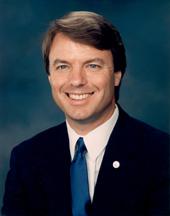 Sen. John Edwards (D-NC)
Legislative Activity
Stay on top of the latest movement without scrolling through every action
Senate amendment not agreed to: Amendment SA 985 not agreed to in Senate by Yea-Nay Vote. 26 - 69. Record Vote Number: 243.
June 25, 2003
View full timeline
Senate amendment not agreed to: Amendment SA 985 not agreed to in Senate by Yea-Nay Vote. 26 - 69. Record Vote Number: 243.
June 25, 2003
Roll call votes on amendments in Senate: Amendment SA 985 not agreed to in Senate by Yea-Nay Vote. 26 - 69. Record Vote Number: 243.
June 25, 2003
Considered by Senate. (consideration: CR S8480, S8483-8485, S8485-8486; text as further modified: CR S8483-8484)
June 25, 2003
Amendment SA 985 not agreed to in Senate by Yea-Nay Vote. 26 - 69. Record Vote Number: 243.
June 25, 2003
Considered by Senate. (consideration: CR S8386, S8423-8424; text as modified: CR S8423-8424)
June 24, 2003
Senate amendment submitted
June 23, 2003
Senate amendment proposed (on the floor): Amendment SA 985 proposed by Senator Baucus for Senator Edwards.(consideration: CR S8340-8341; text: CR S8340)
June 23, 2003
Amendment SA 985 proposed by Senator Baucus for Senator Edwards. (consideration: CR S8340-8341; text: CR S8340) To strengthen protections for consumers against misleading direct-to-consumer drug advertising.
June 23, 2003
Votes
1 roll call on this amendment
Text
Proposed
PRESCRIPTION DRUG AND MEDICARE IMPROVEMENT ACT OF 2003

The PRESIDING OFFICER. Under the previous order, the Senate will
resume consideration of S. 1, which the clerk will report.
The assistant legislative clerk read as follows:

A bill (S. 1) to amend title XVIII of the Social Security
Act to make improvements in the medicare program, to provide
prescription drug coverage under the medicare program, and
for other purposes.

Pending:

Bingaman amendment No. 933, to eliminate the application of
an asset test for purposes of eligibility for premium and
cost-sharing subsidies for low-income beneficiaries.
Graham (FL) amendment No. 956, to provide that an eligible
beneficiary is not responsible for paying the applicable
percent of the monthly national average premium while the
beneficiary is in the coverage gap and to sunset the bill.
Kerry amendment No. 958, to increase the availability of
discounted prescription drugs.
Lincoln modified amendment No. 934, to ensure coverage for
syringes for the administration of insulin, and necessary
medical supplies associated with the administration of
insulin.
Lincoln amendment No. 935, to clarify the intent of
Congress regarding an exception to the initial residency
period for geriatric residency or fellowship programs.
Lincoln amendment No. 959, to establish a demonstration
project for direct access to physical therapy services under
the Medicare Program.
Baucus (for Jeffords) amendment No. 964, to include
coverage for tobacco cessation products.
Baucus (for Jeffords) amendment No. 965, to establish a
Council for Technology and Innovation.

[[Page S8324]]

Nelson (FL) amendment No. 938, to provide for a study and
report on the propagation of concierge care.
Nelson (FL) amendment No. 936, to provide for an extension
of the demonstration for ESRD managed care.
Baucus (for Harkin) amendment No. 967, to provide improved
payment for certain mammography services.
Baucus (for Harkin) amendment No. 968, to restore
reimbursement for total body orthotic management for
nonambulatory, severely disabled nursing home residents.
Baucus (for Dodd) amendment No. 969, to permit continuous
open enrollment and disenrollment in Medicare Prescription
Drug plans and MedicareAdvantage plans until 2008.
Baucus (for Dodd) amendment No. 970, to provide 50 percent
cost-sharing for a beneficiary whose income is at least 160
percent but not more than 250 percent of the poverty line
after the beneficiary has reached the initial coverage gap
and before the beneficiary has reached the annual out-of-
pocket limit.
Baucus (for Cantwell) amendment No. 942, to prohibit an
eligible entity offering a Medicare Prescription Drug plan, a
MedicareAdvantage Organization offering a Medicare Advantage
plan, and other health plans from contracting with a pharmacy
benefit manager (PBM) unless the PBM satisfies certain
requirements.

The PRESIDING OFFICER. The distinguished Senator from Montana is
recognized.
Mr. BAUCUS. Mr. President, I see the Senator from West Virginia is in
the Chamber.
Mr. President, I suggest the absence of a quorum.
The PRESIDING OFFICER. The clerk will call the roll.
The assistant legislative clerk proceeded to call the roll.
Mr. BAUCUS. Mr. President, I ask unanimous consent that the order for
the quorum call be rescinded.
The PRESIDING OFFICER. Without objection, it is so ordered.
Mr. BAUCUS. Mr. President, I ask unanimous consent that the pending
amendments be temporarily laid aside so the Senator from West Virginia
can offer his amendments.
The PRESIDING OFFICER. Is there objection?
Without objection, it is so ordered.
The distinguished Senator from West Virginia is recognized.

Amendments Nos. 975 and 976

Mr. ROCKEFELLER. Mr. President, before offering my amendments, I am
going to discuss both of them because they are being reviewed, at this
point, in the majority cloakroom. But I am going to be offering two
amendments this afternoon in order.

The first amendment I will offer is to ensure that all Medicare
beneficiaries will be eligible for this new drug benefit, including
low-income Medicare beneficiaries who are currently eligible for
Medicaid and Medicare. They are known as dual eligibles.
The underlying bill precludes Medicare beneficiaries--makes it
impossible for Medicare beneficiaries--who are eligible to receive a
drug benefit through Medicaid from, in fact, enrolling in the Medicare
drug benefit program.
This group is referred to as the dual-eligible group. They are the
poorest seniors under Medicare. They are below 74 percent of poverty.
That is their income level. A disproportionate share of them--to wit,
42 percent--are minorities. Women make up the majority of them all.
Many are likely to have a poor education, live alone, and have more
than two chronic illnesses.
The underlying bill precludes these folks that I have just talked
about--these duel-eligible beneficiaries--from receiving the Medicare
drug benefit. As a result, this prescription drug benefit is not, in
fact, at all a universal bill. Now, that is important in a lot of ways.
One is philosophical and the other is extremely practical.
The philosophical one is that in 1965, when we created Medicare, it
was created as a universal benefit to all who qualify. It was the
promise that society made to our seniors: That if you work, if you make
your payroll contributions, then you, at the proper time, qualify for
Medicare regardless of where you live, regardless of how old you might
be, or your income.
As I have noted before, the underlying legislation, for the first
time in the history of the Medicare Program, would prohibit some
Medicare beneficiaries from receiving a Medicare benefit.
My amendment would make the Medicare prescription drug benefit a
universal benefit by adopting the provisions that were, in fact,
contained in the tripartisan proposal introduced last summer.
It would eliminate the exclusion of Medicaid beneficiaries and make
the new Medicare Part D drug benefit--that is the new part we are
creating--available to all Medicare beneficiaries regardless of income.
Medicaid would be the secondary payer for Medicare beneficiaries
eligible for Medicaid wrapping around this new Part D drug benefit and
its low-income protections.
Again, this is exactly the same construction the majority of my
Republican colleagues supported in the Grassley-Snowe-Hatch-Jeffords-
Breaux Medicare bill that was voted on by the full Senate last summer.
The National Governors Association sent a letter to Chairman Grassley
and Senator Baucus which said the following about the exclusion of some
of these seniors, that is, the dual-eligible seniors, those at 74
percent or below the poverty level, from Medicare:

The nation's Governors oppose this approach. It is not good
health policy. It is not good precedent. A major reason that
States currently have a long-run structural problem in their
fiscal outlook is that they have absorbed responsibility for
dual eligibles.

They go on to say:

This provision will continue to shift appropriate federal
costs to the states.

Governors Patton of Kentucky and Kempthorne of Idaho went on to say:

If the dual eligible populations continue to be a joint
responsibility, states will be forced to cut the optional
(Medicaid) benefits and populations--mostly women and
children--which are a key investment in the future.

The President agrees. In a speech he recently gave on Medicare, he
said:

And all low-income seniors should receive extra help so
that all seniors will have the ability to choose a Medicare
option that includes a prescription drug benefit.

The Medicare prescription drug legislation being considered by the
House of Representatives would shift the entire drug bill to Medicare.
It is not on a frequent day that Chairman Thomas and I are in full
agreement. But he does say such a shift ``ensures that all seniors
across the country will have access to affordable prescription drugs,
while alleviating much of the burden that states now confront.'' I say
to my colleagues, as I indicate, I am not always in agreement, but we
are going forward directly together on this policy, I hope.
The current system is uncoordinated and sometimes conflicting in
terms of coverage policies. It actually creates worse health outcomes
for people on both Medicaid and Medicare, either one. Fully integrating
a key benefit for prescription drugs into Medicare is a critical first
step toward improving the current system's flaws.
It needs to be clearly understood by my colleagues that Medicaid in
the hands of Governors, which I had the honor of being at one point, is
subject to whatever their whims might be. It is subject to budget
pressures. Remember, they have to balance the budget. We don't; they
do. And they frequently do it on the backs of Medicaid beneficiaries--
that is, that part of these Medicare-Medicaid dual eligibles--so they
can increase the number of prescription drugs which are available under
Medicaid in their State. They can change it in many ways because the
programs vary widely. Not only is it unfair to exclude the poorest
seniors from part of the Medicare program, it is a raw deal for some of
our neediest seniors.

Prescription drugs are, as I said, an optional benefit under
Medicaid. States can and do limit the number of prescriptions. Some
States only cover three drugs or they could charge any copayments they
want. Remember, what we are looking at here is a group of people who
are below 74 percent of poverty which is clearly in single-digit gross
income. So the patchwork of the benefits varies tremendously from State
to State. For seniors who have worked all their lives, paid into the
Medicare system, it is not fair for them to be at the mercy of State
coverage decisions.
If you look around the country right now, the fastest growing expense
of any State is Medicaid, part of this dual-eligible conundurm, and
those programs are being cut. You can see it, read about it, and hear
about it. So it is highly volatile, and it is not safe health care
policy.
Medicare has failed in its efforts to provide comprehensive
prescription drug coverage to seniors ever since the

[[Page S8325]]

repeal of the Medicare Catastrophic Act in 1988. Virtually all advances
in drug coverage for seniors since then have been delivered not by us
but by the States. While at the same time the States have been cutting
back in recent years, they have also made improvements. We have done
nothing. They have done whatever has been done.
Without some long-term restructuring of the State-Federal partnership
for this population, this dual-eligible, 74-percent-of-poverty-minus
population, much of the advances the States have made will be lost. All
Medicare beneficiaries deserve to receive Medicare benefits. There
should be no exceptions for drugs. It would be very bad precedent to
make Medicaid pay for items that are clearly the responsibility of
Medicare except at the present and in this bill for one particular
discrete population.
The intention is for this amendment to be budget neutral. I would
like to say it is budget neutral, but I cannot in that I asked CBO for
a cost estimate last week and I do not yet have one.
This is a concern and an agony shared by many. Once we have this
estimate, we will either conclude that we can go ahead because we will
know it is budget neutral or I will be happy to work with the chairman
and ranking member on appropriate offsets.
I urge my colleagues to provide all the seniors in their States with
the benefit of real Medicaid drug benefit by supporting this amendment.
I will at the appropriate time ask that it be acted upon. I am
awaiting a particular series of sheets of paper but in the meantime, in
the minute or so that will require, I send to the desk an amendment and
ask for its immediate consideration.
The PRESIDING OFFICER. The clerk will report.
The assistant legislative clerk read as follows:

The Senator from West Virginia [Mr. Rockefeller], for
himself, Ms. Mikulski, and Mrs. Clinton, proposes an
amendment numbered 975.

The amendment is as follows:

(Purpose: To make all Medicare beneficiaries eligible for Medicare
prescription drug coverage)

On page 10, lines 12 and 13, strike ``(other than a dual
eligible individual, as defined in section 1860D-
19(a)(4)(E))''.
On page 21, strike lines 22 through 25, and insert ``title
XIX through a waiver under 1115 where covered outpatient
drugs are the sole medical assistance benefit.
On page 107, line 3, strike ``30 percent'' and insert
``27.5 percent''.
On page 116, line 10, insert ``and'' after the semi-colon.
On page 116, line 12, strike ``; and'' and insert a period.
On page 116, strike lines 13 through 17.
On page 116, line 24, insert ``and'' after the semi-colon.
On page 117, line 2, strike ``; and'' and insert a period.
On page 117, strike lines 3 through 7.
On page 117, line 13, insert ``and'' after the semicolon.
On page 117, line 17, strike ``; and'' and insert a period.
On page 117, strike lines 18 through 23.
On page 118, line 6, insert ``and'' after the semicolon.
On page 118, in line 13, insert ``or'' after the semi-
colon.
On page 118, line 14, strike ``; or'' and insert a period.
On page 118, strike line 15.
Beginning on page 118, strike line 16 and all that follows
through page 119, line 9.
On page 119, line 10, strike ``(F)'' and insert ``(E)''.
On page 119, line 15, strike ``(G)'' and insert ``(F)''.
On page 119, line 19, strike ``(C), (D), or (E)'' and
insert ``(C), or (D)''.
On page 120, line 3, strike ``(H)'' and insert ``(G)''.
On page 120, lines 5 and 6, strike ``who is a dual eligible
individual or an individual''.
Beginning on page 121, line 24, strike ``dual eligible''
and all that follows through ``and'' on page 122, line 1.
On page 146, line 6, insert before the period ``and to the
design, development, acquisition or installation of improved
data systems necessary to track prescription drug spending
for purposes of implementing section 1935(c)''.
Beginning on page 146, strike line 23 and all that follows
through page 149, line 21, and insert the following:
``(c) Federal Assumption of Medicaid Prescription Drug
Costs for Dually Eligible Beneficiaries.--
``(1) In general.--For purpose of section 1903(a)(1) for a
State for a calendar quarter in a year (beginning with 2006)
the amount computed under this subsection is equal to the
product of the following:
``(A) Standard prescription drug coverage under medicare.--
With respect to individuals who are residents of the State,
who are entitled to, or enrolled for, benefits under part A
of title XVIII, or are enrolled under part B of title XVIII
and are receiving medical assistance under subparagraph
(A)(i), (A)(ii), or (C) of section 1902(a)(10) (or as the
result of the application of section 1902(f)) that includes
covered outpatient drugs (as defined for purposes of section
1927) under the State plan under this title (including such a
plan operated under a waiver under section 1115)--
``(i) the total amounts attributable to such individuals in
the quarter under section 1860D-19 (relating to premium and
cost-sharing subsidies for low-income medicare
beneficiaries); and
``(ii) the actuarial value of standard prescription drug
coverage (as determined under section 1860D-6(f)) provided to
such individuals in the quarter.
``(B) State matching rate.--A proportion computed by
subtracting from 100 percent the Federal medical assistance
percentage (as defined in section 1905(b)) applicable to the
State and the quarter.
``(C) Phase-out proportion.--Subject to subparagraph (D),
the phase-out proportion for a quarter in--
``(i) 2006 is 95 percent;
``(ii) 2007 is 90 percent;
``(iii) 2008 is 85 percent;
``(iv) 2009 is 80 percent;
``(v) 2010 is 75 percent; or
``(vi) 2011, 2012 and 2013 is 70 percent.
``(d) Medicaid as Secondary Payor.--In the case of an
individual who is entitled to a Medicare Prescription Drug
plan under part D or drug coverage under a MedicareAdvantage
plan, and medical assistance including covered outpatient
drugs under this title, medical assistance shall continue to
be provided under this title for covered outpatient drugs to
the extent payment is not made under the Medicare
Prescription Drug plan or a MedicareAdvantage plan.
Beginning on page 152, strike line 3 and all that follows
through page 153, line 15, and insert the following:
``(f) Definition.--For purposes of this section, the term
`subsidy-eligible individual' has the meaning given that term
in subparagraph (D) of section 1860D-19(a)(4).''.
(C) Conforming amendments.--
(1) Section 1903(a)(1) (42 U.S.C. 1396a(a)(1)) is amended
by inserting before the semicolon the following: ``, reduced
by the amount computed under section 1935(c)(1) for the State
and the quarter''.
(2) Section 1108(f) (42 U.S.C. 1308(f)) is amended by
inserting ``and section 1935(e)(1)(B)'' after ``Subject to
subsection (g)''.
Beginning on page 157, strike line 21 and all that follows
through page 158, line 4.
On page 173, beginning on line 15, strike ``that is not''
and all that follows through ``includes'' on line 18 on that
page, and insert ``that includes but is limited solely to''.
On page 190, in line 18, strike ``and''.
On page 190, between lines 18 and 19, insert the following:
``(B) is not a dual eligible beneficiary as defined under
section 1807(i)(1)(B); and''.
On page 190, line 19, strike ``(B)'' and insert ``(C)''.

Mr. ROCKEFELLER. Mr. President, I also have the amendment for which I
just spoke. I ask unanimous consent that that be brought to the desk
for its consideration and the pending amendment be set aside.
The PRESIDING OFFICER. Is there objection to setting aside the
amendment?
Mr. GRASSLEY. Reserving the right to object, and I shall not object,
I would like to remind the Members of my caucus we do have an
arrangement between the two parties that every other amendment offered
could be offered by a Republican and then in turn by a Democrat. We
have several Democrat amendments pending. There is nothing wrong with
that. It hasn't hurt the process at all. But I think it would be fair
for me to remind the Members of the Republican caucus if they have
amendments to propose, come over and do it. It will speed up the
process and I think be considered a little more fair by everybody here.
I will not object.
The PRESIDING OFFICER. Without objection, it is so ordered.
The clerk will report the amendment.
The assistant legislative clerk read as follows:

The Senator from West Virginia [Mr. Rockefeller], for
himself, Mr. Carper, Mr. Graham of Florida, Ms. Mikulski,
Mrs. Clinton, and Mr. Dodd, proposes an amendment numbered
976.

Mr. ROCKEFELLER. Mr. President, I ask unanimous consent that further
reading of the amendment be dispensed with.
The PRESIDING OFFICER. Without objection, it is so ordered.
The amendment is as follows:

(Purpose: To treat costs for covered drugs as incurred costs without
regard to whether the individual or another person, including a State
program or other third-party coverage, has paid for such costs)

On page 51, strike lines 15 through 25 and insert the
following:

[[Page S8326]]

``(ii) such costs shall be treated as incurred without
regard to whether the individual or another person, including
a State program or other third-party coverage, has paid for
such costs.

Mr. ROCKEFELLER. Mr. President, I wish to proceed with the amendment
I was going to offer first but which will be my second amendment. That
also will await the decision of the leadership.
Mr. President, I come to the floor again to offer an amendment that
will ensure that contributions made on a beneficiary's behalf by their
former employers count toward that beneficiary meeting the catastrophic
limit. Let me just say, as I begin this, in our Finance Committee
deliberations, it was this amendment which caused more stir, more
angst, more sense of, oh, my heavens, we have not really done this,
have we? We could not have made this mistake involving this many
people. The amendment was handled in Finance--without success, from my
point of view. Nevertheless, I was urged by colleagues on both sides of
the aisle to bring this amendment to the floor because it has enormous
implications. That will become apparent, hopefully, as I complete my
statement.
This amendment is needed to protect the existing coverage of
literally millions and millions of retirees who have earned drug
coverage through their employer. That means they have been employed
much of their lives by their employer and they have now retired and
they are Medicare beneficiaries and the employer gave retiree benefits.
We are accustomed to this in chemical, steel, and many other
industries. But there is a problem that has arisen.
As much as we want to provide a new drug benefit for these seniors,
we should not disrupt the basically foundational employer-provided drug
coverage so many seniors have today. It is the largest source of drug
coverage in the country and it is an honorable and a good one. It would
be a very great mistake for my colleagues to walk away from this system
and one that we would all very much regret.
Mr. President, in saying that employer-sponsored retiree health
benefits are the largest single source of coverage for retirees, I
simply say that one in every three Medicare beneficiaries is affected
by the amendment I am now discussing. They will either lose their
coverage or they will not, depending upon how this amendment is
disposed.
Drug costs constitute 40 to 60 percent of employers' retiree health
care costs. That is a lot. And steep price increases are prompting
employers to, one, eliminate drug benefits in some circumstances;
secondly, cap their contributions; thirdly, drop retiree coverage
altogether. We all know this is a phenomenon of American life that has
been going on in recent years.
Employers need immediate relief for their retiree prescription drug
costs. A Medicare prescription drug benefit should relieve some of the
burden on employers by covering a retiree's cost after a certain
catastrophic limit. I recognize this gets technical, but it is
profound. Instead, this benefit extends the amount of time before a
retiree reaches that catastrophic benefit of about $4,000 by not being
able to count as the employee's contribution--in fact, the employer's
contribution toward that end is very substantial. Therefore, the
employer receives no real relief from this benefit and is forced to
drop the coverage they currently provide their retirees, leaving
Medicare to pay the entire cost.
I think I do not have to explain that that means the Federal
Government has to pick up even more of the cost of Medicare and
prescription drugs than would otherwise be the case, for example, if
this amendment were to pass.
The bill we are considering on the floor today exacerbates the
current downward trend in retiree benefits by extending the amount of
time the beneficiary relies on the employer before reaching the
catastrophic limit. What does that say? It says if you extend the
amount of time the employee has to keep paying and paying toward his
catastrophic limit for a much longer time, there is therefore much more
out-of-pocket costs to the employee.
This legislation discriminates against Medicare beneficiaries with
employer-provided coverage with a trick definition--that is what is
used--of out-of-pocket costs known, uninterestingly, as the ``true''
out-of-pocket costs. This plan would not allow any spending by
employers to count toward meeting the catastrophic limit. In this way,
the underlying legislation limits the overall spending by the Medicare
Program at the expense of employers who offer retiree coverage.
The result is CBO estimates, as I indicated, that 37 percent of
beneficiaries currently receiving a drug benefit from their employee
will lose that coverage. Additionally, it extends the amount of time,
as I have indicated, a beneficiary has to reach the catastrophic limit,
exposing them to additional and more and more costs. I think we should
all agree that one of the goals of this legislation should be to
encourage employers who are currently providing drug coverage to their
retirees to continue, in fact, to do so. It should reward and
strengthen those employers because the benefit they are providing goes
a long way toward helping American seniors afford prescription drugs.
The legislation should not force employers to drop their coverage by
making their contribution on a beneficiary's behalf meaningless or,
rather, by not concluding that the employer's contribution as part of
the retiree's expenditures counts toward the catastrophic limit. In
other words, simply take what the employer contributes to this, include
that on top of what the employee contributes, and you have a much
better count toward the money that is spent toward getting to the
catastrophic limit and the rate at which you get there.
Without adoption of my amendment, this plan penalizes employers who
are trying to do the right thing by providing retiree health benefits.
It is not in anybody's best interest for employers to decide that
contributions for prescription drug coverage just keep retirees from
reaching the catastrophic drug limit. Without modifying how employer
contributions are treated under this legislation, we are ultimately
threatening retiree coverage and driving millions more seniors to
obtain Medicare coverage from their employers.
My amendment removes the so-called true out-of-pocket concept and
replaces it with a real out-of-pocket concept which better reflects the
seniors' true drug spending. According to CBO, the true out-of-pocket
approach is a significant component of why employers drop coverage.
Again, the underlying bill is the reason why 37 percent of those
covered by their employers will be dropped. That I am trying to
eliminate. Therefore, eliminating the true out-of-pocket expenses will
go a long way toward keeping employers in the business of providing
drug coverage for their retirees.

Mr. President, I urge my colleagues to adopt this amendment. I expect
that the retirees in our States may well end up with a less
comprehensive or more expensive prescription drug benefit as a result
of this legislation should we fail to adopt this amendment.
I thank the Presiding Officer and yield the floor.
Mr. BAUCUS. Mr. President, I suggest the absence of a quorum.
The PRESIDING OFFICER. The clerk will call the roll.
The assistant legislative clerk proceeded to call the roll.
Mr. GRASSLEY. Mr. President, I ask unanimous consent that the order
for the quorum call be rescinded.
The PRESIDING OFFICER. Without objection, it is so ordered.
The distinguished Senator from Iowa is recognized.
Mr. GRASSLEY. Mr. President, the Senator from West Virginia raises an
important point in his amendment. In the underlying bill from the
Senate Finance Committee, beneficiaries who are enrolled in both
Medicaid and Medicare--and this is the group we call dual eligibles--
would continue to receive drug coverage under the Medicaid Program.
Some of my colleagues have argued that by having dual eligibles
remain in the Medicaid Program, Congress is thus treating these
vulnerable seniors as second-class citizens and subjecting them to
lower quality benefits. I strongly disagree with that point of view.
I have worked closely with my Finance Committee colleagues on the
development of this package, and we had an opportunity during this
debate to reflect on the concerns that were

[[Page S8327]]

raised by the Senator from West Virginia and also by others during the
debate last summer of the so-called tripartisan bill, meaning the bill
that was before the Senate in 2002.
All of us authoring the underlying bill took these concerns to heart.
We made the decision that it was most beneficial to these seniors to
continue to build off the existing Medicare and Medicaid low-income
assistance programs that they know and understand.
That said, I remind my colleagues that the intent of this legislation
is to expand prescription drug coverage to our senior citizens who do
not have access to the prescription drugs and who are faced with paying
a large share of their income for their drug coverage.
About two-thirds of the citizens of the United States today have some
coverage for prescription drugs. Retirees from major corporations have
prescription drugs paid for in their retirement plans. We have people
who are in Medicare plus their Medigap policies that also have some
coverage, and then we have lower income people who are dual eligibles
who are covered under both Medicare and Medicaid. This makes up 60-some
percent of the seniors of America who have some drug coverage.

We want to fill in the gap for those who do not have drug coverage or
might have inadequate drug coverage. Quite frankly, for people who
already have drug coverage, particularly those who have lower incomes,
who are covered by State Medicaid Programs, we felt it was best not to
upset their coverage, not to give that group any angst about how they
might be covered in the future while the debate on this legislation was
going on and how it might be put in motion, so we decided just to leave
those as is.
The Senator from West Virginia believes it would be better if we
would cover them under our plans that are meant for people who have no
coverage whatsoever.
We are in a situation where coverage experienced by those who are
dual eligible is the issue before us. These seniors currently have drug
benefits through the Medicaid Program. In fact, many advocates and
beneficiaries describe these benefits as very generous. Medicaid
beneficiaries have come to know their drug benefits, along with its
nominal levels of cost sharing. We should not require seniors to leave
coverage with which they are comfortable.
Further, I remind my colleagues that we are discussing populations
eligible for both Medicare and Medicaid. Medicaid was created to assist
individuals who do not have the means to pay for their share of health
care costs. That is a responsibility that is shared by the Federal
Government and by State governments. Medicaid pays for many benefits
that Medicare does not.
Is the purpose of the prescription drug bill before us to grant
fiscal relief to the States, which would be what the amendment of the
Senator from West Virginia would do? I do not believe that is what we
should be doing.
We all know the purpose of the prescription drug bill is to provide
prescription drugs to seniors who do not currently have access to drugs
or otherwise would be paying extremely high drug costs and, hence, the
provisions of our legislation for catastrophic coverage.
However, recognizing the costs associated with covering the cost of
providing prescription drug coverage to dual-eligible populations, the
bill before us does provide nearly $18 billion in new Federal dollars
to compensate States for some of these additional costs, mostly because
it is a fast growing part of the Medicaid budgets of most States.
The funding we provide in this bill will be channeled to States by
federalizing the cost of Part B premiums for dual eligibles in a
subclass called qualified Medicare beneficiaries. This is because the
prescription drug bill before us provides minimum standards that ensure
the benefit provided through Medicaid is at the same high quality that
is being provided through Part D of our Medicare Program.
As is usually the case, the argument would be made yet that we should
still do more and perhaps serve this population differently than we do.
But, in fact, we developed the underlying bill to best utilize the
availability of $400 billion, an absolute figure that we must be in;
otherwise, we are subject to a point of order and, in a sense, instead
of 51 votes it takes to pass this body, one could argue it would take
60 votes. If we exceeded the $400 billion, we would have to have 60
votes.
Our approach helps to deliver care that is consistent with current
law but, most important, familiar to vulnerable beneficiaries.
A prime rationale behind our legislation is it really does not make
seniors do anything they do not want to do. We set up a new Medicare
Program that is closer to what baby boomers have in the workplace
today. They can choose that or they can choose to stay in the 1965
model Medicare.
People who want to stay in the 1965 model Medicare can choose
voluntarily to join a prescription drug program. They do not have to.
We wanted to help those who are in Medicaid to stay in Medicaid if they
wanted to. They do not have to go into these new programs.
Finally, I remind my colleagues that the adoption of this amendment
will not expand coverage at all. It will simply shift the cost to the
Federal Government and, in time, to other Medicare beneficiaries.
So after careful thought, because at one time we did debate
internally the substance of the amendment by the Senator from West
Virginia to federalize all dual eligibles, we thought maybe we should
include that in the program, but we figured it raised a lot of
questions from people who are already adequately covered and who seemed
to be very satisfied.
Also, there are some additional costs that would subtract from what
we could do for those who have no coverage for prescription drugs
whatsoever, and in order to get the most bang for the dollar within the
$400 billion that is in the budget for this program, we decided to
leave the dual-eligible program alone. That is why I suggest we defeat
Senator Rockefeller's amendment when it comes to a vote.
I yield the floor.
Mr. ROCKEFELLER. Will the Senator yield?
Mr. GRASSLEY. Mr. President, the Senator will try to answer a
question, yes.
Mr. ROCKEFELLER. I thank the Senator, and this is in the form of a
question. I fully understand the constraints of the $400 billion, as
the chairman of the Finance Committee indicates, and I think we all
understood that to do a full prescription drug benefit, it was going to
take substantially more than that, particularly if one included other
matters. But would the Senator not agree that there are really two ways
of looking at dual eligibles and their dependence now upon Medicaid
which is paid by the States?
Up until the fairly recent past, States were doing very well and
Medicaid benefits, to some degree, were expanding. I reflected on that
as to my State. The other way of looking at it is to look at what is
happening to Medicaid now in the States because of the balanced
constitutional amendment requirements and because of the fiscal
condition of the States, which is getting worse every single day, and
the fact that Medicaid is the fastest rising cost in any State
government budget, and the fact that the States have complete control
over what happens to the Medicaid benefit.
So would the Senator from Iowa not agree that if a State using
Medicaid, which is a combination of State and Federal funds,
nevertheless decides to cut--since that is optional within the State,
under the Government's control, that the Governor can cut that and
indeed has done so, as we have been reading and hearing about, and
indeed can limit coverage, cap coverage and therefore cut back
tremendously on the so-called drug coverage that the chairman of the
Finance Committee was extolling?
I agree that if we were in a flush time and the States were able to
afford a good drug benefit under Medicaid and use it for that
particular dual-use population, the Senator is right, but I think we
are looking now at a period of a number of years where we are not going
to be in that situation. I think that puts the dual eligibles, 74
percent or less of poverty, at terrible risk, and that is not something
I associate with my understanding of the values of the Senator from
Iowa, whom I so much respect.

[[Page S8328]]

Mr. GRASSLEY. Mr. President, I cannot disagree with the Senator from
West Virginia, but I think the answer is that there are 50 different
answers to his question from the standpoint of there being 50 different
States with 50 different budget situations. So there is not just one
answer to his question.
Another way to say it is I would have to understand the situation in
50 different States and then, in a sense, give 50 different answers.
But there is a recognition on the part of the Congress of what the
Senator from West Virginia says and a response by the Federal
Government to that, albeit a temporary response, when over a 2-year
period of time we decided to put $20 billion of State aid to the
States, and we did that through the tax bill recently signed by the
President of the United States, of which $10 billion was earmarked for
Medicaid solely because the Congress understood the problems the
Senator from West Virginia has adequately described, and then another
$10 billion of other State aid that a State is free to use for Medicaid
or anything else.
I assume some States that have very bad Medicaid fiscal problems
might take some more of that additional $10 billion to use for
Medicaid.
In further answer to my colleague's question, what we face is the
issue of about $16 billion a year just for drug costs. Multiply that
times the 10 years we have to look ahead. That is about $160 billion, I
believe, of the $400 billion which would go then for groups who are
already covered, detracting then from the 30-some percent of people who
have no prescription drug coverage.
We would like to fill in the gap of those who have no coverage as
opposed to some who have very good coverage. I know it varies from
State to State how Medicaid might cover certain groups of seniors with
prescription drugs, but I think the Senator would say they have had a
better program for sure than most people--except maybe those who are on
a corporate retirement plan, which is only about 30 percent of our
people--than anybody else, particularly those who have no coverage
whatsoever.
In further answer to the question of the Senator from West Virginia,
it is a case of priorities. We have suggested those who already have
some coverage, and very good coverage, we would basically leave
untouched and then would try to use our resources for those who have no
coverage whatsoever.
The PRESIDING OFFICER. The Senator from West Virginia.
Mr. ROCKEFELLER. I apologize for not speaking through the Presiding
Officer before, but will the Senator from Iowa yield for only one
additional question?
Mr. GRASSLEY. I yield for an additional question.
The PRESIDING OFFICER. The Senator is recognized.
Mr. ROCKEFELLER. The Senator has responded simply by saying he would
have to answer it in 50 different ways because there are 50 different
States. To that I say yes, and all of them are either in the process of
or will be in the process of cutting Medicaid and, therefore, the dual
beneficiaries.
I ask the Senator from Iowa, is there not a further consideration,
and that is when we are dealing with this maximum poor number of people
under Medicare, or Medicaid in the case of the dual eligibles, we are
also dealing with something which has not been discussed on this floor
or indeed was not discussed in the Finance Committee at any length at
all, and that is a really frightening problem of assets that, for
example, one can apply, one can be under this program up to 130 percent
of poverty. Then there is another one that says you can be under this
Part B plan up to 160 percent of poverty, but if your assets reach over
$4,000, assets which you maintain, you are then kicked from the lower
to the upper bracket without any discussion. There is enormous penalty,
for example, for owning a car, for owning anything. You would not be
living in rural Calhoun in West Virginia without a car. Your home is
exempted but nothing else is.

At one point I was thinking of offering an amendment--and I may still
do so--exempting burial plots from the asset test that would be applied
to poor people.
I ask the Senator from Iowa if he would say a word on this whole
question, adding to the dual eligibles and deciding if--as he said, we
have to pick our priorities--we are going to leave it to the States,
even though I argue that States will cut that. Is it not also bringing
up this whole subject of the assets of the poor families and the effect
on them if they become ineligible for the bracket in which they belong
and, therefore, cannot afford prescription drugs.
Mr. GRASSLEY. Mr. President, I will answer the Senator's question by
giving some detail about the issue of the asset test. It is a
legitimate point of discussion as we deal with this legislation. Rather
than just speaking specifically to his question, I answer it more
generally with how we try to respond to the issues he brought up.
The asset test in the underlying bill is the same asset test
currently used for determining eligibilities for the qualified Medicare
beneficiaries, specified low-income Medicare beneficiaries, and
qualified individuals. Those are three separate categories of low-
income people that I just described.
S. 1 provides a generous low-income subsidy for those who are below
160 percent of the Federal poverty level. Currently, in order for some
individuals under 160 percent of poverty to receive limited Medicaid
protections, there must be both an income test and an asset test. In
the underlying bill, we simply follow the same rules in order for low-
income beneficiaries to see assistance with their prescription drug
coverage. By including the Medicaid asset test for Medicare
prescription drug subsidies, we are providing beneficiaries with
seamless health coverage. We are not confusing beneficiaries, and we
are not adding additional administrative burdens to the States.
I will give some background on the current asset test included in the
Medicaid Program. The group called qualified Medicare beneficiaries are
individuals below 100 percent of poverty. In 2006, the annual income
limit is $9,670 for individuals and $13,051 for couples. This qualified
Medicare beneficiary group is allowed to have assets below $4,000 for
individuals and $6,000 for couples. That is exactly what the Senator
from West Virginia asked me about and implied some limitations because
of that.
Yes, there are limitations because of that, but they are legitimate
limitations within the priorities of our $400 billion budget limit.
Then we have the category of specified low-income Medicare
beneficiaries, and then the qualified, and those are people with
incomes between 100 percent of poverty and 135 percent of poverty. In
2006, the annual income limits of this group, $13,054 for individuals,
$17,618 for couples, these two groups are allowed to have assets below
$4,000 for individuals and $6,000 for couples. Beneficiaries between
136 percent of poverty and 159 percent of poverty will have annual
income limits of $15,472 for individuals and $20,881 for couples in
2006. Beneficiaries between 136 and 159 percent of poverty would not be
subject to those asset rules.

Current law establishes resource limits for low-income elderly or
disabled individuals. Let me emphasize, this is not a newly added
restriction on certain low-income Medicare beneficiaries. However,
current law also provides States with the flexibility to choose to
disregard all or part of these resources.
The issue of changing this asset test is one that would very
drastically increase the number of eligible beneficiaries. Understand
that the question the Senator from West Virginia raised about changing
the asset test would very dramatically increase the number of people
eligible.
Now, again, we get back to the priorities of fitting in the $400
billion in the budget. Give more help to this group of people that
already have some help from our legislation, then there is less for
other people, particularly less for people who have no help whatever.
A study was prepared by the Kaiser Family Foundation estimating this
group could be as many as 11 million individuals if the asset test were
eliminated and obviously to a lesser extent if it were increased by
some amount.
S. 1 currently includes a provision requiring the General Accounting
Office to conduct a study and make recommendations to Congress by the
year 2007 regarding the extent to which drug

[[Page S8329]]

utilization and access to covered drugs differs between qualifying dual
eligibles who receive subsidies and individuals who do not qualify
solely because of the application of the asset test. This report
ensures that there will be opportunities in the future to debate the
question raised by the Senator from West Virginia.
There is a limited number of dollars available for the Medicare drug
benefit. In the writing of this bill, we made a conscious decision to
devote excess dollars to filling the gap in coverage--which means what
we commonly refer to around here as the donut hole--rather than
eliminating or changing to some extent the asset test the Senator from
West Virginia is asking me about.
This bill already provides generous coverage to low-income seniors.
This amendment will not only cost more money, it will add more
confusion to both States and Medicare beneficiaries.
I hope I have sufficiently explained the rationale behind our bill. I
may not have directly answered the question of the Senator from West
Virginia, but I thought I should take time to explain the rationale
behind our bill.
I yield the floor and suggest the absence of a quorum.
The PRESIDING OFFICER. The clerk will call the roll.
The assistant legislative clerk proceeded to call the roll.
Mr. BAUCUS. Mr. President, I ask unanimous consent that the order for
the quorum call be rescinded.
The PRESIDING OFFICER. Without objection, it is so ordered.
Mr. BAUCUS. Mr. President, I would like to say a couple of words
about one of the two amendments offered by the distinguished Senator
from West Virginia regarding the true out-of-pocket expenses, where the
employers' contributions to retirees' health care plans be considered
in calculating the out-of-pocket expense that would determine when a
senior citizen reaches the stop loss provisions of this bill.
This may sound like a fairly arcane point, but it is a very important
one.
Let me just describe the provisions of the bill. Under the bill,
after a $275 deductible, the provisions of this bill require that
employees would receive a contribution from the Government of 50
percent of each prescription he or she filled, up to $4,500 in drug
expenses. After that amount, $4,500, then seniors would pay 100 percent
of the costs until the beneficiary's spending reached $3,700. This
should not be confused with total spending, of which the beneficiary
spent $3,700 out of his pocket. It would be $5,812.
Anyway, after the beneficiary spends $3,700 out of pocket, the total
stop loss coverage kicks in and the Government picks up 90 percent of
the beneficiary's drug spending and the beneficiary, him or herself,
pays 10 percent.
The real question is, What about the employers' contributions? Would
they count toward the stop loss coverage? Under the underlying bill,
all spending must be provided by the beneficiary, not on behalf of the
beneficiary. As a consequence, employers' contributions would not
count. The CBO estimates up to 37 percent of retiree health coverage
would therefore be dropped by employers.
Just to recapitulate, the amendment offered by the Senator from West
Virginia basically provides that the stop loss amounts in the
underlying bill should be based on out-of-pocket costs, and the
employers' contribution towards retiree health benefits could count
towards that stop loss computation.
What about this? Frankly, I have a lot of sympathy for the Senator's
amendment. That is, as it currently stands, the beneficiary, a senior
citizen, would have to spend $3,700 before the stop loss would be
calculated. Under the amendment offered by the Senator from West
Virginia, that amount would be quite a bit lower.
I mentioned earlier that CBO estimates about 37 percent of retirees
who now are covered by health plans under their employer health
coverage would no longer receive drug coverage because those employers
would drop coverage. Or, to say it differently, CBO estimates that,
because the employer's contributions do not now count towards stop
loss, about 11 percent of the seniors generally would lose their
employer-sponsored health coverage.
As I mentioned, I share my colleague's desire to prevent the loss of
employer-sponsored coverage; that is, to the extent possible. We have
our work cut out for us because retiree coverage is already on the
decline. According to the Kaiser Family Foundation/Hewitt Study, that
was released last December, one in five large employers is likely to
eliminate retiree health coverage for future retirees in the next 3
years.
That is a lot. That is irrespective of the provisions of this bill
with respect to prescription drug coverage. If one out of five large
employers in fact does eliminate retiree health coverage for their
retirees within the next 3 years, it is going to have a huge impact,
clearly, on those retirees, and also on the portion of the health care
system that is not paid for by larger companies.

That study also found that nearly 80 percent of large employers are
likely to increase the amount paid directly by their employees for
health care. That is, most--four-fifths of all employers--are likely to
have their employees pay more than they, the employers, are paying. We
know about the negotiations between General Electric and its employees
not too long ago, where both agreed to shift more of the rising cost of
health care to employees. Clearly, we should be doing all we can to
ensure that a bad situation does not get worse.
The chairman of the committee, Senator Grassley, and I have been
looking for ways to address concern about employer-sponsored coverage.
We are looking at ways to make employers' participation in the new Part
D benefit more manageable, so employers have flexibility with respect
to the offering of these benefits. I, certainly, personally am willing
to entertain proposals that would allow more employer coverage, and
also help address the out-of-pocket situation the Senator from West
Virginia would like to cover with his amendment.
The slight problem we have, as most of us know, is that we are
working within the confines of $400 billion over 10 years. If the
amendment offered by the Senator from West Virginia were to be agreed
to, according to CBO, that would cost approximately $65 billion. That
is $65 billion, generally, over the $400 billion that has been set
aside for this bill. Senator Grassley and I are working with various
groups in and out of the Senate, trying to address the potential loss
of employer retiree coverage. It is a great concern of ours. There have
been several proposals offered as to how we might deal with that, in
addition to the ones contained in the amendment by the Senator from
West Virginia. I am hopeful that during the next several days, before
the final passage of this bill--hopefully before the weekend--we will
be able to significantly address this issue. So far, we do not have it
nailed down. But as you might expect, this and a lot of other issues
are kind of hovering about as we try to find ways to fit the pieces
together so we can get a very good bill passed.
I also remind my colleagues who are slightly concerned about the
complexity of this bill--and this bill is somewhat complex--there was
an interesting piece in, I think it was today's New York Times; it
might have been yesterday's. In any event, it was about the complexity
of the bill and how bewildered some people are because of the
complexity. I think the article did a good job in explaining why major
social policy, almost by definition, is complex; that is, it is a
result of compromises.
In this case, the big compromise is between about half of this body,
who wants to provide prescription drug benefits under Medicare, and
about half of this body, who wants prescription drug benefits to be
provided under private competition. It is difficult to put those two
pieces together. It is the attempt to put those two pieces together
that has caused a lot of the complexity that does exist in this bill.
I might say, however, that Medicare itself is already quite complex.
They could come back and say: Why make something complex even more
complex? But it has to be weighed against another factor. That is, do
we want to provide a prescription drug benefit to seniors or not? The
choice at the end of this week is going to be, do we want something
that is a little bit complex but provides prescription drug benefits
for seniors--and does a good job doing so? Maybe with not as many
benefits as

[[Page S8330]]

some seniors would like and some Members of this body would like, but
still does a pretty good job and is a bit complex. Or, on the other
hand, do we want to do nothing? Do we want to let senior citizens
today, who do not have prescription drug coverage, remain without
coverage? That is basically the question we are going to be facing
later on this week.
To ask the question, I think, is to answer it. Namely, we should do a
pretty good job, trying to get a pretty good bill passed, even though
there is some complexity, even though there are some tradeoffs, rather
than have nothing.
I suspect this body is always going to be somewhat split. I do not
think one party is going to be totally in control at one time or the
other party is going to be totally in control at another time. I think
it is the nature of the American body politic that people want to hedge
their bets, that they want to have both Democrats and Republicans
working together. Certainly, our Founding Fathers set up our Government
that way under our Constitution. They absolutely distrusted power. They
distrusted it almost absolutely. That is why we have power dispersed by
definition. That means in order to get something of consequence passed,
there is going to have to be some compromise. In this bill there
certainly is a lot of compromising.
A final point contained in that article--and I thought it was a
pretty good article--is that when we, in this country, have passed
other major social policy--let's say Medicare and Social Security--it
has been based somewhat on faith, and we have worked to fix it, to make
it even better after it has been passed. But you have to start
somewhere. And I think, certainly, we have to start somewhere with
respect to prescription drug benefits, and certainly, we should provide
prescription drug benefits for seniors.
So I urge my colleagues to keep that in mind as we are working on
amendments, which are designed to make this bill better. We can accept
some amendments, but some in this body will not accept others.
Nevertheless, all of us are generally working together toward the same
goal.
In that vein, Mr. President, I ask unanimous consent that the pending
amendments be temporarily set aside so the Senator from Hawaii may
offer two amendments in sequence.
The PRESIDING OFFICER (Mr. Sununu). Is there objection?
Without objection, it is so ordered.
The Senator from Hawaii.

Amendment Nos. 980 and 979

Mr. AKAKA. Mr. President, I rise today to offer amendment No. 980 to
restore Medicaid and State Children's Health Insurance Program
eligibility for children and pregnant women who are citizens from the
Freely Associated States and reside in the United States lawfully. The
United States entered into a Compact of Free Association with the
Federated States of Micronesia and the Republic of the Marshall Islands
in 1986, and with the Republic of Palau in 1994.
The political relationship between the United States and the FAS is
based on mutual support. In exchange for the United States having
strategic denial and a defense veto over the FAS, the United States
provides military and economic assistance to the RMI, FSM and Palau
with the goal of assisting these countries in achieving economic self-
sufficiency following the termination of their status as U.N. Trust
territories. Pursuant to the Compact, FAS citizens are allowed to
freely enter the United States and are not considered immigrants.
Legal immigrants and FAS citizens lost many of their public benefits
as a result of the Personal Responsibility and Work Opportunity
Reconciliation Act of 1996. I appreciate the work done by my colleague
from Florida, Senator Graham, to restore the eligibility for Medicaid
and SCHIP for legal immigrants who are children and pregnant women.
The language that has been included in S. 1, the Prescription Drug
and Medicare Improvement Act, would give States the option to provide
this coverage and allow them to use Federal resources to do so.
However, the current text does not restore these benefits to citizens
from the FAS lawfully residing in the United States. Arguably, FAS
citizens have strong ties with the United States as they come from the
countries that are perpetually bound to the United States in free
association.
It is important for Congress to restore these benefits for FAS
citizens that were taken away from a relatively small but important
population. The Congressional Research Service estimates that 11,500
FAS citizens have migrated to the United States since the Compact was
enacted. They have come to the United States to seek economic
opportunity, education, and access health care.
The State of Hawaii, Guam, American Samoa, and the Commonwealth of
the Northern Mariana Islands have supported FAS citizens with necessary
health care services, but not without significant and increasing costs.
The Federal Government must provide matching resources to help States
meet the health care needs of FAS citizens and to meet the obligations
of the Federal commitment.
I urge my colleagues to support this amendment to restore a portion
of the benefits that were taken away from FAS citizens in 1996.
Mr. President, I have another amendment, amendment No. 979, to offer
to S. 1.
The PRESIDING OFFICER. Does the Senator wish to offer both
amendments?
Mr. AKAKA. The amendments are at the desk.
The PRESIDING OFFICER. The Senator will be advised, neither amendment
has been reported by the clerk.
Without objection, the clerk will report both amendments.
The legislative clerk read as follows:

The Senator from Hawaii [Mr. Akaka] proposes amendments
numbered 980 and 979.

Mr. AKAKA. Mr. President, I ask unanimous consent that reading of the
amendments be dispensed with.
The PRESIDING OFFICER. Without objection, it is so ordered.
The amendments are as follows:

amendment 980

(Purpose: To expand assistance with coverage for legal immigrants under
the Medicaid program and SCHIP to include citizens of the Freely
Associated States]

On page 636, line 16, insert ``and citizens of the Freely
Associated States, which include the Federated States of
Micronesia, the Republic of the Marshall Islands, and the
Republic of Palau, lawfully residing in the United States''
after ``Act''.

amendment 979

(Purpose: To ensure that current prescription drug benefits to
medicare-eligible enrollees in the Federal Employees Health Benefits
Program will not be diminished)

At the appropriate place, insert the following:

SEC.   . NEGOTIATIONS BY THE OFFICE OF PERSONNEL MANAGEMENT.

The Office of Personnel Management may not negotiate a
prescription drug benefit for any health benefits plan under
chapter 89 of title 5, United States Code, that would provide
a prescription drug benefit to a medicare eligible enrollee
in that plan that is of lesser actuarial value, based on 2003
constant dollars, than the prescription drug benefit
available to a medicare eligible enrollee of such plan on the
date of enactment of this Act.

Mr. AKAKA. Mr. President, amendment No. 979 would ensure that the
Federal Employees Health Benefits Program could not reduce the level of
prescription drug coverage available to Medicare-covered Federal
civilian annuitants. I thank my colleague from Maryland, Senator
Mikulski, for cosponsoring the amendment.
I strongly support the creation of a prescription drug benefit for
Medicare beneficiaries. Thirty-eight percent of Medicare beneficiaries
report that they do not have prescription drug coverage. Far too many
seniors are unable to afford the medications that they need, and the
establishment of a prescription drug benefit will provide much needed
access to medications that our seniors desperately need.
However, the Congressional Budget Office believes that Medicare drug
coverage authorized by this bill is likely to act as an incentive for
employers to drop their employer-sponsored drug benefits. An estimated
37 percent of retired workers with employer-sponsored drug benefits
could lose their coverage under this bill according to CBO. I am
troubled that older Americans who already have earned coverage through
an employer-sponsored plan could lose their existing benefits. We have
seen over the past few years that there has been a disturbing trend of
reducing benefits for retirees. Creating this voluntary benefit could
only accelerate this trend.

[[Page S8331]]

The intent of the legislation is to expand prescription drug coverage
for seniors, not merely to shift the financial burden of existing
coverage to the Federal Government. If Medicare beneficiaries lose
their employer-based coverage, they may have to pay more for a Medicare
drug benefit that provides less comprehensive coverage.
We must encourage employers to maintain their current coverage, and I
will support efforts to do so. We should not shift the existing costs
of prescription drug coverage to the Medicare program. If this occurs,
there will be fewer resources available to pay for the medications of
those who currently need insurance.
My amendment will ensure that present and future Federal retirees
retain their current level of prescription drug coverage. They should
not face a situation in which they must rely on Medicare. My amendment
requires the FEHBP to preserve current-level drug coverage for Federal
retirees and survivors. The Government health care plan stands as a
model employer-sponsored health care plan, and my amendment protects
the Nation's Federal annuitants and their survivors. Accepting this
amendment sends a message to other employer-sponsored plans that the
Federal Government stands behind its commitment to retired workers.
I ask unanimous consent that letters from the National Association of
Retired Federal Employees and the National Treasury Employees Union in
support of my amendment be printed in the Record.
There being no objection, the material was ordered to be printed in
the Record, as follows:

The National

Treasury Employees Union,

June 23, 2003.
RE: S.1, Medicare Drug Proposal
Dear Senator: On behalf of the more than 150,000 federal
employees and retirees represented by the National Treasury
Employees Union (NTEU), I am writing concerning S.1,
legislation to provide prescription drug coverage under
Medicare.
NTEU believes legislation to provide prescription drug
coverage for Medicare beneficiaries is long overdue, however,
we have serious reservations concerning the way that this
benefit has been structured. The proposed new benefit would
provide a substantially less valuable benefit to Medicare
beneficiaries than many private sector employers already
provide for their retirees. Employers must not be permitted
to diminish the prescription drug coverage they provide to
former employees as a result of passage of this new Medicare
benefit. Although we do not believe that is the intent of
this legislation, steps must be taken to prevent this
unintended consequence from occurring.
The federal government provides health insurance benefits,
including prescription drug coverage, to its employees and
retirees through the Federal Employees Health Benefits
Program (FEHBP). Any proposal that would encourage, or result
in, the federal government moving away from its commitment to
its employees and retirees in this area would be strongly
opposed. The fact that the Congressional Budget Office has
reported that as many as 37 percent of retired workers would
lose their employer-provided drug coverage as a result of
passage of S.1 provides serious cause for concern.
Senator Akaka plans to offer an amendment that seeks to
address this issue. His amendment would prohibit the Office
of Personnel Management (OPM) from negotiating a prescription
drug benefit for Medicare-eligible FEHBP enrollees that is
less valuable than the benefit available to those enrollees
on the date of enactment of the pending Medicare drug
proposal. The Akaka amendment makes sense and is consistent
with the intent of the Medicare legislation--that employers
already providing prescription drug benefits to their
retirees continue to offer their existing benefits packages.
Our goal is two fold: to provide Medicare beneficiaries
with the best possible drug benefit while at the same time
ensuring that retirees who enjoy prescription drug coverage
through employer-sponsored plans retain that coverage. I urge
your support for the Akaka amendment.
Sincerely,
Colleen M. Kelley,
National President.
____

National Association of

Retired Federal Employees,

Alexandria, VA, June 24, 2003.
Hon. Daniel K. Akaka,
Senate Office Building,
Washington, DC.
Dear Senator Akaka: On behalf of the 400,000 member
National Association of Retired Federal Employees (NARFE), I
am writing to endorse your amendment to S. 1, the
Prescription Drug and Medicare Improvement Act of 2003, that
would ensure that the Office of Personnel Management (OPM)
could not reduce the level of Federal Employees Health
Benefits Program (FEHBP) prescription drug coverage currently
available to Medicare-covered Federal civilian annuitants
through negotiations with participating carriers.
NARFE strongly supports the creation of a Medicare drug
benefit for our senior citizens who have no drug coverage.
But at the same time, we want to ensure that no harm is done
to older Americans who already have earned such coverage
through an employer-sponsored plan. As you know, the
Congressional Budget Office estimates that 37 percent of
retired workers with employer sponsored drug benefits could
lose it under S. 1.
The CBO believes that Medicare drug coverage authorized by
this bill could act as an incentive to employers to drop
their employer-sponsored drug benefits. If that occurred,
retirees would be forced to pay an additional monthly premium
for a Medicare drug benefit that would be limited and more
costly than what is currently available through many
employer-sponsored health plans, including the FEHBP. The
last thing Medicare reform should do is encourage employers
to break promises made to their retirees regarding their
earned health security.
While the Medicare reform bill that is eventually enacted
may provide subsidies and tax credits to private employers
who retain existing drug benefits for their retirees, such
incentives would not apply to the Federal government, and
thus provides no guarantee of the FEHBP drug benefit for the
government's own annuitants. If FEHBP is the model for this
reform, the Federal government itself must not drop or reduce
drug benefits for FEHBP enrollees. Your amendment recognizes
this principle of fairness and would help to ensure that S. 1
does no harm to those men and women who have served and
continue to do so much for our nation. NARFE commends you for
valuing the importance of the earned health security of the
more than 4 million Federal workers and annuitants and we
give our strongest endorsement to your amendment.
Sincerely,
Charles L. Fallis,
President.

Mr. AKAKA. Mr. President, I urge my colleagues to support my
amendment and look forward to working with them to ensure drug coverage
for retirees under other plans.
I yield the floor.
The PRESIDING OFFICER. The Senator from Montana.
Mr. BAUCUS. Mr. President, I ask unanimous consent that all pending
amendments be temporarily set aside so the Senator from Arkansas may
offer an amendment.
The PRESIDING OFFICER. Without objection, it is so ordered.
The Senator from Arkansas.

Amendment No. 981

Mr. PRYOR. Mr. President, I have an amendment at the desk.
The PRESIDING OFFICER. The clerk will report.
The legislative clerk read as follows:

The Senator from Arkansas [Mr. Pryor] proposes an amendment
numbered 981.

Mr. PRYOR. Mr. President, I ask unanimous consent that reading of the
amendment be dispensed with.
The PRESIDING OFFICER. Without objection, it is so ordered.
The amendment is as follows:

(Purpose: To provide equal access to competitive global prescription
medicine prices for American purchasers)

At the appropriate place, add the following:

SEC. __. EQUAL ACCESS TO COMPETITIVE GLOBAL PRESCRIPTION
MEDICINE PRICES FOR AMERICAN PURCHASERS.

(a) Definition of Covered Product.--In this section, the
term ``covered product'' has the meaning given the term in
section 804 of the Federal Food, Drug, and Cosmetic Act (21
U.S.C. 384).
(b) Prohibition.--It shall be unlawful for the manufacturer
of a covered product or any other person that sells a covered
product to refuse to sell to any wholesaler or retailer (or
other purchaser representing a group of wholesalers or
retailers) of covered products in the United States on terms
(including such terms as prompt payment, cash payment, volume
purchase, single-site delivery, the use of formularies by
purchasers, and any other term that effectively reduces the
cost to the manufacturer of supplying the drug) that are not
substantially the same as the most favorable (to the
purchaser) terms on which the person has sold or has agreed
to sell the covered product to any purchaser in Canada.
(c) Enforcement.--The Secretary of Health and Human
Services, or any wholesaler or retailer in the United States
aggrieved by a violation of subsection (b), may bring a civil
action in United States district court against a person that
violates subsection (b) for an order--
(1) enjoining the violation; and
(2) awarding damages in the amount that is equal to 3 times
the amount of the value of the difference between--
(A) the terms on which the person sold a covered product to
the wholesaler or retailer; and
(B) the terms on which the person sold the covered product
to a person in Canada.
(d) Effectiveness of Section.--This section takes effect on
the date that is 2 years

[[Page S8332]]

after the date of enactment of this Act, except that this
section shall not be in effect during any period after that
date in which there is in effect a final regulation
promulgated by the Secretary of Health and Human Services
permitting the importation or reimportation of prescription
drugs under section 804 of the Federal Food, Drug, and
Cosmetic Act (21 U.S.C. 384).

Mr. PRYOR. Mr. President, I rise to address the Chamber about my
proposed amendment that fits very neatly with an amendment that passed
last week 62 to 28. It is a fallback amendment to that Dorgan-Cochran
proposal.
The way I view this amendment--I hope the way my colleagues will
understand it--it is really an antiprice gouging amendment as we go
through the process and hopefully add a prescription drug benefit to
Medicare that so many people in the country want and deserve.
We all know the stories about drugs that are produced in this country
that are made at certain plants and certain places. And when they leave
the plant, one truck will go to one of our home States and the other
truck will go to Canada. Unfortunately, what happens all too often is
when the drugs get to Canada, they are about one-half or one-third or
one-quarter the price that people can buy those drugs in the United
States. In my opinion, there is no valid reason for that. There is no
valid justification for those drugs to be priced in that way.
We also know the Senate has tried to address this problem on at least
a couple occasions--in the year 2000 and in the year 2002. This very
Chamber voted to allow the reimportation of pharmaceuticals from other
countries. Of course, the reimportation of drugs would be FDA-approved
drugs coming out of FDA-approved facilities. In fact, for the third
time in 4 years, the Senate voted this past Friday to allow the same
thing.
Currently, the law is reimportation can come from a list of
countries. There is a designated list. That has been somewhat
cumbersome. And the FDA has not seen fit and has not been able yet to
approve this process because they can't certify or verify that the
drugs are safe. One thing I like about the Dorgan-Cochran amendment is
it limits the scope of reimportation only to Canada. That is a
significant advancement because we all know that Canada has very high
medical standards and that they are very concerned about their populous
and the veracity of medication in their society.
My proposal also is limited just strictly to Canada. One advantage is
that they have a very similar, almost identical set of standards for
handling drugs to make sure that there is a chain of custody, proper
testing, et cetera. They build in the safeguards just as we do. A lot
of countries don't do that. But with Canada we have a certain degree of
confidence--maybe not absolute; I guess you can never have an absolute
degree of confidence--that drugs are going to be safe. We have a very
high degree of confidence that the drugs will, in fact, be safe and
they will meet U.S. standards.
Let me briefly address my amendment. It is only three pages--very
simple, very straightforward. In terms of the definition of covered
product, we adopt the existing law. Therefore, there is no surprises,
no monkey business or games played with the definition. When it comes
to the prohibition in section B, which is found on page 2 of the
amendment, in summary--I will delete all the commas and the
parenthetical phrases, but in summary it says: It shall be unlawful for
the manufacturer of a covered product to refuse to sell to any
wholesaler or retailer--and that is key--on terms that are not
substantially the same as that of any purchaser in Canada.
Let me run through that very quickly, if I may. One of the keys is
that it is for wholesalers and retailers. What that means is that
wholesalers and retailers in this country can reimport from Canada.
We all know if our local pharmacist could somehow work out an
arrangement with wholesalers and retailers in Canada, they could
actually buy the products in Canada, have them shipped to the United
States, and sell them cheaper here than they can buy them wholesale in
this country.
One of the keys is that American wholesalers and retailers are
subject to all the FDA rules and regulations and requirements.
Therefore, this amendment will only allow the reimportation of safe
FDA-approved products made at FDA-approved facilities. When it comes to
enforcement, this amendment would allow the Secretary of Health and
Human Services, as well as any wholesaler or retailer in this country
that is aggrieved by some unfairness--the thing I like about that and I
hope my colleagues understand--it allows both the Government sanction,
the ability to enforce this, but also the free market. We all know the
free market works very well, and when a free market can regulate
itself, I think we are all better off. It has the ability for the
Government to enforce this if necessary.
In the last bit, on page 3 of the amendment, it deals with the
timeframe. That is a 2-year provision from the enactment of this act
that this will take effect. In other words, the way this works is, once
we pass this legislation, the President signs it, it becomes effective
2 years after it is enacted. Then it will trigger this act if the FDA
has not issued its final regulations. Then we will be able to purchase
these drugs at the same prices they get in Canada. In other words, it
is an antiprice-gouging mechanism that I think is critical to this
legislation and to its long-term success.
I very much applaud the leadership in this Chamber, especially coming
from Chairman Grassley and Senator Baucus, Senator Frist, Senator
Kennedy, Senator Daschle, Senator Graham, and, of course, Senators
Dorgan and Cochran have shown leadership not just on this issue but on
prescription drugs generally. I thank them for getting this to the
Senate floor and allowing this very important debate and allowing these
important amendments to be considered.
I do believe very strongly that when the bill came to the floor, it
was a bill definitely worth our consideration. But I also think and
believe very strongly that the bill has improved since it has been on
the floor. I think these amendments are making the bill stronger and
better for the American public.
For example, the Enzi amendment, which I like quite a bit, makes sure
that people will still have access to use their local pharmacists. Not
only are many pharmacists pillars of the community, not only do they do
great things in their communities, but so often patients getting
prescription drugs need to talk to their pharmacist about drug
interactions, expiration dates, and details of how to take it. It is
very important for the effectiveness of the drug that people talk to a
local pharmacist and have access thereto. So I thank Senator Enzi for
doing that.
The Gregg-Schumer-McCain-Kennedy amendment closes loopholes to allow
name-brand drug manufacturers to unfairly extend their monopolies and
overcharge American patients. This has been going on for a long time
and it is something, when I was Attorney General, we worked on very
hard to try to stop from the litigation standpoint. But now Congress
has taken action, and I am so pleased that they are stopping this
legislatively.
We have mentioned the Dorgan amendment, with the Cochran second-
degree amendment, and how that has strengthened the bill and how,
hopefully, that will cause prices to stabilize and, in fact, hopefully,
come down over time. I think there is still some work to be done on
this bill, and I think during the course of this week there will be a
lot of great amendments to consider. I hope I can vote for some of
those. When I believe it will make this bill better, I will support it.

Let me run through the chart very quickly. What we see is a graph
with two lines. You can see that this lower line says ``health.'' If
you were to look at the consumer price index, or one of the other
indexes, it would be even lower than this green line, but it would go
up slightly. That is, of course, the inflation rate, and it goes up 2,
3 percent a year.
Right here, we see the health care costs. If you go back to 1994--our
baseline year--the price, the cost of health care, in just these 7 or 8
years has gone up 63.6 percent. One thing we all hear from our
constituents is how much health care costs are increasing. For a lot of
people, they have increased 10, 15 percent--sometimes more--a year. It
is strangling people.
If you look inside the numbers and you look at the No. 1 cause of
health

[[Page S8333]]

care costs going up, it is the cost of prescription drugs. That is what
this red line indicates. Again, you can see the rapid growth that is
outpacing the costs of health care and inflation, and it is pulling
health care costs up and in a very dramatic fashion. I think pretty
much everyone who has looked at this nationally agrees that it is the
high cost of prescription drugs that is the primary reason--there are
other factors--why health care costs are going up so dramatically.
In this proposal--not in my amendment but in the actual bill--we are
talking about having a $250 deductible and a stop loss protection that
kicks in, paying 90 percent of drug costs after $3,700 of out-of-pocket
spending. Well, one thing the American public needs to understand, and
all of us Senators need to remember, is that these are percentages and
they will go up as the costs of prescription drugs go up. So one thing
we need to be very mindful of is, as we watch this red line, the top
numbers on this particular chart, go up--in fact, CBO says about 12
percent a year, and they are taking average numbers. They have been
going up more than 12 percent per year in the last few years. If we say
more than 12 percent a year, after 5 years that deductible of $250
becomes a deductible of $485. In fact, the stop loss threshold goes
from $3,700 to $6,521. Both of these adjust based on cost of
prescription drugs--not based on the cost of health care or on the cost
of an increase in inflation but based on the cost of prescription
drugs. What that means is that in 10 years the deductible will go to
$854, and the stop loss in 10 years will be $11,492.
Now, what this amendment is designed to do is to try to get ahold of
these runaway costs of prescription drugs. As long as these numbers go
up like this, the problems in this bill--things that we as Senators
don't like about this bill, like the gap in coverage, the deductibles,
and the stop losses--are going to get worse. It is going to do nothing
but get worse over time.
So what this amendment and what the Dorgan-Cochran amendment are
designed to do is to try to somehow keep prescription drug costs down
in a very reasonable way. That is why reimportation is so critical
because reimportation, in the strange world of prescription drugs,
introduces competition into the marketplace. Suddenly, the drug costs
here are competing with the drug costs in Canada, and what that will
result in, necessarily, is lower drug costs if free market principles
are allowed to apply.
While I am 100 percent convinced the administration can and should
implement Senator Dorgan's and Senator Cochran's amendment, I am not
100 percent sure they will do it. Recently, we received a letter in the
Senate from the FDA from one of the Commissioners, Mr. McClellan. Let
me quote, if I may, from Mr. McClellan's letter. I may have to put on
my reading glasses to do this because that is what happens when you get
old, Mr. President. I know I am quite a bit older than the occupant of
the Chair. When you get my age, you need these.
This is a letter to Senator Thad Cochran, and it is from Mark B.
McClellan, FDA Commissioner, sent earlier this month, on June 19, 2003.
It says:

The overall quality of drug products that consumers
purchase from the United States pharmacies is very high, and
the American consumer can be confident that the drugs they
use are safe and effective.

That is a key point because we have a very safe marketplace for
drugs. In fact, one of the things I did when I was attorney general of
my State--and I left there 6 months ago--I sent out periodical consumer
alerts to Arkansans about being very careful about buying drugs over
the Internet, using mail order companies, and toll-free numbers because
sometimes, under some circumstances, you are not sure what you are
getting.
We always advise people to be very careful when they do that. I have
a bias and a preference for using a local pharmacist.
Let me continue. I am skipping around:

In FDA's experience, many drugs obtained from foreign
sources that either purport to be or appear to be the same as
U.S.-approved prescription drugs are, in fact, of unknown
quality.

That is something we found in the attorney general's office in
Arkansas when I was there.
The letter goes on to say:

These outlets may dispense expired, subpotent,
contaminated, or counterfeit products, the wrong or
contraindicated product in an incorrect dose or medication
unaccompanied with adequate direction for use. The labeling
of the drug may not be in English and important information
regarding doses and side effects may not be available. In
addition, the drugs may not have been packaged and stored
under proper conditions to avoid degradations.

That is true. That definitely happens. We have seen that time and
again around this country. But that is one of the great points about
the Dorgan amendment. In fact, the Dorgan amendment that was adopted
last week with 62 votes has a provision--I am not going to read it
all--on page 3 that makes it very clear that we can only reimport FDA-
approved drugs at FDA-approved facilities. There has to be
documentation; there has to be testing. The safeguards are there.
Also what Mr. McClellan is talking about here is a very serious
problem, but by the very same standards he is referring to in his
letter, he cannot guarantee that American drugs are safe because we all
know in the marketplace there are some problems--a very small
percentage in the United States but there are some problems. He goes on
to say FDA cannot guarantee the safety of Canadian drugs. As I said,
really in a true sense, we cannot guarantee the safety of American
drugs either, but the FDA does a very good job.
Interestingly enough, my staff, as we were preparing to be here this
afternoon, went on Lexis-Nexis and did a search to find all the
reported cases in recent years from Canada related to counterfeit
drugs. They could not find one case, one newspaper article, one
incident, anything that was reported about counterfeit drugs in Canada.
That is using the Lexis-Nexis search. The truth is, we found a number
of those in the United States, but we did not find any in Canada.
Lastly, Mr. McClellan's letter to Senator Cochran says:

At this time, the agency simply cannot assure the American
public that drugs imported from foreign countries are the
same as products approved by the FDA and that they are safe
and effective.

Again, our bill fixes this problem because my amendment, along with
Senator Dorgan's and Senator Cochran's amendment, says it only applies
to FDA-approved drugs and it is only from Canada. We have a much more
confident sense about the Canadian marketplace for prescription drugs
than we do about a number of other countries.
Back when President Bush was running for office in 2000, he had the
same impression as most of us when we think about this issue for the
first time. He said ``it made sense'' to allow prescription drugs that
were sold overseas to come back. I think he was right about that. It
does make sense, as long as we build in the proper safeguards. Again, I
think the amendment Friday and my amendment today will do that.

Some say that doing anything to make prescription drugs more
affordable will reduce investment in research and development. I
disagree. There are many factors that go into research and development,
and two of those--and I hope people understand this--two of the major
reasons drug companies come here to do their research and development
are:
First, we make a huge public investment through the NIH, the National
Institutes of Health. They do a lot of the basic research that the drug
companies then build on and actually produce prescription drugs.
Second, this country provides a research and development tax credit,
and the drug companies take advantage of that, and they should. It is
there for them to take advantage. That is why we have it. It is good
for the country. It is good for the economy. It is good for our health.
I am supportive of those tax credits.
But those are two taxpayer-funded--I do not know if you want to call
them subsidies. Call them what you want but those are two taxpayer
incentives for these big drug companies to do research and development:
The huge public investment we make for NIH, and the research and
development tax credit.
One item I read recently that is a little disturbing to me is that
the research and development dollars by the

[[Page S8334]]

big pharmaceutical companies went up by 8 percent. That is good. It is
good they are increasing their dollars for research and development.
But did you know that their lobbying budget went up by 23 percent?
Right now in this country, in this city, there are more lobbyists for
the pharmaceutical industry than there are Members of Congress, and
they have increased it another 23 percent. I am a little bit disturbed
by that. My sense is, the only groups out there, as far as I know--
maybe I am wrong; I have not seen anything to the contrary. As far as I
know, the only groups out there opposed to reimporting safe drugs from
Canada, FDA-approved drugs and FDA-approved facilities from Canada, the
only group I know opposed to that is the pharmaceutical industry.
I read a recent story in the New York Times that said somewhere
between $2 million and $2.5 million the pharmaceutical industry is
giving out to research and policy organizations ``to build intellectual
capital and generate a higher volume of messages from credible
sources.''
We saw this happen many years ago with the tobacco industry. I give a
little bit of caution here to the pharmaceutical industry. I hope they
do not repeat some of what tobacco did that got them into so much
trouble. Tobacco actually went out and funded sham research. They
funded research that actually said tobacco was not harmful to their
health when they knew it was and they had the research to say it was.
They funded research to come out and say to the contrary, even though
the research could not be validated. I certainly hope that is not what
the pharmaceutical industry is doing today, but it sounds as if they
are drifting in that direction.
It is definitely in the interest of the American public and of
patients who need medical care in this country that we allow the safe
importation of drugs from Canada. I think it will help people afford
drugs, and it will help make drugs more affordable in this country.
As long as I am talking about the pharmaceutical industry, let me be
very clear. I am proud of the pharmaceutical industry. I am proud of
what they do. It is amazing some of the accomplishments we have
achieved in medicine in the last 100 years. It is even more dramatic
than the aeronautics industry. One hundred years ago, the Wright
brothers launched at Kitty Hawk. Now, today, you know what we have been
able to accomplish in the last 100 years.
The gains have been even more dramatic in the world of prescription
drugs. It is amazing. It is critical for the United States to have an
industry that is high tech, such as that industry, and that is on the
cutting edge, is innovative, and is the world leader.
We want to try to be the leader in anything we can. I will continue
to support NIH funding for research and development of prescription
drugs. I think that is critical. I think that helps everybody. It is a
win/win. It is not always cheap, but it is a win/win. It helps the
industry. It helps the public. It helps medicine.
I will continue to support the tax credit for research and
development. In fact, I am a cosponsor of a bill that will do that
because I believe very strongly American business should have the
incentive to invest in research and development because it helps the
economy so much in the long term.
I see the prescription drug industry as in a little bit different
category than most industries because they have a patent. The fact is
that the Federal Government gives them a patent--another word for that
would be a ``monopoly''--the Federal Government gives them a monopoly
for a certain number of years to sell their drugs, but implicit in that
monopoly is a public trust.
I think it is incumbent upon the people who hold those patents and
the companies which hold those patents that they understand they have a
special relationship with the public, because nothing less than the
public's health is at stake.
Also, when I am looking at the pharmaceutical industry, I have to
observe what Fortune Magazine came out with in the last I think it has
been 3 or 4 years running now, that there are three different ways to
measure the profitability of an industry. All three ways it is
measured, the pharmaceutical industry by any standard is the most
profitable industry in America.
The other thing about these companies is we talk about them as if
they are our own companies but in fact many of them--maybe the
majority, the big guys--are actually foreign corporations doing
business in America. Most of these big companies are huge conglomerates
that have different divisions and product lines. We need to remember
most of these are global companies. They are doing research all over
the world and they are selling these drugs all over the world, not just
to the American marketplace. I think it is important we not segment the
American marketplace at the expense of everything else.
I will talk about three of my experiences as attorney general for
Arkansas. I know there are 49 other attorneys general who have had
similar experiences, but these were important experiences I had with
the pharmaceutical industry. Again, I am proud of the industry. I am
very supportive of some of the things they do, but when I was attorney
general we had one case where we found out they had secured a monopoly
on certain key ingredients to two or three drugs. Without these key
ingredients the drugs could not be made, and even the generic companies
were buying these key ingredients from this one manufacturer. They
purchased that manufacturer and before long, guess what, generic drugs
went up because the name-brand company was jacking up the prices to the
generics. That is not fair. That is not right. That is not allowing the
marketplace to work in the way it should.
We had another case where a pharmaceutical company out and out lied
about research. They told the Government they had tests that showed
their name-brand product was better than the generic product. Another
test came in later and showed they were absolutely the same.
Unfortunately, for a number of years they were able to charge more for
their product, much more than the generic, because people were
convinced the generic was not as good.

When I was attorney general, we found there were a few companies that
were playing games with the patent laws and with the FDA regulations
and through various maneuvers they were able to extend the life of
their patents and monopolies. Again, I did not come to name names and
embarrass companies for some of the wrongdoings. I will be glad to
visit with any Senator individually who would like to talk about these
things. The pharmaceutical industry is a great industry overall. It
does great things and I am very supportive of most of the things they
do, but sometimes we have to call it like we see it. They do not always
come into this debate with the cleanest of hands.
In my amendment, I am proposing a 2-year period of time in which to
allow the Health and Human Services Department to establish their
regulations in final form. I believe that is ample time. In fact, if it
were up to me I would give them 30 days, but I think realistically they
need time to verify and certify that the Canadian market is safe. I
think they have actually been working on this since the year 2000. The
fact the Dorgan amendment passed last week will really narrow their
focus. Now that they only have to focus on Canada, I think that will
help them quite a bit to bring veracity to these tests and to the
marketplace.
Again, my proposal would not take effect if the regulations are
finalized, and even if it does take effect in 2 years and then the
regulations are finalized at a later time, mine immediately goes out of
effect. What it would, in effect, do is make sure we are not paying
more for drugs in America than they are in Canada. That is really not
too much to ask, considering the U.S. Government will be far and away
the largest purchaser of prescription drugs in the world.
The amendment says if the FDA has not implemented reimportation
within 2 years of implementation of this law, it will become illegal
for drug manufacturers to discriminate against American purchasers
compared to our Canadian counterparts. Really, that is what it is all
about. It is about price discrimination. I said a few moments ago it is
about price gouging. If the prices are justified in Canada, then they
are justified here, and we need to

[[Page S8335]]

make sure we get a price we are comfortable with.
In closing, I say that the consequences of not protecting American
patients are too high. Uninsured patients cannot afford the
prescription medicines they need today. Drug prices are fueling health
care costs in a way we have seen on that previous chart. One thing we
see time and time again is employers dropping health care coverage
because they cannot afford prescription drugs. The skyrocketing drug
costs have a tremendous potential to make the Medicare coverage we are
considering erode significantly over time. What I mean by that is, as
these deductibles go up, as the stop losses go up, as the gap in
coverage widens, this proposed prescription drug benefit is going to
make less sense over time because it is going to have so many problems.
Lastly, I want to show my colleagues this chart. We have seen bits
and pieces of this already in this debate from last week, but in the
first column this chart lists I believe it is nine of the most popular
drugs in this country. It lists what they are used for. There are a lot
of folks who are looking at this list and seeing big name-brand drug
names. They probably use these drugs. Probably a lot of people in this
Chamber use these drugs. This column shows what they are used for and
then this third column is really critical. It is the U.S. price. It is
what people pay in the U.S.

We are basing this on some Web sites. We know these are prices that
can be charged here. This next column shows the price in Canada, what
we know they can be charged there because we looked at Web sites that
sell them. We can see the big difference on every single one of these
nine drugs. The drug in Canada is much cheaper--in fact, 39 percent
cheaper, 33 percent cheaper, on down the line. This one is 43 percent
cheaper in Canada.
Bear in mind that a lot of these drugs are made in the very same
plants. They are made in the very same places. One drug goes up to
Canada and the other goes to Arkansas, Texas, Georgia, or wherever it
may be. These are the very same drugs coming out of the very same
plants. They meet all the same standards. In Canada, they are a lot
cheaper.
What we are trying to do is get these prices in this column to go
down to be a lot closer to the price in the Canadian column. It is not
only good for the citizens but good for the taxpayers because as we add
this prescription drug benefit we want to see these lower prices
because that means tax dollars will go a lot further, and we, as a
Nation, will be able to provide many more drugs through Medicare than
we otherwise could.
I ask the Senate very respectfully to support this amendment to
simply ensure Americans are treated fairly.
I yield the floor.
The PRESIDING OFFICER. The Senator from Montana.
Mr. BAUCUS. Mr. President, I ask unanimous consent that the pending
amendments be set aside so the Senator from New Mexico can offer three
amendments in sequence.
The PRESIDING OFFICER. Without objection, it is so ordered.
Mr. BINGAMAN. I suggest the absence of a quorum.
The PRESIDING OFFICER. The clerk will call the roll.
The legislative clerk proceeded to call the roll.
Mr. BINGAMAN. Mr. President, I ask unanimous consent that the order
for the quorum call be rescinded.
The PRESIDING OFFICER. Without objection, it is so ordered.

Amendment No. 984

Mr. BINGAMAN. Mr. President, I send an amendment to the desk and ask
for its immediate consideration.
The PRESIDING OFFICER. The clerk will report.
The legislative clerk read as follows:

The Senator from New Mexico [Mr. Bingaman] proposes an
amendment numbered 984.

Mr. BINGAMAN. Mr. President, I ask unanimous consent that the reading
of the amendment be dispensed with.
The PRESIDING OFFICER. Without objection, it is so ordered.
The amendment is as follows:

(Purpose: To carve out from payments to Medicare+Choice and
MedicareAdvantage organizations amounts attributable to
disproportionate share hospital payments and pay such amounts directly
to those disproportionate share hospitals in which their enrollees
receive care)

At the end of subtitle C of title II, add the following:

SEC. __. CARVING OUT DSH PAYMENTS FROM PAYMENTS TO
MEDICARE+CHOICE AND MEDICAREADVANTAGE
ORGANIZATIONS AND PAYING THE AMOUNTS DIRECTLY
TO DSH HOSPITALS ENROLLING MEDICARE+ CHOICE AND
MEDICAREADVANTAGE ENROLLEES.

(a) Removal of DSH Payments From Calculation of Adjusted
Average Per Capita Cost.--
(1) Under medicare+choice.--Section 1853(c)(3) (42 U.S.C.
1395w-23(c)(3) and as amended by section 203) is amended--
(A) in subparagraph (A), by striking ``subparagraph (B)''
and inserting ``subparagraphs (B) and (E)'',
(B) by adding at the end the following new subparagraph:
``(E) Removal of payments attributable to disproportionate
share payments from calculation of adjusted average per
capita cost.--For each year (beginning with 2004), the area-
specific Medicare+Choice capitation rate under subparagraph
(A)(ii) shall be adjusted to exclude from such rate the
portion of such rate that the Secretary estimates is
attributable to additional payment amounts described in
section 1886(d)(5)(F) (treating hospitals reimbursed under
section 1814(b)(3) as if such hospitals were reimbursed under
section 1886).''.
(2) Under medicareadvantage.--Section 1853(a)(5) (as
amended by section 203) is amended by adding at the end the
following new subparagraph:
``(C) Removal of payments attributable to disproportionate
share payments from calculation of adjusted average per
capita cost.--For each year (beginning with 2004), the area-
specific Medicare+Choice capitation rate under subparagraph
(A)(ii) shall be adjusted to exclude from such rate the
portion of such rate that the Secretary estimates is
attributable to additional payment amounts described in
section 1886(d)(5)(F) (treating hospitals reimbursed under
section 1814(b)(3) as if such hospitals were reimbursed under
section 1886).''.
(3) Effective dates.--The amendments made--
(A) by paragraph (1) shall apply to plan years beginning on
and after January 1, 2004 and shall continue to apply to plan
years beginning on and after January 1, 2006; and
(B) by paragraph (2) shall apply to plan years beginning on
and after January 1, 2006.
(b) Additional DSH Payments for Managed Care Enrollees.--
Section 1886(d)(5)(F) ((42 U.S.C. 1395ww(d)(5)(F)) is
amended--
(1) in clause (ii), by striking ``clause (ix)'' and
inserting ``clauses (ix) and (xvi)''; and
(2) by adding at the end the following new clause:
``(xvi)(I) For portions of cost reporting periods occurring
on or after January 1, 2004, the Secretary shall provide for
an additional payment amount for each applicable discharge of
any subsection (d) hospital that is a disproportionate share
hospital (as described in clause (i)).
``(II) For purposes of this clause the term `applicable
discharge' means the discharge of any individual who is
enrolled under a risk-sharing contract with a eligible
organization under section 1876 and who is entitled to
benefits under part A and any individual who is enrolled with
a Medicare+Choice organization or a MedicareAdvantage
organization under part C.
``(III) The amount of the payment under this clause with
respect to any applicable discharge shall be equal to the
estimated average per discharge amount that would otherwise
have been paid under this subparagraph if the individuals had
not been enrolled as described in subclause (II).
``(IV) The Secretary shall establish rules for paying an
additional amount for any hospital reimbursed under a
reimbursement system authorized under 1814(b)(3) if such
hospital would qualify as a disproportionate share hospital
under clause (i) were it not so reimbursed. Such payment
shall be determined in the same manner as the amount of
payment is determined under this clause for disproportionate
share hospitals.''.

Mr. BINGAMAN. Mr. President, this amendment deals with the issue of
safety net hospitals. That is a label we have put on what are, in fact,
called in the law Medicare disproportionate share hospitals, or DSH.
The payments we make for DSH are intended to support these safety net
hospitals. By adopting my amendment, we ensure we are not
unintentionally reducing the payments to these safety net hospitals.
By ``safety net hospitals,'' in general terms, we are talking about
hospitals that provide medical services to a great many individuals who
do not have health care coverage. That is where the phrase
``disproportionate share'' comes from, saying they have a
disproportionate share of the uninsured coming to their hospitals
seeking medical treatment. We have set up a system through Medicare and
also a separate system through Medicaid to provide additional funds to
those safety net hospitals.
Since DSH payments are made as add-on adjustments to fee-for-service

[[Page S8336]]

reimbursements, those payments to hospitals are reduced as Medicare
beneficiaries choose to enroll in private health plans and the money is
instead logically wrapped into payments by the Federal Government to
the private health plans.
We had some testimony before the Finance Committee. Tom Skully
testified that he estimates enrollment in private health plans will
increase from 10 percent, where it is today, up to 43 percent by the
year 2008. Tom Skully, of course, is in charge of administering these
programs. His opinion is extremely important in this debate.
If he is right, that would result in an average reduction in the
Medicare DSH payments--that is, the payments to the safety net
hospitals--of about 37 percent. Clearly, this is not the intent of
Congress in this legislation. We are not setting out in this
legislation, which is intended to provide a prescription drug benefit
to seniors, to intentionally reduce the payments to safety net
hospitals. The bill itself, in fact, increases DSH payments to rural
safety net hospitals. That is a provision Chairman Grassley and the
ranking member, Senator Baucus, and I very strongly support.
The Medicare Payment Advisory Commission, which advises the Congress
on Medicare policy, has said in their report ``plans are overpaid''--
private plans, they are talking about--``to the extent they do not pass
on DSH payments to the appropriate hospitals.''
Congress recognized this program in the past and intentionally carved
out graduate medical education, or GME, payments from health plans and
made provisions so those payments would go directly to the teaching
hospitals. That policy is included in S. 1, but unfortunately the
disproportionate share payments were not addressed in the underlying
bill.
Also, in the case of Medicaid, Congress required a carve-out of DSH
payments under Medicaid to health plans in 1997 when Congress
authorized the substantially greater use of managed care in the
Medicaid Program. The intent was clear, that Congress did not want to
unintentionally harm the safety net hospitals as they had more people
move into Medicaid managed care.
We are essentially trying to do the very same thing here. The same
recognition and the same policy should apply in the case of Medicare
DSH payments that we applied in the case of Medicaid DSH payments.

Our Nation's important public hospitals lost an estimated $527
million in treating Medicare patients in the year 2001. That was with
88 percent of those public hospitals reporting losses on Medicare. They
cannot afford additional Medicare cuts. That would be exactly what we
would be enacting if we passed the underlying bill without including
the amendment I provide here. Now is the time to protect and carve out
the amendments intended to go to safety net hospitals to ensure they
actually do go to the safety net hospitals even once this program is
put in place.
I hope very much my colleagues will support this amendment. I hope it
can be adopted and included in the legislation before it passes the
Senate.

Amendment No. 972

Mr. President, I have another amendment numbered 972, and I ask
unanimous consent that the pending amendment be set aside.
The PRESIDING OFFICER. Without objection, it is so ordered.
The clerk will report.
The legislative clerk read as follows:

The Senator from New Mexico [Mr. Bingaman] proposes an
amendment numbered 972.

Mr. BINGAMAN. Mr. President, I ask unanimous consent that the reading
of the amendment be dispensed with.
The PRESIDING OFFICER. Without objection, it is so ordered.
The amendment is as follows:

(Purpose: To provide reimbursement for Federally qualified health
centers participating in medicare managed care)

At the end of title VI, insert the following:

SEC. __. REIMBURSEMENT FOR FEDERALLY QUALIFIED HEALTH CENTERS
PARTICIPATING IN MEDICARE MANAGED CARE.

(a) Reimbursement.--
(1) In general.--Section 1833(a)(3) (42 U.S.C. 1395l(a)(3))
is amended to read as follows:
``(3) in the case of services described in section
1832(a)(2)(D)--
``(A) except as provided in subparagraph (B), the costs
which are reasonable and related to the cost of furnishing
such services or which are based on such other tests of
reasonableness as the Secretary may prescribe in regulations,
including those authorized under section 1861(v)(1)(A), less
the amount a provider may charge as described in clause (ii)
of section 1866(a)(2)(A), but in no case may the payment for
such services (other than for items and services described in
section 1861(s)(10)(A)) exceed 80 percent of such costs; or
``(B) with respect to the services described in clause (ii)
of section 1832(a)(2)(D) that are furnished to an individual
enrolled with a MedicareAdvantage plan under part C pursuant
to a written agreement described in section 1853(j), the
amount by which--
``(i) the amount of payment that would have otherwise been
provided under subparagraph (A) (calculated as if `100
percent' were substituted for `80 percent' in such
subparagraph) for such services if the individual had not
been so enrolled; exceeds
``(ii) the amount of the payments received under such
written agreement for such services (not including any
financial incentives provided for in such agreement such as
risk pool payments, bonuses, or withholds),
less the amount the Federally qualified health center may
charge as described in section 1857(e)(3)(C);''.
(b) Continuation of MedicareAdvantage Monthly Payments.--
(1) In general.--Section 1853 (42 U.S.C. 1395w-23), as
amended by this Act, is amended by adding at the end the
following new subsection:
``(j) Payment Rule for Federally Qualified Health Center
Services.--If an individual who is enrolled with a
MedicareAdvantage plan under this part receives a service
from a Federally qualified health center that has a written
agreement with such plan for providing such a service
(including any agreement required under section 1857(e)(3))--
``(1) the Secretary shall pay the amount determined under
section 1833(a)(3)(B) directly to the Federally qualified
health center not less frequently than quarterly; and
``(2) the Secretary shall not reduce the amount of the
monthly payments to the MedicareAdvantage plan made under
section 1853(a) as a result of the application of paragraph
(1).''.
(2) Conforming amendments.--
(A) Paragraphs (1) and (2) of section 1851(i) (42 U.S.C.
1395w-21(i)(1)), as amended by this Act, are each amended by
inserting ``1853(j),'' after ``1853(i),''.
(B) Section 1853(c)(5) is amended by striking ``subsections
(a)(3)(C)(iii) and (i)'' and inserting ``subsections
(a)(3)(C)(iii), (i), and (j)(1)''.
(c) Additional MedicareAdvantage Contract Requirements.--
Section 1857(e) (42 U.S.C. 1395w-27(e)) is amended by adding
at the end the following new paragraph:
``(3) Agreements with federally qualified health centers.--
``(A) Payment levels and amounts.--A contract under this
part shall require the MedicareAdvantage plan to provide, in
any contract between the plan and a Federally qualified
health center, for a level and amount of payment to the
Federally qualified health center for services provided by
such health center that is not less than the level and amount
of payment that the plan would make for such services if the
services had been furnished by a provider of services that
was not a Federally qualified health center.
``(B) Cost-sharing.--Under the written agreement described
in subparagraph (A), a Federally qualified health center must
accept the MedicareAdvantage contract price plus the Federal
payment provided for in section 1833(a)(3)(B) as payment in
full for services covered by the contract, except that such a
health center may collect any amount of cost-sharing
permitted under the contract under this part, so long as the
amounts of any deductible, coinsurance, or copayment comply
with the requirements under section 1854(e).''.
(d) Safe Harbor From Antikickback Prohibition.--Section
1128B(b)(3) (42 U.S.C. 1320a-7b(b)(3)) is amended--
(1) in subparagraph (E), by striking ``and'' after the
semicolon at the end;
(2) in subparagraph (F), by striking the period at the end
and inserting ``; and''; and
(3) by adding at the end the following new subparagraph:
``(G) any remuneration between a Federally qualified health
center (or an entity controlled by such a health center) and
a MedicareAdvantage plan pursuant to the written agreement
described in section 1853(j).''.
(e) Effective Date.--The amendments made by this section
shall apply to services provided on or after January 1, 2006,
and contract years beginning on or after such date.

Mr. BINGAMAN. As we proceed with this consideration of S. 1--and I
believe firmly that it will be passed through the Senate this week--we
need to be very careful not to create unintended consequences as a
result of our legislation.
The previous amendment I discussed tries to head off some unintended
and certainly undesirable consequences for safety net hospitals. This
amendment tries to do the very same thing with regard to community
health centers. Let me explain what this amendment does.

[[Page S8337]]

First, I am concerned about the implications that passing this
underlying legislation as it now is pending in the Senate could have on
the Nation's community health centers. Community health centers have
enjoyed broad bipartisan support in Congress. They have enjoyed strong
support from the President. The President and the Congress have
committed to doubling the funding for community health centers over a
5-year period. That is an encouraging development. Health centers
provide care to over 13 million people annually, nearly 1 million of
whom are low-income Medicare beneficiaries. They receive section 330
Federal Public Health Service Act grant funds to support care for the
uninsured and for low-income patients.
To ensure that those grant dollars are spent for the purposes
intended, Congress has specifically taken action to ensure that both
Medicare and Medicaid are fully reimbursing the health centers for the
costs associated with the care those health centers provide to Medicare
and Medicaid beneficiaries.
Simply put, funding intended for low-income and uninsured people
should not be diverted and used to subsidize Medicare
underpayments. Therefore, health centers are reimbursed by Medicare
under a cost-based system.

The amendment I am offering, amendment No. 972, would simply extend
this same requirement to the new Medicare Advantage Programs by
ensuring that community health centers are provided with a wraparound,
or a supplemental payment equal to the difference between the payments
they now receive under Medicare generally and the payments they would
receive from Medicare Advantage plans.
This concept is not new. In 1997, when Congress allowed States to
dramatically increase the number of patients enrolled in Medicaid
managed care, we recognized the potential impact on community health
centers, and we required the Medicaid Program to provide this
wraparound, or supplemental payment, for the difference between the
managed care organization's payment and the health center's reasonable
cost. We need to do the same thing here, with my amendment, in the
Medicare Program.
According to testimony, again, from Tom Scully, which I referred to
just a minute ago, the hearing we had in the Finance Committee
indicated there are widely differing estimates for how many Medicare
beneficiaries would actually enroll in private health plans. Those
estimates range from 9 percent to 43 percent, a fivefold difference.
Dr. Holtz-Eakin's words were that:

These are honest differences in trying to read a very
uncertain future.

All of us want to reduce that uncertainty. If Mr. Scully is correct,
then health centers will lose their guarantee of cost-based
reimbursement to 43 percent of their Medicare patients, and that
potentially will result in centers having to dip into their Federal
grant funds, which is money that was intended to provide care to the
uninsured to make up for losses to their Medicare patients.
The Nation's safety net is already a fragile one. We should take this
action. We should adopt this amendment to ensure we are not
jeopardizing that safety net even further by passing the underlying
legislation without the amendment.
Again, this Congress and the President have made a commitment to
these community health centers to deal with the growing number of
uninsured in the country. In light of this, the amendment is, in my
view, vital to the health of these health centers and ensuring the
health centers are not forced to decide whether to subsidize the
Medicare Program with their grant dollars or refuse to provide services
to the 1 million Medicare beneficiaries to whom they currently provide
those services.
Just as I indicated with the previous amendment, I think this will
substantially improve the bill. I urge my colleagues to support this
amendment, and I hope, when we come to consideration of it and a vote
on it, that the Senate will endorse this amendment. It will avoid a
consequence that I know is not intended by any of my colleagues here in
the Senate.
I ask this amendment I have just been discussing, amendment No. 972,
be set aside so I may off another amendment.
The PRESIDING OFFICER. Without objection, it is so ordered.

Amendment No. 973

Mr. BINGAMAN. Mr. President, I ask amendment No. 973 be called up for
immediate consideration.
The PRESIDING OFFICER. The clerk will report.
The assistant legislative clerk read as follows:

The Senator from New Mexico [Mr. Bingaman], proposes an
amendment numbered 973.

Mr. BINGAMAN. I ask unanimous consent the reading of the amendment be
dispensed with.
The PRESIDING OFFICER. Without objection, it is so ordered.
The amendment is as follows:

(Purpose: To amend title XVIII of the Social Security Act to provide
for the authorization of reimbursement for all medicare part B services
furnished by certain Indian hospitals and clinics)

At the end of subtitle B of title IV, insert the following:

SEC. __. AUTHORIZATION OF REIMBURSEMENT FOR ALL MEDICARE PART
B SERVICES FURNISHED BY CERTAIN INDIAN
HOSPITALS AND CLINICS.

(a) In General.--Section 1880(e) (42 U.S.C. 1395qq(e)) is
amended--
(1) in paragraph (1)(A), by striking ``for services
described in paragraph (2)'' and inserting ``for all items
and services for which payment may be made under such part'';
(2) by striking paragraph (2); and
(3) by redesignating paragraph (3) as paragraph (2).
(b) Effective Date.--The amendments made by this section
shall apply to items and services furnished on or after
October 1, 2004.

Mr. BINGAMAN. Mr. President, this amendment deals with Indian
Medicare Part B services. The Indian Health Service, of course,
operates hospitals and clinics in various parts of the country, several
in my State. Those hospitals and clinics provide health care to
American Indians on or near reservations and to Alaska Natives. In many
cases, those are hospitals and clinics that currently are unable to
bill for all of the Medicare Part B services they are providing. In
effect, the Indian Health Service under current law is subsidizing the
Medicare Program because those services which would otherwise be paid
for by Medicare, if it were a different provider other than the Indian
Health Service--are having to be paid by the Indian Health Service
itself.
I think we in the Senate are all aware that the Indian Health
Service, year after year, has been substantially underfunded. In 2000,
Indian Health Service hospitals and clinics were made eligible for
services of physicians and certain other practitioners, but there were
real limits put on the services that were provided. Specifically, they
were denied payment, the Indian Health Service hospitals and clinics
were denied payment for the following important items that I will call
to the attention of my colleagues so they may realize what the Indian
Health Service is not permitted to be reimbursed for in the current
law: Durable medical equipment. This includes such items as
wheelchairs, as well as blood testing strips, blood monitors for
diabetes patients--which is a severe problem among Native Americans
throughout this country.
The second item is home and some institution dialysis supplies and
equipment. Since the prevalence of diabetes in the Native-American
population and among Alaska Natives is three times the rate in the
general U.S. population, Indian people experience a high rate of renal
disease, including end-state renal disease. Clearly these are expenses,
these are supplies, this is equipment that should be reimbursed.
Third, cancer screening.
Next, Pap smears, glaucoma screening, clinic and hospital-based
ambulance services, prosthetic devices, covered vaccines, including
hepatitis B, pneumococcal and influenza, chemotherapy and antigen
drugs, and clinical laboratory services.
The amendment I am offering would simply make these Indian health
facilities and providers eligible for payment for all of the Part B
Medicare-covered items, and individuals, to the same extent other
providers are eligible for payment for those supplies and services.
The amendment assures that Native Americans would have the same
access to health services as any other American. If the Indian Health
Service providers are unable to bill for those services, as they
currently are, then the Indian Health Service budget shortfalls

[[Page S8338]]

wind up resulting in the rationing or delaying of treatment to many of
our Native-American citizens. For some of these individuals, it means
going out of the Indian Health Service system in order to get more
prompt service because other providers, in fact, do get reimbursed and
can get reimbursed on Medicare for providing those services.
Native Americans and Indian Health Service providers should not be
subject to such barriers to care and to payment. Similarly, they should
not be subject to such complexity as they are only prohibited from
billing and receiving payment for certain services and not for others.
It needs to be noted that the Medicare Advantage payments are based
in part on fee-for-service expenditures in the defined region. For
those areas with large numbers of Native Americans--such as my State--
payment rates are skewed downward if the Indian Health Service
providers are unable to bill appropriately for the full range of
services. We have lower reimbursement rates for Medicare in my State
than many of the surrounding areas. One of the factors--not the only
one, but one of the factors that is causing that is this problem I am
trying to address with the amendment, the problem that the Indian
Health Service is unable to be reimbursed. Accordingly, the amount
Medicare is paying is skewed downward. Accordingly, that affects
Medicare payments throughout the region.
There is absolutely no policy rationale for limiting the payment to
the Indian Health Service hospitals and clinics for only certain of the
Medicare Part B services.
I urge the Senate to end this unfortunate discrimination that has
been built into the statutes under which we currently operate.
I hope, again, this amendment will be favorably acted upon by the
Senate when it comes to a vote. I believe it will substantially improve
the legislation and will correct an inequity that is in current law
that needs to be corrected.

Amendment No. 933

Mr. President, let me at this point move to another amendment. We do
not need to move off the current amendment, but I wish to discuss a
different amendment that is pending that I am not calling up for a vote
at this time but one I offered sometime earlier.
The amendment I wish to speak about briefly now relates to the assets
test. It is a proposal I have made to repeal the assets test.
First, I compliment Chairman Grassley and the ranking member, Senator
Baucus, for making significant progress and improvement with respect to
the low-income benefit as compared to similar legislation that was
considered last year. The bill, although improving the low-income
benefit and reducing the impact of the assets test, still leaves in
place an assets test of just $4,000 for an individual and $6,000 for a
couple.
This assets test has two very important consequences. By explaining
these consequences, I think I will be able to explain what I mean by an
``assets test.''
First of all, for those who have incomes below the poverty level, if
you own as much as $4,100 in a whole range of different assets
combined--it can be savings accounts, bonds, savings bonds, burial
plots, insurance policies, a car, the net worth of your car, livestock,
whatever you happen to own--if the combined value of these categories
adds up to $4,100, then your cost sharing under the bill increases and
you do not get the full benefit of this low-income prescription drug
benefit we are talking about as part of this legislation.
Your cost sharing under the bill increases by 400 percent if you fail
this assets test compared to similarly situated low-income people. If
your income is between 100 and 135 percent of poverty, then the assets
test increases cost sharing by 200 percent; that is, you have to pay
twice as much if, in fact, your total assets add up to more than
$4,100.
The result is, Congress has effectively established a policy that
encourages low-income seniors or people with disabilities to further
impoverish themselves--that is, dispose of their property, sell their
property off--in order to get the full benefit that is advertised.
What kind of sense does this really make, to ask low-income and
vulnerable seniors and people with disabilities to get rid of the very
minimal savings they have in order to get the full low-income benefit?
Let me talk about the other aspect of this that I think is
particularly significant and needs to be discussed here. I think more
and more, as people have been reading this legislation--this
legislation goes on for more than 600 pages, so anyone who thinks we
are doing something simple here by just giving people a prescription
drug benefit has not spent the time to try to understand this
legislation and read it.
One of the aspects of the assets test that is most troublesome is the
enormously cumbersome and bureaucratic procedure we put in place that
affects so many of our low-income seniors who want to benefit from this
prescription drug benefit we are adding. Also, there is a very
substantial invasion of people's lives involved. Let me explain that in
a little more detail.

Any of you who do not think this is a complex, cumbersome,
bureaucratic process we are setting up for low-income seniors, I urge
you to just read the Pennsylvania 16-page application for low-income
Medicare beneficiaries who want to qualify for assistance with premiums
and copayments and deductibles that will also be the basis for
qualifying for the low-income benefit in this bill. I question whether
many of us in Congress would be able to fill out that application.
What I have on this easel is not the Pennsylvania 16-page
application. This is a much shorter, so-called streamlined 4-page
application from the State of Ohio.
To comply with the assets test requirement, as shown on this chart,
in the State of Ohio they ask you to detail in this form all that you
own in an enormous number of categories. Let me just go through this:
your savings accounts, your checking accounts, anything you have with a
credit union, any promissory notes, any stocks and bonds, any tax
shelter accounts, any certificates of deposit, automobiles, 401(k)s,
trust funds, Christmas clubs, vehicles of any kind other than an
automobile--if you happen to have a pickup--money market funds, life
insurance, land contracts, IRAs, Keogh plans, revocable burial
accounts, irrevocable burial accounts, and other assets.
So if you own a cow or you own a horse, whatever you own, they want
to know about it. Then they add up the total value of those assets to
see whether you have $4,100 there. If you do have $4,100 there, you
have just failed the assets test.
There are some 20 items here for low-income seniors or disabled
Medicare beneficiaries to report just to apply for the prescription
drug low-income benefit. It is a test, as I indicated, which many of us
in Congress would have trouble passing without the assistance of a
lawyer or an accountant. It is a major barrier, it is a burden we are
imposing on these very individuals whom we say we are trying to help.
I bring this to the attention of the Senate because I do not think
many of us know the extent to which these applications are both
difficult--difficult to complete--and also a terrible invasion of
privacy.
The Georgia application reads--and let me put that provision on the
easel. We have a blowup of the application, which I am sure very few
can read. But just to make the point, we have tried to blow it up so
people can see it. I will read from the Georgia application. It says:

I understand that, by signing this application, I am
agreeing to a full investigation or review of my eligibility
by state and/or federal officials. This may include inquiries
of employers, medical providers, financial institutions, and
other business and professional persons and review of any
agency records.

Oklahoma's application goes even further. It reads:

I authorize the release of any necessary information,
documents, or forms to the [Oklahoma department] from
individuals, businesses, schools, banking institutions, data
brokers, public or private organizations, Oklahoma state
agencies, including personal and/or business income tax
returns from the Oklahoma Tax Commission, or federal agencies
to determine my eligibility for assistance or to determine
the accuracy of any payments to vendors on my behalf.

[[Page S8339]]

The Pennsylvania application--unfortunately, I do not have that blown
up here; it would take more easels than we have available--requires the
applicant to consent to:

. . . fully cooperate in the finger, photo, and signature
imaging process.

It requires the reporting of any changes in the number of people in
the household, any changes in the resources of the individual, and it
adds--and this is a quotation from the report; this is the Pennsylvania
report--``you must report any plans to leave the state, even
temporarily.'' So if you want to come from Pennsylvania down to
Washington, DC, to see your Senator, you have to notify the folks in
Pennsylvania that you are leaving the State if you are, in fact,
eligible for this benefit.
The burden of the application ought to be something that would scare
off a lot of individuals. Here is a line that is in the application of
many States:

State and Federal law provides for fine, for imprisonment,
or both for any person who withholds or gives false
information--

I note that it does not include anything about intentionally giving
false information.

in order to obtain assistance to which he or she is entitled.

The application from Georgia reads:

I understand the questions on this application--

which I would attest is virtually impossible for a lot of folks unless
they do get professional help in understanding all of this--

and I certify under penalty of perjury that the information
given by me on this form is correct and complete to the best
of my knowledge.

The result of this assets test, this barrage of paperwork presented
to people when they come in and ask for the benefits, is what the
Congressional Budget Office is telling us. Their estimate is that only
50 percent of Medicare beneficiaries who are eligible for the low-
income benefit under this bill will actually get the benefit. I find it
shocking, after reading these applications, that the number could even
be that high. It is a testament to the Nation's seniors and disabled
that so many people go through the bureaucratic maze to get the benefit
we are talking about.
On the implementation of the Children's Health Insurance Program--a
different program but one that also had a similar assets test--a number
of States initially imposed assets tests on the families before they
allowed children to get health care coverage. Over time most of those
States have repealed those tests.
Our experience with the assets test in the case of the Children's
Health Insurance Program should be instructive. The Denver Post wrote
at the time:

It seems the system is penalizing people for trying to
build better lives. The message is that you must stay poor.
If you have a decent running car that will get you to where
you need to go, you will lose your health care coverage.

The Rocky Mountain News added:

Jumping through the hoops might be a whole lot easier for
some families than filling out the required forms which rival
the renowned handiwork of the Internal Revenue Service for
clarity and ease of compliance. The logic of erecting such
paperwork obstacles escapes us. Government doesn't have to
offer insurance to the children of working poor but having
made the decision to do so, it is hardly fair then to smother
the program beneath layers of red tape.

These last two quotes relate to the Children's Health Insurance
Program, not to the Medicare prescription drug benefit. But the same
problem pointed out when we had the assets test applied in the case of
the Children's Health Insurance Program is true and exists with respect
to this prescription drug coverage for our Nation's low-income elderly
and disabled citizens. We are not only smothering them beneath layers
of red tape, but the applications threaten their privacy and further
threaten fines or imprisonment if those individuals who apply provide
false information even if it is unintentional in some cases.
I raise these points because very few, if any, Senators have taken
the time to understand the application process, and they would be
appalled if they really did take the time to understand the
difficulties we are placing in the way of a senior getting access to
this low-income benefit. I urge each of them to attempt to fill out
their own State's application. Clearly that would be a good way to
acquaint themselves with the difficulty of the problem we are putting
in the way of people.
Before closing, let me point out the assets test was established in
1988. It has never been updated for inflation. Nor does the bill update
the assets test for inflation.
Not only was the assets test established in 1988 at this level of
$4,000 and $6,000 per couple, and it has never been updated for
inflation, but it has built in it a marriage penalty. If you get
married, a couple can only have a combined net worth of $6,000. If you
remain single, you can have a net worth of $4,000. Everyone who gives
speeches about the importance of eliminating the marriage penalty will
want to support the amendment for that reason.
The bill does update the amount of the deductible. The amount of the
deductible increases. It does update the catastrophic limit by an
inflation factor pegged to increases in drug spending which the
Congressional Budget Office estimates will increase on average 12
percent a year over the next 10 years. But we do nothing to index or
update the amount of this assets test.
While I completely respect the position of the chairman that he would
place a priority on using any additional funds to close the coverage
gap in the bill--I certainly favor closing that coverage gap myself--we
need to protect our Nation's most vulnerable, the poorest and the
sickest among us first. If we provide a low-income benefit, as the bill
does, it should be unacceptable to us to have only half of those who
are eligible for that benefit actually access the benefit. This is
similar to the Children's Health Insurance Program in that we are not
required to provide this benefit, but now that we are choosing to do so
and we are choosing to do so on a bipartisan basis, we need to be sure
those who are intended to benefit from it can in fact do so. We are
about to impose on these individuals an avalanche of bureaucratic red
tape when they try to access the benefit.
The underlying legislation has contained in it 69 pages of language
that is designed to give health care providers a whole range of
regulatory relief. Here we have some of that detail on this chart. The
appeals process is being reformed--expedited review procedures,
provider ombudsman, a variety of things to try to help providers. But
we have nothing to give beneficiaries any relief from the burden I have
described.
One Senator said last week that the amendment I have offered to
eliminate the assets test would cost money. It would increase State
administrative costs. Frankly, that statement could not be more
inaccurate. In fact, if we dramatically reduce the paperwork burden,
the bureaucratic paperwork, States would not have to increase
administrative costs. They would actually be able to reduce those
costs. It is not the amendment that is increasing these costs. It is
the underlying bill. It is not the amendment that is imposing the
burden upon States. It is the underlying bill itself.
All the amendment does is significantly reduce the amount of
bureaucratic paperwork that must be dealt with in order for this
benefit to be provided. Some States have actually found that it costs
more to administer the assets test than they save by disqualifying
people who fail the test.
In addition, Senator Hatch's comments on the amendment were right in
saying it would increase costs. But the estimate is that it would
increase costs by $4 billion over the 10-year period for which the
Congressional Budget Office calculates.
This is well within the budget limitations Congress established for
this drug benefit. There are $19.3 billion remaining in the budget for
fiscal years 2009 through 2013. My amendment provides those are the
years that this assets test would be eliminated.
The amendment also does so by eliminating the false advertising we
are engaged in as we tout a low-income benefit when, in fact, only 50
percent of eligible beneficiaries are going to receive it. In fact, CBO
estimates that another 1 million low-income seniors who are eligible
for this low-income benefit will in fact be able to access it if this
amendment is adopted.
If we eliminate the bureaucratic redtape, who are the 1 million
people who would benefit from this assets test? The Commonwealth Fund
has studied that. They have said in a recent report:

Compared to other Medicare beneficiaries, low-income
Medicare beneficiaries are older,

[[Page S8340]]

they are more likely to be women, they are more likely to be
single, and more than twice as likely to be widowed or
divorced or separated. Low-income Medicare beneficiaries are
almost twice as likely to report that their health is either
fair or poor.

I think it is these people who need to be our first priority. The
amendment I have to eliminate the assets test will help us to provide a
genuine benefit to these people. I hope my colleagues will support this
effort. It will substantially improve the underlying bill and
substantially simplify the providing of this benefit we are all hoping
occurs.
I yield the floor.
The PRESIDING OFFICER. The Senator from Montana is recognized.
Mr. BAUCUS. Mr. President, I thank the Senator from New Mexico. I
think he has a very good point. The current assets test is degrading,
unworkable. It is just not good policy. It is also extremely
complicated. Currently, assets tests apply to various kinds of
benefits--sometimes Medicaid or Medicare, or certain categories of
Medicare. It defies logic, it is so complicated. Frankly, if this
Senator had his way, we would repeal a lot of the assets tests which
have not been updated for a good number of years--since 1987 or 1989.
We are talking about $9,000 a year or something like that. On the other
hand, we are dealing with $400 billion in this bill. A total repeal of
the assets test on drugs only would be--I don't know the cost, but it
would be expensive.
The Senator from New Mexico, in his good-faith effort to try to deal
with unnecessary complications--which is bad public policy--is trying
to modify a repeal of the assets test to a smaller category. Frankly,
it has a lot of appeal. But as the Senator knows very well, probably as
well if not better than most Members of this body, that would only go
part way toward correcting some of the inequities caused by the assets
test. Even if the Senator's amendment to totally repeal the asset test
applying to drugs would go into effect, nevertheless, the asset test
with respect to the rest of the categories would still apply under
Medicare. That is low-income categories that are mandatory.
It is incredibly complex, which is to say I am very sympathetic with
the Senator and I am hopeful we get this score back from CBO on the
Senator's asset test amendment, that it is one that certainly can work
within the $400 billion limit we are operating under. I, for one,
believe it should pass. I thank the Senator very much for persistently
and very forthrightly, with a lot of good information, bringing this up
to be dealt with.

Mr. President, I ask unanimous consent that all pending amendments be
temporarily laid aside.
The PRESIDING OFFICER. Without objection, it is so ordered.

Amendment No. 985

Mr. BAUCUS. On behalf of Senator Edwards, I send an amendment to the
desk with respect to consumer advertising.
The PRESIDING OFFICER. The clerk will report the amendment.
The assistant legislative clerk read as follows:

The Senator from Montana [Mr. Baucus], for Mr. Edwards,
himself, and Mr. Harkin, proposes an amendment numbered 985.

Mr. BAUCUS. Mr. President, I ask unanimous consent that further
reading of the amendment be dispensed with.
The PRESIDING OFFICER. Without objection, it is so ordered.
The amendment is as follows:

(Purpose: To strengthen protections for consumers against misleading
direct-to-consumer drug advertising)

At the end, add the following:

TITLE __--DIRECT-TO-CONSUMER PRESCRIPTION DRUG ADVERTISING

SEC. __01. HEAD-TO-HEAD TESTING AND DIRECT-TO-CONSUMER
ADVERTISING.

(a) New Drug Application.--Section 505 of the Federal Food,
Drug, and Cosmetic Act (21 U.S.C. 355) is amended--
(1) in subparagraph (A) of the second sentence of
subsection (b)(1), by inserting before the semicolon at the
end the following ``(including whether the drug is safe and
effective for use in comparison with other drugs available
for substantially the same indications for use prescribed,
recommended, or suggested in the labeling proposed for the
drug)''; and
(2) in subsection (d)(5)--
(A) by inserting ``(A)'' after ``will''; and
(B) by inserting after ``thereof'' the following: `` or (B)
offer a benefit with respect to safety, effectiveness, or
cost (including effectiveness with respect to a subpopulation
or condition) that is greater than the benefit offered by
other drugs available for substantially the same indications
for use prescribed, recommended, or suggested in the labeling
proposed for the drug''.
(b) Misbranding.--Section 502(n)(3) of the Federal Food,
Drug, and Cosmetic Act (21 U.S.C. 352(n)(3)) is amended by
inserting after ``effectiveness'' the following: ``(including
effectiveness in comparison to other drugs for substantially
the same condition or conditions)''.
(c) Regulations.--
(1) In general.--Not later than 180 days after the date of
enactment of this Act, the Secretary of Health and Human
Services shall promulgate amended regulations governing
prescription drug advertisements.
(2) Contents.--In addition to any other requirements, the
regulations under paragraph (1) shall require that--
(A) any advertisement present a fair balance, comparable in
depth and detail, between--
(i) information relating to side effects and
contraindications; and
(ii) information relating to effectiveness of the drug
(including effectiveness in comparison to similar drugs for
substantially the same condition or conditions);
(B) any advertisement present a fair balance between--
(i) aural representations and visual representations (such
as large-print or full-screen text) relating to side effects
and contraindications; and
(ii) aural representations and visual representations
relating to effectiveness of the drug (including
effectiveness in comparison to similar drugs for
substantially the same condition or conditions);
(C) prohibit false or misleading advertising that would
encourage a consumer to take the prescription drug for a use
other than a use for which the prescription drug is approved
under section 505 of the Federal Food, Drug, and Cosmetic Act
(21 U.S.C. 355); and
(D) require that any prescription drug that is the subject
of a direct-to-consumer advertisement include in the package
in which the prescription drug is sold to consumers a
medication guide explaining the benefits and risks of use of
the prescription drug in terms designed to be understandable
to the general public.

SEC. __02. CIVIL PENALTY.

Section 303 of the Federal Food, Drug, and Cosmetic Act (21
U.S.C. 333) is amended by adding at the end the following:
``(h) Direct-to-Consumer Prescription Drug Advertising.--
``(1) In general.--A person that commits a violation of
section 301 involving the misbranding of a prescription drug
(within the meaning of section 502(n)) in a direct-to-
consumer advertisement shall be assessed a civil penalty if--
``(A) the Secretary provides the person written notice of
the violation; and
``(B) the person fails to correct or cease the
advertisement so as to eliminate the violation not later than
180 days after the date of the notice.
``(2) Amount.--The amount of a civil penalty under
paragraph (1)--
``(A) shall not exceed $500,000 in the case of an
individual and $5,000,000 in the case of any other person;
and
``(B) shall not exceed $10,000,000 for all such violations
adjudicated in a single proceeding.
``(3) Procedure.--Paragraphs (3) through (5) of subsection
(g) apply with respect to a civil penalty under paragraph (1)
of this subsection to the same extent and in the same manner
as those paragraphs apply with respect to a civil penalty
under paragraph (1) or (2) of subsection (g).''.

SEC. __03. REPORTS.

The Secretary of Health and Human Services shall annually
submit to the Committee on Health, Education, Labor, and
Pensions of the Senate and the Committee on Energy and
Commerce of the House of Representatives a report that, for
the most recent 1-year period for which data are available--
(1) provides the total number of direct-to-consumer
prescription drug advertisements made by television, radio,
the Internet, written publication, or other media;
(2) identifies, for each such advertisement--
(A) the dates on which, the times at which, and the markets
in which the advertisement was made; and
(B) the type of advertisement (reminder, help-seeking, or
product-claim); and
(3)(A) identifies the advertisements that violated or
appeared to violate section 502(n) of the Federal Food, Drug,
and Cosmetic Act (21 U.S.C. 352(n)); and
(B) describes the actions taken by the Secretary in
response to the violations.

SEC. __04. REVIEW OF DIRECT-TO-CONSUMER DRUG ADVERTISEMENTS.

(a) In General.--The Secretary of Health and Human Services
shall expedite, to the maximum extent practicable, reviews of
the legality of direct-to-consumer drug advertisements.
(b) Policy.--The Secretary of Health and Human Services
shall not adopt or follow any policy that would have the
purpose or effect of delaying reviews of the legality of
direct-to-consumer drug advertisements except--
(1) as a result of notice-and-comment rulemaking; or
(2) as the Secretary determines to be necessary to protect
public health and safety.

[[Page S8341]]

Mr. BAUCUS. Mr. President, I ask unanimous consent that the amendment
be temporarily laid aside.
The PRESIDING OFFICER. Without objection, it is so ordered.

Amendment No. 986

Mr. BAUCUS. Mr. President, I send to the desk an amendment on behalf
of Senator Lautenberg with respect to moving the effective date of this
legislation 1 year forward.
The PRESIDING OFFICER. The clerk will report.
The assistant legislative clerk read as follows:

The Senator from Montana [Mr. Baucus], for Mr. Lautenberg,
for himself, Mr. Reed, Mrs. Clinton, and Mr. Corzine,
proposes an amendment numbered 986.

Mr. BAUCUS. Mr. President, I ask unanimous consent that further
reading of the amendment be dispensed with.
The PRESIDING OFFICER. Without objection, it is so ordered.
The amendment is as follows:

(Purpose: To make prescription drug coverage available beginning on
July 1, 2004)

At the end of title I, insert the following:

SEC.  _. IMPLEMENTATION OF TITLE.

Notwithstanding any other provision of this Act, the
amendments made by this title shall be implemented and
administered so that prescription drug coverage is first
provided under D of title XVIII beginning on July 1, 2004.

Mr. BAUCUS. Mr. President, those are two amendments which Senators
have offered. That means, as a practical consequence, that they are
more likely to be considered than amendments that have not been
offered. These are amendments that I will now call CBO and get scores
on. It is difficult to get scores from CBO on amendments if they are
not pending. If Senators have not told me they are going to offer
amendments, I cannot put them on the list. This is a roundabout way of
saying to Senators who wish to offer amendments, it behooves them to do
it now and get them into the queue. Then I can call CBO and tell them
we need a score on this or that amendment. CBO cannot score all
amendments that will be potentially filed, because it has limited
resources. It can only do it as they become real. I urge Senators to
come forward with amendments so we can deal with them.
I suggest the absence of a quorum.
The PRESIDING OFFICER. The clerk will call the roll.
The assistant legislative clerk proceeded to call the roll.
Mr. SANTORUM. Mr. President, I ask unanimous consent that the order
for the quorum call be rescinded.
The PRESIDING OFFICER (Mr. Burns). Without objection, it is so
ordered.

Amendment No. 981

Mr. SANTORUM. Mr. President, I rise in opposition to the Pryor
amendment which I understand was debated just a few minutes ago. I do
so in strongest terms. We had a debate last week on the issue of
reimportation of drugs from Canada. The Senate spoke and said that if
the Secretary of Health and Human Services would declare that such
reimportation was safe, we could then bring these drugs across the
border at a reimported price.
Many on this side of the aisle, and I am sure a few on the other side
of the aisle, voted for that amendment, as amended, by Senator Cochran
for that safety measure basically concluding that the Health and Human
Services Secretary would never determine that these drugs would be
considered safe, since the Canadian Government itself said they could
not guarantee they were safe. We have all sorts of problems today with
counterfeit drugs, drugs getting shipped in from other countries,
leading to a variety of health problems. There was a great amount of
comfort.
The Pryor amendment goes one step further, according to my
understanding, saying if the Secretary does not say the drugs are safe
within a period of time--I believe it is 2 years--then prices of drugs
in this country will be set by the Canadian Government, which I find a
startling concession of authority of this Government to a foreign
country; that we are going to have a foreign country and a board in a
foreign country set prices for drugs in the United States of America.
It is a remarkable concession for the Senate. I know we have a great
desire to control many things in the United States. We would like to
set prices, I am sure, on lots of different items. We do it in the
Agriculture bill all the time. Now we are going one step further. If
you cannot win price controls by having the Senate pass a price control
bill, delegate the Canadian Government to control the prices for you.
Maybe we should choose different countries. Why Canada? Maybe there
are other countries that set even lower prices than Canada. I suspect
there are countries that would set lower prices than Canada. Why not
choose them if we really want to save consumers money?
If this amendment is adopted, I would probably offer amendments that
we should have chicken prices set by the Canadian Government, wheat
prices set by the Canadian Government, and lumber and timber prices set
by the Canadian Government. Maybe it would just be good to have the
Canadian Government set all our prices in this country for those items
we think are important. Obviously, they are very thoughtful in Canada,
and they know what is best for us here, and we should just go ahead and
let them set our prices for us.
We are not talking about the Canadian marketplace setting prices. We
are talking about the Canadian Government. Let me explain how the
Canadian Government operates. The Canadian Government operates as
follows: You want to sell your drug in Canada? Fine, you have to get it
approved, get it on the formulary.
By the way, you have no other place to sell drugs other than drugs
approved by the Canadian Government. Remember, they have a Government-
run health care system up there. My understanding is that the Canadian
Government actually sets their own drug prices. I do not think they go
to another country to get drug prices set and use those. I think they
set their own.

Assuming they are setting their own drug prices, what they do is say
to the drug company, take Pfizer: OK, you want to sell your drug here?
Great. We will pay you $1 a pill.
Pfizer says: This costs us $1 billion to research. It is a great
drug. It solves all sorts of problems. We sell it in America for $10
because of the enormous cost of the research and testing to make sure
it is safe and efficacious, and it cost us a lot of money, and we only
have a short patent by which to recoup the investment dollars. We have
a lot of drugs we tested along the way to find a cure for this problem,
and we have to recoup those costs; otherwise, we cannot stay in
business, we cannot continue to research. The Canadian Government says:
That is nice; a dollar.
Pfizer says: No, we can't sell it for a dollar.
The Canadian Government says: Fine, you can't sell your drug here.
So Pfizer loses out on a market of 16 million people--I do not know
how many people are in Canada--16 million people, something like that.
Pfizer says: No, we won't sell.
Or what they say is: You know what. It only costs us 50 cents to make
this pill. Yes, we are not going to make any money on it, but this is a
drug that is an important drug so we will make it available in Canada
for a dollar.
The other alternative is they just say, no, we are not going to sell
it in Canada. Under Canadian law, the Canadian Government has the right
to steal Pfizer's patent, issue that patent, that formulary or formula,
whatever the drug is, to a generic drug manufacturer in Canada for them
to produce at the dollar price that Canada is willing to pay for it. So
they can steal a patent that a company in this country spent millions
of dollars, potentially a billion dollars, to come up with and set a
price in Canada at the level they so choose.
The Senator from Arkansas wants to condone that behavior and say we
have to charge the same price in this country.
I cannot imagine anything that would be more damaging to an industry
that does more than any industry in America to solve our health
problems. They spend more on research and development than any group of
companies that exist, and they bring through drug after drug and
therapy after therapy to extend lives, to increase the quality of life,
and to cure diseases.
So the reward in the Senate is that we are going to have a foreign
government set prices for an industry that

[[Page S8342]]

does not exist in Canada but it does exist in the United States. The
majority of the new drugs in the world are researched and developed in
the United States.
Yes, we do pay more for drugs in this country. I will concede that to
the Senator from Arkansas. We pay more for drugs here, and the reason
we pay more for drugs here is that we do not regulate prices, as most
other countries around the world do.
I think the Senator from Arkansas is on to something. We need to do
something about those prices around the world, but it is not to adopt
them in this country; it is to get the trade administrator to start
putting these issues on the table when it comes to negotiating free
trade deals. They have to put on the table the pirating of our patents,
with our free trade partners such as Canada and Mexico. They have to
put on the table the prices they pay for drugs that are researched in
this country that our people in this country subsidize. Yes, we do.
In fact, we subsidize the world's research in pharmaceuticals,
admitted.
So the Senator from Arkansas says we are going to stop doing that. We
are going to do what Canada does, which is not subsidize one nickel of
the cost of researching these new drugs--what Germany does, what
England does, what most of the developed world does. Yes, they
piggyback on America, and so the Senator from Arkansas is saying let's
just piggyback on Canada.
Well, what are the consequences? I do not think it takes an expert in
pharmaceuticals to figure out exactly what happens. We will squeeze the
research dollars out of the drugmaking industry because we will be
reimbursing them based on their cost of manufacturing. So the dollars
for research to attract investment dollars to spend on research and
development for that next generation of drugs will be gone.
Maybe that is a good idea. Maybe it is more important to have people
get their drugs inexpensively today than to find that cure for cancer,
diabetes, or Parkinson's, or develop a new drug to ease symptoms of
HIV. Maybe it is more important for someone to have their drugs a
little cheaper today. But there are millions of Americans, and there
are even more millions of people around the world, waiting for that
little pill that is yet to be discovered that will extend their life so
they can see their daughter or grandchild being born, waiting for
someone to cure that disease they are saddled with today, to give them
just a few more months or a few more years, and we will say to them,
anyone who votes for this amendment, when that person walks in their
office and says, I am here for NIH research dollars for diabetes, or, I
am here for NIH research dollars for AIDS, Parkinson's, cancer, or
heart disease, I want that Senator to say to them, I voted for this
amendment and, yes, we are going to have lots of research dollars, but
no one is going to take that research and do much with it because we
have just squeezed every dollar we can for research and development out
of the pharmaceutical industry, which would take that research and do
something with it to put it to commercial practice and make that drug
available.

We will say to them that even though we are passing a prescription
drug benefit that is going to extend pharmaceutical benefits to make
drugs less expensive, that was not good enough. No, it was not good
enough to cover people's drug benefits. We have to take a bite out of
the hide of those nasty pharmaceutical companies that get beaten up
with frequency, I understand. They get beaten up a lot, until they are
needed, until they extend your wife's life or they save your child's
life; then the rhetoric tones down quite a bit.
We are shooting with real bullets. This is a Medicare pharmaceutical
package that will pass and turn into law, and anybody who thinks this
is a free vote, that we can go back home and campaign and say, gee, I
am going to get you cheap drugs, understand what this vote means. When
that 7-year-old diabetic walks in your office, understand what you have
done. It is as real as denying them the cure that is sure to come.
I know this is not a popular issue, to stand up for pharmaceutical
companies. Maybe we should do to them what we have done to a lot of
industries that have been successful in America: Beat them up, tax
them, take their profits away, until they become dependent upon us, and
then we will give them loan guarantees and bail them out. Then it will
be a really popular thing because they will be losing money and we will
have to help them. I think that is a very bad approach.
The right approach is to provide coverage for those who are in need
of insurance to help them with their prescription drug bills while at
the same time allowing one of the most vibrant industries we have in
this country to survive and thrive. That is the balanced approach. It
is not attacking the very organizations, the companies, that are
providing lifesaving drugs for millions of Americans and millions
around the world.
Mr. PRYOR. Will the Senator yield for a question?
Mr. SANTORUM. I am happy to yield for a question.
Mr. PRYOR. Mr. President, I have a lot of respect for my colleague
from Pennsylvania, but I would like to ask if he is familiar with this
statement by Gerald J. Mossinghoff, president of Pharmaceutical
Manufacturers Association. He says:

Canada, in a move away from the system that hindered
innovation, improved the patent law for medicines in 1988.
Two weeks ago, it further strengthened the law by eliminating
compulsory licenses for drugs approved after December 20,
1991. Drug research in Canada has increased sharply since
1988.

This is his testimony to Congress dated February 22, 1993.
What I ask the Senator is, in view of this statement, is he still
maintaining that Canada can steal drug companies' patents?
Mr. SANTORUM. Yes, I do. I say that because there has been a lot of
work that has been done since then. According to many legal scholars I
have talked with, they still believe Canada has that ability to
continue to steal licenses and give those patents away to drug
companies in Canada. I will be happy to provide that documentation, but
I do not have it with me. I had it last week, but the issue did not
come up. I will be happy to share that.
Mr. PRYOR. If the Senator will yield for another question, Canada
does take the position, as any nation would, that under its national
sovereignty, it can in extreme situations take over a patent. I am sure
the United States has the same provision in its law. I have not looked
at the law books recently, but I know after September 11 and the
anthrax scare, Canada did make the statement that it reserved the right
to produce its own vaccines using existing patents.
I am guessing without knowing all the details of your statement, the
policy and their intentions--by the way they did not do this--I am
guessing they would have paid the pharmaceutical industry something
based on manufacturing its patent, but they were doing it in their own
national interest to protect their citizens.
So my question is, you pretty much imply that they routinely have the
ability to steal patents; they routinely threaten that, but as best we
know there has only been one example, extreme example after September
11, where they talk about the possibility of doing this.
Mr. SANTORUM. What I said in several speeches is as follows: Where
there is competition, there are like classes of drugs. They use the
exclusion, they use a formulary to exclude or drive down prices. If you
have 10 arthritis drugs, they pick two or three, which is what a
formulary is all about, and they will pick those based on the cheapest
price available and patent medicines. And they will exclude others so
they do not have access to the market.
I have never said in those cases the Canadian Government would use
their authority to steal a patent. In fact, I have been very clear. I
have said in the cases they would use it is where this is a unique
drug. And if this is a unique drug, a breakthrough drug, or something
that has no other competition, if you do not go along--we used the
example of, I think, Cipro they were using as an example that is
relevant to the case I made in the past--where there is a drug that
does not have competition, that is, in fact, what they do. Leverage. In
the other cases where there is competition, they have other leverage
and they will not use the licensing of a patent or the stealing of a
patent as a recourse.
There are two different competitive or anticompetitive maneuvers by
the

[[Page S8343]]

Government of Canada: One having to do with drugs of which there are a
variety in that class and a separate, the patent issue having to do
where there is a drug with no real competitor.
This is the case I have made repeatedly, not just last week but in
years past. If I was not clear on that today, I may not have been in my
explanation. I apologize but that is what I have said.
Mr. PRYOR. Mr. President, I ask one additional question. A few
moments ago--I know the Senator was being facetious--you talked about
the nasty pharmaceutical companies and how easy it is for some to come
in and impugn them and pick on them and try to punish them in some way.
I don't know if you heard my comments earlier in the day, but I talked
about how proud I was of a lot of what the pharmaceutical industry does
in this country and around the world. In fact, I compared the advances
in medicine to the advances in aeronautics in the last 100 years. The
advances in medicine have been more remarkable than those of
aeronautics. It is critical to have a robust industry on the cutting
edge but at the same time two of the reasons the pharmaceuticals like
to do their research in this country is because of the large amounts of
money we fund to NIH. They do very valuable research that the
pharmaceutical companies operating here can take advantage of, and we
give them a very hefty research and development tax credit. I am for
that credit. I am a cosponsor to continue that credit. I think it is
critical for the industry.

I hope the Senator was not implying that I am a big critic of
pharmaceutical companies. Bear in mind, I don't think they always have
clean hands. I have seen in my work as attorney general and reading the
newspapers some business practices I wish they would change. We dealt
with those at the State level when I was attorney general. The Senate
is starting to deal with some of those.
Mr. SANTORUM. I was not in any way suggesting you, individually, with
respect to pharmaceutical companies. I was suggesting the amendment is
very damaging to that research.
The Senator mentioned we subsidized through NIH research, as we do a
variety of other fields, not just pharmaceuticals, as well as providing
research and development tax credit, which, of course, we do not just
for pharmaceuticals but for a variety of different industries. What we
also do is have the FDA process which is the most expensive and
cumbersome existing in the world. It takes months, and in most cases
years, longer to get a drug to market, and that cap starts from the
time you file, not from the time of FDA approval. The fact we had a
year or 2 or 3 or more, when drugs are available in other countries and
not available here, it makes the time to recoup the investment shorter.
That is one of the reasons our prices are high, because of the shorter
time drug companies have as an opportunity to recoup their investment.
They have a longer period of time in places such as Canada, which does
not require the testing we do and the trials we do.
The other reason is we also have a very expensive litigation system
in this country. Pharmaceutical companies, not surprisingly, because
they deal in the area of health care, are in court a lot for adverse
reactions to their pharmaceutical products. Other countries do not have
nearly the lucrative civil justice system, medical liability system,
that we have in this country. Therefore, the costs associated with
selling pharmaceuticals in this country because of our litigation
system are disproportionately higher than they are in places such as
Germany, Canada, and others that do not have the same kind of rewards
we see in this country for harm done to people that ingest the drugs.
It is not just what we do to subsidize. Canada would say they
probably provide a percentage of money in there to help research, and I
am sure the other countries would say they do the same; that they
contribute a share toward research, too.
As much as we subsidize, we probably cost them when it comes to the
existing structure of the FDA and the legal system in this country. I
argue that, yes, we may help, but we probably give with one hand and
take with the other.

The bottom line is, this amendment delegates to the country of Canada
the authority to set drug prices in this country. I don't know whether
the Senator from Arkansas has considered whether drugs that are not set
by formulary in Canada, whether those prices would not be set in this
country, or only those on the formulary are set. In the end, if this
would pass, you would have a lot of drug companies probably not selling
drugs in Canada because by doing that, they give up this market.
My guess is the folks who are probably against this more than any
other U.S. Senator, including myself, are probably the people in Canada
who, if this were to pass, we probably would not find one
pharmaceutical company willing to sell the drug in Canada if they would
lose their market here. That may not be your intention, but I suspect
that would be the consequence because it is a pretty small market up
there compared to here. It is not profitable up there compared to here.
My guess is you would have the undesirable effect of affecting the
health care of millions of Canadians when it comes to the ability to
get new drugs; or conversely you would be requiring the Canadian
Government, and maybe this would be good, to raise the reimbursements
for their drugs. That may be the desirable impact. That is not
something I would be willing to take a chance with, as to whether the
Canadian Government would respond in a favorable fashion, at least to
my understanding, to this amendment by actually increasing drug prices
over there so they could keep some level of new pharmaceuticals within
their country.

I understand we are not going to be voting on this immediately, this
is going to be voted on tomorrow at some point. But I did want to come
to the floor and just urge my colleagues, even if you are for
reimportation, this is a fundamentally different thing. This is just
completely changing the drug pricing structure of the United States of
America and delegating it to a foreign entity. I strongly suggest if
you want to do that, if you want to set drug prices, let's have an
amendment to set drug prices. My goodness, let's not delegate it to the
people of Canada to set our drug prices. Even if you are for
reimportation, even if you are for cheaper drug prices, don't let the
Canadian Government do it. Get the glory of setting it ourselves, if we
want to do something.
I yield the floor.
The PRESIDING OFFICER. The Senator from Iowa.

Amendment No. 933

Mr. GRASSLEY. Mr. President, I ask for the regular order with respect
to the Bingaman amendment, No. 933.
The PRESIDING OFFICER. The regular order is amendment No. 933.
Mr. GRASSLEY. Mr. President, I move to table the amendment, and ask
for the yeas and nays, to have the vote occur at 5:30 and that the time
between now and 5:30 be evenly divided.
The PRESIDING OFFICER. Is there objection? Without objection, it is
so ordered.
Mr. GRASSLEY. I ask for the yeas and nays.
The PRESIDING OFFICER. Is there a sufficient second? There is a
sufficient second.
The yeas and nays were ordered.
Mr. KENNEDY. Mr. President, could I ask, now do we have 3 minutes or
so on each side?
Mr. BAUCUS. Yes, we do.
Mr. KENNEDY. Could I have one of the 3 minutes?
Mr. BAUCUS. Absolutely. How many minutes does the Senator want?
Mr. KENNEDY. Can I have a minute and a half? I see others who want to
address this issue.
Mr. BAUCUS. I yield the Senator 2 minutes.
The PRESIDING OFFICER. The Senator is recognized for 2 minutes.
Mr. KENNEDY. Mr. President, I hope this amendment will not be tabled.
First, I commend the chairman of the committee and the ranking minority
member of the committee. They have made a major step forward in
reducing what we call the asset test.
Under the assets test, any senior who managed to scrape together more
than $4,000 in a savings account wouldn't qualify for the most generous
benefit. Those elderly persons with a minimum amount of possessions,
even if they are just above the very minimum wouldn't qualify. We are
even talking about limits to the amounts that can be set

[[Page S8344]]

aside for a burial plot or the value of personal items like jewelry or
a car.
This bill we have before us has reduced the asset test in a very
significant and dramatic way for seniors who have income above 135
percent of poverty. But it still remains for those who are poorest of
the poor. The Bingaman amendment costs only about $3 billion, but would
substantially benefit the neediest of our seniors.
In addition, the paperwork for the assets test is demeaning and an
additional burden on senior citizens. I looked over the form in
Georgia, for example, and it is about 10 pages long. In another State
it is 16 pages long. We are talking about a test which will effectively
reduce the availability of absolutely needed prescription drugs for the
seniors who are the poorest of the poor.
The bill before us has made very substantial progress in helping our
neediest seniors. The Bingaman amendment would just finalize it and
effectively say we are not going to use an asset test as a condition to
be able to participate in the prescription drug program.
I do not see my friend and colleague, the Senator from New Mexico,
here on the floor. But I want the Senator to know that it is a
thoughtful amendment and it will assure that low income seniors have
access to the special assistance they need without pauperizing
themselves or undergoing this demeaning procedure. A senior with income
below the poverty line and who didn't pass the assets test under the
current bill would pay 10 percent of the cost of the drugs, whereas
under the Bingaman amendment she will have to pay only 5 percent. That
doesn't sound like a lot of money around here but it is a lot of money
for some of the most needy senior citizens.
I commend the committee for what they have done. I hope we will
continue to make progress in this area and not table the Bingaman
amendment.
Mr. GRASSLEY. Before I yield 3 minutes to the Senator from
Pennsylvania, I ask unanimous consent Senator Murray's amendment be the
first in order after the vote, and that any other amendment in order be
laid aside.
The PRESIDING OFFICER. Is there objection? Without objection, it is
so ordered.
Mr. GRASSLEY. I yield 3 minutes to the Senator from Pennsylvania.
The PRESIDING OFFICER. The Senator from Pennsylvania.
Mr. SANTORUM. Mr. President, I understand the point which the Senator
from New Mexico is trying to accomplish. We do this in Pennsylvania. We
do not have an asset test for our PACE Program. If you asked anybody up
there now, Pennsylvanians dealing with this PACE Program, with the
budget shortfall, one thing they would like to have put back in the box
is this asset test.
You could have, conceivably, somebody who has a $1 million house and
has all their investments in a house or has other assets that are not
income producing and they could qualify for a very rich drug benefit
under this amendment. It really does encourage people to put their
money into nonproducing assets to qualify, particularly those who are
sick, to qualify for a drug benefit. I just think these asset tests are
a way of recognizing that income is not the only measure of what you
can afford to pay when it comes to drugs. We have to look at what
people own and the assets they have.

You can have someone who has very high asset value and very low
income. We run into that all the time. That is the reason we have a
variety of different taxes, to make sure we get at different ways in
which people accumulate wealth and hold assets or live off income.
So I just say while this is well intentioned, it opens up a Pandora's
box to have people who have, frankly, lots of resources--potentially
lots of resources to be able to provide for themselves and also would
lead, I would argue, to unwise public policy to encourage people toward
planning when they retire to put their assets in nonperforming or
nonincome-producing assets at a time when they probably should do
otherwise.
While it is well intentioned, it could lead to a variety of problems.
It is also a very expensive amendment and opens it up to millions more
people, and this is already a bill that many believe is very generous
to people who have a substantial amount of money. We should not be
expanding this program in the subsidies to people who have a lot of
assets that may not be income producing.
I reserve the remainder of my time.
Mr. KENNEDY. Mr. President, if there is no one else on our side I
would like to speak for another minute, if I could. Do we have the
time?
The PRESIDING OFFICER. The Senator from Montana.
Mr. BAUCUS. Mr. President, the author of the amendment is not here. I
think he was caught a bit off guard when it was announced the vote
would be on his amendment at 5:30. I understand he is on his way over
here. I think it is only fair he be allowed to speak for a couple or 3
minutes at least on his amendment.
I ask consent the vote on the Bingaman amendment not be at 5:30 but
at 5:40, and the remaining 10 minutes be equally divided.
The PRESIDING OFFICER. Is there objection?
Mr. HARKIN. Reserving the right to object, might I inquire of the
Chair what is the procedure after the vote?
The PRESIDING OFFICER. Under a previous order, the first amendment
will be that of the Senator from Washington, Senator Murray.
Mr. KENNEDY. Mr. President, could I ask the floor manager, if Senator
Bingaman is not here, could I have the remaining minute?
Mr. BAUCUS. I yield to the Senator from Massachusetts, but inform
Senators when the time has expired I am going to suggest the absence of
a quorum.
Mr. KENNEDY. Mr. President, we are not talking about individuals who
have $1 million homesteads. We are talking about seniors who have
$10,000 in income. We are talking about poorest of the poor of our
senior citizens. This idea people are going to be able to circumvent it
because they have $1 million and $10,000 in income is ridiculous on its
face. Perhaps that individual is saving $5,000 in order to fix the roof
in 2 or 3 years. They will not be eligible to be able to qualify under
the program here.

This is really the poorest of the poor, and we are talking about
incomes of $10,000 or less. That is what this amendment is about. At
least I hope it would not be tabled. And if there is some kind of
condition in terms of the value of their home, as the Senator from
Pennsylvania has outlined, we can work that out. But we are talking
about the poorest of the poor. If that is the kind of protection the
Senator from Pennsylvania is interested in, Senator Bingaman is
interested in, we are interested in, let's work it out, but let's not
table the amendment.
The PRESIDING OFFICER. The Senator from Pennsylvania.
Mr. SANTORUM. Mr. President, do I have time remaining?
The PRESIDING OFFICER. The Senator from Pennsylvania.
Mr. SANTORUM. Mr. President, if the Senator wants to focus on the
poorest of the poor, he should leave the assets test in place because
that is exactly what it does. It says that you have low income and low
assets. So we have, in fact, covered exactly what the Senator from
Massachusetts is attempting to do.
What the Bingaman amendment does is leave open the possibility of the
poorest of the poor not being the most heavily subsidized, that people
who do have a big house, or other property, or amassed antiquities of
some sort that may be very valuable--a coin collection, who knows that
they would be focused in on as much as people who simply have nothing,
have no place else to turn. So the assets test is very important for
these scarce resources to be focused on those who need them most.
If you really do care about focusing on the poorest of the poor, and
not just opening this up to people who may not need the assistance as
badly, you would vote against the Bingaman amendment.
The PRESIDING OFFICER. The Chair advises the time has expired.
The Senator from Montana.
Mr. BAUCUS. Mr. President, I ask unanimous consent that Senator
Bingaman be allowed to speak for 2 minutes.
The PRESIDING OFFICER. Without objection, it is so ordered.
The Senator from New Mexico is recognized for 2 minutes.

[[Page S8345]]

Mr. BINGAMAN. Thank you very much, Mr. President. And I thank the
Senator from Montana.
First, Mr. President, I understand there is an intent to try to table
this amendment at this point. Obviously, I would object to that. And I
believe there are others who want to speak. I would like to try to
accommodate any real concerns the majority has. So at this point, I ask
unanimous consent that I be allowed to withdraw the amendment until it
can be perfected in a way the majority would support.
The PRESIDING OFFICER. Is there objection?
Mr. GRASSLEY. I object.
The PRESIDING OFFICER. Objection is heard.
The Senator from Nevada.
Mr. REID. I suggest the absence of a quorum.
The PRESIDING OFFICER. The clerk will call the roll.
The legislative clerk proceeded to call the roll.
Mr. REID. Mr. President, I ask unanimous consent that the order for
the quorum call be rescinded.
The PRESIDING OFFICER. Without objection, it is so ordered.
Mr. REID. Mr. President, I ask unanimous consent to speak for 30
seconds.
The PRESIDING OFFICER. Is there objection?
Without objection, it is so ordered.
Mr. REID. Mr. President, I do not know if the motion is going to be
to table this. I assume so. If it is, it is our recommendation we all
move to table this, and Senator Bingaman will just offer this again
tomorrow.
Mr. BINGAMAN. Mr. President, do I still have any time?
The PRESIDING OFFICER. The time has expired.
Mr. BINGAMAN. Mr. President, I ask for 30 seconds to explain my vote.
The PRESIDING OFFICER. Without objection, it is so ordered.
The Senator from New Mexico.
Mr. BINGAMAN. Mr. President, I am going to go ahead and vote with the
manager of the bill to table my own amendment now in order that we can
bring this back here tomorrow. I will plan to reoffer the amendment,
and hope that if there are real problems with it, those can be brought
to my attention before we reoffer the amendment tomorrow. It is a very
important issue. It is one we need to deal with in a responsible way. I
urge all colleagues to go ahead and vote to table at this time.
Mr. GRASSLEY. Mr. President, I suggest the absence of a quorum.
The PRESIDING OFFICER. The clerk will call the roll to ascertain the
presence of a quorum.
The legislative clerk proceeded to call the roll.
Mr. BINGAMAN. Mr. President, I ask unanimous consent that the order
for the quorum call be rescinded.
The PRESIDING OFFICER. Without objection, it is so ordered.

Amendment No. 933 Withdrawn

Mr. BINGAMAN. Mr. President, I renew my request that I be allowed to
withdraw the amendment that I have related to the assets test at this
time and reoffer it tomorrow after I have had a chance to consult with
more of my colleagues.
The PRESIDING OFFICER. Without objection, it is so ordered.
The amendment is withdrawn.
Mr. BINGAMAN. I ask unanimous consent to add Senator Domenici as a
cosponsor of the amendment.
The PRESIDING OFFICER. Without objection, it is so ordered.
The majority leader.
Mr. FRIST. Mr. President, for information of our colleagues, because
we initially set a vote for 5:30 tonight, for clarification, we will
not have any votes tonight. We will not be voting because the amendment
was just withdrawn. That decision was just made in the last 15 minutes.
I know a lot of people had planned the course of the day to be voting
tonight. Right now, other amendments have been introduced in the last
few hours, and suggestions have been made, well, let's go to those
amendments. In truth, a lot of people are showing up right at 5:30. I
am uncomfortable having Senators come in and all of a sudden voting on
those amendments.
I think the best thing, after talking to the managers, is not to have
a vote tonight at this juncture but to have people continue to offer
their amendments. We will continue the debate, and we will begin the
orderly voting on amendments under the direction of the two managers
tomorrow.
The PRESIDING OFFICER. Who yields time? The Senator from Montana.
Mr. BAUCUS. Mr. President, it is my understanding that under the
unanimous consent request, it is in order for the Senator from
Washington, Mrs. Murray, to offer an amendment. Accordingly, I ask
unanimous consent that all pending amendments be temporarily laid aside
so she may offer her amendment.
The PRESIDING OFFICER. Is there objection?
Mr. HARKIN. Reserving the right to object, I did not hear the
request.
Mr. BAUCUS. Mr. President, if I might repeat the request, that all
pending amendments be temporarily set aside so the Senator from
Washington may offer her amendment.
Mr. HARKIN. Mr. President, I have no objection. I ask unanimous
consent that I be permitted to offer my amendment which will only take
a few minutes after the Senator from Washington finishes her amendment.
The PRESIDING OFFICER. Without objection, it is so ordered.
The Senator from Washington.

Amendment No. 990

Mrs. MURRAY. Mr. President, I send an amendment to the desk and ask
for its immediate consideration.
The PRESIDING OFFICER. The clerk will report.
The legislative clerk read as follows:

The Senator from Washington [Mrs. MURRAY] proposes an
amendment numbered 990.

Mrs. MURRAY. Mr. President, I ask unanimous consent that reading of
the amendment be dispensed with.
The PRESIDING OFFICER. Without objection, it is so ordered.
The amendment is as follows:

(Purpose: To make improvements in the MedicareAdvantage benchmark
determinations)

At the end of subtitle A of title II, add the following:

SEC. __. IMPROVEMENTS IN MEDICAREADVANTAGE BENCHMARK
DETERMINATIONS.

(a) Revision of National Average Used in Calculation of
Blend.--Section 1853(c)(4)(B)(i)(II) (42 U.S.C. 1395w-
23(c)(4)(B)(i)(II)), as amended by section 203, is amended by
inserting ``who are enrolled in a MedicareAdvantage plan''
after ``the average number of medicare beneficiaries''.
(b) Change in Budget Neutrality.--Section 1853(c) (42
U.S.C. 1395w-23(c)), as amended by section 203, is amended--
(1) in paragraph (1)(A)--
(A) in clause (ii), by striking the comma at the end and
inserting a period; and
(B) by striking the flush matter following clause (ii); and
(2) by striking paragraph (5).
(c) Inclusion of Costs of DOD and VA Military Facility
Services to Medicare-eligible Beneficiaries in Calculation of
MedicareAdvantage Payment Rates.--
(1) For purposes of calculating medicare+choice payment
rates.--Section 1853(c)(3) (42 U.S.C. 1395w-23(c)(3)), as
amended by section 203, is amended--
(A) in subparagraph (A), by striking ``subparagraph (B)''
and inserting ``subparagraphs (B) and (E)''; and
(B) by adding at the end the following new subparagraph:
``(E) Inclusion of costs of dod and va military facility
services to medicare-eligible beneficiaries.--In determining
the area-specific Medicare+Choice capitation rate under
subparagraph (A) for a year (beginning with 2006), the annual
per capita rate of payment for 1997 determined under section
1876(a)(1)(C) shall be adjusted to include in the rate the
Secretary's estimate, on a per capita basis, of the amount of
additional payments that would have been made in the area
involved under this title if individuals entitled to benefits
under this title had not received services from facilities of
the Department of Defense or the Department of Veterans
Affairs.''.
(2) For purposes of calculating local fee-for-service
rates.--Section 1853(d)(5) (42 U.S.C. 1395w-23(d)(5)), as
amended by section 203, is amended--
(A) in subparagraph (A), by striking ``subparagraph (B)''
and inserting ``subparagraphs (B) and (C)''; and
(B) by adding at the end the following new subparagraph:
``(C) Inclusion of costs of dod and va military facility
services to medicare-eligible beneficiaries.--In determining
the local fee-for-service rate under subparagraph (A) for a
year (beginning with 2006), the annual per capita rate of
payment for 1997 determined under section 1876(a)(1)(C) shall
be adjusted to include in the rate the Secretary's estimate,
on a per capita basis, of the amount of additional payments
that would have been made in the area involved

[[Page S8346]]

under this title if individuals entitled to benefits under
this title had not received services from facilities of the
Department of Defense or the Department of Veterans
Affairs.''.
(d) Effective Date.--The amendments made by this section
shall apply with respect to plan years beginning on and after
January 1, 2006.

Mrs. MURRAY. Mr. President, Congress is about to update Medicare to
finally help seniors with prescription drugs, and while I have some
real concerns about the way this bill would provide drug coverage, I am
convinced that after 5 years of stalemate, it is time to pass a drug
benefit now to begin to get seniors the help they need.
Mr. President, I have been working to improve this bill by providing
additional funding in the Budget Committee, by supporting various
amendments, and by offering my own amendment.
I want to make sure that the drug benefit we create will help as many
seniors as possible. Before we add a new benefit to Medicare, we have
to remember that there's a serious problem with Medicare today that
penalizes seniors based on where they live. The problem is in the
payment formula that Medicare uses, and it hurts many seniors.
Today under Medicare, some seniors can get fewer services--and pay
higher premiums--just based on where they live. Every senior pays the
same amount into Medicare, but some seniors get much fewer benefits
based on geography. That's not fair to seniors in my State and in other
States.
For the past few years, I've been working to fix that problem. Last
year, I introduced the MediFair Act to bring all States up to the
national average in Medicare payments. We are still working to fix this
disparity in Medicare today. The problem is that this new drug benefit
would follow that same old, unfair formula. It means that seniors in
States such as Washington will have few choices and pay higher
premiums.
That's why I'm offering my amendment today--to give seniors more
choices and lower premiums as they get healthcare and prescription
drugs.
As we improve Medicare, we shouldn't build on the unfair polices of
the past. While I am still working to fix the underlying formula that's
hurting seniors in my State, we can at least avoid perpetuating an
unfair system in this new benefit. I am proud to report that we have
made some progress recently to fix the regional disparity that
penalizes many Medicare patients. I am pleased to have joined with
Senators Grassley and Baucus in closing the rural versus urban gap in
reimbursements.
And, earlier this year, the Budget Committee unanimously adopted the
Feingold-Murray-Johnson amendment, which modified the Medicare reserve
fund to allow legislation to promote geographic equity in Medicare
payments.
Back in 1997, when we expanded Medicare+Choice, we took some steps to
make it fairer. Since the Medicare+Choice rate was based on the fee-
for-service rate, it was important to provide some guaranteed level for
states with low reimbursements. We did two things. First, we set a
minimum payment--known as a floor--so that no county would fall below a
certain level. Second, we tweaked the funding formula to provide
greater equity across the country for everyone on Medicare. That
approach is known as a ``blend'' because it takes the regional formula
and blends it with the national average. Those were both good steps.
There was only one problem: Congress never provided the funding to
revise the formula. So we put a fix in the law, but we never funded it.
We have not been able to fund it until now because it has to be budget
neutral.
Today, my amendment would finally fund that technical correction and
give seniors better access to care. Specifically, my amendment fully
funds the Medicare+Choice blend formula starting in 2006 for
determining the Medicare Advantage benchmark. If we don't fix this
problem, we will deny many seniors access to coordinated care.
PPO's and HMO's will only go into those regions already at the higher
end of per beneficiary reimbursement. We should--at the very least--try
to create a level playing field for all regions of the country. It is
unfair to talk about competition when some regions will receive
hundreds of dollars more per beneficiary than others.
During this debate, I have listened to my colleagues talk about the
benefits of PPO's and HMO's as part of their new Medicare Advantage.
Senator Frist has spoken several times on the benefit of a coordinated
care approach for improving disease management and keeping seniors
healthier longer. While I still have some concerns about how these new
plans will operate, I want to be sure that seniors in Washington State
and other States with low Medicare reimbursement can take advantage of
Medicare Advantage. I also want to point out that is not about
increasing payments to insurance plans. It's about ensuring that
seniors in all regions of the country have access to competitive
Medicare Advantage plans.
My amendment is similar to language adopted in the House Ways & Means
Committee mark. However, I do not fully fund the blend in my amendment
until 2006. The House proposes the change starting in 2004. I also
point out that my amendment doesn't force plans in any State or region
to do anything. If they want to base Medicare Advantage on either the
current fee-for-service rate--or the Medicare +Choice rate--they are
free to do so. My amendment gives plans a third option that could be
more fair and could help more seniors.
Finally--in an effort to truly measure the cost of providing care to
all seniors--my amendment directs the Department of Health and Human
Services to determine the costs of care provided to Medicare
beneficiaries at DoD or VA facilities. Since Medicare assumes the
reimbursement, these beneficiaries should be counted in the equation.
Failing to account for the cost of this care has resulted in lower
fee for service per beneficiary costs. Those lower fee-for-service
rates means significant inequities in Medicare reimbursement. We should
correct this existing flaw before we build a new drug benefit around
it.
I have been trying to get HHS to take this step since 1997 and
supported language in BIP A2000 directing HHS to report to Congress on
recommendations for correcting this inequity. Unfortunately, HHS
remains unwilling or unable to properly determine the actual cost of
care in any given region or State.

self-injectables

Mr. President, I want to take just a moment to update my colleagues
on another amendment that I will be offering soon with Senator Conrad
and Senator Smith. It relates to a new, exciting group of drugs known
as self-injected biologics, and it's a chance to give Medicare patients
access to the benefits these new drugs offer. Senator Conrad offered a
similar amendment during the Senate Finance Committee mark up and
received a commitment from the Chair to work with us on this effort. As
a result of this commitment, Senator Conrad withdrew the amendment. We
have been working with CBO and Senator Baucus' staff to address any
concerns.
Currently, Medicare will only cover biologics if they are
administered in a physician's office or clinical setting. That means
patients must travel to the physician's office to receive treatment.
That's not easy for many patients who have Rheumatoid Arthritis or MS--
two diseases that can severely limit a person's mobility.
Fortunately, there are versions of these drugs that a patient can
take in their own home. It's a great innovation that will improve a
patient's access. Unfortunately, Medicare won't cover biologics that
are administered in the home. That just doesn't make sense. I have been
working to correct this inequity for the past two Congresses. The
Murray-Conrad-Smith amendment would provide two years of coverage,
under Part B, for those self injected biologics that replace treatments
currently available only in a physician's office. We allow for two-year
coverage to bridge the gap to implementation of a Medicare prescription
drug benefit.
We have received a CBO score for the two years and believe that we
can find room in 2004 and 2005 to provide this important coverage for
MS and RA patients. This legislation is strongly endorsed by the
Arthritis Foundation and will provide additional coverage to all four
MS self-injected or self-administered treatments. For MS, only one

[[Page S8347]]

treatment is covered under Medicare, provided in a physician's office.
I am hopeful that the managers of this legislation will be able to
accept our amendment and end this discriminatory practice in Medicare.
Let me close by returning to the amendment currently before the
Senate. For those Senators concerned about the inequities in the
current Medicare reimbursement rates, I urge you to support this
amendment. Fully funding the blend--as a third option in determining
the Medicare Advantage benchmark--will provide greater equity and
ensure that all seniors in all regions have access to a competitive,
managed and coordinated care approach. Let's finally stop an unfair
system and give seniors the access they deserve. It's the right thing
to do, and I urge its immediate passage.
I yield the floor.
The PRESIDING OFFICER. Who seeks time?
The Senator from Iowa.
Mr. GRASSLEY. Mr. President, I ask unanimous consent that we set
aside the pending amendment so Senator Harkin can offer his amendment.
The PRESIDING OFFICER. Without objection, it is so ordered.

Amendment No. 991

(Purpose: To establish a demonstration project under the Medicaid
program to encourage the provision of community-based services to
individuals with disabilities)

Mr. HARKIN. Mr. President, I have an amendment at the desk and ask
for its consideration.
The PRESIDING OFFICER. The clerk will report.
The legislative clerk read as follows:

The Senator from Iowa [Mr. Harkin] proposes an amendment
numbered 991.

Mr. HARKIN. Mr. President, I ask unanimous consent that further
reading of the amendment be dispensed with.
The PRESIDING OFFICER (Mr. Chambliss). Without objection, it is so
ordered.
(The amendment is printed in the Record under ``Text of
Amendments.'')
Mr. HARKIN. Mr. President, I am proposing this amendment, which would
enact into law the ``Money Follows the Person'' rebalancing
demonstration project. This project was part of President Bush's 2004
budget request. It is a critical component of President Bush's new
freedom initiative.
This really is about freedom. It is about the freedom of people with
disabilities to enjoy the same opportunities for employment and
community living that are available to all Americans.
A number of years ago after the passage of the Americans with
Disabilities Act, a number of us began working on what we considered to
be the next step in trying to provide for a more open environment for
people with disabilities. And that was to get more people out of
confined living--nursing homes and institutions--and put them into
community-based living arrangements.
The bill we have been working on to do that is called MiCASSA, which
is the shorthand for the Medicaid Community Attendant Services and
Support Act. I have been working on the bill for 10 years. In fact, I
note for the record that the first introduction of this bill took place
in the House in 1997 and was introduced by none other than the Speaker
of the House Newt Gingrich. It was first introduced in the Senate in
1999, and I was the chief sponsor of it at that time.
My amendment basically would take what the President suggested in his
budget and make it operable. My amendment would take the President's
proposal for giving grants to States to transition individuals into
community-based living under the existing Medicaid program.
Under the President's proposal, the Centers for Medicaid and Medicare
would give out to States $350 million per year for 5 years. This money
would pay 100 percent of the cost for community-based services for the
first year after individuals with disabilities move out of an
institution or a nursing home. After that time, the Federal Government
would pay its regular Medicaid rate.
This amendment and the President's proposal was for a demonstration
program for 5 years. So the total cost of this will be $1.75 billion
over 5 years, and it will end because then the States would go back to
their normal process and procedure. The idea behind this is to give
States the upfront money they needed to get people with disabilities
out of nursing homes and get them into community-based living.
I believe the President proposed this initiative because he
recognized that, unfortunately, under current Federal Medicaid policy,
the deck is stacked in favor of living in an institution. For example,
right now under Medicaid, States are required to provide nursing home
care, but they are not required to provide home and community-based
services.
Data from 2001 indicates that 70 percent of Medicaid funds are now
being spent on institutional care and only 30 percent for community-
based care. That is a shameful statistic that needs to change. As the
administration's documents state, this initiative would ``level the
playing field.''
Some might argue this is a Medicare bill and we should not include a
Medicaid initiative. However, there are other Medicaid provisions in
this Medicare bill, presumably because they are important to some of
our colleagues.
This amendment, I believe, is just as worthy, and I would argue more
so because it helps fulfill our goals in passing the Americans with
Disabilities Act 13 years ago. In fact, the 13th anniversary of the
Americans with Disabilities Act is coming up on this July 26. Thirteen
years ago we made specific findings about institutionalization and the
continued segregation of individuals with disabilities.
I was one of the leading sponsors of the Americans with Disabilities
Act, and I know firsthand the effects of segregation of people with
disabilities. I told the story often about my brother Frank. When he
was a young boy, he became deaf because he had spinal meningitis. He
became totally deaf. They picked him up, took him away from home, and
sent him halfway across the State to a segregated school for the deaf.
The people referred to it as a school for the deaf and dumb. As my
brother always said, I may be deaf, but I am not dumb. That is what it
was like in those days. It continues on today, that people with
disabilities are segregated and sent to live in institutions.

A couple of years ago, 1999, a very famous case made its way to the
Supreme Court. It is referred to as the Olmstead case. The Supreme
Court ruled in 1999 that confinement in an institution is
discrimination. The Supreme Court stated that when you segregate
someone, as was being done in Georgia--and this case just happened to
originate in Georgia. I am not picking on that State, but it happens in
all other States. This Olmstead case just happened to originate in
Georgia. When the Supreme Court looked at the case, they said when you
segregate someone, you are telling them they are ``unworthy to
participate in community life.'' That is the Supreme Court decision.
That Supreme Court decision said that States must offer the least
restrictive environment to people with disabilities. The problem is, 4
years later after the Supreme Court ruling, there are still countless
Americans with disabilities institutionalized, needlessly
institutionalized.
This amendment is a win-win program. It would not only help offer
more choices to people with disabilities, it would provide the
resources to States during a very difficult fiscal time. Studies have
shown States that rebalance their long-term services system can realize
substantial savings. The Lewin Group did a study of three States that
increased their use of home and community-based waivers instead of
nursing homes in the early nineties. In one year, Colorado saved $42
million, Oregon saved $49 million, and Washington saved $74.5 million.
The researchers explained these States were able to get such high
cost savings by targeting people with disabilities who were very likely
to go into a nursing home. In our amendment, we are targeting those who
are already in an institution or nursing home. So States are already
spending large sums of money on these people.
Based on data provided by the Congressional Research Service, nursing
homes cost approximately $57,000 per year per person. Institutions for
individuals with mental retardation cost $88,000 per person per year.
Home and community-based waivers are roughly $30,000 to $50,000 cheaper
per person than these institutional cases.

[[Page S8348]]

The problem is States cannot afford the upfront costs that are needed
to move people out of institutions and into community-based living. For
example, housing may need to be modified to be accessible. That costs
money. An individual may need some education and services to get ready
to move out of an institution, especially if they have been there a
long time, say, 20 years or more. The State may need resources to
develop sufficient community providers and rebalance its long-term
service program.
There are a lot of upfront costs a State would have to do to get
someone with a disability out of a nursing home, out of a State
institution, and into a community-based living environment.
The amendment I am offering implements President Bush's own budget
request for 2004. It will be an upfront investment to help these States
do that transition. It is a demonstration program for 5 years to those
States that need the help.
I applaud the President for proposing this program as part of his new
freedom initiative because it really is about freedom: The freedom to
live with family and friends, not with strangers; the freedom to take a
walk in one's own neighborhood, not just on their ward; the freedom to
be a person and not a patient.
No one should have to sacrifice their freedom to participate in
society because they need help getting out of the house in the morning
or assistance with personal care or some other basic service. Think
about it. That is what happens to people with disabilities. They
sacrifice their freedom to participate in society because they may need
a little help in the morning, a little bit of help at night, or a
little bit of attendant services.
As taxpayers, we know it is cheaper for us to provide that kind of
home-based, community-based service rather than putting people in
institutions. But back when we built the institutions, when we started
the nursing home care for people with disabilities that is what we
believed, that people ought to be segregated.
We have changed as a society, and I think we have changed for the
better. It is not unusual now to see people with disabilities in all
walks of life, working on the Senate floor, in our court systems, on
the shop floor, running businesses, shopping in the store, eating in a
restaurant, going to an amusement park. I argue what is unusual is that
in the year 2003, to say we are going to take taxpayer money and we are
going to institutionalize someone with a disability who does not want
to be institutionalized, who would rather live in the community, who
would like to go out for a walk in the daytime, who might want to go
down to the corner store and purchase some things, who might want to go
to a movie now and then.
Recently, I received a letter from someone who had been moved to
community-based living. She said she went to a movie for the first time
in 3 years. Think about that. It was the first time in 3 years because
she had been in an institution and she could not go to the theater. Now
she can go to the movie theater.
I hope Senators will think about this. As I said, it is in the
President's budget. He has requested it. I have offset it. So I can see
no reason we should not take this step to make sure people with
disabilities can get back into the community where they belong and
where they want to be, with their family and friends, and not shut up
with strangers, with people they may not know, segregated from society.
I urge my colleagues to act now. Freedom does not need a lot of
debate and discussion. The freedom for people with disabilities ought
to be happening right now.
I yield the floor.
The PRESIDING OFFICER. The Senator from Montana.
Mr. BAUCUS. Mr. President, I ask unanimous consent that the pending
amendments be temporarily laid aside so the Senator from Minnesota may
offer up to three amendments in succession.
The PRESIDING OFFICER. Without objection, it is so ordered.
The Senator from Minnesota.

Amendment No. 957

Mr. DAYTON. I thank the Senator from Montana, and I will call three
amendments up at this time. The first is amendment No. 957.
The PRESIDING OFFICER. The clerk will report.
The legislative clerk read as follows:

The Senator from Minnesota [Mr. Dayton] proposes an
amendment numbered 957.

Mr. DAYTON. Mr. President, I ask unanimous consent that the reading
of the amendment be dispensed with.
The PRESIDING OFFICER. Without objection, it is so ordered.
The amendment is as follows:

(Purpose: To provide that prescription drug benefits for any Member of
Congress who is enrolled in a health benefits plan under chapter 89 of
title 5, United States Code, may not exceed the level of prescription
drug benefits passed in the 1st session of the 108th Congress, and for
other purposes)

At the appropriate place insert the following:

SEC. __. LIMITATION ON PRESCRIPTION DRUG BENEFITS OF MEMBERS
OF CONGRESS.

(a) Limitation on Benefits.--Notwithstanding any other
provision of law, during calendar year 2004, the actuarial
value of the prescription drug benefit of any Member of
Congress enrolled in a health benefits plan under chapter 89
of title 5, United States Code, may not exceed the actuarial
value of any prescription drug benefit under title XVIII of
the Social Security Act passed by the 1st session of the
108th Congress and enacted in law.
(b) Regulations.--The Office of Personnel Management shall
promulgate regulations to carry out this section.

Mr. DAYTON. I ask unanimous consent that amendment be set aside and
we proceed to the next amendment.
The PRESIDING OFFICER. Without objection, it is so ordered.

Amendment No. 960

Mr. DAYTON. I call up amendment No. 960.
The PRESIDING OFFICER. The clerk will report.
The legislative clerk read as follows:

The Senator from Minnesota [Mr. Dayton] proposes an
amendment numbered 960.

Mr. DAYTON. Mr. President, I ask unanimous consent that the reading
of the amendment be dispensed with.
The PRESIDING OFFICER. Without objection, it is so ordered.
The amendment is as follows:

(Purpose: To require a streamlining of the medicare regulations)

At the end of subtitle A of title V, add the following:

SEC. __. STREAMLINING AND SIMPLIFICATION OF MEDICARE
REGULATIONS.

(a) In General.--The Secretary of Health and Human Services
shall conduct an analysis of the regulations issued under
title XVIII of the Social Security Act and related laws in
order to determine how such regulations may be streamlined
and simplified to increase the efficiency and effectiveness
of the medicare program without harming beneficiaries or
providers and to decrease the burdens the medicare payment
systems impose on both beneficiaries and providers.
(b) Reduction in Regulations.--The Secretary, after
completion of the analysis under subsection (a), shall direct
the rewriting of the regulations described in subsection (a)
in such a manner as to--
(1) reduce the number of words comprising all regulations
by at least two-thirds by October 1, 2004, and
(2) ensure the simple, effective, and efficient operation
of the medicare program.
(c) Application of the Paperwork Reduction Act.--The
Secretary shall apply the provisions of chapter 35 of title
44, United States Code (commonly known as the ``Paperwork
Reduction Act'') to the provisions of this Act to ensure that
any regulations issued to implement this Act are written in
plain language, are streamlined, promote the maximum
efficiency and effectiveness of the medicare and medicaid
programs without harming beneficiaries or providers, and
minimize the burdens the payment systems affected by this Act
impose on both beneficiaries and providers.

Mr. DAYTON. Mr. President, I ask unanimous consent that the amendment
be set aside in order to bring up the third amendment.
The PRESIDING OFFICER. Without objection, it is so ordered.

Amendment No. 977

Mr. DAYTON. Mr. President, I call up amendment No. 977.
The PRESIDING OFFICER. The clerk will report.
The legislative clerk read as follows:

The Senator from Minnesota [Mr. Dayton] proposes an
amendment numbered 977.

Mr. DAYTON. Mr. President, I ask unanimous consent that the reading
of the amendment be dispensed with.
The PRESIDING OFFICER. Without objection, it is so ordered.
The amendment is as follows:

(Purpose: To require that benefits be made available under part D on
January 1, 2004)

On page 134, strike line 9 and insert the following:

[[Page S8349]]

under paragraph (1).
``(d) Implementation of Part D.--Notwithstanding section
1860D-1(a)(4) or any other provision of this part or part C,
the Secretary shall implement, and make benefits available
under, this part on January 1, 2004. The Secretary shall
carry out this part until the Administrator is appointed and
able to carry out this part. The Secretary shall not
implement sections 1807 and 1807A.

Mr. DAYTON. I thank my colleagues for the opportunity to discuss
these three amendments this evening. They will be voted on later this
week, and we will be calling them up for that purpose at that time.
During my campaign for the Senate in 2000, I promised a good
prescription drug coverage program for senior citizens would be one of
my very first priorities. In December of 2000, after my election but
just before I took office, I went up to Duluth, MN, up in the
northeastern part of our State, and met with a group of senior
citizens. At the end of the meeting, an elderly woman, who was about
half my size and twice my age, stood up and said: Mr. Dayton, if you do
not keep your promises, I am going to take you out behind the woodshed
for an old-fashioned thrashing.
It has been then with some trepidation that I have visited Duluth in
the months that followed, and it is not just Duluth. Everywhere in
Minnesota our elderly citizens, and actually all of our other Medicare
beneficiaries who stand to benefit from this legislation, have been
waiting. They have been waiting patiently and they have been waiting
impatiently for the Senate, the House, and the White House to reach an
agreement on a bill, pass it, and then have the President sign it into
law.
During the last several years, our seniors have watched the Senate
pass a bill but not the House; the House act but not the Senate; both
bodies fail to pass anything; both the House and the Senate pass a bill
yet be unable to agree on one and nothing passed. Meanwhile, every year
that Congress and the President did nothing, our senior citizens paid
the price, and then they paid another price and then another.
Prescription drug prices have risen higher and higher in this country
while nothing was being done to help. The financial burdens then fell
harder on people with limited and fixed incomes. People who worked hard
all of their lives, saved up a bit, retired, and did not have many
other earning opportunities, were literally destroyed by the rapid
escalation of prescription drug medicine, medicines they cannot afford
not to have, medicines they cannot afford to have.
People's peace of mind was shattered. Hopes and plans had to be
abandoned, ones that had been months and years in the making. Even
modest comforts and simple enjoyments had to be sacrificed to pay this
ravaging beast of the pharmaceutical industry that wanted more profits
out of pockets, out of the sweat and blood of senior citizens and other
Americans.
The financial security and the protections from destitution and
despair, which Social Security and Medicare have provided our elderly
for several decades and which was one of the great accomplishments of
this society, was being rapidly eradicated by drug companies' greed and
Congress's and the administration's inaction.
I thought on the day when we finally acted and passed a prescription
drug coverage bill for senior citizens and other beneficiaries it would
be cause for real celebration and satisfaction, and I could go back to
Duluth. Well, it appears that this Friday may very well be that day
where we will pass in the Senate prescription drug legislation, but the
way it looks now I will not be celebrating the passage of the bill that
is before us right now.
It is usually true that something is better than nothing, and the
bill that is before us now is barely enough of something to be better
than nothing. I will probably vote for it for that reason, but I will
not be celebrating because there is not enough in this bill to be
worthy of celebration. For starters, it does not even begin until
January 1 of the year 2006. It is unbelievable there would be a 2\1/2\
year delay from the time this bill is signed into law before it is
operational.

To let that stand is a violation of the Constitution which prohibits
cruel and unusual punishment for American citizens. It is cruel and
unusual punishment for the senior citizens of Minnesota and their
counterparts of this country who have waited this long, year after
year, waiting for this legislation, bills mounting. Finally something
is passed and they are told they have to wait another 2\1/2\ years for
the Federal Government and the insurance industry to set up this
program. Shame on us if we do not move the development of this program
from the sleepwalking mode into overdrive.
Proponents of this bill say the approach using subsidized insurance
plans to provide this coverage is one of the advantages--they have
postulated in the Senate and committee--because it is more efficient.
The insurance companies are in the business of designing and selling
insurance policies. How could they need 2\1/2\ years to develop this?
If they do, it seems to me that is a very compelling reason to look for
a different delivery system. Some believe that would be good for other
reasons, as well.
My first amendment is named the bureaucracy booster to require
whatever program we pass and whatever the President signs into law to
be fully operational by January 1 of 2004, 2 years earlier than the
President's schedule calls for. It would be 6 months after we pass our
bill later this week. It took 6 months for our armed services to
assemble their forces and prepare for the war against Iraq. They were
ready to go when General Franks gave his order. If this country can get
ready to win a war in 6 months--and actually the war against the
Taliban in Afghanistan was assembled in about 6 weeks--it certainly can
start to save our senior citizens in that same amount of time.
I am also troubled by the quality of the program which will hopefully
be available to everyone on Medicare, if my amendment passes, next
January 1. The coverage in the bill before the Senate is not very good.
I don't fault the leaders of this bill who took it through the
committee process. It was a very difficult task, with Members from all
over the country. They were constrained by the budget this body passed
earlier this year. You can slice and dice the programs and the delivery
and the structuring but the bottom line is you will get what you pay
for. Maybe it is better one way or the other but the bottom line is you
get what you pay for. The Finance Committee had $400 billion over 10
years and they did the best they could, but the fact is that is not
enough to provide the kind of coverage the senior citizens of this
country have a right to expect. It provides only half the coverage we
Members of the Senate and our colleagues in the House get through the
Federal employees plan.
The bill before the Senate requires a $35 a month premium and a $275
deductible, so an enrollee pays $695 each year before receiving a
single dollar of assistance. From that point, for all of his or her
nonreimbursement prescription drugs above the $275 deductible, up to
$4,500 in 1 year, the program would pay half. At that point,
incredibly, the program pays nothing then for drug costs that exceed
$4,500 for one person in one year, all the way up to $5,800. I
understand that was done for the purpose of fitting within this budget
cap. But it seems unfair to have a 50 percent program up to one point,
then have the program disappear entirely for $1,300 of expenditures,
but come back after $5,800, for the balance of the year, when the
program pays 90 percent. The next year it starts all over again. For
the first $5,800 in annual prescription drug costs out-of-pocket
payments, nonreimbursed, a senior citizen of Minnesota or America has
to pay $3,688 plus they have to pay $4,200 in monthly premiums. So the
total payment for the senior citizen is $4,108 and the program will pay
$2,012. The senior pays almost twice as much as the program assistance.
So hundreds and thousands of dollars of expenses will be paid by a very
limited and fixed-income senior citizen.

It is not a good deal. It is not what we ought to be providing for
our seniors. It is not as generous as the alternative bill which our
colleague, the Senator from Illinois, Senator Durbin, has offered as an
alternative amendment which I am proud to work on and cosponsor. That
is the kind of program I would want my mother or father to be on. It is
as good a program as members of the Senate have. It would have no
deductible and pay for 70 percent of the costs from the very first $1
owed up

[[Page S8350]]

until $5,000 and 90 percent above that. That is a much better
administrative feature.
What the pharmaceutical industry wants to the death to oppose is the
Federal Government CMS, the Medicare administrators getting involved in
negotiating down the prices. They have free and clear now, unlike
virtually any other country in the world, ability to just raise prices
for prescription drugs and raise them and raise them. They are making
huge profits. Most of their worldwide profits are made in the United
States of America not only with our seniors but all citizens because
this body and the House and White House will not stand up and do
something about it. Senator Durbin's amendment would do something. I
expect the pharmaceutical industry to oppose it to the death.
I have a second amendment which I call the taste of our own medicine
amendment which says if the program we pass for Medicare beneficiaries
is less advantageous than the one we receive under the Federal
employees health plan, the coverage for all Members of Congress, the
Senate and the House, will be reduced to the same level as the coverage
provided for senior citizens and others under Medicare. If it is good
enough for the seniors of America, it is as good as we should do for
ourselves.
My third amendment is what I call my bureaucracy buster. Earlier I
had bureaucracy booster to get the program operating early. This
applies to all of Medicare. It would apply, I am told by the CEO of
Mayo Clinic, to 130,000 pages of rules and regulations that make up the
governance of Medicare. I was going to bring 130,000 pages over here as
a graphic illustration, but it is a violation of Senate rules for
decency and decorum. If anyone ever saw 130,000 pages piled up, they
would agree. It is bigger than all the Harry Potter books, a lot bigger
than anyone involved in Medicare had a chance to look at either to
apply to their hospital or clinic or to enforce, and it is one piece of
this epidemic of verbiage, duplicative regulation, multiple reporting
requirements we have placed on doctors, hospitals, administrators,
special education teachers, school superintendents, small business,
large business, this plague of ever more and more and more regulations,
more complicated, more lengthy, more time consuming. We are burying our
society, burying our economy, burying our delivery systems to other
people and we have to start turning that around.
This amendment requires the Secretary of Health and Human Services to
come back to Congress by October 1 of 2004 with a revision to the
Medicare regulations and rules that amounts to two-thirds of all the
words that are now being used for those purposes. It would be a two-
thirds reduction in the amount of regulation and reporting. That means
we have to squeeze everything down into 45,000 pages. It will just have
to be done.

If my colleagues will join me in agreeing to this amendment, once it
has proven to be a viable idea, it is something I would like to apply
to other regulatory and reporting mechanisms in the Federal Government
as well.
I yield the floor.
Mr. BAUCUS. Mr. President, I ask unanimous consent the pending
amendments be temporarily set aside.
The PRESIDING OFFICER. Is there objection? Without objection, it is
so ordered.

Amendment No. 992

Mr. BAUCUS. Mr. President, on behalf of Senator Stabenow, I send an
amendment to the desk regarding State rebate agreements.
The PRESIDING OFFICER. The clerk will report.
The assistant legislative clerk read as follows:

The Senator from Montana [Mr. Baucus], for Ms. Stabenow,
for herself and Ms. Snowe, proposes an amendment numbered
992.

Mr. BAUCUS. I ask unanimous consent the reading of the amendment be
dispensed with.
The PRESIDING OFFICER. Without objection, it is so ordered.
The amendment is as follows:

(Purpose: To clarify that the medicaid statute does not prohibit a
State from entering into drug rebate agreements in order to make
outpatient prescription drugs accessible and affordable for residents
of the State who are not otherwise eligible for medical assistance
under the medicaid program)

On page 158, between lines 4 and 5, insert the following:
(f) Clarification of State Authority Relating to Medicaid
Drug Rebate Agreements.--Section 1927 (42 U.S.C. 1396r-8) is
amended by adding at the end the following:
``(l) Rule of Construction.--Nothing in this section shall
be construed as prohibiting a State from--
``(1) directly entering into rebate agreements (on the
State's own initiative or under a section 1115 waiver
approved by the Secretary before, on, or after the date of
enactment of this subsection) that are similar to a rebate
agreement described in subsection (b) with a manufacturer for
purposes of ensuring the affordability of outpatient
prescription drugs in order to provide access to such drugs
by residents of a State who are not otherwise eligible for
medical assistance under this title; or
``(2) making prior authorization (that satisfies the
requirements of subsection (d) and that does not violate any
requirements of this title that are designed to ensure access
to medically necessary prescribed drugs for individuals
enrolled in the State program under this title) a condition
of not participating in such a similar rebate agreement.''.

Amendment No. 993

Mr. BAUCUS. Mr. President, I ask unanimous consent all pending
amendments be temporarily set aside.
The PRESIDING OFFICER. Without objection, it is so ordered.
Mr. BAUCUS. On behalf of Senator Dorgan, I offer an amendment with
respect to coverage of cardiovascular screening tests. I send that to
the desk.
The PRESIDING OFFICER. The clerk will report the amendment.
The assistant legislative clerk read as follows:

The Senator from Montana [Mr. Baucus], for Mr. Dorgan,
proposes an amendment numbered 993.

Mr. BAUCUS. I ask unanimous consent the reading of the amendment be
dispensed with.
The PRESIDING OFFICER. Without objection, it is so ordered.
The amendment is as follows:

(Purpose: To amend title XVIII of the Social Security Act to provide
for coverage of cardiovascular screening tests under the medicare
program)

At the appropriate place in title IV, insert the following:

SEC. __. COVERAGE OF CARDIOVASCULAR SCREENING TESTS.

(a) Coverage.--Section 1861(s)(2) of the Social Security
Act (42 U.S.C. 1395x(s)(2)) is amended--
(1) in subparagraph (U), by striking ``and'' at the end;
(2) in subparagraph (V)(iii), by inserting ``and'' at the
end; and
(3) by adding at the end the following new subparagraph:
``(W) cardiovascular screening tests (as defined in
subsection (ww)(1));''.
(b) Services Described.--Section 1861 of the Social
Security Act (42 U.S.C. 1395x) is amended by adding at the
end the following new subsection:

``Cardiovascular Screening Tests

``(ww)(1) The term `cardiovascular screening tests' means
the following diagnostic tests for the early detection of
cardiovascular disease:
``(A) Tests for the determination of cholesterol levels.
``(B) Tests for the determination of lipid levels of the
blood.
``(C) Such other tests for cardiovascular disease as the
Secretary may approve.
``(2)(A) Subject to subparagraph (B), the Secretary shall
establish standards, in consultation with appropriate
organizations, regarding the frequency and type of
cardiovascular screening tests.
``(B) With respect to the frequency of cardiovascular
screening tests approved by the Secretary under subparagraph
(A), in no case may the frequency of such tests be more often
than once every 2 years.''.
(c) Frequency.--Section 1862(a)(1) of the Social Security
Act (42 U.S.C. 1395y(a)(1)) is amended--
(1) by striking ``and'' at the end of subparagraph (H);
(2) by striking the semicolon at the end of subparagraph
(I) and inserting ``, and''; and
(3) by adding at the end the following new subparagraph:
``(J) in the case of a cardiovascular screening test (as
defined in section 1861(ww)(1)), which is performed more
frequently than is covered under section 1861(ww)(2).''.
(d) Effective Date.--The amendments made by this section
shall apply to tests furnished on or after January 1, 2004.

Mr. BAUCUS. Mr. President, I suggest the absence of a quorum.
The PRESIDING OFFICER. The clerk will call the roll.
The assistant legislative clerk proceeded to call the roll.
Mr. GRASSLEY. Mr. President, I ask unanimous consent the order for
the quorum call be rescinded.
The PRESIDING OFFICER. Without objection, it is so ordered.
The Senator from Iowa is recognized.

[[Page S8351]]

Amendment No. 974

Mr. GRASSLEY. I am going to call up my amendment numbered 974, which
I filed on Friday. I am pleased to offer the Drug Competition Act of
2003.
The PRESIDING OFFICER. The clerk will report the amendment.
The assistant legislative clerk read as follows:

The Senator from Iowa [Mr. Grassley], for himself, Mr.
Leahy, Ms. Cantwell, Mr. Durbin, and Mr. Kohl, proposes an
amendment numbered 974.

The amendment follows:

(Purpose: To enhance competition for prescription drugs by increasing
the ability of the Department of Justice and Federal Trade Commission
to enforce existing antitrust laws regarding brand name drugs and
generic drugs)

At the appropriate place, insert the following:

TITLE __--DRUG COMPETITION ACT OF 2003

SEC. __01. SHORT TITLE.

This title may be cited as the ``Drug Competition Act of
2003''.

SEC. __02. FINDINGS.

Congress finds that--
(1) prescription drug prices are increasing at an alarming
rate and are a major worry of many senior citizens and
American families;
(2) there is a potential for companies with patent rights
regarding brand name drugs and companies which could
manufacture generic versions of such drugs to enter into
financial deals that could tend to restrain trade and greatly
reduce competition and increase prescription drug
expenditures for American citizens; and
(3) enhancing competition among these companies can
significantly reduce prescription drug expenditures for
Americans.

SEC. __03. PURPOSES.

The purposes of this title are--
(1) to provide timely notice to the Department of Justice
and the Federal Trade Commission regarding agreements between
companies with patent rights regarding brand name drugs and
companies which could manufacture generic versions of such
drugs; and
(2) by providing timely notice, to enhance the
effectiveness and efficiency of the enforcement of the
antitrust and competition laws of the United States.

SEC. __04. DEFINITIONS.

In this title:
(1) ANDA.--The term ``ANDA'' means an Abbreviated New Drug
Application, as defined under section 201(aa) of the Federal
Food, Drug, and Cosmetic Act (21 U.S.C. 321(aa)).
(2) Assistant attorney general.--The term ``Assistant
Attorney General'' means the Assistant Attorney General in
charge of the Antitrust Division of the Department of
Justice.
(3) Brand name drug.--The term ``brand name drug'' means a
drug approved under section 505(c) of the Federal Food, Drug,
and Cosmetic Act (21 U.S.C. 355(c)).
(4) Brand name drug company.--The term ``brand name drug
company'' means the party that received Food and Drug
Administration approval to market a brand name drug pursuant
to an NDA, where that drug is the subject of an ANDA, or a
party owning or controlling enforcement of any patent listed
in the Approved Drug Products With Therapeutic Equivalence
Evaluations of the Food and Drug Administration for that
drug, under section 505(b) of the Federal Food, Drug, and
Cosmetic Act (21 U.S.C. 355(b)).
(5) Commission.--The term ``Commission'' means the Federal
Trade Commission.
(6) Generic drug.--The term ``generic drug'' means a
product that the Food and Drug Administration has approved
under section 505(j) of the Federal Food, Drug, and Cosmetic
Act (21 U.S.C. 355(j)).
(7) Generic drug applicant.--The term ``generic drug
applicant'' means a person who has filed or received approval
for an ANDA under section 505(j) of the Federal Food, Drug,
and Cosmetic Act (21 U.S.C. 355(j)).
(8) NDA.--The term ``NDA'' means a New Drug Application, as
defined under section 505(b) et seq. of the Federal Food,
Drug, and Cosmetic Act (21 U.S.C. 355(b) et seq.)

SEC. __05. NOTIFICATION OF AGREEMENTS.

(a) In General.--
(1) Requirement.--A generic drug applicant that has
submitted an ANDA containing a certification under section
505(j)(2)(vii)(IV) of the Federal Food, Drug, and Cosmetic
Act (21 U.S.C. 355(j)(2)(vii)(IV)) and a brand name drug
company that enter into an agreement described in paragraph
(2), prior to the generic drug that is the subject of the
application entering the market, shall each file the
agreement as required by subsection (b).
(2) Definition.--An agreement described in this paragraph
is an agreement regarding--
(A) the manufacture, marketing or sale of the brand name
drug that is the subject of the generic drug applicant's
ANDA;
(B) the manufacture, marketing or sale of the generic drug
that is the subject of the generic drug applicant's ANDA; or
(C) the 180-day period referred to in section
505(j)(5)(B)(iv) of the Federal Food, Drug, and Cosmetic Act
(21 U.S.C. 355(j)(5)(B)(iv)) as it applies to such ANDA or to
any other ANDA based on the same brand name drug.
(b) Filing.--
(1) Agreement.--The generic drug applicant and the brand
name drug company entering into an agreement described in
subsection (a)(2) shall file with the Assistant Attorney
General and the Commission the text of any such agreement,
except that the generic drug applicant and the brand-name
drug company shall not be required to file an agreement that
solely concerns--
(A) purchase orders for raw material supplies;
(B) equipment and facility contracts;
(C) employment or consulting contracts; or
(D) packaging and labeling contracts.
(2) Other agreements.--The generic drug applicant and the
brand name drug company entering into an agreement described
in subsection (a)(2) shall file with the Assistant Attorney
General and the Commission the text of any other agreements
not described in subsection (a)(2) between the generic drug
applicant and the brand name drug company which are
contingent upon, provide a contingent condition for, or are
otherwise related to an agreement which must be filed under
this title.
(3) Description.--In the event that any agreement required
to be filed by paragraph (1) or (2) has not been reduced to
text, both the generic drug applicant and the brand name drug
company shall file written descriptions of the non-textual
agreement or agreements that must be filed sufficient to
reveal all of the terms of the agreement or agreements.

SEC. __06. FILING DEADLINES.

Any filing required under section 5 shall be filed with the
Assistant Attorney General and the Commission not later than
10 business days after the date the agreements are executed.

SEC. __07. DISCLOSURE EXEMPTION.

Any information or documentary material filed with the
Assistant Attorney General or the Commission pursuant to this
title shall be exempt from disclosure under section 552 of
title 5, and no such information or documentary material may
be made public, except as may be relevant to any
administrative or judicial action or proceeding. Nothing in
this section is intended to prevent disclosure to either body
of Congress or to any duly authorized committee or
subcommittee of the Congress.

SEC. __08. ENFORCEMENT.

(a) Civil Penalty.--Any brand name drug company or generic
drug applicant which fails to comply with any provision of
this title shall be liable for a civil penalty of not more
than $11,000, for each day during which such entity is in
violation of this title. Such penalty may be recovered in a
civil action brought by the United States, or brought by the
Commission in accordance with the procedures established in
section 16(a)(1) of the Federal Trade Commission Act (15
U.S.C. 56(a)).
(b) Compliance and Equitable Relief.--If any brand name
drug company or generic drug applicant fails to comply with
any provision of this title, the United States district court
may order compliance, and may grant such other equitable
relief as the court in its discretion determines necessary or
appropriate, upon application of the Assistant Attorney
General or the Commission.

SEC. __09. RULEMAKING.

The Commission, with the concurrence of the Assistant
Attorney General and by rule in accordance with section 553
of title 5 United States Code, consistent with the purposes
of this title--
(1) may define the terms used in this title;
(2) may exempt classes of persons or agreements from the
requirements of this title; and
(3) may prescribe such other rules as may be necessary and
appropriate to carry out the purposes of this title.

SEC. __10. SAVINGS CLAUSE.

Any action taken by the Assistant Attorney General or the
Commission, or any failure of the Assistant Attorney General
or the Commission to take action, under this title shall not
bar any proceeding or any action with respect to any
agreement between a brand name drug company and a generic
drug applicant at any time under any other provision of law,
nor shall any filing under this title constitute or create a
presumption of any violation of any antitrust or competition
laws.

SEC. __11. EFFECTIVE DATE.

This title shall--
(1) take effect 30 days after the date of enactment of this
title; and
(2) shall apply to agreements described in section __05
that are entered into 30 days after the date of enactment of
this title.

Mr. GRASSLEY. This is the Drug Competition Act of 2003. I filed it as
an amendment to S. 1. I do it in a bipartisan way with Senator Leahy
and many others.
Our amendment will help Federal regulators ensure that antitrust laws
are not being violated and that there is full and unfettered access to
competition for prescription drugs under the law.
What I want to do is make sure American consumers--and in the case of
prescription drugs for Medicare, senior citizens--are able to get the
lifesaving drugs they need and to do it in a competitive manner with
resulting lower prices.
Our patent laws provide drug companies with incentives to invest in
the research and development of new drugs,

[[Page S8352]]

but the law also provides that generic drug companies have the ability
to get their own drugs on the market so there can be price competition
and lower prices for prescription drugs. We have a legal system in
place that provides such a balance; that is, the Hatch-Waxman law.
Ultimately, we want consumers and seniors to have more choices and to
get drugs at lower prices.
So I was concerned when I heard reports that the Federal Trade
Commission had brought enforcement actions against brand-name and
generic drug manufacturers that had entered into anticompetitive
agreements, resulting in the delay of the introduction of lower priced
drugs. Our amendment targets this problem.
I would like to explain in a little more detail the problem. Under
the Hatch-Waxman Act, manufacturers of generic drugs are encouraged to
challenge weak or invalid patents on brand-name drugs so that consumers
can benefit from lower generic drug prices. Current law gives temporary
protection from competition to the first generic drug manufacturer that
gets exclusive permission to sell a generic drug before the patent on
the brand-name drug expires. This gives the generic firm, then, a 180-
day head start on all other generic companies.
However, the FTC discovered that some companies were exploiting this
law by entering into secret deals, which allowed the generic drugmakers
to claim a 180-day grace period, and to block, then, other generic
drugs from entering the market, while at the same time getting paid by
the brand-name manufacturer for withholding sales of generic versions
of the drug. Quite a sweet deal.
This meant, then, under this sweet deal, that consumers continued to
pay high prices for drugs rather than benefiting from more competition
and consequently lower prices.
The Federal Trade Commission brought antitrust law enforcement
actions against the brand-name and generic drug companies that had
engaged in this anticompetitive behavior. In addition, the Federal
Trade Commission conducted a comprehensive review of agreements that
impacted the 180-day exclusivity period. The FTC found that there are
competition problems with some of these agreements that potentially
delayed generic drugs entering the market--just the opposite of what
the FTC wanted to happen. So the FTC made this recommendation:
Given this history, we believe that notification of such agreements
to the Federal Trade Commission and the U.S. Department of Justice is
warranted. We support the Drug Competition Act of 2001, introduced by
Senator Leahy, as reported by the Committee on the Judiciary.
As the Federal Trade Commission has indicated in its report, the
Grassley-Leahy amendment, the Drug Competition Act of 2003, is a simple
solution to the 180-day exclusivity period and the problems the FTC has
identified. Our amendment would require drug companies that enter into
agreements relating to the 180-day period to file documents, those very
documents with the FTC and the Department of Justice. Our amendment
would impose sanctions on companies that do not provide timely
notification. This process would facilitate agency review of the
agreements. It would do it to determine whether they have
anticompetitive effects. Making sure the agreement between the generic
and brand-name drug companies is in compliance with the law is good for
the American consumer because it guarantees free, full, and fair
competition.
Both Senator Leahy and I worked with the Federal Trade Commission and
the Department of Justice, the generic and brand-name drug companies,
and other interested groups in crafting the language contained in this
amendment, and I think we have a very good work product that I am
offering the Senate. We tried to address everyone's concerns and we
tried to limit the scope of the act. We also made every attempt to
ensure that the notification requirement did not unnecessarily burden
industry.
I am not aware of any opposition to this language. In fact, the Drug
Competition Act, passed out of the Judiciary Committee and the full
Senate last year by unanimous consent, and the Federal Trade Commission
report came out in full support of the Grassley-Leahy amendment as a
way to help preserve healthy and open competition in the drug markets.
The Grassley-Leahy amendment will ensure that consumers ultimately
are not hurt by secret, anticompetitive contracts, so the consumer can
get competition and lower drug prices almost immediately. I urge my
colleagues to support the Grassley-Leahy amendment.
I yield the floor.
The PRESIDING OFFICER. The Senator from Illinois.
Mr. DURBIN. Mr. President, it is my understanding a number of
Senators have offered amendments. I assume they have been sending them
to the desk and setting them aside. Is that correct?
That is what I would like to do before we adjourn this evening.

Amendment No. 994

Mr. President, this is an amendment I have discussed with my
colleagues and have spoken about on the Senate floor a few times. It is
in the nature of a substitute to the underlying bill.
Let me say, though I have had many differences with my friend from
Iowa about a variety of different matters we have worked on over the
years, I congratulate both him and Senator Baucus for their leadership.
I think what they have done is bring the Senate to this moment in our
history where we are seriously considering a prescription drug program
that will benefit the tens of millions of seniors across America. And
this conversation is long overdue.
I think what they have proposed is a worthy start for a commitment
that needs to be made. I think there isn't a Senator who comes to this
floor who has not been back to his or her State to hear of the tales
and stories of families and the struggles they are going through in
paying for prescription drugs.
I was back in my hometown of Springfield, IL, over the weekend for a
wedding, and out of nowhere people started coming up to me and talking
about prescription drug costs: I know you are debating this in
Washington.
I think this is a timely discussion. I hope, at the end of the
discussion, we will have a bill that really does achieve what we hope
to achieve. I think making a national commitment to a prescription drug
program under Medicare is the right thing to do, but I think we need to
do it with our eyes wide open.
There are several facts we should consider. Let me give you
illustrations. One of them is the cost of prescription drugs is going
to continue to rise dramatically unless we address it, and address it
head on. They say the cost of prescription drugs goes up 10 to 20
percent a year. You can ask any senior or family and they can tell you
that story.
What troubles me about the underlying bill is it does not have
competitive forces that will bring these costs down. It provides for a
percentage helping hand to seniors to pay for their prescription drug
bills, but that percentage becomes less and less as the overall cost of
prescription drugs continues to grow out of hand. The substitute
amendment which I am offering is going to address this, I hope, in a
meaningful way.
Just last Friday--I guess a surprise vote to some--we decided to
allow America's seniors to import drugs from Canada. Why did we do
that? Because everybody knows the story: The very same American drug
companies that make these products in America, when they turn to sell
them in Canada, give them a deep discount. Why? Because the Canadian
Government says to them: If you want to sell drugs in Canada, then you
have to discount the cost to Canadian citizens.
So here we are, in our States bordering Canada, just a few miles away
from pharmacies in Canada selling identical drugs to those sold in
America at a fraction of the cost. Now, of course, that is a benefit to
Canadian citizens. And we decided last Friday we would make certain
that benefit was there for American citizens.

We can reimport drugs--in other words, made in the United States,
shipped to Canada for sale. We will now, under the amendment we adopted
by Senator Dorgan of North Dakota, allow Americans to repurchase the
drugs from Canadian pharmacies to bring them back into the United
States. Isn't that an awkward, clumsy,

[[Page S8353]]

and convoluted way to provide a discount to America's seniors? It
certainly is. But we voted for it on a pretty substantial rollcall. I
think over 60 Senators supported it because we understand for many
seniors that Canadian discount makes all the difference in the world.
Unfortunately, this reimportation from Canada is temporary, and it is
not a permanent part of what we are debating here. In fact, there are
few, if any, elements in this underlying legislation that give seniors
in America a fighting chance to get anywhere near the discounted prices
being offered to families in Canada for the prescription drugs they
need. In other words, we are offering a helping hand from the
Government to pay for your prescription drugs, but offering no force or
no element--certainly very little--within this bill to try to reduce
and control prices.
You may think: Is Canada that powerful that they can dictate to the
American drug companies they have to discount their prices? Well, I can
tell you, the Canadian market represents about 2 percent--2 percent--of
the sales by American drug companies, whereas the United States market
represents 53 percent. If we, as a nation, turned to these same drug
companies that have bargained with Canada and said: ``We want the same
thing for Americans,'' you can bet we would achieve it. But this bill
does not do that. The Grassley-Baucus bill does not do this. It does
not create this force for competition and this force for bringing down
costs.
Some will come to the floor and say: Durbin, this amendment is
nothing short of socialism. You are trying, with a radical idea, to
change the market structure in America, take away the free market
competition, and dictate prices, and that is just unfair. We should not
do it. And that is not American.
Well, I would ask them to place a call to the Veterans'
Administration because the Veterans' Administration already does the
same thing. The Veterans' Administration bargains for our veterans so
the prescription drugs they receive are at a reduced cost. Why, if our
Government will stand up for our veterans to get reduced costs for
prescription drugs, is that any different than saying, under this bill,
we should also be bargaining to make certain we can bring down
prescription drug costs across the board? It will mean the program is
more affordable for seniors. It will also mean the money we dedicate to
the program will be with us for a while, a lot longer than as proposed
under this bill.
So we do several things in this substitute amendment. I am not going
to take any further time other than to just say a few words about this
amendment, who supports it, and what it stands to achieve.
It is being offered on my behalf, as well as Senators Corzine,
Harkin, Boxer, Stabenow, Dayton, and Byrd. It has been endorsed, to
this point--we think other endorsements will come--by the Alliance for
Retired Americans as well as the National Committee to Preserve Social
Security and Medicare.

Here is what it does. It defines the benefits in statute. The
underlying bill does not. It eliminates the coverage gap. The
underlying bill has a coverage gap, where, after a senior has spent a
certain amount of money for prescription drugs, there is no coverage
until it reaches a catastrophic level over $5,000. It eliminates the
deductible of $275 proposed by this bill because we found with price
competition we can bring down the overall cost. It increases cost
sharing. It guarantees a stable fallback. In other words, if there is
not a private prescription benefit pharmacy manager offering
alternatives to seniors, we allow Medicare itself to offer a
prescription drug plan. That is a fallback always available under our
bill. You do not have to be eliminated from the one to offer the other.
This is always a fallback. And it allows employer coverage to count
toward out-of-pocket spending.
The average cost for prescription drugs for seniors in this year is
expected to be approximately $2,300. Under this bill we are considering
on the floor today, seniors could get back maybe one fourth of that,
$600. Every dollar counts and I commend my leaders in the Finance
Committee for bringing this to us, but it is $600. Under the MediSAVE
plan, my substitute amendment, seniors will have no deductible, lower
cost-sharing, and face no coverage gap. The average senior can save up
to 50 percent of the cost of those $2,300 in drugs, almost double what
is offered by the underlying bill.
There is no guaranteed benefit for seniors in the underlying bill,
and premiums are left up to insurance companies to decide. Under the
MediSAVE plan, which I will offer, the Medicare-delivered benefit is
outlined in statute so all seniors who choose to receive their benefit
through Medicare will be guaranteed the same package, the same premium,
no matter where they live in America.
As I said before, we address skyrocketing drug prices whereas the
underlying bill does not. Incidentally, the Veterans' Administration
has saved about $943 million in the past 6 years because it has
bargained with the drug companies on behalf of seniors.
We also maintain choice. I see some of my Republicans friends have
sent a letter to the President saying: We have to allow for innovation.
We have to allow for competition. Agreed. We say: Fine, private groups
and insurance companies can offer the prescription drug benefit as an
option, seniors get to choose. But they always have a Medicare fallback
they can choose.
Some say: We don't want this Government agency running this. Why do
we want a Government agency in charge of it? Well, because Medicare has
no profit motive. Medicare has a low administrative cost. If the VA
runs the program for veterans and we don't consider that socialism,
what is wrong with the idea of having Medicare in here competing with
these private insurance companies. Eighty-nine percent of seniors today
stick with Medicare rather than going to some HMO choice plan and/or
private plan under Medicare. That tells you they like Medicare better.
Why should we deny them this chance under prescription drugs.
MediSAVE creates a reliable fallback that is Medicare, and I think
that is good for seniors. And MediSAVE will incentivize employers to
maintain benefits. This is a fear we have. We don't want to do anything
that will hurt the employers currently helping retired seniors, and we
want to make certain we encourage their continued participation.
Under S. 1, funds employers put toward retiree costs don't count
toward the retiree's Medicare out-of-pocket cost. Under MediSAVE, they
would count.
Mr. President, I know it is late. I know a number of amendments have
been offered. But at this point I would like to send my amendment to
the desk and ask that it be read and then held at the desk.
Mr. GRASSLEY. Mr. President, reserving the right to object, I assume
he asked unanimous consent to set the amendments aside.
Mr. DURBIN. Which I will do. I will send the amendment to the desk. I
don't know if it should be reported at this moment, but I ask it be set
aside.
Mr. GRASSLEY. Could I say this: If you would allow me, rather than
reserving the right to object, when he asks unanimous consent to set
aside an amendment to offer his amendment, I am not going to object to
that. But the leader has asked we have no more amendments tonight. So I
would then be forced to object to any other amendments from either side
that would come up.
The PRESIDING OFFICER. Does the Senator object to this amendment at
this time, or does anybody else object to it?
Without objection, the clerk will report.
The assistant legislative clerk read as follows:

The Senator from Illinois [Mr. Durbin], for himself, Mr.
Corzine, Mr. Harkin, Mrs. Boxer, Ms. Stabenow, Mr. Dayton,
and Mr. Byrd proposes an amendment numbered 994.

The amendment is as follows:

(Purpose: To deliver a meaningful benefit and lower prescription drug
prices)

Beginning on page 48, strike line 13 through page 50, line
2 and insert the following:
``(1) No deductible.--
``(A) In general.--The coverage provides for benefits
without the application of a deductible.
``(B) Application.--Notwithstanding the succeeding
provisions of this part, the Administrator shall not apply
section 1860D-19(a)(3)(A)(ii).

[[Page S8354]]

``(2) Limits on cost-sharing.--
``(A) In general.--The coverage has cost-sharing (for costs
up to the annual out-of-pocket limit under paragraph (4))
that is equal to 30 percent or that is actuarially consistent
(using processes established under subsection (f)) with an
average expected payment of 30 percent of such costs.
``(B) Application.--Notwithstanding the succeeding
provisions of this part, the Administrator shall not apply
subsection (d)(1)(C) and paragraphs (1)(D), (2)(D), and
(3)(A)(iv) of section 1860D-19(a). 2
On page 50, line 15, strike ``$3,700'' and insert
``$1,500''.
On page 51, strike lines 15 through 25 and insert the
following:
``(ii) such costs shall be treated as incurred without
regard to whether the individual or another person, including
a State program or other third-party coverage, has paid for
such costs.
Beginning on page 77, strike line 10 and all that follows
through page 84, line 7, and insert the following:
``(e) Medicare Operated Plan Option.--
``(1) Access.--The Administrator shall establish and
operate a national plan to provide any eligible beneficiary
enrolled under this part (and not, except for an MSA plan or
a private fee-for-service plan that does not provide
qualified prescription drug coverage, enrolled in a
MedicareAdvantage plan) electing such plan with standard
prescription drug coverage. Under such plan, the
Administrator shall negotiate with pharmaceutical
manufacturers with respect to the purchase price of covered
drugs and shall encourage the use of more affordable
therapeutic equivalents to the extent such practices do not
override medical necessity as determined by the prescribing
physician. To the extent practicable and consistent with the
previous sentence, the Administrator shall implement
strategies similar to those used by other Federal purchasers
of prescription drugs, and other strategies, to reduce the
purchase cost of covered drugs. Eligible beneficiaries
enrolled under this part shall have the option of enrolling
in such plan or in a Medicare Prescription Drug plan or a
MedicareAdvantage plan available in the area in which the
beneficiary resides.
``(2) Monthly beneficiary obligation for enrollment.--
``(A) In general.--In the case of an eligible beneficiary
enrolled in the plan operated by the Administrator under
paragraph (1), the monthly beneficiary obligation of such
beneficiary for such enrollment shall be--
``(i) for months in the first year of implementation, $35;
and
``(ii) for months in a subsequent year, the lesser of--

``(I) the amount determined under this paragraph for months
in the previous year, increased by the annual percentage
increase described in section 1860D-6(c)(5) for the year
involved; or
``(II) in the case of months in years prior to 2014, the
specified amount.

``(B) Specified amount.--For purposes of this paragraph,
the term `specified amount' means--
``(i) for months in the second year of implementation, $37;
``(ii) for months in the third year of implementation, $40;
``(iii) for months in the fourth year of implementation,
$43;
``(iv) for months in the fifth year of implementation, $46;
``(v) for months in the sixth year of implementation, $51;
``(vi) for months in the seventh year of implementation,
$54; and
``(vii) for months in the eighth year of implementation,
$59.
``(3) No affect on access requirements.--The plan operated
by the Administrator under paragraph (1) shall be in addition
to the plans required under subsection (d)(1).
``(4) Requirement to prevent increased costs.--If the
Administrator determines that Federal payments made with
respect to eligible beneficiaries enrolled in the plan
operated by the Administrator under paragraph (1) exceed on
average the Federal payments made with respect to eligible
beneficiaries enrolled in a Medicare Prescription Drug plan
or a MedicareAdvantage plan (with respect to qualified
prescription drug coverage), the Administrator shall adjust
the requirements or payments under such a contract to
eliminate such excess.
``(f) Two-Year Contracts.--A contract approved under this
section for a Medicare Prescription Drug plan shall be for a
2-year period.
``(g) Implementation of Part D.--Notwithstanding any other
provision of this part or part C, the Secretary shall
implement, and make benefits available under, this part as
soon as practicable after the date of enactment of the
Prescription Drug and Medicare Improvement Act of 2003, but
in no case later than January 1, 2006. The Secretary shall
carry out this part until the Administrator is appointed and
able to carry out this part.
On page 134, strike line 9 and insert the following:
under paragraph (1).
``(d) Special Rules for State Pharmaceutical Assistance
Programs.--
``(1) In general.--Notwithstanding any other provision of
this part, in the case of the sponsor of a State
pharmaceutical assistance program that seeks to offer a
Medicare Prescription Drug plan under this part, the
following special rules apply:
``(A) Waiver of licensure.--Section 1860D-7(a)(1) shall not
apply.
``(B) Permitting limitation on enrollment.--The sponsor may
restrict eligibility to enroll in the plan to those low-
income individuals who qualify (or meet the standards for
qualification) for the State pharmaceutical assistance
program.
``(C) Other requirements.--The Administrator may waive such
other requirements of this part as the Administrator finds
appropriate to promote the role of State pharmaceutical
assistance programs under this part.
``(2) Definition.--For purposes of this part, the term
`State pharmaceutical assistance program' means a program, in
operation as of the date of enactment of this title, that is
sponsored or underwritten by a State, that was established
pursuant to a waiver under section 1115 or otherwise, and
that provides financial assistance with out-of-pocket
expenses with respect to covered outpatient drugs for
individuals in the State who meet income-related
qualifications specified under such program.
``(3) Construction.--Nothing in this subsection shall
affect the provisions of subsection (b).''.
At the end of title VI, add the following:

SEC. __. NEED FOR RENEWAL.

(a) In General.--Notwithstanding any other provision of
law, the provisions of, and amendments made by, this Act
shall remain in effect but shall be superseded by the
Director of the Office of Management and Budget on the date
that the total of the increased Federal expenditures by
reason of such amendments and provisions has reached
$400,000,000,000.
(b) Application.--Any provision of law amended or effected
by this Act shall be applied and administered after the date
described in subsection (a) as if the provisions of, and
amendments made by, this Act had never been enacted.
(c) Notification.--The Director of the Office of Management
and Budget shall notify Congress 6 months prior to the date
that the provisions of, and amendments made by, this Act will
be superseded pursuant to subsection (a).
Mr. DURBIN. I thank the Senator from Iowa and my colleagues.
Mr. REID. Before the Senator yields the floor, would the Senator
yield for a question?
Mr. DURBIN. Yes.
Mr. REID. This is a little off point, but we are talking about jobs.
Is the Senator from Illinois aware that the Bureau of Labor Statistics
issued its latest unemployment figures today?
Mr. DURBIN. I did not see those.
Mr. REID. Would the Senator be surprised that under this
administration, which is always talking about what a great job they are
doing with the economy, we now have the highest unemployment rate in
106 months; it has jumped up now to over 6 percent? Is the Senator
surprised at that number?
Mr. DURBIN. I wish I was, but we have lost 2 million jobs under this
administration already. So it is no surprise we continue to lose jobs
in America. I am sure it is tough in Nevada. It is tough in Illinois.
We have lost good paying jobs. I run into a lot of people who, frankly,
have no place to turn in this economy.
Mr. REID. Highest unemployment in 106 months.
Mr. DURBIN. I would just suggest to the Senator from Nevada, it is
curious to me that the President, with his tax cut program for
stimulating the economy, had his first chance at it. The Senator can
refresh my memory. Two years ago didn't we cut taxes, as the President
suggested, primarily for the higher income individuals?
Mr. REID. For job creation.
Mr. DURBIN. Wasn't that about $1 trillion or more in tax cuts we were
proposing for job creation?
Mr. REID. I would respond to my friend, if the last tax cut we had
creates as many jobs as the first tax cut, we are in big trouble.
Mr. DURBIN. I would say there is that old adage that once you are in
a hole, the first thing you do is stop digging. If I am not mistaken,
didn't this administration come back and want to dig that tax cut hole
deeper within the last few months, and still we see these job
statistics telling us this is a failed economic policy?
Mr. REID. My friend is right. The Bureau of Labor Statistics found
that national unemployment had increased in April to more than 6
percent, highest unemployment in 106 months.
Mr. DURBIN. I would like to ask the Senator from Nevada, was he aware
of the fact we are now proposing the creation of jobs in Iraq, and some
people have said we are going to create jobs where frankly we will give
money to the people of Iraq, but they don't to have show up for work
for a while? That might go over pretty well in my State if we would
like to create a program like that. But I would like to ask

[[Page S8355]]

the Senator, we are talking about the fact that this President took
over after the economy had grown at a record pace for 7 or 8 years
under first his father and then under President Clinton.
Mr. REID. I respond to my friend there is some dispute as to what the
10-year surplus was when he took office. Some say $7.1 trillion. Some
say 6.2. But trillions of dollars over 10 years. And in fact, the last
3 years of the Clinton administration we had been spending less money
than we were taking in. We were retiring the debt. But we are not
worried about that anymore. We will have this year, some say, a debt as
much as $600 billion, of course, not counting the Social Security
surpluses which are used to disguise this. So I don't know where all
this great economy is. It is not in Nevada.

Mr. DURBIN. I ask the Senator, would that $600 billion debt, if that
is what we end up with, would that break the record under the Reagan
administration which I believe was in the hundred billion dollar range?
Mr. REID. The debt this year will be the largest in the history of
the world, not only the United States.
Mr. DURBIN. I would like to ask the Senator from Nevada, a lot of the
fiscal conservative Republicans used to say you had to have fiscal
discipline, get your house in order. Is he hearing the same thing I am
hearing from those same fiscal conservative Republicans now, that
deficits don't count, debt doesn't count?
Mr. REID. We not only have statements that would fill volumes about
how bad the deficit was. And, in fact, I can remember Alan Greenspan
telling us the most important thing we could do--he appeared before the
Appropriations Committee--was get rid of the annual deficits. We
followed his advice and did that. He is still chairman of the Federal
Reserve. I wonder why he is not talking now along those same lines.
Mr. DURBIN. It is a curious thing. I recall when President Clinton
was preparing to take office, that same Chairman Greenspan came to
Little Rock in the transition and said: The most important thing you
can do for the long-term economy is to reduce the long-term interest
rates which means get serious about the deficit. President Clinton took
that to heart. I think the Senator, was in the Senate, and I was in the
House when President Clinton came in with his budget, which didn't get
a single Republican vote in the House or the Senate. It passed in the
Senate with the tie-breaking vote by Vice President Gore and then,
because the Democrats stood up and did what was right for the economy,
we saw this dramatic period of economic growth where people's savings
were growing, retirement plans were growing, where we created some 22
million new jobs, inflation was under control, new housing starts, new
businesses. And we are not talking about the deep dark recesses of
American history. This was just a few years ago.
Now in 2\1/2\ years, it is amazing what this President has achieved.
He has managed to lose jobs at a faster pace than any President in
history and create the largest deficit in the history of the United
States, all in the name of fiscal conservatism. It is really hard to
imagine anyone can say with a straight face that is a conservative,
disciplined approach to dealing with the budget.
I am sure in Nevada and Illinois the people don't like this economic
policy and what it has meant.
Mr. REID. This is something I can't understand, why there is so much
silence on the other side of the aisle about these huge annual deficits
he has created, especially since when he took office we were spending
less money than we were taking in. To think that the country is in such
deep trouble. Does the Senator realize parts of our national parks are
actually closing because of a state of disrepair, our great national
parks? We have money in our highway trust fund that people pay when
they go to the gas pump, but this money is not being used for highways.
We are trying to come up with a highway bill, but the President is not
allowing us to spend the money on highways. He wants to spend it on
jobs in Iraq. I don't know what he wants to spend it on.
I didn't answer the one question the Senator asked about Iraq. Not
only are they trying to create jobs in Iraq, they are now talking about
paying Saddam Hussein's army for back pay while they were fighting
Americans. Is the Senator aware of that?
Mr. DURBIN. I was not aware of that. I certainly want to see
stability in Iraq. We all do, because otherwise it could disintegrate
into another vacuum, a terrorist training ground. We don't want that to
happen.
But it is curious to me, when it comes to the military cost of that
war and the cost of reconstruction, there is no end in sight. It
doesn't seem to bother people from the administration to continue to
call for billions of dollars for this purpose.
But I would like to ask the Senator from Nevada this. He was serving
here, as I was, when this President came in with something called No
Child Left Behind, where we were going to send money to the schools
across America for accountability and testing and upgrading of teacher
skills. If I am not mistaken, this President had a White House bill
signing ceremony, with Democrats and Republicans all applauding his No
Child Left Behind. Yet when we look at the budget that was sent to us
by this President, he is not providing the resources that we know will
be needed for these schools. The Senator's State, I think, may be
leading the Nation in the growth of school enrollment. In my State, we
are struggling with our own deficit and cutbacks of State assistance to
school districts.
So here we have President Bush's new mandates in No Child Left
Behind, with no money to pay for them, while the local sources of
revenue, from State sources and local property taxes, cannot keep up
with demand. So what the President has done by saying we are going to
focus this money on other things and tax cuts is shortchange education.
Mr. REID. Mr. President, I spoke to our State legislature and I said
the President's No Child Left Behind Act is leaving lots of children
behind. There was a little criticism for my having said that. But I was
right.
In the State of Nevada, as we speak, the Clark County School
District, which is the fifth largest school district in America, is
talking about cutting back the school week to 4 days. Some of the good
programs, such as the athletic programs, which I believe in, and
programs dealing with the band and drama they are talking about
eliminating, and they are talking about doing away with the programs
for the academically talented. In fact, unless the legislature can get
some resources from the State of Nevada--they don't expect anything
from the Federal Government--the Clark County School District is
talking about stopping all-year-around school. We have a year-round
school district. They have been talking about closing schools. Well,
talk about leaving some kids behind; that is it.
Mr. DURBIN. I don't think many Americans would argue that our
children are overeducated. I know the State of Oregon closed their
schools earlier this year, and the idea that we would eliminate part of
the school year, afterschool programs, and summer school programs, to
me, means these young people are not going to be given the chance they
need to improve themselves.
I know the Senator from Nevada, probably more than anybody in this
Chamber, has focused on the dropout issue. If we don't really have a
sensitivity to the number of kids dropping out, we should not be
surprised at what is happening to them. They end up with lives that are
not as productive as they could be, and sometimes they end up in
tragedy. If you are going to cut back on the school year, a child who
really needs a helping hand to be a good student is more likely to be
discouraged and less likely to be educated. How can that be good for
our Nation? I know the Senator has focused on the dropout rate in the
past.
Mr. REID. Senator Bingaman and I worked for a number of years to try
to create within the Department of Education an education czar because
children who drop out of school are never what they could be. We have
so many students dropping out of school, and it is a shame. Those
children who drop out of school will be relegated to menial work for
the rest of their lives--if they are fortunate to be able to have any
kind of work.

So the afterschool programs, which the Senator from Illinois and
Senator

[[Page S8356]]

Boxer have worked on for years, are programs that, in most States, they
are not even considering anymore.
Mr. DURBIN. Is it unfair, then, to bring this together and say if we
are going to see this President continue to put unfunded mandates on
schools and not put the Federal dollars into education, and we are
going to see education cut back at the State and local level, that is
going to lessen the opportunity for children to pick up the skills and
education they want? This is no way to deal with an unemployment
problem. Frankly, it is a way to guarantee that that problem is going
to become chronic and long term because we are not investing in making
young people productive and educated.
So the No Child Left Behind program and the unfunded mandate by the
Bush White House really was lost to this whole argument about tax cuts.
The President says we need tax cuts for jobs and growth. It just hasn't
worked. As the Senator from Nevada reported today--I forget the
number--it has been over 100 months since we have had such high
unemployment.
Mr. REID. It has been 106 months.
Mr. DURBIN. So that is somewhere a little less than 9 years to go
back to a period of time with the unemployment that high. It doesn't
appear that the President's first tax cut has kicked in. If it has, it
kicked a lot of people out of work. We ought to think long and hard
about whether we continue down this path.
Mr. REID. Mr. President, I suggest the absence of a quorum.
The PRESIDING OFFICER (Mr. Fitzgerald). The clerk will call the roll.
The assistant legislative clerk proceeded to call the roll.
Mr. GRASSLEY. Mr. President, I ask unanimous consent that the order
for the quorum call be rescinded.
The PRESIDING OFFICER. Without objection, it is so ordered.
Mr. GRASSLEY. Mr. President, I ask unanimous consent that at 11 a.m.
on Tuesday, June 24, the Senate proceed to a vote in relation to the
Rockefeller amendment No. 976, provided that immediately following that
vote and 2 minutes of debate equally divided, the Senate then proceed
to vote in relation to the Bingaman amendment No. 984; further, at 2:15
there be 10 minutes equally divided prior to the vote in relation to
the Dodd amendment No. 969, with no second-degree amendments in order
to the above mentioned amendments prior to the vote.
The PRESIDING OFFICER. Without objection, it is so ordered.

____________________