An amendment in the nature of a substitute numbered 24 printed in House Report 109-84. The amendment authorizes $6.9 billion over H.R. 1817 in homeland security funding. Also includes a number of policy proposals to close security gaps and to restructure DHS.
What it does: Replaces the bill's text with a full substitute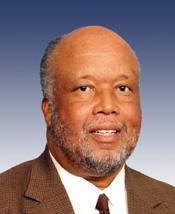 Rep. Bennie G. Thompson (D-MS)
Description
Amendment in the nature of a substitute sought to replace the language of the bill with the text of the "Complete Homeland Security Act".
What it changes
1 change to H.R. 1817
We couldn't match these changes to the text of H.R. 1817, so they're shown as written.
Replaces the bill's text with a full substitute
Replaces the full textEverything after the enacting clauseRemoves all after the enacting clause.
Inserted: SECTION 1. SHORT TITLE.
Inserted: This Act may be cited as the "Complete Homeland Security Act".
Inserted: SEC. 2. TABLE OF CONTENTS.
Inserted: The table of contents for this Act is as follows:
Inserted: Sec. 1. Short title.
Inserted: Sec. 2. Table of contents.
Inserted: TITLE I--AUTHORIZATION OF APPROPRIATIONS
Inserted: Sec. 101. Authorization of appropriations.
Inserted: Sec. 102. Departmental management and operations.
Inserted: Sec. 103. Information analysis and infrastructure protection.
Inserted: Sec. 104. Science and technology.
Inserted: Sec. 105. Security enforcement and investigations.
Show 1,577 more inserted paragraphsShow less
Inserted: Sec. 106. Emergency preparedness and response.
Inserted: Sec. 107. Office of the Inspector General.
Inserted: TITLE II--9/11 REFORM BILL ACCOUNTABILITY
Inserted: Sec. 201. Report on budget request for programs authorized by Public Law 108-458.
Inserted: TITLE III--SECURING OUR ENTIRE BORDER ALL THE TIME, EVERY DAY OF THE WEEK
Inserted: Subtitle A--Securing our land borders
Inserted: Sec. 301. Land border security strategy.
Inserted: Sec. 302. Deployment of surveillance systems along U.S.-Mexico border.
Inserted: Sec. 303. Creation of northern and southern border coordinators.
Inserted: Sec. 304. Smart border accord implementation.
Inserted: Sec. 305. Requiring a vulnerability assessment of land ports of entry.
Inserted: Sec. 306. Study to determine appropriate level and allocation of personnel at ports of entry and border patrol sectors.
Inserted: Sec. 307. Assessment of study by Comptroller General.
Inserted: Sec. 308. Authorization of appropriations for increase in full-time Border Patrol agents.
Inserted: Sec. 309. Border Patrol unit for Virgin Islands.
Inserted: Sec. 310. Requiring report on the "One Face at the Border Initiative".
Inserted: Subtitle B--CIS workflow study
Inserted: Sec. 311. CIS workflow, technology, and staffing assessment.
Inserted: Subtitle C--Report on border violence
Inserted: Sec. 321. Studies related to feasibility and cost of locating and removing eight million undocumented aliens from United States.
Inserted: Subtitle D--Center of Excellence on Border Security
Inserted: Sec. 331. Center of Excellence on Border Security.
Inserted: TITLE IV--SECURING CHEMICAL PLANTS AND OTHER CRITICAL INFRASTRUCTURE
Inserted: Subtitle A--Chemical Security Improvement
Inserted: Sec. 411. Short title.
Inserted: Sec. 412. Definitions.
Inserted: Sec. 413. Vulnerability assessments and site security plans.
Inserted: Sec. 414. Whistleblower protection.
Inserted: Sec. 415. Alternative approaches.
Inserted: Sec. 416. Enforcement.
Inserted: Sec. 417. Interagency technical support and cooperation.
Inserted: Sec. 418. Penalties.
Inserted: Sec. 419. Protection of information.
Inserted: Sec. 420. No effect on requirements under other law.
Inserted: Subtitle B--Critical infrastructure prioritization
Inserted: Sec. 421. Critical infrastructure.
Inserted: Sec. 422. Security review.
Inserted: Sec. 423. Implementation report.
Inserted: TITLE V--SECURING AIRPORTS, BAGGAGE, AND AIR CARGO
Inserted: Subtitle A--Prohibition against increase in security service fees
Inserted: Sec. 501. Prohibition against increase in security service fees.
Inserted: Subtitle B--Aviation security
Inserted: Sec. 511. Federal flight deck officers.
Inserted: Sec. 512. Letters of intent.
Inserted: Sec. 513. Aviation security capital fund.
Inserted: Sec. 514. Airport checkpoint screening explosive detection.
Inserted: Sec. 515. Flight communications.
Inserted: Sec. 516. Airport Site Access and Perimeter Security.
Inserted: Sec. 517. MANPAD countermeasure research.
Inserted: Sec. 518. Air charter and general aviation operations at Ronald Reagan Washington National Airport.
Inserted: Sec. 519. Inspection of cargo carried aboard commercial aircraft.
Inserted: TITLE VI--SECURING TRAINS ACROSS AMERICA
Inserted: Subtitle A--Public Transit Security
Inserted: Sec. 601. Short title.
Inserted: Sec. 602. Homeland security public transportation grants.
Inserted: Sec. 603. Training exercises.
Inserted: Sec. 604. Security best practices.
Inserted: Sec. 605. Public awareness.
Inserted: Sec. 606. National Transportation Security Centers.
Inserted: Sec. 607. Whistleblower protections.
Inserted: Sec. 608. Definition.
Inserted: Sec. 609. Memorandum of agreement.
Inserted: Subtitle B--Rail Security
Inserted: Sec. 611. Short title.
Inserted: Chapter 1--Railroad Security
Inserted: Sec. 621. Railroad transportation security.
Inserted: Sec. 622. Freight and passenger rail security upgrades.
Inserted: Sec. 623. Fire and life-safety improvements.
Inserted: Sec. 624. Rail security research and development program.
Inserted: Sec. 625. Rail worker security training program.
Inserted: Sec. 626. Whistleblower protection.
Inserted: Sec. 627. Public outreach.
Inserted: Sec. 628. Passenger, baggage, and cargo screening.
Inserted: Sec. 629. Emergency responder training standards.
Inserted: Sec. 630. Information for first responders.
Inserted: Sec. 631. TSA personnel limitations.
Inserted: Sec. 632. Rail safety regulations.
Inserted: Sec. 633. Rail police officers.
Inserted: Sec. 634. Definitions.
Inserted: Chapter 2--Assistance to Families of Passengers
Inserted: Sec. 641. Assistance by national transportation safety board to families of passengers involved in rail passenger accidents.
Inserted: Sec. 642. Rail passenger carrier plans to address needs of families of passengers involved in rail passenger accidents.
Inserted: Sec. 643. Establishment of task force.
Inserted: TITLE VII--SECURING CRITICAL INFRASTRUCTURE
Inserted: Sec. 701. Critical infrastructure.
Inserted: Sec. 702. Security review.
Inserted: Sec. 703. Implementation report.
Inserted: TITLE VIII--PREVENTING A BIOLOGICAL ATTACK
Inserted: Sec. 801. GAO Report of Department biological terrorism programs.
Inserted: Sec. 802. Report on bio-countermeasures.
Inserted: TITLE IX--PROTECTION OF AGRICULTURE
Inserted: Sec. 901. Report to Congress on implementation of recommendations regarding protection of agriculture.
Inserted: TITLE X--OPTIMIZING OUR SCREENING CAPABILITIES
Inserted: Subtitle A--U.S. visitor and immigrant status indicator technology database
Inserted: Sec. 1001. Interoperability of data for United States Visitor and Immigrant Status Indicator Technology.
Inserted: Subtitle B--Studies to improve border management and immigration security
Inserted: Sec. 1011. Study on biometrics.
Inserted: Sec. 1012. Study on digitizing immigration benefit applications.
Inserted: Sec. 1013. Study on elimination of arrival/departure paper forms.
Inserted: Sec. 1014. Cataloguing immigration applications by biometric.
Inserted: TITLE XI--SECURING CYBERSPACE AND HARNESSING TECHNOLOGY TO PREVENT DISASTER
Inserted: Subtitle A--Department of Homeland Security Cybersecurity Enhancement
Inserted: Sec. 1101. Short title.
Inserted: Sec. 1102. Assistant Secretary for Cybersecurity.
Inserted: Sec. 1103. Cybersecurity training programs and equipment.
Inserted: Sec. 1104. Cybersecurity research and development.
Inserted: Subtitle B--Coordination with National Intelligence Director
Inserted: Sec. 1111. Identification and implementation of technologies that improve sharing of information with the National Intelligence Director.
Inserted: Subtitle C--Cybersecurity research
Inserted: Sec. 1121. Support of basic cybersecurity research.
Inserted: Subtitle D--Cybersecurity training and equipment
Inserted: Sec. 1131. Cybersecurity training programs and equipment.
Inserted: TITLE XII--HELPING FIRST RESPONDERS GET THEIR JOB DONE
Inserted: Subtitle A--Communications interoperability
Inserted: Sec. 1201. Interoperable communications technology grant program.
Inserted: Sec. 1202. Study reviewing communication equipment interoperability.
Inserted: Sec. 1203. Prevention of delay in reassignment of dedicated spectrum for public safety purposes.
Inserted: Subtitle B--Homeland security terrorism exercises
Inserted: Sec. 1211. Short title.
Inserted: Sec. 1212. National terrorism exercise program.
Inserted: Subtitle C--Citizenship Preparedness
Inserted: Sec. 1221. Findings.
Inserted: Sec. 1222. Purposes.
Inserted: Sec. 1223. Citizens Corps; Private sector preparedness.
Inserted: Subtitle D--Emergency medical services
Inserted: Sec. 1231. Emergency Medical Services Administration.
Inserted: Sec. 1232. Sense of Congress.
Inserted: Subtitle E--Lessons learned information sharing system
Inserted: Sec. 1241. Lessons learned, best practices, and corrective action.
Inserted: Subtitle F--Technology transfer clearinghouse
Inserted: Sec. 1251. Short title.
Inserted: Sec. 1252. Technology development and transfer.
Inserted: Subtitle G--Metropolitan medical response system
Inserted: Sec. 1261. Metropolitan Medical Response System; authorization of appropriations.
Inserted: TITLE XIII--FIGHTING DOMESTIC TERRORISM
Inserted: Sec. 1301. Advisory Committee on Domestic Terrorist Organizations.
Inserted: TITLE XIV--CREATING A DIVERSE AND MANAGEABLE DEPARTMENT OF HOMELAND SECURITY
Inserted: Subtitle A--Authorities of Privacy Officer
Inserted: Sec. 1401. Authorities of Privacy Officer.
Inserted: Subtitle B--Ensuring diversity in Department of Homeland Security programs
Inserted: Sec. 1411. Annual reports relating to employment of covered persons.
Inserted: Sec. 1412. Procurement.
Inserted: Sec. 1413. Centers of Excellence Program.
Inserted: Subtitle C--Protection of certain employee rights
Inserted: Sec. 1421. Provisions to protect certain employee rights.
Inserted: Subtitle D--Whistleblower protections
Inserted: Sec. 1431. Whistleblower protections.
Inserted: Subtitle E--Authority of Chief Information Officer
Inserted: Sec. 1441. Authority of Chief Information Officer.
Inserted: Subtitle F--Authorization for Office of Inspector General
Inserted: Sec. 1451. Authorization for Office of Inspector General.
Inserted: Subtitle G--Regional office
Inserted: Sec. 1461. Colocated regional offices.
Inserted: Subtitle H--DHS terrorism prevention plan
Inserted: Sec. 1471. Short title.
Inserted: Sec. 1472. Department of Homeland Security Terrorism Prevention Plan.
Inserted: Sec. 1473. Annual crosscutting analysis of proposed funding for Department of Homeland Security programs.
Inserted: Subtitle I--Tribal security
Inserted: Sec. 1481. Office of Tribal Security.
Inserted: TITLE XV--SECURING OUR PORTS AND COASTLINES FROM TERRORIST ATTACK
Inserted: Sec. 1501. Security of maritime cargo containers.
Inserted: Sec. 1502. Study on port risks.
Inserted: TITLE XVI--AUTHORITY OF OTHER FEDERAL AGENCIES
Inserted: Sec. 1601. Authority of other Federal agencies unaffected.
Inserted: TITLE I--AUTHORIZATION OF APPROPRIATIONS
Inserted: SEC. 101. AUTHORIZATION OF APPROPRIATIONS.
Inserted: There is authorized to be appropriated for the Department of Homeland Security $41,036,180,000 for fiscal year 2006.
Inserted: SEC. 102. DEPARTMENTAL MANAGEMENT AND OPERATIONS.
Inserted: Of the amount authorized under section 101, there is authorized for departmental management and operations, including management and operations of the Office for State and Local Government Coordination and Preparedness, $6,463,000,000.
Inserted: SEC. 103. INFORMATION ANALYSIS AND INFRASTRUCTURE PROTECTION.
Inserted: Of the amount authorized under section 101, there is authorized for information analysis and infrastructure protection programs and activities $873,245,000.
Inserted: SEC. 104. SCIENCE AND TECHNOLOGY.
Inserted: Of the amount authorized under section 101, there is authorized for science and technology programs and activities $1,827,400,000, of which $418,000,000 shall be appropriated for aviation-security-related research and development, $115,000,000 shall be appropriated for the Man-Portable Air Defense Systems, and $35.4 million will be appropriated for biological countermeasures and agricultural defense.
Inserted: SEC. 105. SECURITY ENFORCEMENT AND INVESTIGATIONS.
Inserted: Of the amount authorized under section 101, there is authorized for expenses related to border and transportation security, immigration, and other security and related functions, $28,414,000,000, of which $380,000,000 shall be appropriated for the hiring of 2,000 new border patrol agents.
Inserted: SEC. 106. EMERGENCY PREPAREDNESS AND RESPONSE.
Inserted: Of the amount authorized under section 101, there is authorized for emergency preparedness and response programs and activities, $3,258,531,000.
Inserted: SEC. 107. OFFICE OF THE INSPECTOR GENERAL.
Inserted: Of the amount authorized under section 101, there is authorized for the Office of the Inspector General, $200,000,000.
Inserted: TITLE II--9/11 REFORM BILL ACCOUNTABILITY
Inserted: SEC. 201. REPORT ON BUDGET REQUEST FOR PROGRAMS AUTHORIZED BY PUBLIC LAW 108-458.
Inserted: (a) Explanation of Homeland Security Funding Shortfall.--
Inserted: (1) Initial report.--Not later than 30 days after the date of the enactment of this section, the President shall submit to Congress a report that explains each homeland security funding shortfall included in the budget submitted to Congress for fiscal year 2006 under section 1105(a) of title 31, United States Code, including the rationale for requesting less than the authorized level of funding for each such funding shortfall.
Inserted: (2) Annual reports.--Not later than 15 days after the President submits to Congress the budget for a fiscal year under section 1105(a) of title 31, United States Code, the President shall submit to Congress a report that explains each homeland security funding shortfall included in the budget for the fiscal year, including the rationale for requesting less than the authorized level of funding for each such funding shortfall.
Inserted: (b) Definition of Homeland Security Funding Shortfall.--In this section, the term "homeland security funding shortfall" means a program authorized by Public Law 108-458 for which the amount of authorization of appropriation for a fiscal year--
Inserted: (1) is specified under such Act, and the President does not request under such budget the maximum amount authorized by such Act for such fiscal year; or
Inserted: (2) is not specified under such Act, and the President does not request under such budget an amount sufficient to operate the program as required by such Act.
Inserted: TITLE III--SECURING OUR ENTIRE BORDER ALL THE TIME, EVERY DAY OF THE WEEK
Inserted: Subtitle A--Securing Our Land Borders SEC. 301. LAND BORDER SECURITY STRATEGY.
Inserted: (a) In General.--The Secretary of Homeland Security, in consultation with the heads of all other Federal agencies with border-related functions or with facilities or lands on or along the border, shall submit to the appropriate congressional committees (as defined in section 2 of the Homeland Security Act of 2002 (6 U.S.C. 101)) unclassified and classified versions of a unified, comprehensive strategy to secure the land borders of the United States not later than 6 months after the date of the enactment of this Act. The submission should include a description of the actions already taken to implement the strategy.
Inserted: (b) Contents.--The report shall cover the following areas:
Inserted: (1) Personnel.
Inserted: (2) Infrastructure.
Inserted: (3) Technology.
Inserted: (4) Coordination of intelligence among agencies.
Inserted: (5) Legal responsibilities and jurisdictional divisions.
Inserted: (6) Apprehension.
Inserted: (7) Budgetary impact.
Inserted: (8) Flow of commerce and economic impact.
Inserted: (c) Consultation.--In creating the strategy described in subsection (a), the Federal agencies described in such subsection shall consult private sector organizations and nongovernmental organizations with national security, privacy, agriculture, immigration, customs, transportation, technology, legal, and business expertise.
Inserted: (d) Implementation.--The Secretary shall implement the strategy not later than 12 months after the date of the enactment of this Act.
Inserted: (e) Evaluation.--The Comptroller General of the United States shall track, monitor, and evaluate such strategy to secure our borders to determine its efficacy.
Inserted: (f) Report.--Not later than 15 months after the date of the enactment of this Act, and every year thereafter for the succeeding 5 years, the Comptroller General of the United States shall submit a report to the Congress on the results of the activities undertaken under subsection (a) during the previous year. Each such report shall include an analysis of the degree to which the border security strategy has been effective in securing our borders. Each such report shall include a collection and systematic analysis of data, including workload indicators, related to activities to improve and increase border security.
Inserted: SEC. 302. DEPLOYMENT OF SURVEILLANCE SYSTEMS ALONG U.S.-MEXICO BORDER.
Inserted: (a) Initial Threat Assessment.--
Inserted: (1) In general.--The Secretary of Homeland Security shall conduct an assessment of the threat of penetration of the land borders of the United States, between the ports of entry, by terrorists and criminals, and the threat to of such areas to terrorist attack. In carrying out the threat assessments under this paragraph, the Secretary shall categorize the vulnerability of each land border corridor as "high", "medium", or "low" and shall prioritize the vulnerability of each land border corridor within each such category. In conducting the threat assessment, the Secretary of Homeland Security shall consult with appropriate Federal, tribal, State, local, and private sector representatives.
Inserted: (2) Report.--Not later than 6 months after the date of the enactment of this Act, the Secretary shall prepare and submit to the Committee on Homeland Security of the United States House of Representatives a report that contains--
Inserted: (A) the results of the threat assessments conducted under paragraph (1);
Inserted: (B) with respect to each land border corridor categorized under paragraph (1) as either a "high", "medium" or "low" land border corridor, descriptions of--
Inserted: (i) infrastructure and technology improvement projects required for each land border corridor in order to reduce its vulnerability; and
Inserted: (ii) the resources required to make such improvements; and
Inserted: (C) a description of how the funds will be used to implement technology and infrastructure improvement projects.
Inserted: (b) Follow-Up Threat Assessments.--The Secretary of Homeland Security shall conduct follow-up threat assessments of the land border between the ports of entry every 2 years and shall submit such reports to the Committee on Homeland Security of the House of Representatives.
Inserted: (c) Plan.--Not later than December 31, 2005, the Secretary of Homeland Security shall develop a comprehensive plan to fully deploy technological surveillance systems along the United States land borders between the ports of entry. Surveillance systems included in the deployment plan must--
Inserted: (1) ensure continuous monitoring of every mile of such borders; and
Inserted: (2) to the extent practicable, be fully interoperable with existing surveillance systems and mission systems, such as the Integrated Surveillance Intelligence Systems already in use by the Department of Homeland Security.
Inserted: SEC. 303. CREATION OF NORTHERN AND SOUTHERN BORDER COORDINATORS.
Inserted: (a) In General.--Title IV of the Homeland Security Act of 2002 (6 U.S.C. 201 seq.) is amended--
Inserted: (1) in section 402, by redesignating paragraph (8) as paragraph (9) and by inserting after paragraph (7) the following:
Inserted: "(8) Increasing the security of the United States at the ports of entry located along the northern and southern borders, and improving the coordination among the agencies responsible for maintaining that security."; and
Inserted: (2) in subtitle C, by adding at the end the following:
Inserted: "SEC. 431. BORDER COORDINATORS.
Inserted: "(a) In General.--There shall be within the Directorate of Border and Transportation Security the positions of Northern Border Coordinator and Southern Border Coordinator, who shall be appointed by the Secretary and who shall report directly to the Under Secretary for Border and Transportation Security.
Inserted: "(b) Responsibilities.--The Northern Border Coordinator and the Southern Border Coordinator shall undertake the following responsibilities along the northern and southern borders, respectively--
Inserted: "(1) serve as the primary official of the Department responsible for coordinating all Federal security activities along the border, especially at land border ports of entry;
Inserted: "(2) provide enhanced communication and data-sharing between Federal, State, local, and tribal agencies on law enforcement, emergency response, or security-related responsibilities for areas on or adjacent to the borders of the United States with Canada or Mexico;
Inserted: "(3) work to improve the communications systems within the Department to facilitate the integration of communications of matters relating to border security;
Inserted: "(4) oversee the implementation of the pertinent bilateral agreement (the United States-Canada 'Smart Border' Declaration applicable to the northern border and the United States-Mexico Partnership Agreement applicable to the southern border) to improve border functions, ensure security, and promote trade and tourism;
Inserted: "(5) consistent with section 5, assess all land border ports of entry along the appropriate border and develop a list of infrastructure and technology improvement projects for submission to the Secretary based on the ability of a project to fulfill immediate security requirements and facilitate trade across the borders of the United States; and
Inserted: "(6) serve as a liaison to the foreign agencies with responsibility for their respective border with the United States.".
Inserted: (b) Clerical Amendment.--Section 1(b) of such Act is amended in the table of contents by inserting after the item relating to section 430 the following:
Inserted: "431. Border coordinators.".
Inserted: SEC. 304. SMART BORDER ACCORD IMPLEMENTATION.
Inserted: The President shall submit to the appropriate congressional committees (as defined in section 2 of the Homeland Security Act of 2002 (6 U.S.C. 101)) information about the ongoing progress on implementation of the Smart Border Accords through quarterly reports on meetings of the Smart Border Working Group.
Inserted: SEC. 305. REQUIRING A VULNERABILITY ASSESSMENT OF LAND PORTS OF ENTRY.
Inserted: (a) Initial Assessment.--
Inserted: (1) In general.--The Secretary of Homeland Security shall conduct an assessment of the vulnerability of each United States land port of entry to penetration by terrorists and criminals or terrorist attack. In carrying out assessments under this paragraph, the Secretary shall categorize the vulnerability of each port of entry as "high", "medium", or "low" and shall prioritize the vulnerability of each port of entry within each such category. In conducting the assessment, the Secretary of Homeland Security shall consult with appropriate State, local, tribal, and private sector representatives.
Inserted: (2) Report.--Not later than one year after the date of the enactment of this Act, the Secretary shall prepare and submit to the appropriate congressional committees (as that term is defined in section 2 of the Homeland Security Act of 2002 (6 U.S.C. 101)) a report that contains--
Inserted: (A) the results of the assessment conducted under paragraph (1);
Inserted: (B) with respect to each port of entry categorized under paragraph (1) as either a "high" or "medium" vulnerability port of entry, descriptions of--
Inserted: (i) infrastructure and technology improvement projects required for the port of entry in order to reduce its vulnerability; and
Inserted: (ii) the resources required to make such improvements; and
Inserted: (C) a description of how the funds will be used to implement technology and infrastructure improvement projects.
Inserted: (b) Follow-Up Assessments.--The Secretary of Homeland Security shall conduct follow-up assessments of land border ports of entry every 2 years and shall submit such reports to the appropriate congressional committees (as defined in section 2 of the Homeland Security Act of 2002 (6 U.S.C. 101)).
Inserted: SEC. 306. STUDY TO DETERMINE APPROPRIATE LEVEL AND ALLOCATION OF PERSONNEL AT PORTS OF ENTRY AND BORDER PATROL SECTORS.
Inserted: (a) Study.--The Commissioner of the Bureau of Customs and Border Protection of the Department of Homeland Security shall conduct a study to determine the necessary level and allocation of personnel of the Bureau (including support staff) at United States ports of entry and between ports of entry in order to fully carry out the functions of the Bureau at such ports and locations. The Commissioner shall update and revise the study on an annual basis as appropriate.
Inserted: (b) Requirements.--
Inserted: (1) In general.--In conducting the study pursuant to subsection (a), the Commissioner shall take into account the following:
Inserted: (A) The most recent staffing assessment from each port director and the head of each border patrol sector, as required under paragraph (2).
Inserted: (B) The most recent relevant information, analyses, and vulnerability assessments relating to ports of entry and areas between ports of entry, as described in paragraph (3) of section 201(d) of the Homeland Security Act of 2002, and made available to the Commissioner in accordance with paragraph (18) of such section.
Inserted: (C) Any requests for additional personnel, if needed, from each port director and the head of each border patrol sector, including a description of whether the additional personnel should be assigned on a temporary or permanent basis.
Inserted: (D) An analysis of the impact of new available technology on staffing requirements of the Bureau.
Inserted: (E) An analysis of traffic volume and wait times at ports of entry.
Inserted: (F) An analysis of the training regimen for new officers of the Bureau and inspectors from the former Customs Service and the former Immigration and Naturalization Service and the extent to which the creation of the Bureau's Officer position has changed the personnel needs of the Department.
Inserted: (2) Additional requirement.--Each port director and the head of each border patrol sector shall complete and submit to the Commissioner on an annual basis an assessment of the level and allocation of personnel necessary to carry out the responsibilities of such port director or the head of such border patrol sector, as the case may be.
Inserted: (c) Reports.--
Inserted: (1) Initial report.--Not later than 120 days after the date of the enactment of this Act, the Commissioner shall prepare and submit to the Comptroller General and Congress a report that contains the results of the study conducted pursuant to subsection (a).
Inserted: (2) Subsequent reports.--The Commissioner shall prepare and submit to the Comptroller General and Congress on not less than an annual basis a report that contains each updated or revised study.
Inserted: SEC. 307. ASSESSMENT OF STUDY BY COMPTROLLER GENERAL.
Inserted: (a) Assessment.--The Comptroller General shall conduct an assessment of the study conducted by the Bureau of Customs and
Inserted: Border Protection under section 306 and shall conduct an assessment of each update or revision to the study. In conducting the assessment, the Comptroller General is authorized to solicit input from any personnel of the Bureau.
Inserted: (b) Report.--The Comptroller General shall prepare and submit to Congress a report that contains the results of each assessment conducted pursuant to subsection (a), including any recommendations thereto that the Comptroller General determines to be appropriate.
Inserted: SEC. 308. AUTHORIZATION OF APPROPRIATIONS FOR INCREASE IN FULL-TIME BORDER PATROL AGENTS.
Inserted: (a) Increase.--There are authorized to be appropriated to the Secretary of Homeland Security $300,000,000 for fiscal year 2006 to increase by not less than 2,000 the number of positions for full-time active-duty Border Patrol agents within the Department of Homeland Security above the number of such positions for which funds were allotted for fiscal year 2005.
Inserted: (b) Associated Costs.--There are authorized to be appropriated to the Secretary of Homeland Security $80,000,000 for fiscal year 2006 to pay the costs associated with the new hires described in subsection (a), including--
Inserted: (1) costs to increase by 166 of the number of support staff positions;
Inserted: (2) costs to increase by 1333 in the number of vehicles; and
Inserted: (3) costs to train the new hires described in subsection (a) under an agreement with a Department training facility other than the Artesia Border Patrol Academy.
Inserted: (c) Facilities Impact Assessment.--The Secretary of Homeland Security shall conduct a facilities impact assessment and report findings from such assessment, with detailed estimates and costs. to the Committee on Homeland Security of the United States House of Representatives.
Inserted: SEC. 309. BORDER PATROL UNIT FOR VIRGIN ISLANDS.
Inserted: Not later than September 30, 2006, the Secretary of Homeland Security shall establish at least one Border Patrol unit for the Virgin Islands of the United States.
Inserted: SEC. 310. REQUIRING REPORT ON THE "ONE FACE AT THE BORDER INITIATIVE".
Inserted: (a) In General.--Not later than September 30 of each of the calendar years 2005, 2006, and 2007, the Secretary of Homeland Security shall prepare and submit to the Congress a report--
Inserted: (1) describing and analyzing the goals, success, and shortfalls of the One Face at the Border Initiative at enhancing security and facilitating travel;
Inserted: (2) providing a breakdown of the number of personnel of the Bureau of Customs and Border Protection that were personnel of the United States Customs Service prior to the establishment of the Department of Homeland Security, that were personnel of the Immigration and Naturalization Service prior to the establishment of the Department of Homeland Security, and that were hired after the establishment of the Department of Homeland Security;
Inserted: (3) describing the training time provided to each employee on an annual basis for the various training components of the One Face at the Border Initiative;
Inserted: (4) outlining the steps taken by the Bureau of Customs and Border Protection to ensure that expertise is retained with respect to customs, immigration, and agriculture inspection functions under the One Face at the Border Initiative; and
Inserted: (5) reviewing whether the missions of customs, agriculture, and immigration are appropriately and adequately addressed.
Inserted: (b) Assessment of Report.--The Comptroller General of the United States shall the review the reports submitted under subsection (a) and shall provide an assessment to the appropriate congressional committees (as defined in section 2 of the Homeland Security Act of 2002 (6 U.S.C. 101)) regarding the effectiveness of the One Face at the Border Initiative.
Inserted: Subtitle B--CIS Workflow Study SEC. 311. CIS WORKFLOW, TECHNOLOGY, AND STAFFING ASSESSMENT.
Inserted: (a) In General.--The Secretary of Homeland Security shall conduct a comprehensive assessment of the Bureau of Citizenship and Immigration Services (otherwise know as "U.S. Citizenship and Immigration Services") within the Department of Homeland Security. Such assessment shall include study of personnel, administrative and technical support positions, technology, training, and facilities.
Inserted: (b) Workflow.--As part of the study, the Secretary shall examine all elements of such entity's workflow, in order to determine the most efficient way to handle its work without compromising security. Any bottlenecks associated with security matters should be identified and recommendations should be made on ways to minimize such bottlenecks without compromising security. The Secretary should assess the division of work, adequacy of infrastructure (particularly information technology), as well as personnel needs.
Inserted: (c) Interactions With Other Organizations.--As part of the study, the Secretary shall examine such entity's interactions with other government organizations. Specifically, the Secretary shall determine whether existing memoranda of understanding and divisions of responsibility, especially any which pre-date the establishment of the Department of Homeland Security, need to be revised in order to improve service delivery.
Inserted: (d) Backlog Cost.--As part of the study, the Secretary shall assess the current cost of maintaining the backlog (as defined in section 203 of the Immigration Services and Infrastructure Improvements Act of 2000 (8 U.S.C. 1572)).
Inserted: (e) Information Technology.--Aspects of this study related to information technology should be coordinated with the Chief Information Officer for the Department of Homeland Security and should build on the findings of the task force established by section 3 of the Immigration and Naturalization Service Data Management Improvement Act of 2000 (Public Law 106-215).
Inserted: (f) Submission.--The study should be completed not later than January 1, 2006, and shall be submitted to the Committee on Homeland Security of the United States House of Representatives. It shall include recommendations for resource allocation.
Inserted: Subtitle C--Report on Border Violence SEC. 321. STUDIES RELATED TO FEASIBILITY AND COST OF LOCATING AND REMOVING EIGHT MILLION UNDOCUMENTED ALIENS FROM UNITED STATES.
Inserted: (a) Feasibility Study.--Commencing not later than 30 days after the date of the enactment of this Act, the Comptroller General of the United States shall conduct a study to evaluate--
Inserted: (1) the ability of the Department of Homeland Security to develop and implement a program to locate and initiate removal proceedings on the 8,000,000 undocumented immigrants who are presently residing in the United States;
Inserted: (2) an estimate of the additional personnel and other additional resources such a project would require for the Department and the Executive Office for Immigration Review;
Inserted: (3) the amount of time that such development and implementation would require;
Inserted: (4) the total cost to develop and implement this program;
Inserted: (5) the ability of State and local police departments to assist the Department in implementing this program;
Inserted: (6) an estimate of the additional personnel and other additional resources the State and local police departments would need if they participate with the Department in implementing this program;
Inserted: (7) the amount of time away from other State and local police work that would be required of State and local police departments to participate in this program; and
Inserted: (8) the total cost to State and local governments of such participation.
Inserted: (b) Study on Consequences of Locating and Removing Eight Million Undocumented Aliens.--Commencing not later than 30 days after the date of the enactment of this Act, the Comptroller General of the United States shall conduct a study on the adverse consequences that could result from locating and removing 8,000,000 undocumented aliens from the United States.
Inserted: Subtitle D--Center of Excellence on Border Security SEC. 331. CENTER OF EXCELLENCE ON BORDER SECURITY.
Inserted: The Secretary shall establish a university-based Center for Border Security following the merit-review processes and procedures that have been established for selecting University Programs Centers of Excellence. The Center shall conduct research, examine existing and emerging border security technology and systems, and provide education, technical, and analytical assistance for the Department of Homeland Security to effectively secure the Nation's borders.
Inserted: TITLE IV--SECURING CHEMICAL PLANTS AND OTHER CRITICAL INFRASTRUCTURE
Inserted: Subtitle A--Chemical Security Improvement SEC. 411. SHORT TITLE.
Inserted: This subtitle may be cited as the "Chemical Security Improvement Act of 2005".
Inserted: SEC. 412. DEFINITIONS.
Inserted: In this subtitle:
Inserted: (1) Alternative approaches.--The term "alternative approach" means an approach that significantly reduces or eliminates the threat or consequences of a terrorist release from a chemical source, including an approach that--
Inserted: (A) uses smaller quantities, nonhazardous forms, or less hazardous forms of dangerous substances;
Inserted: (B) replaces a dangerous substance with a nonhazardous or less hazardous substance; or
Inserted: (C) uses nonhazardous or less hazardous conditions or processes.
Inserted: (2) Chemical source.--The term "chemical source" means a facility listed by the Secretary under section 413(e) as a chemical source; and--
Inserted: (3) Dangerous substance.--The term "dangerous substance" means a substance present at a chemical source that--
Inserted: (A) can cause death, injury, or serious adverse effects to human health or the environment; or
Inserted: (B) could harm critical infrastructure or national security.
Inserted: (4) Department.--The term "Department" means the Department of Homeland Security.
Inserted: (5) Environment.--The term "environment" means--
Inserted: (A) the navigable waters, the waters of the contiguous zone, and the ocean waters of which the natural resources are under the exclusive management authority of the United States; and
Inserted: (B) any other surface water, ground water, drinking water supply, land surface or subsurface strata, or ambient air within the United States or under the jurisdiction of the United States.
Inserted: (6) Owner or operator.--The term "owner or operator" means any person who owns, leases, operates, controls, or supervises a chemical source.
Inserted: (7) Release.--The term "release" means any spilling, leaking, pumping, pouring, emitting, emptying, discharging, injecting, escaping, leaching, dumping, or disposing into the environment (including the abandonment or discarding of barrels, containers, and other closed receptacles containing any hazardous substance or pollutant or contaminant), but excludes--
Inserted: (A) any release which results in exposure to persons solely within a workplace, with respect to a claim which such persons may assert against the employer of such persons;
Inserted: (B) emissions from the engine exhaust of a motor vehicle, rolling stock, aircraft, vessel, or pipeline pumping station engine; or
Inserted: (C) the normal application of fertilizer or pesticide.
Inserted: (8) Secretary.--The term "Secretary" means the Secretary of Homeland Security.
Inserted: (9) Security measure.--
Inserted: (A) In general.--The term "security measure" means an action carried out to ensure or enhance the security of a chemical source.
Inserted: (B) Inclusions.--The term "security measure", with respect to a chemical source, includes measures such as--
Inserted: (i) employee training and background checks;
Inserted: (ii) the limitation and prevention of access to controls of the chemical source;
Inserted: (iii) the protection of the perimeter of the chemical source, including the deployment of armed physical security personnel;
Inserted: (iv) the installation and operation of intrusion detection sensors;
Inserted: (v) the implementation of measures to increase computer or computer network security;
Inserted: (vi) the installation of measures to protect against long-range weapons;
Inserted: (vii) the installation of measures and controls to protect against or reduce the consequences of a terrorist attack; and
Inserted: (viii) the implementation of any other security-related measures or the conduct of any similar security-related activity, as determined by the Secretary.
Inserted: (10) Terrorism.--The term "terrorism" has the meaning given to that term in section 2 of the Homeland Security Act of 2002 (6 U.S.C. 101).
Inserted: (11) Terrorist release.--The term "terrorist release" means--
Inserted: (A) a release from a chemical source into the environment of a dangerous substance that is caused by an act of terrorism; and
Inserted: (B) the theft of a dangerous substance by a person for off-site release in furtherance of an act of terrorism.
Inserted: SEC. 413. VULNERABILITY ASSESSMENTS AND SITE SECURITY PLANS.
Inserted: (a) Requirement.--
Inserted: (1) In general.--Not later than 1 year after the date of the enactment of this subtitle, the Secretary shall promulgate regulations that--
Inserted: (A) require the owner or operator of each chemical source included on the list described in subsection (e)(1)--
Inserted: (i) to conduct an assessment of the vulnerability of the chemical source to a terrorist release; and
Inserted: (ii) to prepare and implement a site security plan that addresses the results of the vulnerability assessment; and
Inserted: (B) establish procedures, protocols, and standards for vulnerability assessments and site security plans.
Inserted: (2) Contents of vulnerability assessment.--A vulnerability assessment required under the regulations promulgated under paragraph (1) or any assessment determined substantially equivalent by the Secretary under subsection (c) shall include the identification and evaluation of--
Inserted: (A) critical assets and infrastructures;
Inserted: (B) hazards that may result from a terrorist release; and
Inserted: (C) weaknesses in--
Inserted: (i) physical security;
Inserted: (ii) structural integrity of containment, processing, and other critical infrastructure;
Inserted: (iii) protection systems;
Inserted: (iv) procedural and employment policies;
Inserted: (v) communication systems;
Inserted: (vi) transportation infrastructure in the proximity of the chemical source;
Inserted: (vii) utilities;
Inserted: (viii) contingency response; and
Inserted: (ix) other areas as determined by the Secretary.
Inserted: (3) Contents of site security plan.--A site security plan required under the regulations promulgated under paragraph (1) or any plan submitted to the Secretary under subsection (c)--
Inserted: (A) shall include security measures to significantly reduce the vulnerability of the chemical source covered by the plan to a terrorist release;
Inserted: (B) shall describe, at a minimum, particular equipment, plans, and procedures that could be implemented or used by or at the chemical source in the event of a terrorist release;
Inserted: (C) shall provide for the assessment and, as applicable, implementation of alternative approaches in accordance with section 415; and
Inserted: (D) shall be developed in consultation with local law enforcement, first responders, employees, and local emergency planning committees, as established pursuant to section 301(c) of the Emergency Planning and Community Right-To-Know Act of 1986 (42 U.S.C. 11001(c)).
Inserted: (4) Security exercises.--Not later than 1 year after the date of the enactment of this subtitle, the Secretary shall promulgate regulations establishing procedures, protocols, and standards for the conduct of security exercises, including--
Inserted: (A) the performance of force-on-force exercises that--
Inserted: (i) involve physical security personnel employed by the owner or operator of the chemical source to act as the force designated to defend the facility;
Inserted: (ii) involve personnel designated by the Secretary to act as the force designated to simulate a terrorist attempt to attack the chemical source to cause a terrorist release;
Inserted: (iii) are designed, overseen, and evaluated by the Department; and
Inserted: (iv) are conducted at least once every 3 years; and
Inserted: (B) the performance of all other such exercises at periodic intervals necessary to ensure the optimal performance of security measures.
Inserted: (5) Guidance to small businesses.--Not later than 1 year after the date of the enactment of this Act, the Secretary shall publish guidance to assist small businesses in complying with paragraphs (2) and (3).
Inserted: (6) Threat information.--To the maximum extent practicable under applicable authority and in the interests of national security, the Secretary shall provide to an owner or operator of a chemical source required to prepare a vulnerability assessment and site security plan threat information that is relevant to the chemical source.
Inserted: (7) Coordinated assessments and plans.--The regulations promulgated under paragraph (1) shall permit the development and implementation of coordinated vulnerability assessments and site security plans in any case in which more than 1 chemical source is operating at a single location or at contiguous locations, including cases in which a chemical source is under the control of more than 1 owner or operator.
Inserted: (b) Certification and Submission.--
Inserted: (1) In general.--Except as provided in subsection (c), each owner or operator of a chemical source shall certify in writing to the Secretary that the owner or operator has completed a vulnerability assessment and has developed and implemented (or is implementing) a site security plan in accordance with this subtitle, including--
Inserted: (A) regulations promulgated under subsection (a)(1); and
Inserted: (B) any existing vulnerability assessment or security plan endorsed by the Secretary under subsection (c)(1).
Inserted: (2) Submission.--
Inserted: (A) In general.--Not later than 18 months after the date of the promulgation of regulations under subsection (a)(1), an owner or operator of a chemical source shall provide to the Secretary copies of the vulnerability assessment and site security plan of the chemical source for review.
Inserted: (B) Certification.--
Inserted: (i) In general.--Not later than 2 years after the date on which the Secretary receives copies of the vulnerability assessment and site security plan of a chemical source under subparagraph (A), the Secretary shall determine whether the chemical source is in compliance with the requirements of this Act, including--
Inserted: (I) paragraph (1);
Inserted: (II) regulations promulgated under subsections (a)(1) and (a)(3); and
Inserted: (III) any existing vulnerability assessment or site security plan endorsed by the Secretary under subsection (c)(1).
Inserted: (ii) Certificate.--If the Secretary determines that the chemical source is in compliance with the requirements of this Act, the Secretary shall provide to the chemical source and make available for public inspection a certificate of approval that contains the following statement (in which statement the bracketed space shall be the name of the chemical source): "[______] is in compliance with the Chemical Security Improvement Act of 2005."
Inserted: (iii) Determination of noncompliance.--If the Secretary determines under clause (i) that a chemical source is not in compliance with the requirements of this Act, the Secretary shall exercise the authority provided in section 416.
Inserted: (iv) Report to congress.--Not later than 1 year after the promulgation of regulations in subsection (a)(1) and for every year afterwards, the Secretary shall submit to the Congress a report outlining the number of facilities that have provided vulnerability assessments and site security plans to the Secretary, what portion of these submissions have been reviewed by the Secretary, and what portion of these submissions are in compliance with clause (i).
Inserted: (3) Oversight.--
Inserted: (A) In general.--The Secretary shall, at such times and places as the Secretary determines to be appropriate, conduct or require the conduct of vulnerability assessments and other activities (including qualified third-party audits) to ensure and evaluate compliance with this subtitle (including regulations promulgated under subsection (a)(1) and (c)(1)).
Inserted: (B) Right of entry.--In carrying out this subtitle, the Secretary (or a designee), on presentation of credentials, shall have a right of entry to, on, or through any premises of an owner or operator of a chemical source.
Inserted: (C) Requests for records.--In carrying out this subtitle, the Secretary (or a designee) may require the submission of, or, on presentation of credentials, may at reasonable times seek access to and copy any documentation necessary for--
Inserted: (i) review or analysis of a vulnerability assessment or site security plan; or
Inserted: (ii) implementation of a site security plan.
Inserted: (D) Compliance.--If the Secretary determines that an owner or operator of a chemical source is not maintaining, producing, or permitting access to the premises of a chemical source or records as required by this paragraph, the Secretary may issue an order requiring compliance with the relevant provisions of this section.
Inserted: (E) Qualified third-party audits.--The Secretary shall establish standards as to the qualifications of third-party auditors. Such standards shall ensure the qualifications of the third-party auditor provide sufficient expertise in--
Inserted: (i) chemical site security vulnerabilities;
Inserted: (ii) chemical site security measures;
Inserted: (iii) alternative approaches; and
Inserted: (iv) such other areas as the Secretary determines to be appropriate and necessary.
Inserted: (4) Submission of changes.--The owner or operator of a chemical source shall provide to the Secretary a description of any significant change that is made to the vulnerability assessment or site security plan required for the chemical source under this section, not later than 90 days after the date the change is made.
Inserted: (c) Existing Vulnerability Assessments and Security Plans.--Upon submission of a petition by an owner or operator of a chemical source to the Secretary in conjunction with a submission under subsection (b)(2)(A), the Secretary--
Inserted: (1) may endorse any vulnerability assessment or security plan--
Inserted: (A) that was conducted, developed, or required by--
Inserted: (i) industry;
Inserted: (ii) State or local authorities; or
Inserted: (iii) other applicable law; and
Inserted: (B) that was conducted before, on, or after the date of enactment of this subtitle; and
Inserted: (C) the contents of which the Secretary determines meet the standards established under the requirements of subsections (a)(1), (a)(2), and (a)(3);
Inserted: (2) may make an endorsement of an existing vulnerability assessment or security plan under paragraph (1) contingent on modification of the vulnerability assessment or security plan to address--
Inserted: (A) a particular threat or type of threat; or
Inserted: (B) a requirement under (a)(2) or (a)(3).
Inserted: (d) Regulatory Criteria.--In exercising the authority under subsections (a), (b), (c), or (e) with respect to a chemical source, the Secretary shall consider--
Inserted: (1) the likelihood that a chemical source will be the target of terrorism;
Inserted: (2) the potential extent of death, injury, or serious adverse effects to human health or the environment that would result from a terrorist release;
Inserted: (3) the potential harm to critical infrastructure and national security from a terrorist release; and
Inserted: (4) such other security-related factors as the Secretary determines to be appropriate and necessary to protect the public health and welfare, critical infrastructure, and national security.
Inserted: (e) List of Chemical Sources.--
Inserted: (1) In general.--Not later than 180 days after the date of the enactment of this subtitle, the Secretary shall develop a list of chemical sources in existence as of that date.
Inserted: (2) Considerations.--In developing the list under paragraph (1), the Secretary shall take into consideration the criteria specified in subsection (d).
Inserted: (3) Prioritization.--In developing the list under paragraph (1), the Secretary shall determine the potential extent of death, injury, or severe adverse effects to human health that would result from a terrorist release of dangerous substances from a chemical source.
Inserted: (4) Scope.--In developing the list under paragraph (1), the Secretary shall include at least those facilities that pose a risk of potential death, injury, or severe adverse effects to not fewer than 15,000 individuals.
Inserted: (5) Future determinations.--Not later than 3 years after the date of the promulgation of regulations under subsection (a)(1), and every 3 years thereafter, the Secretary shall, after considering the criteria described in subsection (d)--
Inserted: (A) determine whether additional facilities (including, as of the date of the determination, facilities that are operational and facilities that will become operational in the future) shall be considered to be a chemical source under this subtitle;
Inserted: (B) determine whether any chemical source identified on the most recent list under paragraph (1) no longer presents a risk sufficient to justify retention of classification as a chemical source under this subtitle; and
Inserted: (C) update the list as appropriate.
Inserted: (f) 5-Year Review.--Not later than 5 years after the date of the certification of a vulnerability assessment and a site security plan under subsection (b)(1), and not less often than every 5 years thereafter (or on such a schedule as the Secretary may establish by regulation), the owner or operator of the chemical source covered by the vulnerability assessment or site security plan shall--
Inserted: (1) ensure the vulnerability assessment and site security plan meet the most recent regulatory standards issues under subsection (a)(1);
Inserted: (2)(A) certify to the Secretary that the chemical source has completed the review and implemented any modifications to the site security plan; and
Inserted: (B) submit to the Secretary a description of any changes to the vulnerability assessment or site security plan; and
Inserted: (3) submit to the Secretary a new assessment of alternative approaches.
Inserted: (g) Protection of Information.--
Inserted: (1) Critical infrastructure information.--Except with respect to certifications specified in subsections (b)(1) and (f)(2)(A), vulnerability assessments and site security plans obtained in accordance with this subtitle, and all information derived from those vulnerability assessments and site security plans that could pose a risk to a particular chemical source, shall be deemed critical infrastructure information as defined in section 212 of the Homeland Security Act of 2002 (6 U.S.C. 131), and subject to all protections under sections 213 and 214 of that Act.
Inserted: (2) Exceptions to penalties.--Section 214(f) of the Homeland Security Act of 2002 (6 U.S.C. 133(f)) shall not apply to a person described in that section that discloses information described in paragraph (1)--
Inserted: (A) for use in any administrative or judicial proceeding to impose a penalty for failure to comply with a requirement of this subtitle; or
Inserted: (B) for the purpose of making a disclosure evidencing government, owner or operator, or employee activities that threaten the security of a chemical source or are inconsistent with the requirements of this subtitle.
Inserted: (3) Rule of construction.--Nothing in this subsection shall be construed to authorize the withholding of information from members of Congress acting in their official capacity.
Inserted: SEC. 414. WHISTLEBLOWER PROTECTION.
Inserted: (a) In General.--No person employed at a chemical source may be discharged, demoted, suspended, threatened, harassed, or in any other manner discriminated against because of any lawful act done by the person--
Inserted: (1) to provide information, cause information to be provided, or otherwise assist in an investigation regarding any conduct which the person reasonably believes constitutes a violation of any law, rule or regulation related to the security of the chemical source, or any other threat to the security of the chemical source, when the information or assistance is provided to or the investigation is conducted by--
Inserted: (A) a Federal regulatory or law enforcement agency;
Inserted: (B) any member or committee of the Congress; or
Inserted: (C) a person with supervisory authority over the person (or such other person who has the authority to investigate, discover, or terminate misconduct); or
Inserted: (2) to file, cause to be filed, testify, participate in, or otherwise assist in a proceeding or action filed or about to be filed relating to a violation of any law, rule, or regulation related to the security of a chemical source or any other threat to the security of a chemical source; or
Inserted: (3) to refuse to violate or assist in the violation of any law, rule, or regulation related to the security of chemical sources.
Inserted: (b) Enforcement Action.--
Inserted: (1) In general.--A person who alleges discharge or other discrimination by any person in violation of subsection (a) may seek relief under subsection (c), by--
Inserted: (A) filing a complaint with the Secretary of Labor; or
Inserted: (B) if the Secretary of Labor has not issued a final decision within 180 days of the filing of the complaint and there is no showing that such delay is due to the bad faith of the claimant, bringing an action at law or equity for de novo review in the appropriate district court of the United States, which shall have jurisdiction over such an action without regard to the amount in controversy.
Inserted: (2) Procedure.--
Inserted: (A) In general.--An action under paragraph (1)(A) shall be governed under the rules and procedures set forth in section 42121(b) of title 49, United States Code.
Inserted: (B) Exception.--Notification made under section 42121(b)(1) of title 49, United States Code, shall be made to the person named in the complaint and to the person's employer.
Inserted: (C) Burdens of proof.--An action brought under paragraph (1)(B) shall be governed by the legal burdens of proof set forth in section 42121(b) of title 49, United States Code.
Inserted: (D) Statute of limitations.--An action under paragraph (1) shall be commenced not later than 90 days after the date on which the violation occurs.
Inserted: (c) Remedies.--
Inserted: (1) In general.--A person prevailing in any action under subsection (b)(1) shall be entitled to all relief necessary to make the person whole.
Inserted: (2) Compensatory damages.--Relief for any action under paragraph (1) shall include--
Inserted: (A) reinstatement with the same seniority status that the person would have had, but for the discrimination;
Inserted: (B) the amount of back pay, with interest; and
Inserted: (C) compensation for any special damages sustained as a result of the discrimination, including litigation costs, expert witness fees, and reasonable attorney fees.
Inserted: (d) Rights Retained by Person.--Nothing in this section shall be deemed to diminish the rights, privileges, or remedies of any person under any Federal or State law, or under any collective bargaining agreement.
Inserted: SEC. 415. ALTERNATIVE APPROACHES.
Inserted: (a) Assessment.--
Inserted: (1) In general.--A site security plan under section 413(a)(1) shall provide for the conduct of an assessment of alternative approaches.
Inserted: (2) Inclusions.--An assessment under this subsection shall include information on--
Inserted: (A) the nature of each alternative approach considered, such as--
Inserted: (i) the quantity of each dangerous substance considered for reduction;
Inserted: (ii) the form of any dangerous substance considered for replacement and the form of potential replacements considered;
Inserted: (iii) any dangerous substance considered for replacement and a description of any potential replacements considered; and
Inserted: (iv) any process or conditions considered for modification and a description of the potential modification;
Inserted: (B) the degree to which each alternative approach considered could potentially reduce the threat or consequence of a terrorist release; and
Inserted: (C) specific considerations that led to the implementation or rejection of each alternative approach, including--
Inserted: (i) requirements under this subtitle;
Inserted: (ii) cost;
Inserted: (iii) cost savings;
Inserted: (iv) availability of replacement or modification technology or technical expertise;
Inserted: (v) the applicability of existing replacement or modification technology to the chemical source; and
Inserted: (vi) any other factor that the owner of operator of the chemical source considered in judging the practicability of each alternative approach.
Inserted: (b) Implementation.--
Inserted: (1) In general.--A chemical source described in paragraph (2) shall implement options to significantly reduce or eliminate the threat or consequences of a terrorist release through the use of alternative approaches that would not create an equal or greater risk to human health or the environment.
Inserted: (2) Applicability.--This subsection applies to a chemical source if--
Inserted: (A) the chemical source poses a potential of harm to more than 15,000 people, unless the owner or operator of the chemical source can demonstrate to the Secretary through an assessment of alternative approaches that available alternative approaches--
Inserted: (i) would not significantly reduce the number of people at risk of death, injury, or serious adverse effects resulting from a terrorist release;
Inserted: (ii) cannot feasibly be incorporated into the operation of the chemical source; or
Inserted: (iii) would significantly and demonstrably impair the ability of the owner or operator of the chemical source to continue its business; or
Inserted: (B)(i) the chemical source poses a potential of harm to fewer than 15,000 people; and
Inserted: (ii) implementation of options to significantly reduce the threat or consequence of a terrorist release through the use of alternative approaches if practicable in the judgment of the owner or operator of the chemical source.
Inserted: (c) Alternative Approaches Clearinghouse.--
Inserted: (1) Authority.--The Secretary shall establish a publicly available clearinghouse to compile and disseminate information on the use and availability of alternative approaches.
Inserted: (2) Inclusions.--The clearinghouse shall include information on--
Inserted: (A) general and specific types of alternative approaches;
Inserted: (B) combinations of chemical sources, substances of concern, and hazardous processes or conditions for which alternative approaches could be appropriate;
Inserted: (C) the scope of current use and availability of specific alternative approaches;
Inserted: (D) the costs and cost savings resulting from alternative approaches;
Inserted: (E) technological transfer;
Inserted: (F) the availability of technical assistance;
Inserted: (G) current users of alternative approaches; and
Inserted: (H) such other information as the Administrator deems appropriate.
Inserted: (3) Collection of information.--The Secretary shall collect information for the clearinghouse--
Inserted: (A) from documents submitted by owners or operators pursuant to this Act;
Inserted: (B) by surveying owners or operators who have registered their facilities pursuant to part 68 of title 40 Code of Federal Regulations (or successor regulations); or (C) through such other methods as the Secretary deems appropriate.
Inserted: (4) Public availability.--Information available publicly through the clearinghouse shall not allow the identification of any specific facility or violate the exemptions of section 552(b)(4) of title 5, United States Code.
Inserted: (5) Study of alternative and inherently safer approaches to chemical safety and security.--
Inserted: (A) Study.--Not later than 6 months after the date of the enactment of this Act, the Secretary shall enter into an arrangement with the National Academy of Sciences to provide for a comprehensive study of--
Inserted: (i) the currently available chemical technologies, practices, strategies, and other methods for improving the inherent safety and security of United States chemical manufacturing, transportation, and usage sites and infrastructure against the threat of terrorism;
Inserted: (ii) methods for assessing the degree of inherent safety of chemical technologies, practices, strategies, and other means;
Inserted: (iii) methods for integrating inherently safer chemical technologies, practices, strategies, and other means into risk management for critical infrastructure protection; and
Inserted: (iv) progress and directions in research in chemical sciences and technology that may provide new chemical technologies, practices, strategies, and other means to improve inherent safety and security.
Inserted: (B) Report.--
Inserted: (i) In general.--The arrangement entered into under subparagraph (A) shall provide that the National Academy of Sciences shall submit to the Secretary a final report on the study conducted under subparagraph (A) by no later than 18 months after a contract for the arrangement is signed.
Inserted: (ii) Recommendations.--The report under this subparagraph shall include such recommendations regarding government and private sector practices to encourage the adoption of currently available inherently safer and more secure chemical technologies and strategies to reduce the vulnerabilities of existing and future chemical manufacturing, transportation, and usage sites and infrastructure, and regarding research directions in green chemistry and chemical engineering that would lead to inherently more secure, safer, and economically viable chemical products, processes, and procedures, as the Academy determines appropriate.
Inserted: (C) Transmission to congress.--The Secretary shall promptly transmit a copy of the report under this subparagraph to the Congress and make the report available to the public.
Inserted: SEC. 416. ENFORCEMENT.
Inserted: (a) Failure to Comply.--If an owner or operator of a non-Federal chemical source fails to certify or submit a vulnerability assessment or site security plan in accordance with this subtitle, the Secretary may issue an order requiring the certification and submission of a vulnerability assessment or site security plan in accordance with section 413(b).
Inserted: (b) Disapproval.--The Secretary may disapprove under subsection (a) a vulnerability assessment or site security plan submitted under section 413(b) or (c) if the Secretary determines that--
Inserted: (1) the vulnerability assessment or site security plan does not comply with regulations promulgated under section 413(a)(1), or the procedure, protocol, or standard endorsed or recognized under section 413(c); or
Inserted: (2) the site security plan, or the implementation of the site security plan, is insufficient to address--
Inserted: (A) the results of a vulnerability assessment of a chemical source; or
Inserted: (B) a threat of a terrorist release.
Inserted: (c) Compliance.--If the Secretary disapproves a vulnerability assessment or site security plan of a chemical source under subsection (b), the Secretary shall--
Inserted: (1) provide the owner or operator of the chemical source a written notification of the determination that includes a clear explanation of deficiencies in the vulnerability assessment, site security plan, or implementation of the assessment or plan;
Inserted: (2) consult with the owner or operator of the chemical source to identify appropriate steps to achieve compliance; and
Inserted: (3) if, following that consultation, the owner or operator of the chemical source does not achieve compliance by such date as the Secretary determines to be appropriate under the circumstances, issue an order requiring the owner or operator to correct specified deficiencies.
Inserted: (d) Protection of Information.--Any determination of disapproval or order made or issued under this section shall be exempt from disclosure--
Inserted: (1) under section 552 of title 5, United States Code;
Inserted: (2) under any State or local law providing for public access to information; and
Inserted: (3) except as provided in section 413(g)(2), in any Federal or State civil or administrative proceeding.
Inserted: SEC. 417. INTERAGENCY TECHNICAL SUPPORT AND COOPERATION.
Inserted: The Secretary--
Inserted: (1) in addition to such consultation as is required in this subtitle, shall consult with Federal agencies with relevant expertise, and may request those Federal agencies to provide technical and analytical support, in implementing this subtitle; and
Inserted: (2) may provide reimbursement for such technical and analytical support received as the Secretary determines to be appropriate.
Inserted: SEC. 418. PENALTIES.
Inserted: (a) Judicial Relief.--In a civil action brought in United States district court, any owner or operator of a chemical source that violates or fails to comply with any order issued by the Secretary under this subtitle or a site security plan submitted to the Secretary under this subtitle or recognized by the Secretary, for each day on which the violation occurs or the failure to comply continues, may be subject to--
Inserted: (1) an order for injunctive relief; and
Inserted: (2) a civil penalty of not more than $50,000.
Inserted: (b) Administrative Penalties.--
Inserted: (1) Penalty orders.--The Secretary may issue an administrative penalty of not more than $250,000 for failure to comply with an order issued by the Secretary under this subtitle.
Inserted: (2) Notice and hearing.--Before issuing an order described in paragraph (1), the Secretary shall provide to the person against whom the penalty is to be assessed--
Inserted: (A) written notice of the proposed order; and
Inserted: (B) the opportunity to request, not later than 30 days after the date on which the person receives the notice, a hearing on the proposed order.
Inserted: (3) Procedures.--The Secretary may promulgate regulations outlining the procedures for administrative hearings and appropriate review under this subsection, including necessary deadlines.
Inserted: SEC. 419. PROTECTION OF INFORMATION.
Inserted: (a) Definition of Protected Information.--
Inserted: (1) In general.--In this section, the term "protected information" means--
Inserted: (A) a vulnerability assessment or site security plan required by subsection (a) or (b) of section 413;
Inserted: (B) any study, analysis, or other document generated by the owner or operator of a chemical source primarily for the purpose of preparing a vulnerability assessment or site security plan (including any alternative approach analysis); or
Inserted: (C) any other information provided to or obtained or obtainable by the Secretary solely for the purposes of this subtitle from the owner or operator of a chemical source that, if released, is reasonably likely to increase the probability or consequences of a terrorist release.
Inserted: (2) Other obligations unaffected.--Nothing in this section affects--
Inserted: (A) the handling, treatment, or disclosure of information obtained from a chemical source under any other law;
Inserted: (B) any obligation of the owner or operator of a chemical source to submit or make available information to a Federal, State, or local government agency under, or otherwise to comply with, any other law; or
Inserted: (C) the public disclosure of information derived from protected information, so long as the information disclosed--
Inserted: (i) would not divulge methods or processes entitled to protection as trade secrets in accordance with the purposes of section 1905 of title 18, United States Code;
Inserted: (ii) does not identify any particular chemical source; and
Inserted: (iii) is not reasonably likely to increase the probability or consequences of a terrorist release, even if the same information is also contained in a document referred to in paragraph (1).
Inserted: (b) Disclosure Exemption.--Protected information shall be exempt from disclosure under--
Inserted: (1) section 552 of title 5, United States Code; and
Inserted: (2) any State or local law providing for public access to information.
Inserted: (c) Rule of Construction.--Subsection (b) shall not be construed to apply to a certificate of compliance or a determination of noncompliance under clause (ii) or (iii), respectively, of section 413(b)(2)(B).
Inserted: SEC. 420. NO EFFECT ON REQUIREMENTS UNDER OTHER LAW.
Inserted: Nothing in this subtitle affects any duty or other requirement imposed under any other Federal or State law.
Inserted: Subtitle B--Critical Infrastructure Prioritization SEC. 421. CRITICAL INFRASTRUCTURE.
Inserted: (a) Completion of Prioritization.--Not later than 90 days after the date of the enactment of this Act, the Secretary of Homeland Security shall complete the prioritization of the Nation's critical infrastructure according to all of the following criteria:
Inserted: (1) The threat of terrorist attack, based on threat information received and analyzed by the Office of Information Analysis of the Department regarding the intentions and capabilities of terrorist groups and other potential threats to the Nation's critical infrastructure.
Inserted: (2) The likelihood that an attack would cause the destruction or significant disruption of such infrastructure.
Inserted: (3) The likelihood that an attack would result in substantial numbers of deaths and serious bodily injuries, a substantial adverse impact on the national economy, or a substantial adverse impact on national security.
Inserted: (b) Cooperation.--Such prioritization shall be developed in cooperation with other relevant Federal agencies, State, local, and tribal governments, and the private sector, as appropriate.
Inserted: SEC. 422. SECURITY REVIEW.
Inserted: (a) Requirement.--Not later than 9 months after the date of the enactment of this Act, the Secretary, in coordination with other relevant Federal agencies, State, local, and tribal governments, and the private sector, as appropriate, shall--
Inserted: (1) review existing Federal, State, local, tribal, and private sector plans for securing the critical infrastructure included in the prioritization developed under section 421;
Inserted: (2) recommend changes to existing plans for securing such infrastructure, as the Secretary determines necessary; and
Inserted: (3) coordinate and contribute to protective efforts of other Federal, State, local, and tribal agencies and the private sector, as appropriate, as directed in Homeland Security Presidential Directive 7.
Inserted: (b) Contents of Plans.--The recommendations made under subsection (a)(2) shall include--
Inserted: (1) necessary protective measures to secure such infrastructure, including milestones and timeframes for implementation; and
Inserted: (2) to the extent practicable, performance metrics to evaluate the benefits to both national security and the Nation's economy from the implementation of such protective measures.
Inserted: SEC. 423. IMPLEMENTATION REPORT.
Inserted: (a) In General.--Not later than 15 months after the date of the enactment of this Act, the Secretary shall submit a report to the Committee on Homeland Security of the House of Representatives and the Committee on Homeland Security and Governmental Affairs of the Senate on the implementation of section 422. Such report shall detail--
Inserted: (1) the Secretary's review and coordination of security plans under section 422; and
Inserted: (2) the Secretary's oversight of the execution and effectiveness of such plans.
Inserted: (b) Update.--Not later than 1 year after the submission of the report under subsection (a), the Secretary shall provide an update of such report to the congressional committees described in subsection (a).
Inserted: TITLE V--SECURING AIRPORTS, BAGGAGE, AND AIR CARGO
Inserted: Subtitle A--Prohibition Against Increase in Security Service Fees SEC. 501. PROHIBITION AGAINST INCREASE IN SECURITY SERVICE FEES.
Inserted: None of the funds authorized under this Act may be derived from an increase in security service fees established under section 44940 of title 49, United States Code.
Inserted: Subtitle B--Aviation Security SEC. 511. FEDERAL FLIGHT DECK OFFICERS.
Inserted: (a) Training, Supervision, and Equipment.--Section 44921(c) of title 49, United States Code, is amended by adding at the end the following:
Inserted: "(3) Dates of training.--The Secretary shall ensure that a pilot who is eligible to receive Federal flight deck officer training is offered a choice of training dates and is provided at least 30 days advance notice of the dates.
Inserted: "(4) Travel to training facilities.--The Secretary shall establish a program to improve travel access to Federal flight deck officer training facilities through the use of charter flights or improved scheduled air carrier service.
Inserted: "(5) Requalification and recurrent training.--
Inserted: "(A) Standards.--The Secretary shall establish qualification standards for facilities where Federal flight deck officers can receive requalification and recurrent training.
Inserted: "(B) Locations.--The Secretary shall provide for requalification and recurrent training at geographically diverse facilities, including military facilities, Federal, State, and local law enforcement facilities, and private training facilities that meet the qualification standards established under subparagraph (A).
Inserted: "(6) Costs of training.--
Inserted: "(A) In general.--The Secretary shall provide Federal flight deck officer training, requalification training, and recurrent training to eligible pilots at no cost to the pilots or the air carriers that employ the pilots.
Inserted: "(B) Transportation and expenses.--The Secretary may provide travel expenses to a pilot receiving Federal flight deck officer training, requalification training, or recurrent training.
Inserted: "(7) Issuance of badges.--Not later than 180 days after the date of enactment of this paragraph, the Secretary shall issue badges to Federal flight deck officers.".
Inserted: (b) Revocation of Deputization of Pilot as Federal Flight Deck Officer.--Section 44921(d)(4) of title 49, United States Code, is amended to read as follows:
Inserted: "(4) Revocation.--
Inserted: "(A) Orders.--The Assistant Secretary of Homeland Security (Transportation Security Administration) may issue, for good cause, an order revoking the deputization of a Federal flight deck officer under this section. The order shall include the specific reasons for the revocation.
Inserted: "(B) Hearings.--An individual who is adversely affected by an order of the Assistant Secretary under subparagraph (A) is entitled to a hearing on the record. When conducting a hearing under this section, the administrative law judge shall not be bound by findings of fact or interpretations of laws and regulations of the Assistant Secretary.
Inserted: "(C) Appeals.--An appeal from a decision of an administrative law judge as a result of a hearing under subparagraph (B) shall be made to the Secretary or the Secretary's designee.
Inserted: "(D) Judicial review of a final order.--The determination and order of the Secretary revoking the deputization of a Federal flight deck officer under this section shall be final and conclusive unless the individual against whom such an order is issued files an application for judicial review, not later than 60 days following the date of entry of such order, in the appropriate United States court of appeals.".
Inserted: (c) Federal Flight Deck Officer Firearm Carriage Pilot Program.--Section 44921(f) of title 49, United States Code, is amended by adding at the end the following:
Inserted: "(4) Pilot program.--
Inserted: "(A) In general.--Not later than 90 days after the date of enactment of this paragraph, the Secretary shall implement a pilot program to allow pilots participating in the Federal flight deck officer program to transport their firearms on their persons. The Secretary may prescribe any training, equipment, or procedures that the Secretary determines necessary to ensure safety and maximize weapon retention.
Inserted: "(B) Review.--Not later than 1 year after the date of initiation of the pilot program, the Secretary shall conduct a review of the safety record of the pilot program and transmit a report on the results of the review to Congress.
Inserted: "(C) Option.--If the Secretary as part of the review under subparagraph (B) determines that the safety level obtained under the pilot program is comparable to the safety level determined under existing methods of pilots carrying firearms on aircraft, the Secretary shall allow all pilots participating in the Federal flight deck officer program the option of carrying their firearm on their person subject to such requirements as the Secretary determines appropriate.".
Inserted: (d) References to Under Secretary.--Section 44921 of title 49, United States Code, is amended--
Inserted: (1) in subsection (a) by striking "Under Secretary of Transportation for Security" and inserting "Secretary of Homeland Security";
Inserted: (2) by striking "Under Secretary" each place it appears and inserting "Secretary"; and
Inserted: (3) by striking "Under Secretary's" each place it appears and inserting "Secretary's".
Inserted: SEC. 512. LETTERS OF INTENT.
Inserted: (a) Installation of Eds Systems.--Section 44923(d) of title 49, United States Code, is amended by adding at the end the following:
Inserted: "(7) Installation of eds systems.--Upon the request of a sponsor for an airport, the Assistant Secretary for Homeland Security (Transportation Security Administration) shall revise a letter of intent issued under this subsection to provide for reimbursement of such additional costs as may be necessary to achieve complete in-line explosive detection system installation at the airport.".
Inserted: (b) Federal Share.--Section 44923(e) of title 49, United States Code, is amended by adding at the end the following:
Inserted: "(3) Deadline for revisions.--The Assistant Secretary for Homeland Security (Transportation Security Administration) shall revise letters of intent referred to in paragraph (2) not later than 30 days after the date of enactment of this paragraph.
Inserted: "(4) Extension of reimbursement schedules.--If the Assistant Secretary considers it necessary and appropriate due to fiscal constraints in any fiscal year, the Assistant Secretary, for purposes of ensuring reimbursement of the Federal share as provided in paragraph (1), may revise a letter of intent issued under this section to extend the reimbursement schedule for one or more fiscal years.".
Inserted: SEC. 513. AVIATION SECURITY CAPITAL FUND.
Inserted: (a) In General.--Section 44923(h)(1) of title 49, United States Code, is amended--
Inserted: (1) in the second sentence by striking "in each of fiscal years 2004 through 2007" and inserting "in each of fiscal years 2004 and 2005, and $650,000,000 in each of fiscal years 2006 and 2007,"; and
Inserted: (2) in the third sentence by striking "at least $250,000,000 in each of such fiscal years" and inserting "at least $250,000,000 in each of fiscal years 2004 and 2005, and at least $650,000,000 in each of fiscal years 2006 and 2007," .
Inserted: (b) Discretionary Grants.--Section 44923(h)(3) of such title is amended by striking "for a fiscal year, $125,000,000" and inserting ", $125,000,000 for each of fiscal years 2004 and 2005, and $525,000,000 for each of fiscal years 2006 and 2007,".
Inserted: SEC. 514. AIRPORT CHECKPOINT SCREENING EXPLOSIVE DETECTION.
Inserted: Section 44940 of title 49, United States Code, is amended--
Inserted: (1) in subsection (d)(4) by inserting ", other than subsection (i)," before "except to"; and
Inserted: (2) by adding at the end the following:
Inserted: "(i) Checkpoint Screening Security Fund.--
Inserted: "(1) Establishment.--There is established in the Department of Homeland Security a fund to be known as the 'Checkpoint Screening Security Fund'.
Inserted: "(2) Deposits.--In fiscal year 2006, after amounts are made available under section 44923(h), the next $250,000,000 derived from fees received under subsection (a)(1) shall be available to be deposited in the Fund.
Inserted: "(3) Fees.--The Secretary of Homeland Security shall impose the fee authorized by subsection (a)(1) so as to collect at least $250,000,000 in fiscal year 2006 for deposit into the Fund.
Inserted: "(4) Availability of amounts.--Amounts in the Fund shall be available until expended for the purchase, deployment, and installation of equipment to improve the ability of security screening personnel at screening checkpoints to detect explosives.".
Inserted: SEC. 515. FLIGHT COMMUNICATIONS.
Inserted: Section 4021 of the Intelligence Reform and Terrorism Prevention Act of 2004 (118 Stat. 3723) is amended by adding at the end the following:
Inserted: "(d) Flight Communication.--
Inserted: "(1) Study.--To expand the purposes of the study under subsection (a), the Assistant Secretary shall conduct a study on the viability of devices to enable discreet, wireless communications between flight attendants, pilots, Federal air marshals, and ground-based personnel during a passenger commercial aircraft flight to improve coordination of planning and activities in the event of an act of terrorism.
Inserted: "(2) Report.--Not later than 180 days after the date of enactment of this subsection, the Assistant Secretary shall transmit to Congress a report on the results of the study conducted under this subsection.".
Inserted: SEC. 516. AIRPORT SITE ACCESS AND PERIMETER SECURITY.
Inserted: (a) Sense of Congress.--It is the sense of Congress that the security directives issued by the Acting Administrator of the Transportation Security Administration on July 6, 2004, regarding security measures concerning access to sensitive airport areas constitute an improvement over current practice but are not sufficient to provide adequate airport access controls.
Inserted: (b) Access to Sterile Areas.--Not later than 6 months after the date of enactment of this Act, the Secretary of Homeland Security shall require airport personnel including individuals employed in positions such as aircraft maintenance, catering personnel, aircraft cargo handlers, aircraft workers with access to an aircraft ramp, aircraft support facilities personnel, and personnel of airport vendors, accessing airport sterile areas from unrestricted areas to undergo security screening equivalent to screening of passengers and carry-on baggage each time any of these airport personnel enter a sterile area from an unrestricted area. The Secretary may issue a waiver of this provision on an airport-by-airport basis, subject to the following requirements:
Inserted: (1) The Secretary shall promptly notify Congress of any waivers granted under this section, the purpose for which such waivers were granted, and the duration of the waiver.
Inserted: (2) Under no circumstances shall a waiver be granted for more than 7 days, although the Secretary may issue as many waivers to an airport as is deemed appropriate by the Secretary. In the event of multiple waivers, the Secretary shall provide to Congress an estimate of when the airport will be in compliance with this subsection.
Inserted: (c) Background Checks for Workers.--The Secretary shall ensure that all unescorted airport personnel accessing airport sterile and secured areas have successfully undergone a background check. The background checks required under this section shall include, at a minimum:
Inserted: (1) A fingerprint-based criminal history records check, or, if such a check is not possible, a check of the National Criminal Information Center.
Inserted: (2) A local criminal history check.
Inserted: (3) Verification of previous employment.
Inserted: (4) Verification of identity, to include, but not be limited to, social security number.
Inserted: (5) A check of all terrorist watch lists operated by the Federal Government, or upon certification by the Secretary that it is suitably comprehensive, the terrorist watch list operated by the Terrorist Screening Center. This subsection shall apply to all airport personnel hired more than 3 months after the date of enactment of this Act and for all airport personnel, regardless of the date on which they were hired, no more than one year after such date of enactment.
Inserted: (d) Report.--The Administrator of the Transportation Security Administration shall submit to Congress, no later than January 31, 2005, a report that contains a description of ongoing efforts and projected timelines for--
Inserted: (1) developing and implementing uniform screening standards for airport personnel with access to sterile areas;
Inserted: (2) completing an assessment of available technologies that are applicable to securing airport perimeters and making this information available to airport operators; and
Inserted: (3) developing and implementing a standardized approach to conducting airport vulnerability assessments and compliance inspections.
Inserted: (e) Limitation on Statutory Construction.--Nothing in this section shall be construed to provide passengers, airport workers, or other personnel not granted regular access to secure areas before the date of enactment of this Act authority to do so, regardless of whether such person has undergone security screening.
Inserted: (f) Definitions.--In this section, the following definitions apply:
Inserted: (1) Sterile area.--The term "sterile area" means any part of an airport that is regularly accessible to passengers after having cleared a passenger security screening checkpoint.
Inserted: (2) Secure area.--The term "secure area" means parts of an airport complex not typically accessible to passengers, including areas outside of terminal buildings, baggage handling and loading areas, parked aircraft, runways, air control towers, and similar areas.
Inserted: (3) Airport personnel.--The term "airport personnel" shall mean those persons, whether employed by the airport, air carriers, or by companies that conduct business in airports.
Inserted: (g) Authorization of Appropriations.--Of the amount authorized under section 901, there is authorized to be appropriated such sums as may be necessary to carry out this section. Except as provided in the preceding sentence, this section shall have no force or affect.
Inserted: SEC. 517. MANPAD COUNTERMEASURE RESEARCH.
Inserted: (a) In General.--In addition to research on air-based MANPAD countermeasures, the Secretary of Homeland Security shall conduct research on alternate technologies, including ground-based countermeasures.
Inserted: (b) Authorization of Appropriations.--There is authorized to be appropriated $115,000,000 for fiscal year 2006 to carry out this section.
Inserted: SEC. 518. AIR CHARTER AND GENERAL AVIATION OPERATIONS AT RONALD REAGAN WASHINGTON NATIONAL AIRPORT.
Inserted: Notwithstanding any law, regulation, or agency policy or directive that has the effect of generally prohibiting general aviation aircraft from landing at Ronald Reagan Washington National Airport, not later than 60 days after the date of enactment of this Act, the Secretary of Transportation, acting through the Federal Aviation Administration, in consultation with the Secretary of Homeland Security, shall permit the resumption of nonscheduled, commercial air carrier air charter and general aviation operations at Ronald Reagan Washington National Airport. In complying with the requirements of this section, the Secretary of Transportation shall consult with the general aviation industry.
Inserted: SEC. 519. INSPECTION OF CARGO CARRIED ABOARD COMMERCIAL AIRCRAFT.
Inserted: (a) In General.--Not later than 1 year after the date of the enactment of this Act, the Secretary of Homeland Security shall implement a system that uses equipment, technology, personnel, and other means to inspect 35 percent of cargo transported in passenger aircraft operated by an air carrier or foreign air carrier in air transportation or intrastate transportation. At a minimum, this system shall meet the same standards as those established by the Secretary for equipment, technology, and personnel used to screen passenger baggage. Within 2 years after the date of the enactment of this Act, the Secretary shall use this system to inspect at least 65 percent of cargo transported in passenger aircraft. Not later than three years after the date of enactment of this Act, the Secretary shall use this system to inspect at least 100 percent of cargo transported in passenger aircraft.
Inserted: (b) Report.--Not later than 1 year after the date of the enactment of this Act, the Secretary shall transmit to the Congress a report describing the system established under subsection (a).
Inserted: TITLE VI--SECURING TRAINS ACROSS AMERICA
Inserted: Subtitle A--Public Transit Security SEC. 601. SHORT TITLE.
Inserted: This subtitle may be cited as the "Safe Transit and Rail Awareness and Investments for National Security Act of 2005" or the "Safe TRAINS Act".
Inserted: SEC. 602. HOMELAND SECURITY PUBLIC TRANSPORTATION GRANTS.
Inserted: (a) Authorization.--The Secretary of Homeland Security is authorized to make grants for the purpose of improving the security of public transportation systems against acts of terrorism. The grant program shall be administered by the Director of the Office of Domestic Preparedness to ensure that the program is consistent with other Department of Homeland Security grant programs.
Inserted: (b) Considerations.--Among the considerations on which grants shall be awarded under this section are the following:
Inserted: (1) Risk of terrorism, including threat assessment, vulnerabilities of public transportation systems, potential effects of acts of terrorism against public transportation systems, and past acts of terrorism against modes of transportation.
Inserted: (2) Merits of the proposed projects to increase national security, based on a consideration of--
Inserted: (A) threats;
Inserted: (B) vulnerabilities;
Inserted: (C) consequences, including human casualties and economic impacts;
Inserted: (D) consequence management;
Inserted: (E) the likelihood that such projects would have been pursued in the normal course of business and in the absence of national security considerations; and
Inserted: (F) feasibility, based on the technical and operational merits of the projects.
Inserted: (c) Allowable Use of Funds.--Grants made under this section shall be used for the purposes of--
Inserted: (1) support for increased capital investments in cameras, close-circuit television, and other surveillance systems;
Inserted: (2) increased capital investment in command, control, and communications systems, including investments for redundancy and interoperability and for improved situational awareness, such as emergency call boxes and vehicle locator systems;
Inserted: (3) increased training, including for carrying out exercises under section 603, and technical support for public transportation employees, especially for security awareness, prevention, and emergency response, including evacuation and decontamination;
Inserted: (4) expanded deployment of equipment and other measures, including canine detection teams, for the detection of explosives and chemical, biological, radiological, and nuclear agents;
Inserted: (5) capital improvements and operating activities, including personnel expenditures, to increase the physical security of stations, vehicles, bridges, and tunnels;
Inserted: (6) capital improvements and operating activities to improve passenger survivability in the event of an attack, including improvements in ventilation, drainage, fire safety technology, emergency communications systems, lighting systems, passenger egress, and accessibility by emergency response personnel;
Inserted: (7) acquisition of emergency response and support equipment, including fire suppression and decontamination equipment; and
Inserted: (8) expansion of employee education and public awareness campaigns regarding security on public transportation systems.
Inserted: (d) Eligible Recipients.--Grants shall be made available under this section directly to owners, operators, and providers of public transportation systems. Owners, operators, and providers of infrastructure over which public transportation operates, but which is not primarily used for public transportation, may also be eligible for grants at the discretion of the Secretary.
Inserted: (e) Accountability.--The Secretary shall adopt necessary procedures, including audits, to ensure that grants made under this section are expended in accordance with the purposes of this subtitle and the priorities and other criteria developed by the Secretary. If the Secretary determines that a recipient has used any portion of the grant funds received under this section for a purpose other than the allowable uses specified for that grant under this section, the grantee shall return any amount so used to the Treasury of the United States.
Inserted: (f) Procedures for Grant Award.--The Secretary shall prescribe procedures and schedules for the awarding of grants under this section, including application and qualification procedures, and a record of decision on applicant eligibility. The Secretary shall issue a final rule establishing the procedures not later than 90 days after the date of enactment of this Act.
Inserted: (g) Cost Share.--Grants made under this section shall account for no more than--
Inserted: (1) 85 percent for fiscal year 2006;
Inserted: (2) 80 percent for fiscal year 2007; and
Inserted: (3) 75 percent for fiscal year 2008, of the expense of the purposes for which the grants are used.
Inserted: (h) Authorization of Appropriations.--There are authorized to be appropriated to the Secretary to carry out the purposes of this section--
Inserted: (1) $1,200,000,000 for fiscal year 2006;
Inserted: (2) $900,000,000 for fiscal year 2007; and
Inserted: (3) $700,000,000 for fiscal year 2008. Amounts appropriated pursuant to this subsection shall remain available until expended.
Inserted: SEC. 603. TRAINING EXERCISES.
Inserted: (a) Guidelines.--Not later than 4 months after the date of enactment of this Act, the Secretary of Homeland Security shall publish guidelines for the conduct by recipients of grants under section 602 of appropriate exercises for emergency response and public transportation employee training purposes.
Inserted: (b) Plans.--Not later than 6 months after receipt of a grant under section 602, the recipient of such grant shall transmit to the Secretary its emergency response plan as well as a plan for conducting exercises for emergency response and public transportation employee training purposes pursuant to the guidelines published under subsection (a).
Inserted: (c) Exercises.--
Inserted: (1) Requirement.--Not later than 1 year after receipt of a grant under section 602, the recipient of such grant shall conduct an exercise pursuant to the plan for conducting exercises transmitted under subsection (b).
Inserted: (2) Exemptions.--The Secretary may exempt a grant recipient from the requirement under paragraph (1) if the recipient has recently conducted an equivalent exercise.
Inserted: (3) Notice and report.--Not later than 30 days after conducting an exercise under paragraph (1) or as described in paragraph (2), the recipient shall notify the Secretary that such exercise has been completed, including a description of the results of the exercise and findings and lessons learned from the exercise, and shall make recommendations for changes, if necessary, to existing emergency response plans. If the recipient revises an emergency response plan as a result of an exercise under this subsection, the recipient shall transmit the revised plan to the Secretary not later than 6 months after the date of the exercise.
Inserted: (d) Technical Assistance.--The Secretary shall provide technical assistance in the design, preparation for, and conduct of emergency response exercises.
Inserted: (e) Use of Plans.--The Secretary shall ensure that information submitted to the Secretary under this section is protected from any form of disclosure that might compromise public transportation security or trade secrets. Notwithstanding the preceding sentence, the Secretary may use such information, on a nonattributed basis unless otherwise agreed to by the source of the information, to aid in developing recommendations, best practices, and materials for use by public transportation authorities to improve security practices and emergency response capabilities.
Inserted: SEC. 604. SECURITY BEST PRACTICES.
Inserted: Not later than 120 days after the date of enactment of this Act, the Secretary of Homeland Security shall develop, disseminate to appropriate owners, operators, and providers of public transportation systems, public transportation employees and employee representatives, and Federal, State, and local officials, and transmit to Congress, a report containing best practices for the security of public transportation systems. In developing best practices, the Secretary shall be responsible for consulting with and collecting input from owners, operators, and providers of public transportation systems, public transportation employee representatives, first responders, industry associations, private sector experts, academic experts, and appropriate Federal, State, and local officials.
Inserted: SEC. 605. PUBLIC AWARENESS.
Inserted: Not later than 90 days after the date of enactment of this Act, the Secretary of Homeland Security shall develop a national plan for public outreach and awareness. Such plan shall be designed to increase awareness of measures that the general public, public transportation passengers, and public transportation employees can take to increase public transportation system security. Such plan shall also provide outreach to owners, operators, providers, and employees of public transportation systems to improve their awareness of available technologies, ongoing research and development efforts, and available Federal funding sources to improve public transportation security. Not later than 9 months after the date of enactment of this Act, the Secretary shall implement the plan developed under this section.
Inserted: SEC. 606. NATIONAL TRANSPORTATION SECURITY CENTERS.
Inserted: (a) Establishment.--The Secretary of Homeland Security, working jointly with the Secretary of Transportation, shall establish more than 1 but not more than 4 National Transportation Security Centers at institutions of higher education to assist in carrying out this subtitle, to conduct research and education activities, and to develop or provide professional training, including the training of public transportation employees and public transportation-related professionals, with emphasis on utilization of intelligent transportation systems, technologies, and architectures.
Inserted: (b) Criteria.--The Secretary shall designate the Centers according to the following selection criteria:
Inserted: (1) The demonstrated commitment of the institution to transportation security issues.
Inserted: (2) The use of and experience with partnerships with other institutions of higher education, Federal laboratories, or other nonprofit laboratories.
Inserted: (3) Capability to conduct both practical and theoretical research and technical systems analysis.
Inserted: (4) Utilization of intelligent transportation system technologies and architectures.
Inserted: (5) Ability to develop professional training programs.
Inserted: (6) Capability and willingness to conduct education of transportation security professionals.
Inserted: (7) Such other criteria as the Secretary may designate.
Inserted: (c) Funding.--The Secretary shall provide such funding as is necessary to the National Transportation Security Centers established under subsection (a) to carry out this section.
Inserted: SEC. 607. WHISTLEBLOWER PROTECTIONS.
Inserted: (a) In General.--No covered individual may be discharged, demoted, suspended, threatened, harassed, reprimanded, investigated, or in any other manner discriminated against (including by a denial, suspension, or revocation of a security clearance or by any other security access determination) if such discrimination is due, in whole or in part, to any lawful act done, perceived to have been done, or intended to be done by the covered individual--
Inserted: (1) to provide information, cause information to be provided, or otherwise assist in an investigation regarding any conduct which the covered individual reasonably believes constitutes a violation of any law, rule or regulation relating to national or homeland security, which the covered individual reasonably believes constitutes a threat to national or homeland security, or which the covered individual reasonably believes constitutes fraud, waste or mismanagement of Government funds intended to be used for national or homeland security, when the information or assistance is provided to or the investigation is conducted by--
Inserted: (A) a Federal, State or local regulatory or law enforcement agency (including an office of Inspector General under the Inspector General Act of 1978);
Inserted: (B) any Member of Congress, any committee of Congress, or the Government Accountability Office; or
Inserted: (C) a person with supervisory authority over the covered individual (or such other person who has the authority to investigate, discover, or terminate misconduct);
Inserted: (2) to file, cause to be filed, testify, participate in, or otherwise assist in a proceeding or action filed or about to be filed relating to an alleged violation of any law, rule or regulation relating to national or homeland security; or
Inserted: (3) to refuse to violate or assist in the violation of any law, rule, or regulation relating to national or homeland security.
Inserted: (b) Enforcement Action.--
Inserted: (1) In general.--A covered individual who alleges discharge or other discrimination by any person in violation of subsection (a) may seek relief under subsection (c) by--
Inserted: (A) filing a complaint with the Secretary of Labor; or
Inserted: (B) if the Secretary has not issued a final decision within 180 days after the filing of the complaint and there is no showing that such delay is due to the bad faith of the claimant, bringing an action at law or equity for de novo review in the appropriate district court of the United States, which shall have jurisdiction over such an action without regard to the amount in controversy.
Inserted: (2) Procedure.--
Inserted: (A) In general.--An action under paragraph (1)(A) shall be governed under the rules and procedures set forth in section 42121(b) of title 49, United States Code.
Inserted: (B) Exception.--Notification made under section 42121(b)(1) of title 49, United States Code, shall be made to the person named in the complaint and to the person's employer.
Inserted: (C) Burdens of proof.--An action brought under paragraph (1)(B) shall be governed by the legal burdens of proof set forth in section 42121(b) of title 49, United States Code.
Inserted: (D) Statute of limitations.--An action under paragraph (1) shall be commenced not later than 1 year after the date on which the violation occurs.
Inserted: (c) Remedies.--
Inserted: (1) In general.--A covered individual prevailing in any action under subsection (b)(1) shall be entitled to all relief necessary to make the covered individual whole.
Inserted: (2) Damages.--Relief for any action under paragraph (1) shall include--
Inserted: (A) reinstatement with the same seniority status that the covered individual would have had, but for the discrimination;
Inserted: (B) the amount of any back pay, with interest;
Inserted: (C) compensation for any special damages sustained as a result of the discrimination, including litigation costs, expert witness fees, and reasonable attorney fees; and
Inserted: (D) punitive damages in an amount not to exceed the greater of 3 times the amount of any compensatory damages awarded under this section or $5,000,000.
Inserted: (d) State Secrets Privilege.--If, in any action brought under subsection (b)(1)(B), the Government asserts as a defense the privilege commonly referred to as the "state secrets privilege" and the assertion of such privilege prevents the plaintiff from establishing a prima facie case in support of the plaintiff's claim, the court shall enter judgment for the plaintiff and shall determine the relief to be granted.
Inserted: (e) Criminal Penalties.--
Inserted: (1) In general.--It shall be unlawful for any person employing a covered individual to commit an act prohibited by subsection (a). Any person violating this paragraph shall be fined under title 18 of the United States Code, imprisoned not more than 10 years, or both.
Inserted: (2) Reporting requirement.--The Department of Justice shall submit to Congress an annual report on the enforcement of paragraph (1). Each such report shall (A) identify each case in which formal charges under paragraph (1) were brought, (B) describe the status or disposition of each such case, and (C) in any actions under subsection (b)(1)(B) in which the covered individual was the prevailing party or the substantially prevailing party, indicate whether or not any formal charges under paragraph (1) have been brought and, if not, the reasons therefor.
Inserted: (f) Rights Retained by Covered Individual.--Nothing in this section shall be deemed to diminish the rights, privileges, or remedies of any covered individual under any Federal or State law, or under any collective bargaining agreement. The rights and remedies in this section may not be waived by any agreement, policy, form, or condition of employment.
Inserted: (g) Definitions.--For purposes of this section--
Inserted: (1) the term "covered individual" means an employee of--
Inserted: (A) the Department of Homeland Security (which, for purposes of this section, includes the Transportation Security Administration);
Inserted: (B) a Federal contractor or subcontractor; and
Inserted: (C) an employer within the meaning of section 701(b) of the Civil Rights Act of 1964 (42 U.S.C. 2000e(b));
Inserted: (2) the term "lawful" means not specifically prohibited by law, except that, in the case of any information the disclosure of which is specifically prohibited by law or specifically required by Executive order to be kept secret in the interest of national defense or the conduct of foreign affairs, any disclosure of such information to any Member of Congress, committee of Congress, or other recipient authorized to receive such information, shall be deemed lawful;
Inserted: (3) the term "Federal contractor" means a person who has entered into a contract with the Department of Homeland Security;
Inserted: (4) the term "employee" means--
Inserted: (A) with respect to an employer referred to in paragraph (1)(A), an employee as defined by section 2105 of title 5, United States Code; and
Inserted: (B) with respect to an employer referred to in subparagraph (A) or (B) of paragraph (1), any officer, partner, employee, or agent;
Inserted: (5) the term "subcontractor"--
Inserted: (A) means any person, other than the Federal contractor, who offers to furnish or furnishes any supplies, materials, equipment, or services of any kind under a contract with the Department of Homeland Security or a subcontract entered into in connection with such a contract; and
Inserted: (B) includes any person who offers to furnish or furnishes general supplies to the Federal contractor or a higher tier subcontractor; and
Inserted: (6) the term "person" means a corporation, partnership, State entity, business association of any kind, trust, joint-stock company, or individual.
Inserted: (h) Terms and Conditions.--A grant under this subtitle shall be subject to terms and conditions of section 5333 of title 49, United States Code.
Inserted: (i) Authorization of Funds.--Of the amounts authorized under section 101, there is authorized to be appropriated amounts necessary for carrying out this section. Except as provided in the preceding sentence, this section shall have no force or effect.
Inserted: SEC. 608. DEFINITION.
Inserted: In this subtitle, the following definitions apply:
Inserted: (1) Public transportation employees.--The term "public transportation employees" means security personnel, dispatchers, vehicle and vessel operators, other onboard employees, maintenance and support personnel, and other appropriate employees of owners, operators, and providers of public transportation systems.
Inserted: (2) Public transportation systems.--The term "public transportation systems" means passenger, commuter, and light rail, including subways, buses, commuter ferries, and other modes of public transit.
Inserted: SEC. 609. MEMORANDUM OF AGREEMENT.
Inserted: (a) Requirement to Work Jointly.--The Secretary of Homeland Security shall work jointly with the Secretary of Transportation in carrying out this subtitle.
Inserted: (b) Memorandum.--Within 60 days after the date of the enactment of this Act, the Secretary of Homeland Security and the Secretary of Transportation shall execute a memorandum of agreement governing the roles and responsibilities of the Department of Homeland Security and the Department of Transportation, respectively in addressing public transportation security matters, including the process their department will follow to carry out this subtitle and promote communications, efficiency, and nonduplication of effort.
Inserted: Subtitle B--Rail Security SEC. 611. SHORT TITLE.
Inserted: This subtitle may be cited as the "Rail Security Act of 2005".
Inserted: CHAPTER 1--RAILROAD SECURITY
Inserted: SEC. 621. RAILROAD TRANSPORTATION SECURITY.
Inserted: (a) In General.--
Inserted: (1) Requirements.--The Secretary shall develop, prepare, implement, and update--
Inserted: (A) a railroad security assessment under subsection (b)(1);
Inserted: (B) a railroad security plan under subsection (b)(2);
Inserted: (C) prioritized recommendations for improving railroad security under subsection (d);
Inserted: (D) guidance for the rail worker security training program as authorized by section 624; and
Inserted: (E) a national plan for public outreach and awareness for improving railroad security as authorized by section 627.
Inserted: (2) Role of secretary of transportation.--The Secretary shall work jointly with the Secretary of Transportation, in developing, preparing, revising, implementing, and updating the documents required by paragraph (1).
Inserted: (3) Memorandum of agreement.--Within 60 days after the date of enactment of this Act, the Secretary and the Secretary of Transportation shall execute a memorandum of agreement governing the roles and responsibilities of the Department of Homeland Security and the Department of Transportation, respectively, in addressing railroad transportation security matters, including the processes the departments will follow to carry out this chapter and promote communications, efficiency, and nonduplication of effort.
Inserted: (b) Security Assessment.--
Inserted: (1) In general.--Not later than 180 days after the date of enactment of this Act, the Secretary shall complete the security assessment of railroad transportation required under subsection (a)(1). The security assessment shall include--
Inserted: (A) identification and evaluation of critical railroad assets and infrastructures;
Inserted: (B) identification of threats to those assets and infrastructures;
Inserted: (C) identification of vulnerabilities that are specific to the transportation of hazardous materials by railroad;
Inserted: (D) identification of redundant and backup systems required to ensure the continued operation of critical elements of the railroad system in the event of an attack or other incident, including disruption of commercial electric power or communications networks; and
Inserted: (E) identification of security weaknesses in passenger and cargo security, transportation infrastructure, protection systems (including passenger and cargo screening), procedural policies, communications systems, employee training, emergency response planning, and any other area identified by the assessment.
Inserted: (2) Security plan.--The Secretary shall use the security assessment completed under paragraph (1) to develop a transportation modal security plan under section 114(t)(1)(B) of title 49, United States Code, for the security of the Nation's railroads. The plan shall--
Inserted: (A) establish a strategy for minimizing terrorist threats to railroad transportation systems;
Inserted: (B) establish a strategy for maximizing the efforts of railroads to mitigate damage from terrorist attacks;
Inserted: (C) require the Federal Government to provide increased security support at high or severe threat levels of alert;
Inserted: (D) set forth procedures for establishing and maintaining permanent and comprehensive consultative relations among the parties described in subsection (c);
Inserted: (E) include a contingency plan to ensure the continued movement of freight and passengers in the event of an attack affecting the railroad system, which shall contemplate--
Inserted: (i) the possibility of rerouting traffic due to the loss of critical infrastructure, such as a bridge, tunnel, yard, or station; and
Inserted: (ii) methods of continuing railroad service in the Northeast Corridor in the event of a commercial power loss, or catastrophe affecting a critical bridge, tunnel, yard, or station; and
Inserted: (F) account for actions taken or planned by both public and private entities to address security issues identified under paragraph (1) and assess the effective integration of such actions.
Inserted: (c) Consultation.--In developing the plan under subsection (b)(2) and the recommendations under subsection (d), the Secretary and the Secretary of Transportation shall consult with the freight and passenger railroad carriers, nonprofit employee organizations representing rail workers, nonprofit employee organizations representing emergency responders, owners or lessors of rail cars used to transport hazardous materials, shippers of hazardous materials, manufacturers of rail tank cars, State Departments of Transportation, public safety officials, and other relevant parties.
Inserted: (d) Recommendations.--The Secretary shall develop prioritized recommendations for improving railroad security, including recommendations for--
Inserted: (1) improving the security of rail tunnels, rail bridges, rail switching and car storage areas, other rail infrastructure and facilities, information systems, and other areas identified as posing significant railroad-related risks to public safety and the movement of interstate commerce, taking into account the impact that any proposed security measure might have on the provision of railroad service;
Inserted: (2) deploying surveillance equipment;
Inserted: (3) deploying equipment to detect explosives and hazardous chemical, biological, and radioactive substances, and any appropriate countermeasures;
Inserted: (4) installing redundant and backup systems to ensure the continued operation of critical elements of the railroad system in the event of an attack or other incident, including disruption of commercial electric power or communications networks;
Inserted: (5) conducting public outreach campaigns on passenger railroads; and
Inserted: (6) identifying the immediate and long-term costs of measures that may be required to address those risks.
Inserted: (e) Report.--
Inserted: (1) Contents.--Not later than 180 days after the date of enactment of this Act, the Secretary shall transmit to the Committee on Transportation and Infrastructure and the Committee on Homeland Security of the House of Representatives and to the Committee on Commerce, Science, and Transportation of the Senate a report containing the security assessment, plan, and prioritized recommendations required by this section, along with an estimate of the cost to implement such recommendations.
Inserted: (2) Format.--The report may be submitted in a classified format if the Secretary determines that such action is necessary.
Inserted: (f) Periodic Updates.--The Secretary shall update the railroad security assessment, security plan, and prioritized recommendations for improving railroad security under subsection (a), and the guidance for a railroad worker security training program under section 105, every 2 years and submit a report, which may be submitted in both classified and redacted formats, to the Committee on Transportation and Infrastructure and the Committee on Homeland Security of the House of Representatives and to the Committee on Commerce, Science, and Transportation of the Senate not less frequently than April 1 of each even-numbered year.
Inserted: (g) Authorization of Appropriations.--There are authorized to be appropriated to the Secretary $10,000,000 for the purpose of carrying out this section.
Inserted: SEC. 622. FREIGHT AND PASSENGER RAIL SECURITY UPGRADES.
Inserted: (a) Security Improvement Grants.--The Secretary, in coordination with the Secretary of Transportation, is authorized to make grants to freight and passenger railroad carriers, nonprofit employee organizations that represent rail workers, shippers of hazardous materials by rail, owners of rail cars used in the transportation of hazardous materials, manufacturers of rail tank cars, and State and local governments, for costs incurred in the conduct of activities to prevent or respond to acts of terrorism or sabotage against railroads, or other railroad security threats, including--
Inserted: (1) perimeter protection systems, including access control, installation of better lighting, fencing, and barricades at railroad facilities;
Inserted: (2) structural modification or replacement of rail cars transporting hazardous materials to improve their resistance to acts of terrorism;
Inserted: (3) technologies for reduction of tank car vulnerability;
Inserted: (4) security improvements to passenger railroad stations, trains, and infrastructure;
Inserted: (5) tunnel protection systems;
Inserted: (6) evacuation improvements;
Inserted: (7) inspection technologies, including verified visual inspection technologies using hand-held readers and discs;
Inserted: (8) security and redundancy for critical communications, computer, and train control systems essential for secure railroad operations or to continue railroad operations after an attack impacting railroad operations;
Inserted: (9) train tracking and interoperable communications systems;
Inserted: (10) chemical, biological, radiological, or explosive detection systems and devices;
Inserted: (11) surveillance equipment;
Inserted: (12) additional police and security officers, including canine units;
Inserted: (13) accommodation of cargo or passenger screening equipment;
Inserted: (14) employee security awareness, preparedness, and response training (including compliance with section 625);
Inserted: (15) public security awareness campaigns;
Inserted: (16) emergency response equipment, including fire suppression and decontamination equipment; and
Inserted: (17) other improvements recommended by the report required by section 621, including infrastructure, facilities, and equipment upgrades.
Inserted: (b) Conditions.--The Secretary shall require recipients of funds for construction under this section and section 623 of this Act to apply the standards of section 24312 of title 49, United States Code, as in effect on September 1, 2004, with respect to the construction in the same manner as Amtrak is required to comply with such standards for construction work financed under an agreement made under section 24308(a) of such title 49.
Inserted: (c) Authorization of Appropriations.--There are authorized to be appropriated to the Secretary $600,000,000 to carry out the purposes of this section, of which $100,000,000 shall be used by the Secretary for making grants to Amtrak, in accordance with this section. Amounts appropriated pursuant to this subsection shall remain available until expended.
Inserted: SEC. 623. FIRE AND LIFE-SAFETY IMPROVEMENTS.
Inserted: (a) Life-Safety Needs.--There are authorized to be appropriated to Amtrak for the purposes of carrying out this section the following amounts:
Inserted: (1) For the 6 new york tunnels to provide ventilation, electrical, and fire safety technology upgrades, emergency communication and lighting systems, and emergency access and egress for passengers--
Inserted: (A) $100,000,000 for fiscal year 2006;
Inserted: (B) $100,000,000 for fiscal year 2007;
Inserted: (C) $100,000,000 for fiscal year 2008;
Inserted: (D) $100,000,000 for fiscal year 2009; and
Inserted: (E) $170,000,000 for fiscal year 2010.
Inserted: (2) For the baltimore & potomac tunnel and the union tunnel, together, to provide adequate drainage, ventilation, communication, lighting, and passenger egress upgrades--
Inserted: (A) $10,000,000 for fiscal year 2006;
Inserted: (B) $10,000,000 for fiscal year 2007;
Inserted: (C) $10,000,000 for fiscal year 2008;
Inserted: (D) $10,000,000 for fiscal year 2009; and
Inserted: (E) $17,000,000 for fiscal year 2010.
Inserted: (3) For the washington, district of columbia, union station tunnels to improve ventilation, communication, lighting, and passenger egress upgrades--
Inserted: (A) $8,000,000 for fiscal year 2006;
Inserted: (B) $8,000,000 for fiscal year 2007;
Inserted: (C) $8,000,000 for fiscal year 2008;
Inserted: (D) $8,000,000 for fiscal year 2009; and
Inserted: (E) $8,000,000 for fiscal year 2010.
Inserted: (b) Availability of Appropriated Funds.--Amounts appropriated pursuant to this section shall remain available until expended.
Inserted: SEC. 624. RAIL SECURITY RESEARCH AND DEVELOPMENT PROGRAM.
Inserted: (a) Establishment of Research and Development Program.--The Secretary shall carry out a research and development program for the purpose of improving railroad security that may include research and development projects to--
Inserted: (1) reduce the vulnerability of passenger trains, stations, and equipment to explosives and hazardous chemical, biological, and radioactive substances;
Inserted: (2) test new emergency response techniques and technologies;
Inserted: (3) develop improved freight technologies, including--
Inserted: (A) technologies for sealing rail cars;
Inserted: (B) automatic inspection of rail cars; and
Inserted: (C) communication-based train controls;
Inserted: (4) test wayside detectors that can detect tampering with railroad equipment;
Inserted: (5) support enhanced security for the transportation of hazardous materials by rail, including--
Inserted: (A) technologies to detect a breach in a tank car and transmit information about the integrity of tank cars to the train crew;
Inserted: (B) research to improve tank car integrity; and
Inserted: (C) techniques to transfer hazardous materials from rail cars that are damaged or otherwise represent an unreasonable risk to human life or public safety; and
Inserted: (6) other projects recommended in the report required by section 621.
Inserted: (b) Coordination With Other Research Initiatives.--The Secretary shall ensure that the research and development program authorized by this section is coordinated with other research and development initiatives at the Department of Homeland Security, the Department of Transportation, and other Federal agencies.
Inserted: (c) Authorization of Appropriations.--There are authorized to be appropriated to the Secretary $50,000,000 in each of fiscal years 2006 and 2007 to carry out the purposes of this section. Amounts appropriated pursuant to this subsection shall remain available until expended.
Inserted: SEC. 625. RAIL WORKER SECURITY TRAINING PROGRAM.
Inserted: (a) In General.--Not later than 90 days after the date of enactment of this Act, the Secretary, in consultation with appropriate law enforcement, security, and terrorism experts, representatives of railroad carriers, and nonprofit employee organizations that represent rail workers, shall develop and issue detailed guidance for a rail worker security training program to prepare rail workers for potential threat conditions.
Inserted: (b) Program Elements.--The guidance developed under subsection (a) shall require such a program to include, at a minimum, elements that address the following:
Inserted: (1) Determination of the seriousness of any occurrence.
Inserted: (2) Crew and passenger communication and coordination.
Inserted: (3) Appropriate responses to defend oneself.
Inserted: (4) Use of protective devices.
Inserted: (5) Evacuation procedures.
Inserted: (6) Live situational training exercises regarding various threat conditions, including tunnel evacuation procedures.
Inserted: (7) Any other subject the Secretary considers appropriate.
Inserted: (c) Railroad Carrier Programs.--Not later than 60 days after the Secretary issues guidance under subsection (a) in final form, each railroad carrier shall develop a rail worker security training program in accordance with that guidance and submit it to the Secretary for approval. Not later than 60 days after receiving a railroad carrier's program under this subsection, the Secretary shall review the program and approve it or require the railroad carrier to make any revisions the Secretary considers necessary for the program to meet the guidance requirements.
Inserted: (d) Training.--Not later than 1 year after the Secretary approves the training program developed by a railroad carrier under this section, the railroad carrier shall complete the training of all rail workers in accordance with that program.
Inserted: (e) Updates.--The Secretary shall update the training guidance issued under subsection (a) from time to time to reflect new or different security threats, and require railroad carriers to revise their programs accordingly and provide additional training to their rail workers.
Inserted: SEC. 626. WHISTLEBLOWER PROTECTION.
Inserted: (a) In General.--Subchapter I of chapter 201 of title 49, is amended by inserting after section 20115 the following:
Inserted: "Sec. 20116. Whistleblower protection for railroad security matters
Inserted: "(a) Discrimination Against Employee.--No railroad carrier engaged in interstate or foreign commerce may discharge a railroad employee or otherwise discriminate against a railroad employee because the employee (or any person acting pursuant to a request of the employee)
Inserted: "(1) provided, caused to be provided, or is about to provide or cause to be provided, to the employer or the Federal Government information relating to a perceived threat to security;
Inserted: "(2) provided, caused to be provided, or is about to provide or cause to be provided, testimony before Congress or at any Federal or State proceeding regarding a perceived threat to security;
Inserted: "(3) has assisted or participated, or is about to assist or participate, in any manner in a proceeding or any other action to enhance railroad security; or
Inserted: "(4) refused to violate or assist in the violation of any law, rule, or regulation related to railroad security.
Inserted: "(b) Enforcement Action.--
Inserted: "(1) In general.--A person who alleges discharge or other discrimination by any person in violation of subsection (a) may seek relief under subsection (c) by
Inserted: "(A) filing a complaint with the Secretary of Labor; or
Inserted: "(B) if the Secretary of Labor has not issued a final decision within 180 days of the filing of the complaint and there is no showing that such delay is due to the bad faith of the claimant, bringing an action at law or equity for de novo review in the appropriate district court of the United States, which shall have jurisdiction over such an action without regard to the amount in controversy.
Inserted: "(2) Procedure.--
Inserted: "(A) In general.--An action under paragraph (1)(A) shall be governed under the rules and procedures set forth in section 42121(b) of this title.
Inserted: "(B) Exception.--Notification made under section 42121(b)(1) of this title, shall be made to the person named in the complaint and to the employer.
Inserted: "(C) Burdens of proof.--An action brought under paragraph (1)(B) shall be governed by the legal burdens of proof set forth in section 42121(b) this title.
Inserted: "(D) Statute of limitations.--An action under paragraph (1)(A) shall be commenced not later than 90 days after the date on which the violation occurs.
Inserted: "(c) Remedies.--
Inserted: "(1) In general.--An employee prevailing in any action under subsection (b)(1) shall be entitled to all relief necessary to make the employee whole.
Inserted: "(2) Compensatory damages.--Relief for any action under paragraph (1) shall include
Inserted: "(A) reinstatement with the same seniority status that the employee would have had, but for the discrimination;
Inserted: "(B) the amount of back pay, with interest; and
Inserted: "(C) compensation for any special damages sustained as a result of the discrimination, including litigation costs, expert witness fees, and reasonable attorney fees.
Inserted: "(d) Rights Retained by Employee.--Except as provided in subsection (e), nothing in this section shall be deemed to diminish the rights, privileges, or remedies of any employee under any Federal or State law, or under any collective bargaining agreement.
Inserted: "(e) Election of Remedies.--An employee of a railroad carrier may not seek protection under both this section and another provision of law for the same allegedly unlawful act of the railroad carrier.
Inserted: "(f) Disclosure of Identity.--
Inserted: "(1) In general.--Except as provided in paragraph (2), without the written consent of the employee, the Secretary of Labor may not disclose the name of an employee of a railroad carrier who has provided information about an alleged violation of this section.
Inserted: "(2) Exception.--The Secretary of Labor shall disclose to the Attorney General the name of an employee described in paragraph (1) of this subsection if the matter is referred to the Attorney General for enforcement.".
Inserted: (b) Conforming Amendment.--The table of sections for chapter 201 of title 49, is amended by inserting after the item relating to section 20115 the following:
Inserted: "20116. Whistleblower protection for railroad security matters."."
Inserted: SEC. 627. PUBLIC OUTREACH.
Inserted: Not later than 180 days after the date of enactment of this Act, the Secretary shall develop a national plan for public outreach and awareness. Such plan shall be designed to increase awareness of measures that the general public, railroad passengers, and railroad employees can take to increase railroad system security. Such plan shall also provide outreach to railroad carriers and their employees to improve their awareness of available technologies, ongoing research and development efforts, and available Federal funding sources to improve railroad security. Not later than 9 months after the date of enactment of this Act, the Secretary shall implement the plan developed under this section.
Inserted: SEC. 628. PASSENGER, BAGGAGE, AND CARGO SCREENING.
Inserted: The Secretary shall--
Inserted: (1) analyze the cost and feasibility of requiring security screening for passengers, baggage, and cargo on passenger trains; and
Inserted: (2) report the results of the study, together with any recommendations that the Secretary may have for implementing a rail security screening program to the Committee on Transportation and Infrastructure and the Committee on Homeland Security of the House of Representatives and to the Committee on Commerce, Science, and Transportation of the Senate not later than 1 year after the date of enactment of this Act.
Inserted: SEC. 629. EMERGENCY RESPONDER TRAINING STANDARDS.
Inserted: Not later than 90 days after the date of enactment of this Act, the Secretary of Transportation shall issue training standards for persons responsible for responding to emergency situations occurring during transportation of hazardous materials by rail, in accordance with existing regulations, to ensure their ability to protect nearby persons, property, or the environment from the effects of accidents involving hazardous materials.
Inserted: SEC. 630. INFORMATION FOR FIRST RESPONDERS.
Inserted: (a) In General.--The Secretary of Transportation shall provide grants to Operation Respond Institute for the purpose of
Inserted: (1) deploying and expanding the Operation Respond Emergency Information System software;
Inserted: (2) developing, implementing, and maintaining a railroad infrastructure mapping program that correlates railroad right-of-way information with highway grid maps and overhead imagery of traffic routes, hazardous materials routes, and commuter rail lines; and
Inserted: (3) establishing an alert and messaging capability for use during emergencies involving freight and passenger railroads.
Inserted: (b) Authorization of Appropriations.--There are authorized to be appropriated to the Secretary of Transportation to carry out this section $2,500,000 for each of fiscal years 2005, 2006, and 2007. Amounts appropriated pursuant to this subsection shall remain available until expended.
Inserted: SEC. 631. TSA PERSONNEL LIMITATIONS.
Inserted: Any statutory limitation on the number of employees in the Transportation Security Administration, before or after its transfer to the Department of Homeland Security, does not apply to the extent that any such employees are responsible for implementing the provisions of this title.
Inserted: SEC. 632. RAIL SAFETY REGULATIONS.
Inserted: Section 20103(a) of title 49, United States Code, is amended by striking "safety" the first place it appears, and inserting "safety, including security".
Inserted: SEC. 633. RAIL POLICE OFFICERS.
Inserted: Section 28101 of title 49, United States Code, is amended by striking "the rail carrier" each place it appears and inserting "any rail carrier".
Inserted: SEC. 634. DEFINITIONS.
Inserted: For purposes of this chapter--
Inserted: (1) the terms "railroad" and "railroad carrier" have the meaning given those terms in section 20102 of title 49, United States Code; and
Inserted: (2) the term "Secretary" means the Secretary of Homeland Security, acting through the Under Secretary of Homeland Security for Border and Transportation Security.
Inserted: CHAPTER 2--ASSISTANCE TO FAMILIES OF PASSENGERS
Inserted: SEC. 641. ASSISTANCE BY NATIONAL TRANSPORTATION SAFETY BOARD TO FAMILIES OF PASSENGERS INVOLVED IN RAIL PASSENGER ACCIDENTS.
Inserted: (a) In General.--Subchapter III of chapter 11 of title 49, United States Code, is amended by adding at the end the following:
Inserted: "Sec. 1138. Assistance to families of passengers involved in rail passenger accidents
Inserted: "(a) In General.--As soon as practicable after being notified of a rail passenger accident within the United States involving a rail passenger carrier and resulting in a major loss of life, the Chairman of the National Transportation Safety Board shall
Inserted: "(1) designate and publicize the name and phone number of a director of family support services who shall be an employee of the Board and shall be responsible for acting as a point of contact within the Federal Government for the families of passengers involved in the accident and a liaison between the rail passenger carrier and the families; and
Inserted: "(2) designate an independent nonprofit organization, with experience in disasters and posttrauma communication with families, which shall have primary responsibility for coordinating the emotional care and support of the families of passengers involved in the accident.
Inserted: "(b) Responsibilities of the Board.--The Board shall have primary Federal responsibility for
Inserted: "(1) facilitating the recovery and identification of fatally injured passengers involved in an accident described in subsection (a); and
Inserted: "(2) Communicating with the families of passengers involved in the accident as to the roles of.--
Inserted: "(A) the organization designated for an accident under subsection (a)(2);
Inserted: "(B) Government agencies; and
Inserted: "(C) the rail passenger carrier involved, with respect to the accident and the post-accident activities.
Inserted: "(c) Responsibilities of Designated Organization.--The organization designated for an accident under subsection (a)(2) shall have the following responsibilities with respect to the families of passengers involved in the accident:
Inserted: "(1) To provide mental health and counseling services, in coordination with the disaster response team of the rail passenger carrier involved.
Inserted: "(2) To take such actions as may be necessary to provide an environment in which the families may grieve in private.
Inserted: "(3) To meet with the families who have traveled to the location of the accident, to contact the families unable to travel to such location, and to contact all affected families periodically thereafter until such time as the organization, in consultation with the director of family support services designated for the accident under subsection (a)(1), determines that further assistance is no longer needed.
Inserted: "(4) To arrange a suitable memorial service, in consultation with the families.
Inserted: "(d) Passenger Lists.--
Inserted: "(1) Requests for passenger lists.--
Inserted: "(A) Requests by director of family support services.--It shall be the responsibility of the director of family support services designated for an accident under subsection (a)(1) to request, as soon as practicable, from the rail passenger carrier involved in the accident a list, which is based on the best available information at the time of the request, of the names of the passengers that were aboard the rail passenger carrier's train involved in the accident. A rail passenger carrier shall use reasonable efforts, with respect to its unreserved trains, and passengers not holding reservations on its other trains, to ascertain the names of passengers aboard a train involved in an accident.
Inserted: "(B) Requests by designated organization.--The organization designated for an accident under subsection (a)(2) may request from the rail passenger carrier involved in the accident a list described in subparagraph (A).
Inserted: "(2) Use of information.--The director of family support services and the organization may not release to any person information on a list obtained under paragraph (1) but may provide information on the list about a passenger to the family of the passenger to the extent that the director of family support services or the organization considers appropriate.
Inserted: "(e) Continuing Responsibilities of the Board.--In the course of its investigation of an accident described in subsection (a), the Board shall, to the maximum extent practicable, ensure that the families of passengers involved in the accident
Inserted: "(1) are briefed, prior to any public briefing, about the accident and any other findings from the investigation; and
Inserted: "(2) are individually informed of and allowed to attend any public hearings and meetings of the Board about the accident.
Inserted: "(f) Use of Rail Passenger Carrier Resources.--To the extent practicable, the organization designated for an accident under subsection (a)(2) shall coordinate its activities with the rail passenger carrier involved in the accident to facilitate the reasonable use of the resources of the carrier.
Inserted: "(g) Prohibited Actions.--
Inserted: "(1) Actions to impede the board.--No person (including a State or political subdivision) may impede the ability of the Board (including the director of family support services designated for an accident under subsection (a)(1)), or an organization designated for an accident under subsection (a)(2), to carry out its responsibilities under this section or the ability of the families of passengers involved in the accident to have contact with one another.
Inserted: "(2) Unsolicited communications.--No unsolicited communication concerning a potential action for personal injury or wrongful death may be made by an attorney (including any associate, agent, employee, or other representative of an attorney) or any potential party to the litigation to an individual (other than an employee of the rail passenger carrier) injured in the accident, or to a relative of an individual involved in the accident, before the 45th day following the date of the accident.
Inserted: "(3) Prohibition on actions to prevent mental health and counseling services.--No State or political subdivision may prevent the employees, agents, or volunteers of an organization designated for an accident under subsection (a)(2) from providing mental health and counseling services under subsection (c)(1) in the 30-day period beginning on the date of the accident. The director of family support services designated for the accident under subsection (a)(1) may extend such period for not to exceed an additional 30 days if the director determines that the extension is necessary to meet the needs of the families and if State and local authorities are notified of the determination.
Inserted: "(h) Definitions.--In this section, the following definitions apply:
Inserted: "(1) Rail passenger accident.--The term 'rail passenger accident' means any rail passenger disaster occurring in the provision of
Inserted: "(A) interstate intercity rail passenger transportation (as such term is defined in section 24102); or
Inserted: "(B) interstate or intrastate high-speed rail (as such term is defined in section 26105) transportation, regardless of its cause or suspected cause.
Inserted: "(2) Rail passenger carrier.--The term 'rail passenger carrier' means a rail carrier providing
Inserted: "(A) interstate intercity rail passenger transportation (as such term is defined in section 24102); or
Inserted: "(B) interstate or intrastate high-speed rail (as such term is defined in section 26105) transportation, except that such term shall not include a tourist, historic, scenic, or excursion rail carrier.
Inserted: "(3) Passenger.--The term 'passenger' includes
Inserted: "(A) an employee of a rail passenger carrier aboard a train;
Inserted: "(B) any other person aboard the train without regard to whether the person paid for the transportation, occupied a seat, or held a reservation for the rail transportation; and
Inserted: "(C) any other person injured or killed in the accident.
Inserted: "(i) Limitation on statutory construction.--Nothing in this section may be construed as limiting the actions that a rail passenger carrier may take, or the obligations that a rail passenger carrier may have, in providing assistance to the families of passengers involved in a rail passenger accident.
Inserted: "(i) Relinquishment of Investigative Priority.--
Inserted: "(1) General rule.--This section (other than subsection (g)) shall not apply to a railroad accident if the Board has relinquished investigative priority under section 1131(a)(2)(B) and the Federal agency to which the Board relinquished investigative priority is willing and able to provide assistance to the victims and families of the passengers involved in the accident.
Inserted: "(2) Board assistance.--If this section does not apply to a railroad accident because the Board has relinquished investigative priority with respect to the accident, the Board shall assist, to the maximum extent possible, the agency to which the Board has relinquished investigative priority in assisting families with respect to the accident.".
Inserted: (b) Conforming Amendment.--The table of sections for such chapter is amended by inserting after the item relating to section 1137 the following:
Inserted: "1138. Assistance to families of passengers invoolved in rail passenger accidents.".
Inserted: SEC. 642. RAIL PASSENGER CARRIER PLANS TO ADDRESS NEEDS OF FAMILIES OF PASSENGERS INVOLVED IN RAIL PASSENGER ACCIDENTS.
Inserted: (a) In General.--Part C of subtitle V of title 49, United States Code, is amended by adding at the end the following new chapter:
Inserted: "CHAPTER 251--FAMILY ASSISTANCE
Inserted: "Sec.
Inserted: "25101. Plans to address needs of families of passengers involved in rail passenger accidents.
Inserted: "Sec. 25101. Plans to address needs of families of passengers involved in rail passenger accidents
Inserted: "(a) Submission of Plans.--Not later than 180 days after the date of the enactment of this section, each rail passenger carrier shall submit to the Secretary of Transportation and the Chairman of the National Transportation Safety Board a plan for addressing the needs of the families of passengers involved in any rail passenger accident involving a train of the rail passenger carrier and resulting in a major loss of life.
Inserted: "(b) Contents of Plans.--A plan to be submitted by a rail passenger carrier under subsection (a) shall include, at a minimum, the following:
Inserted: "(1) A plan for publicizing a reliable, toll-free telephone number, and for providing staff, to handle calls from the families of the passengers.
Inserted: "(2) A process for notifying the families of the passengers, before providing any public notice of the names of the passengers, either by utilizing the services of the organization designated for the accident under section 1138(a)(2) of this title or the services of other suitably trained individuals.
Inserted: "(3) An assurance that the notice described in paragraph (2) will be provided to the family of a passenger as soon as the rail passenger carrier has verified that the passenger was aboard the train (whether or not the names of all of the passengers have been verified) and, to the extent practicable, in person.
Inserted: "(4) An assurance that the rail passenger carrier will provide to the director of family support services designated for the accident under section 1138(a)(1) of this title, and to the organization designated for the accident under section 1138(a)(2) of this title, immediately upon request, a list (which is based on the best available information at the time of the request) of the names of the passengers aboard the train (whether or not such names have been verified), and will periodically update the list. The plan shall include a procedure, with respect to unreserved trains and passengers not holding reservations on other trains, for the rail passenger carrier to use reasonable efforts to ascertain the names of passengers aboard a train involved in an accident.
Inserted: "(5) An assurance that the family of each passenger will be consulted about the disposition of all remains and personal effects of the passenger within the control of the rail passenger carrier.
Inserted: "(6) An assurance that if requested by the family of a passenger, any possession of the passenger within the control of the rail passenger carrier (regardless of its condition) will be returned to the family unless the possession is needed for the accident investigation or any criminal investigation.
Inserted: "(7) An assurance that any unclaimed possession of a passenger within the control of the rail passenger carrier will be retained by the rail passenger carrier for at least 18 months.
Inserted: "(8) An assurance that the family of each passenger or other person killed in the accident will be consulted about construction by the rail passenger carrier of any monument to the passengers, including any inscription on the monument.
Inserted: "(9) An assurance that the treatment of the families of nonrevenue passengers will be the same as the treatment of the families of revenue passengers.
Inserted: "(10) An assurance that the rail passenger carrier will work with any organization designated under section 1138(a)(2) of this title on an ongoing basis to ensure that families of passengers receive an appropriate level of services and assistance following each accident.
Inserted: "(11) An assurance that the rail passenger carrier will provide reasonable compensation to any organization designated under section 1138(a)(2) of this title for services provided by the organization.
Inserted: "(12) An assurance that the rail passenger carrier will assist the family of a passenger in traveling to the location of the accident and provide for the physical care of the family while the family is staying at such location.
Inserted: "(13) An assurance that the rail passenger carrier will commit sufficient resources to carry out the plan.
Inserted: "(14) An assurance that the rail passenger carrier will provide adequate training to the employees and agents of the carrier to meet the needs of survivors and family members following an accident.
Inserted: "(15) An assurance that, upon request of the family of a passenger, the rail passenger carrier will inform the family of whether the passenger's name appeared on any preliminary passenger manifest for the train involved in the accident.
Inserted: "(c) Limitation on Liability.--A rail passenger carrier shall not be liable for damages in any action brought in a Federal or State court arising out of the performance of the rail passenger carrier in preparing or providing a passenger list, or in providing information concerning a train reservation, pursuant to a plan submitted by the rail passenger carrier under subsection (b), unless such liability was caused by conduct of the rail passenger carrier which was grossly negligent or which constituted intentional misconduct.
Inserted: "(d) Definitions.--In this section--
Inserted: "(1) the terms 'rail passenger accident' and 'rail passenger carrier' have the meanings such terms have in section 1138 of this title; and
Inserted: "(2) the term 'passenger' means a person aboard a rail passenger carrier's train that is involved in a rail passenger accident.
Inserted: "(e) Limitation on Statutory Construction.--Nothing in this section may be construed as limiting the actions that a rail passenger carrier may take, or the obligations that a rail passenger carrier may have, in providing assistance to the families of passengers involved in a rail passenger accident.".
Inserted: (b) Conforming Amendment.--The table of chapters for subtitle V of title 49, United States Code, is amended by adding after the item relating to chapter 249 the following new item:
Inserted: "251. FAMILY ASSISTANCE.......................................25101".
Inserted: SEC. 643. ESTABLISHMENT OF TASK FORCE.
Inserted: (a) Establishment.--Not later than 180 days after the date of enactment of this Act, the Secretary of Transportation, in coordination with the National Transportation Safety Board, organizations potentially designated under section 1138(a)(2) of title 49, United States Code, rail passenger carriers, and families which have been involved in rail accidents, shall establish a task force consisting of representatives of such entities and families, representatives of passenger rail carrier employees, and representatives of such other entities as the Secretary considers appropriate.
Inserted: (b) Model Plan and Recommendations.--The task force established pursuant to subsection (a) shall develop--
Inserted: (1) a model plan to assist passenger rail carriers in responding to passenger rail accidents;
Inserted: (2) recommendations on methods to improve the timeliness of the notification provided by passenger rail carriers to the families of passengers involved in a passenger rail accident;
Inserted: (3) recommendations on methods to ensure that the families of passengers involved in a passenger rail accident who are not citizens of the United States receive appropriate assistance; and
Inserted: (4) recommendations on methods to ensure that emergency services personnel have as immediate and accurate a count of the number of passengers onboard the train as possible.
Inserted: (c) Report.--Not later than 1 year after the date of the enactment of this Act, the Secretary shall transmit to the Committee on Transportation and Infrastructure of the House of Representatives and the Committee on Commerce, Science, and Transportation of the Senate a report containing the model plan and recommendations developed by the task force under subsection (b).
Inserted: TITLE VII--SECURING CRITICAL INFRASTRUCTURE
Inserted: SEC. 701. CRITICAL INFRASTRUCTURE.
Inserted: (a) Completion of Prioritization.--Not later than 90 days after the date of the enactment of this Act, the Secretary of Homeland Security shall complete the prioritization of the Nation's critical infrastructure according to all of the following criteria:
Inserted: (1) The threat of terrorist attack, based on threat information received and analyzed by the Office of Information Analysis of the Department regarding the intentions and capabilities of terrorist groups and other potential threats to the Nation's critical infrastructure.
Inserted: (2) The likelihood that an attack would cause the destruction or significant disruption of such infrastructure.
Inserted: (3) The likelihood that an attack would result in substantial numbers of deaths and serious bodily injuries, a substantial adverse impact on the national economy, or a substantial adverse impact on national security.
Inserted: (b) Cooperation.--Such prioritization shall be developed in cooperation with other relevant Federal agencies, State, local, and tribal governments, and the private sector, as appropriate.
Inserted: SEC. 702. SECURITY REVIEW.
Inserted: (a) Requirement.--Not later than 9 months after the date of the enactment of this Act, the Secretary, in coordination with other relevant Federal agencies, State, local, and tribal governments, and the private sector, as appropriate, shall--
Inserted: (1) review existing Federal, State, local, tribal, and private sector plans for securing the critical infrastructure included in the prioritization developed under section 701;
Inserted: (2) recommend changes to existing plans for securing such infrastructure, as the Secretary determines necessary; and
Inserted: (3) coordinate and contribute to protective efforts of other Federal, State, local, and tribal agencies and the private sector, as appropriate, as directed in Homeland Security Presidential Directive 7.
Inserted: (b) Contents of Plans.--The recommendations made under subsection (a)(2) shall include--
Inserted: (1) necessary protective measures to secure such infrastructure, including milestones and timeframes for implementation; and
Inserted: (2) to the extent practicable, performance metrics to evaluate the benefits to both national security and the Nation's economy from the implementation of such protective measures.
Inserted: SEC. 703. IMPLEMENTATION REPORT.
Inserted: (a) In General.--Not later than 15 months after the date of the enactment of this Act, the Secretary shall submit a report to the Committee on Homeland Security of the House of Representatives and the Committee on Homeland Security and Governmental Affairs of the Senate on the implementation of section 702. Such report shall detail--
Inserted: (1) the Secretary's review and coordination of security plans under section 702; and
Inserted: (2) the Secretary's oversight of the execution and effectiveness of such plans.
Inserted: (b) Update.--Not later than 1 year after the submission of the report under subsection (a), the Secretary shall provide an update of such report to the congressional committees described in subsection (a).
Inserted: TITLE VIII--PREVENTING A BIOLOGICAL ATTACK
Inserted: SEC. 801. GAO REPORT OF DEPARTMENT BIOLOGICAL TERRORISM PROGRAMS.
Inserted: (a) In General.--Not later than 90 days after the date of enactment of this Act, the Comptroller General of the United States shall submit a report to the Committee on Homeland Security of the House of Representatives and the Committee on Homeland Security and Governmental Affairs of the Senate assessing the full history of Department of Homeland Security activities with regard to biological terrorism and recommending which Department of the Government should administer such activities.
Inserted: (b) Included Contents.--The report shall consider and discuss--
Inserted: (1) progress made in implementing the BioShield program;
Inserted: (2) how effectively the Department of Health and Human Services is administering the BioShield program;
Inserted: (3) whether the Department of Health and Human Services has the administrative capability necessary to fully implement the BioShield program; and
Inserted: (4) the legislative history of the BioShield program, including the legislation that established the program as it was introduced in the Congress and considered and reported by the Select Committee on Homeland Security of the House of Representatives.
Inserted: SEC. 802. REPORT ON BIO-COUNTERMEASURES.
Inserted: Not later than 12 months after the date of enactment of this Act, the Secretary of Homeland Security in consultation with the Secretary of Health and Human Services shall transmit to the Congress a report with recommendations, on--
Inserted: (1) the feasibility of supplying first responders, not limited to law enforcement, firefighters and emergency medical service personnel, with biological and chemical agent countermeasures or vaccinations when necessary;
Inserted: (2) the appropriate levels and types of biological and chemical agents, industrial materials and other hazardous substances that first responders should be protected against; and
Inserted: (3) the system and appropriate means of accessing, delivering, storing and dispersing countermeasures to first responder personnel.
Inserted: TITLE IX--PROTECTION OF AGRICULTURE
Inserted: SEC. 901. REPORT TO CONGRESS ON IMPLEMENTATION OF RECOMMENDATIONS REGARDING PROTECTION OF AGRICULTURE.
Inserted: The Secretary of Homeland Security shall report to the Committee on Homeland Security of the House of Representatives and the Committee on Homeland Security and Governmental Affairs of the Senate by no later than 120 days after the date of the enactment of this Act regarding how the Department of Homeland Security will implement the applicable recommendations from the Government Accountability Office report entitled "Homeland Security: Much is Being Done to Protect Agriculture from a Terrorist Attack, but Important Challenges Remain" (GAO-05-214).
Inserted: TITLE X--OPTIMIZING OUR SCREENING CAPABILITIES
Inserted: Subtitle A--U.S. Visitor and Immigrant Status Indicator Technology Database SEC. 1001. INTEROPERABILITY OF DATA FOR UNITED STATES VISITOR AND IMMIGRANT STATUS INDICATOR TECHNOLOGY.
Inserted: (a) Findings.--The Congress finds as follows:
Inserted: (1) The Congress is troubled by the security gap on the Nation's borders caused by delays in linking fingerprint data in IDENT with criminal history data contained in IAFIS.
Inserted: (2) The Congress expected that, by the end of 2004, such interoperability would be in place at airports, seaports, and the largest and busiest Border Patrol stations and land border ports of entry, but this will not be completed until December 31, 2005.
Inserted: (3) With implementation of a new visa tracking system, and enrollment of millions of visitors in US-VISIT, it is essential that the Directorate of Border and Transportation Security collaborate with the Federal Bureau of Investigations to ensure that IDENT can retrieve, in real time, biometric information containing in IAFIS, and that IAFIS can retrieve, in real time, biometric information contained in IDENT.
Inserted: (b) Report.--Not later than 90 days after the date of the enactment of this Act, the Secretary of Homeland Security shall prepare, and submit to the Committee on Homeland Security of the United States House of Representatives, a report that details the status of the effort to achieve real-time interoperability of IAFIS and IDENT, including the following:
Inserted: (1) The steps the Department will take to achieve this goal, the funds needed to achieve this goal, and a timetable to achieve this goal.
Inserted: (2) A description of the effort being made to address the recommendations in the March, 2004, Department of Justice Inspector General report and subsequent December, 2004, report, which documented the need to integrate existing biometric databases; and
Inserted: (3) The plan for maintaining the interoperability of IAFIS and IDENT, once achieved.
Inserted: (c) Definitions.--For purposes of this section:
Inserted: (1) The term "IAFIS" means the Integrated Automated Fingerprint Identification System maintained by the Federal Bureau of Investigation of the Department of Justice.
Inserted: (2) The term "IDENT" means the Automated Biometrics Identification System maintained by the Bureau of Customs and Border Protection of the Department of Homeland Security.
Inserted: (3) The term "US-VISIT" means the United States Visitor and Immigrant Status Indicator Technology maintained by the Bureau of Customs and Border Protection of the Department of Homeland Security.
Inserted: Subtitle B--Studies to Improve Border Management and Immigration Security SEC. 1011. STUDY ON BIOMETRICS.
Inserted: (a) In General.--The Secretary of Homeland Security, in consultation with the Director of the National Institute of Standards and Technology, shall conduct a comprehensive study of all biometric identifiers that might be collected for purposes of processing and adjudicating applications and petitions for immigration benefits, and shall determine which among these identifiers would be most appropriate for the purposes described in subsection (b). The Secretary shall provide the resources necessary to properly conduct the study.
Inserted: (b) Uses.--In carrying out subsection (a), the Secretary shall consider the use of a biometric identifier--
Inserted: (1) to register or catalogue a petition or application for an immigration benefit upon submission to the appropriate Federal agency;
Inserted: (2) to check the petitioner or applicant against watch lists;
Inserted: (3) as part of the integrated entry and exit data system required under section 110 of the Illegal Immigration Reform and Immigrant Responsibility Act of 1996 (8 U.S.C. 1365a); and
Inserted: (4) to conduct background checks with Federal intelligence agencies.
Inserted: (c) Factors.--The Secretary shall consider the following factors in making the determination under subsection (a):
Inserted: (1) Accuracy
Inserted: (2) The technology available.
Inserted: (3) Economic considerations.
Inserted: (4) Storage.
Inserted: (5) Efficiency.
Inserted: (6) Feasibility.
Inserted: (d) Submission.--The study should be completed not later than January 1, 2006, and shall be submitted to the Committee on Homeland Security of the United States House of Representatives.
Inserted: SEC. 1012. STUDY ON DIGITIZING IMMIGRATION BENEFIT APPLICATIONS.
Inserted: (a) In General.--The Secretary of Homeland Security shall conduct a comprehensive study on digitizing all applications and petitions for an immigration benefit, including digital storage, cataloguing, and the ability to apply for all types of immigration benefits through digital means. The study should consider costs for both the Federal Government and the applicant or petitioner, as well as the feasibility for all types of persons to apply by digital means.
Inserted: (b) Submission.--The study should be completed not later than January 1, 2006, and shall be submitted to the Committee on Homeland Security of the United States House of Representatives.
Inserted: SEC. 1013. STUDY ON ELIMINATION OF ARRIVAL/DEPARTURE PAPER FORMS.
Inserted: (a) In General.--The Secretary of Homeland Security shall conduct a comprehensive study on replacing Department of Homeland Security paper Form Number I-94 (Arrival/Departure Record) and Form Number I-94W (NIV Waiver Arrival/Departure Record) with procedures that ensure that the functions served by such forms are being carried out by electronic or digitized means. The study should consider the costs and savings to the Federal Government of such replacement.
Inserted: (b) Submission.--The study should be completed not later than January 1, 2006, and shall be submitted to the Committee on Homeland Security of the United States House of Representatives.
Inserted: SEC. 1014. CATALOGUING IMMIGRATION APPLICATIONS BY BIOMETRIC.
Inserted: (a) In General.--The Secretary of Homeland Security shall conduct a comprehensive study on whether all applications and petitions for an immigration benefit shall be registered or catalogued by the receiving agency using a biometric identifier. The Secretary of Homeland Security shall study one or more alternative biometric identifiers to be used for such purposes.
Inserted: (b) Submission.--The study should be completed not later than January 1, 2006, and shall be submitted to the Committee on Homeland Security of the United States House of Representatives. It shall include recommendations for resource allocation.
Inserted: TITLE XI--SECURING CYBERSPACE AND HARNESSING TECHNOLOGY TO PREVENT DISASTER
Inserted: Subtitle A--Department of Homeland Security Cybersecurity Enhancement SEC. 1101. SHORT TITLE.
Inserted: This subtitle may be cited as the "Department of Homeland Security Cybersecurity Enhancement Act of 2005".
Inserted: SEC. 1102. ASSISTANT SECRETARY FOR CYBERSECURITY.
Inserted: Section 201(b) of the Homeland Security Act of 2002 (6 U.S.C. 121(b)) is amended--
Inserted: (1) by redesignating paragraph (3) as paragraph (4); and
Inserted: (2) by inserting after paragraph (2) the following new paragraph:
Inserted: "(3) Assistant secretary for cybersecurity.--There shall be in the Department an Assistant Secretary for Cybersecurity, who shall be appointed by the President."; and
Inserted: (3) in paragraph (4), as redesignated by subparagraph (A) of this paragraph--
Inserted: (A) by striking "Analysis and the" and inserting "Analysis, the"; and
Inserted: (B) by striking "Protection shall" and inserting "Protection, and the Assistant Secretary for Cybersecurity shall".
Inserted: SEC. 1103. CYBERSECURITY TRAINING PROGRAMS AND EQUIPMENT.
Inserted: (a) In General.--The Secretary of Homeland Security, acting through the Assistant Secretary for Cybersecurity, may establish, in conjunction with the National Science Foundation, a program to award grants to institutions of higher education (and consortia thereof) for--
Inserted: (1) the establishment or expansion of cybersecurity professional development programs;
Inserted: (2) the establishment or expansion of associate degree programs in cybersecurity; and
Inserted: (3) the purchase of equipment to provide training in cybersecurity for either professional development programs or degree programs.
Inserted: (b) Roles.--
Inserted: (1) Department of homeland security.--The Secretary, acting through the Assistant Secretary for Cybersecurity and in consultation with the Director of the National Science Foundation, shall establish the goals for the program established under this section and the criteria for awarding grants under the program.
Inserted: (2) National science foundation.--The Director of the National Science Foundation shall operate the program established under this section consistent with the goals and criteria established under paragraph (1), including soliciting applicants, reviewing applications, and making and administering grant awards. The Director may consult with the Assistant Secretary for Cybersecurity in selecting awardees.
Inserted: (3) Funding.--The Secretary shall transfer to the National Science Foundation the funds necessary to carry out this section.
Inserted: (c) Grant Awards.--
Inserted: (1) Peer review.--All grant awards under this section shall be made on a competitive, merit-reviewed basis.
Inserted: (2) Focus.--In making grant awards under this section, the Director shall, to the extent practicable, ensure geographic diversity and the participation of women and underrepresented minorities.
Inserted: (3) Preference.--In making grant awards under this section, the Director shall give preference to applications submitted by consortia of institutions to encourage as many students and professionals as possible to benefit from this program.
Inserted: (d) Authorization of Appropriations.--Of the amount authorized under section 101, there is authorized to be appropriated to the Secretary for carrying out this section $3,700,000 for fiscal year 2006.
Inserted: (e) Definitions.--In this section, the term "institution of higher education" has the meaning given that term in section 101(a) of the Higher Education Act of 1965 (20 U.S.C. 1001(a)).
Inserted: SEC. 1104. CYBERSECURITY RESEARCH AND DEVELOPMENT.
Inserted: Title III of the Homeland Security Act of 2002 (6 U.S.C. 181 et. seq.) is amended by adding at the end the following new section:
Inserted: "SEC. 314. CYBERSECURITY RESEARCH AND DEVELOPMENT.
Inserted: "(a) In General.--The Under Secretary for Science and Technology shall support research and development, including fundamental, long-term research, in cybersecurity to improve the ability of the United States to prevent, protect against, detect, respond to, and recover from cyber attacks, with emphasis on research and development relevant to large-scale, high-impact attacks.
Inserted: "(b) Activities.--The research and development supported under subsection (a), shall include work to--
Inserted: "(1) advance the development and accelerate the deployment of more secure versions of fundamental Internet protocols and architectures, including for the domain name system and routing protocols;
Inserted: "(2) improve and create technologies for detecting attacks or intrusions, including monitoring technologies;
Inserted: "(3) improve and create mitigation and recovery methodologies, including techniques for containment of attacks and development of resilient networks and systems that degrade gracefully; and
Inserted: "(4) develop and support infrastructure and tools to support cybersecurity research and development efforts, including modeling, testbeds, and data sets for assessment of new cybersecurity technologies.
Inserted: "(c) Coordination.--In carrying out this section, the Under Secretary for Science and Technology shall coordinate activities with--
Inserted: "(1) the Assistant Secretary for Cybersecurity; and
Inserted: "(2) other Federal agencies, including the National Science Foundation, the Defense Advanced Research Projects Agency, and the National Institute of Standards and Technology, to identify unmet needs and cooperatively support activities, as appropriate.
Inserted: "(d) Nature of Research.--Activities under this section shall be carried out in accordance with section 306(a) of this Act.".
Inserted: Subtitle B--Coordination With National Intelligence Director SEC. 1111. IDENTIFICATION AND IMPLEMENTATION OF TECHNOLOGIES THAT IMPROVE SHARING OF INFORMATION WITH THE NATIONAL INTELLIGENCE DIRECTOR.
Inserted: Section 201(d)(8) of the Homeland Security Act of 2002 (6 U.S.C. 121(d)) is amended by inserting ", including identifying and implementing technologies that improve sharing of information with the National Intelligence Director," after "within the Federal Government".
Inserted: Subtitle C--Cybersecurity Research SEC. 1121. SUPPORT OF BASIC CYBERSECURITY RESEARCH.
Inserted: (a) In General.--Title III of the Homeland Security Act of 2002 (Public Law 107-296; 6 U.S.C. 121 et seq.) is amended by adding the following:
Inserted: "SEC. 314. SUPPORT OF BASIC CYBERSECURITY RESEARCH.
Inserted: "The Secretary, through the Directorate of the Department of Science and Technology and subject to the availability of appropriations, shall fund basic cybersecurity research, including the following:
Inserted: "(1) Development of information technology design protocols, methodologies, and applications to improve the integration of security control and protocols into next-generation-networks, mobile and wireless networks, and computing devices and applications.
Inserted: "(2) Development of network-based control mechanisms for improving the capability of operators and service providers to disable malicious action by hostile actors.
Inserted: "(3) Development of mechanisms for improving international network responsiveness to cybersecurity threats, including predictive modeling, communication mechanisms and information sharing systems.
Inserted: "(4) Modeling of the cyber vulnerabilities of the Nation's critical infrastructures, including Supervisory Control and Data Acquisition (SCADA) and Digital Control Systems (DCS).
Inserted: "(5) Mapping of key interdependences, choke-points, and single points-of-failure within the Nation's cyber critical infrastructure and the development of remediation programs.
Inserted: "(6) Development of technologies, methodologies, and applications to mitigate the most common cyber vulnerabilities affecting networks, including viruses, worms, and denial-of-service attacks.
Inserted: "(7) Identification of emerging cybersecurity threats and vulnerabilities affecting next-generation networks and mobile and wireless networks.".
Inserted: (b) Clerical Amendment.--The table of contents in section 1(b) of such Act is amended by adding at the end of the items relating to title III the following:
Inserted: "Sec. 314. Support of basic cybersecurity research.".
Inserted: Subtitle D--Cybersecurity Training and Equipment SEC. 1131. CYBERSECURITY TRAINING PROGRAMS AND EQUIPMENT.
Inserted: (a) In General.--The Secretary of Homeland Security, acting through the Assistant Secretary for Cybersecurity, may establish, in conjunction with the National Science Foundation, a program to award grants to institutions of higher education (and consortia thereof) for--
Inserted: (1) the establishment or expansion of cybersecurity professional development programs;
Inserted: (2) the establishment or expansion of associate degree programs in cybersecurity; and
Inserted: (3) the purchase of equipment to provide training in cybersecurity for either professional development programs or degree programs.
Inserted: (b) Roles.--
Inserted: (1) Department of homeland security.--The Secretary, acting through the Assistant Secretary for Cybersecurity and in consultation with the Director of the National Science Foundation, shall establish the goals for the program established under this section and the criteria for awarding grants under the program.
Inserted: (2) National science foundation.--The Director of the National Science Foundation shall operate the program established under this section consistent with the goals and criteria established under paragraph (1), including soliciting applicants, reviewing applications, and making and administering grant awards. The Director may consult with the Assistant Secretary for Cybersecurity in selecting awardees.
Inserted: (3) Funding.--The Secretary shall transfer to the National Science Foundation the funds necessary to carry out this section.
Inserted: (c) Grant Awards.--
Inserted: (1) Peer review.--All grant awards under this section shall be made on a competitive, merit-reviewed basis.
Inserted: (2) Focus.--In making grant awards under this section, the Director shall, to the extent practicable, ensure geographic diversity and the participation of women and underrepresented minorities.
Inserted: (3) Preference.--In making grant awards under this section, the Director shall give preference to applications submitted by consortia of institutions to encourage as many students and professionals as possible to benefit from this program.
Inserted: (d) Authorization of Appropriations.--There is authorized to be appropriated to the Secretary for carrying out this section $3,700,000 for fiscal year 2006.
Inserted: (e) Definitions.--In this section, the term "institution of higher education" has the meaning given that term in section 101(a) of the Higher Education Act of 1965 (20 U.S.C. 1001(a)).
Inserted: TITLE XII--HELPING FIRST RESPONDERS GET THEIR JOB DONE
Inserted: Subtitle A--Communications Interoperability SEC. 1201. INTEROPERABLE COMMUNICATIONS TECHNOLOGY GRANT PROGRAM.
Inserted: Section 430 of the Homeland Security Act of 2002 (6 U.S.C. 238) is amended by adding at the end the following:
Inserted: "(e) Interoperable Communications Grants.--
Inserted: "(1) Definitions.--In this subsection, the following definitions shall apply:
Inserted: "(A) Communications interoperability.--The term 'communications interoperability' means the ability of public safety service and support providers, including emergency response providers, to communicate with other responding agencies and Federal agencies if necessary, through information technology systems and radio communications systems, and to exchange voice, data, or video with one another on demand, in real time, as necessary.
Inserted: "(B) Eligible state.--The term 'eligible State' means a State that--
Inserted: "(i) has submitted a plan under paragraph (4); and
Inserted: "(ii) the Secretary determines has not achieved adequate statewide communications interoperability.
Inserted: "(C) Public safety agencies.--The term 'public safety agencies' includes emergency response providers and any other persons that the Secretary determines must communicate effectively with one another to respond to emergencies.
Inserted: "(2) In general.--The Secretary shall--
Inserted: "(A) make grants on a competitive basis directly to local governments (including a consortium of local governments) and public safety agencies within eligible States, in consultation with the chief executives of the State or States, for the purpose of assisting in the development of interoperable communications systems at any stage, including--
Inserted: "(i) planning, system design, and engineering;
Inserted: "(ii) procurement and installation of equipment;
Inserted: "(iii) operations and maintenance of equipment; and
Inserted: "(iv) testing and technology development; and
Inserted: "(B) make grants to eligible States for initiatives necessary to achieve communications interoperability within each State, including--
Inserted: "(i) statewide communications planning;
Inserted: "(ii) system design and engineering;
Inserted: "(iii) procurement and installation of equipment;
Inserted: "(iv) operations and maintenance of equipment; and
Inserted: "(v) testing and technology development initiatives.
Inserted: "(3) Coordination.--
Inserted: "(A) In general.--The Secretary shall ensure that grants administered under this subsection are coordinated with the activities of other entities of the Department and other Federal entities so that grants awarded under this subsection, and other grant programs related to homeland security, facilitate the achievement of the strategy developed under section 6 of the Faster and Smarter Funding for First Responders Act of 2005.
Inserted: "(B) Relationship to existing grant programs.--Nothing in this Act shall provide for the combination of grant funds among the grant program established under this subsection and any other grant programs administered by the Department of Homeland Security, including the State Homeland Security Grant Program of the Department, or any successor to such grant program, and the Urban Area Security Initiative of the Department, or any successor to such grant program.
Inserted: "(4) Eligibility.--
Inserted: "(A) Submission of plan.--To be eligible to receive a grant under this subsection, each eligible State, or local governments or public safety agencies within an eligible State or States, shall submit a communications interoperability plan to the Secretary that--
Inserted: "(i) addresses any stage of the development of interoperable communications systems, including planning, system design and engineering, procurement and installation, operations and maintenance, and testing and technology development;
Inserted: "(ii) if the applicant is not a State, includes a description of how the applicant addresses the goals specified in any applicable State plan or plans submitted under this section; and
Inserted: "(iii) is approved by the Secretary.
Inserted: "(B) Incorporation and consistency.--A plan submitted under subparagraph (A) may be part of, and shall be consistent with, any other homeland security plans required of the submitting party by the Department.
Inserted: "(5) Award of grants.--
Inserted: "(A) Considerations.--In approving plans and awarding grants under this subsection, the Secretary shall consider--
Inserted: "(i) the nature of the threat to the eligible State or local jurisdiction;
Inserted: "(ii) the location, risk, or vulnerability of critical infrastructure and key national assets;
Inserted: "(iii) the number, as well as the density, of persons who will be served by interoperable communications systems;
Inserted: "(iv) the extent of the partnerships, existing or planned, established between local jurisdictions and agencies participating in the development of interoperable communications systems, and their coordination with Federal and State agencies;
Inserted: "(v) the level of communications interoperability already achieved by the jurisdictions;
Inserted: "(vi) the extent to which the communications interoperability plan submitted under paragraph (4) adequately addresses steps necessary to implement short-term or long-term solutions to communications interoperability;
Inserted: "(vii) the extent to which eligible States and local governments, in light of their financial capability, demonstrate their commitment to expeditiously achieving communications interoperability by supplementing Federal funds with non-Federal funds;
Inserted: "(viii) the extent to which grants will expedite the achievement of interoperability in the relevant jurisdiction with Federal, State, and local agencies; and
Inserted: "(ix) the extent to which grants will be utilized to implement advanced communications technologies to promote interoperability.
Inserted: "(B) Cost sharing.--
Inserted: "(i) In general.--The Federal share of the costs of an activity carried out with a grant to an applicant awarded under this section shall not exceed 75 percent.
Inserted: "(ii) In-kind matching.--Each recipient of a covered grant may meet the matching requirement under clause (i) by making in-kind contributions of goods or services that are directly linked with the purpose for which the grant is made, including personnel overtime, contractor services, administrative costs, equipment fuel and maintenance, and rental space.
Inserted: "(6) Reimbursement.--
Inserted: "(A) In general.--Unless otherwise requested by the recipient of a grant under this subsection, grants shall not be awarded to reimburse the recipient for prior expenditures related to achieving communications interoperability.
Inserted: "(B) Exception.--The Secretary shall reimburse public safety agencies directly for costs incurred for expenditures related to achieving communications interoperability, if--
Inserted: "(i) the public safety agency expended funds after September 11, 2001, and before the date of enactment of this subsection; and
Inserted: "(ii) such expenditures are consistent with and supportive of the communications interoperability plan approved by the Secretary under paragraph (4)(A)(iii).
Inserted: "(C) Termination of authority.--The authority of the Secretary under subparagraph (B) shall terminate one year after the date on which the Department of Homeland Security first allocates grant funds for this program.
Inserted: "(7) Authorization of appropriations.--There are authorized to be appropriated to the Secretary $500,000,000 for fiscal year 2006, $750,000,000 for fiscal year 2007, $1,000,000,000 for fiscal year 2008, $1,250,000,000 for fiscal year 2009, $1,500,000,000 for fiscal year 2010, and such sums as are necessary each fiscal year thereafter, to carry out the purposes of this subsection.".
Inserted: SEC. 1202. STUDY REVIEWING COMMUNICATION EQUIPMENT INTEROPERABILITY.
Inserted: (a) Study.--The Secretary of Homeland Security shall conduct a study reviewing communication equipment interoperability and the viability of an acquisition strategy that requires all agencies to purchase equipment made by manufacturers that have committed to allow their products to be reverse engineered, so that interoperability can be assured regardless of manufacturer.
Inserted: (b) Report.--The Secretary shall submit to the Congress a report on the findings, conclusions, and recommendation of the study by not later than 6 months after the date of the enactment of this Act.
Inserted: SEC. 1203. PREVENTION OF DELAY IN REASSIGNMENT OF DEDICATED SPECTRUM FOR PUBLIC SAFETY PURPOSES.
Inserted: It is the sense of Congress that--
Inserted: (1) communications interoperability is a critical problem faced by our Nation's first responders;
Inserted: (2) permanently correcting this problem requires broadcast spectrum dedicated for use by first responders; and
Inserted: (3) Congress supports prompt action to make certain dedicated spectrum is available for use by first responders.
Inserted: Subtitle B--Homeland Security Terrorism Exercises SEC. 1211. SHORT TITLE.
Inserted: This subtitle may be cited as the "Homeland Security Terrorism Exercises Act of 2005."
Inserted: SEC. 1212. NATIONAL TERRORISM EXERCISE PROGRAM.
Inserted: (a) In General.--Section 430 of the Homeland Security Act of 2002 (6 U.S.C. 238) is amended by striking "and" after the semicolon at the end of paragraph (8), by striking the period at the end of paragraph (9) and inserting "; and", and by adding at the end the following:
Inserted: "(10) designing, developing, performing, and evaluating exercises at the National, State, territorial, regional, local, and tribal levels of government that incorporate government officials, emergency response providers, public safety agencies, the private sector, international governments and organizations, and other appropriate entities to test the Nation's capability to prevent, prepare for, respond to, and recover from threatened or actual acts of terrorism.".
Inserted: (b) National Terrorism Exercise Program.--
Inserted: (1) Establishment of program.--Title VIII of the Homeland Security Act of 2002 (Public Law 107-296) is amended by adding at the end the following new subtitle:
Inserted: "Subtitle J--Terrorism Preparedness Exercises "SEC. 899A. NATIONAL TERRORISM EXERCISE PROGRAM.
Inserted: "(a) In General.--The Secretary, through the Office for Domestic Preparedness, shall establish a National Terrorism Exercise Program for the purpose of testing and evaluating the Nation's capabilities to prevent, prepare for, respond to, and recover from threatened or actual acts of terrorism that--
Inserted: "(1) enhances coordination for terrorism preparedness between all levels of government, emergency response providers, international governments and organizations, and the private sector;
Inserted: "(2) is--
Inserted: "(A) multidisciplinary in nature, including, as appropriate, information analysis and cybersecurity components;
Inserted: "(B) as realistic as practicable and based on current risk assessments, including credible threats, vulnerabilities, and consequences;
Inserted: "(C) carried out with the minimum degree of notice to involved parties regarding the timing and details of such exercises, consistent with safety considerations;
Inserted: "(D) evaluated against performance measures and followed by corrective action to solve identified deficiencies; and
Inserted: "(E) assessed to learn best practices, which shall be shared with appropriate Federal, State, territorial, regional, local, and tribal personnel, authorities, and training institutions for emergency response providers; and
Inserted: "(3) assists State, territorial, local, and tribal governments with the design, implementation, and evaluation of exercises that--
Inserted: "(A) conform to the requirements of paragraph (2); and
Inserted: "(B) are consistent with any applicable State homeland security strategy or plan.
Inserted: "(b) National Level Exercises.--The Secretary, through the National Terrorism Exercise Program, shall perform on a periodic basis national terrorism preparedness exercises for the purposes of--
Inserted: "(1) involving top officials from Federal, State, territorial, local, tribal, and international governments, as the Secretary considers appropriate;
Inserted: "(2) testing and evaluating the Nation's capability to detect, disrupt, and prevent threatened or actual catastrophic acts of terrorism, especially those involving weapons of mass destruction; and
Inserted: "(3) testing and evaluating the Nation's readiness to respond to and recover from catastrophic acts of terrorism, especially those involving weapons of mass destruction.".
Inserted: (2) Clerical amendment.--The table of contents in section 1(b) of such Act is amended by adding at the end of the items relating to title VIII the following:
Inserted: "Subtitle J--Terrorism Preparedness Exercises
Inserted: "Sec. 899a. National terrorism exercise program.".
Inserted: Subtitle C--Citizenship Preparedness SEC. 1221. FINDINGS.
Inserted: The Congress finds that individual citizens must be a significant part of our overall approach to the Nation's security because--
Inserted: (1) September 11, 2001, confirmed that all Americans have responsibility for homeland security;
Inserted: (2) the United States will not be secure until the hometown is secure and the "publicity and the vigilance of ordinary Americans make a difference" in their communities' abilities to prepare for, to train for, and to respond to disasters of all kinds; and
Inserted: (3) emergency responders can become overwhelmed in a catastrophic event and citizens must be prepared and trained to take care of themselves and others.
Inserted: SEC. 1222. PURPOSES.
Inserted: The purpose of this title is to to provide an orderly and continuing means of assistance by the Federal Government to State, local, and tribal governments in carrying out their responsibilities to engage all Americans in homeland security to provide an orderly and continuing means of assistance by the Federal Government to State, local, and tribal governments in carrying out their responsibilities to engage all Americans in homeland security by--
Inserted: (1) achieving greater coordination among citizens, the private sector, non-governmental organizations, and all emergency responder disciplines through Citizen Corps Councils;
Inserted: (2) encouraging individuals and communities to prepare for all hazards and threats;
Inserted: (3) providing Federal assistance to establish, to build, and to sustain Citizen Corps Councils, which foster a comprehensive partnership among all emergency responder disciplines, government officials, the private sector, community and faith-based organizations to develop a local, risk-based strategy plan to engage citizens in hometown security through accurate preparedness information through public education and outreach; timely event-based information, including alerts and warnings; training in preparedness, prevention, and emergency response skills; and opportunities for collaboration with local emergency responders through volunteer programs, exercises, community outreach, and other coordinated efforts to promote citizen preparedness;
Inserted: (4) focusing on how both to include people with disabilities and special needs in emergency preparedness and response training and collaboration opportunities and to ensure that emergency responders are better preparedness to meet the needs of this segment of society; and
Inserted: (5) endorsing homeland security plans and strategies that integrate citizen/volunteer resources and participation and task force/advisory council memberships that include advocates for increased citizen participation.
Inserted: SEC. 1223. CITIZENS CORPS; PRIVATE SECTOR PREPAREDNESS.
Inserted: Title I of the Homeland Security Act of 2002 (6 U.S.C. 101 et seq.) is amended by adding at the end the following:
Inserted: "SEC. 104. CITIZEN CORPS AUTHORIZATION.
Inserted: "(a) Administration and Supervision.--Citizen Corps and other community preparedness programs in the Department of Homeland Security shall be administered by the Executive Director of the Office of State and Local Government Coordination and Preparedness under the supervision and direction of the Secretary.
Inserted: "(b) Executive Director.--The Executive Director---
Inserted: "(1) shall serve as Chair of the National Citizen Corps Council;
Inserted: "(2) shall convene meetings of the National Citizen Corps Council at his own discretion or at the direction of the Secretary;
Inserted: "(3) shall coordinate with State, local, and tribal government personnel, agencies, and authorities, and with the private sector, to ensure adequate planning, equipment, training, and exercise activities to fulfill the mission of engaging citizens in homeland security; and
Inserted: "(4) shall provide periodic reports on the status of Citizen Corps and citizen preparedness to the Homeland Security Council through the Secretary.
Inserted: "(c) Uses of Funds.--Funds made available under this title shall be used for the following:
Inserted: "(1) Activities related to the component programs of Citizen Corps, including but not limited to Community Emergency Response Teams, Fire Corps, Volunteers in Police Service, USA on Watch, and Medical Reserve Corps.
Inserted: "(2) To provide funding to States in accordance with Public Law 107-296, except that States must pass through at least 80 percent of funds received under this title to local Citizen Corps Councils.
Inserted: "(3) State and local Citizen Corps councils may purchase educational materials for use in elementary and secondary schools for emergency preparedness education programs.
Inserted: "(d) Coordination With Other Federal Entities.--The Executive Director--
Inserted: "(1) shall support the coordination among all Federal entities to develop and sustain Citizen Corps and citizen preparedness and participation, especially the Departments of Health and Human Services, Justice, Commerce, Education, the Environmental Protection Agency, and Corporation for National and Community Service; and
Inserted: "(2) shall have the authority to make contracts, grants, and cooperative agreements, and to enter into agreements with other executive agencies, as may be necessary and proper to carry out the Executive Director's responsibilities under this title or otherwise provided by law.
Inserted: "(e) Authorization of Appropriations.--There are authorized to be appropriated such sums as may be necessary to carry out the provisions of this title--
Inserted: "(1) for fiscal year 2006, $50 million;
Inserted: "(2) for fiscal year 2007, $55 million;
Inserted: "(3) for fiscal year 2008, $60 million;
Inserted: "(4) for fiscal year 2009, $65 million; and
Inserted: "(5) for fiscal year 2010, $70 million.
Inserted: "SEC. 105. PRIVATE SECTOR EMERGENCY PREPAREDNESS PROGRAM.
Inserted: "(a) Preparedness Program.--Not later than 90 days after the date of the enactment of this title, the Secretary shall develop and implement a program to enhance private sector preparedness for emergencies and disasters, including emergencies resulting from acts of terrorism.
Inserted: "(b) Program Elements.--In carrying out the program, the Secretary shall develop guidance and identify best practices to assist or foster action by the private sector in--
Inserted: "(1) identifying hazards and assessing risks and impacts;
Inserted: "(2) mitigating the impacts of a wide variety of hazards, including weapons of mass destruction;
Inserted: "(3) managing necessary emergency preparedness and response resources;
Inserted: "(4) developing mutual aid agreements;
Inserted: "(5) developing and maintaining emergency preparedness and response plans, as well as associated operational procedures;
Inserted: "(6) developing and maintaining communications and warning systems;
Inserted: "(7) developing and conducting training and exercises to support and evaluate emergency preparedness and response plans and operational procedures;
Inserted: "(8) developing and conducting training programs for security guards to implement emergency preparedness and response plans and operations procedures; and
Inserted: "(9) developing procedures to respond to external requests for information from the media and the public.
Inserted: "(c) Standards.--
Inserted: "(1) In general.-- The Secretary shall support the development of, promulgate, and regularly update as necessary national voluntary consensus standards for private sector emergency preparedness that will enable private sector organizations to achieve optimal levels of emergency preparedness as soon as practicable. Such standards include the National Fire Protection Association 1600 Standard on Disaster/Emergency Management and Business Continuity Programs.
Inserted: "(2) Consultation.--The Secretary shall carry out paragraph (1) in consultation with the Under Secretary for Emergency Preparedness and Response, the Under Secretary for Science and Technology, the Under Secretary for Information Analysis and Infrastructure Protection, and the Special Assistant to the Secretary for the Private Sector.
Inserted: "(d) Coordination.--The Secretary shall coordinate the program with, and utilize to the maximum extent practicable--
Inserted: "(1) the voluntary standards for disaster and emergency management and business continuity programs developed by the American National Standards Institute and the National Fire Protection Association; and
Inserted: "(2) any existing private sector emergency preparedness guidance or best practices developed by private sector industry associations or other organizations.".
Inserted: Subtitle D--Emergency Medical Services SEC. 1231. EMERGENCY MEDICAL SERVICES ADMINISTRATION.
Inserted: (a) Establishment.--Title V of the Homeland Security Act of 2002 (Public Law 107-296) is amended by adding at the end the following:
Inserted: "SEC. 510. EMERGENCY MEDICAL SERVICES ADMINISTRATION.
Inserted: "(a) Establishment.--There is established, within the Directorate of Emergency Preparedness and Response, an Emergency Medical Services Administration to oversee and coordinate government efforts related to emergency medical services response to incidents of terrorism, including governmental and nongovernmental emergency medical services.
Inserted: "(b) Responsibilities.--The head of the Emergency Medical Services Administration shall--
Inserted: "(1) coordinate activities related to emergency medical services and homeland security;
Inserted: "(2) serve as liaison to the emergency medical services community;
Inserted: "(3) evaluate training programs and standards for emergency medical services personnel;
Inserted: "(4) conduct periodic assessments into the needs and capabilities of emergency medical services providers, including governmental and nongovernmental providers;
Inserted: "(5) conduct periodic research into the number of emergency medical services personnel, including governmental and nongovernmental emergency medical services, as well emergency medical services providers that are associated with fire departments or hospital-based.
Inserted: "(c) Nationwide Needs Assessment.--The head of the Emergency Medical Services Administration shall conduct nationwide needs assessment of emergency medical services capabilities and needs related to equipment, training, and personnel.".
Inserted: (b) Clerical Amendment.--The table of contents in section 1(b) of such Act is amended by adding at the end of the items related to title V the following:
Inserted: "Sec. 510. Emergency Medical Services Administration.".
Inserted: SEC. 1232. SENSE OF CONGRESS.
Inserted: The Secretary of the Department of Homeland Security should review the current system for distributing Emergency Management Performance Grants and consider distributing grant funds to State emergency managers rather than to State homeland security directors.
Inserted: Subtitle E--Lessons Learned Information Sharing System SEC. 1241. LESSONS LEARNED, BEST PRACTICES, AND CORRECTIVE ACTION.
Inserted: (a) In General.--In conjunction with the National Memorial Institute for the Prevention of Terrorism (MIPT) in Oklahoma City, Oklahoma, the Secretary shall support the continued growth and operation of the Lessons Learned Information Sharing (LLIS.gov) system to promote the generation and dissemination of peer-validated lessons learned, best practices, and corrective actions across the entire range of emergency response and homeland security disciplines for all local, state, tribal, and national jurisdictions. Lessons Learned Information Sharing is the recognized national collaborative network to enhance preparedness and prevention capabilities throughout the country. In supporting Lessons Learned Information Sharing, the Secretary shall ensure the following:
Inserted: (1) that the National Memorial Institute for the Prevention Terrorism (MIPT), in its unique role as an independent and honest broker of lessons learned, best practices, and corrective action, remain the Department's official steward of Lessons Learned Information Sharing;
Inserted: (2) that the Lessons Learned Information Sharing system be expanded to include research and analysis on all primary, secondary, and tertiary emergency response and homeland security disciplines;
Inserted: (3) that the successful model of the Lessons Learned Information Sharing system be applied to address the lessons learned and best practices needs of both the private sector and the American public at large;
Inserted: (4) that the Lessons Learned Information Sharing system be expanded and made available to the emergency responders and domestic security officials of our international allies, as deemed appropriate by the Secretary, to include the collection and accommodation of international lessons learned and best practices;
Inserted: (5) that the Lessons Learned Information Sharing system serve as the host platform and parent system for the Department's Corrective Action and Improvement Program that supports the Homeland Security National Exercise Program, Senior Officials Exercises, and Top Officials (TopOff) exercises, in accordance with the Department's Homeland Security Exercise and Evaluation Program (HSEEP);
Inserted: (6) that the Lessons Learned Information Sharing system support the continued analysis and implementation of the National Preparedness Goal and National Preparedness Guidance as required by Homeland Security Presidential Decision Directive Eight;
Inserted: (7) that the Lessons Learned Information Sharing System shall study the feasibility of developing a non-secure section for non-confidential and non-sensitive information;
Inserted: (b) Authorization of Appropriations.--The Secretary is authorized to be appropriated $17,000,000 for the fiscal year 2006 to carry out the above requirements.
Inserted: Subtitle F--Technology Transfer Clearinghouse SEC. 1251. SHORT TITLE.
Inserted: This subtitle may be cited as the "Department of Homeland Security Technology Development and Transfer Act of 2005".
Inserted: SEC. 1252. TECHNOLOGY DEVELOPMENT AND TRANSFER.
Inserted: (a) Establishment of Technology Clearinghouse.--Not later than 90 days after the date of enactment of this Act, the Secretary shall complete the establishment of the Technology Clearinghouse under Section 313 of the Homeland Security Act of 2002.
Inserted: (b) Transfer Program.--Section 313 of the Homeland Security Act of 2002 (6 U.S.C. 193) is amended--
Inserted: (1) by adding at the end of subsection (b) the following new paragraph:
Inserted: "(6) The establishment of a homeland security technology transfer program to facilitate the identification, modification, and commercialization of technology and equipment for use by Federal, State, and local governmental agencies, emergency response providers, and the private sector to prevent, prepare for, or respond to acts of terrorism.";
Inserted: (2) by redesignating subsection (c) as subsection (d); and
Inserted: (3) by inserting after subsection (b) the following new subsection:
Inserted: "(c) Technology Transfer Program.--In developing the program described in subsection (b)(6), the Secretary, acting through the Under Secretary for Science and Technology, shall--
Inserted: "(1) in consultation with the other Undersecretaries of the Department and the Director of the Office for Domestic Preparedness, on an ongoing basis--
Inserted: "(A) conduct surveys and reviews of available appropriate technologies that have been, or are in the process of being developed or demonstrated by the Department, other Federal agencies, or the private sector or foreign governments and international organizations and that may be useful in assisting Federal, State, and local governmental agencies, emergency response providers, or the private sector to prevent, prepare for, or respond to acts of terrorism;
Inserted: "(B) conduct or support research and development as appropriate of technologies identified under subparagraph (A), including any necessary modifications to such technologies for anti-terrorism use;
Inserted: "(C) communicate to Federal, State, and local governmental agencies, emergency response providers, or the private sector the availability of such technologies for anti-terrorism use, as well as the technology's specifications, satisfaction of appropriate standards, and the appropriate grants available from the Department to purchase such technologies;
Inserted: "(D) coordinate the selection and administration of all technology transfer activities of the Science and Technology Directorate, including projects and grants awarded to the private sector and academia; and
Inserted: "(E) identify priorities based on current risk assessments within the Department of Homeland Security for identifying, researching, developing, modifying, and fielding existing technologies for anti-terrorism purposes; and
Inserted: "(2) in support of the activities described in paragraph (1)--
Inserted: "(A) consult with Federal, State, and local emergency response providers;
Inserted: "(B) consult with government and nationally recognized standards organizations as appropriate;
Inserted: "(C) enter into agreements and coordinate with other Federal agencies and foreign governments and international organizations as the Secretary determines appropriate, in order to maximize the effectiveness of such technologies or to facilitate commercialization of such technologies; and
Inserted: "(D) consult with existing technology transfer programs and Federal and State training centers that research, develop, and transfer military and other technologies for use by emergency response providers.".
Inserted: (c) Report.--Not later than one year after the date of enactment of this Act, the Under Secretary for Science and Technology shall transmit to the Congress a description of the progress the Department has made in implementing the provisions of section 313 of the Homeland Security Act of 2002, as amended by this Act, including a description of the process used to review unsolicited proposals received as described in subsection (b)(3) of such section.
Inserted: (d) Savings Clause.--Nothing in this section (including the amendments made by this section) shall be construed to alter or diminish the effect of the limitation on the authority of the Secretary of Homeland Security under section 302(4) of the Homeland Security Act of 2002 (6 U.S.C. 182(4)) with respect to human health-related research and development activities.
Inserted: Subtitle G--Metropolitan Medical Response System SEC. 1261. METROPOLITAN MEDICAL RESPONSE SYSTEM; AUTHORIZATION OF APPROPRIATIONS.
Inserted: (a) Authorizations of Appropriations.--For the Metropolitan Medical Response System within the Department of Homeland Security, there is authorized to be appropriated $50,000,000 for each of the fiscal years 2006 through 2008.
Inserted: (b) Reservation of Amounts for Local Responsibilities.--Of the amounts appropriated under subsection (a) for a fiscal year, the Secretary of Homeland Security shall reserve not less than 90 percent to provide funds to the appropriate local entities for carrying out local responsibilities with respect to the Metropolitan Medical Response System.
Inserted: TITLE XIII--FIGHTING DOMESTIC TERRORISM
Inserted: SEC. 1301. ADVISORY COMMITTEE ON DOMESTIC TERRORIST ORGANIZATIONS.
Inserted: (a) Requirement To Establish.--Title I of the Homeland Security Act of 2002 (Public Law 107-296) is amended by adding at the end the following:
Inserted: "SEC. 104. ADVISORY COMMITTEE ON DOMESTIC TERRORIST ORGANIZATIONS.
Inserted: "(a) Establishment.--To assist the Secretary in identifying the threat posed by domestic terrorist organizations, the Secretary shall establish an advisory body pursuant to section 871(a) by not later than 60 days after the date of the enactment of this section, which shall be known as the Advisory Committee on Domestic Terrorist Organizations.
Inserted: "(b) Report.--The advisory committee shall submit to the Secretary, by not later than 6 months after its establishment by the Secretary under subsection (a) and not later than every 1 year thereafter, a report on the threat posed by domestic terrorist organizations. Each report shall--
Inserted: "(1) include an assessment of the nature and scope of domestic terrorist organization threats to the homeland;
Inserted: "(2) detect and identify threats of domestic terrorist organizations against the United States;
Inserted: "(3) assess the Department's performance in detecting, identifying, and countering domestic terrorist organizations and their threat to the homeland; and
Inserted: "(4) suggest improvements in the Department's efforts to detect, identify, and counter domestic terrorist organizations and their threat to the homeland.
Inserted: "(c) Advise on Particular Threats.--At the Secretary's discretion, the Advisory Committee may also advise the Secretary on particular threats posed by domestic terrorist organizations.
Inserted: "(d) Membership.--
Inserted: "(1) In general.--The Advisory Committee shall consist of representatives of 15 organizations that have long-standing experience in monitoring domestic terrorist organizations and assessing their danger, and shall include a representative of each of--
Inserted: "(A) the Southern Poverty Law Center;
Inserted: "(B) the Simon Wiesenthal Center;
Inserted: "(C) the Anti-Defamation League;
Inserted: "(D) the National Association for the Advancement of Colored People;
Inserted: "(E) the Arab American Institute;
Inserted: "(F) the American-Arab Anti-Discrimination Committee;
Inserted: "(G) the National Coalition of Anti-Violence Programs; and
Inserted: "(H) the National Abortion Federation.
Inserted: "(2) Ex officio members.--The Secretary shall designate one or more officers of the Department to serve as ex officio members of the Advisory Committee. One of such ex officio members from the Department shall be the designated officer of the Federal Government for purposes of subsection (e) of section 10 of the Federal Advisory Committee Act (5 App. U.S.C.).
Inserted: "(e) Applicability of Federal Advisory Committee Act.--Notwithstanding section 871(a), the Federal Advisory Committee Act (5 App. U.S.C.), including subsections (a), (b), and (d) of section 10 of such Act, and section 552b(c) of title 5, Untied States Code, shall apply to the Task Force.
Inserted: "(f) Terrorist Organization Defined.--In this section, the term 'domestic terrorist organization' means an organization that is based primarily in the United States and that engages in domestic terrorism (as that term is defined in section 2331 of title 18, United States Code) or that has the capability and intent to engage in domestic terrorism.".
Inserted: (b) Clerical Amendment.--The table of contents in section 1(b) of such Act is amended by adding at the end of the items relating to title I the following:
Inserted: "Sec. 104. Advisory Committee on Domestic Terrorist Organizations.".
Inserted: TITLE XIV--CREATING A DIVERSE AND MANAGEABLE DEPARTMENT OF HOMELAND SECURITY
Inserted: Subtitle A--Authorities of Privacy Officer SEC. 1401. AUTHORITIES OF PRIVACY OFFICER.
Inserted: Section 222 of the Homeland Security Act of 2002 (6 U.S.C. 142) is amended--
Inserted: (1) by inserting before the first sentence the following: "(a) Appointment and Responsibilities.--";
Inserted: (2) in subsection (a) (as designated by the amendment made by paragraph (1) of this section) by striking "to assume" and inserting "as the Privacy Officer of the Department. The Privacy Officer shall have"; and
Inserted: (3) by adding at the end the following:
Inserted: "(b) Authority To Investigate.--The Privacy Officer shall have the same authority as the Inspector General of the Department to require employees of the Department to produce documents and answer questions, with respect to any matter within the authority of the senior official under subsection (a).
Inserted: "(c) Term of Office.--The term of appointment of an individual as Privacy Officer shall be 5 years.
Inserted: "(d) Reports to Congress.--The Privacy Officer shall submit reports directly to the Congress regarding any matter within the authority of the Privacy Officer under this section, without any prior comment or amendment from the Secretary, Deputy Secretary, or any other officer or employee of the Department or the Office of Management and Budget.".
Inserted: Subtitle B--Ensuring Diversity in Department of Homeland Security Programs SEC. 1411. ANNUAL REPORTS RELATING TO EMPLOYMENT OF COVERED PERSONS.
Inserted: (a) Definitions.--For purposes of this section--
Inserted: (1) the term "Secretary" means the Secretary of Homeland Security;
Inserted: (2) the term "Department" means the Department of Homeland Security;
Inserted: (3) the term "covered persons" means--
Inserted: (A) racial and ethnic minorities;
Inserted: (B) women; and
Inserted: (C) individuals with disabilities;
Inserted: (4) the term "category", as used with respect to covered persons, refers to the categories of persons identified in subparagraphs (A), (B), and (C), respectively, of paragraph (3); and
Inserted: (5) the term "element", as used with respect to the Department, means a directorate of the Department and the office of the Secretary.
Inserted: (b) Annual Reports.--Not later than February 1 of each year, the Secretary shall prepare and transmit to each House of Congress a report on the employment of covered persons by the Department during the preceding fiscal year. Each such report shall include, for each element of the Department, the following:
Inserted: (1) The total number of individuals holding positions within such element as of the end of such fiscal year and, of that number, the percentage (in the aggregate and by category) that covered persons comprised.
Inserted: (2) For each pay grade, pay band, or other pay classification of each pay schedule and for every other rate of pay--
Inserted: (A) the total number of individuals holding positions within such element as of the end of such fiscal year who were subject to each such pay classification or rate; and (B) of the respective numbers under subparagraph (A), the percentage (in the aggregate and by category) that covered persons comprised.
Inserted: (3) The total number of individuals appointed to positions within such element during such fiscal year and, of that number, the percentage (in the aggregate and by category) that covered persons comprised.
Inserted: (c) Unclassified Form.--Each report under this section shall be submitted in unclassified form, but may include a classified annex if the Secretary considers one to be necessary.
Inserted: SEC. 1412. PROCUREMENT.
Inserted: (a) Report.--Not later than 360 days after the date of the enactment of this Act, the Chief Procurement Officer of the Department of Homeland Security shall submit to the Secretary of Homeland Security, the Committee on Homeland Security of the House of Representatives, and the Committee on Homeland Security and Governmental Affairs of the Senate a report that--
Inserted: (1) identifies each program of the Department for which the aggregate value of contracts awarded in fiscal year 2005 under the program to persons that are small disadvantaged business, women-owned small businesses, or historically underutilized business zones (popularly known as "HUBZones" ) was less than 5 percent of the total value of all contracts awarded under the program in that fiscal year; and
Inserted: (2) identifies and describes any barriers to achieving a goal of awarding to such persons each fiscal year contracts having an aggregate value of at least 5 percent of the total value of all contracts awarded under the program in the fiscal year.
Inserted: (b) Action Plan.--
Inserted: (1) Action plan required.--Not later than 90 days after the date of the submission of the report required under subsection (a), the Chief Procurement Officer, in consultation with Office of Small and Disadvantaged Businesses Utilization of the Department, shall develop , submit to the Committees referred to in subsection (a), and begin implementing for each program identified under subsection (a)(1) an action plan for achieving the goal described in subsection (a)(2).
Inserted: (2) Performance measures and timetable.--Each action plan shall include performance measures and a timetable for compliance and achievement of the goal described in subsection (a)(2).
Inserted: SEC. 1413. CENTERS OF EXCELLENCE PROGRAM.
Inserted: In selecting the first institution of higher education selected after the date of the enactment of this Act under the Department of Homeland Security Centers of Excellence program, the Secretary of Homeland Security shall select an otherwise eligible applicant that is an historically black college or university that receives assistance under part B of title III of the Higher Education Act of 1965 (20 U.S.C 106 et seq), an hispanic-serving institution (as that term is defined in section 502 of the Higher Education Act of 1965 (20 U.S.C. 1101a), or a tribally controlled college or university (as that term is defined in section 2 of the Tribally Controlled College or University Assistance Act of 1978 (25 U.S.C. 1801).
Inserted: Subtitle C--Protection of Certain Employee Rights SEC. 1421. PROVISIONS TO PROTECT CERTAIN EMPLOYEE RIGHTS.
Inserted: (a) Collective Bargaining, Appeals, Etc.--
Inserted: (1) In general.--Section 9701(c) of title 5, United States Code, is amended--
Inserted: (A) in paragraph (1), by inserting "(F)," after "(E),"; and
Inserted: (B) in paragraph (2), by striking "59, 72, 73, and 79," and inserting "and 59,".
Inserted: (2) Conforming amendment.--Section 9701(f) of title 5, United States Code, is repealed.
Inserted: (b) Rates of Pay.--Section 9701(d) of title 5, United States Code, is amended--
Inserted: (1) in paragraph (2), by striking "or" after the semicolon;
Inserted: (2) in paragraph (3), by striking the period and inserting "; or"; and
Inserted: (3) by inserting after paragraph (3) the following:
Inserted: "(4) to fix the pay for any position at a rate that is less than--
Inserted: "(A) in the case of a position that (if this chapter had not been enacted) would have been subject to the provisions of this title relating to the General Schedule, the rate determined under such provisions; or
Inserted: "(B) in the case of any other position, the rate determined under such provisions for the position that is most similar in its duties and responsibilities to those of such other position (as determined under regulations) and that is subject to such provisions.".
Inserted: (c) Effective Dates.--
Inserted: (1) Subsection (a).--The amendments made by subsection (a) shall take effect as if included in the enactment of the Homeland Security Act of 2002 (Public Law 107-296; 6 U.S.C. 101 note).
Inserted: (2) Subsection (b).--The amendments made by subsection (b) shall take effect on the date of the enactment of this Act and shall apply with respect to pay for service performed in any pay period beginning on or after such date.
Inserted: Subtitle D--Whistleblower Protections SEC. 1431. WHISTLEBLOWER PROTECTIONS.
Inserted: (a) In General.--No covered individual may be discharged, demoted, suspended, threatened, harassed, reprimanded, investigated, or in any other manner discriminated against (including by a denial, suspension, or revocation of a security clearance or by any other security access determination) if such discrimination is due, in whole or in part, to any lawful act done, perceived to have been done, or intended to be done by the covered individual--
Inserted: (1) to provide information, cause information to be provided, or otherwise assist in an investigation regarding any conduct which the covered individual reasonably believes constitutes a violation of any law, rule or regulation relating to national or homeland security, which the covered individual reasonably believes constitutes a threat to national or homeland security, or which the covered individual reasonably believes constitutes fraud, waste or mismanagement of Government funds intended to be used for national or homeland security, when the information or assistance is provided to or the investigation is conducted by--
Inserted: (A) a Federal, State or local regulatory or law enforcement agency (including an office of Inspector General under the Inspector General Act of 1978);
Inserted: (B) any Member of Congress, any committee of Congress, or the Government Accountability Office; or
Inserted: (C) a person with supervisory authority over the covered individual (or such other person who has the authority to investigate, discover, or terminate misconduct);
Inserted: (2) to file, cause to be filed, testify, participate in, or otherwise assist in a proceeding or action filed or about to be filed relating to an alleged violation of any law, rule or regulation relating to national or homeland security; or
Inserted: (3) to refuse to violate or assist in the violation of any law, rule, or regulation relating to national or homeland security.
Inserted: (b) Enforcement Action.--
Inserted: (1) In general.--A covered individual who alleges discharge or other discrimination by any person in violation of subsection (a) may seek relief under subsection (c) by--
Inserted: (A) filing a complaint with the Secretary of Labor; or
Inserted: (B) if the Secretary has not issued a final decision within 180 days after the filing of the complaint and there is no showing that such delay is due to the bad faith of the claimant, bringing an action at law or equity for de novo review in the appropriate district court of the United States, which shall have jurisdiction over such an action without regard to the amount in controversy.
Inserted: (2) Procedure.--
Inserted: (A) In general.--An action under paragraph (1)(A) shall be governed under the rules and procedures set forth in section 42121(b) of title 49, United States Code.
Inserted: (B) Exception.--Notification made under section 42121(b)(1) of title 49, United States Code, shall be made to the person named in the complaint and to the person's employer.
Inserted: (C) Burdens of proof.--An action brought under paragraph (1)(B) shall be governed by the legal burdens of proof set forth in section 42121(b) of title 49, United States Code.
Inserted: (D) Statute of limitations.--An action under paragraph (1) shall be commenced not later than 1 year after the date on which the violation occurs.
Inserted: (c) Remedies.--
Inserted: (1) In general.--A covered individual prevailing in any action under subsection (b)(1) shall be entitled to all relief necessary to make the covered individual whole.
Inserted: (2) Damages.--Relief for any action under paragraph (1) shall include--
Inserted: (A) reinstatement with the same seniority status that the covered individual would have had, but for the discrimination;
Inserted: (B) the amount of any back pay, with interest;
Inserted: (C) compensation for any special damages sustained as a result of the discrimination, including litigation costs, expert witness fees, and reasonable attorney fees; and
Inserted: (D) punitive damages in an amount not to exceed the greater of 3 times the amount of any compensatory damages awarded under this section or $5,000,000.
Inserted: (d) State Secrets Privilege.--If, in any action brought under subsection (b)(1)(B), the Government asserts as a defense the privilege commonly referred to as the "state secrets privilege" and the assertion of such privilege prevents the plaintiff from establishing a prima facie case in support of the plaintiff's claim, the court shall enter judgment for the plaintiff and shall determine the relief to be granted.
Inserted: (e) Criminal Penalties.--
Inserted: (1) In general.--It shall be unlawful for any person employing a covered individual to commit an act prohibited by subsection (a). Any person violating this paragraph shall be fined under title 18 of the United States Code, imprisoned not more than 10 years, or both.
Inserted: (2) Reporting requirement.--The Department of Justice shall submit to Congress an annual report on the enforcement of paragraph (1). Each such report shall (A) identify each case in which formal charges under paragraph (1) were brought, (B) describe the status or disposition of each such case, and (C) in any actions under subsection (b)(1)(B) in which the covered individual was the prevailing party or the substantially prevailing party, indicate whether or not any formal charges under paragraph (1) have been brought and, if not, the reasons therefor.
Inserted: (f) Rights Retained by Covered Individual.--Nothing in this section shall be deemed to diminish the rights, privileges, or remedies of any covered individual under any Federal or State law, or under any collective bargaining agreement. The rights and remedies in this section may not be waived by any agreement, policy, form, or condition of employment.
Inserted: (g) Definitions.--For purposes of this section--
Inserted: (1) the term "covered individual" means an employee of--
Inserted: (A) the Department of Homeland Security (which, for purposes of this section, includes the Transportation Security Administration);
Inserted: (B) a Federal contractor or subcontractor; and
Inserted: (C) an employer within the meaning of section 701(b) of the Civil Rights Act of 1964 (42 U.S.C. 2000e(b));
Inserted: (2) the term "lawful" means not specifically prohibited by law, except that, in the case of any information the disclosure of which is specifically prohibited by law or specifically required by Executive order to be kept secret in the interest of national defense or the conduct of foreign affairs, any disclosure of such information to any Member of Congress, committee of Congress, or other recipient authorized to receive such information, shall be deemed lawful;
Inserted: (3) the term "Federal contractor" means a person who has entered into a contract with the Department of Homeland Security;
Inserted: (4) the term "employee" means--
Inserted: (A) with respect to an employer referred to in paragraph (1)(A), an employee as defined by section 2105 of title 5, United States Code; and
Inserted: (B) with respect to an employer referred to in subparagraph (A) or (B) of paragraph (1), any officer, partner, employee, or agent;
Inserted: (5) the term "subcontractor"--
Inserted: (A) means any person, other than the Federal contractor, who offers to furnish or furnishes any supplies, materials, equipment, or services of any kind under a contract with the Department of Homeland Security or a subcontract entered into in connection with such a contract; and
Inserted: (B) includes any person who offers to furnish or furnishes general supplies to the Federal contractor or a higher tier subcontractor; and
Inserted: (6) the term "person" means a corporation, partnership, State entity, business association of any kind, trust, joint-stock company, or individual.
Inserted: (h) Authorization of Funds.--Of the amounts authorized under section 101, there is authorized to be appropriated amounts necessary for carrying out this section. Except as provided in the preceding sentence, this section shall have no force or effect.
Inserted: Subtitle E--Authority of Chief Information Officer SEC. 1441. AUTHORITY OF CHIEF INFORMATION OFFICER.
Inserted: Section 703 of the Department of Homeland Security Act of 2002 (6 U.S.C. 343) is amended by inserting "(a) In General.--" before the first sentence, and by adding at the end the following:
Inserted: "(b) Line Authority.--The Secretary shall delegate to the Chief Information Officer direct line authority to oversee all chief information officers of the agencies of the Department, and other key information technology personnel of the Department, with respect to their responsibilities to oversee, integrate, and protect information technology systems of the Department. The Chief Information Officer shall report directly to the Secretary.".
Inserted: Subtitle F--Authorization for Office of Inspector General SEC. 1451. AUTHORIZATION FOR OFFICE OF INSPECTOR GENERAL.
Inserted: In lieu of any amount otherwise authorized for the Office of the Inspector General of the Department of Homeland Security, there is authorized to be appropriated for such office $200,000,000 for fiscal year 2006.
Inserted: Subtitle G--Regional Office SEC. 1461. COLOCATED REGIONAL OFFICES.
Inserted: Not later than 45 days after the date of the enactment of this Act, the Secretary of Homeland Security shall develop and implement a plan for establishing consolidated and colocated regional offices for the Department of Homeland Security in accordance with section 706 of the Homeland Security Act of 2002 (6 U.S.C. 346), that will--
Inserted: (1) enable a rapid, robust, and coordinated Federal response to threats and incidents;
Inserted: (2) enhance all-hazards preparedness across the United States with respect to terrorism, natural disasters, other emergencies;
Inserted: (3) provide integrated capabilities among the Department of Homeland Security, other Federal agencies, and Stated and local governments; and
Inserted: (4) maximize cost savings and efficiencies through establishment of regional offices at current DHS agency regional structures with contiguous multi-State operations.
Inserted: Subtitle H--DHS Terrorism Prevention Plan SEC. 1471. SHORT TITLE.
Inserted: This subtitle may be cited as the "Department of Homeland Security Terrorism Prevention Plan Act of 2005".
Inserted: SEC. 1472. DEPARTMENT OF HOMELAND SECURITY TERRORISM PREVENTION PLAN.
Inserted: (a) Requirements.--Not later than one year after the date of enactment of the Act, and on a regular basis thereafter, the Secretary of Homeland Security shall prepare and submit to the Committee on Homeland Security of the House of Representatives and the Committee on Homeland Security and Governmental Affairs of the Senate a Department of Homeland Security Terrorism Prevention Plan. The Plan shall be a comprehensive and integrated plan that includes the goals, objectives, milestones, and key initiatives of the Department of Homeland Security to prevent acts of terrorism on the United States, including its territories and interests.
Inserted: (b) Contents.--The Secretary shall include in the Plan the following elements:
Inserted: (1) Identification and prioritization of groups and subgroups that pose the most significant threat of committing acts of terrorism on the United States and its interests.
Inserted: (2) Identification of the most significant current, evolving, and long term terrorist threats to the United States and its interests, including an evaluation of--
Inserted: (A) the materials that may be used to carry out a potential attack;
Inserted: (B) the methods that may be used to carry out a potential attack; and
Inserted: (C) the outcome the perpetrators of acts of terrorism aim to achieve.
Inserted: (3) A prioritization of the threats identified under paragraph (2), based on an assessment of probability and consequence of such attacks.
Inserted: (4) A description of processes and procedures that the Secretary shall establish to institutionalize close coordination between the Department of Homeland Security and the National Counter Terrorism Center and other appropriate United States intelligence agencies.
Inserted: (5) The policies and procedures the Secretary shall establish to ensure the Department gathers real time information from the National Counter Terrorism Center; disseminates this information throughout the Department, as appropriate; utilizes this information to support the Department's counter terrorism responsibilities; integrates the Departments information collection and analysis functions; and disseminates this information to its operational units, as appropriate.
Inserted: (6) A description of the specific actions the Secretary shall take to identify threats of terrorism on the United States and its interests, and to coordinate activities within the Department to prevent acts of terrorism, with special emphasis on prevention of terrorist access to and use of weapons of mass destruction.
Inserted: (7) A description of initiatives the Secretary shall take to share critical terrorism prevention information with, and provide terrorism prevention support to, State and local governments and the private sector.
Inserted: (8) A timeline, with goals and milestones, for implementing the Homeland Security Information Network, the Homeland Security Secure Data Network, and other departmental information initiatives to prevent acts of terrorism on the United States and its interests, including integration of these initiatives in the operations of the Homeland Security Operations Center.
Inserted: (9) Such other terrorism prevention-related elements as the Secretary considers appropriate.
Inserted: (c) Consultation.--In formulating the Plan the Secretary shall consult with--
Inserted: (1) the Director of National Intelligence;
Inserted: (2) the Director of the National Counter Terrorism Center;
Inserted: (3) the Attorney General;
Inserted: (4) the Director of the Federal Bureau of Investigation;
Inserted: (5) the Secretary of Defense;
Inserted: (6) the Secretary of State;
Inserted: (7) the Secretary of Energy;
Inserted: (8) the Secretary of the Treasury; and
Inserted: (9) the heads of other Federal agencies and State, county, and local law enforcement agencies as the Secretary considers appropriate.
Inserted: (d) Classification.--The Secretary shall prepare the Plan in both classified and nonclassified forms.
Inserted: SEC. 1473. ANNUAL CROSSCUTTING ANALYSIS OF PROPOSED FUNDING FOR DEPARTMENT OF HOMELAND SECURITY PROGRAMS.
Inserted: (a) Requirement To Submit Analysis.--The Secretary of Homeland Security shall submit to the Congress, concurrently with the submission of the President's budget for each fiscal year, a detailed, crosscutting analysis of the budget proposed for the Department of Homeland Security, by budget function, by agency, and by initiative area, identifying the requested amounts of gross and net appropriations or obligational authority and outlays for programs and activities of the Department for each of the following mission areas:
Inserted: (1) To prevent terrorist attacks within the United States.
Inserted: (2) To reduce the vulnerability of the United States to terrorism.
Inserted: (3) To minimize the damage, and assist in the recovery, from terrorist attacks that do occur within the United States.
Inserted: (4) To carry out all functions of the agencies and subdivisions within the Department that are not related directly to homeland security.
Inserted: (b) Funding Analysis of Multipurpose Functions.--The analysis required under subsection (a) for functions that are both related directly and not related directly to homeland security shall include a detailed allocation of funding for each specific mission area within those functions, including an allocation of funding among mission support functions, such as agency overhead, capital assets, and human capital.
Inserted: (c) Included Terrorism Prevention Activities.--The analysis required under subsection (a)(1) shall include the following activities (among others) of the Department:
Inserted: (1) Collection and effective use of intelligence and law enforcement operations that screen for and target individuals who plan or intend to carry out acts of terrorism.
Inserted: (2) Investigative, intelligence, and law enforcement operations that identify and disrupt plans for acts of terrorism or reduce the ability of groups or individuals to commit acts of terrorism.
Inserted: (3) Investigative activities and intelligence operations to detect and prevent the introduction of weapons of mass destruction into the United States.
Inserted: (4) Initiatives to detect potential, or the early stages of actual, biological, chemical, radiological, or nuclear attacks.
Inserted: (5) Screening passengers against terrorist watch lists.
Inserted: (6) Screening cargo to identify and segregate high-risk shipments.
Inserted: (7) Specific utilization of information sharing and intelligence, both horizontally (within the Federal Government) and vertically (among Federal, State, and local governments), to detect or prevent acts of terrorism.
Inserted: (8) Initiatives, including law enforcement and intelligence operations, to preempt, disrupt, and deter acts of terrorism overseas intended to strike the United States.
Inserted: (9) Investments in technology, research and development, training, and communications systems that are designed to improve the performance of the Department and its agencies with respect to each of the activities listed in paragraphs (1) through (8).
Inserted: (d) Separate Displays for Mandatory and Discretionary Amounts.--Each analysis under subsection (a) shall include separate displays for proposed mandatory appropriations and proposed discretionary appropriations.
Inserted: Subtitle I--Tribal Security SEC. 1481. OFFICE OF TRIBAL SECURITY.
Inserted: The Homeland Security Act of 2002 (Public Law 107-296) is amended--
Inserted: (1) by inserting after section 801 the following new section:
Inserted: "SEC. 802. OFFICE OF TRIBAL SECURITY.
Inserted: "(a) Short Title.--This section may be cited as the 'Tribal Homeland Security Act'.
Inserted: "(b) Establishment.--There is established within the Department of Homeland Security the Office of Tribal Security.
Inserted: "(c) Director.--The Office of Tribal Security shall be administered by a Director, who shall be appointed by the President and confirmed by the Senate. The Director shall report to the Secretary of Homeland Security.
Inserted: "(d) Duties.--The Director shall be responsible for coordinating relations between the Federal Government and federally recognized Indian tribes on issues relating to homeland security, which shall include the following duties:
Inserted: "(1) Providing a point of contact within Department of Homeland Security which shall be responsible for--
Inserted: "(A) meeting the broad and complex Federal responsibilities owed to federally recognized Indian tribes by the Department of Homeland Security; and
Inserted: "(B) soliciting and, where appropriate, addressing the homeland security concerns of federally recognized Indian tribes and other parties interested in Indian affairs.
Inserted: "(2) Communicating relevant policies of the Department of Homeland Security to federally recognized Indian tribes and the public.
Inserted: "(3) Promoting internal uniformity of Department of Homeland Security policies relating to Indian country (as defined in section 1151 of title 18, United States Code).
Inserted: "(4) Coordinating with the Directorate of Border and Transportation Security and tribal governments to develop a comprehensive border security policy that addresses law enforcement, personnel, and funding issues in Indian country (as defined in section 1151 of title 18, United States Code) on the United States borders with Canada and with Mexico.
Inserted: "(5) Coordinating with the Directorate for Information Analysis and Infrastructure Protection and tribal governments to develop appropriate policies for infrastructure protection on Indian lands, as well as information sharing mechanisms with tribal governments.
Inserted: "(6) Coordinating with the Directorate of Emergency Preparedness and Response and the Office of State and Local Government Coordination and Preparedness to help ensure that tribal governments are fully informed of, have access to, and may apply for all Department of Homeland Security grant opportunities for emergency response providers, and to develop and achieve preparedness goals for tribal governments that are consistent with national goals for terrorism preparedness, as determined by the Department.
Inserted: "(7) Coordinating with the Director of Science and Technology to identify opportunities to conduct research and development of homeland security technologies or scientific understanding for tribal universities or private sector entities.
Inserted: "(8) Coordinating with the Office of Citizenship and Immigration Services and other relevant offices within the Department of Homeland Security with immigration service and enforcement related functions to develop policies on issues related to citizenship and the movement of members of federally recognized Indian tribes across the United States border, taking into consideration the unique characteristics of certain federally recognized Indian tribes with jurisdiction over lands adjacent to the Canadian and Mexican borders.
Inserted: "(9) Coordinating with other offices within the Department of Homeland Security to develop and implement sound policies regarding Indian country (as defined in section 1151 of title 18, United States Code) and tribal governments."; and
Inserted: (2) in the table of sections, by inserting after the item relating to section 801 the following new item:
Inserted: "Sec. 802. Office of Tribal Security.".
Inserted: TITLE XV--SECURING OUR PORTS AND COASTLINES FROM TERRORIST ATTACK
Inserted: SEC. 1501. SECURITY OF MARITIME CARGO CONTAINERS.
Inserted: (a) Regulations.--
Inserted: (1) In general.--Not later than 180 days after the date of the enactment of this Act, the Secretary of Homeland Security shall issue regulations for the security of maritime cargo containers moving within the intermodal transportation system in accordance with the requirements of paragraph (2).
Inserted: (2) Requirements.--The regulations issued pursuant to paragraph (1) shall be in accordance with recommendations of the Maritime Transportation Security Act Subcommittee of the Advisory Committee on Commercial Operations of the Department of Homeland Security, including recommendations relating to obligation to seal, recording of seal changes, modal changes, seal placement, ocean carrier seal verification, and addressing seal anomalies.
Inserted: (b) International Agreements.--The Secretary shall seek to enter into agreements with foreign countries and international organizations to establish standards for the security of maritime cargo containers moving within the intermodal transportation system that, to the maximum extent practicable, meet the requirements of subsection (a)(2).
Inserted: (c) Container Targeting Strategy.--
Inserted: (1) Strategy.--The Secretary shall develop a strategy to improve the ability of the Department of Homeland Security to use information contained in shipping bills of lading to identify and provide additional review of anomalies in such bills of lading. The strategy shall include a method of contacting shippers in a timely fashion to verify or explain any anomalies in shipping bills of lading.
Inserted: (2) Report.--Not later than 90 days after the date of the enactment of this Act, the Secretary shall submit to the appropriate congressional committees a report on the implementation of this subsection, including information on any data searching technologies that will be used to implement the strategy.
Inserted: (d) Container Security Demonstration Program.--
Inserted: (1) Program.--The Secretary is authorized to establish and carry out a demonstration program that integrates non-intrusive inspection equipment, including radiation detection equipment and gamma ray inspection equipment, at an appropriate United States seaport, as determined by the Secretary.
Inserted: (2) Requirement.--The demonstration program shall also evaluate automatic identification methods for containers and vehicles and a data sharing network capable of transmitting inspection data between ports and appropriate entities within the Department of Homeland Security.
Inserted: (3) Report.--Upon completion of the demonstration program, the Secretary shall submit to the appropriate congressional committees a report on the implementation of this subsection.
Inserted: (e) Consolidation of Container Security Programs.--The Secretary shall consolidate all programs of the Department of Homeland Security relating to the security of maritime cargo containers, including the demonstration program established pursuant to subsection (d), to achieve enhanced coordination and efficiency.
Inserted: (f) Port Security Grant Funding.--Section 70107(h) of title 46, United States Code, is amended to read as follows:
Inserted: "(h) Authorization of Appropriations.--There is authorized to be appropriated to the Secretary to carry out subsections (a) through (g) $400,000,000 for fiscal years 2006 through 2012.".
Inserted: (g) Definition.--In this section, the term "appropriate congressional committees" means--
Inserted: (1) the Committee on Homeland Security of the House of Representatives; and
Inserted: (2) the Committee on Homeland Security and Governmental Affairs of the Senate.
Inserted: SEC. 1502. STUDY ON PORT RISKS.
Inserted: The Secretary of Homeland Security shall complete a study evaluating the terrorism risk factors associated with the port of Miami and ports along the Gulf of Mexico and in the Carribean, including the United States Virgin Islands. This study should include: whether these ports are more at risk of terrorist attack considering the larger trade volume with Central American countries than other coastal ports, whether these ports are currently receiving the grants that are needed to ensure their safety, considering the studied risks and what are the vulnerabilities of these Gulf ports.
Inserted: TITLE XVI--AUTHORITY OF OTHER FEDERAL AGENCIES
Inserted: SEC. 1601. AUTHORITY OF OTHER FEDERAL AGENCIES UNAFFECTED.
Inserted: Nothing in this Act affects the authority under statute, regulation, or Executive order of other Federal agencies than the Department of Homeland Security.
Original wording
Strike all after the enacting clause and insert the following:
Read automatically from the Congressional Record. Check the original before relying on it.
As printed
Strike all after the enacting clause and insert the following:
SECTION 1. SHORT TITLE.
This Act may be cited as the “Complete Homeland Security Act”.
SEC. 2. TABLE OF CONTENTS.
The table of contents for this Act is as follows:
Sec. 1. Short title.
Sec. 2. Table of contents.
TITLE I--AUTHORIZATION OF APPROPRIATIONS
Sec. 101. Authorization of appropriations.
Sec. 102. Departmental management and operations.
Sec. 103. Information analysis and infrastructure protection.
Sec. 104. Science and technology.
Sec. 105. Security enforcement and investigations.
Sec. 106. Emergency preparedness and response.
Sec. 107. Office of the Inspector General.
TITLE II--9/11 REFORM BILL ACCOUNTABILITY
Sec. 201. Report on budget request for programs authorized by Public Law 108-458.
TITLE III--SECURING OUR ENTIRE BORDER ALL THE TIME, EVERY DAY OF THE WEEK
Subtitle A--Securing our land borders
Sec. 301. Land border security strategy.
Sec. 302. Deployment of surveillance systems along U.S.-Mexico border.
Sec. 303. Creation of northern and southern border coordinators.
Sec. 304. Smart border accord implementation.
Sec. 305. Requiring a vulnerability assessment of land ports of entry.
Sec. 306. Study to determine appropriate level and allocation of personnel at ports of entry and border patrol sectors.
Sec. 307. Assessment of study by Comptroller General.
Sec. 308. Authorization of appropriations for increase in full-time Border Patrol agents.
Sec. 309. Border Patrol unit for Virgin Islands.
Sec. 310. Requiring report on the “One Face at the Border Initiative”.
Subtitle B--CIS workflow study
Sec. 311. CIS workflow, technology, and staffing assessment.
Subtitle C--Report on border violence
Sec. 321. Studies related to feasibility and cost of locating and removing eight million undocumented aliens from United States.
Subtitle D--Center of Excellence on Border Security
Sec. 331. Center of Excellence on Border Security.
TITLE IV--SECURING CHEMICAL PLANTS AND OTHER CRITICAL INFRASTRUCTURE
Subtitle A--Chemical Security Improvement
Sec. 411. Short title.
Sec. 412. Definitions.
Sec. 413. Vulnerability assessments and site security plans.
Sec. 414. Whistleblower protection.
Sec. 415. Alternative approaches.
Sec. 416. Enforcement.
Sec. 417. Interagency technical support and cooperation.
Sec. 418. Penalties.
Sec. 419. Protection of information.
Sec. 420. No effect on requirements under other law.
Subtitle B--Critical infrastructure prioritization
Sec. 421. Critical infrastructure.
Sec. 422. Security review.
Sec. 423. Implementation report.
TITLE V--SECURING AIRPORTS, BAGGAGE, AND AIR CARGO
Subtitle A--Prohibition against increase in security service fees
Sec. 501. Prohibition against increase in security service fees.
Subtitle B--Aviation security
Sec. 511. Federal flight deck officers.
Sec. 512. Letters of intent.
Sec. 513. Aviation security capital fund.
Sec. 514. Airport checkpoint screening explosive detection.
Sec. 515. Flight communications.
Sec. 516. Airport Site Access and Perimeter Security.
Sec. 517. MANPAD countermeasure research.
Sec. 518. Air charter and general aviation operations at Ronald Reagan Washington National Airport.
Sec. 519. Inspection of cargo carried aboard commercial aircraft.
TITLE VI--SECURING TRAINS ACROSS AMERICA
Subtitle A--Public Transit Security
Sec. 601. Short title.
Sec. 602. Homeland security public transportation grants.
Sec. 603. Training exercises.
Sec. 604. Security best practices.
Sec. 605. Public awareness.
Sec. 606. National Transportation Security Centers.
Sec. 607. Whistleblower protections.
Sec. 608. Definition.
Sec. 609. Memorandum of agreement.
Subtitle B--Rail Security
Sec. 611. Short title.
Chapter 1--Railroad Security
Sec. 621. Railroad transportation security.
Sec. 622. Freight and passenger rail security upgrades.
Sec. 623. Fire and life-safety improvements.
Sec. 624. Rail security research and development program.
Sec. 625. Rail worker security training program.
Sec. 626. Whistleblower protection.
Sec. 627. Public outreach.
Sec. 628. Passenger, baggage, and cargo screening.
Sec. 629. Emergency responder training standards.
Sec. 630. Information for first responders.
Sec. 631. TSA personnel limitations.
Sec. 632. Rail safety regulations.
Sec. 633. Rail police officers.
Sec. 634. Definitions.
Chapter 2--Assistance to Families of Passengers
Sec. 641. Assistance by national transportation safety board to families of passengers involved in rail passenger accidents.
Sec. 642. Rail passenger carrier plans to address needs of families of passengers involved in rail passenger accidents.
Sec. 643. Establishment of task force.
TITLE VII--SECURING CRITICAL INFRASTRUCTURE
Sec. 701. Critical infrastructure.
Sec. 702. Security review.
Sec. 703. Implementation report.
TITLE VIII--PREVENTING A BIOLOGICAL ATTACK
Sec. 801. GAO Report of Department biological terrorism programs.
Sec. 802. Report on bio-countermeasures.
TITLE IX--PROTECTION OF AGRICULTURE
Sec. 901. Report to Congress on implementation of recommendations regarding protection of agriculture.
TITLE X--OPTIMIZING OUR SCREENING CAPABILITIES
Subtitle A--U.S. visitor and immigrant status indicator technology database
Sec. 1001. Interoperability of data for United States Visitor and Immigrant Status Indicator Technology.
Subtitle B--Studies to improve border management and immigration security
Sec. 1011. Study on biometrics.
Sec. 1012. Study on digitizing immigration benefit applications.
Sec. 1013. Study on elimination of arrival/departure paper forms.
Sec. 1014. Cataloguing immigration applications by biometric.
TITLE XI--SECURING CYBERSPACE AND HARNESSING TECHNOLOGY TO PREVENT DISASTER
Subtitle A--Department of Homeland Security Cybersecurity Enhancement
Sec. 1101. Short title.
Sec. 1102. Assistant Secretary for Cybersecurity.
Sec. 1103. Cybersecurity training programs and equipment.
Sec. 1104. Cybersecurity research and development.
Subtitle B--Coordination with National Intelligence Director
Sec. 1111. Identification and implementation of technologies that improve sharing of information with the National Intelligence Director.
Subtitle C--Cybersecurity research
Sec. 1121. Support of basic cybersecurity research.
Subtitle D--Cybersecurity training and equipment
Sec. 1131. Cybersecurity training programs and equipment.
TITLE XII--HELPING FIRST RESPONDERS GET THEIR JOB DONE
Subtitle A--Communications interoperability
Sec. 1201. Interoperable communications technology grant program.
Sec. 1202. Study reviewing communication equipment interoperability.
Sec. 1203. Prevention of delay in reassignment of dedicated spectrum for public safety purposes.
Subtitle B--Homeland security terrorism exercises
Sec. 1211. Short title.
Sec. 1212. National terrorism exercise program.
Subtitle C--Citizenship Preparedness
Sec. 1221. Findings.
Sec. 1222. Purposes.
Sec. 1223. Citizens Corps; Private sector preparedness.
Subtitle D--Emergency medical services
Sec. 1231. Emergency Medical Services Administration.
Sec. 1232. Sense of Congress.
Subtitle E--Lessons learned information sharing system
Sec. 1241. Lessons learned, best practices, and corrective action.
Subtitle F--Technology transfer clearinghouse
Sec. 1251. Short title.
Sec. 1252. Technology development and transfer.
Subtitle G--Metropolitan medical response system
Sec. 1261. Metropolitan Medical Response System; authorization of appropriations.
TITLE XIII--FIGHTING DOMESTIC TERRORISM
Sec. 1301. Advisory Committee on Domestic Terrorist Organizations.
TITLE XIV--CREATING A DIVERSE AND MANAGEABLE DEPARTMENT OF HOMELAND SECURITY
Subtitle A--Authorities of Privacy Officer
Sec. 1401. Authorities of Privacy Officer.
Subtitle B--Ensuring diversity in Department of Homeland Security programs
Sec. 1411. Annual reports relating to employment of covered persons.
Sec. 1412. Procurement.
Sec. 1413. Centers of Excellence Program.
Subtitle C--Protection of certain employee rights
Sec. 1421. Provisions to protect certain employee rights.
Subtitle D--Whistleblower protections
Sec. 1431. Whistleblower protections.
Subtitle E--Authority of Chief Information Officer
Sec. 1441. Authority of Chief Information Officer.
Subtitle F--Authorization for Office of Inspector General
Sec. 1451. Authorization for Office of Inspector General.
Subtitle G--Regional office
Sec. 1461. Colocated regional offices.
Subtitle H--DHS terrorism prevention plan
Sec. 1471. Short title.
Sec. 1472. Department of Homeland Security Terrorism Prevention Plan.
Sec. 1473. Annual crosscutting analysis of proposed funding for Department of Homeland Security programs.
Subtitle I--Tribal security
Sec. 1481. Office of Tribal Security.
TITLE XV--SECURING OUR PORTS AND COASTLINES FROM TERRORIST ATTACK
Sec. 1501. Security of maritime cargo containers.
Sec. 1502. Study on port risks.
TITLE XVI--AUTHORITY OF OTHER FEDERAL AGENCIES
Sec. 1601. Authority of other Federal agencies unaffected.
TITLE I--AUTHORIZATION OF APPROPRIATIONS
SEC. 101. AUTHORIZATION OF APPROPRIATIONS.
There is authorized to be appropriated for the Department of Homeland Security $41,036,180,000 for fiscal year 2006.
SEC. 102. DEPARTMENTAL MANAGEMENT AND OPERATIONS.
Of the amount authorized under section 101, there is authorized for departmental management and operations, including management and operations of the Office for State and Local Government Coordination and Preparedness, $6,463,000,000.
SEC. 103. INFORMATION ANALYSIS AND INFRASTRUCTURE PROTECTION.
Of the amount authorized under section 101, there is authorized for information analysis and infrastructure protection programs and activities $873,245,000.
SEC. 104. SCIENCE AND TECHNOLOGY.
Of the amount authorized under section 101, there is authorized for science and technology programs and activities $1,827,400,000, of which $418,000,000 shall be appropriated for aviation-security-related research and development, $115,000,000 shall be appropriated for the Man-Portable Air Defense Systems, and $35.4 million will be appropriated for biological countermeasures and agricultural defense.
SEC. 105. SECURITY ENFORCEMENT AND INVESTIGATIONS.
Of the amount authorized under section 101, there is authorized for expenses related to border and transportation security, immigration, and other security and related functions, $28,414,000,000, of which $380,000,000 shall be appropriated for the hiring of 2,000 new border patrol agents.
SEC. 106. EMERGENCY PREPAREDNESS AND RESPONSE.
Of the amount authorized under section 101, there is authorized for emergency preparedness and response programs and activities, $3,258,531,000.
SEC. 107. OFFICE OF THE INSPECTOR GENERAL.
Of the amount authorized under section 101, there is authorized for the Office of the Inspector General, $200,000,000.
TITLE II--9/11 REFORM BILL ACCOUNTABILITY
SEC. 201. REPORT ON BUDGET REQUEST FOR PROGRAMS AUTHORIZED BY PUBLIC LAW 108-458.
(a) Explanation of Homeland Security Funding Shortfall.--
(1) Initial report.--Not later than 30 days after the date of the enactment of this section, the President shall submit to Congress a report that explains each homeland security funding shortfall included in the budget submitted to Congress for fiscal year 2006 under section 1105(a) of title 31, United States Code, including the rationale for requesting less than the authorized level of funding for each such funding shortfall.
(2) Annual reports.--Not later than 15 days after the President submits to Congress the budget for a fiscal year under section 1105(a) of title 31, United States Code, the President shall submit to Congress a report that explains each homeland security funding shortfall included in the budget for the fiscal year, including the rationale for requesting less than the authorized level of funding for each such funding shortfall.
(b) Definition of Homeland Security Funding Shortfall.--In this section, the term “homeland security funding shortfall” means a program authorized by Public Law 108-458 for which the amount of authorization of appropriation for a fiscal year--
(1) is specified under such Act, and the President does not request under such budget the maximum amount authorized by such Act for such fiscal year; or
(2) is not specified under such Act, and the President does not request under such budget an amount sufficient to operate the program as required by such Act.
TITLE III--SECURING OUR ENTIRE BORDER ALL THE TIME, EVERY DAY OF THE WEEK
Subtitle A--Securing Our Land Borders SEC. 301. LAND BORDER SECURITY STRATEGY.
(a) In General.--The Secretary of Homeland Security, in consultation with the heads of all other Federal agencies with border-related functions or with facilities or lands on or along the border, shall submit to the appropriate congressional committees (as defined in section 2 of the Homeland Security Act of 2002 (6 U.S.C. 101)) unclassified and classified versions of a unified, comprehensive strategy to secure the land borders of the United States not later than 6 months after the date of the enactment of this Act. The submission should include a description of the actions already taken to implement the strategy.
(b) Contents.--The report shall cover the following areas:
(1) Personnel.
(2) Infrastructure.
(3) Technology.
(4) Coordination of intelligence among agencies.
(5) Legal responsibilities and jurisdictional divisions.
(6) Apprehension.
(7) Budgetary impact.
(8) Flow of commerce and economic impact.
(c) Consultation.--In creating the strategy described in subsection (a), the Federal agencies described in such subsection shall consult private sector organizations and nongovernmental organizations with national security, privacy, agriculture, immigration, customs, transportation, technology, legal, and business expertise.
(d) Implementation.--The Secretary shall implement the strategy not later than 12 months after the date of the enactment of this Act.
(e) Evaluation.--The Comptroller General of the United States shall track, monitor, and evaluate such strategy to secure our borders to determine its efficacy.
(f) Report.--Not later than 15 months after the date of the enactment of this Act, and every year thereafter for the succeeding 5 years, the Comptroller General of the United States shall submit a report to the Congress on the results of the activities undertaken under subsection (a) during the previous year. Each such report shall include an analysis of the degree to which the border security strategy has been effective in securing our borders. Each such report shall include a collection and systematic analysis of data, including workload indicators, related to activities to improve and increase border security.
SEC. 302. DEPLOYMENT OF SURVEILLANCE SYSTEMS ALONG U.S.-MEXICO BORDER.
(a) Initial Threat Assessment.--
(1) In general.--The Secretary of Homeland Security shall conduct an assessment of the threat of penetration of the land borders of the United States, between the ports of entry, by terrorists and criminals, and the threat to of such areas to terrorist attack. In carrying out the threat assessments under this paragraph, the Secretary shall categorize the vulnerability of each land border corridor as “high”, “medium”, or “low” and shall prioritize the vulnerability of each land border corridor within each such category. In conducting the threat assessment, the Secretary of Homeland Security shall consult with appropriate Federal, tribal, State, local, and private sector representatives.
(2) Report.--Not later than 6 months after the date of the enactment of this Act, the Secretary shall prepare and submit to the Committee on Homeland Security of the United States House of Representatives a report that contains--
(A) the results of the threat assessments conducted under paragraph (1);
(B) with respect to each land border corridor categorized under paragraph (1) as either a “high”, “medium” or “low” land border corridor, descriptions of--
(i) infrastructure and technology improvement projects required for each land border corridor in order to reduce its vulnerability; and
(ii) the resources required to make such improvements; and
(C) a description of how the funds will be used to implement technology and infrastructure improvement projects.
(b) Follow-Up Threat Assessments.--The Secretary of Homeland Security shall conduct follow-up threat assessments of the land border between the ports of entry every 2 years and shall submit such reports to the Committee on Homeland Security of the House of Representatives.
(c) Plan.--Not later than December 31, 2005, the Secretary of Homeland Security shall develop a comprehensive plan to fully deploy technological surveillance systems along the United States land borders between the ports of entry. Surveillance systems included in the deployment plan must--
(1) ensure continuous monitoring of every mile of such borders; and
(2) to the extent practicable, be fully interoperable with existing surveillance systems and mission systems, such as the Integrated Surveillance Intelligence Systems already in use by the Department of Homeland Security.
SEC. 303. CREATION OF NORTHERN AND SOUTHERN BORDER COORDINATORS.
(a) In General.--Title IV of the Homeland Security Act of 2002 (6 U.S.C. 201 seq.) is amended--
(1) in section 402, by redesignating paragraph (8) as paragraph (9) and by inserting after paragraph (7) the following:
“(8) Increasing the security of the United States at the ports of entry located along the northern and southern borders, and improving the coordination among the agencies responsible for maintaining that security.”; and
(2) in subtitle C, by adding at the end the following:
“SEC. 431. BORDER COORDINATORS.
“(a) In General.--There shall be within the Directorate of Border and Transportation Security the positions of Northern Border Coordinator and Southern Border Coordinator, who shall be appointed by the Secretary and who shall report directly to the Under Secretary for Border and Transportation Security.
“(b) Responsibilities.--The Northern Border Coordinator and the Southern Border Coordinator shall undertake the following responsibilities along the northern and southern borders, respectively--
“(1) serve as the primary official of the Department responsible for coordinating all Federal security activities along the border, especially at land border ports of entry;
“(2) provide enhanced communication and data-sharing between Federal, State, local, and tribal agencies on law enforcement, emergency response, or security-related responsibilities for areas on or adjacent to the borders of the United States with Canada or Mexico;
“(3) work to improve the communications systems within the Department to facilitate the integration of communications of matters relating to border security;
“(4) oversee the implementation of the pertinent bilateral agreement (the United States-Canada ‘Smart Border' Declaration applicable to the northern border and the United States-Mexico Partnership Agreement applicable to the southern border) to improve border functions, ensure security, and promote trade and tourism;
“(5) consistent with section 5, assess all land border ports of entry along the appropriate border and develop a list of infrastructure and technology improvement projects for submission to the Secretary based on the ability of a project to fulfill immediate security requirements and facilitate trade across the borders of the United States; and
“(6) serve as a liaison to the foreign agencies with responsibility for their respective border with the United States.”.
(b) Clerical Amendment.--Section 1(b) of such Act is amended in the table of contents by inserting after the item relating to section 430 the following:
“431. Border coordinators.”.
SEC. 304. SMART BORDER ACCORD IMPLEMENTATION.
The President shall submit to the appropriate congressional committees (as defined in section 2 of the Homeland Security Act of 2002 (6 U.S.C. 101)) information about the ongoing progress on implementation of the Smart Border Accords through quarterly reports on meetings of the Smart Border Working Group.
SEC. 305. REQUIRING A VULNERABILITY ASSESSMENT OF LAND PORTS OF ENTRY.
(a) Initial Assessment.--
(1) In general.--The Secretary of Homeland Security shall conduct an assessment of the vulnerability of each United States land port of entry to penetration by terrorists and criminals or terrorist attack. In carrying out assessments under this paragraph, the Secretary shall categorize the vulnerability of each port of entry as “high”, “medium”, or “low” and shall prioritize the vulnerability of each port of entry within each such category. In conducting the assessment, the Secretary of Homeland Security shall consult with appropriate State, local, tribal, and private sector representatives.
(2) Report.--Not later than one year after the date of the enactment of this Act, the Secretary shall prepare and submit to the appropriate congressional committees (as that term is defined in section 2 of the Homeland Security Act of 2002 (6 U.S.C. 101)) a report that contains--
(A) the results of the assessment conducted under paragraph (1);
(B) with respect to each port of entry categorized under paragraph (1) as either a “high” or “medium” vulnerability port of entry, descriptions of--
(i) infrastructure and technology improvement projects required for the port of entry in order to reduce its vulnerability; and
(ii) the resources required to make such improvements; and
(C) a description of how the funds will be used to implement technology and infrastructure improvement projects.
(b) Follow-Up Assessments.--The Secretary of Homeland Security shall conduct follow-up assessments of land border ports of entry every 2 years and shall submit such reports to the appropriate congressional committees (as defined in section 2 of the Homeland Security Act of 2002 (6 U.S.C. 101)).
SEC. 306. STUDY TO DETERMINE APPROPRIATE LEVEL AND ALLOCATION OF PERSONNEL AT PORTS OF ENTRY AND BORDER PATROL SECTORS.
(a) Study.--The Commissioner of the Bureau of Customs and Border Protection of the Department of Homeland Security shall conduct a study to determine the necessary level and allocation of personnel of the Bureau (including support staff) at United States ports of entry and between ports of entry in order to fully carry out the functions of the Bureau at such ports and locations. The Commissioner shall update and revise the study on an annual basis as appropriate.
(b) Requirements.--
(1) In general.--In conducting the study pursuant to subsection (a), the Commissioner shall take into account the following:
(A) The most recent staffing assessment from each port director and the head of each border patrol sector, as required under paragraph (2).
(B) The most recent relevant information, analyses, and vulnerability assessments relating to ports of entry and areas between ports of entry, as described in paragraph (3) of section 201(d) of the Homeland Security Act of 2002, and made available to the Commissioner in accordance with paragraph (18) of such section.
(C) Any requests for additional personnel, if needed, from each port director and the head of each border patrol sector, including a description of whether the additional personnel should be assigned on a temporary or permanent basis.
(D) An analysis of the impact of new available technology on staffing requirements of the Bureau.
(E) An analysis of traffic volume and wait times at ports of entry.
(F) An analysis of the training regimen for new officers of the Bureau and inspectors from the former Customs Service and the former Immigration and Naturalization Service and the extent to which the creation of the Bureau's Officer position has changed the personnel needs of the Department.
(2) Additional requirement.--Each port director and the head of each border patrol sector shall complete and submit to the Commissioner on an annual basis an assessment of the level and allocation of personnel necessary to carry out the responsibilities of such port director or the head of such border patrol sector, as the case may be.
(c) Reports.--
(1) Initial report.--Not later than 120 days after the date of the enactment of this Act, the Commissioner shall prepare and submit to the Comptroller General and Congress a report that contains the results of the study conducted pursuant to subsection (a).
(2) Subsequent reports.--The Commissioner shall prepare and submit to the Comptroller General and Congress on not less than an annual basis a report that contains each updated or revised study.
SEC. 307. ASSESSMENT OF STUDY BY COMPTROLLER GENERAL.
(a) Assessment.--The Comptroller General shall conduct an assessment of the study conducted by the Bureau of Customs and
Border Protection under section 306 and shall conduct an assessment of each update or revision to the study. In conducting the assessment, the Comptroller General is authorized to solicit input from any personnel of the Bureau.
(b) Report.--The Comptroller General shall prepare and submit to Congress a report that contains the results of each assessment conducted pursuant to subsection (a), including any recommendations thereto that the Comptroller General determines to be appropriate.
SEC. 308. AUTHORIZATION OF APPROPRIATIONS FOR INCREASE IN FULL-TIME BORDER PATROL AGENTS.
(a) Increase.--There are authorized to be appropriated to the Secretary of Homeland Security $300,000,000 for fiscal year 2006 to increase by not less than 2,000 the number of positions for full-time active-duty Border Patrol agents within the Department of Homeland Security above the number of such positions for which funds were allotted for fiscal year 2005.
(b) Associated Costs.--There are authorized to be appropriated to the Secretary of Homeland Security $80,000,000 for fiscal year 2006 to pay the costs associated with the new hires described in subsection (a), including--
(1) costs to increase by 166 of the number of support staff positions;
(2) costs to increase by 1333 in the number of vehicles; and
(3) costs to train the new hires described in subsection (a) under an agreement with a Department training facility other than the Artesia Border Patrol Academy.
(c) Facilities Impact Assessment.--The Secretary of Homeland Security shall conduct a facilities impact assessment and report findings from such assessment, with detailed estimates and costs. to the Committee on Homeland Security of the United States House of Representatives.
SEC. 309. BORDER PATROL UNIT FOR VIRGIN ISLANDS.
Not later than September 30, 2006, the Secretary of Homeland Security shall establish at least one Border Patrol unit for the Virgin Islands of the United States.
SEC. 310. REQUIRING REPORT ON THE “ONE FACE AT THE BORDER INITIATIVE”.
(a) In General.--Not later than September 30 of each of the calendar years 2005, 2006, and 2007, the Secretary of Homeland Security shall prepare and submit to the Congress a report--
(1) describing and analyzing the goals, success, and shortfalls of the One Face at the Border Initiative at enhancing security and facilitating travel;
(2) providing a breakdown of the number of personnel of the Bureau of Customs and Border Protection that were personnel of the United States Customs Service prior to the establishment of the Department of Homeland Security, that were personnel of the Immigration and Naturalization Service prior to the establishment of the Department of Homeland Security, and that were hired after the establishment of the Department of Homeland Security;
(3) describing the training time provided to each employee on an annual basis for the various training components of the One Face at the Border Initiative;
(4) outlining the steps taken by the Bureau of Customs and Border Protection to ensure that expertise is retained with respect to customs, immigration, and agriculture inspection functions under the One Face at the Border Initiative; and
(5) reviewing whether the missions of customs, agriculture, and immigration are appropriately and adequately addressed.
(b) Assessment of Report.--The Comptroller General of the United States shall the review the reports submitted under subsection (a) and shall provide an assessment to the appropriate congressional committees (as defined in section 2 of the Homeland Security Act of 2002 (6 U.S.C. 101)) regarding the effectiveness of the One Face at the Border Initiative.
Subtitle B--CIS Workflow Study SEC. 311. CIS WORKFLOW, TECHNOLOGY, AND STAFFING ASSESSMENT.
(a) In General.--The Secretary of Homeland Security shall conduct a comprehensive assessment of the Bureau of Citizenship and Immigration Services (otherwise know as “U.S. Citizenship and Immigration Services”) within the Department of Homeland Security. Such assessment shall include study of personnel, administrative and technical support positions, technology, training, and facilities.
(b) Workflow.--As part of the study, the Secretary shall examine all elements of such entity's workflow, in order to determine the most efficient way to handle its work without compromising security. Any bottlenecks associated with security matters should be identified and recommendations should be made on ways to minimize such bottlenecks without compromising security. The Secretary should assess the division of work, adequacy of infrastructure (particularly information technology), as well as personnel needs.
(c) Interactions With Other Organizations.--As part of the study, the Secretary shall examine such entity's interactions with other government organizations. Specifically, the Secretary shall determine whether existing memoranda of understanding and divisions of responsibility, especially any which pre-date the establishment of the Department of Homeland Security, need to be revised in order to improve service delivery.
(d) Backlog Cost.--As part of the study, the Secretary shall assess the current cost of maintaining the backlog (as defined in section 203 of the Immigration Services and Infrastructure Improvements Act of 2000 (8 U.S.C. 1572)).
(e) Information Technology.--Aspects of this study related to information technology should be coordinated with the Chief Information Officer for the Department of Homeland Security and should build on the findings of the task force established by section 3 of the Immigration and Naturalization Service Data Management Improvement Act of 2000 (Public Law 106-215).
(f) Submission.--The study should be completed not later than January 1, 2006, and shall be submitted to the Committee on Homeland Security of the United States House of Representatives. It shall include recommendations for resource allocation.
Subtitle C--Report on Border Violence SEC. 321. STUDIES RELATED TO FEASIBILITY AND COST OF LOCATING AND REMOVING EIGHT MILLION UNDOCUMENTED ALIENS FROM UNITED STATES.
(a) Feasibility Study.--Commencing not later than 30 days after the date of the enactment of this Act, the Comptroller General of the United States shall conduct a study to evaluate--
(1) the ability of the Department of Homeland Security to develop and implement a program to locate and initiate removal proceedings on the 8,000,000 undocumented immigrants who are presently residing in the United States;
(2) an estimate of the additional personnel and other additional resources such a project would require for the Department and the Executive Office for Immigration Review;
(3) the amount of time that such development and implementation would require;
(4) the total cost to develop and implement this program;
(5) the ability of State and local police departments to assist the Department in implementing this program;
(6) an estimate of the additional personnel and other additional resources the State and local police departments would need if they participate with the Department in implementing this program;
(7) the amount of time away from other State and local police work that would be required of State and local police departments to participate in this program; and
(8) the total cost to State and local governments of such participation.
(b) Study on Consequences of Locating and Removing Eight Million Undocumented Aliens.--Commencing not later than 30 days after the date of the enactment of this Act, the Comptroller General of the United States shall conduct a study on the adverse consequences that could result from locating and removing 8,000,000 undocumented aliens from the United States.
Subtitle D--Center of Excellence on Border Security SEC. 331. CENTER OF EXCELLENCE ON BORDER SECURITY.
The Secretary shall establish a university-based Center for Border Security following the merit-review processes and procedures that have been established for selecting University Programs Centers of Excellence. The Center shall conduct research, examine existing and emerging border security technology and systems, and provide education, technical, and analytical assistance for the Department of Homeland Security to effectively secure the Nation's borders.
TITLE IV--SECURING CHEMICAL PLANTS AND OTHER CRITICAL INFRASTRUCTURE
Subtitle A--Chemical Security Improvement SEC. 411. SHORT TITLE.
This subtitle may be cited as the “Chemical Security Improvement Act of 2005”.
SEC. 412. DEFINITIONS.
In this subtitle:
(1) Alternative approaches.--The term “alternative approach” means an approach that significantly reduces or eliminates the threat or consequences of a terrorist release from a chemical source, including an approach that--
(A) uses smaller quantities, nonhazardous forms, or less hazardous forms of dangerous substances;
(B) replaces a dangerous substance with a nonhazardous or less hazardous substance; or
(C) uses nonhazardous or less hazardous conditions or processes.
(2) Chemical source.--The term “chemical source” means a facility listed by the Secretary under section 413(e) as a chemical source; and--
(3) Dangerous substance.--The term “dangerous substance” means a substance present at a chemical source that--
(A) can cause death, injury, or serious adverse effects to human health or the environment; or
(B) could harm critical infrastructure or national security.
(4) Department.--The term “Department” means the Department of Homeland Security.
(5) Environment.--The term “environment” means--
(A) the navigable waters, the waters of the contiguous zone, and the ocean waters of which the natural resources are under the exclusive management authority of the United States; and
(B) any other surface water, ground water, drinking water supply, land surface or subsurface strata, or ambient air within the United States or under the jurisdiction of the United States.
(6) Owner or operator.--The term “owner or operator” means any person who owns, leases, operates, controls, or supervises a chemical source.
(7) Release.--The term “release” means any spilling, leaking, pumping, pouring, emitting, emptying, discharging, injecting, escaping, leaching, dumping, or disposing into the environment (including the abandonment or discarding of barrels, containers, and other closed receptacles containing any hazardous substance or pollutant or contaminant), but excludes--
(A) any release which results in exposure to persons solely within a workplace, with respect to a claim which such persons may assert against the employer of such persons;
(B) emissions from the engine exhaust of a motor vehicle, rolling stock, aircraft, vessel, or pipeline pumping station engine; or
(C) the normal application of fertilizer or pesticide.
(8) Secretary.--The term “Secretary” means the Secretary of Homeland Security.
(9) Security measure.--
(A) In general.--The term “security measure” means an action carried out to ensure or enhance the security of a chemical source.
(B) Inclusions.--The term “security measure”, with respect to a chemical source, includes measures such as--
(i) employee training and background checks;
(ii) the limitation and prevention of access to controls of the chemical source;
(iii) the protection of the perimeter of the chemical source, including the deployment of armed physical security personnel;
(iv) the installation and operation of intrusion detection sensors;
(v) the implementation of measures to increase computer or computer network security;
(vi) the installation of measures to protect against long-range weapons;
(vii) the installation of measures and controls to protect against or reduce the consequences of a terrorist attack; and
(viii) the implementation of any other security-related measures or the conduct of any similar security-related activity, as determined by the Secretary.
(10) Terrorism.--The term “terrorism” has the meaning given to that term in section 2 of the Homeland Security Act of 2002 (6 U.S.C. 101).
(11) Terrorist release.--The term “terrorist release” means--
(A) a release from a chemical source into the environment of a dangerous substance that is caused by an act of terrorism; and
(B) the theft of a dangerous substance by a person for off-site release in furtherance of an act of terrorism.
SEC. 413. VULNERABILITY ASSESSMENTS AND SITE SECURITY PLANS.
(a) Requirement.--
(1) In general.--Not later than 1 year after the date of the enactment of this subtitle, the Secretary shall promulgate regulations that--
(A) require the owner or operator of each chemical source included on the list described in subsection (e)(1)--
(i) to conduct an assessment of the vulnerability of the chemical source to a terrorist release; and
(ii) to prepare and implement a site security plan that addresses the results of the vulnerability assessment; and
(B) establish procedures, protocols, and standards for vulnerability assessments and site security plans.
(2) Contents of vulnerability assessment.--A vulnerability assessment required under the regulations promulgated under paragraph (1) or any assessment determined substantially equivalent by the Secretary under subsection (c) shall include the identification and evaluation of--
(A) critical assets and infrastructures;
(B) hazards that may result from a terrorist release; and
(C) weaknesses in--
(i) physical security;
(ii) structural integrity of containment, processing, and other critical infrastructure;
(iii) protection systems;
(iv) procedural and employment policies;
(v) communication systems;
(vi) transportation infrastructure in the proximity of the chemical source;
(vii) utilities;
(viii) contingency response; and
(ix) other areas as determined by the Secretary.
(3) Contents of site security plan.--A site security plan required under the regulations promulgated under paragraph (1) or any plan submitted to the Secretary under subsection (c)--
(A) shall include security measures to significantly reduce the vulnerability of the chemical source covered by the plan to a terrorist release;
(B) shall describe, at a minimum, particular equipment, plans, and procedures that could be implemented or used by or at the chemical source in the event of a terrorist release;
(C) shall provide for the assessment and, as applicable, implementation of alternative approaches in accordance with section 415; and
(D) shall be developed in consultation with local law enforcement, first responders, employees, and local emergency planning committees, as established pursuant to section 301(c) of the Emergency Planning and Community Right-To-Know Act of 1986 (42 U.S.C. 11001(c)).
(4) Security exercises.--Not later than 1 year after the date of the enactment of this subtitle, the Secretary shall promulgate regulations establishing procedures, protocols, and standards for the conduct of security exercises, including--
(A) the performance of force-on-force exercises that--
(i) involve physical security personnel employed by the owner or operator of the chemical source to act as the force designated to defend the facility;
(ii) involve personnel designated by the Secretary to act as the force designated to simulate a terrorist attempt to attack the chemical source to cause a terrorist release;
(iii) are designed, overseen, and evaluated by the Department; and
(iv) are conducted at least once every 3 years; and
(B) the performance of all other such exercises at periodic intervals necessary to ensure the optimal performance of security measures.
(5) Guidance to small businesses.--Not later than 1 year after the date of the enactment of this Act, the Secretary shall publish guidance to assist small businesses in complying with paragraphs (2) and (3).
(6) Threat information.--To the maximum extent practicable under applicable authority and in the interests of national security, the Secretary shall provide to an owner or operator of a chemical source required to prepare a vulnerability assessment and site security plan threat information that is relevant to the chemical source.
(7) Coordinated assessments and plans.--The regulations promulgated under paragraph (1) shall permit the development and implementation of coordinated vulnerability assessments and site security plans in any case in which more than 1 chemical source is operating at a single location or at contiguous locations, including cases in which a chemical source is under the control of more than 1 owner or operator.
(b) Certification and Submission.--
(1) In general.--Except as provided in subsection (c), each owner or operator of a chemical source shall certify in writing to the Secretary that the owner or operator has completed a vulnerability assessment and has developed and implemented (or is implementing) a site security plan in accordance with this subtitle, including--
(A) regulations promulgated under subsection (a)(1); and
(B) any existing vulnerability assessment or security plan endorsed by the Secretary under subsection (c)(1).
(2) Submission.--
(A) In general.--Not later than 18 months after the date of the promulgation of regulations under subsection (a)(1), an owner or operator of a chemical source shall provide to the Secretary copies of the vulnerability assessment and site security plan of the chemical source for review.
(B) Certification.--
(i) In general.--Not later than 2 years after the date on which the Secretary receives copies of the vulnerability assessment and site security plan of a chemical source under subparagraph (A), the Secretary shall determine whether the chemical source is in compliance with the requirements of this Act, including--
(I) paragraph (1);
(II) regulations promulgated under subsections (a)(1) and (a)(3); and
(III) any existing vulnerability assessment or site security plan endorsed by the Secretary under subsection (c)(1).
(ii) Certificate.--If the Secretary determines that the chemical source is in compliance with the requirements of this Act, the Secretary shall provide to the chemical source and make available for public inspection a certificate of approval that contains the following statement (in which statement the bracketed space shall be the name of the chemical source): “[______] is in compliance with the Chemical Security Improvement Act of 2005.”
(iii) Determination of noncompliance.--If the Secretary determines under clause (i) that a chemical source is not in compliance with the requirements of this Act, the Secretary shall exercise the authority provided in section 416.
(iv) Report to congress.--Not later than 1 year after the promulgation of regulations in subsection (a)(1) and for every year afterwards, the Secretary shall submit to the Congress a report outlining the number of facilities that have provided vulnerability assessments and site security plans to the Secretary, what portion of these submissions have been reviewed by the Secretary, and what portion of these submissions are in compliance with clause (i).
(3) Oversight.--
(A) In general.--The Secretary shall, at such times and places as the Secretary determines to be appropriate, conduct or require the conduct of vulnerability assessments and other activities (including qualified third-party audits) to ensure and evaluate compliance with this subtitle (including regulations promulgated under subsection (a)(1) and (c)(1)).
(B) Right of entry.--In carrying out this subtitle, the Secretary (or a designee), on presentation of credentials, shall have a right of entry to, on, or through any premises of an owner or operator of a chemical source.
(C) Requests for records.--In carrying out this subtitle, the Secretary (or a designee) may require the submission of, or, on presentation of credentials, may at reasonable times seek access to and copy any documentation necessary for--
(i) review or analysis of a vulnerability assessment or site security plan; or
(ii) implementation of a site security plan.
(D) Compliance.--If the Secretary determines that an owner or operator of a chemical source is not maintaining, producing, or permitting access to the premises of a chemical source or records as required by this paragraph, the Secretary may issue an order requiring compliance with the relevant provisions of this section.
(E) Qualified third-party audits.--The Secretary shall establish standards as to the qualifications of third-party auditors. Such standards shall ensure the qualifications of the third-party auditor provide sufficient expertise in--
(i) chemical site security vulnerabilities;
(ii) chemical site security measures;
(iii) alternative approaches; and
(iv) such other areas as the Secretary determines to be appropriate and necessary.
(4) Submission of changes.--The owner or operator of a chemical source shall provide to the Secretary a description of any significant change that is made to the vulnerability assessment or site security plan required for the chemical source under this section, not later than 90 days after the date the change is made.
(c) Existing Vulnerability Assessments and Security Plans.--Upon submission of a petition by an owner or operator of a chemical source to the Secretary in conjunction with a submission under subsection (b)(2)(A), the Secretary--
(1) may endorse any vulnerability assessment or security plan--
(A) that was conducted, developed, or required by--
(i) industry;
(ii) State or local authorities; or
(iii) other applicable law; and
(B) that was conducted before, on, or after the date of enactment of this subtitle; and
(C) the contents of which the Secretary determines meet the standards established under the requirements of subsections (a)(1), (a)(2), and (a)(3);
(2) may make an endorsement of an existing vulnerability assessment or security plan under paragraph (1) contingent on modification of the vulnerability assessment or security plan to address--
(A) a particular threat or type of threat; or
(B) a requirement under (a)(2) or (a)(3).
(d) Regulatory Criteria.--In exercising the authority under subsections (a), (b), (c), or (e) with respect to a chemical source, the Secretary shall consider--
(1) the likelihood that a chemical source will be the target of terrorism;
(2) the potential extent of death, injury, or serious adverse effects to human health or the environment that would result from a terrorist release;
(3) the potential harm to critical infrastructure and national security from a terrorist release; and
(4) such other security-related factors as the Secretary determines to be appropriate and necessary to protect the public health and welfare, critical infrastructure, and national security.
(e) List of Chemical Sources.--
(1) In general.--Not later than 180 days after the date of the enactment of this subtitle, the Secretary shall develop a list of chemical sources in existence as of that date.
(2) Considerations.--In developing the list under paragraph (1), the Secretary shall take into consideration the criteria specified in subsection (d).
(3) Prioritization.--In developing the list under paragraph (1), the Secretary shall determine the potential extent of death, injury, or severe adverse effects to human health that would result from a terrorist release of dangerous substances from a chemical source.
(4) Scope.--In developing the list under paragraph (1), the Secretary shall include at least those facilities that pose a risk of potential death, injury, or severe adverse effects to not fewer than 15,000 individuals.
(5) Future determinations.--Not later than 3 years after the date of the promulgation of regulations under subsection (a)(1), and every 3 years thereafter, the Secretary shall, after considering the criteria described in subsection (d)--
(A) determine whether additional facilities (including, as of the date of the determination, facilities that are operational and facilities that will become operational in the future) shall be considered to be a chemical source under this subtitle;
(B) determine whether any chemical source identified on the most recent list under paragraph (1) no longer presents a risk sufficient to justify retention of classification as a chemical source under this subtitle; and
(C) update the list as appropriate.
(f) 5-Year Review.--Not later than 5 years after the date of the certification of a vulnerability assessment and a site security plan under subsection (b)(1), and not less often than every 5 years thereafter (or on such a schedule as the Secretary may establish by regulation), the owner or operator of the chemical source covered by the vulnerability assessment or site security plan shall--
(1) ensure the vulnerability assessment and site security plan meet the most recent regulatory standards issues under subsection (a)(1);
(2)(A) certify to the Secretary that the chemical source has completed the review and implemented any modifications to the site security plan; and
(B) submit to the Secretary a description of any changes to the vulnerability assessment or site security plan; and
(3) submit to the Secretary a new assessment of alternative approaches.
(g) Protection of Information.--
(1) Critical infrastructure information.--Except with respect to certifications specified in subsections (b)(1) and (f)(2)(A), vulnerability assessments and site security plans obtained in accordance with this subtitle, and all information derived from those vulnerability assessments and site security plans that could pose a risk to a particular chemical source, shall be deemed critical infrastructure information as defined in section 212 of the Homeland Security Act of 2002 (6 U.S.C. 131), and subject to all protections under sections 213 and 214 of that Act.
(2) Exceptions to penalties.--Section 214(f) of the Homeland Security Act of 2002 (6 U.S.C. 133(f)) shall not apply to a person described in that section that discloses information described in paragraph (1)--
(A) for use in any administrative or judicial proceeding to impose a penalty for failure to comply with a requirement of this subtitle; or
(B) for the purpose of making a disclosure evidencing government, owner or operator, or employee activities that threaten the security of a chemical source or are inconsistent with the requirements of this subtitle.
(3) Rule of construction.--Nothing in this subsection shall be construed to authorize the withholding of information from members of Congress acting in their official capacity.
SEC. 414. WHISTLEBLOWER PROTECTION.
(a) In General.--No person employed at a chemical source may be discharged, demoted, suspended, threatened, harassed, or in any other manner discriminated against because of any lawful act done by the person--
(1) to provide information, cause information to be provided, or otherwise assist in an investigation regarding any conduct which the person reasonably believes constitutes a violation of any law, rule or regulation related to the security of the chemical source, or any other threat to the security of the chemical source, when the information or assistance is provided to or the investigation is conducted by--
(A) a Federal regulatory or law enforcement agency;
(B) any member or committee of the Congress; or
(C) a person with supervisory authority over the person (or such other person who has the authority to investigate, discover, or terminate misconduct); or
(2) to file, cause to be filed, testify, participate in, or otherwise assist in a proceeding or action filed or about to be filed relating to a violation of any law, rule, or regulation related to the security of a chemical source or any other threat to the security of a chemical source; or
(3) to refuse to violate or assist in the violation of any law, rule, or regulation related to the security of chemical sources.
(b) Enforcement Action.--
(1) In general.--A person who alleges discharge or other discrimination by any person in violation of subsection (a) may seek relief under subsection (c), by--
(A) filing a complaint with the Secretary of Labor; or
(B) if the Secretary of Labor has not issued a final decision within 180 days of the filing of the complaint and there is no showing that such delay is due to the bad faith of the claimant, bringing an action at law or equity for de novo review in the appropriate district court of the United States, which shall have jurisdiction over such an action without regard to the amount in controversy.
(2) Procedure.--
(A) In general.--An action under paragraph (1)(A) shall be governed under the rules and procedures set forth in section 42121(b) of title 49, United States Code.
(B) Exception.--Notification made under section 42121(b)(1) of title 49, United States Code, shall be made to the person named in the complaint and to the person's employer.
(C) Burdens of proof.--An action brought under paragraph (1)(B) shall be governed by the legal burdens of proof set forth in section 42121(b) of title 49, United States Code.
(D) Statute of limitations.--An action under paragraph (1) shall be commenced not later than 90 days after the date on which the violation occurs.
(c) Remedies.--
(1) In general.--A person prevailing in any action under subsection (b)(1) shall be entitled to all relief necessary to make the person whole.
(2) Compensatory damages.--Relief for any action under paragraph (1) shall include--
(A) reinstatement with the same seniority status that the person would have had, but for the discrimination;
(B) the amount of back pay, with interest; and
(C) compensation for any special damages sustained as a result of the discrimination, including litigation costs, expert witness fees, and reasonable attorney fees.
(d) Rights Retained by Person.--Nothing in this section shall be deemed to diminish the rights, privileges, or remedies of any person under any Federal or State law, or under any collective bargaining agreement.
SEC. 415. ALTERNATIVE APPROACHES.
(a) Assessment.--
(1) In general.--A site security plan under section 413(a)(1) shall provide for the conduct of an assessment of alternative approaches.
(2) Inclusions.--An assessment under this subsection shall include information on--
(A) the nature of each alternative approach considered, such as--
(i) the quantity of each dangerous substance considered for reduction;
(ii) the form of any dangerous substance considered for replacement and the form of potential replacements considered;
(iii) any dangerous substance considered for replacement and a description of any potential replacements considered; and
(iv) any process or conditions considered for modification and a description of the potential modification;
(B) the degree to which each alternative approach considered could potentially reduce the threat or consequence of a terrorist release; and
(C) specific considerations that led to the implementation or rejection of each alternative approach, including--
(i) requirements under this subtitle;
(ii) cost;
(iii) cost savings;
(iv) availability of replacement or modification technology or technical expertise;
(v) the applicability of existing replacement or modification technology to the chemical source; and
(vi) any other factor that the owner of operator of the chemical source considered in judging the practicability of each alternative approach.
(b) Implementation.--
(1) In general.--A chemical source described in paragraph (2) shall implement options to significantly reduce or eliminate the threat or consequences of a terrorist release through the use of alternative approaches that would not create an equal or greater risk to human health or the environment.
(2) Applicability.--This subsection applies to a chemical source if--
(A) the chemical source poses a potential of harm to more than 15,000 people, unless the owner or operator of the chemical source can demonstrate to the Secretary through an assessment of alternative approaches that available alternative approaches--
(i) would not significantly reduce the number of people at risk of death, injury, or serious adverse effects resulting from a terrorist release;
(ii) cannot feasibly be incorporated into the operation of the chemical source; or
(iii) would significantly and demonstrably impair the ability of the owner or operator of the chemical source to continue its business; or
(B)(i) the chemical source poses a potential of harm to fewer than 15,000 people; and
(ii) implementation of options to significantly reduce the threat or consequence of a terrorist release through the use of alternative approaches if practicable in the judgment of the owner or operator of the chemical source.
(c) Alternative Approaches Clearinghouse.--
(1) Authority.--The Secretary shall establish a publicly available clearinghouse to compile and disseminate information on the use and availability of alternative approaches.
(2) Inclusions.--The clearinghouse shall include information on--
(A) general and specific types of alternative approaches;
(B) combinations of chemical sources, substances of concern, and hazardous processes or conditions for which alternative approaches could be appropriate;
(C) the scope of current use and availability of specific alternative approaches;
(D) the costs and cost savings resulting from alternative approaches;
(E) technological transfer;
(F) the availability of technical assistance;
(G) current users of alternative approaches; and
(H) such other information as the Administrator deems appropriate.
(3) Collection of information.--The Secretary shall collect information for the clearinghouse--
(A) from documents submitted by owners or operators pursuant to this Act;
(B) by surveying owners or operators who have registered their facilities pursuant to part 68 of title 40 Code of Federal Regulations (or successor regulations); or (C) through such other methods as the Secretary deems appropriate.
(4) Public availability.--Information available publicly through the clearinghouse shall not allow the identification of any specific facility or violate the exemptions of section 552(b)(4) of title 5, United States Code.
(5) Study of alternative and inherently safer approaches to chemical safety and security.--
(A) Study.--Not later than 6 months after the date of the enactment of this Act, the Secretary shall enter into an arrangement with the National Academy of Sciences to provide for a comprehensive study of--
(i) the currently available chemical technologies, practices, strategies, and other methods for improving the inherent safety and security of United States chemical manufacturing, transportation, and usage sites and infrastructure against the threat of terrorism;
(ii) methods for assessing the degree of inherent safety of chemical technologies, practices, strategies, and other means;
(iii) methods for integrating inherently safer chemical technologies, practices, strategies, and other means into risk management for critical infrastructure protection; and
(iv) progress and directions in research in chemical sciences and technology that may provide new chemical technologies, practices, strategies, and other means to improve inherent safety and security.
(B) Report.--
(i) In general.--The arrangement entered into under subparagraph (A) shall provide that the National Academy of Sciences shall submit to the Secretary a final report on the study conducted under subparagraph (A) by no later than 18 months after a contract for the arrangement is signed.
(ii) Recommendations.--The report under this subparagraph shall include such recommendations regarding government and private sector practices to encourage the adoption of currently available inherently safer and more secure chemical technologies and strategies to reduce the vulnerabilities of existing and future chemical manufacturing, transportation, and usage sites and infrastructure, and regarding research directions in green chemistry and chemical engineering that would lead to inherently more secure, safer, and economically viable chemical products, processes, and procedures, as the Academy determines appropriate.
(C) Transmission to congress.--The Secretary shall promptly transmit a copy of the report under this subparagraph to the Congress and make the report available to the public.
SEC. 416. ENFORCEMENT.
(a) Failure to Comply.--If an owner or operator of a non-Federal chemical source fails to certify or submit a vulnerability assessment or site security plan in accordance with this subtitle, the Secretary may issue an order requiring the certification and submission of a vulnerability assessment or site security plan in accordance with section 413(b).
(b) Disapproval.--The Secretary may disapprove under subsection (a) a vulnerability assessment or site security plan submitted under section 413(b) or (c) if the Secretary determines that--
(1) the vulnerability assessment or site security plan does not comply with regulations promulgated under section 413(a)(1), or the procedure, protocol, or standard endorsed or recognized under section 413(c); or
(2) the site security plan, or the implementation of the site security plan, is insufficient to address--
(A) the results of a vulnerability assessment of a chemical source; or
(B) a threat of a terrorist release.
(c) Compliance.--If the Secretary disapproves a vulnerability assessment or site security plan of a chemical source under subsection (b), the Secretary shall--
(1) provide the owner or operator of the chemical source a written notification of the determination that includes a clear explanation of deficiencies in the vulnerability assessment, site security plan, or implementation of the assessment or plan;
(2) consult with the owner or operator of the chemical source to identify appropriate steps to achieve compliance; and
(3) if, following that consultation, the owner or operator of the chemical source does not achieve compliance by such date as the Secretary determines to be appropriate under the circumstances, issue an order requiring the owner or operator to correct specified deficiencies.
(d) Protection of Information.--Any determination of disapproval or order made or issued under this section shall be exempt from disclosure--
(1) under section 552 of title 5, United States Code;
(2) under any State or local law providing for public access to information; and
(3) except as provided in section 413(g)(2), in any Federal or State civil or administrative proceeding.
SEC. 417. INTERAGENCY TECHNICAL SUPPORT AND COOPERATION.
The Secretary--
(1) in addition to such consultation as is required in this subtitle, shall consult with Federal agencies with relevant expertise, and may request those Federal agencies to provide technical and analytical support, in implementing this subtitle; and
(2) may provide reimbursement for such technical and analytical support received as the Secretary determines to be appropriate.
SEC. 418. PENALTIES.
(a) Judicial Relief.--In a civil action brought in United States district court, any owner or operator of a chemical source that violates or fails to comply with any order issued by the Secretary under this subtitle or a site security plan submitted to the Secretary under this subtitle or recognized by the Secretary, for each day on which the violation occurs or the failure to comply continues, may be subject to--
(1) an order for injunctive relief; and
(2) a civil penalty of not more than $50,000.
(b) Administrative Penalties.--
(1) Penalty orders.--The Secretary may issue an administrative penalty of not more than $250,000 for failure to comply with an order issued by the Secretary under this subtitle.
(2) Notice and hearing.--Before issuing an order described in paragraph (1), the Secretary shall provide to the person against whom the penalty is to be assessed--
(A) written notice of the proposed order; and
(B) the opportunity to request, not later than 30 days after the date on which the person receives the notice, a hearing on the proposed order.
(3) Procedures.--The Secretary may promulgate regulations outlining the procedures for administrative hearings and appropriate review under this subsection, including necessary deadlines.
SEC. 419. PROTECTION OF INFORMATION.
(a) Definition of Protected Information.--
(1) In general.--In this section, the term “protected information” means--
(A) a vulnerability assessment or site security plan required by subsection (a) or (b) of section 413;
(B) any study, analysis, or other document generated by the owner or operator of a chemical source primarily for the purpose of preparing a vulnerability assessment or site security plan (including any alternative approach analysis); or
(C) any other information provided to or obtained or obtainable by the Secretary solely for the purposes of this subtitle from the owner or operator of a chemical source that, if released, is reasonably likely to increase the probability or consequences of a terrorist release.
(2) Other obligations unaffected.--Nothing in this section affects--
(A) the handling, treatment, or disclosure of information obtained from a chemical source under any other law;
(B) any obligation of the owner or operator of a chemical source to submit or make available information to a Federal, State, or local government agency under, or otherwise to comply with, any other law; or
(C) the public disclosure of information derived from protected information, so long as the information disclosed--
(i) would not divulge methods or processes entitled to protection as trade secrets in accordance with the purposes of section 1905 of title 18, United States Code;
(ii) does not identify any particular chemical source; and
(iii) is not reasonably likely to increase the probability or consequences of a terrorist release, even if the same information is also contained in a document referred to in paragraph (1).
(b) Disclosure Exemption.--Protected information shall be exempt from disclosure under--
(1) section 552 of title 5, United States Code; and
(2) any State or local law providing for public access to information.
(c) Rule of Construction.--Subsection (b) shall not be construed to apply to a certificate of compliance or a determination of noncompliance under clause (ii) or (iii), respectively, of section 413(b)(2)(B).
SEC. 420. NO EFFECT ON REQUIREMENTS UNDER OTHER LAW.
Nothing in this subtitle affects any duty or other requirement imposed under any other Federal or State law.
Subtitle B--Critical Infrastructure Prioritization SEC. 421. CRITICAL INFRASTRUCTURE.
(a) Completion of Prioritization.--Not later than 90 days after the date of the enactment of this Act, the Secretary of Homeland Security shall complete the prioritization of the Nation's critical infrastructure according to all of the following criteria:
(1) The threat of terrorist attack, based on threat information received and analyzed by the Office of Information Analysis of the Department regarding the intentions and capabilities of terrorist groups and other potential threats to the Nation's critical infrastructure.
(2) The likelihood that an attack would cause the destruction or significant disruption of such infrastructure.
(3) The likelihood that an attack would result in substantial numbers of deaths and serious bodily injuries, a substantial adverse impact on the national economy, or a substantial adverse impact on national security.
(b) Cooperation.--Such prioritization shall be developed in cooperation with other relevant Federal agencies, State, local, and tribal governments, and the private sector, as appropriate.
SEC. 422. SECURITY REVIEW.
(a) Requirement.--Not later than 9 months after the date of the enactment of this Act, the Secretary, in coordination with other relevant Federal agencies, State, local, and tribal governments, and the private sector, as appropriate, shall--
(1) review existing Federal, State, local, tribal, and private sector plans for securing the critical infrastructure included in the prioritization developed under section 421;
(2) recommend changes to existing plans for securing such infrastructure, as the Secretary determines necessary; and
(3) coordinate and contribute to protective efforts of other Federal, State, local, and tribal agencies and the private sector, as appropriate, as directed in Homeland Security Presidential Directive 7.
(b) Contents of Plans.--The recommendations made under subsection (a)(2) shall include--
(1) necessary protective measures to secure such infrastructure, including milestones and timeframes for implementation; and
(2) to the extent practicable, performance metrics to evaluate the benefits to both national security and the Nation's economy from the implementation of such protective measures.
SEC. 423. IMPLEMENTATION REPORT.
(a) In General.--Not later than 15 months after the date of the enactment of this Act, the Secretary shall submit a report to the Committee on Homeland Security of the House of Representatives and the Committee on Homeland Security and Governmental Affairs of the Senate on the implementation of section 422. Such report shall detail--
(1) the Secretary's review and coordination of security plans under section 422; and
(2) the Secretary's oversight of the execution and effectiveness of such plans.
(b) Update.--Not later than 1 year after the submission of the report under subsection (a), the Secretary shall provide an update of such report to the congressional committees described in subsection (a).
TITLE V--SECURING AIRPORTS, BAGGAGE, AND AIR CARGO
Subtitle A--Prohibition Against Increase in Security Service Fees SEC. 501. PROHIBITION AGAINST INCREASE IN SECURITY SERVICE FEES.
None of the funds authorized under this Act may be derived from an increase in security service fees established under section 44940 of title 49, United States Code.
Subtitle B--Aviation Security SEC. 511. FEDERAL FLIGHT DECK OFFICERS.
(a) Training, Supervision, and Equipment.--Section 44921(c) of title 49, United States Code, is amended by adding at the end the following:
“(3) Dates of training.--The Secretary shall ensure that a pilot who is eligible to receive Federal flight deck officer training is offered a choice of training dates and is provided at least 30 days advance notice of the dates.
“(4) Travel to training facilities.--The Secretary shall establish a program to improve travel access to Federal flight deck officer training facilities through the use of charter flights or improved scheduled air carrier service.
“(5) Requalification and recurrent training.--
“(A) Standards.--The Secretary shall establish qualification standards for facilities where Federal flight deck officers can receive requalification and recurrent training.
“(B) Locations.--The Secretary shall provide for requalification and recurrent training at geographically diverse facilities, including military facilities, Federal, State, and local law enforcement facilities, and private training facilities that meet the qualification standards established under subparagraph (A).
“(6) Costs of training.--
“(A) In general.--The Secretary shall provide Federal flight deck officer training, requalification training, and recurrent training to eligible pilots at no cost to the pilots or the air carriers that employ the pilots.
“(B) Transportation and expenses.--The Secretary may provide travel expenses to a pilot receiving Federal flight deck officer training, requalification training, or recurrent training.
“(7) Issuance of badges.--Not later than 180 days after the date of enactment of this paragraph, the Secretary shall issue badges to Federal flight deck officers.”.
(b) Revocation of Deputization of Pilot as Federal Flight Deck Officer.--Section 44921(d)(4) of title 49, United States Code, is amended to read as follows:
“(4) Revocation.--
“(A) Orders.--The Assistant Secretary of Homeland Security (Transportation Security Administration) may issue, for good cause, an order revoking the deputization of a Federal flight deck officer under this section. The order shall include the specific reasons for the revocation.
“(B) Hearings.--An individual who is adversely affected by an order of the Assistant Secretary under subparagraph (A) is entitled to a hearing on the record. When conducting a hearing under this section, the administrative law judge shall not be bound by findings of fact or interpretations of laws and regulations of the Assistant Secretary.
“(C) Appeals.--An appeal from a decision of an administrative law judge as a result of a hearing under subparagraph (B) shall be made to the Secretary or the Secretary's designee.
“(D) Judicial review of a final order.--The determination and order of the Secretary revoking the deputization of a Federal flight deck officer under this section shall be final and conclusive unless the individual against whom such an order is issued files an application for judicial review, not later than 60 days following the date of entry of such order, in the appropriate United States court of appeals.”.
(c) Federal Flight Deck Officer Firearm Carriage Pilot Program.--Section 44921(f) of title 49, United States Code, is amended by adding at the end the following:
“(4) Pilot program.--
“(A) In general.--Not later than 90 days after the date of enactment of this paragraph, the Secretary shall implement a pilot program to allow pilots participating in the Federal flight deck officer program to transport their firearms on their persons. The Secretary may prescribe any training, equipment, or procedures that the Secretary determines necessary to ensure safety and maximize weapon retention.
“(B) Review.--Not later than 1 year after the date of initiation of the pilot program, the Secretary shall conduct a review of the safety record of the pilot program and transmit a report on the results of the review to Congress.
“(C) Option.--If the Secretary as part of the review under subparagraph (B) determines that the safety level obtained under the pilot program is comparable to the safety level determined under existing methods of pilots carrying firearms on aircraft, the Secretary shall allow all pilots participating in the Federal flight deck officer program the option of carrying their firearm on their person subject to such requirements as the Secretary determines appropriate.”.
(d) References to Under Secretary.--Section 44921 of title 49, United States Code, is amended--
(1) in subsection (a) by striking “Under Secretary of Transportation for Security” and inserting “Secretary of Homeland Security”;
(2) by striking “Under Secretary” each place it appears and inserting “Secretary”; and
(3) by striking “Under Secretary's” each place it appears and inserting “Secretary's”.
SEC. 512. LETTERS OF INTENT.
(a) Installation of Eds Systems.--Section 44923(d) of title 49, United States Code, is amended by adding at the end the following:
“(7) Installation of eds systems.--Upon the request of a sponsor for an airport, the Assistant Secretary for Homeland Security (Transportation Security Administration) shall revise a letter of intent issued under this subsection to provide for reimbursement of such additional costs as may be necessary to achieve complete in-line explosive detection system installation at the airport.”.
(b) Federal Share.--Section 44923(e) of title 49, United States Code, is amended by adding at the end the following:
“(3) Deadline for revisions.--The Assistant Secretary for Homeland Security (Transportation Security Administration) shall revise letters of intent referred to in paragraph (2) not later than 30 days after the date of enactment of this paragraph.
“(4) Extension of reimbursement schedules.--If the Assistant Secretary considers it necessary and appropriate due to fiscal constraints in any fiscal year, the Assistant Secretary, for purposes of ensuring reimbursement of the Federal share as provided in paragraph (1), may revise a letter of intent issued under this section to extend the reimbursement schedule for one or more fiscal years.”.
SEC. 513. AVIATION SECURITY CAPITAL FUND.
(a) In General.--Section 44923(h)(1) of title 49, United States Code, is amended--
(1) in the second sentence by striking “in each of fiscal years 2004 through 2007” and inserting “in each of fiscal years 2004 and 2005, and $650,000,000 in each of fiscal years 2006 and 2007,”; and
(2) in the third sentence by striking “at least $250,000,000 in each of such fiscal years” and inserting “at least $250,000,000 in each of fiscal years 2004 and 2005, and at least $650,000,000 in each of fiscal years 2006 and 2007,” .
(b) Discretionary Grants.--Section 44923(h)(3) of such title is amended by striking “for a fiscal year, $125,000,000” and inserting “, $125,000,000 for each of fiscal years 2004 and 2005, and $525,000,000 for each of fiscal years 2006 and 2007,”.
SEC. 514. AIRPORT CHECKPOINT SCREENING EXPLOSIVE DETECTION.
Section 44940 of title 49, United States Code, is amended--
(1) in subsection (d)(4) by inserting “, other than subsection (i),” before “except to”; and
(2) by adding at the end the following:
“(i) Checkpoint Screening Security Fund.--
“(1) Establishment.--There is established in the Department of Homeland Security a fund to be known as the ‘Checkpoint Screening Security Fund'.
“(2) Deposits.--In fiscal year 2006, after amounts are made available under section 44923(h), the next $250,000,000 derived from fees received under subsection (a)(1) shall be available to be deposited in the Fund.
“(3) Fees.--The Secretary of Homeland Security shall impose the fee authorized by subsection (a)(1) so as to collect at least $250,000,000 in fiscal year 2006 for deposit into the Fund.
“(4) Availability of amounts.--Amounts in the Fund shall be available until expended for the purchase, deployment, and installation of equipment to improve the ability of security screening personnel at screening checkpoints to detect explosives.”.
SEC. 515. FLIGHT COMMUNICATIONS.
Section 4021 of the Intelligence Reform and Terrorism Prevention Act of 2004 (118 Stat. 3723) is amended by adding at the end the following:
“(d) Flight Communication.--
“(1) Study.--To expand the purposes of the study under subsection (a), the Assistant Secretary shall conduct a study on the viability of devices to enable discreet, wireless communications between flight attendants, pilots, Federal air marshals, and ground-based personnel during a passenger commercial aircraft flight to improve coordination of planning and activities in the event of an act of terrorism.
“(2) Report.--Not later than 180 days after the date of enactment of this subsection, the Assistant Secretary shall transmit to Congress a report on the results of the study conducted under this subsection.”.
SEC. 516. AIRPORT SITE ACCESS AND PERIMETER SECURITY.
(a) Sense of Congress.--It is the sense of Congress that the security directives issued by the Acting Administrator of the Transportation Security Administration on July 6, 2004, regarding security measures concerning access to sensitive airport areas constitute an improvement over current practice but are not sufficient to provide adequate airport access controls.
(b) Access to Sterile Areas.--Not later than 6 months after the date of enactment of this Act, the Secretary of Homeland Security shall require airport personnel including individuals employed in positions such as aircraft maintenance, catering personnel, aircraft cargo handlers, aircraft workers with access to an aircraft ramp, aircraft support facilities personnel, and personnel of airport vendors, accessing airport sterile areas from unrestricted areas to undergo security screening equivalent to screening of passengers and carry-on baggage each time any of these airport personnel enter a sterile area from an unrestricted area. The Secretary may issue a waiver of this provision on an airport-by-airport basis, subject to the following requirements:
(1) The Secretary shall promptly notify Congress of any waivers granted under this section, the purpose for which such waivers were granted, and the duration of the waiver.
(2) Under no circumstances shall a waiver be granted for more than 7 days, although the Secretary may issue as many waivers to an airport as is deemed appropriate by the Secretary. In the event of multiple waivers, the Secretary shall provide to Congress an estimate of when the airport will be in compliance with this subsection.
(c) Background Checks for Workers.--The Secretary shall ensure that all unescorted airport personnel accessing airport sterile and secured areas have successfully undergone a background check. The background checks required under this section shall include, at a minimum:
(1) A fingerprint-based criminal history records check, or, if such a check is not possible, a check of the National Criminal Information Center.
(2) A local criminal history check.
(3) Verification of previous employment.
(4) Verification of identity, to include, but not be limited to, social security number.
(5) A check of all terrorist watch lists operated by the Federal Government, or upon certification by the Secretary that it is suitably comprehensive, the terrorist watch list operated by the Terrorist Screening Center. This subsection shall apply to all airport personnel hired more than 3 months after the date of enactment of this Act and for all airport personnel, regardless of the date on which they were hired, no more than one year after such date of enactment.
(d) Report.--The Administrator of the Transportation Security Administration shall submit to Congress, no later than January 31, 2005, a report that contains a description of ongoing efforts and projected timelines for--
(1) developing and implementing uniform screening standards for airport personnel with access to sterile areas;
(2) completing an assessment of available technologies that are applicable to securing airport perimeters and making this information available to airport operators; and
(3) developing and implementing a standardized approach to conducting airport vulnerability assessments and compliance inspections.
(e) Limitation on Statutory Construction.--Nothing in this section shall be construed to provide passengers, airport workers, or other personnel not granted regular access to secure areas before the date of enactment of this Act authority to do so, regardless of whether such person has undergone security screening.
(f) Definitions.--In this section, the following definitions apply:
(1) Sterile area.--The term “sterile area” means any part of an airport that is regularly accessible to passengers after having cleared a passenger security screening checkpoint.
(2) Secure area.--The term “secure area” means parts of an airport complex not typically accessible to passengers, including areas outside of terminal buildings, baggage handling and loading areas, parked aircraft, runways, air control towers, and similar areas.
(3) Airport personnel.--The term “airport personnel” shall mean those persons, whether employed by the airport, air carriers, or by companies that conduct business in airports.
(g) Authorization of Appropriations.--Of the amount authorized under section 901, there is authorized to be appropriated such sums as may be necessary to carry out this section. Except as provided in the preceding sentence, this section shall have no force or affect.
SEC. 517. MANPAD COUNTERMEASURE RESEARCH.
(a) In General.--In addition to research on air-based MANPAD countermeasures, the Secretary of Homeland Security shall conduct research on alternate technologies, including ground-based countermeasures.
(b) Authorization of Appropriations.--There is authorized to be appropriated $115,000,000 for fiscal year 2006 to carry out this section.
SEC. 518. AIR CHARTER AND GENERAL AVIATION OPERATIONS AT RONALD REAGAN WASHINGTON NATIONAL AIRPORT.
Notwithstanding any law, regulation, or agency policy or directive that has the effect of generally prohibiting general aviation aircraft from landing at Ronald Reagan Washington National Airport, not later than 60 days after the date of enactment of this Act, the Secretary of Transportation, acting through the Federal Aviation Administration, in consultation with the Secretary of Homeland Security, shall permit the resumption of nonscheduled, commercial air carrier air charter and general aviation operations at Ronald Reagan Washington National Airport. In complying with the requirements of this section, the Secretary of Transportation shall consult with the general aviation industry.
SEC. 519. INSPECTION OF CARGO CARRIED ABOARD COMMERCIAL AIRCRAFT.
(a) In General.--Not later than 1 year after the date of the enactment of this Act, the Secretary of Homeland Security shall implement a system that uses equipment, technology, personnel, and other means to inspect 35 percent of cargo transported in passenger aircraft operated by an air carrier or foreign air carrier in air transportation or intrastate transportation. At a minimum, this system shall meet the same standards as those established by the Secretary for equipment, technology, and personnel used to screen passenger baggage. Within 2 years after the date of the enactment of this Act, the Secretary shall use this system to inspect at least 65 percent of cargo transported in passenger aircraft. Not later than three years after the date of enactment of this Act, the Secretary shall use this system to inspect at least 100 percent of cargo transported in passenger aircraft.
(b) Report.--Not later than 1 year after the date of the enactment of this Act, the Secretary shall transmit to the Congress a report describing the system established under subsection (a).
TITLE VI--SECURING TRAINS ACROSS AMERICA
Subtitle A--Public Transit Security SEC. 601. SHORT TITLE.
This subtitle may be cited as the “Safe Transit and Rail Awareness and Investments for National Security Act of 2005” or the “Safe TRAINS Act”.
SEC. 602. HOMELAND SECURITY PUBLIC TRANSPORTATION GRANTS.
(a) Authorization.--The Secretary of Homeland Security is authorized to make grants for the purpose of improving the security of public transportation systems against acts of terrorism. The grant program shall be administered by the Director of the Office of Domestic Preparedness to ensure that the program is consistent with other Department of Homeland Security grant programs.
(b) Considerations.--Among the considerations on which grants shall be awarded under this section are the following:
(1) Risk of terrorism, including threat assessment, vulnerabilities of public transportation systems, potential effects of acts of terrorism against public transportation systems, and past acts of terrorism against modes of transportation.
(2) Merits of the proposed projects to increase national security, based on a consideration of--
(A) threats;
(B) vulnerabilities;
(C) consequences, including human casualties and economic impacts;
(D) consequence management;
(E) the likelihood that such projects would have been pursued in the normal course of business and in the absence of national security considerations; and
(F) feasibility, based on the technical and operational merits of the projects.
(c) Allowable Use of Funds.--Grants made under this section shall be used for the purposes of--
(1) support for increased capital investments in cameras, close-circuit television, and other surveillance systems;
(2) increased capital investment in command, control, and communications systems, including investments for redundancy and interoperability and for improved situational awareness, such as emergency call boxes and vehicle locator systems;
(3) increased training, including for carrying out exercises under section 603, and technical support for public transportation employees, especially for security awareness, prevention, and emergency response, including evacuation and decontamination;
(4) expanded deployment of equipment and other measures, including canine detection teams, for the detection of explosives and chemical, biological, radiological, and nuclear agents;
(5) capital improvements and operating activities, including personnel expenditures, to increase the physical security of stations, vehicles, bridges, and tunnels;
(6) capital improvements and operating activities to improve passenger survivability in the event of an attack, including improvements in ventilation, drainage, fire safety technology, emergency communications systems, lighting systems, passenger egress, and accessibility by emergency response personnel;
(7) acquisition of emergency response and support equipment, including fire suppression and decontamination equipment; and
(8) expansion of employee education and public awareness campaigns regarding security on public transportation systems.
(d) Eligible Recipients.--Grants shall be made available under this section directly to owners, operators, and providers of public transportation systems. Owners, operators, and providers of infrastructure over which public transportation operates, but which is not primarily used for public transportation, may also be eligible for grants at the discretion of the Secretary.
(e) Accountability.--The Secretary shall adopt necessary procedures, including audits, to ensure that grants made under this section are expended in accordance with the purposes of this subtitle and the priorities and other criteria developed by the Secretary. If the Secretary determines that a recipient has used any portion of the grant funds received under this section for a purpose other than the allowable uses specified for that grant under this section, the grantee shall return any amount so used to the Treasury of the United States.
(f) Procedures for Grant Award.--The Secretary shall prescribe procedures and schedules for the awarding of grants under this section, including application and qualification procedures, and a record of decision on applicant eligibility. The Secretary shall issue a final rule establishing the procedures not later than 90 days after the date of enactment of this Act.
(g) Cost Share.--Grants made under this section shall account for no more than--
(1) 85 percent for fiscal year 2006;
(2) 80 percent for fiscal year 2007; and
(3) 75 percent for fiscal year 2008, of the expense of the purposes for which the grants are used.
(h) Authorization of Appropriations.--There are authorized to be appropriated to the Secretary to carry out the purposes of this section--
(1) $1,200,000,000 for fiscal year 2006;
(2) $900,000,000 for fiscal year 2007; and
(3) $700,000,000 for fiscal year 2008. Amounts appropriated pursuant to this subsection shall remain available until expended.
SEC. 603. TRAINING EXERCISES.
(a) Guidelines.--Not later than 4 months after the date of enactment of this Act, the Secretary of Homeland Security shall publish guidelines for the conduct by recipients of grants under section 602 of appropriate exercises for emergency response and public transportation employee training purposes.
(b) Plans.--Not later than 6 months after receipt of a grant under section 602, the recipient of such grant shall transmit to the Secretary its emergency response plan as well as a plan for conducting exercises for emergency response and public transportation employee training purposes pursuant to the guidelines published under subsection (a).
(c) Exercises.--
(1) Requirement.--Not later than 1 year after receipt of a grant under section 602, the recipient of such grant shall conduct an exercise pursuant to the plan for conducting exercises transmitted under subsection (b).
(2) Exemptions.--The Secretary may exempt a grant recipient from the requirement under paragraph (1) if the recipient has recently conducted an equivalent exercise.
(3) Notice and report.--Not later than 30 days after conducting an exercise under paragraph (1) or as described in paragraph (2), the recipient shall notify the Secretary that such exercise has been completed, including a description of the results of the exercise and findings and lessons learned from the exercise, and shall make recommendations for changes, if necessary, to existing emergency response plans. If the recipient revises an emergency response plan as a result of an exercise under this subsection, the recipient shall transmit the revised plan to the Secretary not later than 6 months after the date of the exercise.
(d) Technical Assistance.--The Secretary shall provide technical assistance in the design, preparation for, and conduct of emergency response exercises.
(e) Use of Plans.--The Secretary shall ensure that information submitted to the Secretary under this section is protected from any form of disclosure that might compromise public transportation security or trade secrets. Notwithstanding the preceding sentence, the Secretary may use such information, on a nonattributed basis unless otherwise agreed to by the source of the information, to aid in developing recommendations, best practices, and materials for use by public transportation authorities to improve security practices and emergency response capabilities.
SEC. 604. SECURITY BEST PRACTICES.
Not later than 120 days after the date of enactment of this Act, the Secretary of Homeland Security shall develop, disseminate to appropriate owners, operators, and providers of public transportation systems, public transportation employees and employee representatives, and Federal, State, and local officials, and transmit to Congress, a report containing best practices for the security of public transportation systems. In developing best practices, the Secretary shall be responsible for consulting with and collecting input from owners, operators, and providers of public transportation systems, public transportation employee representatives, first responders, industry associations, private sector experts, academic experts, and appropriate Federal, State, and local officials.
SEC. 605. PUBLIC AWARENESS.
Not later than 90 days after the date of enactment of this Act, the Secretary of Homeland Security shall develop a national plan for public outreach and awareness. Such plan shall be designed to increase awareness of measures that the general public, public transportation passengers, and public transportation employees can take to increase public transportation system security. Such plan shall also provide outreach to owners, operators, providers, and employees of public transportation systems to improve their awareness of available technologies, ongoing research and development efforts, and available Federal funding sources to improve public transportation security. Not later than 9 months after the date of enactment of this Act, the Secretary shall implement the plan developed under this section.
SEC. 606. NATIONAL TRANSPORTATION SECURITY CENTERS.
(a) Establishment.--The Secretary of Homeland Security, working jointly with the Secretary of Transportation, shall establish more than 1 but not more than 4 National Transportation Security Centers at institutions of higher education to assist in carrying out this subtitle, to conduct research and education activities, and to develop or provide professional training, including the training of public transportation employees and public transportation-related professionals, with emphasis on utilization of intelligent transportation systems, technologies, and architectures.
(b) Criteria.--The Secretary shall designate the Centers according to the following selection criteria:
(1) The demonstrated commitment of the institution to transportation security issues.
(2) The use of and experience with partnerships with other institutions of higher education, Federal laboratories, or other nonprofit laboratories.
(3) Capability to conduct both practical and theoretical research and technical systems analysis.
(4) Utilization of intelligent transportation system technologies and architectures.
(5) Ability to develop professional training programs.
(6) Capability and willingness to conduct education of transportation security professionals.
(7) Such other criteria as the Secretary may designate.
(c) Funding.--The Secretary shall provide such funding as is necessary to the National Transportation Security Centers established under subsection (a) to carry out this section.
SEC. 607. WHISTLEBLOWER PROTECTIONS.
(a) In General.--No covered individual may be discharged, demoted, suspended, threatened, harassed, reprimanded, investigated, or in any other manner discriminated against (including by a denial, suspension, or revocation of a security clearance or by any other security access determination) if such discrimination is due, in whole or in part, to any lawful act done, perceived to have been done, or intended to be done by the covered individual--
(1) to provide information, cause information to be provided, or otherwise assist in an investigation regarding any conduct which the covered individual reasonably believes constitutes a violation of any law, rule or regulation relating to national or homeland security, which the covered individual reasonably believes constitutes a threat to national or homeland security, or which the covered individual reasonably believes constitutes fraud, waste or mismanagement of Government funds intended to be used for national or homeland security, when the information or assistance is provided to or the investigation is conducted by--
(A) a Federal, State or local regulatory or law enforcement agency (including an office of Inspector General under the Inspector General Act of 1978);
(B) any Member of Congress, any committee of Congress, or the Government Accountability Office; or
(C) a person with supervisory authority over the covered individual (or such other person who has the authority to investigate, discover, or terminate misconduct);
(2) to file, cause to be filed, testify, participate in, or otherwise assist in a proceeding or action filed or about to be filed relating to an alleged violation of any law, rule or regulation relating to national or homeland security; or
(3) to refuse to violate or assist in the violation of any law, rule, or regulation relating to national or homeland security.
(b) Enforcement Action.--
(1) In general.--A covered individual who alleges discharge or other discrimination by any person in violation of subsection (a) may seek relief under subsection (c) by--
(A) filing a complaint with the Secretary of Labor; or
(B) if the Secretary has not issued a final decision within 180 days after the filing of the complaint and there is no showing that such delay is due to the bad faith of the claimant, bringing an action at law or equity for de novo review in the appropriate district court of the United States, which shall have jurisdiction over such an action without regard to the amount in controversy.
(2) Procedure.--
(A) In general.--An action under paragraph (1)(A) shall be governed under the rules and procedures set forth in section 42121(b) of title 49, United States Code.
(B) Exception.--Notification made under section 42121(b)(1) of title 49, United States Code, shall be made to the person named in the complaint and to the person's employer.
(C) Burdens of proof.--An action brought under paragraph (1)(B) shall be governed by the legal burdens of proof set forth in section 42121(b) of title 49, United States Code.
(D) Statute of limitations.--An action under paragraph (1) shall be commenced not later than 1 year after the date on which the violation occurs.
(c) Remedies.--
(1) In general.--A covered individual prevailing in any action under subsection (b)(1) shall be entitled to all relief necessary to make the covered individual whole.
(2) Damages.--Relief for any action under paragraph (1) shall include--
(A) reinstatement with the same seniority status that the covered individual would have had, but for the discrimination;
(B) the amount of any back pay, with interest;
(C) compensation for any special damages sustained as a result of the discrimination, including litigation costs, expert witness fees, and reasonable attorney fees; and
(D) punitive damages in an amount not to exceed the greater of 3 times the amount of any compensatory damages awarded under this section or $5,000,000.
(d) State Secrets Privilege.--If, in any action brought under subsection (b)(1)(B), the Government asserts as a defense the privilege commonly referred to as the “state secrets privilege” and the assertion of such privilege prevents the plaintiff from establishing a prima facie case in support of the plaintiff's claim, the court shall enter judgment for the plaintiff and shall determine the relief to be granted.
(e) Criminal Penalties.--
(1) In general.--It shall be unlawful for any person employing a covered individual to commit an act prohibited by subsection (a). Any person violating this paragraph shall be fined under title 18 of the United States Code, imprisoned not more than 10 years, or both.
(2) Reporting requirement.--The Department of Justice shall submit to Congress an annual report on the enforcement of paragraph (1). Each such report shall (A) identify each case in which formal charges under paragraph (1) were brought, (B) describe the status or disposition of each such case, and (C) in any actions under subsection (b)(1)(B) in which the covered individual was the prevailing party or the substantially prevailing party, indicate whether or not any formal charges under paragraph (1) have been brought and, if not, the reasons therefor.
(f) Rights Retained by Covered Individual.--Nothing in this section shall be deemed to diminish the rights, privileges, or remedies of any covered individual under any Federal or State law, or under any collective bargaining agreement. The rights and remedies in this section may not be waived by any agreement, policy, form, or condition of employment.
(g) Definitions.--For purposes of this section--
(1) the term “covered individual” means an employee of--
(A) the Department of Homeland Security (which, for purposes of this section, includes the Transportation Security Administration);
(B) a Federal contractor or subcontractor; and
(C) an employer within the meaning of section 701(b) of the Civil Rights Act of 1964 (42 U.S.C. 2000e(b));
(2) the term “lawful” means not specifically prohibited by law, except that, in the case of any information the disclosure of which is specifically prohibited by law or specifically required by Executive order to be kept secret in the interest of national defense or the conduct of foreign affairs, any disclosure of such information to any Member of Congress, committee of Congress, or other recipient authorized to receive such information, shall be deemed lawful;
(3) the term “Federal contractor” means a person who has entered into a contract with the Department of Homeland Security;
(4) the term “employee” means--
(A) with respect to an employer referred to in paragraph (1)(A), an employee as defined by section 2105 of title 5, United States Code; and
(B) with respect to an employer referred to in subparagraph (A) or (B) of paragraph (1), any officer, partner, employee, or agent;
(5) the term “subcontractor”--
(A) means any person, other than the Federal contractor, who offers to furnish or furnishes any supplies, materials, equipment, or services of any kind under a contract with the Department of Homeland Security or a subcontract entered into in connection with such a contract; and
(B) includes any person who offers to furnish or furnishes general supplies to the Federal contractor or a higher tier subcontractor; and
(6) the term “person” means a corporation, partnership, State entity, business association of any kind, trust, joint-stock company, or individual.
(h) Terms and Conditions.--A grant under this subtitle shall be subject to terms and conditions of section 5333 of title 49, United States Code.
(i) Authorization of Funds.--Of the amounts authorized under section 101, there is authorized to be appropriated amounts necessary for carrying out this section. Except as provided in the preceding sentence, this section shall have no force or effect.
SEC. 608. DEFINITION.
In this subtitle, the following definitions apply:
(1) Public transportation employees.--The term “public transportation employees” means security personnel, dispatchers, vehicle and vessel operators, other onboard employees, maintenance and support personnel, and other appropriate employees of owners, operators, and providers of public transportation systems.
(2) Public transportation systems.--The term “public transportation systems” means passenger, commuter, and light rail, including subways, buses, commuter ferries, and other modes of public transit.
SEC. 609. MEMORANDUM OF AGREEMENT.
(a) Requirement to Work Jointly.--The Secretary of Homeland Security shall work jointly with the Secretary of Transportation in carrying out this subtitle.
(b) Memorandum.--Within 60 days after the date of the enactment of this Act, the Secretary of Homeland Security and the Secretary of Transportation shall execute a memorandum of agreement governing the roles and responsibilities of the Department of Homeland Security and the Department of Transportation, respectively in addressing public transportation security matters, including the process their department will follow to carry out this subtitle and promote communications, efficiency, and nonduplication of effort.
Subtitle B--Rail Security SEC. 611. SHORT TITLE.
This subtitle may be cited as the “Rail Security Act of 2005”.
CHAPTER 1--RAILROAD SECURITY
SEC. 621. RAILROAD TRANSPORTATION SECURITY.
(a) In General.--
(1) Requirements.--The Secretary shall develop, prepare, implement, and update--
(A) a railroad security assessment under subsection (b)(1);
(B) a railroad security plan under subsection (b)(2);
(C) prioritized recommendations for improving railroad security under subsection (d);
(D) guidance for the rail worker security training program as authorized by section 624; and
(E) a national plan for public outreach and awareness for improving railroad security as authorized by section 627.
(2) Role of secretary of transportation.--The Secretary shall work jointly with the Secretary of Transportation, in developing, preparing, revising, implementing, and updating the documents required by paragraph (1).
(3) Memorandum of agreement.--Within 60 days after the date of enactment of this Act, the Secretary and the Secretary of Transportation shall execute a memorandum of agreement governing the roles and responsibilities of the Department of Homeland Security and the Department of Transportation, respectively, in addressing railroad transportation security matters, including the processes the departments will follow to carry out this chapter and promote communications, efficiency, and nonduplication of effort.
(b) Security Assessment.--
(1) In general.--Not later than 180 days after the date of enactment of this Act, the Secretary shall complete the security assessment of railroad transportation required under subsection (a)(1). The security assessment shall include--
(A) identification and evaluation of critical railroad assets and infrastructures;
(B) identification of threats to those assets and infrastructures;
(C) identification of vulnerabilities that are specific to the transportation of hazardous materials by railroad;
(D) identification of redundant and backup systems required to ensure the continued operation of critical elements of the railroad system in the event of an attack or other incident, including disruption of commercial electric power or communications networks; and
(E) identification of security weaknesses in passenger and cargo security, transportation infrastructure, protection systems (including passenger and cargo screening), procedural policies, communications systems, employee training, emergency response planning, and any other area identified by the assessment.
(2) Security plan.--The Secretary shall use the security assessment completed under paragraph (1) to develop a transportation modal security plan under section 114(t)(1)(B) of title 49, United States Code, for the security of the Nation's railroads. The plan shall--
(A) establish a strategy for minimizing terrorist threats to railroad transportation systems;
(B) establish a strategy for maximizing the efforts of railroads to mitigate damage from terrorist attacks;
(C) require the Federal Government to provide increased security support at high or severe threat levels of alert;
(D) set forth procedures for establishing and maintaining permanent and comprehensive consultative relations among the parties described in subsection (c);
(E) include a contingency plan to ensure the continued movement of freight and passengers in the event of an attack affecting the railroad system, which shall contemplate--
(i) the possibility of rerouting traffic due to the loss of critical infrastructure, such as a bridge, tunnel, yard, or station; and
(ii) methods of continuing railroad service in the Northeast Corridor in the event of a commercial power loss, or catastrophe affecting a critical bridge, tunnel, yard, or station; and
(F) account for actions taken or planned by both public and private entities to address security issues identified under paragraph (1) and assess the effective integration of such actions.
(c) Consultation.--In developing the plan under subsection (b)(2) and the recommendations under subsection (d), the Secretary and the Secretary of Transportation shall consult with the freight and passenger railroad carriers, nonprofit employee organizations representing rail workers, nonprofit employee organizations representing emergency responders, owners or lessors of rail cars used to transport hazardous materials, shippers of hazardous materials, manufacturers of rail tank cars, State Departments of Transportation, public safety officials, and other relevant parties.
(d) Recommendations.--The Secretary shall develop prioritized recommendations for improving railroad security, including recommendations for--
(1) improving the security of rail tunnels, rail bridges, rail switching and car storage areas, other rail infrastructure and facilities, information systems, and other areas identified as posing significant railroad-related risks to public safety and the movement of interstate commerce, taking into account the impact that any proposed security measure might have on the provision of railroad service;
(2) deploying surveillance equipment;
(3) deploying equipment to detect explosives and hazardous chemical, biological, and radioactive substances, and any appropriate countermeasures;
(4) installing redundant and backup systems to ensure the continued operation of critical elements of the railroad system in the event of an attack or other incident, including disruption of commercial electric power or communications networks;
(5) conducting public outreach campaigns on passenger railroads; and
(6) identifying the immediate and long-term costs of measures that may be required to address those risks.
(e) Report.--
(1) Contents.--Not later than 180 days after the date of enactment of this Act, the Secretary shall transmit to the Committee on Transportation and Infrastructure and the Committee on Homeland Security of the House of Representatives and to the Committee on Commerce, Science, and Transportation of the Senate a report containing the security assessment, plan, and prioritized recommendations required by this section, along with an estimate of the cost to implement such recommendations.
(2) Format.--The report may be submitted in a classified format if the Secretary determines that such action is necessary.
(f) Periodic Updates.--The Secretary shall update the railroad security assessment, security plan, and prioritized recommendations for improving railroad security under subsection (a), and the guidance for a railroad worker security training program under section 105, every 2 years and submit a report, which may be submitted in both classified and redacted formats, to the Committee on Transportation and Infrastructure and the Committee on Homeland Security of the House of Representatives and to the Committee on Commerce, Science, and Transportation of the Senate not less frequently than April 1 of each even-numbered year.
(g) Authorization of Appropriations.--There are authorized to be appropriated to the Secretary $10,000,000 for the purpose of carrying out this section.
SEC. 622. FREIGHT AND PASSENGER RAIL SECURITY UPGRADES.
(a) Security Improvement Grants.--The Secretary, in coordination with the Secretary of Transportation, is authorized to make grants to freight and passenger railroad carriers, nonprofit employee organizations that represent rail workers, shippers of hazardous materials by rail, owners of rail cars used in the transportation of hazardous materials, manufacturers of rail tank cars, and State and local governments, for costs incurred in the conduct of activities to prevent or respond to acts of terrorism or sabotage against railroads, or other railroad security threats, including--
(1) perimeter protection systems, including access control, installation of better lighting, fencing, and barricades at railroad facilities;
(2) structural modification or replacement of rail cars transporting hazardous materials to improve their resistance to acts of terrorism;
(3) technologies for reduction of tank car vulnerability;
(4) security improvements to passenger railroad stations, trains, and infrastructure;
(5) tunnel protection systems;
(6) evacuation improvements;
(7) inspection technologies, including verified visual inspection technologies using hand-held readers and discs;
(8) security and redundancy for critical communications, computer, and train control systems essential for secure railroad operations or to continue railroad operations after an attack impacting railroad operations;
(9) train tracking and interoperable communications systems;
(10) chemical, biological, radiological, or explosive detection systems and devices;
(11) surveillance equipment;
(12) additional police and security officers, including canine units;
(13) accommodation of cargo or passenger screening equipment;
(14) employee security awareness, preparedness, and response training (including compliance with section 625);
(15) public security awareness campaigns;
(16) emergency response equipment, including fire suppression and decontamination equipment; and
(17) other improvements recommended by the report required by section 621, including infrastructure, facilities, and equipment upgrades.
(b) Conditions.--The Secretary shall require recipients of funds for construction under this section and section 623 of this Act to apply the standards of section 24312 of title 49, United States Code, as in effect on September 1, 2004, with respect to the construction in the same manner as Amtrak is required to comply with such standards for construction work financed under an agreement made under section 24308(a) of such title 49.
(c) Authorization of Appropriations.--There are authorized to be appropriated to the Secretary $600,000,000 to carry out the purposes of this section, of which $100,000,000 shall be used by the Secretary for making grants to Amtrak, in accordance with this section. Amounts appropriated pursuant to this subsection shall remain available until expended.
SEC. 623. FIRE AND LIFE-SAFETY IMPROVEMENTS.
(a) Life-Safety Needs.--There are authorized to be appropriated to Amtrak for the purposes of carrying out this section the following amounts:
(1) For the 6 new york tunnels to provide ventilation, electrical, and fire safety technology upgrades, emergency communication and lighting systems, and emergency access and egress for passengers--
(A) $100,000,000 for fiscal year 2006;
(B) $100,000,000 for fiscal year 2007;
(C) $100,000,000 for fiscal year 2008;
(D) $100,000,000 for fiscal year 2009; and
(E) $170,000,000 for fiscal year 2010.
(2) For the baltimore & potomac tunnel and the union tunnel, together, to provide adequate drainage, ventilation, communication, lighting, and passenger egress upgrades--
(A) $10,000,000 for fiscal year 2006;
(B) $10,000,000 for fiscal year 2007;
(C) $10,000,000 for fiscal year 2008;
(D) $10,000,000 for fiscal year 2009; and
(E) $17,000,000 for fiscal year 2010.
(3) For the washington, district of columbia, union station tunnels to improve ventilation, communication, lighting, and passenger egress upgrades--
(A) $8,000,000 for fiscal year 2006;
(B) $8,000,000 for fiscal year 2007;
(C) $8,000,000 for fiscal year 2008;
(D) $8,000,000 for fiscal year 2009; and
(E) $8,000,000 for fiscal year 2010.
(b) Availability of Appropriated Funds.--Amounts appropriated pursuant to this section shall remain available until expended.
SEC. 624. RAIL SECURITY RESEARCH AND DEVELOPMENT PROGRAM.
(a) Establishment of Research and Development Program.--The Secretary shall carry out a research and development program for the purpose of improving railroad security that may include research and development projects to--
(1) reduce the vulnerability of passenger trains, stations, and equipment to explosives and hazardous chemical, biological, and radioactive substances;
(2) test new emergency response techniques and technologies;
(3) develop improved freight technologies, including--
(A) technologies for sealing rail cars;
(B) automatic inspection of rail cars; and
(C) communication-based train controls;
(4) test wayside detectors that can detect tampering with railroad equipment;
(5) support enhanced security for the transportation of hazardous materials by rail, including--
(A) technologies to detect a breach in a tank car and transmit information about the integrity of tank cars to the train crew;
(B) research to improve tank car integrity; and
(C) techniques to transfer hazardous materials from rail cars that are damaged or otherwise represent an unreasonable risk to human life or public safety; and
(6) other projects recommended in the report required by section 621.
(b) Coordination With Other Research Initiatives.--The Secretary shall ensure that the research and development program authorized by this section is coordinated with other research and development initiatives at the Department of Homeland Security, the Department of Transportation, and other Federal agencies.
(c) Authorization of Appropriations.--There are authorized to be appropriated to the Secretary $50,000,000 in each of fiscal years 2006 and 2007 to carry out the purposes of this section. Amounts appropriated pursuant to this subsection shall remain available until expended.
SEC. 625. RAIL WORKER SECURITY TRAINING PROGRAM.
(a) In General.--Not later than 90 days after the date of enactment of this Act, the Secretary, in consultation with appropriate law enforcement, security, and terrorism experts, representatives of railroad carriers, and nonprofit employee organizations that represent rail workers, shall develop and issue detailed guidance for a rail worker security training program to prepare rail workers for potential threat conditions.
(b) Program Elements.--The guidance developed under subsection (a) shall require such a program to include, at a minimum, elements that address the following:
(1) Determination of the seriousness of any occurrence.
(2) Crew and passenger communication and coordination.
(3) Appropriate responses to defend oneself.
(4) Use of protective devices.
(5) Evacuation procedures.
(6) Live situational training exercises regarding various threat conditions, including tunnel evacuation procedures.
(7) Any other subject the Secretary considers appropriate.
(c) Railroad Carrier Programs.--Not later than 60 days after the Secretary issues guidance under subsection (a) in final form, each railroad carrier shall develop a rail worker security training program in accordance with that guidance and submit it to the Secretary for approval. Not later than 60 days after receiving a railroad carrier's program under this subsection, the Secretary shall review the program and approve it or require the railroad carrier to make any revisions the Secretary considers necessary for the program to meet the guidance requirements.
(d) Training.--Not later than 1 year after the Secretary approves the training program developed by a railroad carrier under this section, the railroad carrier shall complete the training of all rail workers in accordance with that program.
(e) Updates.--The Secretary shall update the training guidance issued under subsection (a) from time to time to reflect new or different security threats, and require railroad carriers to revise their programs accordingly and provide additional training to their rail workers.
SEC. 626. WHISTLEBLOWER PROTECTION.
(a) In General.--Subchapter I of chapter 201 of title 49, is amended by inserting after section 20115 the following:
“Sec. 20116. Whistleblower protection for railroad security
matters
“(a) Discrimination Against Employee.--No railroad carrier engaged in interstate or foreign commerce may discharge a railroad employee or otherwise discriminate against a railroad employee because the employee (or any person acting pursuant to a request of the employee)
“(1) provided, caused to be provided, or is about to provide or cause to be provided, to the employer or the Federal Government information relating to a perceived threat to security;
“(2) provided, caused to be provided, or is about to provide or cause to be provided, testimony before Congress or at any Federal or State proceeding regarding a perceived threat to security;
“(3) has assisted or participated, or is about to assist or participate, in any manner in a proceeding or any other action to enhance railroad security; or
“(4) refused to violate or assist in the violation of any law, rule, or regulation related to railroad security.
“(b) Enforcement Action.--
“(1) In general.--A person who alleges discharge or other discrimination by any person in violation of subsection (a) may seek relief under subsection (c) by
“(A) filing a complaint with the Secretary of Labor; or
“(B) if the Secretary of Labor has not issued a final decision within 180 days of the filing of the complaint and there is no showing that such delay is due to the bad faith of the claimant, bringing an action at law or equity for de novo review in the appropriate district court of the United States, which shall have jurisdiction over such an action without regard to the amount in controversy.
“(2) Procedure.--
“(A) In general.--An action under paragraph (1)(A) shall be governed under the rules and procedures set forth in section 42121(b) of this title.
“(B) Exception.--Notification made under section 42121(b)(1) of this title, shall be made to the person named in the complaint and to the employer.
“(C) Burdens of proof.--An action brought under paragraph (1)(B) shall be governed by the legal burdens of proof set forth in section 42121(b) this title.
“(D) Statute of limitations.--An action under paragraph (1)(A) shall be commenced not later than 90 days after the date on which the violation occurs.
“(c) Remedies.--
“(1) In general.--An employee prevailing in any action under subsection (b)(1) shall be entitled to all relief necessary to make the employee whole.
“(2) Compensatory damages.--Relief for any action under paragraph (1) shall include
“(A) reinstatement with the same seniority status that the employee would have had, but for the discrimination;
“(B) the amount of back pay, with interest; and
“(C) compensation for any special damages sustained as a result of the discrimination, including litigation costs, expert witness fees, and reasonable attorney fees.
“(d) Rights Retained by Employee.--Except as provided in subsection (e), nothing in this section shall be deemed to diminish the rights, privileges, or remedies of any employee under any Federal or State law, or under any collective bargaining agreement.
“(e) Election of Remedies.--An employee of a railroad carrier may not seek protection under both this section and another provision of law for the same allegedly unlawful act of the railroad carrier.
“(f) Disclosure of Identity.--
“(1) In general.--Except as provided in paragraph (2), without the written consent of the employee, the Secretary of Labor may not disclose the name of an employee of a railroad carrier who has provided information about an alleged violation of this section.
“(2) Exception.--The Secretary of Labor shall disclose to the Attorney General the name of an employee described in paragraph (1) of this subsection if the matter is referred to the Attorney General for enforcement.”.
(b) Conforming Amendment.--The table of sections for chapter 201 of title 49, is amended by inserting after the item relating to section 20115 the following:
“20116. Whistleblower protection for railroad security matters.”.”
SEC. 627. PUBLIC OUTREACH.
Not later than 180 days after the date of enactment of this Act, the Secretary shall develop a national plan for public outreach and awareness. Such plan shall be designed to increase awareness of measures that the general public, railroad passengers, and railroad employees can take to increase railroad system security. Such plan shall also provide outreach to railroad carriers and their employees to improve their awareness of available technologies, ongoing research and development efforts, and available Federal funding sources to improve railroad security. Not later than 9 months after the date of enactment of this Act, the Secretary shall implement the plan developed under this section.
SEC. 628. PASSENGER, BAGGAGE, AND CARGO SCREENING.
The Secretary shall--
(1) analyze the cost and feasibility of requiring security screening for passengers, baggage, and cargo on passenger trains; and
(2) report the results of the study, together with any recommendations that the Secretary may have for implementing a rail security screening program to the Committee on Transportation and Infrastructure and the Committee on Homeland Security of the House of Representatives and to the Committee on Commerce, Science, and Transportation of the Senate not later than 1 year after the date of enactment of this Act.
SEC. 629. EMERGENCY RESPONDER TRAINING STANDARDS.
Not later than 90 days after the date of enactment of this Act, the Secretary of Transportation shall issue training standards for persons responsible for responding to emergency situations occurring during transportation of hazardous materials by rail, in accordance with existing regulations, to ensure their ability to protect nearby persons, property, or the environment from the effects of accidents involving hazardous materials.
SEC. 630. INFORMATION FOR FIRST RESPONDERS.
(a) In General.--The Secretary of Transportation shall provide grants to Operation Respond Institute for the purpose of
(1) deploying and expanding the Operation Respond Emergency Information System software;
(2) developing, implementing, and maintaining a railroad infrastructure mapping program that correlates railroad right-of-way information with highway grid maps and overhead imagery of traffic routes, hazardous materials routes, and commuter rail lines; and
(3) establishing an alert and messaging capability for use during emergencies involving freight and passenger railroads.
(b) Authorization of Appropriations.--There are authorized to be appropriated to the Secretary of Transportation to carry out this section $2,500,000 for each of fiscal years 2005, 2006, and 2007. Amounts appropriated pursuant to this subsection shall remain available until expended.
SEC. 631. TSA PERSONNEL LIMITATIONS.
Any statutory limitation on the number of employees in the Transportation Security Administration, before or after its transfer to the Department of Homeland Security, does not apply to the extent that any such employees are responsible for implementing the provisions of this title.
SEC. 632. RAIL SAFETY REGULATIONS.
Section 20103(a) of title 49, United States Code, is amended by striking “safety” the first place it appears, and inserting “safety, including security”.
SEC. 633. RAIL POLICE OFFICERS.
Section 28101 of title 49, United States Code, is amended by striking “the rail carrier” each place it appears and inserting “any rail carrier”.
SEC. 634. DEFINITIONS.
For purposes of this chapter--
(1) the terms “railroad” and “railroad carrier” have the meaning given those terms in section 20102 of title 49, United States Code; and
(2) the term “Secretary” means the Secretary of Homeland Security, acting through the Under Secretary of Homeland Security for Border and Transportation Security.
CHAPTER 2--ASSISTANCE TO FAMILIES OF PASSENGERS
SEC. 641. ASSISTANCE BY NATIONAL TRANSPORTATION SAFETY BOARD TO FAMILIES OF PASSENGERS INVOLVED IN RAIL PASSENGER ACCIDENTS.
(a) In General.--Subchapter III of chapter 11 of title 49, United States Code, is amended by adding at the end the following:
“Sec. 1138. Assistance to families of passengers involved in
rail passenger accidents
“(a) In General.--As soon as practicable after being notified of a rail passenger accident within the United States involving a rail passenger carrier and resulting in a major loss of life, the Chairman of the National Transportation Safety Board shall
“(1) designate and publicize the name and phone number of a director of family support services who shall be an employee of the Board and shall be responsible for acting as a point of contact within the Federal Government for the families of passengers involved in the accident and a liaison between the rail passenger carrier and the families; and
“(2) designate an independent nonprofit organization, with experience in disasters and posttrauma communication with families, which shall have primary responsibility for coordinating the emotional care and support of the families of passengers involved in the accident.
“(b) Responsibilities of the Board.--The Board shall have primary Federal responsibility for
“(1) facilitating the recovery and identification of fatally injured passengers involved in an accident described in subsection (a); and
“(2) Communicating with the families of passengers involved in the accident as to the roles of.--
“(A) the organization designated for an accident under subsection (a)(2);
“(B) Government agencies; and
“(C) the rail passenger carrier involved, with respect to the accident and the post-accident activities.
“(c) Responsibilities of Designated Organization.--The organization designated for an accident under subsection (a)(2) shall have the following responsibilities with respect to the families of passengers involved in the accident:
“(1) To provide mental health and counseling services, in coordination with the disaster response team of the rail passenger carrier involved.
“(2) To take such actions as may be necessary to provide an environment in which the families may grieve in private.
“(3) To meet with the families who have traveled to the location of the accident, to contact the families unable to travel to such location, and to contact all affected families periodically thereafter until such time as the organization, in consultation with the director of family support services designated for the accident under subsection (a)(1), determines that further assistance is no longer needed.
“(4) To arrange a suitable memorial service, in consultation with the families.
“(d) Passenger Lists.--
“(1) Requests for passenger lists.--
“(A) Requests by director of family support services.--It shall be the responsibility of the director of family support services designated for an accident under subsection (a)(1) to request, as soon as practicable, from the rail passenger carrier involved in the accident a list, which is based on the best available information at the time of the request, of the names of the passengers that were aboard the rail passenger carrier's train involved in the accident. A rail passenger carrier shall use reasonable efforts, with respect to its unreserved trains, and passengers not holding reservations on its other trains, to ascertain the names of passengers aboard a train involved in an accident.
“(B) Requests by designated organization.--The organization designated for an accident under subsection (a)(2) may request from the rail passenger carrier involved in the accident a list described in subparagraph (A).
“(2) Use of information.--The director of family support services and the organization may not release to any person information on a list obtained under paragraph (1) but may provide information on the list about a passenger to the family of the passenger to the extent that the director of family support services or the organization considers appropriate.
“(e) Continuing Responsibilities of the Board.--In the course of its investigation of an accident described in subsection (a), the Board shall, to the maximum extent practicable, ensure that the families of passengers involved in the accident
“(1) are briefed, prior to any public briefing, about the accident and any other findings from the investigation; and
“(2) are individually informed of and allowed to attend any public hearings and meetings of the Board about the accident.
“(f) Use of Rail Passenger Carrier Resources.--To the extent practicable, the organization designated for an accident under subsection (a)(2) shall coordinate its activities with the rail passenger carrier involved in the accident to facilitate the reasonable use of the resources of the carrier.
“(g) Prohibited Actions.--
“(1) Actions to impede the board.--No person (including a State or political subdivision) may impede the ability of the Board (including the director of family support services designated for an accident under subsection (a)(1)), or an organization designated for an accident under subsection (a)(2), to carry out its responsibilities under this section or the ability of the families of passengers involved in the accident to have contact with one another.
“(2) Unsolicited communications.--No unsolicited communication concerning a potential action for personal injury or wrongful death may be made by an attorney (including any associate, agent, employee, or other representative of an attorney) or any potential party to the litigation to an individual (other than an employee of the rail passenger carrier) injured in the accident, or to a relative of an individual involved in the accident, before the 45th day following the date of the accident.
“(3) Prohibition on actions to prevent mental health and counseling services.--No State or political subdivision may prevent the employees, agents, or volunteers of an organization designated for an accident under subsection (a)(2) from providing mental health and counseling services under subsection (c)(1) in the 30-day period beginning on the date of the accident. The director of family support services designated for the accident under subsection (a)(1) may extend such period for not to exceed an additional 30 days if the director determines that the extension is necessary to meet the needs of the families and if State and local authorities are notified of the determination.
“(h) Definitions.--In this section, the following definitions apply:
“(1) Rail passenger accident.--The term ‘rail passenger accident' means any rail passenger disaster occurring in the provision of
“(A) interstate intercity rail passenger transportation (as such term is defined in section 24102); or
“(B) interstate or intrastate high-speed rail (as such term is defined in section 26105) transportation, regardless of its cause or suspected cause.
“(2) Rail passenger carrier.--The term ‘rail passenger carrier' means a rail carrier providing
“(A) interstate intercity rail passenger transportation (as such term is defined in section 24102); or
“(B) interstate or intrastate high-speed rail (as such term is defined in section 26105) transportation, except that such term shall not include a tourist, historic, scenic, or excursion rail carrier.
“(3) Passenger.--The term ‘passenger' includes
“(A) an employee of a rail passenger carrier aboard a train;
“(B) any other person aboard the train without regard to whether the person paid for the transportation, occupied a seat, or held a reservation for the rail transportation; and
“(C) any other person injured or killed in the accident.
“(i) Limitation on statutory construction.--Nothing in this section may be construed as limiting the actions that a rail passenger carrier may take, or the obligations that a rail passenger carrier may have, in providing assistance to the families of passengers involved in a rail passenger accident.
“(i) Relinquishment of Investigative Priority.--
“(1) General rule.--This section (other than subsection (g)) shall not apply to a railroad accident if the Board has relinquished investigative priority under section 1131(a)(2)(B) and the Federal agency to which the Board relinquished investigative priority is willing and able to provide assistance to the victims and families of the passengers involved in the accident.
“(2) Board assistance.--If this section does not apply to a railroad accident because the Board has relinquished investigative priority with respect to the accident, the Board shall assist, to the maximum extent possible, the agency to which the Board has relinquished investigative priority in assisting families with respect to the accident.”.
(b) Conforming Amendment.--The table of sections for such chapter is amended by inserting after the item relating to section 1137 the following:
“1138. Assistance to families of passengers invoolved in rail passenger accidents.”.
SEC. 642. RAIL PASSENGER CARRIER PLANS TO ADDRESS NEEDS OF FAMILIES OF PASSENGERS INVOLVED IN RAIL PASSENGER ACCIDENTS.
(a) In General.--Part C of subtitle V of title 49, United States Code, is amended by adding at the end the following new chapter:
“CHAPTER 251--FAMILY ASSISTANCE
“Sec.
“25101. Plans to address needs of families of passengers involved in rail passenger accidents.
“Sec. 25101. Plans to address needs of families of
passengers involved in rail passenger accidents
“(a) Submission of Plans.--Not later than 180 days after the date of the enactment of this section, each rail passenger carrier shall submit to the Secretary of Transportation and the Chairman of the National Transportation Safety Board a plan for addressing the needs of the families of passengers involved in any rail passenger accident involving a train of the rail passenger carrier and resulting in a major loss of life.
“(b) Contents of Plans.--A plan to be submitted by a rail passenger carrier under subsection (a) shall include, at a minimum, the following:
“(1) A plan for publicizing a reliable, toll-free telephone number, and for providing staff, to handle calls from the families of the passengers.
“(2) A process for notifying the families of the passengers, before providing any public notice of the names of the passengers, either by utilizing the services of the organization designated for the accident under section 1138(a)(2) of this title or the services of other suitably trained individuals.
“(3) An assurance that the notice described in paragraph (2) will be provided to the family of a passenger as soon as the rail passenger carrier has verified that the passenger was aboard the train (whether or not the names of all of the passengers have been verified) and, to the extent practicable, in person.
“(4) An assurance that the rail passenger carrier will provide to the director of family support services designated for the accident under section 1138(a)(1) of this title, and to the organization designated for the accident under section 1138(a)(2) of this title, immediately upon request, a list (which is based on the best available information at the time of the request) of the names of the passengers aboard the train (whether or not such names have been verified), and will periodically update the list. The plan shall include a procedure, with respect to unreserved trains and passengers not holding reservations on other trains, for the rail passenger carrier to use reasonable efforts to ascertain the names of passengers aboard a train involved in an accident.
“(5) An assurance that the family of each passenger will be consulted about the disposition of all remains and personal effects of the passenger within the control of the rail passenger carrier.
“(6) An assurance that if requested by the family of a passenger, any possession of the passenger within the control of the rail passenger carrier (regardless of its condition) will be returned to the family unless the possession is needed for the accident investigation or any criminal investigation.
“(7) An assurance that any unclaimed possession of a passenger within the control of the rail passenger carrier will be retained by the rail passenger carrier for at least 18 months.
“(8) An assurance that the family of each passenger or other person killed in the accident will be consulted about construction by the rail passenger carrier of any monument to the passengers, including any inscription on the monument.
“(9) An assurance that the treatment of the families of nonrevenue passengers will be the same as the treatment of the families of revenue passengers.
“(10) An assurance that the rail passenger carrier will work with any organization designated under section 1138(a)(2) of this title on an ongoing basis to ensure that families of passengers receive an appropriate level of services and assistance following each accident.
“(11) An assurance that the rail passenger carrier will provide reasonable compensation to any organization designated under section 1138(a)(2) of this title for services provided by the organization.
“(12) An assurance that the rail passenger carrier will assist the family of a passenger in traveling to the location of the accident and provide for the physical care of the family while the family is staying at such location.
“(13) An assurance that the rail passenger carrier will commit sufficient resources to carry out the plan.
“(14) An assurance that the rail passenger carrier will provide adequate training to the employees and agents of the carrier to meet the needs of survivors and family members following an accident.
“(15) An assurance that, upon request of the family of a passenger, the rail passenger carrier will inform the family of whether the passenger's name appeared on any preliminary passenger manifest for the train involved in the accident.
“(c) Limitation on Liability.--A rail passenger carrier shall not be liable for damages in any action brought in a Federal or State court arising out of the performance of the rail passenger carrier in preparing or providing a passenger list, or in providing information concerning a train reservation, pursuant to a plan submitted by the rail passenger carrier under subsection (b), unless such liability was caused by conduct of the rail passenger carrier which was grossly negligent or which constituted intentional misconduct.
“(d) Definitions.--In this section--
“(1) the terms ‘rail passenger accident' and ‘rail passenger carrier' have the meanings such terms have in section 1138 of this title; and
“(2) the term ‘passenger' means a person aboard a rail passenger carrier's train that is involved in a rail passenger accident.
“(e) Limitation on Statutory Construction.--Nothing in this section may be construed as limiting the actions that a rail passenger carrier may take, or the obligations that a rail passenger carrier may have, in providing assistance to the families of passengers involved in a rail passenger accident.”.
(b) Conforming Amendment.--The table of chapters for subtitle V of title 49, United States Code, is amended by adding after the item relating to chapter 249 the following new item:
“251. FAMILY ASSISTANCE.......................................25101”.
SEC. 643. ESTABLISHMENT OF TASK FORCE.
(a) Establishment.--Not later than 180 days after the date of enactment of this Act, the Secretary of Transportation, in coordination with the National Transportation Safety Board, organizations potentially designated under section 1138(a)(2) of title 49, United States Code, rail passenger carriers, and families which have been involved in rail accidents, shall establish a task force consisting of representatives of such entities and families, representatives of passenger rail carrier employees, and representatives of such other entities as the Secretary considers appropriate.
(b) Model Plan and Recommendations.--The task force established pursuant to subsection (a) shall develop--
(1) a model plan to assist passenger rail carriers in responding to passenger rail accidents;
(2) recommendations on methods to improve the timeliness of the notification provided by passenger rail carriers to the families of passengers involved in a passenger rail accident;
(3) recommendations on methods to ensure that the families of passengers involved in a passenger rail accident who are not citizens of the United States receive appropriate assistance; and
(4) recommendations on methods to ensure that emergency services personnel have as immediate and accurate a count of the number of passengers onboard the train as possible.
(c) Report.--Not later than 1 year after the date of the enactment of this Act, the Secretary shall transmit to the Committee on Transportation and Infrastructure of the House of Representatives and the Committee on Commerce, Science, and Transportation of the Senate a report containing the model plan and recommendations developed by the task force under subsection (b).
TITLE VII--SECURING CRITICAL INFRASTRUCTURE
SEC. 701. CRITICAL INFRASTRUCTURE.
(a) Completion of Prioritization.--Not later than 90 days after the date of the enactment of this Act, the Secretary of Homeland Security shall complete the prioritization of the Nation's critical infrastructure according to all of the following criteria:
(1) The threat of terrorist attack, based on threat information received and analyzed by the Office of Information Analysis of the Department regarding the intentions and capabilities of terrorist groups and other potential threats to the Nation's critical infrastructure.
(2) The likelihood that an attack would cause the destruction or significant disruption of such infrastructure.
(3) The likelihood that an attack would result in substantial numbers of deaths and serious bodily injuries, a substantial adverse impact on the national economy, or a substantial adverse impact on national security.
(b) Cooperation.--Such prioritization shall be developed in cooperation with other relevant Federal agencies, State, local, and tribal governments, and the private sector, as appropriate.
SEC. 702. SECURITY REVIEW.
(a) Requirement.--Not later than 9 months after the date of the enactment of this Act, the Secretary, in coordination with other relevant Federal agencies, State, local, and tribal governments, and the private sector, as appropriate, shall--
(1) review existing Federal, State, local, tribal, and private sector plans for securing the critical infrastructure included in the prioritization developed under section 701;
(2) recommend changes to existing plans for securing such infrastructure, as the Secretary determines necessary; and
(3) coordinate and contribute to protective efforts of other Federal, State, local, and tribal agencies and the private sector, as appropriate, as directed in Homeland Security Presidential Directive 7.
(b) Contents of Plans.--The recommendations made under subsection (a)(2) shall include--
(1) necessary protective measures to secure such infrastructure, including milestones and timeframes for implementation; and
(2) to the extent practicable, performance metrics to evaluate the benefits to both national security and the Nation's economy from the implementation of such protective measures.
SEC. 703. IMPLEMENTATION REPORT.
(a) In General.--Not later than 15 months after the date of the enactment of this Act, the Secretary shall submit a report to the Committee on Homeland Security of the House of Representatives and the Committee on Homeland Security and Governmental Affairs of the Senate on the implementation of section 702. Such report shall detail--
(1) the Secretary's review and coordination of security plans under section 702; and
(2) the Secretary's oversight of the execution and effectiveness of such plans.
(b) Update.--Not later than 1 year after the submission of the report under subsection (a), the Secretary shall provide an update of such report to the congressional committees described in subsection (a).
TITLE VIII--PREVENTING A BIOLOGICAL ATTACK
SEC. 801. GAO REPORT OF DEPARTMENT BIOLOGICAL TERRORISM PROGRAMS.
(a) In General.--Not later than 90 days after the date of enactment of this Act, the Comptroller General of the United States shall submit a report to the Committee on Homeland Security of the House of Representatives and the Committee on Homeland Security and Governmental Affairs of the Senate assessing the full history of Department of Homeland Security activities with regard to biological terrorism and recommending which Department of the Government should administer such activities.
(b) Included Contents.--The report shall consider and discuss--
(1) progress made in implementing the BioShield program;
(2) how effectively the Department of Health and Human Services is administering the BioShield program;
(3) whether the Department of Health and Human Services has the administrative capability necessary to fully implement the BioShield program; and
(4) the legislative history of the BioShield program, including the legislation that established the program as it was introduced in the Congress and considered and reported by the Select Committee on Homeland Security of the House of Representatives.
SEC. 802. REPORT ON BIO-COUNTERMEASURES.
Not later than 12 months after the date of enactment of this Act, the Secretary of Homeland Security in consultation with the Secretary of Health and Human Services shall transmit to the Congress a report with recommendations, on--
(1) the feasibility of supplying first responders, not limited to law enforcement, firefighters and emergency medical service personnel, with biological and chemical agent countermeasures or vaccinations when necessary;
(2) the appropriate levels and types of biological and chemical agents, industrial materials and other hazardous substances that first responders should be protected against; and
(3) the system and appropriate means of accessing, delivering, storing and dispersing countermeasures to first responder personnel.
TITLE IX--PROTECTION OF AGRICULTURE
SEC. 901. REPORT TO CONGRESS ON IMPLEMENTATION OF RECOMMENDATIONS REGARDING PROTECTION OF AGRICULTURE.
The Secretary of Homeland Security shall report to the Committee on Homeland Security of the House of Representatives and the Committee on Homeland Security and Governmental Affairs of the Senate by no later than 120 days after the date of the enactment of this Act regarding how the Department of Homeland Security will implement the applicable recommendations from the Government Accountability Office report entitled “Homeland Security: Much is Being Done to Protect Agriculture from a Terrorist Attack, but Important Challenges Remain” (GAO-05-214).
TITLE X--OPTIMIZING OUR SCREENING CAPABILITIES
Subtitle A--U.S. Visitor and Immigrant Status Indicator Technology Database SEC. 1001. INTEROPERABILITY OF DATA FOR UNITED STATES VISITOR AND IMMIGRANT STATUS INDICATOR TECHNOLOGY.
(a) Findings.--The Congress finds as follows:
(1) The Congress is troubled by the security gap on the Nation's borders caused by delays in linking fingerprint data in IDENT with criminal history data contained in IAFIS.
(2) The Congress expected that, by the end of 2004, such interoperability would be in place at airports, seaports, and the largest and busiest Border Patrol stations and land border ports of entry, but this will not be completed until December 31, 2005.
(3) With implementation of a new visa tracking system, and enrollment of millions of visitors in US-VISIT, it is essential that the Directorate of Border and Transportation Security collaborate with the Federal Bureau of Investigations to ensure that IDENT can retrieve, in real time, biometric information containing in IAFIS, and that IAFIS can retrieve, in real time, biometric information contained in IDENT.
(b) Report.--Not later than 90 days after the date of the enactment of this Act, the Secretary of Homeland Security shall prepare, and submit to the Committee on Homeland Security of the United States House of Representatives, a report that details the status of the effort to achieve real-time interoperability of IAFIS and IDENT, including the following:
(1) The steps the Department will take to achieve this goal, the funds needed to achieve this goal, and a timetable to achieve this goal.
(2) A description of the effort being made to address the recommendations in the March, 2004, Department of Justice Inspector General report and subsequent December, 2004, report, which documented the need to integrate existing biometric databases; and
(3) The plan for maintaining the interoperability of IAFIS and IDENT, once achieved.
(c) Definitions.--For purposes of this section:
(1) The term “IAFIS” means the Integrated Automated Fingerprint Identification System maintained by the Federal Bureau of Investigation of the Department of Justice.
(2) The term “IDENT” means the Automated Biometrics Identification System maintained by the Bureau of Customs and Border Protection of the Department of Homeland Security.
(3) The term “US-VISIT” means the United States Visitor and Immigrant Status Indicator Technology maintained by the Bureau of Customs and Border Protection of the Department of Homeland Security.
Subtitle B--Studies to Improve Border Management and Immigration Security SEC. 1011. STUDY ON BIOMETRICS.
(a) In General.--The Secretary of Homeland Security, in consultation with the Director of the National Institute of Standards and Technology, shall conduct a comprehensive study of all biometric identifiers that might be collected for purposes of processing and adjudicating applications and petitions for immigration benefits, and shall determine which among these identifiers would be most appropriate for the purposes described in subsection (b). The Secretary shall provide the resources necessary to properly conduct the study.
(b) Uses.--In carrying out subsection (a), the Secretary shall consider the use of a biometric identifier--
(1) to register or catalogue a petition or application for an immigration benefit upon submission to the appropriate Federal agency;
(2) to check the petitioner or applicant against watch lists;
(3) as part of the integrated entry and exit data system required under section 110 of the Illegal Immigration Reform and Immigrant Responsibility Act of 1996 (8 U.S.C. 1365a); and
(4) to conduct background checks with Federal intelligence agencies.
(c) Factors.--The Secretary shall consider the following factors in making the determination under subsection (a):
(1) Accuracy
(2) The technology available.
(3) Economic considerations.
(4) Storage.
(5) Efficiency.
(6) Feasibility.
(d) Submission.--The study should be completed not later than January 1, 2006, and shall be submitted to the Committee on Homeland Security of the United States House of Representatives.
SEC. 1012. STUDY ON DIGITIZING IMMIGRATION BENEFIT APPLICATIONS.
(a) In General.--The Secretary of Homeland Security shall conduct a comprehensive study on digitizing all applications and petitions for an immigration benefit, including digital storage, cataloguing, and the ability to apply for all types of immigration benefits through digital means. The study should consider costs for both the Federal Government and the applicant or petitioner, as well as the feasibility for all types of persons to apply by digital means.
(b) Submission.--The study should be completed not later than January 1, 2006, and shall be submitted to the Committee on Homeland Security of the United States House of Representatives.
SEC. 1013. STUDY ON ELIMINATION OF ARRIVAL/DEPARTURE PAPER FORMS.
(a) In General.--The Secretary of Homeland Security shall conduct a comprehensive study on replacing Department of Homeland Security paper Form Number I-94 (Arrival/Departure Record) and Form Number I-94W (NIV Waiver Arrival/Departure Record) with procedures that ensure that the functions served by such forms are being carried out by electronic or digitized means. The study should consider the costs and savings to the Federal Government of such replacement.
(b) Submission.--The study should be completed not later than January 1, 2006, and shall be submitted to the Committee on Homeland Security of the United States House of Representatives.
SEC. 1014. CATALOGUING IMMIGRATION APPLICATIONS BY BIOMETRIC.
(a) In General.--The Secretary of Homeland Security shall conduct a comprehensive study on whether all applications and petitions for an immigration benefit shall be registered or catalogued by the receiving agency using a biometric identifier. The Secretary of Homeland Security shall study one or more alternative biometric identifiers to be used for such purposes.
(b) Submission.--The study should be completed not later than January 1, 2006, and shall be submitted to the Committee on Homeland Security of the United States House of Representatives. It shall include recommendations for resource allocation.
TITLE XI--SECURING CYBERSPACE AND HARNESSING TECHNOLOGY TO PREVENT DISASTER
Subtitle A--Department of Homeland Security Cybersecurity Enhancement SEC. 1101. SHORT TITLE.
This subtitle may be cited as the “Department of Homeland Security Cybersecurity Enhancement Act of 2005”.
SEC. 1102. ASSISTANT SECRETARY FOR CYBERSECURITY.
Section 201(b) of the Homeland Security Act of 2002 (6 U.S.C. 121(b)) is amended--
(1) by redesignating paragraph (3) as paragraph (4); and
(2) by inserting after paragraph (2) the following new paragraph:
“(3) Assistant secretary for cybersecurity.--There shall be in the Department an Assistant Secretary for Cybersecurity, who shall be appointed by the President.”; and
(3) in paragraph (4), as redesignated by subparagraph (A) of this paragraph--
(A) by striking “Analysis and the” and inserting “Analysis, the”; and
(B) by striking “Protection shall” and inserting “Protection, and the Assistant Secretary for Cybersecurity shall”.
SEC. 1103. CYBERSECURITY TRAINING PROGRAMS AND EQUIPMENT.
(a) In General.--The Secretary of Homeland Security, acting through the Assistant Secretary for Cybersecurity, may establish, in conjunction with the National Science Foundation, a program to award grants to institutions of higher education (and consortia thereof) for--
(1) the establishment or expansion of cybersecurity professional development programs;
(2) the establishment or expansion of associate degree programs in cybersecurity; and
(3) the purchase of equipment to provide training in cybersecurity for either professional development programs or degree programs.
(b) Roles.--
(1) Department of homeland security.--The Secretary, acting through the Assistant Secretary for Cybersecurity and in consultation with the Director of the National Science Foundation, shall establish the goals for the program established under this section and the criteria for awarding grants under the program.
(2) National science foundation.--The Director of the National Science Foundation shall operate the program established under this section consistent with the goals and criteria established under paragraph (1), including soliciting applicants, reviewing applications, and making and administering grant awards. The Director may consult with the Assistant Secretary for Cybersecurity in selecting awardees.
(3) Funding.--The Secretary shall transfer to the National Science Foundation the funds necessary to carry out this section.
(c) Grant Awards.--
(1) Peer review.--All grant awards under this section shall be made on a competitive, merit-reviewed basis.
(2) Focus.--In making grant awards under this section, the Director shall, to the extent practicable, ensure geographic diversity and the participation of women and underrepresented minorities.
(3) Preference.--In making grant awards under this section, the Director shall give preference to applications submitted by consortia of institutions to encourage as many students and professionals as possible to benefit from this program.
(d) Authorization of Appropriations.--Of the amount authorized under section 101, there is authorized to be appropriated to the Secretary for carrying out this section $3,700,000 for fiscal year 2006.
(e) Definitions.--In this section, the term “institution of higher education” has the meaning given that term in section 101(a) of the Higher Education Act of 1965 (20 U.S.C. 1001(a)).
SEC. 1104. CYBERSECURITY RESEARCH AND DEVELOPMENT.
Title III of the Homeland Security Act of 2002 (6 U.S.C. 181 et. seq.) is amended by adding at the end the following new section:
“SEC. 314. CYBERSECURITY RESEARCH AND DEVELOPMENT.
“(a) In General.--The Under Secretary for Science and Technology shall support research and development, including fundamental, long-term research, in cybersecurity to improve the ability of the United States to prevent, protect against, detect, respond to, and recover from cyber attacks, with emphasis on research and development relevant to large-scale, high-impact attacks.
“(b) Activities.--The research and development supported under subsection (a), shall include work to--
“(1) advance the development and accelerate the deployment of more secure versions of fundamental Internet protocols and architectures, including for the domain name system and routing protocols;
“(2) improve and create technologies for detecting attacks or intrusions, including monitoring technologies;
“(3) improve and create mitigation and recovery methodologies, including techniques for containment of attacks and development of resilient networks and systems that degrade gracefully; and
“(4) develop and support infrastructure and tools to support cybersecurity research and development efforts, including modeling, testbeds, and data sets for assessment of new cybersecurity technologies.
“(c) Coordination.--In carrying out this section, the Under Secretary for Science and Technology shall coordinate activities with--
“(1) the Assistant Secretary for Cybersecurity; and
“(2) other Federal agencies, including the National Science Foundation, the Defense Advanced Research Projects Agency, and the National Institute of Standards and Technology, to identify unmet needs and cooperatively support activities, as appropriate.
“(d) Nature of Research.--Activities under this section shall be carried out in accordance with section 306(a) of this Act.”.
Subtitle B--Coordination With National Intelligence Director SEC. 1111. IDENTIFICATION AND IMPLEMENTATION OF TECHNOLOGIES THAT IMPROVE SHARING OF INFORMATION WITH THE NATIONAL INTELLIGENCE DIRECTOR.
Section 201(d)(8) of the Homeland Security Act of 2002 (6 U.S.C. 121(d)) is amended by inserting “, including identifying and implementing technologies that improve sharing of information with the National Intelligence Director,” after “within the Federal Government”.
Subtitle C--Cybersecurity Research SEC. 1121. SUPPORT OF BASIC CYBERSECURITY RESEARCH.
(a) In General.--Title III of the Homeland Security Act of 2002 (Public Law 107-296; 6 U.S.C. 121 et seq.) is amended by adding the following:
“SEC. 314. SUPPORT OF BASIC CYBERSECURITY RESEARCH.
“The Secretary, through the Directorate of the Department of Science and Technology and subject to the availability of appropriations, shall fund basic cybersecurity research, including the following:
“(1) Development of information technology design protocols, methodologies, and applications to improve the integration of security control and protocols into next-generation-networks, mobile and wireless networks, and computing devices and applications.
“(2) Development of network-based control mechanisms for improving the capability of operators and service providers to disable malicious action by hostile actors.
“(3) Development of mechanisms for improving international network responsiveness to cybersecurity threats, including predictive modeling, communication mechanisms and information sharing systems.
“(4) Modeling of the cyber vulnerabilities of the Nation's critical infrastructures, including Supervisory Control and Data Acquisition (SCADA) and Digital Control Systems (DCS).
“(5) Mapping of key interdependences, choke-points, and single points-of-failure within the Nation's cyber critical infrastructure and the development of remediation programs.
“(6) Development of technologies, methodologies, and applications to mitigate the most common cyber vulnerabilities affecting networks, including viruses, worms, and denial-of-service attacks.
“(7) Identification of emerging cybersecurity threats and vulnerabilities affecting next-generation networks and mobile and wireless networks.”.
(b) Clerical Amendment.--The table of contents in section 1(b) of such Act is amended by adding at the end of the items relating to title III the following:
“Sec. 314. Support of basic cybersecurity research.”.
Subtitle D--Cybersecurity Training and Equipment SEC. 1131. CYBERSECURITY TRAINING PROGRAMS AND EQUIPMENT.
(a) In General.--The Secretary of Homeland Security, acting through the Assistant Secretary for Cybersecurity, may establish, in conjunction with the National Science Foundation, a program to award grants to institutions of higher education (and consortia thereof) for--
(1) the establishment or expansion of cybersecurity professional development programs;
(2) the establishment or expansion of associate degree programs in cybersecurity; and
(3) the purchase of equipment to provide training in cybersecurity for either professional development programs or degree programs.
(b) Roles.--
(1) Department of homeland security.--The Secretary, acting through the Assistant Secretary for Cybersecurity and in consultation with the Director of the National Science Foundation, shall establish the goals for the program established under this section and the criteria for awarding grants under the program.
(2) National science foundation.--The Director of the National Science Foundation shall operate the program established under this section consistent with the goals and criteria established under paragraph (1), including soliciting applicants, reviewing applications, and making and administering grant awards. The Director may consult with the Assistant Secretary for Cybersecurity in selecting awardees.
(3) Funding.--The Secretary shall transfer to the National Science Foundation the funds necessary to carry out this section.
(c) Grant Awards.--
(1) Peer review.--All grant awards under this section shall be made on a competitive, merit-reviewed basis.
(2) Focus.--In making grant awards under this section, the Director shall, to the extent practicable, ensure geographic diversity and the participation of women and underrepresented minorities.
(3) Preference.--In making grant awards under this section, the Director shall give preference to applications submitted by consortia of institutions to encourage as many students and professionals as possible to benefit from this program.
(d) Authorization of Appropriations.--There is authorized to be appropriated to the Secretary for carrying out this section $3,700,000 for fiscal year 2006.
(e) Definitions.--In this section, the term “institution of higher education” has the meaning given that term in section 101(a) of the Higher Education Act of 1965 (20 U.S.C. 1001(a)).
TITLE XII--HELPING FIRST RESPONDERS GET THEIR JOB DONE
Subtitle A--Communications Interoperability SEC. 1201. INTEROPERABLE COMMUNICATIONS TECHNOLOGY GRANT PROGRAM.
Section 430 of the Homeland Security Act of 2002 (6 U.S.C. 238) is amended by adding at the end the following:
“(e) Interoperable Communications Grants.--
“(1) Definitions.--In this subsection, the following definitions shall apply:
“(A) Communications interoperability.--The term ‘communications interoperability' means the ability of public safety service and support providers, including emergency response providers, to communicate with other responding agencies and Federal agencies if necessary, through information technology systems and radio communications systems, and to exchange voice, data, or video with one another on demand, in real time, as necessary.
“(B) Eligible state.--The term ‘eligible State' means a State that--
“(i) has submitted a plan under paragraph (4); and
“(ii) the Secretary determines has not achieved adequate statewide communications interoperability.
“(C) Public safety agencies.--The term ‘public safety agencies' includes emergency response providers and any other persons that the Secretary determines must communicate effectively with one another to respond to emergencies.
“(2) In general.--The Secretary shall--
“(A) make grants on a competitive basis directly to local governments (including a consortium of local governments) and public safety agencies within eligible States, in consultation with the chief executives of the State or States, for the purpose of assisting in the development of interoperable communications systems at any stage, including--
“(i) planning, system design, and engineering;
“(ii) procurement and installation of equipment;
“(iii) operations and maintenance of equipment; and
“(iv) testing and technology development; and
“(B) make grants to eligible States for initiatives necessary to achieve communications interoperability within each State, including--
“(i) statewide communications planning;
“(ii) system design and engineering;
“(iii) procurement and installation of equipment;
“(iv) operations and maintenance of equipment; and
“(v) testing and technology development initiatives.
“(3) Coordination.--
“(A) In general.--The Secretary shall ensure that grants administered under this subsection are coordinated with the activities of other entities of the Department and other Federal entities so that grants awarded under this subsection, and other grant programs related to homeland security, facilitate the achievement of the strategy developed under section 6 of the Faster and Smarter Funding for First Responders Act of 2005.
“(B) Relationship to existing grant programs.--Nothing in this Act shall provide for the combination of grant funds among the grant program established under this subsection and any other grant programs administered by the Department of Homeland Security, including the State Homeland Security Grant Program of the Department, or any successor to such grant program, and the Urban Area Security Initiative of the Department, or any successor to such grant program.
“(4) Eligibility.--
“(A) Submission of plan.--To be eligible to receive a grant under this subsection, each eligible State, or local governments or public safety agencies within an eligible State or States, shall submit a communications interoperability plan to the Secretary that--
“(i) addresses any stage of the development of interoperable communications systems, including planning, system design and engineering, procurement and installation, operations and maintenance, and testing and technology development;
“(ii) if the applicant is not a State, includes a description of how the applicant addresses the goals specified in any applicable State plan or plans submitted under this section; and
“(iii) is approved by the Secretary.
“(B) Incorporation and consistency.--A plan submitted under subparagraph (A) may be part of, and shall be consistent with, any other homeland security plans required of the submitting party by the Department.
“(5) Award of grants.--
“(A) Considerations.--In approving plans and awarding grants under this subsection, the Secretary shall consider--
“(i) the nature of the threat to the eligible State or local jurisdiction;
“(ii) the location, risk, or vulnerability of critical infrastructure and key national assets;
“(iii) the number, as well as the density, of persons who will be served by interoperable communications systems;
“(iv) the extent of the partnerships, existing or planned, established between local jurisdictions and agencies participating in the development of interoperable communications systems, and their coordination with Federal and State agencies;
“(v) the level of communications interoperability already achieved by the jurisdictions;
“(vi) the extent to which the communications interoperability plan submitted under paragraph (4) adequately addresses steps necessary to implement short-term or long-term solutions to communications interoperability;
“(vii) the extent to which eligible States and local governments, in light of their financial capability, demonstrate their commitment to expeditiously achieving communications interoperability by supplementing Federal funds with non-Federal funds;
“(viii) the extent to which grants will expedite the achievement of interoperability in the relevant jurisdiction with Federal, State, and local agencies; and
“(ix) the extent to which grants will be utilized to implement advanced communications technologies to promote interoperability.
“(B) Cost sharing.--
“(i) In general.--The Federal share of the costs of an activity carried out with a grant to an applicant awarded under this section shall not exceed 75 percent.
“(ii) In-kind matching.--Each recipient of a covered grant may meet the matching requirement under clause (i) by making in-kind contributions of goods or services that are directly linked with the purpose for which the grant is made, including personnel overtime, contractor services, administrative costs, equipment fuel and maintenance, and rental space.
“(6) Reimbursement.--
“(A) In general.--Unless otherwise requested by the recipient of a grant under this subsection, grants shall not be awarded to reimburse the recipient for prior expenditures related to achieving communications interoperability.
“(B) Exception.--The Secretary shall reimburse public safety agencies directly for costs incurred for expenditures related to achieving communications interoperability, if--
“(i) the public safety agency expended funds after September 11, 2001, and before the date of enactment of this subsection; and
“(ii) such expenditures are consistent with and supportive of the communications interoperability plan approved by the Secretary under paragraph (4)(A)(iii).
“(C) Termination of authority.--The authority of the Secretary under subparagraph (B) shall terminate one year after the date on which the Department of Homeland Security first allocates grant funds for this program.
“(7) Authorization of appropriations.--There are authorized to be appropriated to the Secretary $500,000,000 for fiscal year 2006, $750,000,000 for fiscal year 2007, $1,000,000,000 for fiscal year 2008, $1,250,000,000 for fiscal year 2009, $1,500,000,000 for fiscal year 2010, and such sums as are necessary each fiscal year thereafter, to carry out the purposes of this subsection.”.
SEC. 1202. STUDY REVIEWING COMMUNICATION EQUIPMENT INTEROPERABILITY.
(a) Study.--The Secretary of Homeland Security shall conduct a study reviewing communication equipment interoperability and the viability of an acquisition strategy that requires all agencies to purchase equipment made by manufacturers that have committed to allow their products to be reverse engineered, so that interoperability can be assured regardless of manufacturer.
(b) Report.--The Secretary shall submit to the Congress a report on the findings, conclusions, and recommendation of the study by not later than 6 months after the date of the enactment of this Act.
SEC. 1203. PREVENTION OF DELAY IN REASSIGNMENT OF DEDICATED SPECTRUM FOR PUBLIC SAFETY PURPOSES.
It is the sense of Congress that--
(1) communications interoperability is a critical problem faced by our Nation's first responders;
(2) permanently correcting this problem requires broadcast spectrum dedicated for use by first responders; and
(3) Congress supports prompt action to make certain dedicated spectrum is available for use by first responders.
Subtitle B--Homeland Security Terrorism Exercises SEC. 1211. SHORT TITLE.
This subtitle may be cited as the “Homeland Security Terrorism Exercises Act of 2005.”
SEC. 1212. NATIONAL TERRORISM EXERCISE PROGRAM.
(a) In General.--Section 430 of the Homeland Security Act of 2002 (6 U.S.C. 238) is amended by striking “and” after the semicolon at the end of paragraph (8), by striking the period at the end of paragraph (9) and inserting “; and”, and by adding at the end the following:
“(10) designing, developing, performing, and evaluating exercises at the National, State, territorial, regional, local, and tribal levels of government that incorporate government officials, emergency response providers, public safety agencies, the private sector, international governments and organizations, and other appropriate entities to test the Nation's capability to prevent, prepare for, respond to, and recover from threatened or actual acts of terrorism.”.
(b) National Terrorism Exercise Program.--
(1) Establishment of program.--Title VIII of the Homeland Security Act of 2002 (Public Law 107-296) is amended by adding at the end the following new subtitle:
“Subtitle J--Terrorism Preparedness Exercises “SEC. 899A. NATIONAL TERRORISM EXERCISE PROGRAM.
“(a) In General.--The Secretary, through the Office for Domestic Preparedness, shall establish a National Terrorism Exercise Program for the purpose of testing and evaluating the Nation's capabilities to prevent, prepare for, respond to, and recover from threatened or actual acts of terrorism that--
“(1) enhances coordination for terrorism preparedness between all levels of government, emergency response providers, international governments and organizations, and the private sector;
“(2) is--
“(A) multidisciplinary in nature, including, as appropriate, information analysis and cybersecurity components;
“(B) as realistic as practicable and based on current risk assessments, including credible threats, vulnerabilities, and consequences;
“(C) carried out with the minimum degree of notice to involved parties regarding the timing and details of such exercises, consistent with safety considerations;
“(D) evaluated against performance measures and followed by corrective action to solve identified deficiencies; and
“(E) assessed to learn best practices, which shall be shared with appropriate Federal, State, territorial, regional, local, and tribal personnel, authorities, and training institutions for emergency response providers; and
“(3) assists State, territorial, local, and tribal governments with the design, implementation, and evaluation of exercises that--
“(A) conform to the requirements of paragraph (2); and
“(B) are consistent with any applicable State homeland security strategy or plan.
“(b) National Level Exercises.--The Secretary, through the National Terrorism Exercise Program, shall perform on a periodic basis national terrorism preparedness exercises for the purposes of--
“(1) involving top officials from Federal, State, territorial, local, tribal, and international governments, as the Secretary considers appropriate;
“(2) testing and evaluating the Nation's capability to detect, disrupt, and prevent threatened or actual catastrophic acts of terrorism, especially those involving weapons of mass destruction; and
“(3) testing and evaluating the Nation's readiness to respond to and recover from catastrophic acts of terrorism, especially those involving weapons of mass destruction.”.
(2) Clerical amendment.--The table of contents in section 1(b) of such Act is amended by adding at the end of the items relating to title VIII the following:
“Subtitle J--Terrorism Preparedness Exercises
“Sec. 899a. National terrorism exercise program.”.
Subtitle C--Citizenship Preparedness SEC. 1221. FINDINGS.
The Congress finds that individual citizens must be a significant part of our overall approach to the Nation's security because--
(1) September 11, 2001, confirmed that all Americans have responsibility for homeland security;
(2) the United States will not be secure until the hometown is secure and the “publicity and the vigilance of ordinary Americans make a difference” in their communities' abilities to prepare for, to train for, and to respond to disasters of all kinds; and
(3) emergency responders can become overwhelmed in a catastrophic event and citizens must be prepared and trained to take care of themselves and others.
SEC. 1222. PURPOSES.
The purpose of this title is to to provide an orderly and continuing means of assistance by the Federal Government to State, local, and tribal governments in carrying out their responsibilities to engage all Americans in homeland security to provide an orderly and continuing means of assistance by the Federal Government to State, local, and tribal governments in carrying out their responsibilities to engage all Americans in homeland security by--
(1) achieving greater coordination among citizens, the private sector, non-governmental organizations, and all emergency responder disciplines through Citizen Corps Councils;
(2) encouraging individuals and communities to prepare for all hazards and threats;
(3) providing Federal assistance to establish, to build, and to sustain Citizen Corps Councils, which foster a comprehensive partnership among all emergency responder disciplines, government officials, the private sector, community and faith-based organizations to develop a local, risk-based strategy plan to engage citizens in hometown security through accurate preparedness information through public education and outreach; timely event-based information, including alerts and warnings; training in preparedness, prevention, and emergency response skills; and opportunities for collaboration with local emergency responders through volunteer programs, exercises, community outreach, and other coordinated efforts to promote citizen preparedness;
(4) focusing on how both to include people with disabilities and special needs in emergency preparedness and response training and collaboration opportunities and to ensure that emergency responders are better preparedness to meet the needs of this segment of society; and
(5) endorsing homeland security plans and strategies that integrate citizen/volunteer resources and participation and task force/advisory council memberships that include advocates for increased citizen participation.
SEC. 1223. CITIZENS CORPS; PRIVATE SECTOR PREPAREDNESS.
Title I of the Homeland Security Act of 2002 (6 U.S.C. 101 et seq.) is amended by adding at the end the following:
“SEC. 104. CITIZEN CORPS AUTHORIZATION.
“(a) Administration and Supervision.--Citizen Corps and other community preparedness programs in the Department of Homeland Security shall be administered by the Executive Director of the Office of State and Local Government Coordination and Preparedness under the supervision and direction of the Secretary.
“(b) Executive Director.--The Executive Director---
“(1) shall serve as Chair of the National Citizen Corps Council;
“(2) shall convene meetings of the National Citizen Corps Council at his own discretion or at the direction of the Secretary;
“(3) shall coordinate with State, local, and tribal government personnel, agencies, and authorities, and with the private sector, to ensure adequate planning, equipment, training, and exercise activities to fulfill the mission of engaging citizens in homeland security; and
“(4) shall provide periodic reports on the status of Citizen Corps and citizen preparedness to the Homeland Security Council through the Secretary.
“(c) Uses of Funds.--Funds made available under this title shall be used for the following:
“(1) Activities related to the component programs of Citizen Corps, including but not limited to Community Emergency Response Teams, Fire Corps, Volunteers in Police Service, USA on Watch, and Medical Reserve Corps.
“(2) To provide funding to States in accordance with Public Law 107-296, except that States must pass through at least 80 percent of funds received under this title to local Citizen Corps Councils.
“(3) State and local Citizen Corps councils may purchase educational materials for use in elementary and secondary schools for emergency preparedness education programs.
“(d) Coordination With Other Federal Entities.--The Executive Director--
“(1) shall support the coordination among all Federal entities to develop and sustain Citizen Corps and citizen preparedness and participation, especially the Departments of Health and Human Services, Justice, Commerce, Education, the Environmental Protection Agency, and Corporation for National and Community Service; and
“(2) shall have the authority to make contracts, grants, and cooperative agreements, and to enter into agreements with other executive agencies, as may be necessary and proper to carry out the Executive Director's responsibilities under this title or otherwise provided by law.
“(e) Authorization of Appropriations.--There are authorized to be appropriated such sums as may be necessary to carry out the provisions of this title--
“(1) for fiscal year 2006, $50 million;
“(2) for fiscal year 2007, $55 million;
“(3) for fiscal year 2008, $60 million;
“(4) for fiscal year 2009, $65 million; and
“(5) for fiscal year 2010, $70 million.
“SEC. 105. PRIVATE SECTOR EMERGENCY PREPAREDNESS PROGRAM.
“(a) Preparedness Program.--Not later than 90 days after the date of the enactment of this title, the Secretary shall develop and implement a program to enhance private sector preparedness for emergencies and disasters, including emergencies resulting from acts of terrorism.
“(b) Program Elements.--In carrying out the program, the Secretary shall develop guidance and identify best practices to assist or foster action by the private sector in--
“(1) identifying hazards and assessing risks and impacts;
“(2) mitigating the impacts of a wide variety of hazards, including weapons of mass destruction;
“(3) managing necessary emergency preparedness and response resources;
“(4) developing mutual aid agreements;
“(5) developing and maintaining emergency preparedness and response plans, as well as associated operational procedures;
“(6) developing and maintaining communications and warning systems;
“(7) developing and conducting training and exercises to support and evaluate emergency preparedness and response plans and operational procedures;
“(8) developing and conducting training programs for security guards to implement emergency preparedness and response plans and operations procedures; and
“(9) developing procedures to respond to external requests for information from the media and the public.
“(c) Standards.--
“(1) In general.-- The Secretary shall support the development of, promulgate, and regularly update as necessary national voluntary consensus standards for private sector emergency preparedness that will enable private sector organizations to achieve optimal levels of emergency preparedness as soon as practicable. Such standards include the National Fire Protection Association 1600 Standard on Disaster/Emergency Management and Business Continuity Programs.
“(2) Consultation.--The Secretary shall carry out paragraph (1) in consultation with the Under Secretary for Emergency Preparedness and Response, the Under Secretary for Science and Technology, the Under Secretary for Information Analysis and Infrastructure Protection, and the Special Assistant to the Secretary for the Private Sector.
“(d) Coordination.--The Secretary shall coordinate the program with, and utilize to the maximum extent practicable--
“(1) the voluntary standards for disaster and emergency management and business continuity programs developed by the American National Standards Institute and the National Fire Protection Association; and
“(2) any existing private sector emergency preparedness guidance or best practices developed by private sector industry associations or other organizations.”.
Subtitle D--Emergency Medical Services SEC. 1231. EMERGENCY MEDICAL SERVICES ADMINISTRATION.
(a) Establishment.--Title V of the Homeland Security Act of 2002 (Public Law 107-296) is amended by adding at the end the following:
“SEC. 510. EMERGENCY MEDICAL SERVICES ADMINISTRATION.
“(a) Establishment.--There is established, within the Directorate of Emergency Preparedness and Response, an Emergency Medical Services Administration to oversee and coordinate government efforts related to emergency medical services response to incidents of terrorism, including governmental and nongovernmental emergency medical services.
“(b) Responsibilities.--The head of the Emergency Medical Services Administration shall--
“(1) coordinate activities related to emergency medical services and homeland security;
“(2) serve as liaison to the emergency medical services community;
“(3) evaluate training programs and standards for emergency medical services personnel;
“(4) conduct periodic assessments into the needs and capabilities of emergency medical services providers, including governmental and nongovernmental providers;
“(5) conduct periodic research into the number of emergency medical services personnel, including governmental and nongovernmental emergency medical services, as well emergency medical services providers that are associated with fire departments or hospital-based.
“(c) Nationwide Needs Assessment.--The head of the Emergency Medical Services Administration shall conduct nationwide needs assessment of emergency medical services capabilities and needs related to equipment, training, and personnel.”.
(b) Clerical Amendment.--The table of contents in section 1(b) of such Act is amended by adding at the end of the items related to title V the following:
“Sec. 510. Emergency Medical Services Administration.”.
SEC. 1232. SENSE OF CONGRESS.
The Secretary of the Department of Homeland Security should review the current system for distributing Emergency Management Performance Grants and consider distributing grant funds to State emergency managers rather than to State homeland security directors.
Subtitle E--Lessons Learned Information Sharing System SEC. 1241. LESSONS LEARNED, BEST PRACTICES, AND CORRECTIVE ACTION.
(a) In General.--In conjunction with the National Memorial Institute for the Prevention of Terrorism (MIPT) in Oklahoma City, Oklahoma, the Secretary shall support the continued growth and operation of the Lessons Learned Information Sharing (LLIS.gov) system to promote the generation and dissemination of peer-validated lessons learned, best practices, and corrective actions across the entire range of emergency response and homeland security disciplines for all local, state, tribal, and national jurisdictions. Lessons Learned Information Sharing is the recognized national collaborative network to enhance preparedness and prevention capabilities throughout the country. In supporting Lessons Learned Information Sharing, the Secretary shall ensure the following:
(1) that the National Memorial Institute for the Prevention Terrorism (MIPT), in its unique role as an independent and honest broker of lessons learned, best practices, and corrective action, remain the Department's official steward of Lessons Learned Information Sharing;
(2) that the Lessons Learned Information Sharing system be expanded to include research and analysis on all primary, secondary, and tertiary emergency response and homeland security disciplines;
(3) that the successful model of the Lessons Learned Information Sharing system be applied to address the lessons learned and best practices needs of both the private sector and the American public at large;
(4) that the Lessons Learned Information Sharing system be expanded and made available to the emergency responders and domestic security officials of our international allies, as deemed appropriate by the Secretary, to include the collection and accommodation of international lessons learned and best practices;
(5) that the Lessons Learned Information Sharing system serve as the host platform and parent system for the Department's Corrective Action and Improvement Program that supports the Homeland Security National Exercise Program, Senior Officials Exercises, and Top Officials (TopOff) exercises, in accordance with the Department's Homeland Security Exercise and Evaluation Program (HSEEP);
(6) that the Lessons Learned Information Sharing system support the continued analysis and implementation of the National Preparedness Goal and National Preparedness Guidance as required by Homeland Security Presidential Decision Directive Eight;
(7) that the Lessons Learned Information Sharing System shall study the feasibility of developing a non-secure section for non-confidential and non-sensitive information;
(b) Authorization of Appropriations.--The Secretary is authorized to be appropriated $17,000,000 for the fiscal year 2006 to carry out the above requirements.
Subtitle F--Technology Transfer Clearinghouse SEC. 1251. SHORT TITLE.
This subtitle may be cited as the “Department of Homeland Security Technology Development and Transfer Act of 2005”.
SEC. 1252. TECHNOLOGY DEVELOPMENT AND TRANSFER.
(a) Establishment of Technology Clearinghouse.--Not later than 90 days after the date of enactment of this Act, the Secretary shall complete the establishment of the Technology Clearinghouse under Section 313 of the Homeland Security Act of 2002.
(b) Transfer Program.--Section 313 of the Homeland Security Act of 2002 (6 U.S.C. 193) is amended--
(1) by adding at the end of subsection (b) the following new paragraph:
“(6) The establishment of a homeland security technology transfer program to facilitate the identification, modification, and commercialization of technology and equipment for use by Federal, State, and local governmental agencies, emergency response providers, and the private sector to prevent, prepare for, or respond to acts of terrorism.”;
(2) by redesignating subsection (c) as subsection (d); and
(3) by inserting after subsection (b) the following new subsection:
“(c) Technology Transfer Program.--In developing the program described in subsection (b)(6), the Secretary, acting through the Under Secretary for Science and Technology, shall--
“(1) in consultation with the other Undersecretaries of the Department and the Director of the Office for Domestic Preparedness, on an ongoing basis--
“(A) conduct surveys and reviews of available appropriate technologies that have been, or are in the process of being developed or demonstrated by the Department, other Federal agencies, or the private sector or foreign governments and international organizations and that may be useful in assisting Federal, State, and local governmental agencies, emergency response providers, or the private sector to prevent, prepare for, or respond to acts of terrorism;
“(B) conduct or support research and development as appropriate of technologies identified under subparagraph (A), including any necessary modifications to such technologies for anti-terrorism use;
“(C) communicate to Federal, State, and local governmental agencies, emergency response providers, or the private sector the availability of such technologies for anti-terrorism use, as well as the technology's specifications, satisfaction of appropriate standards, and the appropriate grants available from the Department to purchase such technologies;
“(D) coordinate the selection and administration of all technology transfer activities of the Science and Technology Directorate, including projects and grants awarded to the private sector and academia; and
“(E) identify priorities based on current risk assessments within the Department of Homeland Security for identifying, researching, developing, modifying, and fielding existing technologies for anti-terrorism purposes; and
“(2) in support of the activities described in paragraph (1)--
“(A) consult with Federal, State, and local emergency response providers;
“(B) consult with government and nationally recognized standards organizations as appropriate;
“(C) enter into agreements and coordinate with other Federal agencies and foreign governments and international organizations as the Secretary determines appropriate, in order to maximize the effectiveness of such technologies or to facilitate commercialization of such technologies; and
“(D) consult with existing technology transfer programs and Federal and State training centers that research, develop, and transfer military and other technologies for use by emergency response providers.”.
(c) Report.--Not later than one year after the date of enactment of this Act, the Under Secretary for Science and Technology shall transmit to the Congress a description of the progress the Department has made in implementing the provisions of section 313 of the Homeland Security Act of 2002, as amended by this Act, including a description of the process used to review unsolicited proposals received as described in subsection (b)(3) of such section.
(d) Savings Clause.--Nothing in this section (including the amendments made by this section) shall be construed to alter or diminish the effect of the limitation on the authority of the Secretary of Homeland Security under section 302(4) of the Homeland Security Act of 2002 (6 U.S.C. 182(4)) with respect to human health-related research and development activities.
Subtitle G--Metropolitan Medical Response System SEC. 1261. METROPOLITAN MEDICAL RESPONSE SYSTEM; AUTHORIZATION OF APPROPRIATIONS.
(a) Authorizations of Appropriations.--For the Metropolitan Medical Response System within the Department of Homeland Security, there is authorized to be appropriated $50,000,000 for each of the fiscal years 2006 through 2008.
(b) Reservation of Amounts for Local Responsibilities.--Of the amounts appropriated under subsection (a) for a fiscal year, the Secretary of Homeland Security shall reserve not less than 90 percent to provide funds to the appropriate local entities for carrying out local responsibilities with respect to the Metropolitan Medical Response System.
TITLE XIII--FIGHTING DOMESTIC TERRORISM
SEC. 1301. ADVISORY COMMITTEE ON DOMESTIC TERRORIST ORGANIZATIONS.
(a) Requirement To Establish.--Title I of the Homeland Security Act of 2002 (Public Law 107-296) is amended by adding at the end the following:
“SEC. 104. ADVISORY COMMITTEE ON DOMESTIC TERRORIST ORGANIZATIONS.
“(a) Establishment.--To assist the Secretary in identifying the threat posed by domestic terrorist organizations, the Secretary shall establish an advisory body pursuant to section 871(a) by not later than 60 days after the date of the enactment of this section, which shall be known as the Advisory Committee on Domestic Terrorist Organizations.
“(b) Report.--The advisory committee shall submit to the Secretary, by not later than 6 months after its establishment by the Secretary under subsection (a) and not later than every 1 year thereafter, a report on the threat posed by domestic terrorist organizations. Each report shall--
“(1) include an assessment of the nature and scope of domestic terrorist organization threats to the homeland;
“(2) detect and identify threats of domestic terrorist organizations against the United States;
“(3) assess the Department's performance in detecting, identifying, and countering domestic terrorist organizations and their threat to the homeland; and
“(4) suggest improvements in the Department's efforts to detect, identify, and counter domestic terrorist organizations and their threat to the homeland.
“(c) Advise on Particular Threats.--At the Secretary's discretion, the Advisory Committee may also advise the Secretary on particular threats posed by domestic terrorist organizations.
“(d) Membership.--
“(1) In general.--The Advisory Committee shall consist of representatives of 15 organizations that have long-standing experience in monitoring domestic terrorist organizations and assessing their danger, and shall include a representative of each of--
“(A) the Southern Poverty Law Center;
“(B) the Simon Wiesenthal Center;
“(C) the Anti-Defamation League;
“(D) the National Association for the Advancement of Colored People;
“(E) the Arab American Institute;
“(F) the American-Arab Anti-Discrimination Committee;
“(G) the National Coalition of Anti-Violence Programs; and
“(H) the National Abortion Federation.
“(2) Ex officio members.--The Secretary shall designate one or more officers of the Department to serve as ex officio members of the Advisory Committee. One of such ex officio members from the Department shall be the designated officer of the Federal Government for purposes of subsection (e) of section 10 of the Federal Advisory Committee Act (5 App. U.S.C.).
“(e) Applicability of Federal Advisory Committee Act.--Notwithstanding section 871(a), the Federal Advisory Committee Act (5 App. U.S.C.), including subsections (a), (b), and (d) of section 10 of such Act, and section 552b(c) of title 5, Untied States Code, shall apply to the Task Force.
“(f) Terrorist Organization Defined.--In this section, the term ‘domestic terrorist organization' means an organization that is based primarily in the United States and that engages in domestic terrorism (as that term is defined in section 2331 of title 18, United States Code) or that has the capability and intent to engage in domestic terrorism.”.
(b) Clerical Amendment.--The table of contents in section 1(b) of such Act is amended by adding at the end of the items relating to title I the following:
“Sec. 104. Advisory Committee on Domestic Terrorist Organizations.”.
TITLE XIV--CREATING A DIVERSE AND MANAGEABLE DEPARTMENT OF HOMELAND SECURITY
Subtitle A--Authorities of Privacy Officer SEC. 1401. AUTHORITIES OF PRIVACY OFFICER.
Section 222 of the Homeland Security Act of 2002 (6 U.S.C. 142) is amended--
(1) by inserting before the first sentence the following: “(a) Appointment and Responsibilities.--”;
(2) in subsection (a) (as designated by the amendment made by paragraph (1) of this section) by striking “to assume” and inserting “as the Privacy Officer of the Department. The Privacy Officer shall have”; and
(3) by adding at the end the following:
“(b) Authority To Investigate.--The Privacy Officer shall have the same authority as the Inspector General of the Department to require employees of the Department to produce documents and answer questions, with respect to any matter within the authority of the senior official under subsection (a).
“(c) Term of Office.--The term of appointment of an individual as Privacy Officer shall be 5 years.
“(d) Reports to Congress.--The Privacy Officer shall submit reports directly to the Congress regarding any matter within the authority of the Privacy Officer under this section, without any prior comment or amendment from the Secretary, Deputy Secretary, or any other officer or employee of the Department or the Office of Management and Budget.”.
Subtitle B--Ensuring Diversity in Department of Homeland Security Programs SEC. 1411. ANNUAL REPORTS RELATING TO EMPLOYMENT OF COVERED PERSONS.
(a) Definitions.--For purposes of this section--
(1) the term “Secretary” means the Secretary of Homeland Security;
(2) the term “Department” means the Department of Homeland Security;
(3) the term “covered persons” means--
(A) racial and ethnic minorities;
(B) women; and
(C) individuals with disabilities;
(4) the term “category”, as used with respect to covered persons, refers to the categories of persons identified in subparagraphs (A), (B), and (C), respectively, of paragraph (3); and
(5) the term “element”, as used with respect to the Department, means a directorate of the Department and the office of the Secretary.
(b) Annual Reports.--Not later than February 1 of each year, the Secretary shall prepare and transmit to each House of Congress a report on the employment of covered persons by the Department during the preceding fiscal year. Each such report shall include, for each element of the Department, the following:
(1) The total number of individuals holding positions within such element as of the end of such fiscal year and, of that number, the percentage (in the aggregate and by category) that covered persons comprised.
(2) For each pay grade, pay band, or other pay classification of each pay schedule and for every other rate of pay--
(A) the total number of individuals holding positions within such element as of the end of such fiscal year who were subject to each such pay classification or rate; and (B) of the respective numbers under subparagraph (A), the percentage (in the aggregate and by category) that covered persons comprised.
(3) The total number of individuals appointed to positions within such element during such fiscal year and, of that number, the percentage (in the aggregate and by category) that covered persons comprised.
(c) Unclassified Form.--Each report under this section shall be submitted in unclassified form, but may include a classified annex if the Secretary considers one to be necessary.
SEC. 1412. PROCUREMENT.
(a) Report.--Not later than 360 days after the date of the enactment of this Act, the Chief Procurement Officer of the Department of Homeland Security shall submit to the Secretary of Homeland Security, the Committee on Homeland Security of the House of Representatives, and the Committee on Homeland Security and Governmental Affairs of the Senate a report that--
(1) identifies each program of the Department for which the aggregate value of contracts awarded in fiscal year 2005 under the program to persons that are small disadvantaged business, women-owned small businesses, or historically underutilized business zones (popularly known as “HUBZones” ) was less than 5 percent of the total value of all contracts awarded under the program in that fiscal year; and
(2) identifies and describes any barriers to achieving a goal of awarding to such persons each fiscal year contracts having an aggregate value of at least 5 percent of the total value of all contracts awarded under the program in the fiscal year.
(b) Action Plan.--
(1) Action plan required.--Not later than 90 days after the date of the submission of the report required under subsection (a), the Chief Procurement Officer, in consultation with Office of Small and Disadvantaged Businesses Utilization of the Department, shall develop , submit to the Committees referred to in subsection (a), and begin implementing for each program identified under subsection (a)(1) an action plan for achieving the goal described in subsection (a)(2).
(2) Performance measures and timetable.--Each action plan shall include performance measures and a timetable for compliance and achievement of the goal described in subsection (a)(2).
SEC. 1413. CENTERS OF EXCELLENCE PROGRAM.
In selecting the first institution of higher education selected after the date of the enactment of this Act under the Department of Homeland Security Centers of Excellence program, the Secretary of Homeland Security shall select an otherwise eligible applicant that is an historically black college or university that receives assistance under part B of title III of the Higher Education Act of 1965 (20 U.S.C 106 et seq), an hispanic-serving institution (as that term is defined in section 502 of the Higher Education Act of 1965 (20 U.S.C. 1101a), or a tribally controlled college or university (as that term is defined in section 2 of the Tribally Controlled College or University Assistance Act of 1978 (25 U.S.C. 1801).
Subtitle C--Protection of Certain Employee Rights SEC. 1421. PROVISIONS TO PROTECT CERTAIN EMPLOYEE RIGHTS.
(a) Collective Bargaining, Appeals, Etc.--
(1) In general.--Section 9701(c) of title 5, United States Code, is amended--
(A) in paragraph (1), by inserting “(F),” after “(E),”; and
(B) in paragraph (2), by striking “59, 72, 73, and 79,” and inserting “and 59,”.
(2) Conforming amendment.--Section 9701(f) of title 5, United States Code, is repealed.
(b) Rates of Pay.--Section 9701(d) of title 5, United States Code, is amended--
(1) in paragraph (2), by striking “or” after the semicolon;
(2) in paragraph (3), by striking the period and inserting “; or”; and
(3) by inserting after paragraph (3) the following:
“(4) to fix the pay for any position at a rate that is less than--
“(A) in the case of a position that (if this chapter had not been enacted) would have been subject to the provisions of this title relating to the General Schedule, the rate determined under such provisions; or
“(B) in the case of any other position, the rate determined under such provisions for the position that is most similar in its duties and responsibilities to those of such other position (as determined under regulations) and that is subject to such provisions.”.
(c) Effective Dates.--
(1) Subsection (a).--The amendments made by subsection (a) shall take effect as if included in the enactment of the Homeland Security Act of 2002 (Public Law 107-296; 6 U.S.C. 101 note).
(2) Subsection (b).--The amendments made by subsection (b) shall take effect on the date of the enactment of this Act and shall apply with respect to pay for service performed in any pay period beginning on or after such date.
Subtitle D--Whistleblower Protections SEC. 1431. WHISTLEBLOWER PROTECTIONS.
(a) In General.--No covered individual may be discharged, demoted, suspended, threatened, harassed, reprimanded, investigated, or in any other manner discriminated against (including by a denial, suspension, or revocation of a security clearance or by any other security access determination) if such discrimination is due, in whole or in part, to any lawful act done, perceived to have been done, or intended to be done by the covered individual--
(1) to provide information, cause information to be provided, or otherwise assist in an investigation regarding any conduct which the covered individual reasonably believes constitutes a violation of any law, rule or regulation relating to national or homeland security, which the covered individual reasonably believes constitutes a threat to national or homeland security, or which the covered individual reasonably believes constitutes fraud, waste or mismanagement of Government funds intended to be used for national or homeland security, when the information or assistance is provided to or the investigation is conducted by--
(A) a Federal, State or local regulatory or law enforcement agency (including an office of Inspector General under the Inspector General Act of 1978);
(B) any Member of Congress, any committee of Congress, or the Government Accountability Office; or
(C) a person with supervisory authority over the covered individual (or such other person who has the authority to investigate, discover, or terminate misconduct);
(2) to file, cause to be filed, testify, participate in, or otherwise assist in a proceeding or action filed or about to be filed relating to an alleged violation of any law, rule or regulation relating to national or homeland security; or
(3) to refuse to violate or assist in the violation of any law, rule, or regulation relating to national or homeland security.
(b) Enforcement Action.--
(1) In general.--A covered individual who alleges discharge or other discrimination by any person in violation of subsection (a) may seek relief under subsection (c) by--
(A) filing a complaint with the Secretary of Labor; or
(B) if the Secretary has not issued a final decision within 180 days after the filing of the complaint and there is no showing that such delay is due to the bad faith of the claimant, bringing an action at law or equity for de novo review in the appropriate district court of the United States, which shall have jurisdiction over such an action without regard to the amount in controversy.
(2) Procedure.--
(A) In general.--An action under paragraph (1)(A) shall be governed under the rules and procedures set forth in section 42121(b) of title 49, United States Code.
(B) Exception.--Notification made under section 42121(b)(1) of title 49, United States Code, shall be made to the person named in the complaint and to the person's employer.
(C) Burdens of proof.--An action brought under paragraph (1)(B) shall be governed by the legal burdens of proof set forth in section 42121(b) of title 49, United States Code.
(D) Statute of limitations.--An action under paragraph (1) shall be commenced not later than 1 year after the date on which the violation occurs.
(c) Remedies.--
(1) In general.--A covered individual prevailing in any action under subsection (b)(1) shall be entitled to all relief necessary to make the covered individual whole.
(2) Damages.--Relief for any action under paragraph (1) shall include--
(A) reinstatement with the same seniority status that the covered individual would have had, but for the discrimination;
(B) the amount of any back pay, with interest;
(C) compensation for any special damages sustained as a result of the discrimination, including litigation costs, expert witness fees, and reasonable attorney fees; and
(D) punitive damages in an amount not to exceed the greater of 3 times the amount of any compensatory damages awarded under this section or $5,000,000.
(d) State Secrets Privilege.--If, in any action brought under subsection (b)(1)(B), the Government asserts as a defense the privilege commonly referred to as the “state secrets privilege” and the assertion of such privilege prevents the plaintiff from establishing a prima facie case in support of the plaintiff's claim, the court shall enter judgment for the plaintiff and shall determine the relief to be granted.
(e) Criminal Penalties.--
(1) In general.--It shall be unlawful for any person employing a covered individual to commit an act prohibited by subsection (a). Any person violating this paragraph shall be fined under title 18 of the United States Code, imprisoned not more than 10 years, or both.
(2) Reporting requirement.--The Department of Justice shall submit to Congress an annual report on the enforcement of paragraph (1). Each such report shall (A) identify each case in which formal charges under paragraph (1) were brought, (B) describe the status or disposition of each such case, and (C) in any actions under subsection (b)(1)(B) in which the covered individual was the prevailing party or the substantially prevailing party, indicate whether or not any formal charges under paragraph (1) have been brought and, if not, the reasons therefor.
(f) Rights Retained by Covered Individual.--Nothing in this section shall be deemed to diminish the rights, privileges, or remedies of any covered individual under any Federal or State law, or under any collective bargaining agreement. The rights and remedies in this section may not be waived by any agreement, policy, form, or condition of employment.
(g) Definitions.--For purposes of this section--
(1) the term “covered individual” means an employee of--
(A) the Department of Homeland Security (which, for purposes of this section, includes the Transportation Security Administration);
(B) a Federal contractor or subcontractor; and
(C) an employer within the meaning of section 701(b) of the Civil Rights Act of 1964 (42 U.S.C. 2000e(b));
(2) the term “lawful” means not specifically prohibited by law, except that, in the case of any information the disclosure of which is specifically prohibited by law or specifically required by Executive order to be kept secret in the interest of national defense or the conduct of foreign affairs, any disclosure of such information to any Member of Congress, committee of Congress, or other recipient authorized to receive such information, shall be deemed lawful;
(3) the term “Federal contractor” means a person who has entered into a contract with the Department of Homeland Security;
(4) the term “employee” means--
(A) with respect to an employer referred to in paragraph (1)(A), an employee as defined by section 2105 of title 5, United States Code; and
(B) with respect to an employer referred to in subparagraph (A) or (B) of paragraph (1), any officer, partner, employee, or agent;
(5) the term “subcontractor”--
(A) means any person, other than the Federal contractor, who offers to furnish or furnishes any supplies, materials, equipment, or services of any kind under a contract with the Department of Homeland Security or a subcontract entered into in connection with such a contract; and
(B) includes any person who offers to furnish or furnishes general supplies to the Federal contractor or a higher tier subcontractor; and
(6) the term “person” means a corporation, partnership, State entity, business association of any kind, trust, joint-stock company, or individual.
(h) Authorization of Funds.--Of the amounts authorized under section 101, there is authorized to be appropriated amounts necessary for carrying out this section. Except as provided in the preceding sentence, this section shall have no force or effect.
Subtitle E--Authority of Chief Information Officer SEC. 1441. AUTHORITY OF CHIEF INFORMATION OFFICER.
Section 703 of the Department of Homeland Security Act of 2002 (6 U.S.C. 343) is amended by inserting “(a) In General.--” before the first sentence, and by adding at the end the following:
“(b) Line Authority.--The Secretary shall delegate to the Chief Information Officer direct line authority to oversee all chief information officers of the agencies of the Department, and other key information technology personnel of the Department, with respect to their responsibilities to oversee, integrate, and protect information technology systems of the Department. The Chief Information Officer shall report directly to the Secretary.”.
Subtitle F--Authorization for Office of Inspector General SEC. 1451. AUTHORIZATION FOR OFFICE OF INSPECTOR GENERAL.
In lieu of any amount otherwise authorized for the Office of the Inspector General of the Department of Homeland Security, there is authorized to be appropriated for such office $200,000,000 for fiscal year 2006.
Subtitle G--Regional Office SEC. 1461. COLOCATED REGIONAL OFFICES.
Not later than 45 days after the date of the enactment of this Act, the Secretary of Homeland Security shall develop and implement a plan for establishing consolidated and colocated regional offices for the Department of Homeland Security in accordance with section 706 of the Homeland Security Act of 2002 (6 U.S.C. 346), that will--
(1) enable a rapid, robust, and coordinated Federal response to threats and incidents;
(2) enhance all-hazards preparedness across the United States with respect to terrorism, natural disasters, other emergencies;
(3) provide integrated capabilities among the Department of Homeland Security, other Federal agencies, and Stated and local governments; and
(4) maximize cost savings and efficiencies through establishment of regional offices at current DHS agency regional structures with contiguous multi-State operations.
Subtitle H--DHS Terrorism Prevention Plan SEC. 1471. SHORT TITLE.
This subtitle may be cited as the “Department of Homeland Security Terrorism Prevention Plan Act of 2005”.
SEC. 1472. DEPARTMENT OF HOMELAND SECURITY TERRORISM PREVENTION PLAN.
(a) Requirements.--Not later than one year after the date of enactment of the Act, and on a regular basis thereafter, the Secretary of Homeland Security shall prepare and submit to the Committee on Homeland Security of the House of Representatives and the Committee on Homeland Security and Governmental Affairs of the Senate a Department of Homeland Security Terrorism Prevention Plan. The Plan shall be a comprehensive and integrated plan that includes the goals, objectives, milestones, and key initiatives of the Department of Homeland Security to prevent acts of terrorism on the United States, including its territories and interests.
(b) Contents.--The Secretary shall include in the Plan the following elements:
(1) Identification and prioritization of groups and subgroups that pose the most significant threat of committing acts of terrorism on the United States and its interests.
(2) Identification of the most significant current, evolving, and long term terrorist threats to the United States and its interests, including an evaluation of--
(A) the materials that may be used to carry out a potential attack;
(B) the methods that may be used to carry out a potential attack; and
(C) the outcome the perpetrators of acts of terrorism aim to achieve.
(3) A prioritization of the threats identified under paragraph (2), based on an assessment of probability and consequence of such attacks.
(4) A description of processes and procedures that the Secretary shall establish to institutionalize close coordination between the Department of Homeland Security and the National Counter Terrorism Center and other appropriate United States intelligence agencies.
(5) The policies and procedures the Secretary shall establish to ensure the Department gathers real time information from the National Counter Terrorism Center; disseminates this information throughout the Department, as appropriate; utilizes this information to support the Department's counter terrorism responsibilities; integrates the Departments information collection and analysis functions; and disseminates this information to its operational units, as appropriate.
(6) A description of the specific actions the Secretary shall take to identify threats of terrorism on the United States and its interests, and to coordinate activities within the Department to prevent acts of terrorism, with special emphasis on prevention of terrorist access to and use of weapons of mass destruction.
(7) A description of initiatives the Secretary shall take to share critical terrorism prevention information with, and provide terrorism prevention support to, State and local governments and the private sector.
(8) A timeline, with goals and milestones, for implementing the Homeland Security Information Network, the Homeland Security Secure Data Network, and other departmental information initiatives to prevent acts of terrorism on the United States and its interests, including integration of these initiatives in the operations of the Homeland Security Operations Center.
(9) Such other terrorism prevention-related elements as the Secretary considers appropriate.
(c) Consultation.--In formulating the Plan the Secretary shall consult with--
(1) the Director of National Intelligence;
(2) the Director of the National Counter Terrorism Center;
(3) the Attorney General;
(4) the Director of the Federal Bureau of Investigation;
(5) the Secretary of Defense;
(6) the Secretary of State;
(7) the Secretary of Energy;
(8) the Secretary of the Treasury; and
(9) the heads of other Federal agencies and State, county, and local law enforcement agencies as the Secretary considers appropriate.
(d) Classification.--The Secretary shall prepare the Plan in both classified and nonclassified forms.
SEC. 1473. ANNUAL CROSSCUTTING ANALYSIS OF PROPOSED FUNDING FOR DEPARTMENT OF HOMELAND SECURITY PROGRAMS.
(a) Requirement To Submit Analysis.--The Secretary of Homeland Security shall submit to the Congress, concurrently with the submission of the President's budget for each fiscal year, a detailed, crosscutting analysis of the budget proposed for the Department of Homeland Security, by budget function, by agency, and by initiative area, identifying the requested amounts of gross and net appropriations or obligational authority and outlays for programs and activities of the Department for each of the following mission areas:
(1) To prevent terrorist attacks within the United States.
(2) To reduce the vulnerability of the United States to terrorism.
(3) To minimize the damage, and assist in the recovery, from terrorist attacks that do occur within the United States.
(4) To carry out all functions of the agencies and subdivisions within the Department that are not related directly to homeland security.
(b) Funding Analysis of Multipurpose Functions.--The analysis required under subsection (a) for functions that are both related directly and not related directly to homeland security shall include a detailed allocation of funding for each specific mission area within those functions, including an allocation of funding among mission support functions, such as agency overhead, capital assets, and human capital.
(c) Included Terrorism Prevention Activities.--The analysis required under subsection (a)(1) shall include the following activities (among others) of the Department:
(1) Collection and effective use of intelligence and law enforcement operations that screen for and target individuals who plan or intend to carry out acts of terrorism.
(2) Investigative, intelligence, and law enforcement operations that identify and disrupt plans for acts of terrorism or reduce the ability of groups or individuals to commit acts of terrorism.
(3) Investigative activities and intelligence operations to detect and prevent the introduction of weapons of mass destruction into the United States.
(4) Initiatives to detect potential, or the early stages of actual, biological, chemical, radiological, or nuclear attacks.
(5) Screening passengers against terrorist watch lists.
(6) Screening cargo to identify and segregate high-risk shipments.
(7) Specific utilization of information sharing and intelligence, both horizontally (within the Federal Government) and vertically (among Federal, State, and local governments), to detect or prevent acts of terrorism.
(8) Initiatives, including law enforcement and intelligence operations, to preempt, disrupt, and deter acts of terrorism overseas intended to strike the United States.
(9) Investments in technology, research and development, training, and communications systems that are designed to improve the performance of the Department and its agencies with respect to each of the activities listed in paragraphs (1) through (8).
(d) Separate Displays for Mandatory and Discretionary Amounts.--Each analysis under subsection (a) shall include separate displays for proposed mandatory appropriations and proposed discretionary appropriations.
Subtitle I--Tribal Security SEC. 1481. OFFICE OF TRIBAL SECURITY.
The Homeland Security Act of 2002 (Public Law 107-296) is amended--
(1) by inserting after section 801 the following new section:
“SEC. 802. OFFICE OF TRIBAL SECURITY.
“(a) Short Title.--This section may be cited as the ‘Tribal Homeland Security Act'.
“(b) Establishment.--There is established within the Department of Homeland Security the Office of Tribal Security.
“(c) Director.--The Office of Tribal Security shall be administered by a Director, who shall be appointed by the President and confirmed by the Senate. The Director shall report to the Secretary of Homeland Security.
“(d) Duties.--The Director shall be responsible for coordinating relations between the Federal Government and federally recognized Indian tribes on issues relating to homeland security, which shall include the following duties:
“(1) Providing a point of contact within Department of Homeland Security which shall be responsible for--
“(A) meeting the broad and complex Federal responsibilities owed to federally recognized Indian tribes by the Department of Homeland Security; and
“(B) soliciting and, where appropriate, addressing the homeland security concerns of federally recognized Indian tribes and other parties interested in Indian affairs.
“(2) Communicating relevant policies of the Department of Homeland Security to federally recognized Indian tribes and the public.
“(3) Promoting internal uniformity of Department of Homeland Security policies relating to Indian country (as defined in section 1151 of title 18, United States Code).
“(4) Coordinating with the Directorate of Border and Transportation Security and tribal governments to develop a comprehensive border security policy that addresses law enforcement, personnel, and funding issues in Indian country (as defined in section 1151 of title 18, United States Code) on the United States borders with Canada and with Mexico.
“(5) Coordinating with the Directorate for Information Analysis and Infrastructure Protection and tribal governments to develop appropriate policies for infrastructure protection on Indian lands, as well as information sharing mechanisms with tribal governments.
“(6) Coordinating with the Directorate of Emergency Preparedness and Response and the Office of State and Local Government Coordination and Preparedness to help ensure that tribal governments are fully informed of, have access to, and may apply for all Department of Homeland Security grant opportunities for emergency response providers, and to develop and achieve preparedness goals for tribal governments that are consistent with national goals for terrorism preparedness, as determined by the Department.
“(7) Coordinating with the Director of Science and Technology to identify opportunities to conduct research and development of homeland security technologies or scientific understanding for tribal universities or private sector entities.
“(8) Coordinating with the Office of Citizenship and Immigration Services and other relevant offices within the Department of Homeland Security with immigration service and enforcement related functions to develop policies on issues related to citizenship and the movement of members of federally recognized Indian tribes across the United States border, taking into consideration the unique characteristics of certain federally recognized Indian tribes with jurisdiction over lands adjacent to the Canadian and Mexican borders.
“(9) Coordinating with other offices within the Department of Homeland Security to develop and implement sound policies regarding Indian country (as defined in section 1151 of title 18, United States Code) and tribal governments.”; and
(2) in the table of sections, by inserting after the item relating to section 801 the following new item:
“Sec. 802. Office of Tribal Security.”.
TITLE XV--SECURING OUR PORTS AND COASTLINES FROM TERRORIST ATTACK
SEC. 1501. SECURITY OF MARITIME CARGO CONTAINERS.
(a) Regulations.--
(1) In general.--Not later than 180 days after the date of the enactment of this Act, the Secretary of Homeland Security shall issue regulations for the security of maritime cargo containers moving within the intermodal transportation system in accordance with the requirements of paragraph (2).
(2) Requirements.--The regulations issued pursuant to paragraph (1) shall be in accordance with recommendations of the Maritime Transportation Security Act Subcommittee of the Advisory Committee on Commercial Operations of the Department of Homeland Security, including recommendations relating to obligation to seal, recording of seal changes, modal changes, seal placement, ocean carrier seal verification, and addressing seal anomalies.
(b) International Agreements.--The Secretary shall seek to enter into agreements with foreign countries and international organizations to establish standards for the security of maritime cargo containers moving within the intermodal transportation system that, to the maximum extent practicable, meet the requirements of subsection (a)(2).
(c) Container Targeting Strategy.--
(1) Strategy.--The Secretary shall develop a strategy to improve the ability of the Department of Homeland Security to use information contained in shipping bills of lading to identify and provide additional review of anomalies in such bills of lading. The strategy shall include a method of contacting shippers in a timely fashion to verify or explain any anomalies in shipping bills of lading.
(2) Report.--Not later than 90 days after the date of the enactment of this Act, the Secretary shall submit to the appropriate congressional committees a report on the implementation of this subsection, including information on any data searching technologies that will be used to implement the strategy.
(d) Container Security Demonstration Program.--
(1) Program.--The Secretary is authorized to establish and carry out a demonstration program that integrates non-intrusive inspection equipment, including radiation detection equipment and gamma ray inspection equipment, at an appropriate United States seaport, as determined by the Secretary.
(2) Requirement.--The demonstration program shall also evaluate automatic identification methods for containers and vehicles and a data sharing network capable of transmitting inspection data between ports and appropriate entities within the Department of Homeland Security.
(3) Report.--Upon completion of the demonstration program, the Secretary shall submit to the appropriate congressional committees a report on the implementation of this subsection.
(e) Consolidation of Container Security Programs.--The Secretary shall consolidate all programs of the Department of Homeland Security relating to the security of maritime cargo containers, including the demonstration program established pursuant to subsection (d), to achieve enhanced coordination and efficiency.
(f) Port Security Grant Funding.--Section 70107(h) of title 46, United States Code, is amended to read as follows:
“(h) Authorization of Appropriations.--There is authorized to be appropriated to the Secretary to carry out subsections (a) through (g) $400,000,000 for fiscal years 2006 through 2012.”.
(g) Definition.--In this section, the term “appropriate congressional committees” means--
(1) the Committee on Homeland Security of the House of Representatives; and
(2) the Committee on Homeland Security and Governmental Affairs of the Senate.
SEC. 1502. STUDY ON PORT RISKS.
The Secretary of Homeland Security shall complete a study evaluating the terrorism risk factors associated with the port of Miami and ports along the Gulf of Mexico and in the Carribean, including the United States Virgin Islands. This study should include: whether these ports are more at risk of terrorist attack considering the larger trade volume with Central American countries than other coastal ports, whether these ports are currently receiving the grants that are needed to ensure their safety, considering the studied risks and what are the vulnerabilities of these Gulf ports.
TITLE XVI--AUTHORITY OF OTHER FEDERAL AGENCIES
SEC. 1601. AUTHORITY OF OTHER FEDERAL AGENCIES UNAFFECTED.
Nothing in this Act affects the authority under statute, regulation, or Executive order of other Federal agencies than the Department of Homeland Security.
Legislative Activity
Stay on top of the latest movement without scrolling through every action
House amendment offered
May 18, 2005
View full timeline
House amendment offered
May 18, 2005
Roll call votes on amendments in House
May 18, 2005 • 6:45 PM
House amendment not agreed to: On agreeing to the Thompson (MS) amendment (A023) Failed by recorded vote: 196 - 230 (Roll no. 187).
May 18, 2005 • 6:45 PM
Amendment failed in Committee of the Whole
May 18, 2005 • 6:45 PM
House amendment offered/reported by : Amendment (A023) in the nature of a substitute offered by Mr. Thompson (MS).(consideration: CR H3505-3536, H3539-3540; text: CR H3505-3529)
May 18, 2005 • 4:48 PM
Amendment (A023) in the nature of a substitute offered by Mr. Thompson (MS). (consideration: CR H3505-3536, H3539-3540; text: CR H3505-3529)
May 18, 2005 • 4:48 PM
On agreeing to the Thompson (MS) amendment (A023) Failed by recorded vote: 196 - 230 (Roll no. 187).
May 18, 2005 • 6:45 PM
Votes
1 roll call on this amendment