An amendment numbered 10 printed in House Report 109-387 to require the Director of ONDCP to provide for a program that advises states on establishing laws and policies to address alcohol and other drug issues, as well as drafting and revising model state drug laws. The amendment authorizes $1,500,000 for each of fiscal years 2007 through 2011 for that purpose.
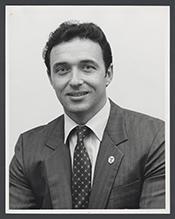 Rep. Daniel E. Lungren (R-CA)
Description
Amendment requires the Director of the Office of National Drug Control Policy to provide for a corporation to-- (A) advise States on establishing laws and policies to address alcohol and other drug issues, based on the model State drug laws developed by the President's Commission on Model State Drug Laws in 1993; and (B) revise such model State drug laws and draft supplementary model State laws to take into consideration changes in the alcohol and drug abuse problems in the State involved.
Text
Offered
This amendment's own text couldn't be picked out of its Congressional Record passage, so the passage is shown in full.
OFFICE OF NATIONAL DRUG CONTROL POLICY REAUTHORIZATION ACT OF 2005
The SPEAKER pro tempore. Pursuant to House Resolution 713 and rule
XVIII, the Chair declares the House in the Committee of the Whole House
on the State of the Union for the consideration of the bill, H.R. 2829.
{time} 1129
In the Committee of the Whole
Accordingly, the House resolved itself into the Committee of the
Whole House on the State of the Union for the consideration of the bill
(H.R. 2829) to reauthorize the Office of National Drug Control Policy
Act, with Mr. Bonner in the chair.
The Clerk read the title of the bill.
The CHAIRMAN. Pursuant to the rule, the bill is considered read the
first time.
The gentleman from Indiana (Mr. Souder) and the gentleman from
Maryland (Mr. Cummings) each will control 30 minutes.
[[Page H803]]
The Chair recognizes the gentleman from Indiana.
{time} 1130
Mr. SOUDER. Mr. Chairman, I yield 4 minutes to the gentleman from
Virginia (Mr. Tom Davis), chairman of the Committee on Government
Reform.
Mr. TOM DAVIS of Virginia. Mr. Chairman, I rise today in strong
support of H.R. 2829, the Office of National Drug Control Policy
Reauthorization Act. Since its inception, the Office of National Drug
Control Policy, better known as ONDCP, has been the cornerstone of drug
policy in America, improving the lives of all Americans by reducing the
presence of drugs in our society. This office has been producing
results Americans need and want. Teen drug use is on the decline, and
ONDCP deserves much of the credit for that.
ONDCP's success means we are faced not with the question of whether
to reauthorize it, but how best to do so. The many positive signs and
trends reported in this year's National Drug Control Strategy clearly
demonstrate the difference the office can make with adequate resources
and sound policy.
Drug use and abuse is a national crisis that affects the health of
all of our citizens, and because of this ONDCP must remain an active
body in the executive office. In order to win the war on drugs, we need
to address the problem of drugs in our society from every single angle.
This legislation gives ONDCP the appropriate resources to stop drug use
before it starts, heal drug users, and disrupt drug markets.
We all know that drugs affect people from all walks of life.
Addiction does not discriminate. A strong national drug policy is in
the interest of every American. Mr. Chairman, this bill we bring to the
floor today was crafted in true bipartisan fashion. It is a product of
careful negotiations and strong bipartisan agreement. We aim to provide
the best possible support for the administration and Director Walters
in implementing the President's strategy, making a strong office even
stronger.
We sought to make ONDCP more efficient by reducing outdated reporting
and structural requirements required by law. The bill also improves
ONDCP and its programs by enhancing effectiveness and accountability in
drug treatment and requiring greater diligence in addressing our
Nation's methamphetamine epidemic.
We also gave significant attention to reforms of the National Youth
Anti-Drug Media Campaign and the HIDTA program to make them more
effective. Both of these programs have grown in ways that were not
originally intended, and the bill reflects the desire to ensure the
programs remain accountable and dedicated to their core purposes.
This bill recognizes the media campaign as an effective prevention
tool and important element of the Federal Government's commitment to
reducing teen drug use. We have all seen the well-known advertisements
on subjects such as drugs and terrorism, the consequences of marijuana
use and parenting skills. These advertisements carry important messages
to youth about the consequences of abuse and remind parents of the
importance of keeping kids away from drugs. The media campaign works,
and the message is being heard. It is preventing drug abuse before it
starts.
When it comes to addressing the complex dilemma of drug addiction,
prevention is only one part of the equation. Treatment of substance
abuse and addiction is also essential. Because addiction has so many
dimensions and disrupts multiple aspects of an individual's life,
treatment is never easy. Drug users need the support of family,
friends, and institutions to help guide them in treatment and recovery.
This bill gives ONDCP the tools to maintain and strengthen programs so
Americans who need help can receive it and begin on a path to recovery.
It also recognizes an important part of helping the addict is to
remove the supply of drugs from our society. I have been to Colombia
with Chairman Souder on numerous occasions. It is apparent to me that
ONDCP is making every effort to attack the economic basis of the drug
trade by disrupting markets at home and abroad. We need to continue to
wage war on the supply side of the drug equation while reaffirming our
commitment to addressing the demand side as well.
I want to thank Chairman Souder, Ranking Member Cummings, and my
ranking member, Henry Waxman, for their leadership and hard work on
this reauthorization legislation. I am happy we could reach bipartisan
agreement on this bill since there is no place for partisanship in
protecting our children against drugs. This bipartisanship was
reflected in a unanimous vote to pass this bill out of our committee.
I am confident that we have put together a cohesive, effective piece
of legislation that gives ONDCP the necessary tools to reduce elicit
drug use, manufacturing, trafficking, drug-related crime and violence
and drug-related health consequences.
America's families need this legislation. I urge support of all of my
colleagues for H.R. 2829 to reauthorize the Office of National Drug
Control Policy.
Mr. CUMMINGS. Mr. Chairman, I yield such time as he may consume to
the gentleman from California (Mr. Waxman), the ranking member of the
Committee on Government Reform.
Mr. WAXMAN. Mr. Chairman, I rise to support H.R. 2829, which
reauthorizes the Office of National Drug Control Policy, ONDCP,
including its National Youth Anti-Drug Media Campaign and High
Intensity Drug Trafficking Areas, HIDTA, programs.
I want to begin by acknowledging the efforts of Mr. Souder and Mr.
Cummings, the chairman and the ranking member of the Subcommittee on
Criminal Justice, Drug Policy and Human Resources. They have worked
tirelessly to develop this legislation. They are true leaders in the
fight against drug abuse. I would like to recognize Chairman Davis as
well for the bipartisan way he has approached this issue.
Drug use is an enormous problem in our Nation, ruining lives, filling
our prisons and sometimes terrorizing our communities. Many people are
not even aware how drugs adversely affect them. In addition to those
addicted and their families, drug abuse affects all of us. Theft and
violent crime are closely tied to drug abuse. In addition, billions of
dollars are spent on health care due to drug abuse, a burden to the
entire Nation.
In order to combat illegal drug use, the Federal Government must
attack from different avenues using many agencies of the government.
For example, the State Department works with other countries. The Drug
Enforcement Agency enforces drug laws. The Department of Health and
Human Services must deal with breaking addiction. ONDCP's mandate is to
coordinate all of these efforts in a comprehensive strategy,
coordinating with State, local, and international governments and
institutions.
The bill before us today ensures that there is one place in the
Federal Government that combats all aspects of the drug problem through
drug prevention, treatment, enforcement, interdiction, and supply
reduction. ONDCP has a vital role to play in our efforts to reduce the
use of illegal drugs. I urge my colleagues to vote ``yes'' on passage
of this legislation.
Mr. SOUDER. Mr. Chairman, I yield 4 minutes to the gentleman from
Florida (Mr. Foley).
Mr. FOLEY. Mr. Chairman, let me thank Chairman Souder and Mr.
Cummings, and let me draw your attention to a specific section of the
bill that I think is troubling not only to most Members of Congress but
law enforcement throughout our country, and that is the increasing use
and production of methamphetamines. This is a uniquely dangerous drug
that is extremely addictive and ruins its victims. ``Methamphetamine
suddenly becomes this thing in their life that they cannot do
without,'' stated Attorney General Alberto Gonzales. ``In terms of
damage to children and to our society, meth is now the most dangerous
drug in America.''
Consider the following facts: meth is the number one drug problem for
the majority of county law enforcement agencies. According to the
National Association of Counties, 58 percent of counties report that
meth has become their top anti-drug priority for law enforcement. In
many areas, meth cases are swamping hospital emergency rooms. In one
NACO survey, 47 percent of hospitals said meth is the top illicit drug
involved in patient presentation. The great majority of these patients
are uninsured, placing a tremendous added burden on already strained
emergency rooms.
[[Page H804]]
As the meth epidemic spreads, other crimes are bred. Wherever meth
gains a foothold, substantial increases in property crime are seen as
addicts desperately seek cash to fund their addiction. In affected
areas, a 62 percent increase in domestic violence due to meth has been
reported.
Meth is a major cause of child abuse and neglect. Domestic meth labs
create environments hazardous to children. A nationwide survey of child
welfare officials has reported an increase of out-of-home placements
because of meth just in the last year alone. In California, the figure
is 80 percent.
Many States, and now the Federal Government through the
Methamphetamine Epidemic Control Act, have taken decisive steps to
strangle domestic meth production by cutting off the supplies of
essential precursor chemicals like pseudoephedrine.
And with the passage of this law, we will also implement the
following: require greater diligence on methamphetamine. The bill will
require future installments of the National Drug Control Strategy to
place greater emphasis on identifying emerging threats and properly
preparing strategies to respond to such threats. This applies the
lesson learned from the meth epidemic, which was allowed to spread from
a regional to a national problem before any Federal response was made.
In this bill, we will target meth production through HIDTA. No less
than $15 million will be specifically set aside for law enforcement
initiatives against meth trafficking.
Those provisions alone show why this bill is so critically important
in its reauthorization. This will help law enforcement and counties,
and we pray it will help families, because if you have seen any of the
articles about the abuse of methamphetamines, you see how a thriving
human being became addicted to this drug and has devastated their life
and their future.
So we work together in a bipartisan way to see if we can help local
governments eradicate this scourge among our society. I thank Chairman
Souder and the ranking member, Mr. Cummings, for their team effort on
solving some drug problems that face this country.
Mr. CUMMINGS. Mr. Chairman, I yield myself such time as I may
consume.
Mr. Chairman, as we stand here debating this important legislation
before us today, illegal drug abuse, drug addiction, and drug-related
violence are exacting an enormous toll on our society, destroying
lives, tearing apart families and devastating entire communities.
Nationwide, drug abuse will contribute to the loss of 50,000 lives, and
more than 20,000 Americans will die as a direct consequence of illegal
drug use this year alone.
In addition to the human toll, illegal drug abuse results in billions
of dollars in cost to our Nation in health care costs and lost economic
productivity, placing an enormous burden on the American people, State
and local governments, businesses and other institutions.
This set of circumstances is simply intolerable in a compassionate
Nation, and it is our duty as the people's representatives to formulate
laws and policies to reduce the scope and severity of this problem.
To be sure, America's drug problem is national in scope and has
international dimensions. But its impact, first of all, is personal and
local. In one way or another, every one of us and everyone we know is
touched by this problem. Unfortunately, I see the tragedy of drug abuse
and drug violence play out all too starkly in my own inner-city
Baltimore neighborhood and in the communities of Baltimore and Howard
counties that I represent. I have made a deliberate choice to continue
to live where I do because I am determined to see our efforts here make
a difference in my community for the benefit of the people I call my
friends and neighbors and people like them across this great Nation.
Mr. Chairman, no single event is more emblematic of the severe
problems that inner-city Baltimoreans face than the horrific arson
murder of Carmell and Angela Dawson and their five children in 2002. In
the wee morning hours of October 16, 2002, a young drug dealer, upset
with Angela Dawson's unrelenting efforts to report drug distribution
activities occurring in front of her family's home, threw a fire bomb
through the Dawsons' ground-floor window. The fire set the home ablaze,
took seven lives, and sent a chilling message to the community: Don't
snitch, don't cooperate with the police, and don't dare fight back.
The legislation we are considering today is a vital component of our
Federal commitment to fight back against illegal drugs by mounting a
comprehensive, coordinated effort to combat all aspects of the drug
problem through drug prevention, treatment, enforcement, interdiction
and supply reduction.
The Office of National Drug Control Policy, the drug czar's office,
was created in 1988 and has been reauthorized twice, in 1993 and 1998.
Its basic mandate is to coordinate and support the efforts of drug
control agencies located in eight different Departments.
{time} 1145
H.R. 2829 would reauthorize the drug czar's office and three key
programs administered by it: the High Intensity Drug Trafficking Areas
program, HIDTA; the Counterdrug Technology Assessment Center, CTAC; and
the National Youth Anti-Drug Media Campaign. HIDTA, CTAC, and the Media
Campaign all play an important part in executing key aspects of the
National Drug Control Strategy, and they deserve to be reauthorized.
H.R. 2829 was ordered reported by the Government Reform, Energy and
Commerce, and Judiciary committees by voice vote with the bipartisan
support of committee members. I am confident that this bill will
strengthen ONDCP, its component programs, and our national
comprehensive anti-drug effort by providing for increased interagency
communication and cooperation, enhanced program and contractor
accountability, and continuous evaluation of anti-drug programs and
initiatives. This will result in more effective collaboration and let
the administration, Congress, and the American people know in objective
terms what approaches are working and what needs to be improved or
rethought.
H.R. 2829 includes key bipartisan provisions that I strongly support,
and most notably, the Dawson Family Community Protection Act. As
amended by the manager's amendment adopted by the Judiciary Committee,
this legislation, which I introduced with Chairman Souder in both the
108th and 109th Congresses, would annually provide at least $7 million
in HIDTA funds to support neighborhood safety and community cooperation
with police in areas severely affected by violent drug-trafficking
activity.
The Dawson provisions underscore the importance of the HIDTA program,
which provides vital Federal funding to support uniquely flexible and
effective collaboration between Federal, State, and local agencies.
H.R. 2829 includes provisions to preserve and strengthen the HIDTA
program in its current form and in its current location within ONDCP.
This is in stark contrast to the administration's proposal, set forth
in the President's fiscal year 2007 budget request, to reduce HIDTA
funding and move HIDTA to the Department of Justice. H.R. 2829
reiterates Congress's intent that HIDTA should remain where it can be
most effective.
H.R. 2829 also includes provisions to ensure that programs to expand
access to drug treatment are adequately supported in the Federal drug
control budget and further requires ONDCP to develop comprehensive
strategies to address the severe threats posed by South American
heroin, Afghan heroin, and drug smuggling across the Southwest border.
In addition, H.R. 2829 calls for a comprehensive strategy for sharing
and coordinating counterdrug intelligence and provides for increased
coordination of interdiction assets and efforts.
With regard to the Media Campaign, the bill authorizes increased
funding, recognizes pro bono advertising as the program's central
component, provides for greater contractor accountability, requires
testing and evaluation of ads before they appear on the air, and
requires an independent evaluation of the campaign's impact on
preventing and reducing illicit drug use by youth.
All in all, I believe this legislation advances the bipartisan, and I
do emphasize that, bipartisan goal of supporting a strong,
comprehensive, and coherent Federal anti-drug effort.
[[Page H805]]
As the ranking minority member of the Government Reform's
Subcommittee on Criminal Justice, Drug Policy and Human Resources, I
want to express my deep appreciation for the bipartisan support of
Government Reform Committee Chairman Tom Davis of Virginia; ranking
member Henry Waxman; and Drug Policy Subcommittee Chairman Mark Souder.
And I join them in strongly urging our colleagues to support this very
important legislation.
Mr. Chairman, I reserve the balance of my time.
Mr. SOUDER. Mr. Chairman, I yield myself such time as I may consume.
Across America, individuals, families, and communities continue to be
devastated by the scourge of drug abuse. It remains one of the most
pressing and unforgiving problems our country faces.
Some have made comments, including on the floor earlier this morning,
that we have made no progress in the war on drugs. That simply is not
true. What we tend to do is go up and down as we do in any kind of
battle. I do not believe we will ever get rid of the scourge of drug
abuse any more than I believe we will get rid of what I believe is at
its core, sin in other parts of America, whether it is spouse abuse,
child abuse, rape.
But if we press and if we aggressively work together, we can reduce
it. The fact is that when we backed off in the early 1990s and saw the
Federal intervention dollars go down in the Andean region and the
interdiction dollars go down, and the joke was even in prominent
officials as ``I didn't inhale,'' we saw drug use go up so much that we
have to reduce it 50 percent from 1993 until now to get back to where
we were in 1992. That dramatic rise and falling, again, is somewhat
typical of what has happened in American history in drug abuse.
We have had some steady progress in key indicators. There is not meth
abuse if you can get at marijuana use because all meth users use
marijuana. Marijuana is the gateway drug, along with tobacco and
alcohol in high school, of all other narcotics abuse. Right now we are
facing a meth epidemic in the United States that clearly, I believe,
this administration has not responded to nearly aggressively enough. We
also have prescription drug abuse. Oxycontin and other prescription
drugs are actually causing the most deaths from any drug abuse in the
United States. We have to be eternally vigilant.
This bill, introduced by Tom Davis, the distinguished chairman of the
Government Reform Committee, and me, along with the distinguished
ranking member of the subcommittee, Elijah Cummings, and the full
committee ranking member, Henry Waxman, is a forceful and bipartisan
recommitment to our broad national efforts to control drug abuse and to
renew our support for a strong Office of National Drug Control Policy.
Let me explain a couple of points about this. The ONDCP, Office of
National Drug Control Policy, is often called the ``drug czar.'' It was
created by Congress. It was not created by an administration. It was
taken somewhat unwillingly by an administration years ago, and now we
are up for reauthorization. We attempted to reauthorize this several
years ago. It passed the House unanimously, but never got through the
Senate at the end of the year. We are now coming back with a bill that
is bipartisan and bicameral. I believe that this bill now can move
through the Senate.
It is important to remember a couple of reasons why it is important
to authorize agencies, not just to appropriate. What has happened in
this interim without an authorization is that the administration has
attempted to gut the HIDTA program. They have attempted to wipe out
many other programs. I believe they have lacked a national meth
strategy. I believe that, in addition, they have failed to give better
guidance to safe and drug-free schools and then proposed to zero it
out; failed to give better guidance to State and local law enforcement
and then proposed to zero out those programs.
What happens when you do not have an authorization bill is that it
gives complete discretion to the administration to spend whatever funds
we allocate in whatever way they choose. This was a Department created
by the United States Congress, by both parties, by both Houses, and it
is important we give guidance. When an administration refuses to
respond to an issue like meth and refuses to use the office in the way
Congress intended, you move from a bill that was the original
authorization, like this, to a bill like this. In other words, you do
get more micromanagement.
We have actually eliminated a number of subboards and appointments
and things that were irrelevant, but there is much more direct guidance
to try to make sure that you do not just criticize programs but that
the drug czar, the director of ONDCP, directly gives guidance, whether
it be on heroin in Afghanistan, whether it be in Colombia; that this
will preserve the success of, for example, the High Intensity Drug
Trafficking Areas programs. If we pass this reauthorization bill, they
will not be able to wipe it out or move it to other Departments.
The administration's proposal the last 2 years has been unanimously
opposed by every HIDTA director in America. Every single HIDTA in
America has opposed the administration's proposed changes. This
authorization would keep HIDTA where it belongs. It will refocus the
National Youth Anti-Drug Media Campaign. This bill clarifies the
purposes of the campaign. Some of this we have worked out with the
administration in the Partnership for a Drug-Free America, where they
were at odds a number of years ago and they have implemented some of
these changes; but we have now put it into law, because, remember, this
is a 5-year reauthorization. This administration basically has 2 years
to go. This is really outlining where the next administration is going
to work in anti-drug policy, not just the current administration.
It will strengthen the Southwest border counternarcotics strategy.
Many of us feel that there has been a lack of a coordinated Southwest
border narcotics strategy, to say the least; and this bill will
prescribe that there has to be a counternarcotics strategy. We will
also target the methamphetamine epidemic. This bill requires at least
$15 million to be dedicated to combating meth in the HIDTAs.
We will also see a whole series of amendments. The United States
Congress last year began asking for, and this year, a meth strategy. We
have not had a meth strategy. We have had pathetic attempts, small
attempts, at a meth strategy. But we have not had a national meth
strategy. Amendment after amendment today, with the support of this
subcommittee, will show the intensity of how this body feels on
methamphetamines.
It will also rationalize the General Counter-Drug Intelligence Plan.
We have had overlaps on intelligence that have been totally
unacceptable and a waste of taxpayer dollars. It will elevate the rank
and status of the ONDCP director. Because the director is tasked with
coordinating drug control of numerous agencies, including Cabinet-level
Departments, this bill designates that he has the same rank and status
as a Cabinet officer. You cannot suggest to the State Department or the
Defense Department that they are not doing enough, for example, in
Afghanistan if you do not have equal status. It is absurd to think a
staff person in the White House could have the same clout as a fellow
Cabinet member in reviewing budgets, at least most of the time. This
does not interfere with the President's authority to determine the
makeup of his Cabinet, but it does ensure that the director will be
able to work with the Department heads on an equal basis.
It will improve effectiveness and accountability in drug treatment.
There is page after page to try to make sure that our drug treatment
programs and that SAMSA work directly with the ONDCP director to do
that and it does not become arbitrary. We have had some very
disappointing lack of communication from the ONDCP director with SAMSA,
and this will help correct that.
It also requires international drug control certification, which we
believe is important. It will deal with Colombia, Afghanistan,
including microherbicides.
We have many different amendments inside this bill that have been put
together by Members of both parties. It is a truly bipartisan effort.
When people say we cannot work together, here
[[Page H806]]
is a truly bipartisan effort with the input of members from multiple
committees. The reason this is in the Government Reform Committee is
that 20-some subcommittees have jurisdiction over narcotics; and years
ago when this office was created, it was put under Government Reform,
normally an oversight committee but here with authorizing; and an
increasing number of things were put under the drug czar so that we
could coordinate it, and this bill will reestablish this because we
have been frustrated that there has not been such clear coordination.
This bill will mandate more directly that it is done.
I believe we have had some successes. We are having success in
Colombia. Afghanistan, we are going backwards, but we are fighting
hard. I believe that the DEA has done some good work in meth, but we
need a lot more in meth. We need our national ad campaign and our
HIDTAs to focus more on the meth epidemic. We have other different
problems, and I believe that this bill is a comprehensive, bipartisan,
bicameral way to try to address this.
Mr. Chairman, I reserve the balance of my time.
Mr. CUMMINGS. Mr. Chairman, I yield 4 minutes to the distinguished
gentleman from New Jersey (Mr. Pascrell), who has been a leader in our
efforts to address this problem of drug addiction in our country and
certainly throughout the world.
Mr. PASCRELL. Mr. Chairman, I thank the gentleman for yielding.
Mr. Souder and Mr. Cummings deserve a tremendous amount of credit.
I look at this problem, as a former mayor, as a criterion, one of the
major criteria, for homeland security. If we cannot secure our
neighborhoods, if we cannot secure our towns, small and large, against
the poison of illicit drugs, which take many of our own sons and
daughters every year, then we are never going to be able to address
foreign terrorism on our shores.
{time} 1200
So I thank you, and I thank you. I thank Mr. Davis and Mr. Waxman. I
believe in a zero-tolerance policy, but we don't have a sense of
urgency. Mr. Souder, I think you put it better than I could ever put
it. This is an urgent problem, certainly nothing that started yesterday
morning. It has been upon us.
The war on drugs is the original war on terror, one that we are
fighting, and reauthorizing the Office of National Drug Control Policy
is the least we can do, the least we can do, to continue the fight. I
think it is a noble fight.
Illegal drug trafficking and use is a cancer on our society that
destroys people, families, and even destroys neighborhoods. The bill
takes a positive step in helping to restore the foundations of our
community by authorizing more than $1.1 billion over 4 years to fight
drug trafficking in high-intensity areas. I happen to live in one of
those high-intensity areas, North Jersey/New York. This is an important
investment that can be used by local, county, State and Federal
agencies to collaborate information and root out the dealers and the
traffickers.
In 2004, as a member of the Select Committee on Homeland Security,
Secretary Ridge appeared before us. We were talking about terror and
elevating the alerts, if you remember the debates we had at that time
and the color schemes, et cetera, et cetera, which, by the way, we
still have. And I asked Secretary Ridge, who I had a great deal of
respect for, I thought he did a good job with the cards that he was
dealt; I asked him the question, ``Secretary Ridge, you were Governor
of a State. Have you ever seen the terror on the faces of families and
people who live in neighborhoods that are infested by drugs? Have you
ever seen that terror?''
He said, ``I know exactly where you are going, Congressman, because
homeland security should be a place where we make our stand as well.''
Families are being ruined. This bill increases funding for the
National Youth Anti-Drug Media Campaign, I think a successful program.
The bill earmarks money for the Dawson Family Community Protection Act,
which would focus on providing avenues for citizens to report drug
trafficking in at-risk neighborhoods without putting their lives on the
line.
This is an urgent problem, Mr. Chairman. This is a very urgent
problem. When you see how many of our own kids are dying, and adults, I
might say, during the year, and compare that against the tragedy of 9/
11, we must address both of these problems to bring sanity back to our
neighborhoods and back to our families.
There is an urgency here. Is there an urgency down the street, Mr.
Souder and Mr. Cummings?
Mr. SOUDER. Mr. Chairman, I yield 5 minutes to the distinguished
gentleman from Florida (Mr. Mica), a former chairman of the
subcommittee. He and I both were senior staffers in the other body and
have worked on this issue for a long time. I appreciate his leadership
in fighting narcotics throughout the United States.
Mr. MICA. Mr. Chairman, I want to thank the chair of this important
subcommittee, Mr. Souder, for his leadership in bringing to the floor
today probably one of the most important pieces of legislation that we
will consider in this entire session of Congress. Not only do I thank
him for his leadership and being a long-term soldier in this battle,
but also the gentleman from Maryland (Mr. Cummings), the ranking
member, whom I have had the privilege to work with, who is also
dedicated to dealing with this scourge on our Nation.
I say ``scourge on our Nation,'' because we just heard the previous
speaker, the gentleman from New Jersey, talk about what illegal
narcotics and drug abuse, substance abuse, has done to our Nation.
We have statistics. There are more than 20,000 American drug
casualties a year. If we look at just the 3 years we have had the
conflict in Iraq and Afghanistan, we have lost some 2,000 of our troops
in service. We have lost more than 20,000 per year in our streets and
neighborhoods, and those are only the recorded statistics. It is not
all of the victims of crime and the murders. These are people who have
died just from drug overdose in our communities, and many of them are
our young people, the future of our Nation lost.
The cost in jails, incarceration, I am told 60 percent of those
behind bars are there because of substance abuse. The social costs on
all of our social agencies across this Nation is high.
Again, there is probably no greater social challenge that we have
than the ravages of substance and drug abuse, child abuse, spouse
abuse, all types of acts that we see that are almost unspeakable
because of the effects of illegal narcotics.
I will say that President Bush and John Walters have done an
excellent job in a number of areas. They set out measurable and
accountable goals, and some of them have been achieved. We have seen a
dramatic reduction in youth drug abuse. But we have a constant change
in the challenge.
I know working with Mr. Souder and Mr. Cummings, we have seen the
crack epidemic. We saw the heroin epidemic that ravaged Baltimore and
other cities, great cities across the Nation. We have seen designer
drugs. Now we see the meth scourge. So we have to have a flexible and
adaptable policy. Hopefully this plan and the 5-year reauthorization
provides that.
It is not always how much we spend, it is how we spend it. I think
this administration has also focused attention on High Intensity Drug
Trafficking Area designations, HIDTA, which we have done over the
years, and we have set some of those in stone, and we keep funding them
year after year. We need to look at how we spend that, how much we
spend and where we put the resources for high-intensity approaches to
going after problems that do shift and change. I think that is an
important debate. I am not crazy about moving it over to the Department
of Justice, but I do think we need a more accountable HIDTA program.
In conclusion, though, we do have a changing threat. We have seen
some successes, as I said, with our youth. Plan Colombia, which we
fought for during the nineties, we finally got implemented. It is an
incredible success. We have some challenges to look forward to, the
disruption in South America with people like Morales in Bolivia, whose
policies raise great questions about the progress we have made in
controlling illegal narcotics.
But we do know from our experience that we have to have a plan, we
have to spend our money wisely, and hopefully
[[Page H807]]
this reauthorization does that. We do know that we must focus on good
education programs, up-to-date prevention programs, interdiction,
strong enforcement programs, and then treatment programs that we also
have measurable results from.
So I am pleased to join my colleagues in speaking for this
reauthorization, and I hope that the final product will do even more in
addressing this serious problem our society faces.
Mr. CUMMINGS. Mr. Chairman, I yield 3 minutes to the gentleman from
Ohio (Mr. Kucinich), who is a member of our committee and who has
worked on this issue, and is also a former mayor and very familiar with
the drug issue in our country and in our cities.
Mr. KUCINICH. Mr. Chairman, I thank the gentleman from Maryland for
the opportunity to address this.
We are all concerned about drug policy and about drug control policy.
We are concerned about the impact drug addiction has on individual
lives and families. We are concerned about the ripple effects of
addiction on communities.
But I would just like to make this observation as we prepare to vote
on this bill: We have to be careful in our strategy to ensure that we
do not mistake victims for enemies. We make a mistake when students are
punished both through the legal system and then by denying them
critical education provisions, as the drug provision of the Higher
Education Act does. The recent scaling back of that provision by this
Congress is a step in the right direction, but we must do more. Denying
students the opportunity for a higher education does not solve the
Nation's drug problems, nor does it provide drug treatment.
We also make a mistake when we rely on randomized student drug
testing to prevent addiction and abuse of drugs. Instead of focusing
our efforts on educating our children about drugs and engaging them in
the decisions about their lives and futures, drug testing assumes all
youth are the same. Drug testing may be right in certain situations
with reasonable evidence and a court order, but randomized testing
renders all youths suspect and treats them as criminals. High
expectations for our children may reap great rewards, but what will we
sow with the expectation of deception? So we have to focus our efforts
on helping our children, not punishing them, and we cannot allow the
war on drugs to become a war on children.
I am sure there are many provisions of the bill before us that are
aimed at helping many communities, but I just wanted to make this
observation in general about our policies, so that as we get into a
broader discussion on other legislation, that we pay close attention to
the policies that we are considering or are enacting in our schools.
Mr. SOUDER. I reserve the balance of my time.
Mr. CUMMINGS. Mr. Chairman, I yield 13 minutes to my distinguished
colleague from the great State of Texas (Ms. Jackson-Lee).
Ms. JACKSON-LEE of Texas. Mr. Chairman, I thank the distinguished
gentleman from Maryland for yielding, and I thank him for his
leadership, along with Mr. Waxman and Mr. Souder, who I have had the
pleasure of working with on these issues, both from the perspective of
interdiction, along the ``third border,'' but also from the perspective
of homeland security as it relates to the northern and southern
borders.
I rise to acknowledge and appreciate the great amount of work that
has gone into this legislative initiative, and particularly as it
relates to the reauthorization of the Office of National Drug Control
Policy.
I recall that one of my first introductions to the severity of drug
usage and the willingness to work full time on this issue was the
opportunity to visit with Mr. Cummings in his area, the city of
Baltimore, which he was not reticent to let us know that there was a
problem, and a problem, of course, that was connected to HIV/AIDS, and
he has been working without ceasing to make great strides in the city
of Baltimore. Mr. Cummings, I want to congratulate you both for
introducing Members of Congress to the crisis early on, as well your
leadership in this area.
So I don't take away from this legislative initiative the importance
of stemming the rising tide of drug usage. In fact, we had thought, I
think, in some years past that there was a curving down. But for those
who are listening to this debate and the many drug treatment centers
around America and the addicted persons, I know that they are willing
to admit that we still have a concern and a crisis, and the
reauthorization of this particular agency is important for the work
that it does.
In particular, as cochair of the Congressional Children's Caucus, I
see a frightening rise in the utilization of addictive substances by
our children, particularly ages 12 to 17. We have seen a rising
increase in the number of girls that are participating in drug usage,
whether or not it is alcohol, starting in middle school; and we know
that if you start taking substances like alcohol in middle school, by
the time you reach the high school level you are addicted and we have a
problem.
{time} 1215
We know also that the scourge of cigarettes, though we find that the
usage overall may be going down, is still attractive to children. You
say no and they want to say yes.
And then, of course, as a member of the House Judiciary Committee, we
have consistently fought against the rising tide, the violent tide of
methamphetamine use that started in our rural America, creeps into our
cities; and the stories of blown up methamphetamine labs is a rage
across America.
In fact, I remember one of the first legislative initiatives that I
passed was to stand against or to stop the use of a date-rape drug
which was being made in bathtubs across America.
So this is an important response to that, and I hope that we will
have an opportunity to accept my amendment on the floor that hopes to
provide an assessment of where we are as it relates to intervention; to
Federal and State programs that deal with assessing the use of drugs by
children ages 12 to 17, a very simple premise; and as well wants to
give greater guidance to Federal, State and local authorities as to how
they intervene, what is the value, the success story.
I hope my colleagues will join me with that support. It is clearly a
road map to help us be more effective. I also want to make mention of
the fact that this is a homeland security issue, because I believe Mr.
Souder participated in hearings dealing with utilization of drugs as
money that can be laundered for terrorist activity.
We are particularly focused on those areas in our borders around
America. So we need to stop the violent tide of drugs. In fact, as a
member of the Subcommittee on Immigration, we know that there are the
combination of the smugglers of drugs with the huge cartels and the
smugglers of human beings. They are intermixed and intertwined. They
are there to do nothing but ill and evil. So these are important
overlapping areas. I thank this committee for its leadership.
Let me mention an area, however, that I want to focus on, and I want
to associate myself with Mr. Kucinich and his concerns about the early
incarceration, or trying juveniles as adults. That is why I want to
have this assessment, because I believe it is important to be guided in
the right procedures or right processes for our children, whether or
not jail time, whether trying them as an adult is more effective than
the intervention and good programs that are necessary.
Frankly, I think the good programs weigh more in stopping the tide of
the utilization of drugs by our children. There should be some
consideration to that.
And then let me, in conclusion, bring up Tulia, Texas, where, a, if
you will, rogue cop was able to charge many, many of our constituents
in Tulia, Texas, with false charges of drug use. In fact, most of the
city found themselves charged with drug offenses down in the court
house. This was a horrible episode of the utilization of the High
Intensity Drug Trafficking Areas program.
This was an abuse that is beyond our appreciation. I am grateful to
the Congressional Black Caucus and various leaders of that caucus who
saw the injustices. No, we are not here to promote the proliferation of
drug use, but we are here to cite some of the failings of the rogue
activities that come out of the High Intensity Drug Trafficking Areas
program, where there were innocent individuals who were, if you will,
[[Page H808]]
networked in, fish-netted in, conspiratorially grabbed into this whole
drug conspiracy, mothers and uncles, brothers. Sometimes whole families
were wrapped up in, indicted, tried and convicted, many of whom were
serving jail time until we were able to get our hands on the
investigation, lawyers were able to intervene, and the rogue cop was
exposed and all of his testimony was discovered to be false.
So there needs to be an oversight and a concern about whether or not
these are effective uses of our dollars and whether or not we can
effectively have oversight, so that, yes, the drug dealers who are
poisoning our community, real drug dealers, the cartels, the smugglers
of drugs, the producers of methamphetamine labs, the sellers of
prescription drugs for children to use and others, the abuse of cough
medicine, all of that is important to be able to highlight, to indict,
try and convict, but not to go in and use a fishnet, rely only on the
testimony of a rogue cop and have no other evidence to be utilized and
to break the backs, the hearts of families, and to destroy a community.
And so I hope that as we move this legislation forward, we will be
able to be focused on the good items that are here, the direction that
we can go with our children with an amendment that I have on the
assessment of our programs; and, of course, Mr. Cummings, thank you for
the concern that when people are under this particular legislation,
there is a basis for fairness and accuracy in any charges being made
and that people are not singled out because of the color of their skin
because they are associated with drug use.
With that, let me thank my colleagues for this legislation. I hope my
words will be considered as we continue to debate this legislation and
fight the war on drugs in a united and positive and successful manner.
Mr. SOUDER. Mr. Chairman, I continue to reserve the balance of my
time.
Mr. CUMMINGS. Mr. Chairman, I yield myself such time as I may
consume.
In closing, Mr. Chairman, this is a very, very important piece of
legislation. I think it was Mr. Pascrell who said that we must act with
a sense of urgency. And he was absolutely right. As we stand here
today, there are so many people who are becoming addicted to drugs;
there are people who are literally robbing their own relatives and
robbing their neighbors to get the funds for drugs.
There are even people who are seeking drug treatment and finding it
difficult to get that treatment. But what we have tried to do here
today through this bill is to address this problem as best we could.
One of the things that I must express appreciation for is Mr. Souder's
candor with regard to this whole issue. Consistently, even when there
were instances where the President's priorities seemed to be, and
ONDCP's priorities seemed to be, a little out of line with the things
that we felt should be done to most effectively and efficiently address
this problem, Mr. Souder, every step of the way stood up and said,
look, we are going to do what is right.
We worked together very cooperatively. I really do appreciate it. It
does mean a lot to me as a Member of this great body. I can say to all
of our Members that this is legislation that we all should vote for. It
should be a unanimous vote. I urge all Members to vote for the bill.
Mr. Chairman, I yield back the balance of my time.
Mr. SOUDER. Mr. Chairman, I yield myself such time as I may consume.
Mr. Chairman, there are a couple of comments I want to make in
closing general debate here. One is, just for the record, though it is
not part of this legislation, we have clearly corrected the
misinterpretation of the student loan bill.
The Clinton administration had falsely interpreted the House
legislation. The Bush administration continued to do that. It has been
corrected. You only lose a student loan if you commit a drug crime
while you have the loan.
That is the least that the taxpayers should expect; and even then, if
you go to drug treatment and test clean, you can get your loan back.
Even then, if you get convicted, not arrested, but convicted of a drug
crime, you still can get it back after 2 years, or if you go through
drug treatment and get clean.
The third time after you commit a drug crime and get convicted, then
you lose your student loan. This is the least that the taxpayers should
expect.
We also have this constant debate whether it is a war or a disease.
Former drug czar Barry McCaffrey always said he felt it was both, and I
agree. Because with heart disease you do not see doctors getting
assassinated on the street. You do not see heart surgeons getting shot
in deals about heart surgery.
Also it is a controllable disease. You do not have the equivalent of
Alcoholics Anonymous or narcotics anonymous for Alzheimer's. But it is
a disease. That is why treatment is very important. That is why the
prevention programs are very important.
I appreciated Congressman Pascrell, and actually it was Congressman
Cummings who first said that narcoterrorism is something that we live
with every day.
As I said earlier, tragically, 3,500 people were killed on 9/11. But
that fall, 7,500 died because of illegal narcotics; 30,000 in 2002;
30,000 in 2003; 30,000 in 2004; roughly 7,500 in the first quarter of
this year 105,000 people have died.
While we get obsessed with every little thing going on in homeland
security, we have terror on our streets, in our homes, and in our
neighborhoods every day. We cannot forget and divert funds from the
daily threat of narcoterrorism in the United States as we do this.
I want to again refer to the Government Reform Subcommittee report
that was unanimously adopted today. You can find it on the Web site of
the Criminal Justice Subcommittee under Government Reform, 154 pages,
607 footnotes. If you tap the footnote, you can get the actual source.
There you can get a full view of the whole narcotics policies,
whether it is in HHS, Department of Justice, Defense, State Department.
It is part of what we do in our committee.
The ONDCP, the direct bill in front of us, has two major functions.
One is directly under the control of the so-called drug czar, the
director of ONDCP. It is a national media campaign, the High Intensity
Drug Trafficking Areas, and the Counterdrug Technology Assessment
Center.
In addition, the drug czar reviews all budgets of all agencies with
narcotics and has broad authority to make sure that we have a
coordinated national drug policy, and this bill strengthens that.
This bill was not easily put together. I want to thank first off the
Members of both parties. We have had an extraordinary working
relationship and have become very close friends, Mr. Cummings and I,
but other members of our committee, too. We have had well-attended
subcommittee hearings.
We have held field hearings as well as hearings in Washington. Our
staff, particularly Nick Coleman, who has just recently left to go to
the U.S. Attorney's Office, has visited almost every HIDTA in America.
We as Members have visited HIDTA directors here and have gone out and
visited the different HIDTAs. Marc Wheat, the staff director; Dennis
Kilcoyne; Jim Kaiser; Tony Haywood from the minority staff have worked
hard in developing this comprehensive legislation.
Mr. Cummings and I both thank our staff, because they help make us
look good. In a bill this complicated, working with every agency in the
Federal Government basically, in a bipartisan way, is not easy to do.
Mr. Chairman, I urge all Members to support this legislation.
Mr. SCHIFF. Mr. Chairman, I rise today in support of the Office of
National Drug Control Policy Reauthorization Act, and I was pleased
that the House Judiciary Committee adopted two amendments that I
offered and that they are part of the base bill.
Street drug markets, such as open air drug dealing at the corner and
at drug houses, are a serious public safety problem. Often located in
poor, minority, and disadvantaged communities, they cause severe harm
by easing initiation into drug use, supporting addiction, and by
drawing youth into the drug trade.
My first amendment, which is designated Sec. 14 of H.R. 2829,
provided for demonstration programs by local partnerships to shut down
illicit drug market hot-spots by deterring drug dealers or altering the
dynamic of drug sales. This provision authorizes funding for
demonstration programs that seek to coordinate an effective
intervention using a credible,
[[Page H809]]
deterrent message. This would encourage criminal justice agencies to
collaborate with researchers and social welfare agencies to analyze
local conditions and develop strategic, problem-solving interventions.
Such an approach was proven successful in High Point, NC. Upon
identifying the drug market and its small group of active dealers, law
enforcement carefully monitored and documented drug activity and
probation/parole violations through surveillance and drug buys.
Offenders with any violent criminal history were immediately arrested.
Non-violent offenders, on the other hand, were confronted by law
enforcement, city officials, service organizations and their families
with a strong deterrent message. They were given a choice between
facing immediate legal action or ceasing dealing and receiving
rehabilitative services.
Consequently, the drug market promptly collapsed with minimal police
intervention or crime displacement. Within one year of implementation,
the drug crime rate of High Point fell by 34% and the violent crime
rate was cut in half.
Sec. 14 of this bill authorizes $10 million for the next three years
to fund demonstration programs supporting these interagency
collaborations. The agencies would be responsible for evaluating the
effectiveness of the strategic intervention, and the Director would be
responsible for submitting to Congress a report identifying the best
practices in drug market eradication.
My second amendment, which is designated Sec. 15 of H.R. 2829,
provided for demonstration programs by local partnerships to coerce
abstinence in chronic hard-drug users under community supervision
through the use of drug testing and sanctions. This provision
authorizes funding for demonstration programs that seek to reduce the
use of illicit drugs by chronic hard-drug users living in the community
while under the supervision of the criminal justice system.
Approximately 80 percent of the Nation's cocaine is consumed by a
relatively small group of chronic users (approximately 4 million).
Three-quarters of these users are under the supervision of the criminal
justice system. By deterring these users, we would be able to reduce
the nation's cocaine consumption by 60 percent--and these numbers are
similar for other hard drugs, such as heroin and meth.
Coerced abstinence is a highly effective means for targeting these
users. This model is based on predictable, frequent drug testing and
known, non-negotiable, immediate, graduated sanctions. For example, a
system where a participant is tested every 72 hours and a dirty test
led to an immediate, unpleasant sanction--for example, 8 hours in a
jury box or 24 hours in jail. Participants are simultaneously offered
incentives such as drug treatment or other rehabilitative services.
An ongoing example of this model is being used in Hawaii, where
substance abuse violations are common, with meth being the drug of
choice. In October 2005, one year after the program began, program
participants had an 83 percent reduction in positive test results (from
21.9% for control group to 3.8% for program participants) and an 87
percent reduction in missed appointments for testing (from 10% for
control group to 1.3% for program participants).
This level of effectiveness we cannot ignore. For this reason, Sec.
15 of H.R. 2829 authorizes $10 million for the next 3 years for
demonstration programs that administer drug tests to individuals at
least twice a week and swiftly impose a known set of graduated
sanctions for non-compliance. The program must include a plan for
monitoring the progress toward reducing the percentage of positive
drugs and missed testing appointments, and the Director would be
responsible for submitting to Congress a report identifying the best
practices in reducing the use of illicit drugs by chronic hard-drug
users.
I commend the Office of National Drug Control Policy for publicly
committing itself to the goal of reducing illegal drug use and abuse in
the United States. However, I also call on the Director to increase the
allocation of funds dedicated for treatment and demand reduction
efforts, which have shown to be very successful in reducing drug use.
To achieve this national drug control policy that efficiently reduces
drug use and abuse in the United States, we need strategies that are as
smart as they are tough. This requires that we remain open to evidence-
based programs and respond with innovation. I commend ONDCP for the
progress it has made, ask that the Director consider these
recommendations and will support this legislation, H.R. 2829, to the
reauthorize the Office.
Mr. UPTON. Mr. Chairman, as we work to reauthorize the Office of
National Drug Control Policy today, I'd like to pay tribute to the work
and dedication of Southwest Michigan's Regional Methamphetamine
Taskforces. It is through their efforts that March is Methamphetamine
Awareness Month in Southwest Michigan.
The unfortunate reality is that each and every one of our communities
is vulnerable to the dangers of meth--it is a highly addictive drug
that does not discriminate. However, the communities of Southwest
Michigan are united in their fight against this epidemic. Regional meth
taskforces consisting of dedicated law enforcement officials,
pharmacists, firefighters, right down to the individual neighborhood
watchman, are making headway in the fight against meth. This drug
epidemic must be fought on the front lines, and the troops are
assembled in Southwest Michigan.
I applaud the efforts of our dedicated Regional Meth Taskforce
coordinators: Heidi Bertschinger of Allegan, Liz Lenz of Barry, Kim
Palchak of Branch, Jennifer Lester of Cass, Tina Harbaugh of Kalamazoo,
Mike Wilson of St. Joseph, and EJ. McAndrew of Van Buren. I would also
like to commend Rick Shanley of Kalamazoo for increasing public
awareness of the progress that the task forces are accomplishing.
These folks, and many others who follow their lead, have worked
diligently to educate communities on the dangers of this drug. Among
their many contributions to our region, the taskforces have trained
community members to recognize the warning signs of the meth production
and addiction, conducted research used by local treatment providers and
educated school groups. Our communities are better off for the efforts
of our regional taskforces.
Special thanks also goes out to all of our local law enforcement
officials, they face the dangers associated with meth abuse each and
every day. While March is Methamphetamine Awareness Month in Southwest
Michigan, this is a problem that must be addressed each and every month
of the year, until it has been conquered.
Mr. MATHESON. Mr. Chairman, when I am home in Utah, I constantly hear
about the prevalence of methamphetamines and the dangers to our
community posed by this highly addictive drug. This legislation has
some excellent measures to help the federal government better deal with
the problem and I sincerely hope that it will help ONDCP to combat meth
abuse.
The Office of National Drug Control Policy (ONDCP) was created in
1988 in order to establish policies, priorities, and objectives for our
Nation's drug control program. Its stated goals are to reduce illicit
drug use, manufacturing, and trafficking, drug-related crime and
violence, and drug-related health consequences. I support this bill and
am proud to vote for strengthening the agency in charge of producing
the National Drug Control Strategy.
But it would be a mistake to look at this bill without also
considering the need to fully fund local law enforcement. The drug
problem in our nation and in my home State of Utah is so pervasive that
it absolutely requires the dedication and the cooperative efforts of
local, state, and federal law enforcement. I know that Utah is not
alone--I've heard many of my colleagues talk today about the scourge of
methamphetamines and other drugs in thousands of communities across the
nation. As a result, I am gravely concerned about the President's
budget proposal for funding local law enforcement.
The federal government needs to step up to the plate and properly
fund law enforcement, if we are serious about national drug control
policy. That's why I strongly support funding for critical law
enforcement programs, such as Byrne grants, JAG grants, and the COPS
program. During my time in Congress, every single person involved with
law enforcement has made it a point to share with me exactly how these
grants help protect Utah citizens.
As we vote today to reauthorize ONDCP, let us also remember that our
commitment to safeguarding local communities. I don't think we can say
enough about the men and women who use this funding to better patrol
our streets, decrease the availability of drugs in our schools, and
ensure that each and every citizen is safe and protected. I know that
they, and their fellow officers across this nation, are committed to
protecting all of us, just as I am committed to working in support of
both homeland security and domestic security.
Mr. TOM DAVIS of Virginia. Mr. Chairman, I submit the attached
exchange of letters between Chairman Buck McKeon of the Committee on
Education and the Workforce, Chairman Peter Hoekstra of the Permanent
Select Committee on Intelligence, Chairman James Sensenbrenner of the
Committee on Judiciary, and myself for the Congressional Record.
U.S. House of Representatives, Permanent Select Committee
on Intelligence,
Washington, DC, March 3, 2006.
Hon. Tom Davis,
Chairman, Committee on Government Reform,
U.S. House of Representatives,
Washington, DC.
Dear Mr. Chairman: In recognition of the importance of
expediting the passage of H.R. 2829, the ``Office of National
Drug Control Policy Reauthorization Act of 2005,'' the
Permanent Select Committee on Intelligence
[[Page H810]]
hereby waives further consideration of the bill. The
Committee has jurisdictional interests in H.R. 2829,
including intelligence and intelligence-related provisions
contained in the bill.
The Committee takes this action only with the understanding
that this procedural route should not be construed to
prejudice the House Permanent Select Committee on
Intelligence's jurisdictional interest over this bill or any
similar bill and will not be considered as precedent for
consideration of matters of jurisdictional interest to the
Committee in the future. In addition, the Permanent Select
Committee on Intelligence will seek conferees on any
provisions of the bill that are within its jurisdiction
during any House-Senate conference that may be convened on
this legislation.
Finally, I would ask that you include a copy of our
exchange of letters on this matter in the Congressional
Record during the House debate on H.R. 2829. I appreciate the
constructive work between our committees on this matter and
thank you for your consideration.
Sincerely,
Peter Hoekstra,
Chairman.
____
U.S. House of Representatives,
Committee on Government Reform,
Washington, DC, March 3, 2006.
Hon. Howard Peter Hoekstra,
Permanent Select Committee on Intelligence,
U.S. House of Representatives,
Washington, DC.
Dear Mr. Chairman: Thank you for your recent letter
regarding the Permanent Select Committee's jurisdictional
interest in H.R. 2829, the Office of National Drug Control
Policy Reauthorization Act of 2005. As you have stated, your
committee has a valid jurisdiction interest in the
intelligence and intelligence-related provisions contained in
the bill.
Thank you for waiving further consideration of H.R. 2829. I
agree that waiving further consideration of this bill does
not prejudice the jurisdiction of the Permanent Select
Committee nor should it be considered as precedent for
matters of jurisdictional interest in the future. In
addition, I will support your request for conferees from your
committee should a House-Senate conference on this or similar
legislation be convened.
As you have requested, I will include a copy of your letter
and this response in the Congressional Record during
consideration of the legislation on the House floor. Thank
you for your assistance as I work towards the enactment of
H.R. 2829.
Sincerely,
Tom Davis,
Chairman.
____
U.S. House of Representatives,
Committee on Education and the Workforce,
Washington, DC, March 3, 2006.
Hon. Tom Davis,
Chairman, Committee on Government Reform,
U.S. House of Representatives,
Washington, DC.
Dear Mr. Chairman: I am writing to confirm our mutual
understanding with respect to consideration of H.R. 2829, the
Office of National Drug Control Policy Reauthorization Act of
2005, which the Committee on Government Reform reported on
November 18, 2005. The bill was referred to the Committee on
Government Reform and in addition to the Permanent Select
Committee on Intelligence and the Committees on Education and
the Workforce, Energy and Commerce, and the Judiciary. In the
bill as reported by the Committee on Government Reform, Title
II, the Clean Sports Act, specifically the provisions
relating to high schools and collegiate athletics (proposed
sections 21 U.S.C. Sec. Sec. 725, 729, and 730) is within the
jurisdiction of the Committee on Education and the Workforce.
Given the fact that the bill as reported by the Committee
on the Judiciary on March 2, 2006, which does not contain the
Clean Sports Act, will be the base text considered by the
House, I do not intend to ask for continued referral of H.R.
2829. However, I do so only with the understanding that this
procedural route should not be construed to prejudice the
Committee on Education and the Workforce's jurisdictional
interest and prerogative on these provisions or any other
similar legislation and will not be considered as precedent
for consideration of matters of jurisdictional interest to my
Committee in the future. Furthermore, should these or similar
provisions be considered in a conference with the Senate, I
would expect members of the Committee on Education and the
Workforce be appointed to the conference committee on these
provisions.
Finally I would ask that you include a copy of our exchange
of letters in the Congressional Record during the
consideration of this bill. If you have questions regarding
this matter, please do not hesitate to call me. I thank you
for your consideration.
Sincerely,
Howard P. ``Buck'' McKeon,
Chairman.
____
U.S. House of Representatives,
Committee on Government Reform,
Washington, DC, March 3, 2006.
Hon. Howard P. ``Buck'' McKeon,
Chairman, Committee on Education and the Workforce,
U.S. House of Representatives, Washington, DC.
Dear Mr. Chairman: Thank you for your recent letter
regarding the Education and the Workforce Committee's
jurisdictional interest in H.R. 2829, the Office of National
Drug Control Policy Reauthorization Act of 2005. As you have
stated, the provisions relating to high schools and
collegiate athletics in Title II, the Clean Sports Act, as
reported by my Committee are within the jurisdiction of the
Committee on Education and the Workforce.
Thank you for not requesting the continued referral of H.R.
2829. It is correct that the version of H.R. 2829, as
reported by the Committee on the Judiciary, that will be
considered in the House does not contain the Clean Sports Act
or other provisions related to collegiate and high school
athletics. I agree that not considering this bill in
committee does not prejudice the jurisdiction of the
Committee on Education and Workforce Committee nor should it
be considered as precedent for matters of jurisdictional
interest in the future. In addition, I would support your
request for conferees from your Committee should a House-
Senate conference on these or similar provisions be convened.
As you have requested, I will include a copy of your letter
and this response in the Congressional Record during
consideration of the legislation on the House floor. Thank
you for your assistance as I work towards the enactment of
H.R. 2829.
Sincerely,
Tom Davis,
Chairman.
____
U.S. House of Representatives,
Committee on Government Reform,
Washington, DC, March 3, 2006.
Hon. F. James Sensenbrenner,
Chairman, Committee on the Judiciary,
U.S. House of Representatives, Washington, DC.
Dear Mr. Chairman: I am writing to confirm our mutual
understanding with respect to consideration of H.R. 2829, the
``Office of National Drug Control Policy Reauthorization Act
of 2005,'' on the House floor. The bill was referred to the
Committee on Government Reform and in addition to the
Permanent Select Committee on Intelligence and the Committees
on Education and the Workforce, Energy and Commerce, and the
Judiciary.
Thanks to your cooperation and diligent efforts to improve
H.R. 2829, the bill, as reported by the Committee on the
Judiciary, represents the legislative text that will be the
basis for consideration by the House. I have therefore agreed
to make in order the version of the bill reported by your
committee. However, I do so only with the understanding that
this procedural route should not be construed to prejudice
the jurisdictional interest and prerogatives of the Committee
on Government Reform and will not be considered as precedent
for consideration of matters of jurisdictional interest to my
Committee in the future.
I respectfully request your confirmation of our mutual
understanding. I will include a copy of our exchange of
letters in the Congressional Record during the consideration
of this bill. If you have questions regarding this matter,
please do not hesitate to call me.
Sincerely,
Tom Davis,
Chairman.
____
U.S. House of Representatives,
Committee on the Judiciary,
Washington, DC, March 7, 2006.
Hon. Tom Davis,
Chairman, Committee on Government Reform,
U.S. House of Representatives, Washington, DC.
Dear Mr. Chairman: I am writing to confirm our mutual
understanding with respect to the consideration of H.R. 2829,
the ``Office of National Drug Control Policy Reauthorization
Act of 2005,'' on the floor. I agree that the version of H.R.
2829 reported by the Committee on the Judiciary represents
the text that should be considered on the House floor, and it
is my understanding that the Committee on Rules will make in
order the version of the bill reported by the Committee on
the Judiciary. I agree that this procedural. route does not
prejudice the jurisdictional interests of the Committee on
Government Reform.
Thank you for your attention to this matter and for your
Committee's diligent work on this important legislation.
Sincerely,
F. James Sensenbrenner, Jr.,
Chairman.
Mr. STARK. Mr. Chairman, I rise in opposition to H.R. 2829, the
Office of National Drug Control Policy Reauthorization. Other than the
TSA making grandmothers take off their shoes and infants discard their
milk bottles prior to boarding airplanes, the War on Drugs might go
down in history as the most ineffective program in the history of the
United States.
We spend over $40 billion per year on the drug war and at least
another $30 billion to keep over one million Americans in prison on
drug charges. Yet, study after study shows that drugs are as readily
available as ever and drug use rates have remained unchanged for the
last decade. Incarcerating one person costs at least $30,000 per year,
while a comprehensive residential drug treatment program costs about
$7,000. Treating drug addiction as a criminal rather than medical
problem is not only scientifically unsound--it's a waste of money.
[[Page H811]]
If we're going to spare no dollar in the war on drugs, then let's
have quality education and after-school options for every child in
America. And let's reverse the diabolical and failed policy of denying
college loans to students with prior drug offenses. Americans with drug
problems obviously need more--not fewer--opportunities to change their
lives for the better.
I urge my colleagues to join me in opposing this senseless, wasteful
Office of National Drug Control Policy. Let's redirect these dollars to
programs that work rather than ``tough on crime'' soundbites and
countless useless government reports that do nothing to reduce drug use
or addiction.
Mr. SOUDER. Mr. Chairman, I yield back the balance of my time.
The Acting CHAIRMAN (Mr. Bass). All time for general debate has
expired.
Pursuant to the rule, the amendment in the nature of a substitute
recommended by the Committee on the Judiciary now printed in the bill
shall be considered as an original bill for the purpose of amendment
under the 5-minute rule and shall be considered read.
The text of the committee amendment in the nature of a substitute is
as follows:
H.R. 2829
Be it enacted by the Senate and House of Representatives of
the United States in Congress assembled,
SECTION 1. SHORT TITLE; TABLE OF CONTENTS.
(a) Short Title.--This Act may be cited as the ``Office of
National Drug Control Policy Reauthorization Act of 2005''.
(b) Table of Contents.--The table of contents for this Act
is as follows:
Sec. 1. Short title; table of contents.
Sec. 2. Amendment of Office of National Drug Control Policy
Reauthorization Act of 1998.
Sec. 3. Repeal of termination provision.
Sec. 4. Amendments to definitions.
Sec. 5. Amendments relating to establishment of Office of National Drug
Control Policy and designation of officers.
Sec. 6. Amendments relating to appointment and duties of Director and
Deputy Director.
Sec. 7. Amendments relating to coordination with other agencies.
Sec. 8. Development, submission, implementation, and assessment of
National Drug Control Strategy.
Sec. 9. High Intensity Drug Trafficking Areas Program.
Sec. 10. Funding for certain High Intensity Drug Trafficking Areas.
Sec. 11. Amendments relating to Counter-Drug Technology Assessment
Center.
Sec. 12. National youth antidrug media campaign.
Sec. 13. Drug interdiction.
Sec. 14. Awards for demonstration programs by local partnerships to
shut down illicit drug market hot-spots by deterring drug
dealers or altering the dynamic of drug sales.
Sec. 15. Awards for demonstration programs by local partnerships to
coerce abstinence in chronic hard-drug users under
community supervision through the use of drug testing and
sanctions.
Sec. 16. Authorization of appropriations.
Sec. 17. Technical amendments and repeal.
Sec. 18. Requirement for disclosure of Federal sponsorship of all
Federal advertising or other communication materials.
Sec. 19. Policy relating to syringe exchange programs.
SEC. 2. AMENDMENT OF OFFICE OF NATIONAL DRUG CONTROL POLICY
REAUTHORIZATION ACT OF 1998.
Except as otherwise expressly provided, whenever in this
Act an amendment or repeal is expressed in terms of an
amendment to, or repeal of, a section or other provision, the
reference shall be considered to be made to a section or
other provision of the Office of National Drug Control Policy
Reauthorization Act of 1998 (Public Law 105-277; 21 U.S.C.
1701 et seq.).
SEC. 3. REPEAL OF TERMINATION PROVISION.
Section 715 (21 U.S.C. 1712) is repealed, and the law shall
read as if such section was never in effect.
SEC. 4. AMENDMENTS TO DEFINITIONS.
(a) Amendments to Definitions.--Section 702 (21 U.S.C.
1701) is amended--
(1) in paragraph (1)--
(A) by striking ``and'' at the end of subparagraph (F);
(B) by striking the period at the end of subparagraph (G)
and inserting ``, including the testing of employees;''; and
(C) by adding at the end the following:
``(H) interventions for drug abuse and dependence; and
``(I) international drug control coordination and
cooperation with respect to activities described in this
paragraph.'';
(2) in paragraph (6), by adding before the period at the
end: ``, including any activities involving supply reduction,
demand reduction, or State and local affairs'';
(3) in paragraph (7)--
(A) by striking ``Agency'' and inserting ``agency'';
(B) by striking ``National Foreign Intelligence Program,''
and inserting ``National Intelligence Program,''; and
(C) by inserting a comma before ``or Tactical'';
(4) in paragraph (9), by striking ``implicates'' and
inserting ``indicates'';
(5) in paragraph (10)--
(A) by adding ``National Drug Control Program agencies
and'' after ``among'' in subparagraph (B);
(B) by striking ``and'' at the end of subparagraph (B);
(C) by striking the period at the end of subparagraph (C)
and inserting a semicolon; and
(D) by adding at the end the following:
``(D) domestic drug law enforcement, including domestic
drug interdiction and law enforcement directed at drug users;
and
``(E) coordination and enhancement of Federal, State, and
local law enforcement initiatives to gather, analyze, and
disseminate information and intelligence relating to drug
control among domestic law enforcement agencies.'';
(6) in paragraph (11)--
(A) by inserting before the semicolon in subparagraph (A)
the following: ``, including--
``(i) law enforcement outside the United States; and
``(ii) source country programs, including economic
development programs primarily intended to reduce the
production or trafficking of illicit drugs'';
(B) by striking subparagraph (B) and inserting the
following:
``(B) facilitating and enhancing the sharing of foreign and
domestic information and law enforcement intelligence
relating to drug production and trafficking among National
Drug Control Program agencies, and between those agencies and
foreign law enforcement agencies; and'';
(C) by striking ``; and'' at the end of subparagraph (C)
and inserting a period; and
(D) by striking subparagraph (D); and
(7) by adding at the end the following:
``(12) Appropriate congressional committees.--Except where
otherwise provided, the term `appropriate congressional
committees' means the Committee on the Judiciary, the
Committee on Appropriations, and the Caucus on International
Narcotics Control of the Senate and the Committee on
Government Reform, the Committee on the Judiciary, and the
Committee on Appropriations of the House of Representatives.
``(13) Law enforcement.--The term `law enforcement' or
`drug law enforcement' means all efforts by a Federal, State,
or local government agency to enforce the drug laws of the
United States or any State, including investigation, arrest,
prosecution, and incarceration or other punishments or
penalties.''.
(b) Conforming Amendments.--Section 703(b)(3) (21 U.S.C.
1702(b)(3)) is amended--
(1) in subparagraph (A), by striking ``(G)'' and inserting
``(I)''; and
(2) in subparagraph (C)--
(A) by striking ``through (C)'' and inserting ``through
(E)'';
(B) by striking ``and subparagraph (D) of section
702(11)''; and
(C) by adding before the period at the end the following:
``, and sections 707 and 708 of this Act''.
SEC. 5. AMENDMENTS RELATING TO ESTABLISHMENT OF OFFICE OF
NATIONAL DRUG CONTROL POLICY AND DESIGNATION OF
OFFICERS.
(a) Responsibilities.--Paragraph (4) of section 703(a) (21
U.S.C. 1702(a)) is amended to read as follows:
``(4) evaluate the effectiveness of the national drug
control policy and the National Drug Control Program
agencies' programs, by developing and applying specific goals
and performance measurements.''.
(b) Rank of Director.--Section 703(b) (21 U.S.C. 1702(b))
is amended in paragraph (1) by adding before the period the
following: ``, who shall hold the same rank and status as the
head of an executive department listed in section 101 of
title 5, United States Code''.
(c) Deputy Directors.--Section 703(b) (21 U.S.C. 1702(b))
is amended in paragraph (3)--
(1) by striking ``Office--'' and inserting ``Office the
following additional Deputy Directors--''; and
(2) in subparagraph (B), by striking ``who shall'' and
inserting the following: ``who shall have substantial
experience and expertise in drug interdiction operations and
other supply reduction activities, and who shall serve as the
United States Interdiction Coordinator and''.
SEC. 6. AMENDMENTS RELATING TO APPOINTMENT AND DUTIES OF
DIRECTOR AND DEPUTY DIRECTOR.
(a) Designation of Other Officers.--Section 704(a)(3) (21
U.S.C. 1703(a)(3)) is amended--
(1) by striking ``permanent employee'' and inserting
``officer or employee''; and
(2) by striking ``serve as the Director'' and inserting
``serve as the acting Director''.
(b) Responsibilities of Director.--Section 704(b) (21
U.S.C. 1703(b)) is amended--
(1) in paragraph (4), by striking ``Federal departments and
agencies engaged in drug enforcement,'' and inserting
``National Drug Control Program agencies,'';
(2) in paragraph (7), by inserting after ``President'' the
following: ``and the appropriate congressional committees'';
(3) in paragraph (13), by striking ``(beginning in 1999)'';
(4) in paragraph (14)--
(A) by striking ``Appropriations'' and all that follows
through ``Senate'' and inserting ``appropriate congressional
committees''; and
(B) by striking ``and'' after the semicolon at the end;
(5) in paragraph (15), by striking subparagraph (C) and
inserting the following:
``(C) supporting the substance abuse information
clearinghouse administered by the Administrator of the
Substance Abuse and Mental
[[Page H812]]
Health Services Administration and established in section
501(d)(16) of the Public Health Service Act by--
``(i) encouraging all National Drug Control Program
agencies to provide all appropriate and relevant information;
and
``(ii) supporting the dissemination of information to all
interested entities;''; and
(6) by inserting at the end the following:
``(16) shall coordinate with the private sector to promote
private research and development of medications to treat
addiction;
``(17) shall seek the support and commitment of State and
local officials in the formulation and implementation of the
National Drug Control Strategy;
``(18) shall monitor and evaluate the allocation of
resources among Federal law enforcement agencies in response
to significant local and regional drug trafficking and
production threats;
``(19) shall submit an annual report to Congress detailing
how the Office of National Drug Control Policy has consulted
with and assisted State and local governments with respect to
the formulation and implementation of the National Drug
Control Strategy and other relevant issues; and
``(20) shall, within one year after the date of the
enactment of the Office of National Drug Control Policy
Reauthorization Act of 2005, report to Congress on the impact
of each Federal drug reduction strategy upon the
availability, addiction rate, use rate, and other harms of
illegal drugs.''.
(c) Submission of Drug Control Budget Requests.--Section
704(c)(1) is amended by adding at the end the following:
``(C) Content of drug control budget requests.--A drug
control budget request submitted by a department, agency, or
program under this paragraph shall include all requests for
funds for any drug control activity undertaken by that
department, agency, or program, including demand reduction,
supply reduction, and State and local affairs, including any
drug law enforcement activities. If an activity has both drug
control and nondrug control purposes or applications, the
department, agency, or program shall estimate by a documented
calculation the total funds requested for that activity that
would be used for drug control, and shall set forth in its
request the basis and method for making the estimate.''.
(d) National Drug Control Budget Proposal.--Section
704(c)(2) is amended in subparagraph (A) by inserting before
the semicolon: ``and to inform Congress and the public about
the total amount proposed to be spent on all supply
reduction, demand reduction, State and local affairs,
including any drug law enforcement, and other drug control
activities by the Federal Government, which shall conform to
the content requirements set forth in subparagraph (C) of
paragraph (1) of this subsection''.
(e) Review and Certification of National Drug Control
Program Budget.--Section 704(c)(3) (21 U.S.C. 1703(c)(3)) is
amended--
(1) by redesignating subparagraphs (C) and (D) as
subparagraphs (D) and (E), respectively;
(2) by inserting after subparagraph (B) the following new
subparagraph:
``(C) Specific requests.--The Director shall not confirm
the adequacy of any budget request that--
``(i) requests funding for Federal law enforcement
activities that do not adequately compensate for transfers of
drug enforcement resources and personnel to law enforcement
and investigation activities not related to drug enforcement
as determined by the Director;
``(ii) requests funding for law enforcement activities on
the borders of the United States that do not adequately
direct resources to drug interdiction and enforcement as
determined by the Director;
``(iii) requests funding for drug treatment activities that
do not provide adequate result and accountability measures as
determined by the Director;
``(iv) requests funding for any activities of the Safe and
Drug Free Schools Program that do not include a clear
antidrug message or purpose intended to reduce drug use;
``(v) requests funding to enforce section 484(r)(1) of the
Higher Education Act of 1965 (20 U.S.C. 1091(r)(1)) with
respect to convictions for drug-related offenses not
occurring during a period of enrollment for which the student
was receiving any Federal grant, loan, or work assistance;
``(vi) requests funding for drug treatment activities that
do not adequately support and enhance Federal drug treatment
programs and capacity, as determined by the Director;
``(vii) requests funding for fiscal year 2007 for
activities of the Department of Education, unless it is
accompanied by a report setting forth a plan for providing
expedited consideration of student loan applications for all
individuals who submitted an application for any Federal
grant, loan, or work assistance that was rejected or denied
pursuant to 484(r)(1) of the Higher Education Act of 1965 (20
U.S.C. 1091(r)(1)) by reason of a conviction for a drug-
related offense not occurring during a period of enrollment
for which the individual was receiving any Federal grant,
loan, or work assistance; and
``(viii) requests funding for the operations and management
of the Department of Homeland Security that does not include
a specific request for funds for the Office of
Counternarcotics Enforcement to carry out its
responsibilities under section 878 of the Homeland Security
Act of 2002 (6 U.S.C. 458).'';
(3) in subparagraph (D)(iii), as so redesignated, by
inserting ``and the appropriate congressional committees''
after ``House of Representatives''; and
(4) in subparagraph (E)(ii)(II)(bb), as so redesignated, by
inserting ``and the appropriate congressional committees''
after ``House of Representatives''.
(f) Reprogramming and Transfer Requests.--Section
704(c)(4)(A) (21 U.S.C. 1703(c)(4)(A)) is amended by striking
``$5,000,000'' and inserting ``$1,000,000''.
(g) Powers of Director.--Section 704(d) (21 U.S.C. 1703(d))
is amended--
(1) in paragraph (8)(D), by striking ``have been authorized
by Congress;'' and inserting ``authorized by law;'';
(2) in paragraph (9)--
(A) by inserting ``notwithstanding any other provision of
law,'' after ``(9)''; and
(B) by striking ``Strategy; and'' and inserting ``Strategy
and notify the appropriate congressional committees of any
fund control notice issued;'';
(3) in paragraph (10), by striking ``(22 U.S.C. 2291j).''
and inserting ``(22 U.S.C. 2291j) and section 706 of the
Foreign Relations Authorization Act, Fiscal Year 2003 (22
U.S.C. 2291j-1); and''; and
(4) by adding at the end the following new paragraph:
``(11) not later than August 1 of each year, submit to the
President a report, and transmit copies of the report to the
Secretary of State and the appropriate congressional
committees, that--
``(A) provides the Director's assessment of which countries
are major drug transit countries or major illicit drug
producing countries as defined in section 481(e) of the
Foreign Assistance Act of 1961 (22 U.S.C. 2291(e));
``(B) provides the Director's assessment of whether each
country identified under subparagraph (A) has cooperated
fully with the United States or has taken adequate steps on
its own to achieve full compliance with the goals and
objectives established by the United Nations Convention
Against Illicit Traffic in Narcotic Drugs and Psychotropic
Substances and otherwise has assisted in reducing the supply
of illicit drugs to the United States; and
``(C) provides the Director's assessment of whether
application of procedures set forth in section 490 of the
Foreign Assistance Act of 1961 (22 U.S.C. 2291j), as provided
in section 706 of the Foreign Relations Authorization Act,
Fiscal Year 2003 (22 U.S.C. 2291j-1), is warranted with
respect to countries the Director assesses have not
cooperated fully.''.
(g) Fund Control Notices.--Section 704(f) (21 U.S.C.
1703(f)) is amended by adding at the end the following:
``(4) Congressional notice.--A copy of each fund control
notice shall be transmitted to the appropriate congressional
committees.
``(5) Restrictions.--The Director shall not issue a fund
control notice to direct that all or part of an amount
appropriated to the National Drug Control Program agency
account be obligated, modified, or altered in any manner
contrary, in whole or in part, to a specific appropriation or
statute.''.
(h) Technical Amendments.--Section 704 (21 U.S.C. 1703) is
amended--
(1) in subsection (g)--
(A) by striking ``National Foreign Intelligence Program''
and inserting ``National Intelligence Program''; and
(B) by inserting a comma before ``and Tactical''; and
(2) in subsection (h), by striking ``Director of Central
Intelligence'' and inserting ``Director of National
Intelligence or the Director of the Central Intelligence
Agency''.
(i) Requirement for South American Heroin Strategy.--
(1) In general.--Not later than 90 days after the date of
the enactment of this Act, the Director of National Drug
Control Policy shall submit to the Congress a comprehensive
strategy that addresses the increased threat from South
American heroin, and in particular Colombian heroin and the
emerging threat from opium poppy grown in Peru and often
intended for transit to Columbia for processing into heroin.
(2) Contents.--The strategy shall include--
(A) opium eradication efforts to eliminate the problem at
the source to prevent heroin from entering the stream of
commerce;
(B) interdiction and precursor chemical controls;
(C) demand reduction and treatment;
(D) alternative development programs, including direct
assistance to regional governments to demobilize and provide
alternative livelihoods to former members of insurgent or
other groups engaged in heroin, coca, or other illicit drug
production or trafficking;
(E) efforts to inform and involve local citizens in the
programs described in subparagraphs (A) through (D), such as
through leaflets advertising rewards for information;
(F) provisions that ensure the maintenance at current
levels of efforts to eradicate coca in Colombia; and
(G) assessment of the specific level of funding and
resources necessary to simultaneously address the threat from
South American heroin and the threat from Colombian and
Peruvian coca.
(3) Treatment of classified or law enforcement sensitive
information.--Any content of the strategy that involves
information classified under criteria established by an
Executive order, or whose public disclosure, as determined by
the Director or the head of any relevant Federal agency,
would be detrimental to the law enforcement or national
security activities of any Federal, foreign, or international
agency, shall be presented to Congress separately from the
rest of the strategy.
(j) Requirement for Afghan Heroin Strategy.--
(1) In general.--Not later than 90 days after the date of
the enactment of this Act, the Director of the Office of
National Drug Control Policy shall submit to the Congress a
comprehensive strategy that addresses the increased threat
from Afghan heroin.
[[Page H813]]
(2) Contents.--The strategy shall include--
(A) opium crop eradication efforts to eliminate the problem
at the source to prevent heroin from entering the stream of
commerce;
(B) destruction or other direct elimination of stockpiles
of heroin and raw opium, and heroin production and storage
facilities;
(C) interdiction and precursor chemical controls;
(D) demand reduction and treatment;
(E) alternative development programs;
(F) measures to improve cooperation and coordination
between Federal Government agencies, and between such
agencies, agencies of foreign governments, and international
organizations with responsibility for the prevention of
heroin production in, or trafficking out of, Afghanistan; and
(G) an assessment of the specific level of funding and
resources necessary significantly to reduce the production
and trafficking of heroin.
(3) Treatment of classified or law enforcement sensitive
information.--Any content of the strategy that involves
information classified under criteria established by an
Executive order, or whose public disclosure, as determined by
the Director or the head of any relevant Federal agency,
would be detrimental to the law enforcement or national
security activities of any Federal, foreign, or international
agency, shall be presented to Congress separately from the
rest of the strategy.
(k) Requirement for General Counterdrug Intelligence
Plan.--
(1) In general.--Not later than 120 days after the date of
enactment of this Act, and not later than every two years
thereafter, the Director of the Office of National Drug
Control Policy, with the concurrence of the Director of
National Intelligence, shall submit to the appropriate
congressional committees, a general counterdrug intelligence
plan to improve coordination, and eliminate unnecessary
duplication, among the counterdrug intelligence centers and
information sharing systems, and counterdrug activities of
the Federal Government, including the centers, systems, and
activities of the following departments and agencies:
(A) The Department of Defense, including the Defense
Intelligence Agency, and the joint interagency task forces.
(B) The Department of the Treasury, including the Financial
Crimes Enforcement Network (FinCEN).
(C) The Central Intelligence Agency.
(D) The National Security Agency.
(E) The Department of Homeland Security, including the
United States Coast Guard, the bureau of Customs and Border
Protection, and the bureau of Immigration and Customs
Enforcement.
(F) The Department of Justice, including the National Drug
Intelligence Center (NDIC); the Drug Enforcement
Administration, including the El Paso Intelligence Center
(EPIC); the Federal Bureau of Investigation; the Organized
Crime Drug Enforcement Task Force; and the Regional
Information Sharing System.
(G) The Office of National Drug Control Policy, including
the High Intensity Drug Trafficking Areas Program.
(H) The Counterdrug Intelligence Executive Secretariat.
(2) Purpose.--The purpose of the plan under paragraph (1)
is to maximize the effectiveness of the centers and
activities referred to in that paragraph in achieving the
objectives of the National Drug Control Strategy promulgated
under 21 U.S.C. 1705. In order to maximize such
effectiveness, the plan shall--
(A) articulate clear and specific mission statements
(including purpose and scope of activity) for each
counterdrug intelligence center, system, and activity,
including the manner in which responsibility for counterdrug
intelligence activities will be allocated among the
counterdrug intelligence centers and systems;
(B) specify each government agency (whether Federal, State,
or local) that participates in each such center, system, and
activity, including a description of the extent and nature of
that participation;
(C) specify the relationship between such centers, systems,
and activities;
(D) specify the means by which proper oversight of such
centers, systems, and activities will be assured;
(E) specify the means by which counterdrug intelligence and
information will be forwarded effectively to all levels of
officials responsible for United States counterdrug policy;
and
(F) specify mechanisms to ensure that State and local law
enforcement agencies are apprised of counterdrug intelligence
and information acquired by Federal law enforcement agencies
in a manner which--
(i) facilitates effective counterdrug activities by State
and local law enforcement agencies; and
(ii) provides such State and local law enforcement agencies
with the information relating to the safety of officials
involved in their counterdrug activities.
(3) Definitions.--As used in this subsection--
(A) the term ``center'' refers to any center, office, task
force, or other coordinating organization engaged in
counterdrug intelligence or information analyzing or sharing
activities;
(B) the term ``system'' refers to any computerized database
or other electronic system used for counterdrug intelligence
or information analyzing or sharing activities; and
(C) the term ``appropriate congressional committees'' means
the following:
(i) The Committee on Appropriations, the Committee on
Foreign Relations, the Committee on the Judiciary, the
Committee on Homeland Security and Governmental Affairs, the
Caucus on International Narcotics Control, and the Select
Committee on Intelligence of the Senate.
(ii) The Committee on Appropriations, the Committee on
International Relations, the Committee on the Judiciary, the
Committee on Government Reform, the Committee on Homeland
Security, and the Permanent Select Committee on Intelligence
of the House of Representatives.
(4) Limitation.--The general counterdrug intelligence plan
shall not--
(A) change existing agency authorities or the laws
governing interagency relationships, but may include
recommendations about changes to such authorities or laws; or
(B) include any information about specific methods of
obtaining, or sources of, intelligence or information, or any
information about specific individuals, cases,
investigations, or operations.
(5) Classified or law enforcement sensitive information.--
Any content of the general counterdrug intelligence plan that
involves information classified under criteria established by
an Executive order, or whose public disclosure, as determined
by the Director of the Office of National Drug Control
Policy, the Director of National Intelligence, or the head of
any Federal Government agency whose activities are described
in the plan, would be detrimental to the law enforcement or
national security activities of any Federal, State, or local
agency, shall be presented to Congress separately from the
rest of the report.
(l) Requirement for Southwest Border Counternarcotics
Strategy.--
(1) In general.--Not later than 120 days after the date of
enactment of this Act, and every two years thereafter, the
Director of National Drug Control Policy shall submit to the
Congress a Southwest Border Counternarcotics Strategy.
(2) Purposes.--The Southwest Border Counternarcotics
Strategy shall--
(A) set forth the Government's strategy for preventing the
illegal trafficking of drugs across the international border
between the United States and Mexico, including through ports
of entry and between ports of entry on that border;
(B) state the specific roles and responsibilities of the
relevant National Drug Control Program agencies (as defined
in section 702 of the Office of National Drug Control Policy
Reauthorization Act of 1998 (21 U.S.C. 1701)) for
implementing that strategy; and
(C) identify the specific resources required to enable the
relevant National Drug Control Program agencies to implement
that strategy.
(3) Consultation with other agencies.--The Director shall
issue the Southwest Border Counternarcotics Strategy in
consultation with the heads of the relevant National Drug
Control Program agencies.
(4) Limitation.--The Southwest Border Counternarcotics
Strategy shall not change existing agency authorities or the
laws governing interagency relationships, but may include
recommendations about changes to such authorities or laws.
(5) Report to congress.--The Director shall provide a copy
of the Southwest Border Counternarcotics Strategy to the
appropriate congressional committees (as defined in section
702 of the Office of National Drug Control Policy
Reauthorization Act of 1998 (21 U.S.C. 1701)), and to the
Committee on Armed Services and the Committee on Homeland
Security of the House of Representatives, and the Committee
on Homeland Security and Governmental Affairs and the
Committee on Armed Services of the Senate.
(6) Treatment of classified or law enforcement sensitive
information.--Any content of the Southwest Border
Counternarcotics Strategy that involves information
classified under criteria established by an Executive order,
or whose public disclosure, as determined by the Director or
the head of any relevant National Drug Control Program
agency, would be detrimental to the law enforcement or
national security activities of any Federal, State, or local
agency, shall be presented to Congress separately from the
rest of the strategy.
(m) Requirement for Scientific Study of Mycoherbicide in
Illicit Drug Crop Eradication.--Not later than 90 days after
the date of enactment of this Act, the Director of the Office
of National Drug Control Policy shall submit to the Congress
a report that includes a plan to conduct, on an expedited
basis, a scientific study of the use of mycoherbicide as a
means of illicit drug crop elimination by an appropriate
Government scientific research entity, including a complete
and thorough scientific peer review. The study shall include
an evaluation of the likely human health and environmental
impacts of such use. The report shall also include a plan to
conduct controlled scientific testing in a major drug
producing nation of mycoherbicide naturally existing in the
producing nation.
SEC. 7. AMENDMENTS RELATING TO COORDINATION WITH OTHER
AGENCIES.
Section 705 (21 U.S.C. 1704) is amended--
(1) in subsection (a)(1)(A), by striking ``abuse'';
(2) in subsection (a)(2)(A), by striking ``Director of
Central Intelligence'' and inserting ``Director of National
Intelligence'';
(3) in subsection (a)(2)(B), by striking ``Director of
Central Intelligence'' and inserting ``Director of National
Intelligence and the Director of the Central Intelligence
Agency'';
(4) by amending paragraph (3) of subsection (a) to read as
follows:
``(3) Required reports.--
``(A) Secretaries of the interior and agriculture.--The
Secretaries of Agriculture and Interior shall, by July 1 of
each year, jointly submit to the Director, the appropriate
congressional committees, the Committee on Agriculture and
the Committee on Resources of the House of Representatives,
and the Committee on Agriculture and the Committee on Energy
and Natural Resources of the Senate, an assessment of the
quantity of illegal drug cultivation and manufacturing in the
United States on lands owned or under the jurisdiction of the
Federal Government for the preceding year.
``(B) Attorney general.--The Attorney General shall, by
July 1 of each year, submit to the
[[Page H814]]
Director and the appropriate congressional committees
information for the preceding year regarding the number and
type of--
``(i) arrests for drug violations;
``(ii) prosecutions for drug violations by United States
Attorneys; and
``(iii) seizures of drugs by each component of the
Department of Justice seizing drugs, as well as statistical
information on the geographic areas of such seizures.
``(C) Secretary of homeland security.--The Secretary of
Homeland Security shall, by July 1 of each year, submit to
the Director, the appropriate congressional committees, and
the Committee on Homeland Security of the House of
Representatives, and the Committee on Homeland Security and
Governmental Affairs of the Senate, information for the
preceding year regarding--
``(i) the number and type of seizures of drugs by each
component of the Department of Homeland Security seizing
drugs, as well as statistical information on the geographic
areas of such seizures; and
``(ii) the number of air and maritime patrol hours
undertaken by each component of that Department primarily
dedicated to drug supply reduction missions.
``(D) Secretary of defense.--The Secretary of Defense
shall, by July 1 of each year, submit to the Director, the
appropriate congressional committees, the Committee on Armed
Services of the House of Representatives, and the Committee
on Armed Services of the Senate, information for the
preceding year regarding the number of air and maritime
patrol hours primarily dedicated to drug supply reduction
missions undertaken by each component of the Department of
Defense.'';
(5) in subsection (b)(2)(B), by striking ``Program.'' and
inserting ``Strategy.''; and
(6) in subsection (c), by striking ``in'' and inserting
``on''.
SEC. 8. DEVELOPMENT, SUBMISSION, IMPLEMENTATION, AND
ASSESSMENT OF NATIONAL DRUG CONTROL STRATEGY.
Section 706 (21 U.S.C. 1705) is amended to read as follows:
``SEC. 706. DEVELOPMENT, SUBMISSION, IMPLEMENTATION, AND
ASSESSMENT OF NATIONAL DRUG CONTROL STRATEGY.
``(a) Timing, Contents, and Process for Development and
Submission of National Drug Control Strategy.--
``(1) In general.--Not later than February 1 of each year,
the President shall submit to Congress a National Drug
Control Strategy, which shall set forth a comprehensive plan
for reducing illicit drug use and the consequences of illicit
drug use in the United States by reducing the demand for
illegal drugs, limiting the availability of illegal drugs,
and conducting law enforcement activities with respect to
illegal drugs.
``(2) Contents.--
``(A) In general.--The National Drug Control Strategy
submitted under paragraph (1) shall include the following:
``(i) Comprehensive, research-based, long-range, and
quantifiable goals for reducing illicit drug use and the
consequences of illicit drug use in the United States.
``(ii) Annual quantifiable objectives for demand reduction,
supply reduction, and law enforcement activities, specific
targets to accomplish long-range quantifiable reduction in
illicit drug use as determined by the Director, and specific
measurements to evaluate progress toward the targets and
strategic goals.
``(iii) A strategy to reduce the availability and purity of
illegal drugs and the level of drug-related crime in the
United States.
``(iv) An assessment of Federal effectiveness in achieving
the National Drug Control Strategy for the previous year,
including a specific evaluation of whether the objectives and
targets for reducing illicit drug use for the previous year
were met and reasons for the success or failure of the
previous year's Strategy.
``(v) A general review of the status of, and trends in,
international, State, and local drug control activities to
ensure that the United States pursues well-coordinated and
effective drug control at all levels of government.
``(vi) A general review of the status of, and trends in,
demand reduction activities by private sector entities and
community-based organizations, including faith-based
organizations, to determine their effectiveness and the
extent of cooperation, coordination, and mutual support
between such entities and organizations and Federal, State,
and local government agencies.
``(vii) An assessment of current illicit drug use
(including inhalants and steroids) and availability, impact
of illicit drug use, and treatment availability, which
assessment shall include--
``(I) estimates of drug prevalence and frequency of use as
measured by national, State, and local surveys of illicit
drug use and by other special studies of nondependent and
dependent illicit drug use;
``(II) illicit drug use in the workplace and the
productivity lost by such use; and
``(III) illicit drug use by arrestees, probationers, and
parolees.
``(viii) An assessment of the reduction of illicit drug
availability, as measured by--
``(I) the quantities of cocaine, heroin, marijuana,
methamphetamine, ecstasy, and other drugs available for
consumption in the United States;
``(II) the amount of marijuana, cocaine, heroin,
methamphetamine, ecstasy, and precursor chemicals and other
drugs entering the United States;
``(III) the number of illicit drug manufacturing
laboratories seized and destroyed and the number of hectares
of marijuana, poppy, and coca cultivated and destroyed
domestically and in other countries;
``(IV) the number of metric tons of marijuana, heroin,
cocaine, and methamphetamine seized and other drugs; and
``(V) changes in the price and purity of heroin,
methamphetamine, and cocaine, changes in the price of
ecstasy, and changes in tetrahydrocannabinol level of
marijuana and other drugs.
``(ix) An assessment of the reduction of the consequences
of illicit drug use and availability, which shall include--
``(I) the burden illicit drug users place on hospital
emergency departments in the United States, such as the
quantity of illicit drug-related services provided;
``(II) the annual national health care cost of illicit drug
use; and
``(III) the extent of illicit drug-related crime and
criminal activity.
``(x) A general review of the status of, and trends in, of
drug treatment in the United States, by assessing--
``(I) public and private treatment utilization; and
``(II) the number of illicit drug users the Director
estimates meet diagnostic criteria for treatment.
``(xi) A review of the research agenda of the Counterdrug
Technology Assessment Center to reduce the availability and
abuse of drugs.
``(xii) A summary of the efforts made by Federal agencies
to coordinate with private sector entities to conduct private
research and development of medications to treat addiction
by--
``(I) screening chemicals for potential therapeutic value;
``(II) developing promising compounds;
``(III) conducting clinical trials;
``(IV) seeking, where appropriate, Food and Drug
Administration approval for drugs to treat addiction;
``(V) marketing, where appropriate, the drug for the
treatment of addiction;
``(VI) urging physicians, where appropriate, to use the
drug in the treatment of addiction; and
``(VII) encouraging, where appropriate, insurance companies
to reimburse the cost of the drug for the treatment of
addiction.
``(xiii) Such additional statistical data and information
as the Director considers appropriate to demonstrate and
assess trends relating to illicit drug use, the effects and
consequences of illicit drug use, supply reduction, demand
reduction, drug-related law enforcement, and the
implementation of the National Drug Control Strategy.
``(xiv) A supplement reviewing the activities of each
individual National Drug Control Program agency during the
previous year with respect to the National Drug Control
Strategy and the Director's assessment of the progress of
each National Drug Control Program agency in meeting its
responsibilities under the National Drug Control Strategy.
``(B) Classified information.--Any contents of the National
Drug Control Strategy that involve information properly
classified under criteria established by an Executive order
shall be presented to Congress separately from the rest of
the National Drug Control Strategy.
``(C) Selection of data and information.--In selecting data
and information for inclusion under subparagraph (A), the
Director shall ensure--
``(i) the inclusion of data and information that will
permit analysis of current trends against previously compiled
data and information where the Director believes such
analysis enhances long-term assessment of the National Drug
Control Strategy; and
``(ii) the inclusion of data and information to permit a
standardized and uniform assessment of the effectiveness of
drug treatment programs in the United States.
``(3) Process for development and submission.--
``(A) Consultation.--In developing and effectively
implementing the National Drug Control Strategy, the
Director--
``(i) shall consult with--
``(I) the heads of the National Drug Control Program
agencies;
``(II) Congress;
``(III) State and local officials;
``(IV) private citizens and organizations, including
community- and faith-based organizations, with experience and
expertise in demand reduction;
``(V) private citizens and organizations with experience
and expertise in supply reduction;
``(VI) private citizens and organizations with experience
and expertise in law enforcement; and
``(VII) appropriate representatives of foreign governments;
``(ii) with the concurrence of the Attorney General, may
require the El Paso Intelligence Center to undertake specific
tasks or projects to implement the National Drug Control
Strategy;
``(iii) with the concurrence of the Director of National
Intelligence and the Attorney General, may request that the
National Drug Intelligence Center undertake specific tasks or
projects to implement the National Drug Control Strategy; and
``(iv) may make recommendations to the Secretary of Health
and Human Services on research that supports or advances the
National Drug Control Strategy.
``(B) Commitment to support strategy.--In satisfying the
requirements of subparagraph (A)(i), the Director shall
ensure, to the maximum extent possible, that State and local
officials and relevant private organizations commit to
support and take steps to achieve the goals and objectives of
the National Drug Control Strategy.
``(C) Recommendations.--Recommendations under subparagraph
(A)(iv) may include recommendations of research to be
performed at the National Institutes of Health, including the
National Institute on Drug Abuse, or any other appropriate
agency within the Department of Health and Human Services.
``(D) Inclusion in strategy.--The National Drug Control
Strategy under this subsection
[[Page H815]]
shall include a list of each entity consulted under
subparagraph (A)(i).
``(4) Submission of revised strategy.--The President may
submit to Congress a revised National Drug Control Strategy
that meets the requirements of this section--
``(A) at any time, upon a determination by the President,
in consultation with the Director, that the National Drug
Control Strategy in effect is not sufficiently effective; or
``(B) if a new President or Director takes office.
``(b) Performance Measurement System.--Not later than
February 1 of each year, the Director shall submit to
Congress, as part of the National Drug Control Strategy, a
description of a national drug control performance
measurement system that--
``(1) develops 2-year and 5-year performance measures and
targets for each National Drug Control Strategy goal and
objective established for reducing drug use, drug
availability, and the consequences of drug use;
``(2) describes the sources of information and data that
will be used for each performance measure incorporated into
the performance measurement system;
``(3) identifies major programs and activities of the
National Drug Control Program agencies that support the goals
and annual objectives of the National Drug Control Strategy;
``(4) evaluates the contribution of demand reduction and
supply reduction activities implemented by each National Drug
Control Program agency in support of the National Drug
Control Strategy;
``(5) monitors consistency of drug-related goals and
objectives among the National Drug Control Program agencies
and ensures that each agency's goals, objectives, and budgets
support and are fully consistent with the National Drug
Control Strategy; and
``(6) coordinates the development and implementation of
national drug control data collection and reporting systems
to support policy formulation and performance measurement,
including an assessment of--
``(A) the quality of current drug use measurement
instruments and techniques to measure supply reduction and
demand reduction activities;
``(B) the adequacy of the coverage of existing national
drug use measurement instruments and techniques to measure
the illicit drug user population, and groups that are at risk
for illicit drug use; and
``(C) the adequacy of the coverage of existing national
treatment outcome monitoring systems to measure the
effectiveness of drug abuse treatment in reducing illicit
drug use and criminal behavior during and after the
completion of substance abuse treatment; and
``(7) identifies the actions the Director shall take to
correct any inadequacies, deficiencies, or limitations
identified in the assessment described in paragraph (6).
``(c) Modifications.--A description of any modifications
made during the preceding year to the national drug
performance measurement system described in subsection (b)
shall be included in each report submitted under subsection
(a).''.
SEC. 9. HIGH INTENSITY DRUG TRAFFICKING AREAS PROGRAM.
Section 707 (21 U.S.C. 1706) is amended to read as follows:
``SEC. 707. HIGH INTENSITY DRUG TRAFFICKING AREAS PROGRAM.
``(a) Establishment.--
``(1) In general.--There is established in the Office a
program to be known as the High Intensity Drug Trafficking
Areas Program (in this section referred to as the `Program').
``(2) Purpose.--The purpose of the Program is to reduce
drug trafficking and drug production in the United States
by--
``(A) facilitating cooperation among Federal, State, and
local law enforcement agencies to share information and
implement coordinated enforcement activities;
``(B) enhancing intelligence sharing among Federal, State,
and local law enforcement agencies;
``(C) providing reliable intelligence to law enforcement
agencies needed to design effective enforcement strategies
and operations; and
``(D) supporting coordinated law enforcement strategies
which maximize use of available resources to reduce the
supply of illegal drugs in designated areas and in the United
States as a whole.
``(b) Designation.--The Director, upon consultation with
the Attorney General, the Secretary of the Treasury, the
Secretary of Homeland Security, heads of the National Drug
Control Program agencies, and the Governor of each applicable
State, may designate any specified area of the United States
as a high intensity drug trafficking area. After making such
a designation and in order to provide Federal assistance to
the area so designated, the Director may--
``(1) obligate such sums as are appropriated for the
Program;
``(2) direct the temporary reassignment of Federal
personnel to such area, subject to the approval of the head
of the department or agency that employs such personnel;
``(3) take any other action authorized under section 704 to
provide increased Federal assistance to those areas; and
``(4) coordinate activities under this section
(specifically administrative, recordkeeping, and funds
management activities) with State and local officials.
``(c) Petitions for Designation.--The Director shall
establish regulations under which a coalition of interested
law enforcement agencies from an area may petition for
designation as a high intensity drug trafficking area. Such
regulations shall provide for a regular review by the
Director of the petition, including a recommendation
regarding the merit of the petition to the Director by a
panel of qualified, independent experts.
``(d) Factors for Consideration.--In considering whether to
designate an area under this section as a high intensity drug
trafficking area, the Director shall consider, in addition to
such other criteria as the Director considers to be
appropriate, the extent to which--
``(1) the area is a significant center of illegal drug
production, manufacturing, importation, or distribution;
``(2) State and local law enforcement agencies have
committed resources to respond to the drug trafficking
problem in the area, thereby indicating a determination to
respond aggressively to the problem;
``(3) drug-related activities in the area are having a
significant harmful impact in the area, and in other areas of
the country; and
``(4) a significant increase in allocation of Federal
resources is necessary to respond adequately to drug-related
activities in the area.
``(e) Organization of High Intensity Drug Trafficking
Areas.--
``(1) Executive board and officers.--To be eligible for
funds appropriated under this section, each high intensity
drug trafficking area shall be governed by an Executive
Board. The Executive Board shall designate a chairman, vice
chairman, and any other officers to the Executive Board that
it determines are necessary.
``(2) Responsibilities.--The Executive Board of a high
intensity drug trafficking area shall be responsible for--
``(A) providing direction and oversight in establishing and
achieving the goals of the high intensity drug trafficking
area;
``(B) managing the funds of the high intensity drug
trafficking area;
``(C) reviewing and approving all funding proposals
consistent with the overall objective of the high intensity
drug trafficking area; and
``(D) reviewing and approving all reports to the Director
on the activities of the high intensity drug trafficking
area.
``(3) Board representation.--None of the funds appropriated
under this section may be expended for any high intensity
drug trafficking area, or for a partnership or region of a
high intensity drug trafficking area, if that area's,
region's or partnership's Executive Board does not apportion
an equal number of votes between representatives of
participating Federal agencies and representatives of
participating State and local agencies. Where it is
impractical for a equal number of representatives of Federal
agencies and State and local agencies to attend a meeting of
an Executive Board in person, the Executive Board may use a
system of proxy votes or weighted votes to achieve the voting
balance required by this paragraph.
``(4) No agency relationship.--The eligibility requirements
of this section are intended to ensure the responsible use of
Federal funds. Nothing in this section is intended to create
an agency relationship between individual high intensity drug
trafficking areas and the Federal Government.
``(f) Use of Funds.--The Director shall ensure that no
Federal funds appropriated for the Program are expended for
the establishment or expansion of drug treatment programs,
and shall ensure that not more than five percent of the
Federal funds appropriated for the Program are expended for
the establishment of drug prevention programs.
``(g) Counterterrorism Activities.--
``(1) Assistance authorized.--The Director may authorize
use of resources available for the Program to assist Federal,
State, and local law enforcement agencies in investigations
and activities related to terrorism and prevention of
terrorism, especially but not exclusively with respect to
such investigations and activities that are also related to
drug trafficking.
``(2) Limitation.--The Director shall ensure--
``(A) that assistance provided under paragraph (1) remains
incidental to the purpose of the Program to reduce drug
availability and carry out drug-related law enforcement
activities; and
``(B) that significant resources of the Program are not
redirected to activities exclusively related to terrorism,
except on a temporary basis under extraordinary
circumstances, as determined by the Director.
``(h) Role of Drug Enforcement Administration.--The
Director, in consultation with the Attorney General, shall
ensure that a representative of the Drug Enforcement
Administration is included in the Intelligence Support Center
for each high intensity drug trafficking area.
``(i) Annual HIDTA Program Budget Submissions.--As part of
the documentation that supports the President's annual budget
request for the Office, the Director shall submit to Congress
a budget justification that includes the following:
``(1) The amount requested for each high intensity drug
trafficking area with supporting narrative descriptions and
rationale for each request.
``(2) A detailed justification for each funding request
that explains the reasons for the requested funding level,
how such funding level was determined based on a current
assessment of the drug trafficking threat in each high
intensity drug trafficking area, how such funding will ensure
that the goals and objectives of each such area will be
achieved, and how such funding supports the National Drug
Control Strategy.
``(j) Emerging Threat Response Fund.--
``(1) In general.--The Director may expend up to 10 percent
of the amounts appropriated under this section on a
discretionary basis, to respond to any emerging drug
trafficking threat in an existing high intensity drug
trafficking area, or to establish a new high intensity drug
trafficking area or expand an existing high intensity drug
trafficking area, in accordance with the criteria established
under paragraph (2).
[[Page H816]]
``(2) Consideration of impact.--In allocating funds under
this subsection, the Director shall consider--
``(A) the impact of activities funded on reducing overall
drug traffic in the United States, or minimizing the
probability that an emerging drug trafficking threat will
spread to other areas of the United States; and
``(B) such other criteria as the Director considers
appropriate.
``(k) Evaluation.--
``(1) Initial report.--Not later than 90 days after the
date of the enactment of this subsection, the Director shall,
after consulting with the Executive Boards of each designated
high intensity drug trafficking area, submit a report to
Congress that describes, for each designated high intensity
drug trafficking area--
``(A) the specific purposes for the high intensity drug
trafficking area;
``(B) the specific long-term and short-term goals and
objectives for the high intensity drug trafficking area;
``(C) the measurements that will be used to evaluate the
performance of the high intensity drug trafficking area in
achieving the long-term and short-term goals; and
``(D) the reporting requirements needed to evaluate the
performance of the high intensity drug trafficking area in
achieving the long-term and short-term goals.
``(2) Evaluation of hidta program as part of national drug
control strategy.--For each designated high intensity drug
trafficking area, the Director shall submit, as part of the
annual National Drug Control Strategy report, a report that--
``(A) describes--
``(i) the specific purposes for the high intensity drug
trafficking area; and
``(ii) the specific long-term and short-term goals and
objectives for the high intensity drug trafficking area; and
``(B) includes an evaluation of the performance of the high
intensity drug trafficking area in accomplishing the specific
long-term and short-term goals and objectives identified
under paragraph (1)(B).
``(l) Assessment of Drug Enforcement Task Forces in High
Intensity Drug Trafficking Areas.--Not later than 180 days
after the date of enactment of this subsection, and as part
of each subsequent annual National Drug Control Strategy
report, the Director shall submit to Congress a report--
``(1) assessing the number and operation of all federally
funded drug enforcement task forces within each high
intensity drug trafficking area; and
``(2) describing--
``(A) each Federal, State, and local drug enforcement task
force operating in the high intensity drug trafficking area;
``(B) how such task forces coordinate with each other, with
any high intensity drug trafficking area task force, and with
investigations receiving funds from the Organized Crime and
Drug Enforcement Task Force;
``(C) what steps, if any, each such task force takes to
share information regarding drug trafficking and drug
production with other federally funded drug enforcement task
forces in the high intensity drug trafficking area;
``(D) the role of the high intensity drug trafficking area
in coordinating the sharing of such information among task
forces;
``(E) the nature and extent of cooperation by each Federal,
State, and local participant in ensuring that such
information is shared among law enforcement agencies and with
the high intensity drug trafficking area;
``(F) the nature and extent to which information sharing
and enforcement activities are coordinated with joint
terrorism task forces in the high intensity drug trafficking
area; and
``(G) any recommendations for measures needed to ensure
that task force resources are utilized efficiently and
effectively to reduce the availability of illegal drugs in
the high intensity drug trafficking areas.
``(m) Assessment of Intelligence Sharing in High Intensity
Drug Trafficking Areas--program.--Not later than 180 days
after the date of the enactment of this subsection, and as
part of each subsequent annual National Drug Control Strategy
report, the Director shall submit to Congress a report--
``(1) evaluating existing and planned intelligence systems
supported by each high intensity drug trafficking area, or
utilized by task forces receiving any funding under the
Program, including the extent to which such systems ensure
access and availability of intelligence to Federal, State,
and local law enforcement agencies within the high intensity
drug trafficking area and outside of it;
``(2) the extent to which Federal, State, and local law
enforcement agencies participating in each high intensity
drug trafficking area are sharing intelligence information to
assess current drug trafficking threats and design
appropriate enforcement strategies; and
``(3) the measures needed to improve effective sharing of
information and intelligence regarding drug trafficking and
drug production among Federal, State, and local law
enforcement participating in a high intensity drug
trafficking area, and between such agencies and similar
agencies outside the high intensity drug trafficking area.
``(n) Coordination of Intelligence Sharing With Organized
Crime Drug Enforcement Task Force Program.--The Director, in
consultation with the Attorney General, shall ensure that any
drug enforcement intelligence obtained by the Intelligence
Support Center for each high intensity drug trafficking area
is shared, on a timely basis, with the drug intelligence
fusion center operated by the Organized Crime Drug
Enforcement Task Force of the Department of Justice.
``(o) Use of Funds to Combat Methamphetamine Trafficking.--
``(1) In general.--
``(A) Requirement.--The Director shall ensure that, of the
amounts appropriated for a fiscal year for the Program, at
least $15,000,000 is allocated to combat the trafficking of
methamphetamine in areas designated by the Director as high
intensity drug trafficking areas.
``(B) Activities.--In meeting the requirement in
subparagraph (A), the Director shall transfer funds to
appropriate Federal, State, and local governmental agencies
for employing additional Federal law enforcement personnel,
or facilitating the employment of additional State and local
law enforcement personnel, including agents, investigators,
prosecutors, laboratory technicians, chemists, investigative
assistants, and drug prevention specialists.
``(2) Apportionment of funds.--
``(A) Factors in apportionment.--The Director shall
apportion amounts allocated under paragraph (1) among areas
designated by the Director as high intensity drug trafficking
areas based on the following factors:
``(i) The number of methamphetamine manufacturing
facilities discovered by Federal, State, or local law
enforcement officials in the area during the previous fiscal
year.
``(ii) The number of methamphetamine prosecutions in
Federal, State, or local courts in the area during the
previous fiscal year.
``(iii) The number of methamphetamine arrests by Federal,
State, or local law enforcement officials in the area during
the previous fiscal year.
``(iv) The amounts of methamphetamine or listed chemicals
(as that term is defined in section 102(33) of the Controlled
Substances Act (21 U.S.C. 802(33)) seized by Federal, State,
or local law enforcement officials in the area during the
previous fiscal year.
``(v) Intelligence and predictive data from the Drug
Enforcement Administration showing patterns and trends in
abuse, trafficking, and transportation in methamphetamine and
listed chemicals (as that term is so defined).
``(B) Certification.--Before the Director apportions any
funds under this paragraph to a high intensity drug
trafficking area, the Director shall certify that the law
enforcement entities responsible for clandestine
methamphetamine laboratory seizures in that area are
providing laboratory seizure data to the national clandestine
laboratory database at the El Paso Intelligence Center.
``(p) Authorization of Appropriations.--There is authorized
to be appropriated to the Office of National Drug Control
Policy to carry out this section--
``(1) $280,000,000 for fiscal year 2007;
``(2) $290,000,000 for each of fiscal years 2008 and 2009;
and
``(3) $300,000,000 for each of fiscal years 2010 and
2011.''.
SEC. 10. FUNDING FOR CERTAIN HIGH INTENSITY DRUG TRAFFICKING
AREAS.
(a) Short Title.--This section may be cited as the ``Dawson
Family Community Protection Act''.
(b) Findings.--Congress finds the following:
(1) In the early morning hours of October 16, 2002, the
home of Carnell and Angela Dawson was firebombed in apparent
retaliation for Mrs. Dawson's notification of police about
persistent drug distribution activity in their East Baltimore
City neighborhood.
(2) The arson claimed the lives of Mr. and Mrs. Dawson and
their 5 young children, aged 9 to 14.
(3) The horrific murder of the Dawson family is a stark
example of domestic narco-terrorism.
(4) In all phases of counter-narcotics law enforcement--
from prevention to investigation to prosecution to reentry--
the voluntary cooperation of ordinary citizens is a critical
component.
(5) Voluntary cooperation is difficult for law enforcement
officials to obtain when citizens feel that cooperation
carries the risk of violent retaliation by illegal drug
trafficking organizations and their affiliates.
(6) Public confidence that law enforcement is doing all it
can to make communities safe is a prerequisite for voluntary
cooperation among people who may be subject to intimidation
or reprisal (or both).
(7) Witness protection programs are insufficient on their
own to provide security because many individuals and families
who strive every day to make distressed neighborhoods livable
for their children, other relatives, and neighbors will
resist or refuse offers of relocation by local, State, and
Federal prosecutorial agencies and because, moreover, the
continued presence of strong individuals and families is
critical to preserving and strengthening the social fabric in
such communities.
(8) Where (as in certain sections of Baltimore City)
interstate trafficking of illegal drugs has severe ancillary
local consequences within areas designated as high intensity
drug trafficking areas, it is important that supplementary
High Intensity Drug Trafficking Areas Program funds be
committed to support initiatives aimed at making the affected
communities safe for the residents of those communities and
encouraging their cooperation with local, State, and Federal
law enforcement efforts to combat illegal drug trafficking.
(c) Funding for Certain High Intensity Drug Trafficking
Areas.--Section 707 (21 U.S.C. 1706), as amended by section
9, is further amended by adding at the end the following new
subsection:
``(q) Specific Purposes.--
``(1) In general.--The Director shall ensure that, of the
amounts appropriated for a fiscal year for the Program, at
least $7,000,000 is used in high intensity drug trafficking
areas with severe neighborhood safety and illegal drug
distribution problems.
``(2) Required uses.--The funds used under paragraph (1)
shall be used--
``(A) to ensure the safety of neighborhoods and the
protection of communities, including
[[Page H817]]
the prevention of the intimidation of potential witnesses of
illegal drug distribution and related activities; and
``(B) to combat illegal drug trafficking through such
methods as the Director considers appropriate, such as
establishing or operating (or both) a toll-free telephone
hotline for use by the public to provide information about
illegal drug-related activities.''.
SEC. 11. AMENDMENTS RELATING TO COUNTER-DRUG TECHNOLOGY
ASSESSMENT CENTER.
(a) Chief Scientist.--Section 708(b) (21 U.S.C. 1707(b)) is
amended--
(1) in the heading by striking ``Director of Technology.--
'' and inserting ``Chief Scientist.--''; and
(2) by striking ``Director of Technology,'' and inserting
``Chief Scientist,''.
(b) Additional Responsibilities of Director.--Section
708(c) (21 U.S.C. 1707(c)) is amended to read as follows:
``(c) Additional Responsibilities of the Director of
National Drug Control Policy.--
``(1) In general.--The Director, acting through the Chief
Scientist shall--
``(A) identify and define the short-, medium-, and long-
term scientific and technological needs of Federal, State,
and local law enforcement agencies relating to drug
enforcement, including--
``(i) advanced surveillance, tracking, and radar imaging;
``(ii) electronic support measures;
``(iii) communications;
``(iv) data fusion, advanced computer systems, and
artificial intelligence; and
``(v) chemical, biological, radiological (including
neutron, electron, and graviton), and other means of
detection;
``(B) identify demand reduction (including drug prevention)
basic and applied research needs and initiatives, in
consultation with affected National Drug Control Program
agencies, including--
``(i) improving treatment through neurosci- entific
advances;
``(ii) improving the transfer of biomedical research to the
clinical setting; and
``(iii) in consultation with the National Institute on Drug
Abuse and the Substance Abuse and Mental Health Services
Administration, and through interagency agreements or grants,
examining addiction and rehabilitation research and the
application of technology to expanding the effectiveness or
availability of drug treatment;
``(C) make a priority ranking of such needs identified in
subparagraphs (A) and (B) according to fiscal and
technological feasibility, as part of a National Counterdrug
Research and Development Program;
``(D) oversee and coordinate counterdrug technology
initiatives with related activities of other Federal civilian
and military departments;
``(E) provide support to the development and implementation
of the national drug control performance measurement system
established under subsection (b) of section 706;
``(F) with the advice and counsel of experts from State and
local law enforcement agencies, oversee and coordinate a
technology transfer program for the transfer of technology to
State and local law enforcement agencies; and
``(G) pursuant to the authority of the Director of National
Drug Control Policy under section 704, submit requests to
Congress for the reprogramming or transfer of funds
appropriated for counterdrug technology research and
development.
``(2) Priorities in transferring technology.--
``(A) In general.--The Chief Scientist shall give priority,
in transferring technology under paragraph (1)(F), based on
the following criteria:
``(i) the need of potential recipients for such technology;
``(ii) the effectiveness of the technology to enhance
current counterdrug activities of potential recipients; and
``(iii) the ability and willingness of potential recipients
to evaluate transferred technology.
``(B) Interdiction and border drug law enforcement
technologies.--The Chief Scientist shall give priority, in
transferring technologies most likely to assist in drug
interdiction and border drug law enforcement, to State,
local, and tribal law enforcement agencies in southwest
border areas and northern border areas with significant
traffic in illicit drugs.
``(3) Limitation on authority.--The authority granted to
the Director under this subsection shall not extend to the
direct management of individual projects or other operational
activities.
``(4) Report.--On or before July 1 of each year, the
Director shall submit a report to the appropriate
congressional committees that addresses the following:
``(A) The number of requests received during the previous
12 months, including the identity of each requesting agency
and the type of technology requested.
``(B) The number of requests fulfilled during the previous
12 months, including the identity of each recipient agency
and the type of technology transferred.
``(C) A summary of the criteria used in making the
determination on what requests were funded and what requests
were not funded, except that such summary shall not include
specific information on any individual requests.
``(D) A general assessment of the future needs of the
program, based on expected changes in threats, expected
technologies, and likely need from potential recipients.
``(E) An assessment of the effectiveness of the
technologies transferred, based in part on the evaluations
provided by the recipients, with a recommendation whether the
technology should continue to be offered through the
program.''.
(c) Assistance From Secretary of Homeland Security.--
Section 708(d) (21 U.S.C. 1707(d)) is amended by inserting
``, the Secretary of Homeland Security,'' after ``The
Secretary of Defense''.
SEC. 12. NATIONAL YOUTH ANTIDRUG MEDIA CAMPAIGN.
(a) In General.--Section 709 (21 U.S.C. 1708) is amended to
read as follows:
``SEC. 709. NATIONAL YOUTH ANTIDRUG MEDIA CAMPAIGN.
``(a) In General.--The Director shall conduct a national
youth anti-drug media campaign (referred to in this subtitle
as the `national media campaign') in accordance with this
section for the purposes of--
``(1) preventing drug abuse among young people in the
United States;
``(2) increasing awareness of adults of the impact of drug
abuse on young people; and
``(3) encouraging parents and other interested adults to
discuss with young people the dangers of illegal drug use.
``(b) Use of Funds.--
``(1) In general.--Amounts made available to carry out this
section for the national media campaign may only be used for
the following:
``(A) The purchase of media time and space, including the
strategic planning for, and accounting of, such purchases.
``(B) Creative and talent costs, consistent with paragraph
(2)(A).
``(C) Advertising production costs.
``(D) Testing and evaluation of advertising.
``(E) Evaluation of the effectiveness of the national media
campaign.
``(F) The negotiated fees for the winning bidder on
requests for proposals issued either by the Office or its
designee to enter into contracts to carry out activities
authorized by this section.
``(G) Partnerships with professional and civic groups,
community-based organizations, including faith-based
organizations, and government organizations related to the
national media campaign.
``(H) Entertainment industry outreach, interactive
outreach, media projects and activities, public information,
news media outreach, and corporate sponsorship and
participation.
``(I) Operational and management expenses.
``(2) Specific requirements.--
``(A) Creative services.--
``(i) In using amounts for creative and talent costs under
paragraph (1)(B), the Director shall use creative services
donated at no cost to the Government (including creative
services provided by the Partnership for a Drug-Free America)
wherever feasible and may only procure creative services for
advertising--
``(I) responding to high-priority or emergent campaign
needs that cannot timely be obtained at no cost; or
``(II) intended to reach a minority, ethnic, or other
special audience that cannot reasonably be obtained at no
cost; or
``(III) the Director determines that the Partnership for a
Drug-Free America is unable to provide, pursuant to
subsection (d)(2)(B).
``(ii) No more than $1,500,000 may be expended under this
section each fiscal year on creative services, except that
the Director may expend up to $2,000,000 in a fiscal year on
creative services to meet urgent needs of the national media
campaign with advance approval from the Committee on
Appropriations of the House of Representatives and of the
Senate upon a showing of the circumstances causing such
urgent needs of the national media campaign.
``(B) Testing and evaluation of advertising.--In using
amounts for testing and evaluation of advertising under
paragraph (1)(D), the Director shall test all advertisements
prior to use in the national media campaign to ensure that
the advertisements are effective and meet industry-accepted
standards. The Director may waive this requirement for
advertisements using no more than 10 percent of the purchase
of advertising time purchased under this section in a fiscal
year and no more than 10 percent of the advertising space
purchased under this section in a fiscal year, if the
advertisements respond to emergent and time-sensitive
campaign needs or the advertisements will not be widely
utilized in the national media campaign.
``(C) Evaluation of effectiveness of media campaign.--In
using amounts for the evaluation of the effectiveness of the
national media campaign under paragraph (1)(E), the Director
shall--
``(i) designate an independent entity to evaluate annually
the effectiveness of the national media campaign based on
data from--
``(I) the Monitoring the Future Study published by the
Department of Health and Human Services;
``(II) the Attitude Tracking Study published by the
Partnership for a Drug Free America;
``(III) the National Household Survey on Drug Abuse; and
``(IV) other relevant studies or publications, as
determined by the Director, including tracking and evaluation
data collected according to marketing and advertising
industry standards; and
``(ii) ensure that the effectiveness of the national media
campaign is evaluated in a manner that enables consideration
of whether the national media campaign has contributed to
reduction of illicit drug use among youth and such other
measures of evaluation as the Director determines are
appropriate.
``(3) Purchase of advertising time and space.--For each
fiscal year, not less than 77 percent of the amounts
appropriated under this section shall be used for the
purchase of advertising time and space for the national media
campaign, subject to the following exceptions:
``(A) In any fiscal year for which less than $125,000,000
is appropriated for the national media campaign, not less
than 82 percent of the amounts appropriated under this
section shall be used for the purchase of advertising time
and space for the national media campaign.
[[Page H818]]
``(B) In any fiscal year for which more than $195,000,000
is appropriated under this section, not less than 72 percent
shall be used for advertising production costs and the
purchase of advertising time and space for the national media
campaign.
``(c) Advertising.--In carrying out this section, the
Director shall ensure that sufficient funds are allocated to
meet the stated goals of the national media campaign.
``(d) Division of Responsibilities and Functions Under the
Program.--
``(1) In general.--The Director, in consultation with the
Partnership for a Drug-Free America, shall determine the
overall purposes and strategy of the national media campaign.
``(2) Responsibilities.--
``(A) Director.--The Director shall be responsible for
implementing a focused national media campaign to meet the
purposes set forth in subsection (a), and shall approve--
``(i) the strategy of the national media campaign;
``(ii) all advertising and promotional material used in the
national media campaign; and
``(iii) the plan for the purchase of advertising time and
space for the national media campaign.
``(B) The partnership for a drug-free america.--The
Director shall request that the Partnership for a Drug-Free
America--
``(i) develop and recommend strategies to achieve the goals
of the national media campaign, including addressing national
and local drug threats in specific regions or States, such as
methamphetamine and ecstasy;
``(ii) create all advertising to be used in the national
media campaign, except advertisements that are--
``(I) provided by other nonprofit entities pursuant to
subsection (f);
``(II) intended to respond to high-priority or emergent
campaign needs that cannot timely be obtained at no cost (not
including production costs and talent reuse payments),
provided that any such advertising material is reviewed by
the Partnership for a Drug-Free America;
``(III) intended to reach a minority, ethnic, or other
special audience that cannot be obtained at no cost (not
including production costs and talent reuse payments),
provided that any such advertising material is reviewed by
the Partnership for a Drug-Free America; or
``(IV) any other advertisements that the Director
determines that the Partnership for a Drug-Free America is
unable to provide.
``(C) Media buying contractor.--The Director shall enter
into a contract with a media buying contractor to plan and
purchase advertising time and space for the national media
campaign. The media buying contractor shall not provide any
other service or material, or conduct any other function or
activity which the Director determines should be provided by
the Partnership for a Drug-Free America.
``(e) Prohibitions.--None of the amounts made available
under subsection (b) may be obligated or expended for any of
the following:
``(1) To supplant current antidrug community-based
coalitions.
``(2) To supplant pro bono public service time donated by
national and local broadcasting networks for other public
service campaigns.
``(3) For partisan political purposes, or express advocacy
in support of or to defeat any clearly identified candidate,
clearly identified ballot initiative, or clearly identified
legislative or regulatory proposal.
``(4) To fund advertising that features any elected
officials, persons seeking elected office, cabinet level
officials, or other Federal officials employed pursuant to
section 213 of Schedule C of title 5, Code of Federal
Regulations.
``(5) To fund advertising that does not contain a primary
message intended to reduce or prevent illicit drug use.
``(6) To fund advertising containing a primary message
intended to promote support for the media campaign or private
sector contributions to the media campaign.
``(f) Matching Requirement.--
``(1) In general.--Amounts made available under subsection
(b) for media time and space shall be matched by an equal
amount of non-Federal funds for the national media campaign,
or be matched with in-kind contributions of the same value.
``(2) No-cost match advertising direct relationship
requirement.--The Director shall ensure that at least 70
percent of no-cost match advertising provided directly
relates to substance abuse prevention consistent with the
specific purposes of the national media campaign, except that
in any fiscal year in which less than $125,000,000 is
appropriated to the national media campaign, the Director
shall ensure that at least 85 percent of no-cost match
advertising directly relates to substance abuse prevention
consistent with the specific purposes of the national media
campaign.
``(3) No-cost match advertising not directly related.--The
Director shall ensure that no-cost match advertising that
does not directly relate to substance abuse prevention
consistent with the purposes of the national media campaign
includes a clear antidrug message. Such message is not
required to be the primary message of the match advertising.
``(g) Financial and Performance Accountability.--The
Director shall cause to be performed--
``(1) audits and reviews of costs of the national media
campaign pursuant to section 304C of the Federal Property and
Administrative Services Act of 1949 (41 U.S.C. 254d); and
``(2) an audit to determine whether the costs of the
national media campaign are allowable under section 306 of
such Act (41 U.S.C. 256).
``(h) Report to Congress.--The Director shall submit on an
annual basis a report to Congress that describes--
``(1) the strategy of the national media campaign and
whether specific objectives of the media campaign were
accomplished;
``(2) steps taken to ensure that the national media
campaign operates in an effective and efficient manner
consistent with the overall strategy and focus of the
national media campaign;
``(3) plans to purchase advertising time and space;
``(4) policies and practices implemented to ensure that
Federal funds are used responsibly to purchase advertising
time and space and eliminate the potential for waste, fraud,
and abuse; and
``(5) all contracts entered into with a corporation,
partnership, or individual working on behalf of the national
media campaign.
``(i) Local Target Requirement.--The Director shall, to the
maximum extent feasible, use amounts made available under
this section for media that focuses on, or includes specific
information on, prevention or treatment resources for
consumers within specific local areas.
``(j) Prevention of Marijuana Use.--
``(1) Findings.--The Congress finds the following:
``(A) 60 percent of adolescent admissions for drug
treatment are based on marijuana use.
``(B) Potency levels of contemporary marijuana,
particularly hydroponically grown marijuana, are
significantly higher than in the past, rising from under 1
percent of THC in the mid-1970s to as high as 30 percent
today.
``(C) Contemporary research has demonstrated that youths
smoking marijuana early in life may be up to five times more
likely to use hard drugs.
``(D) Contemporary research has demonstrated clear
detrimental effects in adolescent educational achievement
resulting from marijuana use.
``(E) Contemporary research has demonstrated clear
detrimental effects in adolescent brain development resulting
from marijuana use.
``(F) An estimated 9,000,000 Americans a year drive while
under the influence of illegal drugs, including marijuana.
``(G) Marijuana smoke contains 50 to 70 percent more of
certain cancer causing chemicals than tobacco smoke.
``(H) Teens who use marijuana are up to four times more
likely to have a teen pregnancy than teens who have not.
``(I) Federal law enforcement agencies have identified
clear links suggesting that trade in hydroponic marijuana
facilitates trade by criminal organizations in hard drugs,
including heroin.
``(J) Federal law enforcement agencies have identified
possible links between trade in cannabis products and
financing for terrorist organizations.
``(2) Emphasis on prevention of youth marijuana use.--In
conducting advertising and activities otherwise authorized
under this section, the Director may emphasize prevention of
youth marijuana use.
``(k) Authorization of Appropriations.--There is authorized
to be appropriated to the Office to carry out this section,
$195,000,000 for each of fiscal years 2007 and 2008 and
$210,000,000 for each of fiscal years 2009 through 2011.''.
(b) Repeal of Superseded Provisions.--The Drug-Free Media
Campaign Act of 1998 (21 U.S.C. 1801 et seq.) is repealed.
SEC. 13. DRUG INTERDICTION.
(a) In General.--Subsections (a) and (b) of section 711 (21
U.S.C. 1710) are amended to read as follows:
``(a) United States Interdiction Coordinator.--
``(1) In general.--The Deputy Director for Supply Reduction
in the Office shall serve as the United States Interdiction
Coordinator, and shall perform the duties of that position
described in paragraph (2) and such other duties as may be
determined by the Director with respect to coordination of
efforts to interdict illicit drugs from entering the United
States.
``(2) Responsibilities.--The United States Interdiction
Coordinator shall be responsible to the Director for--
``(A) coordinating the interdiction activities of the
National Drug Control Program agencies to ensure consistency
with the National Drug Control Strategy;
``(B) on behalf of the Director, developing and issuing, on
or before March 1 of each year and in accordance with
paragraph (3), a National Interdiction Command and Control
Plan to ensure the coordination and consistency described in
subparagraph (A);
``(C) assessing the sufficiency of assets committed to
illicit drug interdiction by the relevant National Drug
Control Program agencies; and
``(D) advising the Director on the efforts of each National
Drug Control Program agency to implement the National
Interdiction Command and Control Plan.
``(3) Staff.--The Director shall assign such permanent
staff of the Office as he considers appropriate to assist the
United States Interdiction Coordinator to carry out the
responsibilities described in paragraph (2), and may also, at
his discretion, request that appropriate National Drug
Control Program agencies detail or assign staff to the Office
of Supply Reduction for that purpose.
``(4) National interdiction command and control plan.--
``(A) Purposes.--The National Interdiction Command and
Control Plan shall--
``(i) set forth the Government's strategy for drug
interdiction;
``(ii) state the specific roles and responsibilities of the
relevant National Drug Control Program agencies for
implementing that strategy; and
``(iii) identify the specific resources required to enable
the relevant National Drug Control Program agencies to
implement that strategy.
``(B) Consultation with other agencies.--The United States
Interdiction Coordinator
[[Page H819]]
shall issue the National Interdiction Command and Control
Plan in consultation with the other members of the
Interdiction Committee described in subsection (b).
``(C) Limitation.--The National Interdiction Command and
Control Plan shall not change existing agency authorities or
the laws governing interagency relationships, but may include
recommendations about changes to such authorities or laws.
``(D) Report to congress.--On or before March 1 of each
year, the United States Interdiction Coordinator shall
provide a report on behalf of the Director to the appropriate
congressional committees, to the Committee on Armed Services
and the Committee on Homeland Security of the House of
Representatives, and to the Committee on Homeland Security
and Governmental Affairs and the Committee on Armed Services
of the Senate, which shall include--
``(i) a copy of that year's National Interdiction Command
and Control Plan;
``(ii) information for the previous 10 years regarding the
number and type of seizures of drugs by each National Drug
Control Program agency conducting drug interdiction
activities, as well as statistical information on the
geographic areas of such seizures; and
``(iii) information for the previous 10 years regarding the
number of air and maritime patrol hours undertaken by each
National Drug Control Program agency conducting drug
interdiction activities, as well as statistical information
on the geographic areas in which such patrol hours took
place.
``(E) Treatment of classified or law enforcement sensitive
information.--Any content of the report described in
subparagraph (D) that involves information classified under
criteria established by an Executive order, or the public
disclosure of which, as determined by the United States
Interdiction Coordinator or the head of any relevant National
Drug Control Program agency, would be detrimental to the law
enforcement or national security activities of any Federal,
State, or local agency, shall be presented to Congress
separately from the rest of the plan.
``(b) Interdiction Committee.--
``(1) In general.--The Interdiction Committee shall meet
to--
``(A) discuss and resolve issues related to the
coordination, oversight and integration of international,
border, and domestic drug interdiction efforts in support of
the National Drug Control Strategy;
``(B) review the annual National Interdiction Command and
Control Plan, and provide advice to the Director and the
United States Interdiction Coordinator concerning that plan;
and
``(C) provide such other advice to the Director concerning
drug interdiction strategy and policies as the committee
determines is appropriate.
``(2) Membership.--The membership of the Interdiction
Committee shall consist of--
``(A) the Commissioner of the bureau of Customs and Border
Protection at the Department of Homeland Security;
``(B) the Assistant Secretary of the bureau of Immigration
and Customs Enforcement at the Department of Homeland
Security;
``(C) the Commandant of the United States Coast Guard;
``(D) the Director of the Office of Counternarcotics
Enforcement at the Department of Homeland Security;
``(E) the Administrator of the Drug Enforcement
Administration;
``(F) the Assistant Secretary of State for International
Narcotics and Law Enforcement Affairs;
``(G) the Assistant Secretary of Defense for Special
Operations and Low Intensity Conflict;
``(H) the Deputy Director for Supply Reduction of the
Office of National Drug Control Policy, acting in his role as
the United States Interdiction Coordinator;
``(I) the director of the Crime and Narcotics Center of the
Central Intelligence Agency;
``(J) the Deputy Director for State and Local Affairs of
the Office of National Drug Control Policy;
``(K) the Chief of the National Guard Bureau's Counterdrug
Program; and
``(L) such additional persons as may be determined by the
Director.
``(3) Chairman.--The Director shall designate one of the
members of the Interdiction Committee to serve as chairman.
``(4) Meetings.--The members of the Interdiction Committee
shall meet, in person and not through any delegate or
representative, at least once per calendar year, prior to
March 1. At the call of either the Director or the current
chairman, the Interdiction Committee may hold additional
meetings, which shall be attended by the members either in
person, or through such delegates or representatives as they
may choose.
``(5) Report.--Not later than September 30 of each year,
the chairman of the Interdiction Committee shall submit a
report to the Director and to the appropriate congressional
committees describing the results of the meetings and any
significant findings of the Committee during the previous 12
months. Any content of such a report that involves
information classified under criteria established by an
Executive order, or whose public disclosure, as determined by
the Director, the chairman, or any member, would be
detrimental to the law enforcement or national security
activities of any Federal, State, or local agency, shall be
presented to Congress separately from the rest of the
report.''.
(b) Conforming Amendment to Homeland Security Act of
2002.--Section 878 of the Homeland Security Act of 2002 (6
U.S.C. 458) is amended--
(1) in subsection (c), by striking ``Except as provided in
subsection (d), the'' and inserting ``The''; and
(2) by striking subsection (d) and redesignating
subsections (e), (f), and (g) as subsections (d), (e), and
(f), respectively.
SEC. 14. AWARDS FOR DEMONSTRATION PROGRAMS BY LOCAL
PARTNERSHIPS TO SHUT DOWN ILLICIT DRUG MARKET
HOT-SPOTS BY DETERRING DRUG DEALERS OR ALTERING
THE DYNAMIC OF DRUG SALES.
Sections 713 and 714 (21 U.S.C. 1711) are redesignated as
sections 715 and 716, respectively, and after section 712 (21
U.S.C. 1710) insert the following new section:
``SEC. 713 AWARDS FOR DEMONSTRATION PROGRAMS BY LOCAL
PARTNERSHIPS TO SHUT DOWN ILLICIT DRUG MARKET
HOT-SPOTS BY DETERRING DRUG DEALERS OR ALTERING
THE DYNAMIC OF DRUG SALES.
``(a) Awards Required.--The Director shall make competitive
awards for demonstration programs by eligible partnerships
for the purpose of shutting down local illicit drug market
hot-spots and reducing drug-related crime through evidence-
based, strategic problem-solving interventions that deter
drug dealers or alter the dynamic of drug sales.
``(b) Use of Award Amounts.--Award amounts received under
this section shall be used--
``(1) to support the efforts of the agencies,
organizations, and researchers included in the eligible
partnership;
``(2) to develop and field a directed and credible
deterrent threat; and
``(3) to strengthen rehabilitation efforts through such
means as job training, drug treatment, or other services.
``(c) Eligible Partnership Defined.--In this section, the
term `eligible partnership' means a working group whose
application to the Director--
``(1) identifies the roles played, and certifies the
involvement of, three or more agencies or organizations,
which may include--
``(A) State or local agencies (such as those carrying out
police, probation, prosecution, courts, corrections, parole,
or treatment functions);
``(B) Federal agencies (such as the Drug Enforcement
Agency, the Bureau of Alcohol, Tobacco, Firearms, and
Explosives, and United States Attorney offices); and
``(C) community-based organizations;
``(2) includes a qualified researcher;
``(3) includes a plan for identifying the impact players
in, and assessing the nature and dynamic of, the local drug
market and its related crime through information gathering
and analysis;
``(4) includes a plan for developing an evidence-based
strategic intervention aimed at quickly and sustainably
eradicating the local drug market by deterring drug dealers
or altering the dynamic of drug sales; and
``(5) includes a plan that describes the methodology and
outcome measures proposed for evaluating the impact of that
strategic intervention on drug sales, neighborhood disorder,
and crime.
``(d) Reports to Congress.--
``(1) Interim report.--Not later than June 1, 2009, the
Director shall submit to Congress a report that identifies
the best practices in drug market eradication, including the
best practices identified through the activities funded under
this section.
``(2) Final report.--Not later than June 1, 2010, the
Director shall submit to Congress a report on the
demonstration programs funded under this section, including
on the matters specified in paragraph (1).
``(e) Authorization of Appropriations.--There is authorized
to be appropriated to carry out this section $10,000,000 for
each of fiscal years 2007 through 2009.''.
SEC. 15. AWARDS FOR DEMONSTRATION PROGRAMS BY LOCAL
PARTNERSHIPS TO COERCE ABSTINENCE IN CHRONIC
HARD-DRUG USERS UNDER COMMUNITY SUPERVISION
THROUGH THE USE OF DRUG TESTING AND SANCTIONS.
After section 713, as inserted by section 14 of this Act,
insert the following new section:
``SEC. 714. AWARDS FOR DEMONSTRATION PROGRAMS BY LOCAL
PARTNERSHIPS TO COERCE ABSTINENCE IN CHRONIC
HARD-DRUG USERS UNDER COMMUNITY SUPERVISION
THROUGH THE USE OF DRUG TESTING AND SANCTIONS.
``(a) Awards Required.--The Director shall make competitive
awards to fund demonstration programs by eligible
partnerships for the purpose of reducing the use of illicit
drugs by chronic hard-drug users living in the community
while under the supervision of the criminal justice system.
``(b) Use of Award Amounts.--Award amounts received under
this section shall be used--
``(1) to support the efforts of the agencies,
organizations, and researchers included in the eligible
partnership;
``(2) to develop and field a drug testing and graduated
sanctions program for chronic hard-drug users living in the
community under criminal justice supervision; and
``(3) to assist individuals described in subsection (a) by
strengthening rehabilitation efforts through such means as
job training, drug treatment, or other services.
``(c) Eligible Partnership Defined.--In this section, the
term `eligible partnership' means a working group whose
application to the Director--
``(1) identifies the roles played, and certifies the
involvement of, two or more agencies or organizations, which
may include--
``(A) State or local agencies (such as those carrying out
police, probation, prosecution, courts, corrections, parole,
or treatment functions);
``(B) Federal agencies (such as the Drug Enforcement
Agency, the Bureau of Alcohol, Tobacco, Firearms, and
Explosives, and United States Attorney offices); and
[[Page H820]]
``(C) community-based organizations;
``(2) includes a qualified researcher;
``(3) includes a plan for using judicial or other criminal
justice authority to administer drug tests to individuals
described in subsection (a) at least twice a week, and to
swiftly and certainly impose a known set of graduated
sanctions for non-compliance with community-release
provisions relating to drug abstinence (whether imposed as a
pre-trial, probation, or parole condition or otherwise);
``(4) includes a strategy for responding to a range of
substance use and abuse problems and a range of criminal
histories;
``(5) includes a plan for integrating data infrastructure
among the agencies and organizations included in the eligible
partnership to enable seamless, real-time tracking of
individuals described in subsection (a);
``(6) includes a plan to monitor and measure the progress
toward reducing the percentage of the population of
individuals described in subsection (a) who, upon being
summoned for a drug test, either fail to show up or who test
positive for drugs.
``(d) Reports to Congress.--
``(1) Interim report.--Not later than June 1, 2009, the
Director shall submit to Congress a report that identifies
the best practices in reducing the use of illicit drugs by
chronic hard-drug users, including the best practices
identified through the activities funded under this section.
``(2) Final report.--Not later than June 1, 2010, the
Director shall submit to Congress a report on the
demonstration programs funded under this section, including
on the matters specified in paragraph (1).
``(e) Authorization of Appropriations.--There is authorized
to be appropriated to carry out this section $10,000,000 for
each of fiscal years 2007 through 2009.''.
SEC. 16. AUTHORIZATION OF APPROPRIATIONS.
Section 716 (21 U.S.C. 1711), as redesignated by section 14
of this Act, is amended--
(1) by striking ``title,'' and inserting ``title, except
activities for which amounts are otherwise specifically
authorized by this title,''; and
(2) by striking ``1999 through 2003'' and inserting ``2007
through 2011''.
SEC. 17. TECHNICAL AMENDMENTS AND REPEAL.
(a) Amendment to Public Health Service Act to Replace
Obsolete References.--Section 464P(c) of the Public Health
Service Act (42 U.S.C. 285o-4(c)) is amended--
(1) in paragraph (1), by striking ``under section 1002 of
the Anti-Drug Abuse Act of 1988 (21 U.S.C. 1501)'' and
inserting ``under section 703 of the Office of National Drug
Control Policy Reauthorization Act of 1998 (21 U.S.C.
1702)''; and
(2) in paragraph (2), by striking ``under section 1005 of
the Anti-Drug Abuse Act of 1988 (21 U.S.C. 1504)'' and
inserting ``under section 706 of the Office of National Drug
Control Policy Reauthorization Act of 1998 (21 U.S.C.
1705)''.
(b) Repeal of Special Forfeiture Fund.--Section 6073 of the
Asset Forfeiture Amendments Act of 1988 (21 U.S.C. 1509) is
repealed.
SEC. 18. REQUIREMENT FOR DISCLOSURE OF FEDERAL SPONSORSHIP OF
ALL FEDERAL ADVERTISING OR OTHER COMMUNICATION
MATERIALS.
Section 712 is amended to read as follows:
``SEC. 712. REQUIREMENT FOR DISCLOSURE OF FEDERAL SPONSORSHIP
OF ALL FEDERAL ADVERTISING OR OTHER
COMMUNICATION MATERIALS.
``(a) Requirement.--Each advertisement or other
communication paid for by the Office, either directly or
through a contract awarded by the Office, shall include a
prominent notice informing the target audience that the
advertisement or other communication is paid for by the
Office.
``(b) Advertisement or Other Communication.--In this
section, the term `advertisement or other communication'
includes--
``(1) an advertisement disseminated in any form, including
print or by any electronic means; and
``(2) a communication by an individual in any form,
including speech, print, or by any electronic means.''.
SEC. 19. POLICY RELATING TO SYRINGE EXCHANGE PROGRAMS.
Section 703(a) (21 U.S.C. 1702(a)) is amended by adding at
the end the following:
``When developing the national drug control policy, any
policy of the Director relating to syringe exchange programs
for intravenous drug users shall be based on the best
available medical and scientific evidence regarding their
effectiveness in promoting individual health and preventing
the spread of infectious disease, and their impact on drug
addiction and use. In making any policy relating to syringe
exchange programs, the Director shall consult with the
National Institutes of Health and the National Academy of
Sciences.''.
The Acting CHAIRMAN. No amendment to the committee amendment in the
nature of a substitute is in order except those printed in House Report
109-387. Each amendment may be offered only in the order printed in the
report, by a Member designated in the report, shall be considered read,
shall be debatable for the time specified in the report, equally
divided and controlled by the proponent and an opponent, shall not be
subject to amendment, and shall not be subject to a demand for division
of the question.
Amendment No. 1 offered by Mr. Souder
Mr. SOUDER. Mr. Chairman, I offer an amendment.
The Acting CHAIRMAN. The Clerk will designate the amendment.
The text of the amendment is as follows:
Amendment No. 1 printed in House Report 109-387 offered by
Mr. Souder:
Page 145, strike lines 3 through 9.
Page 145, line 10, strike ``(vi)'' and insert ``(v)''.
Page 145, line 15, strike ``(vii)'' and insert ``(vi)''.
Page 146, line 5, strike ``(viii)'' and insert ``(vii)''.
Page 148, line 19, strike ``(g)'' and insert ``(h)''.
Page 149, line 7, strike ``(h)'' and insert ``(i)''.
Page 149, strike lines 9 through 18 and insert the
following:
(1) by amending subsection (g) to read as follows:
``(g) Inapplicability to Certain Programs.--The provisions
of this section shall not apply to the National Intelligence
Program, the Joint Military Intelligence Program, and
Tactical and Related Activities unless such program or an
element of such program is designated as a National Drug
Control Program--
``(1) by the President; or
``(2) jointly by--
``(A) in the case of the National Intelligence Program, the
Director and the Director of National Intelligence; or
``(B) in the case of the Joint Military Intelligence
Program and Tactical and Related Activities, the Director,
the Director of National Intelligence, and the Secretary of
Defense. ''; and
(2) by amending subsection (h) to read as follows:
``(h) Construction.--Nothing in this Act shall be construed
as derogating the authorities and responsibilities of the
Director of National Intelligence or the Director of the
Central Intelligence Agency contained in the National
Security Act of 1947 (50 U.S.C. 401 et seq.), the Central
Intelligence Agency Act of 1949 (50 U.S.C. 403a et seq.), or
any other law.''.
Page 149, line 19, strike ``(i)'' and insert ``(j)''.
Page 151, line 14, strike ``(j)'' and insert ``(k)''.
Page 153, line 3, strike ``(k)'' and insert ``(l)''.
Page 158, line 7, strike ``(l)'' and insert ``(m)''.
Page 160, line 14, strike ``(m)'' and insert ``(n)''.
Page 183, line 18, strike ``The'' and insert the following:
``Subject to the availability of appropriations, the''.
Page 187, line 22, insert after ``Director'' the following:
``, in consultation with the Director of National
Intelligence,''.
Page 202, line 12, strike ``No'' and insert the following:
``Subject to the availability of appropriations, no''.
Page 204, line 21, strike ``For'' and insert the following:
``Subject to the availability of approprations, for''.
Page 217, strike lines 14 through 19, and insert the
following:
Director, the Director of National Intelligence, or the head
of any Federal Government agency the activities of which are
described in the plan, would be detrimental to the law
enforcement or national security activities of any Federal,
State, or local agency, shall be presented to Congress
separately from the rest of the report.
The Acting CHAIRMAN. Pursuant to House Resolution 713, the gentleman
from Indiana (Mr. Souder) and a Member opposed each will control 5
minutes.
The Chair recognizes the gentleman from Indiana.
Mr. SOUDER. Mr. Chairman, I yield myself such time as I may consume.
Mr. Chairman, the manager's amendment makes technical and conforming
changes to account for changes in the law within the jurisdiction of
those committees that waived formal business meetings on H.R. 2829, the
Office of National Drug Control Policy Reauthorization Act of 2005.
On page 145, the manager's amendment strikes the mandatory
restrictions on certification of budgets related to enforcement in
certain contexts of section 484(r)(1) of the Higher Education Act, more
popularly known as the Drug-Free Student Loan provision.
The provision made students convicted of drug offenses temporarily
not eligible to receive student loans. However, a significant problem
had arisen in the Department of Education, beginning during the Clinton
administration and continuing during the current administration,
because they have misinterpreted the clear language of that statute to
improperly deny loans to students whose drug convictions predated their
enrollment in school.
{time} 1230
Section 8021 of the Deficit Reduction Act, Public Law 109-171, signed
into law on February 8, 2006, contained language that altered the
interpretation of a provision included in the Higher Education Act, and
therefore obviated
[[Page H821]]
the need to address this matter in H.R. 2829.
The manager's amendment changes made on pages 149, 187, and 217 and
the related conforming amendments are based on technical
recommendations made by the Office of the Director of National
Intelligence through the House Permanent Select Committee on
Intelligence. The technical amendments were thought desirable to make
the ONDCP authorization reflect changes made by the Intelligence Reform
and Terrorism Prevention Act of 2004, Public Law 108-458, and related
authorizations.
Mr. Chairman, I reserve the balance of my time.
The Acting CHAIRMAN. Is the gentleman from Maryland opposed to the
amendment?
Mr. CUMMINGS. No. As as matter of fact, I support the amendment, Mr.
Chairman.
The Acting CHAIRMAN. Without objection, the gentleman from Maryland
may control 5 minutes.
There was no objection.
Mr. CUMMINGS. Mr. Chairman, I support the amendment. I think it is a
step in the right direction. There are so many young people who find
themselves getting into difficulty with drugs. The fact is when it
predated their getting Federal funding for schooling, that is one
thing; it is another thing when it happens during the time that they
are getting the Federal funding. I would like to see it all eliminated,
but the fact still remains that I think this is a good amendment. It is
a step in the right direction. It is one that I have heard a lot of
concern. Every time I do a town hall meeting on scholarships, this
issue comes up. I support the gentleman's amendment.
Mr. Chairman, I yield back the balance of my time.
Mr. SOUDER. Mr. Chairman, I yield myself such time as I may consume.
Mr. Chairman, I want to point out again the effect of taking that
language out means the bill is now silent on the drug loan provision.
The other changes had to do with the Intelligence Committee and other
committees that waived jurisdiction.
Mr. Chairman, I yield back the balance of my time.
The Acting CHAIRMAN. The question is on the amendment offered by the
gentleman from Indiana (Mr. Souder).
The amendment was agreed to.
amendment no. 2 offered by mr. souder
The Acting CHAIRMAN. Does any Member rise to offer amendment number
2, designated to be offered by the gentleman from Washington or a
designee?
Mr. SOUDER. I will introduce the Baird amendment. I am a cosponsor of
the Baird amendment.
The Acting CHAIRMAN. Is the gentleman the designee of the gentleman
from Washington?
Mr. SOUDER. Yes, I am acting as his designee.
The Acting CHAIRMAN. The Clerk will designate the amendment.
The text of the amendment is as follows:
Amendment No. 2 printed in House Report 109-387 offered by
Mr. Souder:
At the end of the bill, add the following new section (and
conform the table of contents accordingly):
SEC. 20. INTERNATIONAL SUMMIT ON METHAMPHETAMINE THREAT.
(a) Summit Requirement.--The Director of the Office of
National Drug Control Policy in the Executive Office of the
President shall, in consultation with the Secretary of State,
the Attorney General, the Secretary of Homeland Security, the
Secretary of Health and Human Services, and the United States
Trade Representative, seek to convene an international summit
on the threat of methamphetamine and synthetic drug precursor
chemicals.
(b) Participation of Other Countries.--The Director shall
seek to convene the summit with the participation and
involvement of government leaders at the highest level from
all countries that are direct sources of precursor chemicals
and from all countries that are affected by methamphetamine
production, trafficking, and use, to intensify and coordinate
an effective international response in order to prevent
methamphetamine production and precursor diversion.
(c) International Agreements.--The Director shall encourage
the negotiation, drafting, and ratification of multilateral
or bilateral agreements that may contain information-sharing
treaties concerning provisions for precursor importation and
exportation and additional provisions for annual assessments
of medical and scientific needs of each signatory country.
(d) Matters Addressed by the Summit.--The summit may
address the following:
(1) The greater involvement of international policing and
customs organizations, such as Interpol, the United Nations
Office on Drugs and Crime, and the World Customs
Organization.
(2) Expanding resources and hired persons to track
international shipments of ephedrine, pseudoephedrine, and
other precursor substances as controlled by the International
Narcotics Control Board.
(3) Working with the private sector and Federal agencies,
as well as the World Health Organization, to support the
research and development of substances that can effectively
replace primary precursors used in the manufacture of
synthetic drugs.
(e) Deadline.--The Director shall seek to convene the
summit not later than 12 months after the date of the
enactment of this Act and follow-up summits in subsequent
years as the Director finds necessary.
(f) Authorization of Appropriations.--There are authorized
to be appropriated to the Director $1,000,000 to carry out
this section.
The Acting CHAIRMAN. Pursuant to House Resolution 713, the gentleman
from Indiana (Mr. Souder) and a Member opposed each will control 5
minutes.
The Chair recognizes the gentleman from Indiana.
Mr. SOUDER. Mr. Chairman, I ask unanimous consent to give my time to
the gentleman from Washington (Mr. Baird).
The Acting CHAIRMAN. Without objection, the gentleman from Washington
will control the time in support of the amendment.
There was no objection.
The Acting CHAIRMAN. The gentleman from Washington is recognized for
5 minutes.
Mr. BAIRD. Mr. Chairman, I yield myself such time as I may consume.
I thank my friend and colleague, the gentleman from Indiana (Mr.
Souder). I appreciate the courtesy and I appreciate very much his
leadership on this legislation and on the broad issue of
methamphetamine in general.
Our Nation is truly safer for the efforts of Mr. Souder, and it has
been a pleasure to work with him on the amendment we offer today. I
also want to compliment my good friend and colleague, Mr. Cardoza of
California, and Ms. Hooley from Oregon.
Recent articles, a series in the Oregonian and also a Frontline
special, have articulated the challenges that we face in fighting
methamphetamine due to international supply of the methamphetamine
precursor, pseudoephedrine and ephedrine.
We have done good work just recently with the passage of the Combat
Meth Act to curtail the supply coming directly into the United States,
but transshipment of pseudoephedrine, ephedrine, and other precursors
is a terrific problem that is really leading to the supply increases
that we are seeing on our streets.
The good news on the meth front is that we are seeing a reduction of
the local clandestine labs. The bad news is that the international
trafficking has increased. Indeed, recent DEA reports show that the
purity of methamphetamine on the streets has reached the 70 percent
level. Now, we know from clinical and historical data that what happens
in that case is an increase in the number of addictions, an increase in
the number of drug-related crimes, of hospital admissions, et cetera.
For that reason, we are offering today's amendment, and what it does
is quite simple. It asks the administration to conduct an international
summit to work with the other methamphetamine precursor producing
countries to try to reach international accords that would curtail the
production and shipment of pseudoephedrine and ephedrine and other
precursors that would ultimately be manufactured into methamphetamine.
It is a commonsense amendment. I think this is a drug that we can
actually defeat if we can choke off the air supply of the precursors.
Parliamentary Inquiry
Mr. SOUDER. Mr. Chairman, parliamentary inquiry. Has anyone claimed
the time in opposition?
The Acting CHAIRMAN. No.
Mr. SOUDER. Mr. Chairman, I rise to claim the time in opposition to
the amendment, although I do not oppose the amendment.
The Acting CHAIRMAN. Is there objection to the request of the
gentleman from Indiana?
There was no objection.
Mr. SOUDER. Mr. Chairman, I yield myself such time as I may consume.
[[Page H822]]
Mr. Chairman, I do not oppose this amendment and we are willing to
accept this amendment. This amendment seeks to strengthen the bill by
highlighting the problem of methamphetamine. I think it is very
important that this House continue to go on record every day possible,
every amendment possible.
Again, the gentleman from Washington has been the founder of the Meth
Caucus and Congressman Larsen, Congressman Cannon, and Congressman
Calvert in the Meth Caucus have been active in doing this. I think it
is important to look at an international summit.
Clearly, as we dealt with the major methamphetamine bill that is part
of the antiterrorism bill, we realize that as we get control of
pseudoephedrine behind the counter, this becomes much more of an
international problem. In Oklahoma, which was the first State, really,
to enact tough legislation, they have seen crystal meth come in behind
and become a scourge on their State. We see it in Oregon and
Washington, other States around the country. As you crack down on the
so-called ``mom and pop labs'' and the ``Nazi labs'' you move to
crystal meth. That is better for local law enforcement but bad for the
individuals because it is even more potent.
Crystal meth is coming from an international market. It started over
in Asia. There are nine basic facilities in the world, the Czech
Republic has closed theirs, but Germany as well as China and India.
Much of it comes across our border from Mexico, and without cooperation
on an international basis, without working with the U.N. antinarcotics
efforts, we cannot tackle this in the United States.
We have attempted to put up walls in the Combat Meth Act. We had
things for the spot market. We had new measuring things and so on, but
ultimately that is just trying to put up a wall around the United
States. We have to figure out how we are going to cooperatively work
with India, China, and Mexico and other countries.
Mr. Chairman, I yield the balance of my time to the gentleman from
Maryland (Mr. Cummings).
The Acting CHAIRMAN. The gentleman from Maryland (Mr. Cummings) is
recognized for 2\1/2\ minutes.
Mr. CUMMINGS. Mr. Chairman, I want to thank the gentleman for
yielding. First of all, I want to compliment Mr. Baird and the other
cosponsors of this amendment. There is no doubt about it, Mr. Souder
and I, over and over again we see, as the ranking members of our
subcommittee, so many of our members coming to us and telling us about
the problems with methamphetamines in their districts. We have traveled
across the country and listened to the testimony of various members and
police and law enforcement folks and people who are trying to address
this problem. And it is, in fact, a growing problem.
While we have seen a lot of emphasis put on it, I think that this
amendment goes very far to try to shine even more light on this tragic
problem. And one of the things that we found so interesting about the
whole methamphetamine situation, it is a little different than other
drugs in that you have to have a clean-up. We spent a lot of money for
clean-up. And we find many instances where children are tremendously
affected because they have to be placed in foster care programs,
because they have to be literally taken out of the house, the house
usually has all kinds of problems, and they end up basically with no
parents that are available to take care of them.
So it has been a tremendous strain on our law enforcement agencies,
our foster care agencies. I see this as a step in the right direction,
and I would trust that we would support this amendment. I want to thank
Mr. Souder for yielding.
Mr. BAIRD. Mr. Chairman, I yield 1\1/2\ minutes to the gentlewoman
from Oregon (Ms. Hooley) who has been a champion of the meth issue and
has been a leader in passing legislation that would help combat this
drug.
Ms. HOOLEY. I thank my colleague for yielding me time and for all the
hard work that has gone on with methamphetamine, and I rise today in
support of the Baird-Cardoza-Hooley amendment.
As meth has spread across this Nation, more and more States are
taking action to cut off pseudoephedrine sales to meth makers who
cannot make the poison without this common cold medication. But when 65
percent of the meth in this country comes from Mexico drug cartels, we
cannot solve this problem through domestic means alone.
This amendment requires that our drug office join with other affected
countries to coordinate an effective international response in order to
prevent methamphetamine production and precursor diversion.
In a revealing investigation, the Oregonian newspaper determined that
Mexico imports roughly 100 tons of pseudoephedrine more than is needed
to fill its need for cold medicine. The rest, narcotic officials guess,
is diverted from legitimate uses and turned into meth. Since roughly
200 tons of pseudoephedrine is needed to produce all the meth sold in
the United States, this pseudoephedrine from Mexico can produce half of
our Nation's supply of this deadly drug.
This amendment will bring together international leaders so they can
work together and collaborate on a broad-based strategy that will not
only keep meth away from our communities and families but would limit
production and use of this deadly drug worldwide. I urge the support of
this amendment.
Mr. BAIRD. Mr. Chairman, I thank the gentlewoman for her eloquent
remarks and for her leadership. In closing, I would like to reiterate
my gratitude for Mr. Souder. He has been a champion of this issue. I
also want to acknowledge, as he did, the Caucus to Control and Fight
Methamphetamine, which is cochaired by my dear friend, Rick Larsen from
Washington State, along with Len Boswell from Iowa, Chris Cannon, and
Ken Calvert.
It is truly a bipartisan, nationwide effort. And now what we need to
do with this amendment is expand that effort internationally. If we can
stop the international supply of these precursors, our communities will
be safer, our families will be safer, and a lot of people whose lives
would be ruined will never have to suffer that tragic fate.
I am grateful for the support of Mr. Souder for this amendment and I
urge its passage.
Mr. CARDOZA. Mr. Chairman, I rise in strong support of the amendment
before us today calling for a global meth conference.
I commend Mr. Baird for working to bring this amendment to the floor.
The amendment closely mirrors the bipartisan ``Sense of the Congress''
resolution I introduced in November calling for an international
methamphetamine conference to develop a global strategy to control the
trafficking of meth and its precursor chemicals.
I also would like to thank Chairman Souder of the Drug Policy
Subcommittee for his support from the beginning of a global meth
conference and his leadership on the Methamphetamine Epidemic
Elimination Act which is set to be signed into law as part of the
PATRIOT Act.
In my district in California's Central Valley, the meth epidemic has
exacted a brutal toll on the environment, our children, and our
communities. In the past 5 years alone, 15,000 children have been found
at meth labs, not to mention the unknown number of children subjected
to meth related domestic violence, abuse, and neglect.
Mr. Chairman, controlling the global trade in meth and its precursor
chemicals, ephedrine and pseudoephedrine, is a critical part of any
comprehensive strategy to fight the meth epidemic. A global meth
conference is a logical next step that complements the international
regulation provisions of the Meth Elimination Act.
It is about time that we develop a worldwide strategy to reduce
illegal trade in meth and its precursor chemicals and stop the
devastating impact that methamphetamine use is having on our children
and our communities.
I urge my colleagues to vote ``yes'' on the amendment.
Mr. BAIRD. Mr. Chairman, I yield back the balance of my time.
The Acting CHAIRMAN. The question is on the amendment offered by the
gentleman from Indiana (Mr. Souder).
The amendment was agreed to.
{time} 1245
Amendment No. 3 Offered by Mr. Boozman
Mr. BOOZMAN. Mr. Chairman, I offer an amendment.
The Acting CHAIRMAN (Mr. Bass). The Clerk will designate the
amendment.
The text of the amendment is as follows:
[[Page H823]]
Amendment No. 3 printed in House Report 109-387 offered by
Mr. Boozman:
Page 168, line 17, strike ``and''.
Page 168, line 19, strike the period at the end and insert
``; and''.
Page 168, after line 19, insert the following:
``(IV) the effect of illicit drug use on children of
substance abusers.
Page 170, line 12, insert after ``drug use'' the following:
``(including the effects on children of substance abusers)''.
At the end of the bill add the following new section (and
conform the table of contents accordingly):
SEC. 20. STUDY ON DRUG COURT HEARINGS IN NONTRADITIONAL
PLACES.
(a) Finding.--Congress finds that encouraging drug courts
and schools to enter into partnerships that allow students to
see the repercussions of drug abuse by non-violent offenders
may serve as a strong deterrent and promote demand reduction.
(b) Study.--The Director of the Office of National Drug
Control Policy shall conduct a study on drug court programs
that conduct hearings in nontraditional public places, such
as schools. At a minimum, the study shall evaluate similar
programs in operation, such as the program operated in the
Fourth Judicial District Drug Court, in Washington County,
Arkansas.
(c) Requirement.--At the same time the President submits to
Congress the National Drug Control Strategy due February 1,
2007, pursuant to section 706 of the Office of National Drug
Control Policy Reauthorization Act of 1998, the President
shall submit to Congress a report on the study conducted
under subsection (b). The report shall include an evaluation
of the results of the study and such recommendations as the
President considers appropriate.
(d) Demand Reduction.--In this section, the term ``demand
reduction'' has the meaning provided in section 702(1) of the
Office of National Drug Control Policy Reauthorization Act of
1998 (21 U.S.C. 1701(1)).
The Acting CHAIRMAN. Pursuant to House Resolution 713, the gentleman
from Arkansas (Mr. Boozman) and a Member opposed each will control 5
minutes.
The Chair recognizes the gentleman from Arkansas.
Mr. BOOZMAN. Mr. Chairman, I yield myself such time as I may consume.
I appreciate this opportunity to offer an amendment which will
strengthen the hand of Congress in the future as we work to protect the
most vulnerable children in our society and as we work to deter the
abuse of drugs in our culture.
This amendment would provide for two simple actions by ONDCP. First,
the amendment would require the director of ONDCP to include in the
National Drug Control Strategy statistical data and information to
demonstrate and assess trends relating to the effects of illicit drug
use on children of substance abusers. This information will assist
Congress, as well as States, local governments and private groups, as
we work to protect these children.
As we all know, one of the greatest tragedies of drug abuse is the
terrible effect these crimes have on the most vulnerable members of
society, children. Children of substance abusers are the innocent
victims of drug abuse, and research shows that these children are much
more likely to become drug abusers themselves when they reach
adolescence or adulthood. Congress should do all it can to protect
these innocent children, while we have the chance; and no effective
National Drug Control Strategy would be complete without considering
the effects on children of substance abusers and how we can help
prevent the cycle of drug abuse.
We all know from experience that children who have grown up in homes
in this sort of condition are much more likely to use drugs themselves.
In Arkansas, State, local, and private groups are working hard to
assist meth-endangered children, kids, who are some of the most
vulnerable, of substance abusers. Several years ago, I visited with a
high school young lady whose parent had recently committed suicide as a
result of being high on meth. He was a truck driver. He had been on the
drug for many, many years; and she was being a model student. There was
really nothing, there was no agency, there was no help for her. So,
again, I think this is very, very important and something that would be
great if we could study and then use that information to go further.
The second part of this amendment requires the director of ONDCP to
conduct a study on drug court programs that hold hearings in
nontraditional public places, such as schools. As you all know, the
mission of a drug court is to provide an alternative to incarceration
for nonviolent persons convicted of alcohol or other drug-related
charges. In order to reduce demand and deter our kids from getting
involved in illegal drugs, we must make sure they understand the
consequences of drug abuse. We spend a lot of time and money talking to
kids about the repercussions of drug abuse, but this type of program
allows us to show them the consequences.
In my congressional district, I have seen firsthand the strong impact
that such a program has had on school-age kids. Judge Mary Ann Gunn of
the Fourth Judicial District Drug Court in Washington County, Arkansas,
has been taking her program into the schools for several years with the
strong support of school administrators and the community. She uses the
opportunity to visit with students about the drug problem, and it has
had a profound effect on many kids. Experience has shown that her
program is a strong deterrent for young people, and it strongly
promotes demand reduction among our youth.
In conclusion, I urge my colleagues to join me in this effort to
reduce the harm experienced by children of substance abusers and to
study drug court programs that could be a tremendous deterrent to young
people nationwide. These two items may seem small, but they are
critical steps in saving future generations from the harm caused by
drug abuse.
I commend Chairman Souder for his work on this very important bill. I
appreciate the hard work that he and his staff and the other members of
the committee, both Democrat and Republican, have put into this effort.
Mr. Chairman, I yield back the balance of my time.
The Acting CHAIRMAN. Who seeks time in opposition to the bill?
Mr. CUMMINGS. Mr. Chairman, I ask unanimous consent to use the time
in opposition to support the amendment.
The Acting CHAIRMAN. Is there objection to the request of the
gentleman from Maryland?
There was no objection.
The Acting CHAIRMAN. The gentleman from Maryland is recognized for 5
minutes.
Mr. CUMMINGS. Mr. Chairman, I yield myself such time as I may
consume.
I just want to thank the gentleman for this amendment. It is a very
important amendment, and I have no doubt that it makes the bill a
better bill.
One of the things we have seen in my district and all over the
country is that there are these cycles of drug addiction; and I think
one of the saddest things, and I saw this as a lawyer, too, when I
practiced, is to represent a parent and then a few years later see a
child come in. They both have been drug users. So the cycle of drug
addiction keeps going around and around. So I think that is a very,
very important piece to look at, how the children are affected.
As far as the nontraditional places with regard to drug courts is
concerned, I think that is another good idea. I think what happens too
often is that you have young people who will experiment or they get
involved, but there are even a lot of times you do not think about
consequences. They do not think about how they may have to very well
come in contact with our judicial system. I think that this is an
excellent way that we need to look at that, figure out ways by which we
might do that; and I support the gentleman's amendment.
Mr. SOUDER. Mr. Chairman, will the gentleman yield?
Mr. CUMMINGS. I yield to the gentleman from Indiana.
Mr. SOUDER. Mr. Chairman, I also strongly support this amendment. I
appreciate the gentleman from Arkansas being one of the first Members
to really push us to focus on methamphetamines. His district has been
hard hit. Early on it was featured in People magazine. We did a
congressional hearing in our subcommittee in his district where we
heard from everyone, from drug court to people who were working
directly with children and the impact on children.
At another hearing in Minnesota, at the request of a number of
Members, we heard in Ramsey County, which is St. Paul, that they went
from zero to 80 percent of the kids in child custody in the welfare
department being addicts of meth. From nothing to 80 percent, in 6
months.
[[Page H824]]
When methamphetamine hits your area, it takes over and overwhelms
your juvenile systems, overwhelms the child custody system, and
overwhelms the criminal system. I very much appreciate this amendment.
I thank the gentleman for yielding.
Mr. CUMMINGS. Mr. Chairman, I yield back.
The Acting CHAIRMAN. The question is on the amendment offered by the
gentleman from Arkansas (Mr. Boozman).
The amendment was agreed to.
Amendment No. 4 Offered by Mr. Chabot
Mr. CHABOT. Mr. Chairman, I offer an amendment.
The Acting CHAIRMAN. The Clerk will designate the amendment.
The text of the amendment is as follows:
Amendment No. 4 printed in House Report 109-387 offered by
Mr. Chabot:
Page 161, after line 2, insert the following:
(n) Requirement to Submit National Synthetic Drugs Action
Strategy.--Not later than 120 days after the date of the
enactment of this Act, the Director of National Drug Control
Policy shall submit to Congress the National Synthetic Drugs
Action Strategy outlined in the National Synthetic Drugs
Action Plan submitted by the Director in October 2004.
(o) Requirement for Study of State Precursor Chemical
Control Laws.--
(1) Study.--The Director of National Drug Control Policy
shall conduct a study of State laws with respect to precursor
chemical controls.
(2) Report.--Not later than six months after the date of
the enactment of this Act, the Director of National Drug
Control Policy shall submit a report to Congress on the
results of the study under paragraph (1), including--
(A) a comparison of the State laws studied and the
effectiveness of each such law; and
(B) a list of best practices observed with respect to such
laws.
(p) Requirement for Study of Drug Endangered Children
Programs.--
(1) Study.--The Director of National Drug Control Policy
shall conduct a study of methamphetamine-related activities
that are conducted by different Drug Endangered Children
programs administered by States.
(2) Report.--Not later than six months after the date of
the enactment of this Act, the Director of National Drug
Control Policy shall submit to Congress a report on the
results of the study under paragraph (1). Such report shall
include--
(A) an analysis of the best practices of the activities
studied; and
(B) recommendations for establishing a national policy to
address drug endangered children, based on the Drug
Endangered Children programs administered by States.
(3) Definitions.--In this subsection--
(A) the term ``methamphetamine-related activity'' means any
activity related to the production, use, or effects of
methamphetamine; and
(B) the term ``drug endangered children'' means children
whose physical, mental, or emotional health are at risk
because of the production, use, or effects of methamphetamine
by another person.
At the end of the bill, add the following new sections (and
conform the table of contents accordingly):
SEC. 20. NATIONAL METHAMPHETAMINE INFORMATION CLEARINGHOUSE.
(a) Short Title.--This Act may be cited as the ``National
Methamphetamine Information Clearinghouse Act of 2005''.
(b) Definitions.--In this section--
(1) the term ``Council'' means the National Methamphetamine
Advisory Council established under subsection (c)(2)(A);
(2) the term ``drug endangered children'' means children
whose physical, mental, or emotional health are at risk
because of the production, use, or effects of methamphetamine
by another person;
(3) the term ``National Methamphetamine Information
Clearinghouse'' or ``NMIC'' means the information
clearinghouse established under subsection (c)(1); and
(4) the term ``qualified entity'' means a State or local
government, school board, or public health, law enforcement,
nonprofit, or other nongovernmental organization providing
services related to methamphetamine.
(c) Establishment of Clearinghouse and Advisory Council.--
(1) Clearinghouse.--There is established, under the
supervision of the Director of National Drug Control Policy,
an information clearinghouse to be known as the National
Methamphetamine Information Clearinghouse.
(2) Advisory council.--
(A) In general.--There is established an advisory council
to be known as the National Methamphetamine Advisory Council.
(B) Membership.--The Council shall consist of 10 members
appointed by the Director of National Drug Control Policy--
(i) not fewer than three of whom shall be representatives
of law enforcement agencies;
(ii) not fewer than four of whom shall be representatives
of nongovernmental and nonprofit organizations providing
services related to methamphetamine; and
(iii) one of whom shall be a representative of the
Department of Health and Human Services.
(C) Period of appointment; vacancies.--Members shall be
appointed for three years. Any vacancy in the Council shall
not affect its powers, but shall be filled in the same manner
as the original appointment.
(d) NMIC Requirements and Review.--
(1) In general.--The NMIC shall promote sharing information
regarding successful law enforcement, treatment,
environmental, social services, and other programs related to
the production, use, or effects of methamphetamine and grants
available for such programs.
(2) Components.--The NMIC shall include--
(A) a toll-free number; and
(B) a website that--
(i) provides information on the short-term and long-term
effects of methamphetamine use;
(ii) provides information regarding methamphetamine
treatment programs and programs for drug endangered children,
including descriptions of successful programs and contact
information for such programs;
(iii) provides information regarding grants for
methamphetamine-related programs, including contact
information and links to websites;
(iv) allows a qualified entity to submit items to be posted
on the website regarding successful public or private
programs or other useful information related to the
production, use, or effects of methamphetamine;
(v) includes a restricted section that may only be accessed
by a law enforcement organization that contains successful
strategies, training techniques, and other information that
the Council determines helpful to law enforcement agency
efforts to combat the production, use or effects of
methamphetamine;
(vi) allows public access to all information not in a
restricted section; and
(vii) contains any additional information the Council
determines may be useful in combating the production, use, or
effects of methamphetamine.
(3) Review of posted information.--
(A) In general.--Not later than 30 days after the date of
submission of an item by a qualified entity, the Council
shall review an item submitted for posting on the website
described in paragraph (2)(B)--
(i) to evaluate and determine whether the item, as
submitted or as modified, meets the requirements for posting;
and
(ii) in consultation with the Director of National Drug
Control Policy, to determine whether the item should be
posted in a restricted section of the website.
(B) Determination.--Not later than 45 days after the date
of submission of an item, the Council shall--
(i) post the item on the website described in paragraph
(2)(B); or
(ii) notify the qualified entity that submitted the item
regarding the reason such item shall not be posted and
modifications, if any, that the qualified entity may make to
allow the item to be posted.
(4) Authorization of appropriations.--There are authorized
to be appropriated--
(A) for fiscal year 2007--
(i) $1,000,000 to establish the NMIC and Council; and
(ii) such sums as are necessary for the operation of the
NMIC and Council; and
(B) for each of fiscal years 2008 through 2011, such sums
as are necessary for the operation of the NMIC and Council.
SEC. 21. REPORT ON SCHOOL DRUG TESTING.
(a) Report Requirement.--The Director of National Drug
Control Policy shall prepare a report on drug testing in
schools. The report shall include a list of secondary schools
that have initiated drug testing from among those schools
that have attended conferences on drug testing sponsored by
the Office of National Drug Control Policy.
(b) Deadline.--Not later than 120 days after the date of
the enactment of this Act, the Director of National Drug
Control Policy shall submit to Congress the report required
under subsection (a).
SEC. 22. REPORT ON METHAMPHETAMINE EPIDEMIC.
(a) Report Requirement.--The Director of National Drug
Control Policy shall prepare a report on methamphetamine
usage in the United States. The report shall describe the
usage by zip code based on information obtained from
industrial and school drug testing and seizures of
clandestine laboratories.
(b) Deadline.--Not later than 120 days after the date of
the enactment of this Act, the Director of National Drug
Control Policy shall submit to Congress the report required
under subsection (a).
SEC. 23. REPORT ON ONDCP PERFORMANCE BONUSES.
(a) Report Requirement.--The Director of National Drug
Control Policy shall prepare a report on performance bonuses
at the Office of National Drug Control Policy. The report
shall include a list of employees who received performance
bonuses, and the amount of such bonuses, for the period
beginning on October 1, 2004, and ending on the date of
submission of the report.
(b) Deadline.--Not later than 120 days after the date of
the enactment of this Act, the Director of National Drug
Control Policy shall submit to Congress the report required
under subsection (a).
The Acting CHAIRMAN. Pursuant to House Resolution 713, the gentleman
from Ohio (Mr. Chabot) and a Member opposed each will control 10
minutes.
The Chair recognizes the gentleman from Ohio.
Mr. CHABOT. Mr. Chairman, I yield myself such time as I may consume.
[[Page H825]]
I rise today in support of a bipartisan amendment that I have drafted
with several Members of the Meth Caucus to address the national
methamphetamine epidemic our Nation faces. I have offered this
amendment along with Representatives Boswell, Calvert, Cannon and
Larsen of Washington; and I would like to thank all of these gentlemen
for their leadership in not only drafting this amendment but in working
very hard in this fight against drugs in our country.
Specifically, I wanted to highlight the provisions of the amendment
that would create a National Methamphetamine Information Clearinghouse.
Several communities in my State have expressed the need to obtain and
share information related to methamphetamine abuse and addiction. The
national database would promote sharing of best practices among the law
enforcement, prevention, treatment, and social services communities.
The database will be governed by an advisory council comprised of
members from a variety of agencies and organizations. This council will
be responsible for monitoring these submissions to the clearinghouse
and making sure that information found on the site is accurate, up to
date and useful.
The methamphetamine problem has grown at a dramatic rate and is now
considered the most significant drug abuse problem in the country,
surpassing marijuana. The impact of this problem has hit local law
enforcement and communities with dramatic, direct, and collateral
consequences.
The National Association of Counties recently published a survey that
shows that 60 percent of responding counties stated that
methamphetamine was their largest drug problem, 60 percent of these.
Sixty-seven percent reported increases in meth-related arrests.
I will continue to support measures such as these and the Meth
Elimination Act that was included in the PATRIOT Act to crack down on
meth users and give local law enforcement and the public at large tools
to help fight this national epidemic.
I would like to thank all those sponsors, Mr. Boswell and others who
have been very active in this effort, for being cosponsors and
supporters of this particular legislation.
Mr. Chairman, I reserve the balance of my time.
The Acting CHAIRMAN. Who seeks time in opposition to the bill?
Mr. CUMMINGS. Mr. Chairman, I ask unanimous consent to use the time
in opposition to support the amendment.
The Acting CHAIRMAN. Is there objection to the request of the
gentleman from Maryland?
There was no objection.
The Acting CHAIRMAN. The gentleman from Maryland (Mr. Cummings) is
recognized for 10 minutes.
Mr. CUMMINGS. Mr. Chairman, I fully support this amendment, and I
yield 3\1/2\ minutes to the gentleman from Iowa (Mr. Boswell) who is a
member of the Meth Caucus and has been just a tremendous leader with
regard to this issue and so many others, too.
Mr. BOSWELL. Mr. Chairman, I thank the gentleman from Maryland for
yielding me the time. I appreciate it very much, and I would like to
thank the gentleman from Ohio (Mr. Chabot) for his willingness to work
with the cochairs of the Meth Caucus. It has been exhilarating that we
can get something done; and the Meth Caucus, with your help, is making
strides. I appreciate it very much.
I would also like to thank the gentleman from Indiana (Mr. Souder)
for his strong leadership on this issue.
Mr. Chairman, I represent Iowa. Sometimes we have referred to it as
the Belt Buckle of the Heartland. Iowa is a small State, one that
prides itself on a shared sense of community and responsibility, one
that values a solid education and a hard day's work. When one thinks of
Iowa, they might imagine vast fields of corn or soybeans, or they might
imagine a small-town Main Street.
Unfortunately, they might also imagine meth. A couple of years ago,
the meth epidemic in Iowa was highlighted in a documentary by HBO
called ``Crank.'' This detailed the meth problem of three Iowa families
and showed the complete destruction this drug causes. This documentary
shows how meth had taken hold in Iowa, but it just as easily could have
been filmed in Missouri, Illinois, California, Washington, Oregon,
Oklahoma, Nebraska, or any other State in the Union that has seen meth
steadily infiltrate our communities.
I am sure everyone in this great House has heard the stories from
their districts about meth. Meth does not care how much money you have,
what kind of education you have, where you live, what color your skin
is, how old you are, how young you are. Meth is quite simply an equal-
opportunity destroyer. I am sure all of my colleagues here have seen
all the pictures repeatedly shown by the gentleman from Nebraska (Mr.
Osborne) which have shown the life of this young woman and how she
deteriorated so fast.
I rise today in strong support of the Chabot-Boswell-Calvert-Cannon-
Larsen amendment. This amendment will strengthen the ONDCP
reauthorization bill by highlighting the continued commitment of this
House in our national fight against methamphetamine.
Meth presents unique challenges to law enforcement, social services,
and public health agencies. As such, the Congress must have extensive
information on this epidemic from across the Nation. I believe this
amendment will move us in that direction. By commissioning the reports
outlined in this amendment, the Congress will be able to increase the
information available to it on a wide range of issues, from the
differing State precursor control laws to the Drug Endangered Children
programs that have become all too valuable to the people we represent.
Furthermore, we must have the ability to quickly share information
with Federal, State, and local governments. The National
Methamphetamine Information Clearinghouse created by this amendment
will provide us with the one-stop shop we need to share information on
best practices in areas such as law enforcement, treatment, prevention,
and social services.
The proposals in this amendment before you were crafted with close
bipartisan cooperation and consultation. When dealing with the issue of
meth, I have found this is the only approach to take. This drug does
not care what side of the aisle you are on.
Mr. Chairman, I ask my colleagues to support this important
amendment.
Mr. CHABOT. Mr. Chairman, I yield such time as he might consume to
the gentleman from Indiana (Mr. Souder), who has been such a strong
leader in the fight against drugs in this country.
{time} 1300
Mr. SOUDER. Mr. Chairman, I want to thank my distinguished colleague
from Ohio on the Judiciary Committee for his great work on this and so
many other issues, on constitutional issues and on crime issues in this
country, and I want to put this amendment a little bit in context.
First, we have a very strong Meth Caucus in this House, led by
Congressman Larsen, Congresswoman Boswell, Congressman Calvert, and
Congressman Cannon. Congressman Calvert was one of the early leaders
because in California we saw these super labs, just like in Washington
State and Oregon. Actually, they started in Hawaii. Moved from Asia
into Hawaii, into the west coast, into the Plaines, then into the Great
Lakes States. It has now moved through the whole country.
Part of the reason the Meth Caucus is so frustrated and you will see
so many amendments today, and even in the overriding bill, is because
of an exasperation that while this is tearing up the grass roots, the
Congress of Counties in the United States has said it is the number one
drug problem in America; we have the HIDTAs coming in and saying it is,
State and local law enforcement coming in and saying it is, the
emergency rooms reflecting that, yet there has been no coordinated
anti-meth strategy.
The challenge we have when we do a bill like this, which is a 5-year
bill, which may mean at different times that oxycontin may be the
problem, crack is in other cities and heroin is in other cities, that
you try not to micromanage any particular drug in a 5-year bill. But
what has happened here is, because the Office of ONDCP in particular,
as well as HHS for the most part, have had a tin ear and not responded,
this bill is going to have a lot more micromanagement in it than you
normally would in a 5-year authorization.
[[Page H826]]
I believe methamphetamine will be around in 5 years. I don't believe
we are going to get rid of it in 5 years. It originally was in the form
of crack and was not that widespread. But as it spread, whether it is
mom-and-pop labs or crystal meth, it will be here for 5 years. But this
would not be necessary if they already had a clearinghouse. I can't
believe we don't already have a clearinghouse. It wouldn't be necessary
if we already had in the schools different programs like this amendment
is prescribing.
The administration this morning said they oppose this bill because it
ties their hands too much. I am sorry, when you do not respond to the
crisis in America, when the American people are rising up in every
county, every law enforcement organization, this is exactly what we
need to do in legislation when you do not respond.
I strongly support this amendment and I hope the entire Congress will
support this amendment.
Mr. CHABOT. Mr. Chairman, I reserve the balance of my time.
Mr. CUMMINGS. Mr. Chairman, I yield 2 minutes to the distinguished
gentleman from Washington (Mr. Larsen), another leader in the Meth
Caucus.
Mr. LARSEN of Washington. Mr. Chairman, I rise in support of this
amendment today, and I want to thank my fellow Meth Caucus cochairs,
Mr. Boswell, Mr. Calvert, and Mr. Cannon, and also the gentleman from
Ohio (Mr. Chabot) for their work in drafting this critical amendment.
Methamphetamine is a highly dangerous drug that is wreaking havoc on
families and communities throughout this country. The drug's use is
spreading across the United States. And while meth produced in home-
grown labs has actually decreased in certain parts of the country, meth
use has exploded with the availability of crystal meth from superlabs
from places like Mexico.
Meth impacts every aspect of our community, every aspect of our
neighborhoods, of our businesses, of the environment, and of our
children. According to a 2005 survey by the National Association of
Counties, 58 percent of the counties across the country reported meth
as their greatest drug problem. The Federal Government needs to treat
our Nation's meth problem with the same urgency and commitment that our
State and local governments have been treating it for years.
We must provide for local law enforcement, treatment professionals,
and prevention experts with the tools they need to combat this deadly
drug. Our amendment is a step in the right direction. For the past
several years, the Meth Caucus has worked to engage the Office of
National Drug Control Policy on this issue. We have tried to get their
attention that meth requires a strong, comprehensive Federal policy.
While some gains have been made, ONDCP must take meth more seriously
and devote more resources to its eradication.
Our amendment calls on ONDCP to increase reporting on several
critical meth issues, including State Drug Endangered Children programs
and State laws and access to meth precursors. These reports will help
us develop a coherent and comprehensive national strategy to fight
meth. It is also creates the National Methamphetamine Information
Clearinghouse to provide current information to Federal, State, and
local agencies about meth's trafficking, abuse, treatment, and abuse
prevention.
I want to conclude quickly by thanking the gentleman from Indiana
(Mr. Souder) for working with us to craft this important amendment. I
also want to thank him for his willingness to work with the Meth Caucus
to get good meth policy passed. I urge my colleagues to vote ``yes'' on
this amendment.
Mr. CUMMINGS. Mr. Chairman, may I inquire as to how much time we
have?
The Acting CHAIRMAN (Mr. Miller of Florida). The gentleman has 5
minutes remaining.
Mr. CUMMINGS. Mr. Chairman, I yield myself such time as I may
consume. Let me just say this.
I want to congratulate Mr. Chabot and all the members of the Meth
Caucus, because I think they have done, I know that they have done an
outstanding job. I certainly congratulate Mr. Souder, too.
We have seen meth and the effects of meth, and I can tell you that
while I am from the inner city of Baltimore, I have seen the effect
that crack cocaine and heroin and various other drugs have had on
populations; but I was, to be very frank with you, a bit shocked at the
effects of methamphetamines. I think the thing that struck me
tremendously was the fact that these drugs could be easily manufactured
and that somebody could actually, literally, look at a Web site and put
together these drugs and the next thing you know you have got quite a
few people using them.
We had testimony that came forward during one of our field hearings
in Indiana, I think it was, where they were talking about how one
person would learn how to create the lab, and then the next thing you
know, they teach somebody else, and they teach somebody else, and the
next thing you have a whole string of them.
I give Mr. Souder and all the members of our subcommittee a lot of
credit. We try to address all of these problems, whether it is meth in
the rural areas of our great country, or whether it is crack cocaine in
urban areas. And here, this is another effort, as I said a little
earlier, for us to address the problems of drugs in our country and the
fact that it is destroying so many families, so many communities, and
so many people.
A lot of people don't realize it, but when somebody becomes addicted
to a drug, it not only affects them but it affects their families and
it affects support agencies and it affects their entire neighborhood.
And we have seen those effects.
So with that, Mr. Chairman, I support this amendment and I
congratulate the sponsors.
Mr. Chairman, I yield back the balance of my time.
Mr. CHABOT. Mr. Chairman, I yield myself such time as I may consume,
and I will be very brief, but I want to thank all the Members that have
been so involved in passing this particular amendment and working on
the entire bill. There are an awful lot of people, I think, in the
House that realize what a scourge drugs are in this country and
particularly in the last few years with methamphetamine.
This bill, whereas it is not a panacea, it will not solve the
problem, it is at least a step in the right direction, and I want to
thank my colleagues for their support.
Mr. CALVERT. Mr. Chairman, I rise in strong support of this
bipartisan amendment which will strengthen the Office of National Drug
Control Policy's, and in turn our nation's, efforts against
methamphetamine--the deadliest and most devastating drug that faces our
communities today. As a founding member and Co-Chair of the
Congressional Caucus to Fight and Control Methamphetamine, commonly
know as the Meth Caucus, I have seen our Caucus membership enrollment
grow just as the meth epidemic has grown.
From a couple dozen Members representing Western states in 2001 to
140 today, the Meth Caucus membership hails from all regions of this
country and across the political spectrum. Even the Senate has
established their own Meth Caucus which is modeled after the House
caucus. Each of these Members recognize the meth epidemic that is
ravaging our communities on so many levels--from its toll on individual
users, to the significant social costs it thrusts onto our law
enforcement, prisons, hospitals, social and child welfare systems, and
the environment.
As Mr. Chabot stated, the amendment, through commissioned studies and
reports, will provide information critical to assisting the
Administration and the Congress in developing necessary and up-to-date
policies to address the meth epidemic. In addition, the amendment would
create an online National Methamphetamine Information Clearinghouse to
serve law enforcement and the broader community with a forum for
sharing of ``best practices'' information regarding successful anti-
meth programs and activities. These measures will only strengthen the
reauthorization bill and ensure that the Federal response to the meth
epidemic does not waver.
I would like to express many thanks to Congressman Souder for his
support on this amendment. He has been, with his staff, relentless in
their work to improve federal drug control policy and I appreciate
their readiness and eagerness to involve the Meth Caucus in their
activities. I also want to thank Congressman Chabot and his staff for
shepherding this important amendment to the floor, and also my fellow
Meth Caucus Co-Chairs, Representatives Cannon, Larsen and Boswell and
their staff for their constant vigilance on this
[[Page H827]]
issue and their efforts to make this one of the most proactive and
effective Caucus' in the House. I strongly urge my colleagues to vote
in favor of the amendment and the reauthorization bill.
Mr. CHABOT. Mr. Chairman, I have no further requests for time, and I
yield back the balance of my time.
The Acting CHAIRMAN. The question is on the amendment offered by the
gentleman from Ohio (Mr. Chabot).
The question was taken; and the Acting Chairman announced that the
ayes appeared to have it.
Mr. CHABOT. Mr. Chairman, I demand a recorded vote.
The Acting CHAIRMAN. Pursuant to clause 6 of rule XVIII, further
proceedings on the amendment offered by the gentleman from Ohio will be
postponed.
Amendment No. 5 Offered by Mr. Cuellar
Mr. CUELLAR. Mr. Chairman, I offer an amendment.
The Acting CHAIRMAN. The Clerk will designate the amendment.
The text of the amendment is as follows:
Amendment No. 5 printed in House Report 109-387 offered by
Mr. Cuellar:
Page 161, after line 2, insert the following:
(n) Study of Persons Kidnapped, Killed, and Missing Along
the Border Between the United States and Mexico.--
(1) In general.--The Director of National Drug Control
Policy shall study the specific impact on citizens of the
United States of violence related to drug-trafficking along
the international border between the United States and
Mexico.
(2) Report.--Not later than 180 days after the date of the
enactment of this Act, and annually thereafter, the Director
of National Drug Control Policy shall submit to Congress a
report, including recommendations on methods to solve the
offenses described in such paragraph and to reduce the
occurence of such offenses.
(3) Authorization of appropriations.--There is authorized
to be appropriated to carry out this subsection $1,000,000
for each of fiscal years 2007 through 2011.
The Acting CHAIRMAN. Pursuant to House Resolution 713, the gentleman
from Texas (Mr. Cuellar) and a Member opposed each will control 5
minutes.
The Chair recognizes the gentleman from Texas.
Mr. CUELLAR. Mr. Chairman, I yield myself such time as I may consume.
Mr. Chairman, I want to thank Mr. Souder and Mr. Cummings, and I also
rise in favor of this particular bill. I want to thank Mr. Souder for
the leadership he has taken on this very important bill that is so
important to us and, again, Mr. Cummings, also for the work you both
have been doing, your leadership and your bipartisan approach.
I also want to thank my colleague from Texas (Ms. Jackson-Lee) for
cosponsoring this amendment. My amendment to H.R. 2829 directs a study
on the incidence of kidnapped, killed, and missing Americans along the
United States-Mexican border. Within 180 days, the commission will
submit a report to the U.S. Congress with recommendations on how to
prevent these types of crime.
According to the FBI, 41 Americans have been kidnapped in Mexico
since August of 2004. Two have been killed, some have been returned,
but there are still 22 missing Americans that we have not been able to
find answers to.
Last year, we witnessed a positive reaction from our country when we
mobilized the resources to find the missing American in Aruba. It is my
hope that we can also give the same type of attention to the missing
Americans along the U.S.-Mexican border where many more people have
gone missing.
I fully understand that the Office of National Drug Control Policy is
not an enforcement or investigative agency, but I believe, very
strongly, that this office can be another group of minds that can help
us try to find initiatives to help prevent American citizens from
suffering the same or similar fate in the future.
Since I have taken office, I have been asked by many of the mothers
and fathers and the children of the missing Americans to help resolve
the status of their loved ones. I believe that if we bring in many
resources together that we can help to ensure we put a stop to these
crimes, and hopefully give the families of these missing Americans some
closure.
Again, congratulations to Mr. Souder for the leadership that he has
taken, and Mr. Cummings also, for coming together in a bipartisan
approach. I believe this amendment is acceptable to both Mr. Souder and
Mr. Cummings.
Mr. Chairman, I yield back the balance of my time.
Mr. SOUDER. Mr. Chairman, I ask unanimous consent to claim the time
in opposition.
The Acting CHAIRMAN. Is there objection to the request of the
gentleman from Indiana?
There was no objection.
Mr. SOUDER. Mr. Chairman, I yield myself such time as I may consume.
I strongly support this amendment by the gentleman from Texas. Without
a doubt, our number one challenge is the southwest border, whether it
is meth, whether it is cocaine, whether it is heroin, or whether it is
marijuana.
The biggest bust in my hometown's history in Fort Wayne, Indiana, was
in Laredo, headed up to Fort Wayne, and a very organized thing. We have
had multiple hearings in El Paso, but I remember at one of the hearings
in El Paso, the prisons in El Paso are full of people trying to ship
drugs to other parts of the country, and they do not even arrest people
with under 200 pounds anymore because their prisons are full. When we
challenged that, he said, what are we supposed to do in Texas? Our
prisons are full of people running drugs to Indiana and Maryland and
Florida and everywhere else in the United States. There is only so much
we can do.
Many problems along the border are related to immigration questions,
but I do not think the violence in the southwest border is related to
people coming up to work in manufactured housing in Indiana. The
problem with violence at the southwest border is pretty directly
related to drug trafficking; the assassinations we have seen on both
sides of the border and how that spills in. Sometimes it is accidental,
sometimes it is shootouts, sometimes it is kidnappings, sometimes it
relates to people in law enforcement and other times it is individuals;
whether it is at that Tohono O'odham reservation in Arizona that has
been overrun, or whether it is ranches that have been overrun, or
whether literally in El Paso it is assassinations that have occurred
inside the city.
The drug czar's office does have the ability to do this kind of
study. They are the overarching agency. We may also need to look, just
like we need to look at legislation on these tunnels, what specific
legislation may need to come from this, but first we need to know what
the facts are. I appreciate the gentleman bringing the amendment.
Mr. Chairman, I yield such time as he may consume to the gentleman
from Maryland (Mr. Cummings).
Mr. CUMMINGS. Mr. Chairman, I thank the gentleman for yielding me
this time, and I wanted to just state that I wholeheartedly support the
amendment. I think it makes a great bill an even better bill, and I
thank the gentleman for sponsoring it.
Mr. SOUDER. Mr. Chairman, I yield such time as he may consume to the
gentleman from Texas to close.
Mr. CUELLAR. Yes, I want to thank Mr. Souder and Mr. Cummings once
again for their leadership on this very important issue.
Mr. SOUDER. Mr. Chairman, I yield back the balance of my time.
The Acting CHAIRMAN. The question is on the amendment offered by the
gentleman from Texas (Mr. Cuellar).
The amendment was agreed to.
Amendment No. 6 Offered by Mr. Filner
Mr. FILNER. Mr. Chairman, I offer an amendment.
The Acting CHAIRMAN. The Clerk will designate the amendment.
The text of the amendment is as follows:
Amendment No. 6 printed in House Report 109-387 offered by
Mr. Filner:
Page 159, after line 5, insert the following new paragraph
(and redesignate subsequent paragraphs accordingly):
(3) Specific content related to drug tunnels between the
united states and mexico.--The Southwest Border
Counternarcotics Strategy shall include--
(A) a strategy to end the construction and use of tunnels
and subterranean passages that cross the international border
between the United States and Mexico for the purpose of
illegal trafficking of drugs across such border; and
(B) recommendations for criminal penalties for persons who
construct or use such a tunnel or subterranean passage for
such a purpose.
The Acting CHAIRMAN. Pursuant to House resolution 713, the gentleman
[[Page H828]]
from California (Mr. Filner) and a Member opposed each will control 5
minutes.
The Chair recognizes the gentleman from California.
Mr. FILNER. Mr. Chairman, I yield myself such time as I may consume.
I want to thank Chairman Souder and Ranking Member Cummings for
bringing us this bill, and I have an amendment based on my experience
as the Congressman that represents the whole California-Mexico border.
Just a few weeks ago, we discovered almost a mile-long tunnel, half
on each side of the border, in my district. We all like to take credit
for things in our district, but this is one that I do not take credit
for.
{time} 1315
It was a very sophisticated tunnel the way it was constructed, the
way it was shored up, the way it drained water, and it was even air-
conditioned. We found 2 tons of marijuana that was left behind. Who
knows what went through that tunnel, whether it was people, drugs or
potentially weapons of mass destruction?
Thinking about that and looking at the reaction we had in San Diego
over those tunnels, I thought we should slightly amend this bill to
authorize the ONDCP to coordinate with all relevant agencies to combat
border tunnels that are used to smuggle drugs, people, and could
potentially be used to smuggle terrorists and their weapons,
specifically between California and Mexico.
It gives the office authority to join in the development and
implementation of a strategy to fight these subterranean border tunnels
and requires that the office submit to Congress a recommendation for
penalties for those involved either in digging or using these tunnels.
We have been dealing with this issue over many years. Eight tunnels
between San Diego and Tijuana have been discovered this year alone, and
there have been over 20 tunnels discovered in the last decade.
We know that with all of the fences that we are building, double
fences, triple fences, walls, what we have here is an easy way under
all of those fences that we are building. So we need to have a far more
coordinated policy. There is not even a law against tunneling under the
border! There are laws for smuggling and for other parts of the crime,
but not specifically for tunneling under our international border. So
we have to take note of them. We have to concentrate and focus our
efforts. We have to understand that terrorism can find a whole new
approach to getting into the United States through these tunnels
underneath our international border. They are a threat to us and
America. They allow drugs and people to come through.
These are busy times for the Border Patrol, the customs agents,
immigration folks; but if we are going to send these agencies to fight
a war on drugs, to fight a war against illegal behavior, we have to
send them the proper tools. I believe this amendment will do it.
Mr. Chairman, I reserve the balance of my time.
Mr. SOUDER. Mr. Chairman, I ask unanimous consent to claim the time
in opposition, although I do not oppose this amendment.
The Acting CHAIRMAN (Mr. Miller of Florida). Is there objection to
the request of the gentleman from Indiana?
There was no objection.
Mr. SOUDER. Mr. Chairman, I yield myself such time as I may consume.
I rise to support this amendment. I do not oppose this amendment. I
think it is a good amendment. It is a phenomenon we have dealt with for
some time, and I appreciate Mr. Filner's long, aggressive leadership
with how best to deal with the southwest border in his district. We
have worked together on border questions.
This has recently been in the news because there have been more
tunnels discovered in the last period than we have had for some time.
The gentleman is absolutely correct, it does not do any good to build
fences if you dig tunnels underneath them. Some of these tunnels have
gone into other businesses, some into homes, some into open areas. It
has shown a gap in our legislation.
I am working with Chairman Dreier who is taking the lead on a bill
similar to Senator Feinstein and Senator Kyl's bill to try to come up
with appropriate laws that we need regarding these tunnels.
Clearly, if you catch the ton of marijuana going through, that is
clearly a violation of the law; but even the tunnel itself and digging
the tunnel under an international border should have stiff penalties.
I spoke yesterday with the Assistant Secretary of the Department of
Homeland Security, Julie Myers, and she is head of ICE and has been
working directly with them in trying to do more of the tunnel
enforcement. They have stepped up DHS efforts, and Assistant Secretary
Myers is fully aware of this. We need to develop whatever legislation
is required.
What we need is our ONDCP director, and ideally he would have already
submitted proposals to us. This says come up with proposals, and it
gives him authority to develop implementation of a strategy and
coordinate the other agencies. Some of this may be Department of
Justice, EPA. That is why we have an Office of National Drug Control
Policy to coordinate the different agencies that may be involved in
this tunnel.
Mr. Chairman, I reserve the balance of my time.
Mr. FILNER. Mr. Chairman, I yield myself such time as I may consume.
I want to thank the chairman for his leadership on these issues, for
coming personally to the border to see the situation. Through my
district, Mr. Chairman, every day 300,000 people go back and forth
legally. That is the movement of a major amount of people, and we have
to do that efficiently. But within that amount of movement, people take
advantage with illegal movement. That is what we have to try to get at.
We have to try to get at the illegal while making it efficient for all
of those people going back and forth for trade, shopping, family
visits, for schooling, for cultural visits. We have to allow that to
continue efficiently while stopping, in a more efficient fashion, the
illegal activity.
I thank both Mr. Cummings and Mr. Souder for their support.
Mr. Chairman, I yield back the balance of my time.
Mr. SOUDER. Mr. Chairman, I yield the balance of my time to the
gentleman from Maryland (Mr. Cummings).
Mr. CUMMINGS. Mr. Chairman, I think this is a wonderful and very
appropriate amendment. I think many Americans were shocked when they
learned of this tunnel. As Mr. Filner said, heaven knows what may have
gone through it.
But I see another benefit, not only dealing with the drug issue, but
certainly we are concerned about making sure that our homeland is
properly secure. As he said, 300,000 to 400,000 people go across the
borders legitimately every day. The fact with someone or any persons
coming up with this scheme by which to go around the system that we
have created, it cries out for ONDCP to look at it and I am sure other
agencies are looking at it, too.
I support the amendment and thank the gentleman for offering it.
The Acting CHAIRMAN. The question is on the amendment offered by the
gentleman from California (Mr. Filner).
The amendment was agreed to.
Amendment No. 7 Offered by Mr. Graves
Mr. GRAVES. Mr. Chairman, I offer an amendment.
The Acting CHAIRMAN. The Clerk will designate the amendment.
The text of the amendment is as follows:
Amendment No. 7 printed in House Report 109-387 offered by
Mr. Graves:
At the end of the bill, add the following new section (and
conform the table of contents accordingly):
SEC. 20. REPORT ON GOVERNMENT-SPONSORED METHAMPHETAMINE
CONFERENCE.
(a) Report.--Not later than 30 days after the date of the
enactment of this Act, the Director of the Office of National
Drug Control Policy shall submit to Congress a report
explaining the rationale and circumstances leading to the
sponsorship by the Department of Health and Human Resources,
and the participation by employees of such department, in a
conference conducted by the Harm Reduction Coalition and the
Harm Reduction Project on August 19th and 20th, 2005, in Salt
Lake City, Utah, titled the ``1st National Conference on
Methamphetamine, HIV, and Hepatitis Science & Response''.
(b) Additional Matters Covered.--The report shall include a
description of the management and reporting systems of the
Office of National Drug Control Policy that are in
[[Page H829]]
place or that will be put in place to ensure that the policy
of the Federal Government is consistently supportive of
efforts to prevent the use of methamphetamine.
The Acting CHAIRMAN. Pursuant to House Resolution 713, the gentleman
from Missouri (Mr. Graves) and the gentleman from Maryland (Mr.
Cummings) each will control 5 minutes.
The Chair recognizes the gentleman from Missouri (Mr. Graves).
Mr. GRAVES. Mr. Chairman, I yield myself such time as I may consume.
Mr. Chairman, I do not have to tell you about the epidemic abuse of
methamphetamine that has swept this country. It has devastated States
such as mine. Missouri has one of the worst meth problems in the
country. From 1995 to 2002, Missouri reported a 97.4 percent increase
in methamphetamine-related admissions to emergency rooms. In 2003,
Missouri had the highest number of meth lab seizures in the country.
Missouri is not alone. Meth abuse impacts every community; there is
no State where meth cannot be found. In 2005 alone, approximately 5,000
meth labs were seized by law enforcement officials. This serious
epidemic requires a serious response, and I believe we have to ensure
that all agencies are vigorously fighting the meth epidemic.
This includes agencies such as Department of Health and Human
Services. HHS sponsored and participated in a conference promoting the
ideology of reducing the negative impact of drugs, or the safe use of
drugs, rather than stopping the use of illegal drugs.
We need to take seriously the meth epidemic sweeping our Nation. Now
is not the time to be lax on drug enforcement. We need to take a hard
approach to fight this menace and ensure that the administration and
agencies are taking the meth epidemic seriously and supporting efforts
to prevent drug abuse, not the safe use.
My amendment is very simple. My amendment will demand that the Office
of National Drug Control Policy conduct a report to explain how it
happened that the Department of Health and Human Services sponsored
this pro-meth conference and what management and reporting systems the
Office of National Drug Control Policy will change to ensure that the
Department of Health and Human Services is anti-meth and supportive of
efforts fighting the meth epidemic.
I ask all Members to support this amendment. This is a serious issue
in combating a very dangerous drug, and obviously the meth epidemic.
Mr. Chairman, I yield back the balance of my time.
Mr. CUMMINGS. Mr. Chairman, I yield myself such time as I may
consume.
The Graves amendment requires ONDCP to produce a study on why the
Department of Health and Human Services provided sponsorship support
and sent HHS employees to a 2005 conference on methamphetamine and harm
reduction.
In my opinion this amendment is totally unnecessary. The information
sought could be obtained through regular oversight channels, and the
request does not belong in an authorization statute. In addition, the
amendment is an implicit ideological attack on harm-reduction efforts,
such as needle exchange programs.
The purpose of needle exchange programs is to reduce the risk of
transmission of HIV among injection drugs users. The amendment
presupposes that needle exchange and prevention are incompatible, and
that HHS participation in a harm-reduction conference cannot be
constructive. That assumption is simply false.
HHS, the National Institutes of Health, the World Health
Organization, and other health organizations have conducted
comprehensive reviews of the research on needle exchange. Their
research establishes the following conclusions: Needle exchange
programs reduce the risk of transmission of HIV among injection drug
users; they do not increase or encourage drug use; and they can be an
important bridge to treatment aimed at achieving abstinence from drug
use. Needle exchange can be an effective component of a strong,
comprehensive drug reduction program. HHS and its drug prevention
agencies have valuable expertise. HHS can and should provide
information on treatment and prevention in settings where those
subjects are discussed. For those reasons, I oppose the amendment.
Mr. Chairman, I reserve the balance of my time.
Mr. SOUDER. Mr. Chairman, I ask unanimous consent that the gentleman
from Missouri (Mr. Graves) be able to reclaim the balance of his time.
The Acting CHAIRMAN. Is there objection to the request of the
gentleman from Indiana?
There was no objection.
Mr. GRAVES. Mr. Chairman, I yield myself such time as I may consume.
Mr. Chairman, this amendment is very simple. It is not going to take
much. It will just ask that the National Office on Drug Control Policy
explain to us their participation in this conference and show us that
they are serious about the fight on drugs, they are serious about
fighting this epidemic. It gives a report to Congress. That is all it
does.
I would like an explanation for this action. I would like an
explanation for what took place. Again, it is a very simple amendment,
and I do not think it is asking too much.
Mr. GRAVES. Mr. Chairman, I yield 1 minute to the gentleman from
Indiana (Mr. Souder).
Mr. SOUDER. Mr. Chairman, we will include for the Record a series of
letters that we have written to Secretary Leavitt. One of the panels on
this conference was: We Do Not Need a War on Methamphetamine.
Another title was: You Don't Have to Be Clean and Sober or Even Want
to Be.
Sexual topics were also there. Harm Reduction: Tweaking Tips For
Party Boys; Barebacking: A Harm Reduction Approach Without Condoms;
Harm Reduction: Unprotected Sex, Gay Men and Barebacking.
It was awful, done with our tax dollars. But what is particularly
outrageous, when we look at narcotics, is how can our Department of HHS
be participating in something named ``We Don't Need a War on
Methamphetamine.'' That is why we are asking ONDCP to investigate this.
Mr. CUMMINGS. Mr. Chairman, I yield myself such time as I may
consume.
Again, I reiterate. I think there are other ways to get this
information. What is said during these conferences is not the
responsibility of HHS, and I just think when we are in a situation
where we are trying to make sure that we use our tax dollars
efficiently and effectively, to go at trying to acquire this kind
information through this method, an amendment on a very significant
bill, I think is just inappropriate.
Mr. Chairman, I yield back the balance of my time.
{time} 1330
Mr. GRAVES. Mr. Chairman, I yield myself such time as I may consume.
That is exactly what we are trying to do, Mr. Chairman, is just ask
that taxpayer dollars be used responsibly and not for conferences such
as this. We need to fight drugs, not show people that they can be used
in a safe manner. I think that is ridiculous.
Mr. SOUDER. Mr. Chairman, I submit these letters to further
illustrate the matter raised by Mr. Graves.
House of Representatives,
Committee on Government Reform,
Washington, DC, August 12, 2005.
Hon. Michael O. Leavitt,
Secretary, Department of Health and Human Services,
Washington, DC.
It has been my understanding, from several sources, that
the Department of Health and Human Services has been the
principal barrier preventing the Administration from
formulating a policy to address the methamphetamine epidemic.
And now I have learned that the Department of Health and
Human Services is a primary sponsor of a conference
controlled by the Harm Reduction Coalition and the Harm
Reduction Project in your home state of Utah, on August 19
and 20, 2005.
I find this all to be deeply offensive.
I am enormously frustrated with your Department for
dithering on the meth issue while the rest of America fights
an epidemic that is viciously tearing apart families and
communities throughout the country.
A foundational premise of the so-called ``harm reduction''
ideology promoted at the HHS-sponsored conference is that we
should not be fighting a ``war on drugs,'' but rather
limiting drugs' harmful effects. Harm reduction is, in fact,
a vehicle drug legalization proponents have hijacked to pave
the way to their ultimate objective.
Any claim that your Department is unaware of the pro-
legalization agenda and ``soft'' approach to illegal
narcotics of the
[[Page H830]]
harm reduction advocates is utterly implausible. This agenda
is readily apparent from the conference topics sprinkled
throughout the program, as well as the very websites of the
assorted harm reduction organizations sponsoring and
participating in the conference.
Shockingly, Major Session IV of the HHS-sponsored Harm
Reduction Coalition and Harm Reduction Project conference
next week is entitled, ``We Don't Need a `War' on
Methamphetamine.''
Other conference topics include, ``You Don't Have to Be
Clean & Sober. Or Even Want to Be!'' and sexual topics
consistent with the harm reduction ideology that shuns an
abstinence-based approach for at-risk communities: ``Tweaking
Tips for Party Boys,'' and two sessions on engaging in sex
without condoms, ``Barebacking: A Harm Reduction Approach,''
and ``Without Condoms: Harm Reduction, Unprotected Sex, Gay
Men and Barebacking.
Among the speakers and moderators at this conference
sponsored by your Department, five are identified in the
program as representatives of the Drug Policy Alliance,
giving seven presentations at the conference. The Drug Policy
Alliance describes itself as ``the nation's leading
organization working to end the war on drugs.'' Along with
its major donor George Soros, the Drug Policy Alliance helped
produce It's Just a Plant, a pro-marijuana children's book.
Marsha Rosenbaum, who is also presenting at the HHS-sponsored
conference, wrote the epilogue for this disturbing book.
Both the Harm Reduction Coalition and the Harm Reduction
Project are partners with the Drug Policy Alliance for its
upcoming 2005 International Drug Policy Reform Conference.
According to the Alliance's conference materials regarding
who should attend this meeting: ``Anyone who believes the war
on drugs is doing more harm than good!''
The program for the HHS-sponsored conference next week also
includes a ``Special Thank You'' to a handful of people,
including HHS employee Dr. Glen Hanson, of the National
Institute on Drug Abuse (NIDA). As you know, NIDA's mission
is ``to lead the Nation in bringing the power of science to
bear on drug abuse and addiction.'' To what end is the
Department's goal to ``lead the nation'' with harm reduction
and drug legalization partners?
Luciano Colonna, Executive Director of the Harm Reduction
Project and host of the DHHS-sponsored conference, and one
reported as briefing your aides in advance of the conference,
is quoted as stating that, ``For a lot of people, meth use is
a rite of passage and it really does increase sexual
pleasure.''
That Administration officials from your Department are
consulting with harm reduction advocates such as Colonna, and
sponsoring conferences controlled by the harm reduction
network, completely undermines the work of the President, the
Congress, and the men and women who work in law enforcement
across the nation who are trying desperately to fight the
meth epidemic.
Please provide the following materials no later than 5:00
p.m. Tuesday, August 16, 2005:
(1) An official statement of why the Department of Health
and Human Services is sponsoring the August 19-20 Harm
Reduction conference in Salt Lake City, and how such
participation furthers the Administration's stated goal of
reducing drug use.
(2) The names of all Department of Health and Human
Services staff attending the August 19-20 Harm Reduction
conference in Salt Lake City, and their contact information
so we may conduct staff interviews.
Please provide the following materials no later than 5:00
p.m. Friday, August 26, 2005:
(1) All documents relating to the Department of Health and
Human Services' involvement, including its role as a primary
sponsor, for the August 19-20 Harm Reduction conference in
Salt Lake City. See the attachment for a full definition of
``documents'' and ``relating to.''
Mr. Secretary, I have steadily worked for enhanced
treatment and prevention funding and expanded treatment
options. I was the House sponsor of the Drug Addiction
Treatment Expansion Act just signed by President Bush.
Treatment and prevention are not the issue here.
The issue is that the Administration has not yet put forth
a strategy to address the meth epidemic, and your Department
bears much of the responsibility for that failure. To
procrastinate further while supporting the very people who
advocate relaxed drug laws is unconscionable.
Sincerely,
Mark E. Souder,
Chairman, Subcommittee on Criminal Justice, Drug Policy and
Human Resources, Government Reform Committee.
____
House of Representatives,
Committee on Government Reform,
Washington, DC, August 19, 2005.
Hon. Michael O. Leavitt,
Secretary, Department of Health and Human Services,
Washington, DC.
Your August 17, 2005 response to my letter regarding the
sponsorship by the Department of Health and Human Services
(HHS) of this week's Harm Reduction Coalition/Harm Reduction
Project ``methamphetamine'' conference in Salt Lake City,
Utah, simply does not answer the questions I asked. In fact,
it raises many more serious questions.
First, and most importantly, I am incredulous that, even as
you insist that HHS is not ``sponsoring'' the conference, you
admit that HHS provided taxpayer dollars for it, and that you
are sending six employees to participate in it. I would like
to learn how it is that you differentiate between providing
financing and employees for an event, and ``sponsoring'' it.
In fact, I am inclined to agree with one of the event's
primary organizers, Mr. Luciano Colonna, who told a reporter,
``They [HHS] were a sponsor and still are sponsors. If they
weren't sponsors, why didn't they just say that nationally
when attacked by Souder last week?'' I further note that, as
of Friday, August 19, 2005 at 9 a.m., the first day of the
conference, your Department's name remains on the conference
program.
Your Department's support for, and participation in, this
conference has already served to confer undeserved legitimacy
on the drug legalization proponents who organized it. HHS
participation and public sponsorship of the conference
influenced the judgment of other government entities. For
example, Oklahoma state agencies originally planned to send
officials to the conference in large part because of the
federal government's sponsorship.
Second, you did not respond to the second stated request of
my letter asking for the names of all HHS staff attending the
Harm Reduction Conference. This request stands and is
reiterated at the end of this letter.
I am, moreover, bewildered by your assertion that six
Centers for Disease Control (CDC) employees will attend the
conference ``to learn how to reduce methamphetamine use.''
This conference, as the organizers clearly state, concerns
so-called ``harm reduction'', that is, drug use maintenance.
That is quite different from drug use reduction.
I believe that your Department's participation in this
conference is a slap in the face to the federal, state, and
local law enforcement, child welfare services, treatment and
prevention, and other personnel who work so hard to stop meth
trafficking, abuse, and addiction, and to clean up the
wreckage left by this terrible drug.
To give you a specific example, Danni Lentine, one of the
CDC employees, will be moderating a panel discussion at the
conference entitled, ``Demythologizing Methamphetamine
Manufacture: Don't Believe the Hype'' on Saturday, August 20.
The very title of this ``discussion'' suggests that the law
enforcement and child welfare services personnel, who have
provided moving testimony to my Subcommittee of the deadly
health hazards posed to police officers and children at meth
lab sites, are perpetrating a ``myth''. That, Mr. Secretary,
is disturbing, particularly when the Administration has
proposed drastic cutbacks in federal programs that help state
and local law enforcement agencies find and deal with meth
lab sites.
Yesterday, you joined Attorney General Alberto Gonzalez and
Director John Walters of the Office of National Drug Control
Policy, and announced your support for the Administration's
anti-meth proposals. Your words, however, ring rather hollow
when your Department is providing aid and support for the
very people who undermine antimeth policies.
I am attaching the same questions I put to you last week. I
request that you provide the answers as soon as possible.
Thank you for your attention to this serious matter.
Sincerely,
Mark E. Souder,
Chairman, Subcommittee on Criminal Justice, Drug Policy and
Human Resources.
Mr. GRAVES. Mr. Chairman, I yield back the balance of my time.
The Acting CHAIRMAN (Mr. Miller of Florida). The question is on the
amendment offered by the gentleman from Missouri (Mr. Graves).
The amendment was agreed to.
Amendment No. 8 Offered by Ms. Hooley
Ms. HOOLEY. Mr. Chairman, I offer an amendment.
The Acting CHAIRMAN. The Clerk will designate the amendment.
The text of the amendment is as follows:
Amendment No. 8 printed in House Report 109-387 offered by
Ms. Hooley:
Page 161, after line 2, insert the following new
subsection:
(n) Requirement for Methamphetamine Strategy.--
(1) In general.--Not later than 90 days after the date of
the enactment of this Act, the Director of the Office of
National Drug Control Policy shall submit to Congress a
comprehenisve strategy that addresses the increased threat
from methamphetamine.
(2) Matters covered.--The strategy shall include--
(A) interdiction and precursor chemical controls;
(B) demand reduction and treatment;
(C) alternative development programs;
(D) efforts to prevent the diversion of precursor chemicals
on an international level; and
[[Page H831]]
(E) an assessment of the specific level of funding and
resources necessary to significantly to reduce the production
and trafficking of methamphetamine.
(3) Treatment of classified or law enforcement sensitive
information.--Any content of the strategy that involves
information classified under criteria established by an
Executive order, or whose public disclosure, as determined by
the Director or the head of any relevant Federal agency,
would be detrimental to the law enforcement or national
security activities of any Federal, foreign, or international
agency, shall be presented to Congress separately from the
rest of the strategy.
The Acting CHAIRMAN. Pursuant to House Resolution 713, the
gentlewoman from Oregon (Ms. Hooley) and a Member opposed each will
control 5 minutes.
The Chair recognizes the gentlewoman from Oregon.
Ms. HOOLEY. Mr. Chairman, I yield myself such time as I may consume.
I would like to thank Chairman Souder for all of his incredibly hard
work that he has done on methamphetamine and all the work he has done
in committee.
In my three decades of public service, I do not think I have ever
seen a problem as pervasive or as damaging as the methamphetamine
epidemic that is sweeping our country. This epidemic is tearing apart
families, neighborhoods, communities. More and more States are taking
action to cut off pseudoephedrine sales to methamphetamine
manufacturers who cannot make this poison without this common-cold
medication.
While a number of States, including Oregon, have enacted tough rules
to control the availability of pseudoephedrine, this has become a
national problem. The States need strong Federal support if we are
going to have a fighting chance against this epidemic, and yet this
administration and ONDCP have not focused on the drug as they should.
The meth epidemic is impacting all of us. Children in particular can
face some of the most devastating effects, with tens of thousands of
children suffering the consequences of their family meth habit. When
parents crash after speeding on meth, their children are left to fend
for themselves, sometimes for days. Parents can become abusive, and
their children are exposed to highly toxic chemicals. The cost is
overwhelming both in terms of human lives and financial resources
needed to take care of our children.
Meth also brings increased crime to a community. A district attorney
in Clackamas County, which is in my district, estimates that 99 percent
of all ID thefts and 90 percent of all property crimes are related to
meth.
This amendment would require the Office of National Drug Control
Policy to submit to Congress a comprehensive strategy to address the
increased threat of methamphetamine. The strategy would include
interdiction and precursor chemical controls, demand reduction and
treatment, efforts to prevent the diversion of precursor chemicals on
an international level, and an assessment of the funding and resources
necessary to significantly reduce the production and trafficking of
methamphetamine.
ONDCP must make fighting meth a top priority, and this amendment
would ensure that they did. The spreading of methamphetamine is a
multifaceted problem ranging from the mom-and-pop labs to the
sophisticated illegal drug factories in foreign countries. It is one
that requires a multifaceted solution. We must take action to control
the supply of, and access to, its ingredients both on a domestic and
international level, which we have begun to do with the Combat Meth
Act. But we also need to reduce the demand for this drug by educating
our youth about the dangers of methamphetamine and ensure that addicts
get the treatment they need.
The stated role of the Office of National Drug Control Policy is to
establish policies, priorities, and objectives for the Nation's drug-
control program. Their job is to reduce illicit drug use,
manufacturing, and trafficking, drug-related crime and violence, and
drug-related health consequences; and yet they refuse to devote the
resources or attention that is needed to fight our meth epidemic while
more and more Americans become addicted to this deadly drug.
As any cop in America will tell you, methamphetamine is destroying
our communities; and fighting the production and importation of this
dangerous drug has been one of my top priorities as a Member of
Congress. It is long past time for ONDCP to join in the fight, and this
amendment will require them to do so, so we have a fighting chance in
this battle.
Mr. Chairman, I yield back the balance of my time.
Mr. SOUDER. Mr. Chairman, I ask unanimous consent to claim the time
in opposition.
The Acting CHAIRMAN. Without objection, the gentleman from Indiana
(Mr. Souder) will control the time in opposition.
There was no objection.
Mr. SOUDER. Mr. Chairman, I yield myself such time as I may consume.
I do not oppose this amendment. It is an excellent amendment. It
requires ONDCP in 90 days to come up with a comprehensive strategy
addressing the threat of methamphetamine.
In this bill we already require a coordinated strategy to combat
South American and Afghan heroin, which we have not had. We already
require a Southwest border narcotics strategy, which has not been
effective.
But there has been nothing on meth, and this not only requires a
strategy for the supply side, how it gets in internationally through
the border, but the demand side as well. The National Ad Campaign has
basically been absent, part of the ONDCP, on the meth issue; yet we
have reduced the funding here. But this House clearly showed they would
increase the funding on the National Ad Campaign if they put it in
meth, and then they wonder why they cannot get more dollars for the
National Ad Campaign.
We have had to do meth hot spots to try to address that at the grass-
roots. That was opposed by the administration. We have now authorized
that as part of the terrorism bill in the Combat Meth Act. An amazing
individual in the State of Montana has put together a private sector
program that is more effective in fighting meth than we have been able
to come up with in the public sector.
This amendment will help direct and force the Department of ONDCP,
the drug czar's office, to address in a coordinated way meth strategy.
I commend the gentlewoman from Oregon. The Portland Oregonian has
been a champion nationally and internationally in identifying this. She
has championed this issue in Oregon; as well Congressman Walden in the
eastern side of Oregon that has been hit so hard; and we really
appreciate all the efforts of those in the Northwest as this drug rips
through the rest of the country, into Congressman Peterson of
Pennsylvania's district. Titusville, Pennsylvania is the capital of
meth in Pennsylvania, ripping into North Carolina. We are doing a
hearing with Congressman McHenry in the next few weeks. As we see it
march into the East, this has now become a national problem; and we
appreciate the leadership from the Northwest.
Mr. Chairman, I yield the balance of my time to the gentleman from
Maryland (Mr. Cummings).
Mr. CUMMINGS. Mr. Chairman, I too stand in support of Ms. Hooley's
amendment. We have spent a tremendous amount of time in our
subcommittee on methamphetamine. We see it as a problem that is
spreading in many instances like wildfire. And I want to thank Ms.
Hooley for her leadership and for the amendment.
We have expressed on numerous occasions to the drug czar the fact
that we see methamphetamine and addressing the methamphetamine problem
should be a major, major priority. And I think that this just helps us
along the way with regard to addressing this very significant problem,
and again I congratulate the gentlewoman and support this amendment.
The Acting CHAIRMAN. The question is on the amendment offered by the
gentlewoman from Oregon (Ms. Hooley).
The question was taken; and the Acting Chairman announced that the
ayes appeared to have it.
Ms. HOOLEY. Mr. Chairman, I demand a recorded vote.
The Acting CHAIRMAN. Pursuant to clause 6 of rule XVIII, further
proceedings on the amendment offered by the gentlewoman from Oregon
will be postponed.
[[Page H832]]
Amendment No. 9 Offered by Ms. Jackson-Lee of Texas
Ms. JACKSON-LEE of Texas. Mr. Chairman, I offer an amendment.
The Acting CHAIRMAN. The Clerk will designate the amendment.
The text of the amendment is as follows:
Amendment No. 9 printed in House Report 109-387 offered by
Ms. Jackson-Lee of Texas:
Section 6 is amended by adding at the end the following new
subsection:
(n) Requirement for an Assessment of Illicit Drug and
Alcohol Use by Children, and Appropriate Intervention
Methods.--
(1) In general.--The Director of National Drug Control
Policy shall complete an assessment of report materials,
studies, and statistics with respect to the 5-year period
before the date of enactment of this Act, to determine the
extent to which children who are 12 to 17 years of age--
(A) experiment with and regularly use marijuana, alcohol,
cigarettes, prescription drugs without a prescription,
designer drugs (such as ecstasy), and other illicit drugs
(such as cocaine); and
(B) have access to intervention services or programs,
including drug testing, counseling, rehabilitation, legal
representation, and other services or programs associated
with prevention, treatment, and punishment of substance
abuse.
(2) Assessment procedure.--In completing the assessment
under paragraph (1), the Director--
(A) shall consider relevant public health and academic
research materials and studies, and may also consider
relevant statistics concerning illicit drug and alcohol use,
and criminal convictions related to such use; and
(B) shall make findings, based on the information
considered under subparagraph (A), regarding the nature and
extent of illicit drug and alcohol use among children who are
12 to 17 years of age, and the availability of preventative,
intervention, and rehabilitation services and programs to
such children.
(3) Report to congress.--Not later than 1 year after the
date of enactment of this Act, the Director shall submit a
report to Congress regarding the assessment under this
subsection and the findings under paragraph (2)(B). Such
report shall include, with respect to children who are 12 to
17 years of age, the following information:
(A) Services and programs that have been effective in
preventing such children from experimenting with and
beginning the regular use of illicit drugs and alcohol.
(B) The extent to which chronic drug and alcohol use occurs
in such children.
(C) The extent to which schools and other public
institutions provide intervention for such children who are
chronic users of illicit drugs and alcohol, the specific
roles such schools and institutions play, and the extent to
which such interventions are successful.
(D) Additional resources schools and other public
institutions need to provide successful intervention to such
children, including funding.
(E) The role of Federal agencies in providing intervention
to such children who are chronic users of illicit drugs and
alcohol, and the extent to which Federal agency intervention
is successful.
(F) Additional resources Federal agencies need to provide
successful intervention to such children, including funding.
(G) The role of the Federal, State, and local criminal
justice systems in providing intervention to such children
who are chronic users of illicit drugs and alcohol, and the
extent to which criminal justice interventions are
successful.
The Acting CHAIRMAN. Pursuant to House Resolution 713, the
gentlewoman from Texas (Ms. Jackson-Lee) and a Member opposed each will
control 5 minutes.
The Chair recognizes the gentlewoman from Texas.
Ms. JACKSON-LEE of Texas. Mr. Chairman, I yield myself such time as I
may consume.
I want to acknowledge again Mr. Souder and Mr. Cummings and certainly
the members of the full committee, ranking member Waxman and Chairman
Davis. We can all have our approaches to dealing with this fast-moving
drug crisis in America, and it would seem that in 2006 we might be
using other language other than ``drug crisis,'' because I recall the
Select Committee on Narcotics. I was not a Member of this body, but it
had a very high profile. That committee, of course, chaired by
Congressman Rangel, was at a time when drug use in urban centers of
America was at a fast-moving pace.
My amendment is one that seeks to be a tool for intervention, a
guidepost for the right kinds of programs that can affect our youth.
This is an amendment that in its simplicity says that we know that drug
use among the ages of 12 to 17, and in many instances girls, is going
up. The data is clear. We also know that there are many programs, a lot
funded by this agency, of course, but we also need to have a complete
understanding of the assessment of these programs, how they can be
effective in local, State, and Federal governments.
Mr. Chairman, a recent Washington Post article from this past
February describes how girls are trying alcohol and drugs at higher
rates than boys. The National Survey on Drug Use and Health found that
730,000 girls between the ages of 12 and 17 started smoking cigarettes
in 2004, compared with 565,000 boys; and 675,000 girls started using
marijuana, compared with 577,000 boys; 14.4 percent of girls and 12.5
percent of boys in this study reported misusing prescription drugs; 1.5
million girls started drinking alcohol in 2004, compared to 1.28
million boys.
We also know that our particular communities have seen that at least,
if it has not increased, it is still the same. There were 20,692 drug-
related arrests in Houston, Texas, in 2003. In their lifetime, 32.9
percent of female and 48.9 percent of male Houston-area high school
students will have a lifetime use of marijuana. In 2000 there were
115,589 Federal arrests made, 28 percent for drug offenses; 10.8
percent of youth 12 to 17 years old have used drugs in the past month
alone. Among State prisoners, 83.9 percent were involved in alcohol or
drugs at the time of their offenses; 53 percent of high school seniors
reported using an illicit drug at least once in their lives.
These numbers are good for the record, but they impact people's
lives. And frankly I believe that we have an opportunity to assess and
report back to Congress on the programs that have been effective in
preventing or responding to drug and alcohol use, the extent to which
chronic use occurs in children, the extent to which schools and public
institutions play a role in these programs, and the role of the Federal
Government in these programs and the role of the criminal justice
system.
Let me say that I am very grateful that this bill is silent on the
issue dealing with scholarships because, unfortunately, we know that
children and young people have used drugs but have straightened their
lives up because of these intervention programs, and we want to make
sure that they are not then thwarted and stopped from being able to
finish their education. This, however, is a program that assesses the
right kind of intervention. Certainly we know that we have drug courts.
We want to know how effective they are. We know there is an amendment
that has focused on that.
This focuses on, really, the kinds of programs that may be offered by
nonprofits, the faith community, local governments so that funding can
be both direct, correct, and effective.
Our children are our greatest resource. We are finding that they are
victims, but also they are ripe for the target. They are ripe for
amphetamines. They are ripe for over-the-counter drugs such as cough
medicine. They are ripe for raiding their parents' prescription drugs
in their medicine cabinet at home. So I am hoping that we can join
together and understand the usage of these drugs, the alcohol in
particular.
Now, let me make note of the fact that we know that smoking
cigarettes or cigarettes and alcohol are legal aspects of potential
addiction, but we believe that still the programs that deal with those
elements, cigarette smoking, alcohol, are likewise equally involved in
the idea of intervention and assessment of what programs work.
Let me conclude by simply saying a life saved, a life off the beaten
path put on the straight path, is an investment in America's future. I
believe this amendment helps us understand how to invest in America's
future.
{time} 1345
Mr. SOUDER. Mr. Speaker, I ask unanimous consent to claim the time in
opposition.
The Acting CHAIRMAN (Mr. Miller of Florida). Without objection, the
gentleman from Indiana is recognized for 5 minutes.
There was no objection.
Mr. SOUDER. Mr. Chairman, I yield myself such time as I may consume.
Mr. Chairman, I have some serious reservations with this amendment,
not with the goals, but whether many of these studies are not already
being conducted. We have tried to work with the gentlewoman from Texas
to sort that through. I have agreed to support this amendment and
accept this
[[Page H833]]
amendment on the condition that we will continue to work in conference
and to the degree there is not duplication, because I agree with two
fundamental underlying points. One is that we have seen a rise in drug
use among girls and women; in methamphetamine in particular we have
seen a startling rise. Secondly, in our prisons, we need to continue to
look at that.
I believe there are a number of private sector studies in addition to
what ONDCP does that will reach much of that data. But I share her
goals, and will continue to work in conference to do that.
Mr. Chairman, I yield such time as he may consume to the gentleman
from Maryland (Mr. Cummings).
Mr. CUMMINGS. Mr. Chairman, I strongly, by the way, support this
amendment. Ms. Jackson-Lee talked about a recent Washington Post
article from February 10 describing how girls are trying alcohol and
drugs at a higher rate than boys, and then she went on to talk about
the national survey on drug use and how it found that some 730,000
girls between the ages of 12-17 started smoking cigarettes in 2004, and
it got compared with 565,000 boys, and then the 675,000 girls starting
to use marijuana compared to 577,000 boys. It seems that there is
something going on here that we definitely need to look at.
I know the chairman will work in conference to try to make sure that
we address all of these problems. I would definitely support the
amendment.
Mr. SOUDER. Mr. Chairman, I yield to the gentlewoman from Texas.
Ms. JACKSON-LEE of Texas. Mr. Chairman, I thank the distinguished
gentleman from Maryland, Mr. Cummings, and I want to thank the chairman
very much.
I look forward to making sure as we work our way to conference and
through conference that we, too, have an effective amendment that
addresses the concerns that we are all mutually concerned about: this
ascending rate of usage by girls and boys, but by girls, and, of
course, making sure we have an assessment of the effective programs. I
look forward to working with the chairman, and I thank the chairman
very much.
Mr. Chairman, and fellow members of the committee, I would like to
draw your attention to an amendment that I think is crucial in ensuring
the effectiveness of our Office of National Drug Control Policy
domestically. A recent Washington Post article from February 10
described how girls are trying alcohol and drugs at higher rates than
boys. The National Survey on Drug Use and Health found that 730,000
girls between the ages of 12 and 17 started smoking cigarettes in 2004,
compared with 565,000 boys, and 675,000 girls started using marijuana,
compared with 577,000 boys. In this study, 14.4 percent of girls and
12.5 percent of boys reported misusing prescription drugs. In 2004, 1.5
million girls started drinking alcohol compared with 1.28 million boys.
This is appalling, and saddening, and my amendment would directly
address this by asking the Director of the ONDCP to assess the drug
usage by children, as well as the existing preventive and treatment
programs.
We can't let our children poison themselves--but in order to take
decisive and effective action, we must know more about what the current
situation is, and inform our decisionmaking. I hope you will agree that
this is an urgent issue, and that this amendment begins the search for
a solution.
Thank you for your consideration and your support, and thank you Mr.
Chairman.
Rebuttal to the argument that the National Youth Media Campaign
addresses this issue and the amendment would be redundant:
This amendment first and foremost requires the ONDCP to document and
produce solid research on the occurrence of this problem nationwide. At
this point in time, we have a single survey and anecdotal evidence. I
think it is crucial to get the ONDCP to take responsibility for this
issue and begin to inform decisionmakers.
The amendment specifies items to assess that were not considered by
the National Survey on Drug Use and Health such as the role of Federal,
State, and local criminal justice systems in providing interventions.
I would like to believe that the ONDCP can be considered an authority
on matters having to do with drug use and abuse by children, and this
amendment simply asks for an assessment and a report to Congress on the
matter.
There were 20,692 drug related arrests in Houston in 2003 (ONDCP).
In their lifetime, 32.9 percent of females and 48.9 percent of male
Houston area high school students will have a lifetime use of marijuana
(ONDCP).
In 2000, there were 115,589 federal arrests made--28 percent for drug
offenses.
In the past month alone, 10.8 percent of youth 12-17 years old have
used drugs.
Among State prisoners, 83.9 percent were involved with alcohol and
drugs at the time of their offense.
Fifty-three percent of high school seniors reported using an illicit
drug at least once in their lives.
White House office of National Drug Control Policy--130 member group
led by John Walters.
Some estimates say that the U.S. consumes 60 percent of the illicit
drugs in the world.
Fiscal year 2007 budget request--35 percent for reducing demand of
drugs, 65 percent for crackdown of supplies.
Mr. SOUDER. Mr. Chairman, I yield back the balance of my time.
The Acting CHAIRMAN. The question is on the amendment offered by the
gentlewoman from Texas (Ms. Jackson-Lee).
The amendment was agreed to.
Amendment No. 10 Offered by Mr. Daniel E. Lungren of California
Mr. DANIEL E. LUNGREN of California. Mr. Chairman, I offer an
amendment.
The Acting CHAIRMAN. The Clerk will designate the amendment.
The text of the amendment is as follows:
Amendment No. 10 printed in House Report 109-387 offered by
Mr. Daniel E. Lungren of California.
Page 161, after line 2, insert the following:
(n) Model State Drug Laws.--
(1) In general.--The Director of the Office of National
Drug Control Policy shall provide for a corporation that is
described in section 501(c)(3) of the Internal Revenue Code
of 1986 and exempt from tax under section 501(a) of such Code
to--
(A) advise States on establishing laws and policies to
address alcohol and other drug issues, based on the model
State drug laws developed by the President's Commission on
Model State Drug Laws in 1993; and
(B) revise such model State drug laws and draft
supplementary model State laws to take into consideration
changes in the alcohol and drug abuse problems in the State
involved.
(2) Authorization of appropriations.--There is authorized
to be appropriated to carry out this subsection $1,500,000
for each of fiscal years 2007 through 2011.
The Acting CHAIRMAN. Pursuant to House Resolution 713, the gentleman
from California (Mr. Daniel E. Lungren) and a Member opposed each will
control 5 minutes.
The Chair recognizes the gentleman from California.
Mr. DANIEL E. LUNGREN of California. Mr. Chairman, I yield myself
such time as I may consume.
Mr. Chairman, in 1992, while serving as California's attorney
general, I was privileged to be appointed by President George H.W. Bush
to be a commissioner on the President's Commission on Model State Drug
Laws. This was a congressionally established commission that was
charged with creating a model code of laws to help States effectively
address alcohol and other drug abuse.
This commission conducted a thorough process which included five
public hearings, 25 working sessions, travels around the country for
that purpose, and input from hundreds of individuals and organizations
working at the State and local levels, to address substance abuse.
The result of that commission was 44 model drug laws and policies
which offered a comprehensive continuum of responses and services to
address substance abuse problems. We had people from various
disciplines in the mental health arena, in the law enforcement arena,
in the educational arena, in the social services arena, all coming
together to see whether or not they could come up with a continuum of
responses to this terrible problem.
Since fiscal year 1995, Congress has provided funding for a nonprofit
entity to advise States on laws and policies to address alcohol and
other drug issues using as its base the model acts crafted by the
President's Commission on Model State Drug Laws, to revise these model
State drug laws and to draft supplementary model acts to meet changes
in State substance abuse problems. They actually work with the States.
They work with local governments to come up with these comprehensive
approaches.
Having these services available to the States has been an enormous
asset in combating substance abuse as States introduce and pass newer
enhanced drug laws, create new guidelines and
[[Page H834]]
policies, coordinate funding streams to use resources effectively and
efficiently and develop or strengthen multidisciplinary partnerships at
the State and local level. That is absolutely necessary if we are going
to make real progress on this war on drugs and war on other types of
substance abuse. Just look at the number of States that addressed
methamphetamine-related problems through legislation this past year
alone. Many of them benefited from the services I mentioned.
Because effective and cost-efficient State drug laws and policies are
vital components of a strong national effort to address substance
abuse, this amendment is offered to authorize appropriations of $1.5
million for each of the fiscal years 2007 through 2011 to better ensure
that these key functions in assisting States are retained in the
national drug control effort.
Mr. Chairman, I reserve the balance of my time.
Mr. SOUDER. Mr. Speaker, I ask unanimous consent to claim the time in
opposition.
The Acting CHAIRMAN. Without objection, the gentleman from Indiana is
recognized for 5 minutes.
There was no objection.
Mr. SOUDER. Mr. Chairman, I yield myself such time as I may consume.
Mr. Chairman, I do not oppose this amendment. I think it is an
excellent amendment. Mr. Lungren of California, who I like to think of
as the Charlie Weis of Congress in the sense that since he has come in,
he has helped organize us in homeland security and organize us in
narcotics issues based on his experience as attorney general, and once
again showing why the University of Notre Dame produces such great
graduates who grasp the issue.
He has worked at the State level. We need clearer model State drug
laws. We need to establish laws that are effective. I appreciate his
leadership in this effort in multiple committees, on the Judiciary and
Homeland Security.
Mr. Chairman, I yield such time as he may consume to the gentleman
from Maryland (Mr. Cummings).
Mr. CUMMINGS. Mr. Speaker, we certainly join in support of the
amendment. We think it is a good amendment.
Mr. SOUDER. Mr. Chairman, I yield back the balance of my time.
Mr. DANIEL E. LUNGREN of California. Mr. Chairman, I yield back the
balance of my time.
The Acting CHAIRMAN. The question is on the amendment offered by the
gentleman from California (Mr. Daniel E. Lungren).
The amendment was agreed to.
Amendment No. 11 Offered by Mr. Lynch
Mr. LYNCH. Mr. Chairman, I offer an amendment.
The Acting CHAIRMAN. The Clerk will designate the amendment.
The text of the amendment is as follows:
Amendment No. 11 printed in House Report 109-387 offered by
Mr. Lynch:
At the end of the bill, add the following (and make such
conforming changes as may be necessary to the table of
contents):
SEC. 20. STUDY ON PRESCRIPTION DRUGS ASSOCIATED WITH
IATROGENIC ADDICTION.
(a) In General.--The Director of the Office of National
Drug Control Policy shall request the Institute of Medicine
of the National Academy of Sciences to enter into an
agreement under which the Institute agrees to conduct a study
examining certain aspects of prescription drugs associated
with iatrogenic addiction, including oxycodone hydrochloride
controlled-release tablets.
(b) Requirements.--The study conducted pursuant to this
section shall evaluate--
(1) the rate and impact of iatrogenic addiction associated
with the use of prescription drugs described in subsection
(a); and
(2) the relative addictiveness of prescription drugs
described in subsection (a) when compared with other opioids
and other substances included in schedule I or II of the
schedules of controlled substances established by section 202
of the Controlled Substances Act (21 U.S.C. 812).
(c) Report.--The Director of the Office of National Drug
Control Policy shall ensure that the agreement under
subsection (a) provides for the submission of a report to the
Congress, not later than one year after the date of the
enactment of this Act, on the results of the study conducted
pursuant to this section.
The Acting CHAIRMAN. Pursuant to House Resolution 713, the gentleman
from Massachusetts (Mr. Lynch) and a Member opposed will each control 5
minutes.
The Chair recognizes the gentleman from Massachusetts.
Mr. LYNCH. Mr. Chairman, I yield myself such time as I may consume.
Mr. Chairman, first of all, I want to thank the gentleman from
Indiana and the gentleman from Maryland on their leadership on this
issue.
Mr. Chairman, the amendment that I have offered simply requests that
the Director of the Office of National Drug Control Policy ask the
Institute of Medicine at the National Academy of Sciences to conduct a
study to examine certain aspects of iatrogenic addiction, which is
associated with prescription drugs like OxyContin.
Back in September, our Subcommittee on Regulatory Affairs For
Government Reform held a field hearing in Boston and it regarded the
regulation of prescription drugs such as OxyContin. One of the primary
concerns raised at those hearings by the experts was that they
testified that the lack of information on the addictiveness of these
type of drugs has created a great problem in society.
For this reason, the amendment calls for a study that would first
look at the rate and impact of iatrogenic addiction; that is, addiction
to properly prescribed prescription drugs, which is associated with the
use of prescription drugs like OxyContin.
Iatrogenic addiction is addiction which occurs as a result of
prescribed medical care. These are the accidental addicts, who, through
no fault of their own, become hopelessly addicted to drugs like
OxyContin, and in effect these individuals become customers for life.
Because there are some legitimate medicinal uses for some of these
painkillers, it is increasingly difficult to balance the need of those
people who are desperately in need of these drugs, to try to balance
that against the problems of addiction. For this reason, it is
necessary to have the information on addictiveness of drugs associated
with iatrogenic addiction, including OxyContin.
I want to relate briefly, Mr. Chairman, a story of a young woman, and
this is just one example of thousands, a young woman in my district
from a good family who went to the dentist's office with tooth pain.
After the tooth extraction, she was given a prescription of
OxyContin, and, after completing that, exhausting that prescription,
she went back again for an additional prescription. Sometime
thereafter, she went back in, complaining of additional tooth pain and
had another tooth extracted, and again was given another prescription
of OxyContin. It happened a third time.
To make a long story short, I met this young woman during an effort
to create a detox center in my district, and she confesses now in rehab
that she had become addicted to the first couple of prescriptions and
she went back, falsely claiming tooth pain, just so she could get
additional prescriptions for OxyContin. She became hopelessly addicted
to OxyContin through no fault of her own.
Another observation in my own district, it is quite common, traveling
to pharmacies in the malls or drugstores in my local downtown area, it
is not uncommon to see big signs in the front windows of my pharmacies
that say, ``We do not carry OxyContin on the premises.'' In other
words, please don't rob us.
There have been so many robberies trying to acquire this drug of
addicts that now the pharmacies are just saying we don't carry it on
the premises, do not rob us. I think it is a sad statement of the
addictive quality of this drug and also our inability to police it.
At this point, there are no studies that help us understand why
certain people become addicted, while others don't, to drugs like
OxyContin. By conducting this study, we will be better able to
understand how the brain interacts with this drug.
Secondly, the study will look at the relative addictiveness of
prescription drugs such as OxyContin when compared with other pain
killers as well as other controlled substances under Schedule I and
Schedule II of the Controlled Substances Act.
Mr. Chairman, I want to thank Mr. Souder and Mr. Cummings again for
their leadership on this effort. I think they too are shining examples
of bipartisanship on an issue that is very important to the American
people.
Mr. Chairman, I yield back the balance of my time.
Mr. SOUDER. Mr. Chairman, I ask unanimous consent to claim the time
in opposition.
[[Page H835]]
The Acting CHAIRMAN. Without objection, the gentleman from Indiana is
recognized for 5 minutes.
There was no objection.
Mr. SOUDER. Mr. Chairman, I yield myself such time as I may consume.
Mr. Chairman, I am not opposed to this amendment, it is an excellent
amendment, and I wanted to address the subject for a few minutes.
Mr. Lynch has been a leader in this, as he has also been in the
steroids battle, in the committee. I appreciate that. Chairwoman
Candice Miller conducted a hearing in his district on this subject. We
worked together as committees, although I could not be at the hearing.
We also conducted a hearing on OxyContin down in Orlando. OxyContin
has also hit my districts hard. There was a series of bank robberies
and other robberies of pharmacies in the area, I think 19 total, that
when people become addicted to this or become distributors of it, it
can lead to other sorts of crime and organized crime in many areas of
the country.
It is a little known fact that cocaine is not the number one killer
in America through drug abuse, nor is heroin, nor is methamphetamine.
It is abuse of prescription drugs. It is very hard for us, and we are
going to see, as we make progress on methamphetamines through our
control of pseudoephedrine and trying to get better control of the
border at least someday in the future on crystal methamphetamine and
some of the other drugs, that legal drugs are going to be possibly our
biggest challenge.
One of the struggles with this, as we found out in the hearing in
Orlando, that many of the medical community, not only are we fighting
the pharmaceutical community, as we did in the methamphetamine bill and
pseudoephedrine, we are also fighting the medical community.
Here we got in a very testy exchange about how we define pain
control, and that comes as to how we regulate this, and what
constitutes one person's pain control may not be another's, and it
becomes an excuse for having no regulations on OxyContin.
{time} 1400
So we had therapists opposed to us; we had certain medical
communities opposed to us, who may have legitimate uses. But the bottom
line is that we have an epidemic of abuse occurring with this and other
prescription drugs.
We do not need to hear how not to regulate it. What we need to work
with these industries is how best to regulate it, and part of that is
getting a study on accuracy of how this addiction works. I appreciate
the gentleman's leadership with this. I will support this amendment.
Mr. Chairman, I yield such time as he may consume to the gentleman
from Maryland (Mr. Cummings).
Mr. CUMMINGS. Mr. Chairman, I, too, support this amendment. I want to
thank Mr. Lynch for his leadership. OxyContin is something that we have
taken a look at, and we realize that it has had, as Mr. Lynch has
described, just all kinds of damaging effects. I think that the good
thing is that this gives us an opportunity to get more information
about it, because I think it is almost impossible to truly make good
policy unless you have an adequate amount of information. So I think
this will be helpful to our subcommittee as we move forward in trying
to address this issue. The interesting thing that we note is it seems
as if from time to time, and depending on the area in the country,
certain drugs seem to become the drug of the time.
And so what we are constantly trying to do is make sure that we have
every bit of detail that we possibly can so that we can create the kind
of policies to effectively counter the abuse of certain drugs.
So, again, I applaud Mr. Lynch. Thank you for bringing this to us. I
thank you for yielding me time.
Mr. SOUDER. Reclaiming the balance of my time, as Mr. Cummings just
said, this shows the diversity of things that we tackle in our
committee, in narcotics areas across the United States. We saw new
shocking revelations yesterday on Barry Bonds. Masking agents are
increasingly a challenge in trying to deal with steroids and other
vitamin supplements and things that people are using in excess
quantities to create artificial advantages in competition.
How this thing goes down to young people whose bodies cannot handle
this, as we heard in our steroids hearing, watching OxyContin, which is
one of the most effective painkillers being used by people, taking
people's lives, and it becomes a way that people rob banks and
pharmacies and violence in society, abuse of other prescription drugs.
In addition to cocaine, heroin, methamphetamines, different areas
will have different things come up at different times. But we need to
know the science behind it. We need to know how it affects the human
brain. We need to know the best ways to fight this. We need
comprehensive efforts.
That is what the Office of National Drug Control Policy is supposed
to do. I commend the gentleman and support this amendment from the
gentleman from Massachusetts.
Mr. Chairman, I yield back the balance of my time.
Mr. LYNCH. Mr. Chairman, I yield myself such time as I may consume.
Mr. Chairman, the last two points in closing: we have had to in my
district open up two brand-new adolescent, one adolescent boys facility
to deal with this problem and one adolescent girls facility.
I have extensive waiting lists at both facilities trying to deal with
this problem. I think that somewhere down the line we have to address
the fundamental question in this country about how addictive, how
addictive are we going to let drugs become that are sold over the
counter commercially. Because, eventually, we have to realize that
there is a commercial advantage to selling an addictive drug.
And those drug companies, they are creating customers for life here
who have no other alternative.
Mr. Chairman, I yield back the balance of my time.
The Acting CHAIRMAN (Mr. Miller of Florida). The question is on the
amendment offered by the gentleman from Massachusetts (Mr. Lynch).
The amendment was agreed to.
Amendment No. 12 Offered by Mr. Paul
Mr. PAUL. Mr. Chairman, I offer an amendment.
The Acting CHAIRMAN. The Clerk will designate the amendment.
The text of the amendment is as follows:
Amendment No. 12 printed in House Report 109-387 offered by
Mr. Paul:
At the end of the bill, add the following new section (and
conform the table of contents accordingly):
SEC. 20. SUNSET.
After section 716, as redesignated by section 14 of this
Act, insert the following:
``SEC. 717. SUNSET.
``This Act shall not be in effect after September 30,
2011.''.
The Acting CHAIRMAN. Pursuant to House Resolution 713, the gentleman
from Texas (Mr. Paul) and the gentleman from Indiana (Mr. Souder) each
will control 5 minutes.
The Chair recognizes the gentleman from Texas.
Mr. PAUL. Mr. Chairman, I yield myself 2\1/2\ minutes.
(Mr. PAUL asked and was given permission to revise and extend his
remarks.)
Mr. PAUL. Mr. Chairman, my amendment is very simple. I thought it
would be very noncontroversial, because it merely sunsets our
provision. We have just gone through a period of time of 2 years where
there has been no authorizations, but we have done appropriations as
necessary.
The amendment merely says, this act shall not be in effect after
September 30, 2011. So that is 5 years, which I think is very adequate.
But I would want to express my agreement with the authors of this
particular bill, because we do have a very serious problem in this
country with drugs.
I, as a physician, am very much aware of the seriousness of it. I
also agree that prescription drugs are probably every bit as bad or
much worse, because there is so much dependency on psychotropic drugs.
But, nevertheless, I come down on the side of saying no matter how
good legislation like this is, it backfires; there are too many
unintended consequences. In such a short period of time, all I can
suggest to my colleagues is that prohibition in the ultimate sense was
tried with alcohol.
And alcohol is still now a severe problem in this country. And we
knew
[[Page H836]]
that Prohibition produced many more problems than the alcohol itself. I
think that is true with drugs. I think we have allowed ourselves to be
carried away, to a large degree, because now we have laws that lack
compassion. We do know, in the medical field, that marijuana can be
helpful to cancer patients and AIDS patients can be helped where our
drugs are not helpful; and to me this is just sad that we override
State laws that permit it.
The overwhelming number of people in the country now are saying that
we ought to allow marijuana to be used for very sick patients. Not too
long ago, just this week, I had a meeting with a student that came from
a central Asian country. He was an exchange student. He says the big
subject at his school was, what is the age limit when I can drink
alcohol? They would ask him that and he said, there is no age limit.
So I asked him, I said, is there a drinking problem in your country?
And he says no. He says it is uneventful. It is the excitement of
something being illegal that actually makes the problem a lot worse.
And even in our country, we had a grand experiment from the beginning
of our country up until about 35 years ago. We had very few of these
laws. Yet all we can notice now is that we have spent, in today's
dollars, over $200 billion in the last 35 years, and we do not have a
whole lot to show for it.
So I would grant you there is a serious problem. We should do
whatever we can to help. I just do not think more legislation is
required.
Mr. Chairman, I reserve the balance of my time.
Mr. SOUDER. Mr. Chairman, I yield myself such time as I might
consume. On the surface it looks fairly mild, but it is actually an
attempt to eliminate the drug czar's office.
The gentleman from Texas is certainly the most principled Libertarian
that we have in the Congress and probably one of the most principled
Libertarians in the country. I presume he would favor sunsetting most
Departments in the Federal Government. The question is, why would we
single out the drug czar's office?
We have many programs that are unauthorized. That is an unfortunate
thing. I believe all programs should, in fact, be authorized; and that
is why we are going through this authorization. It got lost at the end
of the last session in the Senate side, and we are proceeding again
with Senate support.
It would be tragic if we got in the position where each Department,
if Congress could not decide on the exact wording of the authorization
bill, the office suddenly disappeared, and we would not have a national
anti-drug media, we would not have the HIDTA programs, we would not
have the technology that goes forth.
Dr. Paul and I have deep differences on the effectiveness of
narcotics. We both share a skepticism in the ability of government to
solve things. But I believe in the drug policy area we can at least
make a difference. And I believe it is an important difference.
He and I have our deep philosophical differences on this, but I very
much respect his consistent opposition, basically to most legislation
that comes forth in front of Congress. But I need to oppose this
amendment.
This amendment would have the effect of singling out the Office of
National Drug Control Policy solely among Cabinet positions to be put
under this regulation. And it could, indeed, like many other programs
that we do not get reauthorization, such as juvenile justice, such as
Head Start, has at times not had its authorization, we have many
different programs that do not get authorized.
We would not want to fold those programs merely because the two
bodies could not agree on their final wording.
I also would like to at this time, I got a copy of the
administration's statement of policy of why they oppose this bill, in
spite of the fact it has gone unanimously through the subcommittee,
unanimously through the full committee, gone with complete support of
multiple other committees in Congress.
It is, quite frankly, a relatively insulting document. It says, for
example, that it infringes on the prerogatives of the executive by
designating ONDCP as a Cabinet-level official. As we explained earlier,
that is not what the law says it does.
It says it has to be treated like a Cabinet-level position. Which, by
the way, was what Congress passed in the beginning. It was a
congressional designation. The bill duplicates the drug certification
process, is another one of their complaints at the State Department.
That is true. But ONDCP is a narcotics agency, and they should be
advising the State Department, which has multiple different concerns
when they do certification. It complains about the interdiction
coordinator in the Department of Homeland Security being under a
national drug control strategy, which seems odd that ONDCP would be
objecting to this being in their Department.
Once again, it reiterates that they want to move the HIDTAs away
right now in the Justice Department from ONDCP. The reason we have them
there is the State and locals were drawn into HIDTA relationship where
they had a vote and could have influence in the decision-making.
The administration's proposals would gut the funding, over half of
it; would take away the vote of State and local officials, all of whom
said unanimously they would withdraw from the program if the
administration persists with this, which was denied in both Houses last
year, denied overwhelmingly again by their own people.
When the narcotics officers of America unanimously oppose this, when
the High Intensity Drug Trafficking Areas unanimously oppose it, how
can the administration keep sending up this type of document? They are
supposed to be the leaders of the world on narcotics, not fighting
every police officer in America, every State trooper in America, every
HIDTA in America. I do not understand this.
It also says that we are reducing its flexibility in the National
Anti-drug Media Campaign. We certainly are. Because we are frustrated
that they have not dealt with the problem of methamphetamine. So that
allegation happens to be true. We are reducing the flexibility because
he has refused to respond to the counties of America that
methamphetamine is their number one problem in America, to the HIDTAs;
and particularly he has been after the methamphetamine HIDTAs that were
created, the Rocky Mountain HIDTA, the Missouri HIDTA, the Iowa HIDTA.
It has been very frustrating to see this persistent, persistent, even
after we passed the Methamphetamine Act this past week, even as we
moved this bill through, continuing to resist the efforts of Congress
to try to tackle the problems of methamphetamine.
Also they dislike that we have restricted their reprogramming
ability. Yes we have restricted their reprogramming ability, because
every time the local HIDTAs or others try to deal with the
methamphetamine problem, they want to reprogram the money away from the
problem. So we have given them most of the flexibility there.
But while some of their charges are true, they fail to point out why
the House and Senate unanimously from both parties are so frustrated
that we have had to go forth with this. It would be tragic if my friend
from Texas's amendment passed and would not let us move forward with
this bill.
Mr. PAUL. Mr. Chairman, I yield 1\3/4\ minutes to the gentlewoman
from California (Ms. Waters).
Ms. WATERS. Mr. Chairman, I rise in support of the amendment by the
gentleman from Texas that calls for the sunset of this legislation in 5
years, if enacted.
You know, I have heard a lot from the other side of the aisle about
poverty programs that did not work, and I saw a lot of work to get rid
of those programs.
This is a program that does not work. We need to get rid of it, and
we need to get serious about doing something about drugs in America. We
are sitting here talking about these HIDTAs. We are talking about
advertisements while we have an unprotected border with the drug lords
shooting it out with our sheriffs down in Texas and other places,
bringing drugs into our country.
HIDTA does nothing to stop that. We have the deaths from overdoses
from methamphetamines, crack cocaine, cocaine, pills, Ecstasy, heroin,
marijuana, you name it. And we are doing nothing. America can do better
than this.
[[Page H837]]
Why should we keep a program without reviewing it, just put it into
law forever? This is what you are trying to do. We need to sunset it.
Period. As a matter of fact, I would get rid of it; it would not even
be authorized. But if you insist, at least review it. Why do you want
to put it in law forever without the kind of reviews that are necessary
to determine its effectiveness?
{time} 1415
This does not work. It is costing the American taxpayers $870 million
to run this ineffective program. I think we should get rid of it, and I
support the gentleman's amendment.
Mr. SOUDER. Mr. Chairman, I ask unanimous consent that each side be
given 2 additional minutes.
The Acting CHAIRMAN (Mr. Miller of Florida). Is there objection to
the request of the gentleman from Indiana?
There was no objection.
Mr. PAUL. Mr. Chairman, how much time do I have remaining?
The Acting CHAIRMAN. The gentleman from Texas has 3 minutes
remaining.
Mr. PAUL. Mr. Chairman, I yield myself the balance of my time.
Mr. Chairman, earlier I mentioned that prohibition was a total
failure with alcohol and that it is very similar, and I think the
gentleman from Indiana helped make my point. He is a bit frustrated
with the enforcement of the laws on the books, and for what reason I do
not know, but we certainly ought to be frustrated with the results. But
the laws are difficult to enforce and I understand and sense his
frustration with this.
One of the major reasons why I object to this approach is not only
the cost. The cost is pretty important and I think it is pretty
important to realize it does not work very well, if at all; but we also
ought to look at the damage done with our mistaken thoughts that this
is doing a lot of good.
Once a war is declared, whether it is a war overseas or whether it is
a domestic war on some evil here, that is when the American people
should look out for their civil liberties. There, the issue of privacy
is attacked. So now we have a war on terrorism and we have the PATRIOT
Act and all these other things that intrude on the civil rights and
civil liberties of Americans, and, at the same time, not achieving a
whole lot of good results.
This is what happens when there is a war on. Those people who are
trying to avoid taxes, all law-abiding citizens have to obey all these
laws. So as soon as there is a war, look out for your civil liberties
and your privacy. The war on drugs has done a great deal of harm to our
right of privacy.
Once again, I agree with the argument, there are a great deal of
problems in this country with the illegal use of drugs, but what I am
saying is it does not help to have this type of a war on drugs because
it tends to distort things. It raises prices artificially high. It
causes all kind of ramifications that actually cause more killing and
dying. This is why prohibition of alcohol was stopped, because people
died from drinking bad alcohol, and the gangs sold the alcohol. The
same thing happens today.
Like I mentioned, that student that lived in the country, and he was
16 years old, and there were no rules or laws against teenagers
drinking beer or alcohol and there was no problem. Kids did not drink.
It was not exciting to do it. So there is a certain element of truth to
that. Kids smoking cigarettes is against the law. You sneak off and
smoke cigarettes. That happens to be what teenagers do.
So no matter how well-intended legislation like this is, it tends to
have too many unintended consequences, it costs too much money. And we
fail to realize that we in this country live with a greater amount of
personal liberty and respect for State and local law enforcement, we
had less drug problems. Think about it. Through the latter part of the
18th century, the 19th century, the early part of the 20th century,
essentially no laws, and we had a lot less problems.
Mr. Chairman, I yield back the balance of my time.
Mr. SOUDER. Mr. Chairman, I yield myself such time as I may consume.
Mr. Chairman, make no mistake about it, this amendment is whether you
support the director's office or not. The fact is that we sunset
everything every year, because if we do not appropriate, they do not
have any dollars. If it never gets reauthorized and then you do not
appropriate, it is sunsetted. We have sunset provisions in every piece
of legislation we pass. All we have to do is not fund it. Then they do
not have any staff. They do not have any offices. They do not have any
rent.
This is a legitimate debate about whether the Federal Government
should be involved in drug law enforcement.
I disagree with my colleague from Texas, across the board. We do not
even agree on prohibition. Quite frankly, prohibition reduced alcohol
abuse. It reduced spouse abuse. It reduced child abuse. People wanted
to drink and we had a history of drinking. And it came back in mostly
for political reasons, not because of all the other side reasons you
have heard. In fact, it accomplished its goals; it just had a side
goal, given the history of alcohol use in the United States. And ever
since then we have been trying to control it even down to the point of
now regulating bartenders who serve drinks to people who have consumed
too much.
We still see the ravages of alcohol abuse. We see States that have
passed liberal marijuana laws repealing those laws. Denmark and The
Netherlands are retreating because when they legalized marijuana, it
was not like the drug traffickers disappeared. They just moved to
harder drugs and started to sell those. The marijuana that we see today
isn't the ditch weed we used to have in Indiana or the sixties'
marijuana. It is this hydroponic marijuana with 30 to 40 percent THC
that sells on the streets much like crack cocaine. It has an impact on
your brain much like crack cocaine.
The fact is that this is a great danger to this country, that we have
made progress. The keen attitudes towards marriage have consistently
declined. The cocaine in the United States has shown some movement
based on what has happened in Columbia. Right now we have a problem
that we cannot control the heroin out of Afghanistan. We are tackling
the meth question. In fact, we have seen a broad move across the United
States that has reduced drug abuse. It is important that we have a
director there. We just want to see the director being more effective.
Mr. Chairman, I yield back the balance of my time.
The Acting CHAIRMAN. The question is on the amendment offered by the
gentleman from Texas (Mr. Paul).
The question was taken; and the Acting Chairman announced that the
noes appeared to have it.
Mr. PAUL. Mr. Chairman, I demand a recorded vote.
The Acting CHAIRMAN. Pursuant to clause 6 of rule XVIII, further
proceedings on the amendment offered by the gentleman from Texas will
be postponed.
Amendment No. 13 Offered by Mr. Rehberg
Mr. REHBERG. Mr. Chairman, I offer an amendment.
The Acting CHAIRMAN. The Clerk will designate the amendment.
The text of the amendment is as follows:
Amendment No. 13 printed in House Report 109-387 offered by
Mr. Rehberg:
Page 213, after line 6, insert the following new
subsection:
``(k) Prevention of Methamphetamine Abuse and Other
Emerging Drug Abuse Threats.--
``(1) Requirement to use 10 percent of funds for
methamphetamine abuse prevention.--The Director shall ensure
that, of the amounts appropriated under this section for the
national media campaign for a fiscal year, not less than 10
percent shall be expended solely for--
``(A) the activities described subsection (b)(1) with
respect to advertisements specifically intended to reduce the
use of methamphetamine; and
``(B) grants under paragraph (2).
``(2) Grant authority.--The Director may award grants to
private entities for purposes of methamphetamine media
projects. Any such project--
``(A) shall have as its goal the significant reduction of
the prevalence of first-time methamphetamine use among young
people; and
``(B) shall focus solely on the prevention of
methamphetamine use, through, at a minimum, public service
messages that are based on research showing what is effective
in substantially reducing such use among young people,
including public service messages in both print and
electronic media and on websites.
``(3) Authority to use funds for other drug abuse upon
certification that methamphetamine abuse fell during fiscal
[[Page H838]]
year 2007.--With respect to fiscal year 2008 and any fiscal
year thereafter, if the Director certifies in writing to
Congress that domestic methamphetamine laboratory seizures
(as reported to the El Paso Intelligence Center of the Drug
Enforcement Administration) decreased by at least 75 percent
from the 2006 level, the Director may apply paragraph (1)(A)
for that fiscal year with respect to advertisements
specifically intended to reduce the use of such other drugs
as the Director considers appropriate.
Page 213, line 7, strike ``(k)'' and insert ``(l)''.
The Acting CHAIRMAN. Pursuant to House Resolution 713, the gentleman
from Montana (Mr. Rehberg) and a Member opposed each will control 5
minutes.
The Chair recognizes the gentleman from Montana.
Mr. REHBERG. Mr. Chairman, I yield myself 2 minutes.
First of all, let me begin by thanking Mr. Souder for his tremendous
leadership on this issue, and in taking a look at this amendment, this
is an extremely important amendment.
What the amendment does is it ensures that no less than 10 percent of
the national media campaign funds will be expended on advertisements
specifically intended to reduce methamphetamine use, and it allows the
director to award grants to private entities.
I heard the joke not long ago that said, creativity is nice but
plagiarism is a whole lot quicker. Usually plagiarism is not a good
thing, but in this particular case I want to talk about a project in
Montana that is worthy of copying in all the other 49 States.
Some of you computer nerds might recognize the name Siebel. Tom
Siebel sold his business to Oracle, so he is out of that business. He
set up a 501(c)(3) called The Meth Project in Montana. The Montana Meth
Project is the first affiliate.
We are spending currently about $10 million just on methamphetamine
use alone, trying to get a targeted message to 12- to 17-year-olds. Our
children are using meth. We need to get to it.
It is a fabulous program. We do not need to recreate the wheel. What
we do need to do is allow the director the opportunity to have the
flexibility to grant monies from this program to other entities to
prove that there are other advertising strategies out there.
When you go to the doctor with an illness, usually you go to a family
practitioner; but when you finally find out what is wrong, you will
probably go to a specialist. Methamphetamine is a cancer. We can carve
out surgically the problem if we identify it. We use a rifle-shot
approach if we follow a model similar to what is happening in Montana.
Let me use the numbers. Within the last 6 months we have had 30,000
minutes of television, 30,000 minutes of radio advertising, print,
billboards, Internet ads. We are reaching each teen in Montana, on
average, 3 times a day. It is phenomenal and we are seeing the numbers
drop.
These are the kinds of exciting programs that, once you make the
determination that not all good ideas originate in Washington, D.C.,
there are ideas throughout the Nation, the rest of the country will be
jealous. They will want the opportunity to copy what we have got going
on in Montana.
Mr. Chairman, I reserve the balance of my time.
The Acting CHAIRMAN. Who seeks time in opposition?
Mr. CUMMINGS. Mr. Chairman, I claim the time in opposition.
The Acting CHAIRMAN. The gentleman from Maryland is recognized for 5
minutes.
Mr. CUMMINGS. Mr. Chairman, I support this amendment. I think we have
a situation where I have been a big proponent of the National Youth
Anti-Drug Media Campaign, but I think we have to be very careful in how
we spend our money.
There are parts of our country that are suffering tremendously with
regard to methamphetamine. And I do not think it is unreasonable to
take that 10 percent and make sure it is directed towards that problem.
The fact still remains, and one of the things that I do like about this
amendment is that if there is a decrease in the methamphetamine labs,
then that money is then put back to be used for other purposes. I think
that makes sense. Perhaps we ought to do that more in other legislation
that we pass out of this House.
I support the gentleman. Our subcommittee has been very, very
concerned about methamphetamines. This is just another way that perhaps
we can prevent some of our young people from going that route.
During much of the testimony by the way that we received, there was a
lot of testimony with regard to young people now looking more and more
at ads, by the way, on the Internet. And I think that just as we have
to adjust when we find that certain drugs become the drug of the day or
the drug of the year, we have to adjust our methodology, too, and the
amount of money that we are spending with regard to, like I say, a
program like this for addressing methamphetamines.
I support the amendment.
Mr. Chairman, I reserve the balance of my time.
Mr. SOUDER. Mr. Chairman, I ask unanimous consent that each side be
given 5 additional minutes, given the numbers of speakers that we have
on this amendment.
The Acting CHAIRMAN. Is there objection to the request of the
gentleman from Indiana?
There was no objection.
Mr. REHBERG. Mr. Chairman, I yield 1 minute to the gentleman from
Missouri (Mr. Graves).
Mr. GRAVES. Mr. Chairman, I want to thank the gentleman from Montana
(Mr. Rehberg) for working with me on this issue.
Meth abuse is prevalent in all the States and imposes a high cost on
society, Mr. Chairman. Meth is highly addictive and its effects are
severe and longlasting. Recent studies have demonstrated meth causes
more damage to the brain than heroine, alcohol, or cocaine. Its abuse
impacts not only the users but also the user's family and the general
public. Thousands of children across the country have been taken away
from their meth-abusing parents, placed with relatives, or shifted into
the already overcrowded foster care system.
It is our duty in Congress to ensure that the public is informed and
educated about the dangerous effects of this drug, and that is why I
helped introduce this amendment.
This amendment is an important tool to fight the meth epidemic. It
will require that at least 10 percent of the media budget for the
Office of National Drug Control Policy be spent on advertising fighting
meth abuse. With this minimum percentage we can ensure that the public
is educated about the dangers and risks of this deadly drug and help
prevent its further abuse.
Mr. CUMMINGS. Mr. Chairman, I yield such time as he may consume to
the gentleman from Indiana (Mr. Souder).
Mr. SOUDER. Mr. Chairman, I rise in strong support of this amendment.
I want to compliment Mr. Rehberg and the group of cosponsors who have
all been active in the anti-meth efforts. Montana has been truly a
model of what the private sector can do.
The campaign that Mr. Rehberg was talking about is so much more
dramatic than what we have seen out of the Federal Government. It is
extremely disappointing that we need to look at how to use this Montana
model in how to get our national ad campaign engaged.
As has been pointed out, there are some risks when you designate a
percentage of the national media campaign to be devoted to one
particular drug. But this says if there is a reduction and there is a
proven reduction, then that requirement will not be there. Plus, if the
Congress of Counties in the United States say this is the number one
drug problem in America, if we are hearing about it in basically in all
50 States now, but 37 States have heard about it so aggressively that
they are banning pseudoephedrine or moving to ban pseudoephedrine. And
we just passed a bill in the United States Congress to in effect reduce
cold medicines from 120 choices down to 20 because of the ravages of
meth, if we are willing to take those drastic strategies; if the county
officials across the country say meth is the number one epidemic; if
local law enforcement is telling us that in big cities like Minneapolis
and St. Paul or Omaha or Portland that the bulk of their people that
are in jail, kids in child custody, are because of meth; if small rural
towns in the Midwest and the West are hard hit by meth, California has
these super labs that are there; if we are seeing it move into
Pennsylvania and
[[Page H839]]
North Carolina and down into Florida, and now getting into New England;
if this is that big of a problem, is this so outrageous to ask that 10
percent of the national ad campaign be devoted to fighting meth?
{time} 1430
Where have they been? I thank the gentleman who brought this
amendment forward and strongly support the amendment.
Mr. REHBERG. Mr. Chairman, I yield 1 minute to the gentleman from
Arkansas (Mr. Boozman), one of the sponsors.
Mr. BOOZMAN. Mr. Chairman, I thank Mr. Rehberg, and we have really
enjoyed working on this. I rise also in strong support. The only
reservation I have at all is perhaps 10 percent is not enough. We are
dealing with a situation that in Arkansas, started in the Midwest,
started in Arkansas, States like that, very rapidly spread across the
country.
When I talk to anybody in enforcement in my State, they tell us that
65 to 70 percent of crime in Arkansas now is directly attributed to
methamphetamine. Our shelters are full. When you use this drug for an
extended period of time you tend to get paranoid. You start beating up
your family, and it is at an age when the children are invariably
involved because it is in your 20s to 40s.
While I was waiting to come and speak on this, I went in and talked
to my MediVac folks who are out there that wanted to tell me about
their issues in transporting patients. I mentioned I was going to come
here and speak on this bill. They started relating story after story of
transporting burn patients, children, men and women that had been
injured as they were cooking meth that exploded.
So, again, I appreciate the chairman and ranking member and strongly
support the amendment.
Mr. CUMMINGS. Mr. Chairman, I yield such time as he may consume to
the gentleman from Indiana (Mr. Souder).
Mr. SOUDER. Mr. Chairman, I thank the gentleman from Maryland for the
time.
I want to add that I, too, believe it should be more than 10 percent.
Of course, the ONDCP director has that flexibility.
I would also like to additionally comment a little bit more on the
statement of administration policy and the bill in general that shows
our frustration.
I mentioned in the State Department on the certification process that
the State Department has certification, but there are many other
variables. In fact, that clause has been weakened to say ``demonstrably
failing.'' What this says is the drug czar has to show whether these
nations, such as Mexico, whether the pseudoephedrine producers such as
India and China are fully cooperating, because we need to have the drug
czar say what is happening on narcotics, and the State Department can
make their own rulings.
Furthermore, we have a big debate about how the budget should be
counted. We believe that the administration has been misrepresenting
what we are actually spending on narcotics in multiple ways. For
example, in prisons, they count treatment as the only part of the
prisons that is counted in the drug control budget. Well, we know many
people are in jail because of narcotics. It leads to us not
understanding what the actual costs of what we are doing are.
Now, I support all that. I am not trying to say it should be cut, but
understating it does not give Congress an accurate impression of what
we are spending on narcotics. Similarly, in the Department of Homeland
Security.
So we are pushing in this legislation to address a wide range of
things, and this particular amendment addresses one of the most
egregious problems we have had, which anybody who has been watching
this full debate sees, one amendment after another coming up on meth.
That is because the people are speaking out. It is not just in the
rural Midwest.
It started out in Hawaii, in Honolulu, had to fumigate certain
apartments because you can endanger the children and the people moving
in the next time. When we did a hearing in Congressman Turner's
district in Wilmington, Ohio, that very day in Dayton, Ohio, which is a
large city, they found a string of seven houses that had the drug labs
internally because you can smell it. That is partly why people go to
rural areas, but they found the first big bust in Dayton because they
brought up a string of houses so they could not smell it, much like
they do with hydroponic marijuana. This is a thing with not only the
crystal meth but even the drug labs are hitting the big cities. This is
something that needs to be tackled.
This is one where we can win. This is one when you show the ads, like
are shown in Montana, they capture the people. They understand the
danger of this drug, and what we need to do is make sure our national
ad campaign includes that.
Mr. CUMMINGS. Mr. Chairman, I yield myself such time as I may
consume.
Let me just say this: I think that Mr. Souder makes a very good
point. One of the things that I think we probably need to see, and
particularly our young folk, is the devastation of meth and to see what
it causes people to do to themselves and the effect that it has had on
communities. I am convinced that if our young people just had any idea
of what happens to people when they use meth, I think some of them
would turn around.
During one of our hearings, we were shown numerous pictures of young
people. One picture was taken before they used meth and then another
taken even sometimes two or three months later, and the difference was
incredible. Many of them looked like they had aged about 10 years in
about three or four, five months. Many of them looked very drawn and, I
mean, just had all kinds of blisters and marks on their faces and their
bodies. If there is one thing that we have learned about certain
actions of young people, many of them want to continue to look good. We
discovered that when we dealt with the whole issue of steroids.
So I think it is important. We have not seen the kind of reduction
that we would like to see in methamphetamine use. As a matter of fact,
it is pretty stable, but we would like to see it go down, and I think
that this is the appropriate approach.
Mr. Chairman, I reserve the balance of my time.
Mr. REHBERG. Mr. Chairman, I yield 1 minute to the gentleman from
Iowa (Mr. King) who has played a very, very important role in the whole
meth issue, and I thank him for helping to cosponsor this.
Mr. KING of Iowa. Mr. Chairman, I want to thank Mr. Rehberg for
leading on this amendment and giving me an opportunity to participate
in this.
I would like to also thank the Chairman, Mr. Souder, for the
intensive work that he has done on meth. It has been a real catalyst
for all of us that have joined together on this team.
This amendment would dedicate a minimum of 10 percent of the funds to
the anti-meth ad campaign to win the war on meth. Meth destroys our
rural communities from the inside out. We need to make sure that
people, especially our young people, get the message: meth kills.
In Iowa, we are turning the tide in the war on meth with an 80
percent reduction in the number of meth labs after passing a tough
precursor law. Unfortunately, meth continues to pour in from our
southern border, primarily Mexico. The dedicated dollars in this
amendment will help stop young people, especially, from using meth in
the first place.
Meth is more than 10 percent of the illegal drug problem in America.
Spending 10 percent on this ad campaign is the minimum that we should
commit.
I thank you.
Mr. CUMMINGS. Mr. Chairman, I yield back the balance of my time.
Mr. REHBERG. Mr. Chairman, I yield myself as much time as I may
consume.
Mr. Chairman, I just want to thank everybody, everybody who has
talked on the issue today, everybody who has been involved on this
amendment and the bill as well. Mr. Cummings, Mr. Souder, your
leadership on the whole drug issue has been very important to this
country.
We are lucky in Montana. We have 930,000 people. We have 147,000
square miles, and we decided to make ourselves the pilot project to see
if it could work, if we could have a massive
[[Page H840]]
campaign run like pretty much a political campaign. We have polling. We
have focus groups. We have monitoring to see if our advertising is
effective. We have both Senators, Senator Baucus, Senator Burns and
myself, Governor Schweitzer.
We have the State legislature, law enforcement, district courts,
Supreme Court, the judges and the U.S. Marshal all involved in this
issue. It is the most phenomenal program I have ever seen, and I want
to welcome you to the program, and I would like to share with you, as
well, if you are interested in seeing the ads, if you would like a
presentation, it is the kind of program that will make a government
program that is already funded here in Washington even better.
We are not trying to replace it. All we are trying to do is present
the idea to the drug czar, to the administration, to the director and
say if you are interested in something like this, you ought to have the
ability to either grant to an organization like this or this
organization. It is a 501(c)(3), so it is a not-for-profit, but it is a
great idea. So what we want to do is provide the flexibility.
Forty-four percent of teens believe meth helps you lose weight.
Thirty-nine percent of teens believe that meth makes you feel happy.
Thirty-five percent of teens believe meth gives you more energy.
Twenty-three percent of teens have close friends who use meth. It
scares me to death. I have a teenage daughter. I have one coming up
shortly behind. Our children will tell you they are confronted by this
problem every day at school. We did not have the fear that they do of
going to school and being confronted with something that you use it
once and it is proven it stays in your brain for many, many years, a
drug that makes you want to pull your hair out, pick your skin off. You
start bleeding. You lose your teeth.
This is the kind of thing we cannot allow in our country. There are a
lot of issues we deal with on a daily basis in Congress. Sometimes we
name post offices. Other days we deal with issues like September 11,
and on a scale of 1 to 10 this is an 11. When it comes to issues that
this country needs to deal with and this Congress needs to address,
this methamphetamine use and drug use within our general population,
especially among some of our most vulnerable, which are our teens, 13
to 17 or 12 to 17, we have got a program we would like to share with
you as a pilot project.
There are many ideas out there coming up from all over the country,
and what my amendment does is give the director the flexibility to try
some new and creative things and require at least a simple 10 percent
of the money for advertising be spent on methamphetamine.
Again, they have come in this year for a budget request of about $120
million. So this means at least $12 million would be spent. We are
spending that much almost this year in Montana. So 10 percent is not
enough.
Let me point out and thank at this time the other major players in
this whole arena: television stations, radio stations, newspapers, the
Internet. They are all voluntarily matching dollar for dollar every
dollar that is being put in the Montana meth project. This is a
tremendous volunteer organization and a tremendous advertising program.
I think you will like it if you see it.
Again, I hope you will support the amendment; and to all my
colleagues that spoke today, that worked on this amendment, thank you
for giving us the consideration that you have. Please favorably look at
this amendment and vote ``yes.''
Mr. Chairman, I yield back my time.
The Acting CHAIRMAN (Mr. Miller of Florida). The question is on the
amendment offered by the gentleman from Montana (Mr. Rehberg).
The question was taken; and the Acting Chairman announced that the
ayes appeared to have it.
Mr. REHBERG. Mr. Chairman, I demand a recorded vote.
The Acting CHAIRMAN. Pursuant to clause 6 of rule XVIII, further
proceedings on the amendment offered by the gentleman from Montana will
be postponed.
Amendment No. 14 Offered by Mr. Renzi
Mr. RENZI. Mr. Chairman, I offer an amendment.
The Acting CHAIRMAN. The Clerk will designate the amendment.
The text of the amendment is as follows:
Amendment No. 14 printed in House Report 109-387 offered by
Mr. Renzi:
At the end of the bill, add the following new section (and
conform the table of contents accordingly):
SEC. 20. REPORT ON TRIBAL GOVERNMENT PARTICIPATION IN HIDTA
PROCESS.
(a) Report Requirement.--The Director of the Office of
National Drug Control Policy shall prepare a report for
Congress on the representation of tribal governments in the
High Intensity Drug Trafficking Areas Program and in high
intensity drug trafficking areas designated under that
Program. The report shall include--
(1) a list of the tribal governments represented in the
Program and a description of the participation by such
governments in the Program;
(2) an explanation of the rationale for the level of
representation by such governments; and
(3) recommendations by the Director for methods for
increasing the number of tribal governments represented in
the Program.
(b) Deadline.--The report prepared under subsection (a)
shall be submitted not later than 1 year after the date of
the enactment of this Act.
(c) Definition.--In this section, the term ``High Intensity
Drug Trafficking Areas Program'' means the program
established under section 707 of the Office of National Drug
Control Policy Reauthorization Act of 1998 (21 U.S.C. 1706)
The Acting CHAIRMAN. Pursuant to House Resolution 713, the gentleman
from Arizona (Mr. Renzi) and a Member opposed each will control 5
minutes.
The Chair recognizes the gentleman from Arizona.
Mr. RENZI. Mr. Chairman, I yield myself such time as I may consume.
Mr. Chairman, I am fortunate to represent more Native Americans than
any other district in Congress, and this amendment addresses the needs
for the tribes and the Office of National Drug Control Policy to work
together to combat drug trafficking throughout Indian Country.
The purpose of HIDTA is to enhance and coordinate drug control
efforts among local, State, and Federal law enforcement agencies; and
the HIDTA has proved to be an effective tool, and yet tribal
governments need to play a greater role.
Our amendment will do just that. It requires a report from the
director of the Office of National Drug Control Policy on the
representation of tribal governments in the HIDTA process. The report
would detail a list of tribal governments represented. It would explain
the rationale for the level of tribal inclusion and would ask for
recommendations to increase the number of tribal governments
participating in the program.
I represent the Navajo Nation, the White Mountain Apaches, the San
Carlos Apaches, the Yavapai Apaches. Their reservations alone are
roughly the same size as the States of Maryland, New Jersey,
Massachusetts, and Vermont all combined.
{time} 1445
These large land masses provide an ideal safe haven for drug
smugglers, felons on the run, and these drug dealers. The reservations
consist of vast rural areas, with little or no law enforcement to help
provide protection. In addition, there is an abundance of tribal youth
who in the eyes of these drug dealers serve as perfect innocent drug
users.
In recent years, the choice of drugs on these reservations and
throughout my district has been methamphetamines. It has destroyed the
rule of law among the reservation people. It is killing our tribal
youth in this country. More than 90 percent of the meth that comes into
Arizona comes in through Mexico, and yet we have superlabs on the
reservation that produce some of the purest form of highly addictive
blend of toxics that make up methamphetamine. And the meth that is
produced in these superlabs on the reservation sells for cheaper value
on the street than the meth that is produced off the reservation.
My colleagues, I have to thank Chairman Souder. He has been out to
northern Arizona. He is a champion of those among Indian country,
particularly on this issue as it relates to helping so many of our
youth combat the drug issue. I commend his efforts and I would ask my
colleagues to help us with the most impoverished of our Nation and help
our tribal youth say no
[[Page H841]]
to methamphetamine and be included in the HIDTA process.
Mr. Chairman, I reserve the balance of my time.
Mr. SOUDER. Mr. Chairman, I ask unanimous consent to claim the time
in opposition, although I am not opposed to the amendment.
The Acting CHAIRMAN (Mr. Miller of Florida). Is there objection to
the request of the gentleman from Indiana?
There was no objection.
Mr. SOUDER. Mr. Chairman, I yield myself such time as I may consume,
and, as I said, I do not oppose this amendment. It is an excellent
amendment.
We have known for a long time that drug and alcohol abuse has been
particularly devastating where there is lack of job opportunities on
many of the reservations of our Indian nations in America, and it has
been historic in fetal alcohol syndrome and other challenges.
What is astounding to me is that the administration's Attorney
General Gonzalez recently made the statement that meth is an epidemic,
but the office that is supposed to control all this, the drug czar's
office, continues to downplay meth and has actually said that it is not
growing. Yet on the ground, none of us are hearing this.
For example, in the Indian nations, where it is relatively quiet in
the sense of the national knowledge of what Mr. Just described, at a
hearing in Minnesota, the U.S. Attorney was there. He is the lead for
the northern tribes in Montana, Minnesota, North and South Dakota and
so on, and he said that meth is tearing through the Indian nations in a
way they haven't seen in other narcotics; at reservation in the
southern part of Arizona, which is right on the border, and there they
are right on the front lines of all kinds of narcotics as well, as the
crystal meth that is going to come across.
This meth is going to move into upstate New York, where we have the
reservation, the historic Mohawk reservation up on the Saint Lawrence
Seaway, which once again is at a critical border point. And as we watch
meth tearing through these Indian nations, we need to make sure when we
put together these High Intensity Drug Trafficking Areas that are under
this, that those tribal nations are included as representatives.
I appreciate the gentleman from Arizona taking the lead and making
sure that as we have in these urban areas, whether it be in Arizona,
whether it be in Minnesota, whether it be the Rocky Mountain HIDTA, or
whether it be the northern upstate New York and other areas where we
have major Indian nations, that they are included as we try to tackle
drug trafficking and as we particularly get at the new scourge of
methamphetamines.
Mr. Chairman, I yield such time as he may consume to the gentleman
from Maryland (Mr. Cummings).
Mr. CUMMINGS. Mr. Chairman, I thank the gentleman for yielding me
this time, and I take this moment to support the amendment. I think it
is a very good amendment.
Our dealings in the subcommittee with HIDTA is that HIDTA allows for
all of our law enforcement agencies to come together to address the
issue of drugs. And certainly where there is a problem, we want to make
sure that law enforcement is there.
I have often said that we cannot deal with drugs just from a law
enforcement standpoint, but we have to couple that with effective
treatment and try to prevent folks from even going on drugs. But the
fact is I think it is a good amendment and it makes our bill a better
one.
I think that what the gentleman has done through the amendment has
brought something to the attention of the committee and certainly sort
of shined a little light on so that perhaps we can more effectively
deal with those problems in those tribal areas.
Mr. SOUDER. Mr. Chairman, I yield myself the balance of my time, and
I want to again compliment the gentleman from Arizona. The Navajo
nation is in northern Arizona and spills over into New Mexico and is a
huge dominant entity, and he has worked aggressively to defend their
interests and to make sure they are included in efforts like this,
where sometimes they are forgotten.
Oklahoma, which has been ravaged by narcotics, and as we see it go
into the mountains of North Carolina, clearly the Cherokee nation and
other nations are at risk with this, too. The gentleman's amendment
will help in many of these areas as we try to tackle meth and other
narcotics.
Mr. Chairman, I yield back the balance of my time.
Mr. RENZI. Mr. Chairman, I yield myself the balance of my time, and I
want to thank the gentleman from Maryland for his kind words and his
bipartisanship on this issue. It truly is bigger than any one party.
Also, I want to again thank the chairman for coming out to Arizona
and seeing it firsthand, and I will end with this message: What alcohol
did to our Native Americans in the late 1800s is now what is occurring
with the methamphetamine pandemic across Indian country in our Nation.
These gentlemen and their committees stand in the gap to stop that.
Mr. Chairman, I yield back the balance of my time.
The Acting CHAIRMAN. The question is on the amendment offered by the
gentleman from Arizona (Mr. Renzi).
The amendment was agreed to.
Amendment No. 15 Offered by Mr. Souder
Mr. SOUDER. Mr. Chairman, I claim the time on behalf of Mr. Terry to
offer his amendment.
The Acting CHAIRMAN. The Clerk will designate the amendment.
The text of the amendment is as follows:
Amendment No. 15 printed in House Report 109-387 offered by
Mr. Souder:
Page 143, after line 11, insert the following:
(1) Section 704(c)(2) is amended by inserting ``and the
head of each major national organization that represents law
enforcement officers, agencies, or associations'' after
``agency''.
Page 143, line 12, strike ``Section 704(c)(2)'' and insert
the following:
(2) Section 704(c)(2).
The Acting CHAIRMAN. Pursuant to House Resolution 713, the gentleman
from Indiana (Mr. Souder) and a Member opposed each will control 5
minutes.
The Chair recognizes the gentleman from Indiana.
Mr. SOUDER. Mr. Chairman, I yield myself such time as I may consume.
Mr. Chairman, Congressman Lee Terry brought this amendment to the
Rules Committee, and I strongly support this amendment. One of the
things I should point out is that this has been an unusual day. We have
been asking for some time to be able to have a meth day. Clearly, this
has turned into a meth day, as well as when we did the terrorism bill.
We had methamphetamines as part of that. And the reason is because we
are hearing from the grass roots and they want to tackle the
methamphetamine issue.
Earlier today, interestingly, we had the Meth Caucus and others who
were not able to come to the floor because there was a major press
conference with DEA and other agencies to talk about the bill that we
passed earlier this week, the largest methamphetamine act in the United
States' history as part of the terrorism bill. And Mr. Terry and other
Members, including Coach Osborne and others who come to the floor
regularly on meth, are over at the White House for the signing ceremony
on the methamphetamine bill. So I have been here on the floor today,
and some Members have been able to make it over, but this has been a
meth day and beyond on the House floor, and it is meth day at the White
House as well as throughout Capitol Hill.
This particular amendment directs the director of ONDCP, the ``drug
czar'' to consult with the head of each major national organization
that represents law enforcement officers, agencies, or associations.
That would include, for example, Ron Brooks of the National Narcotics
Officers Associations Coalition, the Fraternal Order of Police, the
national HIDTA directors. He must consult them prior to making
recommendations to the President on national budget for drug control
enforcement each year.
So why would we need this kind of amendment in this bill? I would
think that this is what the director does for a living. But when we had
a hearing and asked why the HIDTAs were being moved to the Justice
Department at this hearing, we had the director of the narcotics
officers who said they hadn't been consulted. We had the director of
the Chicago HIDTA, the Speaker's HIDTA, and he said he hadn't been
consulted. We had the directors of the Southwest border HIDTA, and they
[[Page H842]]
said they had not been consulted. We had the director of the Baltimore-
Washington HIDTA, and he said he had not been consulted. We had the
director of the Missouri HIDTA, the sheriff of our Whip Roy Blunt's
home area, and he said he had never been consulted.
The question is: Who did they consult? If they didn't consult the
HIDTA directors, any of them, if they didn't consult the narcotics
officers, if they didn't consult the police officers, on what grounds
are they making recommendations to in effect gut these programs and
move them to other departments? On what grounds are they proposing to
wipe out the Byrne grants and the drug czar be silent or actually
supportive? On what grounds are they proposing to wipe out the meth hot
spots?
I think it would be just basic good procedure that the director would
talk to these groups before he would make these recommendations. Yet
all these groups say he has never had a meeting with them. He is not
meeting with them before he makes these recommendations. I think, quite
frankly, it is a sad day when the United States Congress has to put
into a bill that the director meets with the people who are on the
street fighting the drug war, which he should be doing as part of his
job.
But I strongly commend Mr. Terry for this amendment, because we need
the director. If we are going to have a director, a drug czar who is
going to make recommendations that impact State and local law
enforcement all over the country, that impact our HIDTAs all over the
country, we ought to at least know, and he can still make whatever
recommendations he wants, and the President can still make whatever
recommendations he wants, but we would like to know before that
recommendation comes over that he has at least talked to the people
doing the job at the grassroots level.
Mr. Chairman, I reserve the balance of my time.
Mr. CUMMINGS. Mr. Chairman, I ask unanimous consent to claim the time
in opposition, although I am not opposed to the amendment.
The Acting CHAIRMAN. Is there objection to the request of the
gentleman from Maryland?
There was no objection.
Mr. CUMMINGS. Mr. Chairman, I yield myself such time as I may
consume, and I do support this amendment.
Let me go back for a minute, though. I agree with Mr. Souder in that
I think it is unfortunate that we have to come to the floor of the
House to ask ONDCP to consult with law enforcement. There is a thin
blue line. We have our officers come in and ask us for all kinds of
things in our subcommittee. And I always say that these are the people
who are on the front lines. They are the ones who so often have to
burst into houses when they do not know what is behind that door. They
are the ones who leave home so often in the morning not knowing whether
they are going to return to their families. They are the ones, for
example in HIDTA, who sit down with the locals and the State folk and
the Federal folk and come up with all kinds of strategies. They know
what they need to do the job.
I have often heard the President say that when it comes to the war in
Iraq, he wants to make sure he gets advice from the people that are on
the ground. These are the folk that are on the ground.
But if I had my say about this amendment, I would expand it not only
to our law enforcement folk but also to those people who day after day
work, for example, in the drug-free communities effort, citizens who
are working hard every day sacrificing their time and their resources
to make their communities better. Hopefully, this will send a message,
a very strong message to the drug czar.
What has happened is we have found ourselves, and I can understand
our committee's frustration, because we get policies coming down from
the White House which seem contrary to the very things that the people
who are on the ground say that they need and the way they would like to
see us proceed. Then we have to then change the White House policy so
as to fit what is the reality on the ground. There just has to be a
better way.
Again, one of the things we are concerned about, and I have said it
many times, I think Republicans and Democrats can agree on one major
thing, and that is that we want the people's tax dollars to be spent
effectively and efficiently. And when the HIDTA folks came in and said
to us, person after person, HIDTA after HIDTA, that they could not
understand why it was that they were being shifted to the Justice
Department and part of their budget was being taken away, I never got
the impression for one second that it was just about a turf war or it
was about just being petty in any way.
{time} 1500
But I got the impression because they deal with this every day, they
wanted to make sure that they had the tools and had the atmosphere and
what they do, they could most effectively and efficiently do their job.
So like I said, it is unfortunate that we have to come to this point
to basically mandate that consultation take place. But so often in our
society we have a tendency to talk about each other and not talk to
each other. I think perhaps, just perhaps by forcing folks to come
together and at least talk, we will be able to address these problems
more effectively so we do not have to go through this process over and
over and over again.
Mr. Chairman, I reserve the balance of my time.
Mr. SOUDER. Mr. Chairman, I ask unanimous consent that each side be
given 5 additional minutes.
The Acting CHAIRMAN (Mr. Miller of Florida). Is there objection to
the request of the gentleman from Indiana?
There was no objection.
Mr. SOUDER. Mr. Chairman, I yield myself such time as I may consume.
I think Mr. Cummings' point is a fitting conclusion as we move to the
end of this debate. Our frustration is that since there has not been an
authorization, the director of ONDCP has proposed a number of changes
which would greatly undermine what this Congress intended.
When we set up the High Intensity Drug Trafficking programs, the
HIDTA, it was meant initially to focus on the Southwest border, which
has not been particularly effective. In case anybody noticed, we do not
have great control there, partly because we do not have an integrated
Southwest border strategy. We have starts, we have a Southwest border
HIDTA, but we need a Southwest border strategy.
In these High Intensity Drug Trafficking Areas, we move to the
biggest cities and say, this is how the drugs come in and move into
Indiana from Chicago and Detroit. You need the Baltimore-Washington
HIDTA and the Los Angeles HIDTA, the Phoenix and the Houston HIDTAs
behind the border.
Other States then saw the effectiveness. What made HIDTA effective?
The idea was if the Federal Government tried to do everything through
DEA, FBI, Coast Guard, Border Patrol, Customs, it would not work.
Sometimes even our Federal agents were arresting each other, and we
were not getting integrated with State and local law enforcement.
So the goal in HIDTA was if we put a 1 million, $2 million into an
area, first off, we would require all of the Federal agents to be there
and they would get half the votes, and then we would get the States and
locals and they would get half the votes, and they would feel actual
ownership of it. If they felt ownership, they would participate.
As the head of the Phoenix Police Department told us at a hearing, it
was moved over to OCDETF. It has done wonderful work, but OCDETF talks
to supposedly State and local law enforcement, but State and local law
enforcement do not get a vote. So they get put on a board, and they
come to a meeting once in a while. HIDTA actually gives them a vote.
The head of the Phoenix Police Department said his city council asks
him on a regular basis, can you justify this, can you justify that. He
has kept three officers in the HIDTA because he sees how that HIDTA
money gets leveraged with the State police, with the U.S. Attorney's
Office, with the U.S. Marshals, with the FBI, DEA, and with everybody
else.
Why, when we finally get a program that works at the State and local
levels that leverages these dollars, would we gut it without even
talking to the people involved? The Phoenix police chairman said he
would pull his three officers out of the narcotics effort if it
[[Page H843]]
was moved. So did Chicago. So did city after city. And it is so
exasperating that they continue to persist on this. But it shows it has
done a great job of educating the HIDTAs.
The New York City HIDTA is integrated completely with terrorism, and
it is an amazing operation as we see those to links occur. The national
ad campaign we are addressing throughout this bill because we think it
has been effective and we need to make it more effective, and it needs
to include meth.
The administration was also proposing dramatic changes to the
technology center. It is one of the most valuable things to State and
local law enforcement because not only do we give them goods, but it is
a model for what we are trying to do on homeland security, that is,
when a police department says I would like this kind of radio, night
goggle, protective gear, they analyze it. In my district, take Albion,
1,500, Kendallville is 10,000 people, Fort Wayne is 230,000 people.
They can go through their list and say we would like these goggles, but
then it goes through a review process and they say this is probably not
what you need in Albion. Unless you can make a defense, you don't get
that. You have to submit what kind of drug challenges you have, what
types of things you need, and the Technology Assessment Center then,
off of your list, you match up what your departments need.
Everybody in homeland security gets this pool of money, and now they
have all kinds of things that they may not ever need and mismatches.
Now we are trying to have the State say, what is your homeland security
plan; to have the locals say, what is your homeland security plan. Then
in a technology center, we should have it work like in the drug czar's
office, except the drug czar wants to get rid of his own Department.
It is baffling why there is this persistent goal in the
administration to wipe out the things that most benefit State and local
and keep the parts that are nationally under their control.
So I think this bill will comprehensively address a whole series of
those concerns. I am pleased that we have been able to do this. The
Meth Caucus has been bipartisan; this subcommittee has been bipartisan
with Mr. Cummings and the full active membership of subcommittee. We
have all been able to bring a bill forth and move through the full
committee unanimously. Judiciary, Energy and Commerce, Education, and
Intelligence committees all participated in this process, individual
Members with their amendments as well as the Meth Caucus.
I hope this bill will receive unanimous support. Three of the
amendments we need a ``yes'' on. There is one amendment that would get
rid of ONDCP, and I urge a ``no'' vote on that.
Mr. CUMMINGS. Mr. Chairman, I yield myself the balance of my time.
Mr. Chairman, I want to go back to this amendment for just a second.
When I think about the entire process here and our subcommittee, we
realized that there are experts in the area of narcotics, and we bring
them before us all the time to seek their advice. In seeking their
advice, we learn a lot. One of the things that we also realize is that
this world of drugs is ever-changing from day to day, from hour to
hour.
We also realized, as we moved throughout the country, that there are
various law enforcement methods that may be effective against one drug
versus another.
I think we have a situation here when we talk about the drug czar
consulting with, and that is ONDCP consulting with law enforcement,
there is a certain level of respect that many of these officers have
said that they simply desire, respect for what they do every day.
I think a lot of times when they come to us and they come shaking
their heads, one of the things that I know our subcommittee worries
about is their morale when they are out there putting their lives on
the line. And I have talked to these officers. I know Mr. Souder has.
They will say to us, we are doing the best we can with what we have
got. They say in most instances, we do not have enough; but if you are
going to take away some of the tools that we do have, it is going to
become even more difficult for us to do our job.
Basically, what they are asking for is simply to be consulted,
somebody to sit down and say, How is it going in Idaho or Baltimore,
or, How is it going in California? And we have learned so much from
these HIDTAs because they have an opportunity to work on all levels of
government. So they can bring things I would think to the drug czar's
office that the drug czar may not be aware of.
That is why I am so supportive of this amendment; but I have to say,
I do feel it is very unfortunate that we have to go through this
process. I would hope that perhaps by doing this it will open those
doors of communication so that these great men and women who
courageously put their lives on the line and who have taken a
phenomenal amount of time and energy to learn law enforcement, to
understand it, to understand how the drug trade works, to understand
the methods of combating folks who want to violate our drug laws, that
we would have the benefit, that the drug czar would have the benefit of
their knowledge and expertise so when we have legislation, we can have
it from the very, very best.
I must tell you that I do believe that we have some of the best law
enforcement in the entire country. But again as I have said to Mr.
Souder, I wish that it went beyond just law enforcement, because I
think if we are going to address the whole issue of drugs in
consultation with the drug czar, it must also be with all of those
people who are out there dealing in the area of prevention, dealing in
the area of interdiction, addressing our children, dealing with
methamphetamines and so on.
Mr. Chairman, I yield back the balance of my time.
Mr. SOUDER. Mr. Chairman, I ask unanimous consent that each side be
given an additional 2 minutes.
The Acting CHAIRMAN. Is there objection to the request of the
gentleman from Indiana?
There was no objection.
Mr. SOUDER. Mr. Chairman, I yield 2 minutes to the gentleman from
Nebraska (Mr. Terry).
Mr. TERRY. Mr. Chairman, I thank the gentleman from Indiana and
probably the leader in Congress in helping fight our war against drugs
in our communities across this Nation.
I stand with my colleagues here in discussing a problem in our towns
and our neighborhoods, particularly in Nebraska, and it is
methamphetamines. Also, our teenagers are experimenting with
prescription drugs where they can get a hold of them.
It is our police officers and our sheriffs and then our State patrol
that are on the front lines. It was they 2 years ago who were telling
me that some of the gangs in Omaha that had cocaine or marijuana were
changing their product of distribution away from those drugs to crystal
meth made in Mexico.
Mr. Souder held a hearing with Mr. Walters a year ago, who was
really, I am not exaggerating here, flabbergasted that some of the
grant moneys that the administration had zeroed out was actually being
used for task forces against methamphetamines and these gangs, and yet
my police department knew about it 2 years ago.
I know that this amendment that I have drafted sounds almost
nonsensical in its common sense. Why would the national director of our
drug policy not be communicating with local police officers who are our
front line in this battle? But the reality is they have detached
themselves and are advancing a policy to move all of this over to the
Justice Department where there will be even less communication with
those on the ground that know exactly what is occurring in our
communities and what then we must do on the national level to make sure
that we arm them correctly to protect our families from these
international drug lords.
This is a commonsense amendment that I would encourage all of my
colleagues to support.
Mr. CUMMINGS. Mr. Chairman, I yield back the balance of my time.
The Acting CHAIRMAN. The question is on the amendment offered by the
gentleman from Indiana (Mr. Souder).
The amendment was agreed to.
Sequential Votes Postponed in Committee of the Whole
The Acting CHAIRMAN. Pursuant to clause 6 of rule XVIII, proceedings
will now resume on those amendments on which further proceedings were
postponed, in the following order:
[[Page H844]]
Amendment No. 4 by Mr. Chabot of Ohio.
Amendment No. 8 by Ms. Hooley of Oregon.
Amendment No. 12 by Mr. Paul of Texas.
Amendment No. 13 by Mr. Rehberg of Montana.
{time} 1515
The Chair will reduce to 5 minutes the time for any electronic vote
after the first vote in this series.
Amendment No. 4 Offered by Mr. Chabot
The Acting CHAIRMAN (Mr. Miller of Florida). The pending business is
the demand for a recorded vote on the amendment offered by the
gentleman from Ohio (Mr. Chabot) on which further proceedings were
postponed and on which the ayes prevailed by voice vote.
The Clerk will redesignate the amendment.
The Clerk redesignated the amendment.
Recorded Vote
The Acting CHAIRMAN. A recorded vote has been demanded.
A recorded vote was ordered.
The vote was taken by electronic device, and there were--ayes 403,
noes 2, not voting 27, as follows:
[Roll No. 34]
AYES--403
Abercrombie
Ackerman
Aderholt
Akin
Alexander
Allen
Andrews
Baca
Baird
Baker
Baldwin
Barrett (SC)
Barrow
Bartlett (MD)
Barton (TX)
Bass
Bean
Beauprez
Becerra
Berkley
Berman
Berry
Biggert
Bilirakis
Bishop (GA)
Bishop (NY)
Bishop (UT)
Blackburn
Blumenauer
Blunt
Boehlert
Boehner
Bonilla
Bonner
Bono
Boozman
Boren
Boswell
Boucher
Boustany
Boyd
Bradley (NH)
Brady (PA)
Brady (TX)
Brown (OH)
Brown (SC)
Brown, Corrine
Brown-Waite, Ginny
Burgess
Butterfield
Buyer
Calvert
Camp (MI)
Campbell (CA)
Cannon
Capito
Capps
Capuano
Cardin
Cardoza
Carnahan
Carson
Carter
Case
Castle
Chabot
Chandler
Chocola
Clay
Cleaver
Clyburn
Coble
Cole (OK)
Conaway
Conyers
Cooper
Costello
Cramer
Crenshaw
Crowley
Cubin
Cuellar
Culberson
Cummings
Davis (AL)
Davis (CA)
Davis (IL)
Davis (KY)
Davis (TN)
Davis, Jo Ann
Davis, Tom
DeFazio
DeGette
Delahunt
DeLauro
DeLay
Dent
Diaz-Balart, L.
Diaz-Balart, M.
Dicks
Dingell
Doggett
Doolittle
Doyle
Drake
Dreier
Duncan
Edwards
Ehlers
Emanuel
Emerson
Engel
English (PA)
Eshoo
Etheridge
Everett
Farr
Fattah
Feeney
Ferguson
Filner
Fitzpatrick (PA)
Foley
Forbes
Fortenberry
Fossella
Foxx
Frank (MA)
Franks (AZ)
Frelinghuysen
Gallegly
Garrett (NJ)
Gerlach
Gibbons
Gilchrest
Gillmor
Gohmert
Goode
Goodlatte
Gordon
Granger
Graves
Green (WI)
Green, Al
Green, Gene
Grijalva
Gutierrez
Gutknecht
Hall
Harman
Harris
Hart
Hastings (FL)
Hastings (WA)
Hayes
Hayworth
Hefley
Hensarling
Herger
Herseth
Higgins
Hinchey
Hinojosa
Hobson
Hoekstra
Holden
Holt
Hooley
Hostettler
Hoyer
Hulshof
Hunter
Hyde
Inglis (SC)
Inslee
Israel
Issa
Istook
Jackson (IL)
Jackson-Lee (TX)
Jefferson
Jindal
Johnson (CT)
Johnson (IL)
Johnson, E. B.
Johnson, Sam
Jones (NC)
Jones (OH)
Kanjorski
Kaptur
Keller
Kelly
Kennedy (MN)
Kennedy (RI)
Kildee
Kilpatrick (MI)
Kind
King (IA)
King (NY)
Kingston
Kirk
Kline
Knollenberg
Kolbe
Kucinich
Kuhl (NY)
LaHood
Langevin
Lantos
Larsen (WA)
Larson (CT)
Latham
LaTourette
Leach
Lee
Levin
Lewis (CA)
Lewis (GA)
Lewis (KY)
Lipinski
LoBiondo
Lofgren, Zoe
Lowey
Lucas
Lungren, Daniel E.
Lynch
Mack
Maloney
Manzullo
Marchant
Markey
Marshall
Matheson
Matsui
McCarthy
McCaul (TX)
McCollum (MN)
McCotter
McCrery
McDermott
McGovern
McHenry
McHugh
McIntyre
McKeon
McKinney
McMorris
McNulty
Meehan
Meek (FL)
Meeks (NY)
Melancon
Mica
Michaud
Millender-McDonald
Miller (FL)
Miller (MI)
Miller (NC)
Miller, Gary
Miller, George
Mollohan
Moore (KS)
Moore (WI)
Moran (KS)
Moran (VA)
Murphy
Murtha
Musgrave
Myrick
Nadler
Napolitano
Neal (MA)
Neugebauer
Ney
Northup
Nunes
Nussle
Oberstar
Obey
Olver
Ortiz
Osborne
Otter
Owens
Pascrell
Pastor
Payne
Pearce
Pence
Peterson (MN)
Petri
Pickering
Pitts
Platts
Poe
Pombo
Pomeroy
Porter
Price (NC)
Pryce (OH)
Putnam
Radanovich
Rahall
Ramstad
Rangel
Regula
Rehberg
Reichert
Renzi
Reyes
Rogers (AL)
Rogers (KY)
Rogers (MI)
Rohrabacher
Ros-Lehtinen
Ross
Rothman
Roybal-Allard
Ruppersberger
Rush
Ryan (OH)
Ryan (WI)
Ryun (KS)
Sabo
Sanchez, Linda T.
Sanders
Saxton
Schakowsky
Schiff
Schmidt
Schwartz (PA)
Schwarz (MI)
Scott (GA)
Scott (VA)
Sensenbrenner
Serrano
Sessions
Shadegg
Shaw
Sherman
Sherwood
Shimkus
Shuster
Simmons
Simpson
Skelton
Slaughter
Smith (NJ)
Smith (TX)
Smith (WA)
Snyder
Sodrel
Solis
Souder
Spratt
Stark
Stearns
Strickland
Stupak
Sullivan
Tanner
Tauscher
Taylor (MS)
Taylor (NC)
Terry
Thomas
Thompson (CA)
Thompson (MS)
Thornberry
Tiahrt
Tiberi
Tierney
Towns
Turner
Udall (CO)
Udall (NM)
Upton
Van Hollen
Velazquez
Visclosky
Walden (OR)
Walsh
Wamp
Wasserman Schultz
Waters
Watson
Watt
Waxman
Weiner
Weldon (FL)
Weldon (PA)
Weller
Wexler
Whitfield
Wicker
Wilson (NM)
Wilson (SC)
Wolf
Woolsey
Wu
Wynn
Young (AK)
Young (FL)
NOES--2
Flake
Paul
NOT VOTING--27
Bachus
Burton (IN)
Cantor
Costa
Davis (FL)
Deal (GA)
Evans
Ford
Gingrey
Gonzalez
Honda
Jenkins
Linder
Norwood
Oxley
Pallone
Pelosi
Peterson (PA)
Price (GA)
Reynolds
Royce
Salazar
Sanchez, Loretta
Shays
Sweeney
Tancredo
Westmoreland
{time} 1540
So the amendment was agreed to.
The result of the vote was announced as above recorded.
Amendment No. 8 Offered by Ms. Hooley
The Acting CHAIRMAN (Mr. Simpson). The pending business is the demand
for a recorded vote on the amendment offered by the gentlewoman from
Oregon (Ms. Hooley) on which further proceedings were postponed and on
which the ayes prevailed by voice vote.
The Clerk will redesignate the amendment.
The Clerk redesignated the amendment.
Recorded Vote
The Acting CHAIRMAN. A recorded vote has been demanded.
A recorded vote was ordered.
The Acting CHAIRMAN. This will be a 5-minute vote.
The vote was taken by electronic device, and there were--ayes 403,
noes 3, not voting 26, as follows:
[Roll No. 35]
AYES--403
Abercrombie
Ackerman
Aderholt
Akin
Alexander
Allen
Andrews
Baca
Baird
Baker
Baldwin
Barrett (SC)
Barrow
Bartlett (MD)
Barton (TX)
Bass
Bean
Beauprez
Becerra
Berkley
Berman
Berry
Biggert
Bilirakis
Bishop (GA)
Bishop (NY)
Bishop (UT)
Blackburn
Blumenauer
Blunt
Boehlert
Boehner
Bonilla
Bonner
Bono
Boozman
Boren
Boswell
Boucher
Boustany
Boyd
Bradley (NH)
Brady (PA)
Brown (OH)
Brown (SC)
Brown, Corrine
Brown-Waite, Ginny
Burgess
Butterfield
Buyer
Calvert
Camp (MI)
Campbell (CA)
Cannon
Capito
Capps
Capuano
Cardin
Cardoza
Carnahan
Carson
Carter
Case
Castle
Chabot
Chandler
Chocola
Clay
Cleaver
Clyburn
Coble
Cole (OK)
Conaway
Conyers
Cooper
Costello
Cramer
Crenshaw
Crowley
Cubin
Cuellar
Culberson
Cummings
Davis (AL)
Davis (CA)
Davis (IL)
Davis (KY)
Davis (TN)
Davis, Jo Ann
Davis, Tom
DeFazio
DeGette
Delahunt
DeLauro
DeLay
Dent
Diaz-Balart, L.
Diaz-Balart, M.
Dicks
Dingell
Doggett
Doolittle
Doyle
Drake
Dreier
Duncan
Edwards
Ehlers
Emanuel
Emerson
Engel
English (PA)
Eshoo
Etheridge
Everett
Farr
Fattah
Feeney
Ferguson
Filner
Fitzpatrick (PA)
Foley
Forbes
Fortenberry
Fossella
Foxx
Frank (MA)
Franks (AZ)
Frelinghuysen
Gallegly
Garrett (NJ)
Gerlach
Gibbons
Gilchrest
Gillmor
Gohmert
Goode
Goodlatte
Gordon
Granger
Graves
Green (WI)
Green, Al
Green, Gene
Grijalva
Gutierrez
Gutknecht
Hall
Harman
Harris
Hart
Hastings (FL)
Hastings (WA)
Hayes
Hayworth
Hefley
Hensarling
Herger
Herseth
Higgins
Hinchey
Hinojosa
Hobson
Hoekstra
Holden
Holt
Honda
Hooley
Hostettler
Hoyer
Hulshof
Hunter
Hyde
Inglis (SC)
Inslee
Israel
Issa
Istook
Jackson (IL)
Jackson-Lee (TX)
Jefferson
Jindal
Johnson (CT)
Johnson (IL)
[[Page H845]]
Johnson, E. B.
Johnson, Sam
Jones (NC)
Jones (OH)
Kanjorski
Kaptur
Keller
Kelly
Kennedy (MN)
Kennedy (RI)
Kildee
Kilpatrick (MI)
Kind
King (IA)
King (NY)
Kingston
Kirk
Kline
Knollenberg
Kolbe
Kucinich
Kuhl (NY)
LaHood
Langevin
Lantos
Larsen (WA)
Larson (CT)
Latham
LaTourette
Leach
Lee
Levin
Lewis (CA)
Lewis (GA)
Lewis (KY)
Lipinski
LoBiondo
Lofgren, Zoe
Lowey
Lucas
Lungren, Daniel E.
Lynch
Mack
Maloney
Manzullo
Marchant
Markey
Marshall
Matheson
Matsui
McCarthy
McCaul (TX)
McCollum (MN)
McCotter
McCrery
McDermott
McGovern
McHenry
McHugh
McIntyre
McKeon
McKinney
McMorris
McNulty
Meehan
Meek (FL)
Meeks (NY)
Melancon
Mica
Michaud
Millender-McDonald
Miller (FL)
Miller (MI)
Miller (NC)
Miller, Gary
Miller, George
Mollohan
Moore (KS)
Moore (WI)
Moran (KS)
Moran (VA)
Murphy
Murtha
Musgrave
Myrick
Nadler
Napolitano
Neal (MA)
Neugebauer
Ney
Northup
Nunes
Nussle
Oberstar
Obey
Olver
Ortiz
Osborne
Otter
Owens
Pascrell
Pastor
Payne
Pearce
Pelosi
Pence
Peterson (MN)
Petri
Pickering
Pitts
Platts
Poe
Pombo
Pomeroy
Porter
Price (NC)
Pryce (OH)
Putnam
Radanovich
Rahall
Ramstad
Rangel
Regula
Rehberg
Reichert
Renzi
Reyes
Reynolds
Rogers (AL)
Rogers (KY)
Rogers (MI)
Rohrabacher
Ros-Lehtinen
Ross
Rothman
Roybal-Allard
Royce
Ruppersberger
Rush
Ryan (OH)
Ryan (WI)
Ryun (KS)
Sabo
Sanchez, Linda T.
Sanders
Saxton
Schakowsky
Schiff
Schmidt
Schwartz (PA)
Schwarz (MI)
Scott (GA)
Scott (VA)
Sensenbrenner
Serrano
Sessions
Shadegg
Shaw
Sherman
Sherwood
Shimkus
Shuster
Simmons
Simpson
Skelton
Slaughter
Smith (NJ)
Smith (TX)
Smith (WA)
Snyder
Solis
Souder
Spratt
Stark
Stearns
Strickland
Stupak
Tanner
Tauscher
Taylor (MS)
Terry
Thomas
Thompson (CA)
Thompson (MS)
Thornberry
Tiahrt
Tiberi
Tierney
Towns
Turner
Udall (CO)
Udall (NM)
Upton
Van Hollen
Velazquez
Visclosky
Walden (OR)
Walsh
Wamp
Wasserman Schultz
Waters
Watson
Watt
Waxman
Weiner
Weldon (FL)
Weldon (PA)
Weller
Wexler
Whitfield
Wicker
Wilson (NM)
Wilson (SC)
Wolf
Woolsey
Wu
Wynn
Young (AK)
Young (FL)
NOES--3
Flake
Paul
Taylor (NC)
NOT VOTING--26
Bachus
Brady (TX)
Burton (IN)
Cantor
Costa
Davis (FL)
Deal (GA)
Evans
Ford
Gingrey
Gonzalez
Jenkins
Linder
Norwood
Oxley
Pallone
Peterson (PA)
Price (GA)
Salazar
Sanchez, Loretta
Shays
Sodrel
Sullivan
Sweeney
Tancredo
Westmoreland
Announcement by the Acting Chairman
The Acting CHAIRMAN (Mr. Simpson) (during the vote). Members are
advised that 2 minutes remain in this vote.
{time} 1548
So the amendment was agreed to.
The result of the vote was announced as above recorded.
amendment no. 12 offered by mr. paul
The Acting CHAIRMAN. The pending business is the demand for a
recorded vote on the amendment offered by the gentleman from Texas (Mr.
Paul) on which further proceedings were postponed and on which the noes
prevailed by voice vote.
The Clerk will redesignate the amendment.
The Clerk redesignated the amendment.
Recorded Vote
The Acting CHAIRMAN. A recorded vote has been demanded.
A recorded vote was ordered.
The Acting CHAIRMAN. This will be a 5-minute vote.
The vote was taken by electronic device, and there were--ayes 85,
noes 322, not voting 25, as follows:
[Roll No. 36]
AYES--85
Abercrombie
Alexander
Baker
Baldwin
Barrett (SC)
Bartlett (MD)
Barton (TX)
Boustany
Boyd
Brown-Waite, Ginny
Burgess
Campbell (CA)
Capuano
Conaway
Culberson
Davis (KY)
Delahunt
Doggett
Duncan
Feeney
Flake
Foxx
Frank (MA)
Garrett (NJ)
Gillmor
Gohmert
Hayworth
Hensarling
Hinchey
Holt
Honda
Hostettler
Hunter
Inglis (SC)
Jackson (IL)
Jackson-Lee (TX)
Jindal
Johnson, E. B.
Jones (NC)
Kaptur
King (IA)
Kingston
Kolbe
Kucinich
LaHood
Lee
Lofgren, Zoe
Mack
Manzullo
Markey
McCarthy
McCaul (TX)
McCrery
McGovern
McKinney
Meehan
Miller, George
Moore (WI)
Moran (VA)
Neal (MA)
Nussle
Obey
Olver
Otter
Paul
Payne
Poe
Pombo
Rohrabacher
Royce
Rush
Ryan (WI)
Sanchez, Linda T.
Schakowsky
Scott (VA)
Sensenbrenner
Shimkus
Slaughter
Stearns
Sullivan
Tanner
Taylor (MS)
Tierney
Watson
Wilson (SC)
NOES--322
Ackerman
Aderholt
Akin
Allen
Andrews
Baca
Baird
Barrow
Bass
Bean
Beauprez
Becerra
Berkley
Berman
Berry
Biggert
Bilirakis
Bishop (GA)
Bishop (NY)
Bishop (UT)
Blackburn
Blumenauer
Blunt
Boehlert
Boehner
Bonilla
Bonner
Bono
Boozman
Boren
Boswell
Boucher
Bradley (NH)
Brady (PA)
Brady (TX)
Brown (OH)
Brown (SC)
Brown, Corrine
Butterfield
Buyer
Calvert
Camp (MI)
Cannon
Capito
Capps
Cardin
Cardoza
Carnahan
Carson
Carter
Case
Castle
Chabot
Chandler
Chocola
Clay
Cleaver
Clyburn
Coble
Cole (OK)
Conyers
Cooper
Costello
Cramer
Crenshaw
Crowley
Cubin
Cuellar
Cummings
Davis (AL)
Davis (CA)
Davis (IL)
Davis (TN)
Davis, Jo Ann
Davis, Tom
DeFazio
DeGette
DeLauro
DeLay
Dent
Diaz-Balart, L.
Diaz-Balart, M.
Dingell
Doolittle
Doyle
Drake
Dreier
Edwards
Ehlers
Emanuel
Emerson
Engel
English (PA)
Eshoo
Etheridge
Everett
Farr
Fattah
Ferguson
Filner
Fitzpatrick (PA)
Forbes
Fortenberry
Fossella
Franks (AZ)
Frelinghuysen
Gallegly
Gerlach
Gibbons
Gilchrest
Goode
Goodlatte
Gordon
Granger
Graves
Green (WI)
Green, Al
Green, Gene
Grijalva
Gutierrez
Gutknecht
Hall
Harman
Harris
Hart
Hastings (FL)
Hastings (WA)
Hayes
Hefley
Herger
Herseth
Higgins
Hinojosa
Hobson
Hoekstra
Holden
Hooley
Hoyer
Hulshof
Hyde
Inslee
Israel
Issa
Istook
Jefferson
Johnson (CT)
Johnson (IL)
Johnson, Sam
Jones (OH)
Kanjorski
Keller
Kelly
Kennedy (MN)
Kennedy (RI)
Kildee
Kilpatrick (MI)
Kind
King (NY)
Kirk
Kline
Knollenberg
Kuhl (NY)
Langevin
Lantos
Larsen (WA)
Larson (CT)
Latham
LaTourette
Leach
Levin
Lewis (CA)
Lewis (GA)
Lewis (KY)
Lipinski
LoBiondo
Lowey
Lucas
Lungren, Daniel E.
Lynch
Maloney
Marchant
Marshall
Matheson
Matsui
McCollum (MN)
McCotter
McDermott
McHenry
McHugh
McIntyre
McKeon
McMorris
McNulty
Meek (FL)
Meeks (NY)
Melancon
Mica
Michaud
Millender-McDonald
Miller (FL)
Miller (MI)
Miller (NC)
Miller, Gary
Mollohan
Moore (KS)
Moran (KS)
Murphy
Murtha
Musgrave
Myrick
Nadler
Napolitano
Neugebauer
Ney
Northup
Nunes
Oberstar
Ortiz
Osborne
Owens
Pascrell
Pastor
Pearce
Pelosi
Pence
Peterson (MN)
Petri
Pickering
Pitts
Platts
Pomeroy
Porter
Price (NC)
Pryce (OH)
Putnam
Radanovich
Rahall
Ramstad
Rangel
Regula
Rehberg
Reichert
Renzi
Reyes
Reynolds
Rogers (AL)
Rogers (KY)
Rogers (MI)
Ros-Lehtinen
Ross
Rothman
Roybal-Allard
Ruppersberger
Ryan (OH)
Ryun (KS)
Sabo
Sanders
Saxton
Schiff
Schmidt
Schwartz (PA)
Schwarz (MI)
Scott (GA)
Serrano
Sessions
Shadegg
Shaw
Sherman
Sherwood
Shuster
Simmons
Simpson
Skelton
Smith (NJ)
Smith (TX)
Smith (WA)
Snyder
Sodrel
Solis
Souder
Spratt
Stark
Strickland
Stupak
Tauscher
Taylor (NC)
Terry
Thomas
Thompson (CA)
Thompson (MS)
Thornberry
Tiahrt
Tiberi
Towns
Turner
Udall (CO)
Udall (NM)
Upton
Van Hollen
Velazquez
Visclosky
Walden (OR)
Walsh
Wamp
Wasserman Schultz
Waters
Watt
Waxman
Weiner
Weldon (FL)
Weldon (PA)
Weller
Wexler
Whitfield
Wicker
Wilson (NM)
Wolf
Woolsey
Wu
Wynn
Young (AK)
Young (FL)
NOT VOTING--25
Bachus
Burton (IN)
Cantor
Costa
Davis (FL)
Deal (GA)
Dicks
Evans
Foley
Ford
Gingrey
Gonzalez
Jenkins
Linder
Norwood
Oxley
Pallone
Peterson (PA)
Price (GA)
Salazar
Sanchez, Loretta
Shays
Sweeney
Tancredo
Westmoreland
Announcement by the Acting Chairman
The Acting CHAIRMAN. There are 2 minutes remaining in this vote.
{time} 1556
Mr. TAYLOR of Mississippi changed his vote from ``no'' to ``aye.''
So the amendment was rejected.
[[Page H846]]
The result of the vote was announced as above recorded.
Stated against:
Mr. FOLEY. Mr. Chairman, on rollcall No. 36 I was unavoidably
detained. Had I been present, I would have voted ``No.''
Amendment No. 13 Offered by Mr. Rehberg
The Acting CHAIRMAN. The pending business is the demand for a
recorded vote on the amendment offered by the gentleman from Montana
(Mr. Rehberg) on which further proceedings were postponed and on which
the ayes prevailed by voice vote.
The Clerk will redesignate the amendment.
The Clerk redesignated the amendment.
Recorded Vote
The Acting CHAIRMAN. A recorded vote has been demanded.
A recorded vote was ordered.
The Acting CHAIRMAN. This will be a 5-minute vote.
The vote was taken by electronic device, and there were--ayes 399,
noes 9, not voting 24, as follows:
[Roll No. 37]
AYES--399
Abercrombie
Ackerman
Aderholt
Akin
Alexander
Allen
Andrews
Baca
Baird
Baker
Baldwin
Barrett (SC)
Barrow
Bartlett (MD)
Barton (TX)
Bass
Bean
Beauprez
Becerra
Berkley
Berman
Berry
Biggert
Bilirakis
Bishop (GA)
Bishop (NY)
Bishop (UT)
Blackburn
Blumenauer
Blunt
Boehlert
Boehner
Bonilla
Bonner
Bono
Boozman
Boren
Boswell
Boucher
Boustany
Boyd
Bradley (NH)
Brady (PA)
Brady (TX)
Brown (OH)
Brown (SC)
Brown, Corrine
Brown-Waite, Ginny
Burgess
Butterfield
Buyer
Calvert
Camp (MI)
Campbell (CA)
Cannon
Capito
Capps
Capuano
Cardin
Cardoza
Carnahan
Carson
Carter
Case
Castle
Chabot
Chandler
Chocola
Clay
Cleaver
Clyburn
Coble
Cole (OK)
Conaway
Conyers
Cooper
Costello
Cramer
Crenshaw
Crowley
Cubin
Cuellar
Culberson
Cummings
Davis (AL)
Davis (CA)
Davis (IL)
Davis (KY)
Davis (TN)
Davis, Jo Ann
Davis, Tom
DeFazio
DeGette
DeLauro
DeLay
Dent
Diaz-Balart, L.
Diaz-Balart, M.
Dicks
Dingell
Doggett
Doolittle
Doyle
Drake
Dreier
Duncan
Edwards
Ehlers
Emanuel
Emerson
Engel
English (PA)
Eshoo
Etheridge
Everett
Farr
Fattah
Feeney
Ferguson
Filner
Fitzpatrick (PA)
Foley
Forbes
Fortenberry
Fossella
Foxx
Frank (MA)
Franks (AZ)
Frelinghuysen
Gallegly
Garrett (NJ)
Gerlach
Gibbons
Gilchrest
Gillmor
Gohmert
Goode
Goodlatte
Gordon
Granger
Graves
Green (WI)
Green, Al
Green, Gene
Grijalva
Gutierrez
Gutknecht
Hall
Harman
Harris
Hart
Hastings (FL)
Hastings (WA)
Hayes
Hayworth
Hefley
Hensarling
Herger
Herseth
Higgins
Hinchey
Hinojosa
Hobson
Hoekstra
Holden
Holt
Honda
Hooley
Hostettler
Hoyer
Hulshof
Hunter
Hyde
Inglis (SC)
Inslee
Israel
Issa
Istook
Jackson (IL)
Jackson-Lee (TX)
Jefferson
Jindal
Johnson (CT)
Johnson (IL)
Johnson, E. B.
Johnson, Sam
Jones (NC)
Jones (OH)
Kanjorski
Kaptur
Keller
Kelly
Kennedy (MN)
Kildee
Kilpatrick (MI)
Kind
King (IA)
King (NY)
Kingston
Kirk
Kline
Knollenberg
Kolbe
Kucinich
Kuhl (NY)
LaHood
Langevin
Lantos
Larsen (WA)
Larson (CT)
Latham
LaTourette
Leach
Lee
Levin
Lewis (CA)
Lewis (GA)
Lewis (KY)
Lipinski
LoBiondo
Lofgren, Zoe
Lowey
Lucas
Lungren, Daniel E.
Lynch
Mack
Maloney
Manzullo
Marchant
Marshall
Matheson
Matsui
McCarthy
McCaul (TX)
McCollum (MN)
McCotter
McCrery
McDermott
McGovern
McHenry
McHugh
McIntyre
McKeon
McKinney
McMorris
McNulty
Meehan
Meek (FL)
Meeks (NY)
Melancon
Mica
Michaud
Millender-McDonald
Miller (FL)
Miller (MI)
Miller (NC)
Miller, Gary
Miller, George
Mollohan
Moore (KS)
Moran (KS)
Murphy
Murtha
Musgrave
Myrick
Nadler
Napolitano
Neal (MA)
Neugebauer
Ney
Northup
Nunes
Nussle
Oberstar
Obey
Olver
Ortiz
Osborne
Otter
Owens
Pascrell
Pastor
Payne
Pearce
Pelosi
Pence
Peterson (MN)
Petri
Pickering
Pitts
Platts
Poe
Pombo
Pomeroy
Porter
Price (NC)
Pryce (OH)
Putnam
Radanovich
Rahall
Ramstad
Rangel
Regula
Rehberg
Reichert
Renzi
Reyes
Reynolds
Rogers (AL)
Rogers (KY)
Rogers (MI)
Rohrabacher
Ros-Lehtinen
Ross
Rothman
Roybal-Allard
Royce
Ruppersberger
Rush
Ryan (OH)
Ryan (WI)
Ryun (KS)
Sabo
Sanchez, Linda T.
Sanders
Saxton
Schakowsky
Schiff
Schmidt
Schwartz (PA)
Schwarz (MI)
Scott (GA)
Sensenbrenner
Serrano
Sessions
Shadegg
Shaw
Sherman
Sherwood
Shimkus
Shuster
Simmons
Simpson
Skelton
Slaughter
Smith (NJ)
Smith (TX)
Smith (WA)
Snyder
Sodrel
Solis
Souder
Spratt
Stark
Stearns
Strickland
Stupak
Sullivan
Tanner
Tauscher
Taylor (MS)
Taylor (NC)
Terry
Thomas
Thompson (CA)
Thompson (MS)
Thornberry
Tiahrt
Tiberi
Tierney
Towns
Turner
Udall (CO)
Udall (NM)
Upton
Van Hollen
Visclosky
Walden (OR)
Walsh
Wamp
Wasserman Schultz
Waters
Watson
Waxman
Weiner
Weldon (FL)
Weldon (PA)
Weller
Wexler
Whitfield
Wicker
Wilson (NM)
Wilson (SC)
Wolf
Woolsey
Wu
Wynn
Young (AK)
Young (FL)
NOES--9
Delahunt
Flake
Kennedy (RI)
Moore (WI)
Moran (VA)
Paul
Scott (VA)
Velazquez
Watt
NOT VOTING--24
Bachus
Burton (IN)
Cantor
Costa
Davis (FL)
Deal (GA)
Evans
Ford
Gingrey
Gonzalez
Jenkins
Linder
Markey
Norwood
Oxley
Pallone
Peterson (PA)
Price (GA)
Salazar
Sanchez, Loretta
Shays
Sweeney
Tancredo
Westmoreland
Announcement by the Acting Chairman
The Acting CHAIRMAN (Mr. Simpson) (during the vote). Members are
advised that there are 2 minutes remaining in this vote.
{time} 1604
Mr. DELAHUNT changed his vote from ``aye'' to ``no''.
So the amendment was agreed to.
The result of the vote was announced as above recorded.
The Acting CHAIRMAN. There being no other amendments, the question is
on the committee amendment in the nature of the substitute, as amended.
The committee amendment in the nature of a substitute, as amended,
was agreed to.
The Acting CHAIRMAN. Under the rule, the Committee rises.
Accordingly, the Committee rose; and the Speaker pro tempore (Mr.
LaHood) having assumed the chair, Mr. Simpson, Acting Chairman of the
Committee of the Whole House on the State of the Union, reported that
that Committee, having had under consideration the bill (H.R. 2829) to
reauthorize the Office of National Drug Control Policy Act, pursuant to
House Resolution 713, he reported the bill back to the House with an
amendment adopted by the Committee of the Whole.
The SPEAKER pro tempore. Under the rule, the previous question is
ordered.
Is a separate vote demanded on any amendment to the committee
amendment in the nature of a substitute adopted by the Committee of the
Whole? If not, the question is on the amendment.
The amendment was agreed to.
The SPEAKER pro tempore. The question is on the engrossment and third
reading of the bill.
The bill was ordered to be engrossed and read a third time, and was
read the third time.
The SPEAKER pro tempore. The question is on the passage of the bill.
The question was taken; and the Speaker pro tempore announced that
the ayes appeared to have it.
Recorded Vote
Mr. CUMMINGS. Mr. Speaker, I demand a recorded vote.
A recorded vote was ordered.
The vote was taken by electronic device, and there were--ayes 399,
noes 5, not voting 28, as follows:
[Roll No. 38]
AYES--399
Abercrombie
Ackerman
Aderholt
Akin
Alexander
Allen
Andrews
Baca
Baird
Baker
Baldwin
Barrett (SC)
Barrow
Bartlett (MD)
Barton (TX)
Bass
Bean
Beauprez
Becerra
Berkley
Berry
Biggert
Bilirakis
Bishop (NY)
Bishop (UT)
Blackburn
Blumenauer
Blunt
Boehlert
Boehner
Bonilla
Bonner
Bono
Boozman
Boren
Boswell
Boucher
Boustany
Boyd
Bradley (NH)
Brady (PA)
Brady (TX)
Brown (OH)
Brown (SC)
Brown, Corrine
Brown-Waite, Ginny
Burgess
Butterfield
Buyer
Calvert
Camp (MI)
Campbell (CA)
Cannon
Capito
Capps
Capuano
Cardin
Cardoza
Carnahan
Carson
Carter
Case
Castle
Chabot
Chandler
Chocola
Clay
[[Page H847]]
Cleaver
Clyburn
Coble
Cole (OK)
Conaway
Conyers
Cooper
Costello
Cramer
Crenshaw
Crowley
Cubin
Cuellar
Culberson
Cummings
Davis (AL)
Davis (CA)
Davis (IL)
Davis (KY)
Davis (TN)
Davis, Jo Ann
Davis, Tom
DeFazio
DeGette
Delahunt
DeLauro
DeLay
Dent
Diaz-Balart, L.
Diaz-Balart, M.
Dicks
Dingell
Doggett
Doolittle
Doyle
Drake
Dreier
Duncan
Edwards
Ehlers
Emanuel
Emerson
Engel
English (PA)
Eshoo
Etheridge
Everett
Farr
Fattah
Feeney
Ferguson
Filner
Fitzpatrick (PA)
Foley
Forbes
Fortenberry
Fossella
Foxx
Franks (AZ)
Frelinghuysen
Gallegly
Garrett (NJ)
Gerlach
Gibbons
Gilchrest
Gillmor
Gohmert
Goode
Goodlatte
Gordon
Granger
Graves
Green (WI)
Green, Al
Green, Gene
Grijalva
Gutierrez
Gutknecht
Hall
Harman
Harris
Hart
Hastings (FL)
Hastings (WA)
Hayes
Hayworth
Hefley
Hensarling
Herger
Herseth
Higgins
Hinchey
Hinojosa
Hobson
Hoekstra
Holden
Holt
Honda
Hooley
Hostettler
Hoyer
Hulshof
Hunter
Hyde
Inglis (SC)
Inslee
Israel
Issa
Istook
Jackson (IL)
Jackson-Lee (TX)
Jefferson
Jindal
Johnson (CT)
Johnson (IL)
Johnson, E. B.
Johnson, Sam
Jones (OH)
Kanjorski
Kaptur
Keller
Kelly
Kennedy (MN)
Kennedy (RI)
Kildee
Kilpatrick (MI)
Kind
King (IA)
King (NY)
Kingston
Kirk
Kline
Knollenberg
Kolbe
Kucinich
Kuhl (NY)
LaHood
Langevin
Lantos
Larsen (WA)
Larson (CT)
Latham
LaTourette
Leach
Lee
Levin
Lewis (CA)
Lewis (GA)
Lewis (KY)
Lipinski
LoBiondo
Lofgren, Zoe
Lowey
Lucas
Lungren, Daniel E.
Lynch
Mack
Maloney
Manzullo
Marchant
Markey
Marshall
Matheson
Matsui
McCarthy
McCaul (TX)
McCollum (MN)
McCotter
McCrery
McGovern
McHenry
McHugh
McIntyre
McKeon
McKinney
McMorris
McNulty
Meehan
Meek (FL)
Meeks (NY)
Melancon
Mica
Michaud
Millender-McDonald
Miller (FL)
Miller (MI)
Miller (NC)
Miller, Gary
Miller, George
Mollohan
Moore (KS)
Moore (WI)
Moran (KS)
Moran (VA)
Murphy
Murtha
Musgrave
Myrick
Nadler
Napolitano
Neal (MA)
Neugebauer
Ney
Northup
Nunes
Nussle
Oberstar
Obey
Olver
Ortiz
Osborne
Otter
Owens
Pascrell
Pastor
Payne
Pearce
Pelosi
Pence
Peterson (MN)
Petri
Pickering
Pitts
Platts
Poe
Pombo
Pomeroy
Porter
Price (NC)
Pryce (OH)
Putnam
Radanovich
Rahall
Ramstad
Rangel
Regula
Rehberg
Reichert
Renzi
Reyes
Reynolds
Rogers (AL)
Rogers (KY)
Rogers (MI)
Rohrabacher
Ros-Lehtinen
Ross
Rothman
Roybal-Allard
Royce
Ruppersberger
Rush
Ryan (OH)
Ryan (WI)
Ryun (KS)
Sabo
Sanchez, Linda T.
Sanders
Saxton
Schakowsky
Schiff
Schmidt
Schwartz (PA)
Schwarz (MI)
Scott (GA)
Scott (VA)
Sensenbrenner
Serrano
Sessions
Shadegg
Shaw
Sherman
Sherwood
Shimkus
Shuster
Simmons
Simpson
Skelton
Slaughter
Smith (NJ)
Smith (TX)
Snyder
Sodrel
Solis
Souder
Spratt
Stearns
Strickland
Stupak
Sullivan
Tanner
Tauscher
Taylor (MS)
Taylor (NC)
Terry
Thomas
Thompson (CA)
Thompson (MS)
Thornberry
Tiahrt
Tiberi
Tierney
Towns
Turner
Udall (CO)
Udall (NM)
Upton
Van Hollen
Velazquez
Visclosky
Walden (OR)
Walsh
Wamp
Wasserman Schultz
Watson
Watt
Waxman
Weiner
Weldon (FL)
Weldon (PA)
Weller
Wexler
Whitfield
Wicker
Wilson (NM)
Wilson (SC)
Wolf
Woolsey
Wu
Wynn
Young (AK)
Young (FL)
NOES--5
Frank (MA)
McDermott
Paul
Stark
Waters
NOT VOTING--28
Bachus
Berman
Bishop (GA)
Burton (IN)
Cantor
Costa
Davis (FL)
Deal (GA)
Evans
Flake
Ford
Gingrey
Gonzalez
Jenkins
Jones (NC)
Linder
Norwood
Oxley
Pallone
Peterson (PA)
Price (GA)
Salazar
Sanchez, Loretta
Shays
Smith (WA)
Sweeney
Tancredo
Westmoreland
{time} 1622
So the bill was passed.
The result of the vote was announced as above recorded.
A motion to reconsider was laid on the table.
____________________Legislative Activity
Stay on top of the latest movement without scrolling through every action
House amendment offered
March 9, 2006
View full timeline
House amendment offered
March 9, 2006
House amendment agreed to: On agreeing to the Lungren, Daniel E. amendment (A010) Agreed to by voice vote.
March 9, 2006 • 1:51 PM
Amendment agreed to Committee of the Whole
March 9, 2006 • 1:51 PM
House amendment offered/reported by : Amendment (A010) offered by Mr. Lungren, Daniel E..(consideration: CR H833-834; text: CR H833)
March 9, 2006 • 1:46 PM
Amendment (A010) offered by Mr. Lungren, Daniel E.. (consideration: CR H833-834; text: CR H833)
March 9, 2006 • 1:46 PM
On agreeing to the Lungren, Daniel E. amendment (A010) Agreed to by voice vote.
March 9, 2006 • 1:51 PM