Office of National Drug Control Policy Reauthorization Act of 2005
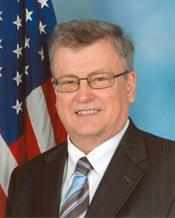 Rep. Mark E. Souder (R-IN)
Legislative Activity
Stay on top of the latest movement without scrolling through every action
Received in the Senate and Read twice and referred to the Committee on the Judiciary.
March 13, 2006
View full timeline
Introduced in House
June 9, 2005
Referred to the Committee on Government Reform, and in addition to the Committees on the Judiciary, Energy and Commerce, and Intelligence (Permanent Select), for a period to be subsequently determined by the Speaker, in each case for consideration of such provisions as fall within the jurisdiction of the committee concerned.
June 9, 2005
Committee Consideration and Mark-up Session Held.
June 16, 2005
Ordered to be Reported (Amended) by Voice Vote.
June 16, 2005
Reported (Amended) by the Committee on Government Reform. H. Rept. 109-315, Part I.
November 18, 2005
House Committee on Judiciary Granted an extension for further consideration ending not later than Dec. 17, 2005.
November 18, 2005
House Committee on Energy and Commerce Granted an extension for further consideration ending not later than Dec. 17, 2005.
November 18, 2005
House Committee on Intelligence (Permanent) Granted an extension for further consideration ending not later than Dec. 17, 2005.
November 18, 2005
Referred sequentially to the House Committee on Education and the Workforce for a period ending not later than Dec. 17, 2005 for consideration of such provisions of the bill and amendment as fall within the jurisdiction of that committee pursuant to clause 1(e), rule X.
November 18, 2005
House Committee on Judiciary Granted an extension for further consideration ending not later than Dec. 31, 2005.
December 17, 2005
House Committee on Energy and Commerce Granted an extension for further consideration ending not later than Dec. 31, 2005.
December 17, 2005
House Committee on Intelligence (Permanent) Granted an extension for further consideration ending not later than Dec. 31, 2005.
December 17, 2005
House Committee on Education and the Workforce Granted an extension for further consideration ending not later than Dec. 31, 2005.
December 17, 2005
House Committee on Energy and Commerce Granted an extension for further consideration ending not later than Feb. 3, 2006.
December 31, 2005
House Committee on Judiciary Granted an extension for further consideration ending not later than Feb. 3, 2006.
December 31, 2005
House Committee on Education and the Workforce Granted an extension for further consideration ending not later than Feb. 3, 2006.
December 31, 2005
House Committee on Intelligence (Permanent) Granted an extension for further consideration ending not later than Feb. 3, 2006.
December 31, 2005
House Committee on Judiciary Granted an extension for further consideration ending not later than March 3, 2006.
February 3, 2006
House Committee on Energy and Commerce Granted an extension for further consideration ending not later than March 3, 2006.
February 3, 2006
House Committee on Intelligence (Permanent) Granted an extension for further consideration ending not later than March 3, 2006.
February 3, 2006
House Committee on Education and the Workforce Granted an extension for further consideration ending not later than March 3, 2006.
February 3, 2006
Ordered to be Reported Without Recommendation (Amended) by Voice Vote.
February 16, 2006
Reported (Amended) by the Committee on Energy and Commerce. H. Rept. 109-315, Part II.
March 3, 2006
Reported (Amended) by the Committee on Judiciary. H. Rept. 109-315, Part III.
March 3, 2006
Committee on Intelligence (Permanent) discharged.
March 3, 2006
Committee on Education and the Workforce discharged.
March 3, 2006
Placed on the Union Calendar, Calendar No. 209.
March 3, 2006
Rules Committee Resolution H. Res. 713 Reported to House. Rule provides for consideration of H.R. 2829 with 1 hour of general debate. Previous question shall be considered as ordered without intervening motions except motion to recommit with or without instructions. Measure will be considered read. Specified amendments are in order.
March 8, 2006 • 7:28 PM
Rule H. Res. 713 passed House.
March 9, 2006 • 11:26 AM
Considered under the provisions of rule H. Res. 713. (consideration: CR H802-847; text of measure as reported in House: CR H811-820)
March 9, 2006 • 11:27 AM
Rule provides for consideration of H.R. 2829 with 1 hour of general debate. Previous question shall be considered as ordered without intervening motions except motion to recommit with or without instructions. Measure will be considered read. Specified amendments are in order.
March 9, 2006 • 11:27 AM
House resolved itself into the Committee of the Whole House on the state of the Union pursuant to H. Res. 713 and Rule XVIII.
March 9, 2006 • 11:27 AM
The Speaker designated the Honorable Jo Bonner to act as Chairman of the Committee.
March 9, 2006 • 11:27 AM
GENERAL DEBATE - The Committee of the Whole proceeded with one hour of general debate on H.R. 2829.
March 9, 2006 • 11:27 AM
DEBATE - Pursuant to the provisions of H. Res. 713, the Committee of the Whole proceeded with 10 minutes of debate on the Souder amendment.
March 9, 2006 • 12:28 PM
DEBATE - Pursuant to the provisions of H. Res. 713, the Committee of the Whole proceeded with 10 minutes of debate on the Boozman amendment.
March 9, 2006 • 12:43 PM
DEBATE - Pursuant to the provisions of H. Res. 713, the Committee of the Whole proceeded with 20 minutes of debate on the Chabot amendment.
March 9, 2006 • 12:51 PM
POSTPONED PROCEEDINGS - At the conclusion of debate on the Chabot amendment the Chair put the question on adoption of the amendment and by voice vote announced that the ayes had prevailed. Mr. Chabot demanded a recorded vote and the Chair postponed further proceedings on adoption of the amendment until later in the legislative day.
March 9, 2006 • 1:06 PM
DEBATE - Pursuant to the provisions of H. Res. 713, the Committee of the Whole proc eeded with 10 minutes of debate on the Cuellar amendment.
March 9, 2006 • 1:07 PM
DEBATE - Pursuant to the provisions of H. Res. 713, the Committee of the Whole proceeded with 10 minutes of debate on the Filner amendment.
March 9, 2006 • 1:12 PM
DEBATE - Pursuant to the provisions of H. Res. 713, the Committee of the Whole proceeded with 10 minutes of debate on the Graves amendment.
March 9, 2006 • 1:21 PM
DEBATE - Pursuant to the provisions of H. Res. 713 the Committee of the Whole proceeded with 10 minutes of debate on the Hooley amendment.
March 9, 2006 • 1:30 PM
POSTPONED PROCEEDINGS - At the conclusion of debate on the Hooley amendment the Chair put the question on adoption of the amendment and by voice vote announced that the ayes had prevailed. Ms. Hooley demanded a recorded vote and the Chair postponed further proceedings on adoption of the amendment until later in the legislative day.
March 9, 2006 • 1:37 PM
DEBATE - Pursuant to the provisions of H. Res. 713, the Committee of the Whole proceeded with 10 minutes of debate on the Jackson-Lee amendment.
March 9, 2006 • 1:38 PM
DEBATE - Pursuant to the provisions of H. Res. 713, the Committee of the Whole proceeded with 10 minutes of debate on the Lungren amendment.
March 9, 2006 • 1:47 PM
DEBATE - Pursuant to the provisions of H. Res. 713, the Committee of the Whole proceeded with 10 minutes of debate on the Lynch amendment.
March 9, 2006 • 1:51 PM
DEBATE - Pursuant to the provisions of H. Res. 713, the Committee of the Whole proceeded with 10 minutes of debate on the Paul amendment.
March 9, 2006 • 2:03 PM
POSTPONED PROCEEDINGS - At the conclusion of debate on the Paul amendment the Chair put the question on adoption of the amendment and by voice vote announced that the noes had prevailed. Mr. Paul demanded a recorded vote and the Chair postponed proceedings on adoption of the amendment until later in the legislative day.
March 9, 2006 • 2:20 PM
DEBATE - Pursuant the provisions of H. Res. 713, the Committee of the Whole proceeded with 10 minutes of debate on the Rehberg amendment.
March 9, 2006 • 2:20 PM
EXTENSION OF DEBATE - Mr. Souder asked unanimous consent that debate on the Rehberg amendment be extended by 10 minutes equally divided and controlled by each side of the aisle. Agreed to without objection.
March 9, 2006 • 2:25 PM
POSTPONED PROCEEDINGS - At the conclusion of debate on the Rehberg amendment the Chair put the question on adoption of the amendment and by voice vote announced that the ayes had prevailed. Mr. Rehberg demanded a recorded vote and the Chair postponed further proceedings on adoption of the amendment until later in the legislative day.
March 9, 2006 • 2:41 PM
DEBATE - Pursuant to the provisions of H. Res. 713, the Committee of the Whole proceeded with 10 minutes of debate on the Renzi amendment.
March 9, 2006 • 2:42 PM
EXTENSION OF DEBATE - Mr. Souder asked unanimous consent that debate on the Souder amendment be extended by 5 minutes equally and divided and controlled by both sides of the aisle. Agreed to without objection.
March 9, 2006 • 2:59 PM
UNFINISHED BUSINESS - The Chair announced that the unfinished business was the question of adoption of specified amendments which were debated earlier and on which further proceedings had been postponed.
March 9, 2006 • 3:12 PM
The House rose from the Committee of the Whole House on the state of the Union to report H.R. 2829.
March 9, 2006 • 4:03 PM
The previous question was ordered pursuant to the rule. (consideration: CR H846)
March 9, 2006 • 4:03 PM
The House adopted the amendment in the nature of a substitute as agreed to by the Committee of the Whole House on the state of the Union.
March 9, 2006 • 4:03 PM
Passed/agreed to in House: On passage Passed by recorded vote: 399 - 5 (Roll no. 38).
March 9, 2006 • 4:20 PM
On passage Passed by recorded vote: 399 - 5 (Roll no. 38).
March 9, 2006 • 4:20 PM
Motion to reconsider laid on the table Agreed to without objection.
March 9, 2006 • 4:20 PM
Received in the Senate and Read twice and referred to the Committee on the Judiciary.
March 13, 2006
Voting History
5 votes recorded • Roll call available
HOUSE
Roll Call AvailableMarch 9, 2006 at 4:22 PM
On Passage
Majority required: 1/2 (50%)
399 - 5
HOUSE
Roll Call AvailableMarch 9, 2006 at 4:04 PM
On Agreeing to the Amendment
Majority required: 1/2 (50%)
399 - 9
HOUSE
Roll Call AvailableMarch 9, 2006 at 3:56 PM
On Agreeing to the Amendment
Majority required: 1/2 (50%)
85 - 322
Floor Debate
23 membersWhat members said about H.R. 2829 on the floor


 +18
+18
Floor Debate
23 membersWhat members said about H.R. 2829 on the floor
Mr. Chairman, I yield 4 minutes to the gentleman from Virginia (Mr. Tom Davis), chairman of the Committee on Government Reform. Mr. Chairman, I yield 4 minutes to the gentleman from Florida (Mr.…
Mr. Chairman, I yield such time as he may consume to the gentleman from California (Mr. Waxman), the ranking member of the Committee on Government Reform. Mr. Chairman, I yield myself such time as I…
Mr. Chairman, I thank the distinguished gentleman from Maryland for yielding, and I thank him for his leadership, along with Mr. Waxman and Mr. Souder, who I have had the pleasure of working with on…
Mr. Speaker, by direction of the Committee on Rules, I call up House Resolution 713 and ask for its immediate consideration. Mr. Speaker, for the purpose of debate only, I yield the customary 30…
Mr. Speaker, I yield myself such time as I may consume. Mr. Speaker, I thank my friend for yielding me the time. Mr. Speaker, I rise today to speak on the restrictive rule and the underlying…
Show 8 more

Mr. Chairman, I offer an amendment. Mr. Chairman, I yield myself 2 minutes. First of all, let me begin by thanking Mr. Souder for his tremendous leadership on this issue, and in taking a look at this…

Mr. Chairman, I rise today in strong support of H.R. 2829, the Office of National Drug Control Policy Reauthorization Act. Since its inception, the Office of National Drug Control Policy, better…
Mr. Chairman, I offer an amendment. Mr. Chairman, I yield myself 2\1/2\ minutes. (Mr. PAUL asked and was given permission to revise and extend his remarks.) Mr. Chairman, my amendment is very simple.…
Mr. Chairman, I rise today in support of the Office of National Drug Control Policy Reauthorization Act, and I was pleased that the House Judiciary Committee adopted two amendments that I offered and…
Mr. Speaker, I rise in support of this rule. In background with this, I would like to make a couple of comments about ONDCP and the drug issues before commenting on the amendments in particular. We…
Mr. Chairman, I offer an amendment. Mr. Chairman, I yield myself such time as I may consume. I appreciate this opportunity to offer an amendment which will strengthen the hand of Congress in the…
I thank my colleague for yielding me time and for all the hard work that has gone on with methamphetamine, and I rise today in support of the Baird-Cardoza-Hooley amendment. As meth has spread across…

Mr. Chairman, I offer an amendment. Mr. Chairman, I yield myself such time as I may consume. Mr. Chairman, first of all, I want to thank the gentleman from Indiana and the gentleman from Maryland on…
Show 11 more

Mr. Chairman, I offer an amendment. Mr. Chairman, I yield myself such time as I may consume. Mr. Chairman, I do not have to tell you about the epidemic abuse of methamphetamine that has swept this…

Mr. Chairman, I want to thank the chair of this important subcommittee, Mr. Souder, for his leadership in bringing to the floor today probably one of the most important pieces of legislation that we…

I thank my colleague for yielding. Next week, Mr. Speaker, the House will convene on Tuesday at 12:30 for morning hour, and at 2 o'clock for legislative business. We will take up several measures…

Mr. Chairman, I offer an amendment. Mr. Chairman, I yield myself such time as I may consume. I want to thank Chairman Souder and Ranking Member Cummings for bringing us this bill, and I have an…

Mr. Speaker, I will yield to my friend, Mr. Boehner, for the purposes of informing us of the schedule. Reclaiming my time, I thank the gentleman for that information. Mr. Leader, as you know, we have…

Mr. Speaker, I thank the gentleman for yielding me time. Mr. Speaker, I am asking the House to vote down the previous question on this rule today so that the House might have an opportunity to…
I thank the gentleman for the time. Mr. Speaker, drugs are a scourge. It is a scourge that is not just an inner-city problem. It has spread like a cancer into our small towns, our suburban areas,…
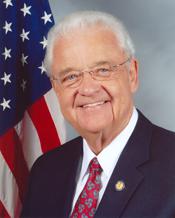
Mr. Chairman, I thank the gentleman from Maryland for yielding me the time. I appreciate it very much, and I would like to thank the gentleman from Ohio (Mr. Chabot) for his willingness to work with…
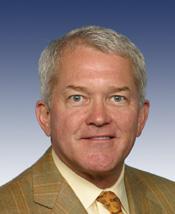
Mr. Chairman, let me thank Chairman Souder and Mr. Cummings, and let me draw your attention to a specific section of the bill that I think is troubling not only to most Members of Congress but law…

Mr. Chairman, I yield myself such time as I may consume. I thank my friend and colleague, the gentleman from Indiana (Mr. Souder). I appreciate the courtesy and I appreciate very much his leadership…
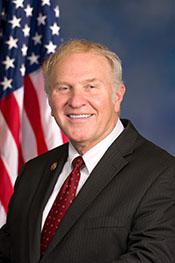
Mr. Chairman, I offer an amendment. Mr. Chairman, I yield myself such time as I may consume. I rise today in support of a bipartisan amendment that I have drafted with several Members of the Meth…
Bill Text
4 versions available
        [Congressional Bills 109th Congress]
[From the U.S. Government Publishing Office]
[H.R. 2829 Referred in Senate (RFS)]

109th CONGRESS
2d Session
H. R. 2829

_______________________________________________________________________

IN THE SENATE OF THE UNITED STATES

March 13, 2006

Received; read twice and referred to the Committee on the Judiciary

_______________________________________________________________________

AN ACT

To reauthorize the Office of National Drug Control Policy Act.

Be it enacted by the Senate and House of Representatives of the
United States of America in Congress assembled,

SECTION 1. SHORT TITLE; TABLE OF CONTENTS.

(a) Short Title.--This Act may be cited as the ``Office of National
Drug Control Policy Reauthorization Act of 2005''.
(b) Table of Contents.--The table of contents for this Act is as
follows:

Sec. 1. Short title; table of contents.
Sec. 2. Amendment of Office of National Drug Control Policy
Reauthorization Act of 1998.
Sec. 3. Repeal of termination provision.
Sec. 4. Amendments to definitions.
Sec. 5. Amendments relating to establishment of Office of National Drug
Control Policy and designation of officers.
Sec. 6. Amendments relating to appointment and duties of Director and
Deputy Director.
Sec. 7. Amendments relating to coordination with other agencies.
Sec. 8. Development, submission, implementation, and assessment of
National Drug Control Strategy.
Sec. 9. High Intensity Drug Trafficking Areas Program.
Sec. 10. Funding for certain High Intensity Drug Trafficking Areas.
Sec. 11. Amendments relating to Counter-Drug Technology Assessment
Center.
Sec. 12. National youth antidrug media campaign.
Sec. 13. Drug interdiction.
Sec. 14. Awards for demonstration programs by local partnerships to
shut down illicit drug market hot-spots by
deterring drug dealers or altering the
dynamic of drug sales.
Sec. 15. Awards for demonstration programs by local partnerships to
coerce abstinence in chronic hard-drug
users under community supervision through
the use of drug testing and sanctions.
Sec. 16. Authorization of appropriations.
Sec. 17. Technical amendments and repeal.
Sec. 18. Requirement for disclosure of Federal sponsorship of all
Federal advertising or other communication
materials.
Sec. 19. Policy relating to syringe exchange programs.
Sec. 20. International summit on methamphetamine threat.
Sec. 21. Study on drug court hearings in nontraditional places.
Sec. 22. Report on government-sponsored methamphetamine conference.
Sec. 23. Study on prescription drugs associated with iatrogenic
addiction.
Sec. 24. Report on tribal government participation in HIDTA process.
Sec. 25. National methamphetamine information clearinghouse.
Sec. 26. Report on school drug testing.
Sec. 27. Report on methamphetamine epidemic.
Sec. 28. Report on ONDCP performance bonuses.

SEC. 2. AMENDMENT OF OFFICE OF NATIONAL DRUG CONTROL POLICY
REAUTHORIZATION ACT OF 1998.

Except as otherwise expressly provided, whenever in this Act an
amendment or repeal is expressed in terms of an amendment to, or repeal
of, a section or other provision, the reference shall be considered to
be made to a section or other provision of the Office of National Drug
Control Policy Reauthorization Act of 1998 (Public Law 105-277; 21
U.S.C. 1701 et seq.).

SEC. 3. REPEAL OF TERMINATION PROVISION.

Section 715 (21 U.S.C. 1712) is repealed, and the law shall read as
if such section was never in effect.

SEC. 4. AMENDMENTS TO DEFINITIONS.

(a) Amendments to Definitions.--Section 702 (21 U.S.C. 1701) is
amended--
(1) in paragraph (1)--
(A) by striking ``and'' at the end of subparagraph
(F);
(B) by striking the period at the end of
subparagraph (G) and inserting ``, including the
testing of employees;''; and
(C) by adding at the end the following:
``(H) interventions for drug abuse and dependence;
and
``(I) international drug control coordination and
cooperation with respect to activities described in
this paragraph.'';
(2) in paragraph (6), by adding before the period at the
end: ``, including any activities involving supply reduction,
demand reduction, or State and local affairs'';
(3) in paragraph (7)--
(A) by striking ``Agency'' and inserting
``agency'';
(B) by striking ``National Foreign Intelligence
Program,'' and inserting ``National Intelligence
Program,''; and
(C) by inserting a comma before ``or Tactical'';
(4) in paragraph (9), by striking ``implicates'' and
inserting ``indicates'';
(5) in paragraph (10)--
(A) by adding ``National Drug Control Program
agencies and'' after ``among'' in subparagraph (B);
(B) by striking ``and'' at the end of subparagraph
(B);
(C) by striking the period at the end of
subparagraph (C) and inserting a semicolon; and
(D) by adding at the end the following:
``(D) domestic drug law enforcement, including
domestic drug interdiction and law enforcement directed
at drug users; and
``(E) coordination and enhancement of Federal,
State, and local law enforcement initiatives to gather,
analyze, and disseminate information and intelligence
relating to drug control among domestic law enforcement
agencies.'';
(6) in paragraph (11)--
(A) by inserting before the semicolon in
subparagraph (A) the following: ``, including--
``(i) law enforcement outside the United
States; and
``(ii) source country programs, including
economic development programs primarily
intended to reduce the production or
trafficking of illicit drugs'';
(B) by striking subparagraph (B) and inserting the
following:
``(B) facilitating and enhancing the sharing of
foreign and domestic information and law enforcement
intelligence relating to drug production and
trafficking among National Drug Control Program
agencies, and between those agencies and foreign law
enforcement agencies; and'';
(C) by striking ``; and'' at the end of
subparagraph (C) and inserting a period; and
(D) by striking subparagraph (D); and
(7) by adding at the end the following:
``(12) Appropriate congressional committees.--Except where
otherwise provided, the term `appropriate congressional
committees' means the Committee on the Judiciary, the Committee
on Appropriations, and the Caucus on International Narcotics
Control of the Senate and the Committee on Government Reform,
the Committee on the Judiciary, and the Committee on
Appropriations of the House of Representatives.
``(13) Law enforcement.--The term `law enforcement' or
`drug law enforcement' means all efforts by a Federal, State,
or local government agency to enforce the drug laws of the
United States or any State, including investigation, arrest,
prosecution, and incarceration or other punishments or
penalties.''.
(b) Conforming Amendments.--Section 703(b)(3) (21 U.S.C.
1702(b)(3)) is amended--
(1) in subparagraph (A), by striking ``(G)'' and inserting
``(I)''; and
(2) in subparagraph (C)--
(A) by striking ``through (C)'' and inserting
``through (E)'';
(B) by striking ``and subparagraph (D) of section
702(11)''; and
(C) by adding before the period at the end the
following: ``, and sections 707 and 708 of this Act''.

SEC. 5. AMENDMENTS RELATING TO ESTABLISHMENT OF OFFICE OF NATIONAL DRUG
CONTROL POLICY AND DESIGNATION OF OFFICERS.

(a) Responsibilities.--Paragraph (4) of section 703(a) (21 U.S.C.
1702(a)) is amended to read as follows:
``(4) evaluate the effectiveness of the national drug
control policy and the National Drug Control Program agencies'
programs, by developing and applying specific goals and
performance measurements.''.
(b) Rank of Director.--Section 703(b) (21 U.S.C. 1702(b)) is
amended in paragraph (1) by adding before the period the following: ``,
who shall hold the same rank and status as the head of an executive
department listed in section 101 of title 5, United States Code''.
(c) Deputy Directors.--Section 703(b) (21 U.S.C. 1702(b)) is
amended in paragraph (3)--
(1) by striking ``Office--'' and inserting ``Office the
following additional Deputy Directors--''; and
(2) in subparagraph (B), by striking ``who shall'' and
inserting the following: ``who shall have substantial
experience and expertise in drug interdiction operations and
other supply reduction activities, and who shall serve as the
United States Interdiction Coordinator and''.

SEC. 6. AMENDMENTS RELATING TO APPOINTMENT AND DUTIES OF DIRECTOR AND
DEPUTY DIRECTOR.

(a) Designation of Other Officers.--Section 704(a)(3) (21 U.S.C.
1703(a)(3)) is amended--
(1) by striking ``permanent employee'' and inserting
``officer or employee''; and
(2) by striking ``serve as the Director'' and inserting
``serve as the acting Director''.
(b) Responsibilities of Director.--Section 704(b) (21 U.S.C.
1703(b)) is amended--
(1) in paragraph (4), by striking ``Federal departments and
agencies engaged in drug enforcement,'' and inserting
``National Drug Control Program agencies,'';
(2) in paragraph (7), by inserting after ``President'' the
following: ``and the appropriate congressional committees'';
(3) in paragraph (13), by striking ``(beginning in 1999)'';
(4) in paragraph (14)--
(A) by striking ``Appropriations'' and all that
follows through ``Senate'' and inserting ``appropriate
congressional committees''; and
(B) by striking ``and'' after the semicolon at the
end;
(5) in paragraph (15), by striking subparagraph (C) and
inserting the following:
``(C) supporting the substance abuse information
clearinghouse administered by the Administrator of the
Substance Abuse and Mental Health Services
Administration and established in section 501(d)(16) of
the Public Health Service Act by--
``(i) encouraging all National Drug Control
Program agencies to provide all appropriate and
relevant information; and
``(ii) supporting the dissemination of
information to all interested entities;''; and
(6) by inserting at the end the following:
``(16) shall coordinate with the private sector to promote
private research and development of medications to treat
addiction;
``(17) shall seek the support and commitment of State and
local officials in the formulation and implementation of the
National Drug Control Strategy;
``(18) shall monitor and evaluate the allocation of
resources among Federal law enforcement agencies in response to
significant local and regional drug trafficking and production
threats;
``(19) shall submit an annual report to Congress detailing
how the Office of National Drug Control Policy has consulted
with and assisted State and local governments with respect to
the formulation and implementation of the National Drug Control
Strategy and other relevant issues; and
``(20) shall, within one year after the date of the
enactment of the Office of National Drug Control Policy
Reauthorization Act of 2005, report to Congress on the impact
of each Federal drug reduction strategy upon the availability,
addiction rate, use rate, and other harms of illegal drugs.''.
(c) Submission of Drug Control Budget Requests.--Section 704(c)(1)
is amended by adding at the end the following:
``(C) Content of drug control budget requests.--A
drug control budget request submitted by a department,
agency, or program under this paragraph shall include
all requests for funds for any drug control activity
undertaken by that department, agency, or program,
including demand reduction, supply reduction, and State
and local affairs, including any drug law enforcement
activities. If an activity has both drug control and
nondrug control purposes or applications, the
department, agency, or program shall estimate by a
documented calculation the total funds requested for
that activity that would be used for drug control, and
shall set forth in its request the basis and method for
making the estimate.''.
(d) National Drug Control Budget Proposal.--
(1) Section 704(c)(2) is amended by inserting ``and the
head of each major national organization that represents law
enforcement officers, agencies, or associations'' after
``agency''.
(2) Section 704(c)(2) is amended in subparagraph (A) by
inserting before the semicolon: ``and to inform Congress and
the public about the total amount proposed to be spent on all
supply reduction, demand reduction, State and local affairs,
including any drug law enforcement, and other drug control
activities by the Federal Government, which shall conform to
the content requirements set forth in subparagraph (C) of
paragraph (1) of this subsection''.
(e) Review and Certification of National Drug Control Program
Budget.--Section 704(c)(3) (21 U.S.C. 1703(c)(3)) is amended--
(1) by redesignating subparagraphs (C) and (D) as
subparagraphs (D) and (E), respectively;
(2) by inserting after subparagraph (B) the following new
subparagraph:
``(C) Specific requests.--The Director shall not
confirm the adequacy of any budget request that--
``(i) requests funding for Federal law
enforcement activities that do not adequately
compensate for transfers of drug enforcement
resources and personnel to law enforcement and
investigation activities not related to drug
enforcement as determined by the Director;
``(ii) requests funding for law enforcement
activities on the borders of the United States
that do not adequately direct resources to drug
interdiction and enforcement as determined by
the Director;
``(iii) requests funding for drug treatment
activities that do not provide adequate result
and accountability measures as determined by
the Director;
``(iv) requests funding for any activities
of the Safe and Drug Free Schools Program that
do not include a clear antidrug message or
purpose intended to reduce drug use;
``(v) requests funding for drug treatment
activities that do not adequately support and
enhance Federal drug treatment programs and
capacity, as determined by the Director;
``(vi) requests funding for fiscal year
2007 for activities of the Department of
Education, unless it is accompanied by a report
setting forth a plan for providing expedited
consideration of student loan applications for
all individuals who submitted an application
for any Federal grant, loan, or work assistance
that was rejected or denied pursuant to
484(r)(1) of the Higher Education Act of 1965
(20 U.S.C. 1091(r)(1)) by reason of a
conviction for a drug-related offense not
occurring during a period of enrollment for
which the individual was receiving any Federal
grant, loan, or work assistance; and
``(vii) requests funding for the operations
and management of the Department of Homeland
Security that does not include a specific
request for funds for the Office of
Counternarcotics Enforcement to carry out its
responsibilities under section 878 of the
Homeland Security Act of 2002 (6 U.S.C.
458).'';
(3) in subparagraph (D)(iii), as so redesignated, by
inserting ``and the appropriate congressional committees''
after ``House of Representatives''; and
(4) in subparagraph (E)(ii)(II)(bb), as so redesignated, by
inserting ``and the appropriate congressional committees''
after ``House of Representatives''.
(f) Reprogramming and Transfer Requests.--Section 704(c)(4)(A) (21
U.S.C. 1703(c)(4)(A)) is amended by striking ``$5,000,000'' and
inserting ``$1,000,000''.
(g) Powers of Director.--Section 704(d) (21 U.S.C. 1703(d)) is
amended--
(1) in paragraph (8)(D), by striking ``have been authorized
by Congress;'' and inserting ``authorized by law;'';
(2) in paragraph (9)--
(A) by inserting ``notwithstanding any other
provision of law,'' after ``(9)''; and
(B) by striking ``Strategy; and'' and inserting
``Strategy and notify the appropriate congressional
committees of any fund control notice issued;'';
(3) in paragraph (10), by striking ``(22 U.S.C. 2291j).''
and inserting ``(22 U.S.C. 2291j) and section 706 of the
Foreign Relations Authorization Act, Fiscal Year 2003 (22
U.S.C. 2291j-1); and''; and
(4) by adding at the end the following new paragraph:
``(11) not later than August 1 of each year, submit to the
President a report, and transmit copies of the report to the
Secretary of State and the appropriate congressional
committees, that--
``(A) provides the Director's assessment of which
countries are major drug transit countries or major
illicit drug producing countries as defined in section
481(e) of the Foreign Assistance Act of 1961 (22 U.S.C.
2291(e));
``(B) provides the Director's assessment of whether
each country identified under subparagraph (A) has
cooperated fully with the United States or has taken
adequate steps on its own to achieve full compliance
with the goals and objectives established by the United
Nations Convention Against Illicit Traffic in Narcotic
Drugs and Psychotropic Substances and otherwise has
assisted in reducing the supply of illicit drugs to the
United States; and
``(C) provides the Director's assessment of whether
application of procedures set forth in section 490 of
the Foreign Assistance Act of 1961 (22 U.S.C. 2291j),
as provided in section 706 of the Foreign Relations
Authorization Act, Fiscal Year 2003 (22 U.S.C. 2291j-
1), is warranted with respect to countries the Director
assesses have not cooperated fully.''.
(h) Fund Control Notices.--Section 704(f) (21 U.S.C. 1703(f)) is
amended by adding at the end the following:
``(4) Congressional notice.--A copy of each fund control
notice shall be transmitted to the appropriate congressional
committees.
``(5) Restrictions.--The Director shall not issue a fund
control notice to direct that all or part of an amount
appropriated to the National Drug Control Program agency
account be obligated, modified, or altered in any manner
contrary, in whole or in part, to a specific appropriation or
statute.''.
(i) Technical Amendments.--Section 704 (21 U.S.C. 1703) is
amended--
(1) by amending subsection (g) to read as follows:
``(g) Inapplicability to Certain Programs.--The provisions of this
section shall not apply to the National Intelligence Program, the Joint
Military Intelligence Program, and Tactical and Related Activities
unless such program or an element of such program is designated as a
National Drug Control Program--
``(1) by the President; or
``(2) jointly by--
``(A) in the case of the National Intelligence
Program, the Director and the Director of National
Intelligence; or
``(B) in the case of the Joint Military
Intelligence Program and Tactical and Related
Activities, the Director, the Director of National
Intelligence, and the Secretary of Defense. ''; and
(2) by amending subsection (h) to read as follows:
``(h) Construction.--Nothing in this Act shall be construed as
derogating the authorities and responsibilities of the Director of
National Intelligence or the Director of the Central Intelligence
Agency contained in the National Security Act of 1947 (50 U.S.C. 401 et
seq.), the Central Intelligence Agency Act of 1949 (50 U.S.C. 403a et
seq.), or any other law.''.
(j) Requirement for South American Heroin Strategy.--
(1) In general.--Not later than 90 days after the date of
the enactment of this Act, the Director of National Drug
Control Policy shall submit to the Congress a comprehensive
strategy that addresses the increased threat from South
American heroin, and in particular Colombian heroin and the
emerging threat from opium poppy grown in Peru and often
intended for transit to Columbia for processing into heroin.
(2) Contents.--The strategy shall include--
(A) opium eradication efforts to eliminate the
problem at the source to prevent heroin from entering
the stream of commerce;
(B) interdiction and precursor chemical controls;
(C) demand reduction and treatment;
(D) alternative development programs, including
direct assistance to regional governments to demobilize
and provide alternative livelihoods to former members
of insurgent or other groups engaged in heroin, coca,
or other illicit drug production or trafficking;
(E) efforts to inform and involve local citizens in
the programs described in subparagraphs (A) through
(D), such as through leaflets advertising rewards for
information;
(F) provisions that ensure the maintenance at
current levels of efforts to eradicate coca in
Colombia; and
(G) assessment of the specific level of funding and
resources necessary to simultaneously address the
threat from South American heroin and the threat from
Colombian and Peruvian coca.
(3) Treatment of classified or law enforcement sensitive
information.--Any content of the strategy that involves
information classified under criteria established by an
Executive order, or whose public disclosure, as determined by
the Director or the head of any relevant Federal agency, would
be detrimental to the law enforcement or national security
activities of any Federal, foreign, or international agency,
shall be presented to Congress separately from the rest of the
strategy.
(k) Requirement for Afghan Heroin Strategy.--
(1) In general.--Not later than 90 days after the date of
the enactment of this Act, the Director of the Office of
National Drug Control Policy shall submit to the Congress a
comprehensive strategy that addresses the increased threat from
Afghan heroin.
(2) Contents.--The strategy shall include--
(A) opium crop eradication efforts to eliminate the
problem at the source to prevent heroin from entering
the stream of commerce;
(B) destruction or other direct elimination of
stockpiles of heroin and raw opium, and heroin
production and storage facilities;
(C) interdiction and precursor chemical controls;
(D) demand reduction and treatment;
(E) alternative development programs;
(F) measures to improve cooperation and
coordination between Federal Government agencies, and
between such agencies, agencies of foreign governments,
and international organizations with responsibility for
the prevention of heroin production in, or trafficking
out of, Afghanistan; and
(G) an assessment of the specific level of funding
and resources necessary significantly to reduce the
production and trafficking of heroin.
(3) Treatment of classified or law enforcement sensitive
information.--Any content of the strategy that involves
information classified under criteria established by an
Executive order, or whose public disclosure, as determined by
the Director or the head of any relevant Federal agency, would
be detrimental to the law enforcement or national security
activities of any Federal, foreign, or international agency,
shall be presented to Congress separately from the rest of the
strategy.
(l) Requirement for General Counterdrug Intelligence Plan.--
(1) In general.--Not later than 120 days after the date of
enactment of this Act, and not later than every two years
thereafter, the Director of the Office of National Drug Control
Policy, with the concurrence of the Director of National
Intelligence, shall submit to the appropriate congressional
committees, a general counterdrug intelligence plan to improve
coordination, and eliminate unnecessary duplication, among the
counterdrug intelligence centers and information sharing
systems, and counterdrug activities of the Federal Government,
including the centers, systems, and activities of the following
departments and agencies:
(A) The Department of Defense, including the
Defense Intelligence Agency, and the joint interagency
task forces.
(B) The Department of the Treasury, including the
Financial Crimes Enforcement Network (FinCEN).
(C) The Central Intelligence Agency.
(D) The National Security Agency.
(E) The Department of Homeland Security, including
the United States Coast Guard, the bureau of Customs
and Border Protection, and the bureau of Immigration
and Customs Enforcement.
(F) The Department of Justice, including the
National Drug Intelligence Center (NDIC); the Drug
Enforcement Administration, including the El Paso
Intelligence Center (EPIC); the Federal Bureau of
Investigation; the Organized Crime Drug Enforcement
Task Force; and the Regional Information Sharing
System.
(G) The Office of National Drug Control Policy,
including the High Intensity Drug Trafficking Areas
Program.
(H) The Counterdrug Intelligence Executive
Secretariat.
(2) Purpose.--The purpose of the plan under paragraph (1)
is to maximize the effectiveness of the centers and activities
referred to in that paragraph in achieving the objectives of
the National Drug Control Strategy promulgated under 21 U.S.C.
1705. In order to maximize such effectiveness, the plan shall--
(A) articulate clear and specific mission
statements (including purpose and scope of activity)
for each counterdrug intelligence center, system, and
activity, including the manner in which responsibility
for counterdrug intelligence activities will be
allocated among the counterdrug intelligence centers
and systems;
(B) specify each government agency (whether
Federal, State, or local) that participates in each
such center, system, and activity, including a
description of the extent and nature of that
participation;
(C) specify the relationship between such centers,
systems, and activities;
(D) specify the means by which proper oversight of
such centers, systems, and activities will be assured;
(E) specify the means by which counterdrug
intelligence and information will be forwarded
effectively to all levels of officials responsible for
United States counterdrug policy; and
(F) specify mechanisms to ensure that State and
local law enforcement agencies are apprised of
counterdrug intelligence and information acquired by
Federal law enforcement agencies in a manner which--
(i) facilitates effective counterdrug
activities by State and local law enforcement
agencies; and
(ii) provides such State and local law
enforcement agencies with the information
relating to the safety of officials involved in
their counterdrug activities.
(3) Definitions.--As used in this subsection--
(A) the term ``center'' refers to any center,
office, task force, or other coordinating organization
engaged in counterdrug intelligence or information
analyzing or sharing activities;
(B) the term ``system'' refers to any computerized
database or other electronic system used for
counterdrug intelligence or information analyzing or
sharing activities; and
(C) the term ``appropriate congressional
committees'' means the following:
(i) The Committee on Appropriations, the
Committee on Foreign Relations, the Committee
on the Judiciary, the Committee on Homeland
Security and Governmental Affairs, the Caucus
on International Narcotics Control, and the
Select Committee on Intelligence of the Senate.
(ii) The Committee on Appropriations, the
Committee on International Relations, the
Committee on the Judiciary, the Committee on
Government Reform, the Committee on Homeland
Security, and the Permanent Select Committee on
Intelligence of the House of Representatives.
(4) Limitation.--The general counterdrug intelligence plan
shall not--
(A) change existing agency authorities or the laws
governing interagency relationships, but may include
recommendations about changes to such authorities or
laws; or
(B) include any information about specific methods
of obtaining, or sources of, intelligence or
information, or any information about specific
individuals, cases, investigations, or operations.
(5) Classified or law enforcement sensitive information.--
Any content of the general counterdrug intelligence plan that
involves information classified under criteria established by
an Executive order, or whose public disclosure, as determined
by the Director of the Office of National Drug Control Policy,
the Director of National Intelligence, or the head of any
Federal Government agency whose activities are described in the
plan, would be detrimental to the law enforcement or national
security activities of any Federal, State, or local agency,
shall be presented to Congress separately from the rest of the
report.
(m) Requirement for Southwest Border Counternarcotics Strategy.--
(1) In general.--Not later than 120 days after the date of
enactment of this Act, and every two years thereafter, the
Director of National Drug Control Policy shall submit to the
Congress a Southwest Border Counternarcotics Strategy.
(2) Purposes.--The Southwest Border Counternarcotics
Strategy shall--
(A) set forth the Government's strategy for
preventing the illegal trafficking of drugs across the
international border between the United States and
Mexico, including through ports of entry and between
ports of entry on that border;
(B) state the specific roles and responsibilities
of the relevant National Drug Control Program agencies
(as defined in section 702 of the Office of National
Drug Control Policy Reauthorization Act of 1998 (21
U.S.C. 1701)) for implementing that strategy; and
(C) identify the specific resources required to
enable the relevant National Drug Control Program
agencies to implement that strategy.
(3) Specific content related to drug tunnels between the
united states and mexico.--The Southwest Border
Counternarcotics Strategy shall include--
(A) a strategy to end the construction and use of
tunnels and subterranean passages that cross the
international border between the United States and
Mexico for the purpose of illegal trafficking of drugs
across such border; and
(B) recommendations for criminal penalties for
persons who construct or use such a tunnel or
subterranean passage for such a purpose.
(4) Consultation with other agencies.--The Director shall
issue the Southwest Border Counternarcotics Strategy in
consultation with the heads of the relevant National Drug
Control Program agencies.
(5) Limitation.--The Southwest Border Counternarcotics
Strategy shall not change existing agency authorities or the
laws governing interagency relationships, but may include
recommendations about changes to such authorities or laws.
(6) Report to congress.--The Director shall provide a copy
of the Southwest Border Counternarcotics Strategy to the
appropriate congressional committees (as defined in section 702
of the Office of National Drug Control Policy Reauthorization
Act of 1998 (21 U.S.C. 1701)), and to the Committee on Armed
Services and the Committee on Homeland Security of the House of
Representatives, and the Committee on Homeland Security and
Governmental Affairs and the Committee on Armed Services of the
Senate.
(7) Treatment of classified or law enforcement sensitive
information.--Any content of the Southwest Border
Counternarcotics Strategy that involves information classified
under criteria established by an Executive order, or whose
public disclosure, as determined by the Director or the head of
any relevant National Drug Control Program agency, would be
detrimental to the law enforcement or national security
activities of any Federal, State, or local agency, shall be
presented to Congress separately from the rest of the strategy.
(n) Requirement for Scientific Study of Mycoherbicide in Illicit
Drug Crop Eradication.--Not later than 90 days after the date of
enactment of this Act, the Director of the Office of National Drug
Control Policy shall submit to the Congress a report that includes a
plan to conduct, on an expedited basis, a scientific study of the use
of mycoherbicide as a means of illicit drug crop elimination by an
appropriate Government scientific research entity, including a complete
and thorough scientific peer review. The study shall include an
evaluation of the likely human health and environmental impacts of such
use. The report shall also include a plan to conduct controlled
scientific testing in a major drug producing nation of mycoherbicide
naturally existing in the producing nation.
(o) Study of Persons Kidnapped, Killed, and Missing Along the
Border Between the United States and Mexico.--
(1) In general.--The Director of National Drug Control
Policy shall study the specific impact on citizens of the
United States of violence related to drug-trafficking along the
international border between the United States and Mexico.
(2) Report.--Not later than 180 days after the date of the
enactment of this Act, and annually thereafter, the Director of
National Drug Control Policy shall submit to Congress a report,
including recommendations on methods to solve the offenses
described in such paragraph and to reduce the occurrence of
such offenses.
(3) Authorization of appropriations.--There is authorized
to be appropriated to carry out this subsection $1,000,000 for
each of fiscal years 2007 through 2011.
(p) Requirement for an Assessment of Illicit Drug and Alcohol Use
by Children, and Appropriate Intervention Methods.--
(1) In general.--The Director of National Drug Control
Policy shall complete an assessment of report materials,
studies, and statistics with respect to the 5-year period
before the date of enactment of this Act, to determine the
extent to which children who are 12 to 17 years of age--
(A) experiment with and regularly use marijuana,
alcohol, cigarettes, prescription drugs without a
prescription, designer drugs (such as ecstasy), and
other illicit drugs (such as cocaine); and
(B) have access to intervention services or
programs, including drug testing, counseling,
rehabilitation, legal representation, and other
services or programs associated with prevention,
treatment, and punishment of substance abuse.
(2) Assessment procedure.--In completing the assessment
under paragraph (1), the Director--
(A) shall consider relevant public health and
academic research materials and studies, and may also
consider relevant statistics concerning illicit drug
and alcohol use, and criminal convictions related to
such use; and
(B) shall make findings, based on the information
considered under subparagraph (A), regarding the nature
and extent of illicit drug and alcohol use among
children who are 12 to 17 years of age, and the
availability of preventative, intervention, and
rehabilitation services and programs to such children.
(3) Report to congress.--Not later than 1 year after the
date of enactment of this Act, the Director shall submit a
report to Congress regarding the assessment under this
subsection and the findings under paragraph (2)(B). Such report
shall include, with respect to children who are 12 to 17 years
of age, the following information:
(A) Services and programs that have been effective
in preventing such children from experimenting with and
beginning the regular use of illicit drugs and alcohol.
(B) The extent to which chronic drug and alcohol
use occurs in such children.
(C) The extent to which schools and other public
institutions provide intervention for such children who
are chronic users of illicit drugs and alcohol, the
specific roles such schools and institutions play, and
the extent to which such interventions are successful.
(D) Additional resources schools and other public
institutions need to provide successful intervention to
such children, including funding.
(E) The role of Federal agencies in providing
intervention to such children who are chronic users of
illicit drugs and alcohol, and the extent to which
Federal agency intervention is successful.
(F) Additional resources Federal agencies need to
provide successful intervention to such children,
including funding.
(G) The role of the Federal, State, and local
criminal justice systems in providing intervention to
such children who are chronic users of illicit drugs
and alcohol, and the extent to which criminal justice
interventions are successful.
(q) Model State Drug Laws.--
(1) In general.--The Director of the Office of National
Drug Control Policy shall provide for a corporation that is
described in section 501(c)(3) of the Internal Revenue Code of
1986 and exempt from tax under section 501(a) of such Code to--
(A) advise States on establishing laws and policies
to address alcohol and other drug issues, based on the
model State drug laws developed by the President's
Commission on Model State Drug Laws in 1993; and
(B) revise such model State drug laws and draft
supplementary model State laws to take into
consideration changes in the alcohol and drug abuse
problems in the State involved.
(2) Authorization of appropriations.--There is authorized
to be appropriated to carry out this subsection $1,500,000 for
each of fiscal years 2007 through 2011.
(r) Requirement to Submit National Synthetic Drugs Action
Strategy.--Not later than 120 days after the date of the enactment of
this Act, the Director of National Drug Control Policy shall submit to
Congress the National Synthetic Drugs Action Strategy outlined in the
National Synthetic Drugs Action Plan submitted by the Director in
October 2004.
(s) Requirement for Study of State Precursor Chemical Control
Laws.--
(1) Study.--The Director of National Drug Control Policy
shall conduct a study of State laws with respect to precursor
chemical controls.
(2) Report.--Not later than six months after the date of
the enactment of this Act, the Director of National Drug
Control Policy shall submit a report to Congress on the results
of the study under paragraph (1), including--
(A) a comparison of the State laws studied and the
effectiveness of each such law; and
(B) a list of best practices observed with respect
to such laws.
(t) Requirement for Study of Drug Endangered Children Programs.--
(1) Study.--The Director of National Drug Control Policy
shall conduct a study of methamphetamine-related activities
that are conducted by different Drug Endangered Children
programs administered by States.
(2) Report.--Not later than six months after the date of
the enactment of this Act, the Director of National Drug
Control Policy shall submit to Congress a report on the results
of the study under paragraph (1). Such report shall include--
(A) an analysis of the best practices of the
activities studied; and
(B) recommendations for establishing a national
policy to address drug endangered children, based on
the Drug Endangered Children programs administered by
States.
(3) Definitions.--In this subsection--
(A) the term ``methamphetamine-related activity''
means any activity related to the production, use, or
effects of methamphetamine; and
(B) the term ``drug endangered children'' means
children whose physical, mental, or emotional health
are at risk because of the production, use, or effects
of methamphetamine by another person.
(u) Requirement for Methamphetamine Strategy.--
(1) In general.--Not later than 90 days after the date of
the enactment of this Act, the Director of the Office of
National Drug Control Policy shall submit to Congress a
comprehensive strategy that addresses the increased threat from
methamphetamine.
(2) Matters covered.--The strategy shall include--
(A) interdiction and precursor chemical controls;
(B) demand reduction and treatment;
(C) alternative development programs;
(D) efforts to prevent the diversion of precursor
chemicals on an international level; and
(E) an assessment of the specific level of funding
and resources necessary to significantly to reduce the
production and trafficking of methamphetamine.
(3) Treatment of classified or law enforcement sensitive
information.--Any content of the strategy that involves
information classified under criteria established by an
Executive order, or whose public disclosure, as determined by
the Director or the head of any relevant Federal agency, would
be detrimental to the law enforcement or national security
activities of any Federal, foreign, or international agency,
shall be presented to Congress separately from the rest of the
strategy.

SEC. 7. AMENDMENTS RELATING TO COORDINATION WITH OTHER AGENCIES.

Section 705 (21 U.S.C. 1704) is amended--
(1) in subsection (a)(1)(A), by striking ``abuse'';
(2) in subsection (a)(2)(A), by striking ``Director of
Central Intelligence'' and inserting ``Director of National
Intelligence'';
(3) in subsection (a)(2)(B), by striking ``Director of
Central Intelligence'' and inserting ``Director of National
Intelligence and the Director of the Central Intelligence
Agency'';
(4) by amending paragraph (3) of subsection (a) to read as
follows:
``(3) Required reports.--
``(A) Secretaries of the interior and
agriculture.--The Secretaries of Agriculture and
Interior shall, by July 1 of each year, jointly submit
to the Director, the appropriate congressional
committees, the Committee on Agriculture and the
Committee on Resources of the House of Representatives,
and the Committee on Agriculture and the Committee on
Energy and Natural Resources of the Senate, an
assessment of the quantity of illegal drug cultivation
and manufacturing in the United States on lands owned
or under the jurisdiction of the Federal Government for
the preceding year.
``(B) Attorney general.--The Attorney General
shall, by July 1 of each year, submit to the Director
and the appropriate congressional committees
information for the preceding year regarding the number
and type of--
``(i) arrests for drug violations;
``(ii) prosecutions for drug violations by
United States Attorneys; and
``(iii) seizures of drugs by each component
of the Department of Justice seizing drugs, as
well as statistical information on the
geographic areas of such seizures.
``(C) Secretary of homeland security.--The
Secretary of Homeland Security shall, by July 1 of each
year, submit to the Director, the appropriate
congressional committees, and the Committee on Homeland
Security of the House of Representatives, and the
Committee on Homeland Security and Governmental Affairs
of the Senate, information for the preceding year
regarding--
``(i) the number and type of seizures of
drugs by each component of the Department of
Homeland Security seizing drugs, as well as
statistical information on the geographic areas
of such seizures; and
``(ii) the number of air and maritime
patrol hours undertaken by each component of
that Department primarily dedicated to drug
supply reduction missions.
``(D) Secretary of defense.--The Secretary of
Defense shall, by July 1 of each year, submit to the
Director, the appropriate congressional committees, the
Committee on Armed Services of the House of
Representatives, and the Committee on Armed Services of
the Senate, information for the preceding year
regarding the number of air and maritime patrol hours
primarily dedicated to drug supply reduction missions
undertaken by each component of the Department of
Defense.'';
(5) in subsection (b)(2)(B), by striking ``Program.'' and
inserting ``Strategy.''; and
(6) in subsection (c), by striking ``in'' and inserting
``on''.

SEC. 8. DEVELOPMENT, SUBMISSION, IMPLEMENTATION, AND ASSESSMENT OF
NATIONAL DRUG CONTROL STRATEGY.

Section 706 (21 U.S.C. 1705) is amended to read as follows:

``SEC. 706. DEVELOPMENT, SUBMISSION, IMPLEMENTATION, AND ASSESSMENT OF
NATIONAL DRUG CONTROL STRATEGY.

``(a) Timing, Contents, and Process for Development and Submission
of National Drug Control Strategy.--
``(1) In general.--Not later than February 1 of each year,
the President shall submit to Congress a National Drug Control
Strategy, which shall set forth a comprehensive plan for
reducing illicit drug use and the consequences of illicit drug
use in the United States by reducing the demand for illegal
drugs, limiting the availability of illegal drugs, and
conducting law enforcement activities with respect to illegal
drugs.
``(2) Contents.--
``(A) In general.--The National Drug Control
Strategy submitted under paragraph (1) shall include
the following:
``(i) Comprehensive, research-based, long-
range, and quantifiable goals for reducing
illicit drug use and the consequences of
illicit drug use in the United States.
``(ii) Annual quantifiable objectives for
demand reduction, supply reduction, and law
enforcement activities, specific targets to
accomplish long-range quantifiable reduction in
illicit drug use as determined by the Director,
and specific measurements to evaluate progress
toward the targets and strategic goals.
``(iii) A strategy to reduce the
availability and purity of illegal drugs and
the level of drug-related crime in the United
States.
``(iv) An assessment of Federal
effectiveness in achieving the National Drug
Control Strategy for the previous year,
including a specific evaluation of whether the
objectives and targets for reducing illicit
drug use for the previous year were met and
reasons for the success or failure of the
previous year's Strategy.
``(v) A general review of the status of,
and trends in, international, State, and local
drug control activities to ensure that the
United States pursues well-coordinated and
effective drug control at all levels of
government.
``(vi) A general review of the status of,
and trends in, demand reduction activities by
private sector entities and community-based
organizations, including faith-based
organizations, to determine their effectiveness
and the extent of cooperation, coordination,
and mutual support between such entities and
organizations and Federal, State, and local
government agencies.
``(vii) An assessment of current illicit
drug use (including inhalants and steroids) and
availability, impact of illicit drug use, and
treatment availability, which assessment shall
include--
``(I) estimates of drug prevalence
and frequency of use as measured by
national, State, and local surveys of
illicit drug use and by other special
studies of nondependent and dependent
illicit drug use;
``(II) illicit drug use in the
workplace and the productivity lost by
such use; and
``(III) illicit drug use by
arrestees, probationers, and parolees.
``(viii) An assessment of the reduction of
illicit drug availability, as measured by--
``(I) the quantities of cocaine,
heroin, marijuana, methamphetamine,
ecstasy, and other drugs available for
consumption in the United States;
``(II) the amount of marijuana,
cocaine, heroin, methamphetamine,
ecstasy, and precursor chemicals and
other drugs entering the United States;
``(III) the number of illicit drug
manufacturing laboratories seized and
destroyed and the number of hectares of
marijuana, poppy, and coca cultivated
and destroyed domestically and in other
countries;
``(IV) the number of metric tons of
marijuana, heroin, cocaine, and
methamphetamine seized and other drugs;
and
``(V) changes in the price and
purity of heroin, methamphetamine, and
cocaine, changes in the price of
ecstasy, and changes in
tetrahydrocannabinol level of marijuana
and other drugs.
``(ix) An assessment of the reduction of
the consequences of illicit drug use and
availability, which shall include--
``(I) the burden illicit drug users
place on hospital emergency departments
in the United States, such as the
quantity of illicit drug-related
services provided;
``(II) the annual national health
care cost of illicit drug use;
``(III) the extent of illicit drug-
related crime and criminal activity;
and
``(IV) the effect of illicit drug
use on children of substance abusers.
``(x) A general review of the status of,
and trends in, of drug treatment in the United
States, by assessing--
``(I) public and private treatment
utilization; and
``(II) the number of illicit drug
users the Director estimates meet
diagnostic criteria for treatment.
``(xi) A review of the research agenda of
the Counterdrug Technology Assessment Center to
reduce the availability and abuse of drugs.
``(xii) A summary of the efforts made by
Federal agencies to coordinate with private
sector entities to conduct private research and
development of medications to treat addiction
by--
``(I) screening chemicals for
potential therapeutic value;
``(II) developing promising
compounds;
``(III) conducting clinical trials;
``(IV) seeking, where appropriate,
Food and Drug Administration approval
for drugs to treat addiction;
``(V) marketing, where appropriate,
the drug for the treatment of
addiction;
``(VI) urging physicians, where
appropriate, to use the drug in the
treatment of addiction; and
``(VII) encouraging, where
appropriate, insurance companies to
reimburse the cost of the drug for the
treatment of addiction.
``(xiii) Such additional statistical data
and information as the Director considers
appropriate to demonstrate and assess trends
relating to illicit drug use, the effects and
consequences of illicit drug use (including the
effects on children of substance abusers),
supply reduction, demand reduction, drug-
related law enforcement, and the implementation
of the National Drug Control Strategy.
``(xiv) A supplement reviewing the
activities of each individual National Drug
Control Program agency during the previous year
with respect to the National Drug Control
Strategy and the Director's assessment of the
progress of each National Drug Control Program
agency in meeting its responsibilities under
the National Drug Control Strategy.
``(B) Classified information.--Any contents of the
National Drug Control Strategy that involve information
properly classified under criteria established by an
Executive order shall be presented to Congress
separately from the rest of the National Drug Control
Strategy.
``(C) Selection of data and information.--In
selecting data and information for inclusion under
subparagraph (A), the Director shall ensure--
``(i) the inclusion of data and information
that will permit analysis of current trends
against previously compiled data and
information where the Director believes such
analysis enhances long-term assessment of the
National Drug Control Strategy; and
``(ii) the inclusion of data and
information to permit a standardized and
uniform assessment of the effectiveness of drug
treatment programs in the United States.
``(3) Process for development and submission.--
``(A) Consultation.--In developing and effectively
implementing the National Drug Control Strategy, the
Director--
``(i) shall consult with--
``(I) the heads of the National
Drug Control Program agencies;
``(II) Congress;
``(III) State and local officials;
``(IV) private citizens and
organizations, including community- and
faith-based organizations, with
experience and expertise in demand
reduction;
``(V) private citizens and
organizations with experience and
expertise in supply reduction;
``(VI) private citizens and
organizations with experience and
expertise in law enforcement; and
``(VII) appropriate representatives
of foreign governments;
``(ii) with the concurrence of the Attorney
General, may require the El Paso Intelligence
Center to undertake specific tasks or projects
to implement the National Drug Control
Strategy;
``(iii) with the concurrence of the
Director of National Intelligence and the
Attorney General, may request that the National
Drug Intelligence Center undertake specific
tasks or projects to implement the National
Drug Control Strategy; and
``(iv) may make recommendations to the
Secretary of Health and Human Services on
research that supports or advances the National
Drug Control Strategy.
``(B) Commitment to support strategy.--In
satisfying the requirements of subparagraph (A)(i), the
Director shall ensure, to the maximum extent possible,
that State and local officials and relevant private
organizations commit to support and take steps to
achieve the goals and objectives of the National Drug
Control Strategy.
``(C) Recommendations.--Recommendations under
subparagraph (A)(iv) may include recommendations of
research to be performed at the National Institutes of
Health, including the National Institute on Drug Abuse,
or any other appropriate agency within the Department
of Health and Human Services.
``(D) Inclusion in strategy.--The National Drug
Control Strategy under this subsection shall include a
list of each entity consulted under subparagraph
(A)(i).
``(4) Submission of revised strategy.--The President may
submit to Congress a revised National Drug Control Strategy
that meets the requirements of this section--
``(A) at any time, upon a determination by the
President, in consultation with the Director, that the
National Drug Control Strategy in effect is not
sufficiently effective; or
``(B) if a new President or Director takes office.
``(b) Performance Measurement System.--Not later than February 1 of
each year, the Director shall submit to Congress, as part of the
National Drug Control Strategy, a description of a national drug
control performance measurement system that--
``(1) develops 2-year and 5-year performance measures and
targets for each National Drug Control Strategy goal and
objective established for reducing drug use, drug availability,
and the consequences of drug use;
``(2) describes the sources of information and data that
will be used for each performance measure incorporated into the
performance measurement system;
``(3) identifies major programs and activities of the
National Drug Control Program agencies that support the goals
and annual objectives of the National Drug Control Strategy;
``(4) evaluates the contribution of demand reduction and
supply reduction activities implemented by each National Drug
Control Program agency in support of the National Drug Control
Strategy;
``(5) monitors consistency of drug-related goals and
objectives among the National Drug Control Program agencies and
ensures that each agency's goals, objectives, and budgets
support and are fully consistent with the National Drug Control
Strategy; and
``(6) coordinates the development and implementation of
national drug control data collection and reporting systems to
support policy formulation and performance measurement,
including an assessment of--
``(A) the quality of current drug use measurement
instruments and techniques to measure supply reduction
and demand reduction activities;
``(B) the adequacy of the coverage of existing
national drug use measurement instruments and
techniques to measure the illicit drug user population,
and groups that are at risk for illicit drug use; and
``(C) the adequacy of the coverage of existing
national treatment outcome monitoring systems to
measure the effectiveness of drug abuse treatment in
reducing illicit drug use and criminal behavior during
and after the completion of substance abuse treatment;
and
``(7) identifies the actions the Director shall take to
correct any inadequacies, deficiencies, or limitations
identified in the assessment described in paragraph (6).
``(c) Modifications.--A description of any modifications made
during the preceding year to the national drug performance measurement
system described in subsection (b) shall be included in each report
submitted under subsection (a).''.

SEC. 9. HIGH INTENSITY DRUG TRAFFICKING AREAS PROGRAM.

Section 707 (21 U.S.C. 1706) is amended to read as follows:

``SEC. 707. HIGH INTENSITY DRUG TRAFFICKING AREAS PROGRAM.

``(a) Establishment.--
``(1) In general.--There is established in the Office a
program to be known as the High Intensity Drug Trafficking
Areas Program (in this section referred to as the `Program').
``(2) Purpose.--The purpose of the Program is to reduce
drug trafficking and drug production in the United States by--
``(A) facilitating cooperation among Federal,
State, and local law enforcement agencies to share
information and implement coordinated enforcement
activities;
``(B) enhancing intelligence sharing among Federal,
State, and local law enforcement agencies;
``(C) providing reliable intelligence to law
enforcement agencies needed to design effective
enforcement strategies and operations; and
``(D) supporting coordinated law enforcement
strategies which maximize use of available resources to
reduce the supply of illegal drugs in designated areas
and in the United States as a whole.
``(b) Designation.--The Director, upon consultation with the
Attorney General, the Secretary of the Treasury, the Secretary of
Homeland Security, heads of the National Drug Control Program agencies,
and the Governor of each applicable State, may designate any specified
area of the United States as a high intensity drug trafficking area.
After making such a designation and in order to provide Federal
assistance to the area so designated, the Director may--
``(1) obligate such sums as are appropriated for the
Program;
``(2) direct the temporary reassignment of Federal
personnel to such area, subject to the approval of the head of
the department or agency that employs such personnel;
``(3) take any other action authorized under section 704 to
provide increased Federal assistance to those areas; and
``(4) coordinate activities under this section
(specifically administrative, recordkeeping, and funds
management activities) with State and local officials.
``(c) Petitions for Designation.--The Director shall establish
regulations under which a coalition of interested law enforcement
agencies from an area may petition for designation as a high intensity
drug trafficking area. Such regulations shall provide for a regular
review by the Director of the petition, including a recommendation
regarding the merit of the petition to the Director by a panel of
qualified, independent experts.
``(d) Factors for Consideration.--In considering whether to
designate an area under this section as a high intensity drug
trafficking area, the Director shall consider, in addition to such
other criteria as the Director considers to be appropriate, the extent
to which--
``(1) the area is a significant center of illegal drug
production, manufacturing, importation, or distribution;
``(2) State and local law enforcement agencies have
committed resources to respond to the drug trafficking problem
in the area, thereby indicating a determination to respond
aggressively to the problem;
``(3) drug-related activities in the area are having a
significant harmful impact in the area, and in other areas of
the country; and
``(4) a significant increase in allocation of Federal
resources is necessary to respond adequately to drug-related
activities in the area.
``(e) Organization of High Intensity Drug Trafficking Areas.--
``(1) Executive board and officers.--To be eligible for
funds appropriated under this section, each high intensity drug
trafficking area shall be governed by an Executive Board. The
Executive Board shall designate a chairman, vice chairman, and
any other officers to the Executive Board that it determines
are necessary.
``(2) Responsibilities.--The Executive Board of a high
intensity drug trafficking area shall be responsible for--
``(A) providing direction and oversight in
establishing and achieving the goals of the high
intensity drug trafficking area;
``(B) managing the funds of the high intensity drug
trafficking area;
``(C) reviewing and approving all funding proposals
consistent with the overall objective of the high
intensity drug trafficking area; and
``(D) reviewing and approving all reports to the
Director on the activities of the high intensity drug
trafficking area.
``(3) Board representation.--None of the funds appropriated
under this section may be expended for any high intensity drug
trafficking area, or for a partnership or region of a high
intensity drug trafficking area, if that area's, region's or
partnership's Executive Board does not apportion an equal
number of votes between representatives of participating
Federal agencies and representatives of participating State and
local agencies. Where it is impractical for a equal number of
representatives of Federal agencies and State and local
agencies to attend a meeting of an Executive Board in person,
the Executive Board may use a system of proxy votes or weighted
votes to achieve the voting balance required by this paragraph.
``(4) No agency relationship.--The eligibility requirements
of this section are intended to ensure the responsible use of
Federal funds. Nothing in this section is intended to create an
agency relationship between individual high intensity drug
trafficking areas and the Federal Government.
``(f) Use of Funds.--The Director shall ensure that no Federal
funds appropriated for the Program are expended for the establishment
or expansion of drug treatment programs, and shall ensure that not more
than five percent of the Federal funds appropriated for the Program are
expended for the establishment of drug prevention programs.
``(g) Counterterrorism Activities.--
``(1) Assistance authorized.--The Director may authorize
use of resources available for the Program to assist Federal,
State, and local law enforcement agencies in investigations and
activities related to terrorism and prevention of terrorism,
especially but not exclusively with respect to such
investigations and activities that are also related to drug
trafficking.
``(2) Limitation.--The Director shall ensure--
``(A) that assistance provided under paragraph (1)
remains incidental to the purpose of the Program to
reduce drug availability and carry out drug-related law
enforcement activities; and
``(B) that significant resources of the Program are
not redirected to activities exclusively related to
terrorism, except on a temporary basis under
extraordinary circumstances, as determined by the
Director.
``(h) Role of Drug Enforcement Administration.--The Director, in
consultation with the Attorney General, shall ensure that a
representative of the Drug Enforcement Administration is included in
the Intelligence Support Center for each high intensity drug
trafficking area.
``(i) Annual HIDTA Program Budget Submissions.--As part of the
documentation that supports the President's annual budget request for
the Office, the Director shall submit to Congress a budget
justification that includes the following:
``(1) The amount requested for each high intensity drug
trafficking area with supporting narrative descriptions and
rationale for each request.
``(2) A detailed justification for each funding request
that explains the reasons for the requested funding level, how
such funding level was determined based on a current assessment
of the drug trafficking threat in each high intensity drug
trafficking area, how such funding will ensure that the goals
and objectives of each such area will be achieved, and how such
funding supports the National Drug Control Strategy.
``(j) Emerging Threat Response Fund.--
``(1) In general.--Subject to the availability of
appropriations, the Director may expend up to 10 percent of the
amounts appropriated under this section on a discretionary
basis, to respond to any emerging drug trafficking threat in an
existing high intensity drug trafficking area, or to establish
a new high intensity drug trafficking area or expand an
existing high intensity drug trafficking area, in accordance
with the criteria established under paragraph (2).
``(2) Consideration of impact.--In allocating funds under
this subsection, the Director shall consider--
``(A) the impact of activities funded on reducing
overall drug traffic in the United States, or
minimizing the probability that an emerging drug
trafficking threat will spread to other areas of the
United States; and
``(B) such other criteria as the Director considers
appropriate.
``(k) Evaluation.--
``(1) Initial report.--Not later than 90 days after the
date of the enactment of this subsection, the Director shall,
after consulting with the Executive Boards of each designated
high intensity drug trafficking area, submit a report to
Congress that describes, for each designated high intensity
drug trafficking area--
``(A) the specific purposes for the high intensity
drug trafficking area;
``(B) the specific long-term and short-term goals
and objectives for the high intensity drug trafficking
area;
``(C) the measurements that will be used to
evaluate the performance of the high intensity drug
trafficking area in achieving the long-term and short-
term goals; and
``(D) the reporting requirements needed to evaluate
the performance of the high intensity drug trafficking
area in achieving the long-term and short-term goals.
``(2) Evaluation of hidta program as part of national drug
control strategy.--For each designated high intensity drug
trafficking area, the Director shall submit, as part of the
annual National Drug Control Strategy report, a report that--
``(A) describes--
``(i) the specific purposes for the high
intensity drug trafficking area; and
``(ii) the specific long-term and short-
term goals and objectives for the high
intensity drug trafficking area; and
``(B) includes an evaluation of the performance of
the high intensity drug trafficking area in
accomplishing the specific long-term and short-term
goals and objectives identified under paragraph (1)(B).
``(l) Assessment of Drug Enforcement Task Forces in High Intensity
Drug Trafficking Areas.--Not later than 180 days after the date of
enactment of this subsection, and as part of each subsequent annual
National Drug Control Strategy report, the Director shall submit to
Congress a report--
``(1) assessing the number and operation of all federally
funded drug enforcement task forces within each high intensity
drug trafficking area; and
``(2) describing--
``(A) each Federal, State, and local drug
enforcement task force operating in the high intensity
drug trafficking area;
``(B) how such task forces coordinate with each
other, with any high intensity drug trafficking area
task force, and with investigations receiving funds
from the Organized Crime and Drug Enforcement Task
Force;
``(C) what steps, if any, each such task force
takes to share information regarding drug trafficking
and drug production with other federally funded drug
enforcement task forces in the high intensity drug
trafficking area;
``(D) the role of the high intensity drug
trafficking area in coordinating the sharing of such
information among task forces;
``(E) the nature and extent of cooperation by each
Federal, State, and local participant in ensuring that
such information is shared among law enforcement
agencies and with the high intensity drug trafficking
area;
``(F) the nature and extent to which information
sharing and enforcement activities are coordinated with
joint terrorism task forces in the high intensity drug
trafficking area; and
``(G) any recommendations for measures needed to
ensure that task force resources are utilized
efficiently and effectively to reduce the availability
of illegal drugs in the high intensity drug trafficking
areas.
``(m) Assessment of Intelligence Sharing in High Intensity Drug
Trafficking Areas--program.--Not later than 180 days after the date of
the enactment of this subsection, and as part of each subsequent annual
National Drug Control Strategy report, the Director, in consultation
with the Director of National Intelligence, shall submit to Congress a
report--
``(1) evaluating existing and planned intelligence systems
supported by each high intensity drug trafficking area, or
utilized by task forces receiving any funding under the
Program, including the extent to which such systems ensure
access and availability of intelligence to Federal, State, and
local law enforcement agencies within the high intensity drug
trafficking area and outside of it;
``(2) the extent to which Federal, State, and local law
enforcement agencies participating in each high intensity drug
trafficking area are sharing intelligence information to assess
current drug trafficking threats and design appropriate
enforcement strategies; and
``(3) the measures needed to improve effective sharing of
information and intelligence regarding drug trafficking and
drug production among Federal, State, and local law enforcement
participating in a high intensity drug trafficking area, and
between such agencies and similar agencies outside the high
intensity drug trafficking area.
``(n) Coordination of Intelligence Sharing With Organized Crime
Drug Enforcement Task Force Program.--The Director, in consultation
with the Attorney General, shall ensure that any drug enforcement
intelligence obtained by the Intelligence Support Center for each high
intensity drug trafficking area is shared, on a timely basis, with the
drug intelligence fusion center operated by the Organized Crime Drug
Enforcement Task Force of the Department of Justice.
``(o) Use of Funds to Combat Methamphetamine Trafficking.--
``(1) In general.--
``(A) Requirement.--The Director shall ensure that,
of the amounts appropriated for a fiscal year for the
Program, at least $15,000,000 is allocated to combat
the trafficking of methamphetamine in areas designated
by the Director as high intensity drug trafficking
areas.
``(B) Activities.--In meeting the requirement in
subparagraph (A), the Director shall transfer funds to
appropriate Federal, State, and local governmental
agencies for employing additional Federal law
enforcement personnel, or facilitating the employment
of additional State and local law enforcement
personnel, including agents, investigators,
prosecutors, laboratory technicians, chemists,
investigative assistants, and drug prevention
specialists.
``(2) Apportionment of funds.--
``(A) Factors in apportionment.--The Director shall
apportion amounts allocated under paragraph (1) among
areas designated by the Director as high intensity drug
trafficking areas based on the following factors:
``(i) The number of methamphetamine
manufacturing facilities discovered by Federal,
State, or local law enforcement officials in
the area during the previous fiscal year.
``(ii) The number of methamphetamine
prosecutions in Federal, State, or local courts
in the area during the previous fiscal year.
``(iii) The number of methamphetamine
arrests by Federal, State, or local law
enforcement officials in the area during the
previous fiscal year.
``(iv) The amounts of methamphetamine or
listed chemicals (as that term is defined in
section 102(33) of the Controlled Substances
Act (21 U.S.C. 802(33)) seized by Federal,
State, or local law enforcement officials in
the area during the previous fiscal year.
``(v) Intelligence and predictive data from
the Drug Enforcement Administration showing
patterns and trends in abuse, trafficking, and
transportation in methamphetamine and listed
chemicals (as that term is so defined).
``(B) Certification.--Before the Director
apportions any funds under this paragraph to a high
intensity drug trafficking area, the Director shall
certify that the law enforcement entities responsible
for clandestine methamphetamine laboratory seizures in
that area are providing laboratory seizure data to the
national clandestine laboratory database at the El Paso
Intelligence Center.
``(p) Authorization of Appropriations.--There is authorized to be
appropriated to the Office of National Drug Control Policy to carry out
this section--
``(1) $280,000,000 for fiscal year 2007;
``(2) $290,000,000 for each of fiscal years 2008 and 2009;
and
``(3) $300,000,000 for each of fiscal years 2010 and
2011.''.

SEC. 10. FUNDING FOR CERTAIN HIGH INTENSITY DRUG TRAFFICKING AREAS.

(a) Short Title.--This section may be cited as the ``Dawson Family
Community Protection Act''.
(b) Findings.--Congress finds the following:
(1) In the early morning hours of October 16, 2002, the
home of Carnell and Angela Dawson was firebombed in apparent
retaliation for Mrs. Dawson's notification of police about
persistent drug distribution activity in their East Baltimore
City neighborhood.
(2) The arson claimed the lives of Mr. and Mrs. Dawson and
their 5 young children, aged 9 to 14.
(3) The horrific murder of the Dawson family is a stark
example of domestic narco-terrorism.
(4) In all phases of counter-narcotics law enforcement--
from prevention to investigation to prosecution to reentry--the
voluntary cooperation of ordinary citizens is a critical
component.
(5) Voluntary cooperation is difficult for law enforcement
officials to obtain when citizens feel that cooperation carries
the risk of violent retaliation by illegal drug trafficking
organizations and their affiliates.
(6) Public confidence that law enforcement is doing all it
can to make communities safe is a prerequisite for voluntary
cooperation among people who may be subject to intimidation or
reprisal (or both).
(7) Witness protection programs are insufficient on their
own to provide security because many individuals and families
who strive every day to make distressed neighborhoods livable
for their children, other relatives, and neighbors will resist
or refuse offers of relocation by local, State, and Federal
prosecutorial agencies and because, moreover, the continued
presence of strong individuals and families is critical to
preserving and strengthening the social fabric in such
communities.
(8) Where (as in certain sections of Baltimore City)
interstate trafficking of illegal drugs has severe ancillary
local consequences within areas designated as high intensity
drug trafficking areas, it is important that supplementary High
Intensity Drug Trafficking Areas Program funds be committed to
support initiatives aimed at making the affected communities
safe for the residents of those communities and encouraging
their cooperation with local, State, and Federal law
enforcement efforts to combat illegal drug trafficking.
(c) Funding for Certain High Intensity Drug Trafficking Areas.--
Section 707 (21 U.S.C. 1706), as amended by section 9, is further
amended by adding at the end the following new subsection:
``(q) Specific Purposes.--
``(1) In general.--The Director shall ensure that, of the
amounts appropriated for a fiscal year for the Program, at
least $7,000,000 is used in high intensity drug trafficking
areas with severe neighborhood safety and illegal drug
distribution problems.
``(2) Required uses.--The funds used under paragraph (1)
shall be used--
``(A) to ensure the safety of neighborhoods and the
protection of communities, including the prevention of
the intimidation of potential witnesses of illegal drug
distribution and related activities; and
``(B) to combat illegal drug trafficking through
such methods as the Director considers appropriate,
such as establishing or operating (or both) a toll-free
telephone hotline for use by the public to provide
information about illegal drug-related activities.''.

SEC. 11. AMENDMENTS RELATING TO COUNTER-DRUG TECHNOLOGY ASSESSMENT
CENTER.

(a) Chief Scientist.--Section 708(b) (21 U.S.C. 1707(b)) is
amended--
(1) in the heading by striking ``Director of Technology.--
'' and inserting ``Chief Scientist.--''; and
(2) by striking ``Director of Technology,'' and inserting
``Chief Scientist,''.
(b) Additional Responsibilities of Director.--Section 708(c) (21
U.S.C. 1707(c)) is amended to read as follows:
``(c) Additional Responsibilities of the Director of National Drug
Control Policy.--
``(1) In general.--The Director, acting through the Chief
Scientist shall--
``(A) identify and define the short-, medium-, and
long-term scientific and technological needs of
Federal, State, and local law enforcement agencies
relating to drug enforcement, including--
``(i) advanced surveillance, tracking, and
radar imaging;
``(ii) electronic support measures;
``(iii) communications;
``(iv) data fusion, advanced computer
systems, and artificial intelligence; and
``(v) chemical, biological, radiological
(including neutron, electron, and graviton),
and other means of detection;
``(B) identify demand reduction (including drug
prevention) basic and applied research needs and
initiatives, in consultation with affected National
Drug Control Program agencies, including--
``(i) improving treatment through
neuroscientific advances;
``(ii) improving the transfer of biomedical
research to the clinical setting; and
``(iii) in consultation with the National
Institute on Drug Abuse and the Substance Abuse
and Mental Health Services Administration, and
through interagency agreements or grants,
examining addiction and rehabilitation research
and the application of technology to expanding
the effectiveness or availability of drug
treatment;
``(C) make a priority ranking of such needs
identified in subparagraphs (A) and (B) according to
fiscal and technological feasibility, as part of a
National Counterdrug Research and Development Program;
``(D) oversee and coordinate counterdrug technology
initiatives with related activities of other Federal
civilian and military departments;
``(E) provide support to the development and
implementation of the national drug control performance
measurement system established under subsection (b) of
section 706;
``(F) with the advice and counsel of experts from
State and local law enforcement agencies, oversee and
coordinate a technology transfer program for the
transfer of technology to State and local law
enforcement agencies; and
``(G) pursuant to the authority of the Director of
National Drug Control Policy under section 704, submit
requests to Congress for the reprogramming or transfer
of funds appropriated for counterdrug technology
research and development.
``(2) Priorities in transferring technology.--
``(A) In general.--The Chief Scientist shall give
priority, in transferring technology under paragraph
(1)(F), based on the following criteria:
``(i) the need of potential recipients for
such technology;
``(ii) the effectiveness of the technology
to enhance current counterdrug activities of
potential recipients; and
``(iii) the ability and willingness of
potential recipients to evaluate transferred
technology.
``(B) Interdiction and border drug law enforcement
technologies.--The Chief Scientist shall give priority,
in transferring technologies most likely to assist in
drug interdiction and border drug law enforcement, to
State, local, and tribal law enforcement agencies in
southwest border areas and northern border areas with
significant traffic in illicit drugs.
``(3) Limitation on authority.--The authority granted to
the Director under this subsection shall not extend to the
direct management of individual projects or other operational
activities.
``(4) Report.--On or before July 1 of each year, the
Director shall submit a report to the appropriate congressional
committees that addresses the following:
``(A) The number of requests received during the
previous 12 months, including the identity of each
requesting agency and the type of technology requested.
``(B) The number of requests fulfilled during the
previous 12 months, including the identity of each
recipient agency and the type of technology
transferred.
``(C) A summary of the criteria used in making the
determination on what requests were funded and what
requests were not funded, except that such summary
shall not include specific information on any
individual requests.
``(D) A general assessment of the future needs of
the program, based on expected changes in threats,
expected technologies, and likely need from potential
recipients.
``(E) An assessment of the effectiveness of the
technologies transferred, based in part on the
evaluations provided by the recipients, with a
recommendation whether the technology should continue
to be offered through the program.''.
(c) Assistance From Secretary of Homeland Security.--Section 708(d)
(21 U.S.C. 1707(d)) is amended by inserting ``, the Secretary of
Homeland Security,'' after ``The Secretary of Defense''.

SEC. 12. NATIONAL YOUTH ANTIDRUG MEDIA CAMPAIGN.

(a) In General.--Section 709 (21 U.S.C. 1708) is amended to read as
follows:

``SEC. 709. NATIONAL YOUTH ANTIDRUG MEDIA CAMPAIGN.

``(a) In General.--The Director shall conduct a national youth
anti-drug media campaign (referred to in this subtitle as the `national
media campaign') in accordance with this section for the purposes of--
``(1) preventing drug abuse among young people in the
United States;
``(2) increasing awareness of adults of the impact of drug
abuse on young people; and
``(3) encouraging parents and other interested adults to
discuss with young people the dangers of illegal drug use.
``(b) Use of Funds.--
``(1) In general.--Amounts made available to carry out this
section for the national media campaign may only be used for
the following:
``(A) The purchase of media time and space,
including the strategic planning for, and accounting
of, such purchases.
``(B) Creative and talent costs, consistent with
paragraph (2)(A).
``(C) Advertising production costs.
``(D) Testing and evaluation of advertising.
``(E) Evaluation of the effectiveness of the
national media campaign.
``(F) The negotiated fees for the winning bidder on
requests for proposals issued either by the Office or
its designee to enter into contracts to carry out
activities authorized by this section.
``(G) Partnerships with professional and civic
groups, community-based organizations, including faith-
based organizations, and government organizations
related to the national media campaign.
``(H) Entertainment industry outreach, interactive
outreach, media projects and activities, public
information, news media outreach, and corporate
sponsorship and participation.
``(I) Operational and management expenses.
``(2) Specific requirements.--
``(A) Creative services.--
``(i) In using amounts for creative and
talent costs under paragraph (1)(B), the
Director shall use creative services donated at
no cost to the Government (including creative
services provided by the Partnership for a
Drug-Free America) wherever feasible and may
only procure creative services for
advertising--
``(I) responding to high-priority
or emergent campaign needs that cannot
timely be obtained at no cost; or
``(II) intended to reach a
minority, ethnic, or other special
audience that cannot reasonably be
obtained at no cost; or
``(III) the Director determines
that the Partnership for a Drug-Free
America is unable to provide, pursuant
to subsection (d)(2)(B).
``(ii) Subject to the availability of
appropriations, no more than $1,500,000 may be
expended under this section each fiscal year on
creative services, except that the Director may
expend up to $2,000,000 in a fiscal year on
creative services to meet urgent needs of the
national media campaign with advance approval
from the Committee on Appropriations of the
House of Representatives and of the Senate upon
a showing of the circumstances causing such
urgent needs of the national media campaign.
``(B) Testing and evaluation of advertising.--In
using amounts for testing and evaluation of advertising
under paragraph (1)(D), the Director shall test all
advertisements prior to use in the national media
campaign to ensure that the advertisements are
effective and meet industry-accepted standards. The
Director may waive this requirement for advertisements
using no more than 10 percent of the purchase of
advertising time purchased under this section in a
fiscal year and no more than 10 percent of the
advertising space purchased under this section in a
fiscal year, if the advertisements respond to emergent
and time-sensitive campaign needs or the advertisements
will not be widely utilized in the national media
campaign.
``(C) Evaluation of effectiveness of media
campaign.--In using amounts for the evaluation of the
effectiveness of the national media campaign under
paragraph (1)(E), the Director shall--
``(i) designate an independent entity to
evaluate annually the effectiveness of the
national media campaign based on data from--
``(I) the Monitoring the Future
Study published by the Department of
Health and Human Services;
``(II) the Attitude Tracking Study
published by the Partnership for a Drug
Free America;
``(III) the National Household
Survey on Drug Abuse; and
``(IV) other relevant studies or
publications, as determined by the
Director, including tracking and
evaluation data collected according to
marketing and advertising industry
standards; and
``(ii) ensure that the effectiveness of the
national media campaign is evaluated in a
manner that enables consideration of whether
the national media campaign has contributed to
reduction of illicit drug use among youth and
such other measures of evaluation as the
Director determines are appropriate.
``(3) Purchase of advertising time and space.--Subject to
the availability of appropriations, for each fiscal year, not
less than 77 percent of the amounts appropriated under this
section shall be used for the purchase of advertising time and
space for the national media campaign, subject to the following
exceptions:
``(A) In any fiscal year for which less than
$125,000,000 is appropriated for the national media
campaign, not less than 82 percent of the amounts
appropriated under this section shall be used for the
purchase of advertising time and space for the national
media campaign.
``(B) In any fiscal year for which more than
$195,000,000 is appropriated under this section, not
less than 72 percent shall be used for advertising
production costs and the purchase of advertising time
and space for the national media campaign.
``(c) Advertising.--In carrying out this section, the Director
shall ensure that sufficient funds are allocated to meet the stated
goals of the national media campaign.
``(d) Division of Responsibilities and Functions Under the
Program.--
``(1) In general.--The Director, in consultation with the
Partnership for a Drug-Free America, shall determine the
overall purposes and strategy of the national media campaign.
``(2) Responsibilities.--
``(A) Director.--The Director shall be responsible
for implementing a focused national media campaign to
meet the purposes set forth in subsection (a), and
shall approve--
``(i) the strategy of the national media
campaign;
``(ii) all advertising and promotional
material used in the national media campaign;
and
``(iii) the plan for the purchase of
advertising time and space for the national
media campaign.
``(B) The partnership for a drug-free america.--The
Director shall request that the Partnership for a Drug-
Free America--
``(i) develop and recommend strategies to
achieve the goals of the national media
campaign, including addressing national and
local drug threats in specific regions or
States, such as methamphetamine and ecstasy;
``(ii) create all advertising to be used in
the national media campaign, except
advertisements that are--
``(I) provided by other nonprofit
entities pursuant to subsection (f);
``(II) intended to respond to high-
priority or emergent campaign needs
that cannot timely be obtained at no
cost (not including production costs
and talent reuse payments), provided
that any such advertising material is
reviewed by the Partnership for a Drug-
Free America;
``(III) intended to reach a
minority, ethnic, or other special
audience that cannot be obtained at no
cost (not including production costs
and talent reuse payments), provided
that any such advertising material is
reviewed by the Partnership for a Drug-
Free America; or
``(IV) any other advertisements
that the Director determines that the
Partnership for a Drug-Free America is
unable to provide.
``(C) Media buying contractor.--The Director shall
enter into a contract with a media buying contractor to
plan and purchase advertising time and space for the
national media campaign. The media buying contractor
shall not provide any other service or material, or
conduct any other function or activity which the
Director determines should be provided by the
Partnership for a Drug-Free America.
``(e) Prohibitions.--None of the amounts made available under
subsection (b) may be obligated or expended for any of the following:
``(1) To supplant current antidrug community-based
coalitions.
``(2) To supplant pro bono public service time donated by
national and local broadcasting networks for other public
service campaigns.
``(3) For partisan political purposes, or express advocacy
in support of or to defeat any clearly identified candidate,
clearly identified ballot initiative, or clearly identified
legislative or regulatory proposal.
``(4) To fund advertising that features any elected
officials, persons seeking elected office, cabinet level
officials, or other Federal officials employed pursuant to
section 213 of Schedule C of title 5, Code of Federal
Regulations.
``(5) To fund advertising that does not contain a primary
message intended to reduce or prevent illicit drug use.
``(6) To fund advertising containing a primary message
intended to promote support for the media campaign or private
sector contributions to the media campaign.
``(f) Matching Requirement.--
``(1) In general.--Amounts made available under subsection
(b) for media time and space shall be matched by an equal
amount of non-Federal funds for the national media campaign, or
be matched with in-kind contributions of the same value.
``(2) No-cost match advertising direct relationship
requirement.--The Director shall ensure that at least 70
percent of no-cost match advertising provided directly relates
to substance abuse prevention consistent with the specific
purposes of the national media campaign, except that in any
fiscal year in which less than $125,000,000 is appropriated to
the national media campaign, the Director shall ensure that at
least 85 percent of no-cost match advertising directly relates
to substance abuse prevention consistent with the specific
purposes of the national media campaign.
``(3) No-cost match advertising not directly related.--The
Director shall ensure that no-cost match advertising that does
not directly relate to substance abuse prevention consistent
with the purposes of the national media campaign includes a
clear antidrug message. Such message is not required to be the
primary message of the match advertising.
``(g) Financial and Performance Accountability.--The Director shall
cause to be performed--
``(1) audits and reviews of costs of the national media
campaign pursuant to section 304C of the Federal Property and
Administrative Services Act of 1949 (41 U.S.C. 254d); and
``(2) an audit to determine whether the costs of the
national media campaign are allowable under section 306 of such
Act (41 U.S.C. 256).
``(h) Report to Congress.--The Director shall submit on an annual
basis a report to Congress that describes--
``(1) the strategy of the national media campaign and
whether specific objectives of the media campaign were
accomplished;
``(2) steps taken to ensure that the national media
campaign operates in an effective and efficient manner
consistent with the overall strategy and focus of the national
media campaign;
``(3) plans to purchase advertising time and space;
``(4) policies and practices implemented to ensure that
Federal funds are used responsibly to purchase advertising time
and space and eliminate the potential for waste, fraud, and
abuse; and
``(5) all contracts entered into with a corporation,
partnership, or individual working on behalf of the national
media campaign.
``(i) Local Target Requirement.--The Director shall, to the maximum
extent feasible, use amounts made available under this section for
media that focuses on, or includes specific information on, prevention
or treatment resources for consumers within specific local areas.
``(j) Prevention of Marijuana Use.--
``(1) Findings.--The Congress finds the following:
``(A) 60 percent of adolescent admissions for drug
treatment are based on marijuana use.
``(B) Potency levels of contemporary marijuana,
particularly hydroponically grown marijuana, are
significantly higher than in the past, rising from
under 1 percent of THC in the mid-1970s to as high as
30 percent today.
``(C) Contemporary research has demonstrated that
youths smoking marijuana early in life may be up to
five times more likely to use hard drugs.
``(D) Contemporary research has demonstrated clear
detrimental effects in adolescent educational
achievement resulting from marijuana use.
``(E) Contemporary research has demonstrated clear
detrimental effects in adolescent brain development
resulting from marijuana use.
``(F) An estimated 9,000,000 Americans a year drive
while under the influence of illegal drugs, including
marijuana.
``(G) Marijuana smoke contains 50 to 70 percent
more of certain cancer causing chemicals than tobacco
smoke.
``(H) Teens who use marijuana are up to four times
more likely to have a teen pregnancy than teens who
have not.
``(I) Federal law enforcement agencies have
identified clear links suggesting that trade in
hydroponic marijuana facilitates trade by criminal
organizations in hard drugs, including heroin.
``(J) Federal law enforcement agencies have
identified possible links between trade in cannabis
products and financing for terrorist organizations.
``(2) Emphasis on prevention of youth marijuana use.--In
conducting advertising and activities otherwise authorized
under this section, the Director may emphasize prevention of
youth marijuana use.
``(k) Prevention of Methamphetamine Abuse and Other Emerging Drug
Abuse Threats.--
``(1) Requirement to use 10 percent of funds for
methamphetamine abuse prevention.--The Director shall ensure
that, of the amounts appropriated under this section for the
national media campaign for a fiscal year, not less than 10
percent shall be expended solely for--
``(A) the activities described subsection (b)(1)
with respect to advertisements specifically intended to
reduce the use of methamphetamine; and
``(B) grants under paragraph (2).
``(2) Grant authority.--The Director may award grants to
private entities for purposes of methamphetamine media
projects. Any such project--
``(A) shall have as its goal the significant
reduction of the prevalence of first-time
methamphetamine use among young people; and
``(B) shall focus solely on the prevention of
methamphetamine use, through, at a minimum, public
service messages that are based on research showing
what is effective in substantially reducing such use
among young people, including public service messages
in both print and electronic media and on websites.
``(3) Authority to use funds for other drug abuse upon
certification that methamphetamine abuse fell during fiscal
year 2007.--With respect to fiscal year 2008 and any fiscal
year thereafter, if the Director certifies in writing to
Congress that domestic methamphetamine laboratory seizures (as
reported to the El Paso Intelligence Center of the Drug
Enforcement Administration) decreased by at least 75 percent
from the 2006 level, the Director may apply paragraph (1)(A)
for that fiscal year with respect to advertisements
specifically intended to reduce the use of such other drugs as
the Director considers appropriate.
``(l) Authorization of Appropriations.--There is authorized to be
appropriated to the Office to carry out this section, $195,000,000 for
each of fiscal years 2007 and 2008 and $210,000,000 for each of fiscal
years 2009 through 2011.''.
(b) Repeal of Superseded Provisions.--The Drug-Free Media Campaign
Act of 1998 (21 U.S.C. 1801 et seq.) is repealed.

SEC. 13. DRUG INTERDICTION.

(a) In General.--Subsections (a) and (b) of section 711 (21 U.S.C.
1710) are amended to read as follows:
``(a) United States Interdiction Coordinator.--
``(1) In general.--The Deputy Director for Supply Reduction
in the Office shall serve as the United States Interdiction
Coordinator, and shall perform the duties of that position
described in paragraph (2) and such other duties as may be
determined by the Director with respect to coordination of
efforts to interdict illicit drugs from entering the United
States.
``(2) Responsibilities.--The United States Interdiction
Coordinator shall be responsible to the Director for--
``(A) coordinating the interdiction activities of
the National Drug Control Program agencies to ensure
consistency with the National Drug Control Strategy;
``(B) on behalf of the Director, developing and
issuing, on or before March 1 of each year and in
accordance with paragraph (3), a National Interdiction
Command and Control Plan to ensure the coordination and
consistency described in subparagraph (A);
``(C) assessing the sufficiency of assets committed
to illicit drug interdiction by the relevant National
Drug Control Program agencies; and
``(D) advising the Director on the efforts of each
National Drug Control Program agency to implement the
National Interdiction Command and Control Plan.
``(3) Staff.--The Director shall assign such permanent
staff of the Office as he considers appropriate to assist the
United States Interdiction Coordinator to carry out the
responsibilities described in paragraph (2), and may also, at
his discretion, request that appropriate National Drug Control
Program agencies detail or assign staff to the Office of Supply
Reduction for that purpose.
``(4) National interdiction command and control plan.--
``(A) Purposes.--The National Interdiction Command
and Control Plan shall--
``(i) set forth the Government's strategy
for drug interdiction;
``(ii) state the specific roles and
responsibilities of the relevant National Drug
Control Program agencies for implementing that
strategy; and
``(iii) identify the specific resources
required to enable the relevant National Drug
Control Program agencies to implement that
strategy.
``(B) Consultation with other agencies.--The United
States Interdiction Coordinator shall issue the
National Interdiction Command and Control Plan in
consultation with the other members of the Interdiction
Committee described in subsection (b).
``(C) Limitation.--The National Interdiction
Command and Control Plan shall not change existing
agency authorities or the laws governing interagency
relationships, but may include recommendations about
changes to such authorities or laws.
``(D) Report to congress.--On or before March 1 of
each year, the United States Interdiction Coordinator
shall provide a report on behalf of the Director to the
appropriate congressional committees, to the Committee
on Armed Services and the Committee on Homeland
Security of the House of Representatives, and to the
Committee on Homeland Security and Governmental Affairs
and the Committee on Armed Services of the Senate,
which shall include--
``(i) a copy of that year's National
Interdiction Command and Control Plan;
``(ii) information for the previous 10
years regarding the number and type of seizures
of drugs by each National Drug Control Program
agency conducting drug interdiction activities,
as well as statistical information on the
geographic areas of such seizures; and
``(iii) information for the previous 10
years regarding the number of air and maritime
patrol hours undertaken by each National Drug
Control Program agency conducting drug
interdiction activities, as well as statistical
information on the geographic areas in which
such patrol hours took place.
``(E) Treatment of classified or law enforcement
sensitive information.--Any content of the report
described in subparagraph (D) that involves information
classified under criteria established by an Executive
order, or the public disclosure of which, as determined
by the Director, the Director of National Intelligence,
or the head of any Federal Government agency the
activities of which are described in the plan, would be
detrimental to the law enforcement or national security
activities of any Federal, State, or local agency,
shall be presented to Congress separately from the rest
of the report.
``(b) Interdiction Committee.--
``(1) In general.--The Interdiction Committee shall meet
to--
``(A) discuss and resolve issues related to the
coordination, oversight and integration of
international, border, and domestic drug interdiction
efforts in support of the National Drug Control
Strategy;
``(B) review the annual National Interdiction
Command and Control Plan, and provide advice to the
Director and the United States Interdiction Coordinator
concerning that plan; and
``(C) provide such other advice to the Director
concerning drug interdiction strategy and policies as
the committee determines is appropriate.
``(2) Membership.--The membership of the Interdiction
Committee shall consist of--
``(A) the Commissioner of the bureau of Customs and
Border Protection at the Department of Homeland
Security;
``(B) the Assistant Secretary of the bureau of
Immigration and Customs Enforcement at the Department
of Homeland Security;
``(C) the Commandant of the United States Coast
Guard;
``(D) the Director of the Office of
Counternarcotics Enforcement at the Department of
Homeland Security;
``(E) the Administrator of the Drug Enforcement
Administration;
``(F) the Assistant Secretary of State for
International Narcotics and Law Enforcement Affairs;
``(G) the Assistant Secretary of Defense for
Special Operations and Low Intensity Conflict;
``(H) the Deputy Director for Supply Reduction of
the Office of National Drug Control Policy, acting in
his role as the United States Interdiction Coordinator;
``(I) the director of the Crime and Narcotics
Center of the Central Intelligence Agency;
``(J) the Deputy Director for State and Local
Affairs of the Office of National Drug Control Policy;
``(K) the Chief of the National Guard Bureau's
Counterdrug Program; and
``(L) such additional persons as may be determined
by the Director.
``(3) Chairman.--The Director shall designate one of the
members of the Interdiction Committee to serve as chairman.
``(4) Meetings.--The members of the Interdiction Committee
shall meet, in person and not through any delegate or
representative, at least once per calendar year, prior to March
1. At the call of either the Director or the current chairman,
the Interdiction Committee may hold additional meetings, which
shall be attended by the members either in person, or through
such delegates or representatives as they may choose.
``(5) Report.--Not later than September 30 of each year,
the chairman of the Interdiction Committee shall submit a
report to the Director and to the appropriate congressional
committees describing the results of the meetings and any
significant findings of the Committee during the previous 12
months. Any content of such a report that involves information
classified under criteria established by an Executive order, or
whose public disclosure, as determined by the Director, the
chairman, or any member, would be detrimental to the law
enforcement or national security activities of any Federal,
State, or local agency, shall be presented to Congress
separately from the rest of the report.''.
(b) Conforming Amendment to Homeland Security Act of 2002.--Section
878 of the Homeland Security Act of 2002 (6 U.S.C. 458) is amended--
(1) in subsection (c), by striking ``Except as provided in
subsection (d), the'' and inserting ``The''; and
(2) by striking subsection (d) and redesignating
subsections (e), (f), and (g) as subsections (d), (e), and (f),
respectively.

SEC. 14. AWARDS FOR DEMONSTRATION PROGRAMS BY LOCAL PARTNERSHIPS TO
SHUT DOWN ILLICIT DRUG MARKET HOT-SPOTS BY DETERRING DRUG
DEALERS OR ALTERING THE DYNAMIC OF DRUG SALES.

Sections 713 and 714 (21 U.S.C. 1711) are redesignated as sections
715 and 716, respectively, and after section 712 (21 U.S.C. 1710)
insert the following new section:

``SEC. 713 AWARDS FOR DEMONSTRATION PROGRAMS BY LOCAL PARTNERSHIPS TO
SHUT DOWN ILLICIT DRUG MARKET HOT-SPOTS BY DETERRING DRUG
DEALERS OR ALTERING THE DYNAMIC OF DRUG SALES.

``(a) Awards Required.--The Director shall make competitive awards
for demonstration programs by eligible partnerships for the purpose of
shutting down local illicit drug market hot-spots and reducing drug-
related crime through evidence-based, strategic problem-solving
interventions that deter drug dealers or alter the dynamic of drug
sales.
``(b) Use of Award Amounts.--Award amounts received under this
section shall be used--
``(1) to support the efforts of the agencies,
organizations, and researchers included in the eligible
partnership;
``(2) to develop and field a directed and credible
deterrent threat; and
``(3) to strengthen rehabilitation efforts through such
means as job training, drug treatment, or other services.
``(c) Eligible Partnership Defined.--In this section, the term
`eligible partnership' means a working group whose application to the
Director--
``(1) identifies the roles played, and certifies the
involvement of, three or more agencies or organizations, which
may include--
``(A) State or local agencies (such as those
carrying out police, probation, prosecution, courts,
corrections, parole, or treatment functions);
``(B) Federal agencies (such as the Drug
Enforcement Agency, the Bureau of Alcohol, Tobacco,
Firearms, and Explosives, and United States Attorney
offices); and
``(C) community-based organizations;
``(2) includes a qualified researcher;
``(3) includes a plan for identifying the impact players
in, and assessing the nature and dynamic of, the local drug
market and its related crime through information gathering and
analysis;
``(4) includes a plan for developing an evidence-based
strategic intervention aimed at quickly and sustainably
eradicating the local drug market by deterring drug dealers or
altering the dynamic of drug sales; and
``(5) includes a plan that describes the methodology and
outcome measures proposed for evaluating the impact of that
strategic intervention on drug sales, neighborhood disorder,
and crime.
``(d) Reports to Congress.--
``(1) Interim report.--Not later than June 1, 2009, the
Director shall submit to Congress a report that identifies the
best practices in drug market eradication, including the best
practices identified through the activities funded under this
section.
``(2) Final report.--Not later than June 1, 2010, the
Director shall submit to Congress a report on the demonstration
programs funded under this section, including on the matters
specified in paragraph (1).
``(e) Authorization of Appropriations.--There is authorized to be
appropriated to carry out this section $10,000,000 for each of fiscal
years 2007 through 2009.''.

SEC. 15. AWARDS FOR DEMONSTRATION PROGRAMS BY LOCAL PARTNERSHIPS TO
COERCE ABSTINENCE IN CHRONIC HARD-DRUG USERS UNDER
COMMUNITY SUPERVISION THROUGH THE USE OF DRUG TESTING AND
SANCTIONS.

After section 713, as inserted by section 14 of this Act, insert
the following new section:

``SEC. 714. AWARDS FOR DEMONSTRATION PROGRAMS BY LOCAL PARTNERSHIPS TO
COERCE ABSTINENCE IN CHRONIC HARD-DRUG USERS UNDER
COMMUNITY SUPERVISION THROUGH THE USE OF DRUG TESTING AND
SANCTIONS.

``(a) Awards Required.--The Director shall make competitive awards
to fund demonstration programs by eligible partnerships for the purpose
of reducing the use of illicit drugs by chronic hard-drug users living
in the community while under the supervision of the criminal justice
system.
``(b) Use of Award Amounts.--Award amounts received under this
section shall be used--
``(1) to support the efforts of the agencies,
organizations, and researchers included in the eligible
partnership;
``(2) to develop and field a drug testing and graduated
sanctions program for chronic hard-drug users living in the
community under criminal justice supervision; and
``(3) to assist individuals described in subsection (a) by
strengthening rehabilitation efforts through such means as job
training, drug treatment, or other services.
``(c) Eligible Partnership Defined.--In this section, the term
`eligible partnership' means a working group whose application to the
Director--
``(1) identifies the roles played, and certifies the
involvement of, two or more agencies or organizations, which
may include--
``(A) State or local agencies (such as those
carrying out police, probation, prosecution, courts,
corrections, parole, or treatment functions);
``(B) Federal agencies (such as the Drug
Enforcement Agency, the Bureau of Alcohol, Tobacco,
Firearms, and Explosives, and United States Attorney
offices); and
``(C) community-based organizations;
``(2) includes a qualified researcher;
``(3) includes a plan for using judicial or other criminal
justice authority to administer drug tests to individuals
described in subsection (a) at least twice a week, and to
swiftly and certainly impose a known set of graduated sanctions
for non-compliance with community-release provisions relating
to drug abstinence (whether imposed as a pre-trial, probation,
or parole condition or otherwise);
``(4) includes a strategy for responding to a range of
substance use and abuse problems and a range of criminal
histories;
``(5) includes a plan for integrating data infrastructure
among the agencies and organizations included in the eligible
partnership to enable seamless, real-time tracking of
individuals described in subsection (a);
``(6) includes a plan to monitor and measure the progress
toward reducing the percentage of the population of individuals
described in subsection (a) who, upon being summoned for a drug
test, either fail to show up or who test positive for drugs.
``(d) Reports to Congress.--
``(1) Interim report.--Not later than June 1, 2009, the
Director shall submit to Congress a report that identifies the
best practices in reducing the use of illicit drugs by chronic
hard-drug users, including the best practices identified
through the activities funded under this section.
``(2) Final report.--Not later than June 1, 2010, the
Director shall submit to Congress a report on the demonstration
programs funded under this section, including on the matters
specified in paragraph (1).
``(e) Authorization of Appropriations.--There is authorized to be
appropriated to carry out this section $10,000,000 for each of fiscal
years 2007 through 2009.''.

SEC. 16. AUTHORIZATION OF APPROPRIATIONS.

Section 716 (21 U.S.C. 1711), as redesignated by section 14 of this
Act, is amended--
(1) by striking ``title,'' and inserting ``title, except
activities for which amounts are otherwise specifically
authorized by this title,''; and
(2) by striking ``1999 through 2003'' and inserting ``2007
through 2011''.

SEC. 17. TECHNICAL AMENDMENTS AND REPEAL.

(a) Amendment to Public Health Service Act to Replace Obsolete
References.--Section 464P(c) of the Public Health Service Act (42
U.S.C. 285o-4(c)) is amended--
(1) in paragraph (1), by striking ``under section 1002 of
the Anti-Drug Abuse Act of 1988 (21 U.S.C. 1501)'' and
inserting ``under section 703 of the Office of National Drug
Control Policy Reauthorization Act of 1998 (21 U.S.C. 1702)'';
and
(2) in paragraph (2), by striking ``under section 1005 of
the Anti-Drug Abuse Act of 1988 (21 U.S.C. 1504)'' and
inserting ``under section 706 of the Office of National Drug
Control Policy Reauthorization Act of 1998 (21 U.S.C. 1705)''.
(b) Repeal of Special Forfeiture Fund.--Section 6073 of the Asset
Forfeiture Amendments Act of 1988 (21 U.S.C. 1509) is repealed.

SEC. 18. REQUIREMENT FOR DISCLOSURE OF FEDERAL SPONSORSHIP OF ALL
FEDERAL ADVERTISING OR OTHER COMMUNICATION MATERIALS.

Section 712 is amended to read as follows:

``SEC. 712. REQUIREMENT FOR DISCLOSURE OF FEDERAL SPONSORSHIP OF ALL
FEDERAL ADVERTISING OR OTHER COMMUNICATION MATERIALS.

``(a) Requirement.--Each advertisement or other communication paid
for by the Office, either directly or through a contract awarded by the
Office, shall include a prominent notice informing the target audience
that the advertisement or other communication is paid for by the
Office.
``(b) Advertisement or Other Communication.--In this section, the
term `advertisement or other communication' includes--
``(1) an advertisement disseminated in any form, including
print or by any electronic means; and
``(2) a communication by an individual in any form,
including speech, print, or by any electronic means.''.

SEC. 19. POLICY RELATING TO SYRINGE EXCHANGE PROGRAMS.

Section 703(a) (21 U.S.C. 1702(a)) is amended by adding at the end
the following:
``When developing the national drug control policy, any policy of the
Director relating to syringe exchange programs for intravenous drug
users shall be based on the best available medical and scientific
evidence regarding their effectiveness in promoting individual health
and preventing the spread of infectious disease, and their impact on
drug addiction and use. In making any policy relating to syringe
exchange programs, the Director shall consult with the National
Institutes of Health and the National Academy of Sciences.''.

SEC. 20. INTERNATIONAL SUMMIT ON METHAMPHETAMINE THREAT.

(a) Summit Requirement.--The Director of the Office of National
Drug Control Policy in the Executive Office of the President shall, in
consultation with the Secretary of State, the Attorney General, the
Secretary of Homeland Security, the Secretary of Health and Human
Services, and the United States Trade Representative, seek to convene
an international summit on the threat of methamphetamine and synthetic
drug precursor chemicals.
(b) Participation of Other Countries.--The Director shall seek to
convene the summit with the participation and involvement of government
leaders at the highest level from all countries that are direct sources
of precursor chemicals and from all countries that are affected by
methamphetamine production, trafficking, and use, to intensify and
coordinate an effective international response in order to prevent
methamphetamine production and precursor diversion.
(c) International Agreements.--The Director shall encourage the
negotiation, drafting, and ratification of multilateral or bilateral
agreements that may contain information-sharing treaties concerning
provisions for precursor importation and exportation and additional
provisions for annual assessments of medical and scientific needs of
each signatory country.
(d) Matters Addressed by the Summit.--The summit may address the
following:
(1) The greater involvement of international policing and
customs organizations, such as Interpol, the United Nations
Office on Drugs and Crime, and the World Customs Organization.
(2) Expanding resources and hired persons to track
international shipments of ephedrine, pseudoephedrine, and
other precursor substances as controlled by the International
Narcotics Control Board.
(3) Working with the private sector and Federal agencies,
as well as the World Health Organization, to support the
research and development of substances that can effectively
replace primary precursors used in the manufacture of synthetic
drugs.
(e) Deadline.--The Director shall seek to convene the summit not
later than 12 months after the date of the enactment of this Act and
follow-up summits in subsequent years as the Director finds necessary.
(f) Authorization of Appropriations.--There are authorized to be
appropriated to the Director $1,000,000 to carry out this section.

SEC. 21. STUDY ON DRUG COURT HEARINGS IN NONTRADITIONAL PLACES.

(a) Finding.--Congress finds that encouraging drug courts and
schools to enter into partnerships that allow students to see the
repercussions of drug abuse by non-violent offenders may serve as a
strong deterrent and promote demand reduction.
(b) Study.--The Director of the Office of National Drug Control
Policy shall conduct a study on drug court programs that conduct
hearings in nontraditional public places, such as schools. At a
minimum, the study shall evaluate similar programs in operation, such
as the program operated in the Fourth Judicial District Drug Court, in
Washington County, Arkansas.
(c) Requirement.--At the same time the President submits to
Congress the National Drug Control Strategy due February 1, 2007,
pursuant to section 706 of the Office of National Drug Control Policy
Reauthorization Act of 1998, the President shall submit to Congress a
report on the study conducted under subsection (b). The report shall
include an evaluation of the results of the study and such
recommendations as the President considers appropriate.
(d) Demand Reduction.--In this section, the term ``demand
reduction'' has the meaning provided in section 702(1) of the Office of
National Drug Control Policy Reauthorization Act of 1998 (21 U.S.C.
1701(1)).

SEC. 22. REPORT ON GOVERNMENT-SPONSORED METHAMPHETAMINE CONFERENCE.

(a) Report.--Not later than 30 days after the date of the enactment
of this Act, the Director of the Office of National Drug Control Policy
shall submit to Congress a report explaining the rationale and
circumstances leading to the sponsorship by the Department of Health
and Human Resources, and the participation by employees of such
department, in a conference conducted by the Harm Reduction Coalition
and the Harm Reduction Project on August 19th and 20th, 2005, in Salt
Lake City, Utah, titled the ``1st National Conference on
Methamphetamine, HIV, and Hepatitis Science & Response''.
(b) Additional Matters Covered.--The report shall include a
description of the management and reporting systems of the Office of
National Drug Control Policy that are in place or that will be put in
place to ensure that the policy of the Federal Government is
consistently supportive of efforts to prevent the use of
methamphetamine.

SEC. 23. STUDY ON PRESCRIPTION DRUGS ASSOCIATED WITH IATROGENIC
ADDICTION.

(a) In General.--The Director of the Office of National Drug
Control Policy shall request the Institute of Medicine of the National
Academy of Sciences to enter into an agreement under which the
Institute agrees to conduct a study examining certain aspects of
prescription drugs associated with iatrogenic addiction, including
oxycodone hydrochloride controlled-release tablets.
(b) Requirements.--The study conducted pursuant to this section
shall evaluate--
(1) the rate and impact of iatrogenic addiction associated
with the use of prescription drugs described in subsection (a);
and
(2) the relative addictiveness of prescription drugs
described in subsection (a) when compared with other opioids
and other substances included in schedule I or II of the
schedules of controlled substances established by section 202
of the Controlled Substances Act (21 U.S.C. 812).
(c) Report.--The Director of the Office of National Drug Control
Policy shall ensure that the agreement under subsection (a) provides
for the submission of a report to the Congress, not later than one year
after the date of the enactment of this Act, on the results of the
study conducted pursuant to this section.

SEC. 24. REPORT ON TRIBAL GOVERNMENT PARTICIPATION IN HIDTA PROCESS.

(a) Report Requirement.--The Director of the Office of National
Drug Control Policy shall prepare a report for Congress on the
representation of tribal governments in the High Intensity Drug
Trafficking Areas Program and in high intensity drug trafficking areas
designated under that Program. The report shall include--
(1) a list of the tribal governments represented in the
Program and a description of the participation by such
governments in the Program;
(2) an explanation of the rationale for the level of
representation by such governments; and
(3) recommendations by the Director for methods for
increasing the number of tribal governments represented in the
Program.
(b) Deadline.--The report prepared under subsection (a) shall be
submitted not later than 1 year after the date of the enactment of this
Act.
(c) Definition.--In this section, the term ``High Intensity Drug
Trafficking Areas Program'' means the program established under section
707 of the Office of National Drug Control Policy Reauthorization Act
of 1998 (21 U.S.C. 1706)

SEC. 25. NATIONAL METHAMPHETAMINE INFORMATION CLEARINGHOUSE.

(a) Short Title.--This Act may be cited as the ``National
Methamphetamine Information Clearinghouse Act of 2005''.
(b) Definitions.--In this section--
(1) the term ``Council'' means the National Methamphetamine
Advisory Council established under subsection (c)(2)(A);
(2) the term ``drug endangered children'' means children
whose physical, mental, or emotional health are at risk because
of the production, use, or effects of methamphetamine by
another person;
(3) the term ``National Methamphetamine Information
Clearinghouse'' or ``NMIC'' means the information clearinghouse
established under subsection (c)(1); and
(4) the term ``qualified entity'' means a State or local
government, school board, or public health, law enforcement,
nonprofit, or other nongovernmental organization providing
services related to methamphetamine.
(c) Establishment of Clearinghouse and Advisory Council.--
(1) Clearinghouse.--There is established, under the
supervision of the Director of National Drug Control Policy, an
information clearinghouse to be known as the National
Methamphetamine Information Clearinghouse.
(2) Advisory council.--
(A) In general.--There is established an advisory
council to be known as the National Methamphetamine
Advisory Council.
(B) Membership.--The Council shall consist of 10
members appointed by the Director of National Drug
Control Policy--
(i) not fewer than three of whom shall be
representatives of law enforcement agencies;
(ii) not fewer than four of whom shall be
representatives of nongovernmental and
nonprofit organizations providing services
related to methamphetamine; and
(iii) one of whom shall be a representative
of the Department of Health and Human Services.
(C) Period of appointment; vacancies.--Members
shall be appointed for three years. Any vacancy in the
Council shall not affect its powers, but shall be
filled in the same manner as the original appointment.
(d) NMIC Requirements and Review.--
(1) In general.--The NMIC shall promote sharing information
regarding successful law enforcement, treatment, environmental,
social services, and other programs related to the production,
use, or effects of methamphetamine and grants available for
such programs.
(2) Components.--The NMIC shall include--
(A) a toll-free number; and
(B) a website that--
(i) provides information on the short-term
and long-term effects of methamphetamine use;
(ii) provides information regarding
methamphetamine treatment programs and programs
for drug endangered children, including
descriptions of successful programs and contact
information for such programs;
(iii) provides information regarding grants
for methamphetamine-related programs, including
contact information and links to websites;
(iv) allows a qualified entity to submit
items to be posted on the website regarding
successful public or private programs or other
useful information related to the production,
use, or effects of methamphetamine;
(v) includes a restricted section that may
only be accessed by a law enforcement
organization that contains successful
strategies, training techniques, and other
information that the Council determines helpful
to law enforcement agency efforts to combat the
production, use or effects of methamphetamine;
(vi) allows public access to all
information not in a restricted section; and
(vii) contains any additional information
the Council determines may be useful in
combating the production, use, or effects of
methamphetamine.
(3) Review of posted information.--
(A) In general.--Not later than 30 days after the
date of submission of an item by a qualified entity,
the Council shall review an item submitted for posting
on the website described in paragraph (2)(B)--
(i) to evaluate and determine whether the
item, as submitted or as modified, meets the
requirements for posting; and
(ii) in consultation with the Director of
National Drug Control Policy, to determine
whether the item should be posted in a
restricted section of the website.
(B) Determination.--Not later than 45 days after
the date of submission of an item, the Council shall--
(i) post the item on the website described
in paragraph (2)(B); or
(ii) notify the qualified entity that
submitted the item regarding the reason such
item shall not be posted and modifications, if
any, that the qualified entity may make to
allow the item to be posted.
(4) Authorization of appropriations.--There are authorized
to be appropriated--
(A) for fiscal year 2007--
(i) $1,000,000 to establish the NMIC and
Council; and
(ii) such sums as are necessary for the
operation of the NMIC and Council; and
(B) for each of fiscal years 2008 through 2011,
such sums as are necessary for the operation of the
NMIC and Council.

SEC. 26. REPORT ON SCHOOL DRUG TESTING.

(a) Report Requirement.--The Director of National Drug Control
Policy shall prepare a report on drug testing in schools. The report
shall include a list of secondary schools that have initiated drug
testing from among those schools that have attended conferences on drug
testing sponsored by the Office of National Drug Control Policy.
(b) Deadline.--Not later than 120 days after the date of the
enactment of this Act, the Director of National Drug Control Policy
shall submit to Congress the report required under subsection (a).

SEC. 27. REPORT ON METHAMPHETAMINE EPIDEMIC.

(a) Report Requirement.--The Director of National Drug Control
Policy shall prepare a report on methamphetamine usage in the United
States. The report shall describe the usage by zip code based on
information obtained from industrial and school drug testing and
seizures of clandestine laboratories.
(b) Deadline.--Not later than 120 days after the date of the
enactment of this Act, the Director of National Drug Control Policy
shall submit to Congress the report required under subsection (a).

SEC. 28. REPORT ON ONDCP PERFORMANCE BONUSES.

(a) Report Requirement.--The Director of National Drug Control
Policy shall prepare a report on performance bonuses at the Office of
National Drug Control Policy. The report shall include a list of
employees who received performance bonuses, and the amount of such
bonuses, for the period beginning on October 1, 2004, and ending on the
date of submission of the report.
(b) Deadline.--Not later than 120 days after the date of the
enactment of this Act, the Director of National Drug Control Policy
shall submit to Congress the report required under subsection (a).

Passed the House of Representatives March 9, 2006.

Attest:

KAREN L. HAAS,

Clerk.