To restore funding for education programs that are cut and reduce debt by closing corporate tax loopholes.
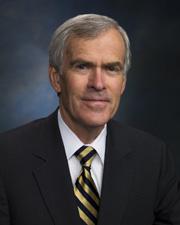 Sen. Jeff Bingaman (D-NM)
Legislative Activity
Stay on top of the latest movement without scrolling through every action
Senate amendment submitted
March 14, 2005
View full timeline
Senate amendment submitted
March 14, 2005
Senate amendment not agreed to: Amendment SA 143 not agreed to in Senate by Yea-Nay Vote. 44 - 49. Record Vote Number: 45.
March 14, 2005
Roll call votes on amendments in Senate: Amendment SA 143 not agreed to in Senate by Yea-Nay Vote. 44 - 49. Record Vote Number: 45.
March 14, 2005
Senate amendment proposed (on the floor): Amendment SA 143 proposed by Senator Bingaman.
March 14, 2005
Amendment SA 143 proposed by Senator Bingaman. (consideration: CR S2614-2617, S2624-2628; text: CR S2614-2615) To restore funding for education programs that are cut and reduce debt by closing corporate tax loopholes.
March 14, 2005
Amendment SA 143 not agreed to in Senate by Yea-Nay Vote. 44 - 49. Record Vote Number: 45.
March 14, 2005
Votes
1 roll call on this amendment
Text
Proposed
CONGRESSIONAL BUDGET FOR THE UNITED STATES GOVERNMENT FOR THE FISCAL
YEAR 2006

The PRESIDENT pro tempore. Under the previous order, the Senate will
proceed to consideration of S. Con. Res. 18, which the clerk will
report.
The bill clerk read as follows:

A concurrent resolution (S. Con. Res. 18) setting forth the
congressional budget for the United States Government for the
fiscal year 2006 and including the appropriate budgetary
levels for fiscal years 2006 and 2007 through 2010.

recognition of the majority leader

The PRESIDENT pro tempore. The majority leader is recognized.

Schedule

Mr. FRIST. Mr. President, this morning we will immediately begin
consideration of the budget resolution which was reported from the
Budget Committee last week. There are now 45 hours remaining of the
statutory 50-hour limit. The chairman and ranking member are ready for
opening statements, and then it is our expectation to begin the
amendment process.
As we announced last week, we do anticipate a vote around 5:30 p.m.
today in relation to an amendment. Once we get underway, we will alert
Senators as to what amendment will be voted on this afternoon.
I also want to reiterate that this will be a busy week of Senate
business. We will complete the budget resolution this week. We will
obviously have lengthy sessions over the course of each day and likely
well into the evening. I will be working with the Democratic leader to
see if we can keep a steady pace throughout the week so that we can
avoid what has come to be known as the vote-arama, if at all possible.
I know the managers of the bill will be doing everything possible to
continue to have this bill move in an orderly, systematic way. This
will require the cooperation of all Senators, and we have asked all to
keep their schedules flexible around the floor schedule.
We will need to keep the length of each rollcall vote to a reasonable
limit. We again request Members to come as soon as possible to vote
when votes are called. If not, we will have to cut off the time with
which we have flexibly in the past allowed our colleagues to meander
over. We have to keep the bill moving expeditiously.
I thank everybody in advance for what I know will be a busy week, and
I look forward to completing our work prior to the start of the Easter
break.
I particularly thank Judd Gregg and Senator Conrad for their hard
work and leadership. They have worked very hard over the course of the
last several weeks completing the work of the budget at the committee
level at the end of last week. As I said earlier, we will complete
action on the bill before we adjourn for the March recess.
The budget is a tough budget. It is an austere budget. It is a
disciplined budget. That is what is appropriate at this point in time.
It restrains spending. It cuts the deficit in half over 5 years. It
extends the progrowth tax relief that has continued to fuel the
economy. Some will say that it goes too far in terms of restrained
spending; others will say it does not go far enough.
Budgets are never easy. This one is no different, but it is
absolutely essential that we complete the budget this week. It provides
the blueprint for just about everything else that occurs over the
remainder of this session, most importantly the appropriations bills.
We have had good discussion among the leadership about focusing
amendments and making sure that amendments that are brought to the
floor are done so in an orderly way but also that the amendments that
are brought to the floor are, indeed, substantive amendments. We don't
want dozens and dozens of amendments to be brought to the floor because
typically all these amendments can be overlapping and repetitive of
earlier amendments. It is that sort of disorganization and chaos we
want to get rid of and focus on the important amendments, debate them
under the time agreements we have.
I was just talking to the Democratic manager, and that orderly
process that the two managers are talking about is one that would give
some certainty as to when amendments would come to

[[Page S2588]]

the floor. That is going to take planning right now and not having
amendments come flowing in at the very end. I do believe that if we
work together and keep our focus, we will take potentially a chaotic
process and give it clear definition and clear order.
We will have a lively and spirited debate. Such debate was manifested
in the committee last week, and it will continue on the Senate floor
with the broader participation of all of our colleagues over the next 4
days. I look forward to delivering a blueprint that reflects our
commitment to fiscal responsibility, to economic growth, and a bill
that does keep America moving forward.
Mr. President, I ask unanimous consent that the staff of the Senate
Budget Committee on the list I send to the desk be permitted to remain
on the Senate floor during consideration of S. Con. Res. 18 and the
conference report thereon and that the list be printed in the Record.
There being no objection, the material was ordered to be printed in
the Record, as follows:

Senate Budget Committee Floor Privileges List, 109th Congress

Amdur, Rochelle; Bailey, Stephen; Bargo, Kevin; Brandt,
Dan; Cheung, Rock E.; Dempsey, Don; Duckworth, Cara; Esquea,
Jim; Eyster, Sarah; Fisher, David; Friesen, Katherine; Green,
Vanessa; Gudes, Scott B. (Staff Director, Full Access Pass);
Haskell, Tyler; Havlik, Matthew.
Hearn, Jim; Howe, Matthew; Isenberg, Cliff; Jones, Michael;
Kermick, Andrew; Klumpner, James; Konwinski, Lisa (General
Counsel, Full Access Pass); Kuehl, Sarah; Lofgren, Michael;
Lucia, William; Mashburn, John; Millar, Gail; Miller, Jim;
Mittal, Seema; Monk, Kimberly.
Morin, Jamie; Myers, David; Nagurka, Stuart; Naylor, Mary
(Staff Director, Full Access Pass); Nelson, Sue; Noel, Kobye;
O'Keefe, Shannon; O'Neill, Maureen; Ortega, David A.;
Osterberg, K. Gayle; Page, Anne; Pappone, David; Parent,
Allison; Phillips, Roy; Posner, Steven.
Reidy, Cheri; Righter, John; Seymour, Lynne; Vandivier,
David; Ventimiglia, Vincent; Weiblinger, Richard; and
Woodall, George.
____

Senate Budget Committee Floor Privileges Detailees, 109th Congress

Binzer, Peggy (Detailee); Browne, Mara (Detailee); Konove,
Elissa (Detailee); Pollom, Jennifer (Detailee); and
Richardson, Stephen (Fellow).

Mr. FRIST. Mr. President, I ask unanimous consent that the following
four staff members--two from the Republican staff and two from Senator
Conrad's staff--named on the list that I send to the desk be given
``all access'' floor passes for Senate floor consideration of S. Con.
Res. 18: Cheri Reidy and Jim Hearn from the Republican staff; John
Righter and Sue Nelson from the Democratic staff.
The PRESIDENT pro tempore. Without objection, it is so ordered.
Mr. FRIST. Mr. President, I ask unanimous consent that the presence
and use of small electronic calculators be permitted on the floor of
the Senate during consideration of the fiscal year 2006 concurrent
resolution on the budget.
The PRESIDENT pro tempore. Without objection, it is so ordered.
Mr. FRIST. I suggest the absence of a quorum.
The PRESIDENT pro tempore. The clerk will call the roll.
The bill clerk proceeded to call the roll.
Mr. GREGG. Mr. President, I ask unanimous consent that the order for
the quorum call be rescinded.
The PRESIDENT pro tempore. Without objection, it is so ordered.
Mr. GREGG. Mr. President, today we begin discussion of the Federal
budget, which is, of course, one of the primary functions we are
supposed to do as a governing body in the Senate and the House.
Interestingly enough, under the rules of the Congress, something which
I don't think most people recognize, the President has no official role
in the budget. It is a document which is produced by the Senate and the
House. It is called a resolution. The President doesn't sign it. The
President sends up his budget, but his budget is not officially part of
the process in the sense that he signs the final document. In a unique
way, the Budget Act puts on the Congress the responsibility of doing a
budget.
Now, the President has sent up a budget. Of course, he is the leader
of our party and of the country. As such, we have given it very
significant credibility and have actually tracked it quite closely in
the budget which was produced by the Budget Committee.
Before we begin the specifics of the discussion on the budget, I want
to thank the members of the Budget Committee for pursuing a very
efficient and professional markup last Thursday. I especially thank
members on my side, who were there for all of the votes. It is the only
committee in the Senate that requires that you actually be there and
physically vote versus using a proxy. They participated aggressively in
the debate. I also thank the ranking member, Senator Conrad, and the
members of his party for expediting the process. They had a lot of
amendments they wanted to put forward. They put them forward in an
extraordinarily professional and effective way. As a result, we were
able to move through the process and debate issues which are critical
to the Nation.
A lot of issues are raised by the budget because it touches
everything. There are two basic issues which I think our budget
attempts to address. The first, of course, is how you control spending,
how you make sure that you do the most with the dollars you have, but
that you don't demand of the American people more dollars than they can
afford to pay through taxes, and that you not end up passing on to your
children and your children's children significant deficits, that you
not borrow excessively in order to fund the Government. The short-term
issue which that involves is the fact that we have, for the last few
years, been running very significant deficits. Those deficits are, in
my opinion, a function of two basic events.
The first is that in the late 1990s, we saw the largest economic
bubble in the history of the world. A bubble is an inflation of the
market, a perversion, really, of the market and a period where you
essentially find that the economics of the times, specifically the
ability to issue stock through IPOs, through creation of corporations,
is creating artificial value, that the stock is not supported by real
value. It is actually a form of printing money, for all intents and
purposes.
In the history of the world there have been a lot of these bubbles.
The two most significant ones were the tulip bubble in Holland and the
South Seas bubble involving the English investment in South Seas
companies. As a percentage of the economy in the world at that time,
they were huge bubbles and they led to significant economic disruption
and negative events.

They were nothing compared to the Internet bubble. When the Internet
bubble burst, as all bubbles do--especially economic bubbles--there was
a significant downturn in the economy, and a huge recessionary event
was generated. Explosion of that bubble was also followed by,
obviously, the attacks of 9/11. They had a massive impact on us.
Obviously, we lost many lives and it changed the whole culture of our
country. But the economic impact was also dramatic. The economy slowed
dramatically as a result of the attack. We had to reorient the Federal
Government activity and we had to significantly, dramatically ramp up
our commitment to national defense, homeland defense, make massive
capital expenditures that we had not anticipated making in the area of
homeland defense. Not only did the economy slow, which means revenues
slowed, but spending had to go up dramatically as a result of that.
The effect of that was we headed toward a recession, went into a
recession, and revenues of the Federal Government dropped precipitously
and spending went up to fight the war on terrorism.
Some would argue that the deficits were also a function of President
Bush's decision to reduce taxes during this period. I argue the
opposite. I would say that the decision to reduce taxes, especially
taxes on people's income, was one of the best economic decisions of the
period, because it meant more money was left with consumers and, as a
result, the economy had more money in it and, as a result, people were
able to spend more money and, as a result, the recession was shallowed
out. There would have been a much more severe, dramatic, and damaging
recession had those tax cuts not gone into place. We are seeing now, as
a result of those tax cuts, their benefit, which is that the economy is
coming back in an extremely strong way and

[[Page S2589]]

revenues are starting to grow with equal strength. Last year, they grew
at 9.5 percent. This year, they will grow by about 7 percent. For the
foreseeable future, Federal revenues are going to grow over 6 percent,
which is a function of the fact that we have changed the way taxes are
collected in this country, so we are incentivizing people to go out and
be productive and spend money to create jobs and, as a result, we are
seeing more economic activity and we are seeing more revenues come in
because there are more taxes being collected from the economic
activity.
Two of the most successful tax cuts during this period were, in my
opinion, the dividend rate cut and the capital gains cut, both of which
led specifically to dramatic increases in Federal revenue. The capital
gains rates have seen huge jumps in revenues at the Federal level,
which are a function of the fact that people who had been sitting on
economic growth and assets, capital gains, had just been sitting there.
They didn't want to pay the tax, so they were sitting on the assets.
With the capital gains cut, people said I can now sell this asset and
reinvest. That has two very positive economic effects.
The first is it means more revenues for the Federal Treasury. Those
gains would not have occurred without that rate cut because there would
have been no sale and no taxable event.
Second is that the money generated from those sales is being
reinvested more efficiently in the economy because people are taking
cash and reinvesting it in a way that it will earn more money.
Therefore, you are creating more jobs as a result of putting more
capital more efficiently back into the marketplace.

The same could be said for the dividend cut. For years, corporations
in America had basically piled up dividends, piled up resources, and
not paid them out to their stockholders because it was a double tax.
First, they are taxed on profits at the corporate level at 32, 35
percent; and then when we pay out the profits out, the individual
taxpayer who happens to be an owner of the company, most of whom are
working Americans and have that ownership through their pension plan--
truck drivers, restaurant people, people who work in manufacturing
facilities--then pay another tax because they are hit with the tax as
the money is paid out in the form of tax on dividend income--double
taxation, rates from 50 to 70 percent as a result of double taxation.
So we cut the dividend rate. The practical effect of that was to say to
corporate America, you can now pay your stockholders, most of whom are
working Americans, who have a 401(k) or a pension plan--you can pay the
Americans who have invested in America through the stock market a
dividend and you are not going to have to pay a punitive double tax
event. You are going to still pay double tax, but it will not be as
punitive as before.
The effect of that was major corporations did pay dividends.
Microsoft alone, I think, paid out a $32 billion one-time dividend--a
massive dividend payout. The effect of that was to, I think in and of
itself, create a 1-percent growth in the economy of the U.S.--or the
net worth of America, I think is the term that should be used--but a
huge benefit that was to Americans across the board who invested in
Microsoft. Millions of Americans working in technology jobs and in
restaurants and working in the military, who had stock through their
401(k) or through various other investments, suddenly got this payment
which managed to increase significantly their personal wealth and which
they could then use to reinvest, which they have, or which they could
use to consume, which they have, and as a result the economy is growing
faster than at any time since the mid-1990s. It grew 4.4 percent in the
last quarter. We have the lowest unemployment in years. All of this is
a function of having made the right decisions at the right time on the
issue of cutting taxes.
That brings me back to the deficit. Now, the one cloud on our
horizon--there are actually two, and they are both tied to the fact
that the Federal Government is spending more than it is taking in in
the short term and long term. In the short term, that deficit is large.
By historical terms, it is not the largest we have had, but it is a
large deficit. It is one that must be reduced in the short term. In the
long term, we have a much more significant problem. We know there are
already on the books Federal programs, specifically in the area of
retirement, that are going to radically expand the cost of Government
in the next generation. Those programs, which are Social Security,
Medicare, and Medicaid, are targeted on benefiting retired people.
We have in this country today a demographic specific that cannot be
denied. That is this: There are a lot more people headed toward
retirement than has ever occurred in the history of America. The baby
boom generation, the largest generation in America's history, is now
headed toward retirement. They will begin to retire in 4 years. When
that generation begins to retire, it is going to overwhelm the
retirement system. This generation is so large that it has overwhelmed
every system it has ever hit. In the early 1950s, it overwhelmed the
country to make baby carts and cribs. In the late 1950s, it overwhelmed
education through elementary schools having to be built. In the 1960s,
it changed the culture by moving forward in civil rights and women's
rights, and the war in Vietnam became a major issue. As we moved into
the 1970s and 1980s and 1990s, it has been the most productive
generation in American history and, as a result, has caused America to
jump ahead in the area of personal wealth and economic opportunity.

Now this generation heads for retirement and it is going to take on a
retirement system--Medicare, Medicaid and Social Security--which was
never structured to deal with this size of a generation. All of these
major retirement systems were designed with the concepts of the 1940s
and 1950s. The Franklin Roosevelt approach, the genius of Roosevelt in
the area of retirement systems, was that he and other people understood
you could support a pretty decent retirement system as long as you had
a lot more people working than retired. Back then, there were 16 people
working for every person who was retired. Those 16 people would pay a
little bit of their income to make sure the person who is retired had a
decent lifestyle. That was the right approach. Today, we have 3\1/2\
people working for every one person who is retired. The result is that
we can still support the system. But by the late 2020 period--or the
mid-2020 period, when the baby boom generation is fully retired, we go
from a pyramid to a rectangle, where there will be two people retired
for every person working. The practical effect of that is those two
people working for every one person retired are going to have to bear a
massive increase in taxes in order to support that one person who is
retired.
It is a simple fact of statistics. If you had 16 people supporting 1
retired person--16 people working for 1 retired--and you go down to 2
people working for every 1 retired, it is obvious those 2 people are
going to have to bear a much higher burden than the 16. And we have at
the same time significantly increased the benefit structure for retired
people.
The practical effect of this is, the young people here as pages are
going to go out and get jobs--and I am sure they are all going to get
jobs and be well employed Americans--they are going to find their
payroll taxes to support my generation will have to double--double.
Their quality of life, therefore, will be radically reduced because
they will not have the extra spending power to send their kids to
college. They will not have the extra spending power to buy a nicer
house. They will not have the extra spending power to have a good life
of maybe taking a vacation. They will have to give up all that to pay
taxes to support my generation in its retirement.
In fact, there is today on the books, according to the Comptroller
General of the United States, Mr. Walker, $44 trillion--that is
trillion dollars; it is hard to conceive what a trillion dollars is
but, believe me, it is a lot of money--$44 trillion of unfunded
liability which the next generation has already been told they are
going to have to pay because our generation has already put the laws in
place to require it. And of that $44 trillion, $26 trillion, over half
of it, about 60 percent of it is directly tied to health care costs--
Medicare and Medicaid. They are huge numbers, massive numbers.
To put in context, the entire net worth of America, if we took
everything America owns today, is only $47

[[Page S2590]]

trillion, and yet we have $44 trillion of debt on the books.
Put it in another context, if you take all the taxes paid in American
history since George Washington crossed the Potomac, came over here and
started this Capitol, $43 trillion, and yet we have a $44 trillion debt
on the books and almost the vast majority of it is health care debt
required to pay for senior retirement. These are huge numbers we are
placing on our children.
To put it in another context, today the Federal Government consumes
about 20 percent of the gross national product of the United States,
all the Federal Government--that is national defense, that is
education, that is environmental protection, that is Social Security,
it is health care, everything, put it all together and historically it
has been about 20 percent of the gross national product. By the year
2025, if you just take Social Security, Medicare, and Medicaid--those
three programs alone--they will absorb over 20 percent of the gross
national product and will be going up.
It will mean we are going to put the Federal Government in a historic
position: we cannot spend any money on national defense; we cannot
spend any money on education; we cannot spend any money on
environmental protection, roads, or anything else because it will all
have to be spent on this retired class.
What is the point of all this? The point is this: The short-term
deficit is a problem, and we have to address it. But the long-term
threat to our economy created by these entitlement programs, known as
Social Security, Medicare, and Medicaid, is even more dramatic, and we
need to do something about it.

We have an obligation to do something about it. That is our job as
people who have been sent here by our States to look at an issue which
we know is coming at us, an issue of public policy of such
significance, and try to reduce its impact, try to make it a more
positive event, try to make it an affordable event for our children and
our children's children.
So the President's budget which was sent up has attempted to address
both these issues. He has first attempted to address the short-term
deficit and, second, to address this outyear problem of the entitlement
spending. He has also, outside the budget, taken on one of the major
entitlement issues, which is Social Security--how to make that system
solvent so that it gives decent benefits to those who are retired, but
also affordable so that young people, when they pay into the system,
which they have to, will get something back on their investment.
You have to give him credit. He stepped into dangerous political
waters, but it is appropriate that we address the Social Security
issue, and I congratulate him for that. But the budget is not about
Social Security because the law does not allow the budget to address
Social Security. The budget is about the other elements of Federal
spending.
The Federal budget, as brought forward today, tracks fairly closely
the President's proposals. It does not reconcile taxes as much as the
President asks or might have wanted, and it does not reduce the rate of
growth of entitlements as much as he may have wanted, but generally it
tracks the proposals the President has put forward.
In the short term, the budget that has been brought forward will
reduce the deficit by half. That is over the next 5 years. In the long
term, this budget begins to address one of the three key elements of
the question of how we try to make the retirement benefits for my
generation more affordable to our children, specifically in the area of
Medicaid.
Let me go back and go through a few specifics, and then I will turn
the rostrum over to the Senator from North Dakota who has been generous
to sit through all of this.
On the spending side, to try to get the deficit under control, what
this budget does is essentially sets a top number. The Budget Committee
does not have the authority to develop programs. We are specifically
excluded from that authority. We can make suggestions, but both the
Appropriations Committees and authorizing committees that are separate
from us ignore our suggestions almost as a matter of course. The only
place they cannot ignore us is the upper line number. So we have set
what is known as a hard number at the top.
On the discretionary side, discretionary spending making up about 30
percent of Federal spending, about half of which is defense spending,
we have set the top number at $843 billion. This number represents
about a 4.5-percent increase in defense spending, and it represents
basically a hard freeze on nondefense spending.
The defense number may seem large, but actually it is significantly
less than what the Defense Department originally planned as part of
their spending program. Their ox has been gored, and if you do not
believe that, all you have to do is walk outside this room and you will
run into six or seven defense lobbyists who say they need more money
for more programs to deal with the Defense Department.

On the nondefense discretionary side, it is obviously a hard number,
a firm number where we are freezing. We raise that number a little bit
in the next 2 years but not much. It is more than what the President
asked for, but not a great deal. We cap these numbers with something
called a budgetary cap, and that is the key. We essentially say that
any Member of this Congress--this Senate anyway--who believes that a
committee exceeded the allocation which it will get in the area of
discretionary spending--is spending more, in other words, than this top
line number as it is distributed amongst committees--that any Member
who believes that has happened may come to the floor of the Senate,
object to that spending, and get a vote of 60. A supermajority must be
voted in order to go forward with that spending. It is a pretty strong
budgetary tool for enforcement, and that is in this budget. So we have
put in place stringent discretionary controls.
On the entitlement side, we cannot control entitlements with anything
other than changes in entitlements. There is this philosophy of
something called pay-go. It has no impact on entitlements unless we
create new entitlements. The existing entitlements are the problem.
They represent about 57 percent of Federal spending, and nothing can
control that. They can grow as much as they want, and there is no
budgetary way to affect them unless we go back to those entitlements
and say to the committees that have jurisdiction over those
entitlements: Take another look; see if there is some way we can save
some money. And that is what we have done here.
It is not as much as the President asked. He asked we do $62 billion
in net number. We have done about $32 billion of entitlement control.
It is called reconciliation.
Essentially, the key elements of this reconciliation bill involve the
PBGC, which is a Pension Benefit Guaranty Corporation, which needs to
be reformed. It is a huge outyear liability for us as a nation. It is
massive because so many of these companies that have gotten into
trouble have pension funds which are underfunded. This bill tries to
begin the process of reforming them, and that is a major positive
public policy step of this legislation, not mentioned much by anybody,
but it is a big one.
Second is Medicaid reform. This needs to be put in context because
there are a lot of people running around here today who are saying: We
cannot cut Medicaid; we cannot cut Medicaid. To begin with, we are not
cutting anything in the entitlement accounts. That is the nature of the
beast. Medicaid spending in the next 5 years will be approximately
$1.12 trillion without any action. With this action, Medicaid spending
will be about $1.11 trillion, a little bit more. We are suggesting a
14-percent reduction in the rate of growth of Medicaid spending over
the next 5 years off a $1.1 trillion base, which means we are
suggesting about a 1-percent reduction in the rate of growth of
Medicaid.
Medicaid at that period will grow at about 39 percent instead of 41
percent. So we will still have a 39-percent rate of growth in Medicaid
instead of 41 percent. Remember, large functions of Medicaid today need
reform and that reform will not impact the quality of care given to
people.
A significant amount of dollars in Medicaid today is used for general
funds for operations of States. We have

[[Page S2591]]

serious problems with the way pharmaceuticals are distributed under
Medicaid. We have serious problems with the way insurance is handled
under Medicaid. There is a whole series of items where we can save
money in Medicaid, and this is a minuscule amount of restraint in
growth that we are proposing, and will not impact at all--in fact,
probably will improve--the delivery of service by giving Governors more
flexibility to do more creative things.

That is our plan: to work with the Governors, to reach an agreement,
take that agreement to the Finance Committee, and have a concept put
forward where the Governors are comfortable--many of the Governors are
comfortable--with a change which will give them significantly more
flexibility with a little less rate of growth in the dollars.
It is a very doable event. The idea that it is not doable, the idea
that anybody would stand up here and say we cannot cut Medicaid's rate
of growth by $14 billion off a $1.12 trillion base implies to me that
individual does not have any interest in our children or our children's
children's future because if we do not get a handle on the health care
accounts in this country--and this is just a minuscule attempt to do
that--we are essentially passing on to our children a no-win situation
where they will never be able--never be able--to pay the cost of the
retired population because we are going to grow so much and there are
going to be so many of us.
If you deny this change, you are basically denying that you are
willing to take on your responsibility to govern, and you are going to
kick that can down the road and at some point simply not going to be
able to kick it any further. It is simply going to be a bill passed on
to our kids.
This is not a big change. In fact, it is a marginal change at best.
To describe it as ``marginal'' is probably even an exaggeration. But it
has certainly engendered enough run-and-hide policies around here so
one would think it was big.
That is the entitlement side: $32 billion of reconciliation
instructions over the next 5 years on a base of something like--I have
forgotten what the base is--$8 trillion, something like that. I have
lost count of what the base is, making that $32 billion adjustment on,
but it is huge.
The last item of this budget, of course, is tax reconciliation. That
is a point of legitimate contest between two parties. One party likes
to raise taxes, and one party thinks people ought to keep their money
and spend it themselves. The simple point is, we do not believe we
should raise the taxes that have already been put in place at certain
rates. For example, we believe we should extend the R&D tax credit, the
tuition tax credit, the dividend rate, the capital gains rate, and the
small business tax expense. And that is what this package of
reconciliation numbers involves, extending all of those.
There is an irony to the Congress. The irony is this: Spending
programs never die. They never die. They go on and on. This alleged
pay-go concept does not have any impact at all on them. If it is on the
books, it keeps going. But if there is tax rate or a tax proposal that
has been put in place, they do lapse. They have to be reauthorized. So
it suddenly becomes inappropriate to do that. It is called fiscally
responsible to have to pay for that, and yet there is no attempt to pay
for the extension of the entitlement programs, no attempt to justify
those at all. Inconsistency, ironic, and, to say the least, it takes
the attitude that the people's money is not their own, that the
people's money is Washington's. It is our money, you should not have it
anyway. Let us have it and we will spend it for you. That is basically
the philosophy behind this approach to governance.

Well, it is not my philosophy. I believe we should maintain a low tax
burden on people, or as low as we can afford. Let us remember that the
tax revenues are going up dramatically all through this: 9\1/2\ percent
last year, 7 percent this year, 6\1/2\ percent next year. The tax
revenues are going up. The traditional level of taxes in this country
has been about 17.9 percent of gross national product. We are going to
hit that number before this 5 years is over.
Sure, we are starting at a low base, but we are starting at a low
base because we went through a recession and an attack on 9/11. Now we
are headed back up and revenues are headed up because people are
productive and they are taking the risk necessary to create jobs
because they know their return will be higher as a result of the tax
rates being reasonable.
So this concept that we should not be reconciling any taxes is a
philosophical difference. That is all there is.
So that is the budget we have prepared, what we brought forward. It
is a budget which reduces the deficit over the next 5 years, puts in
place stringent enforcement on the discretionary side, addresses the
entitlement side through minor reconciliation efforts, addresses the
taxes which may expire in this window.
I would note as an aside that the big fight on taxes occurred last
year, and the big fight on taxes is going to occur next year because
last year we had some major taxes expire, specifically the marriage tax
penalty and the child credit. Next year, the window of the budget will
pull in the rate reduction, which will expire, and the death tax, which
will go back up if we do not do something.
Next year we will have a big tax fight, I am sure, but this year is a
lull period. Every tax that is being considered under reconciliation is
a tax proposal that has a fair amount of support, whether it is the R&D
tax credit, the dividend, the capital gains. These are not the biggies.
These are good policy items that should be extended. The tax fight is a
lot more smoke than fire in this budget, but it has taken on a
personality of its own, and so I presume we will pursue it again.
In any event, as I mentioned, the budget controls discretionary
spending with a hard cap. It tries to address the entitlement accounts
growth but most specifically addresses the one health care account we
are able to address, which is Medicaid--Medicare being off the table
for this year as a result of passage of the drug bill last year--and
addresses tax reconciliation. There are three elements to it.
If it is passed, it will lead to the first budget since 1996 which
fires with real bullets on the issue of controlling spending at the
Federal level, and that is the most important point I want to end on.
This is a real budget in the area of pushing forward some fiscal
responsibility by having reconciliation instruction on the entitlement
accounts.
The discretionary caps are also essential. They have lapsed because
we did not have a budget last year, and if we are going to get control
over discretionary spending, we need them. So for the first in a long
time we have a budget that is serious about disciplining spending. I
presume there are going to be a lot of amendments brought forward on
this floor to try to get around it because people do not like to
address the spending side of the ledger. They would rather spend money.
It is much easier.
The people who get the money are the most active in saying the money
has to be spent. The people who support spending restraint tend to be
less vocal. It is human nature to want to accommodate the people who
come to our offices and say, I have to have this money for this program
or this money for that program. So spending tends to go up, never goes
down.
This budget attempts to at least restrain it so it is affordable, and
that is what is critical--putting forward a budget which is legitimate
and which attempts to restrain spending so we can begin the process of
passing on to our children a fiscally healthy nation.
I thank the Senator from North Dakota for his courtesy in putting up
with this long talk, and I thank the President pro tempore for his
courtesy in sitting through it.
I yield the floor.
The PRESIDING OFFICER (Mr. Alexander). The Senator from North Dakota
is recognized.
Mr. CONRAD. Mr. President, I thank the Chair and I thank my
colleague, the chairman of the Senate Budget Committee, for the many
courtesies he extended to me and to my staff during consideration of
the budget in the Budget Committee. He described it accurately and
well, that it was a very professional process and we had a good

[[Page S2592]]

debate on a whole series of issues. Many of those debates will now be
out on the Senate floor.
I do not think it will surprise people that my take on this budget is
somewhat different than the distinguished chairman's take on it. That
is what debate is all about. That is what democracy is all about, the
chance to have differences and to debate them and to vote on them. That
is the genius of our system. The way we arrive at truth, to the extent
we do in this system, is we have a debate and a discussion, and we have
a contest over ideas. That is a healthy thing. It is a good thing. That
is what we are about to go through.
As I look at this budget, I see something quite different than the
chairman sees. I see a failure to face up to the major challenges
confronting the country. I agree with him in terms of his diagnosis of
where this is headed with respect to deficits, debt, and the explosion
of the costs of the entitlement programs. I agree with that diagnosis.
Where I disagree is that this budget does anything in any significant
way to confront those challenges.
In fact, this budget makes it all worse. That is the fundamental
reality. This budget digs a hole deeper. This budget produces more
deficits than if we did not have a budget resolution at all. If we put
it on autopilot, we would be better off than what this budget does.
Each and every year of this budget, the deficit is increased over the
so-called baseline budget. That is the reality. Perhaps to understand
how we got to this circumstance, we have to look back before we can
look forward. We have to look back first to 2001, when the President
told us:

[W]e can proceed with tax relief without fear of budget
deficits, even if the economy softens.

That is what the President told us in 2001. But look what happened.
The President was wrong. We went from a surplus in 2000, the year
before President Bush came into office, and the deficit situation has
declined each and every year to now record levels of deficit, the
biggest deficit in dollar terms we have ever had.
So when the President assured us we could have massive tax cuts and
we would not have deficits, he was simply wrong. But he was not just
wrong on that issue, because the next year he told us:

. . . [O]ur budget will run a deficit that will be small and
short term . . .

He said this in his State of the Union Address on January 29, 2002.
Unfortunately, that was wrong, too, because these deficits are not
small and they are certainly not short term. In fact, what we see going
forward to 2015 is an ocean of red ink, the biggest deficits we have
ever had in dollar terms.
So when the President said they would be small, he was wrong. They
are very large deficits. When he said they would be short term, he was
wrong again. These are long-term deficits and deficits that are as far
as the eye can see. That is not just my conclusion, that is the
conclusion of the Congressional Budget Office as well.
If we put back the things the President has left out, the ongoing war
costs, the need for alternative minimum tax reform, and the money he is
taking from Social Security--it is an interesting thing because at the
same time the President says there is a shortfall in Social Security,
under his budget each and every year he takes every dime of Social
Security money that is available to take and uses it to pay for other
things. Again, the President was wrong when he told us these deficits
were going to be small and short term.
The next year the President told us in his budget submission:

[O]ur budget gap is small by historical standards.

Again, the President has simply proved to be wrong. Let us put up
that next slide that shows a historical comparison of the deficits
under President Bush compared to the three previous administrations.
The President says the deficits he is writing are small by historical
standards. One can look at the last three administrations and see that
his deficits are by far the largest.
Let us go to the next slide. The President now says to us, well, we
have deficits, so forget about that assertion that there are not going
to be any. They are clearly not small and short term. They are clearly
not small by historical standards. So now he assures us he is going to
cut the deficits in half over the next 5 years. Well, let us look at
the reality with respect to that assertion, because what we find is
something quite different.
This is the President's claim. He says the deficit is going to be cut
in half over the next 5 years, but he gets that result simply by
leaving out things. He leaves out war costs past September 30 of this
year. He leaves out the need to reform the alternative minimum tax,
which is the old millionaire's tax which is rapidly becoming a middle-
class tax trap. It costs over $700 billion to fix. There is not a dime
in this budget to do it. Surprisingly, he leaves out the cost of his
major proposal, which is to change Social Security, and the cost of his
proposed change is in the trillions of dollars, over $700 billion the
first 10 years but over 20 years over $4 trillion of costs. He does not
have any of it in his budget.
The President also told us back in 2001:

. . . (M)y budget pays down a record amount of national debt.
We will pay off $2 trillion of debt over the next decade.
That will be the largest debt reduction of any country, ever.
Future generations shouldn't be forced to pay back money that
we have borrowed. We owe this kind of responsibility to our
children and grandchildren.

We can now look back and check the record and see if the President's
assertions were correct or incorrect. Again, he was wrong with
virtually every major claim he made on the deficit. Unfortunately, the
same is true with respect to the debt. The President said he was going
to pay down $2 trillion of debt. Unfortunately, we do not see any
paydown in debt. The debt is exploding.
The assertion by the President that he was going to pay down the
maximum amount of debt available to pay down evaporated, like his
claims on the deficit. Instead, the debt is skyrocketing, and under the
budget the President has sent to us, we see nothing but continued
growth of the debt.
When the President came into office, the publicly held debt was $3.3
trillion. We now forecast by 2015 it will be $9.4 trillion, almost a
tripling of the debt at a time the President said he was going to have
maximum paydown of the debt.
One of the most interesting claims I get from colleagues on the other
side of the aisle is that these massive tax cuts have nothing to do
with the deficits and nothing to do with the growth of the debt. Well,
how is that? How can that possibly be true?
I remember very well this chart that the Congressional Budget Office
showed us back in January of 2001. This chart shows the range of
possible outcomes for the deficit, and the administration chose the
midpoint of this range in telling us in 2001 we could expect $6
trillion of surpluses over the next decade. But now we are able to go
back and see what actually happened.
I remember so well, my colleagues on the other side told me, when I
warned them against taking this 10-year forecast in the Budget
Committee to the bank--I repeatedly warned it was very risky to count
on a 10-year forecast--many of my friends on the other side said: Kent,
you are being much too conservative. Don't you understand the tax cut
will generate even more revenue? Don't you understand, when we put in
place these tax cuts, we are going to get a tremendous revenue impact,
more revenue than is forecast? They told me we are going to be in the
top end of this range.
Let's look at what actually happened. We can now see the record. The
record is the red line. This is what happened to the deficits. We
didn't get more money, we got less money, and the result is, combined
with more spending on defense and homeland security and rebuilding New
York, that the deficits are far worse than even the low end of the
range projected back in 2001.
Let's check reality. When our friends say if you cut taxes you get
more money, that has not been the experience. The experience has been
very clearly when you cut taxes, you get less money. In fact, we got a
lot less money, 3 years in a row with less money than the year before.
That is unprecedented since World War II.
It is not just tax cuts. Tax cuts are about half the reason. The
other half is economic downturn and forecasts that were overly
optimistic.
Nonetheless, I want to go back to the point. I don't want anybody to
miss

[[Page S2593]]

this point. Here is what is forecast, this possible range of outcomes.
They chose the midrange on which to base their spending and taxing
policies. Many said, with the massive tax cuts you will get more money.
But here is the reality. Here is what happened in the real world: A lot
less money, much bigger deficits, and an exploding debt.
If we look at the budget turnaround since 2000, that is the
difference between what was projected and what actually occurred. What
we see is that the revenue loss accounts for the bulk of the budget
turn around. In fact, reduction in revenue is three-quarters of the
reason for the move from dramatic surpluses to dramatic and growing
deficits. I think it is very important for us to be dealing in facts
here, not rhetoric, not hope, not ideological belief, but facts. The
facts are that the revenue side of the equation collapsed.
Do you remember, back in 2000, revenue was running at almost 21
percent of GDP? The President said: That is very high by historical
standards. And he was right. He said: As a result we need to cut taxes.
I must say I also supported cutting taxes. I didn't support the
particular plan that he advocated, but I believed we needed to cut
taxes to give lift to the economy at the time. But I also believed we
needed to reduce the amount of the tax cut over an extended period so
that we would avoid going back into deficit and debt. That is where the
President and I parted ways. I believed we needed to have tax cuts. In
fact, I supported greater tax cuts than the President proposed, to give
lift to the economy at a time of economic weakness. But the President
wanted to go much further, and here is what happened.
We had 21 percent of GDP in 2000 coming in, in revenue. Last year we
were down to 16.3 percent of GDP. That is the lowest it has been since
1959. The revenue side of the equation collapsed. Again, about half of
that is due to tax cuts.
I listened very carefully to my colleague. He talked about the reason
the revenue had gone down. He never mentioned the single biggest
reason. He never mentioned the tax cuts. But the tax cuts are the
biggest single reason for the revenue collapse. Again, I, too,
supported tax reductions at a time of economic weakness to give lift to
the economy. I didn't think the particular mix of tax cuts was the most
effective because, unfortunately, the tax cuts that were put in place
were largely weighted to the wealthiest among us. I think we would have
been much better targeting the middle class and lower middle class
because those are the ones most likely to spend those tax cuts. But
beyond that, the question is, going forward, How much can we afford?
What is the relationship between spending and revenue? That is what is
critical. That is what creates deficits.

Our friends on the other side only want to talk about spending.
Spending is one-half of the equation, revenue is the other half of the
equation. It is the difference between how much you are raising and how
much you are spending that leads to deficits. This chart goes back to
1980: The red line is the spending line, the green line is the revenue
line. You can see very clearly back in the 1980s we had a big gap
between spending and revenue. We were spending much more than we were
taking in. As a result, we had record deficits at the time.
Then we got spending under control. In fact, interestingly enough,
during a Democratic administration spending as a share of our national
income went down every year. Spending went down in a Democratic
administration and revenue went up. It was that combination of reducing
spending and raising revenue that brought us back to balance. In fact,
for 3 years we were running surpluses. We even ran surpluses
sufficiently strong to stop taking Social Security money and using it
to pay for other things. We stopped the raid on Social Security.
Then President Bush came into office. We had the tax cuts, we had an
economic slowdown, and the revenue side of the equation plunged. We
didn't get more revenue from tax cuts, we got less revenue. Is anybody
listening? We didn't get more money with tax cuts, we got less money.
And spending went up--though still far below where it was in the 1980s
and 1990s, but spending went up. I am not faulting the President. We
all agree spending had to go up on defense, on homeland security, on
aid for New York, on the bailout of the airlines, and 91 percent of
this increase in spending was in just those areas: Defense, homeland
security, aid for New York, and bailing out the airlines. That is where
the increase in spending occurred. Still, the spending is substantially
below where it was in the 1980s and 1990s.
The biggest culprit in the explosion of deficits was on the revenue
side of the ledger. These are facts. This is not an ideological
argument. It is just facts. I think that is what we have to concentrate
on if we are going to get out of this mess. It is going to take
spending discipline without question. We have to deal on this side of
the ledger. But we are also going to have to deal on the revenue side
of the ledger, and our friends on the other side of the aisle never
want to talk about it.
This year, the President has said:

We've got to do something about the deficit. . . . it's
important.

He is right. We have to do something about the deficit because these
deficits are much too high, and as far as the eye can see there is no
reduction anywhere in sight. If we look at the President's budget, what
we find in terms of doing something about the deficit is largely
rhetorical. What the President's idea is of doing something about the
deficit is just leave out things. Leave things out of the budget and
that makes the numbers look better. It doesn't really change things
though. This is the way you fool yourself, and this is the way others
might get fooled. This is how institutions, companies, and individuals
get into trouble. They start not quite telling the whole story. Maybe
they don't even quite tell the whole story to themselves.
When I look at the President's budget, that is what he and his people
are doing. They are not really including everything. They are leaving
things out to make the numbers look better.
What have they left out? First of all, they switched from 10-year
budgeting to 5-year budgeting because they know right beyond the 5-year
budget window things look much worse.
They have left out funding for ongoing war costs beyond September 30
of this year. Just don't include it. They say to me: It is hard to
predict what the war costs might be. That is true, it is hard to
predict. That is what a budget is all about. Can you imagine a family
leaving out their utility bills because they are hard to predict month
to month? Can you imagine a family leaving out the food bill because it
is hard to predict? But that is what the President has done. He has
left out the war costs past September 30 of this year because it is
hard to predict.
He has left out the cost of alternative minimum tax reform.
Alternative minimum tax, that is the old millionaire's tax. It affects
3 million people now, and 10 years from now it is going to affect 40
million. It costs over $700 billion to fix. The President doesn't have
one dime in his budget to address this problem. Last year,
interestingly enough he had 1 year of fix in his budget. This year he
doesn't even do that. I can make a budget look pretty good if I leave
things out, and that is what the President is doing.
Most remarkably, he has left out completely the cost of his Social
Security privatization plan. He doesn't have one dime in his budget to
cover the cost of a Social Security privatization plan that in the
first 10 years costs over $700 billion. He doesn't have a dime in his
budget. Over 20 years, his plan costs over $4 trillion. His answer is,
borrow the money. On top of the already record deficits, borrow the
money.
I am going to, in a minute, get into why that is a very risky course
for this country.
The President also does something very interesting in this budget. He
only provides details on discretionary spending. Those are accounts
like education, law enforcement, parks--he only provides what he
intends to spend in those areas for 1 year. Not since 1989 has a
President failed to tell Congress and tell the American people what the
outyear effects of his programs are; what the future years' effects of
his programs are. But this President, for the first time since 1989,
says he is not going to tell us that.
I suspect the reason he is not going to tell us that is because it
gets pretty grim by the time you get out to the third, fourth, and
fifth year.

[[Page S2594]]

When the President's people came to me and said they had a plan to
cut the deficit in half over 5 years, and they showed me the plan, I
said to them: Why don't you leave out some more things and claim you
balanced the budget because what you are doing is you are making
progress by denial, by leaving things out.
When I go back and add in what the President has left out, I get a
very different picture than is being presented on this floor about the
budget going forward. When I go back and add up the things the
President has admitted--the need for alternative minimum tax reform and
the war costs, when I put in the amount of Social Security money that
the President is taking to pay for other things, to try to arrive at
what the real operating deficit of the United States is, here is what I
find. I find an operating deficit in 2006 of $579 billion; increasing
in 2007 to $584 billion; in 2008 to $586 billion; in 2009 to $595
billion; and improving by $1 billion in 2007 to $594 billion.

These are my best estimates of what the operating deficits are going
to be under the President's plan. Not an improvement. There is no
cutting the deficit in half. Instead, massive operating deficits,
adding to the debt by almost $600 billion a year, each and every year
for the next 5 years, and after 5 years, it gets much worse. This is
not what the American people deserve in terms of being told about the
fiscal condition of their country.
Let me go back to the specifics of the things the President has left
out. In war costs there is $82 billion in a budget supplemental put in
this year, but there is nothing past September 30th of this year in the
President's budget. The Congressional Budget Office says $383 billion
is what we can expect. There is $300 billion left on the cutting room
floor, real costs that a real budget would include.
It is not only that we see a hiding from the American people of how
serious our fiscal condition is. The President's tax cut proposal is
where it is most dramatic. The dotted line on this chart is the first 5
years of the President's plan. Making the tax cuts permanent has a
modest cost in the first 5 years. But look what happens right outside
the budget window: The costs of the President's tax cut plan absolutely
explode. Is this, perhaps, a reason the President moved from 10-year
budgeting to 5-year budgeting? Did he want to disguise the full effect
of what he is proposing from the American people? Did he want to hide
it so that people did not see where this is all headed?
I have already shown in the next 5 years the operating deficits will
be running in the neighborhood of $600 billion a year. Look what will
happen if the President's plan is adopted. These deficits are going to
skyrocket because the revenue hemorrhage will skyrocket.
It is not just the revenue hemorrhage but the other items as well.
This is, according to the Congressional Budget Office, the money that
is needed to fix the alternative minimum tax. I said it was over $700
billion. It is actually $774 billion. Not a dime of it is in the
President's budget. And it gets much worse after the first 5 years. Of
course, the President's budget has none of it. That is hidden from the
American people.
On the President's Social Security plan, the first 10 years cost $754
billion. Here is what is in the President's budget: zero. Nothing. When
we get to the 20-year cost, others are saying even more than this. My
own projection is $4.4 trillion for the cost of the President's
privatization plan. Why? Because if you take some of the payroll taxes
and divert them into private accounts, you have to replace the money
you have taken from somewhere. The President's proposal is, borrow it.
Just borrow another $4 trillion.
I am at a loss for words. I feel as though I am involved in a surreal
discussion in a surreal exercise on the budget of the United States. We
have record deficits now. The President says, cut the revenue some more
and add more to the spending, but he leaves a lot of it out of the
budget and says he is going to cut the deficit in half. He has been
wrong on each and every one of his forecasts. Not wrong by a little
bit, but wrong by a country mile.
Here is the Comptroller General of the United States, the head of the
Government Accountability Office. He warns the fiscal outlook is worse
than claimed. He said to the National Press Club in February of this
year:

The simple truth is that our nation's financial condition
is much worse than advertised.

That is the truth. That is the truth, right here. Here is a guy who
is telling the truth.

The simple truth is that our nation's financial condition
is much worse than advertised.

I go back to the chart. The President says he is going to cut the
deficit in half, but he gets there by leaving out things. When you put
the things back, what you see is massive deficits, massive additions to
the debt. In fact, by 2015, each family's share of the debt will total,
according to our calculations, over $73,000.
That is where these fiscal policies are leading. When the President
says ``the people's money,'' he is exactly right. It is the people's
money. It is also the people's debt. The President says let's not pay
the people's bills. Let's borrow the money. Guess what. In whose name
is he borrowing it? He is borrowing it in our names. He is borrowing it
in the names of all of us who are responsible for ultimately paying off
this debt. When the President says the people's money, absolutely, it
is the people's money; it is also the people's debt. The President is
running up the debt in a record way and at the worst possible time,
right before the baby boomers retire.
There is another part of this that I don't think is being shared with
the American people. Where are we borrowing all this money from? Where
is it coming from? Increasingly, it is coming from abroad. Here is what
has happened. When the President came into office, we owed an external
debt. Foreign holdings of our debt were just over $1 trillion. In the
short time this President has been in office, that has almost doubled.
Foreign holdings of our debt have gone up 92 percent in the term of
office of this President. It took 200 years to get external debt of $1
trillion and this President has taken us to $2 trillion in just over 3
years.
Here is where the money is coming from. We have now borrowed over
$700 billion from Japan. Hard to believe, isn't it? We have borrowed
over $700 billion from Japan. I read in the paper the other day that
Japan now holds $840 billion of United States dollars. They are sitting
on $840 billion of United States dollars. We have borrowed $712 billion
from Japan. We borrowed $160 billion from England. We borrowed $69
billion from the so-called Caribbean banking centers. We have borrowed
$69 billion from South Korea. We have borrowed $60 billion from OPEC.
That is the oil exporting countries.
Here we are. We have borrowed money all over the world. And it is
increasing dramatically. So what? What difference does it make? The
difference it makes is it makes us more and more vulnerable to the
decisions of foreign central bankers as to the economic security of
this country. It is that simple. It is that important.
What happens to your relationship with the banker when you owe money
versus when you have a big deposit? Does your relationship change? Sure
it does. Our relationship is changing with the rest of the world
because we have gone from being the biggest creditor nation in the
world to being the biggest debtor nation in the world. So now we are
very dependent. When we have a bond action to finance the credit and
debt, we are increasingly dependent on foreign governments and foreign
central banks to buy this debt. This is a story from January from the
Financial Times. ``Central Banks Shun US Assets.'' ``Shifting reserves
to eurozone will deepen Bush's difficulties in funding deficit.''
``Actions likely to undermine dollar's value further.''
Friends, that is the risk being run by these massive budget deficits,
by these massive trade deficits. We are more and more dependent on
others. We are more and more dependent on Japan loaning us money; on
China loaning us money; on South Korea loaning us money.
What happens if they decide some day they are not going to continue
loaning us money? What happens then? We have had a couple of
indications in the last few months. A few weeks ago, February 23, Korea
said they were going to limit their dollar holdings. ``Central bank's
plan upsets exchanges.'' ``Fears flared anew yesterday that the United
States dollar

[[Page S2595]]

might lose a crucial underpinning of support--purchases by the world's
central banks--after South Korea's central bank said in a report that
it plans to invest more of its holdings in the currencies of other
countries.''

What happened? ``news of the report,'' . . . ``sent the dollar
skidding on foreign exchange markets. The Euro was trading at $1.3259
late yesterday, up from Monday's close of $1.3067. The dollar fell
against the 104.04 yen . . . '' and ``the greenback also sank against
the British pound, the Canadian dollar and Swiss franc. The dollar's
slide, together with a rise in oil prices, drove stock prices sharply
lower.''
These are the risks being run due to a reckless fiscal policy. This
fiscal policy of massive record deficits with no end in sight and
record massive trade deficits with no end in sight is putting the
economic strength of this country at risk.
It is not only Korea. On March 11, last week, Japan followed Korea:

Talk in Japan shakes dollar and treasuries.
The dollar fell and treasury yields rose yesterday after
the Japanese Prime Minister made remarks that suggested the
country's industrial bank could be shifting some of its huge
reserves out of dollars and treasury securities.

What happened? The dollar took another hit. So now we have Korea
saying they are going to diversify out of dollars. We have Japan, the
biggest lender to our country, warning of the same thing. What would
happen if they didn't show up at a bond auction? We hold an auction of
United States securities to float the boat to cover these deficits,
because when you are spending more money than you are taking in, you
have to borrow the money. In the past, we borrowed almost all of it
from ourselves. Not anymore. Increasingly, we are borrowing from all
over the world. And they are warning us: You are going too far; we
might not continue buying this debt.
What happens if they don't show up? We all know what happens. We
would have to dramatically increase interest rates to entice them back.
That would have severe consequences for our economy.
It is not only Koreans and Japanese. Here is one of the most
successful investors in the history of the United States, Warren
Buffett. What is he saying? He says in 2005, he is still betting
against the dollar. Warren Buffett, one of the most successful
investors in America, is betting against the dollar.

When the stock market was soaring in the late 1990s, Warren
E. Buffett now says, he should have sold stocks rather than
just complain that they were overvalued. Now Mr. Buffett, the
billionaire investor, says he is acting on his view that the
dollar is still headed down, even though it makes him nervous
that so many agree with him.

So he has bet a huge amount of money that the dollar is going to
continue to decline in value.
We have the South Koreans warning us. We owe them almost $70 billion.
We have the Japanese warning us. We owe them over $700 billion. And we
have Warren Buffett.

I can tell you, I was with a man who is one of the foremost financial
advisers in the country, and he told me last year he was at the annual
meeting of one of the wealthiest families in America and the discussion
at their annual meeting was exactly what we are talking about here: the
enormous risks being run by the United States with these massive budget
deficits, massive trade deficits, leading to unprecedented borrowing,
not only from our own people, but from countries around the world.
They saw that as a serious vulnerability--this, one of the wealthiest
families in America. And the debate was whether they should diversify
out of dollar-denominated investments. They concluded, apparently, that
they would do that.
Now, all we have to do is look at what has happened to the dollar
against the Euro since 2002 to see why they might be concerned. Look
what has happened to the value of the dollar. It has declined 33
percent against the Euro in just that period of time. That is dramatic.
Every dollar we have has lost 33 percent of its value against the
European currency.
So if you are a central banker in Japan, you are a central banker in
Korea, and you have loaned all this money to the United States, and you
see that those dollar holdings you have in your central banks have
declined in value by almost a third against the European currency,
might you conclude that it is time to invest some of your money
somewhere else?
Friends, this is the risk that is being run by this policy of debt
and deficits. These deficits are out of control. They are undermining
confidence in the American currency. They are undermining confidence in
the long-term economic strength of the country. And this budget does
not do anything about it. In fact, this budget makes it all worse. This
budget means bigger deficits, not smaller.
The Congressional Budget Office put out a baseline budget, if we made
no policy changes, of what would happen. But this budget does make
policy changes, and you would think that given these facts, the
policies would be to reduce the deficits. That is not what this budget
does. This budget increases the deficits each and every year compared
to a policy of putting everything on automatic pilot. Now, that is a
fact.
What are the potential consequences here? If the dollar were to
decline even more precipitously than it has already, there are very few
options left. You have to, first of all, dramatically increase interest
rates. What difference would that make? Well, let's look for a typical
American family.
A 1-percent increase in interest rates will raise the payment on a
30-year home mortgage of $150,000 by $1,200 a year. On a $300,000
mortgage, it would raise it $2,400 a year. On a $450,000 mortgage, it
would raise the payment $3,600 a year. And it would not be only on a
house mortgage. It would be on a car payment, student loan payment, all
the corporate debt that is out there, and all the Government debt. If
interest rates rose dramatically in order to offset the effect of
foreign central banks being unwilling to loan us more money, the
economic consequences here could be severe.
When I look at the tax policy that underlies this budget, it also
raises the serious question of fairness. Because under the President's
plan, the top 1 percent in our country, those who earn over $402,000 a
year, get 30 percent of the benefit. The top 1 percent get 30 percent
of the benefit. The top 20 percent get over two-thirds of the benefit.
They get almost 69 percent of the benefit.
We hear a lot from our friends: Well, the higher income people pay
more in taxes. That is true. They pay more in income taxes. But our
friends on the other side always want to leave out the payroll taxes
that everybody else pays. And when you put the two together, you find
that the wealthiest among us do pay more, but they do not compare
anywhere close to the proportion of the tax cuts they are getting.

When we look at 2004 and how the tax benefits stacked up in that
year, what we see is, from the combined effect of the 2001 and 2003 tax
cuts, a middle-income household got $1,000 and the top 1 percent, those
earning over $400,000, got $78,000. If we were going to have a bar on
the chart to compare what those earning over $400,000 got in tax
benefit as compared to what a middle-income household got, the bar
would have to go 17 feet higher. It would go almost to the ceiling of
this Chamber to compare what the top 1 percent got in comparison to the
middle-income people in the country. Is that fair? That is what the
President's tax policy says is fair. Give those who are the top 1
percent $78,000 in tax benefit; give the middle income $1,000.
In this budget is a continuation of the dividend and capital gains
tax cut. Those cuts will provide a millionaire, on average, with a tax
cut of $35,000. Somebody earning $50,000 to $200,000 gets $112. Let me
go through this again. This is the Urban-Brookings Tax Policy Center
that has done this calculation. The dividends and capital gains tax cut
that my colleague was praising gives those who earn less than $50,000 a
year, on average, a $6 tax reduction. That is the vast majority of
people in this country.
For these tax types--dividends and capital gains--the average savings
for an American earning less than $50,000 is $6. For somebody earning
$50,000 to $200,000, they get a tax savings of $112. And the dividends
and capital gains tax cuts are a major part of this budget.
For those earning $200,000 to $1 million, they get an average tax cut
of $1,480. But for those who earn more than $1 million, they get, on
average, a tax cut of $35,000.

[[Page S2596]]

Now, this is some people's sense of fairness; it is not mine: $6 to
those who earn less than $50,000 a year, and $35,000 to those who earn
more than $1 million. We have the biggest deficits in the history of
the country, and no end in sight, and this is what we are going to do?
That is what we are going to do if we pass this budget.
Our friends on the other side say: Well, those who are at the top pay
more in taxes. That is true. Those who are at the top pay more in
taxes. That is absolutely true. But do you know what, they are getting
30 percent of the benefit of this tax cut, and they pay 16 percent of
the tax burden. So they pay more, but they are getting much bigger
benefit than what they pay.
My friends, at some point we are going to have to deal with reality.
The reality is, we are not paying our bills in this country. We are not
coming anywhere close to paying our bills. And our friends on the other
side come with a budget that says we have no intention of paying our
bills any time in the foreseeable future. We are not going to come
anywhere close to paying our bills.
Then you get to the question of priorities, which is a very important
question as we go forward. Let me say to my colleagues, for those
earning over $1 million in 2006, the total cost of the President's tax
cut proposals for that 1 year alone is $32 billion. Let me repeat that.
For those earning over $1 million a year in 2006, the tax cuts to them
cost $32 billion in that year alone.
On the other hand, the cost to maintain veterans funding at the 2005
level would be about $300 million. So in this budget, they are saying
it is 100 times as important to give the Bush tax cuts to those earning
over $1 million a year as it is to maintain funding for our veterans.
Is it 100 times as important? Is it 100 times as important?
Well, it is not only veterans. That same question can be asked of the
COPS Program that has put 100,000 police on the street to make our
cities and towns safer. Again, the cost of the tax cut for those
earning over $1 million a year in 2006 is $32 billion for that year
alone. The money to restore the COPS Program would be $500 million. So
what you have to ask yourself is, is it 60 times as important or could
the very wealthiest among us, those earning over $1 million a year,
give up one-sixtieth of their tax cut for that year to keep 100,000
police on the street? I think that is a question we should ask. I know
what my answer would be.

Education. It would cost $4.8 billion to restore the education
programs cut in the President's budget. Again, for that same year, the
tax cuts for those earning over $1 million cost $32 billion. Would the
wealthiest among us be willing to give up one-sixth of their tax cut to
restore the cuts to education?
The same applies to community development funding. I have heard from
virtually every mayor in my State. It costs $1.7 billion to restore the
cuts there. At the same time, we are going to give a $32 billion tax
cut to those earning over $1 million a year in that 1 year alone.
Low-income heating assistance. It costs $220 million to restore the
money, a little tiny sliver on the chart--$220 million. At the same
time, we are going to spend $32 billion on tax cuts for those earning
over $1 million a year.
For agriculture, this chart looks at it in a little different way.
The President is cutting $7.5 billion there. The cost, over the same
period of time, for those earning over $1 million a year is $185
billion. That is 25 times as much.
My friends on the other side say that somehow this budget is going to
reduce the deficit. No, this budget does not reduce the deficit. If we
compare it to the Congressional Budget Office's baseline--there are no
policy changes; we continue what we are doing now--this budget
increases the deficit each and every year.
The biggest increase is in the next year--$63 billion of additional
deficit if we pass this budget compared to continuing what we are doing
now. If we make no policy changes, just continue what we are doing now,
we would have $63 billion less in deficit than if we pass this budget.
I want anybody who votes for this budget to go out and explain to the
American people why, at a time of record budget deficits, they are
passing a budget that increases the deficit. I want to hear that
explanation.
Again, when we go back and look at the things that have been left out
of this budget compared to, if we go back and include the additional
war cost that is left out of this budget, the alternative minimum tax
expense that is excluded, if we take the money that is being diverted
from Social Security and used to pay for other things, here are the
operating deficits we see under the budget that is before us. It is a
little better than the President's, but not much: $587 billion, $583
billion, $582 billion, $582 billion.
What is all this talk about cutting deficits in half? The only way
they get there is they leave out things. They leave out the money they
are taking from Social Security. They leave out the money for the war.
They leave out the money for the alternative minimum tax. Just leave
out things. If you put them back, massive deficits.
This is what is going to get added to the debt, not the numbers they
are talking about. This is what is going to be added to the debt.
And if you doubt this is the case, let's look in their budget. Let's
look at their own document. This is their own budget resolution. Let's
look year by year. I have said that they are going to be adding almost
$600 billion a year to the debt. I understated it. I apologize. They
are going to be adding much more to the debt than that. I was just
doing an operating budget.
If we look at what their own document says, they are going to add to
the debt every year. For 2005, $669 billion is going to get added to
the debt, according to their own calculations. Next year they are going
to add $636 billion to the debt. The next year is $624 billion. The
next year is 622. By the fifth year, 611. Where is the cutting of the
deficit? Where is it? It is magical. There is no cutting. This is what
they say about their own budget.

This is what they say they are going to add to the debt. This isn't
my number. This isn't my presentation. This is theirs. This is from
their own budget document. And what does it say? They are going to add
to the debt $600 billion every year of this budget.
The President says it is important to do something about the deficit.
They say it is important to do something about the deficit. They are
not doing anything about the deficit. That is their own calculation
about what is going to happen.
Remember what the President told us about 2008. He told us in January
of 2001 that there would be virtually no debt left by 2008. That is
what he told us. This is what we now believe the debt will be in 2008.
Instead of virtually no debt, we are going to have almost $6 trillion
of debt. This is what he said was going to happen. This is what is
really happening.
The President of the United States has been wrong by a country mile
on every one of his major assertions about the fiscal condition of our
country. It has real consequences.
When we look at the budget that our Senate Republican colleagues have
put up, let me just say it is a little bit better than the President's
in some ways. But it still has additions to the deficit, bigger
deficits, more debt by their own calculations. It still has flawed
priorities. Here is veterans funding. It costs $300 million to maintain
veterans funding. They are going to give $32 billion in tax cuts to
those earning over $1 million a year. On the COPS Program, it costs
$500 million to restore the cuts in the COPS Program and put 100,000
police on the street. But they would rather give--in fact, by a
sixtyfold margin--tax cuts to the wealthiest among us. That is more
important to them.
It is more important to them to give those tax cuts to those earning
over $1 million a year than it is to restore the cuts to education, six
times as important. Are those really the priorities of this country? Is
that what this country thinks is important?
I will have more to say about this budget as we go forward. But this
is a budget that is not facing up to the real challenges facing our
Nation. This is a budget that basically ducks and runs. This is a
budget that basically says: We don't have to worry about that. We will
talk as though we are worried. We will use the words. But the actual
budget is not going to do anything about these mounting deficits and
debt that fundamentally threaten the economic security of the country.

[[Page S2597]]

We should be doing much better than this. At some point, I hope it is
not a crisis that gets us that. I still believe we have the ability and
the will to act to face up to the crisis rather than letting it
overcome us. But this budget doesn't face up to it. This budget doesn't
do that. This budget just lets the good times roll--more tax cuts, more
spending, even though we cannot pay our bills now. I believe deeply
that is a fundamental threat to the economic security of our country
because we are not just borrowing this money from ourselves anymore, we
are borrowing from countries all over the world. That makes us
vulnerable to their decisions about whether they are going to continue
to loan us money.
I believe it is past time for the President to reverse course and to
call on Congress and to put his administration to the task of an
overall plan to face up to the shortfalls in Medicare, in Medicaid--by
the way, the shortfall in Medicare is eight times the shortfall in
Social Security. The President has no plan to deal with that, none. He
would rather focus on Social Security, which is a challenge, a long-
term funding problem. I will repeat, the funding problem with Medicare
is eight times as big as in Social Security. My own view is that we
ought to be working on it all. We ought to have everything on the
table--Medicare, Medicaid. I salute my colleague from New Hampshire who
put a focus on Medicaid, where spending is going through the roof in
States and for the Federal Government, but we ought to be putting the
focus on all of these areas, including the budget deficits, because I
believe only in that way will we come up with a plan that really
strengthens the country.
I yield the floor.
The PRESIDING OFFICER. The Senator from New Hampshire is recognized.
Mr. GREGG. Mr. President, I thank the Senator from North Dakota for
his presentation. I wanted to respond to a couple of items. I think
they go to the essence of the issue here. First, the vast majority of
the Senator's time has been spent discussing the President's budget. We
are not voting on the President's budget. I will admit that the
blueprint for our budget was based off of a large percentage of what
the President proposed. But there are very significant items the
President didn't have in his budget that we have in ours.
Specifically, as to this argument that there is no funding for the
war, our budget has funding for the war. We have a reserve fund of $50
billion, the purpose of which is to pay the cost of the war in the next
budget. No, it doesn't have reserve beyond that because, hopefully, we
will be out of the war when 2007 rolls around. Even if it is not, it is
appropriate to wait until the 2007 budget before we go forward with
another reserve account, when we will have a more accurate estimate.
But the $50 billion for 2006 is reasonable. Progress is being made
there.
It is very interesting that folks in this body who for so long have
criticized the President for pursuing terrorism through the war in
Iraq, which has been one of the primary issues in the fight on
terrorism--now when things are going fairly well, they are suddenly
complaining we are not putting in the money to fight the war in Iraq.
Things in the Mideast, as a result of this President standing up and
following through in the face of a lot of naysayers and second-guessers
and Monday morning quarterbacks and folks who simply don't have
confidence that we as a nation can project liberty across the globe--
those naysayers have found that maybe they were wrong. They are not
willing to admit it yet, but an election in Iraq was a huge success;
the Palestinians holding an election, a huge success; movement toward
peace between Palestine and the Israeli Government, a huge success;
Syria pulling out of Lebanon, a huge success with people in the streets
demonstrating for peace. Egypt is moving toward an election--not
necessarily the most open election--freeing the No. 1 dissident and
opposition party leader just this weekend. Democracy seems to be making
progress in that part of the world, and with that we are undermining
the breeding grounds of fundamentalist Islam which has targeted America
because we stand for freedom around the globe, and because we stand for
women's rights, because we stand for a market economy. We are making
progress.
Now they want to have it both ways. They want to say Iraq was
terrible, wrong, and should not have occurred, even though things are
progressing there and it looks as if there is an end in sight. Then
they say, Now you have to budget for 5 years from now to be in Iraq
because that is what we are planning to do, when, of course, that is
not what we are planning. These are one-time items, the fighting of the
war in Iraq. It should not be built into the defense base. We did not
build it in because 2 or 3 years from now, when we are no longer in
Iraq, I don't want the defense base inflated by that number. I want it
accurate according to what the Defense Department calls for relative to
its needs. So we put in the $50 billion for fighting the war in Iraq.
So when the Senator from North Dakota talks about the failure to
address the issue of reserving for the war in Iraq, he is referring to
the President's budget, not the budget that is before us.

On the issue of Social Security, the Budget Committee doesn't address
Social Security. That is by law. There will be a lot of talk about it
on the floor, but we have no authority to do anything in Social
Security. The idea that we should actually account for Social Security,
when the Democratic Party has said they are not going to do anything on
Social Security--they are going to bury their head in the sand on it
and walk in lockstep on Social Security, relative to burying their
heads in the sand, so that the likelihood of moving legislation through
this body is significantly less because it takes 60 votes to move it
through here. When you are facing that type of stonewalling on a
critical issue that should be addressed, why would anybody put it in
the budget when, first off, we are not supposed to address Social
Security? Why would they put it in the budget when you cannot legally
put it in? And even if you could, why would you put it in in the face
of that type of opposition, especially when it is such a fluid
situation?
On the issue of revenues hemorrhaging, again, the Senator from North
Dakota referred to charts with red lines going here and there. They
were the President's numbers, they were not the budget numbers. The
budget has basically not taken that tack. We have talked about the 5-
year window, and it is an accurate discussion of that 5-year window.
What is important to note, however, from the proposals from the other
side is that there is no proposal, no budget being brought forward.
There is a lot of criticism about the budget but no budget being
brought forward.
As the Senator from North Dakota said in the markup: Listen to our
amendments to see our budget structure. Fine, we will listen to their
amendments. I note that in the markup, when the Democratic Senators had
the opportunity to put forward a budget, they did not. But they did put
forward a lot of amendments. They put forward about 10 or 12 amendments
on just about everything from worthless programs, such as ATP, to
programs that have value but we have not necessarily figured out how we
are going to pay for them, such as CDBG.
In the total, their amendments added up to $229.8 billion of new
spending, and then their amendments added up to either $244.9 billion
of new taxes or $276.9 billion of new taxes, depending on how you
account for the tax on the top income people in this country. They did
put forward a proposal. It was their budget, and it was your classic
tax-and-spend budget, $229 billion in new spending and $244 billion or
potentially $270 billion in new taxes.
Why is it important to mention that? It is important, first, because
that is the definition they gave to their budget, but it is also
important to understand the difference of opinion here. You cannot on
one hand talk about need for fiscal responsibility when on the other
hand you are proposing $229 billion of new spending. You cannot
discipline the Federal Government by raising spending.
The American people are not a fundamentally undertaxed people. The
American people pay a lot of taxes. The concept that you can continue
to raise taxes and continue to spend money does not work. You have to
discipline the spending side of the ledger.
We have done it. Granted, we have not done it as well as I would
like; I

[[Page S2598]]

would like us to slow spending a lot more, but we have done it. We have
frozen nondefense discretionary, we slowed the rate of defense
discretionary to 4.5 percent, and we did not stick our little toe in
the water, but we came to the water's edge and looked down at the issue
of entitlement accounts, specifically Medicaid. That is what is
important about this debate. This is the essence of the budget, the
question of how we deal with Medicaid.
The Senator from North Dakota and I agree on this subject--we agree
on a number of issues, but what we agree on is that the outyear issue
in this country is entitlement spending, and at the essence of that
issue is health care spending. And there are two accounts, Medicare and
Medicaid. The Senator was correct, this budget does not address
Medicare. Hopefully we will do it later on. But it does address the
other major leg of this problem--there are three legs to this issue; it
does not address Social Security--and that is Medicaid. The three legs
are Medicare, Medicaid, and Social Security.
This is the essence, this is the point of this question: You cannot
tax your way out of this problem. You cannot raise taxes enough on the
next generation that they will ever be able to afford the present
programmatic activities we have on the books in the area of retirement
benefits in this country. You cannot do it. We are not as a nation
going to physically be able to do it, and this chart is the essence of
that point. I do not use a lot of charts because sometimes they do not
show up, but in this case, I am going to use this chart.
The historic spending of the Federal Government is 20 percent. If You
get much over 20 percent, you have put in a tax rate which people
cannot absorb. They do not make enough money to pay for it and still
have a decent lifestyle. It reduces productivity and job creation if
you start taxing people at rates over 20 percent, even over 18 percent,
for that matter.

The cost of Medicaid, Social Security, and Medicare, by the year
2027, 2028, will absorb 20 percent of America's spending; 20 percent of
the GDP of this country will be spent on those programs. And it keeps
going up. So you cannot possibly raise taxes enough.
You could confiscate the wealth of every American in the top two
brackets, which may be a proposal that will come at some date from the
other side of the aisle--that was a proposal before Ronald Reagan was
President when the 70-percent rates were in effect--and you still could
not pay for the cost of these programs. The only way you can handle
this is to begin to get ahold of the rate of growth of these programs,
to put in place some structure that will control the rate of growth of
these programs.
Social Security is being addressed in a forum outside this budget, in
a debate outside this budget, although it is going to be brought into
this budget--the debate will, the substance will not. With respect to
Medicare, last year we passed the Part D program and, therefore, there
is a desire to let that percolate until we figure out how that shakes
out before we move on that.
The last leg of the stool is Medicaid. This budget begins a minor
effort in the area of Medicaid. As I said in my opening talk, there is
$14 billion of restraint in growth on a $1.12 trillion spending
package, reducing the rate of growth from 41 percent to 39 percent over
the next 5 years, all of which can be done without impacting the
quality of services and, in fact, I suspect we will run into a lot of
Governors who think it can be done and improve the quality of service
by giving them more flexibility in how they distribute the benefits
amongst their people in the States more efficiently than being subject
to a lot of strings out of Washington.
This Medicaid issue is the core question and, of course, we look
forward to the Democratic response to that, whether there will be a
position that Medicaid reconciliation should be knocked out of this
bill and a majority on the other side votes for it, or all on the other
side of the aisle, for that matter.
The Senator from North Dakota also addressed this issue of borrowing.
This issue needs to be touched on briefly because it is a big issue.
The value of the dollar as the currency that is basically the currency
of the world is one of our great benefits as a nation. It has been
weakening. The dollar has been weakening.
The practical effect of a weaker dollar, of course, is that we export
more goods. There is a lag time, so we have not seen it immediately,
but over time, we will see more goods exported, and also the cost of
oil being $55 a barrel undermines the ability to export, the ability to
offset that trade balance.
We cannot afford to have the dollar weakened too much. We cannot
afford it for a lot of reasons, not the least of which is the need to
have capital flowing into the United States. We want capital from
around the world coming to the United States. I do not find it
objectionable that the people of Japan find it safer to invest in the
United States than in Japan. That says something about the strength of
our economy.

I do not find it objectionable that the people of France, when they
look around the world and decide where they want to put their money, do
not want to put it in some company in France but want to put it in a
company in America. I think that is probably a pretty good sign that we
have a pretty darn strong economy and a place where people feel they
can invest and invest safely and get a decent return. But their
willingness to continue to do that means the dollar cannot depreciate
against the franc they put in here or against the yen they put in here.
It is that simple.
If you are going to invest a yen--say 1 yen is worth 50 cents,
something like that; I do not know what the yen is today; it is nowhere
near that--you are not going to want to invest if that dollar is going
to weaken so that when you take your yen back out, you have lost money
simply on the exchange rate, even though you may have made a good
investment in the United States.
So having the dollar drop precipitously is a huge problem for us, but
it is not a problem from a standpoint of exports, and it is not a
problem right now of people willing to invest here. Those are signs of
good economic values. But it is a problem if, over the long run, it
causes the dollar to weaken to a point where people do not feel
comfortable investing here because they feel they will lose money in
the exchange rate, even though they may make a good investment.
Critical to maintaining the confidence of the international community
in the dollar is, quite simply, our willingness as a Federal Government
to be fiscally disciplined. They are looking at this budget process and
they are saying, hold it.
If the position of the Democratic Party is that the way we get fiscal
discipline is by spending an extra $229 billion over the next 5 years,
that is not discipline. Fiscal discipline means one contracts--or not
contracts; we never contract. At least the rate of growth of Federal
spending in core accounts is slowed down.
Yes, we are fighting a war, but those are one-time expenditures and
they will be over. When they are over, they will be taken out of the
base. They will not even be in the base, hopefully. So we do need to
put in place some mechanisms which will say to the world markets and
our own financial markets, yes, the Federal Government is serious about
disciplining the rate of growth.
Two of those key elements are, one, a strict cap on spending on the
discretionary side, which is in this bill, 3-year caps enforceable with
a 60-vote point of order, and two, a move on entitlement issues so that
we restrain the growth of the entitlements through reconciliation. Both
of those elements are in this bill. The time restraints are not as big
as I like, but they are there. Yet, as I listen to the other side of
the aisle, all I hear about from their amendments is, let us knock
those restraints out, let us shoot through those restraints, let us
lift that cap, let us knock out those reconciliation instructions, and
let us spend more money. We will raise taxes to do it, but we are going
to still spend more money. That is not disciplining the Federal
Government, and it is not going to improve the value of the dollar if
we do that.
So this issue of borrowing is a complex one, but it does make a
statement about where we are as a matter of policy, and if we wish to
improve the value of the dollar, we need to pass a budget that has
fiscal restraint in it.

[[Page S2599]]

I yield the floor.
The PRESIDING OFFICER (Mr. Chambliss). The Senator from North Dakota.
Mr. CONRAD. Mr. President, the words of my colleague are right on
target. I wish the budget matched the words. The Senator acknowledges
the need for fiscal discipline. This budget does not provide it. As I
have indicated and shown from their own numbers, the debt goes up $600
billion a year under the budget the Senator advocates. That is fiscal
discipline? No, no.
My belief is that fiscal discipline represents a deficit going down,
not going up. My view of fiscal discipline is one that reduces the
debt, not increases the debt.
The Senator's own budget documents show that he is going to add to
the debt $600 billion a year each and every year for the next 5 years.
And they call that fiscal discipline? I mean really, this stands words
on their head.
It reminds me of Orwell: War is peace, love is hate. Fiscal
discipline is adding $600 billion a year to the debt? Please.
Now, the Senator says we did not offer an alternative in the Budget
Committee. That is true. We offered alternatives by amendments. The
Senator says we would have added spending. The Senator is correct. We
paid for every dime of it and over and above. What was the spending we
added? The Senator says we added over $200 billion in spending. The
Senator is correct, and $200 billion of it was to pay for the war they
do not pay for. Now, who is being straight with the American people--
those of us who paid for the war or those who make believe they do not
have to pay for it?
We provided the revenue to cover the cost. That is a new idea around
here, to actually pay for something. Those are the amendments we
offered. If we take out our amendment to cover the war costs, we
offered $20 billion of spending and $47 billion of deficit reduction.
We had more in deficit reduction than we had in spending, and we paid
for the war. That is fiscal responsibility.

There is no fiscal responsibility in a budget that adds, by its own
terms, by its own calculations, $600 billion a year in debt. That is
not my estimate; that is theirs.
Let us review the history because history is important. This goes
back to 1980. The red line is the spending line of the United States.
The green line is the revenue line. One thing our Republican friends
have been very consistent about is massive deficits. That is what
happened the last time they were in charge back in the 1980s: massive
deficits, much more spending than revenue. Then the Democrats took
over. The spending went down.
The Senator says spending never goes down. Wrong. Spending went down
as a share of gross domestic product, which is what the economists say
is the best way to measure it because it takes out the effects of
inflation. Spending went down from 22 percent of gross domestic product
to just over 18 percent of gross domestic product when the Democrats
were in charge. The revenue went up. Yes, we raised taxes on the
wealthiest among us so we could balance budgets, so we could pay for
things.
What was the result of those policies? The longest economic expansion
in our Nation's history, the lowest unemployment in 30 years, the
lowest inflation in 30 years, and one of the strongest periods of
business investment in the Nation's history. That is the result of
those policies combined with private sector initiatives made possible
by real fiscal responsibility.
Our friends always want to concentrate on the spending side. They
forget that deficits are the result of the relationship between
spending and revenue. They never want to talk about the revenue side
because look what happened on the revenue side on their watch. It
collapsed. Even with spending that increased again under their watch--I
am not faulting them for this increase in spending because it was
largely defense and homeland security--the fact is the spending
increased.
Look going forward; their spending continues to go up.
Meanwhile, the revenue goes up a little bit, but it is far short of
what they want to spend. So what they are telling the American people
is, more deficits, more debt, more deficits, more debt. That is their
plan. And then what? What are they going to do when the baby boomers
retire? I can tell everyone what they are going to do. They are going
to slash Social Security. They are going to slash Medicare. That is
going to be their answer. Meanwhile, deeper and deeper into debt we
sink.
Is my colleague seeking time? I am happy to yield time to the Senator
off the resolution.
The PRESIDING OFFICER. The Senator from North Dakota.
Mr. DORGAN. Mr. President, I have listened with interest this morning
to a fascinating debate and discussion about this country's budget
priorities.
My colleague from North Dakota, Senator Conrad, knows of a man I have
spoken about previously on the Senate floor. His name is John Smith.
John Smith is called the Flying Farmer from Makoti, ND. What John Smith
does is he gets these old cars and he goes to county fairs. He builds a
ramp and jumps three or four other cars. He is kind of a daredevil. He
works in a machine shop in Makoti, ND, and then he bills himself as the
Flying Farmer from Makoti. During the summer, he goes to all these
county fairs and does daredevil stunts.
The Flying Farmer, John Smith, is actually in the Guinness Book of
World Records, and here is what his distinction is:
He drove a car 500 miles in reverse, averaging 36 miles an hour. Let
me say that again. He is in the Guinness Book of World Records for
driving a car 500 miles in reverse, averaging 36 miles an hour. That
record might well be supplanted by this budget resolution, talking
about going in reverse consistently for a long period of time. He may
have nothing over the budget resolution that came out of this
committee. This moves this country backward. In my judgment, it does
nothing to address the central issues facing us in fiscal policy. I
believe my colleague described the accurate numbers. If we go to page
5, for example, what we find is this: Federal debt subject to limit.
Line 6 says, in fiscal year 2005, that Federal debt subject to limit is
going to be $7.9 trillion, and then at the end of the fifth year of the
budget, it is going to be $11.1 trillion. So this budget resolution
calls for a dramatic increase in the Federal debt. Yet we have people
coming out saying look at this budget resolution, what a responsible
thing this is. It moves us in exactly the right direction.

That is nonsense. This is what it does. On page 5 it says we are
going to dramatically increase Federal indebtedness from $7.9 trillion
to $11.1 trillion over 5 years.
That is one thing. And this increase, incidentally, games the system
because it doesn't include money for the war in Iraq and Afghanistan.
It doesn't have money for many other things. But even with what it does
have money for, on page 5, line 11, it tells you the truth of the
matter. The truth is, this budget document calls for a dramatic
increase in Federal indebtedness over the 5 years. Does that mean we
are going in the right direction, or does that mean we are going in
reverse? We know the answer to that.
The debate about the budget is more than just a debate about numbers.
It is a debate also about values. What does this country stand for?
What are our choices and priorities? What is our value system?
One hundred years from now everyone in this Chamber will be dead.
Everyone now serving in the Senate will be dead 100 years from now. But
the one lasting impression of who we were, what we stood for, what we
thought was important, what our value system was, will be found in a
budget document that says: here is what they decided to invest in. Here
is what they spent money on. Here is what represented their value
system. It is all historians will have to evaluate who we were and what
did we decide was important in our lifetime.
This budget submission has some budget cuts. Let me describe what
they are. We are spending less money on veterans than we need to spend
to keep the current veterans programs funded. This budget includes a
cut in veterans programs. The same is true in education, not enough
money for current funding to continue, and the same for law enforcement
and agriculture.
You can take a look at these and say, ``veterans,'' that's just a
word. It is a lot more than a word. It is folks who

[[Page S2600]]

put on this country's uniform and went anywhere in the world they were
asked to go and fought for this country.
I told my colleagues previously about a wonderful veteran. I pinned a
medal on his pajama top one Sunday morning in a veterans hospital. He
was an American Indian who fought in Africa, fought in Normandy and
across Europe, came back and lived on the Indian reservation. He never
had much, had a tough life.
His sister said: Can you get my brother his medals? He never got his
medals from the World War II service. So I got his medals for him. He
was very sick with lung cancer. At the VA hospital one Sunday we
cranked his bed up to a seating position, and I pinned the medals on
Edmund Young Eagle's pajama top 7 days before he died of lung cancer.
And Edmund Young Eagle said, ``This is one of the proudest days of my
life,'' because he served his country, and his country was saying thank
you for what he did for America.
He didn't have very much in his life, but he was proud in his
service. We have veterans coming back today, every day, who served in
Iraq. We have World War II veterans who are reaching that age now where
they need substantial health care help. At this very time we discover
there is not enough money for veterans health care.
I asked the Secretary of Defense the other day, What is the
difference between a soldier who is on active duty and a soldier who is
now off active duty, trying to cope with a leg that is gone or a
shrapnel wound in the head? What is the difference between those
soldiers? They both fought for this country. There ought to be no
difference. They both represent the cost of war: the cost of a soldier
on active duty, or the cost of health care for a soldier who comes back
and is now part of the health care system and needs some assistance.
The question is, What is our value system when we say as a country,
veterans health care, that is not quite so important? That sort of gets
short shrift. It takes second place to, let's say, a tax cut. In fact,
this budget resolution says we need tax cuts more than we need to fully
fund health care for veterans. What kind of a value system is that?
Whose priorities are those?

Education--we all understand the value of education. This is more
than spending. This is an investment. Our future is what our kids will
be and what our kids allow America to become. So when we invest in
education we invest in America's future. When we decide there are
things more important than education, such as tax cuts for wealthy
Americans, we shortchange our country's future. Yet we are told there
is not enough money to fully fund veterans health care. There is not
enough money to fully fund education.
Law enforcement: we know the scourge of methamphetamine addiction and
production in rural areas of the country. This budget cuts Byrne
grants, and the other programs that are so important for local law
enforcement officials to wage this battle and make this fight. But we
are told in this budget resolution we don't have enough money for that.
And family farming--these are America's economic all-stars. They are
the ones who get up in the morning under that yard light that was lit
all night long over that farm family. They say: We are going to work
today to try to grow some food, make that soil produce a crop and then
sell that crop at the elevator to feed a hungry world.
We are told we now have to change the rules on the farm program. That
which we promised farmers, for an ability to get over periods when we
have lower prices or tough times, we have to revoke that promise.
So these are the priorities in this budget resolution. We can't
afford health care for veterans, education, law enforcement,
agriculture.
Let's look at what they can afford. They can afford tax cuts. For
example, this budget resolution allows for the permanent repeal of the
so-called death tax. There is no death tax. I don't know how you
permanently repeal something that doesn't exist. My colleague, the
former Senator Gramm, and I had this debate on the floor before he
left. I said: God forbid you die, but when you do your wife will own
everything you own. There will be no death tax. There is a 100-percent
spousal exemption. So there is no death tax.
However, there is a tax on inherited wealth in this country. And the
majority party is intent on relieving this burden on the largest
estates in this country. We have, by the way, one-half of the world's
billionaires living in our country. The major party is so intent on
relieving the tax burden on those multibillion-dollar estates, they are
willing to make that a higher priority than funding veterans health
care or funding education or funding law enforcement or funding family
farmers. Permanently repealing the estate tax is a higher priority for
them than doing all these things.
They do have a problem with the death tax, as they call it. They have
created a Byzantine system which begins to phase out the tax on
inherited wealth until the year 2010. Then in 2011, this tax on
inherited wealth, or estate tax, is fully restored. So in 2010 tax on
inherited wealth is completely repealed. Then in 2011 it is restored.
Of course, no one understands that. It is one of the goofiest things
ever done in this Chamber, but nonetheless it was done. So now they say
this budget resolution allows for the permanent repeal of the estate
tax.
This resolution also allows for the extension of the lower tax rates
on capital gains and dividends. This is an interesting issue as well.
It is always a very popular subject around here, if you can reduce the
tax on capital gains and other investment income. The President and the
majority party would like to have no tax on capital gains. In fact,
they would like to tax work and exempt all investment from tax.
Here is what Warren Buffet, the world's second richest man, said
about that issue in an op-ed piece that was published in the Washington
Post some while ago. He described it in terms of his receptionist
working in his office. Mr. Buffet said that he, the world's second
richest man, and his receptionist paid about the same tax rate of 30
percent. She pays that high a rate because she pays a payroll tax on
all of her earnings. He is one of the wealthiest people in the world.
He pays a mix of different taxes on his salary, capital gains and so
on. They each end up paying about a 30 percent tax rate, the world's
second richest man and the receptionist who works in his office.

If the majority party and the President had their way, and we had a
tax system that taxes work and exempts dividends, Mr. Buffett said: At
that point my receptionist will be paying a tax rate that is 10 times
higher than my tax rate. Warren Buffett said: My tax rate will be 3
percent, and my receptionist's tax rate will be 30 percent. The world's
second richest man will pay a 3-percent tax rate, and the receptionist
in his office will pay a 30-percent tax rate.
It is almost everything that is wrong with the philosophy of what is
in this budget. I have told my colleagues often about a line from an
old song by Bob Wills and the Texas Playboys in the 1930s: The little
bee sucks the blossom, and the big bee gets the honey. The little guy
picks the cotton, and the big guy gets the money.
It is right in the middle of this budget resolution: unburden the big
interests and burden the small interests. Give the big guy a break.
Give the big guy a tax cut, and lay it on the shoulders of working
Americans.
In addition to the budget cuts I have just described, there are other
things that are omitted in this budget. For example, there is not
sufficient money here for Iraq and Afghanistan. Despite the fact that
Congress asked for that to be included, we now have before this Senate
an $82 billion emergency request for Iraq and Afghanistan. We knew Iraq
was going to cost money. We are spending about $5 billion a month for
ongoing efforts in those two countries. I was here a year ago and said:
Look, this should be part of the budget. Let's at least have some
reasonable estimate of how much it will cost. Guess what they put in
the budget last year. Zero. Zero. So now we have an $82 billion
emergency request before the Senate.
In the budget for the next year, what did the President have
included? Zero. No money. Is this a budget game? And this gets paid
how? And the Committee mark includes just a token amount. Senator
Conrad talks about an amendment offered in the committee that

[[Page S2601]]

says, maybe we ought to pay for this. If we are going to go to war,
maybe not just the soldiers should sacrifice; maybe the American people
should be behind them and pay for the costs of it.
No. God forbid in this Chamber we ask anyone to pay for it. In fact,
we will not even put a realistic amount of money in the resolution, let
alone ask anyone to pay for it. We will have some amendments dealing
with that subject.
The President does ask in his budget and this proposal assumes some
spending increases. For example, we need to build, they say, a new
nuclear weapons earth-penetrating bunker buster. We did not have enough
nuclear weapons? There are roughly 30,000 nuclear weapons in the world.
We do not have enough, someone says. We need to build a new designer
nuclear weapon to penetrate bunkers. We need a penetrating bunker
buster nuclear weapon. What a foolish thing to be talking about. Our
goal ought to be to stop the spread of nuclear weapons, not talking
about building new nuclear weapons. Yet that is exactly what this
budget does. We do not have enough money for veterans health care, but
we have enough money to build new nuclear weapons, nuclear weapons we
do not need with money we do not have.
Of course, there are other areas of spending. Sometimes you can see
the broader picture by taking a look at some of the smaller issues.
There is one baffling to me. The administration proposes, and this
budget would fund, a doubling of the amount of money to broadcast
television signals to Cuba in something called Television Marti. It is
ours. We create television broadcasts and signals, and we send those
signals to Cuba to tell the Cuban people what democracy and freedom are
really like. Of course, they hear that every day on Miami radio
stations but, nonetheless, we are telling the Cuban people with
television signals how great it is in our country.

There is one problem with that. The Cuban people cannot see the
signals. The signals are broadcast from 3 a.m. to 8 a.m., and Castro
jams the signals. So we have something called Fat Albert, which is an
aerostat balloon. At 20,000 feet on a big tether, it broadcasts
television signals to Cuba that the Cubans cannot see, and we will
spend $10 million to do that. And guess what. The President--and this
budget--says that is not enough, let's double the funding. If the Cuban
people cannot see the signals now, let's double the funding.
It is not as if this budget brings some Spartan approach to spending.
There are some areas in the budget where we increase spending at the
least opportune time, especially this. We might as well dig a hole and
throw money in the hole and cover it up. Just throw money down a
rathole. It does not make any sense at all, but they want to double the
funding. Do you know why? Instead of using Fat Albert and an aerostat
balloon that got away from them once and they had to chase it down into
the Everglades, now they want to buy an $8 million airplane so they can
broadcast signals that Castro will jam so the American people will feel
better, somehow, for having sent signals to Cuba that the Cuban people
cannot see. Double the funding. We cannot afford veterans health care,
but, boy, there is no limit on what we want to do in building new
nuclear weapons or building broadcast devices to the Cuban people that
the Cuban people can never see.
When we talk about spending, maybe we ought to talk about some of the
small things that represent the message about larger issues and ask the
question: Why is it you want to spend so much money on all the wrong
things?
My colleague, Senator Conrad, talked this morning about the long term
difficulty we have, and it is serious. I notice in the Newsweek
Magazine this week ``The Incredible Shrinking Dollar'' is the cover
story. And then inside, on page 38:

. . . greenback's fall is stoking fears of a global crisis.
Behind the slide, a world economy wildly out of balance.

It says that if you have been following closely, you know that the
dollar has been declining steadily against many foreign currencies.
From recent highs, reached in mid 2001 or early 2002, the dollar has
dropped 38 percent against the Euro, 23 percent against the yen, and 25
percent against the Canadian dollar. And then it goes on to explain at
great length what the prospect could be:

Worst case scenario, foreign central banks and investors
might lose confidence in their dollar holdings, rush to sell
American stocks and bonds, consumer and business confidence
would drop, and a recession in the United States and abroad
might follow.

This is serious.
This year, just this year, we have a budget and a trade deficit that
far exceed $1 trillion. Far exceed $1 trillion. The combined trade
deficit is around $620 or $630 billion, but the merchandise trade
deficit is even higher, and you add to that the budget deficit, we have
a country that is seriously out of balance with respect to its fiscal
policies and its trade policies. You cannot hide it. The rest of the
world knows it.
It is not that the proposed resolution does not attempt to hide it.
This budget, incidentally, on page 5 and 4, brings us a 5-year
projection. Why? Why only 5 years? Do you know why? Because they want
to tell us things are getting better when they know, and we know, if
you go out 10 years, which is what we have always looked at before, in
10 years, this thing just blows out of sight--huge deficits, huge
increases in Federal debt. The fact is, because they hide it and don't
print it doesn't mean it doesn't exist. My colleague, Senator Conrad,
described at great length this morning the danger of that.

Let me talk about a couple of other issues. The Federal Reserve sits
down in this concrete bunker downtown with about $11.1 billion in
accrued surplus account.
Let me say that again. The Federal Reserve system now has $11.1
billion squirreled away in a rainy day fund, in case they might suffer
a loss. It is pretty hard to see how the Federal agency that creates
money is ever going to lose money, but they have squirreled away about
$11 billion just in case they do. This Congress has an obligation to
say to the Fed, enough of this. You don't need $11.1 billion squirreled
away somewhere in the vault.
By the way, I won't go into Alan Greenspan at great length except to
say he has been one of the great enablers for the current fiscal policy
being so widely out of balance. He is the man who stood up in 2001 at
the time many of us were cautioning--I know Senator Conrad was on the
Senate floor--saying you can't see 10 years when there was a prediction
of 10 years of robust budget surpluses, and saying maybe we ought to be
conservative. Maybe you can't see 10 years, but let us at least slow
down a bit. The majority said no. President Bush said, no, we want big
tax cuts right now locked in place for the long term. Mr. Greenspan, at
that propitious moment, weighed in the only way he could. He said: My
greatest concern is we are going to pay down the Federal debt too fast.
They need to change the air-vac system in his building. He says: My
problem is I worry they are going to pay down the debt too fast. Maybe
he ought to be asked now is that his problem? Because now from the
largest surpluses in the history of this country we have record
deficits and debt on a yearly basis. And I wonder what he is worried
about at the moment. Last week he was the enabler, once again. He came
back to Capitol Hill and seemed to say: I kind of like these privatized
accounts in Social Security.
He didn't highlight the point, of course, that it is going to cost
trillions of dollars of additional indebtedness.
I just come back to say that they have $11.1 billion squirreled away.
I say to my colleagues, Senator Conrad and Senator Gregg, maybe we
ought to take a look at that. I hope to do so by amendment.
Finally, I am going to offer an amendment during the deliberation on
the budget that asks us to vote one more time on an issue that ought to
be simple but one we can't seem to get passed through the Senate. Under
current law, we tell U.S. companies if you close your American
manufacturing plants, fire all the workers and move your production to
China, Sri Lanka, or Bangladesh, we will give you a big tax cut.
I previously offered on the floor of the Senate an amendment that is
very simple. It says if a company shuts down its American manufacturing
plant and moves its manufacturing abroad and then sells those now
foreign-made products back into America,

[[Page S2602]]

you don't get what is called the deferral tax break. It is the most
perverse tax break in our entire Tax Code.
If we can't take the first baby step to shut down the tax break that
rewards companies for shipping U.S. jobs overseas, you can't do
anything that is worthy in this Chamber, in my judgment. So we will
vote on that amendment.
The last time we voted on it, 60 Senators said, no, we want to keep
the tax break that companies get when they ship U.S. jobs overseas. We
believe that is a worthy thing to do.
I wonder if now, nearly a year later, they still think it is a worthy
thing to do.
I might observe that none of them in dark blue suits have been among
the 2.7 million people who have lost their manufacturing jobs. No one
in this Chamber has lost their job because of outsourcing. Maybe that
is why there is not quite the urgency in this Chamber that there ought
to be. If we can't take the first baby step to shut down this perverse
tax break rewarding companies that ship American jobs overseas for the
sole purpose of producing goods to be sent back into the American
marketplace, then we ought to hang our heads.

I think the question for this Congress is, Where is leadership?
I have described previously as well the John Adams book written by
McCullough in which John Adams would write back to Abigail as he was
traveling representing our country in England and France. He would
plaintively write to Abigail: Where will the leadership come from to
help put this new country of ours together? Where would the leadership
emerge? Who will be the leaders to put together this new country?
Then, in the next letter, he would plaintively say: There is only us
to provide leadership. There is Thomas Jefferson, there is George
Washington, there is Ben Franklin, there is Mason, and there is
Madison. There is only us.
Every generation of Americans ask the same questions. Who will be the
leaders to help steer this country toward a better future and toward
expanded opportunities? Who will be those leaders?
I regret that this budget resolution provides no leadership at all on
the issues critical to our future.
I admit that both sides now talk about the long-term problems we
have. What is going on is unsustainable. Both sides have talked about
that.
But the majority that controls the White House, controls the House
and controls the Senate continues to try to hide the seriousness of
that by bringing us budgets like this and then saying things are really
looking up. Things are getting better. They are not.
I ask anyone who wishes to know to go to page 5 and line 11. That is
all you need to know. You don't need to know 10 numbers, or 5 numbers--
just 1. In the year 2010, we will have a Federal debt of $11.1
trillion. That is the only number you need to know. Is that number
increasing or decreasing? It is increasing rapidly. You know the
number, you know the direction, and then draw your own conclusion. Are
we moving in the right direction, or do we need to make a U-turn? Are
we really a people who have decided that our highest priority is to
protect from taxation the assets of those who have made billions of
dollars and who are now subject to an estate tax, a tax on inherited
wealth? Is that a higher priority than helping veterans who need health
care? Is that a higher priority than helping little kids who are
entering our classroom doors, than all of the other things we are
talking about? Do we really believe that?
That is exactly what this budget says.
This country will overcome this period. We will at some point have a
fiscal policy that is thoughtful, in balance, and moving this country
in the right direction. But it is not this fiscal policy.
My colleague, Senator Conrad, is prone to use a lot of charts. I have
kidded him saying he is the only Member of the Senate who finds charts
erotic. But charts are very useful to describe what is happening.
I think the chart that he used earlier today which is so important is
this chart. It shows the burden of indebtedness that the American
people will have to assume, unless we change course. I admit changing
course is not easy. But we don't have many choices left.
About 4 years ago, we put in place a fiscal policy that I did not
vote. I thought it was the wrong approach because I worried that things
would happen that we didn't anticipate; and they did--a recession, an
attack on 9/11, a terrorist attack, a war in Afghanistan, and a war in
Iraq. And sure enough, those budget surpluses turned to budget
deficits. But that didn't seem to deter anybody on either side. They
acted as if none of that happened, except to the extent they want to
extract some mechanism to deal with it. They want to take it out of
veterans, kids, and those kinds of priorities.
I think, again, when the question is asked by this generation of
Americans, Where will the leadership come from, it is not from the
White House at this point, and it is not from those who control the
House and the Senate.
My hope is that in the coming days we have the opportunity to cast
votes on these issues. We can consider a series of amendments, have
debate, vote, and begin to turn some of this around and begin to see if
we can't create an economy and create economic opportunity that will
allow the rest of the world to look at this Congress and say they did
something that finally recognized the dilemma we are in, and finally
made a U-turn to move in the right direction.
My colleague, the Senator from New Hampshire, has said that raising
taxes will not solve any problems. I don't know of anybody who is
talking about raising a lot of taxes, but I am talking about choices.
Deciding that protecting the wealthiest Americans from a tax on
inherited wealth is more important than dealing with veterans who
desperately need health care is a bad choice. I think it is a bad
priority. It is not about raising taxes. We have every right to revisit
tax cuts that were ill-advised.
I would like to have a longer debate, and I shall not do it now. But
I would like to have a longer debate about the question of, Why do we
decide work has less value than investment? Why is it that this
majority decides they want to tax work and exempt investment? Is work
less worthy? Why is it they want Warren Buffett to pay a tax that is
one-tenth the tax paid by the receptionist in his outer office? That is
by his account. He does not agree with them, by the way. He does not
think they ought to do that. But that is exactly what they want to do.
It is about choices. It is about priorities. My hope is, at the end
of the day, with amendments--I described a couple--we will be able to
dramatically improve this budget document.
Mr. President, I yield the floor.
The PRESIDING OFFICER. The Senator from New Hampshire.
Mr. GREGG. Mr. President, I assume the time is being allocated
relative to speakers by the side for which they are speaking.
The PRESIDING OFFICER. The Senator is correct.
Mr. GREGG. Mr. President, I will briefly comment on a couple of
things the Senator from North Dakota said. I agree with his view of the
charts of the senior Senator from North Dakota--or maybe he is the
junior Senator; actually, I think he is the senior Senator; I never
figured it out because he took a year off and came back. But, in any
event, I agree with his view of the charts and I want to identify
myself with the Senator's thoughts on the Senator's charts.
Independent of that, the Senator got into quite a discussion about
Radio Marti and how they wanted $8 million for a new plane and so on.
We are going to hear about a lot of amendments brought up on the floor
which are targeted on specific discretionary spending activity the
Federal Government is pursuing. They have no relevance to what is
happening here in this budget debate because the budget has no specific
impact on programmatic activity on the discretionary side. All we do as
a Budget Committee is send to the Appropriations Committee an upper-
line number, in this case $843 billion, which becomes an enforceable
number.
The Appropriations Committee then takes that number unilaterally, and
I assure you with virtually no input from the Budget Committee, and
divides that between the different subcommittees in what is known as a
302(b) allocation.

[[Page S2603]]

The President sends up his proposal, which again we are not signing
on. This is not the President's budget. The President does not sign
this budget. We as a Congress do this budget. It is a resolution of the
Congress. We have used the President's budget as an outline off of
which to develop some of our positions, but the President's budget,
again, is a statement of where the President would go on these
programs.

The final decision on these programs is going to be made by the
committee of jurisdiction, which will be the authorizing committee and
the subcommittees of the Appropriations Committee. All we do as a
Budget Committee is say: You, Mr. Appropriations Committee, have this
amount of money to spend. You can allocate it wherever you want amongst
your different programmatic activities.
So for Members to come out here and offer a resolution to increase
veterans funding or to increase funding for education or to increase
funding for highways, all that does as an amendment is raise the amount
of spending which we do. It goes over the cap. There is no obligation
under such amendments for that money to be spent where the sponsors of
the amendment allege they are going to spend it. Not at all. There is
no way to tie the hands of the appropriators or the authorizers, and
there should not be. That is their responsibility.
The point we make as a Budget Committee is that we give a top-line
number, and then we expect, and we know, that the Appropriations
Committee and, to some extent, the authorizing committees, within that
number will make their decisions as to how best to spend the money. You
will have a fight of priorities. And that is the way it should be.
But any amendment on this floor which says I am going to increase
Radio Marti or I am going to increase veterans funding is actually an
amendment which is simply saying I am going to increase general
spending of the Federal Government. I am going to raise that top line.
I am not going to live by that cap. That cap doesn't work for me. I
want it to be higher. I want to spend more money. That is what that
amendment says. And it does not say that money is going to go to that
program which they allege they want to spend more money.
I think this is an important point to make. I intend to make it over
and over because we are going to hear amendment after amendment which
is specific to some program and in which there will be no impact on
that program if it were to pass.
In the Budget Committee, there were offered about 13 different
amendments by the other side of the aisle, totaling about--more than 13
amendments, but the amendments that spent money totaled up to about
$229 billion. They would have raised the cap $229 billion. On the other
side, they would have raised taxes by $240 billion or $250 billion. I
lost track of how much money they were going to tax and spend. But not
one of those amendments would have had the practical effect of actually
moving money into the programmatic activity that they claimed it would
have gone into. It would have simply freed up money to go above the
cap, except in the rare instances where those amendments were targeted
on reserve funds, in which case they are treated differently. But,
again, they would end up raising the cap in all those reserve fund
accounts.
So it is important to understand what we are dealing with here as a
budget technically, which is that we are dealing with top-line numbers
on the discretionary side and the specific numbers that we give to the
different authorizing committees on the reconciliation side. The rest
of it is a lot of good show and good press releases, but not a heck of
a lot more.
The PRESIDING OFFICER. The Senator from North Dakota.
Mr. CONRAD. Mr. President, again, my colleague referred to what
Democrats offered in the committee. To be clear, we offered amendments
costing $217 billion. We offset that with revenue of $245 billion. But
one amendment alone of ours cost $197 billion. What was it? It was to
pay for the war. It was to pay for the war. Our friends' budget does
not pay for the war. They make believe there are no costs. We do not
think it is responsible, so we put the war cost in the budget, and we
paid for it. That is fiscally responsible. That is exactly what a
budget is supposed to be about.
The President sent up a budget with no war cost past September 30 and
said it is hard to estimate. Of course it is hard to estimate. That is
what a budget is about. There is no family in America which leaves out
the utility bill because it is hard to estimate. There is no family in
America which leaves out the food cost because it is hard to estimate.
They leave out things. It is no wonder we are in deep deficit and a
massive increase in debt when they come with a budget and they leave
things out.
My colleague says the mark has no assumptions concerning
discretionary policy, that all he is providing to the Appropriations
Committee is a budget authority total and an outlay total. It is true
that the budget resolution does not dictate policy decisions to the
Appropriations Committee. However, it is also true that there are
policy assumptions embodied in the numbers. This is not just numbers on
a page. That is not what a budget is about. There are assumptions about
how you get to those numbers. And while it is true the Budget Committee
cannot and does not dictate to the Appropriations Committee how they
use the money allocated to them, it is true there are assumptions
behind the budget.
As we look at the assumptions in this budget, we see a striking
resemblance to those of the President's. Are we to assume it is a mere
coincidence that the chairman's mark is nearly identical to the
President's request? Did that just somehow happen but it is not
connected to any policy recommendations? The President has made quite
clear in his budget what he anticipates cutting and what he anticipates
increasing. In the budget offered by our colleagues in the Senate, the
numbers--the big numbers--are the same as the President's numbers.
Now, do they have the same assumptions or different assumptions?
Look, I think we all know that they have carefully tracked the
President's proposal. They have said that to us themselves. We also
know that at the end of the day the Budget Committee says this is the
amount of money available; that is it. When you get past that money, it
is not going to be available.
The budget determines how much money is available for the
Appropriations Committee to spend.
We don't dictate how they do it. We don't dictate how the Finance
Committee raises the money. We tell them how much money to raise. We
tell them how much money they have to spend. But these numbers didn't
pop out of nowhere. They are based on assumptions of how much each of
the committees would get for all of the purposes contained in their
area of responsibility. We know this budget is tightly linked to the
President's budget. In fact, the numbers of spending are the same.
These amendments do send a clear signal on what the priorities are of
the Congress.
The PRESIDING OFFICER. The Senator from New Hampshire.
Mr. GREGG. Mr. President, I want to make one point. The Senator from
North Dakota continues to return to the concept that this budget does
not account for the war. It is important to note that this budget
accounts for the war in the year of the budget. This budget is a 2006
budget. There is $50 billion of money put into a reserve fund for the
purpose of paying for the war in the 2006 budget. The President's
budget didn't do that, but this budget does.
In my opening statement I explained why we decided not to go to the
2007 number or the 2008 number, both of which are very difficult
numbers to reach, because this war is hopefully going to be winding
down by then and we can reduce the number significantly, and why we
didn't put it in the base, which would have been a mistake, because we
don't want to inflate the defense budget by an amount which should be a
one-time item which is the need to fight the war.
The PRESIDING OFFICER. The Senator from North Dakota.
Mr. CONRAD. Mr. President, let me respond briefly by saying, I
commend the Senator for putting $50 billion in his budget. I referred
in my earlier remarks to the President's budget that had no money past
September 30 of this year for the war. In the Senator's budget, it is
true, he has put in $50 billion

[[Page S2604]]

for the coming year. But that is well short of what the Congressional
Budget Office tells us is going to be necessary. The amendment we
offered on our side in committee was to fully fund the war obligations
according to what the Congressional Budget Office has told us would be
required.
Mr. President, I am happy to yield 20 minutes to my colleague, the
Senator from Oregon, who is a valuable member of the Senate Budget
Committee.
The PRESIDING OFFICER. The Senator from Oregon is recognized for 20
minutes.
Mr. WYDEN. Mr. President, I thank the distinguished Senator from
North Dakota.
I come to the floor this afternoon to talk about the way this budget
deals with the fastest rising costs in America, and those are our
medical bills. I am going to talk about two areas--Medicaid, and the
question of prescription drug coverage under Medicare.
I want to start by saying that regrettably in this budget, health
care is done wrong. It is set up in a way that we are going to regret,
and we are going to regret greatly. I want to take a few minutes to
talk about why this budget gets it wrong on the health care issue.
Health care is so important because of the demographic changes with
which we are faced.
First, with respect to the Medicaid program, the way I would describe
this Medicaid budget is hurt the poor now, talk about reform later. I
say this recognizing that I know that is not the intent of the
distinguished Senator from New Hampshire. It is certainly not the
intent of the Secretary of Health and Human Services, Mike Leavitt, who
I know means well. But regrettably, that is what is going to happen
under this Medicaid budget.
The distinguished Senator from New Hampshire, when he talks about
Medicaid, constantly says: We are not cutting Medicaid. The Senator
from New Hampshire is correct in saying he is not cutting Medicaid. But
he is certainly going to hold down the rate of growth in the program.
So the Senator from New Hampshire cuts the ability of State and local
governments at a crucial time when they are getting more people
enrolled because of the hardships in the economy and when there has
been a failure to deal with the long-term care issue. These factors are
driving up the cost of Medicaid. The Senator from New Hampshire is
right that this is about the rate of growth. But this budget is going
to cut the ability of local governments and States and poor people to
pay for these medical costs at the very time when States are going to
need the dollars in order to deal with the increases in enrollment and
the fact that long-term care under Medicaid has not been dealt with.
In effect, what we are going to see is States and the poor get hit
with a double whammy. States and the poor are going to have fewer
dollars while at the same time States will not get relief from some of
the bureaucratic water torture that is imposed on them.
My home State of Oregon is perhaps the leader in desiring to have
innovative approaches in Medicaid. Sometimes I jokingly say: I am a
Senator from ``Waiver'', because my State consistently wants to waive
out of the one-size-fits-all approach that is so often taken in health
care. Oregon has seen this kind of bureaucratic water torture in a lot
of different ways as we have tried to deal with a tough economy and
making changes in the Oregon Health Plan. We saw that very often when
something innovative was done elsewhere, you couldn't even expedite
approval to do that in Oregon or in other states. We see the bias
against home and community-based services in Medicaid. I very much want
to see the more flexible approach, the more innovative approach that
lets the States be used as a laboratory for innovation in the health
care area.
But make no mistake about it: Under this budget there are going to be
fewer dollars for the kinds of reforms and innovations that are badly
needed.
In effect, the real mistake in this budget with respect to Medicaid
is it essentially says: Let's put the cuts in funds first before we go
ahead with reform. I and others have no dispute at all with the
distinguished Senator from New Hampshire and colleagues on the other
side of the aisle about the need for reform in Medicaid. There is no
question about the fact that innovative approaches used in the private
sector have not yet found their way into the Medicaid program.
What the dispute is about is that we think it is going to be harder
to get the reforms, harder to get the innovations if you cut off the
dollars to the States and the localities right at the time they are
having increases in enrollment, at the time that long-term care has not
been dealt with, and certainly make it less likely that they will have
the dollars they need to put in place the reforms.
Senator Corzine and Senator Rockefeller, others, and I will be,
through the course of this week, seeking to improve this budget
resolution as it relates to the Medicaid program, because regrettably a
lot of poor people and a lot of States are going to get hurt now. The
discussion about reform will come later. Under this particular budget,
it is going to be hard to get in place some of the reforms that I and
Governors around the country, on a bipartisan basis, believe are
necessary.
The second area I would like to talk about as it relates to this
budget is the question of Medicare and prescription drugs. Where we are
headed now is the prospect that early in 2006, the Federal Government
will be spending a ton of money on a prescription drug program and
covering a very small number of people. That doesn't seem to me to be
acceptable in this kind of belt-tightening climate and certainly is not
acceptable with respect to the scarce use of Government resources. A
group of Senators and I, on a bipartisan basis--Senators Snowe, McCain,
Feingold, and others--have been seeking unsuccessfully to do what the
Senator from New Hampshire has said he wanted, which is to find real
savings.
Here is what the Congressional Budget Office said. I see the Senator
from New Hampshire here. I want to read to him the sentence
specifically from the Congressional Budget Office letter of March 3,
2004.
Paraphrasing, the Congressional Budget Office said: Giving the
Secretary an additional tool would put greater pressure on
manufacturers and could produce additional savings.
In March 2004, the Congressional Budget Office found, with respect to
single-source drugs, there was the opportunity to have leverage like
the private sector has, and there would be some savings.
You are going to hear during the course of the week that there are no
savings. I hope my colleagues will look at the letter dated March 3,
2004, from CBO that attests to the fact that they believe there is a
potential for additional savings. Of course, this was the kind of
concern that motivated Tommy Thompson, in his last days as Secretary of
Health and Human Services, to say he wished he had the power and clout
that the legislation I have authored with Senators Snowe, McCain, and
others, would provide.
I believe that if we are going to adhere to the suggestion of the
Senator from New Hampshire that we put a real focus on additional
savings, we should not pass up the kind of opportunities that the
private sector is using to generate savings, that Tommy Thompson said
would be an invaluable tool for him, and the CBO said in March 2004
would provide the potential for additional savings.
I say to the Senator from New Hampshire that, with all of that
evidence--the private sector, the Secretary, Congressional Budget
Office, and just plain common sense--nobody would shop for medicine the
way Medicare is about to shop for medicine. I have compared it to the
fellow standing in Price Club buying toilet paper one roll at a time,
not using bargaining power. Nobody in the private sector uses their
shopping opportunities in that way, but that is where we are headed
with respect to the Federal Government. That is what I would like to
change.
Senator Snowe and I and others will be on the Senate floor during the
course of the week. I am very hopeful that my colleagues will listen
carefully. At a minimum, I believe that giving this opportunity,
particularly as it relates to what are called the fallback plans and if
the private drug plans ask for help is important. For the life of me, I
cannot figure out how this will do any harm. The Secretary would have
the discretion to make the decision as to whether to use this power

[[Page S2605]]

overall, but it certainly cannot do any harm to start the kind of smart
shopping approach that goes on in the private sector every day. That is
the way timber companies do it, that is the way auto companies do it.
Everybody says: Look, if you are buying something and you are going to
buy more of it, you ask the people for a discount for the additional
purchases you are making. That is what Senator Snowe, Senator McCain,
myself, and others are going to seek to do.
I also hope that as we discuss this in the course of the week,
colleagues see that this will perhaps be the only vote in this Senate
on the question of prescription drug cost containment through
bargaining power. If the Senate Finance Committee, on which I serve,
doesn't offer it as part of a piece of legislation coming through the
Finance Committee, this could be the only opportunity for the Senate to
go on record with respect to pharmaceutical cost containment. I say to
my colleagues, when you go home and people ask you about the prices
seniors are going to be paying for prescription drugs under Medicare--
look at the prices they are paying right now--I would not want to have
to explain why I was against having the kind of bargaining power you
see in the private sector every single day. So when I come to the floor
this week with Senator Snowe and others, I hope colleagues will see--
and maybe there are other ideas out there--that this will be the only
opportunity perhaps this year to hold down the costs of prescription
drugs before the program is to be implemented next year.
So when colleagues open the newspaper and see that the cost of the
program has gone from $400 billion to $500 billion and to $700
billion--and I guess next we will hear about a trillion dollars--I hope
they will remember that when they vote on the Snowe-Wyden legislation
in the course of the week. This is legislation that Tommy Thompson said
he wished he had, and CBO says it certainly has the potential to save
for single-source drugs, and that goes on in the private sector all the
time. The Secretary of Health and Human Services still will have
substantial discretion under this legislation. So I hope colleagues
will look at it.

I also make the point, in closing, that this is not just removing
what has been called the noninterference language. This goes beyond the
so-called noninterference language and says that the Secretary would
have to respond when private plans say they need that additional tool,
and for what are called fallback plans, where it is deemed that there
is inadequate competition.
The question of health care is certainly going to be more important
in the days and years ahead. It is going to be very important in the
context of this budget because the proposal that deals with the
Medicaid program is misguided. It cuts before it reforms. I believe
that is going to hurt the poor and it is going to hurt the States.
The Senator from New Hampshire will say--and will say correctly--that
it is really not a cut; there is still going to be growth. But the
bottom line is that it takes dollars out of the States and local
governments to serve the poor when there is a time of increased
enrollment and difficulties in paying for long-term care coverage. That
is why it is wrong. In addition to the Medicaid part of the budget, the
budget does not address cost containment in Medicare prescription
drugs. I am very sad we were unable in the committee--on partisan vote,
we lost by 2 votes--to get some private sector bargaining power into
the Medicare prescription drug program at a time when the costs
continue to escalate. Senator Snowe and I will be on the floor this
week about this.
I urge my colleagues to, as they consider this vote, recognize that
this, perhaps, will be the only opportunity in this session of the
Senate to vote to contain the cost of the prescription drug program
before it starts in 2006. I hope the Senate will heed the words of
Secretary Thompson, who said in his last days in office he wished he
had this power. Under our bipartisan legislation there is an
opportunity to respond when the private sector believes it needs
additional leverage. It is just common sense.
Unlike the concerns expressed earlier by the Senator from New
Hampshire, who was concerned about additional spending, this is going
to be about deficit reduction. This is going to be about saving money
in one of the fastest growing parts of the Federal budget. It is about
getting serious as we try to reign in the costs of health care that are
escalating beyond those of any other in our society.
Mr. President, I yield the floor.
The PRESIDING OFFICER. Who yields time?
Mr. GREGG. Mr. President, I suggest the absence of a quorum and ask
unanimous consent that the time be equally divided.
The PRESIDING OFFICER. Without objection, it is so ordered.
The clerk will call the roll.
The legislative clerk proceeded to call the roll.
Mr. GREGG. Mr. President, I ask unanimous consent that the order for
the quorum call be rescinded.
The PRESIDING OFFICER. Without objection, it is so ordered.
Mr. GREGG. Mr. President, I yield 15 minutes to the Senator from
Arizona.
The PRESIDING OFFICER. The Senator from Arizona is recognized for 15
minutes.
Mr. KYL. Mr. President, I thank the Senator from New Hampshire. Let
me begin by congratulating the Senator from New Hampshire, chairman of
the Budget Committee, for the hard work he has put in, along with
members of his committee, in crafting and getting a budget to the floor
of the Senate and explaining in very clear and convincing terms not
only the state of the economy right now but the basis for the budget
that has been submitted. I compliment him for his hard work in that
regard.
I am going to talk for a moment about the economic growth we have
enjoyed in this country in the last couple of years and why I think
that economic growth has occurred and, to some extent, discuss some of
the ideas that have been propounded about increasing the tax rates that
we had earlier reduced in the 2001 and 2003 tax cuts of President Bush,
which sunset, and they will be increased unless we extend those tax
cuts.
In the budget that the chairman of the Budget Committee has
presented, there is assumed an amount of money for tax reduction that
is reconciled, and among that would be a couple of years' worth of
extension of the tax cuts that we passed with respect to capital gains
rates and the rate for taxing dividends. In both cases, we reduced the
amount of the tax to 15 percent. Both of those expire in the year 2008.
In addition, there are some other tax cuts that expire before then,
and part of this budget assumes that those tax cuts will be extended
through the life of this budget, which is 5 years or, in other words,
through the end of the year 2010. The effect of that is to conform
those tax rate cuts with the other tax rate cuts on marginal income
taxes, for example, as well as the others that we extended last year so
that they would all expire at the same time. We already have at that
same time the estate tax being eliminated in the year 2010. So at least
we would be sending a couple strong signals as a result of adopting
this part of the budget that, No. 1, we believe in these tax cuts, and,
No. 2, that we have no intention of letting them expire.
The reason for that is we all want to have in place Government
policies that promote economic growth. We all know that the economy is
neither created nor sustained by the Government. Sometimes the best we
can do is get the Government out of the way and let the entrepreneurial
spirit of the American people provide the kind of growth we have come
to enjoy. We know a growing economy increases not only opportunities
for Americans, provides better jobs, and improves our standard of
living, but it also does something else. From a Government standpoint,
it helps to bring in more revenue to the Treasury because the more
robust the economy, the higher the taxes paid into the U.S. Government
Treasury. So there are a lot of different reasons to have a robust
economy, not the least of which is to bring in more revenue to the
Treasury.
We have created almost 3 million jobs since May of 2003, not even
quite 2 years ago, at the time these tax cuts of 2003 were enacted. The
GDP growth for 2004 was 4.4 percent, and real aftertax income was up by
over 11 percent since the end of 2000. Household wealth is at

[[Page S2606]]

an all-time high. I just saw the statistics for my own State of
Arizona. Unemployment is 4.1 percent, and for my hometown of Phoenix,
it has to be a whole lot less than that.
The bottom line is that all over this country, we are enjoying great
economic growth which has created opportunities for everyone. As I
said, this comes from private economic activity, not the Government. It
is the people of our country who undertake this activity. They either
perform a service or they make something, and sometimes they lend and
invest money as well, which helps the economy, because they hope to
make money with their individual efforts.
We know if tax rates get too high, then people lose some of the
incentive to work because the aftertax reward is worthless. In other
words, when the tax rate says if you work any more than this, the
Government is going to take an increasingly large percent of your
money, you do not work more than that. And when people work less,
productivity falls. That hurts economic growth and, ironically, it
decreases tax revenues to the Federal Treasury.
If governments raise taxes in an attempt to make up this shortfall,
the downward spiral is perpetuated because as you take more money out
of the private sector, it has less money to generate the capital, the
job creation, and the growth that we have come to expect, and,
therefore, the economy does not do as well. If it does not do as well,
you end up with less tax revenue coming to the Treasury.
So raising taxes may sound like a good idea in the short run, but in
the long run it not only hurts revenues to the Treasury, it hurts the
economy as a whole.
The best thing the Government can do is to support private economic
activity by minimizing Government constraints on productivity.
According to economists, keeping tax rates low on work, savings, and
investment is what generates sustained economic growth.
I have had the opportunity to meet a very interesting Arizonian. He
is the 2004 winner of the Nobel Prize in economics, Dr. Edward
Prescott. He is from Arizona State University. He has studied the
effect of high tax rates on a person's willingness to work and found,
not surprisingly I think, that people do work less as tax rates on
labor increase.
It is a classic study of how high marginal tax rates; that is the tax
rate imposed on a person's next dollar earned, cause people to actually
work less. When people work less, they are less productive. Less
productivity translates into less tax revenues for the Government.
If we stop and think about this for a moment, if one wanted to
increase taxes and bring in a lot of revenue, why they would set a tax
rate of 100 percent. And what would happen if we had a tax rate of 100
percent on our income? Well, why work? All of it is going to be taken
by the Government. The same thing is true if it is at 95 or 90 or 85 or
80.
Some of the European countries, in particular the Scandinavian
countries, found this to be true. If taxes are raised too high, people
simply will not work because they are giving all of their money to the
government. It simply is not the case that more money is brought in by
raising tax rates. This Nobel Prize winner found the exact opposite is
true.
Similarly, savings and investment generate economic growth by giving
businesses access to capital that they need to grow and invest in
innovation and to create more good-paying jobs.
The reduced tax rate on dividends and capital gains that I mentioned
before encourages private individuals to let business use their money
to help expand the economic pie.
There is an interesting argument that it is consumer spending that
drives economic growth, but the truth is that consumer spending alone,
or even primarily, does not generate sustained economic growth because
consumers buy what has already been made, while economic growth
requires a provision of increasing amounts of goods and services.
Moreover, our society hardly has a problem with too little consumer
spending. In fact, during the last recession consumer spending stayed
very strong at the same time that investment had fallen off very
sharply. When investment was encouraged by reducing the tax rates on
dividends and capital gains, investment rebounded and so did the
economy and job creation.
The economic downturn from which our economy has strongly rebounded
now is responsible for about half of our Federal budget deficit. Most
of the remainder is a result of the spending proclivities of the
Congress.
When taxpayers--and that includes both businesses and individuals--
earn less money as a result of a recession, they owe less money in
taxes. So we can see the effect of the recession on Federal revenues.
They went down. The economy lost more than 900,000 jobs from December
2000 to September 2001 and then lost almost another 900,000 jobs as a
result of the September 11 terrorist attacks. So these attacks,
combined with the collapse of investment following the tech bubble of
the late 1990s, as well as the high profile corporate corruption
scandals that ensued, triggered a recession and resulted in a
precipitous drop in tax revenues which are now beginning to return to
normal levels.
At the current level of taxation, the average level of revenue to the
Treasury will be achieved by the year 2010, which is the year through
which this current budget goes. There is no reason then to modify the
tax rates by causing them to go up in order to bring in more revenue.
By extending the 2001 and 2003 tax rate cuts through the year 2010, we
will be producing the average amount of revenue that has existed ever
since the end of World War II. So the suggestion that Congress repeal
the 2001 and 2003 tax cuts in order to alleviate the deficit would be
the economic equivalent of cutting off one's nose to spite one's face.

The economic activity encouraged by the tax cuts has pulled our
economy out of the recession, and we should not get rid of these
successful tax cuts to address an issue, namely the deficit, that is
already being addressed very effectively by the budget submitted by the
Budget Committee, which will reduce the deficit to 1.3 percent of GDP
by 2010.
The final point I address is why we should not use what is called
pay-go for policies that would end up hurting our economic growth by
applying this so-called pay-go rule to the tax reductions called for in
the budget. To understand why it makes no sense to pay for tax
reductions in the same way that it makes sense to pay for spending
increases, one has to look at how each affects the economy differently.
Pay-go, or the requirement that one offset a theoretical loss of
revenue on one hand with an increase in revenue on another to net out
so that there is the same amount of money, pay-go for taxes is based on
two false presumptions: first, that the money belongs to the Government
and, second, that it must always be replaced and never reduced.
When we stop and think about it, that is a fairly ridiculous notion,
that there is only one level of income to the Government that is
appropriate forever and ever. The correct presumptions are that the
money belongs to the people who earn it in the first place in the
private sector; and secondly, that taxes must be justified by their
cost to the economy, which must be growing in order to produce
revenues. So it is not the cost to the Government revenues in the first
instance that is important. It is the cost to the economy which is what
produces those revenues that is important.
When Congress cuts taxes, it leaves the money in the private economy
where it can be used most efficiently. It does not cost the Government
anything to leave the money in the economy. In fact, as I discussed
earlier, when Congress cuts tax rates, it restores some of the
incentives for increased work and savings and investment in the
economy. So tax cuts such as these not only expand the economic pie for
everyone, but they can also bring additional revenue into the Treasury.
There are two recent examples that demonstrate this effect.
Historical analysis of revenues to the Treasury from capital gains
demonstrates that revenues to the Treasury increased when the tax rates
are cut. There are three reasons that a reduction in the capital gains
tax rate tends to increase tax revenues. First, the unlocking effect,
which expands the tax base, because realizations increase in response

[[Page S2607]]

to the lower tax rate. An investor might have been reluctant to sell
stock or land or whatever it might be that had appreciated
significantly in value because of the tax that would have to be paid at
that time. When the tax rate is cut, the investors are then able to
decide, hey, the tax rate is cut. I will not have to pay as much in
taxes. I will go ahead and sell this stock or this piece of land and
realize my gain and have to pay less on it. So it is the unlocking
effect.
Secondly, more efficient decisions by investors. When tax rates are
low and constant, fewer investors will avoid selling stocks purely for
tax reasons, making their investment decisions much more efficient and
sensible. This is related to the unlocking effect but also has to do
with investors paying less attention to tax considerations in the first
place, which is how we would like to have the Tax Code operate.
Finally, an increase in the value of existing assets. When capital
gains taxes are lowered, the value of existing assets necessarily
increases. Tax revenue rises as owners of stock pay taxes on the higher
value of their assets when realized.
So for all three reasons, one can actually see there is an increase
in revenue to the Treasury as a result of reducing the rate at which
capital gains are taxed.
The recent progrowth tax cuts have actually increased revenues to the
Treasury. This is because, as the economy grows, people in businesses
have more income on which to pay more taxes, even if they are paying
lower rates. How do we know this is true? In the second half of 2004,
individual income tax revenue was up 10.5 percent compared to the same
period in 2003. So the evidence is there.
Now, why should pay-go not apply to tax cuts but apply to Government
spending? As I said, if Congress raises taxes to offset tax cuts, it
basically cancels out the benefit of economic effects by not leaving on
net any additional money in the private economy where it can be used to
expand the economic pie. So if the whole point is to allow more money
to stay in the private sector, the point is totally defeated.
The PRESIDING OFFICER. The Senator has used 15 minutes.
Mr. KYL. I ask for 2 additional minutes.
The PRESIDING OFFICER. Without objection, it is so ordered.
Mr. KYL. You totally defeat the point, if you have to replace the
revenue by taking it out of the economy somewhere else, if you have to
replace it in the Federal Treasury. So it makes no sense to put more
money back in up here and then be required to take it out down here.
But the exact opposite is the case with respect to Government
spending because it takes money out of the private economy, if you are
going to finance that spending. Taking resources out of the private
economy hurts economic growth because these resources could be used
more efficiently by private actors than the Government. So if Congress
raises marginal tax rates to finance the spending, it will hurt the
economy even more by reducing beneficial incentives to work and save
and invest. But with respect to spending, pay-go makes every bit of
sense in the world. If Congress increases Government spending in one
area and then pays for it by reducing Government spending in another
area, Congress has not taken resources, net resources from the private
economy, alleviating at least some of the negative economic effects of
excess Government spending. And by not further adding to the deficit,
Congress is acting more responsibly with taxpayer dollars that it does
collect.
So the bottom line is that pay-go makes absolutely no sense with
respect to tax cuts, the whole point of which is to leave more revenue
in the private sector. It makes every bit of sense with respect to
spending increases because there your whole point is to try to keep
spending level. So if you increase it in one area, obviously you need
to cut it by a like amount in another area, thus the so-called pay-go.
I hope these remarks help to make the point that we have a great and
robust economy, and that we can sustain that growth by the sensible
policies that are embodied in the budget that has been presented by the
Budget Committee. I certainly encourage my colleagues, as this debate
unfolds, to appreciate the arguments that we have made today and to
support the budget that has been submitted.
The PRESIDING OFFICER. Who seeks time? The Senator from
Massachusetts.
Mr. KENNEDY. Mr. President, I yield myself one-half-hour.
The PRESIDING OFFICER. The Senator from Massachusetts is recognized
for 30 minutes.
Mr. KENNEDY. Mr. President, Americans are a strong and generous
people, but this is a weak and selfish budget. It gives more to those
who already have the most and further deprives those who have the
least. It gives the rich and powerful what they want while denying our
families, our communities, our Nation what they need.
Our national budget should reflect the generosity of spirit and the
commitment to fairness and opportunity that characterizes the American
people. Instead, this budget lacks the courage of American convictions.
It betrays our most fundamental beliefs as a nation. As religious
leaders of many faiths wrote Congress, this budget turns its back on
our Nation's oldest and most enduring values of compassion, justice,
and honesty. It demands an unequal sacrifice and so is unworthy of who
we are as children of God.
As Americans, we are known for our rugged individualism. We are
stirred, even today, by the heroic images of pioneers pushing westward
to build new lives for themselves and their families. But we are also
good neighbors. The settlers traveled to the West in wagon trains
because they knew that the survival of their families depended on
strong communities working together for the common good. They lived by
the Golden Rule, not only as a moral mandate but as a necessity. That
is our American heritage, neighbor helping neighbor, all of us
contributing to our communities and to our Nation to make us stronger.
But this budget turns its back on those values. It assumes that
Americans are selfish, that they prefer more tax breaks for wealthy
individuals than greater opportunity for everyone. It assumes that
Americans are selfish, by cutting back on access to higher education
and training instead of enhancing our strength and competitiveness so
that more of our citizens can fulfill the American dream in the global
economy. It assumes that Americans are selfish, by increasing
investments in defense without also increasing our commitment to
reducing child poverty in America. It assumes that Americans are
selfish, by borrowing billions more each year from Social Security to
cover President Bush's distorted priorities instead of paying back the
trillions of dollars that the White House has already taken from Social
Security to pay for its tax breaks for the wealthy and the
corporations.

It assumes that Americans are selfish by providing $70 billion more
in tax breaks, primarily benefitting the wealthiest taxpayers, while
cutting billions from Medicaid that would go to provide health care for
our poorest citizens. The tax cuts on dividend and capital gains income
provided for in this budget will give billionaires an average annual
tax break of over $35,000 while families with incomes under $50,000
will receive only $6 per year in tax savings. To assure continuing
opportunity for our citizens, we must strengthen our commitment to
education and health care. Without these commitments we weaken the
American middle class, and the challenge of poverty will continue to
grow.
In just the past 4 years, middle-class families have seen their
health insurance premiums jump 59 percent, college tuition rising some
35 percent, housing going up some 33 percent, and gasoline up 22
percent.
At the same time, their jobs, the middle class jobs, are being
shipped overseas and the new jobs created in today's economy make it
harder and harder to provide for their families and plan for their
future. The newer jobs provide lower wages, less health care, and fewer
opportunities to save for a good retirement.
The answer to this challenge is not to lower our wages but to raise
our skills. We must invest more in education and job training.
Just a week ago we had the debate on the floor of the United States
Senate

[[Page S2608]]

about increasing the minimum wage. We thank all of our colleagues on
this side of the aisle for voting for it, and thank the handful of
those on the other side voting for an increase in the minimum wage.
Britain has now raised its minimum wage to $9.75 an hour, and it will
be $10.29 an hour in the year 2006. It has seen a decline in
unemployment, a steadying of its inflation rate, and has moved over a
million children out of poverty.
Nonetheless, we refuse to give hard-working Americans an increase in
their minimum wage at a time when those who have opposed our minimum
wage are talking about more tax breaks for the wealthiest individuals
in the dividend tax rate they are going to propose in this budget. A
week hasn't even gone by since they said no to those interested in a
raise in the minimum wage, and it is yes to those who are going to get
a nice tax break.
When it comes to equipping our citizens for job opportunities for the
future, this budget actually cuts back on our national commitment to
education for the first time in a decade. The cuts in education over
the next 5 years will total over $40 billion.
Look at this chart, ``The Proposed Education and Training Budget.''
``Cumulative Cut of $40 Billion Over the Next 5 Years.''
The United States responded to the challenge of the Industrial
Revolution by developing our high schools. Then came World War II, and
what was our response? We had the GI bill. What the figures show is
that every dollar that was invested in those veterans of the greatest
generation was returned sevenfold into the Federal Treasury.
Then we were faced with the sputniks in 1957. What did we do, cut
back on education? Cut back on training? Absolutely not. We went from
about 2 cents out of our Federal dollar to 5 cents out of our Federal
dollar. Now we are in a downward spiral in terms of supporting
education over the period of the next 5 years. This is cumulative some
$40 billion. We ought to be investing in our young people, providing
them with continuing education and providing them with continuing
skills. This budget cuts back on education and cuts back on the skills.
This chart reflects this budget that is before the Senate. They are
advocating increased tax breaks for wealthy individuals, and this chart
indicates where those tax breaks are going to come from.

I have shown in the past these budget cuts in a favorite proposal, No
Child Left Behind. We will hear from the other side: We have increased
it 20, 30, 40 percent over a period of years. But these are the number
of children who are going to be left behind in the Bush budget that is
before us at the present time. Don't ask those of us who are opposed to
this budget, who think it doesn't reflect the best of our national
priorities. Go and ask the head master at your local school. Go ask
your school board. Go ask your teachers. Go visit the classrooms. Find
the overcrowded classrooms. Ask your children if they are being
challenged, whether they are getting the supplementary services? They
will tell you they are not.
It is amazing. When we passed the No Child Left Behind, we thought
included in that legislation was that at the end of 12 years every
child in America was supposed to be proficient. That is in the
legislation. Every child in America was supposed to be proficient. How
are we going to have every child in America proficient when you are
leaving out almost half them a year when we are supposed to have the No
Child Left Behind?
When we passed Social Security, we didn't say we are going to leave
out 20 or 30 percent; we said all seniors are going to be eligible.
When we passed Medicare, we didn't say we are going to just do it for
80 percent or 70 percent; we said it is all Americans.
I liken this to if President Kennedy said we are going to go to the
Moon and we went to the Moon and left the astronauts there. Included in
going to the Moon was getting the astronauts back down. Not in the No
Child Left Behind. We are leaving out all of these children. This
budget continues it.
Again, money isn't the only answer in education, but it is a pretty
clear reflection of what a Nation's priorities are. In this
legislation, we are cutting back on student loans. Tiny increases to
the Pell grants will mean college is still less affordable next year
for 673,000 young Americans. Cuts are out there in the Gear-Up Program,
in the TRIO Program, Upward Bound Programs--initiatives that will open
up college doors for millions of young Americans--cuts in vocational
education, cuts in adult education. Cuts in job training means that
millions of our citizens will be unable to obtain the jobs they need to
provide for their families and their communities.
Just look at what is happening now in America. This is the national
average of what is happening in our schools across the country. Out of
every 100 ninth graders, 68 of these 100 will graduate from high
school. Out of every 100 ninth graders, 40 of them will enroll in
college, and 27 will stay enrolled as a sophomore. Out of the 100 ninth
graders, 18 will graduate on time. This is what is happening in the
United States of America with K-12.
We don't say we have all the answers, but we have some. We know you
have to have a well-trained teacher in the classroom. We know you have
to have a small enough classroom so the teacher can teach the children.
You know you have to have parental involvement. You know you have to be
able to test children to find out why they are falling a little bit
behind so you can get them supplementary services so they can catch up.
We know what needs to be done. You have to give some of those limited
English speaking students some additional help. You have to be
sensitive to the needs of special needs children.
We know what needs to be done, but this is what is happening now in
the United States of America. What does this budget do about it?
Virtually nothing. It cuts back on further support. The Bingaman
amendment addresses this issue and provides some help and relief in
terms of the children.
We will come back to the issues on education, but I want to say
another word about what this budget does with regard to Medicaid, which
is a lifeline for 50 million poor women, children, elderly, and the
disabled. In fact, a third of all newborns in America and their mothers
rely on Medicaid for care.
The Republican Party and the Bush administration say they are for a
culture of life, but this action makes that an empty claim. Cutting
Medicaid is one of the most damaging actions to a culture of life any
administration could take. This budget fails to reduce by a single
person the 45 million Americans who are without health insurance today.
The number is growing when it should be a high priority for Congress
and the administration to ensure that no American goes without adequate
health care.
I don't know about the rest of our colleagues, but when I travel
around my State of Massachusetts, people say: What in the world are you
doing in the Senate in terms of health care, coverage, and cost, and
the cost of prescription drugs? When are you going to deal with it? You
are taking care of the large corporate interests with your class action
bill, and you have taken care of the credit card companies with the
bankruptcy bill. Now you are considering a budget that is cutting back
on the education and cutting back on the lifeline to many of the
neediest people in our society and cutting back on Medicaid. It cuts
back on children, it cuts back on the disabled, and it cuts back on the
disabled who have been wounded, actually, in Iraq. They will depend
upon the Medicaid Program because of their disability, and this program
is being cut back. Still we see these reductions.

This budget freezes the fund for health research at the National
Institutes of Health. We are in the period of a life science century
with what we have seen in terms of mapping of the human genome, the
sequencing of the gene, all of the possibilities that are out there at
the present time, unlimited possibilities. If we saw the potential cure
for Alzheimer's, we would empty two-thirds of the nursing home beds in
my State of Massachusetts. We are at the brink of that. What does this
budget do? It cuts back on those kinds of possibilities. It makes no
sense whatsoever.
It cuts back on our commitment for disease prevention, for
controlling the flu, the epidemics, minority health care, for
children's hospitals. We are training the pediatricians--this budget

[[Page S2609]]

cuts back in that support. It cuts back in rural hospitals, the
training for nursing, and the bioterrorism preparedness.
We worked in the area of bioterror preparedness to get our homeland
security--to be able to detect it. We need to get support for the
public health services and contain it. That is where you need the
hospitals and the teams to be able to do it. You have to build up that
infrastructure in order to be able to retain it, and you have to be
able to treat the people affected by it. What we have seen in this
legislation is the reduction in terms of those extremely important
elements in our battle to deal with bioterrorism.
I thank the budget chair and the ranking members for including a
provision in this reserve fund for using information technology that
may be very helpful to us in terms of getting a handle on the issue of
health care and health care costs, and also for the work that was done
with regard to the pension system which we are dealing with at the
present time.
I believe this budget fails the basic test of fairness and equity for
the American people. It certainly does with regard to the education
programs in this country.
I want to add a word of strong support for the Bingaman amendment
which we will be considering very shortly, particularly the aspects of
the Bingaman amendment that relate to school dropouts.
Dropout prevention is such an incredibly important program. We have
areas in the country where we have as high as 30 or 40 percent in
dropouts. That program has effectively been eliminated. The champion
for that dropout prevention program is the Senator from New Mexico. I
admire his perseverance and his commitment. Where we have dropout
prevention programs, it makes a great deal of difference in keeping
children in school rather than having them drop out into a life that
lacks meaning and purpose. He has made this effort not only in the
dropout program but also in the Gear-Up and in the TRIO Program.
Let me mention very quickly what the Gear-Up Program really says.
About 82 or 83 percent of our children in Boston are participating in
the Gear-Up Program, which takes a whole class of children of the
cities, and ties them, in effect, to our schools and our universities
and our colleges of higher learning. We bring the colleges and the
students together by the classes to provide help and assistance to the
class itself, so the class has a sense that it is moving along and
moving along together. It has had an extremely important and
significant result. It has had a very important impact and result on
the children that are part of the whole class that is moving up, to
think that there are other children or young people and students who
are in colleges that will work with them, spend time, volunteer, work
with them on whatever their particular needs are.
And it has had a dramatic impact on children in college who have
benefited, who have a sense of what it means to get back to these
students.
Nonetheless, we see those programs--the Gear-Up Program and the TRIO
Program--heavily undermined. The Bingaman amendment provides extremely
important help and assistance.
Finally, on the education. We passed last week, under the excellent
direction of our friend and colleague Senator Enzi, the career and
technical program Perkins legislation, which had such extraordinary
support in providing skills to individuals. The graduates in my State,
even though we have one of the highest unemployment rates of any of the
industrial States, are in excess of 90 percent. It has been that way
for a very significant period of time. Better than 90 percent are
passing the general academic tests. These young people are getting good
academic training and are acquiring skills which are necessary in the
new economy.
What are we saying to them? After we have a vote in the Senate of 99
to 0--not a single vote in opposition--we are effectively undermining
that program in a dramatic way. The Bingaman amendment addressed that.
Before this budget debate is completed, I intend to offer an
amendment that puts this Nation on the road and on the pathway of
eliminating child poverty in this Nation. Let me show where we are with
child poverty. The United States has the highest child poverty rate in
the industrial world at the present time. It has grown over the last 3
years to an absolutely unacceptable rate. Over the last 3 years, the
number of children now in poverty has grown by 1.3 million. This is
completely unacceptable for this Nation.
This chart shows one in five American children now live in poverty.
It is particularly endemic in terms of the national average now at 18
percent; 30 percent Latino, 34 percent for African Americans.
The children are much more likely to live in poverty than adults or
the elderly. Adults 18 to 61, 11 percent; seniors 65 and older, 10
percent; children 18 years and under is 18 percent. This is a matter of
national urgency. It is a matter of national disgrace.
I intend to offer an amendment for a 1-percent surtax on the taxes
being paid by millionaires to be designated to battle the problems of
child poverty in this Nation, with the goal of cutting it in half in
the next 10 years. We will have an opportunity to do that.
I thank Members on our side, the Senator from North Dakota and our
colleagues, for raising many of the issues on health and education in
the course of the discussion and debate. Hopefully, some of these
amendments will be favorably considered. If a budget is to reflect a
nation's priorities, this budget needs a great deal of strengthening. I
look forward to the debate and, hopefully, to the acceptance of some of
these amendments.
The PRESIDING OFFICER (Mr. Sununu). The Senator from New Hampshire.
Mr. GREGG. Mr. President, I will briefly respond to a couple of
points raised by two of the prior speakers, the Senator from Oregon and
the Senator from Massachusetts, relative to the Medicaid issue. It is
critical to understand this issue in the context of Medicaid spending
generally and more importantly in the context of the type of reform
being proposed here by the President and through the President's lead
counsel and promoter on this, Governor Leavitt, the former Governor of
Utah, now head of HHS.
One would think from listening to the other side, especially the
Senator from Oregon and the Senator from Massachusetts, that we were
creating a scorched-earth policy against all poor children in America
by initiating some sort of Medicaid reform. The hyperbole is rather
excessive and does not comport with the numbers or with the actual
proposal.
This chart reflects the rate of growth of Medicaid over the next few
years on an annualized basis. Today we spend $191 billion in Medicaid.
Under the proposal being put forward, we will spend $256 billion on
Medicaid in the year 2007. That compares with the projected rate of
growth of Medicaid of $260 billion for Medicaid. In other words, over a
5-year period, the actual reduction in rate of growth will be almost
negligible by the terms of what the Federal Government looks at
relative to numbers. It is obviously a big number, but it is still not,
compared to the overall number, a large number. In fact, it is about 1
percent in the reduction of the rate of growth. To cite the numbers
again, over the next 5 years we will spend $1.12 trillion on Medicaid.
The President has suggested we try to find $14 billion, that we
restrain that rate of growth by $14 billion, which means a 1-percent
reduction in the rate of growth, which is hardly dramatic and certainly
not scorched earth, to say the least.
Members can only accept that type of hyperbole if you are not willing
to accept the facts of what has actually occurred. That rate of growth
will therefore be a 39-percent rate of growth over this period of time
compared with what would have been a 40-percent rate of growth had we
not made this reduction in the rate of growth. Hardly dramatic in terms
of the overall context of either the program or the Federal budget, but
anyone would think it was devastating.
To make this type of an adjustment, are we going to have to impact
programs for children? No. Are we going to have to impact programs for
senior citizens who want to go in nursing homes and who are poor? No,
we do not have to impact either of those. There are at least seven or
eight elements of the Medicaid Program that, working with the
Governors, we could change which would significantly improve the

[[Page S2610]]

delivery of service and, at the same time, reduce the rate of growth of
Medicaid to come up with these numbers.
Right at the top--everyone is familiar with it--is intergovernmental
transfer taxes. Basically, what has happened for the last 12 years is
that States have used Medicaid money through an intergovernmental
transfer tax where they essentially spend money on the nursing home,
they send Federal money to the nursing home, tax the nursing home, take
the money from the nursing home, leave the nursing homes with a small
percentage of what they were actually paid under the Federal program,
take the balance off--sometimes 90 percent of it--put it into the
general funds operation of the State and then run back to the nursing
home another small percentage so that in the end the State government
uses 80 or 90 percent of these funds for general operation accounts,
for running the State government, but not for helping people who are on
the Medicaid system. That is a game that has been played.
Every Governor knew 5 years ago this process was going to come to an
end. And, in fact, there was a glidepath set up under the Clinton
administration because the Clinton administration had about the same
frustrations with this approach as the Bush administration did, a
glidepath for basically weaning the States from this process of using
Medicaid money for general operations accounts.
That glidepath was supposed to end about 2 years ago, maybe 3 years
ago now. It did not. It has continued to bump along this process of
taking money from Medicaid to fund general operations. This
administration is suggesting we put an end to it. It may not be the
approach the administration takes, but if it were to take that
approach, that would be $5.5 billion potentially of the $14 billion
number.
One of the other approaches which might be considered would be to
limit the Medicaid pharmaceutical reimbursement to the average sales
price plus some percent, say 6 percent. That is a reasonable approach,
basically saying you cannot pay more for pharmaceuticals than the
average price being paid out there plus some percentage. That would
save $5.2 billion. So you already have over $10.2 billion worth of
savings if you took those two. And you don't have to take those two
because there are about six more.
You can close the loophole that permits managed care organizations to
avoid Medicaid rules. That is about a $1.2 billion number. That is not
going to hurt anybody out there other than the folks who have been
gaming the system, again, the insurers in this case, through managed
care systems.
You could permit States to require additional copays. That is also a
reasonable approach, quite honestly, because there are a lot of folks
out there who could afford additional copays. It would be up to the
States to set that policy. That would save significant amounts,
probably $2, $3 billion.
You could give States greater flexibility to allow them to use SCHIP
to apply their benefit structure around. This issue of flexibility
could actually, in this case, end up expanding coverage to many more
kids while still probably saving the States money, depending on how the
States manage this. That could be a significant savings.
There are literally, as I mentioned, 7, 8, maybe 10 different
proposals out there which would get you the $14 billion without having
any impact at all--any impact at all--on the number of kids covered by
Medicaid or the number of people going into nursing homes, other than
maybe expanding the numbers, because you have given Governors more
flexibility with the dollars they will presently have. And most
Governors will use it more efficiently and create more money.
One other issue I think Governors would like to address and could
address is this whole situation of gaming the system. A lot of people
are spending down. You can go on a Web site, especially in Florida, and
you can see where they will tell you how to get rid of your assets so
you can become a ward of the Federal Government and your assets are
passed on to somebody else who happens to be a friend or family member,
which is hardly fair to the rest of the taxpayers in this country who
are then going to have to take care of you because you have decided to
game the system with a spend-down proposal.
So the programmatic activity is clearly available. And how is this
going to be approached? Well, essentially, we have suggested this $14
billion number. To put it in context, here is a chart that shows the
$1.1 trillion that is going to be spent over the next 5 years. Here is
the $14 billion. You can't see it on the chart because it is a very
small line, but that number would be what we would ask the Finance
Committee to reduce in the rate of growth of spending in the Federal
Medicaid account. So they drop from 40 percent to 39 percent over the
next 5 years.

To reach that number, how are they going to do it? I don't know how
they are going to do it. But in meeting with Governors and in meeting
with Governor Leavitt, it became very clear that there is, I believe, a
willingness to develop a consensus as to how to approach this issue,
and there is a genuine desire to do it. There is a genuine desire to
accomplish this.
I suspect that before the Finance Committee marks up--and we actually
put some flexibility on timing here relative to reconciliation so the
Finance Committee will have time to work with the Governors--there will
be a consensus position amongst many of the Governors, hopefully
bipartisan--I suspect it might be bipartisan--as to how to set up this
programmatic activity necessary to restrain the rate of growth in
Medicaid and still deliver more services to more kids and more elderly
who are moving into nursing homes. This will mean that although this
bill states a number, it does not set the policy, but the policy will
instead be set working in conjunction with the Governors, with Governor
Leavitt leading the effort, and then working with the Finance
Committee.
But why is the number so important? Why is it so important to have a
reconciliation instruction rather than virtually saying to the Finance
Committee, go ahead, you take care of this, you can do it on your own?
Well, it is so important because without a number to drive the process,
without a reconciliation instruction driving the process, nothing is
going to happen. That is the nature of the beast. That is what happens.
If we do not have some forcing mechanism, some catalyst to get
everybody in a room together to say, well, we better do something
because we have to act, nothing is going to happen.
Equally important, obviously, anything such as Medicaid reform is
going to be very hard to get 60 votes on because there are a lot of
folks around here who tend to be scared of their own shadow and don't
want to vote on something that is going to put them in a position where
they would actually have to make a reduction in the rate of growth of
spending of anything, especially Medicaid. So it is critical to get to
where we need to go. It will first be the catalyst which energizes the
Governors coming together--they already are coming together, but it
actually energizes an agreement, I believe. And it will give the
Finance Committee the necessary guidance.
Why is this so important? Well, I return to the chart that is the
essence of the argument around this debate of this budget, which is,
what are we going to do about the outyear crises which we are facing as
a nation? What are we going to do about the fact that our generation,
when it retires, is going to have placed such a huge demand on our
children that they simply are not going to be able to afford the decent
lifestyle we have?
This chart puts it in stark terms. The Senator from North Dakota has
a lot of charts that appear to be stark, but this is a truly stark
chart because it makes it very clear that these three elements of the
Federal Government--Medicaid, Medicare, and Social Security, the three
retirement elements--will be unaffordable and will make the Federal
Government inoperable within about 20 years from now unless we start to
address it.
I wish Medicare were on the table. It is not. And maybe next year we
can do that. But we are transitioning into a new Medicare system with
the Part D drug program and people did not want to take on that issue
right at this time. And I hope Social Security will be discussed at
some point by the Senate and we will act on that. But that cannot be
done by the budget because the budget does not have that authority.

[[Page S2611]]

That leaves us one more option, one place where we can actually make
a conscientious effort to try to get something going in the area of
addressing the outyear costs of this Nation, and that is Medicaid. That
is why every time somebody comes to this floor and talks about how this
Medicaid number is inappropriate and is going to have a dastardly
effect on some poor and suffering population, I am going to rise and
point out that is a lot of baloney, that the simple fact is the numbers
point out just the opposite.
This is a very small restraint in the rate of growth of one of the
three most critical programs we have in the area of entitlements. All
the restraint which is proposed in this reconciliation instruction can
be accomplished by addressing the provider groups and addressing better
management of the system and addressing the fact that States have been
gaming the system.

Amendment No. 142

Mr. President, I have a unanimous consent request. I send a technical
amendment to the desk. This has been agreed to on both sides. I ask
that the amendment be agreed to by unanimous consent.
The PRESIDING OFFICER. Without objection, it is so ordered.
The amendment (No. 142) was agreed to, as follows:

amendment no. 142

(Purpose: To make technical corrections in the printing of S. Con. Res.
18)

On page 8, line 14, strike the amount $491,526,000,000 and
insert $491,562,000,000. On page 30, line 17, strike the
amount $70,154,000 and insert $70,154,000,000.

Mr. GREGG. I yield the floor.
The PRESIDING OFFICER. The Senator from Massachusetts.
Mr. KENNEDY. Mr. President, I believe I have some time left. Do I? I
ask if I would be able to have 3 minutes. I don't think I used all my
time. Perhaps I yielded it back.
The PRESIDING OFFICER. The Senator was originally allotted 30 minutes
and had 7 minutes remaining.
Mr. KENNEDY. Mr. President, I ask to reclaim 3 minutes.
The PRESIDING OFFICER. Without objection, it is so ordered.
Mr. KENNEDY. Mr. President, I would ask my friend and colleague from
North Dakota--we heard about how plush the Medicaid Program is and that
there are no alternatives left. It is my understanding in this
particular proposal there is a $70 billion tax cut. Am I correct, there
is approximately $70 billion that will be included in this budget?
So there are questions of priorities, that there will be $70 billion
in tax cuts at a time when we are listening to those talking about the
pressures that are on the States in terms of Medicaid. I am wondering
whether the Senator would agree with me that we have seen a loss of
health insurance for 5 million American workers, a growth in poverty
among children--nearly three quarters of a million more children fell
into poverty between 2002 and 2003, and 4 million more Americans fell
into poverty in the last four years, and the States are hard pressed.
Would the Senator not agree with me that all of us are strongly against
the kind of asset protection frauds that take place? That isn't what we
are talking about here. My understanding of this is that there are
going to be some real cuts for people and real benefits for people. I
was interested in what the Senator from North Dakota felt about these
priorities.
Mr. CONRAD. Mr. President, the Senator is correct on both counts. No.
1, there is $70 billion of tax cuts that are in this budget before us;
that is, net tax cuts. Ironic, given the fact that we are running
record budget deficits. Secondly, with respect to Medicaid, the two
drivers that are very adversely affecting Medicaid are, No. 1, we have
had millions of additional people come into the system, so the number
of people who are dependent on Medicaid is growing dramatically. Of
course, as the Senator well knows, medical inflation is running much
higher than the underlying rate of inflation. That has put enormous
pressure on the Medicaid program.
It is also fair to say it is undeniable that there are people who are
engaged in spend-down schemes to reduce their assets so they qualify
for Medicaid. That is also putting pressure on the overall circumstance
we face. We have had, between 2000 and 2003, 8.4 million new
enrollments in Medicaid. That is because, as the Senator so well knows,
of the economic downturn. The recession meant millions of additional
people were pushed onto the Medicaid rolls. That has put enormous
pressure on spending.
We also have the hard reality, as I mentioned this morning, of the
United States not being able to pay its bills. We face an incredible
challenge going forward with respect to Medicare. In fact, the
shortfall in Medicare is many times the shortfall in Social Security. I
indicated this morning, the shortfall in Medicare is eight times the
shortfall in Social Security.
I wanted to talk a little bit about the Social Security problem
because we are going to be addressing that a lot. One of the things
that gets too little attention is the underlying assumption about
Social Security. The forecast for economic growth that is the basis for
the concern about Social Security is a very low rate of economic growth
over the next 75 years. They are projecting a rate of economic growth
of about 1.8 to 1.9 percent. Economic growth over the previous 75 years
was 3.4 percent.
One of the major components of economic growth is productivity
growth. This chart shows the Social Security actuaries are assuming
productivity growth at this red line. They are assuming productivity
growth of 1.6 percent for the next 75 years. Yet in recent years, we
have been getting much higher rates of productivity growth than their
estimates. You can see in 2000 to 2004, the productivity growth has
been in the range of 3.6 percent.
It is important for people to know that the underlying assumptions
about a problem in Social Security assume quite pessimistic views of
economic growth, and of course productivity growth is one of the
central components of economic growth going forward. The actuaries are
assuming over the next 75 years productivity growth of 1.6 percent,
when in the most recent 4 years we have had productivity growth of more
than double that amount.

Here is the problem we face with Social Security, and we face this
problem with Medicare and, to an extent, we face it with Medicaid as
well. This is the number of Social Security beneficiaries who are going
to retire. Currently we are at about 40 million beneficiaries. As this
chart shows, that number is going to grow dramatically to over 81
million by 2050. It is this demographic bulge that is putting enormous
pressure on the Social Security Program, Medicare Program, the Medicaid
Program, and what makes the overall budget circumstance utterly
unsustainable.
Curiously enough, the President acknowledges we have a shortfall in
Social Security of $3.7 trillion. But in his budget, the first thing he
does is take another $2.5 trillion out of Social Security over the next
10 years. I want to be clear about this. The President says we have a
shortfall in Social Security. He is right. The estimates are widely put
at $3.7 trillion over the next 75 years. Again, that is based on a very
pessimistic forecast of economic growth, much lower economic growth for
the next 75 years than we have had over the previous 75 years.
The President's first move is to take all the money that is available
to take out of Social Security over the next decade, $2.5 trillion
worth, something he had promised not to do. So he is making the problem
much worse.
In fact, when the President submitted his budget in 2002, he said:

None of the Social Security surplus will be used to fund
other spending initiatives or tax relief.

Now let's look at what he is doing. He is doing precisely the
opposite. He is taking every penny of Social Security money that is
available and using it to pay for other things. Over the next 10 years,
from 2006 to 2015, here are the Social Security surpluses during that
period. I use the word ``surpluses'' advisedly because it is really not
surplus. It is a temporary surplus. There is more money coming in from
the Social Security trust fund than is going out in each of these years
for the next 10 years, $184 billion in 2006 income over and above
outgo. That builds up by 2015 to a $300 billion surplus in Social
Security. That is, we are getting more revenue than we are spending in
benefits.

[[Page S2612]]

Under the President's budget and under the budget that has been
submitted by our colleagues, every penny of this money is being used to
pay for other things, every penny of it, instead of being used to
prepay the liability or pay down the debt to better position us to meet
the promise of Social Security. Instead, under the President's plan, he
is taking all of it, $2.5 trillion, and using it to pay for other
things.
When the President says there is a shortfall in Social Security of
$3.7 trillion, again that is based on an assumption. The assumption is
the economy is going to grow at about 1.8 or 1.9 percent every year for
the next 75 years.
In the previous 75 years, the economy has grown at 3.4 percent. So
this is a very pessimistic forecast. But using that forecast, the
shortfall of Social Security over 75 years is $3.7 trillion. Over the
same period, the cost of the President's tax cuts is much more--$11.6
trillion. So I hope that helps to put this in some perspective for
those who are listening.
The President's answer is to, first of all, cut the benefits
dramatically. He proposes moving from an indexing of the benefits from
a so-called wage indexing to price indexing. The benefit reductions
that flow from that decision are the following: Those retiring in 2022
would see a 10-percent reduction; in 2042, a 26-percent reduction; in
2075, almost a 50-percent reduction. So that is what happens to those
folks.
Then there is another part of the President's proposal that deserves
attention, and it has gotten virtually none. That is the offset
provision. The way the offset provision works is quite unusual. Under
the President's plan, if you set aside money for your private account--
let's say you set aside, over 40 years, $1,000 a year. That account
balance assumes a real rate of return of 3.7 percent. Real rate of
return is rate of return plus inflation. The rate of return is 6.5
percent. The loan is compounded at a 5.8-percent nominal rate. To put
it in plain English, say you put aside $1,000 a year and you get a 6.5-
percent rate of return during that period. At the end of the period,
you would have $92,000 in your account in today's dollars. But that is
not yours free and clear under the President's plan, because they
assume the Social Security trust fund loaned you that money. They want
to get paid back and they want to get paid back with interest. So when
you hear the President say that is your account, you got your name on
it, nobody can take it away from you, that is true as far as it goes.
But it leaves out a very important fact. The very important fact it
leaves out is that you owe the money--underlying money, the thousand
dollars a year plus interest--you owe it back. But you don't pay it
back out of your individual account. You pay it back out of your other
Social Security benefits. Under this scenario, where you have put aside
$1,000 a year and you have gotten a 6.5-percent rate of return, you
would owe back $1,000 plus the real rate of return of 3 percent, or
roughly 5.8 percent, including inflation. So you would owe back
$78,000--not out of your individual account, but out of your already
reduced Social Security benefits.
I have never heard the President describe it this way, but I have
gone over his plan in great detail with his people and that is how it
works.
Let me give you another possibility, because you know this is
assuming--the first chart here--a 6.5-percent rate of return. What if
you don't get that good a rate? What if you get a lower rate than 6.5
percent on your investment? Under the President's plan, workers earning
5 percent must repay 120 percent of the value of their individual
accounts. I know that sounds unbelievable, but that is the way it
works, because they are making an assumption that the money that went
into your individual account was loaned to you by the Social Security
trust fund; they expect to be paid back and they expect to be paid back
with interest. Whether you made money on your account or not, they are
expecting you to be paying back the money that was theoretically loaned
to you, plus interest. So in this case, let's assume you put $1,000 a
year aside in your account, and that your account only got a 5-percent
rate of return. At the end of the period, you would have $64,000 in
your account, but you would owe back $78,000 because they are expecting
that thousand dollars a year back, plus interest. They are expecting a
real rate of return--3 percent plus inflation--roughly 5.8-percent rate
of return on what you have to pay back.
Now, I want to go through this again because I don't think a lot of
people understand that is how these private accounts work. I hope it is
clear to people from looking at this, you could wind up owing back more
than you have in your account. OK. Let's go over it one more time so
that people have a chance to see how this works.
Under the President's plan, you are able to put aside $1,000 a year
into your account. You are able to earn a return on that. In this
example, over a 30-year period, if you set aside $1,000 a year and you
have a 6.5-percent rate of return, you would have $92,000 in your
account in today's dollars. But, remember, you have to pay back what
was theoretically loaned to you from the Social Security trust fund.
You have to pay back the $1,000 a year, plus interest. The interest
that they are expecting to get back is 5.8 percent. So you owe back,
under this example, $78,000 in today's dollars. Again, you don't pay it
out of your individual account or your personal account; you owe it
back out of your traditional Social Security benefits.
I am going to conclude on this example. I see the leader is here. I
want to make sure we go to him next. He has a lot of other things to
do.
In this example, let's say you only earned 5 percent a year for 30
years. Actually, this example is over 40 years. If you only earned 5
percent a year, you would have $64,000 in your account, but you would
owe back $78,000--again, not out of your personal account, but out of
your already reduced Social Security benefits. So I think it is very
important for people to understand how this works.
The final point I will make is, at the very time the trust funds of
Social Security and Medicare go cash negative, the cost of the
President's tax cuts explodes. Remember, he is making these tax cuts
permanent. The cost increases dramatically over time. What this chart
shows is the green bars, which are the Social Security trust fund,
running, as we described, surpluses now. The blue bar is the Medicare
trust fund. When those go cash negative out here, at that time, the
cost of the President's tax cuts explodes, driving us right over a
cliff into huge deficit and debt.
This is a plan that does not add up. It does not make sense and it
fundamentally threatens the economic security of the country.
I thank my colleagues and yield the floor.
The PRESIDING OFFICER. The majority leader is recognized.
Mr. FRIST. Mr. President, today, we begin a critical and important
debate on the Federal budget. We will be on that debate over the course
of the week. I know it will be a good debate and a spirited debate, as
it has been over the course of the day. The budget blueprint we adopt
in the Senate will guide all of our spending and tax legislation for
the remainder of the first session of the 109th Congress. It is
absolutely critical that we pass this resolution before we leave at the
end of the week and that we stay on track to have a conference
agreement with the House of Representatives following the Easter recess
period.
I do want to begin by congratulating the chairman of the Senate
Budget Committee, Senator Gregg, and his committee members for bringing
forth before the entire Senate today this resolution. This is Senator
Gregg's first budget resolution as chairman, and having been a member
of the Budget Committee and working with Senators Conrad, Nickles, and
Domenici in the past, I know what a difficult challenge, indeed a
struggle, it can be to put together the budget. It is a hard task. It
is a thankless task in many ways. But in record time the chairman has
succeeded in reporting a budget to this body.
I also thank the ranking member, Senator Conrad, and the Democratic
members of the committee. While I know Senator Conrad and his
colleagues do not support the resolution as it is today, I thank him
and members for cooperating and allowing this process to proceed so we
can begin this important task and begin the debate, as I mentioned
earlier, that will be

[[Page S2613]]

spirited and will be important and substantive over the course of the
day and the next several days.
We, as elected representatives of our respective States, do have a
responsibility to our constituents, to the Members of our delegations
and, indeed, to the country to govern. Governing requires budgeting,
and budgeting is governing. Households and families across the country
know when they sit down and do their own budgets that many times their
wants go much further and much larger than what revenues and resources
they might have. What will play out here over the course of this week,
I believe, in our Federal budget is really no different than what
individual families and households must do--many times seeing that our
wants go much further than our resources.
The first President Bush captured this in his inaugural address when
he noted:

Our country's will is often greater than our wallet.

So, yes, budgeting requires tough decisions, difficult decisions, and
many times unpopular decisions. Budgeting not only requires allocating
those limited resources in ways that address the real threats we face
today, but also the challenges we inevitably will face tomorrow. It
requires allocating those resources on programs that are needed today
and away from those unneeded, those unnecessary programs from the past.
It is a matter of prioritizing.
Budgeting requires allocating the taxpayers' dollars in the most
effective and the most efficient ways possible, while recognizing that
not everything in the Federal Government today, in terms of the funding
the Federal Government does today, has to be funded tomorrow. Budgeting
does require making choices, it requires making tradeoffs, and it
requires making sacrifices.
The budget resolution that Chairman Gregg's committee has brought
before the Senate does set priorities and does make those difficult
tradeoffs. The budget resolution before us today for some does not do
enough, and for others it does too much. For some, it reduces the rate
of Government spending too much, and for others it simply does not
reduce it enough. For some, it reduces taxes too much; for others, it
does not reduce taxes enough.
There are several things this budget does accomplish.
The budget, first and foremost, cuts the deficit in half within the
next 5 years. The Federal deficit is projected to decline from nearly
$400 billion this year to nearly $200 billion 5 years from now, from
3.2 percent of our economy to 1.3 percent over this 5-year period.
The budget resolution we debate does allocate resources to winning
the war on terrorism, providing the necessary support for our military
men and women overseas. It is an honest budget in that it accounts for
the $82 billion war on terror supplemental for this year that we will
be debating just after the next recess, and it sets aside $50 billion
for next year to continue, if needed, funding for the war.
The budget resolution does make the difficult and hard decision to
limit the growth of spending in other areas of the budget, and for that
area of the budget annually appropriated for nondefense programs, this
budget is tough, essentially freezing that area of the budget next year
and beyond. By setting priorities and not funding unneeded and
inefficient programs as identified in the administration's program
assessment and rating tool, called PART, education, HIV/AIDS, highways,
health research, and other high-priority programs could receive
increased funding even within the overall restraint imposed.

This budget resolution for the first time in almost a decade also
tackles that area of the budget known as entitlements. Entitlements
will consume nearly $7.7 trillion over the next 5 years. Some will
argue that by restraining entitlement spending $34 billion over the
next 5 years, it does not do enough in this area of the budget that
will, and I repeat, consume $7.7 trillion over this same period of
time. What is in this budget amounts to about a 0.4-percent reduction.
Others will say it does too much. It is a balance. It is a beginning in
an area that has been too long neglected.
Finally, this budget resolution does make room for the extension of
expiring tax provisions. It is projected that the Federal Government
will collect over $12.5 trillion in taxes over the next 5 years.
Extending tax provisions that promote a growing economy, reducing taxes
by $70 billion--and that is about 0.5 percent of the total collected
over the next 5 years--is a small investment for maintaining and
continuing our growing economy.
Let me be clear about one other thing. For those who might be
watching the debate this week, this is a congressional budget. Yes, it
reflects the principles outlined by President Bush in his executive
budget submitted to Congress a little over a month ago, but what we
will be debating this week is the congressional budget resolution, not
the executive budget. It is ours, it is this body's to mold and adjust
as we reflect on our responsibilities to govern and to make those what
we know will be difficult tradeoffs.
It is also the beginning of the congressional budget process. It is
not the end. We will not be appropriating moneys in this resolution for
specific programs, but we will be saying how much of our resources
should be devoted to annually appropriated programs.
We will not be dictating specific policies to reduce entitlement
spending, such as Medicaid, farm programs, or student loans, but we
will be saying that it is time for Congress to lessen the overall
growth of these programs that threaten our fiscal future.
We will not be writing the tax bill this week in this resolution, but
we will be saying to the tax-writing committees: You have the authority
to extend expiring tax provisions or make other changes in tax laws to
continue to support economic growth in the future.
The budget resolution is a broad outline of what this Congress thinks
should be the level of spending, the level of revenues, and the level
of deficits or surpluses over the next 5 years. It is not substantive
law, but once adopted it will guide substantive law for the remainder
of this session. Once adopted, it will become the blueprint upon which
our fiscal house is built throughout the spring and summer.
In closing, over the 30 years that the Congressional Budget and
Impoundment Control Act has been in existence, Congress has failed only
three times to agree to a budget resolution. Only once in that 30-year
history did the Senate not even consider a budget resolution.
Unfortunately, two of those three times that we failed to adopt a
budget resolution have been in the last 4 years--in 2001 and then again
last year. Once it happened under Democratic control, and once it
happened under Republican control. Yes, we patched together in those
years ways to have some fiscal guidelines on the appropriations
process, but other critically important, other vital elements of the
congressional budget process were simply lost. They were unavailable.
This budget resolution will restore those needed enforcement
provisions. Agreeing to a budget is becoming a more challenging event
every year. But I ask, are the issues that we confront at home and
around the world today so much more challenging than they were when
President Carter faced a daunting energy crisis at home? Or when
President Reagan confronted the Soviet Union and won the Cold War? Or
when President Bush faced a brutal dictator invading the neighbor
Kuwait? Or when President Clinton observed in late 1998 that we then
had a historic opportunity to save Social Security for the 21st
century?
In all those years, we confronted major challenges, but we still
worked within the framework of a budget. It is our responsibility to
govern. It is our responsibility to produce a budget. It is our
responsibility to move America forward. I do not expect that this year
will be any easier than in the recent past, but I am confident that for
the sake of this institution and the congressional budget process, we
will do the most basic of our responsibilities this year--produce a
budget.
I yield the floor.
The PRESIDING OFFICER. The Senator from North Dakota.
Mr. CONRAD. Mr. President, I will take a couple of brief minutes to
respond to the leader and indicate that the problem I see is the words
continue to be good, but the words are almost totally divorced from the
reality of this budget. The longer I am here, the

[[Page S2614]]

more stunned I am at what a gap there is between rhetoric and reality.
The rhetoric is all about fiscal responsibility and restraint, but
that is not what this budget does. That has almost no connection to
this budget.
What am I talking about? I am talking about going back and looking at
what this budget is doing and adding back the costs it has omitted. The
majority leader talked about the $80 billion of the supplemental it has
for the war. Yes, it does. Unlike the President, he has no money for
the war past September 30. At least this budget has $50 billion in a
reserve fund for the war, but nothing beyond that.
The Congressional Budget Office says that is not the cost of the war.
The cost of the war is over $380 billion, not $130 billion. There is a
$250 billion difference. Well, if we put that back in and we put back
in the alternative minimum tax that costs $700 billion to fix, there is
not a dime in this budget to do it. We all know it is going to have to
be done. Three million people were affected last year. Ten years from
now it is going to be 40 million people. Does anybody believe we are
not going to do anything?
Last year, the President at least said, here is the money for 1 year.
Now he has nothing. This budget from our colleagues has nothing. The
$700 billion is left out. I said to the President's people when they
showed me this budget, why did you not leave out some more things and
claim you balanced the budget?
They said they are going to cut the deficit in half. They are going
to cut the deficit in half by imagining. They are going to cut the
deficit in half by leaving things out. When we put back the Social
Security money that they are taking, $2.5 trillion that they do not
count, here is what one sees: Operating deficits every year approaching
$600 billion.

Somebody out there may be saying, well, that is Senator Conrad. He is
from the other side. He is the loyal opposition. He is giving his view
of it.
No, it is not just my view of it, this is their own budget document.
Looking at their own budget document, this is what it shows. This is
their projection of what the debt will increase by every year of this
budget. This is a copy of their budget document, page 5. Here is what
it shows. This is their estimate of how much the debt is going to
increase every year if their budget is adopted.
Remember what the words were that we just heard. He said the deficit
is going to get cut in half over the next 5 years. Is that not what he
said? Did he not say he is going to cut the deficit in half over the
next 5 years?
Well, here is what their budget document says is going to happen.
They say the debt is going to increase in 2006 by $636 billion. This
year, they say it is going to increase by $669 billion, then $636
billion, then $624 billion, then $622 billion, $611 billion. Does one
see it getting cut in half? Where is it getting cut in half?
They are talking about a deficit projection that leaves out things.
When the things are put back that are left out, the amount that is
getting added to the debt every year is not getting cut in half. It is
hardly being cut at all. This is their budget document.
In this town, words seem to matter more than reality. If the deficit
is going down, how can it be the debt is going up so fast? Could it be
something is being left out?
Here is what has happened to the debt: $3.3 trillion in 2001, headed
for $9.4 trillion in 2015. This debt is going up like a scalded cat.
And that is the publicly held debt. Here is the gross debt: $5.8
trillion in 2001. We are headed for $15.8 trillion in 2015, all at the
worst possible time, right before the baby boomers retire.
They can put any characterization they want on this budget. They can
use any words they want. They can talk about fiscal restraint and
getting serious about the deficit. The numbers do not lie. The numbers
in their own budget show the debt going up $600 billion a year every
year of this budget. Those are their numbers. So when they say they are
cutting the deficit in half and they are being fiscally responsible, it
is all words, but it is totally detached from the reality of this
document, and it is totally detached from the reality of this budget
because their own numbers show--and I will go back to it. This is their
document out of their budget. They say the debt is going to go up $669
billion, and then the next year it is going to go up $636 billion, and
then the next year it is going to go up $624 billion, and then the next
year $622 billion, and the next year $611 billion. Where is the deficit
getting cut in half?
These are not my numbers. These are their numbers in their budget
document. None of this adds up. Running massive budget deficits,
running massive trade deficits, $600 billion a year of trade deficits,
we are borrowing money all over the world.
Foreign borrowing by this President has gone up 92 percent. We had a
trillion dollars of foreign holdings of our debt in the first 200 years
of this country. Under this President, in 4 years it has gone up almost
100 percent. As a result, we owe Japan over $700 billion. We owe China
almost $200 billion. We even owe South Korea $69 billion. So what? What
difference does it make? The difference it makes we have seen twice in
the last 2 months. We saw South Korea announce they were going to
diversify out of dollar-denominated securities. The stock market went
down 170 points in a day. The dollar went down sharply. Then, just a
week ago, the head of Japan said they are going to diversify out of
dollar-denominated securities. The dollar took another big hit. The
dollar is down 33 percent against the Euro in the last 2.5 years. Is
anybody watching? Is anybody paying attention? Does anybody care? Does
anybody understand the consequences of the risks that are being run
here, of massive deficits, of massive debt, of massive borrowing from
countries all around the world that makes us more and more vulnerable
to decisions they make in their central banks, and the warning signs?

First South Korea says: Boy, I don't know about holding all these
dollars. These dollars keep going down in value. Why should we hold
onto them? Maybe we should get into some other currency.
The head of Japan says: Boy, this is risky business. I don't know if
we should keep doing this.
Warren Buffett, one of the most successful investors in the world,
says he is betting against the dollar in 2005. Last year, he made a
$300 million bet against the U.S. currency, and he made a lot of money
on that bet. This is risky business.
I indicated the last few weeks I talked with somebody who, last year,
had been at the annual meeting of one of the most wealthy families in
America. They told him they are getting ready to diversify out of
dollar-denominated securities because of these massive deficits that
are being run and the risks of a run on the dollar. This budget just
continues that risky strategy.
I see the Senator from New Mexico is here. I yield 20 minutes off the
resolution to the Senator from New Mexico.

Amendment No. 143

The PRESIDING OFFICER (Ms. Murkowski). The Senator from New Mexico.
Mr. BINGAMAN. Madam President, I send an amendment to the desk and
ask for its immediate consideration.
The PRESIDING OFFICER. The clerk will report.
The assistant legislative clerk read as follows:

The Senator from New Mexico [Mr. Bingaman] for himself, Mr.
Kennedy, Mrs. Clinton, Mr. Dodd, Mr. Akaka, Mr. Sarbanes, Mr.
Lautenberg, Mr. Lieberman, Mrs. Murray, Mr. Levin, Mr.
Harkin, and Mr. Obama, proposes an amendment numbered 143.

Mr. BINGAMAN. I ask unanimous consent the reading of the amendment be
dispensed with.
The PRESIDING OFFICER. Without objection, it is so ordered.
The amendment is as follows:

(Purpose: To restore funding for education programs that are cut and
reduce debt by closing corporate tax loopholes)

On page 3, line 10, increase the amount by $400,000,000.
On page 3, line 11, increase the amount by $6,420,000,000.
On page 3, line 12, increase the amount by $2,052,000,000.
On page 3, line 13, increase the amount by $628,000,000.
On page 3, line 19, increase the amount by $400,000,000.
On page 3, line 20, increase the amount by $6,420,000,000.
On page 3, line 21, increase the amount by $2,052,000,000.
On page 4, line 1, increase the amount by $628,000,000.
On page 4, line 7, increase the amount by $4,750,000,000.

[[Page S2615]]

On page 4, line 16, increase the amount by $200,000,000.
On page 4, line 17, increase the amount by $3,210,000,000.
On page 4, line 18, increase the amount by $1,026,000,000.
On page 4, line 19, increase the amount by $314,000,000.
On page 4, line 24, increase the amount by $200,000,000.
On page 4, line 25, increase the amount by $3,210,000,000.
On page 5, line 1, increase the amount by $1,026,000,000.
On page 5, line 2, increase the amount by $314,000,000.
On page 5, line 7, decrease the amount by $200,000,000.
On page 5, line 8, decrease the amount by $3,410,000,000.
On page 5, line 9, decrease the amount by $4,436,000,000.
On page 5, line 10, decrease the amount by $4,750,000,000.
On page 5, line 11, decrease the amount by $4,750,000,000.
On page 5, line 15, decrease the amount by $200,000,000.
On page 5, line 16, decrease the amount by $3,410,000,000.
On page 5, line 17, decrease the amount by $4,436,000,000.
On page 5, line 18, decrease the amount by $4,750,000,000.
On page 5, line 19, decrease the amount by $4,750,000,000.
On page 17, line 16, increase the amount by $4,750,000,000.
On page 17, line 17, increase the amount by $200,000,000.
On page 17, line 21, increase the amount by $3,210,000,000.
On page 17, line 25, increase the amount by $1,026,000,000.
On page 18, line 4, increase the amount by $314,000,000.
On page 30, line 16, decrease the amount by $400,000,000.
On page 30, line 17, decrease the amount by $9,500,000,000.
On page 48, line 6, increase the amount by $4,750,000,000.
On page 48, line 7, increase the amount by $200,000,000.
Mr. BINGAMAN. Madam President, the amendment I have sent to the desk
relates to the level of funding in this budget for education. It
proposes to restore the funding level to the level we are currently
operating under here in 2005, so that in 2006 we would have as much
Federal funding going out for education as we had in 2005. We would not
have any more. We would not have enough to account for additional
inflation. We would not have enough to account for additional students,
children coming into the school system. But we would have the same
amount if my amendment is adopted.
The budget resolution before us embraces and adopts the worst
education budget the country has seen for well over 10 years. Writing
budgets is about setting priorities. Anyone who reads this budget must
conclude that education is not a priority for this Congress or for
anyone who supports this budget. Simply put, the budget proposal before
us does not provide sufficient funding to sustain current funding
levels in many education programs. In title I, in IDEA, it provides no
significant increases in funding. There is really no funding provided
for the new initiatives which had been talked about by the
administration. The resolution adopts the President's budget and, by
implication, it endorses the cuts the President has called for.
The budget would eliminate 48 educational programs and would
drastically cut funding for several other programs. My amendment, as I
said before, would merely restore the $4.8 billion in funding for these
programs. It also provides for deficit reduction as part of the same
amendment.
In December of 2001, there were 87 of us here in the Senate who voted
in support of No Child Left Behind. I was one of those. We recognized
there was an unacceptable achievement gap in this country between low-
income students and more affluent students, or students of more
affluent families. So, with broad bipartisan support, we decided to
hold schools accountable for the academic achievement of all students,
but we did so with the recognition that the Federal Government was
obligated to support these reforms and to implement them wisely. On a
bipartisan basis we calculated what it would cost for States and
schools to implement the law, and we authorized the programs
accordingly.
The administration assured many of us that it would support these
commitments of funding. Three years later, however, we find the
programs authorized under No Child Left Behind underfunded by about $12
billion this year alone. Since enactment, we have actually seen a
cumulative shortfall of almost $27 billion. That is reflected on this
chart, starting in fiscal year 2002 and 2003, 2004, 2005. The first
year, the shortfall was $4.22 billion; the next year, $5.38 billion;
the next year, $7.55 billion. These are not added together on this
chart. These are the shortfalls for each year. But the cumulative
shortfall in No Child Left Behind programs, when you include this
budget that has come before us now, would approximate $39 billion.
I do not believe there is a Member in the Senate who has not heard
about the challenges their States and their school districts face in
attempting to implement the No Child Left Behind legislation. Yet the
resolution fails to provide adequate funding to help the States and to
help our school districts implement the law. It provides minimal
increases for title I grants to States which serve the country's most
impoverished schools; minimal increases for IDEA. To make matters
worse, because there are no increases in overall funding, these
inadequate increases are paid for by proposals to eliminate and slash
other critical education programs.

Since the passage of No Child Left Behind, we found that the number
of schools failing to meet adequate yearly progress--and that is the
key phrase in the legislation: AYP, adequate yearly progress--the
number of schools failing to meet adequate yearly progress for 2 or
more years has nearly doubled. It is nearly 11,000 schools nationwide.
These schools are facing sanctions under No Child Left Behind.
What we mean by sanctions is that they will be required to expend an
amount equal to as much as 20 percent of their title I grant to provide
school choice and supplemental services; that is, transportation to
other schools and supplemental services. These schools require
resources. They will require technical assistance and expertise and
effective strategies if they are actually going to improve. Many of
these schools will not find the resources they need to turn themselves
around.
Further, No Child Left Behind requires that all core academic
teachers be ``highly qualified'' by the end of the 2005-2006 school
year. That is this next school year. Our schools are gearing up to try
to meet that requirement. Yet, astonishingly, this budget fails to
provide any increases in title 2 for teacher and principal training and
recruitment. In fact, it eliminates or slashes a number of teacher
preparation programs. At a time when educators around the country are
fighting to meet the challenges of No Child Left Behind, rather than
providing them with the necessary resources, this budget actually cuts
the ground out from under them. The committee may actually undermine
their best efforts to improve student achievement and teacher quality
and to meet our goal of closing the achievement gap.

Moreover, I am afraid the budget resolution can be seen as something
of a shell game. The resolution set a nearly identical level of
discretionary spending as is in the President's budget. There is just
one exception: the President's budget sets a very clear policy decision
and identifies where the severe cuts are to occur. This resolution
adopts the President's budget, but it obfuscates policy decisions by
failing to provide budget assumptions.
The level of funding in the budget resolution is nearly identical to
the President's. It is insufficient to meet the needs of current
spending and meet the need of the President's priorities, and it fails
to say where the cuts will actually occur.
The resolution endorses the President's budget but hides the truth
about from where those cuts will come. Since it endorses the
President's budget, the only thing we can assume is that it endorses
the President's priorities as well as his cuts.
These are the programs the budget eliminates. Let me show chart 2,
which is a list of educational programs the President has recommended
we eliminate. There are 48. I know it is impossible to read from any
distance, but I will have a chance in the rest of my remarks to point
out that many of these programs are meritorious and deserve our
continued support.
The shell game nature of what is going on here is most evident in the
context of high school reform. The

[[Page S2616]]

President proposes a $1.5 billion high school reform initiative. Who
could not support that? It sounds like a great idea, but,
unfortunately, it is paid for by eliminating a number of critical high
school programs, including Perkins Vocational Education.
Just last week, here in the Senate we voted 99 to 0 in favor of
reauthorizing the Perkins Vocational Education Act. Through the
leadership of the chair and ranking member of the HELP Committee, we
crafted a strong career and technical educational program in a
bipartisan manner, and we did so despite the President's call to
eliminate the Perkins program entirely. Clearly, 99 of our colleagues
recognized that career and technical education is an important part of
strengthening our high schools. This budget, however, does not provide
sufficient funds for both the Perkins program, which we all endorsed
last week, and the high school reform initiative that the President
indicated he supports. Ninety-nine members voted in support of Perkins,
but obviously that support is not real if we do not support it with
funding. The budget resolution does not do that.
The chair of the Budget Committee cosponsored the Perkins
legislation, spoke on the floor in support of the program, but the
budget resolution would eliminate the program. In the budget that was
sent to the Congress, the President proposed a new $1.5 billion high
school reform initiative. Most of us agree that we need to do more at
the high school level.
Forty percent of our high school graduates are not ready for the
demands of college or the competitive workforce. Clearly, I support
what the President has recommended by way of increases to advance
placement and math and science partnerships and reading programs. But
the President would pay for these increases by eliminating or slashing
other high school programs--the vocational education program that I
just mentioned, the Smaller Learning Communities Program, the TRIO
Program, the GEAR UP Program. Obviously, the President is entitled to
believe that those programs I just listed do not work, although the
evidence, in my view, proves otherwise. I believe most Members of the
Senate believe otherwise. We need to be clear to the American public,
though, that this resolution does not provide support for these
critical programs.

I believe we all want to strengthen our high schools, and there are
effective ways to do so. It is noted on the Department of Education's
Web site, which anyone can log on to.
When the size of the learning community and the learning environment
is reduced, and closer student-teacher relationships are provided, the
benefits for student learning become apparent very quickly. Students
learn better in smaller learning communities. They experience a greater
sense of belonging to their school. They have fewer discipline
problems. Crime and violence, gang, and alcohol and tobacco abuse
decline. This budget, however, eliminates the $95 million that we have
in current funding for smaller learning communities.
The TRIO and the GEAR UP programs have helped millions of
underrepresented student populations prepare for and succeed in
college.
To understand the breadth and success of these programs, it is worth
noting that TRIO serves more than 55,000 students in Texas, 25,000
students in Pennsylvania, 6,000 students in Maine, and 9,000 students
in Montana. Nevertheless, the budget would eliminate the program.
GEAR UP, which currently serves more than 1 million students
nationwide, has been extremely effective in preparing low-income
students for postsecondary education, as well as improving the academic
achievement of the students who participate in this program in high
school. I know how effective the program has been in my State of New
Mexico. ENLACE, a GEAR UP program in our State, has been very
successful in helping Hispanic students to develop leadership skills,
prepare for college, and advocate for their own education. This budget
would eliminate funding for more than 4,000 students who participate in
the program in Virginia and 7,000 students in Rhode Island.
With regard to graduation rates, this country is facing a crisis. The
best estimate we have is that only 68 percent of our Nation's high
school students actually graduate with a high school diploma in the
time allotted for high school completion. The number is significantly
worse if the student happens to be African American or Hispanic or
Native American.
I am pleased to hear the administration talking about increasing
graduation rates. The low graduation rate of our students is a national
disgrace. We recognized this problem in the No Child Left Behind Act,
and we required States and schools to increase graduation rates as part
of adequate yearly progress, or AYP. But we also recognized the
challenges of mandating higher graduation rates without adequate
resources, and we authorized $125 million for States and school
districts to develop innovative dropout prevention programs. The
President has proposed to eliminate that program.
With all due respect, we cannot talk about increasing graduation
rates and at the same time propose to eliminate efforts that would help
decrease dropouts.
This program received less than $5 million last year. The
administration calls for its elimination because it is too small and
too ineffective.
The argument is circular. If we funded the program anywhere near the
level that it is authorized, then it would not be too small, and it
would not be ineffective.
Members talk about stemming the tide of dropouts, but eliminating
dropout prevention programs is not the way to do that.
We have real challenges. Too many of our students are leaving high
school unprepared to meet the demands of college and a competitive
workforce.
This budget eliminates critical and effective programs, such as
comprehensive school reform, education technology, Safe and Drug-Free
Schools, parent information centers, gifted and talented programs,
school counseling, Ready to Teach, Arts in Education, Even Start,
National Writing Project, foreign language assistance, and school
leadership.
The administration claims that programs such as mental health
integration and school counseling are not a priority or they are funded
elsewhere. Unfortunately, when you look at where they are funded
elsewhere, the funds there are also being cut.
The administration claims that many programs are too small, or funds
for programs such as Safe and Drug-Free Schools are spread too thin to
be effective. I think the evidence is clearly to the contrary. Students
in Oregon learn about the dangers of steroids because of that Safe and
Drugfree Schools program. Safe and Drugfree Schools helps families in
Iowa, helps prevent alcohol and drug abuse in Minnesota, helps
strengthen families in Iowa, provides critical funding to prevent youth
violence in Richmond, VA, and on and on. There are many examples. My
own State loses $3 million under the proposed budget of the
administration and that this budget resolution contains.

Taking a step backward, in my view, the budget eliminates education
technology grants. We need to build on efforts to integrate technology
into learning, not cut back on those efforts. Particularly, this is
important for rural schools. We need to increase access to courses,
equip teachers with advances in technology, and provide students with
the means to compete in the global economy.
There is substantial money involved in education technology funding.
Schools in Pennsylvania receive $17 million; schools in Texas, $42
million; Florida, $23 million; Colorado, $4 million; Georgia, $15
million; Virginia, $8 million; my home State of New Mexico, $4 million.
By eliminating these critical programs, we will be causing real harm
to real students and schools. Using the Department of Education data,
here is a sample of who participates in these programs. Some of the
programs I have listed have a substantial number of students involved.
Comprehensive school reform: 2,473 schools benefit from that,
approximately, and 1.18 million children benefit from that program.
Small learning communities: 591 schools and 591,000 students were to be
served in 2004. It is clear there are actual effects on students from
the cuts we are proposing.
The budget also slashes funding for other critical programs such as
adult

[[Page S2617]]

basic education and literacy, Grants for Innovative Programs, and
Advanced Credentialing.
My colleagues tout increases in title I spending since the President
took office. There have been increases of Title I spending. A
significant amount of that increase has been added by the Congress and
not requested by the administration. There have been increases and the
administration asked for some of those increases. But we are still
substantially below what we authorized.
The level of funding is still cumulatively, if this budget is
approved, $39 billion less than what we authorized for No Child Left
Behind Programs, and $30.8 billion less than authorized for title I.
The level is $3.6 billion less than the amount we authorized for this,
this year in IDEA when that was reauthorized a few months ago.
It is also important to note that the increases were significant in
only the first couple of years of No Child Left Behind. Last year, we
saw an increase of less than $400 million in title I spending. This
year's proposed increase is only about $600 million. In fact, the small
increases are offset by changes in the poverty data and resulted in
more than half of the Nation's school districts receiving fewer title I
funds for the 2004/2005 school year. Ten States had their title I funds
cut from the previous year's level. For this school year, Connecticut,
Iowa, Kansas, Massachusetts, New Mexico, New York, Ohio, Oklahoma, and
Oregon all see cuts from last year's title I allocation.
This chart shows a sample of the school districts in my State and the
amounts they can expect. They have already been advised by the
Department of Education that these lower amounts will be provided
through title I funding for them from the current school year. The
budget resolution would further complicate and add to those cuts that
have already been made.
In my view, there is no higher priority for the future well-being of
the country than the education of our children. I offer this amendment
to bring the level of funding for education back to where it is in the
current year. That is not too much to ask if we do believe that
education is a priority.
I urge my colleagues to support education in this budget and to adopt
my amendment.
I yield the floor.
The PRESIDING OFFICER. The Senator from New Hampshire.
Mr. GREGG. Madam President, I ask unanimous consent at 5:30 today the
Senate proceed to a vote in relationship to the Bingaman amendment,
with no amendments in order to the amendment prior to the vote.
The PRESIDING OFFICER. Without objection, it is so ordered.
Mr. GREGG. Madam President, the game plan now is to recognize the
Senator from Tennessee and then the Senator from Maryland.
Mr. CONRAD. At this point, if we could get an order for Senator
Alexander and Senator Sarbanes.
Mr. GREGG. I also ask, after the vote is completed at 5:30 on the
Bingaman amendment, if we could recognize Senator Bennett at that time.
Mr. CONRAD. For what period of time?
Mr. GREGG. For half an hour.
Mr. CONRAD. All right.
Mr. GREGG. We yield to Senator Alexander such time as he may use off
our side of the bill and then we go over to Senator Sarbanes.
The PRESIDING OFFICER. The Senator from Tennessee.
Mr. ALEXANDER. Madam President, the Senator from New Mexico and I
have a number of common interests in energy and science technology, and
one of our common interests is making certain as we move into a more
competitive world marketplace that we maintain our brain power in the
United States of America because over the last period of time since
World War II, about half of our good new jobs have come from there. I
look forward to continuing the work within this budget, to set
priorities that do that.
In this first year of a little bit of fiscal discipline, which is
about all we are exercising this year, we may not do as much of that as
we may be able to in the future, but I for one want to make sure that
over the next 5 to 10 years while we are dealing with unsustainable
growth in what we call mandatory spending--Medicaid and Medicare,
spending that is on automatic pilot--as we try to deal with that
growth, we do not squeeze out the investments in science and technology
and higher education and advanced computing that we need to maintain
our standard of living.
This budget is, in my view, a good budget. It does begin to exercise
some fiscal discipline, but it is a modest exercise of fiscal
discipline.
The bottom line is if we were to adopt the budget as presented, we
spend $2.6 trillion--a number none of us can imagine. One way to get it
into reality is to say it is $100 billion more than we spent this year.
So, $100 billion, how much is that? It is enough to run the State of
Tennessee for 8 years, and the State of Tennessee is not the biggest
State; it is the sixteenth largest State. It collects about $12.5
billion a year of State taxes. We are spending a lot more money next
year. We are not cutting the amount of money the Federal Government is
spending of taxpayers' money; we are increasing it by $100 billion next
year within this budget.
The Senator from North Dakota, who is as compelling and persuasive a
speaker as we have on the Senate floor and has a wonderful way of
presenting his charts, was making the point repeatedly. I heard him
today saying that the debt is going up. He is right. The debt is going
up. We are arguing about proposing to reduce the size of the annual
deficit and to cut that amount in half, which means that every year we
do not take down to zero the annual deficit, the debt goes up. I
suppose his chart includes Social Security funding, too, so the debt
goes up.
But this is a modest effort at fiscal discipline that means if this
budget were adopted, we believe the deficits each year would be cut in
half.
Now, these spending constraints are never easy, and they involve
setting priorities. The President is right. I believe the budget we
have proposed is right, to start, by trying to be as committed to the
military men and women of this country as they are to this country. So
it raises overall defense spending by 4.8 percent so we can provide our
military with the equipment they need to safely and successfully finish
their jobs of spreading democracy in the world.
The President's tax initiatives are continued. But within this budget
there are significant investments other than for military and homeland
security, which are our first priority.
Let me see if I can talk a moment about education since that was the
subject of the statement by the Senator from New Mexico. Some of the
figures that were used I did not quite understand because I have done
my own calculating. For example, there is this constant reference to
shortfalls in funding of No Child Left Behind. Now, I was not here when
that happened. I do not know what the deals were that were made, what
arrangements were made, and with whom. But the Senator from New Mexico
said there was a $39 billion shortfall. I cannot imagine where that
figure comes from because this year we only spent $37.8 billion on all
of K-12 education.
The U.S. Government only contributes about 7 percent of the funding
for our local schools in 15,000 school districts across the country.
That is all it has ever contributed. It is not likely to contribute a
much larger percentage. So there cannot be a $39 billion shortfall in
No Child Left Behind since we only spent less than that total amount of
money from the Federal Government.
In addition to that, let's look at what happened over the last five
Bush budgets. There has been a 46-percent actual increase in Federal
spending on No Child Left Behind. By comparison--I don't know what
period of time that is for the Clinton years, so I won't say. But let's
talk about President Bush. There has been a 46-percent increase over 5
years.
I checked in the State of Tennessee, where I am from, and the amount
of increase in State spending for kindergarten through the 12th grade,
through this period of time, would be more like 15 or 16 or 17 percent.
Federal spending for kindergarten through the 12th grade during the
Bush years, the last 5 years, has increased at the rate of about three
times of what State spending has been. So if there is a tin cup, it

[[Page S2618]]

is not in Washington, it is at the State capital.
I think it is very important that even in this time of fiscal
restraint, when we cannot increase spending this year as much as some
of us might like, that over the 5 years it has increased 46 percent.
This budget does include enough money for another $1 billion for No
Child Left Behind, another $500 million for special education.
This is not an isolated commitment. Let's take another example of
what has happened over the last 5 years. There has been a 34-percent
increase in total U.S. Department of Education discretionary funding.
Title I was mentioned. Title I is the Federal education program that
is directed, with a lot of flexibility, toward poor children. Now, it
may not be reaching the poorest children. It goes directly to schools.
And my guess is that the reason why the Senator from New Mexico was
able to point out that some States were getting less and some States
were getting more is that maybe No Child Left Behind is directing more
of the Federal dollars where they are supposed to go; which is, to help
our poorest children who are not learning reading and math.
In any event, there has been a 52-percent increase in title I
spending over the last 5 years, at a time when State spending has been
increasing at less than 20 percent, which is 35 or 40 percent of the
Federal spending increase.
It is the same story with special education. There has been a 75-
percent increase in Federal spending on special education over the last
5 years. Improving teacher quality: a 38-percent increase over the last
5 years under President Bush and this Congress.

Let's remember, the President does not appropriate a penny. We are
shortchanging ourselves when we stand here and say No Child Left Behind
was not properly funded. We do all the appropriating. They do not do
any of it down at the White House. They send a budget up here, and we
don't have to pay any attention it to at all. We do what we want to do.
What we have done over the last 5 years--I was only here for 2--is
increase Federal spending for education at a Federal rate of two or
three times as fast as it has increased in the States.
Let me give an example of improving teacher quality. There is an
account in Washington in No Child Left Behind that gives about $50
million a year to the State of Tennessee for improving teacher quality.
If all that money were spent on teachers, it would give each teacher in
Tennessee about a $900 pay increase. It is a lot of money. Now, half
that money came from closing another account. So let's say there is
only $25 million new No Child Left Behind dollars for the teachers of
Tennessee. That would be $400 or $500 per teacher. That is a
substantial investment by the Federal Government, on an annual basis,
to help those teachers improve their quality and become highly
qualified teachers.
Now, if the State of Tennessee chooses to spend that on some other
purpose, whether it is education or something else, that is the
business of the State of Tennessee. But the money was appropriated here
in Washington for that purpose.
And finally, all of us are interested in continuing higher education
for the largest number of Americans. Sixty percent of our college
students have a Federal grant or loan that follows them to the college
or university of their choice. It is perhaps the most successful set of
grant and loan programs anywhere in the world. It has created an
opportunity for more Americans, a higher percentage of them, to go to
college than anywhere in the world. We have the best system of colleges
and universities anywhere in the world, primarily because we respect
the autonomy of those colleges, and we appropriate a lot of Federal
money, and we let students choose the college or institution of their
choice to attend.
What has this Congress done over the last 5 years, including this
budget that is proposed? There has been a 56-percent increase in actual
Federal dollars for Pell grants. So when we talk about education, let's
not sell ourselves short. We have been putting a very high priority,
urged on by President Bush, on education over the last 4 years, and in
this budget as well.
Let me mention three other areas about this budget. One has to do
with opening the Arctic National Wildlife Refuge for oil exploration.
Over the next few weeks, gasoline prices across this country are going
to go up by about a quarter. Gas prices are already pretty high. We are
bringing in oil from other places in the world, 70 percent of our
nation's need. That does not make a lot of sense when we have a lot
here on our own. We could bring in a million barrels of oil a day from
Alaska if we would only vote to do it. That is about as much oil as
Texas produces. We could begin to reduce our dependence on the rest of
the world and lower our gasoline prices. We ought to do that.
In 1985 and 1986 I was chairman of President Reagan's Commission on
Americans Outdoors. We recommended that we begin taking some of the
money we use for drilling oil and gas on Federal lands and putting it
into conservation purposes. Specifically, we said, let's create a
billion-dollar fund for the Land and Water Conservation Fund.
I am pleased to say that under Chairman Gregg's leadership, this
budget includes a provision that begins to follow that recommendation
of the President's Commission on Americans Outdoors. It says if this
Congress decides to allow exploration of oil in Alaska in the ANWR area
that for 4 years $350 million will come from those revenues into a
conservation reserve fund, and that then will be used for the Land and
Water Conservation Fund, for wildlife preservation, for coastal
protection, and for other purposes.
Our Commission thought, in 1985 and 1986, it made sense when we place
any environmental burden that we balance it with an environmental
benefit. We believe this is a sensible way to do it, and I hope other
Members of the Senate will notice this important provision.
There is also in this budget something I want to talk about in a
moment that has to do with unfunded mandates. But the last part of the
budget I want to mention has to do with Medicaid.
There is a serious attempt in the budget proposed by our Budget
Committee to begin to deal with what we call mandatory spending, the
spending that is on automatic pilot. It is basically Social Security,
which the President is urging us to deal with, Medicaid, and Medicare.
The health care programs are about to consume all the money we have. If
they are left on automatic pilot, as they are, we won't have any money
for first-class universities, for preschool education, for implementing
No Child Left Behind, for national parks, for local policemen, for
local firemen.
The testimony we heard in the Budget Committee showed that unfunded
Federal liabilities over the next 75 years will begin to take 25
percent of the gross domestic product of the United States. The whole
Federal budget today takes less than 20 percent of the gross domestic
product.
We can't sustain that. So this budget suggests that we restrain the
growth of Medicaid spending by $14 billion over the next 5 years. We
will be spending $1.12 trillion on Medicaid from the Federal Government
over the next 5 years, and we are suggesting a $14 billion restraint in
growth. No one should get a very big merit badge for that much fiscal
discipline, but at least a little merit badge for trying.
That won't work unless we are willing to change some Federal laws
because Medicaid is administered partly by the Federal Government and
partly by the State government. But the trouble is, from a Governor's
perspective, that the Federal Government sets the entitlement criteria.
There are a dozen or so programs that States must offer in their
Medicaid programs. The Federal Government decides--the bureaucracy--
whether Governors get a lot of flexibility or none, and then the
Federal courts increasingly have been saying that Governors can't take
steps even to change or amend or reduce optional services as a way of
restraining the growth of Medicaid so there will be money, for example,
for pre-kindergarten.
Let me suggest the principles on which I believe this body could help
the Federal Government and the State governments at the same time slow
the growth of Medicaid a little bit. We are

[[Page S2619]]

only suggesting that we slow the growth from a projected 41-percent
growth in funding over the next 5 years to 39 percent. It is not much,
but it is enough to cause some discomfort unless we make some changes.
The principles we should follow then are: One, any reforms that we
require ought to save money for both the States and the Federal
Government. Two, the reforms must be voluntary. The Governors who
manage these programs have to have flexibility. Three, we should not be
cutting people off Medicaid who won't have any other health options.
There are some ways to do that which I will talk more about at
another time. But, for example, we could change the law to make it
easier for Medicaid to avoid overpaying for prescription drugs. We
could change the law to permit States to crack down on Medicaid spend
down abuses when wealthier individuals give away their money with the
expectation that Medicaid will cover their health care costs. We could
change the law to allow Governors to require copayments for benefits
from those optional Medicaid programs which Governors choose to offer
that the Federal Government doesn't require. We could change the law to
give States more flexibility to allow mothers and children to enroll in
what we call the SCHIP Program. And finally, we could make it easier
for States to provide home- and community-based care for beneficiaries
who prefer it to more costly nursing home care.
It is never pleasant to restrain spending, but it is absolutely
necessary. Fifteen years ago, I spent my time as Governor trying to
restrain health care spending so I could create centers of excellence
at the universities, so I could maintain low tuitions, so we could pay
teachers more. We were successful. But when I left the Governor's
office in 1987, we were spending 51 cents out of every State dollar on
education. Today it is 40 cents. Why? Because then we were spending 15
cents on health care. Today it is 31 cents on health care and headed
up. If we don't begin to try to control mandatory spending in Medicaid
and then Medicare, we will not allow the States or ourselves to invest
in those programs that have to do with job creation that help us
maintain our standard of living.

There is one other area I would like to mention. It has to do with a
provision in this budget which increases to 60 votes the number of
votes it would take to impose on State and local government what is
called a Federal unfunded mandate. Tomorrow, March 15, is the 10th
birthday of the Federal Unfunded Mandates Reform Act, affectionately
known around Washington as UMRA.
Now, the Federal Unfunded Mandates Reform Act was supposed to stop
the one thing that made me mad as Governor, and that was some
Congressman coming up with some big idea, passing a law, holding a
press conference, bragging about it, and then sending the bill back to
Tennessee for me and the legislature to pay. And then the next weekend
that same Congressman would usually be back in Knoxville or Memphis
making a big speech about local control. The Unfunded Mandates Act was
supposed to discourage the Federal Government from imposing new laws
and new rules on State and local governments without paying for them.
I am sorry to say that it was a noble idea that was hard to pass 10
years ago. It got a big vote in the end. But it hasn't worked very
well. It is raising property taxes to pay for new EPA storm water
runoff rules. School boards are taking money out of one classroom and
putting it in another to meet Federal requirements for children with
disabilities. The National Council of State Legislatures has identified
$29 billion in Federal cost shifts to States in transportation, health
care, education, environment, homeland security, election laws, and in
other areas. And last year, in the name of lowering Internet access
taxes, some in this Congress tried to take away from State and local
officials local control over how to pay for governmental services.
Not long ago, the U.S. House of Representatives passed legislation
that will soon be before us that would turn 190 million State driver's
licenses into national ID cards with States paying most of the bill.
And last week, Governors asked the President, when they met with him at
the White House: Mr. President, how can we reduce the growth of
Medicaid spending in the States when Federal laws dictate eligibility
standards, Federal bureaucrats limit State flexibility, and Federal
courts just say no? These are just the unfunded Federal mandates I was
describing.
Just as ominous a threat to a balanced partnership among Federal,
State, and local governments is Congress's failure to act on important
areas of policy which also are running up the cost to State and local
governments. For example, Congress's failure to deal with 10 million
illegal immigrants fills up hospital emergency rooms, schools, and
jails. Our failure to reform Medicaid has allowed a 40-percent increase
in caseloads over the last 5 years to soak up State and local revenues
that might have been spent for schools, colleges, police, parks, and
roads. And then the Federal courts have piled on, using outdated
consent decrees to run Medicaid in Tennessee, foster care in Utah,
transportation in Los Angeles, and the teaching of English to children
in New York City.
During the last 10 years about the only part of the Federal
Government that has recognized the importance of strong State and local
governments in our Federal system is the U.S. Supreme Court, which has
rediscovered the 10th amendment to the Constitution that reserves to
States powers that are not expressly granted to the central government.
So here is the picture of Federalism today. In Washington, DC,
Democrats still stuck in the New Deal are reflexively searching for
national solutions to local problems. We Republicans, having found
ourselves in charge, have decided it is more blessed to impose our
views rather than to liberate America from Washington's views. And
across America, Federal judges have discovered the joys of acting like
Governors and mayors without having to run for office.
Meanwhile, in the States and cities, Federal funds make up as much as
half of State and local budgets, bringing with them more and more rules
that direct and limit what mayors and Governors are able to do with
revenues raised from State and local taxes.
As a result, the job of mayor and Governor is becoming more and more
like the job of university president, which I used to be; it looks like
you are in charge, but you are not.
That is why to celebrate the 10th birthday of the Unfunded Mandate
Reform Act, I propose 3 steps to give mayors and Governors, legislators
and local councils, more authority to do what they were elected to do.
The first of those steps is in this budget resolution. It would amend
the Unfunded Mandate Reform Act to increase to 60 the number of Senate
votes it takes to enact legislation that imposes unfunded Federal
mandates. This proposal was approved last Thursday by the Senate Budget
Committee. For the last 10 years, the number has been 50, and it hasn't
been used once as a budget point of order. It was said that this point
of order with 50 votes would become like a penalty flag. Well, it has
become a penalty flag that hasn't been thrown for 10 years. Make it 60
votes and it may do some good.
Second, I would propose making it easier for Governors and mayors to
change or vacate outdated Federal court consent decrees. This
legislation introduced last week by Senator Pryor of Arkansas, Senator
Nelson, Senator Kyl, Senator Cornyn, and myself would do that. It would
put term limits on consent decrees and shift to plaintiffs the burden
of proving that decrees need to be continued, and require courts to
draw decrees narrowly, with the objective of putting responsibility
back in the hands of the elected officials as soon as possible.
Finally, the third proposal is do not allow any new Federal statute
to preempt a local law, unless the new Federal law specifically states
there is a direct conflict with State and local law.
I am still optimistic about our Federal system. I am optimistic
because I believe excessive centralization of Government runs against
the grain of what it means to be an American. Americans do expect
Washington to take care of war, welfare, Social Security, health care,
and debt. Americans do not want Washington running schools, colleges,
law enforcement, fire departments, cities, parks, and most roads.

[[Page S2620]]

Lest anyone think I am wrong, I invite them to step out with me on
the campaign trail. I remember our last referendum on federalism in the
mid-1990s. Newt Gingrich and 300 Republicans stood on the Capitol steps
and said: no more unfunded Federal mandates. Bob Dole, the new
Republican leader in the Senate in 1995, made the Unfunded Mandate
Reform Act S. 1, and then Senator Dole campaigned across the country
reading the 10th amendment to his audiences.
I was doing my part. I was running for President, too--not so
successfully. I was walking across Iowa and New Hampshire wearing a
red-and-black shirt, proposing to abolish the U.S. Department of
Education as we knew it, move the Agriculture Department from
Washington, DC, to Des Moines, and to cut the pay of Congress in half
and send them home for 6 months each year to spend more time with their
neighbors instead of Washington lobbyists. You can imagine how popular
I was in these chambers while proposing to cut their pay and send them
home. I can clearly remember in a Washington Post editorial meeting,
when the late publisher Kay Graham asked me:

Governor Alexander, if you so dislike Washington, DC, why
would you come here?

That was a good question, and there is a good answer. One of the most
important reasons to come to Washington to serve is to remind those
already here that a plane ticket to Washington doesn't make you any
smarter.

The parents and teachers of 50 million students in 15,000 districts
usually can do more to improve a child's education than some national
school board. If Washington says you must spend more for Medicaid, that
usually means less for preschool education, and someone who is elected
and is closer to the problem ought to make that decision.
In some countries, that arrangement might work. In those countries
that are smaller and ethnically more the same, it may be possible to
have a national school board, state church, and a central government
calling most of the shots. We know that doesn't stand a prayer of
working in the United States. De Tocqueville, in his early writings
about America, pointed out that our country works community by
community. We are so big, we have so many different views, we come from
so many backgrounds, we need a lot of places to work things out in
different ways. Put too many one-size-fits-all jackets on Americans and
the place explodes.
In our country, such explosions, thankfully, still occur at election
time. That is why most candidates for President run against Washington,
DC. That is why U.S. Senators from Washington are rarely elected
President and Governors from outside Washington often are. That is one
reason why Americans elected the Republican Congress in 1994.
I am optimistic about federalism because Democrats are now looking
for a way to get into office, and we Republicans are looking for a way
to stay in office. I believe that whoever wins that argument will have
to get on the right side of the federalism issue. So as a good
Republican I am using this birthday celebration tomorrow of the
Unfunded Federal Mandate Act to remind my Republican colleagues that we
promised the people no more unfunded mandates. We said, ``If we break
our promise, throw us out.'' I am sure if we forget our promise, our
Democrat friends will remind us of it.
Most of our policy debates in Congress involve conflicting
principles. The principle of federalism should not always be the trump
card. There are other important principles to weigh: liberty, equal
opportunity, laissez faire, and many others.
But the federalism that the Republican Congress was elected to
protect in 1994 has gotten lost in the weeds. It is time for us to find
it and pick it up and to put it back up front where it belongs. Step
No. 1 would be to pass this budget, which would increase to 60 the
number of votes it takes to enact an unfunded mandate. Then we should
move to put term limits on Federal court consent decrees, which has
strong bipartisan support in the House, as well as the Senate, and then
require Congress to announce when it decides to preempt State and local
law.
If we in Congress do that, then maybe on the 20th birthday of the
Unfunded Federal Mandate Act, 10 years from now, we can celebrate an
American Federal system that has the kind of respect for mayors and
Governors, legislators and local council members that the Founders of
this great Republic envisioned.
I yield the floor.
The PRESIDING OFFICER. The Senator from Maryland is recognized.
Mr. SARBANES. Madam President, let me begin with the rather obvious
observation that the budget resolution is the single most important
document we deal with in the Congress. The budget contains thousands of
decisions that are critical to our national life, and those decisions
reflect our priorities as a nation--both those of the President who
submits a budget and those of the Congress that passes a budget.
Are we more concerned about tax cuts for the wealthy or strengthening
Social Security? Are we more concerned with tax cuts for the wealthy or
funding important safety, housing, community development, education,
and health needs? Are we more concerned with giving tax cuts than
holding down the deficit?
All of those are decisions that are involved in making the budget. In
its composite, the budget is a very important macroeconomic document,
because it sets the fiscal path for dealing with the overall economy.
Will the budget fund the programs that create jobs and strengthen our
economy? Will the budget create longrun structural deficits? What will
be the impact of those longrun structural deficits on our economic
performance? Will the budget move us toward full employment or away
from it?
Now, it is asserted that we have to have these very substantial cuts
in a number of important domestic programs because we have this large
deficit and we have to address the large deficit. On the road to
progress, we need to make investments in health, education, and
protecting the environment. But we are told, no, no, we have this big
deficit and therefore we cannot do these things.
Where did that big deficit come from? That is the question that needs
to be asked, because once you go behind where the big deficit came
from, you get a picture of what the priorities are and what the
thinking is of those who have established this budget framework.
When President Bush came into office in 2001, he inherited a
projected $5.6 trillion surplus over the next 10-year period--a $5.6
trillion surplus. In his first budget proposal, which included an
excessive tax cut primarily for those at the top of the income and
wealth scale, he said:

We can proceed with tax relief without fear of budget
deficits.

The following year, with the budget already in deficit, the President
advocated for another tax cut while promising that ``Our budget will
run a deficit that will be small and short term.'' In fact, the
President's budget that year stated that deficits would be so short
term that by today the Government would be back in surplus. How wrong
he was.
The President's Office of Management and Budget is projecting a
deficit this year of $427 billion. Instead of the $5.6 trillion 10-year
surplus projected out when the President took office, when you factor
in some of the costs we know are coming, such as the continuing cost of
the war in Iraq, the cost of reforming the alternative minimum tax, the
cost of some of the President's proposals, including making the tax
cuts permanent, and the continuing defense buildup, the projections now
are for a deficit over the same period of $3.7 trillion, instead of a
$5.6 trillion surplus.
Think of that. We have gone from projecting a $5.6 trillion surplus
in 2001, to projecting a $3.7 trillion deficit. That is a deterioration
in our fiscal position of over $9 trillion--$9.3 trillion, to be
specific.
As a consequence, the Federal debt has skyrocketed. Back in January
2001, the Congressional Budget Office was projecting that our net debt
to the public would decline to $36 billion by 2008. Now the CBO is
projecting that publicly held debt will rise to $5.5 trillion in 2008.
Of course, with increased debt comes increased interest payments. Net
interest payments on our debt are expected to consume more than $1
trillion over the next 5 years, leaving us less able to invest in other
priorities.

[[Page S2621]]

There are a number of reasons for this fiscal reversal. Spending to
recover from the attacks of September 11 and to pay for operations in
Iraq and Afghanistan has played a part in creating these deficits. But
the deficits are not primarily the result of increased spending by the
Congress. By far, the greatest factor contributing to the return of
deficits is on the revenue side.
Madam President, 74 percent of the change from the surplus in 2000 to
the projected deficit in 2005 stems from revenue loss, of which the
President's tax cuts were a major part. Rather than saving the budget
surplus he inherited, thereby helping us to meet our long-term
obligations, such as Social Security, the President chose to risk our
fiscal future through excessive tax cuts targeted to those who need
them the least. Make no mistake about it, this is the priority that
this administration set and it continues to follow. Now we are living
with the consequences of that choice--deficits and debt as far as the
eye can see.
These massive and sustained deficits are not simply numbers on paper.
They have real consequences in terms of the United States' future
economic strength. The structural deficits that are built into this
budget will be extremely harmful to the economy as we move ahead. They
promise to raise interest rates, reduce economic growth, decrease the
number of jobs, and increase our vulnerability to sudden economic
crisis.
Addressing these deficits becomes even more critical when you
consider our international position. As recently as the early 1980s,
the United States was a creditor nation. Other countries owed us. Today
the U.S. is the world's largest debtor nation. Our external debt in
2003 was $2.4 trillion. Last year we ran a trade deficit in excess of
$600 billion, and once that gets included in the figures, we expect our
external debt to be over $3 trillion. This sharp deterioration is
proceeding as we continue to run enormous trade and current account
deficits. Our current account deficit is projected to reach a record
high in 2005.

There was a story just this weekend in the newspaper, ``Trade Gap
Widens on Record Imports. Deficit at Record Level. Trade Gap Expands.
The U.S. trade deficit widened in January to $58 billion''--for 1
month--``the second highest monthly gap on record.''
We were warned by the President of the Federal Reserve Bank of New
York not long ago about this situation. Let me read what he said:

The size and concentration of external imbalances in the
system are at an unprecedented scale, between 5 to 6 percent
of GDP in the case of the U.S. current account deficit. The
counterpart of this deficit is a large inflow of capital from
the world's private savers and foreign central banks. The
expected trajectory for this imbalance produces a dramatic
deterioration in our net international position and cannot be
sustained indefinitely.

He concluded:

What's new is that we are significantly more dependent
today on the confidence of the rest of the world in U.S.
economic policy for the safety and stability of our financial
markets.

We are losing our financial independence and running the risk of a
crisis of confidence in the dollar.
Last summer, the Financial Times in an editorial warned:

Like Tennessee Williams' ill-fated character Blanche
Dubois, the United States has long been dependent on the
kindness of strangers. Foreigners' hitherto insatiable
appetite for dollar assets is what has enabled the U.S. to
keep running on credit for so long. Like Ms. Dubois'
dysfunctional relationships, this one is symbiotic but
potentially hazardous.

I am very frank to say that I believe this budget is seriously out of
line with the needs of America's families. The basic thrust of the
President's budget proposal is that we should allow tax cuts for very
wealthy people to continue, but programs that help middle-class
Americans should be cut and the deficit continue to be a major problem.
Let me give a couple of examples to dramatize this contrast in
priorities. In 2006, the President's tax cuts are scheduled to give $32
billion to those making over $1 million a year. In other words, all the
people making over $1 million a year, who are a very small percentage
of our population, will get $32 billion in tax cuts.
What might we be able to do with some of this money that is going for
tax cuts for wealthy people? We could bring our first responders back
up to the budget baseline with $1.6 billion, or 5 percent of this
excessive tax cut. We know the needs and challenges faced by those on
the front lines of our efforts to provide greater security to
communities around the country. We know they need help. Another $1.9
billion would restore full funding for the Community Development Block
Grant Program, a program very important to State and local governments,
to carry forward the renewal of their communities; that would be 6
percent of the $32 billion tax cut that will go to the millionaires. We
could restore funding for the HOPE VI program at a cost of $500
million. HOPE VI has helped eliminate the worst public housing and
replaced it with home ownership and has transformed the downtown areas
of many cities in the country.
I could go on with these examples. The fact is, for a portion of that
excessive tax cut we could restore many of these programs, and the
other portion could be used to bring down the deficit; in other words,
we could have a more balanced fiscal policy, one that responds to the
needs of our country and that lays the basis for our long-term strength
instead of taking us deeper into the hole with these twin deficits, our
internal budget deficit and our external trade and current account
deficit, which has taken the United States from being a creditor
nation--in other words, others owed us--to where we are now the largest
debtor nation in the world.
Those are the choices that are being made in this budget. We are
being told constantly that we have a deficit; we need to address the
deficit. Yet this budget provides $70 billion more in tax cuts for
wealthy people, for people who, under any analysis of the case, are not
in need of a tax cut. The working people could use a tax cut, but that
is not where the tax cut goes. At the same time, when we talk about the
programs that are being cut for which there is such desperate need, we
are told that we have to do that because we have this deficit problem.
If we have this deficit problem, why do we have to do the tax cuts
that are in this budget resolution? What is the rationale for doing
that? It is a matter of priorities. Very simply, those who have put
this resolution together place a greater premium on further tax cuts
for those who have already, in my judgment, received excessive tax
cuts, than they do in holding down the deficit or funding some of these
very important programs that we need for our people.
So the basic question as we move ahead is, what are our priorities as
a nation? How should we invest our resources to get the best outcome in
the future? I do not believe that the priorities represented in this
budget reflect the right choices for America, and I urge my colleagues
to vote to reject this budget resolution.
I yield the floor.
The PRESIDING OFFICER (Mr. Chafee). The Senator from North Dakota.
Mr. CONRAD. Mr. President, there is nobody I enjoy listening to more
in this Chamber than Senator Sarbanes. I think all of my colleagues
know that over the weekend Senator Sarbanes announced that he will not
seek reelection, and that is unfortunate for this Chamber and the
country.
Senator Sarbanes is one of the finest Members of the Senate I have
served with in my 19 years. He is brilliant, a Rhodes scholar. More
than that, Paul Sarbanes is a wise person. In the time I have been
here, I have turned to him repeatedly for his remarkable sense of
judgment.
Paul just reminded me that he will be here another 22 months. I say
to Senator Sarbanes, that is not long enough. This country needs him,
and if there was ever a time that it needs him it is now because nobody
is perhaps more knowledgeable in this Chamber or in the entire Congress
on economic issues than Senator Paul Sarbanes. He has been an important
member of the Joint Economic Committee. He has been former chairman of
the Banking Committee. He has been a key member of the Budget
Committee.
I cannot think of anybody I would miss more than Senator Paul
Sarbanes, and I say with a heavy heart that I have to acknowledge his
determination to retire. He certainly deserves a full and happy
retirement, but

[[Page S2622]]

Senator Sarbanes is someone who is going to be sorely missed in this
Chamber and in this Congress. I cannot think of a finer man.
Mr. SARBANES. Will the Senator yield?
Mr. CONRAD. I would be happy to yield.
Mr. SARBANES. I want to thank my very able colleague from North
Dakota. He has been extremely generous in his comments. For me, it has
been a great privilege to serve and work with him and to follow his
leadership on the Budget Committee, which has just been extraordinary.
Senator Conrad has laid out an analysis that spells out all of these
issues that we have been talking about, and if the Nation would only
listen to him we would improve our fiscal position and strengthen our
economic position.
I say to my colleague, my term still has 22 months, so I want to
assure him I am going to be here with him every day of that 22 months
to make this fight as we seek to turn back this radical agenda of the
Bush administration, which I think contains great harm to our Nation
and to its people. I thank the Senator for his comments.
Mr. CONRAD. Mr. President, when I read the headlines in the paper and
saw across the front page the top headline in the Washington Post,
``Senator Sarbanes to Retire,'' I read that with a heavy heart because
there is no one who has made a stronger contribution in this body than
Senator Paul Sarbanes. We are going to be expecting him to be helping
every day of these last 22 months, and I know that will be the case.
Mr. SARBANES. I thank the Senator.
Mr. CONRAD. Mr. President, we are headed for a vote at about 5:30
just so my colleagues who are listening are aware of that situation.
For a moment, I want to discuss the pending amendment of Senator
Bingaman.
Mr. CONRAD. Mr. President, the Senator from Tennessee raised
questions about figures that Senator Bingaman was using in terms of the
shortfall in the No Child Left Behind Act, and Senator Bingaman
apparently had referenced a shortfall of $39 billion in No Child Left
Behind in the last 6 years. The Senator from Tennessee was challenging
that number and did not know how it was possible. Well, let me just
share with my colleagues why it is not only possible, but it is the
reality.
Senator Bingaman was talking about the levels of funding that have
been authorized in No Child Left Behind versus what has been
appropriated. If one looks at 2002, one sees that the appropriation
compared to the authorization was $4.2 billion short. If we would look
at the succeeding years, what we would find is that the combined
shortfall, the difference between what was authorized and what was
actually appropriated, is $38.98 billion below what was authorized.
I was not privy to the agreements that were made at the time,
although I was serving in Congress, serving on the Budget Committee,
but the understanding was that new obligations were put on the States
and that the Federal Government was going to fund those new
requirements. The determination at the time was the amount that was
authorized was the amount of money necessary for the Federal Government
to cover the new obligations it was requiring.
The hard reality here is that the appropriations have not kept pace
with what was authorized. As I indicated, in 2002, it was $4.2 billion;
2003, $5.4 billion; $7.6 billion short in 2004; $9.8 billion short in
2005; $12 billion short in 2006; for a total combined shortfall of
$38.98 billion.
Senator Bingaman was exactly right in his assertion. I just wanted to
make that clear.
I commend Senator Bingaman for offering his important education
amendment. It provides $4.8 billion to restore funding for more than 48
education programs that are eliminated or significantly reduced in the
Senate budget plan. I know the Budget Committee chairman will say that
his budget resolution does not eliminate or reduce funding for these
programs because his budget resolution does not contain specific
programmatic assumptions and that the funding levels will be determined
by the Appropriations Committee. It is true that the budget resolution
does not dictate policy decisions to the Appropriations Committee.
Policy assumptions, nonetheless, are embodied in the numbers in the
budget resolution and allocated to the Appropriations Committee.
Since the spending levels in the Senate GOP budget plan for 2006 are
the same as those in the President's budget--except for a $100 increase
in the Pell grant maximum, costing something over $400 million--I think
it is only fair to assume that the resolution is tied to the
President's policies. In fact, I have been assured on numerous
occasions that is the case, that the budget they are putting before us
in the Senate really embodies the President's priorities. I do not
think anybody would expect anything else given that the President's
party controls the Senate, controls the House, and they are, in effect,
presenting the President's budget. That is why the amendment of Senator
Bingaman is important--to pay for these shortfalls in the programs that
the President's budget is cutting and that the Senate budget plan
adopts.
Among the programs proposed for elimination are all vocational
education programs. Let me repeat that. The President's budget--and we
assume by extension the budget before us by our colleagues on the
Senate Budget Committee--eliminates all vocational education programs.
Vocational education programs are important. Not everybody is going to
go to college. Senator Kennedy presented information moments ago that
showed that 40 percent of those who are in the school-age population go
to college. Only 18 percent complete college education on time. So a
lot of people are dependent on vocational education programs to be
competitive in this globalized world economy. If they are going to be
able to compete with the best trained, best educated people in other
parts of the world, they are going to need additional education. For
many people it is vocational programs that offer them that opportunity.
The President says eliminate vocational education programs. Eliminate
education technology State grants. I must say I think that is a
mistake. I have been in the classes that benefit from the technology
grant program so that young people have an opportunity to learn the
latest technology. The President says eliminate that.

TRIO, Upward Bound and Talent Search--again, I have seen the TRIO
Programs and the difference they have made in schools all across my
State. This provides an area of interest and opportunity for kids who
might not be interested in school otherwise. The President says
eliminate them.
Safe and drug-free State grants--the President's budget says
eliminate that. We have an epidemic in my State of methamphetamine
abuse. Recently I was at a luncheon. A man was seated next to me whom I
have known very well for many years, and I could tell he was very down.
He seemed depressed to me.
I said to him: What's wrong?
He said: Nothing is wrong.
I knew something was wrong. I continued to press him. He finally told
me that his son had just been picked up as a methamphetamine user, and
they had taken him to a treatment center. The treatment center told him
that morning that his son was addicted. This is something very
prominent back in my home State of North Dakota. He was devastated.
Here he has a son hooked on methamphetamine. It has been devastating
for the family. It has been a financial disaster. It has been a
disaster in every way for that family. We are going to say: We are just
not going to do drug-free State grants anymore, forget that--that is
what the President's budget says--because it is more important,
apparently, much more important to give additional tax cuts to the
wealthiest among us.
I indicated this morning that under the President's budget, tax cuts
for those earning over $1 million a year will cost $32 billion in this
next year, and $32 billion is the cost of the tax cuts just for those
earning over $1 million year. We could restore the safe and drug-free
State grants for $437 million. That is one-eightieth of what we are
doing for the very wealthiest among us. Comprehensive school reform,
smaller learning communities, teacher quality enhancement grants so
that teachers get additional training--he is going to eliminate them
all.

[[Page S2623]]

So Senator Bingaman has come before us and has said: No, we should
not be eliminating them all. That does not make sense. Instead, what we
should be doing is restoring those programs, and we should pay for it.
He says: Don't add to the deficit, don't just spend the money, raise
the money to pay for it. If education is critical to our future, and it
is, if it is critical to our ability to compete in this intensely
competitive world community, and it is, then let's pay for it. Senator
Bingaman does.
He doesn't just pay for it. He also provides a like amount of deficit
reduction. How does he pay for it? He pays for it by closing certain
corporate tax loopholes. And, goodness knows, we have loads of them.
When I was tax commissioner, I found one company that did business and
had a series of shell corporate entities, some of them operating out of
the Cayman Islands. The most profitable part of their worldwide company
was in the Cayman Islands with one employee. I used to say that was the
most successful, the most productive employee anywhere in the world
because they showed hundreds of millions of dollars of profit in that
one entity because they avoided taxes everywhere else. They showed
their profits in the Cayman Islands. They would have pricing between
shell corporations, and they would sell at what it cost from one
corporation to another in places that had taxes, and then in the Cayman
Islands they didn't have any taxes. All of a sudden, they showed
hundreds of millions of dollars of profit. It is amazing--one person
doing all the work.

We have something going on in the country today that is a stunning
abuse. We have individual cities and towns that are selling their sewer
systems and their transit systems. They are selling them to companies,
and then depreciating those assets and taking the tax advantages from
it, and then they make a big payment to the localities for the
privilege. If that isn't a dodge and a scam, I don't know what is.
Let me repeat that. It is hard to believe.
We have companies that go out and buy a sewer system from a town, and
then depreciate the sewer system, getting the tax advantages from the
depreciation. Those sewer systems were bought with taxpayer dollars in
the first place. Then the company gives the city a fee, buys the sewer
system, at least gets it in their name for tax purposes, and then
depreciates the value of the system to cut down their taxes. They do
the same thing with transit systems and bus systems.
Congress moved, at the request of Senator Nickles and myself last
year, to close down some of these abusive operations, but more remain.
They didn't do them all. They didn't shut down all of them. We are
talking about billions of dollars.
Why wouldn't it be a better priority to shut down those scam
operations and have vocational education in our schools? That is not
what the President's budget does, and that is not what the budget
before us does.
The largest reductions are in adult education assistance, which is
cut by 63 percent in the budget before us. Some people may say, Adults
should have gotten educated when they were kids. It is a great idea,
but a lot of people didn't get educated when they were kids. They
didn't get sufficiently educated. Are we to say to them when they come
back, Well, too bad, they are too late. Or, are we going to say, Good
for you, we are glad you have come back, and we are going to help make
sure that you take every advantage of your God-given talents.
To me, that is a wise expenditure. The better educated we are, the
better trained we are, the better we are going to do as a society. But
that is not the priority of this budget.
Let me say I think Senator Bingaman has done a favor to the body by
bringing this matter to our attention. I hope my colleagues will
support it.
On another matter, in these discussions today we have heard
repeatedly from our colleagues on the other side that if you cut taxes,
you get more money. I don't know where they came up with this idea: You
cut taxes and you get more money. That is not what the evidence shows.
You cut taxes, you get less money. I have shown repeatedly on the floor
today the charts that demonstrate the facts--not some ideological view,
but the facts.
The facts are that after 2001, with the significant tax cuts that
were passed and the subsequent tax cuts that were passed, signed by the
President, the revenue of the United States dropped like a rock. For
the first time since World War II, we got less money year after year
than we had the year before. The last time we saw significant drops in
revenue was during the Reagan tax cuts of the 1980s.

I don't know where our friends get this idea that when you cut taxes
you get more money. It doesn't work that way. In the real world, we can
test these theories. It is fine to have a theory, but let us deal with
facts. The facts show conclusively that when taxes have been cut, we
get less revenue than we would otherwise have received.
That doesn't mean you never have a tax cut. In 2001, I supported a
$900 billion tax cut because our economy was weak, and it needed a
lift. In fact, I supported a much bigger tax cut than the President's
initial proposal because he back-ended all of his tax cuts. He didn't
design tax cuts to give lift to the economy at a time of weakness. He
was back-ending the tax cuts--small at the beginning and large at the
end. We wound up with the worst of both. We wound up with large tax
cuts in the beginning where we needed them to give lift to the economy
and large at the end when we can't afford them, when the baby boomers
are starting to retire.
I have showed the charts repeatedly here to demonstrate that the
President has us on a course that does not and cannot possibly work.
What we see in the President's plan is as the trust funds of Medicare
and Social Security go cash negative, which happens in the next 20
years, at that very time the cost of the President's tax cuts explodes,
driving us right over a cliff into deep deficits and deep debt. And we
are already running record deficits. We are already running up
unacceptable levels of debt. But for every problem, the President has
the same answer: Borrow the money. Got a problem with Social Security?
Borrow--borrow over $4 trillion to solve it. You got a problem with
financing tax cuts? Don't worry about it, borrow the money.
The President is fond of saying, It is the people's money. He is
absolutely right. It is the people's money. But guess what. It is also
the people's debt. This President is running up the people's debt at a
record rate. The debt this year is going to increase by over $600
billion. And every year of this budget that is before us--this budget
which they have described as fiscally responsible, according to their
own numbers--every year of this budget they are going to drive up the
debt of the country by another $600 billion--$600 billion, $600
billion, $600 billion. Do that five times, that is $3 trillion in 5
years of additional debt.
The President says, Well, there is a shortfall in Social Security. He
is right. He says the shortfall over 75 years is $3.7 trillion. That is
what the actuaries say.
What is the President's answer for the budget that he has sent us?
His answer is, First, take another $2.5 trillion out of Social Security
to pay for his tax cuts and other things. Before you are done with
that, establish private accounts that cost another $750 billion over
the next 20 years. Take that out of Social Security, and borrow that.
The President ran as a compassionate conservative. The one thing I
know for certain is this is not conservative. There is nothing
conservative about record deficits and record debt.
The President has said, Well, I came into office and we were
attacked, and we had economic slowdown. Fair enough. That is true. We
were attacked, and that required us to spend more money. I think
virtually every Member here supported that. We had to spend more money
for defense and for homeland security. But the President also says he
came in a time of economic slowdown. That is also true. That is also
fair. So we had tax cuts to give lift to the economy.

I didn't agree with his particular mix of tax cuts because they
overwhelmingly benefited the wealthiest among us. The top 1 percent
received 30 percent of the benefits of the President's tax cuts, and
they are not paying 30 percent of the tax load in this country. They
are paying substantially less than 30 percent. Yet they got the biggest
benefit.

[[Page S2624]]

We are past the point of having been attacked. We are still at war.
That is certainly the case. The President, in his budget, did not
provide the funding for the war past September 30 of this year. He did
not provide the money for this war. So that misleads the American
people as to our true fiscal condition. He did not provide the money to
fix the alternative minimum tax. He did not provide the money to make
the Social Security changes that he has recommended. That is not really
a budget. I don't know exactly what I would term it, but it is not
really a budget. A budget is when you put down what you are going to
spend and how much money we are going to bring in to pay for that
spending.
The greatest fault I have with the budget before the Senate is it
makes no serious attempt to have the spending match the revenue.
Instead, it tries to be all things to all people: More tax cuts for
those who want that, more spending for those who want that and, as a
result, massive deficits and a massive buildup in debt, all of it at
the worst possible time.
Why is it the worst possible time? It is the worst possible time
because the baby boomers are about to retire. In 2008, just 3 years
away, the leading edge of the baby boomers start to retire. Over a very
short period of time the number of people eligible for Medicare and
Social Security will double.
The President talks about that shortfall, but he does not do anything
about it. He said, no, he does not want to do anything about Medicare,
although the shortfall there is eight times the shortfall of Social
Security. He said we just passed a bill, so we should let that work
before we do anything. That bill did not help reduce the Medicare
shortfall, it increased it. It increased our unfunded liabilities by $8
trillion.
The President said in his budget, cut the taxes more, increase the
spending, leave out a lot of things that we know are going to cost us
money and, lo and behold, he says, it will cut the deficit in half over
the next 5 years.
My colleagues on the other side of the aisle say the same thing about
their budget proposal. They say it will cut the deficit in half over
the next 5 years. But when you go to the budget document itself, what
you see is quite a different story. When we go to the budget document
itself, what you see is what they predict the debt will increase by
every year of this budget. What we find is the debt will go up by $600
billion a year each and every year of this 5-year budget. It is in
their own document.
They say they are cutting the deficit in half. They have a very
tortured definition of what the deficit is.
When I grew up a deficit was the shortfall. A deficit was a shortfall
between what you are spending and what you are taking in. That is a
deficit. And the amount of the deficit is added to the debt. They have
said in their document the debt will increase by $600 billion a year
every year for this 5-year budget. There is no cutting it in half.
There is no cutting it. It is almost the same year after year. And all
of this before the baby boomers retire. The result is we are borrowing
money from all over the world.
It is not only the budget deficit. The trade deficit is the biggest
factor. That is over $600 billion a year in a trade deficit. Our
foreign borrowing in just 3 years under this President has increased
almost 100 percent. We had $1 trillion of foreign debt, debt held by
foreigners in 2001. Now it is approaching $2 trillion. That is just
through December of 2004. We ran a $600 billion trade deficit last
year, so the indebtedness, what we owe foreigners, has been
skyrocketing. That is utterly unsustainable. That puts us at great
risk. If they decided not to show up to take our debt, we would be in
big trouble very fast.
This budget, I regret to say, does absolutely nothing about the
serious problems facing our country. The overarching challenge facing
America is a buildup of deficits and debt, without question. The hard
reality about this budget is it actually adds to the deficit in each
and every year over just doing nothing. If we just put the Federal
Government on autopilot and went home, we would be $130 billion better
off in the deficit than if we pass this budget.
For 2006 alone this budget increases the deficit by $63 billion. Yet
they come to the Senate and talk about fiscal responsibility and fiscal
restraint and they are doing something about the deficit. They are
doing something about the deficit. They are making it worse. We do not
ever hear them talk about doing anything about the debt because their
budget increases the debt every single year by over $600 billion,
according to their own calculations. They will increase the debt of
this country by $3 trillion in 5 years. And this is the crowd who said
they were going to have maximum paydown of the debt just 3 years ago.
The President told us he had a plan, that he could have these big tax
cuts, defense buildup, massive tax cuts, that he was going to protect
Social Security, going to protect Medicare, and going to have maximum
paydown of the debt.
The only problem with it is none of it worked. None of it added up.
And the result is instead of paying down the debt, the debt has
skyrocketed.
I see the Senator from Hawaii is in the Chamber. How much time would
the Senator like?
Mr. AKAKA. I ask for 10 minutes to speak on my amendment.
Mr. CONRAD. I am happy to yield 10 minutes on the amendment off the
amendment time.

Amendment no. 143

Mr. AKAKA. Mr. President, I rise today to express my support for an
important education amendment proposed by my colleague from New Mexico,
Senator Bingaman, to S. Con. Res. 18, the fiscal year 2006 budget
resolution.
Education is the key to our future. The continued economic growth and
future prosperity of the United States depends on the quality of our
educational system. But the President's fiscal year 2006 budget falls
short of that goal, and this resolution does nothing to remedy this
failure. It is the first budget in over a decade to cut funding for
education. Much of the cuts are directed towards new and unproven
initiatives at the expense of programs that almost everyone in the
education community supports. We must do everything we can to ensure
that children in this country get the best education available.
This budget resolution, like the President's budget, aims to
eliminate 48 effectual education programs for student success: programs
that prepare students to enter the workforce, such as adult education,
programs that help students to prepare for and thrive in college such
as TRIO programs, Ppograms that improve teacher skills such as the
Teacher Quality Enhancement program, programs that prepare children to
begin school such as Even Start, and programs that work to improve
schools such as Comprehensive School Reform. S. Con. Res. 18 includes
nothing to assure funding for these and other education programs.
One of the programs that the Bingaman amendment is working to restore
is the Excellence in Economic Education Act. This program was included
in the No Child Left Behind Act and works to promote economic and
financial literacy in grades K through 12. There is a tremendous
opportunity to instill in individuals the knowledge and skills that
they need to make good decisions throughout their lives during their
years in elementary and secondary education. This is particularly
important as our students grow up in a world where we face more and
more complex decisions related to managing limited resources and
preparing financially for the future.
The majority of the EEE's funding, after being competitively granted
to a national organization, provides funds to State and local
partnerships for teacher training, assistance to school districts
desiring to incorporate economics and personal finance into curricula,
and evaluations of the impact of economic and financial literacy
education on students, related research, and school-based student
activities.
In Hawaii, a subgrant from the program is funding the development of
a pre- and post-test assessment tool that will allow the Hawaii Council
on Economic Education to measure the effectiveness of its teacher
training courses and workshops. Another subgrant helped to fund a
calendar poster contest on basic economics concepts conducted among
elementary school students in Hawaii. A final EEE subgrant is focusing
on enriching curriculum through economics. One of the wonderful things
about some of the projects

[[Page S2625]]

funded by the EEE is that they are shared best practices, meaning that
teachers and schools do not have to reinvent the wheel in the ways they
convey economics and personal finance education.
Entities across the country received much-needed resources for
economic and financial literacy through the EEE's first competitive
subgranting process in the year 2004. Although the results of the act's
first-year grants have not yet been compiled for evaluation, the
program needs a chance to work before it is arbitrarily terminated. I
am pleased that the Bingaman amendment will work to give the program
this chance.
The cost for this and other programs included in the Bingaman
amendment will be $4.8 billion. However, this amendment is more than
offset by various tax loophole closures and other reduction measures.
Not only is this amendment revenue neutral, but it provides for
fiscally responsible deficit reduction. Educating our children and
reducing the budget deficit are both vital endeavors, and the Bingaman
amendment does both.
Mr. President, as I said at the start of my statement, this budget
resolution is a false promise. It underfunds education and shortchanges
our future. It deprives our schoolchildren of needed programs and
opportunities. It underfunds some, and cancels others outright. But we
cannot afford to shortchange our schools. We cannot afford to
shortchange our students. We cannot afford to shortchange our
communities. And we cannot afford to shortchange our future. Again, I
commend my colleague, Senator Bingaman, for offering this important
amendment.
Mr. President, I yield back the remainder of my time and suggest the
absence of a quorum.
The PRESIDING OFFICER. The clerk will call the roll.
The bill clerk proceeded to call the roll.
Mr. CONRAD. Mr. President, I ask unanimous consent that the order for
the quorum call be rescinded.
The PRESIDING OFFICER. Without objection, it is so ordered.
Mr. CONRAD. Mr. President, I alert colleagues that we are going to
have a vote on the Bingaman amendment.
I ask the Chair, has that vote been set?
The PRESIDING OFFICER. It has been set for 5:30.
Mr. CONRAD. So in a half hour colleagues can expect a vote on the
Bingaman amendment. I urge colleagues who might want to comment on that
amendment or on the budget to take this time to come to the floor, and
I remind colleagues that under the budget resolution we are limited to
50 hours. We took 5 hours off before we started. Today we started at 10
o'clock this morning, so we have used up another 7 hours. So we have
roughly 38 hours left at this point. This is time that really should
not be wasted. I urge my colleagues to come, make their statements,
speak on the Bingaman amendment, and in a half hour we will be voting.
I thank the Chair and yield the floor and suggest the absence of a
quorum.
The PRESIDING OFFICER. The clerk will call the roll.
The bill clerk proceeded to call the roll.
Mr. GREGG. Mr. President, I ask unanimous consent that the order for
the quorum call be rescinded.
The PRESIDING OFFICER (Mr. Burr). Without objection, it is so
ordered.
Mr. GREGG. Mr. President, I want to speak briefly about the Bingaman
amendment. As I understand this amendment, it would increase spending
by $4.7 billion, approximately, it would increase taxes by
approximately $8 billion, and it would break the caps set in this
resolution. The purpose of those caps is to try to control spending.
The first amendment out of the box breaks the caps--spends more money,
raises more taxes. I think it can be justly characterized as a tax-and-
spend amendment.
It is in an area where this President has done an extraordinary job
of making a commitment of resources. In comparison to the prior
President, for example, the numbers are quite staggering. This
President has increased educational funding overall by almost 33.3
percent since coming to office. He has increased funding for No Child
Left Behind by almost 46 percent since it started. He has increased
title I spending by 52 percent over the Clinton administration and IDEA
funding by 75 percent over the Clinton administration.
In fact, compared to the Clinton administration, which asked for no
increases in title I and no increases of any significance in special
education until the last year of his Presidency, this President has
every year asked for over a half a billion dollars in special education
and over a billion dollars of increase in title I. As a result, there
has been a dramatic increase of resources flowing into those four core
programs of Federal education at the elementary school level.
In addition, in the Pell grant level, this administration has also
made a huge commitment, increasing funding over the last year of the
Clinton administration by almost 56 percent and adding literally
millions of more young students to the Pell grant program. And the
budget resolution goes even further. Right now you can get a $4,050
Pell grant. This budget resolution will immediately move that up to
$4,150 which costs about a half a billion dollars to do that, and we
put in a special account to accomplish that.

In addition, we have structured this budget so that there is a
capacity to accelerate the forgiveness of loans to students and move
those loans over from the loan side to the grant side, the Pell side,
so that a student under this budget will actually be able to get $5,100
in what amounts to Pell grants, if they go to school for 4 years,
complete their education within 4 years, whether they to go a regular
4-year college or a community college for 2 years and then transfer
into a 4-year college. That is a huge commitment to students who are
working to get their degrees in college and using Pell grants to assist
them. It is dramatic.
In addition, this budget sets up a $5.5 billion reserve fund to allow
the education committee, chaired by Senator Enzi, to pass out the
Higher Education Act reauthorization. That is new money for the Higher
Education Act. And so this budget focuses a lot of energy on education.
This President has dramatically increased funding for education.
So what happened? Well, the President suggested that the way you get
this money for education, or part of it, is you look at all these
different programs that are filtered around the Federal Government.
They got there for well-intentioned purposes but mostly because
somebody had an idea, and they decided the Federal Government should
have a program here or a program there, and they are not major in the
sense of money compared to title I or special education or Pell. They
are not big pools of money. They are targeted initiatives.
The President said in his proposal: Let's look at those targeted
initiatives, see if they are still essential in comparison to what is
critical, which is that we make a strong commitment to special
education, a strong commitment to title I, a strong commitment to No
Child Left Behind, and a strong commitment to Pell grants.
That is a reasonable approach. It is called prioritization. That is
what we should do as a government because we are supposed to be
conservators of our people's money--otherwise known as tax dollars--not
simply throw it at every program that comes down the road, but actually
try to pick out the ones that are successful and put the money behind
what is legitimately the Federal role, not what is necessarily a State
role or a community role, which is what many of these individual
smaller programs are. They are programs that the States or the
communities could decide to pursue, but we have decided to try to
federalize some small section of them because they make a good press
release or in some instances they have strong constituencies.
So the President said: Let's look at this and try to prioritize. As a
result, we have come up with a budget which dramatically increases over
the last year of the Clinton administration the funding for title I,
special education, No Child Left Behind, and Pell grants, and sets up a
fund to be able to take care of higher education.
It is not appropriate, in light of this, that we should throw away
fiscal constraint and essentially say we are no longer going to be
concerned about

[[Page S2626]]

managing the dollars that are spent here at the Federal level on
education; we are simply going to raise taxes and pay for all sorts of
additional programs.
This amendment breaches the cap by almost $5 billion, raises taxes by
over $8 billion, and it is nothing more than a tax-and-spend amendment.
It should also be pointed out--and I will make this point on every one
of these targeted amendments--that there is nothing in this amendment
that will require the Appropriations Committee or the authorizing
committee to spend this money on education. This money could be spent
on roads, national defense, or homeland security. When you break the
cap, when you raise these taxes, you do nothing more than put a number
in the budget resolution that says we are going to break the cap by $5
billion. We are going to raise taxes by over $8 billion--I believe it
is $8 billion.
It is $9.5 billion. They are raising the taxes by $9.5 billion. I
underestimated them.
In any event, all you are going to do is increase the cap--increase
spending and increase taxes--and there is absolutely no guarantee, or
even a likelihood, that this money will flow as the sponsor of the
amendment wants it to because, for whatever reason, the Appropriations
Committee does not take seriously suggestions from the Budget
Committee. The Appropriations Committee does whatever it wants to do.
Under the rules of the Senate and under the law and under the Budget
Act, that is the way it is supposed to work. We give them a top-line
number, which happens to be $843 billion. If this amendment were to
pass, it would be $447 billion or $848 billion. We give them a top-line
number, and they can spend it any way they want. So the representation
that this is going to take care of some education program that happened
to be passed, one of these specific little programs that has been
listed here is just that--a representation--and it has very little
viability or probability when it gets into the contest of other demands
for spending within the appropriating process.
So this amendment, which raises taxes by $9.5 billion and raises
spending by $5 billion, or approximately that--$4.75 billion--
accomplishes nothing more than to show that we are not a fiscally
disciplined exercise here, and the first amendment out of the box from
the other side of the aisle reinforces once again that fiscal
discipline is not high on the agenda when it comes to this budget and
when it comes to some Members of this body. I hope people will oppose
this amendment.
I yield the floor.
The PRESIDING OFFICER. The Senator from North Dakota is recognized.
Mr. CONRAD. Mr. President, our dear colleague left out one very
important fact about this amendment. This amendment does restore the
cuts to education, but it does another thing: it reduces the deficit by
a like amount. So this amendment restores the cuts to education, but it
raises additional money through the closing of corporate tax loopholes
to also reduce the deficit by $4.75 billion.
When the Senator talks about fiscal responsibility--I know it is a
new idea on their side--fiscal responsibility is actually reducing the
deficit. This amendment supports education and reduces the deficit.
That is something that is critically important that we do. I know the
budget from our friends on the other side doesn't reduce the deficit,
though they say it does. If you examine the document itself, look on
page 5 and see how it increases the debt each and every year by more
than $600 billion, by their own calculation. It demonstrates that this
is not a fiscally responsible budget. To use ``fiscally responsible''
in attachment to this budget is truly farfetched.
The Senator from Massachusetts is seeking time to speak. How much
time would the Senator like? We have the vote at 5:30. We should
probably retain some time for Senator Bingaman, if he would like to
close.
Mr. KENNEDY. Five or 6 minutes.
Mr. CONRAD. I yield 6 minutes to the Senator from Massachusetts. If
he seeks additional time, we may be able to provide that as well.
The PRESIDING OFFICER. The Senator from Massachusetts is recognized.
Mr. KENNEDY. Mr. President, a budget is supposed to be a reflection
of our Nation's priorities. Unfortunately, when it comes to education,
what we are saying in this national budget is we will spend 2 cents out
of every Federal dollar on education. Do you hear me? If we went to any
group of Americans across this country and asked them, what do you
think your priorities are, what do you think we ought to spend on
education, I bet 9 out of 10 would say, out of every dollar we ought to
spend more than 2 cents. Under this budget, it is 2 cents out of every
dollar. That is basically what this Budget Committee has given us.
This is against a background where the U.S. is falling further and
further behind every other nation in the key ingredients. If you look
at where the U.S. was in 1975 in terms of math and science, the U.S.
was third in the world. If you look at the year 2000, we are 15th in
the world. Why is it that after World War II, when we had the return of
service men and women who fought for this country, 5 cents out of the
Federal budget went to education? Why is it that when the Russians
challenged us with Sputnik, we went to 5 cents out of every dollar in
education? Now we are going to 2 cents. We are challenged globally, not
only economically with the outsourcing of jobs and the rush of low-
paying jobs, but we are going to be challenged in terms of national
security as well, make no mistake about it.
We are talking about investing in the young minds of this country.
What we are finding is a continued deterioration in that commitment.
You can go back and fiddle around with all of the statistics and
percentages you want--we are not, as a nation, investing in math and
science in the education of our young people. In this budget, under the
Republicans now, we find that there is ample opportunity to give
another $70 billion in tax breaks, but they will not provide that kind
of investment in our children in terms of their future in math and
science and other education. That is the issue. Senator Conrad pointed
out that this is paid for. Yes, this will also provide a reduction in
our deficit. The question is: Do you want to invest in education of the
young people of this country? We are seeing where we stand.
We need this amendment because this amendment will make a difference.
It makes a difference in a number of different areas. We just voted in
the Senate 98 to 0, in terms of the Perkins legislation, to provide
additional skills opportunities. I listened last week, when we wanted
an increase in the minimum wage, to my friend from Wyoming say that
what we need in this country is to give people skills. I believe we
ought to provide that opportunity. But under the administration and
this budget program, there is a cutback.
My friend from New Hampshire says: Oh, no, this isn't really a
cutback. This budget is really an accumulation of our recommendations
to the Senate. The fact is they have accepted completely the
President's budget in terms of cuts. They say we will accept what the
President recommended in terms of cuts, and those cuts are there in
education. There are cutbacks on training, skills, and on school
dropout programs. Is there anyone in this body who has visited a school
and has talked to teachers or parents or school boards or principals
who does not understand what we are facing in this Nation in terms of
the school dropouts, cutting back on education, trying to provide
additional technical education to the children of this country?
The Senator from New Hampshire points out all of the increases we
have seen in the Pell grants in recent years. He and I must have
different books because I have the Department of Education Fiscal Year
2005 Budget Summary.
I have it right here. Under Pell grants, if you look at that, a third
of the way down, it talks about 203, 204, and 205 requests, and they
virtually are identical.
Anybody in this Chamber who visits their local schools will find out
the challenges that are presented to those schools. This Nation better
figure out it better have more than 2 cents out of every dollar going
to education. That is absolutely essential. The Bingaman amendment will
make an important difference, and I hope this body is willing to accept
it.
Mr. President, I suggest the absence of a quorum.

[[Page S2627]]

The PRESIDING OFFICER. The clerk will call the roll.
The legislative clerk proceeded to call the roll.
Mr. GREGG. Mr. President, I ask unanimous consent that the order for
the quorum call be rescinded.
The PRESIDING OFFICER. Without objection, it is so ordered.
Mr. GREGG. Mr. President, after consulting with the Democratic leader
of the committee, Senator Conrad, we reached the following agreement. I
ask unanimous consent that Senator Bennett be recognized after the vote
for half an hour; Senator Conrad will control the time until 8:45 p.m.
At 8:45 p.m., Senator Stevens will be recognized for an hour, and the
time running on the vote will be charged to both sides and come off the
time of the bill.
The PRESIDING OFFICER. Without objection, it is so ordered.
Mr. GREGG. I thank the Presiding Officer.
Mr. CONRAD. Mr. President, it is our understanding that when Senator
Stevens is done, we will end for the day.
Mr. GREGG. That is correct, except for wrap-up by the leader.
The PRESIDING OFFICER. That is the understanding of the Chair.
Mr. CONRAD. I thank the Chair. With that, we have a good agreement,
and we also understand between us that if there are Members who feel
excluded in some way we will work to be flexible and give people some
time, perhaps trade out time in some way to make sure people have a
chance to speak.
(At the request of Mr. Reid, the following statement was ordered to
be printed in the Record.
<bullet> Mrs. CLINTON. Mr. President, I strongly support Senator
Bingaman's amendment to restore funding for education. I am pleased to
be a co-sponsor of this critical amendment. And while I am unable to be
present in the Senate today to vote, I would like the Congressional
Record to reflect that if I were present, I would have voted aye.
The Republican budget is nothing short of an assault on education. It
cuts education for the first time in a decade, does not provide
sufficient funding to sustain current levels of funding for all
programs, provides virtually no increases to Title I or IDEA, and
neglects to fund any new initiatives.
One of the most egregious examples is the lack of funding for No
Child Left Behind, NCLB. At a time when our schools are struggling to
meet the requirements of the No Child Left Behind Act, the Republican
budget provides $12 billion less than was promised, including $947.5
million less for New York, bringing the total funding shortfall since
NCLB was passed to almost $40 billion. If enacted, that would mean
296,648 children who are eligible for Title I will be denied services.
This budget leaves behind 3 million disadvantaged students who would
receive services if the Republicans had kept their promise for funding
for No Child Left Behind.
This budget also fails to provide what is needed for special
education, and it does so just 3 months after the President signed the
Individuals with Disabilities Education Act into law. This budget
betrays the bipartisan funding agreement contained in that law by
funding special education at $3.6 billion below the promised level. As
a result, funding for IDEA would provide just 18.6 percent of the
national average per-pupil expenditure toward meeting the excess cost
of educating students with disabilities--still less than half of the 40
percent ``full funding'' level that Congress committed to paying when
the IDEA was first adopted 30 years ago.
The resolution before the Senate today provides minimal increases to
Title I and IDEA, but pays for them by abolishing and slashing funding
for programs that have a big impact on at-risk students. Among the
programs targeted for elimination are technology grants that help close
the digital divide, safe and drug-free schools, the dropout prevention
program, alcohol abuse reduction, elementary school counseling, arts in
education, and smaller learning communities. The budget also abolishes
the school leadership initiative, a program that I was proud to help
design back in 2001 and which has provided critical funding to recruit
and retain talented principals to lead our troubled schools.
At the same time that the President has proposed to eliminate the
school counseling program, only 1 in 5 children with mental health
problems receives services in any given year. The current counselor-to-
student ratio in elementary and secondary schools is 1 to 560, roughly
9 percent higher than it was last year, and over double the ratio of 1
to 250 recommended by such organizations as the American School Health
Association.

And while the President has proposed to eliminate the dropout
prevention program, the Nation faces a dropout crisis. According to
estimates by the Civil Rights Project and the Urban Institute, 50
percent of Black and 53 percent of Latino youth complete high school on
time.
The budget also eliminates several early intervention programs that
help disadvantaged students prepare for and succeed in college. GEAR
UP, a Clinton administration initiative that prepares entire grade
levels of low-income students for college, would be abolished; a move
that would deny services to 20,086 New York students. The TRIO programs
Upward Bound and Talent Search, which provide tutoring, mentoring and
college counseling services to 19,000 New York students, would suffer
the same fate. Senator Bingaman's amendment would restore these
valuable programs.
Senator Bingaman's amendment would also restore funding for Even
Start, a family literacy program that serves low-income communities.
Last year, New York received $19 million for this program. The
Republican budget provides nothing. I worked with Senator Snowe to
spearhead a letter to the Appropriations Committee in October of last
year asking for $250 million for this program, and I will do so again
if this amendment is unsuccessful.
Ironically, this budget also eliminates the Perkins Vocational
Education program, a program that this body voted 99 to 0 to maintain
last Thursday. In New York, the Perkins program helps approximately
275,000 high school students and 200,000 postsecondary students in New
York attain technical skills to launch successful careers in the 21st
century. Yet the Republicans propose to abolish it. Along with Senator
Collins and 30 of my colleagues, I sent a letter to the Budget
Committee specifically asking them to maintain this program. I am
disappointed that the will of so many Senators was ignored.
Fundamentally, this budget is a reflection of our values and our
priorities. And the message the Republican budget sends is loud and
clear: our children and the schools they attend are low on the list. I
hope this body will support Senator Bingaman's amendment, which takes
an important step toward putting children closer to the top.<bullet>
The PRESIDING OFFICER. Who yields time? The Senator from New Mexico.
Mr. BINGAMAN. Mr. President, I wish to speak very briefly. I gather
we will have a vote in 3 minutes on my amendment. I wish to speak very
briefly to summarize what it does and urge my colleagues to support the
amendment.
The amendment very simply tries to restore in this budget the funds
that the President has recommended we eliminate for various educational
programs and that this budget also recommends we eliminate for various
educational programs.
There is a long list of educational programs that is slated for
termination in this budget. There are 48 programs. Some of them are
programs about which many of us have spoken very eloquently. The
Vocational Education Program, the Perkins legislation we passed last
week, is a good example. We had a 99-to-0 vote in the Senate to
reauthorize the legislation for vocational education, most of which is
in our high schools, that is contained in that Perkins legislation.
This budget, the budget the President has sent us, would eliminate
funding for that program. We have a great many other programs--Arts in
Education; the GEAR UP program, which is focused on trying to assist
minority students and economically disadvantaged students to go on to
college; the TRIO program; the Upward Bound Program which, again,
serves many students in my State and throughout the country. These are
all programs that I

[[Page S2628]]

hear about when I go back to schools in my State. People say these are
good programs. They are programs that are helping our students. They
are, in fact, strengthening our high schools.
I know the administration's position is that we should concentrate on
high schools this year and perhaps next year. That is the President's
desire, that No Child Left Behind should also be extended into our high
schools. I favor doing that, but I also believe very strongly that we
need to keep the programs in place that are helping our high schools.
We need to build on the successes we have had, not eliminate the
successes we have had.
I feel very strongly that unless we add this additional money and
keep these programs in place, we will, in fact, be putting our schools
back rather than forward.
One other program I wish to mention which is slated for termination
in the President's budget and, of course, in this budget that is
presented to us in the Smaller Learning Communities Program. We are
spending in the current year $94.5 million in that program. That is a
program to help primarily high schools to restructure so they can
provide smaller learning environments for their students. This is an
extremely important concept. I am persuaded that much of the dropout
problem in our schools is the result of the fact that we are sending
students into very large high schools. We need to help them restructure
into smaller learning communities. These grants help to do that.
I believe very strongly that we should be increasing that funding,
not eliminating it. For that reason, I urge my colleagues to support
the amendment.
I ask for the yeas and nays.
The PRESIDING OFFICER. Is there a sufficient second?
There appears to be a sufficient second.
The question is on agreeing to amendment No. 143. The clerk will call
the roll.
The legislative clerk called the roll.
Mr. McCONNELL. The following Senators were necessarily absent. The
Senator from South Carolina (Mr. Graham), the Senator from Arizona (Mr.
McCain) and the Senator from Kansas (Mr. Roberts).
Mr. DURBIN. I announce that the Senator from New York (Mrs. Clinton),
the Senator from New Jersey (Mr. Corzine), the Senator from Iowa (Mr.
Harkin) and the Senator from Vermont (Mr. Leahy), are necessarily
absent.
The PRESIDING OFFICER. Are there any other Senators in the Chamber
desiring to vote?
The result was announced--yeas 44, nays 49, as follows:

[Rollcall Vote No. 45 Leg.]

YEAS--44

Akaka
Baucus
Bayh
Biden
Bingaman
Boxer
Byrd
Cantwell
Carper
Chafee
Coleman
Conrad
Dayton
DeWine
Dodd
Dorgan
Durbin
Feingold
Feinstein
Inouye
Jeffords
Johnson
Kennedy
Kerry
Kohl
Landrieu
Lautenberg
Levin
Lieberman
Lincoln
Mikulski
Murray
Nelson (FL)
Nelson (NE)
Obama
Pryor
Reed
Reid
Rockefeller
Salazar
Sarbanes
Schumer
Stabenow
Wyden

NAYS--49

Alexander
Allard
Allen
Bennett
Bond
Brownback
Bunning
Burns
Burr
Chambliss
Coburn
Cochran
Collins
Cornyn
Craig
Crapo
DeMint
Dole
Domenici
Ensign
Enzi
Frist
Grassley
Gregg
Hagel
Hatch
Hutchison
Inhofe
Isakson
Kyl
Lott
Lugar
Martinez
McConnell
Murkowski
Santorum
Sessions
Shelby
Smith
Snowe
Specter
Stevens
Sununu
Talent
Thomas
Thune
Vitter
Voinovich
Warner

NOT VOTING--7

Clinton
Corzine
Graham
Harkin
Leahy
McCain
Roberts
The amendment (No. 143) was rejected.
Mr. GREGG. Mr. President, I move to reconsider the vote.
Mr. SANTORUM. I move to lay that motion on the table. The motion to
lay on the table was agreed to.
Mr. GREGG. Mr. President, for the information of Members, we will now
have a number of speakers, but there will be no additional votes this
evening.
Senator Conrad and I are working on an agreement, hopefully, so we
can line up votes for tomorrow and debate for tomorrow morning, and
hopefully on those amendments which will be related to Social Security,
assuming agreement is reached.
At this time, I believe the unanimous consent agreement calls for
Senator Bennett to be recognized for half an hour, followed by Senator
Conrad having the time until 8:45, at which time Senator Stevens will
be recognized.
The PRESIDING OFFICER. The Senator is correct.
The Senator from Utah is recognized.
Mr. BENNETT. Mr. President, the Budget Act indicates that during
every budget debate there should be a period of time discussing the
general economy. As the past chair and current vice chair of the Joint
Economic Committee, I feel I am in a position to do that. I want to
share with my colleagues a statement of where the economy is now, and
then make a few comments about where it may be going and talk about the
future.
Naturally, you can't have a conversation about the economy without
charts. That seems to be one of the essentials for any economic
discussion. So I brought a fair number of charts to outline the economy
to the Members of the Senate.
This first chart is an historic chart that goes back to the years of
the early 1970s. All of the bars above the lines are quarters of
economic growth. They are measured in GDP growth, the percentage of
growth in the gross domestic product. The bars below the lines are
quarters of gross domestic production shrinkage where the economy
contracted.
If we go back to this period in the early 1980s, we see what the
economists call the double dip, the dreaded period where the economy
goes into recession, comes out of it, and then slips back into
recession. Those who are old enough to remember the early 1980s
remember how difficult a time that really was. I have a very clear
memory of one of my associates in that period of time who said to me:
Bob, be very, very grateful you have a job. Unemployment was high,
business activity was off, the economy was recovering, or attempting to
recover from the great inflation.
We talk about the 1930s as the days of the Great Depression. The late
1970s were the days of the great inflation. All kinds of things were
happening. I remember running a business in this period and going to
the bank to borrow money and feeling very fortunate I was able to
borrow money at a 21-percent interest rate to support my business. The
folks on the late-night comic shows were talking about the height of
the interest rates. I remember one who said Jimmy Carter is the only
President in history whose approval rating is below the prime rate.
We came out of that period with the help of a combination of activity
by the Federal Reserve with Paul Volcker, actions by the Congress, and
tax cuts under President Ronald Reagan. We survived through this, and
we had a period of tremendous economic growth, the strong recovery out
of the recession, and then, after that recovery had taken hold and
gained traction, a period of good economic growth. Then we went into
the recession that occurred during the Presidency of the first
President Bush--much milder than the dreaded double dip of the 1980s
but, nonetheless, a period of contraction. The recovery was not as
strong as this one following the double dip because it did not have
that much to rebound from. But we had that recovery and then a period
of strong economic growth until we come to the recession from which we
have just emerged.
Interestingly, this, by technical definition, was not a recession
because the technical definition of a recession is at least two
successive quarters of shrinkage in the gross domestic production. We
never had two successive quarters. What we had were three quarters, not
in succession; by historic standards, we had a very mild contraction in
the size of the economy.
This was, perhaps, the shortest and shallowest recession that we have
had in our history. We did not have that strong a recovery.
When I asked Alan Greenspan why the recovery was not taking hold, he
said because the recession was so short

[[Page S2629]]

and shallow. If you want a really strong recovery like the one we had
after the double dip, you have to be coming out of a recession as bad
as the one at that time. So we can be grateful.
The recent recovery finally got traction in the second half of 2003,
and we see now we are in a period of very strong economic growth, which
by historic standards is as good as the economic growth we had in the
other two areas. The light blue at the end is what the economists are
forecasting for the balance of 2005. But interestingly enough, already
the newspapers are saying those forecasts may be too conservative. As
they go back and look at the business activity in the first quarter of
2005, they are saying 2005 may very well be a better year than is being
forecast. Those are the figures and the statistics for the economy as a
whole.
Now we will look at the question of jobs. We heard a lot of rhetoric
prior to the election about how bad the job situation was. The
background shaded areas in the figure are the areas of recession. You
see the unemployment numbers superimposed upon the historic periods of
recession. From the period of the double dip, we saw unemployment get
into double digits--10.8 percent was the peak. Then it came back down
and in this area which is about 7 percent you would feel, OK, the
employment picture has gotten good again. We are down from 10.8 down
into the 7-percent range. Then, as the economy became even stronger,
the unemployment rate fell down. When the recession hit in the early
1990s, unemployment came back up to 7.8 percent, a very large increase
from where it had been, but in historic terms not that bad. When the
recovery took hold, this time unemployment came all the way down to
about 4 percent. Then the recession hit and unemployment spiked at 6.3
percent.

I remember when I took economics in college they told me 6-percent
unemployment was full employment--that the economy could not employ
more people than that without heating up with inflation. We found out
that was not true here. True to the pattern, the peak was reached at
6.3. It is now falling back. Unemployment is at 5.4 percent, well below
the averages of the 1970s, 1980s, and 1990s. The economy in these
categories is behaving as it has throughout our past history.
Another look at jobs. Here are the jobs per month created since the
recovery took hold. We can see it was in the second half of 2003 that
the recovery took hold. We started creating new jobs in May of 2003,
and while it was anemic for a while, then it really took off in the
first part of 2004 and on through. We have had 21 months of increased
employment every single month, and we have created over 3 million jobs
in that period of time. The economy continues to show signs of creating
jobs because jobless claims, which are the forecast of new jobs, have
been falling.
Once again, this is the period of the recent recession and jobless
claims were going up and peaked in that period. They flattened out.
When the recovery took hold in the middle of 2003, they started down in
2003 and they continue to trend downward, indicating that the increase
in jobs is something we can look forward to for a fairly good period of
time ahead.
Business activity, dividing between service and manufacturing
activity: We can see that for the manufacturing sector the recession
was very difficult. The blue line shows expansion or contraction.
Manufacturing started down in early 2000, went below the line and
stayed there until 2002, briefly came back up, and then dipped below
again in the first part of 2003. Once again, that is when the recovery
took hold and manufacturing has been in positive territory ever since.
Services have done better than manufacturing all the way and both of
them remain in the position of expansion.
During that period, however, inflation has remained well under
control. Here are the inflation numbers. The Consumer Price Index, in
the dark blue, has come down and remained fairly low, but the personal
consumption expenditures price index, which is the inflation measure
that the Federal Reserve uses to determine what is going on with
inflation, is even lower and is staying more stable.
So the recovery has taken hold in all sectors, manufacturing as well
as services. Jobs are coming back, and the forecasters say we will have
economic growth at or above the level we enjoyed during the 1990s, at
least through 2005.
What about the deficits? We keep hearing a lot of conversation about
deficits around here and people saying: Well, maybe the economy is
doing that well, but it is all because of runaway deficits.
Here again is the historic pattern of deficits. You can see the
deficits spiked as a percentage of GDP during the 1980 double dip. It
got to 6 percent GDP. In the recession of the early 1990s, it did not
get that high. It was a little bit under 5 percent. This last one has
been under 4 percent. The deficit peaked at a lower level than the
peaks of the two preceding recessions. The dotted line that is shown
here is CBO's projection of where the deficit is going as a percentage
of GDP.
Now, you can say: How can it be falling as a percentage of GDP when
it is going up in total dollars? Well, if it is rising less rapidly
than GDP is growing, it is falling as a percentage of GDP.
Let's look at the numbers behind the deficit to see what is happening
with respect to revenues. Here are the tax revenues as a percentage of
GDP, again in historic context. They peaked in 1969-1970. And then when
the recession hit, they fell. Here is the double dip, 1980-1982. Just
before that recession, they peaked. The recession hit, and revenues
fell dramatically.
The last one, 1990-1991, they did not come back up that much. But
they fell as soon as the recession came along.
Then we had the revenues to a historic high as a percentage of GDP,
up over 21 percent, coming at the time of the dot-com bubble.
One of the things that was responsible for this tremendous rise was
the capital gains revenues. We in the Congress cut the capital gains
tax rate from 28 percent to 20 percent and produced 5 times--5 times--
the capital gains realizations that CBO had projected. There were so
many people with so much inflated value in their stock who took
advantage of that capital gains tax cut, who cashed it all in and paid
that capital gains tax, and that pushed the revenue to unprecedented
highs as a percentage of GDP.
The combination of the collapse of the dot-com bubble, and the
collapse of the stock market that came along as a result, and the
recession drove receipts down. And, yes, the tax cuts played a role
there. There are those who were saying the tax cuts were solely
responsible for this. The data do not support that. But they came back
down.
What is happening is they are coming back up, as they always have.
After every recession, revenues have come back as a percentage of GDP.
And here are the specifics of how they have come up in fiscal 2005, in
the years we have been operating in this fiscal year. The corporate
income tax is up 50 percent from where it was a year ago. Payroll taxes
are up 6 percent of where they were a year ago. Personal income taxes
are up 10 percent of where they were a year ago. That is a clear
indication, once again, that the recovery has taken hold and it is
producing the standard historic response to a recovery after a
recession. Revenues increase as the recovery takes hold.
The overall number is 9 percent. All total revenues are 9 percent
higher than they were in the previous year's corresponding months.
Total spending in that period is up 7 percent. That includes the war.
That includes the supplementals. That includes all of the things we
have done here. Total spending is up 7 percent higher than it was the
previous year. But total revenue is up 9 percent higher than it was the
previous year. So the recovery is taking hold and the deficit as a
percentage of GDP is, in fact, staying within historic norms.

Now, I do not want to leave the impression from all of this that the
future, therefore, is completely rosy and we do not need to worry about
the deficit or that we do not need to worry about the future of the
economy because lying there in our future is a major challenge. This
has been talked about many times on the floor by Senators from both
sides of the aisle. But I want to dramatize it with this set of charts.
I go back to fiscal 1966. Why did I pick fiscal 1966? That was the
first year we began to see spending for Medicare.

[[Page S2630]]

Medicare was passed prior to that time, but they had to gear up for it.
They had to do the kinds of preparations they are doing now with
respect to the drug benefit, so that the first time you began to see
spending for Medicare was 1966.
All right. These colors on the chart demonstrate how the budget was
divided. The big portion of the budget, the dark blue, is defense
spending. Defense spending in 1966 was 44 percent of the Federal
budget.
The light blue is non-defense discretionary spending. That was
everything else. That was highways. That was education. That was
courthouses. That was the Customs Office. That was everything we did in
Government, which was 23 percent. Interest costs on the national debt
were 7 percent. And the red, the mandatory spending, was 26 percent,
the mandatory spending primarily being Social Security.
All right. That is what it was when the Medicare spending started.
Now, look what has happened today. This is 2004. The mandatory
spending has grown to 54 percent. It is like a Pac-Man beginning to
close in on everything else. The defense discretionary, even while we
are at war, has shrunk to 20 percent of the budget. The nondefense
discretionary is at 19 percent. It shrunk a little from where it was
before, but close to the same. The interest costs are steady at 7
percent of the budget. But we have seen mandatory spending go from
about 25 percent in 1966 to 54 percent in 2004.
Now let's go out in a projection. This is not a projection into the
far distant future. This is only 10 years. We can be a little more
confident of a 10-year projection than we can a 20-or 30-year
projection. See how the Pac-Man portion of this circle is growing.
Mandatory spending is now up to 62 percent. Defense discretionary has
shrunk to 14 percent. Nondefense discretionary has shrunk to 15
percent, and interest costs have grown to 8 percent.
If you project this out, as this begins to take over all of the
chart, the one thing that will challenge it is not defense spending and
not discretionary spending, it is interest costs. As this begins to
grow to the point where we cannot cover it, then we borrow more and
more, and you will see the yellow begin to push the red back. You would
see the yellow begin to take over where the red took over first.

I make this point because, as we are dealing with this budget, we
should remember the impact of mandatory spending. I use this figure to
illustrate this point to my constituents who say to us: The deficit
must be brought under control. You in Congress must stop spending. You
have to show some spending discipline, or the deficit will overwhelm
us.
Let me give you two numbers. The President's budget proposal is for
$2.7 trillion. The amount of discretionary spending that we are
debating in this budget is $843 billion, and that $843 billion includes
defense. That is why it says defense discretionary. If you take defense
off the table on the grounds that we are at war and say, all right, you
are going to have to balance the budget and bring the deficit under
control by controlling spending, the only portion of spending over
which we have any authority becomes 19 percent of the total budget. The
other 81 percent will go on regardless of what we do.
That is why we have to have the courage, looking ahead at this that
is coming, to say somehow we have to roll back the mandatory spending.
You cannot balance a budget of $2.7 trillion by shaving down a
percentage of discretionary spending. If we were to have an across-the-
board cut of 10 percent of all discretionary spending, we would have a
cry of outrage on this floor that would be heard all over the country.
A 10-percent across-the-board cut? A 10-percent across-the-board cut
for IDEA? A 10-percent across-the-board cut for food stamps? A 10-
percent across-the-board cut for everything we do in Government?
Absolutely not. But if we were to enact that 10-percent across-the-
board cut, ignoring the mandatory spending, that would yield only about
$80 billion out of a budget of $2.7 trillion. To use a phrase that all
of the politicians in the room can understand, that is within the
margin of error. And $80 billion out of a budget of $2.7 trillion makes
little or no impact.
That is why in this budget debate we should keep in mind two things:
First, as I hope I have illustrated, right now the economy is strong.
It is robust. The recovery has taken hold. Jobs are being created. The
deficit is coming down as a percentage of GDP. Things are moving in the
right direction virtually across the board.
However, if we do not now exhibit the courage to start taking steps
to hold down mandatory spending, all of the present work that we have
done to make the economy solid, sound, and strong will be for naught.
It will be overwhelmed by a sea of red ink, coming not from the fact
that Congress is being profligate in the appropriations that we make
and spending decisions we make, but coming from the fact that we did
not have the courage to deal with the mandatory programs.
Now I have talked about Medicare, and that is the one that seems to
have the greatest pressure. But we are also talking about Social
Security, a mandatory program. We are talking about Medicaid, a
mandatory program. We are talking about farm subsidies, a mandatory
program. We are talking about the kinds of things that politicians have
a very tough time addressing. This budget begins to address the
mandatory programs very slightly, very gently, and in very small
amounts. But they have already set off alarms of complaint around the
Capitol that ``you are trying to balance the budget on the backs of the
poor.'' That is a great slogan, and nobody wants to balance the budget
on the backs of the poor, but we have to recognize that if the economy
goes into the tank because of runaway spending, driven by mandatory, it
will be the poor who will pay the heaviest price.
I remember during the 1990s, when we were enjoying as much expansion
as we were in the gross domestic product, one of my colleagues asked
Alan Greenspan, Chairman of the Federal Reserve: who benefited
most from this boom? He was expecting Greenspan to say it was the rich
because look how rich they have become. He was a little surprised when
Chairman Greenspan said--and I agree with what he said: Without
question, this good economy has primarily benefited the poor.

My colleague said: How can you say that because the poor have not
gotten as big an amount of money as have the rich?
The chairman said: The poor have seen their life circumstances change
far more dramatically than the rich have. They can get jobs where they
could not before. They are beginning to buy homes in ways they could
not before. They are beginning to save money in ways they could not
before. There is no question but what, in terms of the impact on
people's lives, this strong economy has benefited the poor more than
anybody else.
That is why we should look at these numbers that I have shared with
the Senate today and realize that our primary stewardship must be to
keep the economy as strong as we possibly can, that there is nothing we
can do that would benefit the poor more than to see to it that this
recovery remains robust and that the future moves away from this chart
back to the kinds of proportions that we have today on this chart,
where mandatory spending is roughly half instead of two-thirds of the
total obligations of the Federal Government.
I salute the chairman of the Budget Committee for his resolution and
determination to see that we do that, and I hope the Members of the
Senate will support the budget as it has been reported from the Budget
Committee.
Mr. President, I yield the floor and suggest the absence of a quorum.
The PRESIDING OFFICER. The clerk will call the roll.
The assistant legislative clerk proceeded to call the roll.
Mr. GREGG. Mr. President, I ask unanimous consent that the order for
the quorum call be rescinded.
The PRESIDING OFFICER. Without objection, it is so ordered.
Mr. GREGG. Mr. President, I ask unanimous consent that the time
between now and when Senator Durbin arrives, up to 15 minutes, be
divided equally between the two sides. If Senator Durbin arrives before
then, his time will begin, obviously, when he starts to speak. Then the
time from when Senator Durbin starts to speak until 8:45 p.m. be
charged to the Democratic side, and at 8:45 p.m. the time will be
charged to our side when Senator Stevens controls the time.

[[Page S2631]]

The PRESIDING OFFICER. Without objection, it is so ordered.
Mr. GREGG. Mr. President, I suggest the absence of a quorum.
The PRESIDING OFFICER. The clerk will call the roll.
The assistant legislative clerk proceeded to call the roll.
Mrs. MURRAY. Mr. President, I ask unanimous consent that the order
for the quorum call be rescinded.
The PRESIDING OFFICER. Without objection, it is so ordered.
Mrs. MURRAY. Mr. President, I rise tonight to talk about the budget
that is now before the Senate. We have to remember that a budget is
really a statement of priorities. It talks about how we choose to
allocate our resources, and it says a lot about the kind of country we
want to be and whether we want communities where opportunities are
available to a few or communities where opportunities are available for
everyone.
When I was growing up, my father was a World War II veteran. When I
was in my teens, he was diagnosed with multiple sclerosis. Pretty soon
he was no longer able to work, and my mother had to go to work to
support seven kids. Fortunately, with some help from our Government,
she got the help she needed to get a good job to take care of us and to
take care of my dad. Without that kind of help, I would not be sitting
here tonight as a Senator.
My family is not alone. Our country has a proud tradition of helping
those who fall on hard times and helping them to reach their full
potential. That tradition comes from fundamental American values, and
one of those values is a belief in the importance of community.
The American philosophy says we all count and we are all in this
together. It says that if I am doing well personally but my neighbors
are suffering, I am not doing so well after all either. Today, those
community values, those American values, are under attack by a budget
that places too little value on the things ordinary Americans need. In
doing so, this budget imperils the American dream for every one of us.
To keep the American dream alive, I believe we have to put America
first. For our Nation to be strong and continue to be an example to the
world when it comes to creating opportunities for a better life, we
have to be strong at home.
Unfortunately, this budget that is now before us does not put America
first. This budget does not allow us to provide the kind of support
Americans need in a number of critical areas, ranging from support for
our veterans, to education, to health care, to the environment, to
funding for our rail system. When this budget cuts funding to these
priorities, it puts opportunities out of reach for ordinary working
Americans who play by the rules and want nothing better than a chance
for a better life for their families. They deserve the chance at a
better life, and it is our responsibility to do all we can to give them
that chance by making the right investments so they can be safe,
healthy, and productive. We must not fail in or overlook this
responsibility to put America first. Future generations of Americans
are relying on us to make the right decisions now, and the fact is we
still have the opportunity to do the right thing in this budget that is
before us.
My first concern about this budget is that it is fiscally
irresponsible. While the President and this Congress have consistently
prioritized tax breaks in a time of war, the war itself has not been
enough of a funding priority. It simply astounds me that this budget
does not fund the true and full cost of the war in Iraq, which includes
rebuilding. It also includes the cost of taking care of our veterans
when they return home from their missions. At a time when our Nation is
at war, our top priority has to be to support our men and women in
uniform. I am deeply concerned that this budget fails to do so.
Instead, we are asked to keep the cost of war offline as we pass that
cost on to our children, our grandchildren, and future generations of
Americans. These costs are knowable. We have been there for years now,
and the costs should be reflected in our budget.
This budget underfunds veterans' needs by nearly $3 billion, failing
in our commitment to provide the health care and benefits they have
been promised in return for the sacrifice they are making for all of
us. We have an obligation to care for those who have taken care of us,
and, unfortunately, this budget does not meet that obligation.
Access to first-class care should be a reality for all veterans,
especially while our Nation is at war. This budget may contain a few
steps in the right direction, but sadly it does not go far enough to
meet the needs of our veterans. If this budget is enacted, it will
severely damage veterans health care. Payroll and inflation increases
for doctors, nurses, and medications cost more than $1 billion, but
this budget proposes to give the VA only half of what it needs.
To make up for this shortfall, the budget forces more than 2 million
middle-income veterans to pay more than double for their needed
medications and to pay a $250 enrollment fee. In addition, this budget
actually continues to ban some veterans from coming to the VA for care,
and so far under this flawed proposal 192,260 veterans have been turned
away across the country, including more than 3,000 in my home State of
Washington. That sends the wrong message to our troops who are serving
us overseas. They need to know that we are there for them when they
return home. This budget also imperils the relationship between the VA
and the States. The VA has supported the cost of veterans residing in
State VA nursing homes since the Civil War. Yet this budget calls on
States to cover the entire cost for many veterans in these cost-
effective nursing homes.

To make this budget add up, this proposed budget calls for $590
million in unspecified efficiencies. That means thousands of nurses and
other providers are going to be cut; thousands of nursing home beds are
going to be shuttered; and more than a million veterans are no longer
going to be able to come to the VA for the health care they were
promised and they deserve.
This budget falls very short in providing the general public with the
health care they need. Today there are 45 million Americans who are
uninsured. Without the safety net of Medicare and Medicaid, those
numbers would be far greater. Let's take Medicaid as an example.
Medicaid provides insurance to 40 million Americans and covers 55
percent of poor children. It also covers significant numbers of
disabled, of elderly, and it provides the bulk of long-term care. Far
too many Americans rely on Medicaid to defund it now.
Whatever the final number of the proposed cuts, and even if we call
those improved flexibility, people are going to be hurt badly. The fact
is, we should not forget that already-strapped States are going to be
left to make up the shortfall because of what we do here. That is not
right, and I hope we can correct it as we go through the amendment
process.
Let me also talk about education. We had an amendment a short while
ago, offered by Senator Bingaman. I think all of us need to remember
that States are being overburdened by cuts in our educational system.
This is another area where I believe this budget fails us as a
community and it reflects the wrong priorities. It fails to provide the
support necessary to build a workforce with the skills and education
necessary so we can pass on a strong and secure economy.
This budget will cut educational funding for the first time in the
past decade. It is going to eliminate 48 programs totaling $4.3
billion--programs our children rely on. The programs that have been cut
include critical early intervention and college readiness programs,
programs such as GEAR UP and TRIO that have been so successful.
This budget also fails employers because it fails to provide the
funding we need to bring skilled workers into tomorrow's workforce and
to keep our economy growing by eliminating the $1.3 billion Perkins
Vocational and Technical Education Program. That is a bad move for
students who are entering the workforce, it is a bad move for
employers, and a bad move for the future of our economy.
The supporters of the underlying budget say it does not contain the
assumptions of the cuts. But appropriators will not have the option to
increase or even maintain current levels of funding in critical
educational programs if we do not at least restore the

[[Page S2632]]

funding for the programs that have been cut.
I offered an amendment in the Budget Committee to restore these cuts,
and it failed on a party-line vote, just like the vote tonight in the
Senate. We need to remember these cuts are real. They are going to
affect real people.

Just last week, one of the last things we did was to reauthorize,
here in the Senate, the Perkins Vocational and Technical Education Act,
while at the same time the Republicans on the Budget Committee voted
down my amendment that would have restored the $1.3 billion that
program needs to make it work. We are now considering a budget without
that amendment.
There are some increases for education in this budget, but they are
very deceptive. For example, instead of fulfilling the promise of No
Child Left Behind, this budget funds a meager 1.3 percent increase to
No Child Left Behind and underfunds it by $12 billion.
This budget increases funding for title I, which is the program that
funds disadvantaged students, by 4.7 percent, but that is also very
deceptive. There is a shortfall of over $9 billion in this program.
That concerns me, as someone who knows. We have a responsibility to
make sure the generations that come after us have the skills they need
to be productive so we will have a strong country that we can all count
on in the future.
Another area of deep concern for me is this budget's failure to fund
Amtrak. This budget sets the overall levels for domestic discretionary
spending at the level included in the President's budget. That proposal
includes his anticipated zero amount for Amtrak's traditional subsidy
and $360 million for continuation of commuter service. If this budget
gets adopted, I do not know how we are going to keep Amtrak operating
next year. If this system shuts down, we will hurt 25 million
passengers, people who rely on the Amtrak system to get to work, to get
home, and almost 20,000 employees. Bankrupting Amtrak will be the wrong
move for the people who depend on the rail system for their livelihood,
for their mobility, and for their quality of life.
I am also really disappointed this budget includes language allowing
for drilling in the Arctic National Wildlife Refuge. This improper use
of the Senate's budget authority circumvents the appropriate avenue for
addressing such a critically important and sensitive question.
Drilling in the Arctic is controversial and should be debated in the
context of an energy bill. It has no place in this budget resolution,
especially as the overinflated revenues are based on unrealistic
expectations of oil and gas recovery.
I agree we have to work to achieve energy independence. But the fact
is, energy independence can be achieved by tightening fuel economy
standards for passenger cars, especially light trucks and sport utility
vehicles, and the greater use of renewable energy sources and further
focus on energy efficiency will do more to lessen reliance on foreign
oil than drilling the Arctic National Wildlife Refuge. Although we were
not able to remove this unnecessary provision in the markup, I know an
amendment is going to be offered, and I hope we can remove it on the
floor.
Before I close, I do want to mention that this budget does not do
enough to support our Nation's farmers. When Congress passed the 2002
farm bill, it was hailed as providing new economic development
opportunities for rural areas and for ensuring that farmers have a
safety net to get them through the hard times. This budget will unravel
that safety net by asking farmers, rural communities, and the poor to
foot the bill for the support and opportunity that it is our
responsibility to provide. In my State alone, with farmers from
Washington State reeling from years of low prices and natural disasters
and closed foreign markets, this is the time we should be providing a
leg up, not cutting back on research and investment.
These are just a few examples of where this budget shortchanges
ordinary Americans and does not put America first. I have other
concerns with this budget and I will address them throughout the
process, but tonight I wanted to register my deep concern that the
priorities in this budget proposal are out of line with the challenges
we face in this country in these difficult times. The sense of
community that makes our Nation great, the feeling that we are all in
this together is what got my family through its toughest times. It is
what our country needs now more than ever. I believe that should be
reflected in our Federal budget.
I believe we can do better, and I will work with my colleagues
throughout this process on amendments to help develop a responsible
budget that meets our country's needs and really reflects our true
values.
I yield the floor.
The PRESIDING OFFICER. The Senator from Illinois.
Mr. DURBIN. Mr. President, I seek recognition on the time allocated
to the Democratic side and Senator Conrad on the budget resolution.
The PRESIDING OFFICER. The Senator is recognized.
Mr. DURBIN. I thank my colleague from the State of Washington who has
spelled out with some detail what is included in this budget document.
It is hard to believe the Senate budget resolution for the budget of
the United States of America has been summarized for our consideration
on the floor into 65 pages: 65 pages for a budget in excess of $2
trillion. This, of course, is a budget resolution which just describes
things in the most general terms. You have to really dig into this and
you have to understand some of the subtleties of this resolution to
understand its importance. This really will chart the path for spending
by our Federal Government for the next fiscal year, beginning in
October. It is a critically important document because this budget
defines our priorities and tells us what we can expect in terms of our
Nation's spending.
Like the President's budget, this budget from the Republican-
controlled Senate Budget Committee will make deficits and the debt
worse and not better. Like the President's budget, this budget is
dealing in fantasy not in fact. It does not include a penny, not 1 cent
to implement President Bush's privatization of Social Security. I do
not believe that is a concession by the Republicans that this unpopular
idea is dead. But it is an admission by the Republicans, who put this
together, that they cannot pay for the President's privatization plan
on Social Security. The President cannot explain how he will pay for
it. When the Senate Republicans were given that responsibility, they
could not either.
So here we have a plan that the President says is his acceptance of
responsibility of leadership to privatize Social Security, and yet
neither the President nor the Senate Republicans on the Budget
Committee can tell us how they will pay for taking trillions of dollars
out of the Social Security trust fund and gambling them in the stock
market in the hope that those who invest would make more money than
they would lose. It is a big gap in this budget. There is not a penny
in here to pay for privatization of Social Security.

Let me tell you that it also fails to pay for the full cost of the
war in Iraq after 2006. I have not heard any person in this
administration even suggest the possibility that all of the American
troops will be home by October 1 of this year. I don't believe that
will happen. I don't think Iraq is safe enough for our troops to come
home.
Recently, we were told by Secretary Rumsfeld that we had 157,000
soldiers in Iraq. It is likely we will have that number, or perhaps
slightly less, in Iraq next year. We are spending billions of dollars
to support our troops. As far as I am concerned, I will spend and vote
for every penny those soldiers need to be safe, to perform their
mission, to come home proud with their mission accomplished, but it is
going to cost money. We should be honest about it.
How can this President as Commander in Chief offer his budget and how
can the Senate Republicans in the Budget Committee offer us a budget
for the United States of America for the next fiscal year and not
include one penny for the cost of the war in Iraq after 2006? This
isn't going to be done for nothing; it will cost us billions of
dollars. Their failure to include the full cost of that war after 2006
in the budget resolution tells us they are not prepared to accept the
reality and responsibility of leadership.

[[Page S2633]]

The President will not tell us how to pay for privatization of Social
Security and doesn't include it in his budget. He doesn't tell us how
he will pay for the war in Iraq and doesn't include it in his budget.
When it comes to this Senate Budget Committee, again we find that it
doesn't include the full cost of the war in Iraq after 2006.
There are other things that challenge us, too.
The Tax Code needs to be reformed. I have said half in jest but more
seriously as I think about it that the most important thing we can do
to simplify the Tax Code is to require that every Member of Congress,
every Member of the House and every Member of the Senate, fill out and
complete their own Federal income tax returns. We will simplify the Tax
Code in a hurry if we can't send that material to the bookkeepers and
accountants.
But one of the things that haunts us is the alternative minimum tax.
This was the tax that really came out of the revelation 20 or 30 years
ago that there were certain Americans who were very successful, making
a lot of money, and not paying a penny in taxes. So we created
something called the alternative minimum tax which says that even if
your bookkeeper has found every way for you to escape paying Federal
taxes, in the end you are still going to pay a minimum tax. You can't
get off the hook. You are lucky, buddy. You live in America, you made a
bundle, and be prepared to pay a little back to this country to defend
us, to defend our freedom, and give us a chance to live another year
successfully. That was the alternative minimum tax. I believe it is
pretty sound principle.
What has happened over the years when we didn't change the formula is
that inflation started moving the dollar amount of people who were
going to be bound to pay this tax to higher levels, and then we find
that some middle-income families are now going to be trapped with the
alternative minimum tax. Everyone I have spoken to on both sides of the
aisle says this is an outrage, this is unjust, and we need to make sure
working middle-income families don't pay the alternative minimum tax.
This budget offered by the Senate Republican Budget Committee does not
fix the alternative minimum tax, which will affect more and more
middle-class Americans next year.
It doesn't include the pay-go rule. For those who follow the arcane
language of budget debates in Washington, the pay-go rule is basically
this: If you want to cut taxes or increase spending on certain
programs, you have to pay for them. It is simple. You can't borrow the
money; you can't anticipate debt; you have to pay for it. You want to
cut a tax today, what other tax will you increase? What spending will
you decrease? That is the pay-as-you-go formula. This approach given to
us by many people who described themselves as fiscal conservatives
doesn't have pay-go rules that require that new tax cuts be paid for.
In a moment, I will tell you what it does say about tax cuts. It is a
harrowing possibility for future generations: more debt, debt that,
unfortunately, will burden them and their children for years to come.
It contains the wrong priorities.

The budget we have before us calls for big cuts in domestic spending
on Medicaid, education, veterans, and transportation, even as it
provides new tax cuts financed by more borrowing from foreign
countries. The deficit under this approach is at record levels already.
This budget would increase by an additional $130 billion over the next
5 years.
Despite that, we have been told by the President and others to cut
the Federal deficit in half. When you look at all the elements they
leave out of here--the cost of the tax cuts, the cost of the war after
2006, the cost of privatizing Social Security--it is clear that this a
fantasy budget. This is a phony budget. It doesn't deal with the real
costs of government which the President knows if his policies go
forward are going to be faced by many others in the future. If you
factor in the things the budget leaves out, this budget will create a
record deficit of $570 billion in 2010.
I wanted to start this debate by showing this chart, which is nothing
short of amazing.
I was elected to Congress in the Reagan administration when we were
experiencing the largest deficits to that point in the history of the
Federal Government. We didn't think we would ever find a day when we
would escape those deficits, but yet it happened. At the close of the
Clinton administration, we generated, for the first time in 30 years,
if I am not mistaken, some $236 billion in surplus. We had cut
spending, we had increased revenue, and we had the economy moving
forward at a pace people just couldn't imagine. We generated a surplus.
What does a surplus in the Federal budget mean? It means we are being
fiscally responsible, which happened under the Clinton administration,
but it also means less money was being taken out of the Social Security
trust fund to fund the Nation's debt.
Look what happens. Just as the Clinton administration ends and the
Bush years begin, this sea of red ink hits our Nation--the Bush
administration deficits. Then take a look at what the real deficits
will be if the President continues on his path--a path calling for more
tax cuts, a path calling for more costs when it comes to Social
Security, the deficit we have talked about, a path that drives us to
the point where we would be some $621 billion in debt by the year 2015.
What a dramatic change in a short period of time--from the departure of
President Clinton until 2015--brought on by President Bush's budget
policies, policies endorsed by the Republican side of the aisle.
The biggest cost, of course, left out of the President's budget is
Social Security reform. It will cost $754 billion over 10 years for the
President's plan to privatize Social Security, growing to $4.9 trillion
over 20 years. With this program left out, the budget does not
accurately reflect our true fiscal situation. Including the $754
billion cost, the President's Social Security reform makes a bad
deficit situation even worse with absolutely no end in sight.
Despite the exploding deficit, this budget goes along with the
President and calls for $70 billion in new tax cuts. It does this even
as it cuts spending on education, health care, and other areas of great
American need, cuts them to the bone. The President's tax cuts, which
have given much larger benefits to the wealthy than to the middle
class, have been the single largest factor in creating the deficits
that I have indicated to you today, according to the Center on Budget
and Policy Priorities.
This budget brought to us by the Senate Republicans gives us more of
the same. Among the new tax cuts are dividend and capital gains cuts
that go overwhelmingly to wealthy taxpayers.
My next chart illustrates that fact. Take a look at dividends and
capital gains tax cuts being suggested and proposed in the Senate
budget resolution. Who benefits from these massive tax cuts? It turns
out if you make less than $50,000 a year, on average you will benefit
to the tune of $6. If you earn between $50,000 and $200,000, your tax
cut is worth $112; $200,000 to $1 million income a year, your tax cut
is $1,480. But if you are in the big leagues, making more than $1
million a year, President Bush's proposed tax cut, to make it
permanent, that is endorsed by the Senate budget resolution, means for
those making over $1 million a year, you will get an additional tax cut
of $35,491 on average. The source of this is the Brookings Tax Policy
Center.
Think about that for a moment. Do we believe it is in the best
interests of America to drive us deep into deficit, deep into debt, in
order to give tax cuts of this magnitude to the wealthiest people in
America to the tune of $35,000? Someone making $1 million a year will
not even notice this, but $35,000 to someone in middle-income
categories would be dramatic.
Yet this Senate budget resolution proposed by the Republicans
suggests we go deep into debt to give a $35,000 tax cut to someone
making over $1 million a year.
The budgets will give more of the same. The average millionaire's tax
cuts will be that dramatic and middle-income Americans will get very
little. To put things in perspective, millionaires will receive $32
billion in tax cuts under the President's budget.
Let me compare that $32 billion figure with another figure. The tax
cuts for people making over $1 million a year in income, coming to us
from the President, coming to us from the Senate Republicans, will cost
$32 billion. That is in 2006 alone, $32 billion out of our Treasury to
give tax cuts.

[[Page S2634]]

What would it take for the President to restore spending on 48
education programs that were eliminated this year? The amount is $4.8
billion. How in the world can we live in a country where the leadership
believes that funding education is less important than giving tax cuts
to people making over $1 million a year?
Some people hear a Democrat talk about tax cuts for millionaires, and
they say, There they go again. That is what I expect to hear from
Democrats. This is not a change. But the numbers I have given today are
facts in this 65-page document: $32 billion in tax cuts while the
President eliminates $4.8 billion in education programs.
Could we maybe say to the millionaires, we will only give you half as
much as you expect, maybe only give you $18,000 a year in tax breaks,
capital gains, and dividends, and take the $16 billion and move it over
here to fund our education programs? Is that an outrageous idea? Is
that something hard for America to understand or accept? I don't think
so. Restoring the cuts in 48 education programs, including vocational
education, would take $4.8 billion.
These huge deficits, of course, are also going to lead to a record
level of debt. We will be spending more and more money to pay interest
on that debt. In 2006, we asked America's taxpayers to give us $270
billion of their hard-earned money to pay interest on our national
debt. We pay more each year in interest on our debt than we spend on
veterans, on education, or on the environment. Yet these programs face
deep cuts under this budget and the debt grows and grows.
Our huge deficit also makes us dependent on borrowing from foreign
countries. The vast majority of America's debt is being bought
overseas, primarily by Japan and China. We ought to think about this
and we ought to think about it long and hard.
Let me show an example of that. This chart shows the top 10 countries
holding our national debt in the world. No. 1 is Japan. No. 2 is China.
No. 3 is the United Kingdom. Next is Caribbean banking centers, South
Korea, OPEC, Taiwan, Germany, Hong Kong, and Switzerland. To try to
explain this in the simplest terms, if we are going to overspend in
America, we have to borrow money to do it. When we ask the American
people to buy our debts--U.S. Treasuries, for example--they come up
with a certain amount of money. But then we find out it is not enough.
We are so deeply in debt, we need to borrow so much money, we have to
go out of America and see if other countries will buy our debt. So
these countries become America's mortgageholders. These countries are
holding our Nation's mortgage. No. 1 on the list, Japan; No. 2, China.

Why do they buy American debt? Because they believe it is profitable
and sound. Profitable because we pay interest on that debt, naturally.
Sound, because the American economy is the strongest in the world and
has been for a long period of time. From their point of view, from
Japan's and China's point of view, it makes sense to hold America's
debt. It pays good interest and it is from a sound debtor.
But we started noticing some changes recently. Two or 3 weeks ago,
South Korea--you may remember them as one of our close allies that we
went to war to protect in the 1950s from the encroachment of
communism--South Korea, a $69 billion creditor of the United States, a
couple weeks ago said, maybe the American economy is not as sound as we
thought it was. If they continue to go deeply in debt, if they continue
in America to produce budget documents that are a fantasy and do not
tell the real story, then maybe this American economy is not as
reliable and sound as we once thought it was. That mere suggestion by
the South Koreans sent this ripple of anxiety and fear around the
world. We saw it automatically in the money markets and in trading
around the world.
My fear and the fear of many is the time will come when some of these
countries will decide that America's currency is not as safe and strong
as they would like to see it so they may say, instead of holding
dollars, we trust Euros. We think the European economies are more
fiscally responsible. If that decision is made, the only way we can
keep our mortgageholders happy is to raise interest rates--the
profitability of their holding our debt. As we raise interest rates to
keep them interested in financing our debt, the pressure is on to raise
interest rates for the American economy. And as we do, the cost of
owning a home, a car, making any major purchase, or financing a
business goes up, as well.
It is not a coincidence--in fact, it is closely parallel--that many
of these countries that are our major creditors and mortgageholders are
also causing great damage to America's economy. We know what China is
doing to America today. Our balance of trade with China says it all. We
find ourselves importing more and more Chinese goods into the United
States. We find American factories and manufacturing jobs disappearing,
particularly over the last 4 years where we have seen this exodus of
good-paying manufacturing jobs from the United States to many other
countries, but largely to China. We find ourselves more and more
dependent on China for cheap imports to sustain our way of life.
What company in America is the largest importer of Chinese goods in
our country? Wal-Mart. So if you go to Wal-Mart and you think, boy,
they are trimming those prices down, take a look where the products are
made. They are made in China instead of the United States. Fewer people
in the United States have good-paying jobs. We are getting the cheap
goods in from China, but we are paying for it in terms of the strength
of our economy.
So not only are these countries--Japan and China in particular, and
South Korea and Taiwan and others--in the Asian rim finding themselves
as our mortgageholders, but they are also finding themselves taking
away jobs from America, taking away jobs we desperately need.
So this administration, the Bush administration, with the cooperation
and enthusiastic support of the Republican side of the aisle, believes
that more and more debt in America should not be feared, that we should
go more deeply in debt than ever in our history, we should pile on that
debt with tax cuts for the wealthiest people in America, we should
drive this debt to meteoric levels by privatizing Social Security, and
not paying for it, and we should do a little sleight of hand in
accounting where we do not even include the full cost of the Iraq war
after 2006 in our budget.
How can this be coming from an administration that prides itself on
being fiscally conservative? This is fiscally irresponsible. We are
mortgaging America's future and the future of our children to these
countries that hold our national debt. We are giving them more power
over our future and our economy than we should. And we are paying
dearly for it.
Our huge debt makes us dependent on these countries. We should be
cautious about a budget that relies on borrowing more and more and more
from foreign countries and assumes they are always going to be willing
to continue to buy large amounts of our debts.
In 2001, as I mentioned earlier, before President Bush came to
office, we had budget surpluses. We were on track to pay off almost all
of the national debt by 2008. Now it is forecast that we will have a
$5.9 trillion debt by 2008. Pay-go, as I mentioned earlier, is a rule
that requires new tax cuts be paid for. There will be an amendment on
the budget resolution offered. I don't think it is out of the question
to say that if you want to increase mandatory spending programs, or if
you want to cut taxes, find a source to pay for them, either another
tax or spending cuts. That used to be a basic conservative credo on
Capitol Hill. Now it has been ignored. The question is whether, given
that chance by Senator Feingold and his amendment, Democrats and
Republicans will vote for fiscal sanity and fiscal responsibility.
Let me talk about the priorities in this budget that are simply
wrong. This budget cuts many programs to the bone even as it is giving
these massive tax cuts to wealthy Americans. The budget cuts Medicaid
by about $14 or $15 billion.
Now, the budget is interesting because I looked to see--I used to sit
on the House and Senate Budget Committees--how they did it. Well, they
did it with an interesting approach. They called for the cuts in
Medicaid at the same time as they added these caveats, these warnings,
that any cuts in Medicaid should not ``undermine the role

[[Page S2635]]

the Medicaid program plays as a critical component of the health care
system of the United States; cap Federal Medicaid spending, or
otherwise shift Medicaid cost burdens to State or local governments . .
. ; or undermine the Federal guarantee of health insurance coverage
Medicaid provides. . . .''
How can you do both? How can you dramatically cut Medicaid spending
and still do these things? I think this is a figleaf. I think members
of the Senate Budget Committee know better.
Let me tell you a word or two about Medicaid. It is the largest
insurer in my home State of Illinois, covering more than 2 million
people out of the 12.5 million whom I represent. The program covers 40
percent of all children born in Illinois and provides health insurance
to 30 percent of the kids as they are growing up in my State. It pays
for 65 percent of nursing home residents in Illinois. Nationally I
think the average is 70 percent.
As more and more people lost their health insurance and struggled
with our economy over the last few years, losing good-paying jobs,
losing health insurance coverage on the job, we saw the number of
people covered by Medicaid increase. Illinois expanded Medicaid
coverage in the last 2 years to 130,000 children and 135,000 parents.
That expanded coverage is at risk due to the cuts in this budget.
Senator Bingaman and Senator Smith will offer a bipartisan amendment
to remove these cuts from the budget, and I hope we will support that
amendment. How can we be in a position where we are absolutely derelict
in our duty and responsibility to do something about the cost and
accessibility and affordability of health care in America and then turn
around and say we are going to absolutely gut the safety net? Medicaid
is the safety net. Medicaid says if you are working a job and not
receiving health insurance, and you reach a point in desperation where
you need health care, if your income is low enough, Medicaid will pay
for your medical bills.
It is not going to be luxurious care. There is not much of that left
in this country under Medicaid, even though some of the critics say
there might be. I have not seen evidence of that. Most of the Medicaid
providers I talk to, the doctors and hospitals, argue we do not pay
them enough. So if we are not going to create a real safety net of
health care for America, how can we chop up the existing safety net of
Medicaid, as this budget proposes to do?
And let me make one aside here, my own personal point of view. This
President is out doing 60 cities in 60 days to talk about the threat of
Social Security being out of balance in 40 or 50 years. He looks down
the track and sees, 50 years from now, that tiny light of a train
coming and says: We better do something today to deal with the
challenge of Social Security 50 years from now.
I am not opposed to that. But the President is now barnstorming the
United States talking about that problem 40 or 50 years away, and while
he is talking about that problem down the tracks, a locomotive is
coming right behind us called the cost of health care in America. It
has on that locomotive Medicaid, Medicare, and the cost of health
insurance, and the President is not saying a word. The Republican
leadership in Congress is not saying a word, save for this budget
resolution which says we are going to reduce the protection and
coverage of Medicaid, protection and coverage essential to people in
the last years of their lives in a nursing home, people in the first
moments of their lives who are covered as children and infants.
Let me talk about education. What a time in the history of America to
cut education. That is what the Senate Republican Budget Committee
does, cutting it by $34 billion. Mr. President, 3.2 million children in
Illinois are in primary education and depend on Federal funding. And
5,200 children would be unable to attend Head Start. Have you ever been
to a Head Start program? Have you seen what they do there? Children
come in from some of the poorest families in the neighborhood, kids
whose parents probably did not have a good experience in school, and
they bring these kids in to learn how to get along well with other kids
and to give them a running start at being successful when they enter
kindergarten.
Is there a better concept than that, preschool education for kids so
they have a chance to succeed? Well, this budget obviously decides we
cannot spend as much as we should on Head Start.
Illinois will lose $500 million for elementary and secondary
education under this bill. Mr. President, 5,200 children in my State
would be unable to attend Head Start programs due to the cuts.
The State would also lose $335 million for special education and $160
million for school improvement programs. This budget also cuts funding
for vocational and technical education. Illinois receives $50 million a
year for that. It serves 350,000 students who are not college bound,
but students who want to be trained with vocational training and
similar technical education training so they can make a living and
contribute to this country. This budget cuts it.

Three out of every five high school students in Illinois are enrolled
in these programs. Senator Bingaman has offered an amendment to restore
$4.8 million. It is my understanding it was already voted on and
failed, which is a sad commentary that we have decided we cannot afford
to put money into vocational and technical education. There are
billions of dollars for tax cuts for people making over $1 million a
year, but we cannot find $4.8 billion in Senator Bingaman's amendment
for education. What a priority, that the wealthiest among us will
receive about $3,000 more in tax cuts every month while we tell the
kids in vocational schools and getting technical education we cannot
afford their teachers and their classrooms.
Law enforcement also faces terrible cuts, cuts of $2 billion,
including a $500 million cut in the COPS Program. I know President Bush
and the Republicans in Congress loathe President Clinton's COPS
Program. They hate it that a Democratic President would come up with a
program to make America's communities safer that was so wildly popular.
They have been determined since they arrived in town to kill this
program. Well, my congratulations to the Senate Republican Budget
Committee. You almost have the job done with this budget. Cutting this
money for the COPS Program is sadly going to jeopardize the men and
women in uniform who put the badges on every morning and risk their
lives so our communities are safer. They are out there fighting crime,
violence, drugs, gangs, and this budget says we don't need them; we
don't need to continue this program.

I think they are wrong. Since 1994, Illinois has received more than
$400 million for the COPS Program. We have added 6,000 new police
officers in our State, in 680 different local law enforcement agencies.
Illinois is safer and America is safer because of the COPS Program. But
because it has Bill Clinton's name associated with it, the Republican
Budget Committee has to do away with it. So tax cuts for the wealthiest
in America, averaging $3,000 a month for those making over $1 million a
year, but we cannot afford the cops on the street to make it safe for
our kids to walk home from school or our parents to go out for a stroll
in the park in the evening. Is that an upside down priority?
Let me talk for a moment about transportation and Amtrak. The budget
cuts transportation by $16 billion, and it eliminates funding for
Amtrak. I cannot think of a worse idea at this time. To eliminate
national passenger rail service means the following: more cars on the
road and highways, causing congestion; more pollution for our air,
making it even worse for those suffering from pulmonary disease and
asthma and other problems; and with more gas being burned in these
cars, more dependence upon foreign oil. This is absolute lunacy that we
are walking away from national passenger rail service when we know it
means more traffic congestion, more pollution, and more dependence on
foreign oil.
That is a priority the Bush administration echoed in the Republican
budget. There will be an amendment offered to restore the cuts in
Amtrak. I hope it succeeds. We can do better than this budget. It
doesn't reflect the real state of our deficit and it doesn't reflect
the real values of America. It has the wrong priorities. It cuts things
that are essential, such as health care and education and
transportation. For what? To give more new tax cuts to the wealthiest
people in this country.

[[Page S2636]]

I am not sure President Bush thinks that was his Ohio mandate to go
forward with these tax cuts. But I wish he could have been at Walter
Reed Hospital today. I went to see soldiers who were injured overseas
and going through recuperation. I went to one of their physical therapy
rooms to watch them be fitted for their new legs and new arms, trying
to make their lives again a reality. They are proud of this country and
I am, too.
I would be prouder if we were more honest in our budget. But we are
not. We don't even include the full cost of the war they fought in this
budget. We act as though it doesn't exist after 2006. Well, it does
exist. The soldiers who served our country exist. We need to make
certain that when it comes to veterans health care, to the basics they
need to start their families and get good jobs and restore their lives,
we will stand behind them. This budget walks away from them. I hope the
Senate will think twice about passing this document. I think we need a
new set of priorities, reflecting the real values of America.
I yield the floor.
The PRESIDING OFFICER. Who yields time?
Mr. DURBIN. Mr. President, I suggest the absence of a quorum.
The PRESIDING OFFICER. The clerk will call the roll.
The legislative clerk proceeded to call the roll.
Mr. CONRAD. Mr. President, I ask unanimous consent that the order for
the quorum call be rescinded.
The PRESIDING OFFICER (Mr. Vitter). Without objection, it is so
ordered.
Mr. CONRAD. Mr. President, I remember sitting in that chair presiding
late in the evening when I was first elected. You get lots of
opportunities to sit in that chair and preside. When it draws toward
the hour of 8 o'clock and 9 o'clock and 10 o'clock, I know the days can
get very long, especially when you are sitting in that chair. I think
the Chair understands the process here. We have time, and the time is
going to be wasted unless it is used. So we intend to use the time. I
hope it is more interesting to the Chair to at least have somebody
talking than to sit by his lonesome.
The Comptroller General warned us earlier this year that the fiscal
outlook is worse than claimed. He said in a speech to the National
Press Club:

The simple truth is that our Nation's financial condition
is much worse than advertised.

The Comptroller General has it exactly right. The Comptroller General
of the United States is head of the Government Accountability Office.
He is responsible to Congress to tell us about the fiscal condition of
the country.
He is warning us that our current budget course is unsustainable.
That is a word he uses over and over, ``unsustainable.'' Chairman
Greenspan, the Chairman of the Federal Reserve, has used that same
word, ``unsustainable.'' It is a word I have used many times to my
colleagues that the current budget course is unsustainable. We are
running record deficits now. The President says cut revenues some more,
add more to spending, and on top of it, we have the baby boomers about
to retire. None of this adds up, and the President's budget does not
add up. The President has left things out in an attempt to make the
numbers look better. One of the things he has left out is any war cost
past September 30 of this year. We have $82 billion that the President
asked for in a special addition to the budget, called a supplemental,
for this year. But past September 30 of this year, he has asked for no
additional money, although the Congressional Budget Office tells us
that over $380 billion is going to be necessary.
It is not just with respect to the war the President has not given us
the full story in his budget. He also has not shown us the full cost of
his tax cut proposal. This dotted line shows the end of the 5-year
budget window. Look what happens to the President's tax proposal right
after the 5 years of the budget window. The cost absolutely explodes.
None of that is revealed by the President's budget.
In addition to the war costs and his tax cuts, he has also not shared
with the American people the cost of fixing the alternative minimum
tax, the old millionaire's tax that is rapidly becoming a middle-class
tax trap. Why do I say that? Because now 3 million people are being
caught in the alternative minimum tax. In 10 years, they tell us 40
million people will be caught up in the alternative minimum tax. It is
going to be a big surprise to a lot of people. They thought they were
getting tax cuts from this administration, but they are going to get
tax increases from this administration. Many of them will not get it
this year, but more of them will, and more next year, and more the year
thereafter. Millions more will be caught up in the alternative minimum
tax. It costs $774 billion to fix. The President's budget has nothing,
zero, in the budget to cover that cost.
Over and over, what the President has done is just leave things out
of his budget to claim he is making progress on reducing the deficit.
Earlier Senator Bennett was on the floor talking about how well the
economy is doing. In some measures, it is doing well, but in many
others, the economy of our country is being pumped up by writing hot
checks. I remember Senator Bumpers so well during the Reagan era when
we had a similar pattern of borrow and spend. He said: Anybody can pump
up the economy by writing billions of dollars of hot checks. That is
what this administration has done, hundreds of billions of dollars of
hot checks, and not just over a 5-year period but every year, every
year hundreds of billions of dollars of deficit financing.

When the President came into office, he inherited a surplus. He
inherited a substantial surplus, $236 billion. He told us if we adopted
his plan, there would not be deficits. He was wrong because the
deficits have absolutely exploded. And so has the debt. It is not just
the deficits. Our friends on the other side of the aisle just want to
talk about deficits, but the debt of the country is the real concern.
You will remember the President told us in 2001 that he had a plan
that would give us maximum paydown of the debt. He was going to
eliminate as much of the debt as could be eliminated. Now we see the
reality of the President's plan. Instead of debt being paid down, the
debt has skyrocketed. It was $3.3 trillion in 2001. We now project it
will be $9.4 trillion in 2015. This debt is going straight up. That is
the publicly held debt. The gross debt is even worse. The gross debt
was $5.8 trillion in 2001. We now project that it will hit $15.8
trillion in 2015 if the President's policies are adopted.
This truly is a policy of deficits and debt, and it is also a policy
of, in some ways, decline because while we are running these massive
deficits and dramatic increases in debt, the value of our currency is
in sharp decline.
One of the key reasons for that is the massive trade deficits. At the
same time we are running huge budget deficits under the President's
policies, we are also running massive trade deficits, the biggest trade
deficits ever in our history.
The trade deficit last year was $618 billion. Why does it matter? It
matters because we have to fill in the gap somewhere. The way the
President is filling in the gap is to borrow the money. He is borrowing
it from all over the world.
In the last 3 years--and we only have numbers to 2004--this is what
is happening to the foreign holding of our U.S. Treasury debt. Foreign
holdings of our Treasury debt have gone up 92 percent in just the last
3 years. Some might say: So what. Everything seems to be going well.
That just shows countries have confidence in us.
Does anyone really believe America is strengthened by borrowing more
and more money from Japan and China and South Korea? Does anybody think
that somehow strengthens America?
The harsh reality is that all this borrowing has led to this result:
The dollar is in decline. Against the Euro, it has already gone down 33
percent since 2002. As we borrow more, people are having less faith and
confidence in the value of the U.S. dollar, and the dollar has declined
quite dramatically. It is not just the Euro, it is against other
currencies as well.
Senator Bennett, I am sure, talked about how jobs are now being
created. That is true, and that is good news, and all of us are happy
for that for the country. But the hard reality is there is an enormous
gap between what is happening in this recovery and what has happened in
previous recoveries.

[[Page S2637]]

This dotted red line shows job recovery in the nine recessions since
World War II before this one. One can see at this stage of the
recovery--and this is the number of months after the business cycle
peak--when we get out to this stage of the recovery, generally job
recovery is improving very markedly and very dramatically. But look at
the gap between this recovery and the average of the job recovery in
the nine previous recessions since World War II. There is an enormous
gap. In fact, the gap in jobs is 6.2 million private sector jobs short
of the typical recovery. Something is wrong here. Something very
different is occurring between this recovery and other recoveries.
One of the questions we ought to be asking is why? Why is this
recovery so weak compared to all the other recoveries since World War
II? One of the things we see in addition to that is real weekly
earnings during the tenure of President Bush are up only $5.32--and
that is a week. Real weekly earnings in January of 2001 averaged $523 a
week in this country. You see, this goes back to 1996, and we saw a
very healthy run up from $485 to $523 from 1996 to 2001.

So that was an increase of $38 a week. In this 4-year period, 2001 to
2005, weekly earnings are only up $5--again an indication that this
recovery is weak in comparison to other recoveries. Here is more
evidence that something is amiss in this recovery. Here is the share of
population at work, and what we see is that it is near a 10-year low,
with 62.3 percent of the population employed. We had been up at just
about 64 percent, but in this period, with the recession, not
surprisingly, the share of population at work was reduced, and still we
are not seeing a strong recovery.
I am certain also that Senator Bennett talked about what has happened
with tax cuts and that tax cuts help fuel the recovery. There is no
doubt that tax cuts help a weak economy. I myself proposed to our
colleagues very substantial tax cuts in 2001, not as big a tax cut over
an extended period as the President but actually bigger tax cuts in the
short term than the President first proposed in order to give lift to
the economy.
I think now our colleagues are basically rewriting history and saying
that tax cuts increased revenue. That is not what the record shows. The
record shows that tax cuts reduced revenue. Here is what has happened.
This chart shows Federal revenues in trillions of dollars, and we can
see at the time of the Reagan tax cuts we had a reduction in revenue.
At the time of the Bush tax cuts, revenues declined 18 percent over a
3-year period. They did not go up; they went down. This is not a matter
of ideology. It is not a matter of partisanship. It is a matter of
fact. The fact is, revenue went down.
Looking at it in another way, this is the history of revenue going
back to 1955 as a percentage of gross domestic product, and we can see
that revenue had reached a peak of almost 21 percent in 2000. This led
President Bush to say we need to cut taxes. He was right. Taxes were
very high historically at that point, but look at what has happened
subsequently. Taxes last year were down to 16.3 percent of
gross domestic product. That is the lowest since 1959.

So, again, when our friends say we get more revenue with tax cuts,
no, no. We did not get more revenue. Revenue went down sharply. It did
not go up. That is just a factual matter.
I remember very well, in 2001, the Congressional Budget Office came
to us with--I call this the fan chart. The fan chart was designed to
show us the range of possible outcomes of budget deficits going
forward. The Congressional Budget Office gave this wide range of
possible outcomes depending on various economic scenarios, and they
chose this midrange of possible outcomes for the forecast. The
administration adopted that same outlook, and they said on the basis of
this analysis that we were going to have nearly $6 trillion in
surpluses over the next 10 years. Of course, this was back in 2001.
My Republican colleagues came to me when we were having these budget
debates, and I said, please, do not bet on a 10-year forecast. Let us
not be betting the farm on a 10-year forecast because it may not work
out. Yes, let us have tax cuts, let us have money set aside to
strengthen Social Security, but let us not bet the whole farm on these
forecasts coming true.
Some of my best friends on the Republican side said: Kent, you are
way too conservative. Do you not understand with these tax cuts, we
will get a lot more revenue? Do you not understand the way it works? If
we have these tax cuts, that will fuel the economy, and we will get
much more revenue. We will be way above the midpoint of this range.
Well, let us go back and check what really happened. Here is what
really happened. It is this red line. We were not at the midpoint. We
were not at the bottom of the range of possible outcomes on the
deficits; we were way below the bottom. So this theory that tax cuts
are going to lead to more revenue did not work out. In the real world,
it did not work out.
Here is what the Federal Reserve Chairman says. He rejects claims
that tax cuts will pay for themselves. He said:

It is very rare and very few economists believe that you
can cut taxes and you will get the same amount of revenues.

He has made other comments on the subject as well. He said last year,
on September 8, in testimony before the House Budget Committee:

If you're going to lower taxes, you shouldn't be borrowing
essentially the tax cut. And that over the long run is not a
stable fiscal situation.

That is exactly what the budget before us asks us to do. It asks us
to borrow more money to finance more tax cuts when the revenue is
already the lowest it has been since 1959.
I have to say to my friends, at some point the stuff that is being
proposed has to add up. If my colleagues do not want to finance the
spending they are voting for, then vote to cut the spending to match
the revenue they will support. If they do not intend to make those cuts
in spending, then raise the revenue to meet the spending they insist on
passing.
Over and over today, we heard our friends on the other side of the
aisle say this budget is one that is fiscally responsible. I will soon
have the chart that shows the year-by-year increases in the debt under
this budget.
Over and over I heard today that this budget is going to cut the
deficit in half. Well, that is a worthy goal--going to cut the deficit
in half over the next 5 years. The problem with it is they have just
left out all kinds of things we know we are going to spend money on.
They left out the war costs past September 30. That is $300 billion,
according to CBO. They left out $700 billion to fix the alternative
minimum tax. They left out $700 billion to fund the President's Social
Security plan.
It does not stop there because, very interesting, if we go to their
own budget document on page 5, here is what we find. This is their
analysis of how much the debt is going to increase over the 5 years of
their budget. Look at what it shows. These are not my numbers. This was
not developed by our side of the aisle. This is our Republican
colleagues' own budget document, and here is what they say: If we pass
this budget, the debt is going to increase in 2005 by $669 billion. Of
course, that budget is already in play. Next year they say the debt
will increase by $636 billion; the next year they say the debt will
increase by $624 billion; the next year by $622 billion; the next year
by $611 billion. How is the debt increase being cut in half? The
deficit should be the amount by which the debt increases every year,
right? Well, this is what they say the debt is going to increase by,
and yet at the same time they are saying they are cutting the deficit
in half.
How do these two things add up? The only way they add up is by just
leaving things out. When you put them back in, what you see is the debt
increasing each and every year by over $600 billion, and all before the
baby boomers retire.
What is going to happen then? Massive debt before the baby boomers
retire, and then a doubling of people eligible for Medicare and Social
Security. Then we have a train wreck.
The hard reality is, this budget does virtually nothing about the
deficit situation facing the country. In fact, it only makes it worse.
Under this budget before us, the deficit is increased by $130 billion
over and above what would happen if we did nothing. If we put the
Government on autopilot and walked out of here today, the Congressional
Budget Office says the deficit would be $130 billion less than if we
pass this

[[Page S2638]]

budget. Yet we heard all day how this is a fiscally disciplined budget.
I wish it were so, but it is not. We now face a circumstance in which
the country is living beyond its means. We are running a trade deficit
over $600 billion, a deficit on an operating basis over $600 billion,
and we are borrowing the money and the President's answer is borrow
some more money. Change Social Security, create private accounts,
divert money out of Social Security, fill in the difference by
borrowing trillions of dollars more.
Tomorrow we are going to have a debate and a lengthy discussion on
the question of Social Security and what the proper course is. I, for
one, believe we do need to fix Social Security. We not only need to fix
Social Security, we need to fix Medicare because the shortfall there is
eight times the shortfall in Social Security. The President has no plan
to address that shortfall.
In addition to that, we are running these record budget deficits and
the President says make the tax cuts permanent, cut the revenue base
some more, and spend more money.
This budget spends $100 billion more than last year's budget. I said
to my colleagues earlier today, this is almost surreal, talking about
this budget, how disconnected it is from reality, how far afield it has
become. To hear descriptions of this budget that suggest it is fiscally
responsible kind of leaves me shaking my head.
Enormous risks are being run. The risks that are being run are that
the folks who are loaning us the money decide they are not going to
continue to do it. If that were to happen, the dollar would plummet
further. I have already indicated it is off 33 percent against the Euro
in just the last several years. But if those who are loaning us money--
the Japanese, they have loaned us over $700 billion; the Chinese, they
have loaned us over $200 billion; the South Koreans, they have loaned
us almost $70 billion--if they decided no longer to continue loaning us
these amounts of money, what would we do? What would the options be
that would be open to us? How would we pay our bills?
That is a question we ought to be thinking about very carefully. If
those who are loaning us these vast amounts of money decided that they
were running too great a risk, if they decided they were tired of
losing the value of their investments because the value of the dollar
is constantly eroding, what would be the choices left to us? Very
clearly we would have to dramatically raise interest rates. That would
have a very serious impact on our economy, very serious, because not
only do we have government debt--Federal Government, State government,
local government--corporations have debt and individuals have debt--
they have mortgage debt, they have car loan debt, they have student
loan debt. What would happen to all of that debt if all of a sudden
interest rates had to rise quickly and dramatically in order to get
foreign capital back into the country to float this boat because of
these massive budget deficits and trade deficits? What then? That is
the risk that is being run. That is the risk that is being run with
this reckless fiscal policy.
Our friends on the other side have described themselves as
conservative. There is nothing conservative about the budget policy of
this Government. This is a wildly reckless fiscal policy of record
deficits, of record increases in debt with no end in sight, and this
budget is more of the same. By its own terms, it says it is going to
increase the debt every year of this budget by over $600 billion a
year. Debt on top of debt.
It is not too late. The time is still available to us to change
course, to go to the American people and say: You know, we have to trim
our sails. We are living beyond our means. We have to take steps to
reduce this growth of deficits and debt. Yes, we need more revenue.
Revenue is at the lowest it has been since 1959. That doesn't mean the
first thing we do is raise taxes because could you get more revenue
without a tax increase. You could get more revenue by collecting the
taxes that are due now. The Internal Revenue Service tells us that the
tax gap, the difference between what is owed and what is being paid, is
over $300 billion a year. That is money that is owed that is not being
paid. Why should we increase taxes on anybody before we collect taxes
from people that already owe it?
The vast majority of the American people pay what they owe. But we
have a growing number of people and a growing number of companies that
are not paying what they owe. The result is the burden gets shifted
onto all the rest of us who do pay what we owe.
Part of the result is these massive budget deficits. Yes, we have to
be tough on the spending side of the ledger as well, without question.
We are going to have to be tough on the spending side. But our
Republican friends never want to talk about the revenue side. They say
deficits are simply a result of spending.
No, deficits are a result of the relationship between spending and
revenue. What has happened is very clear. The facts demonstrate it
conclusively. The revenue side of the equation has collapsed. Last year
shows the lowest revenue as a percentage of gross domestic product
since 1959, and spending has gone up.
I would be the first to say the administration has increased spending
with complete bipartisan support. The increase in spending has been
primarily in three areas: Defense, homeland security, rebuilding New
York. Those are the areas where the spending has gone up. In fact,
virtually all of the spending increases are in just those three areas.
But that is the reality. Spending has gone up, revenue has gone down.
We couldn't pay our bills before, and we sure can't pay them now. The
proposal is spend even more, have even less revenue.
The deficits get worse and they get worse at the worst possible time,
right before the baby boomers retire. That puts enormous strain on the
budget of our country.
What difference does it make? The difference it makes is somehow you
have to pay these bills. If we are not going to cut the spending to
match the revenue or raise the revenue to match the spending, then the
only alternative is to continue to borrow, borrow, borrow. And
increasingly, we are borrowing from countries all over the world. That
makes us more vulnerable.
I have never heard of a country borrowing its way to power. I have
never heard of a country strengthening itself by becoming more indebted
to others. I have never heard of a country that built its power on
being the biggest debtor nation in the world, which we have now become.
We have gone in the last 30 years from being the biggest creditor
nation in the world to being the biggest debtor nation.
You can do that for a while, just as a family can live beyond its
means for a while. But at some point the bills come due. At some point
you have to pay up.
The challenge for us is to get on a different course and a different
trendline as quickly as we can. We have seen this country take on
challenges such as this many times before and succeed. The strength of
America is our resilience and our ability to change course to meet
challenges. We did it in World War I, in World War II, and we did it in
the Great Depression. We did it in the 1990s when we were faced with
massive deficits as well and we were able to get back on a course that
turned deficits into surplus. Now that course is reversed once again.
Unfortunately, unlike the 1980s when we had more time to get well, this
time there is very little time to get our financial house in order
before the baby boomers start to retire.
Hopefully, tomorrow we will begin to agree to some amendments to this
budget that will reduce the buildup of deficits and debt and begin to
set us on a course toward fiscal responsibility. I hope that will
happen. We will certainly have a vigorous debate and discussion and
amendments tomorrow, and I look forward to it.
Mr. GREGG. Mr. President, the executive branch agencies have many
programs to recognize performance and talent. In the legislative
branch, we too often take personal effort and hard work for granted.
Unfortunately, the Senate does not possess many ways to recognize
excellence, and too often we recognize outstanding people only at their
farewell parties when they leave to assume a high-level position
downtown.
Today, I would like to take a little time off the debate clock to
mention something that is not debatable. I

[[Page S2639]]

think this is simply stating something that all members, on both sides
of the aisle, know only too well. I want to recognize three members of
our Senate Budget committee staff who exemplify the highest standards
of public service--Jim Hearn, Cheri Reidy, and Dave Pappone.
During the recent transition, I was very fortunate to have three of
the very best in the Senate, and the U.S. Government, elect to stay
with the committee. Jim, Cheri, and Dave Pappone are among the best I
have seen. They serve as the institutional knowledge and conscience of
the committee. I have benefited greatly from the advice and counsel of
these professionals who have served the committee under former Chairmen
Pete Domenici and Don Nickles. I am proud to say now they are part of
my team. When I announced in November that I intended to assume the
chairmanship of the Budget Committee, I began to sit through ``budget
school'' tutorials with these three to go over the intricacies of the
budget process and the Budget Act. Since then, they provide outstanding
staff work and recommendations. The resolution before the Senate is
here on time and out of committee in not small measure based on their
hard work.
Jim Hearn joined the budget committee in 1995. He holds a Master of
Public Policy degree with a concentration in Economics and Forecasting
from the University of California at Berkeley. Jim served with the
Congressional Budget Office, or CBO, from 1984 until 1995. He serves as
our director for Federal Programs and Budget Process. He also is author
of our committee's Budget Bulletin, which distills and explains the
latest budget developments on the Hill, and seeks to explain complex
budgetary concepts. Jim is one of those people in Washington who fully
understands the Budget Act and the budgetary process. The technical
accuracy of the budget, and the drive to bring ``good government
solutions'' to the budget process are Jim's constant passion. He is
respected by CBO, OMB, and budget experts everywhere--inside and
outside Government. Countless Senate committees know they can count on
Jim to give them an honest evaluation of budgetary proposals and
scoring.
Cheri Reidy joined the Budget Committee in 1982. She holds a Master
of Public Policy Analysis from the University of Rochester with an
emphasis in statistical and economic analysis and program evaluation.
Her undergraduate degree is in Psychology which, no doubt, serves her
well in understanding the budget process. Cheri serves as our director
for Revenues and Budget Review. Cheri understands all sides of the
PAYGO ledger as well as anyone--she especially knows revenues and tax
policy. I sometimes think she is the anchor, the core of our
professional staff. She is tireless and remains cool under pressure.
She spends time with our new committee staff teaching them the ins and
outs of budget review and the type of products required to be able to
draft a chairman's mark within several days of getting the CBO
reestimate of the President's Budget. Cheri is brilliant, a team
player, and a pleasure to work with.
David Pappone joined the Budget Committee 3 years ago, when he
started as the functional analyst for education and space/science.
David holds a Master of Public Administration with a concentration in
Budget and Public Finance from George Washington University. There was
a television ad years ago for Digital Computers that said, ``If you can
make the numbers work--it's the big time.'' Well, Dave Pappone is a
genius with spreadsheets and managing information from OMB, CBO, and a
number of functional analysts on our staff. David makes the numbers
work and produces a number of complex, funding tables and charts in a
fashion that seems seamless and almost effortless. He is a one man CBO
for our committee and gives us 110 percent day in and day out.
Mr. President, the Budget Committee has an extraordinary staff. On a
daily basis I am impressed with their tireless energy, professionalism,
and teamwork. At the core are Jim, Cheri, and Dave, and I just wanted
to recognize them and say thanks.
Mr. President, today I want to also recognize the achievements of Don
Dempsy of my staff, as he moves from the staff of the Budget Committee
to serve as the legislative director for the Senator from North
Carolina, Mr. Burr.
Don is one of those rare persons who combines unusual academic and
intellectual achievements with a keen, practical, and effective role in
public policy. Well educated as an economist, he has applied this
expertise to health care policy and other public policy areas for over
10 years.
He began his work on the Hill in 1996 and his talents were quickly
recognized by a number of Senators. He was promoted over the next few
years to positions of increasing responsibility in the offices of the
incomparable Senator Gramm and upon his retirement, in the office of
Senator Kyl.
His accomplishments and expertise with those Finance Committee
members are well known. Early last year he joined the Budget Committee
under the chairmanship of my predecessor Senator Nickles. We were
fortunate enough to benefit from his understanding of the budget and
two crucial entitlement programs, Medicaid and Medicare, as well as his
intensive knowledge of the full range of health programs.
Don, characteristically, has put his work and his loyalty to the
Senate first, and left our office Friday and begins work today with
Senator Burr without a break. The Senate and the country thank him for
his service.
I yield the floor, and suggest the absence of a quorum.
The PRESIDING OFFICER. The clerk will call the roll.
The assistant legislative clerk proceeded to call the roll.
Mr. STEVENS. Mr. President, I ask unanimous consent that the order
for the quorum call be rescinded.
The PRESIDING OFFICER. Without objection, it is so ordered.
Mr. STEVENS. Mr. President, I have come to the floor of the Senate
tonight to sort of finish up the day, mainly because I am a westerner.
I know that many people listen to the coverage of the Senate, but in
the West it often happens that the speeches pertaining to the interests
of the West come off in the middle of the day. And it is now 8:40 p.m.
here. That means it is 5:40 on the west coast and 4:40 in Alaska, my
home.
I feel the west coast has been misrepresented as far as the issues
that pertain to the development of the Arctic Slope in my State. Gone
are the days of the great supporters such as Warren Magnuson and
Senator Jackson and Senator Hatfield from Oregon and Senator Hayakawa
and others from California. We have almost unanimous opposition to the
development of the Arctic Slope now from the west coast. Yet it was the
west coast that got most of the oil that came from the development of
Prudhoe Bay.
I have lived through this whole period and I want to talk a little
bit about the history of it. But I hope people living on the west coast
who listen to this and view this program will think a little bit about
it and call their Senators and ask them, Why are they opposing the
development of domestic oil? Why are they insisting on relying upon
foreign sources of oil?
In recent months many have voiced concern about the emerging economic
recovery, job creation, our national security, and increasing gasoline
prices. In my view, we can only have a full debate on this budget
resolution if we discuss what I believe is the source of many of these
problems.
It has been 12 years since the United States adopted comprehensive
energy legislation, adopted a bill to send to the President a new
energy program. For more than a decade, our outdated policy has been a
barrier to our economic growth and opportunity. It is like a cancer
spreading to all corners of our country and all industries in our
economy.
Without sound, balanced energy policy that reflects our current
circumstances, Americans will continue to see the symptoms of this
cancer in their daily lives: higher prices at the pump, the fear of
whole cities held hostage by blackouts, and the whims of unstable
governments and unfriendly regimes we rely upon for basic energy needs.
I hope later to address the sweeping impact of our Nation's
insufficient energy policy on all segments of our economy. But I want
to begin tonight by putting these issues in historical

[[Page S2640]]

context and reviewing the history of what is called ANWR and the energy
crisis of the 1970s.
In 1960, Secretary of the Interior Fred Seaton established the 8.9
million acre Arctic National Wildlife Range and stipulated the range
was open for mineral leasing. As the only current Member who worked in
the Eisenhower administration, and one who drafted portions of the
order creating the Arctic National Wildlife Range, attempts to convince
the Congress that the range was ever closed to oil and gas exploration
is a mischaracterization of the intent of its creators, the history of
the range, and the purpose of the coastal plain of ANWR itself.
Contrary to misinformation, neither the Arctic Wildlife Range nor the
coastal plain of ANWR were ``set aside specifically for preserving
wildlife for future generations.'' That is a quote many people use. In
fact, both the order creating the range and the Alaska National
Interest Lands Conservation Act, which we call ANILCA, which created
this area called ANWR, contain specific provisions permitting oil and
gas exploration and development of our coastal plain.
The process which culminated in the creation of the range was
designed to balance a myriad of interests. As the then-solicitor for
the Interior Secretary Seaton, my office was responsible for processing
the order which established the range. I personally, as an Alaskan,
worked with conservationists, Alaska sportsmen, and industry to find
the appropriate balance between conservation and development. In fact,
Secretary Seaton himself stated that ``Subsurface development will be
undertaken in accordance with regulations that will protect and
preserve the wildlife and the primitive character of the land.''
The then-Under Secretary at the time, Elmer Bennett, assured our
State:

This Department has every intention to foster legitimate
oil and gas activity within this area if any potential is
discovered.

Many have forgotten the lessons learned in the 1970s. Before the
energy crisis, there were warning signs. In Congress, we held extensive
hearings in 1972 on all aspects of energy supply, and we were warned
over and over that unless we reevaluated our Nation's policy on energy
consumption and development, the country would essentially be unable to
meet its energy needs.
By increasing our dependence on foreign oil year after year and
failing to increase domestic production, we left ourselves vulnerable
to OPEC's decision on October 18, 1973, to impose the Arab oil embargo.
OPEC's decision was a retaliatory act. It was retribution for our
foreign policy during the October Middle East war.
The embargo lasted until March 1974, and as a Member of the Senate in
1973, I can tell you those were difficult times. The cost of foreign
oil rose nearly 400 percent, and the impact on our constituents was
brutal. Our people waited in long lines at gas stations throughout our
Nation, and the cost of gasoline prevented them from traveling by
automobile as they had in the past.
The embargo decreased industrial productivity, increased
unemployment, and accelerated inflation. Secretary of State Henry
Kissinger estimated that the embargo of the 1970s cost us 500,000 jobs
and more than $10 billion in national production.
America's consumers paid the price for that crisis. The price of oil
rose, but so did the price of coal, natural gas, electricity, and even
firewood. My colleague at the time, Senator Henry Jackson from
Washington, estimated every American paid almost $500 more in 1974 for
energy. Adjusted for inflation, that would be over $1,000 apiece today.
I remember well President Nixon's words, when the oil embargo began,
in a televised speech on November 7, 1973. He called on Congress to
enact a major energy bill, something he had asked us to do repeatedly
for 2 years. He told the country:

Our failure to act now on our long-term energy problems
could seriously endanger the capacity of our farms and
factories to employ Americans at recordbreaking rates . . .
It could reduce the capacity of our farmers to provide the
food we need. It could jeopardize the entire transportation
system. It could seriously weaken the ability of America to
continue to give the leadership which only we can provide to
keep the peace that we have won at such great cost . . .

What strikes me as I read President Nixon's speech today is that
President Bush could give the same speech now. We again need
comprehensive energy legislation, and the stakes are still high.
In the wake of the 1970s energy crisis, Congress debated the Trans-
Alaska Pipeline Authorization Act. During that debate, opposition came
to the Senate floor and made dire predictions. They argued that
construction of the pipeline would devastate Alaska's landscape and
wildlife in the area.
For instance, Senator Kennedy predicted:

Earthquakes [would] create oil spills which would wreak
havoc with the Alaskan environment . . . The heat generated
by the oil flow . . . would have a detrimental effect on
Alaskan tundra and upset the whole ecology of the region . .
. and the pipeline [would] become a barrier which would
seriously interrupt the migratory patterns and normal
movements of various species of wildlife.

And the friends of the Earth testified at a congressional hearing in
1969:

There is no technology that could restore the wilderness
that the pipeline would destroy.

These dire predictions did not come to pass. The Alaskan pipeline
withstood an earthquake of 7.9 magnitude on the Richter scale and not a
drop of oil was spilled--not one drop during that earthquake.
Similarly, our tundra has not been impacted by the flow of oil, nor has
the migration of wildlife been affected. In fact, the caribou
population in the vicinity of the pipeline increased from 3,000 in the
1970s to 32,000 today.
Even former Congressman Mo Udall, who had argued on the floor of the
House that the pipeline would damage Alaska's ecosystem acknowledged
that he was wrong. He stated;

We've had 15 years or so with Prudhoe and we came out
pretty good. . . . the people who talked about ecological
disaster have been proven very wrong.

Environmental organizations agreed during debate on the pipeline that
development of Alaska's resources is important. Stephen R. Seater of
the Defenders of Wildlife testified:

Defenders of Wildlife does not oppose development of
Alaskan North Slope oil and gas. The United States is
suffering from a lack of fuel, and it has been said by many
experts that by mid-summer we will be in a full-blown fuel
crisis.

And Thomas B. Stoel of the Natural Resources Defense Council
testified:

[T]he national security importance of Alaskan North Slope
oil is that it will relieve the United States of the
necessity to import an equal amount of foreign oil.

Despite differences over the possible routes for the transportation
of Alaska's oil resources to the Lower 48, almost all Members of the
Senate and House agreed that development of Alaskan oil was vitally
important to both America's national security and the continued
economic well being of the U.S.
I emphasize this: that is why the vote on passage of the Pipeline Act
was allowed to proceed without the threat of filibuster. Not one
Senator suggested filibustering the Alaskan Oil Pipeline Act.
The passage of the Pipeline Act was adopted by one vote when Vice
President Agnew came to Congress and broke the tied vote. Congress
directed the Secretary of the Interior to move immediately to authorize
construction of the 798-mile pipeline connecting the North Slope with
the port of Valdez to deliver oil to the Lower 48.
Four years later, the first tanker carrying North Slope crude oil
left Valdez, Alaska. Over 14 billion barrels of oil have been
transported through the pipeline since then. Today it provides nearly
20 percent of our domestic oil production, although the throughput of
the pipeline has been reduced from a peak of 2.1 million barrels per
day to about 750,000 barrels per day. That is why we must get into ANWR
and that is why we must discover additional reserves.
At the time, construction of the Trans-Alaska Pipeline was the
largest privately financed construction project ever attempted. It
stands as a testament to American ingenuity and our ability to balance
protection of the environment with production of our natural resources.

Alaska's vast resource potential was again raised in 1978 during
debate on the Alaska National Interest Lands

[[Page S2641]]

Conservation Act. This act resulted in the creation of over 100 million
acres of parks, wildlife refuges and national forests and tripled the
amount of land designated as wilderness.
During this debate, the Alaska delegation asked for a stipulation to
allow the coastal plain of ANWR to remain open for oil and gas
exploration and development, as it was when the Arctic Range was
created.
As in the pipeline debate, many Members raised concerns about the
environmental impact such development would have on the region.
However, even those Members acknowledged that oil and gas exploration
and development would occur if necessary for our national security.
Even Congressman Udall stated:

[N]othing stops some future Congress from allowing the
exploration for these uses if they are of sufficient national
importance.

He went on to say that a:

sizable find in the Arctic Range [would be] economically
feasible by the year 2000.

Thus, even a staunch environmentalist acknowledged that the coastal
plain of ANWR would be developed in the future.
To ensure that the oil and gas rich coastal plain remained open for
exploration and development, I worked closely with Senator Henry
``Scoop'' Jackson and Senator Paul Tsongas. They promised that oil and
gas activity would take place in ANWR subject to an environmental
impact statement.
In the spirit of compromise, Senators Jackson and Tsongas created
Section 1002 of ANILCA, which set aside 1.5 million acres along the
coastal plain of ANWR for oil and gas exploration and development.
But in the years that followed, the promise made by Senators Jackson
and Tsongas has not been upheld. I have now fought for 24 years to see
that promise fulfilled and to bring to the United States the energy
resources it so desperately needs. I have been thwarted because this
body no longer respects the promises made by its predecessors.
There is a new climate in Congress. With the retirement and passing
of the old bull World War II types like myself, a Member's word doesn't
carry the meaning it used to. Even President Jimmy Carter, who signed
the 1980 act, has failed to honor the legislation he helped create. I
recently received a letter from President Carter which said that
``Congress may try to subvert parts of ANILCA'' by utilizing the budget
process.
Congress has not gone back on its commitments, nor is it taking a
``back door approach'' to legislating this important issue. Section
1002 specifically authorizes exploratory oil and gas activities on the
coastal plain and mandates an environmental study. That environmental
impact study was completed and submitted to Congress in 1987!
Section 1003 of the 1980 act states that no development in ANWR can
take placement without Congressional authorization. We have tried for
years to open ANWR pursuant to that section, and have been thwarted by
the threat of a filibuster.
President Carter also stated that we are trying to ``circumvent
normal legislative procedures'' by inserting ANWR into the budget
process. I ask my colleagues, since when have filibusters become
``normal legislative procedure?'' Isn't the will of the people served
by a simple majority vote? That is all we are asking for when we put
this in the Budget Resolution, a simple majority vote, and not
subjecting ANWR to a filibuster, which was unheard of in the 1970's in
matters concerning national security, and the availability of this oil
from our Arctic is surely a matter of national security.
This year is my 37th year in the Senate; I can remember a time when
the filibuster was used sparingly, and I don't recall it ever being
used when an issue of national security importance was before the
Senate.
ANWR is a national security issue. When the Nation depends on 60
percent of our energy needs from unstable or unfriendly regimes, that
involves a national security issue. When U.S. companies move their
operations offshore because of high energy prices, this is a national
security issue. When Americans can no longer afford to heat their
homes, this is a national security issue. And when our military, which
is the largest consumer of energy resources, is forced to rely on oil
from the Middle East, this is a national security issue.
This Congress has failed to balance conservation with development and
now we are--literally--paying the price.
We have not seized opportunities to increase domestic production of
oil and natural gas. And, higher gasoline prices, dependence on foreign
oil, and a fragile economy--issues that many Members have expressed
concern about--are the signs that another energy crisis looms over us.
It is my hope that my colleagues will heed the lessons of history and
act now. We cannot wait for another national crisis. The provisions in
the budget resolution starting the process of approval of ANWR by
majority vote must be supported.
Further, Congress must make good on its promise and open ANWR to
exploration and development and begin the projects our country needs to
meet our energy demands now.
Mr. President, I suggest the absence of a quorum.
The PRESIDING OFFICER (Mr. Martinez). The clerk will call the roll.
The assistant legislative clerk proceeded to call the roll.
Mr. STEVENS. Mr. President, I ask unanimous consent the order for the
quorum call be rescinded.
The PRESIDING OFFICER. Without objection, it is so ordered.

____________________