To restore funding for the Community Development Block Grant (CDBG) program.
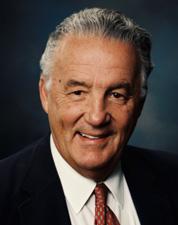 Sen. Paul S. Sarbanes (D-MD)
Legislative Activity
Stay on top of the latest movement without scrolling through every action
Senate amendment not agreed to: Amendment SA 156 not agreed to in Senate by Yea-Nay Vote. 49 - 51. Record Vote Number: 65.
March 17, 2005
View full timeline
Senate amendment not agreed to: Amendment SA 156 not agreed to in Senate by Yea-Nay Vote. 49 - 51. Record Vote Number: 65.
March 17, 2005
Senate amendment proposed (on the floor): Amendment SA 156 proposed by Senator Sarbanes.
March 17, 2005
Roll call votes on amendments in Senate: Amendment SA 156 not agreed to in Senate by Yea-Nay Vote. 49 - 51. Record Vote Number: 65.
March 17, 2005
Amendment SA 156 proposed by Senator Sarbanes. (consideration: CR S2886-2894, S2923-2924; text: CR S2887) To restore funding for the Community Development Block Grant (CDBG) program.
March 17, 2005
Amendment SA 156 not agreed to in Senate by Yea-Nay Vote. 49 - 51. Record Vote Number: 65.
March 17, 2005
Senate amendment submitted
March 15, 2005
Votes
1 roll call on this amendment
Text
Proposed
CONGRESSIONAL BUDGET FOR THE UNITED STATES GOVERNMENT FOR THE FISCAL
YEAR 2006

The PRESIDENT pro tempore. Under the previous order, the Senate will
resume consideration of S. Con. Res. 18, which the clerk will report.
The legislative clerk read as follows:

A concurrent resolution (S. Con. Res. 18) setting forth the
congressional budget for the United States Government for the
fiscal year 2006 and including the appropriate budgetary
levels for fiscal years 2005 and 2007 and 2010.

Pending:

Bingaman (for Smith) Amendment No. 204, to create a reserve
fund for the establishment of a Bipartisan Medicaid
Commission to consider and recommend appropriate reforms to
the Medicaid program, and to strike Medicaid cuts to protect
states and vulnerable populations.
Carper Amendment No. 207, to provide for full consideration
of tax cuts in the Senate under regular order.
Snowe Amendment No. 214, to ensure that any savings
associated with legislation that provides the Secretary of
Health and Human Services with the authority to participate
in the negotiation of contracts with manufacturers of covered
part D drugs to achieve the best possible prices for such
drugs under part D of title XVIII of the Social Security Act,
that requires the Secretary to negotiate contracts with
manufacturers of such drugs for each fallback prescription
drug plan, and that requires the Secretary to participate in
the negotiation for a contract for any such drug upon
request of a prescription drug plan or an MA-PD plan, is
reserved for reducing expenditures under such part.
Harkin Amendment No. 172, to restore the Perkins Vocational
Education program and provide for deficit reduction paid for
through the elimination of the phase out of the personal
exemption limitation and itemized deduction limitation for
high-income taxpayers now scheduled to start in 2006.
Hutchison Amendment No. 218, to fully fund the level of
Border Patrol Agents authorized by the National Intelligence
Reform Act of 2004 and as recommended by the 9/11 Commission.
Landrieu Amendment No. 219, to establish a reserve fund in
the event that legislation is passed to provide a 50 percent
tax credit to employers that continue to pay the salaries of
Guard and Reserve employees who have been called to active
duty.
Salazar/Conrad Amendment No. 215, to provide additional
funding for rural education, rural health access, and rural
health outreach programs.
Conrad (for Dorgan) Amendment No. 210, to repeal the tax
subsidy for certain domestic companies which move
manufacturing operations and American jobs offshore.
Collins (for Lieberman/Collins) Amendment No. 220, to
protect the American people from terrorist attacks by
restoring $565 million in cuts to vital first-responder
programs in the Department of Homeland Security, including
the State Homeland Security Grant program, by providing $150
million for port security grants and by providing $140
million for 1,000 new border patrol agents.
Vitter Amendment No. 223, to express the sense of the
Senate that Congress should provide dedicated funding for
port security enhancements.
Vitter Amendment No. 224, to restore funding for Corps of
Engineers environmental programs to fiscal year 2005 levels.
Allen Modified Amendment No. 197, to increase by
$1,582,700,000 over fiscal years 2006 through 2010 funding
for Transportation (budget function 400) with the amount of
the increase intended to be allocated to the Vehicle Systems
account of the National Aeronautics and Space Administration
for subsonic and hypersonic aeronautics research.

Recognition of the Majority Leader

The PRESIDENT pro tempore. The majority leader is recognized.

Schedule

Mr. FRIST. Mr. President, this morning we will immediately resume
consideration of the budget resolution. We have an order in place from
last night which sets aside specific debate times in relation to
several amendments this morning. There is no debate time remaining on
the resolution beyond this time agreement. Senators, therefore, can
expect a lengthy series of votes to begin sometime around 1:30 today.
This vote-arama will necessitate continued cooperation from all
Members. I cannot stress enough the importance of every Senator staying
on the floor or very close by throughout the afternoon and into the
evening. This is always a trying and challenging period because of the
unusual nature of what happens over the course of the day. But
beginning around 1:30, we will start a series of votes that will go on
for a while.
I encourage my colleagues to work with the managers to use restraint
in not offering amendments if they are purely message amendments and
are not substantive. It is going to be a

[[Page S2876]]

challenge to bring everything to closure over the course of today and
early into this evening already, so please use restraint in terms of
whether to offer amendments.

Terri Schiavo

I know we want to get started, but I did want to bring to the
attention of my colleagues an issue that we do have to act on before we
leave. I do so on behalf of a number of my colleagues on both sides of
the aisle who have come up and said: There is an important issue facing
the country that we have not addressed in the past and that other
systems of government and other branches of government have
inadequately addressed, and, therefore, it is time for the U.S. Senate
to speak.
It centers on the fact that if we don't act or if somebody does not
act, a living person who has a level of consciousness, who is self-
breathing, will be starved to death in the next 2 weeks--thus the
action that is required to be done either later tonight or tomorrow in
order to prevent that starvation to death by Terri Schiavo.
I first heard about the situation facing Terri Schiavo actually
several years ago, but the immediacy of it has played out in the last
several days because of this decision that has been made, not by her
parents who want to keep her alive, not by her family who wants to keep
her alive, but by her husband.
From a medical standpoint, I wanted to know a little bit more about
the case itself, so I had the opportunity to review the initial tapes
that were made, the physical examination on which the case was
ultimately based, the fact that she was in a persistent vegetative
state, and scores of neurologists had come forward and said that it
doesn't look like she is in a persistent vegetative state. It is a
strange word, ``vegetative state,'' that connotes all sorts of things
to lay people. It is a medical term that means that she is not in a
coma. Persistent vegetative state is a specific diagnosis that
typically has to be made over a period of multiple examinations,
usually multiple days, and some neurologists say should be made over
several weeks. The facts of this case are that it was made by a single,
or maybe two, but a single examination over a very short period of
time. The professionals themselves who have viewed those tapes question
that initial diagnosis.
The other questions arise: Does she have any hope of being
rehabilitated? I talked personally to one of the neurologists who
examined her, and he said, absolutely, she can greatly improve,
substantially improve if she is given the appropriate rehabilitation. I
asked myself, had she expressed her wishes about the end of her life?
She had no written directive in terms of what would happen if such an
event struck her. Did she have an advanced medical directive? The
answer is no.
So we have come to the point where on this floor we are going to have
to face the question of whether we believe that a conscious woman who
is breathing on her own--and yes, she has a severe disability, similar
to what cerebral palsy might be. She can't physically feed herself. She
can't verbally express her desires at this juncture, but she has no
legal direction.
The question is, Should we allow her to be starved to death? I
mention that because it is an important case. It has to do with the
culture of life. I believe this body is going to have to speak on this
particular matter before we leave for recess.
I yield the floor.

Amendment No. 204

The PRESIDENT pro tempore. Under the previous order, there will be 60
minutes of debate equally divided in the usual form in relation to the
Medicaid amendment No. 204 offered by the Senator from Oregon, Mr.
Smith. Who yields time?
The Senator from Oregon.
Mr. SMITH. Mr. President, on the Bingaman amendment, I would like to
yield 4 minutes to Senator Baucus, 4 minutes to Senator Corzine. I
believe after that Senator Stabenow will take 4 minutes and Senator
Clinton for 4 minutes as well, and perhaps Senator Rockefeller
following if time remains.
The PRESIDENT pro tempore. The Senator from Montana.
Mr. BAUCUS. Mr. President, I strongly support the Smith-Bingaman-
Coleman amendment to strike the reconciliation instruction to the
Finance Committee to cut Medicaid by $15 billion. Some say this
amendment is not important because the budget is just a blueprint and
the Finance Committee would never make these cuts. That is just not
true. A vote for this budget is a vote for cuts, plain and simple. If
the reconciliation instruction is to cut, the Finance Committee is
under instruction to cut.
Once we pass this budget, the reconciliation instructions are
binding. The Finance Committee would be bound to find the $15 billion
in savings. Although it would be difficult for the committee to reach
agreement on these cuts, the committee would make the cuts. The Finance
Committee has never failed to comply with reconciliation instructions.
I do not believe that it would start this year. Those who say it is
just a blueprint, that is a smokescreen. It is not accurate.
The administration says we need to address waste and abuse in
Medicaid. They say these cuts will end the abuse of intergovernmental
transfers. I urge my colleagues to not be swayed by these allegations.
The administration has been negotiating reform of intergovernmental
transfers on a State-by-State basis for the past 2 years. They have
already squeezed significant savings through this new policy, and there
will not be much further savings if Congress goes down this road. How
do I know this? Because Montana is one of the States that was required
to revise its intergovernmental program to comply with new State rules
last year.
Keep in mind that the change in policy has never been published.
There has been no notice, no invited comments, no rulemaking--never; no
State Medicaid director's letter, none.
So how much in savings remains in reform of intergovernmental
transfers? The Congressional Budget Office says zero, no savings. So
let's not fool ourselves into thinking we are really cutting fraud and
abuse in Medicaid with these cuts. Rather, these cuts will hurt people.
In fact, in Montana, the proposed cuts would mean a loss of health
coverage for 2,800 seniors or more than 12,000 children.
These cuts are definitely shortsighted. If Congress simply starts
cutting Medicaid without considering the overall effects, it would
force people to seek care in emergency rooms, and even higher spending
would result, or even more people could lose coverage altogether.
Some say these are small and represent only a 1-percent cut in the
program's growth over 5 years. But the President's $45 billion net
Medicaid cut over 10 years is more than the $39 billion Congress has
allocated to CHIP coverage for millions of uninsured children during
the 10-year lifetime of that program.
I applaud the leadership of Senators Bingaman, Smith, and Coleman. I
urge my colleagues to join me in supporting this important amendment.
This is important. I strongly urge our colleagues to do what is
right, to not make these cuts. It is going to directly affect people.
Support the Smith amendment.
The PRESIDENT pro tempore. The Senator from New Jersey is recognized
for 4 minutes.
Mr. CORZINE. Mr. President, I, too, rise to speak strongly and
forcefully in support of the bipartisan amendment Senators Smith and
Bingaman have offered. The idea of cutting $15 billion in the Medicaid
Program mandated under this resolution is a bad fundamental choice for
our Nation. It is also a bad policy-setting device because it lets the
budget process drive Medicaid reform. This amendment directs the
creation of a Medicaid commission to investigate and consider possible
improvements.
A thoughtful, reasoned approach to limiting the growth in the cost of
the Medicaid Program, which is driven by enrollments and the high cost
of health care. And while there may be fraud and abuse, the big issue
is that we have a health care problem and how do we finance it. It is
being ignored by using what I think is a shotgun approach as opposed to
the thoughtful, reasoned approach of how Medicaid reform should be
done. That is what this amendment does.
Last week, Senators Wyden, Murray, Johnson, and I offered a
successful amendment during the markup of the budget resolution. The
sense of the

[[Page S2877]]

Senate was agreed to unanimously by the Budget Committee. As a part of
this resolution, it states that the Finance Committee shall not achieve
any savings under reconciliation that would cap Federal Medicaid
spending, shift Medicaid costs to the States or providers, or undermine
the Federal guarantee of Medicaid health insurance.
If this amendment is not accepted--and it is not possible, in my
view, to cut $15 billion from Medicaid without violating that
agreement--what we are going to be doing is shifting $15 billion to the
States; if not to the States, to the local governments; if not to the
local governments, to the health care providers. It is going to be
charity care. It is going to be paid for. We are making a clear choice
of transferring the responsibility for all of this care to someone
else, moving it off the Federal books on to State and local or even
private providers. Maybe we are shifting it on to the streets of our
cities and the homeless.
We are making another choice, too, which is unacceptable. The fact
is, we are trying to force others to make a choice of whether we say
hospice care is more important than mental illness treatment or more
important than people having the ability to have hearing and other
kinds of specialty treatments. We are taking away the options of how we
treat health care and, by the way, preventative care. We are also
making a choice which I find completely hard to understand. Why have we
decided that this $15 billion we have mandated the Finance Committee to
find, why are we saying this $15 billion is so much more important than
the cumulative $204 billion or the tax cuts for those making over $1
million? Isn't this a society that believes in sharing the
responsibility for all of us to have access to a better life? We live
in a society which provides enormous opportunity for so many, and many
of us have benefitted from it, and we are making a clear choice that it
is more important that this $15 billion be cut than $204 billion that
is accumulating for tax cuts to the very wealthy. I do not think these
are the choices the American people would make if they had those
choices laid before them.

I don't understand. We are saying the most vulnerable should be dealt
with without rational and reasoned expectations of where those cuts are
going to come, and we are making all kinds of choices that are embedded
in these kinds of issues. I believe the idea of a commission to stand
back and find that reasoned and informed judgment is important.
The PRESIDENT pro tempore. The Senator's time has expired.
Mr. GREGG. Will the Senator yield for a question, and I will give him
a minute to answer it?
Mr. CORZINE. Certainly.
Mr. GREGG. Does this amendment raise taxes to pay for the $15 billion
that would be called for to put in this budget, or does it increase the
deficit with more spending?
Mr. CORZINE. The Senator from New Hampshire knows very well that what
we are discussing is whether you extend tax cuts for those who earn
over a million dollars. It is a debate we can have about language,
about extension or raising, but at least this Senator would argue that
it is more important to make sure that we have a health insurance
program for everyone in this society rather than tax cuts for
millionaires. These cuts will force states to raise taxes in order to
raise the funds that will be necessary to maintain health care under
Medicaid.
Mr. GREGG. To reclaim the time, the Senator did not answer the
question. Maybe he is not familiar with the answer, but the answer is
that this amendment increases the deficit by $15 billion.
The PRESIDENT pro tempore. The Senator's time has expired.
Four minutes is yielded to Senator Stabenow.
Ms. STABENOW. I thank the Chair.
First I say to our esteemed colleague who chairs the Budget
Committee, I think, as I have said before, he has done an excellent job
on the committee and the floor in allowing important discussions and
input. We all know this is about choices and priorities. We last year
passed the tax loophole closings, as they have been called, some $23
billion in a business tax bill, a tax bill that I supported that did
not end up becoming law. We have already joined saying there are
dollars we believe would better be spent in other ways, in fairness
from a tax standpoint that tax loopholes should be closed, and those
equal more than what we are talking about here in terms of health care
for our most vulnerable citizens.
We also, as my colleague from New Jersey has said, have choices in
this country about where everyone will contribute to the quality of
life, what it means to be an American, to the strength of America, to
what we are proud of and our best values, or whether only some people
will do that. This is a debate about values and choices. That is what a
budget resolution is. It is a picture of who we are. It is a picture of
our values. I can't think of anything that is worse in this budget
resolution than the picture that says for the most vulnerable children,
the poorest children, or poorest seniors in the country, we are going
to take away health care for them. That doesn't fit with what I know
about my faith and beliefs about helping the least of these. It does
not reflect what the people of Michigan believe about what is important
in supporting each other in community and caring about each other.

In a way it balances priorities. Obviously, we want dollars that are
spent efficiently and effectively, and we want to give the States
flexibility. In my home State, I am very proud of what they have been
able to do in bulk purchasing for prescription drugs under Medicaid and
working with other States and saving dollars, and we certainly know we
want flexibility for them under Medicaid. But we also know that
Medicaid is the single greatest provider of health insurance, covering
over 21 million children, our future; 800,000 children in Michigan, our
future. How many times do we say children are our future?
Well, this budget does not reflect that. It does not reflect that as
it relates to funding their future skills and technology and education,
and it certainly doesn't reflect their future if you are a poor child
whose parents do not have health care.
Let me speak about a couple of people in Michigan. Betty Counts, who
lives in Detroit with her daughter Yvette, who has mental and physical
handicaps, is quoted in the Detroit News as saying, ``It's getting more
frustrating trying to get the services I need and the help my daughter
needs.'' And the budget cuts will certainly make things worse for her.
Ask Jimia Williams how much Medicaid means to her. She lives in Flint
and has a 19-month-old son who has seizures and asthma. She works 35 to
40 hours a week--and most of the people we are talking about are people
who are working; 80 percent of the uninsured are working 1 job, 2 jobs,
3 jobs that do not provide health insurance--but her only source of
health insurance right now is Medicaid. Medicaid pays for her young son
to see a neurologist and get treatments for his seizures and his
asthma, and it also pays for his medication, inhalers for both of them.
She said, ``Without Medicaid I would not be able to pay for my son's
medical needs.''
I could go on to so many different situations, but the bottom line of
this vote is about our values and our choices.
The PRESIDENT pro tempore. The Senator's time has expired.
Ms. STABENOW. This amendment reflects what is best about America. I
urge its adoption.
The PRESIDENT pro tempore. Who yields time?
The Senator from New York is recognized for 4 minutes.
Mrs. CLINTON. Mr. President, I, too, come to the floor in support of
the Smith-Bingaman amendment, and I thank our colleagues for bringing
this amendment forward. What it does is very simply and very profoundly
say, wait a minute, let's not cut Medicaid right now. Let's take the
$15 billion in cuts that are in this budget resolution and restore
them. But that is not the end of it. Let's also put together a
bipartisan commission so that we can take a hard look at Medicaid and
try to figure out how to improve service delivery and quality and do
more to make it cost effective.

I am very proud to cosponsor this amendment because I believe this is
the right way to go. I believe wholeheartedly that we should be on a
much

[[Page S2878]]

faster track to return to fiscal discipline and to reduce the
unprecedented deficits we are running. But I do not believe slashing
Medicaid funding is the answer to getting our fiscal house in order,
and it is regrettable that we would have in this same budget room for
millions and millions of dollars more in tax cuts while we attempt to
balance our budget on the backs of our most vulnerable citizens.
I can look at the growth in Medicaid and certainly see the same
strategy that everyone else has. In part it is part of the sluggish
economy, the loss of health insurance benefits for so many people who
do still have jobs. I know in my own State the Medicaid Program grew
between 2000 and 2004. In fact, in the last 4 years in America, we have
seen 35 million more Americans receive their health insurance through
Medicaid. We now have 45 million uninsured Americans. I think that
number would be above 50 million if we did not have Medicaid as a
health care safety net.
This budget resolution hits New York especially hard, cutting our
Medicaid funding by almost $2 billion. Let me just tell you what that
means. We provide insurance to 4.1 million New Yorkers through
Medicaid. That includes 1.7 million children, 1.4 million adults, and 1
million elderly and disabled beneficiaries. These are people who are
the frail elderly in nursing homes. These are the children of those who
are working but do not have health insurance. These are people living
with chronic diseases. For these people, Medicaid truly is their last
resort. They have nowhere else to turn.
As some of you know, I just spent 5 days in the hospital in New York
City with my husband, and we are very fortunate we can go to one of the
finest hospitals in the world to get the care that is necessary, but I
know very well that that hospital has two-thirds of its income coming
in Medicare and Medicaid. It is in an area in New York City where there
are a lot of poor people, people who get up every day and go to work.
They get on the subways, the trains, they get to work, they work hard,
but they do not have health insurance. Medicaid enables them to go to
that hospital just like my husband can go to that hospital.
We need Medicaid reform. That is what Senators Smith and Bingaman are
proposing. Let us do the right diagnosis about what is wrong with
Medicaid. Let us do what we need to do to get it on a better footing,
but let me add that the costs in Medicaid have gone up more than the
cost of private insurance. This is not just a problem in Medicaid, this
is a problem in the health care system, and we are going to make our
problem worse if we do this cutting of Medicaid without this type of
bipartisan amendment.
If we tried to cut in New York, for example, we would have to make
some horrible choices. Should we cut out children? Should we eliminate
100,000 beneficiaries, most of whom are in nursing homes?
The PRESIDING OFFICER (Mr. Sununu). The Senator's time has expired.
Mrs. CLINTON. I urge adoption of this very important and necessary
amendment.
The PRESIDING OFFICER. The Senator from New Mexico.
Mr. BINGAMAN. I yield myself 4 minutes.
The PRESIDING OFFICER. The Senator is recognized.
Mr. BINGAMAN. Mr. President, let me once again do what I did last
evening, and that is commend Senator Smith for his leadership on this
important issue. This is a very important test of what our priorities
are and also whether we are essentially going to try to take advantage
of those we think are less organized to resist.
There are a lot of ways we can save money in health care costs that
the Federal Government underwrites. In fact, I have an amendment I am
going to be offering later on today where I will propose some
significant cuts, substantially more than we are talking about here,
that can be saved in Medicare because I believe we should look at
health care as an area where we need to constrain the growth in costs.
But the problem is this budget does not do anything about Medicare.
This budget particularly does not do anything about the enormous growth
in the cost of Medicare as a result of last year's prescription drug
bill. There are a lot of provisions in that bill which clearly overfund
health maintenance organizations, HMOs, provide a slush fund to be used
by the Secretary of Health and Human Resources. There is an enormous
amount of money sloshing around in that legislation, but there is no
effort in the budget to get at any of that. Instead, we have said,
let's go after $15 billion of cuts in the areas that affect these less
organized lobbies, these less organized groups, these groups that are
not going to speak up so strongly and resist the cuts.
That is why Senator Smith's initiative is so important. That is why
it is so important that we have a national commission to give us
recommendations as to how we can intelligently save money in health
care costs in future years.
There are ways that we can better coordinate health care delivery
under Medicare and health care delivery under Medicaid. Forty-two
percent of the cost of Medicaid is spent on people who are covered by
Medicare. Now, we need to do a better job of coordinating those
programs, and there are opportunities for saving money. Of course, none
of that has been studied, and none of that has been given to us in the
way of recommendations. All we are presented with in this budget is a
recommendation that we cut $15 billion and somehow or another
essentially shift that cost to the States.

I know there is some discussion up and down the halls that maybe
Secretary Leavitt has made some arrangement with the Governors and they
are agreeable to this $15 billion cut. I have spoken with our Governor,
Governor Richardson of New Mexico, who is head of the western
Democratic Governors--maybe all the Governors; I am not exactly sure of
the title he holds these days. He is a leader on this issue, and he has
assured me there is no deal and that these cuts that are proposed in
this budget will adversely affect us in New Mexico.
We are struggling to continue the services we have traditionally
provided under Medicaid. We are struggling to deal with the fact that
more and more people are insisting on services in Medicaid because they
are losing their private health insurance. That is why the cost of
Medicaid overall has been going up, because more and more people are
dependent on Medicaid.
This is an important amendment. Senator Smith deserves the support of
all of our colleagues on this amendment. I urge all our colleagues to
support it. I yield the floor.
The PRESIDING OFFICER. The Senator's time has expired.
Mr. SMITH. Mr. President, how much time remains?
The PRESIDING OFFICER. The Senator from Oregon has 8 minutes
remaining.
Mr. SMITH. Mr. President, a vote for this amendment to defer these
cuts to this commission and a reform effort that is bipartisan is not
about being against reducing the deficit. It is, in fact, a way to
achieve reductions, if that is what it comes to, in a way that takes
care of the most vulnerable people in our society.
We are talking about 52 million Americans. Of these, we are talking
about the elderly who are in nursing homes. Of these, we are talking
about the chronically ill people without income who suffer from cancer
or HIV. We are talking about the children of the working uninsured. We
are talking about people who have no other recourse except, if they
lose their health care, to go to the emergency rooms of our community
hospitals. When they go there without the ability to pay, they are
served, but we are all then later served the passing on of these costs
in the form of higher prices to private plans and businesses--small
businesses especially--that struggle mightily to continue providing
health care.
Right now every year 3 percent--and it grows by that number--lose
their insurance from their businesses because of the escalating costs
largely driven by the inefficient distribution of health care.
It is very important for my colleagues to understand that this is not
a vote against a budget of fiscal responsibility. This is a way to
proceed toward fiscal responsibility in a way that is thoughtful. It is
really important,

[[Page S2879]]

when we talk about a population that is vulnerable--those covered by
Medicaid--that we do this carefully, that we do it thoughtfully, that
we do it right instead of just doing it fast.

The truth is, when you put this kind of cut, $15 billion, under
reconciliation, that means it will be cut. Reconciliation is a Damocles
sword that hangs over this place and has the ability to disrupt the
regular process, taking it from a committee and right to the floor
without the participation that, frankly, we have the privilege to
provide but the duty not to shirk.
It is my belief that this proposal of a commission, made up of 23
members--Governors, Senators, Congressmen, providers, advocates, local
officials--a bipartisan commission that can deal with the necessary
reforms that must come to Medicaid can do them in a way that works for
the population that has to be served and to disqualify those who game
the system or abuse the system.
I readily acknowledge there is much in Medicaid that is broken. The
truth is, we have not had a Medicaid commission since Medicaid's
creation in 1965, and now we propose to let the budget drive the policy
when we ought to be letting the policy drive the budget.
Given that we are going to do this and need to do it to modernize
Medicaid, given the vulnerability of the population served, given the
chance to do this right instead of just doing it fast, to let the
policy drive the budget instead of the budget driving the policy with
this vulnerable population, I plead with my colleagues to stand up to
their duty and make sure that Congress is not circumvented, to defend
the 52 million people in America who are counting on us to do it right,
and not just to do it fast.
If we pass this, the reductions will come, but the reforms and the
flexibility necessary at the State level to accommodate that will not
be done in a more thoughtful and bipartisan way.
I see no others of my colleagues seeking recognition, so I simply
close by asking Republicans and Democrats to be careful with this
issue. Of all the choices we make around here on issues affecting the
American people, this one calls for the most care, the most caution,
the most thought, and the greatest degree of sensitivity because it
involves the blind, the lame, the poor, the needy, those who have no
recourse if we pull away this central strand in the safety net of
America's social promise.
Ms. STABENOW. Mr. President, will my friend from Oregon yield for a
moment?
Mr. SMITH. I will be happy to yield.
The PRESIDING OFFICER. The Senator from Michigan.
Ms. STABENOW. Mr. President, I rise to thank the Senator from Oregon
for his leadership. He and the Senator from New Mexico, Mr. Bingaman,
have led an effort I am proud to cosponsor. His eloquence is
meaningful. This is an opportunity for us to work in a bipartisan way,
to lay out a process to achieve what we all want in terms of
efficiencies, but to do it in a way that is thoughtful, caring, and
appropriate, and to allow us to make the best decisions without hurting
the most vulnerable people in this country.
I thank the Senator for his leadership.
Mr. SMITH. Mr. President, how much time remains?
The PRESIDING OFFICER. The Senator has 1 minute remaining.
Mr. SMITH. Mr. President, I thank the Senator from Michigan for her
kind words. I also say to my friend, the chairman of the Budget
Committee, Senator Gregg is a terrific fellow, one of the best people I
know in this place. He has a tough job. I know I have made it more
difficult. I, at a personal level, apologize to him for that, but I
want him to know--I want all my colleagues to know--how personally and
passionately I feel about this as someone who helped to create the
Oregon health plan, to find ways to serve more with preventive
medicine, in ways that stretch the dollar and serve more people who
have no other recourse. I take that responsibility very seriously.
I am trying to reflect that with the best of motives, with an equal
commitment to finding a budget that will represent our values and our
views that includes all the Members; that does, perhaps for a few days,
delay some of the cuts that would fall, but if these cuts fall badly,
we will hurt the most vulnerable people.
The PRESIDING OFFICER. The Senator's time has expired.
Mr. SMITH. I thank the Chair and yield the floor.
The PRESIDING OFFICER. The Senator from New Hampshire.
Mr. GREGG. Mr. President, I had the great good fortune when I went to
college to be taught by one of the historically strongest history
professors in our Nation, a man named David Truman. He went on to be
president of Mount Holyoke. He wrote probably the definitive treatise
on American Government. One chapter in that treatise was dedicated to
committees and commissions. He said that the commission is the place
where you send issues when you do not want to have to deal with them,
when you want to ignore them, when you want to obfuscate the issue, and
when you want to basically kick the can down the road.
He was a brilliant professor and usually right, and in this case
obviously totally correct.
This amendment, if it is adopted, will guarantee that the issue of
Medicaid is not addressed. That is a guarantee in this decade. It does
not kick the can down the road, it kicks the can down the road a decade
because we will not do reconciliation again for a long time, I suspect.
Next year is an election year, and Congresses are not inclined to make
tough choices in election years. It has been 10 years since we did the
last reconciliation bill, so it is unlikely reconciliation will occur
again. And we are not going to pass in this Congress a bill which
reforms a significant program on the entitlement side without using
reconciliation because the courage simply is not here.
So let's talk about why it is absolutely critical that this year we
address the Medicaid issue and why it is not going to impact any
children and why all this ``wearing your heart on the sleeve'' language
we heard around here is a large amount of puffery.
We had some very disturbing testimony--and I believe that is the term
used by the Senator from North Dakota, and it is accurate--from the
Comptroller of the Currency as we talked about the liabilities already
on the books that our children are going to have to pay because our
generation put them on the books. They add up now to $44 trillion. That
is ``trillion'' dollars. Mr. President, $44 trillion of liabilities is
already on the books.
This chart shows that, $44 trillion. To try to put that in
perspective because a trillion dollars is something nobody can
understand. If you take all the taxes paid in America since the
Revolution, it adds up to $38 trillion. So we have on the books more
liabilities today than taxes paid in this country in the history of
this country.
In fact, if you take the entire net worth of the United States today,
and every American adds up all their net worth--all their houses, all
their cars, all their jewelry, whatever they have, stocks, bonds,
assets, real estate, it comes to $47 trillion. So we have on the books
almost as much obligation as we have net worth.
The practical effect of that is that we are overwhelming the next
generation with obligations which they will have to pay. Our children
and our grandchildren are going to have to pay the taxes to support
that $44 trillion worth of obligations we put on the books. So it is
important that we look at from where those obligations come.
They come primarily from what is known as entitlement accounts,
specifically three major accounts: Social Security, Medicare, and
Medicaid. In fact, the vast majority of them do not come from Social
Security, they come from Medicare and Medicaid. Health care represents
$27 trillion of that $44 trillion of costs that are on the books that
our children are going to have to pay because we have already committed
them to do that to support the baby boom generation when it retires.
It is entitlements that are the issue. My colleagues have come
forward and said: But we do not have to deal with Social Security, even
though the President has been willing to discuss it. We do not have to
deal with it, no; stiff arm Social Security. OK, that is off the table.
The President says he just amended the Medicare law, so he does not
want to move on Medicare this year. OK, that is off the table.

[[Page S2880]]

That leaves one issue, one major program that should be looked at
this year at least, and that, of course, is Medicaid.
The other side of the aisle and three speakers this morning have
already said you can just address this problem by raising taxes. I
note--it does not appear to be anybody has focused on this at all--but
the amendment before us does not raise taxes, it raises the deficit. We
heard all of yesterday, the day before, and the day before that how the
other side of the aisle did not want to raise the deficit; they wanted
to be the party that was opposed to deficit spending. Today they come
forward and the vast majority of the people sponsoring and supporting
the program, the bill before us, which dramatically raises the deficit
by $14 billion in the 5-year period, something like $60 billion in the
10-year period.

But even if you accept the fact that they want to raise taxes to pay
for it, the issue is, Could you solve this problem, this outyear
liability that is caused by all these entitlement accounts, Medicare,
Medicaid, and Social Security, by raising taxes?
You cannot do it. This chart shows it so clearly. The cost of
Medicare, Medicaid, and Social Security is the red line here. The blue
line is the historical amount that the Federal Government spends, 20
percent of GDP. That is what we have historically spent, since World
War II, essentially. You can see that the red line crosses the blue
line in about the year 2029, 2028, in that period. These three
programs--Social Security, Medicare, and Medicaid--will actually cost
the Federal Government more than 20 percent of the gross national
product.
What does that mean in practical terms? It means you wouldn't be able
to spend any money on education, any money on roads, any money on
national defense, because the entire Federal Government would be
absorbed by paying for these three programs. Or, alternatively, you
could take the approach the other side wants to take, which is raise
taxes.
If you did that, you would have to double the tax rate on Americans
in order to pay for this program. Working Americans, young Americans,
these pages who are here today and are going to get a job, would find
their ability to have a decent lifestyle would be dramatically reduced
because they would have to pay twice as much in taxes as our generation
has paid in order to support these Federal programs which are already
on the books.
You cannot tax your way out of this. I don't care if you confiscate
all the income of the two top brackets, you cannot get this system
under control through taxes. You have to address the other side of the
ledger, which is spending responsibly on these programs. That is what
this bill tries to do. That is what the budget tries to do.
In a most minor way, a minuscule way, almost, we suggest in this
budget we want to save $15 billion in the rate of growth--not cuts--in
the rate of growth of Medicaid over the next 5 years; $15 billion. You
say $15 billion is a lot of money. It is a lot of money, but you have
to put it in context. Over the next 5 years, the Medicaid system is
going to spend $1.12 trillion--that is trillion with a ``t''--and $15
billion on that amount is 1 percent, essentially. What we are actually
trying to save in this bill is $14 billion.
This chart shows it. Medicaid spending will go up dramatically. It
will go up by 39 percent. It will not go up by 41 percent. That is what
it would do. It would go up by 41 percent if this bill doesn't go into
place, but if this bill goes into place, it will go up by 39 percent. A
39-percent rate of growth in this program is what we are planning.
We have heard people come down here, especially the Senator from
Oregon, and say if this language passes, lives will be lost. I think he
said that. Children will be lost. That is absurd, misleading,
inaccurate, and a total gross exaggeration. I wish the Senator had been
a Governor because he would know that the Medicaid system today does
not benefit children as much as he thinks it does. There is a large
chunk of the Medicaid system today which is being gamed out of the
system by States and being used in the general operations by the States
to build roads, to put police officers on the road--a large chunk of
it. That could be saved.

There is a large chunk of the Medicaid system today which is going to
pharmaceuticals to pay dramatically more than what we pay under any
other program for pharmaceutical products. That could be saved.
There is a large chunk of the Medicaid system today which is going to
people who are gaming the system by what is known as spending down.
That is when you, in a rather fraudulent way, get rid of your assets--
give them to your kids or give them to somebody else in your family so
that you can then come to the Government and say, Support me in a
nursing home. So all the other Americans in this country who are
playing by the rules end up supporting people who are breaking the
rules and who are gaming the system through spending down. Huge amounts
of dollars are pouring out of the system under those accounts.
A lot of money is being lost in this system simply because it is
inefficiently run, because the Governors do not have the flexibility
they need in order to get more service because they know how to deliver
it, but instead they are hamstrung by all sorts of rules and
regulations which make no sense to them and which undermine their
capacity to deliver the service efficiently.
The President and innumerable Governors, responsible Governors in
this country, have come forward and said you give more flexibility to
the Governors and they can take a little less rate of increase in
spending and deliver much more service to many more kids. So this
concept that you cannot get to this 1-percent savings, that you cannot
live on a 39-percent rate of growth in Medicaid without having children
lose their lives and be not able to go to the emergency room for care,
is scare tactics. Not only that, it is not right. Because if you cannot
step up--especially as a Republican who supposedly is committed to
fiscal responsibility, because that is what our party is supposed to be
committed to--and say that you can deliver better service with more
flexibility, then you are probably not a very good Governor. I doubt
there are any Republican Governors, at least, and I suspect there are
not a lot of Democratic Governors who don't believe they can do more
with a lot more flexibility.
The President has listed seven or eight--actually, Governor Leavitt
has--seven or eight different proposals, none of which impact services
one iota and, in fact, some of which would significantly expand
services to children, which could be accomplished if we reform the
program and would slow the rate of growth in this program along the
lines projected here.
So it is unconscionable that people would claim a $14 billion
reduction in the rate of growth when you are having a $1.1 trillion
expenditure, a reduction which represents 1 percent over 5 years, could
not be accomplished in the context of a program where there are
obviously so many problems which need to be addressed and which could
deliver more efficient and more effective service.
It gets back to this point, of course. If we do not do this now, we
are not going to do it. This is not an amendment to set up a
commission, the purpose of which is to resolve the problem. This is an
amendment to set up a commission to make sure the problem is never
resolved. It is irresponsible because of that.

I do think it is important to note how this budget has been
structured. A lot of people say this Federal budget is pretty
meaningless and it is sort of a process we go through here. Of course,
2 out of the last 4 years we didn't even have one. To some degree they
are correct, I regret to say.
We have in this budget three basic elements: discretionary spending,
entitlement spending, and the other is taxes. On the discretionary side
we set a discretionary cap. We have already seen 24 amendments or so
offered on the floor that will affect that cap--in other words, Members
not willing to accept the spending levels of this budget. They have to
put money into this program or that program. We have another hundred or
so amendments also pending which do exactly the same. So the
willingness to discipline the discretionary side of the ledger is, to
say the least, tepid. One would suspect there are going to be a lot of
games played with that cap even if it gets into place before we get to
the appropriations

[[Page S2881]]

process. But it does, hopefully, limit the rate of growth and it does
have some impact. But regrettably I have to admit it is at the margin.
Then there is a tax side. Most of the taxes, in this budget at least,
are taxes which most people are going to vote for. That point was made
yesterday--whether there are reconciliation instructions, most of these
tax cuts are going to be extended. They are very popular: R&D, spousal
stuff, tuition tax stuff.
No, the essence of this budget is whether we are going to address the
fastest growing function of the Federal Government, the function of the
Federal Government which is going to bankrupt our children and give
them much less of a quality of life than we have had; whether our
generation, the baby boom generation, which is now the generation that
governs, is going to be willing to stand up and admit that we put too
much on the books for our children to bear. That is the essence of this
amendment. This amendment knocks out the only significant effort--well,
there is one other dealing with the PBGC--the only significant effort
to bring under control the rate of growth in the Federal Government in
the outyears; the major piece of fiscal discipline.
In the short term you can argue the discretionary caps may help. But
in the long term, which is where our big problem is and where we all
acknowledge it to be, the only thing that is going to address that is
if we reconcile the Medicaid number. If we do not do it this year, it
is not going to be done. That is why I find this amendment to be so
pernicious, because it is put forward as if the people who support it
are for fiscal discipline when in fact its practical implication is to
gut the only thing in this budget which actually will generate fiscal
discipline. And it is being done by Republicans. You have to ask
yourself how they get up in the morning and look in the mirror.
In any event, that is where we stand. I am not going to deny that
this isn't a crucial vote. This is a crucial vote. If the Medicaid
language is passed, if it is knocked out of the bill, I think I put in
context the effect it has on this budget. More important, I hope I have
put in context the effect it is going to have on our kids and our
grandkids, because we will have said that in none of the three areas
where the explosive growth is occurring--in none of these three areas
where we are headed to this disaster, where our children are not going
to be able to afford the costs that we have stuck them with--that in
none of these three areas is this Congress willing to act. That would
be more than an unfortunate event.
I reserve the remainder of my time.
Do I have any time?
The PRESIDING OFFICER. The Senator has 10 minutes 45 seconds.
Mr. GREGG. Mr. President, I reserve that time and yield the floor. I
yield the remainder of the time on my side to the Senator from
Mississippi.
The PRESIDING OFFICER. The Senator from Mississippi.
Mr. LOTT. Mr. President, I thank Senator Gregg for the leadership he
provided at the Budget Committee. This is never an easy job. I worked
with Senator Pete Domenici when he was chairman, and we had this vote-
arama and critical votes year after year. We got it done every year
except for 2 out of the last 3 years. We need this blueprint in place
so we can go forward, so we can have some modicum of controlling
ourselves, controlling spending.
I don't like everything in this resolution, particularly. I think
right now the aggregate of money for a State is too much; the aggregate
amount of money for Treasury and IRS is too much. I would like to have
more in agriculture, education, transportation. But if each one of us
picks our issue where, ``Oh, no, we can't have any restraint here,'' we
will never have any.
I enjoy listening to my colleagues on both sides of the aisle get up
and give these great speeches about how we have a problem with the
deficit, we have to have restraint, and then when it comes time to have
restraint, to do things to help the economy grow, or control spending
in any area, we all say: No, not my area.
We have to do it across the board. We know that the problem in the
Federal Government is not on the discretionary side. It is not how much
we are going to be spending on highways or education. The growth there
has been relatively restrained. That is true in most of these
categories. The problem is in the mandatory area. Frankly, I have never
liked mandatory areas. What does mandatory mean, you get it no matter
what? Then a Governor or legislature can keep adding people, keep
adding people, perhaps for good reason, perhaps political reasons.
All of a sudden, you have a program that grows like topsy-turvy,
totally out of control. It is going to bust State budgets. It already
has. It will have a huge impact on the Federal budget.
These mandatory programs are going to cause situations where we
cannot continue to afford to spend what we are spending in the future,
what we committed to on Social Security, Medicare, and Medicaid.
Do I think this is a great program? Yes. I personally know what they
mean. I have benefited from them. I have seen what they don't do. When
my father was killed in an automobile accident after 30 years of paying
into Social Security, because of the marital situation and my age, our
family got nothing out of it.
I would like to have some sort of system where people pay and they
have an opportunity for their families to benefit, if they so choose.
Medicare--I know what it means to people who are aged and have health
problems. I think what we did on the prescription drug issue was a huge
mistake. We didn't have real reforms. In fact, we put more burdens on
Medicare, and we are not going to be able to afford what we have gotten
into on Medicare. But Medicaid is the subject for discussion. My State
has wrestled with this. Over the past few years, we kept adding people
and programs to it until it was not a problem for a while, but for the
last 2 years it is absolutely totally out of control, and my poor State
of Mississippi, there is a $270 million hole. The Governor and
legislature fought about it, cussed about it, struggled with it.
Finally, last Sunday night at midnight they came up with an agreement.
What was the agreement? They couldn't figure out any way to pay for
it or to cut it, and they borrowed the money from the tobacco trust
fund, and said: Don't worry, we will pay it back later. Excuse me? I
don't think that is a very good or permanent solution. The States need
help. We need to be thoughtful in how we reform Medicaid to make sure
those we are committed to giving help really do get it, and that it is
done in a controllable, reasonable way.
The Federal Government is part of the problem. We have to match the
funds.
The President made a very small recommendation of some savings in the
Medicaid area. Then the Senator from New Hampshire took that, and
actually he took some of the savings and added some of it back in areas
where it was badly needed, for a net savings of only $14 billion in
this resolution over 5 years. If we cannot support that, we might as
well fold our tent.
Let me say to my colleagues here, too, that we are going to have to
do this. We are going to have to do it now and later.
When we come back out of conference, we are going to have serious
reforms, or a way to get to reforms and some savings in the Medicaid
area because we cannot continue down this road.
I am sorry. I am embarrassed to say that Democrats seem to not want
to have any kind of restraint, and, unfortunately, some of my
Republicans colleagues, too.
This is an important vote. It is not the only important vote. It is
not one that will destroy the whole process, but it is going to tell a
whole lot about who we are.
I don't see how anybody who votes for this amendment to knock out
this little, tiny savings can ever raise their voice again and say they
are worried about deficits and Federal Government spending to go on too
long. I realize I am talking in very broad terms and not going into any
specificity.
This is an important vote. I plead with my colleagues, show some
restraint. We have shown so little restraint for several years. We have
all been a part of that. But now we are paying the price. We have these
deficits which we have to cut. It is estimated this resolution would
cut the

[[Page S2882]]

deficit about half over the next 5 years. I believe that is right. It
is probably not enough. We probably should do more.
The red line and the red ink on the chart in these entitlement
programs is going to swamp us. Some people say we can do that later.
Can we do it better later? No. Every year we wait, it gets worse. It
makes the reforms and the necessary savings more difficult and larger.
I just wanted to urge my colleagues to support the Budget Committee's
action and support this resolution. Don't vote to take out the tiny
savings in Medicaid that is included here. The States have to be doing
some of that. They show a lot more restraint and leadership than we do
on them. They have one thing that is different: they have to have
balanced their budgets every year. It is in their constitutions. My
poor State does. Maybe someday we will still have to come back to that
at the Federal level.
I thank Senator Gregg for his leadership, and I thank him for
yielding.
Mr. GREGG. I appreciate the appropriate comments of the Senator from
Mississippi.
Mr. JOHNSON. Mr. President, I rise today to discuss devastating cuts
to Medicaid included the fiscal year 2006 budget we are now debating.
Medicaid has been the most successful health care safety net program
our nation has ever established, protecting low-income children, the
elderly and the disabled from being uninsured. Fifty-two million people
count on this program and without it, these individuals would be forced
to seek out care in our emergency rooms, and would likely mean that
many low-income seniors in nursing homes would not have appropriate
care in older age.
As you know, the budget before us includes $14 billion in cuts to the
Medicaid program over the next 5 years. This is a startling number and
represents the single largest cut to any program in this budget.
Fourteen billion in cuts is almost as large as the entire State Health
Insurance Program or SCHIP budget for the next 3 years, and equal to
Federal Medicaid spending in six mid-sized States or 18 small States.
If we allow this reconciliation instruction to move forward, it will
have very harmful effects for those most in need all across America.
These reductions will force states to cut services as well as cut
access entirely for certain populations.
In my home State of South Dakota, it is estimated that these Medicaid
cuts could cause a loss of coverage for 800 elderly people. These are
largely individuals with severe chronic illnesses that require nursing
home care. It will also cut coverage for 4,000 children in South Dakota
by the end of 2010; children who would have otherwise been covered
under the program if the Federal dollars would continue. These are the
most vulnerable citizens in my State whose families have likely sold
the farm and exhausted all of their resources just to pay for health
care. They are the sickest and the poorest, and this budget tells them
that we do not care.
Beyond the devastating effect on those most in need, the budget cuts
will inappropriately shift the entire burden of care to cash-strapped
States that are already struggling with growing health care costs and
will not be able to afford these additional burdens. More than half of
all States will see their Federal matching rates decline in 2006 and
they will also be required to start making payments back to the Federal
Government to finance the new Medicare drug coverage for dual eligibles
or those people eligible for both Medicare and Medicaid. Additional
Medicaid burdens are of great concern to me and the majority of
Governors have also expressed their opposition to the current Medicaid
budget.
These budget cuts not only mean that many South Dakotans will lose
State coverage, but it also means that the State will have to cut
services for those who are lucky enough not to be dropped from the
Medicaid program. Cuts in services may mean that people on Medicaid
will no longer be able to obtain health services such as breast cancer
treatment, rehabilitative care or prescription drugs. The impact of
these cuts in care will not just go away because Medicaid stops paying
for treatment. Hospitals, health centers and other providers will wind
up treating those patients in our emergency rooms and as charity care
patients, absorbing those costs. Also, individuals who lose coverage
will not have access to preventive care and will likely delay treatment
until hospital care is needed. This increases the costs to the system,
since a trip to the hospital is going to be much more expensive than if
they would have had coverage to go to the doctor or get a prescription
drug before getting sick.

Costs within the program are rising, but this is not because the
Medicaid program is inefficient. The driving force behind rising costs
is the result of many things. The surge in costs are due in part to
Congress having failed to deal with the millions of low-income workers
who are uninsured, and that Medicare does not pay for long-term nursing
home care. Census data has revealed that there were 5.1 million more
people uninsured in 2003 than in 2000. An unstable economy has left
workers with lower incomes and employers dropping health coverage.
Statistics show that two-thirds of those losing coverage are in low-
income jobs. Because of these access to coverage problems, Medicaid is
filling a critical gap that most in our nation support--ensuring kids
have basic medical care, providing low-income working families with
health coverage that keeps them healthy and productive, and making sure
that seniors have the care they need in old age. These factors do not
make the case for cuts to Medicaid, but rather indicate that we should
be doing more to expand the program for those who lack coverage. The
SCHIP program was a great example of that, and we should be doing more
to pull those that are low-income and uninsured under this umbrella.
The overall rise in health care costs are also contributing to the
increased expenses in Medicaid. New technologies and the skyrocketing
costs of prescription drugs are sending all health care costs through
the roof. Under these circumstances, Medicaid's spending per enrollee
has actually been more efficient than other health care payors. The
program spending has increased more slowly than private insurance
spending and Medicare.
More and more poor people will need programs like Medicaid if the
trends continue as they have in recent years. We should be working on
solutions to reduce the costs of health care in the United States, but
cutting Medicaid is not the answer. We need to closely examine our care
system broadly and reduce costs by promoting the use of information
technology in health, emphasizing prevention techniques that keep
people healthy, and reducing the costs of prescription drugs. It will
also be crucial that we closely examine our long-term care system,
which accounts for almost one-third of Medicaid spending and will
likely increase as our senior population increases in numbers. This is
where the discussion must turn to, rather than placing the blame on the
Medicaid program which has been a cost efficient, successful program
ensuring coverage for millions of Americans most in need.
We will be voting soon on an important amendment offered by Senators
Smith and Bingaman, as well as many others, that will strike the
reconciliation instructions to the Finance Committee for Medicaid, and
strike the function that directs that committee to cut the $14 billion
for that program. In its place, the amendment will create a $1.5
million reserve fund to create a Medicaid Commission. I am pleased to
be a cosponsor of this amendment. We do have a need to address the
skyrocketing costs of our Federal health care programs and health care
in general, and I think the establishment of a commission on Medicaid
is a smart way to begin to find solutions. I will support this
amendment and I urge all of my colleagues to do the same. We need to
get our priorities straight with this budget. A budget that proposes to
cut billions in health care coverage for our most vulnerable citizens
while at the same time including $23 billion in tax cuts for capital
gains and dividends is not a budget that represents my values or the
values of the American people.

Amendment No. 204

Mr. McCAIN. Mr. President, our Nation is facing very difficult fiscal
realities which are only going to become more difficult and expensive
the longer we wait to take action. The Federal

[[Page S2883]]

Government can no longer afford ``business as usual.'' According to the
GAO, the unfunded Federal financial burden for public debt, including
future Social Security, Medicare, and Medicaid payments, totals more
than $40 trillion or $140,000 per man, woman and child. At what point
do we listen to the wake up call?
The Federal Reserve Chairman, Alan Greenspan, has recently warned
Congress and the Nation that, ``In the end, the consequences for the
U.S. economy of doing nothing could be severe. But the benefits of
taking sound, timely action could extend many decades into the
future.'' We must all work together to reduce the crippling $412
billion budget deficit and the mounting unfunded Federal financial
burden.
I commend the administration for submitting a budget request that
proposes reduced funding for a number of programs. I clearly understand
that every program is important to certain constituencies, and Medicaid
is at the top of the list for many. The Medicaid program provides
critical services to some of the most vulnerable people in our nation.
In my home State of Arizona, we have an outstanding Medicaid program,
the Arizona Health Care Cost Containment System, that represents a
model for other States.
Unfortunately, not every state Administers its program as efficiently
as Arizona. The reality is, Medicaid costs are skyrocketing out of
control. It is time we took a long hard look at this program--as every
other program for that matter and develop proposals to ensure that
Medicaid will continue to serve the neediest Americans over the long
term.
Let me be clear. I do not support across the board cuts to the
Medicaid program. In fact, I believe such an action could have a
disastrous effect on many important efforts that ensure access to care
for many Americans who have nowhere else to turn. Additionally, I
recognize that cuts to Medicaid that result in reduction of covered
individuals would flood hospital emergency rooms with additional
uninsured patients, forcing hospitals to absorb additional cost for
uncompensated care. Arizona has one of the highest uninsured
populations in the country and a large number of undocumented
immigrants, our hospitals are already struggling to absorb the cost of
providing uncompensated care, dramatically reducing medicare eligible
populations could severely impact the hospital system in my State and
in many others.
In debating potential cuts to the Medicaid program, we must work to
ensure that the federal government does not further exacerbate these
existing problems. Any effort to reform Medicaid must be made in a
cautious and deliberative manner.
We simply must start to control spending and make some very difficult
decisions among competing priorities. I was pleased to have joined with
Senators Smith and Bingaman in cosponsoring S. 338, the bipartisan
commission on Medicaid Act of 2005, which was introduced on February 9,
2005. I cannot vote for the pending amendment because I believe
strongly that the fiscal reality of Medicaid must be addressed sooner
rather than later. And I have been around here long enough to know that
too often we need to have our feet held to the fire to really make
meaningful progress on difficult issues. So I hope that we can agree to
cut waste in the Medicaid program and also create a bipartisan task
force to provide recommendations for how best to reform the program for
the long run. In my judgment, only through comprehensive reforms can we
prevent across the board cuts in Medicaid in the long term. We should
begin our reform efforts today.
Mr. KOHL. Mr. President, I rise today in strong support of the Smith-
Bingaman amendment. I am proud to cosponsor this amendment to strike
the proposed $15 billion in cuts to Medicaid and instead create a
Medicaid Commission.
In an effort to climb our way out of record Federal budget deficits,
the Budget resolution we are considering this week will cut Medicaid by
$15 billion over the next 5 years. This cut would be devastating to
millions of low-income families, children, disabled and senior citizens
who are served by Medicaid.
I recognize that Medicaid--like all health care programs continues to
face higher health care costs. But it is unconscionable to arbitrarily
slash billions of dollars from a safety net program like Medicaid, and
at the same time, give away billions of dollars worth of tax cuts in
the same budget.
The main problem causing Medicaid spending growth is not that it is
bloated or inefficient. New studies by the Urban Institute and the
Kaiser Family Foundation show that Medicaid spends less, per patient,
than private health insurance plans and that its costs have grown more
slowly in the last four years than private-sector insurance premiums.
The real cost driver in Medicaid is the economy, which continues to
cause a strain on the ability of businesses to offer health insurance
coverage to their employees. More and more employers are dropping
health insurance coverage, pushing low-wage working families onto
public programs, while the overall cost of health care continues to
skyrocket. Cutting $15 billion from Federal Medicaid spending is only
going to make matters worse by forcing the problem down to States,
which already face severe budget crises.
A $15 billion cut in Medicaid could translate to a loss of $300
million for Wisconsin. It would be extremely difficult for Wisconsin
and other States to absorb a cut of this magnitude while continuing to
provide the level of services on which families depend. A cut of this
size has the potential to deprive thousands of poor families needed
medical care and greatly increase the already record number of
uninsured Americans.
I do not object to having a thorough discussion about how we can make
Medicaid work better to serve low-income Americans. But it is
unacceptable to force arbitrary cuts in Medicaid without first taking
the time to consider the future efficiency and operation of the
Medicaid program. Medicaid is an essential source of health care for 53
million of our nation's most vulnerable citizens, and any changes to
the program should be driven by informed, reasoned policy and not by
arbitrary budget targets.
I urge my colleagues to reject these harmful cuts.
Mr. ROCKEFELLER. Mr. President, I rise today to talk about Medicaid,
a program that is very important to my home State of West Virginia.
Over the past few days I have listened to my colleagues characterize
the $15 billion in Medicaid cuts contained in this budget as marginal,
minor, and not a big deal. I want to remind my colleagues that this
budget isn't simply about numbers. It is about the policies behind the
numbers that have an impact on real people who would not have access to
health care in the absence of Medicaid.
Medicaid is the absolute bedrock of our nation's health care system.
It is the fulfillment of the promise the Federal Government has made to
our Nation's most vulnerable citizens that they will have access to
affordable health care when times get tough.
It finances nearly 40 percent of all births in the United States.
Without it, many pregnant women would forego the prenatal visits and
pregnancy-related care that are vital for a child's healthy start.
Medicaid provides coverage for one in five of our Nation's children,
many of whom would otherwise be uninsured. It pays for half of all
nursing home care and is the largest single purchaser of long-term care
services in the country.
In every State throughout our Nation, Medicaid keeps hospitals,
doctors, nursing homes, and clinics operating in our communities. And,
more importantly, it provides our most vulnerable citizens--pregnant
women, children, the elderly, and the disabled--with access to
meaningful and affordable health care.
The $15 billion in Medicaid cuts being proposed by this
administration matter to the more than 50 million children, pregnant
women, seniors, and disabled individuals who rely on Medicaid to meet
their health care needs. Some of my colleagues would have you believe
that these cuts will have no impact at all on the number of kids
covered by Medicaid or the number of people who can access care in
nursing homes. They even argue that these cuts will lead to Medicaid
expansions because Governors will have greater flexibility over the use
of their dollars.
Well, these statements simply are not true. Fewer dollars do not
equal

[[Page S2884]]

greater flexibility. Fewer dollars mean that States, medical providers,
and individual beneficiaries are going to have to shoulder more of the
burden of rapidly rising health care costs. Cost-shifts of this
magnitude will undoubtedly lead to eligibility restrictions, benefit
reductions, increased beneficiary cost-sharing, and provider payment
cuts or freezes.
States are already struggling with the numerous unfunded mandates
that the Federal Government has passed down in recent years. Twenty-
nine states, including my home state of West Virginia, are facing a
drop in their Federal medical assistance percentage, FMAP, next year
because of a change in the statutory formula used to compute FMAP.
When the Medicare drug benefit starts on January 1, 2006, states will
be required to finance a significant portion of the cost. This will be
the first time since the enactment of Medicare and Medicaid in 1965
that a specific Medicare benefit will be financed in significant part
by state payments. The Congressional Budget Office, CBO estimates that,
at a minimum, states will pay $48 billion toward the Medicare
prescription drug benefit in the first 5 years. These costs could be
much greater if more dual eligibles sign up for prescription drug
coverage or if States have to cover the costs of drugs for dual
eligibles that private drug plans do not cover.
West Virginia is scheduled to lose $36 million in Federal Medicaid
matching funds in 2006. And, it is still unclear how much
implementation of the Medicare prescription drug law will cost. The
additional cuts proposed by the President could result in West Virginia
losing as much as $100 million in Federal Medicaid matching funds next
year alone. The hospitals, doctors, nursing homes and clinics in my
State cannot afford to absorb cuts of this magnitude.
This budget isn't about reducing the Federal deficit. Otherwise, we
would have eliminated the $70 billion in tax cuts that are contained
this budget. We would have taken an objective look at entitlement
spending, and not just focused on the program that provides health
benefits to the working poor. We would have reined in excessive
overpayments to private plans under Medicare and found ways to lower
Medicare prescription drug costs.
This budget isn't about reforming the Medicaid program for the
better. Otherwise, it would have addressed the real reasons Medicaid
cost are going up: significant decreases in employer-sponsored health
coverage and Medicare's gaps in long-term care coverage. Otherwise, the
administration would have provided specific policy proposals for
strengthening Medicaid for the future, instead of vague ideas that even
the Congressional Budget Office could not score. If this budget were
truly about improving Medicaid, then the administration would not be
attempting to shoehorn sweeping changes to the program into an
arbitrary budget number. Instead, Medicaid policy would determine the
budget number.
I would like to say to my colleagues that Democrats are happy to
discuss strengthening the Medicaid program for the future. We are happy
to work toward reforming the program for the better. However, the
prescription for Medicaid must adequately address the larger problems
with our health care system that have an impact on the program. This is
clearly not the case with this budget.
The bottom line is that this budget is about choices, and this
administration has chosen to unfairly target low-income working
families. This budget robs the most vulnerable in our society, while
simultaneously giving greater tax breaks to the rich. This is
unacceptable. The Federal Government has a responsibility to maintain
its commitment to Medicaid in order to protect access to health care
for working Americans.
That is why I oppose the $15 billion in Medicaid cuts included in the
budget and will vote for the Smith-Bingaman amendment to strike these
cuts from the budget resolution.
Mr. AKAKA. Mr. President, I support the floor amendment offered by my
colleagues Senators Bingaman and Smith to strike the cuts from Medicaid
and the State Children's Health Insurance Program, SCHIP, in the budget
resolution.
The budget resolution includes $15.2 billion in reductions in
mandatory programs that are part of Function 550, which is limited to
health programs. Medicaid and SCHIP are the only mandatory programs in
this category that are under the jurisdiction of the Senate Finance
Committee.
The reductions in Medicaid included in the budget resolution will
lead to further cuts in coverage and benefits for people in need. They
will prevent individuals from being able to access health care, which
will increase the burden on our public health system. In Hawaii,
Medicaid and QUEST, Hawaii's program that provides health coverage
through managed care plans for eligible lower income residents,
provided essential health services to nearly 190,000 people in 2002.
For those in rural Hawaii, particularly the elderly, Medicaid provides
access to health care that they might otherwise have to go without. The
Medicaid cuts will further erode the ability of hospitals, clinics,
physicians, and other medical providers to meet the health care needs
of our communities. These very same health care providers already are
confronted with inadequate reimbursements, rising costs, and an
increasing demand to provide care for the uninsured.
Without doubt, the Medicaid reductions in the Senate budget plan
would adversely affect health care coverage for low-income, uninsured
Americans. Medicaid programs are demanding a larger share of state
spending than they have in recent years. Reducing the Federal
commitment to Medicaid will push additional costs to the States and
increase the number of people who are uninsured or under-insured.
Contributing to the obstacles in delivering quality health care to
those who need it the most are the critical losses that a majority of
states will see in their Federal Medical Assistance Percentage, FMAP.
The FMAP formula is designed to pay a higher FMAP to states with lower
per capita income relative to the national average. According to the
Federal Funds Information for States in its report, Fiscal year 2006
FMAP projections, 30 States are projected to experience cuts in their
FMAP. This aggregate FMAP cut translates into an $850 million reduction
in FY 2006 Medicaid grants to the impacted states. The five states
facing the largest FMAP decreases include Alaska, Wyoming, New Mexico,
North Dakota, and South Dakota.
Hawaii faces a projected FMAP decline of 0.7 percent for FY 2006,
which translates to a loss of $655,000 that could be used to provide
health care to the citizens of my state. While it may seem like a small
decline compared to larger, more prosperous states, let me assure you
that the loss will be felt. In a June 2004 report by the Families USA
organization, nearly one out of three people under the age of 65 went
without health insurance for all or part of the 2-year period from
2002-2003 in Hawaii. More alarming is the statistic that nearly 82
percent of uninsured people in Hawaii are members of working families.
The report went on to make the distinction that 61 percent of families
in Hawaii, at or below 200 percent of the Federal poverty level, were
uninsured.
In 2005, it is estimated that the Hawaii Medicaid program will spend
just over $929 million. Of this, the Federal Government will contribute
nearly $544 million. A substantial portion of Hawaii's health care
industry relies on Medicaid spending. In 2002, Medicaid payments
infused Hawaii's hospital system with more than $106 million. In
addition, Medicaid is the primary payer for 70 percent of Hawaii's
certified nursing facility residents. Any cut in Medicaid funding will
have a profound effect on the economic viability of Hawaii's health
care system and its ability to care for people in need.
Medicaid costs for States have soared in recent years, driven by
rising health-care costs, an aging population that relies largely on
Medicaid to pay for nursing homes, and a recession that sent more
people to state-supported health care. Medicaid reform needs to have a
reform discussion that is not driven by an arbitrary budget number.
While I support improving the health care delivery system for all
citizens of our country, the need for unique legislation to satisfy an
essential, fundamental need is indicative of the flaws

[[Page S2885]]

in the current Medicaid system and an issue that the commission
proposed by this amendment can address. Medicaid needs more funding,
not less. Escalating costs, the increase in the number of uninsured,
FMAP cuts, and the clawback provision in the 2003 Medicare drug benefit
legislation only serve to put more pressure on state budgets. I urge my
colleagues to support this amendment to restore dollars available to
provide essential Medicaid coverage to our country's most vulnerable
citizens.
Mr. KENNEDY. Mr. President, Medicaid provides a critical safety net
for 53 million Americans--low-income children, parents, disabled and
elderly citizens who have nowhere else to turn for health care.
Medicaid now provides health care for 1 in every 5 children. It pays
for one-third of all births in this country, almost 40 percent of all
long-term care expenses, a sixth of all drug costs, and half of the
States' mental health services. It also is the largest payer of
services for AIDS patients.
What does it say about the leadership of this Senate that it proposes
to cut $15 billion from Medicaid? That program provides health care for
25 million children, 13 million low-income adults, and 15 million
disabled and elderly Americans. These cuts are proposed at the very
same time the budget once again proposes large new tax cuts tilted
toward higher income households. Our colleagues say they have no choice
but to make these cuts to Medicaid because of the large deficit. But
the large deficit was created by the large tax breaks for the rich, not
by Medicaid.
The budget is a blueprint of Congress' priorities for the Nation.
This Congress once again shows that it cares more about those who have
the most than it does about those who have the least. How can we
possibly continue to give tax breaks each year to the wealthy, and
reduce health benefits for the poor to pay for them. Those are not the
values we stand for.
In fact, the budget cuts in the Senate resolution are even deeper
than the cuts proposed in the administration budget. Even if the
Finance Committee adopts every cut the President proposed to Medicaid,
they will still need to come up with an additional $7 billion in cuts
to meet the target in this bill.
We need to maintain the Federal commitment to medical care for the
poorest of the poor. If we weaken the Federal commitment, these men,
women, and children will go without care, or show up at the emergency
room door. We know that lack of access to care causes harmful
consequences. We cannot abandon our responsibility to provide for those
among us who are less fortunate.
This budget will force the States to pick up costs that the Federal
Government should be covering. It will result in a massive shift of
responsibility from the Federal Government to the States. We already
have shifted much of the cost of the elderly to the States, costs that
should be covered by Medicare. More than 40 percent of all Medicaid
expenditures are used to fill the gaps in Medicare. Medicaid pays for
their long-term care, their prescription drugs, and their cost-sharing.
Medicaid is the largest source of long-term care today. The more than
7 million persons who are eligible for both Medicare and Medicaid are
among the most vulnerable. Seventy percent of them have incomes below
$10,000. Nearly one in four live in long-term care facilities. They are
twice as likely to have Alzheimer's disease, and more likely to have
diabetes and stroke than others on Medicare beneficiaries. They are a
small proportion of the Medicaid population, but their costs are among
the highest. Medicare will start paying for prescription drugs for the
dually eligible next January, but the states will see little or no
relief. In fact, because of the so-called ``clawback'' formula in the
prescription drug law, many states will end up sending the federal
government more money for picking up these drug costs than they would
have spent without the drug bill. What kind of relief is that?
We can all agree that we need to improve Medicaid. We have an
opportunity to improve the program, but that is not what this budget
does. This budget is not driven by policy--it is driven by an arbitrary
number that was picked by the leadership as their deficit reduction
target. The Federal Government needs to maintain its commitment to
health care, not try to weaken it and dump the costs on the states. We
need to help the states provide health care, not cut federal funding
and put a bigger burden on them. But that is exactly what this budget
does.
Some on the other side describe these cuts as minor, or as reductions
in growth, or as necessary Medicaid reforms. Don't believe a word of
that. Nothing is further from the truth. There are no policy reasons
for these cuts. They are large, harmful cuts that are being made so
that they can say they are reducing the deficit. But if you look at the
numbers, this budget doesn't reduce the deficit--it increases it over
the next 5 years. Despite these harmful cuts in Medicaid, they add yet
another round of tax breaks. Where is the fairness in that? It is Robin
Hood in reverse steal from the poor to give to wealthy.
Our colleagues say we need to cut Medicaid because it is growing too
fast. The reason is obvious. It is growing because over the past 4
years, more people are losing their jobs and their health care, falling
into poverty, and finding themselves with no option but Medicaid. That
is what is responsible for Medicaid's growth.
Over the past 4 years, the number of uninsured has climbed from 40
million to 45 million, and it is expected to continue growing for the
foreseeable future. The number of uninsured would have been much
greater without Medicaid. During the same time period that the number
of uninsured increased by 5 million, the number of Americans on
Medicaid grew by 9 million. If Medicaid had not been available to them,
we would be facing 54 million uninsured. Is that the kind of policy the
Nation wants to promote?
Medicaid enrollment grew 40 percent over the past 5 years, and it is
projected to grow another 5 percent this year. Enrollment growth is
causing Medicaid's rising cost, not inefficiencies, or fraud, or abuse.
In fact, the cost of private employer-sponsored health insurance has
grown at twice the rate of Medicaid. The percentage of Americans with
employer-sponsored health insurance fell, but the number of Americans
on Medicaid grew, and that growth was largely caused by the bad
economy, the continuing decline of employer health insurance, and the
soaring cost of prescription drugs.
Cutting costs is the wrong prescription for Medicaid. This amendment
will give us time to assess Medicaid fairly, and base any changes on
sound policy, not arbitrary budget cuts. These cuts will have a real
impact on real people. Millions may lose their only hope for health
care if we allow these cuts to stand. Emergency rooms will have more
and more patients with nowhere else to turn, and the Nation's health
care safety net will continue to fray. That is not the kind of budget
we ought to be approving.
I urge my colleagues to vote for the Smith-Bingaman amendment. Our
goal on Medicaid is to improve it, not dismantle it.
Mr. OBAMA. Mr. President, over the last century, the Nation has
witnessed tremendous advances in medical science and technology. We now
have treatments and cures for diseases and conditions that were at one
time surely fatal. Thirty years ago, if children developed cancer,
doctors couldn't save their lives. Today, more than three-quarters of
children with cancer survive. Heart disease is no longer the leading
cause of death because of significant improvements in medical treatment
and surgical procedures. Americans with AIDS are living many years
longer and spending more time at home and not in hospitals because of
new drug cocktails that prevent infections and other deadly
complications.
The unfortunate and bitter irony is that while the number of medical
breakthroughs continues to increase, so does the number of Americans
who will never benefit from them. Right now, 45 million Americans have
no health care coverage, and this number continues to rise. Over a 2-
year period, over 85 million Americans have not had continuous
insurance coverage. In this land of plenty and opportunity, 350,000
uninsured children with earaches and sore throats will never see a
doctor. Sixteen million uninsured Americans

[[Page S2886]]

cannot afford to fill prescriptions. Uninsured women who develop breast
cancer are 40 percent more likely to die, as are 50 percent of
uninsured men with prostate cancer. The Institute of Medicine has
reported that 18,000 adults die every year because they are uninsured.
For many Americans, Medicaid represents their only real hope of
obtaining health care. Nationally, 53 million people rely on Medicaid
coverage, including 25 million children, 13 million low-income adults,
and 15 million disabled and elderly Americans. Nearly 16 percent of
people who live in rural areas have Medicaid coverage, including more
than 1 in 4 children in these areas. One quarter of African Americans
and 20 percent of Hispanics rely on Medicaid, as do 9 percent of women.
In my home State of Illinois, Medicaid provides health coverage for 2
million residents. Over 30 percent of children in Illinois receive
health care through KidCare. Nearly 65 percent of nursing home
residents rely on Medicaid coverage.
Despite Medicaid's critical role in providing access to care, the
Republican budget proposes to cut Medicaid by $15 billion. This cut
translates into an estimated $287 million loss for Illinois. Experts
report this funding could provide health care coverage for 200,000
children or 135,000 working parents in my State.
Some of my colleagues argue that we have no choice but to make large
cuts to Medicaid because of the deficit. But these deficits were
created by huge tax breaks for the rich, not by Medicaid, and we should
not balance the budget at the expense of health care for low-income
children, their parents, pregnant women and seniors. We cannot keep tax
cuts for the rich and cut basic health care for the poor. We cannot
retreat from our Federal commitment to Medicaid and leave the States
holding the bag.
I agree the Medicaid Program is not perfect. The Smith-Bingaman
amendment to create a commission to study the program and make
recommendations for improvement is a reasonable approach. Sound policy,
not politics or deficit concerns, should guide any changes to the
Medicaid Program, and I am not convinced that we have examined or
discussed the full range of Medicaid-related issues and options before
us.
We cannot and should not deny millions of Americans access to basic
health care. Medicaid is the Nation's safety net, and we should
strengthen it, not destroy it. I am going to vote yes for the Smith-
Bingaman amendment to strike proposed cuts in funding for Medicaid, and
I urge my colleagues to join me.

Amendment No. 229

Mr. GREGG. Madam President, I send an amendment to the desk.
The PRESIDING OFFICER (Ms. Murkowski). Without objection, the pending
amendment will be set aside, and the clerk will report.
The legislative clerk read as follows:

The Senator from New Hampshire [Mr. Gregg], for Mr. Frist,
proposes an amendment numbered 229.

Mr. GREGG. Madam President, I ask unanimous consent that reading of
the amendment be dispensed with.
The PRESIDING OFFICER. Without objection, it is so ordered.
The amendment is as follows:

(Purpose: To express the sense of the Senate regarding medicaid
reconciliation legislation consistent with recommendations from the
secretary of health and human services)

Beginning on page 58, strike line 11 and all that follows
through page 61, line 24, and insert the following:

SEC. 504. SENSE OF THE SENATE REGARDING MEDICAID
RECONCILIATION LEGISLATION CONSISTENT WITH
RECOMMENDATIONS FROM THE SECRETARY OF HEALTH
AND HUMAN SERVICES.

(a) Findings.--The Senate makes the following findings:
(1) The Medicaid program provides essential health care and
long-term care services to more than 50,000,000 low-income
children, pregnant women, parents, individuals with
disabilities, and senior citizens. It is a Federal guarantee
that ensures the most vulnerable will have access to needed
medical services.
(2) The Medicaid program will spend $189,000,000,000 in
fiscal year 2006.
(3) During the period from fiscal year 2006 through fiscal
year 2010, the Medicaid program will spend
$1,100,000,000,000.
(4) Over the same period, spending for the Medicaid program
will increase by 40 percent.
(5) Medicaid provides critical access to long-term care and
other services for the elderly and individuals living with
disabilities, and is the single largest provider of long-term
care services. Medicaid also pays for personal care and other
supportive services that are typically not provided by
private health insurance or Medicare, but are necessary to
enable individuals with spinal cord injuries, developmental
disabilities, neurological degenerative diseases, serious and
persistent mental illnesses, HIV/AIDS, and other chronic
conditions to remain in the community, to work, and to
maintain independence.
(6) Medicaid supplements the Medicare program for more than
6,000,000 low-income elderly or disabled Medicare
beneficiaries, assisting them with their Medicare premiums
and co-insurance, wrap-around benefits, and the costs of
nursing home care that Medicare does not cover. The Medicaid
program spent nearly $40,000,000,000 on uncovered Medicare
services in 2002.
(7) This resolution assumes $163,000,000 in spending to
extend Medicare cost-sharing under the Medicaid program for
the Medicare part B premium for qualifying individuals
through 2006.
(8) Medicaid provides health insurance for more than 1/4 of
America's children and is the largest purchaser of maternity
care, paying for more than 1/3 of all the births in the
United States each year. Medicaid also provides critical
access to care for children with disabilities, covering more
than 70 percent of poor children with disabilities.
(9) More than 16,000,000 women depend on Medicaid for their
health care. Women comprise the majority of seniors (71
percent) on Medicaid. Half of nonelderly women with permanent
mental or physical disabilities have health coverage through
Medicaid. Medicaid provides treatment for low-income women
diagnosed with breast or cervical cancer in every State.
(10) Medicaid is the Nation's largest source of payment for
mental health services, HIV/AIDS care, and care for children
with special needs. Much of this care is either not covered
by private insurance or limited in scope or duration.
Medicaid is also a critical source of funding for health care
for children in foster care and for health services in
schools.
(11) Medicaid funds help ensure access to care for all
Americans. Medicaid is the single largest source of revenue
for the Nation's safety net hospitals, health centers, and
nursing homes, and is critical to the ability of these
providers to adequately serve all Americans.
(12) Medicaid serves a major role in ensuring that the
number of Americans without health insurance, approximately
45,000,000 in 2003, is not substantially higher. The system
of Federal matching for State Medicaid expenditures ensures
that Federal funds will grow as State spending increases in
response to unmet needs, enabling Medicaid to help buffer the
drop in private coverage during recessions. More than
4,800,000 Americans lost employer-sponsored coverage between
2000 and 2003, during which time Medicaid enrolled an
additional 8,400,000 Americans.
(b) Sense of the Senate.--It is the sense of the Senate
that--
(1) the Committee on Finance shall not report a
reconciliation bill that achieves spending reductions that
would--
(A) undermine the role the Medicaid program plays as a
critical component of the health care system of the United
States;
(B) cap Federal Medicaid spending, or otherwise shift
Medicaid cost burdens to State or local governments and their
taxpayers and health providers, forcing a reduction in access
to essential health services for low-income elderly
individuals, individuals with disabilities, and children and
families; or
(C) undermine the Federal guarantee of health insurance
coverage Medicaid provides, which would threaten not only the
health care safety net of the United States, but the entire
health care system;
(2) the Secretary of Health and Human Services, working
with bipartisan, geographically diverse members of the
National Governors Association and in consultation with key
stakeholders, shall make recommendations for changes to the
Medicaid program that reflect the principles specified in
paragraph (3); and
(3) the Committee on Finance, consistent with such
recommendations, shall report a reconciliation bill that--
(A) allows any Medicaid savings to be shared by the Federal
and State governments;
(B) would emphasize State flexibility through voluntary
options for States; and
(C) would not cause Medicaid recipients to lose coverage.

Mr. GREGG. I yield back such time as I have.
The PRESIDING OFFICER. Under the previous order, the Senator from
Maryland is recognized.
Mr. SARBANES. Madam President, I ask what the time situation is and
the parliamentary situation.
The PRESIDING OFFICER. The Senator will have 15 minutes equally
divided on the amendment.
Mr. SARBANES. I yield myself 3 minutes of the 7\1/2\ minutes that I
have available.

Amendment No. 156

Mr. SARBANES. Madam President, I send an amendment to the desk.

[[Page S2887]]

The PRESIDING OFFICER. The clerk will report.
The legislative clerk read as follows:

The Senator from Maryland [Mr. Sarbanes], for himself, Mr.
Nelson of Florida, Ms. Stabenow, Mrs. Murray, Mr. Corzine,
Mr. Feingold, Mr. Reed, Mr. Leahy, Mr. Kennedy, Mrs. Clinton,
Mr. Durbin, Mrs. Feinstein, Ms. Mikulski, Mr. Schumer, Mr.
Dayton, Mr. Jeffords, Mr. Dodd, Mr. Obama, Mrs. Boxer, Mr.
Harkin, Mr. Baucus, Mr. Bayh, Mr. Byrd, Mrs. Lincoln, Mr.
Johnson, Mr. Kerry, and Mr. Lieberman, proposes an amendment
numbered 156.

Mr. SARBANES. Mr. President, I ask unanimous consent that reading of
the amendment be dispensed with.
The PRESIDING OFFICER. Without objection, it is so ordered.
The amendment is as follows:

(Purpose: To restore funding for the Community Development Block Grant
(CDBG) program and other programs proposed to be eliminated and to
retain the administration of these programs at their current agencies
by adopting proposals to close certain tax loopholes that were approved
by the Senate in the last Congress)

On page 3 line 10, increase the amount by $427,000,000.
On page 3 line 11, increase the amount by $627,000,000.
On page 3 line 12, increase the amount by $455,000,000.
On page 3 line 13, increase the amount by $214,000,000.
On page 3 line 14, increase the amount by $103,000,000.
On page 3 line 19, increase the amount by $427,000,000.
On page 3 line 20, increase the amount by $627,000,000.
On page 3 line 21, increase the amount by $455,000,000.
On page 4 line 1, increase the amount by $214,000,000.
On page 4 line 2, increase the amount by $103,000,000.
On page 4 line 7, increase the amount by $1,890,000,000.
On page 4 line 16, increase the amount by $427,000,000.
On page 4 line 17, increase the amount by $627,000,000.
On page 4 line 18, increase the amount by $455,000,000.
On page 4 line 19, increase the amount by $214,000,000.
On page 4 line 20, increase the amount by $103,000,000.
On page 16 line 15, increase the amount by $1,219,000,000.
On page 16 line 16, increase the amount by $38,000,000.
On page 16 line 20, increase the amount by $365,000,000.
On page 16 line 24, increase the amount by $442,000,000.
On page 17 line 3, increase the amount by $207,000,000.
On page 17 line 7, increase the amount by $103,000,000.
On page 17 line 16, increase the amount by $671,000,000.
On page 17 line 17, increase the amount by $389,000,000.
On page 17 line 21, increase the amount by $262,000,000.
On page 17 line 25, increase the amount by $13,000,000.
On page 18 line 4, increase the amount by $7,000,000.
On page 30 line 16, decrease the amount by $427,000,000.
On page 30 line 17, decrease the amount by $1,826,000,000.
On page 48 line 6, increase the amount by $1,890,000,000.
On page 48 line 7, increase the amount by $427,000,000.

Mr. SARBANES. Madam President, first, let me say at the outset,
because I neglected to do so the other day in the general debate, that
I commend both the chairman of the Budget Committee and the ranking
minority member of the Budget Committee for the fair and expeditious
way in which consideration of this resolution was conducted in the
committee. We have a new chairman. It is always a challenge, and I want
to express to him my recognition of the fair process conducted in the
committee, which is, of course, essential to the Senate working through
controversial issues and trying to reach a solution.
This amendment would restore approximately $1.89 billion in cuts that
are in the administration's proposed budget to the Community
Development Block Grant Program and a number of other development
programs that have been proposed for elimination. It would bring all of
those programs back to the 2005 level. It is my view, and the view of a
majority of the Members of the Senate expressed in a letter sent to
Chairman Gregg and Senator Conrad, that the administration of these 18
programs should remain as they are currently constituted.
In other words, the community development block grant should continue
to be housed at HUD, the rural programs at USDA, and this effort to
shift all of them over to the Department of Commerce, an idea which has
not been considered, not examined, not brought to the floor of the
Congress, ought not to be carried through.
I am going to focus on the CDBG Program primarily because very
substantial cuts have been proposed in the budget.
Roy Bernardi, the Deputy Secretary of HUD, a former mayor of
Syracuse, has said that the foundation of virtually all community and
economic development occurring across the Nation is CDBG. This is the
Deputy Secretary of HUD, formerly mayor of Syracuse. He said:

We must continue to support and build upon programs that
work, those that have a proven record of flexibility and the
ability to fit in with locally determined needs. CDBG is such
a program and ranks among our Nation's oldest and most
successful programs.

I have two letters strongly supporting full funding for the CDBG
Program at HUD, signed by a host of State, city, and county
organizations, such as the National League of Cities, the U.S.
Conference of Mayors, National Association of Counties, and the
National Governors Association.
I ask unanimous consent those two letters be printed in the Record.
There being no objection, the material was ordered to be printed in
the Record, as follows:
March 4, 2005.
Hon. Judd Gregg,
Chairman, Committee on the Budget, U.S. Senate, Washington,
DC.
Hon. Kent Conrad,
Ranking Member, Committee on the Budget, U.S. Senate,
Washington, DC.
Dear Chairman Gregg and Ranking Member Conrad: As you
prepare to consider the FY 2006 Budget Resolution, we the
undersigned organizations want to convey our opposition to
proposed cuts in the FY 2006 Department of Housing and Urban
Development (HUD) budget. We respectfully request that you
craft a Budget Resolution that will provide adequate budget
authority for all HUD programs and maintain important
community and economic development functions and funding at
HUD.
Of particular concern to us is the proposed elimination of
the Community Development Block Grant (CDBG) program along
with 17 other federal community and economic development
grant programs. We oppose in the strongest terms the
elimination of CDBG, and we urge you to reject the proposed
``Strengthening America's Communities'' (SAC) Initiative and
support full funding for the CDBG program at HUD.
As you know, the FY 2006 Budget would effectively eliminate
18 community and economic development programs, including
CDBG, and create an entirely new initiative to be operated by
the Department of Commerce. Proposed funding for this
``consolidated'' program would be $3.7 billion, a 35%
reduction in funding when compared to total FY 2005
appropriations for the 18 programs targeted for elimination
under the initiative. Consider that Congress funded the CDBG
program alone at $4.7 billion in FY 2005, $1 billion more
than the entire proposed budget for the SAC initiative.
Eliminating these 18 programs and substantially reducing
the federal investment in community and economic development
would have a devastating impact on state and local
governments. Each of these existing programs is an important
and necessary component of urban, suburban, and rural
communities' efforts to revitalize neighborhoods, expand
affordable housing opportunities and create economic growth.
We believe that CDBG is the glue that holds these efforts
together.
For 30 years, the CDBG program has served as the
cornerstone of the federal government's commitment to
partnering with state and local governments to strengthen our
nation's communities and improve the quality of life for low-
and moderate-income Americans. Since its inception, CDBG has
made a real and positive difference in communities across
America, and there is no shortage of CDBG success stories.
Many of the groups that signed this letter have been working
in partnership with HUD and the Office of Management and
Budget (OMB) in a good faith effort to improve the CDBG
program's ability to measure performance. As a result of this
effort, HUD plans to unveil a new outcome-based measurement
system in early 2005. As recently as November 2004, OMB
endorsed this undertaking. We believe this new system will
verify what is already obvious: CDBG works.
CDBG's emphasis on flexibility and local determination of
priority needs through citizen participation is allowing
state and local governments to achieve real results.
According to HUD's ``Highlights of FY 2004 CDBG
Accomplishments,'' CDBG funding led to the creation or
retention of more than 90,000 jobs in the last year alone.
Thanks to CDBG, in 2004 over 130,000 rental units and
single-family homes were rehabbed, 85,000 individuals
received employment training, 1.5 million youth were
served by after-school enrich-

[[Page S2888]]

ment programs and other activities, and child care
services were provided to 100,065 children in 205
communities across the country. CDBG also funded nearly
700 crime prevention and awareness programs. Additionally,
more than 11,000 Americans became homeowners last year
thanks to CDBG funding. CDBG remains a smart, efficient
form of investment, as it continues to leverage around
three dollars for every dollar of federal investment. It
certainly did not come as a surprise to us when HUD
Secretary Alphonso Jackson, in a March 2nd appearance
before the House Financial Services Committee, stated,
``The program works.''
The CDBG program's design is especially successful at
targeting resources to those who need them most. In 2004, 95
percent of funds expended by entitlement grantees and 96
percent of state CDBG funds expended were for activities that
principally benefited low- and moderate-income persons. A
full half of persons directly benefiting from CDBG-assisted
activities were minorities, including African Americans,
Hispanics, Asians, and American Indians. Despite the fact
that economic challenges and pockets of poverty exist in
almost all American communities, adoption of the SAC
initiative would almost certainly result in a complete loss
of funding for a significant number of communities.
For all of the reasons detailed above, we believe that CDBG
should remain at HUD and receive full funding of at least
$4.7 billion in FY 2006. We also believe it is premature for
the Budget Resolution to even address such a far-reaching
change to the program before the numerous committees of
jurisdiction have had sufficient opportunity to hold
appropriate hearings on the topic. We urge you to craft a
Budget Resolution reflecting those sentiments. More
specifically, we strongly encourage you to include hnguage in
your Resolution clearly stating that the Resolution ``does
not assume enactment of the proposed `Strengthening America's
Communities' Initiative nor the proposed reduction in funding
for the CDBG program included in the Administration's FY 2006
budget.''
We thank you for your favorable consideration of this
request.
Sincerely,
Council of State Community Development Agencies.
The Enterprise Foundation.
Habitat for Humanity International.
Housing Assistance Council.
Local Initiatives Support Corporation.
National Association for County Community and Economic
Development.
National Association of Counties.
National Association of Housing and Redevelopment
Officials.
National Association of Local Housing Finance Agencies.
National Community Development Association.
National Conference of Black Mayors.
National League of Cities.
National Low Income Housing Coalition.
United States Conference of Mayors.

March 15, 2005.
Hon. Bill Frist,
Majority Leader, Office of the Senate Majority Leader,
Capitol Building, Washington, DC.
Hon. Harry Reid,
Minority Leader, Office of the Senate Minority Leader,
Capitol Building, Washington, DC.
Dear Majority Leader Frist and Minority Leader Reid: As a
diverse coalition of organizations representing the nation's
community and economic development practitioners, elected
officials and constituency groups, we are writing to express
our overwhelming opposition to the Administration's proposal
to eliminate 18 federal community and economic development
programs and reduce federal grant assistance for distressed
and underserved local communities by $2 billion each year. We
strongly urge you to restore these vital resources as part of
the FY2006 congressional budget resolution.
At a time when nearly every American business and community
is confronting intense competition from emerging and
developing nations, the federal government should be
expanding its resources and assistance for local community
and economic development. Instead, the Administration is
recommending a 34 percent funding cut and more unfunded
mandates for our nation's state and local governments. The
President's plan would also significantly diminish and
eviscerate the federal role in community development projects
such as providing first-time access to clean and drinkable
water, affordable housing and community facilities for our
nation's poorer areas and citizens.
From our perspective as the constituencies at the
frontlines of community and economic development, we feel
strongly that the current federal investment of $5.7 billion
each year is a solid, wise and effective investment in our
nation's local communities. While we understand and recognize
the current federal budget climate, we must point out that
the proposed funding cut represents less than one-half of a
percent of last year's federal deficit. More importantly, the
$2 billion reduction in federal investments will result in
the loss of at least $18 billion in matching and leveraging
investments by the private sector and other governmental and
nonprofit programs at the state and local level.
Our nation's distressed regions, communities and
neighborhoods need national leadership, models of innovation
and matching funds for locally-led projects and initiatives.
Instead, we fear the Administration's proposal will result in
more communities marking time in the land of lost
opportunity.
Sincerely,
American Planning Association.
American Public Works Association.
Association for Enterprise Opportunity.
Center for Rural Affairs.
Coalition of Community Development Financial Institutions.
US Conference of Mayors.
Council of State Community Development Agencies.
Local Initiatives Support Corporation.
National Association of Counties.
National Association of Development Organizations.
National Association of Regional Councils.
National Association of RC&D Councils.
National Association of Local Housing Finance Agencies.
National Community Capital Association.
National Community Development Association.
National Farmers Union.
National Low Income Housing Coalition.
National Rural Funders Collaborative.
National Rural Housing Coalition.
Northeast-Midwest Institute.
Rural Community Advancement Program.
The Enterprise Foundation.

Mr. SARBANES. Madam President, the private sector strongly supports
CDBG.
Doug Woodruff, Senior Vice President of the Bank of America, said at
a recent Hill briefing:

From the perspective of the private sector, the CDBG
program provides a valuable and irreplaceable function in the
continuum of efforts that surround many revitalization
projects.

The success of CDBG is unquestionable. It has produced over
2 million jobs in its 30-year history, and generated more
than $50 billion in personal earnings.

I want to address one other point; that is, how do we restore the
funding? That is always a question. It is a matter of priorities.
This amendment proposes to restore the funding by eliminating tax
loopholes that were closed by this body in the last Congress. Ninety-
two Members voted to do this. A lot of those provisions were dropped in
conference.
Just 2 weeks ago, colleagues supported closing these loopholes in the
context of the minimum wage debate. Obviously, these loopholes should
be closed. The headlines are screaming ``abusive tax shelter schemes.''
The GAO recently reported that 60 of the Nation's largest corporations
used and abused tax shelter services in recent years.
Some want to cut other programs but this would mean taking from Peter
to pay Paul. We have a perfect opportunity here to recoup valuable
revenues that are now being lost through these tax shelter schemes.
That is the tradeoff in this amendment.
I urge my colleagues to support it.
How much time do I have remaining?
The PRESIDING OFFICER. Two minutes forty seconds.
Mr. SARBANES. I yield half of that time to the Senator from Michigan.
Ms. STABENOW. Madam President, I appreciate very much having an
opportunity to support this amendment and to be a cosponsor. I thank my
colleague from Maryland for his leadership.
This is a small way in which we support local communities to create
jobs, revitalize neighborhoods, support infrastructure, water, sewer,
roads--those things that help create jobs.
From the highlights of the 2004 CDBG accomplishments, they show very
specifically that they created or had the retention of more than 90,000
jobs last year. In a State like Michigan, this is incredibly important.
Over 130,000 rental units and single-family homes were rehabbed, 85,000
individuals received employment training, 1.5 million children were
served with afterschool enrichment programs, childcare services were
provided to over 100,000 children and their families, 700 crime
prevention and awareness programs, and 11,000 Americans became
homeowners.
What is more important to each of us as parents than to be able to
make sure we have shelter and a home for our children?
These are partnerships with local communities, small amounts of
revenue that we bring together with our communities to make major
impacts on the quality of life. That is what we are about--to partner
with our local communities.
I urge the support of the amendment.
Mr. KENNEDY. Mr. President, I strongly support the Sarbanes
amendment, which will prevent one the greatest failings of this
President's Budget--its elimination of more than $2 billion

[[Page S2889]]

from critically needed economic development and social service programs
and the proposed consolidation of 18 valuable Federal programs into a
single block grant under the so-called ``Strengthening America's
Communities Initiative.''
I am heartened that so many of my colleagues have come together in
opposition to these cuts--55 Senators wrote to the Budget Committee in
an important show of bipartisanship 2 weeks ago.
Under the President's plan most American cities can expect at least a
35 percent cut in assistance from the Federal Government to help secure
investment, house the poor, provide health care to the uninsured, and
counsel the abused.
If the administration dislikes helping cities, they should have the
decency to say so, instead of this charade where they try to hide
massive cuts under the cloak of streamlining.
Their proposal insults the intelligence of mayors, community
development officials, and social service agencies across the country--
by cynically suggesting that somehow these cuts are going to make life
better and be helpful to cities across America.
What makes these cuts so objectionable is they come at a time of
great stress and difficulty for Americans who live in poverty. 1We are
the wealthiest nation on earth. We are blessed with great abundance.
Yet despite our great wealth, too many of our fellow citizens remain in
the shadows, the prisoners of persistent and increasing urban and rural
poverty.
The numbers are alarming. Today, nearly 36 million Americans live in
poverty, and 3 million more working Americans live in hunger or on the
verge of hunger today than in 2000. One out of five American children
goes to bed hungry each night. We have it in our power to eliminate so
much of this poverty.
At the very least, we shouldn't do anything to make it worse which is
exactly what this ``Strengthening America's Communities'' plan from the
White House would do. In the powerful words of the Gospel, ``To whom
much is given, much is required.''
We need to pass the Sarbanes amendment, so that the work of tens of
thousands of public officials, health officials, educators, community
development experts toiling to improve living conditions in our cities
isn't made any more difficult.
Mayors across the country on the front lines every day are struggling
to create new jobs and attract capital investment. They are struggling
to educate and house the children of the poor, and they are not fooled
by this administration's misleading slogan ``Strengthening America's
Communities,'' because they know it is the exact opposite.
My friend, Mayor Clare Higgins of Northampton isn't fooled. She
recently wrote me urging Congress to save Community Development Block
Grants, one of the very few tools she has to meet Northampton's needs
and one of the biggest programs on the President's chopping block.
Most recently, Northampton invested $300,000 of these Federal funds
to acquire the Interfaith Cold Weather Emergency Homeless shelter--the
only cold weather shelter serving Hampshire County. It is a
collaborative effort between area church groups and ServiceNet Inc., a
local human service provider. Without these funds, there would be no
cold weather shelter in Hampshire County.
Mayor Higgins wrote:

Without CDBG funds, the City will be unable to develop a
planned senior center, public services that provide emergency
food, homeless services, child care and after school
programming, literacy skills and health care would not be
funded; the City's ability to promote and develop affordable
housing will be severely limited, parks and playgrounds will
not be improved, and the City's ability to provide funding
for the redevelopment of the former Northampton State
Hospital will cease.

Mayor Tom Menino of Boston--the former head of the U.S. Conference of
Mayors--isn't fooled. He knows what's at stake and recently conducted
an analysis of the budget cuts on his city.

Since 1998 alone--

Mayor Menino stated at a recent press conference--

the City of Boston has permitted almost 5,000 new units of
affordable housing and permitted more than 12,000 other
units. We have invested a total of $7.8 million in CDBG funds
in 19 large developments that have created a total of 1,175
apartments including 517 units for the formerly homeless.

He went on to say that this budget for housing, community
development, and social services threatens to ``throw the nation into
the dark ages.''
That doesn't sound like he believes his community will be
``strengthened'' by the Bush administration's cuts.
Mayor Menino believes the President's budget will mean the loss of $8
million in Community Development Block Grant funding for Boston and the
loss of $5.5 million in Community Services Block Grant funding.
On any given night in the City of Boston, there are nearly 6,000
homeless men, women, and children in the city. Shelters in
Massachusetts have been overflowing for 6 straight years, with 4 beds
available for every 5 adults.
Yet the very support he has relied on to help build 133 units of
affordable housing for homeless people, to help 500 low-income
homeowners rehabilitate their properties, and to provide 130 first-time
homebuyers with their down payments is now in grave danger.
How exactly is the mayor supposed to strengthen Boston when the
support he needs to do it is getting the axe under this budget?
Other local officials tell the same story.
A letter I recently received from Elizabeth Cohen, Executive Director
of Rape Crises Services of Greater Lowell, says:

Dear Senator Kennedy:
We need your help . . . We use CDBG Funds to support
multilingual sexual assault support services. We are the only
program in the Greater Lowell area and the only agency to
have certified rape crisis counselors who speak Spanish and
Khmer. With the elimination of this funding, we will have to
cut back on these services, which will result in 100 Khmer-
speaking clients being unable to have a counselor in their
language . . .
As you know, immigrants and refugees already have many
struggles when they move to a new city or new country. Having
to deal with the trauma of sexual violence on top of the
difficulties in housing, education, food and school can
paralyze a family . . . Please don't let the President take
away this funding for Lowell.

I ask the Senate, does this sound like we are strengthening
communities with this budget?
In Lawrence--one of Massachusetts' and the Nation's poorest cities--
CDBG funds have been used to amazing effect to leverage nearly $110
million of investment in the remedation and redevelopment of an
abandoned industrial brownfield site known as the Lawrence Gateway
Project.
The city has invested nearly $6 million of its CDBG funds in the
project and formed a model partnership with GenCorp, a private company
that has invested $75 million so far in the redevelopment.
Today, Lawrence is continuing to use its CDBG funds to meet debt
service payments on loans made to clean the properties.
Without these Federal funds, the partnership with GenCorp could not
exist, and the City would not be able to do anything about this 15-
acre, fenced-in, desolate property, which would stand as a stark
reminder of the city's industrial past rather than as a symbol of the
kind of innovative development needed to build a stronger future for
the city.
How will we be strengthening Lawrence by eliminating one of the best
ways they have to create investment partnerships with private
businesses?
In addition to the community development block grant, the Sarbanes
amendment will also preserve the community services block grant. These
funds strengthen communities by funding local agencies, which provide
services such as literacy, child health care, after school activities,
low-income housing, food stamps, emergency shelter, and other support.
In Worcester, Patsy Lewis of the Worcester Community Action Council
sent me a letter on just how devastating the President's plans to
eliminate this program are.
Simply put, Patsy wrote, they would have to reduce or close their GED
classes and partnerships for at-risk students in the public schools.
The agency may even be forced to close.
Perhaps the President can explain how a community can be
``strengthened'' by eliminating GED programs.
Another person who isn't fooled about the effect of the President's
devastating ``Strengthening America's

[[Page S2890]]

Communities,'' budget cuts is Steve Teasdale, executive director of the
Main South Community Development Corporation in Worcester, which is
doing incredible work attacking poverty in one of Massachusetts most
economically distressed neighborhoods.
The Main South Community Development Corporation was formed in 1986,
when concerned citizens came together to revitalize the neighborhood
surrounding Clark University, which was reeling from the economic and
social devastation wrought by the loss of Worcester's industrial base.
The obstacles in Main South's path are considerable:
Between 1960 and 2000, the population of the neighborhood fell 35
percent from 5,600 to 3,700. The housing stock fell by 29 percent.
Over 40 percent of the population lives below the poverty line--and
17 percent have incomes lower than 50 percent of the poverty level.
At 11.4 percent, unemployment is double the city's rate of 6.3
percent. Over half of neighborhood households are headed by single
parents.
The challenges confronting the community are great, and Federal funds
made available through the community services block grant, the
community development block grant, and HUD's section 108 loan program
have been absolutely essential to the extraordinary successes of Main
South in recent years.
CDBG funds were used at the outset to match a challenge grant from
the Ford Foundation that provided for the creation of the entity, and
enabled Main South to attract outside investment. The result is
numerous accomplishments for the neighborhood.
Since 1988, Main South has acquired and rehabilitated 246 units of
low and moderate income housing--137 of which had been abandoned, and
78 of which were fire-damaged, many from arson. The new homes added
$500,000 annually to Worcester's tax rolls.
In addition, as a direct result of Main South's housing
rehabilitation, over $20 million of investment has flowed back into the
community. Three ongoing private developments represent another $40
million of capital brought into the area.
Because of this Federal support, Main South has been able to be a
true partner to Clark University, providing greater educational
opportunity to neighborhood families--through a homework center,
computer training classes, and career placement services.
In fact, because of the success of the partnership, Clark University
lets neighborhood high school students take college classes and
provides full tuition to neighborhood students who make the grade
academically. This is extraordinary.
All of this has been made possible by the commitment and dedication
of concerned community leaders--and the relatively modest sums of
Federal support that are in danger with this budget before us.
Now Main South is taking on its greatest project, the Kilby-Gardner-
Hammond Neighborhood Project.
This partnership between the Boys and Girls Club, the City, Clark
University, and Main South will revitalize 30 acres of distressed
industrial property consisting of over 40 vacant, trash-strewn lots.
It aims to transform the neighborhood through the construction of a
$7 million new Boys and Girls Club, between 70 to 80 affordable housing
units, and a new outdoor track and field complex for Clark University
students and neighborhood children alike.
It is a transformative project, with a total investment impact of $30
million, much of that made possible by Section 108 loan guarantees that
this budget would eliminate.
Without Section 108, Teasdale and Main South would never have been
able to acquire the properties to put this project together. This fact
alone should cause us to reject the administration's ``strengthening
communities'' proposal--because it will do nothing of the sort.

The question has to be asked, [Teasdale recently wrote] is
what would happen in these neighborhoods if such funding was
severely restricted or cut back. The answer can only be
assumed to be that the current problems in these areas would
get worse as capital investment once again withdraws to safer
havens and the social service needs of the resident
populations are stripped away. Crime, substance abuse, lack
of recreational and educational opportunities for the youth
of these areas and the incidence of poverty can all be
expected to increase if CDBG funding is no longer available.
The long-term social and financial costs associated with
such cut backs would be deeply damaging and although the
immediate impact would be most severely felt in our poorer
urban communities the resulting social distress would
eventually affect everyone.

Steve Teasdale and the leadership of the Main South Community
Development Corporation know more about the day-to-day challenges
affecting our poorer urban communities and the difficulties associated
with urban economic revitalization than any of us, because they live it
every day.
I ask my colleagues to consider his words and vote for the Sarbanes
amendment, so we can save these critically important poverty prevention
and economic development programs.
The Senate has a moral obligation not to make it harder for
communities to solve the complicated issues of poverty and community
development they face. Without the Sarbanes amendment, that is exactly
what the Senate will allow to happen.
Mrs. FEINSTEIN. I rise today in support of Senator Sarbanes'
amendment to the Budget resolution that would restore funding to the
Community Development Block Grant, CDBG, program and 17 other community
and economic development programs proposed to be eliminated.
These programs are vital to our Nation's low and moderate income
neighborhoods, as these are the communities who need these programs the
most.
Despite the proven results of the CDBG program and the other 17
community and economic development programs, the fiscal year 2006
budget proposes to consolidate these programs into a single Commerce
Department program, resulting in a $1.89 billion cut.
In fiscal year 2005, the total budget for all 18 community and
economic development programs proposed to be consolidated, including
CDBG, was $5.6 billion.
The administration's proposal only provides $3.7 billion for all 18
programs, leading to a $1.89 billion cut in community development
funds.
This major reduction would have a devastating impact on our Nation's
neediest communities and families who rely on these programs.
The loss of funds would also impact our Nation's economy, affecting
small businesses who receive loans to finance projects that lead to the
creation and retention of jobs.
The Sarbanes' amendment would restore the proposed $1.89 billion cuts
to the CDBG program and 17 other community and economic development
programs, such as the Community Development Loan Guarantees Program and
Community Development Financial Institutions Fund; retain the
administration of these important programs at their current agencies.
For example, the CDBG program would remain at HUD and not be
transferred to the Department of Commerce; accomplish this by closing
tax loopholes that an overwhelming majority of Senators voted to close
in the last Congress.
While the vote to close tax loopholes was not enacted, it offers us a
bipartisan way to save community and economic development programs.
The Community Development Block Grant Program is one of the most
effective Federal domestic programs to revitalize urban and rural
communities.
Over the past 30 years, cities, counties, and States have used more
than $105 billion in CDBG funds.
Over 95 percent of CDBG funds have gone to projects and activities
principally benefiting low- and moderate-income individuals and
families such as housing development, recreation centers, clinics, day-
care facilities, and job creation and training.
According to HUD's ``Highlights of Fiscal Year 2004 CDBG
Accomplishments,'' CDBG funding led to the creation and retention of
more than 90,000 jobs and 85,000 individuals received employment
training nationwide in the last year alone.
In 2004, CDBG funds also helped with the rehabilitation of over
130,000 rental units and single family homes, and allowed more than
11,000 Americans to achieve the American Dream and become homeowners.
Additionally, nearly 700 crime prevention and awareness programs were

[[Page S2891]]

funded and child care services were provided to 100,065 children in 205
communities across the country.
In my State of California, CDBG grants are critical to both urban and
rural cities who rely on these funds to serve many low-income
neighborhoods.
In fiscal year 2005, California received over $526 million in CDBG
funds, accounting for 12.8 percent of the total $4.1 billion grant
program.
Of these funds, for example, California cities and counties received
$82.8 million to the city of Los Angeles and $34.6 million to Los
Angeles County; $24.6 million to the city of San Francisco; $11.5
million to Riverside County; $8.4 million to San Bernardino County; and
$5.5 million to Fresno County.
Over the past 5 years, the diverse use of CDBG funds have allowed Los
Angeles County to develop almost 9,000 affordable housing units, to
create and preserve over 2,000 jobs, to remove over 32 million square
feet of graffiti, and to provide loans and technical assistance to over
5,000 businesses among other programs.
Cuts to the CDBG program would greatly hurt Los Angeles County's low
income residents, the primary beneficiaries of CDBG-funded services.
According to 2000 Census data, 17.9 percent of Los Angeles County
residents had incomes below the poverty level, a far higher poverty
rate than the 12.4 percent national average.
CDBG funds have not only benefited large urban counties like Los
Angeles, but rural counties and cities in California as well. Here are
a few examples:
The city of Porterville in the Central Valley, which has a population
of over 39,000 and an unemployment rate of 12.3 percent, has utilized
CDBG funds to rehabilitate over 50 homes and assist more than 200 first
time homebuyers purchase their first home. Many of these first time
homebuyers are farm worker families.
The city of Victorville, located in San Bernardino County, served
over 2,900 senior citizens, youth, homeless, disabled, victims of
domestic violence, and low-income families in 2004 with CDGB funds.
Over $551,550 in CDBG grants were provided to low-income senior and
disabled homeowners to rehabilitate their homes, ensuring that
Victorville citizens have a safe place to live.
As you can see, CDBG funds are crucial to closing the disparity
between rich and poor in so many communities in California and
throughout the country.
As a former mayor, I know that CDBG resources are the most flexible
dollars within city government, making them extremely valuable to the
economic vitality of local communities.
We cannot allow these funds to be cut.
To do so would send the wrong message to our country's neediest
communities and families who rely on these funds the most.
Although CDBG is one of the main community development programs
slated for consolidation and cuts in the fiscal year 2006 budget, there
are 17 other important programs that would be impacted as well.
Specifically, I would like to touch on a few of the following
programs that have had a substantial benefit to counties and cities:
Community Development Loan Guarantees, section 108 loan program,
funded at $7 million in fiscal year 2005, is used often with CDBG funds
to finance the construction of new facilities and economic development
activities such as business loans.
Through the section 108 Loan Program, the city of San Francisco has
been able to construct 13 new childcare facilities which created 599
new slots for children of low-income families, and created 200 new jobs
through 8 business start ups and expansions.
Brownfields Economic Development Initiative, which received $24
million in fiscal year 2005, used with the section 108 loan program,
helps finance the redevelopment of seriously contaminated sites.
Cities throughout California and the Nation have received assistance
through these funds to conduct environmental engineering assessments
for site cleanup activities.
This amendment would also restore funding for the Community
Development Financial Institutions, CDFI, which provides private sector
investors with tax credits to raise money for hard to finance
development projects in low-income areas, as well as other economic
development programs. CDFI received $55 million in funding this year.
These community and economic development programs proposed to be cut
in the fiscal year 2006 budget put Federal dollars where they are
needed most by funding projects that are unique to the problems they
address.
The proposed cuts to the CDBG program and 17 other programs would
result in higher unemployment, diminish business creation and
retention, increase the number of blighted buildings, and the number of
homeless people who cannot find affordable housing.
The loss of these dedicated funds would profoundly affect our
country's low and moderate income communities and residents.
We must not allow this to happen.
I urge my colleagues to vote for the Sarbanes amendment to restore
funding for CDBG and the 17 other community and economic development
programs proposed to be eliminated.
Mr. LEAHY. Mr. President, I rise today to address shortfalls in the
budget resolution for key community and economic development programs.
The budget before us includes a reduction of roughly $2 billion in
Federal assistance to distressed and underserved communities. These
cuts are shortsighted, ill-advised and represent a significant retreat
from our long-standing commitment to invest in our Nation's
communities. I join Senator Sarbanes in offering an amendment to
restore funding for these programs to their fiscal year 2005 levels.
Last year the Federal Government invested $5.7 billion in communities
across the country through a network of community and economic
development programs. These programs were used to enhance social
services, invest in infrastructure, promote affordable housing, provide
public services and revitalize our downtowns. These investments changed
the face of our cities and helped improve the standards of living
across the Nation.
Unfortunately, the President has proposed to eliminate this network
of programs and replace them with a single block grant at the
Department of Commerce. Eighteen programs are on the chopping block,
including the Community Development Block Grant, CDBG, the Community
Development Financial Institutions Fund, CDFI, the Community Services
Block Grant, CSBG, Brownfields Economic Development Initiatives and the
Economic Development Agency, EDA. I find this proposal underwhelming
and unacceptable. To add insult to injury the President has proposed,
and this budget includes, only $3.7 billion for community and economic
development activities covered under this initiative--a 34-percent
reduction in all programs combined. This is simply not adequate.
Each of the programs slated for elimination was created for a
specific purpose, each serves targeted constituencies and addresses
distinct needs. Consolidating and under funding these programs would
leave critical gaps in the web of support for our Nation's cities and
towns. I question the President's assertion that these programs are
ineffective or inefficient and I question the wisdom of starting a new
program at a new agency when the old system is not broken.
I am particularly concerned with the elimination of the Community
Development Block Grant program. CDBG is the centerpiece of the Federal
government's efforts to help States and localities meet the needs of
low-income communities. CDBG funds vital housing rehabilitation,
supportive services, public improvements and economic development
projects in communities across the Nation. It serves more than 1,100
entitlement communities, urban counties and States, and more than 3,000
rural communities.
Last year over 95 percent of CDBG funds went to activities benefiting
low and moderate income persons. CDBG housing projects assisted over
160,000 households, public service projects benefited over 13 million
individuals, and economic development projects helped create or retain
over 90,000 jobs. Vermont used CDBG grants to rehabilitate over 270
units of affordable housing and help create or preserve over 150 jobs.

[[Page S2892]]

I recently led a bipartisan letter with Senator Coleman to the Budget
Committee attesting to the effectiveness of CDBG and urged that it be
fully funded and retained at the Department of Housing and Urban
Development. Fifty-seven members of the Senate joined me in this
letter.
I ask unanimous consent to print this letter in the Record.
There being no objection, the material was ordered to be printed in
the Record, as follows:

U.S. Senate,

Washington, DC, March 2, 2005.
Hon. Judd Gregg,
Chairman, Committee on the Budget,
U.S. Senate, Washington. DC.
Hon. Kent Conrad,
Ranking Member, Committee on the Budget, U.S. Senate,
Washington, DC.
Dear Chairman Gregg and Ranking Member Conrad: The
Community Development Block Grant (CDBG) Program funds
housing rehabilitation, supportive services, public
improvements and economic development projects in communities
across the nation. CDBG serves more than 1,100 entitlement
communities, urban counties and states, and more than 3,000
rural communities. We urge the Budget Committee to maintain
the Federal government's current commitment to community
development programs at the Department of Housing and Urban
Development and support a budget allocation of $4,732 billion
in Function 450 for CDBG, Section 108 economic development
loan guarantees, and the Brownfields Economic Development
Initiative.
HUD is the Federal Department principally responsible for
community economic development. CDBG is the center piece of
the Federal government's efforts to help states and
localities meet the needs of low-income communities. Section
101 of the Housing and Community Development Act created the
CDBG program to consolidate a number of complex and
overlapping programs of financial assistance in order to
encourage community development activities which are
consistent with comprehensive local and areawide development
planning; to further the national housing goal of a decent
home and a suitable living environment for every American
family; and to foster the undertaking of housing and
community development activities in a coordinated and
mutually supportive manner by Federal agencies and programs,
as well as by communities. HUD's community development
programs coupled with HUD's housing and homeless programs and
supportive services, provide communities with a comprehensive
approach to serving the needs of residents. CDBG is the glue
that holds other Federal programs serving low-income
communities together.
The Strengthening America's Community proposal aims to
create strong accountability standards, offer flexibility to
communities and create a more unified federal approach. These
goals are already hallmarks; of the CDBG program. On the 30th
Anniversary of CDBG in 2004, HUD Deputy Secretary Roy
Bernardi said the following about the program: ``HUD has a
long history of `being there' and providing help for people,
particularly those with the greatest needs--our lower income
constituents. CDBG has certainly been there, during boom
years and most importantly in times of tightening budgets,
which place greater demands on existing services. We must
continue to support and build upon programs that work, those
that have a proven record of flexibility and the ability to
fit in with locally determined needs. CDBG is such a program
and ranks among our nation's oldest and most successful
programs. It continues to set the standard for all other
block grant programs.''
The Strengthening America's Communities proposal would
recreate a block grant program similar to CDBG within the
Deparment of Commerce. The Department of Commerce, however,
does not have the vital infrastructure or institutional
capacity to provide a comprehensive approach to neighborhood
development. Replicating HUD's CDBG program within the
Department of Commerce would require rebuilding HUD's
``infrastructure'' and would result in inefficiencies,
greater complexity and less aid to fewer cities, an approach
which does not serve America's communities or taxpayers.
CDBG's success depends on a locally driven, citizen
participation process that provides flexibility and does not
take a ``one-size-fits-all'' approach. The needs of Nashua,
New Hampshire; Bismarck, North Dakota; Cincinnati, Ohio and
Kansas City, Missouri are very different from the needs of
Miami, Florida; El Paso, Texas; Pueblo, Colorado; or San
Diego, California. CDBG is capable of addressing the diverse
needs of these communities whether it is housing
rehabilitation, homeownership, supported services for the
elderly or children, business development or infrastructure
improvements.
CDBG is one of the most effective Federal domestic programs
to revitalize neighborhoods with proven results. Over 95
percent of CDBG funds went to activities principally
benefiting low- and moderate-income persons. Twenty-eight
percent of CDBG funds supported housing activities in
distressed communities, 24 percent supported public
improvements, 15 percent went to the provision of public
services, and 7 percent supported economic deve1opment
activities. In FY2004, CDBG housing projects assisted 168,938
households. Public service projects funded with CDBG served
13,312,631 individuals. Economic development programs funded
by CDBG in fiscal 2004 created or retained 90,637 jobs for
Americans and public improvement projects benefited 9,453,993
persons. CDBG also has a strong record in business retention:
CDBG ensured that over 80 percent of the businesses assisted
through the program were still in operation after three
years.
Thank you for your consideration. We look forward to
working with you to ensure that communities across the
country can provide good jobs, affordable housing, and public
services to meet the needs of all Americans.
Sincerely,
Norm Coleman, Patrick Leahy, Jack Reed, Kit Bond, Mike
DeWine, Paul Sarbanes, Evan Bayh, Barbara Mikulski, Ted
Kennedy, George Voinovich, Jeff Bingaman.
Debbie Stabenow, Rick Santorum, Frank R. Lautenberg, Carl
Levin, Olympia Snowe, Jon S. Corzine, Charles Schumer,
Lincoln Chafee, Dick Durbin, Herb Kohl, Kay Bailey
Hutchison.
Chris Dodd, Hillary Rodham Clinton, Mel Martinez, Max
Baucus, Joe Lieberman, Arlen Specter, Byron L. Dorgan,
Tom Harkin, John F. Kerry, Conrad Burns, Mary L.
Landrieu.
Barbara Boxer, David Vitter, Maria Cantwell, Tim Johnson,
Gordon Smith, Mark Dayton, Patty Murray, Jim Talent,
Russ Feingold, Ken Salazar, Barack Obama.
Bill Nelson, Dianne Feinstein, Ron Wyden, Jay
Rockefeller, Daniel K. Akaka, Jim Jeffords, Blanche L.
Lincoln, E. Benjamin Nelson, Joe Biden, Tom Carper,
Mark Pryor, Saxby Chambliss, Daniel K. Inouye.
Mr. LEAHY. Mr. President, I believe you will find similar support for
each of the other programs under this umbrella.
I challenge each Member to go back to their State and find one
community that has not reaped the benefits of a CDBG investment. I
challenge each member to visit with their local community action groups
and hear how they use the Community Services Block Grant to support the
neediest in their communities. These programs fill a real need and have
proven results. A cut of $2 billion in Federal funds will result in the
loss of at least $18 billion in matching funds from local and State
governments and nonprofit and private sector investments. I fail to see
the wisdom in dismantling programs that are so vital to our
communities.
Our amendment would restore nearly $2 billion for community and
economic development programs and urges the Senate to retain the
administration of these programs at their current agencies. We fully
pay for the increase in funds by closing egregious tax loop holes that
over 90 Members of this Chamber has already gone on record in support
of closing.
I encourage my colleagues to join me in support of this amendment and
express their support for these important programs.
Mr. BAUCUS. Mr. President, I rise to speak in support of the
amendment of my friend and to express my support of the Community
Development Block Grant Program, the Economic Development
Administration, and the 16 other economic and community development
programs that are dramatically underfunded in this budget. It is no
surprise to see this amendment coming from my distinguished colleague
from Maryland. I thank him for his work on this issue, both now and in
the past. Throughout his career in the Senate he has been a powerful
advocate for CDBG and similar community development programs.
The CDBG Program has for 31 years provided vital funding to
communities all over the United States and throughout my home State of
Montana. CDBG is especially valuable to economically distressed
communities that often lack basic public infrastructure. It funds a
diverse range of projects. Just last year, CDBG dollars helped fund
head start facilities in Havre and Kalispell, and money to help Dodson
modernize their wastewater system.
A CDBG grant helped Big Horn County renovate Memorial Hospital. In
Anaconda, where we have a Jack Nicklaus-designed golf-course, a CDBG
loan helped renovate the Old Works Hotel, dramatically improving the
region's tourism industry.
These CDBG investments leveraged millions of State and local dollars.
In Montana, CDBG dollars are primarily administered at the State level,
so local officials can direct the funding to the areas of greatest
need. CDBG is a program that works. It is a good investment of taxpayer
money that communities leverage to fund vital

[[Page S2893]]

projects they could not complete on their own.
And the CDBG Program has been supporting community development for
the past 30 years with great success. Providing small infusions of
Federal funding to jumpstart projects, CDBG has touched hundreds of
Montana communities, and thousands of lives.
Unfortunately, CDBG isn't the only program on the chopping block. The
Economic Development Administration is a small but crucial program that
invests to help communities--particularly economically distressed
communities--get ready for new businesses. EDA has a documented record
of success. Since its inception in 1964, the EDA has created more than
4 million jobs and leveraged more than $18 billion in private sector
investment in thousands of communities all across the country.
EDA investments in Montana have helped Montana farmers, suffering
from years of draught. The Bear Paw economic development district in
northern Montana used an EDA planning grant to help farmers study the
feasibility of growing carrots and other vegetables in a region
dominated by wheat growth for more than a century. The study
demonstrated the viability of these crops, and farmers are excited to
have a variety of crops to choose amongst.
Why, then, does this budget propose to eliminate it? At a time when
it is critical for our country to maintain competitiveness in the
global economy a proposal to eliminate a successful catalyst for
economic growth is a mistake.
The growing budget deficit is a concern. But continued economic
growth is central to everyone's plan to reduce the deficit. Why then
are we cutting programs that spur economic growth? EDA creates jobs,
more than 4 million in its history. It is essential that we preserve
this job creating agency.
Our economy is in recovery, and as this recovery continues, EDA is
working to make sure that all of America recovers. EDA targets its
funding at economically disadvantaged communities. Areas that have
recently experienced a factory closure, or a military base closure. The
people who benefit the most from EDA are those who have been hurt the
most by outsourcing.
States, counties, and cities are experiencing ever greater demands on
their budgets. The choices they make, just like the choices we make
here in the Senate, are tough, and getting tougher. The rising costs of
health care, education, and other investments programs are straining
local budgets to the breaking point. In some communities they have been
forced to raise local taxes so high the benefits from recent tax cuts
are all but gone.
We are robbing Peter to pay Paul. And it doesn't make sense to do it
with agencies that have the ability to leverage their funds and ripple
through their communities. For us here in Washington to eliminate
Federal programs like the CDBG and EDA would devastate communities.
Cities will be forced to choose between school for our children or
housing for our seniors, between improving decaying infrastructure
needed to create new jobs and providing health coverage for our
children. This amendment doesn't solve all of these problems, but it is
a giant step to improving our communities.
Once again, I thank my colleague from Maryland, as well as all of our
other cosponsors. I urge my colleagues to support this amendment. These
programs create jobs and improve lives and communities all over our
country. Let's not shortchange our communities that need this help the
most.
Mr. REED. Mr. President, today many Americans in communities across
the Nation are being left behind in our economy. Federal community and
economic development programs, such as Community Development Block
Grants, Community Development Financial Institutions, and Economic
Development Administration grants, have a history of ``being there''
for communities--providing funding for housing rehabilitation, job
creation, and infrastructure. I thank Senator Sarbanes for offering his
amendment to save these important programs from elimination, and I am
glad to be a cosponsor. Senator Sarbanes' amendment will restore
funding to these vital programs by closing tax loopholes that the
majority of the Senate supported closing in the FSC/ETI bill.
The President's Strengthening America's Communities Initiatives,
SACI, would fundamentally change Federal economic and community
development programs serving our communities. The President's fiscal
year 2006 budget eliminates 18 successful programs serving low-income
urban, rural, and Native American communities. It reduces the Federal
commitment to funding community development by 33 percent, cutting
funding from $5.6 billion to $3.71 billion. And the President's
proposal will also reduce the number of communities served. A program
that serves fewer Americans with less resource can only place more
families and low-income neighborhoods at risk, rather than create
vibrant and strong economies as CDBG, CDFI, EDA, the Brownfields
Economic Development Initiative and Section 108 loan guarantees are
doing.
The real issue with federal community development assistance is the
lack of financial resources for the thousands of communities struggling
to remain economically competitive, not the current structure of the
existing programs. While the budget resolution includes funding for tax
loopholes that the Senate voted to close last year, it fails to
adequately fund programs that provide affordable housing to American
workers, programs that create or retain jobs in the economy, and
programs that provide vital public services to our senior citizens.
In fiscal year 2003, the economy lost 486,000 jobs. CDBG projects
created or retained 108,700 jobs for Americans. CDBG also has a strong
record in business retention. While businesses have left American
shores for other countries, CDBG ensured that over 80 percent of the
businesses assisted through this program were still in operation after
3 years.
There is overwhelming opposition to the Strengthening America's
Community Initiative. Mayors, local and State community development
agencies, housing assistance agencies, and others from Rhode Island to
Utah, and from Michigan to Texas, have written letters to Congress and
to the administration opposing these devastating cuts and changes to
Federal economic and community development assistance. They know that
CDBG, CDFI, and EDA programs are the foundation of strong communities--
these programs are literally the building blocks of community
development. A unified grant program, as proposed by the
administration, will leave gaping holes in community and economic
development assistance.
CDBG is the glue that holds other Federal programs serving low-income
communities together. On the 30th Anniversary of CDBG in 2004, HUD
Deputy Secretary Roy Bernardi said the following about the program:

HUD has a long history of 'being there' and providing help
for people, particularly those with the greatest needs--our
lower income constituents. CDBG has certainly been there,
during boom years and most importantly in times of tightening
budgets, which place greater demands on existing services. We
must continue to support and build upon programs that work,
those that have a proven record of flexibility and the
ability to fit in with locally determined needs. CDBG is such
a program and ranks among our nation's oldest and most
successful programs. It continues to set the standard for all
other block grant programs.

I want to tell my colleagues about CDBG's history of ``being there.''
In Rhode Island, CDBG was there when the West Elmwood Housing
Development Corporation, a not-for-profit community based organization,
needed to build and renovate affordable homes. CDBG gave Rhode Island
families, who would otherwise be unable to achieve the American dream
of homeownership, the chance to own their own home. In Florida,
Congress turned to CDBG to provide relief after last year's devastating
hurricane season, and in New York City, CDBG helped the city rebuild
after the September 11 tragedy. In New Hampshire, CDBG is there for the
Concord Area Trust for Community Housing to layer with Low-Income
Housing Tax Credits to build affordable housing. In Ohio, Community
Development Financial Institutions are there for communities across the
State helping to finance businesses and microenterprises that support
new jobs in the economy. And EDA was there to provide planning and
technical assistance to help save 466 existing jobs and

[[Page S2894]]

create 78 new jobs near Billings, MT. There are no other Federal
programs or tax loophole that have the history of ``being there'' like
CDBG, CDFI, and EDA.
Senator Sarbanes' amendment to restore funding to these programs
deserves the full support of my Senate colleagues, whether Republican
or Democratic, representing an urban state such as Rhode Island or a
rural state such as Montana. I hope my colleagues will join me in
voting for Senator Sarbanes' amendment so that all workers, families,
neighborhoods, and communities can participate in our Nation's economic
growth.
Mr. GREGG. Madam President, what is the time?
The PRESIDING OFFICER. The Senator from New Hampshire has 7 minutes
25 seconds.
Mr. GREGG. Madam President, this amendment increases spending by $2.5
billion, exceeding the cap, and it increases taxes by the same amount
of money. It is a tax-and-spend amendment. Therefore, I would oppose
it. There are a lot of other reasons I would oppose it, but I wanted to
give the Senator from Missouri an opportunity to say a couple of words
on something else.
I yield to the Senator from Missouri, and I yield the remainder of my
time on this amendment.
Mr. TALENT. Madam President, I thank my friend, the chairman. I would
like to speak briefly on a separate amendment that I am going to offer
and ask for a vote on it during the vote-arama today.
I am pleased to be joined in this effort by Senators Thune, Stabenow,
and Wyden.
This amendment is endorsed by all the major transportation groups--
including ASSHTO, Associated General Contractors, the Road Builders,
the American Public Transportation Association, the U.S. Chamber of
Commerce, and the Heavy Highway Alliance, representing major trade
unions. These groups understand the importance of this amendment and
many will be scoring it as one of their key transportation votes of
this session.
As has been the case in past resolutions, the current budget
resolution in the Reserve Fund section allows the budget chairman to
make adjustments to the allocation for surface transportation.
However, the Senate language as written significantly restricts the
transportation reauthorization funding options available to the Finance
Committee.
In the fiscal year 2004 budget resolution, last year's resolution, we
agreed to reserve fund language that allowed new transportation funding
so long as it was offset by an increase in receipts of any kind to the
highway trust fund. That is as it should be. We ought to allow the
Finance Committee to have the full range of funding options.
As written in this year's resolution, the resolution takes away the
flexibility of the Finance Committee, the EPW Committee, the Banking
and Commerce Committees, to consider all available funding mechanisms
for the reauthorization bill. It precludes the use of resolutions used
in past authorization bills, some of which the administration has
agreed to and which passed last year by 74 bipartisan votes. Among the
funding options that would be blocked are interest on the highway trust
fund's unexpended balances; the motor fuels refund reform for over-the-
road and lend-lease vehicles; and drawdown of the highway trust fund
balance.
My amendment simply changes the language to be consistent with the
language in the House budget resolution and the fiscal year 2005
conference report. The amendment is narrowly targeted and does not
affect the budget neutrality of the final transportation bill. The
amendment simply ensures we have that debate at the right time on the
highway bill with all the funding options on the table. I urge my
colleagues who support transportation funding to vote for this
amendment. It restores the flexibility to use revenue sources approved
in the past and gets us out of the box that the current language traps
us in and makes it easier to adequately fund our transportation needs
within the limits of a revenue-neutral bill.
I will be asking for a vote at the appropriate time on the amendment.
I thank my cosponsors, including the Senator from Michigan.
The PRESIDING OFFICER. Who yields time?
Mr. GREGG. What is the time situation on Senator Sarbanes' amendment?
The PRESIDING OFFICER. The Senator from New Hampshire controls 4
minutes and the Senator from Maryland controls 1 minute 19 seconds.
Ms. STABENOW. As the cosponsor with my colleague from Missouri, I
would appreciate a couple of minutes to speak on the Talent-Stabenow
amendment before proceeding with the other amendments.
Mr. GREGG. We do not have any time on this side.
The PRESIDING OFFICER. Who yields time?
Ms. STABENOW. I ask for 2 minutes off the resolution.
The PRESIDING OFFICER. There is no time remaining.
Mr. SARBANES. I yield the balance of my time.
The PRESIDING OFFICER. The balance of the time is 1 minute 19
seconds.
Ms. STABENOW. To my colleagues, I rise to speak in support of the
Talent-Stabenow amendment. It is very simple, as my colleague
indicated. It is extremely important as the Senate begins the work of
SAFETEA transportation legislation.
As in past resolutions, the current budget resolution in the reserve
fund section allows the budget chairman to make adjustments to the
surface transportation allocation. However, this budget resolution as
written ties the hands of the Finance Committee and restricts the
transportation funding options available to them such as using interest
from the highway trust fund and drawing down the trust fund balance.
All the Talent-Stabenow amendment would do is modify the language to
put all the funding options on the table. This change would be
identical to the provision in the current House budget resolution and
what has been included in past House and Senate budget resolutions.
We all know how critical SAFETEA is. Transportation issues in each of
our States are absolutely critical. The transportation bill creates
jobs. It supports communities. It uplifts all of our roads and highways
and bridges in a critically important way. I am hopeful this amendment
will receive strong bipartisan support so we can pass a strong safety
bill with all the options on the table and make sure we have the
options available to make it the very best bill we possibly can, given
all of the concerns regarding funding.
Mr. GREGG. We yield back.
The PRESIDING OFFICER. All time is expired.

Amendment No. 230

The PRESIDING OFFICER. Under the previous order, the Senator from
Minnesota is recognized.
Mr. COLEMAN. Madam President, I have an amendment I send to the desk
for immediate consideration.
The PRESIDING OFFICER. The clerk will report.
The assistant legislative clerk read as follows:

The Senator from Minnesota [Mr. Coleman] proposes an
amendment numbered 230.

Mr. COLEMAN. I ask unanimous consent that the reading of the
amendment be dispensed with.
The PRESIDING OFFICER. Without objection, it is so ordered.
The amendment is as follows:
Mr. COLEMAN (for himself) proposes an amendment to the concurrent
resolution S. Con. Res. 18 setting forth the congressional budget for
the United States Government for fiscal year 2006 and including the
appropriate budgetary levels for fiscal years 2006 through 2010; as
follows:
(Purpose: To fully fund the Community Development Block Grant Program
and related pograms, including Community Services Block Grant Program,
Brownfield Redevelopment, Empowerment Zones, Rural Community
Advancement Program, EDA, Native American CDBG, Native Hawaiian CDBG,
and Rural Housing and Economic Development)

On page 16, line 15, increase the amount by $1,454,000,000.
On page 16, line 16, increase the amount by $29,080,000.
On page 16, line 20, increase the amount by $465,280,000.
On page 16, line 24, increase the amount by $610,680,000.

[[Page S2895]]

On page 17, line 3, increase the amount by $203,560,000.
On page 17, line 7, increase the amount by $72,700,000
On page 17, line 16, increase the amount by $619,000,000.
On page 17, line 17, increase the amount by $359,020,000.
On page 17, line 21, increase the amount by $241,410,000.
On page 17, line 25, increase the amount by $12,380,000.
On page 18, line 4, increase the amount by $6,190,000.
On page 26, line 14, decrease the amount by $2,073,000,000.
On page 26, line 15, decrease the amount by $388,100,000.
On page 26, line 18, decrease the amount by $706,690,000.
On page 26, line 21, decrease the amount by $623,060,000.
On page 26, line 24, decrease the amount by $209,750,000.
On page 27, line 2, decrease the amount by $72,700,000.

Mr. COLEMAN. Madam President, let me express my thanks to my
colleague from Maryland, Senator Sarbanes, for his work on this issue
and for his leadership in the Senate. We serve together on the Foreign
Relations Committee. It is a great honor. He brings great compassion,
great respect, great dignity to the committee, to the institution, and
his service is greatly appreciated. It is my honor as a relatively new
Senator to be working on an issue that is so important to him as it is
to me and to the folks I represent, both as a Senator from Minnesota,
but as I represented as mayor in the city of St. Paul.
My amendment is simple. It says no cuts to the Community Development
Block Grant Program. It says no moving CDBG, no to program changes that
limit CDBG's effectiveness.
I share the President's goal of reducing the deficit and bringing
fiscal accountability to Washington. But like so many things in
Washington, the devil is in the details. In the case of CDBG, the
details in the budget need to be reworked quite a bit.
I have a simple philosophy: Don't kill those things that build the
economy and help cut deficits. I strongly supported tax cuts that
create investment and grow jobs. CDBG grows jobs. Community development
block grants grow communities.
When I talk to the folks back in Minnesota, whether they are city
administrators or mayors or county commissioners, they all say the same
thing: The Community Development Block Grant Program is the lifeblood
of community development. That is why I am offering this amendment to
fully fund CDBG along with the Community Service Block Grant Program,
the Brownfield Redevelopment Program, and the Rural Housing and
Economic Development Program, to name a few. These are things that
work. Let's change and reshape things that do not work. But when you go
home and folks say across the board--big town, small town, urban,
rural--that it works, work with it.
CDBG was enacted in 1974 and has been assisting America's communities
for 30 years. It is a program that helps State and local government tap
their most serious community development challenges, including
infrastructure, housing, and economic development. Over the first 25
years, it has created 2 million jobs and contributed in excess of $129
billion to the Nation's gross domestic product.
CDBG and public-private partnerships are the cornerstone of the
economic revitalization across the country and in many of our cities in
recent years. They have provided the tools to provide economic
opportunity and hold jobs.
When you deal with the budget, there is a question of fiscal
responsibility. Does the program work? Fair question. Is it cost
effective? Fair question. What does it achieve?
I know CDBG works because when I was mayor, before coming to
Washington, I worked with it. In coming here, my hope was to be
Minnesota's mayor in Washington. I always take pride in the fact that a
mayor's focus is on getting things done. They are at the bottom of the
political food chain but really responsive. That was the bottom line.
It was getting things done. If streets were unplowed in the city of St.
Paul, I heard about it. So as a former mayor I know something about
fiscal responsibility, about having to reduce needless bureaucracy,
about turning deficits into surpluses, and setting money aside for a
rainy day, all while submitting budgets that contained no tax increases
in 8 years. Part of my ability to do that was the growth I saw in my
communities and the public-private partnerships that CDBG created and
shaped and was a part of. Community centers and crime prevention,
affordable housing, and business and economic development--the heart
and soul of Federal help to our cities.
The Presiding Officer serves the great State of Alaska, which has
challenges. They are not awash in a surplus of cash. The Presiding
Officer understands, as I understand, we have to support those things
that grow our communities.

The fact is, jobs in St. Paul's economy have not grown without CDBG.
We used CDBG to revitalize neighborhoods, and it is through this effort
we were successful.
I can personally testify that dollar for dollar there is no better
initiative to help States and localities renew and rebuild our cities
and create economic growth and jobs than the Community Development
Block Grant Program.
As Minnesota's mayor in Washington, I still believe that Government
is beholden to the people; that individuals, with the help of their
local representatives, can plan their lives better than bureaucrats in
some distant capital.
That is what I like, and the idea behind CDBG, a very conservative
idea that we should not have 1,500 command and control programs rush
out of Washington trying to micromanage the needs of communities.
Instead, we should help communities meet those needs and priorities
through one block grant. With all the unfunded mandates coming from
Washington, CDBG is a way we help communities across the country meet
some very critical priorities. CDBG is a fiscally responsible program
that exponentially produces more than it costs and is a truly
conservative initiative enabling local leaders to meet local needs.
CDBG works. Last year, the Office of Management and Budget celebrated
CDBG under the theme ``performance counts.'' Since then, the Office of
Management and Budget may have changed its mind, but America hasn't.
Let me state what CDBG means to my home State in Minnesota. When I
became mayor of St. Paul, we got businesses and jobs growing. But not
all St. Paul was benefiting from the turnaround. An area around Ames
Lake on the east side of St. Paul, one of my toughest neighborhoods,
needed help, needed growth. They could not take part in the surrounding
economic boom because the buildings were in total disrepair and
businesses were looking to move out, not move in. It would have been an
impossible situation if not for CDBG. But thanks to CDBG, we were able
to leverage Federal funds to attract millions of private dollars to
improve infrastructure and replace the blight of city sprawl with green
space, and build a community center to keep kids off the street.
I was at the League of City meetings the other day and talking to the
member who represents the east side of St. Paul. In that community,
they had a shopping center that was blighted, with nothing there. Reeds
grew up through the concrete. We figured out the Good Lord was saying
there was a wetland in the heart of the city. We got rid of the
shopping center, got rid of the concrete, and created wetlands. Now he
is telling me we have housing in the worst areas of St. Paul; the most
blighted areas are growing and prospering. Again, CDBG was an important
part of it.
In other words, thanks to CDBG, Ames Lake is now moving in the right
direction. St. Paul is located within Ramsey County. And like all
counties with a big city, Ramsey County struggles with sort of a split
identity. On one hand, it has suburbs that are doing well compared to
parts of the big city. Within the city is land intense with industrial
projects such as car parks and truck sites that big cities need. Now
these projects are great to have when they are up and running, but when
they shut down, they are so large they take whole communities with them
that is happened with the Glendenning Truck site.
It was in bad condition, and local officials knew something had to be
done about it. Using CDBG, they were able to replace a dilapidated
truck site with thriving businesses and jobs.

[[Page S2896]]

Ramsey County also used CDBG to transform the Vadnais Highlands
apartment complex into safe, attractive and affordable housing.
I give another example of how community development becomes economic
development. There is a town of 502 people in Minnesota called
Brewster. In 1997, Brewster was awarded a one time community
development block grant. This grant allowed Brewster to renew and
rejuvenate its infrastructure by tearing down its dilapidated
structures and replacing them with 40 homes. As a result of this
investment, when Minnesota Soybean Processors was looking for a new
home, there was no better place than Brewster.
The relocation of Minnesota Soybean Processors immediately created 40
jobs. In fact, that CDBG grant is still creating jobs as Minnesota
Soybean Processors are now opening a biodiesel division which will
employ 10 more people.
In another example, the city of Rochester, MN, used CDBG to fund the
Aldrich Memorial Nursery School, providing pre-school kids with a safe
place to be while mom and dad are working.
The city of Minneapolis uses CDBG to improve housing, stimulate job
growth, improve public infrastructure, provide public health services,
and school readiness programs.
A reduction in CDBG could hinder the city's current efforts to help
200 moms and dads to find jobs; efforts to develop 150 multifamily
homes; efforts to acquire and demolish 110 vacant and boarded up
houses; efforts to provide capital improvements to child care
facilities, and efforts to reduce lead hazards in 70 homes and provide
youth employment training to 300 kids. That is a lot of bang for the
buck.
Minneapolis is a big city, but community development block grants are
just as important to our rural communities. As you may know, America's
rural communities often lack the resources to improve their
infrastructure and housing.
The town of Detroit Lakes is located in Becker County, MN, and has
about 7,500 residents. It is the heart of Lake Country in the land of
10,000 lakes. If you have not visited there, you should. Spend some
money there while enjoying the lakes. The beach is right in town. At
119 Pioneer Street is the Graystone Hotel.
Built in 1916 to accommodate the region's growing tourism industry,
the Graystone Hotel had since fallen on hard times. Its once grand
exterior had degenerated into an unsightly mess, and its rooms all but
abandoned. In short, what was once one of Detroit Lakes' flagship
buildings, was now its biggest detraction.
Using CDBG along with private funding, the Graystone Hotel now
includes 41 residential units and a variety of businesses and nonprofit
enterprises ranging from Lakeland Medical Health Center to Godfather's
Pizza.
St. Louis County, which is located in northern Minnesota and is one
of the more rural areas in Minnesota, has also used CDBG. Since 1993,
CDBG has helped create 560 jobs in St. Louis County; it has provided
2,900 residents of St. Louis County with business training resulting in
159 new start-up businesses; 450 homes were improved through local
housing rehabilitation programs in the county.
Hundreds of first-time home buyers participated in a first-time home
buyer program, resulting in the purchase of 600 single family homes.
In St. Louis County, CDBG also helps fund community soup kitchens,
emergency shelters, child daycare projects, programs combating domestic
violence, and a number of infrastructure improvements such as the water
treatment facility in Aurora. St. Louis County has been able to
leverage $5 in private dollars for every dollar they received through
the CDBG program.
CDBG works, but don't take my word for it, just 1 ask the folks in
Detroit Lakes, St. Paul, or St. Louis County.
I was pleased to work with Senator Patrick Leahy in leading a
bipartisan coalition of 57 Senators in sending a message to the Senate
Budget Committee signifying our strong commitment to CDBG and reminding
folks that cities from Montpelier to Minneapolis need CDBG to create
economic opportunity and to grow jobs.
There being no objection, the material was ordered to be printed in
the Record, as follows:

U.S. Senate,

Washington, DC, March 2, 2005.
Hon. Judd Gregg,
Chairman, Committee on the Budget,
U.S. Senate, Washington, DC.
Hon. Kent Conrad,
Ranking Member, Committee on the Budget,
U.S. Senate, Washington, DC.
Dear Chairman Gregg and Ranking Member Conrad: The
Community Development Block Grant (CDBG) Program funds
housing rehabilitation, supportive services, public
improvements and economic development projects in communities
across the nation. CDBG serves more than 1,100 entitlement
communities, urban counties and states, and more than 3,000
rural communities. We urge the Budget Committee to maintain
the Federal government's current commitment to community
development programs at the Department of Housing and Urban
Development and support a budget allocation of $4.732 billion
in Function 450 for CDBG, Section 108 economic development
loan guarantees, and the Brownfields Economic Development
Initiative.
HUD is the Federal Department principally responsible for
community economic development. CDBG is the centerpiece of
the Federal government's efforts to help states and
localities meet the needs of low-income communities. Section
101 of the Housing and Community Development Act created the
CDBG program to consolidate a number of complex and
overlapping programs of financial assistance in order to
encourage community development activities which are
consistent with comprehensive local and areawide development
planning; to further the national housing goal of a decent
home and a suitable living environment for every American
family; and to foster the undertaking of housing and
community development activities in a coordinated and
mutually supportive manner by Federal agencies and programs,
as well as by communities. HUD's community development
programs coupled with HUD's housing and homeless programs and
supportive services, provide communities with a comprehensive
approach to serving the needs of residents. CDBG is the glue
that holds other Federal programs serving low-income
communities together.
The Strengthening America's Community proposal aims to
create strong accountability standards, offer flexibility to
communities and create a more unified federal approach. These
goals are already hallmarks of the CDBG program. On the 30th
Anniversary of CDBG in 2004, HUD Deputy Secretary Roy
Bernardi said the following about the program:
``HUD has a long history of `being there' and providing
help for people, particularly those with the greatest needs--
our lower income constituents. CDBG has certainly been there,
during boom years and most importantly in times of tightening
budgets, which place greater demands on existing services. We
must continue to support and build upon programs that work,
those that have a proven record of flexibility and the
ability to fit in with locally determined needs. CDBG is such
a program and ranks among our nation's oldest and most
successful programs. It continues to set the standard for all
other block grant programs.''
The Strengthening America's Communities proposal would
recreate a block grant program similar to CDBG within the
Department of Commerce. The Department of Commerce, however,
does not have the vital infrastructure or institutional
capacity to provide a comprehensive approach to neighborhood
development. Replicating HUD's CDBG program within the
Department of Commerce would require rebuilding HUD's
``infrastructure'' and would result in inefficiencies,
greater complexity and less aid to fewer cities, an approach
which does not serve America's communities or taxpayers.
CDBG's success depends on a locally driven, citizen
participation process that provides flexibility and does not
take a ``one-size-fits-all'' approach. The needs of Nashua,
New Hampshire; Bismarck, North Dakota; Cincinnati, Ohio; and
Kansas City, Missouri are very different from the needs of
Miami, Florida; El Paso, Texas; Pueblo, Colorado; or San
Diego, California. CDBG is capable of addressing the diverse
needs of these communities whether it is housing
rehabilitation, homeownership, supported services for the
elderly or children, business development or infrastructure
improvements.
CDBG is one of the most effective Federal domestic programs
to revitalize neighborhoods with proven results. Over 95
percent of CDBG funds went to activities principally
benefiting low- and moderate-income persons. Twenty-eight
percent of CDBG funds supported housing activities in
distressed communities, 24 percent supported public
improvements, 15 percent went to the provision of public
services, and 7 percent supported economic development
activities. In FY2004, CDBG housing projects assisted 168,938
households. Public service projects funded with CDBG served
13,312,631 individuals. Economic development programs funded
by CDBG in fiscal 2004 created or retained 90,637 jobs for
Americans and public improvement projects benefited 9,453,993
persons. CDBG also has a strong record in business retention:
CDBG ensured that over 80 percent of the businesses assisted
through the program were still in operation after three
years.
Thank you for your consideration. We look forward to
working with you to ensure that

[[Page S2897]]

communities across the country can provide good jobs,
affordable housing, and public services to meet the needs of
all Americans.
Sincerely,
Norm Coleman, Patrick J. Leahy, Jack Reed, Mike DeWine,
Evan Bayh, Edward M. Kennedy, Jeff Bingaman, Rick
Santorum, Carl Levin, Jon S. Corzine, Christopher S.
Bond, Paul S. Sarbanes, Barbara Mikulski, George V.
Voinovich, Debbie Stabenow, Frank R. Lautenberg,
Olympia J. Snowe, Charles E. Schumer, Lincoln Chafee,
Herb Kohl, Christopher J. Dodd, Mel Martinez, Joseph I.
Lieberman, Byron L. Dorgan, John F. Kerry, Mary L.
Landrieu, Richard Durbin, Kay Bailey Hutchison, Hillary
Rodham Clinton, Max Baucus, Arlen Specter, Tom Harkin,
Conrad R. Burns, Barbara Boxer, David Vitter, Tim
Johnson, Mark Dayton, Jim Talent, Ken Salazar, Bill
Nelson, Ron Wyden, Daniel K. Akaka, Maria Cantwell,
Gordon Smith, Patty Murray, Russell D. Feingold, Barack
Obama, Dianne Feinstein, John D. Rockefeller IV, James
M. Jeffords, Blanche L. Lincoln, Joseph R. Biden, Mark
Pryor, E. Benjamin Nelson, and Thomas R. Carper.

Mr. COLEMAN. I also ask unanimous consent to have printed in the
Record a letter of support for the community development block grant
program from the U.S. Conference of Mayors, the National Governors
Association, the National Community Development Association, National
Association of Counties, the National League of Cities, the Council of
State Community Development Agencies, the Local Initiatives Support
Corporation, the Enterprise Foundation, the National Association of
Housing and Redevelopment Officials, the National Association of Local
Housing Finance Agencies, the National Council of State Housing
Agencies, and the National Congress for Community Economic Development.
There being no objection, the material was ordered to be printed in
the Record, as follows:

March 4, 2005.
Hon. Judd Gregg,
Chairman, Committee on the Budget, U.S. Senate, Washington,
DC.
Hon. Kent Conrad,
Ranking Member, Committee on the Budget, U.S. Senate,
Washington, DC.
Dear Chairman Gregg and Ranking Member Conrad: As you
prepare to consider the FY 2006 Budget Resolution, we the
undersigned organizations want to convey our opposition to
proposed cuts in the FY 2006 Department of Housing and Urban
Development (HUD) budget. We respectfully request that you
craft a Budget Resolution that will provide adequate budget
authority for all HUD programs and maintain important
community and economic development functions and funding at
HUD.
Of particular concern to us is the proposed elimination of
the Community Development Block Grant (CDBG) program along
with 17 other Federal community and economic development
grant programs. We oppose in the strongest terms the
elimination of CDBG, and we urge you to reject the proposed
``Strengthening America's Communities'' (SAC) Initiative and
support full funding for the CDBG program at HUD.
As you know, the FY 2006 Budget would effectively eliminate
18 community and economic development programs, including
CDBG, and create an entirely new initiative to be operated by
the Department of Commerce. Proposed funding for this
``consolidated'' program would be $3.7 billion, and 35
percent reduction in funding when compared to total FY 2005
appropriations for the 18 programs targeted for elimination
under the initiative. Consider that Congress funded the CDBG
program alone at $4.7 billion in FY 2005, $1 billion more
than the entire proposed budget for the SAC initiative.
Eliminating these 18 programs and substantially reducing
the Federal investment in community and economic development
would have a devastating impact on State and local
governments. Each of these existing programs is an important
and necessary component of urban, suburban, and rural
communities' efforts to revitalize neighborhoods, expand
affordable housing opportunities and create economic growth.
We believe that CDBG is the glue that holds these efforts
together.
For 30 years, the CDBG program has served as the
cornerstone of the Federal government's commitment to
partnering with state and local governments to strengthen our
Nation's communities and improve the quality of life for low-
and moderate-income Americans. Since its inception, CDBG has
made a real and positive difference in communities across
America, and there is no shortage of CDBG success stories.
Many of the groups that signed this letter have been working
in partnership with HUD and the Office of Management and
Budget (OMB) in a good faith effort to improve the CDBG
program's ability to measure performance. As a result of this
effort, HUD plans to unveil a new outcome-based measurement
system in early 2005. As recently as November 2004, OMB
endorsed this undertaking. We believe this new system will
verify what is already obvious: CDBG works.
CDBG's emphasis on flexibility and local determination of
priority needs through citizen participation is allowing
state and local governments to achieve real results.
According to HUD's ``Highlights of FY 2004 CDBG
Accomplishments,'' CDBG funding led to the creation or
retention of more than 90,000 jobs in the last year alone.
Thanks to CDBG, in 2004 over 130,000 rental units and
single-family homes were rehabbed, 85,000 individuals
received employment training, 1.5 million youth were
served by after-school enrichment programs and other
activities, and child care services were provided to
100,065 children in 205 communities across the country.
CDBG also funded nearly 700 crime prevention and awareness
programs. Additionally, more than 11,000 Americans became
homeowners last year thanks to CDBG funding. CDBG remains
a smart, efficient form of investment, as it continues to
leverage around three dollars for every dollar of Federal
investment. It certainly did not come as a surprise to us
when HUD Secretary Alphonso Jackson, in a March 2nd
appearance before the House Financial Services Committee,
stated, ``The program works.''
The CDBG program's design is especially successful at
targeting resources to those who need them most. In 2004, 95
percent of funds expended by entitlement grantees and 96
percent of State CDBG funds expended were for activities that
principally benefited low- and moderate-income persons. A
full half of persons directly benefiting from CDBG-assisted
activities were minorities, including African Americans,
Hispanics, Asians, and American Indians. Despite the fact
that economic challenges and pockets of poverty exist in
almost all American communities, adoption of the SAC
initiative would almost certainly result in a complete loss
of funding for a significant number of communities.
For all of the reasons detailed above, we believe that CDBG
should remain at HUD and receive full funding of at least
$4.7 billion in FY 2006. We also believe it is premature for
the Budget Resolution to even address such a far-reaching
change to the program before the numerous committees of
jurisdiction have had sufficient opportunity to hold
appropriate hearings on the topic. We urge you to craft a
Budget Resolution reflecting those sentiments. More
specifically, we strongly encourage you to include language
in your Resolution clearly stating that the Resolution ``does
not assume enactment of the proposed `Strengthening America's
Communities' Initiative nor the proposed reduction in funding
for the CDBG program included in the Administration's FY 2006
budget.''
We thank you for your favorable consideration of this
request.
Sincerely,
Council of State Community Development Agencies.
The Enterprise Foundation.
Habitat for Humanity International.
Housing Assistance Council.
Local Initiatives Support Corporation.
National Association for County Community and Economic
Development.
National Association of Counties.
National Association of Housing and Redevelopment
Officials.
National Association of Local Housing Finance Agencies.
National Community Development Association.
National Conference of Black Mayors.
National League of Cities.
National Low Income Housing Coalition.
United States Conference of Mayors.

Mr. COLEMAN. I urge my colleagues to adopt my amendment and show
their support for these community leaders by fully funding the
community development block grant program, keeping it at HUD, and
rejecting any harmful changes.