To amend chapter 44 of title 18, United States Code, to require the provision of a child safety lock in connection with the transfer of a handgun.
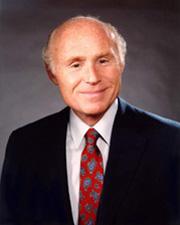 Sen. Herb Kohl (D-WI)
Legislative Activity
Stay on top of the latest movement without scrolling through every action
Senate amendment agreed to: Amendment SA 1626 agreed to in Senate by Yea-Nay Vote. 70 - 30. Record Vote Number: 207.
July 28, 2005
View full timeline
Senate amendment agreed to: Amendment SA 1626 agreed to in Senate by Yea-Nay Vote. 70 - 30. Record Vote Number: 207.
July 28, 2005
Roll call votes on amendments in Senate: Amendment SA 1626 agreed to in Senate by Yea-Nay Vote. 70 - 30. Record Vote Number: 207.
July 28, 2005
Considered by Senate. (consideration: CR S9217-9222)
July 28, 2005
Amendment SA 1626 agreed to in Senate by Yea-Nay Vote. 70 - 30. Record Vote Number: 207.
July 28, 2005
Senate amendment submitted
July 27, 2005
Senate amendment proposed (on the floor): Amendment SA 1626 proposed by Senator Reed for Senator Kohl.(consideration: CR S9114-9115; text: CR S9114)
July 27, 2005
Amendment SA 1626 proposed by Senator Reed for Senator Kohl. (consideration: CR S9114-9115; text: CR S9114) To amend chapter 44 of title 18, United States Code, to require the provision of a child safety lock in connection with the transfer of a handgun.
July 27, 2005
Votes
1 roll call on this amendment
Text
Proposed
[[Page S9087]]

-----------------------------------------------------------------------

Senate

PROTECTION OF LAWFUL COMMERCE IN ARMS ACT

The PRESIDING OFFICER. The Senate will now proceed to the
consideration of S. 397, which the clerk will report.
The assistant legislative clerk read as follows:

A bill (S. 397) to prohibit civil liability actions from
being brought or continued against manufacturers,
distributors, dealers, or importers of firearms or ammunition
for damages, injunctive or other relief resulting from the
misuse of their products by others.

The PRESIDING OFFICER. The majority leader.

Cloture Motion

Mr. FRIST. Mr. President, yesterday, as everyone knows, we invoked
cloture on the motion to proceed to this underlying legislation with a
vote of 66 to 32. Although we are now proceeding to the substance of
the bill, it has been made clear that the bill will be subjected to a
filibuster. While we respect a Senator's right to debate this
liability, it is apparent that a cloture vote will be needed to
ultimately bring this very bipartisan bill to a final vote. For that
reason, I send a cloture motion to the desk.
The PRESIDING OFFICER. The cloture motion having been presented under
rule XXII, the Chair directs the clerk to read the motion.
The legislative clerk read as follows:

Cloture Motion

We the undersigned Senators, in accordance with the
provisions of rule XXII of the Standing Rules of the Senate,
do hereby move to bring to a close, debate on the motion to
proceed to Calendar No. 15, S. 397: A bill to prohibit civil
liability actions from being brought or continued against
manufacturers, distributors, dealers, or importers of
firearms or ammunition for damages, injunctive or other
relief resulting from the misuse of their products by others.
Bill Frist, George Allen, Larry E. Craig, Craig Thomas,
Michael B. Enzi, Jeff Sessions, Kit Bond, Lamar
Alexander, Mitch McConnell, Sam Brownback, Tom Coburn,
Richard Burr, John McCain, Richard Shelby, Saxby
Chambliss, John Ensign, Chuck Hagel.

Mr. FRIST. Mr. President, this vote can technically ripen as early as
1 a.m., not tomorrow but the next day, Friday morning. I am not certain
at this point if we will vote then or later that morning. I will
continue and want to continue to consult with my colleagues on the
schedule.
As we just discussed on the Senate floor, we have a lot of business
to accomplish over the next several days. We have the energy conference
report, the highway conference report, the Interior bill, the veterans
health money attached, a number of nominations. Therefore, I hope that
when cloture is invoked, we can find a way to bring this bill to a
final vote so that we can expedite some of these other very important
issues.

Amendment No. 1605

Having said that, I now send an amendment to the desk and ask for its
consideration.
The PRESIDING OFFICER. The clerk will report the amendment.
The legislative clerk read as follows:

The Senator from Tennessee [Mr. Frist], for Mr. Craig,
proposes an amendment numbered 1605.

Mr. FRIST. Mr. President, I ask unanimous consent that the reading of
the amendment be dispensed with.
The PRESIDING OFFICER. Without objection, it is so ordered.
The amendment is as follows:

(Purpose: To amend the exceptions)

On page 10, line 5, strike ``or'' and all that follows
through line 16 and insert the following:
(v) an action for death, physical injuries or property
damage resulting directly from a defect in design or
manufacture of the product, when used as intended or in a
reasonably foreseeable manner, except that where the
discharge of the product was caused by a volitional act that
constituted a criminal offense then such act shall be
considered the sole proximate cause of any resulting death,
personal injuries or property damage; or

Mr. FRIST. I ask for the yeas and nays.
The PRESIDING OFFICER. Is there a sufficient second?
There appears to be a sufficient second.
The yeas and nays were ordered.

Amendment No. 1606 to Amendment No. 1605

Mr. FRIST. I now send a second-degree amendment to the desk.
The PRESIDING OFFICER. The clerk will report.
The legislative clerk read as follows:

The Senator from Tennessee [Mr. Frist] proposes an
amendment numbered 1606 to amendment No. 1605.

Mr. FRIST. Mr. President, I ask unanimous consent that the reading of
the amendment be dispensed with.
Mr. KENNEDY. I object.
The PRESIDING OFFICER. Objection is heard. The clerk will read the
amendment.
The legislative clerk read as follows:

(Purpose: To make clear that the bill does not apply to actions
commenced by the Attorney General to enforce the Gun Control Act and
National Firearms Act)

At the end, insert the following:
(vi) an action or proceeding commenced by the Attorney
General to enforce the provisions of chapter 44 of title 18,
United States Code, or chapter 53 of the Internal Revenue
Code of 1986.

The PRESIDING OFFICER. The Senator from Idaho.
Mr. CRAIG. Mr. President, the actions that have just taken place have
put us on S. 397, the Protection of Lawful Commerce in Arms Act.
Earlier this morning, I submitted for the Record some now 67
cosponsors, which demonstrates that this bill is clearly very
bipartisan legislation, supported by a Republican and Democrat majority
in the Senate.
The actions the leader has just taken to file cloture would allow the
cloture motion to ripen by as early as 1 a.m. Friday morning.
Amendments have just been filed by the leader, and we will begin the
process of debate on this important legislation.
With that in mind, if this bill and this debate seem familiar to any
of us,

[[Page S9088]]

it should, because the Senate debated a very similar measure a little
over a year ago. At that time, we had a full debate over a number of
days. It is worth noting that the Senate defeated every amendment
addressing the actual substance of the bill. However, opponents
succeeded in attaching a couple of unrelated poison-pill amendments
that ultimately caused the bill to fail.
The need for this legislation is very real. Over the course of
yesterday and today, some of us have expressed what we believe is the
urgency of this legislation. The Protection of Lawful Commerce in Arms
Act would stop junk lawsuits that attempt to pin the blame and the cost
of criminal behavior on businesspeople who are following the law and
selling a legal product. In fact, the one consumer product where access
is protected by nothing less than our Constitution itself is our
firearms, and that is exactly what is at stake today: the right of law-
abiding American consumers, American citizens, to have access to a
robust and productive marketplace in the effective manufacturing and
sale of firearms.
This bill responds to a series of lawsuits filed primarily by
municipalities to shift the financial burden for criminal violence onto
the law-abiding business community. These suits are based on a variety
of legal theories. We heard some of them expressed by opposition to
this bill earlier in the day seeking to hold gun manufacturers and
sellers liable for the cost of injuries caused by people over whom they
have no control--criminals who choose to use firearms illegally.
This is a bipartisan bill, as I mentioned. Let me acknowledge my
primary Democrat sponsor, Senator Max Baucus of Montana, and thank him
for his work on this initiative. Senator Baucus and I introduced this
bill in February, and more than half of the Senate, both Republicans
and Democrats, have now joined us since it was formally introduced in
its final form.
Earlier in the day, I inserted into the Record all of those who are
now cosponsors. This range of cosponsorship reflects extraordinary,
widespread support that crosses party and demographic lines and covers
the spectrum of political ideologies represented in the Senate. It
demonstrates a strong commitment by a majority of this body to take a
stand against a trend toward predatory litigation that impugns the
integrity of our courts, threatens a domestic industry that is critical
to our national defense, jeopardizes hundreds of thousands of good-
paying jobs of hard-working men and women across America, and puts at
risk the access Americans have to a legal product used for hundreds of
years across the Nation for lawful purposes such as recreation and,
most important, self-defense.
I have used the term ``junk lawsuits,'' and I wish to make very clear
to everyone listening to this debate that I do not mean any disrespect
in any way whatsoever to the victims of gun violence who might be
involved in these actions. Although their names are sometimes used in
these lawsuits, they are not the people who came up with the notion of
going after the industry instead of going after the criminals
responsible for the injuries or the loss of life of their loved ones.
That notion originated with bureaucrats, anti-gun advocates and the
lawyers who work with them.
Victims, including their families and communities, deserve our
support and compassion, not to mention our insistence on an aggressive
law enforcement effort that puts punishment where it ought to be
rendered--to the criminal.
In the nearly 6 years of the Bush administration, death by guns and
crime in which guns were used in the commission of that crime have
plummeted. Why? Because this Justice Department has gone after the
criminal and not the law-abiding citizen.
It is the criminal who acts illegally. It is the criminal who ought
to be prosecuted. But somehow, some who are involved in this movement
have a tremendously distorted idea that the person who produces a legal
product and sells that legal product somehow is responsible because
they just should have known that product might fall into the hands of a
criminal and might cost someone their life.
If those laws need to be toughened or if law enforcement efforts need
to be improved, then the proper source of help is legislators and
governments to ensure the tightening of the laws and not the courts and
certainly not law-abiding businesses or workers who had nothing to do
with those who were victimized by the criminal element of this country.
No. These junk lawsuits do not target the responsible party in those
terrible crimes. This is predatory legislation, looking for a
convenient deep pocket to pay for somebody else's criminal behavior,
and by every definition it therefore deserves to be called a junk
lawsuit. If one wants to stand on the floor and defend that kind of
action in the courts of America, so be it. I believe in the democratic
process. But Americans get it, they clearly understand it, and so do
Senators, and that is why now 67 Senators support this legislation.
These are junk lawsuits because they are driven for political motives
to hobble or bankrupt the gun industry as a way of controlling guns.
For decades, anti-gunners have come to the Senate floor or the House
with one scheme or one idea after another, and the American people,
based on what they believe strongly to be their constitutional rights,
have rejected this. Now the anti-gun community attempts once again to
come through the back door of the Congress by going in through the
front door of the courthouse. It simply has not worked, and it will not
work.
But there is another motive in mind. By definition, the legislation
we are considering today aims to stop lawsuits that are trying to force
the gun industry to pay for the crimes of people over whom they have no
control.
I used an analogy last year. I will use it again today. It is like
saying to GM, General Motors, or any car manufacturer that because
somebody buys their car and gets drunk and gets in that car and kills
someone out on the road, gee whiz, they should have known that a drunk
would drive that car, and therefore they should never have produced it,
and therefore they are liable. For years, I have always understood that
there are some in our society who say no one is responsible for their
action, no one should be held responsible for their action, and that is
an underlying core of the debate we are talking about or the issue we
are talking about today.
Let me stop a minute and make sure everyone understands the limited
nature of the bill. Some will argue it differently, but I would argue
those who argue it differently are trying to expand the definition of
what we believe to be very clear within the legislation. What this bill
does not do is as important as what it does do. This is not a gun
industry immunity bill. I think I have already heard that said since
the clock tolled 12 noon. This bill does not create a legal shield for
anybody who manufactures or sells a firearm. It does not protect
members of the gun industry from every lawsuit or legal action that
could be filed against them. It does not prevent them from being sued
for their own misconduct.

This bill only stops one extremely narrow category of lawsuits,
lawsuits that attempt to force the gun industry to pay for the crimes
of third parties over whom they have no control. We have tried to make
that limitation as clear as we possibly can and in several ways. For
instance, section 2(b) of the bill says its No. 1 purpose is:

to prohibit causes of action against manufacturers,
distributors, dealers and importers of firearms or ammunition
products and their trade associations for the harm solely
caused by the criminal or unlawful use or misuse of firearms
products or ammunition products by others when the product
functions as designed and intended.

We have also tried to make the bill's narrow purpose clear by
defining the kind of lawsuit that is prohibited. Section 5 defines the
one and only kind of action prohibited by this bill as follows:

[A] . . . civil action or proceeding or an administrative
proceeding brought by any person against a manufacturer or
seller of a qualified product, or a trade association, for
damages, punitive damages, injunctive or declaratory relief,
abatement, restitution, fines, or penalties, or other relief
resulting from the criminal or unlawful misuse of a qualified
product by the person or a third party. . . .

We have also tried to make the narrow scope of the bill clear by
listing specific kinds of lawsuits that are not prohibited. Section 5
says they include actions for harm resulting from defects

[[Page S9089]]

in the firearm itself when used as intended--in other words, a faulty
product--that is, product liability suits; actions based on negligence
or negligent entrustment; or breach of contract.
Furthermore, if someone has been convicted under title 18, section
924(h) of the U.S. Code or comparable State law--in plain English, that
means someone who has been convicted of transferring a firearm knowing
that the gun will be used in the commission of a crime of violence or
drug trafficking--that individual is not shielded from civil lawsuits
by anybody harmed by that firearm transfer.
I am not quite sure how much more clearly we can make the law.
Finally, this bill does not protect any member of the gun industry
from lawsuits for harm resulting from any illegal actions they have
committed. Let me repeat it. If a gun dealer or manufacturer violates
the law, this bill is not going to protect them from a lawsuit brought
against them for harm resulting from that misconduct. Section 5 further
explains that this includes, but is not limited to, the situation in
which these parties falsify the firearms records they are required to
keep under Federal or State law or knowingly fail to make appropriate
entries into those records or if they worked with others in making
false statements about the lawfulness of the selling of firearms.
You will hear arguments on the floor about certain gun dealers and
that we are now holding them harmless, even though on the surface of
the argument it appears they violated the law. Let me again say, as I
said, if in any way they violate State or Federal law or alter or fail
to keep records that are appropriate as it relates to their
inventories, they are in violation of law. This bill does not shield
them, as some would argue. Quite the contrary. If they have violated
existing law, they violated the law, and I am referring to the Federal
firearms laws that govern a licensed firearm dealer and that govern our
manufacturers today.
Another example of conduct that would not be shielded from a civil
lawsuit under this bill is the case in which the manufacturer or seller
aided, abetted or conspired with any other person to sell firearms or
ammunition if they knew or had reasonable cause to believe that the
purchaser intended to use those products for the furtherance of a
crime.
How clear can you get? If a manufacturer or a federally licensed
firearms dealer knew they were selling to somebody who had criminal
intent in mind for the use of the weapon, the firearm they just
purchased, they are in violation of the law and it does not protect
them. This is not a shield to do just that.
What I have listed for the convenience of my colleagues is all
spelled out in title V of the bill. For those who question it, read it.
If you don't understand it, get your lawyer and read it again because
we worked overtime to make this as clear as it possibly can be made.
Again, this is a rundown of the universe of lawsuits against members of
the firearms industry that would not be stopped by this narrowly
targeted bill.
What all these nonprohibited lawsuits have in common is that they
involve actual misconduct or wrongful actions of some sort by a gun
manufacturer, a seller or a trade association. Whether you support or
oppose the bill, I think you can all agree that individuals should not
be shielded from the legal repercussions of their own lawless acts. The
Protection of Lawful Commerce in Arms Act expressly does not provide
such a shield.
I am going to repeat this because some opponents continue to
mischaracterize the bill. My guess is, in the closing arguments on
Friday of this week, that mischaracterization will continue. This is
not a gun industry immunity bill. It prohibits one kind of lawsuit, a
suit trying to fix the blame of a third party's criminal acts or
misdeeds on the manufacturer or the seller of the firearm used in that
crime.
Even though this is a narrowly focused bill, it is an extremely
important one. The junk lawsuits we are addressing today would reverse
a longstanding legal principle in this country, and that principle is
that manufacturers of products are not responsible for the criminal
misuse of those products. You don't have to be a lawyer to know that
runaway juries and activist judges can turn common sense on its head in
a lot of cases, setting precedents that have dramatic repercussions and
are potentially devastating in their results.
If a gun manufacturer is held liable for the harm done by a criminal
who misuses a gun, then there is nothing to stop the manufacturers of
any product used in crimes from having to bear the costs resulting from
the actions of those criminals. So as I mentioned earlier, automobile
manufacturers will have to take the blame for the death of a bystander
who gets in the way of the drunk driver. The local hardware store will
have to be held responsible for a kitchen knife it sold, if later that
knife is used in the commission of a rape. The baseball team whose bat
was used to bludgeon a victim will have to pay the cost of the crime.
The list goes on and on.

Did that sound silly? Tragically enough, some lawyers and some
activist judges and some runaway juries have taken us in those
directions in the past. That is why we constantly, in the Congress,
talk about tort reform, trying to narrow it, trying to make it more
clear--still recognizing that law-abiding citizens have their rights
and should not in any way be jeopardized in the legal sense from their
constitutional right to go to court. At the same time, I don't think
any of us believed that the court system of America would be gamed the
way it has been gamed or that we would see the myriad of junk lawsuits
that are being filed today and the venue shopping that continues to go
on.
It is not just unfair to hold law-abiding businesses and workers
responsible for criminal misconduct with the products they have made
and sell, but this would also bring havoc to our marketplace. Hold onto
your wallets, America, because those businesses will have to pass those
costs directly on to the consumer if they plan to stay in business.
Worse, some of those businesses will not be able to pass on those costs
and still stay competitive. For some of them, this will mean layoffs,
and ultimate bankruptcies, and the closure of the manufacturer's door.
We have already seen this in some of the firearm industry. In fact,
these lawsuits have the potential to bankrupt the gun industry, even if
they are not successful.
How could that be? The sheer cost of litigation, the repetitive
filing of laws, the need to defend those lawsuits literally costs
hundreds of millions of dollars. It is important to keep in mind that
the deep pocket of the gun industry is not all that deep. In hearings
before the House of Representatives, experts testified that the sales
of the firearms industry taken together would not equal those of a
single Fortune 500 company.
Why would I say that? People think this is a monolithic, large
industry. It is not. It is a lot of small businesses, small
manufacturers. In other words, all of them combined in America today
would not equal one Fortune 500 company.
As of this year, it was estimated--and we can only estimate because
the cost of litigation is confidential business information--that these
baseless lawsuits have cost the firearms industry more than $250
million. Half of them have already been thrown out of court.
Furthermore, don't think these companies can pass the costs off to
their insurers because in nearly every case insurance carriers have
denied coverage.
The impact on innocent workers and communities is not the only
potential repercussion of these lawsuits. If U.S. firearms
manufacturers close their doors, where will our military and our peace
officers go to obtain their guns? As my colleagues know, the United
States of America is the only major world power that does not have a
government-run firearms factory. This is a little known fact but a
reality. Yet last year we purchased more than 200,000 small arms for
our soldiers, sailors, airmen, and marines. The very same companies
that supply our troops in the war on terrorism, both abroad and here at
home, are the targets of these reckless lawsuits that could force them
to close their doors.
Some would say: Oh, gee, we buy some of our arms already from foreign
countries.
Yes, we do. Does that mean that is where we should buy all of them;
that we should be dependent on foreign

[[Page S9090]]

countries for the supply of firearms to our military? Surely we do not
want foreign suppliers to control our national defense and community
law enforcement--not to mention the ability of individual American
citizens to exercise their second amendment-protected rights through
accessing firearms for self-defense, recreation or other lawful
purposes.
For all of those reasons, more than 30 States have laws on the books
offering some protection for the gun industry from these extraordinary
threats. Support has already grown in Congress to take action at the
Federal level. The House has passed this measure several times. The
Senate is now attempting to do so.
This would not be the first time Congress acted to prevent a threat
on an industry. Some would wring their hands and say: Oh, dare not,
dare not change the Federal law; dare not, in some way offer some
protection. But let me tell you this is not the first time, and my
guess is, with the courts and the trial bar where it is, it will not be
the last.
For example, there are a number of Members in this Chamber who were
serving in Congress when the General Aviation Revitalization Act was
passed barring product liability suits against manufacturers of planes
more than 18 years ago. Just a few years ago in the Homeland Security
Act, Congress placed limits on the liability of a half a dozen
industries, including the manufacturers of smallpox vaccine and the
sellers of antiterrorism technology.
These are only a couple of examples of a significant list of Federal
tort reform measures that have been enacted over the years when
Congress perceived a need to protect a specific sector of our economy
or our defense interests from the burdensome, unfair and, as I believe,
frivolous litigation of the kind we see today.
It is high time we act to stop this threat to our courts, our
communities, our economy, and, yes, to our defense.
I have heard some Senators talking about loading up this bill with
political amendments that have nothing whatsoever to do with the
legislation. Let me say right here and now these are killer amendments.
Many of them know that. That is why they are trying to place them.
I ask my colleagues to support the underlying legislation. It is well
written, it is thoroughly vetted with all of the interested parties. I
ask my colleagues to look at it as they have already looked at it--in a
very strong, bipartisan way. Here now in the Senate a supermajority,
Democrats and Republicans alike, supports this legislation. I hope they
would resist the kinds of amendments that are obviously intended to
drag this bill down once again. Some attempted it last year, and they
were successful in doing so. I hope those who have signed on as
cosponsors are sincere in their support of the bill, as I believe they
are, and they will allow us to move it through the process over the
next several days in a clean and effective way.
Our courts are supposed to be a forum to redress wrongs, not enact
political agendas. How many times has the anti-gun community been
rejected by the American public through the voice of their Senator or
through the voice of their Congress men and women? Time and time again.
And yet because of their political alignment and their philosophical
bent, they stay at the issue even though clearly and profoundly we have
described it as and believe it to be a constitutional right of an
American citizen to own a firearm. Well, because they have not been
successful at the doorsteps of Congress, they have turned to the doors
of the courtroom. Lawsuits are being filed. Lawsuits are being
rejected. Thousands upon thousands of dollars are used in legal fees to
prepare the arguments. New and inventive ways are approached: Let's try
this angle, let's try that angle. Surely we can get to the deep pocket.
I am also amazed at those who would not suggest that American
citizens are responsible for their own actions, and most assuredly the
criminal element ought to be. We have watched some administrations walk
one direction. But I tell you where this administration is. It believes
the criminal element ought to be prosecuted. And guess what happened in
America when we started prosecuting the criminal element and putting
them behind bars. Crime began to go down very rapidly. The streets of
America and the communities of America became safer places because
those who would violate the law and, more importantly, those who use a
gun in the commission of a crime get locked up. That is gun control in
the right sense. That is gun control that a majority of the American
people support and that the Congress has continually supported.
This legislation, as I have mentioned, is clear. It is well defined,
and it is narrow by its action. We believe that is why a bipartisan
majority now supports it and why it deserves to become the law of the
land, so we don't have venue-seeking, politically minded efforts to
ignore the criminal element in the zealous support or approach to gun
control but to go after the law-abiding citizen who either manufactures
the firearm or sells it under a Federal firearms license.
That is the essence of S. 397, and I hope as we work through this
bill, the clarity of that issue comes forward.
With that, Mr. President, I yield the floor.
Mr. REED. Mr. President, I ask unanimous consent to lay aside the
pending amendment and send an amendment to the desk.
Mr. CRAIG. I object.
The PRESIDING OFFICER (Mr. Thune). Objection is heard.
Mr. REED. Mr. President, I think the Senator from Idaho makes it very
clear what seems to be going on now. I heard a few moments ago the
majority leader's response to Senator Kennedy, saying there would be an
opportunity to present amendments, to debate this bill. I would also
note that prior to any other action, cloture was filed on this bill.
Mr. CRAIG. Will the Senator yield?
Mr. REED. I would be happy to yield.
Mr. CRAIG. Obviously, I have an amendment on the floor now, or I
should say an amendment that was filed by Leader Frist. Under
appropriate consultation, it is very possible there are a variety of
amendments that could come to the floor prior to the ripening of the
cloture motion. To now immediately move to that without consultation
with the floor leader, myself, is something I will object to, and the
Senator understands that. So let us not be tactical here. Let us work
and cooperate. I am very happy to look at any amendments----

Mr. REED. If I may reclaim my time----
Mr. CRAIG. The Senator might have, but with that, my objection still
stands until full consultation is brought, full cooperation is sought.
I thank you.
Mr. REED. Reclaiming my time, I thank the Senator.
This amendment has been shared with the majority. It has been
reviewed by the majority. We are not attempting to surprise anyone with
this amendment. It deals with child safety locks. In fact, it is an
amendment that was offered to the bill last year and passed
overwhelmingly. It is my intent to provide opportunity to discuss
issues with respect to gun legislation and to present them to the
Senate.
Again, I would note when the majority leader requested unanimous
consent to lay aside one of his amendments to offer another amendment,
no one on my side objected because in fact we thought we were
proceeding in good faith, that we shared amendments if we had an
opportunity to look at the amendments beforehand, that we could proceed
in an orderly and reasonable fashion. But I am a bit shocked. This
amendment has been with the majority for the last, I would suggest, 30
or 40 minutes. It is an amendment that was presented in substance
before to the floor. So I am a little bit surprised about the Senator's
reaction.
Mr. CRAIG. Will the Senator yield again?
Mr. REED. I would be happy to yield.
Mr. CRAIG. Last year this amendment was offered by Senator Boxer,
modified by Senator Kohl, and passed the Senate. We are examining the
amendment now. We have only had it for 30 minutes or less. The Senator
is absolutely right. And the amendment is substantively the same, but
there are some differences in it. We are analyzing to see what those
differences might be.
So, you see, there was a basis for my objection--until we clearly
understand it. I think the agreement the Senator

[[Page S9091]]

was speaking to was one based on the exact amendment of Senator Kohl of
a year ago. So let us examine what those changes might be in the
amendment and then there may be no objection on this side. But until
that time I believe we have adequate time here to resolve the issue,
and my objection would have to stand.
Mr. REED. Reclaiming my time, again, I appreciate the Senator's
comments with respect to the amendment, but once again I think we
provided you the opportunity to look at the amendment.
There are several issues here. The first issue is whether you think
it would be appropriate to support and vote for it, which presumptively
comes after debate. But the first issue is allowing us to offer the
amendment. You might very well object to the substance of the
amendment. You might very well urge our colleagues to reject it. I
respect that. But the right to deny the amendment since you object goes
against what the majority leader said in how we conduct this debate.
I will make a few comments now in general and I hope perhaps during
the course of my comments the review of the amendment would allow us to
formally offer it.
Again, there have been some comments about these junk lawsuits. These
comments might have some resonance in this Chamber, but I doubt if we
were talking to the widow of Conrad Johnson we would have the temerity
to say the suit she filed on behalf of the family was a junk lawsuit.
Or if you had a working man, someone sitting in his bus seat in the
early morning having a cup of coffee and reading the paper--and when I
read about that, it reminded me of what my father did every day as a
school custodian. He would get up in the morning, read the paper, have
a cup of coffee either at the school or someplace else, in the
kitchen--and then suddenly his life was ended by snipers, leaving a
wife and children. Then they find after the tragic incident the weapon
was obtained by the snipers because, in my view, of the
incontrovertible evidence of gross negligence, 230 or more weapons
misplaced by the dealer, not realizing that a teenage boy walked into
his gun shop and took a 3-foot assault weapon off the counter and
walked out. That is not negligence?
Oh, and, by the way, because we were able to stop this legislation
last year and because in that case the defendant recognized that if
they went to a jury of 12 Americans sitting and deciding whether they
were responsible in their actions, they settled.
That is not a junk lawsuit. Is it a junk lawsuit when two police
officers are called to a violent scene and find themselves in a
crossfire, find themselves critically injured, brought to a hospital,
given their last rites, and then it is discovered the weapon that
harmed them was purchased by a straw purchaser? Or that an individual
walked in with a female companion, pointed out the guns, bought 12 of
them at one time for cash, had her buy them because he could not pass a
weapons background check, jumped in a car, took off--in fact, so
obviously that the dealer called the ATF and said I took the money,
gave them guns, but watch out. Negligence.
Both those lawsuits would have been stopped by this legislation.
Those are not frivolous suits. Those are examples of people being hurt,
police officers, bus drivers, through the negligence of gun dealers and
gun manufacturers.
There is this constant refrain, the law is clear, the law is clear,
we can't blame someone else for criminal activities, when in fact the
law is quite clear on this point. I mentioned it before. What is the
law of the United States? Well, in terms of tort law these laws are
summarized, updated constantly in what is known as restatement.
Basically it is a catalog of different positions of the law. Everyone
knows it. Everyone coming to the floor, having passed a bar in one
State of this country, knows the restatement basically says what is the
settled law, the settled law with respect to criminal activity. I will
read it again.
Section 449 of the Restatement Second of Torts:

If the likelihood that a third person may act in a
particular manner is the hazard or one of the hazards which
makes the actor negligent, such an act, whether innocent,
negligent, intentionally tortious, or criminal does not
prevent the actor from being liable for harm caused thereby.

What does that mean? It means you have a duty to the public to take
certain steps, and if you don't take those steps, even if in the chain
of causation there is a criminal act by another party, you are still
liable--not for that criminal act, you are still liable because you
failed in your duty.
What this bill does is--this great talk about responsibility--it says
everyone is responsible except the gun industry. Automobile
manufacturers are responsible. In fact, when we get in our vehicles and
drive home tonight, we are all going to benefit because years ago under
the laws of tort and negligence, automobile companies were forced to
improve the safety of their vehicles for the protection of the public.
Now the logic that, oh, they can't be held liable for this because no
one intends to crash the car, well, that is right; no one intends to
crash an automobile, but if the design of the automobile is defective,
if there are safety precautions that could be taken, those have to be
adopted because they have a duty to the public to provide a safe
product, to avoid obvious dangers.
This is a situation in which we have the obligation to take steps. So
this notion about criminal intervening activities is not the law. That
is not what the black letter law of this country says. The idea that
manufacturers are not subject to the common obligation or duty to
provide safe products, even if they are not required by statute, that
is not the law either.
There is also a deliberate attempt to confuse two very different
principles. We have criminal laws, we have regulations, we have
statutes that require certain behavior. They define a range of
activities that are impermissible. What this bill says is, if you
violate a law, one of those aspects of impermissible behavior, yes,
maybe you can sue a gun manufacturer. But there is a whole other range
of activities--accidents, unreasonable behaviors--that are not defined
by law. They are not the criminal, but they do involve opportunities
under civil litigation to go to court and say this person acted
unreasonably. They did not technically violate a statute. They acted
unreasonably.
This statute essentially says, by and large, you can show they
violated a very narrowly drawn legislative enactment or statute--they
failed to fill out a record, et cetera--yes, maybe you can go to court.
What about all the cases we have talked about, the cases of the straw
purchaser where weapons were sold and, obviously, to the casual
observer, in a very peculiar way. Why didn't that fellow, I believe, in
South Carolina, who is buying the pistols that eventually wounded
officers Lamongello and McGuire, why didn't he offer his name? He
obviously was picking out the weapon. Why did they buy 12 at one time?
There is no law against buying 12 weapons at one time. Isn't it curious
that would happen?
Again, we have a situation where this legislation has been carefully
worked out to stop these lawsuits. Not the frivolous lawsuits, all
lawsuits except under very narrow circumstances. And those
circumstances do not seem to apply to the cases that have been filed.
The exceptions would not have kept alive a suit by Officers Lamongello
and McGuire or by the families of the victims of the Washington, DC,
snipers or in the situation of Danny Guzman and Kahr Arms. That is more
than coincidental. It is very deliberate.
Again, as I mentioned before, this legislation can't be the panacea
for the gun industry, the one touted by the NRA, as we have to have
this on one hand, and then allow all the good suits there, the really
good suits, the ones, in fact, that have been filed. And it is not. It
is designed to stop practically every attempt to be compensated for the
negligence of a manufacturer, a gun dealer, or a trade association.
All of the particular aspects of the bill provide some window
dressing--it sounds good, section XYZ of the United States Code--but
when it doesn't work in practice, that is all it is. This explosion of
suits, where are they? A small number of suits filed in this country
involve anything covered by this legislation. The cost to the industry?
This cost goes up $50 million every day we are here talking about it.

[[Page S9092]]

What we know for a fact is that the industry has pooled $100 million
to protect themselves, preemptively, to ensure that the communications
are covered by the attorney-client privilege, to ensure that doctors
are all centralized so they cannot easily be accessed because of
attorney-client privilege. They are using our system of civil justice
in the courts very well to protect themselves. They are unwilling to
let others use the same devices to protect themselves.
This great surge of lawsuits, as was indicated before many times in
the Senate, financial reports filed with the SEC, many of the companies
are privately held so only few report publicly, indicate to their
shareholders there is no material financial risk involved with these
suits by municipalities or individual litigants. The litigation costs
out of pocket for one of these publicly reporting companies is about
$4,500 in the last several months. Hardly a crisis.
And then there is the suggestion that our defense will be imperiled.
As I pointed out in my opening remarks, voluntarily the Defense
Department is contracting with foreign manufacturers. It is not because
of lawsuits. In fact, I don't know what the status is of the civil law
in Europe, but I would be surprised if it was more lenient than our
laws at present, but they are doing it because they want better
weapons.
I can recall as I entered the Army in 1967, the Colt .45 automatic
was the side arm of the U.S. Army and had been since the Philippine
insurrection in 1903. Now it is a Beretta Italian model produced by an
American subsidiary, wholly owned subsidiary of an Italian company, and
not, I don't believe, by a national armory of the Italian Government.
They are a privately held company.
This notion that this has anything to do with the national defense is
unsupported, unsubstantiated by any fact and by the behavior of the
Pentagon. They are not coming to us and asking us for this bill so they
can keep alive the necessary firearms manufacturers in the United
States. They have made a conscious choice for many reasons to go
overseas to buy these weapons.
Again, I am in a situation where we are attempting to reach into the
courts of each State of the United States and tell them that their
legislatures--that propound many of these rules with respect to civil
liability--cannot do that. What can be more antidemocratic than that?
Then, going to the Commonwealth of Massachusetts and saying: You know,
those laws and rules you passed about liability? Can't do that. We
don't like it. Or the gun industry doesn't like it.
The case most frequently cited to suggest a crisis is the result of
the deliberations of the Washington, DC, council that passed a strict
liability bill. That bill was upheld by the DC Court of Appeals. The DC
Court of Appeals did not create a rule of strict liability. They said,
essentially, the democratic process is working. Elected representatives
of the people decided that would be the rule. As a court we cannot step
in and overturn that. That is democracy. Of course, we are deciding we
can step in and overturn the rules of 50 States. That is
antidemocratic.
This legislation is going to deny people who have been hurt the right
to bring their case. They might not succeed. As my colleagues have
pointed out, many of these cases have been turned down because they
could not show that the duty owed to the public was violated by the
particular manufacturer or gun dealer. But they have the right now to
make that showing. We are taking that right away from them. This right
is something that I would think we all would protect, not try to
circumscribe and deny, and you cannot go into court with a theoretical
complaint saying: I do not like the law; make new law, Your Honor. You
have to have a case. You have to show harm. You have to show what the
duty of the defendant was, how that duty was breached, and how that
breach caused the harm.
That is the way our system works. But not after this legislation
passes. You can have the duty, you can have a breach of that duty, and
you can have grievous harm. But the victim cannot go to court. It is
not about an avalanche of lawsuits. There are a minuscule number of
suits filed in this regard. It is not about courts out of control. In
some sense it is Congress out of control, saying to State governments,
we don't care what the State rules are, we are making the rule.
We should be able not only to talk about but to offer amendments. I
hope in the intervening time we have had to analyze the amendments that
we could offer amendments and talk about them. I hope that is the case.
I yield the floor.
The PRESIDING OFFICER. The Senator from Idaho.
Mr. CRAIG. Mr. President, I will submit for the Record a letter from
Beretta U.S.A. Corporation that the Senator just mentioned as an
Italian subsidiary, fully owned U.S. corporation. It is a significant
letter because it effectively refutes almost all of what the Senator
has said. I say that in this respect. It is true everything the Senator
has said, and that is not in dispute as it relates to who Beretta is
and what they do. They make the standard sidearm for U.S. Armed Forces,
and they have had a long-term contract right now to supply this pistol
to our fighting forces in Iraq. These pistols have been used
extensively in combat during the current campaign, just as they have
been used since the adoption of the Armed Forces in 1985.
Beretta U.S.A. also supplies pistols to law enforcement departments
throughout the United States, including the Maryland State Police, Los
Angeles City Police Department, and Chicago Police Department.
But here is what is significant about Beretta. What Beretta says is
exactly what the Senator refuses to recognize. The decision by the
District Court of Appeals to uphold the DC strict liability statute as
they have in the case of DC v. Beretta U.S.A. has the likelihood of
bankrupting not only Beretta U.S.A. but every manufacturer of
semiautomatic pistols and rifles since 1991.
The letter to this administration, to Vice President Dick Cheney,
goes on to say:

There are hundreds of homicides committed with firearms
each year in D.C. and additional hundreds of injuries
involving criminal misuse of firearms. No firearm
manufacturer has the resources to defend itself against
hundreds of lawsuits each year and, if that company's pistol
or rifle is determined to have been used in a criminal
shooting in the District, these companies do not have the
resources to pay the resultant judgment against them in which
they would have no defense if the pistol or rifle was
originally sold to a civilian consumer.

That is the essence of a lawsuit that has just been decided in the
District.
Mr. REED. If the Senator will yield, I notice you read the letter,
but the subject of that letter is strict liability, which in layman's
terms--and I will consider myself a layman--means that there is no real
judgment about the behavior of the defendants; that if they can prove
it was a weapon manufactured by Beretta, and it was involved in a
crime, they would be liable without a showing of duty or negligence and
whether they took rational and reasonable steps. That is what strict
liability is.
There is a difference between strict liability and negligence. The
legislation we are considering is not about strict liability alone. It
is about negligence. It goes way beyond that letter. If we were
debating legislation that said essentially a company may not be held
strictly liable for X, Y, and Z, this would be a different debate
entirely.
This legislation goes way beyond strict liability. It says that
negligence cases, those that you must show that, in fact, the
manufacturer or the dealer had a duty and unreasonably failed to
perform that duty, that is what you have to show. In fact, I think I
accurately represented what was in the letter.

Mr. CRAIG. I did not say you didn't.
Mr. REED. I appreciate that. I do. But the point is we are taking a
legal theory of strict liability, which they are upset about,
obviously, and concerned about, but it does not translate to this bill.
None of these cases I talked about--Lemongello or the case with respect
to Guzman--is arguing these manufacturers or sellers are strictly
liable. They are saying, essentially--now there might be other cases--
but they are saying, essentially, they had a duty, they were negligent.
This legislation we are debating today would wipe away their rights
to make a negligence claim. So I agree entirely with the letter in
terms of its accuracy. That is what they are talking about. They are
concerned about it.

[[Page S9093]]

Frankly, if I were the general counsel of Beretta, I would be
concerned about it. It might not move me to do the same thing they are
suggesting. But we have to be very clear about this legislation, which
goes way beyond the strict liability. Again, if we were talking about
limiting strict liability suits, this would be an entirely different
debate. I do not think I would necessarily agree, but certainly I would
be looking at an almost entirely different subject matter.
I thank the Senator for being extremely kind in yielding me time and
also being extremely accurate in summarizing my views.
Mr. CRAIG. Mr. President, I thank my colleague.
Let me read another paragraph from that letter, which I think clearly
spells out the fear that my colleague would wish to step aside from and
argue that is simply not the case. He is dealing with a strict
liability statute.
This paragraph says:

Passed in 1991, the D.C. statute had not been used until
the District of Columbia recently filed a lawsuit against the
firearm industry in an attempt to hold the firearm makers,
importers and distributors liable for the cost of criminal
gun misuse in the District. Although the Court of Appeals
(sitting en banc in the case D.C. v. Beretta U.S.A. et al.)
dismissed many parts of the case, it affirmed the D.C. strict
liability statute and, moreover, ruled that victims of gun
violence can sue firearm manufacturers simply to determine
whether that company's firearm was used in the victim's
shooting.

Now, does that take away the costs involved in the preparation, the
hundreds of millions of dollars that are now being spent? No, it does
not. This was a frivolous lawsuit from the beginning. It was clearly
intended. And that is what the district court said. The District of
Columbia did not hide it. They were after the industry because they
believed the industry had produced the gun that the criminal used in
the commission of a crime.
So it goes on. I submit this letter for the Record. I think the
letter stands on its own. It clearly affirms why we are here on this
floor debating S. 397 and the importance of this legislation.
Mr. President, I ask unanimous consent that this letter be printed in
the Record.
There being no objection, the material was ordered to be printed in
the Record, as follows:

Beretta U.S.A. Corp.

Accokeek, Maryland, May 11, 2005.
Hon. Richard B. Cheney,
Vice President of the United States, Washington, DC.
Dear Mr. Vice President:  A few weeks ago, the Washington,
D.C. Court of Appeals issued a decision supporting a D.C.
statute that holds the manufacturers of semiautomatic pistols
and rifles strictly liable for any crime committed in the
District with such a firearm.
Passed in 1991, the D.C. statute had not been used until
the District of Columbia recently filed a lawsuit against the
firearm industry in an attempt to hold firearm makers,
importers and distributors liable for the cost of criminal
gun misuse in the District. Although the Court of Appeals
(sitting en banc in the case D.C. v. Beretta U.S.A. et al.)
dismissed many parts of the case, it affirmed the D.C. strict
liability statute and, moreover, ruled that victims of gun
violence can sue firearm manufacturers simply to determine
whether that company's firearm was used in the victim's
shooting.
It is unlawful to possess most firearms in the District
(including semiautomatic pistols) and it is unlawful to
assault someone using a firearm. Notwithstanding these two
criminal acts, neither of which are within the control of or
can be prevented by firearm makers, the D.C. strict liability
statute (and the D.C. Court of Appeals decision supporting
it) will make firearm manufacturers liable for all costs
attributed to such shootings, even if the firearm involved
was originally sold in a state far from the District to a
lawful customer.
Beretta U.S.A. Corp. makes the standard sidearm for the
U.S. Armed Forces (the Beretta M9 9mm pistol). We have long-
term contracts right now to supply this pistol to our
fighting forces in Iraq and these pistols have been used
extensively in combat during the current campaign, just as
they have seen use since adopted by the Armed Forces in 1985.
Beretta U.S.A. also supplies pistols to law enforcement
departments throughout the U.S., including the Maryland State
Police, Los Angeles City Police Department and to the Chicago
Police Department. We also supply firearms used for self-
protection and for sporting purposes to private citizens
throughout our country.
The decision of the D.C. Court of Appeals to uphold the
D.C. strict liability statute has the likelihood of
bankrupting, not only Beretta U.S.A., but every maker of
semiautomatic pistols and rifles since 1991. There are
hundreds of homicides committed with firearms each year in
D.C. and additional hundreds of injuries involving
criminal misuse of firearms. No firearm maker has the
resources to defend against hundreds of lawsuits each year
and, if that company's pistol or rifle is determined to
have been used in a criminal shooting in the District,
these companies do not have the resources to pay the
resultant judgment against them--a judgment against which
they would have no defense if the pistol or rifle was
originally sold to a civilian customer.
When the D.C. law was passed in 1991, it was styled to
apply only to the makers of ``assault rifles'' and
machineguns. Strangely, the definition of ``machinegun'' in
the statute includes semiautomatic firearms capable of
holding more than 12 rounds. Since any magazine-fed firearm
is capable of receiving magazines (whether made by the
firearm manufacturer or by someone else later) that hold more
than 12 rounds, this means that such a product is considered
a machinegun in the District, even though it is semiautomatic
and even if it did not hold 12 rounds at the time of its
misuse.
The Protection of Lawful Commerce in Arms Act (S. 397 and
H.R. 800) would stop this remarkable and egregious decision
by the D.C. Court of Appeals. The Act, if passed, will block
lawsuits against the makers, distributors and dealers of
firearms for criminal misuse of their products over which
they have no control.
We urgently request your support for this legislation.
Without it, companies like Beretta U.S.A, Colt, Smith &
Wesson, Ruger and dozens of others could be wiped out by a
flood of lawsuits emanating from the District.
This is not a theoretical concern. The instrument to
deprive U.S. citizens of the tools through which they enjoy
their 2nd Amendment freedoms now rests in the hands of trial
lawyers in the District. Equally grave, control of the future
supply of firearms needed by our fighting forces and by law
enforcement officials and private citizens throughout the
U.S. also rests in the hands of these attorneys.
We will seek Supreme Court review of this decision, but the
result of a Supreme Court review is also not guaranteed. Your
help in supporting S. 397 and H.R. 800 might provide our only
other chance at survival.
Sincerest and respectful regards,
Jeffrey K. Reh
General Counsel and Vice-General Manager.

Mr. CRAIG. Mr. President, I yield the floor.
The PRESIDING OFFICER. The Senator from New Jersey.
Mr. CORZINE. Mr. President, I ask unanimous consent to set aside the
pending amendment and call up amendment No. 1619, if possible.
The PRESIDING OFFICER. Is there objection?
Mr. CRAIG. Mr. President, reserving the right to object, we are going
to make every effort, over the course of today and tomorrow, to screen
the amendments that are coming forward because there is a pending
amendment on the floor that would have to be set aside. We are looking
at the Senator's amendment now. He has just submitted it to us. Once we
have analyzed it, I will be happy to get with him to determine whether
I feel comfortable or we feel comfortable with that amendment and go
forward.
So at this time, clearly, I appreciate the Senator's sincerity, but I
would have to object to the setting aside of the pending business on
the floor, which is the amendment offered by the majority leader.
The PRESIDING OFFICER. Objection is heard.
The Senator from New Jersey.
Mr. CORZINE. Mr. President, I ask the distinguished Senator if I
might be able to understand the principles that would be involved in
deciding whether there are particular avenues of exploration to make
sure that this amendment is acceptable going forward? How would we look
at this?
Mr. CRAIG. If the Senator will yield, Mr. President.
Mr. CORZINE. Certainly.
Mr. CRAIG. Mr. President, the rulings of the Senate. There is pending
business before the Senate. It would take unanimous consent to set
aside the pending business to go on to other business. So that is the
circumstance we are involved in at this moment. And defending my right
to the floor and the amendment before the floor, I am simply upholding
that right to the rules of the Senate.
The leader has said, most sincerely, that we would examine all the
amendments that are brought forth to determine if there are some that
we can agree on, that ought to go forward, that fall, I think, into the
conscript of those of us 67 Senators who are the supporters of this
legislation and who would do so. But now it is the rules of the Senate
that cause me to take the action I have taken.

[[Page S9094]]

Mr. CORZINE. Mr. President, I appreciate the Senator's candor. I hope
we will be able to bring up my amendment, which will protect the rights
of law enforcement officers who are victimized by gun violence to get
justice through the American legal system.
I would note the presence of my colleague from the State of New
Jersey in the Chamber, who has been a remarkable advocate for law
enforcement and for the safety and security of people in our community.
This past Monday night, I missed a vote on the floor of the Senate
because I went to a wake for a police officer, Officer Reeves, who was
shot on the streets of Newark by a gang member. The gun that was used
has not yet been traced to find out whether it was trafficked in the
illegal or black market, or whether it was bought by a straw purchaser.
But there is one thing that is certain--there were five children
sitting in the pew with their mother at that wake, all under the age of
11. Gun violence is real. The amendment I would like to bring up--which
I appreciate the rules of the Senate and respect the judgment of the
Senator from Idaho--but the Lemongello amendment I would like to offer
to the gun immunity bill is about protecting police officers on the
street and giving them the right to get justice in a court of law. If,
by unfortunate circumstances, they are the victims of gun violence, we
have the right in the State of New Jersey, within the legal system, to
call to account those who have wrongfully allowed guns to get into the
hands of criminals.
In the case of Detective Lemongello, 11 guns were sold to a gun
trafficker out of a gunshop--11 guns. Why does one person happen to
need 11 guns? These guns were bought by a straw-purchaser for a career
criminal, who then put the guns in a car and drove them to New Jersey,
where one was sold to the criminal who shot Detective Lemongello in
Orange, NJ.
That gun was turned on this gentleman shown in this picture,
Detective Lemongello, just as a gun was recently turned on the young
police officer whose wake I recently attended in Newark on Monday
night, Officer Dwayne Reeves. Officer Reeves was 31 years old, and he
was married with five children.
I believe in the constitutional right of individuals to bear arms
under circumstances that will protect the public. I have no argument
with that. But I do not think there is a constitutional right to put
guns into the hands of criminals who attack police officers and other
innocent victims in our country.
I represent a State where crime rates are going down, but murder
rates are going up because guns are freely available among gangs on the
streets in our communities. This is completely unacceptable. And to
allow gun trafficking to continue on, without giving the victims of gun
violence the right to seek justice in a court of law, is just plain
wrong. It should be enough for any individual with common sense to say:
Enough is enough.
Prohibiting civil liability actions as this bill does--and I
recognize that some may argue about limited exceptions to the general
immunity given to the gun industry in this bill--would make it next to
impossible for Detective Lemongello, his partner Officer McGuire, or
the family of Officer Dwayne Reeves to have their day in court, to seek
and receive justice through the American legal system.
So again, the purpose of my amendment is to protect the rights of law
enforcement officers. I understand that this bill is going to pass
with, I understand, 61 cosponsors. But I hope my colleagues will
understand that, at a minimum, law enforcement officers should be
permitted to bring lawsuits against culpable gun dealers and
manufacturers.

In the Lemongello case, actually, the people who sold the guns
recognized their own mistake, and settled with Detective Lemongello and
Officer McGuire. They were able to reach this settlement because
Congress did not pass this bill last year, which would have given the
gun dealer immunity and removed these lawsuits from the courts.
Now, what's more, the gun dealer who sold the gun to the criminal who
shot Detective Lemongello and Officer McGuire, along with several other
purveyors of guns in that West Virginia city, changed their policies.
These gun dealers now sell one gun at a time as a result of this
lawsuit and they no longer make bulk sales.
So this is a real issue. This is not just a debate. There are people
dying because we are not doing the right thing. There are lots of
forums where we can make this case, and we will continue to, those of
us who care about public safety, who want fewer guns on the streets,
and who care about accountability.
It is hard for me to understand this legislation as it relates to
States rights, in the sense that State legislatures, both Republican
and Democratic, have supported the right of victims of gun violence to
have access to the courts.
So this is my view, and I am only one Senator, but it is heartfelt.
My opposition to this bill and my support for this amendment comes in
the context of the real problems and the real tragedies that will occur
if we do not have the right checks and balances in the system, if we
take away the right of innocent victims to go to court when they are
wronged.
I understand that this bill will pass but I am asking all my
colleagues to, at the least, support this amendment to protect the
brave men and women in uniform who risk their lives to protect the
citizens of our country every single day--people like Detective
Lemongello, Officer McGuire, and Officer Reeves.
I yield the floor.
The PRESIDING OFFICER. The Senator from Alabama.
Mr. SESSIONS. Mr. President, I thank the Senator from New Jersey and
will share a little personal perspective.
I have been in law enforcement for the better part of my professional
career as a prosecutor. Some of my best friends are law enforcement
officers. I have stood shoulder to shoulder with them in prosecuting
cases. I know the risks they undertake to carry out their duties. I
believe in what they do, and I believe they should be supported.
These law enforcement officers are not telling me that if a criminal
murders one of their brothers or sisters, that they want to sue Smith &
Wesson. The thought does not cross their mind. They are concerned that
if they catch the criminal who did it, that it is likely to be 15 or 20
years before the litigation and prosecution is over. If they are found
guilty and sentenced to death--if the law provides for it, they should
be--they get upset when it never seems to happen, and years and years
and years go by. That disrespects police officers.
It seems to me some of the same people who are talking so much about
defending police officers are not as aggressive as they should be on
some of these issues that really mean much to them.
I would say that I think, on the Lemongello case that has been
referred to, based on my experience and understanding of the law as a
prosecutor in the Federal court, as a U.S. attorney who prosecuted
individuals under Federal laws involving this, you cannot sell a
firearm to a ``straw'' person who is holding it to move it to another
person. And if you have reasonable evidence to believe the person you
are selling it to is a ``straw'' person, and it is going to someone
else, then that someone else must fill out all the forms, put their
name on it, and qualify to receive the weapon. And if you do that, and
sell the firearm under those circumstances to someone who is not the
true purchaser, you are not only subject to a lawsuit under this bill
for civil damages, but you are subject to criminal prosecution as
violating a Federal law.
I have prosecuted people for that. I have even had the responsibility
to prosecute a gun dealer for not accurately handling these kind of
matters. If it is a crime, there is clearly a basis to sue the gun
seller. But you don't want to sue the manufacturer off in Massachusetts
or wherever they are making the gun. If a seller irresponsibly sells it
or violates a law in selling a weapon, you don't sue the manufacturer.
They don't become an insurer for criminal acts.
That is what we are trying to do here, to pass some legislation that
does nothing more than restore the classical understanding of American
civil liability. Who should be sued and under what

[[Page S9095]]

circumstances should they be sued? If they sell 11 guns and they don't
make them comply with the waiting requirement, if they don't get the
proper identification from the person who is actually buying the gun,
then they have aided and abetted in getting the gun to someone
illegally. That is something for which they can be prosecuted and sued
under this legislation. What we are talking about is abusive lawsuits
where people are being held liable for criminal intervening acts. That
is not a principle of American law.
People say: Enough is enough. We just have to do something.
What do you mean we have to do something? We are the legislative
branch. We can consider laws if there are enough votes to pass them.
But that doesn't mean we allow improper lawsuits to go forward. Senator
Craig just read the letter from Beretta. One city, Washington, DC, if
its laws are allowed to stand, which make gun manufacturers liable
strictly for every crime committed by a criminal in DC, it will
bankrupt every gun company in America. One city can do that. And these
companies sell guns to our police officers. They sell guns to our
military people. They are an important part of our American economy.
Are we going to now buy our guns from foreign companies? We are not
going to have any left in the United States that can survive this flood
of lawsuits. It is a serious matter.
The bill is carefully crafted. That is why the Democratic leader,
Senator Reid, and former Democratic leader, Senator Byrd, and others
are cosponsoring this bill. It has been here for several years. It has
been reviewed. The loopholes in it have been examined and closed. It
has gained support. Now we have a bill that should have already been
passed.
I find it passing strange that our colleagues who filibustered a
motion to proceed to consider the bill--they filibustered that and
delayed this process over a day on that issue alone, when we could have
already had the bill up, debated, and voted on. The votes are here to
pass it. Let's move forward and get it done. It is quite odd that our
colleagues would complain about wasting time on the bill. They are just
unhappy because they don't have the votes to defeat it up or down. They
don't have the votes to sustain a filibuster. They are conducting
delaying tactics that make this legislation that is needed, that has
strong bipartisan support, cost more days and more hours of the
Senate's time than it ought to.
I wish to share an overall perspective on gun law enforcement in
America. Back when I was a U.S. attorney, I came to believe that we
should aggressively prosecute criminals who utilize guns during the
course of criminal activity, that felons ought not to possess firearms.
Both of these have been in our Federal law for many years. We enhanced
penalties. Not too many years ago, in the 1980s, they made it a
mandatory 5 years in jail, 60 months without parole, for anybody to
carry a firearm during the commission of a Federal felony or any
felony. That is a strong tool. I believe we ought to prosecute those
cases because I am convinced that a lot of the murders in this country
are caused by drug dealers and gang members carrying guns around as
they do their criminal work. And if somebody crosses them, they pull
out a gun and shoot them, and people get killed.
Let me say this first: Most Americans are not murderers. Most
Americans are not criminals. Most Americans who have guns--and most
Americans do have guns--are law-abiding, decent, peaceful citizens.
They are not ever going to murder somebody. This is some sort of myth
out there that we are going to fill up the jails if we enforce these
laws. There are not that many people out here trying to kill somebody
or commit crimes carrying firearms. That is a hardcore group of
criminals who deserve to be targeted.
I created my own program called ``project trigger lock'' in the
1980s. I created a newsletter on it. We sent out news to our sheriffs
and our police chiefs about these kind of crimes and the policies of my
office to prosecute cases that they may be working on involving these
kind of criminals. We enhanced our prosecutions.
Then I was elected to the Senate. I come in here in the middle of the
1990s. All I heard is, we have to pass more laws to crack down on
innocent people who own guns, people who don't commit crimes. They are
the ones for whom they want to make it more difficult. They want to
constrict the constitutional right to keep and bear arms through any
number of devices. At that time, it was thought to be politically
popular, that we would just keep voting more and more restrictions on
private ownership of guns. Pretty soon, I guess they thought people
would just give up and Americans would capitulate and not stand up for
their right to keep and bear arms. But it didn't happen that way. The
American people got their back up on it.
The politicians are beginning to hear it now, and the people expect
to be able to maintain their constitutional right to have a firearm.
That is just what has happened.
As all this happened--and I am in the Senate--I am thinking, This
isn't going to affect crime. Ninety percent of convictions in Federal
firearms cases have to do with using a firearm or carrying a firearm
during the commission of a felony and the possession of a firearm after
having been convicted of a felony. Those are the bread-and-butter
cases. Many of them are being brought. And when you effectively enforce
justice, just those two laws--and there are many others, such as
machine guns and other kinds of sawed-off shotguns--that is a common
case that used to be prosecuted, and I prosecuted lots of them. I
personally tried sawed-off shotgun cases. I personally tried and
prosecuted cases where the serial number had been erased from a
firearm. It is a crime to erase it. It is a crime to sell or to carry a
firearm that has a serial number erased. It is a crime to transfer a
firearm to somebody else that has the serial number erased. We have all
kinds of laws. It is a crime to go to a gun dealership and provide any
false statement on a document that you have to sign before you get a
firearm or to violate any of the myriad of laws out there.

What I am saying again is that the most common cases are the
possession of a sawed-off shotgun, carrying of a firearm during a
criminal offense, or possession of a firearm after having been
convicted of a felony. For the rest of your life, unless your
disabilities are removed, if you are convicted of a felony, you cannot
be allowed to possess any firearm, even to go hunting. That really
galls some people, but that is the law. We enforce that. It is enforced
right now in Federal court.
So we had all these cases. And the other side, President Clinton and
Vice President Gore, was declaring that if you did not support all
these new restrictions on legitimate ownership of guns--these laws and
regulations that they were putting up, one right after another; as soon
as one passed, they would come up with another one--then you didn't
believe in law enforcement, you didn't believe in fighting crime, that
you were allowing murders to take place, that you didn't love children.
We heard all that.
I went down to the Department of Justice to pull their statistical
book. I have seen the statistical book. I used to get it when I was
U.S. attorney. It would show the number of prosecutions in every
category of crime. What did I find? That under President Clinton's
Attorney General Reno, Department of Justice gun prosecutions had
declined rather significantly. At the same time they were accusing
Members on this side of being soft on gun crimes and not supporting
efforts to protect the innocent from criminals and all of these things,
they were reducing the number of Federal prosecutions for gun crimes. I
raised that in hearing after hearing after hearing. By the time the
Clinton administration was leaving office, the numbers had picked up a
little bit.
President Bush came in. At the first hearing, I asked new Attorney
General John Ashcroft: Are you going to make it a priority of the U.S.
Department of Justice to increase the number of gun prosecutions in
this country? Attorney General Ashcroft said: Yes, that is my mandate.
That is what the President wants. That is what I believe in, and we are
going to do it. And prosecutions have gone up. Murders continue to
decline. That is one of the more remarkable things that has happened.
We can celebrate. Murder and violent crime have been on a period of
decline. I am absolutely convinced that one of

[[Page S9096]]

the reasons that has occurred is because of the steadfast, consistent,
tough prosecution of criminals who carry guns, either former criminals
or criminals while they are conducting their crimes on the streets. I
believe it works. In fact, it is known throughout the criminal
community that if you carry a firearm during drug-trafficking offenses,
if you carry a firearm during any other kind of crime you are
committing, you are likely to go to Federal court to be tried by a
Federal prosecutor. And in addition to the sentence you get for the
underlying crime you committed, such as selling drugs or robbery or
burglary, you get whacked by another 5 years in jail without parole. If
you carried a machine gun, a fully automatic weapon, that is 20 years
consecutive without parole. It is goodbye, so long, throw away the key.
You are exiled from our community. That is what happened.
During the Clinton administration, a very fine U.S. attorney in
Richmond began to drive this issue. He called it ``Project Exile.'' He
put out the word in the street. They had billboards. They put up signs.
If you are convicted of carrying a gun during a crime--you are a felon
and you carried a gun--we will prosecute you. You will be guaranteed a
long time in jail without parole. You will be sent off to a Federal
institution, maybe in a distant city. That is why he called it
``Project Exile.'' The violent crime rate in Richmond plummeted. They
did what they said they were going to do. They prosecuted those cases.
All I am saying is, with great sincerity, based on my personal
experience and a fair analysis of what has happened out there, let's
continue to be aggressive with these prosecutions.
Let's not let up. Let's make sure that even more people understand
with crystal clarity that if they are a criminal and they are out using
a gun in the course of their work, or carrying one as they go about
their business, they will be prosecuted. And when they are prosecuted,
they will not only be convicted, but they can be assured they are not
going to get probation, some sort of halfway house, a couple of months
on probation, or something like that, but they are going to the slammer
for a significant period of time--perhaps a very long period of time.
And if we keep that pressure on, we are going to continue to see the
crime rate drop.
That is my hope and that is what is happening. I believe that is the
fact. Fortune magazine, in the last few months, had an article about
it. They said very few people have commented on the obvious fact that,
yes, our prison population has gone up, but our crime rate has dropped.
Can we add 2 and 2? Most people in America are not criminals. We are
not going to continue to have the prison population go through the roof
because most people don't commit robbery, burglary, or carry guns
during illegal activities. Very few people do that.
What we were doing in the 1960s and 1970s was calling the criminal
the victim. We forgot the true victims. We wanted to see what we could
do to help the person who was committing the crimes. We finally
realized that some of these people are just dangerous criminals and
they have to be punished and removed from society. If you let them back
out, they will commit more crimes.
So this has been occurring in our society. We are doing a better job
of targeting repeat offenders. We are doing a better job of targeting
violent offenders. Can we do better? Yes, we can. Can we be more
sophisticated? Yes. Are our current laws a bit too heavyhanded?
Probably so. We could probably reduce the penalties on some of the
defendants. But the very principle that there is certainty and tough
punishment for violation of Federal gun laws is one of the concepts
that has led to the reduction of violent crime in America, for which we
all ought to be excited.
Mr. President, I will conclude by saying we are doing some things
right in law enforcement. Our law enforcement officers really are doing
a fine job. We have turned the tide, in some ways. It is a mathematical
thing. I have come to understand that.
Back in the 1960s, the crime rate was increasing 10, 15, 18 percent a
year. People went from the 1950s when they never locked their doors to
being terrified, raped, robbed, and murdered in the 1960s and 1970s.
The crime rate had more than doubled in 20 years. Now there has been a
decline. It has been declining for the reasons I just stated. We can be
more sophisticated. I have personally offered legislation that would
reduce the mandatory penalties for crack cocaine. Some on my side think
that is soft on crime. I think we need to be sophisticated in
enforcement. Every year in jail should be carefully considered, and
people should not serve longer than they need to serve. I think we can
modify that. Judges tell me they think it ought to be modified. I
stepped up to the plate to do that.
But the basic principle that you crack down and you are tough on
people who commit crime, and you are consistent, and they know if they
are carrying a gun and committing a crime in our country they are going
to be sentenced to a long time in jail, that will deter them. The word
is out in Philadelphia, Richmond, and Alabama that if you carry a gun
during your crimes, you are likely to go to Federal court and serve
hard time, without parole. And they are not doing it so much.
I say this: It is likely that the number of gun prosecutions are
going to begin to decline because criminals are not carrying guns
anymore because they know it is a ticket to the big house. It is
something that has worked. It has saved hundreds and thousands of
innocent lives in this country. It has saved thousands of people from
being permanently disabled by being victims of crime, whether it is
guns, knives, or anything else. It has been a good thing that has been
accomplished. I love the law enforcement community, our law officers
with whom I served. They put their lives on the line for us. They work
very hard for us.
As the crime rate has declined, we now have more police officers per
crime. They are able to give even closer focus on each individual
crime. At one point, there were so many crimes they hardly had time to
investigate or prosecute them. Now, we have trends going our way. We
need to keep after it. But having the right to bring out bogus lawsuits
against an honest seller of a legal firearm, or against an honest
manufacturer of a legal firearm, is not the right approach. It is just
not consistent with our American principles of law; it is not what we
believe in. It is not a legitimate tactic. It is an abuse of the legal
system to carry out a political agenda, and it should not be done.
Every company, every person who has a license to sell guns, according
to the law, ought to be able to do so without fear of being brought
into some bogus lawsuit. That is all we are saying. I think this bill
does that. I see my colleague from New Jersey, the great advocate that
he is on this issue.
I yield the floor.
The PRESIDING OFFICER (Mr. Coburn). The Senator from New Jersey is
recognized.
Mr. LAUTENBERG. Mr. President, I want to say a few words about this
bill and how I see it.
I think this is a terrible period for America--the fact that we are
taking an action and making it a preceding action to considering some
other issues that are, I think, far more important than the subject at
hand.
I heard an accusation by our friends on the other side that the
Democrats were using delaying tactics and just not permitting us to get
this bill--this important piece of legislation that says if a gun
manufacturer does something, or the dealer is careless and leaves the
gun on the counter and someone picks it up and goes out and kills
someone, you cannot sue them; there is no civil action. That is
determined to be more important than getting a defense authorization
through that said give our troops everything they need to protect
themselves. No, no, no, we have to put that aside because what we want
to protect today in this place--and it is shameful, in my view--is gun
manufacturers who might knowingly make guns available to a criminal or
someone who is deranged and not yet a criminal--he is not a criminal
until he pulls the trigger--or a distributor or a gun dealer.
We saw a case not too long ago regarding the Washington sniper, and
the fact that the shop owner could not tell whether this fellow had
stolen the gun or whether he sold him the gun. There were no records
kept. It is shocking. We have heard this: When a car manufacturer
produces a car and a drunk

[[Page S9097]]

driver takes that car and kills somebody on the road, should the
automobile manufacturer be liable? I don't think that is a proper
comparison. I say that if a gun shop owner walks away from his counter
and leaves a pistol on the counter and somebody takes it and goes out
and kills somebody, he ought to be punished--not only punished by
having a civil action against him, but punished by going to jail. That
is what the sentence ought to be.
When we talk about whether a product is used to harm others,
automobiles typically are not produced to harm others. But guns are
lethal. When you pull a trigger, something happens. I carried a gun. I
carried a gun in the uniform of my country. I knew what I was supposed
to do with that gun. I was supposed to kill the other guy, if I saw him
first. So guns are not play toys and they ought not to have such a
place in our society that we can delay getting onto our Defense bill,
getting onto other legislation that we desperately need, such as the
Transportation bill or Energy bill.
We cannot discuss those things, no. The majority says: No, America. I
want Americans to listen to this. The most important thing we could do
in this Senate--all 100 of us representing every State in the country--
is make sure that gun manufacturers, or gun distributors, or gun
retailers who may be careless--hear that--or grossly negligent, or
reckless in the way they are handling their records or weapons--no,
come on, America, stand up and protect those gun manufacturers and
dealers. The heck with the rest of this other stuff that affects
everyday lives, affects a family who has someone sitting in Iraq, maybe
with not enough armor on their humvee, or not enough weapons.
I met with a group of veterans the other day who had returned from
Iraq. They were here for some rehabilitation. They had gone through
traumatic experiences, wounds, et cetera. I asked them: Was there
anything you were missing? A young woman soldier who had seen combat
said: We don't have enough ammunition to practice using a .50-caliber
machine gun so that when we are in combat, we are not quite sure how to
use it.
That is more important than protecting a gun manufacturer or dealer
who is negligent in their behavior. I cannot get this. Negligence,
gross negligence, recklessness, carelessness--in other words, you can
behave any way you want. It is like calling out ``fire'' in a theater.
You get punished for that. That is a crime. But for a gun dealer who
doesn't handle the weapons inventory properly--no, we have to make sure
we don't go after those guys.
Talk to the parents. Talk to those who have seen what happens with
their child, in terms of gun violence, and see how they feel about the
Senate spending time on this issue and holding up everything else. You
cannot do other things, no, because artfully, craftily, the other side
has shut down the ability to offer amendments. I don't want to get too
complicated in explaining the process to the American public. They are
not interested in the process.
My colleague was on the floor a moment ago, Jon Corzine, the
distinguished Senator and my friend, and I enjoy serving with him. He
tried to introduce an amendment that would make it a special penalty if
a police officer was killed by a gun. You could then pierce this wall
of immunity that says you cannot bring a lawsuit against a gun
manufacturer, a gun distributor, a gun dealer--no, you cannot do that
because that is important.
After all, these guys give money. They give money for campaigns. The
NRA--a small organization in numbers--controls what we do in this body.
It is shocking. It is shocking that that organization, which is bent on
making sure that everyone who wants a gun can get it--that is what they
are saying. No, we have to protect them.
But the remaining 290 million people--or whatever the number is--are
not entitled to the same protections as we want to give the gun
industry.
We heard talks about how can you, said one of our distinguished
colleagues--and these people are my friends; we differ so much on this
issue--how can you take a legitimate business and take away their
ability to do business and punish them if somebody they sell a weapon
to has a record of mental delinquency, a disability, a bent to
violence? How can we blame the gun dealer? We make sure we protect gun
dealers who are not licensed. It is a gun show loophole. Those are
dealers who don't have to have a license, and they can sell a gun to
anybody--Osama bin Laden, and the whole thing--and not get punished for
it. They don't ask for any identification, no address, no phone number.
They sell the person a gun and get the money. Those poor people, why
should we make them go through the rigors of getting a license just
because they are selling lethal weapons, the kind of weapons policemen
carry and the FBI carries, and criminals? Why should we make them go
through that?
My colleague talked about the policeman in New Jersey who just lost
his life, Dwayne Reeves. He loved being a cop. He was following in his
father's footsteps. Officer Reeves was breaking up a fight when a gang
member pulled a gun and shot and killed him.
While this is another American tragedy, unfortunately it is not
unique. We see lots of people every year perish because of a gun
mishandled or a gun directed at innocent people. In the State of New
Jersey, we had 415 gun deaths in 2002, according to the CDC. Mr.
President, 2002 is the last full year of statistics they have.
According to the CDC, 2,867 children and teenagers died from gunshot
incidents in the United States in 2002. Again, that is the last year
for which complete statistics are available.
We see that in the United States, 30,000 people were killed,
including suicides, homicides, unintentional, accidental shootings. But
when we look at other countries, we see how few households there are
with firearms and gun homicides per million. In Japan, it was less than
1. In the United Kingdom, it was 1.3. In America, it is 62, 62 guns per
million where homicide is involved. So we see we are especially
susceptible in this society of ours to casual gun ownership, gun use,
very frankly.
We see incidents in my State, as we see in every State. A young woman
in Atlantic City, NJ, was at a dance. An older man with a history of
mental disturbance met her at a friend's home and tried to engage her
physically. He shot her through the eyes. She was 15 years old. Like
every child killed by gun violence, the girl mentioned left behind many
anguished loved ones--parents, grandparents, brothers, sisters,
friends, and classmates.
I heard those parents ask: How did a gun fall into the hands of a
deranged person? I heard police officers question how guns were
obtained by gangsters, such as the man accused of murdering Dwayne
Reeves, the police officer murdered the other day. I heard teachers,
pastors, and neighbors bemoan the gun violence that has ripped
communities apart and destroyed lives. But in my 20 years in the
Senate, no one in New Jersey has ever come up to me and said: You know,
Frank, I am worried about the fact that gun manufacturers might be held
accountable for all this violence and bloodshed. Can you make sure we
protect the gun dealers and gun manufacturers?
That is why I cannot believe the Republican leadership is wasting the
Senate's time on this gun violence immunity bill. I believe it
illustrates just how badly we as a Senate have lost touch with reality,
with the concerns of the average American families.
If this bill passed the last time it was brought to the floor, the
families of the six victims of the Washington snipers would have lost
their right to sue the gun dealer who negligently put a gun in the
hands of those murderers. The gun dealer, in that case, ultimately
settled a lawsuit for $2.5 million. Why did they settle? Because they
knew they were negligent.
Instead of debating gun violence immunity, we should be pressing
forward with the Defense bill, as I said earlier, to support our
troops, to really show concern for the average family because the
average family are the ones supplying the sons and daughters to fight
for our interests in the Middle East. But the majority leader decided
that protecting gunmakers, distributors, and dealers from legitimate
legal redress for their careless or reckless behavior is more important
than making sure our troops have the armor, the weapons and, as I said,
the ammunition they need. The Senate is setting aside the safety of our
troops in order to protect gun dealers. What an outrage that is.

[[Page S9098]]

During the July recess, I had the chance, as I mentioned, to meet
with some soldiers and military families in New Jersey. They have been
affected by the Iraq war. The effects are so enormous that when you
look at the problems they encounter, you shake your head and wonder,
how can we do more to take care of them.
I talked with one young man who says, when he applies for a job, he
doesn't list the fact that he is a member of the National Guard. Why?
Because an employer does not want to hire someone who is going to be
away for a couple of years.

We ought to be trying to shorten that term of duty. We ought to make
sure we have more troops engaged so we can send some who are in Iraq
home because they accidentally have been called up and are now doing
tours of duty never dreamt about.
The soldiers and their families talk about not getting the resources
they need to fight the war. They talk about shortages of tires for
humvees. So there are not enough vehicles in working order. The
shortage of humvees means troops don't get the appropriate practice of
what to do when the convey is attacked.
As if that isn't bad enough, a soldier told me there is not enough
Gatorade for them to drink while they are working in 125-degree heat.
We know what it is like outside here, but we are not wearing full
battle gear, and it is not 125 degrees.
When soldiers find a roadside bomb, when one explodes, they like to
mark the spot with spray paint so it will be easy for them to tell if
another bomb is put in the same place. But one soldier told me that the
Army doesn't have any spray paint available. Soldiers were told to use
their own money to buy paint to identify a place that is comfortable
for someone to place a roadside bomb. They should use their own money
to buy spray paint in a local market.
In short, I learned that our troops in Iraq are facing unnecessary
danger because of inadequate training, lack of resources, but here we
are in the Senate shoving the Defense bill aside so we can do this gun
violence immunity bill. I dare these colleagues to call the families I
met with and tell them we cannot help them because the NRA is asking us
to grant legal immunity to these gun manufacturers, distributors, and
sellers.
We should be taking up a bill to expand stem cell research. But
rather than work on the stem cell bill to save lives, we are working to
protect those who negligently sell guns to criminals which result in
people being killed.
Most American families would prefer we devote our time to the Stem
Cell Research Enhancement Act of 2005, the stem cell bill that I am
proud to cosponsor, which would expand Federal funding for embryonic
stem cell research. There are many other issues.
When we look just at the stem cell situation, as many as 100 million
Americans could benefit from stem cell research, but we don't do that.
Stem cell research can help Americans living with diseases such as
diabetes or asthma--which afflicts 9 million children under the age of
18, including one of my grandchildren--- cancer, Parkinson's disease,
autism, spinal cord injury.
I find it amazing that the leadership of the Senate, a brilliant
physician, the majority leader, is more concerned at this point with
providing immunity for rogue gun dealers than giving a ray of hope to
100 million Americans who might benefit from stem cell research. Talk
about misplaced priorities.
The Republican leadership in this Senate and this administration have
lost touch with the priorities of the average family. What is the one
thing that touches the life of every American every day?
Transportation. We should have passed the highway bill 2 years ago.
Once again, we are bogged down and the President is threatening to veto
the highway bill if the final version is closer to the one passed by
the Senate.
So we have a lot of debate, a lot of argument to go through. If it
were up to the American people, they would pass a highway bill and veto
this bill on gun violence immunity. The list of misplaced priorities
goes on and on. We cannot address issues such as childcare and job
training, but we can waste our time on gun violence immunity, and
instead of letting a jury decide the merits of the case involving gun
violence, Congress wants to give special protection to rogue gun
dealers and restrict the right of all other Americans to plead their
case before a judge and jury. That does not make sense.
When most Americans think about gun violence, they pray that their
loved ones don't become a statistic. They are not looking to grant
special legal immunity to the companies that sell guns. This bill is
another example of the Republican leadership taking its marching orders
from a rightwing special interest group and ignoring the interests of
average families.
I don't know if this bill will pass, but I know one thing. If we
spent our time addressing the issues that really matter to average
families, this bill would never have seen the light of day. I hope the
majority leader will take a cue from the American people and turn our
attention to issues that matter to them--stem cell research, national
defense, and transportation.
In fairness and equity, I have a disagreement with some of my friends
in the Democratic Party also, and I urge them to put aside the time
devoted to this gun immunity bill and let us get on with other issues.
Mr. President, I offer an amendment that poses a question to the
Senate. The question is simple, Is it more important to protect our
Nation's children or a special interest lobbying group? This bill gives
immunity to the gun industry even when they are grossly negligent. What
my amendment says is there should not be a blanket grant of immunity in
cases in which a child is the victim.
How can we look a mother in the eye and tell her she cannot hold
accountable the people who caused the death of her child? What the bill
says now is that the parents of a child killed by gunfire when someone
else is at fault cannot seek redress. What we are saying is, too bad
about your child, but we cannot let you harm these friendly donors of
ours.
I call up amendment No. 1620 and ask for its immediate consideration.
The PRESIDING OFFICER. Is there objection?
Mr. CRAIG. Reserving the right to object, we appreciate the Senator
coming to the floor. I know he is committed to these issues and has
been for a good number of years. We are reviewing the amendment now
consistent with all of the amendments that are being submitted at this
moment. We have not yet completed that review. We received the
amendment about 25 or 30 minutes ago.
With that, I object to the unanimous consent request.
The PRESIDING OFFICER. The objection has been heard to the amendment.
The Senator from Rhode Island.
Mr. REED. Reserving my right to object--and I will not object,
obviously--I know the Senator is looking carefully at these amendments.
I make a point, I have served in the House of Representatives where
there is a Rules Committee that looks at every amendment and decides
what is coming to the floor. In the Senate that was never the practice.
We are trying to be extremely cooperative and transparent in what we
are doing, going, we hope, the extra mile. I hope it is reciprocated so
we can get to amendments and get to votes. That is how in the Senate
amendments are decided, not by a committee putting them up or down for
consideration, but by Members voting. I do not object.
The PRESIDING OFFICER. Who yields time?
The Senator from Idaho is recognized.
Mr. CRAIG. Mr. President, we are examining these amendments closely.
As I had mentioned to the Democratic floor leader a few moments ago on
the trigger lock amendment, it was not last year's amendment. We are
examining it now. It is quite extensive. It is a new approach toward
trigger locks and licensed gun dealers and a much broader issue than
before.
I see another Senator on the floor to speak. Let me speak only
briefly because the Democratic floor leader, Senator Reid, had
mentioned in his debate a few moments ago a statement by Smith & Wesson
in relation to the expenses involved as it relates to defending
themselves in these frivolous lawsuits.
I have a letter from Smith & Wesson to Senator Bill Frist that I
think is

[[Page S9099]]

important to recognize because it does put in context something that
can very easily be taken out of context.
Michael Golden, president and CEO of Smith & Wesson, put it this way.
He speaks to a letter in response to the Brady Center's wire story,
obviously trying to knock down the claims of gun manufacturers in their
support of the Protection of Lawful Commerce in Arms Act. He stated:

In the article, the Brady Center attempts to minimize the
financial implications that the numerous ``junk'' lawsuits
have had on the firearms industries. To support their
position, they cite, among other things, Smith & Wesson's
most recent 10-Q, filed with the Securities and Exchange
Commission. They quote Smith & Wesson's filing, stating, ``In
the nine months ended January 31, 2005, we incurred $4,535 in
defense costs, net of amounts received from insurance
carriers, relative to product liability and municipal
litigation.''
As stated in our filing, the figure report reflects fees
incurred over a 9-month period, and is exclusive of
settlement amounts received from our insurers. Smith & Wesson
entered into settlement agreements with two of its insurance
carriers following years of coverage disputes. The settlement
amounts equal a fraction of the total fees incurred by Smith
& Wesson in defending against frivolous lawsuits. In fact,
over the past 10 years, Smith & Wesson has spent millions of
dollars defending itself against precisely the type of
``junk'' lawsuits that the legislation--

Referencing the legislation that is before us today--

is designed to prevent.

So they do openly support passage of the Protection of Lawful
Commerce in Arms Act. They feel it is critical to not only the survival
of Smith & Wesson but to the firearms industry of America.
I ask unanimous consent that the letter be printed in the Record.
There being no objection, the material was ordered to be printed in
the Record, as follows:

Smith & Wesson,

Springfield, MA, July 26, 2005.
Hon. Bill Frist,
Majority Leader, U.S. Senate, U.S. Capitol Building,
Washington, DC.
Dear Senator Frist: This letter is in response to the Brady
Center's newswire released yesterday regarding the Protection
of Lawful Commerce in Arms Act. The newswire was entitled
``The Biggest Lie Yet: Hoping to Ram Bill Through Senate, NRA
Supporters Use Phony Scare Tactics, Says Brady Campaign.
In the article, the Brady Center attempts to minimize the
financial implications that the numerous ``junk'' lawsuits
have had on the firearms industry. To support their position,
they cite, among other things, Smith & Wesson's most recent
10-Q, filed with the Securities and Exchange Commission. They
quote Smith & Wesson's filing stating, ``In the nine months
ended January 31, 2005, we incurred $4,535 in defense costs,
net of amounts received from insurance carriers, relative to
product liability and municipal litigation.''
As stated in our filing, the figure reported reflects fees
incurred over a nine-month period, and is exclusive of
settlement amounts received from our insurers. Smith & Wesson
entered into settlement agreements with two of its insurance
carriers following years of coverage disputes. The settlement
amounts equal a fraction of the total fees incurred by Smith
& Wesson in defending against frivolous lawsuits. In fact,
over the past 10 years, Smith & Wesson has spent millions of
dollars defending itself against precisely the type of
``junk'' lawsuits that the legislation is designed to
prevent.
Passage of Protection of Lawful Commerce in Arms Act is
obviously critical to Smith & Wesson, the firearm industry,
our nation's economy and America's hunting traditions and
firearm freedoms. Thank you for your sponsorship of this very
important piece of legislation.
Very truly yours,
Michael F. Golden,
President and CEO.

Mr. CRAIG. I yield the floor.
The PRESIDING OFFICER. The Senator from Arkansas is recognized.
Mrs. LINCOLN. I ask unanimous consent to speak as in morning
business.
The PRESIDING OFFICER. Without objection, it is so ordered.
(The remarks of Mrs. LINCOLN are printed in today's Record under
``Morning Business.'')
The PRESIDING OFFICER. The Senator from Idaho.
Mr. CRAIG. Mr. President, as most of our colleagues know, we are now
on S. 397, the Protection of Lawful Commerce in Firearms Act. There is
an amendment on the Senate floor for consideration at this moment.
Cloture on the bill has been filed.
What I thought I might do is take a few moments to discuss some of
the differences between S. 397, the one currently on the Senate floor,
and S. 1805, the previous version of the Protection of Lawful Commerce
in Firearms Act, which was considered in the Senate in the 108th
Congress. Language has been added in this version to address developing
issues or concerns expressed last Congress, garnering more support and
adding more cosponsors on both sides.
As I announced this morning and submitted for the Record, we now have
61 cosponsors including myself. In some cases, the changes are just
technical in their character.
But before I get to the changes, let me assure my colleagues that
these changes do not alter the essential purpose and effect of the
bill. As we have stressed repeatedly, this legislation will not bar the
courthouse doors to victims who have been harmed by the negligence or
misdeeds of anyone in the gun industry. Well recognized causes of
action are protected by the bill. Plaintiffs can still argue their
cases for violations of law, breach of warranty, and knowing transfers
to dangerous persons. Specific language has been added to make it clear
that the bill is not intended to prevent suits for damage caused by
defective firearms or ammunition. The only lawsuits this legislation
seeks to prevent are novel causes of action that have no history or
grounding in legal principle.
This bill places blame where blame is due. If manufacturers or
dealers break the law or commit negligence, they are still liable.
However, if the cause of harm is the criminal act of a third person,
this bill will prevent lawsuits targeting companies that have ``deep
pockets'' but no control over those third persons.
The first change we made in this bill was to add the words
``injunctive or other relief' in the title of the bill. This is to make
sure S. 397 will prevent all qualified suits and respond to concerns
that the 108th version would only have prevented suits for damages. The
version of the bill before us today will prevent suits that seek
injunctive or other relief besides those seeking only money damages.
Without adding this language, law-abiding firearms businesses could
still be crippled by being prevented from manufacturing or selling
firearms. Any court decision that incorrectly finds dealers or
manufacturers liable for criminal acts of others will destroy an
industry whether there is an award of money damages or not.
In the ``findings'' section of the bill, we have made a couple of
changes that do not alter but strengthen and clarify the second
amendment principles that are reviewed there.
That same section contains a new paragraph responding to questions
about the bill's Commerce Clause implications. That new section
expresses the reality that the bill actually strengthens federalism and
protects interstate commerce. Thirty-three states have already
forbidden lawsuits like the ones this bill seeks to eliminate.
Advocates of gun control are trying to usurp State power by
circumventing the legislative process through judgments and judicial
decrees. Allowing activist judges to legislate from the bench will
destroy state sovereignty. This bill will protect it.
A new paragraph in the ``purposes'' section of the bill echoes this
change.
In the ``definitions'' section of the bill spelling out what we mean
by a ``qualified civil liability action,'' we have added the words ``or
administrative proceeding . . .''. This change responds to the
experience of some in the industry, who have found themselves not only
the target of junk lawsuits filed by a municipality but also the target
of administrative proceedings, such as those to change zoning
restrictions, also aimed at putting a law-abiding manufacturer or
seller out of business just because it made or sold a firearm that was
later used in a crime. However, it must be remembered that not all
administrative proceedings involving someone in the firearms industry
would be covered by this addition--only those that were ``resulting
from the criminal or unlawful misuse of a qualified product by the
person [bringing the action] or a third party . . .''. Let me
emphasize: this change is not intended to, and would not, have the
effect of preventing ATF or any other Federal, State, or local agency
from using administrative proceedings to enforce Federal or State
regulations that control the firearms business. So we are not trying to
circumvent the Justice Department in any sense of the

[[Page S9100]]

word; or, as I have said, State or local agencies that have the right
to enforce the law. For example, if a dealer actually violated a zoning
regulation or local licensure requirement, this provision would not
prevent an action against the dealer. Likewise, if a dealer knowingly
violated the law or committed any other infraction for which he or she
could lose a Federal firearms dealer's license, this provision would
not prevent ATF from initiating an administrative proceeding to revoke
or suspend that dealer's license. This addition of the words
``administrative proceeding'' is simply intended to clarify that
whether it is a reckless court or court-like administrative proceeding
that is brought against a law-abiding business, based on a third
party's misuse of a firearm, it is covered by this bill.
Also in this section of the bill, we have added the words
``injunctive or declaratory relief, abatement, restitution, fines, or
penalties, or other relief . . .''. This is to ensure that the bill
encompasses all qualified lawsuits, regardless of the relief being
sought.
In the section relating to causes of action that would not be barred
by this legislation, we have specifically listed circumstances in which
manufacturers or sellers ``knowingly'' violate a statute. In the last
Congress, we had two different versions of this section: one required
the violation to be both knowing and willful, and the other version
didn't require either. Since a person cannot violate the law
``willfully'' without doing so ``knowingly,'' we have dropped the word
``willfully'' in this version.
Also in the section relating to causes of action that would not be
barred by this legislation, we have made some clarifying changes to the
paragraph concerning product liability actions. Again, this bill is not
intended to prevent lawsuits against the industry for damages resulting
from a defective product. Language was added to this section of the
bill to make clear that even if the person who discharged a defective
product was technically in violation of some law relating to possession
of the product, that alone would not bar the lawsuit. For instance, if
a juvenile were target shooting without written permission from his
parents--that is a violation of current law, a violation of 18 U.S.C.
922y--and was injured by defective ammunition, the juvenile would still
be able to bring a suit against the ammunition manufacturer.
The final major change, other than clarifications and emphasizing
language, is the provision conforming the definition of trade
association to the definition in the Internal Revenue regulations. The
purpose of the change was to address some arguments that were made in
the last Congress, attempting to stretch the concept of ``trade
association'' to include groups that no one has ever considered to be a
trade association. So, for anyone who might have been concerned that
the National Rifle Association would somehow be protected by this
bill--as was argued last time--being defined as a trade association,
this change will prevent that from happening. We want that to be
perfectly clear. It will also prevent illegitimate gun sellers, such as
gangs or gun traffickers, from somehow qualifying as a trade
association under the bill.
I believe that I have addressed most, if not all, of the significant
changes in the bill. As we often find with legislation, while they are
relatively small changes in the language itself, it took a lot of words
to describe them. Even so, I hope this explanation is helpful to my
colleagues.
This legislation is not identical to the legislation of the 108th,
but it is to all intents and purposes the same, with the kind of
clarifying examples I have just given. I certainly welcome the debate
on the importance of this measure. I hope we can move it quickly
through the Senate and conclude our work and provide this country with
the Protection of Lawful Commerce in Firearms as should be the case.
I yield the floor.
The PRESIDING OFFICER. The Senator from Connecticut is recognized.
Mr. DODD. Mr. President, I don't know how many of our colleagues
during this past number of hours have had the time to listen to the
comments of our colleague from Rhode Island. I know we all have busy
schedules and appointments in our offices and with the hearings we
attend. I have had those meetings in my office as well. One thing I
have not done today, which I do under normal circumstances, is put on
the mute button when constituents come to my office. In the last couple
of hours, I have not done that. I have been transfixed, listening to
our colleague from Rhode Island.
I have witnessed a lot of people over my 24 years in the Senate make
a case for or against a piece of legislation, and I do not recall
another instance when someone has been as eloquent, as thoughtful, as
well prepared as Jack Reed of Rhode Island has in presenting his case
here today as to why this bill is a bad idea. I publicly commend him
for his well-prepared, well-thought-out, passionate arguments on why
this is a troublesome piece of legislation. I thank him for being a
good educator on this subject matter.
Let me take a few minutes, if I can, to express some views. It is not
every day that I question at all the majority leader's decision to seek
to bring a particular piece of legislation to the floor of the Senate.
As someone who has been in this body for almost a quarter of a century,
I have great respect for the role of majority leader and how difficult
a job it is. In fact, it is the job of the majority leader to set the
agenda and to exercise his or her prerogatives to move that the Senate
proceed to a particular matter. So I am not questioning his right to do
so. I am questioning the wisdom of having made this decision.
In this case, I cannot let pass the decision the majority leader has
made to bring us to consideration of a gun liability bill. By his
actions, the Senate has been prevented from concluding consideration of
the Defense authorization bill. We were making very good progress on
that bill on a number of issues that were very important to our men and
women in uniform, to the families of our service men and women, to
their survivors, and to the veterans of this country who were also the
subject of numerous amendments that would have been offered on the bill
had it remained on the floor of the Senate for another couple of days.
In my years here, good debates on a Defense authorization bill, which
is what this body is all about, have gone on 9, 10, and 11 days before
a cloture motion would be filed. There have been other occasions when
it has been filed in less time, but never in less than 5 days of
debate. You always look forward to the week or two prior to the August
break when we gather to debate and discuss the Defense authorization
bill.
For the good part of the last 24 years, we have not had a debate on
the subject matter of that legislation at a time of war. This time, of
course, we were. Therefore, it was stunning to me to know, at a time
when our men and women are in a dangerous place, when there are
literally hundreds who have lost their lives, thousands who have been
injured, and thousands every day who are putting themselves in harm's
way, that the decision was made by this body, by the leadership of this
body, to put aside that bill, which might do some things to make their
lives safer, provide some security for the survivors of those who lost
their lives, and be of some help to veterans. It is stunning that we
would set aside those issues to take up this bill that is now before
us. In my quarter of a century in this body, I don't recall the Senate
ever being forced off of a Defense bill in this manner.
The distinguished chairman of the Armed Services Committee put it
simply and succinctly several months ago in this Chamber. Senator
Warner of Virginia said the following--when confronted, by the way,
with a similar fact situation. There was a movement a year or so ago to
take up the class action reform bill, of which I was the principal
author at that time. I am a strong supporter of tort reform. There was
a movement to bring up the class action reform bill.
In fact, I wrote a letter, with several other Members of this body,
urging the leadership, as strongly as we felt about class action
reform, not to set aside the Defense authorization bill in order to
bring up the class action reform bill. That point of view prevailed and
we stayed on the Defense authorization bill. But during consideration
of that motion or that effort, the chairman of

[[Page S9101]]

the Armed Services Committee said, ``We are at war.''

We have men and women wearing the uniform of the United States Armed
Forces who are this very moment being hunted by enemies of our Nation.
They are in combat. They are under siege. They are enduring some of the
harshest conditions ever faced by American soldiers.
That is exactly where we are today. Yet, unlike a year or so ago when
we turned back the efforts of those who would have put aside the
Defense authorization bill to deal with a class action bill, this time
when it comes to the gun lobby we said no, the gun lobby is more
important than the men and women in uniform, more important than the
people who are putting their lives on the line every day.
So here we have now the majority of the Senate saying those soldiers
will have to wait a while. This is evidently a higher priority, and it
is this bill, a bill that would confer special privileges on a small
but very powerful industry. I am frankly incredulous, to say the least,
that we will apparently recess for an entire month having spent barely
2 days to decide on the critical needs of the soldiers, sailors,
airmen, marines, veterans, and their survivors. I think we should
finish our job. It is the least the Senate could do for our troops
before we take a month-long break from our work.
Our business is about choices, sometimes very difficult choices. You
can't do everything at the same time. But I don't know how you could
possibly draw the conclusion that this immunization bill for the gun
industry is a more important piece of legislation than the Defense
authorization bill, to provide additional protection and the needs of
the people in uniform, for veterans, for survivors. I do not know how
anyone could possibly draw that conclusion at a time we are at war.
What do people think happened in London a few days ago, in Sharm el-
Sheik a few days ago? What event has to occur to convince this body
that we ought to be about the business of doing everything we can to
protect this Nation? Instead, we decide it isn't quite that important,
that this is more important.
I am stunned in many ways that anyone would even suggest this
legislation in lieu of the Defense authorization bill. I can only
imagine what the reaction would be if I were to come to this Chamber
and offer a similar amendment that would exclude another entire
industry from exposure to potential liability for wrongdoing.
I have more than a passing knowledge of the gun industry. The State
of Connecticut, which I am proud to represent, has been, and to my
knowledge remains, home to more gun manufacturers than any other State
in America. I know of nine such companies that currently call
Connecticut their home: Colt Manufacturing, Sturm Ruger, U.S. Repeating
Arms, Marlin Firearms, U.S. Firearms Manufacturing, Charter Arms, L.W.
Seecamp, Wildey, and O.F. Mossbert and Sons. From 1972 to 1997, more
guns were manufactured in my home State of Connecticut than any other
State. More than 25 million in all were produced in my small State of
Connecticut. These are good people. These are good companies. And I
represent good people who work in this industry. We produce fabulous
guns. They are well constructed. They are the envy of the world.
Eli Whitney, of course, is best known as the inventor of the cotton
gin. He also built a musket armory in New Haven, CT in the late 1700s.
Since then, Connecticut has been the gun manufacturing capital of the
country of our Nation, if not the world, for that matter. The first
revolver was developed and mass produced in Connecticut in the 1830s by
Samuel Colt and his wife Elizabeth who ran that company after Sam
passed away at a very young age. That company today bears his name and
that revolver became known as ``the gun that won the West.''
I also represent probably more insurance companies and more
pharmaceutical companies in the State of Connecticut than almost any
other State in the Nation. I am very proud to represent these
industries. They do a first-rate job. But even though I support the
people who work in these businesses and respect what they do, the idea
that we would take any one of these industries in this Senator's State
and absolve it from its legal responsibilities is stunning to me.
I have been a strong advocate of legal reform. I authored the
securities litigation reform bill with the Senator from New Mexico. I
wrote the uniform standards litigation bill. I coauthored the tort
reforms on the Y2K litigation with Senator Bennett of Utah. I have been
a proponent of asbestos litigation reform. I coauthored the Class
Action Fairness Act. I am proud of the work I have done in the area of
tort reform. We need it. It is necessary. In my view, these bills have
struck the right balance between frivolous lawsuits, while retaining
citizens' rights to seek the redress of wrongs in a court of law.
But the idea that we would take an entire industry and give it
immunity from wrongdoing is simply wrong, in my view. We are saying to
this industry, if you act irresponsibly or wrongfully, and if you can
foresee the consequences of your irresponsible or wrongful conduct, you
do not have to worry about being held accountable for your actions. No
matter how much harm you may cause, no matter how many people die or
are injured at least in part as a result of your wrongful conduct, you
will not be held responsible. In this day and age that this body would
so overwhelmingly endorse an idea such as this is breathtaking. And it
is little more than ironic that such an idea would be put forward by
some who routinely lecture others about the need to take
``responsibility'' for their actions.
Evidently, taking responsibility is a fine philosophy for some, the
poor, the elderly, schoolchildren, and men and women who struggle each
and every day to put food on the table for themselves and their
families. But the gun industry is being absolved in this legislation of
virtually all responsibility for its actions.

Let's consider some of the consequences of enacting this legislation.
First, it will have absolutely no impact whatsoever on reducing the
rate of gun violence in our Nation. In fact, this bill ignores the
devastating toll firearm violence continues to take on our fellow
citizens.
According to the Centers for Disease Control and Prevention, there
were more than 30,000 deaths in the United States from firearms in the
year 2002 alone--30,000 deaths. That is, of course, 10 times the number
of lives that were tragically lost on September 11 at the World Trade
Center, here in Washington, and in a field in Pennsylvania. In fact, a
year of gun violence in America nearly equals the number of Americans
who died in the Korean war and almost half the Americans lost in the
entire Vietnam conflict. The numbers are staggering. These numbers
exceed by a huge margin the number of firearms-related deaths on a per
capita basis in countries such as Canada, the United Kingdom, Germany,
Japan, and France.
Among those individuals most affected by gun violence are children.
Firearms are the second leading cause of death among young Americans
age 19 and under. Approximately 2,700 children under the age of 19 are
killed each year as a result of gun violence or the improper use of
guns.
The rate of firearm deaths of children under the age of 14 is already
12 times higher in the United States than 25 other industrialized
nations combined.
Let me repeat that. The firearms death rate of children under the age
of 14 is 12 times higher in the United States than in 25 other
industrialized nations in the world. One study noted the firearms
injury epidemic among children is nearly 10 times larger than the polio
epidemic in the first half of the 20th century.
Yet we are about to exclude an entire industry from even being
brought to the bar to question whether they might be liable for some of
these deaths.
The human cost of gun-related deaths and injuries is tragic in
itself, but the economic loss is also significant. According to a study
published in the year 2000, the average cost of treating gunshot wounds
was $22,000 for each unintentional shooting and $18,000 for each of the
gun injuries. These costs would undoubtedly be much higher today. The
total societal cost of firearms is estimated to be between $100 billion
and $126 billion each year. Who pays these expenses? By large measure,
the American taxpayer does.
My colleagues speak against unfunded mandates, and yet this bill, if

[[Page S9102]]

enacted, burdens the Nation's cities and counties with billions and
billions of dollars in medical care, emergency services, police
protection, courts, prisons, and school security. It is shameful that,
while tens of thousands of people are dying each year due to firearms
and while the American taxpayers pay tens of billions of dollars to
cope with the effect of gun violence, the Senate is doing absolutely
nothing to make our streets and homes safer, in my view. In fact, we
are doing quite the opposite through our actions today.
Second, the legislation will give this industry special legal
protections no other industry in the United States has. Neither
cigarette companies nor asbestos companies nor polluters have such
sweeping immunity as we are about to give this industry.
Let me quote from a recent letter sent to all Senators and
Representatives from over 75 law professors from across our Nation.
According to them the bill:

. . . would represent a sharp break with traditional
principles of tort liability. No other industry enjoys or has
ever enjoyed such a blanket freedom from responsibility for
the foreseeable and preventable consequences of negligent
conduct.

Gun manufacturers and sellers are already exempt from Federal
Consumer Product Safety Commission regulation, despite the fact that
firearms are among the most dangerous and deadly products in our
society. We have more regulations on toy guns than we do on the ones
that fire real bullets. Imagine a toy gun that you buy from Mattel. The
Consumer Product Safety Commission issues literally pages of
regulations on what must be included in the production of that gun.
There is not a single word in the regulations of the Consumer Product
Safety Commission about the production of guns that may kill 30,000
people each year in this country.
The National Rifle Association made sure of this exemption 30 years
ago, just as highly addictive tobacco products are not subject to
regulation by the Food and Drug Administration.
I have supported tort reform in specific areas where I believe it is
appropriate. My colleagues know I worked with many of them on these
issues. At the same time I recognize that litigation has been a
powerful tool in holding parties accountable for their negligence and
providing them with the incentive to improve the safety of their
products. It has been employed on behalf of other potentially dangerous
products such as automobiles, lawnmowers, household products, and
medicines to protect the health of the American people. The fact that
guns are already specifically exempt from the oversight of the Consumer
Product Safety Commission is reason enough, in my view, why we can't
afford to grant the firearms industry legal immunity.
Third, this legislation is likely to increase criminal behavior, in
my view, in our Nation. Consider the views of the people who know best,
our Nation's law enforcement officers. Yesterday some 80 sheriffs,
police chiefs, and others wrote to each and every Senator that this
bill will ``strip away the rights of gun violence victims, including
law enforcement officers and their families, to seek redress against
irresponsible gun dealers and manufacturers.''
This legislation will do nothing to help our Nation's law enforcement
officers to stop these criminals or to receive justice if they are shot
or killed. Who better to listen to than our own police chiefs? Law
enforcement officers will tell you this is a bad bill. It is a bad
bill, and it is going to cause more problems in the streets of our
country. And here is what two former Directors of the Bureau of
Alcohol, Tobacco, and Firearms had to say about this bill:

To handcuff ATF, as this bill does, will only serve to
shield corrupt gun sellers, and facilitate criminals and
terrorists who seek to wreak havoc with deadly weapons. To
take such anti-law enforcement action in the post 9/11 age,
when we know that suspected terrorists are obtaining
firearms, and may well seek them from irresponsible gun
dealers, is nothing short of madness.

If this legislation is enacted, it would remove any incentive under
current tort law for gun manufacturers to make their firearms safer.
Studies have shown that the technology is both readily available and
very inexpensive to help avoid future gun-related tragedies. For
example, a load indicator could be included to tell the user that the
gun is still loaded. That is never going to happen now, I promise you.
A magazine disconnect safety could be installed by the manufacturers to
prevent guns from firing if the magazine is removed. Even childproofing
the gun with safety locks can be done relatively easily. However, if
this bill is enacted into law, gun manufacturers will lose the huge
incentive to include such reasonable safety devices in their products.
Evidence has been uncovered that reveals that the gun industry has
been engaged in irresponsible behavior for many years. Senator Reed and
others have already mentioned one such industry actor, Bull's Eye
Shooter Supply in Takoma, WA.
This gun store claims it ``lost'' the gun used by the Washington, DC,
snipers, John Muhammad and John Lee Malvo, as well as more than 200
other guns. Many of these firearms were traced to other crimes. Bull's
Eye Shooter Supply had no record of the gun ever being sold and did not
report it until the Bureau of Alcohol and Firearms recovered the weapon
and traced it back. After the rifle was linked to the sniper shootings
and the newspaper reported on the disappearance of the gun from Bull's
Eye, the rifle manufacturer, Bushmaster, still considered Bull's Eye a
good customer and was happy to keep selling to that shop.
The judge in this case has since ruled twice that the suit brought by
the families of the DC area sniper victims against Bull's Eye and
Bushmaster should proceed to trial, and a preliminary ruling has been
rejected.
Nevertheless, this case, as well as other important pending and
future lawsuits against negligent gun dealers and manufacturers, would
be banned if this bill becomes law, as I suspect it will, according to
the opinion of some of our Nation's most prominent legal scholars.
There are many more instances of the gun industry not taking steps to
prevent guns from reaching the illegal market. According to Federal
data from the year 2000, 1.2 percent of dealers account for 57 percent
of all guns recovered in criminal investigations. Undercover sting
operations in Illinois, Michigan, and Indiana have found that such
dealers routinely permit gun sales ``to straw purchasers,'' individuals
with clean records who buy guns for criminals, juveniles, or other
individuals barred by law from purchase.
If the Senate bill is enacted, police officers shot by a gun bought
by a ``straw purchaser'' would no longer get his day or her day in
court.
Gun shows are also an important source of guns for criminals. Studies
have shown that unlicensed dealers often sell large quantities of
weapons at these shows without having to run criminal background checks
or keeping records. Many of my colleagues might recall that a gun show
was the source of the firearm purchased by Eric Harris and Dylan
Klebold before they went on their murderous rampage at Columbine high
school, but the Senate bill would not hold such gun dealers responsible
for the injuries and deaths their firearms cause.
Supporters of this legislation contend that there is a gun litigation
crisis in America and that many of the cases being brought against the
gun industry are frivolous. Nothing could be further from the truth. In
fact, there are no massive backlogs of claims against the gun dealers
and manufacturers burdening our court system. About 10 million tort
suits were filed in State courts from 1993 through the year 2003; 57 of
them were against gunmakers or dealers, 57 out of 10 million cases. Is
that a litigation crisis, with 57 lawsuits out of 10 million other
suits filed in the same relevant area? And the result of those 57
cases. The impact on the gun industry has hardly been crushing. Some of
these suits have been dismissed. Some have been settled. Some have been
appealed.
The industry claims it is spending $200 million a year on litigation
costs. Yet it offers absolutely no data to support this. There is
evidence that litigation costs are virtually insignificant: 57 cases in
10 years out of 10 million tort cases being filed. That alone ought to
tell you this is a frivolous piece of legislation. This is what is
frivolous, to suggest we need to clean up a problem involving 57 cases,
many of which were dismissed.

[[Page S9103]]

One major gun manufacturer in a filing last November with the
Securities and Exchange Commission--a filing, by the way, that it made
under the pain and penalty of perjury--said this:

It is not probable and is unlikely that litigation,
including punitive damage claims, will have a material
adverse effect on the financial position of the company.

Another gun manufacturer said this to the SEC in March of 2005:

In the nine months ended January 31, 2005, we incurred
$4,535 in defense costs . . . relative to product liability
and municipal litigation.

That is a litigation crisis? It is outrageous to claim it is.
Of the small number of lawsuits filed against this industry, none to
my knowledge have been dismissed as frivolous. On the contrary, there
have been favorable rulings on the legal merits of many of these cases.
Courts have recognized such cases are based upon well-established legal
principles, negligence, product liability, and public nuisance.
Important information on the gun industry's wrongful actions, which has
been cloaked in secrecy for many years, has been revealed and injured
parties have been compensated, fairly and justly. These cases, however,
will be precluded, and the information gleaned from them will be lost
if the gun industry is granted immunity, as it seeks with this
legislation.
Rather than giving special immunity to those manufacturers and
dealers who wrongfully make and sell guns to criminals, the Senate
should be today or at some point--again I wish we were back on the
Defense authorization bill--at some point we should work to protect our
police officers and the people they protect every single day. Instead
of zeroing out the COPS program we ought to take our time to do
something about strengthening the police departments of our Nation.
Rather than placing more guns on the streets, the Senate should be
considering more responsible gun legislation such as making the ban on
assault weapons permanent and closing the gun show loophole.
Rather than encouraging reasonable and safe gun use, the Senate is
destroying any incentive for gun manufacturers to improve the safety of
their deadly wares. This legislation, to this Senator, is an outrage.
And, I represent more of these manufacturers than any other Member of
this body. I know it is not common for a Senator to get up and speak
against an industry in his State, and I have at least nine of them, as
I said earlier, that have produced 25 million guns in the last 12 or 13
years. I respect my manufacturers. They are good people. But the idea
that I would immunize nine industries in my State from their
wrongdoings is incredible. While it may seem strange to have the
Senator from the largest gun-producing State making these statements, I
feel strongly. It is wrong to be doing it. It is an outrage.
You can say this is wrong, and we ought to be ashamed of ourselves
for taking an entire industry and not holding it liable for the harm it
may cause to people across the country. Thirty thousand people die
every year, almost 3,000 kids, and we are about to say to the
manufacturer of the products that kill them to take a walk and that you
never have to show up again in court. That is shameful.
I yield the floor.
The PRESIDING OFFICER. The Senator from Idaho.
Mr. CRAIG. I will be very brief.
Mr. President, in the context of what the Senator from Connecticut
has said, let me read some statistics from the National Safety Council
injury fact sheet. I am talking about some very important statistics:
Between 1993 and 2003, accidental or unintentional deaths by firearms
has gone down 40 percent in America. Between 2002 and 2003, that
reduction of accidental deaths has again gone down by 33 percent. Very
significant numbers.
Here also are other significant numbers that my colleagues would want
to be aware of that are tremendously important. Total unintentional
accidental deaths in America, 101,500 in 2003; motor vehicle deaths of
that year, 44,000; falls at home and work and on the streets of
America, 16,000; drownings, 13,000; fire and burns, 4,300; ingestion of
food objects, 2,900; firearms was down into the number of 700. That is
less than 1 percent.
Here is what is most significant, because I don't take 700
unintentional accidental deaths by firearms lightly. But these are
important statistics to understand as we look at the total scope of the
legislation and even what the Senator from Connecticut said that I
don't think pertains to this legislation.
Here are the statistics from the National Safety Council. Accidental
firearms-related fatalities have been consistently decreasing for many
years. Primarily, statistics show accidental firearms-related
fatalities decline by 13 percent in one category, 2002 to 2003. Here is
what is most important because we are all concerned about the young
people of America. Over the past 7 years, accidental firearms-related
fatalities among children under 14 years of age has decreased by 60
percent. Why? Because there are tremendous safety efforts not by the
Federal Government but by private organizations and by responsible
parents to teach their young people how to deal with firearms when they
are either subject to them or find them in a location. These numbers
are important in the context of this debate.
Again, this debate has nothing to do with crime on the street. This
has everything to do with frivolous lawsuits against law-abiding
citizens. I am afraid we have to start dealing with the criminal
element instead of the law abiding.
I yield the floor.
Mr. DODD. Correct me if I am wrong, but I cited statistics between
1993 and 2003. There were 10 million lawsuits brought in the United
States for wrongful death under the tort system. Of those 10 million,
we have been able to find 57 in 10 years, 57 cases brought against gun
manufacturers and gun dealers. Is the Senator telling me those are
frivolous, 57 lawsuits out of 10 million? Is that a crisis in
litigation?
Mr. CRAIG. Will the Senator yield?
Mr. DODD. I am happy to yield.
Mr. CRAIG. What the Senator is saying, there have been 24 or 25
lawsuits filed against gun manufacturers and dealers by municipalities.
Half of them have been thrown out of the courts as being frivolous.
Mr. DODD. So what is the problem?
Mr. CRAIG. The problem is, and the Senator well knows, this Congress
has, from time to time when they have seen industries subjected to
wrongful lawsuits, chosen to exempt them from the wrongful lawsuit but
not from liability.
Mr. DODD. For 24 cases in 10 years?
Mr. CRAIG. And millions and millions and millions of dollars spent. I
appreciate the Senator's mindset on this issue. He is fundamentally
wrong, and that is why we have the legislation now to provide a very
narrow scope of protection, but certainly not from malfunctioning, not
from bad product, only from that third-party criminal issue.
I am sorry to say the Senator would disagree with me, but a person
who manufacturers a firearm is not the criminal who pulls the trigger
and therefore should not be liable for that criminal act.
Mr. DODD. You are going to have your way if this bill is adopted, but
that is the only industry in America with this special status. You
would not do it for the automobile or chemical industry.
Mr. CRAIG. We did it for aircraft industry some years ago because of
frivolous lawsuits that nearly bankrupted them until Congress stepped
in and said, No, in certain categories that is unfair, and it allowed
them to stabilize their economy and continue to build aircraft for the
American consumer.
The PRESIDING OFFICER. The Democratic leader.
Mr. REID. Mr. President, I am concerned about what is going on in the
Senate procedurally. This is the first time I can remember, during the
tenure of Senator Frist, we have had a bill where the so-called
``tree'' has been filled, allowing no amendments to be offered.
Senator Frist, I have stated, has been very fair in allowing bills to
go forward, with rare exception.
I am concerned about what has gone on very recently: filing cloture
on the Defense bill after 1 day of debate. I direct these remarks
through the Chair to the distinguished manager of the bill. Mr.
President, I direct these remarks through you to the distinguished
manager of the bill.
Mr. CRAIG. I apologize.

[[Page S9104]]

Mr. REID. I participated in a conversation I am confident the manager
of the bill was in on this morning where the distinguished majority
leader said he wanted to take a little bit of time, after having filled
the tree, which is very unusual, and he would look at the amendments
offered by the Senator from Rhode Island and make a decision as to
which of those he would allow to be debated. He did say he had no
problem with him offering amendments and we would be able to debate--
and I do not recall him saying ``vote on them''--but at least debate
specific amendments that were up. But I assumed in the tenor of the
conversation there would be votes on the amendments.
We have been on this bill now for 3 hours, after proceeding to it,
and my friend from Rhode Island has been unable to offer any
amendments. So I say to the manager of the bill, through the Chair, how
much longer is it going to take before the majority makes a decision on
something that should be fairly routine, as to when the Senator from
Rhode Island can have some of his amendments heard before the body?
Mr. CRAIG. If the Senator will yield.
Mr. President, let me address the minority leader.
Certainly, all that he has said is exactly the conversation from my
reference point that went on between him and the majority leader. There
is no intent to block all amendments. That is not the intent of what
the majority leader did.
We have seen these amendments less than 30 minutes, in almost every
instance, prior to the time they were offered. Certainly, the Senator
from Nevada knows the opportunity to examine and look at these
amendments, in light of similar amendments offered last year, is a
reasonable request. That is the request the majority leader and I, as
the floor manager, have made. Those amendments are under review now.
The floor leader for the Democrats, Senator Reed, and I have visited
about some of them that may well meet that scope, and we are reviewing
them at this moment. This is not unprecedented, and the Senator from
Nevada knows that. This is a procedure under the rules of the Senate
that has been used over time. Has Majority Leader Frist used it? I
don't know. I am not that good of a historian. But I have been here not
quite as long as the Senator from Nevada, and I do know that both his
side and our side have used it from time to time. It is clearly within
the prerogative of the Senate to do so under its rules.
At the same time, clearly, what the majority leader has expressed was
expressed in good faith with the minority leader. I would hope in the
course of the evening--and we will certainly be on this legislation all
day tomorrow because the cloture motion does not ripen until early
Friday morning--- that it would be adequate time to consider several of
these amendments that have been offered. I know that is the intent of
this floor leader. And certainly I believe it is the intent of the
majority leader to do so.
Mr. REID. Mr. President, I am happy to hear the review is still
taking place. I would hope that during the tenure of this reviewing of
the amendments, a decision could be made so the Senator from Rhode
Island can offer his amendments. I am happy to hear the decision has
been made to allow him to do that, in keeping with my conversation with
the majority leader, that amendments would be debated here on the
floor.
I would also say something else as to how I look at all this. I know
the majority leader has a real problem with trying to jam a lot of
things in this final week before we go back to our States.
I say my friend from Rhode Island, who feels so strongly about this
issue, has been willing--and I am saying publicly on his behalf and
announcing to the Senate--in that we have conference reports that need
to be completed, hopefully on the Energy bill, the highway bill, the
Interior bill, the Legislative Branch appropriations bill, and that we
have to do something on the Native Americans legislation, and other
incidentals that crop up as we are trying to finish a period such as
this for a 5-week break, the Senator from Rhode Island has said he is
willing to allow the Senate to go forward with all these other items we
have before us that I have outlined and, in fact, will waive the second
30 hours he will be entitled to after cloture is probably invoked on
the underlying bill. The only thing he requires is that final passage
of the bill take place, not on Saturday morning, in keeping with the
rules here, but as soon as we get back, whenever the majority leader
would want to do this bill when we get back. He can do it the first
hour we get back here, the first day we get back here.
But I want the Senate to understand, both Democrats and Republicans,
who are clamoring to go places--home or other places they have set to
go during this recess--that Senator Reed is not holding this up. Under
the procedures of the Senate, he has a right and will keep us here
until Saturday morning, unless there is a decision made that we can
finish all this as quickly as possible, eliminating the 30 hours, and
going forward with the other business of the Senate. Otherwise, it is
going to be real tough to jam all that in.

I see nothing lost. There has been some talk: Well, during the 5-week
period both sides will run ads and things of that nature. I have no
doubt that may be true. But I cannot imagine it will change any votes.
But I want everyone to understand, when people come to me and say,
``Why is Senator Reed of Rhode Island being so unreasonable?'' the
Senator from Rhode Island is being totally reasonable. Some of us have
spoken to him. I think it is reasonable what he has agreed to do. So if
people come to me and say, ``Senator Reed is not letting us leave here
when we want to, and we have all this work to do,'' everyone should be
disabused of that. It certainly is not true.
We are willing to finish our work here. We could finish all the work
we have to do here tomorrow, early in the evening, and not have to be
here Saturday. The rest is up to the majority. They are the ones, we
understand, who control what amendments we can offer on this bill. They
control when we will finally dispose of this bill. It can either be
Saturday morning or it can be when we get back here in September.
Mr. REED. Will the Senator yield?
Mr. REID. I am happy to yield.
Mr. REED. For the record, there are three amendments we have
attempted to offer. One is an amendment authored by Senator Kohl, which
I offered on child safety locks. The floor manager and I have discussed
this amendment. There are some technical concerns about it. But that is
one.
The second is an amendment Senator Corzine would like to offer about
exempting law enforcement officers from the provisions of the bill.
The third is an amendment Senator Lautenberg would like to offer with
respect to the denial of immunity when the victims are children.
These are the three amendments. But we are not seeking any
extraordinary, provocative amendments. We are trying to get amendments
up that are relevant to this discussion about gun safety. I honestly
believe that 3 hours--my amendment is going to take 3 hours--and at
least several hours for the other amendments will be sufficient time to
review this.
I am not going to make a formal parliamentary inquiry now, but I am
not under the impression, under the rules of the Senate, that a Senator
must get the permission of any other Senator to offer an amendment. If
he has the floor, and particularly before cloture, the amendment can be
offered. I will seek to clarify that. I do not want to be in error on
that point.
But we have gone to great lengths to be cooperative, collegial, to be
able to offer these amendments, and to this point we have got this sort
of silence--or not silence, but simply: We are looking at it, we are
looking at it, we are looking at it. I do not think we can continue in
this posture indefinitely.
I thank the Democratic leader.
Mr. REID. Mr. President, I would say--and I meant to say this in my
response to the Senator from Idaho--no one has said he or the majority
leader are violating the rules. Everyone is going by the rules here. I
know them. I am just saying, it is very unusual for Majority Leader
Frist. In fact, I have nothing in my memory that he has ever done this
before; that is, immediately going to a bill and filling the tree so no
other amendments can be offered. I have never, ever known him to do
this. It is so unusual. It is not in keeping with how he has done
business

[[Page S9105]]

here during his tenure as majority leader. While filling the tree is
within the rules, it is done very rarely. And again, I am surprised
that Senator Frist did this.
Mr. FEINGOLD addressed the Chair.
The PRESIDING OFFICER. Does the Senator yield the floor?
Mr. REID. Yes, I have yielded the floor.
The PRESIDING OFFICER. The Senator from Wisconsin.
Mr. FEINGOLD. Mr. President, we should be using our time right now to
continue our work on the Department of Defense authorization bill,
working through important amendments relating to the needs of our
military and our Nation's security and giving these issues the time and
careful attention that they so clearly deserve. At a time when our
brave men and women in uniform are deployed in Afghanistan, Iraq, and
elsewhere--risking and, too often, losing their lives in service to
this country--we ought to be working intensively on the Defense bill.
At a time when terrorist networks continue to strike at our allies,
killing innocent civilians in an attempt to intimidate everyone who
rejects their violent, extremist agenda, we ought to be focusing
sustained attention on ensuring that our military has the tools that it
needs, and our country has the policy that it needs, to create a more
secure world for our children. And as a part of that effort, we must
devote more time and more attention to a realistic assessment of where
we stand today in Iraq, and where we should be going.
As my colleagues know, I have submitted a resolution calling for the
President to provide a public report clarifying the mission that the
U.S. military is being asked to accomplish in Iraq and laying out a
plan and timeframe for accomplishing that mission. This doesn't seem
like much to ask for. After all, if we don't have a clear plan and
timeframe, how can we even hold ourselves accountable for giving the
military the tools they need to succeed in achieving those goals? The
resolution also calls on the President to submit a plan for the
subsequent return home of U.S. troops that is also linked to a
timeframe, so that we provide some clarity about our intentions and
restore confidence at home and abroad that U.S. troops will not be in
Iraq indefinitely.
My resolution does not dictate deadlines or dates certain. And it
does request flexible timeframes for achieving our goals in Iraq rather
than imposing any, because drawing up timeframes is best and most
appropriately left to the administration, in consultation with military
leaders. And, of course, any timeframe has to be flexible. There are
variables that will affect how quickly various missions can be
accomplished. But it is hard to conceive of an effective strategic plan
that isn't linked to some timeframes. That is what the administration
needs to share.
I want to respond directly to some of the criticisms I have heard of
this approach.
Some have suggested that to question the path that we are on is to
undermine our united commitment to support the courageous men and women
who have been deployed in harm's way.
And some believe that any discussion of timeframes, flexible or
otherwise, is basically a code for a ``withdraw now'' agenda.
Neither of these charges is credible. Just this morning, General
Casey spoke publicly--publicly--of the potential to reduce our troop
levels fairly substantially by the spring and summer of 2006. I think
his comments, and Iraqi Prime Minister Jafari's frank acknowledgement
that ``the great desire of the Iraqi people is to see the coalition
forces be on their way out,'' are constructive. And I hardly that
General Casey be accused of failing to support his fellow service men
and women.
My support for our troops has not wavered one inch. And it will not.
I did not support the administration's decision to go to war in Iraq,
but I have consistently voted to provide our service men and women with
the resources they need in Iraq. And I know that our troops have done,
and continue to do, a remarkable job. The brave men and women of the
U.S. Armed Forces deserve our admiration, our respect, and our
unflagging support. But that is not all that they deserve. They deserve
sound policy from elected officials. They don't have that right now.
The administration must not leave them in the lurch any longer. Are
U.S. forces supposed to be waging a counterinsurgency campaign? Are
they supposed to be taking sides in what may be an emerging civil war?
Are they supposed to be focused primarily on training Iraqi forces so
that the Iraqis can be in the driver's seat when it comes to taking the
decisions, and the risks, associated with achieving their own
stability? I hope the administration knows the answers to these
questions, but until they provide them, all of us are in the dark.
It is also clear that we must not accept a false choice between
supporting the status quo in Iraq and the so-called idea of cutting and
running. The status quo--staying a rudderless course without a clear
destination--would be a mistake. The course we are on is not leading to
strength. In fact, I am concerned that the course we are on is making
America weaker and our enemies stronger.
The ill-defined and open-ended military commitment that characterizes
our current policy in Iraq is actually strengthening the very forces
who wish to do us harm. I am not talking about disgruntled Baathists,
although I am concerned that nationalist sentiments will make it more
and more difficult for many Iraqis to accept a massive foreign troop
presence on soil--something that they regard as a humiliation. But,
more alarmingly, I am talking about the forces that attacked this
country on September 11, 2001. These forces were not active in Iraq
before the invasion, but they came once disorder in Iraq took hold. And
today, as CIA Director Porter Goss has made plain in testimony before
Congress:

Islamic extremists are exploiting the Iraqi conflict to
recruit new, anti-U.S. jihadists.

Just recently, President Bush told the country that ``with each
engagement, Iraqi soldiers grow more battle-hardened and their officers
grow more experienced.''
Unfortunately, the same is true of the foreign fighters. Iraq has
become a prime on-the-job training ground for jihadists from around the
world, terrorists who are getting experience in overcoming U.S.
countermeasures, experience in bombing, and experience in urban
warfare. They may well be getting a better education in terrorism than
jihadists received at al-Qaida's camps in Afghanistan. And they don't
just have skills. They now have contacts. They are building new,
transnational networks, making the most of al-Qaida's new model of
supporting loosely affiliated franchise-type organizations. Press
reports suggest that the CIA is calling this emerging threat the
``class of '05 problem.'' All of us, on both sides of the aisle, should
be thinking about how to ensure that there is no similar class of '06.
It would be nice to believe that these terrorists will be swept into
Iraq only to be annihilated by U.S. forces. But that kind of ``roach
motel'' approach to fighting is hardly a strategic vision. At its best,
it is wishful thinking, and more wishful thinking is just what our Iraq
policy and our strategy for fighting terrorism do not need. I agree
wholeheartedly with the President that we must not waver in our
commitment to defeating the terrorist networks that wish to do us harm.
And I know, as he must know, that these networks exist around the
world. Fighting terrorists in Baghdad does not mean that we won't have
to fight them elsewhere. Sadly, we need only look at the headlines over
the past few weeks to find the terrible evidence of this hard fact.
I am gravely concerned that not only are our enemies gaining strength
under the administration's current policies. I am concerned that we are
getting weaker. The U.S. Army is being hollowed out by the
administration's policies. The Army is straining to maintain the cycle
of rotations and training that we know it needs to sustain its
capacities, and recruitment efforts have been in serious trouble for
some time now. Meanwhile, costs for the Future Combat System--a system
that depends on technology that is not yet even developed--spiral out
of control. We cannot stand by and allow the U.S. Army to be broken. We
cannot stay this course.
The current course of action simply is not inspiring confidence among
the American people. I know that my constituents are terribly troubled
by the

[[Page S9106]]

administration's handling of the war in Iraq. After the shifting
justifications for this war, the rosy scenarios that bore no
resemblance to reality, and the unreliable declarations of ``mission
accomplished,'' they sense that our policy is adrift. A democracy
cannot succeed in achieving its goals without the support of the
people. They deserve clarity and candor and so do our troops on the
ground.

Finally, I want to talk about the most common criticism leveled at
anyone who invokes the phrase ``timetable'' in talking about our
military deployment in Iraq. The charge goes something like this: if
the insurgents know when we plan to go, they will simply hunker down
and lie in wait for the time when we are no longer present in large
numbers, and then they will attack.
If that were the insurgents' plan, why wouldn't they cease all
attacks now, lay low, let everyone believe that stability has been
achieved, and spring up again once the security presence in Iraq is
dramatically reduced? If we really believe the argument that any kind
of timetable is a ``lifeline'' to the insurgents, then why wouldn't
they try to induce us to throw them that lifeline?
We cannot know all the reasons behind the choices made by the diverse
elements waging Iraq's insurgency. But one thing is clear: Ultimately,
we will withdraw from Iraq, and it will not be secret when we do. Does
the administration believe that the insurgents will be entirely
defeated at that point? Is it really our policy to stay in Iraq until
every last insurgent and every last terrorist is defeated? Recently
Secretary of Defense Rumsfeld made news when he said that the
insurgency could well last a decade or more, and that ultimately,
``foreign forces are not going to repress that insurgency,'' rather it
is going to be defeated by the Iraqis themselves. I think this analysis
makes good sense, especially given the fact that our very presence in
Iraq is helping to recruit more foreign jihadists every day. But the
Secretary's candor made waves, because for long, costly months we
lacked clarity on this critical point regarding just what the remaining
U.S. military mission is in Iraq. Is it to defeat the insurgency, or is
it to give the Iraqis the tools to do that themselves?
If the remaining military mission is to train Iraqis to provide for
their own security, we ought to be able to articulate a clear plan for
getting that job done. If we know how many troops we need to train, and
we know how long it takes to train effectively, then we ought to have
some sense of how long it will take to accomplish our mission.
When I was in Baghdad in February, a senior coalition officer told me
that he believes the U.S. could ``take the wind out of the sails of the
insurgents'' by providing a clear, public plan and timeframe for the
remaining U.S. mission. He thought very clearly, that this could rob
them of their recruiting momentum. I also think it could rob them of
some unity. All reports indicate that the forces fighting U.S. troops
and attacking Iraqi police, soldiers, and civilians are a disparate
bunch with different agendas, from embittered former regime elements to
foreign fighters. The one thing that unites them is opposition to
America's presence in Iraq. Remove that factor, and we may see a more
divided, less effective, more easily defeated insurgency.
Intense American diplomatic and political engagement in and support
for Iraq will likely last long after the troops' mission is
accomplished and they are withdrawn. I expect that we will continue
some important degree of military and security cooperation with the
Iraqis, as we work with them and with others around the world to combat
terrorist networks, whether they are operating in Iraq or Afghanistan
or England. And we have to be working diligently to combat a burgeoning
culture of corruption in Iraq, or the rule of law doesn't stand a
chance. We need to make reconstruction work and deliver real democracy
dividends for the Iraqi people. The situation in Iraq is complex, and
it requires a long-term political commitment from the U.S. What my
resolution addresses is just one piece of the puzzle for achieving our
interests in Iraq and helping the people of Iraq and the region move
toward a more stable future.
I certainly don't have all the answers to the complex problem we
confront in Iraq. But I know that it's time to restore confidence in
the American people that this President and this administration know
where we are going and how we plan to get there. It's time to put Iraq
in the context of a broader vision for our security. It's time to
regain a position of strength. That starts with sustained attention,
focus, and debate--and we should be doing that right here in this
Congress, right now.
The PRESIDING OFFICER. The Senator from Montana.
Mr. BAUCUS. Mr. President, I rise to ask my colleagues to support the
Protection of Lawful Commerce in Arms Act. This act has strong
bipartisan support. Sixty-one Senators are cosponsoring this
legislation. I am very proud to be an original cosponsor of this bill.
I thank my good friend from Idaho, Senator Craig, for his leadership in
introducing the legislation and bringing the bill to the Senate floor,
managing the legislation and doing an exemplary job.
The legislation we are considering will correct a significant
injustice that threatens the viability of a lawful U.S. industry; that
is, the firearms industry. An increasing number of lawsuits are being
filed against the firearms industry seeking damages for wrongs
committed by persons who have misused the industry's products. These
lawsuits seek to impose liability on lawful businesses for the actions
of people over whom the industry has no control. Outrageous. Businesses
that comply with all applicable Federal and State laws and produce a
product fit for its intended lawful purpose, including elk hunting,
duck hunting, target shooting, or personal protection, should not be
subjected to frivolous lawsuits that have only one goal--to put them
out of business. This is an unacceptable burden on lawful interstate
commerce. No other law-abiding industry faces this kind of attack.
People in my State are proud of their independence. We are proud of
our outdoor heritage. Montanans are avid sports men and women. We
cherish our right to hunt and fish and enjoy the outdoors. Passing this
bill will allow us to protect that right by ensuring that the firearms
industry stays in business.
Each year, hunters, shooters spend nearly $21 billion. This, in turn,
generates more than 366,000 jobs that pay more than $8.8 billion in
salaries and wages and provide $1.2 billion in State tax revenues. In
addition, excise taxes imposed on firearms under the Federal Aid to
Wildlife Restoration Act, also known as the Pittman-Robertson Act,
generate critical revenues for State fish and wildlife conservation
efforts and hunter safety training. For example, the Pittman-Robertson
Act generated more than $150 million in revenue in 2002 alone.
In Montana, hunters and sportsmen generated $250 million in retail
sales, generating about 5,592 jobs, over $100 million in salaries and
wages, and $11 million in State tax revenues--no small matter.
In addition, threats to the U.S. gun industry also pose a threat to
the U.S. military. Many domestic gun manufacturers supply the military
with necessary firearms. If these companies are forced out of business,
the U.S. military must look abroad to arm itself, and we cannot let
that happen.
In short, the U.S. firearms industry serves America's gun owners,
serves our sportsmen, and our military very well. It provides good-
paying jobs for many Americans. It provides revenues that benefit all
Americans. The industry should not be penalized for legally producing
or selling a product that functions as designed and as intended. But
that is exactly what certain groups are trying to do by asking the
courts to step in and micromanage the industry. The Congress and most
State legislators have refused to do so.
Let me list some of the demands so you get a flavor of how credible
these lawsuits are. Some of these lawsuits would require one-gun-a-
month purchase restrictions not required by State law. Others require
firearm manufacturers and distributors to participate in a court-
ordered study of lawful demand for firearms and to cease sales in
excess of lawful demand, if you can imagine. Others require a
prohibition on sales to dealers who are not stocking dealers with at
least $250,000 in inventory, talking about the small gun

[[Page S9107]]

dealers. Others would require systematic monitoring of dealers'
practices by manufacturers and distributors.
These are just a few of the sweeping demands made in the lawsuits
that the Protection of Lawful Commerce in Arms Act seeks to stop. As
you can tell, these suits are asking the courts to step well outside of
their jurisdiction, to legislate regulation of the industry. They also
have nothing to do with holding accountable those who actually misuse
the firearms.
Most courts have dismissed such lawsuits that are brought before
them. A New York appellate court judge stated:

The plain fact is that the courts are the least suited,
least equipped, and thus the least appropriate branch of
government to regulate or micromanage the manufacturing,
marketing, distribution, and sale of handguns.

However, the time, expense, and effort that goes into defending these
nuisance suits is a significant drain on the firearms industry, costing
jobs and millions of dollars, increasing business operating costs,
including skyrocketing insurance costs, and threatening to put dealers
and manufacturers out of business. That is why this bill is so
necessary.
Let me be clear about a couple the things. This bill will not close
the courthouse doors to legitimate suits against the firearms industry.
It will not shield the industry from its own wrongdoing or from its
negligence or if the industry puts out a bad product. For example, the
bill will not require dismissal of a lawsuit if a member of the
industry breaks the law or if someone in the industry acts negligently
in supplying a firearm to someone they have reason to believe is likely
to misuse the firearm or supplies a firearm to someone they had reason
to know was barred by Federal law from owning a firearm or a
representative of the industry who designs a defective product. The
bill also doesn't protect unlicensed dealers. The bill would only
protect federally licensed manufacturers, dealers, or importers of
firearms.
This bill is only intended to protect law-abiding members of the
firearms industry from nuisance suits that have no basis in current
law, that are only intended to regulate the industry or harass the
industry or put it out of business, none of which are appropriate
purposes for a lawsuit.
Certainly, regulating the industry is well outside the appropriate
role of the courts.
We could all agree that when a firearm is used in a criminal or
careless manner that causes serious injury or loss of life, that is a
terrible tragedy. Those responsible should be punished to the full
extent of the law in both the civil and criminal areas. That includes
the firearms industry, if one of its members breaks the law or acts
negligently in selling a firearm to a criminal or other person they
should have known would use the firearm to hurt another person. The
Protection of Lawful Commerce in Arms Act will do nothing to change
that or shield the arms industry from criminal wrongdoing.
At the same time, it is not right or fair to hold law-abiding members
of the industry accountable for independent actions of third parties
who use a firearm in a manner that industry never intended. Why, for
example, should the industry be held liable if a member of the industry
sells a gun to a lawful customer and that gun is then stolen from a
customer and used in a crime? That makes no sense.
Again, the fact that a crime occurred is sad and tragic, but that
doesn't mean that the firearms industry is in any way responsible for
such a gross misuse of its product. But that is exactly what is
happening in some of these lawsuits. This bill would put a stop to
that. It is a very short, simple bill with a simple purpose. Nothing is
hidden in it. It is also critically important to a vital national
industry. We need to pass it, pass it now, as the situation will only
get worse. I ask my colleagues to give it their full support.
Mr. BAUCUS. Mr. President, I ask unanimous consent to speak as in
morning business.
The PRESIDING OFFICER. Without objection, it is so ordered.

HEALTH CARE AND COMPETITIVENESS

Mr. BAUCUS. Mr. President, every few minutes, a new Chevy Malibu, a
popular family sedan, rolls off the assembly line of General Motors
Corporation's Fairfax plant Kansas City, KS. The invoice price starts
at $17,600.
And every few minutes, across the ocean, a new Toyota Camry, a
popular family sedan, rolls off the assembly line of the Toyota Motor
Corporation plant in near Nagoya, Japan. The invoice price starts at
about $16,600, a full $1,000 less than the Malibu.
One reason for the price difference between the Malibu and the Camry
is health care. Yes, health care. For GM, health care costs amount to
more than $1,500 for every vehicle it produces. For Toyota, health care
costs account for closer to $500 for every vehicle that it produces.
That is about the thousand dollars difference.
Two-thirds of Americans get their health insurance at their jobs. The
system started in World War II, when the Government capped wages.
Employers competed for workers by offering more generous fringe
benefits. After the war, a Government tax preference further encouraged
employers to provide health insurance.
Almost all Japanese get their health insurance through their
government. That is true of pretty much every other major
industrialized country.
America's system has yielded high health care costs. The average
American spends more than $5,000 a year on health care. That is 53
percent more than the next most costly country. The average Japanese
spends only about $2,000 a year on health care.
Last year, GM paid $3.6 billion in health care costs for about
450,000 retirees and their spouses. When GM workers retire, GM
continues to pay much of their health care costs as part of the worker
retiree benefits plan.
This year, 1,200 Japanese Toyota employees will retire. Within 2
years, pretty much every one of them will switch from Toyota's health
insurance plan to the Japanese national plan. At that point, Toyota
will pay absolutely nothing in health care costs for those 1,200
retirees and their spouses.
General Motors provides more medical benefits than any other private
entity. GM covers 1.1 million Americans, including workers, retirees,
and their families. Last year, GM paid for more than 11 million
prescriptions for its hourly workers.
Premiums for health insurance have increased 15 percent or more in
many years. GM expects that its health care bill will go up $1 billion
this year, to $6.2 billion total. That is a year. Last year, GM spent
$1.4 billion on prescription drugs alone. Last year, GM put $9 billion
into a trust fund to pay for health care costs.
Remember, when those retirees leave Toyota, they do not cover the
health care costs. The government does it in Japan.
In the late 1970s, GM controlled nearly half of the American car
market. Since then, competitors such as Toyota, Nissan, and Honda have
cut GM sales to about a quarter of the American market.
In the fiscal year ending March 2004, Toyota earned $10 billion in
profits. GM has now been losing money for three quarters in a row. GM
lost more than a billion dollars in the first quarter of this year
alone.
Toyota is making nearly $1,500 a car in profit. GM is losing more
than $2,300 per car.
Now, part of the blame for GM's declining market share lies with GM's
inability to adjust to change. In the wake of the OPEC oil embargo,
Japanese car makers sold low-cost, fuel-efficient cars to American
families. But OPEC imposed its oil embargo more than 30 years ago, and
Japanese car companies still lead the way in energy-efficient cars.
Today, only Toyota and Honda mass produce fuel-efficient hybrid sedans.
But part of the blame also lies with the American health care system.
Carrying the burden of health care costs handicaps American companies
in their race for global markets.
Americans are smart. Americans work hard. But American manufacturers
cannot compete with foreign manufacturers when American companies have
to bear the extra load of these higher health care costs.
You might think that because Americans pay more for health care,
well, at least we get better health care. But we do not.
The average American does not have better access to health services.
Forty-five million Americans lack health insurance. Fifteen percent of
our population is uninsured. Japan offers better

[[Page S9108]]

access to the dialysis and diagnostic image services--MRIs and so
forth--than America does.
Nor do we have better outcomes. That is a fancy term for saying our
people are not healthier after they see a doctor and go to the
hospital. We are not better. The average American woman can expect to
live to age 79. The average Japanese woman can expect to live 5 years
longer, to age 84. People can expect to live longer in Canada, France,
Germany, Sweden, Switzerland, and Britain. And all of those countries
spend less per person on health care than do we.

America's fragmented system yields high administrative costs. In
2003, administrative costs accounted for nearly a quarter of American
health care costs. That is $400 billion--a quarter of what we spend on
health care.
America is the only country in the industrialized world without a
national health system. We do not have a single-payer system like
Canada, Britain, or Switzerland. Instead, we have a system of
uncoordinated payers, from private insurers to Medicare, from employers
to State Medicaid programs. It is very uncoordinated, very diverse.
America's massive $2 trillion health care bill ought to buy more.
America's health care system needs serious reform.
National health care reform appears unlikely any time soon. But we
have at our disposal--if Congress can act--the means to attack some of
the most glaring inefficiencies in our health care system and reduce
unnecessary costs.
We can improve health care by facilitating the use of health
information technology. We can improve health care by tying payment to
the quality and value of care, rather than just spending on whatever
services the doctors and hospital provide, irrespective of the quality
and the outcome.
By encouraging investment in health information--technology,
computers, interoperability, getting rid of the paperwork--we can
reduce unnecessary administrative costs, and we can enhance patient
safety and clearly improve the quality of care.
Let me explain. America often invents new medical technologies. We
often adopt new medical technologies early. We are leaders in the areas
of drugs and devices, pills and procedures, science and surgeries.
But we have not complemented this innovation with the proper use of
health information technology. The staggering cost of administering
American's pen and paper system of health care claims proves the point.
Mr. President, 30 to 40 percent of American health care transactions
still rely on paper claims. That is according to health economist, Ken
Thorpe of Emory University. These claims can cost from $5 to $20 each.
But administering health care claims electronically can cut those
costs to as little as 50 cents each. Professor Thorpe estimates that
requiring automated claims processing would save the Federal Government
nearly $80 billion over 10 years. Significant savings would also accrue
to the private sector, if it fully automated claims.
And proper use of health IT can prevent unnecessary medical errors,
hospitalizations, and other health care services.
Each year, about 7,000 Americans die because of errors in
administering their medication. I also had a figure--and nobody
disputed this--that the equivalent of two 747s crashing today is the
number of Americans who die today because of medical errors. That is
many more than people who die of gun deaths or in traffic accidents.
The equivalent of two 747s crashing every day is the number of
Americans who died on account of medical errors--not bad outcomes but
medical errors.
Technology can help ensure that medical professionals give the right
drug to the right patient at the right time. We are talking about
drugs. We can help to do that by putting bar codes on all drugs, and by
using health information technology to link medication administration
to a patient's clinical information.
The inability to exchange clinical data among providers often causes
duplication of diagnostic tests. Clearly, if you take somebody in
Montana who goes on vacation in the great State of Louisiana and gets
ill--maybe has a heart attack--and he goes to see a doctor, or goes to
the emergency room, that doctor looks at the Montanan, administers some
tests, and has no record of the Montanan who happens to be there on
vacation--no idea what is going on. He has to start from scratch and
run all these tests all over again. Clearly, it is unnecessary
duplication. Just think how much more efficient we would be if that
Louisiana doctor in that hospital could push a button and my Montanan's
health care record would be available. Clearly, it could protect the
right of privacy and confidentiality, but just think of the savings
that can be made. Think of how much better the health care would be to
my Montanan in Louisiana.
We could help make it easier for one doctor to pull up that x ray
that another doctor took a week before. Duplication is eliminated and
the quality of care clearly improves.
Medicare spends $50,000 more for the average 65-year-old in Miami
than for the average 65-year-old in Minneapolis, MN--$50,000 more per
beneficiary in Miami than in Minneapolis, MN. You might ask, why is
that? In their last 6 months of life, Medicare beneficiaries in Miami
visited specialists six times more often than those in Minneapolis. You
might say, they are healthier; more is spent on them. Or they go
because there are more specialists in Miami compared to Minneapolis.
But that is not what is happening.
By using health IT appropriately, we can reduce error and duplication
and overuse of services. We can also coordinate senior care to ensure
that they receive adequate preventive care and management for their
chronic conditions. In fact, patients who see primary care physicians
in Minneapolis tend to be healthier, where fewer dollars are spent,
than do seniors in Miami who see more specialists. That is
counterintuitive, but that is the fact.
Why is America falling behind in health information technology? Part
of the reason is lack of investment. The health care industry invests
only about 2 percent of its revenues in health information technology.
Other information-intensive industries invest about 10 percent. Think
of the banking industry.
As a result, many health practitioners in America have limited
information technology capability. In Britain, nearly all general
practitioners--98 percent--have a computer somewhere in their office.
In America, extremely few small physician practices--just 5 percent--
use anything but a pen and paper.
We have to help ensure that health information systems can
communicate with one another. We need an agreed-upon set of standards
so that health information technology systems can work together.
Otherwise, we will have a Tower of Babel preventing communication of
critical health information.
We can do better, and that is why I have worked with my colleagues on
the Finance Committee and on the HELP Committee to introduce the Better
Healthcare Through Information Technology Act, a bill which facilitates
nationwide adoption of information technologies in the health care
field. It will help those systems to talk to one another, it will set
up loans and grants to encourage the use of more health IT, and it will
help us to improve health care quality.
We need to emphasize quality care. Medicare is the dominant care in
America's health system, but Medicare is at best neutral and at worst
negative toward quality. Medicare pays for the delivery of a service;
Medicare does not pay for the achievement of health. And we see the
effect. Patients receive recommended treatments only about half the
time, and more care is often not producing better care.
Among the 50 States, levels of cost and quality vary greatly. In my
home State of Montana, for example, Medicare spends about $5,000 per
year per beneficiary. Quality of care ranks near the top. By contrast,
some States spending around $7,000 a year per beneficiary--$2,000
more--have quality that ranks near the bottom.
States such as Montana, with its higher proportion of primary care
practitioners, often produce lower costs and better quality. Less
expensive care, when concentrated and patient centered, can do more for
a patient than high-cost services.
I have introduced a bill with my colleagues, Senators Grassley, Enzi,
and Kennedy, that will build value into the

[[Page S9109]]

way Medicare pays for its services. The Medicare Value Purchasing Act
of 2005 will provide higher Medicare reimbursements to providers who
show they are working to improve the quality of care they deliver.
Together, these two bills I mentioned form a package. This quality
bill goes hand in hand with the health IT bill I just mentioned.
Together, they will help improve American health care and help keep
American businesses competitive.
In his recent book about competitiveness, ``The World is Flat,'' Tom
Friedman talks about the need to strengthen what he calls the
``muscles'' of the individual American worker. Part of the solution to
global competition, he says, lies in ensuring that the American health
care system provides our workers with access to health care services
without placing them or their employers in financial jeopardy. That
means congressional action on health quality, and it means
congressional action on health IT. I stand ready to work with my
colleagues to realize that goal. Until we act, health care costs will
continue to make America less competitive. Until we start investing in
health IT, we risk falling further behind. And until we start paying
for health care quality, we risk slowing our progress to a better
future.
A little more than a century ago, in 1903, a man named Henry Ford
established the Ford Motor Company in Detroit, MI. That same year, a
man named Orville Wright became the first person to pilot an airplane
in powered flight. Americans have been at the forefront of
transportation ever since. In 1929, the Duesenberg J, a premier four-
door luxury sedan, began rolling off the assembly line. The price was
expensive at that time, starting at $13,000.
Like the automotive industry, health care has come a long way in the
last century. And like the automotive industry, health care needs to
adjust and adjust dramatically to change. If we invest in health IT and
start paying for health care quality, we can help both the American
automobile industry and the American health care system to keep moving
forward.
I yield the floor.
The PRESIDING OFFICER. The Senator from Michigan.
Mr. LEVIN. Mr. President, in a moment or two, I am going to propound
a unanimous-consent request while the manager is here. Before I do
that, I congratulate the Senator from Montana for his analysis of
health care costs in relationship to the manufacturing situation in
which we find ourselves.
He has pointed out something which is critically important, which is
that of all the competition faced by American manufacturers, one of the
competitive disadvantages we put them in is the health care system we
have compared to the health care systems their competitors have,
leading to, for instance, in the automotive area, a disadvantage of
something like $1,000 or $1,500 a car.
I congratulate him for his efforts in this particular area and many
other areas as well.
I have one little minor note, and that is, the Senator from Montana
is currently looking at the proud owner of a Ford hybrid. So America
now is manufacturing hybrids.
Mr. BAUCUS. And may Ford produce many more.
Mr. LEVIN. May they produce many more. I thank the Senator from
Montana.
Mr. President, I want to for a couple minutes comment on the bill and
then make a unanimous-consent request that the amendment I will offer
be in order and that other amendments be laid aside. But first a moment
or two of commentary.
The bill before us, S. 397, says that its purpose is ``to prohibit
civil liability actions from being brought or continued against
manufacturers, distributors, dealers, or importers of firearms or
ammunition for damages, injunctive or other relief resulting''--and
here are the keywords--``from the misuse of their products by others.''

On page 3, in section 2, findings and purposes, finding No. 6 is:

The possibility of imposing liability on an entire industry
for harm that is solely--

And that is the keyword--

solely caused by others is an abuse of the legal system. . .
.

I happen to agree with that. If harm is solely caused by others, it
would be an abuse of the legal system to impose liability on someone
who did not contribute to somebody else's damage.
My amendment would make it clear, and I will just read one paragraph
from my amendment:

That nothing in this act shall be construed to prohibit a
civil liability action from being brought or continued
against a person if the gross negligence or reckless conduct
of that person was a proximate cause of death or injury.

What my amendment would do is basically take the words that are in
the stated purpose of this bill, which is that it is wrong that anyone
have liability imposed on them for harm that is solely caused by
others, and say that basically I accept that premise.
The problem with the bill is that it does not or could not or might
not allow for damages to be imposed where someone's own reckless or
gross misconduct is a cause, a proximate cause, or contributes to
damages which others have.
This is an important part of this bill. We have a number of
exceptions in the bill which are set forth. If somebody negligently
entrusts a weapon to somebody else knowing that person will misuse it
or if there is a violation of law or there are two other allowed
lawsuits, but we surely should allow a lawsuit, particularly if State
law allows it--and that is the key--but if State law allows the
lawsuit, which most States do, against a person whose own gross
negligence, whose own recklessness is a proximate cause of somebody
else's damages, we should not prevent advertently or inadvertently that
cause of action from being brought. State law would be displaced by
this bill. This is a radical departure in terms of tort liability
because it would displace State law.
The traditional role of the States in tort liability would be
displaced in this instance, and I think it is important that we take
the language that this bill says in its purpose is the purpose of the
bill--that where harm is solely caused by others, that we should not
allow liability to be imposed on some person who had no contributing
cause or was not a contributing cause--it takes that stated purpose and
puts into amendment form ``that nothing in this act would be construed
to prohibit a civil liability action from being brought or continued
against a person if that person's own gross negligence or own reckless
conduct was a proximate cause of the death or injury.''
That is the explanation of my amendment. Now, with the manager's
attention, I ask unanimous consent that the pending amendment be laid
aside so that my amendment No. 1623, which I believe has been at the
desk for a number of hours, be in order.
The PRESIDING OFFICER. Is there objection?
Mr. CRAIG. Mr. President, reserving the right to object, my colleague
is most sincere in his effort. We received the amendment about 30
minutes ago. We are taking a look at it now. I remind my colleagues,
Senator Levin offered a similar amendment last year that dealt with
gross negligence and reckless conduct.
I must say, my frustration with these kinds of amendments are that
these are not well-defined terms. There are thousands, if not millions,
of pages of case law that have attempted to define them, but not
successfully.
I suggest to the Senator, he refers to State law and State venue.
Thirty-three States have already very specifically restricted liability
in the context of what we are attempting to do here. Thirty-three
States have already spoken. We did table this amendment last year by a
fairly substantial margin. So at this time, until I have had a chance
to review----
Mr. LEVIN. I wonder if the Senator will withhold that objection for
30 more seconds so I can respond to one point the good Senator said.
Mr. CRAIG. I will.
Mr. LEVIN. The term ``gross negligence'' is defined in my amendment
as the term is defined in 42 United States Code 1791(B), and the term
``reckless'' has the meaning given under section 2(A)1.4 of the Federal
Sentencing Guidelines. So we do define both terms very precisely as
they are already defined in two laws.
I appreciate the Senator withholding his objection at this time so I
could make that statement. I yield the floor.

[[Page S9110]]

Mr. CRAIG. Mr. President, I do appreciate the Senator's effort, but
at this time, until we have effectively reviewed the amendment, I
object.
The PRESIDING OFFICER. Objection is heard.
The Senator from North Dakota.

Trade

Mr. DORGAN. Mr. President, late this evening or perhaps tomorrow
morning, there will be a vote in the U.S. House on something called the
Central American Free Trade Agreement. I have come to the Senate floor
to speak about trade issues, but I especially want to discuss the
Central American Free Trade Agreement, which passed in the Senate by a
very narrow margin. The estimate is that the votes do not exist to pass
this agreement it in the House.
Lord knows how many bridges and highways have been promised in the
last 48 hours, and it may very well be, at midnight tonight, magically
the votes sufficient to pass this trade agreement will appear and we
will have miles of highways and all kinds of bright bridges built in
this country in order to persuade wavering House Members to vote for
this awful trade agreement. It will be one more chapter in a boom of
failed trade strategy and will mean more Americans will lose their
jobs.
Incidentally, there are some people today from the textile area of
this country saying there will be some changes in CAFTA to protect the
textile industry, which presumably would require some other legislation
to be passed to implement these changes.
Let me just say to anybody who thinks there are going to be any
changes to this, there will be nothing coming through this Senate that
will not be slowed down to the nth degree, and we will try in every way
possible to block it. But also if anybody promises you that they will
do something in a trade agreement, don't believe it, it is not worth
the paper it is written on. I have papers in my desk going all the way
back to the United States-Canadian Free Trade Agreement, that have
promises in writing from the Trade Ambassador, Clayton Yeutter, that
didn't mean a thing, wasn't worth the paper it was written on. The same
is true with sugar and sweeteners in Mexico. It could go on and on.
My hope is that those few who have been promised the Moon with
respect to some changes for the textile folks will not swallow that
minnow tonight.
(Mr. CRAIG assumed the Chair.)
I hope they will vote against CAFTA, and I hope the CAFTA trade
agreement will be defeated. Let me say why. Similar to all the other
trade agreements, it sets us up for losing more jobs.
I am going to talk about a company I have spoken about a number of
times on the Senate floor, but there is new news about this company
which is what brings me to the floor at a time when we are all talking
about international trade. This company is kind of a poster child for
what is going wrong in our economy. It is called the Huffy Bicycle
Company.
Now I have talked about this company before, and the reason I come to
the floor tonight is there is new news about Huffy Bicycles. Huffy
Bicycles makes a lot of bicycles. At one point in one plant I believe
they were making 19,000 bicycles a day. Huffy Bicycles had a
substantial portion of the bicycle market in our country. They could be
bought in Wal-Mart, Kmart, and Sears Roebuck. Everybody remembers Huffy
Bicycles. They can be found in most of our communities.
The problem is, Huffy Bicycles left this country. Their first plant
in Dayton, OH dates back to 1898. They made bicycles under the brand
name of Huffy for many decades. In fact, between the handle bar and the
front tire they had a little emblem on it that had the U.S. flag. When
Huffy escaped our country, as have so many companies, to produce their
bicycles in China, they replaced the flag with a little decal of the
globe. I am told it was the last job that the U.S. employees had when
that company moved its jobs to China. They had to take the existing
inventory of bikes and change the U.S. flag on the bicycle to a globe.
Well, let me talk about the production plant in Celina, OH. This was
the headline in the Dayton Daily News, June 29, 2005. Now I told my
colleagues that Huffy Bicycles are not made in America any more. All
the folks that work for Huffy lost their jobs because these jobs are
now in China. Here is what happened last month: Huffy Corporation, a
117-year-old bicycle and sporting goods company, on Tuesday, announced
it wants to quit paying pension benefits and become a Chinese-
controlled company.
Let me read that again. Huffy wants to quit paying its pension
benefits and become a Chinese-controlled company.
So how did that come to pass? Well, in 1998, the company celebrated
its 100th anniversary by laying off 1,800 workers from its three
plants. The jobs were outsourced both to Mexico and a plant in
Shenzhen, China. That plant is located in the very same Chinese city
where Wal-Mart held its annual board meeting last year. Eight hundred
fifty workers got fired by Huffy, and they earned $11 an hour, plus
benefits. The company felt that was way too much money to pay people to
build bicycles.
Now those employees were not getting wealthy but they liked their
jobs. I have talked to some of them. They enjoyed working at Huffy.
Many of them worked there for a lifetime, but their jobs went to a
plant in Shenzhen, China. The workers there make 33 cents an hour. They
work 15-hour shifts, according to the reports from those who visited
the plants, they work from 7 a.m. until 11 p.m., 7 days a week. They
are housed in crowded barracks and fed two meals a day. They have no
health benefits, and when they get sick, as many do, they are fired.
If, of course, they tried to organize--there is no evidence that these
workers tried to organize--they not only would be fired, but precedent
would suggest some of them would be sent to prison for organizing for
workers' rights.
Even though the jobs are gone, the bicycles are still sold in
America, made in China but sold in America. Now, Huffy wants to become
a Chinese company. The vice president of the Chinese company that is
planning to buy Huffy said this:

We look forward to Huffy's future growth as one of
America's leading bicycle brands . . .

Notice he did not say one of America's leading bicycles because those
bicycles are not made here any more, just ``one of America's leading
bicycle brands.''
Meanwhile, the U.S. workers who lost their jobs read this in the
Dayton Daily News: Huffy to quit paying pension benefits and become a
Chinese company.
This is a letter that former Huffy employees received a couple of
weeks ago. I obtained a copy of this letter from a former Huffy
Corporation worker in Ohio with whom I spoke yesterday. This says that
as a result of its Chapter XI, Huffy will be filing a motion asking the
U.S. Bankruptcy Court to approve a distress termination of the Huffy
retirement plan. If approved, the PBGC, Pension Benefit Guaranty
Corporation, the Government agency that ensures these plans, will take
over. It says: You are still going to get your benefits. That will not
be affected by this action. It is just that the PBGC, or the American
taxpayer, the Federal Government, will pay your retirement.
Then, down in the other portion, it says, but some may lose a portion
of their retirement. You may not get all of your retirement.
So they want to become a Chinese company, make all their bikes in
China, sell their bikes in America and pawn off pensions that were
promised to workers who used to work for Huffy to the Pension Benefit
Guaranty Corporation, which is guaranteed, of course, by the American
taxpayers.
The letter says: Your retirement benefits will not be affected by
this action, but after it states that retirees will receive their full
pension benefits, it says some may lose benefits. That is the fine
print.
As I said, I recently spoke to a former Huffy employee. The reason I
am talking about this company is that it is symbolic of so many
companies in exactly the same position. He told me that there are many
people who worked a lifetime for Huffy, and now they are worried sick.
They earned a pension because they worked every day, came to work every
day, liked their job, were proud of the work they did, and now they are
worried sick. Many older workers could only find low-wage jobs after
being laid off and losing their jobs to China, so they were counting on
their pensions to be there.

[[Page S9111]]

The workers at the Celina, OH, plant took a 30-percent wage and
benefit cut to keep their jobs at one point, only to have Huffy decide
it did not matter.
The Huffy worker whom I spoke to yesterday told me something
poignant. He said, when the workers at the plant in Celina, OH, lost
their jobs, on the last day of work, as those employees left the
parking lot for the last time, they left a pair of shoes in the place
where their car had been parked. So when the last car left the lot,
there was a parking lot full of shoes. Workers wanted to tell this
company that they had worked a lifetime for that company and loved
their jobs. They wanted to say to that company: You are not going to
find people to fill our shoes, you just will not find people to fill
our shoes. You can find people who will work for 30 cents an hour. You
can find people whom you can fire who want to join a labor union. You
can find people whom you put in a plant working 15 hours a day, 7 days
a week, but you will not find people who will fill these shoes.
Another worker who worked at the Celina plant was Ruth Schumaker. I
did not know Ruth Schumaker, but I came across her name when I began
looking at this case--I looked at many cases, Fruit of the Loom, Levis,
Fig Newton cookies, I can talk forever about these companies who have
left our country and taken their production elsewhere--Ruth Schumaker
was one of those employees who made bicycles. She had been paid $12 an
hour. She worked 28 years and was very proud of her job. When she was
told she was going to be laid off, she was going to lose her job
because it was going to China, she was not able to retire because she
still had many costs to deal with.
The only job she could find at that point was a part-time job at $7
an hour at the breakfast bar at the Holiday Inn. Her daughter said she
never quite got over the stress of losing that job. Ruth died 2 years
ago of cancer.
At the time they closed this plant, by the way, and moved these jobs
to China and laid off Ruth and the last car left that parking lot with
shoes in the parking spaces saying you will not fill these shoes, the
CEO of that company was paying himself $771,000 a year. And, oh, by the
way, Wal-Mart has expanded now in Celina. A Wal-Mart supercenter has
been built on 50 acres that used to belong to Huffy. So it comes full
circle.
I talk about Huffy only because of this news, this venerable old
bicycle company with bicycles built by American hands that were proud
of their jobs, announces that it wants to become a Chinese company
after having moved all of its production to China. I have 33 pages--
single-spaced, front and back--of information from the Department of
Labor that describes jobs lost in this country this year by companies
that have certified to the Department of Labor, so their employees can
get trade adjustment assistance, that they have moved certain jobs
overseas or that certain jobs have been displaced by overseas trade. I
have 33 pages--front and back, single-spaced, in small lines--of the
names of the companies and the number of employees. That is just since
the first of this year.
The question is: Does anybody care? The answer likely is, not people
who matter, not people who can affect the outcome of this, certainly
not this Senate because by a handful of votes this Senate said, let us
just keep doing this. Let us continue to give tax breaks to companies
that move their jobs overseas. Let us keep rewarding those who fire
American workers and move those jobs overseas. Let us say to the
American worker, you ought to have to compete against 30-cent-an-hour
labor, you ought to have to compete against people who work in unsafe
plants and are put in jail if they try to join a labor union.
Tonight there will be a vote in the House on CAFTA, and likely the
message coming from the House will be, let us do more of the same. My
colleagues from the South have all of these sayings, and former
Congressman Stenholm always used to talk about the law of holes: When
you find yourself in a hole, you ought to stop digging. But that does
not seem to be the case with this Congress and international trade.
It is obvious to everyone this is not working. We have the biggest
trade deficit in the history of this country. We have massive job loss.
We have jobs that are moving outside of this country very quickly, and
when American workers can find a job to replace the job they have lost,
in most cases, they find a job paying 75 or 80 percent of their former
income.
The question for our kids and their kids is what kind of a country
will they inherit? We fought for a century over the conditions of
production. We became the most productive country in the world. We are
the world's leading economic power and military power. But we will not
long remain the world's leading economic power without our major
manufacturing base, and that manufacturing base is shrinking
dramatically. Again, nobody seems to care very much.
I have introduced legislation to address this. We get blocked. It
cannot even come to the Senate floor, regrettably. When the next trade
agreement comes to the floor that does exactly the same thing and sets
up American workers against unfair foreign competition, this Congress
embraces it like a teddy bear.
In September, I intend to provide three or four lengthier discussions
about international trade and talk about the specifics and remedies.
Today, on the eve of the CAFTA vote in the House, I wished to call the
attention of my colleagues to this company's story. It is so symbolic
of the failure of our trade policy.

My hope is that perhaps, instead of talking about the general and
instead of talking about the theory of it all, perhaps we can start
thinking about and talking about real Americans who go to work every
morning proud of their jobs, and who believe that this country they
have inherited ought to give them an opportunity to do well if they
play by the rules and do the things that are necessary.
The Pledge of Allegiance is not said everywhere these days. There is
a pledge in the board room, and a pledge to profits, but not
necessarily a pledge to this country's long-term economic health. I
hope very much that is going to change, and I hope that the
circumstances that existed for these employees will one day call to
action the conscience of this Congress, and that it will say, this
ought not to continue, this country can do better than that.
These people in this company, similar to the people in so many other
companies I have talked about, did not lose their jobs and were not
fired because they were not good Americans. It is because they could
not compete against 30-cent labor, and they could not compete against a
country that says: Try to organize, and we will fire you. They could
not compete against a country that says to companies: Come on in, build
your plants here and dump your chemicals into the streams and into the
air. They could not compete against a country that says: Come on in and
put your workers in an unsafe plant because we are not going to have
OSHA here, and we are not going to enforce safe workplaces. We cannot
compete against countries in which little kids are taken into a
workplace at ages 9, 10, 11, and 12 and locked into that workplace, and
where then the work product comes out and goes to the shelves of stores
in Fargo or Toledo or St. Louis, and then the American worker is told:
Compete with that, compete with, that; if you cannot, you lose your
job.
That is not the way we built this country. It is not the way Congress
should allow this trade strategy to continue. It is my hope that at
some point, some way, somehow in the days ahead we will be able to take
action on the floor of the Senate and further strengthen this country's
long-term opportunities, help rebuild a manufacturing base, and give
people the opportunity in this country, and the belief in this country
there is an opportunity, for them and their families to have a good job
that pays well, with job security.
I yield the floor.
The PRESIDING OFFICER (Mr. COBURN). The Senator from Virginia is
recognized.
Mr. WARNER. Mr. President, I send to the desk an amendment and ask
for its immediate consideration.
The PRESIDING OFFICER. Is there objection to laying aside the pending
amendment?
The Senator from Idaho is recognized.

[[Page S9112]]

Mr. CRAIG. Reserving the right to object, I know the intent of the
Senator from Virginia is to file an amendment at the desk and not usurp
the position of the current amendment that is before the Congress. I
would have to ask the Parliamentarian as to the priority of that.
The PRESIDING OFFICER. The pending amendment can only be laid aside
by unanimous consent.
Mr. CRAIG. The Senator does not have to lay the pending amendment
aside to file an amendment?
The PRESIDING OFFICER. No, he does not.
Mr. CRAIG. I would object to the laying aside of the pending
amendment, which would not restrict the Senator's right to file an
amendment at the desk and speak about it.
The PRESIDING OFFICER. The amendment may be submitted for the Record.
Mr. WARNER. Mr. President, I so amend my request to the Presiding
Officer for the purpose of filing the amendment. I marvel at the
parliamentary situation of the managing of this bill. Perhaps if I had
done something similar, I would now be on the Defense bill. But
nevertheless, we are where we are.
Mr. President, I rise to offer an amendment, but I will file it at
the present time and hope at some point I can be recognized for the
purpose of having this placed into the queue.
The PRESIDING OFFICER. The Senator can be recognized to discuss his
amendment at this time if he so desires.
Mr. WARNER. I thought I made that request to the Chair. I failed to
communicate. I now make that request.
The PRESIDING OFFICER. The Senator is recognized to discuss his
amendment.
Mr. WARNER. From the outset, let me make it clear I have long been a
supporter of tort reform. I believe the proliferation of baseless
lawsuits and runaway jury awards is having a profound negative effect
on many Americans, and indeed on the American economy. For these
reasons I was a strong supporter of the Class Action Fairness Act that
was signed into law earlier this year. I also support reforming the
asbestos litigation system and I support medical malpractice liability
reform.
In my view, measured, balanced reforms to our tort system can address
very real problems. That is the purpose of this amendment.
Indeed, throughout history Congress has responded to very real
problems in our tort system by passing reasonable tort reform measures.
In 1994, Congress passed the General Aviation Revitalization Act. The
law does not bar lawsuits altogether against the airline industry.
Instead, it bars any product liability suit against a manufacturer
involving planes more than 18 years old with fewer than 20 seats.
I remember that legislation as if it were yesterday, to the
everlasting credit of one of my classmates, who joined when I came into
the Senate 20-some-odd years ago, Nancy Kassebaum. She was the author
of that historic breakthrough in tort reform as a Senator.
In 1996, Congress passed the Bill Emerson Good Samaritan Food
Donation Act. This law, which was intended to address the legal
uncertainties that prevented food donation, provided limited immunity
to certain individuals who are involved in the donation of food. It is
important to note, however, that immunity does not apply in cases of
gross negligence or intentional misconduct.
In 2001, Congress passed the Paul Coverdell Teacher Protection Act.
What a wonderful man Senator Coverdell was. I so cherish the memories,
having served with him here in this Chamber. This measure provided
teachers with immunity from negligence lawsuits when teachers' actions
are legal and in furtherance of efforts to control classroom
discipline. The act did not immunize teachers from lawsuits claiming
gross negligence or reckless or willful misconduct. So we see there has
been a slow evolution of the law so that you don't give absolute
immunity, but immunity that is in a balanced way. That is the purpose
of my amendment.

In my view, the proponents of the gun immunity bill have undoubtedly
acted in good faith by trying to respond to another very real problem.
Without question, the gun industry in America is under legal siege,
fighting lawsuits, many of them frivolous, all over the country.
I will have a letter printed in the Record from a gun manufacturer in
my State who indicates the seriousness of this problem and the
likelihood that the facility in Virginia may not survive unless some
protection is given to the manufacturing industry. I strongly support
protection to the manufacturing industry as provided in this bill.
My amendment goes to another provision in the bill, which I will
enumerate momentarily.
I ask unanimous consent this letter be printed in the Record at the
conclusion of my remarks.
The PRESIDING OFFICER. Without objection, it is so ordered.
(See exhibit 1.)
Mr. WARNER. The costs incurred by the gun industry in defending these
lawsuits is staggering. Indeed, the costs are so great that Beretta
USA, an American company that supplies weapons for the U.S. Armed
Forces, has written to me claiming that their ``ability to continue
operations is threatened by these lawsuits.'' That is from the letter I
placed in the Record.
Without a doubt, I think some reasonable measure of tort reform is
necessary to protect the manufacturers. However, I must say I am deeply
concerned about the broad scope of this litigation in other areas. In
my view, it will undoubtedly have unintended consequences, but it is
likely that we in the Senate will not be able to recognize some of
these inequities until they occur. However, experiences in my State of
Virginia make it clear to me that there is currently one unintended
consequence in the bill as drafted that, if not corrected now, could
impose a glaring inequity.
It is absolutely clear that this bill, if it had become law in a
previous Congress, would have prevented certain lawsuits brought by
victims of the snipers who wreaked havoc in the Virginia, DC, and
Maryland area. In particular, this bill would have prevented the
victims and their families from ever having their day in court, to sue
a gun dealer, from which the snipers John Allen Muhammad and John Lee
Malvo illegally received their weapon.
The facts surrounding this gun dealer continue to amaze me. According
to reports, the DC area snipers ``stole'' a gun from this particular
gun dealer in Washington State who had lost over 200 guns in the
previous 3 years.
I say those words ``lost'' or ``stolen'' carefully, because I am not
sure how any legitimate, law-abiding dealer can lose or have stolen
from its possession over 200 guns. But these were the facts that were
developed in this case.
In my view, gun dealers such as this one, which at best have an
established history of irresponsibility of securing its firearm
inventory and at worst show signs of illegal activity in who they sell
their guns to, ought not to have the blanket immunity as provided in
this bill.
I can understand the need to protect responsible gun dealers from
frivolous lawsuits. I join those in seeking that effort. After all, if
a gun dealer is selling legal products to people legally entitled to
buy weapons, then the dealer has done nothing wrong and should not be
legally held responsible.
Indeed, in my view, the vast majority of gun dealers in America are
faithfully abiding by the law. They are deserving of protection, and I
would like to support the provisions of the bill that try to give that
protection.
But we need to make sure this bill does not immunize the
irresponsible behavior of a gun store such as the one in Washington
State. How do you ``lose'' or ``have stolen'' more than 200 weapons? In
my view, gun dealers who have established histories of lost or stolen
weapons should not be immune from lawsuits when such a weapon is used
to commit a violent crime. To give these dealers immunity in these
cases is to give them a completely free pass from having to exercise
any type of responsibility in securing or accounting for their weapons.
That is plain wrong.
Accordingly, the amendment I am offering tonight would make it
absolutely clear that victims of these types of crimes would be
absolutely able to pursue their cases against those very few
irresponsible or unscrupulous gun dealers in America. My amendment

[[Page S9113]]

simply says if a gun dealer has an established history of lost or
stolen guns as defined by the Attorney General of the United States,
and the lost or stolen gun is used in a way that causes death or injury
to another, then that lawsuit would not be barred from its outset from
going forward by the legislation now before the Senate.
In sum, this Warner amendment, which is based on the very real
instances in the Virginia, DC, and Maryland sniper cases, makes it
clear that irresponsible gun dealers will not be given a free pass by
the Congress. It is a narrowly tailored amendment that will directly
address a very real scenario. I would like at this time to read the
language of the bill, together with my amendment.
I go to a section of the bill. I refer colleagues to page 8 of S.
397, copies of which are on each Senator's desk. It provides as
follows:

An action brought against a seller for negligent
entrustment or negligence per se. . . .

I would add the following to it. My amendment reads: ``On page 8,
line 21''--that is the line to which I have drawn the attention of the
Senate--``before the semicolon, insert the following:''

. . . or an action against a seller that has an established
history of qualified products being lost or stolen, under
such criteria as shall be established by the Attorney General
by regulation--

That is the Attorney General of the United States--

--for an injury or death caused by a qualified product that
was in the possession of the seller, but subsequently lost or
stolen.

That provides, I think, and reposes in the proper authority the
responsibility to look at these cases and determine what has, in fact,
been the record of this dealer.
As I understand it, the ATF keeps certain records, and other records
are kept, perhaps, by the States to determine how this gun dealer
conducted its business. The regulations would spell out the criteria,
first of their record, and then how this weapon was stolen. So, in my
judgment, I think it strengthens the legislation. If it is a case, as I
say, such as the sniper case in Virginia and Maryland--it captivated
with fear the people in this region. I think it is our duty, in drawing
up this legislation, to ensure we are doing everything possible not to
have a repetition of that chapter.
I remember it so well because I was heavily involved with others in
it. Certainly it was in my State. People didn't go out at night. People
didn't go to gas stations; they didn't go to the market. They lived in
fear, and it was a serious impact on the economy in this region, not to
mention the tragedy of the loss of life and injury inflicted by these
two extraordinary criminal individuals who had obtained a gun in the
State of Washington from a dealer who had a horrible record, a record
which on its face spelled out the highest degree of negligence.
So I ask the managers, at the appropriate time, if I may bring up
this amendment, and I entrust to them a sense of fairness.
Mr. CRAIG. Will the Senator yield.
Mr. WARNER. Yes, of course. I would ask the Parliamentarian if they
would look at the amendment to determine whether, should cloture be
filed, it would be a germane amendment.
The PRESIDING OFFICER. The amendment will be reviewed for the
Senator.
Mr. WARNER. Which is to say that at this point in time I cannot
obtain such ruling; is that correct?
The PRESIDING OFFICER. The Senator is correct.
Mr. WARNER. Then I yield to the wisdom of the Presiding Officer and
the Parliamentarian and at some point in time that judgment can be
made.
I yield the floor to my good friend.
Mr. CRAIG. I thank the Senator from Virginia. I know he is sincere in
the offering of this amendment. Of course, it will be reviewed by the
Parliamentarian as to its germaneness postcloture. I would ask the
Senator and his staff to examine the Frist amendment that was laid down
and that is now pending because what we attempt to do by that amendment
is to send a message, if you will, downline to federally licensed
firearms dealers that there is no forgiveness here to bad faith and/or
to the misuse or the misconduct within the current Federal statutes. We
are examining now, but clearly that Washington dealer that the Senator
referred to--
Mr. WARNER. Washington State.
Mr. CRAIG. Washington State dealer the Senator referred to--yes,
there are no gun dealers in Washington, this city--those were actions
in violation of Federal firearms law. And of course the question is the
administering of the law, and clearly that amendment does so.
But I have seen the amendment in quick glance, will review it to see
if there can be some accommodation here. I know the intent of the
Senator. It is intent in good faith to do exactly what he said and that
is exactly what we want done. We do not want those who are under the
umbrella of a federally licensed dealer to in any way misuse that law
and not to be prosecuted for the misuse of that law.
That is the intent here. It is the frivolous lawsuits that we are
attempting to block. We have been very clean and specific in the
language of the bill. We have even refined it over last year in a way
that I hope the Senator might be able to support in the end because I
think it clarifies a complicated situation that is currently before
manufacturers and licensed dealers.
Mr. WARNER. Mr. President, I will look at the Frist amendment.
Mr. CRAIG. I thank the Senator.

Exhibit 1

Beretta U.S.A. Corp.,

Beretta Drive,

Accokeek, MD, May 11, 2005.
Hon. Richard B. Cheney,
Vice President of the United States, Eisenhower Executive
Office Building, Washington, DC.
Dear Mr. Vice President: A few weeks ago, the Washington,
D.C. Court of Appeals issued a decision supporting a D.C.
statute that holds the manufacturers of semiautomatic pistols
and rifles strictly liable for any crime committed in the
District with such a firearm.
Passed in 1991, the D.C. statute had not been used until
the District of Columbia recently filed a lawsuit against the
firearm industry in an attempt to hold firearm makers,
importers and distributors liable for the cost of criminal
gun misuse in the District. Although the Court of Appeals
(sitting en banc in the case D.C. v. Beretta U.S.A. et al.)
dismissed many parts of the case, it affirmed the D.C. strict
liability statute and, moreover, ruled that victims of gun
violence can sue firearm manufacturers simply to determine
whether that company's firearm was used in the victim's
shooting.
It is unlawful to possess most firearms in the District
(including semiautomatic pistols) and it is unlawful to
assault someone using a firearm. Notwithstanding these two
criminal acts, neither of which are within the control of or
can be prevented by firearm makers, the D.C. strict liability
statute (and the D.C. Court of Appeals decision supporting
it) will make firearm manufacturers liable for all costs
attributed to such shootings, even if the firearm involved
was originally sold in a state far from the District to a
lawful customer.
Beretta U.S.A. Corp. makes the standard sidearm for the
U.S. Armed Forces (the Beretta M9 9mm pistol). We have long-
term contracts right now to supply this pistol to our
fighting forces in Iraq and these pistols have been used
extensively in combat during the current campaign, just as
they have seen use since adopted by the Armed Forces in 1985.
Beretta U.S.A. also supplies pistols to law enforcement
departments throughout the U.S., including the Maryland State
Police, Los Angeles City Police Department and to the Chicago
Police Department. We also supply firearms used for self-
protection and for sporting purposes to private citizens
throughout our country.
The decision of the D.C. Court of Appeals to uphold the
D.C. strict liability statute has the likelihood of
bankrupting, not only Beretta U.S.A., but every maker of
semiautomatic pistols and rifles since 1991. There are
hundreds of homicides committed with firearms each year in
D.C. and additional hundreds of injuries involving
criminal misuse of firearms. No firearm maker has the
resources to defend against hundreds of lawsuits each year
and, if that company's pistol or rifle is determined to
have been used in a criminal shooting in the District,
these companies do not have the resources to pay the
resultant judgment against them--a judgment against which
they would have no defense if the pistol or rifle was
originally sold to a civilian customer.
When the D.C. law was passed in 1991 it was styled to apply
only to the makers of ``assault rifles'' and machineguns.
Strangely, the definition of ``machineguns'' in the statute
includes semiautomatic firearms capable of holding more than
12 rounds. Since any magazine-fed firearm is capable of
receiving magazines (whether made by the firearm manufacturer
or by someone else later) that hold more than 12 rounds, this
means that such a product is considered a machinegun in the
District, even though it is semi-automatic and even if it did
not hold 12 rounds at the time of its misuse.

[[Page S9114]]

The Protection of Lawful Commerce in Arms Act (S. 397. H.R.
800) would stop this remarkable and egregious decision by the
D.C. Court of Appeals. The Act, if passed, will block
lawsuits against the makers, distributions and dealers of
firearms for criminal misuse of their products over which
they have no control.
We urgently request your support for this legislation.
Without it, companies like Beretta U.S.A., Colt, Smith &
Wesson, Ruger and dozens of others could be wiped out by a
flood of lawsuits emanating from the District.
This is not a theoretical concern. The instrument to
deprive U.S. citizens of the tools through which they enjoy
their 2nd Amendment freedoms now rests in the hands of trial
lawyers in the District Equally grave, control of the future
supply of firearms needed by our fighting forces and by law
enforcement officials and private citizens throughout the
U.S. also rests in the hands of these attorneys.
We will seek Supreme Court review of this decision, but the
result of a Supreme Court review is also not guaranteed. Your
help in supporting S. 397 and H.R. 800 might provide our only
other chance at survival.
Sincerest and respectful regards,
Jeffrey K. Reh,
General Counsel and Vice-General Manager.

The PRESIDING OFFICER. The Senator from Idaho.
Mr. CRAIG. Mr. President, I think if Senator Reid is ready, I am
ready to propound a unanimous consent request.
Mr. REED. I am. Go ahead.
The PRESIDING OFFICER. The Senator is recognized.
Mr. CRAIG. Mr. President, I ask unanimous consent that the pending
amendments be temporarily set aside and that Senator Reed then be
recognized in order to call up amendment No. 1626 on behalf of Senator
Kohl; provided further that on Wednesday there be 1 hour equally
divided for debate in relation to the Kohl amendment and that following
the use or yielding back of time, the Senate proceed to a vote in
relation to the Kohl amendment, with no amendment in order to the
amendment prior to the vote.
The PRESIDING OFFICER. Is there objection?
Mr. CRAIG. I should say, yes, I would amend that unanimous consent to
say Thursday, not Wednesday.
The PRESIDING OFFICER. Is there objection to the unanimous consent
request? The Chair hears none, and it is so ordered.
Mr. CRAIG. If the Senator wishes to make brief remarks, then I would
put the Senate in morning business.
Mr. REED. I will bring up the amendment and make brief remarks.
Mr. CRAIG. Surely.
The PRESIDING OFFICER. The Senator from Rhode Island.

Amendment No. 1626

Mr. REED. Mr. President, I will call up amendment 1626 on behalf of
Senator Kohl.
The PRESIDING OFFICER. The clerk will report.
The assistant legislative clerk read as follows:
The Senator from Rhode Island [Mr. Reed], for Mr. Kohl, proposes an
amendment numbered 1626.
The amendment is as follows:

(Purpose: To amend chapter 44 of title 18, United States Code, to
require the provision of a child safety lock in connection with the
transfer of a handgun)

At the end of the bill, add the following:

SEC. 5. CHILD SAFETY LOCKS.

(a) Short Title.--This section may be cited as the ``Child
Safety Lock Act of 2005''.
(b) Purposes.--The purposes of this section are--
(1) to promote the safe storage and use of handguns by
consumers;
(2) to prevent unauthorized persons from gaining access to
or use of a handgun, including children who may not be in
possession of a handgun; and
(3) to avoid hindering industry from supplying firearms to
law abiding citizens for all lawful purposes, including
hunting, self-defense, collecting, and competitive or
recreational shooting.
(c) Firearms Safety.--
(1) Mandatory transfer of secure gun storage or safety
device.--Section 922 of title 18, United States Code, is
amended by inserting at the end the following:
``(z) Secure Gun Storage or Safety Device.--
``(1) In general.--Except as provided under paragraph (2),
it shall be unlawful for any licensed importer, licensed
manufacturer, or licensed dealer to sell, deliver, or
transfer any handgun to any person other than any person
licensed under this chapter, unless the transferee is
provided with a secure gun storage or safety device (as
defined in section 921(a)(34)) for that handgun.
``(2) Exceptions.--Paragraph (1) shall not apply to--
``(A)(i) the manufacture for, transfer to, or possession
by, the United States, a department or agency of the United
States, a State, or a department, agency, or political
subdivision of a State, of a handgun; or
``(ii) the transfer to, or possession by, a law enforcement
officer employed by an entity referred to in clause (i) of a
handgun for law enforcement purposes (whether on or off
duty); or
``(B) the transfer to, or possession by, a rail police
officer employed by a rail carrier and certified or
commissioned as a police officer under the laws of a State of
a handgun for purposes of law enforcement (whether on or off
duty);
``(C) the transfer to any person of a handgun listed as a
curio or relic by the Secretary pursuant to section
921(a)(13); or
``(D) the transfer to any person of a handgun for which a
secure gun storage or safety device is temporarily
unavailable for the reasons described in the exceptions
stated in section 923(e), if the licensed manufacturer,
licensed importer, or licensed dealer delivers to the
transferee within 10 calendar days from the date of the
delivery of the handgun to the transferee a secure gun
storage or safety device for the handgun.
``(3) Liability for use.--
``(A) In general.--Notwithstanding any other provision of
law, a person who has lawful possession and control of a
handgun, and who uses a secure gun storage or safety device
with the handgun, shall be entitled to immunity from a
qualified civil liability action.
``(B) Prospective actions.--A qualified civil liability
action may not be brought in any Federal or State court.
``(C) Defined term.--As used in this paragraph, the term
`qualified civil liability action'--
``(i) means a civil action brought by any person against a
person described in subparagraph (A) for damages resulting
from the criminal or unlawful misuse of the handgun by a
third party, if--

``(I) the handgun was accessed by another person who did
not have the permission or authorization of the person having
lawful possession and control of the handgun to have access
to it; and
``(II) at the time access was gained by the person not so
authorized, the handgun had been made inoperable by use of a
secure gun storage or safety device; and

``(ii) shall not include an action brought against the
person having lawful possession and control of the handgun
for negligent entrustment or negligence per se.''.
(2) Civil penalties.--Section 924 of title 18, United
States Code, is amended--
(A) in subsection (a)(1), by striking ``or (f)'' and
inserting ``(f), or (p)''; and
(B) by adding at the end the following:
``(p) Penalties Relating To Secure Gun Storage or Safety
Device.--
``(1) In general.--
``(A) Suspension or revocation of license; civil
penalties.--With respect to each violation of section
922(z)(1) by a licensed manufacturer, licensed importer, or
licensed dealer, the Secretary may, after notice and
opportunity for hearing--
``(i) suspend for not more than 6 months, or revoke, the
license issued to the licensee under this chapter that was
used to conduct the firearms transfer; or
``(ii) subject the licensee to a civil penalty in an amount
equal to not more than $2,500.
``(B) Review.--An action of the Secretary under this
paragraph may be reviewed only as provided under section
923(f).
``(2) Administrative remedies.--The suspension or
revocation of a license or the imposition of a civil penalty
under paragraph (1) shall not preclude any administrative
remedy that is otherwise available to the Secretary.''.
(3) Liability; evidence.--
(A) Liability.--Nothing in this section shall be construed
to--
(i) create a cause of action against any Federal firearms
licensee or any other person for any civil liability; or
(ii) establish any standard of care.
(B) Evidence.--Notwithstanding any other provision of law,
evidence regarding compliance or noncompliance with the
amendments made by this section shall not be admissible as
evidence in any proceeding of any court, agency, board, or
other entity, except with respect to an action relating to
section 922(z) of title 18, United States Code, as added by
this subsection.
(C) Rule of construction.--Nothing in this paragraph shall
be construed to bar a governmental action to impose a penalty
under section 924(p) of title 18, United States Code, for a
failure to comply with section 922(z) of that title.
(d) Effective Date.--This section and the amendments made
by this section shall take effect 180 days after the date of
enactment of this Act.
Mr. REED. I thank the Chair.
Very briefly, this amendment is a very important one related to
safety for children with respect to firearms. There are more than
10,000 accidental shootings a year in this country, and many of these
shootings result in the senseless deaths of children, and many of those
accidental deaths do not fully take into account the violence because,
in addition to that, there are many young people who tragically use a
firearm to take their own lives. So we are looking at a situation where
nearly 3,000 children, young people, die each year from gun-related
injuries. And this recitation of numbers is not only

[[Page S9115]]

grim but to all of us, I believe, unacceptable and particularly painful
to families who must bear this terrible loss.
This legislation is simple, straightforward, and effective. I must
commend Senator Kohl for his authorship and for his persistence in
pursuing this legislation. It mandates that a child safety lock device
or trigger lock be sold with every handgun. Most locks resemble a
padlock that locks around the gun trigger and immobilizes the trigger,
preventing it from being used. These and other locks can be purchased
for every gun for less than $10 and thus used by thousands of gun
owners to protect their firearms from unauthorized use.
This approach is supported by a huge number of individuals. In fact,
this Senate has gone on record previously overwhelmingly supporting
this amendment. Polls have shown that 73 percent of the American public
supports this amendment, including 6 out of 10 gun owners.
This legislation is not only well meaning and well intended, but it
could be very effective if we adopt it. I am pleased to see we are now
moving to consider this amendment. I am delighted that tomorrow morning
we will get a chance for further debate and a vote on this amendment.
I yield my time.
The PRESIDING OFFICER. The Senator from Idaho is recognized.
Mr. CRAIG. Mr. President, let me thank Senator Reed for his
cooperation and effort today as we work our way through this
legislation. Several amendments that had have been brought to the floor
with an attempt to offer them we are looking to see if we can work with
our colleagues in acceptance of them. We have a broad base of support
for the underlying legislation, and we want to be able to sustain that
support as we go into final passage.
Mr. WARNER. Mr. President, I have now had the opportunity to review
the Frist amendment, No. 1606. This amendment simply restates that the
Attorney General of the United States can continue to enforce current
Federal firearms laws against those who violate them, including
dealers. In my view, nothing in S. 397 would prohibit the Attorney
General from going forward in those matters. Nevertheless, at this
time, I have no objection to restating that authority, as proposed in
amendment No. 1606.
In my view, though, amendment No. 1606 does not address the
circumstances that my amendment seeks to remedy. The Attorney General
has always had the authority to enforce its gun laws yet some dealers
continue to act irresponsibly. My concern is that the provisions of S.
397 would completely immunize from lawsuits those irresponsible gun
dealers who have an established history of repeatedly losing guns or
have an established history of firearms being stolen again and again
from their inventory. If enacted without my amendment, S. 397 could
cause the relatively small number of irresponsible gun deales to grow,
not shrink.
My amendment is precisely aimed at these irresponsible and
unscrupulous gun dealers who repeatedly lose firearms and have firearms
stolen from their inventory. This is exactly what happened in the DC
area sniper case. The snipers, both of whom were not allowed under the
law to purchase a firearm, apparently stole their weapon from a gun
store in Washington state that had previously lost or had stolen more
than 200 weapons over a short period of time. When a gun dealer has an
established history of lost or stolen guns and that lost or stolen gun
is used in the commission of a serious crime that causes death or
injury, it is a grave inequity to lock those victims out of the
courthouse doors.
While I have no objection to amendment No. 1606, it clearly does not
address the very real problem remedied by my amendment.

____________________