To provide an additional $10,000,000 for the Readjustment Counseling Service, with a corresponding offset from the HealtheVet account.
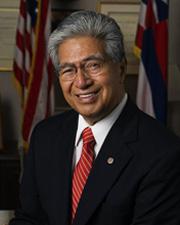 Sen. Daniel K. Akaka (D-HI)
Legislative Activity
Stay on top of the latest movement without scrolling through every action
Senate amendment submitted
September 22, 2005
View full timeline
Senate amendment submitted
September 22, 2005
Senate amendment not agreed to: Amendment SA 1852 not agreed to in Senate by Yea-Nay. 48 - 50. Record Vote Number: 242.
September 22, 2005
Roll call votes on amendments in Senate: Amendment SA 1852 not agreed to in Senate by Yea-Nay. 48 - 50. Record Vote Number: 242.
September 22, 2005
Senate amendment proposed (on the floor): Amendment SA 1852 proposed by Senator Akaka.
September 22, 2005
Amendment SA 1852 proposed by Senator Akaka. (consideration: CR S10351-10353, S10359-10360; text: CR S10351) To provide an additional $10,000,000 for the Readjustment Counseling Service, with a corresponding offset from the HealtheVet account.
September 22, 2005
Amendment SA 1852 not agreed to in Senate by Yea-Nay. 48 - 50. Record Vote Number: 242.
September 22, 2005
Votes
1 roll call on this amendment
Text
Proposed
MILITARY CONSTRUCTION AND VETERANS AFFAIRS, AND RELATED AGENCIES
APPROPRIATIONS ACT, 2006

The PRESIDING OFFICER. Under the previous order, the Senate will
proceed to the consideration of H.R. 2528, which the clerk will report.
The legislative clerk read as follows:

A bill (H.R. 2528) making appropriations for military
quality of life functions of the Department of Defense,
military construction, the Department of Veterans Affairs,
and related agencies for the fiscal year ending September 30,
2006, and for other purposes.

The Senate proceeded to consider the bill which had been reported
from the Committee on Appropriations, with an amendment.

(Strike the part shown in black brackets and insert the
part shown in italic.)

H.R. 2528

Be it enacted by the Senate and House of Representatives of
the United States of America in Congress assembled,
[That the following sums are appropriated, out of any money
in the Treasury not otherwise appropriated for military
quality of life functions of the Department of Defense,
military construction, the Department of Veterans Affairs,
and related agencies, for the fiscal year ending September
30, 2006, and for other purposes, namely:

[TITLE I

[DEPARTMENT OF DEFENSE

[Military Construction, Army

[For acquisition, construction, installation, and equipment
of temporary or permanent public works, military
installations, facilities, and real property for the Army as
currently authorized by law, including personnel in the Army
Corps of Engineers and other personal services necessary for
the purposes of this appropriation, and for construction and
operation of facilities in support of the functions of the
Commander in Chief, $1,602,552,000, to remain available until
September 30, 2010: Provided, That of this amount, not to
exceed $168,804,000 shall be available for study, planning,
design, architect and engineer services, and host nation
support, as authorized by law, unless the Secretary of
Defense determines that additional obligations are necessary
for such purposes and notifies the Committees on
Appropriations of both Houses of Congress of the
determination and the reasons therefor.
[In addition, $50,000,000, to remain available until
September 30, 2007, for overhead cover systems to support
force protection activities in Iraq: Provided, That
notwithstanding any other provision of law, such funds may be
obligated or expended to carry out planning and design and
military construction projects not otherwise authorized by
law.

[Military Construction, Navy and Marine Corps

[For acquisition, construction, installation, and equipment
of temporary or permanent public works, naval installations,
facilities, and real property for the Navy and Marine Corps
as currently authorized by law, including personnel in the
Naval Facilities Engineering Command and other personal
services necessary for the purposes of this appropriation,
$1,109,177,000, to remain available until September 30, 2010:
Provided, That of this amount, not to exceed $36,029,000
shall be available for study, planning, design, and architect
and engineer services, as authorized by law, unless the
Secretary of Defense determines that additional obligations
are necessary for such purposes and notifies the Committees
on Appropriations of both Houses of Congress of the
determination and the reasons therefor.

[Military Construction, Air Force

[For acquisition, construction, installation, and equipment
of temporary or permanent public works, military
installations, facilities, and real property for the Air
Force as currently authorized by law, $1,171,338,000, to
remain available until September 30, 2010: Provided, That of
this amount, not to exceed $91,733,000 shall be available for
study, planning, design, and architect and engineer services,
as authorized by law, unless the Secretary of Defense
determines that additional obligations are necessary for such
purposes and notifies the Committees on Appropriations of
both Houses of Congress of the determination and the reasons
therefor.

[Military Construction, Defense-wide

[(including transfer of funds)

[For acquisition, construction, installation, and equipment
of temporary or permanent public works, installations,
facilities, and real property for activities and agencies of
the Department of Defense (other than the military
departments), as currently authorized by law, $976,664,000,
to remain available until September 30, 2010: Provided, That
such amounts of this appropriation as may be determined by
the Secretary of Defense may be transferred to such
appropriations of the Department of Defense available for
military construction or family housing as the Secretary may
designate, to be merged with and to be available for the same
purposes, and for the same time period, as the appropriation
or fund to which transferred: Provided further, That of the
amount appropriated, not to exceed $107,285,000 shall be
available for study, planning, design, and architect and
engineer services, as authorized by law, unless the Secretary
of Defense determines that additional obligations are
necessary for such purposes and notifies the Committees on
Appropriations of both Houses of Congress of the
determination and the reasons therefor.

[Military Construction, Army National Guard

[For construction, acquisition, expansion, rehabilitation,
and conversion of facilities for the training and
administration of the Army National Guard, and contributions
therefor, as authorized by chapter 1803 of title 10, United
States Code, and Military Construction Authorization Acts,
$410,624,000, to remain available until September 30, 2010.

[Military Construction, Air National Guard

[For construction, acquisition, expansion, rehabilitation,
and conversion of facilities for the training and
administration of the Air National Guard, and contributions
therefor, as authorized by chapter 1803 of title 10, United
States Code, and Military Construction Authorization Acts,
$225,727,000, to remain available until September 30, 2010.

[Military Construction, Army Reserve

[For construction, acquisition, expansion, rehabilitation,
and conversion of facilities for the training and
administration of the Army Reserve as authorized by chapter
1803 of title 10, United States Code, and Military
Construction Authorization Acts, $138,425,000, to remain
available until September 30, 2010.

[Military Construction, Naval Reserve

[For construction, acquisition, expansion, rehabilitation,
and conversion of facilities for the training and
administration of the reserve components of the Navy and
Marine Corps as authorized by chapter 1803 of title 10,
United States Code, and Military Construction Authorization
Acts, $45,226,000, to remain available until September 30,
2010.

[Military Construction, Air Force Reserve

[For construction, acquisition, expansion, rehabilitation,
and conversion of facilities for the training and
administration of the Air Force Reserve as authorized by
chapter 1803 of title 10, United States Code, and Military
Construction Authorization Acts, $110,847,000, to remain
available until September 30, 2010.

[North Atlantic Treaty Organization Security Investment Program

[For the United States share of the cost of the North
Atlantic Treaty Organization Security Investment Program for
the acquisition and construction of military facilities and
installations (including international military headquarters)
and for related expenses for the collective defense of the
North Atlantic Treaty Area as authorized by section 2806 of
title 10, United States Code, and Military Construction
Authorization Acts, $206,858,000, to remain available until
expended.

[Family Housing Construction, Army

[For expenses of family housing for the Army for
construction, including acquisition, replacement, addition,
expansion, extension, and alteration, as authorized by law,
$549,636,000, to remain available until September 30, 2010.

[Family Housing Operation and Maintenance, Army

[For expenses of family housing for the Army for operation
and maintenance, including debt payment, leasing, minor
construction, principal and interest charges, and insurance
premiums, as authorized by law, $803,993,000.

[Family Housing Construction, Navy and Marine Corps

[For expenses of family housing for the Navy and Marine
Corps for construction, including acquisition, replacement,
addition, expansion, extension, and alteration, as authorized
by law, $218,942,000, to remain available until September 30,
2010.

[Family Housing Operation and Maintenance, Navy and Marine Corps

[For expenses of family housing for the Navy and Marine
Corps for operation and

[[Page S10336]]

maintenance, including debt payment, leasing, minor
construction, principal and interest charges, and insurance
premiums, as authorized by law, $588,660,000.

[Family Housing Construction, Air Force

[For expenses of family housing for the Air Force for
construction, including acquisition, replacement, addition,
expansion, extension, and alteration, as authorized by law,
$1,236,220,000, to remain available until September 30, 2010.

[Family Housing Operation and Maintenance, Air Force

[For expenses of family housing for the Air Force for
operation and maintenance, including debt payment, leasing,
minor construction, principal and interest charges, and
insurance premiums, as authorized by law, $755,319,000.

[Family Housing Operation and Maintenance, Defense-wide

[For expenses of family housing for the activities and
agencies of the Department of Defense (other than the
military departments) for operation and maintenance, leasing,
and minor construction, as authorized by law, $46,391,000.

[Department of Defense Family Housing Improvement Fund

[For the Department of Defense Family Housing Improvement
Fund, $2,500,000, to remain available until expended, for
family housing initiatives undertaken pursuant to section
2883 of title 10, United States Code, providing alternative
means of acquiring and improving military family housing and
supporting facilities.

[Base Realignment and Closure Account 1990

[For deposit into the Department of Defense Base Closure
Account 1990, established by section 2906(a)(1) of the
Defense Base Closure and Realignment Act of 1990 (10 U.S.C.
2687 note), $377,827,000, to remain available until expended.

[Base Realignment and Closure Account 2005

[For deposit into the Department of Defense Base
Realignment and Closure Account 2005, established by section
2906A(a)(1) of the Defense Base Closure and Realignment Act
of 1990 (10 U.S.C. 2687 note), $1,570,466,000, to remain
available until expended.

[Basic Allowance for Housing, Army

[For basic allowance for housing, for members of the Army
on active duty, $3,945,392,000.

[Basic Allowance for Housing, Navy

[For basic allowance for housing, for members of the Navy
on active duty, $3,592,905,000.

[Basic Allowance for Housing, Marine Corps

[For basic allowance for housing, for members of the Marine
Corps on active duty, $1,179,071,000.

[Basic Allowance for Housing, Air Force

[For basic allowance for housing, for members of the Air
Force on active duty, $3,240,113,000.

[Basic Allowance for Housing, Army National Guard

[For basic allowance for housing, for members of the Army
National Guard on active duty, $453,690,000.

[Basic Allowance for Housing, Air National Guard

[For basic allowance for housing, for members of the Air
National Guard on active duty, $248,317,000.

[Basic Allowance for Housing, Army Reserve

[For basic allowance for housing, for members of the Army
Reserve on active duty, $310,566,000.

[Basic Allowance for Housing, Naval Reserve

[For basic allowance for housing, for members of the Naval
Reserve on active duty, $191,338,000.

[Basic Allowance for Housing, Marine Corps Reserve

[For basic allowance for housing, for members of the Marine
Corps Reserve on active duty, $40,609,000.

[Basic Allowance for Housing, Air Force Reserve

[For basic allowance for housing, for members of the Air
Force Reserve on active duty, $71,286,000.

[Facilities Sustainment, Restoration and Modernization, Army

[For expenses for facilities sustainment, restoration and
modernization of the Army, $1,850,518,000.

[Facilities Sustainment, Restoration and Modernization, Navy

[For expenses for facilities sustainment, restoration and
modernization of the Navy, $1,344,971,000.

[Facilities Sustainment, Restoration and Modernization, Marine Corps

[For expenses for facilities sustainment, restoration and
modernization of the Marine Corps, $553,960,000.

[Facilities Sustainment, Restoration and Modernization, Air Force

[For expenses for facilities sustainment, restoration and
modernization of the Air Force, $1,845,701,000.

[Facilities Sustainment, Restoration and Modernization, Defense-wide

[For expenses for facilities sustainment, restoration and
modernization of the Department of Defense, $115,400,000.

[Facilities Sustainment, Restoration and Modernization, Army National
Guard

[For expenses for facilities sustainment, restoration and
modernization of the Army National Guard, $391,544,000.

[Facilities Sustainment, Restoration and Modernization, Air National
Guard

[For expenses for facilities sustainment, restoration and
modernization of the Air National Guard, $184,791,000.

[Facilities Sustainment, Restoration and Modernization, Army Reserve

[For expenses for facilities sustainment, restoration and
modernization of the Army Reserve, $204,370,000.

[Facilities Sustainment, Restoration and Modernization, Naval Reserve

[For expenses for facilities sustainment, restoration and
modernization of the Naval Reserve, $67,788,000.

[Facilities Sustainment, Restoration and Modernization, Marine Corps
Reserve

[For expenses for facilities sustainment, restoration and
modernization of the Marine Corps Reserve, $10,105,000.

[Facilities Sustainment, Restoration and Modernization, Air Force
Reserve

[For expenses for facilities sustainment, restoration and
modernization of the Air Force Reserve, $55,764,000.

[Environmental Restoration, Army

[(including transfer of funds)

[For the Department of the Army, $407,865,000, to remain
available until transferred: Provided, That the Secretary of
the Army shall, upon determining that such funds are required
for environmental restoration, reduction and recycling of
hazardous waste, removal of unsafe buildings and debris of
the Department of the Army, or for similar purposes, transfer
the funds made available by this appropriation to other
appropriations made available to the Department of the Army,
to be merged with and to be available for the same purposes
and for the same time period as the appropriations to which
transferred: Provided further, That upon a determination that
all or part of the funds transferred from this appropriation
are not necessary for the purposes provided herein, such
amounts may be transferred back to this appropriation.

[Environmental Restoration, Navy

[(including transfer of funds)

[For the Department of the Navy, $305,275,000, to remain
available until transferred: Provided, That the Secretary of
the Navy shall, upon determining that such funds are required
for environmental restoration, reduction and recycling of
hazardous waste, removal of unsafe buildings and debris of
the Department of the Navy, or for similar purposes, transfer
the funds made available by this appropriation to other
appropriations made available to the Department of the Navy,
to be merged with and to be available for the same purposes
and for the same time period as the appropriations to which
transferred: Provided further, That upon a determination that
all or part of the funds transferred from this appropriation
are not necessary for the purposes provided herein, such
amounts may be transferred back to this appropriation.

[Environmental Restoration, Air Force

[(including transfer of funds)

[For the Department of the Air Force, $406,461,000, to
remain available until transferred: Provided, That the
Secretary of the Air Force shall, upon determining that such
funds are required for environmental restoration, reduction
and recycling of hazardous waste, removal of unsafe buildings
and debris of the Department of the Air Force, or for similar
purposes, transfer the funds made available by this
appropriation to other appropriations made available to the
Department of the Air Force, to be merged with and to be
available for the same purposes and for the same time period
as the appropriations to which transferred: Provided further,
That upon a determination that all or part of the funds
transferred from this appropriation are not necessary for the
purposes provided herein, such amounts may be transferred
back to this appropriation.

[Environmental Restoration, Defense-wide

[(including transfer of funds)

[For the Department of Defense, $28,167,000, to remain
available until transferred: Provided, That the Secretary of
Defense shall, upon determining that such funds are required
for environmental restoration, reduction and recycling of
hazardous waste, removal of unsafe buildings and debris of
the Department of Defense, or for similar purposes, transfer
the funds made available by this appropriation to other
appropriations made available to the Department of Defense,
to be merged with and to be available for the same purposes
and for the same time period as the appropriations to which
transferred: Provided further, That upon a determination that
all or part of the funds transferred from this appropriation
are not necessary for the purposes provided herein, such
amounts may be transferred back to this appropriation.

[[Page S10337]]

[Environmental Restoration, Formerly Used Defense Sites

[(INCLUDING TRANSFER OF FUNDS)

[For the Department of the Army, $221,921,000, to remain
available until transferred: Provided, That the Secretary of
the Army shall, upon determining that such funds are required
for environmental restoration, reduction and recycling of
hazardous waste, removal of unsafe buildings and debris at
sites formerly used by the Department of Defense, transfer
the funds made available by this appropriation to other
appropriations made available to the Department of the Army,
to be merged with and to be available for the same purposes
and for the same time period as the appropriations to which
transferred: Provided further, That upon a determination that
all or part of the funds transferred from this appropriation
are not necessary for the purposes provided herein, such
amounts may be transferred back to this appropriation.

[Defense Health Program

[For expenses, not otherwise provided for, for medical and
health care programs of the Department of Defense, as
authorized by law, $19,983,912,000, of which $19,184,537,000
shall be for operation and maintenance, of which not to
exceed 2 percent shall remain available until September 30,
2007, and of which up to $10,212,427,000 may be available for
contracts entered into under the TRICARE program; of which
$355,119,000, to remain available for obligation until
September 30, 2008, shall be for procurement; and of which
$444,256,000, to remain available for obligation until
September 30, 2007, shall be for research, development, test
and evaluation: Provided, That notwithstanding any other
provision of law, of the amount made available under this
heading for research, development, test and evaluation, not
less than $7,500,000 shall be available for HIV prevention
educational activities undertaken in connection with U.S.
military training, exercises, and humanitarian assistance
activities conducted primarily in African nations.

[Administrative Provisions

[Sec. 101. None of the funds made available in this title
shall be expended for payments under a cost-plus-a-fixed-fee
contract for construction, where cost estimates exceed
$25,000, to be performed within the United States, except
Alaska, without the specific approval in writing of the
Secretary of Defense setting forth the reasons therefor.
[Sec. 102. Funds appropriated in this title for
construction shall be available for hire of passenger motor
vehicles.
[Sec. 103. Funds appropriated in this title for
construction may be used for advances to the Federal Highway
Administration, Department of Transportation, for the
construction of access roads as authorized by section 210 of
title 23, United States Code, when projects authorized
therein are certified as important to the national defense by
the Secretary of Defense.
[Sec. 104. None of the funds made available in this title
may be used to begin construction of new bases in the United
States for which specific appropriations have not been made.
[Sec. 105. None of the funds made available in this title
shall be used for purchase of land or land easements in
excess of 100 percent of the value as determined by the Army
Corps of Engineers or the Naval Facilities Engineering
Command, except: (1) where there is a determination of value
by a Federal court; (2) purchases negotiated by the Attorney
General or the designee of the Attorney General; (3) where
the estimated value is less than $25,000; or (4) as otherwise
determined by the Secretary of Defense to be in the public
interest.
[Sec. 106. None of the funds made available in this title
shall be used to: (1) acquire land; (2) provide for site
preparation; or (3) install utilities for any family housing,
except housing for which funds have been made available in
annual Acts making appropriations for military construction.
[Sec. 107. None of the funds made available in this title
for minor construction may be used to transfer or relocate
any activity from one base or installation to another,
without prior notification to the Committees on
Appropriations of both Houses of Congress.
[Sec. 108. None of the funds made available in this title
may be used for the procurement of steel for any construction
project or activity for which American steel producers,
fabricators, and manufacturers have been denied the
opportunity to compete for such steel procurement.
[Sec. 109. None of the funds available to the Department of
Defense for military construction or family housing during
the current fiscal year may be used to pay real property
taxes in any foreign nation.
[Sec. 110. None of the funds made available in this title
may be used to initiate a new installation overseas without
prior notification to the Committees on Appropriations of
both Houses of Congress.
[Sec. 111. None of the funds made available in this title
may be obligated for architect and engineer contracts
estimated by the Government to exceed $500,000 for projects
to be accomplished in Japan, in any NATO member country, or
in countries bordering the Arabian Sea, unless such contracts
are awarded to United States firms or United States firms in
joint venture with host nation firms.
[Sec. 112. None of the funds made available in this title
for military construction in the United States territories
and possessions in the Pacific and on Kwajalein Atoll, or in
countries bordering the Arabian Sea, may be used to award any
contract estimated by the Government to exceed $1,000,000 to
a foreign contractor: Provided, That this section shall not
be applicable to contract awards for which the lowest
responsive and responsible bid of a United States contractor
exceeds the lowest responsive and responsible bid of a
foreign contractor by greater than 20 percent: Provided
further, That this section shall not apply to contract awards
for military construction on Kwajalein Atoll for which the
lowest responsive and responsible bid is submitted by a
Marshallese contractor.
[Sec. 113. The Secretary of Defense is to inform the
appropriate committees of both Houses of Congress, including
the Committees on Appropriations, of the plans and scope of
any proposed military exercise involving United States
personnel 30 days prior to its occurring, if amounts expended
for construction, either temporary or permanent, are
anticipated to exceed $100,000.
[Sec. 114. Not more than 20 percent of the funds made
available in this title which are limited for obligation
during the current fiscal year shall be obligated during the
last 2 months of the fiscal year.

[(transfer of funds)

[Sec. 115. Funds appropriated to the Department of Defense
for construction in prior years shall be available for
construction authorized for each such military department by
the authorizations enacted into law during the current
session of Congress.
[Sec. 116. For military construction or family housing
projects that are being completed with funds otherwise
expired or lapsed for obligation, expired or lapsed funds may
be used to pay the cost of associated supervision,
inspection, overhead, engineering and design on those
projects and on subsequent claims, if any.
[Sec. 117. Notwithstanding any other provision of law, any
funds appropriated to a military department or defense agency
for the construction of military projects may be obligated
for a military construction project or contract, or for any
portion of such a project or contract, at any time before the
end of the fourth fiscal year after the fiscal year for which
funds for such project were appropriated if the funds
obligated for such project: (1) are obligated from funds
available for military construction projects; and (2) do not
exceed the amount appropriated for such project, plus any
amount by which the cost of such project is increased
pursuant to law.
[Sec. 118. The Secretary of Defense is to provide the
Committees on Appropriations of both Houses of Congress with
an annual report by February 15, containing details of the
specific actions proposed to be taken by the Department of
Defense during the current fiscal year to encourage other
member nations of the North Atlantic Treaty Organization,
Japan, Korea, and United States allies bordering the Arabian
Sea to assume a greater share of the common defense burden of
such nations and the United States.

[(transfer of funds)

[Sec. 119. In addition to any other transfer authority
available to the Department of Defense, proceeds deposited to
the Department of Defense Base Closure Account established by
section 207(a)(1) of the Defense Authorization Amendments and
Base Closure and Realignment Act (10 U.S.C. 2687 note)
pursuant to section 207(a)(2)(C) of such Act, may be
transferred to the account established by section 2906(a)(1)
of the Defense Base Closure and Realignment Act of 1990 (10
U.S.C. 2687 note), to be merged with, and to be available for
the same purposes and the same time period as that account.

[(transfer of funds)

[Sec. 120. Subject to 30 days prior notification to the
Committees on Appropriations of both Houses of Congress, such
additional amounts as may be determined by the Secretary of
Defense may be transferred to: (1) the Department of Defense
Family Housing Improvement Fund from amounts appropriated for
construction in ``Family Housing'' accounts, to be merged
with and to be available for the same purposes and for the
same period of time as amounts appropriated directly to the
Fund; or (2) the Department of Defense Military Unaccompanied
Housing Improvement Fund from amounts appropriated for
construction of military unaccompanied housing in ``Military
Construction'' accounts, to be merged with and to be
available for the same purposes and for the same period of
time as amounts appropriated directly to the Fund: Provided,
That appropriations made available to the Funds shall be
available to cover the costs, as defined in section 502(5) of
the Congressional Budget Act of 1974, of direct loans or loan
guarantees issued by the Department of Defense pursuant to
the provisions of subchapter IV of chapter 169 of title 10,
United States Code, pertaining to alternative means of
acquiring and improving military family housing, military
unaccompanied housing, and supporting facilities.
[Sec. 121. None of the funds made available in this title
may be obligated for Partnership for Peace Programs in the
New Independent States of the former Soviet Union.
[Sec. 122. (a) Not later than 60 days before issuing any
solicitation for a contract with the private sector for
military family housing the Secretary of the military
department concerned shall submit to the Committees on
Appropriations of both Houses of Congress the notice
described in subsection (b).
[(b)(1) A notice referred to in subsection (a) is a notice
of any guarantee (including

[[Page S10338]]

the making of mortgage or rental payments) proposed to be
made by the Secretary to the private party under the contract
involved in the event of--
[(A) the closure or realignment of the installation for
which housing is provided under the contract;
[(B) a reduction in force of units stationed at such
installation; or
[(C) the extended deployment overseas of units stationed at
such installation.
[(2) Each notice under this subsection shall specify the
nature of the guarantee involved and assess the extent and
likelihood, if any, of the liability of the Federal
Government with respect to the guarantee.

[(transfer of funds)

[Sec. 123. In addition to any other transfer authority
available to the Department of Defense, amounts may be
transferred from the account established by section
2906(a)(1) of the Defense Base Closure and Realignment Act of
1990 (10 U.S.C. 2687 note), to the fund established by
section 1013(d) of the Demonstration Cities and Metropolitan
Development Act of 1966 (42 U.S.C. 3374) to pay for expenses
associated with the Homeowners Assistance Program. Any
amounts transferred shall be merged with and be available for
the same purposes and for the same time period as the fund to
which transferred.
[Sec. 124. Notwithstanding this or any other provision of
law, funds made available in this title for operation and
maintenance of family housing shall be the exclusive source
of funds for repair and maintenance of all family housing
units, including general or flag officer quarters: Provided,
That not more than $35,000 per unit may be spent annually for
the maintenance and repair of any general or flag officer
quarters without 30 days prior notification to the Committees
on Appropriations of both Houses of Congress, except that an
after-the-fact notification shall be submitted if the
limitation is exceeded solely due to costs associated with
environmental remediation that could not be reasonably
anticipated at the time of the budget submission: Provided
further, That the Under Secretary of Defense (Comptroller) is
to report annually to the Committees on Appropriations of
both Houses of Congress all operation and maintenance
expenditures for each individual general or flag officer
quarters for the prior fiscal year.
[Sec. 125. None of the funds made available in this title
under the heading ``North Atlantic Treaty Organization
Security Investment Program'', and no funds appropriated for
any fiscal year before fiscal year 2006 for that program that
remain available for obligation, may be obligated or expended
for the conduct of studies of missile defense.
[Sec. 126. Whenever the Secretary of Defense or any other
official of the Department of Defense is requested by the
subcommittee on Military Quality of Life and Veterans
Affairs, and Related Agencies of the Committee on
Appropriations of the House of Representatives or the
subcommittee on Military Construction and Veterans Affairs,
and Related Agencies of the Committee on Appropriations of
the Senate to respond to a question or inquiry submitted by
the chairman or another member of that subcommittee pursuant
to a subcommittee hearing or other activity, the Secretary
(or other official) shall respond to the request, in writing,
within 21 days of the date on which the request is
transmitted to the Secretary (or other official).
[Sec. 127. Amounts contained in the Ford Island Improvement
Account established by subsection (h) of section 2814 of
title 10, United States Code, are appropriated and shall be
available until expended for the purposes specified in
subsection (i)(1) of such section or until transferred
pursuant to subsection (i)(3) of such section.

[(transfer of funds)

[Sec. 128. During the 5-year period after appropriations
available to the Department of Defense for military
construction and family housing operation and maintenance and
construction have expired for obligation, upon a
determination that such appropriations will not be necessary
for the liquidation of obligations or for making authorized
adjustments to such appropriations for obligations incurred
during the period of availability of such appropriations,
unobligated balances of such appropriations may be
transferred into the appropriation, ``Foreign Currency
Fluctuations, Construction, Defense,'' to be merged with and
to be available for the same time period and for the same
purposes as the appropriation to which transferred.
[Sec. 129. None of the funds appropriated in this title
available for the Civilian Health and Medical Program of the
Uniformed Services (CHAMPUS) or TRICARE shall be available
for the reimbursement of any health care provider for
inpatient mental health service for care received when a
patient is referred to a provider of inpatient mental health
care or residential treatment care by a medical or health
care professional having an economic interest in the facility
to which the patient is referred: Provided, That this
limitation does not apply in the case of inpatient mental
health services provided under the program for persons with
disabilities under subsection (d) of section 1079 of title
10, United States Code, provided as partial hospital care, or
provided pursuant to a waiver authorized by the Secretary of
Defense because of medical or psychological circumstances of
the patient that are confirmed by a health professional who
is not a Federal employee after a review, pursuant to rules
prescribed by the Secretary, which takes into account the
appropriate level of care for the patient, the intensity of
services required by the patient, and the availability of
that care.
[Sec. 130. The Secretary of Defense, in coordination with
the Secretary of Health and Human Services, may carry out a
program to distribute surplus dental and medical equipment of
the Department of Defense, at no cost to the Department of
Defense, to Indian Health Service facilities and to
federally-qualified health centers (within the meaning of
section 1905(l)(2)(B) of the Social Security Act (42 U.S.C.
1396d(l)(2)(B))).
[Sec. 131. None of the funds made available in this title
may be used to carry out a military construction project,
land acquisition, or family housing project for a military
installation approved for closure in 2005 under the Defense
Base Closure and Realignment Act of 1990 (part A of title
XXIX of Public Law 101-510; 10 U.S.C. 2687 note), and the
Secretary of Defense may not transfer funds appropriated for
such a military construction project, land acquisition, or
family housing project to another account or use such funds
for another purpose or project without the approval of the
Committees on Appropriations of both Houses of Congress.
[Sec. 132. None of the funds in this title for operation,
maintenance, or repair of housing for general officers and
flag officers in the National Capital Region may be used
until the Department of Defense submits the report required
by section 2802(c) of the Military Construction Authorization
Act for Fiscal Year 2005.

[TITLE II

[DEPARTMENT OF VETERANS AFFAIRS

[Veterans Benefits Administration

[Compensation and Pensions

[(including transfer of funds)

[For the payment of compensation benefits to or on behalf
of veterans and a pilot program for disability examinations
as authorized by law (38 U.S.C. 107, chapters 11, 13, 18, 51,
53, 55, and 61); pension benefits to or on behalf of veterans
as authorized by law (38 U.S.C. chapters 15, 51, 53, 55, and
61; 92 Stat. 2508); and burial benefits, emergency and other
officers' retirement pay, adjusted-service credits and
certificates, payment of premiums due on commercial life
insurance policies guaranteed under the provisions of title
IV of the Servicemembers Civil Relief Act (50 U.S.C. App. 540
et seq.) and for other benefits as authorized by law (38
U.S.C. 107, 1312, 1977, and 2106, chapters 23, 51, 53, 55,
and 61; 43 Stat. 122, 123; 45 Stat. 735; 76 Stat. 1198),
$33,412,879,000, to remain available until expended:
Provided, That not to exceed $23,491,000 of the amount
appropriated under this heading shall be reimbursed to
``General operating expenses'' and ``Medical services'' for
necessary expenses in implementing the provisions of chapters
51, 53, and 55 of title 38, United States Code), the funding
source for which is specifically provided as the
``Compensation and pensions'' appropriation: Provided
further, That such sums as may be earned on an actual
qualifying patient basis, shall be reimbursed to ``Medical
facilities revolving fund'' to augment the funding of
individual medical facilities for nursing home care provided
to pensioners as authorized.

[Readjustment Benefits

[For the payment of readjustment and rehabilitation
benefits to or on behalf of veterans as authorized by law (38
U.S.C. chapters 21, 30, 31, 34, 35, 36, 39, 51, 53, 55, and
61), $3,214,246,000, to remain available until expended:
Provided, That expenses for rehabilitation program services
and assistance which the Secretary is authorized to provide
under section 3104(a) of title 38, United States Code, other
than under subsection (a)(1), (2), (5), and (11) of that
section, shall be charged to this account.

[Veterans Insurance and Indemnities

[For military and naval insurance, national service life
insurance, servicemen's indemnities, service-disabled
veterans insurance, and veterans mortgage life insurance as
authorized by 38 U.S.C. chapter 19; 70 Stat. 887; 72 Stat.
487, $45,907,000, to remain available until expended.

[Veterans Housing Benefit Program Fund Program Account

[(including transfer of funds)

[For the cost of direct and guaranteed loans, such sums as
may be necessary to carry out the program, as authorized by
38 U.S.C. chapter 37: Provided, That such costs, including
the cost of modifying such loans, shall be as defined in
section 502 of the Congressional Budget Act of 1974: Provided
further, That during fiscal year 2005, within the resources
available, not to exceed $500,000 in gross obligations for
direct loans are authorized for specially adapted housing
loans.
[In addition, for administrative expenses to carry out the
direct and guaranteed loan programs, $153,575,000, which may
be transferred to and merged with the appropriation for
``General operating expenses''.

[Vocational Rehabilitation Loans Program Account

[(including transfer of funds)

[For the cost of direct loans, $53,000, as authorized by
chapter 31 of title 38, United States Code: Provided, That
such costs, including the cost of modifying such loans,

[[Page S10339]]

shall be as defined in section 502 of the Congressional
Budget Act of 1974: Provided further, That these funds under
this heading are available to subsidize gross obligations for
the principal amount of direct loans not to exceed
$4,242,000.
[In addition, for administrative expenses necessary to
carry out the direct loan program, $305,000, which may be
transferred to and merged with the appropriation for
``General operating expenses''.

[Native American Veteran Housing Loan Program Account

[(including transfer of funds)

[For administrative expenses to carry out the direct loan
program authorized by subchapter V of chapter 37 of title 38,
United States Code, $580,000, which may be transferred to and
merged with the appropriation for ``General operating
expenses'': Provided, That no new loans in excess of
$30,000,000 may be made in fiscal year 2006.

[Guaranteed Transitional Housing Loans for Homeless Veterans Program
Account

[For the administrative expenses to carry out the
guaranteed transitional housing loan program authorized by
subchapter VI of chapter 37, of title 38, United States Code,
not to exceed $750,000 of the amounts appropriated by this
Act for ``General operating expenses'' and ``Medical
administration'' may be expended.

[Veterans Health Administration

[Medical Services

[For necessary expenses for furnishing, as authorized by
law, inpatient and outpatient care and treatment to
beneficiaries of the Department of Veterans Affairs and
veterans described in section 1705(a) of title 38, United
States Code, including care and treatment in facilities not
under the jurisdiction of the Department, and including
medical supplies and equipment and salaries and expenses of
health-care employees hired under title 38, United States
Code, and aid to State homes as authorized by section 1741 of
title 38, United States Code; $20,995,141,000, plus
reimbursements, of which not less than $2,200,000,000 shall
be expended for specialty mental health care: Provided, That
of the funds made available under this heading, not to exceed
$1,100,000,000 shall be available until September 30, 2007:
Provided further, That, notwithstanding any other provision
of law, the Secretary of Veterans Affairs shall establish a
priority for treatment for veterans who are service-connected
disabled, lower income, or have special needs: Provided
further, That, notwithstanding any other provision of law,
the Secretary of Veterans Affairs shall give priority funding
for the provision of basic medical benefits to veterans in
enrollment priority groups 1 through 6: Provided further,
That, notwithstanding any other provision of law, the
Secretary of Veterans Affairs may authorize the dispensing of
prescription drugs from Veterans Health Administration
facilities to enrolled veterans with privately written
prescriptions based on requirements established by the
Secretary: Provided further, That the implementation of the
program described in the previous proviso shall incur no
additional cost to the Department of Veterans Affairs:
Provided further, That for the Department of Defense/
Department of Veterans Affairs Health Care Sharing Incentive
Fund, as authorized by section 721 of Public Law 107-314, a
minimum of $15,000,000, to remain available until expended,
for the purposes authorized by section 8111 of title 38,
United States Code.

[Medical Administration

[For necessary expenses in the administration of the
medical, hospital, nursing home, domiciliary, construction,
supply, and research activities, as authorized by law;
administrative expenses in support of capital policy
activities; information technology hardware and software;
uniforms or allowances therefor, as authorized by sections
5901-5902 of title 5, United States Code; administrative and
legal expenses of the Department for collecting and
recovering amounts owed the Department as authorized under
chapter 17 of title 38, United States Code, and the Federal
Medical Care Recovery Act (42 U.S.C. 2651 et seq.);
$4,134,874,000, plus reimbursements, of which $250,000,000
shall be available until September 30, 2007.

[Medical Facilities

[For necessary expenses for the maintenance and operation
of hospitals, nursing homes, and domiciliary facilities and
other necessary facilities for the Veterans Health
Administration; for administrative expenses in support of
planning, design, project management, real property
acquisition and disposition, construction and renovation of
any facility under the jurisdiction or for the use of the
Department; for oversight, engineering and architectural
activities not charged to project costs; for repairing,
altering, improving or providing facilities in the several
hospitals and homes under the jurisdiction of the Department,
not otherwise provided for, either by contract or by the hire
of temporary employees and purchase of materials; for leases
of facilities; and for laundry and food services,
$3,297,669,000, plus reimbursements, of which $250,000,000
shall be available until September 30, 2007.

[Medical and Prosthetic Research

[For necessary expenses in carrying out programs of medical
and prosthetic research and development as authorized by
chapter 73 of title 38, United States Code, to remain
available until September 30, 2007, $393,000,000, plus
reimbursements.

[Departmental Administration

[general operating expenses

[For necessary operating expenses of the Department of
Veterans Affairs, not otherwise provided for, including
administrative expenses in support of Department-wide capital
planning, management and policy activities, uniforms or
allowances therefor; not to exceed $25,000 for official
reception and representation expenses; hire of passenger
motor vehicles; and reimbursement of the General Services
Administration for security guard services, and the
Department of Defense for the cost of overseas employee mail,
$1,411,827,000: Provided, That expenses for services and
assistance authorized under paragraphs (1), (2), (5), and
(11) of section 3104(a) of title 38, United States Code, that
the Secretary determines are necessary to enable entitled
veterans: (1) to the maximum extent feasible, to become
employable and to obtain and maintain suitable employment; or
(2) to achieve maximum independence in daily living, shall be
charged to this account: Provided further, That the Veterans
Benefits Administration shall be funded at not less than
$1,086,938,000: Provided further, That of the funds made
available under this heading, not to exceed $70,000,000 shall
be available for obligation until September 30, 2007:
Provided further, That from the funds made available under
this heading, the Veterans Benefits Administration may
purchase up to two passenger motor vehicles for use in
operations of that Administration in Manila, Philippines.

[national cemetery administration

[For necessary expenses of the National Cemetery
Administration for operations and maintenance, not otherwise
provided for, including uniforms or allowances therefor;
cemeterial expenses as authorized by law; purchase of one
passenger motor vehicle for use in cemeterial operations; and
hire of passenger motor vehicles, $156,447,000: Provided,
That of the funds made available under this heading, not to
exceed $7,800,000 shall be available until September 30,
2007.

[Office of Inspector General

[For necessary expenses of the Office of Inspector General
in carrying out the provisions of the Inspector General Act
of 1978, $70,174,000, to remain available until September 30,
2007.

[Construction, Major Projects

[For constructing, altering, extending and improving any of
the facilities including parking projects under the
jurisdiction or for the use of the Department of Veterans
Affairs, or for any of the purposes set forth in sections
316, 2404, 2406, 8102, 8103, 8106, 8108, 8109, 8110, and 8122
of title 38, United States Code, including planning,
architectural and engineering services, maintenance or
guarantee period services costs associated with equipment
guarantees provided under the project, services of claims
analysts, offsite utility and storm drainage system
construction costs, and site acquisition, where the estimated
cost of a project is more than the amount set forth in
section 8104(a)(3)(A) of title 38, United States Code, or
where funds for a project were made available in a previous
major project appropriation, $607,100,000, to remain
available until expended, of which $532,010,000 shall be for
Capital Asset Realignment for Enhanced Services (CARES)
activities; and of which $8,091,000 shall be to make
reimbursements as provided in section 13 of the Contract
Disputes Act of 1978 (41 U.S.C. 612) for claims paid for
contract disputes: Provided, That except for advance planning
activities, including needs assessments which may or may not
lead to capital investments, and other capital asset
management related activities, such as portfolio development
and management activities, and investment strategy studies
funded through the advance planning fund and the planning and
design activities funded through the design fund and CARES
funds, including needs assessments which may or may not lead
to capital investments, none of the funds appropriated under
this heading shall be used for any project which has not been
approved by the Congress in the budgetary process: Provided
further, That funds provided in this appropriation for fiscal
year 2006, for each approved project (except those for CARES
activities referenced above) shall be obligated: (1) by the
awarding of a construction documents contract by September
30, 2006; and (2) by the awarding of a construction contract
by September 30, 2007: Provided further, That the Secretary
of Veterans Affairs shall promptly report in writing to the
Committees on Appropriations of the House of Representatives
and Senate any approved major construction project in which
obligations are not incurred within the time limitations
established above.

[Construction, Minor Projects

[For constructing, altering, extending, and improving any
of the facilities including parking projects under the
jurisdiction or for the use of the Department of Veterans
Affairs, including planning and assessments of needs which
may lead to capital investments, architectural and
engineering services, maintenance or guarantee period
services costs associated with equipment guarantees provided
under the project, services of claims analysts, offsite
utility and storm drainage system construction costs, and
site acquisition, or for any of the purposes set forth in
sections 316, 2404, 2406, 8102, 8103,

[[Page S10340]]

8106, 8108, 8109, 8110, 8122, and 8162 of title 38, United
States Code, where the estimated cost of a project is equal
to or less than the amount set forth in section 8104(a)(3)(A)
of title 38, United States Code, $208,937,000, to remain
available until expended, along with unobligated balances of
previous ``Construction, minor projects'' appropriations
which are hereby made available for any project where the
estimated cost is equal to or less than the amount set forth
in such section, of which $160,000,000 shall be for Capital
Asset Realignment for Enhanced Services (CARES) activities:
Provided, That funds in this account shall be available for:
(1) repairs to any of the nonmedical facilities under the
jurisdiction or for the use of the Department which are
necessary because of loss or damage caused by any natural
disaster or catastrophe; and (2) temporary measures necessary
to prevent or to minimize further loss by such causes.

[GRANTS FOR CONSTRUCTION OF STATE EXTENDED CARE FACILITIES

[For grants to assist States to acquire or construct State
nursing home and domiciliary facilities and to remodel,
modify or alter existing hospital, nursing home and
domiciliary facilities in State homes, for furnishing care to
veterans as authorized by sections 8131-8137 of title 38,
United States Code, $25,000,000, to remain available until
expended.

[GRANTS FOR THE CONSTRUCTION OF STATE VETERANS CEMETERIES

[For grants to aid States in establishing, expanding, or
improving State veterans cemeteries as authorized by section
2408 of title 38, United States Code, $32,000,000, to remain
available until expended.

[Administrative Provisions

[(including transfer of funds)

[Sec. 201. Any appropriation for fiscal year 2006 for
``Compensation and pensions'', ``Readjustment benefits'', and
``Veterans insurance and indemnities'' may be transferred to
any other of the mentioned appropriations.
[Sec. 202. Appropriations available in this title for
salaries and expenses shall be available for services
authorized by section 3109 of title 5, United States Code,
hire of passenger motor vehicles; lease of a facility or land
or both; and uniforms or allowances therefore, as authorized
by sections 5901-5902 of such title.
[Sec. 203. No appropriations in this title (except the
appropriations for ``Construction, major projects'', and
``Construction, minor projects'') shall be available for the
purchase of any site for or toward the construction of any
new hospital or home.
[Sec. 204. No appropriations in this title shall be
available for hospitalization or examination of any persons
(except beneficiaries entitled under the laws bestowing such
benefits to veterans, and persons receiving such treatment
under sections 7901-7904 of title 5, United States Code or
the Robert T. Stafford Disaster Relief and Emergency
Assistance Act (42 U.S.C. 5121 et seq.)), unless
reimbursement of cost is made to the ``Medical services''
account at such rates as may be fixed by the Secretary of
Veterans Affairs.
[Sec. 205. Appropriations available in this title for
``Compensation and pensions'', ``Readjustment benefits'', and
``Veterans insurance and indemnities'' shall be available for
payment of prior year accrued obligations required to be
recorded by law against the corresponding prior year accounts
within the last quarter of fiscal year 2005.
[Sec. 206. Appropriations available in this title shall be
available to pay prior year obligations of corresponding
prior year appropriations accounts resulting from sections
3328(a), 3334, and 3712(a) of title 31, United States Code,
except that if such obligations are from trust fund accounts
they shall be payable from ``Compensation and pensions''.
[Sec. 207. Notwithstanding any other provision of law,
during fiscal year 2006, the Secretary of Veterans Affairs
shall, from the National Service Life Insurance Fund (38
U.S.C. 1920), the Veterans' Special Life Insurance Fund (38
U.S.C. 1923), and the United States Government Life Insurance
Fund (38 U.S.C. 1955), reimburse the ``General operating
expenses'' account for the cost of administration of the
insurance programs financed through those accounts: Provided,
That reimbursement shall be made only from the surplus
earnings accumulated in an insurance program in fiscal year
2006 that are available for dividends in that program after
claims have been paid and actuarially determined reserves
have been set aside: Provided further, That if the cost of
administration of an insurance program exceeds the amount of
surplus earnings accumulated in that program, reimbursement
shall be made only to the extent of such surplus earnings:
Provided further, That the Secretary shall determine the cost
of administration for fiscal year 2006 which is properly
allocable to the provision of each insurance program and to
the provision of any total disability income insurance
included in such insurance program.
[Sec. 208. Notwithstanding any other provision of law, the
Department of Veterans Affairs shall continue the Franchise
Fund pilot program authorized to be established by section
403 of Public Law 103-356 until October 1, 2006: Provided,
That the Franchise Fund, established by title I of Public Law
104-204 to finance the operations of the Franchise Fund pilot
program, shall continue until October 1, 2006.
[Sec. 209. Amounts deducted from enhanced-use lease
proceeds to reimburse an account for expenses incurred by
that account during a prior fiscal year for providing
enhanced-use lease services, may be obligated during the
fiscal year in which the proceeds are received.
[Sec. 210. Funds available in this title or funds for
salaries and other administrative expenses shall also be
available to reimburse the Office of Resolution Management
and the Office of Employment Discrimination Complaint
Adjudication for all services provided at rates which will
recover actual costs but not exceed $29,758,000 for the
Office of Resolution Management and $3,059,000 for the Office
of Employment and Discrimination Complaint Adjudication:
Provided, That payments may be made in advance for services
to be furnished based on estimated costs: Provided further,
That amounts received shall be credited to ``General
operating expenses'' for use by the office that provided the
service.
[Sec. 211. No appropriations in this title shall be
available to enter into any new lease of real property if the
estimated annual rental is more than $300,000 unless the
Secretary submits a report which the Committees on
Appropriations of the Congress approve within 30 days
following the date on which the report is received.
[Sec. 212. No funds of the Department of Veterans Affairs
shall be available for hospital care, nursing home care, or
medical services provided to any person under chapter 17 of
title 38, United States Code, for a non-service-connected
disability described in section 1729(a)(2) of such title,
unless that person has disclosed to the Secretary of Veterans
Affairs, in such form as the Secretary may require, current,
accurate third-party reimbursement information for purposes
of section 1729 of such title: Provided, That the Secretary
may recover, in the same manner as any other debt due the
United States, the reasonable charges for such care or
services from any person who does not make such disclosure as
required: Provided further, That any amounts so recovered for
care or services provided in a prior fiscal year may be
obligated by the Secretary during the fiscal year in which
amounts are received.
[Sec. 213. None of the funds made available to the
Department of Veterans Affairs in this Act, or any other Act,
may be used to implement sections 2 and 5 of Public Law 107-
287 and section 303 of Public Law 108-422.
[Sec. 214. Notwithstanding any other provision of law, at
the discretion of the Secretary of Veterans Affairs, proceeds
or revenues derived from enhanced-use leasing activities
(including disposal) may be deposited into the
``Construction, major projects'' and ``Construction, minor
projects'' accounts and be used for construction (including
site acquisition and disposition), alterations and
improvements of any medical facility under the jurisdiction
or for the use of the Department of Veterans Affairs. Such
sums as realized are in addition to the amount provided for
in ``Construction, major projects'' and ``Construction, minor
projects''.
[Sec. 215. Amounts made available under ``Medical
services'' are available--
[(1) for furnishing recreational facilities, supplies, and
equipment; and
[(2) for funeral expenses, burial expenses, and other
expenses incidental to funerals and burials for beneficiaries
receiving care in the Department.
[Sec. 216. That such sums as may be deposited to the
Medical Care Collections Fund pursuant to section 1729A of
title 38, United States Code, may be transferred to ``Medical
services'', to remain available until expended for the
purposes of this account.
[Sec. 217. Amounts made available for fiscal year 2006
under the ``Medical services'', ``Medical administration'',
and ``Medical facilities'' accounts may be transferred
between the accounts to the extent necessary to implement the
restructuring of the Veterans Health Administration accounts
after notice of the amount and purpose of the transfer is
provided to the Committees on Appropriations of the Senate
and House of Representatives and a period of 30 days has
elapsed: Provided, That the limitation on transfers is 20
percent in fiscal year 2006.
[Sec. 218. Any appropriation for fiscal year 2006 for the
Veterans Benefits Administration made available under the
heading ``General operating expenses'' may be transferred to
the ``Veterans Housing Benefit Program Fund Program Account''
for the purpose of providing funds for the nationwide
property management contract if the administrative costs of
such contract exceed $8,800,000 in the budget year.
[Sec. 219. Notwithstanding any other provision of law, the
Secretary of Veterans Affairs (Secretary) shall allow
veterans eligible under existing VA Medical Care requirements
and who reside in Alaska to obtain medical care services from
medical facilities supported by the Indian Health Services or
tribal organizations. The Secretary shall: (1) limit the
application of this provision to rural Alaskan veterans in
areas where an existing VA facility or VA-contracted service
is unavailable; (2) require participating veterans and
facilities to comply with all appropriate rules and
regulations, as established by the Secretary; (3) require
this provision to be consistent with CARES; and (4) result in
no additional cost to the Department of Veterans Affairs or
the Indian Health Service.
[Sec. 220. That such sums as may be deposited to the
Department of Veterans Affairs Capital Asset Fund pursuant to
section 8118 of title 38, United States Code, may be
transferred to the ``Construction, major projects'' and
``Construction, minor projects'' accounts, to remain
available until expended for the purposes of these accounts.

[[Page S10341]]

[Sec. 221. None of the funds available to the Department of
Veterans Affairs in this Act, or any other Act, may be used
by the Department of Veterans Affairs to implement a national
standardized contract for diabetes monitoring systems.

[TITLE III

[RELATED AGENCIES

[American Battle Monuments Commission

[Salaries and Expenses

[For necessary expenses, not otherwise provided for, of the
American Battle Monuments Commission, including the
acquisition of land or interest in land in foreign countries;
purchases and repair of uniforms for caretakers of national
cemeteries and monuments outside of the United States and its
territories and possessions; rent of office and garage space
in foreign countries; purchase (one for replacement only) and
hire of passenger motor vehicles; not to exceed $7,500 for
official reception and representation expenses; and insurance
of official motor vehicles in foreign countries, when
required by law of such countries, $35,750,000, to remain
available until expended.

[foreign currency fluctuations account

[For necessary expenses, not otherwise provided for, of the
American Battle Monuments Commission, $15,250,000, to remain
available until expended, for purposes authorized by section
2109 of title 36, United States Code.

[United States Court of Appeals for Veterans Claims

[Salaries and Expenses

[For necessary expenses for the operation of the United
States Court of Appeals for Veterans Claims as authorized by
sections 7251-7298 of title 38, United States Code,
$18,295,000, of which $1,260,000 shall be available for the
purpose of providing financial assistance as described, and
in accordance with the process and reporting procedures set
forth, under this heading in Public Law 102-229.

[Department of Defense--Civil

[Cemeterial Expenses, Army

[Salaries and Expenses

[For necessary expenses, as authorized by law, for
maintenance, operation, and improvement of Arlington National
Cemetery and Soldiers' and Airmen's Home National Cemetery,
including the purchase of two passenger motor vehicles for
replacement only, and not to exceed $1,000 for official
reception and representation expenses, $29,550,000, to remain
available until expended. In addition, such sums as may be
necessary for parking maintenance, repairs and replacement,
to be derived from the Lease of Department of Defense Real
Property for Defense Agencies account.

[Armed Forces Retirement Home

[For expenses necessary for the Armed Forces Retirement
Home to operate and maintain the Armed Forces Retirement
Home--Washington and the Armed Forces Retirement Home--
Gulfport, to be paid from funds available in the Armed Forces
Retirement Home Trust Fund, $58,281,000, of which $1,248,000
shall remain available until expended for construction and
renovation of the physical plants at the Armed Forces
Retirement Home--Washington and the Armed Forces Retirement
Home--Gulfport.

[TITLE IV

[GENERAL PROVISIONS

[Sec. 401. No part of any appropriation contained in this
Act shall remain available for obligation beyond the current
fiscal year unless expressly so provided herein.
[Sec. 402. None of the funds provided in this Act may be
used, directly or through grants, to pay or to provide
reimbursement for payment of the salary of a consultant
(whether retained by the Federal Government or a grantee) at
more than the daily equivalent of the rate paid for level IV
of the Executive Schedule, unless specifically authorized by
law.
[Sec. 403. Such sums as may be necessary for fiscal year
2006 pay raises for programs funded by this Act shall be
absorbed within the levels appropriated in this Act.
[Sec. 404. None of the funds made available in this Act may
be used for any program, project, or activity, when it is
made known to the Federal entity or official to which the
funds are made available that the program, project, or
activity is not in compliance with any Federal law relating
to risk assessment, the protection of private property
rights, or unfunded mandates.
[Sec. 405. No part of any funds appropriated in this Act
shall be used by an agency of the executive branch, other
than for normal and recognized executive-legislative
relationships, for publicity or propaganda purposes, and for
the preparation, distribution or use of any kit, pamphlet,
booklet, publication, radio, television or film presentation
designed to support or defeat legislation pending before
Congress, except in presentation to Congress itself.
[Sec. 406. All departments and agencies funded under this
Act are encouraged, within the limits of the existing
statutory authorities and funding, to expand their use of
``E-Commerce'' technologies and procedures in the conduct of
their business practices and public service activities.
[Sec. 407. None of the funds made available in this Act may
be transferred to any department, agency, or instrumentality
of the United States Government except pursuant to a transfer
made by, or transfer authority provided in, this Act or any
other appropriations Act.
[Sec. 408. Unless stated otherwise, all reports and
notifications required by this Act shall be submitted to the
Subcommittee on Military Quality of Life and Veterans
Affairs, and Related Agencies of the Committee on
Appropriations of the House of Representatives and the
Subcommittee on Military Construction and Veterans Affairs,
and Related Agencies of the Committee on Appropriations of
the Senate.
[Sec. 409. None of the funds made available by this Act may
be used to close or realign any military installation
approved for closure or realignment in 2005 before the
Secretary of Defense makes the information available upon
which the Secretary's closure and realignment recommendations
were based, as required by section 2903(c)(4) of the Defense
Base Closure and Realignment Act of 1990 (title XXIX of
Public Law 101-510; 10 U.S.C. 2687 note).
[This Act may be cited as the ``Military Quality of Life
and Veterans Affairs Appropriations Act, 2006''.]

That the following sums are appropriated, out of any money in
the Treasury not otherwise appropriated for military quality
of life functions of the Department of Defense, military
construction, the Department of Veterans Affairs, and related
agencies for the fiscal year ending September 30, 2006, and
for other purposes, namely:

TITLE I--MILITARY CONSTRUCTION

Military Construction, Army

For acquisition, construction, installation, and equipment
of temporary or permanent public works, military
installations, facilities, and real property for the Army as
currently authorized by law, including personnel in the Army
Corps of Engineers and other personal services necessary for
the purposes of this appropriation, and for construction and
operation of facilities in support of the functions of the
Commander in Chief, $1,640,641,000, to remain available until
September 30, 2010: Provided, That of this amount, not to
exceed $191,393,000 shall be available for study, planning,
design, architect and engineer services, and host nation
support, as authorized by law, unless the Secretary of
Defense determines that additional obligations are necessary
for such purposes and notifies the Committees on
Appropriations of both Houses of Congress of the
determination and the reasons therefor.

Military Construction, Navy and Marine Corps

(including rescission of funds)

For acquisition, construction, installation, and equipment
of temporary or permanent public works, naval installations,
facilities, and real property for the Navy and Marine Corps
as currently authorized by law, including personnel in the
Naval Facilities Engineering Command and other personal
services necessary for the purposes of this appropriation,
$1,045,882,000, to remain available until September 30, 2010:
Provided, That of this amount, not to exceed $32,524,000
shall be available for study, planning, design, and architect
and engineer services, as authorized by law, unless the
Secretary of Defense determines that additional obligations
are necessary for such purposes and notifies the Committees
on Appropriations of both Houses of Congress of the
determination and the reasons therefor: Provided further,
That of the funds appropriated for ``Military Construction,
Navy'' under Public Law 108-324, $92,354,000 are hereby
rescinded.

Military Construction, Air Force

For acquisition, construction, installation, and equipment
of temporary or permanent public works, military
installations, facilities, and real property for the Air
Force as currently authorized by law, $1,209,128,000, to
remain available until September 30, 2010: Provided, That of
this amount, not to exceed $103,347,000 shall be available
for study, planning, design, and architect and engineer
services, as authorized by law, unless the Secretary of
Defense determines that additional obligations are necessary
for such purposes and notifies the Committees on
Appropriations of both Houses of Congress of the
determination and the reasons therefor.

Military Construction, Defense-wide

(including transfer of funds)

For acquisition, construction, installation, and equipment
of temporary or permanent public works, installations,
facilities, and real property for activities and agencies of
the Department of Defense (other than the military
departments), as currently authorized by law, $1,072,165,000,
to remain available until September 30, 2010: Provided, That
such amounts of this appropriation as may be determined by
the Secretary of Defense may be transferred to such
appropriations of the Department of Defense available for
military construction or family housing as the Secretary may
designate, to be merged with and to be available for the same
purposes, and for the same time period, as the appropriation
or fund to which transferred: Provided further, That of the
amount appropriated, not to exceed $133,120,000 shall be
available for study, planning, design, and architect and
engineer services, as authorized by law, unless the Secretary
of Defense determines that additional obligations are
necessary for such purposes and notifies the Committees on
Appropriations of both Houses of Congress of the
determination and the reasons therefor.

Military Construction, Army National Guard

For construction, acquisition, expansion, rehabilitation,
and conversion of facilities for the training and
administration of the Army National Guard, and contributions
therefor, as authorized by chapter 1803 of title 10, United

[[Page S10342]]

States Code, and Military Construction Authorization Acts,
$467,146,000, to remain available until September 30, 2010.

Military Construction, Air National Guard

For construction, acquisition, expansion, rehabilitation,
and conversion of facilities for the training and
administration of the Air National Guard, and contributions
therefor, as authorized by chapter 1803 of title 10, United
States Code, and Military Construction Authorization Acts,
$279,156,000, to remain available until September 30, 2010.

Military Construction, Army Reserve

For construction, acquisition, expansion, rehabilitation,
and conversion of facilities for the training and
administration of the Army Reserve as authorized by chapter
1803 of title 10, United States Code, and Military
Construction Authorization Acts, $136,077,000, to remain
available until September 30, 2010.

Military Construction, Naval Reserve

For construction, acquisition, expansion, rehabilitation,
and conversion of facilities for the training and
administration of the reserve components of the Navy and
Marine Corps as authorized by chapter 1803 of title 10,
United States Code, and Military Construction Authorization
Acts, $46,676,000, to remain available until September 30,
2010.

Military Construction, Air Force Reserve

For construction, acquisition, expansion, rehabilitation,
and conversion of facilities for the training and
administration of the Air Force Reserve as authorized by
chapter 1803 of title 10, United States Code, and Military
Construction Authorization Acts, $89,260,000, to remain
available until September 30, 2010.

North Atlantic Treaty Organization

Security Investment Program

For the United States share of the cost of the North
Atlantic Treaty Organization Security Investment Program for
the acquisition and construction of military facilities and
installations (including international military headquarters)
and for related expenses for the collective defense of the
North Atlantic Treaty Area as authorized by section 2806 of
title 10, United States Code, and Military Construction
Authorization Acts, $206,858,000, to remain available until
expended.

Family Housing Construction, Army

For expenses of family housing for the Army for
construction, including acquisition, replacement, addition,
expansion, extension, and alteration, as authorized by law,
$549,636,000, to remain available until September 30, 2010.

Family Housing Operation and Maintenance, Army

For expenses of family housing for the Army for operation
and maintenance, including debt payment, leasing, minor
construction, principal and interest charges, and insurance
premiums, as authorized by law, $812,993,000.

Family Housing Construction, Navy and Marine Corps

For expenses of family housing for the Navy and Marine
Corps for construction, including acquisition, replacement,
addition, expansion, extension, and alteration, as authorized
by law, $218,942,000, to remain available until September 30,
2010.

Family Housing Operation and Maintenance, Navy and Marine Corps

For expenses of family housing for the Navy and Marine
Corps for operation and maintenance, including debt payment,
leasing, minor construction, principal and interest charges,
and insurance premiums, as authorized by law, $593,660,000.

Family Housing Construction, Air Force

For expenses of family housing for the Air Force for
construction, including acquisition, replacement, addition,
expansion, extension, and alteration, as authorized by law,
$1,142,622,000, to remain available until September 30, 2010.

Family Housing Operation and Maintenance, Air Force

For expenses of family housing for the Air Force for
operation and maintenance, including debt payment, leasing,
minor construction, principal and interest charges, and
insurance premiums, as authorized by law, $766,939,000.

Family Housing Operation and Maintenance, Defense-wide

For expenses of family housing for the activities and
agencies of the Department of Defense (other than the
military departments) for operation and maintenance, leasing,
and minor construction, as authorized by law, $46,391,000.

Department of Defense Family Housing Improvement Fund

For the Department of Defense Family Housing Improvement
Fund, $2,500,000, to remain available until expended, for
family housing initiatives undertaken pursuant to section
2883 of title 10, United States Code, providing alternative
means of acquiring and improving military family housing and
supporting facilities.

Department of Defense Base Closure Account 1990

For deposit into the Department of Defense Base Closure
Account 1990, established by section 2906(a)(1) of the
Defense Base Closure and Realignment Act of 1990 (10 U.S.C.
section 2687 note), $377,827,000, to remain available until
expended.

Department of Defense Base Closure Account 2005

For deposit into the Department of Defense Base Closure
Account 2005, established by section 2906A(a)(1) of the
Defense Base Closure and Realignment Act of 1990 (10 U.S.C.
section 2687 note), $1,504,466,000, to remain available until
expended: Provided, That these funds may not be obligated or
expended until the Secretary of Defense submits to the
congressional defense committees and receives approval of a
report describing the specific programs, projects, and
activities for which such funds are to be obligated.

GENERAL PROVISIONS

Sec. 101. None of the funds made available in this title
shall be expended for payments under a cost-plus-a-fixed-fee
contract for construction, where cost estimates exceed
$25,000, to be performed within the United States, except
Alaska, without the specific approval in writing of the
Secretary of Defense setting forth the reasons therefor.
Sec. 102. Funds made available in this title shall be
available for hire of passenger motor vehicles.
Sec. 103. Funds made available in this title may be used
for advances to the Federal Highway Administration,
Department of Transportation, for the construction of access
roads as authorized by section 210 of title 23, United States
Code, when projects authorized therein are certified as
important to the national defense by the Secretary of
Defense.
Sec. 104. None of the funds made available in this title
may be used to begin construction of new bases in the United
States for which specific appropriations have not been made.
Sec. 105. None of the funds made available in this title
shall be used for purchase of land or land easements in
excess of 100 percent of the value as determined by the Army
Corps of Engineers or the Naval Facilities Engineering
Command, except: (1) where there is a determination of value
by a Federal court; (2) purchases negotiated by the Attorney
General or the designee of the Attorney General; (3) where
the estimated value is less than $25,000; or (4) as otherwise
determined by the Secretary of Defense to be in the public
interest.
Sec. 106. None of the funds made available in this title
shall be used to: (1) acquire land; (2) provide for site
preparation; or (3) install utilities for any family housing,
except housing for which funds have been made available in
annual military construction appropriations Acts.
Sec. 107. None of the funds made available in this title
for minor construction may be used to transfer or relocate
any activity from one base or installation to another,
without prior notification to the Committees on
Appropriations of both Houses of Congress.
Sec. 108. None of the funds made available in this title
may be used for the procurement of steel for any construction
project or activity for which American steel producers,
fabricators, and manufacturers have been denied the
opportunity to compete for such steel procurement.
Sec. 109. None of the funds made available in this title
may be used to pay real property taxes in any foreign nation.
Sec. 110. None of the funds made available in this title
may be used to initiate a new installation overseas without
prior notification to the Committees on Appropriations of
both Houses of Congress.
Sec. 111. None of the funds made available in this title
may be obligated for architect and engineer contracts
estimated by the Government to exceed $500,000 for projects
to be accomplished in Japan, in any North Atlantic Treaty
Organization member country, or in countries bordering the
Arabian Sea, unless such contracts are awarded to United
States firms or United States firms in joint venture with
host nation firms.
Sec. 112. None of the funds made available in this title
for military construction in the United States territories
and possessions in the Pacific and on Kwajalein Atoll, or in
countries bordering the Arabian Sea, may be used to award any
contract estimated by the Government to exceed $1,000,000 to
a foreign contractor: Provided, That this section shall not
be applicable to contract awards for which the lowest
responsive and responsible bid of a United States contractor
exceeds the lowest responsive and responsible bid of a
foreign contractor by greater than 20 percent: Provided
further, That this section shall not apply to contract awards
for military construction on Kwajalein Atoll for which the
lowest responsive and responsible bid is submitted by a
Marshallese contractor.
Sec. 113. The Secretary of Defense shall inform the
appropriate committees of both Houses of Congress, including
the Committees on Appropriations, of the plans and scope of
any proposed military exercise involving United States
personnel 30 days prior to its occurring, if amounts expended
for construction, either temporary or permanent, are
anticipated to exceed $100,000.
Sec. 114. Not more than 20 percent of the funds made
available in this title which are limited for obligation
during the current fiscal year shall be obligated during the
last two months of the fiscal year.

(transfer of funds)

Sec. 115. Funds appropriated to the Department of Defense
for construction in prior years shall be available for
construction authorized for each such military department by
the authorizations enacted into law during the current
session of Congress.
Sec. 116. For military construction or family housing
projects that are being completed with funds otherwise
expired or lapsed for obligation, expired or lapsed funds may
be used to pay the cost of associated supervision,
inspection, overhead, engineering and design on those
projects and on subsequent claims, if any.
Sec. 117. Notwithstanding any other provision of law, any
funds made available to a military department or defense
agency for the construction of military projects may be
obligated for a military construction project or contract, or
for any portion of such a project or contract, at any time
before the end of the fourth fiscal year after the fiscal
year for which funds for such

[[Page S10343]]

project were made available if the funds obligated for such
project: (1) are obligated from funds available for military
construction projects; and (2) do not exceed the amount
appropriated for such project, plus any amount by which the
cost of such project is increased pursuant to law.
Sec. 118. The Secretary of Defense shall provide the
Committees on Appropriations of both Houses of Congress with
an annual report by February 15, containing details of the
specific actions proposed to be taken by the Department of
Defense during the current fiscal year to encourage other
member nations of the North Atlantic Treaty Organization,
Japan, Korea, and United States allies bordering the Arabian
Sea to assume a greater share of the common defense burden of
such nations and the United States.

(transfer of funds)

Sec. 119. In addition to any other transfer authority
available to the Department of Defense, proceeds deposited to
the Department of Defense Base Closure Account established by
section 207(a)(1) of the Defense Authorization Amendments and
Base Closure and Realignment Act (Public Law 100-526)
pursuant to section 207(a)(2)(C) of such Act, may be
transferred to the account established by section 2906(a)(1)
of the Defense Base Closure and Realignment Act of 1990 (10
U.S.C. section 2687 note), to be merged with, and to be
available for the same purposes and the same time period as
that account.

(transfer of funds)

Sec. 120. Subject to 30 days prior notification to the
Committees on Appropriations of both Houses of Congress, such
additional amounts as may be determined by the Secretary of
Defense may be transferred to: (1) the Department of Defense
Family Housing Improvement Fund from amounts appropriated for
construction in ``Family Housing'' accounts, to be merged
with and to be available for the same purposes and for the
same period of time as amounts appropriated directly to the
Fund; or (2) the Department of Defense Military Unaccompanied
Housing Improvement Fund from amounts appropriated for
construction of military unaccompanied housing in ``Military
Construction'' accounts, to be merged with and to be
available for the same purposes and for the same period of
time as amounts appropriated directly to the Fund: Provided,
That appropriations made available to the Funds shall be
available to cover the costs, as defined in section 502(5) of
the Congressional Budget Act of 1974, of direct loans or loan
guarantees issued by the Department of Defense pursuant to
the provisions of subchapter IV of chapter 169, title 10,
United States Code, pertaining to alternative means of
acquiring and improving military family housing, military
unaccompanied housing, and supporting facilities.
Sec. 121. None of the funds made available in this title
may be obligated for Partnership for Peace Programs in the
New Independent States of the former Soviet Union.
Sec. 122. (a) Not later than 60 days before issuing any
solicitation for a contract with the private sector for
military family housing the Secretary of the military
department concerned shall submit to the Committees on
Appropriations of both Houses of Congress the notice
described in subsection (b).
(b)(1) A notice referred to in subsection (a) is a notice
of any guarantee (including the making of mortgage or rental
payments) proposed to be made by the Secretary to the private
party under the contract involved in the event of--
(A) the closure or realignment of the installation for
which housing is provided under the contract;
(B) a reduction in force of units stationed at such
installation; or
(C) the extended deployment overseas of units stationed at
such installation.
(2) Each notice under this subsection shall specify the
nature of the guarantee involved and assess the extent and
likelihood, if any, of the liability of the Federal
Government with respect to the guarantee.

(transfer of funds)

Sec. 123. In addition to any other transfer authority
available to the Department of Defense, amounts may be
transferred from the account established by section
2906(a)(1) of the Defense Base Closure and Realignment Act of
1990 (10 U.S.C. 2687 note), to the fund established by
section 1013(d) of the Demonstration Cities and Metropolitan
Development Act of 1966 (42 U.S.C. section 3374) to pay for
expenses associated with the Homeowners Assistance Program.
Any amounts transferred shall be merged with and be available
for the same purposes and for the same time period as the
fund to which transferred.
Sec. 124. Notwithstanding this or any other provision of
law, funds made available in this title for operation and
maintenance of family housing shall be the exclusive source
of funds for repair and maintenance of all family housing
units, including general or flag officer quarters: Provided,
That not more than $35,000 per unit may be spent annually for
the maintenance and repair of any general or flag officer
quarters without 30 days prior notification to the Committees
on Appropriations of both Houses of Congress, except that an
after-the-fact notification shall be submitted if the
limitation is exceeded solely due to costs associated with
environmental remediation that could not be reasonably
anticipated at the time of the budget submission: Provided
further, That the Under Secretary of Defense (Comptroller) is
to report annually to the Committees on Appropriations of
both Houses of Congress all operation and maintenance
expenditures for each individual general or flag officer
quarters for the prior fiscal year.
Sec. 125. None of the funds made available in this title
may be transferred to any department, agency, or
instrumentality of the United States Government, except
pursuant to a transfer made by, or transfer authority
provided in this Act, or any other appropriations Act.
Sec. 126. None of the funds made available in this title
under the heading ``North Atlantic Treaty Organization
Security Investment Program'', and no funds appropriated for
any fiscal year before fiscal year 2006 for that program that
remain available for obligation, may be obligated or expended
for the conduct of studies of missile defense.
Sec. 127. Amounts contained in the Ford Island Improvement
Account established by subsection (h) of section 2814 of
title 10, United States Code, are appropriated and shall be
available until expended for the purposes specified in
subsection (i)(1) of such section or until transferred
pursuant to subsection (i)(3) of such section.
Sec. 128. None of the funds made available in this title,
or in any Act making appropriations for military construction
which remain available for obligation, may be obligated or
expended to carry out a military construction, land
acquisition, or family housing project at or for a military
installation approved for closure, or at a military
installation for the purposes of supporting a function that
has been approved for realignment to another installation, in
2005 under the Defense Base Closure and Realignment Act of
1990 (part A of title XXIX of Public Law 101-510; 10 U.S.C.
section 2687 note), unless the Secretary of Defense certifies
that the cost to the United States of carrying out such
project would be less than the cost to the United States of
cancelling such project, or in the case of projects having
multi-agency use, that another Government agency has
indicated it will assume ownership of the completed project,
and the Secretary of Defense may not transfer funds made
available for such a military construction project, land
acquisition, or family housing project to another account or
use such funds for another purpose or project without the
prior approval of the Committees on Appropriations of both
Houses of Congress.
Sec. 129. Unless stated otherwise, all reports and
notifications required by this title shall be submitted to
the Subcommittee on Military Quality of Life and Veterans
Affairs, and Related Agencies of the Committee on
Appropriations of the House of Representatives and the
Subcommittee on Military Construction and Veterans Affairs,
and Related Agencies of the Committee on Appropriations of
the Senate.

TITLE II--DEPARTMENT OF VETERANS AFFAIRS

Veterans Benefits Administration

COMPENSATION AND PENSIONS

(INCLUDING TRANSFER OF FUNDS)

For the payment of compensation benefits to or on behalf of
veterans and a pilot program for disability examinations as
authorized by law (38 U.S.C. 107, chapters 11, 13, 18, 51,
53, 55, and 61); pension benefits to or on behalf of veterans
as authorized by law (38 U.S.C. chapters 15, 51, 53, 55, and
61; 92 Stat. 2508); and burial benefits, the Reinstated
Entitlement Program for Survivors, emergency and other
officers' retirement pay, adjusted-service credits and
certificates, payment of premiums due on commercial life
insurance policies guaranteed under the provisions of article
IV of the Soldiers' and Sailors' Civil Relief Act of 1940 (50
U.S.C. App. 540 et seq.) and for other benefits as authorized
by law (38 U.S.C. 107, 1312, 1977, and 2106, chapters 23, 51,
53, 55, and 61; 50 U.S.C. App. 540-548; 43 Stat. 122, 123; 45
Stat. 735; 76 Stat. 1198), $33,412,879,000, to remain
available until expended: Provided, That not to exceed
$23,491,000 of the amount appropriated under this heading
shall be reimbursed to ``General operating expenses'' and
``Medical administration'' for necessary expenses in
implementing those provisions authorized in the Omnibus
Budget Reconciliation Act of 1990, and in the Veterans'
Benefits Act of 1992 (38 U.S.C. chapters 51, 53, and 55), the
funding source for which is specifically provided as the
``Compensation and pensions'' appropriation: Provided
further, That such sums as may be earned on an actual
qualifying patient basis, shall be reimbursed to ``Medical
care collections fund'' to augment the funding of individual
medical facilities for nursing home care provided to
pensioners as authorized.

READJUSTMENT BENEFITS

For the payment of readjustment and rehabilitation benefits
to or on behalf of veterans as authorized by law (38 U.S.C.
chapters 21, 30, 31, 34, 35, 36, 39, 51, 53, 55, and 61),
$3,214,246,000, to remain available until expended: Provided,
That expenses for rehabilitation program services and
assistance which the Secretary is authorized to provide under
section 3104(a) of title 38, United States Code, other than
under subsection (a)(1), (2), (5), and (11) of that section,
shall be charged to this account.

VETERANS INSURANCE AND INDEMNITIES

For military and naval insurance, national service life
insurance, servicemen's indemnities, service-disabled
veterans insurance, and veterans mortgage life insurance as
authorized by title 38, United States Code, chapter 19; 70
Stat. 887; 72 Stat. 487, $45,907,000, to remain available
until expended.

VETERANS HOUSING BENEFIT PROGRAM FUND PROGRAM ACCOUNT

(INCLUDING TRANSFER OF FUNDS)

For the cost of direct and guaranteed loans, such sums as
may be necessary to carry out the program, as authorized by
title 38, United States Code, chapter 37: Provided, That such
costs, including the cost of modifying such loans, shall be
as defined in section 502 of the Congressional Budget Act of
1974: Provided further, That during fiscal year 2006, within
the resources available, not to exceed $500,000 in gross
obligations for direct loans are authorized for specially
adapted housing loans.

[[Page S10344]]

For administrative expenses to carry out the direct and
guaranteed loan programs, $153,575,000, which may be
transferred to and merged with the appropriation for
``General operating expenses''.

VOCATIONAL REHABILITATION LOANS PROGRAM ACCOUNT

(INCLUDING TRANSFER OF FUNDS)

For the cost of direct loans, $53,000, as authorized by
title 38, United States Code, chapter 31: Provided, That such
costs, including the cost of modifying such loans, shall be
as defined in section 502 of the Congressional Budget Act of
1974: Provided further, That funds made available under this
heading are available to subsidize gross obligations for the
principal amount of direct loans not to exceed $4,242,000.
In addition, for administrative expenses necessary to carry
out the direct loan program, $305,000, which may be
transferred to and merged with the appropriation for
``General operating expenses''.

NATIVE AMERICAN VETERAN HOUSING LOAN PROGRAM ACCOUNT

(INCLUDING TRANSFER OF FUNDS)

For administrative expenses to carry out the direct loan
program authorized by title 38, United States Code, chapter
37, subchapter V, $580,000, which may be transferred to and
merged with the appropriation for ``General operating
expenses'': Provided, That no new loans in excess of
$30,000,000 may be made in fiscal year 2006.

GUARANTEED TRANSITIONAL HOUSING LOANS FOR HOMELESS VETERANS PROGRAM
ACCOUNT

For the administrative expenses to carry out the guaranteed
transitional housing loan program authorized by title 38,
United States Code, chapter 37, subchapter VI, not to exceed
$750,000 of the amounts appropriated by this Act for
``General operating expenses'' and ``Medical administration''
may be expended.

Veterans Health Administration

MEDICAL SERVICES

(INCLUDING TRANSFER OF FUNDS)

For necessary expenses for furnishing, as authorized by
law, inpatient and outpatient care and treatment to
beneficiaries of the Department of Veterans Affairs and
veterans described in paragraphs (1) through (8) of section
1705(a) of title 38, United States Code, including care and
treatment in facilities not under the jurisdiction of the
Department of Veterans Affairs and including medical supplies
and equipment and salaries and expenses of healthcare
employees hired under title 38, United States Code, and aid
to State homes as authorized by section 1741 of title 38,
United States Code; $23,308,011,000, plus reimbursements, of
which $1,977,000,000 are designated as an emergency
requirement pursuant to section 402 of House Concurrent
Resolution 95 (109th Congress), the fiscal year 2006 budget
resolution: Provided further, That of the emergency funds
provided under this heading, the Department of Veterans
Affairs shall submit for approval by the Committees on
Appropriations of both Houses of Congress, a financial plan
outlining how the emergency funds will be obligated: Provided
further, That the Department of Veterans Affairs shall
include these emergency funds in their base request for the
fiscal year 2007 budget submission: Provided further, That of
the funds made available under this heading, not to exceed
$1,500,000,000 shall be available until September 30, 2007:
Provided further, That notwithstanding any other provision of
law, the Secretary of Veterans Affairs shall establish a
priority for treatment for veterans who are service-connected
disabled, lower income, or have special needs: Provided
further, That notwithstanding any other provision of law, the
Secretary of Veterans Affairs shall give priority funding for
the provision of basic medical benefits to veterans in
enrollment priority groups 1 through 6: Provided further,
That notwithstanding any other provision of law, the
Secretary of Veterans Affairs may authorize the dispensing of
prescription drugs from Veterans Health Administration
facilities to enrolled veterans with privately written
prescriptions based on requirements established by the
Secretary: Provided further, That the implementation of the
program described in the previous proviso shall incur no
additional cost to the Department of Veterans Affairs:
Provided further, That for the Department of Defense/Veterans
Affairs Health Care Sharing Incentive Fund, as authorized by
section 721 of Public Law 107-314, a minimum of $15,000,000,
to remain available until expended, for any purpose
authorized by title 38, United States Code, section 8111.

MEDICAL ADMINISTRATION

For necessary expenses in the administration of the
medical, hospital, nursing home, domiciliary, construction,
supply, and research activities, as authorized by law;
administrative expenses in support of capital policy
activities; uniforms or allowances therefore, as authorized
by sections 5901-5902 of title 5, United States Code; and
administrative and legal expenses of the Department of
Veterans Affairs for collecting and recovering amounts owed
the department as authorized under chapter 17 of title 38,
United States Code, and the Federal Medical Care Recovery Act
(42 U.S.C. 2651 et seq.); $2,858,442,000, plus
reimbursements, of which $250,000,000 shall be available
until September 30, 2007.

INFORMATION TECHNOLOGY

For necessary expenses, $1,456,821,000 shall be available
for the Department of Veterans Affairs Information Technology
program: Provided, That within 90 days of enactment of this
Act, the Secretary of Veterans Affairs shall establish an
office for Information Technology (IT) with the authority and
responsibility for all IT projects: Provided further, That
this office shall report directly to the Deputy Secretary of
Veterans Affairs: Provided further, That this new
organizational structure shall be subject to approval of the
Committees on Appropriations in both Houses of Congress:
Provided further, That within this amount, no more than
$100,000,000 from all sources shall be available for the
HealtheVet project for fiscal year 2006: Provided further,
That none of the funds made available for the HealtheVet
project may be obligated until such time that the Department
of Veterans Affairs creates a single position with the
responsibility for and the authority to manage the entire
project, including budgetary authority: Provided further,
That none of the funds made available for the HealtheVet
project may be obligated until the Committees on
Appropriations in both Houses of Congress approve a financial
expenditure plan for the entire project.

MEDICAL FACILITIES

For necessary expenses for the maintenance and operation of
hospitals, nursing homes, and domiciliary facilities and
other necessary facilities for the Veterans Health
Administration; for administrative expenses in support of
planning, design, project management, real property
acquisition and disposition, construction and renovation of
any facility under the jurisdiction or for the use of the
Department of Veterans Affairs; for oversight, engineering
and architectural activities not charged to project costs;
for repairing, altering, improving or providing facilities in
the several hospitals and homes under the jurisdiction of the
Department of Veterans Affairs, not otherwise provided for,
either by contract or by the hire of temporary employees and
purchase of materials; for leases of facilities; and for
laundry and food services, $3,297,669,000, plus
reimbursements, of which $250,000,000 shall be available
until September 30, 2007.

MEDICAL AND PROSTHETIC RESEARCH

For necessary expenses in carrying out programs of medical
and prosthetic research and development as authorized by
chapter 73 of title 38, United States Code to remain
available until September 30, 2007, $412,000,000, plus
reimbursements, of which, not less than $15,000,000 shall be
used for Gulf War Illness research.

Departmental Administration

GENERAL OPERATING EXPENSES

For necessary operating expenses of the Department of
Veterans Affairs, not otherwise provided for, including
administrative expenses in support of department-wide capital
planning, management and policy activities, uniforms or
allowances therefore; not to exceed $25,000 for official
reception and representation expenses; hire of passenger
motor vehicles; and reimbursement of the General Services
Administration for security guard services, and the
Department of Defense for the cost of overseas employee mail,
$1,418,827,000: Provided, That expenses for services and
assistance authorized under title 38, United States Code,
sections 3104(a)(1), (2), (5), and (11) that the Secretary of
Veterans Affairs determines are necessary to enable entitled
veterans: (1) to the maximum extent feasible, to become
employable and to obtain and maintain suitable employment; or
(2) to achieve maximum independence in daily living, shall be
charged to this account: Provided further, That the Veterans
Benefits Administration shall be funded at not less than
$1,093,937,500: Provided further, That of the funds made
available under this heading, not to exceed $71,000,000 shall
be available for obligation until September 30, 2007.

NATIONAL CEMETERY ADMINISTRATION

For necessary expenses of the National Cemetery
Administration for operations and maintenance, not otherwise
provided for, including uniforms or allowances therefore;
cemeterial expenses as authorized by law; purchase of one
passenger motor vehicle for use in cemeterial operations; and
hire of passenger motor vehicles, $156,447,000: Provided,
That of the funds made available under this heading, not to
exceed $7,800,000 shall be available until September 30,
2007.

OFFICE OF INSPECTOR GENERAL

For necessary expenses of the Office of Inspector General
in carrying out the provisions of the Inspector General Act
of 1978, $70,174,000, to remain available until September 30,
2007.

CONSTRUCTION, MAJOR PROJECTS

For constructing, altering, extending and improving any of
the facilities including parking projects under the
jurisdiction or for the use of the Department of Veterans
Affairs, or for any of the purposes set forth in sections
316, 2404, 2406, 8102, 8103, 8106, 8108, 8109, 8110, and 8122
of title 38, United States Code, including planning,
architectural and engineering services, maintenance or
guarantee period services costs associated with equipment
guarantees provided under the project, services of claims
analysts, offsite utility and storm drainage system
construction costs, and site acquisition, where the estimated
cost of a project is more than the amount set forth in title
38, United States Code, section 8104(a)(3)(A) or where funds
for a project were made available in a previous major project
appropriation, $607,100,000, to remain available until
expended, of which $539,800,000 shall be for Capital Asset
Realignment for Enhanced Services (CARES) activities; and of
which $2,500,000 shall be to make reimbursements as provided
in title 41, United States Code, section 612 for claims paid
for contract disputes: Provided, That except for advance
planning activities, including needs assessments which may or
may not lead to capital investments, and other capital asset
management related activities, such as portfolio development
and management activities, and investment strategy studies
funded through the advance planning fund and the planning and
design activities funded through the design fund and CARES
funds, including needs assessments which may or may not lead
to capital investments, none of the funds appropriated under
this heading shall be used for any project which

[[Page S10345]]

has not been approved by the Congress in the budgetary
process: Provided further, That funds provided in this
appropriation for fiscal year 2006, for each approved project
(except those for CARES activities referenced above) shall be
obligated: (1) by the awarding of a construction documents
contract by September 30, 2006; and (2) by the awarding of a
construction contract by September 30, 2007: Provided
further, That the Secretary of Veterans Affairs shall
promptly report in writing to the Committees on
Appropriations of both Houses of Congress any approved major
construction project in which obligations are not incurred
within the time limitations established above: Provided
further, That none of the funds in this or any other Act may
be used to modify or alter the mission, services or
infrastructure of the 18 facilities on the Capital Asset
Realignment for Enhanced Services (CARES) list requiring
further study as specified by the Secretary of Veterans
Affairs.

CONSTRUCTION, MINOR PROJECTS

For constructing, altering, extending, and improving any of
the facilities including parking projects under the
jurisdiction or for the use of the Department of Veterans
Affairs, including planning and assessments of needs which
may lead to capital investments, architectural and
engineering services, maintenance or guarantee period
services costs associated with equipment guarantees provided
under the project, services of claims analysts, offsite
utility and storm drainage system construction costs, and
site acquisition, or for any of the purposes set forth in
sections 316, 2404, 2406, 8102, 8103, 8106, 8108, 8109, 8110,
8122, and 8162 of title 38, United States Code, where the
estimated cost of a project is equal to or less than the
amount set forth in title 38, United States Code, section
8104(a)(3)(A), $208,937,000, to remain available until
expended, along with unobligated balances of previous
``Construction, minor projects'' appropriations, of which
$160,000,000 shall be for Capital Asset Realignment for
Enhanced Services (CARES) activities: Provided, That from
amounts appropriated under this heading, additional amounts
may be used for CARES activities upon notification of and
approval by the Committees on Appropriations of both Houses
of Congress: Provided further, That funds in this account
shall be available for: (1) repairs to any of the nonmedical
facilities under the jurisdiction or for the use of the
Department of Veterans Affairs which are necessary because of
loss or damage caused by any natural disaster or catastrophe;
and (2) temporary measures necessary to prevent or to
minimize further loss by such causes.

GRANTS FOR CONSTRUCTION OF STATE EXTENDED CARE FACILITIES

For grants to assist States to acquire or construct State
nursing home and domiciliary facilities; and to remodel,
modify or alter existing hospital, nursing home and
domiciliary facilities in State homes; and for furnishing
care to veterans as authorized by title 38, United States
Code, sections 8131-8137, $104,322,000, to remain available
until expended.

GRANTS FOR THE CONSTRUCTION OF STATE VETERANS CEMETERIES

For grants to aid States in establishing, expanding, or
improving State veterans cemeteries as authorized by title
38, United States Code, section 2408, $32,000,000, to remain
available until expended.

General Provisions

(including transfer of funds)

Sec. 201. Any appropriation for the Veterans Benefits
Administration for fiscal year 2006 for ``Compensation and
pensions'', ``Readjustment benefits'', and ``Veterans
insurance and indemnities'' may be transferred as necessary
to any other of the mentioned appropriations: Provided, That
before a transfer may take place, the Secretary of Veterans
Affairs shall request from the Committees on Appropriations
of both Houses of Congress the authority to make the transfer
and an approval is issued, or absent a response, a period of
30 days has elapsed.

(including transfer of funds)

Sec. 202. Amounts made available for the Veterans Health
Administration for fiscal year 2006 under the ``Medical
services'', ``Medical administration'', ``Information
technology'', and ``Medical facilities'' accounts may be
transferred between the mentioned accounts: Provided, That
before a transfer may take place, the Secretary of Veterans
Affairs shall request from the Committees on Appropriations
of both Houses of Congress the authority to make the transfer
and an approval is issued, or absent a response, a period of
30 days has elapsed: Provided further, That no transfer may
be made out of the ``Medical and Prosthetic Research''
account.
Sec. 203. The Secretary of Veterans Affairs shall submit to
the Committees on Appropriations in both Houses of Congress a
quarterly report on the financial status of the Veterans
Health Administration. This report shall contain, at a
minimum, both planned and actual expenditure rates,
unobligated balances, and any potential financial shortfalls.
Sec. 204. No project for which funds have been appropriated
in the ``Construction, major projects'' account may be
canceled or altered in scope by more than 10 percent in cost
without submitting a request to the Committees on
Appropriations of both Houses of Congress and an approval is
issued, or absent a response, a period of 30 days has
elapsed.
Sec. 205. No appropriations in this Act for the Department
of Veterans Affairs shall be available for hospitalization or
examination of any persons (except beneficiaries entitled
under the laws bestowing such benefits to veterans, and
persons receiving such treatment under 5 U.S.C., sections
7901-7904 or 42 U.S.C., sections 5141-5204), unless
reimbursement of cost is made to the ``Medical services''
account at such rates as may be fixed by the Secretary of
Veterans Affairs.
Sec. 206. Appropriations available to the Department of
Veterans Affairs for fiscal year 2006 for ``Compensation and
pensions'', ``Readjustment benefits'', and ``Veterans
insurance and indemnities'' shall be available for payment of
prior year accrued obligations required to be recorded by law
against the corresponding prior year accounts within the last
quarter of fiscal year 2005.
Sec. 207. Appropriations accounts available to the
Department of Veterans Affairs for fiscal year 2006 shall be
available to pay prior year obligations of corresponding
prior year appropriations accounts resulting from title X of
the Competitive Equality Banking Act, Public Law 100-86,
except that if such obligations are from trust fund accounts
they shall be payable from ``Compensation and pensions''.
Sec. 208. Notwithstanding any other provision of law,
during fiscal year 2006, the Secretary of Veterans Affairs
shall, from the National Service Life Insurance Fund (38
U.S.C. 1920), the Veterans' Special Life Insurance Fund (38
U.S.C. 1923), and the United States Government Life Insurance
Fund (38 U.S.C. 1955), reimburse the ``General operating
expenses'' account for the cost of administration of the
insurance programs financed through those accounts: Provided,
That reimbursement shall be made only from the surplus
earnings accumulated in an insurance program in fiscal year
2006 that are available for dividends in that program after
claims have been paid and actuarially determined reserves
have been set aside: Provided further, That if the cost of
administration of an insurance program exceeds the amount of
surplus earnings accumulated in that program, reimbursement
shall be made only to the extent of such surplus earnings:
Provided further, That the Secretary of Veterans Affairs
shall determine the cost of administration for fiscal year
2006 which is properly allocable to the provision of each
insurance program and to the provision of any total
disability income insurance included in such insurance
program.
Sec. 209. Notwithstanding any other provision of law and
hereafter, the Department of Veterans Affairs shall continue
the Franchise Fund established by title I of Public Law 104-
204.
Sec. 210. Amounts deducted from enhanced-use lease proceeds
to reimburse an account for expenses incurred by that account
during a prior fiscal year for providing enhanced-use lease
services, may be obligated during the fiscal year in which
the proceeds are received.
Sec. 211. Funds available in any Department of Veterans
Affairs appropriation for fiscal year 2006 or funds for
salaries and other administrative expenses shall also be
available to reimburse the Office of Resolution Management
and the Office of Employment Discrimination Complaint
Adjudication for all services provided at rates which will
recover actual costs but not exceed $29,758,000 for the
Office of Resolution Management and $3,059,000 for the Office
of Employment and Discrimination Complaint Adjudication:
Provided, That payments may be made in advance for services
to be furnished based on estimated costs: Provided further,
That amounts received shall be credited to ``General
operating expenses'' for use by the office that provided the
service.
Sec. 212. No appropriations in this Act for the Department
of Veterans Affairs shall be available to enter into any new
lease of real property if the estimated annual rental is more
than $300,000 unless the Secretary of Veterans Affairs
submits a report which the Committees on Appropriations in
both Houses of Congress approve within 30 days following the
date on which the report is received.
Sec. 213. No funds of the Department of Veterans Affairs
shall be available for hospital care, nursing home care, or
medical services provided to any person under chapter 17 of
title 38, United States Code, for a non-service-connected
disability described in section 1729(a)(2) of such title,
unless that person has disclosed to the Secretary of Veterans
Affairs, in such form as the Secretary may require, current,
accurate third-party reimbursement information for purposes
of section 1729 of such title: Provided, That the Secretary
may recover, in the same manner as any other debt due the
United States, the reasonable charges for such care or
services from any person who does not make such disclosure as
required: Provided further, That any amounts so recovered for
care or services provided in a prior fiscal year may be
obligated by the Secretary during the fiscal year in which
amounts are received.
Sec. 214. Amounts made available under the ``Medical
services'' account are available--
(1) for furnishing recreational facilities, supplies, and
equipment; and
(2) for funeral expenses, burial expenses, and other
expenses incidental to funerals and burials for beneficiaries
receiving care in the department.

(including transfer of funds)

Sec. 215. Any appropriation for fiscal year 2006 for the
Veterans Benefits Administration made available under the
heading ``General operating expenses'' may be transferred to
the ``Veterans Housing Benefit Program Fund Program Account''
for the purpose of providing funds for the nationwide
property management contract if the administrative costs of
such contract exceed $8,800,000 in the fiscal year.
Sec. 216. Notwithstanding any other provision of law, the
Secretary of Veterans Affairs shall allow veterans eligible
under existing Department of Veterans Affairs Medical Care
requirements and who reside in Alaska to obtain medical care
services from medical facilities supported by the Indian
Health Services or tribal organizations. The Secretary shall:
(1) limit the application of this provision to rural Alaskan

[[Page S10346]]

veterans in areas where an existing Department of Veterans
Affairs facility or Veterans Affairs-contracted service is
unavailable; (2) require participating veterans and
facilities to comply with all appropriate rules and
regulations, as established by the Secretary; (3) require
this provision to be consistent with Capital Asset
Realignment for Enhanced Services Activities; and (4) result
in no additional cost to the Department of Veterans Affairs
or the Indian Health Service.

(including transfer of funds)

Sec. 217. Such sums as may be deposited to the Department
of Veterans Affairs Capital Asset Fund pursuant to title 38,
United States Code, section 8118 may be transferred to the
``Construction, major projects'' and ``Construction, minor
projects'' accounts, to remain available until expended for
the purposes of these accounts.
Sec. 218. Notwithstanding any other provision of law, at
the discretion of the Secretary of Veterans Affairs, proceeds
or revenues derived from enhanced-use leasing activities
(including disposal) may be deposited into the
``Construction, major projects'' and ``Construction, minor
projects'' accounts and be used for construction (including
site acquisition and disposition), alterations and
improvements of any medical facility under the jurisdiction
or for the use of the Department of Veterans Affairs. Such
sums as realized are in addition to the amount provided for
in ``Construction, major projects'' and ``Construction, minor
projects''.
Sec. 219. None of the funds made available in this Act may
be used to implement any policy prohibiting the Directors of
the Veterans Integrated Service Networks from conducting
outreach or marketing to enroll new veterans within their
respective Networks.

(including transfer of funds)

Sec. 220. That such sums as may be deposited to the Medical
Care Collections Fund pursuant to section 1729A of title 38,
United States Code, may be transferred to the ``Medical
services'' account, to remain available until expended for
the purposes of this account.
Sec. 221. Appropriations available to the Department of
Veterans Affairs for fiscal year 2006 for salaries and
expenses shall be available for services authorized by title
5, United States Code, section 3109; hire of passenger motor
vehicles; lease of a facility or land or both; and uniforms
or allowances therefor, as authorized by title 5, United
States Code, sections 5901-5902.

TITLE III--RELATED AGENCIES

AMERICAN BATTLE MONUMENTS COMMISSION

Salaries and Expenses

For necessary expenses, not otherwise provided for, of the
American Battle Monuments Commission, including the
acquisition of land or interest in land in foreign countries;
purchases and repair of uniforms for caretakers of national
cemeteries and monuments outside of the United States and its
territories and possessions; rent of office and garage space
in foreign countries; purchase (one for replacement only) and
hire of passenger motor vehicles; not to exceed $7,500 for
official reception and representation expenses; and insurance
of official motor vehicles in foreign countries, when
required by law of such countries, $36,250,000, to remain
available until expended.

Foreign Currency Fluctuations

For necessary expenses, not otherwise provided for, of the
American Battle Monumnets Commission, $15,250,000, to remain
available until expended, for purposes authorized by title
36, United States Code, section 2109.

UNITED STATES COURT OF APPEALS FOR VETERANS CLAIMS

Salaries and Expenses

For necessary expenses for the operation of the United
States Court of Appeals for Veterans Claims as authorized by
title 38, United States Code, sections 7251-7298,
$18,795,000, of which $1,260,000 shall be available for the
purpose of providing financial assistance as described, and
in accordance with the process and reporting procedures set
forth, under this heading in Public Law 102-229.

DEPARTMENT OF DEFENSE--CIVIL

Cemeterial Expenses, Army

Salaries and Expenses

For necessary expenses, as authorized by law, for
maintenance, operation, and improvement of Arlington National
Cemetery and Soldiers' and Airmen's Home National Cemetery,
including the purchase of two passenger motor vehicles for
replacement only, and not to exceed $1,000 for official
reception and representation expenses, $28,550,000, to remain
available until expended. In addition, such sums as may be
necessary for parking maintenance, repairs and replacement,
to be derived from the lease of Department of Defense Real
Property for Defense Agencies account.

ARMED FORCES RETIREMENT HOME

Armed Forces Retirement Home

For expenses necessary for the Armed Forces Retirement Home
to operate and maintain the Armed Forces Retirement Home--
Washington, District of Columbia and the Armed Forces
Retirement Home--Gulfport, Mississippi, to be paid from funds
available in the Armed Forces Retirement Home Trust Fund,
$58,281,000, of which $1,248,000 shall remain available until
expended for construction and renovation of the physical
plants at the Armed Forces Retirement Home--Washington,
District of Columbia and the Armed Forces Retirement Home--
Gulfport, Mississippi.
This Act may be cited as the ``Military Construction and
Veterans Affairs, and Related Agencies Appropriations Act,
2006''.
Amend the title so as to read: ``An Act making
appropriations for Military Construction and Veterans
Affairs, and Related Agencies for the fiscal year ending
September 30, 2006, and for other purposes.''.

Mrs. HUTCHISON. Mr. President, it is my pleasure today to bring the
fiscal year 2006 Military Construction, Veterans Affairs and related
agencies bill to the Senate for consideration.
First, I would like to say that as a result of Chairman Cochran and
Senator Byrd's leadership, we received an increase in our allocation
from the very beginning of this process of over $1.2 billion above the
President's request to assist the Department of Veterans Affairs. It
was only through this increase that Senator Feinstein and I were able
to take care of our Nation's veterans.
This bill stays within our 302(b) allocation. It provides
$12,116,611,000 for military construction and $70,710,881,000 for the
Department of Veterans Affairs and $157,126,000 for related agencies.
This bill bridges two significant funding gaps in fiscal year 2006
for the Department of Veterans Affairs. This is a total of $3.2
billion.
First, the President's budget request included two legislative
proposals for the VA's health system that would have increased the
copayments for prescription drugs and instituted new enrollment fees,
both of which were to be paid for by veterans. Revenue estimates for
these proposals were approximately $1.2 billion. The administration
reduced the VA's budget request by this amount. This bill does not
include either of those two legislative proposals, and instead the
subcommittee used all of its increased allocation to cover the $1.2
billion difference for VA health care.
The second gap in the VA's 2006 budget was a shortfall in VA's health
care budget identified by the Secretary of Veterans Affairs this
summer. The bill contains $1.977 billion requested by the
administration in a budget amendment. While Senator Feinstein and I
have included the full amount requested, the bill designates this
funding as an emergency appropriation.
I would like to especially thank the subcommittee's ranking member,
Senator Feinstein, for her efforts and cooperation over the summer
regarding that particular critical issue. In addition, I thank Senator
Larry Craig, and Senator Patty Murray, as well as Senator Akaka for
their help in solving that problem that was looming as an emergency.
And we all came to an agreement on a bipartisan basis that is certainly
worthy of our colleagues' support. We had part of it as an emergency,
and we will finish what we need in the 2006 budget.
The bill recommends $23.3 billion for the VA's medical services
account. This funding level is $1.3 billion above the President's
request. Again, this was only possible with the extra allocation
provided by the full committee chairman and ranking member.
This bill recommends $412 million for medical and prosthetic
research. The budget request for this account was $9 million below the
fiscal year 2005 level. The funding level in the bill increases this
account above the fiscal year 2005 level by $19 million.
We have specifically included funds directed solely to research for
gulf war illness syndrome. This is an area that I feel very strongly
committed to because so many of our veterans came back from the first
gulf war--one in seven veterans who returned from that war--with
symptoms they had not ever had in their lives. I believe we were slow
to recognize that, but we are now putting greater emphasis on that--not
only to treat those veterans but also to see what the cause is and
prevent future members of our armed services from being susceptible to
that kind of chemical warfare. This bill provides full funding as
requested for the VA's medical facilities account at $3.3 billion, as
well as new construction and renovation of existing facilities at $607
million and $209 million, respectively.

The bill creates an account for the VA information technology. This
is a very important effort that will help achieve efficiencies in
delivering care to our veterans. We do not have the technology we need
in our veterans system to do what needs to be done on an efficient
basis. This will reorganize the entire technology portfolio and give
Congress more oversight, as well.
For our Nation's veterans compensation, pensions, and other benefit
programs, we fully funded the administration's request of $36.8
billion. The bill

[[Page S10347]]

also provides sorely needed funds for military construction with the
impending return of troops. As a result of the current overseas
rebasing effort, BRAC, Army modularity, and the global war on terror,
our service men and women are in a time of great transformation. It is
important they have facilities in place to enable the transformation.
The bill, including the first phase of funding for the BRAC 2005
round, should it be approved by Congress, adds $1.5 billion. We have
also included a provision that facilitates congressional oversight by
requiring the Secretary of Defense to provide a spending plan before
obligating any funds from this account.
The bill also continues funding for many important quality-of-life
initiatives, including 11 family housing privatization projects, and it
increases Guard and Reserve funding more than $295 million over the
President's request.
For the related agencies under our jurisdiction, we include $51.5
million for the American Battle Monument Commission, which is $1
million above its request, and $28.5 million for Arlington National
Cemetery, which is $500,000 above their request.
Our subcommittee has worked hard to bring a fair and balanced bill.
It warrants the support of our colleagues. We could not have done this
without the total cooperation of Senator Feinstein and her staff. We
have always worked together on a bipartisan basis. We always will on
this subcommittee.
I yield the floor to my ranking member, Senator Feinstein.
The PRESIDING OFFICER. Under the previous order, the committee-
reported substitute is agreed to as original text for the purpose of
amendment, with no points of order waived.
(The committee amendment in the nature of a substitute was agreed
to.)
The PRESIDING OFFICER. The Senator from California.
Mrs. FEINSTEIN. Mr. President, I am very pleased to join my chairman,
Senator Hutchison, in recommending the 2006 Military Construction,
Veterans Affairs, and related agencies appropriations bill to the
Senate. I thank Senators Cochran and Byrd for their leadership and
assistance in guiding this bill through the committee and to the floor.
I very much appreciate the support of our leaders in allowing us to
take up this bill at this time before we have completed action on the
Defense authorization or appropriations bills. I recognize this is not
the normal order of business. With the clock running and a large amount
of unfinished business facing the Senate, it is imperative we press on
with these bills as quickly as possible.
With one disastrous hurricane behind us and another bearing down on
Texas, we all recognize there is no time to dawdle. We face enormous
challenges with these hurricanes. Both Senator Hutchison and I hope and
pray it will not bring another measure of devastation on our coastal
States. My heart goes out to my chairman, Senator Hutchison, to her
people, our people, in the State of Texas. I hope we can move this bill
quickly so she can return to Texas later today to help her constituents
prepare for the onslaught of the storm.
I want the Senator to know all on this side wish you and your people
Godspeed. I hope it does not hit as hard as it looks like it might.
Mrs. HUTCHISON. Mr. President, let me say thank you for those kind
words. I appreciate them. I know the Senator from California has lived
through some very tough earthquakes.
We appreciate the response Congress is giving to the many needs of
the victims of Hurricane Katrina and possibly those who will be in a
similar situation from Rita.
Thank you very much.
Mrs. FEINSTEIN. We have watched with great pride the heroic actions
of our Nation's active and reserve military personnel as they have
rushed to respond to devastation caused by Hurricane Katrina. We have
watched these same troops courageously carry out their missions in Iraq
and Afghanistan.
We ask so much of our military and we all recognize we can never
adequately repay our debt of gratitude to them. That said, we as
Senators have both the opportunity and the responsibility to ensure
programs important to our military forces and our veterans are
adequately funded.
As Senator Hutchison has said, the bill before the Senate today is a
bipartisan effort to provide a portion of that funding for the
infrastructure needs of our military and the health care and other
needs of our veterans.
I want to emphasize the bipartisan nature of this bill and to
especially commend the chairman, Senator Hutchison, for her skill and
her determination--and she can be very determined--in addressing the
budgetary complications posed by merging the massive and troubled
budget of the VA into the military construction appropriations bill.
In that respect, when we had hearings, it was interesting to see that
Senator Craig came, Senator Akaka came, Senator Murray came, the former
authorizers, as well as appropriators when the VA was in another
budget.
I hope veterans all over the United States recognize how deeply this
Senate does care that the VA budget is adequately funded. It was a
struggle, but we got there and we got there together. That was thanks
to the authorizers and the appropriators and the former appropriators,
including my friend Senator Mikulski, for working closely with us.

This bill is notable in several regards. First, under the leadership
of Chairman Cochran and Senator Byrd, we were able to provide $1.977
billion in emergency funding to address the projected shortfall in
veterans health care. This was originally disputed, but the authorizers
found that the percentage of increase in the planning model was wrong.
Therefore, additional moneys were, in fact, needed. That was in
addition to the $1.5 billion in the 2005 supplemental funding we were
able to add to the 2006 Interior appropriations bill to make up the
current shortfall in veterans health care funding. So it was a double
effort because money was also added on the Interior bill as well as on
our bill.
At a time of tight budget constraints and many competing needs, the
Senate Committee on Appropriations demonstrated it stands united in
support of our veterans. I very much hope the full Senate and the House
will stand by our committee's recommendation.
The bill before the Senate today totals $82.98 billion, of which $44
billion is discretionary. For military construction, the bill equals
the budget request of $12.116 billion, although we have rearranged some
of the funding within that request.
For the VA, the total amount appropriated in this bill is $70.7
billion, including $34.1 billion in discretionary spending and $36.6
billion in mandatory spending. This is $3.2 billion above the
President's original budget proposal.
Even before we learned of the terrible shortfalls in the VA budget,
Chairman Cochran and Senator Byrd provided an additional $1.26 billion
to the subcommittee to cover shortcomings in the President's budget
request for the Department of Veterans Affairs. Senator Hutchison and I
used that additional funding to restore proposed cuts to programs and
to make up all the savings assumed in the budget submission for
proposed enrollment fees and increased pharmaceutical copayments, as
the chairman mentioned.
The Senate Committee on Appropriations unanimously rejected levying
these fees on our veterans and provided funding to ensure that the VA
could continue to provide service to all eligible veterans.
The bill also provides essential funding for military construction,
military family housing, and base realignment and closure costs. Once
again, Hurricane Katrina has demonstrated the vital mission of the
Guard and Reserve forces to respond to disasters at home and the
important backup role played by components of our Active-Duty Forces.
As any experienced military member will state, infrastructure is the
key to readiness. Our troops can't train or deploy effectively without
the infrastructure necessary to support their mission. This bill
provides important funding for military infrastructure needs, including
family housing. As the chairman mentioned in the privatization of a
number of new projects, those needs will only increase as a result of
the impact of Hurricane Katrina on a number of facilities and
installations in Mississippi and Louisiana.

[[Page S10348]]

We must be prepared to meet those emerging requirements and others we
may yet face, without slowing down the progress we are making toward
addressing the backlog of military construction requirements
nationwide. I suggest that a necessary place for some of this will be
the next emergency supplemental rather than, hopefully, amendments to
this bill.
Finally, this bill includes necessary funding to implement the 2005
base realignment and closure process and to continue the environmental
cleanup from the previous BRAC rounds. This is very important to me. I
thank the chairman for going along with it because the environmental
cleanup needs are far beyond those envisioned or those budgeted.
Much of the remaining environmental cleanup requirements is in my
home State of California. I am particularly mindful of the need to
finish this job. Senator Hutchison has strongly supported me in this
effort. I appreciate her concern that we fully fund environmental
cleanup of military installations closed under the BRAC process.
Again, I thank Chairman Hutchison for her steadfast leadership on
this bill, and Chairman Cochran and Senator Byrd for their unstinting
support of our Nation's military members and veterans. I also thank,
because we have a great staff, Tammy Cameron, Sean Knowles, and Dennis
Balkam on the majority, and Christina Evans, B.G. Wright, and Chad
Schulken of my staff for their professionalism and their excellent
work.
This is a good bill. I encourage all of my colleagues on the
Democratic side, in particular, to support it and to move expeditiously
to pass it.
I yield the floor.
The PRESIDING OFFICER. The Senator from Texas.
Mrs. HUTCHISON. Mr. President, I thank Senator Feinstein. It is clear
we worked very well to address the needs of veterans in our country and
the military construction needs of all the services in our country. I,
too, thank her staff and my staff, Tammy Cameron, Dennis Balkam, and
Sean Knowles, for working together to make sure we do the very best job
possible and that we work together.
I also add that I appreciate what Senator Feinstein said about
amendments to the bill. We are going to shortly propose a unanimous
consent that gives a deadline for Members who may want to do an
amendment, but I hope no one will try for amendments related to Katrina
or Rita because we will have another supplemental for those purposes
and we would like to keep this bill in our 302(b) allocation.
Speaking of Katrina and Rita, I commend the Department, especially,
for the way they have handled the emergencies that have faced them.
When Katrina was threatening the New Orleans and Mississippi areas,
they moved the patients out of harm's way before they were threatened.
Before anyone said they had to, they were calling the families of
patients, explaining the options and telling the families where the
patients were being moved. Records were moved to safe locations.
Emergency stockpiles of prescription drugs were routed to the areas
where the patients were going. It was truly a phenomenal success. Not
one veteran who was in the care of the Veterans' Administration was in
any way harmed because of this evacuation and this service. Every
single veteran had medication dispensed on time. Special arrangements
were made to deliver benefit payments to those who did not have an
address or a bank where they were.

Victims who were not veterans were also helped. No one was denied
medical treatment. VA doctors were there to help everyone, and they
did. This is due to the professionalism of the Department and the
detailed prior planning.
I can tell you the Department of Veterans Affairs is now doing the
exact same thing in the areas that are thought to be in the path of
Hurricane Rita. They are beginning to evacuate the veterans who might
be in harm's way. They will continue to be ready to assure that all of
our veterans on medications will have those medications. I commend
Secretary Nicholson and all of the professionals at the Department of
Veterans Affairs for stepping up to the plate and taking care of our
veterans who are in these emergency situations on the gulf coast today.
There is no question that all of us--I happen to have been born in
Galveston. I have lived through hurricanes, and I know how devastating
it can be to an area to be struck by a hurricane. I was going to
college when Hurricane Carla struck, which was the largest hurricane we
had ever had since the 1900 storms in Galveston. It was a level 4.
Now we are looking at possibly a level 5. So I have a lot of friends
and family who are in the area who are just waiting to see what is
going to happen. And it takes something out of you, there is no
question.
But our veterans are going to be taken care of. The people of America
who are in trouble are going to be taken care of by our Federal, State,
and local communities that are all working together to make sure that
when Americans are in need, Americans will be there to do our part to
ease this pain.
So thank you, Mr. President. I thank my distinguished ranking member,
Senator Feinstein, for her concern. I commend our Secretary of Veterans
Affairs for working with us through many of the travails we have had to
assure that our veterans get the care they need and that our Active-
Duty military also have the military construction for their quality of
life.
The PRESIDING OFFICER (Mr. Chambliss). The Senator from California.
Mrs. FEINSTEIN. If I may, Mr. President, I very much concur with what
my chairman has just said. In watching on television, one of the things
that has come through to me is the enormous sensitivity of our military
toward people's plights. What is coming back from people is: Oh, they
are treating us so well. They really care.
I believe that is a real commendation for the American military,
thrown into a situation for which they are not necessarily trained.
After all, they are trained for war fighting. They have done amazingly.
I think from the top, when General Honore went down--no nonsense,
``move that gun down''--there was no doubt who was in command. It was a
true command presence and followed down through the ranks in an amazing
way.
So I just want to say thank you very much to each man and woman who
is down there helping people go through some of the worst days of their
lives.
The PRESIDING OFFICER. The Senator from Texas.
Mrs. HUTCHISON. Mr. President, I thank Senator Feinstein for bringing
that up because there are so many stories.
I talked to the FEMA Director yesterday, and he has already gone to
the Department of Defense to get a mobile hospital pre-positioned in
the area where Rita might come so we would have a MASH unit ready to
help people who might be injured. He has asked for helicopters, which
he is going to get, for evacuation and rescue missions.
I do think the military has really stepped up to the plate in
Alabama, Mississippi, and Louisiana. They are ready to go and will be
going to help the people of Texas where we think the brunt of this
storm will hit.
The other unsung heroes and heroines of this plight are the men and
women of the Coast Guard. The person in charge from the Federal
Government for the effort in Texas is going to be the admiral from the
Coast Guard because they have done an incredible job. Admiral Allen
over in Louisiana is doing a wonderful job. And now we will have other
Coast Guard personnel helping with the operation in Texas.
So I have been working in the last 24 hours with our State and local
officials and our Federal officials to assure that the resources are
there. I am convinced everything that can be done is being done and
that if you can be prepared, we are prepared. But we all know
hurricanes are unpredictable in many ways, and we are in for probably a
tough time. We are up to it. We will make sure whatever can be done to
ease the pain of people who are in harm's way will be done.
I thank the Senator so much for her statement and the concern of all
of my colleagues. Just as we have stated our concern to our colleagues
from Louisiana and Mississippi and Alabama, people now realize we have
another State to add to the emergency needs of our country. I have no
doubt everyone will be there doing everything possible for my
constituents in Texas.

[[Page S10349]]

Mr. President, we are going to shortly propose a unanimous consent
request. I ask any of my colleagues who might have amendments to get
down to the floor immediately because we know of no amendments other
than a couple we have in the mix. Senator Coburn has one, and we have
one from Senator Feinstein for Senator Carper and Senator Biden. Those
are the only ones we have been informed would be here, and we are going
to dispatch those.
So I will ask for a quorum call so we can come back shortly for a
unanimous consent request. But if anyone is thinking of an amendment, I
would ask my colleagues to address it immediately.
Mr. President, I suggest the absence of a quorum.
The PRESIDING OFFICER. The clerk will call the roll.
The legislative clerk proceeded to call the roll.
Mrs. HUTCHISON. Mr. President, I ask unanimous consent that the order
for the quorum call be rescinded.
The PRESIDING OFFICER. Without objection, it is so ordered.
Mrs. HUTCHISON. Mr. President, we do have a couple of other
amendments. Senator DeWine has put an amendment in. But I am going to
say that if we do not hear from anyone by 12:30, we are going to
prepare to go to third reading and set a timetable for the vote. So I
am just giving our colleagues fair warning that at 12:30, we will lock
in the third reading and the vote on the Military Construction and
Veterans Affairs and related agencies appropriations bill.
Mr. President, I suggest the absence of a quorum.
The PRESIDING OFFICER. The clerk will call the roll.
The legislative clerk proceeded to call the roll.
Mr. CRAIG. Mr. President, I ask unanimous consent that the order for
the quorum call be rescinded.
The PRESIDING OFFICER. Without objection, it is so ordered.
Mr. CRAIG. Mr. President, I appreciate the expeditious way our leader
and the chairman of the Subcommittee on Military Construction and
Veterans Affairs, and Related Agencies has brought this important
appropriations bill to the floor. It is, in my opinion, without
question, that we ought to try to deal with all of our appropriations
bills this year, complete them individually, complete the total
process. We have seen the difficult and confusing process of omnibus
bills over the last couple of years. Clearly, this Congress ought to
demonstrate to the American taxpayer that we can conduct our budgeting
and our appropriating process in a reasonable and responsible fashion
to move ahead. The chairman of the subcommittee is urging us to come to
the floor if we have amendments and address them in a timely fashion,
to see if we can complete work on this appropriations bill today. I
appreciate that.
As chairman of the Veterans' Affairs Committee, I have worked closely
with the chairman and the ranking member of this subcommittee to assure
that we have adequately funded the Veterans' Administration. As our
colleagues know--and certainly observers have known--we have had
difficulty in effective and responsible projections of costs. As we
have seen a ramping up of services to America's veterans and as the
quality of veterans health care improves, there has been a
substantially greater number of veterans who have chosen to use the
veterans health care system to provide for their needs. As a result,
H.R. 2528 provides $70.71 billion to the Department of Veterans
Affairs, the highest amount of appropriated dollars in the history of
the Department. Of this funding, $34.09 billion is discretionary
funding, meaning spent across the spectrum of veterans services, which
is $1.26 billion above the administration's request, and $23.32 billion
is for medical services which is $1.3 billion above the
administration's request. Not only did the administration come in at a
higher number, but as the needs changed, Congress came in at an even
higher number. That speaks clearly to our commitment to America's
veterans, as we have always responded to their needs in what we believe
to be a direct, straightforward way.
The overall budget of Veterans Affairs has risen $22.5 billion or
47.5 percent, with average increases for all veterans at nearly 7.8
percent every year. I am talking about since the Bush administration
took office. These increases more than double the growth of the entire
Federal budget, which has increased by 4.14 percent. I am talking about
the Department of Veterans Affairs.
Anyone who says we are not meeting the obligation to America's
veterans with unprecedented increases and increases that are
substantially more than in other areas of our Federal budget simply
hasn't looked at the numbers and the level of health care being
provided. Health care funding alone has grown by $10 billion, or 52
percent, during the Bush administration. With that attention and
response from the Congress and this President, VA has become a modern
health care system, described in recent national publications as the
best health care anywhere. Of course, that is exactly why we now see
more veterans seeking veterans health care; it is not the health care
of last resort. It is the health care of first choice. It is a modern,
quality delivery system all of us can be proud of, not only because we
are providing it but because it serves America's heroes in a way that
we feel an appropriate obligation to do so.
I thank Chairman Hutchison for the work she has done, and the ranking
member, Senator Feinstein, for their cooperative effort with us as we
have worked our way through this difficult funding process for
veterans. The job is well done. The services and the resources provided
are responsible and adequate for the serving of America's veterans.
I am privileged to serve on this subcommittee, to work with the
chairman and ranking member to accomplish this task. I also have the
unique responsibility of serving as chairman of the authorizing
Committee on Veterans' Affairs. I am pleased and proud of the work we
are doing, not only for America's veterans today but for those who are
soon to become America's veterans. The brave men and women serving us
in the defense of our freedom in the war on terrorism in Iraq and
Afghanistan are coming back. Many of them will be requiring significant
services as they have been injured and found themselves in harm's way.
Of course, that is our responsibility. We will not back from it in any
way. America's veterans or America's serving men and women soon to be
veterans need to know that this Congress has and will continue to
address their needs in a responsible fashion, to serve them as we
appropriately must, sometimes having to draw priorities but recognizing
that those needing the care are going to get the care, the kind that is
appropriate and responsible for America's heroes, America's veterans,
and men and women currently serving in the armed services.
I yield the floor and suggest the absence of a quorum.
The PRESIDING OFFICER. The clerk will call the roll.
The assistant legislative clerk proceeded to call the roll.
Mr. CHAMBLISS. Mr. President, I ask unanimous consent the order for
the quorum call be rescinded.
The PRESIDING OFFICER (Mr. Martinez). Without objection, it is so
ordered.
Mr. CHAMBLISS. Mr. President, I ask I be allowed to proceed as in
morning business.
The PRESIDING OFFICER. Without objection, it is so ordered.

Hurricane Katrina

Mr. CHAMBLISS. Mr. President, I rise to express my heartfelt sympathy
for the hundreds of thousands of Americans who have been impacted and
displaced by Hurricane Katrina. Many people will feel the effects of a
natural disaster of this magnitude for years. My thoughts and prayers
are certainly with them all.
There have been an awful lot of negative publicity and stories
surrounding this natural disaster. But there also have been a number of
positive activities that have taken place leading up to Katrina's
arrival, during the storm itself, as well as in the aftermath. I would
like to share some of those stories.
Since Katrina made landfall on August 29, 2005, public and private
agencies have worked closely together to survey the damage to
Mississippi, Louisiana, and Alabama. The hurricane affected the Port of
New Orleans and the

[[Page S10350]]

ports along the gulf coast and grain facilities along the Mississippi
River. Reports estimate that the total damage to the Port of New
Orleans is approximately $1.6 billion, including damage to two bridges
and a lock.
The Port of New Orleans is an economic asset to the City of New
Orleans, contributing approximately $88 million to the city's economy
and $1.6 billion to the statewide economy of Louisiana in the year 2001
alone. According to the New Orleans Customs District, for the period
October 2004 through June 2005, an 8-month period, the dollar value of
exports for bulk agricultural products is almost $1 billion going
through New Orleans. This is almost half of the bulk product, by value,
exported from the United States every year. In 2004, bulk amount was
$25.6 billion.
As many of my colleagues are aware, transportation on the Mississippi
River is very important to our Nation's farmers and is critical to
keeping U.S. agriculture positioned and able to serve U.S. markets for
grain, oilseeds, and grain products shipped from New Orleans. The
Mississippi gulf typically is responsible for about 71 percent of corn,
65 percent of soybeans, and 22 percent of wheat exports. This system is
one of the most important elements in keeping U.S. grains and oilseeds,
particularly corn and soybeans, as well as several other U.S.
agriculture products, competitive in the world markets. Of the 50.2
million metric tons exported from U.S. ports thus far in 2005, 29.7
million metric tons or 59 percent was exported from the Mississippi
gulf.
Export elevators in the Mississippi gulf region range in storage
capacities from 2 million to more than 7 million bushels each. These
facilities have a rated vessel loading capacity generally ranging from
60,000 to 100,000 bushels per hour.
As chairman of the Committee on Agriculture, my staff has been in
touch with all of the major U.S. grain exporters following Katrina's
aftermath moving north. The grain export industry and the industry's
supporting transportation infrastructure affected by this disaster
committed early on to resume operations as soon as possible. Through
continued perseverance, the National Grain and Feed Association, NGFA,
and the North American Export Grain Association, NAEGA, which
represents those business that handle 70 percent of the U.S. grain and
oilseed crop, have prioritized the recovery operations of the grain
export infrastructure in this region.
Due to the accomplishments of the private sector, as of today, the
grain export elevators are operating at a storage capacity in excess of
84 percent in New Orleans. Moreover, the Federal agencies, especially
the U.S. Army Corps of Engineers and the U.S. Coast Guard, have made
this possible because of the cooperation between the private sector and
the lessees of the port facilities, such as Cargill and ADM and other
grain brokerage companies.
Grain exporters, allied industries, and multiple U.S., State and
local government entities continue to work around the clock under very
challenging conditions to restore operations on the Mississippi River
and the affected region. While normal operating conditions at these
facilities are not fully restored, many of the obstacles are being
addressed successfully to have them operate at full capacity.
A common challenge for every company is making sure enough workers
can reach their facilities and have a warm bed and a hot meal. Elevator
workers, port workers, and USDA grain inspectors were displaced by the
hurricane's extensive damage or complete destruction to their homes--
and they also obeyed evacuation instructions. All of these people need
housing and the appropriate infrastructure in order to be able to
return to work.
As the companies secure adequate housing and living quarters for the
employees and their families, the employees of the industry, the Port
of New Orleans and other gulf coast ports can more quickly get back to
work to ensure U.S. agriculture continues feeding the world.
This is at a point in time during the harvest of grains in the
Midwest where we are at our peak, and it is such a critical factor, not
just for the city of New Orleans but for all of our grain producers in
the Midwest that put their grain on barges, ship them down the
Mississippi River to the Port of New Orleans and other gulf coast
facilities.
The private sector, the Department of Agriculture, the Army Corps of
Engineers, and the Coast Guard are diligently working to restore
the gulf coast ports to full capacity in a timely manner. Congress will
continue to provide these agencies the resources and the private sector
the ability they need to do so.

I am confident that the United States will continue to be a reliable
supplier to the international community of grain. I commend the
tireless efforts of the U.S. Government agencies, NAEGA, NGFA, and the
companies involved in resuming operations of the Port of New Orleans,
the ports along the gulf coast and grain facilities along the
Mississippi River.
There continue to be many great stories of other individuals and
companies contributing and sacrificing time, money, and even their
safety to help the victims of Katrina. In my home State of Georgia,
many folks are volunteering in evacuee shelters, contributing food,
clothes, and money. Some are even housing evacuees. Companies and their
employees are joining the effort as well.
The marquee company of my home State is Coca-Cola. Coca-Cola, its
bottlers, and their employees are doing their part to assist the
victims of Katrina. Coca-Cola had its incident management team in place
prior to the storm making land to coordinate its response to Hurricane
Katrina. With a number of facilities damaged or without electricity in
the affected area, Coca-Cola and its bottlers immediately began
producing water and an assortment of beverages from other plants for
donation to FEMA and other relief agencies, even as they attempted to
reach employees in the affected areas.
Running short of bottles and cans to deliver water and juice for
children, Coca-Cola employees modified 2.5-gallon containers, which are
normally used for syrup in restaurant fountain dispensers, and
converted them to hold various beverages for shipment to emergency
shelters at the Astrodome and other places in and around the affected
area.
To date, Coca-Cola and its bottling partners have shipped more than
30 million containers of filtered water, juice, sport drinks, and other
beverages to relief organizations, including the American Red Cross,
Department of Defense, FEMA and Mississippi Emergency Management Agency
and food service partners such as Aramark.
The Coca-Cola company and the Coca-Cola Bottlers Association
committed $5 million to Hurricane Katrina relief. A major portion of
the donations went to the American Red Cross and the Salvation Army,
with $2 million being set aside to aid displaced Coca-Cola employees.
Because of Georgia's experience in disasters and because of the
expertise in mobile medical centers, Ben Hinson, the owner of Mid
Georgia Ambulance Company was asked by the State of Louisiana to
coordinate all ambulance and paramedic services coming into the State.
Within 2 days of Hurricane Katrina making landfall, Ben was on the
ground delivering medical services and coordinating response teams from
all over the country. His company along with other Georgia ambulance
services would eventually send 20 ambulances and 50 paramedic crews to
help in the relief efforts.
Ben and his son, Shay, now manage over 600 paramedics and nearly 400
ambulances, a number that is growing every day as more States and
localities continue to mobilize. Mid Georgia Ambulance is also working
side by side with Navy medical teams in St. Barnard Parish providing
triage and primary medical care to survivors.
Home Depot is another company which is passionate about helping its
neighbors and communities during times of need. Home Depot responded
with unwavering support to help Louisiana, Mississippi, Alabama and
Florida residents recover from this catastrophe.
One of Home Depot's policies during such emergencies is to freeze
prices on all hurricane commodities to assure that no price gouging can
take place. Home Depot also established a 24-7 hurricane command center
to support efforts to restore operations in the field. Home Depot
relocated 950 associates to work in affected stores while

[[Page S10351]]

impacted associates focus on the needs of their families and homes.
They raised credit limits on its consumer credit cards and extended
special offers to customers in the affected areas. They dispatched Loss
Prevention personnel and uniformed guards to ensure the safety of
customers and associates in affected and surrounding stores and
temporary support centers.
The Home Depot understands that its employees are the most important
company asset and many were disaster victims themselves. To create a
support network for short-term financial assistance to help ensure the
safety of each associate and their families, Home Depot provided more
than $1.2 million through 1,350 grants to workers impacted by Hurricane
Katrina.
They also set up a toll-free disaster assistance line for affected
associates. The hotline helps associates find temporary housing,
provides transfers to other store locations and contacts mortgage and
credit card companies to temporarily suspend payments, among other
services.
The Home Depot has donated $1.5 million to support immediate relief
and recovery efforts by relief organizations including $400,000 to the
American Red Cross and Salvation Army, and $600,000 to support long-
term rebuilding and volunteerism efforts.
The Home Depot Foundation donated $500,000 to community development
organizations that rebuild low- to moderate-income housing in affected
areas. With the help of its vendor partners, the Home Depot has
provided and shipped nearly $1.25 million in in-kind product donations
including generators, gloves, flashlights and batteries, floodlights,
food, cleaning supplies and linens. This effort by Home Depot will
continue until the cleanup process is completed.
Georgia's own Center for Disease Control has directed much of its
resources toward providing both immediate help to the victims' day-to-
day health needs, as well as the long-term difficulties of containing
the spread of disease and infection.
CDC positioned personnel on the ground in Louisiana prior to the
storm making land.
Dr. Julie Gerberding, CDC Director, has asked the CDC Foundation to
activate its Emergency Preparedness and Response Fund, created after 9/
11 to provide flexible and immediate resources for CDC to use in a
public health emergency.
Dr. Gerberding has also activated the CDC state-of-the-art Bernie
Marcus Emergency Operations Center to support the Department of Health
and Human Services as a coordinating hub for the hurricane response.
Public health scientists, relief workers, and medical supplies as
well as environmental and medical test samples have been on the flights
to and from the affected areas.
As of today, September 22, the CDC has sent hundreds of thousands of
doses of antibiotics and maintenance medications for chronic diseases
such as diabetes, heart disease, high blood pressure, pain and anxiety,
just to name a few. Also included are IVs, insulin syringes, and basic
pharmaceuticals.
CDC has deployed 246 professionals to the field. Specialties include
nursing, epidemiology, sanitation, occupational safety, disease
surveillance, and risk communication.
CDC is helping to vaccinate thousands of children at evacuation
centers' and CDC experts are helping to organize, implement, and assess
the evacuation centers' vaccination program.
CDC has been focusing on food-borne, water-borne, and insect-borne
infectious disease outbreaks as well as checking water quality,
restoring critical laboratory functions and rebuilding public health
and laboratory infrastructures.
Many evacuees in Louisiana, Mississippi, and Alabama lost their
personal health records. These needs are being addressed through
existing immunization systems.
In Louisiana alone, CDC estimated that 8,300 queries were made to the
Louisiana Immunization Network for Kids statewide--LINKS--regarding
vaccination histories for kids that were evacuated. CDC is using LINKS
to determine health records of children and providing immunizations for
those in need and for those with no proof of health records.
A story of human interest: Liz O'Mara surveys a shelter in Jackson,
MS. A CDC public health advisor, she spent her second week of marriage
on a cot in a conference room with 10 men ``who snored!'' But she says:

It is an honorable experience to play a small part of a
State and local response effort. We--Strategic National
Stockpile--are not here as individuals, but as a team. We
rely on each other's commitment to their specific
responsibilities and expertise as a synchronized unit, or we
simply would not be very successful assisting with State and
local needs.

I am proud of the efforts that Georgians, as well as all Americans
are doing to help those who are suffering from Hurricane Katrina. We
owe them a great deal of gratitude.
Thank you, Mr. President.
I yield the floor and I suggest the absence of a quorum.
The PRESIDING OFFICER. The clerk will call the roll.
The legislative clerk proceeded to call the roll.
Mr. AKAKA. Mr. President, I ask unanimous consent that the order for
the quorum call be rescinded.
The PRESIDING OFFICER (Mr. Isakson). Without objection, it is so
ordered.

Amendment No. 1852

Mr. AKAKA. Mr. President, I call up my amendment No. 1852.
The PRESIDING OFFICER. The clerk will report.
The legislative clerk read as follows:

The Senator from Hawaii [Mr. Akaka] proposes an amendment
numbered 1852.

Mr. AKAKA. Mr. President, I ask unanimous consent that reading of the
amendment be dispensed with.
The PRESIDING OFFICER. Without objection, it is so ordered.
The amendment is as follows:

(Purpose: To provide an additional $10,000,000 for the Readjustment
Counseling Service, with a corresponding offset from the HealtheVet
account)

On page 76, line 22, strike ``$23,308,011,000'' and insert
``$23,318,011,000''.
On page 77, line 1, insert ``$109,000,000 shall be
available for the Readjustment Counseling Service: Provided
further, That'' after ``this heading,''.
On page 78, line 22, strike ``$1,456,821,000'' and insert
``$1,446,821,000''.
On page 79, line 7, strike ``$100,000,000'' and insert
``$90,000,000''.

Mr. AKAKA. Mr. President, this amendment would plus-up the
Readjustment Counseling Service's funding by $10 million. RCS is the
arm of VA that operates the Vet Centers that many of us know so well.
Vet Centers have traditionally provided needed counseling services to
veterans of the Vietnam War in community-based settings for over two
decades.

Now, in the midst of Operations Iraqi Freedom and Enduring Freedom,
the mission of the Vet Centers has been expanded to include outreach
and counseling for service members, including members of the Guard and
Reserve, who are returning from these conflicts.
By providing the Vet Centers with an additional $10 million in
funding, VA would be able to hire additional professional family
therapists at Vet Centers nationwide to provide services to family
members of veterans deeply affected by their service in combat. The
readjustment period can be difficult for the entire family.
We have all heard the statistics emerging from the groups that have
already come back from OIF and OEF. Families and marriages have
suffered due to rough transitions, and many have resulted in divorce.
These additional funds would also augment Vet Centers in underserved
rural communities and would expand the capacity for these centers to
provide readjustment services to those veterans who may struggle with
obtaining access because they live in a remote area.
Surviving family members of those servicemen who paid the ultimate
price, will be able to find solace through the Vet Center's bereavement
counseling program. Vet Centers would be able to hire more bereavement
counselors to provide counseling for those who must endure the pain of
losing a family member in combat.
Finally, I point out that in his testimony to the Committee on
Veterans' Affairs this past June, VA Secretary Nicholson stated that
only $8 million would be required for additional services that were
already being implemented by the Vet Center program, such as providing
additional outreach workers. We need to make sure that these services
are secure by providing

[[Page S10352]]

the funds necessary to implement them. The requested amount would do
that and go even a bit further to support this invaluable program.
Mr. President, I ask for support of this amendment, knowing how
important it is today for our veterans, and look forward to its
adoption.
I yield back the remainder of my time.
Mr. President, I suggest the absence of a quorum.
The PRESIDING OFFICER. The clerk will call the roll.
The legislative clerk proceeded to call the roll.
Mr. STEVENS. Mr. President, I ask unanimous consent that the order
for the quorum call be rescinded.
The PRESIDING OFFICER. Without objection, it is so ordered.
The Senator from Alaska.

Global Climate Change

Mr. STEVENS. Mr. President, in August, the voice of the Anchorage
Times printed an article authored by my good friend Dr. Syun-Ichi
Akasofu. Dr. Akasofu is the director of the International Arctic
Research Center in Fairbanks. He is one of the world's leading experts
on Arctic science and global climate change.
Given the interest some of our colleagues have recently shown on this
subject, I ask unanimous consent that Dr. Akasofu's article be printed
in the Record.
There being no objection, the material was ordered to be printed in
the Record, as follows:

[From the Voice of the Times, Aug. 23, 2005]

Alaska Glaciers Receding Since 1800

(By Dr. Syun-Ichi Akasofu)

Few can argue that the earth's temperature is not
changing--especially in Alaska. However, before we create
fundamental policy changes, let's keep everything in context.
Our work at the International Arctic Research Center and
that of many other scientists has produced significant
findings. One thing we do know is that there is no definitive
scientific proof that all of the present global warming is
attributable to humans, or caused by the greenhouse effect.
Natural changes are also important factors to consider.
First, the Ice Age was only an average of 6 deg. C cooler
than today. There is permafrost in Alaska and Siberia, which
is the product of the Ice Age. The fact that it still exists
and is still thawing is partly due to the fact that the Ice
Age has not concluded yet. The present warming must partly be
due to the recovery from the Ice Age.
Alaska glaciers have been receding since 1800, before
greenhouse gases increased significantly after the Little Ice
Age. Portage Glacier has been receding from about 1890 or
earlier (the earliest record).
Additionally, we cannot scientifically explain the
complicated way the Arctic sea ice along the Alaska Arctic
coast and other areas such as Siberia are receding. We do
know that the resulting open sea allows for the development
of intense cyclones that cause serious coastal erosion in
Alaska and elsewhere. It cannot be concluded that this is a
result of the greenhouse effect.
Two other factors to consider are the North Atlantic
Oscillation and solar output. We know that the warm North
Atlantic water that is flowing into the Arctic Ocean is an
important factor in warming the Arctic Ocean. The intensity
of this flow occurs in pulses, some of which are driven by
cyclical changes known as the North Atlantic Oscillation.
In addition, the sun has been putting more energy out
during the last 100 years, which is estimated to be
equivalent to a 0.2 deg. C increase (not the greenhouse
effect!), one third of the 0.6 deg. C, which has been
determined to be the official estimate of global warming
during the last 100 years.
Added to such long-term trends, there are multi-decadal and
interannual fluctuations. Three years ago, Europe suffered
from an intense heat wave. One can easily see that it was not
due to the greenhouse effect, since uncommonly hot summers in
Europe did not make the headlines either last year or this
year.
Likewise, it has been said that the number of hurricanes is
increasing, however, there is no clear indication of it.
These are interannual fluctuations.
In addition to actual temperature changes, there are other
issues to consider. One such case is that many recent
disasters have been attributed to the greenhouse effect
without scientific proof; this includes the great floods in
Bangladesh and India in recent years.
These floods may partly be due to massive deforestation in
these countries, to which some people must be held
responsible. On the other hand, by saying it is due to the
greenhouse effect, I am afraid that they are hiding behind
the greenhouse catastrophic scenario. The danger from such
confusion and hysteria may be even greater than from global
warming itself.
In this respect, the reduction of CO<inf>2</inf> release
must be based on a carefully assessed scientific ground, not
the catastrophic scenario. The United States spends more than
any other country on climate change research--$5 billion next
year. We should address the impacts of climate change while
allowing scientists to continue their work on the true causes
of these changes. Let's base our policy decisions on sound
science--not hysteria.

Mr. STEVENS. Mr. President, I trust Dr. Akasofu's research and
opinions. He has published more than 550 articles and is the author or
coauthor of 10 books. His work has shown that he is an expert in Arctic
research. It has shown that while there is little doubt the Earth's
temperature is changing, there is still much debate about what is
causing this change.
In his article, Dr. Akasofu says that the:

[One] thing we do know is that there is no definitive
scientific proof that all of the present global warming is
attributable to humans, or caused by the greenhouse effect.

Some of the changes we are seeing are the most recent stage in a
historic evolution. In Alaska, our glaciers have been receding since
1800, long before the advent of the so-called greenhouse gases.
In the past 100 years, the Sun has been giving off additional energy,
which is likely responsible for one-third of the .6-degree Celsius
increase in global temperature. And there is now the so-called Atlantic
and Pacific oscillation that may be dumping more heat, that is, warm
ocean water, into the Arctic Ocean.
Changes in climate and weather patterns are not isolated events. They
are part of a long-range historic trend or trends. One cannot arrive at
sound conclusions about the causes by observing the changes which occur
in their own lifetime. Reliable conclusions can only be reached by
sound science and the type of research being conducted by Dr. Akasofu
and his staff.
We must not substitute our own casual judgment for sound science.
This will only lead to confusion. And Dr. Akasofu warned that:

The danger from such confusion and hysteria may be even
greater than from global warming itself.

The effects of global climate change are real. Regardless of the
cause, changes are underway in the Arctic regions, including Alaska,
and we must deal with these effects. But we must also allow the
scientists to reach scientifically based conclusions on what is causing
this phenomenon.
The basic problem we face is distinguishing between natural causes
and human impact. The Commerce Committee's Subcommittee on Global
Climate Change, chaired by Senator Vitter and cochaired by Senator
Lautenberg, held a hearing on global climate change policy in July.
During that hearing, I asked Dr. James Mahoney, Assistant Secretary of
Commerce for Oceans and Atmosphere, about the situation and he told me:

Sometimes there are . . . political arguments that want to
go in one extreme or the other. The scientific argument is
much more complicated in the middle.

Figuring out what is really happening in the Arctic will be very
important to answering the overall question of global climate change,
and I am dedicated to pursuing this. As far as the United States is
concerned, the evidence of global climate change is more apparent in
Alaska than anywhere else. We should prepare for its effects, but I
want to seek sound science before we enact policies aimed at its
causes.
We have created two subcommittees in the Commerce Committee that deal
in some way with global climate change, and we will continue in our
committee to address this issue. But I think it is very dangerous to
make, as Dr. Mahoney called them, the ``political arguments.'' We must
follow science on this issue, and I commend Dr. Akasofu for leading
those efforts.
Mr. President, I thank the chair. I yield the floor.
I suggest the absence of a quorum.
The assistant legislative clerk proceeded to call the roll.
Mrs. HUTCHISON. I ask unanimous consent that the order for the quorum
call be rescinded.
The PRESIDING OFFICER. Without objection, it is so ordered.
Mrs. HUTCHISON. Mr. President, we have a series of amendments that
have been cleared on both sides, and I ask unanimous consent that the
pending amendments be temporarily set aside so that I could send these
amendments

[[Page S10353]]

individually to the desk for their consideration.
The PRESIDING OFFICER. Is there objection? Without objection, it is
so ordered.

Amendment No. 1858

Mrs. HUTCHISON. On behalf of Senator Coburn, I send an amendment to
the desk and ask for its consideration.
The PRESIDING OFFICER. Without objection, the clerk will report the
amendment.
The assistant legislative clerk read as follows:

The Senator from Texas [Mrs. Hutchison], for Mr. Coburn,
proposes an amendment numbered 1858.

Mrs. HUTCHISON. I ask unanimous consent that reading of the amendment
be dispensed with.
The PRESIDING OFFICER. Without objection, it is so ordered.
The amendment is as follows:

(Purpose: To require that any limitation, directive, or earmarking
contained in either the House of Representatives or Senate report
accompanying this bill be included in the conference report or joint
statement accompanying the bill in order to be considered as having
been approved by both Houses of Congress)

At the appropriate place, insert the following:
Sec.  . Any limitation, directive, or earmarking contained
in either the House of Representatives or Senate report
accompanying H.R. 2528 shall also be included in the
conference report or joint statement accompanying H.R. 2528
in order to be considered as having been approved by both
Houses of Congress.

Mrs. HUTCHISON. I urge adoption of the amendment.
The PRESIDING OFFICER. The question is on agreeing to the amendment.
The amendment (No. 1858) was agreed to.
Mrs. HUTCHISON. I move to reconsider the vote.
Mrs. FEINSTEIN. I move to lay that motion on the table.
The motion to lay on the table was agreed to.

Amendment No. 1859

Mrs. HUTCHISON. I send an amendment to the desk on behalf of Senator
Carper and ask for its immediate consideration.
The PRESIDING OFFICER. The clerk will report.
The assistant legislative clerk read as follows:

The Senator from Texas [Mrs. Hutchison], for Mr. Carper,
proposes an amendment numbered 1859.

Mrs. HUTCHISON. I ask unanimous consent that reading of the amendment
be dispensed with.
The PRESIDING OFFICER. Without objection, it is so ordered.
The amendment is as follows:

(Purpose: To provide that, of the amount made available by title I for
military construction for the Air National Guard and available for
planning and design, $1,440,000 shall be made available for planning
and design for a replacement C-130 maintenance hangar at Air National
Guard New Castle County Airport, Delaware)

On page 72, between lines 13 and 14, insert the following:
Sec. 130. Of the amount appropriated by this title under
the heading ``Military Construction, Air National Guard'' and
available for planning and design, $1,440,000 shall be
available for planning and design for a replacement C-130
maintenance hangar at Air National Guard New Castle County
Airport, Delaware.

Mrs. HUTCHISON. I urge its adoption.
The PRESIDING OFFICER. The question is on agreeing to the amendment.
The amendment (No. 1859) was agreed to.
Mrs. HUTCHISON. I move to reconsider the vote.
Mrs. FEINSTEIN. I move to lay that motion on the table.
The motion to lay on the table was agreed to.

Amendment No. 1860

Mrs. HUTCHISON. I send an amendment to the desk on behalf of Senator
Boxer and ask for its immediate consideration.
The PRESIDING OFFICER. The clerk will report the amendment.
The assistant legislative clerk read as follows:

The Senator from Texas [Mrs. Hutchison], for Mrs. Boxer,
proposes an amendment numbered 1860.

Mrs. HUTCHISON. I ask unanimous consent that reading of the amendment
be dispensed with.
The PRESIDING OFFICER. Without objection, it is so ordered.
The amendment is as follows:

(Purpose: To require a report on housing assistance to low-income
veterans)

On page 93, between lines 20 and 21, insert the following:

SEC. 222. REPORT ON HOUSING ASSISTANCE TO LOW-INCOME
VETERANS.

(a) In General.--The Comptroller General shall conduct a
study on housing assistance to low-income veterans,
including--
(1) an estimate of the number of low-income, very low-
income, and extremely low-income veteran households;
(2) a description of the demographic and socioeconomic
characteristics and health and disability status of such
households;
(3) an estimate of the number of such households
experiencing a high cost burden in, overcrowding in, or poor
quality of housing, or experiencing homelessness;
(4) an assessment of such households, including their
current barriers to safe, quality, and affordable housing and
levels of homelessness among such households;
(5) the extent to which Federal housing assistance programs
provide benefits, including supportive services, to all
veteran households and in particular to low-income, very low-
income, and extremely-low income veteran households;
(6) the number of units designated for or occupied by
veterans and low-income, very low-income, and extremely low-
income veterans in Federally subsidized or insured housing;
(7) a summary description of the manner in which veteran
compensation, veteran dependency and indemnity compensation,
and veteran pension are considered as income or adjusted
income for purposes of determining--
(A) eligibility for Federal housing assistance programs;
and
(B) the amount of rent paid by a veteran household for
occupancy of a dwelling unit or housing assisted under
Federal housing assistance programs;
(8) a summary description of the special considerations
made for veterans under--
(A) public housing plans submitted under section 5A of the
United States Housing Act of 1937 (42 U.S.C. 1437c-1); and
(B) comprehensive housing affordability strategies
submitted under section 105 of the Cranston-Gonzalez National
Affordable Housing Act (42 U.S.C. 12705);
(9) the extent to which public housing authorities have
established preferences for veterans for public housing and
housing choice vouchers;
(10) the number of homeless veterans provided assistance,
cumulatively and currently, under the program of housing
choice vouchers for homeless veterans under section 8(o)(19)
of the United States Housing Act of 1937 (42. U.S.C.
1437f(o)(19)), and the current status of the program,
including--
(A) the number of vouchers the Department of Housing and
Urban Development currently allocates to the Department of
Veterans Affairs;
(B) the monetary value of such vouchers; and
(C) the names and locations of VA medical centers receiving
such vouchers; and
(11) a description of activities relating to veterans of
the Department of Housing and Urban Development.
(b) Acquisition of Supporting Information.--In carrying out
the study under this section, the Comptroller General shall
seek to obtain views from the following persons:
(1) The Secretary of Housing and Urban Development.
(2) The Secretary of Veterans Affairs.
(3) Low-income, very low-income, and extremely low-income
veterans.
(4) Representatives of State and local housing assistance
agencies.
(5) Representatives of nonprofit low-income housing
providers and homeless service providers, including homeless
veteran service providers.
(6) National advocacy organizations concerned with
veterans, homelessness, and low-income housing.
(c) Timing of Report.--Not later than 6 months after the
date of enactment of this Act, the Comptroller General shall
submit to Congress a report on the study conducted under this
section.

Mrs. HUTCHISON. I urge its adoption.
The PRESIDING OFFICER. The question is on agreeing to the amendment.
The amendment (No. 1860) was agreed to.
Mrs. HUTCHISON. I move to reconsider the vote.
Mrs. FEINSTEIN. I move to lay that motion on the table.
The motion to lay on the table was agreed to.

Amendment No. 1861

Mrs. HUTCHISON. I send an amendment to the desk on behalf of Senator
Isakson and Senator Chambliss and ask for its immediate consideration.
The PRESIDING OFFICER. The clerk will report the amendment.
The assistant legislative clerk read as follows:

The Senator from Texas [Mrs. Hutchison], for Mr. Isakson
and Mr. Chambliss, proposes an amendment numbered 1861.

Mrs. HUTCHISON. I ask unanimous consent that the reading of the
amendment be dispensed with.

[[Page S10354]]

The PRESIDING OFFICER. Without objection, it is so ordered.
The amendment is as follows:

(Purpose: To provide that, of the amount appropriated by this title
under the heading ``Military Construction, Army'', $4,550,000 shall be
made available for the construction of a military police complex at
Fort Gordon, Georgia, and to provide an offset)

On page 72, between lines 13 and 14, insert the following:
Sec. 130. (a) Of the amount appropriated by this title
under the heading ``Military Construction, Army'', $4,550,000
shall be made available for the construction of a military
police complex at Fort Gordon, Georgia.
(b) The amount appropriated by this title under the heading
``Military Construction, Army'' and available for Fort
Gillem, Georgia, is hereby decreased by $4,550,000.

Mrs. HUTCHISON. I urge its adoption.
The PRESIDING OFFICER. The question is on agreeing to the amendment.
The amendment (No. 1861) was agreed to.

Amendment No. 1862

Mrs. HUTCHISON. I send an amendment to the desk on behalf of Senator
Feinstein and ask for its immediate consideration.
The PRESIDING OFFICER. The clerk will report the amendment.
The assistant legislative clerk read as follows:

The Senator from Texas [Mrs. Hutchison], for Mrs.
Feinstein, proposes an amendment numbered 1862.

Mrs. HUTCHISON. I ask unanimous consent that the reading be dispensed
with.
The PRESIDING OFFICER. Without objection, it is so ordered.
The amendment is as follows:

(Purpose: To increase by $25,000,000 the amount made available by title
I for the Department of Defense Base Closure Account 1990, and to
provide an offset)

On page 72, between lines 13 and 14, insert the following:
Sec. 130. (a) The amount appropriated by this title under
the heading ``Department of Defense Base Closure Account
1990'' is hereby increased by $25,000,000.
(b) The amount appropriated by this title under the heading
``Department of Defense Base Closure Account 2005'' is hereby
decreased by $25,000,000.

Mrs. HUTCHISON. I urge its adoption.
The PRESIDING OFFICER. The question is on agreeing to the amendment.
The amendment (No. 1862) was agreed to.
Mrs. HUTCHISON. I move to reconsider the vote.
Mrs. FEINSTEIN. I move to lay that motion on the table.
The motion to lay on the table was agreed to.

Amendment No. 1863

Mrs. HUTCHISON. I send an amendment to the desk on behalf of Senator
Feingold and ask for its immediate consideration.
The PRESIDING OFFICER. The clerk will report.
The assistant legislative clerk read as follows:

The Senator from Texas [Mrs. Hutchison], for Mr. Feingold,
proposes an amendment numbered 1863.

Mrs. HUTCHISON. I ask unanimous consent that reading of the amendment
be dispensed with.
The PRESIDING OFFICER. Without objection, it is so ordered.
The amendment is as follows:

(Purpose: To require the Secretary of Veterans Affairs to report to
Congress on a plan to provide veterans benefits handbooks to all county
veterans service officers)

On page 93, between lines 20 and 21, insert the following:
Sec. 222. (a) Not later than 60 days after the date of
enactment of this Act, the Secretary of Veterans Affairs,
after consultation with the National Association of County
Veterans Service Officers, other veterans service
organizations, and State Departments of Veterans Affairs
shall submit a report to the committee on Appropriation of
the Senate that describes a plan (including estimated costs)
to provide an adequate supply of the 2006 edition of handbook
entitled, Federal Benefits for Veterans and Dependents, and
all subsequent editions, to all county veterans service
officers in the United States.

Mrs. HUTCHISON. I urge its adoption.
The PRESIDING OFFICER. The question is on agreeing to the amendment.
The amendment (No. 1863) was agreed to.
Mrs. HUTCHISON. I move to reconsider the vote.
Mrs. FEINSTEIN. I move to lay that motion on the table.

Amendment No. 1864

Mrs. HUTCHISON. I send an amendment to the desk on behalf of Senator
Durbin and ask for its consideration.
The PRESIDING OFFICER. The clerk will report the amendment.
The assistant legislative clerk read as follows:

The Senator from Texas [Mr. Hutchison], for Mr. Durbin,
proposes an amendment numbered 1864.

Mrs. HUTCHISON. I ask unanimous consent that reading of the amendment
be dispensed with.
The PRESIDING OFFICER. Without objection, it is so ordered.
The amendment is as follows:

(Purpose: To place conditions on the use of appropriated funds for
reviewing or revoking approved disability claims for post-traumatic
stress disorder and to prohibit the Secretary of Veterans Affairs from
using Federal funds for certain investigations until after the
submission of a detailed implementation plan to the Committee on
Appropriations)

On page 93, between lines 20 and 21, insert the following:
Sec. 222. None of the funds made available in this Act or
any other Act may be used--
(1) to revoke or reduce a veteran's disability compensation
for post-traumatic stress disorder based on a finding that
the Department of Veterans Affairs failed to collect
justifying documentation unless such failure was the direct
result of fraud by the applicant; or
(2) for the implementation of Recommendation 3 of VA
Inspector General Report No. 05-00765-137 or any related
review and investigation of post-traumatic stress disorder
unemployability and 100 schedular percent ratings cases,
until the Department of Veterans Affairs reports to the
Committee on Appropriations on its plan for implementing this
recommendation, and outlines the staffing and funding
requirements.

Mrs. HUTCHISON. I urge its adoption.
The PRESIDING OFFICER. The question is on agreeing to the amendment.
The amendment (No. 1864) was agreed to.
Mrs. HUTCHISON. I move to reconsider the vote.
Mrs. FEINSTEIN. I move to lay that motion on the table.
The motion to lay on the table was agreed to.

Amendment No. 1865

Mrs. HUTCHISON. I send an amendment to the desk on behalf of Senator
Durbin and Senator Murray and ask for its immediate consideration.
The PRESIDING OFFICER. The clerk will report the amendment.
The assistant legislative clerk read as follows:

The Senator from Texas [Mrs. Hutchison], for Mr. Durbin and
Mrs. Murray, proposes an amendment numbered 1865.

Mrs. HUTCHISON. I ask unanimous consent that the reading of the
amendment be dispensed with.
The PRESIDING OFFICER. Without objection, it is so ordered.
The amendment is as follows:

(Purpose: To instruct the Department of Veterans Affairs to conduct a
veterans disability compensation information campaign)

On page 81, line 2, insert ``The VA shall conduct an
information campaign in States with an average annual
disability compensation payment of less than $7,300
(according to the report issued by the Department of Veterans
Affairs Office of Inspector General on May 19, 2005), to
inform all veterans receiving disability compensation, by
direct mail, of the history of below average disability
compensation payments to veterans in such States, and to
provide all veterans in each such State, through broadcast or
print advertising, with the aforementioned historical
information and instructions for submitting new claims and
requesting review of past disability claims and ratings:
Provided further,'' after ``Provided,''.

Mrs. HUTCHISON. I urge its adoption.
The PRESIDING OFFICER. The question is on agreeing to the amendment.
The amendment (No. 1865) was agreed to.
Mrs. HUTCHISON. I move to reconsider the vote.
Mrs. FEINSTEIN. I move to lay that motion on the table.
The motion to lay on the table was agreed to.
Mrs. HUTCHISON. I suggest the absence of a quorum.
The PRESIDING OFFICER. The clerk will call the roll.
The legislative clerk proceeded to call the roll.

[[Page S10355]]

Mrs. HUTCHISON. I ask unanimous consent that the order for the quorum
call be rescinded.
The PRESIDING OFFICER. Without objection, it is so ordered.

Amendment No. 1866

Mrs. HUTCHISON. I send an amendment to the desk on behalf of Senator
Jeffords and ask for its consideration.
The PRESIDING OFFICER. The clerk will report the amendment.
The assistant legislative clerk read as follows:

The Senator from Texas [Mrs. Hutchison], for Mr. Jeffords,
proposes an amendment numbered 1866.

Mrs. HUTCHISON. I ask unanimous consent that the reading of the
amendment be dispensed with.
The PRESIDING OFFICER. Without objection, it is so ordered.
The amendment is as follows:

(Purpose: To provide clinical training and protocols to meet the mental
health care needs of servicemembers and veterans)

On page 93, between lines 20 and 21, insert the following:

SEC. 222. CLINICAL TRAINING AND PROTOCOLS.

(a) Findings.--Congress finds that--
(1) the Iraq War Clinician Guide has tremendous value; and
(2) the Secretary of Defense and the National Center on
Post Traumatic Stress Disorder should continue to work
together to ensure that the mental health care needs of
servicemembers and veterans are met.
(b) Collaboration.--The National Center on Post Traumatic
Stress Disorder shall collaborate with the Secretary of
Defense--
(1) to enhance the clinical skills of military clinicians
through training, treatment protocols, web-based
interventions, and the development of evidence-based
interventions; and
(2) to promote pre-deployment resilience and post-
deployment readjustment among servicemembers serving in
Operation Iraqi Freedom and Operation Enduring Freedom.
(c) Training.--The National Center on Post Traumatic Stress
Disorder shall work with the Secretary of Defense to ensure
that clinicians in the Department of Defense are provided
with the training and protocols developed pursuant to
subsection (b)(1).

Mrs. HUTCHISON. I urge its adoption.
The PRESIDING OFFICER. The question is on agreeing to the amendment.
The amendment (No. 1866) was agreed to.
Mrs. HUTCHISON. I move to reconsider the vote.
Mrs. FEINSTEIN. I move to lay that motion on the table.
The motion to lay on the table was agreed to.
Mrs. HUTCHISON. I suggest the absence of a quorum.
The PRESIDING OFFICER. The clerk will call the roll.
The assistant legislative clerk proceeded to call the roll.
Mrs. HUTCHISON. Mr. President, I ask unanimous consent the order for
the quorum call be rescinded.
The PRESIDING OFFICER. Without objection, it is so ordered.
Mrs. HUTCHISON. Mr. President, I ask unanimous consent that Senator
Salazar be added as the original cosponsor of the Feingold amendment
that was just passed by consent.
The PRESIDING OFFICER. Without objection, it is so ordered.

Amendment No. 1865

Mr. DURBIN. Mr. President, I am pleased to offer with Senator Obama
this amendment to the Veterans appropriation bill. Our amendment will
inform America's most under-compensated disabled veterans about how
they may have their claims reviewed.
Americans have a fundamental dedication to fairness. No matter what a
person's background, class, religion, race or other difference,
everyone deserves to be treated equally under the law.
When we hear about unequal treatment, our basic sense of justice as
Americans is shocked. We are perhaps doubly shocked when we hear of
unequal treatment of disabled veterans.
We would expect that disabled veterans will receive differing levels
of disability compensation based on the degree and type of their
disability, but we do not expect to see the average amount paid to
disabled veterans to vary greatly from State to State.
Unfortunately, the truth is that the average amount paid to disabled
veterans across this country varies widely.
The May 19, 2005 Review of State Variances in VA Disability
Compensation Payments released by the Department of Veterans Affairs
Office of Inspector General confirms media reports that ``variances in
annual disability compensation by State have existed for decades.'' The
average annual disability compensation payment in the highest State is
$12,004 per year. In the lowest State it is only $6,961.
The State with the lowest average compensation is my own state of
Illinois.
The report from the Inspector General of the Department of Veterans
Affairs acknowledges that, in addition to demographic factors,
inconsistency in VA rating decisions is one of the major causes of this
disparity. A major reason for inconsistent decisions is the shortage of
rating specialists in the VA offices reviewing the claims. The review's
survey of VA rating specialists revealed that most of them do not
believe the regional offices have sufficient rating staff.
On May 20, the day after the release of the report, Senator Obama and
I hosted a Veterans Town Hall Meeting in Chicago. We invited the
Secretary of Veterans Affairs to join us so that he could help explain
to the veterans of our State how they had been so short-changed and so
under-compensated for so long and--more importantly what he was going
to do about it.
To the Secretary's credit he stepped up to the plate. He promised a
special operation to review new claims as well as old ones and he
committed to providing the additional staff to get this done.
These are steps in the right direction which might help correct a
decades-long history of unequal treatment; a decades-long pattern of
under-compensated veterans; a decades-long injustice.
Unfortunately, veterans can't ask for what they don't know about.
The purpose of our amendment is to set aside some funds which will
allow the VA to conduct an information campaign to inform veterans of
this past history of unequal treatment and under-compensation and to
notify them of how they can have their case reviewed for possible
correction.
The Secretary of Veterans Affairs made a commitment to making the
situation right.
Here is what the Secretary said:

We are committed to doing what is right for our veterans.
If that entails that we have to set up a special operation
here in Illinois to review your claims or to look at new
claims that you as an eligible veteran want to make, we will
do that. We want each of you to feel that you have been
treated fairly and equitably by your VA, because you deserve
that.
The past is past, but as I have been charged by both of
these Senators, the future is now, and we are going to make a
special effort to see if we can have you feel sure that you
have been treated fairly and equitably by the VA so that you
will have a chance if you so choose to have a review of that,
or you can bring the new information to us, and we will make
every effort to see that that is reviewed, and reviewed
fairly and equitably for you.

Later at that meeting, the Secretary promised to provide the staff to
get this done. He said:

. . . If we need more people here, we're going to get them.
And as I said when I spoke earlier, it looks like we could
make a special effort for you to come in and have a review or
come in with a new claim, and we're going to have people
there to process it and do it just as timely as we can.

Recently, those additional disability rating specialists arrived to
augment the existing staff at the Chicago regional office so that
claims can be reviewed more thoroughly and more quickly.
Now the final step is for the VA to inform veterans that, while they
have indeed been under-compensated and short-changed for decades, help
is now available to them.
The amendment which we have offered requires the Department of
Veterans Affairs to conduct an information campaign in those States
where the average annual disability compensation payment made to
veterans is less than $7,300. According to the Inspector General's
report of May 19, 2005, there were six ``low cluster'' States below
this level of average disability payment. Those States were Illinois,
New Jersey, Ohio, Connecticut, Michigan and Indiana. The intent of this
measure is to inform veterans of the past history of below-average
disability compensation payments in these States. It is also intended
to provide these veterans with information on how to request a review
of past

[[Page S10356]]

claims and ratings and how to submit new claims as the Secretary has
promised. The campaign would include mailed notifications to all
veterans in these States who are currently receiving disability
compensation. The amendment also requires the Department to disseminate
this information through broadcast and print advertisements in order to
educate any veterans whose past claims may have been improperly denied.
The deliberate sharing of this information with our most under-
compensated disabled veterans will help provide them with an
opportunity to have their case reviewed and perhaps at long last to
receive the compensation to which they are entitled.
I yield the floor

Amendments Nos. 1867 and 1868

Mr. SALAZAR. Mr. President, I rise to discuss two amendments to the
Military Construction and Veterans Affairs appropriations bill.
My first amendment No. 1867, is an attempt to avoid the budget fiasco
we faced earlier this year.
We are working on an appropriations bill for a Department of Veterans
Affairs that is under a cloud. The VA is under a cloud because earlier
this year, it announced a $1.27 billion budget deficit.
This news came as a surprise to millions of veterans across the
country and was completely unexpected by Members of Congress.
In fact, the news of this gigantic shortfall came, not from an
official announcement, but by accident, during a routine budget meeting
with congressional staffers. This was a billion-dollar blindside that
never should have happened, and that should never happen again.
I commend Senators Kay Bailey Hutchison and Diane Feinstein as well
as Senators Craig and Akaka for their leadership in speeding additional
funding to fill the gap this year.
I also commend them for their great work in this appropriations bill
and in their subcommittee report to make sure that this kind of budget
fiasco does not happen again.
Specifically the requirement in this bill that VA make quarterly
budget reports to Congress makes good sense.
My amendment would build on that obligation and require the VA to
notify Congress immediately, if at any point in the year, they discover
that the Department may face a budget shortfall totaling 2 percent or
more of the VA's discretionary budget. It also would require VA to come
up with a plan to improve its actuarial and long-term budget planning.
This amendment just makes common sense. Throughout the year, the VA
is constantly receiving new data on enrollment, utilization, and
medical costs.
The VA knew for some time that it faced higher than expected
enrollment of returning Iraq veterans. The VA was shifting money
between administrative accounts to cover the gap well before they let
Congressional appropriators and authorizers know. The earlier that
Congress finds out about a problem, the more we can be partners in
finding a solution.
Senators Akaka, Durbin, and I have asked GAO to investigate the VA's
budget and actuarial process. My first amendment also would require the
VA to do its own internal review and come up with a plan to improve the
budget process to compliment this investigation.
My second amendment, No. 1868, would address a problem that was
brought to my attention during a field hearing I held in Colorado on
rural veterans issues in August.
Veterans in rural areas are in poorer health than their urban
counterparts. A 2004 study found that rural veterans scored worse than
urban veterans both in overall health and mental health. Because of the
distance and difficulties in obtaining care, many rural veterans put
off preventive as well as necessary treatment, which results in poorer
health and ultimately increased health costs.
Almost every Senator in this body has heard similar stories, but I
will tell one. Veterans in northwestern Colorado who have to drive as
many as 360 miles round trip through winding mountain roads to reach
the VA Medical Center in Grand Junction. This is a grueling trip that
takes an economic and physical toll on our veterans and leads many to
not seek care.
Community-based outpatient clinics can be the most cost-effective way
to reach veterans and ensure they get the ongoing primary healthcare
they need to stay healthy, and ward off expensive complications that
come from lack of early treatment.
Despite this, the VA's prioritization methodology used to identify
new clinic locations hurts rural veterans disproportionately.
Because of its emphasis on reaching the largest number of veterans in
a cost-effective way, the VA's clinic planning process is geared to
urban and suburban areas, where there are the largest numbers of
veterans.
The Capital Asset Realignment for Enhanced Services, CARES,
Commission asked VA to address this issue, and the VA has taken some
important steps forward. However, at my hearing, VA officials told me
that current policies still heavily favor urban areas, and were
precluding the building of additional rural clinics.
In too many rural corners of this country, there are isolated pockets
of veterans who do not have enough access to VA care. I believe that we
need additional outpatient clinics in rural America. For too long,
tight budgets and bad priorities have slowed the building of new
clinics across the country. My amendment would take a small step to
giving the VA the authority to expand access to health care in rural
areas.
I yield the floor.

Amendment No. 1867

Mrs. HUTCHISON. Mr. President, I send an amendment to the desk on
behalf of Senator Salazar and ask for its immediate consideration.
The PRESIDING OFFICER. The clerk will report the amendment.
The legislative clerk read as follows:

The Senator from Texas [Mrs. Hutchison], for Mr. Salazar,
proposes an amendment numbered 1867.

Mrs. HUTCHISON. I ask unanimous consent the reading of the amendment
be dispensed with.
The PRESIDING OFFICER. Without objection, it is so ordered.
The amendment is as follows:

(Purpose: To require a report on any Department of Veterans Affairs
budget shortfall totaling 2 percent or more of the Department's total
discretionary funding budget for a fiscal year)

On page 93, between lines 20 and 21, insert the following:
Sec. 222. (a) The Secretary of Veterans Affairs shall
immediately submit to the Committees on Veterans' Affairs and
Appropriations of the Senate and the House of Representatives
a report on any Department of Veterans Affairs budget
shortfall totaling 2 percent or more of the Department's
total discretionary funding budget for a fiscal year.
(b) The Secretary of Veterans Affairs shall, not later than
180 days after the date of the enactment of this Act, submit
to the Committees on Veterans' Affairs and Appropriations of
the Senate and the House of Representatives a comprehensive
plan to improve long-term budget planning and actuarial
forecasting at the Department of Veterans Affairs.

Mrs. HUTCHISON. I urge its adoption.
The PRESIDING OFFICER. The question is on agreeing to the amendment.
The amendment (No. 1867) was agreed to.
Mrs. HUTCHISON. Mr. President, I move to reconsider the vote.
Mrs. FEINSTEIN. I move to lay that motion on the table.
The motion to lay on the table was agreed to.
Mrs. HUTCHISON. I suggest the absence of a quorum.
The PRESIDING OFFICER. The clerk will call the roll.
The legislative clerk proceeded to call the roll.
Mr. CRAIG. Mr. President, I ask unanimous consent the order for the
quorum call be rescinded.
The PRESIDING OFFICER. Without objection, it is so ordered.

Amendment No. 1868

Mr. CRAIG. Mr. President, I send to the desk an amendment numbered
1868 on behalf of Senator Salazar. I ask for its immediate
consideration.
The PRESIDING OFFICER. Without objection, the pending amendment is
set aside. The clerk will report the amendment.
The legislative clerk read as follows:

The Senator from Idaho [Mr. Craig], for Mr. Salazar,
proposes an amendment numbered 1868.

[[Page S10357]]

Mr. CRAIG. I ask unanimous consent the reading of the amendment be
dispensed with.
The PRESIDING OFFICER. Without objection, it is so ordered.
The amendment is as follows:

(Purpose: To assist rural veterans)

On page 93, between lines 20 and 21, insert the following:
Sec. 222. (a) In conducting advanced planning activities
under this Act, the Secretary of Veterans Affairs shall
reevaluate Veterans Health Administration Handbook 1006.1 and
other guidance and procedures related to planning,
activating, staffing, and maintaining community-based
outpatient clinics.
(b) In conducting such planning, the Secretary shall--
(1) revise as appropriate existing policies to make them
less disadvantageous to rural veterans; and
(2) reexamine criteria used in planning, activating,
staffing, and maintaining such clinics, including geographic
access, number of Priority 1-6 veterans, market penetration,
cost effectiveness, and distance to parent facilities, to
determine whether such criteria are weighted in a manner that
negatively affects rural veterans.

The PRESIDING OFFICER. Is there further debate? The question is on
agreeing to the amendment.
The amendment (No. 1868) was agreed to.
Mrs. FEINSTEIN. Mr. President, I move to reconsider the vote.
Mr. CRAIG. I move to lay that motion on the table.
The motion to lay on the table was agreed to.
Mr. CRAIG. Mr. President, I ask unanimous consent that at 3:10 today,
the Senate proceed to a vote on or in relation to Akaka amendment No.
1852, with no amendments in order to the amendment prior to that vote;
provided further that no other amendments be in order to the bill and
that following disposition of the Akaka amendment, H.R. 2528 be read
for a third time and the Senate proceed to a vote on passage with no
intervening action or debate; provided further that following the vote
the Senate insist on its amendments, request a conference with the
House, and the Chair be authorized to appoint conferees on the part of
the Senate.
I finally ask unanimous consent that there be 2 minutes equally
divided for debate prior to passage.
The PRESIDING OFFICER. Without objection, it is so ordered.
Mr. CRAIG. Mr. President, Senator Akaka is en route to the floor to
make some final comments on his amendment prior to the vote. With that
in mind, and that vote occurring at 3:10, I will take 5 minutes or less
to debate in opposition to the Akaka amendment. I do this with great
difficulty because the Senator is proposing additional funding in an
area that we have already concentrated on, both in the appropriating
subcommittee and in the authorizing committee. He is asking for an
additional $10 million in the budget for the Veterans Readjustment
Counseling Service. This would represent a $14 million increase for the
service just this year and that is an increase of almost 15 percent in
its budget.
I agree the Veterans Readjustment Counseling Service does great work.
They have taken on some additional roles, including the Global War on
Terrorism Outreach Program, but this bill already provides a generous
$4 million increase for this function and more broadly provides over $3
billion for veterans health care programs.
I understand the Senator from Hawaii would like to focus some
attention on this program with his amendment, but I would say to my
colleagues that I believe the administration and the Senate Veterans
Affairs' Committee, which I chair, has already focused the necessary
needed additional attention on mental health and the counseling needed
for our returning service members. We have also dialoged very directly
with the Veterans' Administration and at this time they feel they are
adequately funded.
The bill I sponsored, S. 1182, which was just reported to the floor
from the Veterans' Committee, contains numerous provisions to increase
and provide access to mental health and counseling services. VA could
hire marriage and family therapists as well as licensed medical health
care counselors.
Further, VA is directed to work on improving access to telehealth
initiatives in our Vet Center Program, which VA has expressed a desire
to do.
Finally, I oppose the amendment because it would further reduce VA's
information technology budget, which I think is critical. VA has made
tremendous strides in improving its IT programs. It has made some
errors, but clearly the benefits are outweighing the mistakes, in my
opinion, in most instances.
This bill places conditions on VA's access to its IT money to ensure
it is well spent and properly managed. But at the end of the day, they
must continue to move forward and make needed improvements to their IT
program, and the money in this bill is critical to making sure they do
that.
It is for all of these reasons, regretfully, that I stand to oppose
Senator Akaka's amendment. As I said, we are putting substantially more
money into counseling and veterans readjustment counseling services.
We understand from where the Senator speaks. We appreciate it.
Clearly, he and I and all of us who look more closely at veterans
programs recognize the need for counseling for many of our veterans
when they return. It is a high priority of this chairman; it is a high
priority of the ranking member. It is my opinion that with the
additional $3.2 billion--new dollars--in the veterans budget which this
represents, with the add-ons which we put in Interior and a variety of
other appropriations, we have adequately funded necessarily and
appropriately the services the Senator would wish to provide additional
moneys for, taking them from critical areas but still remaining very
important.
I see the Senator is on the floor to speak to his amendment. I yield
the floor.
The PRESIDING OFFICER (Mr. Coleman). The Senator from Hawaii.
Mr. AKAKA. Mr. President, I will speak on this amendment. I tell our
colleagues Senator Craig and I work very well together, and we will
still work well together with the Veterans' Administration.
My amendment is to meet the needs that are there now. This amendment
takes $10 million from VA information technology--specifically from a
troubled Health-E-Vet Migration Program. So this is an offset to the
$10 million.
IT is critically important. We know that. As ranking member of the
Committee on Veterans' Affairs, I am quite familiar with VA's
electronic medical record. VA is making use of the best technology out
there. We saw how good the electronic medical record was following
Hurricane Katrina when VA providers were able to access medical records
of evacuees. This amendment would not impinge upon that critical
program. I am also quite familiar with a failed computer program called
CORE-F.L.S., which was abandoned after its failure at Big Pines VA
Medical Center in Florida. To be sure, this $300 million contract
failed because of lax project management.
I want to make perfectly sure that the Health-E-Vet is on the right
track. As recently as February of this year, VA hired Carnegie Mellon
to assess this Health-E-Vet Program. Carnegie Mellon found that VA did
not ``have the needed staff or procedures for a large-scale system
integration project.''
In the meantime, PTSD and mental health needs of returning soldiers
are absolutely critical. Vet centers are most likely the VA entity
which will be first accessed by a returning soldier. History tells us
that returning soldiers are more likely to seek treatment at a
storefront vet center rather than a VA hospital or clinic.
I also remind my colleagues that if we reach returning soldiers with
less serious readjustment issues, we might be able to stave off the
more debilitating PTSD. This is a simple choice that we make at this
time.
I thank my chairman for his comments.
Mr. President, I ask unanimous consent to add Senator Jeffords and
Senator Kerry as cosponsors of my amendment.
The PRESIDING OFFICER. Without objection, it is so ordered.
Mr. AKAKA. Thank you very much. I yield the floor.
Mr. FEINGOLD. Mr. President, the amendment that I am offering today
will help to ensure that our veterans have easy access to information
about the benefits that they have earned through their service to our
country.
Each year, the Department of Veterans Affairs publishes an updated

[[Page S10358]]

version of a handbook entitled, ``Federal Benefits for Veterans and
Dependents,'' which contains useful information about benefits that are
available through the VA. I have heard from a number of Wisconsinites
who are concerned that this useful handbook is not readily available to
our veterans and to County Veterans Service Officers, CVSOs, and others
who assist our veterans.
It is my understanding that the Department purchases a limited number
of copies of this handbook each year that some are distributed to VA
regional offices, to VA health care facilities, and to State
Departments of Veterans Affairs. Some of my constituents are concerned
that some facilities appear to have large stockpiles of this handbook,
while others only receive a very limited number. I am also told that
distribution of the handbook is largely left up to regional and local
VA officials.
A number of Wisconsin CVSOs have informed me that they are having
trouble obtaining adequate supplies of this handbook, and that they
often have to rely on VA health care facilities or other sources to
obtain additional copies. While I recognize that the handbook is
available for download on the Department's Web site and for purchase
through the Government Printing Office, GPO, many CVSOs and veterans
service organizations do not have the resources to copy or purchase
this handbook in large quantities. In addition, many veterans,
particularly older veterans, do not have access to--or are unable to
use--the Internet and it seems unreasonable to charge them $7 to
purchase the handbook from GPO.
Veterans who want a copy of this handbook should get one--it's that
simple. This handbook serves as a tangible reminder of the benefits
they earned, and it also serves as a helpful guide for CVSOs, veterans
service organizations, and others who work every day to ensure that our
veterans receive these benefits. One Wisconsin CVSO tells me that this
handbook is very valuable in his work with veterans, some of whom have
told him that they have difficulty navigating the VA Web site or easily
finding information in the online copy of the handbook. Being able to
point a veteran to a specific page in the handbook is an important step
in helping veterans to learn about their benefits or to find the
answers to many common questions that veterans may have about these
benefits.

Last year, in response to the concerns raised by my constituents, I
asked former Secretary Principi to review the Department's policy for
distributing this important handbook, including ensuring that CVSOs
have access to this document. I also asked that he look into how to
reallocate the supply to avoid a situation in which certain parts of
the VA have surpluses while others are scrambling to get these
handbooks to veterans who are requesting them. I also asked that he
provide an estimate of how much it would cost to ensure that all CVSOs
in the country are provided at least one case of the handbook each year
and whether the Department's current annual supply of handbooks could
be reallocated to achieve this goal. Finally, I requested that the
Secretary provide me with information on the distribution policies of
the various VA administrations with respect to providing copies of this
handbook to individual veterans, including a description of the VA's
policy regarding making these handbooks visibly available to individual
veterans at VA facilities.
In the former Secretary's response, he assured me that ``. . . due to
the increased outreach efforts initiated this past year, as well as the
requests for additional handbooks from external veterans service
providers, I am directing my senior leadership to reevaluate their
requirements for publication and distribution of the 2005 handbook.
Please be assured that county veterans service officers across the
nation are included in next year's distribution.'' While I was
encouraged by the former Secretary's response, CVSOs around Wisconsin
tell me that they received only one or two copies of the 2006 edition
of the handbook. This meager supply is not sufficient to use the
handbook as a reference and to provide copies to veterans who request
them.
The amendment that I am offering today would require the Secretary of
Veterans Affairs to submit to the Senate and House Appropriations
Committees a plan to provide an adequate supply of the 2006 edition of
the ``Federal Benefits for Veterans and Dependents'' handbook and all
subsequent editions of this handbook to all county veterans service
officers in the country.
My amendment would also require the Secretary to work with the
National Association of County Veterans Service Officers, other
veterans service organizations, and state departments of veterans
affairs to determine what supply is adequate and to include a cost
estimate for providing these handbooks to all county veterans service
officers in his report. The report would be due not later than 60 days
after the enactment of this bill.
Some at the VA have argued that this important handbook was developed
as a desk reference for VA employees, CVSOs, veterans service
organizations, and others who help veterans to learn about and obtain
their benefits. Former Secretary Principi's letter to me states that in
2003 ``. . . more than 1.4 million copies of the handbook were printed
and distributed through the VA system. VA facilities, in turn,
distributed handbooks to local veterans support agencies and
organizations, responded to requests for the handbooks and used them as
special events such as homeless veterans stand downs, veterans
conferences, health fairs, and job fairs.'' While this handbook is
indeed a helpful reference for those who work on behalf of our Nation's
veterans, it is also a comprehensive and handy guide to veterans
benefits that many veterans around my State have requested from their
CVSOs. And it is evident from the former Secretary's response that the
VA itself has made this publication available to individual veterans at
a variety of events. No CVSO should have to refuse a veteran a copy of
this booklet because he or she has been given an inadequate supply. No
CVSO should have to tell a veteran that he or she does not have the
budget to make the veteran a photocopy of the handbook or that he or
she can gain access to it on the Internet or by purchasing it from GPO.
I am pleased that this amendment has the support of the Wisconsin
Association of County Veterans Service Officers and the Wisconsin
Department of the American Legion.
I understand that the managers have agreed to accept my amendment,
and I want to thank them for their support on this issue. I look
forward to reviewing the Secretary's report.
Mr. OBAMA. Mr. President, I rise today to support this important
piece of legislation. As many of you know, the young soldiers returning
from Iraq and Afghanistan are already coming home with post traumatic
stress disorder. A recent Army study found that one in six soldiers in
Iraq reported symptoms of major depression. Some experts predict that
more than 100,000 soldiers may need some kind of mental health
treatment when they come home.
It is not only our patriotic duty to provide these soldiers with the
benefits they deserve; it is our moral duty at the most fundamental
level. Unfortunately, PTSD is a disease that is still all too often
misunderstood, and as I speak, there are efforts at the VA to require
those folks who suffer PTSD to undergo additional scrutiny in the
disability benefits process.
According to VA, it will review 72,000 cases in which the maximum
amount of PTSD disability benefits was awarded. The rationale for
reviewing these cases is VA's belief that 2.5 percent of these cases
are ``potentially fraudulent.'' But notably, this review will entirely
ignore cases in which benefits may have been unjustly denied.
This review sends a troubling message to the brave men and women who
defended this country. Too many veterans see the VA as a bureaucracy
with the singular goal of denying services and benefits to veterans.
This decision to reopen only approved PTSD claims merely serves to
promote that impression.
It is unconscionable for our Government to put the onus on law-
abiding veterans to affirmatively demonstrate that they are not
engaging in fraud. The process of gathering evidence to prove PTSD
disability is extremely time consuming. It requires the compilation of
medical records, military service records, and testimony from

[[Page S10359]]

other veterans who can attest to a person's combat exposure. I cannot
fathom why the VA would require veterans to go through this emotionally
painful process for a second time.
The VA--and our Nation's veterans--would be better served by creating
nationwide standards for evaluating PTSD claims. As underscored by the
inspector general's report in May that evaluated the chronic disparity
between benefits received by veterans in Illinois and veterans in the
rest of the country, PTSD is a highly subjective evaluation subject to
significant variation. That same report uncovered significant variation
in PTSD ratings from State to State--with Illinois consistently in the
bottom rung for those ratings. The variation in PTSD ratings across the
country may very well be the result of a lack of training or
standardized practices on the part of the VA, not fraud on the part of
our Nation's veterans.
I am pleased that Chairman Hutchison and Ranking Member Feinstein
worked with me and Senators Durbin and Murray to include an amendment
that prohibits the VA from proceeding with its review unless and until
the VA reports to the Appropriations Committee on its plan for
implementing this recommendation and outlines the staffing and funding
requirements.
While this is an important provision, I am disappointed that there
was no requirement that the VA look at denials of benefits as well as
grants. To get an accurate and fair depiction of PTSD claims in this
country, we need to ensure that denials are reviewed as well as grants
of benefits. I will continue to work with my colleagues to see that
this fundamental issue of fairness is addressed.
I also want to thank Chairman Hutchison and Ranking Member Feinstein
for their assistance in accepting an amendment to provide notice to
veterans in certain States about their right to seek a review of their
cases.
This provision addresses an important issue in Illinois. As some of
you may know, Illinois has for more than two decades ranked 50th out of
all 50 States in terms of disability benefit compensation. This
staggering disparity in payments may well be the result of poor
staffing and a lack of standards for disability payments across the
Nation.
I have been pleased that Secretary Nicholson has agreed to provide
the veterans of Illinois with extra disability raters so that the
veterans in Illinois who may have been unjustly denied benefits will
have the opportunity to seek a special review of their cases.
Unfortunately, up to now, there has been no special effort made to
alert veterans to this special opportunity. This amendment will provide
the funds for information campaigns in states with less than average
disability compensation rates. These campaigns will alert veterans of
the past history of below-average disability benefit rates and provide
these veterans with information on how to request a review of any past
claims. The hiring of additional disability raters is important, but it
is meaningless unless veterans know of their right to get their cases
reopened.
I thank my colleagues for their assistance with these amendments.
Mrs. FEINSTEIN. Mr. President, I propose that for the moment we set
aside the Akaka amendment, that Senator Craig and I make our 2-minute
ending comments, and we then have the vote on the Akaka amendment, and
then final passage so there are consecutive votes.
The PRESIDING OFFICER. Without objection, it is so ordered.
Mrs. FEINSTEIN. Thank you, Mr. President.
Mr. President, this bill is notable in several regards:
First, under the leadership of Senator Akaka and Senator Byrd, we
were able to provide $1.977 billion in emergency funding in this bill
to address the projected shortfall in veterans health care funding for
2006.
This is in addition to the $1.5 billion in the 2005 supplemental
funding we were able to add to the 2006 Interior appropriations bill to
make up the current shortfall in veterans health care. The bill before
the Senate now totals $82.98 billion, of which $44 billion is
discretionary spending.
For military construction, the bill equals the budget request of
$12.116 billion. Although we have rearranged some of the funding within
that request for the VA, the total amount appropriated in this bill is
$70.7 billion, including $34.1 billion in discretionary and $36.6
billion in mandatory spending. This is $3.2 billion above the
President's original budget request.
I commend and thank the chairman of the committee, Senator Hutchison
of Texas. We have worked very well together in producing a very good
bill. I am delighted we were able to finish it with quick speed.
I thank the staff on both sides. We have great professional staff.
They have done a fine job.
I would like to turn it over to the chairman of the committee, my
friend, Senator Hutchison.
The PRESIDING OFFICER. The Senator from Texas.
Mrs. HUTCHISON. Thank you, Mr. President.
I certainly appreciate the comments of my ranking member, Senator
Feinstein, with whom I have worked very closely on this bill. We have
tried to accommodate every Member to the best of our ability with the
priorities that many Members are concerned about--certain areas of the
Veterans' Administration particularly. I think we have addressed those
concerns in a responsible way.
I think it is very important to pass this bill because we have stayed
within our budget allocation. We will be coming in later, I am sure,
with some supplemental health for veterans facilities that have been in
the hurricane-affected areas of our country, but I hope we will be able
to defeat the Akaka amendment, which would skew the cap on the bill,
and then go to final passage. I think it is a bill everyone can
support. It certainly goes further in terms of meeting our veterans'
needs than any veterans bill has ever done, including the supplemental
$3.2 billion, because the Secretary of Veterans Affairs came to us and
said our models are wrong, we need more money, and we have supplied
that money on a bipartisan basis.
I recommend this to my colleagues.
Mr. CRAIG. Will my colleague yield?
Mrs. HUTCHISON. I am happy to yield.
Mr. CRAIG. I appreciate the chairman yielding.
Let me say to the chairman and ranking member, as the chairman of the
authorizing Committee of Veterans' Affairs, how much we appreciate the
cooperative way in which we have worked together to get these numbers
right. Both Senators have spoken very clearly to that effort and to the
unprecedented amount of money that has flowed to veterans at this time,
which we think is necessary and appropriate.
I thank the Senator for that due diligence.
Mrs. HUTCHISON. Mr. President, which amendment is pending?

Vote on Amendment No. 1852

The PRESIDING OFFICER. Time has expired. The question is on agreeing
to the Akaka amendment.
Mrs. HUTCHISON. Mr. President, I ask for the yeas and nays.
The PRESIDING OFFICER. Is there a sufficient second?
There is a sufficient second.
The question is on agreeing to the amendment. The clerk will call the
roll.
The legislative clerk called the roll.
Mr. McCONNELL. The following Senator was necessarily absent: the
Senator from Florida (Mr. Martinez).
Mr. DURBIN. I announce that the Senator from New Jersey (Mr. Corzine)
is necessarily absent.
The PRESIDING OFFICER. Are there any other Senators in the Chamber
desiring to vote?
The result was announced--yeas 48, nays 50, as follows:

[Rollcall Vote No. 242 Leg.]

YEAS--48

Akaka
Baucus
Bayh
Biden
Bingaman
Boxer
Byrd
Cantwell
Carper
Chafee
Clinton
Collins
Conrad
Dayton
Dodd
Dorgan
Durbin
Feingold
Feinstein
Harkin
Inouye
Jeffords
Johnson
Kennedy
Kerry
Kohl
Landrieu
Lautenberg
Leahy
Levin
Lieberman
Lincoln
Mikulski
Murray
Nelson (FL)
Nelson (NE)
Obama
Pryor
Reed
Reid
Rockefeller
Salazar

[[Page S10360]]

Sarbanes
Schumer
Snowe
Specter
Stabenow
Wyden

NAYS--50

Alexander
Allard
Allen
Bennett
Bond
Brownback
Bunning
Burns
Burr
Chambliss
Coburn
Cochran
Coleman
Cornyn
Craig
Crapo
DeMint
DeWine
Dole
Domenici
Ensign
Enzi
Frist
Graham
Grassley
Gregg
Hagel
Hatch
Hutchison
Inhofe
Isakson
Kyl
Lott
Lugar
McCain
McConnell
Murkowski
Roberts
Santorum
Sessions
Shelby
Smith
Stevens
Sununu
Talent
Thomas
Thune
Vitter
Voinovich
Warner

NOT VOTING--2

Corzine
Martinez

The amendment (No. 1852) was rejected.
Mrs. HUTCHISON. I move to reconsider the vote and to lay that motion
on the table.
The motion to lay on the table was agreed to.
The PRESIDING OFFICER (Mr. Chafee). The majority leader is
recognized.
Mr. FRIST. Mr. President, the next vote will be final passage. I
congratulate Senators Hutchison and Feinstein for expediting the bill
this afternoon. It took the cooperation of all Members and proves that
we can move quickly through the appropriations process under the
leadership of two managers. As we continue that, we go forward. I also
congratulate Senators Bennett and Kohl for their hard work on the
Agriculture appropriations bill passed this morning by a vote of 97 to
2.
As Members know, the Roberts nomination--again, congratulations to
the Judiciary Committee--was reported by the Judiciary Committee today.
We will turn to consideration of that nomination on Monday.
We will be in session tomorrow. Senators are invited to come to the
floor tomorrow, if they would like to make any remarks on that
nomination. We will be voting Monday at about 5:30. That will be the
next vote.
The PRESIDING OFFICER. The Democratic leader.
Mr. REID. Mr. President, Members can come and talk about anything
they want tomorrow. We will be in a period of morning business.
Mr. FRIST. We will be in a period of morning business tomorrow. I
want to accommodate Members on their statements on the Roberts
nomination or anything else tomorrow. The vote at 5:30 on Monday will
not be on Roberts.
The PRESIDING OFFICER. The question is on the engrossment of the
amendments and third reading of the bill.
The amendments were ordered to be engrossed, and the bill to be read
a third time.
The bill was read the third time.
The PRESIDING OFFICER. The bill having been read the third time, the
question is, Shall the bill pass?
Mr. CRAIG. Mr. President, I ask for the yeas and nays.
The PRESIDING OFFICER. Is there a sufficient second?
There is a sufficient second.
The clerk will call the roll.
The assistant legislative clerk called the roll.
Mr. McCONNELL. The following Senator was necessarily absent: the
Senator from Florida (Mr. Martinez).
Further, if present and voting, the Senator from Florida (Mr.
Martinez) would have voted ``yea.''
Mr. DURBIN. I announce that the Senator from New Jersey (Mr. Corzine)
is necessarily absent.
The PRESIDING OFFICER. Are there any other Senators in the Chamber
desiring to vote?
The result was announced--yeas 98, nays 0, as follows:

[Rollcall Vote No. 243 Leg.]

YEAS--98

Akaka
Alexander
Allard
Allen
Baucus
Bayh
Bennett
Biden
Bingaman
Bond
Boxer
Brownback
Bunning
Burns
Burr
Byrd
Cantwell
Carper
Chafee
Chambliss
Clinton
Coburn
Cochran
Coleman
Collins
Conrad
Cornyn
Craig
Crapo
Dayton
DeMint
DeWine
Dodd
Dole
Domenici
Dorgan
Durbin
Ensign
Enzi
Feingold
Feinstein
Frist
Graham
Grassley
Gregg
Hagel
Harkin
Hatch
Hutchison
Inhofe
Inouye
Isakson
Jeffords
Johnson
Kennedy
Kerry
Kohl
Kyl
Landrieu
Lautenberg
Leahy
Levin
Lieberman
Lincoln
Lott
Lugar
McCain
McConnell
Mikulski
Murkowski
Murray
Nelson (FL)
Nelson (NE)
Obama
Pryor
Reed
Reid
Roberts
Rockefeller
Salazar
Santorum
Sarbanes
Schumer
Sessions
Shelby
Smith
Snowe
Specter
Stabenow
Stevens
Sununu
Talent
Thomas
Thune
Vitter
Voinovich
Warner
Wyden

NOT VOTING--2

Corzine
Martinez

The bill (H.R. 2528), as amended, was passed.
(The bill will be printed in a future edition of the Record.)
Mrs. HUTCHISON. I move to reconsider the vote, and I move to lay that
motion on the table.
The motion to lay on the table was agreed to.
The PRESIDING OFFICER. Without objection, the title is amended.
The Senate insists on its amendments and requests a conference with
the House and the Chair appoints Mrs. Hutchison, Mr. Burns, Mr. Craig,
Mr. DeWine, Mr. Brownback, Mr. Allard, Mr. McConnell, Mr. Cochran, Mrs.
Feinstein, Mr. Inouye, Mr. Johnson, Ms. Landrieu, Mr. Byrd, Mrs.
Murray, and Mr. Leahy conferees on the part of the Senate.

____________________