To continue funding for the Community Services Block Grant at no less than last year's level.
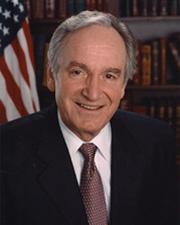 Sen. Tom Harkin (D-IA)
Legislative Activity
Stay on top of the latest movement without scrolling through every action
Senate amendment submitted
September 30, 2005
View full timeline
Senate amendment submitted
September 30, 2005
Senate amendment not agreed to: Amendment SA 1921 not agreed to in Senate by Yea-Nay Vote. 39 - 53. Record Vote Number: 246.
September 30, 2005
Senate amendment proposed (on the floor): Amendment SA 1921 proposed by Senator Harkin.
September 30, 2005
Roll call votes on amendments in Senate: Amendment SA 1921 not agreed to in Senate by Yea-Nay Vote. 39 - 53. Record Vote Number: 246.
September 30, 2005
Amendment SA 1921 proposed by Senator Harkin. (consideration: CR S10773-10778; text: CR S10774) To continue funding for the Community Services Block Grant at no less than last year's level.
September 30, 2005
Amendment SA 1921 not agreed to in Senate by Yea-Nay Vote. 39 - 53. Record Vote Number: 246.
September 30, 2005
Votes
1 roll call on this amendment
Text
Proposed
MAKING CONTINUING APPROPRIATIONS FOR THE FISCAL YEAR 2006

The PRESIDING OFFICER. Under the previous order, the Senate will
proceed to the consideration of H.J. Res. 68, which the clerk will
report by title.
The legislative clerk read as follows:

A resolution (H.J. Res. 68) making continuing
appropriations for the Fiscal Year 2006, and for other
purposes.

The PRESIDING OFFICER (Mr. Thomas). The time between now and 10:15
will be equally divided in the usual form, with one amendment to be
offered by the Senator from Iowa, Mr. Harkin.

Amendment No. 1921

Mr. HARKIN. Mr. President, I send an amendment to the desk.
The PRESIDING OFFICER. The clerk will report.

[[Page S10774]]

The legislative clerk read as follows:

The Senator from Iowa [Mr. Harkin], for himself, Mr. Kohl,
Mr. Jeffords, Mr. Levin, Mr. Bingaman, Mrs. Clinton, Ms.
Stabenow, Ms. Mikulski, Mr. Lautenberg, Mr. Rockefeller, Mr.
Akaka, Mr. Pryor, Mr. Carper, and Ms. Cantwell, proposes an
amendment numbered 1921.

Mr. HARKIN. Mr. President, I ask unanimous consent that reading of
the amendment be dispensed with.
The PRESIDING OFFICER. Without objection, it is so ordered.
The amendment is as follows:

(Purpose: To continue funding for the Community Services Block Grant at
no less than last year's level)

On page   , at the appropriate place, insert the following:
Sec.    Community Services Block Grant.
Notwithstanding section 101 of this joint resolution,
amounts are provided for making payments under the
``Community Services Block Grant Act'' at a rate not less
than the amounts made available for such Act in fiscal year
2005.

Mr. HARKIN. Mr. President, let me try to explain as briefly as I can
what the House did. The House sent over to us a continuing resolution
that says we will continue funding programs from last year at last
year's level, or the lower of what the House had passed earlier in
their budget. For most programs, that doesn't mean much.
This is a continuing resolution until when? November, November 18?
Most education money goes out next year. So for 2 months it doesn't
mean it is a big deal. Two or three months--maybe through December when
we will finally adjourn. However, there is one program that is deeply
affected by what the House did. It is called the Community Services
Block Grant Program. This money goes out quarterly. It is used
quarterly. It means tomorrow the community services block grant will be
cut 50 percent--not next year, tomorrow. In real dollars, this isn't
some phony baloney stuff.
What is even worse--as I took the floor last night, I did not know
this--in 1990, an amendment was put on and agreed to on the Community
Services Block Grant Program. It is a trigger formula. It is a little
bit complicated, but I will try to explain it.
It says if the total funding for a fiscal year exceeds $345 million,
each State shall receive not less than one-half of 1 percent of the
total amount. It protects small States. OK? However, if the funding is
less than $345 million, then no State shall receive less than one-
fourth of 1 percent.
Here is what the House did. Last year, it was $336 million, and the
House cut it back to $320.6 million. That is the level it was at in
1986.
What does that mean for Alaska? Alaska is one of 13 States--small
States--that will be cut 75 percent, not 50 percent.
Thirteen States--Alaska, Delaware, Hawaii, Idaho, Maine, Montana,
Nevada, New Hampshire, North Dakota, South Dakota, Utah, Vermont and
Wyoming--are not cut 50 percent. The total allocation for those States
would fall from $3,356,645 to less than $800,000.
I say to those of you who are from those 13 States, if you believe
the LIHEAP Program is important in your State, you ought to pay
attention to this amendment. The LIHEAP Program in Alaska, Hawaii,
North Dakota, South Dakota, Utah, Vermont, and Wyoming, for all intents
and purposes, will cease next week--October, November, maybe December.
So small States are hurt the worst.
You might ask, What is this Community Services Block Grant Program?
What are we talking about here? Who does it serve? It serves the
poorest of the poor; 6.5 million Americans, 2 million children, private
food banks that rely on the space, refrigerators, and transportation
supported by the community services block grant and the Low Income Home
Energy Assistance Program will be affected. Housing, weatherization
assistance, emergency shelter, rental assistance, the food stamp
programs, home-delivered meals, emergency food banks, senior day care,
senior centers, foster grandparents, Head Start Programs, parenting
education, domestic violence programs--all of these. That is who is
served--the poorest of the poor in our country. That is who is going to
be affected.
These are the programs that will be cut 50 percent, or 75 percent--
not next year. This isn't phony stuff. This isn't, Oh, someone will
take care of it.
Because of Hurricane Katrina, we have right now 171,000 people being
served by community action agencies that get their money from the
Community Services Block Grant Program. Not only do we have poverty up
in America, but we have all of these people who were evacuees who are
being helped. The mayor of Baton Rouge was here this week and came to
see us about increasing the Community Services Block Grant Program to
the community action agencies because of all of the evacuees. When they
told him it was being cut by 50 percent, he couldn't believe it. He
absolutely couldn't believe this was actually happening. One might say,
Well, we will come back and fix it later on. Maybe we will. When?
November? December? I don't know when. Think about October and think
about November and early December or the end of December. People will
be evicted from their homes. People will have utilities cut off. The
elderly will still need transportation to the doctor, and it won't be
there. It won't be there because this will be cut either 50 percent in
most States or in the smaller States by 75 percent.

I refer my colleagues to two letters, one from the Ozark Community
Action Agency and one from the East Missouri Community Action Agency,
which were printed in the Record of yesterday.
I ask unanimous consent a letter from the National Governors
Association be printed in the Record. It talks about CSBG, urging we
keep it at the appropriated levels.
There being no objection, the material was ordered to be printed in
the Record, as follows:

National Governors Association,

June 7, 2005.
Hon. Arlen Specter,.
Chairman, Subcommittee on Labor-HHS-Education, Senate
Appropriations Committee, Washington, DC.
Hon. Ralph Regula,
Chairman, Subcommittee on Labor-HHS-Education, House
Appropriations Committee, Washington, DC.
Hon. Tom Harkin,
Ranking Member, Subcommittee on Labor-HHS-Education, Senate
Appropriations Committee, Washington, DC.
Hon. David Obey,
Ranking Member, Subcommittee on Labor-HHS-Education, House
Appropriations Committee, Washington, DC.
Dear Chairman Specter, Senator Harkin, Chairman Regula and
Congressman Obey: As you begin negotiations on the fiscal
year (FY) 2006 Labor, Health and Human Services, and
Education (Labor-HHS) appropriations legislation, we are
writing to share with you the Governors' views on funding for
key state programs. We appreciate that you will provide level
or increased funding for many critical programs and urge you
to continue to uphold the strong federal-state partnership
with respect to these services. As you continue your
deliberations, however, we ask for your attention to the
following programs.

The Preventive Health and Health Services Block Grant

We urge you to continue level funding for the Preventive
Health and Health Services Block Grant at the FY 05
appropriated level of $132 million. This is one of the few
grants that allow states to address their own unique health
challenges in exciting and innovative ways. States have
documented that investment of Block Grant dollars have
resulted in improved health outcomes and in many cases
significant cost savings.

Bioterrorism Preparedness

Bioterrorism preparedness became a priority following
September 11, 2001 and the subsequent anthrax attacks that
killed several U.S. postal employees and others around the
country. Following these incidents, the federal government
provided funds to states for strengthening their public
health systems and developing surge capacity at state and
local public health facilities. The fiscal year 2006 budget
proposal has reduced funding in this area. In addition, funds
appropriated in fiscal year 2004 and 2005 have been
redirected by the Health and Human Services Department to
other departmental priorities. We urge you to continue level
funding for bioterrorism preparedness and to reject any
future efforts by HHS to redirect and/or reprogram already
appropriated federal funds for other priorities.

Community Services Block Grant

Governors are concerned with the effects that the proposed
integration of the Community Services Block Grant (CSBG) with
17 other federal programs into a new community development
initiative will have on the funding of CSBG. We are strongly
opposed to any cuts in the funding of CSBG, which supports a
broad range of federal, state, local, public and private
endeavors aimed at reducing the causes and effects of
poverty. We urge you to provide level funding for CSBG at the
FY 05 appropriated level of $641 million.

IDEA

Governors are committed to improving the academic
performance of students with disabilities. We appreciate the
increased federal

[[Page S10775]]

funding for special education that Congress and the
Administration have provided states and local schools the
last several years. The recently reauthorized Individuals
with Disabilities Education Act (IDEA) provided a glide path
to achieve full funding of the federal share of IDEA,
including an authorization of $14.6 billion for fiscal year
2006. We urge Congress to provide the highest possible
funding level for IDEA to stay the course and fully fund the
federal share of special education expenses.

NCLB and High School Reform

Across the nation, governors are leading efforts to reform
high schools and implement the No Child Left Behind Act
(NCLB). Governors recommend the highest possible funding
level--paired with continued flexibility--for Title I to
ensure that states and localities have adequate federal
resources to help successfully implement NCLB and raise
student achievement. We also recommend that funding be
maintained and increased for the critical programs that serve
teachers, high school students, and students transitioning to
postsecondary education, including the Carl D. Perkins
Vocational and Technical Education Act and the newly proposed
Teacher Incentive Fund. To this end, Congress should consider
increasing the federal investment in the Pell Grant program
to improve the purchasing power for all students, as long as
program solvency is maintained.
Thank you for your consideration, and we look forward to
working closely with you on these issues.
Sincerely,
Gov. Jennifer Granholm,
Chair, Health and Human Services Committee.

Gov. Kathleen Sebelius,

Chair, Education, Early Childhood and
Workforce Committee.

Gov. Haley Barbour,

Vice Chair, Health and Human
Services Committee.

Gov. Tim Pawlenty,

Vice Chair, Education, Early Childhood
and Workforce Committee.

Mr. HARKIN. I received this morning an article from the Salt Lake
Tribune: Utah poor will suffer from U.S. budget cut.

Utah's nine Community Action Programs stand to lose almost
half a million over the next three months under a temporary
budget approved by the U.S. Congress . . .
The 50 percent cut . . . that fund the programs nationally
is temporary; lawmakers could restore the money when they
approve the final budget, possibly in December or January. Or
they might not.
In Utah, the losses that take effect Saturday are already
forcing layoffs, a scaled-back food and pantry operating
hours and the suspension of meal deliveries to thousands of
families in crisis.
Cathy Hoskins, director of the state's largest Community
Action Program, located in Salt Lake city, said they stand to
lose $250,000, which translates to 6,000 orders of three-day
food supplies for 4,500 households.
She has laid off six workers and reduced by a fourth the
number of hours that advocates can devote to helping families
navigate Medicaid, welfare and other social service programs.

Continuing:

``It hurts,'' said Road Home director Matt Minkevich, whose
agency could lose $37,000. ``That's the equivalent of about
two front-line staff or 3,000 shelter nights.''

This is the time of the year temperatures are starting to drop. Food
pantries are running low, and people need help.
Katrina hit. We now see there are a lot of poor people in this
country, a lot of people that are at the end of their rope.
One might say: What the heck. It is just 2 or 3 months. Put yourself
in the position of a low-income family who has just been evicted. They
cannot pay their rent. They are out. They need some help in finding a
place to live. Where do they go? They go to their community action
centers. They go to East Ozark or they go to East Missouri to get that
help. Now they are told, We can't, we do not have the people, we do not
have the funds. Maybe they need some money to tide them over for a few
days to find some shelter. Sorry, the money is not there.
One may think this does not happen in America. Think about New
Orleans. Think about the poor who were caught who did not have cars,
did not have transportation, did not have bank accounts, did not have
any hope or any way of getting out. There are a lot of Americans out
there who do not live like we do, who do not have nice homes. We just
go in and turn up the thermostat whenever we want to or go down to the
local Safeway and pull out our credit card and buy groceries or go down
to the local doctor and our insurance picks up the tab.
We are talking about 6.5 million Americans served by these programs.
We are talking about the poorest of the poor.
Let me give some more examples of what community service block grants
do: Transportation for the elderly to medical appointments at community
health centers, in-home chore services for the homebound elderly,
congregate meals, child care, domestic violence programs, energy
assistance, weatherization, emergency shelter, rental assistance,
homeless assistance, eviction prevention, transitional housing, and I
mentioned the all-important Low-Income Heating Energy Assistance
Program.
This is what this money goes for. We are being told now we have to go
back to 1986 levels. By doing that, because of the formula in the law,
13 States that I mentioned--Alaska, Delaware, Hawaii, Idaho, Maine,
Montana, Nevada, New Hampshire, North Dakota, South Dakota, Utah,
Vermont, and Wyoming--13 States will lose over 75 percent of their
money--not next year, tomorrow.
It is not, well, hang on, continue your programs, continue doing
things, we will get the money to you starting in January when we
finally get our budget figured out here. I am sorry, people need food
now. They need shelter assistance now. They need to pay their heating
bills now. They need transportation to the doctor now. They cannot wait
until January to have someone pick up the tab. They do not have credit
cards. They do not have bank accounts. They do not have someone who
says we will give you the money and you can pay us back later. They do
not have that opportunity.
Let me repeat for the sake of emphasis who we are affecting with
this. Who are these people? Community service block grants serve 22
percent of all people in poverty. So one out of every five individuals
in America below the poverty level is served by CSBG. They do not serve
more because we do not fund more. But now we are going to cut it below
that, more than 15 million individuals, members of 6 million low-income
families. There were 2.7 million families with incomes at or below the
poverty guidelines, 1.1 million with incomes below 50 percent of the
poverty guidelines. Think of that, 1.1 million families affected by
what the House of Representatives did if we do not correct it; 1.1
million families had incomes below 50 percent of the poverty
guidelines. That is below $7,000 a year. It is 3.7 million children,
1.8 million adults who have not completed high school, 1.1 million
people who are disabled served by community services block grants. That
is who we are talking about. We are not talking about people like us
who have all this money. We are talking about the poorest of the poor.

I will repeat again that 13 States, because of a formula in the law,
will have a 75-percent cut tomorrow: Alaska, Delaware, Hawaii, Idaho,
Maine, Montana, Nevada, New Hampshire, North Dakota, South Dakota,
Utah, Vermont, and Wyoming. Tomorrow there will be a 75-percent cut in
the community block grants that go to Wyoming. But it will be more
because there is a set-aside for tribes. I am sure the LIHEAP program
is as important in Wyoming as in Iowa and it is getting cold in October
and November.
What the House did is thoughtless, heartless. It is cruel and totally
irresponsible. That does not mean we have to be thoughtless and
heartless and irresponsible. We can adopt this amendment, get it back
up to last year's level as a continuing resolution ought to do. We do
not add any money. We just keep it at last year's level. The House can
come back and correct this mistake today.
Well, you say that is a burden on the House; the Members have
probably caught their planes and gone home. I remember when the House
came back on Palm Sunday to pass a resolution on the Terri Schiavo
case. If they can do that, they can come back and correct this. They
can come back today and say we are not going to leave 6.5 million
Americans dependent on LIHEAP programs, people who will be evicted, we
will not leave them in the dust.
Think about what we are doing. Think about this. Think about next
month. A low-income family, a mother with two or three kids who have
been in an apartment, and they have not paid their rent because they
ran out of money. Maybe they had an illness. They had to pay out of
pocket. So they are evicted. Where do they go?
Don't tell me that doesn't happen. We saw what happens in New
Orleans.

[[Page S10776]]

We know now the poor are not out of sight and out of mind any longer.
They are here. What happens? How uncomfortable will it be for that
family? What kind of discomfort will they suffer?
What about an elderly person whose utilities have been turned off?
The PRESIDING OFFICER (Mr. ISAKSON). The time of the Senator has
expired.
Mr. HARKIN. I ask unanimous consent for at least 3 more minutes to
finish.
Mr. STEVENS. I will not object, but I would like to have some time on
our side.
Mr. HARKIN. I don't care. If I can just get 5 minutes, I will end.
Mr. STEVENS. The Senator has already had 20 minutes. The time was
equally divided?
The PRESIDING OFFICER. That is correct.
Mr. HARKIN. I was told last night, I say to my friend from Alaska,
that I had a half hour. I came in this morning and found out I only
have 15 minutes. I don't know who made that agreement. It was done
without my knowledge.
Mr. STEVENS. I have no objection if the Senator has 4 more minutes,
but I would like the time until 10 o'clock.
Mr. THOMAS. The time is at 10 o'clock.
Mr. STEVENS. I am happy----
Mr. THOMAS. There is an objection. As a Member, I object.
Mr. STEVENS. I am happy to yield to the Senator 4 minutes of our
time, if he wishes.
Mr. HARKIN. I will take 3 minutes.
The PRESIDING OFFICER. Without objection, it is so ordered.
Mr. HARKIN. I thank the Senator from Alaska.
Look, we may make the House uncomfortable, but I plead with my
colleagues, I plead with my colleagues, don't let this happen. Don't,
in our haste to leave here and go home for the weekend, shrug our
shoulders and say, well, someone will take care of it. Don't let our
reticence or our reluctance to make the House come back and do what is
right cause us to turn a deaf ear and a blind eye to the poorest in our
country.
I plead with my colleagues, let's do the right thing. Let's adopt
this amendment. The House can come back later today. They can fix it.
They can make it right. It may be a little bit uncomfortable for them
to get on an airplane and come back here, but think about the
discomfort of the poor in our country, think about that elderly person
who needs the LIHEAP program. Think about their uncomfortableness. They
need us. Let's not turn our backs on them at this point in time.
Mr. STEVENS. Mr. President, as the Senator from Iowa knows, this
Senator completely supports Community Service Block Grant Programs. We
both serve on the Committee on Appropriations and serve on the
subcommittee that deals with this issue.
I tell the Senate, on these community service block grants, for every
dollar that the Federal Government puts up, more than $2 comes from
outside sources. They are not matching funds. They put them up. They
supply them. This reduction in the House bill was done to sort of have
leverage over our committee in conference.
The Senate bill which is carried by the distinguished Senator from
Pennsylvania already has the full amount of the request in it. All we
have to do is get that bill to conference, but it has not been possible
thus far. But when this continuing resolution takes effect, there will
be allocated to the States the money they need.

Beyond that, FEMA has all sorts of money right now to assist the
people who are involved in the hurricane areas. There is no reason to
think anyone is going to be shut off in the disaster area from the
community block grant concept because FEMA will provide money to this
agency if they are short of money in this period ahead of us because of
the delay in getting the Health and Human Services bill passed by the
Congress and sent to the President.
But what happens if the Senator's amendment passes? We come to a halt
tonight. We have already reprogrammed money to the Department of
Defense from 2005 moneys in order to carry them over until they get the
money from the Defense bill, when and if it is passed.
We know we are in a period of delay because of a lot of things,
because of the two major disasters, because of the delay we have had in
terms of being able to confirm the nomination of the Chief Justice.
There has been a lot of delay this year, and we are late. It is not
something new. We have been late before and had continuing resolutions.
This matter the Senator has brought up will not lead to people being
denied assistance because the States can advance their money for this
period of 6 weeks, and it will be repaid when we pass the bill. The
Senate will hold the money for the Community Services Block Grants. We
always have. It is one of the things we have negotiated with the House
almost every year. The Senator knows this. We go to conference almost
every year, and the House has reduced this item. It is sort of a little
leverage in terms of negotiation with the Senator from Iowa, the
Senator from Pennsylvania, both of whom have done an excellent job with
Community Services Block Grants.
As I said, I support it. The chairman of the committee supports it.
We support the Community Services Block Grant Program. It will be fully
funded. It has been fully funded in the bill that is before the Senate.
To delay this bill now and delay funding for everyone else because
there is a little glitch here that it could--it could--be read to be
something that is taking money, as a practical matter, it carries the
same language that was in the continuing resolution before when the
minority was in the majority. This is exactly what happened before. It
is the same thing.
And it is a continuing resolution that has to be passed. If it is not
to the President by tonight, funding stops for everybody, not just a
slight glitch in the Community Services Block Grant. I do not like to
see people out there who really depend upon the Federal Government for
assistance being told somehow or other they are going to be denied
money. The money that comes from the Federal Government is less than a
third of the money they get.
So we have a possibility of a slight delay in Federal money getting
to them, but during that period, the non-Federal money, both from
States and private sources, will meet the need. Beyond that, FEMA has
money. We all know we gave them a tremendous amount of money to deal
with those who are in the disaster areas.
So I say to my friend from Iowa, this is wrong. This is wrong. We
will resolve this difference with the House. We have never before
abandoned Community Service Block Grants in the Senate. I do not care
which party has been in charge over the Senate, we have supported this
program. And we will. But to threaten these people, to make it sound as
though somehow or other they are going to put them out on the street
and they are not going to get any assistance, that is wrong.
I tell the Senate, if we do not pass this bill without amendment, not
only will the House be back here, we will be back here for days
wrangling over what to do because we cannot get the House back by
midnight. We go into that period of all the slush that comes after the
funding runs out. And it is not an easy sight.
We all remember the time it happened once before when the Government
did shut down because of a dispute between the House and the Senate. It
was resolved out at Andrews Air Force Base about 9 days later, as I
recall.
Now, at this time, after these two disasters, is no time to put a
question on the availability of the funds for every agency. If the
Senator's amendment is adopted, every agency is going to have to say:
What do we do? We can't spend any money from the 2006 account. They
will not have this continuing resolution, a lot of them, to spend from
2005 levels.
This is chaos. We do not deserve chaos in this country after the two
disasters we have just come through. I say to the Senate, it is
absolutely wrong to try to stop this continuing resolution this year.
We have troops in the field. As I said, those of us on the Defense
Appropriations Committee have, this last week, approved about seven
different reprogrammings to make sure funds are available tomorrow
morning for those people who need them who are deployed overseas. So to
stop these funds, to stop this bill, would stop everything tonight.

[[Page S10777]]

Now, again--and the Senator has mentioned my State--my State is one
of the States that needs funding of this kind. There is no question
that if there is a hiatus of having Federal funds, the State is going
to have to step forward and put some of their money up first. But they
know we will restore this money. By the time the 2006 bill is signed,
it will say that starting for October 1, they will get this money they
should have had.
I tell the Senator from Iowa, there is just----
Mr. SPECTER. Mr. President, will the Senator yield?
Mr. STEVENS. Mr. President, I will yield right now to the chairman of
the committee.
Mr. SPECTER. When the Senator from Alaska comments that the States
can put up some money so there would be no shortfall in the interim
until November 18, what assurances are there that that could happen,
that they have the funds and the disposition to do so?
Mr. STEVENS. Well, I say to the Senator, I know my State. My State is
not going to let those people suffer because there is a temporary
hiatus in Federal funding. The checks will go out from the State. The
State provides the checks. I cannot imagine that would happen.
Beyond that, FEMA is there. If this agency does not have the money to
meet the needs in the area of the two disasters, FEMA can step forward
and give them money. And it is already doing that. That is my
information.
Mr. SPECTER. Mr. President, would the Senator from Alaska permit me
to ask the same question to the Senator from Iowa? If I may have the
attention of the Senator from Iowa.
Mr. STEVENS. If the Senator wants the floor, I will be glad to yield
the floor to him. But I hope the Senator from Pennsylvania is not going
to support this amendment. If you do so, it means we will be in real
trouble as far as our committee is concerned.
Mr. SPECTER. Well, I have no present intention of supporting the
amendment. I would like to try to find a way to resolve the issue
substantively. But it is not an infrequent occurrence that the House
leaves town and leaves us with a gun at our head, where we have no
practical alternative but to yield to the House, which is out of town,
to run the Government.
But I am intrigued by what the Senator from Alaska has said. He is
very experienced and has been here a long time. He knows the ins and
outs of Government perhaps better than anyone. And when the Senator
says the States will provide the shortfall in the interim, it is a
brief period of time, or FEMA could step in, I would be interested in
the comments--I have discussed this preliminarily with Senator Harkin.
Mr. STEVENS. It is to October 18. That is what we are talking about.
Mr. SPECTER. I hear it is November 18. It is 6 weeks.
Mr. STEVENS. November 18? I apologize. That happens to be on my
birthday.
Mr. SPECTER. Well, that ends the debate. Six weeks is a short time in
the fiscal year the way we function around here, but it could be a very
long time for people who need money to keep their bodies and souls
together.
Let me direct a question to Senator Harkin.
The Senator from Alaska, having yielded the floor to me, how about
Senator Stevens' idea of the States making up the shortfall, on the
assurances from the chairman of the Appropriations Committee and the
President pro tempore and Senator Harkin and myself--the ranking member
and chairman of the subcommittee--that we will provide the additional
funds when we go to conference so that any shortfall will be made up,
that we will exercise our very best efforts and think we can be
successful--we have some leverage, too, in conference--that the moneys
will be paid in the interim and the shortfall will be made up?
Mr. STEVENS. Will the Senator yield for a question?
Mr. SPECTER. Sure.
Mr. STEVENS. Will you amend that question by saying we will provide
in the bill that the States will be repaid for what they advance?
Mr. SPECTER. I will amend my statement to that effect.
The PRESIDING OFFICER. The Senator from Alaska has yielded to the
Senator from Pennsylvania. However, the Senator from Pennsylvania may
not yield to the Senator from Iowa. The Senator from Iowa can ask for
recognition.
Mr. STEVENS. I yielded the floor, Mr. President.
Mr. SPECTER. We can work that out, Mr. President. I yield to the
Senator from Iowa. I yield the floor so he can have the floor.
Mr. HARKIN. Will you ask the question again?
The PRESIDING OFFICER. Does the Senator from Iowa seek recognition?
Mr. HARKIN. Will the Senator please ask the question again? Is the
question about the States making up the difference?
The PRESIDING OFFICER. If everyone will suspend, the time is
controlled by the Senator from Alaska. The Senator from Pennsylvania
could not yield to the Senator from Iowa. However, subject to
correction by the Parliamentarian, the Senator from Alaska may yield to
the Senator from Iowa.

Mr. STEVENS. Mr. President, I yield time to the chairman of the
committee. I was just occupying the position of the chairman until he
sought recognition.
The PRESIDING OFFICER. The Senator from Mississippi is recognized.
Mr. COCHRAN. Mr. President, how much time is left on both sides of
this issue?
The PRESIDING OFFICER. The majority has 4 minutes. The minority has
none.
Mr. COCHRAN. Mr. President, I yield myself the remainder of the time
allocated to the majority.
Do you know what this is, pure and simple? Shenanigans. Pure and
simple, shenanigans. Now, the reporter may not know how to spell that,
and I am not sure I could get it right, but it is not a serious effort
to increase funding for anybody for anything. No matter what my good
friend from Iowa has said about the intentions of this amendment, it is
to force Senators to vote for a lower level of funding than he is
proposing.
The problem is, the House is involved in this. We received this bill
from the House. It is a continuing resolution to provide interim
funding until we complete action on the next fiscal year bills for
these programs.
You have heard the distinguished Senator from Pennsylvania, who is
chairman of the subcommittee, who will help write that bill and manage
the bill on the floor of the Senate. He is not going to reduce the
levels of these programs, as the Senator from Iowa suggests will be
done.
We will negotiate, in due course, in the regular order with the
House, for appropriate levels of funding for the next fiscal year when
we pass the next fiscal year bill. This is a temporary measure. It is
not going to deprive anybody of funds they would otherwise get under
the next year's bills.
The next fiscal year starts on October 1. Here we are at the end of
the last fiscal year. This is shenanigans, purely and simply. The
continuing resolution is not a new or innovative procedure to provide
interim funding while the Congress completes actions on bills that may
not yet be finally worked out between the conferees, between the House
and Senate. It is often done. I do not recall there being any serious
disadvantage to anyone under a continuing resolution. Any shortfalls
that might occur as a result of the adoption of this continuing
resolution can be made up when the regular fiscal year 2006 bill is
finally agreed to by both Houses.
So I urge seriously the Senate to reject the amendment of the Senator
from Iowa. It is not going to have the effect that he suggests because
the House is not going to agree to it. The House has already passed the
continuing resolution and set the level of funding on a temporary
basis.
What is up to us now is: Are we going to provide continued funding
for those programs that are identified in the continuing resolution? It
is not just the programs the Senator from Iowa talks about. There are a
lot of programs affected by this continuing resolution: national
security issues, all kinds of other programs, nutrition programs for
the poor. So what he would do, in effect, is deny them the funds that
would be made available under the continuing resolution. That would be
a mess.
If we want a mess on our hands and people hurting and deprived of
funding

[[Page S10778]]

to which they are entitled under current law, at currently approved
levels of funding by both Houses of Congress, vote for the amendment.
That would create the real mess.
So I urge the Senate, Mr. President, to resist this amendment, vote
it down. Then, let's adopt the continuing resolution and provide
funding that is needed by all the agencies and Departments identified
in the continuing resolution.
The PRESIDING OFFICER. All time is expired.
Mr. COCHRAN. Mr. President, I ask for the yeas and nays on the
amendment.
The PRESIDING OFFICER. The yeas and nays have been requested.
Is there a sufficient second?
There appears to be a sufficient second.
The question is on agreeing to the amendment.
The clerk will call the roll.
The legislative clerk called the roll.
Mr. McCONNELL. The following Senators were necessarily absent: the
Senator from New Hampshire (Mr. Gregg) and the Senator from Louisiana
(Mr. Vitter).
Mr. DURBIN. I announce that the Senator from Delaware (Mr. Biden),
the Senator from West Virginia (Mr. Byrd), The Senator from New Jersey
(Mr. Corzine), the Senator from Maryland (Ms. Mikulski), the Senator
from Washington (Mrs. Murray), and the Senator from West Virginia (Mr.
Rockefeller) are necessarily absent.
The result was announced--yeas 39, nays 53, as follows:

[Rollcall Vote No. 246 Leg.]

YEAS--39

Akaka
Baucus
Bayh
Bingaman
Boxer
Cantwell
Carper
Clinton
Conrad
Dayton
Dodd
Dorgan
Durbin
Feingold
Feinstein
Harkin
Inouye
Jeffords
Johnson
Kennedy
Kerry
Kohl
Landrieu
Lautenberg
Leahy
Levin
Lieberman
Lincoln
Nelson (FL)
Nelson (NE)
Obama
Pryor
Reed
Reid
Salazar
Sarbanes
Schumer
Stabenow
Wyden

NAYS--53

Alexander
Allard
Allen
Bennett
Bond
Brownback
Bunning
Burns
Burr
Chafee
Chambliss
Coburn
Cochran
Coleman
Collins
Cornyn
Craig
Crapo
DeMint
DeWine
Dole
Domenici
Ensign
Enzi
Frist
Graham
Grassley
Hagel
Hatch
Hutchison
Inhofe
Isakson
Kyl
Lott
Lugar
Martinez
McCain
McConnell
Murkowski
Roberts
Santorum
Sessions
Shelby
Smith
Snowe
Specter
Stevens
Sununu
Talent
Thomas
Thune
Voinovich
Warner

NOT VOTING--8

Biden
Byrd
Corzine
Gregg
Mikulski
Murray
Rockefeller
Vitter
The amendment (No. 1921) was rejected.
Mr. KOHL. Mr. President, I joined my colleague, the Senator from
Iowa, in supporting the Community Services Block Grant, CSBG. The
continuing resolution before the Senate contains the House-passed
funding level for CSBG, $320 million. This is a 50 percent cut from
both the fiscal year 2005 level of funding and the Senate
Appropriations Committee supported level.
CSBG funds can be used in a variety of ways to help low-income
families make ends meet. I have heard from several agencies in
Wisconsin who rely on this funding to provide a range of services, from
job training to housing, to low-income families and individuals in
their communities. These agencies have told me, in no uncertain terms,
that a cut of this magnitude to CSBG would require them to cut actual
programming aimed at reducing poverty for families and the elderly.
This means a cut to programs such as the Skills Enhancement Project in
Outagamie County, which provides skills training to low-income workers
so that they may compete for higher paying jobs. Similarly, the Home
Buyers Assistance Program, which aims to increase homeownership among
low-income families, would have to narrow the number of families served
if the CR was passed without additional funding for CSBG.
CSBG funding plays a similarly important role throughout my State.
The West Central Wisconsin Community Action Agency, West CAP, which
provides a range of supports for low-income families and individuals,
relies on this funding to provide ``hardship relief'' programs,
affordable housing, food pantry services and job training. West CAP has
made it clear that this cut to CSBG couldn't come at a worse time, a
time when they are seeing increases in the use of food pantries, steep
increases in the pricing of basic needs, and dramatic increases in the
costs of gasoline and home heating fuels, which particularly impact on
low-income individuals.
That is why I am a cosponsor of the Harkin amendment to restore
funding to CSBG. At a time when Katrina and Rita have focused our
Nation's attention on the needs of low-income families, it is
unconscionable that Congress would turn its back, by cutting CSBG. With
this amendment we had a chance to set it right.
Mr. THUNE. Mr. President, today I voted in opposition to the Harkin
amendment to H.J. Res. 68. I opposed this amendment not because of its
substance, because I am strongly on the record supporting the Community
Service Block Grant Program. I voted earlier this year for an amendment
to the fiscal year 2006 budget resolution that would increase funding
for a number of community development programs by a total of $2.073
billion. This funding increase was for important programs such as
community development block grants and community service block grants
that give a helping hand to those who need it most and help get them
back on their feet.
No, I did not oppose the amendment because of its substance. I
opposed it because of its timing. We are here on the last day of the
fiscal year, and the bill before us would provide stopgap funding for a
majority of the Federal Government until we finish the appropriations
process here in Congress. We cannot hold up this bill today to provide
stopgap funding for the Federal Government. The House of
Representatives passed this bill last night and has adjourned. If the
President does not sign this bill before midnight tonight the Federal
Government will shut down.
We cannot allow important programs and agencies of the Federal
Government to go without funding--especially in this great time of
need. Numerous Government agencies are working around the clock in
emergency recovery efforts to assist those impacted by Hurricanes
Katrina and Rita on the gulf coast.
The issue that the Senator from Iowa brought up is extremely
important, and I am certain that the Senate will quickly restore
funding to the level that allows the CSBG Program and other community
development programs to operate effectively.
Last night the Democratic whip in the House of Representatives said
it would be ``unacceptable'' to allow the Government to shutdown. I
agree. Failing to pass this stopgap funding bill today without
amendments would do just that. It would shutter the windows of many
vital Federal Programs--including those programs deeply involved in
hurricane recovery efforts, funding for our troops, and other essential
programs. This is unacceptable indeed.
I know how important the CSBG and CDBG Programs are to my home State
of South Dakota. I often discuss with my constituents how these
programs impact the lives of many South Dakotans. I also realize how
this current funding situation would impact our State. That is why I am
determined to work with my colleagues at the appropriate time to
restore funding. But we cannot shut down the rest of the Federal
Government today at this critical hour.
Finally, I fear this is the kind of vote that the other side makes
the Senate take up just for attempted political gain and for crass
political motives. I fought a hard campaign last year, and I know first
hand how votes can be twisted during an election year--when tension is
high and there is little time for substantive explanations. I am making
this statement today to set the record straight. Those on the other
side may someday try to use this vote for their political advantage,
but I resolved to make the responsible vote and keep our Government
from facing a shutdown and resolving the funding issue on CSBG at the
correct time.
Mr. BURNS. Mr. President, today I opposed the Harkin amendment No.
1921, on the Community Services Block Grant (CSBG) Program.

[[Page S10779]]

Most of us know the important role that the Community Service Block
Grant Program plays in addressing the needs of folks on limited incomes
in Montana and across this country. The programs it encompasses go a
long way toward softening some of the conditions and addressing the
causes of poverty. The range of services include everything from low-
income energy assistance, nutrition and housing programs, Head Start
education, and other vital services offered by community action
agencies.
I strongly support the CSBG Program--I always have--and I will
continue to support full funding of CSBG again in the fiscal year 2006
Senate Labor, Health and Human Services and Education appropriations
bill. The Senate version of the bill funds CSBG at almost $637 million,
while the House of Representatives funded the program only at $320
million. Earlier this year, I signed a letter to my colleagues on the
Senate's Appropriations Subcommittee on the Departments of Labor,
Health and Human Services, and Education, outlining my support for
funding CSBG at $650 million fiscal year 2006. All the Senate needs to
do now is its work in passing the fiscal year 2006 Labor-HHS-Education
appropriations bill and getting it to conference where this important
program and the countless others' funding levels may be reconciled with
the House bill.
I have no doubt the CSBG Program will be funded sufficiently this
year, contrary to the benchmark the House of Representatives has set.
Given that this situation will be resolved with the completion of the
appropriation process, along with the fact that I do not believe we
should hold up this continuing resolution and other important
appropriation bills, such as the Defense bill which provides funding
for our men and women in harm's way, or shut down the Government
because of this amendment--for something I feel confident will be
funded anyway. Voting for this amendment would have shut down the
Government, thereby completely eliminating any of the funding
mechanisms in place to continue helping those most in need. I was not
willing to jeopardize their well-being.
Mr. KENNEDY. In the past five years, five million more citizens have
fallen into poverty. Thirty-seven million Americans live below the
poverty line. Three million more working Americans live in hunger or on
the verge of hunger today than in the year 2000.
The long-term unemployment rate is at historic levels--1.4 million
Americans are unemployed. Wages are stagnant throughout the United
States, yet gas prices, housing costs, and heating oil costs are
soaring. Families stay awake at night worrying how to make ends meet.
Many parents wonder how they will feed their children and pay their
bills. It is shameful that in the richest and most powerful Nation on
Earth, nearly 20 percent of all children go to bed hungry at night
because their parents, even working full time, still can't make ends
meet.
So how does the Republican leadership in Congress respond? By cutting
one of the key programs intended to help these families and children
through times of difficulty.
These cuts are even more incomprehensible when we see the needs of
our fellow citizens who have lost everything in Hurricanes Katrina and
Rita. The needs of the poor in America had already been ignored by the
Bush administration. But those devastating storms have shone a bright
new light on the unacceptable poverty that continues to plague our
communities today. We all watched the heartbreaking scenes of countless
low-income residents with no cars, struggling to escape the path of the
hurricane, and then struggling again to escape the flood waters. These
were real people in real poverty left largely on their own, fending for
themselves.
American people expect their leaders to stand for fairness, freedom
and opportunity. Those values are the cornerstone of the American
dream. We believe that if you live right and work hard, you should be
able to care for your family, afford rent in a safe neighborhood, and
to send your children to college.
We also believe that when life deals you a setback, you can count on
your neighbors to pitch in. If you lose your job or become seriously
ill, we all want to help out. If you lose your home, your belongings,
and your security from a natural disaster, it is some comfort to know
at least that you haven't been deserted and that help is on the way.
You deserve a chance to pick yourself up, dust yourself off, and start
over again--to reclaim the American dream for yourself and your family.
That's the American way, the American spirit.
The State agencies and the community action agencies funded by the
community service block grant program know that spirit well. They fight
poverty and encourage self-sufficiency in low-income communities every
day. Their services include literacy, child health care, afterschool
activities, low-income housing development, food stamps, and emergency
shelter assistance--all building blocks for a better future for
families facing misfortune.
Unfortunately, the administration and the House of Representatives
have closed their eyes to the needs of the poor and to the important
work of these community service agencies across the nation. This bill
takes the unconscionable step of cutting funds for the community
service block grant program in half--just at the time that these
services are needed most.
At a time when poverty is increasing, and in the wake of the
devastation of the hurricane, the House has decided to limit funds to
the very agencies that came forward to help people least able to help
themselves.
As Hurricane Katrina hit, Assistant Secretary for Children and
Families Wade Horn acknowledged the unique role of the community-based
agencies in disaster relief and called them to action in a memorandum
of September. He said that community action grantees ``particularly
those in Alabama, Louisiana, Mississippi, Arkansas, Texas, Florida,
Georgia and Tennessee [should] open [their] doors to those displaced
families who have sought refuge in [their] community and seek new ways
to support individuals, families and children impacted by this
disaster.''
These local agencies responded to that call by providing support and
other help to those in need.
I recently heard of a community action agency in Georgia. A woman
lost her home and her employment to Hurricane Katrina. She and her
husband had evacuated New Orleans without their medication and little
more than the clothes on their backs. The woman came to the Union
County Community Resource Center. She and her husband were provided
with food, vouchers for clothing at local thrift stores, and were
referred to the local free clinic to obtain the prescriptions they
needed to replace those that were lost. They were helped to find jobs
through churches, organizations, and businesses. In fact, the woman was
placed in a position within the same week.
In Arkansas, community service block grant funds helped a single
mother and her four children move from a shelter into federally
assisted permanent housing. Funding paid for the security deposit, a
deposit with the electric company, and a new washer and dryer because
there were no facilities in the building.
These actions are repeated every day thousands of times over to help
people get back on their feet. According to the National Association of
State Community Service Programs, community action agencies have
assisted over 171,000 evacuees. Much of their time was volunteered. But
the services and facilities they are using will draw from the funds
allocated by the government. The services for new residents, even
temporary ones, will change the community priorities already set for
dwindling block grant resources. How can the administration encourage
these agencies to do more while simultaneously cutting their funds?
Over the past 3 years, community service block grant funds have been
eroding, and a lack of funds has impaired the ability of these agencies
to reach out to the poor. If the community service block grant is cut
in half, their services will be compromised even more, and the agencies
will face a crisis of their own that will strain their reserves.
Programs that depend on grant resources for support such as fuel
assistance, the earned-income tax credit, Medicare outreach, and food
pantries will be seriously hurt, and in some cases will be eliminated.

[[Page S10780]]

With rising home energy costs, a 50-percent cut in funding will
jeopardize the LIHEAP program. October and November are especially busy
months for the community action agencies that administer it. The
program year begins October 1, and many agencies sign up the vast
majority of LIHEAP participants right away. Most States get almost 90
percent of their annual allotment in the first quarter.
In 3 months, the loss to Massachusetts will be $2 million. Half of
the State's 4,000-person staff will face layoffs. Yet our State serves
more than 400,000 persons, including many from the Gulf States.
According to Action Inc., a community action agency in Gloucester,
MA, a temporary 50-percent cut in funds will result in the elimination
of its housing and family legal services. Three hundred fifty very low-
income local families who face housing problems will be at risk of
homelessness.
The family law program will also be eliminated. Yet it helps 75 very
low-income residents a year by providing legal assistance on issues
such as divorce, custody, visitation and child support. Four hundred
twenty-five families will not have the legal assistance that helps
prevent evictions and solve critical family issues.
Action Inc. is only one example of the numerous agencies in
Massachusetts and across the Nation facing lay offs and program cuts or
even elimination because of the harsh cuts in continuing resolution.
It is wrong for the administration and the House of Representatives
to shred America's safety net even further when so many Americans are
already falling through it. We know how to mend it. All we lack is the
will and the leadership to do it.
The community services block grant agencies have been fighting to
alleviate poverty with great skill. It is time the Government stopped
forcing them to do so against such heavy odds. The challenge is too
critical for Americans to ignore any longer. We can no longer remain
indifferent to the least of those among us.
Personal responsibility, community responsibility, government
responsibility--they go hand in hand. When one of them breaks down, as
it has now, we have to fix it. I am saddened by Congress's harsh
treatment of those most in need. We should fully fund the community
service block grant, not cut it in half.
It may be inconvenient for House Members to take a plane ride back to
Washington to fix the problem they created, but it does not compare to
the hardships millions of poor people face today and every day.
The PRESIDING OFFICER. The question is on the third reading and
passage of the joint resolution.
The joint resolution (H.J. Res. 68) was ordered to a third reading
and was read the third time.
The PRESIDING OFFICER. The joint resolution having been read the
third time, the question is, Shall the joint resolution pass?
The joint resolution (H.J. Res. 68) was passed.
Mr. COCHRAN. I move to reconsider the vote.
Mr. STEVENS. I move to lay that motion on the table.
The motion to lay on the table was agreed to.
Mr. STEVENS. Mr. President, I suggest the absence of a quorum.
The PRESIDING OFFICER. The clerk will call the roll.
The legislative clerk proceeded to call the roll.
Mr. STEVENS. Mr. President, I ask unanimous consent that the order
for the quorum call be rescinded.
The PRESIDING OFFICER. Without objection, it is so ordered.

____________________