To express the sense of the Senate regarding Medicaid reconciliation legislation consistent with recommendations from the Secretary of Health and Human Services.
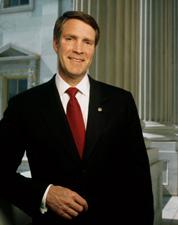 Sen. William H. Frist (R-TN)
Legislative Activity
Stay on top of the latest movement without scrolling through every action
Senate amendment submitted
March 17, 2005
View full timeline
Senate amendment submitted
March 17, 2005
Senate amendment not agreed to: Amendment SA 229 not agreed to in Senate by Yea-Nay. 49 - 51. Record Vote Number: 57.
March 17, 2005
Roll call votes on amendments in Senate: Amendment SA 229 not agreed to in Senate by Yea-Nay. 49 - 51. Record Vote Number: 57.
March 17, 2005
Senate amendment proposed (on the floor): Amendment SA 229 proposed by Senator Gregg for Senator Frist.
March 17, 2005
Amendment SA 229 proposed by Senator Gregg for Senator Frist. (consideration: CR S2886, S2919; text: CR S2886) To express the sense of the Senate regarding Medicaid reconciliation legislation consistent with recommendations from the Secretary of Health and Human Services.
March 17, 2005
Amendment SA 229 not agreed to in Senate by Yea-Nay. 49 - 51. Record Vote Number: 57.
March 17, 2005
Votes
1 roll call on this amendment
Text
Submitted
SA 229. Mr. GREGG (for Mr. Frist) submitted an amendment to the
concurrent resolution S. Con. Res. 18, setting forth the congressional
budget for the United States Government for fiscal year 2006 and
including the appropriate budgetary levels for fiscal years 2005 and
2007 through 2010; as follows:

Beginning on page 58, strike line 11 and all that follows
through page 61, line 24, and insert the following:

SEC. 504. SENSE OF THE SENATE REGARDING MEDICAID
RECONCILIATION LEGISLATION CONSISTENT WITH
RECOMMENDATIONS FROM THE SECRETARY OF HEALTH
AND HUMAN SERVICES.

(a) Findings.--The Senate makes the following findings:
(1) The Medicaid program provides essential health care and
long-term care services to more than 50,000,000 low-income
children, pregnant women, parents, individuals with
disabilities, and senior citizens. It is a Federal guarantee
that ensures the most vulnerable will have access to needed
medical services.
(2) The Medicaid program will spend $189,000,000,000 in
fiscal year 2006.
(3) During the period from fiscal year 2006 through fiscal
year 2010, the Medicaid program will spend
$1,100,000,000,000.
(4) Over the same period, spending for the Medicaid program
will increase by 40 percent.
(5) Medicaid provides critical access to long-term care and
other services for the elderly and individuals living with
disabilities, and is the single largest provider of long-term
care services. Medicaid also pays for personal care and other
supportive services that are typically not provided by
private health insurance or Medicare, but are necessary to
enable individuals with spinal cord injuries, developmental
disabilities, neurological degenerative diseases, serious and
persistent mental illnesses, HIV/AIDS, and other chronic
conditions to remain in the community, to work, and to
maintain independence.
(6) Medicaid supplements the Medicare program for more than
6,000,000 low-income elderly or disabled Medicare
beneficiaries, assisting them with their Medicare premiums
and co-insurance, wrap-around benefits, and the costs of
nursing home care that Medicare does not cover. The Medicaid
program spent nearly $40,000,000,000 on uncovered Medicare
services in 2002.
(7) This resolution assumes $163,000,000 in spending to
extend Medicare cost-sharing under the Medicaid program for
the Medicare part B premium for qualifying individuals
through 2006.
(8) Medicaid provides health insurance for more than \1/4\
of America's children and is the largest purchaser of
maternity care, paying for more than \1/3\ of all the births
in the United States each year. Medicaid also provides
critical access to care for children with disabilities,
covering more than 70 percent of poor children with
disabilities.
(9) More than 16,000,000 women depend on Medicaid for their
health care. Women comprise the majority of seniors (71
percent) on Medicaid. Half of nonelderly women with permanent
mental or physical disabilities have health coverage through
Medicaid. Medicaid provides treatment for low-income women
diagnosed with breast or cervical cancer in every State.
(10) Medicaid is the Nation's largest source of payment for
mental health services, HIV/AIDS care, and care for children
with special needs. Much of this care is either not covered
by private insurance or limited in scope or duration.
Medicaid is also a critical source of funding for health care
for children in foster care and for health services in
schools.
(11) Medicaid funds help ensure access to care for all
Americans. Medicaid is the single largest source of revenue
for the Nation's safety net hospitals, health centers, and
nursing homes, and is critical to the ability of these
providers to adequately serve all Americans.
(12) Medicaid serves a major role in ensuring that the
number of Americans without health insurance, approximately
45,000,000 in 2003, is not substantially higher. The system
of Federal matching for State Medicaid expenditures ensures
that Federal funds will grow as State spending increases in
response to unmet needs, enabling Medicaid to help buffer the
drop in private coverage during recessions. More than
4,800,000 Americans lost employer-sponsored coverage between
2000 and 2003, during which time Medicaid enrolled an
additional 8,400,000 Americans.
(b) Sense of the Senate.--It is the sense of the Senate
that--
(1) the Committee on Finance shall not report a
reconciliation bill that achieves spending reductions that
would--
(A) undermine the role the Medicaid program plays as a
critical component of the health care system of the United
States;
(B) cap Federal Medicaid spending, or otherwise shift
Medicaid cost burdens to State or local governments and their
taxpayers and health providers, forcing a reduction in access
to essential health services for low-income elderly
individuals, individuals with disabilities, and children and
families; or
(C) undermine the Federal guarantee of health insurance
coverage Medicaid provides, which would threaten not only the

[[Page S3075]]

health care safety net of the United States, but the entire
health care system;
(2) the Secretary of Health and Human Services, working
with bipartisan, geographically diverse members of the
National Governors Association and in consultation with key
stakeholders, shall make recommendations for changes to the
Medicaid program that reflect the principles specified in
paragraph (3); and
(3) the Committee on Finance, consistent with such
recommendations, shall report a reconciliation bill that--
(A) allows any Medicaid savings to be shared by the Federal
and State governments;
(B) would emphasize State flexibility through voluntary
options for States; and
(C) would not cause Medicaid recipients to lose coverage.
______