To ensure that legislation to make cuts in agriculture programs receives full consideration and debate in the Senate under regular order, rather than being fast-tracked under reconciliation procedures.
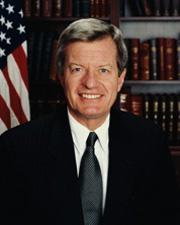 Sen. Max Baucus (D-MT)
Legislative Activity
Stay on top of the latest movement without scrolling through every action
Senate amendment submitted
March 17, 2005
View full timeline
Senate amendment submitted
March 17, 2005
Senate amendment not agreed to: Amendment SA 234 not agreed to in Senate by Yea-Nay Vote. 46 - 54. Record Vote Number: 69.
March 17, 2005
Roll call votes on amendments in Senate: Amendment SA 234 not agreed to in Senate by Yea-Nay Vote. 46 - 54. Record Vote Number: 69.
March 17, 2005
Senate amendment proposed (on the floor): Amendment SA 234 proposed by Senator Baucus.
March 17, 2005
Amendment SA 234 proposed by Senator Baucus. (consideration: CR S2903-2907, S2925-2926; text: CR S2903) To ensure that legislation to make cuts in agriculture programs receives full consideration and debate in the Senate under regular order, rather than being fast-tracked under reconciliation procedures.
March 17, 2005
Amendment SA 234 not agreed to in Senate by Yea-Nay Vote. 46 - 54. Record Vote Number: 69.
March 17, 2005
Votes
1 roll call on this amendment
Text
Proposed
[[Page S2899]]

-----------------------------------------------------------------------

Senate

CONGRESSIONAL BUDGET FOR THE UNITED STATES GOVERNMENT FOR THE FISCAL
YEAR 2006--Continued

The PRESIDING OFFICER. Who yields time in opposition?
Mr. GREGG. There is 7\1/2\ minutes remaining in opposition?
The PRESIDING OFFICER. That is correct.
Mr. GREGG. There is story after story for everything in this country.
The problem is, if we start funding all the stories, we will run out of
money and tax our kids so they cannot afford it and tax ourselves so we
cannot afford it.
The issue is setting priorities. The President has suggested a
priority in the area of CDBGs. I suspect this Congress is not going to
accept that priority, but it should function within the caps that have
been set in order to decide whether it chooses that priority.
This is a reasonable approach, to set a cap and then say to the
Appropriations Committee, you decide whether CDBGs make more sense than
some other program that would compete for the same amount of money.
I will not vote for either of these amendments, but if I had to vote
for one or the other, I would be more inclined to vote for the one from
the Senator from Minnesota because he does not impact caps and takes it
out of something called 800 which is the general operation of the
Government which means basically a cut to IRS and other operating
accounts within the Government.
I don't think that should be the way we should approach this. We
should, rather, allow the Appropriations Committee to make decisions on
this and we should not be arbitrarily in the Senate reallocating money
from IRS over to the CDBG Program on the basis of anything, including
stories.
I understood the Senator from Maryland wanted a couple of minutes.
I yield the Senator 2 minutes.
The PRESIDING OFFICER. The Senator from Maryland.
Mr. SARBANES. Madam President, I commend the Senator from Minnesota
for a very eloquent statement about the effectiveness of the CDBG
program. Of course, he has absolutely firsthand experience with it
having been a mayor of one of our great cities. I appreciate his
analysis of the worth of the CDBG program.
I simply make this point, and this is a broader priorities question:
The amendment I have offered derives the funding, in order to restore
the money, by closing tax loopholes--the very provisions that passed
the Senate overwhelmingly last year 92 to 4 on the FSC/ETI bill. A lot
of these provisions were dropped in conference. The ones dropped would
produce $27 billion over a 5-year period. So there is not much argument
about the necessity of closing these loopholes. The overwhelming
judgment here was that ought to be done. That would then avoid cutting
other programs.
There is a dilemma here. I understand that. If we are trying to keep
things neutral as far as contributing to the deficit is concerned, then
the question becomes, do you cut other programs in what is, I think, an
already extremely tight budget. So you fund CDBG, but you would
diminish the funding for housing, education, and other programs--across
the board. The alternative is to find a revenue source in which there
is general agreement in terms of an abuse of the Tax Code.
Now, the chairman refers to that as taxing and spending. I do not
know how you spend if you do not tax unless you are going to run up a
deficit. I regard that as responsible budget making.
You always have to use reasoned judgement and analysis in terms of
what is fair and right. The proposal here is to close some of those tax
loopholes. There has been an overwhelming judgment that those loopholes
should be closed. The amount of revenue produced by closing the
loopholes dropped in conference is three times what it would cost to
restore the CDBG Program. Thus closing only some of them would produce
sufficient revenue to restore these programs.
The PRESIDING OFFICER. The Senator has consumed 2 minutes
Mr. SARBANES. I thank the Chair.
The PRESIDING OFFICER. The Senator from New Hampshire.
Mr. GREGG. Madam President, I thank the Senator from Maryland.
I yield back the remainder of my time.
The PRESIDING OFFICER. All time is yielded back.
The Senator from Mississippi.

Amendment No. 208

(Purpose: to modify the designation authority for an
emergency requirement)

Mr. COCHRAN. Madam President, I call up amendment No. 208, which is
at the desk.
The PRESIDING OFFICER. The clerk will report.
The assistant legislative clerk read as follows:

The Senator from Mississippi [Mr. Cochran] proposes an
amendment numbered 208.
On page 42, line 14, strike ``that'' and all that follows
through ``designates'' on line 15 and insert: ``that the
Congress designates as an emergency requirement''.

The PRESIDING OFFICER. There is 10 minutes evenly divided on this
amendment.
The Senator from Mississippi.
Mr. COCHRAN. Madam President, section 402 of the pending budget
resolution establishes a procedure for designating emergency
appropriations that I believe creates a new and unnecessary hurdle for
Congress in responding to emergency situations. It distorts the balance
of power between Congress and the President.
Section 402 permits an emergency designation of an appropriation to
be challenged on a point of order and provides that the point of order
can be waived only by a vote of three-fifths of

[[Page S2900]]

the Senate. That point of order has been incorporated in budget
resolutions for several years now. It was put in place to curb what was
seen as an overuse of the emergency designation to escape the
limitations of the caps on discretionary spending. It has served
successfully to impose restraint on emergency designations.
But now, in this resolution, the distinguished chairman of the Budget
Committee has included, in addition to that requirement, the further
requirement that the President must also designate the appropriation as
an emergency in order for it to escape being counted against the budget
resolution caps for discretionary spending.
While it is true the Presidential designation was part of the process
in the original Budget Enforcement Act of 1990, that legislation was a
comprehensive measure with a number of budget enforcement provisions,
and was before the three-fifths or 60-vote requirement had been imposed
on the process. It seems to me we do not need both the 60-vote
requirement and the new Presidential designation requirement.
Let me suggest a hypothetical situation. Let us say this provision
were in place when this body takes up the President's emergency
supplemental request, which has been passed by the other body. Let us
say that an amendment is offered on the floor to address an emergency
situation not included in the President's budget request, and its
emergency designation is challenged by a point of order here in the
Senate, and, further, that an overwhelming majority of the Senate votes
to approve the emergency designation. Despite the size of the vote in
the Senate, so long as it is over 60, and even if the President signs
the bill into law, if the President declines to specifically and
expressly concur with the congressional emergency designation, the
appropriation will be counted against the discretionary cap by the
Budget Committee scorekeepers. This is even though the President
approves the appropriation.
My suggestion is by signing the bill the President approves the
decision of the Congress that the funds are needed, and that they
should be spent, and that they are needed to address an emergency.
So despite a substantial majority vote here in the Senate on a
particular appropriation provision, despite congressional approval of
an appropriations bill, including its emergency designation, and
despite the President signing the bill, approving the bill with this
provision in it, the President can effectively nullify the action of
the Congress relative to the caps on spending set by Congress in its
own budget resolution.
I believe the inclusion of this additional Presidential power should
be stricken from this resolution and we should enforce our budget
provisions with the 60-vote point of order as provided by our rules and
under the law. Congressionally imposed caps on spending should be set
and enforced by Congress, not by the President.
The PRESIDING OFFICER. The Senator's time has expired.
Who yields time in opposition?
Mr. GREGG. Madam President, I rise in opposition.
Mr. BYRD. Madam President, will the Senator yield?
Mr. GREGG. How much time would the Senator need?
Mr. BYRD. Two minutes.
Mr. GREGG. Madam President, I yield the Senator 2 minutes.
The PRESIDING OFFICER. The Senator from West Virginia.
Mr. BYRD. Madam President, I thank the distinguished Senator, the
chairman of the committee, for his characteristic courtesy.
I rise, Madam President, to express my admiration for Senator Cochran
as he assumes the duties of chairman of the Senate Appropriations
Committee. Today, I stand with Chairman Cochran in support of his
amendment concerning the authority of Congress to designate funding as
an emergency.
In the Constitution, there is no ambiguity about which branch of
Government has the power of the purse. It is the congressional power of
the purse which is the central pillar of the system of checks and
balances under our Constitution. The budget resolution that is before
the Senate includes a provision which makes the ability of the Congress
to designate funding as an emergency subject to the approval of the
President.
The measure that is before the Senate is a budget resolution. It is
not a law. It will not be sent to the President for his approval. The
Congress should not use a budget resolution to tie its own hands on
spending decisions. The Congress should not tie its own hands in
determining whether an expenditure for war, or an expenditure for
victims of a flood, hurricane, or earthquake is an emergency. The
Senate should not have to get on its knees and plead with any President
for his permission to designate a provision as an emergency. The
Congress is a coequal branch of Government under our Constitution, and
it should jealously guard the prerogatives associated with the power of
the purse, so wisely preserved for the legislative branch by our
Founding Fathers.
If the Senate wants to provide emergency funding for agriculture
disaster relief, or for responding to a recent flood or hurricane, or
to provide additional funding to the Department of Defense for body
armor, it must have that authority. The Cochran amendment makes clear
Congress retains that authority.
I urge adoption of the amendment.
Again, I thank the chairman.
The PRESIDING OFFICER. The Senator from New Hampshire.
Mr. GREGG. Madam President, a lot of folks around here talk about
budget reform, and this is budget reform in that it returns us to the
days when the President was treated essentially this way, back under
President Clinton, under President Bush the first. I think it is
important to know what the issue is.
The issue is not defense spending, because the proposed budget point
of order and the Presidential involvement does not apply to defense
spending. So with regard to the supplemental that is coming at us, the
majority of which is defense spending, it does not affect that. It is
nondefense areas where basically emergency designations are used to
avoid the cap.
The cap is the enforcement mechanism on the discretionary side. There
are going to be instances where we are going to have to go through the
cap because there are legitimate emergencies--hurricanes, the tsunami.
But the simple fact is, there are also instances where we have used the
emergency designation, such as for oyster farming, where maybe they
were not quite emergencies, and yet they allowed the cap to be avoided
for that spending item.
This tries to put some balance back into the process of when we are
going to have domestic emergencies and when we are not, and making sure
the President is part of that process, which has traditionally been the
way we did it around here. So I think it is reasonable change.
I understand the chairman and the ranking member of the
Appropriations Committee are concerned because it may well impact them,
although I suspect with this President they will be able to work out an
understanding that they will agree on. But I do think it is an
enforcement mechanism that is appropriate at this time.
Madam President, do I have any time left?
The PRESIDING OFFICER. There is 1 minute 20 seconds remaining.
Mr. GREGG. I yield that back.
The PRESIDING OFFICER. Time is yielded back.
The Senator from New Hampshire.
Mr. GREGG. Madam President, I ask unanimous consent that following
this debate which has just been completed, the following times be
allocated specifically for Members to offer their amendments; provided
further, that if the Senator is not here during the allocated time, the
clock run against the time reserved for the amendment.
I send a list of those allocations to the desk.
The PRESIDING OFFICER. Is there objection?
Without objection, it is so ordered.
The Senator from Massachusetts.

Amendment No. 177

Mr. KENNEDY. Madam President, I inquire, I believe in the order of
matters it is appropriate now to consider amendment No. 177, and there
is a 15-minute time limit on it. Am I correct?
The PRESIDING OFFICER. There is a 15-minute time limit on the
education amendment. Does the Senator call up the amendment?

[[Page S2901]]

Mr. KENNEDY. Yes, I call up the amendment.
The PRESIDING OFFICER. The clerk will report.
The assistant legislative clerk read as follows:

The Senator from Massachusetts [Mr. Kennedy], for himself,
Mr. Dodd, Mrs. Murray, Mr. Lieberman, Mr. Corzine, Mr. Kerry,
Mr. Sarbanes, and Mr. Reed, proposes an amendment numbered
177.

The amendment is as follows:

(Purpose: To reduce the deficit by $5.4 billion and support college
access an equal amount by closing $10.8 billion in corporate tax
loopholes and: (1) restoring education program cuts slated for
vocational education, adult education, GEAR UP, and TRIO, (2)
increasing the maximum Pell Grant scholarship to $4,500 immediately,
and (3) increasing future math and science teacher student loan
forgiveness to $23,000)

On page 3, line 10, increase the amount by $1,446,000,000.
On page 3, line 11, increase the amount by $7,606,000,000.
On page 3, line 12, increase the amount by $1,332,000,000.
On page 3, line 13, increase the amount by $454,000,000.
On page 3, line 14, increase the amount by $110,000,000.
On page 3, line 19, increase the amount by $1,446,000,000.
On page 3, line 20, increase the amount by $7,606,000,000.
On page 3, line 21, increase the amount by $1,332,000,000.
On page 4, line 1, increase the amount by $454,000,000.
On page 4, line 2, increase the amount by $110,000,000.
On page 4, line 7, increase the amount by $5,389,000,000.
On page 4, line 8, increase the amount by $5,000,000.
On page 4, line 9, increase the amount by $15,000,000.
On page 4, line 10, increase the amount by $25,000,000.
On page 4, line 11, increase the amount by $40,000,000.
On page 4, line 16, increase the amount by $723,000,000.
On page 4, line 17, increase the amount by $3,803,000,000.
On page 4, line 18, increase the amount by $666,000,000.
On page 4, line 19, increase the amount by $227,000,000.
On page 4, line 20, increase the amount by $55,000,000.
On page 4, line 24, increase the amount by $723,000,000.
On page 4, line 25, increase the amount by $3,803,000,000.
On page 5, line 1, increase the amount by $666,000,000.
On page 5, line 2, increase the amount by $227,000,000.
On page 5, line 3, increase the amount by $55,000,000.
On page 5, line 7, decrease the amount by $723,000,000.
On page 5, line 8, decrease the amount by $4,526,000,000.
On page 5, line 9, decrease the amount by $5,192,000,000.
On page 5, line 10, decrease the amount by $5,419,000,000.
On page 5, line 11, decrease the amount by $5,474,000,000.
On page 5, line 15, decrease the amount by $723,000,000.
On page 5, line 16, decrease the amount by $4,526,000,000.
On page 5, line 17, decrease the amount by $5,192,000,000.
On page 5, line 18, decrease the amount by $5,419,000,000.
On page 5, line 19, decrease the amount by $5,474,000,000.
On page 17, line 16, increase the amount by $5,389,000,000.
On page 17, line 17, increase the amount by $723,000,000.
On page 17, line 20, increase the amount by $5,000,000.
On page 17, line 21, increase the amount by $3,803,000,000.
On page 17, line 24, increase the amount by $15,000,000.
On page 17, line 25, increase the amount by $666,000,000.
On page 18, line 3, increase the amount by $25,000,000.
On page 18, line 4, increase the amount by $227,000,000.
On page 18, line 7, increase the amount by $40,000,000.
On page 18, line 8, increase the amount by $55,000,000.
On page 30, line 16, decrease the amount by $1,446,000,000.
On page 30, line 17, decrease the amount by
$10,948,000,000.
On page 36, line 21, increase the amount by $8,000,000.
On page 36, line 22, increase the amount by $8,000,000.
On page 36, line 23, increase the amount by $93,000,000.
On page 36, line 24, increase the amount by $93,000,000.
On page 48, line 6, increase the amount by $5,381,000,000.
On page 48, line 7, increase the amount by $715,000,000.

Mr. KENNEDY. Madam President, during the last few days, we have voted
on various education amendments. I want to direct the attention of our
Members to some of the facts as we are coming to the final
consideration of this amendment.
Fact No. 1: The chairman's mark in the 2006 budget, if you look on
page 5, you will see education, training programs, and you see that
there will be cut $2.5 billion now, $4 billion in the second year.
According to the best estimate we have, from the Center on Budget and
Policy Priorities, cumulatively over 5 years this will be $40 billion.
Those who are opposed to our amendment will say, you have a $5 billion
higher education trust fund. But as the chairman of our committee
pointed out, that basically is a phony mark.
The chairman of our committee, Mr. Enzi, says that chairman's mark
contains a $5 billion reserve for new initiatives coupled with
approximately $5 billion in spending cuts. In order to get the $5
billion in reserve funds, you have to effectively have these cuts plus
the reconciliation cuts. What we are talking about basically are very
dramatic and significant cuts in education.
This amendment does two basic things. First, it will ensure that we
will reach $4,500 in Pell grants. Second, it will fund the cuts that
are proposed by the President in terms of TRIO and GEAR UP so that we
will help the needy children in that area. Third, it will ensure that
we are going to provide funding for vocational education, special
skills, the adult education program, so we are going to have a
continuing upgrade of American skills. That is one important part of
this amendment.
The second important part is the part of the amendment that gives
attention to where the United States is in terms of a global challenge.
I personally believe that the greatest challenge we are facing today is
globalization, and the challenge we ought to respond to is to make sure
that our people will be able to deal with the global challenge. And
that means investing in math and science.
This amendment will fund education for math and science teachers in a
similar way that we did at the time we were threatened with sputnik in
1957. With this amendment we will effectively get 50,000 to 60,000 more
math and science teachers every year.
We have seen what has happened to the United States in the area of
math and science. In 1975, we were third in the world in terms of math
and science and engineering degrees. By the year 2000, we were 15th in
the world, and we are going down. This budget resolution will drive us
down further. This amendment provides a stopgap to that and the
opportunity to make significant gains. That is what this is about.
We know that the Chinese are graduating three times as many engineers
as the United States will this year. India is graduating three times as
many computer scientists as we are. If we just think that we can go
along with business as usual, we are missing an enormously important
opportunity and responsibility. We need this kind of investment. We
need it so that we will be able to compete globally in terms of the
economy. We need this investment so that we will be able to compete
from a national security point of view. Investing in our young people
is an essential part of our national security. We cannot tolerate the
kinds of cuts that are included in this legislation. This
amendment addresses that.

Those on the other side will say we have increased education funding
by all these percentages in recent years. We have increased funding in
education, but it is still totally inadequate. The fact is, most of the
increase has been the result of action on this side. I wish we had been
able to meet our responsibilities.
If you look at what is happening currently in terms of high school
dropouts, these are three of the large high schools in Los Angeles--it
is difficult to see, but you should be able to see the trend lines--
Roosevelt High School, Garfield High School, and Huntington Park High
School. You see the dramatic dropout that is taking place across the
country. That is happening in our high schools.
Talk to any principal, talk to any school board, talk to any of those
involved in education--they know what is not happening; that is,
getting a good education.

[[Page S2902]]

Finally, for every 100 ninth graders, 68 of those graduate from high
school out of every 100; 40, when they graduate, will enroll in
college. Only 27 will stay enrolled as sophomores, and only 18 graduate
from college on time out of the 100.
Money is not the only answer. Money in a number of instances isn't
the answer. But investing in resources is an indication of our national
priority. It does seem to me that we can afford the $5.4 billion which
is offset and paid for with the close of tax loopholes in a proposal
that also includes $71 billion in tax reductions for individuals. That
is what this whole proposal is about. That is what this budget is
about: the question of priorities. This is a $5.5 billion investment in
our children, offset--not increasing the deficit--with the closing of
tax loopholes which has been accepted by the Senate in a proposal that
is already providing $71 billion in tax reductions. It does seem to me
that this is more of an expression of the values of the American
people. Five billion is a lot, but we know that investing in our young
people, investing in math and science, is key to our future. It seems
to me to be something that the American people should and will support.
I hope this amendment will be accepted.
The PRESIDING OFFICER. The Senator from New Hampshire.
Mr. GREGG. Madam President, the Senator from Massachusetts is
correct. Money does not solve the problem of education. If it did, the
city of Washington would have the finest schools and the best academic
experience in the country instead of the worst. The students
regrettably score at the bottom of the Nation year in and year out. Yet
on a per capita basis, more money is spent per child here in Washington
than any place else in America: $12,000 a year per child. I
congratulate the present Mayor for trying to address the issue through
creating choice within the school system. But that is a fact. Money
does not necessarily solve education problems.
However, in the area of money, this Presidency has done a
dramatically better job than the prior President in his commitment to
increasing education dollars. Since coming into office, President
Bush's increase in education exceeds that of President Clinton by 33
percent. His increase in funding for title I exceeds that of President
Clinton by 52 percent. His increase in IDEA funding exceeds that of
President Clinton by 75 percent. His increase in funding of No Child
Left Behind exceeds President Clinton's areas in approximately the same
programs by 46 percent. In this budget proposal, the President has
proposed adding another $500 million in IDEA, $600 million in title I,
$1 billion in No Child Left Behind, and half a billion dollars into
Pell grants.
In addition, this budget itself sets up the process for significant
increases in funding in the Pell grant area so that we can get to a
$4,150 grant next year. And if we follow the proposal of this budget,
we will get to a $5,100 grant for people who use Pell grants and go to
college for 4 years and complete their schooling.
In addition, we put in $5.5 billion, approximately, in order to
reauthorize the Higher Education Act. And yes, it is paid for in large
part, but it is paid for by basically ratcheting down on lenders. I
suspect the Senator from Massachusetts will be comfortable with many of
the pay-fors which Senator Enzi comes up with in committee. So the
education commitment of this administration has been extraordinarily
strong, and this budget puts forth some very creative and unique ideas
for going forward on that aggressive approach.
This amendment is not the way to proceed. The Senator from
Massachusetts has never been a wilting violet on the concept of
increasing taxes. This amendment reinforces that fine track record as
it increases taxes by $10.9 billion. In fact, the entire other side of
the aisle has not been much in the way of wilting violets on the issue
of increasing taxes.
So far we have had approximately seven amendments that we have
accounted for. I think there are a lot more floating around here that
we have not yet accounted for that had they been passed or if they are
passed--four of them were, fortunately, defeated--would have added $47
billion. That doesn't count this $10 billion. So we are up to almost
$60 billion of new taxes that has been proposed so far. I suspect that
number is understated because I think we are missing five or six
amendments that had been suggested in the last few hours late last
evening.
So there is no question but there is a philosophy on the other side
which this side is trying not to subscribe to, which is that you just
raise taxes and you spend more money and that solves the problem. That
doesn't solve the problem. The problem is that we have to set
priorities, and within those priorities, some programs of the Federal
Government should be funded more aggressively than others.
What the President has suggested specifically is that the core
educational initiatives of the Federal Government--No Child Left
Behind, title I, special education, Pell grant, higher education--will
be funded extremely aggressively. The Congress may not decide to choose
to follow that course of action, but at least we should go forward with
the concept that we are going to set the priorities within a budget
that we can afford and not break that budget and raise taxes on the
American people.
Therefore, I oppose this amendment.
I yield back the balance of my time.
Ms. COLLINS. Mr. President, I am pleased to rise in support of
Senator Kennedy's amendment to increase education funding in the budget
by $5.4 billion. This amendment will provide additional budget
authority for the purpose of addressing many important education needs,
including ensuring continued funding for TRIO, GEAR UP, and Perkins
vocational education. In addition, this amendment will include funding
to raise the maximum Pell grant award to $4,500 this year, which is one
of my top legislative priorities for this year.
Our system of higher education is in many ways the envy of the world,
but its benefits have not been equally available. Unfortunately, it is
still the case that one of the most determinative factors of whether
students will pursue higher education is their family income. Students
from families with incomes above $75,000 are more than twice as likely
to attend college as students from families with incomes of less that
$25,000.
To help remedy these inequities, the Federal Government has wisely
invested in a need-based system of student financial aid designed to
remove these economic barriers. Central to this effort for the past 30
years has been the Pell grant program.
The Pell grant program is the single largest source of grant aid for
postsecondary education funded by the Federal Government. It provides
grants to students based on their level of financial need to support
their studies at the institutions they have chosen to attend.
I have long supported efforts to raise the Pell grant maximum award.
I am pleased by the efforts of the Budget Committee to provide a $100
increase in the Pell grant maximum award for this year. But I believe
it is imperative that we succeed in providing a more substantial
increase in the maximum grant this year.
That is why, as my first legislation of this year, I introduced
Senate Resolution 8, calling on the Senate to increase the Pell grant
to $4,500 this year. I am very pleased to have Senators Feingold,
Coleman, Kennedy, and Durbin joining me as cosponsors of this
resolution. They are all leaders in the effort to expand access to
higher education.
The amendment before us builds on the efforts of my resolution, by
following up to ensure sufficient budget authority to meet this goal.
While I understand that we face many difficult decisions on the
budget resolution before us, I believe that a $450 increase is an
imminently reasonable and achievable goal for this year--especially in
light of the fact that the Pell maximum grant has gone essentially
unchanged for 4 years. After receiving a modest increase of $50 in
2002, the maximum award has been stuck at the $4,050 level for 2003,
2004, and 2005.
In the meantime, the cost of attending college has continued to rise.
The combination of these factors over the past 4 years has led to a
significant erosion in the purchasing power of the Pell grant, and has
forced students to rely increasingly on loans to finance their higher
education.

[[Page S2903]]

In 1975, the maximum Pell grant covered approximately 80 percent of
the costs of attending a public, 4-year institution. Today, it covers
less than 40 percent of these costs, forcing students to make up the
difference by taking on larger and larger amounts of debt.
The decline in the value of grant aid and the growing reliance on
loans have serious consequences for access to higher education for low-
income students. The staggering amount of loans causes some students to
abandon their plans to attend college altogether. According to the
College Board, low-income families are significantly less willing, by
almost 50 percent, to finance a college education through borrowed
money than their wealthier counterparts.
That does not surprise me. Many working families in Maine are
committed to living within their means. Understandably, they are
extremely wary of the staggering amount of debt that is now required to
finance a college education.
I also know this to be true from my experiences as a college
administrator at Husson College in Maine. At Husson, 85-90 percent of
students currently receive some sort of Federal financial aid, and--
approximately 60 percent of students receive Pell grants.
As Linda Conant, the financial aid director at Husson told me:

You cannot imagine how difficult it is to sit with a family
and to explain to them the amount of loans that are needed to
finance a post-secondary degree. It scares them. That is why
Pell grant aid is so important for low-income families. For
these families, loans don't always work, but Pell does.

We also know that having a well-educated workforce is crucial to our
economic future and competitiveness in the global economy. The Bureau
of Labor Statistics has projected that over the next 10 years, there
will be significant growth in jobs requiring at least some post-
secondary education. So increasingly, higher education is going to be
necessary to ensure employability and to prepare Americans to
participate in tomorrow's economy.
That is why Pell grants are so important. Pell grants make the
difference in whether students have access to higher education, and a
chance to participate fully in the American dream.
Mr. President, Pell grants are targeted to the neediest of students--
recipients have a median family income of only $15,200. An additional
$450 in Pell grant aid may very well be the deciding factor on whether
these students can pursue their college dreams.
The Pell grant program is the foundation of making good on the
American promise of access to higher education. Now is the time for us
to make a commitment to raising the Pell maximum award to $4,500 for
the upcoming award year. I hope that my colleagues will join me in
supporting this amendment.
Mr. REED. Mr. President, I am pleased to cosponsor Senator Kennedy's
amendment to the, fiscal year 2006 budget resolution. This amendment
would ensure the necessary investment in education to secure our
Nation's continued prosperity.
This amendment would focus on three areas critical to boosting
educational opportunity and our economy. First, it would make college
more affordable and accessible. The amendment would raise the maximum
Pell grant by $450, to $4,500, a long overdue and necessary increase
for millions of students who struggle to keep up with ever-rising
college tuition. It also would restore a host of programs that give
low-income Americans a lifeline to college. The President seeks to
eliminate programs like TRIO, GEAR UP, and LEAP, which have opened
doors for students who otherwise might never consider a college
education, let alone be able to afford it.
Second, this amendment would make a crucial difference for high-need
schools. We cannot remain global leaders in technology if we do not
maintain a world-class standard of education in math and the sciences
for all students. Yet we have a shortage of highly qualified teachers
in these very areas. This amendment would use loan forgiveness as an
incentive to attract and retain 57,000 teachers in math, science, and
another woefully understaffed arena, special education.
Finally, this amendment would ensure the future competitiveness of
the workforce by preserving investments in workforce development, adult
literacy, and vocational education. In voting to reauthorize and
improve the Carl D. Perkins Career and Technical Education Act, 99
Senators just last week recognized the indispensable nature of the act,
despite the President's efforts to eliminate it. With this amendment we
can restore funding for Perkins programs as well as for job training
and literacy programs that give adults the tools they need to be
economically productive.
The investment in these commonsense measures is one we cannot afford
to forego. I urge my colleagues to join me in voting for this
amendment.

Amendment No. 234

The PRESIDING OFFICER (Mr. Ensign). There will now be 30 minutes of
debate equally divided on the Baucus-Conrad amendment on agriculture.
The Senator from Montana.
Mr. BAUCUS. Mr. President, I send an amendment to the desk and ask
for its consideration.
The PRESIDING OFFICER. The clerk will report.
The bill clerk read as follows:

The Senator from Montana [Mr. Baucus] proposes an amendment
numbered 234.

Mr. BAUCUS. Mr. President, I ask unanimous consent that reading of
the amendment be dispensed with.
The PRESIDING OFFICER. Without objection, it is so ordered.
The amendment is as follows:

(Purpose: To ensure that legislation to make cuts in agriculture
programs receives full consideration and debate in the Senate under
regular order, rather than being fast-tracked under reconciliation
procedures)

On page 28, strike lines 14 through 20.

Mr. BAUCUS. Mr. President, this amendment is critical to my home
State of Montana and to most States in the Nation. It is agriculture.
Agriculture is the financial engine that drives, certainly, my State's
economy. It brings in $2 billion of annual revenue plus benefits to
rural communities and to our State generally. One in five Montana
workers is employed in agriculture or a related field.
But this amendment is important not just to Montana; it is important
to the Nation. America's agricultural producers provide us with the
safest and highest quality food supply in the world. We all know that.
It is worth repeating. It is worth remembering. Sometimes we take
things for granted. Our agricultural producers in America provide us
with the safest, highest quality food supply in the world. Americans
are extremely fortunate to enjoy those benefits.
Agriculture is a small part of the Federal budget, but it is expected
to shoulder huge cuts, very disproportionate cuts in this budget
resolution.
The Senate budget resolution calls for a reduction in mandatory
agricultural programs of $5.4 billion over 5 years. The budget
resolution puts $2.8 billion of those savings on fast track through
reconciliation.
I was one of the farm bill negotiators and supporters of that
legislation, but I disagree with some of the provisions within the law.
The 2002 farm bill represented a delicate balance between diverse
interests. It was very tough to put that together. The 2002 farm bill
was a 6-year bill, not an on-and-off bill but a 6-year bill, and people
had reason to expect it settled farm policy for 6 years. People have to
plan, to have a sense of what is going on. It is not just farmers, but
bankers, equipment suppliers, and farm implement dealers. Producers and
bankers who made financial decisions to enter into contracts with the
understanding that the farm bill would not be renegotiated until 2007,
that was their understanding.
If Congress proceeds with the agriculture cuts in this budget
resolution, we will be cutting nutrition, not just the six basic crops
in the farm bill, but cutting nutrition, conservation, and forestry
programs. These cuts are not directed solely at the commodity programs.
In fact, they are directed at many other segments of the whole
agriculture bill.
The Senate should put off the policy discussions that are behind
these cuts until we begin debate on the new farm legislation. That is
the appropriate time to debate these policy discussions, not in the
budget resolution to cut for the sake of cutting. The commitment

[[Page S2904]]

that Congress and the President made to farmers, to conservatives, and
the neediest in our society should be maintained until a new farm bill
is developed.
Proposed mandatory spending cuts will also unilaterally disarm our
trade negotiators, especially our agricultural trade negotiators. The
United States recently lost its appeal of the World Trade Organization
dispute panel decision concerning domestic cotton. It is not widely
known, but it should be well understood, the implications of that
decision.
At the same time, we are negotiating a new global trade agreement
with the WTO, of which agriculture is a critical part. That decision is
going to put our agricultural producers and our agriculture program in
jeopardy. We should, therefore, not commit to the substantial
agriculture policy changes that this resolution would require while we
are engaged in those trade talks. We should not unilaterally disarm. It
makes no sense, and I cannot understand for the life of me why this
budget resolution unilaterally disarms our farmers before we go into
negotiations. Some argue the proposed cuts are good for our negotiators
because they demonstrate to other countries that the United States is
serious about agriculture reform.
I have learned through very hard, bitter experience that no country
altruistically, out of the goodness of its heart, if it has any sense,
is going to lower a trade barrier. They do not unless they have to. You
have to provide leverage. There are many examples where the United
States had to exercise leverage to get other countries to lower a trade
barrier. It takes leverage. They just do not do it out of the goodness
of their heart.

If we do that, think what the Europeans are going to do. They are
going to say: Oh, those Americans, they have already eliminated their
agriculture program, they have cut their supports, so we Europeans do
not have to go quite so far. I tell you, it makes no sense, no sense
whatsoever for this Congress to pass a budget resolution which cuts
agriculture by such a dramatic amount.
In 2002, total EU domestic supports plus export subsidies totaled $37
billion. What was ours? What was the U.S. comparable figure? It is
about $17 billion, and that is just actual spending.
Look at that: Europeans have twice the amount of agricultural support
payments that we have, twice as much as the United States has--more
than twice as much as the United States has. Yet we are coming before
this body and saying we are going to cut agriculture even more, while
the Europeans have close to three times the amount of subsidies we
have. I do not think that makes much sense.
The total amount agreed to in the WTO Uruguay Round is $81 billion
for the EU and $19 billion for the United States. Just think of that.
That was the Uruguay Round. That was a mistake. Mr. President, 81 for
them, 19 for us. These cuts contained in the budget resolution, to
which I am opposed, are, therefore, clearly ill timed. This is the
wrong time to do this. Developing countries, in particular, have
offered very little in agricultural talks. If we pass this resolution,
they are going to ask themselves: Why should they? They can keep their
sky-high tariffs on agricultural products and still get the United
States to cut its support of U.S. agricultural programs.
We also lose bargaining power to push for changes to the European's
agricultural policy. That policy transformed postwar Europe from the
world's largest food importer to one of the world's largest net
exporter of agricultural products.
Let me state what happened. This pretty much demonstrates what
happened in this country, why agricultural producers in the United
States are in tough shape. In the 1970s, the European Union was the
world's largest net importer of agricultural products. They decided
that is wrong; we have to do something about it. So they did. What did
they do? They implemented massive agricultural support payments for
their farmers so that in a 10-year time in the mid-1980s, Europe became
the largest net exporter of agricultural products. It was a big shift
from the world's largest importer to the world's largest exporter in 10
years, and that is where they stayed. That is what we face. That is why
it is wrong right now in this budget resolution to further cut
agricultural payments which are disproportionate right now.
Our farmers and our ranchers can compete with anybody in the world
just as long as the playing field is level, but we should not put
American farmers and ranchers at a disadvantage by cutting U.S.
programs just as we are seeking changes in other countries' programs.
We should not unilaterally disarm. We should not unilaterally disarm
agriculture just as the trade talks reach a critical point. They are
upcoming. To do so would not just be unwise, it would be reckless.
Agriculture is being asked to make a substantial and disproportionate
contribution to spending reductions. This is unjustified. There are
other cuts in this budget not nearly as great as the ones agriculture
will face. I just think it is sensible to support this amendment so we
do not cut agriculture the way proposed in this resolution. It makes no
sense.
I see some of my colleagues on the floor who wish to speak on this
amendment. I see Senator Conrad. I yield 5 minutes to the Senator from
North Dakota.
Mr. CONRAD. I thank my colleague.
Mr. President, the amendment before the Senate strikes the budget
reconciliation instructions to the Senate Committee on Agriculture. The
amendment deletes the requirement that the Senate Agriculture Committee
report legislation that reduces outlays by $2.8 billion. It does not
change the other budgetary assumptions for agriculture contained in the
resolution.
The fact is, agriculture has already contributed substantially to
deficit reduction. We are far below in funding what the farm bill
called for. We are $16 billion below what the farm bill anticipated. If
the national media ever reported something incorrectly, they reported
incorrectly the effect of the last farm bill on agriculture spending.
You would have thought, reading the national press, that agriculture
got an enormous increase, a 60-percent increase. Wrong. Agriculture did
not get an increase, agriculture got less money. What they left out
were the disaster bills we had been reporting and passing year after
year. Here is the pattern of farm program spending, and this shows the
spending went down. It did not go up. The national media just got it
wrong.
This is in the midst of a circumstance in which our major competitors
are providing far more funding to their producers than we are providing
to ours. Our major competitors are the Europeans. Here is what they are
doing. They are providing $277 an acre of support each and every year
for their producers. The comparable amount in the United States is $48.
So they are outgunning us over 5 to 1.
It is not just in domestic support. It is also in international
subsidies, subsidies for export. Here is the European Union's part of
world agricultural subsidies. They account for 87 percent of world
agricultural export subsidies. This is the U.S. share--1 percent. They
are outgunning us 87 to 1.
Right now we are entering negotiations with the WTO to try to level
the playing field. Let me remind my colleagues, this is what Europe is
doing for their farmers. These are not Kent Conrad's numbers, these are
the international scorekeepers' numbers, OECD: Europe, $277 an acre per
year per producer; the United States, $48. On export subsidy, Europe
accounts for 87 percent of all the world's agricultural export subsidy;
the United States is 1 percent. They are outgunning us 87 to 1.
We are just entering negotiations to try to level the playing field.
Why would we ever unilaterally disarm in the midst of a trade dispute?
We would never do that in a military confrontation. Why would we do it
in a trade confrontation?
Unilaterally cutting in the midst of the farm bill, in the midst of
international negotiations, is a profound mistake. If anybody doubts
what is happening, Europe has gone from being the biggest importing
region in the world to the biggest exporting region, and they are now
equivalent to us in world market share. Keep up with this strategy and
America is going to become a second-class agricultural power.
This year, USDA forecasts we are going to import more agricultural
production than we will export. That is a

[[Page S2905]]

stunning turnaround for the United States. We should not continue down
that path.
I thank the Chair. I thank my colleague and yield back my time.
The PRESIDING OFFICER. The Senator from Montana.
Mr. BAUCUS. Mr. President, how much time is remaining on this side?
The PRESIDING OFFICER. There is 40 seconds remaining.
Mr. BAUCUS. Mr. President, I ask the distinguished Senator from North
Dakota if he might have time he can allocate to other Senators,
insomuch as the time remaining on this amendment has virtually expired.
Mr. CONRAD. The short answer is I do not. Under the agreement that
has been reached, all time has been allocated among these various
amendments, so there is no time remaining to allocate.
Mr. BAUCUS. I wonder if I can impose upon the very gracious
generosity of the Senator from New Hampshire and ask if perhaps he
could give a little time on this side.
The PRESIDING OFFICER. The Senator's time has expired.
Mr. CONRAD. Mr. President, I do have 5 minutes, I have been informed,
that I can allocate. Let me give that 5 minutes that I have available.
Mr. BAUCUS. I thank the Senator. I yield 2 minutes to the Senator
from North Dakota.
Mr. DORGAN. Mr. President, this is a critically important issue. I
appreciate the work of my colleague from Montana and my colleague from
North Dakota. This is about family farmers. The reconciliation
instruction to take money from an account that is critically important
for the survival of family farmers is just a bad instruction. My
colleague from Montana wants to abolish that instruction.
Look, family farmers, in my judgment, have a lot of fights. They
fight every year. They fight against bad weather, crop disease and
insects, and they have to fight grain markets trying to make a living
out under the yard light on the family farm. They should not have to
fight the U.S. Congress and the administration.
We made a deal on the farm program. We made commitments on food
programs. The family farmers should not have to face jeopardy from this
Congress.
The fact is, this Congress has decided for family farmers that we
want to provide a bridge across price valleys, so that when prices
precipitously drop, we don't wash away all of the family farmers of
this country. So we put together a farm program, an account in the
budget that deals with ag. It all works together. I believe the
recommendation to cut these funds is a recommendation that pulls the
rug out from under America's family farmers.
Bad trade deals have undermined our farmers. Weather and insects and
grain markets have undermined our family farmers. The last thing that
should happen is for us to pull the rug out from under our family
farmers.
I rise in strong support of the amendment offered by my colleague,
Senator Baucus, from Montana. I hope the Senate will adopt this
amendment.
The PRESIDING OFFICER. The Senator from Montana is recognized.
Mr. BAUCUS. I yield 1 minute to the Senator from Arkansas, Mr. Pryor.
Mr. PRYOR. Mr. President, in 2002, this Congress entered into a
contract with our farmers, and today what we are discussing is--believe
it or not--actually breaking that contract with America's farmers.
Let's not just focus on the farmers, because the agriculture bill is
much broader than that, including children and nutrition programs, poor
people on food stamps, and every consumer who buys food in this
country. As it now stands, America spends less on food than any other
nation in the world. If this passes, that might change.
I support deficit reduction. We know that. The farmers have already
contributed over $16 billion to deficit reduction. That is according to
CBO. When you look at the numbers, they are very clear. Farm spending
only amounts to less than one-half of 1 percent of Federal spending,
but accounts for 17 percent of the Nation's GDP and 25 million jobs.
Mr. BAUCUS. Mr. President, I yield 1 minute to the senior Senator
from Arkansas.
Mrs. LINCOLN. Mr. President, there is not enough time in the day for
me to talk about agriculture because it is in my veins. I do come to
the floor to support my colleague from Montana. A few weeks ago, I came
to the floor to note my extreme disappointment in President Bush's ag
budget proposal, and really his entire budget proposal as it relates to
rural America. I reiterate my support for our farmers and our rural
communities by speaking in strong support of this amendment.
Our agricultural producers and the folks who live in rural America
are every bit a part of the fabric of this American family. There is no
reason why they should be asked to carry a disproportionate share of
the sacrifice in dealing with this historic debt. I join President Bush
in wanting to deal with this historic debt. But there is no reason in
this world why rural communities and agricultural producers----
The PRESIDING OFFICER. The Senator's time has expired.
Mr. BAUCUS. Mr. President, is there any of my time remaining?
The PRESIDING OFFICER. There are 45 seconds.
Mr. BAUCUS. I yield that to the Senator from Arkansas.
Mrs. LINCOLN. Thank you. I do want people in this country to know
that the people in rural America, whether it is ag producers, who have
absolutely no certainty about the things that contribute to what they
have to do; they have no control over the weather, no substantial
control over trade. Yet, they did have a role to play, as everybody in
this body did, in the contract that came about in the farm bill.

This is not the appropriate place to breach that contract. It is not
the appropriate place to turn on the people of rural America that
support this great Nation in the safest, most abundant and affordable
food supply in the world. We have an opportunity to look at what we can
do for rural America.
I encourage my colleagues to support the Senator from Montana.
The PRESIDING OFFICER. The Senator from Montana is recognized.
Mr. BAUCUS. Mr. President, I ask unanimous consent that the following
Senators be added as cosponsors to my amendment: Harkin, Stabenow,
Dayton, Pryor, Lincoln, Salazar, and Conrad.
The PRESIDING OFFICER. Without objection, it is so ordered.
The Senator from New Hampshire is recognized.
Mr. GREGG. Mr. President, I yield to the Senator from Montana for the
purpose of a colloquy.
Mr. BURNS. Mr. President, I thank my chairman, who has almost an
impossible job on this budget.
I rise to discuss this resolution and its impact on agriculture. I
ask the Senator, is my understanding correct that this budget
resolution directs the Senate Agriculture Committee to contribute
toward deficit reduction by reducing mandatory program spending by $2.8
billion over the next 5 years? Is my understanding correct?
Mr. GREGG. Mr. President, I appreciate the question of the Senator
from Montana. Yes, the Senator's understanding is correct. We took
great care to assure that this budget resolution was constructed to
provide the Agriculture Committee with the flexibility needed to
achieve a reduction in the deficit while ensuring continued support for
programs that provide a critical safety net for farmers and ranchers,
promote conservation, and reduce hunger.
Mr. BURNS. I thank the chairman. I understand the challenges of
attempting to reduce the budget deficit by reducing spending. I believe
we have to get a budget resolution passed, and I know that the Senator
has to make some difficult choices. I also note that $2.8 billion is a
lot of money in Montana, especially given skyrocketing energy prices
and the likelihood that this will be another drought year in Montana.
I ask the Senator, is it true that the House has asked their
Agriculture Committee to reduce mandatory spending at a higher level
than has been proposed by this budget resolution?
Mr. GREGG. Yes, the Senator is correct. I believe the House budget
resolution proposes reducing mandatory spending for agriculture by $5.3
billion over the next 5 years. I add that the President's budget
proposed to reduce mandatory program spending for agriculture by nearly
$9 billion.

[[Page S2906]]

Mr. BURNS. I thank the Senator. In a perfect world, I would prefer no
reduction in spending for agriculture at all. As you know, the 2002
farm bill has already contributed significantly to deficit reduction.
Over the past 3 years, farm programs spending has been about
$17 billion less than projected. So a lot of my farmers in Montana feel
like they already ``gave at the office.''

However, we must face up to the reality of our budget situation and
address this deficit. In doing so, however, reductions in spending must
be proportionate. I urge the chairman, in the strongest manner
possible, to keep the final budget resolution from asking for a higher
level of mandatory program savings from agriculture than the $2.8
billion that we have included in this budget resolution.
Mr. GREGG. Mr. President, I will state that the Senator from Montana
has been extremely persuasive. We started out with a budget number in
this budget that essentially tracked the President's number in
agriculture. But as a result of listening to the Senator from Montana
and the Senator from Georgia, chairman of the Agriculture Committee, we
have backed that number down rather dramatically from the original
request of $9 billion by the President's $2.8 billion. And we have, as
the Senator from Montana noted, at the request of the Senator from
Georgia, given maximum flexibility to the Agriculture Committee so that
they can reach that number. Remember, that is a 5-year number, not a 1-
year number; the $2.8 billion is spent over 5 years. They can reach
that number however it is deemed best in looking at it through the lens
of the Agriculture Committee, where the real expertise resides.
I thank the Senator from Montana for his very constructive effort in
this area. I assure the people of Montana he has certainly held their
interests and put their interests first and aggressively pursued it.
Mr. BURNS. I thank the Chair.
The PRESIDING OFFICER. The Senator from Georgia is recognized.
Mr. GREGG. I yield the balance of our time to the Senator from
Georgia.
Mr. CHAMBLISS. Mr. President, I want to start out today by
acknowledging the cooperation and thanking the chairman of the Budget
Committee for working together with those of us who have real concerns
about agriculture and, particularly, relative to, obviously, the
numbers that are contained in the President's budget and the final
number agreed upon between the Budget Committee, as well as the
Agriculture Committee. I thank my friend, Senator Burns from Montana,
for his outstanding input into this and his persuasive arguments. It is
because of things like that that we have been able to negotiate this
number down to something that we think is now fair and reasonable.
Let me, first of all, say that I, too--like my Democratic colleagues
on the other side alluded to earlier--came to the floor immediately
after the President's budget was sent to the Hill. He was extremely
critical of that budget relative to the requested deficit savings in
agriculture.
I, too, was at the table when we negotiated the 2002 farm bill. On
the House side, we felt like we had a good farm bill, and we got
together with folks on the Senate side and crafted a bill that provides
a real safety net for our farmers across America.
The fact is that that farm bill has worked exactly like those of us
who crafted the farm bill wanted it to work--that is, philosophically.
When times and yields are good and prices are up, there are very few
Government payments going to our farmers. In tough times, when prices
are low and yields are low, whether it be from drought or other
circumstances, in agriculture country the Federal Government does
extend a helping hand not to guarantee any farmer a profit, but it
allows them to get through to the next year when times might get
better.
That having been said, I discussed not just on the floor of the
Senate my displeasure with the administration relative to their budget
proposals, but I went directly to the President. I told the President
face to face that I was very disappointed in the numbers that had been
sent down here and that, at the end of the day, I really did feel like
America's farmers and ranchers would be willing to pay their fair share
for deficit reduction, but we were simply not going to pay a
disproportionate amount when times are difficult in agriculture
country, and when we have farmers who have depended on that 6-year farm
bill and have made financial plans, whether it is the purchase or lease
of land, purchase of farm equipment, or planning for the growing and
harvesting of crops, as they have done, depending on that 6-year farm
bill being in place.

Therefore, as chairman of the Senate Agriculture Committee, I made a
commitment to our farmers and ranchers that we are going to do
everything possible to make sure that the policy of that farm bill is
not changed. We can do that.

The folks on the other side, frankly, have made my argument for me.
That is this: They have said, correctly, that in 2002 when the farm
bill was passed and signed into law, fiscal conservatives all across
the country and the media really chastised those of us that crafted
that farm bill for spending way too much of the American taxpayers'
money on agriculture programs. We knew that if the farm bill worked
right, we would never spend what was projected. In actuality, it was
projected that we would spend $52 billion on commodity programs in
2002, 2003, and 2004, and because we have had good yields and good
prices in those years, we have spent only $37 billion. That is just in
one title of the farm bill. So we have achieved savings of $15 billion
in 3 years.
We also have the food stamp title, where no projected savings have
been talked about at this point. Maybe some can be achieved. When I
came to Congress in 1995, USDA reported that the Food Stamp Program
error rate was 10 percent.
Last week, USDA testified before the House Appropriations
Subcommittee on Agriculture and said that the error rate has now been
reduced to 6 percent. That is because of the hard work of everybody in
this body on both sides of the aisle and everybody in the House on both
sides of the aisle. We have squeezed that program down to where the
error rate is still at 6 percent. That is too much. But still it is
coming way down.
We can probably achieve some additional savings there. Also, we have
the conservation title, which has not been discussed. We are going to
spend about $33 billion this year on the Food Stamp Program, about 2.5
on conservation, and projected about 18 on commodities.
Now, if we have saved $15 billion on the commodity title alone in 3
years, am I hearing this right, that folks on the other side are saying
we cannot achieve $2.8 billion over the next 5 years, not just from
commodities but from all three titles in the farm bill? I think that is
kind of a ludicrous argument for us to say that when we are in tough
times--times have changed since we passed this farm bill in 2002, where
we were in surplus times. Times have changed because we are now in a
deficit situation and we must be fiscally responsible in this body,
just as our colleagues on the House side must be fiscally responsible.
I cannot imagine anybody saying that we cannot be treated fairly when
we are going to be cutting and asked to be finding savings in Medicaid,
in transportation, in education, and in other mandatory programs, that
farmers and ranchers and their respective States are not going to be
willing to participate when we have already saved an average of $5
billion per year, that we are now being asked to save $2.8 billion over
5 years, that our farmers and ranchers would not be willing to
participate in their fair share, so long as, and I emphasize this, we
do not change the policy in the farm bill.
We have entered into a colloquy with the distinguished chairman of
the Budget Committee that as he goes into conference he is going to do
everything within his power to make sure we hold this $2.8 billion
figure because we already know the House has come in with a number in
excess of that. I would again say if the requested deficit savings on
agriculture are disproportionate in any way, we need to look at it and
we need to rethink where we are today. But when we look at the $2.8
billion and the fact that we have saved an average of $5 billion a
year, I know and understand we have not been asked to share in an
amount that requires that the deficit reduction requested by the
President be taken out on the backs of

[[Page S2907]]

farmers and ranchers. I would rather not have any, but being fiscally
responsible is as important as writing a good farm bill.
I close by saying that as I have gone around the country--and I have
over the last 2 weeks. I have been in the far West, I have been in the
Midwest, and I have been in the Southeast, talking to farmers and
ranchers, and I am very pleased with the reaction that farmers and
ranchers have given to me personally when we have explained to them how
we are going to approach these deficit savings. What I have told them
is we are going to be fair and equitable in each and every title, and
that we are going to ask all of agriculture to share somewhat in the
pain, but it is not going to be disproportionate, and we are going to
keep the policy of the farm bill in place and we are going to find
reductions in savings that will allow the greatest patriots in
America--and that is farmers--to participate once again in deficit
reduction, and when we do this we want to assure, in all probability,
that farmers and ranchers will have this $2.8 billion returned to them
in interest savings alone, because we all know if we continue down this
trail of deficit spending, interest rates are going to rise. If we act
responsibly in this body and also on the House side relative to this
issue of deficit spending, we can either hold interest rates in line or
maybe see them reduced again, which will be of tremendous benefit to
our farmers and ranchers.
I am proud to represent agriculture country. I come from the heart
and soul of agriculture country in my State, and farmers and ranchers
all across America are the salt-of-the-Earth people who make this
country the great country it is. They have always been willing to do
their fair share, and that is simply what we are asking for, nothing
more.
I yield back.
Mr. HARKIN. Mr. President, I support this amendment because it would
prevent the damage this budget resolution seeks to inflict on Americans
throughout our country in all walks of life who benefit from the whole
range of programs within the jurisdiction of the Committee on
Agriculture, Nutrition and Forestry, where I am proud to serve as
ranking Democratic member.
It is said that the cuts to these programs required by this
resolution are no cause for worry, no sweat. With respect, I must say
the facts are otherwise. The 2002 farm bill has already suffered
serious cuts in three annual appropriations cycles. This budget
resolution contains further and even deeper cuts--both in
appropriations and through budget reconciliation instructions to our
committee and the House Agriculture Committee. To be sure, the $2.8
billion reconciliation instruction in this resolution is less than in
the President's budget, and it is less than the $5.3 billion
reconciliation instruction in the House's version of the budget
resolution. However, I would note that the Senate resolution does
assume additional budget reductions of $2.7 billion, so the total
assumed budget savings from the Committee on Agriculture, Nutrition and
Forestry is $5.5 billion in this resolution.
The budget reconciliation figures in these resolutions are a direct
assault on the progress we made in writing a balanced farm bill in 2002
that covered a whole range of needs from helping protect farm income,
to providing food to poor families and children, to improving
conservation and environmental practices, to promoting farm-based
renewable energy, to increasing food and agriculture research, to
assisting rural economic development and others. We need to protect
that balance.
Where is the budgetary justification for making these cuts and
upsetting the balance we struck and the progress we made in the farm
bill? There is no justification. We have been fiscally responsible in
the programs falling in our committee's jurisdiction. We were provided
a budget allocation to write the 2002 farm bill and we stayed within
it. We repaired Freedom to Farm and reinstated a countercyclical
commodity program. Thanks to that countercyclical feature, the
commodity programs have cost some $15 billion less than they were
expected to cost over the first three years of the 2002 farm bill. We
also carefully and responsibly invested some of our farm bill budget
allocation to strengthen programs and adopt innovative new initiatives
in conservation, agricultural trade, rural development, nutrition,
agricultural research and renewable energy.
The direct harm from these budget cuts would be serious enough, but
in addition they can only upset carefully struck balances in the 2002
farm bill and reopen old arguments and old fault lines. We had broadly
based bipartisan support for the 2002 farm bill, but this budget
resolution threatens to tear that all apart. This resolution would pit
one group and its interests against others--one title of the farm bill
against others. As a result, we would be looking to the next farm bill
with a reduced budget baseline and a fractured farm bill coalition,
which would surely make it all the harder and more contentious to write
the next farm bill.

Less than 3 years ago we passed a farm bill to repair our Nation's
farm income protection system. It would be irresponsible to weaken that
system now and create new uncertainty--especially when we need
bargaining leverage in the midst of global agricultural trade
negotiations in the WTO. Farm commodity programs are less than a half
of a percent of the Federal budget. It is terribly misguided to propose
that cutting farm income protection can significantly help solve
Federal budget deficits.
Nor is there money to be spared in the farm bill's conservation,
rural economic development, research or renewable energy initiatives--
some of the most innovative and forward-looking parts of the 2002 farm
bill which have already suffered the most and seem to be at the
greatest risk of further cuts. These initiatives constitute investments
in the future of our Nation's food and agriculture system, our rural
communities and our environment and natural resources. Believe me, we
are not investing too much in these initiatives. We are investing far
too little.
This resolution is especially threatening to Federal food assistance
and nutrition programs if history is our guide. The last time there was
budget reconciliation, recipients of Federal food assistance took the
heaviest hit of anyone. Think about the fairness of that. Those cuts
did not come from waste, fraud, and abuse, but instead were taken from
across-the-board benefit reductions that affected nearly all recipient
households, including families with children, the working poor, the
elderly, and people with disabilities.
This year we are hearing the same claims about waste, fraud, and
abuse in Federal nutrition programs. In reality, we have worked hard to
improve the program integrity of nutrition programs, and we have done
it on a bipartisan basis. The error rate in the Food Stamp Program is
now at an all-time low. There is not a realistic way to wring
significant budget savings out of waste, fraud and abuse in nutrition
programs. It is not there. Instead, this resolution would take away
food from American families, most of them with children and most of
them working or trying to find work. We should not add new hardship to
the lives of working American families by cutting food assistance
programs.
For all of these reasons, I support and am proud to cosponsor the
amendment of Senator Baucus and urge my colleagues to support it.
The PRESIDING OFFICER. The Senator from North Dakota.
Mr. CONRAD. Could I take a minute off of managers' time?
The PRESIDING OFFICER. The Senator from North Dakota.
Mr. CONRAD. Mr. President, let us be very clear what this amendment
is about. Agriculture represents less than 1 percent of Federal
spending. It is being asked to take 9 percent of the mandatory cuts. If
the Medicaid amendment is adopted, agriculture will be asked to take
16.5 percent of the cuts, and we are less than 1 percent of the budget.
That is not fair. That sets a precedent.
Mr. CHAMBLISS. Will the Senator yield?
Mr. CONRAD. I will not yield.
That sets a precedent that is a profound mistake for agriculture and
we will rue the day when we are in the midst of negotiations that we
cut the heart out of our negotiators' ability to level the playing
field for our producers. That is a mistake.
I reserve the remainder of my time.

[[Page S2908]]

Amendment No. 239

The PRESIDING OFFICER. There will now be 15 minutes of debate equally
divided on the Biden amendment on COPS. Who yields time?
The Senator from Delaware.
Mr. BIDEN. Mr. President, I send the amendment to the desk, which I
do not have in my hand, and ask for its immediate consideration.
The PRESIDING OFFICER. The clerk will report.
The legislative clerk read as follows:

The Senator from Delaware [Mr. Biden], for himself, Mr.
Dorgan, Mr. Leahy, Mr. Kennedy, Mr. Schumer, Mr. Kohl, and
Mr. Salazar, proposes an amendment numbered 239.

Mr. BIDEN. Mr. President, I ask unanimous consent that the reading of
the amendment be dispensed with.
The PRESIDING OFFICER. Without objection, it is so ordered.
The amendment is as follows:

(Purpose: To enhance the ability of state and local law enforcement to
prevent crime and terrorism by adding $1 billion to restore funding to
the Office of Community Oriented Policing Services. This amendment is
fully off-set by closing corporate loopholes and will generate $2
billion in revenue with $1 billion allocated to the COPS program and
the remaining billion to reduce the deficit)

On page 3, line 10, increase the amount by $240,000,000.
On page 3, line 11, increase the amount by $560,000,000.
On page 3, line 12, increase the amount by $500,000,000.
On page 3, line 13, increase the amount by $400,000,000.
On page 3, line 14, increase the amount by $300,000,000.
On page 3, line 19, increase the amount by $240,000,000.
On page 3, line 20, increase the amount by $560,000,000.
On page 3, line 21, increase the amount by $500,000,000.
On page 4, line 1, increase the amount by $400,000,000.
On page 4, line 2, increase the amount by $300,000,000.
On page 4, 1ine 7, increase the amount by $1,000,000,000.
On page 4, line 16, increase the amount by $120,000,000.
On page 4, line 17, increase the amount by $280,000,000.
On page 4, line 18, increase the amount by $250,000,000.
On page 4, line 19, increase the amount by $200,000,000.
On page 4, line 20, increase the amount by $150,000,000.
On page 4, line 24, increase the amount by $120,000,000.
On page 4, line 25, increase the amount by $280,000,000.
On page 5, line 1, increase the amount by $250,000,000.
On page 5, line 2, increase the amount by $200,000,000.
On page 5, line 3, increase the amount by $150,000,000.
On page 5, line 7, decrease the amount by $120,000,000.
On page 5, line 8, decrease the amount by $400,000,000.
On page 5, line 9, decrease the amount by $650,000,000.
On page 5, line 10, decrease the amount by $850,000,000.
On page 5, line 11, decrease the amount by $1,000,000,000.
On page 5, line 15, decrease the amount by $120,000,000.
On page 5, line 16, decrease the amount by $400,000,000.
On page 5, line 17, decrease the amount by $650,000,000.
On page 5, line 18, decrease the amount by $850,000,000.
On page 5, line 19, decrease the amount by $1,000,000,000.
On page 23, line 16, increase the amount by $1,000,000,000.
On page 23, line 17, increase the amount by $120,000,000.
On page 23, line 21, increase the amount by $280,000,000.
On page 23, line 25, increase the amount by $250,000,000.
On page 24, line 4, increase the amount by $200,000,000.
On page 24, line 8, increase the amount by $150,000,000.
On page 30, line 16, decrease the amount by $240,000,000.
On page 30, line 17, decrease the amount by $2,000,000,000.
On page 48, line 6, increase the amount by $1,000,000,000.
On page 48, line 7, increase the amount by $120,000,000.
On page 65, after line 25 insert the following:

FUNDING FOR DEPARTMENT OF JUSTICE COMMUNITY ORIENTED POLICING SERVICES
PROGRAMS.

(a) Findings.--The Senate finds that--
(1) State and local law enforcement officers provide
essential services that preserve and protect our freedom and
safety;
(2) with the support of the Community Oriented Policing
Services program (referred to in this section as the ``COPS
program''), State and local law enforcement officers have
succeeded in dramatically reducing violent crime;
(3) on July 15, 2002, the Attorney General stated, ``Since
law enforcement agencies began partnering with citizens
through community policing, we've seen significant drops in
crime rates. COPS provides resources that reflect our
national priority of terrorism prevention.'';
(4) on February 26, 2002, the Attorney General stated,
``The COPS program has been a miraculous sort of success.
It's one of those things that Congress hopes will happen when
it sets up a program.'';
(5) the Federal Bureau of Investigation's Assistant
Director for the Office of Law Enforcement Coordination has
stated, ``The FBI fully understands that our success in the
fight against terrorism is directly related to the strength
of our relationship with our State and local partners.'';
(6) a 2003 study of the 44 largest metropolitan police
departments found that 27 of them have reduced force levels;
(7) shortages of officers and increased homeland security
duties has forced many local police agencies to rely on
overtime and abandon effective, preventative policing
practices. And, as a result police chiefs from around the
nation are reporting increased gang activity and other
troubling crime indicators;
(8) several studies have concluded that the implementation
of community policing as a law enforcement strategy is an
important factor in the reduction of crime in our
communities;
(9) In addition, experts at the Brookings Institute have
concluded that community policing programs are critical to
our success in the war against terrorism.
(10) the continuation and full funding of the COPS program
through fiscal year 2010 is supported by several major law
enforcement organizations, including--
(A) the International Association of Chiefs of Police;
(B) the International Brotherhood of Police Officers;
(C) the Fraternal Order of Police;
(D) the National Sheriffs' Association;
(E) the National Troopers Coalition;
(F) the Federal Law Enforcement Officers Association;
(G) the National Association of Police Organizations;
(H) the National Organization of Black Law Enforcement
Executives;
(I) the Police Executive Research Forum; and
(J) the Major Cities Chiefs;
(11) Congress appropriated $928,912,000 for the COPS
program for fiscal year 2003, $756,283,000 for fiscal year
2004, and $499,364,000 for fiscal year 2005, and
(12) the President requested $117,781,000 for the COPS
program for fiscal year 2006, $381,583,000 less than the
amount appropriated for fiscal year 2004.
(b) Sense of the Senate.--It is the sense of the Senate
that the levels in this resolution assume that an increase of
$1,000,000,000 for fiscal year 2006 for the Department of
Justice's community oriented policing program will be
provided without reduction and consistent with previous
appropriated and authorized levels.

Mr. BIDEN. Mr. President, I only have a few minutes. I consider this,
as my colleagues might guess--in all my years working on this, I sound
a little like a broken record, but this amendment restores money for
local law enforcement.
I want to make a stark point. In the past, we had an opportunity to
deal with actually affecting violent crime. The way we did that was we
passed a COPS bill that did a simple thing. It put more cops on the
street in the Nation's cities and rural communities. It had a funny
effect, a profound effect. Violent crime dropped on average 8 percent
per year since the bill passed in 1994.
We began to struggle with this concept and this notion even after the
former Attorney General said the crime bill has worked miraculously,
and then announced the administration was eliminating the funding for
the COPS Program.
In that process, we went from spending over $400 million on hiring
additional cops at the local level--not we, but local law enforcement,
local mayors, local town councils, local State police hired more cops,
and in the year 2001 we spent over $400 million on hiring new cops.
That number is now down to zero in this budget.
All of my colleagues know, notwithstanding the fact they may
subscribe to this notion of devolution of Government, meaning the
Federal Government should not do anything the States can do, they have
not only decimated the program that allows for hiring of law
enforcement agencies locally but they have eliminated the big three,
the COPS Program, the local law enforcement block grants, and the Byrne
grants.
Total support for local law enforcement from the Federal Government
has

[[Page S2909]]

gone down from $2.2 billion we were sending to local law enforcement in
the year 2002 to $118 million this year. Will someone on this floor
tell me how that possibly makes sense?
Local law enforcement is facing what I would call the perfect storm.
First, the FBI has been taken out of local law enforcement. The FBI
accounted for somewhere between 2 and 10 percent of all the enforcement
done at the local level, depending on the jurisdiction, for bank
robberies, interstate auto theft, and a whole range of other issues.
But necessarily, the FBI has been taken out of that and put in
counterterrorism. Violent crime task forces are gone. The Federal arm
has been withdrawn.
Secondly, of the 46 or so major police agencies in the United States
of America, 27 of them have had to cut the number of cops they have. In
New York, it is 3,400 cops down; Cleveland, 250; Minneapolis, 140; New
Orleans, 100. There are some 3,373 pending applications for additional
cops from 3,373 jurisdictions in America, totaling well over a request
for more than 10,000 additional law enforcement officers.
What is the last part of this perfect storm? The last part in the
perfect storm is that State and local budgets are crunched. Now, I
realize I only have 7 minutes so I will conclude with this simple
point: I hear my friends say that Homeland Security is going to fill in
the blanks. There is not one penny in Homeland Security allowing for
the hiring of an additional local law enforcement officer, No. 1. No.
2, if anybody is going to find a terrorist about to put sarin gas into
the heating system or cooling system of the largest mall in Little
Rock, AR, or in Savannah, GA, it is not going to be some guy wearing
fatigues and night-vision goggles who is a special forces officer in
the U.S. military. It is going to be a local cop on his way from a
Dunkin' Donut shop on his rounds behind that shopping center.

So we are making a tragic mistake. I do not understand the
President's rationale. My legislation calls for funding the COPS
Program at over $1 billion to eliminate the current backlog in
applications and to meet State and local needs. We do it by cutting
corporate loopholes and we provide an additional $1 billion in deficit
reduction as well.
The COPS office has met its goal of funding over 100,000 cops, but it
is like cutting grass. Everybody says what a great job it did. Well,
when one cuts their grass this summer, the first week it looks great.
Two weeks later, when one does not cut it, it looks a little ragged.
Six weeks later, it is a wheatfield. That is how crime is.
The idea with an expanding population that we can use fewer resources
to fight crime is absolutely mindless, and that is exactly what we
continue to do.
These law enforcement officers taking this money over the years are a
victim of their own success. They made it work.
I will close with a quote from the president of the International
Association of Chiefs of Police, IACP:

But when I first read President Bush's budget for 2006, I
felt as if someone had punched me in the stomach.

I ask any one of my colleagues to go home and ask any one of their
law enforcement agencies, State, municipal, town, county, whether they
need this help. I will be dumbfounded if they find anybody who says
they do not. The idea that this is not a Federal responsibility is
beyond me.
Where do my colleagues think the dope is coming from that is coming
into their cities and towns? It is because of a failed Federal policy
on interdiction at our borders. It is because of a failed Federal
policy relating to all the poppy being grown in Afghanistan, a failed
Federal policy of all the cocaine coming out of the Andes.
This is a Federal responsibility. To quote President Reagan--I do not
know who he was quoting, but he is most associated with the comment--if
it ain't broke, do not fix it.
This ain't broke. It is working. Do not try to fix it by eliminating
funding for local law enforcement from in 2002 over $2 billion to in
this budget less than $118 million.
The PRESIDING OFFICER. The Senator's time has expired.
Mr. BIDEN. I yield the floor.
Mr. GREGG. To quote President Reagan: The only thing in this city
that has eternal life is a Federal program.
COPS is the No. 1 poster child for that statement. Why is the COPS
Program being wound down? Because when it was started, it was supposed
to end after 3 years.
Mr. BIDEN. Not true.
Mr. GREGG. That was the agreement. When President Clinton offered
this proposal, which I supported, which I funded--I happened to chair
the subcommittee that funded this proposal--the understanding was it
would be a 3-year program. The cities and towns would come in, they
would get their police officers approved, and then after 3 years those
police officers would be off the Federal payroll, on the local payroll,
and when we got to 100,000 police officers, the program would end. In
the year 2000, we got to 100,000 police officers; in the year 2001, we
got to 110,000 police officers--and the program goes on and on.
There was an agreement 2 years ago that we would only fund those
officers who were sort of the end of the line--in rural communities,
essentially--and then we would terminate the program the way it was
supposed to be originally terminated. That has not happened, either.
Finally, the President, living up to the commitment of President
Clinton, has said: Enough is enough. The program did what it was
supposed to do, it put over 100,000 police officers on the street. As a
result of doing that, it has succeeded. Let's declare victory relative
to this program because it accomplished what it was supposed to
accomplish--it added 110,000 or 120,000 officers, I guess, in the end--
and let's take these funds which were being used here and move them to
another account, specifically accounts which are going to be more
focused on a targeted response--primarily to the threat of terrorism--
versus a general response.
The police officers, obviously, have a terrorism role, but they have
a lot broader portfolio when they walk on that street, from moving-
vehicle crimes to, obviously, violent crimes to drug crimes. But the
dollars that were being spent on the COPS Program have been moved over,
essentially to homeland defense and other accounts, the purpose of
which is to get the Federal role together in an area where we have a
priority, which is fighting terrorism.
The officers who were put on the street by this program are
theoretically still on the street because the communities that use this
program to basically gear these officers up--I think we paid 75 percent
the first year, 55 percent the second year, 25 percent the third year,
and then it goes on the community's payroll, that officer's salary--
those officers are still out there, one presumes.
It is just extremely ironic that there would be such an outcry to
keep a program that the prior administration fully expected and put
forward as a program that was going to be focused on getting 100,000
police officers on the street, and when it accomplished that it would
terminate. It accomplished that and more, and it should be terminated.
So I hope maybe we could prove President Reagan wrong once. He has
been right on just about everything he ever did as a President, but
maybe we could just prove him wrong once--I'm sure it would make the
other side happy--by showing all programs are not eternal in this city
and we can terminate one--the COPS Program.
I yield the remainder of my time on this amendment, then, and we will
move on to the next amendment, which I guess is Senator Feinstein's.

Amendment No. 188

The PRESIDING OFFICER. There will now be 15 minutes of debate equally
divided on the Feinstein amendment on SCAAP.
The Senator from California.
Mrs. FEINSTEIN. Mr. President, I call up amendment No. 188 and ask
for its immediate consideration.
The PRESIDING OFFICER. The clerk will report.
The legislative clerk read as follows:

The Senator from California [Mrs. Feinstein], for herself,
Mr. Kyl, Mrs. Hutchison, Mr. Bingaman, Mr. Akaka, Mr. Cornyn,
Mr. Schumer, Mr. Feingold, and Mrs. Clinton, proposes an
amendment numbered 188.

Mrs. FEINSTEIN. I ask unanimous consent the reading of the amendment
be dispensed with.

[[Page S2910]]

The PRESIDING OFFICER. Without objection, it is so ordered.
The amendment is as follows:

(Purpose: To express the sense of the Senate that Congress should enact
a long term reauthorization of the State Criminal Alien Assistance
Program and appropriate $750,000,000 for the program in fiscal year
2006)

At the appropriate place, insert the following:

SEC. __. SENSE OF THE SENATE REGARDING THE STATE CRIMINAL
ALIEN ASSISTANCE PROGRAM.

(a) Findings.--The Senate finds the following:
(1) Control of illegal immigration is a Federal
responsibility.
(2) The State Criminal Alien Assistance Program (referred
to in this section as ``SCAAP'') provides critical funding to
States and localities for reimbursement of costs incurred as
a result of housing undocumented criminal aliens.
(3) Congress appropriated $250,000,000 for SCAAP to
reimburse State and local governments for these costs in
fiscal year 2003.
(4) Congress appropriated $300,000,000 for SCAAP to
reimburse State and local governments for these costs in
fiscal year 2004.
(5) Congress appropriated $305,000,000 for SCAAP to
reimburse State and local governments for these costs in
fiscal year 2005.
(b) Sense of the Senate.--It is the sense of the Senate
that the levels in this concurrent resolution assume that--
(1) Congress will appropriate $750,000,000 for SCAAP for
fiscal year 2006; and
(2) Congress will enact long-term reauthorization of SCAAP
to reimburse State and local governments for the financial
burdens undocumented criminal aliens place on their local
criminal justice systems.

Mrs. FEINSTEIN. Mr. President, this is a sense-of-the-Senate
amendment sent to the floor by Senator Kyl, Senator Hutchison, Senator
Bingaman, Senator Akaka, Senator Cornyn, Senator Schumer, Senator
Feingold, and Senator Clinton. It is a sense-of-the-Senate amendment to
urge this Congress to reauthorize the SCAAP Program, the State Criminal
Alien Assistance Program.
On every desk there is a chart that shows how much each State
received for this program. What does this program do? What this program
does is reimburse the State for the cost of the incarceration of an
illegal alien. In other words, when someone comes to our country,
commits a crime, is convicted of that crime, is in jail or is in State
prison, the Federal Government--it is their responsibility for all
matters pertaining to immigration--has reimbursed the State. The
program reimburses the State for less than 20 percent of the actual
cost to the State. The authorization is due to expire. We are asking in
the sense of the Senate that it be considered for reauthorization.
Before I speak further, my main author, Senator Kyl, wanted to make a
few comments and then Senator Cornyn, if I might.
I yield briefly to Senator Kyl.
Mr. KYL. Mr. President, I thank the Senator from California for
helping, again, to lead this effort to get adequate reimbursement to
the States for the incarceration of illegal immigrants. In the past,
the amount of reimbursement had been roughly one-third of their costs.
That is not enough, but at least it helped to defray the expenses of
the States in housing these people who were convicted of crimes and who
were ultimately the responsibility of the Federal Government.
In the last couple of years, the amount of money has gone down to the
point that, as the Senator said, last year it was about 17 cents on the
dollar. That is absolutely unacceptable. If the Federal Government
cannot do what is necessary to control the border and prevent illegal
immigration, at least it can help the States defray some part of their
cost in incarcerating the people who come here and commit crimes.
Surely we can authorize a program that could reimburse the States again
at the level of approximately one-third of their costs. That will be
our goal.
That is why I am very proud to, again, work with Senator Feinstein to
try to get adequate reimbursement to the States for this program. I
fully support her effort. I compliment her for her leadership, and I
hope my colleagues will join in accepting this sense-of-the-Senate
resolution.
Mrs. FEINSTEIN. Mr. President, I yield my portion of the time to the
Senator from Texas.
The PRESIDING OFFICER. The Senator is recognized.
Mr. CORNYN. Mr. President, I also want to express my gratitude to the
Senator from California for taking the leadership on this issue again
this year.
This is a common theme among those of us who represent border States,
to ask the Federal Government to live up to its responsibilities. It is
clear that the cost of housing aliens who are committing crimes in our
country is a Federal responsibility. Yet for year upon year upon year
they have thrust that burden on the States, and indeed on the counties
at the local level.
In my State, about 8,700 criminal aliens have been detained at a cost
of roughly three times what this provision would reimburse my State.
This is about one-third of the money that is a Federal responsibility
that would go back to my State and the States that bear that Federal
expense.
I am all for the Federal Government living within its means, and I
support this budget at the top-line number. I think part of budgeting
is not only living within your means but it is making sure you fund
your priorities. It is arguably a Federal priority to deal with the
detention of illegal aliens who come into the country and commit
crimes. It is a scandal that this sense of the Senate is even necessary
again this year.
I want to express in closing again my gratitude to Senator Feinstein
for taking the leadership on this, and I certainly commend this to our
colleagues.
I yield the floor.
Mrs. FEINSTEIN. Mr. President, I very much thank the Senators from
Texas and Arizona for their support on this matter.
I know Senator Kennedy has an urgent matter he would like to be able
to present. I will not yield my time, but I would be hopeful that the
President would give him time.
Mr. KENNEDY. Mr. President, I ask unanimous consent to be able to
proceed for 1 minute.
The PRESIDING OFFICER. Without objection, it is so ordered.
Mr. KENNEDY. Mr. President, I thank the Senator from California and
others.

____________________