To provide emergency health care and other relief for survivors of Hurricane Katrina.
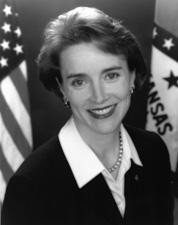 Sen. Blanche L. Lincoln (D-AR)
Legislative Activity
Stay on top of the latest movement without scrolling through every action
Roll call votes on amendments in Senate: Motion to waive the Budget Act with respect to amendment SA 2356 rejected in Senate by Yea-Nay Vote. 48 - 51. Record Vote Number: 285.
November 3, 2005
View full timeline
Roll call votes on amendments in Senate: Motion to waive the Budget Act with respect to amendment SA 2356 rejected in Senate by Yea-Nay Vote. 48 - 51. Record Vote Number: 285.
November 3, 2005
Considered by Senate. (consideration: CR S12295-12302; text as modified: CR S12295-12301)
November 3, 2005
Point of order raised in Senate with respect to amendment SA 2356.
November 3, 2005
Motion to waive the Budget Act with respect to amendment SA 2356 rejected in Senate by Yea-Nay Vote. 48 - 51. Record Vote Number: 285.
November 3, 2005
Amendment SA 2356 ruled out of order by the chair.
November 3, 2005
Considered by Senate. (consideration: CR S12149)
November 2, 2005
Senate amendment submitted
November 1, 2005
Senate amendment proposed (on the floor): Amendment SA 2356 proposed by Senator Lincoln.
November 1, 2005
Amendment SA 2356 proposed by Senator Lincoln. (consideration: CR S12106-12114) To provide emergency health care and other relief for survivors of Hurricane Katrina.
November 1, 2005
Votes
1 roll call on this amendment
Text
Modified
DEFICIT REDUCTION OMNIBUS RECONCILIATION ACT OF 2005--RESUMED

Amendment No. 2351

The PRESIDING OFFICER. It is now in order to consider the Conrad
amendment. There is 2 minutes equally divided.
Mr. CONRAD. Mr. President, I ask unanimous consent that Senator Biden
be added as a cosponsor.
The PRESIDING OFFICER. Without objection, it is so ordered.
Mr. CONRAD. Mr. President, the best argument made for my amendment,
which is to restore fiscal responsibility, is the argument made by the
chairman of the Budget Committee in 2002. Here is what he said:

The second budget discipline, which is pay-go, essentially
says if you are going to add a new entitlement program, or
you are going to cut taxes, you must offset that event so
that it becomes a budget neutral event. If we don't do this,
if we don't put back in place caps and pay-go, we will have
no budget discipline, and as a result we will dramatically
aggravate the deficit, which, of course, impacts a lot of
important issues but especially impacts Social Security.

The budget chairman was right then. It is the right position now.
Support the restoration of the budget discipline of pay-go.
The PRESIDING OFFICER. The Senator's time has expired.
The Senator from New Hampshire is recognized.
Mr. GREGG. Mr. President, I was correct then, and that is why we put
pay-go into this resolution. The budget resolution does have pay-go in
it, and it is the appropriate approach to pay-go because it recognizes
there is a difference between tax relief and raising spending. The
other side of the aisle has always looked on people's taxes as their
money. We don't look at it that way on this side of the aisle. We look
at it as the people's money, and they should be able to keep it. We
should not have a rule that arbitrarily takes it from them.
For that reason, I oppose the amendment.
I make a point of order that the pending amendment is not germane
before the Senate, and I raise a point of order under section 305 of
the Budget Act.
Mr. CONRAD. Mr. President, pursuant to section 904 of the
Congressional Budget Act of 1974, I move to waive the applicable
section of the act for the consideration of the pending amendment.
I ask for the yeas and nays, and I ask my colleagues to support this
budget discipline.
The PRESIDING OFFICER. Is there a sufficient second?
There is a sufficient second.
The question is on agreeing to the motion.
The clerk will call the roll.
The legislative clerk called the roll.
Mr. DURBIN. I announce that the Senator from New Jersey (Mr. Corzine)
is necessarily absent.
The PRESIDING OFFICER. (Ms. Murkowski). Are there any other Senators
in the Chamber desiring to vote?
The yeas and nays resulted--yeas 50, nays 49, as follows:

[Rollcall Vote No. 283 Leg.]

YEAS--50

Akaka
Baucus
Bayh
Biden
Bingaman
Boxer
Byrd
Cantwell
Carper
Chafee
Clinton
Coburn
Collins
Conrad
Dayton
Dodd
Dorgan
Durbin
Feingold
Feinstein
Harkin
Inouye
Jeffords
Johnson
Kennedy
Kerry
Kohl
Landrieu
Lautenberg
Leahy
Levin
Lieberman
Lincoln
McCain
Mikulski
Murray
Nelson (FL)
Nelson (NE)
Obama
Pryor
Reed
Reid
Rockefeller
Salazar
Sarbanes
Schumer
Snowe
Stabenow
Voinovich
Wyden

NAYS--49

Alexander
Allard
Allen
Bennett
Bond
Brownback
Bunning
Burns
Burr
Chambliss
Cochran
Coleman
Cornyn
Craig
Crapo
DeMint
DeWine
Dole
Domenici
Ensign
Enzi
Frist
Graham
Grassley
Gregg
Hagel
Hatch
Hutchison
Inhofe
Isakson
Kyl
Lott
Lugar
Martinez
McConnell
Murkowski
Roberts
Santorum
Sessions
Shelby
Smith
Specter
Stevens
Sununu
Talent
Thomas
Thune
Vitter
Warner

NOT VOTING--1

Corzine

The PRESIDING OFFICER. On this vote, the yeas are 50, the nays are
49. Three-fifths of the Senators duly chosen and sworn not having voted
in the affirmative, the motion is rejected. The point of order is
sustained and the amendment falls.
Mr. OBAMA. Madam President, I rise today to speak in favor of fiscal
responsibility. This pay-go amendment introduced by Ranking Member
Conrad of the Budget Committee, of which I am a cosponsor, seeks to
fully reinstate the pay-as-you-go requirement for direct spending and
revenue legislation in the Senate through 2010.
This is about restoring responsible budgeting. Previously, pay-go
rules applied equally to increases in mandatory spending and decreases
in revenue. New spending or tax cuts could only become law if they were
offset or found 60 votes in support. This enforced a badly needed
budget discipline. It said, either pay for your priorities whether
entitlement spending or tax cuts or both or find a supermajority of
colleagues willing to override the rule. Simple logic. Simple balance.
Common sense. Pay-go worked well in the 1990s to reduce deficits and it
can work well today.
Unfortunately, the rules were changed, and the balance was
overturned. Now, the requirements of budget discipline apply to only
half of the budget. Tax breaks are exempt from the logic and balance
and common sense of budget discipline.
The problem is that there is no such thing as half a budget. Budget
discipline requires enforcing control over both sides of the ledger.
You can't fill a bath tub just by plugging the drain. You can't drive a
car just by pressing on the brakes.
The original pay-go rules were abandoned to provide for a series of
unfunded tax breaks. And since the tax breaks were unfunded, the
Government had to borrow money to pay for them. So we borrowed from
countries like Japan and China. And we borrowed from the Social
Security trust fund. In the process, our national debt shot up to $8
trillion, and it is still rising. Last year, for example, our national
commitments exceeded our national resources by more than $550 billion.
And we continue to borrow.
Some have argued that this first chapter of reconciliation is an
effort to reduce the deficit. They tout the reductions in spending,
many of which I would support. But later this month, the Senate will
get to chapter two of reconciliation, which proposes further unfunded
tax breaks and guarantees additional deficits and growing debt. So much
debt, in fact, that the third chapter of budget reconciliation, which
no one really wants to talk about, will involve raising our country's
debt ceiling to almost $9 trillion.
Americans deserve better financial leadership. The people I talk to
in Illinois are not fooled by what is going on. They know what is
happening with higher deficits and reduced levels of government
service. They understand that, in this life, you get what you pay for
and if you don't pay for it today, it will cost you more tomorrow.
Washington could learn a lot from the American people about fiscal
responsibility. The people I have met with know that if you need to
spend more money on something, you also

[[Page S12292]]

need to make more money, and if your income falls, your spending must
fall, too. This is the essence of the pay-go rules we are trying to
reinstate in the Senate. Changes in spending must be offset by changes
in revenue, and vice versa.
Americans know that when you are already deep in debt, it is not the
optimal time to be gutting your revenue stream, whether it's a few
hundred dollars in the case of a family or a $70 billion tax break in
the case of the Federal Government.
They also understand the difference between a home mortgage, a
student loan, a credit card debt for uninsured health care expenses,
and an unpaid tab at the bar. They know that some debts are good
investments or may be unavoidable. But some debts are irresponsible the
result of spending more than you can afford on purchases you could
postpone or do without.
The people I have met with know that you do not respond to
emergencies by indiscriminately cutting all parts of the family budget.
You make choices and forego luxuries before cutting back on essentials
like food, heating, education, and healthcare. They understand that
across the board cuts are neither fair nor responsible. Such cuts sound
bold, but they represent a lack of leadership, not an example of it.
The American people also know that the whole family must share in
sacrifice--it is not right to pick on any one member of the family, or
any one State in our Union. We are in this together. Singling out
Alaska's bridge projects or any one State's earmarked funds is the
wrong approach. If Congress is going to eliminate frivolous pork
projects, as we should to support the gulf coast, let's eliminate all
of them, in all States, together.
Finally, the people I talk to understand that when you have massive
costs coming down the road, you need to prepare for them. There is no
excuse for ignoring the financial consequences of foreseeable expenses
whether it is the rising costs of health care, the retirement of the
baby boom generation, or the growing inequality of wealth in our
society.
You don't have to be a deficit hawk to be disturbed by the growing
gap between revenues and expenses. This makes sense to people because
the same principles that apply to our national budget apply to their
family budgets as well. Americans are willing to share in the hard
choices required to get us back on track, as long as they know that
everyone is pulling their weight and doing their fair share.
That is why it is so important that we reinstate pay-go in a way that
meaningfully enforces the budget discipline both sides of the aisle
need to honestly tackle our short-term and long-term fiscal challenges.
Mr. President, it is time for fiscal responsibility to return to
Washington. Adult supervision must return to the budgeting process.
Pay-go provides a necessary tool at a necessary time. I urge my
colleagues to support this amendment.

Amendment No. 2352, As Modified

The PRESIDING OFFICER. At this time there is 2 minutes on the Enzi
amendment.
The Senator from New Hampshire.
Mr. GREGG. I will yield to Senator Enzi.
Mr. CONRAD. The Senate is not in order. The Senator deserves a chance
to be heard.
The PRESIDING OFFICER. The Senate will be in order.
The Senator from Nevada.
Mr. ENSIGN. Madam President, at the end of 2 minutes, that time being
expired, I intend to send a second-degree amendment to the Enzi
amendment to the desk. Let me briefly describe it. My amendment
addresses the concerns of the Orthodox Union, the Catholic Bishops, and
the Council on American Private Education. My amendment clearly
establishes an indirect aid program for displaced private school
students that meets all the constitutional requirements without placing
unworkable and unnecessary restrictions on private schools serving
these displaced families. It ensures accountability for the funds and,
most important, delivers on the much-needed relief to ensure the
restart and operation of schools at all levels in the affected areas.
The 2002 Zellman decision by the Supreme Court clarified that
religious schools which accept Government funding do not have to modify
their teachings and curricula in order to receive Government funding so
long as the Government aid arrives at the school by virtue of an
independent choice made by the student and parent, and this amendment
complies with that decision and meets all of its constitutional
requirements.
The PRESIDING OFFICER. The time of the Senator has expired.
The Senator from Wyoming.
Mr. ENZI. I hate to debate a second-degree amendment that has not yet
been sent to the desk.
Mr. CONRAD. Could we have order, Madam President.
Mr. ENZI. At the appropriate point in time I will be raising the
point of germaneness. This amendment shows the Gordian knot we are
trying to cut through so we can do the right things for the children of
Katrina.
What we have is constitutional. We are not trying, in the amendment
that will be up as the original amendment, to resolve vouchers. We are
not trying to resolve faith-based initiatives. What we are trying to do
is do the right thing to treat the kids of Katrina the right way, and
in order to solve this it has to be a very bipartisan way because we
also will have to overcome a point of germaneness.
I yield the remainder of my time to Senator Kennedy.
Mr. KENNEDY. Madam President, we should not penalize the children of
Louisiana and the gulf, once by the storm and once by this amendment.
This amendment does not have accountability. It allows Federal funds to
be used for religious purposes. It guts the civil rights protections of
our proposal.
For the sake of the children and for the sake of the schools, I hope
this amendment will be defeated.

Amendment No. 2404 to Amendment No. 2352, as Modified

(Purpose: To provide assistance for elementary and secondary schools
and students, and institutions of higher education, affected by
Hurricane Katrina)

Mr. ENSIGN. I send a second-degree amendment to the Enzi amendment to
the desk.
The PRESIDING OFFICER. The clerk will report.
The legislative clerk read as follows:

The Senator from Nevada [Mr. Ensign] proposes amendment No.
2404 to amendment No. 2352, as modified.

Mr. ENSIGN. I ask unanimous consent the reading of the amendment be
dispensed with.
The PRESIDING OFFICER. Without objection, it is so ordered.
(The amendment is printed in today's Record under ``Text of
Amendments.'')
Mr. ENZI. The pending amendment is not germane to the measure now
before the Senate. I raise a point of order under section 305 of the
Budget Act.
The PRESIDING OFFICER. The Senator from Nevada.
Mr. ENSIGN. Pursuant to section 904(c) of the Congressional Budget
Act of 1974, I move to waive section 305 of the Budget Act for the
consideration of the Ensign second-degree amendment. I ask for the yeas
and nays on the motion.
The PRESIDING OFFICER. Is there a sufficient second?
There appears to be a sufficient second.
The yeas and nays were ordered.
The PRESIDING OFFICER. The Senator from New Hampshire.
Mr. GREGG. Madam President, as I understand it, and I am not sure I
understand it, I believe there is now still 2 minutes of debate
available between the proponent of the second degree and the proponent
in opposition. Is that correct?
The PRESIDING OFFICER. The Senator is correct.
Mr. GREGG. I presume Senator Enzi and Senator Ensign can continue
their discussion.
Mr. KENNEDY. Madam President, will the Senator yield?
Is this the total time? I thought we had a minute on each side on
each amendment. Are we now debating the Enzi underlying amendment?
The PRESIDING OFFICER. There is 2 minutes on the second-degree
amendment, the Ensign amendment.
Mr. GREGG. Madam President, parliamentary inquiry. And I ask
unanimous consent that this time not be applied to the time relative to
the debate that is available.

[[Page S12293]]

The PRESIDING OFFICER. Without objection, it is so ordered.
The Senator from New Hampshire.
Mr. GREGG. As I understand the situation, the 2 minutes of debate has
already occurred on the Enzi amendment. We are now under 2 minutes of
debate on the second-degree amendment, which is the Ensign amendment.
Is that correct?
The PRESIDING OFFICER. The Senator is correct.
Mr. GREGG. After this amendment is debated, there will be a vote on
the motion to waive the point of order made by Senator Enzi from
Wyoming, the motion to waive being made by Senator Ensign relative to
the second-degree amendment. Is that correct?
The PRESIDING OFFICER. The Senator is correct.
The Senator from Massachusetts.
Mr. KENNEDY. Parliamentary inquiry, Madam President: I thought we
were having the 2 minutes prior to each vote just over the course of
the day on these different amendments. It is my mistake because I
thought we were just voting on the Ensign amendment, and then, when we
disposed of that, we would have a vote up or down on the underlying
amendment. But I guess that is not the way we are going to proceed.
Mr. GREGG. Madam President, if I may respond to the Senator from
Massachusetts.
The PRESIDING OFFICER. The Senator from New Hampshire.
Mr. GREGG. Madam President, I say to the Senator from Massachusetts,
because there was a second degree, the way it worked out, the debate on
the Enzi amendment occurred as part of that process. So the 2 minutes
did occur. However, because this is the first exercise here in this
undertaking, I would suggest that, after the Ensign amendment is
disposed of, if it is favorably disposed of, that there won't be 2
minutes, but if it is not favorably disposed of we would have another 2
minutes of debate on the Enzi amendment.
Mr. KENNEDY. I thank the chairman of the Budget Committee.
The PRESIDING OFFICER. Without objection, it is so ordered.
The Senator from Wyoming.
Mr. ENZI. Madam President, to clarify this, why would we have the
debate on the overlying motion before we have the debate on the
underlying motion and then try to deny a debate on the overlying motion
at the appropriate time?
I would ask the chairman and the ranking member to consider this
process. It will save a lot of time if the person suggesting a second-
degree amendment do the debate on the second-degree amendment. Did
anybody here hear the debate on the first-degree amendment? That was
debate on the second-degree amendment.
So we disposed with the debate on the second-degree amendment. Now we
ought to have the vote on the second-degree amendment, not another
debate on the second-degree amendment and then go to the first-degree
amendment without debate--or even with debate.
If we are going to limit the time, we need to limit the time each
time. And if somebody is going to do a second-degree amendment, they
ought to do their debate on the second-degree amendment, face the vote
on the second-degree amendment, and move on. But you ought to get your
time to debate your motion at the time of the vote on the motion, not
an hour later.
The PRESIDING OFFICER. The Senator from New Hampshire.
Mr. GREGG. Madam President, I think the Senator from Wyoming has made
an excellent case. We will try to orchestrate it in that manner, should
we get additional second degrees.
At this point, the debate for 2 minutes is on the second-degree
amendment, and Senator Ensign has a minute, and whoever claims the
opposition has a minute.
The PRESIDING OFFICER. The Senator from Massachusetts.
Mr. KENNEDY. Madam President, as I understand it, Senator Enzi has
made the point of order, has he not, on this amendment?
The PRESIDING OFFICER. The Senator is correct.
The Senator from Wyoming.
Mr. ENZI. Parliamentary inquiry: I think I would have to withdraw
that point of germaneness and he would have to withdraw his in order
for us to have continuing debate. Is that not true?
The PRESIDING OFFICER. All debate is expired except under the order.
There is now 2 minutes of debate on the second-degree amendment.
Mr. ENZI. Madam President, parliamentary inquiry: Does that mean my
point of order was on my amendment and his motion to waive was on my
amendment, not on his?
The PRESIDING OFFICER. The pending motion is to waive the point of
order against the Ensign second-degree amendment.
Mr. ENZI. That will be what the debate is on? I thought debate did
not happen once the germaneness was entered.
The PRESIDING OFFICER. By unanimous consent, the order was changed.
The Senator from Nevada.
Mr. ENSIGN. Madam President, now that we have been through all that,
just to restate, the managers of the underlying amendment believe their
proposal is constitutional. But the lawyers for the private schools,
the ones who have looked at this, believe they could not accept the aid
in a constitutional manner, that people will be able to bring a court
case against them and that they would lose if they did not change the
way they do their instruction. They have a moral, religious-based
instruction. They believe they would have to change it.
Our amendment clearly makes the way they receive the funds
constitutional. We both want to provide help for those people who have
been displaced, for those schools that have taken in these displaced
students. We both want to have the help go. What we want to do, though,
is allow the private schools to function as they have been functioning
in the past. If you are a Catholic school, you would be able to
function as a Catholic school functions and not be penalized for that
because you have taken in these displaced students and are getting some
Federal aid.
The PRESIDING OFFICER. The Senator from Wyoming.
Mr. ENZI. Madam President, I guess there have been a lot of
constitutional lawyers involved in all of this. I certainly want people
to know we also conferred with constitutional lawyers and found a way
to be able to do, on a one-time emergency basis, what needs to be done
properly for the kids of Katrina and for any other major event where we
have a large number of displaced students. But this one just deals with
the one-time emergency event. It is constitutional. It does not,
however, as Senator Ensign would like to do, resolve the voucher issue,
and it does not resolve the faith-based initiative issue. But it does
get help to kids, and that is what we are trying to do with all the
education amendments we have today.
I yield the remainder of my time to Senator Kennedy.
The PRESIDING OFFICER. The Senator from Massachusetts.
Mr. KENNEDY. Madam President, as the chairman of the committee has
pointed out, we have reviewed and cleared this with constitutional
authorities. This is an indirect way of providing help and assistance
to the children. The alternative is effectively a voucher program. We
have tried to stay clear from ideological fixes on this.
Let's treat the children with respect and the schools with respect
and in the generosity with which they have treated these children. I
hope the amendment will be defeated.
Mr. BINGAMAN. Madam President, I would like to talk about the Enzi-
Kennedy amendment to S. 1932, the deficit reduction bill. We all want
to do the right thing and help the hundreds of thousands of students
displaced by Hurricane Katrina. Just a few weeks after the tragic
events surrounding Hurricane Katrina, I came to the floor of the Senate
and offered an amendment to the Commerce-Justice-State appropriations
bill to assist students and schools impacted by Hurricane Katrina. I
also cosponsored a bill with Senators Enzi and Kennedy, S. 1715, to
assist schools and students impacted by Katrina. But I have tremendous
concerns about the amendment before us today.
This amendment sets up an unworkable mechanism to assist displaced
students attending private schools. It requires states to funnel
Federal dollars to local school districts to establish private accounts
to pay the tuition to private schools. In contrast, current

[[Page S12294]]

law provides a reasonable mechanism for local school districts to
assist students attending private schools, called equitable
participation, without establishing a national voucher program. I
support efforts to use equitable participation to assist private
schools serving these displaced students. Unfortunately, this amendment
fails to use this mechanism. At the same time, it establishes the first
national voucher program. Accordingly, along with educators, school
boards, principals, teacher unions, and many civil rights and faith-
based organizations, I must oppose this provision.
Mr. REED. Madam President, while the Enzi-Kennedy amendment passed on
a voice vote, I want the record to reflect my opposition to this
amendment.
We have all seen the devastation of Hurricanes Katrina and Rita, and
I certainly understand and share my colleagues' desire to address the
needs of displaced school children.
Unfortunately, this amendment, which frankly is more than 2 months
overdue, falls far short of the help needed for the affected families
and public schools. It falls short financially, since it provides less
money than these schools need in order to re-open and serve the
children of the Gulf Coast. It also falls short constitutionally by
making payments to private religious schools on behalf of students who
fled these hurricanes and are now attending such schools across the
country.
Now, I understand that these hurricanes did not differentiate between
public and private school students, and that we need to be able to
provide some assistance for all students affected by them. However,
this amendment is not the answer. As my colleagues are very well aware,
we currently have a mechanism in current law to provide support to
students in private schools. We do it everyday under Title I and Title
V of NCLB, and under IDEA.
These children should have been helped over 2 months ago with the
funding mechanisms we already have in place. That is why this amendment
is not about getting help to these students. This is about using these
students' needs as a pawn to further the Republican agenda of vouchers.
In addition, we are doing a disservice to families displaced by
Hurricanes Katrina and Rita by not informing them that this assistance
is just for this school year. No where in this legislation is there a
requirement that parents be notified that this assistance is temporary
and that it will not be renewed beyond August 2006. Instead of being
fair to these parents by providing them with transparent information,
this amendment fails to include a provision to notify parents that this
assistance is time-limited. We have an obligation to inform parents
receiving this assistance that this funding is a one-time deal. Without
clear language on this point, language which I suggested to the
sponsors of the amendment, parents will have an unfounded expectation
that this aid will be there next year and perhaps even for years to
come. These families are settling down in new communities, and they may
lack the resources, ability, or desire to go back to the gulf coast.
Of course, we want to help families in their moment of need and
distress. I understand my colleague, Senator Landrieu's position on
this matter, and her sincere desire to help her constituents. I too
believe this assistance to schools, both public and private, is
important, needed, and appropriate. But this amendment could and should
have been structured in a way that contains clear notification
requirements and that mirrors current law.
This legislation is not the direction we should be heading. This
legislation is a stalking horse for a national voucher program. At the
same time, it provides less funding than is needed to repair and fund
our devastated public schools. It provides very little accountability
for the use of taxpayers' funds and provides little or no enforcement
of the civil rights protections that would exist if money were sent
through existing funding mechanisms.
I want to thank Senators Enzi, Alexander, Kennedy, and Dodd, because
I know that they have worked very hard to improve this amendment, and I
appreciate their efforts. I urge my colleagues to continue to work to
address the concerns I have raised as this bill moves forward.
Mr. KOHL. Madam President, I support the Enzi amendment. This
amendment would provide $1.6 billion in emergency funding to address
the desperate funding needs of schools who have taken in displaced
Katrina students and the schools that have been damaged or destroyed by
the hurricane.
Over 2 months ago, hundreds of thousands of children in the gulf
region were displaced from their homes, their communities, and their
local schools. Neighboring communities have welcomed these students
with open arms. It is only fair to provide school districts the funds
necessary to educate and care for dislocated students left in the wake
of Hurricane Katrina.
I know some are concerned about funding for displaced students who
are attending private schools. However, this provision is carefully
crafted to ensure that funding flows directly to school districts, much
like similar provisions in Title I and special education. This program
will not set up a national school voucher program. Rather, it simply
ensures, on a temporary, one-time basis, that all students in need and
schools that take them in have access to the relief they need. In this
extraordinary circumstance, I believe that this provision takes a
balanced approach, and we will continue to monitor its implementation.
It is my hope that my colleagues will join me in supporting the Enzi
amendment, thereby supporting students who became displaced through no
fault of their own.
The PRESIDING OFFICER. All time has expired.
The question is on agreeing to the motion. The yeas and nays have
been ordered. The clerk will call the roll.
The bill clerk called the roll.
Mr. DURBIN. I announce that the Senator from New Jersey (Mr. Corzine)
is necessarily absent.
The PRESIDING OFFICER. Are there any other Senators in the Chamber
desiring to vote?
The result yeas and nays resulted--yeas 31, nays 68, as follows:

[Rollcall Vote No. 284 Leg.]

YEAS--31

Allard
Allen
Bennett
Brownback
Bunning
Coburn
Coleman
Craig
Crapo
DeMint
DeWine
Dole
Ensign
Frist
Graham
Grassley
Gregg
Hagel
Hatch
Inhofe
Kyl
Martinez
McCain
McConnell
Santorum
Sessions
Shelby
Sununu
Thune
Vitter
Voinovich

NAYS--68

Akaka
Alexander
Baucus
Bayh
Biden
Bingaman
Bond
Boxer
Burns
Burr
Byrd
Cantwell
Carper
Chafee
Chambliss
Clinton
Cochran
Collins
Conrad
Cornyn
Dayton
Dodd
Domenici
Dorgan
Durbin
Enzi
Feingold
Feinstein
Harkin
Hutchison
Inouye
Isakson
Jeffords
Johnson
Kennedy
Kerry
Kohl
Landrieu
Lautenberg
Leahy
Levin
Lieberman
Lincoln
Lott
Lugar
Mikulski
Murkowski
Murray
Nelson (FL)
Nelson (NE)
Obama
Pryor
Reed
Reid
Roberts
Rockefeller
Salazar
Sarbanes
Schumer
Smith
Snowe
Specter
Stabenow
Stevens
Talent
Thomas
Warner
Wyden

NOT VOTING--1

Corzine

The PRESIDING OFFICER. On this vote the yeas are 31, the nays are 68.
Three-fifths of the Senators duly chosen and sworn not having voted in
the affirmative, the motion is rejected. The point of order is
sustained and the amendment falls.
Mr. BOND. I move to reconsider the vote.
Mr. KENNEDY. I move to lay that motion on the table.
The motion to lay on the table was agreed to.

Amendment No. 2352, as Modified

Mr. GREGG. Madam President, the next amendment is the Enzi amendment.
I ask that we move immediately to a voice vote.
The PRESIDING OFFICER. The question is on agreeing to the amendment.
The amendment (No. 2352), as modified, was agreed to.
Mr. GREGG. I move to reconsider the vote.
Mr. KENNEDY. I move to lay that motion on the table.
The motion to lay on the table was agreed to.

[[Page S12295]]

Mr. GREGG. Madam President, the next amendment is the Lincoln
amendment. I ask unanimous consent that all votes on additional
amendments be 10 minutes.
We are going to clarify the issue of second-degree amendments that we
just went through because, under the rule, all time has to expire on
debate on the first degree before you can debate a second degree or
offer it. That is why we had the confusion before. We are going to
adjust that through this unanimous consent request.
I ask unanimous consent that for the purposes of today's votes, all
second-degree amendments must be offered prior to beginning the 2
minutes of debate on the underlying first-degree amendment. Before the
Chair rules, as a clarification, this will now mandate that second-
degree amendments must be offered before we begin the 2-minute debate
on the first degree. We would then have 2 minutes of debate on the
second degree, both in relationship to the second degree, and then have
2 minutes of debate on the first degree prior to the vote in
relationship to that amendment.
The PRESIDING OFFICER. The Senator from North Dakota.
Mr. CONRAD. Reserving the right to object, I would say to Senators
who are in the back of the Chamber, who are most interested in this
question, this is a good time to hear what is being done to correct
what occurred previously. What occurred previously was, under the rule,
all time had to expire on the first-degree amendment before a second-
degree amendment could be offered. Under the interpretation of the
Chair, that included the 2 minutes of debate on the first-degree
amendment. Now what we are doing is modifying that through unanimous
consent agreement so if someone offers a second degree, they have to
offer it before the 2 minutes of debate on the first degree. Then we
will be able to have 2 minutes of debate on the second degree, a vote
on the second degree. Then, in consideration of the first degree, we
will be able to have the 2 minutes of debate in conjunction with it.
For the interest of our colleagues, that is what is being done.
We should take this moment, as well, to say to our colleagues, we
have 35 amendments filed. That would take 12 hours of straight voting.
We have to end today at 6 o'clock, which would mean we would be in
tomorrow for at least 4 hours. I ask our colleagues to show restraint
on calling up amendments that have been filed. We have had a good
debate on this matter. It has been an absolutely fair debate in terms
of how we have been treated with respect to amendments being offered.
We really don't need to have 35 amendments offered to this measure. I
urge my colleagues to show restraint.
I will not object.
Mr. GREGG. I also renew my request that votes on additional
amendments be 10-minute votes.
The PRESIDING OFFICER. Without objection, it is so ordered.
Mr. GREGG. The next amendment is that of Senator Lincoln.

Amendment No. 2356, as Modified

The PRESIDING OFFICER. There is now 2 minutes of debate evenly
divided on the Lincoln amendment.
The Senator from Arkansas.
Mrs. LINCOLN. Madam President, I modify my amendment with the
language that is currently at the desk.
The PRESIDING OFFICER. The amendment is so modified.
The amendment, as modified, is as follows:

At the end of subtitle A of title VI, add the following:

CHAPTER 7--EMERGENCY HEALTH CARE AND OTHER RELIEF FOR SURVIVORS OF
HURRICANE KATRINA

Subchapter A--Emergency Health Care Relief

SEC. 6081. DEFINITIONS.

In this subchapter:
(1) Direct impact parish or county.--
(A) In general.--The term ``direct impact parish or
county'' means a parish in the State of Louisiana, or a
county in the State of Mississippi or Alabama, for which a
major disaster has been declared in accordance with section
401 of the Robert T. Stafford Disaster Relief and Emergency
Assistance Act (42 U.S.C. 5170) as a result of Hurricane
Katrina and which the President has determined, before
September 14, 2005, warrants individual and public assistance
from the Federal Government under such Act.
(B) Exclusion.--Such term does not include a parish in the
State of Louisiana or a county in the State of Mississippi or
Alabama which the President has determined warrants only
public assistance from the Federal Government under such Act
as a result of Hurricane Katrina.
(C) Authority to rely on web site posted designations.--The
Secretary of Health and Human Services shall post on the
Internet Web site for the Centers for Medicare & Medicaid
Services a list of parishes and counties identified as direct
impact parishes or counties in accordance with this
paragraph. Any such parish or county that is posted on such
Web site as a direct impact parish or county shall be treated
for purposes of subparagraph (A) as described in such
subparagraph.
(2) DRM assistance.--The term ``DRM assistance'' means the
short-term, non-cash, temporary, in-kind, emergency disaster
relief health program established under section 6082 to
assist Katrina Survivors in accordance with that section.
(3) DRM coverage period.--
(A) In general.--The term ``DRM coverage period'' means the
period beginning on August 28, 2005, and, subject to
subparagraph (B), ending on the date that is 5 months after
the date of enactment of this Act.
(B) Authority To Extend drm coverage period.--
(i) In general.--The Secretary may extend the DRM coverage
period for an additional 5 months. Any reference to the term
``DRM coverage period'' in this subchapter shall include any
extension under this clause.
(ii) Notice to congress and states.--The Secretary shall
notify the Majority and Minority Leaders of the Senate, the
Speaker of the House of Representatives, the Minority Leader
of the House of Representatives, the Chairs and Ranking
Members of the Committee on Finance of the Senate and the
Committees on Energy and Commerce and Ways and Means of the
House of Representatives, and the States at least 45 days
prior to--

(I) extending the DRM coverage period; or
(II) if the Secretary determines not to extend such period,
the ending date described in subparagraph (A).

(4) Katrina survivor.--
(A) In general.--The term ``Katrina Survivor'' means an
individual who is described in subparagraph (B) or (C).
(B) Residents and evacuees of direct impact parishes and
counties.--An individual who, on any day during the week
preceding August 28, 2005, had a primary residence in a
direct impact parish or county.
(C) Individuals who lost employment.--An individual whose--
(i) worksite, on any day during the week preceding August
28, 2005, was located in a direct impact parish or county;
and
(ii) employment with an employer which conducted an active
trade or business on August 28, 2005, in a direct impact
parish or county and with respect to whom such trade or
business is inoperable on any day after August 28, 2005, and
before January 1, 2006, as a result of damage sustained in
connection with Hurricane Katrina, is terminated.
(D) Treatment of current medicaid beneficiaries.--Nothing
in this subchapter shall be construed as preventing an
individual who is otherwise entitled to medical assistance
under title XIX of the Social Security Act from being treated
as a Katrina Survivor under this subchapter.
(E) Treatment of homeless persons.--For purposes of this
subchapter, in the case of an individual who was homeless on
any day during the week described in subparagraph (B), the
individual's ``residence'' shall be deemed to be the place of
residence as otherwise determined for such an individual
under title XIX of the Social Security Act.
(5) Poverty line.--The term ``poverty line'' has the
meaning given that term in section 2110(c)(5) of the Social
Security Act (42 U.S.C. 1397jj(c)(5)).
(6) Secretary.--The term ``Secretary'' means the Secretary
of Health and Human Services.
(7) State.--The term ``State'' has the meaning given that
term for purposes of title XIX of the Social Security Act (42
U.S.C 1396 et seq.).
(8) State medicaid plan.--The term ``State Medicaid plan''
means a State plan for medical assistance under title XIX of
the Social Security Act (42 U.S.C. 1396 et seq.), including
any medical assistance provided under a waiver of such plan.

SEC. 6082. DISASTER RELIEF MEDICAID.

(a) Authority To Provide Disaster Relief Medicaid.--
(1) In general.--Notwithstanding any provision of title XIX
of the Social Security Act, a State shall, as a condition of
participation in the Medicaid program established under title
XIX of the Social Security Act (42 U.S.C. 1396 et seq.),
provide medical assistance to DRM-eligible Katrina Survivors
(as defined in subsection (b)) under a State Medicaid plan
during the DRM coverage period in accordance with the
following provisions of this section.
(2) Authority to provide drm assistance as separate
component of regular state medicaid plan or under such
plan.--
(A) In general.--A State may provide DRM assistance without
submitting an amendment to the State Medicaid plan and as a
separate component of the State Medicaid plan or, subject to
subparagraph (B), under such plan.
(B) Conditions for provision of drm assistance under
regular state medicaid plan.--A State may only provide DRM
assistance under the State Medicaid plan if the

[[Page S12296]]

State provides such assistance in accordance with the
requirements of this section and the State is able to
separately identify and report expenditures or other
information attributable to the provision of such assistance.
(b) DRM-Eligible Katrina Survivor Defined.--
(1) In general.--In this section, the term ``DRM-eligible
Katrina Survivor'' means a Katrina Survivor whose family
income does not exceed the higher of--
(A) 100 percent (200 percent, in the case of such a
Survivor who is a pregnant woman or child) of the poverty
line; or
(B) the income eligibility standard which would apply to
the Survivor under the State Medicaid plan.
(2) Special rule for katrina survivors who are recipients
of disability insurance benefits.--In the case of a Katrina
Survivor who is a recipient of disability insurance benefits
under section 202 or 223 of the Social Security Act (42
U.S.C. 402, 423), paragraph (1) shall be applied to such
Survivor by substituting ``300 percent of the supplemental
security income benefit rate established by section
1611(b)(1) of the Social Security Act (42 U.S.C.
1382(b)(1))'' for subparagraph (A) of such paragraph.
(3) No resources, residency, or categorical eligibility
requirements.--Eligibility under paragraph (1) shall be
determined without application of any resources test, State
residency, or categorical eligibility requirements.
(4) Income determination.--
(A) Least restrictive income methodologies; prospective
determination.--The State shall use the least restrictive
methodologies applied under the State Medicaid plan under
section 1902(r)(2) of the Social Security Act (42 U.S.C.
1396a(r)(2)) in determining income eligibility for Katrina
Survivors under paragraph (1) and shall determine family
income for such Survivors only prospectively from the date of
application.
(B) Disregard of ui compensation and disaster relief
assistance.--In determining such income eligibility, the
State shall disregard--
(i) any amount received under a law of the United States or
of a State which is in the nature of unemployment
compensation by a Katrina Survivor during the DRM coverage
period, including unemployment assistance provided under
section 410 of the Robert T. Stafford Disaster Relief and
Emergency Assistance Act (42 U.S.C. 5177); and
(ii) any assistance provided (in cash or in kind) to a
Katrina Survivor from any public or private entity as a
result of Hurricane Katrina.
(5) Definition of child.--For purposes of paragraph (1), a
DRM-eligible Katrina Survivor shall be determined to be a
``child'' if such Survivor meets the definition of ``child''
under the State Medicaid plan.
(6) Certain individuals deemed to be drm-eligible katrina
survivors.--
(A) In general.--Upon submission of an application from an
individual attesting that the individual is an individual
described in any of the categories described in subparagraph
(B), or, if an individual is an individual described in
subparagraph (C), the State shall deem the individual to be a
DRM-eligible Katrina Survivor for purposes of eligibility for
DRM assistance during the DRM coverage period.
(B) Categories described.--For purposes of subparagraph
(A), the categories described in this subparagraph are the
following:
(i) Katrina survivors enrolled in a state medicaid plan as
of the beginning of the drm coverage period.--Any Katrina
Survivor who can provide proof of enrollment in a State
Medicaid plan as of August 28, 2005.
(ii) Katrina survivors who are recipients of unemployment
compensation.--Any Katrina Survivor who, during the DRM
coverage period, is a recipient of an amount paid under a law
of the United States or of a State which is in the nature of
unemployment compensation, including unemployment assistance
provided under section 410 of the Robert T. Stafford Disaster
Relief and Emergency Assistance Act (42 U.S.C. 5177).
(iii) Katrina survivors enrolled in drm assistance in
another state.--Any Katrina Survivor determined by another
State to be a DRM-eligible Katrina Survivor who was enrolled
in DRM assistance in that State and who relocates to the
State during the DRM coverage period.
(C) Katrina survivors provided medical assistance prior to
date of enactment.--
(i) In general.--An individual described in this
subparagraph is any Katrina Survivor who is provided medical
assistance under a State Medicaid plan in accordance with
guidance from the Secretary during the period that begins on
August 28, 2005, and ends on the date of enactment of this
Act.
(ii) Nonapplication to child health assistance.--In the
case of an individual who is a Katrina Survivor who is
provided child health assistance under a State child health
plan in accordance with guidance from the Secretary during
the period described in clause (i), such individual shall not
be deemed to be a DRM-eligible Katrina Survivor for purposes
of receiving DRM assistance under this section. Nothing in
the preceding sentence shall be construed as prohibiting such
an individual from submitting an application for DRM
assistance.
(c) Eligibility Determination; No Continuation of DRM
Assistance.--
(1) Streamlined eligibility process.--The State shall use
the following streamlined procedures in processing
applications and determining eligibility for DRM assistance
for DRM-eligible Katrina Survivors and eligibility for the
payment of private health insurance premiums under section
107(b)(2)(A):
(A) One-page application.--A common 1-page application form
developed by the Secretary of Health and Human Services in
consultation with the National Association of State Medicaid
Directors. Such form shall--
(i) require an applicant to provide an expected address for
the duration of the DRM coverage period and to agree to
update that information if it changes during such period;
(ii) include notice regarding the penalties for making a
fraudulent application under subsection (h);
(iii) require the applicant to assign to the State any
rights of the applicant (or any other person who is a DRM-
eligible Katrina Survivor and on whose behalf the applicant
has the legal authority to execute an assignment of such
rights) under any group health plan or other third-party
coverage for health care;
(iv) require the applicant to--

(I) list any health insurance coverage which the applicant
was enrolled in immediately prior to submitting such
application; and
(II) indicate whether the applicant would rather receive
DRM assistance from a State in accordance with this section
or, if private health insurance is available, assistance in
paying the premiums for such health insurance under section
6088(b)(2)(A); and

(v) be translated by the Secretary into languages other
than English, and in cultural contexts, that are most
appropriate for the applicants expected to submit such forms.
(B) Self-attestation.--Self-attestation by the applicant
that the applicant--
(i) is a DRM-eligible Katrina Survivor; and
(ii) if applicable, requires home and community-based
services provided under such DRM assistance in accordance
with subsection (d)(3).
(C) No documentation.--The State shall not require
documentation evidencing the basis on which the applicant
qualifies to be a DRM-eligible Katrina Survivor or, if
applicable, requires home and community-based services.
(D) Issuance of eligibility card.--
(i) In general.--Subject to clause (iii), the State shall,
immediately upon submission of a complete application
(including the self-attestation required under subparagraph
(B)) by an applicant, issue a DRM assistance eligibility card
to the applicant.
(ii) Validity; notice of termination date.--A DRM
assistance eligibility card shall be valid as long as the DRM
coverage period is in effect and shall be accompanied by
notice of the termination date for the DRM coverage period
and, if applicable, notice that such termination date may be
extended. If the Secretary extends the DRM coverage period,
the State shall notify DRM-eligible Katrina Survivors
enrolled in DRM assistance of the new termination date for
the DRM coverage period.
(iii) Application to states that elect to provide drm
assistance under the regular state medicaid plan.--In the
case of a State that elects under subsection (a)(2) to
provide DRM assistance under the State Medicaid plan, the
State may issue to an applicant who submits a complete
application an eligibility card that is similar to the cards
issued by the State to enrollees in the State medicaid plan,
but only if the State is able to adapt the card in a manner
which clearly identifies that the applicant is eligible for
DRM assistance and provides notice of the termination date
for the DRM coverage period (and the new termination date
applicable if the Secretary extends such coverage period).
(E) Application for medical assistance under regular state
medicaid plan.--Concurrent with the issuance of an
eligibility card under subparagraph (D), the State shall
provide the applicant with an application for medical
assistance under the State Medicaid plan.
(F) Presumptive eligibility.--
(i) States that provide for presumptive eligibility under
the regular state medicaid plan.--In the case of a State
that, as of the date of enactment of this Act, provides for a
period of presumptive eligibility under the State Medicaid
plan in accordance with section 1920, 1920A, or 1920B of the
Social Security Act (42 U.S.C. 1396r-1, 1396r-1a, 1396r-1b),
the State shall deem an applicant to be a DRM-eligible
Katrina Survivor eligible for DRM assistance in accordance
with this section, subject to subsection (g), if the
applicant completes an application for such assistance,
presents it to a provider or facility participating in the
State Medicaid plan that is qualified to make presumptive
eligibility determinations under such plan (which at a
minimum shall consist of facilities identified in section
1902(a)(55) of the Social Security Act (42 U.S.C.
1396a(a)(55)), and it appears to the provider or facility
that the applicant is a DRM-eligible Katrina Survivor based
on the information in the application.
(ii) Application to states that do not provide presumptive
eligibility under the regular state medicaid plan.--In the
case of a State which does not provide for a period of
presumptive eligibility under the State medicaid plan, the
State may elect to provide for a period of presumptive
eligibility for DRM assistance by designating qualified
providers (as defined in section 1920(b)(2) of such Act (42
U.S.C. 1396r-1(b)(2)) as providers that are specifically
designated

[[Page S12297]]

by the State to make presumptive determinations in accordance
with clause (i) with respect to eligibility for such
assistance, but only if--

(I) the State elects to provide for a period of presumptive
eligibility for such assistance for all Katrina Survivors who
may be DRM-eligible Katrina Survivors in accordance with
subsection (b); and
(II) the qualified providers designated by the State to
make determinations of presumptive eligibility for such
assistance, at a minimum, consistent of facilities identified
in section 1902(a)(55) of the Social Security Act (42 U.S.C.
1396a(a)(55)) that are qualified providers under section
1920(b)(2) of such Act.

(G) Continuous eligibility.--Continuous eligibility,
without the need for any redetermination of eligibility, for
the duration of the DRM coverage period.
(2) No continuation of drm assistance.--
(A) In general.--Except as provided in subparagraphs (B)
and (C), no DRM assistance shall be provided after the end of
the DRM coverage period.
(B) Presumptive eligibility for medical assistance under
regular medicaid plan.--
(i) In general.--If a State, as of the date of enactment of
this Act, provides for a period of presumptive eligibility
for medical assistance under the State Medicaid plan in
accordance with section 1920, 1920A, or 1920B of the Social
Security Act (42 U.S.C. 1396r-1, 1396r-1a, 1396r-1b), the
State shall provide a DRM-eligible Katrina Survivor who is
receiving DRM assistance from the State in accordance with
this section and who, as of the end of the DRM coverage
period, is an individual for whom a period of presumptive
eligibility would be provided under the State Medicaid plan,
with presumptive eligibility for medical assistance under the
State Medicaid plan.
(ii) State option to provide presumptive eligibility.--If a
State is a State to which clause (i) does not apply, the
State may elect to provide for a period of presumptive
eligibility for medical assistance under the State Medicaid
plan for a DRM-eligible Katrina Survivor who is receiving DRM
assistance from the State in accordance with this section and
who, as of the end of the DRM coverage period, is an
individual for whom a period of presumptive eligibility would
be provided under the State Medicaid plan in accordance with
section 1920, 1920A, or 1920B of such Act, if the State were
to provide such a period of presumptive eligibility under the
State Medicaid plan.
(iii) State option for all states to provide presumptive
eligibility to other populations of drm-eligible katrina
survivors.--In addition to the populations of DRM-eligible
Katrina Survivors described in clauses (i) and (ii), a State
to which clause (i) or (ii) applies, may elect to provide for
a period of presumptive eligibility for medical assistance
under the State Medicaid plan for other DRM-eligible Katrina
Survivors who are receiving DRM assistance from the State in
accordance with this section as of the end of the DRM
coverage period.
(iv) Length of period.--A presumptive eligibility period
provided in accordance with clause (i), (ii), or (iii) shall
be provided until the earlier of--

(I) the date on which a determination with respect to the
Survivor's application for medical assistance under the State
Medicaid plan is made; or
(II) the end of the 60-day period that begins on the first
day after the end of the DRM coverage period.

(C) Pregnant women.--In the case of a DRM-eligible Katrina
Survivor who is receiving DRM assistance from a State in
accordance with this section and whose pregnancy ended during
the 60-day period prior to the end of the DRM coverage
period, or who is pregnant as of the end of such period, such
Survivor shall continue to be eligible for DRM assistance
after the end of the DRM coverage period, including (but not
limited to) for all pregnancy-related and postpartum medical
assistance available under the State Medicaid plan, through
the end of the month in which the 60-day period (beginning on
the last day of her pregnancy) ends.
(d) Scope of Coverage.--
(1) Categorically needy benefits.--The State shall treat a
DRM-eligible Katrina Survivor as an individual eligible for
medical assistance under the State plan under title XIX of
the Social Security Act on the basis of section
1902(a)(10)(A)(i) of the Social Security Act (42 U.S.C.
1396a(a)(10)(A)(i)), with coverage for such assistance
retroactive to items and services furnished on or after
August 28, 2005 (or in the case of applications for DRM
assistance submitted after January 1, 2006, the first day of
the 5th month preceding the date on which such application is
submitted).
(2) Extended mental health and care coordination
benefits.--The State may provide, without regard to any
restrictions on amount, duration, and scope, comparability,
or restrictions otherwise applicable under the State Medicaid
plan (other than restrictions applicable under such plan with
respect to services provided in an institution for mental
diseases), to DRM-eligible Katrina Survivors extended mental
health and care coordination benefits which may include the
following:
(A) Screening, assessment, and diagnostic services
(including specialized assessments for individuals with
cognitive impairments).
(B) Coverage for a full range of mental health medications
at the dosages and frequencies prescribed by health
professionals for depression, post-traumatic stress disorder,
and other mental disorders.
(C) Treatment of alcohol and substance abuse.
(D) Psychotherapy, rehabilitation, and other treatments
administered by psychiatrists, psychologists, or social
workers.
(E) Subject to restrictions applicable under the State
Medicaid plan with respect to services provided in an
institution for mental diseases, in-patient mental health
care.
(F) Family counseling.
(G) In connection with the provision of health and long-
term care services, arranging for, (and when necessary,
enrollment in waiver programs or other specialized programs),
and coordination related to, primary and specialty medical
care, which may include personal care services, durable
medical equipment and supplies, assistive technology, and
transportation.
(3) Home and community-based services.--
(A) In general.--In the case of a State with a waiver to
provide home and community-based services granted under
section 1115 of the Social Security Act or under subsection
(c) or (d) of section 1915 of such Act, the State may provide
such services to DRM-eligible Katrina Survivors who self-
attest in accordance with subsection (c)(1)(B)(ii) that they
require immediate home and community-based services that are
available under such waiver without regard to whether the
Survivors would require the level of care provided in a
hospital, nursing facility, or intermediate care facility for
the mentally retarded. Such DRM-eligible Katrina Survivors
include (but are not limited to) individuals described in
subparagraph (B).
(B) Individuals described.--Individuals described in this
subparagraph are individuals who--
(i) on any day during the week preceding August 28, 2005--

(I) had been receiving home and community-based services
under a waiver described in subparagraph (A) in a direct
impact parish or county;
(II) had been receiving support services from a primary
family caregiver who, as a result of Hurricane Katrina, is no
longer available to provide services; or
(III) had been receiving personal care, home health, or
rehabilitative services under the State Medicaid plan or
under a waiver granted under section 1915 or 1115 of the
Social Security Act; or

(ii) are disabled (as determined under the State Medicaid
plan).
(B) Waiver of restrictions.--The Secretary shall waive with
respect to the provision of home and community-based services
under this paragraph any limitations on--
(i) the number of individuals who shall receive home or
community-based services under a waiver described in
subparagraph (A);
(ii) budget neutrality requirements applicable to such
waiver; and
(iii) targeted populations eligible for services under such
waiver.

The Secretary may waive other restrictions applicable under
such a waiver, that would prevent a State from providing home
and community-based services in accordance with this
paragraph.
(4) Children born to pregnant women.--In the case of a
child born to a DRM-eligible Katrina Survivor who is provided
DRM assistance during the DRM coverage period, such child
shall be treated as having been born to a pregnant woman
eligible for medical assistance under the State Medicaid plan
and shall be eligible for medical assistance under such plan
in accordance with section 1902(e)(4) of the Social Security
Act (42 U.S.C. 1396a(e)(4)). The Federal medical assistance
percentage applicable to the State Medicaid plan shall apply
to medical assistance provided to a child under such plan in
accordance with the preceding sentence.
(e) Termination of Coverage; Assistance With Applying for
Regular Medicaid Coverage.--
(1) Notice of expected termination of drm coverage
period.--A State shall provide DRM-eligible Katrina Survivors
who are receiving DRM assistance from the State in accordance
with this section, as of the beginning of the 4th month (and,
if applicable, 9th month) of the DRM coverage period with--
(A) notice of the expected termination date for DRM
assistance for such period and, if applicable, any extension
of the DRM coverage period and the expected termination date
for the extension of such period;
(B) information regarding eligibility for medical
assistance under the State's eligibility rules otherwise
applicable under the State Medicaid plan; and
(C) an application for such assistance and information
regarding where to obtain assistance with completing such
application in accordance with paragraph (2).
(2) Application assistance.--A State shall provide DRM-
eligible Katrina Survivors who are receiving DRM assistance
from the State in accordance with this section with
assistance in applying for medical assistance under the State
Medicaid plan for periods beginning after the end of the DRM
coverage period, at State Medicaid offices and at locations
easily accessible to such Survivors.
(3) State reports.--A State providing DRM assistance in
accordance with this section shall submit to the Secretary
the following reports:
(A) Termination and transition assistance to regular
medicaid coverage for drm-eligible katrina survivors eligible
for such assistance.--Not later than the

[[Page S12298]]

last day of the 3rd month of the DRM coverage period, a
report detailing how the State intends to satisfy the
requirements of paragraphs (1) and (2).
(B) Enrollment.--Not later than 3 months after the end of
the DRM coverage period, a report regarding--
(i) the number of Katrina Survivors who are determined to
be DRM-eligible Katrina Survivors; and
(ii) the number of DRM-eligible Katrina Survivors who are
determined to be eligible for, and enrolled in, the State
Medicaid plan.
(4) Secretarial oversight.--The Secretary of Health and
Human Services shall ensure that a State is complying with
the requirements of paragraphs (1) and (2) and that
applications for medical assistance under the State Medicaid
plan from DRM-eligible Katrina Survivors for periods
beginning after the end of the DRM coverage period are
processed in a timely and appropriate manner.
(5) No private right of action against a state for failure
to provide notice.--No private right of action shall be
brought against a State for failure to provide the notices
required under paragraph (1) or subsection (c)(1) so long as
the State makes a good faith effort to provide such notices.
(f) 100 Percent Federal Matching Payments.--
(1) In general.--Notwithstanding section 1905(b) of the
Social Security Act (42 U.S.C. 1396d(b), the Federal medical
assistance percentage or the Federal matching rate otherwise
applied under section 1903(a) of such Act (42 U.S.C.
1396b(a)) shall be 100 percent for--
(A) providing DRM assistance to DRM-eligible Katrina
Survivors during the DRM coverage period in accordance with
this section;
(B) costs directly attributable to administrative
activities related to the provision of such DRM assistance,
including costs attributable to obtaining recoveries under
subsection (h);
(C) costs directly attributable to providing application
assistance in accordance with subsection (e)(2); and
(D) medical assistance provided in accordance with
subparagraph (B) of subsection (c)(2), and DRM assistance
provided in accordance with subparagraph (C) of that
subsection, after the end of the DRM coverage period.
(2) Inclusion of assistance provided to katrina survivors
prior to date of enactment.--Any assistance provided to a
Katrina Survivor under a State Medicaid plan in accordance
with guidance from the Secretary during the period that
begins on August 28, 2005, and ends on the date of enactment
of this Act, shall be treated as a DRM assistance provided to
a DRM-eligible Katrina Survivor during the DRM coverage
period for purposes of paragraph (1).
(3) 100 percent federal matching payments for costs for
providing child health assistance prior to date of enactment;
restoration of allotments used to provide such assistance.--
With respect to child health assistance for items and
services furnished during the period described in paragraph
(2) to a Katrina Survivor--
(A) notwithstanding section 2105(b) of the Social Security
Act (42 U.S.C. 1397ee(b)), the Federal matching rate for
providing such child health assistance under a State child
health plan and for costs directly attributable to all
administrative activities that relate to the provision of
such child health assistance, shall be 100 percent;
(B) payments to a State for the provision of such
assistance shall not be considered to be payments from an
allotment for the State under section 2104 of such Act (42
U.S.C 1397dd); and
(C) any payments that were made to a State for the
provision of such assistance prior to such date of enactment,
shall be disregarded for purposes of determining the
unexpended amount of any allotment available for expenditure
by the State under that section.
(4) Disregard of payments.--Payments provided to a State in
accordance with this subsection shall be disregarded for
purposes of applying subsections (f) and (g) of section 1108
of the Social Security Act (42 U.S.C. 1308).
(g) Verification of Status as a Katrina Survivor.--
(1) In general.--The State shall make a good faith effort
to verify the status of an individual who is enrolled in the
State Medicaid plan as a DRM-eligible Katrina Survivor under
the provisions of this section. Such effort shall not delay
the determination of the eligibility of the Survivor for DRM
assistance under this section or the provision of such
assistance to the Survivor.
(2) Evidence of verification.--A State may satisfy the
verification requirement under subparagraph (A) with respect
to an individual by showing that the State providing DRM
assistance obtained information from the Federal Emergency
Management Agency, the Social Security Administration, the
Internal Revenue Service, or the State Medicaid Agency for
the State from which individual is from (if the individual
was not a resident of such State on any day during the week
preceding August 28, 2005).
(h) Penalty for Fraudulent Applications.--
(1) Individual liable for costs.--If a State, as the result
of verification activities conducted under subsection (g) or
otherwise, determines after a fair hearing that an individual
has knowingly made a false self-attestation described in
subsection (c)(1)(B), the State may, subject to paragraph
(2), seek recovery from the individual for the full amount of
the cost of DRM assistance provided to the individual under
this section.
(2) Exception.--The Secretary shall exempt a State from
seeking recovery under paragraph (1) if the Secretary
determines that it would not be cost-effective for the State
to do so.
(3) Reimbursement to the federal government.--Any amounts
recovered by a State in accordance with this subsection shall
be returned to the Federal government.
(i) Exemption from Error Rate Penalties.--
(1) In general.--All payments attributable to providing DRM
assistance in accordance with this section, including during
a period of presumptive eligibility for such assistance in
accordance with subsection (c)(1)(F), shall be disregarded
for purposes of section 1903(u) of the Social Security Act
(42 U.S.C. 1396b(u)).
(2) Application of error rate penalties for presumptive
eligibility periods for medical assistance after the end of
the drm coverage period.--The rules for application of such
section under the State Medicaid plan, as in effect on the
date of enactment of this Act, shall apply with respect to
any period of presumptive eligibility for medical assistance
under such plan provided by a State in accordance with
subsection (c)(2)(B).
(j) Provider Payment Rates.--In the case of any DRM
assistance provided in accordance with this section to a DRM-
eligible Katrina Survivor that is covered under the State
Medicaid plan (as applied without regard to this section) the
State shall pay a provider of such assistance the same
payment rate as the State would otherwise pay for the
assistance if the assistance were provided under the State
Medicaid plan (or, if no such payment rate applies under the
State Medicaid plan, the usual and customary prevailing rate
for the item or service for the community in which it is
provided).
(k) Application to Individuals Eligible for Medical
Assistance.--Nothing in this section shall be construed as
affecting any rights accorded to an individual who is a
recipient of medical assistance under a State Medicaid plan
who is determined to be a DRM-eligible Katrina Survivor, but
the provision of DRM assistance to such individual shall be
limited to the provision of such assistance in accordance
with this section.
(l) No Entitlement To Regular Medical Assistance Solely On
the Basis of Receipt of DRM Assistance or In the Absence of a
New Application for Medical Assistance.--Notwithstanding
paragraphs (3) and (8) of section 1902(a) of the Social
Security Act (42 U.S.C. 1396a(a)), and section 435.930(b) of
title 42, Code of Federal Regulations, subject to
subparagraphs (B) and (C) of subsection (c)(2), and
subsection (d)(4), nothing in this section shall be construed
as providing an individual who is a DRM-eligible Katrina
Survivor who receives DRM assistance in accordance with this
section, with an entitlement to receive medical assistance
under the State Medicaid plan after the end of the DRM
coverage period--
(1) solely on the basis of the individual's receipt of such
DRM assistance; or
(2) in the absence of a new application submitted by such
individual for medical assistance under such plan.
(m) Limitation With Respect To Application To Medicare
Prescription Drug Benefit.--In the case of an individual who
is a DRM-eligible Katrina Survivor who receives DRM
assistance from a State in accordance with this section, and
who is eligible for part A of title XVIII of the Social
Security Act (42 U.S.C. 1395c et seq.) or enrolled in part B
of title XVIII of such Act (42 U.S.C. 1395j et seq.)--
(1) the State payment required under section 1935(c) of
such Act (42 U.S.C. 1395u-5(c)) shall be determined without
regard to the provision of DRM assistance to such individual;
and
(2) such individual shall not be treated as a subsidy
eligible individual for purposes of eligibility for the low-
income subsidies provided under section 1860D-14 of such Act
(42 U.S.C. 1395w-114) with respect to the prescription drug
coverage provided under part D of title XVIII of such Act (42
U.S.C. 1395w-101 et seq.), or enrollment in such coverage,
solely on the basis of the provision of DRM assistance to
such individual.
(n) No DRM Assistance if the Secretary is Making Payments
on Behalf of the Individual for Private Health Insurance.--A
DRM-eligible Katrina Survivor may not receive DRM assistance
from a State in accordance with this section during any
period in which the Secretary is making a payment for a
health insurance premium on behalf of such Survivor under
section 6088(b)(2)(A) with respect to that period.

SEC. 6083. TARGETED MEDICAID RELIEF FOR MAJOR DISASTER
PARISHES AND COUNTIES IN LOUISIANA,
MISSISSIPPI, AND ALABAMA.

(a) 100 Percent Federal Matching Payments for Medical
Assistance Provided in Major Disaster Parish or County.--
(1) In general.--Notwithstanding section 1905(b) of the
Social Security Act (42 U.S.C. 1396d(b)), for items and
services furnished during the period that begins on August
28, 2005, and ends on August 31, 2006, the Federal medical
assistance percentage for providing medical assistance for
such items and services under a State Medicaid plan to any
individual, including a Katrina Survivor, residing in a major
disaster parish or county (as

[[Page S12299]]

defined in subsection (c)), and for costs directly
attributable to all administrative activities that relate to
the provision of such medical assistance, shall be 100
percent.
(2) Application to child health assistance.--
Notwithstanding section 2105(b) of the Social Security Act
(42 U.S.C. 1397ee(b)), for items and services furnished
during the period described in subsection (a), the Federal
matching rate for providing child health assistance for such
items and services under a State child health plan in a major
disaster parish or county, and for costs directly
attributable to all administrative activities that relate to
the provision of such child health assistance, shall be 100
percent.
(b) Moratorium on Redeterminations.--During the DRM
coverage period, the States of Louisiana, Mississippi, and
Alabama shall not be required to conduct eligibility
redeterminations under the State's Medicaid plan.
(c) Major Disaster Parish or County Defined.--For purposes
of subsection (a), a major disaster parish or county is a
parish of the State of Louisiana or a county of the State of
Mississippi or Alabama for which a major disaster has been
declared in accordance with section 401 of the Robert T.
Stafford Disaster Relief and Emergency Assistance Act (42
U.S.C. 5170) as a result of Hurricane Katrina and which the
President has determined, as of September 14, 2005, warrants
individual or public assistance from the Federal Government
under such Act.

SEC. 6084. AUTHORITY TO WAIVE REQUIREMENTS DURING NATIONAL
EMERGENCIES WITH RESPECT TO EVACUEES FROM AN
EMERGENCY AREA.

(a) In General.--Section 1135(g)(1) of the Social Security
Act (42 U.S.C. 1320b-5(g)(1)) is amended by adding at the end
the following:
``Any geographical area in which the Secretary determines
there are a significant number of evacuees from an area that
is considered to be an emergency area under the preceding
sentence shall be considered to be an `emergency area' for
purposes of this section.''.
(b) Effective Date.--The amendment made by subsection (a)
shall take effect as if enacted on August 28, 2005.

SEC. 6085. EMERGENCY ASSISTANCE FOR STATES WITH SIGNIFICANT
NUMBERS OF EVACUEES WITH RESPECT TO THE FEDERAL
MEDICAL ASSISTANCE PERCENTAGE FOR FISCAL YEAR
2006.

(a) In General.--If the Federal medical assistance
percentage (as defined in section 1905(b) of the Social
Security Act (42 U.S.C. 1396d(b))) determined for a State
described in subsection (b) for fiscal year 2006 is less than
the Federal medical assistance percentage determined for such
State for fiscal year 2005, the Federal medical assistance
percentage for the State for fiscal year 2005 shall apply to
the State for fiscal year 2006 for purposes of titles XIX and
XXI of the Social Security Act (42 U.S.C. 1396 et seq.,
1397aa et seq.).
(b) State Described.--For purposes of subsection (a), a
State described in this subsection is a State that, as of
September 30, 2005, is hosting at least 10,000 Katrina
Survivors described in section 6081(4)(A), as determined on
the basis of Federal Emergency Management Authority data.

SEC. 6086. EMERGENCY ASSISTANCE TO MEDICARE BENEFICIARIES.

(a) Exclusion of DRM Coverage Period in Computing Medicare
Part B Late Enrollment Period.--In applying the first
sentence of section 1839(b) of the Social Security Act (42
U.S.C. 1395r(b)) in the case of an individual who, on any day
during the week preceding August 28, 2005, had a residence in
a direct impact parish or county, there shall not be taken
into account any month any part of which is within the DRM
coverage period.
(b) Written Plan on Transition of Certain Full-Benefit Dual
Eligible Individuals to Prescription Drug Coverage Under
Medicare Part D.--
(1) In general.--Not later than December 1, 2005, the
Secretary of Health and Human Services (in this subsection
referred to as the ``Secretary'') shall submit to Congress a
written plan on how the Secretary will provide for the
transition of coverage of prescription drugs for full-benefit
dual eligible individuals (as defined in section 1935(c)(6)
of the Social Security Act (42 U.S.C. 1396u-5(c)(6)) who, on
any day during the week preceding August 28, 2005, had a
residence in a direct impact parish or county, from the
Medicaid program under title XIX of such Act to the Medicare
program under part D of title XVIII of such Act.
(2) Requirements.--The plan shall address issues relating
to the following:
(A) The application of the rules for automatic assignment
into prescription drug plans under section 1860D-1(b)(1)(C)
of the Social Security Act (42 U.S.C. 1395w-101(b)(1)(C)).
(B) The communication by the Secretary and sponsors of
prescription drug plans to individuals described in paragraph
(1) of--
(i) information regarding such rules; and
(ii) if such an individual is automatically assigned to a
plan, information on the plan.
(C) Beneficiary protections related to the emergency use of
out-of-network and nonformulary benefits, including under
circumstances related to a lack of medical records and access
to prescribing physicians.
(D) Any other area determined appropriate by the Secretary.

SEC. 6087. RELIEF FOR HOSPITALS LOCATED IN A DIRECT IMPACT
PARISH OR COUNTY.

(a) Increase in Medicare Payments to Hospitals for Bad
Debt.--During the DRM coverage period, section
1861(v)(1)(T)(iv) of the Social Security Act (42 U.S.C.
1395x(v)(1)(T)(iv)) shall be applied by substituting ``0
percent'' for ``30 percent'' with respect to--
(1) a hospital located in a direct impact parish or county;
and
(2) any other hospital, but only to the extent that the bad
debt is related to items and services furnished to an
individual who, on any day during the week preceding August
28, 2005, had a residence in a direct impact parish or
county.
(b) Waiver of Certain Medicare Quality Reporting
Requirements for Hospitals.--During the DRM coverage period,
section 1886(b)(3)(B)(vii) of the Social Security Act (42
U.S.C. 1395ww(b)(3)(B)(vii)) shall not apply to a hospital
that is located in a direct impact parish or county.

SEC. 6088. DISASTER RELIEF FUND.

(a) Establishment.--There is established in the Treasury of
the United States the Disaster Relief Fund (in this section
referred to as the ``Fund'') which--
(1) shall be administered by the Secretary; and
(2) shall consist of amounts made available under
subsection (h).
(b) Use of Amounts in Fund.--Amounts in the Fund shall be
used by the Secretary for the following:
(1) Payments to providers.--The Secretary shall make
payments directly to medicaid providers described in
subsection (e) to offset the costs incurred by such providers
as a result of Hurricane Katrina.
(2) Payments for private health insurance coverage.--The
Secretary shall make payments to State insurance
commissioners for the purpose of making payments to health
insurance issuers--
(A) on behalf of individuals that would otherwise qualify
for DRM assistance from the State under section 6082 but for
subsection (n) of such section for such individual's share of
their health insurance premium; and
(B) on behalf of qualified employers for the employer share
of their employee's health insurance premiums, but only with
respect to the days on which the employer meets the
definition under subsection (f).
(c) Rules for Payments to Providers.--
(1) Consultation.--In making payments to medicaid providers
under subsection (b)(1), the Secretary shall consult with the
Louisiana Department of Health and Hospitals, the Mississippi
Department of Health, and the Alabama Department of Public
Health in order to best identify the providers with the
greatest need of such payments.
(2) Priority.--In making payments to medicaid providers
under subsection (b)(1), the Secretary shall give priority to
community-based hospitals, physician practices, and other
providers located in a direct impact parish or county where
the health care infrastructure was destroyed or nearly
destroyed.
(3) Description of need and how funding will be used.--In
order for a medicaid provider to be eligible for a payment
under subsection (b)(1), the provider shall provide the
Secretary with a description of the need for the funding and
how the funding will be used.
(4) Timing for first payment.--The first payment to
medicaid providers under subsection (b)(1) shall be made by
not later than 10 days after the date of enactment of this
Act.
(d) Rules for Payments on Behalf of Individuals for Private
Health Insurance.--
(1) Streamlined Eligibility process.--In making payments on
behalf of individuals under subsection (b)(2)(A), the
Secretary shall use the streamlined eligibility process under
section 6082(c)(1).
(2) No payments if the individual is receiving drm
assistance.--No payments may be made on behalf of an
individual under subsection (b)(2)(A) with respect to any
period in which the individual is receiving DRM assistance
from a State under section 6082.
(e) Medicaid Providers Described.--For purposes of
subsection (b)(1), medicaid providers described in this
subsection are--
(1) any provider under such title, including a supplier of
medical assistance consisting of durable medical equipment
(as defined in section 1861(n) of such Act (42 U.S.C.
1395x(n)), that, during a period after August 28, 2005, as
determined by the Secretary--
(A) experiences a significant increase, as determined by
the Secretary, in their patient caseload; or
(B) experiences a significant drop, as determined by the
Secretary, in their patient caseload, including a provider
that is temporarily closed during such period; and
(2) any other provider under such title, including such a
supplier, determined appropriate by the Secretary.
(f) Qualified Employer Defined.--For purposes of subsection
(b)(2)(B), the term ``qualified employer'' means any
employer--
(1) which conducted an active trade or business on August
28, 2005, in a direct impact parish or county; and
(2) with respect to which the trade or business described
in paragraph (1)--
(A) is inoperable on any day during the DRM coverage period
as a result of damage sustained in connection with Hurricane
Katrina; or
(B) is not paying salary or benefits to employees on any
day during the DRM coverage

[[Page S12300]]

period as a result of damage sustained in connection with
Hurricane Katrina.
(g) Expediting Implementation.--The Secretary shall
promulgate regulations to carry out this section which may be
effective and final immediately on an interim basis as of the
date of publication of the interim final regulation. If the
Secretary provides for an interim final regulation, the
Secretary shall provide for a period of public comments on
such regulation after the date of publication. The Secretary
may change or revise such regulation after completion of the
period of public comment.
(h) Appropriation.--Out of any money in the Treasury not
otherwise appropriated, there is appropriated to the Fund
$800,000,000 for fiscal year 2005, to remain available until
expended.
(i) Application of Appropriations Funding Provisions.--
Amounts provided in this section for making payments to
medicaid providers under subsection (b)(1) shall be governed
by the terms of division F of the Consolidated Appropriations
Act, 2005 (Public Law 108-447, 118 Stat. 3112) (or succeeding
appropriations measures for a fiscal year) that apply to
funding for Grants to States for Medicaid under Title XIX of
the Social Security Act.

SEC. 6089. NONAPPLICATION OF CERTAIN PROVISIONS.

Notwithstanding any other provision of this Act, this Act
shall be applied without regard to subsections (a) and (b) of
section 6032.

Subchapter B--TANF Relief

SEC. 6090. REIMBURSEMENT OF STATES FOR TANF BENEFITS PROVIDED
TO ASSIST FAMILIES OF STATES AFFECTED BY
HURRICANE KATRINA.

(a) In General.--Section 3 of the TANF Emergency Response
and Recovery Act of 2005 is amended to read as follows:

``SEC. 3. REIMBURSEMENT OF STATES FOR TANF BENEFITS PROVIDED
TO ASSIST FAMILIES OF STATES AFFECTED BY
HURRICANE KATRINA.

``(a) Eligibility for Payments From the Contingency Fund.--
``(1) Period of applicability.--Beginning with August 29,
2005, and ending with September 30, 2006, a State described
in paragraph (2) or (3) shall be considered a needy State for
purposes of section 403(b) of the Social Security Act (42
U.S.C. 603(b)).
``(2) Direct impact states.--A State described in this
paragraph is Louisiana, Mississippi, or Alabama.
``(3) Other states.--
``(A) In general.--A State is described in this paragraph
if the State provides any benefit or service that may be
provided under the State program funded under part A of title
IV of the Social Security Act (42 U.S.C. 601 et seq.) to a
family which--
``(i) has resided in a direct impact State described in
paragraph (2);
``(ii) has travelled (not necessarily directly) to the
State from such direct impact State as a result of Hurricane
Katrina; and
``(iii) if applying for benefits or services on or after
October 28, 2005, the State has determined is not receiving
cash benefits from any program funded under such part of any
other State.
``(B) Application to territories.--
``(i) In general.--Notwithstanding section 403(b)(7) of the
Social Security Act, a territory (as defined in section
1108(c)(1) of such Act (42 U.S.C.1308(c)(1)) shall be
considered to be a State described in this paragraph for
purposes of this section.
``(ii) Disregard of payments.--Section 1108(a) of the
Social Security Act (42 U.S.C. 1308(a)) shall be applied
without regard to any amounts paid to a territory (as so
defined) in accordance with this section.
``(b) Monthly Payments.--Notwithstanding paragraph
(3)(C)(i) of subsection (b) of section 403 of the Social
Security Act (42 U.S.C. 603), and in addition to any other
amounts paid to a State under that subsection, the total
amount paid during a month to a State under this section
shall not exceed the following:
``(1) Direct impact states.--In the case of a State
described in subsection (a)(2), such amount shall not exceed,
\1/4\ of 20 percent of the State family assistance grant.
``(2) Other states.-- In the case of a State described in
subsection (a)(3), such amount shall not exceed the lesser
of--
``(A) the total amount of Hurricane Katrina Emergency TANF
Benefits (as defined in section 6(c)(1)) provided by the
State to families described in subsection (a)(3); or
``(B) \1/4\ of 20 percent of the State family assistance
grant.
``(c) No State Match or Maintenance of Effort Required.--
Sections 403(b)(6) and 409(a)(10) of the Social Security Act
(42 U.S.C. 603(b)(6), 609(a)(10)) shall not apply with
respect to a payment made to a State by reason of this
section.
``(d) Increase in Funding to the Extent Necessary To Ensure
That States Will Be Able To Access the Contingency Fund.--For
the period described in subsection (a)(1), paragraph (2) of
subsection (b) of section 403 of the Social Security Act (42
U.S.C. 603) shall be applied without regard to the limitation
on the total amount specified in such paragraph and funds
appropriated pursuant to such paragraph shall be available
for payments authorized under this section and under such
subsection (b).''.
(b) Retroactive Effective Date.--The amendment made by
subsection (a) shall take effect as if included in the
enactment of the TANF Emergency Response and Recovery Act of
2005.

SEC. 6091. INCREASE IN AMOUNT OF ADDITIONAL TANF FUNDS
AVAILABLE FOR HURRICANE-DAMAGED STATES.

(a) In General.--Section 4 of the TANF Emergency Response
and Recovery Act of 2005 is amended--
(1) in subsection (a)(2), by striking ``20 percent'' and
inserting ``40 percent''; and
(2) in subsection (b), in the matter preceding paragraph
(1), by inserting ``(at any time during or after the period
described in section 3(a)(1))'' after ``may not be imposed''.
(b) Retroactive Effective Date.--The amendments made by
subsection (a) shall take effect as if included in the
enactment of the TANF Emergency Response and Recovery Act of
2005.

SEC. 6092. RULES FOR RECEIPT OF HURRICANE KATRINA EMERGENCY
TANF BENEFITS AND APPLICATION TO CHILD SUPPORT
REQUIREMENTS.

(a) In General.--Section 6 of the TANF Emergency Response
and Recovery Act of 2005 is amended to read as follows:

``SEC. 6. RULES FOR RECEIPT OF HURRICANE KATRINA EMERGENCY
TANF BENEFITS AND APPLICATION TO CHILD SUPPORT
REQUIREMENTS.

``(a) In General.--During the period described in section
3(a)(1), a State described in paragraph (2) or (3) of section
3(a) or an Indian tribe with a tribal family assistance plan
approved under section 412 of the Social Security Act (42
U.S.C. 612) may provide Hurricane Katrina Emergency TANF
Benefits under the State or tribal program funded under part
A of title IV of the Social Security Act (42 U.S.C. 601 et
seq.).
``(b) Certain Rules Waived.--
``(1) In general.--Hurricane Katrina Emergency TANF
Benefits shall not be considered assistance for purposes of
sections 407, paragraphs (2), (3), or (7) of section 408(a),
411, or section 454(29) of the Social Security Act (42 U.S.C.
607, 608(a), 611, 654(29)).
``(2) Limited waiver of rules under section 454(4)(a)(i).--
``(A) In general.--Subject to subparagraph (B), such
benefits shall not be considered assistance for purposes of
section 454(4)(A)(i) of such Act (42 U.S.C. 654(4)(A)(i)).
``(B) Exception for families already receiving child
support services or who apply for such services.--
Subparagraph (A) shall not apply with respect to such
benefits that are provided to a family who--
``(i) at the time such benefits are provided, are receiving
child support services under a State plan under section 454
of such Act (42 U.S.C. 654); or
``(ii) applies for child support services under such a
State plan on behalf of a child who is receiving such
benefits.
``(c) Hurricane Katrina Emergency TANF Benefits.--
``(1) In general.--In this section, the term `Hurricane
Katrina Emergency TANF Benefits' means any benefit or service
that may be provided under a State or tribal program funded
under part A of title IV of the Social Security Act to
support families which the State or Indian tribe deems to be
needy families based on their statement, circumstance, or
inability to access resources and who--
``(A) are described in section 3(a)(3); or
``(B) subject to paragraph (2), reside in a State described
in section 3(a)(2).
``(2) Limitation.--Any benefit or service provided under a
State or tribal program funded under part A of title IV of
the Social Security Act in a State described in section
3(a)(2) to a family who the State or Indian tribe deems to be
a needy family in accordance with paragraph (1), shall only
be considered to be a Hurricane Katrina Emergency TANF
Benefit if the State or Indian tribe designates that the
benefit or service is to be treated as a Hurricane Katrina
Emergency TANF Benefit.
``(d) Simplified Data Reporting.--
``(1) In general.--Each State or Indian tribe which
provides Hurricane Katrina Emergency TANF Benefits shall
report to the Secretary of Health and Human Services on a
monthly basis the following information:
``(A) The total amount of expenditures attributable to
providing Hurricane Katrina Emergency TANF Benefits.
``(B) The total number of families receiving such benefits.
``(C) To the extent the State determines it is able to do
so, the total amount of such benefits provided that are--
``(i) cash;
``(ii) child care; or
``(iii) other benefits and services.
``(2) Reports to congress.--The Secretary of Health and
Human Services shall submit, on a monthly basis, a
compilation of the reports submitted in accordance with
paragraph (1) to the Committee on Finance of the Senate and
the Committee on Ways and Means of the House of
Representatives.''.
(b) Retroactive Effective Date.--The amendment made by
subsection (a) shall take effect as if included in the
enactment of the TANF Emergency Response and Recovery Act of
2005.

Subchapter C--Miscellaneous Provisions

SEC. 6093. DISCLOSURE BASED ON VALID AUTHORIZATION.

(a) In General.--Section 223(d)(5) of the Social Security
Act (42 U.S.C. 423(d)(5)) is amended by adding at the end the
following:
``(C) Notwithstanding any other provision of law, if the
Commissioner of Social Security provides to a custodian of
records a copy, facsimile, or electronic version of an
authorization obtained from the individual to disclose
records to the Commissioner, then such custodian shall not be
held liable

[[Page S12301]]

under any applicable Federal or State law for disclosing any
record or other information in response to such request, on
the basis that the authorization relied upon was a copy,
facsimile, or electronic version of the authorization.''.
(b) Effective Date.--The amendment made by this section
shall apply with respect to disclosures of records or other
information made on or after the date of enactment of this
Act.

SEC. 6094. EMERGENCY PROCUREMENT AUTHORITY IN SUPPORT OF
HURRICANE KATRINA RESCUE AND RELIEF EFFORTS.

(a) Small Business Reservation Offset.--Section 15(j) of
the Small Business Act (15 U.S.C. 644(j)) is amended by
adding at the end the following:
``(4) For any contracts involving the use of the special
emergency procurement authority under section 32A(c) of the
Office of Federal Procurement Policy Act (41 U.S.C. 428a(c)),
the dollar ceiling of the small business reservation
established in paragraph (1) shall be adjusted to match the
applicable amount of the simplified acquisition threshold.''.
(b) Retention of Small Business Subcontracting.--Section
8(d)(4)(D) of the Small Business Act (15 U.S.C. 637(d)(4)(D))
is amended--
(1) by striking ``(D) No contract'' and inserting the
following:
``(D) Small business participation.--
``(i) In general.--No contract''; and
(2) by adding at the end the following:
``(ii) Emergency procurements.--
``(I) In general.--For any contract which otherwise meets
the requirements of this subsection, and which involves the
use of special emergency procurement authority under section
32A(c) of the Office of Federal Procurement Policy Act (41
U.S.C. 428a(c)), the subcontracting plan required under this
subsection shall be negotiated as soon as is practicable, but
not later than 30 days after the date on which the contract
is awarded.
``(II) Payment.--Not greater than 50 percent of the amounts
due under any contract described in subclause (I) may be
paid, unless a subcontracting plan compliant with this
subsection is negotiated by the contractor.''.
(c) Limitations on Increased Micro-Purchase Threshold.--
Notwithstanding any other provision of law, the authority
granted under section 101 of the Second Emergency
Supplemental Appropriations Act to Meet Immediate Needs
Arising From the Consequences of Hurricane Katrina, 2005
(Public Law 109-62), including the modifications under
subsection (d), shall--
(1) be restricted for use solely within the geographic
areas designated by the President as disaster areas due to
Hurricane Katrina;
(2) not be exercised in a manner inconsistent with any
Federal law providing for local preference in disaster relief
and recovery contracting; and
(3) terminate 120 days after the date of enactment of this
Act.
(d) Modified Threshold.--Notwithstanding section 101(2) of
the Second Emergency Supplemental Appropriations Act to Meet
Immediate Needs Arising From the Consequences of Hurricane
Katrina, 2005 (Public Law 109-62), the amount specified in
subsections (c), (d), and (f) of the section 32 of the Office
of Federal Procurement Policy Act (41 U.S.C. 428) for
purchases necessary for support of Hurricane Katrina rescue
and relief operations shall be $50,000, or such an amount in
excess of $50,000, but not to exceed $250,000, as may be
approved by the head of the executive agency concerned (or
any delegate of the head of such executive agency, who shall
be an officer or employee of such executive agency who is a
warranted contracting officer for making Federal
acquisitions).
(e) OMB Guidance on Use of Government Credit Cards for
Micro-Purchases.--
(1) Guidance required.--Not later than 14 calendar days
after the date of enactment of this Act, the Director of the
Office of Management and Budget shall issue clear and concise
guidance regarding the use of Government credit cards by
Federal agencies to make micro-purchases under subsections
(c), (d), and (f) of section 32 of the Office of Federal
Procurement Policy Act (41 U.S.C. 428), as modified by this
section.
(2) Elements.--The guidance under paragraph (1) shall
include--
(A) a list of Government officials with the authority to
approve purchases under subsection (d) in amounts in excess
of $50,000, designated by agency, title, and pay grade;
(B) the number of credit cards, by agency, that may be
utilized for purchases under subsection (d) in amounts in
excess of $50,000;
(C) procedures for the immediate review of any purchase
under subsection (d) in an amount in excess of $50,000 that
was not approved by an official specified in that paragraph
as required by that paragraph;
(D) procedures for the audit of all purchases made on
Government credit cards after the expiration of subsection
(d) under subsection (c); and
(E) procedures to ensure that such purchases are made with
small business concerns and local small business concerns, to
the maximum extent practicable under the circumstances.
(3) Reports on purchases.--Not later than 180 days after
the date of the enactment of this Act, the head of each
executive agency making any purchase under subsection (d) in
an amount in excess of $50,000 shall submit to the
appropriate Congressional committees a report on each such
purchase made by such agency, including--
(A) a description of the property or services so purchased;
(B) a statement of the purpose of such purchase;
(C) a statement of the amount of such purchase;
(D) a statement of the name, title, and pay grade of the
officer or employee of such agency making such purchase; and
(E) whether such purchases were made with small business
concerns.
(4) Appropriate congressional committees defined.--In this
subsection, the term ``appropriate Congressional committees''
means--
(A) the Committees on Appropriations, Small Business and
Entrepreneurship, Finance, and Homeland Security and
Governmental Affairs of the Senate; and
(B) the Committees on Appropriations, Small Business, and
Government Reform of the House of Representatives.

SEC. 6095. TRANSFER OF FUNDS.

Notwithstanding any other provision of law, of the amounts
made available to the Department of Homeland Security under
the heading ``Disaster Relief' under the heading ``Emergency
Preparedness and Response'' of Public Law 109-62 (119 Stat.
1991), $6.2 billion shall be made available to the Secretary
to carry out this chapter and remain available until
expended. The Secretary shall use such sums as are necessary
to carry out this chapter.

Mrs. LINCOLN. Madam President, this amendment truly reflects the
values that we hold as an American family. When one of us is sick or
ill, the rest of us are there to help. The amendment simply provides
immediate access to Medicaid for displaced individuals from the gulf
coast disaster. It provides full Federal support to the affected States
only in the Medicaid Program so that we don't leave them hanging
without the means to be able to take care of their own people. We
provide disaster relief funds through an uncompensated care pool for
our providers who have, without being asked, provided the care for
those individuals who needed it so desperately. I urge my colleagues to
support this. We have tried time and time again to do what is right. We
have the opportunity here. We have offered it many times. I encourage
my colleagues, please do the right thing.
The PRESIDING OFFICER. The Senator from New Hampshire.
Mr. GREGG. Madam President, this amendment is opposed by the Finance
Committee. The Finance Committee has aggressively funded this account
with $1.94 billion in this bill, which will cover 1.9 million victims
of the hurricane. Therefore, these additional funds, if this amendment
were to pass, would basically put the Finance Committee section of the
bill out of compliance with the Deficit Reduction Act. Therefore, we
oppose it.
I make a point of order that the pending amendment is not germane to
the measure now before the Senate. I raise that as a point of order
under section 305 of the Budget Act.
Mrs. LINCOLN. Madam President, pursuant to section 904 of the
Congressional Budget Act of 1974, I move to waive the applicable
sections of that act for consideration of the pending amendment, and I
ask for the yeas and nays.
The PRESIDING OFFICER. Is there a sufficient second?
There appears to be a sufficient second.
The question is on agreeing to the motion. The clerk will call the
roll.
The legislative clerk called the roll.
Mr. DURBIN. I announce that the Senator from New Jersey (Mr. Corzine)
is necessarily absent.
The PRESIDING OFFICER. Are there any other Senators in the Chamber
desiring to vote?
The yeas and nays resulted--yeas 48, nays 51, as follows:

[Rollcall Vote No. 285 Leg.]

YEAS--48

Akaka
Baucus
Bayh
Biden
Bingaman
Boxer
Byrd
Cantwell
Carper
Clinton
Conrad
Cornyn
Dayton
Dodd
Dorgan
Durbin
Feingold
Feinstein
Harkin
Hutchison
Inouye
Jeffords
Johnson
Kennedy
Kerry
Kohl
Landrieu
Lautenberg
Leahy
Levin
Lieberman
Lincoln
Mikulski
Murray
Nelson (FL)
Nelson (NE)
Obama
Pryor
Reed
Reid
Rockefeller
Salazar
Sarbanes
Schumer
Snowe
Stabenow
Vitter
Wyden

NAYS--51

Alexander
Allard
Allen
Bennett
Bond
Brownback
Bunning
Burns
Burr
Chafee
Chambliss
Coburn
Cochran
Coleman
Collins

[[Page S12302]]

Craig
Crapo
DeMint
DeWine
Dole
Domenici
Ensign
Enzi
Frist
Graham
Grassley
Gregg
Hagel
Hatch
Inhofe
Isakson
Kyl
Lott
Lugar
Martinez
McCain
McConnell
Murkowski
Roberts
Santorum
Sessions
Shelby
Smith
Specter
Stevens
Sununu
Talent
Thomas
Thune
Voinovich
Warner

NOT VOTING--1

Corzine

The PRESIDING OFFICER. On this vote, the yeas are 48, the nays are
51. Three-fifths of the Senators duly chosen and sworn not having voted
in the affirmative, the motion is not agreed to. The point of order is
sustained, and the amendment falls.
Mr. GREGG. I move to reconsider and I move to lay that motion on the
table.
The PRESIDING OFFICER. Without objection, it is so ordered.

Change of Vote

Mr. CORNYN. Mr. President, I ask unanimous consent that my vote on
the motion to waive with respect to the Lincoln amendment No. 2356, as
modified, be recorded as a ``yea.'' This does not change the outcome of
the vote.
The PRESIDING OFFICER. Without objection, it is so ordered.
(The foregoing tally has been changed to reflect the above order.)

Amendment No. 2355

Mr. GREGG. Madam President, we are now going to the Inhofe amendment.
The PRESIDING OFFICER. The Senator from Oklahoma.
Mr. INHOFE. Madam President, there have been many sincere, well-
meaning efforts to put fiscal discipline into this legislation. Some
people have tried to stop projects only to find out it does not save
any money; it just causes them to rearrange their projects.
This amendment actually does that. This is the only amendment that
does. I will read it for my colleagues:

All non-defense, non-trust fund discretionary spending
shall not exceed the previous fiscal year's level without a
two-thirds vote.

I retain the remainder of my time.
The PRESIDING OFFICER. Who yields time in opposition?
The Senator from Mississippi.
Mr. COCHRAN. Madam President, the pending amendment contains matter
within the jurisdiction of the Committee on the Budget. I raise a point
of order against the amendment under section 306 of the Budget Act.
The PRESIDING OFFICER. Is all time yielded back on the amendment?
Mr. INHOFE. No.
The PRESIDING OFFICER. The Senator from North Dakota.
Mr. CONRAD. Madam President, the amendment of the Senator from
Oklahoma would freeze spending on veterans, on homeland security, on
education, on National Institutes of Health, not just for 1 year but
permanently--permanently. Permanently is a long time. The only way you
get around it is a supermajority vote of 67 votes in the Senate.
I urge colleagues to oppose the amendment.
The PRESIDING OFFICER. Is all time yielded back?
Mr. INHOFE. No, I believe I have 30 seconds remaining.
The PRESIDING OFFICER. The Senator from Oklahoma.
Mr. INHOFE. Madam President, what the Senator from North Dakota said
is exactly right. That is exactly what this amendment does. And if you
are really serious about doing something about the deficit, this is
your chance to do it.
This morning we passed the Agriculture appropriations conference
report which had a very small increase, but last week we passed the
Labor-HHS appropriations bill with $107 billion more than the previous
year. This has to stop, and that is why this is a very significant
vote.
Mr. President, I say to my conservative friends, this is going to be
scored very heavily by conservative organizations, such as the National
Taxpayers Union. I urge a positive vote.
The PRESIDING OFFICER. The Senator from Mississippi.
Mr. COCHRAN. Madam President, I renew my point of order. The pending
amendment contains matter within the jurisdiction of the Committee on
the Budget. I raise a point of order against the amendment under
section 306 of the Budget Act.
Mr. INHOFE. Madam President, pursuant to section 904 of the
Congressional Budget Act of 1974, I move to waive the applicable
sections of the act for the consideration of the pending amendment. I
urge a ``yes'' vote.
I ask for the yeas and nays.
The PRESIDING OFFICER. Is there a sufficient second?
There appears to be a sufficient second.
The question is on agreeing to the motion. The clerk will call the
roll.
The bill clerk called the roll.
Mr. DURBIN. I announce that the Senator from New Jersey (Mr. Corzine)
is necessarily absent.
The PRESIDING OFFICER. Are there any other Senators in the Chamber
desiring to vote?
The result was announced--yeas 32, nays 67, as follows:

[Rollcall Vote No. 286 Leg.]

YEAS--32

Allard
Allen
Brownback
Bunning
Burns
Burr
Chambliss
Coburn
Cornyn
Craig
Crapo
DeMint
Dole
Ensign
Frist
Graham
Grassley
Hagel
Hutchison
Inhofe
Isakson
Kyl
Martinez
McCain
McConnell
Santorum
Sessions
Shelby
Sununu
Thomas
Thune
Vitter

NAYS--67

Akaka
Alexander
Baucus
Bayh
Bennett
Biden
Bingaman
Bond
Boxer
Byrd
Cantwell
Carper
Chafee
Clinton
Cochran
Coleman
Collins
Conrad
Dayton
DeWine
Dodd
Domenici
Dorgan
Durbin
Enzi
Feingold
Feinstein
Gregg
Harkin
Hatch
Inouye
Jeffords
Johnson
Kennedy
Kerry
Kohl
Landrieu
Lautenberg
Leahy
Levin
Lieberman
Lincoln
Lott
Lugar
Mikulski
Murkowski
Murray
Nelson (FL)
Nelson (NE)
Obama
Pryor
Reed
Reid
Roberts
Rockefeller
Salazar
Sarbanes
Schumer
Smith
Snowe
Specter
Stabenow
Stevens
Talent
Voinovich
Warner
Wyden

NOT VOTING--1

Corzine

The PRESIDING OFFICER. On this vote, the yeas are 32, the nays are
67. Three-fifths of the Senators duly chosen and sworn not having voted
in the affirmative, the motion is rejected. The point of order is
sustained and the amendment falls.
Mr. COCHRAN. Madam President, I move to reconsider the vote.
Mr. GREGG. I move to lay that motion on the table.
The motion to lay on the table was agreed to.

Amendment No. 2357

Mr. NELSON of Florida. Madam President, my amendment would prevent a
hike in Medicare premiums for our 42 million senior citizens. In the
bill, doctors' fees are increased in their reimbursement. In my
amendment, that is paid for with drug company money that would be
staying the same under the existing law where the drug companies have
to give discounts under the Medicaid law as they transition into
Medicaid HMOs. This saves our seniors over $1 billion in increased
premiums.
This amendment is supported and endorsed by the AARP. I want to
welcome the bipartisan support of the Senate for this amendment.
The PRESIDING OFFICER. Who yields time in opposition?
The Senator from Iowa.
Mr. GRASSLEY. Madam President, I rise in opposition to the Nelson
amendment. I think everybody knows that the taxpayers pay 75 percent of
the Part B premium and 25 percent is paid by the individual. Whenever
we increase doctors' reimbursement--and we do that in this bill by 5.3
percent so that doctors do not lose their money--then, obviously, the
25 percent is going to go up a little bit, just as the 75 percent goes
up a little bit when reimbursement is increased.
The Senator from Florida takes offense at the fact that the premium
is going to go up in the year 2007 by $1.69. It is the way the formula
works. I think every Senator wants to vote to give the doctors fair
reimbursement because without doctors senior citizens cannot be served.
So we ought to let the formula work.
The offset is very egregious toward managed care as well. Also, do
not forget that low-income people, people on

[[Page S12303]]

Medicaid, do not pay the Part B and those who are not on Medicaid but
below the poverty level have help through the QI program that we passed
and the President signed recently to continue that program. So I hope
my colleagues will defeat the amendment.
Mr. GREGG. Madam President, I ask for the yeas and nays.
The PRESIDING OFFICER. Is there a sufficient second?
There appears to be a sufficient second.
The question is on agreeing to the amendment.
The clerk will call the roll.
The assistant legislative clerk called the roll.
Mr. DURBIN. I announce that the Senator from New Jersey (Mr. Corzine)
is necessarily absent.
The PRESIDENT pro tempore. Are there any other Senators in the
Chamber desiring to vote?
The result was announced--yeas 49, nays 50, as follows:

[Rollcall Vote No. 287 Leg.]

YEAS--49

Akaka
Baucus
Bayh
Biden
Bingaman
Boxer
Burns
Byrd
Cantwell
Carper
Clinton
Collins
Conrad
Dayton
DeWine
Dodd
Dorgan
Durbin
Feingold
Feinstein
Harkin
Inouye
Jeffords
Johnson
Kennedy
Kerry
Kohl
Landrieu
Lautenberg
Leahy
Levin
Lieberman
Lincoln
Mikulski
Murray
Nelson (FL)
Nelson (NE)
Obama
Pryor
Reed
Reid
Rockefeller
Salazar
Sarbanes
Schumer
Snowe
Stabenow
Talent
Wyden

NAYS--50

Alexander
Allard
Allen
Bennett
Bond
Brownback
Bunning
Burr
Chafee
Chambliss
Coburn
Cochran
Coleman
Cornyn
Craig
Crapo
DeMint
Dole
Domenici
Ensign
Enzi
Frist
Graham
Grassley
Gregg
Hagel
Hatch
Hutchison
Inhofe
Isakson
Kyl
Lott
Lugar
Martinez
McCain
McConnell
Murkowski
Roberts
Santorum
Sessions
Shelby
Smith
Specter
Stevens
Sununu
Thomas
Thune
Vitter
Voinovich
Warner

NOT VOTING--1

Corzine

The amendment (No. 2357) was rejected.
Ms. MIKULSKI. Mr. President, I rise today to join my colleagues in
support of Senator Nelson's amendment to protect seniors against the
outrageous increases in their Medicare costs.
Health care costs are skyrocketing and seniors are paying a greater
share out of their pockets for health care each year. Medicare premium
increases are outpacing inflation. Prescription drug costs are shooting
through the roof.
Other out-of-pocket medical expenses are also increasing. Seniors are
facing higher copays and deductibles. Last year's Medicare bill
increased deductibles for doctors' visits by 10 percent. Deductibles
for hospital and skilled nursing home visits are also rising.
Medicare beneficiaries spend a sizable portion of their income on
health care. In 2004, beneficiaries spent about $3,725--nearly one-
quarter--of their income on health care costs. Over the last 3 years,
Medicare premiums have increased by 50 percent. Compare this to the
only 10-percent increase in seniors' cost-of-living adjustments, COLA.
Next year, Part B premiums will increase by another 12 percent.
But there is another problem this amendment addresses. The current
Medicare physician payment formula, known as the sustainable growth
rate, SGR, has serious flaws. The current formula has generated
negative updates since 2001. Without congressional intervention,
reimbursement rates for physicians in the Medicare Program will
decrease by 4.3 percent next year.
I have long supported fixing this flawed formula. With the majority
of my colleagues, I have written letters to CMS Commissioner Dr. Mark
McClelan and the Director of the Office of Management and Budget, Mr.
Joshua Bolten. I have supported legislation trying to address this
issue. Without a permanent fix, this uncertainty causes considerable
angst among the physician community every year. Although I believe
Congress needs to enact a long-term solution, this amendment supports a
1 percent increase in the physician reimbursement rate for the next
year.
But this increase in physician payments will also increase overall
spending on Medicare Part B. This will in turn increase Medicare
premiums, which are set at 25 percent of Part B expenses. While I
strongly support the payment change, I believe it is equally important
that Medicare beneficiaries not have their premiums unexpectedly
increased.
This amendment ensures that Medicare beneficiaries will not have to
pay unexpectedly higher premiums in 2007 because of the payment changes
for 2006 in the Senate's budget reconciliation bill. This amendment
prevents us from having to make a King Solomon-like decision. With this
amendment, we do not have to consider ``cutting the baby in half.'' We
do not have to decide between this modest increase to physician
reimbursement and a further hike to our senior citizens--especially for
those who are forced to live on a fixed income.
In addition, the increase necessary to provide for physician
reimbursement will not have to come from taxpayers. The offset for this
amendment is an expansion of a drug rebate program currently in place
since 1990. Drug manufacturers currently pay a rebate to participate in
Medicaid. The Nelson amendment would offset the cost of protecting
Medicare beneficiaries from the Part B premium increase by providing
Medicaid managed care plans access to these drug rebates.
I think it is a good idea to expand the drug rebate program from
Medicare fee-for-service to all of Medicaid, including the managed care
programs. When we first passed this law, 15 years ago, Medicaid managed
care did not have such a strong presence. It now accounts for much of
Medicaid services and should be part of this rebate program.
I believe honor thy mother and father is not just a good commandment
to live by, it is good public policy to govern by.
That's why I feel so strongly about Medicare. Congress created
Medicare to provide a safety net for seniors. In 1965, seniors' biggest
fear was the cost of hospital care. One heart attack could have put a
family into bankruptcy. That is what Medicare Part A is all about.
Then Congress added Medicare Part B to help seniors pay for doctor
visits as an important step to keep seniors healthy and financially
secure. Now, Part B premium increases are racing ahead of seniors'
ability to pay. So seniors may lose the ability to pay for coverage for
their doctor's visits.
This amendment is not an answer to skyrocketing health care costs,
but a stopgap measure to give seniors a little breathing room. I am
working hard on several bills to fix the Medicare bill that was passed
last year. I am fighting to protect seniors' Social Security COLAs from
increases in both Part B and Part D premiums.
I am fighting to close the coverage gap to provide a real drug
benefit for seniors. I am fighting to allow the Government to negotiate
with drug companies to lower the cost of prescription drugs to save
money for the Government and for seniors. I am fighting to end the
giveaways to insurance companies and use those savings to improve
Medicare.
And I could go on.
I am fighting to protect physician reimbursement rates by supporting
legislation and writing to government officials who have the authority
to make changes to the flawed formula.
And I will continue to fight.
This amendment is a good step down in our constant attempt to reign
in Medicare premium costs for seniors while protecting reimbursement
rates for physicians.
Seniors cannot afford 17-percent increases in their Medicare
premiums. Physicians cannot afford to have their reimbursement rates
cut. I urge my colleagues to join me in expressing support for this
amendment.
Mr. GREGG. Mr. President, I move to reconsider the vote.
Mr. BOND. I move to lay that motion on the table.
The motion to lay on the table was agreed to.

Amendment No. 2358

Mr. GREGG. Mr. President, we are making progress, but it is slow. The
next amendment is the amendment of Senator Cantwell, which is obviously
the big polar bear.

[[Page S12304]]

The PRESIDENT pro tempore. The Senator is recognized.
Ms. CANTWELL. My amendment strikes the language allowing for drilling
in the Arctic National Wildlife Refuge. The underlying bill is a
sweetheart deal for oil companies that have made a record $30 billion
in profits last quarter. The bill gives oil companies a free ride with
back-door language that allows them to circumvent environmental laws,
legal standards and Federal agency oversight that every other business
in America has to comply with.
This wildlife area has been protected since the Eisenhower days, and
for good reason. There is an average of over 500 oil spills a year on
the Alaska North Slope and over 4,000 spills in the last 10 years.
Let's not pollute one of the great last refuges of America, and let's
take the polluting language out of this bill. The Department of Energy
says drilling in ANWR will do nothing in the near term and very little
in the long term, reducing gas prices by only one penny. America wants
a better energy plan than putting a sweetheart deal in the budget
language.
I urge my colleagues to strike this language.
Mr. DODD. Mr President, I join with my colleagues in strong
opposition to opening the Arctic National Wildlife Refuge, ANWR, to oil
drilling. I believe including it in a reconciliation package is a
backdoor attempt to achieve a shortsighted, environmentally
irresponsible outcome. It is little more than a scheme to raise $2.5
billion that will ultimately be used to cover a portion of the cost of
tax cuts for the wealthy. Further, it will have a great and lasting
cost to the environment with few benefits in terms of affordable
energy.
Let me lay out a few reasons why I oppose drilling in ANWR.
The area we are talking about is home to nearly 200 species of
wildlife, including polar, grizzly, and black bears, rare musk oxen,
and millions of migratory birds. Each year, thousands of caribou travel
to the Coastal Plain of the Arctic Refuge to give birth to their
calves. It has been protected for decades, during Republican and
Democratic administrations. It is not as if we have said no to oil and
gas exploration in the entire North Slope. It is only the remaining 5
percent--the Coastal Plain of the Arctic Refuge--that we want placed
off limits. If we open this pristine land now, we can never turn the
clock back. Setting the process in motion will entail a web of oil
platforms, pipelines, production facilities, power facilities, support
structures, and roads across the entire area. The administration
contention that development would be confined to a 2,000-acre footprint
is simply false because the recoverable oil is spread out in small
deposits across the entire Coastal Plain.
I firmly believe we need to ensure our country's economic security,
but drilling in ANWR will do nothing to reduce our energy price and
supply problems in the near term and very little to reduce our
dependence on foreign supplies of oil. With transportation accounting
for nearly 70 percent of oil use in this country, the Bush
administration and many of my colleagues on the other side of the aisle
have refused to tackle the issue of automobile fuel efficiency.
According to the American Council for an Energy-Efficient Economy, if
the Corporate Average Fuel Economy, CAFE, standards are raised by just
5 percent annually until 2012, and by just 3 percent thereafter, more
than 1.5 million barrels of oil per day could be saved by 2010, and 67
billion barrels of oil over the next 40 years--more than 10 times what
could be recovered in ANWR. In 1998, the U.S. Geological Survey
estimated that there is no more than 5.2 billion barrels of
economically recoverable oil in ANWR, a number that is equivalent to
what the United States consumes in about 6 months.
Any recoverable oil that might be below the Refuge would not begin
flowing for at least 10 years and would never meet more than a small
percentage of our oil needs at any given time. So, therefore, it would
have no impact on my constituents and your constituents for at least a
decade. Further, the Energy Information Administration, EIA, has said
that because the price of oil is set by the world market, ANWR would
have a negligible impact on gasoline prices.
The United States dependence on foreign oil is growing, with current
imports at 58 percent. We currently have about 3 percent of the world's
oil reserves but consume more than a quarter of the world's oil supply.
We simply cannot drill our way out of our problems. Last year, EIA
stated that at peak production, oil from ANWR would account for just a
fraction of our consumption--no more than 4 percent. Further, there is
no guarantee that any oil produced domestically from ANWR would make it
to the rest of the country. There is no assurance that it will not all
be exported to foreign countries. It is simply too big a risk to take
when there are other, less intrusive ways to truly alleviate our
dependence on oil--fuel efficiency, renewable and alternative sources
of energy, and, dare I say it, conservation, something the Bush
administration would have you now believe it wholly endorses.
ANWR drilling proponents are always quick to contend that 735,000
jobs would be created by opening this area to oil extraction. Those
estimates are based on figures from 15 years ago that the forecasters
have since acknowledged were based on flawed assumptions. In October
2005, the Congressional Research Service reported that full development
of the Arctic Refuge would result in 60,000 jobs. Even the three oil
companies that stand to reap the most profits by expanding their
presence in Alaska--ExxonMobil, BP, and Conoco-Phillips--have been
relatively silent this year about their interest in ANWR.
Little oil industry interest, less job creation than anticipated,
minimal recoverable oil deposits, no impact on current energy prices
and negligible impact on future prices, no reduction in foreign oil
dependence, and a web of infrastructure across the Coastal Plain--does
that justify pillaging the Arctic Refuge? I think it is irresponsible
to do so.
Therefore, I urge my colleagues to support the Cantwell amendment and
work with us to enact policies that provide economic relief for
residential and business consumers and set our country on a path to
energy security.
Ms. MIKULSKI. Mr. President, I rise to oppose drilling in the Arctic
National Wildlife Refuge. Opening the refuge is not the answer to
solving our country's energy needs. We cannot drill our way out of our
energy problems.
We need to focus on real solutions not gimmicks--solutions that
decrease our dependence of foreign oil, protect the environment and
help consumers at a time when the costs to fill up their gas tanks and
heat their homes are at all time highs.
If we open the Arctic Refuge for oil and gas drilling, it would
provide only about a 6-month supply of oil and would not even be
available for 10 or more years. That means that drilling in the
wildlife refuge would not affect our current oil and gasoline prices
nor will it reduce our country's dependence on foreign oil. Even in 10
or so years when we might get the oil, drilling in the Arctic National
Wildlife Refuge will help little if at all.
Rather than trying to get a couple of months of oil supply in 10
years, we need to address the most pressing issues facing our country
now: our growing dependence on foreign oil, sky-high oil and gas
prices, and global warming. This is what I have been fighting for--real
solutions to real problems that would help today's consumers and
tomorrow's energy needs.
That is why I fought to include an amendment to the Commerce,
Justice, Science Appropriations bill that would provide a million
dollars to the Federal Trade Commission to immediately investigate
claims of price gouging. While oil companies and refineries report
record profits, American consumers shouldn't have to scrimp to buy
gasoline to go to work, or church or to buy groceries. I also
cosponsored a bill that would place a federal ban on price gouging for
oil, gasoline and other petroleum products during times of energy
emergencies. To drive this point home, I sent a letter to the
chairwoman of the FTC, expressing my concern over the consolidation of
oil refineries, resulting in the lack of competition.
I also recently sent a letter to President Bush urging him to convene
a White House summit of oil and gas company CEOs to insist that they

[[Page S12305]]

lower their sky-high gas and home heating oil prices. These are some of
the President's closets political supporters and friends They are also
the same men and women who the President called on to write the
administration's energy policy in 2001. If the President can call them
in to help themselves, he should call them back to help ordinary
Americans. Another letter called on the oil and gas company CEOs to
temporarily halt unnecessary exports of any home heating oil products
that they are currently sending abroad. We cannot expect Americans to
pay over $1,000 to heat their homes this winter when U.S. companies are
exporting billions of gallons of refined heating oil and propane.
We need to find solutions for tomorrow's energy needs as well as
those facing Americans today. I introduced a bill that would provide
tax incentives for energy efficient hybrid and fuel cell vehicles,
which was included in the Energy bill. I also voted for a proviso in
the Senate energy bill that would have required utilities to generate
10 percent of their energy from renewable sources. In addition, I
supported a provision in the bill that requires the Federal Government
to get at least 7.5 percent of our energy from renewable sources by
2013. I also supported an amendment that would require the U.S. to
reduce foreign oil imports by 40 percent in 20 years
Just last week, oil companies reported record third quarter profits,
some more than 85 percent higher than last year. As Americans struggle
to fill their gas tanks and pay high home heating bills, the oil and
gas companies are filling their pockets with historic profits. And now,
here we are, in the Senate, giving them the opportunity to drill in
federally protected land.
This is not a time to reward oil and gas companies with the promise
of more profits. We need to give these companies the opportunity to be
patriots--not profiteers. They need to join us by holding down prices,
investing in renewable energy, serving the needs of Americans and
conserving as much as possible. Together, America can do better.
The PRESIDENT pro tempore. The time of the Senator has expired.
Who yields time in opposition? The Senator from New Mexico.
Mr. DOMENICI. Mr. President, let me say to the Senate it is finally
time. It is finally time that we decide to do something about our oil
dependency. It is time that we do something for the American people
about the rising, escalating price of gasoline at the pump.
As I see it, this is a rare opportunity to produce substantial
quantities of crude oil from our own homeland, from one of our States.
Not only will it produce oil, it will produce the equivalent of what
the State of Texas has in reserves. To say it has very little is to say
the full State of Texas has very little reserves.
It will produce jobs, up to 736,000. You see them on this list.
America cries out for good jobs. We wonder why we don't have them. Then
we ignore our own source of supply which would create them.
Any time I have left I yield to the Senator from Alaska.
The PRESIDENT pro tempore. The Senator has 5 seconds.
Ms. MURKOWSKI. Mr. President, this is the Senate's opportunity and
the country's opportunity to address our national security, our energy
security, and our environmental security. Defeat this amendment.
Mr. GREGG. Mr. President, I ask for the yeas and nays
The PRESIDENT pro tempore. Is there a sufficient second? There is a
sufficient second.
The question is on agreeing to the amendment. The clerk will call the
roll.
The assistant journal clerk called the roll.
Mr. DURBIN. I announce that the Senator from New Jersey (Mr. Corzine)
is necessarily absent.
The PRESIDING OFFICER (Ms. Murkowski.) Are there any other Senators
in the Chamber desiring to vote?
The result was announced--yeas 48, nays 51, as follows:

[Rollcall Vote No. 288 Leg.]

YEAS--48

Baucus
Bayh
Biden
Bingaman
Boxer
Byrd
Cantwell
Carper
Chafee
Clinton
Coleman
Collins
Conrad
Dayton
DeWine
Dodd
Dorgan
Durbin
Feingold
Feinstein
Harkin
Jeffords
Johnson
Kennedy
Kerry
Kohl
Lautenberg
Leahy
Levin
Lieberman
Lincoln
McCain
Mikulski
Murray
Nelson (FL)
Nelson (NE)
Obama
Pryor
Reed
Reid
Rockefeller
Salazar
Sarbanes
Schumer
Smith
Snowe
Stabenow
Wyden

NAYS--51

Akaka
Alexander
Allard
Allen
Bennett
Bond
Brownback
Bunning
Burns
Burr
Chambliss
Coburn
Cochran
Cornyn
Craig
Crapo
DeMint
Dole
Domenici
Ensign
Enzi
Frist
Graham
Grassley
Gregg
Hagel
Hatch
Hutchison
Inhofe
Inouye
Isakson
Kyl
Landrieu
Lott
Lugar
Martinez
McConnell
Murkowski
Roberts
Santorum
Sessions
Shelby
Specter
Stevens
Sununu
Talent
Thomas
Thune
Vitter
Voinovich
Warner

NOT VOTING--1

Corzine

The amendment (No. 2358) was rejected.
Mr. STEVENS. Madam President, I move to reconsider the vote.
Mr. FRIST. I move to lay that motion on the table.
The motion to lay on the table was agreed to.

Amendment No. 2362

Mr. STEVENS. Madam President, parliamentary inquiry: The next
amendment is the Wyden amendment on export of oil. I make a
parliamentary inquiry if that amendment is subject to the Byrd rule.
The PRESIDING OFFICER. In the opinion of the Chair, it is not.
Mr. STEVENS. Madam President, as long as this amendment is not
changed and comes back to this floor in the conference report, it will
not be subject to the Byrd rule.
The PRESIDING OFFICER. The language as stated is not subject to a
point of order.
Who yields time?
Mr. WYDEN. Madam President, I call up the Wyden-Collins amendment.
The PRESIDING OFFICER. The amendment is pending.
Mr. WYDEN. Madam President, you cannot look the public in the eye
after all the speeches about how the oil is needed here at home and
pass legislation that is an invitation to export Alaskan oil to
countries such as China. The history is, if you do not ban these
exports, this oil is going to go to Asia. That was confirmed not long
ago by oil company executives who came before the Senate Commerce
Committee. Without this amendment, there is no assurance that even one
drop of Alaskan oil will get to hurting Americans. I hope the Senate
agrees to this amendment to, at the very least, put a Band-Aid on a
flawed policy.
I yield to my cosponsor, the Senator from Missouri.
Mr. TALENT. Madam President, I congratulate my friend from Oregon for
his fine work.
Briefly, as a very strong supporter of exploring for oil in the
Arctic, one of the big reasons we are doing it is to enhance our
national security and our own domestic oil supply, which is why I
support the amendment I am cosponsoring.
Mr. WYDEN. Madam President, I ask for the yeas and nays.
The PRESIDING OFFICER. Is there a sufficient second? There is a
sufficient second. The yeas and nays were ordered.
Mr. STEVENS. Is there time in opposition?
The PRESIDING OFFICER (Mr. Graham). There is 1 minute in opposition.
Mr. STEVENS. In principle, I am opposed, but as long as it does not
violate the Byrd rule, I will not vote against it.
I yield back the time.
The PRESIDING OFFICER. The question is on agreeing to the amendment
numbered 2362.
The yeas and nays have been ordered.
The clerk will call the roll.
The assistant legislative clerk called the roll.
Mr. DURBIN, I announce that the Senator from New Jersey (Mr. Corzine)
is necessarily absent.
The PRESIDING OFFICER. Are there any other Senators in the Chamber
desiring to vote?
The result was announced--yeas 83, nays 16, as follows:

[[Page S12306]]

[Rollcall Vote No. 289 Leg.]

YEAS--83

Akaka
Baucus
Bayh
Biden
Bingaman
Bond
Boxer
Burns
Byrd
Cantwell
Carper
Chafee
Chambliss
Clinton
Coburn
Cochran
Coleman
Collins
Conrad
Crapo
Dayton
DeMint
DeWine
Dodd
Dole
Domenici
Dorgan
Durbin
Ensign
Enzi
Feingold
Feinstein
Frist
Graham
Grassley
Hagel
Harkin
Hatch
Hutchison
Inouye
Isakson
Jeffords
Johnson
Kennedy
Kerry
Kohl
Lautenberg
Leahy
Levin
Lieberman
Lincoln
Lott
Lugar
Martinez
McConnell
Mikulski
Murkowski
Murray
Nelson (FL)
Nelson (NE)
Obama
Pryor
Reed
Reid
Roberts
Rockefeller
Salazar
Santorum
Sarbanes
Schumer
Shelby
Smith
Snowe
Specter
Stabenow
Stevens
Talent
Thomas
Thune
Vitter
Voinovich
Warner
Wyden

NAYS--16

Alexander
Allard
Allen
Bennett
Brownback
Bunning
Burr
Cornyn
Craig
Gregg
Inhofe
Kyl
Landrieu
McCain
Sessions
Sununu

NOT VOTING--1

Corzine

The amendment (No. 2362) was agreed to.
Mr. GREGG. I move to reconsider the vote.
Mr. LEVIN. I move to lay that motion on the table.
The motion to lay on the table was agreed to.
The PRESIDING OFFICER. The Senator from New Hampshire.
Mr. GREGG. Mr. President, we now go to Senator Grassley's amendment.
Mr. CONRAD. Mr. President, will the Senator withhold for one moment?
Mr. GRASSLEY. Yes.
The PRESIDING OFFICER. The Senator from North Dakota.
Mr. CONRAD. Mr. President, colleagues, we now have a list of the
number of amendments that have been filed and that are pending and that
Senators have noticed to us they intend to insist to have a vote on.
That is 25 in number. That would take 8 hours. We have to stop at 6
o'clock. There is no way we would complete business today if every one
of our colleagues insists on a vote on their amendment.
So I am asking on our side--I am asking, please--if you have an
amendment filed that you really don't need a vote on or that you could
possibly work out, let's work very hard in the next few hours to try to
work it out. I would implore colleagues to not force a vote on every
amendment they have filed.
I thank the Chair.
The PRESIDING OFFICER. The Senator from New Hampshire.
Mr. GREGG. Mr. President, I would like to second the request of the
Senator from North Dakota. I think it is a very appropriate statement.

Amendment No. 2359

The PRESIDING OFFICER. Who yields time on the amendment?
The Senator from Iowa.
Mr. GRASSLEY. Mr. President, how much time do I have?
The PRESIDING OFFICER. One minute.
Mr. GRASSLEY. Mr. President, this is a bipartisan amendment, the
Grassley-Dorgan amendment, with a lot of cosponsors. We have a problem
in the existing bill that will hurt family farmers. It cuts farm
payments across the board for 100 percent of the farmers. It cuts
conservation programs, so it harms the environment to a greater extent.
What we do is solve a problem and help every family farmer in the
process.
Ten percent of the farmers in the United States get 72 percent of the
benefit out of the farm program. That is unfair. The farm programs have
always been targeted toward medium- and small-sized farmers. So we put
in a hard cap of $250,000. Mr. President, $250,000 is all one farm
entity can get from the farm program. We redistribute that money so we
do not have that 2.5-percent cut. We restore some money for
conservation and things of that nature.
So I hope you will support our amendment. The last time it was up, we
got 66 votes for it.
Mr. KYL. Mr. President, reducing overall Federal spending on farm
programs is important if we are to succeed in reducing the Federal
budget deficit. The current budget-reconciliation package includes $39
billion in savings, including $3 billion from agriculture programs. To
achieve these savings, the Senate Agriculture Committee cuts farm
spending by implementing an-across-the-board 2.5 percent reduction in
payments for all farm commodities. I wholeheartedly support these cuts
in farm spending.
However, I cannot support waiving the Budget Act to consider the
Grassley Dorgan amendment to impose more restrictive payment limits on
farm commodities. This amendment is being offered as a substitute to
the cost savings achieved by the fair, across-the-board reductions
currently in the package. Substituting the Grassley-Dorgan payment
limits is eerily reminiscent of the flawed formula in the highway bill:
Instead of all States bearing the burden equally, the farm cuts would
be achieved on the backs of Arizona farmers and other farmers of
capital intensive crops in the West and South.
The advocates of the Grassley-Dorgan amendment claim that reducing
payment limits preserves the family farm. What they meant to say is
that it preserves family farms in North Dakota, Iowa, and other
Midwestern States that grow certain commodities: namely grains and
oilseeds such as corn, wheat, and soybeans. Family farmers in Arizona
farm cotton. It is a highly capital intensive crop, in fact, one of the
two most expensive program crops to grow. To illustrate, cotton program
payments represent 39 percent of western farmers' cash costs of
production. Corn and wheat program payments represent 49 percent and 50
percent of Midwestern farmers' cash costs, respectively.
Thus, in order to achieve economies of scale and remain competitive,
Arizona farms must be large. According the Economic Research Service,
over 30 percent of cotton production occurs on farms operating on an
average of 3,500 acres. Are we to believe that none of these large
farms are owned by Arizona families? I know for a fact that they are.
The average farming operation in Arizona consists of about 7,000
acres. Using a farm in near Buckeye, AZ as an example, this family farm
is run by four brothers. Several children are managers of the
operation, including performing marketing and financial services. About
a third of the farm grows cotton, about a third grows feed grains, and
the remaining third alfalfa. The annual budget is $5 million, and the
brothers draw an annual salary of about $50,000 each when the farm
generates sufficient income. This farm would be hit hard by the payment
limitations in the Grassley-Dorgan amendment. Its operators would be
forced to cut the amount of acres on which they grow cotton. In years
when prices decline at harvest, their cash flow would be restricted and
their ability to qualify for financing would be severely hampered.

The Grassley-Dorgan amendment, in equating large with bad, ultimately
favors growers of corn, wheat, and soybeans at the expense of farmers
of cotton, rice, and peanuts. To further illustrate what I am talking
about, let us apply the limitations in the amendment: a farm that
produces cotton or rice would, at today's world prices and average
yields, hit the limit on payments at about 400 to 600 acres. This
acreage is generally deemed to be too small to sustain the investment
in the specialized equipment necessary for cotton and rice production.
In contrast, a corn farmer with an expected yield of 190 bushels per
acre, would not hit the limit on payments until just over 3,100 acres.
Clearly, very few corn farmers will ever feel the effects of the
Grassley-Dorgan amendment.
It has been further estimated that the more restrictive eligibility
rules that are part of the amendment, combined with the limits on
direct payments, would reduce direct payments to Arizona growers by
$24.6 million. This represents a reduction of 62 percent, the highest
of any State. Iowa would see a loss of just 4 percent and North Dakota,
10 percent.
I am not going to argue that the farm law is off limits for the
purpose of finding savings for the American taxpayer. However, I
encourage my colleagues to look closely at the ways we achieve that
savings. It is simply not fair to use a faulty perception of what

[[Page S12307]]

constitutes a family farm to favor one farming region of the country at
the expense of another. Yet, that is exactly what the Grassley-Dorgan
amendment would do. Thus, I cannot support a motion to waive the Budget
Act with respect to this amendment and must vote against it.
The PRESIDING OFFICER. The Senator from New Hampshire.
Mr. GREGG. Mr. President, I yield to the Senator from Georgia.
The PRESIDING OFFICER. The Senator from Georgia is recognized for 1
minute.
Mr. CHAMBLISS. Mr. President, in 2002, this body, along with the
House and along with the President, made a commitment to farmers and
ranchers all across America with the signing and implementation of the
2002 farm bill. This was an issue back then, in 2002, in the farm bill.
It will be an issue in the farm bill in 2007.
Today, when our farmers are hit with high fuel prices, with low
commodity prices, and with disasters all across the country in
different sections, this is not the time to say to our farmers, who
feed all of America, we are going to change the program in midstream.
This issue will be dealt with in the farm bill in 2007.
Mr. President, I raise a point of order under section 305 of the
Budget Act that the pending amendment is not germane to the measure now
before the Senate.
The PRESIDING OFFICER (Mr. Bunning). The Senator from Iowa.
Mr. GRASSLEY. Mr. President, pursuant to section 904(c) of the
Congressional Budget Act of 1974, I move to waive section 305 of the
Budget Act for the consideration of amendment No. 2359, and I ask for
the yeas and nays.
The PRESIDING OFFICER. Is there a sufficient second?
There is a sufficient second.
The question is on agreeing to the motion. The clerk will call the
roll.
The legislative clerk called the roll.
Mr. DURBIN. I announce that the Senator from New Jersey (Mr. Corzine)
is necessarily absent.
The PRESIDING OFFICER (Mr. Graham). Are there any other Senators in
the Chamber desiring to vote?
The yeas and nays resulted--yeas 46, nays 53, as follows:

[Rollcall Vote No. 290 Leg.]

YEAS--46

Allard
Bayh
Bingaman
Brownback
Byrd
Cantwell
Chafee
Clinton
Collins
Conrad
Dayton
DeWine
Dorgan
Durbin
Ensign
Enzi
Feingold
Grassley
Hagel
Harkin
Hatch
Johnson
Kennedy
Kerry
Lautenberg
Levin
Lugar
Mikulski
Murray
Nelson (NE)
Obama
Reed
Reid
Salazar
Santorum
Sarbanes
Schumer
Smith
Snowe
Specter
Stabenow
Sununu
Thomas
Thune
Voinovich
Wyden

NAYS--53

Akaka
Alexander
Allen
Baucus
Bennett
Biden
Bond
Boxer
Bunning
Burns
Burr
Carper
Chambliss
Coburn
Cochran
Coleman
Cornyn
Craig
Crapo
DeMint
Dodd
Dole
Domenici
Feinstein
Frist
Graham
Gregg
Hutchison
Inhofe
Inouye
Isakson
Jeffords
Kohl
Kyl
Landrieu
Leahy
Lieberman
Lincoln
Lott
Martinez
McCain
McConnell
Murkowski
Nelson (FL)
Pryor
Roberts
Rockefeller
Sessions
Shelby
Stevens
Talent
Vitter
Warner

NOT VOTING--1

Corzine

The PRESIDING OFFICER. On this vote, the yeas are 46, the nays are
53. Three-fifths of the Senators duly chosen and sworn not having voted
in the affirmative, the motion is rejected. The point of order is
sustained and the amendment falls.

Amendment No. 2365

The PRESIDING OFFICER. The Senator from New Mexico.
Mr. BINGAMAN. Mr. President, this amendment deals with the fact that
under current law, 31 of our States are seeing significant cuts in
Federal support for Medicaid because of a reduction in the percentage
the Federal Government will pay, the FMAP, as we always refer to it,
the Federal matching rate. Alaska is held harmless in the underlying
bill. They will not suffer a cut. My amendment would say that for the
other 30 States, the cut should not be more than five-tenths of 1
percent next year. The amendment is more than offset. In fact, the
offset is supported strongly by Secretary Leavitt's Medicaid
Commission. It is supported strongly by the National Governors
Association. It would save the States over $3 billion if this offset is
agreed to as part of this amendment.
I urge my colleagues to support the amendment. This map shows the
States in red that would get a more fair share of Medicaid funds, if
the amendment passes.
The PRESIDING OFFICER. The Senator from Iowa.
Mr. GRASSLEY. Mr. President, I ask Members to vote no on this
amendment. There is an odd situation here. We have had a formula in the
legislation for 40 years. That formula regularly has some States
getting more reimbursement, some States getting less. Next year your
State might go up. The next year it might go down. That is the way it
has been working. All of a sudden, some States are receiving a
reduction, and they want to keep it where it is. I have never had a
situation where, when the formula worked to the benefit of the State,
their reimbursement went up, that you come in here and ask for us to
reduce the reimbursement. No, you accept the formula. If you want to
change the formula, Senator Baucus and I have a good plan to change the
formula. It would smooth out the peaks and valleys. That is what we
ought to be doing instead of piecemeal doing it this way. I ask Members
to vote against the amendment.

Amendment No. 2365, as Modified

Mr. BINGAMAN. Mr. President, I call up the modified version of the
amendment, and I ask unanimous consent that that be the pending
amendment.
The PRESIDING OFFICER. Without objection, the amendment is modified.
The amendment, as modified, is as follows:

On page 188, after line 24, add the following:

SEC. 6037. LIMITATION ON SEVERE REDUCTION IN THE MEDICAID
FMAP FOR FISCAL YEAR 2006.

(a) Limitation on Reduction.--In no case shall the FMAP for
a State for fiscal year 2006 be less than the greater of the
following:
(1) 2005 fmap decreased by the applicable percentage
points.--The FMAP determined for the State for fiscal year
2005, decreased by--
(A) 0.1 percentage points in the case of Delaware and
Michigan;
(B) 0.3 percentage points in the case of Kentucky; and
(C) 0.5 percentage points in the case of any other State.
(2) Computation without retroactive application of
rebenchmarked per capita income.--The FMAP that would have
been determined for the State for fiscal year 2006 if the per
capita incomes for 2001 and 2002 that was used to determine
the FMAP for the State for fiscal year 2005 were used.
(b) Scope of Application.--The FMAP applicable to a State
for fiscal year 2006 after the application of subsection (a)
shall apply only for purposes of titles XIX and XXI of the
Social Security Act (including for purposes of making
disproportionate share hospital payments described in section
1923 of such Act (42 U.S.C. 1396r-4) and payments under such
titles that are based on the enhanced FMAP described in
section 2105(b) of such Act (42 U.S.C. 1397ee(b))) and shall
not apply with respect to payments under title IV of such Act
(42 U.S.C. 601 et seq.).
(c) Definitions.--In this section:
(1) FMAP.--The term ``FMAP'' means the Federal medical
assistance percentage, as defined in section 1905(b) of the
Social Security Act (42 U.S.C. 1396d(b)).
(2) State.--The term ``State'' has the meaning given such
term for purposes of title XIX of the Social Security Act (42
U.S.C. 1396 et seq.).
(d) Repeal.--Effective as of October 1, 2006, this section
is repealed and shall not apply to any fiscal year after
fiscal year 2006.

SEC. 6038. EXTENSION OF PRESCRIPTION DRUG REBATES TO
ENROLLEES IN MEDICAID MANAGED CARE
ORGANIZATIONS.

(a) In General.--Section 1927(j)(1) (42 U.S.C. 1396r-
8(j)(1)) is amended by striking ``dispensed'' and all that
follows through the period and inserting ``are not subject to
the requirements of this section if such drugs are--
``(A) dispensed by health maintenance organizations that
contract under section 1903(m); and
``(B) subject to discounts under section 340B of the Public
Health Service Act (42 U.S.C. 256b).''.
(b) Effective Date.--The amendment made by subsection (a)
shall take effect on the date of enactment of this Act and
apply to rebate agreements entered into or renewed under
section 1927 of the Social Security Act (42 U.S.C. 1396r-8)
on or after such date.

[[Page S12308]]

SEC. 6039. EXTENSION OF THE MEDICARE PART A AND B PAYMENT
HOLIDAY.

Section 6112(b)(1) of this Act is amended by striking
``September 22, 2006'' and inserting ``September 21, 2006''.

Mr. GREGG. Mr. President, I ask unanimous consent that the Byrd
amendment, which was to be the next amendment, be moved to be after the
Landrieu amendment.
The PRESIDING OFFICER. Without objection, it is so ordered.
Mr. GREGG. Mr. President, I ask for the yeas and nays.
The PRESIDING OFFICER. Is there a sufficient second?
There appears to be a sufficient second.
The question is on agreeing to the amendment.
The clerk will call the roll.
The bill clerk called the roll.
Mr. DURBIN. I announce that the Senator from New Jersey (Mr. Corzine)
is necessarily absent.
The PRESIDING OFFICER (Mr. Martinez). Are there any other Senators in
the Chamber desiring to vote?
The result was announced--yeas 54, nays 45, as follows:

[Rollcall Vote No. 291 Leg.]

YEAS--54

Akaka
Baucus
Bayh
Biden
Bingaman
Boxer
Byrd
Cantwell
Carper
Chafee
Clinton
Coburn
Collins
Conrad
Cornyn
Dayton
Dodd
Domenici
Dorgan
Durbin
Feingold
Feinstein
Harkin
Hutchison
Inhofe
Inouye
Jeffords
Johnson
Kennedy
Kerry
Kohl
Landrieu
Lautenberg
Leahy
Levin
Lieberman
Lincoln
Mikulski
Murkowski
Murray
Nelson (FL)
Nelson (NE)
Obama
Pryor
Reed
Reid
Rockefeller
Salazar
Sarbanes
Schumer
Snowe
Specter
Stabenow
Wyden

NAYS--45

Alexander
Allard
Allen
Bennett
Bond
Brownback
Bunning
Burns
Burr
Chambliss
Cochran
Coleman
Craig
Crapo
DeMint
DeWine
Dole
Ensign
Enzi
Frist
Graham
Grassley
Gregg
Hagel
Hatch
Isakson
Kyl
Lott
Lugar
Martinez
McCain
McConnell
Roberts
Santorum
Sessions
Shelby
Smith
Stevens
Sununu
Talent
Thomas
Thune
Vitter
Voinovich
Warner

NOT VOTING--1

Corzine

The amendment (No. 2365), as modified, was agreed to.
Mr. BINGAMAN. Mr. President, I move to reconsider the vote.
Mr. GREGG. I move to lay that motion on the table.
The motion to lay on the table was agreed to.

Amendment No. 2360

The PRESIDING OFFICER. There is 2 minutes equally divided on the Lott
amendment No. 2360.
Mr. GREGG. Mr. President, the next amendment is the Lott amendment,
the Amtrak amendment.
The PRESIDING OFFICER. The Senator from Mississippi.
Mr. LOTT. Mr. President, I call up amendment No. 2360.
The PRESIDING OFFICER. The amendment is pending.
Mr. LOTT. Mr. President, I will take a couple minutes to discuss the
amendment. First of all, my cosponsor on this amendment is Senator
Lautenberg.
This is an amendment that adds provisions of S. 1516, the Passenger
Rail Investment and Improvement Act of 2005. It was reported out of the
Commerce Committee in July and has been ready to be considered by the
Senate, but repeated efforts to have it brought up in the regular order
were not cleared.
We are running out of time. The administration has made it clear that
without reform, they are not going to be supportive of future funds
through the appropriations process for Amtrak. This is genuine reform
with a lot of input from management and labor, the administration, and
both sides of the aisle.
I believe this is the last chance for the Senate to act on this
important legislation, making it possible for us to have it included in
some legislation, before we finish this year, to reform Amtrak.
Mr. GREGG. Mr. President, I yield 1 minute to the Senator from New
Hampshire.
Mr. SUNUNU. Mr. President, I appreciate the work the Senator from
Mississippi and the Senator from New Jersey have done on this bill.
It is absolutely true that this does represent some significant
additional reforms for Amtrak. In discussions with Senator Lott from
Mississippi and others, I do believe there is an opportunity to do a
lot more. Unfortunately, the House has not really undertaken any reform
effort at all, and that is certainly one of the concerns that I have,
that this not be a dead-end process, that we do more in this bill to
deal with long distance routes that lose $200 or $300 per passenger on
every single car that rides on those long distance routes and labor
constraints that the management of Amtrak has said they want to have
modified and adjusted so they can operate more effectively and more
efficiently. These items are not in this legislation, although it does
represent a step forward.
I look forward to continuing to work to improve the legislation, but
I certainly cannot support its adoption on this reconciliation bill.
The PRESIDING OFFICER. The Senator's time has expired.
Mr. LOTT. Mr. President, I note that Senator Burns has also been
active in this process.
I ask unanimous consent that other Senators' names be allowed to be
added as cosponsors to the amendment.
The PRESIDING OFFICER. Without objection, it is so ordered.
Mr. LOTT. Mr. President, I ask for the yeas and nays.
The PRESIDING OFFICER. Is there a sufficient second?
There appears to be a sufficient second.
The question is on agreeing to the amendment. The clerk will call the
roll.
The legislative clerk called the roll.
Mr. DURBIN. I announce that the Senator from New Jersey (Mr. Corzine)
is necessarily absent.
The PRESIDING OFFICER. Are there any other Senators in the Chamber
desiring to vote?
The result was announced--yeas 93, nays 6, as follows:

[Rollcall Vote No. 292 Leg.]

YEAS--93

Akaka
Alexander
Allard
Allen
Baucus
Bayh
Bennett
Biden
Bingaman
Bond
Boxer
Brownback
Bunning
Burns
Burr
Byrd
Cantwell
Carper
Chafee
Chambliss
Clinton
Coburn
Cochran
Coleman
Collins
Conrad
Cornyn
Craig
Crapo
Dayton
DeWine
Dodd
Dole
Domenici
Dorgan
Durbin
Enzi
Feingold
Feinstein
Frist
Graham
Grassley
Hagel
Harkin
Hatch
Hutchison
Inhofe
Inouye
Isakson
Jeffords
Johnson
Kennedy
Kerry
Kohl
Kyl
Landrieu
Lautenberg
Leahy
Levin
Lieberman
Lincoln
Lott
Lugar
Martinez
McCain
McConnell
Mikulski
Murkowski
Murray
Nelson (FL)
Nelson (NE)
Obama
Pryor
Reed
Reid
Roberts
Rockefeller
Salazar
Santorum
Sarbanes
Schumer
Shelby
Smith
Snowe
Specter
Stabenow
Stevens
Talent
Thomas
Thune
Vitter
Warner
Wyden

NAYS--6

DeMint
Ensign
Gregg
Sessions
Sununu
Voinovich

NOT VOTING--1

Corzine

The amendment (No. 2360) was agreed to.
Mr. LOTT. Mr. President, I move to reconsider the vote.
Mr. LAUTENBERG. I move to lay that motion on the table.
The motion to lay on the table was agreed to.

Amendment No. 2370

The PRESIDING OFFICER. There is 2 minutes now equally divided prior
to a vote on the McCain amendment.
Who yields time?
The Senator from Arizona.
Mr. McCAIN. Mr. President, this amendment does one very simple thing.
It would move the DTV transition date forward by 1 year, making the
completion date April 7, 2008. My colleagues will be asked to believe
the earlier date is not doable. Do not believe it. We have the ability.
We have the technology. It can be accomplished. It is supported by
every first responder organization in America, every single one. The
National Governors Association: We support the amendment, based upon
certain clearing of channels. People's lives are at stake. The only
people who are against this amendment are the National Association of
Broadcasters. We will see if they win again.

[[Page S12309]]

The PRESIDING OFFICER. Who yields time?
The Senator from Alaska.
Mr. STEVENS. Mr. President, this amendment would close off the analog
broadcasting too close to the auction of spectrum. We currently have an
April 2009 date. The auction date is January of 2009. It is just too
close together. The leases cannot be processed. There is no way those
auction proceeds can be available until licenses are issued. This
amendment would end analog broadcasts before the funds are available
for the converter box fund or the translator conversion fund authorized
by S. 1932. We need help in this transition. The amendment makes
spectrum available to public safety groups before they can put it to
use because we are informed public safety groups must have at least 3
years to prepare for the use of spectrum.
We are going to get them the spectrum. They will not be able to use
it until we have the money to bring about the transition. I believe our
whole committee should oppose this amendment.
The PRESIDING OFFICER. The Senator's time has expired.
The yeas and nays were previously ordered on the amendment.
The question is on agreeing to the amendment.
The clerk will call the roll.
The bill clerk called the roll.
Mr. DURBIN. I announce that the Senator from New Jersey (Mr. Corzine)
is necessarily absent.
The PRESIDING OFFICER. Are there any other Senators in the Chamber
desiring to vote?
The result was announced--yeas 30, nays 69, as follows:

[Rollcall Vote No. 293 Leg.]

YEAS--30

Bayh
Biden
Boxer
Carper
Clinton
Coburn
Collins
DeWine
Dodd
Ensign
Feingold
Feinstein
Graham
Harkin
Jeffords
Kennedy
Kerry
Kyl
Lautenberg
Levin
Lieberman
McCain
Mikulski
Nelson (FL)
Rockefeller
Salazar
Schumer
Stabenow
Sununu
Warner

NAYS--69

Akaka
Alexander
Allard
Allen
Baucus
Bennett
Bingaman
Bond
Brownback
Bunning
Burns
Burr
Byrd
Cantwell
Chafee
Chambliss
Cochran
Coleman
Conrad
Cornyn
Craig
Crapo
Dayton
DeMint
Dole
Domenici
Dorgan
Durbin
Enzi
Frist
Grassley
Gregg
Hagel
Hatch
Hutchison
Inhofe
Inouye
Isakson
Johnson
Kohl
Landrieu
Leahy
Lincoln
Lott
Lugar
Martinez
McConnell
Murkowski
Murray
Nelson (NE)
Obama
Pryor
Reed
Reid
Roberts
Santorum
Sarbanes
Sessions
Shelby
Smith
Snowe
Specter
Stevens
Talent
Thomas
Thune
Vitter
Voinovich
Wyden

NOT VOTING--1

Corzine

The amendment (No. 2370) was rejected.
Mr. GREGG. Mr. President, I move to reconsider the vote.
Mr. CONRAD. I move to lay that motion on the table.
The motion to lay on the table was agreed to.
Mr. GREGG. Mr. President, I want to point out for the edification of
our colleagues that we still have a lot of amendments to go. The
estimate is in the high teens or potentially low twenties. At the pace
we are going, we are not going to get them all done today, and we are
going to be here on Friday.
I ask, Mr. President, if we can be advised as to how long the last
three votes have taken. If we could hear from the clerks, approximately
how long? We do not have to be precise.
How long have the votes taken?
The PRESIDING OFFICER. An hour 6 minutes for three votes.
Mr. GREGG. At this pace, we are here Friday.
I hope Members will think about their amendments, if they have some
they are still talking about, and give serious consideration to
allowing a voice vote or allowing it to be worked out.

Amendment No. 2368, Withdrawn

I ask unanimous consent that the Corzine amendment, No. 2368, be
withdrawn.
The PRESIDING OFFICER. Is there objection? Without objection, it is
so ordered.

Amendment No. 2372

Mr. GREGG. Mr. President, we are now on to Senator Murray's
amendment.
Mrs. MURRAY. Mr. President, I ask unanimous consent that Senator
Corzine be added as a cosponsor.
The PRESIDING OFFICER. Without objection, it is so ordered.
Mrs. MURRAY. Mr. President, in a few short weeks some of our most
vulnerable Americans, our sickest and poorest, so-called dual
eligibles, are going to be shifted from Medicaid to Medicare. We have a
train wreck coming. Medicare is going to randomly assign these people
to a plan which they may not know about and which might not cover their
lifesaving drugs. Doctors, hospitals, and pharmacists are scrambling.
These prescription drug policies themselves have not defined the drugs
they are going to cover. My amendment simply gives a 6-month transition
for those people so they do not get lost in this switch. I support
Medicare coverage for these dual eligibles, but I cannot--and I don't
think we should--support turning these people away at the drugstore.
This amendment does not delay the implementation of the Medicare drug
benefit. It simply assures thousands of our most vulnerable Americans
that they will not be lost in the transition from Medicaid to Medicare
coverage.
I thank Senator Rockefeller and my cosponsors, and I urge adoption of
this amendment.
Mr. GREGG. Mr. President, CMS has a plan in place, and 6 months ago
CMS introduced a strategy for transitioning dual eligibles from
Medicaid to Medicare which lays out in great detail the steps CMS will
take to ensure the continuity of coverage of this valuable group of
beneficiaries. Therefore, the leadership of the Finance Committee
strongly opposes this amendment.
I make a point of order that the pending amendment is not germane to
the measure now before the Senate, and I raise a point of order under
section 305 of the Budget Act.
Mrs. MURRAY. Mr. President, pursuant to section 904 of the
Congressional Budget Act, I move to waive the applicable sections of
that act for purposes of the pending amendment, and I ask for the yeas
and nays.
The PRESIDING OFFICER. Is there a sufficient second?
There is a sufficient second.
The question is on agreeing to the motion.
The clerk will call the roll.
The assistant Journal clerk called the roll.
Mr. DURBIN. I announce that the Senator from New Jersey (Mr. Corzine)
is necessarily absent.
The PRESIDING OFFICER. Are there any other Senators in the Chamber
desiring to vote?
The yeas and nays resulted--yeas 43, nays 56, as follows:

[Rollcall Vote No. 294 Leg.]

YEAS--43

Akaka
Baucus
Bayh
Biden
Bingaman
Boxer
Byrd
Cantwell
Carper
Clinton
Conrad
Dayton
Dodd
Dorgan
Durbin
Feingold
Feinstein
Harkin
Inouye
Jeffords
Johnson
Kennedy
Kerry
Kohl
Landrieu
Lautenberg
Leahy
Levin
Lieberman
Lincoln
Mikulski
Murray
Nelson (FL)
Obama
Pryor
Reed
Reid
Rockefeller
Salazar
Sarbanes
Schumer
Stabenow
Wyden

NAYS--56

Alexander
Allard
Allen
Bennett
Bond
Brownback
Bunning
Burns
Burr
Chafee
Chambliss
Coburn
Cochran
Coleman
Collins
Cornyn
Craig
Crapo
DeMint
DeWine
Dole
Domenici
Ensign
Enzi
Frist
Graham
Grassley
Gregg
Hagel
Hatch
Hutchison
Inhofe
Isakson
Kyl
Lott
Lugar
Martinez
McCain
McConnell
Murkowski
Nelson (NE)
Roberts
Santorum
Sessions
Shelby
Smith
Snowe
Specter
Stevens
Sununu
Talent
Thomas
Thune
Vitter
Voinovich
Warner

NOT VOTING--1

Corzine
The PRESIDING OFFICER (Mr. Alexander). On this question, the yeas are
43, the nays are 56. Three-fifths of the Senators duly chosen and sworn
not having voted in the affirmative, the motion is rejected. The point
of order is sustained. The amendment falls.
Mr. GREGG. I move to reconsider the vote.

[[Page S12310]]

Mr. SANTORUM. I move to lay that motion on the table.
The motion to lay on the table was agreed to.

Amendment No. 2366 Withdrawn

The PRESIDING OFFICER. The pending question is the Landrieu amendment
numbered 2366.
Mr. GREGG. I yield to the Senator from Louisiana for the purpose of
sending a modification to the desk.
Mr. VITTER. Mr. President, with Senator Landrieu's consent, I request
the Landrieu amendment be withdrawn, and we call up the Stevens-Vitter-
Landrieu-Domenici amendment.
The PRESIDING OFFICER. Without objection, it is so ordered.

Amendment No. 2412

The PRESIDING OFFICER. The clerk will report the amendment.
The assistant legislative clerk read as follows:

The Senator from Louisiana [Mr. Vitter], for Mr. Stevens,
for himself, Mr. Vitter, Ms. Landrieu, and Mr. Domenici,
proposes an amendment numbered 2412.

Mr. GREGG. Mr. President, I ask unanimous consent that the reading of
the amendment be dispensed with.
The PRESIDING OFFICER. Without objection, it is so ordered.
The amendment is as follows:

(Purpose: To modify the distribution of excess proceeds from the
auction authorized by section 309(j)(15)(C)(v) of the Communications
Act of 1934)

On page 95, strike lines 13 through 21, and insert the
following:
(f) Use of Excess Proceeds.--Any proceeds of the auction
authorized by section 309(j)(15)(C)(v) of the Communications
Act of 1934, as added by section 3003 of this Act, that
exceed the sum of the payments made from the Fund under
subsection (c), the transfer from the Fund under subsection
(d), and any amount made available under section 3006
(referred to in this subsection as ``excess proceeds''),
shall be distributed as follows:
(1) The first $1,000,000,000 of excess proceeds shall be
transferred to and deposited in the general fund of the
Treasury as miscellaneous receipts.
(2) After the transfer under paragraph (1), the next
$500,000,000 of excess proceeds shall be transferred to the
interoperability fund described in subsection (c)(3).
(3) After the transfers under paragraphs (1) and (2), the
next $1,200,000,000 of exceess proceeds shall be transfered
to the assistance program described in subsection (c)(5).
(4) After the transfers under paragraphs (1) through (3),
any remaining excess proceeds shall be transferred to and
deposited in the general fund of the Treasury as
miscellaneous receipts.

The PRESIDING OFFICER. There is 2 minutes of debate evenly divided.
Mr. VITTER. Mr. President, I present this on behalf of Mr. Stevens,
the main author, as well as myself, Ms. Landrieu, Mr. Domenici, Mr.
Bingaman, Mr. Lott, Mr. Inouye, Mr. Craig, and others. This will not
change our budget numbers or our goal of deficit reduction in any way.
In fact, it could enhance it.
This amendment says if and when--and only if and when--the spectrum
auction produces more than is forecast, the first $1 billion over that
amount would go to deficit reduction, the next $500 million would go to
interoperability, the next $1.2 billion, in that order, goes to a
coastal program under Commerce jurisdiction, and the remainder, if at
all, would go to deficit reduction. This could, in fact, enhance
deficit reduction.
Of course, it is very important to coastal States, including
Louisiana, to beef up the coastline and to protect us in the future
from major storms like Hurricane Katrina.
I yield the remaining time to Senator Landrieu.
The PRESIDING OFFICER. The Senator from Louisiana.
Ms. LANDRIEU. Mr. President, I thank my colleague from Louisiana and
particularly thank the leadership of Senator Stevens and Senator
Domenici and so many who have joined the effort. It has been a great
effort. We thank our colleagues.
Mr. GREGG. Mr. President, I ask for a voice vote.
The PRESIDING OFFICER. The question is on agreeing to the amendment.
The amendment (No. 2412) was agreed to.
Mr. CONRAD. Mr. President, just to update our colleagues, we now have
19 amendments still pending. On our current course, that is going to
take at least 6\1/2\ hours. That would take us to 8:30. I ask
colleagues, please, if you can withhold on your amendment, do so. If
you have a chance to work out the amendment, please work hard and
diligently to work it out. I urge colleagues, we have a drop-dead time
at 6 o'clock tonight. We cannot go beyond that with business. We have
less than 4 hours to go through 19 amendments. The only way this is
going to happen is if colleagues will give up on some of their
amendments. Otherwise, we are here tomorrow. Once we are here tomorrow,
we all know what happens: we will be here a long time tomorrow.

Amendment No. 2367

The PRESIDING OFFICER. The Senator from West Virginia is recognized.
Mr. BYRD. Mr. President, the reconciliation bill would increase
immigrant work visas by 350,000 per year, about one-third of the
current level. It is a massive and destabilizing increase that does not
belong on the reconciliation bill.
My amendment would strike the increase in immigrant work visas and
impose a $1,500 immigrant application fee on multinational
corporations. With my amendment, the Judiciary Committee would exceed
its reconciliation savings targets and do so without increasing
immigrant work visas. We authorized over half a million H-1B visas in
2000. Last year, we authorized another $100,000 over 5 years. Do we
really need another 150,000 visas on top of that? When is enough
enough?
My amendment has the support of the unions. It has the support of
immigrant enforcement groups. It has the support of Republican and
Democrat Senators. I urge agreement of the amendment.
The PRESIDING OFFICER. The Senator from Pennsylvania.
Mr. SPECTER. Mr. President, I am opposed to this amendment because
the fees for L visas would raise funds but would do nothing to fill
very important jobs in the United States. The existing plan submitted
by the Judiciary Committee imposes a fee, but it extends the H-1B visa
and recaptures the visas which were not used in the last 5 years. There
are very careful safeguards so that U.S. jobs are not lost.
I understand the position of the distinguished Senator from West
Virginia, the position of the unions, but I believe their concerns are
misplaced and that there is a real need for these positions of highly
skilled professionals, Ph.D.s, advanced degrees. Therefore, with due
respect to my colleague from West Virginia, I ask for a ``no'' vote.
The PRESIDING OFFICER. All time has expired. The question is on
agreeing to the amendment.
Mr. BYRD. I ask for the yeas and nays.
The PRESIDING OFFICER. Is there a sufficient second?
There is a sufficient second.
The yeas and nays were ordered.
The clerk will call the roll.
The assistant legislative clerk called the roll.
Mr. DURBIN. I announce that the Senator from New Jersey (Mr. Corzine)
is necessarily absent.
The PRESIDING OFFICER. Are there any other Senators in the Chamber
desiring to vote?
The result was announced--yeas 14, nays 85, as follows:

[Rollcall Vote No. 295 Leg.]

YEAS--14

Akaka
Byrd
Dayton
Dodd
Dorgan
Durbin
Feingold
Inhofe
Jeffords
Landrieu
Rockefeller
Sessions
Stabenow
Vitter

NAYS--85

Alexander
Allard
Allen
Baucus
Bayh
Bennett
Biden
Bingaman
Bond
Boxer
Brownback
Bunning
Burns
Burr
Cantwell
Carper
Chafee
Chambliss
Clinton
Coburn
Cochran
Coleman
Collins
Conrad
Cornyn
Craig
Crapo
DeMint
DeWine
Dole
Domenici
Ensign
Enzi
Feinstein
Frist
Graham
Grassley
Gregg
Hagel
Harkin
Hatch
Hutchison
Inouye
Isakson
Johnson
Kennedy
Kerry
Kohl
Kyl
Lautenberg
Leahy
Levin
Lieberman
Lincoln
Lott
Lugar
Martinez
McCain
McConnell
Mikulski
Murkowski
Murray
Nelson (FL)
Nelson (NE)
Obama
Pryor
Reed
Reid
Roberts
Salazar
Santorum
Sarbanes
Schumer
Shelby
Smith
Snowe
Specter
Stevens
Sununu
Talent
Thomas
Thune
Voinovich
Warner
Wyden

[[Page S12311]]

NOT VOTING--1

Corzine

The amendment (No. 2367) was rejected.
Mr. GREGG. I move to reconsider the vote.
Mr. CONRAD. I move to lay that motion on the table.
The motion to lay on the table was agreed to.
Mr. GREGG. Mr. President, the next item is the Harkin amendment, a
sense of the Senate. I ask unanimous consent that we have 2 minutes
equally divided on this amendment.
The PRESIDING OFFICER. Without objection, it is so ordered.
Mr. GREGG. For the information of the Senate, we are now off of the
original list, having completed that. So we are into a period where,
between myself and the Senator from North Dakota, we have organized a
series of amendments to come forward. These will continue to be 10-
minute votes, and they are going to be hard 10 minutes. That means that
at the end of 10 minutes, I am going to ask the vote to be closed.
Secondly, I ask unanimous consent that for all amendments which are
brought forward from here on, there be 2 minutes equally divided
between the proponent and the opponent.
The PRESIDING OFFICER. Without objection, it is so ordered.
The Senator from North Dakota.
Mr. CONRAD. Mr. President, let us repeat the message loud and clear:
These next three votes are going to be strict 10-minute votes. At the
end of 10 minutes, the manager and I are going to call the vote. That
is the only possible, conceivable way we can get done today.
Mr. GREGG. Of course, we may actually get a voice vote in here,
hopefully.
The PRESIDING OFFICER. The Senator from Iowa is recognized.

Amendment No. 2363

(Purpose: To affirm that the Federal funding levels for the rate of
reimbursement of child support administrative expenses should not be
reduced below the levels provided under current law, that States should
continue to be permitted to use Federal child support incentive
payments for child support program expenditures that are eligible for
Federal matching payments, and to express the sense of the Senate that
it does not support additional fees for successful child support
collection)

Mr. HARKIN. Mr. President, my amendment is a sense-of-the-Senate
resolution that the Senate go on record opposing the House's $9 billion
cut to child support enforcement programs. It is not reasonable to cut
a program that last year served 17,300,000 children. This is money that
goes out to States for child support enforcement to go after deadbeat
dads to get them to pay the money for child support. As a matter of
fact, this is one of the best things that has happened out of welfare
reform. For every $1 we spend, we are getting back $4.38, not to the
Government but to the families and the kids who need it. This is just a
sense-of-the-Senate resolution that says we do not agree with the House
40-percent cut in this program and we won't hold up to it when it goes
to the conference. It is a sense-of-the-Senate resolution.
The bill approved by Ways and Means would slash funding for child
support enforcement efforts by 40 percent over the next 10 years. The
Congressional Budget Office estimates that, as a result of these cuts,
more than $24 billion in delinquent payments will go uncollected. And
the biggest negative impacts will be felt by children living in poverty
and children in low-income households.
And let's be clear: Why is the House doing this? Why is it cutting
this essential program that benefits some of the most vulnerable,
disadvantaged, neglected children in our society? They are doing this
in order to make room for another $70 billion in tax cuts--tax cuts
overwhelmingly benefiting our wealthiest citizens.
Indeed, that is what this entire reconciliation process is all about.
For 25 years, the budget reconciliation process was used to reduce the
deficit. But, today, the majority party has a different idea. They are
using reconciliation to increase the deficit. They are cutting child
support enforcement, food assistance for the poor, foster care
benefits, Medicaid, and other programs for the most disadvantaged
Americans. At the same time they are ramming through another $70
billion in tax cuts for the most privileged.
There is no other word for it: This is simply immoral. Last year,
more than 17 million children received financial support through the
Child Enforcement System, including nearly two-thirds of all children
in single-parent households with incomes below twice the poverty line.
Child support helped to lift more than 1 million Americans out of
poverty in 2002. As a result of cuts passed by the House, many of those
people--mostly children--would be plunged back into poverty. Not only
is this cruel, it is also counterproductive. It is penny wise and pound
foolish, because those families that are shoved into poverty by the
House's action will end up on food stamps, Medicaid, Temporary
Assistance for Needy Families, and other forms of public assistance.
This chart shows the State-by-State impact of the cut in child
support collection. In my State of Iowa, alone, children would lose
some $239 million over the next 10 years. This is a proven program, an
effective program. It reduces poverty. It gets resources to children
who desperately need them. It is cost effective. Research has shown
that the decline in families relying on TANF in recent years is
directly linked to improvements in the Child Support Enforcement
Program. For all these reasons, this program has enjoyed broad
bipartisan support.

In the past, President Bush himself has praised this program, calling
it one of our highest performing social services programs. And he is
right because for every Government dollar spent, $4.38 is recovered for
families in child support payments. With good reason. Reforms over the
last decade have made this program even more effective. Since 1996,
there has been an 82-percent increase in collections, from $12 billion
to $22 billion.
Child Support Enforcement is essential to helping families to achieve
self-sufficiency. For families in poverty who receive child support,
those payments account for an average of 30 percent of their income.
Next to a mother's earnings, child support is the largest income source
for poor families receiving assistance. Child support payments are used
to pay for food, child care, shelter, and the most basic essentials of
life.
If we were smart, if we were compassionate, if we were looking at
ways to get maximum bang for the buck, we would be increasing funding
for this essential program. But the action of the other body, slashing
Child Support Enforcement by 40 percent to make way for more tax cuts,
is just unconscionable. It is bad public policy, bad values, and bad
priorities.
A strong bipartisan vote for this resolution will send a strong
message to the House conferees that this cut is unacceptable to the
Senate and that this body will not accept a slash-and-burn attack on a
program that lifts more than 1 million people out of poverty every
year. I urge my colleagues to support this resolution.
The PRESIDING OFFICER. The clerk will report the amendment.
The assistant legislative clerk read as follows:

The Senator from Iowa [Mr. Harkin], for himself, Mr. Kohl,
Mr. Obama, and Mr. Bayh, proposes an amendment numbered 2363.

The amendment is as follows:

At the appropriate place, insert the following:

SEC. __. SENSE OF THE SENATE.

(a) Findings.--The Senate makes the following findings:
(1) On October 26, 2005, the Committee on Ways and Means of
the United States House of Representatives approved a budget
reconciliation package that would significantly reduce the
Federal Government's funding used to pay for the child
support program established under part D of title IV of the
Social Security Act (42 U.S.C. 651 et seq.) and would
restrict the ability of States to use Federal child support
incentive payments for child support program expenditures
that are eligible for Federal matching payments.
(2) The child support program enforces the responsibility
of non-custodial parents to support their children. The
program is jointly funded by Federal, State and local
governments.
(3) The Office of Management and Budget gave the child
support program a 90 percent rating under the Program
Assessment Rating Tool (PART), making it the highest
performing social services program.
(4) The President's 2006 budget cites the child support
program as ``one of the highest rated block/formula grants of
all reviewed programs government-wide. This high rating is
due to its strong mission, effective management, and
demonstration of measurable

[[Page S12312]]

progress toward meeting annual and long term performance
measures.''
(5) In 2004, the child support program spent $5,300,000,000
to collect $21,900,000,000 in support payments. Public
investment in the child support program provides more than a
four-fold return, collecting $4.38 in child support for every
Federal and State dollar that the program spends.
(6) In 2004, 17,300,000 children, or 60 percent of all
children living apart from a parent, received child support
services through the program. The percentage is higher for
poor children--84 percent of poor children living apart from
their parent receive child support services through the
program. Families assisted by the child support program
generally have low or moderate incomes.
(7) Children who receive child support from their parents
do better in school than those that do not receive support
payments. Older children with child support payments are more
likely to finish high school and attend college.
(8) The child support program directly decreases the costs
of other public assistance programs by increasing family
self-sufficiency. The more effective the child support
program in a State, the higher the savings in public
assistance costs.
(9) Child support helps lift more than 1,000,000 Americans
out of poverty each year.
(10) Families that are former recipients of assistance
under the temporary assistance for needy families program
(TANF) have seen the greatest increase in child support
payments. Collections for these families increased 94 percent
between 1999 and 2004, even though the number of former TANF
families did not increase during this period.
(11) Families that receive child support are more likely to
find and hold jobs, and less likely to be poor than
comparable families without child support.
(12) The child support program saved costs in the TANF,
Medicaid, Food Stamps, Supplemental Security Income, and
subsidized housing programs.
(13) The Congressional Budget Office estimates that the
funding cuts proposed by the Committee on Ways and Means of
the House of Representatives would reduce child support
collections by nearly $7,900,000,000 in the next 5 years and
$24,100,000,000 in the next 10 years.
(14) That National Governor's Association has stated that
such cuts are unduly burdensome and will force States to
reevaluate several services that make the child support
program so effective.
(15) The Federal Government has a moral responsibility to
ensure that parents who do not live with their children meet
their financial support obligations for those children.
(b) Sense of the Senate.--It is the sense of the Senate
that the Senate will not accept any reduction in funding for
the child support program established under part D of title
IV of the Social Security Act (42 U.S.C. 651 et seq.), or any
restrictions on the ability of States to use Federal child
support incentive payments for child support program
expenditures that are eligible for Federal matching payments,
during this Congress.

Mr. OBAMA. Mr. President, I rise today to speak in favor of the
Harkin amendment, which expresses the sense of the Senate that this
body will not accept the cuts to the child support program that have
been proposed by the Committee on Ways and Means in the House of
Representatives. I am proud to be a cosponsor of this amendment.
The child support program is an effective and efficient way to
enforce the responsibility of noncustodial parents to support their
children. For every public dollar that is spent on collection, more
than $4 is collected to support children. That is a good return on our
investment in families. Moreover, these families are then less likely
to require public assistance and more likely to avoid or escape
poverty. This is a program that works.
The evidence is compelling. For example, in 2004, enforcement efforts
helped collect almost $22 billion in child support. Our aggressive
State and Federal efforts have translated into $1 billion in collected
child support payments in Illinois alone this year. That means 386,000
Illinois families will be better equipped to provide for their
children.
Preliminary budget estimates suggest the cuts proposed by the Ways
and Means Committee will translate into $7.9 billion in lost
collections within 5 years, increasing to a loss of over $24 billion
within 10 years. This proposal is not even pennywise, and it is
certainly pound foolish. Today, the State of Illinois reports a 32
percent child support collection rate. Let's not take a step backwards
in the progress that has been made by stripping the States of necessary
Federal support. Moreover, the welfare of too many is at stake. Child
support is the second largest income source for qualifying low-income
families. We cannot balance our budget on the backs of families who
rely on child support to remain out of poverty.
This Congress claims that strengthening the family is a priority.
Senator Harkin's amendment is a firm expression that we are serious
about this worthwhile investment.
I urge my colleagues to support this amendment.
Mr. GREGG. Mr. President, the Senator from Iowa has been kind enough
to represent that he will accept a voice vote on this. I move that we
proceed to a voice vote.
The PRESIDING OFFICER. The question is on agreeing to amendment No.
2363.
The amendment (No. 2363) was agreed to.
Mr. GREGG. Mr. President, I move to reconsider the vote.
Mr. CONRAD. I move to lay that motion on the table.
The motion to lay on the table was agreed to.
Mr. GREGG. Mr. President, the next item of business will be Senator
Byrd's amendment.
The PRESIDING OFFICER. The Senator from North Dakota.
Mr. CONRAD. Mr. President, the Senator from Iowa set a very good
example. We encourage other Senators to follow that example.
The PRESIDING OFFICER. The Senator from West Virginia is recognized.

Amendment No. 2414

(Purpose: To provide for the suspension of the debate limitation on
reconciliation legislation that causes a deficit or increases the
deficit)

Mr. BYRD. Mr. President, my amendment will suspend the time
limitations on debate for reconciliation bills that increase the
deficit. The Congress will never succeed in balancing the budget,
cutting the deficit, as long as the reconciliation process can be used
to shield controversial tax-and-spending decisions from debate and
amendment. If Senators want to ensure offsets for deficit-increasing
measures, then we must protect our rights to debate and amend within
the budget process. The more tax cuts that can be forced through now
without offsets, the tougher the budget decisions and the worse the
pain in the coming months and years. The budget cuts that seem tough
now will grow enormous, and they will be unbearable, if tax cuts
continue without offsets. I urge adoption of the amendment.
I ask unanimous consent that Senator Harkin be added as a cosponsor.
The PRESIDING OFFICER. Without objection, it is so ordered.
Mr. BYRD. I send the amendment to the desk.
The PRESIDING OFFICER. The clerk will report.
The assistant legislative clerk read as follows:

The Senator from West Virginia [Mr. Byrd], for himself and
Mr. Harkin, proposes an amendment numbered 2414.

Mr. BYRD. Mr. President, I ask unanimous consent that reading of the
amendment be dispensed with.
The PRESIDING OFFICER. Without objection, it is so ordered.
The amendment is as follows:

At the appropriate place, insert the following:

SEC. __. SUSPENSION OF DEBATE LIMITATION ON RECONCILIATION
LEGISLATION THAT CAUSES A DEFICIT OR INCREASES
THE DEFICIT.

(a) In General.--For purposes of consideration in the
Senate of any reconciliation bill or resolution, or
amendments thereto or debatable motions and appeals in
connection therewith, under section 310(e) of the
Congressional Budget Act of 1974, section 305(b) (1), (2),
and (5), section 305(c), and the limitation on debate in
section 310(e)(2) of that Act, shall not apply to any
reconciliation bill or resolution, amendment thereto, or
motion thereon that includes reductions in revenue or
increases in spending that would cause an on-budget deficit
to occur or increase the deficit for any fiscal year covered
by such bill or resolution.
(b) Germaneness Required.--Notwithstanding subsection (a),
no amendment that is not germane to the provisions of such
reconciliation bill or resolution shall be received.

The PRESIDING OFFICER. The Senator from New Hampshire.
Mr. GREGG. Mr. President, the practical effect of this amendment
would be to essentially vitiate the reconciliation process. It would
mean we would end up with an event that could be filibustered. The
whole purpose of reconciliation is to have a time limit and to get to a
vote. Therefore, this amendment would undermine completely the concept
of reconciliation which, as is hopefully going to be proven by this

[[Page S12313]]

bill and others, is a very constructive way to get legislation through
this institution and move forward with the business of the people.
Therefore, I make a point of order that the pending amendment
contains matter within the jurisdiction of the Committee on the Budget,
and I raise a point of order against the amendment under section 306 of
the Budget Act.
Mr. BYRD. Mr. President, I move to waive the act in connection with
this amendment.
Mr. GREGG. I ask for the yeas and nays.
The PRESIDING OFFICER. Is there a sufficient second?
There appears to be.
The yeas and nays were ordered.
Mr. GREGG. Mr. President, I ask unanimous consent that votes on this
and all further amendments be 10 minutes.
The PRESIDING OFFICER. Without objection, it is so ordered.
The question is on agreeing to the motion.
The clerk will call the roll.
The assistant Journal clerk called the roll.
Mr. DURBIN. I announce that the Senator from New Jersey (Mr. Corzine)
is necessarily absent.
The PRESIDING OFFICER. Are there any other Senators in the Chamber
desiring to vote?
The yeas and nays resulted--yeas 44, nays 55, as follows:

[Rollcall Vote No. 296 Leg.]

YEAS--44

Akaka
Baucus
Bayh
Biden
Bingaman
Boxer
Byrd
Cantwell
Carper
Clinton
Conrad
Dayton
Dodd
Dorgan
Durbin
Feingold
Feinstein
Harkin
Inouye
Jeffords
Johnson
Kennedy
Kerry
Kohl
Landrieu
Lautenberg
Leahy
Levin
Lieberman
Lincoln
Mikulski
Murray
Nelson (FL)
Nelson (NE)
Obama
Pryor
Reed
Reid
Rockefeller
Salazar
Sarbanes
Schumer
Stabenow
Wyden

NAYS--55

Alexander
Allard
Allen
Bennett
Bond
Brownback
Bunning
Burns
Burr
Chafee
Chambliss
Coburn
Cochran
Coleman
Collins
Cornyn
Craig
Crapo
DeMint
DeWine
Dole
Domenici
Ensign
Enzi
Frist
Graham
Grassley
Gregg
Hagel
Hatch
Hutchison
Inhofe
Isakson
Kyl
Lott
Lugar
Martinez
McCain
McConnell
Murkowski
Roberts
Santorum
Sessions
Shelby
Smith
Snowe
Specter
Stevens
Sununu
Talent
Thomas
Thune
Vitter
Voinovich
Warner

NOT VOTING--1

Corzine

The PRESIDING OFFICER. On this vote, the yeas are 44, the nays are
55. Three-fifths of the Senators duly chosen and sworn not having voted
in the affirmative, the motion is not agreed to. The point of order is
sustained and the amendment falls.
Mr. GREGG. I move to reconsider and I move to lay that motion on the
table.
The motion to lay on the table was agreed to.

Amendment No. 2391

Mr. GREGG. The next amendment is Senator Lautenberg's.
The PRESIDING OFFICER. The Senator from New Jersey is recognized.
Mr. LAUTENBERG. I have offered an amendment to ensure that people
understand what they are signing up for when the new Medicare drug
benefit comes to life and that is beginning in 2006. There is such a
mix of things that the recipient beneficiaries, I am sure, will be very
confused as to what the cost is going to be on the gap of coverage,
whether they have to pay it all out of their pockets. I want to make
sure they understand what it is they are applying for and the pitfalls
or the advantages thereof.
This is very simple. We ask them to sign a note when they apply for
the plan so that they are saying they are fully aware of the
consequences of their signature. This should be passed, Mr. President,
because it helps the senior citizens understand what it is they are
getting into.
The PRESIDING OFFICER. The Senator from New Hampshire.
Mr. GREGG. Mr. President, I am sure this amendment is well-
intentioned, as are all amendments from the Senator from New Jersey,
but essentially it creates an unnecessary level of paperwork for the
enrollee in the plan, and in addition, as a practical matter, it enters
into a portion of the Medicare trust fund which we have not addressed
in this reconciliation bill, which is the Part D section of the trust
fund, that being the new drug program the theory being that program
should be allowed to get rolling before it gets amended.
There are a number of regulations coming out from CMS relative to
making sure the beneficiaries are adequately protected under their
plan, and I believe they pick up the issues that are raised by the
Senator from New Jersey.
That being said, I make a point of order that the pending amendment
is not germane to the measure now before the Senate, and I raise that
point of order under section 305 of the Budget Act.
Mr. LAUTENBERG. Mr. President, pursuant to the relevant sections of
the Congressional Budget Act of 1974, I move to waive those sections
for consideration of the pending amendment.
Mr. GREGG. Mr. President, I ask for the yeas and nays.
The PRESIDING OFFICER. Is there a sufficient second?
There appears to be a sufficient second.
Mr. GREGG. Mr. President, I would simply announce that this is a 10-
minute vote and it will be 10.
The PRESIDING OFFICER. The question is on agreeing to the motion. The
clerk will call the roll.
The assistant legislative clerk called the roll.
Mr. DURBIN. I announce that the Senator from New Jersey (Mr. Corzine)
is necessarily absent.
The PRESIDING OFFICER (Mr. Coleman). Are there any other Senators in
the Chamber desiring to vote?
The yeas and nays resulted--yeas 43, nays 56, as follows:

[Rollcall Vote No. 297 Leg.]

YEAS--43

Akaka
Baucus
Bayh
Biden
Bingaman
Boxer
Byrd
Cantwell
Carper
Clinton
Conrad
Dayton
Dodd
Dorgan
Durbin
Feingold
Feinstein
Harkin
Inouye
Johnson
Kennedy
Kerry
Kohl
Landrieu
Lautenberg
Leahy
Levin
Lieberman
Lincoln
Mikulski
Murray
Nelson (FL)
Nelson (NE)
Obama
Pryor
Reed
Reid
Rockefeller
Salazar
Sarbanes
Schumer
Stabenow
Wyden

NAYS--56

Alexander
Allard
Allen
Bennett
Bond
Brownback
Bunning
Burns
Burr
Chafee
Chambliss
Coburn
Cochran
Coleman
Collins
Cornyn
Craig
Crapo
DeMint
DeWine
Dole
Domenici
Ensign
Enzi
Frist
Graham
Grassley
Gregg
Hagel
Hatch
Hutchison
Inhofe
Isakson
Jeffords
Kyl
Lott
Lugar
Martinez
McCain
McConnell
Murkowski
Roberts
Santorum
Sessions
Shelby
Smith
Snowe
Specter
Stevens
Sununu
Talent
Thomas
Thune
Vitter
Voinovich
Warner

NOT VOTING--1

Corzine
The PRESIDING OFFICER. On this vote, the yeas are 43, the nays are
56. Three-fifths of the Senators duly chosen and sworn not having voted
in the affirmative, the motion is rejected. The point of order is
sustained, and the amendment falls.
Mr. GREGG. Mr. President, I move to reconsider the vote.
Mr. BENNETT. I move to lay that motion on the table. The motion to
lay on the table was agreed to.
Mr. GREGG. I ask unanimous consent that 10 minutes be given to the
Senators from Hawaii, to be divided as they deem appropriate.
The PRESIDING OFFICER. Without objection, it is so ordered.
The Senator from Hawaii.
(The remarks of Mr. Inouye, Mr. Akaka and Mr. Byrd are printed in
today's Record under ``Morning Business.'')
The PRESIDING OFFICER. What is the will of the Senate? The Senator
from North Dakota.
Mr. CONRAD. Mr. President, I ask the Chair of the committee if it
would be appropriate now to go to the Cantwell amendment?
Mr. GREGG. Absolutely.
Mr. CONRAD. Mr. President, I direct my colleagues' attention to the
Cantwell amendment and indicate that we are now trying to make an
analysis of

[[Page S12314]]

where we are with respect to the funding of the bill, where we are with
respect to the requirements the Senate is under under reconciliation,
to make certain that all of this fits together. That is the reason for
the delay at this moment, to make certain that the numbers work
correctly.
With that, we will go to the Cantwell amendment.
The PRESIDING OFFICER. The Senator from Washington.

Amendment No. 2400

Ms. CANTWELL. Mr. President, I rise to offer a perfecting amendment.
In order to raise the $2.4 billion claimed in the underlying bill, it
assumes a 50-50 split of oil leasing revenues between the State of
Alaska and the Federal Treasury.
But my colleagues may be surprised to learn that whether or not this
50-50 legislative language is upheld in court is a matter of some
uncertainty. The State of Alaska has long maintained it is due 90
percent of these revenues, so instead of the Federal Government getting
$2.4 billion, it would only get $480 million.
If you don't believe me, the State of Alaska just passed a resolution
this spring, saying it would insist on the 90-10 split. I ask my
colleagues to be faithful in telling the taxpayers the real story.
Let's support maintaining the 50-50 and not moving forward until we are
certain that is $2.4 billion of revenue for the Federal Government.
The PRESIDING OFFICER. The Senator from Alaska.
Mr. STEVENS. Mr. President, this bill already contains the first
portion of this amendment: Notwithstanding any other provision of law,
the existing law applies to this area of Alaska.
This is a vindictive amendment. It says if my State decides to pursue
a legal right that all production in ANWR would stop. There would be no
further production. I don't understand this amendment because we have
been a State since 1958. We have not filed that suit. That resolution
passed the State legislature almost every year, and it is an act of the
State legislature, but the Federal law governs this area and it says a
50-50 split, which applies to all States.
I yield to the Senator from New Mexico what time we have left.
Mr. DOMENICI. Mr. President, we had a very critical vote. You all
listened to it. This is nothing but an amendment to try to come in the
back door and kill ANWR. It is absolutely wrong. We ought not even be
considering it. The very same people who wanted to kill it for 30 years
are making this last-ditch effort. The amendment should not even be on
the floor, and we ought to kill it. If it doesn't take 10 minutes we
ought to do it in 8 minutes.
The PRESIDING OFFICER. The clerk will report the amendment.
The legislative clerk read as follows:

The Senator from Washington [Ms. Cantwell] proposes an
amendment numbered 2400.

The amendment follows:

On page 101, strike lines 12 through 19 and insert the
following:
(d) Receipts.--
(1) In general.--Notwithstanding any other provision of
law, of the amount of adjusted bonus, rental, and royalty
receipts derived from oil and gas leasing and operations
authorized under this section--
(A) 50 percent shall be paid to the State of Alaska; and
(B) the balance shall be deposited into the Treasury as
miscellaneous receipts.
(2) Judicial review.--
(A) In general.--Any civil action brought by the State of
Alaska to compel an increase in the percentage of revenues to
be paid under paragraph (1) shall be filed not later than 90
days after the date of enactment of this Act.
(B) Limitation.--
(i) In general.--If a civil action is filed by the State of
Alaska under subparagraph (A), until such time as a final
nonappealable order is issued with respect to the civil
action and notwithstanding any other provision of law--

(I) production of oil and gas from the Arctic National
Wildlife Refuge is prohibited;
(II) no action shall be taken to establish or implement the
competitive oil and gas leasing program authorized under this
title; and
(III) no leasing or other development leading to the
production of oil or gas from the Arctic National Wildlife
Refuge shall be undertaken.

(ii) Final order.--If the court issues a final
nonappealable order with respect to a civil action filed
under subparagraph (A) that increases the percentage of
revenues to be paid to the State of Alaska--

(I) production of oil and gas from the Arctic National
Wildlife Refuge is prohibited; and
(II) no leasing or other development leading to the
production of oil or gas from the Arctic National Wildlife
Refuge shall be undertaken.

The PRESIDING OFFICER. The question is on agreeing to the amendment.
Ms. CANTWELL. I ask for the yeas and nays.
The PRESIDING OFFICER. Is there a sufficient second? There is a
sufficient second.
The clerk will call the roll.
The legislative clerk called the roll.
Mr. DURBIN. I announce that the Senator from New Jersey (Mr. Corzine)
is necessarily absent.
The PRESIDING OFFICER (Mr. Cornyn). Are there any Senators in the
Chamber desiring to vote?
The result was announced--yeas 48, nays 51, as follows:

[Rollcall Vote No. 298 Leg.]

YEAS--48

Baucus
Bayh
Biden
Bingaman
Boxer
Byrd
Cantwell
Carper
Chafee
Clinton
Coleman
Collins
Conrad
Dayton
DeWine
Dodd
Dorgan
Durbin
Feingold
Feinstein
Harkin
Jeffords
Johnson
Kennedy
Kerry
Kohl
Landrieu
Lautenberg
Leahy
Levin
Lieberman
Lincoln
McCain
Mikulski
Murray
Nelson (FL)
Nelson (NE)
Obama
Pryor
Reed
Reid
Rockefeller
Salazar
Sarbanes
Schumer
Snowe
Stabenow
Wyden

NAYS--51

Akaka
Alexander
Allard
Allen
Bennett
Bond
Brownback
Bunning
Burns
Burr
Chambliss
Coburn
Cochran
Cornyn
Craig
Crapo
DeMint
Dole
Domenici
Ensign
Enzi
Frist
Graham
Grassley
Gregg
Hagel
Hatch
Hutchison
Inhofe
Inouye
Isakson
Kyl
Lott
Lugar
Martinez
McConnell
Murkowski
Roberts
Santorum
Sessions
Shelby
Smith
Specter
Stevens
Sununu
Talent
Thomas
Thune
Vitter
Voinovich
Warner

NOT VOTING--1

Corzine

The amendment (No. 2400) was rejected.
Mr. McCONNELL. I move to reconsider the vote.
Mr. SANTORUM. I move to lay that motion on the table.
The motion to lay on the table was agreed to.

Amendments Nos. 2350, 2378, 2418, 2411, 2413, en bloc

Mr. GREGG. Mr. President, I ask unanimous consent the following
amendments, which are acceptable to both sides, upon being sent to the
desk, be agreed to, en bloc, and the motions to reconsider be laid upon
the table.
The PRESIDING OFFICER. Without objection, it is so ordered.
The amendments, en bloc, were agreed to, as follows:

amendment no. 2350

(Purpose: To amend the definition of independent student to include
students who are homeless children and youths and unaccompanied youths
for purposes of the need analysis under the Higher Education Act of
1965)

On page 647, between lines 11 and 12, insert the following:
(3) in subsection (d)--
(A) in paragraph (2), by striking ``is an orphan or ward of
the court'' and inserting ``is an orphan, in foster care, or
ward of the court or was in foster care'';
(B) in paragraph (6), by striking ``or'' after the
semicolon;
(C) by redesignating paragraph (7) as paragraph (8); and
(D) by inserting after paragraph (6) the following:
``(7) has been verified as both a homeless child or youth
and an unaccompanied youth, as such terms are defined in
section 725 of the McKinney-Vento Homeless Assistance Act (42
U.S.C. 11434a), during the school year in which the
application for financial assistance is submitted, by--
``(A) a local educational agency liaison for homeless
children and youths, as designated under section
722(g)(1)(J)(ii) of the McKinney-Vento Homeless Assistance
Act (42 U.S.C. 11432(g)(1)(J)(ii));
``(B) a director of a homeless shelter, transitional
shelter, or independent living program; or
``(C) a financial aid administrator; or''.

Amendment No. 2378

(Purpose: To fund justice programs)

At the end of title VIII, insert the following:

SEC. __. JUSTICE PROGRAMS.

(a) In General.--The Secretary of the Treasury--
(1) for fiscal year 2006, out of the funds in the Treasury
not otherwise appropriated,

[[Page S12315]]

shall pay to the Attorney General, by December 31, 2005, the
amounts listed in subsection (b) that are to be provided for
fiscal year 2006; and
(2) for each subsequent fiscal year provided in subsection
(b) out of funds in the Treasury not otherwise appropriated
shall pay to the Attorney General the amounts provided by
November 1 of each such fiscal year.
(b) Amounts Provided.--The amounts referred to in
subsection (a), which shall be in addition to funds
appropriated for each fiscal year, are--
(1) $8,000,000 for fiscal year 2006, $17,000,000 for fiscal
year 2007, $15,000,000 for fiscal year 2008, $10,000,000 for
fiscal year 2009, and $10,000,000 for fiscal year 2010, to
fund the Bulletproof Vest Partnership Program as authorized
under section 4 of Public Law 108-372.
(2) $3,700,000 for fiscal year 2006, $6,300,000 for fiscal
year 2007, $5,000,000 for fiscal year 2008, $5,000,000 for
fiscal year 2009, and $5,000,000 for fiscal year 2010, to
fund DNA Training and Education for Law Enforcement,
Correctional Personnel, and Court Officers as authorized by
section 303 of Public Law 108-405.
(3) $8,000,000 for fiscal year 2006, $12,000,000 for fiscal
year 2007, $10,000,000 for fiscal year 2008, $10,000,000 for
fiscal year 2009, and $10,000,000 for fiscal year 2010, to
fund DNA Research and Development as authorized by section
305 of Public Law 108-405.
(4) $500,000 for fiscal year 2006, $500,000 for fiscal year
2007, $500,000 for fiscal year 2008, $500,000 for fiscal year
2009, and $500,000 for fiscal year 2010, to fund the National
Forensic Science Commission as authorized by section 306 of
Public Law 108-405.
(5) $1,000,000 for fiscal year 2006, $1,000,000 for fiscal
year 2007, $1,000,000 for fiscal year 2008, $1,000,000 for
fiscal year 2009, and $1,000,000 for fiscal year 2010, to
fund DNA Identification of Missing Persons as authorized by
section 308 of Public Law 108-405.
(6) $8,000,000 for fiscal year 2006, $27,000,000 for fiscal
year 2007, $26,000,000 for fiscal year 2008, $25,000,000 for
fiscal year 2009, and $25,000,000 for fiscal year 2010, to
fund Capital Litigation Improvement Grants as authorized by
sections 421, 422, and 426 of Public Law 108-405.
(7) $2,500,000 for fiscal year 2006, $3,000,000 for fiscal
year 2007, $2,500,000 for fiscal year 2008, $2,500,000 for
fiscal year 2009, and $2,500,000 for fiscal year 2010, to
fund the Kirk Bloodsworth Post-Conviction DNA Testing Grant
Program as authorized by sections 412 and 413 of Public Law
108-405.
(8) $1,000,000 for fiscal year 2006, $1,000,000 for fiscal
year 2007, $1,000,000 for fiscal year 2008, $1,000,000 for
fiscal year 2009, and $1,000,000 for fiscal year 2010, to
fund Increased Resources for Enforcement of Crime Victims
Rights, Crime Victims Notification Grants as authorized by
section 1404D of the Victims of Crime Act of 1984 (42
U.S.C. 10603d).
(c) Obligation of Funds.--The Attorney General shall--
(1) receive funds under this section for fiscal years 2006
through 2010; and
(2) accept such funds in the amounts provided which shall
be obligated for the purposes stated in this section by March
1 of each fiscal year.

SEC.__. COPYRIGHT PROGRAM.

(a) In General.--The Secretary of the Treasury--
(1) for fiscal year 2006, out of the funds in the Treasury
not otherwise appropriated, shall pay to the Librarian of the
Congress, by December 31, 2005, the amounts listed in
subsection (b) that are to be provided for fiscal year 2006;
and
(2) for each subsequent fiscal year provided in subsection
(b) out of funds in the Treasury not otherwise appropriated
shall pay to the Librarian of the Congress the amounts
provided by November 1 of each such fiscal year.
(b) Amounts Provided.--The amounts referred to in
subsection (a), which shall be in addition to funds
appropriated for each fiscal year, are: $1,300,000 for fiscal
year 2006, $1,300,000 for fiscal year 2007, $1,300,000 for
fiscal year 2008, $1,300,000 for fiscal year 2009, and
$1,300,000 for fiscal year 2010, to fund the Copyright
Royalty Judges Program as authorized under section
803(e)(1)(B) of title 17, United States Code.
(c) Obligation of Funds. The Librarian of the Congress
shall--
(1) receive funds under this section for fiscal years 2006
through 2010; and
(2) accept such funds in the amounts provided which shall
be obligated for the purposes stated in this section by March
1 of each fiscal year.

AMENDMENT No. 2418

(Purpose: To amend chapter 21 of title 38, United States Code, to
enhance adaptive housing assistance for disabled veterans and to reduce
the amount appropriated for the Medicaid Integrity Program by
$1,000,000 for each of fiscal years 2007 through 2010)

On page 90, between lines 19 and 20, insert the following:

Subtitle D--Adaptive Housing Assistance

SEC. 2031. SHORT TITLE.

This subtitle may be cited as the ``Specially Adapted
Housing Grants Improvements Act of 2005''.

SEC. 2032. ADAPTIVE HOUSING ASSISTANCE FOR DISABLED VETERANS
RESIDING TEMPORARILY IN HOUSING OWNED BY A
FAMILY MEMBER.

(a) Assistance Authorized.--Chapter 21 of title 38, United
States Code, is amended by inserting after section 2102 the
following new section:

``Sec. 2102A. Assistance for veterans residing temporarily in
housing owned by a family member

``(a) Assistance Authorized.--If a disabled veteran
described in subsection (a)(2) or (b)(2) of section 2101 of
this title resides, but does not intend to permanently
reside, in a residence owned by a member of such veteran's
family, the Secretary may assist the veteran in acquiring
such adaptations to such residence as are determined by the
Secretary to be reasonably necessary because of the veteran's
disability.
``(b) Limitation on Amount of Assistance.--Subject to
section 2102(d) of this title, the assistance authorized
under subsection (a) may not exceed--
``(1) $10,000, in the case of a veteran described in
section 2101(a)(2) of this title; or
``(2) $2,000, in the case of a veteran described in section
2101(b)(2) of this title.
``(c) Limitation on Number of Residences Subject to
Assistance.--A veteran eligible for assistance authorized
under subsection (a) may only be provided such assistance
with respect to 1 residence.
``(d) Regulations.--Assistance under this section shall be
provided in accordance with such regulations as the Secretary
may prescribe.
``(e) Termination of Authority.--The authority to provide
assistance under subsection (a) shall expire at the end of
the 5-year period beginning on the date of enactment of the
Specially Adapted Housing Grants Improvements Act of 2005.''.
(b) Limitations on Adaptive Housing Assistance.--Section
2102 of such title is amended--
(1) in subsection (a), by striking ``The assistance
authorized by section 2101(a)'' and all that follows through
``any one case--'' and inserting ``Subject to subsection (d),
the assistance authorized under section 2101(a) of this title
shall be afforded under 1 of the
following plans, at the election of the
veteran--'';
(2) by amending subsection (b) to read as follows:
``(b) Subject to subsection (d), and except as provided in
section 2104(b) of this title, the assistance authorized by
section 2101(b) of this title may not exceed the actual cost,
or in the case of a veteran acquiring a residence already
adapted with special features, the fair market value, of the
adaptations determined by the Secretary under such section
2101(b) to be reasonably necessary.''; and
(3) by adding at the end the following new subsection:
``(d)(1) The aggregate amount of assistance available to a
veteran under sections 2101(a) and 2102A of this title shall
be limited to $50,000.
``(2) The aggregate amount of assistance available to a
veteran under sections 2101(b) and 2102A of this title shall
be limited to the lesser of--
``(A) the sum of the cost or fair market value described in
section 2102(b) of this title and the actual cost of
acquiring the adaptations described in subsection (a); and
``(B) $10,000.
``(3) No veteran may receive more than 3 grants of
assistance under this chapter.''.
(c) Clerical Amendment.--The table of sections at the
beginning of such chapter of such title is amended by
inserting after the item relating to section 2102 the
following:

``2102A. Assistance for veterans residing temporarily in housing owned
by family member.''.

SEC. 2033. GAO REPORTS.

(a) Interim Report.--Not later than 3 years after the date
of enactment of this Act, the Comptroller General of the
United States shall submit to Congress an interim report on
the implementation of section 2102A of title 38, United
States Code (as added by section 2(a)), by the Department of
Veterans Affairs.
(b) Final Report.--Not later than 5 years after the date of
enactment of this Act, the Comptroller General of the United
States shall submit to Congress a final report on the
implementation of such section 2102A by the Department of
Veterans Affairs.
On page 166, strike lines 12 through 15 and insert the
following:
``(A) for fiscal year 2006, $50,000,000;
``(B) for each of fiscal years 2007 and 2008, $49,000,000;
``(C) for each of fiscal years 2009 and 2010, $74,000,000;
and
``(D) for fiscal year 2011 and each fiscal year thereafter,
$75,000,000.

amendment no. 2411

(Purpose: To authorize the continued provision of certain adult day
health care services or medical adult day care services under a State
Medicaid plan)

On page 188, after line 24, add the following:

SEC. 6037. AUTHORITY TO CONTINUE PROVIDING CERTAIN ADULT DAY
HEALTH CARE SERVICES OR MEDICAL ADULT DAY CARE
SERVICES.

The Secretary shall not--
(1) withhold, suspend, disallow, or otherwise deny Federal
financial participation under section 1903(a) of the Social
Security Act (42 U.S.C. 1396b(a)) for adult day health care
services or medical adult day care services, as defined under
a State medicaid plan approved on or before 1982, if such
services are provided consistent with such definition and the
requirements of such plan; or
(2) withdraw Federal approval of any such State plan or
part thereof regarding the provision of such services.

[[Page S12316]]

amendment no. 2413

(Purpose: To provide additional ProGAP assistance to certain students)

On page 369, between lines 11 and 12, insert the following:
``(D) the Secretary--
``(i) shall determine if an increase in the amount of a
grant under this section is needed to help encourage students
to pursue courses of study that are important to the current
and future national, homeland, and economic security needs of
the United States; and
``(ii) after making the determination described in clause
(i), may increase the maximum and minimum award level
established under subparagraph (A) by not more than 25
percent, for students eligible for a grant under this section
who are pursuing a degree with a major in mathematics,
science, technology, engineering, or a foreign language that
is critical to the national security of the United States;
and
``(E) not later than September 30 of each fiscal year, the
Secretary shall notify Congress, in writing, of the
Secretary's determination with respect to subparagraph (D)(i)
and of any increase in award levels under subparagraph
(D)(ii).

AMENDMENT NO. 2378

Mr. LEAHY. Mr. President, I am thrilled that the Senate has agreed to
accept by unanimous consent to the Budget Reconciliation Act, S. 1932,
a bipartisan amendment offered by Senator Specter and myself to
allocate the extra $278,000,000 in revenue provided from the Judiciary
Committee markup on reconciliation to supplement funding for the
Bulletproof Vest Partnership, programs authorized by the Justice For
All Act, and the Copyright Royalty Judges Program.
I thank my good friend and colleague, Senator Specter, for his
leadership on and commitment to seeing that these important programs
are funded as much as we can during these tough fiscal times. As
Chairman and Ranking Member of the Judiciary Committee, Senator Specter
and I have joined forces before to champion funding for these programs.
I am privileged to partner with him again in that pursuit.
The Judiciary Committee markup on its reconciliation title provided
$278,000,000 more in revenue than was mandated by the budget resolution
instructions. We now seek to include additional provisions within the
jurisdiction of our committee into the Senate reconciliation package.
Our bipartisan amendment funds a number of Judiciary programs that
enjoyed broad bipartisan support when Congress authorized them. These
mandatory spending changes would simply spend some of the additional
revenue that we raised through increases in immigration fees during our
markup.
Our proposal would provide $60,000,000 over the next 5 years for such
initiatives as the Bulletproof Vest Partnership Program, which helps
law enforcement agencies purchase or replace body armor for their rank-
and-file officers. Recently, concerns over body armor safety surfaced
when a Pennsylvania police officer was shot and critically wounded
through his new vest outfitted with a material called Zylon. The
Justice Department has since announced that Zylon fails to provide the
intended level of ballistic resistance. Unfortunately, an estimated
200,000 vests outfitted with that material have been purchased--many
with Bulletproof Vest Partnership funds--and now must be replaced. Law
enforcement agencies nationwide are struggling to find the funds
necessary to replace defective vests with ones that will actually stop
bullets and save lives. Our amendment will help them replace those
faulty vests.
Our amendment also provides over $216,000,000 for programs authorized
by the Justice For All Act of 2004, a landmark law that enhances
protections for victims of Federal crimes, increases Federal resources
available to State and local governments to combat crimes with DNA
technology, and provides safeguards to prevent wrongful convictions and
executions. The bipartisan amendment that Senator Specter and I propose
will, among other things, allow for training of criminal justice and
medical personnel in the use of DNA evidence, including evidence for
post-conviction DNA testing. It will promote the use of DNA technology
to identify missing persons. With these funds, State and local
authorities will be better able to implement and enforce crime victims'
rights laws, including Federal victim and witness assistance programs.
State and locals can apply for grants to develop and implement victim
notification systems so that they can share information on criminal
proceedings in a timely and efficient manner. The amendment will also
help improve the quality of legal representation provided to both
indigent defendants and the public in State capital cases.

Last, but certainly not least, our amendment provides $6,500,000 over
5 years for the Copyright Royalty Judges Program at the Library of
Congress. The Copyright Royalty Distribution Reform Act of 2004 created
a new program in the Library to replace most of the current statutory
responsibilities of the Copyright Arbitration Royalty Panels program.
The Copyright Royalty Judges Program will determine distributions of
royalties that are disputed and will set or adjust royalty rates, terms
and conditions, with the exception of satellite carriers' compulsory
licenses. Our amendment would help pay the salaries and related
expenses of the three royalty judges and three administrative staff
required by law to support this program.
The Specter-Leahy amendment will give to programs that help protect
police officers and victims of violent crime, allow State and local
governments to combat crimes with DNA technology, and provide
safeguards to prevent wrongful convictions and executions. Chairman
Specter and I are proud that the Judiciary Committee was able to agree
to a reconciliation package that will provide $278 million more in
revenue than was mandated by the Budget Resolution instructions. I
thank our colleagues for supporting our amendment and agreeing to use
that additional money to fund some of these important priorities that
continue to lack adequate Federal resources.

amendment no. 2413

Mr. WARNER. Mr. President, I rise today in support of an amendment to
S. 1932, the deficit reduction bill. I am pleased to be joined in this
bipartisan effort with Senators Lieberman, Roberts, Durbin, and Allen.
I am grateful to each of them for working closely with me in crafting
this amendment. In addition, I would like to thank Chairman Enzi and
Senator Kennedy for working closely with me in support of this
amendment.
Under the deficit reduction bill, certain educational programs are
authorized or reauthorized that provide Federal dollars to help low-
income students with the costs associated with higher education. These
programs include: (1) Pell grants--in fiscal year 2005 $12.787 billion
was spent on Pell grants by the Federal Government; (2) ProGAP grants--
a new mandatory spending program consisting of approximately $1.45
billion a year that is designed to provide supplemental grants to low-
income Pell grant recipients, regardless of their majors; and (3) SMART
grants--a new mandatory spending program consisting of $450 million a
year that is designed to provide supplemental grants to low-income Pell
grant recipients in their third and fourth year of college who are
pursuing majors in math, science, engineering, and foreign languages.
These initiatives are commendable. I support them. Each program will
significantly increase dollars targeted to low-income individuals who
wish to pursue higher education to help them with the costs associated
with their schooling.
But while I support these programs, I also fervently believe that
when the Congress expends taxpayer money, it ought to do so in a manner
that meets our Nation's needs.
The fact of the matter is that should this bill become law, the
Federal Government will spend, next year alone, approximately $14.5
billion on grants to help low-income students attend higher education.
I repeat $14.5 billion.
Of this $14.5 billion, though, without this amendment, only $450
million each year will be specifically targeted towards encouraging
students to enter courses of study that are critical to our national
security. That amounts to only about 3 percent of the total amount
spent. I repeat, 3 percent. That is astonishing to me.
It is astonishing to me because a key component of America's
national, homeland, and economic security in the post 9/11 world of
global terrorism is having home-grown, highly-trained scientific minds
to compete in today's one-world market. Yet alarmingly,

[[Page S12317]]

America faces a huge shortage of these technical minds.
Strikingly, America faced a similar situation nearly 50 years ago. On
October 4, 1957, the Soviet Union successfully launched the first
manmade satellite--Sputnik--into space. The launch shocked America, as
many of us had assumed that we were preeminent in the scientific
fields. While prior to that unforgettable day America enjoyed an air of
post World War II invincibility, afterwards our Nation recognized that
there was a cost to its complacency. We had fallen behind.
In the months and years to follow, we would respond with massive
investments in science, technology and engineering.
In 1958, Congress passed the National Defense Education Act to
inspire and induce individuals to advance in the fields of science and
math. In addition, President Eisenhower signed into law legislation
that established the National Aeronautics and Space Administration,
NASA. And a few years later, in 1961, President Kennedy set the
Nation's goal of landing a man on the Moon within the decade.
These investments paid off. In the years following the Sputnik
launch, America not only closed the scientific and technological gap
with the Soviet Union, we surpassed them. Our renewed commitment to
science and technology not only enabled us to safely land a man on the
Moon in 1969, it spurred research and development which helped ensure
that our modern military has always had the best equipment and
technology in the world. These post-Sputnik investments also laid the
foundation for the creation of some of the most significant
technologies of modern life, including personal computers, and the
Internet.
Why is any of this important to us today? Because as the old saying
goes: he or she who fails to remember history is bound to repeat it.
The truth of the matter is that today America's education system is
coming up short in training the highly technical American minds that we
now need and will continue to need far into the future.
The fact is that over the last two decades the number of young
Americans pursuing bachelor degrees in science and engineering has been
declining. In fact, the proportion of college-age students earning
degrees in math, science, and engineering is now substantially higher
in 16 countries in Asia and Europe than it is in the United States. If
these current trends continue, then, according to the National Science
Board, less than 10 percent of all scientists and engineers in the
world will be working in America by 2010.
This shortage in America of highly trained, technical minds is
already having very real consequences for us as a country. For example,
the U.S. production of patents, probably the most direct link between
research and economic benefit, has declined steadily relative to the
rest of the world for decades, and now stands at only 52 percent of the
total.

In the past, this country has been able to compensate for its
shortfall in homegrown, highly trained, technical and scientific talent
by importing the necessary brain power from foreign countries. However,
with increased global competition, this is becoming harder and harder.
More and more of our imported brain power is returning home to their
native countries. And regrettably, as they return home, many American
high-tech jobs are being outsourced with them.
Simply put, in today's one world market, while we in America are
sleeping at night, the other half of the world is thinking and
contriving of every possible way to compete against us economically.
Moreover, while we are sleeping at night, there are persons in this
world who are awake, working hard in support of efforts aimed at taking
our security and our freedoms away from us.
Fortunately, we can do something here today to help us become better
prepared. Certainly, the SMART grant program is an important step in
the right direction. But while the SMART grant program is one small
step for man, it is not a giant leap for America. More has to be done.
Remember, even with the SMART grant program, next year only 3 percent
of the $14.5 billion targeted towards low-income students will be
focused on meeting our security needs.
That is why I am offering this amendment today. The Warner,
Lieberman, Roberts, Durbin, and Allen amendment is simple. It simply
allows the Secretary of Education to provide to low-income Pell grant
recipients who pursue majors at the college and university level in
critical national and homeland security fields of math, science,
engineering, and foreign languages, an additional sum of money on top
of their normal ProGAP grants. The amendment gives incentives and
inducements to students who accept the challenge of pursuing the more
rigorous and demanding curriculum of these studies that are critical to
our Nation.
The amendment achieves its goal without adding a single new dollar to
the underlying bill.
The Warner, Lieberman, Roberts, Durbin, and Allen amendment does not
change the Pell grant program or the SMART grant program in any way. It
merely changes the formula of payments to students who will receive
ProGAP grants. This change is desperately needed to put our nation on
the road to meeting the ever increasing competition from India, China,
and other nations where more and more of their students are pursuing
studies in the scientific area.
The amendment builds upon the SMART grant program by enabling the
Secretary to provide even greater incentives to encourage individuals
to pursue studies critical fields. The amendment accomplishes this goal
by allowing the Secretary of Education to award larger ProGAP grants to
students majoring in programs of math, science, engineering and foreign
languages that are key to our national and homeland security.
While I believe studying the liberal arts is an important component
to having an enlightened citizenry, we simply must do more to address
this glaring shortage in other critical fields.
America can ill afford a 21st century Sputnik. This amendment will
make sure that additional monies get focused on training the highly
skilled minds that are needed in the 21st century to protect our
national, economic, and homeland security.
I urge my colleagues to support this amendment.
Mr. GREGG. The game plan is to go to the Santorum or Baucus
amendment.
I suggest the absence of a quorum.
The PRESIDING OFFICER. The clerk will call the roll.
The bill clerk proceeded to call the roll.
Mr. CONRAD. Mr. President, I ask unanimous consent that the order for
the quorum call be rescinded.
The PRESIDING OFFICER. Without objection, it is so ordered.

Amendment No. 2383

Mr. CONRAD. The next amendment in order is the Baucus amendment.
The PRESIDING OFFICER. The Senator from Montana.
Mr. BAUCUS. I call up amendment 2383 and ask for its immediate
consideration.
The PRESIDING OFFICER. The clerk will report.
The legislative clerk read as follows:

The Senator from Montana [Mr. Baucus] proposes an amendment
numbered 2383.

Mr. BAUCUS. Mr. President, I ask unanimous consent the reading of the
amendment be dispensed with.
The PRESIDING OFFICER. Without objection, it is so ordered.
The amendment is as follows:

(Purpose: To exclude discounts provided to mail order and nursing
facility pharmacies from the determination of average manufacturer
price and to extend the discounts offered under fee-for-service
Medicaid for prescription drugs to managed care organizations)

On page 110, after line 24, add the following:
(4) Exclusion of discounts provided to mail order and
nursing facility pharmacies from the determination of average
manufacturer price.--
(A) In general.--Section 1927(k)(1)(B)(ii)(IV) (42 U.S.C.
1396r-8(k)(1)(B)(ii)(IV)), as added by paragraph (1)(C), is
amended to read as follows:

``(IV) Chargebacks, rebates provided to a pharmacy
(excluding a mail order pharmacy, a pharmacy at a nursing
facility or home, and a pharmacy benefit manager), or any
other direct or indirect discounts.''.

(B) Effective date.--Paragraph (3) shall apply to the
amendment made by subparagraph (A).

[[Page S12318]]

(5) Extension of prescription drug discounts to enrollees
of medicaid managed care organizations.--
(A) In general.--Section 1903(m)(2)(A) (42 U.S.C.
1396b(m)(2)(A)) is amended--
(i) in clause (xi), by striking ``and'' at the end;
(ii) in clause (xii), by striking the period at the end and
inserting ``; and''; and
(iii) by adding at the end the following:
``(xiii) such contract provides that payment for covered
outpatient drugs dispensed to individuals eligible for
medical assistance who are enrolled with the entity shall be
subject to the same rebate agreement entered into under
section 1927 as the State is subject to and that the State
shall have the option of collecting rebates for the
dispensing of such drugs by the entity directly from
manufacturers or allowing the entity to collect such rebates
from manufacturers in exchange for a reduction in the prepaid
payments made to the entity for the enrollment of such
individuals.''.
(B) Conforming amendment.--Section 1927(j)(1) (42 U.S.C.
1396r-8(j)91)) is amended by inserting ``other than for
purposes of collection of rebates for the dispensing of such
drugs in accordance with the provisions of a contract under
section 1903(m) that meets the requirements of paragraph
(2)(A)(xiii) of that section'' before the period.
(C) Effective date.--The amendments made by this paragraph
take effect on the date of enactment of this Act and apply to
rebate agreements entered into or renewed under section 1927
of the Social Security Act (42 U.S.C. 1396r-8) on or after
such date.

Mr. BAUCUS. Mr. President, this amendment modifies the way retail
pharmacies are paid for brand-name generic drugs under Medicaid. The
underlying bill makes some important, positive changes but has the
unintended consequence of forcing the independents--that is, the
independent drugstores and the chains--in a disadvantaged position
compared with mail-order drug companies and long-term care drug
companies, the point being that the last category, because they are
large-sized, have greater purchasing power to be able to acquire drugs
on a discount basis, whereas the earlier category, the independent
pharmacist and the chains themselves who do not have the same
purchasing power, will be forced to pay higher prices compared to the
larger. It is a complicated subject.
This is an amendment designed to even the playing field so the
smaller guys get a break. It will not be to the disadvantage of the
larger guys, because with their larger size, they will be able to get
discounts that will more than offset the amendment provided for the
smaller guys.
Mr. GREGG. I ask unanimous consent for a voice vote.
The PRESIDING OFFICER. The question is on agreeing to the amendment.
The amendment (No. 2383) was agreed to.
Mr. GREGG. I move to reconsider the vote.
Mr. CONRAD. I move to lay that motion on the table.
The motion to lay on the table was agreed to.

Amendment No. 2417

Mr. GREGG. I send to the desk an amendment by Senator Levin.
The PRESIDING OFFICER. The clerk will report.
The legislative clerk read as follows:

The Senator from New Hampshire [Mr. Gregg] for Mr. Levin,
proposes an amendment numbered 2417.

Mr. GREGG. I ask unanimous consent the reading of the amendment be
dispensed with.
The PRESIDING OFFICER. Without objection, it is so ordered.
The amendment is as follows:

(Purpose: To establish an International Border Community Interoperable
Communications Demonstration Project)

On page 95, after line 21, insert the following:

SEC. 3005A. COMMUNICATION SYSTEM GRANTS.

(a) Definitions.--In this section--
(1) the term ``demonstration project'' means the
demonstration project established under subsection (b)(1);
(2) the term ``Department'' means the Department of
Homeland Security;
(3) the term ``emergency response provider'' has the
meaning given that term in section 2(6) the Homeland Security
Act of 2002 (6 U.S.C. 101(6)); and
(4) the term ``Secretary'' means the Secretary of Homeland
Security.
(b) In General.--
(1) Establishment.--There is established in the Department
an ``International Border Community Interoperable
Communications Demonstration Project''.
(2) Minimum number of communities.--The Secretary shall
select not fewer than 2 communities to participate in a
demonstration project.
(3) Location of communities.--Not fewer than 1 of the
communities selected under paragraph (2) shall be located on
the northern border of the United States and not fewer than 1
of the communities selected under paragraph (2) shall be
located on the southern border of the United States.
(c) Project Requirements.--The demonstration projects
shall--
(1) address the interoperable communications needs of
police officers, firefighters, emergency medical technicians,
National Guard, and other emergency response providers;
(2) foster interoperable communications--
(A) among Federal, State, local, and tribal government
agencies in the United States involved in preventing or
responding to terrorist attacks or other catastrophic events;
and
(B) with similar agencies in Canada and Mexico;
(3) identify common international cross-border frequencies
for communications equipment, including radio or computer
messaging equipment;
(4) foster the standardization of interoperable
communications equipment;
(5) identify solutions that will facilitate communications
interoperability across national borders expeditiously;
(6) ensure that emergency response providers can
communicate with each another and the public at disaster
sites or in the event of a terrorist attack or other
catastrophic event;
(7) provide training and equipment to enable emergency
response providers to deal with threats and contingencies in
a variety of environments; and
(8) identify and secure appropriate joint-use equipment to
ensure communications access.
(d) Distribution of Funds.--
(1) In general.--The Secretary shall distribute funds under
this section to each community participating in a
demonstration project through the State, or States, in which
each community is located.
(2) Other participants.--Not later than 60 days after
receiving funds under paragraph (1), a State receiving funds
under this section shall make the funds available to the
local governments and emergency response providers
participating in a demonstration project selected by the
Secretary.
(e) Funding.--Amounts made available from the
interoperability fund under section 3005(c)(3) shall be
available to carry out this section without appropriation.
(f) Reporting.--Not later than December 31, 2005, and each
year thereafter in which funds are appropriated for a
demonstration project, the Secretary shall provide to the
Committee on Homeland Security and Governmental Affairs of
the Senate and the Committee on Homeland Security of the
House of Representatives a report on the demonstration
projects under this section.

Mr. GREGG. I ask unanimous consent it be agreed to and the motion to
reconsider be laid upon the table.
The PRESIDING OFFICER. Without objection, it is so ordered.
The amendment (No. 2417) was agreed to.
Mr. GREGG. I suggest the absence of a quorum.
The PRESIDING OFFICER. The clerk will call the roll.
The bill clerk proceeded to call the roll.
Mr. CONRAD. Mr. President, I ask unanimous consent that the order for
the quorum call be rescinded.
The PRESIDING OFFICER. Without objection, it is so ordered.

Amendment No. 2348

Mr. CONRAD. Mr. President, the next amendment in order is the Schumer
amendment.
The PRESIDING OFFICER. The Senator from New York.
Mr. SCHUMER. Mr. President, I offer amendment 2348.
The PRESIDING OFFICER. The clerk will report.
The bill clerk read as follows:

The Senator from New York [Mr. Schumer], for himself and
Mr. Rockefeller, proposes an amendment numbered 2348.

Mr. SCHUMER. Mr. President, I ask unanimous consent the reading of
the amendment be dispensed with.
The PRESIDING OFFICER. Without objection, it is so ordered.
The amendment is as follows:

(Purpose: To strike the provisions increasing the Medicaid rebate for
generic drugs)

On page 125, strike lines 3 through 14.

Mr. ROCKEFELLER. Mr. President, I will speak for a moment about the
Schumer-Rockefeller generics amendment to the budget reconciliation
bill.
The amendment that Senator Schumer and I are offering today would
eliminate the provision in this bill that increases the generics
Medicaid rebate from 11 percent to 17 percent. Increasing the rebate
for generics would jeopardize consumer access to lower-cost
prescription drugs and that's why this provision needs to be stricken
from this bill.

[[Page S12319]]

The reconciliation bill before us has a number of flaws--it cuts
Medicaid by $7.5 billion despite Hurricane Katrina and the high health
care costs working families continue to face. It imposes even greater
premiums on Medicare beneficiaries when Part B premiums have already
gone up by more than $10 per month in each of the last 2 years. And, it
fails to address many of the problems we know will occur when the
Medicare drug benefit is implemented on January 1, 2006. But, that's
not all.
This bill also includes a provision--which was added to the Finance
Committee reconciliation bill the night before the markup--that would
increase the rebate amount that generic manufacturers pay to State
Medicaid programs from 11 percent to 17 percent. That's an increase of
55 percent.
At a time when access to generic drugs represents the greatest
opportunity for prescription drug cost savings, this bill seeks to
limit such access. Not only will this policy result in greater costs to
Medicaid over the long term, but it could also threaten access to
lower-cost drugs for all Americans.
In the recent past, when Missouri and New Jersey considered
implementing generic drug rebate increases for the purpose of achieving
savings, they actually found they would have incurred greater costs as
a result of reduced access to affordable generic drugs.
New Jersey officials estimated that increasing rebates on generics
used in their Pharmaceutical Assistance for the Aged and Disabled and
Senior Gold programs would have increased state costs $18 million in
the first year. Missouri's SeniorRx Program estimated that increasing
generic rebates would have increased state costs by $8.5 million
dollars in the first year alone.
According to a 1998 study by the Congressional Budget Office, generic
drugs save consumers approximately $8-10 billion each year. Why would
we undercut access to generics when low-cost prescription drugs should
be a priority?
I question the merits of such a far-reaching policy that was added in
the dead of night seemingly for the purpose of achieving greater budget
savings. I understand the temptation to act in reconciliation to
accomplish longstanding policy goals as well as to address requests
from special interest groups.
We should resist such temptation when we have not done our homework--
when we don't know the real rationale or effects of this policy or the
interaction with other policies. We can do better.
We can be more thoughtful--and we have a responsibility to be very
careful when we're dealing with pocketbook issues that affect working
families, our states, as well as long-term costs to the Federal
Government.
I thank the Chair and urge my colleagues to vote ``yes'' on the
Schumer-Rockefeller generic drug amendment.
Mr. SCHUMER. Mr. President, this is a very simple amendment. In a
sincere effort to cut costs, what has happened in this bill is, in
effect, we have eliminated the ability of generic drugs to be sold
using Medicaid. That will raise costs dramatically.
Over half the prescription drugs used in Medicaid are generic. They
are only 16 percent of the cost, but because we have raised the fees so
dramatically on what a generic drug company must pay a pharmacy to
handle the drug, it is now going to be the same as a prescription drug.
Even though the prescription drug costs a whole lot more and,
therefore, it is a much lower base, pharmacies are not going to use the
generic. In the long run, that will cost the Medicaid Program billions
of dollars.
This is a huge mistake. It was not done by design. They raised all
the fees and figured that will bring this amount of money in the next
year.
Can anyone imagine we are saying, in Medicaid, where we need to save
money, we are not going to use generic drugs? My amendment corrects
that situation and is within the fiscal confines of the bill.
The PRESIDING OFFICER. The Senator from Iowa.
Mr. GRASSLEY. Mr. President, we do not need an amendment to improve
this situation because this bill has in it already very significant
incentives for generic utilization through the way we reimburse
generics and the dispensing fee we require.
A very significant thing is to remember that brand drugs account for
67 percent of Medicaid prescriptions, but they also account for 81
percent of the Medicaid rebates. This is reasonable policy for us,
then, to create parity between brand and generic rebates. This
amendment would upset that parity.
The amendment before the Senate also simply strikes generic rebates;
it does not pay for it. So I strongly oppose bringing the Committee on
Finance out of compliance with our budget instructions. This amendment
would do that. I ask Members to oppose the amendment.
Mr. GREGG. I ask for the yeas and nays.
The PRESIDING OFFICER. Is there a sufficient second?
There is a sufficient second.
The yeas and nays were ordered.
The PRESIDING OFFICER. The question is on agreeing to the amendment.
The clerk will call the roll.
The legislative clerk called the roll.
Mr. DURBIN. I announce that the Senator from New Jersey (Mr. Corzine)
is necessarily absent.
The PRESIDING OFFICER. Are there any other Senators in the Chamber
desiring to vote?
The result was announced--yeas 49, nays 50, as follows:

[Rollcall Vote No. 299 Leg.]

YEAS--49

Akaka
Allen
Baucus
Bayh
Biden
Bingaman
Boxer
Byrd
Cantwell
Carper
Clinton
Collins
Conrad
Dayton
Dodd
Dorgan
Durbin
Feingold
Feinstein
Harkin
Inouye
Jeffords
Johnson
Kennedy
Kerry
Kohl
Landrieu
Lautenberg
Leahy
Levin
Lieberman
Lincoln
McCain
Mikulski
Murray
Nelson (FL)
Nelson (NE)
Obama
Pryor
Reed
Reid
Rockefeller
Salazar
Sarbanes
Schumer
Snowe
Specter
Stabenow
Wyden

NAYS--50

Alexander
Allard
Bennett
Bond
Brownback
Bunning
Burns
Burr
Chafee
Chambliss
Coburn
Cochran
Coleman
Cornyn
Craig
Crapo
DeMint
DeWine
Dole
Domenici
Ensign
Enzi
Frist
Graham
Grassley
Gregg
Hagel
Hatch
Hutchison
Inhofe
Isakson
Kyl
Lott
Lugar
Martinez
McConnell
Murkowski
Roberts
Santorum
Sessions
Shelby
Smith
Stevens
Sununu
Talent
Thomas
Thune
Vitter
Voinovich
Warner

NOT VOTING--1

Corzine

The amendment (No. 2348) was rejected.
Mr. McCONNELL. I move to reconsider the vote.
Mr. CRAIG. I move to lay that motion on the table.
The motion to lay on the table was agreed to.
The PRESIDING OFFICER. The Senator from New Hampshire.
Mr. GREGG. Mr. President, I ask unanimous consent that the Senator
from Nebraska have 2 minutes to introduce an amendment and then
withdraw it.
The PRESIDING OFFICER. The Senator from Nebraska.

Amendment No. 2391

Mr. HAGEL. Mr. President, I call up amendment No. 2391 and ask for
its immediate consideration.
The PRESIDING OFFICER. The clerk will report.
The legislative clerk read as follows:

The Senator from Nebraska [Mr. Hagel], for himself and Mr.
Sununu, proposes an amendment numbered 2391.

Mr. HAGEL. I ask unanimous consent that reading of the amendment be
dispensed with.
The PRESIDING OFFICER. Without objection, it is so ordered.
The amendment is as follows:

(Purpose: To require Fannie Mae and Freddie Mac to register under the
Securities Act of 1933)

At the appropriate place, insert the following:

SEC. __. REGISTRATION OF GSE SECURITIES.

(a) Fannie Mae.--
(1) Mortgage-backed securities.--Section 304(d) of the
Federal National Mortgage Association Charter Act (12 U.S.C.
1719(d)) is amended by striking the fourth sentence and
inserting the following: ``Securities issued by the
corporation under this subsection shall not be exempt
securities for purposes of the Securities Act of 1933.''.
(2) Subordinate obligations.--Section 304(e) of the Federal
National Mortgage Association Charter Act (12 U.S.C. 1719(e))
is

[[Page S12320]]

amended by striking the fourth sentence and inserting the
following: ``Obligations issued by the corporation under this
subsection shall not be exempt securities for purposes of the
Securities Act of 1933.''.
(3) Securities.--Section 311 of the Federal National
Mortgage Association Charter Act (12 U.S.C. 1723c) is
amended--
(A) in the section heading, by striking ``association'';
(B) by inserting ``(a) In General.--'' after ``sec. 311.'';
(C) in the second sentence, by inserting ``by the
Association'' after ``issued''; and
(D) by adding at the end the following:
``(b) Treatment of Corporation Securities.--
``(1) In general.--Any stock, obligations, securities,
participations, or other instruments issued or guaranteed by
the corporation pursuant to this title shall not be exempt
securities for purposes of the Securities Act of 1933.
``(2) Exemption for approved sellers.--Notwithstanding any
other provision of this title or the Securities Act of 1933,
transactions involving the initial disposition by an approved
seller of pooled certificates that are acquired by that
seller from the corporation upon the initial issuance of the
pooled certificates shall be deemed to be transactions by a
person other than an issuer, underwriter, or dealer for
purposes of the Securities Act of 1933.
``(3) Definitions.--For purposes of this subsection, the
following definitions shall apply:
``(A) Approved seller.--The term `approved seller' means an
institution approved by the corporation to sell mortgage
loans to the corporation in exchange for pooled certificates.
``(B) Pooled certificates.--The term `pooled certificates'
means single class mortgage-backed securities guaranteed by
the corporation that have been issued by the corporation
directly to the approved seller in exchange for the mortgage
loans underlying such mortgage-backed securities.
``(4) Mortgage related securities.--A single class
mortgage-backed security guaranteed by the corporation that
has been issued by the corporation directly to the approved
seller in exchange for the mortgage loans underlying such
mortgage-backed securities or directly by the corporation for
cash shall be deemed to be a mortgage related security, as
defined in section 3(a) of the Securities Exchange Act of
1934.''.
(b) Freddie Mac.--Section 306(g) of the Federal Home Loan
Mortgage Corporation Act (12 U.S.C. 1455(g)) is amended to
read as follows:
``(g) Treatment of Securities.--
``(1) In general.--Any securities issued or guaranteed by
the Corporation shall not be exempt securities for purposes
of the Securities Act of 1933.
``(2) Exemption for approved sellers.--Notwithstanding any
other provision of this title or the Securities Act of 1933,
transactions involving the initial disposition by an approved
seller of pooled certificates that are acquired by that
seller from the Corporation upon the initial issuance of the
pooled certificates shall be deemed to be transactions by a
person other than an issuer, underwriter, or dealer for
purposes of the Securities Act of 1933.
``(3) Definitions.--For purposes of this subsection, the
following definitions shall apply:
``(A) Approved seller.--The term `approved seller' means an
institution approved by the Corporation to sell mortgage
loans to the Corporation in exchange for pooled certificates.
``(B) Pooled certificates.--The term `pooled certificates'
means single class mortgage-backed securities guaranteed by
the Corporation that have been issued by the Corporation
directly to the approved seller in exchange for the mortgage
loans underlying such mortgage-backed securities.''.
(c) No Effect on Other Law.--Nothing in this section or the
amendments made by this section shall be construed to affect
any exemption from the provisions of the Trust Indenture Act
of 1939 provided to the Federal National Mortgage Association
or the Federal Home Loan Mortgage Corporation.
(d) Regulations.--The Securities and Exchange Commission
may issue such regulations as may be necessary or appropriate
to carry out this section and the amendments made by this
section.
(e) Effective Date.--The amendments made by this section
shall become effective 1 year after the date of enactment of
this Act.

Mr. HAGEL. Mr. President, the significance of Fannie Mae and Freddie
Mac to our economy cannot be overstated. Together they guarantee almost
46 percent of all mortgage loans in the United States. They also back
over $3.9 trillion in mortgage-backed securities and have amassed over
$1.7 trillion in outstanding debt. This amendment would require Fannie
and Freddie to register their debt in securities with the Securities
and Exchange Commission, like any other company. Both are currently
exempt from having to do so and, because of this, both are exempt from
the accounting requirements of Sarbanes-Oxley. The Senate Banking
Committee, under the leadership of Chairman Shelby, passed a
comprehensive, strong, GSE regulatory reform bill earlier this year. We
need to take this bill up in this Congress.

Amendment No. 2391, Withdrawn

I ask unanimous consent that Senator Sununu be allowed to speak for 1
minute, after which I ask that amendment No. 2391 be withdrawn.
The PRESIDING OFFICER. Without objection, it is so ordered.
The Senator from New Hampshire.
Mr. SUNUNU. Mr. President, I join the Senator from Nebraska in
supporting this amendment. We absolutely need strong, credible,
effective regulation of Fannie Mae and Freddie Mac. These are enormous,
complex financial institutions. We want to ensure their safety and
soundness. We want to ensure they stay focused on their chartered
mission, which is to provide liquidity in our secondary mortgage
market. It sends the wrong message if we treat them differently from
other big investment services companies. It sends the wrong message if
we don't have a credible regulator. We need to pass legislation that
includes this kind of a provision, SEC registration for their stocks
and bonds. It is common sense. We have passed legislation in the
Banking Committee that is increasingly unlikely, given the opposition,
lack of cooperation of the GSEs in working on this legislation. Their
allied interest groups have weighed in against the legislation. I think
it does a disservice to the capital markets and to the consumers if we
fail to have a strong, credible regulator. I certainly support the
amendment, but I will yield back to the Senator from Nebraska.
The PRESIDING OFFICER. The amendment is withdrawn.
The Senator from New Hampshire.
Mr. GREGG. I ask unanimous consent that the only amendments remaining
in order be two by Senator Reed, one by Senator Lieberman, one by
Senator Santorum, and one by Senator Snowe.
The PRESIDING OFFICER. In my personal capacity as a Senator from
Texas, I object.
Mr. GREGG. The Chair objects.
Mr. CONRAD. The Chair objects.
Mr. GREGG. And one by Senator Cornyn.
The PRESIDING OFFICER. Without objection, it is so ordered.
Mr. CONRAD. Mr. President, reserving the right to object, the last
one is a Cornyn amendment?
Mr. GREGG. It appears there may be.
Mr. CONRAD. I think we can accept it.
Mr. GREGG. We will now go to Senator Santorum.
The PRESIDING OFFICER. The Senator from Pennsylvania.

Amendment No. 2419

(Purpose: To amend title XVIII of the Social Security Act to make a
technical correction regarding purchase agreements for power-driven
wheelchairs under the Medicare program, to provide for coverage of
ultrasound screening for abdominal aortic aneurysms under part B of
such program, to improve patient access to, and utilization of, the
colorectal cancer screening benefit under such program, and to provide
for the coverage of marriage and family therapist services and mental
health counselor services under part B of such title)

Mr. SANTORUM. Mr. President, I send an amendment to the desk and ask
for its immediate consideration.
The PRESIDING OFFICER. The clerk will report.
The legislative clerk read as follows:

The Senator from Pennsylvania [Mr. Santorum], for himself,
Mr. Bunning, Mr. Thomas, Mr. Voinovich, Mr. Lieberman, Mr.
Dodd, and Mr. Rockefeller, proposes an amendment numbered
2419.

(The amendment is printed in today's Record under ``Text of
Amendments.'')
Mr. SANTORUM. Mr. President, this is a four-part amendment. The first
part would provide for a screening for aortic aneurysms, offered by
Senator Bunning and Senator Dodd. The second part of the amendment
would allow for the purchase of electronic mobility equipment for our
seniors, something Senator Voinovich has been working on, as opposed to
having a long-term lease. The third part is offered by Senator Thomas,
which has to do with rural mental health care under Medicare. And
finally, the piece I have been offering is on colorectal screenings. We
passed that benefit back in 1997. As a result of that payment of the
benefit for screenings, we have only seen a 1-percent increase in
screenings. This is an attempt to try to increase that by allowing for
the payment of the pre-doctor visit as well as the part B deductible.
I ask unanimous consent to add Senator Landrieu as a cosponsor of the
amendment.

[[Page S12321]]

The PRESIDING OFFICER. Without objection, it is so ordered.
Mr. CONRAD. Mr. President, I ask unanimous consent to be listed as a
cosponsor of the amendment.
The PRESIDING OFFICER. Without objection, it is so ordered.
Mr. GREGG. Mr. President, I ask for a voice vote.
The PRESIDING OFFICER. The question is on agreeing to amendment No.
2419.
The amendment (No. 2419) was agreed to.
Mr. GREGG. Mr. President, I move to reconsider the vote and to lay
that motion on the table.
The motion to lay on the table was agreed to.
Mr. GREGG. We now go to Senator Reed.
The PRESIDING OFFICER. The Senator from Rhode Island.

Amendment No. 2409

Mr. REED. Mr. President, I ask that amendment No. 2409 be called up
for immediate consideration.
The PRESIDING OFFICER. The clerk will report.
The bill clerk read as follows:

The Senator from Rhode Island [Mr. REED], for himself, Mr.
Baucus, Mrs. Murray, Mr. Kennedy, Mr. Bingaman, Mr. Corzine,
Mrs. Clinton, and Mr. Obama, proposes an amendment numbered
2409.

The amendment is as follows:

(Purpose: To strike provisions relating to reforms of targeted case
management)

Strike section 6031 of the bill.

Mr. REED. This amendment strikes section 6031 of the reconciliation
act which pertains to case management services. States have the ability
to identify groups such as children and adults with AIDS, children in
foster care, other vulnerable groups, and find comprehensive services.
These services include educational and social as well as medical
services. The underlying reconciliation bill will force these services
to be paid for by third parties, the State or others. That will
decrease the use of these services and actually end up costing more to
the States, and it will disrupt many of the very appropriate programs
we have. In fact, many of these programs save money by dealing with
these people.
I would point out that this legislation does not require an offset,
nor does it require a supermajority vote since we are striking language
in the underlying bill.
I reserve any time I have.
The PRESIDING OFFICER. The Senator from Iowa.
Mr. GRASSLEY. Mr. President, I am shocked anybody from the other side
of the aisle would raise any questions against the policy we have in
our bill. This is not a Republican policy. This is not a Bush
administration policy. This is a policy that was offered by the
previous administration, the Clinton administration. The targeted case
management provision of this bill merely codifies that policy that was
offered by the Clinton administration. I have a letter I got from the
U.S. Psychiatric Rehabilitation Association expressing thanks for the
targeted case management provisions:

Your measured steps and considerations of TCM will preserve
the needed services to those who cannot attain housing,
employment, or health care on their own. [We] appreciate your
work in helping to ensure that mentally disabled Americans
have the opportunity to access Medicaid services.

It seems to me this is something that ought to be of the heart and
the brain of anybody on the other side of the aisle.
The PRESIDING OFFICER. The Senator's time has expired.
The Senator from Rhode Island has 7 seconds.
Mr. REED. Mr. President, this bill will hurt programs that exist
today that help children, people with AIDS, a host of people. I
received this information not from the Clinton administration but from
providers in my own community, Christian Brothers who deal with
children, social workers who deal with adults.
Mr. GREGG. Mr. President, I ask unanimous consent that Senator Smith
be added to the list of amendments that will be considered.
Mr. CONRAD. Reserving the right to object, we don't yet know what the
Smith amendment is. Can we get that first?
Mr. GREGG. I withdraw that.
Mr. REED. Mr. President, I ask for the yeas and nays.
The PRESIDING OFFICER. Is there a sufficient second?
There appears to be.
The question is on agreeing to amendment No. 2409.
The clerk will call the roll.
The bill clerk called the roll.
Mr. McCONNELL. The following Senator was necessarily absent: the
Senator from Oklahoma (Mr. Coburn).
Mr. DURBIN. I announce that the Senator from New Jersey (Mr. Corzine)
is necessarily absent.
The PRESIDING OFFICER. Are there any other Senators in the Chamber
desiring to vote?
The result was announced--yeas 46, nays 52, as follows:

[Rollcall Vote No. 300 Leg.]

YEAS--46

Akaka
Baucus
Bayh
Biden
Bingaman
Boxer
Byrd
Cantwell
Carper
Chafee
Clinton
Conrad
Dayton
DeWine
Dodd
Dorgan
Durbin
Feingold
Feinstein
Harkin
Inouye
Jeffords
Johnson
Kennedy
Kerry
Kohl
Landrieu
Lautenberg
Leahy
Levin
Lieberman
Lincoln
Mikulski
Murray
Nelson (FL)
Nelson (NE)
Obama
Pryor
Reed
Reid
Rockefeller
Salazar
Sarbanes
Schumer
Stabenow
Wyden

NAYS--52

Alexander
Allard
Allen
Bennett
Bond
Brownback
Bunning
Burns
Burr
Chambliss
Cochran
Coleman
Collins
Cornyn
Craig
Crapo
DeMint
Dole
Domenici
Ensign
Enzi
Frist
Graham
Grassley
Gregg
Hagel
Hatch
Hutchison
Inhofe
Isakson
Kyl
Lott
Lugar
Martinez
McCain
McConnell
Murkowski
Roberts
Santorum
Sessions
Shelby
Smith
Snowe
Specter
Stevens
Sununu
Talent
Thomas
Thune
Vitter
Voinovich
Warner

NOT VOTING--2

Coburn
Corzine

The amendment (No. 2409) was rejected.
Mr. GREGG. I move to reconsider the vote.
Mr. SANTORUM. I move to lay that motion on the table.
The motion to lay on the table was agreed to.

Amendments Nos. 2380, as Modified, 2420, and 2386

Mr. GREGG. Mr. President, I now send three amendments to the desk and
ask that they be considered and agreed to en bloc, and the motions to
reconsider be laid on the table--one for Senator Lieberman and two for
Senator Sununu.
The PRESIDING OFFICER. Is there objection? Without objection, it is
so ordered.
The amendments were agreed to, as follows:

AMENDMENT No. 2380, AS MODIFIED

On page 368, between line 5 and 6, insert the following:

SEC. 6116. QUALITY MEASUREMENT SYSTEMS AMENDMENTS.

Section 1860E-1, as added by section 6110(a)(2), is
amended--
(1) in subsection (b)(1)--
(A) in subparagraph (B)--
(i) in clause (vi), by striking ``and'' at the end;
(ii) in clause (vii), by striking the period at the end and
inserting ``; and''; and
(iii) by adding at the end the following new clause:
``(viii) measures that address conditions where there is
the greatest disparity of health care provided and health
outcomes between majority and minority groups.''; and
(B) in subparagraph (E)--
(i) in clause (v), by striking ``and'' at the end;
(ii) by redesignating clause (vi) as clause (vii); and
(iii) by inserting after clause (v) the following new
clause:
``(vi) allows quality measures that are reported to be
stratified according to patient group characteristics; and'';
(2) in subsection (c)(4)--
(A) in subparagraph (B), by striking ``and'' at the end;
(B) in subparagraph (C), by striking the period at the end
and inserting ``; and''; and
(C) by adding at the end the following new subparagraph:
``(D) The report commissioned by Congress from the
Institute of Medicine of the National Academy of Sciences,
titled `Unequal Treatment: Confronting Racial and Ethnic
Disparities in Health Care'.''; and
(3) in subsection (d)(2), by inserting ``experts in
minority health,'' after ``government agencies,''.

[[Page S12322]]

AMENDMENT No. 2420

(Purpose: To convert the Digital Transition and Public Safety Fund
program payment amounts into limitations, and for other purposes)

On page 94, line 7, after ``(1)'' insert ``not to exceed''.
On page 94, line 13, after ``(2)'' insert ``not to
exceed''.
On page 94, line 19, after ``(3)'' insert ``not to
exceed''.
On page 95, line 1, after ``(4)'' insert ``not to exceed''.
On page 95, line 4, after ``(5)'' insert ``not to exceed''.
On page 95, beginning in line 10, strike ``The amounts
payable'' and insert ``Any amounts that are to be paid''.
On page 95, line 12, after the period insert ``Any amount
in the Fund that is not obligated under subsection (c) by
that date shall be transferred to the general fund of the
Treasury.''.

AMENDMENT No. 2386

(Purpose: To ensure that amounts are not obligated out of the Digital
Transition and Public Safety Fund until the proceeds of the auction are
actually deposited by the FCC)

On page 95, line 12, after the period insert ``The
Secretary may not obligate any amounts from the Fund until
the proceeds of the auction authorized by section
309(j)(15)(C)(v) are actually deposited by the Commission
pursuant to subsection (b).''.
Mr. LIEBERMAN. Mr. President, a very important provision is being
passed in this year's reconciliation bill establishing Medicare Value-
Based Purchasing Programs. Value-based purchasing brings a pay-for-
performance provision to Medicare. Senator Grassley and Senator Baucus
and the Finance Committee staff on both sides of the aisle have pushed
forward an initiative that has been needed for a long time in American
health care. I applaud them for their efforts.
A recent study published in the New England Journal of Medicine found
that less than 55 percent of patients in America receive appropriate
medical care. This means that if you go to the doctor and have
pneumonia there is a good chance you may not receive the right
antibiotic; or CPR might be performed on a patient with the incorrect
number of breaths; or you may not receive the best surgery for your
heart condition. Americans are not systematically receiving appropriate
medical treatment. And receiving appropriate medical treatment should
not be a matter of luck.
We know that it is too easy for Americans to get inappropriate
medical care. But there are patient groups throughout our country that
are in even more medical danger. Disparities in health care quality in
minority groups are well documented. This would mean that a Hispanic or
African-American male is less likely to receive the right medication
for a heart condition than a White male. These findings are not related
to income, insurance status, age, or what hospital a person goes to,
among other factors. Special attention must be paid to minority patient
groups in our current efforts to improve the quality of medical care in
the U.S.
The 2003 Institute of Medicine report, Unequal Treatment, recommended
that the ``collection, reporting, and monitoring of patient care data
by health plans and federal, and state payors should be encouraged'' to
move towards eliminating health disparities.
My amendment to section 6110 S. 1932 addresses this IOM
recommendation to more specifically encourage the collection and
reporting of health care quality data for both majority and minority
groups as Medicare Value-Based Purchasing Programs are being developed
and established.
My amendment encourages the Secretary of the Department of Health and
Human Services to focus on diseases where there are disparities between
majority and minority groups. Diseases such as infant mortality,
diabetes, heart disease, breast cancer, cervical cancer, HIV/AIDS,
childhood immunizations, and adult immunizations are all
disproportionately problematic in minority patient groups. They must be
considered in any systematic attempt to measure and improve health care
quality.
My amendment also encourages the collection of specific data on
patient characteristics that are key to measuring and collecting data
on health care quality. Collecting information on gender, race/
ethnicity, language spoken, and insurance status are encouraged.
Without this information, we will not have any way of knowing whether
or not disparities between majority and minority groups are decreasing.
In the existing provisions of section 6110, the Secretary of the
Department of Health and Human Services will work with various expert
groups in development and implementing quality measurement systems.
However, experts in minority health are not currently included in the
legislation. My amendment ensures that experts in minority health will
be included in developing and implementing a health care quality
measurement system.
Lastly, my amendment would reward hospitals, physicians, clinics, and
home health care providers, among other groups that demonstrate
improvement in quality of care for patient subgroups and minorities.
I thank Senators Grassley and Baucus and the Finance Committee staff
for working with us to try to focus necessary attention on the health
care needs of all Americans. This would mark the first time our Federal
Government made a commitment to improving the quality of health care
that minority groups--our constituents--are receiving. I believe this
groundbreaking legislation to bring pay-for-performance accountability
to Medicare is an important step forward and I believe it will be much
more powerful and have much greater impact if we tackle how to
eliminate racial and ethnic disparities in health care.
Mr. GREGG. Mr. President, we now turn to Senator Reed for his second
amendment.
Mr. REED. Mr. President, I call up amendment No. 2396.
The PRESIDING OFFICER. Without objection, it is so ordered. The clerk
will report.
The assistant journal clerk read as follows:

The Senator from Rhode Island [Mr. Reed] proposes an
amendment numbered 2396.

The amendment is as follows:

(Purpose: To strike subtitle C of title II relating to FHA asset
disposition)

On page 86, strike line 22 and all that follows through
page 90, line 19.

Mr. REED. Mr. President, my amendment would restore the ability of
HUD to preserve and rehabilitate affordable housing.
The FHA upfront grant and below-market sales programs are designed to
help local governments purchase FHA foreclosed multifamily properties
in order to preserve and rehabilitate these units into affordable
housing.
Currently, the money for this program comes from the FHA General
Insurance Fund, not from appropriations. This gives HUD significant
flexibility in providing these funds if the need arises.
The proposal before us today will restrict HUD from using the FHA
General Insurance Fund to support both the below-market sales program
and the upfront grant program. It is a program of about $50 million a
year.
My amendment would strike the language prohibiting the use of these
funds to allow them the flexibility to continue this program. Because
it strikes language, no supermajority vote is necessary, and no offset
is necessary.
I retain the remainder of my time.
The PRESIDING OFFICER. The Senator from Alabama.
Mr. SHELBY. Mr. President, I rise in opposition to the Reed
amendment. In the Banking Committee, as part of the reconciliation
process, we save, in this instance, $270 million. This proposal simply
makes the FHA's use of rehab grants and below-market sales subject to
appropriations.
If these programs are, in fact, beneficial--some of them are--
appropriations can still be granted in the future, and using the
appropriations process allows the Congress to better oversee the use of
these dollars and to ensure that our resources are well spent.
I urge my colleagues to oppose this amendment. This $270 million is a
lot of savings that we can put forth today.
Mr. GREGG. Mr. President, I ask for the yeas and nays.
The PRESIDING OFFICER (Mr. Chafee). Is there a sufficient second?
There appears to be a sufficient second.
If all time is yielded back, the question is on agreeing to the
amendment. The clerk will call the roll.
The assistant journal clerk called the roll.
Mr. DURBIN. I announce that the Senator from New Jersey (Mr. Corzine)
is necessarily absent.

[[Page S12323]]

The PRESIDING OFFICER. Are there any other Senators in the Chamber
desiring to vote?
The result was announced--yeas 48, nays 51, as follows:

[Rollcall Vote No. 301 Leg.]

YEAS--48

Akaka
Baucus
Bayh
Biden
Bingaman
Bond
Boxer
Byrd
Cantwell
Carper
Chafee
Clinton
Conrad
Dayton
DeWine
Dodd
Dorgan
Durbin
Feingold
Feinstein
Harkin
Inouye
Jeffords
Johnson
Kennedy
Kerry
Kohl
Landrieu
Lautenberg
Leahy
Levin
Lieberman
Lincoln
Mikulski
Murray
Nelson (FL)
Nelson (NE)
Obama
Pryor
Reed
Reid
Rockefeller
Salazar
Sarbanes
Schumer
Specter
Stabenow
Wyden

NAYS--51

Alexander
Allard
Allen
Bennett
Brownback
Bunning
Burns
Burr
Chambliss
Coburn
Cochran
Coleman
Collins
Cornyn
Craig
Crapo
DeMint
Dole
Domenici
Ensign
Enzi
Frist
Graham
Grassley
Gregg
Hagel
Hatch
Hutchison
Inhofe
Isakson
Kyl
Lott
Lugar
Martinez
McCain
McConnell
Murkowski
Roberts
Santorum
Sessions
Shelby
Smith
Snowe
Stevens
Sununu
Talent
Thomas
Thune
Vitter
Voinovich
Warner

NOT VOTING--1

Corzine

The amendment (No. 2396) was rejected.
Mr. GREGG. Mr. President, I move to reconsider the vote.
Mr. ENSIGN. I move to lay that motion on the table.
The motion to lay on the table was agreed to.
Mr. GREGG. I ask unanimous consent that Senator Smith be allowed to
offer an amendment.
Mr. CONRAD. Reserving the right to object.
The PRESIDING OFFICER. The Senator from North Dakota.
Mr. CONRAD. Could we also put in order my amendment?
Mr. GREGG. And at a later date, Senator Conrad be put on the list of
Senators who can offer an amendment.
The PRESIDING OFFICER. Is there objection?
Without objection, it is so ordered.
The Senator from Oregon.

Amendment No. 2390

Mr. SMITH. I ask unanimous consent to call up amendment No. 2390. I
also ask unanimous consent that Senator Feingold be added as a
cosponsor to my amendment. I am already pleased that Senator Clinton is
a cosponsor.
The PRESIDING OFFICER. The clerk will report.
The assistant legislative clerk read as follows:

The Senator from Oregon [Mr. Smith], for himself, Mrs.
Clinton, and Mr. Feingold, proposes an amendment numbered
2390.

Mr. SMITH. Mr. President, I ask unanimous consent that the reading of
the amendment be dispensed with.
The PRESIDING OFFICER. Without objection, it is so ordered.
The amendment is as follows:

(Purpose: To provide for a demonstration project regarding medicaid
coverage of low-income HIV-infected individuals)

On page 188, after line 24, add the following:

SEC. 6037. DEMONSTRATION PROJECT REGARDING MEDICAID COVERAGE
OF LOW-INCOME HIV-INFECTED INDIVIDUALS.

(a) Requirement To Conduct Demonstration Project.--
(1) In general.--The Secretary shall establish a
demonstration project under which a State may apply under
section 1115 of the Social Security Act (42 U.S.C. 1315) to
provide medical assistance under a State medicaid program to
HIV-infected individuals described in subsection (b) in
accordance with the provisions of this section.
(2) Limitation on number of approved applications.--The
Secretary shall only approve as many State applications to
provide medical assistance in accordance with this section as
will not exceed the limitation on aggregate payments under
subsection (d)(2)(A).
(3) Authority to waive restrictions on payments to
territories.--The Secretary shall waive the limitations on
payment under subsections (f) and (g) of section 1108 of the
Social Security Act (42 U.S.C. 1308) in the case of a State
that is subject to such limitations and submits an approved
application to provide medical assistance in accordance with
this section.
(b) HIV-Infected Individuals Described.--For purposes of
subsection (a), HIV-infected individuals described in this
subsection are individuals who are not described in section
1902(a)(10)(A)(i) of the Social Security Act (42 U.S.C.
1396a(a)(10)(A)(i))--
(1) who have HIV infection;
(2) whose income (as determined under the State Medicaid
plan with respect to disabled individuals) does not exceed
200 percent of the poverty line (as defined in section
2110(c)(5) of the Social Security Act (42 U.S.C.
1397jj(c)(5)); and
(3) whose resources (as determined under the State Medicaid
plan with respect to disabled individuals) do not exceed the
maximum amount of resources a disabled individual described
in section 1902(a)(10)(A)(i) of such Act may have and obtain
medical assistance under such plan.
(c) Length of Period for Provision of Medical Assistance.--
A State shall not be approved to provide medical assistance
to an HIV-infected individual in accordance with the
demonstration project established under this section for a
period of more than 5 consecutive years.
(d) Limitations on Federal Funding.--
(1) Appropriation.--
(A) In general.--Out of any funds in the Treasury not
otherwise appropriated, there is appropriated to carry out
this section, $450,000,000 for the period of fiscal years
2006 through 2010.
(B) Budget authority.--Subparagraph (A) constitutes budget
authority in advance of appropriations Act and represents the
obligation of the Federal Government to provide for the
payment of the amounts appropriated under that subparagraph.
(2) Limitation on payments.--In no case may--
(A) the aggregate amount of payments made by the Secretary
to eligible States under this section exceed $450,000,000; or
(B) payments be provided by the Secretary under this
section after September 30, 2010.
(3) Funds allocated to states.--The Secretary shall
allocate funds to States with approved applications under
this section based on their applications and the availability
of funds.
(4) Payments to states.--The Secretary shall pay to each
State, from its allocation under paragraph (3), an amount
each quarter equal to the enhanced Federal medical assistance
percentage described in section 2105(b) of the Social
Security Act (42 U.S.C. 1397ee(b)) of expenditures in the
quarter for medical assistance provided to HIV-infected
individuals who are eligible for such assistance under a
State Medicaid program in accordance with the demonstration
project established under this section.
(e) Evaluation and Report.--
(1) Evaluation.--The Secretary shall conduct an evaluation
of the demonstration project established under this section.
Such evaluation shall include an analysis of the cost-
effectiveness of the project and the impact of the project on
the Medicare, Medicaid, and Supplemental Security Income
programs established under titles XVIII, XIX, and XVI,
respectively, of the Social Security Act (42 U.S.C. 1395 et
seq., 1396 et seq., 1381 et seq.).
(2) Report to congress.--Not later than December 31, 2010,
the Secretary shall submit a report to Congress on the
results of the evaluation of the demonstration project
established under this section.
(f) Effective Date.--This section shall take effect on
January 1, 2006.

SEC. 6038. ADDITIONAL INCREASE IN REBATE FOR SINGLE SOURCE
AND INNOVATOR MULTIPLE SOURCE DRUGS.

Section 1927(c)(1)(B)(i)(VI) (42 U.S.C. 1396r-
8(c)(1)(B)(i)(VI)), as added by section 6002(a)(3), is
amended by striking ``17'' and inserting ``17.8''.

Mr. SMITH. The amendment I am offering authorizes $450 million for
State demonstration projects to provide Medicaid coverage to low-income
individuals living with HIV. It is similar to S. 311, Early Treatment
for HIV Act. I introduced this earlier this year with strong support of
33 of my colleagues. As Medicaid generally covers only those disabled
by full-blown AIDS, the amendment would vastly improve the treatment
available to some of our most vulnerable citizens.
With more States having difficulty maintaining their AIDS drug
assistance program, it is imperative that we provide alternative
methods of delivering treatment to those individuals with HIV who are
living in poverty. It is simply the right thing to do. I ask for my
colleagues' support for this fiscally and morally defensible policy.
Mr. GREGG. I ask for a voice vote.
The PRESIDING OFFICER. Is all time yielded back?
Mr. GREGG. Yes.
The PRESIDING OFFICER. The question is on agreeing to the amendment.
The amendment (No. 2390) was agreed to.
Mr. GREGG. Mr. President, I move to reconsider the vote and lay that
motion on the table.
The motion to lay on the table was agreed to.

Amendment No. 2371

Ms. SNOWE. Mr. President, I call up amendment 2371 and ask for its
immediate consideration.
The PRESIDING OFFICER. The clerk will report.

[[Page S12324]]

The assistant journal clerk read as follows:

The Senator from Maine [Ms. Snowe], for herself, Mr. Wyden,
Mr. McCain, Ms. Stabenow, and Mrs. Clinton, proposes an
amendment numbered 2371.

Ms. SNOWE. Mr. President, I ask unanimous consent that the reading of
the amendment be dispensed with.
The PRESIDING OFFICER. Without objection, it is so ordered.
The amendment is as follows:

(Purpose: To amend title XVIII of the Social Security Act to provide
the authority for negotiating fair prices for medicare prescription
drugs)

After section 6115, insert the following:

SEC. 6116. NEGOTIATING FAIR PRICES FOR MEDICARE PRESCRIPTION
DRUGS.

(a) In General.--Section 1860D-11 (42 U.S.C. 1395w-111) is
amended by striking subsection (i) (relating to
noninterference) and inserting the following:
``(i) Authority To Negotiate Prices With Manufacturers.--
``(1) In general.--Subject to paragraph (4), in order to
ensure that beneficiaries enrolled under prescription drug
plans and MA-PD plans pay the lowest possible price, the
Secretary shall have authority similar to that of other
Federal entities that purchase prescription drugs in bulk to
negotiate contracts with manufacturers of covered part D
drugs, consistent with the requirements and in furtherance of
the goals of providing quality care and containing costs
under this part.
``(2) Mandatory responsibilities.--The Secretary shall be
required to--
``(A) negotiate contracts with manufacturers of covered
part D drugs for each fallback prescription drug plan under
subsection (g); and
``(B) participate in negotiation of contracts of any
covered part D drug upon request of an approved prescription
drug plan or MA-PD plan.
``(3) Rule of construction.--Nothing in paragraph (2) shall
be construed to limit the authority of the Secretary under
paragraph (1) to the mandatory responsibilities under
paragraph (2).
``(4) No particular formulary or price structure.--In order
to promote competition under this part and in carrying out
this part, the Secretary may not require a particular
formulary or institute a price structure for the
reimbursement of covered part D drugs.''.
(b) Effective Date.--The amendment made by this section
shall take effect as if included in the enactment of section
101 of the Medicare Prescription Drug, Improvement, and
Modernization Act of 2003 (Public Law 108-173).

Ms. SNOWE. Mr. President, I ask unanimous consent that Senator
Clinton be added as a cosponsor.
The PRESIDING OFFICER. Without objection, it is so ordered.
Ms. SNOWE. Mr. President, I am offering this amendment on behalf of
myself and Senator Wyden, who has offered considerable leadership on
this issue over the years providing affordable medications to our
seniors, along with Senator McCain and Senator Stabenow. So many of us
in Congress have worked to make prescription drug coverage a part of
the Medicare Program, but the fact remains that the costs are rising
since the time we first created this program, from $523 billion to now
up to $720 billion for the Part D Program.
As we see in this first chart, the brand-named prices are
consistently outpacing inflation because they have no competition. As
we can see with the generic drugs, where there is competition, the
price is lower. We want to give the Secretary of Health and Human
Services the ability to negotiate prices, particularly for those
seniors who will not have access to more than two prescription drug
plans or where the plans ask for negotiating authority.
This is not price setting. This is price saving. In fact, we have
explicit language in the legislation that says this is not about price
setting. It does not give the Secretary that authority. It allows him
to save money for the Part D Program that is expected and projected to
increase in cost by more than 8.5 percent as called for by the
Congressional Budget Office. That is the CBO's very own numbers.
Finally, 80 percent of seniors in America have called for the
Secretary to have this authority.
Mrs. FEINSTEIN. Mr. President, I rise today to voice my support for
amendment No. 2371 offered by Senators Snowe and Wyden, which I am
pleased to cosponsor. The amendment ensures that the Health and Human
Services, HHS Secretary has an active role in managing the costs of the
newly-created Medicare prescription drug program, part D, by striking
language in the Medicare Modernization Act of 2003 that prohibits the
HHS Secretary from using the bulk purchasing power of the Federal
Government to obtain prescription drugs at the lowest possible cost to
taxpayers.
On the eve of the vote on the final Medicare bill, my colleague
Senator Wyden and I agreed that this prohibition language, also
referred to as ``the noninterference clause,'' was a major flaw in the
overall bill. Although we both voted in favor of the bill because it
afforded seniors and the disabled the first-ever opportunity to
voluntarily sign up for a drug benefit in Medicare, we agreed to work
to repeal this prohibition language in the bill. I have been pleased to
join with Senators Snowe and Wyden on legislation the past two
Congresses to do just that.
Since casting my vote on the final Medicare bill which, at the time,
I believed was for a $400 billion bill, we have all learned that more
accurate estimates of the cost of the overall bill were withheld from
Congress and that the true cost of the bill will now exceed $720
billion over the next 10 years. Now, more than ever, Congress must do
everything it can to ensure that the government and taxpayer dollars
are getting the best deal out there on the cost of drugs covered by
Medicare.
That is what this amendment will do. The amendment strikes the so-
called ``noninterference'' clause, gives the HHS Secretary authority to
negotiate prices with drug manufacturers, and requires that the HHS
Secretary do so for covered part D drugs for each fallback prescription
drug plan--plans where the Federal Government is assuming the risk--and
upon the request of an approved prescription drug plan or a medicare
advantage prescription drug plan.
What the amendment does not do is require the Secretary to set drug
prices or formularies. I have heard the argument that this amendment
will result in price controls. That argument has been made time and
time again by drug companies who would rather profit from the Federal
Government paying too much for drugs than allow the Federal Government
to use its purchasing power to negotiate for the best deals on drug
prices.
The reality is that this amendment specifically states that the
Secretary may not require a particular formulary or institute a price
structure for the reimbursement of covered part D drugs.
I have also heard the argument that the Secretary won't be able to
negotiate better drug prices than private plans currently do. I come
from a State with the largest purchasing power in the country for drugs
in its Medicaid program and it is clear that the size of California's
market has helped California's ability to negotiate more competitive
drug prices in Medicaid.
But don't take my word for it. In 2004, CBO stated, ``giving the
Secretary an additional tool--the authority to negotiate prices with
manufacturers of such drugs--would put greater pressure on those
manufacturers and could produce some additional savings.'' With respect
to sole source drugs, CBO went on to say, ``there is potential for some
savings if the Secretary were to have the authority to negotiate prices
with manufacturers of single-source drugs that do not face competition
from therapeutic alternatives.''
Prescription drug prices for existing drugs--these are not new drugs,
but old ones--have been rising at two to three times the inflation
rates, according to the Government Accountability Office. So I ask the
question: Why are we not doing everything in our power to ensure the
Federal Government is getting the lowest prices for drugs?
The Snowe-Wyden amendment ensures fiscal responsibility in an
entitlement program whose escalating costs pose a very serious problem
for future generations. I am pleased to be a cosponsor of this
amendment and urge my colleagues to support the amendment.
The PRESIDING OFFICER. The Senator's time has expired.
Ms. SNOWE. The former Secretary of HHS said: I would like to have had
the opportunity to negotiate.
Let us give this power to the Secretary to save money for the program
and to save money for seniors.
The PRESIDING OFFICER. Who yields time in opposition?
Mr. GREGG. I yield to the Senator from Iowa.

[[Page S12325]]

The PRESIDING OFFICER. The Senator from Iowa.
Mr. GRASSLEY. Mr. President, the fact is that the Government does not
negotiate prices, it sets prices. The second thing is that we set in
place in the Medicare bill plans to negotiate prices, and we know now
from experience, and I did not know it when this amendment was offered
before, that these plans are negotiating prices that are much lower for
beneficiaries and the taxpayers than we even anticipated when we passed
the bill 2 years ago.
One thing that ought to be taken into consideration is the fact that
there is no savings from this amendment. I would like to quote from The
Washington Post, February 17: Governments are notoriously bad for
setting prices, and the U.S. Government is notoriously bad at setting
prices in the medical realm.
We need to defeat this amendment as we defeated it a few months ago.
Ms. SNOWE. I ask unanimous consent to add Senator Kerry and Senator
Dodd as cosponsors.
The PRESIDING OFFICER. Without objection, it is so ordered.
Mr. GRASSLEY. Mr. President, the amendment is not germane to the
measure before the Senate so I raise a point of order under section 305
of the Budget Act.
Ms. SNOWE. Mr. President, I move to waive that.
I ask for the yeas and nays.
The PRESIDING OFFICER. Is there a sufficient second?
There appears to be a sufficient second.
The question is on agreeing to the motion.
The clerk will call the roll.
The assistant legislative clerk called the roll.
Mr. DURBIN. I announce that the Senator from New Jersey (Mr. Corzine)
is necessarily absent.
The PRESIDING OFFICER. Are there any other Senators in the Chamber
desiring to vote?
The yeas and nays resulted--yeas 51, nays 48, as follows:

[Rollcall Vote No. 302 Leg.]

YEAS--51

Akaka
Bayh
Biden
Bingaman
Boxer
Brownback
Byrd
Cantwell
Carper
Chafee
Clinton
Coburn
Collins
Conrad
Dayton
DeWine
Dodd
Dorgan
Durbin
Feingold
Feinstein
Graham
Harkin
Inouye
Jeffords
Johnson
Kennedy
Kerry
Kohl
Landrieu
Lautenberg
Leahy
Levin
Lieberman
Lincoln
McCain
Mikulski
Murray
Nelson (FL)
Obama
Pryor
Reed
Reid
Rockefeller
Salazar
Sarbanes
Schumer
Snowe
Specter
Stabenow
Wyden

NAYS--48

Alexander
Allard
Allen
Baucus
Bennett
Bond
Bunning
Burns
Burr
Chambliss
Cochran
Coleman
Cornyn
Craig
Crapo
DeMint
Dole
Domenici
Ensign
Enzi
Frist
Grassley
Gregg
Hagel
Hatch
Hutchison
Inhofe
Isakson
Kyl
Lott
Lugar
Martinez
McConnell
Murkowski
Nelson (NE)
Roberts
Santorum
Sessions
Shelby
Smith
Stevens
Sununu
Talent
Thomas
Thune
Vitter
Voinovich
Warner

NOT VOTING--1

Corzine

The PRESIDING OFFICER. On this vote, the ayes are 51, the nays are
48. Three-fifths of the Senators duly chosen and sworn not having voted
in the affirmative, the motion is rejected. The point of order is
sustained, and the amendment falls.
Mr. GREGG. I move to reconsider the vote, and I move to lay that
motion on the table.
The motion to reconsider was laid on the table.
Mr. GREGG. I would now like to turn to the amendment of Senator
Cornyn.
The PRESIDING OFFICER. The Senator from Texas.

Amendment No. 2408

Mr. CORNYN. I call up amendment No. 2408 and ask for its immediate
consideration.
The PRESIDING OFFICER. The clerk will report.
The assistant legislative clerk read as follows:

The Senator from Texas [Mr. Cornyn] proposes an amendment
numbered 2408.

Mr. CORNYN. I ask unanimous consent that further reading of the
amendment be dispensed with.
The PRESIDING OFFICER. Without objection, it is so ordered.
The amendment is as follows:

(Purpose: To eliminate the converter box subsidy program)

On page 94, strike line 7 through 12.

Mr. CORNYN. Mr. President, in 1928, Herbert Hoover ran for President
based on the slogan ``a chicken in every pot and a car in every
garage.''
Under the provisions of this bill, the American taxpayer is being
asked to subsidize television--digital television to be specific--to
the tune of $3 billion.
I congratulate the leadership and particularly Chairman Gregg for the
good work he has done trying to save the beleaguered American taxpayer
quite a bit of money and to reduce the Federal deficit. What we are
being asked to do here, what the taxpayers are being asked to suffer is
a transfer of money from their pocket basically to the living rooms of
the television-watching public so we can transition from analog to
digital TV. But to make things even more ironic, what this $3 billion
is supposed to do is to provide converters so they can take the digital
signal and transition it back to the analog and reverse the action of
this Congress. It makes no sense. We can do better than this.
I urge my colleagues to support the amendment.
Mr. GREGG. Mr. President, I ask for a voice vote.
The PRESIDING OFFICER. If all time is yielded back, the question is
on agreeing to the amendment.
The amendment (No. 2408) was rejected.
Mr. GREGG. Mr. President, I move to reconsider the vote, and I move
to lay that motion on the table.
The motion to lay on the table was agreed to.
Mr. GREGG. At this point, I believe the Senator from North Dakota has
an amendment to offer.

Amendment No. 2422

Mr. CONRAD. Mr. President, I call up amendment 2422.
The PRESIDING OFFICER. The clerk will report.
The Journal clerk read as follows:

The Senator from North Dakota [Mr. Conrad], for himself and
Mr. Salazar, proposes an amendment numbered 2422.

Mr. CONRAD. I ask unanimous consent the reading of the amendment be
dispensed with.
The PRESIDING OFFICER. Without objection, it is so ordered.
The amendment is as follows:

(Purpose: To ensure Medicaid enrollees have access to small,
independent pharmacies located in rural and frontier areas)

On page 121, after line 25, add the following:
``(5) Rules applicable to critical access retail
pharmacies.--
``(A) Reimbursement limits.--Notwithstanding paragraph
(2)(A), in the case of a critical access retail pharmacy (as
defined in subparagraph (C)), the upper payment limit--
``(i) for the ingredient cost of a single source drug, is
the lesser of--

``(I) 108 percent of the average manufacturer price for the
drug; or
``(II) the wholesale acquisition cost for the drug; and

``(ii) for the ingredient cost of a multiple source drug,
is the lesser of--

``(II) 140 percent of the weighted average manufacturer
price for the drug; or
``(II) the wholesale acquisition cost for the drug.

``(B) Application of other provisions.--The preceding
provisions of this subsection shall apply with respect to
reimbursement to a critical access retail pharmacy in the
same manner as such provisions apply to reimbursement to
other retail pharmacies except that, in establishing the
dispensing fee for a critical access pharmacy the Secretary,
in addition to the factors required under paragraph (4),
shall include consideration of the costs associated with
operating a critical access retail pharmacy.
``(C) Critical access retail pharmacy defined.--For
purposes of subparagraph (A), the term `critical access
retail pharmacy' means an retail pharmacy that is not within
a 20-mile radius of another retail pharmacy.''.
(2) Increase in basic rebate for single source drugs and
innovator multiple source drugs.--Section
1927(c)(1)(B)(i)(VI) (42 U.S.C. 1396r-8(c)(1)(B)(i)(VI), as
added by section 6002(a)(3), is amended by striking ``17''
and inserting ``18.1''.

Mr. CONRAD. Mr. President, in the interest of time, very briefly,
this is to help rural remote pharmacies with modestly enhanced
reimbursement. I very much thank my colleagues on both sides of the
aisle who have agreed to support this amendment. I especially thank the
chairman of the Finance Committee for his support.

[[Page S12326]]

Mr. GREGG. I urge the amendment be agreed to.
The PRESIDING OFFICER. Is all time yielded back?
Mr. GREGG. Yes.
The PRESIDING OFFICER. The question is on agreeing to the amendment.
The amendment (No. 2422) was agreed to.

Amendment No. 2392

Mr. GREGG. Mr. President, I wish to reiterate my statement which was
inadvertently omitted from yesterday's Record with regard to amendment
No. 2392 that we will support an effort to pass legislation to make the
technical change deleted from our bill in a more appropriate vehicle.

Pharmacy Dispensing Fees

Mr. REED. Mr. President, I engage my colleague, the Chairman of the
Senate Finance Committee, in a colloquy about his intent regarding
Medicaid pharmacy dispensing fees in the Medicaid pharmacy
reimbursement reform section of the Budget Reconciliation Act.
As I understand the intent of these provisions, States are required
to pay dispensing fees to pharmacies for Medicaid prescriptions, but
there are no specific minimum fees set forth in the bill. States are
given some guidance regarding the factors to use when setting the fees,
but there are no requirements to do anything more than take those
factors into ``consideration'' when setting fees.
I am concerned that the States will not be able to accurately account
for these factors when setting these dispensing fees. As a consequence,
pharmacies will be paid significantly less for the drug product that
they provide to Medicaid recipients. This could make it difficult for
Medicaid recipients to continue to obtain their prescription
medications from their neighborhood pharmacy, and many pharmacies may
have to close or reduce hours. The total payment to pharmacies for the
drug product and dispensing fee must be adequate to pay pharmacies to
buy the drug, dispense the medication, and have a reasonable return. It
is my understanding that States would have to pay double or triple the
dispensing fees currently being paid to he pharmacies just to break
even.
I am also concerned that States do not have any guidance or direction
in the bill on how to set their dispensing fees for generic drugs in
relation to brand name drugs. While the bill does say that States
should set dispensing fees for non innovator multiple source drugs
higher than innovator multiple source drugs that are therapeutically
equivalent and bioequivalent, I urge that the language require that
fees for generic drugs in general be set higher than fees for brand
name drugs. This will encourage the dispensing of generic drugs which
can be one-fifth the cost of a brand name drug.
Mr. GRASSLEY. I thank the Senator for his concerns and want to
clarify for him the intent of the bill regarding dispensing fees and
respond to some of his concerns. I agree that States will need to
review and increase the fees that they pay pharmacies for dispensing
Medicaid prescriptions. We want to be sure that Medicaid recipients can
continue to have access to prescription medications from their local
pharmacies. Coming from a rural State, I know that many of my
constituents rely on pharmacies for health care services and the
pharmacist may be the only health care professional for many miles.
The overall assumptions made in the bill is that States will increase
their dispensing fees to account for the fact that States would
probably be paying pharmacists a lower amount for the drug product that
more accurately reflects the cost of the drug product that is being
dispensed. The amount of the dispensing fee increase will depend on
many factors in each State.

We expect that each State will regularly undertake surveys of current
pharmacy dispensing costs to determine their dispensing fees, and that
such costs would include those that are listed in the bill. States
would set their dispensing fees based on those surveys. We also expect
that States will pay pharmacies a reasonable return for dispensing
Medicaid prescriptions.
Our expectation is that States will do all they can to encourage the
dispensing of generic drugs in Medicaid. It is my expectation that
States will set significantly higher fees for generics than for brands,
such as one and a half or twice the brand name fee. If an innovator
multiple source drug is less than or equal to the cost of a generic,
then the State should pay the generic dispensing fee for that drug.
Mr. REED. I thank the Chairman for his clarification regarding
dispensing fees. I look forward to working with you as this process
moves forward to ensure that any reforms in the Medicaid pharmacy
payment system will provide adequate reimbursement to pharmacies for
dispensing Medicaid prescriptions since beneficiary access to
lifesaving medications depends on pharmacies to dispense them.

medicaid waivers

Mr. ROCKEFELLER. Last month, the Centers for Medicare and Medicaid
Services--CMS, approved a comprehensive Section 1115 waiver for the
State of Florida, the latest in a string of waivers that allows States
to dramatically reshape the financing and entitlement guarantees
established by law in the Medicaid program. These far-reaching Medicaid
waivers are generally negotiated in secret without input from the very
beneficiaries who would be affected by such drastic changes to the
program. That is why I have filed an amendment to this budget
reconciliation bill that will require CMS to post public notification
on their website within 5 business days whenever a State submits a
waiver concept paper for feedback or a formal waiver proposal for
discussion and review.
Mr. GRASSLEY. Senator Rockefeller, I share your concerns about the
Section 1115 waivers recently negotiated by CMS and several States,
including Florida and Vermont. I am also concerned about pending
waivers being negotiated in South Carolina, Kentucky, Georgia and West
Virginia. Medicaid is a joint Federal-State partnership in all
respects, including its financing, and both Congress and beneficiaries
should be aware of the extent to which CMS is negotiating waivers with
States that modify the Federal-State financing relationship or the
Federal guarantee of health benefits. CMS has taken several steps to
improve the waiver information available on its website since early
2002. However, as you pointed out at the Finance Committee hearing last
week, CMS does not post notification on their website when they have
received formal or informal communication from a State regarding a
waiver and the ``State Waiver Programs and Demonstrations'' portion of
the website is not updated by CMS on a regular basis.
Mr. BAUCUS. Senator Grassley, I think it is more than just a question
of transparency. It is also a question of legality. In many cases, the
content of the waivers that CMS is negotiating fundamentally alters the
Federal guarantee of Medicaid benefits. This is not the intended
purpose of Medicaid demonstration authority. Section 1115 waiver
authority allows the Secretary of the Department of Health and Human
Services to waive certain provisions of the Medicaid program if the
changes are determined to ``promote the objectives'' of Medicaid. I am
concerned that the current waivers being approved by CMS go well beyond
CMS' authority and that Congress should be more vigilant in its
oversight.
Mr. GRASSLEY. Senator Baucus, I certainly appreciate your views on
this issue. You and I have worked hard over the last couple of years to
improve Medicaid waiver transparency, and I think we have made some
progress. But, I understand your desire to do more. I want to continue
working with you to ensure that the Senate Finance Committee fulfills
its oversight obligation in this area. I also think that the Medicaid
waiver amendment that Senator Rockefeller is offering has merit, and I
would like to continue working with him to improve the waiver
information available on CMS' website.
Mr. ROCKEFELLER. Chairman Grassley, I thank you for your willingness
to work with me. This is a matter of good government. The Government
Accountability Office has published several reports which indicate that
the Department of Health and Human Services has failed to follow its
own policy on providing opportunities for the public to learn about and
comment on pending waiver requests. Congress has a responsibility to
assert its oversight authority on Section 1115 waivers because Medicaid
is too important a program to allow it to be waived

[[Page S12327]]

away through secret negotiations and without input from those who will
be affected or their advocates.

medicaid pharmacy, reimbursement for prescriptions

Mr. VOINOVICH. Mr. Chairman, I applaud your leadership on the
Medicare and Medicaid portion of this reconciliation package and am
committed to working with you to achieve reductions in mandatory
spending programs under your jurisdiction as instructed in the
congressional budget resolution. I believe that it is necessary to
maintain fiscal constraint and recognize the difficult task involved in
achieving that end while ensuring that the country's health care safety
net remains available for our citizens who truly need it the most.
As we move forward in advancing that goal, I understand that there
are several changes included in the reconciliation package being
considered today that address Medicaid pharmacy reimbursement for
prescription drugs dispensed in the pharmacy setting. I know you and
your staff worked very hard to craft the Medicaid provisions contained
in this legislation and that we both share the common goal of ensuring
that Medicaid beneficiaries continue to have access to cost-effective
prescription drugs reimbursed at an appropriate rate.
In that light, I understand that it is not your intent to
inadvertently disrupt the highly efficient drug distribution system
responsible for assuring access to needed drugs across the Nation's
pharmacies. I think we both believe that the drug distribution system
can best be preserved if prompt-pay discounts paid to distributors are
excluded from the new Medicaid pharmacy reimbursement methodology. Was
this the Chairman's intention?
Mr. GRASSLEY. I do recognize the valuable role drug distributors play
in the delivery of prescription medication and our Nation's health care
and did intend to exclude prompt pay discounts from the methodology.
I say to my colleague from Ohio that I will work with him to ensure
that my intention to exclude the discounts is preserved through the
conference and enacted into law.
Mr. VOINOVICH. I thank the chairman and look forward to working with
him in this effort. I know he agrees with me that Congress should not
establish a Medicaid pharmaceutical reimbursement system that might
discourage manufacturers from paying distributors prompt-pay discounts
if wholesalers pay their bill prior to their contractual obligation--a
practice that has occurred for the past 30 years.
We both understand that the drug distribution system has consistently
ensured that every pharmacy in the Nation has access to prescription
drugs in a timely manner. This system is highly complex but provides an
extremely efficient delivery model that reduces health care costs to
the overall health care system.
Within the system, pharmaceutical distributors are able to reduce the
cost by minimizing the overall number of transactions required to
distribute prescription drugs, over-the-counter products, and medical
supplies. Nationally, wholesalers serve more than 130,000 customers.
The typical distributor purchases products from an average of 850
vendors. These distributors take ownership of the products and
responsibility for warehousing and distributing individual orders to
retail pharmacies and other sites of care on a daily basis. This
efficient model ensures that pharmacies have pharmaceutical products
available for their patients.
I look forward to working with Chairman Grassley to maintain this
current drug distribution system and to ensure that when the
legislation before us is enacted into law, it clearly excludes prompt-
pay discounts from the pharmacy reimbursement methodology that will be
used to pay pharmacies for drugs dispensed to Medicaid beneficiaries.

medicare bad debt, collection

Mrs. LINCOLN. I will discuss today with my distinguished colleague
from Idaho, Senator Crapo, to discuss the change in Medicare bad debt
policy as proposed in this budget reconciliation bill. I feel there is
a need to differentiate between debt owed by individuals and debt owed
by States. The sponsors of this policy argue that it will encourage
skilled nursing facilities to be more efficient in the collection of
bad debt. However, how can the facility be more efficient if the state
simply refuses to pay the Medicare copayments through its Medicaid
program? In 2003, nursing homes in my home state of Arkansas never
received the $589,263 in coinsurance owed to them from the Medicaid
program. This body should examine the root of this problem before
implementing the bad debt policy in this bill. It is my hope that the
conference committee considers this when examining this policy.
Mr CRAPO. Senator Lincoln makes a good point. While I support the
Finance Committee's goal of encouraging accountability and
incentivizing the collection of Medicare bad debt by skilled nursing
facilities, I do see the need to differentiate between debt owed by
individuals and debt owed by States. I believe this conference should
consider this point as well.
Ms. MIKULSKI. Mr. President, I would like to take this opportunity to
say how deeply concerned I am over the wrong priorities in the spending
reconciliation bill that is before us today.
The United States faces a Federal deficit of $331 billion for fiscal
year 2005 alone, according to the Congressional Budget Office. This is
a complete turnaround from when President Bush took office just under
five years ago. He inherited record budget surpluses and turned them
into record deficits. Unfortunately, that has not stopped Republicans
from pushing relentlessly for the wrong priorities and irresponsible
policies.
As a result, we now have encountered years of record deficits that
have contributed to $3 trillion added to our country's debt. Moreover,
under President Bush's watch, American debt to foreigners has doubled.
Japan holds $680 billion of our debt, China holds $240 billion, and the
Carribean Banking Centers hold over $100 billion. Increasingly, our
fate is in the hands of their central banks and investors.
We must take action so that we don't put this burden on our Nation's
future generations. The budget reconciliation process was designed for
such a situation: to give Congress the tools necessary for deficit
reduction. Reconciliation could have offered us the opportunity to work
across the aisle to take responsible steps toward reducing the deficit.
Instead, my colleagues on the other side of the aisle are pushing for
the wrong priorities. Take for example their opposition to Senator
Conrad's commonsense amendment on fiscal responsibility. His amendment,
called paygo, would have reinstated a rule meant to stop Congress from
worsening the deficit. It was my hope that it would have once again
served as a check against irresponsible spending or new rounds of tax
cuts at a time when the Nation cannot afford them.
My colleagues across the aisle say that tough choices are needed to
get our fiscal house in order. I agree--we should balance the federal
budget just as every American must balance theirs, unless a natural
disaster or other national crisis demands it. Anytime Congress wants to
raise spending--or lower revenue--Congress should pause and be required
to stand up to vote and defend its action. That is what this amendment
would have required, but Republicans voted against fiscal
responsibility.
Today, we are debating the spending reconciliation bill for fiscal
year 2006, but it is only half of the equation. This bill makes $39
billion in cuts to critical spending programs. Many of these cuts will
directly hurt low- and middle-income Americans. The bill takes away
Americans' access to health care and affordable housing and jeopardizes
their pensions. The bill attacks important conservation efforts by
cutting funding and opening up the Arctic National Wildlife Refuge to
drilling. But the bill stays silent on lowering energy prices for
working families who can no longer afford to pay their monthly gas
bills. Simply put, it leaves too many Americans out in the cold.
In several weeks, the Senate will be taking up a tax reconciliation
bill. That bill will cut taxes by $70 billion, with an average giveaway
of $35,500 for those making more than $1 million each year. Those with
incomes between $50,000 and $200,000 would get just over $100 on
average. The difference is striking, but not so much as the fact that
this will all be done under the Senate's

[[Page S12328]]

procedure of reconciliation--which was designed to lower the deficit,
not raise it. These tax cuts will undermine the cuts that the bill is
making today to critical spending programs and will add an additional
$31 billion to the deficit. This is irresponsible. It's just another
example of how the President and his allies in Congress have the wrong
priorities, and not the best interest of America, at heart.
What is most frustrating is the knowledge that the final budget will
likely be even worse than what we pass in the Senate. The House of
Representatives plans to cut $50 billion in critical services,
including student loans, food stamps, child support enforcement, foster
care, and health care. Again, these cuts will not go to lowering the
deficit. Instead, they will finance another round of tax cuts at a time
when we also have staggering energy costs, a war in Iraq, many unfunded
education needs, an exploding population of seniors, and an
unprecedented relief and rebuilding effort stemming from Katrina.
I believe we must work together to realign priorities so they reflect
those of the American people. Working together, we can do better. I
strongly urge my colleagues to vote against this misguided bill.
Mr. REED. Mr. President, I strongly oppose the so-called Deficit
Reduction Omnibus Reconciliation Act of 2005. This reconciliation bill
and the administration's budget are fiscally irresponsible and reflect
misguided priorities. As a matter of fact, the reconciliation bill at
the end of the day will further increase the deficit by more than $35
billion over the next 5 years.
In 2 weeks, both the Senate Finance and the House Ways and Means
Committees are expected to report a second reconciliation bill that
will cut taxes by $70 billion. This $70 billion reduction in tax
revenue will more than eliminate the effect of the cuts to critical
programs in the reconciliation bill that we are considering this week.
With the enactment of two reconciliation bills, there is a real effort
by this administration and the majority to perform a bait and switch on
the American people.
Significant portions of the reduction that are achieved in this
reconciliation bill are achieved by cuts in programs on which low- and
moderate-income Americans rely. The Senate reconciliation package
includes a total of $39.1 billion in spending cuts over 5 years, of
which $10 billion will come from Medicaid and Medicare. The House
reconciliation package could have cuts as high as $50 billion over the
same period, with $9.5 billion coming out of Medicaid.
In contrast, the benefits of the second reconciliation bill that this
body will soon undertake will go overwhelmingly to high-income
individuals. The tax reconciliation bill is expected to extend many
provisions from the 2003 tax cut that expire in 2008 to 2010 that lower
the rate on dividend income and capital gains. Just extending these
provisions through 2010 is likely to cost nearly $23 billion.
The bill before us today includes a series of spending reductions
that target pharmaceutical pricing and reimbursement, curtail the
definition of `targeted case management' under Medicaid, and eliminate
the `HMO slush fund' under the Medicare Modernization Act of 2003 and
the Federal Housing Administration's affordable housing preservation
programs. A provision to update reimbursements for doctors will have a
direct impact on seniors in the form of higher Medicare part B
premiums.
Republicans have tried to disguise these cuts by restoring funding
for the State Health Insurance Program SCHIP for States such as Rhode
Island, allowing parents of severely disabled children to `buy-into'
Medicaid, and by increasing student financial aid.
Meanwhile, the House reconciliation bill is truly an even worse deal
for low-income and vulnerable Americans, as it would impose new
copayments on Medicaid beneficiaries and allow States to scale back
coverage. It also would tighten rules designed to limit the ability of
elderly people to shed assets in order to qualify for nursing home
care. And, for the first time, people with home equity of $500,000
would be ineligible for nursing home care under Medicaid.

The House bill also includes $844 million in cuts to food stamps,
overturns a critical court ruling, Rosales v. Thompson, which allows
for Federal support of abused and neglected children in foster care who
reside with family members, weakens States' ability to establish and
enforce child support orders, and raises interest rates and fees that
students pay on their college loans.
The House package takes almost $20 billion out of child support and
student loans alone, compounding the effect on struggling working
families.
I commend Chairman Grassley and the rest of the Finance Committee for
their diligence in attempting to craft a reconciliation measure that
would not directly impact Medicaid beneficiaries. By contrast, the
House, targeted beneficiaries through increased Medicaid cost sharing
among other program changes.
In an effort to further minimize the impact of the reconciliation
bill on these populations, I offered two amendments. The first
amendment would restore Targeted Case Management services, TCM, to
assist eligible high-need Medicaid beneficiary groups, such as children
in foster care, children and adults with HIV/AIDS, children with
developmental disabilities and mental retardation, individuals with
substance abuse disorders and mental illness, and at-risk tribal
populations, access to needed medical, social, educational, and other
services. States have flexibility whether to offer TCM services and
which population to cover, and, nearly every state now offers TCM
services. We should not jeopardize an essential bridge to services for
these populations.
By focusing cuts on Medicaid and other essential Federal programs,
the reconciliation package will most harshly impact those who cannot
advocate for themselves--abused and neglected children in foster care,
at-risk youth, single parents, the disabled, persons with mental
illness, and vulnerable elderly.
I understand that the intent of the TCM provision was to codify a HHS
policy from January 2001. Again, I applaud the Chairman for attempting
to clarify this provision, however, I am deeply concerned that the
provision, when implemented, will severely restrict the providers'
ability to serve our most vulnerable Medicaid beneficiaries.
The second amendment would strike the Banking Committee's portion of
the reconciliation bill that eliminates the ability of HUD to use the
FHA General Insurance Fund to provide grants to help preserve FHA-
foreclosed multifamily properties as affordable housing. Given the
current affordable housing crises in our country, the grants are more
important than ever and should be maintained. I am disappointed that
these and other amendments that would have addressed many of the
deficiencies of the bill failed.
One such amendment was Senator Cantwell's amendment to protect the
Artic National Wildlife Refuge from drilling. Earlier this year, the
Senate Budget Committee included in the fiscal year 2006 budget
resolution provisions that paved the way to arctic drilling. Senator
Cantwell offered an amendment to strike language authorizing artic
drilling from the reconciliation bill, which would undo this
exploitation of the budget process and permit an open debate of the
issue. Unfortunately, her amendment failed. The bill not only opens up
the Artic to oil and gas development, but does so in a way that does
not accord this pristine wilderness protection under existing mineral
leasing laws and regulations, existing environmental protections, and
existing rules of administrative procedure and judicial review. In
short, it affords the Arctic Refuge less protection than current law
affords other refuge or public land that is open to oil and gas
development. Drilling in the Artic will not help us address our
nation's energy problems. It is yet another giveaway to big oil
companies.
The reconciliation bill also includes a provision that would extend
agricultural commodity payments until 2011. Extending existing subsidy
programs will continue policies that are bad for the environment. While
the bill extends the life of subsidy programs and three conservation
programs until 2011, it does not extend the life of four other
conservation programs past 2007. These programs, which restore
wetlands,

[[Page S12329]]

grasslands, and other wildlife habitat and protect farmland and
ranchland are critical to meeting some of the Nation's most significant
environmental challenges.
In the wake of Hurricanes Katrina and Rita, escalating home energy
prices, and stagnant wage growth, taking money from important federal
programs in order to pave the way for billions of dollars in tax cuts
shows how out of touch the majority and administration are with
hardworking Americans.
The bill before us is lamentable, and I only hope that those who
support it today will reassess their positions in the weeks ahead as we
consider other reconciliation bills that will further add to our
deficit and continue a path towards misguided priorities.
Mr. DURBIN. Mr. President, my Amendment No. 2415 would inject a dose
of accountability and responsibility into America's efforts to rebuild
the gulf coast and Iraq.
It will bar from all reconstruction efforts, both at home and in
Iraq, all firms found--over the last 5 years--to have overcharged or
improperly billed the government by more than $10 million on one or
more occasions.
It will also bar from all reconstruction efforts--both at home and in
Iraq--all firms that have overcharged or defrauded the Government of
more than $10 million over the last 5 years.
It will also bar from all reconstruction efforts--both at home and in
Iraq--all firms that have been suspended or debarred from competing for
federal contracts.
It includes a national security waiver for those instances where
dealing with such firms may serve the national interest.
These are serious penalties, but in both Iraq and on the gulf coast
we face serious challenges, and we should not do anything less than our
very best to face those challenges.
We cannot move forward on the gulf coast without looking at the
administration's weak oversight of funds in Iraq. The amendment I offer
today seeks to do that by assuring the American people that the
Government will spend gulf coast reconstruction funds wisely.
The bill we are debating is ultimately about saving taxpayer dollars.
Why not start by weeding out companies that have overcharged the
taxpayer in the past?
We enjoy the privilege of living in a vastly diverse country of
vastly talented citizens. In the country with the world's biggest
economy, we don't need to rely on just a few privileged firms to do
America's work.
We don't need over-billers, underperformers, or those who have
defrauded the American taxpayer to do America's work. We need to
entrust America's work, and American taxpayer dollars, to firms that
embrace hard work, accountability, and a sense of responsibility about
the public trust into which they enter when they serve as a Government
contractor.
America has countless firms that fit that bill. They come from across
the gulf coast region and from across the country. This amendment
simply helps assure that they will have a clear opportunity to shoulder
the burden of rebuilding, by clearing away those firms that have abused
the public trust.
Last Friday, the President announced that he would ask this Congress
to reallocate $17.1 billion in hurricane emergency funding, taking it
away from the Federal Emergency Management Agency's Disaster Relief
Fund, and dedicating it to rebuilding and repairing of the gulf coast.
The President wants the authority to replace critical infrastructure,
facilities, and equipment damaged during this year's hurricanes. These
are important projects addressing important needs, and I fully support
them. We must move forward, but we have to do it right.
These are big projects, including the rebuilding of key stretches of
Interstate 10, a main artery connecting Texas cities such as San
Antonio to New Orleans and New Orleans to points east. The proposed
projects include two Veterans Administration hospitals, major military
bases, and other highways and bridges damaged by the storms.
This work will help shape the gulf coast region for a generation or
more. We cannot afford to get it wrong.
Sadly, this administration has gotten it wrong before. On Sunday, the
Special Inspector General for Iraqi Reconstruction, Stuart Bowen,
released his latest report on reconstruction in Iraq. Bowen's report
makes for sobering reading.
It tells a cautionary tale as we look forward to rebuilding our gulf
coast communities. It paints a grim picture of conditions in Iraq and
it tells a story of administration hubris, lack of foresight, poor
planning, poor execution, and the squandering of millions and perhaps
billions of U.S. taxpayer dollars.
The Special Inspector General has warned us all that America's
ambitious reconstruction effort in Iraq, an effort managed by this
administration, is, ``likely to fall far short of its goals.''
We cannot let the same fate befall our communities here at home. We
need to ensure--here at home--the accountability that the
administration's efforts in Iraq have sorely lacked. In both
situations, the situation demands that we act with speed. In neither
case, though, should we ignore our oversight responsibilities.
Special Inspector General Bowen's work assessing the administration's
Iraq reconstruction efforts reveals the challenges we now face at home.
Since November 2003, Congress has appropriated $21 billion for Iraq
reconstruction and relief. The President came to us that fall, seeking
support for his ambitious plans to build Iraq anew, and in a bipartisan
fashion, we gave him everything he asked for.
Billions of dollars later, Iraq is still struggling to rebuild.
As Michael O'Hanlon and Nina Kamp of the Brookings Institution
described Iraq last month in the New York Times:

On balance, the indicators are troubling. Electricity
production remains stuck at prewar levels even as demand
soars, and the power is off in Baghdad more often than it is
on. Unemployment is stubbornly high. Infant mortality rates
are still among the Middle East's highest. And Iraq is the
most violent country in the region, not only in terms of war
casualties but of criminal murders as well.

How did we come to this pass?
Secretary Rumsfeld and his tight circle of Defense Department
advisors--awash in unreality--failed to plan for occupation and
reconstruction. Their plans for rebuilding postwar Iraq were, according
to the Inspector General, ``insufficient in both scope and
implementation.''
The Coalition Provisional Authority managed Iraqi oil revenues placed
in the Development Fund for Iraq. The Special Inspector General has
found that it did so erratically and irresponsibly, often with no
accountability, and no records.
The Special Inspector General found that in the town of Hillah, for
example, the CPA left 7 million dollars worth of projects uncompleted.
What's more, the money allocated for these projects is missing.
Indeed, the Special Inspector General has found that the CPA burned
through nearly $100 million in Development Fund for Iraq money without
keeping adequate records, and in too many instances, the money just
vanished.
That is simply inexcusable, and there may be no way now to trace and
recover those funds. But where we can track fraud and overbilling to
specific companies, why should we keep giving more money to the
offenders? If they won't protect the public trust, why should we trust
them with new money?
Where is the accountability? Do we want any of the firms involved in
the most egregious of these abuses handed new sums of money to rebuild
New Orleans and the gulf coast?
Many of our Republican colleagues are demanding that we provide
offsets for every penny we dedicate to Katrina reconstruction. In too
many instances, they seek to place the burden for rebuilding the gulf
coast squarely on the poor. Yet they failed to demand offsets, or even
simple accountability, when the administration came to Congress looking
for reconstruction funds for Iraq.
By adopting this amendment, we would promote honesty, transparency,
and accountability in hurricane reconstruction and we would bar the
door to contractors that have abused the public trust. We need to learn
from the gross failings we have seen in Iraq, learn and do better.

[[Page S12330]]

Now we face a crisis at home. The President has waited 2 months to
create his Gulf Coast Recovery and Rebuilding Council, which he
announced yesterday, and 2 months to name Donald Powell to serve as
Coordinator of Federal Support for the Gulf Coast's Recovery and
Rebuilding. Let us hope history is not repeating itself.
Does the administration have a plan to hold accountable those who
have misused Iraq reconstruction funds, and to ensure that the same
companies, or similar firms, are not handed more taxpayer dollars in
massive contracting projects?
All the major multinational firms working in Iraq have ``cost plus''
contracts. Under such contracts, the Government reimburses companies
for all their costs, plus a percentage of those costs as a fee.
I don't think that is the best way to protect the taxpayer, but that
is what this administration has done. If we are going to give
corporations cost-plus contracts, is it too much to ask that they take
care to charge us only for legitimate costs and not to take advantage
of our trust, the public trust, to sneak in millions of dollars in
illegitimate expenses? Why should we give this important work to
companies that will pad their expense sheets and hope that we don't
catch their overbillings?
Writing big, no-bid deals was quick and easy, but it wasn't good for
America, and it wasn't good for our reconstruction efforts in Iraq. The
administration has shown itself unable or unwilling to manage these
contracts.
America can do better than this. At home on the gulf coast, it
absolutely must do so. It is time to cut off companies that gorge
themselves at the public trough.
General John Abizaid, the Commander of U.S. Central Command, said
recently that the key to military success in Iraq, ``is whether we can
learn from our mistakes.''
The same holds true for our reconstruction efforts, both at home and
abroad. Yet poor financial controls and questionable performance by
contractors continues to squander an important part of the treasure we
sink into this effort. We already have seen how FEMA and the
Administration dropped the ball in planning for disaster, and in
responding to the crisis.
We must not fail. The reconstruction challenge now before us is here
at home.
Mr. PRYOR. Mr. President, the average American might not follow the
intricacies of our budget reconciliation process. However, they do know
when the government has misplaced its priorities, shirked its
responsibilities and shortchanged the families who need help the most.
Given our record budget deficits, I am prepared to make tough
decisions to cut government spending, but what this bill represents is
a misguided effort to balance the budget on the backs of hard-working
families.
I question the rationale of some of my colleagues in this body who
propose providing tax breaks for multimillionaires and special
interests, while cutting resources that are critical to the families of
Arkansas. For example, I am particularly disappointed that this package
slashes: health care by $27 million for seniors and the poor;
agriculture supports for farmers by $3 billion.
Mr. President, I want to tell you about Maya Romney of Arkansas. A
Down's syndrome patient, Maya is able to receive critical therapies
through Easter Seals, allowing her to interact in a classroom setting
and live more independently. Quite simply, Maya's therapy services
could be in jeopardy because Easter Seals is funded primarily through
Medicaid. And while this saddens me greatly, it should also sadden
everyone in this body because we all have Mayas in our State or others
who depend on Medicaid.
This program, that some of my colleagues look to cut, provides vital
resources for persons with disabilities and seniors. In my State,
almost 50 percent of our Medicaid recipients are children.
Additionally, 958 beneficiaries in Arkansas right now are Hurricane
Katrina evacuees.
I know that in the long-term we can find ways to save money and
improve the efficiency of Medicaid--in fact the Senate has supported
measures to do just that. But, it is unacceptable to impose arbitrary
cuts for a program that does so much to support families. By taking
away these services we are endangering the health of too many
Americans.
As an Arkansan, I am particularly disappointed in proposed cuts to
agriculture. I know that the chairman of the Agriculture Committee has
worked hard to make sure these cuts are distributed fairly, and he has
done the best he can. I commend him for that.
But now is not the time to be cutting our support of agriculture in
this country. Our farmers have gone through too much in the past year--
rising energy costs, drought, and storm damage. They need us now more
than ever.
But instead of reaching out to help the community that feeds America,
some of my colleagues have proposed slashing $3 billion from
agricultural programs, and imposing further payment limits that will
dramatically hurt family farms.
Rural America is fed up. It seems as though every time this
administration has needed to find revenue, whether to pay for the war
in Iraq, cut the deficit, or provide relief from Hurricane Katrina,
agriculture has been first on the chopping block.
Our farmers know they must do their fair share, but they are
currently doing much more than that.
For the government's part, we should be investing in rural America
not taking from it. There is enormous potential in rural communities
and we should harness that potential to help drive our economy.
Now as I said earlier, the budget process requires us to take
responsibility in balancing our books. But in the dense pages of the
reconciliation package, we have lost sight of fiscal responsibility and
are blithely ignoring several issues that will affect our budget for
years to come.
After the Senate considers these budget cuts we will then vote on a
set of tax breaks totaling $70 billion. It is no secret that the only
reason we are looking at these budget cuts is to make room for tax
cuts--most of which could be argued will not make it in to the pockets
of people that need it the most.
And oddly enough, some of the tax cuts that we will be voting on,
such as the capital gains and dividends cuts do not even expire for
another 2 years.
But even more baffling is the fact that neither this budget bill or
the tax cut bill we will consider in the coming weeks takes into
account the billions of dollars we have spent and will continue to
spend in Iraq. Neither bill takes into account the billions of dollars
we have spent and will spend in the gulf coast.
I have voted for tax cuts in the past, and I will vote for them in
the future but if we were truly being honest brokers this body would
have the courage to look at all of our fiscal issues in a single
package. Instead, we seem content to legislate in a vacuum where we
refuse to recognize the reality of our fiscal situation.
We separate tax cuts bill from the budget bill, and the budget bill
from emergency spending bill because deep down we know that we are
wrong. We know that if we were to look at this fiscal puzzle as a
whole, there would be no way to justify our actions. We would have to
finally admit that we are being fiscally irresponsible.
Overall, this measure shows America that their government is willing
to turn their backs on the families who need our help the most in order
to provide favors for special interest groups. I cast my vote in
opposition to this bill: it does not reflect my priorities, and it
certainly does not reflect America's priorities.
Mr. President, I would like to express my serious concerns about
efforts today, and possibly during the conference committee, that could
dramatically cut Medicaid funding through this bill. Medicaid provides
vital services for millions of Americans, especially persons with
disabilities, children, and seniors. As we all know, access to health
care is critically important for improving the quality of life and
promoting greater independence for these individuals.
In my State alone, 17 percent of Arkansans depend on the Medicaid
Program. An additional 1,000 Hurricane Katrina evacuees currently
residing in Arkansas are receiving their health care through the
State's Medicaid Program. It is essential that State Medicaid Programs
and patients get the

[[Page S12331]]

support they need, particularly at a time when States are facing
budgetary crises and struggling to deal with skyrocketing costs
associated with providing health care.
I understand that tough financial decisions have to be made in order
keep this country's fiscal house in order, but I do not believe it is
fair that we require our seniors, our children, and the disabled to
shoulder this burden. It is simply unacceptable to impose arbitrary
cuts for a program that does so much to support families in need. I
believe we can find appropriate savings in Medicaid without
jeopardizing the health care of so many Americans, and this body has
supported measures to do that in the past. For example, I supported a
bill to charge the Institutes of Medicine with evaluating Medicaid to
find appropriate cost savings and improve efficiency within the
program. But the proposals many Members of the House of Representatives
are promoting in their version of this legislation completely fail to
consider the implications for the health and well-being of Medicaid
recipients. Rather, these cuts would have more to do with paying for
tax cuts targeted to benefit the wealthiest Americans.
I believe Senator Grassley and some members of the Finance Committee
tried hard to soften the blow of the cuts required by the budget
resolution, but I recognize that a much worse bill will likely emerge
from the conference committee with the House of Representatives, and we
will likely regret starting down this slope toward drastic cuts to an
essential part of our Nation's health care system.
I have heard from many organizations and constituents who have
expressed their concerns. Dana Plunkett and Angela Romney have both
sent letter expressing their concerns for their children. Both of these
mothers' children participate in the Easter Seals program which relies
heavily on Medicaid. Dana's son Larry is able to live in an independent
living facility because of Medicaid. Angela's daughter Maya who has
Down's syndrome has been able to receive vital therapies to allow her
to interact in a classroom setting and live more independently.
I am aware of the challenges many families, health care providers,
States, and private payers for health care face under our burdened
health care system. I appeal to my colleagues on both sides of the
aisle to find a solution to adequately fund Medicaid and avoid gutting
the program during conference negotiations.
Mr. BURNS. Mr. President, this week, the Senate is undertaking a
significant effort to reduce Federal spending and return fiscal
responsibility to the Congress. Not since 1997 has Congress attempted a
budget reconciliation bill. But the fiscal situation facing the
American people today demands a serious commitment from the Federal
Government to reduce deficit spending. This reconciliation package is
an important part of that process.
I recommend the chairman of the Budget Committee for his efforts on
reconciliation. He has been an outstanding advocate for fiscal
restraint, while trying to respond fairly to the competing demands for
increased spending. While I do have some concerns about certain cuts
included in this bill, on the whole I think it is a balanced package
that accomplishes meaningful restraints on Government spending.
One of the positives of this bill is the provisions relating to
energy production in the Arctic National Wildlife Refuge. It is time to
open ANWR for oil production to increase our domestic supply of
petroleum. We need to look no further than the gas pump to see what
happens when U.S. oil production lulls. High gas prices hurt Montanans
and dependence on foreign oil hurts our national security.
The Energy Information Administration states that the coastal plain
region harboring the 1.5 million-acre 1002 Area is ``the largest
unexplored, potential productive onshore basin in the United States.''
Studies by the U.S. Geological Survey, USGS, estimate that drilling in
ANWR could yield up to 16 billion barrels of oil--an amount roughly
equal to 30 years of oil imports from Saudi Arabia.
Most people don't understand that the 1002 Area is only 1.5 million
acres within the 19 million acre Arctic National Wildlife Refuge. This
budget allows for development of only 2000 of those 19 million acres in
ANWR. That means 99.99 percent of ANWR will be untouched. If this
tragedy-filled hurricane season has taught us anything, we should
realize that by concentrating our production and refinery capability in
the Gulf of Mexico, we are risking supply disruption.
We need to do more offshore, and more onshore across this country.
Last week, I held a hearing on onshore oil and gas development. The
backlog we face in processing permits for reasonable onshore production
contributes to the energy crisis we are facing now. All segments of the
economy are directly impacted by the costs of fuel to produce and move
our output. From keeping warm in our homes to moving food to the
market, the American taxpayer faces a tighter budget as a result of
skyrocketing energy costs. We simply must consider all options when it
comes to increasing production, and ANWR are an important part of that.
The United States has some of the strictest environmental laws in the
entire world. We can safely and carefully produce oil within our own
shores, or we can ignore our responsibility to domestically produce
this resource. Royalty revenues from oil production in ANWR is expected
to produce $2.5 billion for the Federal Government over the next 5
years alone, plus provide valuable jobs, and reduce our dependence on
foreign oil.
It is time for this body to do the right thing and increase our
domestic production of energy, and ANWR is a good place to start. So I
applaud the work of the chairman of the Energy Committee for including
ANWR in this budget.
I am also pleased with the provisions to address digital television
transition. Setting a firm date of April 7, 2009, allows the FCC to
make critical spectrum available for the emergency workers who protect
our communities. Our first responders need access to this spectrum to
ensure communications in times of national emergencies.

In a rural State like Montana, this spectrum can also be used to
expand broadband access, linking rural communities not just for
emergency needs, but for education, telehealth, and economic
development.
The revenues generated by this spectrum auction generate billions
toward paying down the national debt, but also give us the flexibility
to address some other priorities, including essential air service. I
was pleased to be able to include language in this bill that will
provide an additional $75 million for essential air.
Thirty-seven States rely on essential air, but skyrocketing fuel
prices are placing that service in jeopardy. The provision I included
will increase EAS funding over the next 5 years, and ensure that
communities relying on essential air will continue to have
transportation options.
Also important to Montana is ensuring that Federal incentives for
higher education remain intact. Though significant cost savings have
been achieved in the reconciliation package adopted by the Senate's
Health, Education, Labor and Pensions Committee, many positive changes
have been made to benefit the students who most need assistance.
The higher education reforms save $9.8 billion over 5 years, while
still preserving critical benefits for students across the country. For
first- and second-year college students, the loan limits will be
increased to $3,500 for the first year and $4,500 for the second year.
This is especially important in a State like Montana, which ranks
third-from-last in retention of first-year college students who
continue on to their second year.
Not only are we increasing the overall aid available, but are also
emphasizing the various types of education needed from the current
workforce. This bill provides for additional funding for grants for
Pell-eligible students who major in math, science, technology,
engineering, and some foreign languages. All too often, employers
comment that they have skilled jobs available, but are unable to find
the kind of specialization they need from students, and by providing
incentives for students to study in these under-utilized areas, they
are able to obtain an affordable education and fill a much-needed place
in the workforce.
I am especially proud of the provision in this bill which provides
for

[[Page S12332]]

deferment on loan payment for borrowers serving in active duty or in
the National Guard. This provision sends a strong message of support to
our men and women in uniform, and I am pleased to support its
inclusion.
While there is plenty to praise in this reconciliation package, I
have very strong concerns about the proposals to cut $4 billion out of
agriculture programs. When this Senate debated the spending cuts and
reconciliation instructions earlier this year, this body agreed to $3
billion in agriculture cuts.
While I would prefer no cuts to farm bill programs, I understand that
everyone must do his or her part to reduce Government spending. The
House of Representatives wanted to cut more out of farm programs, as
did the President. I think the Senate settled on a fair amount, and I
applaud the chairman of the Budget Committee for retaining that level
in conference.
But we are not talking about $3 billion in cuts, the $3 billion that
we all agreed to. Instead, farm programs are taking a massively
disproportionate cut. Commodity and conservation programs are being
reduced by nearly $4 billion. The extra money is not being returned to
the Government to pay down the debt. It is going to a select group of
interests, to subsidize small dairies. These budget cuts pit one
producer against another. My Montana wheat growers are being asked to
pay for dairy subsidies. That is simply unreasonable.
In these times of high energy and fertilizer costs, we are asking
farmers to bear much more than their fair share of program cuts. I urge
my colleagues to reconsider this proposal. Cuts to agriculture spending
need to be fair and shared across the board. Giving one sector of one
industry a billion dollars for 2 years, at the expense of farmers all
over the country sends a terrible message to the hardworking families
that feed this Nation.
Lastly, I want to turn to the issue of cuts to Medicare and Medicaid.
While I believe the proposals to reform and strengthen Medicare and
Medicaid included in this reconciliation package are generally good,
there are some issues I want to highlight.
I remain concerned about our community and independent pharmacists.
In Montana, they are small business men and women, and, all too often,
they are the only place in small towns where folks can get the
medication they need. I remain concerned about how this package may
affect them and will do what I can to make sure they are not adversely
affected by provisions in this bill.
However, this bill also provides funding to states that face
shortfalls in the State Children's Health Insurance Program. SCHIP, and
expands outreach and enrollment activities to cover more children. The
SCHIP program has been incredibly important in Montana, in ensuring
children have the health care they need to lead healthy, fruitful
lives. I am glad to see that this bill also establishes a new grant
program to finance innovative outreach and enrollment efforts designed
to increase enrollment and promote an understanding of the value of
health insurance coverage. I expect this outreach to be helpful in
Montana, where reaching those in need is often difficult because of the
vastness of our state.
This bill will also extend the Medicare Dependent Hospital program,
which provides financial protections to rural hospitals with less than
100 beds that have a greater than 60 percent share of Medicare
patients. Many of Montana's hospitals fall into this category, as our
Medicare population, especially in the most rural areas continues to
grow rapidly.
Medicaid options are expanded through the Family Opportunity Act, so
that parents of severely disabled children can go to work, without
risking Medicaid benefits. New incentives are provided to purchase
long-term care, and new resources are provided to help states combat
fraud and abuse that steal money away from low-income families that
need it the most. These are good reforms, and they will greatly benefit
Montanans.
Undertaking spending cuts on any scale is a difficult task. But
Congress must do its duty to rein in the growth of the Federal
Government, provide incentives to economic growth, and ensure that the
safety nets we have in place are truly benefiting those who need
assistance most. Although there are certainly things I would change
about this package, I urge my colleagues to support it. The American
public must know that Congress is willing to make difficult choices to
reduce runaway Government spending and use tax dollars wisely. This
budget is a good start, and I look forward to supporting its passage.
Mr. ROCKEFELLER. Mr. President, I oppose the legislation the Senate
is considering today. This bill does not reflect American values.
Although proponents of the bill try to claim that this is a deficit
reduction bill, it is transparently not so. This bill is only the first
half of their budget policy. The second half, which we will see in a
couple of weeks, provides tax cuts almost double the size of these
spending cuts. In the end, the policy advanced by this reconciliation
process is to increase the deficit by more than $30 billion in order to
provide additional tax cuts while shortchanging valuable programs.
I am extremely concerned about how this legislation will affect the
people in my State of West Virginia. I believe that the effect will be
very painful indeed. This bill cuts $10 billion from Medicaid, on which
our most vulnerable members of society depend for basic health care. I
have fought very hard to improve the provisions of this bill related to
Medicare and Medicaid, but I am sorry to say that in the end, this bill
will deal a terrible blow to those programs. And the effects will
certainly be felt by our neediest and sickest citizens.
In a letter to the Congress, the National Council of Churches said of
this budget bill, ``It violates all the fundamental Christian values of
loving thy neighbor, caring for the poor, and showing mercy.'' In fact,
they said that this proposed budget would be a ``moral disaster of
monumental proportion.'' I think it is a very sad day when the Senate
of the United States would vote for such legislation, especially in the
context of a fiscal policy that is focused on giving additional tax
cuts.
In a broader sense, I am very concerned about what this bill says
about the state of Congress' budget process. I am afraid that the
budget reconciliation process that was originally intended to help
Congress enact difficult policies to reduce deficits is being utterly
abused by the majority to enact policies that not only cannot garner
broad support but also do nothing to improve our nation's fiscal
situation. The unique role of the Senate is undermined when the
reconciliation process is used to enact policies that are not related
to deficit reduction, most egregiously in this bill drilling for oil in
the Arctic National Wildlife Refuge.
Today, Federal Reserve Chairman Greenspan testified to the Joint
Economic Committee that unless reversed the nation's ``budget trends
will cause severe economic disruptions.'' I agree with Mr. Greenspan,
and I stand ready to work with my colleagues toward the goal of deficit
reduction. However, the reconciliation process underway in Congress
today, in fact, will exacerbate our runaway deficits.
I vehemently oppose this bill. I ask my colleagues to join me in
defeating it so that we can make real progress toward improving our
Nation's budget situation in a way that is consistent with our American
values, in a way that is truly compassionate toward the least fortunate
of our fellow citizens.
Mr. President, I also wanted to make a brief statement about the
fundamental importance of providing help and support to the families
devastated by Hurricane Katrina. This is an unprecedented disaster.
Many families lost every thing they own and they have been displaced
for months, and that sadly will continue to be the case for quite some
time.
For weeks, I joined Senators Grassley, Baucus and others to fight for
legislation to expand health care coverage for these needy families.
Today, I voted for Senator Lincoln's amendment to expand Medicaid
coverage to help the evacuees of this disaster. I am disappointed that
this amendment failed by a vote of 52 to 47. These families need and
deserve health care. It is tragic that the Senate refused to help
vulnerable Americans.
On the education front, the reconciliation package included by voice
vote an Enzi-Kennedy amendment to provide support to the schools that
have

[[Page S12333]]

already accepted evacuee students. The children and all the schools
that accepted such students, without knowing how or when they would get
funding deserve our support.
I voted against the Ensign-Santorum amendment that sought to change
the Enzi-Kennedy bill into a direct voucher program. It would have
removed the carefully negotiated provisions designed to maintain the
basic civil rights protections in the underlying education package.
This legislation, in my view, merely provides a one time emergency
financial grant to the schools and communities that opened their doors
and classrooms to evacuee students following such an historic disaster.
Mr. COBURN. Mr. President, I thank the leadership for giving me an
opportunity to express some concerns with the version of ``value-based
purchasing'' for physicians in the Medicare program, as presented in
the Senate reconciliation legislation. While I commend the committee's
efforts in finding budget off-sets to stop the Medicare payment cuts
facing physicians next year I believe the committee, and Congress as a
whole, has accepted the idea of ``value-based purchasing'' with little
discussion, vetting and evidence that it will actually do what people
say it will do.
We have a big problem in the Medicare system. Our physicians, the
bread and butter of the Medicare program who provide millions of
services each year to Medicare beneficiaries, are facing unprecedented
cuts in their reimbursement at a time when their own costs are
skyrocketing. We have known about this problem for years, have taken
action to prevent previously scheduled cuts and once again we must take
action this year to prevent more cuts. I commend the Senate Finance
Committee's efforts for at least preventing these cuts for a year and
recommending that physicians receive a modest one percent increase
instead of a 4.4 percent cut. I know the physician community is
grateful for this effort in a time of budget deficits, hurricanes and
other problems.
I am concerned about another provision included in the bill--
specifically, value-based purchasing, a.k.a. ``pay-for-performance.''
My concern is that this concept is not ready to be codified and be
taken to prime-time. In the last decade, we have already declared two
Medicare physician payment systems--the current sustainable growth rate
formula and the volume performance standard--dysfunctional and
unworkable. I do not see the value of diving so quickly into adding a
new, untested and unproven system on top of an already declared
disaster--the sustainable growth rate or ``SGR.''
As a physician, I can attest that most doctors are dedicated to
improving the quality of care they provide their patients. The concept
of continuing medical education and continuous quality improvement is
engrained in our medical culture. For years, physicians have been
involved in peer review, the development of clinical guidelines and
best practices, and outcome measurement. The concept of value-based
purchasing is to turn these practices into a payment system that pays
higher performers more and pays less to those who cannot make the
grade. In theory, this has great promise and I believe it will improve
the quality of care provided to all Medicare beneficiaries while
increasing efficiency in the system.
However, I am concerned that the language included in S. 1932, the
``Deficit Reduction Omnibus Reconciliation Act of 2005'' will not
achieve these goals. While it does give physicians a 1 percent update
for 2006, it does not address the impending cuts scheduled for January
1, 2007. The proposed legislation does not fix the SGR, it instead
places cuts on top of cuts, and infuses a system that mandates greater
volume on top of one that penalizes physicians for volume increases.
Value-based purchasing and the SGR are not compatible and cannot work
together. In exchange for a one percent increase in 2006, physicians
could receive cuts of up to 7.5 percent in 2007, 2008, 2009, 2010 and
2011. If you think your physician constituents are frustrated now, wait
until they understand this.
Under the suggested program, some physicians may have the opportunity
to earn back that additional two percent cut if they meet specific
``quality'' and/or ``efficiency'' measures. Many of these measures have
not yet been developed, have not yet been vetted by consensus building
groups like the National Quality Forum and may or may not be evidenced-
based. Before there is value-based purchasing, there must be agreed
upon, comprehensive quality and efficiency measures for each medical
specialty developed by the specialties themselves. In this proposed
legislation, bureaucrats in Baltimore would primarily develop the
measures that physicians across the country--with limited input from
the physician and specialist community. I can tell you as a doctor that
I am not interested in having some bureaucrat in Baltimore tell me how
to deliver a baby in Muskogee, OK, and my patients are not either.
Physicians must be the ones to develop these measures if they are going
to be held accountable and if it is really going to improve quality and
not just be another layer of paperwork and bureaucratic administration.
I believe pay-for-performance is critical to improving quality in our
healthcare system. But we must get it right. Our physicians are facing
year after year of cuts and beneficiaries are facing a loss of access
to the physicians they know and trust. I believe the correct course is
to deliberately and methodically build up toward a new physician
payment system that accurately accounts for the cost in providing care
to beneficiaries while encouraging and rewarding high quality and
improvement.
Mr. DODD. Mr. President, I rise today to express my opposition to the
spending reconciliation bill, which has been misleadingly titled the
``Deficit Reduction Omnibus Reconciliation Act of 2005.'' As some of my
colleagues have mentioned, the spending bill before us today is only
one-third of the budget reconciliation picture--the other two pieces
are a tax cut bill and a bill to increase the debt limit. Taken
together, this package of reconciliation legislation would increase the
budget deficit and impose greater costs on some of the most vulnerable
members of our society. It would also allow for drilling in the Arctic
National Wildlife Refuge, which would be environmentally damaging and
do nothing to reduce our dependence on foreign oil. The bill fails to
reflect the priorities of the people of our nation and it fails to
seriously address the major challenges we face as a Nation.
We are living today in an increasingly global society, one that
presents tremendous opportunities. But with those opportunities come
challenges. Today, countries like China and India are becoming
increasingly desirable for venture capitalists interested in
investment, for students interested in higher education, and for
companies interested in labor that is not only inexpensive but well-
educated and well-trained, too. With economic development and expansion
have come greater competitive pressures.
Our labor market is under strain--real wages are stagnating, health
care is becoming increasingly unaffordable, and pension benefits are
being eroded and cut. The science and math scores of our high school
seniors are at the bottom of the pack of industrialized nations. And we
are the only nation in the developed world where literacy levels of
older adults are higher than those of young adults.
Our Nation faces a choice. Are the administration and Congress going
to respond to new challenges in a sensible and progressive way or will
they continue to ignore the facts and adhere to policies that have
brought Americans higher deficits, higher unemployment, and lower
incomes? Will they continue to hold to the primitive philosophy that
lower taxes on the most affluent, higher taxes on everyone else, and
less investment in education, research, and business growth will
somehow magically restore us to our place of economic preeminence in
the world?
This view is naive and betrays a fundamental misunderstanding of our
history. Our economic success has not been achieved despite investments
we made in our people, but because of them. The not-so-benign neglect
that characterizes much of our current national economic policy is not
a strategy for success. It's an excuse for complacency, and ultimately
a recipe for mediocrity.
Regrettably, this reconciliation package continues failed policies
that will only continue to erode our Nation's place in the world.

[[Page S12334]]

First and foremost, the budget reconciliation package takes the worst
fiscal record of any president in history and makes it worse. It takes
procedural rules specifically designed to reduce the deficit and uses
them to increase the deficit by $30 to 35 billion over the next 5
years. Part one of this reconciliation legislation may be cutting
spending by $35 billion, but part two will provide tax breaks costing
even more--$70 billon.
This fiscal irresponsibility is not an isolated case. Under President
Bush, the Federal budget has gone from a surplus of $236 billion in
2000 to a deficit of $319 billion in 2005. The national debt has risen
by nearly two and a half trillion dollars since 2000, totaling roughly
$8 trillion as of this morning. That amounts to $27,041.81 for every
man, woman, and child in the United States. Every minute in 2005,
Republican budget policies have added $1,048,952 to the national debt.
As we have borrowed more, we have been forced to rely increasingly
heavily on foreign lenders--particularly the central banks of countries
like China and Japan--to fund our profligate ways. Foreign holdings of
U.S. Treasury debt have more than doubled under the Bush administration
from $1.01 trillion in January 2001 to $2.06 trillion in August 2005.
Japan now holds $684 billion of that debt and China now holds $248
billion. We are playing a dangerous game here by relying so heavily on
borrowing from abroad.
Some in this administration have reportedly argued that deficits
don't matter. I strongly disagree. By blowing a massive hole in our
budget, this administration and the Republican majority in Congress
have seriously jeopardized our ability to meet the needs of our
nation's other critical priorities.
The cost of the Bush administration's deficits is reflected right
here in this spending reconciliation bill. In order to pay for just a
small piece of the Bush tax cuts for the most affluent, this
legislation would impose harmful cuts that would fall
disproportionately on working Americans and the most vulnerable in our
society.
For example, this bill cuts funding for Medicare and Medicaid, which
provide health care to poor children, working men and women, the
disabled, and the elderly. It cuts funding to rehabilitate FHA-insured
multi-family housing. It dramatically increases the premiums paid by
pension plans to the Pension Benefit Guarantee Corporation, the Federal
pension insurer, making it more expensive for companies to offer
defined benefit pension plans for their employees.
While many of the health care cuts in the Senate's reconciliation
bill are less severe than what is contained in parallel House
reconciliation proposal, I remain concerned that even under the Senate
plan Medicare beneficiaries will have to pay more for critically needed
services and access to Medicaid services could be limited for some
beneficiaries.
As bad as the cuts are in the bill before this body, the companion
legislation in the House of Representatives is much, much worse. It
contains food stamp cuts for roughly 300,000 people, most of them in
working families. It contains Medicaid cuts that would reduce health
care benefits and increase health care costs for roughly 6 million
children, as well as many low-income parents, the elderly, and people
with disabilities. And it contains cuts in child support enforcement,
child care assistance, and Federal foster care assistance.
So let us not be under any illusions: any conference agreement with
the other body is likely to be even more harmful to the well-being of
Americans.
The reason for these cuts is to pay for a small portion of President
Bush's tax breaks for those who need them least. More than 70 percent
of the benefits of the Bush 2001 and 2003 tax break packages have gone
to the 20 percent of taxpayers with the highest incomes, according to
the nonpartisan Tax Policy Center of the Urban Institute and the
Brookings Institution. More than 25 percent of the tax-cut benefits
have gone to the top one percent. I believe these priorities are
seriously out of step with the values of this Nation.
In addition to cutting assistance for the poor to pay for tax cuts
for the wealthy, this legislation would open the Arctic National
Wildlife Refuge to drilling. Not only would such drilling be incredibly
damaging to the region's fragile ecosystem, it would do nothing to
reduce our Nation's dependence on foreign oil. Reasonable estimates
project that drilling in the Refuge would provide only enough oil to
satisfy U.S. demand for 6 months. Moreover, this supply would not even
come on-line for 10 years. The belief that our country can drill our
way out of dependence on foreign energy sources is misguided.
As a nation, we face significant challenges in both the short and
long term. Americans are concerned about finding and keeping good jobs,
paying for soaring energy prices, and whether they will have good
health care when they need it. They are concerned about hurricane
disaster relief and rebuilding assistance, and preparedness for the
threat of an avian flu crisis. They are concerned about the war in Iraq
and protecting the homeland from terrorist attacks. They are concerned
about our education system and our competitiveness in the global
economy.
The budget resolution--and the reconciliation legislation that
carries out its instructions--is a statement of priorities.
Unfortunately, the bill before this body today fails to seriously
address the concerns of American families and businesses.
We can do better than this legislation. We can do better than harmful
cuts for the poor and for children and for seniors. We can do better
than using these cuts to pay for tax breaks for the most well-off in
our society--who are, by the way, hardly clamoring for the kind of tax
largesse that this Administration and its allies in the Congress insist
on heaping upon them.
We should be investing in our society--in our education system and
our knowledge base. We should be investing in science and technology
and research and development. This legislation is not about investing
in America. It is about fiscal irresponsibility in the name of tax
breaks for those who need them least. Therefore, Mr. President, I
cannot support this bill.
While I am unhappy with this reconciliation package overall, I am
pleased that this bill does contain lifesaving legislation that I have
introduced the past two Congresses that will provide Medicare coverage
for screening for a dangerous condition known as abdominal aortic
aneurysm--or AAA--a silent killer that claims the lives of 15,000
Americans each year. AAAs occur when there is a weakening of the walls
of the aorta, the body's largest blood vessel. This artery begins to
bulge, most often very slowly and without symptoms, and can lead to
rupture and severe internal bleeding. AAA is a devastating condition
that is often fatal without detection, with less than 15 percent of
those afflicted with a ruptured aorta surviving. Estimates indicate
that 2.7 million Americans suffer from AAA. Further, research indicates
that when detected before rupturing, AAAs are treatable and curable in
95 percent of the cases. And while most AAAs are never diagnosed,
nearly all can be detected through an inexpensive and painless
screening.
I want to thank my colleague Senator Jim Bunning for joining me in
supporting this important and lifesaving legislation. When we first
introduced this legislation in the last Congress, we were joined by
patients who had suffered a ruptured aorta as result of an AAA and
their families. At this event these patients shared with us their
harrowing and personal stories of battling this deadly condition. It is
because of struggles like theirs that we are here today at the outset
of an effort to prevent abdominal aortic aneurysms from advancing to
the point of rupture by providing coverage for a simple yet lifesaving
screening. Simply put this legislation is about saving lives and I am
pleased that it is contained in the bill passed today.
Finally, I would also like to say a brief word about the amendment
being offered by Senator Byrd that deals with the issue of H-1B and L-1
visas. His amendment would strike the text in the underlying bill
dealing with immigrant worker visas and replace it with a $1,500 fee
for employers who file a petition to hire a foreign worker under the L-
1 visa program.
Immigration reform is a critical issue that this body must address.
It is a matter of national security, of overall economic well being,
and of protecting American workers. Simply put,

[[Page S12335]]

the underlying bill is not the appropriate place to address such
critical and complicated immigration issues as the H-1B visa. So I
thank Senator Byrd for offering his amendment. I strongly support it
and I hope that my colleagues will as well when it comes to a vote.
Mr. FEINGOLD. Mr. President, today's vote is the first part of a
three-step budget reconciliation package that actually leaves this
Nation's budget worse off than it is now, not by tens of millions of
dollars, which itself would have been a disservice to the American
public, but by tens of billions of dollars.
Using reconciliation to push through legislation that will worsen our
budget deficit and add billions more to the mountain of debt our
children and grandchildren will have to pay is a perversion of a
process designed to expedite measures to reduce the deficit.
Reconciliation was intended to help facilitate the enactment of
measures to reduce the deficit. It is ironic, to say the least, that it
should be used to enact measures that only aggravate our budget
deficits and increase our massive debt.
No one who has served in this body for the past 10 years, and
especially the past 4\1/2\ years, should pretend to be shocked,
however. This is only the latest abuse of a reconciliation process that
in recent years has been the principal tool used to enact some of the
most reckless fiscal policies in recent history.
But for even the most cynical, there are new lows in this bill, most
notably the use of reconciliation to jam through a controversial policy
measure to permit drilling for oil in the Arctic National Wildlife
Refuge. At the very least, the Senate should be allowed to conduct a
full and open debate on this misguided decision to undermine the crown
jewel of our National Wildlife Refuge System. To say that the inclusion
of this provision in the reconciliation package is based on dubious
revenue assumptions would be kind. By perverting the budget process to
push through oil and drilling in the Arctic Refuge, the majority has
successfully squandered away the legacy of environmental stewardship
initiated by President Eisenhower in 1960.
Also of concern are the significant changes to the Medicare and
Medicaid programs, cutting programs that offer critical health care
services to people who most need it. The Senate package does adopt some
positive changes, such as cutting the Medicare Advantage slush fund,
preventing Medicare cuts to physician payments, and protecting
inpatient rehabilitation hospitals. Unfortunately, the President has
made it clear that he does not support many of the provisions that will
protect beneficiaries, but instead would rather give money to insurance
and pharmaceutical companies.
The administration has stated that it prefers provisions offered in
the House budget package. The House plan for Medicaid cuts includes
cutting programs for children, pregnant mothers, the disabled, and the
elderly, while including stipulations to shift costs onto already poor
and vulnerable populations. This bill will result in considerable
changes to these programs that could negatively affect multiple
generations of American families, and I am deeply concerned about the
possibility of a final conference report that adopts the House approach
on these issues.
In one of the few bright spots in this package, the Agriculture
Committee overwhelmingly and in a bipartisan manner proposed an
extension of the Milk Income Loss Contract, MILC, program as part of
its reconciliation package. This committee action and the lack of an
attempt to remove the extension on the floor show the strong support
for this vital dairy safety net. I renew my call to the administration
to fulfill the President's campaign promise and actively work with
members of the House to reaffirm the Senate's strong support for MILC.
I close by cautioning my colleagues in the majority party that the
precedents set by previous reconciliation bills and being set in this
one lay the groundwork for the leveraging through of policies they may
find troubling the day Democrats become the majority party in the
Senate. And that day will come.
My friends across the aisle may be thinking, ``We have nothing to
lose. When Democrats take control, there will be enough of them who
will object to the kinds of abuses of the reconciliation process in
which we engaged.''
Well, if that is their thinking, they may be right. But I suggest
that it is an unreliable strategy. The best protection against possible
Democratic abuse of reconciliation in the future is to ensure that the
rules are enforced as they were intended at all times, not just when
they serve your immediate policy objectives.
Using reconciliation to enact controversial energy and health
policies is an abuse of that process. Using reconciliation to enact
legislation that will worsen budget deficits and increase the debt is
an abuse of that process.
And, please, let's not waste the Senate's time with arguments that
somehow this particular bill before us isn't an abuse because this
bill, by itself, does not worsen the deficit. No matter how many pieces
you slice it into, the reconciliation package will leave us with bigger
deficits, not smaller ones.
When Congress and the White House become serious about cleaning up
the fiscal mess they created, and when they are willing to spread the
burden of that clean up across all programs--defense and nondefense
discretionary programs, entitlements, and the spending done through the
Tax Code--I am ready to help. But so long as we see reconciliation
measures that are contemptuous of the principles on which
reconciliation was based, I must oppose them.
Mrs. BOXER. Mr. President, I strongly oppose the reconciliation bill
before the Senate.
The bill would cut vital programs for the middle class, elderly, and
poor in order to pave the way for yet another tax cut for the richest
individuals in the county.
Hurricane Katrina focused the Nation's attention on America's poor
and displaced. In the wake of the storm, the people demanded that
Congress act to help Americans in need and were justifiably angry at
the administration's slow and inadequate response. Americans recognize
that their government should aid those in distress in order to make
this a better country for everyone.
That is why I cannot believe only 2 months after Katrina, we have a
bill that would cut Medicare and Medicaid by $27 billion, increase
Medicare premiums for seniors, cut the availability of affordable
housing, and cut support for our farmers by $3 billion.
Even worse, the House of Representatives is looking to make even
deeper cuts to Medicare and Medicaid and to cut the food stamp program,
child support enforcement, the foster care program, and student loan
programs.
These cuts will harm millions of Americans.
And why are the Republicans doing this? Not to reduce the deficit,
which is spinning out of control, but to provide tax cuts for
millionaires that will at the end of the day actually increase the
deficit.
The tax portion of the reconciliation package will provide $70
billion in tax breaks--$30 billion more than the proposed spending
cuts. In a perversion of the budget reconciliation process, the
Republicans will be adding to, not decreasing, the Nation's $8 trillion
debt.
The majority of those $70 billion in tax breaks will go to the
wealthy. People making over $1 million a year will get an average tax
cut of $35,491. In comparison, those making between $50,000 to $200,000
a year will get a break of $122. And those making less than $50,000 a
year will get an average tax cut of $6.
That means that people who are most hurt by the spending cuts--the
middle class, seniors, and the poor--will get almost no benefit the tax
cuts.
The reconciliation package also is a windfall for big oil. It would
allow them to drill in one of American's most pristine areas--Alaska's
Arctic National Wildlife Refuge. Fragile wilderness will be opened,
threatened, and ultimately ruined for the sake of 6 months' worth of
oil.
What makes America the greatest Nation in the world is our sense of
community and compassion. Americans look out for each other, and our
government should do the same.
The budget reconciliation package reflects none of the core American
values of compassion and equity. Instead,

[[Page S12336]]

it harms those who are most vulnerable in order to benefit the rich and
a handful of special interests.
For these reasons, I cannot support the budget reconciliation
spending bill and will vote against it.
Mr. BUNNING. Mr. President, Earlier today, an amendment I have worked
closely with Senator Dodd from Connecticut on was passed as part of the
budget reconciliation package. The amendment is based on legislation we
introduced which would provide a new, one-time screening benefit for
abdominal aortic aneurysms, AAAs, under Medicare for certain, eligible
beneficiaries.
I am pleased this amendment was accepted, and I appreciate the hard
work from Senator Dodd in helping get this amendment passed. I hope
that we can continue working to ensure that this provision is included
in the final reconciliation package.
AAAs occur when there is a weakening of the walls of the aorta, the
body's largest blood vessel. The artery begins to bulge and can lead to
a rupture and often severe internal bleeding. In cases where an artery
ruptures, the survival rate is less than 15 percent, and approximately
15,000 people die from ruptured abdominal aortic aneurysms each year.
When detected before rupturing, AAAs are treatable and curable in 95
percent of cases. Nearly all AAAs can be detected through an
inexpensive ultrasound screening. Once detected, a physician can
monitor small aortic aneurysms and begin treating the risk factors,
such as high blood pressure and smoking. Large or rapidly growing
aneurysms are often treated using either an open surgical procedure or
a less invasive stent graft, both of which serve to repair the artery.
It is estimated that between 5 to 7 percent of adults of the age of
60 have AAAs.
Our amendment targets AAA screenings to Medicare beneficiaries with a
family history and those who exhibit risk factors recommended for
screening by the U.S. Preventative Services Task Force, specifically
men who smoke. The amendment also limits screening to those eligible
beneficiaries who participate in the Welcome to Medicare Physical.
This amendment could save thousands of lives each year, and I am
pleased we were able to include it in this package.
Mr. KOHL. Mr. President, I am in reluctant but adamant opposition to
the reconciliation bill before us. I say reluctant, because I am glad
to see the Senate using the reconciliation procedure for the purposes
for which it was intended: making difficult choices to reduce spending.
And reluctant because some of the policy changes incorporated in this
bill are necessary and worthy of the Senate's support.
One such provision relates to extension of the Milk Income Lost
Contract, MILC, program. MILC, which expired at the end of the last
fiscal year, provides counter-cyclical support for the nation's dairy
sector. It is targeted. It is fair. It is essential. Moreover, it
enjoys the President's support. It makes sense as part of the balanced
Agriculture package in this bill.
But my opposition to the entire package is adamant because this bill
is just one piece of a fiscally and morally bankrupt budget. Though
this bill asks for sacrifices from seniors, students, farmers and
working families, the budget of which it is part will add over $30
billion to the deficit over the next 5 years. Though this bill makes
real cuts in Medicaid, Medicare, aid to farmers and funding for
conservation programs across the country, the budget of which it is
part will add $3 trillion to the national debt by 2010.
If this bill was what many on the floor have argued--a carefully
crafted compromise to cut $39 billion from our growing federal deficit,
I would have to think hard before opposing it. But the budget calls for
today's bill to be followed with $70 billion tax cut, the bulk of which
will go to those with more than $1 million in annual income.
I am willing to make the hard choices to bring our budget deficit
down. I am not willing to support taking needed services away from
those that need them the most--and use those cuts as a fig leaf to hide
tax breaks for those who need them the least.
Our budget is the most basic expression of what we stand for as a
government. Is this budget really what we want to vote to say? That we
are the sort of country that threatens our own economic stability by
piling deficit upon deficit? That we show our fiscal toughness by
chopping aid to those in need? That we show our compassion only to
those whose biggest problem is finding a really good tax shelter for
their growing capital gains?
Make no mistake, this bill is the first piece of the budget that says
just that, and for that reason alone, it deserves our solid opposition.
But beyond that, there are individual provisions in this bill to which
I take exception. One is the use of this bill's extraordinary fast
track procedures to accomplish what big Oil's proponents have not been
able to get through the Senate in the past: opening the Arctic National
Wildlife Refuge to oil drilling.
I have long supported protecting this valuable and fragile natural
wonder, and I think it is unfortunate that we are drilling in this
wilderness for a relatively small payback. Those on the other side of
this issue who use the current high price of oil to justify the
violation of this pristine area are short sighted. According to the
Department of Energy's own analysis the oil from the refuge will only
lower the price of a barrel of oil by one penny. In addition, this oil
will not come on line for almost a decade. Instead of threatening our
natural heritage, I believe we should be looking instead at encouraging
conservation efforts, and taking a careful look at high oil company
profits. We do need to act to lower our dependency on foreign oil, but
we cannot drill our way out of dependency.
I'm also particularly disappointed that the bill we are considering
today contains harmful program cuts that would fall disproportionately
on the most vulnerable in our society. This legislation cuts funding
for health care provided through the Medicaid program, which provides
health insurance to poor children, pregnant women, and elderly. My
Republican colleagues argue that we must cut waste and fraud in
Medicaid and I am not opposed to that. However, I do not agree with the
arbitrary way they have gone about cutting funding from this critical
safety net program--without which millions of Americans would be
uninsured--and using that money to pay for tax cuts for people with
high incomes. I'm also concerned about the increased burden this bill
places on seniors through additional cuts in the Medicare program and
an increase in Medicare Part B premiums. I hope my colleagues will
support several of the amendments offered today to help minimize the
impact these cuts could have on our Nation's elderly.
I urge my colleagues to reject this bill--and the irresponsible and
cruel budget of which it is part.
Mrs. FEINSTEIN. Mr. President, I rise today truly alarmed about the
administration's fiscal irresponsibility. In the past 5 years, the
President's policies have turned record surpluses into record deficits.
Just a few weeks ago, the Department of Treasury announced that this
year's budget deficit is the third largest in history at $319 billion.
But, that is not where the bad story ends.
By sleight of hand, the administration continues to use other
resources to finance debt, including foreign lenders and Social
Security. The real deficit is a staggering $551 billion, 4.5 percent of
GDP.
Administration officials are nonchalant about the fiscal disarray.
I am deeply worried. We all should be.
On October 18, the national debt passed the $8 trillion mark. Even
more disturbing, the national debt is being financed by Chinese,
Japanese, and other overseas lenders. To put this into perspective, in
absolute dollars, the country is borrowing more than ever in its
history, close to $2 trillion from foreign nations. We owe over $680
billion to Japan, $390 billion to the European Union, $240 billion to
China, and $57 billion to OPEC nations, to name a few.
It is beyond me how this administration can turn a blind eye to these
numbers, or how Congress can approve legislation that exacerbates these
fiscal problems.
Instead of facing up to the fiscal truth, President Bush ignores the
mountain of debt that will burden generations to come.

[[Page S12337]]

First, this President shortened the budget timeline from 10 years to
5 years. Relying on this kind of gimmickry covers up for the
President's destructive fiscal decisions, especially as they relate to
tax cuts for the rich.
Second, this Republican Congress voted against a system to keep the
budget in balance. I am referring to the pay-go rule endorsed by
Federal Chairman Alan Greenspan and former Secretary of Treasury Robert
Rubin. Pay-go would have required an offset for any decrease in
revenue. The method would have ensured a balanced approach to tax cuts.
Unfortunately, Republican congressional leaders opted for shunting
aside integrity in budgeting. They back pay-go in name, but not in
practice.
By any standard, the decisions to ignore a 10 year budget timeline
and disregard balancing methods have caused massive red ink and send
the country precisely in the wrong direction.
In fact, Federal Reserve Chairman Alan Greenspan put it this way:

The federal budget deficit is on an unsustainable path, in
which large deficits result in rising interest rates and
ever-growing interest payments that augment deficits in
future years . . . Unless this trend is reversed, at some
point these deficits will cause the economy to stagnate or
worse.

I fear this reconciliation package, coupled with the administration's
tax cuts, will lead us to even worse times.
Reconciliation is simply asking too much of middle income families
who are facing cost increases for basic needs.
For instance, energy costs to heat one's home have increased 20
percent from last year. Education costs for public universities have
increased 7.1 percent. Interest rates that impact college loan payments
have doubled over the last 10 months. And, gas prices have increased 19
percent over the last 4 months.
Instead of assisting families with these increased costs, raising the
standard of living for the poor, or improving the opportunities to
attain a college education, this package adds to financial pressures.
For health care alone, premiums have climbed higher than $10,000 for
families, and this bill will do nothing to reduce out-of-pocket health
care spending.
More perniciously, what the bill does do is cut $10 billion in health
care spending for the poorest Americans.
While the bill provides a 1-year temporary relief to physicians, a 1
percent increase in Medicare reimbursements is not enough. This is a
Band-Aid fix, at best. When expenses to practice are increasing at a
rate of 3 to 5 percent annually, a 1-year 1 percent increase in
reimbursements is insufficient. In my State, where the cost of living
is beyond the reach of many Californians, doctors are simply choosing
not to see any new Medicare patients or are retiring early due to low
reimbursement levels.
To make matters worse, the temporary relief for physicians in the
bill is borne on the back of Medicare beneficiaries in the form of
higher Part B premiums. This provision will directly increase the
amount Medicare beneficiaries pay each month in premiums by $2.90 in
2007. That is a 33-percent increase in monthly premiums. While it is
vital that Congress prevent future cuts in Medicare reimbursement to
physicians, the provision in this bill amounts to a $1.4 billion tax on
seniors. That is unacceptable.
Further, it is no secret that increased debt puts pressure on
inflation. In just this past year, the Federal Reserve enacted 11
consecutive interest rate increases.
This means the American people will have to make higher mortgage
payments, pay higher interest, and for those who own debt, it will take
even longer to pay off their credit cards.
For some, this bill will put a college education out of reach.
Middle-income families, who have no choice but to borrow money for
college, will struggle even more to pay tuition bills.
Due to increasing costs of basic needs, there are 1 million more
Americans living in poverty this year than there were last year. Not
only does this budget reconciliation do nothing to reduce that number,
it puts many more Americans at risk of poverty due to higher health
care costs and reduced access to social services and education.
As for the environment, this reconciliation blatantly undermines the
natural wonders of our country. Shamefully, it opens the Arctic
National Wildlife Refuge for drilling to already profit-soaked oil
companies.
And, if that is not enough, this administration's fiscal policy
forces our children to pay it all back--not only to the Social Security
Trust Fund, but to foreign nations.
At any point, foreign countries can stop investing in the dollar, and
any small movement could have a significant and immediate impact on the
fiscal stability of our Nation's currency.
Does this Congress believe it is good foreign policy to put our
economic interests and security in the hands of China, Japan, and the
European Union?
Let me be clear, this budget reconciliation is asking Americans to:
pay more in interest payments, pay more in health care premiums without
improving benefits, borrow more from foreign lenders, further damage
our habitat and environment, and leave an even larger bill for future
generations to pay.
We should be talking about helping American families, not punishing
them with new financial burdens. And, for what good reason? None
whatsoever.
The Bush administration's Pavlovian response to everything that ills
the economy is: tax cuts--not to middle- and low-income families, who
need it most, but, instead, to the wealthiest Americans.
The wealthiest Americans have received tax cuts that are 140 times
the size of the average tax cut for middle-income families. That means
millionaires have received an average tax break of $100,000 a year
while middle-income families have received a mere $742.
Let me be frank, the President's tax cuts do not help working
Americans. In fact, the after-inflation wages of the average American
earners have dropped for the first time in a decade.
Meanwhile, the President's tax cuts account for 57 percent of the
deficit increase. In fact, President Bush's tax cuts are more expensive
than all spending increases combined, including new spending for
homeland security, the war in Iraq, operations in Afghanistan, expanded
antiterrorism efforts, and all domestic spending increases. It is a
fiscal record of excess and recklessness.
And without batting an eye, this President goes right along,
reiterating his intention of making tax cuts permanent--at a cost of
$11 trillion over 75 years--making it clear that even in the wake of
hurricanes, rising gas prices, increasing interest rates, and higher
health care costs, this administration will continue to push for lining
the pockets of the wealthy.
I believe we can do better. I believe we can bring fiscal
responsibility back to the budget process and help middle-income
families. We have done it in the past. We can do it now.
In 1982, Ronald Reagan agreed to undo a significant share of tax cuts
to combat substantial budget deficits.
Ten years later, President George H.W. Bush changed his position on
taxes and signed a bipartisan deficit-reduction package.
More recently, in the late 1990s, after inheriting a national deficit
totaling 4.7 percent of GDP, the Clinton administration turned deficits
into our first budget surpluses since 1969.
Today, with the national deficit including trust fund accounts
reaching 4.5 percent of GDP, it is time to do the same.
In the words of Former Secretary of Treasury Robert Rubin:

We are at a critical juncture with respect to the longer-
term future of our economy, and the outcome at this juncture
will be enormously affected--for good or for ill--by the
policy action we take in response to the great issues we
face.

It is time to have the courage to act responsibly. This so called
deficit reduction package is not what it claims to be. Yes, it will cut
spending by more than $30 billion, but in a few weeks these savings
will be spent on tax breaks for the rich. In the end, this
reconciliation package titled ``Deficit Reduction'' will actually
increase the deficit by $36 billion. This fiscal strategy edges us
closer to fiscal insanity and leaves our children and their children
impoverished and riddled with debt. The first step to doing better is
voting no on this reconciliation bill.
Mr. JOHNSON. Mr. President, in order to meet its reconciliation
instructions, the Banking Committee

[[Page S12338]]

recommended that S. 1562, the Safe and Fair Deposit Insurance Act of
2005 be included in the banking title of the budget reconciliation
bill.
Earlier this year, I joined with Senators Enzi, Hagel, and Allard in
introducing this important legislation which has garnered strong
bipartisan support and was overwhelmingly approved by the Banking
Committee last month. Additionally, it has the strong support of the
administration, Treasury Department, the Federal Deposit Insurance
Corporation, and the financial services industry.
Deposit insurance is one of the cornerstones of our country's
financial system. It protects depositors against risks they cannot
control, ensures stability, and allows deposits to remain in our local
communities. This important legislation will ensure that deposit
insurance maintains its strength even during times of economic
weakness.
Borne out of the need to promote financial stability during the Great
Depression, deposit insurance has served depositors well by providing
stability to banks and to the economy, and it is especially critical to
our Nation's smaller financial institutions and community banks.
While there have been differing opinions as to how deposit insurance
should be reformed, there is general agreement that the system needs to
be reformed and modernized. The banking industry is rapidly evolving
and is becoming increasingly complex and sophisticated. Yet the last
time any change was made to our system of deposit insurance was over 20
years ago. Reform is long overdue. The time has come for the system
that was put in place to promote the stability of the banking system be
appropriately reformed to keep pace with the evolution of that system.
Depositors must have confidence that their hard-earned money is
protected, including the funds that cover their daily living expenses
to the funds they are saving for retirement and a rainy day. To that
end, this legislation introduces some very key reforms.
First, it merges the bank insurance fund with the savings association
insurance fund to create the deposit insurance fund. By doing so, we
create a stronger and more diversified fund, and eliminate the
possibility for disparities in premiums between banks and thrifts.
Second, insurance premiums will be risk-based to ensure that banks
pay based on the risk they pose to the system, and the FDIC will be
able to price insurance premiums accordingly. The current system does
not allow for premium assessments to be based on risk, and therefore,
safer banks are subsidizing riskier banks. This inflexibility will be
eliminated and the assessment burden will be distributed more evenly
and fairly over time. When deposit insurance is priced for risk,
whether the coverage limit is higher or lower is less relevant. Banks
will have to pay higher premiums for riskier behavior, reducing any
moral hazard. It is important to note, however, that in developing a
new risk based premium system, the FDIC should not negatively impact
the cost of homeownership or community credit by charging higher
premiums to institutions simply because they fund mortgages and other
types of lending through advances from Federal Home Loan Banks.
Congress reaffirmed this relationship between community lenders and
Home Loan Banks most recently in the Gramm-Leach-Bliley Act, and
deposit insurance reform is not intended to impose any financial cost
on the relationship through direct or indirect premiums.
Third, the FDIC will have the discretion to periodically index
coverage levels for both general and retirement accounts to keep pace
with inflation. This is a compromise made in order to secure the Bush
administration's support. Frankly, I feel some form of automatic
indexation would be far preferable, and I am disappointed that
indexation is left as a discretionary matter. The real value of deposit
insurance coverage is now less than half of what it was in 1980 when it
was set at $100,000. By increasing the level of coverage for retirement
accounts, we are adjusting for the real value of coverage. Insuring
retirement accounts up to $250,000 will keep the coverage level up with
inflation and will promote financial stability for individual retirees.
Retirement accounts are the only accounts under this bill that will get
a higher coverage level. I believe in the current environment, with the
uncertainty surrounding social security and pension benefits, that it
is critical that we provide appropriate coverage for the hard-working
Americans who have saved for their retirement and long-term care needs.
This legislation strikes the appropriate balance in that regard.
Finally, I would be remiss if I did not recognize the banking
community in South Dakota for the invaluable and critical role they
have played in this process over the past 5 years. I truly appreciate
the input and recommendations that I have received from the industry
overall. I would also like to thank Chairman Shelby, and Ranking Member
Sarbanes for their leadership, Senators Enzi, Hagel and Allard for the
many hours of hard work, and FDIC Chairman Don Powell for his
commitment to deposit insurance reform.
Mr. SALAZAR. Mr. President, I voice my opposition to the
reconciliation bill before the Senate today. America can and should do
better. This bill, which masquerades as a vehicle to help shrink the
deficit, is actually a part of a broader, fiscally irresponsible
package of policy and legislation that will actually increase the size
of the deficit by over $30 billion in the next 5 years, even as this
bill cuts programs that are important to the most vulnerable Americans.
In other words, this series of proposals moves America in exactly the
wrong direction.
This bill moves in the wrong direction when it comes to agriculture.
Agriculture program spending amounts to about 1 percent of the spending
in the Federal budget, however, at a time when fuel prices are at a
record high and many rural areas in Colorado across the country
continue to feel the effects of weather-related natural disasters,
agriculture programs have been forced to take $3 billion worth of cuts.
These cuts will come out of the programs that farmers, ranchers and
rural communities count on most, including commodity program payments
and conservation programs like the Conservation Reserve Program, CRP.
During my time in the Senate I have spoken many times about my concern
that too often Washington leaves our rural communities to wither on the
vine. I believe that this budget reconciliation package only
contributes to their decline.
This bill moves in the wrong direction when it comes to health care
and education. The bill cuts college student aid by over $7 billion,
creating less opportunity for young Americans when we should be in the
business of creating more. It makes deep Medicaid and Medicare cuts,
hurting the poor, elderly, and disabled who struggle with healthcare
costs. Because of this bill, seniors will see a 33 percent increase in
premiums for Medicare Part B. Because of this bill, independent,
community pharmacies, particularly in rural areas, will see a change in
reimbursement formulas that could force them to close their doors,
further eroding access to health care in this country.
This bill moves in the wrong direction when it comes to the
environment and to energy policy. It would open the pristine Arctic
National Wildlife Refuge to oil drilling. Ultimately, this fight is not
about barrels of oil, it's about the deeper moral decisions we make as
a nation about how best to address our energy needs. Drilling for oil
in the Arctic National Wildlife Refuge won't do a thing for gas prices
this winter. It won't do a thing for gas prices in 10 years or even 15
years. In fact, it won't do a thing for energy prices ever, because
even if this provision passes and becomes law, the total amount of
``technically recoverable oil,'' according to the administration's own
estimates, would reduce gas prices by only a penny--and then, not
before 10 to 15 years from now.
This reconciliation bill does not reflect the right budget
priorities. This bill tightens the squeeze already being felt by so
many hardworking Americans trying to make ends meet as oil and gas
prices soar and winter approaches. Adding insult to injury, these
irresponsible cuts will not even help the country with the bottom line,
because they are being combined with tax breaks for the wealthiest
Americans that exceed, by tens of billions of dollars, the value of the
cuts themselves. The average benefit of these tax

[[Page S12339]]

breaks for those with incomes more than $1 million would be $35,491.
But for those with incomes under $50,000, the average benefit comes to
$6. America can do better.
Mr. LEVIN. Mr. President, earlier this year I voted against the
budget resolution that passed the Congress because it reflected the
wrong priorities. That budget resolution short changed vital public
needs such as education and health care for all Americans in order to
further cut taxes mainly for the wealthiest Americans. The bill before
us today is the first part of a three-part budget reconciliation
process set up to help carry out that misguided budget. Budget
reconciliation is a special process that gives privileged short cuts
under the rules of the Senate. For many of the same reasons that I
opposed the original budget resolution, I must also oppose this
reconciliation bill. Instead of improving our fiscal situation, the
reconciliation package worsens the problem.
This first of the three reconciliation bills is focused on spending
cuts. It cuts funding for Medicaid, Medicare, low-income housing grants
and other important programs. These cuts, along with the revenue that
could be generated as a result of a shortsighted decision to drill in
the Arctic National Wildlife Refuge, ANWR, in Alaska, are projected to
reduce the deficit by $39.1 billion over the next 5 years.
However, at the same time, both Houses of Congress are working on
separate versions of the second part of the reconciliation package--the
tax bill. That bill would extend $70 billion worth of tax cuts
benefiting largely the wealthiest Americans. It simply does not make
sense to say we need to cut $39.1 billion out of vital programs to
reduce the deficit while at the same time increasing the deficit with
$70 billion in tax cuts. These bills continue an irresponsible and
inequitable tax policy that recklessly adds to our deficit.
The third part of this three-part reconciliation process will be a
bill to allow the national debt to increase by another $781 billion.
The need for that third bill shows how dreadful our budget situation
has become. The U.S. national debt has already climbed above $8
trillion. In the fiscal year that just ended, we spent over $350
billion just to pay the interest on that debt. That is 14 percent of
the Federal Government's spending last year. That is money that doesn't
go toward important infrastructure improvements, homeland security or
other priorities like health care, education or environmental
protection. We simply cannot afford to continue building up this
massive debt.
Not only is it financially irresponsible to add to this already heavy
debt, but it adds risk to our national security. Forty-four percent of
our national debt is held by foreign investors. If these investors ever
decide, for economic or political reasons, to stop financing our debt,
our markets could be severely impacted. This can provide other
countries with greater leverage during trade or other negotiations with
us.
In addition to the fiscal irresponsibility in this reconciliation
package, it is unconscionable that this body would once again decide to
cut services for the poor and the disabled and the elderly and
disadvantaged children and then to turn around next week and provide
the mostly the wealthiest Americans with $70 billion of tax cuts. I
will say at the outset, this bill contains some good provisions. This
bill halts an unwise looming 4.4 percent decrease for physicians
treating Medicare patients and instead provides a 1 percent increase.
This bill was amended and now contains a provision that will prevent a
reduction in Federal money for Michigan Medicaid. This bill also has
several provisions to help victims of Hurricane Katrina.
However, a large portion of the spending cuts in this reconciliation
bill impacts the millions of Medicare and Medicaid beneficiaries as
well as providers. This is not the first time Congress has attempted to
balance the budget on the backs of people who rely on Medicare and
Medicaid. In 1997, Congress cuts payments to providers and services to
beneficiaries and the cuts were overreaching. It is my fear the same
result will come from our actions today. This bill before us cuts
reimbursement for several types of Medicare providers including nursing
facilities, hospitals and managed care. This bill also places caps on
payments for Medicare and Medicaid services. People who rely on
Medicare and Medicaid are going to be hurt by this bill. I hope that my
colleagues take a long look at by how much the bad outweighs the good
in this bill.
In addition, I also regret that the majority decided to include in
this budget reconciliation the opening of the Arctic National Wildlife
Refuge, ANWR, to oil and gas development.
I have consistently opposed opening ANWR to oil and gas development
because I believe it is the wrong approach to addressing our Nation's
need for long-term energy security. The actual reserves in the area
that will be available for leasing under this provision are too small
to have a significant impact on our Nation's energy independence and
will not produce any oil for more than a decade. I do not believe that
this limited potential for oil and gas development in ANWR warrants
endangering what is one of the last remaining pristine wilderness areas
in the United States.
But, also, the process for consideration of ANWR on the budget
reconciliation bill has been flawed from the start. Including this
important issue in the budget reconciliation bill has short-circuited
the normal legislative process and has eliminated the opportunity for
Congress to give the issue the consideration it deserves. In fact, this
issue was not even considered when the Senate debated the Energy Policy
Act of 2005 for 2 weeks this past summer. Opening ANWR to oil and gas
development was not considered on the Energy bill because the votes
were not there to pass it except by including it in the budget
reconciliation bills that we are considering now.
On a positive note, I am pleased that I was able to include language
in this bill that recognizes the needs of border States when awarding
emergency and interoperable communications grants.
First responders in border States like Michigan, New Mexico, and
Minnesota face unique challenges and must be able to communicate with a
number of Federal, State, and local entities including FEMA, Customs
and Border Protection, and the National Guard in addition to police,
firefighters and emergency medical services personnel from other
jurisdictions who may assist in the event of a large scale disaster or
terrorist attack. What is often overlooked is that first responders
near border crossings must also be able to maintain seamless
communication with their Canadian or Mexican counterparts across the
border. My amendment would assist our first responders by creating
demonstration projects at our northern and southern borders. The
amendment provides that the Secretary of Homeland Security shall
establish at least two International Border Community Interoperable
Communications Demonstration Projects--with at least one of these
demonstration projects on each of the northern and southern borders.
These interoperable communications demonstrations will address the
interoperable communications needs of police officers, firefighters,
emergency medical technicians, National Guard, and other emergency
response providers at our borders.
In closing, I sincerely hope that future budgets coming from this
body will be more responsible than this one. Furthermore, as imprudent
as this bill is, I hope it won't be made worse in conference after
merging with the even more misguided House bill. Major bipartisan
efforts will be needed to make true progress on the long-term fiscal
problems we face. I will continue to fight for fair and fiscally
responsible policies that help generate jobs and economic security from
which all Americans can benefit.
Mr. HATCH. Mr. President, this past March, I stood here to express my
reluctant support for the fiscal year 2006 concurrent budget
resolution. My support was reluctant for one reason only. I believed
the budget did not go far enough in slowing the growth of Federal
spending.
My colleagues will remember that passing that budget resolution was
not an easy thing. Both the original Senate version and the conference
report passed by very narrow margins. Not one Democrat voted in favor
of the budget resolution, so it was left up to those of us on this side
of the aisle to pass that resolution.

[[Page S12340]]

The major reason why the budget was so difficult to pass was the
inherent problem in getting a majority to agree on legislation that
cuts the growth in spending for entitlement programs. Entitlement
programs are those that grow automatically without any action from
Congress. While they are many of the most important programs in the
Government, they are also the most expensive. Some Senators wanted more
cuts in spending growth than did others, and it was hard to get a
consensus, especially when there was absolutely no support from the
other side.
Nevertheless, we did manage to pass the budget resolution, which was
the first step in the process we are trying to complete here tonight
with the budget reconciliation bill. This bill ``reconciles'' the
spending in the budget with the programmatic changes necessary to
achieve the budget numbers. And while the projected spending growth in
this budget over the next few years is still alarming, the cuts in that
growth included in this bill are very much a good first step in the
right direction.
What Senator Gregg, the chairman of the Budget Committee, emphasized
in his opening remarks is very significant. This is the first time
since 1997 that Congress has attempted to restrain the growth of
entitlement spending programs. I think we can conclude that although
the magnitude of the change is not as large as many of us would like to
see, the directional change is very important.
According to the Congressional Budget Office, this reconciliation
bill would reduce federal outlays by more than $39 billion over the
next 5 years and by almost $109 billion over the next 10 years. I
realize that many of my colleagues on the other side of the aisle are
scoffing at the idea these numbers are not large enough in terms of
reducing the deficit. Why, then, are we not seeing any spending
reduction proposals from them? It is because it is much easier to throw
rocks at our attempts to rein in spending growth than it is to make the
hard choices themselves.
Rather than having an honest debate about how best to deal with out-
of-control budgets, most of what we are hearing from our friends on the
other side is the same old tiresome accusation that we are reducing
spending for lower-income Americans so that we can cut taxes, once
again, for those Americans who are wealthy and do not need a tax
reduction. This, of course, is a gross distortion of the truth.
As Chairman Gregg has pointed out, the spending growth reductions in
this bill are not directed at low-income individuals. We worked very
hard to make sure that was the case, especially in the Finance
Committee which has jurisdiction over such important safety-net
programs as Medicaid.
Indeed, the bill includes a significant amount of new spending. The
amount of this new spending, some of which I recognize is necessary, is
one of the problems I have with the bill. In addition, a great deal of
the deficit reduction in this bill is achieved by raising fees or
selling a portion of the broadcast spectrum. That being said, I will
detail some of my specific objections about this in a little while.
As to criticisms about so-called tax cuts, there are not any in this
bill. The tax reconciliation bill comes later, after this bill has
passed. And the tax provisions that will be in that bill are generally
in the nature of preventing tax increases on the middle class, not tax
cuts for the wealthy. Moreover, most of those provisions enjoy broad
support on both sides of the aisle.
Do I believe this reconciliation bill is perfect? Far from it.
Do I think we could have and should have done more in trimming the
spending growth of entitlement programs? Absolutely.
As I mentioned before, the significance of this bill is not in the
amount of deficit reduction it delivers, but in the change in direction
that it represents. I hope we can pass it and then use it as a building
block for more deficit reduction next year.
We have only a few short years to make much larger changes in our
entitlement spending programs. All of us know that they are on an
upward trajectory that is simply not sustainable. Passing this
reconciliation bill now begins to turn the tide. It sets the stage for
more responsible spending. With a smart mix of pro-growth policies that
will help ensure continued economic growth and future spending
restraint, we can begin to lower the deficit and put our budget in a
condition to withstand the storms ahead.
Now, I would like to take the time to get into some of the details of
the changes included in the bill by the three committees on which I
serve.
As a senior member of the Senate Finance Committee, I worked hard
with Chairman Grassley to ensure that our Committee met the goal of
finding $10 billion in savings. Unfortunately, the Finance package also
spends a significant amount of money when I believe that our national
focus needs to be on saving money. Some of it is necessary. Some not.
And, I am very troubled by how we are paying for this spending. Close
to $5 billion comes from eliminating the MedicareAdvantage Regional
Plan Stabilization Fund, something I strongly oppose. The stabilization
fund is a critical component to facilitating regional Preferred
Provider Organizations, PPOs, in the Medicare Advantage program, thus
providing these plans to beneficiaries throughout the country,
particularly in rural areas.
The MMA has made Medicare Advantage plans more widely available with
greater beneficiary savings than ever before, including in rural areas
and many other areas that previously were not served by Medicare
Advantage plans.
Since the MMA was enacted in 2003, there has been a large increase in
the availability of Medicare Advantage health plans that provide
additional benefits and corresponding reductions in total health care
costs. For example, in rural areas where there has historically been
minimal managed care available, there are now three regional PPOs
offering an integrated package of medical and prescription drug
benefits with extra coverage at lower prices, one of these regional
PPOs even offers a zero drug deductible.
The stabilization fund will help make it possible to provide secure
access to these new, lower-cost coverage options in underserved areas.
While more Medicare beneficiaries than ever will have regional Medicare
Advantage options in 2006, further progress is needed for people with
Medicare in 13 States, specifically: my home state of Utah; Alaska;
Colorado; Connecticut; Idaho; Maine; Massachusetts; New Hampshire; New
Mexico; Oregon; Rhode Island; Vermont; and Washington.
When developing the MMA, the Congress recognized that some states
might not be served by regional Medicare Advantage plans in the initial
years of the program and strategically created the benefit
stabilization fund, which sunsets in 2013, to encourage plans to
operate in all areas of the Nation. Utah is one of those States and
that is why I strongly supported the creation of the stabilization fund
during the MMA negotiations.
The stabilization fund helps to make sure that, in future years,
plans will choose to serve the people with Medicare who do not have
Medicare Advantage options in 2006. And, conversely, repealing the
fund, or cutting its revenues, means reduced benefits and higher costs
for these seniors in future years.
Many Medicare Advantage plans are already serving Medicare
beneficiaries with some very generous benefit offerings for 2006, with
the expectation that there would be stability in the program. For the
health plans that are interested in potentially providing this regional
PPO coverage, it is essential for them to know that they will get some
help with starting up if they need it in areas that had been
underserved before, and that the Medicare program will keep their
payments predictable.
If Congress and the Centers for Medicare and Medicaid Services, CMS,
start cutting promised funding and/or changing program rules even
before the first benefit is administered, we send a very negative
signal to plans, and that may mean worse coverage options and higher
costs for Medicare beneficiaries in the future.
Cuts to or reductions in the stabilization fund, and therefore,
payments to regional plans amount to adding costs for beneficiaries in
the form of higher premiums, reduced benefits, or both. Without this
fund, it will be difficult to convince plans to offer coverage to
beneficiaries who currently do not have access to regional PPOs.

[[Page S12341]]

Maintaining the current stabilization fund will encourage more
regional PPOs to enter the Medicare Advantage program and make sure
that significantly more people, including my fellow Utahns, have access
to Medicare Advantage plans next year.
I do not understand why we would be eliminating this fund, especially
before the Medicare drug plan program is even operational. It just does
not make good policy sense and that is why I oppose the elimination.
This is especially vexing given that there are a number of other
sources for revenue. I will be fighting for more extensive restrictions
on asset transfers and the inclusion of provisions which would prohibit
intergovernmental transfers. Including these provisions would have
severely curtailed activities where individuals and some State
governments have intentionally defrauded the Medicaid program.
I have heard the arguments about why we should not have included them
in the proposal, but I do not buy those arguments. More aggressive
legislating in these areas would preclude some of the other reductions
necessitated in this bill, such as those for the stabilization fund.
The provisions on payment for prescription drugs under the Medicaid
program are another deep concern of mine. These have only been made
worse by adoption of amendments in the Chamber. Let me say that while I
agree that changes are warranted, I am very worried about the approach
included in the bill. I am not sure that the new definitions created
for Average Manufacturer's Price, AMP, Weighted Average Manufacturer's
Price, WAMP, and the new formula which were created for the Federal
Upper Payment Limit, FUPL, will address the criticisms of the current
policy. In fact, these new definitions could make the situation worse.
I am also troubled that the genesis of these changes was not a desire
for good policy, but rather an interest in seeking funding from a
``deep pocket.'' That trend was only exacerbated during Senate
consideration of the Finance title, as we added two rebate-related
amendments with spending implications that totaled several billions of
dollars more.
It is clear to me that, as consideration of the conference report
begins, we must continue discussions with the various stakeholders who
have a vested interest in making this policy work, in particular, the
pharmacists and the pharmaceutical companies.
The budget resolution contained a reconciliation instruction
directing the Senate Health, Education, Labor, and Pensions, HELP
Committee, on which I serve, to reduce spending by $13.7 billion in 5
years. We on the HELP Committee worked very hard to achieve this goal,
which required difficult spending vs. savings decisions.
Within the past months, as we wrote reauthorizing language for the
Workforce Investment Act, WIA, Head Start, the Perkins Act, career and
technical education, and the Higher Education Act, HEA, we kept in mind
the need to meet the reduction in spending goals. Each of these
reauthorization bills was unanimously approved in committee.
While I recognize the tough choices we needed to make, I am pleased
overall with the reconciliation bill as it relates to education
provisions, accounting for a total savings of $9.8 billion. Spending
increases in the bill include increases in Pell grants, along with
ProGAP, a new grant assistance to Pell eligible students.
Another new program, SMART grants, would provide assistance to
students studying math, science, technology, engineering, or a foreign
language. Subsidized borrowing levels were increased, along with a
permanent extension of the Taxpayer-Teacher Protection Act. Additional
loan deferments were made for members of the Armed Services or the
reserves. These programs would give Utah students, particularly those
of low or moderate income, greater access to college educations and
will boast our local and national economy as we seek to meet the
demands of the 21st century workforce.
Significant savings were found in student loans, mostly from lending
institutions, including a requirement for guaranty agencies to deposit
one percent of their collections in the Federal Reserve fund, a
reduction in lender insurance and repeal of the provision that
guarantees 100 percent of loans for certain lenders. An additional fee
is charged for lenders originating consolidation loans, and permanent
restrictions are made on transfer or refunding of certain tax-exempt
bonds that receive a 9.5 percent rate of return.
I have concerns about last-minute changes to include major spending
increases, even though they appear to have been reconciled by savings.
However, my colleagues should know that I am paying particular
attention to fixing the interest rate for undergraduate and graduate
non-consolidation borrowing at 6.8 percent, preferring a choice of a
variable rate similar to the House provision. I am also concerned about
the way certain bills are structured that are currently before the
Senate that deal with the inclusion of Katrina public and private
school payments.
The HELP Committee also included provisions increasing significantly
the amounts of premiums employers that sponsor defined benefit pension
plans must pay to the Pension Benefit Guarantee Corporation, PBGC.
These increases were larger than they needed to be, and represent
placeholders until we can pass the pension reform bill that was
produced by the Finance and HELP Committees. I hope we will soon be
able to consider and pass that legislation, partly for the reason of
reducing these premium increases to more reasonable amounts.
The Judiciary Committee greatly exceeded its reconciliation targets,
and I applaud that accomplishment even though I do not support the
means by which it was achieved. Federal spending is out of control and,
as my colleagues know, this has been a concern of mine for a long time.
I am gratified to see that so many others now share my concerns and,
more importantly, that we are finally doing something about
irresponsible spending despite the efforts of a few members on the
other side of the aisle to scuttle this reconciliation bill.
I am pleased that the Judiciary Committee did not report a proposed
tax on the explosives industry. It was just plain wrong, and it would
have hurt a lot of people in Utah. Naturally, I fought tooth and nail
to make sure it was off the table and I, along with others, succeeded
in stopping it.
This brings us to the current Judiciary title. I do not think we
should have used a reconciliation measure to alter immigration policy,
particularly in light of the current debate on comprehensive
immigration reform. For this, and other reasons, I offered an amendment
that would have imposed a 5 percent increase in all immigration related
fees instead of simply allowing more people into the country as a way
of reducing our Nation's deficit. Unfortunately, my amendment was
defeated in committee.
That being said, I recognize that it is not easy to come up with
savings. It means tough choices. But it is our job to make the tough
calls and the Judiciary Committee did just that.
I strongly support moving this package through the Senate. However, I
want my colleagues to understand my concerns and that I intend to
continue working with them on improving the package. I know this was an
extremely difficult task, and I appreciate all the hard work of many of
my colleagues, and particularly the chairmen of the committees on which
I serve.
Mr. GRASSLEY. Mr. President, the Senate will vote shortly on final
passage of S. 1932. We have had a good debate on this bill. I commend
the chairman of the Budget Committee for his effective and fair
management of the consideration of this bill this week.
The Senate Finance Committee title was carefully crafted to address a
wide range of member priorities. The Senate Finance Committee title is
a compromise--one that was meticulously negotiated over many months. It
represents clear-headed, commonsense reforms.
But here is something that should make a lot of people wonder what is
going on around here. I noted with interest a recent Washington Post
article which notes:

The Senate package is gaining kudos from some unlikely
sources. Liberal budget and antipoverty groups say the Senate
budget-cutting legislation largely avoids cuts that will hit
low-income beneficiaries . . .

And here is another one. The Associated Press reports:

As a result, the Senate's Medicare and Medicaid cuts
largely won't touch beneficiaries of the programs, instead
tapping

[[Page S12342]]

drug companies, pharmacies and insurance subsidies for much
of the savings.

I am therefore somewhat confused why more of my friends and
colleagues from the Democratic side are not going to support final
passage of this bill. I think I know partly what the answer is--is it
because the House version of this bill is much more far-reaching than
the Senate proposal? Is it because the same groups that praise the
Senate bill oppose the process moving forward on that basis?
I would make the point that I think the Senate's position in going to
conference with the House would be strengthened if S. 1932 passed with
strong bipartisan support. I do not understand why the liberal budget
groups are not urging Democrats to unite in support of the Senate bill.
I believe that the American people want us to join together to get
things done. They want us to get our fiscal house in order, but they
also want us to enact compassionate policies that help honest-to-
goodness working families. The Senate bill meets both of those
priorities. Here is the bottom line, and I want all my friends on the
other side of the aisle to hear this. Here is what a vote against the
Senate bill we have before us today means. Opposition to the Senate
bill's balanced approach to Medicaid reform and program improvements is
opposition to achieving savings, preserving services, and protecting
beneficiaries.
A ``no'' vote is a vote against cutting wasteful spending in Medicaid
and other changes that provide additional resources to State Medicaid
programs.
A ``no'' vote is a vote against having the State and Federal
Government pay less for drugs.
A ``no'' vote is a vote against tightening up asset transfers,
thereby paying less for nursing home care through Medicaid.
A ``no'' vote is a vote against increasing State and Federal payments
from drug companies.
A ``no'' vote is a vote against a $2 billion windfall to the States.
Opposition to the Senate bill's balanced approach to Medicaid reform
and program improvements is opposition to the bipartisan Family
Opportunity Act.
So that means that a ``no'' vote is a vote against the Family
Opportunity Act's expansion of Medicaid eligibility for severely
disabled children. Opposition to this provision means forcing many
working families to refuse better jobs or promotions--keeping them poor
in order to qualify for Medicaid or, worse, relinquish custody of their
disabled child to the State so that their child can continue to get the
services they need.
A ``no'' vote is also a vote against the Family Opportunity Act's
protection for families whose newborn is diagnosed with a severe
disability from being liable for thousands of dollars of medical costs.
A ``no'' vote is a vote against ``Money Follows the Person,'' which
provides grants to States to increase the use of home and community
based services, rather than institutional services. ``Money Follows the
Person'' also eliminates barriers so that individuals can receive
support for long-term services in the settings of their choice.
Opposition to the Senate bill's balanced approach to Medicaid reform
and program improvements is opposition to a down payment on Hurricane
Katrina disaster relief.
So that means that a ``no'' vote is a vote against providing $1.8
billion to protect Medicaid benefits in Alabama, Louisiana, and
Mississippi for people affected by Hurricane Katrina.
Opposition to the Senate bill's balanced approach to Medicaid reform
and program improvements is opposition to protecting health coverage
for thousands of children and improving the State Children's Health
Insurance Program.
A ``no'' vote is a vote against preventing funding shortfalls in the
Children's Health Insurance Program in 23 States.
A ``no'' vote is a vote against providing new options for private
coverage of long-term care through Long-term Care Partnerships.
A ``no'' vote also means opposition to closing loopholes that permit
the unscrupulous ``gaming'' of Medicaid eligibility rules to
intentionally shelter assets to qualify for taxpayer-financed long-term
care coverage in Medicaid.
Those who vote against this bill are also opposing the Senate bill's
balanced approach to Medicaid reform and program improvements is
opposition to protecting access for rural beneficiaries.
So that means that a ``no'' vote is a vote against protecting small
rural hospitals and sole community hospitals by extending the hold-
harmless provisions that protect them from losses resulting from
implementation of the hospital outpatient prospective payment system.
A ``no'' vote is also opposition to extending the Medicare Dependent
Hospital Program, which provides financial protections to rural
hospitals with less than 100 beds that have a greater than 60 percent
share of Medicare patients.
A ``no'' vote also means opposition to expanding coverage of
additional preventive benefits under Federal Qualified Health Centers.
Why would my Democratic colleagues oppose such commonsense, practical
policies that save the States money, expand access for low income and
disabled children, help rural hospitals and make progress to
rebalancing the institutional bias in the Medicaid program?
I am saddened that it appears my colleagues cannot put partisan
politics aside and get behind a bill that saves money for States,
protects and expands access, and preserves benefits. I urge my
colleagues to support the Senate bill. Let's show the American people
that we can put politics aside and stand together and get things done
for the good of the country.
Mr. GREGG. Mr. President, pursuant to section 313(c) of the
Congressional Budget Act of 1974, I ask unanimous consent to have
printed in the Record a list of material in S. 1932 considered to be
extraneous under subsections (b)(1)(A), (b)(1)(B), and (b)(1)(E) of
section 313. The inclusion or exclusion of material on the following
list does not constitute a determination of extraneousness by the
Presiding Officer of the Senate.
There being no objection, the material was ordered to be printed in
the Record, as follows:

EXTRANEOUS PROVISIONS--SENATE BILL

(Prepared by Senate Budget Committee Majority Staff)

Title I--Agriculture, Nutrition and Forestry

------------------------------------------------------------------------
Provision                        Violation/comments
------------------------------------------------------------------------
N/A..........................  N/A.
------------------------------------------------------------------------

Title II--Banking, Housing, and Urban Affairs

------------------------------------------------------------------------
Provision                        Violation/comments
------------------------------------------------------------------------
Sec. 2014(b)(3)(F)...........  313(b)(1)(A)--Report to Congress.
Sec. 2018(a).................  313(b)(1)(A)--Studies of potential
changes to the federal deposit insurance
system--just a study.
Sec. 2018(b).................  313(b)(1)(A)--Studies of potential
changes to the federal deposit insurance
system--just a study.
Sec. 2025....................  313(b)(1)(A)--Authorization of
Appropriations--no money involved.
------------------------------------------------------------------------

Title III--Commerce, Science, and Transportation

------------------------------------------------------------------------
Provision                        Violation/comments
------------------------------------------------------------------------
3005(c)(2)...................  313(b)(1)(E)--Low-power TV and translator
outlays occur after 2010, increasing the
deficit.
3005(c)(3)...................  313(b)(1)(E)--Interoperability grant
outlays occur after 2010, increasing the
deficit.
3005(c)(4)...................  313(b)(1)(E)--E911 outlays occur after
2010, increasing the deficit.
3005(c)(5)...................  313(b)(1)(E)--Coastal assistance outlays
occur after 2010, increasing the
deficit.
3005(d)......................  313(b)(1)(A)--Transferring offsetting
receipts that federal government has
already received does not produce a
change in outlays.

[[Page S12343]]

3005(f)......................  313(b)(1)(A)--Does not produce a change
in outlays as additional receipts could
not be spent and would be deposited in
Treasury anyway.
------------------------------------------------------------------------

TITLE IV--ENERGY AND NATURAL RESOURCES

------------------------------------------------------------------------
Provision                        Violation/comments
------------------------------------------------------------------------
N/A..........................  N/A.
------------------------------------------------------------------------

TITLE V--ENVIRONMENT AND PUBLIC WORKS

------------------------------------------------------------------------
Provision                        Violation/comments
------------------------------------------------------------------------
N/A..........................  N/A.
------------------------------------------------------------------------

TITLE VI--FINANCE

------------------------------------------------------------------------
Provision                        Violation/comments
------------------------------------------------------------------------
6012(a)(5)(F)................  313(b)(1)(A)--Requirements on insurance
sellers produce no change in outlays or
revenues.
6012(b)(4)...................  313(b)(1)(A)--State reporting requirement
produces no change in outlays or
revenues.
6012(c)......................  313(b)(1)(A)--Annual report to Congress
produces no change in outlays or
revenues.
6022.........................  313(b)(1)(A)--CBO score of zero
6026(a), Sec. 1937(a)........  313(b)(1 )(A)--Medicaid CFO produces no
change in outlays or revenues.
6026(a), Sec. 1937(b)........  313(b)(1)(A)--Oversight Board produces no
change in outlays or revenues.
6026(a), Sec. 1937(e)........  313(b)(1)(A)--Annual report produces no
change in outlays or revenues.
6036(e)......................  313(b)(1)(A)--Reports produce no change
in outlays or revenues.
6043(c)(2)...................  313(b)(1)(A)--Budget neutrality language
produces no change in outlays or
revenues.
6103(c)......................  313(b)(l)(A)--Study and Report by HHS
Inspector General produces no change in
outlays or revenues.
6103(d)......................  313(b)(1)(A)--Rehabilitation Advisory
Council produces no change in outlays or
revenues.
6110(a), 1860E-1(e)..........  313(b)(1)(A)--Arrangement with an Entity
to Provide Advice and Recommendations
produces no change in outlays or
revenues.
611O(b)(3)(E)................  313(b)(1)(A)--Report produces no change
in outlays or revenues.
6110(c)(1)(C)................  313(b)(1)(A)--Sense of the Senate
produces no change in outlays or
revenues.
6110(g)(1)...................  313(b)(i)(A)--Requirement for skilled
nursing facilities to report functional
capacity of Medicare residents upon
admission and discharge produces no
change in outlays or revenues.
6113(d)......................  313(b)(1)(A)--Evaluation of PACE
providers serving rural service areas
produces no change in outlays or
revenues.
6026(a), Sec. 1936(d)........  313(b)(1)(A)--5-year plan produces no
additional change in outlays or
revenues.
6026(a), Sec. 1936(3)(3).....  313(b)(1)(A)--Annual report requirement
produces no change in outlays or
revenues.
------------------------------------------------------------------------

Title VII--Health, Education, Labor and Pensions

------------------------------------------------------------------------
Provision                        Violation/comments
------------------------------------------------------------------------
Sec. 7101(f).................  313(b)(1)(A)--Pro-GAP Sunset language/
does not produce a change in outlays.
Sec. 7101(b).................  313(b)(1)(A)--Pro-GAP Sense of the Senate/
does not produce a change in outlays.
Sec. 7102(a), (b) and (d)....  313(b)(1)(A)--SMART Grant findings/
purpose/name, do not produce a change in
outlays.
Sec. 7102(i).................  313(b)(1)(A)--SMART Grant matching
assistance/does not produce a change in
outlays.
Sec. 7109....................  313(b)(1)(A)--Single Holder Rule/does not
produce a change in outlays.
Sec. 7122(b).................  313(b)(1)(A)--Evaluation of Simplified
Needs Test/does not produce a change in
outlays.
Sec. 7153(h), (i), (j), and    313(b)(1)(A)--Authorizes waivers of
Sec. 7155.                     provisions of discretionary and
programs, and addresses certain
reporting requirements/do not produce a
change in outlays.
Sec. 7201(d)(3)..............  313(b)(1)(A)--Pensions: (d)(3) special
rule regarding future legislation/does
not produce a change in outlays.
Sec. 7301, Sec. 7302 and Sec.  313(b)(1)(A)--HEA general provisions and
7311.                          definitions/do not produce a change in
outlays.
Sec. 7314....................  313(b)(1)(A)--Protection of Student
Speech and Assoc Rights/does not produce
a change in outlays.
Sec. 7315....................  313(b)(1)(A)--Nat'l Advisory Comm. on
Inst Quality/does not produce a change
in outlays.
Sec. 7316....................  313(b)(1)(A)--Drug and Alcohol Abuse
Prevention/does not produce a change in
outlays.
Sec. 7317....................  313(b)(1)(A)--Prior Rights and
Obligations--updates discretionary
authorizations/does not produce a change
in outlays.
Sec. 7318....................  313(b)(1)(A)--Cost of Higher ED Consumer
Info/does not produce a change in
outlays.
Sec. 7319....................  313(b)(1)(A)--Performance Based Org for
Delivery of Fed Student Assist/does not
produce a change in outlays.
Sec. 7320....................  313(b)(1)(A)--Procurement Flexibility/
does not produce a change in outlays.
Sec. 7331....................  313(b)(1)(A)--Teacher Quality Enhancement
/does not produce a change in outlays.
Sec. 7341-7350 Sec...........  313(b)(1)(A)--Institutional Aid/does not
produce a change in outlays.
Sec. 7351....................  313(b)(1)(A)--Technical Corrections/does
not produce a change in outlays.
Sec. 7361 2(A)...............  313(b)(1)(A)--Pell--max authorized grant.
Nothing in Pro-GAP is driven off of
``max'' Pell Grant/does not produce a
change in outlays.
Sec. 7362....................  313(b)(1)(A)--TRIO Programs/does not
produce a change in outlays.
Sec. 7363....................  313(b)(1)(A)--GEAR-UP/does not produce a
change in outlays.
Sec. 7364....................  313(b)(1)(A)--Repeal of Academic
Achievement Scholarships/does not
produce a change in outlays.
Sec. 7365....................  313(b)(1)(A)--SEOG/does not produce a
change in outlays.
Sec. 7366....................  313(b)(1)(A)--LEAP/does not produce a
change in outlays.
Sec. 7367....................  313(b)(1)(A)--Migrant ED/does not produce
a change in outlays.
Sec. 7368....................  313(b)(1)(A)--Robert C. Byrd Honors/does
not produce a change in outlays.
Sec. 7369....................  313(b)(1)(A)--Child Care Access Means
Parents in School/does not produce a
change in outlays.
Sec. 7370....................  313(b)(1)(A)--Repeal of Learning Anytime
Anywhere Partnerships/does not produce a
change in outlays.
Sec. 7386....................  313(b)(1)(A)--Reports to Credit Bureaus &
Institutions/does not produce a change
in outlays.
Sec. 7387....................  313(b)(1)(A)--Common Forms and Formats/
does not produce a change in outlays.
Sec. 7388....................  313(b)(1)(A)--Information to Borrower and
Privacy/does not produce a change in
outlays.
Sec. 7389....................  313(b)(1)(A)--Consumer Education
Information/does not produce a change in
outlays.
Sec. 7391....................  313(b)(1)(A)--Federal Work Study/does not
produce a change in outlays.
Sec. 7393....................  313(b)(1)(A)--Grants for Work Study
Programs/does not produce a change in
outlays.
Sec. 7394....................  313(b)(1)(A)--Job Location and
Development Programs/does not produce a
change in outlays.
Sec. 7395....................  313(b)(1)(A)--Work Colleges--
discretionary program/does not produce a
change in outlays.
Sec. 7412....................  313(b)(1)(A)--Terms of Loans--technical
change/does not produce a change in
outlays.
Sec. 7422....................  313(b)(1)(A)--Discretion of Financial Aid
Administrators/does not produce a change
in outlays.
Sec. 7432....................  313(b)(1)(A)--Compliance Calendar/does
not produce a change in outlays.
Sec. 7437....................  313(b)(1)(A)--Institutional and Financial
Info/Assist to Students/does not produce
a change in outlays.
Sec. 7438....................  313(b)(1)(A)--Nat'l Student Loan Data
System/does not produce a change in
outlays.
Sec. 7439....................  313(b)(1)(A)--Early Awareness of
Financial Aid Eligibility/does not
produce a change in outlays.
Sec. 7442....................  313(b)(1)(A)--Reg. Relief and Improvement/
does not produce a change in outlays.
Sec. 7443....................  313(b)(1)(A)--Transfer of Allotments/does
not produce a change in outlays.
Sec. 7445....................  313(b)(1)(A)--Purpose of Admin Payments/
does not produce a change in outlays.
Sec. 7446....................  313(b)(1)(A)--Advisory Committee on
Student Financial Assist/does not
produce a change in outlays.
Sec. 7447....................  313(b)(1)(A)--Regional meetings/does not
produce a change in outlays.
Sec. 7448....................  313(b)(1)(A)--Year 2000/does not produce
a change in outlays.
Sec. 7451....................  313(b)(1)(A)--Recognition of Accrediting
Agency or Assoc/does not produce a
change in outlays.
Sec. 7452....................  313(b)(1)(A)--Administrative Capacity
Standard/does not produce a change in
outlays.
Sec. 7453....................  313(b)(1)(A)--Program Review and Data/
does not produce a change in outlays.
Sec. 7501....................  313(b)(1)(A)--Developing Institutions
Definitions/does not produce a change in
outlays.
Sec. 7502....................  313(b)(1)(A)--Auth Activities/does not
produce a change in outlays.
Sec. 7503....................  313(b)(1)(A)--Duration of Grant/does not
produce a change in outlays.
Sec. 7504....................  313(b)(1)(A)--Hispanic American Post
baccalaureate/does not produce a change
in outlays.
Sec. 7505....................  313(b)(1)(A)--Applications/does not
produce a change in outlays.
Sec. 7506....................  313(b)(1)(A)--Cooperative Arrangements/
does not produce a change in outlays.
Sec. 7507....................  313(b)(1)(A)--Authorization of
Appropriations/does not produce a change
in outlays.
Sec. 7601....................  313(b)(1)(A)--International Education
Programs/does not produce a change in
outlays.
Sec. 7602....................  313(b)(1)(A)--Graduate and Undergraduate
Language and Area Centers and Programs/
does not produce a change in outlays.
Sec. 7603....................  313(b)(1)(A)--Undergrad International
Studies and Foreign Languages/does not
produce a change in outlays.
Sec. 7604....................  313(b)(1)(A)--Research Studies/does not
produce a change in outlays.
Sec. 7605....................  313(b)(1)(A)--Tech Innovation and
Cooperation for Foreign Info Access/does
not produce a change in outlays.
Sec. 7606....................  313(b)(1)(A)--Selection of Certain Grant
Recipients/does not produce a change in
outlays.
Sec. 7607....................  313(b)(1)(A)--American Overseas Research
Centers/does not produce a change in
outlays.
Sec. 7608....................  313(b)(1)(A)--Auth of Appropriations/does
not produce a change in outlays.

[[Page S12344]]

Sec. 7609....................  313(b)(1)(A)--Centers for IntI Business
Education/does not produce a change in
outlays.
Sec. 7610....................  313(b)(1)(A)--Education and Training
Programs/does not produce a change in
outlays..
Sec. 7611....................  313(b)(1)(A)--Auth of Appropriations/does
not produce a change in outlays.
Sec. 7612....................  313(b)(1)(A)--Minority Foreign Service
ProfDev Program/does not produce a
change in outlays.
Sec. 7613....................  313(b)(1)(A)--Institutional Development/
does not produce a change in outlays.
Sec. 7614....................  313(b)(1)(A)--Study Abroad Program/does
not produce a change in outlays.
Sec. 7615....................  313(b)(1)(A)--Advanced Degree in IntI
Relations/does not produce a change in
outlays.
Sec. 7616....................  313(b)(1)(A)--Internships/does not
produce a change in outlays.
Sec. 7617....................  313(b)(1)(A)--Financial Assistance/does
not produce a change in outlays.
Sec. 7618....................  313(b)(1)(A)--Report/does not produce a
change in outlays.
Sec. 7619....................  313(b)(1)(A)--Gifts and Donations/does
not produce a change in outlays.
Sec. 7620....................  313(b)(1)(A)--Auth. of Appropriations for
Inst of Intl Public Policy/does not
produce a change in outlays.
Sec. 7621....................  313(b)(1)(A)--Definitions/does not
produce a change in outlays.
Sec. 7622....................  313(b)(1)(A)--Assessment and Enforcement/
does not produce a change in outlays.
Sec. 7701-Sec. 7716..........  313(b)(1)(A)--Graduate and Postsecondary
Improvement Programs/does not produce a
change in outlays.
Sec. 7801....................  313(b)(1)(A)--Misc. Discretionary
Programs/does not produce a change in
outlays.
Sec. 7901....................  313(b)(1)(A)--Amendments to Other Laws/
does not produce a change in outlays.
Sec. 7902....................  313(b)(1)(A)--Agreement with Gallaudet
University/does not produce a change in
outlays.
Sec. 7903....................  313(b)(1)(A)--Agreement with Nat'l Tech
Inst for the Deaf/does not produce a
change in outlays.
Sec. 7904....................  313(b)(1)(A)--Cultural Experiences Grants/
does not produce a change in outlays.
Sec. 7905....................  313(b)(1)(A)--Audit/does not produce a
change in outlays.
------------------------------------------------------------------------

Mr. GREGG. Mr. President, at this time, we have come to the end of
the amendment process. I now ask, before we go to final passage, we
have 5 minutes equally divided between myself and Senator Conrad, and
then we will go to final passage.
The PRESIDING OFFICER. Without objection, it is so ordered.
Mr. CONRAD. Mr. President, first of all, I thank the staffs, the very
professional staffs on both sides. I especially thank the chairman of
the Budget Committee for his professionalism and his diligence in
working on this bill. He has been such a pleasure to work with. His
word is gold.
I appreciate very much his staff, as well--Scott Gudes, Gail Millar,
Jim Hearn, Cheri Reidy, and the rest of the majority staff.
I want to also thank my staff--Mary Naylor, John Righter, my counsel
Lisa Konwinski, Jim Esquea, Sarah Kuehl, Mike Jones, Cliff Isenberg,
Jim Miller, Kobye Noel, Shelley Amdur, Steve Baily, Rock Cheung, Dana
Halvorson, Tyler Haskell, Jim Klumpner, Jamie Morin, Stu Nagurka, Anne
Page, Steve Posner, and David Vandivier.
Mr. President, you can't judge a book by its cover. The language
being used here is that this is a package of deficit reduction. But
this is the first chapter. The first chapter reduces spending by $39
billion. But the next chapter will reduce taxes by $70 billion. The
third chapter will increase the debt by $781 billion. You have to read
the whole book to know the conclusion. The conclusion of their book is
more deficits and more debt.
No one should believe this vote is about deficit reduction while
insisting on another $70 billion of tax cuts as part of this package.
In the second chapter of the book, the deficit actually goes up. The
majority's proposal to increase the debt limit by $781 billion, which
is the third chapter of their book. With passage of this, the debt of
this country will have increased by $3 trillion during just this
President's administration.
This package represents a continuation of the failed fiscal policies
of this administration.
We can do better as a nation, and we can do much better--and we must.
This budget, if approved, will increase the debt of this country over
the next 5 years by another $3 trillion.
These policies are driving us deeper and deeper into debt to foreign
nations.
In just the 4 years or 5 years of this administration, we have seen
the debt of the country multiplied by $3 trillion.
I urge my colleagues to say no. Let us not continue any further down
this course of deficits and debt.
Mr. GREGG. Mr. President, let me begin by thanking all my colleagues
for their very constructive efforts today. The fact that we were able
to complete the voting process today was a reflection of the
willingness of people in this Chamber, especially the staff who acted
in an extraordinarily professional way.
Also, of course, I want to thank Senator Conrad and his staff, Mary
Naylor and her team.
Senator Conrad has been an incredibly positive, constructive, and
professional individual to work with on this bill. This bill would not
have been completed--even though he may not agree with the bill, which
he doesn't, obviously, and he has argued his position--he has been more
than fair in allowing us to proceed through the bill. And it is a
reflection of his extraordinary professionalism.
I thank everyone on the staff, except his chart maker.
(Laughter)
I also especially want to thank my staff--led by the inimitable Scott
Gudes--Gail Miller, Jim Hearn, Cheri Reidy, and the rest of the staff--
Dave Fisher and Denzel McGuire. We have had two staff members who have
had children just recently, Bill Lucia and Matt Howe. Matt's child was
born just as the debate started. I am sure he called him ``deficit
reduction.'' We are all very excited about that. We very much
appreciate the extraordinary job the staff has done here.
I think it is important for our membership to remember that this is
the first time in 8 years that this Congress has stepped forward to try
to reduce spending by addressing the entitlement and mandatory accounts
of our Government. This is a major step forward in the activity of
fiscal responsibility.
The other side of the aisle has tried to join this bill with other
bills. The simple fact is, the only vote you will cast--the only vote
that will be cast in the next few minutes--will be the only vote you
are going to have to significantly reduce the deficit. It will be a
veto to reduce the deficit by approximately $35 billion.
If you oppose the next bill that comes down the pike--the tax relief
bill--that is your choice. But that is not what you are voting on here.
What you are voting on here is the opportunity to reduce the deficit,
and it is the only opportunity you are going to have, and it is the
first time, as I mentioned, in 8 years that we will be proceeding down
this road. It is a step toward fiscal responsibility, and it is a
reflection of the Republican Congress's commitment to pursue a path of
fiscal responsibility.
I ask for the yeas and nays.
The PRESIDING OFFICER. Is there a sufficient second?
There is a sufficient second.
The yeas and nays were ordered.
The PRESIDING OFFICER. The question is on the engrossment and third
reading of the bill.
The bill was ordered to be engrossed for a third reading and was read
the third time.
The PRESIDING OFFICER. The majority leader is recognized.
Mr. FRIST. Mr. President, it has been a long day. The next vote on
final passage will be our last vote of the day. This will be our 22nd
rollcall vote of the day.
I thank the chairman and the ranking member for a tremendous job.
About 4 or 5 days ago, we said it was going to be done by 6 o'clock. We
were going to complete this bill. Indeed, they have accomplished just
that.
We will be in session tomorrow, but there will be no rollcall votes.
We will go to the DOD authorization bill. Again, there will be no
rollcall votes tomorrow. We will be on the DOD authorization bill on
Friday and Monday.
We will have rollcall votes Monday night. We will not be voting
before 5:30 on Monday.
With that, congratulations. I yield the floor.
The PRESIDING OFFICER. The bill having been read the third time, the
question is, Shall the bill pass? The clerk will call the roll.
The assistant legislative clerk called the roll.
Mr. DURBIN. I announce that the Senator from New Jersey (Mr. Corzine)
is necessarily absent.

[[Page S12345]]

The PRESIDING OFFICER. Are there any other Senators in the Chamber
desiring to vote?
The result was announced--yeas 52, nays 47, as follows:

[Rollcall Vote No. 303 Leg.]

YEAS--52

Alexander
Allard
Allen
Bennett
Bond
Brownback
Bunning
Burns
Burr
Chambliss
Coburn
Cochran
Cornyn
Craig
Crapo
DeMint
Dole
Domenici
Ensign
Enzi
Frist
Graham
Grassley
Gregg
Hagel
Hatch
Hutchison
Inhofe
Isakson
Kyl
Landrieu
Lott
Lugar
Martinez
McCain
McConnell
Murkowski
Nelson (NE)
Roberts
Santorum
Sessions
Shelby
Smith
Specter
Stevens
Sununu
Talent
Thomas
Thune
Vitter
Voinovich
Warner

NAYS--47

Akaka
Baucus
Bayh
Biden
Bingaman
Boxer
Byrd
Cantwell
Carper
Chafee
Clinton
Coleman
Collins
Conrad
Dayton
DeWine
Dodd
Dorgan
Durbin
Feingold
Feinstein
Harkin
Inouye
Jeffords
Johnson
Kennedy
Kerry
Kohl
Lautenberg
Leahy
Levin
Lieberman
Lincoln
Mikulski
Murray
Nelson (FL)
Obama
Pryor
Reed (RI)
Reid (NV)
Rockefeller
Salazar
Sarbanes
Schumer
Snowe
Stabenow
Wyden

NOT VOTING--1

Corzine

The bill (S. 1932), as amended, was passed.
Mr. GREGG. I move to reconsider the vote.
Mr. FRIST. I move to lay that motion on the table.
The motion to lay on the table was agreed to.

____________________