To affirm that the Federal funding levels for the rate of reimbursement of child support administrative expenses should not be reduced below the levels provided under current law, that States should continue to be permitted to use Federal child support incentive payments for child support program expenditures that are eligible for Federal matching payments, and to express the sense of the Senate that it does not support additional fees for successful child support collection.
What it does: Adds SEC. __. SENSE OF THE SENATE wherever appropriate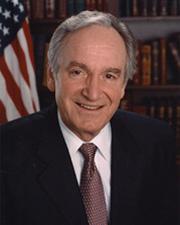 Sen. Tom Harkin (D-IA)
Adds SEC. __. SENSE OF THE SENATE wherever appropriate
Adds a sectionInserted: SEC. __. SENSE OF THE SENATE.
Inserted: (a) Findings.--The Senate makes the following findings:
Inserted: (1) On October 26, 2005, the Committee on Ways and Means of the United States House of Representatives approved a budget reconciliation package that would significantly reduce the Federal Government's funding used to pay for the child support program established under part D of title IV of the Social Security Act (42 U.S.C. 651 et seq.) and would restrict the ability of States to use Federal child support incentive payments for child support program expenditures that are eligible for Federal matching payments.
Inserted: (2) The child support program enforces the responsibility of non-custodial parents to support their children. The program is jointly funded by Federal, State and local governments.
Inserted: (3) The Office of Management and Budget gave the child support program a 90 percent rating under the Program Assessment Rating Tool (PART), making it the highest performing social services program.
Inserted: (4) The President's 2006 budget cites the child support program as "one of the highest rated block/formula grants of all reviewed programs government-wide. This high rating is due to its strong mission, effective management, and demonstration of measurable progress toward meeting annual and long term performance measures."
Inserted: (5) In 2004, the child support program spent $5,300,000,000 to collect $21,900,000,000 in support payments. Public investment in the child support program provides more than a four-fold return, collecting $4.38 in child support for every Federal and State dollar that the program spends.
Inserted: (6) In 2004, 17,300,000 children, or 60 percent of all children living apart from a parent, received child support services through the program. The percentage is higher for poor children--84 percent of poor children living apart from their parent receive child support services through the program. Families assisted by the child support program generally have low or moderate incomes.
Inserted: (7) Children who receive child support from their parents do better in school than those that do not receive support payments. Older children with child support payments are more likely to finish high school and attend college.
Inserted: (8) The child support program directly decreases the costs of other public assistance programs by increasing family self-sufficiency. The more effective the child support program in a State, the higher the savings in public assistance costs.
Inserted: (9) Child support helps lift more than 1,000,000 Americans out of poverty each year.
Inserted: (10) Families that are former recipients of assistance under the temporary assistance for needy families program (TANF) have seen the greatest increase in child support payments. Collections for these families increased 94 percent between 1999 and 2004, even though the number of former TANF families did not increase during this period.
Show 6 more inserted paragraphsShow less
Inserted: (11) Families that receive child support are more likely to find and hold jobs, and less likely to be poor than comparable families without child support.
Inserted: (12) The child support program saved costs in the TANF, Medicaid, Food Stamps, Supplemental Security Income, and subsidized housing programs.
Inserted: (13) The Congressional Budget Office estimates that the funding cuts proposed by the Committee on Ways and Means of the House of Representatives would reduce child support collections by nearly $7,900,000,000 in the next 5 years and $24,100,000,000 in the next 10 years.
Inserted: (14) That National Governor's Association has stated that such cuts are unduly burdensome and will force States to reevaluate several services that make the child support program so effective.
Inserted: (15) The Federal Government has a moral responsibility to ensure that parents who do not live with their children meet their financial support obligations for those children.
Inserted: (b) Sense of the Senate.--It is the sense of the Senate that the Senate will not accept any reduction in funding for the child support program established under part D of title IV of the Social Security Act (42 U.S.C. 651 et seq.), or any restrictions on the ability of States to use Federal child support incentive payments for child support program expenditures that are eligible for Federal matching payments, during this Congress.
The amendment doesn't say where this goes; the clerk decides.
Original wording
At the appropriate place, insert the following:
Read automatically from the Congressional Record. Check the original before relying on it.
As printed
At the appropriate place, insert the following:
SEC. __. SENSE OF THE SENATE.
(a) Findings.--The Senate makes the following findings:
(1) On October 26, 2005, the Committee on Ways and Means of the United States House of Representatives approved a budget reconciliation package that would significantly reduce the Federal Government's funding used to pay for the child support program established under part D of title IV of the Social Security Act (42 U.S.C. 651 et seq.) and would restrict the ability of States to use Federal child support incentive payments for child support program expenditures that are eligible for Federal matching payments.
(2) The child support program enforces the responsibility of non-custodial parents to support their children. The program is jointly funded by Federal, State and local governments.
(3) The Office of Management and Budget gave the child support program a 90 percent rating under the Program Assessment Rating Tool (PART), making it the highest performing social services program.
(4) The President's 2006 budget cites the child support program as “one of the highest rated block/formula grants of all reviewed programs government-wide. This high rating is due to its strong mission, effective management, and demonstration of measurable progress toward meeting annual and long term performance measures.”
(5) In 2004, the child support program spent $5,300,000,000 to collect $21,900,000,000 in support payments. Public investment in the child support program provides more than a four-fold return, collecting $4.38 in child support for every Federal and State dollar that the program spends.
(6) In 2004, 17,300,000 children, or 60 percent of all children living apart from a parent, received child support services through the program. The percentage is higher for poor children--84 percent of poor children living apart from their parent receive child support services through the program. Families assisted by the child support program generally have low or moderate incomes.
(7) Children who receive child support from their parents do better in school than those that do not receive support payments. Older children with child support payments are more likely to finish high school and attend college.
(8) The child support program directly decreases the costs of other public assistance programs by increasing family self-sufficiency. The more effective the child support program in a State, the higher the savings in public assistance costs.
(9) Child support helps lift more than 1,000,000 Americans out of poverty each year.
(10) Families that are former recipients of assistance under the temporary assistance for needy families program (TANF) have seen the greatest increase in child support payments. Collections for these families increased 94 percent between 1999 and 2004, even though the number of former TANF families did not increase during this period.
(11) Families that receive child support are more likely to find and hold jobs, and less likely to be poor than comparable families without child support.
(12) The child support program saved costs in the TANF, Medicaid, Food Stamps, Supplemental Security Income, and subsidized housing programs.
(13) The Congressional Budget Office estimates that the funding cuts proposed by the Committee on Ways and Means of the House of Representatives would reduce child support collections by nearly $7,900,000,000 in the next 5 years and $24,100,000,000 in the next 10 years.
(14) That National Governor's Association has stated that such cuts are unduly burdensome and will force States to reevaluate several services that make the child support program so effective.
(15) The Federal Government has a moral responsibility to ensure that parents who do not live with their children meet their financial support obligations for those children.
(b) Sense of the Senate.--It is the sense of the Senate that the Senate will not accept any reduction in funding for the child support program established under part D of title IV of the Social Security Act (42 U.S.C. 651 et seq.), or any restrictions on the ability of States to use Federal child support incentive payments for child support program expenditures that are eligible for Federal matching payments, during this Congress.
Legislative Activity
Stay on top of the latest movement without scrolling through every action
Senate amendment proposed (on the floor): Amendment SA 2363 proposed by Senator Harkin.(consideration: CR S12311-12312; text: CR S12311-12312)
November 3, 2005
View full timeline
Senate amendment proposed (on the floor): Amendment SA 2363 proposed by Senator Harkin.(consideration: CR S12311-12312; text: CR S12311-12312)
November 3, 2005
Senate amendment agreed to: Amendment SA 2363 agreed to in Senate by Voice Vote.
November 3, 2005
Amendment SA 2363 proposed by Senator Harkin. (consideration: CR S12311-12312; text: CR S12311-12312) To affirm that the Federal funding levels for the rate of reimbursement of child support administrative expenses should not be reduced below the levels provided under current law, that States should continue to be permitted to use Federal child support incentive payments for child support program expenditures that are eligible for Federal matching payments, and to express the sense of the Senate that it does not support additional fees for successful child support collection.
November 3, 2005
Amendment SA 2363 agreed to in Senate by Voice Vote.
November 3, 2005
Senate amendment submitted
November 2, 2005