To modify the multiyear procurement authority for C-17 aircraft.
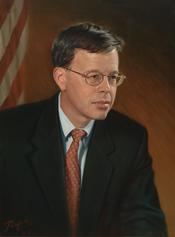 Sen. Jim Talent (R-MO)
Legislative Activity
Stay on top of the latest movement without scrolling through every action
Senate amendment agreed to: Amendment SA 2477 agreed to in Senate by Yea-Nay Vote. 89 - 8. Record Vote Number: 317.
November 10, 2005
View full timeline
Senate amendment agreed to: Amendment SA 2477 agreed to in Senate by Yea-Nay Vote. 89 - 8. Record Vote Number: 317.
November 10, 2005
Roll call votes on amendments in Senate: Amendment SA 2477 agreed to in Senate by Yea-Nay Vote. 89 - 8. Record Vote Number: 317.
November 10, 2005
Considered by Senate. (consideration: CR S12638, S12644)
November 10, 2005
Amendment SA 2477 agreed to in Senate by Yea-Nay Vote. 89 - 8. Record Vote Number: 317.
November 10, 2005
Senate amendment submitted
November 9, 2005
Senate amendment proposed (on the floor): Amendment SA 2477 proposed by Senator Talent.
November 9, 2005
Amendment SA 2477 proposed by Senator Talent. (consideration: CR S12586-12589; text: CR S12586) To modify the multiyear procurement authority for C-17 aircraft.
November 9, 2005
Votes
1 roll call on this amendment
Text
Proposed
NATIONAL DEFENSE AUTHORIZATION ACT FOR FISCAL YEAR 2006

The PRESIDING OFFICER. Under the previous order, the Senate will
resume consideration of S. 1042, which the clerk will report.
The journal clerk read as follows:

A bill (S. 1042) to authorize appropriations for fiscal
year 2006 for military activities of the Department of
Defense, for military construction, and for defense
activities of the Department of Energy, to prescribe
personnel strengths for such fiscal year for the Armed
Forces, and for other purposes.

Pending:

Chambliss amendment No. 2433, to reduce the eligibility age
for receipt of non-regular military service retired pay for
members of the Ready Reserve in active federal status or on
active duty for significant periods.
Ensign amendment No. 2443, to restate United States policy
on the use of riot control agents by members of the Armed
Forces.

The PRESIDING OFFICER. The Senator from Michigan.
Mr. LEVIN. Mr. President, I suggest the absence of a quorum.
The PRESIDING OFFICER. The clerk will call the roll.
The journal clerk proceeded to call the roll.
Mr. INHOFE. Mr. President, I ask unanimous consent that the order for
the quorum call be rescinded.
The PRESIDING OFFICER. Without objection, it is so ordered.

[[Page S12561]]

Mr. INHOFE. Mr. President, may I ask what the regular order is right
now, what the pending amendment is?
The PRESIDING OFFICER. The pending amendment is the Ensign amendment
No. 2443.

Amendment No. 2440

Mr. INHOFE. Mr. President, I ask unanimous consent to set aside the
Ensign amendment, and I send to the desk my amendment No. 2440 and ask
for its immediate consideration.
The PRESIDING OFFICER. Without objection, it is so ordered. The clerk
will report.
The journal clerk read as follows:

The Senator from Oklahoma [Mr. Inhofe], for himself and Mr.
Frist, proposes an amendment numbered 2440.

Mr. INHOFE. Mr. President, I ask unanimous consent that reading of
the amendment be dispensed with.
The PRESIDING OFFICER. Without objection, it is so ordered.
The amendment is as follows:

(Purpose: To ensure by law the ability of the military service
academies to include the offering of a voluntary, nondenominational
prayer as an element of their activities)

At the end of subtitle G of title X of division A, add the
following:

SEC. 1073. PRAYER AT MILITARY SERVICE ACADEMY ACTIVITIES.

(a) In General.--The superintendent of a service academy
may have in effect such policy as the superintendent
considers appropriate with respect to the offering of a
voluntary, nondenominational prayer at an otherwise
authorized activity of the academy, subject to such
limitations as the Secretary of Defense may prescribe.
(b) Service Academies.--For purposes of this section, the
term ``service academy'' means any of the following:
(1) The United States Military Academy.
(2) The United States Naval Academy.
(3) The United States Air Force Academy.

Mr. INHOFE. Mr. President, even though the Founding Fathers were very
clear and spoke of ``Nature's God'' and of the ``Creator'' in the
Declaration of Independence, the Federal courts are increasingly trying
to drive every vestige of faith from public life.
On April 30, 2003, came an example from the Fourth Circuit Court of
Appeals.
As the Boston Globe reported it:

Judges bar prayer at public colleges. In a precedent-
setting ruling against prayer at a State college, a Federal
appeals court has barred the Virginia Military Institute from
writing and reciting a prayer before cadets eat their evening
meals.

VMI and then the Citadel down in South Carolina have scrapped their
prayers since that Federal court ruling, though Justice Stevens
declared:

There is no injunction presently barring VMI from
reinstituting the supper prayer.

The Naval Academy in Annapolis has also been reviewing its policy.
The ACLU, the American Civil Liberties Union of Maryland, is calling on
the academy to review its practices of leading the students in prayer.
Jeff Jacoby is a columnist for the Boston Globe who wrote in 1996:

Have you heard about the Virginia politician who wanted
references to God injected into the Declaration of
Independence? Or about the activist from Massachusetts who
urged making the Fourth of July a quasi-religious holiday?
These proposals were made 220 years ago. Today they would be
swiftly denounced by the ACLU, the Democratic Congressional
Campaign Committee, and a slew of editorial pages.

It was just last year that the Ninth Circuit Court of Appeals ruled
to have ``under God'' taken from our Pledge of Allegiance.
We go around, as I do in my State of Oklahoma, spending a lot of time
talking to people. I know what we do up here is significant. We pass
laws. We have a lot of rules and regulations coming out of the White
House, out of the various committees, including the one I chair, the
Environment and Public Works Committee, but when you are on the street,
it is the legislating from the bench that bothers people more than
anything else. And certainly taking ``under God'' out of our Pledge of
Allegiance is right at the top of that list.
Now, I agree with my friend in the other body, Congressman Walter
Jones, who has led this fight in the House of Representatives, when he
asks the question:

How much longer will we stand by and allow others to ignore
the very God upon whom our Nation was founded?

I also agree with the position of the Concerned Women for America
that:

Prayer is essential to the protection of our families, our
communities and our nation. We believe that the men and women
who put themselves in harm's way have the right to give
public thanks to God and ask for His blessings. But some are
trying to take this right away.

Ronald Ray and Linda Jeffrey of Concerned Women for America recap:

On July 11, 2005 the Marine Corps Times announced the Anti-
Defamation League's reissued call to cease the traditional
noon-meal prayer at the Naval Academy, and the Academy's
refusal to surrender. The ADL's demands echo the April of
2003 complaint by the ACLU, which could not find a
plaintiff to pursue a lawsuit.

This is kind of interesting. The ACLU was trying to find one cadet at
the Naval Academy to act as a plaintiff. They couldn't find one.
Take a good look at this painting by Arnold Frieberg of ``The Prayer
at Valley Forge.'' Since the time of George Washington and the founding
of our country, there is unbroken historic precedent of leader-led
prayer sustaining American fighting men on the battlefield through
every American war. In his Farewell Address, George Washington said:

I consider it an indispensable duty to close this last
solemn act of my official life by commending the interests of
our dearest country to the protection of Almighty God and
those who have the superintendence of them into his holy
keeping.

On the 4th of July, John Adams of Massachusetts said:

It ought to be commemorated as the day of deliverance, by
solemn acts of devotion to God Almighty.

The centrality of prayer for the protection of those in peril upon
the sea and acknowledgment of divine providence is an official tenet of
preparation of the American military. America's dependence upon prayer
exhibits itself before, and in the Declaration of Independence, and in
the Inaugural Address of every President. Congress opens each day with
a prayer. The tradition of prayer continued on June 6, 1944, when
President Roosevelt led the entire Nation in prayer during his radio
address, lifting up our assault forces and the families of those who
would give the supreme sacrifice in the D-Day invasion. The President
did that before the invasion.
During World War II, GEN George Patton led the famous prayer for
favorable weather during the crucial 1944 Battle of the Bulge, and the
weather dramatically improved. Patton issued 3,200 training letters to
officers and chaplains in the Third Army to ``urge, instruct, and
indoctrinate every fighting man to pray as well as to fight.'' That is
George Patton.
In one of the largest social science research projects in history,
the Social Science Research Council reported after World War II that
soldiers selected prayer most frequently as their source of combat
motivation. From 1774 until today, more than 67 Armed Forces prayer
books have been widely and efficiently distributed to our fighting
forces during war, from the American war for independence to the war on
terror we are fighting today.
A sampling of just two prayer books distributed during World War II
and the Korean war contain recommended prayers from 34 senior uniformed
military authorities, including Bradley, Eisenhower, MacArthur,
Marshall, and Patton.
Former Chairman of the Joint Chiefs, Admiral Thomas Moorer,
concludes:

Prayer for the common good and acknowledgment of Divine
Providence is a central, official and historic tenet of the
combat leadership preparation for the American Military,
particularly officer training and particularly in times of
national peril or war.

Our Constitution demands the freedom to worship freely, and our
future leaders, our men and women in military academies across the
country, may soon be denied that freedom for which many have died to
ensure that freedom for all of us.
Last year, 2004, the Supreme Court decided not to hear the ACLU
challenge to cadet-led prayers at Virginia Military Institute. VMI,
that is where it all started. That decision allowed the Fourth Circuit
Court of Appeals decision to stand which prohibited VMI from sponsoring
a daily supper prayer. Right after that, the Citadel followed their
lead.
Supreme Court Justice Stevens pointed out in his decision for the
majority not to hear the case that, in contrast, the Sixth and Seventh
Circuit Courts have rejected challenges to nondenominational prayer at
the college level, reasoning that ``college-age students are not
particularly susceptible

[[Page S12562]]

to pressure from peers towards conformity.''
It is important to acknowledge here that the Sixth and Seventh
Circuits, as well as the Fourth Circuit, all agree that there is not a
problem in our colleges and universities. The VMI prayer was voluntary.
Stevens states that there is no ``direct conflict among Circuits,''
relying on the factual differences between the cases in the different
circuit courts.
Justice Scalia writes, however, that ``the basis for the
distinguishing--that this was a separate prayer at a state military
college, whereas other cases involved graduation prayers at state
nonmilitary colleges--is, to put it mildly, a frail one.''
Scalia continues:

In fact, it might be said that the former is more, rather
than less, likely to be constitutional since group prayer
before military mess is more traditional than group prayer at
ordinary state colleges.

That is the state of the law today. Currently, they are not praying
at VMI and at the Citadel. There is some problem at the Naval Academy.
Frustrated by the failure to find anyone in the Naval Academy to
serve as a plaintiff, the ACLU now asks the Armed Services Committee of
the Congress to take action. My amendment is designed to send an
unsubtle signal to any court that entertains an ACLU suit against the
military academies. It will stand as an indication of congressional
intent on the matter. That is important. A lot of times congressional
intent is not. However, when it is stated, when a decision is being
made on a matter like this, it is significant. It is that intent that
we want to have as an amendment to the bill today.
Judges inclined to back mealtime prayer will be able to point to this
legislation as an argument for judicial deference to the will of
Congress and the executive branch.
My amendment's language was in the House-passed version of last
year's National Defense Authorization Act for fiscal year 2005. This
year I want to see a recorded vote in the Senate to make clear exactly
who agrees with this provision and who does not and to show the
strength of support for this provision. While debating this National
Defense Authorization Act, and hereafter, let us honor our heroes and
those who have returned home and those who sacrificed their lives by
standing against those liberals who would seek to challenge their God-
given right to pray to a living Lord.
What I would like to do is yield the floor. First, I ask unanimous
consent that Senator Allard be added as a cosponsor of the amendment.
The PRESIDING OFFICER (Mr. Graham). Without objection, it is so
ordered.
Mr. INHOFE. I understand Senator Warner, our distinguished chairman,
wants to speak, as well as Senator Brownback.
I yield the floor and retain the remainder of my time.
The PRESIDING OFFICER. The Senator from Virginia.
Mr. WARNER. Mr. President, I commend our colleague. This is a very
significant and important step that he has taken. I ask unanimous
consent to be added as a cosponsor on the amendment.
The PRESIDING OFFICER. Without objection, it is so ordered.
Mr. WARNER. The Senator from Kansas asked for a moment or two to
speak. I shall yield the floor at this point and then follow with my
remarks. I first ask the Presiding Officer with regard to the time
remaining for the proponents of the amendment.
The PRESIDING OFFICER. The proponents have 17 minutes 15 seconds
remaining.
Mr. WARNER. I thank the Chair.
The PRESIDING OFFICER. The Senator from Kansas.
Mr. BROWNBACK. Mr. President, I thank my colleagues from Oklahoma and
from Virginia for allowing me to speak on this important amendment.
This morning, I started my day in the Senate as the Presiding Officer.
I started it standing next to Chaplain Black, who is a Navy chaplain.
He gave the opening prayer for the Senate. We have had an opening
prayer for many years. I found it inspiring, encouraging. I found it
uplifting and important that we open this body with a prayer. We do so
on a daily basis. As I sat as Presiding Officer, I looked at the door
opposite me. Right above it, on our mantlepiece, we have ``In God We
Trust,'' as we have on our coinage and in our beliefs and hearts. To
many Americans, we are one Nation under God, indivisible, with liberty
and justice for all.
It is with this in mind that I rise in support of the amendment of
the Senator from Oklahoma, No. 2440, that protects the ability of
superintendents of military service academies to set appropriate
policies for the offering of voluntary nondenominational prayers at
authorized events. This is basic. It is important. It is the protection
of the practice of religious liberties at our military institutions.
Prayer in military environments, as well as in public settings
generally, has come into question in recent years. This amendment has
specific relation to the 2004 Supreme Court decision not to hear a case
regarding the challenge by the American Civil Liberties Union to
mealtime prayers at Virginia Military Institute.
This follows on a series of cases for 40 years now of an attempt by
the hard left in America to have a naked public square, to have no
recognition of a divine authority, to have no recognition of seeking a
divine authority or guidance, but a naked, sterile public square. That
was not contemplated in our Constitution. It called for a separation of
church and state, but not the removal of church from state which is
what this seeks to perpetuate.
The mealtime prayer at Virginia Military Institute was a respected
and time-honored practice, a military institution that has played a
critical role in training U.S. military leaders for over 160 years.
Sadly, the majority decision of the Supreme Court not to hear the case
allowed a decision by the Fourth Circuit Court of Appeals to stand
which prohibited VMI from sponsoring a daily supper prayer.
However, other circuit courts have rejected challenges to
nondenominational prayer at the college level. And we should, too; we
should allow this prayer to take place. We shouldn't have a naked
public square. We should have a robust one that lifts up faith and
lifts up the seeking of those to a higher moral authority.
Freedom of religion as protected in the U.S. Constitution does not
require the removal of all religion from public settings. Such
secularity is not what our Founding Fathers envisioned when they
established religious liberty as one of the basic tenets of the
Republic. I support the Senator from Oklahoma in his effort to clarify
to the judicial branch and the military Congress's understanding of
this fundamental constitutional right with regard to military
academies. This is important. It is one of those things, as we try to
stop this onslaught of the removal of religious liberty, which is what
the move is about and what the Senator from Oklahoma is trying to
prevent, the removal of religious liberties, to allow the robust
practice of religion, nondenominational, nonsectarian, yet seeking that
God in whom we trust.
I yield the floor.
The PRESIDING OFFICER. The Senator from Virginia.
Mr. WARNER. Mr. President, before the distinguished Senator from
Kansas leaves the floor, I want to speak to him about another matter. I
ask unanimous consent to go off this amendment for a brief period and
charge the time to me from the bill time so I may have a colloquy with
my good friend and colleague from Kansas.
The PRESIDING OFFICER. Without objection, it is so ordered.
Mr. WARNER. The Senator has submitted to me an amendment which is in
our allocation of 12 amendments regarding the notification that you
deem important with military families, should they seek to access a
military hospital for the performance of an abortion by a young person
in that family. Am I generally correct about that?
Mr. BROWNBACK. That is correct.
Mr. WARNER. In studying the amendment over the night--now it is not
the pending amendment, but I want to bring these issues to the
attention of the Senator, in fairness. The Senator, though, appreciates
that so many of these families, particularly those abroad, are often
separated because a spouse, male or female, as the case may be, the
serving member in uniform, could be detached from the family homesite
and sent into other areas of the globe for periods of time to

[[Page S12563]]

perform missions. For example, there is a number of families resident
in Europe whose spouses are then part of cadres of individuals going
into the Iraq situation, some into the Afghan situation. That poses
some difficulty, as I see it, in trying to work out a communication
between family members, which communication is relative to life and
death, and very important.
I am concerned that we are reaching down to a very small number of
individuals, i.e., the military families, and could be imposing upon
them, should this amendment be adopted and become law, a difficult
situation. I am of an open mind, but I am concerned about having that
type of legislation on this bill.
Mr. BROWNBACK. If I could respond to my colleague----
Mr. WARNER. And then if the Senator would address also the issue of
the U.S. Federal district court being a participant in this situation.
Mr. BROWNBACK. This is a simple parental notification bill which we
brought up last time on the Department of Defense authorization bill
and agreed to take it on last year because of desires to move the bill
forward. We have worked on it a great deal. What it is about is if a
child, a dependent of military personnel, seeks an abortion, they have
to get parental notification, which most Americans support. Most
Americans believe if their child is seeking a medical procedure of any
type, they should have parental notification take place.
Mr. WARNER. Mr. President, if I could interject at this time,
personally, my own philosophy is in agreement with the objective. My
only concern as manager of the authorization bill of the Department of
Defense is that I cannot let my personal beliefs override my judgment
as to how best to treat these families of our military.
Mr. BROWNBACK. I understand that my colleague from Virginia and I,
too, have major military bases in our States. Fort Riley is growing in
size as an army unit. It is a place that has troops all the time in
Iraq and Afghanistan, so I see this on a personal basis in my State.
But I also see on a personal basis, if you are deployed there and you
have a minor child who is seeking an abortion, that you as the father
or mother want to be notified about that, and we provide this to be
done telephonically so a person does not have to be present. The court
itself would have to establish witness or evidentiary standards if they
want somebody to be present to be able to determine that this person is
there, is the actual one who is seeking this.
We also provide a system in here that a guardian is appointed if
needed, and that can be done by the district court without the approval
of the parents, but they have to go through that procedure to be able
to get this done.
We have worked to try to make this work with personnel. I think it is
going to happen in a limited number of settings, but it will happen. It
is a Federal issue because it is Federal property, Federal employees,
and it is something I think we should do for military personnel so they
are in charge of their child's upbringing, and particularly on
something such as this of a significant medical procedure of an
abortion. So we try to take into consideration the very legitimate
concerns of the Senator in putting this forward.
Mr. WARNER. Mr. President, again, I strongly support the principle
and the goals the Senator is seeking, but I have to be mindful of the
practicalities of military life. It is so different than the families
who are in our several States, wherever they may be, and that, of
course, brings up another question. Suppose this particular military
family's members are residents of a State, which State thus far has not
addressed this issue. This State has no requirement for the parental
consent in that State, yet they are now being subjected to a Federal
law which, of course, would have supremacy over the State law. But is
that not an invasive practice in the States rights?
Mr. BROWNBACK. Again, it is a legitimate question the chairman asks
in these troubling areas. We don't seem to have difficulty with this in
any other medical procedure a minor child would ask for, that they have
to get their parents' notification. If a child literally in many places
has even very minor surgery, they have to get parental notification.
And yet because of the social difficulty and how much we wrestle with
the issue of abortion, they don't there, and they are using Federal
facilities to do this. I think this is wholly appropriate given the use
of Federal facilities.
Remember, too, what we are protecting here is the right of the parent
toward their minor child. If the minor child has a very difficult
relationship with their parents, they can actually take it separately
to the court and not have the parent get approval to do this. If I were
a military person, I would want something such as this, that I am in
charge of my minor child's upbringing, and particularly when it comes
to surgery and something that is so important and difficult as an
abortion. This is for the personnel.
Mr. WARNER. Mr. President, I engaged my colleague to set forth my
concerns to other Members who are trying to evaluate their positions on
this amendment, should it come forward, and I anticipate at the
appropriate time the Senator will be introducing it. I question is
there any precedent in Federal law for requiring parental notification,
for example, in Medicare, Medicaid, or Federal employee health
programs?
I have to move on to this amendment, but it is a series of very
important fundamental questions that has to be addressed in the context
of the Senator's amendment, despite my own personal view that I
associate myself with the Senator about the parental consent.
Consistently I have voted for that here, but I have an overriding
responsibility for the men and women in the military, and this is very
unique.
So I put this aside at this time, Mr. President, and return to the
Inhofe amendment. I thank my colleague.
Mr. BROWNBACK. If I could respond to the last question. No, not
Federal employees involved in Medicare and Medicaid, the other
situation. We are talking about Federal employees on Federal military
facilities. We are trying to protect the parents' rights in this, which
the chairman did not dispute, but others may dispute, and we still need
to provide another procedure for the child to go outside the parents'
rights. I think this is important, and we have tried to make it
workable within the military system.
I thank the Senator.
Mr. WARNER. I thank my colleague. We are going to move swiftly today,
and issues could be brought up with very short time limitations on
debate. That has allowed me the opportunity to express my serious
concerns that I will have to address in the context of this amendment
as the day progresses.
I ask unanimous consent we go back to the amendment by the Senator
from Oklahoma, Mr. Inhofe.
The PRESIDING OFFICER. Without objection, it is so ordered.

Amendment No. 2440

Mr. WARNER. Mr. President, I want to again thank my colleague from
Oklahoma. I think it is a very important amendment.
Mr. President, this is an issue that must be carefully balanced, the
constitutional guarantee of free exercise of religion and the
constitutional prohibition against the establishment of religion. But
it is a longstanding tradition at these academies, and I think the
amendment is carefully drafted to strike a balance in those two
important considerations.
Moreover, this amendment deals with the particular circumstances and
environment that exist at our service academies, those honored
institutions with long and storied traditions that have the mission of
training our next generation of military leaders. A part of that
mission is now and always has been the development of moral character
and the appropriate respect for religious beliefs and needs of others
who are entrusted with their leadership.
I must draw a little bit on my modest experience in service on active
duty in periods of two wars. I can tell you my own observation of the
importance of religion to individuals, particularly those serving
overseas, and the hardships they endured either from family separation
or combat situations or other difficult problems. It is a very deep
feeling these many individuals have about their respective religious
traditions and family traditions in religion, and it has often been a
matter of life and death to some individuals. Clinging to those strong
beliefs has

[[Page S12564]]

pulled them through difficult situations.
I also stop to think about our academies. I have had the privilege
over the years to visit all of them. I think particularly of the Naval
Academy and its magnificent chapel. People come from all over the world
to see the chapel at the U.S. Naval Academy. Just this year I was
privileged to be the keynote speaker at the dedication of a new small
entrance at the Naval Academy where those of the Jewish faith can go
and quietly exercise their religion and share their prayers. I
encourage anyone in that area to go and look at these two edifices. To
me they symbolize the importance of religion in our military life.
I commend the Senator from Oklahoma.
I have been informed by the distinguished ranking member that there
could be an amendment in the second degree and that individual who
would bring it forth is due here in about 20 or 30 minute is my
understanding, at which time I hope we could finish addressing this
amendment such that the Senate could vote presumably on the second-
degree amendment and then the underlying amendment prior to the noon
period, although we will not stop consideration of the bill at the time
but would continue. But I hope that amendment could be agreed to.
I see the distinguished ranking member.
The PRESIDING OFFICER. The Senator from Michigan.
Mr. LEVIN. Mr. President, I appreciate the chairman's comment. I do
hope and believe that Senator Reed will in about half an hour be able
to address the issue. I can't commit to a vote, however, as indicated
by the chairman. I believe there is some scheduling issue on this side
which may preclude a vote at the time hoped for by the chairman. But
let me work that issue the best I can as to when the vote would come on
this amendment.
I believe Senator Craig may have an amendment----
Mr. WARNER. Mr. President, before we depart, I hope the Senator could
share with me and the Republican leadership, with the understandable
impediments our two leaders have, with regard to votes and scheduling
them. We want to try to----
Mr. LEVIN. I hope we could stack votes at some point, including a
vote on the Inhofe amendment with a second-degree possibility and
also----
Mr. WARNER. And the Ensign amendment.
Mr. LEVIN. And the Ensign amendment as well. I have talked to Senator
Craig and you have apparently.
Mr. WARNER. I have. It is such that you and Senator Craig can discuss
that amendment.
Mr. CRAIG. Mr. President, may I inquire as to the order appropriate
that we would discuss and bring up this amendment?
Mr. President, I ask unanimous consent that the pending amendment be
laid aside to consider amendment No. 2437.
Mr. INHOFE. Reserving the right to object, let me ask the author of
the request what the intention is because I want to continue with my
discussion. About how much time does the Senator want to take for
consideration of the amendment?
Mr. CRAIG. I think less than 2 minutes could solve this issue and we
could return to the Senator's amendment.
Mr. INHOFE. I have no objection.
I ask unanimous consent that Senator Cornyn be added as a cosponsor
of my amendment.
The PRESIDING OFFICER. Without objection, it is so ordered.
Mr. WARNER. Mr. President, we have a technical problem we have to
address with regard to the UC request; that is, we are operating this
bill under a UC, 12 amendments each side. This is not 1 of the 12.
Mr. CRAIG. That is correct.
Mr. WARNER. Therefore, I think we could go on the bill time for the
purpose of discussing the Senator's amendment in the hopes what
differences remain could be reconciled so this amendment could be
included as part of the managers' agreed-upon package.
Mr. President, let the record reflect we are not calling this
amendment up within the context of the UC which controls the overall
procedure of this bill but that the two Senators are simply having a
colloquy, which is fine.
Mr. CRAIG. Mr. President, that is, of course, the order. I thank the
chairman for correcting us in that because we are operating on the
broader bill, the underlying bill, under a UC.
This amendment was brought forth with the hope that both sides could
accept it. Our side has accepted it. I worked with the ranking member,
Senator Levin, to resolve a couple of issues in it that I think can be
accepted. In that case, I hope it will appear in the managers'
amendment.
We would include in the amendment--and we are discussing those who
are eligible to be buried in military cemeteries. We have a prohibition
now against those with a Federal capital offense lying at rest in our
military cemeteries. We found this summer that an individual who had
been convicted of murder in two instances in Maryland, serving his life
sentence in a Maryland prison, died and was buried in Arlington. We
want to correct that by saying that Federal or State law, where the
final decision--he is found guilty even under appeal--it has to be a
final decision in that instance, and that under extraordinary
circumstances, even though he might be convicted, a Governor or a
President would commute the sentence. That would be the exception.
I would be willing to agree to those two items to be included in the
amendment if that is acceptable to all parties, and we would so craft
it that way.
The PRESIDING OFFICER. The Senator from Michigan.
Mr. LEVIN. Mr. President, I thank the Senator from Idaho. The two
changes we have proposed to the amendment make it clear that the
conviction of a capital offense, as referred to, could either be State
or Federal, would have to be a final conviction so there is no appeal
pending or a pending court challenge. And it provides for the
possibility of a commutation of that sentence by a Governor or the
President.
With those two changes, it will be acceptable to us, and we can agree
it will be part of a managers' package. There was no intent that this
be 1 of the 12.
The PRESIDING OFFICER. The Senator from Virginia.
Mr. WARNER. Mr. President, may I inquire of the proponent of the
amendment, I heard him use the term ``military cemeteries.'' There are
State and Federal cemeteries. This amendment is directed at Federal
cemeteries?
Mr. CRAIG. It is the only one over which we have jurisdiction; that
is correct.
Mr. LEVIN. As I understand it, national cemeteries, Federal
cemeteries are governed by the amendment. With those changes, we will
not object to the amendment. In fact, I think there will be good
support for it. Senator Mikulski, as I understand, is a supporter of
it.
One other comment, Mr. President. It is my understanding that both
the veterans organizations and the Veterans' Affairs Committee support
this amendment; is that accurate?
Mr. CRAIG. Mr. President, that is correct. Full disclosure here:
There is always concern when you restrict access for purposes of
burial, but because we have already established that in Federal law and
this appeared to be a loophole, which it was, and an individual, as I
so stated, who was convicted of murder in two instances in Maryland was
buried this summer in Arlington Cemetery, they understand that clearly,
they appreciate that correction. And I am very specific in my
discussions with the Senator from Michigan that we are talking about
capital offenses--not all felonies, capital offenses of this kind.
I thank both of my colleagues for helping us work out this issue. I
hope this could be included in the managers' amendment.
Mr. LEVIN. Mr. President, if the Senator will yield further, we have
had a discussion, and I received the assurance from Senator Craig,
which I very much welcome, that it is not his intent that this lead to
a broadening of this prohibition to include all felonies, but it is his
intent, both in the amendment and his personal view, that this should
be limited to the capital offense as identified in the amendment.
Mr. CRAIG. That is correct.
Mr. LEVIN. I thank the Senator.
Mr. WARNER. Mr. President, I would like to join Senator Craig as a
cosponsor on this amendment.
This is an example which other Senators may wish to access as to how
the

[[Page S12565]]

two managers are willing to work in open colloquy on areas where there
are amendments outside the framework of the 12 on each side which could
possibly be reconciled, and a part of that reconciliation process would
be the need for an open colloquy. This is a format the Senator from
Michigan and I are pleased to entertain where there are other
amendments that a colloquy in open session would be helpful in trying
to reach a reconciliation.
Mr. CRAIG. Mr. President, I thank the chairman of the full committee
and the ranking member for their accommodations.
Mr. LEVIN. Mr. President, we thank the Senator from Idaho for
bringing this to the attention of the Senate and for making this
correction.
Mr. WARNER. Mr. President, it is also important, with my colleague on
the floor, that we are bound by this UC, 12 amendments on each side,
and as we bring up amendments, I carefully designate, as the Senator
from Michigan does, that they are within the 12 each side has.
Mr. LEVIN. If the chairman will yield on that point because I wish to
affirm and confirm what he has just said, that these colloquies, which
are necessary for clearance of amendments, are very useful. We are used
to this, all of us in the Senate, engaging in these kinds of
colloquies, and there is no intent, for instance, in this last
colloquy, that amendment be listed as 1 of the 12 amendments on the
Republican side.
Mr. WARNER. Mr. President, I yield the floor.
The PRESIDING OFFICER. The Senator from Oklahoma.
Mr. INHOFE. Mr. President, how much time remains on our side?
The PRESIDING OFFICER. There is 8 minutes 55 seconds remaining.
Mr. INHOFE. Mr. President, I don't know of anyone who is going to be
wanting time to speak against this amendment. I inquire of the ranking
member if he knows of anyone who is going to be speaking in opposition
to this amendment?
Mr. LEVIN. Mr. President, I do believe there is at least one Member
on this side who will be offering or considering a second-degree
amendment.
Mr. INHOFE. Or another first-degree amendment. That is fine. In
opposition to this amendment, though.
Mr. LEVIN. The second-degree amendment--however one wants to
characterize it--I do understand there is a second-degree amendment
possible.
Mr. INHOFE. I understand there is 8 minutes remaining; is that
correct?
The PRESIDING OFFICER. That is correct.
Mr. LEVIN. So we do not mislead our friend from Oklahoma, there may
very well be Senators of whom I am not aware who would want to speak in
opposition.
Mr. INHOFE. In that there is no one on the floor right now, if it is
all right with the chairman and ranking member, I will conclude my
remarks.
Mr. President, I have always enjoyed one-sentence amendments because
one can't misinterpret one sentence. I had one the other day that had
to do with the appropriations process. I did one in 1994 that ended up
being a major, significant reform in the other body.
I will read this so people don't misunderstand it:

The superintendent of a service academy may have in effect
such policy as the superintendent considers appropriate with
respect to the offering of a voluntary, nondenominational
prayer at an otherwise authorized activity of the academy. .
. .

Some people asked a question about denominational prayer. Let me
share with you--and I think I can read it in this period of time--an
entire piece by John Adams. John Adams was the first Vice President of
the United States and the second President of the United States. This
is what he said on this subject:

When the Congress met, Mr. Cushing made a motion that it
should be opened with prayer. It was opposed by Mr. Jay of
New York and Mr. Rutledge of South Carolina, because we were
divided in religious sentiments, some Episcopalians, some
Quakers, some Anabaptists, some Congregationalists, so that
we could not join in same set of worship. Mr. Samuel Adams
rose and said, that he was no bigot, and could hear a prayer
of any gentleman of piety and virtue, and at the same time a
friend to his country. He was a stranger in Philadelphia, but
had heard that Mr. Duche deserved that character and
therefore he moved that Mr. Duche, an Episcopalian clergyman,
might be desired to read prayer to Congress to-morrow
morning. The motion was carried in the affirmative.
Accordingly he . . . read several prayers in the
established form, and then read . . . the 35th Psalm. You
must remember this was the next morning after we had heard
the rumor of the horrible cannonade of Boston. It seemed as
if Heaven had ordained that Psalm to be read that morning.
After this, Mr. Duche, unexpectedly to everybody, struck
out into extemporary prayer, which filled the bosom of every
man present.
Here was a scene worthy of a painter's art. It was in
Carpenter's Hall, in Philadelphia. . . . Washington was
kneeling there, and Henry, and Randolph, and Rutledge, and
Lee, and Jay; and by them stood, bowed in reverence, the
Puritan patriots of New England, who, at that moment had
reason to believe that armed soldiery was wasting their
humbled households. It was believed that Boston had been
bombarded and destroyed. They prayed fervently for America,
for Congress. . . .

I think that is very significant.
I read an article the other day that was very interesting. It was an
article by a military historian who said that the Revolutionary War
could not have been won. He goes back and talks about the same thing
that John Adams was talking about, about this tremendous army, the
greatest military force on the face of this Earth marching up to
Lexington and Concord. Our soldiers at that time were not really
soldiers; they were hunters and trappers, and they were armed with just
basic and crude equipment. We remember the story that most of them
couldn't read or write.
So in training, I say to my friend from Texas, they put a tuft of hay
in one boot and a tuft of straw in another boot, and they marched to a
cadence of ``hay foot straw foot.'' As they stood there and heard the
ground shaking as the greatest army on the face of this Earth
approached Lexington and Concord, they knew by resisting they were
signing their own death warrant. They knew when they heard the shot
heard round the world they were going to win in spite of these odds,
not even knowing that a tall redhead stood in the House of Burgesses
and made a speech for them and for us today, when he asked: How could
this frail group of patriots defeat the largest army on the face of
this Earth? He made a very famous speech, but there are three sentences
people have forgotten. They are:

Sir, we are not weak if we make a proper use of those means
which the God of nature has placed in our power. Three
millions of people armed in the holy cause of liberty, and in
such a country as that which we possess, are invincible by
any force which our enemy can send against us. Besides, sir,
we shall not fight our battles alone. There is a just God who
presides over the destinies of nations, and who will raise up
friends to fight our battles for us.

And they fired the shot heard round the world, and we won.
We were a nation under God, and we depended upon God to win that
fight and every fight since then. That is why I think it is so
important today, as a part of this reauthorization bill, that we
reaffirm our ability to train our people at our academies to look to
Almighty God in the way they deem appropriate, in a way to use that
power to defend America in their careers.
I retain the remainder of my time, Mr. President. I understand there
is 3 minutes remaining.
The PRESIDING OFFICER. There is 2 minutes remaining.
Mr. WARNER. Mr. President, the distinguished Senator from Texas
inquired of the managers if he could address an issue that is
tangential to our national security. I ask unanimous consent that he be
allowed to speak as in morning business, thereby not taking time off
the bill, and that would be for not to exceed 10 minutes.
The PRESIDING OFFICER. Without objection, it is so ordered.
The Senator from Texas is recognized for 10 minutes.

United States-India Relations

Mr. CORNYN. Mr. President, I thank the distinguished chairman of the
Senate Armed Services Committee and the distinguished ranking member
for this accommodation. This is an important matter that does relate
directly to our national security and that has to do with the
remarkable progress that United States-India relations have made over
the last several years and the path that lies ahead.
As my colleagues know, Prime Minister Singh visited Washington in
July for a historic state visit. This event marked a critical milestone
in our improving relationship, but the Congress

[[Page S12566]]

needs to help ensure that this relationship reaches its full potential.
President Bush has made it a fundamental foreign policy objective to
move United States-India relations to a new level and plans to visit
India in the near future.
India is the world's largest democracy, and our two great nations
share many common values and common beliefs. It is only appropriate,
then, that the United States and India become true strategic partners
as we move into the 21st century. Fortunately, the days of the Cold War
when the United States and India were at odds are long past. Today, the
United States and India share a common vision for the future as we
battle terrorism together and the proliferation of weapons of mass
destruction, HIV/AIDS, and a host of other challenges that face our
world.
The United States is fortunate to have many Indian Americans who have
helped bring our two nations closer together. There are 2 million
people of Indian origin in the United States, approximately, many of
whom are now U.S. citizens. There are about 200,000 Indian Americans in
my State of Texas alone. Nearly 80,000 Indian students are studying in
our Nation's colleges and universities. Their contributions to our
Nation and our relationship have been remarkably positive.
I will spend just a moment talking about an important agreement that
was reached last July between President Bush and Prime Minister Singh
that will require congressional approval to implement. This agreement,
known as the Civil Nuclear Cooperation Initiative, will help India with
its energy needs and help bring India into the mainstream of
international nuclear nonproliferation efforts, both of which are
worthwhile goals.
While it is true that the agreement on civil nuclear cooperation is a
significant departure from previous U.S. policy, still it represents a
positive step as we grow in our strategic relationship with the nation
of India. For more than 30 years, the United States and India have
disagreed over India's decision not to sign the Nuclear Non-
Proliferation Treaty. As such, the United States has not cooperated
with India on the issue of civilian nuclear power.
In short, we have been at a stalemate, which has neither served our
nonproliferation goals nor helped India's need for energy resources.
Fortunately, a civil nuclear cooperation agreement will allow us to
move forward in a way that serves both the interests of the United
States and the interests of India.
In order to implement this agreement, Congress will need to approve.
The fundamental question before Congress will be why should we allow
civilian nuclear cooperation with India when they refuse to sign the
Nuclear Non-Proliferation Treaty? And will we not be somehow
undermining our own nonproliferation efforts?
The fact is, this agreement will enhance our nonproliferation
efforts. It is correct that India is not a signatory to the NPT. They
have decided, for their own national security reasons, that they will
not become a party to the treaty, and no amount of international
pressure, persuasion, or cajoling will convince them to do otherwise.
This is a reality which we face, but the status quo for another 30
years is not acceptable either.
Recognizing this reality, we must ask ourselves what we can do to
promote nonproliferation efforts with India and bring them within the
international nonproliferation regime. The civil nuclear cooperation
agreement provides the answer. Despite not signing the NPT, the Nuclear
Non-Proliferation Treaty, India has an excellent nonproliferation
record. They understand the danger of the proliferation of weapons of
mass destruction, and that is why India has agreed to adhere to key
international nonproliferation efforts on top of their own stringent
export control regime.
This is a significant step forward, which has been welcomed by the
International Atomic Energy Agency Director, Mohamed El-Baradei, who
understands that India will not come into the NPT through the normal
route. This agreement brings India's growing civilian nuclear
capabilities within international export control regimes. India will
now assume the same nonproliferation responsibilities that other
nations have with civil nuclear energy. Specifically, India has agreed
to identify and separate civilian and military nuclear facilities and
programs and file with the IAEA a declaration with regard to its
civilian facilities. It has agreed to place voluntarily its civilian
nuclear facilities under IAEA safeguards. It has agreed to sign and
adhere to an additional protocol with respect to civilian nuclear
facilities. And it has agreed to continue its unilateral moratorium on
nuclear testing.
Furthermore, it has agreed to work with the United States for the
conclusion of a multilateral fissile material cutoff treaty. It has
agreed to refrain from the transfer of enrichment and reprocessing
technologies to states that do not have them and support efforts to
limit their spread.
Finally, India has agreed to secure nuclear materials and technology
through comprehensive export control legislation and adherence to the
Missile Technology Control and Nuclear Suppliers Group.
Each of these commitments represents a positive step forward. India,
which is no stranger to international terrorism itself, is motivated by
its own security needs to fight proliferation of nuclear weapons. The
same is true of the United States. Both nations, as well, are dependent
on oil imports to satisfy the needs of their economies and to create
jobs for their people. Both nations, therefore, see in civilian nuclear
energy cooperation an opportunity to satisfy these growing energy needs
without environmental hazards of relying solely on fossil fuels. In
short, this agreement is important to our growing international
strategic partnership and for India's domestic energy needs.
Although the administration's negotiations with the Indians are
ongoing regarding the implementation of these commitments, I am
confident that we are on the right track. I look forward to the role
that Congress will play in this important process.
I yield the floor and I suggest the absence of a quorum.
The PRESIDING OFFICER. The clerk will call the roll.
The legislative clerk proceeded to call the roll.
Mr. REED. Mr. President, I ask unanimous consent the order for the
quorum call be rescinded.
The PRESIDING OFFICER. Without objection, it is so ordered.
Mr. REED. Mr. President, I believe we are on the Inhofe amendment
pending before the Senate?
The PRESIDING OFFICER. That is correct.

Amendment No. 2440

Mr. REED. Mr. President, I rise to address some of the issues that
have been presented by the amendment of Senator Inhofe. I do so with
some perspective on issues of prayer at service academies. I spent 4
years as a cadet at West Point, 2 years as a faculty member at West
Point, and today I am the chairman of the board of visitors at West
Point. I am the first to recognize the importance of prayer, not only
in the life of the service academies but in the life of people
everywhere.
Over the course of 200-plus years of history, prayer has become an
important aspect of life, not only at West Point but at Annapolis and
other institutions.
Interestingly enough, when I was a cadet, there was a much more
significant structure of religious participation. We were actually
ordered to go to chapel, ordered to participate in activities. That was
struck down in 1972 as an unconstitutional infringement.
This is a very difficult issue because it does implicate serious
constitutional concerns, as well as the desire to maintain the
traditions and the customs of the military and the service academies.
Interestingly enough, my perspective now, after about 30 years, is that
the faith communities at West Point are even more vital and vibrant
today than years ago when cadets literally were ordered to participate
in religious activities. In fact, last summer, as part of the
operations of the board of visitors, I asked that the chaplains come
together on an informal basis, and we talked about religious
participation at West Point. What I heard from the chaplains is that it
is alive and well, that it is something important to the individual
lives of cadets and to the community at West Point. That is why

[[Page S12567]]

I think, as we try to legislate these activities from the perspective
of the U.S. Congress, we might be inviting more problems than we are
solving.
As I look at the amendment of Senator Inhofe, it speaks of voluntary,
nondenominational prayer at otherwise authorized activities of the
academy, subject to the limitations of the Secretary of Defense, more
or less. The real problem in the context of military activities is,
what is voluntary? There is a strong sense that there is not much that
is voluntary in the military. Anyone who has served on active duty
understands that even in some cases volunteering isn't voluntary. I
know I had a first sergeant in the 82nd Airborne Division who would
walk in and pick three people and inform them they had just
volunteered. That is a cultural aspect and a legal aspect of military
service. So even though this speaks to voluntary, nondenominational
prayer, the real issue in the context of the military is, Is it
voluntary?
That issue is now being debated. One of the reasons prompting this
particular legislative amendment is the fact that the Naval Academy has
been questioned about a prayer at their luncheon meal. Whether it is
nondenominational is not the point. The question is whether it is
voluntary. I do not think we are going to escape that analysis and that
issue by passing this legislation. In fact, my fear is by passing this
legislation we are going to essentially invite litigation about a whole
series of religious expressions at service academies, not just prayer
in the mess hall at lunch but prayer at graduation ceremonies, at
promotion ceremonies--all of that.
Frankly, on a practical basis, this legislation is not necessary.
First, the superintendents already have the authority to prescribe what
is happening at the academies--either explicitly or implicitly the
current religious expression at the academies is being authorized by
the superintendents.
Also, I think, given the fact that they are doing this and it seems
to be working fairly well, this legislation does not give them any more
authority than they have already. As I suggested previously, it raises,
certainly, the profile, so it might engender the kind of controversies
that will lead to seriously questioning and perhaps cutting back
existing religious expression at these service academies. So I do not
think, as a matter of either policy or of good sense, this legislation
is in order or necessary.
In addition, what is happening at the academies now is not so much
the sole issue of the propriety of prayer or religious expression at
different authorized activities. There is another big issue out there
that we have to recognize. It comes from the recent activities at the
Air Force Academy, where there have been serious reports about
proselytization, of superior officers using their rank and position to
try to proselytize cadets, to try to insert in the activities of the
academy a pronounced and sectarian religious approach. I think we are
all familiar with many of the stories from the Air Force Academy.
As a result, the Secretary of Defense has issued interim guidance
with respect to proselytization and other religious activities. I would
note that the language of Senator Inhofe recognizes the right of the
Secretary of Defense to do that. In fact, I would assume it lends
further support and credence to the guidance that he is developing and
will issue because, as the language says, ``subject to such limitations
as the Secretary of Defense may prescribe.''
I think what we are seeing, in terms of this legislation, is several
results which might be unintended by those who are supporting it.
First, I think rather than clarifying and settling the issue of
religious expression at the service academies, it will prompt further
discussion, debate, and perhaps even litigation. Second, it does
specifically recognize that there is an ongoing process by the
Secretary of Defense to redefine appropriate modes of religious
expression at the academies. And, as I read it, it does give sanction
to those activities--in fact, legal sanction to those activities.

So for many reasons I think the legislation is not the most
appropriate way to deal with this issue. Ultimately, my sense is that
these issues, because they are dominated by constitutional concerns,
will be settled in court, not by legislative enactment. There is
nothing we could do legislatively to correct such constitutional
faults. I think to try to do that misconstrues what we are about and
what we could practically do.
As a result, I hope this legislation could be withdrawn, but I
suspect that is not the case. So I think we should make some changes in
the legislation in that at least reflects the fact that all of us are
bound by the Constitution of the United States.
Again, I have been involved with these academies since I was 17 years
old. I have seen personally the important role that prayer and religion
play in the lives of cadets, soldiers, and officers. I recognize and
cherish the customs of these academies, and these traditions. I think
it is unfortunate that we may unwittingly be starting a dynamic that
will seriously erode these customs and traditions, and I think perhaps
to the detriment of the academies and to the military service and to
the young men and women who proudly wear the uniform of our Armed
Forces. So I hope we can avoid that.
But I think, also, we have to recognize that we are all governed,
particularly when it comes to issues of prayer in the public space, by
the Constitution of the United States, and that there is nothing, as I
said before, that we can do that can insulate activities within the
military from the Constitution. There is nothing we should do. I think
whatever language we adopt today has to more explicitly reflect that
clear, and I think obvious, fact.
As I mentioned before, the Secretary of Defense is dealing today with
the issue of religious activities at the Air Force Academy. He has also
indicated that, if his interim guidelines are practical, workable, and
appropriate in his view, that he intends to extend those to the other
service academies, effectively doing what this legislation is proposing
to do. I think we should give the Secretary of Defense a chance to do
that. I think he is working in a way that is evenhanded, appropriate,
recognizing that soldiers are bound by the Constitution. That is their
duty. That is their obligation.
I say if we march down this road, I think we are raising serious
issues that are going to complicate the facts even more than they are
today. So I hope we could wait. I hope we could wait until these
guidelines have been fully vetted by the Secretary and he has made a
decision with respect to their propriety, their appropriateness.
Indeed, once again, as the amendment suggests, ultimately whatever the
superintendents of the academies do will be subject to the guidance of
the Secretary of Defense. Frankly, that guidance today, if you look at
it, is drawing mixed reviews from both the proponents of the separation
of church and state and those who want a much more aggressive posture
when it comes to religious expression in public places. Maybe that is a
good sign. Maybe the Secretary has struck that balance between the
constitutional demands of separation of church and state and the
individual's desires and needs to express themselves to the Divine.
I hope we could forbear on this one. If not, then I think we have to
make some changes in the text to reflect the overarching constitutional
imperatives that are at the heart of this debate.
I retain the remainder of my time and yield the floor.
Mr. INHOFE. If the Senator will yield, I inquire of the Senator, he
has used some of the time in opposition speaking to this amendment. Is
the Senator's desire to have another amendment on the same subject to
be introduced separately from this?
Mr. REED. My preference would be to try to amend the Senator's
amendment.
Mr. INHOFE. Mr. President, we have a problem.
Mr. REED. Mr. President, I yielded to the Senator. Would he like to
use his time? I retain the remainder of my time.
Mr. INHOFE. Mr. President, I understand I only have a couple of
minutes left, so let me very quickly say right now: There is a problem.
In the Air Force all they have is a 20-second period of silence. I
don't call that a prayer. At West Point they do not even have a period
of silence. They say you can pray, but everyone else is talking. This
is not a prayer. I think a problem is there.

[[Page S12568]]

I think the argument that this might raise the profile is not a valid
argument. I have heard it before. In 2003 the ACLU requested
specifically that the prayers stop. In 2005 the Anti-Defamation League
did the same thing. The attack is there.
This is a very simple, one-sentence solution to the problem. At the
appropriate time, in fact, right now, I urge the adoption of this
amendment and ask for the yeas and nays.
The PRESIDING OFFICER (Ms. MURKOWSKI). Is there a sufficient second?
There is a sufficient second.
The yeas and nays were ordered.
Mr. INHOFE. It is not my intent to proceed until we start several
votes at a later time, I say to my good friend from Rhode Island.
The PRESIDING OFFICER. Who yields time?
Mr. WARNER. Madam President, we need to inquire as to the issues of
the proponent of the amendment, as to the allocation of time. What is
his desire on that?
Mr. INHOFE. I would say to the chairman, I think the allocation of
time has already taken place. I have used my time. I have not yielded
back the remainder of my time. I probably only have 30 or 40 seconds
left. It is my desire to get a vote on this amendment, if the
distinguished Senator from Rhode Island has an amendment that we get a
vote on his amendment, and whatever the allocation of time is at that
point, we will exercise that.
Mr. WARNER. Madam President, that sounds like a reasonable request.
Can the Senator from Rhode Island advise the Senate?
Mr. REED. Let me understand. Is it in order now for me to propose a
second-degree amendment which would then require just a short
explanation and debate, and then we can move to a vote on the second-
degree amendment, and then on the underlying amendment?
Mr. WARNER. That would be the desire of the manager.
I wish to inquire of the proponent. Does he agree to the course of
action?
Mr. INHOFE. Would the Senator please repeat that course of action?
Mr. REED. We are agreeing, as I understand it, that as soon as the
Senator yields his remaining time, it would be in order for me to offer
a second-degree amendment. I will do so. I will speak briefly on the
second-degree amendment, and I think it would be in order to either
entertain additional debate by the Senator from Oklahoma and others or
to set a time for a vote.
Mr. INHOFE. My preference would be to go ahead and have this as a
first-degree amendment, offering the amendment of the Senator from
Rhode Island as a first-degree amendment, and if he desires to have a
vote on his first, I would have no objection.
Would that satisfy the Senator from Rhode Island?
Mr. REED. I think the most efficient course is simply to allow my
second-degree amendment, allowing Members to vote essentially on my
amendment first, then voice vote the amendment of the Senator from
Oklahoma--if it succeeds, then the underlying amendment. That was my
preference.
Mr. INHOFE. There would be side-by-side amendments.
Mr. REED. No. My preference is that we entertain a second-degree
amendment and vote, and if the second-degree amendment is agreed to,
then the underlying amendment would be voted on. There would be a
series of votes. Mine would be voted on first.
Mr. INHOFE. I object to that course.
I suggest the absence of a quorum.
The PRESIDING OFFICER. The clerk will call the roll.
The legislative clerk proceeded to call the roll.
Mr. INHOFE. Madam President, I ask unanimous consent that the order
for the quorum call be rescinded.
The PRESIDING OFFICER. Without objection, it is so ordered.
Mr. INHOFE. Madam President, I have read the suggested change that
the distinguished Senator from Rhode Island has to my amendment. If it
is his intention not to offer another amendment on this subject matter
but merely to amend mine, I will accept that. I would yield the
remainder of my time, and we would have one vote to take care of it.
Mr. REED. Madam President, I suggest the absence of a quorum.
The PRESIDING OFFICER. The clerk will call the roll.
The legislative clerk proceeded to call the roll.
Mr. REED. Madam President, I ask unanimous consent that the order for
the quorum call be dispensed with.
The PRESIDING OFFICER. Without objection, it is so ordered.
Mr. REED. Madam President, the Senator from Oklahoma has offered to
modify his amendment the way I suggested and then, having modified the
amendment, schedule votes. I have no objection to that.
Mr. INHOFE. Madam President, that seems very acceptable to me.
I will read the modification on page 2 of the amendment. On line 2,
insert the following: ``the United States Constitution and . . . '' I
have no objection to that.

Amendment No. 2440, as Modified

I send this amendment to the desk and ask unanimous consent that it
be so modified.
The PRESIDING OFFICER. Without objection, it is so ordered.
The amendment (No. 2440), as modified, is as follows:

(Purpose: To ensure by law the ability of the military service
academies to include the offering of a voluntary, nondenominational
prayer as an element of their activities)

At the end of subtitle G of title X of division A, add the
following:

SEC. 1073. PRAYER AT MILITARY SERVICE ACADEMY ACTIVITIES.

(a) In General.--The superintendent of a service academy
may have in effect such policy as the superintendent
considers appropriate with respect to the offering of a
voluntary, nondenominational prayer at an otherwise
authorized activity of the academy, subject to the United
States Constitution and such limitations as the Secretary of
Defense may prescribe.
(b) Service Academies.--For purposes of this section, the
term ``service academy'' means any of the following:
(1) The United States Military Academy.
(2) The United States Naval Academy.
(3) The United States Air Force Academy.

Mr. WARNER. Madam President, I thank my two colleagues.
Have the yeas and nays been ordered?
The PRESIDING OFFICER. The yeas and nays have been ordered.
Mr. WARNER. I thank the Presiding Officer.
I am about to propound a unanimous consent request which I understand
is cleared on both sides.
I ask unanimous consent that at 2:45 today, the Senate proceed to a
vote in relation to the Inhofe amendment No. 2440, as modified, to be
followed by a vote in relation to the Ensign Amendment, No. 2443;
provided that there be 6 minutes for debate equally divided in the
usual form prior to the first vote and 6 minutes equally divided for
debate prior to the second vote, with no second degrees in order to
either amendment prior to the vote.
Mr. DAYTON. Madam President, reserving the right to object.
Mr. WARNER. I think we are cleared.
Mr. DAYTON. We need to discuss the amount of time on the Ensign
amendment.
Mr. WARNER. I think everything has been cleared.
Mr. DAYTON. No objection.
Mr. ENSIGN. Madam President, prior to having the 6 minutes prior to
the vote but between now and the time that votes will occur, will there
also be time to debate my amendment?
Mr. WARNER. Madam President, I presume there will be an opportunity.
We are making progress. But there are junctures at which time Senators
can address various aspects of the bill, including the distinguished
Senator from Nevada.
Mr. ENSIGN. Madam President, may I ask unanimous consent it be
modified so that at least 15 minutes between now and the vote would be
reserved for debate on the Ensign amendment?
Mr. WARNER. Madam President, I am willing to accede to that. Would
that time be equally divided?
Mr. ENSIGN. Yes.
Mr. WARNER. Fifteen minutes between now and 2:45 be reserved for a
debate on the Ensign amendment, 15 minutes equally divided.
The PRESIDING OFFICER. Is there objection? Without objection, it is
so ordered.
Mr. WARNER. I ask the Presiding Officer if that is in place, as
modified with the 15 minutes?
The PRESIDING OFFICER. That is correct.
Mr. WARNER. I thank the Chair.

Amendment No. 1563, As Further Modified

I ask unanimous consent that the previously agreed to amendment No.

[[Page S12569]]

1563 be further modified. I send that modification to the desk. There
was a technical error in the preamble. There is no change in the
substance of the amendment.
The PRESIDING OFFICER. Without objection, it is so ordered.
The amendment (No. 1563), as further modified, is as follows:

On page 357, after line 20, insert:

PART II--NAVY CONVEYANCES

SEC. 2851. LEASE OR LICENSE OF UNITED STATES NAVY MUSEUM
FACILITIES AT WASHINGTON NAVY YARD, DISTRICT OF
COLUMBIA.

(a) Lease or License Authorized.--
(1) In general.--The Secretary of the Navy may lease or
license to the Naval Historical Foundation (in this section
referred to as the ``Foundation'') facilities located at
Washington Navy Yard, Washington, District of Columbia, that
house the United States Navy Museum (in this section referred
to as the ``Museum'') for the purpose of carrying out the
following activities:
(A) Generation of revenue for the Museum through the rental
of facilities to the public, commercial and non-profit
entities, State and local governments, and other Federal
agencies.
(B) Administrative activities in support of the Museum.
(2) Limitation.--Any activities carried out at the
facilities leased or licensed under paragraph (1) must be
consistent with the operations of the Museum.
(b) Consideration.--The amount of consideration paid in a
year by the Foundation to the United States for the lease or
license of facilities under subsection (a) may not exceed the
actual cost, as determined by the Secretary, of the annual
operation and maintenance of the facilities.
(c) Use of Proceeds.--
(1) Deposit of proceeds.--The Secretary shall deposit any
amounts received under subsection (b) for the lease or
license of facilities under subsection (a) into the account
for appropriations available for the operation and
maintenance of the Museum.
(2) Availability of amounts.--The Secretary may use any
amounts deposited under paragraph (1) to cover the costs
associated with the operation and maintenance of the Museum
and its exhibits.
(d) Additional Terms and Conditions.--The Secretary may
require such additional terms and conditions in connection
with the lease or lease of facilities under subsection (a) as
the Secretary considers appropriate to protect the interests
of the United States.

PART III--AIR FORCE CONVEYANCES

Mr. WARNER. Madam President, we are making progress on this bill. I
thank all Senators for their cooperation. It is my hope that in the
intervening period between now and the hour of 2:45, subject to the
unanimous consent of 15 minutes, that other Senators can come to the
Chamber and address the managers regarding the timing of the remaining
amendments under the unanimous consent providing 12 amendments on each
side.
I yield the floor.
The PRESIDING OFFICER. The Senator from Minnesota.
Mr. DAYTON. Madam President, I ask unanimous consent that Senators
Burns, Thomas, Enzi, Dorgan, and Hatch be listed as original cosponsors
of amendment No. 2448, which was agreed to yesterday by unanimous
consent.
The PRESIDING OFFICER. Without objection, it is so ordered.
Mr. DAYTON. I thank the Chair.
I yield the floor, and I suggest the absence of a quorum.
The PRESIDING OFFICER. The clerk will call the roll.
The legislative clerk proceeded to call the roll.
Mr. LEVIN. I ask unanimous consent that the order for the quorum call
be rescinded.
The PRESIDING OFFICER. Without objection, it is so ordered.

Amendment No. 2443

Mr. LEVIN. Mr. President, relative to the amendment of the Senator
from Nevada, I had one question. Section 1 of Executive Order 11850
states the following:

The Secretary of Defense shall take all necessary measures
to ensure that the use by the Armed Forces of the United
States of any riot control agents and chemical herbicides in
war is prohibited unless such use has Presidential approval
in advance.

Is there anything in the Senator's amendment which purports or is
intended to modify or change in any way that executive order?
Mr. ENSIGN. Madam President, I say to my friend from Michigan, our
amendment seeks to clarify and to reinforce the Executive Order No.
11850, including section 1, as well as the examples in (a), (b), (c),
and (d), used as examples where the riot control agents are able to be
used.
It is very clear that our military is allowed to use riot control
agents based on this Executive order in these particular examples as a
defensive mode to save civilian lives, for example.
We are trying to clarify for our military and ask the Defense
Department to lay out clear guidelines and clear training so the
average person on the ground knows exactly when they can and when they
cannot use these riot control agents.
Mr. LEVIN. I agree with that purpose. I want to be absolutely certain
that all parts of the Executive order, including the specific
requirement of section 1, continue and are not purported in any way to
be changed by the Senator's amendment.

Mr. ENSIGN. The Senator is correct; we are not trying to change any
part of the Executive order. All we are trying to do is to clarify it
so the average soldier, marine on the ground knows exactly when they
can and when they cannot use it.
We are calling on the Defense Department to clarify for them so this
very valuable tool to save lives, both civilian and military, can be
employed for a defensive purpose.
Mr. LEVIN. I believe that is a very useful purpose. I support that
purpose. I support the Senator's amendment with that assurance. I don't
know whether the Senator requested a rollcall, but if so we will
support that rollcall.
Mr. ENSIGN. Have the yeas and nays been ordered?
The PRESIDING OFFICER. They have not been ordered.
Mr. ENSIGN. I ask for the yeas and nays.
The PRESIDING OFFICER. Is there a sufficient second?
There is a sufficient second.
The yeas and nays were ordered.
Mr. ENSIGN. I yield the floor.

Amendment No. 2473 to Amendment No. 2433

Mr. DURBIN. Madam President, there is a pending amendment offered by
Senator Chambliss numbered 2433 which I am going to seek to amend.
With the permission of the Presiding Officer, I would speak to that
issue at this moment. We are working with the Parliamentarian on the
exact number of this amendment we will be offering. There is no
agreement at this time. If I might, I want a few minutes to speak to
the amendment I am offering, if that would meet with the approval of
the Senator from Nevada.
Mr. ENSIGN. I have spoken to the manager of the bill, and he would
like to accommodate the ability of the Senator to have the secondary
amendment offered before all time is yielded back. When the Senator is
ready--I have spoken to the chairman and he is willing to work on that.
Mr. DURBIN. For the information of my colleagues, the amendment we
are going to offer to the Chambliss amendment is designated as 2473.
Madam President, most Senators are probably unaware of the real
differences between the military retirement system for Reserve
components compared to Active components of our military forces. A
person who joins the active-duty military and has 20 years has the
option to retire at that point and draw half their pay. A young person
at age 18, with 20 years in service--age 38, still relatively young,
moves on to a new career, new source of income--still receives half of
their military pay.
For a member of the Guard and Reserve, it is different. As you might
expect, retirement pay from a part-time career is lower than at the end
of a full-time active-duty career. It makes sense.
The major difference, however, lies in the length of time the
reservist retiree must wait to start to receive retirement pay. Under
the current system, a person who completes 20 years in the Reserve
component becomes eligible to receive retired pay but cannot begin to
draw the pay until they reach the age of 60. In the Reserves, a young
person age 18 can enlist, complete 20 years of dedicated service to our
country, and at the end of 20 years reach the age of 38 and retire. But
that person has to wait 22 years before receiving the first penny of
retirement pay.
That is entirely too long. Many have recognized the system needs to
be changed. The Military Officers Association, Reserve Officers
Association, National Guard Association, Enlisted Association, the
National Guard, all have called for Reserve retirement age to be

[[Page S12570]]

reduced from age 60 to 55. There have been several Senate proposals to
accomplish it.
I offered this bill in the last Congress. Senators Corzine and Graham
introduced bills in the current Congress. I am a cosponsor of both
bills. All are worthy approaches to accomplish our goal.
Unfortunately, the plan that has been offered in the form of the
amendment by the Senator from Georgia, Senator Chambliss, falls short
of being a good age 55 Reserve retirement proposal. In fact, I have
some concerns and I offer an alternative approach. The Chambliss
amendment offered a modest reduction in the retirement age and then
only offers it to about half the members of the Guard and Reserve.
Under the Chambliss amendment, half of all reservists still draw no
retirement pay until the age of 60. It rewards only those who are
called up. There is little or no incentive to stay. This amendment
lowers the retirement age for those called up for an extended period in
support of major military operations and then only reduces the
retirement age by 3 months for every 3 months the member spends on
duty.
At this point, more than 450,000 reservists have been mobilized since
September 11, 2001. Over 330,000 have been deployed overseas. But we
must remember, there are roughly 860,000 members in the select Reserve.
That is, members of the National Guard and Reserve who dedicate a
minimum in service in the Reserve of 1 weekend each month plus 2 weeks
each year to maintain military readiness. So while roughly half of our
reservists have been called up for duty, about half of them have not.
They have continued to perform every weekend, gone to their annual
training periods.
For this segment of our dedicated force, I am afraid the Chambliss
amendment does nothing at all. A retirement system should create an
incentive to serve. The Chambliss amendment rewards mobilization but
does nothing to create the incentive for further service. It simply
provides a future benefit to those who get called up. We want to honor
the members of the Guard and Reserve who are selected in order to go
overseas. Yes, we want to reward service that takes members of the
Guard and Reserve away from their families and careers for a year and
puts them in harm's way. But we must ask ourselves if such a modest
adjustment in the retirement pay eligibility age is the best way to do
it.

With recruiting targets being missed by our Reserve components and
retention holding steady, but under severe pressures, what we need to
do is to revise the retirement system so that it is both fairer to
members of the Guard and Reserve and a more powerful incentive to
continued service. We should make changes to the system which reward
long and continued service, not just volunteering--or being
involuntarily selected--for a mobilization.
We can do better for our men and women in uniform.
The amendment I offer is a substitute approach. Under my amendment,
members of the National Guard and Reserve are encouraged to stay in the
force by offering them a 1-year reduction in the retirement age for
every year of service beyond 20 years. That is an incentive to stay in
the force. A reservist can begin to draw retirement pay as early as age
55, but in order to do so, they would need to serve an additional 5
years.
By providing a way for reservists to draw retirement pay at age 55
rather than being forced to wait until age 60, this amendment brings
the retirement age for reservists down to the Federal civil service
retirement age, as was intended when the reservist retirement age was
set 50 years ago. Our reservists make tremendous sacrifices. They risk
their lives in combat zones. And, in far too many instances, they give
their lives for our country. At the very least, they should have the
same retirement age as Federal civil servants.
By replacing the current, inflexible approach with a sliding scale
that provides earlier receipt of retirement pay in exchange for more
years of service, we can create a powerful system of incentives to
retain our personnel and maintain a strong Reserve.
This is the approach my amendment takes.
Many of my Republican and Democratic colleagues who, like me, are
cosponsors of S. 337, the Guard and Reserve Retention Act, introduced
earlier this year by my friend and distinguished colleague, the Senator
from South Carolina, will no doubt recognize this concept. The
mechanisms are very similar.
I invite my colleagues from both sides of the aisle to join me in
making a meaningful reform of the Reserve retirement age--one that
encourages long and continued services, not simply rewarding after
mobilization; one which will incentivize all of the force to stay in
service longer, not just the half--roughly, 50 percent--who are tapped
for a callup.
The amendment is endorsed by some significant groups: the National
Guard Association of the United States, the Military Officers
Association of the United States, the Reserve Officers Association, the
Enlisted Association of the National Guard of the United States.
I ask my colleagues, as you consider the Chambliss amendment and my
modification to that amendment, keep in mind the organizations that
represent the men and women in uniform in the Reserve, who are
literally serving our country and risking their lives, believe the
approach I am suggesting is preferable. I hope my colleagues will feel
the same.
Madam President, I ask unanimous consent that the letter from Stephen
Koper, retired brigadier general from the U.S. Air Force, who serves as
president of the National Guard Association of the United States, be
printed in the Record.
There being no objection, the material was ordered to be printed in
the Record, as follows:

National Guard Association of the United States, Inc.,
Washington, DC, November 8, 2005.
Senator Richard Durbin
Dirksen Senate Office Building, Washington, DC.
Dear Senator Durbin: I am writing on behalf of the members
of the National Guard Association of the United States
(NGAUS) in support of your amendment to reduce the age at
which reserve component members receive their retirement
pension.
An active component member retiring at 20 years of service
may receive a pension immediately upon retirement. A reserve
component member serving the same amount of years cannot.
Reducing the age from 60 to 55 will be a big step in
mitigating this disparity. A more equitable retirement
program will aid greatly in recruiting and retaining members
in the National Guard. When the age limit for receipt of
retired pay by National Guard members was set decades ago,
the National Guard was not relied upon the way it is today.
The objective of NGAUS is to support the reduction of the
age for retirement eligibility from its current level.
I look forward to working together in support of a strong
and viable National Guard. Again, on behalf of the members of
NGAUS, thank you for all your hard work on our behalf.
Sincerely,
Stephen M. Koper,
Brigadier General, USAF, (Ret.), President.

The PRESIDING OFFICER. The Senator from Michigan.
Mr. LEVIN. Madam President, if there is no one prepared at this time
to speak on the Durbin amendment, I ask unanimous consent that the
Senator from Wisconsin be permitted to speak as in morning business for
5 minutes.
The PRESIDING OFFICER. Without objection, it is so ordered.
The Senator from Wisconsin.
(The remarks of Mr. Kohl pertaining to the introduction of S. 1979
are printed in today's Record under ``Statements on Introduced Bills
and Joint Resolutions.'')
Mr. KOHL. Madam President, I yield the floor.
Mr. LEVIN. Madam President, I suggest the absence of a quorum.
The PRESIDING OFFICER. The clerk will call the roll.
The assistant legislative clerk proceeded to call the roll.
Mr. LEVIN. Madam President, I ask unanimous consent that the order
for the quorum call be rescinded.
The PRESIDING OFFICER. Without objection, it is so ordered.
Mr. LEVIN. Madam President, I ask unanimous consent that Senator
Dorgan be allowed to proceed as in morning business for 5 minutes, and
that then Senator Dorgan be recognized to offer an amendment relative
to--I think he is calling it a Truman-like commission. I have talked to
Senator Ensign, and that is agreeable with the majority.
The PRESIDING OFFICER. Without objection, it is so ordered.

[[Page S12571]]

The Senator from North Dakota.
(The remarks of Mr. Dorgan are printed in today's Record under
``Morning Business.'')

Amendment No. 2476

(Purpose: To establish a special committee of the Senate to investigate
the awarding and carrying out of contracts to conduct activities in
Afghanistan and Iraq and to fight the war on terrorism)

(Mr. THUNE assumed the chair.)
Mr. DORGAN. Mr. President, I have an amendment to offer, an amendment
I have shared with both sides. It is, in fact, an amendment that we
have previously debated. It deals with the subject of contracting
abuses, especially contracting abuses in the reconstruction in Iraq--
the money that is paid by American taxpayers, through our Government,
to major contractors that are given no-bid contracts, spending billions
of dollars, and the stories about contracting abuse are horrifying. Yet
nothing seems to happen.
I have described previously something that happened in the 1940s.
Harry Truman was in the Senate. Harry Truman was a Democrat. A member
of his party was in the White House, Franklin Delano Roosevelt. He
couldn't have been very happy about Harry Truman because Truman came to
the floor of Senate and said: I have substantial evidence of
wrongdoing, of contracting, of military waste with respect to defense
contracts and defense spending. I think it needs to be investigated.
They began holding a series of hearings. He finally was able to get a
committee together called the Truman Committee. They began a series of
hearings. It lasted a number of years. At a time when a member of his
own political party was President, it was probably embarrassing for
everybody that Harry Truman was leading the charge while FDR was in the
White House. But they uncovered a substantial amount of abuse and waste
and fraud. Good for them. The memory of the Truman Committee lives on
today as an example of what should be done with respect to oversight by
the Congress.
We spend a dramatic amount of taxpayer money. The question is, Is it
spent wisely? If it is not, when it is wasted or stolen or subject to
cheating of the taxpayers, shouldn't somebody know it? Shouldn't
somebody see it and do something about it? That is the issue.
I have held a number of hearings as chairman of the Policy Committee
on this subject, only because no one else is holding any substantial
hearings on it. We will have a couple people come to the floor and say:
We have held a good number of hearings. That is not true. Very few if
any hearings have been held on this issue.
I wish to go through a few examples of the hearings that we have
held, along with some of the headlines. I wish to say this before I get
into this too far: Some of this deals with a company called
Halliburton. The minute you mention the company Halliburton on the
floor of the Senate, they say: Aha, this is a criticism of Vice
President Cheney because he used to be president of Halliburton. It is
not about Vice President Cheney. Vice President Cheney is not now
president of Halliburton. He left that job when he became Vice
President. This is not about him.
All of these actions have occurred after Vice President Cheney left
the Halliburton Corporation. But this is about Halliburton and some
other companies--Halliburton being the largest--that have gotten big,
fat, multibillion-dollar contracts, no-bid, sole-source contracts, and,
with all of the evidence in front of us, have been charging American
taxpayers for services they have not delivered or overcharging the
taxpayers for other services.
We need to aggressively root out that waste, fraud, and abuse. Let me
give some examples. The committee that I chair, the Policy Committee,
had a hearing. We heard from a man named Rory Mayberry. Rory Mayberry
is the former food production manager for KBR, which is a Halliburton
subsidiary. Halliburton has gotten billions of dollars to deliver all
sorts of things to our troops in Iraq, including feeding the troops.
Here is what Mr. Mayberry, who was the food service supervisor, told
us:

Food items were being brought in to our military base that
were outdated or expired by as much as a year and we were
told by the food service managers, feed them anyway, use them
anyway. So the food was fed to the troops, expired food with
expired date stamps. For trucks that were hit by convoy fire
and bombings we were told to go into the trucks, remove the
food items and use them after removing the bullets and any
shrapnel from the bad food that was hit. And we were told
then to remove the bullets and turn them over to the managers
of the food service operation as souvenirs.

We had hearings at which Bunnatine Greenhouse testified. Bunny
Greenhouse was the top civilian official at the Corps of Engineers. She
rose to the very top, the highest civilian official in the Corps of
Engineers. That is the area of the Pentagon where they actually do the
contracts for these firms. In that position, she was responsible for
reviewing all contracts worth more than $10 million. After she objected
to special treatment given Halliburton on a number of occasions,
including an occasion where the company was brought into the meeting at
which the contract was being discussed, the specs developed, and who it
was going to be awarded to, after objecting to all that, she was forced
to either resign or face demotion.
This is a woman who was the highest civilian official in the Corps of
Engineers, given stellar performance reviews always, an outstanding
employee. But then she started raising questions with the good old boy
network about giving billions of dollars of sole-source contracts under
the buddy system. She said:

I can unequivocally state that the abuse related to
contracts awarded to KBR [Halliburton] represents the most
blatant and improper contract abuse I have witnessed during
the course of my professional career.

That is pretty strong.
Now let me go through a couple of headlines. Boston Globe, June of
this year: Internal Pentagon audits have flagged about $1.4 billion in
expenses submitted by Halliburton for services the firm is providing in
Iraq. Charges include $45 for a case of soda, $100 per bag for laundry
service, and several months preparing at least 10,000 daily meals that
the troops didn't need and ultimately went to--by the way, in this meal
issue, there is another complaint. The other complaint is they were
charging for 42,000 meals a day and preparing 14,000 meals a day. That
meant they were charging the taxpayers for 28,000 meals they were not
serving the troops.
``Ex-Halliburton Workers Allege Rampant Waste: They say the firm
makes no efforts to control costs, overspending taxpayers' money in
Iraq and Kuwait.'' One former employee: ``They didn't want to control
costs at all. Their motto was don't worry about cost. It's a cost plus
contract.''
The supervisor described an arrangement in which Halliburton provided
10 percent of additional payment on its phone calls to a Kuwaiti
company for providing cellular phones although nothing in the contract
between Halliburton and the company called for the payments.
They just added 10 percent.
Well, I won't go through it at great length, but $7,500 a month to
rent ordinary cars and trucks; $85,000 new trucks left on the side of
the road because they had a flat tire, to be trashed and torched. Yes,
the taxpayer paid for them. How about a fuel pump that was plugged.
Leave the truck on the side of the road. It gets torched. It is all
over. The taxpayer pays for it. It is all cost plus.
``Millions in U.S. Property Lost in Iraq, Report Says; Halliburton
Claims Figures Only `projections'.''
``Halliburton Unable to Prove $1.8 Billion in Work, Pentagon Says.''
``Halliburton Faces Criminal Investigation,'' Houston Chronicle.
``Pentagon Proving Alleged Overcharges for Iraq Fuel.''
``Uncle Sam Looks Into Meal Bills; Halliburton Refunds $27 million as
a Result.''
You would think with all of this you would have committees in the
Congress saying: Wait a second, we are going to pull back the curtain.
We are going to have tough investigations to evaluate what is
happening, what is happening to the American taxpayer, what is
happening with contracts that are given without any competition, soul-
source, no-bid contracts.
Mr. ENSIGN. Mr. President, will the Senator yield for a comment?
Mr. DORGAN. Of course.
Mr. ENSIGN. I want to inform the Senator from North Dakota that,
hopefully, when we come back for a couple

[[Page S12572]]

days in December, as the chairman of the Readiness Subcommittee, I plan
on holding hearings on exactly this. I plan on pulling that curtain
back. I plan on getting into the investigation in the same way as Harry
Truman. If it happens to be it is embarrassing to the administration,
we are going to find out the truth on this--just like Harry Truman went
after those cost-plus contracts in those days. It is not only the soul-
source aspect, it is also the fact they are cost-plus contracts.
We are going to do a thorough investigation through the subcommittee,
and I am committing to the Senator that the things he is talking about
right now will be fully investigated by our committee, and we are going
to uphold our oversight responsibility of this administration.
Mr. DORGAN. Mr. President, that gives me some hope, and I hope as a
result of that the Senator would support my amendment as well. The fact
is, we have not had many oversight hearings. We have now been in this
conflict for several years, and a substantial amount of money has been
spent. A very substantial amount of it has been wasted, regrettably.
But I think anything that any committee or subcommittee does to shine
a spotlight on this makes some sense. I must say, however, as my
colleague knows, there is substantial brushback from the
administration. They do not want anything to do with this. And I
understand why. But the fact is, what happened here was wrong. A top
contracting official gets demoted because she blows the whistle on bad
practices, and the taxpayer takes a bath to the tune, I think, of
billions of dollars.
So whatever subcommittee or committee wants to dig into this, I think
that would be great, and I certainly will commend my colleague if he
convenes these hearings. But I would say this: I think there are
substantial pressures on many of our committees and subcommittees by
the administration not to move too far. We had an example of that on
the issue of intelligence recently, and I won't explore that more, but
there has been a lot of foot dragging in a lot of areas.
The point of this on behalf of myself, Senator Durbin, Senator
Lautenberg, Senator Boxer, and others, the point of it is to establish
what we know works, and what we know works is the Truman committee.
Yes, it is an old model, but it is a model that really did work--
nonpartisan, bipartisan. Take a hard look at what is going on. Don't
care where the chips fall, investigate it all. If somebody is cheating
the American taxpayer, hold them accountable for it. I mean how do you
miss 28,000 meals, overbilling somebody by 28,000 meals a day? I come
from a town of 300 people, so we had a small restaurant. You can
understand somebody missing a cheeseburger or two but 28,000 meals a
day? That is cheating. And it ought not take twice to learn the lesson.
Do business with companies that cheat. Cut them off. Shut it down.
I am not going into this at great length, but I can give the example
of companies that in the same week that they were paying multimillion
dollar penalties for cheating and defrauding the Government, in that
same week they were signing new contracts for new business with this
Government. Are we that lamebrained that we can't understand when
somebody cheats you once you don't need a second chance?

In my hometown, again, a town of 300 people, you wouldn't need to
learn that lesson twice. You do business with somebody who cheats you,
you don't do business with them again. Not in this town. It is a slap
on the wrist, a pat on the back. Atta boy. That is not the way it ought
to work.
I could spend a lot of time on this. I will not do it now, but I
could spend a lot of time talking about the abuses--the taxpayer pays
to air-condition a building under reconstruction in Iraq. Well, that
contract that goes to a subcontract, that goes to a local subcontract
and pretty soon it is all done. We pay it. It is like an ice cube; it
melts in your hand like money does as it goes through to--guess what--
pay for air-conditioning, and it is a ceiling fan in a room in Iraq
some place. Cheating? You bet it is.
I want to show you a picture of two million dollars. Incidentally,
this guy wearing the striped shirt, he worked in this area. These are
hundred-dollar bills wrapped in Saran Wrap. What would they be doing
with a pile of bills wrapped in Saran Wrap? He testified: I was over
there with the Coalition Provisional Authority, which is really us, as
you know.
He says: We were telling people that when you come to pick up the
cash for your contracts and so on, understand it is going to be in
cash, so bring a bag. We deal in cash. He said we actually threw these
around as footballs from time to time in the office, hundred-dollar
bills wrapped in Saran Wrap.
I don't know how that would feel. But you can look at what it looked
like, how they appeared. He said: Bring a bag. We deal in cash. He
said: It was like the Old West
I have spoken at some length about this with a company called Custer
Battle. A couple guys show up in Iraq, and they decide: We are going to
be contractors. Pretty soon they are contractors. Pretty soon they have
millions of dollars, millions of dollars in contracting, and then they
start setting up offshore subsidiaries and selling to them, cheating
the Federal Government. A couple of their employees decide that is not
right and they are going to disclose it. Then their lives are
threatened.
There is so much going on that it is just almost unbelievable to me.
The inspector general for the Coalition Provisional Authority issued
a report about the use of funds that actually belong to the Iraqis. It
came from the oil revenues which was under our control then. There were
8,206 guards at one Iraqi ministry, 8,206 guards at one of the
ministries. And that is what we were paying for through this $9
billion. It turns out, in paying 8,206 security people, there were only
602 of them. But 8,206 were paid. Where did the money go? If we could
have dyed all that money purple and walked around to see who had purple
pants pockets, we could have figured it out. This is a massive cheating
and abuse scandal.
This is like a Rip Van Winkle operation. We sort of doze through it
all, don't offend anybody, upset anybody.
I am delighted to hear my colleague is going to hold some hearings in
December, but I am telling you this is a cesspool of trouble, digging
into this.
The guy who used to buy towels for our troops, from K.B.R.
Halliburton, bought hand towels--you know, the little hand towels. He
told us how he ordered the hand towels. Need some thousands and
thousands and thousands of hand towels for the troops? Well, you just
order them, don't you? Oh, no, no. His supervisor said you don't just
order hand towels, you order hand towels embroidered with the company's
logo on it so it can double the price. You think when the troops are
washing their hands and face they are going to want just a plain towel?
No, they are going to want one with our company logo on it, so order
the more expensive one.
The sky is the limit. It is all cost plus. Don't worry. Be happy. We
are all making money--except the taxpayer is taking a bath.
I have raised this issue now for about 2 years on the floor of the
Senate, to dead silence.
There was a silence back in the forties when Harry Truman raised it.
They empowered a committee to take a look and they discovered billions
of dollars of waste, fraud, and abuse. The taxpayer was taking a bath
and the Congress did something about it. The question is, Will it now?
We haven't received one answer from the Pentagon about all these
issues. We haven't received one single answer. This has all been
transmitted to the Pentagon, all of the testimony from five or six
hearings. It is just unbelievable.
By the way, do you want 50,000 pounds of nails? I know where 25 tons
of nails are. They are laying in the sand in Iraq, 25 tons of nails,
50,000 pounds ordered for reconstruction of Iraq. But they are the
wrong size, and it does not matter, I guess, so they throw them on the
ground and they reorder. It is just the taxpayers' money. It is all
cost plus. Order 50,000 pounds of nails the wrong size. Don't sweat it.
We are all going to get paid.
What a mess. So the point is, Congress has the responsibility.
Congress has a responsibility to legislate, and Congress has a
responsibility for something called oversight--oversight with respect
to the funds that the Congress appropriates. These funds, after all,
come in from the American taxpayers

[[Page S12573]]

and then are used to be expended on various operations, various
projects, in this case reconstruction in Iraq or contractors that are
contracting to provide assistance to the troops in Iraq. Some of that
assistance to the troops manifests itself in food that is expired,
manifests itself in charging for food that wasn't delivered.
Now, Mr. President, I was tempted to go through the whole list of
those who have testified. I shall not do that in deference to my
colleague who is on the floor ready to speak. But I think the point is
made. The Congress can continue to decide, No, we don't want to do
anything about this, and vote against this amendment. They have done it
previously. But it is pretty hard, it seems to me, to look in the
mirror and think you have done a good job for the people in this
country, the taxpayers who pay the taxes, if you don't believe this
deserves your special attention and you don't believe that Congress has
failed in its responsibility of oversight. If you don't believe that,
then you should vote against my amendment. But if you understand the
responsibility for oversight and understand there has been virtually
nothing done except for the hearings I chair in the Policy Committee
and with those hearings have uncovered dramatic examples of massive
waste, fraud, and abuse, if you believe that is a real serious problem,
then you ought to support this amendment.
I hope every Senator will ask questions of the Pentagon about
Bunnatine Greenhouse, the highest ranking civilian in the Pentagon with
outstanding performance reviews, outstanding reviews all along the way
until she began to say: You can't do this. You are violating the
regulations of the Pentagon in the way you are proceeding with respect
to no-bid contracts, no-bid, sole-source, cost-plus contracts, the
minute she started telling those at the top of the Corps of Engineers
who wanted to award these kinds of contracts to say: Look, you are
violating the very rules that exist. The minute she started doing that,
her career took a dramatic turn for the worse. At that point, she was
told you are either going to be fired or demoted.

If the Congress does not care about that, then it does not care about
anything. If those who have the courage to speak up and tell the truth,
as they see it, are told the consequences for that will be their
career, then this Congress doesn't care much about those who have the
courage to stand up and speak out when it is necessary. There has been
a deafening silence, with the exception of a few Members of Congress,
on that point as well.
This woman fights on alone. Why? Because not enough people here seem
to care, not even to care to ask the basic question of those who run
the Pentagon. Mr. President, I send the amendment to the desk on behalf
of myself, Senator Durbin, Senator Lautenberg, and Senator Boxer, and
ask for its immediate consideration.
The PRESIDING OFFICER. The clerk will report.
The legislative clerk read as follows:

The Senator from North Dakota [Mr. Dorgan], for himself,
Mr. Durbin, Ms. Boxer, and Mr. Lautenberg, proposes an
amendment numbered 2476.

Mr. DORGAN. Mr. President, I ask unanimous consent that the reading
of the amendment be dispensed with.
The PRESIDING OFFICER. Without objection, it is so ordered.
(The amendment is printed in today's Record under ``Text of
Amendments.'')
Mr. DORGAN. Mr. President, I inquire, how much of the 30 minutes
allowed to the proponent of the amendment has been used?
The PRESIDING OFFICER. Twenty-two minutes.
Mr. DORGAN. Mr. President, I reserve the remainder of my time.
Senator Durbin, I know, wishes to speak on this amendment. I reserve
the remainder of the time on this amendment.
I suggest the absence of a quorum.
The PRESIDING OFFICER. The clerk will call the roll.
The legislative clerk proceeded to call the roll.
Mr. CHAMBLISS. Mr. President, I ask unanimous consent that the order
for the quorum call be rescinded.
The PRESIDING OFFICER. Without objection, it is so ordered.

Amendment No. 2433

Mr. CHAMBLISS. Mr. President, I rise in support of the Chambliss
amendment and in opposition to the amendment filed by my friend from
Illinois, Senator Durbin. I am pleased that the Durbin amendment has
been filed because it is good to see others share my idea that the
retirement system for our Guard and Reserve soldiers needs to be
updated to meet the new role these soldiers are playing as part of our
Nation's military.
By way of introduction, let me say I think it is a very good thing we
are debating this issue at this time in the Senate today because not
only is this an important issue we need to talk about as policymakers
in the Congress, but today we have a majority of the men and women
serving in the theater in Iraq who are members of the Guard and
Reserve. It is critically important that as we utilize these soldiers,
we provide them with benefits that compare to the active-duty soldiers.
I would like to compare the military personnel system to a finely
tuned machine because that is what it is. The Department of Defense and
the individual military services have staffs that devote significant
time and energy to determining how to recruit, retain, promote,
separate, and retire people in their respective services. The
Department recommends incentives, which we in Congress consider and
authorize, which shape this process of recruiting and retention
according to the needs of the services. It is a fact that any change in
the military personnel system will change the process and the
incentives in question and could change them in ways that are
detrimental to the military services.
I have crafted my amendment, the underlying amendment, with these
factors in mind. However, in my assessment, the Durbin amendment has
not received the same scrutiny along these lines and will, indeed,
shape the personnel system in unintended ways that are detrimental to
the military which we simply cannot afford from a cost perspective.
The effect of this amendment will be to create an imbalance in the
personnel system which will likely result in an increase in end
strength and result in people in the higher ranks of the enlisted and
officer corps clogging the system and not allowing the people beneath
them the opportunity for promotion. This amendment also rewards and
retains people who, generally speaking, are already being retained at
the required rate. In my assessment, this amendment solves a problem
that does not exist.
The Durbin amendment simply rewards longevity of service. It does not
reward those members of the Reserve components who disrupt their lives
in support of a contingency operation, and does not provide an
incentive or reward for soldiers deployed in harm's way in defense of
their country.
Both amendments target soldiers who have sacrificed, but my amendment
targets the ones who have put their lives in harm's way, and we should
be giving them a real incentive to stay in the military.
From a cost perspective, the Durbin amendment has a 1-year reward for
as few as 22 days of Reserve duty. That is a 17-day reduction in the
age a reservist could collect retirement for every 1 day of service,
whereas my amendment is far more equitable. It is a one-for-one
reduction.
The Durbin amendment scores at $4.8 billion over 5 years. My
amendment scores at $320 million over 5 years. I agree that cost should
not be the sole determining factor, but we are in a real budget world
today where we are struggling to find dollars to buy weapons systems
and to provide for these quality-of-life issues for our men and women.
I had an amendment last year that was too expensive. We have come back
this year with a much more realistic amendment that is affordable and,
in my opinion, is more rewarding to those who deserve it at this point
in the life of our military. The scoring of Senator Durbin's amendment
is roughly 8 times, almost 10 times as expensive as my amendment.
In summary, while length of service is one area which I do believe we
should incentivize for our Guard and Reserve soldiers, it is not the
only behavior or even the primary behavior we need to reward. Rather,
it is our reservists who have truly sacrificed, who have left their
homes, their jobs, and their families and put themselves in harm's way
who need to be rewarded

[[Page S12574]]

and incentivized to stay in the Reserve. That is exactly what my
amendment does and does it in a fair and cost-effective way. We
incentivize voluntarism, not just incentivize longevity of service.
I urge my colleagues to reject the Durbin amendment and to support
the underlying amendment.
I yield the floor and suggest the absence of a quorum.
The PRESIDING OFFICER. The clerk will call the roll.
The legislative clerk proceeded to call the roll.
Mr. LEVIN. Mr. President, I ask unanimous consent that the order for
the quorum call be dispensed with.
The PRESIDING OFFICER (Mr. Sununu). Without objection, it is so
ordered.

Amendment No. 2473, as Modified

Mr. LEVIN. Mr. President, this has been cleared with the majority.
I call up the Durbin amendment No. 2473.
The PRESIDING OFFICER. The clerk will report.
The bill clerk read as follows:

The Senator from Michigan [Mr. Levin], for Mr. Durbin, for
himself, Mr. Corzine, and Ms. Landrieu, proposes an amendment
numbered 2473, as modified.

Mr. LEVIN. Mr. President, I ask unanimous consent that reading of the
amendment be dispensed with.
The PRESIDING OFFICER. Without objection, it is so ordered.
The amendment is as follows:

At the end of subtitle C of title V, add the following:

SEC. __. ELIGIBILITY FOR RETIRED PAY FOR NON-REGULAR SERVICE.

(a) Age and Service Requirements.--Subsection (a) of
section 12731 of title 10, United States Code, is amended to
read as follows:
``(a)(1) Except as provided in subsection (c), a person is
entitled, upon application, to retired pay computed under
section 12739 of this title, if the person--
``(A) satisfies one of the combinations of requirements for
minimum age and minimum number of years of service (computed
under section 12732 of this title) that are specified in the
table in paragraph (2);
``(B) performed the last six years of qualifying service
while a member of any category named in section 12732(a)(1)
of this title, but not while a member of a regular component,
the Fleet Reserve, or the Fleet Marine Corps Reserve, except
that in the case of a person who completed 20 years of
service computed under section 12732 of this title before
October 5, 1994, the number of years of qualifying service
under this subparagraph shall be eight; and
``(C) is not entitled, under any other provision of law, to
retired pay from an armed force or retainer pay as a member
of the Fleet Reserve or the Fleet Marine Corps Reserve.
``(2) The combinations of minimum age and minimum years of
service required of a person under subparagraph (A) of
paragraph (1) for entitlement to retired pay as provided in
such paragraph are as follows:

``Age, in years,                           The minimum years of service
is at least:                                required for that age is:
55............................................................25 ....

56............................................................24 ....

57............................................................23 ....

58............................................................22 ....

59............................................................21 ....

60.........................................................20.''.....

(b) 20-Year Letter.--Subsection (d) of such section is
amended by striking ``the years of service required for
eligibility for retired pay under this chapter'' in the first
sentence and inserting ``20 years of service computed under
section 12732 of this title.''.
(c) Effective Date.--This section and the amendments made
by this subsection (a) shall take effect on the first day of
the first month beginning on or after the date of the
enactment of this Act and shall apply with respect to retired
pay payable for that month and subsequent months.

Mr. LEVIN. I thank the Presiding Officer. I suggest the absence of a
quorum.
The PRESIDING OFFICER. The clerk will call the roll.
The bill clerk proceeded to call the roll.
Mr. WARNER. Mr. President, I ask unanimous consent that the order for
the quorum call be dispensed with.
The PRESIDING OFFICER. Without objection, it is so ordered.
Mr. WARNER. Mr. President, in consultation with the distinguished
Senator from Michigan and leadership, I propound this unanimous consent
request, which I understand has been cleared on both sides. I ask
unanimous consent that the 2:45 votes be delayed to begin at 3:20, and
further that at 5:30 the Senate proceed to a vote in relation to the
Chambliss amendment No. 2433, to be followed by a vote in relation to
the Durbin amendment No. 2473, with the instructions modified to change
it to a first degree, with no second degrees in order to either
amendment prior to the vote; further, that there be 2 minutes equally
divided between each of the stacked votes.
The PRESIDING OFFICER. Without objection, it is so ordered.
Mr. WARNER. Mr. President, I suggest the absence of a quorum.
The PRESIDING OFFICER. The clerk will call the roll.
The bill clerk proceeded to call the roll.
Mr. DURBIN. Mr. President, I ask unanimous consent that the order for
the quorum call be rescinded.
The PRESIDING OFFICER. Without objection, it is so ordered.

Amendment No. 2476

Mr. DURBIN. Mr. President, I joined with Senator Dorgan of North
Dakota in offering amendment numbered 2476. It is an amendment on which
we both worked. Over the years we have shared billing on it because we
both believe it is essential. It is an amendment which calls for the
creation of a Truman-like commission to make certain we are spending
our defense dollars effectively, we are not wasting money, and that the
money spent is for the security of America and the protection of our
troops.
In a report on defense logistics issued in March of this year, the
Government Accountability Office found that U.S. troops experienced
shortages in seven of the nine items that the GAO reviewed. The report
reads:

These shortages led in some cases to a decline in the
operational capability of equipment and increased risk for
troops.

The items included generators for assault vehicles, armored vehicle
parts, lithium batteries, meals ready to eat, truck tires, body armor,
armored vehicles, and add-on armor kits. The GAO Comptroller, David
Walker, testified in a Senate subcommittee hearing that the Department
of Defense doesn't have a system to be able to determine with any
degree of reliability and specificity how we spend tens of millions of
dollars.
Mr. Walker then went on to say:

Trying to figure out what appropriated funds were being
spent on is like pulling teeth.

Shortchanging the taxpayers is not acceptable. Shortchanging our
troops, especially when they are risking their lives for America, is
absolutely inexcusable. We have been talking about personal and vehicle
armor shortages for months.
I will never forget my first visit to Walter Reed to see the first
injured veteran from Iraq, a member of the Ohio National Guard, who had
lost his left leg below the knee. I asked him what happened. He said:
It is those humvees. They don't have any armor plating on them.
This soldier told me he couldn't wait to get his new leg so he could
get back in combat. That is the kind of fighting spirit which we love
to see in the men and women who are serving this country. Shouldn't we
have the same fighting spirit when it comes to providing them with the
equipment they need so they can come home safely with their mission
accomplished, truly accomplished? If we waste money with profiteers and
those who try to gouge the Federal Government at the expense of our
troops, we are not doing our soldiers any favor.
These shortages, especially of armor, have sent young men to Walter
Reed for a long time, with missing arms and legs, and other serious
injuries. I have met them. I don't know how we can face them and
honestly say we have not tried to do everything within our power to
make certain their fellow soldiers are protected. Our current system
does not work.
In 1941, Senator Harry Truman, a Democrat from Missouri, introduced a
resolution creating a special committee to investigate the national
defense program. Who was the President at the time? Franklin Roosevelt,
a Democrat from New York. We had a Democratic Senator calling for an
investigation of the War Department of a Democratic President. Those
were the days--and you have to search the history days to remember
them--when there was real oversight in Congress, regardless of the
party affiliation.
We find exactly the opposite today. The Republican majority in
Congress refuses to accept the responsibility of oversight because they
might embarrass the Republican administration in

[[Page S12575]]

the White House. This is not about protecting the President from
embarrassment. This is about protecting our troops.
This Truman Commission cost very little money in those days, but it
saved us billions of dollars. It is a valuable lesson for today. Then,
as now, skyrocketing contract costs, rapid allocation of funds meant we
were wasting money. Harry Truman stated when he came to this Senate,
the same Chamber, almost 64 years ago:

I'm calling the attention of the Senate to these things
because I believe most sincerely they need looking into. I
consider public funds to be sacred funds and I think they
ought to have every safeguard possible to prevent their
misuse or being mishandled.

Senator Truman went on to say:

I think the Senate ought to create a special committee with
authority to examine every contract.

The National Archives describes the Truman Committee:

The committee earned a high reputation for thoroughness and
efficiency. After the end of the war the committee turned its
analysis to wartime experiences in order to make
recommendations that improved postwar and future national
defense programs.

It was a real national service. We continue to offer this amendment
on the Democratic side of the aisle and we cannot find a single
Senator, or very few, I should say, on the Republican side even
interested in talking about it. Why? Why wouldn't they be interested in
making certain the taxpayers' dollars are well spent in the Department
of Defense? Why wouldn't they want accountability when it comes to the
equipment to protect our troops?
I joined with Senator Dorgan with this amendment to create a new
Truman committee to oversee contracting awards in Iraq, Afghanistan,
and the war on terrorism. We need this committee. As Goldman Sachs
International Vice President Robert Hormats stated:

There is nothing more corrosive of support for a war
anywhere in the world, the war against terrorism or dealing
with the problems in Iraq, than the concern that taxpayer
money is not being used well.

The simple fact is we need better oversight. We need this committee.
We need to identify the weaknesses in our current system. We need the
best practices to be followed by our Department of Defense.
We learned earlier this year that $8.8 billion that was managed by
the Coalition Provisional Authority in Iraq simply disappeared. We
brought back Mr. Bremmer, the head of that Coalition Provisional
Authority for the United States, and gave him a gold medal. I wish we
had found the $8.8 billion before we gave him a gold medal. Reports
indicate that payrolls in Iraqi ministries under the control of that
authority were inflated with thousands of ghost employees. The United
States Inspector General for Iraqi reconstruction has said:

We believe the CPA management of Iraq's national budget
process and oversight of funds was burdened by severe
inefficiencies and poor management.

The list goes on and on.
We owe our troops and our taxpayers better oversight of their money.
This bipartisan special committee called for in the Dorgan-Durbin
amendment will accomplish that.
So many Members come to the Senate today and say not one penny is
going to be spent for Hurricane Katrina or to safeguard America against
avian influenza unless we offset it. We are watchdogs when it comes to
new programs. Why not be watchdogs for existing programs? If Congress
is not exercising its power of oversight, for goodness sake, let us
create a Truman-like commission that will. Let's ask the hard question
and get the right answers. Let's protect our troops and protect the
taxpayers.
I reserve the remainder of my time and urge my colleagues on both
sides of the aisle to support the Dorgan-Durbin amendment numbered
2476.
I yield the floor and suggest the absence of a quorum.
The PRESIDING OFFICER. The clerk will call the roll.
The bill clerk proceeded to call the roll.
Mr. LAUTENBERG. Mr. President, I ask unanimous consent that the order
for the quorum call be rescinded.
The PRESIDING OFFICER. Without objection, it is so ordered.
Mr. LAUTENBERG. Mr. President, I ask unanimous consent that the
pending amendments be set aside.
The PRESIDING OFFICER. Without objection, it is so ordered. The
pending amendments are set aside.

Amendment No. 2478

Mr. LAUTENBERG. Mr. President, I send an amendment to the desk and
ask for its immediate consideration.
The PRESIDING OFFICER. The clerk will report.
The bill clerk read as follows:

The Senator from New Jersey [Mr. Lautenberg] proposes an
amendment numbered 2478.

Mr. LAUTENBERG. Mr. President, I ask unanimous consent that reading
of the amendment be dispensed with.
The PRESIDING OFFICER. Without objection, it is so ordered.
The amendment is as follows:

(Purpose: To prohibit individuals who knowingly engage in certain
violations relating to the handling of classified information from
holding a security clearance)

On page 286, strike lines 1 through 3, and insert the
following:

SEC. 1072. IMPROVEMENTS OF INTERNAL SECURITY ACT OF 1950.

(a) Prohibition on Holding of Security Clearance After
Certain Violations on Handling of Classified Information.--
(1) Prohibition.--Section 4 of the Internal Security Act of
1950 (50 U.S.C. 783) is amended by adding at the end the
following new subsection:
``(f) No person who knowingly violates a law or regulation
regarding the handling of classified information in a manner
that could have a significant adverse impact on the national
security of the United States, including the knowing
disclosure of the identity of a covert agent of the Central
Intelligence Agency to a person not authorized to receive
such information, shall be permitted to hold a security
clearance for access to classified information.''.
(2) Applicability.--Subsection (f) of section 4 of the
Internal Security Act of 1950, as added by paragraph (1),
shall apply to any individual holding a security clearance on
or after the date of the enactment of this Act with respect
to any knowing violation of law or regulation described in
such subsection, regardless of whether such violation occurs
before, on, or after that date.
(b) Clarification of Authority To Issue Security
Regulations and Orders.--

Mr. LAUTENBERG. Mr. President, the amendment I offer today is
something I believe is urgently needed because of security concerns
raised constantly these days, particularly as a result of a recent
indictment we are all aware of. The amendment is relatively simple,
straightforward. It clarifies part of the intelligence law to be clear
that those who compromise classified information cannot hold a
clearance. The indictment describes conduct by a White House official
that must not be tolerated. Certainly, an irresponsible and reckless
official should not be allowed to continue to hold a clearance to see
top-secret information.
The person at issue is identified in the recent indictment I spoke of
earlier as ``Official A.'' According to the Washington Post, White
House staff have confirmed that Official A is Mr. Karl Rove. He is the
deputy chief of staff to the President. The indictment says this
official gave classified information to a journalist. Any official who
does such a thing should certainly not continue to hold a clearance.
It is quite clear what President Bush's intent was when he said he
wanted to clear the air about any leakage of classified information. I
think we should follow his pledge or remind him of his pledge to remove
anyone involved with leaking information. We know the information given
to the journalist Robert Novak was, indeed, published, and a CIA
operative was exposed.
The actions taken by the White House staff have damaged our national
security. Thusly, an indictment has come about. It has destroyed an
operative's covert cover, compromised intelligence-gathering
operations, and endangered the safety of other CIA employees and their
contacts.
The amendment I offer today is similar to one that was offered
earlier in the year by Senator Reid in July. My amendment has one
significant difference. It includes the words a ``knowing'' standard so
that someone who unknowingly does it doesn't get included in our
amendment. We wanted to narrow the field and say, if you talk about
these things and know it, you ought to pay for it. The payment is
fairly simple. My Republican colleagues reacted to the Reid amendment
by talking about it as an open-ended standard. In deference to the
concerns of our colleagues on the other side, I have added

[[Page S12576]]

a ``knowing'' standard--in other words, if you don't know it, then that
is one thing; if you do know it, it is quite something else--which is
more than fair to someone who reveals our national security secrets.
I see my colleague and friend from Virginia on the other side. I am
reminded when both of us wore a uniform some years ago, it was ``loose
lips sink ships.'' The lights were darkened all along the coast. You
couldn't even tell your family where you were at the time. As a matter
of fact, I was in an area in Belgium that was quite dangerous. I did
find a place that sold a postcard that was written in the language of
the area. It was Flemish. I sent it to my mother to give her an
indication where I was. I kind of had to sneak by the censors.
We are at war. People are at war with us. Terrorists are liable to
attack us at any time. They are certainly doing what they can to even
injure or kill our service people who are abroad. We ought to make sure
we are as diligent about covering our security as we can be. We should
ask nothing less than total obedience to the rules. I am here with the
consent and support of Senator Reid of Nevada, Senator Levin, and
others who believe we should do this. I hope my colleagues across the
aisle can agree that if somebody gives information they shouldn't, by
golly, what we are saying is the penalty is that you should lose that
security clearance and that person should be treated as the President
suggests, removed from the security scene.
It is plain common sense. I urge my colleagues to support the
amendment.
I yield the floor.
The PRESIDING OFFICER (Mr. Martinez). The Senator from Virginia.
Mr. WARNER. Mr. President, I say to my colleague, I recall that
period very well. There were times when the Nation's capital had
blackouts. At that time my father was a doctor actively practicing
medicine in this city, and he had to take the headlights on his car and
put a black screen over the headlight with about a 1-inch slit so he
could respond to emergency measures during the blackout. Where our home
was at that time we had blackout curtains. We regularly went out to
make sure there was no leakage of the light because at that time the
city lights, if they had been on, silhouetted U.S. and other allied
shipping such that they were the target of then German submarines off
the coast. Indeed, it is hard to believe this, but the coastline from
Florida all the way up to New England was strewn with the damage of
ships that were torpedoed.
I remember well that period of time, and I remember the phrase. I am
surprised you, as an Army man, used a Navy phrase that loose lips sank
ships. But we have a very serious amendment here, deserving of equally
serious attention. It has just been handed to us. I am sure the Senator
would appreciate that we would need some time to study this to
determine exactly how we should respond.
I am reading the first paragraph: ``No person who knowingly
violates,'' that would mean he would have to know that, A, his material
is classified, and, B, that he has to have a knowledge of the law and
regulation? Are those the two elements of that?
Mr. LAUTENBERG. Yes, the Senator is correct. And what we say is, if
you do it, the least that ought to happen is you ought to learn enough
of a lesson that we are going to remove any access to classified
information if you do it knowingly.

Mr. WARNER. I understand what the consequences are. But I want to
make certain the Senator was trying to draw this up in such a way that,
no matter how misfortunate, if it is unintentioned, then that would not
be a violation.
Mr. LAUTENBERG. Right.
Mr. WARNER. I find it difficult to believe anyone who has a security
clearance would not understand the basic law and regulation prohibiting
or controlling its use. You can almost impute to the person knowledge
of the statute and law.
Mr. LAUTENBERG. We tried our best to clarify it and remove the
concern that was exhibited when Senator Reid offered it last July. This
was added because colleagues on the other side made an observation that
was sensible; that is, if someone does something unknowingly, you can't
punish them. But on the other hand, if someone has a job that includes
security, I would have to say they would know this is a violation to
betray any of the rules they are subjected to. But this clarifies it.
There is no intention here to pull the wool over anybody's eyes or
anything such as that. It is to make sure we prevent any leakage as
much as we can of security information. We are so sensitized to it that
the country is at times locked up in concerns with these warnings being
given out, and we ought to try to restrict that from happening as much
as possible.
It can be careless. The Senator can well remember the time, a very
unfortunate time, when an informant, someone working with the CIA in
Latin America--Guatemala, I believe it was--was assassinated after
their identity was revealed. We don't want that to happen. We have our
friends and relatives overseas now.
Mr. WARNER. Let me interrupt. I want to make certain that time used
during the colloquy is divided equally, that when I speak, it is
charged to my time, and the Senator from New Jersey, as he speaks, the
time will be charged to him; is that agreeable?
Mr. LAUTENBERG. Certainly.
The PRESIDING OFFICER. Without objection, it is so ordered.
Mr. WARNER. The standard you have is ``could have a significant
adverse impact.'' Do you have any criteria for ``significant''? As you
and I both know, having dealt in these areas for many years, we often
look at things that are classified and we say to ourselves: Why in the
world would they be classifying this document? Unfortunately, the broad
brush of classification sometimes is utilized on things that I don't
think need to be classified.
Mr. LAUTENBERG. I think current law describes that. We will use that
as the standard. Again, there is no intention here to bypass the rules.
It is to confirm clearly that if you talk about this, we are not saying
you go to jail. We are not saying anything else. But you certainly
should no longer have access to classified information.
Mr. WARNER. Would the Senator be able to supply for the record the
references that he says would define further the word ``significant''?
You said it is defined in law. Could you cite those laws upon which you
rely?
Mr. LAUTENBERG. Yes. We will certainly try to do that.
The PRESIDING OFFICER. Who yields time?
Mr. WARNER. I think I still have the floor.
The PRESIDING OFFICER. The Senator from Virginia.
Mr. WARNER. Mr. President, again, this amendment has just been given
to the majority side. We will, in due course, have further response to
the Senator. At this time it becomes the pending amendment.
The PRESIDING OFFICER. It is the pending amendment.
Mr. WARNER. Fine. I thank my colleague.
I yield the floor.
Mr. LAUTENBERG. I thank the Senator. I suggest the absence of a
quorum.
The PRESIDING OFFICER. The clerk will call the roll.
The bill clerk proceeded to call the roll.
Mr. WARNER. Mr. President, I ask unanimous consent that the order for
the quorum call be rescinded.
The PRESIDING OFFICER. Without objection, it is so ordered.
Mr. WARNER. Mr. President, are we not at this point in time guided by
the standing order we just entered?
The PRESIDING OFFICER. The Senator is correct. The question is on
agreeing to the Inhofe amendment, as modified.
Mr. WARNER. Have the yeas and nays been ordered?
The PRESIDING OFFICER. They have been ordered.
Mr. WARNER. May we now proceed with the vote.
The PRESIDING OFFICER. The clerk will call the roll.
The bill clerk called the roll.
Mr. DURBIN. I announce that the Senator from New Jersey (Mr. Corzine)
is necessarily absent.
The PRESIDING OFFICER. Are there any other Senators in the Chamber
desiring to vote?
The result was announced--yeas 99, nays 0, as follows:

[[Page S12577]]

[Rollcall Vote No. 312 Leg.]

YEAS--99

Akaka
Alexander
Allard
Allen
Baucus
Bayh
Bennett
Biden
Bingaman
Bond
Boxer
Brownback
Bunning
Burns
Burr
Byrd
Cantwell
Carper
Chafee
Chambliss
Clinton
Coburn
Cochran
Coleman
Collins
Conrad
Cornyn
Craig
Crapo
Dayton
DeMint
DeWine
Dodd
Dole
Domenici
Dorgan
Durbin
Ensign
Enzi
Feingold
Feinstein
Frist
Graham
Grassley
Gregg
Hagel
Harkin
Hatch
Hutchison
Inhofe
Inouye
Isakson
Jeffords
Johnson
Kennedy
Kerry
Kohl
Kyl
Landrieu
Lautenberg
Leahy
Levin
Lieberman
Lincoln
Lott
Lugar
Martinez
McCain
McConnell
Mikulski
Murkowski
Murray
Nelson (FL)
Nelson (NE)
Obama
Pryor
Reed
Reid
Roberts
Rockefeller
Salazar
Santorum
Sarbanes
Schumer
Sessions
Shelby
Smith
Snowe
Specter
Stabenow
Stevens
Sununu
Talent
Thomas
Thune
Vitter
Voinovich
Warner
Wyden

NOT VOTING--1

Corzine

The amendment (No. 2440), as modified, was agreed to.
Mr. WARNER. Mr. President, I move to reconsider the vote.
Mr. DODD. I move to lay that motion on the table.
The motion to lay on the table was agreed to.
Mr. WARNER. Mr. President, it is my understanding that we have a
second vote as ordered.

Amendment No. 2443

The PRESIDING OFFICER. The next question is on the Ensign amendment.
There are 2 minutes equally divided. Who yields time?
Mr. ENSIGN. Mr. President, I ask that Senator Allard be added as
cosponsor to my amendment.
The PRESIDING OFFICER. Without objection, it is so ordered.
Mr. ENSIGN. Mr. President, very simply, this amendment seeks to
clarify what the policy of the United States has been since 1975, that
our military would be able to use riot control agents--in this case
tear gas--for defensive purposes. That has been the policy of the
United States. But because of some interpretations, our military is not
able to use tear gas. They do not take it with them, they do not train
with it, and in many cases tear gas--just as police forces use it all
over the world--would save civilian lives as well as lives of the
members of our military.
This is absolutely a critical amendment to save lives of Americans
and for those civilians who, when our military kills them--and
unfortunately these things happen--it makes us look bad as a country.
This is a critical amendment that we need to adopt.
Mr. WARNER. Mr. President, I wish to indicate to my colleagues that I
have carefully studied this. I support the Ensign amendment. I defer to
my colleague, Senator Levin.
Mr. LEVIN. Mr. President, the Senator from Nevada has assured the
Senate that this amendment does not seek, in any way, to change current
policy, including Executive Order 11850, relative to the use of riot
control agents. I note that the President has provided the Presidential
approval required by that Executive order for use of riot control
agents in Iraq. We look forward to consulting with the administration.
The amendment of the Senator from Nevada is an appropriate amendment.
It could be very helpful, and we support the amendment.
Mr. WARNER. Mr. President, as I stated on the floor yesterday, I am
able to support Senator Ensign's amendment because it now includes
several important modifications that were requested by the
administration. As a result of those modifications, the amendment more
accurately reflects current U.S. policy and law regarding the use of
riot control agents by members of the Armed Forces. I thank Senator
Ensign for agreeing to those modifications. I will take into account
the views and recommendations of the administration as we continue our
work on this issue and the bill in conference.
The resolution of ratification for the Chemical Weapons Convention,
CWC, passed by this body contained a condition requiring the President
to certify that the United States is not restricted by the CWC in its
use of riot control agents in certain specified circumstances. In
addition, the condition required the President not to eliminate or
alter Executive Order 11850, which prohibits the use of riot control
agents in war ``except in defensive military modes to save lives.''
In response to questions from myself and Senator Levin on the floor
yesterday and today, Senator Ensign confirmed that he does not seek
through this amendment to amend, expand or reinterpret Executive Order
11850 in any way. It is on that understanding that I can support his
amendment.
The Senator from Nevada has raised the question of whether the U.S.
Armed Forces currently have sufficiently clear authority with respect
to riot control agents. I have looked into this matter and consulted
with representatives of the Department of Defense, including
representatives of our commanders in the field.
They have informed me and my staff that, in their view, the use of
riot control agents is a very complex matter. It is not clear that
commanders in the field want to use ``RCAs'' widely. However, there are
a number of cases where RCAs could be very useful to avoid unnecessary
loss of life. I have been assured that, consistent with the Executive
Order, U.S. Armed Forces have authority to use riot control agents.
Furthermore, I am informed that DoD will examine whether any confusion
exists about RCA use, and will take all steps necessary to ensure that
U.S. Armed Forces have the clear guidance that they need and deserve.
I am confident that the DoD and the administration will ensure that
our men and women in uniform have every tool available to them
consistent with U.S. and international law.
Mr. LUGAR. Mr. President, I rise today to share my views on the
amendment offered by Senator Ensign regarding the use of riot control
agents, RCAs, by members of our Armed Forces in war. As one of the
principal proponents of Senate ratification of the CWC, along with my
ranking member, Senator Biden, I feel it important to provide my views
in relation to this amendment.
I will vote in favor this amendment, and I do so because I believe
that it in no way modifies, changes, reinterprets, or otherwise revises
the laws of the United States regarding the use of RCAs in war to save
lives, nor in any way affects U.S. compliance with our international
obligations. This amendment creates no new law, and changes no U.S.
policy.
When the Senate approved a resolution of advice and consent to
ratification of the Convention on the Prohibition of Development,
Production, Stockpiling and Use of Chemical Weapons and on Their
Destruction--The Chemical Weapons Convention or CWC in 1997, it made
the conditional on maintaining U.S. law in effect at that time.
Condition 26(B) of that resolution of ratification stated:

The President shall take no measure, and prescribe no rule
or regulation, which would alter or eliminate Executive Order
11850 of April 8, 1975.

Senator Ensign's amendment mentions both this Executive order and the
Senate-approved condition.
Senator Ensign's amendment cannot modify that condition, and because
it merely restates authority the President already has regarding the
use of RCAs in war, I believe that voting for the amendment will not
harm U.S. leadership in preventing the proliferation of chemical
weapons nor will it reverse the will of the Senate at the time it
approved the CWC. I look forward to working with Chairman Warner,
Senator Levin, and the administration as this provision is considered
in conference with the House, and in efforts to improve it in that
conference.
Mr. BIDEN. Mr. President, I will vote in favor of the Ensign
amendment to this bill, relating to the use of riot control agents, and
I want to make clear to my colleagues why a steadfast supporter of the
Chemical Weapons Convention can do so in good conscience. Senator
Ensign is concerned that current interpretation of U.S. policy and of
U.S. obligations under international law might be hampering U.S. forces
in Iraq. I gather that not everybody shares that belief, but I do not
doubt that some people have this concern, and I appreciate Senator
Ensign's desire to make sure that people in the

[[Page S12578]]

military fully understand what they can and cannot do when it comes to
using riot control agents in Iraq.
What is important about the Ensign amendment, in my view, is that it
will in no way modify either U.S. policy or U.S. international
obligations regarding the use of riot control agents. The statement, in
subsection (a) of the amendment that ``riot control agents are not
chemical weapons'' is fully consistent with the Chemical Weapons
Convention, in which ``riot control agent'' is defined as a chemical,
not listed in any of the Convention's three lists of chemical weapons
or their precursors, ``which can produce rapidly in humans sensory
irritation or disabling physical effects which disappear within a short
time following termination of exposure.'' That definition is quite
different from the definition of a ``toxic chemical'' in a chemical
weapon, ``which through its chemical action on life processes can cause
death, temporary incapacitation or permanent harm to humans or
animals.'' So the Ensign amendment is correct in that a riot control
agent, as defined in the Chemical Weapons Convention, would not be a
chemical weapon as defined in that convention.
Similarly, the Ensign amendment now before this body accurately
reflects U.S. policy as established by President Gerald Ford in
Executive Order 11850 of April 8, 1975. That Executive order, signed by
a Republican President and implemented by six subsequent Presidents of
both parties over the last 30 years, states: ``The United States
renounces, as a matter of national policy . . . first use of riot
control agents in war except in defensive military modes to save lives.
. . .'' It goes on to give four examples of such defensive military
modes, only two of which relate to combat zones:
``(b) . . . in situations in which civilians are used to mask or
screen attacks and civilian casualties can be reduced or avoided''; and
``( c) . . . in rescue missions in remotely isolated areas, of downed
aircrews and passengers, and escaping prisoners.''
Executive Order 11850 then orders implementation, as follows:
``Sec. 1. The Secretary of Defense shall take all necessary measures
to ensure that the use by the Armed Forces of the United States of any
riot control agents and chemical herbicides in war is prohibited unless
such use has Presidential approval, in advance.
``Sec. 2. The Secretary of Defense shall prescribe the rules and
regulations he deems necessary to ensure that the national policy
herein announced shall be observed by the Armed Forces of the United
States.''
As far as I can tell, Senator Ensign does not intend that anything in
Executive Order 11850 be changed, nor that there be any change in the
U.S. policy and obligation to fully obey the Chemical Weapons
Convention, which binds each state party ``not to use riot control
agents as a method of warfare.'' It is standing U.S. policy that if
somebody is using human shields, as occurred in Somalia in the early
1990s, our Armed Forces may use riot control agents ``in defensive
military modes to save lives'' without violating our obligations as
state party to the Chemical Weapons Convention.
In light of my view that the Ensign amendment will not change U.S.
policy and will not call into question the requirement to comply with
our international obligations under the Chemical Weapons Convention, I
see no reason to oppose this amendment. I do urge, however, that the
limited nature of this amendment be made more explicit in conference.
The PRESIDING OFFICER. All time has been yielded. The question is on
agreeing to the amendment. The yeas and nays have been ordered, and the
clerk will call the roll.
The legislative clerk called the roll.
Mr. DURBIN. I announce that the Senator from New Jersey (Mr. Corzine)
is necessarily absent.
The PRESIDING OFFICER. Are there any other Senators in the Chamber
desiring to vote?
The result was announced--yeas 98, nays 1, as follows:

[Rollcall Vote No. 313 Leg.]

YEAS--98

Akaka
Alexander
Allard
Allen
Baucus
Bayh
Bennett
Biden
Bingaman
Bond
Boxer
Brownback
Bunning
Burns
Burr
Byrd
Cantwell
Carper
Chafee
Chambliss
Clinton
Coburn
Cochran
Coleman
Collins
Conrad
Cornyn
Craig
Crapo
Dayton
DeMint
DeWine
Dodd
Dole
Domenici
Dorgan
Durbin
Ensign
Enzi
Feingold
Feinstein
Frist
Graham
Grassley
Gregg
Hagel
Hatch
Hutchison
Inhofe
Inouye
Isakson
Jeffords
Johnson
Kennedy
Kerry
Kohl
Kyl
Landrieu
Lautenberg
Leahy
Levin
Lieberman
Lincoln
Lott
Lugar
Martinez
McCain
McConnell
Mikulski
Murkowski
Murray
Nelson (FL)
Nelson (NE)
Obama
Pryor
Reed
Reid
Roberts
Rockefeller
Salazar
Santorum
Sarbanes
Schumer
Sessions
Shelby
Smith
Snowe
Specter
Stabenow
Stevens
Sununu
Talent
Thomas
Thune
Vitter
Voinovich
Warner
Wyden

NAYS--1

Harkin

NOT VOTING--1

Corzine

The amendment (No. 2443) was agreed to.
Mr. WARNER. I move to reconsider the vote.
Mr. SHELBY. I move to lay that motion on the table.
The motion to lay on the table was agreed to.
Mr. WARNER. Mr. President, we remain on the bill, but a colleague has
a unanimous consent.
Mr. SHELBY. Mr. President, I ask unanimous consent I be able to
proceed as in morning business for 5 minutes.
The PRESIDING OFFICER (Mr. Coburn). Without objection, it is so
ordered.
Mr. WARNER. Is there not a pending amendment that must be laid aside
first?
The PRESIDING OFFICER. The Senator is proceeding in morning business,
and that will take care of it.
Mr. WARNER. I thank the Presiding Officer.
The Lautenberg amendment is the pending amendment on the Defense
authorization bill.
The PRESIDING OFFICER. The Senator is correct.
The Senator from Alabama is recognized for 5 minutes.
(The remarks of Mr. SHELBY are printed in today's Record under
``Morning Business.'')
The PRESIDING OFFICER. Who yields time?
Mr. WARNER. Mr. President, I suggest the absence of a quorum.
The PRESIDING OFFICER. The clerk will call the roll.
The assistant legislative clerk proceeded to call the roll.
Mr. WARNER. Mr. President, I ask unanimous consent that the order for
the quorum call be rescinded.
The PRESIDING OFFICER. Without objection, it is so ordered.
Mr. WARNER. Mr. President, the need for a quorum call at this time is
because there are a number of Senators who had to depart Capitol Hill
for a meeting. Therefore, it is beyond the control of either manager.
We need to keep in reserve our time on the bill. So I ask unanimous
consent that the time expended in the quorum call up to just a minute
ago, when I withdrew it, as well as the time that will ensue in the
following quorum call not be charged to either side.
The PRESIDING OFFICER. Without objection, it is so ordered.
Mr. WARNER. I thank the Presiding Officer and I thank the
Parliamentarian.
The PRESIDING OFFICER. Who yields time?
Mr. WARNER. I suggest the absence of a quorum.
The PRESIDING OFFICER. The clerk will call the roll.
The assistant legislative clerk proceeded to call the roll.
Mr. WARNER. Mr. President, I ask unanimous consent that the order for
the quorum call be rescinded.
The PRESIDING OFFICER. Without objection, it is so ordered.

Amendment No. 1526, as Further Modified

Mr. WARNER. Mr. President, I ask unanimous consent that the
previously agreed to amendment No. 1526 be modified. I send that
modification to the desk. The amendment has been cleared by the other
side and is merely a technical correction.
The PRESIDING OFFICER. Without objection, the amendment is so
modified.

[[Page S12579]]

The amendment, as further modified, is as follows:

On page 371, between lines 8 and 9, insert the following:

SEC. 2887. SENSE OF THE SENATE REGARDING COMMUNITY IMPACT
ASSISTANCE RELATED TO CONSTRUCTION OF NAVY
LANDING FIELD, NORTH CAROLINA.

It is the sense of the Senate that--
(1) the planned construction of an outlying landing field
in North Carolina is vital to the national security interests
of the United States; and
(2) the Department of Defense should work with other
Federal agencies to provide community impact assistance to
those communities directly impacted by the location of the
outlying landing field, including, where appropriate--
(A) economic development assistance;
(B) impact aid program assistance;
(C) the provision by cooperative agreement with the Navy of
fire, rescue, water, and sewer services;
(D) access by leasing arrangement to appropriate land for
farming for farmers impacted by the location of the landing
field;
(E) direct relocation assistance; and
(F) fair compensation to landowners for property purchased
by the Navy.

Amendment No. 2483

The PRESIDING OFFICER. The Senator from Illinois.
Mr. DURBIN. Mr. President, I send an amendment to the desk on behalf
of Senator Bayh and myself.
The PRESIDING OFFICER. Without objection, the pending amendments are
set aside.
The clerk will report.
The assistant legislative clerk read as follows:

The Senator from Illinois [Mr. Durbin], for himself and Mr.
Bayh, proposes an amendment numbered 2483.

Mr. DURBIN. I ask unanimous consent that reading of the amendment be
dispensed with.
The PRESIDING OFFICER. Without objection, it is so ordered.
The amendment is as follows:

(Purpose: To provide income replacement payments for certain Reserves
experiencing extended and frequent mobilization for active duty
service)

At the end of subtitle A of title VI, add the following:

SEC. __. INCOME REPLACEMENT PAYMENTS FOR RESERVES
EXPERIENCING EXTENDED AND FREQUENT MOBILIZATION
FOR ACTIVE DUTY SERVICE.

(a) In General.--Chapter 19 of title 37, United States
Code, is amended by adding at the end the following new
section:

``Sec. 910. Replacement of lost income: involuntarily
mobilized reserve component members subject to extended and
frequent active duty service

``(a) Payment Required.--The Secretary concerned shall pay
to an eligible member of a reserve component of the armed
forces an amount equal to the monthly active-duty income
differential of the member, as determined by the Secretary.
The payments shall be made on a monthly basis.
``(b) Eligibility.--Subject to subsection (c), a reserve
component member is entitled to a payment under this section
for any full month of active duty of the member, while on
active duty under an involuntary mobilization order,
following the date on which the member--
``(1) completes 180 continuous days of service on active
duty under such an order;
``(2) completes 24 months on active duty during the
previous 60 months under such an order; or
``(3) is involuntarily mobilized for service on active duty
six months or less following the member's separation from the
member's previous period of active duty.
``(c) Minimum and Maximum Payment Amounts.--(1) A payment
under this section shall be made to a member for a month only
if the amount of the monthly active-duty income differential
for the month is greater than $50.
``(2) Notwithstanding the amount determined under
subsection (d) for a member for a month, the monthly payment
to a member under this section may not exceed $3,000.
``(d) Monthly Active-Duty Income Differential.--For
purposes of this section, the monthly active-duty income
differential of a member is the difference between--
``(1) the average monthly civilian income of the member;
and
``(2) the member's total monthly military compensation.
``(e) Definitions.--In this section:
``(1) The term `average monthly civilian income', with
respect to a member of a reserve component, means the amount,
determined by the Secretary concerned, of the earned income
of the member for either the 12 months preceding the member's
mobilization or the 12 months covered by the member's most
recent Federal income tax filing, divided by 12.
``(2) The term `total monthly military compensation' means
the amount, computed on a monthly basis, of the sum of--
``(A) the amount of the regular military compensation (RMC)
of the member; and
``(B) any amount of special pay or incentive pay and any
allowance (other than an allowance included in regular
military compensation) that is paid to the member on a
monthly basis.''.
(b) Clerical Amendment.--The table of sections at the
beginning of such chapter is amended by adding at the end the
following new item:

``910. Replacement of lost income: involuntarily mobilized reserve
component members subject to extended and frequent active
duty service.''.

(c) Effective Date.--Section 910 of title 37, United States
Code, as added by subsection (a), shall apply for months
after December 2005.
(d) Limitation on Fiscal Year 2006 Obligations.--During
fiscal year 2006, obligations incurred under section 910 of
title 37, United States Code, to provide income replacement
payments to involuntarily mobilized members of a reserve
component who are subject to extended and frequent active
duty service may not exceed $60,000,000.

Mr. DURBIN. Mr. President, let me say at the outset that Senator Bayh
and I are offering this amendment. It turns out that we have had the
same basic concept and idea. We kind of came at it a little
differently. I spoke to him on the telephone a few moments ago. I am
going to defer to him in allowing him to be the lead sponsor on this
amendment because together we might have a better chance of success,
and that, of course, is the ultimate test of the wisdom of this
concept.
I especially salute Robert Preiss of my staff, who is a fellow
serving in my office who has come to us from the military and has
worked night and day in trying to make certain that we help those who
are in the Guard and Reserve and Active military. He has put an awful
lot of time into this amendment. When some procedural questions came up
that were important to be resolved, we turned it over to Robert Preiss,
and he did an excellent job. That is the reason we can come before you
today with confidence that this amendment can be considered under this
important Defense authorization bill. It is critically important. I
would like to explain it for my colleagues to understand why Senator
Bayh and I decided to offer it and now offer it together.
The Department of Defense status of forces survey of Reserve
component members, released in September 2004, revealed that 51 percent
of our National Guard and Reserve said they suffer a loss in income
when mobilized for long periods of active duty because their military
pay is less than what they were receiving in their civilian job. The
average reservist says that he or she loses $368 a month, but 11
percent report losing more than $2,500 a month. Imagine that you joined
the Guard and Reserve, volunteered to serve the country, and then you
are activated. You leave your job and family, go overseas and risk your
life and worry about coming home safe. Many of our Guard and Reserve
members are also worried about what is happening to the family back
home. There is less money for the monthly budget, less money for the
mortgage, less money to pay gasoline bills. It all adds up.
If you take a look, this is kind of an illustration that 51 percent
of the reservists lose income when mobilized, and 11 percent lose more
than $2,500 per month. This income loss represents a disparity in the
ranks and poses on reservists a burden not experienced by many Active-
Duty troops. Many Active-Duty troops experience increases in income
during deployments due to tax advantages, hazardous duty pay, family
separation allowances, and other special pay enhancements. Those
reservists with incomes higher than the deployed military suffer a
loss. Their ongoing financial commitments continue for their children,
for their families, for their homes, their automobiles. You know the
list as well as I do. Their basic expenses are based on civilian
income, but when they are activated, they are receiving military
income. The resulting financial problems on the homefront can distract
a man or woman who has said: I am ready to serve my country and even
risk my life.
The amendment I offer with Senator Bayh allows reservists mobilized
for extended periods to receive up to $3,000 per month in extra pay to
make up for differences between their military and civilian salaries.
To qualify, a reservist must have a pay gap of at least $50 a month.
The language I offer today is identical to that in the House bill,
with one exception. This amendment provides these income replacement
payments for Reserve component members mobilized for 6 months or more.
The House

[[Page S12580]]

bill says that you have to be called up for 18 months or more to
qualify for this income supplement. That is entirely too long. It is
rare that a reservist is going to be called up for 18 months. So the
bill as it comes from the House really doesn't do much. This is
entirely too long, to expect a reservist to wait 18 months before we
give them some income supplement. Indeed, with most callups currently
lasting around 18 months, the practical effect of a qualification
period that long would be that few reservists would ever get a dime of
help. We can do a lot better than that. America can do better for its
men and women in uniform. I urge my Senate colleagues to pull together.
The House plan is good, but the qualification period is unrealistically
long. We can make it better.
This language was proposed by Congressman McHugh. He is the
Republican chairman of the House Armed Services Committee Subcommittee
on Personnel. He originally proposed a 12-month qualification period.
It was extended to 18 months through hasty action in the committee that
may not have been carefully considered. As I have said, the language I
offer today with Senator Bayh is the same with the exception that this
version we offer calls for a 6-month qualification period.
According to an Army Times article about this provision, Chairman
McHugh said something needs to be done. I agree with him. He said: ``We
have a crisis.'' I agree with that. He repeated that the extended
deployments are raising this issue time and time again for many of the
very best who serve our country. I have to agree with Chairman McHugh
100 percent. We have made a sound proposal because we do, indeed, have
a crisis. Recruiting numbers are down for our military. That is a fact
of life. With the Reserve components missing their recruitment targets,
we must look to the retention of existing members to keep up force
strength.

So far, retention has been pretty good. I salute the men and women
for staying on in the military even though we ask more and more of them
each day. But the existence of this income loss is going to hurt us
with retention. Let's be honest about it. Of the top 10 reasons cited
in the status of forces survey for leaving the National Guard and
Reserve, income loss was No. 4. The others are obvious: family burden,
too many activations and deployments, activations are too long, and
loss of income. We ask a lot of sacrifice from the men and women in
uniform. They march off and do their duty, whether it is responding to
Hurricane Katrina at home or going over to risk their lives in Iraq or
Afghanistan. We understand that we can do something about the income
loss. That is what this amendment seeks to do.
I urge my colleagues on both sides to support this measure. Pass this
amendment and include it in our Senate bill language so that when we
get together with the House of Representatives, we can ensure that
something does get done this year to eliminate or at least reduce the
income loss suffered by families of some of our guardsmen and
reservists. By standing behind a qualification period of 6 months, we
lay down a clear marker that we in the Senate stand for more than just
symbolism. We really want to help. We stand for real help in addressing
the pay gap for the good of the members of our Reserve components, for
the good of their families, for the long-term good of the force, and
for the good of our Nation.
I urge my colleagues, if they think this is a worthy amendment and
will join us in it, Senator Bayh and I would welcome their support.
This should be a bipartisan amendment. I don't know how we can argue
over whether we should protect the income of the men and women who
fight for us. If they are going to be away from their families and
separated, not there for the important decisions that are being made by
their families, the least we can do is make sure they don't face some
unreasonable hardship because of income loss.
I see Senator Landrieu is here. I salute her. She has done so many
things recently on Hurricane Katrina and other issues. But she has been
one of the strongest voices in the Senate for the Guard and Reserve and
our military. She and I spoke the other day about this issue. She said:
We have to have an amendment to help Guard and Reserve. I am glad she
has come to the Chamber at this moment because it is timely. We are
trying to make sure this bill doesn't leave the Senate without a
provision in it that is going to help these men and women in uniform.
Ms. LANDRIEU. Will the Senator yield?
Mr. DURBIN. I am happy to yield.
Ms. LANDRIEU. I know the Senator is wrapping up his remarks, but I
would like to ask the Senator, is he aware that a complementary
amendment we have worked on for a couple of years, giving a tax credit
to employers who are filling that pay gap, is the Senator aware that
has still not passed this Congress?
Mr. DURBIN. I was aware of it. I say to the Senator from Louisiana, a
lot of people are not aware of it. They think we have already done
these things. We make these proposals on the floor of the Senate. Some
of them pass the Senate, then they disappear in conference committees.
We all pat ourselves on the back and say we are standing up for the men
and women in uniform. At the end of the day, there is no law for the
President to sign.
A lot of our colleagues, myself included, will be at Veterans Day
events this week. I will be traveling all over Illinois. We are going
to stand there. We may be holding the flag. We will say we are for our
soldiers and our veterans. But the real proof is in our votes. That is
a good one to say to employers: If you are willing to stand behind that
man or woman in uniform who is leaving your employment for a short
period to do their duty for our country, why shouldn't we stand behind
you with the Tax Code?
Ms. LANDRIEU. I thank the Senator from Illinois. I ask him, is there
any reason he could believe or think the American people wouldn't put
the Guard and Reserve at the top of the list for a tax cut or a tax
credit? Is there any other group you can think of that is more
deserving than the men and women who leave their homes, put on the
uniform, leave their jobs, leave their businesses, and go to the
frontline to take the bullets? Would the Senator be able to identify
any other group that would be more worthy of a tax credit or a tax cut
if we had extra money to give?
Mr. DURBIN. From my point of view, absolutely none. But it is
interesting, what a timely question. We are about to consider a tax
bill. This tax bill will give a break to millionaires. If you happen to
be a millionaire in America, we think you need a tax break of $35,000 a
year. Poor souls. If you happen to be making between $50 and $200,000,
the tax break turns into $112 dollars; under $50,000, $6. The point is,
we are going to spend billions of dollars giving tax breaks to the
wealthiest people and not giving a helping hand to the men and women in
uniform and the employers who patriotically stand behind them.
I say to the Senator from Louisiana, she couldn't have a more timely
observation.
Ms. LANDRIEU. I thank the Senator from Illinois. I would just like to
add my few remarks to support his amendment.
The PRESIDING OFFICER. The Senator from Louisiana is recognized.
Ms. LANDRIEU. Mr. President, the Senator from Illinois has come to
the floor again this afternoon and has spent literally hours over the
last 2 years, in particular, speaking about the importance of
supporting our Guard and Reserve.
Mr. WARNER. Mr. President, will the distinguished Senator from
Louisiana allow me to propound a question to the distinguished Senator
from Illinois before he departs the floor?
Ms. LANDRIEU. Mr. President, I will be happy to yield to the
chairman.
The PRESIDING OFFICER. The Senator from Virginia is recognized.
Mr. WARNER. I thank the Presiding Officer.
Mr. President, I have just gotten this amendment and I am looking it
over. It is not unlike similar provisions that have been before the
Senate. As a matter of fact, it has been passed by the Senate but
dropped in conference.
Here is the problem based on, again, very modest military experience
of my own, but a lifetime of association with the men and women in the
military. I have come to learn the importance of

[[Page S12581]]

pay. Pay to an individual is a tremendous symbolism. I remember when we
advanced from private to private first class or, in my case, from
seaman to seaman second class, seaman first class, and so on. I got $4
a month in one pay increase, I remember, in World War II. And then the
wife at home often is struggling to make ends meet. Boy, that pay is
important.
Picture that today we have a total force concept. It is not Reserves
serving over here and regulars serving over here. Fortunately, we mix.
The units are merged together. When we go to Iraq, as all of us go now,
we will find Reserves and regulars performing the same duties
commensurate with their rank and their technical experience. Reserves
and regulars are subject to the same threat to life and limb from an
IED, from the missiles coming in, subject to the same arduous hardships
and living conditions both in Iraq and Afghanistan.
Then along comes this amendment, no matter how well-intentioned, and
suddenly the Reservist gets a significant amount of money in addition
to his monthly pay to the regular who is serving right with him, living
in the same tent, eating the same food, and taking the same risks.
For those of us who have had the opportunity to serve in the ranks,
that begins to breed tension and inequities. You don't want those types
of tensions as these young men and women are courageously performing
their military duties. This is my concern.
Mr. DURBIN. Mr. President, may I respond to the Senator?
Mr. WARNER. Yes, of course.
Mr. DURBIN. First, I have the greatest respect for the Senator from
Virginia, who served his country not only in the Navy but as Secretary
of the Navy, and also as the longest serving Senator in Virginia.
Didn't the Senator from Virginia break the record recently?
Mr. WARNER. I am No. 2 for life.
Mr. DURBIN. And very popular in the State of Virginia.
I say to him, consider two things. Let's assume the Senator is in a
unit that is in combat and he learns the fellow next to him who has
been activated as a Guardsman used to work for Sears Roebuck, a
Chicago-based company. And because Sears Roebuck is such a good and
patriotic corporation, they have decided they are going to protect his
income. They are going to give him more than his military pay. They are
going to keep him at the same level of pay he received before he was
activated.
Will I think less of that fellow soldier because he is receiving some
money from Sears and think maybe we shouldn't eat at the same mess
table, or stand together and fight together? I don't think so. I think
people will say that is good fortune for you.
The second point I would like to raise is this: A person who is
active military--I have a nephew who just enlisted in the Marine
Corps--a person who is in the active military knows what his or her
life is going to be and builds his or her life accordingly in terms of
expenses incurred. A person in the Guard and Reserve has a civilian
life and civilian financial obligations that he or she knows may come
when they are activated and a hardship may come from separation. But
they are in different circumstances as they go into this field of
combat. One comes from an active military life with a family budget
accordingly, and the other comes from the private sector with another
family budget.
It seems to me what I am asking is, since we now rely more than ever
on the Guard and Reserve, shouldn't we be more sensitive to that?
Shouldn't we say that if you are willing to sacrifice your time and
your life for your country, we are willing to sacrifice, too, to make
sure there is no unnecessary economic hardship?
I don't think the two observations I made are unreasonable. The
Senator from Virginia knows better than I because he has been in the
military and I have not served. But I would think in a unit, people
would be more sensitive to that. To think that soldier who left that
job in the private sector or the Federal Government is next to me
worried because they missed the second mortgage payment back home
wouldn't make me feel any better about my unit and wouldn't make me
feel any better to know that is going on.
Mr. WARNER. Mr. President, I think we have different perspectives.
But pay is a very significant thing in every military person's life. We
have to adjust. We certainly have to recognize.
What you are in a sense doing, Sears has opted as an employer to do
as you state, not let their employee accept the consequences, and there
is a category of persons coming in from the Reserve and Guard who
simply do not have employers such as Sears Roebuck; for whatever reason
their employer won't do it.
I don't know, I am concerned about building tensions into these young
people in these units.
Mr. DURBIN. May I ask the Senator, in this colloquy through the
Chair, consider this whole question about retention. That is a big
issue now. We need these men and women in the Guard and Reserve, even
active duty, who have developed the skills, understand the mission, can
be combat ready in an instant. We need them to stick around. We need
them to reup. If they have been through a bitter experience--personal
experience, financial experience, separated from their family--we know
it lessens that likelihood. If we want the very best to continue
serving, I think this is an incentive for that to happen.
Mr. WARNER. Mr. President, the Senator is absolutely correct. I could
even take it a step further. If we didn't have the Guard and Reserve,
we would have to carry in peacetime, as well as wartime, a much larger
active force. We are fortunate that in wartime conditions, we have
these men and women who will respond, and do so willingly and subject
their families. The Senator from Illinois is correct on that point.

I have to dwell on this amendment. I just read it. I wanted to have
this colloquy, and I appreciate the courtesies the Senator always
extends.
Mr. DURBIN. I thank the Senator.
Mr. WARNER. The Senator from Louisiana has the floor.
Mr. LEVIN. Will the Senator from Louisiana yield for a question to
Senator Durbin?
Ms. LANDRIEU. I would like to ask the Senator from Virginia a
question before he leaves the floor.
Mr. WARNER. I will be here when the Sun comes up tomorrow.
Mr. LEVIN. Mr. President, it is my recollection that the Senate
already passed an amendment in one of the previous bills where we made
up the difference for Federal employees; is that not correct?
Mr. DURBIN. That is correct. We passed it for the third or fourth
time. It goes into this strange world of conference committees and
disappears.
Mr. LEVIN. In which all of us have participated. We have seen the
parts that emerge and the parts that do not, and it is always a little
mystery as to what emerges and what does not emerge.
My understanding is that clearly is a precedent for treating all
employees. Everybody is activated the same way as Federal employees.
That is No. 1. So I think that is a good argument for the amendment.
But also the cost of this amendment, it seems to me, given the
qualification period of 6 months, as I understand it, the cost over 5
years would be $295 million which would be a little under $60 million a
year; is that correct?
Mr. DURBIN. That is correct.
Mr. LEVIN. I thank the Senator.
The PRESIDING OFFICER. The Senator from Virginia is recognized.
Mr. WARNER. Mr. President, I point out, yes, the Senate has passed
it, but for various reasons, conferences have not accepted it, so it is
not in law today.
Mr. LEVIN. That is correct.
Mr. DURBIN. That is true.
Mr. WARNER. We do not have any of these.
Mr. DURBIN. The Senator might say it is pending in the Defense
appropriations conference.
Ms. LANDRIEU. Will the Senator from Virginia yield?
Mr. WARNER. Mr. President, the distinguished Senator from Louisiana
had the floor. She very graciously allowed me to intervene. I am happy
to take a question.
Ms. LANDRIEU. I do so through the Chair. I first say how much I
appreciate the exchange between the Senator from Virginia and the
Senator from Illinois. I hope we can find a way to move forward on this
very important issue because it is so crucial to

[[Page S12582]]

the security of our Nation, to the security of these Guard and Reserve
families. It seems the right thing for us to do.
My question to the Senator from Virginia, because he has so much
experience in warfighting as the Secretary of the Department of Navy
and as the chairman of the Committee on Armed Services, is: When we
created the Guard and Reserve Force, did we anticipate that so many
would be called up for such a long period of time? That is an important
answer to have because my sense of it is that we didn't completely
anticipate these numbers and these lengths of deployment.
I ask the Senator, several decades ago, did we foresee this
dependency?
Mr. WARNER. Mr. President, the Senator raises a very interesting
historical perspective. During World War II, the National Guard was
mobilized early on and amalgamated with the regular forces. The
Reserves likewise were brought in. So everybody was in World War II for
the duration.
The next major conflict was Korea, in which I had minor
participation, modest though it may be. The units I served in were
quickly made an amalgamation of Reserves and regulars. I remember
vividly the squadron I served in as a ground officer. The Reserve
pilots, even though they had been called, some of them had only been on
active duty 60 days, barely getting retraining and were flying missions
with the regulars who had been on active duty for a number of years.
There was no distinction between any of us. We were all treated the
same. I was a Reservist called up at that time.
Then along came Vietnam, and for whatever reasons, when I was
Secretary of the Navy, we didn't employ the Guard and Reserve. We
relied on the draft. I would have to research some of the reasons why
we didn't do it.
This country has fluctuated back and forth. But in direct answer to
the Senator's important question, in this conflict, more than ever
before, we have relied on the Guard and Reserve. I believe about 60
percent of the uniformed personnel in Iraq tonight, some 150,000 plus,
60 percent of them are Guard and Reserve.
So the Senator from Louisiana is very correct in her observation.
Ms. LANDRIEU. I thank the Senator from Virginia. I would like to add
to that comment.
The PRESIDING OFFICER. The Senator from Louisiana is now recognized.
Ms. LANDRIEU. Mr. President, I would add to this discussion that it
is important for us as leaders to be open to change and to adopt new
strategies. The one thing that is certain about life is change. Those
who adapt survive, and those who do not, do not survive. I believe when
it comes to creating policies that secure our Nation and support our
armed services, we always need to be open to those things that we need
to do differently because circumstances are different, because the
challenges are different.
I would argue this is one of the issues that is at the heart of how
we sustain a skilled, able, versatile, agile, and quick-to-deploy force
without implementing a draft and having the ability to muster a large
and effective force when necessary. This is at the heart of it. That is
why Senator Durbin continues to come to this floor and why I come to
this floor, why the Senator from Indiana, Mr. Bayh, and others on the
Republican side have come to the floor. Because we need to make some
changes. We need to adapt to the reality.
Let me submit for the Record the reality of this situation. Since the
Berlin crisis of 1961 through the Vietnam war, we only called from the
Reserve and Guard about 200,000. From 1961 through the Vietnam war,
basically to the early 1990s--I know Vietnam was over before then--but
basically to the 1990s, we called up 200,000. But as the chairman
knows, because he is the great distinguished chairman of our committee,
he is correct, since 1990, the Persian Gulf war to the present, we are
150,000 troops strong in Iraq and we have called up 744,000 Guard and
Reserve members.
As the Senator from Illinois so beautifully pointed out, these are
citizen soldiers. They live in the community. Their budgets are based
on their civilian jobs. Their children, their spouses, and their
families have dreams and aspirations based on their civilian payrolls.
They do not enter the military and decide: We are only going to make
$40,000, $50,000, $60,000 the rest of our life, but the benefit is we
get a discount on food. We get our health insurance. We will move
around every 2 years. We get a housing allowance. It is the life we
have chosen. We understand the sacrifices we are making, and we budget
accordingly.
These are business owners, policemen, nurses, doctors, engineers,
scientists who answer the call, put the uniform on, and sometimes
answer that call in 24 hours, literally, or in just a few weeks. They
kiss their children goodbye--maybe the wife is the spouse who is
leaving. Maybe it is the husband. They tell everyone goodbye. They
leave and they are gone for 18 months.
Under our current rules, which are not working, not only does that
soldier make the sacrifice but our Government is asking that family in
some cases to take a 30- to 40-percent decrease in pay. I just cannot
understand it. Nothing about it makes sense. It defies common sense.
How can we recruit Guard and Reserve, then send them to long
deployments, sometimes without even the equipment they need--which is a
whole other issue--but ask their families to take a 30- and 40-percent
decrease? I do not understand it.
I know we have not done this in the past, but this Senator from
Louisiana thinks it is time to do it for the future. I hope we can
again take bipartisan action on this Senate floor, as we have done so
many times before, to support the amendment offered by the Senator from
Illinois, at least in the Federal employ, our own engineers, our own
scientists, our own nurses, our own doctors, our own office
administrators, when we ask them to put the uniform on and go to the
frontline to take the bullets, that as an employer we do not say: And
also, by the way, we would like your spouse and your children to live
on 30 percent less income while you are away.
If the country was in crisis in terms of no money for anyone and we
were all on rations and we were all sacrificing financially and we did
not have the money, I think these families would say: Look, we are all
in the same boat. We are serving the country. We will take the 30-
percent cut in pay. But what gets me, what galls me, what makes me so
angry is, this Congress is giving other families who do not put the
uniform on, other families who are making upwards of $350,000,
$400,000, $500,000, tax cuts, and we cannot seem to find the will, the
energy, or the focus to help the small group of families that one could
argue are bearing the entire burden in some cases--let me repeat, the
entire burden of the war on terror. I do not understand it. Senator
Durbin does not understand it. Senator Bayh does not understand it. The
Senators have voted now unanimously.
What happens to this amendment when it goes to the House of
Representatives? What should I tell the Guard and Reserve families who
went to Iraq, over 6,000 of them--3,000 of them just came home and a
third of the ones who just came home came home to no house, no school,
and no church. Now I have to go home and say that Congress is going to
get ready to pass another spending bill, another tax bill, and I am
sorry, yes, you have, once again, been left out. I do not even know how
to explain it because it cannot be explained.
Senator Durbin's amendment simply says, let the Federal Government be
the leader. Let the Federal Government set the pace as an employer. Let
us at least do what other States and other employers are doing, fill
the gap, stand in the gap for them. They are taking the bullets. They
are taking the risk with their lives. Why would we ask our Federal
employees to take a serious pay cut? I do not think we should. Again,
if we did not have any money at all, if we were just flat broke, then
maybe we would have to. We give money away to everybody, but we cannot
give it to our Federal employees who are serving this country twice: as
public servants so they do not get a very high salary normally, and
then they go to the frontlines and take the bullets and get a salary
cut even lower, and we think that is perfectly fine.
Well, this Senator does not think it is fine. This Senator thinks we
can do

[[Page S12583]]

better. This Senator thinks we need to have better priorities. This
Senator believes we need to have different priorities that support our
Nation, support our services, support our Guard and Reserve, and it
would ultimately support the country. And, frankly, it is the right
thing to do.
I see the Senator from Michigan.
The PRESIDING OFFICER. The Senator from Michigan is recognized.
Mr. LEVIN. Mr. President, this is an important amendment. It has been
offered on behalf of Senator Bayh, by Senator Durbin. Senator Landrieu
is a very passionate and persuasive supporter of this amendment. I
think Senators Bayh, Durbin, and Landrieu are right; that we basically
designed the Guard and Reserve force to be a strategic reserve. As a
practical matter, now they are effectively part of our operational
forces. We have to change this arrangement so they do not take such a
severe hit as they are being called up, and they are now in for longer
and longer periods. I do not have the statistics on how long the
average period of callup is now, but I am quite confident that if we
could compare the length of the callup, say, during the last few years
to the periods between 1973, when we ended the draft, that we would see
there has been a dramatic increase in the length of the callup.
I support the amendment. I think we can make some real progress--I
hope we can--this year in conference on this matter. It is a reasonable
cost, a fair cost. It is something on which we can do better, and the
troops deserve that we do better.
The PRESIDING OFFICER. The Senator from Virginia is recognized.
Mr. WARNER. Mr. President, first I commend all Senators who have
participated in this debate. Each time I listen to the distinguished
Senator from Louisiana, I say to my ranking member, she was a very
valued member of our committee before she went AWOL.
Mr. LEVIN. She is still part of the Guard and Reserve, though.
Mr. WARNER. Yes, proceeding to the Appropriations Committee, where
some think all power resides in the Senate.
Nevertheless, to think that the Senator found time to work on this
amendment, as she has on a number of personnel issues through the
years--I remember the last authorization bill. Does the Senator from
Michigan remember that?
Mr. LEVIN. I do, indeed.
Mr. WARNER. One of the last amendments we were dealing with was on
personnel issues. Anyway, the Senator from Louisiana found time to be
here, given the tremendous burdens that she has in connection with the
tragic suffering in her State, past, present, and possibly the future.
I point out to my colleagues a provision comparable to this is in the
House bill now in conference, therefore, that we go to.
Mr. BAYH. Mr. President, I rise today for a cause that is essential
to preserving our Nation's security by ensuring the Guard and Reserve
remain a vital component of our national security structure. I also
rise to defend our moral obligation to do right by our fellow citizens
who bear the burden of battle and by their loved ones who make it
possible for them to do that by supporting them here at home.
No one should be forced to choose between doing right by their family
and their loved ones and doing right by their country, but too often
today we have placed thousands of our fellow citizens in exactly that
position. That is what this amendment is designed to correct.
We now have 145,000 guardsmen and reservists serving who have been
called to active duty. Fully 35 percent of our troops in Iraq are
guardsmen and reservists, many of them putting their lives in harm's
way. Just this last week, I took the liberty of spending a couple of
hours out at Walter Reed Army Hospital. Many of the most grievously
injured there have served in the Guard and Reserve. We owe it to do
right by them.
Their deployments are lasting longer than before. Since the Korean
War, it is our practice to only have them called to active duty for no
more than 6 months. But today, it is routine, not at all uncommon, for
them to be called to active duty for more than a year and sometimes
multiple calls.
Mr. President, 51 percent of these individuals whose lives we are
disrupting, 51 percent who are serving, many of them in harm's way,
suffer a substantial loss of income, what I have referred to as the
``patriot penalty.'' The average loss of income is about $4,400 per
soldier--a material amount of money for many Americans. Our amendment,
with the support of Senator Durbin, Senator Landrieu, the active
support of Senators Warner and Levin, would help to correct this
situation by providing up to $3,000 per month in making up lost income
for our Reserve and Guard men and women.
This is important to maintaining the Guard as a critical component of
our national security structure. We are currently running, in the Army
Guard, about 24 percent below our recruiting goals. The commander of
the Reserve not too long ago described his force as ``a broken force.''
At a time when we are relying upon the Guard and the Reserve more than
ever before, we must ensure that we act to maintain our recruiting
goals and to ensure the morale of the force.
Many laudable private firms have risen to the challenge by providing
for their employees but, regrettably, not all do so. About 29 percent
of employers are currently doing that, but that still leaves the bulk
of our Guard men and women and our reservists without, so we have acted
to make up that gap. It is not a burden they could have reasonably
anticipated, given the difference in callups today versus before.
I again thank my distinguished colleagues, the Senator from Virginia
and the Senator from Michigan. Once again, I thank my colleague Dick
Durbin, who has been extremely gracious and who has been a strong
leader in this capacity.
I will conclude by saying the true test of a strong society is not
only the armaments we purchase but how we support those who bear the
burden of battle and their loved ones here at home. If we can help them
pay the mortgage or keep food on the table while they are serving us in
Iraq and Afghanistan and elsewhere, it is not only the intelligent
thing to do, it is the morally responsible thing to do. That is what
this amendment would accomplish.
I thank my colleagues for their graciousness and their support.
Mr. WARNER. I urge adoption of this amendment.
The PRESIDING OFFICER. Is all time yielded back?
Mr. LEVIN. I yield back the remainder of my time.
The PRESIDING OFFICER. Without objection, it is so ordered.
The question is on agreeing to the amendment.
The amendment (No. 2483) was agreed to.
Mr. WARNER. Mr. President, I move to reconsider the vote.
Mr. LEVIN. I move to lay that motion on the table.
The motion to lay on the table was agreed to.
Mr. WARNER. I say to my colleagues, this is a matter that we will
carefully review in conference. It has failed to survive in previous
conferences, but I think this time it may, particularly because of the
question of recruiting and the difficulty of the Reserves and Guard and
the adjustment to family life. As the Senator pointed out, hundreds
upon hundreds of thousands--700,000 I believe--have been involved in
this conflict.
Mr. LEVIN. If the Senator would yield on that?
The PRESIDING OFFICER. The Senator from Michigan.
Mr. LEVIN. It seems to me, the fact that there is a provision in both
bills does increase the opportunity and the likelihood this time around
that we will come out of conference with something. All we can do is
continue to try, but I am a little more optimistic now that this
amendment passed. Again, we thank the Senators from Indiana, Illinois,
and Louisiana for their leadership.
The PRESIDING OFFICER. The Senator from Louisiana is recognized.
Ms. LANDRIEU. I see the lead sponsor of the amendment on the floor,
so let me be brief so he can close out. I thank the leadership for
accepting this amendment. I know they will fight hard to keep this in
conference as we move forward because it really is an important part of
our strategic alignment for the future. I thank the chairman and the
ranking member for their

[[Page S12584]]

leadership not just today but over time, for doing the right thing by
our troops and always being willing to think about new ways of making
our military stronger and better.
The PRESIDING OFFICER. The Senator from Illinois.
Mr. WARNER. If I can make one comment before our distinguished
colleague from Louisiana leaves the floor.
The PRESIDING OFFICER. The Senator from Virginia is recognized.
Mr. WARNER. There comes a time every now and then to reflect on the
past with a sense of humor. When I was a young Senator many years ago,
one of the Senator's predecessors was Russell Long. His expertise was
in the area of taxes. How many times, I ask my good friend from
Michigan, would I hear him in these vigorous floor debates come over
and say: We will drop it in conference; accept it?
Mr. LEVIN. Usually with his arm around you.
Mr. WARNER. With his arm around you shaking you like a tree. But we
are not saying that.
I just thought maybe that little bit of color might remind
Louisianans of his proud record in the Senate.
Mr. President, this is another example of how the managers, in the
course of colloquies, can work out amendments. I strongly urge
colleagues to come forward because we are getting down to the few
amendments that are remaining in the hopes that this bill can be acted
on for final passage tomorrow, as early as possible in the day.
I yield the floor.
The PRESIDING OFFICER. The Senator from Michigan.
Mr. LEVIN. Mr. President, my understanding is that at 5:30 there will
be two votes. I am wondering if Senator Lautenberg's amendment has
been--I know it has been offered. I am wondering whether there is
further debate on the Lautenberg amendment.
Mr. WARNER. Mr. President, I wish to say to my colleague at the
present time I am drafting an amendment in the second degree. As soon
as I have it, I will be prepared to debate it on the floor and let the
matter go to a vote.
Mr. LEVIN. I think it is very helpful that Senator Lautenberg be
informed that there is a plan to offer a second-degree amendment so
perhaps he can then be prepared to come to the floor and debate
whatever that second-degree amendment is.
Mr. WARNER. I would propose to do it. I would have to check. There
are three amendments, and actually the fourth is the pending amendment.
I will see if he cannot possibly bring up his amendment right after the
two votes.
Mr. LEVIN. Perhaps during those two votes, if the chairman so
desires, we could try to line up the rest of the business for tonight.
Mr. WARNER. I thank my partner, who has been most helpful in getting
this bill passed. We are going to try and facilitate that.
Mr. LEVIN. I suggest the absence of a quorum.
The PRESIDING OFFICER. The clerk will call the roll.
The assistant legislative clerk proceeded to call the roll.
Mr. BAYH. Mr. President, I ask unanimous consent that the order for
the quorum call be rescinded.
The PRESIDING OFFICER. Without objection, it is so ordered.
Mr. BAYH. Mr. President, I have many of my colleagues to thank for
their graciousness and for their attention to an issue of significant
importance to our country. I would like to start with my friend and
colleague, Dick Durbin from Illinois, who has cared about this issue
for many years, particularly with regard to our Federal employees who
are bearing the burden of battle today on our behalf just as they work
for us in their civilian capacities here at home.
Senator Durbin has been a model of comity and accommodation and in a
body that is too often driven by other interests. I thank him profusely
for his consideration here today.
I also thank Senator Landrieu for her longstanding interest in this
issue. She has had a somewhat different approach, but it would achieve
the same objective--helping our Guard men and women and their families
while they are serving our country.
I also express my appreciation to the two leaders on the Armed
Services Committee, Senators Warner and Levin, for their courtesy. I
thank you for accepting our amendment. I know you share our conviction
about doing right by our brave men and women in the Guard and Reserve,
and I wish to express my personal appreciation for your accommodation
in this regard. I know there are occasionally differences of opinion
about some aspects of this, and the fact that we could work through
them at this moment means a great deal to me, as I know it does to the
families of the Guard men and women we are attempting to help.
Mr. WARNER. Mr. President, the distinguished Senator from Indiana has
had a lot on his mind here recently with the tragic natural disaster in
his State, and I thank him for finding the time to come to the Chamber
and offer this amendment. I recall, during the markup of the Armed
Services bill, he, being a very valued member of the committee, had
this general concept in mind. The Senator advised the committee as a
whole in the markup session that at the time this bill reached the
floor, he would have formulated his thoughts and done his research and
gathered his colleagues and would present this bill. That he has done,
and in that he has succeeded. This is a matter we will take up in
conference with careful consideration.
I thank our colleague.
The PRESIDING OFFICER. The Senator from Michigan.
Mr. LEVIN. Mr. President, let me add my thanks to the Senator from
Indiana for his eloquent, passionate portrayal of the needs and
responsibilities we have to carry out toward our guardsmen and
reservists.
The PRESIDING OFFICER. Who yields time?
Mr. WARNER. Mr. President, it is just a matter of minutes before we
start the votes. Perhaps the distinguished Senator from Georgia would
like to make some explanation about the vote coming up?

Amendment No. 2433

Mr. CHAMBLISS. Mr. President, these next couple of votes involve an
amendment I filed and an amendment the Senator from Illinois, Mr.
Durbin, has filed. I think the significant thing about both amendments
is that we are finally starting to recognize that, because we are
calling up our Guard and Reserve folks on an all too regular basis
these days, and because today, as we enjoy the freedoms that we
sometimes take for granted in this country, we have troops serving in
Iraq, 60 percent of whom are Guard and Reserve troops, it is necessary
that we continue down the path we have been down for the last several
years under the leadership of Senator Warner and Senator Levin, trying
to increase the benefits to our Guard and Reserve and the families of
those brave men and women. Both these amendments seek to do that.
There is a fundamental difference in the two amendments, though. My
amendment, the underlying amendment, provides for a reduction in
retirement age from 60 to 55 for reservists, based upon the activation
of those reservists and Guard men and women into contingency areas. For
every 3 months they have been activated and sent into a conflict, they
receive a 1-for-1 or 3-month reduction in the retirement age, from 60
down to the minimum or lower level of 55. The Durbin amendment simply
would not make that kind of 1-to-1 offset but would treat the Guard and
Reserve the same as the Active-Duty folks. Unfortunately, the
difference between the two is we cannot afford the Durbin amendment.
What my amendment does is to ultimately allow the reduction down to
age 55 for those Reserve and Guard people who are activated. It has a
cost, over 5 years, of about $320 million. The Durbin amendment has a
cost of about $4.8 billion over that same 5-year period. That is such a
significant difference that, in my opinion, we will never get that
done.
My amendment can be done. It is a movement in the right direction, to
recognize that we are calling up these folks on a more regular basis
and that we should continue to provide them and their families with
some security measures from the standpoint of incentivizing them to go
into the Guard and Reserve and stay in the Guard and Reserve.
The PRESIDING OFFICER. All time has expired.

[[Page S12585]]

Mr. CHAMBLISS. The Durbin amendment would not do that. Mine would.
Mr. WARNER. Mr. President, I ask unanimous consent that the vote be
delayed by 5 minutes so the Senators may have a minute or 2, I can have
a minute or 2, and the Senator from Michigan can have a minute or 2.
The PRESIDING OFFICER. Without objection, it is so ordered.
Mr. CHAMBLISS. Mr. President, if we are going to call on these brave
volunteers, we need to incentivize them, and my amendment does that. It
seeks to call on the individual from a volunteer standpoint. It doesn't
seek to protect the top level, the officers and the uppercrust, the
enlisted personnel. It seeks to protect all members of the Guard and
Reserve from the enlisted standpoint and give them an opportunity to
reduce their retirement age from 60 down to 55.
I think it is fair. I think it is reasonable. And I think it is
supportable.
I ask my colleagues to support my amendment and to vote against the
Durbin amendment.
I ask unanimous consent that Senator Hagel be added as a cosponsor of
my amendment.
The PRESIDING OFFICER. Without objection, it is so ordered.
Mr. WARNER. Mr. President, I likewise ask to be added as a cosponsor
of the amendment.
The PRESIDING OFFICER. Without objection, it is so ordered.
Mr. WARNER. Mr. President, I strongly support the Chambliss
amendment.
I want to bring to the attention of colleagues that a minute ago we
accepted another amendment which will go to conference, and I am quite
confident that out of that conference will come a package of further
compensation to the men and women for the Guard and Reserve for other
reasons. But in this bill we are adding enormous benefits for the men
and women in the Armed Forces, all of which are justified in many
areas. The Senator has picked out an area which has been under
consideration for some period of time. But I point out that the cost of
the Durbin second degree, which vote will follow this one, must be
considered in the area of $1 billion for their 2006 and $10 billion
over the next 10 years. That is 10 times, according to my calculation,
the cost to the Federal taxpayer of the amendment of the Senator from
Georgia.
Am I correct?
Mr. CHAMBLISS. That is correct.
Mr. WARNER. So I urge my colleagues we must show some restraint as we
are going through a number of valid and important increments in pay and
benefits for the men and women in the Armed Forces. In essence, the
Chambliss amendment is an adaptation of the Durbin amendment but at
one-tenth the cost because I think you are more equitably treating
those who have served in periods of active service.
I thank the Senator.
The PRESIDING OFFICER. The Senator from Michigan is recognized.
Mr. LEVIN. Mr. President, I support very much the Chambliss
amendment. I think it makes an important statement, as well as taking
an important step toward greater equity relative to retirement. The
Senator from Georgia has described his amendment, and I will not
describe it again because he has accurately described it.
I commend him for this amendment. It is an important amendment.
I ask the Presiding Officer whether there is time between the vote on
the Chambliss amendment and the Durbin amendment for an explanation of
the Durbin amendment.
The PRESIDING OFFICER. There are 2 minutes equally divided.
Mr. LEVIN. I will be in a position of supporting the Chambliss and
Durbin amendments. While the Chambliss amendment takes an important
step, the Durbin amendment takes three or four important steps in the
right direction allowing earlier retirement. Where there has been 25
years of service, for instance, retirement would be allowed at age 55.
Where there has been 24 years of service under the Durbin amendment,
retirement would be allowed at age 56. There is a greater cost. I think
it is justified. We will talk more about that in the minute which has
been allowed on the Durbin amendment.
Mr. CHAMBLISS. Mr. President, I ask unanimous consent that a letter
from the Naval Reserve Association in support of my amendment be
printed in the Record.
There being no objection, the material was ordered to be printed in
the Record, as follows:

Naval Reserve Association,

Alexandria. VA, November 8, 2005.
Sen. Saxby Chambliss,
Russell Senate Office Building, Washington, DC.
Dear Senator Chambliss: I am writing on behalf of the
members of the Naval Reserve Association in support of your
amendment to reduce the age at which reserve component
members receive their retirement pension.
An active component member retiring at 20 years of service
receives a pension immediately upon retirement. A reserve
component member serving the same number of qualifying years
cannot. Reducing the age from 60, will be a positive step in
mitigating this disparity. A more equitable retirement
program will aid greatly in recruiting and retaining members
in the Navy Reserve, and all reserve components. When the age
limit for receipt of retired pay by reserve component members
was set decades ago, the Navy Reserve, and other reserve
components, was not relied upon the way it is today.
The objective is to support the reduction of the age for
retirement eligibility from its current level to one that is
consistent with today's utilization of the reserve component.
Your new legislation which links that reduction to duty in a
recalled to active duty status accomplishes that goal.
I look forward to working together in support of a strong
and viable Navy Reserve, and all reserve components. Again,
on behalf of the members of the Naval Reserve Association and
members of the Navy Reserve, thank you for all your hard work
on our behalf.
Sincerely,
Casey W. Coane,
RADM, USN (Ret) Executive Director.

The PRESIDING OFFICER. All time has expired.
Mr. WARNER. Mr. President, I ask for the yeas and nays.
The PRESIDING OFFICER. Is there a sufficient second?
There is a sufficient second.
Mr. WARNER. Mr. President, I also ask for the yeas and nays on the
Durbin amendment.
The PRESIDING OFFICER. Is there a sufficient second?
There is a sufficient second.
The question is on agreeing to the amendment of the Senator from
Georgia. The clerk will call the roll.
The assistant legislative clerk proceeded to call the roll.
Mr. DURBIN. I announce that the Senator from New Jersey (Mr. Corzine)
is necessarily absent.
The PRESIDING OFFICER (Mr. Vitter). Are there any other Senators in
the Chamber desiring to vote?
The result was announced--yeas 99, nays 0, as follows:

[Rollcall Vote No. 314 Leg.]

YEAS--99

Akaka
Alexander
Allard
Allen
Baucus
Bayh
Bennett
Biden
Bingaman
Bond
Boxer
Brownback
Bunning
Burns
Burr
Byrd
Cantwell
Carper
Chafee
Chambliss
Clinton
Coburn
Cochran
Coleman
Collins
Conrad
Cornyn
Craig
Crapo
Dayton
DeMint
DeWine
Dodd
Dole
Domenici
Dorgan
Durbin
Ensign
Enzi
Feingold
Feinstein
Frist
Graham
Grassley
Gregg
Hagel
Harkin
Hatch
Hutchison
Inhofe
Inouye
Isakson
Jeffords
Johnson
Kennedy
Kerry
Kohl
Kyl
Landrieu
Lautenberg
Leahy
Levin
Lieberman
Lincoln
Lott
Lugar
Martinez
McCain
McConnell
Mikulski
Murkowski
Murray
Nelson (FL)
Nelson (NE)
Obama
Pryor
Reed
Reid
Roberts
Rockefeller
Salazar
Santorum
Sarbanes
Schumer
Sessions
Shelby
Smith
Snowe
Specter
Stabenow
Stevens
Sununu
Talent
Thomas
Thune
Vitter
Voinovich
Warner
Wyden

NOT VOTING--1

Corzine

The amendment (No. 2433) was agreed to.
Mr. WARNER. I move to reconsider the vote.
Mr. LEVIN. I move to lay that motion on the table.
The motion to lay on the table was agreed to.
The PRESIDING OFFICER. There are now 2 minutes of debate equally
divided on the upcoming amendment.
The Senator from Virginia is recognized.
Mr. WARNER. Mr. President, we have this vote. We are making great
progress on this bill. I will be consulting with the leadership. There
is a

[[Page S12586]]

possibility we would like to continue tonight, but with regard to
further rollcall votes, we will have to consult our respective leaders
to determine that. We will do that as quickly as possible so as to
convenience Senators. But this bill will go on tonight. It may well be
we debate amendments and stack them for the morning.
Mr. LEVIN. Is there any way of determining that now?
Mr. WARNER. Well, I have to get my leader, I have to tell you. I know
he came on and off the floor.
Mr. President, the managers wish to advise the Senate that this will
probably be the last rollcall vote tonight. But we will continue to
debate amendments and stack them for a time agreed upon by the two
leaders for tomorrow morning.

Amendment No. 2473, as Modified

The PRESIDING OFFICER. Who yields time on the amendment?
Mr. DURBIN. Mr. President, if I could have the attention of the
Chamber for 60 seconds.
The last amendment by Senator Chambliss received 99 votes. We all
joined in supporting it. It was a good amendment. This amendment, which
I am offering, I think is better. Here is why.
Under the amendment offered by Senator Chambliss, you could reduce
the age at which you are eligible as a reservist to start receiving
your retirement based on the time you spent mobilized, activated. This
amendment says you could reduce it by the time served in the Reserve.
Right now, no matter when you start, how long you serve, you cannot
draw the first dollar in retirement until you are 60 years old. Under
my amendment, if you have served 25 years in the Reserve, you could
start drawing it at age 55, which is the common retirement age for
civil servants, for Federal employees.
My amendment is endorsed by the National Guard Association, the
Military Officers Association, and the Reserve Officers Association.
Mr. President, I ask unanimous consent to add Senators
Corzine and Landrieu as cosponsors.
The PRESIDING OFFICER. Without objection, it is so ordered.
Who seeks time in opposition?
The Senator from Georgia is recognized.
Mr. CHAMBLISS. Mr. President, as I said earlier, while I sympathize
with the Senator from Illinois, because this is a critical issue, it is
simply a matter of not being able to provide the funding for this
particular retirement bill.
We had this issue up last year, and we did not get the funding for
it. My bill takes a more reasonable approach. It rewards those men and
women who are serving in Iraq today.
I ask that we render a ``no'' vote against this amendment so we can
make a strong move to include my amendment in the conference report
that will be forthcoming.
The PRESIDING OFFICER. The question is on agreeing to the amendment.
The yeas and nays have been ordered. The clerk will call the roll.
The legislative clerk called the roll.
Mr. DURBIN. I announce that the Senator from New Jersey (Mr. Corzine)
is necessarily absent.
The PRESIDING OFFICER. Are there any other Senators in the Chamber
desiring to vote?
The result was announced--yeas 40, nays 59, as follows:

[Rollcall Vote No. 315 Leg.]

YEAS--40

Akaka
Bayh
Biden
Bingaman
Boxer
Byrd
Cantwell
Clinton
Dayton
Dodd
Dorgan
Durbin
Feingold
Feinstein
Harkin
Inouye
Jeffords
Johnson
Kennedy
Kerry
Kohl
Landrieu
Lautenberg
Leahy
Levin
Lieberman
Lincoln
Mikulski
Murray
Nelson (FL)
Obama
Pryor
Reed
Reid
Rockefeller
Salazar
Sarbanes
Schumer
Stabenow
Wyden

NAYS--59

Alexander
Allard
Allen
Baucus
Bennett
Bond
Brownback
Bunning
Burns
Burr
Carper
Chafee
Chambliss
Coburn
Cochran
Coleman
Collins
Conrad
Cornyn
Craig
Crapo
DeMint
DeWine
Dole
Domenici
Ensign
Enzi
Frist
Graham
Grassley
Gregg
Hagel
Hatch
Hutchison
Inhofe
Isakson
Kyl
Lott
Lugar
Martinez
McCain
McConnell
Murkowski
Nelson (NE)
Roberts
Santorum
Sessions
Shelby
Smith
Snowe
Specter
Stevens
Sununu
Talent
Thomas
Thune
Vitter
Voinovich
Warner

NOT VOTING--1

Corzine

The amendment (No. 2473), as modified, was rejected.
Mr. WARNER. I move to reconsider the vote.
Mr. LEVIN. I move to lay that motion on the table.
The motion to lay on the table was agreed to.
Mr. WARNER. Mr. President, I see the distinguished Senator from
Missouri and the Senator from Connecticut. This is one of the
amendments in the 12 on this side of the aisle. I would like to have
this amendment move forward.
The PRESIDING OFFICER. The Senator from Missouri is recognized.

Amendment No. 2477

Mr. Talent. Mr. President, I have an amendment at the desk.
The PRESIDING OFFICER. The clerk will report.
The legislative clerk read as follows:

The Senator from Missouri [Mr. Talent], for himself, Mr.
Warner, Mr. Stevens, Mr. Chambliss, Mr. Cornyn, Mr.
Lieberman, Mrs. Boxer, Mrs. Feinstein, and Ms. Collins,
proposes an amendment numbered 2477.

Mr. TALENT. Mr. President, I ask unanimous consent that reading of
the amendment be dispensed with.
The PRESIDING OFFICER. Without objection, it is so ordered.
The amendment is as follows:

(Purpose: To modify the multiyear procurement authority for C-17
aircraft)

Strike section 131 and insert the following:

SEC. 131. C-17 AIRCRAFT PROGRAM AND INTER-THEATER AIRLIFT
REQUIREMENTS.

(a) Multiyear Procurement Authorized.--The Secretary of the
Air Force may, in accordance with section 2306b of title 10,
United States Code, enter into a multiyear contract,
beginning with the fiscal year 2006 program year, for the
procurement of up to 42 additional C-17 aircraft.
(b) Certification Required.--Before the exercise of the
authority in subsection (a), the Secretary of Defense shall
submit to the congressional defense committees a
certification that the additional airlift capacity to be
provided by the C-17 aircraft to be procured under the
authority is consistent with the quadrennial defense review
under section 118 of title 10, United States Code, to be
submitted to Congress with the budget of the President for
fiscal year 2007 (as submitted under section 1105(a) of title
31, United States Code), as qualified by subsection (c).
(c) Additional Explanation of Inter-Theater Airlift
Requirements.--
(1) Inclusion in quadrennial defense review.--The Secretary
of Defense shall, as part of the quadrennial defense review
in 2005 and in accordance with the provisions of section
118(d)(9) of title 10, United States Code, carry out an
assessment of the inter-theater airlift capabilities required
to support the national defense strategy.
(2) Additional information.--In including the assessment
required by paragraph (1) in the quadrennial defense review
as required by that paragraph, the Secretary shall explain
how the recommendations for future airlift force structure
requirements in that quadrennial defense review take into
account the following:
(A) The increased airlift demands associated with the Army
modular brigade combat teams.
(B) The objective to deliver a brigade combat team anywhere
in the world within four to seven days, a division within 10
days, and multiple divisions within 20 days.
(C) The increased airlift demands associated with the
expanded scope of operational activities of the Special
Operations forces.
(D) The realignment of the overseas basing structure in
accordance with the Integrated Presence and Basing Strategy.
(E) Adjustments in the force structure to meet homeland
defense requirements.
(F) The potential for simultaneous homeland defense
activities and major combat operations.
(G) Potential changes in requirements for intra-theater
airlift or sealift capabilities.
(d) Maintenance of C-17 Aircraft Production Line.--In the
event the Secretary of Defense is unable to make the
certification specified in subsection (b), the Secretary of
the Air Force should procure sufficient C-17 aircraft to
maintain the C-17 aircraft production line at not less than
the minimum sustaining rate until sufficient flight test data
regarding improved C-5 aircraft mission capability rates as a
result of the Reliability Enhancement and Re-engining Program
and Avionics Modernization Program have been obtained to
determine the validity of assumptions concerning the C-5
aircraft used in the Mobility Capabilities Study.
Mr. TALENT. Mr. President, Senator Lieberman and I are offering an
amendment that we believe is crucial to providing our Armed Forces with
the air transport capabilities they

[[Page S12587]]

need. The amendment has been cosponsored by Chairman Warner and
Senators Stevens, Boxer, Feinstein, Cornyn, Chambliss, and others. In
addition, we have worked closely with the chairman and Senator Levin
and committee staff, and the amendment has been cleared on both sides.
I am grateful to the managers of the bill for their work on this
important legislation.
The Defense Department's current intertheater airlift requirement was
established by the Mobility Requirement Study, called MRS-05, which was
released in December 2000. That study identified the airlift necessary
to conduct high-priority missions in support of two major theater wars.
That was the national military strategy at the time, to be able to
conduct two major theater wars at the same time.
Even back in 2001, recently retired TRANSCOM Commander, GEN John
Handy, identified the Department's pre-September 11 intertheater
airlift requirements as inadequate. He characterized that study, which
was a pre-9/11 study, shortly after its release as a historical
document, not of great value, because in his judgment it significantly
underestimated the true airlift requirements of the Department even at
that time. I will expand on this point in a few minutes.
We are now learning that the Department's most recent study has
completely failed to readjust the airlift requirement in light of all
the different missions in which the United States is now and will be
engaged for years to come--the global war on terror, international
humanitarian relief missions, expanded special operations and training,
to say nothing of our need to support the underlying national military
strategy needs.
The C-17 is the primary intertheater air transport used by the United
States to deploy and sustain forces overseas. It has delivered 70
percent of the cargo airlifted into Iraq. It has turned in stellar
performances in theaters from Kosovo to Afghanistan to the global war
on terror in all its various locations. In addition, the C-17 played a
key role in several recent humanitarian relief missions, including the
response to the gulf coast hurricanes and the earthquake in Pakistan.
The Chief of Staff for the Air Force, GEN Michael Moseley, recently
said that the C-17 has ``proven its worth in gold.''
The real question before the Senate is not whether we need additional
intertheater airlift but how much more airlift is required. The Air
Force's longstanding position, reiterated time and again over the last
few years, has been at least 222 C-17s--42 more than the planned
procurement of 180 aircraft--are needed to meet growing airlift
requirements. General Handy repeatedly testified that 222 C-17s would
be the minimum necessary to meet our airlift requirements and that even
more may be needed, and this is in addition to other programs for
increasing the lift capabilities of the Department.
The Department's decision regarding future C-17 production is, we
believe, imminent. Senator Lieberman and I believe if we do not procure
additional transports, our intertheater airlift capabilities will be
inadequate to meet our military's needs. We will lack the lift
capability needed to deploy and adequately sustain forces overseas.
While our primary responsibilities must be to our military personnel
and national security, there is also a significant economic stake for
many States. C-17 production generates approximately $8.4 billion in
economic activity and is supported by 702 suppliers in 42 States. This
is a major industrial base issue. St. Louis is one of the essential
suppliers of components for the C-17. I have had the privilege of
visiting workers who build parts for the plane.
There are over 1,800 people throughout Missouri who help build the C-
17, which generates more than $776 million in economic impact. States
such as California, New York, Illinois, Iowa, Connecticut, Florida, and
Washington have over 491 C-17 suppliers that generate over $5.5 billion
of economic activity in these States alone.
Despite the facts I recited before about airlift, it has been
reported that the draft version of the new Mobility Capabilities Study
recommends no further C-17 production beyond 180 aircraft, at least 42
transports short of the minimum number required. Incredibly, the new
Mobility Capabilities Study calls for the same transport force
structure planned before 9/11, and it sets forth the same airlift
requirement in the pre-9/11 days. Again, even before 9/11, the head of
TRANSCOM, General Handy, said the Department's estimate of its airlift
requirement was out of date. Yet the draft study doesn't increase that
requirement, even given the undeniable additional needs since the
global war on terror began.
The Talent-Lieberman amendment would accomplish three objectives to
protect the lift capability needed to deploy and sustain forces
overseas.
First, it would authorize a multiyear contract for the purchase of up
to 42 additional C-17 aircraft.
Second, the amendment urges the Secretary of the Air Force to sustain
the production line by procuring a minimum sustaining production rate
of C-17s per year at least until further assessment of airlift needs
are completed.
Third, it requires the Secretary of Defense to certify whether there
is a need for additional C-17s by assessing the additional intertheater
airlift requirements generated by seven factors which have to be
considered but which were not considered, we believe, in the flawed
mobility study, including the Army's shift to brigade combat teams, its
goal of deploying a brigade anywhere in the world in 4 to 7 days, and a
division anywhere in the world in 10 days, our increased involvement in
international humanitarian relief missions and deployment back to the
United States of forces as part of the Global Posture Review.
We cannot pull back from forward bases around the world. We cannot
adapt increased requirements for being able to move substantial forces
of the Army around the world. We cannot fight a global war on terror
everywhere and perform humanitarian relief functions around the world.
We cannot do these things without adequate lift.
What is at stake is the ability of the United States to project its
military power on the world and to project aid where necessary on a
humanitarian basis around the world. It is this airlift which enables
us to do the other transformational things in the military which are
the way we hope to sustain an adequate military force while also having
some economies.
Senator Lieberman and I offer this amendment because intertheater
airlift is the means by which our forces deploy on short notice
anywhere in the world and a primary means by which we sustain deployed
forces. When the Chief of Staff of the Air Force, the recently retired
head of TRANSCOM, and others who understand the central importance of
airlift for our services tell us about how vital this aircraft is to
the military's air transport needs, we believe it is prudent to take
their word for it and plan accordingly.
It is my understanding this amendment has been agreed to on both
sides. We are certainly grateful for that. I appreciate the leadership
of the floor managers in being able to reach that agreement.
Mr. President, I yield the floor.
The PRESIDING OFFICER. Who seeks time? The Senator from Connecticut.
Mr. LIEBERMAN. Mr. President, I rise to speak in favor of the
amendment that I am privileged to cosponsor with my friend from
Missouri. He spoke very comprehensively and eloquently about it. I will
say a few words and associate myself with everything he has said.
This is all about strategic airlift. It is all about the ability to
deploy our forces and the equipment and materials to sustain them to
battlefields around the world. The C-17, a remarkable aircraft, has
done that with enormous efficiency, reliability, and skill.
I have been around here long enough now that I remember when the
military was pleading with us in Congress to authorize and appropriate
for the development of a new strategic airlift capacity. It became the
C-17. I remember the arguments. The strategic airlift is like the long
pole in a tent. If the pole is gone, the tent collapses. If you cannot
get your forces, material, and equipment to support them to the field
of battle around the world--the fields of battle are not only dispersed
around the world but in very different circumstances often without
typical or

[[Page S12588]]

conventional airfields on which to land--then you can't fight the
battle.
From that plea over a period of years came the design and
construction of the C-17. I remember the first day I saw the first C-17
fly into an airfield in East Hartford, associated with Pratt & Whitney
who, I am proud to say, builds the engines for these planes. It is
remarkable. It is an enormous plane. The pilots flew it with an ease
and mobility that made it seem like a much smaller plane.
It has performed admirably over the years. Time after time, members
of the Armed Services Committee, on which the Senator from Missouri and
I are privileged to serve, have heard our warfighting commanders tell
us that they don't have enough strategic airlift.
I am privileged to serve as the ranking Democrat on the Airland
Subcommittee of the Armed Services Committee. We authorize strategic
airlift, and here, too, we have heard over and over, one, about the
need and, two, about the enormously impressive performance of the C-17.
It is the heart of our strategic airlift. The Air Force, as my friend
from Missouri, Senator Talent, has said, has contended over and over--
and this reaches a level of a plea also--that we need 222 C-17s. That
is a position held by the U.S. Transportation Command, which is
responsible for the planning and providing of strategic transportation
for our military.
Here is the problem and what brings Senator Talent and I and a very
broad group of Senators of both parties to offer this amendment.
A study has recently been completed by the Department of Defense
called the Mobility Capabilities Study. It concludes, uniquely--no one
else has--that the need now is only for 180 C-17s; again, at odds with
the Transportation Command. Here is the problem. If that position holds
and we stop production of the C-17 at 180, that would mean production
would end in 2008 and the production line would close. It is hard to
start it up again--impossible to start it up again. A lot of people
around the country, including in Connecticut, will lose their jobs.
There is a fundamental flaw to the Mobility Capabilities Study. It is
simply that the case has not been made that we are going to adequately
support our military with 180 of these planes. We need 222.
The Mobility Capabilities Study has serious limits and flaws. The
first point is that it started several years ago, and its conclusions
are based on assumptions that I contend are no longer valid.
Among these that concern me most are the assumptions that the
planning scenarios in place during the study, the war situation
scenarios, need situation scenarios, are still valid. Also, that there
will be no increase in demand from revisions in those planning
scenarios, that there will be no increase in what we call intertheater
demand--within the theater--demand for strategic airlift, and there
will be no significant increase in concurrent demand associated with
homeland defense at the same time there are major combat operations
overseas underway.
Senator Talent pointed out that recently the C-17s were used to bring
critically important materials into the gulf coast area after Hurricane
Katrina struck.
I say that all of these assumptions of the Mobility Capabilities
Study, which reached this unique conclusion that we will be safe with
180 C-17s, are suspect. The fact is, the Department of Defense is now
looking at some very different military planning scenarios which would
occasion very significant demand for the C-17 strategic airlift
capacity.
We know that in-theater demand for this capacity has obviously
increased in Iraq because of the danger of ground movement, and the C-
17s have met that need brilliantly and reliably.
Subsequent insurgencies, the kinds of unconventional conflicts and
threats we are likely to face in the years ahead, will also require the
kind of unique capacity that this aircraft has to carry an enormous
amount of material or personnel and land in very unconventional and
different topographies.
There is now, as we know, a Quadrennial Defense Review underway. That
is done every 4 years within the Pentagon to sketch out--more than
sketch out--to define and delineate the strategic and specific materiel
needs of our military to execute the national military strategy. That
QDR is underway and probably will address these issues. I personally
believe that the QDR will increase the requirement for strategic
airlift, not decrease it, as the Mobility Capabilities Study suggests.
This amendment is protection against the implementation of the
Mobility Capabilities Study numbers prematurely, of the shutting down
of these production lines, of the loss of jobs, and of the inability to
meet the strategic airlift needs of our military.
The amendment says the Secretary of the Air Force may execute a
multiyear contract for the 42 more airplanes that would bring us to the
222 standing requirement, that the Department of Defense must
reconsider the validity of those Mobility Capabilities Study
assumptions during the QDR, and that the production line for the C-17s
and all component parts must be kept operating at least at a minimum
sustaining rate until we are confident of what we need.
This is a hedge against a precipitous and, I would say, dangerous
decision made based on a single study done within the Pentagon.
I am grateful for the encouragement and, I hope and believe, support
of the chairman of the Armed Services Committee and the ranking
Democrat. I thank Senator Talent for all the work he has done to bring
this forward. It has been a pleasure working with him.
I ask my colleagues to support the amendment.
The PRESIDING OFFICER. The Senator from Virginia.
Mr. WARNER. Mr. President, I strongly endorse the amendment by our
colleagues, both the Senator from Missouri and the Senator from
Connecticut. They have carefully discussed with us the process by which
they arrived at this conclusion. I must say, putting aside a little
modesty, years and years ago, I was the one who on several occasions
worked with others in this Senate to save the C-17 from even coming
into being. We could see the needs into the future.
This plane has been an absolute, rock-solid performer in our
inventory of airlift. I think this amendment comes at a critical time,
expressing the desires of the Congress. It gives flexibility to the
Secretary of the Air Force and the Secretary of Defense to proceed. I
strongly support it.
At this time, it may be necessary to put in a quorum call so the
matter can be discussed. Is that correct?
The PRESIDING OFFICER. The Senator from Connecticut.
Mr. LIEBERMAN. Mr. President, I ask unanimous consent that my friend
and colleague from Connecticut, Senator Dodd, be added as an original
cosponsor of the amendment.
The PRESIDING OFFICER. Without objection, it is so ordered.
Mr. LIEBERMAN. He has been a steadfast and I would go so far as to
say a fervent supporter of the C-17 over the years of the existence of
this program, and on behalf of Senator Talent, I ask that when a vote
is taken on this amendment, it be taken by rollcall.
The PRESIDING OFFICER. The Senator from Michigan.
Mr. LEVIN. Mr. President, we support this amendment. The Secretary's
certification that is involved should not be related to the mobility
capability study because that will not make any recommendations for
changing airlift requirements. The certification should be related to
the Quadrennial Defense Review because if there are changes in the
national military strategy that affect airlift requirements, those
should be reflected in the QDR.
If the Air Force does not buy any more C-17 aircraft after 2007,
Boeing may have to close down its production line after delivering the
last of 180 C-17s. That would be before we have the testing data on the
C-5 upgrades because that data will not be available until 2008.
Given the fact there are some risks those upgrades will not achieve
the mission-capable rates the DOD expects and then make it possible for
us to meet our lift requirements, this is a positive amendment. It
gives some real flexibility and discretion to the Secretary of Defense.
The PRESIDING OFFICER. The Senator from Virginia.

[[Page S12589]]

Mr. WARNER. Mr. President, do I understand the Senators desire a
rollcall vote?
Mr. TALENT. That is correct.
Mr. WARNER. I ask for the yeas and nays.
The PRESIDING OFFICER. Is there a sufficient second?
There appears to be a sufficient second.
The yeas and nays were ordered.
Mr. WARNER. We will schedule this vote at a time in consultation with
our respective leaders. There may be some other matters that we have.
The PRESIDING OFFICER. The Senator from Missouri is recognized.
Mr. TALENT. Mr. President, I again thank the chairman and ranking
member for their hard work. The Senator from Connecticut and I talked
about it. We thought this measure, going to the heart of such an
important requirement, was worthy of a rollcall vote. I do appreciate
the chairman's patience on that.
Mr. WARNER. I suggest the absence of a quorum.
The PRESIDING OFFICER (Mr. DeMint). The clerk will call the roll.
The assistant legislative clerk proceeded to call the roll.
Mr. WARNER. Mr. President, I ask unanimous consent the order for the
quorum call be rescinded.
The PRESIDING OFFICER. Without objection, it is so ordered.
Mr. WARNER. The Senate is now in session on the bill; is that
correct?
The PRESIDING OFFICER. The Senator is correct.

Amendment No. 2478

Mr. LAUTENBERG. Mr. President, I want to amend my amendment, No.
2478, which I introduced earlier, to include another paragraph to
clarify exactly what we mean. I listened to recommendations that we use
other language that again further clarifies the intent here.
The intent, very simply, is to say if someone violates the rules for
transferring classified information knowingly, then we think they
should lose that opportunity for access to that.
That was the sole purpose. I offer it.
Mr. WARNER. Mr. President, I object.
The PRESIDING OFFICER. Objection is heard.
Mr. LAUTENBERG. Mr. President, I ask unanimous consent to second-
degree my amendment. I send it to the desk for consideration.
Mr. LEVIN. Parliamentary inquiry.
The PRESIDING OFFICER. The Senator from Michigan.
Mr. LEVIN. Parliamentary inquiry: It is my understanding the Senator
has a right to send a second-degree amendment to the desk without
consent.
The PRESIDING OFFICER. The Senator may second-degree his own
amendment without consent.
Mr. WARNER. Mr. President, my understanding of the parliamentary
situation is that the ruling of the Chair is correct, that a Senator
may send an amendment in the second degree. But under the underlying
unanimous consent agreement on which we are operating on this bill, all
time has to be yielded back before the second-degree amendment may be
offered.
The PRESIDING OFFICER. The Senator from New Jersey asked consent to
second-degree his amendment. The amendment is not currently the pending
question, nor has all time expired on the first-degree amendment, so it
is appropriate to ask consent at this time.
Is there objection?
Mr. WARNER. Objection.
The PRESIDING OFFICER. Objection is heard.
Mr. LAUTENBERG. Mr. President, I suggest the absence of a quorum.
The PRESIDING OFFICER. The clerk will call the roll.
The legislative clerk proceeded to call the roll.
Mr. WARNER. Mr. President, I ask unanimous consent that the order for
the quorum call be dispensed with.
The PRESIDING OFFICER. Without objection, it is so ordered.

amendments Nos. 1316, as Modified; 1329, as Modified; 1382, as
Modified; 1410, 1438, 1444, 1469, as Modified; 1471, 1534, 1543, 1544,
as Modified; 1550, as Modified; 1559, as Modified; 1560, as Modified;
1562, 1567, as Modified; 1885, 2484, 2485, 2486, 2487, 2488, 2489,
2490, 2491, 2492, 2493, 2494, 2495, 2496, 2497, 2498, 2499 to 1396;
2500, 2501, 2502, 2503, 2504, 2505, and 2506, en bloc

Mr. WARNER. Mr. President, in consultation with the distinguished
Senator from Michigan, I send a managers' package of some 40 amendments
to the desk which have been cleared by myself and the ranking member.
Mr. LEVIN. Mr. President, the amendments have been cleared on our
side.
Mr. WARNER. Mr. President, I ask unanimous consent the Senate
consider those amendments en bloc, the amendments be agreed to, and the
motions to reconsider be laid upon the table. Finally, I ask unanimous
consent that any statements relating to any of these individual
amendments be printed in the Record.
The PRESIDING OFFICER. Without objection, it is so ordered.
The amendments were agreed to en bloc, as follows:

amendment no. 1316, as modified

(Purpose: To authorize, with an offset, an additional $5,000,000 for
research, development, test, and evaluation for the Army for the Joint
Service Small Arms Program)

At the end of subtitle B of title II, add the following:

SEC. 213. JOINT SERVICE SMALL ARMS PROGRAM.

(a) Increased Amount for Research, Development, Test, and
Evaluation, Army.--The amount authorized to be appropriated
by section 201(1) for research, development, test, and
evaluation for the Army is hereby increased by $5,000,000.
(b) Availability of Amount.--Of the amount authorized to be
appropriated by section 201(1) for research, development,
test, and evaluation for the Army, as increased by subsection
(a), $5,000,000 may be available for the Joint Service Small
Arms Program.
(c) Offset.--The amount authorized to be appropriated by
section 301(4) is hereby reduced by $5,000,000.

amendment no. 1329, as modified

(Purpose: To authorize, with an offset, an additional $1,000,000 for
procurement for the Marine Corps for General Property for Field Medical
Equipment for the Rapid Intravenous (IV) Infusion Pump)

At the end of subtitle C of title I, add the following:

SEC. 124. RAPID INTRAVENOUS INFUSION PUMP.

(a) Additional Amount for Procurement for the Marine
Corps.--The amount authorized to be appropriated by section
102(b) for procurement for the Marine Corps is hereby
increased by $1,000,000.
(b) Availability of Amount.--Of the amount authorized to be
appropriated by section 102(b) for procurement for the Marine
Corps, as increased by subsection (a), $1,000,000 may be
available for General Property for Field Medical Equipment
for the Rapid Intravenous (IV) Infusion Pump.
(c) Offset.--The amount authorized to be appropriated by
section 301(4) is hereby reduced by $1,000,000.

amendment no. 1382, as modified

(Purpose: To require a report on the aircraft of the Army to perform
the High-altitude Aviation Training Site of the Army National Guard)

At the end of subtitle C of title III, add the following:

SEC. 330. REPORT ON AIRCRAFT TO PERFORM HIGH-ALTITUDE
AVIATION TRAINING SITE

Not later than December 15, 2005, the Secretary of the Army
shall submit to the congressional defense committee a report
containing the following:
(1) An evaluation of the type of aircraft available in the
inventory of the Army that is most suitable to perform the
High-altitude Aviation Training Site (HAATS) mission.
(2) A determination of when such aircraft may be available
for assignment to the HAATS.

amendment no. 1410

(Purpose: To express the sense of Congress concerning actions to
support the Nuclear Non-Proliferation Treaty)

On page 296, after line 19, add the following:

SEC. 1205. SENSE OF CONGRESS ON SUPPORT FOR NUCLEAR NON-
PROLIFERATION TREATY.

Congress--
(1) reaffirms its support for the objectives of the Treaty
on the Non-Proliferation of Nuclear Weapons, done at
Washington, London, and Moscow July 1, 1968, and entered into
force March 5, 1970 (the ``Nuclear Non-Proliferation
Treaty'');
(2) expresses its support for all appropriate measures to
strengthen the Nuclear Non-Proliferation Treaty and to attain
its objectives; and
(3) calls on all parties to the Nuclear Non-Proliferation
Treaty--
(A) to insist on strict compliance with the non-
proliferation obligations of the Nuclear Non-Proliferation
Treaty and to undertake effective enforcement measures
against states that are in violation of their obligations
under the Treaty;
(B) to agree to establish more effective controls on
enrichment and reprocessing technologies that can be used to
produce materials for nuclear weapons;
(C) to expand the ability of the International Atomic
Energy Agency to inspect and monitor compliance with
safeguard agreements and standards to which all states should
adhere through existing authority

[[Page S12590]]

and the additional protocols signed by the states party to
the Nuclear Non-Proliferation Treaty;
(D) to demonstrate the international community's unified
opposition to a nuclear weapons program in Iran by--
(i) supporting the efforts of the United States and the
European Union to prevent the Government of Iran from
acquiring a nuclear weapons capability; and
(ii) using all appropriate diplomatic means at their
disposal to convince the Government of Iran to abandon its
uranium enrichment program;
(E) to strongly support the ongoing United States
diplomatic efforts in the context of the six-party talks that
seek the verifiable and irreversible disarmament of North
Korea's nuclear weapons programs and to use all appropriate
diplomatic means to achieve this result;
(F) to pursue diplomacy designed to address the underlying
regional security problems in Northeast Asia, South Asia, and
the Middle East, which would facilitate non-proliferation and
disarmament efforts in those regions;
(G) to accelerate programs to safeguard and eliminate
nuclear weapons-usable material to the highest standards to
prevent access by terrorists and governments;
(H) to halt the use of highly enriched uranium in civilian
reactors;
(I) to strengthen national and international export
controls and relevant security measures as required by United
Nations Security Council Resolution 1540;
(J) to agree that no state may withdraw from the Nuclear
Non-Proliferation Treaty and escape responsibility for prior
violations of the Treaty or retain access to controlled
materials and equipment acquired for ``peaceful'' purposes;
(K) to accelerate implementation of disarmament obligations
and commitments under the Nuclear Non-Proliferation Treaty
for the purpose of reducing the world's stockpiles of nuclear
weapons and weapons-grade fissile material; and
(L) to strengthen and expand support for the Proliferation
Security Initiative.

amendment no. 1438

(Purpose: To redesignate the Naval Reserve as the Navy Reserve)

(The amendment is printed in the Record of July 22, 2005, under
``Text of Amendments.''

amendment no. 1444

(Purpose: To ensure that any reimbursement for services is retained for
fire protection activity)

At the end of subtitle G of title X, add the following:

SEC. 1073. RETENTION OF REIMBURSEMENT FOR PROVISION OF
RECIPROCAL FIRE PROTECTION SERVICES.

Section 5 of the Act of May 27, 1955 (chapter 105; 69 Stat.
67; 42 U.S.C. 1856d) is amended--
(1) by striking ``Funds'' and inserting ``(a) Funds''; and
(2) by adding at the end the following new subsection:
``(b) Notwithstanding the provisions of subsection (a), all
sums received for any Department of Defense activity for fire
protection rendered pursuant to this Act shall be credited to
the appropriation fund or account from which the expenses
were paid. Amounts so credited shall be merged with funds in
such appropriation fund or account and shall be available for
the same purposes and subject to the same limitations as the
funds with which the funds are merged.''.

amendment no. 1469, as modified

(Purpose: To renew the moratorium on the return of veterans memorial
objects to foreign nations without specific authorization in law)

At the end of subtitle G of title X, add the following:

SEC. 1073. RENEWAL OF MORATORIUM ON RETURN OF VETERANS
MEMORIAL OBJECTS TO FOREIGN NATIONS WITHOUT
SPECIFIC AUTHORIZATION IN LAW.

Section 1051(c) of the National Defense Authorization Act
for Fiscal Year 2000 (Public Law 106-65; 113 Stat. 763; 10
U.S.C. 2572 note) is amended by inserting ``, and during the
period beginning on the date of the enactment of the National
Defense Authorization Act for Fiscal Year 2006 and ending on
September 30, 2010.

amendment no. 1471

(Purpose: To require a study on the deployment times of members of the
National Guard and Reserves in the global war on terrorism)

At the end of subtitle C of title V, add the following:

SEC. 538. DEFENSE SCIENCE BOARD STUDY ON DEPLOYMENT OF
MEMBERS OF THE NATIONAL GUARD AND RESERVES IN
THE GLOBAL WAR ON TERRORISM.

(a) Study Required.--The Defense Science Board shall
conduct a study on the length and frequency of the deployment
of members of the National Guard and the Reserves as a result
of the global war on terrorism.
(b) Elements.--The study required by subsection (a) shall
include the following:
(1) An identification of the current range of lengths and
frequencies of deployments of members of the National Guard
and the Reserves.
(2) An assessment of the consequences for force structure,
morale, and mission capability of deployments of members of
the National Guard and the Reserves in the course of the
global war on terrorism that are lengthy, frequent, or both.
(3) An identification of the optimal length and frequency
of deployments of members of the National Guard and the
Reserves during the global war on terrorism.
(4) An identification of mechanisms to reduce the length,
frequency, or both of deployments of members of the National
Guard and the Reserves during the global war on terrorism.
(c) Report.--Not later than May 1, 2006, the Defense
Science Board shall submit to the congressional defense
committees a report on the study required by subsection (a).
The report shall include the results of the study and such
recommendations as the Defense Science Board considers
appropriate in light of the study.

amendment no. 1534

(Purpose: To permit the Department of Defense and other Federal
agencies to enter into reciprocal agreements with fire organizations
for emergency medical services, hazardous material containment, and
other emergency services)

On page 286, between lines 7 and 8, insert the following:

SEC. 1073. EXPANSION OF EMERGENCY SERVICES UNDER RECIPROCAL
AGREEMENTS.

Subsection (b) of the first section of the Act of May 27,
1955 (69 Stat. 66, chapter 105; 42 U.S.C. 1856(b)) is amended
by striking ``and fire fighting'' and inserting ``, fire
fighting, and emergency services, including basic and
advanced life support, hazardous material containment and
confinement, and special rescue events involving vehicular
and water mishaps, and trench, building, and confined space
extractions''.

amendment no. 1543

(Purpose: To authorize the Secretary of Energy to carry out certain new
plant projects for defense nuclear non-proliferation activities)

On page 372, line 3, insert after ``$1,637,239,000'' the
following: ``, of which amount $338,565,000 shall be
available for project 99-D-143, the Mixed Oxide Fuel
Fabrication Facility, Savannah River Site, Aiken, South
Carolina, and $24,000,000 shall be available fro project 99-
D-141, the Pit Disassembly and Conversion Facility, Savannah
River Site, Aiken, South Carolina''.

amendment no. 1544, as modified

(Purpose: To authorize, with an offset, an additional $6,000,000 for
Research, Development, Test, and Evaluation, Navy, for research and
development on Long Wavelength Array low frequency radio astronomy
instruments)

At the end of subtitle B of title II, add the following:

SEC. 213. LONG WAVELENGTH ARRAY LOW FREQUENCY RADIO ASTRONOMY
INSTRUMENTS.

(a) Additional Amount for Research, Development, Test, and
Evaluation, Navy.--The amount authorized to be appropriated
by section 201(2) for research, development, test, and
evaluation for the Navy is hereby increased by $6,000,000.
(b) Availability of Amount.--
(1) In general.--Of the amount authorized to be
appropriated by section 201(2) for research, development,
test, and evaluation for the Navy, as increased by subsection
(a), $6,000,000 may be available for research and development
on Long Wavelength Array low frequency radio astronomy
instruments.
(2) Construction with other amounts.--The amount available
under paragraph (1) for the purpose set forth in that
paragraph is in addition to any other amounts available under
this Act for that purpose.
(c) Offset.--The amount authorized to be appropriated by
section 301(4) for operation and maintenance for the Air
Force is hereby reduced by $6,000,000.

amendment no. 1550, as modified

(Purpose: To improve national security through the establishment of a
Civilian Linguist Reserve Corps Pilot Project within the Department of
Defense comprised of citizens fluent in foreign languages who would be
available to provide translation services and related duties, as
needed)

On page 48, line 21, strike ``$18,584,469,000'' and insert
``$18,581,369,000''.

At the appropriate place, insert the following:

SEC. __. PILOT PROJECT FOR CIVILIAN LINGUIST RESERVE CORPS.

(a) Establishment.--The Secretary of Defense (referred to
in this section as the ``Secretary''), through the National
Security Education Program, shall conduct a 3-year pilot
project to establish the Civilian Linguist Reserve Corps,
which shall be composed of United States citizens with
advanced levels of proficiency in foreign languages who would
be available, upon request from the President, to perform any
services or duties with respect to such foreign languages in
the Federal Government as the President may require.
(b) Implementation.--In establishing the Civilian Linguist
Reserve Corps, the Secretary, after reviewing the findings
and recommendations contained in the report required under
section 325 of the Intelligence Authorization Act for Fiscal
Year 2003 (Public Law 107-306; 116 Stat. 2393), shall--
(1) identify several foreign languages that are critical
for the national security of the

[[Page S12591]]

United States and the relative priority of each such
language;
(2) identify United States citizens with advanced levels of
proficiency in those foreign languages who would be available
to perform the services and duties referred to in subsection
(a);
(3) cooperate with other Federal agencies with national
security responsibilities to implement a procedure for
calling for the performance of the services and duties
referred to in subsection (a); and
(4) implement a call for the performance of such services
and duties.
(c) Contract Authority.--In establishing the Civilian
Linguist Reserve Corps, the Secretary may enter into
contracts with appropriate agencies or entities.
(d) Feasibility Study.--During the course of the pilot
project, the Secretary shall conduct a study of the best
practices in implementing the Civilian Linguist Reserve
Corps, including--
(1) administrative structure;
(2) languages to be offered;
(3) number of language specialists needed for each
language;
(4) Federal agencies who may need language services;
(5) compensation and other operating costs;
(6) certification standards and procedures;
(7) security clearances;
(8) skill maintenance and training; and
(9) the use of private contractors to supply language
specialists.
(e) Reports.--
(1) Evaluation reports.--
(A) In general.--Not later than 1 year after the date of
enactment of this Act, and annually thereafter until the
expiration of the 3-year period beginning on such date of
enactment, the Secretary shall submit to Congress an
evaluation report on the pilot project conducted under this
section.
(B) Contents.--Each report required under subparagraph (A)
shall contain information on the operation of the pilot
project, the success of the pilot project in carrying out the
objectives of the establishment of a Civilian Linguist
Reserve Corps, and recommendations for the continuation or
expansion of the pilot project.
(2) Final report.--Not later than 6 months after the
completion of the pilot project, the Secretary shall submit
to Congress a final report summarizing the lessons learned,
best practices, and recommendations for full implementation
of the Civilian Linguist Reserve Corps.
(f) Authorization of Appropriations.--There are authorized
to be appropriated $3,100,000 for fiscal year 2006 to carry
out the pilot project under this section.
(g) Offset.--The amounts authorized to be appropriated by
section 301(4) are hereby reduced by $3,100,000 from
operation and maintenance, Air Force.

AMENDMENT NO. 1559, AS MODIFIED

(Purpose: To increase by $1,000,000 the amount authorized to be
appropriated to the Army for research, development, test, and
evaluation, to be available for research on and facilitation of
technology for converting obsolete chemical munitions to fertilizer,
and to provide an offset)

On page 28, between lines 10 and 11, insert the
following:

SEC. 203. FUNDING FOR DEVELOPMENT OF DISTRIBUTED GENERATION
TECHNOLOGIES.

(a) Increase in Funds Available to Army for Research,
Development, Test, and Evaluation.--The amount authorized to
be appropriated by section 201(1) for research, development,
test, and evaluation for the Army maybe increased by
$1,000,000, with the amount of such increase to be available
for research on and facilitation of technology for converting
obsolete chemical munitions to fertilizer.
(b) Reduction in Funds Available to Air Force.--The amount
authorized to be appropriated by section 301(4) for the Air
Force is hereby reduced by $1,000,000.

AMENDMENT NO. 1560, AS MODIFIED

(Purpose: To increase by $1,500,000 the amount authorized to be
appropriated to the Navy for research within the High-Brightness
Electron Source program, and to provide an offset)

On page 28, between lines 10 and 11, insert the following:

SEC. 203. FUNDING FOR RESEARCH AND TECHNOLOGY TRANSITION FOR
HIGH-BRIGHTNESS ELECTRON SOURCE PROGRAM.

(a) Increase in Funds Available to Navy for Research,
Development, Test, and Evaluation.--The amount authorized to
be appropriated by section 201(2) for research, development,
test, and evaluation for the Navy maybe increased by
$1,500,000.
(b) Reduction in Funds Available to Army for Procurement,
Ammunition.--The amount authorized to be appropriated by
section 301(4) for the Air Force is hereby reduced by
$1,500,000.

AMENDMENT NO. 1562

(Purpose: To designate the annex to the E. Barrett Prettyman Federal
Building and United States Courthouse located at 333 Constitution
Avenue Northwest in the District of Columbia as the ``William B. Bryant
Annex'')

On page 371, between lines 8 and 9, insert the following:

SEC. 2887. DESIGNATION OF WILLIAM B. BRYANT ANNEX.

(a) Designation.--The annex to the E. Barrett Prettyman
Federal Building and United States Courthouse located at 333
Constitution Avenue Northwest in the District of Columbia
shall be known and designated as the ``William B. Bryant
Annex''.
(b) References.--Any reference in a law, map, regulation,
document, paper, or other record of the United States to the
annex referred to in subsection (a) shall be deemed to be a
reference to the ``William B. Bryant Annex''.

AMENDMENT NO. 1567, AS MODIFIED

(Purpose: To modify the exclusion from officer distribution and
strength limitations of officers serving in intelligence community
positions)

At the end of subtitle A of title V, add the following:

SEC. 509. APPLICABILITY OF OFFICER DISTRIBUTION AND STRENGTH
LIMITATIONS TO OFFICERS SERVING IN INTELLIGENCE
COMMUNITY POSITIONS.

(a) In General.--Section 528 of title 10, United States
Code, is amended to read as follows:

``Sec. 528. Exclusion: officers serving in certain
intelligence positions

``(a) Exclusion of Officer Serving in Certain CIA
Positions.--When either of the individuals serving in a
position specified in subsection (b) is an officer of the
armed forces, one of those officers, while serving in such
position, shall be excluded from the limitations in sections
525 and 526 of this title while serving in such position.
``(b) Covered Positions.--The positions referred to in this
subsection are the following:
``(1) Director of the Central Intelligence Agency.
``(2) Deputy Director of the Central Intelligence Agency.
``(c) Associate Director of CIA for Military Support.--An
officer of the armed forces serving in the position of
Associate Director of the Central Intelligence Agency for
Military Support, while serving in that position, shall be
excluded from the limitations in sections 525 and 526 of this
title while serving in such position.
``(d) Officers Serving in Office of DNI.--Up to 5 general
and flag officers of the armed forces assigned to positions
in the Office of the Director of National Intelligence
designated by agreement between the Secretary of Defense and
the Director of National Intelligence shall be excluded from
the limitations in sections 525 and 526 of this title while
serving in such positions.''.
(b) Clerical Amendment.--The table of sections at the
beginning of chapter 32 of such title is amended by striking
the item relating to section 528 and inserting the following
new item:

``528. Exclusion: officers serving in certain intelligence
positions.''.

AMENDMENT NO. 1885

(Purpose: To authorize the Secretary of the Navy to provide for the
welfare of Special Category Residents at Naval Station Guantanamo Bay,
Cuba)

At the end of subtitle C of title III, add following:

SEC. 330. WELFARE OF SPECIAL CATEGORY RESIDENTS AT NAVAL
STATION GUANTANAMO BAY, CUBA.

(a) In General.--The Secretary of the Navy may provide for
the general welfare, including subsistence, housing, and
health care, of any person at Naval Station Guantanamo Bay,
Cuba, who is designated by the Secretary, not later than 90
days after the date of the enactment of this Act, as a so-
called ``special category resident''.
(b) Prohibition on Construction of Facilities.--The
authorization in subsection (a) shall not be construed as an
authorization for the construction of new housing facilities
or medical treatment facilities.
(c) Construction of Prior Use of Funds.--The provisions of
chapter 13 of title 31, United States Code, are hereby deemed
not to have applied to the obligation or expenditure of funds
before the date of the enactment of this Act for the general
welfare of persons described in subsection (a).

AMENDMENT NO. 2484

(Purpose: To authorize, with an offset, an additional $1,000,000 for
research, development, test, and evaluation for the Army for Warhead/
Grenade Scientific Based Manufacturing Technology)

At the end of subtitle B of title II, add the following:

SEC. 213. WARHEAD/GRENADE SCIENTIFIC BASED MANUFACTURING
TECHNOLOGY.

(a) Additional Amount for Research, Development, Test, and
Evaluation for the Army.--The amount authorized to be
appropriated by section 201(1) for research, development,
test, and evaluation for the Army is hereby increased by
$1,000,000.
(b) Availability of Amount.--Of the amount authorized to be
appropriated by section 201(1) for research, development,
test, and evaluation for the Army, as increased by subsection
(a), $1,000,000 may be available for Weapons and Ammunition
Technology (PE#602624A) for Warhead/Grenade Scientific Based
Manufacturing Technology.
(c) Offset.--The amount authorized to be appropriated by
section 301(4) for operation and maintenance, Air Force
activities is hereby reduced by $1,000,000.

AMENDMENT NO. 2485

(Purpose: To establish the National Foreign Language Coordination
Council to develop and implement a foreign language strategy)

(The amendment is printed in today's Record under ``Text of
Amendments.'')

[[Page S12592]]

AMENDMENT NO. 2486

(Purpose: To provide, with an offset, an additional $16,000,000 for
Operation and Maintenance, Army, for the Point of Maintenance/Arsenal/
Depot AIT Initiative)

At the end of subtitle C of title III, add the following:

SEC. 330. POINT OF MAINTENANCE/ARSENAL/DEPOT AIT INITIATIVE.

(a) Additional Amount for Operation and Maintenance,
Army.--The amount authorized to be appropriated by section
301(1) for operation and maintenance for the Army is hereby
increased by $10,000,000.
(b) Availability of Amount.--Of the amount authorized to be
appropriated by section 301(1) for operation and maintenance
for the Army, as increased by subsection (a), $16,000,000 may
be available for the Point of Maintenance/Arsenal/Depot AIT
(AD-AIT) Initiative.
(c) Offset.--The amount authorized to be appropriated by
section 301(4) is hereby reduced by $10,000,000, with the
amount of the reduction to be derived from amounts authorized
to be appropriated by that section for the Air Force.

AMENDMENT NO. 2487

(Purpose: To provide, with an offset, an additional $4,500,000 for
Operation and Maintenance, Army, for procurement of the RI-2200 and RI-
2400 Long Arm High-Intensity Arc Metal Halide Handheld Searchlight)

At the end of subtitle C of title III, add the following:

SEC. 330. LONG ARM HIGH-INTENSITY ARC METAL HALIDE HANDHELD
SEARCHLIGHT.

(a) Additional Amount for Operation and Maintenance,
Army.--The amount authorized to be appropriated by section
301(1) for operation and maintenance for the Army is hereby
increased by $4,500,000.
(b) Availability of Amount.--Of the amount authorized to be
appropriated by section 301(1) for operation and maintenance
for the Army, as increased by subsection (a), $4,500,000 may
be available for the Long Arm High-Intensity Arc Metal Halide
Handheld Searchlight.
(c) Offset.--The amount authorized to be appropriated by
section 301(4) is hereby reduced by $4,500,000, with the
amount of the reduction to be derived from amounts authorized
to be appropriated by that section for the Air Force.

AMENDMENT NO. 2488

(Purpose: To support the acquisition of foreign language skills among
participants in the Reserve Officers' Training Corps)

On page 92, after line 25, add the following:

SEC. 538. PROMOTION OF FOREIGN LANGUAGE SKILLS AMONG MEMBERS
OF THE RESERVE OFFICERS' TRAINING CORPS.

(a) In General.--The Secretary of Defense shall support the
acquisition of foreign language skills among cadets and
midshipmen in the Reserve Officers' Training Corps, including
through the development and implementation of--
(1) incentives for cadets and midshipmen to participate in
study of a foreign language, including special emphasis for
Arabic, Chinese, and other ``strategic languages'', as
defined by the Secretary of Defense in consultation with
other relevant agencies; and
(2) a recruiting strategy to target foreign language
speakers, including members of heritage communities, to
participate in the Reserve Officers' Training Corps.
(b) Report Required.--Not later than 180 days after the
date of the enactment of this Act, the Secretary shall submit
to the congressional defense committees a report on the
actions taken to carry out this section.

AMENDMENT NO. 2489

(Purpose: To make available, with an offset, $3,000,000 for Research,
Development, Test, and Evaluation, Air Force, for assurance for the
Field Programmable Gate Array)

At the end of subtitle B of title II, add the following:

SEC. 213. FIELD PROGRAMMABLE GATE ARRAY.

(a) Additional Amount for Research, Development, Test, and
Evaluation, Air Force.--The amount authorized to be
appropriated by section 201(3) for research, development,
test, and evaluation for the Air Force is hereby increased by
$3,000,000.
(b) Availability of Amount.--Of the amount authorized to be
appropriated by section 201(3) for research, development,
test, and evaluation for the Air Force, as increased by
subsection (a), $3,000,000 may be available for Space
Technology (PE # 0602601F) for research and development on
the reliability of field programmable gate arrays for space
applications, including design of an assurance strategy,
reference architectures, research and development on
reliability and radiation hardening, and outreach to industry
and localities to develop core competencies.
(c) Offset.--The amount authorized to be appropriated by
section 301(4) is hereby reduced by $3,000,000.

AMENDMENT NO. 2490

(Purpose: To provide for Department of Defense support of certain
Paralympic sporting events)

At the end of subtitle C of title III, add the following:

SEC. __. DEPARTMENT OF DEFENSE SUPPORT FOR CERTAIN PARALYMPIC
SPORTING EVENTS.

(a) Provision of Support.--Subsection (c) of section 2564
of title 10, United States Code, is amended by adding at the
end the following new paragraphs:
``(4) A sporting event sanctioned by the United States
Olympic Committee through the Paralympic Military Program.
``(5) A national or international Paralympic sporting event
(other than one covered by paragraph (3) or (4))--
``(A) which is--
``(i) held in the United States or any of its territories
or commonwealths;
``(ii) governed by the International Paralympic Committee;
and
``(iii) sanctioned by the United States Olympic Committee;
and
``(B) for which participation exceeds 100 amateur
athletes.''.
(b) Funding and Limitations.--Such section is further
amended--
(1) by redesignating subsections (d), (e), and (f) as
subsections (e), (f), and (g), respectively; and
(2) by inserting after subsection (c) the following new
subsection:
``(d) Funding for Support of Certain Events.--(1) Funds to
provide support for a sporting event described in paragraph
(4) or (5) of subsection (c) shall be derived from the
Support for International Sporting Competitions, Defense
account established by section 5802 of Public Law 104-208
(110 Stat. 3009-522), notwithstanding any limitation in such
section relating to the availability of funds in such account
for support of international sporting competitions.
``(2) The total amount that may be expended in any fiscal
year to provide support for a sporting event described in
paragraph (5) of subsection (c) may not exceed $1,000,000.''.

amendment no. 2491

(Purpose: To delay until September 30, 2007, the limitation on the
procurement by the Department of Defense of systems that are not
equipped with the Global Positioning System)

At the end of subtitle E of title II, add the following:

SEC. 244. DELAYED EFFECTIVE DATE FOR LIMITATION ON
PROCUREMENT OF SYSTEMS NOT GPS-EQUIPPED.

(a) Delayed Effective Date.--Section 152(b) of the National
Defense Authorization Act for Fiscal Year 1994 (Public Law
103-160; 107 Stat. 1578), as amended by section 218(e) of the
Strom Thurmond National Defense Authorization Act for Fiscal
Year 1999 (Public Law 105-261; 112 Stat. 1952; 10 U.S.C. 2281
note), is further amended by striking ``2005'' and inserting
``2007''.
(b) Ratification of Actions.--Any obligation or expenditure
of funds by the Department of Defense during the period
beginning on October 1, 2005, and ending on the date of the
enactment of this Act to modify or procure a Department of
Defense aircraft, ship, armored vehicle, or indirect-fire
weapon system that is not equipped with a Global Positioning
System receiver is hereby ratified.

amendment no. 2492

(Purpose: To make available, with an offset, additional amounts for
defense basic research programs)

At the end of subtitle B of title II, add the following:

SEC. 213. DEFENSE BASIC RESEARCH PROGRAMS.

(a) Army Programs.--(1) The amount authorized to be
appropriated by section 201(1) for research, development,
test, and evaluation for the Army is hereby increased by
$10,000,000.
(2) Of the amount authorized to be appropriated by section
201(1) for research, development, test, and evaluation for
the Army, as increased by paragraph (1), $10,000,000 may be
available for Program Element 0601103A for University
Research Initiatives.
(b) Navy Programs.--(1) The amount authorized to be
appropriated by section 201(2) for research, development,
test, and evaluation for the Navy is hereby increased by
$5,000,000.
(2) Of the amount authorized to be appropriated by section
201(2) for research, development, test, and evaluation for
the Navy, as increased by paragraph (1), $5,000,000 may be
available for Program Element 0601103N for University
Research Initiatives.
(c) Air Force Programs.--(1) The amount authorized to be
appropriated by section 201(3) for research, development,
test, and evaluation for the Air Force is hereby increased by
$10,000,000.
(2) Of the amount authorized to be appropriated by section
201(3) for research, development, test, and evaluation for
the Air Force, as increased by paragraph (1), $10,000,000 may
be available for Program Element 0601103F for University
Research Initiatives.
(d) Defense-Wide Activities.--(1) The amount authorized to
be appropriated by section 201(4) for research, development,
test, and evaluation for Defense-wide activities is hereby
increased by $15,000,000.
(2) Of the amount authorized to be appropriated by section
201(4) for research, development, test, and evaluation for
Defense-wide activities, as increased by paragraph (1)--
(A) $10,000,000 may be available for Program Element
0601120D8Z for the SMART National Defense Education Program;
and
(B) $5,000,000 may be available for Program Element
0601101E for the Defense Advanced Research Projects Agency
University Research Program in Computer Science and
Cybersecurity.

[[Page S12593]]

(e) Offsets.--(1) The amount authorized to be appropriated
by section 301(c), Operation and Maintenance, Navy, is hereby
reduced by $40,000,000.

amendment no. 2493

(Purpose: To improve the provision relating to clarification of
authority of military legal assistance counsel)

On page 96, strike lines 19 and 20 and insert the
following:
``(2) Military legal assistance may be provided only by a
judge advocate or a civilian attorney who is a member of the
bar of a Federal court or of the highest court of a State.
``(3) In this subsection, the term `military legal
assistance' includes--

amendment no. 2494

(Purpose: To provide an education loan repayment program for chaplains
in the Selected Reserve)

At the end of subtitle E of title VI, add the following:

SEC. 653. EDUCATION LOAN REPAYMENT PROGRAM FOR CHAPLAINS IN
THE SELECTED RESERVE.

(a) In General.--Chapter 1609 of title 10, United States
Code, is amended by adding at the end the following new
section:

``Sec. 16303. Education loan repayment program: chaplains
serving in the Selected Reserve

``(a) Authority To Repay Education Loans.--Under
regulations prescribed by the Secretary of Defense and
subject to the provisions of this section, the Secretary
concerned may, for purposes of maintaining adequate numbers
of chaplains in the Selected Reserve, repay a loan that--
``(1) was used by a person described in subsection (b) to
finance education resulting in a Masters of Divinity degree;
and
``(2) was obtained from an accredited theological seminary
as listed in the Association of Theological Schools (ATS)
handbook.
``(b) Eligible Persons.--(1) Except as provided in
paragraph (2), a person described in this subsection is a
person who--
``(A) satisfies the requirements specified in subsection
(c);
``(B) holds, or is fully qualified for, an appointment as a
chaplain in a reserve component of an armed force; and
``(C) signs a written agreement to serve not less than
three years in the Selected Reserve.
``(2) A person accessioned into the Chaplain Candidate
Program is not eligible for the repayment of loans under
subsection (a).
``(c) Academic and Professional Requirements.--The
requirements specified in this subsection are such
requirements for accessioning and commissioning of chaplains
as are prescribed by the Secretary concerned in regulations.
``(d) Loan Repayment.--(1) Subject to paragraph (2), the
repayment of a loan under this section may consist of payment
of the principal, interest, and related expenses of such
loan.
``(2) The amount of any repayment of a loan made under this
section on behalf of a person may not exceed $20,000 for each
three year period of obligated service that the person agrees
to serve in an agreement described in subsection (b)(3). Of
such amount, not more than an amount equal to 50 percent of
such amount may be paid before the completion by the person
of the first year of obligated service pursuant to such
agreement. The balance of such amount shall be payable at
such time or times as are prescribed by the Secretary
concerned in regulations.
``(e) Effect of Failure To Complete Obligation.--A person
on behalf of whom repayment of a loan is made under this
section who fails, during the period of obligated service the
person agrees to serve in an agreement described in
subsection (b)(3), to serve satisfactorily in the Selected
Reserve may, at the election of the Secretary concerned, be
required to pay the United States an amount equal to any
amount of repayments made on behalf of the person in
connection with the agreement.''.
(b) Clerical Amendment.--The table of sections at the
beginning of chapter 1609 of such title is amended by adding
at the end the following new item:

``16303. Education loan repayment program: chaplains serving in the
Selected Reserve.''.

amendment no. 2495

(Purpose: To modify and improve the National Call to Service program)

At the end of subtitle F of title V, add the following:

SEC. 573. NATIONAL CALL TO SERVICE PROGRAM.

(a) Limitation to Domestic National Service Programs.--
Subsection (c)(3)(D) of section 510 of title 10, United
States Code, is amended by striking ``in the Peace Corps,
Americorps, or another national service program'' and
inserting ``in Americorps or another domestic national
service program''.
(b) Administration of Education Incentives by Secretary of
Veterans Affairs.--Paragraph (2) of subsection (h) of such
section is amended to read as follows:
``(2)(A) Educational assistance under paragraphs (3) or (4)
of subsection (e) shall be provided through the Department of
Veterans Affairs under an agreement to be entered into by the
Secretary of Defense and the Secretary of Veterans Affairs.
The agreements shall include administrative procedures to
ensure the prompt and timely transfer of funds from the
Secretary concerned to the Secretary of Veterans Affairs for
the making of payments under this section.
``(B) Except as otherwise provided in this section, the
provisions of sections 503, 511, 3470, 3471, 3474, 3476,
3482(g), 3483, and 3485 of title 38 and the provisions of
subchapters I and II of chapter 36 of such title (with the
exception of sections 3686(a), 3687, and 3692) shall be
applicable to the provision of educational assistance under
this chapter. The term `eligible veteran' and the term
`person', as used in those provisions, shall be deemed for
the purpose of the application of those provisions to this
section to refer to a person eligible for educational
assistance under paragraph (3) or (4) of subsection (e).''.

amendment no. 2496

(Purpose: To provide for the policy of the Department of Defense on the
recruitment and enlistment of home schooled individuals in the Armed
Forces)

At the end of subtitle B of title V, add the following:

SEC. 522. RECRUITMENT AND ENLISTMENT OF HOME SCHOOLED
STUDENTS IN THE ARMED FORCES.

(a) Policy on Recruitment and Enlistment.--
(1) Policy required.--The Secretary of Defense shall
prescribe a policy on the recruitment and enlistment of home
schooled students in the Armed Forces.
(2) Uniformity across the armed forces.--The Secretary
shall ensure that the policy prescribed under paragraph (1)
applies, to the extent practicable, uniformly across the
Armed Forces.
(b) Elements.--The policy under subsection (a) shall
include the following:
(1) An identification of a graduate of home schooling for
purposes of recruitment and enlistment in the Armed Forces
that is in accordance with the requirements described in
subsection (c).
(2) Provision for the treatment of graduates of home
schooling with no practical limit with regard to enlistment
eligibility.
(3) An exemption of graduates of home schooling from the
requirement for a secondary school diploma or an equivalent
(GED) as a precondition for enlistment in the Armed Forces.
(c) Home School Graduates.--In prescribing the policy, the
Secretary of Defense shall prescribe a single set of criteria
to be utilized by the Armed Forces in determining whether an
individual is a graduate of home schooling. The Secretary
concerned shall ensure compliance with education credential
coding requirements.
(d) Secretary Concerned Defined.--In this section, the term
``Secretary concerned'' has the meaning given such term in
section 101(a)(9) of title 10, United States Code.

AMENDMENT NO. 2497

(Purpose: To make available, with an offset, $10,000,000 for Project
Sheriff)

At the end of subtitle B of title II, add the following:

SEC. 213. PROJECT SHERIFF.

(a) Availability of Amount.--Of the amount authorized to be
appropriated by section 201(4) for research, development,
test, and evaluation for Defense-wide activities, the amount
available for the Force Transformation Directorate may be
increased by $10,000,000, with the amount of the increase to
be available for Project Sheriff.
(b) Offset.--Of the amount authorized to be appropriated by
section 301(4) is hereby reduced by $10,000,000.

AMENDMENT NO. 2498

(Purpose: To make available, with an offset, an additional $5,000,000
for Research, Development, Test, and Evaluation, Army, for Medium
Tactical Vehicle Modifications)

At the end of subtitle B of title II, add the following:

SEC. 213. MEDIUM TACTICAL VEHICLE MODIFICATIONS.

(a) Additional Amount for Research, Development, Test, and
Evaluation, Army.--The amount authorized to be appropriated
by section 201(1) for Research, Development, Test, and
Evaluation for the Army, is hereby increased by $5,000,000.
(b) Availability of Amount.--Of the amount authorized to be
appropriated by section 201(1) for Research, Development,
Test, and Evaluation for the Army, as increased by subsection
(a), $5,000,000 may be available for Medium Tactical Vehicle
Modifications.
(c) Offset.--The amount authorized to be appropriated by
section 301(4) for Operation and Maintenance for the Air
Force is hereby reduced by $5,000,000.

AMENDMENT NO. 2499 TO AMENDMENT NO. 1396

(Purpose: To make a technical correction)

On page 2, line 16, strike ``$3,008,982,000'' and insert
``$3,108,982,000''.

AMENDMENT NO. 2500

(Purpose: To extend by one year the date of the final report of the
advisory panel on laws and regulations on acquisition practices and to
require an interim report)

At the end of subtitle E of title VIII, add the following:

SEC. 846. REPORTS OF ADVISORY PANEL ON LAWS AND REGULATIONS
ON ACQUISITION PRACTICES.

(a) Extension of Final Report.--Section 1423(d) of the
Services Acquisition Reform Act of 2003 (title XIV of Public
Law 108-136; 117 Stat. 1669; 41 U.S.C. 405 note) is amended
by striking ``one year'' and inserting ``two years''.
(b) Requirement for Interim Report.--That section is
further amended--
(1) by inserting ``(1)'' before ``Not later than''; and

[[Page S12594]]

(2) by adding at the end the following new paragraph:
``(2) Not later than one year after the date of the
establishment of the panel, the panel shall submit to the
official and committees referred to in paragraph (1) an
interim report on the matters set forth in that paragraph.''.

Amendment No. 2501

At the appropriate place, insert the following:
(a) Findings.--
(1) According to the Department of State, drug trafficking
organizations shipped approximately nine tons of cocaine to
the United States through the Dominican Republic in 2004, and
are increasingly using small, high-speed watercraft.
(2) Drug traffickers use the Caribbean corridor to smuggle
narcotics to the United States via Puerto Rico and the
Dominican Republic. This route is ideal for drug trafficking
because of its geographic expanse, numerous law enforcement
jurisdictions and fragmented investigative efforts.
(3) The tethered aerostat system in Lajas, Puerto Rico
contributes to deterring and detecting smugglers moving
illicit drugs into Puerto Rico. The aerostat's range and
operational capabilities allow it to provide surveillance
coverage of the eastern Caribbean corridor and the strategic
waterway between Puerto Rico and the Dominican Republic,
known as the Mona Passage.
(4) Including maritime radar on the Lajas aerostat will
expand its ability to detect suspicious vessels in the
eastern Caribbean corridor.
(b) Sense of the Senate.--Given the above findings, it is
the Sense of the Senate that--
(1) Congress and the Department of Defense fully fund the
Counter-Drug Tethered Aerostat program.
(2) Department of Defense install maritime radar on the
Lajas, Puerto Rico aerostat.

amendment no. 2502

(Purpose: To modify the designation of facilities and resources
constituting the Major Range and Test Facility Base)

At the end of subtitle E of title II, add the following:

SEC. 244. DESIGNATION OF FACILITIES AND RESOURCES
CONSTITUTING THE MAJOR RANGE AND TEST FACILITY
BASE.

(a) Department of Defense Test Resource Management
Center.--Section 196(h) of title 10, United States Code, is
amended by striking ``Director of Operational Test and
Evaluation'' and inserting ``Secretary of Defense''.
(b) Institutional Funding of Test and Evaluation
Activities.--Section 232(b)(1) of the Bob Stump National
Defense Authorization Act for Fiscal Year 2003 (Public Law
107-314; 116 Stat. 2490) is amended by striking ``Director of
Operational Test and Evaluation'' and inserting ``Secretary
of Defense''.

amendment no. 2503

(Purpose: To authorize the Secretary of Energy to purchase certain
essential mineral rights and resolve natural resource damage liability
claims)

On page 378, between lines 10 and 11, insert the following:

SEC. 3114. ROCKY FLATS ENVIRONMENTAL TECHNOLOGY SITE.

(a) Definitions.--In this section:
(1) Essential mineral right.--The term ``essential mineral
right'' means a right to mine sand and gravel at Rocky Flats,
as depicted on the map.
(2) Fair market value.--The term ``fair market value''
means the value of an essential mineral right, as determined
by an appraisal performed by an independent, certified
mineral appraiser under the Uniform Standards of Professional
Appraisal Practice.
(3) Map.--The term ``map'' means the map entitled ``Rocky
Flats National Wildlife Refuge'', dated July 25, 2005, and
available for inspection in appropriate offices of the United
States Fish and Wildlife Service and the Department of
Energy.
(4) Natural resource damage liability claim.--The term
``natural resource damage liability claim'' means a natural
resource damage liability claim under subsections (a)(4)(C)
and (f) of section 107 of the Comprehensive Environmental
Response, Compensation, and Liability Act of 1980 (42 U.S.C.
9607) arising from hazardous substances releases at or from
Rocky Flats that, as of the date of enactment of this Act,
are identified in the administrative record for Rocky Flats
required by the National Oil and Hazardous Substances
Pollution Contingency Plan prepared under section 105 of that
Act (42 U.S.C. 9605).
(5) Rocky flats.--The term ``Rocky Flats'' means the
Department of Energy facility in the State of Colorado known
as the ``Rocky Flats Environmental Technology Site''.
(6) Secretary.--The term ``Secretary'' means the Secretary
of Energy.
(7) Trustees.--The term ``Trustees'' means the Federal and
State officials designated as trustees under section
107(f)(2) of the Comprehensive Environmental Response,
Compensation, and Liability Act of 1980 (42 U.S.C.
9607(f)(2)).
(b) Purchase of Essential Mineral Rights.--
(1) In general.--Not later than 1 year after the date of
enactment of this Act, such amounts authorized to be
appropriated under subsection (c) shall be available to the
Secretary to purchase essential mineral rights at Rocky
Flats.
(2) Conditions.--The Secretary shall not purchase an
essential mineral right under paragraph (1) unless--
(A) the owner of the essential mineral right is a willing
seller; and
(B) the Secretary purchases the essential mineral right for
an amount that does not exceed fair market value.
(3) Limitation.--Only those funds authorized to be
appropriated under subsection (c) shall be available for the
Secretary to purchase essential mineral rights under
paragraph (1).
(4) Release from liability.--Notwithstanding any other law,
any natural resource damage liability claim shall be
considered to be satisfied by--
(A) the purchase by the Secretary of essential mineral
rights under paragraph (1) for consideration in an amount
equal to $10,000,000;
(B) the payment by the Secretary to the Trustees of
$10,000,000; or
(C) the purchase by the Secretary of any portion of the
mineral rights under paragraph (1) for--
(i) consideration in an amount less than $10,000,000; and
(ii) a payment by the Secretary to the Trustees of an
amount equal to the difference between--

(I) $10,000,000; and
(II) the amount paid under clause (i).

(5) Use of funds.--
(A) In general.--Any amounts received under paragraph (4)
shall be used by the Trustees for the purposes described in
section 107(f)(1) of the Comprehensive Environmental
Response, Compensation, and Liability Act of 1980 (42 U.S.C.
9607(f)(1)), including--
(i) the purchase of additional mineral rights at Rocky
Flats; and
(ii) the development of habitat restoration projects at
Rocky Flats.
(B) Condition.--Any expenditure of funds under this
paragraph shall be made jointly by the Trustees.
(C) Additional funds.--The Trustees may use the funds
received under paragraph (4) in conjunction with other
private and public funds.
(6) Exemption from national environmental policy act.--Any
purchases of mineral rights under this subsection shall be
exempt from the National Environmental Policy Act of 1969 (42
U.S.C. 4321 et seq.).
(7) Rocky flats national wildlife refuge.--
(A) Transfer of management responsibilities.--The Rocky
Flats National Wildlife Refuge Act of 2001 (16 U.S.C. 668dd
note; Public Law 107-107) is amended--
(i) in section 3175--

(I) by striking subsections (b) and (f); and
(II) by redesignating subsections (c), (d), and (e) as
subsections (b), (c), and (d), respectively; and

(ii) in section 3176(a)(1), by striking ``section 3175(d)''
and inserting ``section 3175(c)''.
(B) Boundaries.--Section 3177 of the Rocky Flats National
Wildlife Refuge Act of 2001 (16 U.S.C. 668dd note; Public Law
107-107) is amended by striking subsection (c) and inserting
the following:
``(c) Composition.--
``(1) In general.--Except as provided in paragraph (2), the
refuge shall consist of land within the boundaries of Rocky
Flats, as depicted on the map--
``(A) entitled `Rocky Flats National Wildlife Refuge';
``(B) dated July 25, 2005; and
``(C) available for inspection in the appropriate offices
of the United States Fish and Wildlife Service and the
Department of Energy.
``(2) Exclusions.--The refuge does not include--
``(A) any land retained by the Department of Energy for
response actions under section 3175(c);
``(B) any land depicted on the map described in paragraph
(1) that is subject to 1 or more essential mineral rights
described in section 3114(a) of the National Defense
Authorization Act for Fiscal Year 2006 over which the
Secretary shall retain jurisdiction of the surface estate
until the essential mineral rights--
``(i) are purchased under subsection (b) of that Act; or
``(ii) are mined and reclaimed by the mineral rights
holders in accordance with requirements established by the
State of Colorado; and
``(C) the land depicted on the map described in paragraph
(1) on which essential mineral rights are being actively
mined as of the date of enactment of the National Defense
Authorization Act for Fiscal Year 2006 until--
``(i) the essential mineral rights are purchased; or
``(ii) the surface estate is reclaimed by the mineral
rights holder in accordance with requirements established by
the State of Colorado.
``(3) Acquisition of additional land.--Notwithstanding
paragraph (2), upon the purchase of the mineral rights or
reclamation of the land depicted on the map described in
paragraph (1), the Secretary shall--
``(A) transfer the land to the Secretary of the Interior
for inclusion in the refuge; and
``(B) the Secretary of the Interior shall--
``(i) accept the transfer of the land; and
``(ii) manage the land as part of the refuge.''.
(c) Funding.--Of the amounts authorized to be appropriated
to the Secretary for the Rocky Flats Environmental Technology
Site

[[Page S12595]]

for fiscal year 2006, $10,000,000 may be made available to
the Secretary for the purposes described in subsection (b).

amendment no. 2504

(Purpose: To authorize, with an offset, an additional $4,000,000 for
research, development, test, and evaluation for the Air Force for Aging
Military Aircraft Fleet Support)

At the end of subtitle B of title II, add the following:

SEC. 213. AGING MILITARY AIRCRAFT FLEET SUPPORT.

(a) Additional Amount for Research, Development, Test, and
Evaluation for the Air Force.--The amount authorized to be
appropriated by section 201(3) for research, development,
test, and evaluation for the Air Force is hereby increased by
$4,000,000.
(b) Availability of Amount.--Of the amount authorized to be
appropriated by section 201(3) for research, development,
test, and evaluation for the Air Force, as increased by
subsection (a), $4,000,000 may be available for Program
Element #63112F for Aging Military Aircraft Fleet Support.
(c) Offset.--The amount authorized to be appropriated by
section 301(4) for operation and maintenance for Air Force
activities is hereby reduced by $4,000,000.

amendment no. 2505

(Purpose: To make United States nationals eligible for appointment to
the Senior Reserve Officers' Training Corps)

At the end of subtitle C of title V, add the following:

SEC. 537. ELIGIBILITY OF UNITED STATES NATIONALS FOR
APPOINTMENT TO THE SENIOR RESERVE OFFICERS'
TRAINING CORPS.

(a) In General.--Section 2107(b)(1) of title 10, United
States Code, is amended by inserting ``or national'' after
``citizen''.
(b) Army Reserve Officers Training Programs.--Section
2107a(b)(1) of such title is amended by inserting ``or
national'' after ``citizen''.
(c) Eligibility for Appointment as Commissioned Officers.--
Section 532(f) of such title is amended by inserting ``, or
for a United States national otherwise eligible for
appointment as a cadet or midshipman under section 2107(a) of
this title or as a cadet under section 2107a of this title,''
after ``for permanent residence''.

amendment no. 2506

(Purpose: To require a report on cooperation between the Department of
Defense and the National Aeronautics and Space Administration on
research, development, test, and evaluation activities)

At the end of subtitle E of title II, add the following:

SEC. 244. REPORT ON COOPERATION BETWEEN THE DEPARTMENT OF
DEFENSE AND THE NATIONAL AERONAUTICS AND SPACE
ADMINISTRATION ON RESEARCH, DEVELOPMENT, TEST,
AND EVALUATION ACTIVITIES.

(a) Report Required.--Not later than 180 days after the
date of the enactment of this Act, the Secretary of Defense
and the Administrator of the National Aeronautics and Space
Administration shall jointly submit to Congress a report
setting forth the recommendations of the Secretary and the
Administrator regarding cooperative activities between the
Department of Defense and the National Aeronautics and Space
Administration related to research, development, test, and
evaluation on areas of mutual interest to the Department and
the Administration.
(b) Areas Covered.--The areas of mutual interest to the
Department of Defense and the National Aeronautics and Space
Administration referred to in subsection (a) may include, but
not be limited to, areas relating to the following:
(1) Aeronautics research.
(2) Facilities, personnel, and support infrastructure.
(3) Propulsion and power technologies.
(4) Space access and operations.

Mr. WARNER. Mr. President, I ask unanimous consent that time until
11:30 a.m. tomorrow be equally divided in the usual form, and that at
11:30 the Senate proceed to a vote in relation to the Dorgan amendment
No. 2476, to be followed by a vote in relation to the Talent amendment
No. 2477, with no second degrees in order to those amendments prior to
the votes; further, that there be 3 minutes equally divided between the
votes.
Mr. LEVIN. No objection.
The PRESIDING OFFICER. Without objection, it is so ordered.
Mr. BYRD. Mr. President, the Senate will soon vote to approve the
fiscal year 2006 Defense authorization bill. The passage of this
legislation is important to all Americans who are now serving in the
U.S. Armed Forces, but especially to those who are serving in harm's
way.
Our troops in Iraq and Afghanistan require all the support that our
Nation can give them until the day that they can return to their homes.
Our military prides itself in being the most capable and the best
trained fighting force in the entire world. The Constitution places in
Congress the responsibility to ``raise and support armies'' and to
``provide and maintain a navy.'' It is therefore of the greatest
importance that Congress provide our troops with the equipment that
they need for their dangerous missions.
The wars that continue in Iraq and Afghanistan are unlike the
conflicts that the United States has fought in the past two decades. In
the first Persian Gulf War or Kosovo, our military depended on high-
tech aircraft and smart bombs to quickly overwhelm our enemies. Today,
in Iraq, our awesome airpower is of limited use. The wars in Iraq and
Afghanistan are, by and large, the wars of the soldier and the marine.
These are the wars of the foot soldier, carried out in the hostile
streets of foreign cities. These troops do not enjoy the near-
invulnerability of stealth aircraft or cruise missiles. Our troops do
not see the enemy as a blip on a radar screen, because often the enemy
is seen eye to eye.
With this being the reality of urban warfare, there must be a new
focus on providing our ground troops with the equipment that they need
to fight and survive in the urban combat environment. The Defense
authorization bill reported by the Armed Services Committee makes steps
in this direction. It authorizes $1.4 billion in spending to protect
our troops serving overseas. This figure includes $500 million to
detect and destroy roadside bombs, $344 million for up-armored HMMWVs,
and $118 million for body armor.
But more must be done to provide our troops with the next generation
of weapons that will help our troops prevail in ground combat. More
needs to be done to apply the technology that allows our military to
dominate the air and the seas to build a new generation of weapons that
will allow our troops to dominate the ground. One such technology that
deserves investigation is the SPIKE missile system currently being
developed by the Navy. The SPIKE missile is designed to be a low-cost,
lightweight, precision-guided rocket that would allow our troops to
accurately engage enemies at great range. If this technology is
successful, it could provide our ground troops with the same sort of
revolutionary advantage that precision-guided munitions provided to our
advanced aircraft a decade ago.
There are also emerging opportunities for the use of unmanned aerial
vehicles to support the warfighter on the ground. While important UAVs
like Global Hawk provide intelligence about what is going on in large
sections of a country, our ground troops often need to know what is
happening on the other side of a hill. Smaller UAVs can provide our
troops with a decisive advantage in urban environments. Important
projects like SWARM, being developed by Augusta Systems in Morgantown,
are exploring ways to allow small UAVs to work together to seek out our
enemies on the battlefield, eliminating the chance that our troops
could be taken by surprise. The next step is to use small UAVs as ways
to strike first, before our ground troops come into the range of our
enemy's weapons. Our military is only beginning to tap the growing
potential of UAV technology to support our troops on the ground.
The Department of Defense is currently engaged in the Quadrennial
Defense Review, a top-to-bottom study of our military strategy,
posture, and equipment that will guide this Nation's defense research
and development and procurement policies for the next 4 years. With
this review underway, it is an ideal opportunity to place a new
emphasis on bringing cutting-edge technology to our troops on the
ground in Iraq and Afghanistan. I urge the Secretary of Defense, the
Chairman of the Joint Chiefs of Staff, and the other Pentagon officials
who are carrying out this study to broaden their view of what our
troops require.
The QDR should propose new technologies to protect our troops from
the threats that they face in combat, and it should also accelerate the
development of new weapons systems that allow our soldiers to dominate
the battlefield in urban environments. The Department of Defense should
place these efforts on the top of its priorities: we should not wait
for the next war to give our troops the advantage of new, high-tech
weapons. Instead, the Pentagon and Congress should make every effort to
arm our troops with the next generation of technology, today. For so
long as our troops are serving in

[[Page S12596]]

harm's way, we must give them not only the armor and protection, but
also the weapons, that they need to ensure that they will come home
safely.
Mr. FEINGOLD. Mr. President, last night the Senate passed an
amendment that I offered to this bill that represents another step
toward enhancing and strengthening transition services that are
provided to our military personnel and builds upon an amendment that I
offered to this bill last year. I want to thank the chairman and the
ranking member of the Armed Services Committee for working with me to
accept this amendment.
As the Senate conducts its business today, thousands of our brave men
and women in uniform are in harm's way in Iraq, Afghanistan, and
elsewhere around the globe. These men and women serve with distinction
and honor, and we owe them our heartfelt gratitude.
We also owe them our best effort to ensure that they receive the
benefits to which their service in our Armed Forces has entitled them.
I have heard time and again from military personnel and veterans who
are frustrated with the system by which they apply for benefits or
appeal claims for benefits. I have long been concerned that tens of
thousands of our veterans are unaware of Federal health care and other
benefits for which they may be eligible, and I have undertaken numerous
legislative and oversight efforts to ensure that the Department of
Veterans Affairs makes outreach to our veterans and their families a
priority.
While we should do more to support our veterans, we must also ensure
that the men and women who are currently serving in our Armed Forces
receive adequate pay and benefits, as well as services that help them
to make the transition from active duty to civilian life. I am
concerned that we are not doing enough to support our men and women in
uniform as they prepare to retire or otherwise separate from the
service or, in the case of members of our National Guard and Reserve,
to demobilize from active-duty assignments and return to their civilian
lives while staying in the military or preparing to separate from the
military. We must ensure that their service and sacrifice, which is
much lauded during times of conflict, is not forgotten once the battles
have ended and our troops have come home.
Earlier this year I introduced legislation, the Veterans Enhanced
Transition Services Act, VETS Act, which would help to ensure that all
military personnel have access to the same transition services as they
prepare to leave the military to reenter civilian life, or, in the case
of members of the National Guard and Reserve, as they prepare to
demobilize from active-duty assignments and return to their civilian
lives and jobs or education while remaining in the military.
I have heard from a number of Wisconsinites and members of military
and veterans service organizations that our men and women in uniform do
not all have access to the same transition counseling and medical
services as they are demobilizing from service in Iraq, Afghanistan,
and elsewhere. I have long been concerned about reports of uneven
provision of services from base to base and from service to service.
All of our men and women in uniform have pledged to serve our country,
and all of them, at the very least, deserve to have access to the same
services in return.
I am pleased that the VETS Act is supported by a wide range of groups
that are dedicated to serving our men and women in uniform and veterans
and their families. These groups include: the American Legion; the
Enlisted Association of the National Guard of the United States; the
National Coalition for Homeless Veterans; the Paralyzed Veterans of
America; the Reserve Officers Association; the Veterans of Foreign
Wars; the Wisconsin Department of Veterans Affairs; the Wisconsin
National Guard; the American Legion, Department of Wisconsin; Disabled
American Veterans, Department of Wisconsin; the Wisconsin Paralyzed
Veterans of America; the Veterans of Foreign Wars, Department of
Wisconsin; and the Wisconsin State Council, Vietnam Veterans of
America.
I introduced similar legislation during the 108th Congress, and I am
pleased that a provision that I authored which was based on that bill
was enacted as part of the fiscal year 2005 Defense authorization bill.
In response to concerns I have heard from a number of my
constituents, my amendment, in part, directed the Secretaries of
Defense and Labor to jointly explore ways in which DoD training and
certification standards could be coordinated with Government and
private sector training and certification standards for corresponding
civilian occupations. The Secretaries of Defense and Labor submitted
their report, ``Study on Coordination of Job Training Standards with
Certification Standards for Military Occupational Specialties,'' in
September of this year. It is my hope that this report will serve as a
useful tool as the Departments seek to help military personnel who wish
to pursue civilian employment related to their military specialties to
make the transition from the military to comparable civilian jobs.
In addition, this amendment required the Government Accountability
Office, GAO, to undertake a comprehensive analysis of existing
transition services for our military personnel that are administered by
the Departments of Defense, Veterans Affairs, and Labor, and to make
recommendations to Congress on how these programs can be improved. My
amendment required GAO to focus on two issues: how to achieve the
uniform provision of appropriate transition services to all military
personnel, and the role of post-deployment and predischarge health
assessments as part of the larger transition program. GAO released its
study ``Military and Veterans' Benefits: Enhanced Services Could
Improve Transition Assistance for Reserves and National Guard'' in May
2005, and it plans to release its study on health assessments in the
near future.
In July of this year, GAO provided testimony on its transition
services report to the House Committee on Veterans Affairs Subcommittee
on Economic Opportunity. That hearing could not have been more timely.
We owe it to our men and women in uniform to improve transition
programs now as we continue to welcome home thousands of military
personnel who are serving our country in Iraq, Afghanistan, and
elsewhere. I commend the Departments of Defense, Veterans Affairs, and
Labor for the steps they have taken thus far to improve these important
programs. We should not miss an opportunity to help the men and women
who are currently serving our country, and I am pleased that the
chairman and the ranking member agreed to accept a number of provisions
from my legislation as an amendment to the fiscal year 2006 Defense
authorization bill.
Under current law, the Department of Defense, together with the
Departments of Veterans Affairs, VA, and Labor, provide preseparation
counseling for military personnel who are preparing to leave the Armed
Forces through the Transition Assistance Program/Disabled Transition
Assistance Program, TAP/DTAP. This counseling provides servicemembers
with valuable information about benefits that they have earned through
their service to our country such as education benefits through the GI
Bill and health care and other benefits through the VA. Personnel also
learn about programs such as Troops to Teachers and have access to
employment assistance for themselves and, where appropriate, their
spouses.
My amendment would ensure that National Guard and Reserve personnel
who are on active duty for at least 180 days are able to participate in
this important counseling prior to being demobilized. In its recent
report on transition services, GAO found that ``[d]uring their rapid
demobilization, the Reserve and National Guard members may not receive
all the information on possible benefits to which they are entitled.
Notably, certain education benefits and medical coverage require
servicemembers to apply while they are still on active duty. However,
even after being briefed, some Reserve and National Guard members were
not aware of the timeframes within which the needed to act to secure
certain benefits before returning home. In addition, most members of
the Reserves and National Guard did not have the opportunity to attend
an employment workshop during demobilization.''

In response to these findings, GAO recommended that ``DoD, in
conjunction with DoL and the VA, determine

[[Page S12597]]

what demobilizing Reserve and National Guard members need to make a
smooth transition and explore options to enhance their participation in
TAP.'' GAO also recommended that ``VA take steps to determine the level
of participation in DTAP to ensure those who may have especially
complex needs are being served.''
In addition to ensuring that all discharging and demobilizing
military personnel are able to participate in TAP/DTAP, we should take
steps to improve the uniformity of services provided to personnel by
ensuring that consistent transition briefings occur across the services
and at all demobilization/discharge locations. In its report, GAO noted
that ``[t]he delivery of TAP may vary in terms of the amount of
personal attention participants receive, the length of the components,
and the instructional methods used.'' We should make every effort to
ensure that those who have put themselves in harm's way on our behalf
have access to the same transition services no matter their discharge/
demobilization location or the branch of the Armed Forces in which they
serve. I look forward to reviewing the Department's progress on GAO's
recommendations in this area.
In order to improve the breadth of information provided to Members
during TAP/DTAP, my amendment would require preseparation counseling
programs to include the provision of information regarding
certification and licensing requirements in civilian occupations and
information on identifying military occupations that have civilian
counterparts, information concerning veterans small business ownership
and entrepreneurship programs offered by the Federal Government,
information concerning employment and reemployment rights and veterans
preference in Federal employment and Federal procurement opportunities,
information concerning housing counseling assistance, and a description
of the health care and other benefits to which the member may be
entitled through the Department of Veterans Affairs.
In addition to the uneven provision of transition services, I have
long been concerned about the immediate and long-term health effects
that military deployments have on our men and women in uniform. I
regret that, too often, the burden of responsibility for proving that a
condition is related to military service falls on the personnel
themselves. Our men and women in uniform deserve the benefit of the
doubt, and should not have to fight the Department of Defense or the VA
for benefits that they have earned through their service to our Nation.
Since coming to the Senate in 1993, I have worked to focus attention
on the health effects that are being experienced by military personnel
who served in the Persian Gulf war. More than 10 years after the end of
the gulf war, we still don't know why so many veterans of that conflict
are experiencing medical problems that have become known as gulf war
illness. Military personnel who are currently deployed to the Persian
Gulf region face many of the same conditions that existed in the early
1990s. I have repeatedly pressed the Departments of Defense and
Veterans Affairs to work to unlock the mystery of this illness and to
study the role that exposure to depleted uranium may play in this
condition. We owe it to these personnel to find these answers, and to
ensure that those who are currently serving in the Persian Gulf region
are adequately protected from the many possible causes of gulf war
illness.
Part of the process of protecting the health of our men and women in
uniform is to ensure that the Department of Defense carries out its
responsibility to provide post-deployment physicals for military
personnel. I am deeply concerned about stories of personnel who are
experiencing long delays as they wait for their post-deployment
physicals and who end up choosing not to have these important physicals
in order to get home to their families that much sooner. I am equally
concerned about reports that some personnel who did not receive such a
physical--either by their own choice or because such a physical was not
available--are now having trouble as they apply for benefits for a
service-connected condition.
I firmly believe, as do the military and veterans groups that support
my bill, that our men and women in uniform are entitled to a prompt,
high quality physical examination as part of the demobilization
process. These individuals have voluntarily put themselves into harm's
way for our benefit. We should ensure that the Department of Defense
makes every effort to determine whether they have experienced, or could
experience, any health effects as a result of their service. Thus I am
pleased that the fiscal year 2005 defense authorization bill included a
provision to tighten the requirement for a predischarge/post-
demobilization health assessment.
It is vitally important that these assessments include a mental
health component. Our men and women in uniform serve in difficult
circumstances far from home, and too many of them witness or experience
violence and horrific situations that most of us cannot even begin to
imagine. I have heard concerns that these brave men and women, many of
whom are just out of high school or college when they sign up, may
suffer long-term physical and mental fallout from their experiences and
may feel reluctant to seek counseling or other assistance to deal with
their experiences.
Some Wisconsinites have told me that they are concerned that the
multiple deployments of our National Guard and Reserve could lead to
chronic post-traumatic stress disorder, PTSD, which could have its
roots in an experience from a previous deployment and which could come
to the surface by a triggering event that is experienced on a current
deployment. The same is true for full-time military personnel who have
served in a variety of places over their careers. I am pleased that the
Senate has already accepted an amendment offered by the Senator from
Louisiana, Ms. Landrieu, that will require that personnel receive
mental health screenings prior to deployment into a combat zone, not
later than 30 days after return from such a deployment, and not later
than 120 days after return from such a deployment.
We can and should do more to ensure that the mental health of our men
and women in uniform is a top priority, and that the stigma that is too
often attached to seeking assistance is ended. One step in this process
is to ensure that personnel who have symptoms of PTSD and related
illnesses have access to appropriate clinical services, through DoD,
the VA, or a private sector health care provider. To that end, my
amendment would require that the health care professionals who are
assessing demobilizing military personnel provide all personnel who may
need followup care for a physical or psychological condition with
information on appropriate resources through DoD or the VA and in the
private sector that these personnel may use to access additional
followup care if they so choose.
I commend the Assistant Secretary of Defense for Health Affairs for
issuing in March 2005 a memorandum to the Assistant Secretaries for the
Army, Navy, and Air Force directing them to extend the Pentagon's
current post-deployment health assessment process to include a
reassessment of ``global health with a specific emphasis on mental
health'' to occur 3 to 6 months post-deployment. At a hearing of the
Senate Armed Services Committee's Personnel Subcommittee earlier this
year, the Assistant Secretary stated that the services were in the
process of implementing a program that would include a ``screening
procedure with a questionnaire and a face-to-face interaction at about
three months'' post-deployment. He also noted that the idea for this
program came from ``front line people'' and that he ``asked them . . .
`do you think we should make it mandatory?' and the answer was: yes.''
This sentiment makes it even more important that the initial post-
deployment mental health assessment be strengthened and that it be
mandatory as well so that health care professionals have a benchmark
against which to measure the results of the followup screening process.
I am pleased that the Pentagon has undertaken this effort, and I
believe that the provisions in Senator Landrieu's amendment and in my
amendment will further enhance this process and help to ensure that we
are properly caring for the mental health of our men and women in
uniform.
In addition, in order to ensure that all military personnel who are
eligible

[[Page S12598]]

for medical benefits from the VA learn about and receive these
benefits, my amendment would require that, as part of the
demobilization process, assistance be provided to eligible members to
enroll in the VA health care system.
Finally, my amendment will require the Secretary of Defense, in
consultation with the Secretaries of Labor and Veterans Affairs, to
report to Congress on the actions taken by those Departments to ensure
that the Transition Assistance Program is functioning effectively to
provide members with timely and comprehensive transition assistance. As
part of the report, the Secretary will be required to include a review
of transition assistance that has been/is being provided to members
deployed as part of Operation Iraqi Freedom, Operation Enduring
Freedom, in support of other contingency operations, and members of the
National Guard who were activated in support of relief efforts
following Hurricanes Katrina and Rita. I look forward to reviewing this
report.
Again, I thank the chairman and the ranking member for their
assistance on this important issue.
Mr. LIEBERMAN. Mr. President, I rise to bring my colleagues'
attention to a provision in sections 231-235 in the Defense
authorization bill titled ``High Performance Defense Manufacturing
Technology Research and Development.''
I introduced this legislation with my colleague Senator Collins to
address erosion in our defense manufacturing base that threatens our
national security and ultimately our economy overall. We are running
major deficits with China in defense critical manufacturing areas, such
as computer hardware--$25 billion--and electronics machinery and
parts--$23 billion--as U.S. production drifts offshore. We are
transferring major portions of our circuit board, semiconductor,
machine tool, and weapon system metal casting manufacturing to China
and other nations because of lower wage and lower production costs.
Without productivity breakthroughs, the U.S. defense manufacturing base
will continue to erode.
In the high-tech sector, manufacturing needs and research and
development needs are highly correlated. As a result, research and
development, R&D, centers are often located near manufacturing
facilities. If we continue to lose the manufacturing base, we may well
lose over time critical research and development capabilities and
damage our ability to innovate. And if we hurt both of those we may
also lose our military technical leadership. This ultimately puts our
warfighters in harms way. Clearly, the Department of Defense (DOD) has
a huge stake in rebuilding the defense manufacturing base.
The DOD needs advanced manufacturing technologies and processes to
achieve productivity breakthroughs to drive down costs in mature
defense supply sectors. But it also needs advanced manufacturing
techniques to spark the next generation of advances in defense related
technologies; technologies that our warfighters deserve. This
legislation proposes four basic things.
One, it calls, in section 231, for a R&D effort focused on developing
new advanced manufacturing technology and information technology, IT,
operating models. The Under Secretary of Defense for Acquisition,
Technology, and Logistics, acting through the Director of Defense
Research and Engineering and with other appropriate defense programs
and agencies such as the Manufacturing Technology Program, the Defense
Advanced Research Projects Agency, DARPA, and other defense research
activities, is to undertake research and development to develop
critical manufacturing productivity breakthrough approaches and the
technologies and systems to support them--section 231(b)(1). These
could include such breakthrough opportunity areas as distributed and
desktop manufacturing, quality inspection that is built into the
production process, small lot manufacturing that is as cost-efficient
as mass production, use of revolutionary materials and methods of
fabrication, and the ability to manufacture devices and machines at the
nanoscale. Productivity breakthroughs will ultimately help reduce
weapon systems costs and support surge capacity.
The legislation also directs the Under Secretary of the Defense for
Acquisition, Technology, and Logistics to undertake R&D to develop a
new model, an extended production enterprise--section 231(b)(2)--using
IT and new business models, that integrates services, design, and
manufacturing stages, to achieve major new efficiencies and cost
savings. Included as part of this research effort, the development of
the interoperable software for the extended production enterprise, and
the corresponding interoperability standards behind it should also be a
focus working with the defense industries to develop the organizational
model required.
Two, the legislation directs DOD's Manufacturing Technology Program,
ManTech, to undertake technology transition including prototyping and
test beds--section 232(a) and (b)--for new manufacturing processes and
technologies that emerge from this R&D effort. Collaboration
established through a memorandum of agreement--section 232(a)(2)--
between DDRE, ManTech, and other appropriate DOD organizations is
needed to ensure an efficient transition of manufacturing technologies
from the research stage described above to ManTech, which will
undertake the development of prototypes and testbeds--section 232(b).
ManTech currently is funded at $237 million for fiscal year 2005, all
of which is directly tied to the near term needs of the Services. The
Joint Defense Manufacturing Technology Panel, which has coordination
responsibility for manufacturing research in DOD, does not have funding
independent of the Services to initiate new efforts focusing on longer
term, higher risk, higher payoff technologies and processes. Thus, the
programs currently underway at ManTech are short-term focused projects
addressing immediate needs. ManTech needs to balance the current
shorter term portfolio by including a focus on longer term, higher risk
manufacturing processes and technology development that are industry
game changers and yield big efficiencies and cost savings to DOD.
Additionally, the Under Secretary of Defense for Acquisition,
Technology, and Logistics should coordinate activities within ManTech--
section 232(b)(2)--with activities under the Small Business Innovation
Research Program, SBIR, and the Small Business Technology Transfer
Program, STTR. Executive Order 13329, entitled ``Encouraging Innovation
in Manufacturing,'' requires all SBIR/STTR Programs to give priority to
research programs that help to advance innovation in manufacturing.
ManTech could benefit significantly from this work currently underway.
Working with industry, ManTech should develop a new program to
utilize these new manufacturing improvements and processes in the
defense manufacturing base--section 232(c). A key way for ManTech to
achieve this would be by collaboratively developing and issuing a new
performance threshold--a new benchmark system--to ensure ongoing
quality and continuous focus on improved and innovative manufacturing
procedures developed through the R&D and prototyping described above.
Results from the R&D on manufacturing technologies and processes and on
the extended production enterprise would be incorporated into the new
performance threshold which could become a new DOD acquisition
standard--section 232(c)--for procurement. Similar to the quality
focused initiative, 6 Sigma, a program aimed to improve process
reproducibility and reliability by eliminating defects and process
output variation, this new standard would be disseminated into industry
where similar efficiencies and productivity gains could be realized. In
order to encourage full adoption of the new manufacturing improvements
and processes, including a new performance standard, incentives for
contractors in the defense manufacturing base to incorporate and
utilize the manufacturing enhancements should subsequently be developed
by ManTech--section 232(d)(4).
Third, it establishes mechanisms to efficiently disseminate
technological developments to the broader defense manufacturing base--
section 232(d)--including outreach through the Department of Commerce's
Manufacturing Partnership program, section 232(d)(2), an established
program proven to be effective in assisting small and mid-sized

[[Page S12599]]

American manufacturers, including numerous defense manufacturers and
suppliers. It has traditionally focused on providing technical
assistance in manufacturing operational efficiency and quality and is
now evaluating additional roles in providing tools and assistance to
promote innovation. DOD could use this existing mechanism to help it
reach its defense manufacturing base with these advances.
The Under Secretary of Defense for Acquisition, Technology, and
Logistics should also consider outreach through public-private
partnerships--section 232(d)(1). Because the prototyping and
engineering development stages are extremely expensive, collaborative
facilities and testbeds--section 232(b)(1)--should be established to
severely reduce the risk, cost, and time of development for new
technologies important for national defense. These centers should also
educate and train researchers and employees to help assure smooth
production process implementation. Such shared facilities, cost shared
with both large and small participating firms that are world-class
centers for production development, could potentially solve a key DOD
problem in technology transition.
Specifically, in implementing the prototype and testbed provisions,
section 232(b), the Under Secretary of Defense for Acquisition,
Technology, and Logistics can consider establishing one or more pilot
manufacturing centers in manufacturing fields important to the
production of advanced defense technologies. These centers can be
shared production facilities of the Federal Government and the private
sector that focus on production development including the invention
prototyping and engineering development stages. For example, the Under
Secretary of Defense for Acquisition, Technology, and Logistics could
permit the participation of State and local governments and could carry
out a competition to determine the optimal private sector participants
in any manufacturing center.
Fourth, the legislation--section 233--directs the Under Secretary of
Defense for Acquisition, Technology, and Logistics to identify and
develop a strategy working with industry in a technology area
beneficial to the military where a technology development roadmap and
strategy is needed to ensure the manufacturing technologies and
processes are available to support this breakthrough technology.
Consideration should be given to next generation technologies such as
advanced micromanufacturing and nanomanufacturing, other emerging
process technologies, model based enterprise, intelligent systems,
enterprise integration and knowledge applications. A task force should
be established, in cooperation with the private sector, to map a cross-
service strategy for fabrication processes and technologies needed to
support the roadmaps identified.
Importantly, this legislation not only would fund the needed research
in manufacturing technologies and processes but provides the structure
to bring the technology to utilization, to avoid the problem of leaving
valuable technology ``on the shelf.'' Additionally, it initiates the
development of a long-term vision for the Department around
manufacturing technologies and processes needed for our military.
I would like to point out that this legislation is based on the
manufacturing recommendations from the National Innovation Initiative
report released by the Council on Competitiveness in December, a report
supported by prominent business, academic, and government leaders.
Additionally, I received letters from two key manufacturing
organizations supporting this proposal, the Association for
Manufacturing Technology, AMT, and National Coalition for Advanced
Manufacturing, NACFAM, which stress the critical importance of passing
this legislation.
And lastly, I would like to reiterate that this legislation is in
line with the Executive order issued by President Bush to encourage
innovation in manufacturing in Federal agencies, including through SBIR
and STTR to assist the private sector, especially small businesses in
manufacturing innovation efforts.
This legislation will help move the U.S. defense manufacturing base
ahead of global competition as well as provide support for new
technologies that we are at risk of losing. The aim of this legislation
is a first step in an overall effort needed to preserve our military
excellence and national security.
Mr. McCain. Mr. President, I want to speak briefly in favor of a
provision in the Department of Defense authorization bill that would
require the Department to study the feasibility of procuring satellite
capacity through multiyear contracts. I worked with Chairman Warner and
Ranking Member Levin to address this issue in the underlying bill, and
while I am pleased that the committee's leadership has accepted the
provision, I am disappointed that Congress must once again request the
Department to study this issue.
Last year, Congress included a provision in the Department of Defense
authorization bill to require the Department to scrutinize its
commercial satellite capacity procurement practices and report to
Congress its findings and recommendations. That study was completed,
albeit after the statutory deadline and too late for many of the
recommendations to be implemented in this year's authorization bill.
The study also failed to specifically review the issue of multiyear
contracting. Therefore, Congress will be more explicit this year in its
request and will once again await the Department's findings.
The study on multiyear contracting is necessary because many in the
satellite industry and the Government question whether the Department
of Defense's general policy of procuring leased satellite capacity on a
year-to-year basis is resulting in the best price for the Government
and the taxpayers. In contrast to the Government, other entities
purchasing leased satellite capacity for communications services, such
as CNN and FOX, negotiate multiyear contracts and are receiving lower
prices for the same services. The Federal Government, with the
Department of Defense as the main buyer, is the world's largest
consumer of leased satellite capacity and, as such, the Government
should be able to negotiate the lowest price and the most flexible
terms for leased satellite capacity.
Last year, the Government Accountability Office studied the
Department's procurement process for leased satellite capacity and
found that the Department's procedures were uncoordinated, frustrating
for military commanders, and overly expensive to U.S. taxpayers. Using
the results of the GAO study, along with the Department's study
completed this year and the findings on the multiyear contract issue, I
hope Congress will finally have the necessary information to consider
wholesale satellite procurement reforms during next year's
authorization process.
Mr. SESSIONS. Mr. President, when the Senate was considering S. 1042,
the National Defense Authorization Act for fiscal year 2006, earlier
this year, there was rather extensive debate over a $4 million funding
item called the Robust Nuclear Earth Penetrator, RNEP. This item was a
feasibility study to be conducted by the Department of Energy to
determine whether an existing nuclear weapon could be modified so that
it could destroy hardened and deeply buried targets.
Since the time of our earlier debate on this matter, our colleagues
on the Appropriations Committee have completed work on the conference
report for Energy and Water appropriations. The conferees have reached
agreement on appropriations for the Department of Energy and have
agreed to eliminate funding for continued research on the Robust
Nuclear Earth Penetrator at the request of the National Nuclear
Security Administration.
In light of this outcome and the elimination of funding, an amendment
to S. 1042 has been cleared on both sides which will remove the
authorization for the Department of Energy to continue the feasibility
study.
I note for my colleagues, however, that the Senate Armed Services
Committee received a letter from Gen. James Cartwright, the Commander
of U.S. Strategic Command, dated November 1,2005, which emphasizes the
need for continued work on earth penetrating weapons which can be
either nuclear or conventional. General Cartwright states his support
for research to validate computer models of the impact physics of
penetrating warheads into hard surface geologies. What the general is
essentially saying is: Just

[[Page S12600]]

because the funds have gone away doesn't mean that the problem has gone
away.
I think the general's statement is very reasonable. I would hope that
with the tremendous investment that this Congress directs into defense
research and development, at some point and in some fashion, we could
work together to address the military need the general has identified.
Mr. KOHL. Mr. President, the decisions made by the Base Realignment
and Closure Commission are final. All around the country communities
are now forced to deal with the difficult reality of how to approach
the redevelopment and transfer of a local military facility that is
being closed. In my State of Wisconsin, the city of Milwaukee is faced
with the difficult prospect of what to do after the 440th Airlift Wing
leaves Mitchell Field. The community, the State, and our congressional
delegation fought long and hard to protect the proud men and women of
the 440th, but we were not able to convince the Commission that closing
the 440th would be a mistake.
Senator Snowe offered an amendment that I believe will make the
process of transferring and redeveloping base properties easier and
faster. Senator Snowe proposed to allow the property to go directly to
a local redevelopment agent and avoid the current complicated and time
consuming process. A faster process means a quicker return to economic
vitality, and I support that.
Senator Snowe also proposed that the local community not have to pay
for the land the Federal Government is giving up. It is only fitting
that in these communities that have given so much to our military men
and women that we give something back. Pulling up stakes and removing
an important economic engine is bad enough, but to then expect the
redevelopers to pay for the land as well just adds insult to injury. It
is unfortunate that this amendment that will make the transition
process easier for Milwaukee and communities around the country was not
accepted.
Mr. LIEBERMAN. Mr. President, U.S. competitiveness in the high-tech
sector of semiconductors, an important enabler in today's world
providing the basis for nearly all electronic products and systems used
in both consumer and military applications, is at risk. As we all are
aware, global competition is on the rise, U.S. basic research
investment is on the decline, and there is serious concern regarding
the U.S. science and technology talent base. These issues have long
been a concern of mine not only for the health of our economy but also
for maintaining and preserving our national security. I released a
whitepaper back in June of 2003 titled ``National Security Aspects of
the Global Migration of the U.S. Semiconductor Industry'' that
discusses and highlights the importance of addressing the accelerating
shift in manufacturing overseas. Historically, shifts in manufacturing
result over time in migration of research and development which,
unfortunately, means we will be essentially offshoring our innovation
capacity itself. In the March 21, 2005, edition of Business Week, the
cover story article titled ``Outsourcing Innovation'' exactly addresses
this issue. The article discusses how Western corporations began
offshoring manufacturing in the 1980s and 1990s to increase efficiency
and to focus on research and development and proceeds to say how ``that
pledge has now passed.'' Companies such as Dell, Motorola, and Phillips
are buying designs of digital devices from abroad, slightly altering
the device, and then branding the product with their name.
In addition, there is another aspect of the semiconductor industry
that cannot be overlooked, the limitation of Moore's Law. There will
soon be physical barriers blocking the continued diminution of
transistor size, and the financial barriers will become even more
extraordinary. This situation would inevitably lead to the slowing or
stopping of chip manufacturer's progress unless we bring nanotechnology
to fruition in the semiconductor world.
I think it is pretty clear that it is more important than ever to
create an environment in the United States which promotes research and
development and fosters innovation. The Defense Science Board Task
Force released to the Congress in April 2005 the final report titled
``High Performance Microchip Supply'' which was in part a response to
the issues I raised in my 2003 report. The report outlines a series of
recommendations to help ensure the long-term health of the U.S.
microchip design, development, and manufacturing industries. The report
emphasizes the importance of maintaining technical superiority in the
semiconductor industry in order to lead in the application of
electronics to support the warfighter. This lead is critical to the
foundation of the next generation of U.S. security strategy network
centric warfare superiority. The report specifically stresses the need
for trusted and assured suppliers of integrated circuit components and
emphasizes that ``trust cannot be added to integrated circuits after
fabrication; electrical testing and reverse engineering cannot be
relied upon to detect undesired alterations in military integrated
circuits.'' Beyond highlighting the threat of IC device compromise, the
report also highlights the risk associated with reliance on foreign
suppliers to access high-performance microelectronics in time of war
when quick response or surge capacity is needed and additionally, the
report stresses the longer term risk of losing leading edge R&D in a
technology area central to our economy. This latter point was a
particular emphasis of my 2003 report referenced previously and this
new report agrees.
The DSB report calls for the Department of Defense's senior officials
to advocate that a strongly competitive U.S. semiconductor base is not
only a Department of Defense goal but should also be a national
priority. Because DSB finds that research and development is closely
coupled with a solid manufacturing base, and the U.S. semiconductor
manufacturing base is going abroad, the United States will soon start
to lose its R&D skill base which is essential for not only U.S. defense
systems but general economic competitiveness.
Given the low production volume of Department of Defense
microelectronics parts, the report also recommends that the Department
of Defense, working with the semiconductor industry and fabrication
equipment suppliers, develops a cost-effective technology for the
design and fabrication of low production volume, leading edge
technology given the low volume demands of the Department of Defense.
It states that an overall vision is needed that develops an approach
to meet Department of Defense needs before a supply source becomes an
emergency. This requires funding research that will sustain our
technical superiority; the trusted foundry agreements assist in solving
the immediate problems, not the longer term. Included in the overall
vision, a plan is needed specifically for a Department of Defense
acquisition strategy that encompasses both short- and long-term
technology, acquisition and manufacturing capabilities to assure an
ongoing supply of trusted microelectronic components.
Although U.S. leadership in chip design does not in and of itself
assure the trustworthiness of the microelectronic parts, it does put
the Department of Defense in a superior position to potential
adversaries whose systems rely on U.S. based suppliers. The Department
of Defense needs to sustain this U.S. leadership by investing in
research programs and ensuring a domestic supply of scientists and
engineers who are skilled in this area. New programmable chip
technology, which has intricate designs and therefore is more difficult
to validate, is needed and efforts to develop next generation
technologies in this area should be pursued.
This DSB report clearly stresses the need for immediate action and
lists key recommendations to help the Department of Defense develop not
only a short-term plan to address the immediate needs but, importantly,
a longer term vision as well. By the end of 2005, there will be 59 300
mm fabrication plants worldwide with only 16 of these located in the
United States. The United States cannot wait much longer; we need to
address the global competitiveness issue today.
The Department of Defense has been telling us for a year or more to
wait for the Defense Science Board report. It has now finally arrived
and an actual Department of Defense ``action plan'' to implement these
recommendations

[[Page S12601]]

is needed. This is why I along with Senator Cornyn proposed an
amendment, No. 2446, to the Defense Authorization Act, S. 1042, asking
the Department of Defense to develop this action plan. I am pleased to
see this amendment has been adopted unanimously by the Senate.
The United States historically has lost manufacturing sectors as
product cycles matured but our innovation system always filled that
void by creating new sectors, opportunities, jobs and higher standards
of living. I want to see that trend continue, and this amendment asks
the Department of Defense to form a sound plan in this technology area.

____________________